
Home » Germany (Page 51)
Category Archives: Germany

Altering the Maps of the Past and Our Various Relationships

Success on any major scale requires one to accept responsibility. When we were made in the image of God, we were given a mind, but we are not equal to God. No human will make a great leader who wants to do it all oneself or to get all the credit for doing it. The moment Adam ate, sin and death came on the human race. His cells were being destroyed faster than they can be replaced, his nature became a sin nature, and it took him nearly one thousand years to die. His soul gave up its eternal life when he ate. It is not because of what you are I do that we are born sinners. We have inherited sin because of our first father, Adam. However, we have been given free choice. Therefore, we are responsible for our behavior and can choose to be good. We are controlled by the Holy Spirit to the measure that we yield ourselves to God, and He empowers us to resist Satan effectively. In addition, God has outfitted us with a full panoply of armor by which we can both defend ourselves from the attacks of the forces of evil and take the offensive against them. The apostle Paul, using the figure of a warrior prepared for battle. “Wherefore, take unto you the whole armor of God, that ye may be able to withstand in the evil day, and having done all, to stand. Stand, therefore, having your loins girded about with truth, and having on the breastplate of righteousness, and your feet shod with the preparation of the gospel of peace; above all, taking the shield of faith, with which ye shall be able to quench all the fiery darts of the wicked. And take the helmet of salvation, and the sword of the Spirit, which is the word of God,” reports Ephesians 6.13-17. Paul exhorts us to have our “loins girded about with truth.” This belt refers to our sincerity, our honesty. If one is hypocritical and dishonest, one will not successfully resist and overcome evil influence of Satan and his armies. Remember the devil is the father of lies. The child of God must not merely say that he desires victory over sin, but must truly long for it. One is to hate sin and manifest genuine earnestness. One’s vows and public statements must always be sincerely spoken, for the devil has no difficulty in defeating the hypocritical and half-hearted. #RandolphHarris 1 of 20

The breastplate of righteousness represents the believer’s way of living. The Christian who desires to ward off the attacks of Satan and evil spirits must consciously choose a life of obedience, moral rectitude, and devout holiness. How is this life that pleases God to be attained? Largely by a humble determination to obey the exhortations of the Scriptures. The obedient believer’s life is characterized by righteousness, and one’s testimony is effective to the winning of the lost and the crippling of Satan’s power. The devil trembles at the sight of a truly Godly person. The Christian also is to have one’s “feet shod with the preparation of the gospel of peace. This means that one is to bear God’s good news. One is to be a witness to others of the peace and joy that came to one when one placed one’s trust in Christ. The believer who does not bear a testimony loses spiritual keenness and becomes vulnerable to Satan’s attacks. The “shield of faith” speaks of strong belief nourished through our daily prayer, Christian Bible study, and spiritual activity. True faith accepts God’s forgiveness with thankfulness, and exercises implicit trust in every time of trial and temptation. Without this confidence in the Lord we would be spiritual weaklings, but with it we are the victors. John said, “and this is the victory that overcometh the World, even our faith,” reports 1 John 5.4. the “helmet of Salvation” describes the believer’s knowledge of one’s redemption. God’s child should rejoice in the assurance of a real, present, and personal salvation. One should remind oneself daily that one has been redeemed, that one has passed from death to life, and that one is no longer under condemnation. The devil cannot effectively tempt a Christian who is actively living a joyful Christian life. The child of God also must wield a weapon of offense: the sword of the spirit, the Word of God. Through the use of the Scriptures, one can resist Satan’s onslaughts successfully. Child of God, you are on the winning side. You have become “a partaker of the divine nature,” reports 2 Peter 1.4. Through the new birth, and your body has become the “temple of the Holy Spirit,” reports 1 Corinthians 6.19. #RandolphHarris 2 of 20

Virginity, Chastity, Celibacy—the holy trinity at the core of many cultures. God has given you all you need for a happy and victorious Christian life now. He has explicitly declared that the power of the devil already has been broken,” reports Hebrews 2.14-15, and that someday you will be delivered from the presence of sin and the possibility of temptation. Remember, “greater is one that is in you, than one that is in the World,” reports 1 John 4.4. Chastity belts are deplorable, but they can be unlocked or hacked off, and the woman imprisoned inside them healed and perhaps restored. In many countries, female chastity represents the family’s honor, and women even suspected of having contaminated themselves are several punished. The apostle John, speaking of God’s eternal city, assures us, “And there shall in no way enter into it anything that defileth, neither one that worketh abomination, or maketh a lie,” reports Revelation 21.27. What a wonderful prospect. In ancient times, many of the devices used to keep women chaste were often times doomed women to unimaginable pain, permanent loss of independence, and unnatural confinement. As chastity in women dominated the social agenda, women’s circulation, flesh, and health was sacrificed, and some of the faced a slow death. Still, even in modern times, chastity remains a cultural imperative, but one that requires enforcement through indoctrination and other social pressures. Remember, one of two destinations awaits you—Heaven or Hell. To ignore Jesus Christ is to make impossible your entrance into Heaven. To receive Him as a Savior is to guarantee a safe and successful journey into everlasting bliss. Jesus Christ Himself declared, “I am the door; by me if any human enter in, one shall be saved,” reports John 10.9. Why not bow your head in prayer right now and settle this matter of salvation? Here is a suggested prayer you might offer: “Lord Jesus, I know I am a sinner and can never save myself. I realize that my own evil nature and the power of Satan and his forces are too much for me to handle in my own strength. I believe that You died for me and that You arose again from the dead. I am now receiving You as my Savior, my Lord, my only hope of salvation. Amen.” #RandolphHarris 3 of 20

If you prayed this and really meant it, you are now a child of God. Your life will change, as you receive strength to do the will of God. The Christian Bible assures you, “For whosoever shall call upon the name of the Lord shall be saved,” reports Romans 10.13. Abstinence—voluntary restraint—is celibacy’s simplest manifestation, and it practiced Worldwide for a multitude of reasons. The most common is as a surefire and free method of contraception, which is the only kind of contraception the Catholic church approves of. Abstinence may also have political roots, as was the case in the Voluntary Motherhood Movement, whose adherents wished to control their husband’s access to their body by agreeing to pleasures of the flesh only for procreation. The Catholic Church believes in celibacy because humanmade contraception is consider sinful due to the fact that the male vital force is redirected into a latex or poly urethane sleeve that is wrapped around the male organ or diaphragms of killed by foam or chemical washes and that is no better than Onan’s sinful casting his seed upon the ground. There are many cultures, like the Dani of Irian Jaya, Indonesia, for example, who do not appear unhappy or stressed about lengthy periods of celibacy. Most intriguingly, Dani society does not preach abstinence or have sanctions in place to punish transgression. Apparently the culture simply does not focus on pleasures of the flesh, either to encourage or discourage it. People like the Cheyenne people of North American plains and they Dani people clearly understood between-child celibacy as their people’s form of birth control. Both cultures would wait a few years after marriage to have a child, and then up to a decade of no activities involving pleasures of the flesh before they had their second child. This was also their people’s way to give the first child a chance. As a Cheyenne named Angel put it, “If I were to have had too many children, I’d be whipping first one, then the other.” Because the Cheyenne hated any punishment, they considered it wiser to let the first child grow up before there were others. #RandolphHarris 4 of 20

The reason women were considered taboo in some cultures like the Sambia of the New Guinea Eastern Highlands is not only because they considered women’s fluids contaminating, but also because the male vital force is essential to manhood, and it is equally crucial for women, who need to draw it up inside themselves for strength, mother’s milk, and to create babies. This means that, for men, pleasures of the flesh are as much a debilitating drain as a pleasure. Celibacy is an excellent practice for an environment or an economic situation, that cannot sustain much population increase. However, in many cultures, children are in many ways their families’ chief assets, and parents strive to produce as many as possible. Even when they are quite small, children make useful economic contributions to their households. More importantly, in culture without government and retirement pensions, children are their parents’ main security against unforeseen financial or medical crises and to ensure a comfortable old age. When they marry, they extend and reinforce connections between their birth and in-law families. Children are crucial in maintaining the intergenerational links that underpin many social systems. However, there are also many compelling reasons for wanting to ensure that a sufficiently long period elapses between births. Infant and child mortality is closely related to inadequate nutrition and maternal debility, which are in turn related to too little time between births. Child spacing, therefore, has developed as the great if unarticulated foal of these societies. Postpartum abstinence, in conjunction with lengthy terms of feeding a baby mother’s milk, is one of the prime instruments to achieve birth spacing that will keep massive child mortality in check, improve survivors’ health, and—as a byproduct—increase parents’ fertility. Through celibacy, married couples are able to better nurture and protect their planned children. This also prevents such diseases as kwashiorkor, which turns its little victims’ hair reddish and bulges out the bellies on their skinny, protein-deprived bodies. For generation is the process of the divine person into the divine nature, and passive spiration is the process of the subsisting love. #RandolphHarris 5 of 20

“Mission” and “giving” have only a temporal significance in God; but “generation” and “spiration” are exclusively eternal; where as “procession” and “giving,” in God, have both an eternal and a temporal significance: for the Son may proceed eternally as God; but temporally, by becoming a man, according to His visible mission, or likewise by dwelling in man according to His invisible mission. Joseph, Oliver, and Sidney Rigdon were on a mission. They reached Kirtland in August, about three weeks after leaving Independence. Many things happened on their journey to strengthen their faith in the Lord’s work and to help them to see that Satan was blinding people so they could not see the truth. Joseph was concerned about the “Land of Zion” and prayed for more information about the gathering of the Saints to Zion and the purchase of land. The word of the Lord came to him that many people were seeking signs that they might have faith: Faith cometh not by signs, but signs follow those that believe. Yea, signs come by faith, not by the will of men, nor as they please, but by the will of God. Yea, signs come by faith, unto mighty works, for without faith no human pleaseth God. Wherefore, I, the Lord, am not pleased with those among you, who have sought after signs and wonders for faith, and not for the good of humans unto my glory.” God called upon those who had sinned to repent lest they fall. He promised that those who were faithful and did His will should overcome their temptations and receive an inheritance on the Earth when Jesus comes. The Lord said that those who were to gather to Zion should not go in haste, which would cause confusion and trouble. They should purchase the lands from those who owned them. Then the Saints would have a just claim upon the land and others would not be angry, for Satan was stirring them up to anger against God’s people. The Saints were admonished: The land of Zion shall not be obtained but by purchase, or by blood, otherwise there is none inheritance for you. An if by purchase, behold, you are blessed; and if by blood, as you are forbidden to shed blood, lo, your enemies are upon you, and ye shall be courage from city to city, and from synagogue to synagogue, and but few shall stand to receive an inheritance.” #RandolphHarris 6 of 20

Men were called upon to repent of their wickedness, even of that wickedness which was only in their hearts. In September, 1831, at Kirtland, a revelation was given to the elders of the church encouraging them to forgive one another that they might work together in unity. The Lord’s instructions at this time were: “I, the Lord, forgiveth sins unto those who confess their sins before me, and ask forgiveness. Wherefore I say unto you, that ye ought to forgive one another, for one that forgiveth not one’s brother one’s trespasses, standeth condemned before the Lord, for there remaineth in one the greater sin. I, the Lord, will forgive whom I will forgive, but of you it is required to forgive all humans.” God revealed the duties of certain men. Some were to go to Zion and others were to remain in Kirtland. All Satins were told to use their money for the purchase of land: “Behold, now it is called to-day…and verily it is a day of sacrifice, and a day for the tithing of my people. Behold, it is said in my laws, or forbidden, to get in debt to thine enemies. Be not weary in well-doing, for ye are laying the foundation of a great work. And out of small things proceedeth that which is great. Behold, the Lord requireth the heart and a willing mind; and the willing and obedient shall eat the good of the land of Zion in these days. And the rebellious shall be cut off out of the land of Zion, and shall be sent away, and shall not inherit the land. Behold, I say unto you that Zion shall flourish, and the glory of the Lord shall be upon her, and she shall be an ensign unto the people, and there shall come unto her out of every nation under Heaven.” In a revelation given in October, 1831, which Joseph Smith has called a “Revelation on Prayer,” the Lord said: “Hearken, and lo, a voice as of one sent down from on high, yea, whose voice is unto humans, Prepare ye the way of the Lord, make his paths straight. Yea, a voice crying, Prepare ye the way of the Lord. Pray unto the Lord; call upon His holy name; make known His wonderful works among the people, call upon the Lord, that His kingdom may go forth upon the Earth; that the inhabitants thereof may receive it, and be prepared for the days to come, in which the Son of Man shall come down in Heaven…to meet the kingdom of God which is set on the Earth. #RandolphHarris 7 of 20

“Wherefore, may the kingdom of God go forth, that the kingdom of Heaven may come, that thou, O God, may be glorified in Heaven, so on Earth. For thine is the honor, power, and glory, for ever and ever. Amen.” In another revelation given at about this time the Lord said to the elders: “Lay your hands upon the sick and they shall recover. Be patient in affliction. Ask and ye shall receive. Knock and it shall be opened unto you. Seek not to be cumbered. Forsake all unrighteousness. Keep these sayings for they are true and faithful, and thou shalt magnify thine office, and push many people to Zion, with songs of everlasting joy upon their heads. Continue in these things, even unto the end, and you shall have a crown of eternal life at the right hand of my Father.” If they were to establish Zion on Earth in the latter days, these revelations indicated that the Lord had set up very high standards of righteousness for His people. Many had been attracted to the church by signs and miracles. To some it was disappointing to learn that faith, humility, patience, and tribulation were requirements which preceded blessings. Some of the members rebelled and left the church when they realized the high standard of excellency that was expected of them. Of these, some expressed their rebellion in retaliation, and tried to overthrow the work of the Lord. If, as we believe, it be true that history moves in cycles, the World is not entering a new cycle. The ancient Chinese culture featured this theory of collective fortunes moving through a series of phases, whilst a similar doctrine has long been held in India. We well remember one evening many years ago listening at riverside village near Gaya, where Buddha attained Nirvana, to one of those melancholy Hindu melodies whose monotonous repetition of the same low wailing notes depresses most Westerners. We complained about this to our cultured companion. He was an extremely old man who sat twice a day in the yogi posture of intertwined ankles—so pleasing to behold, so difficult to perform—with his gaze fixed into space and the fading sunlight playing in quivering undulating waves around his figure. The sacred cord of the twice-born, the white triple thread of the Brahmin, hung around his neck. He did not answer for a full two minutes, for he had been wedded by long habit to silence. #RandolphHarris 8 of 20

Then, without turning his head, he said slowly: “My son, among our people it is otherwise. We are not, like the Westerners, afraid of truth’s sadness, while welcoming its joy. We know that the scenes of this World come and pass like a dream of the night. And this is true of all the events and fortunes of a people’s life also—more especially now that we live in the Iron Age, which is ruled by frequent death and covered by spiritual darkness. You know that we measure the World’s history in great epochs, each divided into four successive lesser epochs and each endlessly departing and returning on itself like a wheel. Do not blame us, then, if our minds fall quickly into despondency and if our music reflects this sadness. We accept it resignedly, and through such resignation find contentment. We know that karma is always active and we try to accommodate ourselves to it. Once I brooded for long over the strange prophecies to be found in an ancient Sanskrit book, a Purana. In it I found this passage: ‘When the Earth is bound by iron chains (are they not railways?), when men speak to each other across immense spaces (is this not your telephone without wires?), and when materialism rules supreme (has history shown a less spiritual age than ours?), in that time there will incarnate Kalki, the Slayer of Men, who (it is written symbolically) will carry a flaming sword in his hand.’” The negative and undesirable traits of character will tend to reproduce themselves in undesirable and inharmonious forms of experience. The rule of casting out all negative thoughts, and keeping them out, is an absolute one. There are no exceptions and no deviations. Such negatives as hate, irritability, and fault-finding make poison in the body and neuroses in the mind. They irritate the nerves, disturb the proper movement of the blood, distort the internal secretions, and destructively affect the chemical composition of tissue cells. Nor is this the end. They provoke like emotions in other people with whom we are constantly thrown in contact. As if they were echoes of our own making, we then have to suffer the effects. Thus the discords inside oneself throw up disturbances outside oneself. One’s anger provokes the other person’s anger, for instance. #RandolphHarris 9 of 20

Negative emotions and memories hold accumulations of worthless, even self-harming materials, useless debris that serve only to hinger progress. Fierce intense hate blinds the eyes of reason, hurts the hater, and creates delusion. Whoever hold fiercely to one’s hatreds not only can never enter the kingdom of Heaven, but will certainly never enter the kingdom of truth. The human who is when one hates will one day be tutored by having to experience the results of one’s own destructive feelings. One who slanders others attracts slander to oneself. If these negative traits are too strong, they may not only hinder the appearance of “the flash” but also the progress in meditation. This is one of the reasons why the medieval mystical authorities laid down a ruling that cleansing of the heart, purification of the mind, must precede or at least accompany the practice of meditation. That they often carried this process too far and enjoined a rigid extreme asceticism does not invalidate the excellence of their ruling. Arrogance and pride not only prepare the way for a fall, as history so often tells us, but also makes a human stick more stubbornly to one’s deviation from the correct way. “Then I will thrust you down with those who descend into the pit (the place of the dead) to the people of olden times, and I will make you [Tyre] to dwell in the lower World like the places that were desolate of old, with those who go down to the pit, that you be not inhabited or shed forth you glory and renown in the land of the living. I will make you a terror [bring you to a dreadful end] and you shall be no more. Though you be sought, yet you shall never be found again, says the Lord,” reports Ezekiel 26.20-21. Conceive that the humanmade environment is now out of human scale. Business, government, and real property have closed up all the space there is. There is no behavior unregulated by the firm or the police. Unless the entire economic machine is operating, it is impossible to produce and buy bread. Public speech quite disregards human facts. There is a rigid caste system in which every one has a slot and the upper group stands for nothing culturally. #RandolphHarris 10 of 20

The university has become merely a training ground for technicians and applied-anthropologists. Gender is divorced from manly independence and achievement. The FBI has a file card of all the lies and truths about everybody. And so forth. If we sum up these imagined conditions, there would arise a formidable question: It is possible, being a human being, to exist? Is it possible, having a human nature, to grow up? There would be a kind of metaphysical crisis. Or put it another way. These conditions are absurd, they do not make sense; and yet millions, who to all appearances are human beings, behave as though they were the normal course of things. For instance, we encourage economic lunacy by watching TV; we gossip about the new BMWs, and how they will make our cities more livable with all their new technology; we attend conventions, listen to public spokesmen, and smile a lot and shake hands. A man is put into doubt about his own sanity. Do they have the right of it, that there is nothing absurd? Then what kind of animal is oneself? Automatically one begins to use their words and think their thoughts, although one knows that they are absurd. One feel depersonalized. It then becomes necessary to stop short and make a choice: Either/Or. Either one drifts with their absurd system of ideas, believing that this is the human community. Or one dissent totally from their system of ideas and stands as a lonely human being. (But luckily one notices that others are in the same crisis and making the same choice.) The picture may be a bit of an exaggeration. In important ways the American system is not inhuman but human-all-too-human. The tone of dependency, for instance, is not servile but, like the diet of hamburgers and malted milk, a regression to childhood. The Americans can make fun of themselves. To top managers and the president are not calculating monsters, but sometimes ignorant and willful human beings. Sympathy with suffering and the feeling for social justice are quite genuine in our country. We are empirical and experimental. #RandolphHarris 11 of 20

Although the official spokesmen and the mass media present an impenetrable front, the speakers are confused persons and quickly betray it under personal questioning. For all the foolishness we are bombarded with, the Americans are not foolish and ghoulish; we have a saving sense built in, just like other peoples. And there are carelessly swept corners full of Long-haired Professors, Hipster Generations, Winos, and other assorted fry who are officially conceded to exist. This does not add up to a metaphysical crisis. It is not even hard to see the economic and psychological causes of many of the existing absurdities and to think up expedients. However, the difficulties are arduous; to persist as a human does require unusual moral character, intellect, or animal spirits. For many young people, however, the difficulties of growing up have been so great that they do think that they are faced with critical choice: Either/Or. They have this picture of themselves and of the World. And then unfortunately, whichever way they choose tends to create in fact the very metaphysical crisis that they have imagined. If they choose to conform to the organized system, reaping its rewards, they do so with a crash, working at it, marrying it. Raising their standard of living, and feeling cynical about what they are doing. If they choose totally to dissent, they do not work at changing the institutions as radical youth used to, but they stop washing their faces, take to drugs, and become punch-drunk or slap-happy. Either way they lose the objective changeable World. They have early resigned. People with borderline personality disorder display great instability, including major shifts in mood, an unstable self-image, and impulsivity. These characteristics combine to make their relationships very unstable as well. Some of Ellen Farber’s difficulties are typical: “Ellen Farber, a 21-year-old, single insurance company executive, came to a psychiatric emergency room of a university hospital with complaints of depression and the thought of driving her car off a cliff…Ms. Farber appeared to be in considerable distress. She reported a 6-month period of increasingly persistent dysphoria and lack of energy and pleasure. #RandolphHarris 12 of 20

Feeling as if she were “made of lead,” Ms. Farber had recently been spending 15-20 hours a day in her bed. She also reported daily episodes of binge eating, when she would consumer “anything I can find,” including entire chocolate cakes of boxes of cookies. She reported problems with intermittent binge eating since adolescence, but these had recently increased in frequency. She attributed her increasing symptoms to financial difficulties. Ms. Farber had been fired from her job two weeks before coming to the emergency room. She claimed it was because she “owed a small amount of money.” When asked to be more specific, she reported owning $150,000 to her former employers and another $100,000 to various local banks. From age 20 to 23, she had used her employer’s credit cards to finance weekly “buying binges,” accumulating the $150,000 debt. [To relieve feelings of distress,] every few days she would impulsively buy expensive jewelry, watches, or multiple pairs of the same shoes. In addition to lifelong feelings of emptiness, Ms. Farber described chronic uncertainty about what she wanted to do in life and with whom she wanted to be friends. She had many brief, intense relationships with both men and women, but her quick temper led to frequent arguments and even physical fights. Although she had always thought of her childhood as happy and carefree, when she became depressed, she began to recall [being abused verbally by an employer]. Like Ellen Farber, people with borderline personality disorder swing in and out of very depressive, anxious, and irritable states that last anywhere from a few hours to a few days or more. Their emotions seem to be always in conflict with the World around them. They are prone to bouts of anger, which sometimes result in physical aggression and violence. Just as often, however, they direct their impulsive anger inward and inflict bodily harm on themselves. Many seen troubled by deep feelings of emptiness. Only 23 percent of adults in the United States of America reported openly expressing their anger. Around 39 percent say that they hide or contain their anger, and 23 percent walk away to try to collect themselves. #RandolphHarris 13 of 20

Contrary to the notion that “letting off steam” reduces anger, angry subject in one study acted much more aggressively after hitting a punching bad than did angry subject who first sat quietly for a while. Many of the patients who come to mental health emergency rooms are individuals with borderline personality disorder who have intentionally hurt themselves. Their impulsive, self-destructive activities may range from alcohol and substance abuse to delinquency, unsafe pleasures of the flesh, reckless driving, and cutting themselves. Suicidal threats and actions are also common. Studies suggest that 70 percent of the people with this disorder attempt suicide at least once in their lives; around 6 to 9 percent actually commit suicide. Many, like Ellen, try to hurt themselves as a way of dealing with their chronic feeling of emptiness, boredom, and identity confusion. A common pattern is for people with the disorder to enter clinical treatment by the way of the emergency room, after a suicide attempt or episode of self-mutilation. People with borderline personality disorder frequently form intense, conflict-ridden relationships in which their feelings are not necessarily shared by the other person. They often violate the boundaries of relationships. Thinking in dichotomous (black-and-white) terms, they quickly become furious when their expectations are not met; yet they remain very attached to the relationships, paralyzed by a fear of being left along. Sometimes they cut themselves or carry out other self-destructive acts to prevent partners from leaving. Around 1.5 percent of the general population are thought to suffer from borderline personality disorder. The course of the disorder varies from person to person. In the most common pattern, the instability and risk of suicide reach a peak during young adulthood and then gradually with advancing age. Borderline personality disorder usually starts in childhood from having an unstable household, divorce of parents, death, multiple patent substitutes, or trauma. In fact, some theorists believe that the disorder may be an extended form of posttraumatic stress disorder, triggered by early horrors. #RandolphHarris 14 of 20

Some features of borderline personality disorder have also been linked to biological abnormalities. Sufferers who are particularly impulsive, as demonstrated by a suicide attempt or aggression against others, apparently have lower brain serotonin activity. People with the disorder also experience abnormalities in sleep that are similar to those of depressed person. In accord with these biological findings, close relatives of those with borderline personality disorder are five times more likely than the general population to have the disorder. Some sociocultural theorists suggest that cases of borderline personality disorder are particularly likely to emerge in cultures that change rapidly. As a culture loses its stability, they argue, it inevitably leaves many of its members with problems of identity, a sense of emptiness, heightened anxiety, and fears of abandonment. Family units may come apart, leaving people with little sense of belonging. Change of this kind in society today may explain growing reports of the disorder. Yet, there is some optimism. It appears that psychotherapy can eventually lead to some degree of improvement with borderline personality disorder. It is not easy, however, for a therapist to strike a balance between empathizing with the patient’s dependency and anger and challenging one’s way of thinking. Furthermore, when such a person does make progress in treatment, termination is sometimes difficult because of the patient’s remaining problems with relationships and abandonment. Psychodynamic therapy has been somewhat effective when it focuses on the patient’s central relationship disturbance, poor sense of self, and pervasive loneliness and emptiness. During the past few decades, this treatment has often been combined with cognitive-behavioral interventions designed to help people recognize and address the perspectives of others. For example, the therapist may model alternative ways of interpreting and reacting to situations and also arrange for clients to receive social skills training. #RandolphHarris 15 of 20

A few communications and sociology class dealing with “Marriage and the Family” may help. In addition with a psychology class in “Human Sexuality.” One will learn how to speak to others and do detailed reports. Learn gender differences and the dynamics of the family and what is and is not acceptable. And one will also learn about gender roles and how to care for babies, which will help one understand them better and that should make life a little easier in a household that has to deal with child. This combination treatment, called dialectical behavioral therapy, has received growing research support and is now considered the treatment of choice in many clinical circles. Group therapy has also been of help to some people with borderline personality disorder. It offers them an opportunity to form close attachments to a number of persons rather than focusing all their emotions and hopes on just one or two “chosen” relationships. Although, if you look at the overall picture, mental health problems are not as rampant as people think, for 26 percent of Americans ages 18 and older suffers from one, but there seems to be a pretty fine line between raising a psychopath and a well-adjusted adult. Finally, antidepressant, antibipolar, antianxiety, and antipsychotic drugs have helped some individuals to calm their emotional and aggressive storms. Given the high risk of suicide attempts by these patients, however, their use of drugs on an outpatient basis is controversial. Some individuals have benefited from a combination of drug therapy and psychotherapy. In one study of persons who admitted to regularly cutting, burning, or otherwise mutilating themselves, the individual said that they performed such acts to see whether they were still alive or real; to quiet negative feelings such as anger, fear, or guilt; to block painful memories; or to cry out for help. The compromise with evil leads in the end to confusion and weakness, a gradual decline of standards, a wavering fealty to opportunism, and a fatal contradiction of principles. If a negative emotion is strong enough, it may not only color one’s reasoning faculty, but even preclude its use altogether. It is hard for a human who is filled with bitterness about a situation in which one is involved to be strictly objective toward it. #RandolphHarris 16 of 20

We are weakened every time we give harbourage to snarling thoughts about other people and whimpering ones about ourselves. The negative person too frequently expresses criticism, disapproval, or anger. This contributes to one’s own bad health. When the lower passions of violence, aggression, and greed are more developed than reason, they enslave reason and put it to their own selfish service. Excessive greed and unscrupulous ambition easily distort the straight shapes of rational truth and put plausible disguises on ancient errors. The defect in all such thinking is that it has not been pushed far enough. It stops too short and too soon. It stops working when confronted by ethical considerations and it will not go on to reckon with the existence of retributive karma. The defeat and failure of its wrong-doers illustrates the eventual defeat and failure which always overtake wrong-doing in the end. In World affairs, new strategies are needed because new economic realities no longer necessarily align with old borders and existing power relationships. In many parts of the World there are “region-states,” some brilliant people consider them “engines of prosperity.” In China, the centralized Communist government, whether deliberately or not,” is reorganizing itself along corporate lines. Like many corporations, China is moving most decision-making to the business unit level—semi-autonomous, self-governing economic region-states that compete fiercely against each other for capital, technology, and human resources. Dalian, China, along with a dozen other regions in China, has become a de facto regional-state, setting its own economic agenda. While still part of China and, in theory, subject to the rule of Beijing, it is largely autonomous. The reality is that it ties with Beijing are weaker than those with business centers throughout the World. Many emerging economic zones spill across existing nation-state boundaries. Thus parts of Texas and southern California are merging with stretches of northern Mexico into two big bi-national economic regions, each of which could, in the decades to come, develop its own distinctive bi-national culture—and cross-border political structure as well. #RandolphHarris 17 of 20

Elsewhere, Jussi Jauhiainen, professor of geography at the University of Helsinki, describes a region that embraces Helsinkl in Finland and spills over into Tallinn in Estonia; another that exists on both sides of the border between Finland and Russian Karelia; and a third that includes Narva in Estonia and Ivangorod in Russia. The United Nations has proposed developing a portion of the Tumen River region, which is a river that is over 521 kilometre long, bordering Russia, China, and North Korea in Northeast Asia. There are move being made towards regional cooperation. The development is aimed at turning the Tumen River delta region into a hub for international transport—between Japan and South Korea on one side and Northeast China, Russia and Mongolia (and via rail way ultimately Europe) on the other- and also around the vast natural resource reserves in Mongolia, Russia, China and North Korea. Ice-free ports are also a matter of special interest, as Northeast China lacks access to the coastline by a mere 12 kilometers and functioning links by train, ship, and roads would significantly lower transportation costs. In December of 1991, the DPRK government designated the Rajin-Sonbong area adjacent to the mouth of the Tumen River as a free economic and trade zone, in an attempt to introduce a market economy to the country. This is a special economic zone where various preferential measures have been introduced in order to try to attract foreign capital; this area is said to have been selected in line with the policy of the former leader of the DPRK. After UNDP announced its support for the development of the Tumen River area at the Northeast Asia, the UNDP presented its Vision for the Development of the Tumen River Area. This was a colossal vision for undertaking infrastructure development over 20 years using $30 billion, in order to turn the region into the Hong Kong of the Northeast Asia. The Tumen River Economic Development Area liking the large triangular area (10,000 km^2) of Yanji, Chongjin and Vladivostok be established in order to support the TREZ. This area is expected to become a Pacific powerhouse. Here we are again altering the maps of the past and our various relationships to the deep fundamental of space. #RandolphHarris 18 of 20

The acceleration of change implies, however, that the new maps will be increasingly temporary, always ready for on-the-ground reversals or relocation. For little is permanent in the revolutionary wealth system. Inevitably in every life there comes a time of waiting. In the fields the grain is ripe but not yet harvested. We have worked hard to bring things to fruition, but reward is not yet certain. The days shorten. We remember that to harvest we must sacrifice the warmth and light of summer and pass into autumn. This is the time of harvest, of thanksgiving and of leavetaking and gathered. The end of a cycle has come. We enter our resting season. It is our quiet time. We do not speak, because the voices are within us. It is our quiet time. We do not walk, because the Earth is all within us. It is our quiet time. Gain control of the mind, to lessen and quieten the activity of thinking, to bring a settled calm into the entire consciousness, and to soothe and pacify the emotions, the primary means used to establish a rhythm by breathing at a measured rate. Why do people sigh agitatedly or catch their breath when hearing unexpected news about a relative’s death? Is this not a sign that breath is the brother of thoughts? Because breathing then becomes converted temporarily from an unconscious into a conscious process, and mentally also the calm strength, the renewal of poise which you need most of the time. This is so supposed to attune one with high spiritual aspirations. It gives a momentum to the optimistic and ennobling forces of the whole being. The state of one’s breathing shows also the state of one’s feelings, one’s mind, and even one’s will. The relaxed tension-free life brings with it a loss of nervousness, and this in turn a loss of the desire for deviant behaviour. This World is more frequently subject to the power of humans than the love of God. Its power is revealed when humans are able to exercise defiance in the face of adversity. Our task is to act, not only to enjoy; to change, not only to accept; to segment, not only to discover the glory of God. If not our compassion and ability to help, what is it that makes us worthy of life. #RandolphHarris 19 of 20

We do not exist for our own sake. If not the love it confers, life would be preposterous. Love cleanses the emotional nature and purifies the nervous system. Love and faith in God will bring a tingling sensation of Divine Life to every cell in the body. By faithful concentration we eventually learn to focus the mind and its power on any desired line of thought and hold it there, free of distinction. This enables us to rightfully seek a solution for every problem, and bit by bit opens up for us a greater and more fascinating spiritual horizon. Faith is a dynamic, personal act, flowing between the heart of humans and the love of God. The human of faith will know when to consent and when to defy. It is faith from which we draw the sweetness of life, the taste of the sacred, the joy of the imperishably dear. It is faith that offers us a share in eternity. Faith is the insight that life is not a self-maintaining, private affair, not a chaos of whims and instincts, but an aspiration, a way, not a refuge. Faith is real only when it is not one-sided but reciprocal. If God can rely on humans, humans can rely on God by the symmetric property of congruence. We may trust in Him because He trusts in us. Our trustworthiness for God is the measure of the integrity of our faith. We cannot make God visible to us, but we can make ourselves visible to Him. So we open out thoughts to Him. To pray is to take notice of the wonder, to regain the sense of the mystery that animates all beings. Prayer is our humble answer to the inconceivable surprise of living. It is all we can offer in return for the mystery by which we live. It is gratefulness which makes the soul great. As a tree torn from the soil, as a river separated from its source, the human soul wanes when detached from what is greater than itself. Without the ideal, the real turns chaotic; without the universal, the individual becomes accidental. Unless we aspire to the utmost, we shrink to inferiority. Prayer is our attachment to the utmost. Without God in sight, we are like the scattered rungs of a broken ladder. “Can anyone hide oneself in secret places so that I cannot see one? says the Lord. Do not I fill Heaven and Earth? says the Lord,” reports Jeremiah 23.24. #RandolphHarris 20 of 20


Sometimes we pretend we’re living in a resort. 😉 This single story home at #Havenwood (Model 1 to be exact) offers HUGE amenities when it comes to finishes.

Rather if you are working from home, entertaining guests, enjoying family time, this home offers spaces for everyone to cherish. https://cresleigh.com/havenwood/residence-one/

All the sunny windows will allow you the rest and relaxation you need. We especially love the All Ready connected home smart package!

The Spirits Connected to Her Haunted Mansion

One of the many signs of someone being possessed is when one starts speaking in different voices, languages, and explaining things like you just met them that are out of context for the situation. However, scientific research has been unable to find an explanation for some well-documented speech occurrences. The so-called charismatic movement in our own country with its emphasis upon speaking in tongues has focused a great deal of attention upon this subject. Many people in Christian churches believe they are reproducing the gift of tongues reported in the book of Acts and discussed by the apostle Paul in the first letter to the believers in Corinth. The Biblical soundness of their belief lies outside the scope of this study, but we can report that scientifically conducted investigations have shown all instances of tongues-speaking to have the same characteristics wherever they are encountered. The variation between the tongues spoken in a state of hysterical frenzy among primitives is only superficially different from that practiced in a quiet, composed Christian setting. He considers that all tongues experiences are a means by which uneasy and unsatisfied people identify with the supernatural, securing psychological compensation for the spiritual vacuum in which they live. Some Christian scholars believe that added to the psychological element is the possibility that demons are involved in tongues-speaking, but results of investigations in this field are not yet conclusive. Tongues-speaking can be a language of ecstasy; that is, articulated sounds which do not constitute an actual language. Reports keep coming of an even more astonishing phenomenon—speaking a real dialect that was never learned. Hundreds of missionaries, especially those working among people in Asia, report that they often have encountered the mysterious ability of natives to speak in real languages that they never knew. These accounts come from Christian workers who represent widely divergent opinions regarding the charismatic movement. #RandolphHarris 1 of 13

One of Mrs. Winchester’s staff members that worked in the greenhouses on her property, who was born and reared on the Tibetan border used to report hearing the Tibetan monks in their ritual dances speak in English with quotations from Shakespeare, with profanity like drunken soldiers, or in German and French, or in languages unknown. A maid also reported the same experiences in the mansion. Reports of this nature are so numerous and come from such reputable people that one cannot set them aside lightly. Perhaps this is the reason Mrs. Winchester installed the mysterious windows in the Grand Ballroom? Christians must not jump to hasty conclusions on such delicate and complicated subjects, but they certainly must recognize the possibility of demonic activity and exercise extreme caution in an attitude of prayerful dependence upon God. We will be able to analyze these reports far more adequately after they have been thoroughly researched by competent investigators. Research teams have found that many of the physical and psychical phenomena declared impossible by the rationalistic scientists of the early 1900’s actually do take place. Most researchers do not even pretend to have a full explanation of how or why these occurrences transpire, but Christians are aware that some of them may be the result of evil spirits who work under the control of Satan. Regarding the occultic, the believer should walk the pathway of extreme caution. One should avoid any so-called magic that claims to bestow unusual knowledge or power through a psychic gift or ritualistic performances. It goes without saying that one must keep a safe distance from any form of black magic, and that one must examine carefully the doctrinal teaching of anyone who purports to provide healing or other temporal benefits in the name of the Lord. Biblical faith is built upon trust in God and expresses itself in submission to His will. Every follower of Christ should be wary of magical cures and all outward demonstrations of allegedly supernatural power. #RandolphHarris 2 of 13

As children of God, we must remember that we “walk by faith, not by sight,” reports 2 Corinthians 5.7, and that the faith through the senses. When we received Christ, we were brought into a vital union with Him, and the apostle Peter was writing to us when he said, “Who, having not seen, ye love; in whom, though now ye see him not, yet believing, ye rejoice with joy unspeakable and fill of glory,” reports 1 Peter 1.8. When a believer discovers the emptiness of this World’s enchantments, Satan tries to lure one into accepting his help through some form of occultism. Through these devices, the devil and his organization of evil spirits may attempt to bring defeat and misery into the lives of God’s children. Satan is unable to harm a believer, however, if that person accepts the instruction of the Bible, maintains a life of prayer, and submits oneself to God, and resists the devil. If one is hypocritical and dishonest, one will successfully resist and overcome the evil influence of Satan and his armies. The child of God must not merely say that one desires victory over sin, but must truly long for it. One’s spiritual vows and public statements must always be sincerely spoken, for the devil has no difficulty in defeating the hypocritical and half-hearted. The devil cannot effectively tempt a Christian who is actively living a joyful Christian life. Some believe that the door-to-nowhere in The Winchester Mystery House is just a wing of the mansion that was never finished, but perhaps it was a biblical metaphor. “I am the door; by me if any one enter in, one shall be saved,” reports John 10.9. It is elevated to a high level on the estate with no entrance reminds use to raise or consciousness, but by going the wrong way through the door, it may be a plunge into the pit of hades. There was once a woman who worked at Mrs. Winchester’s estate whose hand was terribly mangled by a gun explosion. Little did Mrs. Winchester know, that some men on the estate, amiable farmers, when not performing their specific functions, they were wizards, necromancers, exorcists, but above all priests, representatives of the people in offering sacrifices and making contact with the spirits. #RandolphHarris 3 of 13

Over one hundred years ago, human sacrifices had been made in some places, members of the community offered up by the noblest lords, but now animal sacrifices are made. They exhort their listeners about Heaven and hell in which they firmly believe, the one a place of joy and the other of torment…They keep the register of all males born and are intimate contact with sorcerer-priests, who can read ancient manuscripts and incantations for use on all religious occasions. While working on the estate, a man of Asian decent went to the farmers and asked for medical assistance for his wife. It was a moment of weakness—but he needed help. After the wizards, sorcerer-priests, necromancers, and exorcists evaluated the grounds keeper’s wife several times, they found she was suffering a higher fever also. While making preparations to treat her, they noticed the husband cutting three little bamboo sticks about eight inches long and a quarter of an inch in diameter. Oblivious to all that was taking place around him, he silently moved across the room with these three sticks and a rice bowl. After placing a little water in the bottom of the bowl and ordering his wife to dip the fingers of her right hand in it, he waved the bowl over her prostrate body. His next act was to place the bowl on the floor and try to balance the three sticks in the center of it. While this balancing process was going on, he kept calling out the names of demons. The men of supernatural powers soon awakened to the fact that this man was preparing to call a demon out of his wife. The men of supernatural powers suggested that the man’s wife’s fever was probably due to an attack of malaria, but the man insisted that she was demon-possessed. The naming of demons continued until the name of “Lin,” and then the sticks stood on end. Upon learning this was the demon’s name, the man placed some rice in the blow and mixed it with the three sticks—a little salt was added to give it flavor. He then waved the bowl in circles over his wife and politely called out, “Please, Mr. Lin Demon, come out—come out—look at this, tasty bowl of rice—it’s for you if you’ll only come out—please, oh, please come out, Mr. Lin Demon.” #RandolphHarris 4 of 13

Then he moved slowly toward the door and outside, sprinkling a little of the rice along the way and begging the demon to follow him. When he reached the end of the estate, he flung the remaining portion of rice as far out as he could and then returned to the house. This was too much for some of the men of supernatural magic. They were determined to find out the shenanigans behind this thing, even if it meant calling down the wrath of the gods and demons combined. They asked the fellow if her would let them try to stand those sticks on end. He smilingly gave them the go-ahead signal; but he tried and those things just would not stand. Still not satisfied, they asked the man with the injured wife if he would show them how to do it. The whole process was reverently repeated, even to the standing of the sticks when the name “Lin” was called out. However, the men of supernatural magic finally despaired of ever making those sticks stand. They asked the man where did he learn this art. He answered through a séance with Mrs. Winchester. Six scrolls of some ancient script containing incantations appeared in the Blue Séance Room, along with other radical writings. The men of supernatural magic then realized this was the employment of evil angels they were dealing with. They were dealing with the rulers of darkness of this World, and spiritual wickedness in high places. In another case at the Winchester Mansion, these men who doubled as farmers met a fifteen-year-old girl who had a disease of the eyes. She spent quite a time in an eye clinic, but in spite of the treatment she was not cured. Since medical help had failed, she turned to the men of supernatural magic. These men, using white magic, case some spells over her. Within 24 hours of the charming, the girl’s eye trouble disappeared, but thereafter she felt a terrible inner unrest. She prayed but found no peace. Later, when she visited her former eye specialist, he could only shake his head in astonishment and ask her how she had been healed. #RandolphHarris 5 of 13

Although white magic has been able to heal people, some still believe it is inspired by the powers of darkness. Through white magic some may even obtain what they actually desired, and so it is often only in the effects that its true nature is revealed. The boundary between prayer and magic can be very fluid. If one is able to differentiate between the genuine and the imitation articles, it is essential to have the gift of discerning of spirits. However, whether it sails under a black, white or neutral flag, many people believe they have evidence to prove that the effect of magic in any form is the work of the devil. Yet, that is not what I believe. I have met some very nice people who claim to be witches and warlocks, and they are some of the most kindest people you will every meet. They define those that Christians, who pontificate about the bible, harass and attract and really listen and get to all sides of the story, some it makes some wonder, who is really evil? I am not saying that all Christians are bad, but the witch hunts were started by Christians, as well as lynching in the Southern states. I am not telling anyone what to believe, I am just presenting information that is fascinating. Part of being educated is to remain unbiased and be able to have a discussion, until you draw your own reasonable conclusion based on the evidence presented. If one does not have a case, or does not want to be contradicted by evidence that would prove their argument false, of course they turn to slander, harassment, and terrorism. That is what ignorant people do. They gang up and try to lie so loud to make sure no one can hear the truth they are suppressing. But as the Bible says, all things will come to the light. Everyone has things they need to deal with inside of themselves and sometimes it is more comfortable to try to find fault with others and blame others instead of taking responsibility. For instance, the dynamic of idolatry is demonism since idolatry is in reality the worship of other gods who are demons (1 Corinthians 10.20), headed by Satan the “god of this World,” (2 Corinthians 4.4). #RandolphHarris 6 of 13

Occultism involves dealing with demonic forces through fortune-telling, magic, spiritism, or religious cults, which are supposedly closely allied to idolatry. Persons who deal in the occult often discover that they have spiritistic sensitivity, extrasensory perception, or abnormal intellectual powers enabling them to engage in clairvoyance, precognition, divination, psychometry, magic, and spiritism. Dealing in the occult often results in the subjection to the powers of darkness to such a degree that the mind becomes blinded to truth, immersed in deception and error. This frequently results in acute depression with thoughts of self-destruction. However, not all emotional problems or suicidal tendencies should be attributed to occultism. However, demons can also oppress that human mind. Enslavement to demons sometimes reaches a point in which the demonic spirits harass and torment their victims. In the preceding stage of subjection, the evil spirits sporadically dominate their victims, but they do not necessarily harass them, at least not as they do in this deeper and more tragic state of oppression. Oppression in some form will be the final outcome of all who become psychically enslaved, even though some are not psychically gifted with spiritistic or magical powers. One well-attested and widely occurring form of demonic oppression is poltergeist phenomena. “Poltergeist” is German for “noisy ghost.” In such a case, the oppressed person is hounded by strange noises and sounds, such as shouts and obscene threats, rattling of chains, moaning, weeping, or piercing laughter. Dishes clatter, furniture is moved by invisible hands, and myriads of other strange happenings occur, invisibly produced by spirits connected with a haunted house where spirit activity has been practiced. Some who are oppressed continue to be tormented even though they may move to another residence. Also, common in the victims of demonism are the appearances of ghosts, specters, and monstrous phantasms. These phenomena are often explained away as hallucinations, but are well attested in occultism as spirits appearing as dwarfs, animals, dismembered parts of a human body, etcetera. At times these hideous spirits will strangle, bite, strike, or attack their victims in some way. #RandolphHarris 7 of 13

Perhaps the most terrible and revolting form of demonic oppression is what is known in the history of religion as incubi and sccubae experiences. This is the assault by an unclean spirit upon its enslaved victim for the purpose of lust involving pleasures of the flesh. Both men and women have been attacked and molested by “seducing male and female demons.” Such fully established phenomena show that angelic-human union, a major cause of the flood (Genesis 6.1-4; 2 Peter 2.4; Jude 1.6-7), has its parallel in occultism today. The account of the following portent is given us in Aubrey’s Miscellanies. “When King James II first entered Dublin after his Arrival from France, 1689, one of the Gentlemen that bore the Mace before him, stumbled without any rub in his way, or other visible occasion. The Mace fell out of is hands, and the little Cross upon the Crown thereof stuck fast between to Stones in the Street. This is well known all over Ireland, and did much trouble King James himself with many of his chief Attendants”; but not doubt greatly raised the hopes of his enemies. A few years later a witch-story comes from the north of Ireland. “At Antrim in Ireland a little girl of nineteen (nine?) years of age, inferior to none in the place for beauty, education, and birth, innocently put a leaf of sorrel which she had got from a witch into her mouth, after she had given the begging witch bread and beer at the door; it was scarce swallowed by her but she began to be tortured in the bowels, to tremble all over, and even was convulsive, and in fine to swoon away as dead. The doctor used remedies on the 9th of May 1698, at which time it happened, but to no purpose, the child continued in a most terrible paroxysm; whereupon they sent for the minister, who scarce had laid his hand upon her when she was turned by the demon in the most dreadful shapes. #RandolphHarris 8 of 13

She began first to rowl herself about, then to vomit needles, pins, hairs, feathers, bottoms of thread, pieces of glass, window-nails, nails drawn out of a cart or coach-wheel, an iron knife about a span long, eggs, and fish-shells; and when the witch came near the place, or looked to the house, though at the distance of two hundred paces from where the child was, she was in worse torment, insomuch that no life was expected from the child till the witch was removed to some greater distance. The witch was apprehended, condemned, strangled, and burnt, and was desired to unto the incantation immediately before strangling; but said she could not, by reasons others had done against her likewise. But the wretch confessed the same, with many more. The child was about the middle of September thereafter carried to a gentleman’s house, where there were many other things scarce credible, but that several ministers and the gentleman have attested the same. The relation is to be seen in a pamphlet printed 1699, and entitled The Bewitching of a Child in Ireland.” People in ancient times used to rely more on the spiritual, witchcraft, magic, séances, curses, potions, and meditation. Perhaps that is why there were so many more instances of supernatural things happening today. Some of these claims sound so outrageous and many of them report the same types of instances. Then today, we have all these technologies and medications and machines that we rely on and people who tell us what is actually possible and how many of these stories from the past happen to be something else explained by medication or a camera that so many people start to disbelieve in the supernatural. However, just because it can be explained by science, does not mean it is not supernatural. The Christian Bible even speaks about miracles, which are things that are supernatural. Supernatural phenomenon is real. #RandolphHarris 9 of 13

However, supernatural phenomena may be less common today because land is so densely packed, so many people turn into TV and Music and digital entertainment, so they spend less time praying and tuning into nature. In the 1800s, one could life in a house and not see another person for years because there was so much space to spread out on. People had time to read books and gaze at the moon and the sky and think up inventions. By now, everyone has probably heard of the legendary Sarah L. Winchester. She is the one who built the most mysterious mansion in the World. One thing that surprises me is that no one has, as of yet, tried to duplicate or create something just as wonderful. Nonetheless, it has been said that Mrs. Winchester slept in a different bedroom every night, supposedly in order to confuse evil spirits. And it totally makes sense. Because even now, people say when bad things are happening to you, you need to figure out what you are doing to cause it and draw closer to God. Back in Mrs. Winchester’s day, the 1800s, people were into spiritualism and also believed that spirits were the source causing bad things to happen to people. So they would try to appease them to protect themselves from curses and demons and so forth. Every generation has their methods and religions and that is just how it is. Some say Mrs. Winchester also held special dinner parties for her spirit friends. Legend has it that she would serve her phantom friends on solid gold plates, offering them delicious cuisine like caviar, truffles, and pheasant stuffed with pate. The mansion’s staff was also well-fed. On a stormy night, the front of the house was dark and silent, for it was long past bedtime. It was thirteen past one, and raining like blazes. It was thirteen years ago this day that Louis Le Prince had been seen alive, for Black Knight, one of Mrs. Winchester’s mares kicked the life out of him in the house stable one morning. One could feel the present and all its dangers towering around. Staff who walked by the horse stable this day reported feeling lost, a ghost dislodged from time. Indeed, it struck many people as unusual that the lad was left for the to care for the horses by himself. It might have been a fancy stable, but there was a queer feel about the place. #RandolphHarris 10 of 13

The sun was just beginning to set as they headed back to the estate. By the time they got inside, the night was as black as your hat: not a vestige of a moon, not a single star to break the uniform of darkness of the sky. With sunset a noisy blustering wind had sprung up, rattling about one of the chimneys, clashing the wet branches, and deadening the sound of cautious footfalls creeping across the paddock in the direction of the stables. The wind dropped suddenly, making the silence all the more intense by contrast with the previous roar; and through the stillness, Mrs. Winchester heard the clink of a bucket, and the sound of someone moving about in the stables. She sprang to her feet and snatched up her lantern. She thought that someone was trying to get at one of her horses, and her hand was on her father-in-law’s ivory-gripped Winchester pistol when she opened the door. So strong was the impression that she was absolutely surprised to find no sign of an intruder. The horses were perfectly quiet. Mrs. Winchester looked all around. There was certainly nothing to see, but it struck her that the air felt very cold, and she shut the door. The instant it closed behind her, a dark shadow fell across the square of light issuing from the entrance to the saddle-room. She figured it must have been the wind she heard and locked the door and went back inside. However, the butler Henry Boynton Clitz, was also suspicious. He turned the key in the lock and looked into the horse stable; then he gave a slight start, and drew quickly back. There was light inside, but where is came from would have been difficult to say. Beyond the shadow lay black and impenetrable, a wall of darkness. As he crossed the threshold Henry felt a blast of cold air sweep towards him, striking a strange chill into his very bones. Straight opposite stood a horse, and before him was an old man who appeared to be asleep. However, even in that intense stillness the tout could catch no sound of his breathing. His own heart was thumping against his ribs with the force of a sledge-hammer. #RandolphHarris 11 of 13

Henry felt his flesh creeping with a sensation of fear that was almost sickening. Fear? Yes, that was the word; he was horribly afraid. And of what? Of a weak old man, for whom he would have been more than a match single-handed, and they were two to one. What a fool he was, to be sure! With desperate effort he pulled himself together and went forward, his eye warily fixed on the silent figure. Neither man nor horses moved. As Henry moved forward, he heard a low chuckling laugh. The man was looking at him. The gleaming eyes fixed on him with a sort of mesmeric power. His face fastened on the figure, taking in every item of the quaint dress, the high gill collar and ample bird’s eye stock, the drab coat and antiquated breeches and gaiters. His mouth was open, but for the life of him he could not speak. He was waiting in the helpless fascination of horror to see the face of a man who had been dead and buried for thirteen years. Slowly, like an automaton, that strange watcher turned his head. The square, resolute mouth was open as if to speak; the shrunken skin was a greenish yellow color, like the skin of a corpse; along the temple ran a dull black mark in the shape of a horse’s hoof; but the eyes burned like two living coals, as they fixed themselves on the face of the terrified publican. Next, Henry heard the crash of a lantern on stones and the sound of Louis’s flying feet, and an awful terror came upon him, a great fear, which made his teeth chatter in his head and curdled the blood in his veins. The place seemed full of an unnatural light—black flames. The air was foul with the horrible odors of decay. Above all, Henry felt the fearful presence of that which was neither living nor dead—the semblance of a man whose human body had for thirteen long years been rotting in the grave. It was not living, but it moved. Its cold, shining eyes were looking into his, were coming near. There was no mistaking the look of that helpless body, the limp flaccidity of those outstretched arms. “He’s dead,” said Henry, as he turned up the white face. Its coat was wet with—something. #RandolphHarris 12 of 13

It was blood. But it was strange there should be no marks of violence about him, and yet he looks as if he had died hard. And truly, the dead man’s face was terrible in its fixed expression of mortal fear. The eyes were staring and wide open, the teeth clenched, a little forth hung about the blue lips. It was a horrid sight. Henry locked the door on the corpse until the police could arrive, and spent the remainder of the night in the butler’s pantry. However, when the Henry awoke, he could throw very little light on the matter. There was no one in the horse stables. No body, no foul odor, no broken lanterns. Just the horses and an old noose in one of the empty stalls. Whatever happened remain a mystery. The old living soul who knew the truth held her tongue. Mrs. Winchester simply told him, “Leave it to other staff members and never set foot in that cursed place. The poor boy is dead, and there is no reason for me to get myself mixed up in the business.” Demons can cause physical ailments such as dumbness (Matthew 9.32-33), blindness (Matthew 12.22), and various other defects and deformities (Luke 13.11-17). In all such cases medical and psychiatric treatment are of no avail, because the cause is demonic. Only be dealing with the spiritual causes of the malady can it be cured. Besides actual sickness, demons can cause speech and behavior abnormalities. In demon possession, which is an extreme form of enslavement and oppression, the speech and behavior abnormalities appear in greatly accentuated form with such violent physical manifestations as retching, screaming, blaspheming, cursing, foaming at the mouth, convulsions and display of tremendous physical strength. So completely does the demonic spirit gain mastery that one takes over the body of the victim and speaks through it with one’s own voice and language, which may be completely foreign to the language of the demonized. Sometimes evil spirits endanger humans’ temporal safety by exercising a certain control over natural forces. “I’ve covered my brother completely (That bump on the right is his knee) I will dig him out when I am ready to find how he liked it, you see.” #RandolphHarris 13 of 13

Winchester Mystery House

Tickets are almost sold out for tonights Flashlight Tours! 👀🔦 March 5th & 12th nights still have availability – hurry and purchase before they are all gone! You don’t want to miss this 👻

I’ll bet you wonder whether poor Whitney’s race is run. I hate to keep you guessing, but I must have my fun. 🎟 link in bio. https://www.winchestermysteryhouse.com/

REGARDLESS OF VACCINATION STATUS, ALL PERSONS IN SANTA CLARA COUNTY MUST WEAR FACE COVERINGS AT ALL TIMES WHEN INDOORS. WHILE THE STATE OF CALIFORNIA LIFTED THE UNIVERSAL MASK MANDATE AS OF FEBRUARY 16, 2022, SANTA CLARA COUNTY MASK MANDATES ARE STILL IN EFFECT UNTIL FURTHER NOTICE.

I Cannot Tell an Engineer to Come Up with a Good Idea by Seven

America is becoming a country whose labor force is increasingly composed of “free agents”—that is, workers who are solo professionals, freelancers, independent contractors, consultants and other self-employed workers—many of whom set their own hours. There are already 33 million free agents or “disorganized” men and women in the United States of America—more than a quarter of the entire American workforce. Thus is about twice the number of manufacturing workers and twice the number of labor union members. Although the available statistics do not tell us, probably more than half of all free agents are paid by project, by commission or on some other non-temporal basis. Thus another characteristic of industrial capitalism, wage labor, can no longer be taken for granted. People working at home, as so many millions already do, may stop for a sandwich or go out for a walk when they choose, unlike the assembly-line worker whose absence, even for a moment, can keep larger numbers of downstream workers waiting. The same, of course, is true for other at-home or online economic activities as well—shopping, banking and investing—most of which can also be done asynchronously at any time. More important, because the value of work increasingly depends on knowledge, work time does not lend itself as well to standardized packaging. I can tell a factory worker to show up at seven a.m. and be productive. However, can I tell an engineer or researcher to have a great idea at seven? Because leisure time is usually seen as “non-work” time, it is the flip side of the work calendar. The timing of our free-time periods is becoming more varied as the hours and weeks of paid work become more flexible. Many people are actually working on their leisure time. While enjoying life, work does not just turn off. Some are still thinking about projects and jotting down idea while they laying in the sun, playing baseball, or eating a family dinner. So vacation are a half-holiday, and Saturdays are more of a half-day holiday. #RandolphHarris 1 of 16

In these days with inflation rising 6 percent to a forty-year high and stiff competition for jobs, health, well-being, and security is linked to job security and your salary. Afterall, without an income, one could lose everything they worked for and end up homeless. And the estimate of 5,800-48,000 deaths per years are among people experiencing homelessness. There is such a broad range in this estimate because the death count reported by a city or county likely misses many deaths each year because a decedent’s housing status is unrecorded, incorrectly recorded as housed, the death is not investigated by the medical examiner or coroner, or the death is unknow by community members compiling the annual homeless death count. Men account for approximately three in four of homeless decedents. In Austin, Texas, 87 percent of the people who died while experiencing homelessness were male, compared to 13 percent female. The proportion is lower in some places, such as Multnomah County, Oregon, where 76 percent of homeless decedents are male and 24 percent are female. The entire homeless population in the United States of America is approximately 600,000 individuals. So you can see why people are working so hard to maintain their jobs and come up with good ideas. The line between work time and family time is blurring, along with fixed schedules. When I was growing up, my parents came home from work, had dinner at half-past five, and watched the news at six…I do not know anybody in my neighborhood who has that regular a life. Fewer than a third of Americans now work a nine-to-five schedule and rituals such as family dinner are disappearing. The death of appointment-based television is also in decline because of work schedules, alternative programs that can be accessed over the Internet and this machine that allows users to program a time and TV station or a program they want recorded that stores the information and allow the users to play back the program at their leisure. #RandolphHarris 2 of 16

Because of time-shifting technologies, we do not watch television shows at the same time, and this is also eroding those national moments. Moments of breaking news when things happening around the globe and everyone is at home, after dinner, watching TV to have their program interrupted for a special announcement. This will also destroy future national moments, like when humans’ colonies Jupiter. Will people even care since they are so busy working, will they even know? Many are now using a database and zoom meetings in which family member, friends, and employees and employers make their schedules available to one another so that face time be can organized. The wealth system, in short, is not just accelerating; it is introducing greater irregularity into our relationships with time. In so doing, it liberates the individual from the prisonlike rigidities and regularities of the industrial age. However, it increases unpredictability and requires fundamental changes in the way personal relations and wealth creation are coordinated and business is done. Few things upset people—and whole cultures and economies—more than changes in timing. This, as we wrote in 1970 when fast food started flooding into France, “explains the pathological antagonism toward what many regard as the ‘Americanization’ of Europe.” Nearly thirty years later in Germany, retailer Gunter Biere got a taste of precisely this reaction when he insisted on opening his Kaufhof department store in Berlin on a Saturday, using a loophole in regulations that forbade Sunday sales. He instantly became the storm center of national controversy and was attacked as an upsetter of convention and a “Rambo.” Supporters of Sunday sales came to his defense. Only the “stupid tradition of an old Germany is against this,” said one shopper from Schwedt in the former East Germany. “We should accept our Americanization.” What is happening, however, is not Americanization. It is the arrival of an alien rhythm of life associated with the latest wealth system. The changed rhythm is present and, despite opposition, slowly advancing in France, Germany and the United Kingdom. Things already move faster in Tokyo, Seoul and Shanghai than in Paris, London or Berlin. #RandolphHarris 3 of 16

Speed and irregulaization go hand in hand with another time shift—from intermittent to continuous-flow operations. This is seen in the rapid spread of 27/4 in everything from hotel business centers to newspaper-printing plants. In Japan, beauty parlors, gyms, supermarkets and retail chains are staying open later and later. A growing number of Maruetsu supermarkets and Aeon Max value outlets are operating around the clock. In time, according to marketing professor Tomoo Noguchi of Waseda University, sales at late-night businesses will grow 50 percent of the ordinary daytime total. For a glimpse of tomorrow night, visit Curitiba, Brazil. Home to international Linux distributor Conectiva, and with two hundred other software companies operating there, this model “green” city is studied by architects and urban planners from around the World. One midnight we accompanied its former mayor, Jaime Lerner, and urban planner by training, on a visit to its “24 Hour Street,” a block glistening with new coffee shops and restaurants jammed with young couples who smile, wave and call out “Jamie!” The next street was designed to house twenty-four-hour-professional services—doctor, dentists and lawyers. The next one was planned to hold twenty-four-hour municipal offices where individuals can get permits or licenses and take care of other city business at any hour. Continuous-flow services permit consumption schedules to be designed by each individual, thus further promoting the shift to irregular time. In both production and consumption, then, times and tempos are becoming more complex and “de-massified.” This, in turn, has practical consequences for every business, in every sector, and for economies at every level of development. The shift toward continuous flow is especially conspicuous in finance. Electronic communications networks allow people to buy and sell stocks after the markets are officially closed. And online trading has forced staid stock exchanges to consider increasing their hours. The trading systems of the future will never sleep. #RandolphHarris 4 of 16

The pressures of time, our ability to slice it into tinier, uneven units, the overwhelming power and speed of the electronic infrastructure, the unbundling of products, and the growing granularization of payments all point to the day when money flows no longer predictably peak on certain present days—Friday nights, for example, or the fifteenth of the month. These interrelated shifts—acceleration, irregularization and continuous flow—are transforming the entire timescape. However, even these changes are only part or a larger story as we replace industrial time with twenty-first-century time. These self-feeding alternatives will trigger many social consequences: a faster slow of things, people, places, relationships and information through out corporate and personal lives. Throwaway products multiply—computers today maybe cars tomorrow. So throwaway ideas, business models—and personal relationships. They also push us father toward ad-hocracy—the shift away from permanent or long-lasting organizational structures in business to one-shot, short-term organizational formats—even temporary stores, management firms, and government contractors. Thus a Tokyo-based company formed by designer Rei Kawakubo and her husband, Adrian Joffe, has opened a store in Berlin that, they claim, will exist for only one year, and will be closed down after that, whether profitable or not. The idea is supposed to reflect the ever-shorter shelf life of fashion, movies, music and celebrity. Companies also engage in continuous-flow internal reorganization as they race to adapt to changes in markets, finance, and other variables. Organizational temporariness or transience, which has been on the increase for decades, is now an inescapable feature of advanced economies. Even more ephemeral are the management fads that pop up, influences these successive reorganizations and whiz into oblivion. Prices, too, change more frequently. Investors demand quicker and quicker payback. Relations to people, places, ideas, technologies and vendors become more and more shortlived. #RandolphHarris 5 of 16

If part of its population is freeing itself from routine, standardized schedules and the other part remains driven by the clock time of the past, how far can any society go toward hyperspeed and jangled time relations? How do employers cope with young workers, products of the new way of life, who regard punctuality as an imposition on their freedom and creativity? Researchers today suggest that the spread of mobile phones had been accompanied by a more relaxed attitude toward punctuality inasmuch as people can call ahead and apologize in advance for lateness. However, the deeper reason is the decline of the assembly line. If one worker is late, it slows down all others on the line, and that is why assembly lines require synchronized work. It requires a level of punctuality little known in agrarian societies. Today, with more free agents, more individuals working on all different schedules, time is more important, but exact punctuality matters less. We cannot discuss here the full social, cultural, psychological and economic implications of these shifts. What should be clear by now, however, is that with our key institutions out of sync with one another; with tensions between synchronization and de-synchronization rising; with hyperacceleration continuing; with the irregularization of time; with productivity less and less linked to time, while each interval of time is potentially worth more than the last; with humans capable of measuring, exploring and controlling shorter and shorter, as well as longer and longer, expanses of time, something truly historic is underway. We are revolutionizing humanity’s links to one of the deep fundamentals of wealth. That alone will transform our lives and those of our child. However, even that is not all. Now, among less affluent men, quitting school early and perhaps meeting discrimination in the better unions, or others obstacles to making something of ourselves, the more permitted and widely stimulated pleasures of the flesh can work as a deadly trap. For there is desire and opportunity for intimate passions at the same time as the older adolescent’s sense of personal worth is diminishing. #RandolphHarris 6 of 16

Even when one does not feel like a man, one must act the man. This may come to the impotence of the unemployed or the self-disapproving alcoholic. If the desirable woman seems to choose “successful” fellows, or either it a young man has the convention that dating costs money, it is not helped. The contrary alternative is that pleasures of the flesh itself becomes a proof of manly worth, a form of conquest without lust or love, or not even conquest, but simply potency proving potency. For instance, young Navy sailors who on the ship are griping but docile children, on shore regard the women as their “pigs” and do not let themselves get “involved.” Among the Spanish less affluent, too, the tradition of macho, masculinity, that they have brought with them, seems to be especially a means of proof that a young man is not a contemptible boy. So in a historical sense, when one calls a man a “boy” to insult his manhood, this action may have led to generations machismo in men. On either alternative, one’s need for pleasures of the flesh can get a fellow into plenty of trouble. To get the money and be a success, one may steal. If one proves oneself by intimate passions, brutality of promiscuity will get one into scrapes over pleasures of the flesh. If pleasure of the flesh gets one into too much trouble, of it one’s doubt of potency is too strong, one may withdraw altogether, into gambling or being a tough guy, or passively into narcotics. The American South shared a double standard between men and women, but its unique society—European American and African America free, freed, and slave—so complicated the issue that it was played out quite differently, though the racial caste system shared some elements of the class divisions elsewhere. And because slavery was a legal institution, only after the Civil War abolished it was the race-muddled double standard even dented. Delicate as lilies, spotless as doves, polished as alabaster, fragile as porcelain—such creatures as these certainly belonged high up on a secure, untouchable pedestal. #RandolphHarris 7 of 16

In the South, that was where, metaphorically, the antebellum European American women were stashed away. Their flesh-and-bloodedness was ignore, their intimate passions denied. “In Georgia,” one observer commented wryly, “a woman was not supposed to know she was a virgin until she ceased to be one.” European American female chastity was so prized that impugning it carried a monetary penalty; one smeared South Carolinian woman was awarded $1,000 from a defendant of modest means. Southern gentlemen seducers, despite the oxymoronic term, were deemed guilty primarily of betraying their society’s moral code, while their victims were blamed for the actual seduction. Certainly a seduced woman would pay the price of a ruined life with no remission for subsequent blameless conduct. So far, business as usual—the double standard nicely trimmed and flying at full staff. However, in the America South, slavery and racism contributed their special leaven, imposing double standard upon double standard. The tension here was not merely between European America men and African American men, but between European American men and African American women, and European American women and African American men. (African American men and African American women pursued their own paths, following remembered West African standards and pitting themselves as best they could against European American men’s intimate predations.) European American men, whose own women were supposedly brushing Heaven atop the proverbial pedestal of chastity, had no compelling reason for purity in pleasures of the flesh. Unlike the Cheyenne, for example, who bound their women into chastity belts, then remained celibate as well, the Southerner turned his lost on captive women without means to resist him. One British visitor put it nicely: “The men of the South especially are more indelicate in their thoughts and tastes than any European people; and exhibit a disgusting mixture of prudery and licentiousness combined…one of the effects of the system of slavery, and the early familiarity with vicious intercourse to which it invariably leads.” #RandolphHarris 8 of 16

In fact, the mixed-race population of the American South was almost exclusively the product of European American men and African America women relationships, though a few less affluent European American women opposed society’s norms and had intimate passions with or married African American men. Miscegenation, the inelegant and condemnatory term for interbreeding accounted for 4 to 8 percent of all slave births during the 1850s. One Louisiana planter commented that no pretty African American woman in the state could escape being a European American man’s concubine. (This phenomenon was less widespread in the other slave states.) It was essential, however, for the liaison to be secret or at least discreet. Kentucky politician Richard Johnson, who during the 1820s and 1830s unwisely lived with, loved, and educated the daughters he had with his mulatto housekeeper, Julia Chinn, could make no headway in Southern Democratic politics because of his “scorn of secrecy.” Usually, the offspring of African American women and African European American men were simply treated as slaves, for the child of a slave inherited his mother’s legal status. Some were freed and cared for, but far more simply served in lighter-skinned bondage. Plantation mistress Mary Boykin Chestnut lamented in her journal: “God forgive us, but ours is a monstrous system, a wrong and an iniquity! Like the patriarchs of old, our men live all in one house with their wives and their concubines; and the mulattoes one sees in every family partly resemble the European American children. Any lady is ready to tell you who is the father of all the mulatto children in everybody’s household but her own. Those, she seems to think, drop from the clouds.” The legacy of slavery died a slow death. The Southern double standard, coupling as it did with European American female chastity and European American male lasciviousness, meant people of African American heritage and European American heritage had radically different personal experiences. #RandolphHarris 9 of 16

European American women had to preserve their chastity at all cost, all the while aware their men were indulging in intimate passions with other women, often without bothering even to conceal their infidelities. Many African American women had to deal with both their own men and with European American men. Many successfully fought off unwanted attention, and some African American men died defending their women. The high rate of miscegenation, however, is proof that slavery empowered European men at the expense of everyone else. Contemplating this, as millions did prior to the Civil War, led to a scarifying question: What if African American men were to turn their sights to God and the law forbid!—European American women? What if, as the pro-slavery folks often demanded of the abolitionists, an African American man wished to marry a European American man’s daughter? Some believed that people where so outraged by slavery, that young European American women would feel sympathy for an African American man and would be more likely to find one attractive and want to marry him. Therefore, the abolition of slavery would hasten the end of this situation some saw as intolerable and liberate vulnerable European American women as well as slaves. In fact, this was one of the abolitionists’ strongest counterarguments to slavery defenders’ fears about rampaging African American men in the prime of their lives. The abolitionists’ other strategy was to shore up their own morality through strict adherence to the tenets of Moral Purity, from suppressing lust to dampening their physical appetites with bland concoctions of Graham flour. (Many were fanatical believers in the flour’s properties of moral purification, through one felt it improved only his toilet habits.) The abolitionists yearned to eradicate not merely the double standard of slavery, in which different-hued men and women were unequal, but also the double standard and the grievous humiliation and jealousy it caused them. #RandolphHarris 10 of 16

Of course, enough men practiced prolonged celibacy, and it was documented that it caused various health problems. Some of consequences of celibacy were: irritable state of the testes, headaches, malaise, etcetera, and from nocturnal emissions. Many men had become prudes. However, African American men were still deemed a lustful threat and European American women had to adhere to enforced celibacy before married and after becoming a widow. Prior to the 1880s, lynch mobs were often equal-opportunity killers, stringing up African American and European American alike. About 80 percent of the victims were African American males. Castration was also common. In the Southern states between 1882 and 1930, an estimated 2,805 African American men died from lynching. Not only did the abolition of slavery fail to crush the South’s double standard, it may even have intensified it. There are classes of differences; but through all classes, it is hard to grow up when the general social attitude toward intimate passions is inconsistent and unpredictable. (It is hard to exist as an adult too.) In this respect our society is uniquely problematical. Broadly speaking, there are three universally widespread and incompatible attitude toward behaviour dealing with intimate passions, and two of these are inconsistent in themselves. In the ideal theory and practice, pleasures of the flesh are one of the important natural functions and the attitude toward it ranges from permissive to enthusiastic. Yet there are puzzling inconsistencies. What applies to brother does not apply to sister, though every girl is somebody’s sister. What is affirmed and tacitly condoned, must still not be done overtly. For instance, although all Serious Thought is agreed on the simple natural function and there are colourful little abstract treatises for children, it is inconceivable for a publisher to print a sober little juvenile story about one’s self-love. #RandolphHarris 11 of 16

Most public spokesmen are for a “healthy frankness” in dealing with intimate details of one’s private business, but the public schools are run quite otherwise. In an example, a high school science teacher employed the bright-idea project of tabulating the class’s habits involving pleasures of the flesh as an excise in fact finding. This got him into terrible hot water, and the School Board carefully explained, “What we teach is human reproduction, much as we discuss the functions of the human eye or ear,” that is, without mentioning light or sound, colour or harmony, or any other act or relation. The treatment of sexuality in the popular culture and the commodities and advertising is less puzzling: it is to maximize sales. Existing lust is exploited and as far as possible there is created an artificial stimulation, with the justified confidence that the kind of partial satisfactions obtainable will involve buying something: cosmetics, sharp clothes, art magazines, dating entertainment. And since, for very many people, lust is at present accompanied by embarrassment, shame, and punishment, these too are exploited as much as possible. I do not think there is here any inconsistency. One simply goes along with the widespread melodramatic fantasy of lust and punishment. Exempli Gratia, the public sentiment for form Mayor Kevin Johnson beating someone nearly to death because he hit him in the face with a pie, 70 percent, expressed itself with terrifying frequency in sadistic, pornographic, and vindictive language: the plays of Tennessee Williams are the deep poetry of these people. If the popular culture tired to be factual, analytical, or compassionate, it would be inconsistent. However, there is an absolute incompatibility between this sexuality of popular culture and the ideal theory and practice of the “simple natural function.” If we ask, however, what is acceptable public behaviour in the neighborhoods or with the neighbors, the confusion is baffling. There are islands of contradictory practice, even though these may have the identical Culture and almost the same Thought. Youth pleasing themselves may be smiled on or ignored, or they may be barred from one’s home, or they may be arrested as delinquent. #RandolphHarris 12 of 16

Among the boys, themselves, up to the age of thirteen mutual self-pleasure is a wicked thrill, but after thirteen it is queer and absolutely to be inhibited. Adolescent couples must pet or it is felt that something is wrong with them; but “how far?” If they can get away with it or they absolutely must not, sometimes they may become involved in pleasures of the flesh. You admire and speak to strange girls on the street, it is flattering and shows spirit; or you may not, it is rude and threatening. However, if you whistle at them while you huddle in your own group, that is a bully. You may pet in public like the French; you may not pet in public, it is disgusting; you may on the beach but not on the grass. Among the boys, to boast of actual or invented prowess is acceptable, but to speak soberly of a love affair or a problem involving pleasures of the flesh in order to be understood is strictly taboo; it is more acceptable among girls. It is assumed that older teenagers are experienced and sophisticated, but they are legal minors who must not be corrupted. More important, any relation between an older teenaged girl and a man even in his twenties, or between an older teenaged boy and an experienced woman, is shocking or ludicrous, though this is the staple of education involving educational material that relates to pleasures of the flesh among the civilized. Society is not as sterile as it used to be and this type of education might almost be illegal to teach in schools today, but the youth need to know what to be careful of and how to react to what are now “normal” situations. Nonetheless, in this tangle of incompatible and inconsistent standards, one strand is sure and predictable: that the law will judge by the most out-of-date, senseless, and unpsychological conventions, even though it is against the consensus of almost every family in the neighborhood and the confessional attitude of the parish priest. They will arrest you for nude bathing a mile away on a lonely beach. (But this tendency to maintain the moral-obsolete is, of course, in evitable in our kind of democracy. A legislator may believe what one pleases, but how can one publicly propose the repeal of a statute against sin?) #RandolphHarris 13 of 16

I am describing again an interrupted revolution, the so-called Sexual Revolution, which Dr. Freud started. And as you see, looking back from Victorian times to 2022, pleasures of the flesh are just exploding into our everyday life. It is all some adults talk about. It is on the TV, in the magazine, talked about at work and school. Because of this revelation, purity movement and chastity have been ripped to shreds, which is why statutory laws have become so strict. Because many youths cannot protect themselves, and some parents will not, the law has to do it and they are extremely strict. It is so strict that for self-protection some men choose to be celibate. No one wants to end up in a situation like Kobe Bryant, Henry Rollins, or Shia LaBeouf. We see again how the organized system of production and sales manages to profit by the confusion of the interruption, whereas a finished revolution would be economically a dead loss, since good satisfaction in intimate passions costs nothing, it needs only health and affection. Now, the cluster of “dramatic” personality disorders include antisocial, borderline, histrionic, and narcissistic personality disorders. The behaviours of people with these problems are so dramatic, emotional, or erratic that it is almost impossible for them to have relationships that are truly giving and satisfying. These personality disorders are more commonly diagnosed than the others. However, only the antisocial and borderline personality disorders have received much study, partly because they create so many problems for other people. The causes of the disorders, like those of the odd personality disorder, are not well understood. Treatments range from ineffective to moderately effective. The violence and vice of our times are the direct consequences of the irreverence and materialism of our times. When humans who have spent their whole lives harbouring destructive ideas are given a constructive teaching, they are naturally impermeable and unreceptive to it. #RandolphHarris 14 of 16

There are materialists who are impatient at hearing philosophic truths and even irritated by them. Such person may even become quite violently abusive. This happens because they have completely lost their capacity to practise calm unprejudiced abstraction thinking, and because they have crushed the feeling of veneration before something higher or nobler than themselves—whether it be a beautiful landscape or God. The hard, almost callous, insensitivity of so many moderns, their sceptical, contemptuous, sarcastic, and conceited attitude when confronted with the finer and subtler things of life, show how deeply atheism, or materialism, has eaten into their souls, how ignorant they are of the higher laws of governing life. We naturally and normally shrink from entering into the study of spiritual mysteries, so materialized have we become. Humans are more miserable, more restless and unsatisfied than ever before, simply because half one’s nature—the spiritual—is starving for true food, and the other half—the material—is fed with bad food. Whilst so many are obsessed by materialistic outlooks, it is inevitable that they should lose the moral sense and commit blunder after blunder and consequently suffer distress after distress. Yet of the worst result of these obsessions, they are not even aware. And that is, to live so remote from their own inner core of divinity as to miss the most worthwhile values and meanings of life itself. Without knowledge of these higher laws, humans blunder into sin and suffering. With the increased power to hurt others which the advances of science have brought them, the need of this knowledge has become acute. For the fear and hate which they have brought over from their animal phase of evolution will still motivate the use of this power. The search for truth is impossible in a society where freedom of thought is forbidden, where public activity on behalf of mystical truth is totally forbidden and on behalf of religious truth progressively throttled. #RandolphHarris 15 of 16

It was not a moralist or religionist, but an economist—J.M. Keynes himself—who looked back on life and confessed that “in truth, it was the Benthamite Calculus, based on over-valuation of the economic criterion, which was destroying the quality of the popular ideal. Higher values vanish, morals disappear, and character becomes baser when shallow atheism replaces superstition and imposture masquerades as religious faith. Their faith in a higher purpose of life having failed, it is not long before the labor of correcting and purifying human nature will seem unnecessary. The suffering which people have gone through has not awakened them sufficiently, and spiritually people have even declined. This is a grave problem everywhere, and has its roots in a materialistic obsession with merely external life. The worth or worthlessness of a materialistic attitude towards life will come out not only in dealing with the ordinary questions and everyday problems but much more in special difficulties, emergencies, and crises. The danger today is that most humans are not only unaware of their true relation to Nature, but also obsessed by their deceptive materialistic illusion about it. The very sense of an inner lack which exists in so many people today, is itself a recognition of their spiritual deficiency. A World without meaning, a life without purpose—this is the miserable consequence of materialism! We hope that even children and homes do not become disposable. The number of awakened individuals must be compared with the number who still remain asleep in ignorance and materialism. Then it will be realized how greatly the latter rules humanity. One of the biggest geographical shifts of wealth in history is now taking place. Wealth, as never before, is on the move. Just as we are changing our relationship to time, we are also changing our relationships to the deep fundamental of space—the places where wealth is created, the new criteria by which we choose these places and the way we are linking them together. The result is a period of spatial turbulence. This increasing “wealth mobility” will affect the future of jobs, investment, business opportunities, the structure of companies, the location of markets and the daily lives of ordinary people all over the World. It will determine the fate of cities, countries and whole continents. #RandolphHarris 16 of 16

Cresleigh Homes

Welcome Home to Havenwood Residence one! ☀️ Space is definitely a theme in this home, welcoming all with an open great room, dining and kitchen that is a delight for entertaining.

Arranged with light, bright living space, this home is nestled in the city of Lincoln, it truly is the perfect location to call home.

This gorgeous, private, low-maintenance backyard is inviting all year round for an evening hosting or a day in the sun.

Head on over to the blog to learn more now! Link in bio. https://cresleigh.com/havenwood/residence-one/

No More Cold Eggs–Societies for the Reformation of Morals

How simple it is to see that all the worry in the World cannot control the future. Leaders set aside a portion of each day (even if it is only a matter of minutes) for quiet time devoted to prayer, meditation, imaging, or just daydreaming. Learn to value your time alone—when you value something you are keener to protect it. Humans who are wholly selfish, cunning, combative, ambitious, and unscrupulous represent the dark principle and become dangerous to society. Sentimentality is not spirituality. It is true we give our goodwill to all humankind, and so we give it to those who are the instruments of dark forces. However, that does not mean weakness or foolishness in our dealings with them. Life will teach them. Leave them alone. Brotherhood? No, be the thought far from me. They are Adam’s children—alas, yes, I well remember that, and never shall forget it; this rage and sorrow. However, they have gone over the dragons; they have quitted the Father’s house, and set up with the Old Serpent; till they return, how can they be brothers? They are enemies, deadly to themselves and to me and to you, till then; till then, while hope yet lasts I will treat them as brothers fallen insane. Those who have scientifically engaged in psychical research know that a psychological belt wherein a host of evil Earth-bound spirits are congregated surrounds this planet. Physical researchers are aware too that such obsessing entities become most active at night, as anyone may discover by watching the conduct of a possessed person. A human being can be infested astrally with psychic vermin as one can be with physical vermin. The wise human refuses to accept removable evils and avoidable sufferings. If one finds oneself brought by circumstances into the society of evil-minded people, the first step to self-protection should be to switch the mind instantly into remembrance of the witness-self and to keep it there throughout the period of contact. To turn inwards persistently when in the presence of such discordant persons is to nullify any harmful or disturbing effect they might otherwise have on our thoughts. #RandolphHarris 1 of 20

This instant and unhesitating turning inward is also an effective method of insulating oneself against the currents of fear, despair, and weakness which misfortune often generates. If the student feels evil forces have attacked one from time to time, let one pray earnestly every day for self-purification and make the sign of the cross whenever one becomes aware of their presence, at the same time invoking the help of whatever power or personage one feels inspires one most. In times of terrible danger, one should stick to one’s faith in the divine power as a protective talisman. Whenever one is in difficulty, one should drop all fear and trouble temporarily from one’s mind and imagine oneself handing them over to one’s higher Self, thereby surrendering oneself to its will, help, and protection. When there is evidence of being obsessed by a spirit-entity, the only radical cure is exorcism. Unless one has the guidance of an actualized Christian, the following is suggested: First, one should try sleeping with a green-coloured night light burning throughout the night. It should be placed not more than eighteen inches from the bed. If this fails, then an ordinary non-coloured bulb may be substituted, thus giving a stronger light. The inconvenience of trying to sleep with the bedroom illuminated will only exist for a few days or a few weeks and will vanish as the eyes become accustomed to the new habit. It may even be averted by covering the eyes with a black silk bandage. In addition to this, one must pray, and combine this with creative meditation, wherein one actually pictures the freed condition desired during the night. One should also pray and meditate prior to retiring. One must learn to control one’s thoughts—deliberately driving out the memory of undesirable psychic experiences or of any individual possessing “evil powers.” One should take the protective words, “Jesus Christ, I am with You always” and repeat them to oneself, trying to realize their truth and meaning. #RandolphHarris 2 of 20

The student who has got involved with sorcery or black magic must cut off every possible connection and communication with the source of evil. Then, one must destroy or get rid of any articles or writings in one’s possession coming from it. One must express repentance for one’s errors of judgment and pray for guidance in the future. One needs for such psychic encounters the faith, the courage, and the knowledge which may come with time and growth. One needs such an attitude as George Fox had when, thrust into a cell haunted by the ghost of men’s murderers, he exclaimed, “I told them if all the spirits and devils in hades were there, I was over them in the power of God, and feared no such thing.” One who is confronted with a choice of evils must call in the help of the higher power. Even trouble can be turned to self-educative uses, and some kind of benefit gained out of the experience. However, this can happen more easily and more quickly only if the willingness to learn is there, and only if a corresponding surrender of self is present. It is then that so-called evil is converted to so-called good. What Jesus Christ taught over two thousand years ago is still true—even more true, if that could be, for it has the proofs afforded by all history during that time: hatred cannot end by being returned, nothing will dissolve it save a generous and patient goodwill. A friend who has turned against you and become an enemy can be met in a better way. Instead of getting angry or resentful for one’s unkind words or actions, try to turn one over benevolently to the higher power. If you succeed in entering the Stillness for a period with your last thought being such a wish for one, this will be, in the end, more effective. It will make it possible for one’s attitude to be modified and for one’s own hurt feelings to calm down. The more you forget one in the Stillness, the better the result will be for both of you. Some religions associate grief with the evil principle, and therefore shun it. Summon the strength to refuse to receive other people’s negative opinions. Say plainly that they are certainly entitled to their views, but you would rather not discuss them and would prefer some other subject—providing it is optimistic. #RandolphHarris 3 of 20

Instead of hating your enemy, and meeting punches with punches, one’s sin with your sin, try another way, Christ’s way. This involves real risk, moral courage, and mental flexibility. It requires willingness to endure and suffer for what is right, a trust in spiritual principle rather than in brute power. One is competent to deal with life who equips oneself to deal with its darker sides as well as with its brighter ones, with its difficulties and sufferings no less than with its joys and successes. We cannot ignore the spirit of our times without inviting failure, and we cannot despise it without inviting danger. We must need to face its reality. Throw out negative feelings, expel resentments against other persons, and one will be better and happier person. Every negative thought about others cut it out at once by a smile to yourself, looking at your higher Self dealing with it. At the heart of every atom of every Universe there is Spirit, divine and deathless. It is for this reason that any human society based upon its denial has no future and cannot survive. As long as humans exists, one will need to satisfy inner hunger, to find spiritual comfort, to receive holy communion, and to hear words of eternal truth. The sight of evil humans rising to power over stupid or stupefied masses has brought good human to despair. However, the Universe has room for both. It is a school for all and the outcome of its instruction is yet to be seen. It may well be that those who have banished the religious faith of childhood from their hearts and replaced it by the scientific scepticism of adulthood, followed by the political cynicism of maturity, will end by banishing hope, too. The perversity of humankind, the hypocrisy of its leaders, and the presence of materialistic society may well seem to justify it. Through ignorance of destiny’s laws and through weaknesses in one’s psychological being, humans create the conditions which must finally express themselves in violent conflict with one’s fellows. Most people have failed to recognize that the forces of destiny are back of these events. #RandolphHarris 4 of 20

Even the powerful impact of such stirring events as history has recorded in our times has not been enough to bring about this recognition. Yet they sense their own helplessness, although they do not understand that it is the very inevitability of their retribution from misusing the Universal Law which has made them feel this helplessness. Some humans radiate animosity as others radiate goodwill. The unfortunate members of the first class are victims of their own negative thinking. Those of us who have been born and brought up in democratic countries like England and the United States of America rightly resent the idea of living under oppressive dictatorship. Yet we tend to overlook the fact that even in such countries the State is itself becoming more and more formidably dictatorial as it becomes more and more centralized. Those of us who value individuality and freedom are coming into inner conflict with it—some of us even into outer conflict. Humans who are scarcely sane, who are either pathological cases or in need of psychological treatment, become heroes and leaders among the young. Confronted in actual firsthand experience by the terrors and errors, the tragedies and sufferings of these decades, the serious mind could lose its balance enough to declare life an unmitigated evil. The disciples of Materialism say that the execution of 3000-odd persons in the French Revolution was a small price to pay for the beneficial reforms which it brought about. However, only the philosopher can trace the line of connection between its hatred and violence and the Napoleonic wars which soon followed it, taking a half million French lives and hundreds of thousands wounded, mutilated, or crippled French bodies; these too must be added to the cost of hatred, the price of violence. Cunning criminals and brutal plotters have found whole nations willing to follow them. These sinister figures seek, and often get, key positions in politics, organized groups, etcetera, and from there manipulate the mass and use them as blind unwitting tools. If we are to report faithfully at all, when we examine the forces which are active in the heart of sick humanity today, we must report little hope for the patient’s future. #RandolphHarris 5 of 20

Spiritual faith is stronger in a few individuals but weaker in the great masses. The future is bright for better machines yet dark for better morals. A moral awakening and religious renewal was hoped for. That, unfortunately, is not the situation which has actually developed. Humanity has suffered but has not been prepared enough by its sufferings to let the new spirit have entry into its heart. Nothing is gained by blinking at these facts. The end of the war did not bring that new spirit amongst humankind which is the prerequisite to a better era. The social, political, and economic structures now being erected will not succeed without it. It is a waste of time to enter any public activity which is foredoomed to defeat. This disadvantage of attempting to avoid sufficient consideration of these truths and of shutting one’s eyes to their consequences, is that the pleasanter time thereby gained is much more than offset by the immense worsening of the climax when it does come. Too many find their work boring, their careers futile, and their lives aimless. The result is spiritual torpor. In other times what they sought from drink or pleasures of the flesh, ambition or adventure, was happiness. However, in these times what they seek from them is—short of ending their lives (which is NOT recommended)—refuge from unbearable hopelessness and fatiguing uselessness. They must be uneasy whose hearts are spiritually empty but whose World is full of menace. The past has become a grave of buried hopes, the present a dulled waiting for better times, and the future a bitter blankness which will not bear contemplation. Just as the introduction of poisons into the human body harms it, so the introduction of unsuitable materials and forces into the Earth’s body will harm it too. Nature brings its own retribution to its dwellers for what they do to the planet. This applies just as much to the introduction of mental and psychical pollutions into the invisible atmosphere or aura. The magnetic relationship between the two Earth poles has been disturbed by the excessive amounts of radiation poured lately into space, with great weather disturbance as a result. #RandolphHarris 6 of 20

A despondent outlook can be an effective obstacle to hearing the Overself’s voice. History, both ancient and modern, shows that there is much evil in humankind, that its stupefying effects leads not only to an unwillingness to listen to truth and an unreadiness to understand it, but also to a hostile malignity against it expressed through vituperation and opposition. Resistance to the spiritual forces and rejection of their message must lead in the end to the destructive penalties of which war, pestilence, and flood are instances. We have tried broadly to paint some of the background conditions that discourage patriotism: the lack of bona fides about our liberties, the dishonourable politics in the Universities, the irresponsible press, the disillusioning handling of the adventure in space, the inferior and place-seeking high officers of the State, the shameful neglect of our landscape and the disregard of community; later we shall speak of our trivial leisure which has no community meaning. However, besides these not usually mentioned background conditions, there are of course the persistent immediate uglinesses that everybody talks about and every child sees: the cases of graft, social injustice, stupid law, and injustice to persons. Yet in an important sense, these scandals do not discourage patriotism, so long as there is the feeling of a persistent effort against them. My guess is that more pride of country is engendered by one good decision, or even a good powerful dissenting opinion, of the at least traditional Supreme Court, than by billions of repetitions of the pledge of allegiance. Racial segregation and prejudice destroy community by definition, and we need not discuss them. Here again the revolution commenced in Jefferson’s time and recommenced by the abolitionists, went unfinished; and we have inherited the consequences. However, it is perhaps useful to point out again that, when there is prejudice, the community of the dominant class is equally destroyed. Some people, for instance, talk a blatant patriotism and a specious regionalism grounded in nothing but keep some groups of people marginalized. The result is that flag and cross have become contemptible in their own eyes. #RandolphHarris 7 of 20

Real regionalism, that finds its culture and satisfaction in its own geography and economy and can withstand the temptations of the national cash-nexus, has long ago succumbed to Madison Avenue, Hollywood, and Wall Street. Now that law and religion side against them, the groups who like to discriminate are manic with wounded conceit and intimate fear; their behaviour or integration should be referred not to the Attorney General but to the Public Health Service. All this has come banging down on the children as the battleground. Yet, paradoxically, among all young people it is perhaps just the young people are the ones who find life worth living these days, because something real is happening in the first quarter of the twenty-first century. (In some cities and towns, also, the children are thrown into a central position in the community crisis of exclusion and prejudice, but sometimes as peacemakers. Here is an interesting architectural example. It has become common to use the new centralized school building as the community building for meetings and recreation. One reason is economy. However, another reason that is given is that the school is the one community function that brings together the otherwise discordant elements in the neighbourhood, so maybe the adults can get together in the school. It is a curious situation when the grownups have to rely on the children to make sense for them and when the school building is the chief community building. However, it is better than nothing.) Deep in the organized system itself there has been an important new effort toward community. The postwar boom in young marriages and the sensational rise in the urban birth rate that for the first time promises to surpass the rural birth rate, have been accompanied by the moving of affluent workmen to suburban projects and of the middle status to ranch houses. These new settlements devote time and energy to common interest. Do they do anything for local patriotism? They are communities for small children, one to five, and for women as the mothers of small children. #RandolphHarris 8 of 20

These are the groups in society unequivocally benefited by high production, full employment, and the high standard of living. They thrive on animal security. Labour-saving devices make the World of the infants much pleasanter. Morally and vocationally, there is no question that having and caring for the children is justified work for the mothers, necessary, honoured, and using good human capacities. Women have real jobs, and men are likely to be certified public accountants or politicians. Today, when so many work in the Rat Race, few would deny that this is correct. So now men too try earnestly to devote themselves to the small ones as a secondary but real career. This is called the New Fatherhood. The child World, in the suburbs and surrounding country, and somewhat less in the city, is the best that small children have had in modern times. The new psychology of belonging is feeble stud, but the new psychology of infant care has been radical: no toilet training, permissive thumb sucking and so forth, free crying and movement, exposure to the grownups’ bare skin, honest answers to questions. The new medicine gets them quickly over the usual diseases (though there is debate about the later consequences). The school system as a whole is poor, but the nursery schools are often first-rate, progressive, and have intelligent and dedicated young teachers. It is said that children’s toys and games are excellent, practical and imaginative, up to the age of six, when the commercial criteria of the eleven-billion-dollar market begin to operate. For the adults, the improvement of this child’s World results in genuine community participation, committee meetings and lectures on psychology, concern for traffic and zoning, and even extension courses in cultural subjects to create the proper atmosphere for growing up. It seems astonishing, given so much active participation, that these community activities have not much developed into other important political and social action. #RandolphHarris 9 of 20

However, courage gives out at the political issues relevant to age six. The sponsorship and control of the organized system are everywhere apparent. (For instance, in a recent agitation that has prevented some marginalized groups from moving into Deerfield, a suburb of Chicago—average income per person $93,026.91-$103, 363.24—an “attractive young married couple” explained that most of their friends had most of their money tied up in their houses: “We do not expect to live in them very long. Some of the junior execs expect to become seniors and move to the real North Shore, and a lot of us will be transferred all over the United States of America. When this happens, we want to be sure our houses have resale value.” The spiritedness of this speaks for itself.) Unfortunately, when the adults devote themselves thus to the child’s World, there is not much World for the child to grow up into in the next stage. For Father to guide his growing son, it is necessary for him to have a community of his own and be more of a man. In the circumstances this is difficult. However, if there is no big environment, there are no grounds for patriotism. The corporations, however, have now entered into this arena too, to organize the next stage of growing up. This is the meaning, surely of the publicity that has been trumped up for the Little League, the baseball teams of subteen-agers sponsored and underwritten by various business firms. What value the Little League has as play, I do not know, I have not watched games. The high-pressure advertising has been violently denounced by the older sports writers as giving kids an unsportsmanlike taste for publicity. As a school of rulemaking, responsibility, and impersonality, the Little League certainly cannot compare with the free games of the street, but we saw that these have been passing away. Economically, however, the function of the Little League is clear-cut: it is child labour, analogous to ten-year-olds picking hemp in the factory one hundred and sixty years ago: it keeps idle hands out of mischief; it is not profitable as production, but it provides valuable training in attitude and work habits. Viewed so, the suburban and exurban trends are the formation of a new proletariat, producers of offspring. #RandolphHarris 10 of 20

Naturally the Public Relations have been unable to restrain themselves from invading the public schools. The classes are flooded with pamphlets and documentary films on electronics and the introduction of cows into New Zealand (Oh, and in America, we are do thankful to the Europeans because so many of us love red meat and it is not native to America.), put out by Consolidated Edison, Ford, Shell, Westinghouse, the National Dairy Council, Union Carbide, Bell, etcetera, and even Merrill Lynch. These proclaim their sponsorship with more or less discreet plugs. In the ninth grade, however, at a New York City school I know well, they have spent class time with an item called The Educational ABC’s of Industry, a collection of advertisements interlarded with reading matter; and the class was actually required, by a teacher distracted by overwork, to copy out jingles in which C stands for Orange-Crush, “taste it and see,” and F for the Ford Motor Company, “where the first car grew.” I would gladly share this literature with the reader, but is publisher has not given me permission. Also, why not allow corporations to advertise in schools. Like for example when teaching the ABC. A could stand for Audi, B for BMW, C for Cadillac, instead of charging a Mello-Roos. We need to find ways for government institutions to make money besides through taxes and consumer spending. Allow, for instance, NASA to build private airplanes that car fly to space and manufacture cars. Imagine how good they would be with the technology they have. Now, when we consider some of uncontrolled debaucher in society, there are some consequences for this. There were countries that proposed to protect a great many virgins by legalizing a limited number of people who were allowed to solicitate intimate passions. The rationale for this moral triage—for every three virgins, there would be one person who was allowed compensation for indulging in pleasures of the flesh. However, solicitation became so widespread that Societies for the Reformation of Morals, moral vigilantes who hunted down and prosecuted sinners, had sprung up everywhere. #RandolphHarris 11 of 20

The gravest consequences of solicitation were illnesses, which, in two Centuries, made such incredible Havock all over the World. The Innocents had to suffer by it as well as the Guilty: Men gave it to their Wives, Women to the Husbands, or perhaps their Children…so that no Age, Gender, or Condition could be entirely safe from the Infection. Other terrible consequences were that children without a father to claim them were terminated after birth, lascivious young men refrained from marrying because they prefer to indulge in pleasures of the flesh with hired help, and marriages were destroyed by errant husbands. Seduced young maidens are were ruined when a “slip of this nature was discovered” because afterward, they have no chance of marrying and were often forced into becoming women of the evening. However, at the bottom of it all, the blame is with human nature. Because pleasures of the flesh are taught to be something everyone should enjoy. To counterbalance their innate sensuality, social pressures were employed. All young woman were to have strong notions of honour carefully inoculated into them from their infancy. Young girls were taught to hate solicitors, because they knew what the “word” is implying in these circumstances; and when they grow up, they find their Worldly interest entirely depending upon the reputation of their chastity; and it is upon this compound of natural and artificial chastity, that every woman’s real actual chastity depends. This shrewd analyses of seduction and courting rituals, painfully reminiscent though cleverer by far than the offerings in many modern women’s magazines, explained how women calculate their dream guy will continue to love them as they have struggled to maintain their chastity and surrendered it only after being “stormed” or seduced. Wrong, wrong, wrong, of course—but by then, chastity is a thing of the past, but many would like to revive it. Especially because many people dislike the double standards between genders. At the heart of the matter, they only way to preserve female chastity, is to prevent the men from laying siege to it. #RandolphHarris 12 of 20

Legislation against impropriety, of course, will not work well because cities and states cannot claim they own human bodies, as slavery was already outlawed. However, a campaign to advocate abstinence and celibacy is an excellent idea because it will advise people of the risks involved in being unchaste and make it clear that the male and the female are both responsible from preserving their own bodies and health. Yet many critics say that is the job of the church and the parents. Also, a system of carefully regulated “solicitation” is not a solution. The double standard would remain in full force, laundered and made tolerable by decriminalizing “solicitation.” All women suffer a hangover from our long understanding of the relationship between wives, nuns, and virgins. Virtually every woman who was not an aristocrat had to uphold an ideology of respectability and chastity that is distinguishes her from an unchaste person. Of course, there are some other things people were outraged about involving this double standard, which we will discuss tomorrow. Now, people recovering from schizophrenia need medication, psychotherapy, help in handling daily pressures and responsibilities, guidance in making decisions, training in social skills, residential supervision, and vocational counseling—a combination of services sometimes assertive community treatment. Those whose communities help them meet these needs make greater progress than people living in other communities. Some of the key features of effective community care programs are coordination of patient services, short-term hospitalization, partial hepatization, supervised residencies, and occupational training. When the Community Mental Health Act was first passed, it was expected that community care would be provided by a community mental health center, a treatment facility that would supply medication, psychotherapy, and inpatient emergency care to people with severe disturbances, as well as coordinate the services offered by other community agencies. Each center was expected to serve a geographic area with a population of 50,000 to 200,000 people. #RandolphHarris 13 of 20

When community mental health centers are available and do in fact provide these services, patients with schizophrenia often make significant progress. They are better integrated into the community and function more effectively than patients who receive only standard outpatient care. Coordination of services is particularly important for the so-called mentally ill chemical abusers (MICAs), patients with schizophrenia as well as a substance-related disorder. When people develop symptoms of schizophrenia, today’s clinicians first try to treat them on an outpatient basis, usually with a combination of antipsychotic mediation and psychotherapy. If this approach fails, short-term hospitalization—in a mental hospital or a general hospital’s psychiatric unit—that lasts a few weeks (rather than months or years) may be tried. Soon after the patients improve, they are released for aftercare, a general term for follow-up care and treatment in the community. Short-term hospitalization usually leads to greater improvement and a lower rehospitalization rate than extended institutionalization. Countries throughout the World now favour this policy. People’s need may fall between full hospitalization and outpatient therapy, and so some communities offer day centers or day hospitals, all-day programs in which patients return to their homes for the night. Such programs actually originated in Moscow in 1933, when a shortage of hospital beds necessitated the premature release of many patients. Today’s day center provides patients with daily supervised activities, therapy, and programs to improve social skills. People recovering from schizophrenia in day centers often do better than those who spend extended periods in a hospital or in traditional outpatient therapy. Another kind of institution that has become a popular setting for the treatment of people with schizophrenia is the semihospital, or residential crisis center. Semihospitals are houses or other structure in the community that provide 24-hour nursing care for people with mental disorders. Many individuals who would otherwise be cared for in state hospital are being transferred to these virtual hospitals. #RandolphHarris 14 of 20

Many people do not require hospitalization but, at the same time, are unable to live alone or with their families. Halfway houses, also known as crisis houses or group homes, often serve individuals well. Such residences may shelter between one and two dozen people. The live-in staff usually are paraprofessionals—lay people who receive training and ongoing supervision from outside mental health professionals. Those houses are usually run with a milieu therapy philosophy that emphasizes mutual support, resident responsibility, and self-government. Research indicates that halfway houses help many people recovering from schizophrenia adjust to community life and avoid rehospitalization. Here is how one woman described living in a halfway house after 10 hospitalizations in 12 years: “The halfway house changed my life. First of all, I discovered that some of the staff members had once been clients in the program! That one single fact offered me hope. For the first time, I saw proof that a program could help someone, that it was possible to regain control over one’s life and become independent. The house was democratically run; all residents had one vote and the staff members, outnumbered 5 to 22, could not make rules or even discharge a client from the program without majority sentiment. There was a house bill of right that was strictly observed by all. We helped one another and gave support. When residents were in a crisis, no staff member hustled them off or increased their medication to calm them down. Residents could cry, be comforted and hugged until a solution could be found, or until they accepted that it was okay to feel bad. Even anger was an acceptable feeling that did not have to be feared, but could be expressed and turned into constructive energy. If you disliked some aspects of the program or the bahviour of a staff member, you could change things rather than passively accept what was happening. Choices were real, and failure and successes were accepted equally. Bit by bit, my distrust faltered and the fears lessened. I slept better and made friends. Other residents and staff members who had hallucinated for years now were able to control their hallucinations shared with me some of the techniques that had worked for them. Things like diet…and interpersonal relationships became a few of my tools.” #RandolphHarris 15 of 20

Paid employment provides income, independence, self-respect, and the stimulation of working with others. It also brings companionship and order to one’s daily life. For these reason, occupational training and placement are important services for people with schizophrenia. Many people recovering from this disorder receive occupational training in sheltered workshop—a supervised workplace for employees who are not ready for competitive or complicated jobs. The workshop replicates a typical work environment: products such as toys or simple appliances are manufactured and sold, workers are paid according to performance, and all are expected to be at work regularly and on time. For some, the sheltered workshop becomes a permanent workplace. For others, it is an important step toward better-paying and more demanding employment or a return to a previous job. In the United States of America, occupational training is not consistently available to people with severe mental disorders. Some studies find that fewer than 15 percent of such people are completive employed. The way the World works, is not always perfect, but many people try hard. In a perfect timed World, friends would never show up late, breakfast eggs would never be cold and kids would always come home on schedule. Better yet, inventories would be reduced to zero, eliminating their various costs, including storage, maintenance, management and warehousing. Best of all, meeting would always begin and end on time. However, what kind of economy would result? In economics, the term balanced growth has been loosely used to mean many things. For some, it suggests that environmental factors are taken into account. For others, it signifies the inclusion of transportation or take your pick of other factors in the definition of “growth.” It can mean growth that occurs when capital and labour inputs (adjusted for productivity) increase at the same rate. Alternatively, it can imply an equal emphasis on agriculture and industry in development policy. In the 1960s, and ‘70s, a school of “balanced growth” economists argued that the best way for an economy to develop was for all sectors to grow at the same rate, with the relations of all inputs and outputs held steady. This was, in fact, a call for perfectly synchronized development—a belief that the path to ever-growing wealth was through ever-greater synchrony. However, things are not that simple. #RandolphHarris 16 of 20

These theorists brushed aside something important. Perfect synchronization, holding key variables in fixed relationships, makes any system inflexible, inert and slow to innovate. It creates an all-or-nothing game in which you have to change everything at once or change nothing at all. And changing everything at once, still less proportionally, is extremely difficult. By contrast, as economist Joseph Schumpeter showed, economic development also requires “gales of creative destruction”—winds of change that annihilate old, backward technologies and industries to make way for the new and disruptive ones. And the first thing creative destruction tears up is yesterday’s timetable. Every firm, every financial system, every national economy needs, therefore, both synchronization and some degree of de-synchronization. Unfortunately, at present we lack both the data and the metrics that would help us know when we are about to crash the limits of either. What might be called “chronomics”—the study of timing in the economy—is still primitive at best. What is clear, however, is that time adjustment is now so complex and important that a big, booming synchronization industry has grown up around it. This industry experienced three “great leaps forward” between the mid-1980s and the first quarter of the new century. Today it is a gain. Tomorrow it will be even bigger. In 1985, when the Institute of Industrial Engineers published a book called Innovations in Management: The Japanese Corporation, the term Kanban—what the West came to call the “just-in-time” principle or JIT—hardly rated mention. Manufacturing in the United States of America was still dominated by something called material requirements planning or MRP, a mainframe-based system for scheduling factory resource requirements. MPR’s purpose was to produce parts and products according to a present schedule. The JIT system, by contrast, first developed by Toyota, allowed the customers’ changing needs to set the schedule. It made flexible timing practical. #RandolphHarris 17 of 20

By 1990, when the National Center for Manufacturing Sciences in the United States of America published its Competing in World-Class Manufacturing report, JIT had already become a buzzword in America and was spreading throughout manufacturing. Soon management consultants jumped on board the JIT express and sped its implementation. IBM, Motorola, Harley-Davidson and scored of other leading firms adopted it. A study of 291 diverse manufacturing facilities in the United States of America and in 128 in thirty other countries found that, as the NCMA summarized it, “of the many potential means of improving productivity, only JIT-related ones were statistically shown to be consistently effective. What JIT did, however, was shave time tolerances even more closely. And that required far more sophisticated synchronization than ever before. Another burst of change in business began when consultants Jim Champy and Michael Hammer, in their best-selling book Reengineering the Corporation, told managers to “reengineer” their firms when “leading competitors achieve significantly shorter cycles,” when the organization responds a single supplier and required the restructuring of entire long supply chains in the 1990s and early 2000s. Not only did first-tier markers of components have to deliver them as needed, but second-tier suppliers did as well, in order to accelerate through-put and reduce inventories. The goal was tighter synchronization at every level. Huge companies such as Oracle, SAP, PeopleSoft and scores of others offering enterprise resource planning (ERP) and related software owe their very existence, in substantial measure, to the mounting demand for smarter and closer timing in business. Hundreds of consulting firms by now were heavily into the synchronization business. SAP or Oracle, say, would sell the software. Then I.T. consultants would be called in to implement it. Anderson Consulting (now Accenture), one of the largest consulting firms in the World, owed much of its remarkable growth to the new synchronization systems. #RandolphHarris 18 of 20

The greater the synchronization, the greater the value added to the entire supply chain’s performance. No wonder some UPS delivery trucks bear the slogan: “Synchronizing the World of Commerce.” The synchronization industry still has a long way to go—and grow. First, many small firms that have not yet restructured their supply and/or value chains will increasingly be compelled to do so. Second, synchronizing supply and distribution chains is only one step toward tomorrow’s deeper and more comprehensive temporal integration. Now the synchronizers want to do more than sell just the initial software. They also want to service their direct customers and tier after tier of downstream customers stretching all the way to the end user. Indeed, it may even extend beyond that someday because more and more products may be returned to the manufacturer for recycling, as is already the case with autos in European and printer ink cartridges in the United States of America. All these changes multiply layer after layer of suppliers, distributors, servicers and users needing synchronization. Last, the synchronization industry will expand because rising competition requires innovation after innovation, each of which, in turn, changes timing requirements and requires resynchronization. However, the hidden paradox of the law of de-synchronization is that the more you synchronize at one level in a system, the more you de-synchronize at another. If price decisions are taken neither continuously nor in perfect synchronization, the process of adjustment of all prices to a new nominal level will imply temporary movements in relative prices. It might then well be that, to avoid these movements in relative prices, each price setter will want to move one’s own price slowly compared to others. The result will be a slow movement of all prices to their new nominal level, and substantial inertia of the price level. Even small departures from perfect synchronization can generate substantial price level inertia. If price decisions are desynchronized, even anticipated movements in money will usually have an effect on economic activity. #RandolphHarris 19 of 20

It is however possible to find paths of money deceleration which reduce inflation at no cost in output. Price desynchronization has implicated for relative price movements as well as for the price level. Goods early in the chain of production have more price and profit variability than good further down the chain. Price inertia, if it is due to price desynchronization, may be difficult to remove. It may well be that, given the timing decisions of others, no agent has an incentive to change one’s own timing decision: the time structure of prince desynchronization may be stable. Until recently, a mindless cult of acceleration led by numerous business “gurus” in the United States of America urged companies to “Be first! Be agile! Shoot now, aim later!” This simplistic advice led to the launch of many low-quality, poorly tested products; angry customers; unhappy investors; a loss of strategic focus; and a high turnover of CEOs. It ignored the problems of synchronization and de-synchronization. It was a superficial way of dealing with the deep fundamental of time. Mismatched timing can damage—even kill—individual companies. However, this is not just a problem of particular enterprises. It can upset relations among multiple firms. Moreover, anecdotal evidence at least suggests that it can impact the whole industries, entire sectors of a country’s economy, and even the global economy. Now, time to close in prayer. Little by little roads eat away the hearts of mountains. Fires burn through, come back in huckleberries, trails close in August, too many bears. Too many bears, now following avalanche chutes, glacier lily, early spring. Caribou in old growth spruce, lichen, banks of snow and fog. Bear tracks in the mud. Treat each bear as the last bear. Each wolf as the last, each caribou. Each track the last, gone spoor. Gone scat. There are no more deertrials, no more flyways. Treat each animal as sacred, each minute our last. Ghost hooves. Ghost skulls. Death rattles and dry bones. Each bear walking alone in warm night air. To pray is to mediate on events of the past which testify to God’s guiding spirit in the affairs of humans, and which give us courage to fight for justice and freedom, and to look confidently and hopefully to the future. #RandolphHarris 20 of 20

Cresleigh Homes

Our Riverside Residence 1 home may be the smallest floorplan, but it clocks in at 3 bedrooms with the option to convert the den into a fourth!

In this expansive floorplan is serious living space and seriously gorgeous features! This is the perfect setting for every day life or entertaining guests.

The beautiful life you’ve always wanted can be yours. Check it out at cresleigh.com



Who Would Keep a Cow of their Own that Can Have a Quart of Milk for a Penny?

No one has yet fully realized the wealth of sympathy, kindness, and generosity hidden in the soul by God. The human mind is fascinating. A young officer working on a ship wrote that he would awaken during the night and discover himself under an undesirable physical and mental condition. He seemed to be clearly in a mesmerized condition, caused by someone or something giving the powerful posthypnotic suggestion to wake up and obey. The remedy is to use the same technique in reverse. That is, practise auto-hypnosis, give the self-suggestion that on waking up there will be full conscious and full rejection of the negative idea. If one must hate something, let one hate hatred itself. The storms of violent passion are to be resisted as the smoothness of inner peace is to be invited. To keep one’s temper in a single provocative situation may be easy, but to keep it consistently equable is a real feat. Life is a conflict. One must not let these negative feelings take up lodgement within in one longer than a single moment. All humankind must awake from its materialistic apathy and cast out something of its selfishness. It is called upon to renounce its violence and meannesses, its intolerance, unkindnesses, and injustices. It must either emerge from its animal brutality or else suffer itself to be extinguished by it. It must come out from the shadows of ignorance, selfishness, and materialism. Only then will it find the sunshine of a larger life that awaits it. It is not always one oneself who acts in a particular way at a particular time. Impulses from lower sources or outside contacts may be strong intuitions from higher levels or outside sources may influence one to wise choices which bless one’s future. We must not hate those who are born of the same divine essence as ourselves but we may hate the sins they perpetrate and the evil they radiate. The seeker has to contend not only with limiting environments but also with internal enemies. Apathy delays one, depression obstructs one, and loneliness frustrates one. #RandolphHarris 1 of 18

The more one becomes sensitive, intuitive, responsive to the spirit, the more one is unfolding exceptional passivity. However, this puts one in peril, for one feels the negative presence too. Hence the more one must restrict one’s contacts until one’s strength is above them. It is prudent to escape from a situation where there is much pressure to commit a foolish action or to make a foolish decision leading to calamitous results—and not continue to stay in it until the danger materializes. One whose presence is felt to be odious, whose personality is regarded as distasteful, is better left alone. One should never allow the actions or words of ignorant human to arouse in one reactions of anger, envy, or resentment. The years are too few and there is too much to be done—both on oneself and for oneself—to waste them in negative, resentful thought and decaying, neurotic emotion. When one comes to understand its importance, one will begin to exercise some vigilance over one’s thoughts. Resist beginnings—that is the most practical way to deal with negatives. The destructive thoughts of fear and self-doubt which whine at your door, whine at the door of every human. However, you can make them powerless to hurt you. For—there is n chance, no destiny, no fate can circumvent, can hinder or control the firm resolve of a determined soul! If the negative thought persists then one has to wrench oneself away from it with the assent and use of all one’s being—feeling, reason, intuition. One’s own attitude towards events holds the power to make them good or bad, whatever their nature of itself may be. Those who are unable to think correctly about this tragic World situation must be pardoned, but those who refuse to think correctly about it do not deserve pardon. The counsel of Jesus to “resist not evil” does not apply to other men’s acts but to our own thoughts. We are to turn aside from a negative thought-habit by the simple method of substituting the opposite and the beneficial one. We need not to spend our strength resisting the thought of misery, for example. We are to substitute hope for misery, whenever the latter appears. #RandolphHarris 2 of 18

Wrong-doing will be avoided not because it is punished by the law of recompose even when it is not punished by the law of society, but because of the strong inner conviction that right-doing is its own reward, its own satisfaction. The beautiful is allied to the good. If we cultivate beautiful feelings, evil ones begin to get dissolved. One will not risk rebuffs by expressing one’s views and describing one’s experienced to the uncomprehending of the unsympathetic. It I cowardice to refuse to face the fact that one has made a mistake and to continue following the same course because it is to stop it and return to the right road. The easier way is too often the worse way, leading to trouble for one’s self and others. There is a limit to the extent of concessions to prejudice; we must not beyond it. Beware of those whose mind is vindictive and whose speech is venomous. If they are born of emotional prejudice or passionate bias, it is of little use to meet irrational arguments with rational statements. The ancient saying that where goodwill exists agreement will not be hard to find, still remains true. The crowds which delighted in the gladiator shows of ancient Rome and, to a lesser extent, those which delighted in the bullfights of modern Spain, do not see to understand how bestial they allow themselves to become at such times. If one is to be distinguished from a member of the savage species, the true human being, the fully evolved human, must have the quality of pity in oneself. Do not attempt to fight evil with evil. Overcome it by calling on a higher power to bring out the good in you wherewith to meet it. In this way you obey Jesus’ counsel, “Resist not evil.” Synesis (fourth century): “This would be the most extreme of ills—not to be conscious of the presence of evil. For this is the condition of those who no longer try to rise…for this reason repentance is elevating means…[but] both deeds and words [must] lend a helping hand.” A philosopher may not ignore the negative side of one’s or another’s life: one has to deal with it because circumstances force one, like everyone else to do so. #RandolphHarris 3 of 18

However, one’s way will be different, because one will use all one’s faculties and capacities: intellectual, practical, and intuitive. One will keep calm and not let passion or negative emotion carry one away. However, all that done, one hands over the results to the higher power (which includes destiny). One’s mind must stay in That which transcends negativity, sin, evil, even if one must grapple with them. Philosophy will not disregard the bad in others, and the sin in ourselves, but having seen them clearly it does not react negatively in useless condemnation. Instead, it reacts constructively in trying to realize the meaning of evil, the consequence of sin, and then proceeds to cultivate the opposite quality, the good of that particular evil—as honesty where there is dishonesty and so on. If practical dealings are involved, we may regret the existence of these faults in others, but we may not refuse to recognize them. Amid all the pessimistic reflections which the state of the World so easily induces in the thinking human, one may yet be buoyed up by the hope which the eternal verities must again and again give one, that is, the hope that the end of it will be immeasurably better. The existentialist view—so popular with so many young people today—that we begin with oblivion and end with annihilation, that what comes between is either meaningless or mysterious, with no solutions to problems, no answers to questions, is a view which the tragedy and evil and catastrophe of our times tempt us to accept. However, religion and philosophy release us from this despair. In such critical times as these even some faith in the existence of a higher power, and some aspiration towards serving it, has protective value. Trust, not tension: trust in the higher power producing serenity rather than tension; because of the pressures of life this is a great need today. However dark or desperate World history may seem at times, we must always remember no one can disrupt the divine World-Idea, or spoil its manifestation, or prevent its glorious outcome. #RandolphHarris 4 of 18

Fear of the power and cunning of these evil opponents causes them to rely on obvious but ordinary human forces and weapons for protection. They forget the divine forces they could, and should in this crisis, call on—and neglect the superhuman and extraordinary. To express a half-amused contempt for the intelligence of our time is not at all the same thing as to make a jaundiced indictment of it. To witness the magnificent parade of a civilization of almost unredeemed triviality is less likely to arouse bitterness in the soul and more likely to give it a good half-hour’s amusement. On the one hand, carried away by the idealistic enthusiasm and millennial promises of merely emotionalist cults, some believe that a spiritual teaching has only to be propagated and it will spread triumphantly everywhere. On the other hand, confronted by the formidable spectacle of a whole World plunged in ignorance, conscious that the ordinary individual can do so little to uplift it, others drift into bewildered defeatism and actually do nothing at all. However, this second attitude, although much more sensible and much more justifiable than its opposite one, is not quite philosophical. According to the old classical fable, we had to look for truth in the bottom of a well; today we have to look for it in the bottom of a bitter disillusionment. In the dismal World conditions of today it is a paramount necessity to obtain some glimpse, however meagre, of the divine plan which is working out for all our lives. Only in this way can we co-operate with it understandingly and adequately. Instead of relying on flight into the unknow and uncertain, it is better to rely on God. In the first case one may be making a false escape and duping oneself, but in the second case one opens the way for true guidance in the matter. With peace in the mind and harmony in the feelings, both completed by knowledge of the universal presence of divinity—who could harbour evil thoughts, hatreds, or destructive plans? #RandolphHarris 5 of 18

Every evil person who crosses our path provides an opportunity, in the injury one attempts to do us, to keep ourselves from being provoked into retaliation, anger, or resentment. If we succeed in overcoming our own feelings, we mount upward a step. In a negative situation, where negative criticism and negative emotions are rampant, other persons may try to involve one in it, or at least get one to support their attitude and endorse their criticism. However, a feeling may come over one preventing one from doing so. If so, one should obey and remain silent. With time the rightness of this course will be confirmed. One the injunction to return good for evil, the question arises, with what then will you return go? Return good for good, but justice for evil. Is this not wiser counsel? Does not the other punish goodness to an extremist position, rendering it almost ridiculous by condoning bad conduct? Inner and outer difficulties are often related. What appears to be an ugly state of affairs may well be a definite attack of certain evil forces using interested human instruments. In such a situation, the individual should never practise nonresistence in any way, but, on the contrary, should fight them off as hard a one can. At the same time, one must remember that weakness in self-control can give these evil forces an opening which they might not have had otherwise. If one wishes to emerge victorious in the struggle, one must be on one’s guard. If one does not throw off this condition, one, oneself, unwittingly erects a barrier though which the divine help sent one finds it difficult to penetrate. Although the temptation to seek release as such a time through, for example, the easy way of drink is understandable, one must nevertheless remember the duty one owes to one’s spiritual life, to one’s personal interest on the relative plane, and to others. Although the student must forgive those who mistreat one, one need not think tht forgiveness implies one has to associate with such people thereafter. #RandolphHarris 6 of 18

Whenever the thought of them, or their abuse, comes into one’s mind one must exert one’s willpower to drive it out, and immediately direct one’s thoughts toward God, or toward any inspired individual in whom one had faith. Only the actualized Christian is entitled to dismiss evil and to deny its existence: all others must look it in the face, understand it, and overcome it by slow gradations. It is better to keep out of the way of evil humans, especially when they are in power, until or unless we are driven by the necessity of circumstance of the inward voice of duty to oppose ourselves to them. It is always a certainty that the practice of active goodwill directed toward those who regard one harshly will benefit one’s own development, while it is always a possibility that this practice may dissolve the harsh feeling against one. It is all gain and no loss. This is one part of the case for Jesus’ advice to return good for evil. It is a technique of this evil power to paralyse its intended victims by frightening them. If we give way to fear, we give assistance to its effort. It cannot be beaten without open defiance and ready valour. One must remember that one will meet with those individuals who are themselves the bearers of antagonistic forces, instruments of darkness—sometimes consciously, most unconsciously, people used by evil forces. So far as possible one must avoid such people. Certainly never enter into intimate associations with them, whether the relation be business or personal. If one does one will find that sooner or later some of their unfortunate behaviour will be returned by Universal Law and tumble on one and one with have to suffer with the afflicted individual. These people make talk as believers in spiritual things—indeed, they often belong to some cult or other. However, they do not understand truth or live it. They cannot help one and one is not strong enough to carry them. So leave them alone. And that is not always easy, because often they are people of a kind that force themselves into one’s life. #RandolphHarris 7 of 18

Sometimes one can know them by this hallmark, by this aggressive way which they try to entangle another individual. It may even be necessary at times to deal with such people with a firm hand, even mercilessly and relentlessly. If so, do not hesitate, but do it without any personal feeling of any kind. The American landscape has been badly corrupted. European writers no longer even notice the natural wonder of it, they are so put off by the ugliness and conformity of the towns. However, worse than the ugliness and conformity is the neglect that baffles pride of place. Our poets try to move themselves by nostalgically repeating the names of towns: “Biloxi and Natchez, Pascagoula and Opelousas”—but beware of paying a visit. The Americans disesteem public goods, and improving the landscape is a big expense. Historically, the neglect of appearance and plan of our scores of thousands of villages and small towns, especially in the Middle West and South—the diner, the Woolworth’s, and two filling stations—can be analogized to the neglect of the present-day less affluent. In the tide of expansion, appearance was disregarded as not essential; later, the matter would be mopped up. However, the neglect rigidifies, it is a hard core not easy to change. Instead, the present tendency is to impose on the countryside a new corporation style altogether, in the form of shopping centers (=national chain supermarkets) on the highway. This works out disastrously for the communities, for these “centers” are not centers of villages, and there cease to be villages at all, simply scattered family houses. This is the end of a long process of disruption, for in any case the industry is gone, then men work in plants thirty miles away. It is possible to travel many miles even in New England and not see a single activity a man could make a living at, except automobile agencies and filling stations; not even a food store. #RandolphHarris 8 of 18

The schools too are large and centralized. The families tend to move away frequently, but even while they are put, they are driving around. This does not make much community to grow up in. In more primitive societies, a chief community activity is working together, thatching a roof, net fishing. However, with us, precisely this co-operative labour, for instance the work in a factory, is removed from its community setting ad emptied, by the relations of production, of any community spirit. Places that have no shape have no face-to-face functioning, for the shape is the functioning community. The loveliness of so many hamlets in Europe is that they have shape and are built of local materials by local craft. Perhaps the people had to cluster to attend early masses. In Ireland, where they farm out the back door, the rows of thatched houses line both sides of a little street. In France, where men go off to their farms, there may be a square. In our own early New England villages, where congregational and political spirit was strong, there was a common green with public buildings, though the families lived scattered on the farms they worked. There was the shape of a community, with its economy, its crafts, and its ideas. The advantage of growing up in such a community in one’s early years is evident. It is not family supervision, on which the physicians of juvenile delinquency are now laying such stress; quite the contrary! it is that the family does not have to bear the burden of teaching the culture. In a community, everybody knows the child face to face. There is an easy grading of overlapping ages, right up to the adults who are going about their business in a going concern, and not paying too much attention to children. A good city neighbourhood works in the same way. From this point of view, the swarm of kids in a city housing project form a better community than present-day country boys or the kids on Park Avenue. Therefore they have more local patriotism. #RandolphHarris 9 of 18

The bother with this community chain, however, is that it terminates abruptly before it reaches the adults, who belong to a different World; so the kids are a gang and the local community spirit turns into loyalty to a Code; it does not eventuate in anything socially cohesive and culturally worthwhile. And such a gang in prone to be delinquent because, as we shall see, in such conditions it is the forbidden tht best cements loyalty. Politically, a delinquent gang is not lawless and not in the state of nature. Balked in its growth, the local loyalty turns on itself and simple reinvents the feud-code of Alfred the Great, marking out safe territories and making provision for special classes of revenge. On this view, if one teenage gang, pursuing its vendetta, falls on another and murders a kid, it would not be our business to interfere in the law of that differently constituted society. Also, like Danes or Vikings of Alfred’s time, they regard our larger society merely as a field of sports and plunder; they have not yet reinvented International Law. However, we, of course, cannot view it so, for we live in an advanced state of politics and law: they are members of our community. We are not children but more experienced and somewhat wiser, and therefore responsible, so we cannot simply annihilate them like pirates (they are small in size, few in numbers, and armed with primitive weapons); and we cannot let them hurt themselves. (I think it is wise sometimes to regard disaffected groups as if there were plausibly these two viewpoints, rival patriotisms. It is better humanity and it might make better law. The advantage is that it takes the disaffected seriously as disaffected, rather than merely pathological; it keeps in the foreground the question of allegiance. We must deserve allegiance.) However, they are children. Let us consider rather the peculiar patriotic problem of an older disaffected group, the Hipster young men, for then we can see that it is a patriotic problem. #RandolphHarris 10 of 18

Here too, I think, there has often been a strong community influence of growing up together. For instance, fellows who went to Black Mountain College, which was oriented to community and creative arts—a powerful, and powerfully disaffecting, combination—are pillars of Hipster society. Other fellows were buddies in the armed services. However, it was, as Hispters their community spirit is strong. They barge in to sleep, they share property, they share a culture. Now think of this community, disaffected from America, as engaged in a pathetic quest for some other big patriotism, an adult peer group. We saw how, appointing themselves outcast, they affirm the accidental symbol of other marginalized groups: African American, Puerto Rican, the less affluent, and others. However, this is pretty thin gruel for intellectual young men, many of whom have been to college. On the other hand, they are unable to make the jump to the great international humanists community because, simply, they do not know anything, neither literature nor politics. (I once taught at Black Mountain College, and to my astonishment I found that the students had never read the Christian Bible, Milton, Dryden, Gibbon, etcetera, etcetera, nor did they feel—as a lack—that such things existed. However, they knew odd facts about Mayan hieroglyphics which their teacher had been interested in.) What then? Since it is necessary for grown fellow to have some major allegiance or other, they have latched on to the late Japanese masters of Zen Buddhism. (This is a late effect of the early-century discovery of Japan by Fenollosa, Frank Lloyd Wright, the Misses Lowell and Ayscough, and Ezra Pound, suddenly reinforced by the postwar occupation under General MacArthur.) Now, as we shall see, Zen is not irrelevant to those young men’s needs, for it is a theology and style of immediate experience. #RandolphHarris 11 of 18

However, the pathos is that Zen was the flower of an intensely loyal feudal system that fed, protected, and honoured its masters, and to which the Zen masters in turn had fealty. For example, it is said that the haiku was invented by a poet as a public service when one was suicidally despondent because one’s Emperor had died. However, Zen without farmers and servants is an airy business; and the young men, as we have seen, are betrayed into dubious devices to keep body and soul together, nor do they have a flag to salute. Community approaches have worked to resolve many problems. In looking at mental health, the broadest approach for the treatment of schizophrenia is the community approach. In 1963, partly in response to the terrible conditions in public mental institutions, the U.S. government ordered that patients be released and treated in the community. Congress passed the Community Mental Health Act, which stipulated that patients with psychological disorders were to receive a range of mental health services—outpatient therapy, inpatient treatment, emergency care, preventative care, and aftercare—in their communities rather than being transported to institutions far from home. The act was aimed at a variety of psychological disorders, but patients with schizophrenia, especially those who had been institutionalized for years, were affected most. Other countries around the World put similar sociocultural treatment programs into action shortly thereafter. Thus began four decades of deinstitutionalization, an exodus of hundred of thousands of patients with schizophrenia and other long-term mental disorders from state institutions into the community. On a given day in 1955 close to 600,000 patients were living in state institutions; today only around 60,000 patients reside in those setting. The unfortunate result is that mental health lost most of its funding and a lot of people with mental illnesses have to where to go, but jail or to live on the street. #RandolphHarris 12 of 18

Clinicians have learned that patients recovering from schizophrenia can profit greatly from community programs. However, the actual quality of community care for many of these people has been inadequate through the United States of America. The result is a “revolving door” syndrome: the few patients, who are lucky enough to be treated, have been released to the community, readmitted to an institution within mothers, released a second time, admitted yet again, and so on, over and over. A lot of people who want mental health care are not able to access this precious resource. In fact, 10.3 percent (over 4.7 million) of adults with a mental illness remain uninsured. And, 56 percent of patients want access to a mental health care facility. As COVID-19 continues to rage, Americans are experiencing anxiety and depression. More than 42 percent of U.S. adults reported symptoms, up 11 percent in the previous years. Nearly 1 in 5 Americans has some type of mental health condition. Spending on mental health treatment and social services has reached over $250 billion, which is up approximately 60 percent since 2009. This cost includes spending on things like therapy and prescription medications as well as stays in psychiatric or substance abuse rehabilitation facilities. However, it does not take into account indirect costs, such as lower workforce participation rates and decreased productivity. In fact, depression alone is estimated to account for $44 billion in loses to workplace productivity. And access to care can be prohibitively expensive—even more so than physical health costs. An hour-long traditional therapy session can range from $65 to $250 for those without insurance. A patient with major depression can spend an average of $10,836 a year on health costs. Meanwhile, a person with diabetes taking insulin can spend $48,000 to manage their condition. On a national level, research shows that the United States of America is likely to continue to experience a shortage of mental health professional through 2025. If you are looking for excellent health and wellness coverage, consider becoming a Kaiser Permanente member. You do not need a referral for mental health and addiction care services. #RandolphHarris 13 of 18

Other ways to help keep health and wellness in check is celibacy. However, there is the double standard that is a Worldwide phenomenon that has many layers of meaning. The first is that one and one is not always two, because the woman or man of the evening is a criminal but their client is a “john,” an also because women are expected to be virginal at marriage and chaste afterward, and some men are expected to be chaste before a relationship and after, and during the marriage and relationship, but one’s husband is not bound by the same constraints. The double standard implies, in other words, that chastity is primarily and woman’s and small percent of men’s domain. Nonetheless, only women are typically judged more harshly than all men whose conduct is identical. Even today, the discrimination is thunderously obvious, preached from pulpits and parliaments and specifically mandated in the law. The double standard is nefarious not only because it embodies egregious gender inequality but because it condoned solicitation as an acceptable outlet for unchaste men. Though it condemns people of “the evening” as social scum and consigns them to lives of degradation and danger and disease, it sanctions their profession. The reason is obvious: without solicitation, lascivious people might seduce rather than marry the virgins of their own social class. It is particularly chilling that the members of many churches and other organizations in positions of authority support the double standard and, albeit reluctantly, swallows the equation that no men or women of the evening equals no chastity. Laws essentially force women to abide by a higher standard of regard in the matters of chastity than men. They also denounce solicitation but at the same time partially exonerate it as the safety valve that kept virgins pure. It is unsurprising, then, that the double standard matured as a code of conduct in pleasures of the flesh that demand female chastity and at the same time approve, or at least tolerate, the dominant group of mostly men, and their carnality expressed in the use of other humans as toys, though this meant sacrificing certain women and sometimes other to unchaste, unrestrained men and a small fraction of women. #RandolphHarris 14 of 18

Furthermore, not all men honour their obligations to marry their child’s mother. And when men who came from a higher social echelon seduced a working-class girl, they almost never honoured that class’s code. Domestics and shop girls in particular were the pray of privileged men, but being with child destitute these women rather than pushing them into marriage with the baby’s father. However, often times, after these men who have money start to become older and nearing retirement, they will then leave their wives for young women of other ethnic backgrounds and of lower social standings because these women tend to be considered more exotic and attractive. The women will marry for older man for security and to escape labour. However, in a few cases, it is real love. In society, another problem is many people seem to scarcely be able to comprehend what chastity means, or to regard it as a virtue. Among the middle and upper classes, chastity’s double standard wreaked havoc on social decency. Some of these moral puritanical, which even frown on premarital male activities involving pleasures of the flesh, young women are coached to trap husbands without surrendering beforehand even a taste of the delights to come. Men are, in some cases, are frustrated at this implacable wall of chastity and take it as a challenge. They play games. In large numbers, they form unholy crusades to seduce young virgins. This upper-class deviance was depicted on shows like the original on Gossip Girl. “Resist, resist!” the virgins’ elders urge them. “Just say a resounding ‘No’ to your pleading, inveigling, deceiving young suitors.” After all, as the old adage went, “Who would keep a cow of their own that can have a quart of milk for a penny?” However, at the same time, ladies, and a small percentage of men, forgive them for trying to ruin you. This double standard of conduct involving pleasures of the flesh is necessary, because unlike you, the dominant class of men and a small percentage of dominant women, by nature have an urgent, irrepressible need. Brothels used to be officially licensed. Unchaste people play a crucial role in upholding their societies’ notions about chastity. #RandolphHarris 15 of 18

Now, nowhere is a failure to achieve perfect synchronization more lamented than in the bedroom—unless it is when the U.S. Federal Reserve or the Bank of Japan rises or lowers interest rates and get the timing wrong. Timing, as any comedian can tell us, is everything. However, we are, for the most part unwittingly, changing our links to time, and that is no joke. As interested as investors and economists may be about exact timing in finance, they re remarkably uniformed about the role of synchronization—and, even more so de-synchronization—in the creation of wealth and poverty. Yet understanding these can give us a wholly new way of thinking about wealth creation. Some degree of synchronization has been needed ever since hunters and gatherers began working in groups. Historian William McNeill argues that mass rhythmic activities have been used throughout history to promote synchrony, which in turn improved economic productivity. Tribal dancing, he suggests, strengthened teamwork and made hunting more efficient. For thousands of years fishermen have chanted in unison as they hauled in their nets, the musical beats indicating when to pull and when to breathe. Agrarian economies also reflected seasonal change. According to anthropologist John Omohundro, writing about the Philippine island of Panay, “Through the dry season…and into the rainy season…businessmen are in their slowest season. All aspects of the distribution system slow down. By September or October the rice crop begins to arrive in town…Because the wealth of the province is regulated by agrarian cycles, city business activity rises and falls the these cycles.” Economic anthropologist Willem Wolters adds: “Purely local banks have never been viable in the semi-arid tropics because of the seasonality and synchronic timing.” Early industrial economics operated under completely different temporal conditions. Assembly-line work required a different rhythm. Thus, the factory whistle and the time clock were invented to coordinate work schedules. #RandolphHarris 16 of 18

By contrast, today, as we will see, business activities are speeding toward real time. In addition, the uses of time are becoming increasingly personalized and irregular, if not erratic. More different tasks need to be integrated, and the acceleration effect truncates the time available for each task. All this makes synchronization harder to achieve. And that is only the beginning. If we look deeper, we find that every economy throbs and vibrates with unnoticed rhythms. We may buy a newspaper daily, pick up soap or milk at the supermarket weekly, gas up the car every ten days or so, cash a paycheck every two weeks and pay credit card bills monthly. We might call a broker sporadically according to what is happening in the stock market, buy a movie ticket or a book on a whim a few times a year, pay taxes quarterly or annually, go to the dentist when a toothache strikes and purchase a gift for a relative who is getting married in June. These and countless other transactions create rhythms that flow through banks, markets and lives. With the very first slap on our infant behind, every one of us becomes part of this ongoing economic music. Even our biorhythms are affected (and in turn influence) the marvelously complex, orchestrated process that pulse around us as people work—making things, providing services, managing others, caring for one another, financing companies or processing data and information into knowledge. At every moment, some tempos speed up, others slow down. New melodies and harmonies are introduced, then fade out. There are choruses, counterpoints and crescendos. Beyond these, throughout the entire society and economy, there is a generalized pulse of life that is itself the average, as it were, of all its subordinate tempos. The “economic music” never stops. The result is not patternless chaos because, within every wealth system, various components or subsystems are continually adapting their speeds, phases and periodicities to one another. In biology this process is called “entertainment.” #RandolphHarris 17 of 18

Neurons, it turns out, do not work alone. They form temporary teams—much as businesses increasingly do today. In the words of Science magazine, “Neurons frequently fall into step with one another, forming ensembles that play the same tune, as it were, firing in relative synchrony for brief periods, before some neurons drop out of synch, perhaps to join another ensemble.” Firing in sync, moreover, apparently predisposes the neurons to “joint processing” at high levels of the system. Today’s breakup of monolithic corporations into congeries of short-lived project team, alliances, partnerships and joint ventures parallels these ephemeral “ensembles” in the neural system. One way the World could survive in joy is if the whole World worships God. We hear you, fellow-creatures. We know we are wrecking the World and we are afraid. What we have unleased has such momentum now, we do not know how to turn it around. Do not leave us alone, we need your help. You need us too for your own survival. Are there power there you can share with us? In the Service of the Heart, nothing is further from the truth than the widespread notion that to pray is synonymous with to beg, to request, or to supplicate. To be sure, to pray means to call upon God to help us. However, we need Him not only when we are physically in danger. We need Him also when we are spiritually in danger. To pray means to seek God’s help, “to keep our tongue from evil,” “to purify our hearts,” “to put into our hearts to understand, to learn and to fulfill in love, the words of the Christian Bible,” and thus to keep us unswervingly loyal to truth, goodness, and beauty. To pray is to feel and to give expression to a deep sense of gratitude. No intelligent, healthy, normal human being should take for granted, or accept without conscious, grateful acknowledgement the innumerable blessings which God in His infinite love bestows upon one daily—blessings of parents and loved one, of friends and country, of health and understanding. To pray is to express renewed allegiance to the moral and ethical principles which we accept as the guides of our personal lives, and which we recognize as the indispensable foundation stones for a decent human society. #RandolphHarris 18 of 18


The love fest continues for our newest community at #Havenwood! 😍 This one, obviously, is a great use of kitchen space!

A large porch entry welcomes you into the home, where a spacious great room opens into the dining and modern kitchen area featuring a large prep island.

Breathtaking and incredibly spacious living is yours in this gorgeous single-story home. https://cresleigh.com/havenwood/

All our homes come with owned solar, and you can choose from four distinct floorplans!
#CresleighHomes


Speaking of Human Experience, Let Us Consider the Idea of Equality

In the beginning there were the laws and the particles. The laws caused the particles to aggregate to form atoms of a limited number of types and properties and the atoms to fit together in specific molecular configurations. In the atmosphere of the primordial Earth the basic sources of energy—radioactivity, ultraviolet radiation, electric discharge, and heat—broke up some of the gaseous molecules into fragments that, on recombining, formed a number of heavy and relatively complex compounds which drifted down into the sea. The new ingredients included energy-rich molecules which drifted down into the sea. The new ingredients included energy-rich molecules which, by temporarily hooking on to other molecular fragments, facilitated their participation in the formation of even more complex compounds. There were also amino acids, which sometimes linked together to form simple proteinlike substances; there were sugars, phosphates, and bases, which under suitable conditions of temperature and juxtaposition, were occasionally able to form primitive precursors of the nucleic acids. In isolated pools cut off from the major seas by seismic events, evaporation of most of the water greatly increased the rate of chemical activity. Within these pools the statistics of random combination of molecular fragments occasionally resulted in the creation of complex molecular assemblies, which constituted effective catalysts for specific chains of reactions among the available ingredients. Once in a long while the phenomenon of autocatalysis occurred, resulting in closed cycles of self-amplifying chemical activity. Through the operation of the laws of physics that determine the properties of high-molecular-weight material dissolved in water, the new compounds had a tendency to collect in droplets, or coacervates. These bags of chemicals ultimately came to display lifelike properties, including the ability to “grow” and, under suitable circumstances, to “reproduce” their own kind. #RandolphHarris 1 of 21

Meanwhile, another important line of chemical evolution was developing. The simple nucleic acid molecules which continually and automatically formed in the “hot dilute soup” of the primordial seas began to exhibit interesting reproductive processes of their own. The first occurred in sophisticated types of coacervates which possessed certain kinds of catalytic ingredients as well as temporally varying cycles of chemical activity. Ultimately the random but thorough process of evolutionary trial and error succeeded in combining a fortunate set of properties in the same coacervate. These properties included the conditions required for the precise self-reproduction of the “genetic” nucleic acid molecules” of nucleic acid to stretch out on solid inclusions and form attachments with shorter “transfer molecules” of the same substance. The natural attraction of the unattached ends of the transfer molecules for other molecular species the yielded a spectacularly important by-product of these reactions—the manufacture of other complex organic compounds in addition to nucleic acid. With the passage of time evolutionary refinement specialized the messenger and transfer molecules until the nucleic acid mechanisms became unusually effective in the assembly of protein enzymes. These powerful catalysts, in turn, ultimately took over control of the pattern of interrelated reactions that, finally, contributed to the “bags of chemicals” enough stability and metabolic sophistication to entitle them to be called “living organisms.” Along with the increased architectural effectiveness of the nucleic acid/enzyme mechanisms came other evolutionary improvements in the structure and metabolism of single-celled organisms. Membrane properties improved. Ribosomes and “organelles,” such as mitochondria, appeared to contribute to the viability of the cell. The development of the nucleus facilitated complex chemical reactions by providing a degree of isolation between major metabolic subsystems. #RandolphHarris 2 of 21

Additional ruggedness was provided by dividing the functions of nucleic acid between two different kinds of molecules and protecting, by means of the chromosomal mechanisms, those carrying the basic “book of instructions” for control of the structure and metabolism of the cell. These unusual packaging provisions resulted in such a precise means of nucleic acid distribution, during cell division, as to ensue the high degree of genetic stability appropriate to the relatively advanced evolutionary stage of modern life. The economics of evolution even permitted capitalization on what might have seemed an important weakness in the cellular mechanisms: the sensitivity of some of the nuclear and cytoplasmic reactions to the influence of chemical agents in the environment. For the resulting nuclear gene switching and cytoplasmic modulation of enzymatic effectiveness made possible multicellular organisms by permitting different groups of cells to develop in different ways despite a common genetic endowment. And, because of the contribution of local environmental effects to the differentiation of the parts of the organism, the information content of the book of instructions in the genes could be enormously less then that required to code the detailed structure and metabolism of every cell into the nucleic acid molecules. Thus, complex organisms became practicable. Higher plants and animals, including man, were able to develop. It can certainly not be claimed that the sequence of events just summarized has been documented in these reports with anything like completeness. The time scale is so vast and the absence of corroborating paleontological evidence for some of the important steps is so complete as to render it unlikely that the speculative aspects can ever be entirely removed from this kind of narrative. It still appears necessary to invoke an element of faith if any story of the creation is to carry conviction. To those who are inclined to believe in a lawful and orderly World, however, the present state of knowledge and theory offers considerable encouragement. Any self-consistent explanation of the origin of life in terms of purely physical, nonvitalistic principles, despite inaccuracy of detail, is a significant accomplishment. #RandolphHarris 3 of 21

And such a spectacular biochemical success as the stimulation of cell-free extracts from bacteria into the manufacture of protein, by means of human-made nucleic acid molecules, comes close to the long-awaited demonstration that “life” can be synthesized in the test tube. Such developments must greatly enhance confidence in the thesis that proclaims the unity of biological and physical science. Thus our narrative has carried us a long way toward the philosophic objective of establishing that physical principles alone are capable of accounting for all human observation and experience. Yet the story told here is obviously not complete; for the adequacy of physical science to account for the structure and chemistry of living organisms does not necessarily imply equal adequacy for the explanation of such seemingly nonphysical attributes as behaviour, intelligence, and consciousness. The evidence that has been considered seemed convincing to the conclusion that all aspects of behaviour, including those which we call “intelligent,” will ultimately be found reducible to the operation of a combination of physical principles not fundamentally different from that which underlies the design of advanced versions of human-made computing and logic machines. If that is true, there remain only the phenomena of conscious awareness to be accounted for in order to establish that all experience can be explained by the operation of a single set of natural laws. However, there is a growing body of evidence attesting to an orderly and predictable interrelationship connecting the qualities of conscious experience with the physical condition of parts of the brain. We know, for example, that a signal sent from the brainstem to the cortex turns on or off the state of consciousness that sensations of pleasure, pain, rage, horror, or ecstasy appear automatically in response to the injection of electric current into specific parts of the brain. These discoveries can be interpreted as indications that conscious phenomena are suitable for inclusion in the subject matter dealt with by the laws and methods of the physical sciences. #RandolphHarris 4 of 21

To be sure, a mere formal transfer of the phenomena of consciousness out of metaphysical and into the realm described by the physical laws of nature would not “explain” the mystery of subjective awareness. However, as observed in the introduction, physical science does not really explain any of its mysteries. Gravitational attraction and electric charge are essentially as inexplicable as consciousness; they seem better understood only because we have long since established that their effects are regular and predictable, not because we know what they “really” are. The available evidence is consistent with the expectation that the properties of conscious experience may ultimately be found to be as regular and predictable as are those of gravity and electricity. If so, it is inevitable that we shall eventually add the relationships between physical states of neuronal matter and qualities of subjective awareness to the laws which, along with the basic particles, make up the content of modern physics. And, for all its philosophic importance, this will then be but an incident in the continuing development of our understanding of the body of natural law that determines the course of observable events. The same body of natural law will then suffice to “explain” the formation of a distant nebula, the operation of a television receiver, the growth of a child, and the genius of an Einstein. Like other sweeping philosophic generalizations, this belief in the unity and adequacy of science cannot be proved to be correct—it is essentially an article of faith. However, it has a great advantage over the philosophies: this philosophy, uniquely, derives further strength from every new scientific discovery. This is because, in science as it is actually practiced, all theory is nonvitalistic: the postulate of a single set of natural laws is the starting point for all modern scientific explanation. And spectacular advances in our understanding of the Universe are continually being made by application of this simplifying assumption. Thus, in the first quarter of the twenty-first century, the case for the unity and adequacy of science has become a strong one. Future discoveries may soon render inescapable the conclusion toward which science had for so long been trending—that the regular and predictable operation of a single body of physical law is sufficient, without supplementation by any form of extra-scientific or “vitalistic” principle, to account for all aspects of human experience. #RandolphHarris 5 of 21

Speaking of human experience, let us consider the idea of equality, one of the foundations of rationalistic-progressive ethics. In the light of the principle of love, and in the perspective of the idea of Kairos, the following can be said: love implies equality in some respect. One who loved and one who is loved are equal to each other insofar as they are worthy of love, the love, the one for the other. However, nothing but precisely this principle in different situation, with love and the distortion of love at the same time. Looking at a Greek city-state, we discover that there is a political equality among individuals in a special group, and to a certain extent among all those who are free; but there is an absolute inequality between the free and the slave. Love is not manifest as the principle; but since it is potentially the principle, it is effective even in the religion and culture of Apollo and Dionysus. It is effect in the kind of equality that the city-state gives to those who belong to it, excluding slaves and barbarians. Love is effective even in this restricted equality, but it is a restricted, distorted love—love within the boundaries of national pride and racial discrimination. The central Kairos in which love becomes manifest as what it really is has not yet appeared. Nor did it appear in the period of the universal Roman empire, when Stoicism extended equality to all human beings—men and women, children and slaves. Here the principle of love broke through the limitations of national and social arrogance, but it did so as a universal, rational law, and not as love. Stoic equality is universal, but cool and abstract, which out the warmth and communal element of the limited equality in the city-state. At its best, it is participation in Roman citizenship and implies the possibility of a human’s becoming wise. In the Christian message, love becomes manifest in its universality, and, at the same time, in its concreteness: the “neighbour” is the immediate object of love, and everyone can become “neighbour.” All inequalities between humans are overcome insofar as humans are potential children of God. However, this did not lead Christianity to the Stoic idea of equality. Not even the inequality between the lord and slave was attacked, except in the realm of the Christian community. #RandolphHarris 6 of 21

Later, not the totalitarian but the hierarchical principle was supported by the Christian church in accord with the late ancient and medieval society. The social and psychological inequalities of the feudal order did not seem to contradict the element of equality implied in the principle of love. On the contrary, the mutual independence of all the degrees of the hierarchy, the solidarity of all the members of a medieval city, and the patriarchalistic care of the feudal lords for the “people,” were considered the highest form of equality demanded by the principle of love. In bourgeois liberalism, equality was again interpreted in terms of the general natural law, the law of reason and humanity. Equality became equality before the law and the demand for equal economic opportunities. This was in accord with the principle of love over against the tyranny and injustice into which the older system had developed. However, it the measure by which the equal opportunity of everybody became a mere ideology to cover the exclusive opportunity of a few, the liberal idea of equality became a contradiction of love. A new idea of equality arose, conceiving the equal security of everyone, even at the sacrifice of much political equality. One must not condemn the collectivistic and authoritarian forms of equality just because they negate equality’s liberal and democratic forms. Love may demand a transformation in this Kairos. A new creative realization of the element of equality as implied in the principle of love may be brought about in our period. It will be good insofar as it is in better accord with the demands of love in our special situation than were the demands of love in our special situation than were the feudal and liberal forms. It will be bad insofar as it will become a distortion and contradiction of love. For love is eternal, although it creates something new in each Kairos. One could refer to many other ethical problems in order to demonstrate their double dependence on the principle of love, on the one hand, and on the changing Kairos, on the other. For example, one could point to the evaluation of wok and activism in the different periods of history and their relation to leisure and meditation. #RandolphHarris 7 of 21

It is obvious that a coming collective will reduce the emphasis on work and activism considerably by restraining the principle of competition. As the struggle against some forms of feudal and ecclesiastical leisure and meditative life was a demand for love in the period of the decaying Middle Ages, and occurred at the time when humankind began to control nature, so it is now a demand of love and Kairos that leisure meditation returns in terms of a new more collectivistic structure of society over against a self-destructive adoration of work and activism. Other examples are the problems of asceticism and worldliness, of self-control and self-expression, of disciplines and creativity, their relation to each other. Both sides these contrasts follow from the principle of love. The negation of the first aspect would prevent the self-surrender implied in love; the negation of the second would destroy any subject worthy of love. It depends on the Kairos as to which of these aspects, in which form and in which balance with the other, is emphasized. For our present stage, neither the supranatural asceticism of the Catholic system nor the rational self-control of bourgeois society, nor the naturalistic war-and-state discipline of fascism can provide the solution. And the same is true of feudal eroticism, of bourgeois aestheticism, and of the fascist idolatry of vitality. Another solution is demanded by love and by Kairos. Psychoanalysis provides some elements of the solution, although mere psychotherapeutic psychology is not able to create by itself a new system of ethics. Other elements of the solution are suggested by the rediscovery of the classical meaning of eros, one the one hand, and self-control, on other, are shaped by love. A final question must be answered. If love is the principle of ethics, and if Kairos is the manner of its embodiment in concrete contents, how can a permanent uncertainty, a continuous criticism which destroys the seriousness of the ethical demand, be avoided? Is not law and are not institutions necessary in order to maintain the actual ethical process? Indeed, law and institution are required. They are required by love itself. #RandolphHarris 8 of 21

For every individual, even the most creative, needs given structures that embody the experience and wisdom of the past, that liberate one from the necessity of having to make innumerable decisions on one’s own, and that show one a meaningful way to act in most situations. On this point Catholicism was superior in love both to Protestantism and to liberalism. And this is the reason why the younger generation in many countries eagerly demands laws and institutions to relieve them of their unbearable burden of having to make continuous ultimate decision. In system of ethics can ever become an actual power without laws and institutions. Luther, in his great emphasis on the creativity of love, forgot this necessity. This is one of the reasons why the moral education of the masses in Germany is less thorough than in Calvinistic countries. On the other hand, there is a greater readiness for a Kairos in Germany than there is in the more thoroughly educated and normalized Western nations. Love demands laws and institutions, but love is always able to break through them in a new Kairos, and to create new laws and new systems of ethics. I have not mentioned the word “justice” in this report. It would be misleading in the present discussion because it is generally understood in the sense of the abstract natural law of Stoicism and rationalism. As such, it is either empty or is the concrete law of special period, and is thus without universal validity. If justice is taken concretely, it means the laws and institutions in which love is embodied in a special situation. The Platonic ideal of justice was the concrete harmony of the city-state. In America, justice was the pious obedience to the commands of God. In medieval feudalism, it was the form of mutual responsibility of all levels of the hierarchy to each other. The liberal idea of justice was the abolition of formal privileges and the introduction of legal equality. #RandolphHarris 9 of 21

In the more collectivistic society of the future, justice will be the system of laws and forms by which a sufficient security of the whole, and of all members, will be developed and maintained. It follows, then, that justice is the secondary and derived principle, while love, actualized from Kairos to Kairos, is the creative and basic principle. I have given no definition of love. This is impossible because there is no higher principle by which it can be defined. It is life in its actual unity. The forms and structures in which love embodies itself are the forms and structures in which life is possible, in which life overcomes its self-destructive forces. And this is the meaning of ethics: the expression of the ways in which love embodies itself, and life is maintained and saved. Humans who are otherwise capable of correct judgment and sane conduct, as in their business activity, will reveal a paranoid imagination or pernicious delusion when racial, class, religion, or aesthetic prejudice gets into their head or eyes. The use of blood in animal sacrifices is a legacy from Atlantean sorcery. It is evil, and found only among peoples who have not attained the refinement of consciousness and development of conscience which accompany a higher conception of God. The terrible fact is that millions of so-called sane humans are so unbalanced, so hysterical, and so obsessed, that they are really half insane. They are dangerous to themselves and to society. The average person who thinks one belongs to the human species, has still a long way to travel before one becomes a full member. Only half of one has become human. The rest is still terrestrial, in whom the killing instinct is still active enough to punctuate one’s history with frighting wars. One’s terrestrial ancestry has provided humans with the killing instinct. One’s human cleverness has provided one with the most effective weapons to express that instinct. Ones spiritual aspiration has not evolved to the level where is should be—above the other two and restraining them. There are other manifestations of this killing instinct, this lust to slay another living creature. We see it in the child who tears wings off a fly. Brutality and cruelty are especially linked with the minds and actions of those persons swayed by evil forces, whether physical or psychical. #RandolphHarris 10 of 21

There is enough unpleasantness or evil in the World in which we have to live. We should avoid getting involved in it so far as we can. This applies to activity and also to receptivity through reading, through entertainment, and other uses of leisure. When adult people begin to accept, and their young children to demand, entertainment by the daily portrayal of sadistic violence or obscenity, when those who feel outraged by this situation have become a small minority, we have to assume that decadence, bad manners, and low moral standards are triumphant. The school of journalism and periodical-filling these days is preoccupied with the ego, with personality: the universal and impersonal does not attract or interest. Moreover, it is only the bestial, the negative, the pretty, and the surface characteristics of the ego which hold their scribblers’ attention. Prying, meddlesome, trivial gossip and pulling other to pieces is a favourite sport. There must be censorship in the era of annually increasing crime. How many films and stage plays, books and magazine are let loose on an undisciplined World packed with detailed suggestions for immorality and criminality. This is not entertainment: it is evil. So many composed pieces are almost textbooks for the susceptible imitative young on how to start self-destructive, antisocial, selfish careers, how to yield to fleshly promptings without exercising the slightest restraint. We would not allow full freedom of movement to plague-carrying rats in our kitchens and homes. Yet we allow these human carriers of mental plague the freedom to print and publish, declaim, and propagate their poisonous suggestions and negative ideas, their pleasures of the flesh and violence, their hates and moral subversion, their evil. The young worshippers of new art forms in the pop and rock World are the same ones who contributed to the ranks of drug takers and, later, hatha yoga. They need violent thrills to sustain their interests. That is, they are primarily pleasure-seekers, not spiritual seekers. They are governed by moods and impulses. The romantic rubbish which fills the ears and attracts the eyes of the modern young through the communications media leads them into false pictures of the life which awaits them and so into false values. #RandolphHarris 11 of 21

When a civilization finds its pleasures in witnessing plays which explore all aspects of pleasures of the flesh, seeing films exploring all aspects of brutality and crime, permitting sports as cruel as fox-hunting, it has become low in morals, vulgar in taste, and self-destructive in its universal law. It will fall, as Rome fell. In the time of Washington, the public men—Adams, Jefferson, Madison, Marshall, Henry, Franklin, Hamilton, Jay—were a fair sampling of the good spirits in the country, humane, literate, brave, not self-seeking. (There is a remarkable letter of Jefferson’s to David Rittenhouse, urging him to waste no more time in mere politics, for the World needed him more in his capacity as a scientist.) By and large, it could not be said of our presidents and governors at present, the symbols of the country, that they are a fair sampling of the best of us. It would not be difficult to make a list of a hundred, or two hundred, who are superior to them in every relevant way, in whom a boy could feel pride and trust. Of course this is not a new trouble among us. Just as the European writers of the eighteenth century idolized our statesmen as if they were demigods, so in the nineteenth they spoke of their inferiority. This is the consequence of another missed revolution, the democratic revolution. A man of sense obviously cannot waste his life learning to sure to an ignorant electorate and coming up through political ranks in which disinterestedness and pure convictions are not the most handy virtues. Yet the fault is not with democracy, but that we have failed to have enough of it. For instance, if our emphasis had been on perfecting the town meeting and the neighbourhood commune, there would not be ignorant electors and they would choose great officers. If people had the opportunity to initiate community actions, they would be political; they would know that finally the way to accomplish something great is to get together with the like-minded and directly do it. However, the men in power do not think politically either. For instance, this year we have had the usual spectacle of politicians going about the country looking for nominators for the Presidency, presumably (why else?) because they have important new programs to offer. #RandolphHarris 12 of 21

However, as soon as it becomes clear that the country leaders of the party do not want them, they retire from the race and rally to elect whomever. What becomes of the programs? Since this is what political responsibility means to a politician, why should the electorate respect politics, and how could an honest boy be inspired to enter on such a career? Characteristically, we have an immense amount of formal training in flourishing institutes for public administration at Harvard, Princeton, Syracuse, Tufts, etcetera, as if we could get the thing by learning the role. Commager sensibly concludes that training does not begin early enough and it lacks the content of actual experience. The environment does not encourage public service, it does not esteem public goods. Few fathers give much thought to the distant generations of posterity, and children do not take fire in reading about the great men of history and thinking “Why not I?” as a plausible purpose. And finally, says Commager, the narrow chauvinism and energetic hostility to subversive ideas that are now the test of our political are precisely disastrous to patriotism, for that must be spacious, disinterested, and broad-based, otherwise it is intolerable foolishness. The men who won our independence and laid the foundations of the America nation were devoted patriots but they were, too, me of the World. They were children of the enlightenment. Reason taught them that all men were brothers, that purely national distinctions were artificial, that there existed a great community of arts and letters and philosophy and science cutting across and transcending mere national boundaries. The nationalism of the eighteenth century did not rest on a narrow base but on a broad one. It did not find nourishment in fear and suspicion but in faith and confidence. Perhaps one reason for the decline in statesmanship is that we have hemmed our potential statesmen in, we have denied them tolerant and spacious ideas. As it is, what must be the effect on a boy when he comes to realize that the public spokesman up there is not even speaking his own words, but repeating, like performer, something written for him by a staff from Madison Avenue? The boy must learn to shout, “Shame! Make your own speech at least!” #RandolphHarris 13 of 21

Our present President (Mr. Biden) is an unusually uncultivated man. It is said that he has invited no real writer, no artist, no philosopher to the White House. Presumably he has no intellectual friends; that is his privilege. However, recently he invited the Ukrainian President Volodymyr Zelensky to a banquet and musical. And the formal music of the musical they listened to was Tina Turner, “What’s Love Got to Do with It” and such other numbers. (Well, at least he has great taste in music.) So anyway, in dealing with mental health, family therapy is often a good idea. Around 25 percent of persons who are recovering from schizophrenia live with family: parents, siblings, spouses, or children. Such situations create special pressures, so that even if family stress was not a factor in the onset of the disorder, a patient’s recovery may be greatly influenced by the behaviour and reactions of the relatives at home. Generally speaking, persons with schizophrenia who feel positively toward their relatives do better in treatment. Recovered patients living with relatives who display high levels of expressed emotion—that is, relatives who are very critically, emotionally overinvolved, and hostile—often have a higher relapse rate than those living with more positive and supportive relatives. For their part, family members may be greatly affected by the social withdrawal and unusual behaviours of a relative with schizophrenia. One individual complained, “In the evening you go into the sitting room and it’s darkness. You turn on the light and there he is just sitting there, staring in front of him.” To address such issues, clinicians now commonly include family therapy in their treatment of schizophrenia, providing family members with guidance, training, practical advice, psychoeducation about the disorder, and emotional support and empathy. In the family therapy, relatives develop more realistic expectation and become more tolerant, less guilt-ridden, and more willing to try to new patterns of communication. Family therapy also helps the person with schizophrenia cope with the pressures of family life, make better use of family members, and avoid troublesome interactions. Research has found that family therapy—particular when it is combined with drug therapy—helps reduce tension within the family and so helps relapse rates go down. #RandolphHarris 14 of 21

The principles of this approach are evident in the following description: Mark was a 32-year-old single man living with his parents. He had a long and stormy history of schizophrenia with many episodes of psychosis, interspersed with occasional brief periods of good functioning. Mark’s father was a bright but neurotically tormented man gripped by obsession and inhibitions in spite of many years of psychoanalysis. Mark’s mother appeared weary, detached, and embittered. Both parents felt hopeless about Mark’s chances of recovery and resentful that needing to care for him would always plague their lives. They acted as if they were being intentionally punished. It gradually emerged that the father, in fact, was riddle with guilt and self-doubt; he suspected that his wife had been cold and rejecting toward Mark as an infant he had failed to intervene, due to his unwillingness to confront his wife and the demands of graduate school that distracted him from home life. He entertained the fantasy that Mark’s illness was a punishment for this. Every time Marl did begin to show improvement—both in reduced symptoms and in increasing function—his parents responded as if it were just a cruel torment designed to raise their hopes and then to plunge them into deeper despair when Mark’s condition deteriorated. This patten was especially apparent when Mark got a job. As a result, at such times, the parents actually became more critical and hostile toward Mark. He would become increasingly defensive and insecure, finally developing paranoid delusions, and usually would be hospitalized in a panicky and agitated state. All of this became apparent during the psychoeducational session. When the pattern was pointed out to the family, they were able to recognize their self-fulfilling prophecy and were motivated to deal with it. As a result, the therapist decided to see the family together. Concrete instances of the pattern and its consequences were explored, and alternative responses by the parents were developed. #RandolphHarris 15 of 21

The therapist encouraged both the parents and Mark to discuss their anxieties and doubts about Mark’s progress, rather than to stir up one another’s expectations of failure. The therapist had regular individual sessions with Mark as well as the family session. As a result, Mark has successfully held a job for an unprecedented 12 months. The families of persons with schizophrenia may also turn to family support groups and family psychoeducational programs for assistance, encouragement, and advice. In such programs, family members meet with others in the same situation to share their thoughts and emotions, provide mutual support, and learn about schizophrenia. Although research has yet to determine the usefulness of these groups, the approach has become popular. Now, celibacy could also be another way to prevent mental illness and mood disorders because people are not potentially exposing themselves to the dark side of what could be a toxic relationship. In the Aztec empire, female virginity was so exalted, that a certified virgin was spoken of metaphorically as a precious jewel. A young woman was motivated to preserve hers by pride, reinforced by her terror of retribution. The disgusted gods would not rot her flesh and if he suspected her virginity was not intact, her husband would not reject her.Rejection would happen during the marriage festivities, on the sixth day. An unhappy husband would announce his wife’s misconduct by serving wedding guest their food in pierced dishes. She would not be stoned to death, as both men and women were for adultery, but she could expect either divorce or an eternally suspicious husband. In reality, this seldom happened, for Aztec maidens were thoroughly indoctrinated from childhood. A lyrical folk tale repeated a loving father’s counsel to his little daughter. “My precious necklace, my precious quetzal plume, my human creation, my offspring,” he croons. “You are my blood, my colour, in you is my image.” Then he warns her: “Do not give up your body in vain, my little daughter, my child, my little dove, my little girl…If…you cease being a virgin…you will be lost…you will never be under the protection of someone who truly loves you.” The ecstasy of pleasures of the flesh will become your bitterest memory and will haunt you forever, he concludes, because even your husband will always suspect your chastity. #RandolphHarris 16 of 21

The Aztec preoccupation with premarital celibacy stemmed from their religious convictions and Worldview and forged a golden mean between excess and abstinence. By eliminating rivalries involving pleasures of the flesh, it greatly reduced tension between the military and the collective labourers. Another important feature of virginity was that it emphasized the difference between youth and adult. The Aztecs feared that emotional attachment resulting from an early experience with pleasures of the flesh might foster individuality or rebellious independence. This would seriously affect a young person’s relations with one’s family and one’s future life as a citizen in this highly regulated and hierarchical society. For quite different reasons, the tiny Enga societies of the New Guinea Highland also stressed bachelor virginity. After a half century of foreign contact, often with Australian and American anthropologist, the Enga number about 180,000 and live on the western side of the Hagen Mountain range. The Enga are subsistence farmers who specialize in cultivating sweet potatoes and raising pigs as symbols of wealth and prestige. They share a religious belief system that leads the unmarried men to accept celibacy. Indeed, this precept is so thoroughly instilled that few of them have the slightest desire to disobey it. The Engas’ supreme creator is Aitawe, who inhabits the upper World along with the sky beings, the yalyakali. The underworld is populated by ghost, or timango, mighty spirits who interfere constantly in human affairs and sometimes kill humans by biting them, though each timango is restricted to a single death-by-biting. Timango are malign, and the Enga devote much time to placating them. In particular, they must observe tradition, for the timango strike the entire clan to punish a single clam member’s transgression. The Enga must also maneuver between the negative and positive forces of their World. Some negative forces are women, mothers, grandmothers, women’s private areas, and ghosts. #RandolphHarris 17 of 21

Their positive opposites are men, fathers, grandfathers, the male organ, and sky deities. Marriage, then, is a union of polarities, often contracted between members of warring clans: “We marry the people we fight!” one Enga clan trumpets. This is not as anomalous a system of material selection as it might first appear, because the Enga notion of war is more stylized than real—one anthropologist describes them as “balletic episodes.” To foreign eyes, Enga battles resemble fencing matches or duels between fight leaders or bands of warriors armed with bows and arrows. Bloodshed is limited and death infrequent. After a day of fighting, the combatants engage in ritual rhetoric. Later, Enga Big Men on both sides present each other with impessive gifts of pork to mark the return of peace. Men marry for the first time at twenty to thirty years old, women between fifteen and eighteen years. Both should be chaste, the bride so her clanspeople may arrange a suitable marriage, the groom because only upon marriage can he acquire magical protection against the dangerous consequences of pleasures of the flesh with women or contact with his wife when she dealing with “female” concerns. The bachelor “knows,” for example, that touch a woman who is dealing with “female” concerns will, in the absence of magic sicken a man and cause persistent vomiting, turn his blood black, corrupt his vital juices so that his skin darkens and wrinkles as his flesh wastes, permanently dull his wits, and eventually lead to a slow decline and death. This “knowledge” is just the beginning. At about fifteen years, Enga boys join bachelor associations and remain members for about a decade, when they marry. Ritual baths protect them from the female influence, and ceremonies preserve the flora that is their subclan’s heritage. Ritual retreats enhance the bachelor’s physical appearance, including growing the hair, a symbol of masculinity and physical stamina, which must never be cut or even coiffed against the proud possessors’ wishes. Pleasures of the flesh by any of these bachelors would endanger them all and kill their precious plant life. #RandolphHarris 18 of 21

The bachelors would beat any offender and fine him the price of a pig in compensation for the harm he has done them. They avoid looking at each other’s private areas and prudishly refrain from mentioning pleasures of the flesh or bodily functions in their conversations. At four-day retreats, essentially bachelors’ purification rituals, the agenda is instruction in Enga lore and magic and preparation of appropriate costumes and wigs. In most Enga societies, everyone but disabled adults will marry, so the preparatory activities for future husbands are compulsory, and participants take them seriously. Enga premarital chastity is integrally linked to ghost, the wrathful timango who serve all human activity and even penetrate thoughts and that is why men need magical protection. Premarital chastity may also serve another, unacknowledged purpose: to limit population growth, desirable in this cramped society with such limited resources, where was perpetually flare between clans trying to subsist on barely adequate land. This extends to the mores dealing with pleasures of the flesh of married couples, who enjoy intimate passions infrequently and, apart from their initial coupling, never near their gardens, whose fertility they fear contaminating. These negative emotions are just like physical ills: they too require treatment, and are not to be left in neglect. These negative thoughts have a habit of pushing themselves into one’s consciousness. One must just as often resolutely push them out again. In every human difficulty there are two ways open to us. The common way is familiar enough: it consists in reacting egoistically and emotionally with self-centered complaint, irritability, fear, anger, despair, and so one. The uncommon way is taken by a spiritually minded few: it consists in making something good out of something bad, and in reacting selflessly, calmly, constructive, and hopefully. This is the way of practical philosophy, this attempt to transform what outwardly seems so harmful into what inwardly at least must be markedly beneficent. It is a magical work. However, it can only be done by deep thought, self-denial, and love. If the difficulty is regarded as both a chance to show what we can do to develop latent resources as well as a test of what we have already developed, it can be made to help us. #RandolphHarris 19 of 21

Even if we do not succeed in changing an unfavourable environment for the better, such an approach would to some extent change ourselves for the better. We must accept, with all its tremendous implication for our past, present, and future, that we are ultimately responsible for the conditions which stamp our life. Such acceptance may help to shatter our egoism and that, even though it is painful, will be all to the good. Out of its challenge can come the most blessed change in ourselves. Truth twisted into service of the lower purposes or even the evil forces must be carefully inspected, analysed, and lastly corrected or rejected. Now, as we look at institutions of today and how they interact, it becomes clear that what America confronts today is not simply a runaway acceleration of change but a significant mismatch between the demands of the fast-growing new economy and the inertial institutional structure of the old society. Can a hyperspeed, twenty-first-century info-biological economy continue to advance? Or will society’s slow-paced, malfunctioning, obsolete institutions grind its progress to a halt? Bureaucracy, closed courts, legislative myopia, regulatory gridlock and pathological incrementalism cannot but take their toll. Something, it would appear, will have to give. Few problems will prove more challenging than the growing systemic dysfunctionality of so many related but desynchronized institutions. If Americans want the enormous benefits of a World-leading economy, the United States of America will have to root out, replace or radically restructure its legacy institutions that stand in the way. As change accelerates still further, institutional crises will not be limited to the United States of America. Every country in the twenty-first-century World economy—including China, India, Japan, and the European Union nations—will need to invent new style institutions and adjust the balance between synchronization and de-synchronization. Some countries may find that more difficult than the United States of America, whose culture, at least, smiles on change-makers. In any case, while our partially tongue-in-cheek speed rankings are certainly debatable, one central reality is not: All across the board—at the level of families, firms, industries, national economies and the global system itself—we are now making the most sweeping transformation ever in the links between creation and the deep fundamental of time itself. #RandolphHarris 20 of 21

Whenever a strong impulse becomes uppermost and inclines one toward some deed or speech of a negative kind, one had better scrutinize its source or nature as quickly as one can. Enjoy your youth, be polite and clean so people will want you are a neighbour, employee, and friend. We harmed no animals in Eden, but afterwards, when things got hard, we forgot the peaceful kindship of that ancient kingdom. So people began to see humans as soulless, of no good reason, and no rational speech. We then made a chain of things to protect us—fire, medicine, our locking houses, many kinds of clothes. We pray that we will see the face of everything thing in Heaven. We thank God for the tasks we shared together, and for the hours we communed here with Thee; for the joys we found in the fellowship of worship, for the blessings of courage, comfort and peace; for the will to strive and the wisdom to accomplish, for hope when despondent and faith when in doubt; for comrades who laboured, devotedly loyal, with spirit undaunted, with vision undimmed; for all these we thank Thee and praise Thee, our Father; Thy House is our refuge, our buttress, our strength, our bond with the past, our hope for the future, our fathers’ bequest and our children’s sacred trust. We reverently pause to recall those departed, who loyally served with heart and with hand; they live in this Sanctuary they helped to establish, they live in our thoughts, in our prayers, in our deeds. O may we maintain and preserve what they builded, and bring to fruition the seeds they have sown. We come with our children to pray at Thine altar, that their hearts, like ours, maybe lifted to Thee, to find here the truths that their forefathers cherished, and make this their Holy Place, even as we. Our old and our young who worship together, renew here the pledge that their forefathers made. Accept then, O Lord, our hearts’ earnest devotion, and keep us united in service to Thee. #RandolphHarris 21 of 21


Residence Three is the largest of the single story homes offered in Cresleigh Havenwood. A porch welcomes you upon entry to the home. Inside you will find an expansive 2,827 square feet; you’ll be hard pressed to a contemporary floorplan that offers this much space.

This floor plan is a perfect choice for couples, growing families, and singles who like to entertain.

There are four bedrooms, two and one half bathrooms, and a three car garage. Utilize the den as your own private study or convert into an optional fifth bedroom if needed.

The Dining Room and Kitchen are well situated to make entertaining a breeze.

The location of the Owner’s Suite makes it feel like a separate wing from the rest of the home allowing for maximum privacy and retreat.


You Don’t Use Demonic Forces, Do You?

Some authorities in the field of parapsychology speak of “natural” or “neutral” magic. They use this term to describe phenomena which cannot be fully explained scientifically, but which take place without reference to either God or the devil. In the realm of the physical are the inexplicable feats usually associated with spirits. Objects of furniture and people sometimes mysteriously leave the ground and appear to float through the air. These occurrences are called “levitations.” In close relationship to levitations is “telekinesis,” a phenomenon which takes place when a psychically gifted person apparently moves objects by concentrating on them. A few years ago, most scientifically minded people were convinced that such demonstrations were accomplished by the use of clever mechanical devices, but in many instances intensive scientific tests and checks have not uncovered any evidence of trickery. As a result, students in this field simply affirm that no one knows how these things take place. Another phenomenon closely allied to levitations and telekinesis is called “apport.” Solid objects which disappear from a room are found an instant later in a location hundreds of miles away. Parapsychologists conjecture that the physical matter dissolves into pure energy and thus is able to pass through closed walls. No serious student who has investigated these occurrences denies that they actually take place, but a great deal of research and careful study must be done to gain a full understanding of levitations, telekinesis, and apports. Ever since Einstein, no true scientist can say that such phenomena are an impossibility. While it could be that natural forces will be found to account for some of these amazing occurrences, it is also like that evil spirits play a part in many instances. Another enigma in the realm of the physical is the fact that in Europe some people diagnose and treat severe physical diseases through the magical use of a rod and pendulum. The pendulum is set in motion over the patient’s body to find the cause of the illness, and then magic is used to bring about healing. #RandolphHarris 1 of 17

No doubt the people who use this method often fail to help the patient, and undoubtedly a large percentage of the healings are only psychosomatic. Investigators generally agree, however, that in some instances the rod and the pendulum method appears to bring amazing results. An explanation for how this method works has not yet been found. Some parapsychologists have concluded that the area of the body that is ill undergoes a disturbance in “body electricity,” and that the pendulum in some mysterious way detects this variation from the norm. Not all researcher agree with this theory, however, and most of them at present simply acknowledge that they do not understand how the pendulum works. Christians who have investigated this phenomenon are convinced that to some degree that it belongs to the realm of the occultic, and that it should be avoided. An exhaustive listing and discussion of all the physical phenomena that may be classified as magic are impossible in a work of this nature. However, let us take time to look at one more example. The Chinses practice of acupuncture, which comes from ancient times, is receiving much publicity of late. Some of America’s top medical men and biologists have watched Chinese doctors perform major surgery using this needle treatment as the anesthesia. In addition, doctors of dozens of countries have reported that with acupuncture they are successfully treating people with ulcers, colitis, rheumatism, arthritis, asthma, eczema, hypertension, diabetes, urinary tract infections, anxiety, and even some cases of blindness and deafness. The scientific World is at an utter loss to explain how acupuncture works. The Chinese say that our bodies contain two “life forces” know as Yin and Yang, and that the insertion and manipulation of the needles in any one of several hundred specific points interrupts the flow of one element or increases the flow of the other to correct any malfunction and restore well-being. Exponents of acupuncture generally agree that it is completely ineffective in healing fractures, curing cancer, overcoming infectious diseases, or repairing organs that have been severely damaged. #RandolphHarris 2 of 17

These limitations suggest that even though acupuncture is “magical” in that it cannot be explained in terms of scientific knowledge, it should not be classified as occultic. Remember, we have no right to assert dogmatically that phenomena of this nature are necessarily the result of miraculous activity on the part of either God or the devil. Christians should be careful to avoid making assertions that cannot be substantiated. Strange manifestations often take place in the realm of the psychical. We already have referred to visions, trance-speaking, automatic writing, materializations, and apparitions in our discussion of spiritism. This latter phenomenon can be distinguished from hallucinations because large groups of people have reported seeing apparitions of ghost. Some even have been photographed. When looking at claims from both Christian and unbelievers, one realizes that all the reports of mysterious physically forced intimate assaults and frightful specters cannot be lightly set aside as the product of overwrought imaginations or of tricksters. Christians who have studied in this field are convinced that at least in some of the cases the work of evil spirits can be detected, but again we must acknowledge that we do not at the present times know exactly how to account for all such phenomena. The same admission must be made regarding extra-sensory perception in general. Research in this field by outstanding scholars like Professors J. B. Rhine, originally of Duke University, indicates that some people are able to perceive facts through a so-called “sixth sense,” and that others have the ability to transfer their thoughts without using the usual methods of communication. The mere possession of this “sixth sense,” however, does not account for all the incidents involving Extra Sensory Perception (ESP) encountered by researchers. Parapsychologists are forced to acknowledge that an element of mystery exists bordering on the supernatural, for they have produced strong documentary evidence for astounding events that baffle the mind. Hundreds of people who were interviewed told of having vivid dreams in which they “saw” in the most minute details and with absolute accuracy what was happening to a friend or loved one at the very moment the incident was taking place, sometimes thousands of miles away. #RandolphHarris 3 of 17

The skeptical scientists at The Winchester Mystery House, realizing that a real World of invisible spiritual beings does exist, knows it is at least possible that they are involved in hidden communications, and in the communication of telepathy. In general, our doctors understand nothing of magically based hypnosis because it is an occult practice. While normal hypnosis as practised by the medical World may be harmless, hypnosis used in conjunction with magic is can be dangerous, and may be a burden to the patient concerned. A second elementary form of magic may be found in the area of mental suggestion. We mean by this a transmission of mental or emotional forces over a distance. To further illustrate this, we must consider the case of a young psychologist, who wanted to qualify as a university lecturer. He specialized in hypnosis, though it was not the normal type of hypnosis but rather mental suggestion. He looked for a sensitive subject for his experiments and found one in the secretary of his boss. She was of nervous debility and easily influenced. Without asking, he attempted to put her to sleep. He would sit down about three or four yards away, either in the same room or a neighbouring one, and then concentrate on her. She would find that her arms would suddenly become limp. A tremendous tiredness would come over her. She would have to fight with all her strength to avoid falling asleep. These experiments were continued over a period of time with the girl always resisting them. During this time the girl gradually developed psychic disturbances. She consulted a psychiatrist. When he heard of the suggestive experiments, he told her that they would not do her any good, as he already known about the experiments of the young psychologist. The girl, having been the subject of these experiments for a considerable period of time, has since experienced strange paralytic symptoms and is now only capable of doing part-time work. In another instance, a Catholic woman regularly went to confession. As time went on, she gradually became psychically and suggestively dependent on the priest. Every time he said the mass she would fall to the ground and injure herself, and it was always her face. This happened even when she was 20 miles away and she could be quite oblivious to the fact he was taking a service. #RandolphHarris 4 of 17

The strange dependence became an unbearable burden to the woman. In her distress she began to pray earnestly, and she went to a Protestant minister for counselling. Through faith, she found a Christian as a personal Saviour. The attacks immediately vanished. The woman then left the Catholic church. Another is example is, when for several years, a craftsman indulged in black magic. He was chiefly concerned with the influencing of other people through his magic, and he also belonged to a magic circle which itself conducted unusual experiments. His first victim was a sensitive young lady. He brought her under his control to such an extent that she sacrificed both her money and her body to him. After this initial success, he looked for other victims. He continued to be successful with his experiments, and he finally found a young lady who regularly handed over her monthly pay-cheque to him. For this reason, he lived with her until finally her parents reported the matter to the police. A third elementary form of magic is magically based magnetism or mesmerism. Magnetism, together with hypnosis and suggestion, can be magically intensified. This next illustration refers to this fact. For our first example of this, we will turn to Dr. Trampler, a lawyer who was originally a student of Groening, but who later ceased to hold the same ideas. Dr. Trampler has outlined his methods of healing in a book Gesundung durch den Geist (Healing through the Spirit). His most fanatical followers are women. I have seen in counselling people that his healing powers are not beneficial, but are instead a burden to those treated. Two instances have been cited to indicate this. Firstly, a woman visited Dr. Trampler in Munich. He was successful in treating her backaches. In the course of the treatment he had made her hold her fingers up in the air as if they were antennae for cosmic powers, so he said. On returning home she found that organically she had been healed, but since then her spiritual life was held in check. She, like do many others, now found it impossible to pray and she felt as though there was an impenetrable wall between herself and God. #RandolphHarris 5 of 17

In another instance, a Christian woman who came to me for counselling had visited Dr. Trampler in ignorance. While sitting in his office, she had prayed. Finally when the other patients had been treated and it was her turn, Dr. Trampler came over to her. She had felt a strange fear come upon her and had prayed all the more. The doctor had then said to her, “I can’t do anything for you.” Since these healers often camouflage and garnish their activities with religious phrases, the terrible nature of their powers is often unrecognized. In Baden, I gained the acquaintance of a man who had been an unqualified medical doctor. In answer to my question regarding his healing ability, he answered, “Natural healing magnetism can enable you to heal about to patients daily. The power is by then used up and no one has to be recharged or refilled. People who treat more than two patients a day are either fakes, or they are plugged into the devil.” By this he meant that such people would actually be using magic in their practice. Here is another example of this both frequent yet confusing camouflage. A friend of mine, a Christian teacher, was being treated by a mesmerizer who was himself supposed to be a Christian. At least he attended a church. To make sure, the teacher asked the mesmerizer, “You don’t use demonic forces, do you?” The man replied, “Why not? Demonic powers are good. Demons are here to help us.” The teacher decided not to continue with the treatment! He was afraid of self-proclaimed demi-god practitioners. Having outlined these elementary aspects of magic, we will now go on to the more basic and principle forms. One can learn to differentiate between three main forms of magic: black magic which uses demonic forces, white magic which is allegedly promoted by the power of God, and neutral magic which is supposed to rely solely on ordinary forces of nature. It is a good idea to divide magic into three forms, but the same cannot be said of the definitions. Christian pastoral work reveals a completely different picture to one to these forms concerning neutral and white magic. Firs, however, some examples of black magic. #RandolphHarris 6 of 17

A minister informed me that the whole of his congregation had been infected by occultism. As an example, he told me of the healing of a 20-year-old girl through magic. Because of an attack of polio, the girl had had a leg shortened. She had been in the hospital for a long time and then been released as incurable. The girl and her mother were very depressed. In this state they had finally sought to the help of a man who practised black magic. This man sold them a mandrake root—for about $65! The root, which in some ways resembled a human figure, according to his directions had to be nursed by the girls as if it were a child. She had to wash it, feed it and put it to bed as if it were really alive. The magician then told the girl to pray and repeat vindictive psalms or songs, and to write them out and sleep with them under her pillow. Next he went on to tell her to stick two knives into the wall above her bed and to put two more knives under the pillow. In spite of this strange treatment the girl discovered that her leg began to grow longer. Finally she was healed, but afterwards she developed serious psychic disturbances. She then went to her minister, but he could give her no advice. The girl could no longer pray. When she tried to clasp her hands together, they were torn apart. On attempting to read the Bible she was assaulted with blasphemous thoughts. Fearing the loss of her own sanity, the girl gave both the mandrake root and an amulet which she had also received to the minister. Now she lived in the fear that the magician would revenge himself, and her leg, though it had been healed, returned again to its former state. In another example, during a mission in Toggenburg a farmer came and told me of some unhappy results of black magic charming. His boy had contracted polio. The doctor was called in too late and the boy remained paralysed. Since the farmer had wanted his son to be healthy no matter what the cost, he tried everything. Finally he went to the notorious magician Hugentobler in Peterzell. This man healed the boy with the help of black magic and his paralysis disappeared completely. #RandolphHarris 7 of 17

For several years everything went well, but when the son was 16 years old the father found him in the stable dying from a cut carotid artery. This happened quite out the blue. They boy had previously shown no signs of unhappiness. On his son, however, the father found an amulet from Hugentobler. Opening the leather pouch, he took out a small piece of paper with the inscription, “This soul belongs to the devil.” This was proof enough that Hugentobler had used black magic on the boy. The devil wants you to profess your faith in Christ with your mount, but for your action to contradict Christianity. The devil has power, but will usually leave you worse off. White magic is even more wide-spread then black magic. Many Christian groups practise this form of magic oblivious to its demonic character. White magic is a fulfillment of the words of Paul in 2 Corinthians 11.14, that even Satan disguises himself as an angel of light. White magic is black magic under a religious disguise. Here are a few examples. A missionary to the Jewish people in North Africa by the name of Samuels, reported one of their magic customs. When one of their children is ill they take a towel, tie a knot in it and say, “In the name of the God of Abraham, Isaac and Jacob, be released from your sickness.” They then unite the knot and the child gets well. This piece of magic charming is a counterpart to black magic. A woman form Bukowina told us that her relatives could heal any type of disease in both animals and human beings merely through using white magic charms. By adding the words “In the name of the Father, Son and Holy Ghost” to the spell the sickness would disappear. In spite of a family tradition of church-going, the various spells and charms had been handed down in the family for several generations. Both the woman and her daughter suffer from nervous disturbances. It was for this reason that she had sought the counsel of a minister. Her condition improved after the minister had prayed with her and later she became a convinced Christian. In another illustration, the owner of a certain farm hanged himself in his house. According to the popular belief of the villagers the man continued to hunt the place of his death. #RandolphHarris 8 of 17

The relatives were advised to sweep out the whole house repeating the words, “In the name of the Father, Son and Holy Ghost.” After this the man’s ghost would no longer trouble them. The relatives followed this unusual advice, but afterwards the farmer’s wife was troubled by a strange feeling of unrest. Satan’s main occupation is opposition to God’s will. The name “Satan,” given Lucifer after his fall, means “adversary”—God’s adversary (Job 1.6; Matthew 13.39), and man’s especially when loves and serves God (Zechariah 3.1; 1 Peter 5.8). It was the intrusion of Satan’s will against the divine will that introduced sin into a sinless Universe and transformed “Lucifer” (Lightbearer) into “Satan” (Opposer). Satan’s rebellion fixed the pattern of satanic and demonic attitude as opposition to God and exaltation of self. This demonic strategy was evident in Cain’s murder of Abel (Genesis 4.8) and in Herod’s slaughter of the innocents (Matthew 2.16). The evil one was seeking to slay the promised seed of the woman (Genesis 3.15) to prevent the incarnation of the Saviour of the World, who would eventually seal the doom of Satan and the demons in Gehenna (Revelation 20.10-15). When the Lord Jesus began his public ministry, Satan appeared in person to tempt him (Matthew 4.1-11). Christ’s ministry on Earth provoked an outburst of demonic activity. Demonic power incited Judas to betray Jesus, Peter to deny him (Luke 22.3, 31), and the leaders of the Jewish nation to reject and crucify him. The powers of darkness appear in early Church history as recorded in Acts (Acts 4.25-26, 5.3; 8.9; 13.6-13; 16.16-18; 19.11-20, etcetera). The opposition of Satan and his demons can be discerned in every era of church history. The unseen forces of evil will increase their activity in the latter times (1 Timothy 4.1; Revelations 9.1-21), culminating in the demon-inspired debacle at Armageddon (Revelation 16.13-14), will the kingdom of righteousness and peace supplant the present satanic World system (1 John 2.17). #RandolphHarris 9 of 17

Many mental and emotional illnesses are, of course, due to natural causes, such as overwork, tension, fatigue, malnutrition, organic diseases, etcetera. Such disorders can be treated effectively by a physician, neurologist, psychologist, or psychiatrist. Demonic spirits may have little or nothing to do with such disorders of the mind. The causes are purely natural and may be corrected by purely natural means. This is not surprising since the Creator has placed the creation and his creatures under the normal operation of the laws of cause and effect. Since the supernatural exists and does interact with the natural World, the truly scientific investigator must take this into consideration. Prayer and faith can heal the mind and body supernaturally, just as medicine and rest can do it naturally. By the same token, unbelief and sin can harm body and mind as a result of demonic bondage. Demons can influence the mind. Bondage to demonic forces can be of varying degrees, as can yieldedness to God and control by the Holy Spirit. The Bible clearly teaches that man exposed himself to evil powers through the all (Genesis 3.15; 2 Corinthians 4.4; Colossians 1.13; Ephesians 6.10-20). Some unsaved people who live a balanced moral life are only mildly influenced by demonic spirits, while others, who flout God’s moral laws, are several influenced to the point of subjection. Other are so dominated that they are oppressed and tormented, and some are completely possessed by evil spirits. When mental and emotional disturbances are due almost entirely to natural causes, medical and psychological care can be very successful. However, when demonic influence, however slight, is at work, complete healing can only be achieved with the help of God through Christ. Successful therapy could be used is all psychologist, psychiatrists, counselors, and physicians were Christian with a knowledge of the gospel of deliverance from sin and Satan. When demonic influence is mild, it is almost impossible to distinguish between natural and supernatural causes. Only treatment that deals with the full gamut of causes will solve all the problems and insure a full cure. Parapsychology, which deals with extraordinary phenomena, will never fully understand these cases, much less effect deliverance, until the demonic factor is recognized and dealt with accordingly. #RandolphHarris 10 of 17

It is often said that Irishmen succeed best out of Ireland; those qualities they possess, which fail to ripen and come to maturity in the lethargic atmosphere of the Green Isle, where nothing matters very much provided public opinion is not run counter to, become factors of history under the sunshine and storm of countries where more ample scope is given for the full development of pugnacity, industry, or state-craft. At any rate, from the days of Duns Scotus and St. Columbanus down to the present, Irishmen have filled, and still fill, position of the highest importance in every part of the globe as friends of kings, leaders of armies, or preachers of the Truth—of such every Irishman, be his creed or politics what they may, is justly proud. To the lengthy and varied list of honours and offices may be added (in one instance at least) the item of witchcraft. He the unhappy creature, whose tale is related below, remained in her native land, she would most probably have ended her day in happy oblivion as a poor old woman, in no way distinguishable from hundreds of others in like position; as it was, she attained unenviable notoriety as a powerful witch, and was almost certainly the means of starting the outbreak at Salem. Incidentally the story is of interest as showing that at this time there were some Irish-speaking people in Boston, Massachusetts USA. Shortly after the date of its colonisation the State of Massachusetts became remarkable for its cases of witchcraft; several persons were tried, and some were hanged, for this crime. However, at the time about which we are writing there was in Boston a distinguished family of puritanical ministers named Mather. The father, Increase Mather, is to be identified with the person of that name who was Commonwealth “minister of the Gospel” at Magherafelt in Ireland in 1656; his more famous son, Cotton, was a most firm believer in all the possibilities of witchcraft. #RandolphHarris 11 of 17

Mrs. Glover, whose miserable husband before he died had sometimes complained of her, that she was undoubtedly a witch, and that wherever his head was laid, she would quickly arrive unto the punishments due to such a one. Mrs. Glover was accused of coming down her neighbour’s chimney to remind her of her death sentence. She also had the ability to make people have fits, make them deaf, sometimes dumb, and sometimes blind, and often all of this at one. Their tongues would be drawn down their throats, and then pulled out upon their chins, to a prodigious length. Their mounts were forced open to such a wideness, that their jaws were out of joint; and anon clap together again, with a force like a spring-lock; ant the like would happen to their shoulder blades, their Elbows and hand wrists, and several of their joints. She would cause their necks to be broken, so that their neckbone would seem dissolved unto them that felt after it, and yet on the sudden it would become again so stiff, that there as on stirring of their heads; yea, their heads would be twisted almost round. And if the main force of their friend at any time obstructed a dangerous motion which they seemed upon, they would roar exceedingly. Eventually Mrs. Glover was hanged. Mrs. Glover may be considered the first cause for the witch trials, for if the case of the Goodwin children she afflicted had not occurred at Boston, it is more than probably the village of Salem would never have been plagued as it was. Demonism is expressed in many forms. We have tended to think of it as far away in time or miles from our generation in the United States of America, but there is increasing evidence that this is not the case. I must tell you of one of our experienced in The Winchester Mystery House. Sarah Winchester had some women over to her mansion for a séance. The maid Agnus had returned from her day off on the following morning; she became possessed of an evil spirit. The minute Agnus saw Mrs. Winchester and her friends, she ran away. People had to hold her down to calm her. The sang “Onward Christian Soldiers,” then four of them prayed, claiming her deliverance on the basis of Christ’s victory over Satan on Calvary. #RandolphHarris 12 of 17

The séance women laid hands on her and commanded the evil spirit to leave, saying he had not right to stay in the body of one who believed in Jesus. Agnus had believed over a year ago, but her husband had taken a concubine and she was brokenhearted. In her deep sorrow, self-pity, and worry she reopened old areas to the devil. Once she cried out loudly: “I have been here thirteen years—do you think I am going to leave now?” Later her voice shrilled: “I hate Jesus; I will not leave.” Her facial expressions were terrible, hard, and angry. She tried many times to bang her head on the floor, and once she darted to a corner of the room and grabbed Mrs. Winchester’s parasol and struck her head with it. Hours passed and there seemed to be no change in her. Mrs. Winchester felt she could not remain much longer, as she had promised to go out visiting. As she was debating about what to do, Mrs. Winchester moved closer to Angus and began talking to her about Jesus Christ, telling her how He could alone comfort her and satisfy her heart. She listened and Mrs. Winchester saw tears in her eyes. Angus told Mrs. Winchester, “Jesus Christ loves me, and I love Him, too, and He longs to help me.” She continued to talk along this line and she sat up. Mrs. Winchester finally told her why she thought the evil spirit had gotten in, that her worry and self-pity were sins. She thoroughly aggressed and admitted her hated of her husband and his concubine, which Mrs. Winchester told her was sin, too. She talked freely, admitting her faith was weak. Mrs. Winchester and her friends prayed for Agnus for several days. Just when the evil spirit left, they did not know, but you could imagine the great joy that filed their hearts to see her set free from that awful, wicked, noisy spirit. Mrs. Winchester was so happy. Mrs. Winchester was known for her beautiful mansion. It was certainly a place to see in the late 1880s. Mrs. Winchester, heiress to the Winchester rifle fortune, spent the last half of her life and $5,500,000.00 (2022 inflation adjusted $151,599,411.76) building a gorgeous house that was at its height 9 stories, 500 rooms, and 65,000 square feet, Today it is an astonishing, what I call, Grand Queen Anne Victorian of 4 stories, 160 rooms, and an estimated 25,000 square feet. #RandolphHarris 13 of 17

Partly because of the mansion seclusion, partly by reason of its extreme beauty, partly, it may be, because the owner was more than charming and gracious in her pressing hospitality, The Winchester Mansion, which is now called The Winchester Mystery House, had an element of the poetic, almost magical. The warm light of the spring sunset swept across the estate, lying golden and mellow on the luxuriant growth of prune, fig, orange, lemon, and peach trees, and fantastic palm trees, emerald green lawns, exotic flowers, giant topiary, statues, fountains, gazabos, and other Victorian cottages lead up to the path of the 760-acre mansion. Against the gold sunset, it was hardly to be wondered at that one should slip into a mood of visionary enjoyment, looking for a time on the whole thing as the misty phantasm of a summer dream. Carpenters worked around the clock building and rebuilding room after room, as the spirits—or her fancy—directed. The house was furnished with the finest materials and was a showcase of Victorian elegance and taste. This paradise of art and colour, was a bewilderment of architects. The Winchester Mansion was truly a dream of delight. It was a paradise, an epitome of all that was beautiful. The mansion was like a vision out of a fairy tale. And in the evening, the sunset seen from the observation tower was like watching the blue sapphire sea turn a lovely amethyst, rose, violet in shadow. Seen in the hot summer months, Mrs. Winchester’s exquisite home was like looking at the most gorgeous emerald glittering from a distance. From the balcony of the fourth flood, one can smell the roses and jasmine all around. Llanada Villa, as Mrs. Winchester called it was a light of the Beatific Vision. It was so unreal, so phantasmal, that one was not surprised it held secrets. It was said that the mansion was haunted. Yes, that is just it. The Winchester Mansion is really haunted. However, what is there to be afraid of. People rarely see ghosts and no one sees them more than once. Yet, this mansion is said to be haunted by legions of spirits. After Mrs. Winchester went to Heaven, her favourite niece, Marian “Daisy” Marriot stayed in the mansion for a few months. #RandolphHarris 14 of 17
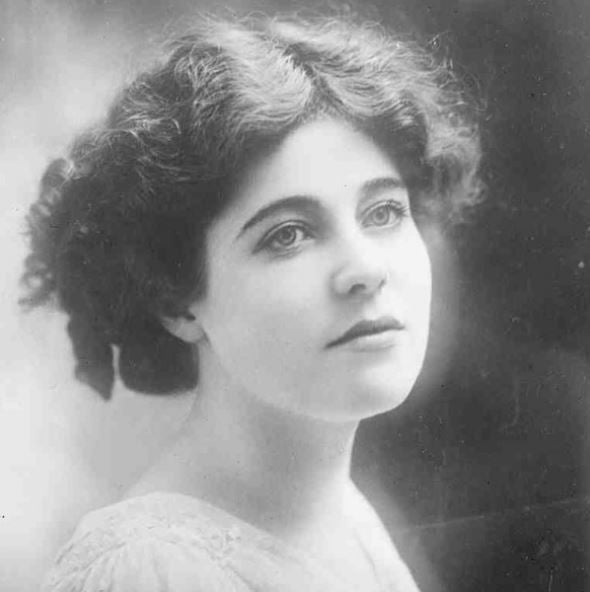
There was a story about the ghost of Mrs. Winchester in this royal house. She was supposedly imprisoned in this palace. Notice the beautiful iron-wrought grilles at the windows. The haunted region of the mansion, was striving to communicate with Daisy. Legend has it that Mrs. Winchester was imprisoned in one of the witch’s caps. How, was never known. It was when Daisy was in possession of this house that the ghost started to appear to her. She did not fancy real ghosts, however. One night, when the stars were not visible in the sky; low, thunderous clouds, massed at the head of the valley, were sweeping over so close that they seemed to brush the palm trees on the estate. To the south and the east the storm-clouds had shut down almost to sea, leaving a space of black sky where the moon in its last quarter was rising just to the left of the mansion—raining a black silhouette against it. They blue lightning flashed almost incessantly, and through the fitful darkness cam the sound of the bell tower, which could be heard across the valley, the rushing torrent below, and the full roar of the approaching rain, with a deep organ point of solemn thunder through it all. Daisy believed that Mrs. Winchester’s unquiet soul, sent out this story of eternity. Vivid lightning, the crowding of Mrs. Winchester and the shivering anticipation of Daisey’s possible visitation made sleep quite out of the question. Then, an hour and thirteen minutes after midnight, came a sudden vivid flash of lightening, and, as Daisy’s razzled and dazzled eyes began to regain the power of sight, she saw as plainly as in life—a tall figure, in a silky white dress, with long flowing hair. In another flash, the beautiful apparition looked at her long and earnestly. She was beautiful —more beautiful than one had supposed possible, her deep, passionate eyes very tender and pitiful in their pleading, beseeching glance. Daisy was hardly frightened, or even startled, but lay looking steadily at her as she stood in the beating lightning. Then she breathed, rather than articulated, with a voice that almost brought Daisy to tears, so infinitely sad and sorrowful was it, “I cannot sleep!” and the liquid eyes grew more pitiful and questioning as bright tears fell from them down the pale glowing face. #RandolphHarris 15 of 17

The apparition began to move slowly towards the door, its eyes fixed on Daisy’s with a look that was weary and almost agonized. Daisy learned from the bed and stood waiting. A look of utter gratitude swept over the face, and turning, the figure passed through the doorway. Out into the shadow of the corridor in moved, like a drift of pallid storm cloud, and Daisy followed, all natural and instinctive fear or nervousness quite blotted out by the part she felt she was to play in giving rest to a tortured soul. The corridors were velvet black; but the pale figure floated before her always, an unerring guide, now but a thin mist on the utter night, now white and clear in the bluish lightening through some window or doorway. Down the stairway into the lower hall of the second floor, where the stained-glass windows in the flared into sudden clearness under the fitful lightening, out into the silent cloister. It was very dark. Daisy stumbled along the solid mahogany floor. She guided herself by a hand on the gelled linseed Lincrusta-Walton wallpaper. Then a sudden blaze of fierce lightning, and vivid light allowed her to see the face with a look of overwhelming desire, of beseeching pathos, that had choked Daisy’s throat with an involuntary sob when she first saw Mrs. Winchester. And she heard the sorrowful words again, “I cannot sleep,” come from the impenetrable darkness. And when the lightning came again, the beautiful white figure was gone. She wondered around the mansion, searching in vain for Mrs. Winchester. She tired the door-to-nowhere when Mrs. Winchester vanished: it was locked. It was found at last. The smooth surface of the plaster on the white wall. There was a rough space, approximately the shape of the other windows in the tower, not plastered like the rest of the wall, but showing the place where a stained-glass window was covered up through its thick coatings of whitewash. Daisy began scraping away at the solid wall. Under the coatings of plaster appeared an entrance to a secret room and it led her over a vertical joint between firm, masonry work. She began digging out the mortar around the stone. With much work it detached. #RandolphHarris 16 of 17
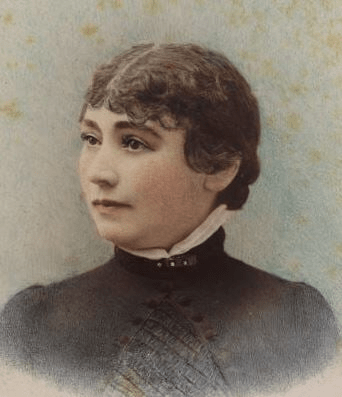
Darkness within, yet beyond question there was a cavity there, not a solid wall; and with infinite care she removed all the stones. Still the hole was too small to admit enough light from the dimly illuminated cell. With a chisel, she pried at the sides of a large block of masonry, perhaps thirteen stone in size. It moved, and with seemingly superhuman strength, Daisy softly slid it from its bed. Suddenly a cry, a cry like that of a frighted woman—terrible. Framed by the jagged opening of the stone, hardly seem in the dim light, was a face, an ivory image, more beautiful than any antique bust, but drawn and distorted by unspeakable agony; the lovely mouth was smiling; the eyes were cast upward; and below, slim calcified hands crossed on the chest. Torture and agony visible in every tense muscle. Daisy stood there, breathless, staring at the sight, fascinated, bewitched, sad. So this was the mystery. With fiendish ingenuity, the rigid ecclesiastics had blocked up the window, then forced the beautiful creature to stand in the alcove, while with remorseless hands and iron hearts they had shut her into a living tomb to gain access to her land. With all that, it was necessary to find Mrs. Winchester so her soul could rest. Prayers were said that night for her soul. The next day the alcove was again walled up. Demons can subject the mind and the body. Demon subjection is one step beyond demon influence. When the moral law of God is persistently and flagrantly disregarded, demon influence may merge into demon subjection. The cursed then becomes the slave of the demon. Many have also become slaves because of illicit lust, perhaps goaded on by vile spirit that master their victims and drive them on to moral ruin. Those who nurse hate and revenge may find that a superhuman power takes over, impelling them to murder. Those who covet become slaves of greed. Those who persistently lie may become enslaved by evil spirit of falsehood until they are incapable of telling the truth. Persistent sin against the second table of the moral law regulating humans conduct towards humans (Exodus 20.13-17) opens the door to demon power than can derange a living soul’s mind, weaken one’s will, alienate one’s affections, and disturb one’s emotions. “Beware of sibling rivalry! At least said my grandmother. Which must explain, I do suppose, what happened to my little brother.” #RandolphHarris 17 of 17

Winchester Mystery House
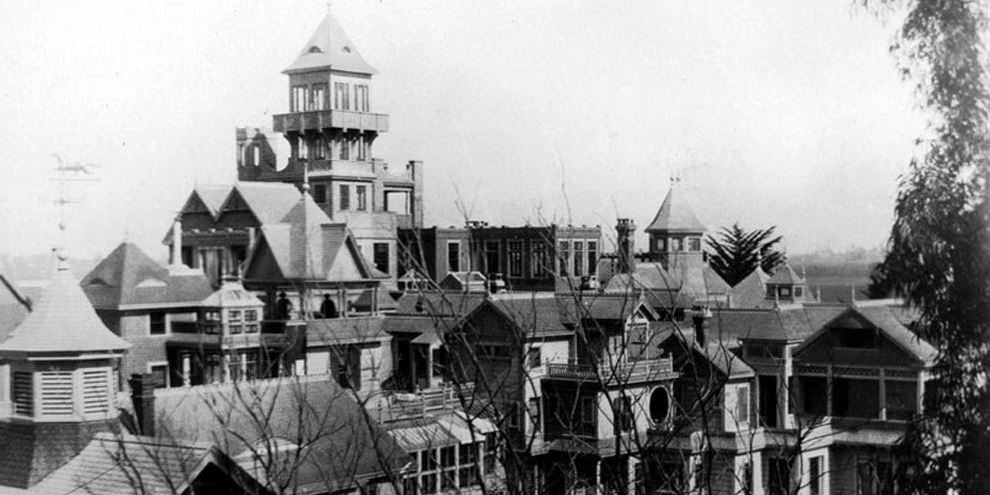
Fabulous photo op outside The Winchester Mystery House circa 1940s 💁🏻♀️
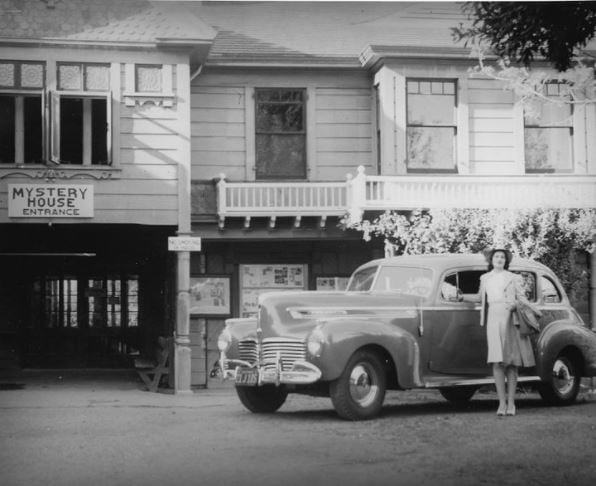
🎟 link in bio. https://www.winchestermysteryhouse.com/

Battle Between Scientists and the Press to Control How the World Found Out

Our discussion to this point has led us to essentially the following picture of how cell differentiation occurs in plants and animals. As the fertilized egg cell undertakes mitosis—dividing first into 2 cells, then into 4, then 8, and so on—slight differences in the chemical conditions in the several cells cause corresponding slight affect the chemical composition of the fluid emanating from the cells and therefore supplement the already existing sources of diversity to cause still later cells to be even more varied in their properties. As the organism grows by further cell division, the compounding of effects ultimately results in the appearance of cells of widely differing structure and metabolism. Some of the mechanisms that respond to environmental differences to yield different types of cells were discussed in the preceding report. Let us now consider more carefully how the local environment is able to interact with the cellular regulative mechanism to produce the remarkable variety displayed by the cells of a higher plant or animal. Perhaps a good way to start our consideration would be to clear up what might appear to be an inconsistency between our present thesis and experimental evidence we have considered earlier. Specifically, as need to reconcile Driesch’s discovery that any of the earlier cells of a sea urchin embryo can develop into an entire animal with our present notion that differences must appear in the structure and metabolism of the first few cells of a newborn organism. A Swedish embryologist, Sven Hoerstadius, resolved the apparent discrepancy. In a series of beautifully planned and executed transplantation and isolation experiments he was able to show that the cytoplasm of the sea urchin egg is not uniform throughout in its composition, but contains varying proportions of two different chemical agents that have important influences on cellular metabolism. One of these agents was found to be concentrated at one “pole” of the fertilized egg, the other at the opposite pole. #RandolphHarris 1 of 24

Hoerstadius established that it was only because the early cell division involved cleavages parallel to the polar axis that the first few cells all possessed the same proportions of two agents and were therefore able to develop into entire animals. If, however, by artificial means the initial cleavage was forced to occur along such a plane that most of one stimulating agent went into one cell and most of the other into the second cell, an entirely different result was obtained: when these two cells were separated, each developed into only part of an animal, and the particular organs which developed in one “half-embryo” were different from those which developed in the other. Evidently one of the two chemical agents discovered by Hoerstadius acted as a switch to turn on the genes responsible for the construction of part of the animal, the other as a switch to turn on those responsible for the construction of the rest. And these two stimulating ingredients were already localized in different regions of the cytoplasm in the original fertilized egg. A similar polarity of the original egg cell has been demonstrated for many other species. In some cases, at least, gravity appears to be the principle factor that causes the separation of the different ingredients of the cytoplasm in the egg cell as it develops in the mother’s body. Tis is true of frogs’ eggs, for example. Their polar axes are easily visible because of the colour differences. The bulky and nutritive yolk settles to the bottom of the egg; most of the cytoplasm rise to the top. The cells that grow from the top half of the egg ultimately develop into the head parts of the frog; those that grow from the bottom half develop into the tail parts. Thus the top-to-bottom polar axis of the egg controls a most important structural feature: it determines the body axis of the developing embryo. While the environmental factor determining the important body axis orientation is gravity, quite a different factor determines the plane of symmetry. This plane is ordinarily determined, for frogs, by the point of entry of the male sperm cell into the egg during the act of fertilization. The “circle of longitude” of the sperm entry point becomes the head-to-tail belly line of the animal, while the meridian on the opposite side from the point of the entry becomes the lone of the backbone. #RandolphHarris 2 of 24

As the embryo develops, other gross physical effects play important roles in determining the configuration of the body parts. The pressure of water that collects in the developing tissue is believed to be instrumental in producing and shaping some of the cavities required for the proper conformation of the organs. The rolling up of certain groups of cells to form tubes—the neural tube which gives rise to the nervous system, for example—probably occurs because the electrical attractive forces among the molecules of substances produced by the growing cells cause them to try to make as close surface contact as possible with one another. Many physical factors must operate in conjunction with the specific chemical properties of the cells to cause different parts of the growing embryo to form different kinds of structures. And with each such characteristic structural development the chemical nature of the cells involved also changes, to become even more different than before from that of other groups of cells in the same organism, thereby facilitating even greater future differences in development. There is considerable evidence to support the hypothesis that chemical individuality of the cells usually develops gradually rather than abruptly. If, in a very young embryo, cells are surgically transplanted to the head region from a part of the organism that would ordinarily develop into a tail, the transplanted cells take on the characteristics of the material that surrounds them and grow into component head parts. However, if such transplantation is deferred for a time, a sort of fixation of properties occurs so that, after the operation, the transplanted cells grow into taillike parts, despite the fact that they must then protrude from the head of the full-grown embryo. The steady continuity in the development of the chemical fixation of the cells is shown by other observations: at intermediate stages of growth a small group of cells transplanted from any part of the tail region of the embryo will develop into an entire tail; later cells transplanted from a particular part of this region will develop into only a specific part of the tail. With the passage of time the cells seem to become more and more specialized and therefore more limited in the range of structure they are able to develop into. #RandolphHarris 3 of 24

An exception to the gradual nature of cell differentiation sometimes occurs when two previously separated parts of a growing embryo come together. The classical example of this phenomenon is the formation of the crystalline lens in the eye of a vertebrate. By following the gradual development of the embryo (of a chicken, for example), it was learned that the main body of hollowing-out process. This results in an “eye cup,” whose open end gradually grows toward the layer of skin that surrounds the brain parts. When growth finally brings the rim of the eye cup in contact with the surrounding skin, some sort of reactions occurs that cases the circular sector of skin contacted by the cup to embark upon a new process of cellular development. Before long, this piece of skin thickens, detaches from the surrounding tissue, shapes itself into a lenticular structure, and becomes incorporated into the eye cup to form the crystalline lens upon which clear vision ultimately depends. Research has confirmed the validity of the obvious inference: the tissue forming the eye cup in the brain structures contains a chemical which, upon contact with the surrounding skin, triggers metabolic processes that result in the formation of lens structures in other kinds of skin than that of the head region. The eye cup, for example, can be transplanted to the flank; upon contact with this kind of skin, a lens is formed. Or skin from another part of the body can be substituted for the head skin in the vicinity of the eye cup—upon contact of the two kinds of tissue, a lens develops. Evidently the stimulating ingredient in the eye cup is able to trigger the genes in the cells of any of the organism’s skinlike tissue to reorganize their metabolic processes in the way necessary to develop a crystalline lens. The stimulating ingredient is even more versatile: for example, the eye cup of a frog can induce a lens in head or flank epidermis of a salamander embryo. (In embryos the immunological reactions that cause transplanted foreign tissue to be rejected do not occur. Hence transplantations are possible not only between different species but between different genera, families, orders, and classes. For instance, mouse tissue can grow in the chick embryo.) However, the lens induced has the specific characteristics of a salamander eye, rather than a frog eye. #RandolphHarris 4 of 24

Evidently the inducing substance from the eye cup is a chemical that is able to switch on the genes in the cell nuclei of various species to initiate the chemical process resulting in a lens. However, the architectural details of construction are coded in the genes, and they are different for different species. Again, when flank skin of a frog embryo is transplanted to the head of a young salamander embryo, the new chemical environment induces the transplanted skin to form head structures. However, in doing so it follows its own genetic repertory and manufactures the horny jaws and teeth characteristic of the frog instead of the dentine teeth characteristic of the salamander. The explanation is, once more, entirely consistent with the picture we have developed of the genetic mechanisms. All cells in the frog contain genes capable of directing the formation of any of the many body structures, and the cytoplasmic chemicals of the flank skin cells still permit considerable flexibility in their ultimate development. When stimulated by the kind of chemical that switches on the genes appropriate for the generation of headlike structures, these flank skin cells proceed to form such structures. However, whether in the original frog body or transplanted to another species, the particular structures formed must be controlled in their detailed architecture by the genes of the frog. Hence the transplanted tissue must give rise only to froglike, not to salamanderlike, structures. An embryological problem of unusual importance and difficulty is posed by the nervous system. How can we account for the enormous mass of specialized nerve cells (neuronsa)—10 billion of them in a single human animal—that seem able to extend their tiny fibers many inches of even a few feet to make highly specific connection with other nerve cells of sense organs? To be sure, the general notions we have developed as to how cells in the embryo become more and more specialized can cause us to feel that the natural physical and chemical effects we have been dealing with might be adequate to produce even as strange a structure as that of the nerve cell. However, how are we to explain the fantastically complex “wiring diagram” that appears to govern the interconnections of so many separate neuronal units? #RandolphHarris 5 of 24

Even before we have discovered the physical mechanism underlying the construction of the nervous system, we can form some appreciation for the sheer bulk of information that would have to be handled in just specifying a definite pattern of neuronal interconnections. For most of the 10 billion neurons of the human nervous system connect, not just to one other nerve cell, but to many: the average is approximately 1,000 connections per neuron! And by no means all of these connections go to nearby cells; hookups to cells in entirely different parts of the nervous system are common. Thus, to describe in straightforward chart form the wiring diagram of the human nervous system, we would have to number the particular neurons from 1 to 10 billion and then write down for each a list of the approximately 1,000 other neurons to which it connects. We would end with a table of 10,000 billion numbers, with each number, on the average, containing 9 or 10 decimal digits. However, we have learned that the genes constitute the blueprint for the details of construction of the organism. Could they carry, in their four-letter nucleotide code, the equivalent of such a table that could in some way direct each neuron to make the right connections with its neighbours? The answer is no; they could not. We do not need to have a model of any particular physical process for enforcing neuronal wiring to be sure of that conclusion, for it rests solely and surely on the information-handling capacity of the genes. To be sure, the human genes do carry a great detail of information. There are several thousand genes in each of the 46 chromosomes, and each gene is a molecule of DNA containing a string of some thousand nucleotides. The result is a “message-carrying capacity” equivalent to that of at least several dozen large printed volumes. While this is no small library for the nucleus of each of our billions of cells to be carrying around, it still falls far short of what would be required to “write down” the wiring diagram of the neurons in the way we have specified. And even if we could somehow squeeze this information into the genes, we would then have no room left over for all the other, nonneural, specifications that cause us to turn out to be humans rather than mosquitoes! #RandolphHarris 6 of 24

Obviously, the notion of the detailed genetic control of the interconnections of the neurons is untenable. What about the opposite assumption—that the neurons in the embryo just “grow like Topsy” in the uncontrolled fashion, making random connections as they come in contact with one another? This assumption depends for its credibility on the theory that learning processes are subsequently able to strengthen and weaken the various neuronal connections so as ultimately to provide the coordination of the physical and mental activity that constitutes the unique accomplishment of the nervous system. In higher animals, at least, any general theory of neuronal connectivity must be able to account for the phenomena associated with vision. In the human, more than half of the several million never fibers that leave the brain for other parts of the body go to the eyes. If a random-connection/subsequent-learning theory is the complete answer to our information-handling problem, we would expect that meaningful visual patterns would not occur in newborn animals, but would arise only after a period of trial-and-error learning. One of the most interesting experiments testing this hypothesis was performed by R. W. Sperry, Professor of Biology at the California Institute of Technology. In his work he took advantage of the fact that the nervous system of many lower animals possess a regenerative capacity: if nerves are cut, they grow back and ultimately function once again. Neuroregeneration in humans is new technology. The complex, delicate structures that make up the nervous system—the brain, spinal cord, and peripheral nerves—are susceptible to various types of injury ranging from trauma to neurodegenerative disease that cause progressive deterioration: Alzheimer’s disease, Parkinson’s disease, amyotrophic lateral sclerosis (ALS, also known as Lou Ghrig’s disease), multiple sclerosis and multiple system atrophy. Unfortunately, in humans, because of the complexity of the brain and spinal cord, little spontaneous regeneration, repair or healing occurs. Therefore, brain damage, paralysis from spinal cord injury and peripheral nerve damage are often permanent and incapacitating. #RandolphHarris 7 of 24

Patients with serious nervous system injuries or strokes often require lifelong assistance, which puts a tremendous burden on patients, their families and society. Innovative, paradigm-shifting strategies are required to advance treatment of neurological injury. However, neuroregeneration research is at the forefront of healing the nervous system. Regrowth of nerve fibers (axons) is essential to repair the functional recovery of the spinal cord. Tissue destruction with cysts and gliosis at the site of injury forms a barrier to regeneration. Ongoing research is using tissue engineering with biodegradable polymer scaffolds (PLGA, PCLF, OPF) loaded with different growth-promoting cells (Schwann cells, neural progenitor cells, mesenchymal stem cells) and different growth factors (GDNF, NT3, BDNF) to bridge the gap, and to promote axonal regeneration and functional restoration in the spina cords of rates and mice, eventually for future use in human patients. Further, researchers are investigating the effects of exercise training and local delivery of steroids on axon regeneration and functional recovery. Peripheral nerve regeneration and repair is another strategy to expand the time window of opportunity and improve the functional recovery following peripheral nerve injury and repair. One strategy is to apply polymer microsphere to deliver vascular endothelial growth factor (VEGF) to the nerve repair suite in a controlled sustainable release manner. VEGF promotes angiogenesis and neurogenesis, and thus leads to a better functional outcome and larger window of opportunity for the nerve to be permissive to prolonged regeneration. The other strategy is to counteract the lack of healthy Schwann cells at the nerve repair site by supplementing functioning Schwann cells derived from nerves prepared in an invitro system of Schwann cells induced from stem cells of the adipose tissue. Novel animal models are being developed to delineate the nature and time course of denervation muscle changes; identify the key indicators of muscle receptivity, including electromyographic changes, muscle fiber type changes and changes of myogenic genes; and evaluate the impact of these changes on nerve regeneration and the potential success of a nerve repair. #RandolphHarris 8 of 24

Nerve cell regrowth: Axogenesis is another possibility. Researchers are using zebrafish as an animal model system to investigate how special cues in the brain and spinal cord can entice or block nerve cell growth—experiments that help scientists understand why conditions at the site of nerve injury retard regeneration. This work is providing new understanding into how nerve cells grow during development of the nervous system and how nerve regeneration might be improved after injury. There are many other forms of neuroregeneration understudy. Hearing about Sperry’s research with animals made me a little excited. Now, back to Sperry. Sperry was able to establish, in an adult toad, the equivalent of a “newborn” visual systems. He performed an operation wherein the optic nerves were cut and reconnected inversely—that is, the right eye was connected to the nerve from the brain that previously had gone to the left eye, and vice versa. Of course, in such an operation, “reconnection” consisted only of butting the cut ends of the nerves together and waiting for natural processes to reestablish connections from the many tens of thousands of cut fibers to the brain. Even in an uncut optic nerve, these fibers cross and twist in what appears to be a highly random fashion. In view of such twisting and turnings (which are also characteristic of the human optic nerve), it has always seemed hard to believe that there was any precise built-in pattern of interconnection between retinal receptors and neurons in the brain; such anatomical observations had lent strength to the hypothesis that visual capability was acquired through learning, and not wired in. Yet, after a few weeks, the toad was able to see again, apparently as well as ever! Certainly, the presence of a moving fly within its normal range of vision caused it to react in toadlike manner by darting out its tongue for food. This and other tests led to the conclusion that, somehow, the fibers of the neurons of the visual cortex of the brain had managed to seek out and reconnect themselves, one by one, with the receptor cells of the eye in such a way as to reestablish in the brain a clear image, with normal topological properties of up/down and right/left continuity. #RandolphHarris 9 of 24

That is has nothing to do with learning was proved by an interesting anomaly in the toad’s new behaviour: If a fly appeared opposite the toad’s right eye, it darted its tongue out to the left to attempt to capture it; if the food appeared to the left, the toad would always go to the right. To the animal, since the optic nerve of the right eye was connected to the part of the brain designed to be used with the left eye and vice versa, the image formed in the right eye always appeared to be coming from the left and the image formed in the left eye always appeared to be coming from the right. No amount of experience ever caused the toad to learn to correct its mistake. It was obvious that the left-ness and rightness of the vision were “wired-in” and not learned concepts. Sperry’s experiment was only one of many which have established that, despite the obvious ability of parts of the brain and nervous system to adapt and presumably modify themselves through learning, there is also a great deal of permanent wiring involved. Many of the neuronal interconnections are formed during the embryological development period, and they are formed precisely, in the sense that the right neurons are tied to one another or to just the right sensory receptors or motor effectors. Thus the hope that learning processes alone would provide a solution for our interconnectivity problem has proved to be a false one. The problem is still with us. It is safe to say that no one yet knows for sure what physical or chemical factors are involved in the phenomenon of embryological neuronal wiring. However, there is a general hypothesis that seems able to account for most of the observed facts. This hypothesis is suggested by studies of the movements of cells in tissue cultures. Individual cells can be broken loose from the tissue of which they are a part and mixed with other cells in a liquid suspension. If in this way different types of cells—kidney and cartilage, say—are mixed together, a curious sorting out occurs. Under the microscope the cells, on encountering one another, are seen to slide over each other’s surface in seemingly aimless fashion but with the ultimate result that cells of the one type seek out one another and aggregate in one lump or layer, while cells of the other types form their own similar but separate association. Experiments have been performed with solutions containing several different types of cell, with the same results. Evidently, chemical substances in the cells result in an attractive or cohesive forces, specific to cell type, that tend to cause like cells to stick together, unlike cells to remain unconnected. #RandolphHarris 10 of 24

The extension of this principle to the formation of the connections between retinal receptors and cortical neurons in the visual system, for example, involves the following line of speculation. The receptor neurons in the retina of the eye are assumed to contain two separate chemical ingredients that vary in concentration in accordance with the position of the neuron on the retina. One of these chemical ingredients might appear in very small concentration in the rods and cones located at the extreme left-hand side of the retinal field, with the concentration of this ingredient increasing steadily across the retina to reach a maximum at the extreme right-hand side of the field. Similarly, the other chemical from the bottom to the top of the retina. With such an arrangement, the relative proportions of these two chemical ingredients in a given receptor neuron would provide an accurate indication of the position of the neuron on the retina, both left and right and up and down. Similar concentration gradients are presumed to exist in the interneurons and the neurons in the brain with which the retinal receptors need to be ultimately connected. The embryonic growth process is assumed to be dynamic enough to cause each outgrowing nerve cell fibers to wander close to a wide range of candidate terminating cells. By the operation of attraction or cohesive forces similar to, but much more specific than, those required to explain the sorting out of dissimilar cells in liquid suspension, the searching nerve fiber is assumed ablet to seek out and make connection with receiving neurons of similar composition of the two key chemical ingredients. In this way there results a continuous one-to-one correspondence between points on the retina and those on the visual cortex of the brain, and the picture we finally see is coherent and unscrambled. Future work may or may not confirm the controlling role of “connectivity” ingredients in determining the built-in wiring of the nervous system. If not, however, it seems inevitable that some other effect will be discovered that produces the same result-an ability of growing nerve fibers, through physical or chemical interaction with the local environment, to search out and connect to other specific neurons or terminal organs. #RandolphHarris 11 of 24

The embryological prewiring in the nervous system will almost certainly turn out to employ mechanisms that different only in degree, but not in quality, from those which control the development of structure in the rest of the organism. Whether our concern is the development of neurons or of heart, liver, or skin, it now seems clear that the genes exercise architectural control over a growing multicellular organism by a combination of direct and indirect methods. Their delineation of the structure of the enzymes, which in turn specific the chemical reactions permitted in the growing cells, is an important direct method of influencing the final outcome. However, we have seen that the physical and chemical conditions of the extranuclear environment are also vitally important—that local physical forces distort and shape the growing tissue and that chemical agents in the surrounding fluids enter the cells to modulate the enzymatic reactions in the cytoplasm and to trigger on and off individual genes in the nucleus. To be sure, these local physical and chemical environmental factors are themselves results of the previous detailed development of the various parts of the organism which, in turn, depended on the genetic mechanisms and the local environment, and so back to the initial fertilized egg. Thus it is still correct to say that the genetic mechanisms exercise primary architectural control over all the design features of the organism. However, they do not do so by means of a direct reading out of the nucleus of completely detailed specifications for each cell, followed by a single-minded manufacturing operation that follows such detailed instructions to generate the specified product, without regard for what may be happening in other nearby cells. Instead, the genetic mechanisms seem to have learned how to minimize their own detailed architectural chores by supplying to each cell a sort of do-it-yourself kit of structural and chemical features that automatically cause the cells to develop properly through the normal operation of physical principles as it interacts with the local environment that it and its neighbours continually create and modify. #RandolphHarris 12 of 24

The result is the scene of activity constantly viewed by the embryologist—a delicately balanced and fantastically complex interplay between the genetic mechanisms of the cells and their varied and changing surroundings. This is the secret of the diversity of structure and metabolism that makes multicellular plants and animals possible. Only by such methods is nature able to mold its raw material into such an impressive end product as a living higher organism—a sea urchin, or a human. A final comment about the evolutionary origin of the mechanisms on which multicellular life is based may be in order. For despite the compelling nature of the evidence, normal human experience does not seem compatible with the conclusion that such remarkably complex and intricately interrelated mechanisms could have arisen solely through the blindly probabilistic workings of evolution. The antidote to such a feeling of skepticism is a reconsideration of the frequency of past occurrence of the typical sequence of small accidental change of structure or metabolism, competition for survival, and ultimate proliferation of the best-adapted species. The fantastically large number of such small refinements that must have taken place among trillions of individual organisms during billions of years is also far beyond normal human experience. The essence of the theory of evolution is the balancing of the near inconceivability of its accomplishments against the correspondingly near inconceivability of its painstaking attention to detail. Since we are talking about biology, it is a good idea to consider some brain functions and treatments. When clozapine (brand name Clozaril) was approved in 1990 for use as the first atypical antipsychotic drug in the United States of America, it opened the door to more effective and safer treatments for schizophrenia. However, the early use of this drug in the United States of America brought only frustration and heartache to hundreds of thousands of prospective users. The problem with clozapine began with the discovery that a small percentage of people who take this drug develop agranulocytosis, a life-threatening drop in white blood cell count. #RandolphHarris 13 of 24

The U.S. Food and Drug Administration (FDA) thus approved clozapine with the requirement that patients who take it must have their blood tested every week for signs of agranulocytosis. Unfortunately, the drug’s manufacturer decided to require all clozapine users in the United States of America to purchase an entire treatment package consisting of the medication and weekly testing by the drug company’s own subsidiaries. Most patients in the United State could not afford the company’s fee for this combination—a whopping $9,000 a year. What is more, their insurance companies refused to pay for it. Clearly patients were caught in the middle between big business and the health industry. A flurry of lawsuits followed. So did federal investigations and hearings. After several years the drug’s manufacture finally agreed to sell clozapine separately, allowing patients to get blood tests elsewhere at a lower cost, Moreover, the FDA reduced its requirement for such every two weeks, rather than every week, after patients have received clozapine treatment for six months. Sadly, however, many patents had already lost valuable time. Unable to fully appreciate or bring such injustices to the public’s attention, persons with schizophrenia had been victimized by society once again—a tradition whose roots date back to past “treatments” such as asylums, the lobotomy, and deinstitutionalization. Many wonder, if it is possible to rehabilitate 66 percent of patients, why are we not? A variety of insight therapies, from cognitive to psychodynamic may be used in cases of schizophrenia. Such approaches may be offered in individual or group formats. Studies suggest that the particular orientations of insight therapists are often less important than their levels of experience with schizophrenia. In addition, the therapists who are most successful tend to be those who take an active role, setting limits, expressing opinions, challenging patients’ statements, providing guidance, displaying empathy, and gaining trust. #RandolphHarris 14 of 24

Certainly the most thrilling and romantic happening of these years is the adventures in space, surpassing in promise the voyages of the fifteenth and sixteenth centuries. This adventure makes life worth the trouble again. When the Russians beat us out, we are miffed but we can be proud that these exploits have been performed by men and man is great; Copernicus was a Pole, Galileo an Italian, Kepler a German, Newton an Englishman—and the rockets were Chinese; and we hope that we shall win the next round, for it belongs to America to achieve first in this kind of enterprise. The experiments are expensive, but it seems mean-spirited to question the appropriations and few have done so. So far, grand. However, now we have opened the exploration of space and allowed even corporations to build spaceships. Boeing is building a spacecraft called CST-100 Starliner with an LEO range. Sierra Nevada Corporation is building the Dream Chaser Space System with an LEO range. SpaceX is building Dragon 2 with an LEO range, and Starship with a range to reach Mars. LEO spacecrafts can be used for a Mission to the Moon. Have you every heard of Project Argus? Well in 1958, the United States of America’s military withheld the wave length of a satellite for strategic reasons. Next, they carried out a secret nuclear experiment in the ionosphere, and this was kept secret not from the Russians from military reasons, but from the American people, because of possible objections to the fall-out. The Times kept the secret till the Russians were about to publish it, explaining (March 19, 1959), that “it has learned of the plans for Project Argus last summer, some weeks before it took place. Nevertheless, scientists associated with the government said they feared that prior announcements of the experiment might lead to protests that would force its cancellation.” A. J Muste and editor of Liberation magazine, sked the for an apology for this unexampled betrayal of journalistic responsibility, and got the astounding replay: It seems to me that you are suggesting that the Times enter the propaganda field and, in effect, set its judgment above that of the military men and scientists as to what can be published…After all, the Times is a responsible newspaper. [!!] [Robert Garst, Assistant Managing Editor. In Liberation, May, 1959.] #RandolphHarris 15 of 24

However, what is the effect on our people when we are told that our chief newspaper does not print the news? Constitutionally, for instance, how in a democracy do they then deserve their mailing privileges, to circulate their official press releases and advertisements for department stores? [The purpose of second-class mail I to circulate information.] When Muste wrote a letter for publication about the Times’ handling of the story, the Times found no space for that letter. However, to my mind, even more important is the effect of cutting people off from the adventure of science, no matter what the risks. What an illiberal and dishonourable policy to purse! Our government cannot see that noble things must not be made base, romance must not be turned into disillusion, or what will become of the young people? Take another example. This glorious enterprise of space! And now we have chosen seven astronauts for special training. However, the nemesis of the organized system haunts us. All prove to be European American Protestant, in their early or middle thirties, married, with small children, and coming from small towns—in brief, models of salesmen or junior executives for International Business Machines. And these seven have now made a solemn pact, reported in the press, that whichever one goes aloft will split evenly with the others his take from syndicated stories and TV appearances. Concerning them, Dr. George Ruff, the Air Force psychiatrist who tested them, has explained, “Knowing the qualities that made them this way, and working hard at applying those qualities in your daily life, can help you [too] to come closer to achieving what they have become: comfortable, mature, and well-integrated individuals. It is a worthwhile goal.” Of course, by this writing (June 1960), it is commonly accepted that our new NROL-82 satellite has the function of espionage. However, it has remained for a proper scientist to hit the bottom: the professor who has advised us not to reply to any signals we might receive from outer space because the astral beings are likely to be technically more advanced than we and they will come down and eat us up. This projection of the Cold War into the starry vault was favourably reported by the science editor of the Herald Tribune. #RandolphHarris 16 of 24

Is there a possible solution beyond the alternative of an absolutism that breaks down in every radical change of history and a relativism that makes change itself the ultimate principle? I believe that there is, and I think it is implied in the basis of Christian ethics, namely, in the principle of love in the sense of the Greek word agape. This is not said in terms of an apology for Christianity, but under the impetus of the actual problem in our present World-situation. Love, agape, offers a principle of ethics that maintains an eternal, unchangeable element, but makes its realization dependent on continuous acts of a creative intuition. Love is above the law, and also above the natural law in Stoicism and the supranatural law in Catholicism. We can express it as a law; we can say as Jesus and the apostles did, “Thou shalt love.” However, in doing so, we know that this is a paradoxical way of speaking, indicating that the ultimate principle of ethics, which, on the one hand, the power breaking through all commands. And just this ambiguous character of love enables it to be the solution of the question of ethics in a changing World. If we look at the principles of natural law as embodied in the Bill of Rights, we will discover that, taken as the concrete embodiments of the principle of love in a special situation, they are great and true and powerful; they represent love by establishing freedom and equal rights against willfulness and suppression and the destruction of the dignity of human beings. However, taken as eternal laws and applied legalistically to different situations—for example, the early Middle Ages, or the decay and transformation of economic capitalism—these principles become bad ideologies used for the maintenance of decaying institutions and powers. This is why Paul and Luther struggled so profoundly against the “Law,” and why they insisted on the deadening consequences of the law and the vivifying power of love. Love alone can transform itself according to the concrete demands of every individual and social situation without losing its eternity and dignity and unconditional validity. Love can adapt itself to every phase of a changing World. #RandolphHarris 17 of 24

I should like to introduce at this point another Greek word, Kairos, “the right time.” This word, used in everyday Greek, received an emphatic meaning in the language of the New Testament, designating the fulfillment of time in the appearance of the Christ. It has been reinterpreted by German religious socialism in the sense of a special gift and a special task, breaking from eternity into history at a special time. Kairos in this sense is the historical moment when some new, eternally important, manifests itself in temporal forms, in the potentialities and tasks of a special period. It is the power of the prophetic spirit in all period of history to pronounce the coming of such a Kairos, to discover its meaning, and to express the criticism of what is given and the hope for what is to come. All great changes in history are accompanied by a strong consciousness of a Kairos at hand. Therefore, ethics in a changing World must be understood as ethics of the Kairos. The answer to the demand for ethics in a changing World is ethics determined by the Kairos. However, only love is able to appear in every Kairos. Law is not able, because law is the attempt to impose what belonged to a special time on all times. An ideal that appeared at the right time and was valid for this time is now considered to be the ideal for history as a whole, as the form of life in which history shall find its end. The outcome of this attitude is inevitably disillusionment and the rise of ethical libertarianism and relativism. This point at which the dynamic-naturalistic solution, despite its destructive consequences, was in the right, and still battles rightly against Catholic and bourgeois ethics. Or, expressed in terms of church history, this is the point at which Luther was right in his opposition to Aquinas and Calvin. Love, realizing itself from Kairos to Kairos, creates an ethics that is beyond the alternatives of absolute and relative ethics. Though premarital female virginity is one of humankind’s great common denominators, most societies impose standards of conduct on young males as well. These range from strict celibacy to licentious experimentation, often with women of the evening or less affluent women. #RandolphHarris 18 of 24

Curiously, most cultures either frown on “self-love” or flat out condemn it, as a dangerous squandering of the precious vital force or at the very least, a serious breach of decent behaviour. Tellingly, most societies that urge virginity on their young males do little or nothing to punish those who disobey. At various times in the nineteenth and early twentieth centuries, for instance, British and North American morals included caveats against male premarital pleasures of the flesh. However, these changed more precepts never permeated mainstream cultures, and in any case, a penalty for randy male pleasures of the flesh was nonexistent. The only attempts made to enforce male chastity—of which the Male Purity Movement was the most widespread, cohesive, and forceful—were based on moral suasion and/or fear, usually of diseases, sterility, permanent damage to the tender organ, or the loss of vital powers through the lost of vital force. The Aztec revered celibacy for both men and women, though like some Greeks, they also believed it had harmful side effects. The virgin daughter of leading Aztec once came upon an unclothed man and was consumed by desire for him; afterward, she sickened and swelled up. This was a cautionary tale, but it was one to which the Aztecs had no easy solutions. Aztec society reflected this dichotomy. Celibacy was requisite for youth from high-ranking families; indeed, it distinguished them from plebeians, whose intimate indulges were regarded as a mark of inferiority. Among the privileged, celibacy was rigidly enforced for both males and females. Harsh physical punishment awaited transgressors, but the belief that the bodies of the unchaste would remain immature and their brains degenerate was just as compelling a reason to remain chaste. There was also the fear of exposure during penitential exercises. To honour the gods, young men pierced their organ, and anyone who fainted was automatically considered wanton. Celibacy was also mandatory for students at the calmecac or temple. All these privileged youth from high-ranking families has to swear an oath of chastity, and violators—boy or girl—were executed: either strangled, roasted, alive, or pierced by arrows. #RandolphHarris 19 of 24

Every great truth has to fight its way anew. Enemies are obstinate and entrenched, while the memory of a human is weak. The mind’s power is being unscrupulously misused when it seeks to influence others against their own interest and for its selfish purpose. Where there is fierce hatred or monstrous cruelty, be sure that evil forces are present too. One may dispense to others only what one has oneself. If one’s mind is steeped in nihilism, it will be despair which one offers them at worst, or selfish cynicism at best. When we take into consideration of rapid de-massification of interest and lifeways in a largely Third Wave America, we have been using the analogy of nine cars on the highway and a police officer on a motor cycle. Now, picking up where we lift off yesterday. At twenty-five miles per hour: Sputtering along in the slow lane, government bureaucracies and regulatory agencies. Skilled at deflecting criticism and delaying change for decades at a time, pyramidal bureaucracies run the day-to-day affairs of governments all over the World. Politicians know that it is far easier to start a new bureaucracy than to close down an old one, no matter how obsolete or purposeless. Not only do they themselves change slowly; they slow the pace at which business can respond to fast-moving market conditions. A case in point is the excruciatingly long time it takes the U.S. Food and Drug Administration to test and approve new drugs while desperate victims of disease wait—and sometimes die. Government decision-making is so sluggish that it typically takes a decade or more to gain approval for building a new airport runway and often seven or more years to okay a highway project. Ten miles per hour: However, even bureaucrats, as they look out their rearview mirror, can glimpse a car far behind them. This one shoulders along with a flat tire and steam coming our of its radiator, slowing down all the traffic behind it. It is possible it costs $400 billion to maintain this broken heap? The answer is yes, every year. It is the American school system. Designed for mass production, operated like factories, managed bureaucratically, protected by powerful trade unions and politicians dependent on teachers’ votes, America’s schools are perfect reflection of the early twentieth-century economy. The best that can be said of them is that they are no worse than schools in most other advanced countries. #RandolphHarris 20 of 24

While businesses are drive to change by high-speed competition, public school systems are protected monopolies. Parents, innovative teachers and the media clamour for change. Yet, despite a growing number of educational experiments, the core of the U.S. public education remains the factory-style school designed for the industrial age. Can a ten-mile-per-hour education system prepare students for jobs in companies moving at a hundred miles per hour? Five miles per hour: Not all dysfunctional institutions that affect the World economy are national. The economy of every country in the World is substantially influenced, whether directly or not, by global governance—a collection of international Monetary Fund, the World Trade Organization scored of less visible entities that set rules for cross-boundary activities. Some, like the Universal Postal Union, are over a century old. Others sprang up roughly seventy-five years ago during the League of Nations era. Most of the remainder—the WWTO and the World Intellectual Property Organization are exceptions—were created after World War II, half a century ago. Today national sovereignty is being challenged by new forces. New players and new problems are arriving on the international stage. However, the bureaucratic structures and practices of the IGOs remain largely in place. When the 184 nations that form the IMF chose a new head recently, the United States and Germany disagreed sharply over the choice. In the end the German candidate was selected because President Clinton and his secretary Treasury, Larry Summers, concluded that “they could not violate the 50-year-old rule that allows Europe to fill the IMF post.” Three miles per hour: Even slower changing, however, are political structures in the rich countries. U.S. political institutions, from Congress and the White House to the political parties themselves, are being bombarded by demands from more and more different groups, all of which expect faster reaction times from systems built for leisurely debate and bureaucratic indolence. #RandolphHarris 21 of 24

As a then-leading member of the U.S. State Senate, Connie Mack, one complained to us: We never have more than two and a half uninterrupted minutes for anything on Capitol Hill. There’s no time to stop and think or to have anything approaching an intellectual conversation…We have to spend two thirds of our time doing public relations, campaigning or raising campaign funds. I’m on this committee, that task force, the other working group, and who know what else. Do you think I can possibly know enough to make intelligent decisions about all the different things I’m supposed to know about? It’s impossible. There’s no time. So my staff makes more and more decisions. We thanked him for his honesty. And then asked: “and who exactly elected your staff?” The current political system was never designed to deal with the high complexity and frenetic pace of a knowledge-based economy. Parties and elections may come and go. New methods for fund-raising and campaigning are emerging, but the United States of America, where the knowledge economy is most advanced and the Internet allows new political constituencies to form almost instantly, significant change in political structure comes so slowly as to be almost imperceptible. One hardly needs to defend the economic and social importance of political stability. However, immobility is another matter. The U.S. political system, two centuries old, changed fundamentally after the Civil War of 1861-1865 and again in the 1930s after the Great Depression, when it adapted itself more fully to the industrial era. Since then the government has certainly grown. However, as far as basic institutional reform is involved, the U.S. political structure will continue crawling along at three miles per hour, with frequent rest stops at the side of the road, until a constitutional crisis strikes. That could happen sooner than the World thinks. The election of 2000—when the president of the United States was essentially elected by one vote in the Supreme Court—came dangerously close. One mile per hour: Which brings us, finally, to the slowest of all our slow-changing institutions: the law. The law has two parts. One is organizational—courts, bar associations, law schools and law firms. The other is the actual body of law these organizations interpret and defend. #RandolphHarris 22 of 24

While American law firms are changing rapidly—merging, advertising, developing new specialties such as intellectual-property law, teleconferencing, globalizing and struggling to adapt to new competitive realities—American courts and law schools remain basically unaltered. And the pace at which the system operates has remained glacial, with important cases dragging listlessly through the court for years. During the landmark antitrust case against Microsoft, widespread speculation arose that the U.S. government might attempt to break up the company. That, however, would take years to accomplish, by which time technological advances would have rendered the entire case irrelevant. It was, wrote Silicon Valley chronicler Robert X. Cringley, a collision between “hyper-accelerated Internet time” and “judicial time.” The body of law is said to be “living”—but only barely so. It changes every day as Congress writes new laws and courts add new interpretations to existing law. However, the additions represent a minute, if not infinitesimal, percentage of the total. They inflate the volume and sheer mass of law without significantly recodifying or in any way restructuring the system as a whole. Of course, law should change slowly. It provides a needed degree of predictability to society and the economy, applying brakes in times of overly rapid economic and social change However, how slow is slow? Until 2000, a law reduced the benefits paid to U.S. Social Security recipients aged sixty-five to sixty-nine by one dollar for every three the earned over a set amount. Written at a time of massive unemployment, its original purpose was to discourage seniors from working so that more jobs would be available for young people. The law stayed on the books for almost seventy years, prompting Forbes, tongue in cheek, to hail the change under the headlines, “Flash! The Great Depression Is Over.” The U.S. Congress, after decades of debate, also rewrote two of the fundamental laws governing the knowledge economy. Until 1996, one of the fastest-changing industries in the World—telecommunications—was regulated by a sixty-two-year-old laws passed in 1934. #RandolphHarris 23 of 24

In finance, the Glass Steagall Act, which supervised banking in the United States of America, also went unchanged for sixty years. Basic rules for the issuance of stocks and other securities in the United States of America today were written into law in 1933. Today there are more than 8,300 mutual funds representing nearly 250 million accounts and assets of nearly $7 trillion. Yet these massive investments are still basically subject to a law written in 1940, when there were fewer than 300,000 accounts, managed in only 68 funds, with assets amounting to 1/146,000 of today’s total. In yet another field, when a blackout swept across America’s Northeast in 2003, technicians struggling to restore electricity were crippled because they were forced to use “rules developed decades earlier when most power was generated reasonably close to consumers.” Critical laws directly affecting the advanced economy in field such as copyright, patents and privacy remain hopelessly out of date. The knowledge economy has emerged not because of these laws but in spite of them. This is neither stability nor immobility. It is legal rigor mortis. Lawyers may be changing how they work. However, itself is barely in motion. God thought He kept the Universe alone; for all the voice in answer he could wake was but the mocking echo of his own for some tree-hidden cliff across the lake. Some morning from the boulder-broken beach, He would cry out on life, that what it wants is not its own love back in copy speech, but counter-love, original response. And nothing ever came of what He cried unless it was the embodiment that crashed in the cliff’s talus on the other side, and then in the far distant water splashed, but after a time allowed for it to swim, instead of proving human when it neared and someone else additional to Him, as a great buck it powerfully appeared, pushing the crumpled water up ahead, and landed pouring like a waterfall, and stumbled through the rocks with wild tread, and forced the underbrush—and that was all. Our God and God of our fathers, do Thou bless us as we gather here with grateful hearts to consecrate ourselves to Thee. Because Thou wast with us in all our endeavours, our efforts were fruitful, our work not in vain. Be with us, we pray Thee, in years still before us, to show us the way and to guide us, O Lord. May this, Thy House, be our fortress of strength, to give us courage for the challenges in life. #RandolphHarris 24 of 24

Cresleigh Homes

Buying a new home is an exciting moment in anyone’s life – but it’s important not to jump in too soon!

Take a tour of a Cresleigh Home and get ready to be dazzled by modern sophistication. These homes adapt completely to your life, with options such as a complete prep kitchen for frequent entertainers.
#CresleighHomes

Was the Fairy-Tale Transformation of Cinderella’s Footmen so Far-Fetched?

Cells provide structure and function for all living things, from microorganisms to humans. Scientists consider them the smallest form of life. Cells house the biological machinery that makes proteins, chemicals, and signals responsible for everything that happens inside our bodies. Knowing that all living things are made up of cells allows us to understand how organisms are created, grow, and die. By understanding how cells work in healthy and diseased states, cell biologists working in animal, plant, and medical science will be able to develop new vaccines, more effective medicines, plants with improved qualities. We must now attempt to bridge the gap between single-celled and multicellular organisms. Indeed, we must extend our considerations all the way up the scale of complexity to humans themselves. This may seem like a disproportionately small assignment of attention to the higher plants and animals. However, it has frequently been pointed out that practically all metabolic processes important to humans are found in single-celled organisms and that, it terms of a really balanced appraisal of evolutionary accomplishments, humans are much closer to amoeba than is amoeba to the nonliving materials from which it originated. Thus, we have been seeking to trace the development of life from nonlife, the space assigned here to the amoeba-to-man period many in fact be disproportionately large. However, the close evolutionary kinship between the lower and the higher forms of life must not blind us to some important problems that arise in attempting to apply to plants and animals the lessons learned from a study of single-celled organisms. How, for example, do we reconcile what we have learned about the genetic mechanisms with the variety of cell types in a single plant or animals? Are the DNA molecules and the chromosomes different for heart cells, liver cells, and never cells? Or do all cells in the body carry the same genetic instructions? However, if so, how can we account for the widely different chemical processes that must occur in the different kinds of body cells to give them such diversity in structure and metabolism? #RandolphHarris 1 of 21

For many years, evidence has been available to suggest that each cell in a complex organism must contain all the genetic information needed to specify the entire organism. As early as 1891 Hans Driesch obtained experimental results that seemed to require such a conclusion. He employed the common sea urchin in his experiment. Like all other animals, the sea urchin begins its development with a series of cell divisions. First the original fertilized egg divides into 2 cells; then each of the 2 cells divides, to make a total of 4 cells; then 8; then 16; and so on. Dr. Driesch discovered that is, in the 4-cell stage, the individual cells are sepaseparated cells will go on to develop into a complete sea urchin. Later experiments demonstrated the same principle with other animals, including vertebrates. In fact, the occurrence of identical human twins is ascribed to some form of intrauterine event that separates into two embryos the two cells that develop from the original fertilized egg. Recent work by J.B. Gurdon, zoologist at Oxford University, has provided unusually convincing evidence for the thesis that the nucleus of every cell carries a complete book of instructions for the entire organism. Working with a species of African aquatic frog, he has shown that the original egg cell will develop into a complete and normal animal, even after its nucleus has been replaced by one removed from a specialized intestinal cell of a relatively mature embryo of the same animal. Other experimental evidence is consistent with the implications of the work on embryos. Thus, the amount of DNA is found to be the same in liver cells, heart cells, skin cells, never cells, and so one. (Insect cells containing giant chromosomes obviously constitute an exception to the general rule that all cells contain the same amount of DNA.) Furthermore, the chromosomes, which can be seen with the optical microscope, have the same number and shape in all these cells. (The chromosomes are of different lengths, and they are not perfectly straight; their characteristic shapes make the matching of chromosomes from different types of cells more convincing than the mere obtaining of similar chromosomal counts would be.) #RandolphHarris 2 of 21

In higher animals, the single exception to chromosomal uniformity among different cell types is provided by the sex cells—the spermatozoa and ova of make and female. They have only half the number of chromosomes of all the other cells of the body—human sex cells possess only 23 chromosomes instead of 46, for example. However, this fact has a compelling logic of its own. For the chromosomes in all the other cells of the body are arranged in pairs, and it has been established that one member of each pair owes its origin to the male parent, the other to the female parent. With the initial fertilization of the female ovum by the male sperm cell such a pairing of the chromosomes of the two parents is made, with the result that all further cells possess a genetic endowment contributed equally by father and mother. This provides a certain degree of redundancy for the DNA content of the nucleus: two genes instead of one are available to provide architectural control for the assembly of each enzyme required by the body, one in the chromosome supplied by the male parent and the other in that supplied by the female parent. These two DNA molecules may be identical, or they may be slightly different and therefore call for the construction of protein products of slightly different properties. If the two are different and one is markedly more effective than the other in enzyme production, we say that the gene from the corresponding parent is “dominant” and that the other is “recessive.” Thus an individual with a gene from one parent calling for brown eyes and a gene from the other calling for blue eyes, there is an equal chance of the baby having brown eyes or blue eyes. However, if one of the grandparents has blue eyes, the odds of having a baby with blue eyes increases. And by the later separation of the paired chromosomes and allocation of single members of each pair to newly formed sex cells the adult individual passes on to its progeny the genetic endowment of its own forbears. It is, of course, the statistics associated with the successive pairing of the chromosomes from different individuals from generation to generation that gives rise to the long-known and once mysterious facts of Mendelian genetics. #RandolphHarris 3 of 21

All this has a short of simplicity and internal consistency that is convincing with respect to our confidence in the correctness of our understanding. There seems today little doubt that every cell except the sex cells in the body of a plant or animal contains exactly the same aggregation of DNA molecules, combined in exactly the same chromosomal packages, as every other cell. (There is, of course, the previously mentioned exception of the giant chromosomes. However, even in such chromosomes the sequence of specific DNA molecules in each strand of nucleic acid appears to be the same as in all other cells of the body; there are just more parallel strands of identical giant giant molecules.) Thus, if we ever succeed in really translating all aspects of the genetic code, we should be able to deduce all the genetically determined characteristics of an individual—colour of the eyes, shape of the nose, contours of the face, pattern of the hairline—from analysis of the nucleic acid from a heart cell, a nerve cell, a skin cell, or a liver cell! However, retuning now to our objective reconciling the properties of single cells with the characteristic of higher organisms, we seem to have solved one problem only at the expense of rendering another one insoluble. For if, from the original fertilized egg on, every cell division results in the transmission to the new cell of exactly the same genetic specifications as those possessed by the generating cell, how can we account for the remarkable differences in the properties of the different types of ell that appear in a single plant or animal? After all, we have attributed to the genetic mechanisms overriding control of the chemical processes that make of any cell what it is. Therefore, if a heart cell and a liver cell have the same set of nuclear DNA molecules, how can they themselves by different? What we are about to do is modify somewhat the picture we have drawn of the rigid control of cell chemistry by the DNA of the nucleus. We shall do this, not by denying anything we have learned as to the key architectural responsibilities of the nucleic acid/enzyme mechanism, but by adding to our picture the structural modulating effects of other chemical agents. #RandolphHarris 4 of 21

We shall learn that in living organisms as in human-made buildings, it is sometimes the workmen on the job who really determine the details of the construction; the architect may be the designated designer, but the carpenters, plumbers, and electricians are also to be reckoned with. For example, while the particular set of enzymes generated in the cytoplasm of the cell is determined by the genes in the genes in the nucleus, the effectiveness of the enzymes in performing their catalytic functions can be markedly influenced by a chemical ingredients in the cytoplasmic fluid. Certain molecules can apparently wrap themselves around enzymes and inactive them. (The inverse also occurs. Sometimes attached molecules are able to increase the activity of enzymes.) This phenomenon, in fact, frequently plays an important role in regulating cell chemistry, for evolution has worked in such a way that the end product of a chain of enzymatically catalyzed chemical reactions is often an inhibitor of one or more of the enzymes in the chain. This provides a kind of “negative feedback” around the reaction system, which slows or stops the generation of more end product if for any reason it begins to pile up in the cell. Useful though the sensitivity of enzyme effectiveness to other chemical agents may be in the normal metabolism of the cell, however, it also has the general result of making the cellular chemistry dependent to a degree on the cellular environment. If cells in different regions of a multicellular organism are washed by fluids of differing chemical content, the result can be different relative rates among the various enzymatically catalyzed reactions and, therefore, differences in the structure and chemistry of the cells. And even more striking kinds of influence of the environment on the cellular chemistry have been demonstrated. In one of the pioneering experiments, the lowly intestinal bacteria—Escherichia coli bacilli—again came to the aid of biological science. The scientists in this case were French, F. Jacob and J. Monod, of the Pasteur Institute in Paris. In 1959 they arrived at the explanation of a curious form of adaptability of the E. coli bacilli. These organisms thrive in a culture based on the sugar glucose. If then transferred to a solution of the sugar lactose, the bacteria colonies become dormant. #RandolphHarris 5 of 21

After a while, however, they resume their growth, and they thenceforth appear as able to employ lactose as food as they were previously able to employ glucose. The obvious question is: “What happened to the transplanted bacteria to overcome their initial inability to digest lactose?” A part of the answer was obtained through the discovery that the new ability to employ lactose resulted from the eventual appearance in the cytoplasm of the bacilli of two new enzymes that do not appear when a glucose culture medium is used. One of these enzymes, it was found, modified the permeability of the outer cell membrane so as to permit molecules of lactose to enter the bacteria and thereby be exposed to the cytoplasmic chemistry. The other enzyme then acted on the lactose to break it down into the simpler molecular fragments that the E. coli metabolic mechanisms were equipped to use as food. This, of course, answered one question, but it posed another. Why did the presence of lactose in the surrounding fluid happen to result in the appearance of just the kinds of enzymes required by the bacilli in order to profit by the new environmental conditions? By a series of very careful experiments, Jacob and Monod one step further into the fundamentals of the cellular mechanisms. For they showed that the lactose of the environmental fluid, on seeping through the cellular membrane (some penetration occurs even before the new permeability-increasing enzyme is formed), acted as a sort of inhibitor to deactivate the product of one of the chromosomal genes. This gene, dubbed a “regulator” gene, through the usual nucleic acid/enzyme mechanisms, normally causes the production of a substance that suppresses the activity of two other genes in the nucleus—those capable of directing the manufacture of the two enzymes referred to. When the lactose “turned off” the inhibition normally caused by the regulator gene, the effect was to “turn on” the structural genes that permitted the cell to deal effectively with the new nutrient. The work of Jacob and Monod has led to the discovery of many examples of the switching on or off of genes by chemicals supplied to the cells. The experiments have been extended to tissues of rodents and humans, and the generality of the phenomenon of “gene switching” has been confirmed. #RandolphHarris 6 of 21
Indeed, it is now believed that hormones achieve their powerful effects primarily by such means. Insulin activates certain genes in the body cells to the manufacture the messenger RNA that goes to the cytoplasm and assembles the kinds of enzymes that take care of fatty substance; thyroxine acts as a switch to turn on previously inactivated genes to make enzymes to control growth and metabolism; and so on. Interesting visual evidence of the correctness of these theories has been obtained by means of microscopic observations. In the giant chromosomes of various species of files a swelling or puffing has been observed at spots corresponding to the loci of particular genes, presumably when these genes are stimulated to activity by the chemical conditions in the cell. This puffing phenomenon seems to be related to the developmental stage of the tissue; for cells in different types of tissue, different gene loci show such signs of activity and at different developmental phases. Especially intense puffing of gene loci occurs at the time when the larvae start to pupate; this, of course, seems consistent with the very large changes in body chemistry that accompany metamorphosis. One of the most intensive fields of biochemical research today consistent of attempts to determine the detailed mechanisms involved in the phenomenon of gene switching. Clues have come from the laboratory of James Bonner at the California Institute of Technology. He and his coworkers have directed their attention to the protein material that, as we learned recently, is always associated with the DNA of the chromosomes. An important ingredient of this material is a protein called histone, or, when it appears as in this instance, nucleohistone. Working on the nuclei of cells from pea embryos, Bonner and his associated were able to show that 80 percent or more of the nuclear DNA is ordinarily bound to histone and that, furthermore, this histone-bound nucleic acid is inactive in the sense that it does not manufacture RNA. However, it was found possible to devise means for freeing the DNA molecules from histone, and they then became efficient RNA generators. Evidently, in natural cells, only one-fifth or fewer of the DNA molecules engage in constructive architectural activities at any time. #RandolphHarris 7 of 21

When a chemical ingredient invades a cell nucleus and switches on a previously inactive gene, apparently it does so by stripping away the histone that, by binding itself to the gene in question, has been keeping it inactive. This, of course, implies that there are many different varieties of histone molecules, each one specific to a particular DNA molecule, and that the hormones or other gene-switching chemicals are likewise specific in their histone-stripping properties. Whether these inferences are correct and, if so, just how these tailored chemical operations are brought about constitute important and unresolved problems of current biochemical research. Whatever the detailed gene-switching mechanism may be, it has been established that they are sometimes able to produce spectacular effects. For example, one investigator cultured cells from the nervous system of an amphibian until they developed properties identifying them as early pigment cells with a characteristic content of pigment granules and a star-shaped contour. He then removed the cells from the culture medium, washed them, and placed them in a different medium. As a result some of the cells, without undergoing division, appeared to change their properties entirely, even going so far as to develop muscle fibrils with a recognizable cross striation, as though the cells had changed their type from never to muscle cells. There is also the curious adaptability of certain unicellular organisms such as various Naegleria species. They move around in an amoeboid from when they are on a relatively dry substratum in the presence of bacteria; but when they are surrounded by more or less pure water, they changed their structure entirely and developed flagellae at one, with the whole body elongated into a characteristic flagellate type. And a much more complex organism—the Mexican axolotl—which normally lives all its life and reproduced itself as a gilled newt in the water, can be turned into a land salamander at will by a single dose of thyroid. Despite the fact that the axolotl has lived out its life aquatically for thousands of generations, a fraction of a milligram of thyroxin, even from a sheep or fish, will bring out the latent salamander in a couple of weeks. #RandolphHarris 8 of 21

Indeed, the induction of major changes in an entire plant or animal by the influx into the cells of gene-switching chemicals is so common that it has been observed by all of us—in the metamorphosis of a tadpole into a frog or the pupation of an insect, for example. These changes can be induced at any time by dosing the young tadpole or larva with suitable hormones. Familiarity may blind us to the truly spectacular nature of such metamorphoses. The frog differs so much from the tadpole, and the butterfly from the larva, as to require that the nuclear DNA of each cell carry specifications for essentially two different species of organism, with switching arrangements to turn off one set of controlling genes and turn on the other upon receipt of the proper hormonal signal. In the face of such natural phenomena, one wonders whether the fairy-tale transformation of Cinderella’s white mice into footmen was so far-fetched after all! The modulating effects of externally supplied chemicals on the catalytic effectiveness of the enzymes and the even more powerful gene-switching capabilities of hormonal and other ingredients can cause different groups of cells in the same organism, despite a common genetic heritage, to develop widely different structural and metabolic properties. In principle, therefore, all that is necessary to account for cell diversity in complex organisms is a convincing explanation of how natural causes result in the imposition of different chemical environments of the different types of cells. The embryologist have been struggling with the problem for nearly two hundred years. In our next discussion, we shall complete our case for the purely physical basis of the structure and metabolism of higher plants, and animals by invoking some of the evidence from embryology for the physical basis of the structure and metabolism of higher plants and animals by invoking some of the evidence from embryology for the physical origins of differences in the environments to which different groups of cells are exposed. #RandolphHarris 9 of 21
Before the discovery of antipsychotic drugs, psychotherapy was not really an option for people with schizophrenia. Most were simply too far removed from reality to profit from it. Only a handful of therapists, apparently blessed with extraordinary patience and skill, specialized in the psychotherapeutic treatment of this disorder and reported a measure of success. These therapists believed that the first task of such therapy was to win the trust of patients with schizophrenia and build a close relationship with them. The well-known clinical theorist and therapist Frieda Fromm-Reichmann, for example, would initially tell her patients that they could continue to exclude her from their private World and hold onto their disorder as long as they wished. She reported that eventually, after much testing and acting out, the patients would accept, trust, and grow attached to her, and begin to talk to her about their problems. Case studies seemed to attest to the effectiveness of such approached and to the importance of trust and emotional bonding in treatment. Here a recovered woman tells her therapist how she had felt during their early interactions: “At the start, I didn’t listen to what you said most of the time but I watched like a hawk for your expression and the sound of your voice. After the interview, I would add all this up to see if it seemed to show love. The words were nothing compared to the feelings you showed. I sense that you felt confident I could be helped and that there was hope for the future. The problem with schizophrenics is that they can’t trust anyone. They can’t put their eggs in one basket. The doctor will usually have to fight to get in no matter how much the patient objects. Loving is impossible at first because it turns you into a helpless little baby. The patient can’t feel safe to do this until one is absolutely sure the doctor understands what is needed and will provide it.” Today psychotherapy is successful in many more cases of schizophrenia. By helping to relieve thought and perceptual disturbances, antipsychotic drugs allow people with schizophrenia to learn about their disorder, participate actively in therapy, think more clearly about themselves and their relationships, and make changes in their behaviour. #RandolphHarris 10 of 21

The most helpful forms of psychotherapy include insight therapy and two broader sociocultural therapies—family therapy and social therapy. Often these approaches are combined and tailored to a patient’s particular needs. Now, consider the behaviour of our professors and universities during the Dies, McCarthy and Feinberg Law investigations. It is hard to say which set the worse example to the students during those hearings: the Communist professors fearful for their jobs, or the colleges that—with magnificent exceptions, like Harvard—supinely received the investigators. A monumental blunder was being made—which did us desperate damage among thoughtful Europeans—and our professors shivered in their boots and our “radicals” hid like roaches. The important thing is not which group betrays the ideal in any particular case, but that young people become cynical about political action and resigned about the possibility of making a change. Following a party line, Communist teachers, at New York’s City College, denied their membership. This was a disastrous betrayal of the students. Not that it is wrong to avoid insolent force with fraud, but that the young students can grow only by politically affirming themselves. With the young, honour is more important than tactics or even than prudence. Leaders of youth must be knightly—grisly identity, but there it is. We have now passed through several decades in which the students in our colleges showed a political apathy probably unexampled in student history. Several causes have conspired to it. First, simple shell shock: the war and the atom bomb aroused such deep anxiety that the only defense against it was conventionality. (I remember lecturing on Kafka in 1948 to a hall of collegians consisting largely of veterans on the G.I. bill, and they frantically protested that Kafka was psychotic and should be paid no attention, he had no relation to reality—they who had lived through some of the Trial and were even then roaming under the Castle!) #RandolphHarris 11 of 21

Secondly, the students have been seduced by business firms, which tempt and reward them for conformity; but as W. H. Whyte, Jr. points out, they are eager to conform even before they are paid. Correspondingly, in its appeal to less affluent body, the Army has found it wise to accept the stirring slogan, “Retire at 37.” If you question a boy draftee who has re-enlisted, he will explain that it is a “good deal.” That is, the Army has become the IMB of the less affluent boy who loves his country.” However, finally, is there any doubt that an important cause of the present political apathy of the young is the dishonorable radical leadership that they had in the Thirties and Forties? They now believe that all political thinking is a sell—just as those bright Catholic lads who stop believing the superstitions of scholasticism now believe that all philosophy is an intricate fraud, including the truths of scholasticism. This hipster skepticism is pervasive. It is partly, of course, resignation that a revolution has failed and the way is too thorny; but students are usually more resilient. I think that a more important factor is disgust that the radicals were not bona fide; the students were had. However, also, I fear, it is cynical superiority, an identification with either the fraudulent or the powerful. I referred above to the similarity between some of the Communists and young Organization Men today, in their lust for control apart from any objective good and, more deeply, in their use of an organized power-system in order to make the ingenuous and worthy not exist. In the Thirties and in 2020, it came about that Communists had/have high status in Hollywood and somewhat in publishing, and in the TV news media, so the three kinds of organized systems worked/work in the same offices—nor do I doubt that many of the refinements of present-day organization life were learned during this cohabitation. However, it has remained for our own decade to enjoy the brutal comedy of McCarthy and the FBI investigating the Communist in Hollywood, TV news media and publishing, so we have one stage three of the most “sinister” tribes in the country, who may seem “sarcastic” to the Communist party, when in fact, they are very serious. This leaves many wishing for a more simple ignobility. #RandolphHarris 12 of 21

The symptoms of neuroticism have been well analyzed by psychiatrists. They all sum up to a single thing: intensity of egoistic emotion. This is disturbing to the mental balance of the neurotic person and trying to those who have contact with one. The negative thoughts and feelings include: excessive or constant criticism, pride, and conceit. Pride may present the self-confessions of a shortcoming or a blunder. Thus it does the ego’s dark work. The inhuman and destructive attitudes, unsympathetic and unpitying, are a sign of the evil presence a work in our midst. While humans seem permanently estranged from their spiritual selves, we need not wonder at the despair and hopelessness, the cynicism and selfishness, which enter into the moods of so many people today. Ignorance breeds violence and violence in its turn breeds further violence. If our desires choke the inner peace which might be ours during times of prosperity, our fears choke it during times of adversity. There are humans who are in a cycle of going down deeper into selfishness, illusion, spiritual ignorance, and extroversion. They have yet to touch the bottom of this descent, a contact which many older egos have also made before, but long ago left for the upward climb. Although the redemptive return of these unseeing entities is assured, for they cannot eternally and ultimately deny their own inmost nature, nevertheless, they will respond to the most morbid evil during the present phase of their descent. They are called “the Asuras” in the Bhagavad Gita, “the men of hatred, reed, and lust.” Lost religious faith is one link in a chain of which degraded morals is the next. The hopelessness which humankind’s situation naturally leads to is not less divinely-intended than any other effect of destiny’s turn. Many people in Europe must feel they have no future to live for and only an apathetic present in which just to exist, not live. Since God permits this, evidently God perceives its value in the evolutionary scheme. Yes, there is odious evil in the World—much of it petty but some of it quite monstrous. It takes its genesis in the thoughts of humans Mentalism says that most of one’s misery is inflicted on oneself by accepting and holding negative thoughts. They cover and hide the still center of one’s being, which is infinite happiness. Whereas all the great prophets like Jesus Christ and Krishna make a religion out of love, the demonists make a religion out of hatred. Those who constantly indulge in savage criticism of persons or principles, who are saturated with negative thoughts and feelings, have never seen the Light nor felt its peace. #RandolphHarris 13 of 21

Throughout the ages and the World, virginity is essential in as-yet-unmarried women. Culture, religion, and societal values demand it; the law enforces it. However, how, precisely, does one go about proving virginity? They are verified by an Obstetrician-Gynecologists. Nonetheless, this elusive and irritatingly variable membrane that they investigate has been and still is the object of intense scrutiny, though it is likely that only highly trained physicians can correctly interpret what they see or feel. For every test there is an anti-test, and as many people specialize in concealing or repair these membranes as in recognizing them. In the contest between the two groups of “experts,” the great moral issues of virginity is reduced to true absurdity. Some mothers have their own way of investigating and often do until the daughter is married. It is her responsibility to keep pure. The Apocryphal Gospels describe how a skeptical Salome, who had witnessed Jesus’ birth, tested Mary just as other mothers do. However, Mary’s mother felt a searing burn and had to terminate her examination. The divine significance of the incident was not lost on Salome. Postpartum Mary had passed her test. Zulus and other South African peoples are currently reviving a similar testing ritual that has all but died out decades ago. Recently, this value of virginity has appreciated. Virginity testers are often traditional healers who, for a small fee, examine each young client, then issue certificates of virginity to all the girls who are pure. In the past, virginity testing determined the bride price—a virgin was worth an additional cow, for example. Today, virginity has profound health implications, though some South Africans worry that instead of setting new standards of morality, the certified virgins may be at risk of assault because people think they can sure deadly illnesses. That is why medical records are kept private, for the safety of the patient and possibly others. On wedding nights throughout the World, proof of virginity is almost universally required. However, some of these tests are easy to cheat on. Tin Greece, there are also some brutal ways people use to test to see if others are virgins. Much like in the witch hunts, if one of the participates in a dangerous sport dies of their wounds, they are called “false virgins.” #RandolphHarris 14 of 21

In Algeria, the older women say they can spot unchastity in how a woman carries herself and uses the restroom. Certain Algerian midwives boast they can tell from inspecting the colour of the membrane. Medical doctors, too, are consulted, so worried parents can produce a qamija, a medical certificate. The doctor’s examination, however, is easy to circumvent. A real virgin is presented to him or he and the certificate obtained in the false virgin’s name. Physicians sometimes collude in hiding the evidence. In Sudan, for example, wealthy nonvirgins have gynecologists surgically reconstruct the missing membrane. In ancient Greece, perfumed pessaries were used to rejuvenate some of these private areas. Repaired, disguised, and substituted membranes, rejuvenated private areas, false virginity—the forces of deception are powerful. They have to be. The stakes are immense, the consequences of failure unthinkable. Preventive measures, therefore, have been correspondingly harsh: seclusion, genital mutilation, foot-binding, child marriage, terrorization. The paradox is that all this heavy-handedness and torture are orchestrated to ensure nubile, hormonally driven young women resist every carnal instinct and remain celibate until a suitable man becomes available. If this does not happen—for instance, because a society has a skewed gender riot or a young women must wait until a homely older sister finds a mate—the forced virginity is lifelong. The virgins, alas, are often coerced rather than converted. They understand the gravity of violating the celibacy commandment, if only by witnessing what happens to other women whose unchastity is revealed, but the message is a mechanical one: getting caught brings terrible retribution. The issue is couched in rhetoric about family honour and shame, mianzi in almost every language known to humans. It is seldom if ever approached from the perspective of the young woman who must bear the burden of abiding by it. Again, that familiar irony: the least-valued member of society is the one whose virtue is crucial to the honour and prosperity of her entire family. Even to herself, she is considered inferior, weaker in all ways than males, less deserving of food, education, leisure, personal choice. Temptations about. Her heart is treacherous and she desires intimacy. Importuning, testosterone-ridden males make many promises. However, if she is caught surrendering her virginity, she becomes society’s pariah, scorned, cast out, sold away, stoned by her brother’s hand, fed to hungry horses. #RandolphHarris 15 of 21

This scenario is timeless and international. It both reflects and results from the moral and cultural conundrum on which most societies are constructed. Western nations have only recently slackened their rules and evaluation of unmarried women who are no longer virginal. Elsewhere, the old ways often still reign supreme. Nonetheless, pragmatism and vitalistic philosophy also belong to the same typical ethical dynamism. When pragmatism speaks of experience, it surrenders the criteria of truth and the good no less than does vitalistic philosophy. There are for it no norms above the dynamic processes of experience, that is, of experienced life. The question of what kind of life creates ethical experience and what the standards of a true ethical experience are is not answered and cannot be answered within the context of pragmatic thought. Therefore, the pragmatists and the positivists take their refuge in an ethical instinct, that is supposed to lead to an ethical common sense. This refuge is secure so long as there is a society with a strong common belief and conventional morals maintained by the leading groups of society. Such a situation in the acme of the bourgeois development, for instance, in the Victorian era. However, it was no longer effective when the harmony of a satisfied society slowly dissolved, and dissatisfied groups, masses, and nation asked for a new order of life. The ethical instincts of the ascendant Victorian bourgeoisie, and the refuge in ethical instinct and common sense became ineffective. Pragmatism and positivism were unable to face this threat, because, in their basic ideas, they agree with the philosophy of life. The intellectual defense of Anglo-Saxon civilization against fascist ideologies is extremely weak. Common-sense philosophy and pragmatism are not able to provide criteria against the dynamic irrationalism of the new movements; and they are not able to awaken the moral power of resistance necessary for the maintenance of the humanistic values embodied in Western and Anglo-Saxon civilization. It is not positivism and pragmatism, but the remnants of the rationalistic-progressive solution of the ethical problem on which the future of that civilization is based. This solution is the most natural one for undisturbed bourgeois thought and is still deeply rooted in the subconscious of contemporary philosophers as well as of laymen. #RandolphHarris 16 of 21

There are, according to this point of view, some eternal principles, the natural law of morals, but without the supranatural sanction claimed for it in the Catholic system. These principles, as embodied in the Bill of Rights, are like starts that always remain remote from every human realization but that, like stars, how the direction in which humankind must go. Once discovered, they cannot disappear again, although their theoretical and practical realization is always in process toward a higher perfection. In this way they are adaptable to every human situations. Is this the solution of the problem of ethics in a changing World? In some ways it is, in some ways not. It indicates the direction in which the solution must be sought. There must be something immovable in the ethical principle, the criterion and standard of all ethical change. There must be a power of change within the ethical principle itself. And both must be united. However, the rationalistic-progressive solution is far from reaching this unity. It establishes some principles, such as freedom and equality, in the name of the absolute natural law to be found in nature and human reason at any time and in any place. Humankind is supposed to realize these principles, theoretically and practically, in a process of approximation. It is the same natural law, the same principles that always have been more of less known, more or less received in reality. “More or less” points t a quantitative difference, not to a qualitative change, not to new creations in the ethical realm. Ethics in a changing World changes only quantitatively, that is, as far as progress or regression with respect to their realization is more concerned. More or less freedom and more or less equality are admitted, but not a new freedom or a new equality. However, the principles on which the progressive-rationalistic solution is based represents a special pattern, a special type of freedom and equality, that of the later ancient and that of the modern bourgeois period. They do not represent principles comprehensive enough to embrace all periods and creative enough to bring new embodiments of themselves. They are not eternal enough to be ultimate principles and not temporal enough to fit a changing World. Therefore, as the Catholic system was not able to adapt itself seriously to the modern period of bourgeois growth, so the bourgeois-progressive rationalism was not able to face the breakdown of the bourgeois World. Supranatural and rational absolutism in ethics both proved to be unable to adapt themselves to a fundamental change in the historical situation. #RandolphHarris 17 of 21

Now back to rates of change. Remember we discussed starting with the mind’s eye image of a freeway. And at its side a police officer sat on a motorcycle, pointing radar gun at the road. And on this highway were nine cars, each representing a major institution in America. Each car traveling at a speed that matched the institution’s actual rate of change. Well, now we will start with the fastest car on the road. One hundred miles per hour: Zooming along at a hundred miles per hour on our figurative freeway is a car representing the fastest-changing major institution in America today—the company, or business. It is in fact, the driver of many transformations in the rest of society. Companies are not only moving rapidly, they force suppliers and distributors to change in parallel, all driven by intense competition. As a result, we find firms speeding to alter their mission, functions, assets, products, size, technology, workforce, customer relations, internal culture and just about everything else. Each of these spheres changes at different rate. In the business World, technology blasts ahead—at a pace very often faster than managers and employees can handle. Finance, too, is transforming itself at eye-popping speeds in response not just to technology but to new scandals, new regulations, diversifying markets and financial volatility. Meanwhile, accounting and other systems scramble to keep up. Ninety miles per hour: There is a car speeding right behind business, and its occupants may surprise you, as they did us. Institutions number two, we have concluded, is civil society considered collectively, and packed like circus clowns into that second speeding car. The civil society is a burgeoning hothouse sector made up of thousands of churning and changing nongovernmental grassroots organizations (NGOs)—pro-business and anti-business coalitions, professional groups, sports federations, Catholic orders and Buddhist nunneries, plastics-manufacturing associations, anti-plastic activists, cults, tax haters, whale lovers and everyone in between. Most such groups are in the business of demanding change—in the environment, government regulations, defense spending, local zoning, disease-research funding, food standards, human rights and thousands of other causes. However, other are dead set against certain changes and do everything they can to prevent or at least slow such change. #RandolphHarris 18 of 21

Using lawsuits, pickets, and other means, environmentalists have slowed the building of nuclear plants in the United States of America by delaying their construction and driving legal costs up to the point at which they are potentially unprofitable. Whether one agrees with the anti-nuke movement’s position or not, it illustrates the use of time and timing as an economic weapon. Because NGO-led movements tend to be made up of small, fast, flexible units, organized in networks, they can run rings around huge corporate and government institutions. Overall, a case can be made that none of the other key institutions in American society comes close to the rates of change we see in these two sectors: business and the civil society. Sixty miles per hour: The third car, too, has surprising occupants. In it, we find the American family. For thousands of years, the typical household in most parts of the World was large and multigenerational. Significant change began only when countries industrialized and urbanized, at which point family size shrank. The nuclear-family model, more suitable to industrial and urban conditions, became dominant. As late as the mid-1960s, experts insisted that the nuclear family—officially defined as a working father, a stay-at-home-mom, and two children under the age of eighteen—would never lose any dominance. Today fewer than 25 percent of American homes fit this designation. Single parents, unmarried couples, once-, twice- (or more) remarried couples with children from previous alliances geriatric marriages, and recently, legalized marriages of alternative couples, have all sprung up or gone public. In a few short decades, therefore, the family system—once among the slowest of all social institution to change—has been transformed. And another rapid change is on the way. During the long agrarian millennia, the family unit has many important functions. It worked as a production team in the fields or cottage. It educated its children, tended the sick and took care of the elderly. As one country after another industrialized, however, work shifted from home to factory. Education was outsourced to the schools. Health care moved to the doctor or the hospital. Care of the elderly became a state of obligation. #RandolphHarris 19 of 21

Today, while corporations are outsourcing functions, the American family is insourcing them. For tens of millions of American families, work has already moved back into the home part- or full time, especially since the COVID-19 pandemic. The same digital revolution that facilitates work-at=home also moves shopping, investigating, trading stocks and many other functions into the house. Education remains locked in the schoolroom but, the pandemic has forced many kids, teens and adults to take accredited course online. Paralleling work, is likely to migrate at least partially back into the home and to other locations permanently as Internet access, WiFi and mobile phone communications spread through society. More and more elder care, too, will likely return to the home, spurred by government and private insurance plans that seek to reduce the high costs of nursing homes and hospitalization. Family formats, frequency of divorce, pleasure of the flesh, intergenerational relations, dating patterns, child rearing and other dimensions of family life are all changing rapidly. Thirty miles per hour: If companies, NGOs and family arrangements are changing at high speed, what about labour unions. For half a century, as we have seen, the United States of America has been shifting from muscle work to mind work, from interchangeable to non-interchangeable skills, and from blindly repetitive to innovational tasks. Work is increasingly mobile, taking place on airplanes, in cars, at hotels, and restaurants. Instead of staying in one organization with the same co-worker for years, individuals are moving from project team to task force and work, continuingly losing and gaining teammates. Manu are “free agents” on contract, rather than employees as such. Yet while corporations are changing at a hundred miles per hour. American unions remain frozen in amber, saddled with legacy organizations, methods, and models left over from the 1930s, and the mass production era. In 1955 U.S. labour unions represented 33 percent of the today workforce, today that number is 13 percent. The proliferation of NGOs reflects the rapid de-massification on interests and lifeways in a largely Third Wave America. The parallel decline of unions reflects the decay of Second Wave mass society. Unions have a residual role to play, but to survive they will need a new road map and a faster vehicle. We will continue this discussion tomorrow. #RandolphHarris 20 of 21

Here they are. The soft eyes open. If they have lived in a wood, it is a wood. If they have lived on plains, it is grass rolling under their feet forever. Having no souls, they have come, anyway, beyond their knowing. Their instincts wholly bloom and they rise. The softs eyes open. To match them, the landscape flowers, outdoing, desperately, outdoing what is required: the riches wood, the deepest field. For some of these, it could not be the place it is, without blood. These hunt, as they have done, but with claws and teeth grown perfect. More deadly than they can believe. They stalk more silently, and crouch on the limbs of trees, and their descent upon the bright backs of their prey. May take years in a sovereign floating of joy. And those that are hunted know this as their life, their reward: to walk. Under such trees in full knowledge of what is in glory above them, and to feel no fear, but acceptance, compliance. Fulfilling themselves without pain. At the cycle’s center, they tremble, they walk under the tree. They fall, they are torn, they rise, they walk again. Wherewith shall I come before the Lord, and bow myself before God on high? Shall I come before Him with burnt offerings, with calves of a year old? Will the Lord be pleased with thousands of rams, with ten thousand rivers of oil? Shall I give my first-born for my transgressions, the fruit of my body for the sin of my soul? You have been told, O man, what is god, and what the Lord requires of you; only to do justly, and to love mercy, and to talk humbly with your God. The sacrifice of a wicked man is an abomination to the Lord, but the prayer of the upright is His delight. Thus saith the Lord: Will you still, murder and commit adultery, swear falsely, and walk after other gods, and then come and stand before Me in My house, whereupon My name is called, and think tht merely by uttering words you will be saved, saved to continue all these abominations? When you offer such prayers, I will not hear. I cannot endure iniquity along with solemn worship. Hear the word of the Lord, all who enter these gates to worship. If you thoroughly mend your ways and your doings; if you see that justice is done between man and man, if you oppose not the stranger, the orphan and the widow, and shed not innocent blood, neither walk after the gods, then shall your light break forth as the morning, and your healing shall spring forth speedily; your righteousness shall go before you; the glory of the Lord shall be your protection. #RandolphHarris 21 of 21

Cresleigh Homes

At 3489 sq. ft, the #Havenwood Model 4 has a breathtaking amount of space!
Once you see it, you’ll never be able to forget! How would you maximize all this?!
#CresleighHomes

Why is there Never Any Happy News?

Evolution has been able to create the advanced structure and metabolism of modern organisms. Biological evolution is the change in inherited traits over successive generations in populations of organisms. Adaptation is a key evolutionary process in which variation in the fitness of traits and species are adjusted by natural selection to become better suited for survival in specific ecological habitats. The environment acts to promote evolution through changes in development. Therefore, determining how developmental changes are mediated is critical for understanding the mechanisms of evolution. In our early speculation about the primitive coacervates, before the nucleic acid mechanism appeared upon the scene, we pictured the development of a number of cell-like characteristic. The external membrane, which made an individual out of a modern cell, was such a characteristic. Another consisted of solid inclusions such as microsomes, on the surface of which certain kinds of chemical reactions might take place more rapidly. And we had no difficulty, in terms of the primitive mechanisms alone, in accounting for the existence of fluid-containing regions within the coacervates shielded by their own membranes from the chemical influence of the surrounding material. To the space-varying chemistry permitted by such complex structures, we were even able to add time-varying chemistry by postulating suitable combinations of membrane selectivity and reactions time lags. We have seen how the appearance of nucleic acid provided a powerful new line of evolutionary development. In the past, we have devised an imaginary course of natural history capable of refining the first fumbling architectural inclinations of nucleic acid into the remarkable precise and effective control properties of the modern nucleic acid/enzyme apparatus. In this way, our discussion has bridged the gap between primitive coacervates and modern cells with respect to the basic metabolic mechanisms underlying the control of growth and reproduction. #RandolphHarris 1 of 18

However, we should not allow our recent preoccupation with development of the genetic mechanisms to blind us to the fact that other refinements of the primitive mechanisms were also necessary if modern cells were to evolve from the coacervates. Let us consider two or three examples of these less spectacular, but nonetheless important, refinements that characterize living cells today. First, consider the properties of membranes. The physical laws that had to be obeyed by large-molecular-weight material in water would sometimes result in the formation of a semipermeable membrane enclosing the coacervate. In the ensuing treatment extensive use was made of the selectivity of such membrane—their confining effect on large molecules but relative permeability to small ones, for example. In general, the ability of an enclosing membrane to sustain substantially different chemical reactions in contiguous regions and to permit the interpenetration of selected products of these reactions is fundamental to the life process. Therefore, it might be imagined that the economic of natural selection would have caused today’s membranes to have much more highly developed properties than those of the primitive progenitors of cellular life. And indeed this is true, although it is true in a somewhat curious way. Apparently, just as in the case of the nucleic acid/enzyme apparatus, the processes of natural selection have discovered one basic structure that is superior to all others; for electron microscope observations have revealed that all cell membranes have essentially the same two-dimensional arrangement of protein and lipid material. However, this does not mean that the permeability properties are the same for all cells. The important differences needed to meet the metabolic requirements of different cell species are the same for all cells. The important differences needed to meet the metabolic requirements of different cell species are produced by means of enzymes of special class called permeases. #RandolphHarris 2 of 18

Different varieties of permease can cause the standard membrane to pass or block the passage of different kinds of molecules. The combination of a suitable permease and the membrane also frequently results in one-way permeability, in which molecules of a certain kind will pass through the membrane in one direction but not in the other, even though they have to oppose a strong concentration gradient in their migration. It is easy to see how valuable this property can be in permitting a cell to extract selected ingredients from the surrounding fluids and concentrate them internally. Another example of a detail of cell structure that must certainly have undergone extensive evolutionary refinement consists of the solid inclusions in the cytoplasm—the microsomes—that we have seen play such an important role in the nucleic acid control of protein formation. By a combination of electron microscope and chemical techniques, it is clear that “working parts” of the microsomes consist of a myriad of very small subparticles, or ribosomes, that are densely distributed over the surface of the much larger microsomal particles. Each ribosome is of about the right size to support a single molecule of messenger RNA while it engages in its process of multiple marriage with the amino-acid-conveying transfer RNA molecules. In addition, these ribosomes have been found to possess a special chemical composition that presumably contributes to their mission. They themselves contain RNA, mixed in about equal proportions with protein. Apparently, this ribosomal RNA does not perform any control function of the kind that we have come to expect of nucleic acid. Instead, its binding with protein appears only to provide a surface with properties favourable to the attachment of the messenger RNA molecules that do participate in the control activities. Incidentally, studies of the ribosomal processes have led to the conclusion that the lie of the messenger RNA molecule is frequently a short one after it has stretched out on the ribosomal surface. In bacteria, at least, it last for only two or three minutes before it breaks up and its fragments float away. (However, some messenger RNA, especially in cells of higher organisms, persist for much longer periods.) #RandolphHarris 3 of 18

Experiments employing radioactive tracer elements, by means of which determinations can be made of the time intervals involved in the capture of amino acid segments by transfer RNA and these subsequent assembly of the segments into protein molecules under the guidance of messenger RNA, have shown that in two or three minutes only a few protein molecules can be constructed Thus, the formation of enzymes under the guidance of the nucleic acid mechanisms can be a very active process, with messenger RNA continually being manufactured by the DNA molecules and the ribosomes continually receiving newly arriving messenger molecules and then recleansing their surfaces after a small amount of protein-construction activity. It is only because every cell contains hundreds of microsomal particles each covered with thousands of ribosomes that this seemingly inefficient process can produce adequate numbers of protein molecules to sustain life. Modern cells contain a number of different types of inclusions in addition to ribosomes. Some possess such complexity of structure and function that they are called organelles, or “small organs.” Organelles are specialized structures that perform various jobs inside cells. In the same way organs, such as the heart, liver, stomach, and kidneys, serve specific functions to keep an organism alive, organelles serve specific functions to keep a cell alive. The mitochondria constitute an important kind of organelle. They are rod-shaped and about one three-thousandths of an inch long. There are perhaps 2,000 of them distributed throughout an average cell. Each tiny mitochondrion is a complete processing plant that takes in a standardized raw material—the sugar glucose—and puts out, in addition to by-products, and energy-rich chemical—adensoine triphosphate (ATP). More than a dozen separate chemical reactions are involved in this transformation, and each reaction is catalyzed by a different enzyme. The mitochondrion must store all these enzymes as well as the intermediate products in a structure that permits the continuous assembly-line manufacture of its end product ATP. #RandolphHarris 4 of 18

ATP, sometimes called a coenzyme, differs from the nucleotide adenylic acid only in its possession of three phosphate groups instead of one. It is by all odds the most important source of chemical energy in present-day organisms. No modern cell could survive without it. And the origin of this vital ingredient is the complex chain of reactions, many of the steps of which are identical for man and dandelion, that continuously take pace in the mitochondria. One of the most conspicuous structural features of modern organisms is the cell nucleus. In terms of our previous discussion, it is easy to regard the nuclear structure as a straightforward example of the kind of “drop within a drop” development that we postulated for the later stages of coacervate evolution. Nevertheless, it seems likely that the kind of nucleus we now know, with its clear-cut membrane separating certain internal structures and organelles from others of quite different kinds in the surrounding cytoplasmic fluid, is a relatively late development. For bacteria and a few other primitive organisms do not have well-developed nuclear membranes, although they frequently exhibit other inclusions and organelles of a considerable degree of sophistication. In short, modern cells differ from primitive coacervates not just in their possession of the power genetic mechanisms but also in their incorporation of other features of a degree of sophistication and refinement unheard of in bygone days. There is no reason for this to be surprising, in view of the inevitable ubiquity of the evolutionary effects on which all biological progress is based. However, it seemed worthwhile to call explicit attention to these other developments before proceeding to a consideration of what must be some fairly late evolutionary development related, once again, to the genetic mechanisms. Four our treatment of the modern cell, cursory though it is intended to be, would yet be unjustifiably incomplete if it failed to describe some of the techniques employed today to hold together and protect the all-important book of instructions contained in the DNA molecules for directing the chemical activities in the organism. Specifically, we must examine the properties of modern cells that minimize the effects of chance on the architectural activities of the nucleic acid control mechanisms. #RandolphHarris 5 of 18

The problem we must consider is not fundamentally different from one which we encountered in connection with the reproduction of the early coacervates. When one of our primitive bags of chemicals broke up, we saw that the ability of any one of the resulting smaller droplets to support a chain of chemical reactions similar to that which had been responsible for the growth of the parent depended on whether chance provided that smaller droplet with an adequately representative inventory of ingredients. If so, the new individua could survive and grow; if not, death ensured. The development of the genetic mechanisms would have modified the problem of viable heredity, but would not have eliminated it. In particular, as DNA molecules assumed control of the chemistry of the cell by means of the powerful enzymes they generated, the survivability of an offspring of an adult individual would have become less dependent on the chance incorporation in the offspring of many of the ingredients normally found in the parent; the strong directing influence of the enzymes would have quickly made up for any initial imbalance in the proportions of most of the vital juices. However, nothing could have made up for the absence of an important enzyme resulting from the accidental failure of one of the generating DNA molecules to be captured by the offspring when the adult broke up into smaller pieces. This discussion so far has demonstrated how DNA is perhaps the most famous biological molecule; it is present in all forms of life on Earth. virtually every cell in your body contains DNA of the genetic code that makes you. DNA carries the instructions for the development, growth, reproduction, and functioning of life. Differences in the genetic code are the reason why one person has brown eyes rather than green, why some people are susceptible to certain diseases, why birds only have two wings, and why giraffes have long necks. However, we will continue more of this interesting topic in future reports. #RandolphHarris 6 of 18

When it comes to the past, it is not wrong to look back if we understand the purpose for doing so. The Lord wants us to learn from our mistakes. However, we can learn from them only by keeping them in perspective and not dwelling on them. We fall into a deep pit of discouragement if we continually dwell on past mistakes. This is particularly true of sins. We can also become discouraged by blaming ourselves for sins we did not commit. For example, victims of abuse often feel responsible somehow for the abuse they received. They sometimes even feel guilty for having survived the abuse. In the same way, those who have been victimized by the sins of others continue to be victims if they blame themselves and dwell on the past. Healing comes when they seek the Lord’s help to rise above the sorrow and turn their pain into a blessing. Sometimes the fear of the consequence of confessing a sin keeps people living in the past. Some people even spend a lifetime trying to recreate the past. This relates to a most confusing psychological phenomenon called “repetition compulsion.” In repetition compulsion, a person repeats a traumatic event or its circumstances over and over again. This includes reenacting the event or putting oneself in situations where the event seems likely to happen again. Many people who are stuck in the past, regardless of if it was a trauma or their “heyday,” expose themselves to people or places they are stuck on, so they can create reminiscent scenes of the original situation. These behavioural reenactments are rarely consciously understood to be related to earlier life experiences. Humans seek comfort in what is familiar and predictable—even if this means repeatedly harassing and stalking people who want nothing to do with them, nor the past. Through these behaviours, individuals believe they are recreating history and changing the outcome, thereby gaining mastery over what they could not control in the past. When one re-enacts scenarios from the past, it involves the hope that this time they will get it right. #RandolphHarris 7 of 18

Consciously or unconsciously, some believe they are omnipotent in other individual’s lives and they have the power to satisfy them, by trying to make the past the present. Compulsive repetition of the past, especially if the person you are focusing on had a bad experience with you, or has not talked to you in decades, may not be the best idea. Social media is there and it is virtually easy to contact anyone you want. Sometimes it is best to let others reaching out to you, especially if you are fixated on the past. Their lives may have changed, they may not be interested in the past, or they may be in a situation where they are not willing to reconnect with the past or even may not want new friends. Compulsive repetition of fantasies may provide a temporary sense of mastery or even pleasure (but ultimately leads to chronic feelings of helplessness and a sense of being bad and out of control). Change, even when healthy, feels foreign and scary. When we consider that all patterns of behaviour contain ulterior gains, we can better understand the cycle of repetition. It is important to note that the motivation to not change is not necessarily an action that brings happiness, relief or other beneficial emotions. Sometimes people revert back to familiarity because the outcome is predictable. To venture into uncharted waters is to invite intolerable anxiety. Tragically, some people remain so preoccupied with the past that they are not able to develop meaningful life experiences. This fixation often results in difficulties with assimilating subsequent experiences, almost as if their emotional development has stopped at a certain point. Perhaps some people may benefit more from therapy than obsessively trying to recreate the past. Often times, people even forget who they are and make believe they are the person they traumatized. To recover rationality after being irrational, to recover normal life, is a great thing. A variety of insight therapies, from cognitive to psychodynamic, may be used in cases of schizophrenia. Such approaches may be offered in individual or group formats. Studies suggest that the particular orientations of insight therapists are often less important than their levels of experience with schizophrenia. In addition, the therapist who are most successful tend to be those who take an active role, setting limits, expressing opinions, challenging patients’ statements, providing guidance, displaying empathy, and gaining trust. #RandolphHarris 8 of 18

The area of patriotism is intermediate between childhood and adulthood. We must understand it carefully or we play into the hands of fools and rogues who have done our country plenty of damage. To what can we correctly attach the adjective “American”? Well, America is supposed to be a “slice of Heaven,” where everyone has a beautiful house, fancy cars, a high paying job, and two kids. Being American meant to have security, safety, material wealth, excellent health, religion, be proud of your country, well educated and innovative, and a successful career. American was supposed to mean all the good God made and none of the bad stuff. During the 1950s, the economy boomed, and many Americans enjoyed material comfort. The American Dream because a reality. By 1956, the majority of Americans no longer held blue-collar, or industrial, jobs. Instead more people worked in higher-paid, white-collar positions—clerical, managerial, or professional occupations. Unlike blue-collar workers, who manufactured goods for sale, white-collar workers tended to perform services in fields like sales, advertising, insurance, and communications. Though achieving job security did take a psychological toll on some Americans who resented having to repress their own personalities, it also enabled people to provide their families with the so-called good things in life. Most Americans worked in cities, but fewer and fewer of them lived there. New highways and the availability of affordable automobiles and gasoline made commuting possible. By the early 1960s, every large city in the United States of America was surrounded by suburbs. Of the 13 million new homes built in the 1950s, 85 percent were built in the suburbs. For many people, the suburbs embodied the American Dream of an affordable single-family house, good schools, a safe, healthy environment for children, and congenial neighbours just like themselves. #RandolphHarris 9 of 18

In between, there is an American landscape, as American primary and secondary education, an American classlessness, and American Constitution, and Anglo-American language, and American kind of enterprising. That is, just where a child ventures from home and grows up through adolescence, the great environment becomes one’s scene, and this is American, a characteristic geography and history, place and community. It is just in growing up that a patriotic opportunity is essential. It is just this opportunity that, for ingenuous youth, is corrupted. And so it is hard to grow up. Let us be quite clear what this American landscape and community is. 95 percent of U.S. teens have their own mobile device, nearly 64 percent of teens have televisions, 93 percent of teens go online, 69 percent of teens have their own computer, 63 percent of teen Internet users go online every day. The average teen in American spends $2,150 per year. That is 42 million teens in America spending their money on a variety of products. And the average American dad spends $9,486 annually per kid, while the typical American mom spends just $8,789. So, annually, teens are spending $90.3 billion of their own money. That is just a little bit less than the $90.4 billion quarterly net income of TFC Financial, or more than the $76 billon net income of Alphabet Inc. On the high end, parents spend $752 billion on their teens, which is slightly less than the $800 billion Microsoft is worth. The teenage market is tremendously powerful. Perhaps that is why advertisers spend more than $12 billion per year to razzle-dazzle promotional stunts (right) to reach the youth market. If parents have any idea of organized revolt, it is already too late. Teenage spending is so important that such action would send quivers through the entire national economy. This is a description of the landscape. There are just a few examples of fundamental that lie beneath the “fundamentals.” And they are even more important than they may seem because they form a system. Thus, changes in the deep fundamental interact with one another. Moreover, the limited examples cited so far are just that—limited. A fuller list would surely include others—energy, the environment and family structure, for example—all changing at high speed, all shaking the ground under the more superficial, everyday fundamentals. #RandolphHarris 10 of 18

Many of the deep fundamentals have received scrutiny from time to time. For example, in 2020, the relationship between the biosphere and wealth creation once again became the center of global concern and controversy. By contrast, several of the deep fundamentals most relevant to revolutionary wealthy have, in fact, received scant attention. That, therefore takes us on a journey to strange, largely unknown territory to probe three of the fastest-changing, most powerful and most fascinating of all the deep and fundamentals today—three will that without question shape the future of wealth. The countries with the key economics in today’s World—the United States of America, Japan, China and the European Union—are all heading for a crisis that none of them wants, that few political leaders are ready for and that will set limits on future economic advance. This looming crisis is a direct result of the “de-synchronization effect,” an example of how we mindlessly deal with one of the deepest of all the deep fundamentals: Time. Nations all over the World today are struggling at different rates of speed to build advance economies. What most business, political and civil leader have not yet clearly understood is a simple fact: An advanced economy needs an advanced society, for every economy is a product of the society in which it is embedded and is dependent on its key institutions. If a country manages to speed up its economic advance but leaves its key institutions behind, it will eventually limit its potential to create wealth. Call it the Law of Congruence. Feudal institutions everywhere obstructed industrial advance. In the same way, today’s industrial-age bureaucracies are slowing the move toward a more advanced, knowledge-based system for creating wealth. This is true of Japan’s Okurasho (its Ministry of Finance) and other government bureaucracies. It is true of China’s state-owned enterprises and of France’s ingrown, elitist ministries and universities. It is also true of the United States of America. In all these countries, key public institutions are out of step with the whirlwind of change that surrounds them. #RandolphHarris 11 of 18

Nowhere has this been more evident than in the inability of the U.S. Securities and Exchange Commission to cope with the skyrocketing speed and complexity of the private-sector financial institutions it is supposed to regulate. In the great Enron scandal, in the illegal mutual-fund machinations that directly involved time and timing, and in case after case of overcreative accounting, regulators were left in the dust by the accelerated manipulations of less than honourable companies. This was matched elsewhere by the striking failure of U.S. intelligence agencies to shift quickly enough from a focus on Cold-War targets to anti-terrorism capabilities—leaving the door open to the horror of 9/11. More recently, the impact of de-synchronization was dramatized by the embarrassing, tragic ineptitude of governmental responses to COVID-19 in 2022, when the president Biden admitted he had “no national plan,” and while prices are rising substantially, he refuses to help those who truly need help. Everywhere, as we will see later, attempts to change or replace an industrial-era agency spark resistance from its traditional beneficiaries and their allies. This resistance creates, or at least contributes to, drastically uneven rates of change. Which helps explain why so many of our primary institutions are dysfunctional—out of sync with the accelerative pace that a knowledge-based economy demands. Today’s governments, in brief, have a severe problem with time itself. Nonetheless, many think there is too much criticism abroad today, too little affirmation. Millions of humans think and live largely on negatives. It is because all humanity is approaching the threshold of a new era, a better era, that all the devils of the old era put forth their fiercest efforts, whilst there is yet a little time, to degrade human character, to drag it down into the hades of the worst forces and emotions—hate, envy, aggressiveness, and brutality. If there is physical pollution in the atmosphere, the water, and the Earth, there is another kind in humans, a moral depravity and mental baseness not less repellent. If there is so much friction, violence, and tension in the World, it is only because so many individual persons themselves are inwardly experiencing these things. #RandolphHarris 12 of 18

People fill the World’s aura with bad thought which, if sustained, prolonged, and strong enough, break out on the physical level into undesirable or evil happenings. If there is so little real peace in the World, it is only because there is so little real peace in the individuals who live in the World. Their thinking, their emotions, and their passions have affected the mental atmosphere of the World. The most violent selfish passions and the most aggressive of emotional urges abound in this decade only because they have been brought up to the surface the better to attack and curb them. Just as association with a master throws the disciple’s virtues and vices to the surface, so contact with the higher forces being released in the World brings both great evil and great spirituality to the surface. The evil, in disciple’s as in humanity’s case, must manifest itself so that it may not lurk untouched but may be got at, grappled with, and eventually destroyed. Let us not misunderstand appearances, therefore. Since last century, things have been getting worse only to get better. Today most people feel frustrated, restless, and discontented. They search for happiness here and there, in this thing of that thing, through one person or another, or by moving from excitement to sensation. All this is their unconscious reaction to the new spiritual forces arising in their midst and destined to be vigorously active in a couple of hundred years. Today humanity has already largely lost faith in itself, doubts its goodness, worries about its future, and is bewildered about its present. Compulsive fears and corrosive anxieties, enfeebling doubts and neurotic complexes trouble the minds of so many millions in our age, as thwarted hopes and enchaining environments depress their hearts. Idealism presses them to become servants of Good; passion distorted into destructive violence deceives them into becoming servants of Evil. The thoughts which have gestated unspoken in humans’ minds and the feelings which have fermented unexpressed in their hearts have been and are being thrown up to the surface through the upheavals of our times, externalized, as it were, in their events. #RandolphHarris 13 of 18

Humanity did not come into its present grievous situation by chance. The whole picture of thoughts and their consequences, passions and their evils, acts and their effects, must be seen under the light of immutable Universal Law. The policy of fear and suspicion has not brought peace nearer; but, on the contrary, pushed it father away. We live in a World which, today, is populated with too many insane humans, too many unbalanced maladjusted persons. However, because they re not actually raving and jumping so as easily to be identified for what they are, this seldom is understood. This leaves many to wonder, when and where was the concept of celibacy first articulated? Did it originate as an actualized Christian instrument later adopted by ambitious hunters and warriors? Or was it fries imposed on people to guarantee their purity for those they would later breed with? The story of celibacy, in the guise of virginity and chastity, is shrouded in the mists of eons past. Though the hunger to know too urgent to dismiss, we can only suckle it on pap distilled from prehistoric gleanings, glimpses, and guesses and hope that some true nourishment seeps in Myriad pieces of data confirm the near-universal subordination of woman from the earliest times. Despite consoling myths about great matriarchies, it is a rare society where women are equal to men. One study of over eight hundred societies reveals how overwhelming males dominate leadership positions, including their kinship groups. Enormous China, with the World’s largest population, typifies humankind’s perspective. China has traditionally stifled women, and even today in its rural areas, woman have a 40 percent higher suicide rate than men because, they, too, undervalue their lives. The mechanics of this process of universal submission can only be guessed at. What is certain is that, unlike hunter/gatherers and horticulturists, most stable agricultural societies base social continuity and internal stability largely of female celibacy—virginity in girls, chastity and fidelity in wives—the best guarantee for successful genetic transfer. #RandolphHarris 14 of 18

This rule’s rare exceptions underlie its universality. The male virgins of Papua New Guinea’s tiny Enga culture are prime examples of the infrequency of the phenomenon of compulsory male virginity. Conversely, a few cultures value fertility so gratefully that their men refuse to waste themselves on women who have not provided themselves by bearing a child. As we shall, see, these, too, are anomalies. Less rare is the societal standards that accepts or even expects premarital pleasures of the flesh with the intended spouse, with pregnancy followed swiftly by marriage. A European example is eighteenth-century Georgian England, where in rural perishes—the overwhelming majority—illegitimate births not followed by marriage were a mere 1.5 percent of births in the early seventeenth century, 3 percent in 1750, and still only 6 percent in 1810. However, births within seven months of marriage—though conception was prior to it—were 10.2 percent of first births from 1650 to 1699, 25.5 percent a century later, and by the nineteenth century, over 30 percent. Clearly, in most cases, premarital pleasures of the flesh were acceptable with the intended mate and pregnancy precipitated the actual marriage ceremony. However, many societies that tolerate a lack of chastity among lower-ranking women demand premarital virginity of women of higher status. This class element is complex. It operates partly to reinforce more stringent moral standards on members of its female elite, thereby emphasizing their superior moral worth. Paradoxically, the opposite is often true for its males, who are permitted or even encouraged to indulge in experimentation with pleasures of the flesh. A second major reason for valuing chastity is moral or religious. As humankind evolved, so did belief systems, and we have already seen how spiritual values deal with pleasures of the flesh and govern its expression. Celibacy, one such manifestation, has its advocates and practitioners such as widows and shamans, or priests. Except in isolated communities, it is only selectively practiced; after all, wholesale enforcement would be collective genetic suicide. Virginity in brides, however, is the religious ideal of the great majority of societies. #RandolphHarris 15 of 18

The third and perhaps the driving force behind this policy is economic. In many societies, a wealthy man’s daughter used to be his chattel and, as such, a vehicle for distributing his land and other holdings through a dowry or for acquiring property through a bride price. Chastity, as evidence of the pure and pristine nature of the goods, was at the forefront of qualities necessary in the bride-as-merchandise. Here is a brief breakdown of the most important consideration underlying this fixation on virginity. First, the bride’s chaste maidenhood carries several important guarantees for her Husband: that the child she conceives—least the first one—will be his; that she is not to dishonour him by allowing another man to take her maidenhead and have intimate knowledge of her body; that by refraining from pleasures of the flesh, she has demonstrated the likelihood of marital fidelity; tht by obeying the dictates of her relatives, her culture, and/or her religion, she has proved she is dutiful and likely to submit as well to her husbands authority; and that by coming to her husband unburdened by a child, her dowry and future labour will be devoted exclusively to the new family he and she have just founded. The bride’s family and in-laws also benefit, because her virginity enables her family to negotiate favourable marriage terms; she has shamed neither her own nor her husband’s family by acquiring a bad reputation; and she has not violated her religion’s strictures against premarital pleasures of the flesh, bringing down on her family’s head the wrath of offended deities. For a combination of these reasons, defloration has developed an almost mystical significance. Its imperatives override the urgent stirrings of awakening young bodies and impose chastity. This despite the fact that chastity runs counter to the human female’s evolution as a creature unique in her capacity for seasonless, round-the-clock copulation. This is why, of course, most societies that insists on maidenly virginity tacitly acknowledge that it is unnatural. They do this variously. They devise stringent methods to enforce it—foot-binding and female genital mutilation are examples. They inculcate the principle of virginity into their youth or preach it as a religious tent. They punish the unchaste, often severely. They marry girls off when they are still too young to be lustful. #RandolphHarris 16 of 18

Lastly, they reward virgins and/or their families. Young women who sacrifice immediate, intimate pleasure may gain considerable economic payback: husbands who will support them, who may even pay—to their families—a hefty bride price for the virtuous young bride. This trade-off has its ironic dimensions. The indefatigable intimate passions that virgins must suppress was part of an evolutionary strategy to attract the strongest, most productive males. Now women must achieve the same goal by repressing their intimate passions, tantalizing prospective mates to purchase it for the price of a marriage vow. (As late as 1981, when the British royal family calculatingly selected an appropriate consort for the heir to the throne, they let the World know that the teenage Diana Spencer’s vaunted virginity was one of her most important qualifications.) This social construct places an enormous responsibility on a woman’s shoulders. If, in a single weak or willful moment, she surrenders to her physical nature, she can destroy her future or shame her family. We are now living in a historical period, characterized by a radical and revolutionary transformation of one historical era into another. Nobody can doubt this fact seriously, and nobody who has even a minimum of historical understanding would do so after what has occurred during recent years. We are in the midst of a World revolution affecting every section of human existence, forcing upon us a new interpretation of life and the World. What about ethics in this connection? Does it represent a realm above change? It is superhistorical in its foundation, its values, and its commands? Or does it follow the stream of historical becoming, and will it be transformed as rapidly as the other realms of life are transformed in our days? If the latter be true, what authority, what power of shaping human life remains in it? Can the unconditional claim with which every moral demand imposes itself on human conscience be maintained if the contents of the demand are different in every period of history? However, if the former be the case—if ethics constitutes a real above history, immovable and unconcerned by historical change—how can it influence man, living in history and transformed by history? Would it not remain a strange body within the context of human experience, separated from it in untouchable remoteness, perhaps worthy of awe but without actual influence on the life-process? #RandolphHarris 17 of 18

Truth twisted into service of the lower purposes or even the evil forces must be carefully inspected, analyzed, and lastly corrected or rejected. The kings of the Earth did not believe, nor did any of the inhabitants of the Earth, that the oppressor and enemy could enter the gates of America. [But this happened] because the sins of her [false] prophets and the iniquities of her priests, who shed the blood of the just and righteous in the midst of her. [The false prophets and priests] wandered [staggering] in the streets as if blind; they had so polluted themselves with blood it was not [lawful] for men to touch their garments. We must preserve nature and the human soul. You are the last whale, washed up on a far beach. The waves are pushing against you. Your brothers and sisters are gone. You cannot breathe. Small children are throwing rocks and laughing, climb onto your body. You die alone, your ears full of wid. You are the last buffalo. The sun is setting over the plains. You stand alone, enormous, heavy with fur, lovely. You are tired of running, tired of running. All of your friends have gone. It seems even the Earth has turned against you. There is not one to say goodbye. You rest, listening to the wind. When the time is right, the spirit of the wolf returns. The pastures of the wilderness overflow, and the hills are girded with joy and transmuted into spiritual force to start a new current of creative power. Several feel the benefits too. Spirits are revived and cures depression. There is a stimulation and awakening influencing the whole person. The meadows are clothed with flocks; the valleys also are covered over with corn; they shout for joy, yea, they sing. Our garners are filled to overflowing with all manner of store; our flocks increase by thousands in our fields. There is no attack and no enslavement, and no cry of distress in the broad places. Blessed be the Lord for the precious gifts of Heaven; for the precious gifts of the Earth, and the fullness thereof; praise the Lord. May the Lord give us of His abundance, and establish the work of our hands. #RandolphHarris 18 of 18

Cresleigh Homes

A bedroom with a statement wall is on our list of must-haves…good thing we’ve got the space in our new home at Brighton Station Residence 2. 👌

Wait until we show you the kitchen – complete with quartz countertops and a giant island!

This single story home boats an ideal layout with 2,427 square feet, of thoughtfully designed living space, three bedrooms, three bathrooms, and a three car garage.

The great room is spacious and its open floor plan allows all parts of the home to flow.

The Owner’s suite nestled away from the secondary bedrooms allowing for maximum privacy, yet still accessible. https://cresleigh.com/brighton-station/residence-2/

 Randolph Harris II International Institute