
Home » Germany (Page 42)
Category Archives: Germany

By Holding those Images, I Could Hold on to My Sanity

One of the most extraordinary examples of prosumer power in modern history has literally changed how people around the World work, play, live, and think. And almost no one has noticed it. So far we have shown how prosumers feed free lunch to the money economy by creating wealth in the non-money economy. However, prosumers sometimes do more than that. They pump growth hormone into the money economy so it grows faster. Put more formally, they add not only to production but to productivity. There is scarcely a mainstream economist who would not agree that increased productivity is good medicine for most economic ills. Few, however, have traced the impact of prosuming on productivity. In fact, because almost no one pays attention to it, there is, in this most jargon-laden of professions, no adequate word for this phenomenon. So, to coin one, we can call it “productivity”—the extra kick prosumers provide when, beyond creating unpaid value and channeling it into the money economy, they actually increase its growth rate as well. Most businesspeople and economists would agree that improving the education of the workforce is likely to increase its productivity. Yet, as we have seen, no supposedly “modern” institution is more dysfunctional and obsolete than what passes for public education even in countries with advanced economies. Moreover, most so-called reforms accept the hidden assumption that factory-style mass education is the only way to go. Most are still unconsciously designed to make the school/factory run more efficiently—rather than to replace it with a post-factory model. And most share the built-in assumption that only teachers teach. Thus one of the most extraordinary events in the recent history of education has been virtually overlooked.

That event began in 1977 in a most unlikely way. At that time there were, for all practical purposes, zero personal computers (PC) on the planet. By the year 2003, however, there were 190 million in use in the United States alone. That was surprising. However, more surprising is the fact that more than 150 million Americans knew how to use them. Even more astounding is how they learned. PCs, from the time the first Altair 8800s and Sol-20s appeared, have been cantankerous little devices, much balkier and more complicated to use than any previous household appliance. They had buttons and diskettes, and software (a concept only a relative handful of Americans had ever encountered) and manuals and a strange vocabulary of DOS commands. So how did so many millions of people—half the entire nation—master these complexities? How did they learn? We know what they did not do. The overwhelming majority, especially in the early says, did not go to computer school. In fact, with minimal exceptions, they had little or nor formal instruction at all. Their learning began when they walked into a Radio Shack store, one of the first retail chains to begin selling PCs. Radio Shacks at the time were tiny shops jammed with jangles of wires and electronic gadgets and a sales force of enthusiastic sixteen-year-old boys with pimple on their cheeks. The kind who read science fiction and became “geeks.” When a customer showed interest in the TRS-80 one of the primordial PCs, a clerk would show him (rarely a her in those days) how to turn it on and hit a few keys. The purchaser would hurry home to unwrap the $599 machine and plug it in. He would then follow the instruction—and soon discovered that at best he could do very little with his computer.

Not surprisingly, he went back to the store and asked the clerk a few more questions. However, soon it became apparent that he needed more than the clerk. What he needed was a computer guru. However, who was a guru? What followed was a frantic search for someone—neighbor, friend, colleague, happy-hour acquaintance—who might help. Anyone would do who knew even a bit more than he did about how to use a computer. A guru, it turned out, was anybody who had bought a computer a week earlier. Next came a cascade of information exchange about PCs, spilling, sloshing, splashing through American society, creating a learning experience in which millions participated. Today some might term it peer-to-peer learning. However, in fact, it was more complicated than Napster-like trading of music. For the guru and the learner were not peers. One had more knowledge to impart than the other did. It was precisely the knowledge edge, not the equivalence, that brought them together. That in itself is interesting, but even more so is the fact that, in time, the roles might reverse. The later learner often became the guru and the original guru the learner, as they traded experiences and information back and forth. Since those days, prosumers have become more and more sophisticated about computers. As W. Keith Edwards and Rebecca E. Grinter of the famed Palo Alto Research Center write, the average PC user today deals with chores that would only “seem familiar to a mainframe system operator from the days of the high priesthood: upgrading hardware, performing software installation and removal, and so on.” This progressive learning process was controlled by nobody, led by nobody. Organized by nobody. With almost nobody getting paid, an immense social process got under way that, largely unnoticed by educators and economist alike, changed the American money economy, radically altered corporate organization and affected everything from language to life style.

Only much later did corporations train large numbers of computer users. Guru prosumers were the indispensable, yet unrecognized, drivers of the PC revolution. This process is still going on, accelerated and dwarfed by the learning exchanged among Internet users and their gurus. Around the World, people are teaching one another to use the most complex personal appliance in history. And often it is kids teaching grown-ups. Take a PC with a touch pad and a fast Internet connection and embed it in a stone wall near an unaffluent apartment complex or small neighborhood. Mount a camera opposite it so you can observe it from your office, and watch what happens. That is exactly what physicist Sugata Mitra of NIIT, a New Delhi-based software maker and computer school, did. There were no instructions and no adults to turn to. It was not long before it was discovered by kids from the Sarvodaya Camp, the adjoining unaffluent community. Instead of looting it, Guddu, Satish, Rajender and the others—mostly six- to twelve-year-olds—began playing with it. Within a day or two, they had learned and taught one another to drag, drop, create files and folders, perform other tasks and to navigate the Internet. Again, no classrooms. No tests. No teachers. In three months they had created more than a thousand folders, accessed Disney cartoons, played online games, drawn digital pictures and watched cricket matches. At first individually, then sharing what they learned, they developed what Mitra, who dreamed u the experiment and has repeated it elsewhere, calls “basic computer literacy.” He believes that making use of the curiosity and learning ability of kids could drastically reduce the cost of crossing the digital divine. In turn, that could help life millions out of misery—and dramatically increase the growth rate and potential of the Indian economy by applying the principle of productivity.

In defense of obsolete formulas and definitions, come economists and statisticians may contribute to quibble. However, only perverse dogma would deny that the free sharing of PC skills was (and still is) productive—that it improves productivity in the everyday operations of the money economy. Of course, education should be more than occupational. However, if increasing the skill base of an economy can, along with other changes, expand both its output and productivity, and we pay teachers to teach those skills, why do we equally value the contribution of the gurus? Assuming the same set of skills is transferred by the teacher and the guru, why is one worth more than the others? Pushed still further, what if the same set of skills is self-taught—as in fact is the way legions of Web-page designers, programmers, video-game developers and others mastered the talents they later marketed. Self-teaching and guru teaching are especially productive when the skills they develop are at the leading edge of new technologies, before formal, paid courses become widely available. If PC beginners had had to wait for schools to buy computers, develop curricula, reorganize schedules, train teachers and raise funds for all this, the entire process by which this technology diffused through business and the economy would have been significantly delayed. What they did, therefore, was truly producive: By voluntarily spreading knowledge and short-circuiting the delay, they greatly sped technological advance in the paid economy. This wave of people-to-people learning changed our relationships to many of the deep fundamentals of wealth. It changed when and how people spend their time. It changed our relationship to space, shifting the locations where work is done. It changed the nature of shared knowledge in the society.

Prosumers are not merely productive. They are producive. And they are driving the growth of the revolutionary wealth system of tomorrow. However, watching television, while it can be entertaining, it is not really productive. Images carried within human beings have a definite evolutionary and biological role. Like light, of which they are constructed, images are concrete. Images are the things. We see something in the World, a river, and this river image enters our bodies through our eyes, becoming ingrained in our brain cells. The proof that the river is ingrained is that we can remember it. The image held in our mind produces physiological as well as psychological reactions. We slowly evolve into the image we carry, we become what we see, in this case, more riverlike. Today we are still recovering from the work of such men as behavioral psychologist John Watson. He achieved prominence early in this century by pioneering and popularizing the notion that if you could not test a phenomenon and measure it, then it did not exist. Psychology, in those days, was eager to gain the admiration of the more respectable sciences and thus confined itself to measuring whatever could be quantified, duplicated and predicted. In the U.S., psychology became so overwhelmingly behaviorist-oriented, that virtually no works were published on mental imagery for fifty years. Even today there are school of psychological thought which hold that imagery itself is fictional. In a way this point of view represents the ultimate denial of human experience. All humans carry images in their heads, yet some scientists can say these images have no power or do not exist. In turn, this denial of human imagery laid the groundwork for the common notion, held even today, that surrogate images, implanted from television, have little or no effect.

Many earlier cultures recognized the enormous power of images that are held in the mind. Images we carry have something important to do with who we individually become. Thoughts have characteristics similar to the physical World. Thoughts have vibrational levels and energy levels which bring about changes in the physical Universe. From a Hermetic point of view, the person who holds a sacred image in one’s mind experiences the effects produced by the specific energy of that image. Similar notions were expressed among the Sumerians, the Assyrians and the Babylonians, dating as far back as 4000 B.C. Included among these notions were that there are concrete powers inherent in color and form. If a thing was shaped a certain way, its image was ingested in that form and was retained in the body as a system of energies. (A merger with modern photobiology is coming up.) Sculptures were thought of essentially as energy organizers. The very sight of them was believed to create states of mind and systems of beliefs. Specific sculptural forms were chosen for the benefit that would accrue from seeing them, or ingesting their image. This would explain the wide variety of what we have since called “gods” or “goddesses” in the form of animals, supernatural creatures, Heavenly bodies. These offered a way of integrating nature into oneself, similar to what Indians did by imitating animals. The sculptures encouraged knowledge of natural processes. Now we say that these images were worshipped. This is probably wrong. They were not worshipped any more than the Eskimo today worships the sculpture of the walrus-ness, and so does the viewer. The Hebrews, emerging between 3000 to 2000 B.C., won an important political victory by denouncing what they called the “worship of graven images.”

By destroying the power of the sculptures of the Sumerians and others who preceded them, they effectively destroyed nature-based religion and the veracity of images. This made possible the substitution of an abstract, single, male, human all-powerful God. Because it was a sin to create any sculpture of it, it maintained its abstract nature. Although they absorbed God, the Christians somewhat overcame this problem. They created images of Jesus, a step backward (or forward) toward paganism. Many Western religions, and all non-Western religions, were unaffected by the Judeo-Christian slaughter of diverse, nature-based imagery. They continued to inform their universal understanding through image representing virtually every natural form and tendency. This continues to apply to the great majority of people in the World today. It even applies, of course, to those Hebrews who followed the teachings of the Cabbala, which represented a kind of underground among Hebrews for centuries. Today’s yogic disciples are rooted in the belief that focusing one’s mind upon objects, either outside the body or inside it, affects one’s entire physical nature. Samadhi, a much-sought yogic state, is the union that one experiences with an object or image that one looks upon—the form of an egg, or a mandala, for example. Union in this case means that the image itself is a concrete energy which travels between the object and the brain of the viewer. The image becomes a kind of solder that merges the three previously separated entities: sculpture (or form), person, image. Unlike solder the image—made up of a thing we call light—can enter all the way into the cells. When you or I look at a sculpture or painting or, for that matter, an igloo or high-rise building, the image enters us in the form of light rays. This is concrete, not metaphoric.

The form of the sculpture, artwork or structure determines the quality of the experience, what you can learn from it, what feelings you derive from it, and what image you retain inside your body/mind/cells. The image becomes part of your image vocabulary. It remains in your mind. That is, it remains in the cells of your brain. It has physical character. The astonishing Renaissance sculpture of Michelangelo’s David was created between 1501 and 1504. It is a 14-foot marble statue depicting the Biblical hero, David. Michelangelo was only 26 years old when he made the masterpiece. This sculpture of David was created to instill in the person who views it the attitude of the David figure, representing standing nude. It is a revolutionary interpretation of the account between David and Goliath as told in Book 1 Samuel, when the much smaller David takes down the giant Goliath who had been terrorizing their village. David was depicted nude because it represents the purity of his ability to use natural resources to overcome a powerful source. Showing that size does now matter more than ability and determination. This is David’s information content—shape, color, weight, height, attitude, relation to gravity. The person who contemplates the sculpture of David for long hours becomes more like the David figure. It is just a question of time. No thought is necessary. The image does in and does its thing. The person who observes the David literally ingests this image, slowly absorbing it, remembering it, becoming it; adopting its character. The person who observes his muscular body, symmetrical face, and luxurious curly hair consumes this image; its shape has power. The person who devours the “perfect” body, face, hair, and height of the man, becomes perfection. No other artwork is equal to it in any respect, with such proportion, beauty and excellence. The viewing of a perfect being produces perfect beings. The viewing of Christ on the cross instills the experience. The view of birds in flight creates bird-flight in the mind of the viewer.

Much like viewing fictional comic book character The Flash means absorbing his character and his way of being. As one reviews non-Western cultures and their religious expressions, certain forms keep from repeating themselves. They are said to represent universal energy formations. I have already mentioned the egg and the mandala. Consider the Winchester Mystery House, for example. You find Victorian elegance, beauty and life reproduced in thousands of ways. It is claimed that the image of the most expensive window in the house enters the mind and body of the viewer. The spellbinding work of art brilliantly illuminates the space, it is one of the most beloved features in the architecture of the mansion. With its different chromatic tones, it is a thing of great beauty, prominence, exclusivity and power. If the owner permits, the design of this window, its centeredness, and perfection instill themselves in the observer. The window is the blessing of a wedding, being bestowed on Earth by God, indicating that marriage is sacred and enchanting. This window was the heart of many meditation practices for Mrs. Winchester, which employed imagery. Modern physics is now finding that the mansions form is quite literally a reproduction of an essential organizing shape in the Universe. The nucleus being the most expensive window in the mansion with stars feeling outward from the center forms a mandala. The contemplation of the mandala form—whether via Tibetan thankas, Hebrew Stars of David, Indian sand paintings, Tantric visualizations, Hopi sun images—exists in virtually every culture of the World. Is it an accident? Or is everyone onto something? By now, the power of images seems transparent and obvious to me. I am furious at the unconscious years I spent considering such beliefs as I heard of them, as bizarre, weird, unscientific, or superstitious.

Now sensitized largely though my own research and what I have discovered of other people’s, as I walk around I literally feel assaulted by the images that are offered by the artificial World we live in whether they are buildings or signs or fire hydrants or television. I was talking about this to a young woman friend who told me about a time when, nearing a nervous collapse, she was confined to a mental institution. “It was the most awful experience of my life,” she told me. “I was placed in an empty room with padded walls and a steel door. I have felt troubled and confused until that point, but right then and there I really cracked. I went nuts. Seeing that, the doctors fed me with drug after drug. I could not keep track of what they were giving me. I went from one wild state into another, just trying to get on top of the drugs. I begged them not to drug me. I tried to escape. It seemed that they were trying to drive me insane. I felt like I’d been put into a sensory-deprivation chamber, locked up without anything to touch or smell or fell. The thing that got me out of there was this one woman, a nurse, sixty years old or so. She would come visit me, ostensibly to check me, but what she would do is get me to visualize beaches, the moon, nature. She would describe sunsets in a really intimate detail. I would get all the way into these descriptions and though it sort of tore me up to be locked in this steel room, drugged, often bound up, she was able to take me out of that space and bring visions into my mind. It re-created old feelings in me. My heart felt like bursting at the sight of these imagined sunsets, but most of all these visions created a calm that allowed me to beat those drugs. I learned how to let them by, and then I figured out that what those doctors wanted was for me to submit, so I faked submission. I stopped fighting and struggling and they let me out. It was the images of the sunsets, and the calm they created in me, which were my secret weapon. By holding those images, I could hold into by sanity.”

Can you remember your childhood well enough to recall that you have certain favorite objects? Lately, in watching my own children, seeing that there are certain objects they seem to love for reasons which are totally beyond my ken, I have begun to remember similar objects from my own life. There was a particular stone, for example, very dark in color with a few yellowing lines running through it. I kept it under my pillow, and when I was alone, I would look at it for amazingly long periods of time. I would caress it. Even now as I put it into writing, a flood of feeling invades me. I realize now that I had a physical relationship with that stone; I literally loved it. I loved its shape, its color, the way it felt. It also stimulated me, and does even now as I remember it. It made me think. And yet this is nonsensical. There was also a small furry ball, and a kind of silly drawing of a bear on the wall. I do not remember where it came from, but even now I can picture it in my mind. I remember it had voluptuous shapes, a round head, a large ovalish body. There was something profoundly comforting in that image. How could this be so? Culture is almost identical to people or nations, as in French culture, German culture, Iranian culture, etcetera. Furthermore, culture refers to art, music, literature, educational television, certain kinds of movies—in short, everything that is uplifting and edifying, as opposed to commerce. The link is that culture is what makes possible, on a high level, the rich social life that constitutes a people, their customs, styles, tastes, festivals, rituals, gods—all that binds individuals into a group with roots, a community in which they think and will generally, with the people a moral unity, and the individual united within oneself. A culture is a work of art, of which the fine arts are the sublime expression.

From this point of view, liberal democracies look like disorderly markets to which individuals bring their produce in the morning and from which they return in the evening to enjoy privately what they have purchased with the proceeds of their sales. In culture, on the other hand, the individuals are formed by the collectivity as are the members of the chorus of a Greek drama. A Charles de Gaulle or, for that matter, an Alexander Solzhenitsyn sees the United States of America as a mere aggregate of individuals, a dumping ground for the refuse from other places, devoted to consuming; in short, no culture. Culture as art is the peak expression of a man’s creativity, his capacity to break out of nature’s narrow bounds, and hence out of the degrading interpretation of humans in modern natural and political science. Culture founds the dignity of humanity. Culture as a form of community is the fabric of relations in which the self, but also its product. It is profounder than the modern state, which deals only with humans’ bodily needs and tends to degenerate into mere economy. Such a state is not a forum in which humans can act without deforming oneself. This is why in the better circles it always seems in poor taste to speak of love of country, while devotion to Western, or even American, culture is perfectly respectable. Culture restores “the unity in art and life” of the ancient polis. The only element of the polis absent from culture is politics. For the ancients the soul od the city was the regime, the arrangements of and participation in offices, deliberation about the just and the common good, choices about war and peace, the making of laws. Rational choice on the part of citizens who were statesmen was understood to be the center of communal life and the cause of everything else.

The polis was defined by its regime. Nothing of the kind is to be found in culture, and just what defines a culture is extremely difficult to discern. Today we are interested in Greek culture, not Athenian politics. Thucydides’ version of Pericles’ Funeral Oration is taken to be an archetypal expression of that culture, a splendid evocation—in the context of a religious ceremony—of Athenian love of beauty and wisdom. This interpretation makes some sense; but it is nonetheless a misreading; it is supposed to enrich us but it only confirms us in our prejudices, typical of our utter dependence on German interpretations of Greek things. Actually Pericles says nothing about the gods, or the poetry, history, sculpture or philosophy of which we think. He praises Athens’ regime and finds beauty in its political achievement—its regime, and particularly its tyrannically held empire. The Athenians are the political heroes who surpass those in Homer, and the arts are implicitly understood to be imitations and adornments of that heroism. However, we find what we look for, and do not see any of this. A Pericles thus interpreted would be too superficial for us. Morality messages about chastity undoubtedly have more impact than legal threats, and True Love Waits is the foremost example. BAVAM (Born-Again Virgins of America)!, a society of recovering Worldly people appeals to a different constituency, but it, too, is grounded in a moral imperative: “to help regain the moral fiber America was once built upon, and recognized as, and do it with a sense of humor.” BAVAM! Was founded by twenty-five-year-old West Coast American landscape gardener Laura Kate Van Hollebeke, who was very shaky with importuning men. To address this weakness, she took a vow of abstinence. The goal was to challenge people to reassert power over their body, to gain self-respect; to really exhibit respect for others, for love, for commitments. As a result, the nonprofit organization BAVAM! has become really popular.

BAVAM! is an attitude and a behavior of one who wants to start over and does just that—starts over. In psychological and religious circles, it is known as secondary virginity. There is a pledge, and a “Certified Born-Again Virgin” membership and “Certificate of Virginity,” both excellent props to ward off pleasures of the flesh. This is an organization of like-minded young adults who have fixed on celibacy in reaction to unpleasant, unsettling, and unhealthy experiences with pleasures of the flesh. Children should not be having pleasures of the flesh, nor should they be groomed or sexualized. Information is essential in guiding or shaping the target audience’s future conduct. Chastity is a state physically free from need of passion and emotionally secure from disturbance of fantasy. The battle is usually hard and long, but the Quester has no other option than to fight for self-mastery here as in other passional spheres. Are there not dwellers in monasteries tempted, tormented, wrestling with phantoms created by their lusts? Pleasures of the flesh are only a crude, groping, and primitive way. The experience it yields is but a faint distorted echo of love. The confusion of the original sound with its echo leads to delusion about both. Pleasures of the flesh has the desire to possess its beloved, even to enslave him or her. Love is willing to let one stay free. This is not an argument against marriage, for both pleasures of the flesh and love can be found inside as well as outside marriage. It is an attempt to clear confusion and remove delusion. While the sexual revolution may be good for some, unlimited freedom will destroy the possibility of higher attainment. There are physical, mental, and emotional disciplines to bring it under control. However, to defeat it, the constant looking away, with joy, at the divine beauty, and frequent surrender to the divine stillness must complete them.

One must find a solution for pleasures of the flesh. Along with physical regimes, one must have cold reasoning, austere disciplining, trained imagining, deep meditating, and devotional aspiring—a solution which must free one from the common state of either unsatisfied or over-satisfied desires. Only by probing to the very root of this love and these desires, can one hope to bring them into accord with the philosophic ideal. If it arises from time to time, when the disciple has reached a certain stage, one will become clearly aware that the feeling of lust for pleasures of the flesh is at times something out of one’s own past, not out of one’s present state, or an inheritance from parental tendencies embedded in the body’s nervous structure, or at other times something unconsciously transferred to one by another person. One will perceive vividly that what is happening is an invasion by an alien force—so alien that it will actually seem to be at some measurable distance from one, moving farther off as it weakens or coming closer as it strengthens. Therefore one will realize that the choice of accepting it as one’s own or rejecting it as not one’s own, is presented to one. By refusing to identify oneself with it, one quickly robs it of its power over one. Declare and repeat, “This is not I. This is not mine.” Even if one feels no personal inclination to take the vow of chastity or see no theoretical necessity to do so, one ought to respect that state. The faded and fleeting glimpse of the love that gratification of lust fulfils is merely a tool to torment one by its brevity and tantalizes one with its limited, faulty character. Only higher impersonal love is eternal, unlimited, and supremely satisfying: it is indeed perfect love. A truly philosophic attitude is neither ascetic nor hedonistic. It takes what is worthy from both—not by arithmetical computation to arrive at equal balance but by wise insight to arrive at harmonious living. It respects the creative vitality of humans as something to be brough under control, and thereafter used conservatively or consciously sublimated. In this way the extreme points of view associated with fanaticism are rejected.

The ridiculous results of such fanaticism can be heard in the nonsense talked equally by those who measure a humans’ spirituality by one’s monastic celibacy as well as by those who consider all celibacy unnecessary. In our description of humans, it is not enough to mention one’s intellectual feelings, one’s intuition and will; we must not leave out one’s instincts and impulses. The human who prefers the freedom but loneliness of celibacy to the companionship but chains of matrimony is entitled to do so. One who can keep one chastity in thought and feeling not less than in conduct has reached a worthwhile achievement. One need not be ashamed of it nor hesitate to preserve it because of contrary counsel. It will do one no harm but can provide one with the power to sustain one’s highest endeavours. Not many can do this, it is true, and those whose physical continence is continually sapped by mental and emotional unchastity, might to better to follow Saint Paul’s advice and marry rather than burn. There is something terrifying in the mesmeric spell cast by pleasures of the flesh, this cast universal power which lets the individual keep an illusion of personal initiative when all the time one is merely obeying its blind will. The disillusionments about pleasures of the flesh as it reveals the pain behind its pleasure, the ugliness behind its beauty, and the degradation behind its refinements mean nothing to the ordinary mind but must create a retreat from its urges in the superior mind. All indulgence of this instinct for pleasures of the flesh, beyond that needed for the deliberate procreation of wanted children, is really overindulgence. Every such expenditure of vital energy, which is the concentrated essence of physical life, is a wasting one. The necessity of satisfying lust of pleasures of the flesh—so prevalent in the ordinary human—disappears in the liberated person.

If being and becoming, the World’s inner reality and its outer appearance, are indeed one in the final ultimate view, then how can we cast out some functions of Nature as evil and yet retain others as good? If both are judged not by activity of pleasures of the flesh or inactivity, why should the passionless celibate be put on the highest grade of spirituality and the married human denied any entry? One simplistic approach was Maryland’s billboard Campaign for Our Children, which featured slogans such as “Abstinence makes the heart grow fonder,” and “You can go further when you do not go all the way.” The goal of this sustained media blitz was “to extend the period of abstinence” to older teenagers into adulthood. Various sex-education programs are more sophisticated, though not necessarily more effective. Many rely simply on grindingly accurate information about the physiology but not the tumultuous emotions surrounding pleasures of the flesh. The hope is that the enlightened student, understanding the mechanics of one’s body, will then make appropriate decisions about one’s personal path. Britney Spears even made a song about it called The Touch of My Hand. The group Postponing Sexual Involvement (PSI) is an American community-based program that invites girls to meet in small groups. They target vulnerable teenagers and invite frank discussions of their problems, temptations, and the pressures of their peers to exert on them to experience life’s sexual dimension. The goal is to postpone sexual activity, not disrupt marriages. 84 percent of the girls wanted to know how to say no to someone pressuring them for sex-and to say no without hurting their feelings. PSI uses celibate teens first to communicate its message that abstinence can be cool and then, through role-playing, to suggest realistic ways to deal with social situations that too often lead to coerced sexual relations. Over against the realm of nothing there is God. The “wicked” have in the end a direct experience of their non-being, the “pure in heart” have in the end a direct experience of the Being of God. One does not aspire to enter Heaven after death, for God’s home is not in Heaven, so that Heaven is empty. However, one knows that in death one will cherish no desire to remain on Earth, for now one will soon by wholly with God.


Residence Three is the largest of the single story homes offered in Cresleigh Havenwood. At 2,827 square feet you’ll be hard pressed to a contemporary floorplan that offers this much space. There are four bedrooms, two and one half bathrooms, and a three car garage.

If desired, utilize the den as your own private study or convert into an optional fifth bedroom. The Dining Room and Kitchen are well situated to make entertaining a breeze. The location of the Owner’s Suite makes it feel like a separate wing from the rest of the home allowing for maximum privacy and retreat.

Best of all, each Cresleigh home comes fully equipped with an All Ready connected home! This smart home package comes included with your home and features great tools including: video door bell and digital deadbolt for the front door, connect home hub so you can set scenes and routines to make life just a little easier.

Two smart switches and USB outlets are also included, plus we’ll gift you a Google Home Hub and Google Home Mini!

One of the Few Virgins Left on Rodeo Drive

Technologies can sometimes help us to either marketize or de-marketize at will. If computer power can, at least in principle, be sold back by customers, why not power in the sense of energy? Today a trickle of excess energy from wind power already flows from the homes of customer and is sold to local utility companies. According to the U.S. Department of Energy, under the Public Utilities Regulatory Policy Act of 1978, electric-power utilities must buy this excess of power from home owners whose wind generators meet certain requirements. While the actual amount of energy flowing may be small, it illustrates again the complexity and reversibility of roles. Take a hypothetical case in which Tracy and Bill Parker, being good environmentalists, but a windmill for their home. The firm selling it to them no doubt regards them as customers or consumers. However, their purchase is actually a capital investment. To the degree that the Parkers generate their own energy and use it, they are energy prosumers. Since they do not pay themselves, money does not change hands, and apart from the purchase of the equipment itself, there is no transaction for economists to track. The value the Parkes create is part of the hidden economy. If, however, they sell the output (or part of it) to the local power company, they are not only prosumers but also energy producers. And they trigger a monetary transaction, which then gets tracked and added to the GDP statistics. Now imagine advanced technologies of the future in the hands of millions of families who use them both to prosume and to produce. What might make that happen? Cheaper, more powerful solar units could. However, if many energy experts are correct, the next great advance will be excess energy flowing back to the utilities from cars and homes powered by fuel-cell technology. The big auto firms have already invested two billion dollars in fuel-cell research and development.

Hydrogen is today enjoying unprecedented momentum. The World should not miss this unique chance to make hydrogen an important part of our clean and secure energy future. Forecasts suggest the global hydrogen fuel cell vehicle market could grown more than 75 percent in 2021 to 2026, approaching $31 billion in value. Hydrogen and energy have a long-shared history—powering the first internal combustion engines over 200 years ago to becoming an integral part of modern refining industry. It is light, storable, energy-dense, and produces no direct emissions of pollutants or greenhouses gases. However, for hydrogen to make a significant contribution to clean energy transitions, it needs to be adopted in sectors where it is almost completely absent, such as transport, buildings and power generation. Supplying hydrogen to industrial users is now a major business around the World. Demand for hydrogen, which has grown more than threefold since 1975, continues to rise—almost entirely supplied from fossil fuels, with 6 percent of global natural gas and 2 percent of global coal going to hydrogen production. The number of countries with polices that directly support investment in hydrogen technologies is increasing, along with the number of sectors they target. There are around 50 targets, mandates and policy incentives in place today that direct support hydrogen, with the majority focused on transport. Hydrogen can be extracted from fossil fuels and biomass, from water, or from a mix of both. Natural gas is currently the primary source of hydrogen production, accounting for around three quarters of the annual global dedicated hydrogen production of around 70 million tonnes. This accounts for about 6 percent of global natural gas use. Gas is followed by coal, due to its dominant role in China, and a small fraction is produced from the use of oil and electricity.

Hydrogen use today is dominated by industry, namely: oil refining, ammonia production and steel production. Virtually all of this hydrogen is supplied using fossil fuels, so there is significant potential for emissions reductions from clean hydrogen. The production costs of hydrogen from natural gas is influenced by a range of technical and economic factors, with gas prices and capital expenditures being the two most import. Fuel costs are the largest cost component, accounting for between 45 percent and 75 percent of production costs. While less than 0.1 percent of global dedicated hydrogen production today comes from water electrolysis, with declining costs for renewable electricity, in particular from solar PV and wind, there is growing interest in electrolytic hydrogen. The main advantage of hydrogen cars is that they produce no emissions at the tailpipe—just water, and you do not have to recharge a battery everyday to use the car, so they are more sustainable than electric cars. The competitiveness of hydrogen fuel cell cars depends on fuel cell costs and refueling stations while for trucks the priority is to reduce the delivered price of hydrogen. Shipping and aviation have limited low-carbon fuel options available and represent an opportunity for hydrogen-based fuels. In buildings, hydrogen could be blended into existing natural gas networks, with the highest potential in multifamily and commercial buildings, particularly in dense cities while longer-term prospects could include the direct use of hydrogen in hydrogen boilers or fuel cells. In power generation, hydrogen is one of the leading options for storing renewable energy, and hydrogen and ammonia can be used in gas turbines to increase power system flexibility. Ammonia could also be used in coal-fire power plants to reduce emissions. Therefore the time is right to tap into hydrogen’s potential to play a key role in a clean, secure and affordable energy future.

Hydrogen can help tackle various critical energy challenges. It offers ways to decarbonize a range of sectors—including long-haul transport, chemicals, and iron and steel—where it is proving difficult to meaningfully reduce emissions. It can also help improve air quality and strengthen energy security. Energy visionaries (in the positive sense) Amory and Hunter Lovins of the Rocky Mountain Institute have long pictured a “soft-energy” economy. According to Amory Lovins, “One you put a fuel cell in an ultralight car, then you have a 20-25 kilowatt power station on wheels, which is driven 4 percent of the time and parked 96 percent of the time. So why not lease those fuel cell cars to people who work in buildings?” In this scenario, your car, while parked, is plugged in to the building. The car generates electricity, which you sell back to the grid at a time of peak demand. Eventually, the conversion from gas-guzzling heavy cars to fuel-cell-driven lightweight cars, could Lovins says, add up to “five to six times” the generating capacity of the national grid. Whatever form the specifics might take, they open at least the possibility of a highly decentralized energy system—with homes, factories, offices and other buildings networked together and exchanging energy, with less energy coming from huge, highly polluting centralized power plants. The interactions between visible and hidden parts of the wealth system are multiplying and growing more complex. And some are even more far-reaching than the Lovinses’ scenario suggests. What follows may sound ridiculous, and it is…today. However, if, as prosumers, we can already make our own mix-and-match music and movies, greeting cards, digital photos and numerous other things, and if we can conceive of both producing and prosuming our own energy, what stop there?

That takes us to the scenario conjured up not merely by Hollywood science-fiction writers but by executives of 3D Systems of Valencia, California, whose founder, Charles Hull, invented something called stereolithography in 1984. It goes by various names, from rapid prototyping and 3D printing to solid imaging, desktop manufacturing, holoforming, hyperduplication and fabbing. The field is still embryonic and has not settled on its own jargon. However, that has not stopped its early innovation from being put to practical use. Fabbers are based on the assumption that manufacturing largely consists of twisting or bending things, joining things or cutting, slicing, sanding or otherwise separating pieces of material from one another. Users make a three-dimensional digital model of the desired product, then program tools to ass, subtract or join material, rather like a printer adding ink or skipping a spot. When engineers for Penske Racing needed prototype engine parts for cars to be driven by Ryan Newman and Rusty Wallace in the Winston Cup Series, they turned to Hull’s company to make them quickly—faster than possible by traditional model-markers. These technologies have been used elsewhere to prototype everything from zippers to lightbulbs and heart valves, drainpipes to dinnerware and dentures. They have been employed by architects, sculptors, Hollywood prop markers, dental labs and an array of the World’s biggest companies—including Airbus and Boeing, Mattel and Motorola, Tupperware and Texas Instruments. In fact, virtually every home in American now contains products prototyped by stereolithographic machines. However, prototyping is only was only a first step. If inkjet printers can spray ink on predesignated points on paper, why not spray other substances according to computer-assisted design programs? And do it in three dimensions (3D)? Why not build a desired shape by using a tiny laser to shave away layer after layer of unwanted material? Why not join components by squirting a bonding agent on their joints?

Well, from COVID-19 test kit swabs to more affordable, accessible prosthetic limbs, several 3D printing innovations have hit the medical industry this year. Having started out as gimmicky, clunky, and expensive technology that allowed people to print random items in their home, 3D printing—or “additive manufacturing”—is now rapidly becoming one of the most talked about production innovations across the medical sector—as well as a number of other industries. These technologies have allowed human capital to produce smaller, less expensive, more versatile models fed from cartridges holding various powders or chemicals instead of ink. That has made it possible for anyone to download instructions from the Net and turn on what amounts to a “desktop factory.” Your children can now print their own toys. Baby prosumers of the here and now. 3D printing capabilities has assisted desktop manufacturing prototyping in the deployment of making toys, clothing, furniture, sports equipment, consumer electronics, and one day it will even be able to manufacture automobiles. Users of this fabrication technology will someday make almost any product you can imagine (and maybe some you cannot imagine. 3D printing can make patient-specific prosthetic limbs and orthopaedic implants, and, in an effort to plug gas in traditional supply chains, face masks, testing kit swabs and ventilator components have all been 3D printed throughout the COVID-19 crisis. And, even with many use cases already established at the beginning of 2020, researchers the World over have not stood still in their efforts to explore every potential benefit that additive manufacturing could hold in the medtech arena. In January of 202, researchers from the University of Sheffield in the UK announced they had manufactured 3D-printed parts capable of killing common bacteria.

This was achieved by adding a silver-based antibacterial compound at the manufacturing stage—and the research team stated it could help save the lives of vulnerable patients in hospitals and care homes by preventing the spread of infections like MRSA. Their research showed the compound can be successfully incorporated into existing 3D printing materials without any negative influence on processability or part strength, and under the right conditions, the resultant parts demonstrate antibacterial properties without being toxic to human cells. This novel process has the potential to used in the development of medica device products—as well as general parts for hospitals, door handles, children’s toys, dentures, and mobile phones. In June, mechanical engineers and computer scientists at the University of Minnesota made a discovery that allowed sensors to be 3D-printed directly on to moving human organs. Thanks to motion capture technologies similar to the ones used to create special effects in many modern movies, the team was able to print electronic, hydrogel-based sensors on organs like lungs that are constantly expanding. The new 3D printing technique could have applications in diagnosing and monitoring the lungs of patients with COVID-19, and may also be used to print sensors directly on a pumping heart in the future. If you could download instructions for making a toaster, a toaster that prints pictures on toast as easily as you now download music files, what would you do? The prince of your own private tabletop factory could soon drop to one thousand dollars. If record companies had a fit over Napster, wait until manufacturers find out you can download Roxlex.fab, Barbie.fab or BMW.fab and make then yourself. Long before these fabbers turn up in millions of homes, we can expect to see the same process of dispersal by which printing and developing film moved from centralized Kodak or Fuji film-processing factories to street-corner one-hour photo shops and, ultimately, by way of the digital camera, into the hands of the prosumer. An intermediate stage before the full-fledged phase of fabrication is already happening in many homes today. Soon, your neighborhoods will be workshops where do-it-yourselfers go to use machines they way they now go to Kinko’s for copying.

This step-by-step developmental process could make a giant nonlinear jump, however, by its convergence with advances in nanotechnology—the manipulation of matter at a molecular scale, so tiny it is measured in billionths of a meter. If we learn to do this well, the possibilities point to self-assembling products with endless potential applications. Everything from self-repairing teeth and self-cleaning dishes to computers a thousand times faster, more energy-efficient and less expensive than those based on silicone are possible. In fact, things you never even thought of like clothes that automatically adjust their size, texture, fit and fashion will be possible. Along with solar cells so tiny they can be painted onto your Cresleigh Homes or embedded in pavement; medical microrobots small enough to “roto-root” arteries and eliminate dangerous plaque; and materials with trillions of submicroscopic motors, computers, fibers and struts built into them. They day may come when we perform nonsurgical liposuction and reshape our bodies with nanotools. Intecommunicating nano-sized sensors could provide military intelligence. Nanotech could also reduce manufacturing waste, generate energy and give us materials lighter than balsa but stronger than steel. However, like nuclear energy and genetic engineering, nanotechnology has also raised serious safety concerns, especially when the word self-replication is added to it. This is not the place to discuss these issues here, but you see the implications of human life being extended well passed 100 years old, and replacement of organs, in many cases, will become unnecessary. With or without nanotechnology, we face the possibility of a dramatically changed future economy, one that is far more decentralized, with millions of file swapping people both prosuming goods for themselves and also producing goods for others.

It suggests millions of small businesses built on advanced tools for custom production and presumption—and a vast growth of high-tech artisans of the kind seen today in northern Italy. Of course, all this remains speculative. Trends are moving in this direction, but trends get derailed, twisted, reversed or neutralized by countertrends. What is nevertheless clear is that we are developing ever more dense and complicated interactions between the money and the non-money economy present in all three of the World’s dominant wealth systems—those based on peasant agriculture, industrial mass production and advanced knowledge. The history of the future will surprise us. As more and more of the World’s less affluent are drawn into the money system, we are likely to see a relative decline in First Wave, poverty-based prosuming. However, we will also experience a relative increase in Third Wave, high-tech prosuming based on the diffusion of ever more powerful and versatile new tools into the hands of ordinary individuals in the most advanced economies. The failure of most economists as yet to recognize this historic shift subverts their best efforts to understand revolutionary wealth and how it will affect us and our children. Have you ever wondered how we turn into our images? More than any other single effect, television places images in our brains. It is a melancholy fact that most of us give little importance to this implantation, perhaps because we have lost touch with our own image-creating abilities, how we use them and the critical functions they serve in our lives. Not being in touch, we do not grasp the significance of other people’s images replacing or gaining equality with our own. And yet there are no more terrifying facts about television than that it intervenes between humans and our own images of the concrete World outside our minds.

What makes these matters most serious is that human beings have not yet been equipped by evolution to distinguish in our minds between natural images and those which are artificially created and implanted. Neither are we equipped to defend ourselves against the implantation. Until the invention of moving-image media, there was never a need to make any distinction or defense. And so the final effect, as we will see, is that the two kinds of image—artificial and natural—mere in the mind and we are driven into a nether World of confusion. Like the Solaris astronauts, we cannot differentiate between the present and the past, the concrete and the imaginary. Like the schizophrenic, we cannot tell which image is the product of our own minds, which is representative of the real World, and which has been put inside us by a machine. Humans are image factories—I have heard people day they cannot visualize; they cannot make pictures in their heads. It is true that some people do it more easily than others, but everyone does it. If you believe yourself to be among those who cannot, please simply bring your mother to mind or your best friend. Have you done that? Can you see them in your head? It is quite easy. If I ask you to recall your childhood bedroom, you can probably do that as well. Many people can find enormous detail in that image. If you have managed to make a picture in your heard of any of these, it is definite proof that you can do it and that the phenomenon exists. There are ten categories of natural human imagery: Memory. You can remember people’s faces. You can visualize the place you work in. Eidetic images. (Photographic memory.) You can remember the details of your room. You have “photographed” them. Imagination. You can make up images. You can also create images in your own mind.

Daydreams or fantasy. A kind of imagination that occurs while you are doing other things. You are working in your office, but your mind is creating images of what? The time you hit a home run? A slice of Dutch apple pie? A gourmet hotdog at the Oakland A’s game? The new BMW you want to buy? These are pictures. Hypagogic images. These are images that come in that half-awake space just before sleep. Hypnopomic images. The images that come in that half-awake space just before you are fully awake. Dreams. You may not remember them, but virtually everyone has them. They are pictures. Hallucinations/visions. An image that takes place inside the head but that is confused with something that is taking place outside. Usually associated with psychosis. Under stress conditions everyone has them. Drugs can cause them; meditation can produce them; so can sleep deprivation and high fever. Truck drivers complain of them long hours on the freeway. After-image. The movie is over, but the image remains in the head. Recurrent image. The experience is over—you are home from work—but the face of the boss looms in your mind. You cannot clear it out. This list in incomplete and one category overlaps another. However, there is a wide variety of natural imagery that exists and that everyone experiences some of it. Humans are veritable image factories. We are constantly producing images ourselves and we are absorbing and storing images from the World outside ourselves. True Love Waits is another image. It is the most celebrated and identifiable organization in the modern chastity movement, but many others urge the same message. Together, they have contributed to the persistent presence of chastity, albeit in tiny dollops, in today’s youth culture. And virginity, rare through it remains, is no longer a shameful burden. The chastity movement has at the very least redeemed it as a socially acceptable human quality.

Several cultural icons have actually glamorized celibacy or at least coaxed it out of the closet. Well before True Love Waits surfaced, Juliana Hatfield, a rock singer popular with teenagers and young adults, informed Interview magazine that she was a virgin. MTV, you know that station that used to be known for playing music videos, well their veejay Kennedy, the ultra geek who made geek chic, made the same defiant announcement. In 1994, singer Morrissey claimed to be an asexual secondary virgin who last had pleasures of the flesh years ago. “Sex is never actually in my life,” he said. “Therefore I have no sexuality.” And that makes total sense. If one is not involved in pleasures of the flesh, what does their sexuality matter? They are not having sex and decided it is not something they want to do at the time and this has been a long-established pattern. And when the fake news media lied about Aaliyah’s marriage to R.Kelly, she consoled in her pastor that she was still pure. And in 1999, the flamboyant, age-defying, and voluptuous movie start Cher revealed the startling news that ever since her last intimate relationship ended years earlier, she had been celibate. Decades earlier, she had named her only child Chastity. Nonetheless, she was finding her own experience of chastity a “strange” one due entirely to a dearth of suitable lovers. The men she met were either unappealing or unappealing to be marginalized as “Mr. Cher.” The implication was that until she was offered steady affection and commitment, Cher would remain abstinent. Mrs. Sarah Winchester, who built the Winchester Mystery House was also celibate after the death of her new born daughter and husband. Chastity also has its small- and large-screen champions. Nubile young actress Cassidy Rae, star of the Models, Inc. assured fans that despite her on-screen defloration, she was still, at age eighteen, a virgin. “I want to stay as pure as I can for my [future] husband,” she said.

Actress Tori Spelling’s Beverly Hills 90210 character, Donna Martin, was for several breathless television seasons one of the few virgins left on Rodeo Drive until she, too, joined the mainstream when she did the deed in 1997. In the movie Clueless, actress Alicia Silverstone as Cher was not only the coolest gal on campus, she was also a virgin saving herself for teen heartthrob Luke Perry. Probably the most impressive celibate model for males is A.C. Green, a powerful (six-foot-nine-inch, 225-pound) forward with the National Basket-ball Association’s Phoenix Suns. At thirty-three, Green may be America’s most enduring famous virgin, and as founder of Athletes for Abstinence perhaps its most vocal. “I am still a virgin,” Green said in 1997. “I abstain as an adult for the same reasons I did as a teen—the principle does not change, or the feeling of self-respect I get. From a sheer numbers standpoint, [abstaining] can be a lonely cause—but that does not mean it is not right.” The most toweringly important model for most males and many females is Los Angeles Lakers superstar Magic Johnson. Johnson’s too-late damnation of the rampant promiscuity that led to his HIV infection has seriously sullied the hitherto dazzling image of the World of carefree sexual gratification. Johnson also spelled out the sad lesson his seropositivity has taught him: “The only safe sex is no sex.” This tiny cast of brave virgins (born and reborn) and one doomed libertine, however, plays against the relentless eroticism of popular music, television, and cinema; they are oases of purity in society’s steamy sexual landscape. For this reason, they loom large in the lonely sights of chastity advocates, particularly professional ones. The sexual revolution’s legacy of skyrocketing teenage pregnancies, staggeringly high rates of abortion and illegitimate births, and raging STDs and STIs, including the AIDS, has also shocked and alarmed people more concerned about the disturbing social consequences than the religion implication.

Now, considering how sex tends to affect hormones, people are always trying to “play” someone else, and the fact that there are deadly diseases and viruses out there, one can perhaps understand why youth would say, “forget it, I will be celibate.” Some people do not want to put themselves at risk, nor be bothered with all the drama of a relationship, and later, maybe this celibacy becomes for religious reason or may even be enforced. Unlike the Moral Majority, which spawned True Love Waits, these men and women often tolerate or support premarital sex, but between consenting adults, not youth. For them, abstinence is a time-related issues, essential for young people, irrelevant or option in maturity. This very different focus has produced a drive for youth chastity with a wide range of strategies: educational, punitive, exhortatory. Though these are eerily comparable to the tactics employed in the perpetually losing war on drugs, and about as effective, the battle continues because the stakes are so high. Few are willing to surrender sex; yet, because it is such a tyrant, it must be conquered completely if the Overself is to rule. When this bipolar nature of pleasures of the flesh is understood, when it is seen that the opposite pole is always contained in every being, the question arises whether marriage is needed any longer to achieve the balance of these two poles. The answer must be that so long as the need is felt, so long is the pleasures of the flesh force still not sublimated and the development of the other pole within oneself still incomplete. Marriage will continue to be indicated until this completion is attained. When humans are asked to deny totally and permanently their sex instinct, they re asked too much. The force of human nature would overtake them in the end. An ideal which is unrealizable is useless as a working ideal, however lofty it seems as a theoretical one.

If the seed is expanded then nerve energy is lost, the mind is debilitated and its power of upward contemplative flight reduced. However, this does not necessarily lead to the consequence of a probation against marriage or to a refusal of its consummation. It leads to a discipline of marriage and to a change in its consummation. If philosophy rejects the ascetic view in this matter, it also rejects the common view and the common practice. More cannot be written in public print but let it suffice that both the finest relationship between the genders and the highest purity in ethics of pleasures of the flesh are attained only among the philosophical adepts. Theirs is not only a moral achievement but a magical one. The retention of the vital force is a practice in such circles as Christianity, Indian yoga, Chinese Taoism, and Japanese religions. The act of reproducing the human body can be made a sacred one or left an animal one. The monastic celibates are not the only persons who lived what they call a “pure” life. Any married couple can do the same, provided they limit their physical relations to reproductive productive purposes alone and even then limit the number of their children to what reason and intuition direct. This means that they will refuse to dissipate the generative energies for mere pleasure, but instead will deliberately seek to transmute them. Thus marriage is redeemed by the few who can raise to this lofty ideal as it is degraded by the many who insist on keeping to their kinship with the animals. If the seminal secretions of the sexual glands are conserved and if the sexual desires are mentally sublimated, the man will become self-possessed in speech and action. He will experience a joyous feeling of mastery over the animal in him that weaklings never know and cannot understand. The soul-mate is really the Self within. One will find one’s true soul-mate when one finds one’s inner Self, when one yields oneself completely and lovingly up to it.

Some major contenders in the chaste-youth campaign are “tough love” enforcement of statutory rape and abortion laws, and enactment of laws against financially delinquent fathers, including teenagers. The fundamentalist-Christian True Love Waits movement represents the most significant exhortatory moral approach. So does the cheerier Born-Again Virgins of America—BAVAM!—which targets the already fallen. Last and perhaps most enduring are the sex-education programs that optimistically rely on the power of well-presented and accurate information to persuade young people that self-respecting, self-selected, disease-free sexual virtue is its own reward. Legislative pressure—Thou Shalt Not Fornicate with Underage Children, Thou Shalt Not Easily Abort Unwanted Mistakes, Thou Shalt Not Evade Parental Financial Obligations—attaches consequences to actions, and the assumption is that most people will avoid incurring these consequences. Chastity as a model is inferred rather than cited as the obvious way to conform to the law. Safe sex, which solves every problem except illicit intercourse, is a close second. However, a major flaw of such attempts t bludgeon people into behaving is that monitoring all or even most violations is too monumental an operation to succeed. Most people soon understand that only the unlucky are caught and punished, and motivation to abide by these laws is as best halfhearted. Chastity is the realm of miracle to that of personal piety and its most personal expression. To many people, it says, “God will redeem my soul from the power of Sheol, when He takes me. For many, chastity means being able to go after death into Heaven. They know that even if they have made mistakes, “God will guide me with His counsel, and afterwards He will take me up to glory.”

The interesting response to the nature-society tension, much more fertile than the return to, or nostalgia for, nature, can be summed up by the word “culture. It seems to mean something high, profound, respectable—a thing before which we bow. It joins nature as a standard for the judgment of men and their deeds but has even greater dignity. It is almost never used pejoratively, as are “society,” “state,” “nation” or even “civilization,” terms for which culture is gradually substituted, or whose legitimacy is underwritten by culture. Culture is the unity of man’s brutish nature and all the arts and sciences he acquired in his movement from the state of nature to civil society. Culture restores the lost wholeness of first man on a higher level, where his faculties can be fully developed without contradiction between the desires of nature and the moral imperatives of his social live. “Culture” in the modern sense was first used by Immanuel Kant, who was thinking of Rousseau when he employed it, particularly about what Rousseau said of the bourgeois. The bourgeois is selfish, but without the purity and simplicity of natural selfishness. He makes contracts hoping to get the better of those with whom he contracts. His faithfulness to others and his obedience to law are founded on expectation of gain: “Honesty is the best policy.” Thus he corrupts morality, the essence of which is to exist for its own sake The bourgeois satisfies neither extreme, nature or morality. If it asks for what nature cannot give, the moral demand is merely an abstract ideal. Brutish selfishness would be preferable to sham morality. The progress of culture provides the link between inclination and duty. Kant uses the education of sexual desire as an example. Naturally man has the desire to have pleasures of the flesh and hence to procreate. However, he has no desire to care for his children or educate them, even though the growth of their faculties requires prolonged maintenance and training. So the family is necessary.

However natural desire does not point to the family. Desire is promiscuous and inclines man toward freedom. So desire is repressed. Man is commanded to abandon his desire. He is punished for it. Myths are created that haunt him, make him feel guilty and persuade him that he is sinful because of his natural desires. Marriage constrains both parties, and faithless deeds as well as desires habitually accompany it. In spite of all of society’s machinery, untamed desire is always there. It is natural. It can be pushed down, but never completely, and its always has its revenge in one way or another. A man in this condition can never be happy. However, a man who is deeply in love with a woman both desires and, for the moment at least, really cares for another. If this latter condition can be made permanent, desire and morality practically coincide. The free choice of marriage and the capacity to stick to it, not merely outwardly but also inwardly, is proof of culture, of desire informed by civility. It is also the proof of human freedom, of the overcoming nature for the sake of morality, without making humans unhappy. The exclusive preference for one person whose attraction is founded on ideas of beauty and virtue unknow to natural man makes pleasures of the flesh sublime or sublimates it. This is love, and love seeks expression in poetry and music. Thus sublimated, desire for pleasures of the flesh culminates in the art. The children who are love’s products make reflection about education necessary. And the family, its rights and its duties, its legal basis and its protection, finally connect what was once an isolated individual, concerned only with oneself, to politics.

Love, family and politics, which previously divided man and trapped him, can now be ordered in such ways as to fulfill and enhance natural desire and can therefore be unambiguously affirmed by the will. One is one’s own master again, but social or related to other humans without being alienated by them. He is neither promiscuous nor repressed, because his passion for pleasures of the flesh is fully expressed and satisfied. Both the World of nature and that of society are fulfilled. His intellectual acquisitions are fulfilled. His intellectual acquisitions re not just extrinsic adornments but harmoniously serve and enrich his life. Such is the ideal of culture so far as matters dealing with pleasures of the flesh are concerned. Something of the kind must occur in all the aspects of man’s life in order to produce a personality, the fully cultured human being. This Rousseauan-Kantian vision is in essential agreement with the Enlightenment view of what is natural in man. However, for the first time within philosophy, something other and higher than nature is found in man. It should be noted that pleasures of the flesh is a theme hardly mentioned in thought underlying the American Founding. There it is all preservation, not procreation, because fear is more powerful than love, and men prefer their lives to their pleasures. This subordination or taming of the pleasures of the flesh and everything connected with it made it easier for society to satisfy nature’s most powerful demands. The rehabilitation of pleasures of the flesh made society’s task more difficult and placed different demands on it. The primacy given to the pleasures of the flesh instinct in later modern thought as opposed to the preservative instinct among the early moderns accounts for much of the drama of our intellectual life, and for the varying expectations from social life. We are back to our economist and psychiatrist.

Cresleigh Homes

Another bedroom?! 🤔 Nope, it’s the pantry! Never run out of room for ANY of your favorites – here we come with 15 boxes of Frosted Flakes…just kidding!

However, at approximately 2,300 square feet, the #Havenwood Residence 1 is astoundingly spacious. It is larger than many two story homes in the Valley. Check out interactive floor plans on our website!
This home is Victorian inspired, with its front and rear porch, generous use of windows. It offers a view from every direction. The open concept living area flows into the included covered patio, allowing for indoor/outdoor living.
Special features like a built-in wood cabinet and the living room and a bookcase in the study, and a large island in the kitchen with an attached breakfast room and walk-in pantry make the gathering and working ares complete.
Note the spacious bedrooms–master with a soaker tub and show. A two-car attached garage is included with Residence 1.

The Crucial Core of the True Love Waits Philosophy

People have become so machinelike that that the most human character will turn out to be a machine. As busy prosumers now sometimes volunteer their machines, instead of their labor, they are uncooking the books. The best-know case is that of SETI, the search for Extraterrestrial Intelligence. While the likelihood of our discovering life elsewhere, let along “intelligent” life, may be minute, the scientific, philosophical and cultural implications of such a finding can hardly be overestimated. So volunteers have stepped forward to help. The search required the collection of huge quantities of radio telescope data. However, analyzing it required far more supercomputer power than any individual machine at that time could provide. That led two Seattle computer scientists, Craig Kasnoff and David Gedye, to ask whether, if they could not gain access to supercomputers, they could create a virtual supercomputer to do the job. If they could get PC users linked via the Internet to allow free access to their computers and permit the SETI searchers to use the machines when these were otherwise idle, they could build one, they believed. Optimistically, Kasnoff and Gedye hoped they might link up a few hundred thousand machines. By spring of 2002, more than 3.5 million PC owners had contributed more than a million years of processing time to the SETI venture. The result is a project headquartered at the University of California/Berkeley, which sends out six hundred thousand packets of data daily for processing on these privately owned computers. According to the Planetary Society, “The sheer power of millions of computers Worldwide has made SETI@home the most sensitive deep-sky survey ever done.” The SETI model has since been replicated elsewhere. Oxford University scientists and others have turned to Internet users around the World for help in researching smallpox, cancer, other deadly viruses, climate change and other significant problems.

When envelopes bearing anthrax turned up on Capital Hill in Washington and other sites after the 9/11 terror attacks, they touched off a national panic. In rapid response, three companies—Microsoft, Intel, and United Devices—plus Oxford University and National Foundation for Cancer Research, launched a joint project to search for molecules that could block the deadly action of anthrax. In twenty-four days they screened 3.5 billion different compounds. That helped scientists eliminate as irrelevant all but 300,000 compounds, among which they identified 12,000 priority targets. The project also uncovered a number of potentially useful compounds that conventional methods would have, in all likelihood, overlooked. Even with the backing of such giants as Microsoft and Intel, this breakthrough would have been impossible without the contribution of prosumer/volunteers. The anthrax research partly piggybacked on the machines already recruited for cancer research and added some more. In all, more than 1.35 million people, from Mexico and China to Equatorial Guinea and Azerbaijan, participated. In the United States of America more than 100,000 machines were volunteered; in Germany, 14,000; in France, 4,400; and in South Korea, 1,593. There were even four in Afghanistan—which, considering the hunt for Al Qaeda’s bioweapons, presumably raised some eyebrows. The computer innovations exploited by SETI, anthrax and cancer researchers have since exploded into what has come to be called grid or distributed computing. Imitating the prosumer projects, hundreds of big companies have created their own internal grids to take advantage of the unused capacity of their own networked machines.

What we see here is yet another form of free lunch delivered to the money economy by a prosumer project—in this case early testing of a powerful innovation—that has turned into a multibillion-dollar market in the money economy. Again we see that the wall separating the commercial World from the prosumer World is nonexistent. We see evidence, too, that business and government decision-makers need to understand and take far smarter advantage of the free-lunch phenomenon. Underscoring that statement is the likelihood that prosuming, already far larger than most suspect, is about to become bigger than ever, propelled by mutually reinforcing changes in social, cultural and demographic factors that, it turn, will promote an explosion of new prosumer technologies. Thus, along with a “graying” of the population in the United State of America has come a different kind of retiree. Like so many other boundaries, the line between work and retirement is also blurring, with many more senior citizens falling into a semi-retired category and using unpaid time to volunteer and engage in other prosumer activities. According to AAPR, the organization of Americans over fifty, this age group forms the backbone of volunteerism in the United States of America. It forecasts that volunteering will increase as populations live longer and healthier and refuse to live in idleness. The same pattern is evident in Japan. Similarly, the continuing acceleration of change points to relatively high levels of frictional unemployment—temporary joblessness as people change jobs, switch careers or move to new locations. Today “frictional volunteers” working free for nonprofit organizations include people with a wide range of specialized skills—lawyers, accountants, marketing experts, Web designers and the like.

Beyond all this, the Internet will bring into being temporary groupings of all kinds for as-yet-unheard-of prosumer activities—and with them, very often, temporary new markets—including markets for new technologies. These technologies, in turn, will further diversify and empower prosumers. This self-feeding process has just begun. As it gains force, it will compel us to recognize the hidden half of the emerging revolutionary wealth system—and the serious risks and fantastic opportunities that come with it. If you are still in doubt, listen next to the sound of music. The very expression dignity of man, even when Pico della Mirandola coined it in the fifteenth century, had a blasphemous ring to it. Man as man had not been understood to be particularly dignified. God had dignity, and whatever dignity man had was because he was made in God’s image (as well as from dust) or because he was the rational animal whose reason could grasp the whole of nature and hence was akin to that whole. However, now the dignity of man has neither of those supports; and the phrase means that man is the highest of the beings, an assertion emphatically denied by both Aristotle and the Bible. Man is elevated and alone. If this is to be plausible, man must be free—not in the sense of ancient philosophy, according to which a free man is one who participates in a regime where he rules as well as is ruled; nor in the sense of Hobbes and Locke, according to whom a free man is one who can follow his reason without having to obey God or man—but free in a much grander sense, that of legislating to oneself and to nature, hence without guidance from nature. The complement to and explanation of this view of freedom is creativity. We have become so accustomed to this word that it has no more effect on us than the most banal Fourth of July oratory.

As a matter of fact, it has become our Fourth of July oratory. However, when it was first used for humans, it had the odor of blasphemy and paradox. God alone had been called a creator; and this was the miracle of miracles, beyond causality, a denial of the premise of all reason, ex nihilo nihil fit. What defines man is no longer his reason, which is but a tool for his preservation, but his art, for in art man can be said to be creative. There he brings order to chaos. The greatest men are not the knowers but the artists, the Homers, Dantes, Raphaels, and Beethovens. Art is not imitation of nature but liberation from nature. A man who can generate visions of a cosmos and ideals by which to live is a genius, a mysterious, demonic being. Such a man’s greatest work of art is himself. He who can take his person, a chaos of impressions and desires, a thing whose very results from the free activity of his spirit and his will. He contains in himself the elements of the legislator and the prophet, and has a deeper grasp of the true character of things than the contemplatives, philosophers, and scientists, who take the given order as permanent and fail to understand man. Such is the restoration of the ancient greatness of man against scientific egalitarianism, but how different he now looks! All this new language is a measure of the difference; and reflection on how the Greeks would translate and articulate the phenomena it describes is the task of a lifetime, which would pay rich rewards in self-understanding. The vocabulary of self, culture, and creativity pretty much sums up the effects of what Rousseau began. It expresses the dissatisfactions with the scientific and political solutions of the Enlightenment. It turns around the understanding of what nature is. Somehow nature was always that by which men oriented themselves.

However, no influential thinker has tried to return to the pre-Enlightenment understanding of nature, the so-called teleological view, in which nature is the fullness in its own kind that each of the beings strives to attain. The reaction to nature viewed as matter in motion, which can be conquered for the sake of man’s needs, was twofold: a return to the nation that nature is good, but only the brute nature of the fields, forests, mountains and streams in which beast live contentedly; or a transcendence of nature altogether in the direction of creativity. The latter solution conquered the Continent, and came from Germany to England by way of men like Coleridge and Carlyle. Very from Germany to England by way of men like Coleridge and Carlyle. Very few thinkers were consistent or took seriously the full meaning of this revolution in thought. Hegel is the greatest exception. However, everyone was affected by it, and its influence ran across the entire political spectrum, from Right to Left. Marxism as well as conservatism as we know them are unthinkable without what Rousseau did. A small but illuminating example of the pervasiveness of ant-Enlightenment thought today is how scientists themselves have taken to styling themselves as “creative.” However, nothing could be more contrary to the spirit of science than the opinion that the scientist fabricates rather than discovers his results. If there is anything to it, scientists are to a man against creationism, recognizing rightly that their science is wrong and useless. However, they fail to see that creativity has exactly the same consequence. Either nature has a lawful order or it does not; either there can be miracles or there cannot. Scientists do not prove that there are no miracles, they assume it; without this assumption there is no science.

It is easy to deny God’s creativity as a thing of the benighted past, overcome b science, but man’s creativity, a thing much more improbable and nothing but an imitation of God’s, exercises a strange attraction. In honoring it, the scientists’ opinions are not the result of science or of any serious reflection on science. They are merely conforming to democratic public opinion, which has, unawares, been captured by Romantic notions adapted to flatter it (every man a creator). The artist, not the scientist, has become the admired human type; and science senses that it must assimilate itself to that type in order to retain its respectability intact. When every man was understood to be essentially a reasoner, the scientists could be understood to be a perfection of what all men wanted to be. That was Enlightenment’s way of establishing the centrality of science and making it admired. This change in self-description shows how the Zeitgeist has altered and how science, instead of standing outside of it and liberating men from it, has been incorporated into it. The theoretical life has lost its status. Now the scientist scrambles to recover his position as the perfect of what all men want to be; but what all men want to be has changed, undermining the natural harmony between science and society. Some may consider this labeling trivial, akin to C.P. Snow’s calling a science a “culture.” Science may appear creative only because we forget what creativity really mean and take it to be cleverness at proposing hypotheses, finding proofs or inventing experiments. From this perspective, science is unaffected, and we have just another example of the pollution of language. However, this form of pollution, although less feared than the other kind, is really more deadly. It is the intellectual disorder of our age.

The use of insignificant speech entails loss of clarity about what science and art are, weakening both in an impossible synthesis of opposites appealing to a society that wants to be told that it enjoys all good things. If not detailed in the process, there is here a sinister loss of confidence in the idea of science, the idea which was found at the foundation of democratic society and the absolute in a relativized World. These scientists know not what they do. Philosophy, despised and rejected by positive science, has its revenge when it is vulgarized into coarse public opinion and intimidates that science. So the effects of Rousseau and his followers are everywhere around us, in the bloodstream of public opinion. Of course the use of words like “creativity” and “personality” does not mean that those who use them understand the thought that made their use necessary, let alone agree with it. The language has been trivialized. Words that were meant to describe and encourage Beethoven and Goethe are not applied to every school-child. It is in the nature of democracy to deny no one access to good things. If those things are really not accessible to all, then the tendency is to deny the fact—simply to proclaim, for example, that what is not art is art. There is in American society a mad rush to distinguish oneself, and, as soon as something has been accepted as distinguishing, to package it in such a way that everyone can fee included. Creativity and personality were intended to be terms of distinction. They were, as a matter of fact, intended to be the distinctions appropriate to egalitarian society, in which all distinction is threatened. The levelling of these distinctions through familiarity merely encourages self-satisfaction. Now that they belong to everyone, they can be said to mean nothing, both in common parlance and in the social science disciplines that use them as “concepts.” They have no specific content, are a kind of opiate of the masses. They do, however, provide a focus for all the dissatisfactions that any life anywhere and at any time provides, particularly those fostered in a democratic society.

Creativity and personality take the place of older words like virtue, industry, rationality and character, affect our judgments provide us with educational goals. They are the bourgeois’ way of not being unadventurous. Hence they are sources of snobbishness and pretentiousness alien to our real virtues. We have a lot of good engineers but very few good artists. All the honor, however, goes to the latter, or rather, one should say, those who stand in for the latter in the eyes of the many. The real artists do not need this kind of support and are instead weakened by it. The moneymaker is not the most appetizing personality, but he is far preferable to the intellectual phony. Thus what was intended as an elevation of taste and morality has merely become grist for our mill while sapping the mill’s foundation. This was not the only rest in Europe, where creativity had at times an inspiring effect and where the notion had more to feed off of. Even there, as we shall soon see, the balance sheet is arguably negative. However, here I can see no benefits. And now the mother-word itself—culture—has also become part of empty talk, its original imprecision now carried to the point of pathology. Anthropologists cannot define it although they are sure there is such a thing. Artists have no vision of the sublime, but they know culture (id est, what they do) has a right to the honor and support of civil society. Sociologists and the disseminator of their views, the journalists of all descriptions, call everything a culture—the drug culture, the rock culture, the street-gang culture, and so on endlessly and without discrimination. Failure of culture is now culture. This is how the heroic response to the French Revolution fared when it immigrated to America. Our country is still a melting pot. The crucial core of the True Love Waits philosophy is contained in this pledge that hundreds of thousands of young women and men have signed: “Believing that true love waits, I make a commitment to God, myself, my family, my friends, my future mate and my future children to be sexually abstinent from this day, until the day I enter a Biblical marriage relationship.

True Love Waits is clear and uncompromising in asserting its values and assumptions about humankind. True love exists as a God-given emotional dynamic. It is an identifiable phenomenon that blesses only heterosexual couples—love intragender is neither true nor sacred. When true love strikes, the man and woman so blessed should respond by making their union permanent, legal, and honorable in a ceremony that is biblically inspired. Afterward, in the final sublime sequence, comes consummation of pleasures of the flesh. True Love Waits (to be wed in holy matrimony before going all the way) was founded in April 1993 in the U.S. Bible Belt city of Nashville, Tennessee, after youth minister Richard Ross was galvanized by fourteen-year-olds who confided to him, We’re the only virgins left in our school.” They may have been, and their plight was replicated in promiscuous educational intuitions all over the Western World. True Love Waits, with its deceptively simple message cunningly touted, soon attracted hundreds of thousands of pledged Waiters. A movement had been born. Celibacy is at the Heart of True Love Waits, a beneficial, confident, reassuring celibacy. It validates and shores up those young your who remain chaste, but also embraces legions of remorseful nonvirgins it designates “secondary virgins.” Students who have failed sexually can be invited to seek God’s forgiveness and make a True Love Waits pledge ‘from this day forward.’” Ergo, instant redemption, and though even True Love Waits cannot repair broken hymens, it does comfort the contrite and pardon the penitent. Amid the barrage of messages blasted forth by our ubiquitous media, the pronouncements of True Love Waits sound calm and clear in the cacophony. God does not condone premarital pleasures of the flesh. Virginity is a “gift you can only give once.” “Put the focus where God does: on the heart.” “Be willing to wait creatively.” It is not wise for Christians to date non-Christians.

God wants you to be in charge of your life. He will bring you the right partner at the right time. Certain attractions are considered not immoral, but sexualizing them may cross the biblical barrier and could be considered sinful. Walk closer to God. The idea of pleasures of the flesh is derived from, based upon, the pair of opposites—masculine, feminine. Like all other ideas it has to be transcended; like all other pairs of opposites, it has to be brought into equilibrium. In the wild, ungoverned, unhealthy, and irresponsible atmosphere of pleasures of the flesh which covers the younger generation’s World today, we may find some explanation why it was regarded with suspicion, or opposed altogether, not so long ago. They turn away from the passionate desires of the flesh; they seek an existence devoid of its animality. However, lacking esoteric knowledge, without understanding how spirit and body are interwoven, too often they suffer defeat. So far as psychoanalysis confirms the demands of pleasures of the flesh craving without putting upon it the basic disciplines which health, character, and self-respect require, so far does it cease to be a therapy, and become an injury. The enchantment and glamour in which lovers find themselves are too often false and deceptive, mere preliminary devices used by Nature to get them together and thus fulfil her larger purposes. The ancient Greek or Roman thinker who likened their condition to a form of madness was not so far wrong as he seems. However, often also it is subject to change; the glamour goes or is transferred elsewhere or, worse, is transformed into repulsion. And where pleasures of the flesh is not the hidden operative factor, one of the two is a victim of—or possessed by—some other force: ambition, economic need, vanity, the power complex.

Pleasures of the flesh polarity provides the force brining the bodies of men and women into intermittent attractive relation, but mental polarity provides a more lasting one. The strict discipline to which desires for pleasures of the flesh was subject in the earlier stages is abandoned in the later ones, for all lusts and wraths fall away of their own accord as one’s own growth, with the touch of grace, sets one free. As the energy of pleasures of the flesh is transmuted by will and mentally distributed throughout every part of the body, it bestows physical strength and resistance to disease. Where fate forces the practice of complete abstinence it should be accepted philosophically and its compensatory benefits recognized. Lust rises like a fever, rages along its course, and then subsides. However, between start and finish much of a lifetime may pass away. When adolescent boys and girls are able to rush from one pleasure to another, from one emotional entanglement to another, without a thought of the consequences involved or of other persons concerned, except what contribution they can make to selfish enjoyment, when all this is done in the name of modern self-expression, then a state of moral danger can be said to exist. A philosophical way of controlling the animal passion in humans it that if we think often of the inevitability of our own death, if we will remember that the upshot of all our activities is the funeral-pyre, the burial grave, we will begin to realize how pitiful, how untimely worthless, and how immediately transient are our all our passions. How will the animal passions appeal to the man lying on his deathbed? The thought of death even to those who are still very much alive will thus diminish the strength of lust, greed, hate, and anger. The force which humans spend in ungoverned desires for pleasures of the flesh keeps them imprisoned in their lower nature. This same force can be sublimated by will, imagination, aspiration, prayer, and meditation. When this is gone, the Overself can then instruct them for they will be able to hear its voice.

True Love Waits is assisted by aggressive and savvy marketing. It offers typical teen paraphernalia: T-shirts, sweatshirts, jackets, scarves, baseball caps, wall banners and posters, pendants, pins, ring, necklaces, as well as Bibles, manuals, and general literature. Its slogans—“Stop your urgin’, be a virgin,” “Pet your dog, not your girlfriend,” and for reborn virgins, the wistful “I miss my virginity”—rival in targeted triteness those of any other megasuccessful ad campaign. True Love Waits promotes Christian music (The Newsboys, DeGarmo & Key Steven Curtis Chapman, Geoff Moore and the Distance, DC Talk, Audio Adrenaline) and dances—no Waiter need forgo typical teen recreations. In fact, this music and these dances—free of drugs and pleasures of the flesh—encourage energetic young people to socialize with each other and sublimate their energies for pleasures of the flesh in recognizably typical ways, with no sense of deprivation. However, because of the movement’s focus on sexual abstinence and the moral courage it inspires in believers, they have little difficulty in abiding by their vows. True Love Waits also demands active proselytizing from it converts and orchestrates these drives with sophisticated and practical, detailed instructions. The object is usually to garner media attention as well as new and secondary virgins. In February 1996, for instance, True Love Waiters swarmed into Atlanta’s Georgia Dome to attend a chastity rally. However, the truly spectacular moment was when three hundred and fifty thousand signed pledge cards were hoisted on cables upward to the ceiling. Even more striking was Life magazine’s September 1994 color spread of 211,163 of these cards staked into the ground near the Washington Monument. The 1997 Valentine’s Dy Vision—displaying True Love Waits commitment cards on secondary-school campuses through the USA—demonstrates the organization’s determination and ambition.

Material from the True Love Waits/Goes Campus literature maps out the plan step-by-step: advance planning, conducting motivating True Love Waits retreats, Bible studies and ring ceremonies, communication with other Christian groups and clubs to muster helpful support, dealing with school administrations and the media, and after the great event, dismantling the display. Should recalcitrant educational officials stymie the students’ efforts during the long, complicated process preceding the Valentine’s Day Vision, “the students should graciously say they will need to discuss the issue further and will return at a later time.” Avoid emotionalism, the literature advises the students, it will probably work against you. Resort instead to either creative alternatives—perhaps a display across the street from the forbidden campus—or to the law, especially the Equal Access Act, included with Valentine’s Day Vision kit as an emergency contingency. True Love Waits has spread from its American Bible Belt base through the USA, even to California, where a teenager gives birth every eight minutes. This is no fad, teachers talk about this [chastity] for days in the hallways and school yard. Students who are confused and want to be pure are happy to hear that people are supporting their desire to wait. They believe that signing the pledge will help them stick to their abstinence. God does not count it against the heart which has become pure that it was earlier accustomed “to rise up.” Certainly even the erring and struggling man was “with Him,” for the man who struggles for God is near Him even when one imagines that one is driven far from God. That is the reality of life. However, being with God also reveals to the struggling person that in the hour when—not led astray by doubt and despair into treason, and becomes pure in heart—one comes to the sanctuaries of God. Here one receives the revelation of the “continually.” One who draws near with a pure heart to the divine mystery, learns that one is continually with God.

It is a revelation. It would be a misunderstanding of the whole situation to look on this as a pious feeling. From the humans’ side there is no continuity, only from God’s side. God and one are continually with one another. One cannot express this experience as a word of God; but it can be expressed by a gesture of God. God has taken your right hand—as a father, so one may add, in harmony with that expression “the generation of thy children,” takes his little son by the hand in order to lead him. More precisely, as in the dark a father takes his little son by the hand, certainly in order to lead him, but primarily in order to make present to one, in the warm touch of coursing blood, the fact that God, the father, is continually with one. Through True Love Waits evolved and matured in the heartland of Christian Protestant fundamentalism, its engineers have been canny or ecumenical enough to reach out to the twenty-three thousands parishes and millions of American Roman Catholics The Church has clasped tight their outstretched hands and officially adopted True Love Waits. After all, what is chastity but a new way of sharing an old message for us. The guiding counsel of God seems to by simply the divine Presence communicating itself direct to the pure in heart. One who is aware of the Presence acts in the changing situation of one’s life differently from one who does not perceive this Presence. The Presence acts as counsel: God counsels by making know that He is present. He had led His son out of darkness into the light, and now he can walk in the light He is not relieved of taking and directing his own steps. The revealing insight has changed life itself, as well as the meaning of the experience of life. It also changes the perspective of death. For the oppressed human death is only the mouth towards which the sluggish stream of suffering and trouble flows. However, not it has become the event in which God—the continually Present One, the One who grasps the human’s hand, the Good one—“takes” a human.

If television puts our minds in a passive-receptive mode, if it inhibits thinking processes as the preceding remarks certainly suggest, can this be seen as beneficial? As mentioned before, many seem to like what happens to them. People say “it relaxes my mind,” others use the term “spaced-out,” some call it “meditative.” The evidence that television produces alpha brain waves, commonly associated with meditation states, encourages the idea that something beneficial can result, especially for our mentally obsessed culture. In many ways, we are a people isolated in our heads. Nature is absent. Our senses are deprived. The business person lives in the mental World of offices: paper work and forward-focused, driven-thinking processes. The suburban person lives in predefined mental and physical movement patterns: freeways, mechanical kitchens, repetitive routines. The child sits in schools, fixed in chairs, focused on mental work, attempting to channel thoughts in a way that will help later in this World. As the environment has been reconstructed into linear monolithic patterns, and as our days have been reconstructed to function within those patterns, our minds have had to adjust. We drive them forward into obsessive work. We push our thoughts into line, marching with military precision, objectified, analytical, isolated from our senses, our feelings and any alternate patterns of mind. We need to do this. The creative free-roaming mind would help neither the child get through school nor the adult pay rent. We have celebrated “the life of the mind,” but is this the mind we wanted? When we speak of relaxing our minds nowadays, it is not as though we have been working them at anything like their capacity. If our mind are strained, it is from confinement within one pattern of thinking. Most of our mental capacities have gone fat and soft, or dead from atrophy. It may be that our minds are not tired from overwork, but underwork.

If you have ever done physical exercise on a regular basis, you know the result is not exhaustion, but stimulation. The more of it you do, the more you wish to do, and the more you can do. It is only after extraordinarily long effort that one becomes depleted and needs rest. And then relaxation is sweet. In our culture, the chronically exhausted person is the one who sits all day, or the one whose physical work is chained to fixed patterns: assembly line, store counter, waiting on tables. I believe it is the same with out mins. Confined to one mental process, they are exhausted by underuse and repetition. After a day of paper work, turned off in so many realms of experience, compulsive and obsessive in those that remain, we dearly seek to escape mentally. Psychiatrists report that an increasing number of people these days complain they cannot quiet their mins. One cannot will the mind to cease its fixations and rumination. Even when it comes to sleep or pleasures of the flesh or play, experiences that require shifting out of focused thought, the mind continues to churn. It is little wonder, therefore, that we have seen the sudden growth of Eastern religious disciplines, yogic practices, martial arts, diverse exercise regimens and many forms of meditation. They help relieve the agonies of uncalm minds pacing their narrow cages. They stop obsessive thinking and open alternative mental awareness. They allow for the reception of new experiences. They encourage yielding as opposed to always driving forward. They teach people to take in rather than put out. A series of psychological studies over the past twenty years has revealed that after spending time in a quiet rural setting, close to nature, people exhibit greater attentiveness, stronger memory, and generally improved cognition. Their brains become both calmer and sharper.

The reason, according to attention restoration theory, or ART, is that when people are not being bombarded by external stimuli, their brains can, in effect, relax. They no longer have to tax their working memories by processing a stream of bottom-up distractions. The resulting state of contemplativeness strengthens their ability to control their mind. Three dozen people were subjected to a rigorous, and mentally fatiguing, series of tests designed to measure the capacity of their working memory and their ability to exert top-down control over their attention. The subjects were then divided into two groups. Half of them spent about an hour walking through a secluded woodland park, and the other half spent an equal amount of time walking along busy downtown streets. Both groups then took the tests a second time. Spending time in the park, the researchers found, “significantly improved” people’s performance on the cognitive tests, indicating a substantial increase in attentiveness. Walking in the city, by contrast, led to no improvement in test results. The researchers then conducted a similar experiment with another set of people. Rather than taking walks between the rounds of testing, these subjects simply looked at photographs of either calm rural scenes or busy urban ones. The results were the same. The people who looked at picture of nature scenes were able to exert substantially stronger control over their attention, while those who looked at city scenes showed no improvement in their attentiveness. Therefore, simple and brief interactions with nature can produce marked increases in cognitive control. Spending time in the nature World seems to be f vital importance to effective cognition. However, there is no Sleepy Hollow on the Internet, no peaceful spot where contemplativeness can work its restorative magic. There is only the endless, mesmerizing buzz of the urban street.

The stimulation of the Net, like those of the city, can be invigorating and inspiring. We would not want to give them up. However, they are, as well, exhausting and distracting. They can easily overwhelm all quitter modes of thought. One of the greatest dangers we face as we automate the work of our minds, as we cede control over the flow of our thoughts and memories to a powerful electronic system, is that one that informs the fears of both the scientist Joseph Weizenbaum and the artist Richard Foreman: a lot erosion of our humanness and our humanity. While many people use ancient disciplines to achieve freedom from the driving of their minds, most people do not, choosing drugs instead. Alcohol is good. Valium is better. Some sleeping potions work. And there is television. They all succeed. Drugs provide escape while passing for experience and relaxation. Television does as well. All help break obsessive thinking, but this is where their similarity with meditation and other disciplines come to an end. It is not only deep thinking that requires a clam, attentive mind. It is also empathy and compassion. When dealing with how people react to fear and physical threats, we found we the higher emotions emerge from neural processes that are inherently slow. When listening to stories describing people experiencing physical or psychological pain, as subjects were put into a magnetic resonance imaging machine and their brains were scanned, as they were asked to remember these stories; the experiment revealed that while the human brain reacts very quickly to demonstration of physical pain—when you see someone injured, the primitive pain centers in in one’s own brain activate almost instantaneously—the more sophisticated mental process of empathizing with psychological suffering unfolds much more slowly. It takes time, the researchers discovered, for the brain to transcend immediate involvement of the body and begin to understand and to feel the psychological and moral dimensions of a situation.

The experiment indicates that the more distracted we become, the less able we are to experience the subtlest, most distinctively human forms of empathy, compassion, and other emotions. For some kind of thought, especially moreal decision-making about other people’s social and psychological situations, we need to allow for adequate time and reflection. If things are happening too fast, you may not ever fully experience emotions about other people’s psychological states. It would be rash to jump to the conclusion that the Internet is undermining our moral sense. It would not be rash to suggest that the Net reroutes our vital paths and diminishes our capacity for contemplation, it is altering the depth of our emotions as well as our thoughts. Relaxation implies renewal. One runs hard, then rests. While resting, the muscles fist experience calm and then, as new oxygen enters them, renewal. Similarly, one thinks and thinks, driving one’s mind forward. To relax the mind, one needs to cease thinking to calm the mind. However, people are not interested in empty minds, but minds that are empty only long enough to be refilled by the Net and TV. When you are watching television, absorbing techno-guru, your mind may be in alpha, but it is certainly not “empty mind.” Images are pouring into it. Your mind is not quiet or calm or empty. It may be nearer to dead, or zombie-ized. It is occupied. No renewal can come from this condition. For renewal, the mind would have to be at rest, or once rested, it would have to be seeking new kinds of stimulation, new exercise. Television offers neither rest nor stimulation. Television inhibits yours ability to think, but it does not lead to freedom of mind, relaxation or renewal. It leads to a more exhausted mind. You may have time out from prior obsessive thought patterns, but that is as far as television goes. The mind is never empty, the mind is filled. What is worse, it is filled with someone else’s obsessive thoughts and images.

In this way, television serves to continue the same channeled mental processes from which one is seeking relief. The mind is as weary after watching as before. No invention or creation can result, only sleep, if you are lucky, as with the aftermath of alcohol and Valium. Furthermore, there are those who are hearted by the ease with which our minds are adapting to the Web’s intellectual ethic. Some researchers believe that minds are adapting to the Web’s intellectual ethic. They believe that technological progress does not revers, so people tend toward multitasking and consuming many different types of information will only continue. The report goes on to say that we need not worry, though, because our human software will in time catch up to the machine technology that made the information abundance possible. It is thought that we will evolve to become more agile consumers of data. And somehow, as we become used to the 21st-century task of flitting among bits of online information, the wiring of the brain will inevitably change to deal more efficiently with more information. We may lose our capacity to concentrate on a complex task from beginning to end, but recompense we will gain new skills, such as the ability to conduct 34 conversations simultaneously across six different media. A prominent the web allows us to borrow cognitive strengths from autism and to be better infovores. Our technology is believed to have induced ADD, which may be a short-term problem, stemming from our reliance on cognitive habits evolved and perfected in an era of limited information flow. Developing new cognitive habits is the only viable approach to navigating the age of constant connectivity. Some of these researchers are certainly correct in arguing that we are being molded by our new information environment. Our mental adaptability, built into the deepest workings of our brains, is a keytone of intellectual history. However, if there is comfort in their reassurances, it is of a very cold sort. Adaptation leaves us better suited to our circumstances, but qualitatively it is a neutral process.

What matters in the end is not our becoming but what we become. Tide of technological revolution could so captive, bewitch, dazzle, and beguile humans that calculative thinking may someday come to be accepted and practiced as the only way of thinking. Our ability to engage in meditative thinking, which is the very essence of our humanity, might become a victim of headlong progress. The tumultuous advance of technology could, like the arrival of the locomotive at the Concord station, drown out the refined perceptions, thoughts, and emotions that arise only through contemplation and reflection. The frenziedness of technology threatens to entrench itself everywhere. It may be that we are now entering the final stage of that entrenchment. We are welcoming the frenziedness into our souls. Computerized grading systems are already reading and grading essays that students write as part of a widely used test of language proficiency. The system produces the accuracy of human markers while eliminating human elements such as tiredness and subjectivity. In the future, computerized evaluation of essay will be a mainstay of education. The uncertainty is not “when” not “if.” Computers follow rules; they do not make judgments. In place of subjectivity, they give us formula. As we grown more accustomed to and dependent on our computers, we will be tempted to entrust to them task that demand wisdom. And once we do that, there will be no turning back. The software will become indispensable to those tasks. The seductions of technology are hard to resist, and in our age of instant information the benefits of speed and efficiency can seem unalloyed, their desirability beyond debate. However, we continue to hold our hope that we will not go gently into the future our computer engineers and software programmers are scripting for us. We owe it to ourselves to consider them to be an attentive to what we stand to lose. If we were to accept without question the idea that human elements are outmoded and dispensable, how sad it would be, particularly when it comes to the nurturing of our children’s minds. As we come to rely on computers to mediate our understanding of the World, it is our own intelligence that flattens into artificial intelligence.

Cresleigh Homes

The future’s so bright we need shades 😎 to fully enjoy this luxury community.

Creseleigh Homes are centered around tranquil neighborhoods, featuing stunning open floorplans with multiple outdoor living spaces, making living outdoors possible year round!

With a Cresleigh Home, you will find an abundance of living space with seemingly endless storage opportunities including a walk-in panty and extensive walk-in closet.

The sprawling 3,348 square foot home offers 5 beds & 3.5 baths, a large loft/game room. Our communityties do it right.


I Never Found a Man Who Knew How to Love Himself

It is important to look at the error in which one has lived in, and it will reveal so much to one. When the heart rises up in one, and one is pricked in one’s reins, often it is discovered how brutish one was and ignorant has been as a beast before the World. In todays highly professionalized World, the term amateur invites a brush-off from business executive and economists. Yet throughout history, unpaid amateurs, working for themselves, their families or their communities, have made remarkable achievements in a wide variety of fields, including science and technology. Because science had not become a paying profession, early scientists were almost all amateurs. Many gained a living as paid professionals in one field but made their greatest contributions to history as part-time prosumers. Joseph Priestley, who in 1774 discovered oxygen, was a minster. Pierre de Fermat, whose “last theorem” puzzled mathematicians for centuries, was a lawyer. And Benjamin Franklin, paid as a printer, media mogul and politician, studied ocean currents on the side, inventing bifocals along the way and demonstrating that lightning was a form of electricity. He, too, was a prosumer. Today prosuming amateurs are collecting huge amounts of valuable environmental information—for example, seismological data in the Philippines. However, it is astronomy and space that, often in collaboration with professionals, amateurs are making really important finds. They started early. When the World’s first artificial satellite, Sputink, blasted into orbit in 1957, amateurs all over the globe who had been organized by astronomer Fred Whipple, director of the Smithsonian Astrophysical Observatory, were waiting to track it across the Heavens. There effort was dubbed Moonwatch demonstrated what amateurs could do when properly inspired and led.” Today amateur astronomers are, among other things, charting asteroids and other potentially dangerous objects in space.

Brigadier General Simon “Pete” Worden, a former astronaut, not long ago told the U.S. House Committee on Science that small objects “at the nuclear weapons scale” smash into Earth’s upper atmosphere at a rate of once about every two weeks. In June 2002 one such event occurred over the Mediterranean and released twenty to thirty kilotons of energy—more than that of the Hiroshima blast. “Has this occurred over India or Pakistan,” Worden suggested, “it could have triggered a nuclear war.” Urging more attention to such low-probability, but potentially devastating, dangers, he paid tribute to amateur monitors, pointing out that “some of them are not so amateur.” According to Richard Nugent, himself an amateur asteroid hunter and a contributor to Starscan, a newsletter to the Johnson Space Center Astronomical Society, “Amateurs are catching up with the pros in certain fields, and surpassing them in others [such as] asteroid discoveries, novae, supernovae, variable stars, occultation events, fireballs, meteors, planetary observations, satellite passes, and other unique events.” As research tools become smaller, cheaper, smarter and more powerful, making possible further changes in our relationships to the deep fundamental of knowledge, amateurs will no doubt enter new fields. And this takes us to another overlooked contribution made by prosumers. Every single day around the World, countless volunteers get behind the wheel of their cars and drive to schools, churches, mosques, synagogues, hospitals, playgrounds or community centers to provide free services. Or they add to their odometers by picking up groceries for neighbors or taking a sick relative to a doctor. Nobody knows how many millions of miles they drive in aggregate over the course of year, or how much gas they use, or how much wear and tear they add to their autos in the course of creating unpaid value.

In addition, therefore, to delivering free lunch to the money economy by donating their unpaid time and labor, they are also contributing what amounts to a prosumer capital asset—the use of a vehicle—that makes possible or increases the value they created for others. That is more free lunch. (If they go to the trouble, tit is true that, in the United States of America, they may be able to reclaim some small part of their expenses as a tax deduction, but it is doubtful that in practice most volunteers do.) Car use, however, is not the only example of prosumer capital at work. As we have already seen, prosumers, as a group, spend large sums buying machines and tools—or, more accurately, investing in capital goods for use in prosuming. These tools range from telescopes, sewing machines and digital cholesterol testers all the way up to automobiles and other vehicles. And, in a new, fast-spreading practice, another pattern is emerging: Busy prosumers now sometimes volunteer their machines, instead of their labor. Only by taking account of practices likes these can we uncook the economic books. Now, Hobbes blazed the trail to the self, which has grown into the highway of a ubiquitous psychology without the psyche (soul). However, he, like Locke, did not develop the psychology of the self in its fullness, just as neither went very deeply into the state of nature, because the solution seemed to be on the surface. Once the old virtues were refuted—the piety of the religious or the honor of the nobles—Hobbes and Locke assumed that most men would immediately agree that their self-preservative desires are real, that they come from within and take primacy over any other desire. The true self is not only good for individuals but provides a basis for consensus not provided by religious or philosophies.

Locke’s substitute for the virtuous man, the rational and industrious one, is the perfect expression of this solution. It is not an ethic or a morality of a Protestant or any other kind of believer, but a frank admission of enlightened selfishness (selfishness that has learned from modern philosophy which goals are real and which imaginary), or self-interest rightly understood. Locke develops the opposite, the idle and the quarrelsome man—who, we see, may be the priest or the noble (id est, pretenders to a higher morality)—to debunk virtue in a less provocative way than Hobbes did. Lock’s rational and industrious man partakes, as a prototype, of the charm of the sincere man who acts as he thinks and, without fraudulent pieties, seeks his own good. Beneath his selfishness, of course, lies an expectation that it conduces more to the good of others than does moralism. The taste of the sincere expresses itself more in blame of Tartufferie than in praise of virtue. Terror in the face of death, an immediate and overwhelming subjective experience of the self and what counts most for it, and the imperative following from this experience that death must be avoided, were confirmed by the new natural philosophy which sees in nature only bodies in motion, bodies blindly conserving their motion by the necessity of inertia. All higher purposiveness in nature, which might have been consulted by men’s reason and used to limit human passion, has disappeared. Nature tells us nothing about man specifically and provides no imperatives for his conduct. However, man can be seen to behave as all other bodies behave, and the imaginary constraints on his following his powerful inclinations—constraints which would cause him to behave differently from natural bodies—vanish.

Irrational passion and rational science cooperate in a new way to establish natural law: Pursue peace. Man’s passionate subjectivity gives assents to the premises of natural philosophy—nay, takes them as its principles of action—and philosophy finds that that assent accords with nature. Man remains somehow a part of nature, but in a different and much more problematic way than in, say, Aristotle’s philosophy, where soul is at the center and what is highest in man is akin to what is highest in nature, or where soul is nature. Man is really only a part and not the microcosm. Nature has no rank order or hierarchy of being, nor does the self. Lockean natural man, who is really identical to his civil man, whose concern with comfortable self-preservation makes him law-abiding and productive, is not all that natural. Rousseau quickly pointed out that Locke, in his eagerness to find a simple or automatic solution to the political problem, made nature do much more than he had a right to expect a mechanical, nonteleological nature to do. Natural man would be brutish, hardly distinguishable from any of the other animals, unsociable and neither industrious nor rational, but, instead, idle and nonrational, motivated exclusively by feelings or sentiments. Having cut off the higher aspirations of man, those connected with the soul, Hobbes and Locke hoped to find a floor beneath him, which Rousseau removed. Man tumbled down into what we called the basement, which now appears bottomless. And there down below, Rousseau discovered all the complexity in man that, in the days before Machiavelli, was up on high. Locke had illegitimately selected those parts of man he needed for his social contract and suppressed all the rest, a theoretically unsatisfactory procedure and a practically costly one.

The bourgeois is the measure of the price paid, he who most of all cannot afford to look to one’s real self, who denies the existence of the thinly boarded-over basement in one, who is most made over for the purposes of a society that does not even promise one perfection or salvation but merely buys one off. Rousseau explodes the simplistic harmoniousness between nature and society that seems to be the America premise. Rousseau still hoped for a soft landing on nature’s true grounds, but one not easily achieved, requiring both study and effort. The existence of such a natural ground has become doubtful, and it is here that they abyss opened up. However, it was Rousseau who founded the modern psychology of the self in its fullness, with its unending search for what is really underneath the surface of rationality and civility, its new ways of reaching the unconscious, and its unending task of constituting some kind of healthy harmony between above and below. Rousseau’s intransigence set the stage for a separation of man from nature. He was perfectly willing to go along with the modern scientific understanding that a brutish being is true man. However, nature cannot satisfactorily account for his difference from the other brutes, for his movement from nature to society, for his history. Descartes, playing his part in the dismantling of the soul, had reduced nature to extension, leaving out of it only the ego that observes extension. Man is, in everything but his consciousness, part of extension. Yet how he is a man, a unity, what came to be called a self, is utterly mysterious. This experienced whole, a combination of extension and ego, seems inexplicable or groundless. Body, or atoms in motion, passions, and reason are some kind of unity, but one that stands outside of the grasp of natural science.

If there were no place to hold them, Locke appears to have invented the self to provide unity in continuity for the ceaseless temporal succession of sense impressions that would disappear into nothingness. We can know everything in nature except that which knows nature. To the extent that man is a piece of nature, he disappears. The self gradually separates itself from nature, and its phenomena must be treated separately. Descartes’ ego, in appearance invulnerable and godlike in its calm and isolation, turns out to be the tip of an iceberg floating in a fathomless and turbulent sea called the id, consciousness an epiphenomenon of the unconscious. Man is self, that now seems clear. However, what is self? Our gaily embraced psychology leaves us with this question. If we are to abandon ourselves to it, it is important for us to know the unbearably complicated story behind it. If this psychology is to be believed, one thing is certain: it came to us belatedly, in order to treat the parts of man which had been so long neglected in out liberal society, and it opens up a Pandora’s box, ourselves. Like Iago it tells us, “I never found a man who knew how to love himself.” Modern psychology has this in common with what was always popular opinion, fathered by Machiavelli—that selfishness is somehow good. Man is self, and the self must be selfish. What is new is that we are told to look more deeply into the self, that we assumed too easily that we know it and have access to it. The ambiguity of human life always requires that there be distinctions between good and bad, in one form or another. The great change is that a good man used to be the one who cares for others, as opposed to the man who cares exclusively for oneself. Now the good man is the one who knows how to care for himself, as opposed to the man who does not. This is most obvious in the political realm.

For Aristotle, good regimes have rulers dedicated to the common good, while bad ones have rulers who use their positions to further their private interest. For Locke and Montesquieu there is no such distinction. A good regime has the proper institutional structures for satisfying while containing the selfish men who make it up, while a bad one does not succeed in doing this. Selfishness is presupposed; men are not assumed to be as they ought to be, but as they are. Psychology has distinctions only between good and bad forms of selfishness, like Rousseau’s deliciously candid distinctions between amour de soi and amour–propre, untranslatable into English because we would have to use self-love for both terms. For us the most revealing and delightful distinctions—because it is so unconscious of its wickedness—is between inner-directed and other-directed, with the former taken to be unqualified good. Of course, we are told, the healthy inner-directed person will really care for others. To which I can only respond: if you can believe that, you can believe anything. Rousseau knew much better. The psychology of the self has succeeded so well that it is now the instinct of the most of us to turn for a cure for our ills back within ourselves rather than to the nature of things. Socrates too thought that living according to the opinions of others was an illness. However, he did not urge men to look for a source for producing their own unique opinions, or criticize them for being conformists. His measure of health was not sincerity, authenticity or any others necessarily vague criteria for distinguishing a healthy self. The truth is the one thing most needful; and conforming to nature is quite different from conforming to law, convention or opinion.

Socrates was always among the Athenians but was not quite one of them, apparently never made uncomfortable by the fact that they did not trust him. He was neither solitary nor citizen. Rousseau, a figure of similar stature in the new tradition, was distressed by the hatred of mankind, and was both, at least in speech, the perfect citizen and the complete solitary. He was torn between the extremes, and there was no middle ground. Although a very great reasoner, his preferred means of learning about himself were the reverie, the dream, the old memory, a stream of associations unhampered by rational control. In order to know such an amorphous being as man, Rousseau himself and his particular history are, in his view, more important than is Socrates’ quest for man in general, or man in himself. The difference is made apparent by comparing the image of Socrates talking to two young men about the best regime, with the image of Rousseau, lying on his back on a raft floating on a gently undulating lake, sensing his existence. Did you know that slow, synchronous brainwave activity is ordinarily associated with lack of eye movement, fixation, lack of definition, idleness, inactivity, overall body inertness? No organized thought is possible in these phasic states and selective associations are replaced by non-selective association, deprived of their purposeful character. Alpha is the mental state most commonly associated with meditation, but before anyone equates meditation with television, it is important to make a critical distinction. In the former, you produce your own material and in the latter it comes from outside; it is not internally generated. People who are good at meditation are among the most difficult to hypnotize. They start going into hypnotic trance, but at a certain point they begin producing their own material and cannot be influenced by outside instruction unless they choose to be.

These individuals have their own thing going. We doubt that any good meditators watch much television and that meditation might be an excellent ability to develop in people who are bothered by television addiction. In fact, television addiction might itself be symptomatic of an inability to produce one’s own mental imagery. When we compared brainwave activity while watching television with brainwave activity while reading magazines, it appears that the mode of response to television is very different from the responses to print the basic electrical responses of the brain is clearly to the medium and not to the content differences. The response to print may be fairly described as active, while the response to television may be fairly described s passive. Television is not communication as we have known it. Our subject was trying to learn something from a print ad, but was passive about the television. Television is a communication medium that effortlessly transmits huge quantities of information not thought about at the time of exposure. This indicates that one gets a decease in beta [fast waves] and an increase in slow activity with a large percentage of alpha. Alpha wave patterns, recorded over the occipital areas of the scalp, disappear at the moment when a person gives visual commands (focuses, accommodates, and verges), when one takes charge of the process of seeking information Any orienting outward to the World increases one’s brainwave frequencies and blocks [halts] alpha wave activity. Alpha occurs when you do not orient to. You can sit back and have pictures in your head, but you are in a totally passive condition and unaware of the World outside of your pictures. The right phrase for alpha is really “spaced-out.” Not orienting. When a person focuses visually, orients to anything, notices something outside oneself, then one gets an immediate increase in faster wave activity and alpha will block [disappear].

Many meditators are in alpha but in meditation you are learning self-control and how to call upon your own internal processes. There is no such discipline with television. You are not training your mind to control itself, which biofeedback, and also meditation, accomplish; television trains people only for being zombies. Instead of training active attention, television seems to suppress it. Ten kids were asked to watch their favorite television programs. Our assumption was that since these programs were their preferred shows, the kids would be involved in them and we would find there would be an oscillation between alpha slow-wave activity and beta. The prediction was that they would go back and forth. However, they did not do that. They just sat back. They stayed almost all the time in alpha. This mean that while they were watching they were not reacting, not orienting, not focusing, just spaced-out. Also, children who are watching television are far slower to react to an emergency than children who are doing something else. And, that is predictable because when they are watching television, they are being trained not to react. To really learn anything, you have to interact with the source of the data. With television you do not really think. If I get engaged, I know that speaking for myself, I can only really learn, as in the Socratic method of teaching. The best teaching is an interactive form. Some people learn best, for example, by writing notes because the notes are a feedback system. (Like a journal or a diary.) Television watching is only receiving, no longer reacting. It cannot do anything but hold your attention; you are receiving, not looking. The key for why they are in alpha is that when they are watching they are not looking at, not orienting.

If you have a light which is not really being attended to, you can get an infinite amount of alpha. Perhaps it is that the TV target is so far away, the screen so small that your eyes need not move; you are looking at infinity, in a way, like looking at the hypnotist’s flashlight. If you look at moving targets, you have at least a little active interaction; that would tend to put into beta. However, with television though there seems to be movement, you stay all the in alpha. Reading produces a more active learning process and a higher amount of beta activity. You would expect abnormality in anyone who produces alpha while reading. The horror of television is that the information goes in, but we do not react to it. It goes right into our memory pool and perhaps we react to it later but do not know what we are reacting to. When you watch television you are training yourself not to react and so later on, you are doing things without knowing why you are doing them or where they came from. Because of the implications of this study, computer programmers might want to design their software to be less helpful in order to force users to think harder so that televisions and computers do not wipe out their brain functions. That may well be good advice, but it is hard to imagine the developers of commercial computer programs and Web applications taking it to heart. One of the long-standing trends in software programming has been the pursuit of ever more “user-friendly” interfaces. That is particularly true on the Net. Internet companies are in fierce competition to make people’s lives easier, to shift the burden of problem solving and other mental labor away from the user and onto the microprocessor. A small but telling example can be seen in the evolution of search engines. It its earliest incarnation, the Google engine was a very simple tool: you entered a keyword into the search box, and you hit the search button.

However, Google, facing competition from other search engines, like Microsoft’s Bing, has worked diligently to make its service enter more solicitous. Now, as soon as you enter the first letter of your keyword into the box, Google immediately suggests a list of popular search terms that being with that letter. Their algorithms use a wide range of information to predict the queries users are most likely to want to see. By suggesting more refined searches up front, Google can make your searches more convenient and efficient. Automating cognitive processes in this way has become the modern programmer’s stock-in-trade. And for good reason: people naturally seek out those software tools and Web sites that offer the most help and guidance—and shun those that are difficult to master. They want friendly, helpful software. Why would they not? Yet, as we cede to software more of the toil of thinking, they are likely diminishing our own brain power in subtle but meaningful ways. When a ditchdigger trades his shovel for a backhoe, his arm muscles weaken even as his efficiency increases. A similar trade-off may well take place as we automate the work of the mind. Another recent study, this one on academic research, provides real-World evidence of the way the tools we use to sift information online influence our mental habits and frame our thinking. After exanimating an enormous database on 34 million scholarly articles published in academic journals from 1945 through 2005, then analyzing citations included in the articles to see if patterns of citation, and hence of research, have changed as journals have shifted from being printed on paper to being published online; considering how much easier it is to search a digital text than printed text, the common assumption has been that making journals available on the Net would significantly broaden the scope of scholarly research, leading to a much more diverse set of citations.

However, that is not all that was discovered. As more journals moved online scholars actually cited fewer articles than they had before. And as old issues of printed journals were digitized and uploaded to the Web, scholars cited more recent articles with increasing frequency. A broadening of available information leads to a narrowing of science and scholarship. With these counterintuitive finds, it as also been noted that automated information-filtering tools, such as search engines, tend to serve as amplifiers of popularity, quickly establishing and then continually reinforcing a consensus about what information is important and what is not. The ease of following hyperlinks, moreover, leads online researchers to bypass many of the marginally related articles that print researchers would routinely skim as they flipped through the pages of a journal or a book. The quicker that scholars are able to find prevailing opinion, the more likely they are to follow it, leading to more citations referencing fewer articles. Though much less efficient than searching the Web, old-fashion library research probably served to widen scholars’ horizons: By drawing researchers through unrelated articles, print browsing and perusal may have facilitated broader comparisons and led researchers into the past. The easy way may not always be the best way, but the easy way is the way our computers and search engines encourage of to take. Before Frederick Taylor introduced his system of scientific management, the individual laborer, drawing on his training, knowledge, and experience, would make his own decisions about how he did his work. He would write his own script. After Taylor, the laborer began following a script written by someone else. The machine operator was not expected to understand how the script was constructed or the reasoning behind it; he was simply expected to obey it.

The messiness that comes with individual autonomy was cleaned up, and the factory as a whole became more efficient, its output more predictable. Industry prospered. What was lost along with the messiness was personal initiative, creativity, and whim. Conscious craft turned into unconscious routine. Even if the hidden codes were revealed to us, when we go online, we, too, are following scripts written by others—algorithmic instruction that few of us would be able to understand. When we search for information through Google or other search engines, we are following a script. When we look at a product recommended to us by Amazon or Netflix, we are following a script. When we choose from a list of categories to describe ourselves or our relationships Facebook, we are following a script. These scripts can be ingenious and extraordinarily useful, as they were in Taylorist factories, but they also mechanize the messy processes of intellectual exploration and even social attachment. As the computer programmer Thomas Lord has argued, software can end up turning the most intimate and personal of human activities into mindless “rituals” whose steps are “encoded in the logic of web pages.” Rather than acting according to our own knowledge and intuition, we go through the motions. Now, society is constantly always undergoing influx and change. Decades after it electrified, horrified, revitalized, and transformed Western society, North America’s revolution of the pleasures of the flesh is now firmly entrenched as a mainstream way of life. By now, its effects are showing—for one thing, it has probably cropped years off the age of the average virgin. Today, the median age of losing virginity is 17.4 for girls, and 16.6 for boys, about three years earlier than in the late, staid 1950s. Broken down, these figures are actually more startling: 19 percent of adolescents between the ages of thirteen and fifteen are nonvirgins. By age sixteen and seventeen, this rises to 55 percent, and fully 72 percent of all high-school seniors have had intercourse, at least half with more than one partner.

These figures do not paint a picture of uninhibited, liberating, and rewarding sexuality. To the contrary, they are adrip with poisonous consequences: a rash of pregnancies—by the time American women reach twenty, 43 percent will have become pregnant once (one every twenty-six seconds)—among mainly unmarried, ill-prepared mothers. Another way to understand this is to compare it with the situation in 1960: then, 33 percent of teenage mothers were unmarried at the birth of their first child; by 1989, this percentage had shot up to 81 percent. Rates of sexually transmitted disease (STD) have also skyrocketed, so much today, by the age of twenty-one years, about one in four is infected with such STDs as chlamydia, syphilis, or gonorrhea. More frighteningly, AIDS and COVID are making inroads of many young people. Despite impassioned warnings from such famous figures as basketball player Magic Johnson, who admitted his reckless promiscuity had caused his tragic diagnosis, many young people still engage in unprotected pleasures of the flesh. However, these same people were demanding that others get vaccinated and were a mask. I guess the difference is this new cancel culture gets to take their rage out of others just for thinking they are being exposed to others, while using a prophylactic requires self-responsibility, and people do not want to take preventative measures. Also, the government is not, nor are celebrities or politicians reminding people that it is dangerous and potentially deadly to have unprotected pleasures of the flesh. Perhaps people also may need abstinence from alcohol so they do not make irresponsible decisions and to play more sports and get more physical activity. If humans degrade it, it is perfectly normal for a natural function to become degraded. If elevated, noble. If sublimated, changed.

Where excessive erotic thinking accompanies physical continence, the result may be a mental disorder or bodily sickness. Equally sobering is that teenagers do not practice what they preach: despite their own early indulgence in pleasures of the flesh, few consider it reasonable to first have pleasures of the flesh before the age of sixteen or seventeen. Why, then, do they so blatantly jump the gun? Curiosity is the leading reason, and being in love is a distant second—63 percent of girls and 50 percent of boys surrendered their virginity to consummate their love. Alarmingly, even more girls (but only 35 percent of boys) succumbed to pressure from their sweethearts, while 58 percent of both were driven by the desire to impress their friends and become more popular. This, despite the ever-hardy double standard by which they judge themselves: two-thirds agree that pleasures of the flesh experiences enhance a boy’s reputation while it damages a girl’s. However, the children who would be born to parents whose matings are few, whose minds are pure, and whose hearts are aspiring, would be markedly superior in every way. An enforced chastity, which is the product of rigid circumstances or lack of temptation, is not the philosophic chastity. The power of pleasures of the flesh to make or mar happiness or equanimity is formidable. Left to run amok in savage lust it harms and degrades a human but, redeemed and transmuted, it serves one’s best interests. One knows, by theory and practice, logic and experience, that chastity may conserve energy—physical and mental, emotional and spiritual. However, one knows also that it creates undesired and undesirable effects in mind and character. Chasity is not the same as purity, although the two are often confused. The one is a way of outward life; the other a state of inner life.

If the energies needed for mastering the mind are to become powerful enough, such chastity cannot be avoided. In most men pleasures of the flesh is the largest diversion of these energies. The true union between man and woman is tantric. However, it cannot be brought about without developed qualities on both sides. Pleasures of the flesh, ought to be a natural controlled urge, between a married couple, but has all-too-often become a disease, a fever, an obsession. Once upon a time, before the revolution of pleasures of the flesh, chastity was easier for girls to maintain. For one thing, they menstruated later, at fourteen rather than twelve, as they do now, and married earlier, at twenty-one rather than today’s twenty-five. Then, a young woman could reasonably calculate that she had only seven years of chastity to conquer before she married, at which point she could surrender her virginity with the full approval of parents, religious authorities, and mainstream society. Today, both she and her brother are under sever pressure from hormones, a sex-driven society that scorns virgins as geeks, friends and classmates who taunt virgins and boast of their own sexual prowess, and the personal pain of dealing with boyfriends who coax or coerce them to have sex when they would prefer not to. Yet despite today’s rampant sexual experimentation even among the very young, about 20 percent of all teenagers remain chaste until adulthood. Why do these young men and women defy the norm? How do they handle the forces that defeat most of their peers? In what fundamental ways are they different from them? And, having achieved chaste maturity, do they regret deferring their sexual initiation? These issues must be examined against the backdrop of today’s complicated social and moral climate, in particular the media and music World dedicated to millions of young people and the power of the purses they control.

In those Worlds, hedonistic values, sex-driven advertising, and musical presentations blare out the message that pleasures of the flesh are good, natural, cool, and ubiquitous. Those physical and passional conditions which pass for love among the young—with their uncontrollable sensuality, their total unconcern with higher values, their puppet-like copulation—all show that they have still to outgrow the close ties which they still have to the animal stage of evolution. Pleasures of the flesh, as they portray it is a physical maneuver preceded by seductive, flirtatious behavior and cloaked in suggestive clothing, come-hither stances, and an aroma for animal musk. In this sex-sated World, feminists interpret the sexual act from the perspective of power politics, revealing how it, too, is integrally linked to the inequities between men and women. Unfortunately, their analyses have inspired some other women to conclude that righting the wrongs of the damnable double standard means adopting more dominant sexual standards. Translated into action, this has led to belt-notching, score-keeping, power-play pleasures of the flesh, initiated and controlled by women. They see nothing ironic about defining independence and equality as gaining mastery of infinite varieties. In their combative version of the pleasures of the flesh revolution, real women carry prophylactics in their jeans, grade (out of ten, for instance) the hard curves of men’s rear ends, and initiate pleasures of the flesh with partners who arouse their transient lust. However, in these vary same Worlds, vying with that overwhelming vision of life, in another powerful force, the aggressively proselytizing Moral Majority of the Christian right wing. It, too, has its youth wing and sponsors a counter-cultural movement that preaches sexual abstinence until marriage and heterosexuality as the only legitimate form of orientation, and it provides converts with accessories as trendy and upbeat as those of the rival ethic of sex-is-almighty. The best-known organization within this framework, once whose reach extends Worldwide, is the aptly named True Love Waits.

Cresleigh Homes
Hosting the next family get-together 🎉 is a no brainer when you’ve got an easy, breezy floor plan like the Riverside Residence 1.

Sure, it’s a single story home, but that single story includes 2,293 sq. ft. of optimized space! Cheers 🥂 to the next decade of holidays together around the kitchen island. 🤗

“The team was really nice, incredibly thoughtful and helpful. They treated us with dignity, respect, and were very accomdating. The enite process was totally satisfactory.” Amanda Shelby
#PlumasRanch
#CresleighHomes


Summoned to Join the Waiting Throng of His Ancestors

Underneath all the stories there does lie something differ from the tales. How different? In this—that the thing which is invoked is an object of a different nature, however it may put on the appearance of the most beautiful and bizarre mansion in all of the World or indulge in its servants their human appetites. It is cold, it is hungry, it is mysterious, it is illusory. The warm blood of its visitors does not satisfy it. It wants something more and other; it wants “obedience,” it wants “souls,” and yet it pines for matter. The Winchester Mansions cost five million valuable dollars (2022 inflation adjusted $146,685,714.29 USD), with a million ($29,337,142.86) alone spent on materials. It contained 600 rooms with 160 still remaining, and has 10,000 windows, nine kitchens, and 47 fireplaces built of rosewood, cherry, mahogany, Italian marble, oak, teak, and pipestone; all hand-carved, and no two alike. For 38 years, 1884-1922, the sound of saw and hammer never ceased. Commonly, 16 carpenters were employed at one time, some having worked for 20 years without change. They produced the largest, most complicated and exclusively private residence in the United States of America. There are five different heating systems and three elevators. Some of the 13 bathrooms lacked privacy; they have glass doors! One rambling room has four fireplaces and five hot-air registers. A spiral stairway has 42 steps, each two inches high. Other stairways melt into blank walls. A second story door opens into the great outdoors and a 20-foot step. A linen closet has the area of a three-room apartment; a nearby cupboard is less than one-inch deep. A skylight is placed in the middle of a room, in the floor! Another floor is apparently a series of trap-doors. The visitor must stoop through one door to enter, the next gives clearance for an eight-foot giant. Many stairway turnposts are set upside down. Entire walls are built entirely of half-inch, “half-round” strips.

Everywhere prevails that strange deference to the number 13; 13 stairsteps, 13 hangers in closet, 13 wall panels, 13 lights in the chandeliers, 13 windows to a rom and if necessary to make that number, some placed in an inside wall. Perplexity is leavened by extravagant Victorian beauty scattered along each crooked path of exploration, but what else would you expect from the house built by spirits? It was not peaceful, but filled with demons in the shape of succulent young maidens. No casual visitor can see it all. In 1923, occupants gone, it was opened. The Inquisitors were certain that they had uncovered Satan’s lair. The number 13 has undoubtedly possessed great fascination for man throughout his historic and prehistoric past, and has taken on the aspects of a mystical number, embedded in his collective unconscious, just as the number 7 has been for time immemorial a number possessed of magical properties. Since 13 is the number following the perfect cycle of 12, it is symbolic of death or the unknown. It is quite possible that some covens might have been fixed at thirteen members. However, the evidence from the witch trials tends to corroborate the view that the number of members in covens varied, depending on how many members showed up. At night, passers-by heard ghostly music wafting from the dark mansion. Secrecy was imperative, for discovery meant certain death. The Devil himself invariably presided at the important Sabbats, in the personage of the Grand Master of the region. Seated on a black throne, Satan began the meeting by reading the roll call of members from a book he had in his possession. As their names were pronounced, witches reported their activities—their magical success or failure—since the last Sabbat. After the roll call, the Devil admitted new members. The initiate had to enter the cult of one’s own free will. The Devil demanded at the meetings that the witches bring children to the Sabbats for conversion.

The initiation requirement was that the initiate had to make a pact with the Devil, which usually involved signing a contract to do Satan’s work for a specified period of time. This vow of obedience usually employed as a writing fluid the blood of the signer, which was extracted from the arm or the finger. The symbolism behind this part of the ceremony is clear, blood being a traditional symbol for the life force, or the soul. The participants lined up in order to pay homage to Satan. The traditional bowing was followed by the osculum infame, of “Kiss of Shame,” a ritual kiss planted on the Devil where the sun don’t shine. After the black mass, the feast began. Some accounts state that the food was abundant and delicious, consisting of succulent meats, bread, and spirits. Most of the guests gorged themselves with food and drink before leaving the feast to dance. The dancing in the Grand Ball Room was an important part of the ceremony. Whoever stumbled on the occasion of this celebration must have seen something very unbelievable. They saw incoming flights of spirits glowing with sulfurous flames, and the Hand of Glory itself—the human hand with the fingers ignited as candles. They saw even a devil god, monstrously masked, with a candle spluttering between its horns. Then the bell in the belfry high in the gables tolled again to warn these visitors to return to their sepulchres. But once a week these departed ones relaxed and danced in the Great Ball Room. But even after the guests had departed, something it had spawned lived on, and the chanting could still be heard echoing through the caverns of the Winchester mansion. This left many in Santa Clara County bound together by a nihilistic belief that the World was in the throes of a bloody apocalypse, slowly purifying the overpopulated planet. From the mansion, doctrines from the dark undercurrents of the movement had rise to the surface: social Darwinism, the idea that the brutal laws of natural selection applied not just to the natural World but to human society.

There is so much of delicacy in this subject, that the mere resolve to handle it at all might seem to imply a lack of the sensitiveness necessary to its understanding; and it is certain that the more reverent the touch, the more irresistible will figure its opportunity to the common scepticism which is boneslave to its five senses. Mrs. Winchester was an heiress. She managed her considerable estate. She was an opened flower who had been left a green bud—a thing so rare and flawless that it seemed a sacrilege for Earthly passions to converse of her. She loved her husband dearly, wholly, it was plain. And for her part, fearless as nature, she made no secret of her love. She absorbed in, a captive to, William from the movement she met him and forever. What man could have resisted, on first appeal, the attraction of such a beauty, the flower of a radiant soul? The two were betrothed; William’s cup of happiness was brimmed. They were man and wife before God. She never doubted or questioned their mutual bondage, and would have died a maid for his sake. Something of sweet exultation only seemed to quicken the leap in her body, that her faith in her dear love was vindicated. But the joy came to an upset when Mrs. Sarah Winchester lost her daughter only four weeks after her birth. And about a decade later, Mr. William Winchester died in his early 40s. This destroyed Mrs. Winchester utterly. Psychics told her she was cursed by the Winchester fortune. Lonely in her huge mansion, unearthly cries of seabirds answered the questions of her widowed heart. She worked, sweet in charity, among her servants, a beautiful unearthly presence; and was especially to be found where infants and the troubles of child-bearing women called for her help and sympathy. Mrs. Winchester was so sweet a sanity; and indeed, many often noticed that her estate bred the souls of mysticism.

Guest once saw a mermaid bathing in the fountain at the Winchester mansion. At least, that was their instant impression. The creature sat coiled on the strand, combing her hair—that was certain, for they saw gold-green tresses of it whished by her action into rainbow threads. It appeared as certain that her upper half was flesh and her lower fish, and it was only on their nearer approach that this latter resolved itself into a pale green skirt, roped, owing to her posture, about her limbs, and the hem fanned out at her feet into a tail fin. It was plain enough now; yet the illusion for the moment had quite startled onlookers. As they came near, she paused in her strange business to canvass them. It was Mrs. Winchester herself. They guests had never seen so lovely a creature. Her eyes, as they regarded, were something to haunt a dream: so great in tragedy—not fathomless, but all in motion near their surfaces, it seemed, with green and rooted sorrows. They were the eyes of an Undine late-humanized, late awakened to the rapturous and troubled knowledge of the woman’s burden. Her forehead was most fair, and the glistening thatch divided on it like a golden cloud revealing the face of a wondering angel. They passed, and the rose garden stile their vision. The beautiful sight was gone when they returned. The Winchester mansion was full of ancient memories and apparitions. Mrs. Winchester’s manner was still quite youthfully thrilling. One morning succeeding the night after her guests had arrived, after breakfast she invited her guest to a séance in her Blue Séance Room, but even as guests spoke to her, her pretty features wavered and vanished. Where she had been, a gleam of iridescent dust seemed to show one moment before it sank and was extinguished in the falling cloud. Heaping an eternal chaos with nothingness, never to be seen again. But she left the sweetest memory behind her, for human charity, and an elf-like gift of loveliness.

When a family had moved into the Winchester mansion, both the husband and wife heard ghost like phenomena in the house. At night they heard footsteps about the house and at the weekend of Easter they heard such a lot of crashing and knocking that is sounded as if all the furniture was being smashed to pieces. On investigation they found nothing disturbed at all. The noises continued at other times and several guests heard them although they had never been told that the mansion was haunted. The residents prayed continuously about the disturbances and finally they decided to command the invisible powers in the name of Jesus to depart from the mansion. One morning this while it was still dark, they heard a noise as if all the bricks in the basement were being trapped, and this was followed by another noise comparable to hundreds of pigeons flying away. The man was now convinced that the ghosts had left. Later while investigating the possible causes of the ghost, it was discovered that this was the mansion of the spiritist Mrs. Sarah Winchester, who was cursed by the souls taken by the Winchester rifle. When it comes to a genuine haunting, the appearances always have their roots in the occult activity of those ho have previously lived in the house, and, although ghosts associated with particular places are more persistent than ghosts or apparitions associated with particular people. The occurrences are not to be explained away by some scientific explanation or other, but a metaphysical answer has to be sought for to understand the whole truth. The ghosts in the Winchester mansion are so vividly real and yet so fantastically original as to make an impression sometimes exceedingly startling. Some are kind, humorous, some grotesque, and some awe-inspiring even to sublimity, and chief among the last class is the weird-wailing Banshee, that sings by night her mournful cry, giving notice to the people who hear her that one of them will soon to be called to the spirit World.

The Banshee is really a disembodied soul, that of one, who, in life, was strongly attached to the family, or who had good reason to hate all its members. Thus, in different instances, the Banshee’s song may be inspired by opposite motives. When the Banshee loves those who she calls, the song is a low, soft chant, giving notice, indeed, of the close proximity of the angel of death, but with a tenderness of tone that reassures the one destined to die and comforts the survivors; rather a welcome than a warning, and having in its tones a thrill of exultation, as though the messenger spirit were bringing glad tidings to one summoned to join the waiting throng of his ancestors. If, during her lifetime, the Banshee was an enemy of the family, the cry is the scream of a fiend, howling with demoniac delight over the coming death-agony of another of her foes. There exists a belief that the spirits of the dead are not taken from Earth, nor do they lose all their former interest in Earthly affairs, but enjoy the happiness of the saved, or suffer the punishment imposed for their sins, in the neighborhood of the scenes among which they lived while clothed in flesh and blood. At particular crises in the affairs of mortals, these disenthralled spirits sometimes display joy and grief in such a manner as to attract the attention of living men and women. At weddings they are frequently unseen guests; at funerals they are always present; and sometimes, at both weddings and funerals, their presence is recognized by aerial voices or mysterious much know to be of unearthly origin. The spirits of the good wander with the living as guardian angels, but the spirits of the bad are restrained in their actions, and compelled to do penance at or near the places where their crimes where committed. Some are chained at the bottom of lakes, others are buried under ground, others confined in mountain gorges; some hang on the sides of precipices, others are transfixed on the tree-tops, while others haunt the homes of their ancestor, all waiting till the penance has been endured and the hour of release arrives.
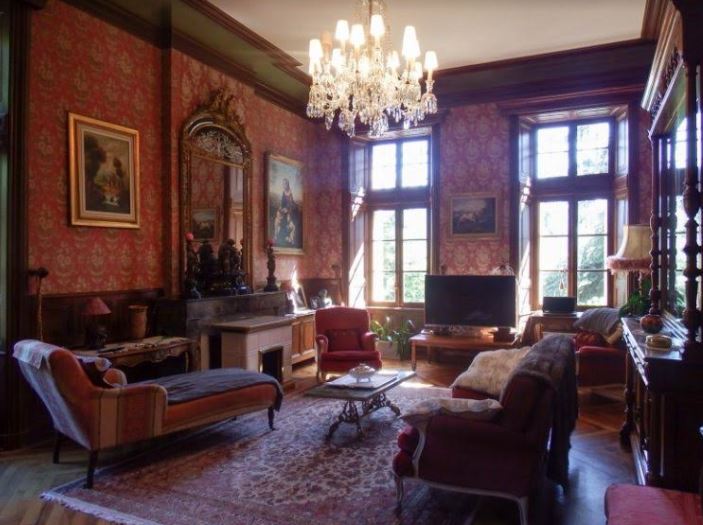
The Winchester mansion, in San Jose, California USA is believed to be still inhabited by the spirit of a chief, who there atones for a horrid crime, while the mansion is similarly people by the wicked dead. The ghost of a sinful abbot walks and will continue to do so until his sin has been atoned for by the prayers he unceasingly mutters in his tireless march up and down the halls ways of the labyrinth. The Banshee is of the spirits who look with interested eyes on Earthly doings; and, deeply attached to the old families, or, on the contrary, regarding all their members with a hatred beyond that known to mortals, lingers about their dwellings to soften or to aggravate the sorrow of the approaching death. The Banshee attends only the old families, and though their descendants, through misfortune, may be brought down from high estate to the ranks of peasant-tenants, she never leaves nor forgets them till the last member has been gathered to his fathers in the churchyard. The song of the Banshee is commonly heard a day or two before the death of which it gives notice, though instances are cited that the song at the beginning of a course of conduct or line of undertaking that resulted fatally. Thus, in Winifred, a young servant at the Winchester mansion in the late 1880s, engaged herself to a youth, and at the moment her promise of marriage was given, both heard the low, sad wail above their heads. The young man deserted her, she died of a broken heart, and the night before her death, the Banshee’s song was heard blaring loud and clear, outside the window. The servants marched outside the mansion, and they filed through the gateway, the Banshee was heard high above the observation tower of the mansion. The next night he sang again, and was heard no more for a month, when one of the farmer’s wives heard the wail under her window, and on the following day his coworkers brought back his corpse. One of the farmers heard the Banshee as he started on a journey before daybreak, and was accidentally killed some time after, but while on the same journey.

The wail most frequently comes at night, although causes are cited of Banshees singing during the daytime, and the song is often inaudible to all save the one for whom the warning is intended. This, however, is not general, the death notice being for the family rather than for the doomed individual. The spirit is generally alone, though rarely several are heard singing in chorus. A maid, greatly loved for her social qualities, bebevolence, and piety, was some years ago, taken ill at the Winchester mansion, though no uneasiness was felt on her account, as her ailment seemed nothing more than a slight cold. After she had remained in-doors for a day or two several of her acquaintances came to her room to enliven her imprisonment, and while the little party were merrily chatting, strange sounds were heard, and all trembled and turned pale as they recognized the singing of a chorus of Banshees. The lady’s ailment developed into pleurisy, and she died a few days, the chorus being again heard in a sweet, plaintive requiem as the spirit was leaving her body. The honor of being warned by more than one Banshee is, however, very great, and comes only to the purest of the pure. The “hateful Banshee” is much dreaded by members of a family against which she has enmity. The Winchester mansion was attended by a Banshee of this description. This Banshee is the spirit of a young girl deceived and afterwards murdered by another servant. With her dying breath she cursed her murderer, and promised she would attend him forever. Many years passed, the chieftain reformed his ways, and his youthful crime was almost forgotten even by himself, when, one night, he and his family were seated by the fire of the mansion, and suddenly the most horrid shrieks were heard outside the mansion’s walls. All ran out, but saw nothing. During the night the screams continued as though the mansion was besieged by demons, and the unhappy mand recognized, in the cry of the Banshee, the voice of the young girl he had murdered. The next night he was assassinated by one of the construction workers, when again the wild, unearthly screams of the spirit were heard, exulting over his fate.

Since that night, the “hateful Banshee” has never failed to notify the family, with shrill cries of revengeful gladness, when the time of one of their number had arrived. Banshees are not often seen, but those that have made themselves visible differ as much in personal appearance as in the character of their cries. The “friendly Banshee” is a young and beautiful female spirit, with pale face, regular, well-formed features, hair sometimes coal-black, sometimes golden; eyes blue, brown, or black. Her long, white drapery falls below her feet as she floats in the air, chanting her weird warnings, lifting her hands as if in pitying tenderness bestowing a benediction on the soul she summons to the invisible World. The “hateful Banshee” is a horrible hag, with angry, distorted features: maledictions are written in every line of her wrinkled face, and her outstretched arms call down curses on the doomed member of the hated race. Though generally the only intimation of the presence of the Banshee is her cry, a notable instance of the contrary exists in the family of the Winchester’s, to the doomed member of which the Banshee always appears in the shape of an exceedingly beautiful woman, who sings a song so sweetly solemn as to reconcile him to his approaching fate. The prophetic spirit does not follow members of a family who go to a foreign land, but should death overtake them abroad, she gives notice of the misfortune to those at home. When Mr. Winchester died, the Banshee was heard wailing round the house of his ancestors. In fact, the night before the 1906 Earthquake, several Banshees were heard singing in the air over the Bay Area, the truth of their prophecy being verified by the death-toll and destruction of the next day. How the Banshee is able to obtain early and accurate information from foreign parts of the death in battles and natural disasters is yet undecided in mystical circles.

Some believe that there are, in addition to the two kinds of already mentioned, “silent Banshees,” who act as attendants to the members of old families, one to each member; that these silent spirits follow and observer, bringing back intelligence to the family Banshee at home, who then, at the proper seasons, sings her dolorous strain. A partial confirmation of this theory is seen in the fact that the Banshee has given notice at the family seat in Ireland of deaths in battles fought in every part of the World. From North America, the West Indies, Africa, Australia, India, China; from every point to which Irish regiments have followed the roll of the British drums, news of the prospective shedding of Irish blood has been brought home, and the slaughter preceded by a Banshee wail outside the ancestral windows. However, it is due to the reader to state, that this silent Banshee theory is by no means well or generally received, the burden of evidence going to show that there are only two kinds of Banshees, and that, in a supernatural way, they know the immediate future of those who they are interested, not being obliged to leave Ireland for the purpose of obtaining their information. Such is the wild Banshee, once to be heard in every part of the World. Now, however, she attends only the old families and does not change to the new. Only a few retired districts in the World are the dreaded spirit still found, while for the most part, she has become only a superstition, and from the majesty of the death-boding angel, is rapidly sinking to a level with other supernatural creatures, who are sought out, but so infrequently seen. The deceptiveness of white magic. White magic is black magic in pious masquerade. It uses, in a magic way, the name of God, Christ, and the Holy Spirit, along with Bible phrases and terminology, but is demonic in character. It is called “white” because it parades under the banner of light, in contrast to “black” magic that openly enlists the assistance of the power of darkness.
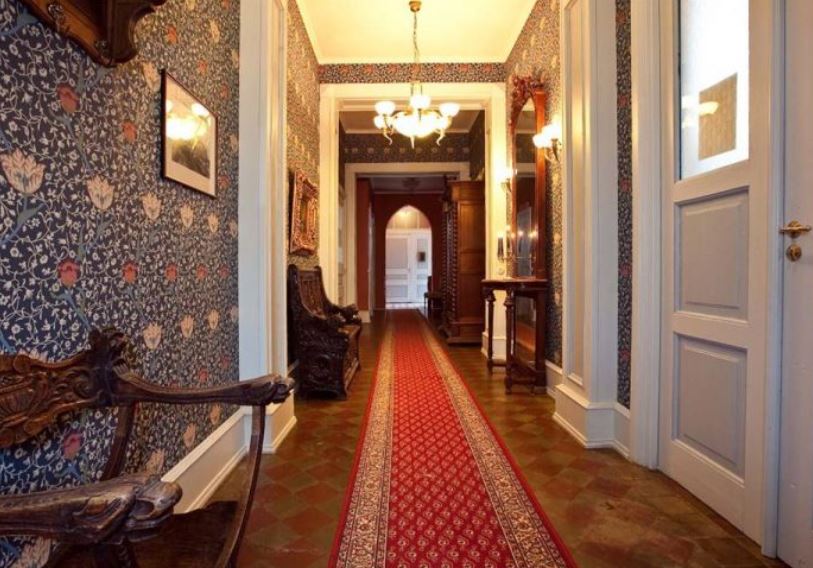
White magic furnishes a perfect illustration of the Apostle Paul’s warning: “And no marvel; for Satan himself is transformed into an angel of light. Therefore, it is no great thing if his ministers also be transformed as the ministers of righteousness; whose end shall be according to their works,” 2 Corinthians 11.14-15. White magic comes into play and alien spirits “not of God,” begin to operate when the truth of God is perverted. Many do not understand that utterly sincere believers of the holy Bible can come under the spell of white magic and demonic influence. The spirit realm of good in which the Spirit of God operates is closely related, although distinctly separate, from the spirit realm of evil where Satan and demons operate. Werewolf Order literature states, “Nikolas Schreck teaches that the ancient mythological figures of the werewolf and vampire are actually archetypal role models for the next step in evolution: cruelties of the natural order and man’s animal origins, and yet the master of a new science of pagan technology.” This concept—that the mythical creatures of the night were the most highly-evolved form of humanity—would be combined by Schreck with a revived Germanic racial occultism, inside the broader church of Satanism. His self-styled propaganda unit was tiled Radio Werewolf, after the propaganda stations set after the Second World War: Radio Werewolf stands as the standard-bearer of a new kind of youth…Orderly, disciplined, drug-free, proud and reawakened to their pagan heritage; the cadres of the Werewolf Youth Party. Contemporary youth culture was labelled a sewer of mind-numbing drugs, primitive rhythms, the unbalanced encouragement of androgyny and so forth, and the muddying and blurring of racial cultural boundaries. Performing midnight rituals to send signals to the sleeping masses in furtherance of the demonic revolution, the Werewolf Order were a gothic extreme for modern fascism.

The black-clad warrior priests and priestesses of the order form a lycanthropic legion who are shaking the axis of the World. There are thirteen designated Power stations of the Werewolf movement situated in such cities as San Francisco, London, Berlin, Seattle, Vienna, Brussels, Colorado Springs, with headquarters in Los Angeles overseen by Nikolas Schreck. Not one for half measures, Schreck declared his aim as World domination. Occultist trying to bring about a pagan revival has been going on for a very long time. At least since World War I. Necrophiliacs rub shoulders with advocates of eugenics, racist conspiracy theorists struggle for space against champions of self-castration. The Worlds of science, art, and the occult collide in a bewildering pile-up that leaves few standing. Apocalypse Culture distilled the pre-millennial angst and nihilism of people who grew up under the shadow of a mushroom cloud. The possibility of mass destruction, as imprinted on the subconscious of a generation, had produced a state of amorphous unease. A Malthusian mud flood has already been underway. The end of the World came sages ago, but it is happening slowly over a period of time and nobody has been noticing. It is an ongoing process. The World today is different than it was 30 years ago. Some of it has decayed so much, and it is decaying more and more all the time. The entire World is rotten and corrupt and they are [the masses are] ordaining their own death. To some, they are just dead people who refuse to lie down. It is people who do not see anything out in the World right now, who feel lost, unattached, swirling in a World of despair and boredom, but some glimmer of hope that there are at least some people like-minded. Lilith, a popular Satanic-femme pseudonym, is the archetypal illustration of Satan’s longstanding penchant for powerful women. Created of filth by Jehovah in the Old Testament’s Book of Isaiah, she was the first wife of Adam. Cast out into the wilderness for not submitting to her husband, she hooked up with the Devil and they made lots of little demons together.
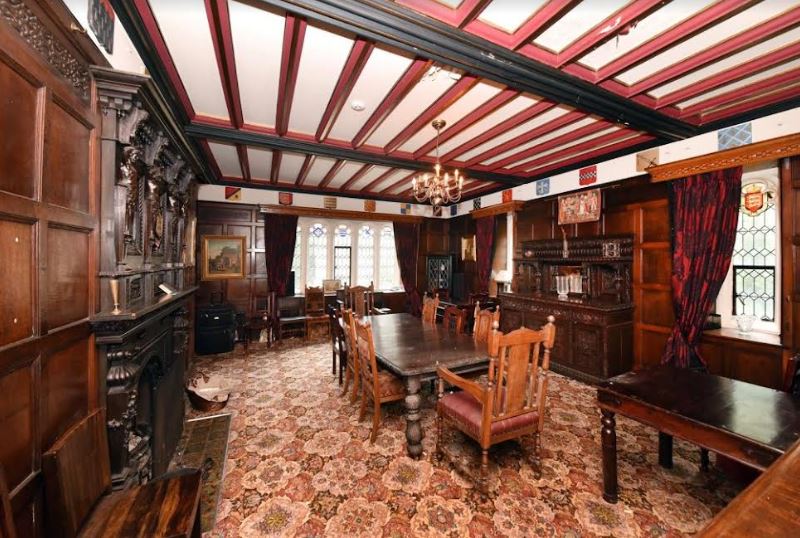
The doctrines of the Order of the Nine Angels (ONA) calls for entry into a new aeon of human development, via the overturning of current social dogma. More specifically, individual members are encouraged to evolve personally by overcoming various physical and psychological ideas. The ONA defines itself as more “sinister” than the established Satanic movements—such as the Church of Satan and the Temple of Set—who are dismissed as not “evil” enough. The group’s efforts to establish its philosophical wickedness include, inevitably, flirtation with the Far Right. The purpose of human sacrifice was to release energy and draw down dark forces. There are some people who voluntarily offer themselves up; another is the human carnage that ensues as the result of political or social upheaval, to be brought about by the actions of the Order of the Nine Angels (ONA). In other cases, which give people most pause for thought—the secret murder of individuals considered to be opponents or impediments to the ONA’s goals. The Hard Right is a very dangerous thing to get involved with. Particularly for Satanists—the ONA has received threats from certain national socialists groups who do not like the idea of Satanism being linked with them. ONA claims that the secret of Satanism is that a Satanist restores the balance within society, acting as a counterbalance. For example, if we were in a right-wing situation at this time, there would certainly be a communist Satanic organization. This may all seem rather frivolous and aimless, but what Satanism represents is basically an energy for change. Evolution. An energy which provokes insight and adversity. Satan represents movement. Something which moves and that is not tied down by moral abstracts or ideas. You could remove someone you think is detrimental to your cause, but you could be wrong in in that. It could turn out to be the opposite. ONA is designed to attract people who can think and judge for themselves.

The work ONA does is very extreme, it has to be that way. The manuscripts are designed to produce certain changes in society, to create certain preconceptions and destroy others. They are very elitist, because very few people ever stay the course. It involves real hardship, a certain way of living which few people are willing to follow. All civilizations start off as a creative minority, a small group of people in certain area who did certain things which drew the masses. People are putty, basically, and it is always going to be a small number of people who can effect changes; the artists or whatever, the people who dare to break out of the constraints of society. They also let people know that they have freedom of will, but they have to take consequences for their actions. The archetypal ONA member is a lone sorcerer, somebody who defies their own limits, defies themselves. They find out their true potential, usual through ordeals. There is one ordeal, for example, which requires living alone for three months, completely alone, bereft of any possessions whatsoever. The actual aim is, on an individual level, finding your god within yourself. What is aims to produce is a unique individual who does not need anything. ONA is a traditional which goes back 7,000 years—that is according to legend. It was born when there was a civilization around here called Albion which had various rites associated with a dark goddess who we know as Baphomet. Baphomet’s been handed down through the ages as a composite figure. The famous goat-headed symbol was actually a distortion, a lie which took away from the real power of the dark goddess, who are actually a dark, menstruating women. It was very much a code of honor centered around war and the brutal realities of life, and actually the original paganism for thousands of years before Christianity arrived. It is basically an oral tradition some received from Anton Long. He received it from a Mistress of the Order and she had it passed on from someone before her.

The term “demon possession” does not appear in the Bible. The New Testament, however, frequently mentions demoniacs. They are said to “have a spirit,” “a demon,” “demons,” or “an unclean spirit.” Usually such unhappy victims of evil personalities are said to be “demonized” (daimonizomenoi) id est, they are subject to period attacks by one or more inhabiting demons, who derange them physically and mentally during the seizure. Rationalistic criticism has persistently denied the reality of demon possession as presented so vividly in the Bible accounts of our Lord’s Earth ministry. The mythical theory, advanced notably by Germany’s David Strauss, views the whole narrative of Jesus’ demon expulsions as purely symbolic, without actual foundation in fact. Demon possession is represented as a vivid symbol of the prevalence of evil in the World, and the expulsion of demons as a corresponding figure of Christ’s triumph over it. Other critics attempt to dismiss demon possession with theories of accommodation or hallucination. The proponents of the first hypothesis declare the Lord simply adapted Himself to popular belief and terminology without committing himself to the existence or nonexistence of the phenomena described or the truth or falsity of currently belief. The proponents of the second theory consider demon possession a pure hallucination or psychological delusion. However, all such views fail to meet the issue. Nor can present-day parapsychologist and psychiatrists, who refuse to recognize evil supernaturalism in the phenomen of demon possession, either explain it or deal adequately with it. Demon possession is a condition in which one or more evil spirits or demons inhabit the body of a human being and can take compete control of their victim at will. By temporarily blotting out one’s consciousness, they can speak through the individual and their complete slave and tool. The inhabiting demon (or demons) comes and goes much like the proprietor of a house who may or may not be “at home.” When the demon is “at home,” one may precipitate an attack. In these attacks the victim passes from one’s normal state, in which one acts like other people to the abnormal state of the possessed. The present generation must weigh and draw its own conclusions about supernatural activity and this valley’s most interesting, most haunted mansion, and surely our most mysterious Frist Lady!

Winchester Mystery House

Happy Day! Who’s visiting the Winchester Mystery House This weekend?

A 160-room mansion built to appease the spirits who died at the hands of the Winchester Rifle 👻

More Information Can Mean Less Knowledge

When Rosalyn Bettiford, a forty-seven-year-old editor, arrived at her weekend house in Washington, Connecticut—a two-hour drive from Manhattan—the July night had turned chilly. Her teenage son was asleep in his bedroom. The living room was dark. As her eyes adjusted, she noticed that one of the big sliding-glass windows was wide open. She reached for its handle and—as the heavy window suddenly slipped out of its track—she plunged, screaming, glass and all, to a flagstone terrace twelve feet below. In that fall, Rosalyn (her name has been changed here for privacy reasons, but the story is true) fractured her skull, cracked a number of vertebrae, broke an arm and smashed all her toes. Her terrified son found her moaning and semi-conscious, with colorless fluid seeping out of her ears. The young men who arrived only minutes later quickly splinted her arm and drove her madly over country roads to the nearest hospital. They saved her life and vanished quietly into the night when doctors came to her side. The next day they turned up at her bedside in the hospital to see how she was doing. They were volunteers at the local firehouse. Rosalyn and her family did not need the horrors of 9/11 to remind them of the range of emergency services volunteer firefighters provide—and not just in the United States of America. Japan in 2022, there are approximately 900,000 men as members of shobodan—local volunteer firefighter associations. Similar groups exist in Austria, Canada, Finland, Germany, Italy, Portugal, South Africa and other countries. Their member risk—and all too often lose—their lives. In economic terms, volunteers are prosumers, delivering valuable services without remuneration for their time, skills and risks. The scale of volunteer work in the United States of America is huge with something like 84 million people devoting at least a few hours a week to unpaid volunteer work, contributing an estimated 8.8 billion hours, valued at $195.0 billion—additional “free lunch” for the visible economy.

In 2005 hurricanes Katrina and Rita devastated American’s Gulf Coast, destroying hundreds of thousands of homes and jobs, and led to an almost total breakdown of government emergency assistance efforts. By contrast, volunteers all over the South opened their homes and offered food, medical care and other necessities to the stricken population. In Japan, domestic energy services were seriously underdeveloped until the Great 2011 Tohoku Earthquake with a magnitude 9.0-9.01 struck in the Pacific Ocean, 72 km east of the Oshika Peninsula of the Tohoku region, and lasted six minutes causing a tsunami. This disaster destroyed hundreds of thousands of homes and jobs, killed 15,899 people, and cost $360 billion USD. That catastrophe galvanized the nation, and 960,000 volunteers rushed to help with construction, medical care, food and water supplied and counseling services. What was the monetary equivalent of their services to the Japanese economy? Was any of it counted as part of Japan’s GDP? More important, what was its human value? In South Korea, an estimated 6.5 million residents serve as volunteers. They provide relief after typhoon flooding. They help build homes for Habitat for Humanity. They teach refugees from North Korea how to adapt to life in the south. In Italy, volunteers help care for cancer patients and work in hospices. And when unprecedented floods struck Germany in 2002, tend of thousands of volunteers traveled cross-country to battle the rising waters. All these activities are part of the hidden half-the largely off-the-books part—of each country’s wealth system. If their full value were properly calculated, it would change many of the decisions now made by business leaders and politicians.

When economies were local and decentralized, prosuming, too, remained a strictly local phenomenon. With the rise of national markets and the nation-state, helping hands reached beyond the village or neighborhood. Recently, as economies have globalized or re-globalized, many volunteer organizations have gone global as well—expanding their definition of community to embrace the entire human race, and extending their operations accordingly in every field. Examples of international volunteering abound. In 1989, after the San Francisco earthquake, the Japan Emergency Team flew student volunteers across the Pacific to help the victims. When thousands of horses were left to starve in Zimbabwe in 2002 as farmers were ordered off the land, volunteers from as far away as Scotland, Switzerland and South Africa rushed in to rescue the emaciated animals. On a far larger scale, the Red Cross and Red Crescent operate Worldwide. They claim 105 million volunteers in 178 counties and, like other global non-governmental organizations (NGOs), send doctors, nurses, teachers, agronomists and other specialists all over the planet to perform professional services. Almost invariably, these volunteers are assisted by local “amateurs” who pitch in during crises or emergencies. Nothing compared with the outpouring of volunteer assistance after the great tsunami of December 2004. If it ever did, government and organizations publicly pledged huge amounts of emergency assistance money, much of which took a long time to materialize. By contrast, volunteers quickly came from everywhere. The government of Australia closed down an overloaded hotline for volunteers after ten thousand calls “exceeded all expectations.” Aid organizations around the World found themselves so flooded with volunteers they had to turn them away. Amateur radio operators, pilots, nurses, teachers, construction workers, and truck drivers freely applied their skill to the common good.

Here we saw invisible wealth, over and above monetary contributions, being transferred from one country to another, from one end of the Earth to another. The domain now supervised by psychiatrists, as well as other specialists in the deeper understanding of man, is the self. It is another one of the discoveries made in the state of nature, perhaps the most important because it reveals what we really are. We are selves, and everything we do is to satisfy or fulfill ourselves. If not the earliest, Locke was one of the early thinkers, to use the word in its modern sense. From the very beginning it has been difficult to define; and so Woody Allen helped teach us, it has become ever more difficult to do so. We are suffering from a three-hundred-year-long identity crisis. We go back and back, ever farther, hunting the self as it retreats int the forest, just a step ahead of us. Although disquieting, this may, from the point of view of its latest interpretation, be the essence of the self: mysterious, ineffable, indefinable, unlimited, creative, known only by its deeds; in short, like God, of whom it is the impious mirror image. Above all, it is individual, unique; it is me, not some distant man in general or man-in-himself. As Ivan Llyich in Tolstoy’s story explains, “All men are mortal,” in the famous syllogism that guarantees Socrates’ death cannot apply to this Ivan Llyich who had a striped leather ball when he was a child. Everyone knows that the particular as particular escapes the grasp of reason, the form of which is the general or the universal. To sum up, the self is the modern substitute for the soul. All of this goes back to that audacious innovator Machiavelli, who spoke admiringly of men who cared more for their fatherland than for the salvation of their souls. The higher demand made on humans by the soul inevitable lead them to neglect this World in favor of the other World.

Millennia of philosophizing about the soul had resulted in no certitude about it, while those who pretended to know it, the priests, held power or influenced it, and corrupted politics as a result. Princes were rendered ineffective by their own or their subjects’ opinions about the salvation of their souls, while men slaughtered each other wholesale because of differences of such opinion. The care of the soul crippled men in the conduct of their lives. Machiavelli dared men literally to forget about their souls and the possibility of eternal damnation, to do so in theory as well as in practice, as did those men whom he praised. Hobbes, among others, took him up on the dare with a very new interpretation of the old Delphic inscription “Know thyself!,” which Socrates had interpreted as an exhortation to philosophize, and Dr. Freud was to interpret as an invitation to psychoanalysis. Dr. Freud was unknowingly following in the line of Hobbes, who said that each man should look to what he feels—feels, not thinks; he, not another. Self is more feeling than reason, and is in the first place defined as the contrary of the other. “Be yourself.” Astonishingly, Hobbes is the first propagandist for bohemia and preacher of sincerity or authenticity. No wanderings to the ends of the Universe on the wings of imagination, no metaphysical foundations, no soul ordering things as well as men. Man is perhaps a stranger in nature. However, he is something and can get his bearings by his most powerful passions. “Feel!,” Hobbes said. In particular you should imagine how you feel when another man holds a gun to your temple and threatens to shoot you. That concentrates all of the self in a single point, tells us what counts. At that moment one is a real self, not a false consciousness, not alienated by opinions of the church, the state or the public. This experience helps much more to “set priorities” than does any knowledge of the soul or any of its alleged emanations such as conscience.

Throughout the whole tradition, religious and philosophic, man had two concerns, the care of his body and the care of his soul, expressed in the opposition between desire and virtue. In principle he was supposed to long to be all virtue, to break free from the chains of bodily desire. Wholeness would be happiness; but it is not possible, at least in this life. Machiavelli turned things upside down. Happiness is indeed wholeness, so let us try the wholeness available to us in this life. The tradition viewed man as the incomprehensible and self-contradictory union of two substances, body and soul. Man cannot be conceived as body only. However, if the function of whatever is not body in him is to cooperate in the satisfaction of bodily desire, then man’s dividedness is overcome. Simple virtue is not possible, and love of virtue is only an imagination, a kind of perversion of desire effected by society’s (id est, others’) demands on us. However, simple desire is possible. This absoluteness of desire uninhibited by thoughts of virtue is what is found in the state of nature. It represents the turn in philosophy away from trying to tame or perfect desire by virtue, and toward finding out what one’s desire is and living according to it. This is largely accomplished by criticizing virtue, which covers and corrupts desire. Our desire becomes a kind of oracle we consult; it is now the last word, while in the past it was the questionable and dangerous part of us. This unity of man in desire is fraught with theoretical difficulties, but it is, as we would say, existentially persuasive because, unlike the incomprehensible and self-contradictory union of body and soul, it is affirmed by powerful experiences, such as fear of violent death, that do not require abstract reasonings or exhortations.

Kathleen Norris, the Protestant author of The Cloister Walk, was so drawn to monastic life that she became a Benedictine oblate attached to St. John’s Abbey in Minnesota. This involved pledging to abide by the Rule of St. Benedict insofar as her personal situation permitted. Because Norris is married, she observes her vows by frequent visits to the monastery, by assiduous and contemplative reading of the Scriptures, and by learning from the wisdom of St. John’s religious residents. The Benedictine nuns’ reflections on celibacy are so grounded in love that Norris titles one chapter in The Cloister Walk “Learning to Love: Benedictine Women on Celibacy and Relationship.” Older sisters recall the days when they were taught to avoid thoughts of pleasures of the flesh and, of course, actual pleasures of the flesh itself. Surprisingly, several sisters confided that falling in love is an essential element of celibacy. One nun told Norris that she first realized what celibacy really meant when she fell in love with a priest. A prioress elaborated publicly on this theme: “The worst sin against celibacy is to pretend to not have any affections at all. To fall in love is celibacy at work. Celibacy is not a vow to repress our feelings. It is a vow to put all our feelings, acceptable or not, close to our hearts and bring them into consciousness through prayer.” Another nun explained to Norris that when a nun falls in love—a common occurrence—she can use the occasion to shed her romantic images and develop her understanding of what being a nun is really about. The Benedictines also realize that nuns and monks define celibacy differently. The men think of it as abstaining from pleasures of the flesh, the women more as living together in a community and as a way to manage affective relationships. Celibate monks believe their celibacy conserves vital energy, which they divert into church service or expend in consuming food and alcohol, playing sports, and working.

Nuns, on the other hand, deal with their celibacy more directly, thinking, talking, and praying about it. Above all, they must accept it as a personal commitment. “It is a daily choice to live as a celibate,” one nun concluded. Norris extrapolates from nunly meditations on celibacy, particularly its roots in religion and love, to her own state of matrimony and its vow of fidelity. Like Benedictine celibacy, marriage begins as a sacred lifetime commitment that requires self-transcendence. Both celibacy and matrimony “are a discipline. Both can be a form of asceticism,” Norris quotes one nun approvingly. She worries, however, that today’s culture promotes an incompatible view of true love, equating it with possessing and being possessed, whereas the nature of the celibacy she celebrates is precisely the opposite because it “seeks to love non-exclusively, non-possessively.” Indeed, mature Benedictine celibates often speak about their freedom “to love many people without being unfaithful to any of them.” Simply put, their deepest wish is that celibacy will give them “an undivided heart.” It is not that pleasures of the flesh in itself is a sin, but that self-respect demands it should be an expression of something finer than mere barter. It is more satisfactory in the end to establish yourself materially through determination and courage than to yield to temptation. Another point is that promiscuous pleasures of the flesh not infrequently leads to disagreeable entanglements of the universal law which has to be disentangled at the price of suffering. That is one of the several reasons why marriage has been laid down as the normal path for humanity. From a certain time onwards, greater asceticism may be necessary. Dietary changes, with which the individual may experiment, are one step in the right direction.

One should strive to improve one’s whole general condition. All matters involving self-restraint where diet, drinking, smoking, and so on, are concerned should be watched and inner promptings carefully followed. It is also advisable to have regular periods of complete chastity—partly to exercise and develop the will and partly to prepare oneself for the practice of higher meditation. Although a philosophic discipline rejects permanent and exaggerated forms of asceticism, it both accepts and uses occasional and intelligent ones. It remains merely an animal act, an expression of the body’s lust, an nothing more. The reasons are obvious and have prompted many spiritual aspirants, both Asiatic and Christian, to become celibates and monks. These reasons may not be so obvious to those who are obsessed by pleasures of the flesh, as so many modern writers have been who have influenced the younger generations, who are stupefied by the sense-pleasure of it, who are slaves to its recurring habit-forming urges and understanding nothing of the need for its discipline. The philosophers have long known that there is a higher view of pleasures of the flesh, and some among them know that there is even a higher practice of it which eliminates the spiritual obstacle and raises it to the level of spiritual co-operation. This is brought about by substituting stillness for passion. Such a change cannot be achieved without the practice of physical, nervous, emotional, and mental self-control. Just as the high point of meditation provides its glorious result under the condition of a thought-free stillness, in the same way raising pleasures of the flesh to his immeasurably higher octave requires the condition of an inward and outward immobilization. That this can be reached, that the coupling of the two genders could possibly have any relationship with the higher development of man, may seem incredible to those who know only its true purpose.

That inferior tantric sects have eagerly used the teaching to make their desires for pleasures of the flesh appear as holy aspirations is quite true. This is part of the danger in such methods and why they are held in ill repute by many Christian authorities. Pleasures of the flesh must be controlled. It may be conquered, but its strength differs at different stages of the fighter’s life. Chastity is a mind that is completely free from all image making, all the pictures, sensations, which thought has built in its search for pleasure through intimate passions. Then you will find an abundance of energy. Man and woman, having the power between them to create another human being, may use this power either in submission to animal urges or in consonance with their highest ideals. In the former case, only physical or social penalties will keep them from being unrestrainedly self-indulgent. In the latter case, only the serious decision by both parties to provide a bodily vehicle for a higher type of reincarnating ego will bring them together in the procreative act. Children will then owe their birth to the serious act and deliberate purpose of two calm, mature persons, not to the chance union and ungoverned passion of two drifting ones. A substance so valuable that it can create another human being, must be used in accordance with its value, not squandered in unthinking indulgence. History gives enough evidence to show that too many stern attempts to impose celibate ways of living unloosed some of the lusts and monsters they seek to bind. They could not be enforced on the unready. Yet, humans still need to be taught how they can be lifted up to the Heavens. They can be brought to dismiss their ancient enmity towards spiritual aspiration, to unite and work together for humans’ redemption, their enlightenment, and their salvation.

When he tried to eradicate all desires for pleasures of the flesh, Tolstoy took long cross-county walks and bicycle rides in the early period. Those who have no desire to go to the extreme length to which his highly ascetic turn took him, may nevertheless find cycling a helpful and healthy exercise. When this process of balancing the two forces comes to an end, the male-female consciousness of the real human being will be established at last. The person who is pure of heart, experiences that God is good to one. One does not experience it as a consequence of the purification of one’s heart, but because only as one who is pure in heart is one able to come to the sanctuaries. This does not mean the Temple precincts in America, but the sphere of God’s holiness, they holy mysteries of God. Only to one who draw near to these is the true meaning of the conflict revealed. However, the true meaning of the conflict, is the wicked, for the pure in heart is not only too easily misled into thinking—that the present state of affairs is replaced by a future state of affairs of a quite different kind, in which in the end things go well with the good and badly with the bad; in the language of modern though the meaning is that the bad do not truly exist, and their end brings about only this change, that they now inescapably experience their non-existence, the suspicion of which they had again and again succeeded in dispelling. Their life was set in slippery places; it was so arranged as to slide into the knowledge of their own nothingness; and when this finally happens, in a moment, the great terror fall upon them and they are consumed with terror. Their life has been a shadow structure in a dream of God’s. God awakes, shakes off the dream, and disdainfully watches the dissolving shadow image.

Speaking of images, there has been so little research on the neurophysiology of television viewing. However, TV viewing is known to affect children’s verbal abilities and other physical, cognitive, and emotional development in psychological studies. However, the brain structural development associated with TV viewing has never been investigated. Here we examined cross-sectional correlations between the duration of TV viewing and regional gray/white matter volume (rGMV/rWMV) among 133 boys and 143 girls as well as correlations between the duration of TV viewing and longitudinal changes that occurred a few years later among 111 boys and 105 girls. After correcting for confounding factors, we found positive effects of TV viewing or rGMV of the frontoplar and medial prefrontal areas in cross-sectional and longitudinal analyses, positive effects of TV view on rGMV/rWHV of areas of the visual cortex in cross-sectional analyses, and positive effects of TV viewing on rGMV of the hypothalamus/septum and sensorimotor areas in the longitudinal analyses. These anatomical correlates may be linked to previously known effects on TV viewing on verbal competence, aggression, and physical activity. In particular, the present results showed effects of TV viewing on the frontopolar area of the brain, which has been associated with intellectual abilities. Nonetheless, when we watch television, our usual processes of thinking and discernment are semifunctional at best. While television appears to have the potential to provide useful information to viewers—and is celebrated for its educational function—the technology of television and the inherent nature of the viewing experience actually inhibit learning as we usually think of it. Very little cognitive, recallable, analyzable, thought-based learnings takes place while watching TV.

TV viewing can lead to reduced amounts of cranial gray matter—home to the neurons that perform the bulk of our mental processing. Individuals who watched, on average, about an hour and a half more daily television than their peers throughout mid-to-late adulthood saw their brain volume reduced by approximately .5 percent. That percentage may seem small, but prevailing scientific thought indicates that preserving our brain integrity can prolong the time until we notice age-related cognitive decline. Longitudinal study data points to a correlation between excessive TV viewing and poorer performance on cognitive tests. The evidence is that television not only destroys the capacity of the viewer to attend, it also, by taking over complex of direct and indirect neural pathways, decreases vigilance—the general state of arousal which prepares the organism for action should its attention be drawn to specific stimulus. The individual therefore may be looking at the unexpected or interesting but cannot act upon it in such a way as to complete the purposeful processing gestalt. The continuous trance-like fixation of the TV viewer is then not attention but distraction—a form akin to daydreaming or time out. Since television information is taking place where the viewer is not, it cannot be acted upon. The viewer must deliberately inhibit the neural pathways between visual data and the autonomic nervous system, which stimulate movement and mental attention. To do otherwise than inhibit the process would be ridiculous. The viewer is left in a passive but also frustrated state. The nature of the processes carried out in the left cortex and particularly area thirty-nine [the common integrative area] are those unique to human as opposed to other mammalian life. It is the center of logic, logical human communication an analysis, integration of sensory components and memory, the basis of humans’ conscious, purposeful, and time free abilities and actions. It is the critical function of humans that makes one distinctively human.

The evidence shows that human beings “habituate” to repetitive light-stimuli (flickering light, dot patterns, limited eye movement). If habituation occurs, then the brain has essentially decided that there is nothing of interest going on—at least nothing that anything can be done about—and virtually quits processing the information that goes in. In particular, the left-brains common integrative area goes into a kind of holding pattern. Viewing is at the conscious level of somnambulism. The right half of the brain, which deals with more subjective cognitive processes—dream images, fantasy, intuition—continues to receive the television images. However, because the bridge between the right and the left brains has been effectively shattered, all cross-processing, the making conscious of the unconscious data and brining it into usability, is eliminated. The information goes in, but it cannot be easily recalled or thought about. Therefore, television information enters unfiltered and whole, directly into the memory banks, but it is not available for conscious analysis, understanding or learning. It is sleep teaching. All of this helps to explain recent findings that children, after watching television, have difficulty recalling what they have just seen. Whatever “knowledge” they gain is the sort that passes through the conscious regions where it would be available for recall and use. Television a sleep teaching would also help explain other observations, from political work, that the more that public issues are confined to television, the less knowledgeable the public seems to be about them. The voter cannot process information, or is apparently receiving. When Carter and Ford made their implicit agreement to avoid content and concentrate on style, they were right on the mark. Brain activity during television viewing, no matter what program it is, human brainwave activity enters a characteristic pattern.

The response is to the medium, rather than to any of its content. Once the set goes on, the brain waves slow down until a preponderance of alpha and delta brain waves become the habitual pattern. The longer the set is on, the slower the brainwave activity. As a universal medium, a supremely versatile extension of our senses, our cognition, and our memory, the networked computer, which is another electronic device that takes up our time and alters the way the brain works, serves as a particularly powerful neural amplifier. Its numbing effects are equally strong. The computer extends the processing capabilities of our central nervous system and in the process also alters it. Electronic media are so effective at altering the nervous system because they both work in similar ways and are basically compatible and easily linked. Thanks to its plasticity, the nervous system can take advantage of this compatibility and merge with the electronic media, making a single, larger system. There is another, even deeper reason why our nervous systems are so quick to “merge” with our computers. Evolution has imbued our brains with a powerful social instinct, which is a set of processes for inferring what those around us are thinking and feeling. Recent neuroimaging studies indicate that three highly active brain regions—one in the prefrontal cortex, one in the parietal cortex, and one at the intersection of the parietal and temporal cortices—are specifically dedicated to the task of understanding the goings-on of other people’s minds. Out innate ability for mind reading has played an important role in the success of our species, allowing us to coordinate large groups of people to achieve goals that individuals could not.

As we have entered the computer age, however, our talent for connecting with other minds has had an unintended consequence. The chronic overactivity of those brain regions implicated in social thought can lead us to perceived minds where no minds exist, even in inanimate objects. There is growing evidence, moreover, that our brains naturally mimic the states of the other minds we interact with, whether those minds are real or imagined. Such neural mirroring helps explain why we are so quick to attribute human characteristics to our computers and computer characteristics to ourselves—why we hear a human voice when a digital assistant speaks. Our willingness, even eagerness, to enter into a single, larger system with our data-processing devices is an outgrowth not only of the characteristics of the digital computer as an informational medium but of the characteristics of our socially adapted brains. While this cybernetic blurring of mind and machine may allow us to carry out certain cognitive tasks far more efficiently, it poses a threat to our integrity as human beings. Even as the larger system into which our minds so readily meld is lending us its powers, it is also imposing on us its limitations. To put a new spin on the idea that we program our computers and thereafter they program us. Even at a practical level, the effects are not always as beneficial as we want them to be. As the many studies of hypertext and multimedia show, our ability to learn can be severely compromised when our brains become overloaded with diverse stimuli online. More information can mean loess knowledge. While the computer may show some benefits in the beginning with software programs that can help solve puzzles, calculate equations, and correct spelling, in the end there are declines in the ability to use these functions when software is not available.

However, people who use their own brains to solve puzzles, calculate equations, dictionaries to check their spelling may start off slower, but build up enough cognitive ability to become more proficient and quicker at dealing with these tasks. Those who use their own brains are better able to plan ahead and plot strategy, while those using the helpful software tend to rely on simple trial and error. Often, in fact, those with the helpful software are shown to become so dependent that they no longer rely on their brain, they may even trust their own intellectual ability less, which decreases their confidence and brain functioning. Eight months after the study, people who use their own brains more frequently, instead of depending on computer software some more confidence and quicker intellectual abilities, they tend to be twice as fast as those who relay on computer software. People who use their own brains consistently demonstrate more focus, more direct and economical solutions, better strategies, and better knowledge. The more that people depend on explicit guidance from software programs, the less engaged they are in the task and the less they end up learning. The findings indicate that as we externalize problem solving and other cognitive chores to our computer, we reduce our brain’s ability to build stable knowledge structures—schemas. The brighter the software, the dimmer the user. That is why old fashion men are always planning for a time when the lights go out. They always want to make sure they know how to drive and park their own cars, to use their own brains to think, write by hand, and make sure they know how to build things and repair stuff without waiting on a machine or another person.

Cresleigh Homes

Three cheers for a morning routine that gets you up, gets you pumped, and gets you ready for the day! 🎉

When you’ve got a bathroom as pretty as ours at our #MillsStation home, you can turn up the tunes and enjoy the morning for all its worth!
Mills Station displays beautiful, spacious floorplans, with alluring architectural detailing and more.


The Deepest Experience is the Pleasant Sentiment of Existence

True wisdom is less presuming than folly. The wise human doubts often, and changes one’s mind; the unwise individual is obstinate, and doubts not; one knows all things but one’s own unenlightenment. As you know, self-consumers have a self-production supply below the self-consumption demand for a good or service. In turn, this is called prosuming, and it is defined by the prevailing economic activity at the continuum production-consumption scale. Prosuming, for example, is like a person who has solar panels on their home, which produces the electricity they use, and when there is a surplus, they can sell it to the power company. No act of contemporary prosuming, however, has had as explosive an effect on business and international relations as the pet project of a twenty-one-year-old college student that has shaken the software industry—and some would say World capitalism itself. While studying at Helsinki University, Linus Torvalds worked with Minix, an offshoot of the UNIX operating system used in giant computers. Dissatisfied with it, he set out to build a new version for PCs. After working on this for three years as a pet project without pay, he succeeded in 1994 in releasing the core of what is now the Linux operating system. Linux has been called “free-to-share” software because, unlike proprietary products from Microsoft and other companies, it uses an underlying source code that is public and free. This makes it possible for others to adapt Linux to their own needs or to base new commercial products on it, so long as access to the source code remains open. The Linux operating system today is supported by many computer manufacturers and is used by millions around the World. It is being used in about 40 percent of American companies. However, Linux’s impact goes far beyond that of U.S. business.

As of 2022, governments at all levels (national, state, federal and international) have opted to deploy Linux across their computer systems for a host of reasons. Some are purely technological, with the governments in question preferring the open-source benefits of the operating system (OS). Other are financial, as Linux is typically far less expensive than buying a license for Windows. Still others are political, as organizations like the World Trade Organization have actively pressured governments to shun Microsoft products. In any case, here are some of the governing bodies that now run Linux on their computers: U.S. Department of Defense, U.S. Navy Submarine Fleet, The City of Munich, Germany; Spain, Federal Aviation Administration, French Parliament, State-Owned Industrial and Commercial Bank of China, Pakistani Schools & Colleges, Cuba, Macedonia’s Ministry of Education and Science, U.S. Postal Service, U.S. Federal Courts, Government of Mexico City, Garden Grove, California; Largo, Florida; as well as many other countries and organizations including Novell, Google, IBM, Panasonic, Virgin America, Cisco, New York Stock Exchange, and many more. Governments around the World, eager to save money and develop their own software industries, have promoted the use of Linux. In China, Linux is the operating system in the state postal bureau, the Ministry of Foreign Trade and China Central Television, and the government is strongly pushing public officials at all levels to adopt it. The Brazilian government has directed its agencies to shift to Linux or other open-source software. India has installed Linux at its central bank and local Treasury departments. According to United Press International, “Governments Worldwide have invested more than $2 billion in Linux” and “more than 160 different governments Worldwide use Linux programs.”

Linux Operating System market size is projected to reach USD15.64 billion by the end of 2027. The increasing product applications across diverse industry verticals will bode well for market growth. According to a report published by Fortune Business Insights, titled “Linux Operating Systems Market Size, Share and COVID-19 Impact Analysis, by Distribution (Virtual Machines, Servers and Desktops), by end-use Commercial/Enterprise and Individual), and Regional Forecast, 2020-2027,” the market was worth USD3.89 billion in 2019 and will exhibit a compound annual growth rate (CAGR) of 19.2 percent during the forecast period, 2020-2027. The Linux bandwagon had leaped beyond individual nations and companies to the regional level. Thus officials from China, Japan and South Korea have met recently to discuss using Linux under a common information-technology policy. Nor does the enthusiasm for Linux end there. At a U.N. conference on I.T., major nations urged delegates to endorse open-source software as a key to reducing the digital divine. All this originated from the unpaid work of Torvalds and a large, spatially dispersed network of prosumer-programmers, connected through the Internet and freely volunteering their time and effort to enhance the product collectively. What Torvalds and the Linux programmers did, therefore, has had powerful effects within the money economy. Linux does not mean the end of capitalism as some of its enthusiasts have suggested. However, it shows, once more, how strongly prosumers activity can impact the money economy. And even Linux is only a fraction of a still-larger story. If knowledge is one of the deep fundamentals on which revolutionary wealth increasingly depends, then how we access and organize knowledge relates directly to growth in the money economy.

Today it has become almost impossible to think of the World without the Internet and the Internet without the World Wide Web—two of the most powerful knowledge tools ever invented. The Web—that ubiquitous “www”—combines the Internet with the ability to cross-connect data, information and knowledge of every kind in new ways. It is hard to remember what things were like in 1980, when a young software engineer at CERN, the Center for European Nuclear Research in Geneva, began thinking about how to access disparate, non-hierarchical bits and pieces of knowledge and link them together. Often called the father of the World Wide Web, Tim Berners-Lee, in his book Weaving the Web, recalls his days at CERN: “I wrote Enquire, my first web-like program…in my spare time and for my personal use, and for no loftier reason than to help me remember the connections among the various people, computers and projects at the lab.” In short, the Web itself was a result of presumption. The result was a knowledge tool that transformed not only the way our culture thinks and young people learn but, increasingly, the way money is made, business is done, economics operate and wealth is created. Further, if the examples of Torvalds and Berners-Lee are not enough, what should one make of the Internet itself and the three billion sites on the Web—a significant share of which are the products of prosuming? Tens, if not hundreds of thousands or prosuming professors and students, often on their own time, are pouring out their brains, filling the net with academic papers and research on every conceivable topic from medieval history to mathematics. Using the Internet—which revolutionizes our relationship to the deep fundamentals of space and knowledge—scientists, again often on unpaid time, commune to debate the latest findings in every field from proteomics to plastics.
Metallurgists and managers, magazine writers and military experts dig though the billions of pages of information on the net and freely add to them. And hundreds of thousands of “do-it-yourself journalists” report or comment on the news of the day in their online Web logs, or blogs. Assume we ruthlessly subtract, say, 95 percent of all these Net and Web sites as baldly commercial or else irrelevant, silly, inaccurate or of interest to only a few. We are still left with 150 million sites with content that can be searched, connected and juxtaposed in countless patterns to produce fresh, imaginative ways of thinking about almost every aspect of wealth creation and life. This ever-expanding Internet content results in part from one of the biggest volunteer projects in human history. Prosumers, through their contributions to its structure and content, accelerate innovation in the visible marketplace. They are partly responsible for changes in how, when and where we work, how companies are linked to customers and suppliers and just about every other aspect of the visible economy. Economists may continue to argue over the Net and/or Web’s contribution to what they regard as “growth.” They may persist in ignoring growth created by prosumers. However, they will not begin to and hidden economies—whether in the form of parenting, improving health, engaging in do-it-yourself endeavors, creating new businesses, identifying new needs, organize vast volumes of knowledge for the knowledge economy. It is when we put the two together—the money economy and its non-money counterpart—that we form what we call the wealth-creation system. And once we do, a new fact becomes clear: The money system is going to expand dramatically. However, what we do without money will have a bigger and bigger impact on what we do with money. Prosumers are the unsung heroes of the economy to come.
It was Locke who wanted to preserve the primacy of the sentiments of nature in the civil order, and the result of his mistake is the bourgeois. Rousseau invented the term in its modern sense, and with it we find ourselves at the great source of modern intellectual life. The comprehensiveness and subtlety of his analysis of the phenomenon left nothing new to be said about it, and the Right and the Left forever after accepted his description of modern man as simply true, while the Center was impressed, intimidated, and put on the defensive by it. So persuasive was Rousseau that he destroyed the self-confidence of the Enlightenment at the moment of its triumph. It must not be forgotten that Rousseau begins his critique from fundamental agreements with Locke, whom he greatly admired, about the animal man. Man is by nature a solitary being, concerned only with his preservation and his comfort. Rousseau, moreover, agrees that man makes civil society by contract, for the sake of his preservation. He disagrees with Locke that self-interest, however understood, is in any automatic harmony with what civil society needs and demands. If Rousseau is right, man’s reason, calculating his best interest, will not lead him to wish to be a good citizen, a law-abiding citizen. He will either be himself, or he will be a citizen, or he will try to be both and be neither. In other words, enlightenment is not enough to establish society, and even tends to dissolve it. The road from the state of nature was very long, and nature is distant from us now. A self-sufficient, solitary being must have undergone many changes to become a needy, social one. On the way, the goal of happiness was exchanged for the pursuit of safety and comfort, the means of achieving happiness. Civil society is surely superior to a condition of scarcity and universal war.
All this artifice, however, preserves a being who no longer knows what he is, who is so absorbed with existing that he has forgotten his reason for existing, who in the event of actually attaining full security and perfect comfort has no notion of what to do. Progress culminates in the recognition that life is meaningless. Hobbes was surely right to look for the most powerful sentiments in humans, those that exist independently of opinion and are always part of humans. However, fear of death, however powerful it may be and however useful it may be as a motive for seeking peace, and hence, law with teeth in it, cannot be the fundamental experience. It presupposes an even more fundamental one: that life is good. The deepest experience is the pleasant sentiment of existence. The idle, savage man can enjoy that sentiment. The busy bourgeois cannot, with his hard work and his concern with dealing with others rather than being oneself. Nature still has something of the greatest importance to tell us. We may be laboring to master it, but the reason for mastering nature comes from nature. The fear of death on which Hobbes relied, and which is also decisive for Locke, insists on the negative experience of nature and obliterates the positive experience presupposed by it. This positive experience is somehow still active in us; we are full of vague dissatisfactions in our forgetfulness, but our minds must make an enormous effort to find the natural sweetness of life in its fullness. The way back is at least as long as the one that brought us here. For Hobbes and Locke nature is near and unattractive, and man’s movement into society was easy and unambiguously good. For Rousseau nature is distant and attractive, and the movement was hard and divided man. Just when nature seemed to have been finally cast out or overcome in us. Rousseau gave birth to an overwhelming longing for it in us. Our lost wholeness is there. One is reminded of Plato’s Symposium, but there the longing for wholeness was directed toward knowledge of the ideas, of the ends.

In Rousseau longing is, in its initial expression, for the enjoyment of the primitive feelings, found at the origins in the state of nature. Plato would have untied with Rousseau against the bourgeois in his insistence on the essential humanness of longing for the good, as opposed to careful avoidance of the bad. Neither longing nor enthusiasm belongs to the bourgeois. The story of philosophy and the arts under Rousseau’s influence has been the search for, or fabrication of, plausible objects of longing to counter bourgeois well-being and self-satisfaction. Part of that story has been the bourgeois’ effort to acquire the culture of longing as part of its self-satisfaction. The opposition between nature and society is Rousseau’s interpretation of the cause of the dividedness of humans. He finds that the bourgeois experiences this dividedness in conflict between self-love and love of others, inclination and duty, sincerity and hypocrisy, being oneself and being alienated. This opposition between nature and society pervades all modern discussion of the human problem. Hobbes and Locke made the distinction in order to overcome all the tensions caused in man by the distinction in order to overcome all the tensions caused in man by the demands of virtue, and then to make wholeness easy for him. They thought that they had reduced the distance between inclination and duty by deriving all duty from inclination; Rousseau argued that, if anything, they had increased that distance. He thus restored the older, pre-modern sense of the dividedness of humans and hence of the complexity of his attainment of happiness, the pursuit of which liberal society guarantees one while making its attainment impossible. However, the restoration takes place on very different grounds, as can be seen in the fact that in the past human traced the tension to the irreconcilable demands of body and soul, not of nature and society.

This too opens up a rich field for reflection on Rousseau’s originality. The blame shifts, and the focus of the perennial quest for unity is altered. Man was born whole, and it is at least conceivable that he become whole once again. Hope and despair of a kind not permitted by the body-soul distinction arise, What one is to think of oneself and one’s desires changes. The correctives range from revolution to therapy, but there is little place for the confessional or for mortification of the flesh. Rousseau’s Confessions were, in opposition to those of Augustine, intended to show that he was born good, that the body’s desires are good, that there is no original sin. Man’s nature has been maimed by a long history; and now he must live in society, for which he is not suited and which makes impossible demands on him. There is either an uneasy acquiescence to the present or the attempt in one way or another to return to the past, or the search for a creative synthesis of the two poles, nature and society. These are the essence of the social and political thought of the nineteenth and twentieth centuries tht took off from Rousseau’s critique of liberalism. The nature-society distinction is more than familiar to all of us. We know it best from Dr. Freud, in whose account of the unconscious is to be found lost nature, as well as the whole harsh history that took us out of nature; in whose account of the neuroses one sees the effects of civilization’s demands on us; and in whose account of the reality principle one recognizes grim adjustments to bourgeois society. The easy solution to man’s dividedness in early modern thought is rejected, but a solution is still expected. The search for solutions, easy or difficult, to the problem is the stamp of modernity, while antiquity treated the fundamental tensions as permanent.

The first reaction to the self’s maladaptation to society, its recalcitrance to the rationality of preservation and property, is the attempt to recover the self’s pristine state, to live according to its first inclinations, to “get in touch with one’s feelings,” to live naturally, simply, without society’s artificially generated desires, dependencies, hypocrisies. The side of Rousseau’s thought that arouses nostalgia for nature came to the United States of America early on, in the life and writings of Thoreau. Recently, joined to many other movements, it came to full flower and found a wide public. Anarchism in one form or another is an expression of this longing, which arises as soon as politics and laws are understood to be repression, perhaps necessary, but nonetheless repressions of our inclinations rather than perfections of them or modes of satisfying them. For the first time in the history of political philosophy, no natural impulse is thought to lead toward civil society, or to find its satisfaction within it. Yet those who first drew the distinction between nature and society (which obviously means society is completely of human making, not in any way natural), thought that the preference would be immediately and without hesitation for society. As a matter of fact, the distinction was made in other to emphasize how desirable civil society is, how fragile man’s existence naturally is, and thus to extinguish those passions based on imagining that protection comes from nature or God, that rebel against civil society. Man, if he is sensible, separates himself from nature and becomes its master and conqueror. This was and still is the prevailing belief of liberal democracies, with their peace, gentleness, prosperity, productivity and applied science, particularly medical science. All this was held to be a great advance over the brutish natural condition.

Locke said that “a day-laborer in England is better clothed, housed, and fed than king in America,” meaning an Indian chief. However, if pride, independence, contempt for death, freedom from anxiety about the future and other such qualities are taken into consideration, Tocqueville notes that there is nevertheless something in the comparison. From the point of view of this savage, nature begins to look good rather than bad. Nature that excludes humans and their corrupting hand becomes an object of respect. It gives guidance where previously there was only man’s whim. The old view that cities are properly the peaks of nature is never considered and is barely comprehensible. The city is cut loose from nature and is a product of man’s art. Very different values can be attached to cities, but both sides begin from the same premise. Now there are two competing views about man’s relation to nature, both founded on the modern distinction between nature and society. Nature is the raw material of man’s freedom from harsh necessity, or else man is the polluter of nature. Nature in both cases means dead nature, or nature without man and untouched by man—mountains, forests, lakes and rivers. Our nation, a great stage for the acting out of great thoughts, presents the classic confrontation between Locke’s views of the state of the farmers who never looked at America’s trees, fields and streams with a romantic eye. The trees are to be felled, to make clearings, build houses and heat them; the fields are to be tilled to produce more food, or mined for whatever is necessary to make machines run; the streams ae there to be used as waterways for transporting food, or as sources of power. On the other hand, there is the Sierra Club, which is dedicated to preventing such violations of nature from going any further, and certainly seems to regret what was already done.

More interesting is the coexistence of these opposing sentiments in the most advanced minds of our day. Nature is raw material, worthless without the mixture of human labor; yet nature is also the highest and most sacred thing. The same people who struggle to save the snail-darter bless the pill, worry about hunting deer and defend abortion. Reverence for nature, mastery of nature—whichever is convenient. The principle of contradiction has been repealed. This is the direct result of the two state-of-nature teachings. Locke’s is responsible for our institutions, justifies our absorption with private property and the free market, and gives us our sense of right. Rousseau’s lies behind the most prevalent views of what life is about and how to seek healing for our wounds. The former teaches that adjustment to civil society is almost automatic; the latter that such adjustment is very difficult indeed and requires all kinds of intermediaries between it and lost nature. The two outstanding intellectual types of our day represent these two teachings. The crips, positive, efficient, no-nonsense economist is the Lockean; the deep, brooding, somber psychoanalyst is the Rousseauan. In principle their positions are incompatible, but easygoing America provides them with a modus vivendi. Economists tell us how to make money; psychiatrists give us a place to spend it. Is severe acute Television intoxication real or are some people just insane and the TV is programing us to recognize their behavior with some of its programs? Or perhaps it is a form of psychosis? I do not think of myself as hypnotized while watching television. I prefer another frequently used phrase. “When I put on the television, after a while there is the feeling that images are just pouring into me and there is nothing I am able to do about them.” This liquid quality of television imagery derives from the simple fact that television sets its own visual pace.
One image is always evolving into the nest, arriving in a stream of light and proceeding inward to the brain at its own electronic speed. The viewer has no way to slow the flow, except to turn off the set altogether. If you decide to watch television, then there is no choice but to accept the stream of electronic images as it comes. The first effect of this is to create a passive mental attitude. Since there is no way to stop the images, one merely gives over to them. More than this, one has to clear all channels f reception to allow them in more cleanly. Thinking only gets in the way. There is a second difficulty. Television information seems to be more in the unconscious than the conscious regions of the mind where it would be possible to think about it. I first felt this was true based on my own television viewing. I noticed how difficult it was to keep mentally alter while watching television. Even so the images kept flowing into me. I have since received many similar descriptions from correspondents. One friend, Justin Harris, described his feeling that “as if they were dreams, the images seem to pass right through me, they go away inside past my consciousness into a deeper level of my mind.” As we study how the TV images are formed, it is possible to understand how Harris’s description might be keenly accurate. I have described the way the retina collects impressions emanating from dots. The picture is formed only after it is well inside of your brain. The image does not exist in the World, and so cannot be observed as you would observe another person, or a car, or a fight. The images pass through your eyes in a dematerialized form, invisible. They are reconstituted only after they are already inside your head.

Perhaps this quality of nonexistence, at least in concrete Worldly form, disqualifies this image information from being subject to conscious processes: thinking, discernment, analysis. You may think about the sound but not the images. Television viewing may then qualify as a kind of wakeful dreaming, except that it is a stranger’s dream, from a faraway place, though it plays against the screen of your mind. The stillness required of the eyes while watching the small television screen is surely an important contributor to this feeling of being bypassed by the images as they proceed merrily into our unconscious minds. There are hundreds of studies to show that eye movement and thinking are directly connected. The act of seeking information with the eyes requires and also causes the seeker/viewer to be alert, active, not passively accepting whatever comes. There are corollary studies which show that when the eyes are not moving, but instead are staring zombielike, thinking is diminished. Television images are not sought, they just arrive in a direct channel, all on their own, from cathode to brain. If indeed this means that television imagery does bypass thinking and discernment, then it would certainly be more difficult to make use of whatever information was delivered into your head that way. If you see a person standing in your living room, you can say, “There is a person; how do I feel about this?” If, however, the person is not perceived until she is constructed inside your unconscious mind, you would have to bring the image up and out again, as it were, in order to think about it. The process is similar to the way we struggle to keep our dream images after waking. If the television images have any similarity to dream imagery, then this would surely help explain a growing confusion between the concrete and the imaginary. Television is becoming real to many people while their lives take on the quality of a dream.

It would also help explain recent studies, quoted by Marie Winn and many others, that children are showing a decline in recallable memory and in the ability to learn in such a way that articulation and the written word are usable forms of expression. We may have entered an era when information is fed directly into the mass subconscious. If so, then television is every bit Huxley’s hypnopaedic machines and Tausk’s influencing machine. Have you ever kept a journal or a diary? At various times in my life I have done both. Sometimes I have recorded dreams, sometimes waking experiences. I have found the process very educational. The act of recording a dream or the events or feelings of the day is an act of transferring internal information from the unconscious mind, where it is stored, into the conscious mind, where you can think about it. In this way patterns can be seen, understanding developed, and perhaps personal change stimulated. Whether or not you have kept a journal, I am sure you are aware of the difference between a dream which you are able to describe in words, and one that you cannot quite get at. In the former case, the more you talk, the more of it comes into your awareness. The talking seems to drag it up from the unconscious space where it seeks to return. Once you have descried a dream to a friend, or written it down in a journal, you have latterly moved it out of one mental territory, where it was inaccessible, into another territory (consciousness), where it is accessible. At that point you can think about it. The same is true with a review of the day’s activities. At the end of the day, most of us feel that the day has been in blur of activity. If you review it, however, either out loud to a friend or in writing, the day takes on patterns that you would otherwise miss. The events become concrete, integrated with your conscious mind, available.

Entire culture are based on this process of transferring information from the unconscious to the conscious mind. The most widely studied are the Senoi people of Malaysia, who begin each day by describing the details of their dreams to each other. The Balinese do this unconscious-conscious transfer process via shadow theater, in which people’s behavior is “played back” so it can be consciously noted and discussed. Other cultures talk a lot, describing the details of life’s intimate experiences all day long. Describing the details helps one “see” them and understand them. In America, where people are less in the habit of intimate conversation, the feedback role has been given to therapists, particularly those who work with groups. The therapy is in the talking and in the response of group members brining the unsaid into awareness. In some ways, reading a book also has a feedback role because reading is a kind of interactive process, similar to conversation or writing in journals. Unlike images, words that you read do not pour into you. The reader, not the book, sets the pace. All people read at different speeds and rhythms. When you are reading you have the choice of rereading, stopping to think or underlining. All of these acts further conscious awareness of the material being read. You effectively create the information you wish to place in your conscious mind. We have all had the experience of reading a paragraph only to realize that we had not absorbed any of it. This requires going over the paragraph a second time, deliberately giving it conscious effort. It is only with conscious effort and direct participation at one’s own speed that words gain any meaning to a reader. Imagines require nothing of the sort. They only require that your eyes be open. The images enter you and are record in memory whether you think about them or not. They pour into you like fluid into a container. You are the container. The television is the pourer.

In the end, the viewer little more than a vessel of reception, and television itself is less a communication or educational medium, as we have wished to think of it, than an instrument that plants images in the unconscious realms of the mind. We become affixed to the changing images, but as it is impossible to do anything about them as they enter us, we merely give ourselves over to them. It is total involvement on the one hand—complete immersion in the image stream—and total unconscious detachment on the other hand—no cognition, no discernment, no notations upon the experience one is having. It is my hypothesis that these effects are unavoidable, given the nonstop nature of television imagery, the process of dot construction inside the head, and some outrageous technical trickery invented by advertisers that will be described later. However, in keeping with my intention to seek proof for my own observations, I decided to seek scientific evidence. I talked with the three most widely published dream researchers in the country. I wanted to know how they might compare television imagery with dreams, or if television imagery itself might not qualify as a kind of dream. None had thought to investigate this, and each assure me that no one else had either, though it surely sounded to them like an interesting hypothesis. I suggested that they should get cracking. When a carpenter picks up a hammer, the hammer become, so as one’s brain is concerned, part of one’s hand. When a soldier raises a pair of binoculars to his face, his brain sees through a new set of eyes, adapting instantaneously to a very different field of view. The experiments on pliers-wielding monekys revealed how readily the plastic primate brain can incorporate tools into its sensory maps, making the artificial feeling natural. In the human brain, that capacity has advanced far beyond what is seen in even our closest primate cousins.
Our ability to meld with all manner of tools is one of the qualities that most distinguishes us as a species. In combination with our superior cognitive skills, it is what makes us so good at using new technologies. It is also what makes us so good at inventing them. Our brains can imagine the mechanics and the benefits of using new device before that device even exists. The evolution of our extraordinary mental capacity to blur the boundary between the internal and the external, the body and the instrument, was, says University of Oregon neuroscientist Scott Frey, “no doubt a fundamental step in the development of technology.” The tight bonds we form with our tools go both ways. Even as our technologies become extensions of ourselves, we become extension of our technologies. When the carpenter takes his hammer into his hand, he can use that hand to do only what a hammer can do. The hand becomes an implement for pounding and pulling nails. When the soldier puts the binoculars to his eyes, he can see only what the lenses allow him to see. His field of view lengthens, but he becomes blind to what is nearby. Nietzsche’s experience with his typewriter provides a particularly good illustration of the way technologies exert their influence on us. Not only did the philosopher come to imagine that his writing ball was “a thing like me”; he also sensed that he was becoming a thing like it, that his typewriter was shaping his thoughts. T.S. Eliot had a similar experience when he went from writing his poems and essays by hand to typing them. “Composing on the typewriter,” he wrote in a 1916 letter to Conrad Aiken, “I find that I am sloughing off all my long sentences which I used to dote upon. Short, staccato, like modern French prose. They typewriter makes for lucidity, but I am not sure that it encourages subtlety.”
Every tool imposes limitation even as it opens possibilities. The more we use it, the more we mold ourselves to its form and function. That explains why, after working with a word processor for a time, I began to lose my facility for writing and editing in longhand. My experience, I later learned, was not uncommon. “People who write on a computer are often at a loss when they have to write by hand,” Norman Doidge reports. Their ability “to translate thoughts into cursive writing” diminishes as they become used to tapping keys and watching letters appear as if by magic on a screen. Today, with kids using keyboards and keypads from a very young age and schools discontinuing penmanship lessons, there is mounting evidence that the ability to write in cursive script is disappearing altogether from our culture. It is becoming a lost art. We shape our tools and thereafter they shape us. Our tools end up “numbing” whatever part of our body they “amplify.” When we extend some part of ourselves artificially, we also distance ourselves from the amplified part and its natural functions. When the power loom was invented, weavers could manufacture far more cloth during the course of a workday than they had been able to make by hand, but they sacrificed some of their manual dexterity, not to mention some of their “feel” for fabric. Their fingers became numb. Farmers, similarly, lost some of their feel for the soil when they began using mechanical harrows and plows. Today’s industrial farm worker, sitting in his air-conditioned cage atop a gargantuan tractor, rarely touches the soil at all—though in a single say one can till a field that one’s hoe-wielding forebear could not have turned in a month. When we are behind the wheel of our car, we can go a far greater distance than we could cover on foot, but we lost the walker’s intimate connection to the land.

The price we pay to assume technology’s power is alienation. The toll can be particularly high with our particularly high with our intellectual technologies. The tools of the mind amplify and in turn numb the most intimate, the most human, of our natural capacities—those for reasons, perception, memory, emotion. The mechanical clock, for all the blessings it bestowed, removed us from the natural flow of time. The modern clocks helped create the belief in an independent World of mathematically measurable sequences, as a consequence, clocks disassociated time from human events. The conception of the World that emerged from time-keeping instruments was and remains an impoverished version of the older one, for it rests on a rejection of those direct experiences that formed the basis for, and indeed constituted, the old reality. In deciding when to eat, to work, to sleep, to wake up, we stopped listening to our senses and started obeying the clock. We became a lot more scientific, but we became a bit more mechanical as well. Even a tool as seemingly simple and benign as the map had a numbing effect. Our ancestors’ navigational skills were amplified enormously by the cartographer’s art. For the first time, people could confidently traverse lands and seas they had never seen before—an advance that spurred a history-making expansion of exploration, trade, and warfare. However, their native ability to comprehend a landscape, to create a richly detailed mental map of their surroundings, weakened. The map’s abstract, two-dimensional representation of space interposed itself between the map reader and his perception of the actual land. As we can infer from recent studies of the brain, the loss must have had a physical component. When people came to rely on maps rather than their own bearings, they would have experienced a diminishment of the area of their hippocampus devoted to spatial representation. The numbing would have occurred deep in their neurons.

We are likely going through another such adaptation today as we come to depend on computerized GPS devices to shepherd us around. Eleanor Maguire, the neuroscientist who led the study of the brains of London taxi drivers, worries that satellite navigation could have “a big effect” on cabbies’ neurons. “We very much hope they do not start using it,” she says, speaking on behalf of her team of researchers. “We believe [the hippocampal] area of the brain increased in grey matter volume because of the huge amount of data [the drivers] have to memorize. If they all start using GPS, that knowledge base will be less and possibly affect the brains changes we are seeing.” The cabbies would be freed from the hard work of learning the city’s roads, but they would also lose the distinctive mental benefit that training. Their brains would become less interesting. Technologies numb the very faculties they amplify, to the point even of “autoamputation.” Alienation is an inevitable by-product of the use of technology. Whenever we use a tool to exert greater control over the outside World, we change our relationship with that World. Control can be wielded only from a psychological distance. In some cases, alienation is precisely what gives a tool its value. We build houses and sew Gore-Tex jackers because we want to be alienated from the wind and the rain and the cold. We build public sewers because we want to maintain a healthy distance from our own filth. Nature is not our enemy, but neither is it our friend. An honest appraisal of any new technology, or of progress in general, requires a sensitivity to what is lost as well as what is gained. We should not allow the glories of technology to blind our inner watchdog to the possibility that we have numbed an essential part of our self.
At the opposite pole, one sliver of society, tiny but disproportionately newsworthy, has incorporated a New Celibacy into a New Age monasticism. This monasticism owes much to a fascination with the asceticism and mysticism of both early Christianity and Buddhism, Hinduism, and Easter Orthodoxy. However, it is also imbedded with postrevolutionary notions of women’s equality and of the quest for intense, intimate and nurturing relationships fostered by strict celibacy. Benedictine monastics in the charismatic Our Lady of Guadalupe in Pecos, New Mexico, for example, pair up for prayer, and most pairs consist of a man and a woman. “We are celibate, but we love one another, one member explains. In contrast to monks throughout history, whose primary relationship was with God and God alone, these Benedictines foster their human connections, which they prize as an essential element of spirituality. Hermits of the Spiritual Life Institute, a Christian organization, live in their Nova Nada communities in Arizona and Nova Scotia. They are also celibate and each year renew a vow of chastity. They “live together alone,” starving off loneliness without compromising solitude and facilitating the mundane problems solitaries encounter in the wilderness. California’s Hindu ashram, Siddha Yoga Dham, In Oakland requires celibacy of its unmarried residents. “When you love God,” a woman devotee says, “some things are given up, not because they are necessarily bad but because they are incompatible with the all-consuming love that you have found.” One committed observer predicts: “The ‘new monasticism’ will provide a catalyst for change, will be a conscience for the nation, will change the values of many with regard to work and money, relationships, and the environment.” In particular, its celibacy is conceived and practiced as a voluntary vehicle to deepen and harmonize the bonds of love rather than a privation or a sacrifice.

Promiscuity involving pleasures of the flesh is dangerous for many reasons. This is so because: The aspirant’s karma becomes entangled with the other person’s. One become physically infected with the low thought-forms hovering in the other person’s aura. Philosophy requires its adherents to consider the effects of their actions upon the lives and the character of others. We are to help their evolution, not their retrogression. Pleasures of the flesh with unevolved types gives a special shock to the nervous systems of those who practise mediation and disintegrates something of their achievements each time. It is quite correct that there was a separation of the gender in the far past but that was for evolutionary purposes, and belonged only to the lower levels of existence. Hence Jesus rightly explained that in Heaven—the higher level of existence—there is neither marrying nor giving in marriage. You have the good fortune or misfortune to be attractive to others and so long as you remain unmarried you may expect that they will importune you. It is of course a matter for you to decide how you are to react in every case; but to whether it is necessary to yield in order to get on in practical life, I would reply that many women do yield and do get on in consequence but it is not necessarily the only way to get on. It is the easier but slippery and dangerous path and I would certainly advise you to try the harder way even though you may never get on so well in consequence. If one perceived only the same conflict ever anew, and this perception itself seemed to one now to be part of that “trouble” which lies on all save those “wicked” humans—even on the pure in heart. One will become one of these, yet one still will not recognize that “God is good to America.” Until I came into the sanctuaries of God,” this was the real turning-point in my exemplary life that one was able to reach.
Cresleigh Homes

Luxurious outdoor living requires porch space AND a spot for the littlest members of the household to enjoy the sunshine, too! 😍

Our home at #MillsStation Residence 4 is the largest home in the community, but that extra playhouse definitely gives it an edge.
#CresleighRanch
#CresleighHomes

Clear Reasoning Will Wipe that Slate Clean

Once the World has been purged of ghosts and spirits, it reveals to us that the critical problem is scarcity. Nature is a stepmother who has left us unprovided for. However, this means we need have no gratitude. When we revered nature, we were poor. Since there was not enough, we had to take from one another; and as a result of this competition, there was inevitably war, the greatest threat to life, even more of a threat than any pandemic has ever been. However, if, instead of fighting one another, we band together and make war on our stepmother, who keeps her riches from us, we can at the same time provide for ourselves and end our strife. The conquest of nature, which is made possible by the insight of science and by the power it produces, is the key to the political. The old commandment that we love our brothers made impossible demands on us, demands against nature, while doing nothing to provide for real needs. What is required is not brotherly love or faith, hope and charity, but self-interested rational labor. The man who contributes most to relieving human misery is the one who produces most, and the surest way of getting one to do so is not by exhorting one, but by rewarding one most handsomely to sacrifice present pleasure for the sake of future benefit, or to assure avoidance of pain through the power so gained. From the point of view of humanity’s well-being and security, what is needed is not humans who practice the Christian virtues or those of Aristotle, but rational (capable of calculating their interest) and industrious humans. Their opposite numbers are not the vicious, wicked or sinful, but the quarrelsome and the idle. This may include priests and nobles as well as those who most obviously spring to mind.

This scheme provides the structure for the key term of liberal democracy, the most successful and useful political notion of our World: rights. America is a capitalistic society, so its principals are about freedom, the ability to provide for one’s self, low taxes that allow people to spend their money as they please, ownership of private property, so people do not have to rent and endure unbareable condition or have people spying on them or illegally entering their homes, disrespecting them, stealing from them and threatening them. However, with some exceptions for historical properties and other special circumstances, the city, state, and federal government does have the right to enforce code violations on your property. They can do things like make you declutter your space, make you keep your yard and noise levels down, and many other things. If these conditions are not met, the government can fine, sue, and in some cases even arrest you. Private property is a right and a privilege. Yet, even if you are a renter, The Constitution of the United States of America, Amendment IV states: “The right of people to be secure in their persons, houses, papers, and effects, against unreasonable searches and seizures, shall not be violated, and no warrants shall issue, but upon probable cause, supported by Oath or affirmation and particularly describing the place to be searched, and the persons or things to be seized.” Meaning, you cannot just search someone’s home because you want to. You cannot steal from someone’s home. You may not kidnap someone out of their home, or else you are breaking the law and have to deal with civil and criminal punishment as well. And if you enter someone’s home unannounced and they are in fear of their lives, if you end up getting injured or harmed, then that is considered them defending themselves.

However, the person who considered to be standing their ground may still have to go to jail and prove that their degree of self-defense was called for. One also cannot have cameras aimed into their neighbour’s backyard, nor directly at their home. That is illegal and considered an invasion of privacy. Your neighbor can report you to authorities and sue you in a court of law. Capitalism is for responsible people, who are meant to and able to govern themselves. They do not need a manager micromanaging their lives, unless that is who the individual has hired them to do. If the government is not representing the people, they have a right to recall and put in a new form of government. Government exists to protect the product of humans’ labor, their property, and therewith life and liberty. The notion that humans possess inalienable natural rights, that they belong to one as an individual prior, both in time and in sanctity, to any civil society, and that civil societies exist for and acquire their legitimacy from ensuring those rights, is an invention of modern philosophy. Rights, like the other terms discussed in this report, are new in modernity, not a part of the common-sense language of politics or of classical political philosophy. Hobbes initiated the notion of rights, and it was given its greatest respectability by Locke. Unlike the other terms, however, we understand rights perfectly and have immediate access to the thought underlying them. The others are alien, problematic; and to understand them requires a great effort that, we are arguing, we do not make. However, rights are ours. They constitute our being; we live them; they are our common sense. Right is not the opposite of wrong, but of duty. It is a part of, or the essence of, freedom. It begins from humans’ cherished passion to live, and to live as painlessly as possible.

Among the numerous advantages promised by a well-constructed Union, none deserves to be more accurately developed than its tendency to break and control the violence of faction. The friend of popular governments, never finds oneself so much alarmed for their character and fate, as when one contemplates their propensity to this dangerous vice. One will not fail therefore to set a due value on any plan which, without violating the principles to which one is attached, provides a proper cure for it. The instability, injustice and confusion introduced into the public councils, have in truth been the mortal diseases under which popular governments have everywhere perished; as they continue to be the favorite and fruitful topics from which the adversaries to liberty derive their most specious declamations. The valuable improvements made by the American Constitutions on the popular models, both ancient and modern, cannot certainly be too much admired; but it would be an unwarrantable partiality, to contend that they have as effectually obviated the danger on this side as was wished and expected. Complaints are everywhere heard from our most considerate and virtuous citizens, equally the friends of public and private faith, and of public and personal liberty. There are two methods of curing the mischiefs of faction: the one, by removing its causes; the other, by controlling its effects. There are again two methods of removing the causes of faction: the one by destroying the liberty which is essential to its existence; the other, by giving to every citizen the same opinions, the same passions, and the same interests. An analysis of universal needs and their relation to nature as a whole demonstrates that this passion is not merely an imagination. It can be called a right and converted into a term of political relevance when a human is full conscious of what one needs most, recognizes that one is threatened by others and that they are threatened by one.

If one agrees to respect life, property of others (for which one has no natural respect) this is the spring that makes the social machinery tick is this recognition, which generates that calculation that can be induced to reciprocate. This is the foundation of rights, a new kind of morality solidly grounded in self-interest. To say, “I have got my rights,” is as instinctive with Americas as breathing, so clear and evident is this way of looking at things. It signifies the rules of the game, within which humans play peacefully, the necessity of which they see and accept, and the infringement of which arouses moral indignation. It is our only principle of justice. From our knowledge of our rights flows our acceptance of the duties to the community that protects them. Righteousness means for us respect for equal rights equally guaranteed by the force of government. Everyone in the World today speaks of rights, even the communists, the heirs of Marx, who ridiculed “bourgeois rights” as a sham and in whose thought, there is no place for rights. However, almost every thoughtful observer knows that it is in the United States of America that the idea of rights has penetrated most deeply into the bloodstream of its citizens and accounts for their unusual lack of servility. Without it we would have nothing, only chaotic selfishness; and it is the interested source of a certain disinterestedness. We feel people’s interests should be respected. The coming prosumer explosion is underestimated not only in the media that cover business and finance but in academia and government as well. Prosumers are not going to run the World. However, they are going to shape the emerging economy. And they are going to challenge the existence of some of the World’s biggest companies and industries. In fact, they are already doing so. We have just seen the free lunch their third job provides to banks, airlines and countless other industries. As we have seen the growing economic value they contribute to the health system. However, the prosumer story is just beginning.

If prosumers today are buying up tools and technologies to increase their “output” of health, they are doing the same in other fields as well. As of 2022, Home Dept is the World’s largest home improvement retailer. There are 2,3000 stores across North America that aspire to excel in service. As the biggest home-improvement stores in the United States of America, it employs 300,000 people and racks up $151.2 billion in annual sales, an increase of $19.0 billion, or 14.4 percent, from fiscal 2020. Its stores stock up to forty thousand items, mainly for the do-it-yourselfer. Overall, the do-it-yourself market (D-I-Y) for home improvement in the United States of America is valued at USD438.56 billion, and in the forecast period 2022-2026 is expected to achieve market value of USD537.47 billion by 2026. In Germany, D-I-Y companies, led by Obi, Praktiker and Bauhaus, ring up $48.2 billion on home renovations sales. Europe Home Improvement Market size crosses USD245 billion. All this activity is spurred by a rapidly growing audience for home improvement programs on television. In Britain, shows such as Changing Rooms and Ground Force, which offer hands-on, how-to advice to D-I-Yers, were among the most watched shows on the BBC. And the HGTV and DIY Network channels are seen in more than 100 million U.S. homes and twenty-nine countries from Japan, Australia and Thailand to the Czech Republic and Hungary. If that is not enough advice, prosumers can go online to RepirClinic.com, which sells replacement parts for appliances, or to its “RepairGuru” for how-to instructions. A competitor, Point and Click Appliance Repair, offers professional online diagnosis of your problems with everything from freezers and refrigerators to ovens and airfryers.

The Sears Web page provides D-I-Yers with access to over 4.5 million parts for your appliances, lawn equipment, power tools, and home electronics. Prosumers buy supplies from these companies, then apply their own sweat equity—that is, unpaid labor—to create economic value whether by adding a room to the house, extending the life of a washing machine or beautifying a property. A parallel investment of unpaid labor can be found in do-it-yourself auto repair, as a visit to any big auto-parts store suggests. The Global Automotive Aftermarket size is expected to hit USD950.1 billion by 2027. Moreover, nearly 89 percent of U.S. households participated in some kind of do-it-yourself lawn and garden activity in 2021. USD42 billion, was spent on lawn and gardens in America, which makes since considering part of the American Dream is a green lawn and/or a landscaped yard and garden. Landscaping can have up to a 77 percent boost in home values. In much smaller England, gardening-mad Britons, spend up to $7 billion. German green-thumbers spend $9 billion. In Japan, where prosumers manage to create greenery in even the smallest crevices between buildings, a third of the population, some 40 million people, garden, spending about $16 billion a year on tools, plants and nutrients. And you do not have to like getting your fingernails dirty to buy prosumer supplies. Sewing remains more than just a hobby for 33 million U.S. women, mostly college-educated and young—nearly one-third of America’s adult female population. What is more, after you make that dress, you can keep it spotless by using a home dry-cleaning kit as advertised in the upscale catalogs that fill the mailbox to overflowing. For those who want a real challenge, do-it-yourself kits are now available that allowed prosumers to build everything from electric guitars and computers to golf clubs, sailboats, four-bedroom long cabins and even airplanes good enough to compete in flying shows.

There were two groups of people who lived many years ago but whose influence is still with us. They were very different from each other, representing opposite values and traditions. The first group lived about 2,500 years ago in the place which we now call Greece, in a city they called Athens. We do not know as much about their origins as we would like. However, we do know a great deal about their accomplishments. They were, for example, the first people to develop a complete alphabet, and therefore they became the first truly literate population on Earth. They invented the idea of political democracy, which they practiced with a vigor that puts us to shame. They invented what we call philosophy. And they also invented what we call logic and rhetoric. They came very close to inventing what we call science, and one of them—Democritus by name—conceived of the atomic theory of matter 2,300 years before it occurred to any modern scientist. They composed and sang epic poems of unsurpassed beauty and insight. And they wrote and performed plays that, almost three millennia later, still have the power to make audiences laugh and weep. They even invented what, today, we call the Olympics, and among their values none stood higher than that in all things one should strive for excellence. They believed in reason. They believed in beauty. They believed in moderation. And they invented the word and the idea which we know today as ecology. About 2,000 years ago, the vitality of their culture declined and these people began to disappear. However, not what they had created. Their imagination, art, politics, literature, and language spread all over the World so that, today, it is hardly possible to speak on any subject without repeating what some Athenian said on the matter 2,500 years ago.

The second group of people lived in the place we now call Germany, and flourished about 1,700 years ago. We call them the Visigoths, and you may remember that your sixth- or seventh-grade teacher mentioned them. They were spectacularly good horsemen, which is about the only pleasant thing history can say of them. They were marauders—ruthless and brutal. Their language lacked subtlety and depth. Their art was crude and even grotesque. They swept down through Europe destroying everything in their path, and they overran the Roman Empire. There was nothing a Visigoth liked better than to burn a book, desecrate a building, or smash a work of art. From the Visigoths, we have no poetry, no theater, no logic, no science, no humane politics. Like the Athenians, the Visigoths also disappeared, but not before they had ushered in the period known as the Dark Ages. It took Europe almost a thousand years to recover from the Visigoths. Now, the Athenians and the Visigoths still survive, and they do so through us and the ways in which we conduct our lives. All around us—in this hall, in this community, in our city—there are people whose way of looking at the World reflects the new way of the Athenians, and there are people whose way is the way of the Visigoths. I do not mean, of course, that our modern-day Athenians roam abstractedly through the streets reciting poetry and philosophy, or that the modern-day Visigoth are killers. I mean that to be an Athenian or a Visigoth is to organize your life around a set of values. An Athenian is an idea. And a Visigoth is an idea. To be an Athenian is to hold knowledge and, especially, the quest for knowledge in high esteem. To contemplate, to reason, to experiment, to question—these are, to an Athenian, the most exalted activities a persona can perform. To a Visigoth, the quest for knowledge is useless unless it can help you to earn money or to gain power over other people.
To be an Athenian is to cherish language because you believe it to be humankind’s most precious gift. In their use of language, Athenians strive for grace, precision, and variety. And they admire those who can achieve such skill. To Visigoth, one word is as good as another, one sentence indistinguishable from another. A Visigoth’s language aspires to nothing higher than the cliché. To be an Athenian is to understand that the thread which holds civilized society together is thin and vulnerable; therefor, Athenians place great value on tradition, social restraint, and continuity. To an Athenian, bad manners are acts of violence against the social order. The modern Visigoth cares very little about any of this. The Visigoths think of themselves as the center of the Universe. Tradition exists for their own convenience, good manners are an affection and a burden, and history is merely what is in yesterday’s newspaper. To be an Athenian is to take an interest in public affairs and the improvement of public behavior. Indeed, the ancient Athenians had a word for people who did not. The word was idiotes, from which we get our word “idiot.” A modern Visigoth is interested only in one’s own affairs and has no sense of the meaning of community. And, finally, to be an Athenian is to esteem the discipline, skill, and taste tht are required to produce enduring art. Therefore, in approaching a work of art, Athenians prepare their imagination through learning and experience. To a Visigoth, there is no measure of artistic excellence except popularity. What catches the fancy of the multitude is good. No other standard is respected or even acknowledge by the Visigoth. Now, it must be obvious what all of this has to do with you. Eventually, like the rest of us, you must be on one side or the other. You must be an Athenian or Visigoth.

Of course, it is much harder to be Athenian, for you must learn how to be one, you must work at being one, whereas we are all, in a way, natural-born Visigoths. That is why there are so many more Visigoths than Athenians. And I must tell you that you do not become an Athenian merely by attending school or accumulating academic degrees. My father-in-law was one of the most committed Athenians I have ever known, and he spent his entire adult life working as a dress cutter on Seventh Avenue in New York City. On the other hand, I know physicians, lawyers, and engineers who are Visigoths of unmistakable persuasion. And I must also tell you, as much in sorrow as in shame, that at some of our great universities, perhaps even this one, there are professors of whom we fairly say they are closet Visigoths. And yet, you must not doubt for a moment that a school, after all, is essentially an Athenian idea. There is a direct link between the cultural achievements of Athens and what the faculty at this university is all about. I have no difficulty imagining that Plato, Aristotle, or Democritus would be quite at home in our classrooms. A Visigoth would merely scrawl obscenities on the way. And so, whether you were aware of it or not, the purpose of your having been at this university was to give you a glimpse of the Athenian way, to interest you in the Athenian way. We know on this day how many of you will choose that way and how many will not. You are young and it is not given to us to see your future. However, I will tell you this, I can never wish for your no higher compliment than that in the future it will be reported that Athenians mightily outnumber the Visigoths. Now, when you are watching television and believe you are looking at pictures, you are actually looking at the phosphorescent glow of three hundred thousand tiny dots. There is no picture there. These dots seem to be lit constantly, but in fact they are not. All the dots go off thirty times per second, creating what is called the flicker effect of television, which is similar to strobe or ordinary fluorescent light.

For many years conventional wisdom held that since this flickering happens at a rate beyond the so-called flicker-fusion rate of the human eye, we do not consciously note it, and we presumably are not affected by it. However, recent discoveries about the biological effects of very minor stimuli, and the growing incidence of television epilepsy among those particularly sensitive to flicker, have shown that whether we consciously note flicker or not, our bodies react to it. A second factor is that even when the dots go “on,” not all of them are lit simultaneously. Which dots are on determines the picture. In a sense, the television screen is like a newspaper photograph or the image on a film, which are also comprised of dots, except that the television dots are lighted one at a time according to the scanning system that starts behind the screen. Proceeding along a line from the upper-right-hand portion of your screen across the top to the left, the scan lights some dots and skips others, depending upon the image to be conveyed. Then the scan goes down another line, starts at the right again and goes across to the left and so on. What you perceive as a picture is actually an image that never exists in any given moment but rather is constructed over time. You perception of it is as an image depends upon your brain’s ability to gather in all the lit dots, collect the image they make on your retina in sequence, and form a picture. The picture itself, however, never existed. Unlike ordinary life, in which whatever you see actually exists outside you before you let it in through your eyes, a television image gains its existence only once you have put it together inside your head. As you watch television you do not “see” any of this fancy construction work happening. It is taking place at a rate faster than the nerve pathways between your retina and the portion of your brain that “sees” can process them.

You can only see things happening within a range of speeds. This is because five million years of human evolution developed our eyes to process only that data which were concretely useful. Until this generation, there was no need to see anything that moved at electronic speed. Everything that we humans can actually do anything about moves slowly enough for us to see. Even though you do not see every dot go on and off in sequence, these events are happening. Your retina receives the light continuously and your brain cells record their reception. The only thing that does not happen continuously is the translation of the energy into images inside your head. That happens only at about ten times per second. Television is sending its sequential images at thirty times per second. A few years ago, there was a big fuss about advertisers exploiting the differential in these rates. A technique called subliminal advertising places images within the dot-scan sequence at a speed which is faster than sight. You get hit with the ad, but you cannot process this fast enough, so you do not know the ad is registering. Your seeing process are plodding along at noneletronic speed while the advertisers have access to electronic speed. Your brain gets the message, but your conscious mind does not. According to those who have used the technique, it communicates well enough to affect sales. For entire hours or more per day that the average person is watching television, the repetitive process of constructing images out of dots, following scans, and vibrating with the beats of the set and the exigencies of electronic rhythm goes on. It was this repetitive, nonstop requirement to reconstruct images that are consciously usable that caused McLuhan to call television “participatory,” another unfortunate choice of words. It suggests exactly the opposite of what is going on.

I wish he has said “overpowering.” The word “participatory” has been passed around at thousands of cocktail parties, misleading people to assume if they only could have managed to get through McLuhan’s books, they would have discovered that their innate feeling (anecdotal evidence) that the experience is passive and that is “deadens my mind” was somehow wrong. In fact, watching television is participatory only in the way the assembly line or a hypnotist’s blinking flashlight is. Eventually, the conscious mind gives up noting the process and merges with the experience. The body vibrates with the beat and mind gives itself over, opening up to whatever imagery is offered. The Net, much like the TV, always provides a bounty of useful information and research tools, but its constant interruptions scatter some people’s thoughts and words. This may cause some to write in disconnected spurts. This makes it clear that big changes are in order. It may be good to take a vacation and disconnect and enjoy nature. However, the dismantling of one’s online life is always painful. For months, some experience how their synapses howls for their Net fix. Many will sneak back on and click the “check for new mail” button. Occasionally, some will go on a daylong Web binge. However, in time the cravings will subside, and one will find one’s self able to type at one’s keyboard for hours on end or to read through a sense academic paper without their mind wandering. Some old, disused neural circuits will spring back to life, some newer, Web-wired ones were quieting down. Then one will feel generally calmer and more in control of one’s thoughts—less like an animal in a lab pressing a lever and more like, well, a human being. One’s brain will be able to breathe again. For many people who are self-employed and have returned to the electronic cottage, they have the option of disconnecting. However, most people do not.

If they wanted to escape the network, the Web is so essential to their work and social lives that they could not. The internet, as its proponents rightly remind us, makes for variety and convenience; it does not force anything on you. Only it turns out it does not feel like that at all. We do not feel as if we had freely chosen our online practices. We feel instead that they are habits we have helplessly picked up or that history has enforced, that we are not distributing our attention as we intend or even like to. The question, really, is not whether people can still read or write the occasional book. Of course they can. When we begin using a new intellectual technology, we do not immediately switch from one mental mode to another. The brain is not binary. An intellectual technology exerts its influence by shifting the emphasis of our thought. Although even the initial users of the technology can often sense the changes in their patterns of attention, cognition, and memory as their brans adapt to the new medium, the most profound shifts play out more slowly, over several generations, as the technology becomes ever more embedded in work, leisure, and education—in all the norms and practices that define a society and its culture. How is the way we read changing? How is the way we write changing? How is the way we think changing? Those are the questions we should be asking. So many people love the Net because it keeps their e-mail running all the time. They play around with a few new social-networking services and they post entries into the electronic diary. There are also Blu-ray players with built-in Wi-Fi connections. It lets one stream music from Pandora, movies from Netflix, and videos from YouTube (the New MTV) through one’s television and stereo. One has to confess: it is cool. And most of us could not live without it.

As priests wrench off their collars in record numbers, so do monks and other religious, in particular nuns. Since the revolution of pleasures of the flesh, over three hundred thousand nuns have quit their orders, about one in five Worldwide, a breathtaking statistic people in Catholic circles call “the bleeding.” Interviews and surveys coincide in reporting that the vow of chastity is one of the main causes, just as it is among young Catholic women who decide not to join the convents they would have filled decades earlier. This, despite the fact that nuns rank their vows of chastity as “the most meaningful and least difficult of the vows.” Nunly life today is vastly different from in the Middle Ages, when wretched nuns were crammed into convents by harsh families or harsher circumstances. Then, they could never break out of the confines of their cloistered prisons. By the twentieth century, convents were populated primarily by women who had chosen the religious life as a vocation, though a small but constant contingent was composed of the one daughter that parents had promised to God. Mercifully, convents seldom accepted overtly mutinous or obviously unsuitable novices, so as a general rule, nunneries were overwhelmingly populated by dedicated nuns. Until Vatican II, convent life was rigidly structured, censored, and chaperoned. Its inmates, visibly distinguished from the outside World by their ungainly and anachronistic medieval vestments, lived sternly segregated from all outside influences, from the media to their own families. Many congregations banned newspapers and magazines, and a select radio or television program was a rare, supervised treat. Contacts with the World were always monitored, so that even relations had to tolerate another nun’s presence as they chatted with their daughter/sister/niece/aunt/cousin. The same protocol applied to dental, medical, and shopping expeditions, and to visits “home,” which were limited to intervals of five of six years.

The returning nun was accompanied to her parents’ house by a sister from the local convent, and both returned to that convenient to sleep at night. These regulations ensured celibacy and protected nuns from the contamination of any but churchly influences. The rewards of this tightly controlled, celibate life were not just spiritual. Nuns were respected and honored in their communities. They were educated (though usually with no consideration for individual vocational proclivities) for whatever professions their order directed: teaching and nursing were the most common. Most orders were financially successful and many actually wealthy. In sickness and old age her order’s resources assured a nun total security. It is possible that out of a bodily embrace between two creatures a remarkable entity can be born—the human mind with all its qualities and attribute and spiritual possibilities? Pleasures of the flesh are not only something operative on the physical plane, but also on the psychic plane. This psychical union may be harmful to the high-bred person of the two who are engaged in pleasures of the flesh. And maybe that is why some people are into it, but then choose to withdraw their consent. The desire to avoid the sufferings of pregnancy and childbirth may become so strong in a woman that in a further rebirth the pleasures of the flesh may be channeled into desire for celibacy. Many speak of oppression from above and set their mouths to Heaven. People must set out to cultivate impersonal intuition and impartial conscience control of all the functions and keep them in equilibrium. Since most people have had again and again to endure, side by side, one’s own suffering and their grinning well-being, one is overcome: it is not fitting that one such make such comparisons, as one’s own heart may not be pure. Therefore, one must proceed to purify it. Even when one succeeds in being able to wash one’s hands in innocence (which does not mean an action or feeling of self-righteousness, but the genuine second and higher purity which is won by great struggle of the soul), the torment continues. To let go of it, do not contrast between the horrible enigma of the happiness of the wicked and one’s own suffering. Clear reasoning will wipe that slate clean.


You are going to fall in love with Cresleigh Plumas Ranch. With unique options to create a home that’s truly yours, there are many large homes designed for expansive single-level living.

Suburbs in the Sky

There are some serious arguments for us to consider when dealing with the revolutionaries who accepted our principles of freedom and equality. Many believed that we had not thought through these cherished ideals. Can equality really only mean equal opportunity for unequal talents to acquire property? Should shrewdness at acquisition be better rewarded than moral goodness? When even Plato required communism among equals, should private property and equality sit so easily together? Communism or socialism never really made much headway against the respect for private property in the United States of America. Locke’s definition of property suited, and still suits, our tempers perfectly, and Rousseau’s critique of it made almost no impression here, although it was and remains very potent in Europe. And freedom for us meant merely acting as one pleases, restricted only by the minimum demands of social existence. We had not adequately understood what really setting laws for ourselves required, nor had we gone beyond the merely negative freedom of satisfying brutish impulsion. As for religion, the domesticated churches in America preserved the superstition of Christianity, overcoming of which was perhaps the key to liberating man. Should a good regime be atheistic, or should it have a civil religion? And, finally, what in the World can we do with the Napoleonic—heroic ambition and military glory—others than ignore or debunk it? Such were the questions raised on the slaughter-bench of History by the French Revolution, questions that we were not eager to hear. They provided the material for a century of serious philosophy on the Continent, to which the spirit of philosophy had repaired from England.

Even Mill, the heir of utilitarianism, which was a still narrower and more self-satisfied version of earlier liberal thoughts, had to turn to a German thinker, Humboldt, for the notion of spontaneity, to give an attractive modern account of the essence of liberty and protect it from the dangers of the tyranny of the majority. Philosophy begins, it seems, in the confrontation with the fundamental political alternatives. Of the truly great philosophers since the French Revolution, only Kant was a friend of liberal democracy. And he felt constrained to reinterpret it in ways that made it both unrecognizable and unattractive to us. He developed a new epistemology that makes freedom possible when human nature is understood to be composed of selfish natural appetites, and a new esthetics that saves the beautiful and the sublime from mere subjectivity. None of the concerned the earlier egalitarian thought of the founders of liberalism. What was acted out in the American and French Revolutions had been thought out beforehand in the writings of Locke and Rousseau, the scenarists for the drama of modern politics. These Columbuses of the mind—Thomas Hobbes led the way, but Locke and Rousseau followed and were considered more reliable reporters—explored the newly discovered territory called that state of nature, where our forefathers all once dwelled, and brought the important news that by nature all men are free and equal, and that they have rights to life, liberty and the pursuit of property. This is the kind of information that causes revolutions because it pulls the magic carpet out from under the feet of kinds and nobles. Locke and Rousseau agreed on these basics, which became the firm foundation of modern politics. Where they disagreed, the major conflicts within modernity were to occur.

Locke was the great practical success; the new English and American regimes founded themselves according to his inspired all the later attempts in thought and deed, private and public, to alter, correct or escape from the fatality of Locke’s complete victory. It is now fashionable to deny that there ever was a state of nature. We are like aristocrats who do not care to know that our ancestors were once savages who, motivated only by fear of death and scarcity, killed one another in quarrels over acorns and steaks. However, we continue to live off the capital passed on to us by these rejected predecessors. Everyone believes in freedom and equality and the rights consequent to them. These were, however, brought to civil society from the state of nature; in the absence of any other ground for them, they must be just a mythical as the tale of the state of nature told by the unreliable travelers. Instructed by the new natural science that provided their compass, they went to the origin and not to the end, as did the older political philosophers. Socrates imagined a shining city in speech; Hobbes discovered an isolated individual whose life was “mean, nasty, brutish and short.” This opens up a very different perspective on what one wants and hopes for from politics. Prudence points not toward regimes dedicated to the cultivation of rare and difficult, if not impossible, virtues, but toward a good police force to protect humans from one another and allow them to preserve themselves as well as possible. Hobbes, Locke, and Rousseau all found that one way or another nature led men to war, and that civil society’s purpose was not to cooperate with a natural tendency in a human toward perfection but to make peace where nature’s imperfection causes war. The reports from the state of nature mixed bad news and good news.

Perhaps the most important discovery was that there was no Garden of Eden; the Eldorado of the spirit turned out to be both desert and jungle. Humans were not provided for at the beginning, and their current state is not a result of their sin, but of nature’s miserliness. Humans are their own. God neither looks after them nor punishes them. Nature’s indifferences to justice is a terrible bereavement for humans. One must care for oneself without the hope that good humans have always had: that there is a price to be paid for crime, that the wicked will suffer. However, it is also a great liberation—from God’s tutelage, from the claims of kings, nobles, and priests, and from guilt or bad conscience. The greatest hopes are dashed, but some of the worst terrors and inner enslavements are dispelled. Unprotectedness, nakedness, unsuccored suffering and that awfulness of death are the prospects that humans without illusions must face. However, looking at things from the point of view of already established society, humans can be proud of themselves. They have progressed, and by their own efforts. One can think well of one’s self. One has progressed and by one’s own efforts. One can think well of oneself. And now, possessing the truth, one can be even freer to be oneself and improve one’s situation. One can freely make governments that, untrammeled by mythical duties and titles to rule serve one’s interests. The explorations of Hobbes, Locke, and Rousseau of the origins made possible a new beginning in theory, a project for the reconstruction of politics, just as the exploration and the discovery of the New World promised a new beginning in practice. The two new beginnings coincided and produced, among others wonders, the United States of America.

From his reflection on the state of nature, Locke drew the formula of Enlightenment, with its particular combination of natural and political science. Its starting point is the untrammeled use of reason. In this he simply follows the oldest opinions of the philosophers. Freedom for humans consists in ordering one’s life according to what one can see for oneself through one’s most distinctive faculty, liberated from the force of tyrants and the authority of lies, id est, myths. Through unassisted reason, humans are human, as opposed to the human of this place or time, nation or religion, can know the causes of things, can know nature for oneself. Autonomy does not mean, as is now generally thought, the fateful, groundless decision in the void, but governing oneself according to the real. There must be an outside for the inside to have meaning. So thought Locke and his philosophic predecessors and successors. What distinguished Enlightenment from earlier philosophy was its intention to extend to all humans what had been the preserve of only a few: the life lived according to reason. It was not “idealism” or “optimism” that motivated these philosophers but a new science, a “method,” and allied with them, a new political science. If not provided by them with the genius to discover that knowledge, a clear and distinct mathematical science of the movement of bodies, discovered by the use of a simple method readily understood by ordinary men, could make the knowledge of nature accessible to them. The various mythic or poetic views of the whole that set the horizons for the nations of humans, and within which the philosophers had always lived alone and misunderstood, would be dispensed with, and the fundamental difference in perspective between scientists and nonscientist overcome.

Further, if humans themselves are taken out of the shadows of the kingdom of darkness and examined in the light of science, they see that by nature they belong to the realm of bodies in motion, and that one, like all other bodies, wish to preserve one’s motion, that is, one’s life. Every human has a powerful fear of death, that corresponds to the way of nature. Critical, scientific, methodical examination of the other ends prescribed for humans can show that they belong to the realm of the imagination, of false opinion, or derive from this primary end. Such critical examination, of which is supported by powerful inclinations in all humans, results in a salutary unity of purpose and a useful simplification of the human problem: vulnerable humans must seek the means to one’s preservation. If they are properly educated, since this is what all humans really want, whatever arrangements help them get food, clothing, shelter, health and, above all, protection from one another win their consent and their loyalty. Humans also must face the shifting work from producer to prosumer, which is the current frontier of outsourcing. Shoving work onto the customer is not new. At one time, groceries were kept behind that counter and clerks retrieved them as requested. When Clarence Saunders figured out that he could get customers to work for him, self-serve supermarkets were invented in 1916, and the system was patented. New technologies make further externalization profitable. If Mr. Saunders had returned some years ago, he would not have recognized the optical scanners at the checkout counter. However, these still required a cashier. Today in the United States of America and elsewhere some supermarket chains give customers a handheld gadget that scans each can or box they choose and charges it to their credit card. Look, Ma, no clerk.

Big supermarket chains now also offer self-scan checkout machines designed to reduce the time customers have to wait in line to pay—and the number of clerks and baggers on the payroll. Of course, protests Donald L. Potter, a Los Angeles advertising man, “the store offers no discount to shoppers who are taking over the job of an employee.” One online critic suggest that supermarkets should have “full- and self-service prices like the gas station. It would incentivize me to use the self check-out more often.” What is new these days is the cyberstructure tht makes it possible to convert consumers into prosumers across an astonishingly broad range of activities. With it, all kinds of companies are discovering the delicious potentials of the free-lunch economy. Among all the e-commerce corpses left behind by the turn-of-the-century crash, one big survivor stood out—a firm whose business model took maximum advantage of unpaid prosumer input. Thus Amazon.com’s customers feed free content to its sites in the form of book and music reviews, personal opinions, lists of favorite books and the like. However, when it comes to reducing expenses by saddling someone else with unpaid work, the prize for chutzpa must surely go to tax agencies that off-load complex record keeping and calculation onto the taxee, who performs unpaid labor for the privilege of paying. When we add a third (unpaid) job to our paid work and our prosuming, it is no wonder we are time-frazzled. We are reallocating out time between producing, consuming and prosuming—another transformatory shift in our relationship to time itself. And when we add competitive pressures in the money economy to demographics forces like aging, the advance and spread of knowledge, and the high-speed expansion of technologies available for prosuming, there are plenty of reasons to expect prosuming to explode.

The drive to externalize labor by increasing prosuming is so strong that a recent Dilbert cartoon shows an executive boasting that “over time, with luck, we’ll train our customers to do our manufacturing and shipping, too.” As one can see, it is true that as a medium for conducting public business, language has receded in importance; and that is has been moved to the periphery of culture, to be replaced at the center by the entertaining visual image. This is due to the fact that we are reducing our community from humans coming together, to humans becoming prosumers and having less interaction with others. Forms of communication are neither good nor bad in themselves. They become good or bad depending on their relationship to others symbols and on the functions they are made to serve within a social order. When a culture becomes overloaded with pictures; when logic and rhetoric lose their binding authority; when historical truth becomes irrelevant; when the spoke or written word is distrusted or makes demands on our attention that we are incapable of giving; when our politics, history, education, religion, public information, and commerce are expressed largely in visual imagery rather than words, then a culture is in serious jeopardy. However, this is not a complaint against entertainment nor the visual arts. As an old song has it, life is not a highway strewn with flowers. The sight of a few blossoms here and there may make our journey a trifle more endurable. However, in America, the least amusing people are our professional entertainers. In our present situation, our preachers, entrepreneurs, politicians, teachers, and journalists are committed to entertaining us through media that do not lend themselves to serious, complex discourse. However, these producers of our culture re not to be blamed. They, like the rest of us, believe in the supremacy of technological progress.

It has never occurred to us that the gods might be crazy. And even if it did, there is no mountain top from which we can return what is dangerous to us. We would do well to keep in mind that there are two ways in which the spirit of a culture may be degraded. In the first—the Orwellian—culture becomes a prison. This was the way of some tyrants. In the second—the Huxleyan—culture becomes a burlesque. This appears to be the way of Americans. What Huxley teaches is that in the Age of Advance Technology, spiritual devastation is more likely to come from an enemy with a smiling countenance than from one whose face exudes suspicion and hate. In the Huxleyan prophecy, Big Brother does not watch us, by his choice; we watch him, by ours. When a culture becomes distracted by trivia; when political and social life are redefined as a perpetual round of entertainments; when public conversation becomes a form of baby talk; when a people become, in short, an audience and their public business a vaudeville act, then—Huxley argued—a nation finds itself at risk and culture-death is a clear possibility. Sunlight is probably the most important single element in our environment, yet it has been largely ignored by the scientific community. Visible light has the ability to exert measurable biological effects. Medical uses of the visible spectrum have been virtually ignored by physicians for the past hundred and fifty years. Light intensity as well as wavelength specificity may alter productivity and mood. In the infant, sensory overload by prolonged exposure to highly intense illumination may produce undesirable effects on development. Indeed the manipulation of the light-environment of adults as well as of infants can have consequences of which we may be quite unaware. (One wonders, for example, about the effects on a newborn child of emerging from darkness into the dazzling bright fluorescent light of delivery rooms. Most primitive cultures deliver infants in darkened environments.)

We know less about the effects of light on humans than almost any other thing. We know, however, that ultraviolent light is essential to humans for the synthesis of Vitamin D, and visible light is essential for vision. We know that we need light to survive, but too much can be dangerous. Somewhere there is a balance. The first step has been to copy that sun, but we may not need all parts of the solar spectrum. For example, some plants use some parts, some plants use other parts of the spectrum. If we knew which wavelengths were best for each type of plant, we could design lamps that were optimal for each plant’s growth and well-being. Except for vision and Vitamin D synthesis we have very little information on what part of the solar spectrum humans use and what part one does not. Most people believe in “Godslights”: what is natural is automatically good. “Natural” was all we had for virtually the entire course of human evolution, that is what our bodies are attuned to. Anything that intervenes in this arrangement is potentially dangerous. However, it is possible that humans will be able to eventually find out just which spectrum is needed for which growth characteristic in a human being, and that we can then plan our lighting environments accordingly. Visions of totally artificial underground environments and/or space stations, celebrated as offering everything humans need, flew through the minds of many. So many trees, so much light, so much recreation. Suburbs in the sky. If red, blue, and green phosphorescent lights is being projected to as much as 25,000 volts directly into humans eyes and from there to the endocrine system, and if humans are receiving light in that way for four hours a day on the average, while depriving themselves of natural light, what can be said about the possible affect of this?

While there has been a tremendous amount of research on the effects of temperature and pressure on humans, it has not been fashionable to study the effects of light on man, and light is probably the most important single element in our environment. What does it mean, for example, that people who are predisposed to motion sickness immediately become sick when they walk into a room illuminated with blue light? There are the kind of data that are needed before we can even approach this question. We know that blue light will reduce the concentration of bilirubin in the blood of infants and now jaundiced infants are put under banks of light to treat them, but we do not know yet what the other wavelengths of light in the lamps might be doing to the infants. In another area, we know that our bodies are relatively transparent to red wavelengths of light. You can tell that by putting a flashlight inside your mouth. What you can see from the outside is not blood; it is the red rays passing through you. People are now beginning to be interested in the effects of red light on man. There is research now underway to gain further knowledge about the effects of light entering the body through the skull. It is known, for example, that light comes in through the top of the head, not the eyes. If light entering the bodies of higher mammals by other routes than through the eyes has a biological effect on them, we need to know. And if so, what wavelengths are the active ones. We need to do this kind of research on the higher mammals, as we need to do it now. There is not the slightest doubt that light taken through the eyes affects the cells; there is no doubt that variations in light spectra cause variations in cellular activity; there is no doubt that sitting and looking at the television light affects our cells in some way. However, no one can say how, and not many are asking.

It has been long known that the culture of a person is brought up in influences the content and character of that person’s memory. People born into societies that celebrate individual achievement, like the United States of America, tend, for example, to be able to remember events from earlier in their lives than do people raised in societies that stress communal achievement, such as Korea. Psychologists and anthropologists are now discovering that the influence goes both ways. Personal memory shapes and sustains the “collective memory” that underpins culture. What is stored in the individual mind—events, facts, concepts, skills—is more than representation of distinctive personhood that constitutes the self. It is also the crux of cultural transmission. Each of us carries and projects the history of the future. Culture is sustained in our synapses. The offloading of memory to external data banks does not just threaten the depth and distinctiveness of the self. It threatens the depth and distinctiveness of the culture we all share. Many of us come from a tradition of Western culture in which the ideal (their ideal) is the complex, dense, and “cathedral-like” structure of the highly educated and articulate personality—a man or woman who carried inside themselves a personally constructed and unique version of the entire heritage of the West. However, now, many see within themselves the replacement of complex inner density with a new kind of self—evolving under the pressure of information overload and the technology of the “instantly available.” As we are drained of our inner repertory of dense cultural inheritance, we risk turning into pancake people—spread wide and thin as we connect with that vast network of information accessed by the mere touch of a button. Culture is more than the aggregate of what an Internet search describes as “the World’s information.” It is more than what can be reduced to binary code and uploaded onto the Internet. To remain vital, culture must be renewed in the minds of the members of every generation. Outsource memory, and culture withers.

The “wicked” are those who deliberately persist in impurity of heart. The state of the heart determines whether a human lives in the truth, in which God’s goodness is experienced, or in the semblance of truth, where the fact that it “goes ill” with one is confused with the illusion that God is not good to one. The state of the heart determines. Seeing the prosperity of “the wicked” daily and hearing their braggart speech has brought one very near to the abyss of despairing unbelief, of the inability to believe any more in a living God active in life. Some go so far as to be jealous of “the wicked” for their privileged position. It is not envy which one feels, it is jealousy, that it is they who are manifestly preferred by God. That it is indeed they, is proved to one by their being sheltered from destiny. For them there are not, as for all the others, those constraining and confining “bands” of destiny; they are never in the trouble of humans. And so they deem themselves superior to all, and stalk around with their boasting, and when one looks in their eyes, which protrude from their vanity, one sees the paintings of the heart, the wish-images of their pride and their cruelty, flitting across. Their relation to the World of their fellow-men is arrogance and cunning, craftiness and exploitation. Corpus began in 1974 in response to an American bishop’s dismissal of married ex-priests as of no further use to the Catholic Church. This, at a time when ten thousand ex-priests had married and polls showed that 79 percent of Catholics would welcomes marries priests, galvanized Corpus’s founders to create an advocacy group that is now greatly expanded and highly professional. Corpus’s original cause was simply to work toward an acceptance of a married priesthood—in others words, to end compulsory clerical celibacy.

Today, its mission has expanded to locating and communicating with ex-priests, providing media information about related data such as the number of priests who continue to leave, and endorsing other concerned Catholic groups that aim to smash the rule of mandatory celibacy. One such international group, or rather a movement, is the Austrian-originated We Are Church, which mounts intensive public campaigns for optional priestly celibacy and other Church reforms. By 1996, We Are Church claimed it had collected 2.3 million signatures on a petition demanding change. Canada’s Catholics of Vision, supported by Corpus, has begun a similar campaign, bitterly opposed by several bishops, five of whom banned participants from campaigning on Church grounds. The flood ide of scandals involving pleasures of the flesh perpetrated by clergymen has also provided spokespeople from Corpus and other organizations with arguments for optional celibacy. These, reinforced by publicized studies about the psychological effects of coerced celibacy, lead them to conclude that repression of pleasures of the flesh, the inevitable consequence of mandatory celibacy, creates legions of mentally or physically unbalanced clergymen. Some of these act out in destructive and violent ways, grievously harming people they were supposedly dedicated to counseling, helping, and spiritually guiding. As one ex-priest reflects, “A relationship with God can be deepened by denial, by sacrifice…but it can also be soured and dirtied.” Abuse involving pleasures of the flesh by priests is so widespread and, today, so much more frequently reported that support groups for victims are springing up everywhere. Chicago-based Linkup president, 90 percent of charges against Catholic priests involve abuse of boys, which is consistent with Richard Sipe’s estimate that 6 percent of the American priesthood are practicing unethical/illegal behavior. Protestant clergymen, on the other hand, are mostly accused of heterosexual “counseling situations gone wrong.”

The recent avalanche of scandalous revelations has forced Catholics, including pro—optional-celibacy groups, to confront the issue. The fact remains, however, that the percentage of clergy who commit criminal acts is tiny compared to those who violate their vows of celibacy with consenting adults, whether other religious or laypeople. And not all priests who marry were uncelibate when they resigned from holy orders. Ultimately, though, compulsory celibacy is the common denominator of their fight against Church discipline. Married priests who are involved in pleasures of the flesh can be just as effective as the voluntarily celibate, they argue. Both can function in states of grace, and God alone grants each soul His special gifts. However, that is not the point. We need people in this World to lead and stand as pillars in the community, as proof that pleasures of the flesh is not as important as love. We need people to know that there are people who choose not to indulge in pleasures of the flesh so others may follow in their example. We need people who can prove that it is possible to overcome carnal passions, and they should be placed in a high position and recognized as having status and authority. America and the World needs to become more conservative, so children learn that their body is a temple of God and not something one just throws to the wolves at a certain age or whenever it feels right. Most people do not want their children out prostituting themselves, even if it is not for money. The Law of Chasity is important for boys and girls and men and women to follow so they can protect themselves from unwanted harm and live a dignified life. The path of devotional love is more attractive than any other path. The strength of the emotional nature accounts for this. A person who has reconciled oneself properly to the celibate state finds a freedom, a peace, which is compensation.

Cresleigh Homes

Ready for some pool? When you’re living at Cresleigh Homes Mills Station Residence Three, you will certainly have enough room for an adult game room!

Either way, it sounds like a great way to spend an evening. We love our community, our neighbors, and our location in the heart 💙 of Rancho Cordova.


What, We Wondered, Had Happened to the Young Lady?

In America, the elite, the top one percent of earners, no matter what their race is are considered the cream of the crop. America is a capitalistic society where the dollar is king. Much immigration followed the end of slavery because people need to new supply of labor. Since then, America has become a diverse country and everyone is looking for that American Dream of a beautiful, safe, and peaceful suburban neighbourhood. The discovery of the soul’s basement, exploration into it, and attraction to its dark contents have long been Continental specialties. Obscure longings and search for the elusive grounds of all things are pervasive themes of the nineteenth-and twentieth-century French, German, and (prior to the revolution) Russian literature. Continental “depth” was thought by intellectuals to be opposed to America “superficiality.” American souls were, so to speak, constructed without a basement, more reconciled to this World and not addicted to looking beyond it, not haunted by a sense of the groundlessness of their experience. Thus, when Americans became able to afford the luxury of indulging in Continental literature, as in Continental cuisine, we had to wonder whether their appetite was real and how they would digest the fare. The issue between the Continent and us can be summed up by the word “bourgeois.” The new man of the new democratic political regime has been labeled bourgeois by Continental philosophers and artists for more than two three hundred years. This originally meant a diminished, egotistical, materialist being without grandeur or beauty of soul, and it has maintained that negative sense—best known to Americans because of Marx—up to our day. Yet long after Nietzsche claimed the theme had already become boring, Continental thinkers have been obsessed with bourgeois man as representing the worst and most contemptible failure of modernity, which must at all costs be overcome.
Nihilism in its most palpable sense means that the bourgeois has won, that the future, all foreseeable futures, belong to him, that all heights above him and all depths beneath him are illusory and that life is not worth living on these terms. It is the announcement that all the alternatives or correctives—for example, idealism, romanticism, historicism, and Marxism—have failed. Americans, on the other hand, have generally believed that the modern democratic project is being fulfilled in their country, can be fulfilled elsewhere, and that that project is good. They do not naturally apply the term “bourgeois” to themselves, or to anyone else for that matter. They do like to call themselves middle class, but that does not carry with it any determinate spiritual content. It is rather a good thing to be. If there is a failure here, it is that there are poor people. The term “middle class” does not have any of the many opposites that bourgeois has, such as aristocrat, saint, hero, or artist—all good—except perhaps for proletarian or socialist. If not entirely satisfied, the spirit is at home, in America. Modernity is constituted by the political regimes founded on freedom and equality, hence on the consent of the governed, and made possible by a new science of nature that masters and conquers nature, providing prosperity and health. This was a self-conscious philosophical project, the greatest transformation of humans’ relations with their fellows and with nature ever effected. The American Revolution instituted this system of government for Americas, who in general were satisfied with the results and had a pretty clear view of what they had done. The questions of political principle and of right had been solved once and for all. If revolution means changing of the fundamental principles of legitimacy, in accordance with reason and the natural order of things, and requiring armed combat against those who adhere to old orders and their unjust forms of rule, no further revolution would be necessary.
Revolution, a new word in the political vocabulary, which first referred to the Glorious Revolution of 1688 in England, made in the name of very much the same principles as ours, is akin to the movement of the sun from night to day. The French Revolution, called a new dawn by Kant, was a much greater event than the American Revolution in the eyes of the World at that time because it concerned one of the two great powers in it, the veritable school of Europe, with one of the oldest and most civilized peoples. It was fought and won for freedom and equality, as were the English and American revolutions. It would seem to have completed the irresistible triumph of modern philosophy’s project and to give a final proof of the theodicy of liberty and equality. However, unlike its predecessors, it gave birth to a dazzling array of interpretations and set off reactions in all directions that have not yet exhausted the impulse it lent to them. The Right—in its only serious meaning, the party opposed to equality (not economic equality but equality of rights)—at first wanted to undo the Revolution in the name of Throne and Altar, and this reaction probably breathed its last only with Francisco Franco in 1975. Another form of the Right, as it were a progressive Right, wanted to create and impose a new kind of inequality, a new kind of inequality, a new European or German aristocracy, on the World, and it was blasted out of existence in Berlin in 1945. The Left, which intended to complete the Revolution by abolishing private property, is still quite alive but has never succeeded in doing so in those nations, particularly France, most influenced by the French Revolution. It was the Center, the bourgeois solution, which in the long run won out, but after so many regrets and so many disappointed aspirations, in France, Germany, Austria, Belgium, Italy, Spain and Portugal, as it has in England and the United State of America.

The last really great bourgeois-haters died at about the same time: Sarte, DeGaulle, and Heidegger. (Americans are not sufficiently aware that hatred of the bourgeois is at least as much a thing of the Right as of the Left.) One can expect a certain literary afterglow, since bourgeois-baiting is almost a reflex among writers and is unlearned with great difficulty, as was proved when so many kept at it even though there were Nazis and Communists around who might have merited their attention. In order to keep that flame alive, many literary persons interpreted Hitler as a bourgeois phenomenon, an interpretation that they have made stick by force of repetition. We may now have out of the new revolutions, and the new metaphysics required to justify them, which were intended to rectify the French Revolution’s perceived failures; but the reconciliation with realty is more fatigued than enthusiastic. We used the word “perceived” because, on the basis of the variety of readings of the French Revolution—by monarchists, Catholics, liberals, socialists, Robespierreans, Bonapartists—which were not idle academic exercises but life-forming and action-engendering, Nietzsche concluded that there was no text here but only interpretation. This observation is the foundation of the currently popular view that there is no is but only perspectives on becoming, that the perception is as much reality as there is, that things are what they are perceived to be. This view is, of course, allied with the notion that man is a value-creating, not a good-discovering, being. It is not surprising to find its source at least partially in the greatest events of modern politics. The misunderstanding between America and the Continent is that where Americans saw a solution, Continentals saw a problem. The American Revolution produced a clear and unified historical reality; the French Revolution, a series of questions and problems.
Americans have tended to look at the French Revolution with indulgence. It is represented the good things, akin to ours, but did not succeed in providing a stable institutional framework for them. A large segment of intellectual opinion on the Continent, the most influential segment, regarded the French Revolution as a failure not because it was not successful in establishing a liberal democracy but because it had been entirely too successful in producing the liberal democratic type of man, id est, the bourgeois—and giving his class, the bourgeoisie, power in society. Even so pro-American and proliberal a writer as Tocqueville, who understood the French difficulty to be indeed its incapacity to adapt to liberal institutions, was melancholy about the prospects for a fully human life within them. America found little to charm them in the ancien regime in France. Its throne and alter were the very reality of, respectively, the unjust inequality and the prejudice that the America regime was intended to replace in the World. America, they believed, would succeed in its project with relative ease because we began here with the equality of conditions. Americans did not have to kill a king, displace an aristocracy that would stay around and cause trouble, or disestablish a church and perhaps abolish it. However, the need to do all this, plus the presence of the Parisian mob, which could not accept the rule of law, prevented the French from attaining the reasonable consensus required for orderly democratic government. However, another view of these events dominated public discussion on the Continent. To some Europeans, the Americas represented an intolerable narrowing of the human horizon, and the price paid for their decent order and prosperity was too high. The French aristocracy had a nobility, brilliance and taste that contrasted sharply with the pettiness and grayness of liberal society’s commercial life and motives.

The loss of what that aristocracy represented would improverish the World. More important, the religion that was dismantled could be thought to express the depth and seriousness of life. If the noble and the sacred cannot find serious expression in democracy, its choice worthiness becomes questionable. These are the arguments, the special pleading of the reactionaries, the disinherited of the ancien regime. Overstressed? Too busy? Wondering where all the time has gone? With the money economy operating at hyperspeeds, time squeeze is now a source of near-universal anger. People rant about receiving two hundred e-mails a day, while the incessant ring of cell phones makes uninterrupted thought all but impossible. Multitaskers combine television, phone calls, online games, stock-market reports and short types messages in constant, quivering interaction with the outside World. This acceleration and shift from sequential to simultaneous activity, driven by hypercompetition, represents a major change in the way we relate to the deep fundamental of time—and to our work, friends and family. In more and more homes and companies, acceleration into fast lane translates into painful conflict between job time and family time. In addition to hours spent working for pay at our jobs or professions, we all devote unpaid time to performing the everyday personal and familial tasks required of us. The burden is especially heavy for women and for those in the “sandwich generation,” who find themselves simultaneously taking care of both children and aging parents. Today, however, something new has been added to these burdens. On top of Job One (paid work) and Job Two (unpaid household work), many of us now find ourselves holding down Job Three (unpaid as well). While we were writing this report, and email arrived from the company that had recently sold us a copying machine.

The curt message rather peremptorily instructed us to read the mete on our machine and e-mail back the results, along with our machine’s serial number, so that we could be properly billed. What, we wondered, had happened to the meter reader who used to come to the office? If a package had not arrived, there was a time when we could telephone FedEx at a toll-free number to find out why it was late and where it was. A helpful employee—usually a woman—sat at a computer terminal in Memphis, Tennessee, or another distant city and traced our package for us. At some point, hailing it as a grand innovative convenience for the customer, FedEx announced that we customer now have the option of tracking our own packages by going online and typing in some data. What, we wondered, had happened to the young lady? However, it was not only copier manufacturers and delivery services that demanded prosumer participation for their customers. The Bank of America, explaining that it received “a huge number” of requests for canceled checks, requiring some eight hundred employees to locate the checks on microfilm, copy and mail them, introduced technology making it possible for customers to look up canceled checks themselves either online or at an ATM. Once again, the change was presented as a benefit to the customer, which it no doubt is, but only after the customer does a little extra work. Even as it touted the new service, the bank announced a 6.7 percent cut in jobs. And that is just one bank. In the United States of America, bank customers in 2018 executed nearly 20 billion ATM transactions—a third of the Worldwide total. Customers like ATMs in part because they save waiting on lines. In a hurry-up economy every minute counts. Assume that, on average, a simple face-to-fact transaction at the bank or credit union counters might have taken, say, two minutes. That means that customers perform 28 billion minutes of unpaid work that would otherwise have required banks to hire more than 200,000 additional full-time tellers.
This, however, does not mean that 28 billion minutes of customers time have been saved. The average ATM transaction still takes a few minutes. Only now the customer types keys, doing part of the work previously done by the paid teller, and frequently winds up paying an extra fee for the privilege. Ironically, according to banking-industry experts, keeping customers active—typing keys or whatever—gives them the illusion that they have waited less time. The shift of work to prosumers is spreading. Researchers have found that 56 percent of U.S. adults’ own stock, remaining down from before the Great Recession. 20 million U.S. households made their stock-market trades online and nearly 76 million customers book their travel via the Web. In all, over 210 million online purchases were made in the United States of America. In each of these transactions, prosumers acted as their own stockbrokers, travel agents and sales clerks, as companies externalized their labor cost. General Electric, like other home-appliance manufacturers, was bombarded by calls from customers requesting information about GE appliances. Because at one point it cost the company an estimated $5 to answer a phone request and only twenty cents if the customer went online to get the information, the company looked forward to cutting $96 million in expenses—much of which, we might assume, would be reflected in a shrunken workforce. Where, then, do these jobs go? The answer: To the same place the tellers’ jobs go—from paid producers to unpaid prosumers. Across the board, canny companies everywhere are discovering more clever ways to externalize labor. The award for business innovation along this line may go not to some giant, unsatiable American corporations but to the Dohton Bori restaurant chain in Japan. Dohton Bori took the serve-yourself buffettable concept a long leap forward by having its customers do their own cooking on a hot plate on their table.

It is true that some of these changes offer new services and are actively welcomed by customers. And it is theoretically true that perfect competition should drive down the price of such services, thus indirectly repaying customers for their work. Someday part of the saving from the externalization of labor may, indeed, be passed on to the customer. Even in supposedly high-end stores, people check themselves out and bag their own groceries and still have to pay for bags. All services that used to be provided for the customer. Right now, however, competition is anything but perfect and customers are providing yet another free lunch that companies are eating. More externalized labor is heading our way. Shifting work from producer to prosumer is the next great frontier of outsourcing. Now, politics is not the only arena in which serious language has been displaced by the arts of show business. We all have seen how religion is packaged on television, as a kind of Las Vegas stage show, devoid of ritual, sacrality, and tradition. Today’s electronic preachers are in no way like America’s evangelicals of the past. Men like Jonathan Edwards, Charles Finney, Joel Osteen, and George Whiteside were preachers of theological depth, authentic learning, and great expository power. Electronic preachers such as Jimmy Swaggart, Jim Bakker, and Jerry Falwell are merely performers who exploit television’s visual power and their own charisma for the greater glory of themselves. When I was younger, I thought this man who did not want his wife to go to church, because he did not like the way “the pastor looked,” was being unreasonable. I thought he was a man of God and this guy was just being jealous. However, after getting older and understanding human beings better, I know that he saw something in the pastor’s character he did not like. To me, he looks like a slick womanizer, but I did not see it before. Young people tend to think that people obey the laws and are who they say they are and grievous injustice is impossible. They just are sheltered and are still unaware.

We have also seen “Sesame Street” and other educational shows in which the demands of the entertainment take precedence over the rigors of learning. And we well known how American businessmen and women, working under the assumption that potential customer require amusement rather than facts, use music, dance, comedy, cartoons, and celebrities to sell their products. Even our daily news, which for most Americans means television news, is packaged as a kind of show, featuring handsome news readers, exciting music, and dynamic film footage. Most especially, film footage. When there is no film footage, there is no story. Stranger still, commercials may appear anywhere in a news story—before, after, or in the middle. This reduces all events to trivialities, sources of public entertainment and little more. After all, if it is shown to us prefaced by a happy McDonald’s commercial and summarized by a Calvin Klein jean commercial, how serious can a protest be? Indeed, television newscasters have added to our grammar a new part of speech—what may be called the “Now…this” conjunction, a conjunction that does not connect two things but disconnects them. When newscasters say, “Now…this,” they mean to indicate that what you have just heard or seen has no relevance to what you are about to hear or see. There is no murder so brutal, no political blunder so costly, no protest so devastating that it cannot be creased from our minds by a newscaster saying, “Now…this.” He means that you have thought long enough no the matter (let us say, for forty seconds) and you must now give your attention to a commercial. Such a situation is not “the news.” It is merely daily version of Springtime for Circus Clowns, and in my opinion accounts for the fact that Americans are among the most ill-informed people in the World. To be sure, we know of many things; but we know about very little.
In fact, most people knowing nothing about the country of origin where the tragedies occur. They do not know where did the people come from, what religion do they practice, and what are its basic tenets. And those who do know somethings report they learned it from Newsweek or Time or The New York Times. Television, in other words, is not the great information machine. It is the great disinformation machine. A most nerve-wracking confirmation of this came some time ago during an interview with the producer and the writer of the TV mini-series Peter the Great. Defending the historical inaccuracies in the drama—which included a fabricated meeting between Peter and Sir Isaac Newton—the producer said that no one would watch a dry, historically faithful biographer. The writer added, if it is entertaining, that it is better for audiences to learn something than to not learn anything at all. And just put some icing on the cake, the actor who played Peter, Maximilian Schell, remarked that he does not believe in historical truth and therefore sees no reason to pursue it. I do not mean to say that the trivialization of American public discourse is all accomplished on television. Rather, television is the paradigm for all our attempts at public communication. It conditions our minds to apprehend the World through fragmented pictures and forces other media to orient themselves in that direction. You know the standard question we put to people who have difficulty understanding even simple language: we ask them impatiently, “Do I have to draw a picture for you?” Well, it appears that, like it or not, our culture will draw pictures for us, will explain the World to us in pictures. As a medium for conducting public business, language has receded in importance; it has been moved to the periphery of culture and has been replaced at the center by the entertaining visual image.

Television also might be harming our bodies, not just changing the way we think, due to the X-radiation from the television. Since evolved under the influence of sunlight, it is not surprising that many animals, including man, have developed a variety of physiological responses to the spectral characteristics of solar radiation. The findings already in hand suggest that lights has an important influence on human health, and that our exposure to artificial light may have harmful effects of which we are not aware. The solar spectrum is essentially continuous, lacking only certain wavelengths absorbed by elements in the sun’s atmosphere, and at midday it has a peak intensity in the blue-green region from 450 to 500 nanometer. The most familiar type of artificial light is the incandescent lamp…[which] is strongly shifted to the red, or long-wave length end of the spectrum. Indeed about 90 percent of the total emission of an incandescent lamp lies in the infrared. Since the [human] photoreceptors are most sensitive to the yellow-green light of 555 nanometers, most fluorescent lamps are designed to concentrate much of their output in that wavelength region…since fluorescent lamps are the most widely used light sources in offices, factories, and schools, most people in industrial societies spend many of their waking hours bathed in light whose spectral characteristics differ markedly from those of the sunlight. When the path of light is traced through the eye and charted, is shows graphically the dual function. The light passes through the eye and creates chemical interactions in the pineal gland, the pituitary gland, the hypothalamus, the spinal cord, various nerve systems as well as the ovaries and the gonads, thereby affecting sexuality and fertility.

When young rodents are kept continuously under light, photoreceptive cells in their retina release neurotransmitters that activate brain neurons; these neurons in turn transmit signals over complex neuroendocrine pathways that reach the anterior pituitary gland where they stimulate the secretion of the gonadic hormones that accelerate the maturation of the ovaries. Among rodents that had had their eyes or their pituitary gland removed, ovarian growth was no longer affected by light. No one has yet identified which light spectra are the catalysts for ovarian action. Women’s menstrual cycles in pretechnological times were attuned to moonlight. It probably has something to do with the spectral light from the moon. There are also some diseases that are known to be affected by specific light spectra. A skin disease, erythropoietic protoporphyria, is caused by an imbalance reaction to wavelengths in the region of 400 nanometers, the region of the color violet. Herpes infection and psoriasis represent imbalances within a similar range: 365 nanometers, ultraviolet. (The treatment for these now combines light-therapy with the ingestion of certain herb and food. The light apparently interacts with the food.) With respect to infant jaundice: perhaps 25,000 premature American infants were successfully treated with light last year as the sole therapy for neonatal jaundice…blue light is the most effective in decomposing pure solutions of bilirubin, an imbalance of which causes the problem…however full spectrum white light in almost any reasonable dosage has proved effective in lowering plasma-bilirubin levels. The observation that ordinary sunlight or artificial light sources can drastically alter the plasma level on even one body compound opens Pandora’s box for the student of human biology. It represents the strong possibility that the plasma or tissue levels of many additional compounds are similarly affected by light. Some such responses must be physiologically advantageous, but some may not be.

As we me make our days longer with artificial light, the periodicity of light and the mammalian relationship to the light-dark cycle causes major changes to the body. The relationships between time of day, sleep, and wakefulness, the production of catecholamines, magnesium, sodium, potassium, phosphates, and other minerals are altered. In our laboratory at MIT we have investigated the daily rhythmicity in the body temperature of rodents to see what colors of light are most effective in inducing a change in rhythms to a new light-dark cycle and what intensities are needed. The body temperature of rodents normally rises by one or two degrees centigrade at the onset of darkness and falls again at daybreak. We found that green light is the most potent in changing the phase of the temperature cycle and that ultraviolet and red wavelengths are the least potent. Both government and industry have been satisfied to allow people who buy electric lamps—first the incandescent ones and now the fluorescent—to serve as the unwitting subjects in a long-term experiment on the effects of artificial lighting environment on human health. We have been lucky, perhaps, in that so far the experiment has had no demonstrably baneful effects. It is, however, true that variations in artificial light affect our health, and television is one of our main sources of artificial light. What determines what we remember and what we forget? The key to memory consolidation is attentiveness. Storing explicit memories and, equally important, forming connections between them requires strong mental concentration, amplified by repetition or by intense intellectual or emotional engagement. The sharper the attention, the shaper the memory. For a memory to persist, the incoming information must be thoroughly and deeply processed. This is accomplished by attending to the information and associating it meaningfully and systematically with knowledge already well established in memory.

If we are unable to attend to the information in our working memory, the information lasts only as long as the neurons that hold it maintain their electric charge—a few seconds at best. Then it is gone, leaving little or no trace in the mind. Attention may seem ethereal—a ghost inside the head—but it is a genuine physical state, and it produces material effects throughout the brain. Recent experiments with rodents indicate that the act of paying attention to an idea or an experience sets off a chain reaction that crisscrosses the brain. Conscious attention begins in the frontal lobes of the cerebral cortex, with the imposition of top-down, executive control over the mind’s focus. The establishment of attention leads the neurons of the cortex to send signals to neurons in the midbrain that produce the powerful neurotransmitter dopamine. The axons of these neurons reach all the way into the hippocampus, providing a distribution channel for the neurotransmitter. Once the dopamine is funneled into the synapses of the hippocampus, it jump-starts the consolidation of explicit memory, probably by activating genes that spur the synthesis of new proteins. The influx of competing messages that we received whenever we go online not only overloads our working memory; it makes it much harder for the frontal lobes to concentrate our attention on any one thing. The process of memory consolidation cannot even get stated. And, thanks once again to the plasticity of our neuronal pathways, the more we use the Web, the more we train our brain to be distracted—to process information very quickly and very efficiently but without sustained attention. That helps explain why many of us find it hard to concentrate even when we are away from our computers. Our brains become adept at forgetting, inept at remembering. Our growing dependence on the Web’s information stores may in fact be the product of a self-perpetuating, self-amplifying loop. As our use of the Web makes it harder for us to lock information into our biological memory, we are forced to replay more and more on the Net’s capacious and easily searchable artificial memory, even if it makes us shallower thinkers.

The changes in our brains happen automatically, outside the narrow compass of our consciousness, but that does not absolve us from responsibility for the choices we make. One thing that set us apart from other animals is the command we have been granted over our attention. Learning how to think really means learning how to exercise some control over how and what you think. It means being conscious and aware enough to choose what you pay attention to and to choose how you construct meaning from experience. To give up that control is to be left with the constant gnawing sense of having had and lost some infinite thing. With special urgency we must know that the stakes involve in how we choose, or fail to choose, to focus our mind. We cede control over our attention at our daily peril. Everything that neuroscientists have discovered about the cellular and molecular workings of the human brain underscores that point. Socrates may have been mistaken about the effects of writing, but he was wise to warn us against taking memory’s treasures for granted. His prophecy of a tool that would “implant forgetfulness” in the mind providing “a recipe not for memory, but for reminder,” has gained new currency with the coming of the Web. The prediction may turn out to have been merely premature, not wrong. Of all the sacrifices we make when we devote ourselves to the Internet as our universal medium, the greatest is likely to be the wealth of connections within our own minds. Its true that the Internet is itself a network of connections, but the hyperlinks that associate bits of online data are nothing like the synapses in our brain. The Web’s links are just addresses, simple software tags that direct a browser to load another discrete page of information. They have none of the organic richness or sensitivity of our synapses.

The brain’s connections do not merely provide access to a memory; they in many ways constitute memories. The Web’s connections are not our connections—and no matter how many hours we spend searching and surfing, they will never become our connections. When we outsource our memory to a machine, we also outsource a very important part of our intellect and even our identity. The connecting is the thinking. The connecting is the self. Now, when reflecting on the self, it is fascinating to consider The Third Way. The Third Way, is a clerical lifestyle that sprang up after the 1960s pleasures of the flesh revolution, during which priests would frequent bars where they picked up women for necking and petting sessions but steered clear of intercourse. In the 1970s, this behavior matured into The Third Way, a more thoughtful venture shared by nuns and priests as partners who shared affections and personal confidences in dating/necking/petting relationships that seldom led to overt pleasures of the flesh. Decades later, nuns and priests continued to practice The Third Way, though less publicly. Others, dissatisfied with these attempts to indulge sensuality and deepen personal development without actually having overt pleasures of the flesh, maintain that, after all, celibacy prohibits marriage, not pleasures of the flesh, an argument that permits them guilt-free expressions for pleasures of the flesh. These priests, and the nuns who often share their beds, claim to believe that by not creating families, with all the concomitant responsibilities and duties, they retain at least a technical celibacy that permits them to “devote themselves full-time to the service of the larger human family after the pattern of Christ.” Alas, the Church hierarchy lends a certain credence to this sophistry. Too often, when a troubled priest seeks advice about one’s involvement with a laywoman, his bishop will have him transferred away from her, hoping this will end the relationship. In this equation, the woman is a mere obstacle to be escaped—her life and love, future, and (frequently) fetus her problem, her responsibility.

So long as the animal, with all its passions unruled, reigns over the man, so long as the body holds him captive, he will lack the strength to turn the mind far away from it and to concentrate his attention deep enough to get his release. The animal is honorable; it has no higher duty than to be itself, its natural self. So far as man has a body too, he shared this same search for repeated but fleeting physical and pleasurable sensation. However, he alone has the faculty of higher abstract and metaphysical thought, with the sensitivity to feel intuitively the presence of a divine soul Their development is their duty. In their inordinate desire to follow their own desires and to claim freedom from parents and other authority, too many among the young give themselves up to pleasures of the flesh, whether promiscuous or not, whether they used contraceptives or not, to an inordinate degree. In the end they become too irresponsible. When they marry the relationship is more likely to fall apart, the children to feel insecure and to become problem cases. Unfulfilled pleasures of the flesh tends to stir up new problems or affect old ones. It is a stiff and saddening problem, this of the many people to whom a right opportunity for marriage has not presented itself. Yet it is saddening only so long as they fail to understand and master the forces involved with pleasures of the flesh; so soon as this poise is established and balance found within the self, there will be peace too. The philosopher can find wisdom only in total abstinence because that best suits one’s own character. The man who has built a balanced nature finds such temperance a saner and safer path. Just as Nature has hidden the mind’s deepest secret and sublimest satisfaction in the center of its being, so has she hidden a woman’s most mysterious function and joyous activity in the center of her body. The overwhelming emotion of romantic love subsides with time and then only does reason get a chance to be heard.
Claire-Voie (Open Road) provides ample evidence of this unfortunate tendency. Claire-Voie is a France-based support group for priests’ lovers, the mistresses hidden in the shadows, the mothers who cannot name the man who fathered, and also bastardized, their children. The stories are legion. When Father Ghislain’s superiors discovered his intimate relationship with Monique, a parishioner, they relocated him and ordered him to keep Monique a secret. Pregnant Maya Lahoud’s lover was transferred across the ocean to Quebec. Before he left, he asked her to sign a legal document in which he acknowledged paternity of her child whom he pledged to support, but only if Maya agreed never to reveal his identity. Other priests with mistresses report their superiors maintain discreet silences about their affairs, tacitly sanctioning profound hypocrisy and, from their own professional perspective, sin. Yet no official Church pronouncement will ever define celibacy as bachelorhood. Churchmen knew very well what celibacy is. So should those defiant clergy who propose The Third Way. In the cruel glare of publicity focused on religious sinning involving pleasures of the flesh, their reasoning seems specious at best, cynical at worst. How, given the cross fire of pronouncements supporting and denouncing clerical celibacy, and Pope John Paul II’s declaration that priests who desecrate their vows of celibacy bring tragedy upon themselves, can any religious genuinely suppose they can hide behind a shallow definition? How, drenched in the tears of hundreds of thousands of defecting priests, can they dismiss the anguish of these men who understand celibacy as much greater commitment than merely retaining legal bachelorhood? How, deafened by the cries of women abandoned or ignored by the priests who impregnated them, can other priests pretend that celibacy only means being unmarried? Pleasures of the flesh is an ancient primitive impulse. However, today science has put at its disposal certain devices for its satisfaction without some of its undesired consequences. If there mere repression of pleasures of the flesh could turn an ordinary man into a genius, why have so many ascetics been intellectually or inventively sterile?

There are among both sceptics and believers who equate the mystical experience of bliss with the private organ, but it is a poor equation. There are troublesome opposing forces which will resist if you fight them, but serve if your use and redirect them with enlightenment. To some extent, pleasures of the flesh is one of these forces. The reckless entry into marriage under the influence of physical passion is a sign of juvenility, of surrender to adolescent urges, whether the person is eighteen years old or fifty. He has not the patience to wait for a fuller mating nor the prudence to investigate to what he is really committing himself. So-called romances do not necessarily concern love in its basic meaning, for possessiveness and jealousy may accompany them, or they may really belong to animal physiological attraction. How, in the shadow of groups like Corpus (Corps of Reserve Priests United for Service), can they persist in denying that priestly celibacy is a complex and profound condition not susceptible to alteration by blithe redefinition? Surely it would be far more fruitful for them to harken to the man of Corpus and like-minded organizations, whose painful decisions to leave the priesthood, expose the real issues involved, and whose lobbying seeks to clarify and, of course, to change the canon law that even the pope has admitted is not Church doctrine, but discipline. But only one who is pure in heart draws such a conclusion. One who is pure in heart, one who becomes pure in heart, cannot draw any such conclusion. For one experiences that God is good to one. However, this does not mean that God rewards one with His goodness. It means, rather, that God’s goodness is revealed to one who is pure in heart: one experiences this goodness. In so far as America is pure in heart, becomes pure in heart, it experiences God’s goodness. Thus the essential dividing line is not between humans who sin and humans who do not sin, but between those who are pure in heart and those who are impure in heart. Even the sinners, whose heart becomes pure, experiences God’s goodness as it is revealed to one. As America purifies its heart, it experiences that God is good to it.

Cresleigh Homes

Dinner is always SUCCULENT 🪴 when you cook it in an All Ready connected home!

This smart home package comes with all #CresleighHomes, and it includes:
👍 Video doorbell
👍 Digital deadbolt
👍 Connect home hub

Love the convenience our #PlumasRanch community provides so we can spend more time perfecting our recipes! 🧑🍳

Find your fresh start at #PlumasRanch. Sophisitcated architecture and generous home designs make for an charming first impression.

You’ll enjoy a great visible horizon from the kitchen, breaky room, through to the Great Room, dining room and even to the back yard. #CresleighHomes

 Randolph Harris II International Institute