
Home » Germany (Page 39)
Category Archives: Germany

We Love to Indulge Our Children

Scientific management established objectively based norms of production for every job in the armory. Workers are often times kept under surveillance, and their actual productivity is measured against the established productivity norms. The results of these methods have generally led to a dramatic increase in productivity and decrease in costs. The principles of calculability and grammatocentrism are, of course, the foundation of modern systems of management. Calculability led inevitably to such ideas as detailed accounting systems, inventory control, and productivity norms. Grammatocentrism promoted the idea that the best way to run a business is to know it through reports of those lower down the line. One manages, in other words, by the “numbers” and by being removed from the everyday realities of production. It is worth saying that the basic structure of business management originated in nonbusiness contexts. Still, it did not take very long for American businesses to begin to adopt the principles of Thayer, Tyler, and Whistler, and by doing so they created what we now thing of as a modern corporation. Indeed, management defines what we mean by a corporation, and has, more perhaps than machinery, created massive and complex business organizations that are the tangible manifestation of advanced technology. So long as Mao Zedong was live, China’s economy was divided in two. One part was the rural China of desperately poor peasants. The other was the urban China of smokestacks and assembly lines. What Mao’s successors have done is add a fast-growing knowledge-based sector. Unlike the bisected China of the past, China is now trisected. #RandolphHarris 1 of 20

China is the only trisected country in the World today. Three distinctly different wealth systems can be found in other nations as well—in India, Mexico, and Brazil, for example. However, the very existence of trisected countries is new to World history. And here, too, Chia is pioneering new territory. As we have seen, China’s twin-track development strategy has helped lift vast numbers out of the worst poverty and to raise its stature and influence among nations. However, all this comes with a hidden price. Each wealth wave in a country has its own constituency, so to speak—a population defined not simply by the nature of its work but by its needs and demands. The result is “wave conflict.” When China’s leaders allocate resources to cutting-edge labs, they face stubborn opposition from those who want the money to support manufacturing industries and social welfare. This conflict, however, is just a skirmish. On a far larger scale, at the national level, the replacement of President Jiang Zemin by Hu Jintao reflected a major shift of “wave policy.” The Jiang government was seen by many as following a “city-first” strategy. By contrast, as soon as Hu took office, he made a symbolic tour of the interior, promising increased financial assistance to the hard-pressed less affluent. No sooner was this tour over, however, than the wave battle was renewed. Opponents attacked this assistance to the interior as a giant waste of money and proposed, instead, to relocate additional millions of less affluent people from the west to the northeast’s rust belt. This opened the top of seventy million impoverished rural souls who, having already lost their land, were compelled to stream into the cities in search of sweatshop jobs. #RandolphHarris 2 of 20

This process is classic, closely resembling the forced migration of British peasants to the cities in the late 1700s and early 1800s, spurred by legislation known as the Enclosure Acts. The consequence was the continual enlargement of the pool of extremely low-waged factory labour—and the consequent speedup of England’s conversion from an agrarian to an industrial economy. In China’s own past, as in the former Soviet Union, fierce ideological battles were waged over so-called “industrial bias”—the policy that raised capital for industrial development by squeezing and starving even those peasants who stayed on land. Wave conflict led to gulags and the death of tens of millions. Between 1953 and 1983, peasants contributed more than $72 billion to the country’s industrialization program. Despite promised reforms, even today, Beijing enforces a two-class system, denying peasants the medical, pension and welfare benefits that many urban residents have, while often denying them the right to become urban residents. Add to that the fact that a huge portion of China’s urban boom has been financed by massive, yet indirect taxation on peasantry, including fees for education in rural areas. There remains in China today strong support for Second Wave industrialization. However, some believe this strategy increases the risk of a financial crisis. Further, it may tax already scarce natural resources, damage China’s fragile ecosystems and undermine efforts at technology innovation and upgrading of products. Under policies that prioritize heavy industries…enterprises are satisfied with merely increasing their production of low-value-added and low-profit products…This will cause severe harm over time. #RandolphHarris 3 of 20

These top-level wave policy struggles take place against a background of mushrooming unrest. China is racked with protests by both peasants and workers. Police and security forces are putting down militant marches and rallies from one end of the country to the other. The issues range from unemployment, nonpayment of wages, local corruption and forced relocation to high taxes, fees and other impositions, with new demonstrations breaking out seemingly every day. There were approximately 100,000 protests across China in 2020, involving 5.8 million participants, widespread violence and numerous deaths. Many protests occur in rural communities where peasants have been cheated by local officials or fight to hold on to their land. A single rally in Sichuan drew ninety thousand angry farmers facing eviction from their homes. Other protests are among industrial labourers—textile workers in Shaanxi, metal workers in Liaoyang, laid-off oil workers in Daqing and miners in Fushun. Some of these protests are extremely violent. For instance, in December of 2005, Chinese police opened fire on protesting farmers in Dongzhou in the deadliest confrontation since the massacre in Tiananmen Square in June 1989. The list goes on. Running a country or a business can be a challenge. While the business press had paid superficial attention to the rise of business spying, little has been said about the relationship of CI to the spread of information systems and the rise of the chief information officer. Yet the connection is not hard to find. It is easy enough to picture the espionage branch of a business requesting cooperation from the chief information officer in gathering information about the competitor. #RandolphHarris 4 of 20

The CIO is increasingly responsible not merely for information systems inside the firm, but for electronic links into data bases of other companies. This means one controls systems that penetrate, at least to some limited degree, the electronic perimeter of suppliers, customers, or others, and information from or about a competitor may be no more than one electronic synapse away. For more than a year, three West German computer spies were able to access data relating to nuclear weapons and the strategic defense initiative (SDI) by breaking into 430 computers. They rifled at will through more than 30 of them linked in a network set up by the Pentagon’s Defense Advanced Research Projects Agency. They were spotted only after Clifford Stoll, an ex-hippie computer system manager at the Lawrence Berkeley Laboratory, noticed a 75-cent discrepancy between two files. Many business networks are stilly highly vulnerable to penetration by determined thieves or spies, including disgruntled current or former employees suborned by a competing firm. Members of most [local area networks can add modems to their personal computers, creating new passageways in the system unbeknownst to system administrators. With customers able to access a manufacturer’s inventory records electronically, with suppliers made privy to their customers’ design secrets, the possibilities for the diversion of information to a competitor are real, despite access limits and passwords. #RandolphHarris 5 of 20

This access, moreover, can be direct or through intermediaries—including intermediaries who are unaware of what they are doing. In the CIA jargon, some informants are “writing” and others not. Business spies, too, can make use of third parties to gain access to information useful as ammunition in the info-wars. If, say, two retailers like Wal-Mart and K Mart are both electronically plugged into the computers of the same supplier, how long will it be before an overzealous CI unit, or one of a growing horde of CI consultants, proposes breaking through the ID numbers and passwords on the manufacturer’s mainframe, or tapping into the telecommunications lines and foraging through its data banks? If the United States of America’s government defense research network could be compromised by Russian intelligence, relying on a few spies armed with personal computers and working from their homes in West Germany, how secure are the commercial networks and corporate data bases on which our economy now depends? The example is purely hypothetical, with no implication that either Wal-Mart or K Mart has actually done this or would even consider it. However, there are now thousands of electronic data interchange systems, and new technologies open stunning opportunities for both licit and illicit data collection. With only a little imagination, one can picture a competitive intelligence firm planting equipment across the street from a major store and tapping into signals sent by optical scanners to its cash registers, thus supplying rich, real-time data to a competitor or manufacturer. #RandolphHarris 6 of 20

As discovered in the United States of America’s Embassy in Moscow have shown, it is already technologically possible for one firm to rig devices that will literally print out a duplicate of every letter typed by the CEO’s secretary in a rival firm. However, total information war might not end with passive information collection. The temptation to engage in “commercial covert action” is growing. The day may come when a hard-pressed competitor feeds false orders into a rival firm’s computers, causing it to overproduce the wrong models and undersupply those that are directly competitive. Revolution in video, optics, and acoustics open the way to spy on or interfere with human-to-human communication as well. Speech synthesis may make it possible to fake the voice of a manager and use it to give misleading telephone instructions to a subordinate. The imaginative possibilities are endless. All this, of course, has led to a race to develop counterintelligence technologies. Some networks now require users to have a card that generates passwords in synchronization with those demanded by a host computer. Other systems rely on fingerprints or other physical and behavioural traits to confirm the identity of a user before allowing access. One system shoots a beam of low-intensity infrared light into a person’s eye and scans the unique blood vessel patterns in the back of the retina to confirm identity. Another identifies a user by the rhythm of one’s key-strokes. #RandolphHarris 7 of 20

Because of its cost, sophisticated encryption or coding is largely limited today to the defense industries and financial institutions—banks, for example, making electronic funds-transfers. However, GM already codes information moving on its electronic interchange links, and the toy-maker Mattel encodes certain data when they are down-loaded to a customer’s computers or when they are physically transported from place to place. Seesaw battles between offense and defense are a reflection of the info-war. At every level of business, therefore—at the level of global standards for television and telecommunications…at the level of the retailer’s checkout counter…at the level of the automatic teller machine and the credit card…at the level of extra-intelligence and counterintelligence—we are surrounded by info-war and info-warriors fighting to control the most crucial resource of the Powershift Era. In this Powershift Era, there are two reasons why the case of management is instructive First, management, like the zero, statistics, IQ measurement, grading papers, or polling, functions as does any technology. It is not made up of mechanical parts, of course. It is made up of procedures and rules designed t standardize behaviour. We may call any such system or procedure and rules a technique; and there is nothing to fear from techniques, unless, like so much of our machinery, they become autonomous. There is the rub. In a Technopoly, we tend to believe that only through the autonomy of techniques (and machinery) can we achieve our goals. This idea is all the more dangerous because no one can reasonably object to the rational use of techniques to achieve human purposes. #RandolphHarris 8 of 20

Indeed, I am not disputing that the technique known as management may be the best way for modern business to conduct its affairs. We are technical creatures, and through our predilection for and our ability to create techniques we achieve high levels of clarity and efficiency. Language itself is a kind of technique—an invisible technology—and through it we achieve more than clarity and efficiency. We achieve humanity—or inhumanity. The question with language, as with any other technique or machine, is and always has been, Who is to be the master? Will we control it, or will it control us? The argument, in short, is not with technique. The argument is with the triumph of technique, with techniques that become sanctified and rule out the possibilities of other ones. Technique, like any other technology, tends to function independently of the system it serves. It becomes autonomous, in the manner of a robot that no longer obeys its master. Second, management is an important example of how an invisible technology works subversively but powerfully to create a new way of doing things, a classic instance of the tail wagging the dog. It is entirely possible for business and other institutions to operate without a highly technicalized management structure, however hard for us to imagine. We have grown so accustomed to it that we are near to believing management is an aspect of the natural order of things, just as students and teachers have come to believe that education would be impossible without the structure of a college course. And politicians believe they would be adrift without the assistance of public-opinion polling. #RandolphHarris 9 of 20

When a method of doing things becomes so deeply associated with an institution that we no longer know which came first—the method or the institution—then it is difficult to change the institution or even to imagine alternative methods for achieving its purposes. And so it is necessary to understand where our techniques come from and what they are good for; we must make them visible so that they may be restored to our sovereignty. Using fast, precise machines to handle matter in molecular pieces makes it easy for nanotechnology to be fast, clean, and very affordable. However, for it to be inexpensive, the manufacturing equipment has to be inexpensive. Molecular-manufacturing equipment can be used to make all the parts needed to build more molecular manufacurting equipment. It can even build the machines needed to put parts together. This resembles an idea developed by NASA for a self-expanding manufacturing complex on the Moon, but made faster and simpler using molecular machines and parts. One way to build a lot of molecular-manufacturing equipment in a reasonable time would be to make a machine that can be used to make a copy of itself, starting with special but simple chemicals. A machine able to do this is called a “replicator.” With a replicator and a pot full of the right fuel and raw materials, one could start with one machine, then have two, four, eight, and so on. This doubling process soon makes enough machines to be useful. #RandolphHarris 10 of 20

The replicators—each including a computer to control it and a general-purpose assembler to build things—could then be used to make something else, like tons of specialized machines needed to set up a manufacturing plant. At that point, the relicators could be discarded in favour of those more efficient machines. Some replicators look like huge tanks, as high as three story tall. Most of the interior is taken up by a tape memory system that tells how to move the arm to build all the parts of the replicator, except the tape itself. The tape gets made by a special tape-copying machine. At the right-hand end, replicators have pores for bringing in fuel and raw-material molecules, and machinery for processing them. In the middle are computer-controlled arms. These do most of the actual construction. The steps in the cycle—using a copy to block the tube, beginning a fresh copy, then releasing the old one—illustrate one way for a machine to build a copy of itself while floating in a liquid, yet doing all its construction work inside, in a vacuum. (It is easier to design for vacuum, and this exploratory-engineering work, so easier design is better design.) Calculations suggest that the whole construction cycle can be completed in less than a quarter hour, since the replicator contains about a billion atoms, and each arm can handle about a million atoms per second. At that rate, one device can double and double again to make trillions in about ten hours. #RandolphHarris 11 of 20

Each replicator just sits in a chemical bath, soaking up what it needs and making more replicators. Eventually, either the special chemicals run out, or other chemicals are added to signal them to do something else. At that point, they can be reprogrammed to produce anything else one pleases, so long as it can be extruded from the front. The products can be long, and can unfold or be pieced together to make larger objects, so the size of these initial replicators—smaller than a bacterium—would be only a temporary limitation. From the molecular manipulators and primitive assemblers we discussed, the most likely path to nanotechnology leads to assemblers with more and more general capabilities. Still, efficiency favours special-purpose machines, and that is why some companies do not make much use of general assemblers. Why bother making general-purpose assemblers in the first place? Well, why not build such a tool? There is nothing outstandingly difficult about a general assembler, as molecular machinery goes. It will just be a device with good, flexible positional control and a system to feed it a variety of molecular tools. This is a useful, basic capability. General purpose assemblers could always be replaced by a lot of specialized devices, but to build those specialized devices in the first place, it makes sense to come up with a more flexible, general-purpose system that can just be programmed. #RandolphHarris 12 of 20

So, general purpose machines are likely to find use in making short production runs of more specialized devices. Ralph Merkle, a computers and security expert at Xerox Palo Alto Research Center, sees this as paralleling the way manufacturing works today: “General purpose devices could do many tasks, but they will do them inefficiently. For any given task, there will be one or a few best ways of doing it, and one or a few special-purpose devices that are finely tuned to do that one task. Nails are not made by a general-purpose machine shop, they are made by nail-making machines. Making nails with a general-purpose machine shop would be more expensive, more difficult, and more time-consuming. Likewise, in the future we will not see a proliferation of general-purpose self-replicating systems, we will see specialization of every task.” At its base, nanotechnology is about molecular manufacturing, and manufacturing is the basis of much of today’s industry. From an industrial perspective, it makes sense to think of nanotechnology in terms of products and production. Today, we handle matter crudely, but nanotechnology will bring thorough control of the structure of matter, the ability to build objects to atom-by-atom specifications. This means being able to make almost anything. By comparison, even today’s range of products will feel very limited. Nanotechnology will make possible a huge range of new products, a range we cannot envision today. Still, to get a feel for what is possible, we can look at some easily imagined applications. #RandolphHarris 13 of 20

Today, products often fail, but for failures to occur—for a wing to fall off an airplane, or a bearing to wear out—a lot of atoms have to be out of place. In the future, we can do better. There are two basic reasons for this: better materials and better quality control, both achieved by molecular manufacturing. By using materials tens of times stronger than steel, it would be easy to make things that are very strong, with a huge safety margin. By building things with atom-by-atom control, flaws can be made very rare and extremely small—nonexistent, by present standards. With nanotechnology, we can design in big safety margins and then manufacture the design with near-perfection. The result will be products that are tough and reliable. (There will still be room for bad designs, and for people who wish to take risks in machines that balance on the edge of disaster. Today, we make most things from big chunks of metal, wood, plastic, and the like, or from tangles of fibers. Objects made with molecular manufacturing can contain trillions of microscopic motors and computers, forming parts that work together to do something useful. A climber’s rope can be made of fibers that slide around and reweave to eliminate frayed spots. Tents can be made of parts that slide and lock to turn a package into a building. Walls and furniture can be made to repair themselves, instead of passively deteriorating. On a mundane level, this sort of flexibility will increase reliability and durability. Beyond this, it will make possible new products with abilities we never imagined we needed so badly. And beyond even this, it will open new possibilities for art. #RandolphHarris 14 of 20

Today, production requires a lot of labour, either for making things or for building and maintaining machines that make things. Labour is expensive, and expensive machines make automation expensive, too. However, molecular manufacturing can make production far less expensive than it is today. This is perhaps the most surprising conclusion about nanotechnology, so we will take a lot at it in the future. Today, our manufacturing processes handle matter sloppily, producing pollution. One step puts stuff where it should not be; the next washes it off the product and into the water supply. Our transportation system worsens the problem as unreliable trucks and tankers spill noxious chemicals over land and sea. Everything is expensive, so companies skimp on even the half-effective pollution controls that we know how to build. Nanotechnology will mean greater control of matter, making it easy to avoid pollution. This means that a little public pressure will go a long way toward a cleaner environment. Likewise, it will make it easy to increase efficiency and reduce resource requirements. Products, like the Red Cross tents at Desert Rose, can be made of snap-together, easily recyclable parts. Sophisticated products could even be made from biodegradable materials. Nanotechnology will make it easy to attack the causes of pollution at their technological root. Nanotechnology will have great applications in the field of industry, much as transistors had great applications in the field of vacuum-tube electronics, and democracy had great applications in the field of monarchy. It will not so much advance twenty-first century industry as replace it—not all at once, but during a thin slice of historical time. #RandolphHarris 16 of 20

You say you want a revolution–rock music’s vitality and appeal stems from the fact that it…proselytized for an alternate religiousness. This makes it a much more potent threat to the established order than even its most vociferous opponents believe it to be. Here is the very essence of the cultural revolution taking place in America: the rejection of America’s religious heritage and its replacement with something contrary. It is not the Devil behind rock and roll–it is another god. What is their left to shock parents with? Pleasures of the flesh are not shocking anymore. Only the Devil is left. Stoners are engaged in Satanic worship, cemetery seances, and blood sacrifice. Upon one investigation, ceremonial robes, an inverted crucifix, and other Satanic paraphernalia were seized from the mansion of a major celebrity. It was eerie, they were listening to Ozzy Osbourne’s “Suicide Solution.” But you find you are chasing mostly shadows. Satanic messages are, through rock music, being slipped past that part of the listener’s brain which rejects information, through the use of low-frequency sound waves. These waves can alter moods and behaviours. The perpetrators of this conspiracy, as well as many of the fans of the music, are adept in occult matters, and other secret codes employed in the music being used as methods of communication. Members of stoner cults are quiet adept at writing backward and using the Runic, Theban, Hebrew, Pafsing, Malchim, and Celestial alphabets. That is why much of their graffiti is not recognizable to the untrained eye. #RandolphHarris 17 of 20

In a song by Mick Jagger, “Sympathy for the Devil,” a socially sophisticated Satan returns to Moscow to observe the results of his work–the Russian Revolution. It is better to use the voting system and restore law and order. It has long been believed that Satanists are in control of the music industry. Britney Spears sang a song about meeting Satan called “I’ve just begun.” The encounter is indirectly applied. Backward-masked propaganda audible only when digital or physical copies of music are played backward expose some shocking statements. The songs of Led Zeppelin, ELO, the Cars, Styx, and Black Oak Arkansas were exposed for containing messages such as “I live for Satan” and “Satan is God.” Even the theme for the old Mr. Ed series was alleged to be Satanic. “A Horse is a Horse,” when played in reverse, becomes “Someone sung this song for Satan.” Satan is an outlet for many youth. Trying to channel his power allows them to release their anxiety and frustration. Satanic symbols, such as the inverted cross, the pentagram, the swastika, the Star of David, and other occult art is painted or placed underground, under bridges, in flood-control channels and under freeways to be closer to Hell and the Devil. The occult is the exact opposite of Christianity. However, even a dead frog can become evidence of a Satanic cult, and misappropriation of law enforcement resources. Satanic cults are seen as a threat, but we welcome open borders. A person could go stupid, as well as deaf listening to the mindless, boring inanity of the local news. #RandolphHarris 18 of 20

If an American Fuehrer does appear, he or she will be wearing a business suit and will be calling popular attention to the patriotic virtues in 1776. Satanism, along with other occult belief systems, have historically made it appearance in times of social fragmentation, when the established system of norms and values is in a state of confusion. The situation becomes extreme when man finds no solution in the normal point of view; this condition forces one to hunt an escape in a distant and eccentric extreme which had formerly seemed to one less worthy of attention. In America, occultism had revival in the 1870s and 1880s. The Ku Klux Klan, with its ghostly white robes and secret vocabulary became of interest during this time. Man found his social frame of reference had increased a billionfold and he found it suddenly difficult to isolate himself within his culture. His privacy gone, he found little solace in the anonymous masses, his exposure to other cultures loosened his firm grasp on his own, and he was in a state of uncertainty. There was nothing unique or powerful about him anymore; he just was part of the herd, performing meaningless takes, bored by his plantation, the end product of hid labour often divorced and unrecognizable from that Labour, which is what has inspired Americans to work so hard for the American Dream. Hard work became the safety valve for those frustrations. #RandolphHarris 19 of 20

The old culture has been unable to keep many of the promises that have sustained it for so long, and as it struggles more and more violently to maintain itself, it is less and less able to hide its fundamental antipathy to human life and satisfactions. It spends hundreds of billions of dollars to find ways of killing more efficiently, but almost nothing to enhance the joys of living. The old culture is unable to stop killing people—deliberately in the case of those who oppose it, with bureaucratic indifference in the case of those who obey its dictates or consumer its products trustingly. Search for spirituality and equality have been profoundly shaken by an economic slump generated by industrial and technological competition from abroad. Everyone likes CASH, which stands for the Continental Association of Satan’s Hope. Lost your job? Your cat being repossessed? Need a friend? Call Satan. When prayers do not work and the economic situation worsens, people seek other means of controlling their lives. Discontent has fostered among the populace by discrediting authority, raising the cost of living, and crushing people under the burden of taxes. Wars are bound to be promoted to bring about economic chaos. Some say this is the blueprint to achieve Manifest Destiny. Drunkenness and prostitution is being encouraged by so-called Christians. In the midst of all the chaos, the Devil surely finds it more effective to sit behind a desk than to roam the World like a lion. People have aggression, but no means to vent them, and that is how the nightmare begins. We are now finding things becoming more precious and people expendable, that is the horror of an overpopulated planet. #RandolphHarris 20 of 20

Cresleigh Homes
What do you need for a great meal? When you start with a gorgeous kitchen island and a spacious pantry, it’s definitely a recipe for success. 👍

We’re confident you’ll be cooking up a storm the minute you move into one of our #PlumasRanch homes; this one is Residence 2 at Meadows.
#CresleighHomes

Ask What You Can Do for Your Country!

Man, evidently, was tired of merely having plants and animals and slaves to serve him, and robbing nature’s treasures of metal and stone, wood and yarn, of managing her water in canals and wells, of breaking her resistances with ships and roads, bridges and tunnels and dams. Now he meant not merely to plunder her of her materials, but to enslave and harness her very forces so as to multiply his own strength. This monstrous and unparalleled idea is as old as old as the Fuastian Culture itself. Already in the tenth century we meet with technical constructions of wholly new sort. Already the steam engine, the steamship, and the air machine are in the thoughts of Roger Bacon and Albertus Magnus. And many a monk busied himself in this cell with the idea of Perpetual Motion. This last idea never thereafter let go its hold on us, for success would mean the final victory over “God or Nature” (Deus sive Natura), a small World of one’s own creation moving like the great World, by virtue of its own forces and obeying the hand of man alone. To build a World oneself to be oneself God—that is the Faustian inventor’s dream, and from it has sprung all our designing and re-designing of machines to approximate as nearly as possible the unattainable limit of perpetual motion. The booty-idea of the beast of prey is thought out to its logical end. Not this or complete with its secret of force, is dragged away as spoil to be built into our Culture. However, one who was not himself possessed by this will to power over all nature would necessarily feel that this was devilish, and in fact men have always regarded machines as the invention of the devil—with Roger begins the long line of scientists who suffer as magicians and heretics. #RandolphHarris 1 of 20

After the great moment in German thought—of Kant, Goethe, Schiller and Hegel, in which the rediscovery of Greece played so important a role—Greek scholarship retired to the universities, where it was again a dead piece of learning, unable itself to inspire or produce a compelling vision that could transform men. It became studied by bourgeois professors who educated bourgeois men for whom, as with Aschenbach, the Greeks were just “culture.” The Greek splendor, which had formed such heroic figures just a half-century earlier, became a mystery. Nietzsche, acutely aware of this splendor and its disappearance from the scene, blamed the scholars, or rather blamed something that informed scholarship. A classical scholar who certainly would have been among the greatest who ever lived if he had not been called to philosophy, Nietzsche attempted the last great return to the Greeks. Like his German predecessors, he returned to Greek poetry in particular. However, he coupled his taste for the tragedies with something very new—a radical attack on Socrates, the founder of the tradition of rationalism, which is the essence of the university. This is probably the first attack made by a philosopher on Socrates, and it is a violent one, continuing throughout Nietzsche’s whole career. What is fascinating for us in this is that Nietzsche, and Heidegger following him, are the first modern thinkers since the days of Hobbes, Spinoza and Descartes to take Socrates—or any classical philosopher’s teaching—really serious as an opponent, as a living opponent rather than as a cultural artifact. Socrates is alive and must be overcome. It is essential to recognize that this is the issue in Nietzsche. It is not a historical or cultural question. It is simply a classic philosophic disputation: Was Socrates right or wrong? #RandolphHarris 2 of 20

Nietzsche’s indictment of Socrates is that his rationalism, his utilitarianism, subverted and explained away that great stupidity which is noble instinct. He destroyed the tragic sense of life, which intuited man’s true situation amidst things and allowed for creative forming of life against the terror of existence, unendowed with and unguided by any pre-existing forms or patterns. Instinct or fatality prior to reason and vulnerable to reason, establishes the table of laws or valuation within which healthy reason works. A darkness on top of a void is the condition of life and creation, and it is dispelled in the light of rational analysis. The poet, in his act of creation, knows this. The scientist and the scholar never do. The act of creation is what forms cultures and folk-minds. There cannot be, as Socrates believed, the pure mind, which is trans-historical. This belief is the fundamental premise and error of science, an error that becomes manifestly fatal in dealing with human things. The method of the sciences is designed to see only what is everywhere always, whereas what is particular and emergent is all that counts historically and culturally. Homer is not merely one example of an epic, or the Bible of a revealed text, but that is what science sees them as, and the only reason it is interested in them. The scholar turns away from them to comparative religion or comparative literature, id est, either to indifference or to a flabby ecumenism compounded out of the lowest common denominator of a variety of old and incompatible creations. The scholars cannot understand the texts that he purports to interpret and explain. Schiller might be able to grasp the essence of the Iliad because as a creator he is akin to Homer. #RandolphHarris 3 of 20

He could not understand Homer as Homer understood himself, because his mind was of a different historical epoch. However, he could understand what it means to be a poet. A scholar can do neither. From the point of view of life, and from the point of view of truth, modern scholarship is a failure. Hegel ridicules the typical German gymnasium teacher who explains that Alexander the Great had a pathological love of power. The teacher proves the assertion by the fact that Alexander conquered the World. The teacher’s freedom from this illness is attested to by the fact that he has not conquered the World. This story encapsulates Nietzsche’s criticism of the German university and its classical scholarship. The scholar cannot understand the will to power, not a cause recognized by science, which made Alexander different from others, because the scholar neither has it nor does his method permit him to have it or see it. The scholar could never conquer the mind of man. Nietzsche’s return to the example of the ancients, and his rigorous drawing of the consequences of what German humane scholarship really believed, had a stunning effect on German university life and on the German respect for reason altogether. Artists received a new license, and even philosophy began to reinterpret itself as a form of art. The poet won the old war between philosophy and poetry, in which Socrates had been philosophy’s champion. Nietzsche’s war on the university led in two directions—either to an abandonment of the university by serious men, or to its reform to make it play a role in the creation of culture. The university ruled by Hegel, the modern Aristotle, had to be reconstituted, as the discredited medieval university had been made over by the now discredited Enlightenment university. #RandolphHarris 4 of 20

Psychologist Erich Fromm divided religions into two principal categories: humanitarian and authoritarian. Humanitarian religions, according to Dr. Fromm, concern themselves with the goals of self-realization, while authoritarian religions emphasize the importance of their own power. “The essential element in authoritarian religion,” he wrote, “is the surrender to a power transcending man. The main virtue of this type of religion is obedience, the cardinal sin, disobedience.” Most Satanic cults are authoritarian in nature. The members join the group to remedy feelings of powerlessness and inadequacy by submitting to cult leaders in order to be taught the “occult secrets of magic.” Thus, they feel themselves as part of an elite group, in possession of exclusive powers, superior to the rest of humanity. Paul Valentine unabashedly states that one of the reasons he started a Satanic religion was the feeling of power it gives him. While teaching that the ultimate goal of the Setian is self-realization, Michael Aquino states that the governing principle of magic is the ability to “control people without their realizing how or why they are being control.” Gini Graham Scott’s experience with the Temple of Set echoes my own observations of other Satanic and occult groups: “The power of the High Priest increases the power group members feel. He derives much of his power from the members’ belief that he is better able to communicate and manifest (Set) through his being. Also, when members honor him with salutes and hails, he appears that much more powerful. His power, in turn, reflects back on the group.” #RandolphHarris 5 of 20

However, although the orientation of both the leadership and the laity of most of neo-Satanic churches such as the Temple of Set and the Church of Satan is authoritarian, and stressed control, there is no evidence that any socalled “brainwashing” techniques are employed within these groups to program the thoughts of their members—as has been alleged in contemporary cults such as the Moonies or the Hare Krishans. James T. Richardson, Mary Harder, and Robert Simmonds, in their paper, “Thought Reform and the Jesus Movement,” equate the conversion processes used in some cults in modern “Jesus Movement” with those employed by the Chinese on Western prisoners of war in Korea in the early 1950s. Such comparisons have also been made by psychiatrist Robert J. Lifton, who related such “thought-reform” to religion with his concept of “religious totalism,” which he broke down into eight separate elements: (1) milieu control, or the control of human communication, (2) mystical manipulation, or the installation of a sense of higher purpose by which members are taught they have been ”chose” by forces outside themselves to carry on some mystical imperative, (3) the demand for purity, or the adoption by believers of black or white picture of the World, (4) the cult of confession for past sins, (5) the “sacred science,” which teaches that the group’s dogma is completely true, (6) the loading of language, or the language of “non-thought,” (7) the subordination of human experience to the claims of doctrine, and (8) the severance of ties with those not doctrinally pure (family, friends etcetera.) #RandolphHarris 6 of 20

Lifton suggests that the more those eight components combine in a group situation, the more likely is the possibility of altering a member’s behavior and thoughts. That would be true in religious cults or radical political movements, and the dynamics have been clearly observed to be in operation in such cults as the Jim Jones cult in Guyana, the Moonies, and the Yahwehs, as well as the Manson Family. The more communication from outside is cut, and the more dependence upon the group is fostered, the more likely group behavior will be infected by the beliefs of the leader are violent, the group can turn violent. With the possible exception of The Process in the early 1970s, no organized Satanic church has attempted to attain that kind of control of its membership. The Church of Satan, the Temple of Set, and the Church of Satanic Liberation, although displaying some of Lifton’s eight components—assuming at times a fascistic, authoritarian tone—have not attempted to break down the thoughts of their members. In fact, their stress on egotism, individualistic thought, and nonconformity—although within their groups, their members have simply arrived at another kind of conformity—has been a barrier to the implantation of any cohesive system of thought. This, perhaps, has been a source of failure of such groups as LaVey’s and Aquino’s to consolidate and add to the gains in membership they made in the early 1970s. Back in 1971, before he became certain that Set was a real entity, Michael Aquino seemed to anticipate this built-in program for failure in his own temple when he wrote that “a large percentage of letters to The Cloven Hoof portray Satan as a de facto God to be served, worshipped and adored—not as an anti-god. For such persons, the distinction between Christianity and Satanism is principally semantic. The long-term influence of such a trend could be disastrous and I suspect the question may be called shortly. Some people, I suppose, cannot exist without a master to serve. Erich From is alive and lurking in the ritual chamber.” #RandolphHarris 7 of 20

A new concept of business is taking shape in response to the info-wars now raging across the World economy. As knowledge becomes more central to the creation of wealth, we begin to think of the corporation as an enhancer of knowledge. We speak of adding vale by upgrading information. We talk about improving the firm’s human resources. And we begin poking our noses into information that does not belong to us. All, it would seem, is fair in love and info-war. On April 25, 1985, the telephone rand at the offices of Texas Instruments in Dallas, Texas. A voice with an international accent asked for a meeting with a company security executive. A Syrian electrical engineer who sought political asylum in the United States of America, Sam Kuzbary had once worked at TI before being fired as a security risk. Rumor had it that the CIA had helped him get out of Syria, where he had once worked for the Syrian military. Kuzbary carried a gun in his car. Now, he said, he wanted to ingratiate himself with TI and get his job back. He had information, he said, about important secrets that had been stolen from TI. That call led to an early morning raid by Dallas police on the offices of a small high-tech firm called Voice Control Systems, Inc., founded originally by a real estate developer who wound up in jail for drug smuggling. Now owned by a different investment group and headed by a former president of U.S Telephone, VCS, it turned out, employed numerous former TI researchers, including Kuzbary. What the police found were 7,985 filed copied from the computers at TI’s advanced research project on speech recognition. A scorching race was (and still is) under way among major computer firms, including IBM Texas Instruments, to find a way for computers to understand human speech. (They can already and are only getting better, but the technology is costly.) #RandolphHarris 8 of 20

Everyone knows that whoever wins this technological race will have the potential for fabulous profits. In fact, at the time, Michael Dertouzos, head of computer science at the Massachusetts Institutes of Technology, considered that “whoever breaks the logjam to make machines understand spoken words will gain control over the information revolution.” Were the engineers who jumped ship at TI and joined VCS really guilty of stealing research worth $20 million, as TI charged? In the trial that followed, Dallas prosecutors Ted Steinke and Jane Jackson insisted a crime had been committed. Lawyers for defendants Tom Schalk and Gary Leonard, however, pointed out that none of the materials taken was marked with the words TI—STRICKTLY PRIVATE which were supposed to be on all secret material. What is more, the lab in which the work was done was headed by Dr. George Doddington, a brilliant maverick who often described his lab as “free and open” and argued that major breakthroughs would come only if researcher from different companies and universities shared their knowledge. Even more to the point, VCS did not seem to be using any of the TI material. Schalk insisted to the jury that at no time during his work at TI had he regarded any of this material as secret. Leonard said he merely wanted to keep a historical record of research he had done, and that he had copied a TI computer directory because it contained a list of the people in his Sunday-school class. To all of which Steinke, the prosecutor, replied: “One thing they can’t change. They sunk these programs out without telling anyone.” The Dallas jury, some of its members crying as the verdict was read, found the men guilty. They were sentenced and fined, then placed on probation. Both appealed the ruling and immediately went back to work, trying to make computers understand speech. #RandolphHarris 9 of 20

It is hard to know if industrial espionage is actually on the rise, because, in the words of Brian Hollstein of the American Society for Industrial Security’s committee on the protection of information, “Being a victim of industrial espionage is a lot like getting venereal disease. Many may have it, but nobody wants to talk about it.” On the other hand, more lawsuits are being filed against information thieves and pirates. Hollstein has thought about the value of information more than most. “Many corporations,” he said a few years ago, “really do not understand….They still think in terms mainly of moving around men and materials,” as though still locked into the smokestack economy. “What it amounts to,” he has said, “is a failure to recognize that information has value.” That attitude is changing swiftly. As wars for the control of information heat up, many companies have decided they need more information about the plans, products, and profits of their adversaries. Thus the dramatic rise of what is known as “competitive intelligence.” Smart companies, of course, have always kept an eye cocked at their competitors, but today adversarial knowledge is prime ammunition in the info-wars. Several factors account for the changed attitude. The speed with which any market can now be invaded from outside, the long lead times needed for research (in contrast with shorter product life-cycles), and stiffer competition all have contributed to the much-publicized systematization and professionalization of business spying. He pressure for continual innovation means more resources are flowing into new products, some requiring extremely heavy research. “Designing a chip can take hundreds of labor-years and millions of dollars. Simply copying the competition is both faster and cheaper,” writes John D. Halamka in Espionage in Silicon Valley, explaining why companies now engage in reverse engineering—taking apart a rival product to learn its secret. Xerox reverse-engineers competitive copiers. Companies reverse-engineer services to find out what makes them profitable. #RandolphHarris 10 of 20

Yet another factor promoting the rise of competitive intelligence has been the widespread reorganization of strategic planning. Once a highly centralized activity carried out by staff personnel reporting to top management, planning has been pushed down into the operating units, where it is often carried out by practical line managers geared to rough-and-tumble competition. Knowing what competitors are up to has immediate tactical advantage as well as possible strategic use. All this helps explain why 80 percent of the thousand largest U.S. firms now have their own full-time sleuths and why the Society of Competitor Intelligence Professionals alone claims member from at least three hundred companies in six nations. Their companies keep them busy. Before the Marriott Corporation committed itself to launching the Fairfield Inn chain of low-cost hotels, reports Fortune, it sent a team of snoops into nearly four hundred rival hotels to check on what soaps and towels they supplied, how good the front desk was in dealing with special problems, and whether the sounds of pleasures of the flesh could be heard in adjoining rooms. (The sounds were simulated by one of Marriott’s CI agents while another in the next room listened for them.) Marriott also hired executive headhunters to interview (and pump) the regional managers of rival chains, to find out how much its competitors were paying, what training they offered, and whether their managers were happy. When the Sheller-Globe Corporation, maker of heavy truck cabs, wanted to design a new cab, it systematically called on potential customers, asking them to rank the opposition on seven scales covering gasoline milage, comfort, windshield visibility, ease of steering, seating, accessibility of controls, and durability. The information set targets for the Sheller-Globe design team to beat. #RandolphHarris 11 of 20

Like real spies, business intelligence agents begin their hunt with a careful scan of “open” sources. They pore over trade journals, newsletters, and the general press for clues to a competing firm’s plans. They read speeches, studying recruiting ads, attend meetings and seminars. They interview former employees, many of whom are eager to talk about their old companies. However, CI snoops—among them, paid outside consultants—have also been known to fly a helicopter over a plant for clues to a competitor’s capacity, to scour trash baskets for discarded memos, and to employ more aggressive measures as well. A look at a rival’s internal phone directory can help one construct a detailed map of its organization, from which it is possible to estimate its budget. One Japanese company sent experts to look at the rail tracks leaving the plant of an American competitor. The thickness of the rust layer—presumably indicating how often or how recently the tracks were used—was a clue to the factory’s production. On occasion, zealous practitioners bug hotel rooms or offices where rivals are negotiating a deal. Even less savory are the U.S.A defense contractors who paid “consultants” to learn in advance how much their competitors were bidding on a Pentagon project, thus permitting them to underbid. In turn, some of the consultants reportedly bribed military personnel to get the facts. Of course, competitive intelligence professionals define CI as the legal pursuit of information. However, a recent Conference Board survey of senior managers suggest that 60 percent of them think anything goes when it comes to corporate spying. The hotting-up of today’s info-wars is part of a growing recognition that knowledge, while central to the new economy, violates all the rules that apply to other resource. It is, for example, inexhaustible. We know how to add vale to a good idea is much more problematic. We lack the new accounting and management theories needed to grapple with super-symbolic realities. #RandolphHarris 12 of 20

We do not yet know how to manage a resource that is salable, but much of which is supplied (often at no charge) by customers themselves. Of, for that matter, either willingly or unwittingly, by competitors. Nor have we yet come to understand how the corporation as a whole engages in knowledge enhancement. Focusing again on the subject of the technology of statistics, I must call attention to the fact that statistics creates an enormous amount of completely useless information, which compounds the always difficult task of locating that which is useful to a culture. This is more than a case of “information-overload.” It is a matter of “information-trivia,” which has the effect of placing all information on an equal level. No one has expressed this misuse of a technology better than the New Yorker magazine cartoonist Mankoff. Showing an attentive man watching television news, Mankoff has the newscaster saying, “A preliminary census report indicates that for the first time in our nation’s history female anthropologists outnumber male professional golfers.” When statistics and computers are joined, volumes of garbage are generated in public discourse. Those who have watched television sports programs will know that Mankoff’s cartoon is, in fact, less of a parody than a documentary. Useless, meaningless statistics flood the attention of the viewer. Sportscasters call them “graphics” in an effort to suggest that the information, graphically presented, is a vital supplement to action of the game. For example: “Since 1984, the Buffalo Bills have won only two games in which they were four points ahead with less than six minutes to play.” Or this: “In only 17 percent of the times he has pitched at Shea Stadium has Dwight Gooden struck out the third and fourth hitters less than three times when they came to bat with more than one runner on base.” What is one to do with this or to make of it? #RandolphHarris 13 of 20

And yet there seems to be a market for useless information. Those who read USA Today, for example, are offered on the front page of each issue an idiotic statistic of the day that looks something like this: “The four leading states in banana consumption from 1980 through 1989 are Kansas, North Dakota, Wyoming, and Louisiana. Oddly, Nevada, which was ninth in 1989, fell to twenty-sixth last year, which is exactly where it ranks in kiwi consumption.” It is surprising how frequently such blather will serve as the backbone of conversations which are essentially meaningless. I have heard New Yorkers, with a triumphant flourish, offer out-of-towners the statistic that New York City is only eighth in nation in per-capita violent crimes and then decline to go outside because it was past 6.00pm. I do not say, of course, that all such statistical statements are useless. If we learn that one out of every four males between the ages of twenty and thirty has gone to summer camp as a child, and that the nation’s expenditure for the education of male children is 23 percent less than it is for girls, we may have some statistical facts that will help us to see a cause-and-effect relationship, and thereby suggest a course of action. However, statistics, like any other technology, has a tendency to run out of control, to occupy more of our mental space than it warrants, to invade realms of discourse where it can only wreak havoc. When it is out of control, statistics buries in a heap of trivian what is necessary to know. We have talked about Desert Rose Industries. They use assemblers in the simulated molecular World of the Silicon Valley Faire. They are big, slow, computer-controlled things moving molecular tools. #RandolphHarris 14 of 20

With the right instructions and machinery to keep them supplied with molecular tools, these general-purpose assemblers can build almost anything. They are slow, though, and take a lot of energy to run. Some of the building uses special-purpose assembly systems in the molecule-processing style, like the systems in the basement of a simulated molecular factory. The special-purpose systems are all moving belts and rollers, but no arms. This is faster and more efficient, but for quantity orders, cooling requirements limit the speed. It is faster to use larger, prefabricated building blocks. Desert Rose uses these for most of their work, and especially for rush orders like the one Carl set up. Their underground warehouse has room-sized bins containing upward of a thousand tons of the most popular building blocks, things like structural fibers. They are made at plants on the West Coast and shipped here by subway for ready use. Other kinds are made on site using the special-purpose assemblers. Carl’s main room has several cabinet-sized boxes hooked up to the plumbing, each taking in raw materials, running them through this sort of specialized molecular machinery, and pumping out a milky syrup of product. One syrup contains motors, another one contains computers, and another is full of microscopic plug-in light sources. All go into tanks for later use. Now they are being used. The mix for the Red Cross tent job is mostly structural fiber stronger than the old bulletproof-vest materials. Other building blocks also go in, including motors, computers, and dozens of little struts, angle brackets, and doohickies. The mix would look like someone had stirred together the parts from a dozen toy sets, if the parts were big enough to see. In fact, though the largest parts would be no more than blurry dots, if you saw one under a normal optical microscope. #RandolphHarris 15 of 20

The mix also contains block-assemblers, floating free like everything else. These machines are big, about like an office building in our simulation view with the standard setting. Each has several jointed arms, a computer, and several plugs and sockets. These do the actual construction work. To begin the building, pumps pour the mixture into a manufacturing pond. The constant tumbling motions of microscopic things in liquids would be too disorganized for building anything so large as a tent, so the block-assemblers start grabbing their neighbors. Within moments, they have linked up to form a framework spread through the liquid. Now that they are plugged together, they divide up job, and get to work. Instructions pour in from Carl’s desktop computer. The block-assemblers use sticky grippers to pull specific kinds of building blacks out of the liquid. They use their arms to plug them together. For a permanent job, they would be using blocks that bond together chemically and permanently. For these temporary tents, though, the Red Cross design uses a set of standard blocks that are put together with amazingly ordinary fasteners: these blocks have snaps, plugs, and screws, though of course the parts are atomically perfect and the threads on the screws are single helical rows of atoms. The resulting joints weaken the tent’s structure somewhat, but who cares? The basic materials are almost a hundred times stronger than steel, so there is strength to waste if it makes manufacturing more convenient. Fiber segments snap together to make fabrics. Some segments contain motors and computers, linked by fibers that contain power and data cables. Struts snap together with more motors and computers to make the tent’s main structures. Special surfaces are made of special building blocks. #RandolphHarris 16 of 20

From the human perspective, each tent is a lightweight structure that contains most of the conveniences and comforts of an apartment: cooking facilities, a bathroom, beds, windows, air-condition, specially modified to meet the environmental demands of the quake-stricken country. From a builder’s perspective, especially from a nanomachine’s point of view, the tent is just another structure slapped together from a few hundred kinds of prefab parts. In a matter of seconds, each block-assembler has put together a few thousand parts, and its section of the tent is done. In fact, the whole thing is done: many trillions of hands make light work. A crane swings out over the pond and starts plucking out tent packages as fresh mix flows in. Maria’s concern has drawn her back to the plant to see how the building is going. “It’s coming along,” Carl reassures her. “Look, the first batch of tents is out.” It the warehouse, the first pallet is already stacked with five layers of dove-gray “suitcases”: tents dried and packed for transport. Carl grabs a tent by then handle and lugs it out the door. He pushes a tab on the corner labeled “Open,” and it takes over a minute to unfold to a structure a half-dozen paces on a side. The tent is big, and light enough to blow away if it did not cling to the ground so tightly. Maris and Carl tour the tent, testing the appliances, checking the construction of furniture: everything is extremely lightweight compared to the bulk-manufactured goods of the 1990s, tough but almost hollow. #RandolphHarris 17 of 20

Like the other structures, the walls and floors are full of tiny motors and struts controlled by simple computers like the ones used in twentieth-century cars, televisions, and pinball machines. They can unfold and refold. They can also flex to produce sound like a high-quality speaker, or to absorb sound to silence outdoors racket. The whole three-room setup is small and efficient, looking like a cross between a boat cabin and a Japanese business hotel room. Outside, though, it is a little more than a box. Maria shakes her head, knowing full well what architects can do these days when they try to make a building really fit its site. Oh well, she thinks, These won’t be used for long. “Well, that looks pretty good to me,” says Carl with satisfaction. “And I think we’ll be finished in another hour.” Maria is relieved. “I’m glad you had those pools freed up so fast.” By three o’clock, they have shipped three thousand emergency shelters, sending them by subway. Within half an hour, tents are being set up at the disaster site. When we think about global space, of course China comes to mind. While its neighbors try to figure out where they may fit in new Asia they assume will be dominated by China, China no longer sees itself as merely an Asian power. It talks about creating an Asian free-trade sone, but its ambitions—economic and otherwise—are global. It is changing its relations not only to time but to the deep fundamental of space as well. Starting with the reforms in the 1980s and ‘90s, its opening to foreign investment, its entry into the World Trade Organization and its immense expansion of imports and exports, China has, with every passing day, been deepening and diffusing its links to the outside World. And here, too, the twin track strategy is evident. #RandolphHarris 18 of 20

At one level, floods of affordable Chinese good blanket the World, undercutting the makers of Mexican electronic components, Indonesian garments or Colombian copper wire. These are not turned out in China’s industrial-age sweatshops. However, China is also encouraging its high-tech companies to move out and conquer the World. Thus Lenovo, its top PC maker, buys IBM’s PC manufacturing division. Huawei, its big I.T. company, boasts of having ten thousand R&D workers and of maintaining labs in India, Britain, Sweden and he United States of America. It partners with Intel, Microsoft, Siemens and Qualcom to produce communications equipment. China’s expanding spatial reach will soon be more evident in finance as well. The Chinese government has launched “Made in China 2025,” a state-led industrial policy that seeks to make China dominant in global high-tech manufacturing. The program aims to use government subsidies, mobilize state-owned enterprises, and pursue intellectual property acquisition to catch up with—and then surpass—Western technological prowess in advanced industries. For the United States of America and other major industrialized democracies, however, these tactics not only undermine Beijing’s stated adherence to international trade rules but also pose a security risk. Washington argues that the policy relies on discriminatory treatment of foreign investment, forced technology transfers, intellectual property theft, and cyber espionage, practices that have encouraged President Donald J. Trump to levy tariffs on Chinese goods and black several Chinese-back acquisitions of technology firms. Meanwhile, many other countries have tightened their oversight of foreign investment, intensifying debate over how best to respond to China’s behavior. #RandolphHarris 19 of 20

What is China 2025? China plans to thrust itself, big-time, as it will no longer be a region long regarded as America’s backyard—counterbalancing America’s strong presence in China’s backyard, Taiwan. Made in China 2025 is the government’s ten-year plan to update China’s manufacturing base by rapidly developing ten high-tech industries. Chief among these are electric cars and other new energy vehicles, next-generation information technology (IT) and telecommunications, and advanced robotics and artificial intelligence. Other major sectors include agricultural technology; aerospace engineering; new synthetic materials; advanced electrical equipment; emerging bio-medicine; high-end rail infrastructure; and high-tech maritime engineering. However, China’s highly focused drive toward economic expansion should, in theory, keep it too busy for foreign military adventures. Nevertheless, the sectors to the so-called fourth industrial revolution, which refers to the integration of big data, could computing, and other emerging technologies into global manufacturing supply chains. In this regard, Chinese policy makers drew inspiration from the German government’s Industry 4.0 development plan. China is acquiring long-range unmanned aircraft and air-refueling equipment that extended the range of its hair force. It not has nuclear missiles that can reach target all across the United States of America. And it seeks to transform its navy—once designed to protect coastal waters—into a “blue water” nuclear armed fleet capable of ever-more distant operations. China 2025 sets specific targets: by 2025, China aims to achieve 70 percent self-sufficiency in high-tech industries, and by 2049—the hundredth anniversary of the People’s Republic of China—it seeks to dominate position in global markets. China compresses time, it also expands its influence spatially, profoundly altering its traditional economic—and military—relations to these deep fundamentals. #RandolphHarris 20 of 20

Cresleigh Homes

Our outdoor living space is just as important as our indoor one, and #Havenwood Model 1 has the goods. 😉

You will also enjoy a well-designed kitchen with a center island and counter seating, and an expansive primary bedroom suite with a luxurious primary bath and a roomy walk-in closet.

Get more info on all the homes in the Havenwood community on our website, and contact our leasing office with any questions!

Also, keep in mind the highly sought-after Northren California climate provides year-round recreational opportunities for hiking, biking, golfing, and high-end shopping.
#CresleighHomes


They Lived in the Youth of the World

The bravest fear that Americans have is that the conscience has gone down before the dollar. If we do not save this Great Republic, she will become rotten to the heart. Lust of conquest will have long ago done its work; trampling upon the helpless abroad will teach her, by a natural process, to endure with apathy the like at home; multitudes who will applaud the crushing of other people’s liberties, will live to suffer for their mistake in their own persons. Much of the government is irrevocably in the hands of the prodigiously rich, China, and other nations and their hangers on, the suffrage is becoming a mere machine, when they use as they chose. There is no principle but commercialism, no patriotism but of the pocket. From showily and sumptuously entertaining neighboring titled aristocracies, and from trading their daughters to them, the plutocrats came in the course of time to hunger for titles and heredities themselves. The drift toward monarchy, in some form or other, began; it was spoken of in whispers at first, later in a bolder voice. The sleeping republic must awake at last, but not too late. We must drive the money changers from the temple, and put the government into clean hands. Otherwise, before long, the money changers will buy up half the country with soldier-pensions and turn a measure which has originally been a righteous one into a machine for the manufacture of bond-slaves—a machine which is at the same time an irremovable instrument of tyranny–for every pensioner has a vote, and every man and woman who has ever been acquainted with a soldier is a pensioner; pensions are dated back to the Fall of Man, and hordes of men who have never handled a weapon in their lives came forward and drew four hundred and twenty years’ back-pay. #RandolphHarris 1 of 20

The country’s conquests, so far being profitable to the Treasury, has been an intolerable burden from the beginning. The pensions, the conquests, and corruption together, have brought bankruptcy in spite of the maddest taxation, the government’s credit is gone, the arsenals are empty, the country is unprepared for war. The military and naval schools, and all commissioned offices in the army and navy, are the preserve of the money changers; and the standing army—the creation of the conquest-days—is their property. The army and navy refuse to serve the new congress and the new Administration, and said ironically, “What are you going to do about it?” A difficult question to answer. Landsmen man such ships which are not abroad watching the conquests—and sunk them all, in honest attempts to do their duty. A civilian army, officered by civilians, has risen brimming with the patriotism of an old forgotten day and is rushing multitudinously to the front, armed with sporting-guns and pitchforks—and the standing army sweeps into space. For the money-changers have privately sold out the shoemaker. He conferred titles of nobility upon the money-changers, and mounted the republic’s throne without firing a shot. It is thus that money has become our master. Intent on catching up with the West, China’s leaders knew this would be impossible if China focused exclusively on low-tech development while the United States of America shed Second Wave industries and raced to build a high-tech Third Wave economy. China, they therefore decided, needed more than sweatshops. It also needed its own World-beating, high-value-adding, knowledge-intensive sector. #RandolphHarris 2 of 20

To make this twin-track policy work, Chin had to compress time—to accomplish in decades what took others one or more centuries. It would also have to extend its spatial reach. And, most important, it would need advanced I.T. telecom, digitalization and access to the latest economically relevant knowledge. This explains why China’s strategy since then has focused—whether deliberately or inadvertently—on precisely the three deep fundamentals emphasized in these pages: Time, space, and knowledge. Thus China had become remarkably skillful in the use of speed as a competitive weapon in international trade. According to Robert B. Cassidy, a U.S. government trade official cited in BusinessWeek, Japanese, South Korean and European exports often took “four or five years to develop their place in the market…China overwhelms a market so quickly you do not see it coming.” So fast, in fact, “that it’s nearly impossible [for companies] to adjust through the usual strategies, such as automating or squeezing suppliers,” the magazine adds. By the time they do, it is too late. And when China sets a strategic priority, it can break domestic speed records as well. “What happened in the 1990s in China was nothing short of a social miracle,” writers Robert C. Fonow, former president of Sprint Japan and general manager of Scientific-Atlanta in Shanghai. “In the space of 10 years, China has developed one of the most advanced telecommunications infrastructures in the World. Within a few years, it is likely to have the single most advanced telecommunications infrastructure in the World.” To reach this point, Fonow explains, China would first “bring in new technology as quickly as possible, study it, imitate it, and improve it.” Next, it would “develop indigenous technology capabilities equal to the West’s and use them as a base to develop a greater capacity for technological innovation.” #RandolphHarris 3 of 20

Nor is acceleration in China limited to business tactics and technology. It is part of the country’s new culture. When author Alexander Stille went to Xian to write about historic artifacts like its third-century BC army of terracotta warriors, he wondered if ordinary people were troubled by the rush forward. “Most Chinese,” he writes, “many of whom have known famine and extraordinary hardships in their own lifetimes, are surprisingly unsentimental about these changes…For most younger Chinese [change] cannot come fast enough.” That was not the case during thousands of years of China’s past. The executive thought police, as such, earn their paychecks. Their jobs are filled with stress and difficulty. Indeed, it is hard to exaggerate the staggering complexity of the rules needed in engineering and integrating a large-scale corporate information system that delivers information to those who need it…that prevents fraud, sabotage, or invasion of personal privacy…that regulates access to various networks and data banks by employees, customers, and suppliers…that sets priorities among them…that produces numberless specialized reports…that allows users to customize their software…that meets dozens of other requirements, does it all within budgetary constraints—and then does it over and again as new technologies, competitors, and products appear. Devising rules to guide such a system requires such high-level technical expertise that CIOs and their staffs often lose sight of the human implications of their decisions. Who gets access is, in fact, a political issue. Privacy is a political issues. Designing a system so that it serves one department better than another is a political act. If one unit gets lower communications priority than another, so that it must wait for service, even timing is political. The allocation of costs is always a power issue. #RandolphHarris 4 of 20

Thus, as soon as we begin to speak of policing information, all sorts of disquieting “para-political” questions pop up. Two employees are caught up in bitter personal feud. One of them learns the appropriate computer passwords, enters the personnel files, and puts damaging material into an adversary’s records. None of this comes to light until the victim has already left and gone to work for another firm, where discovery of the damaging information leads to dismissal. What happens? Who is responsible? The first company? If he or she loses access to an important data base, are a worker’s chances for promotion unfairly reduced? With only a trace of imagination, it is possible to multiply scores of such questions. In the absence of comprehensive public policies, it is left to private firms to think through the personal and political implications of all the rules governing their information systems. However, should such questions, with their human rights implications, be left entirely to private companies? And if so, who in any particular firm should write the rules? The chief information officer? We are, here, on thing and alien ice. Few have much experience with the ethical, legal, and ultimately political questions arising from the need to impose constraints on the flow of business information. Top management, as a rule, delegates the task. However, to whom? Should companies establish internal “information councils” or even “legislatures,” to write the laws governing information rights, responsibilities, and access? Should unions share in this decision-making? Do we need “corporate courts” to settle disputes over security and access? Do we need “information ethicists” to define a new informational morality? #RandolphHarris 5 of 20

Will the rules regulating information in industry condition public attitudes toward freedom of information in the larger society? Might they accustom us to censorship and secrecy? Will we eventually need an explicit Bill of Electronic Information Rights? Every one f these is a power issue, and the decision about them will shift power within the firm and, ultimately, in society at large. The more turbulent, unstable, and non-equilibrial tomorrow’s business environment becomes, the more unpredictable the needs of users. Rapid change means chance. It means uncertainty. It means competition from the least-expected quarter. It means big projects that collapse and small ones that stun one with their success. It means new technologies, new kinds of skills and workers, and wholly unprecedented economic conditions. All this is amplified when the competition is blistering hot and comes, very often, from countries or cultures that are drastically different from the one the business was designed to serve. How, in this kind of World, can even the cleverest CIO accurately pre-specify what information will be needed by whom? Or for how long? In today’s high-turbulence environment, business survival requires a stream of innovative products or services. Creativity requires a kind of corporate glasnost—an openness to imagination, a tolerance for deviance, for individuality, and the serendipity that has historically accounted for many creative discoveries, from nylon and latex paint to products like the NutraSweet fat substitute. There is, therefore, a profound contradiction between the need for careful channeling and close control of information, on the one hand, and the need for innovation on the other. #RandolphHarris 6 of 20

The safer and surer a business information system, and the better it is protected, pre-defined, pre-structured, and policed, the more it will constrain creativity and constipate the organization. What we learn, therefore, is that the information wars now ranging in the outside World—over everything from supermarket scanners and standards to television sets and technonationalism—are mirrored inside the corporation as well. Power, in the business of tomorrow, will flow to those who have the best information about the limits of information. However, before it does, the info-wars now intensifying will alter the very shape of business. To know how, we need to take a closer look at this crucial resource—knowledge—whose pursuit will shake the powers-that-be from New York to Tokyo, from Moscow to Monte-video. Today the organic, what is left of it, is fully mechanized under the aegis of a few petrochemical corporations. Their artificial fertilizers, pesticides, herbicides and near-monopoly of the World’s seed stock define a total environment that integrates food production from planting to consumption. Although Levi-Strauss is right that “Civilization manufactures monoculture like sugar beet,” only since World War II has a completely synthetic orientation begun to dominate. Agriculture itself takes more organic matter out of the soil that it puts back, and soil erosion is basic to the monoculture of annuals. Regarding the latter, some are promoted with devastating results to the land; along with cotton and soybeans, corn, which in its present domesticated state is totally dependent on agriculture for its existence, is especially bad. J. Russell Smith called it “the killer of continents…and one of the worst enemies of the human future.” #RandolphHarris 7 of 20

The erosions cost of one bushel of Iowa corn is two bushels of topsoil, highlighting the more general large-scale industrial destruction of farmland. The continuous tillage of huge monoculture, with massive use of chemicals and no application of manure or humus, obviously raised soil deterioration and solid loss to much higher levels. The dominant agricultural mode has it that soil needs massive infusions of chemicals, supervised by technicians whose overriding goal is to maximize production. Artificial fertilizers and all the rest from this outlook eliminate the need for the complex life of the soil and indeed convert it into a mere instrument of production. The promise of technology is total control, a completely contrived environment that simply supersedes the natural balance of the biosphere. However, more and more energy is expended to purchase great monocultural yields that are beginning to decline, never mind the toxic contamination of the soil, groundwater and food. The U.S. Department of Agriculture says that cropland erosion is occurring in this country at a rate of two billion tones of soil a year. The National Academy of Sciences estimates that over one third of topsoil is already gone forever. The ecological imbalances caused by monocropping, not cultivating and watering the lands and forests, and synthetic fertilizers causes enormous increases in pests and crop diseases; since World War II, crop loss due to insects has actually doubled. Technology responds, of course, with spiraling application of more synthetic fertilizers, and weed and pest killers, accelerating the crime against nature. #RandolphHarris 8 of 20

Another post-war phenomenon was the Green Revolution, billed as the salvation of the impoverished Third World by American capital and technology. However, rather than feeding the hungry, the Green Revolution drove millions of less affluent people from farmlands in Asia, Latin America and Africa as victims of the program that fosters large corporate farms. It amounted to an enormous technological colonization creating dependency on capital-intensive agribusiness, destroying older agrarian communalism, requiring massive fossil fuel consumption and assaulting nature on an unprecedented scale. Desertification, or loss of soil due to agriculture, has been steadily increasing. Each year, a total area equivalent to more than two Belgiums is being converted to desert Worldwide. The fate of the World’s tropical rainforests is a factor in the acceleration of this dessication: half of them have been erased in the past 30 years. In Botswana, the last wilderness region of African has disappeared like much of the Amazon jungle and almost half of the rainforests of Central America, primarily to raise cattle for the hamburger markets in the USA and Europe. The few areas safe from deforestation are where agriculture does not want to go; the destruction of the land is proceeding in the USA over a greater land area than was encompassed by the original 13 colonies, just as it is the heart of the severe Africa famine of the mid of the mid-‘80s and the extinction of one species of wild animal and plant after another. Returning to animals, one is reminded of the words of Genesis in which God said to Noah, “And the fear of you and the dread of you shall be upon all the fishes of the sea; into your hands are they delivered.” #RandolphHarris 9 of 20

When newly discovered territory was first visited by the advance guard of production, as a wide descriptive literature shows, the wild mammals and birds showed no fear whatsoever of the explorers. The agriculturalized mentality, however, so aptly foretold in the biblical passage, projects an exaggerated belief in the fierceness of wild creatures, which follows from progressive estrangement and loss of contact with the animal World plus the need to maintain dominance over it. The fate of domestic animals is defined by the fact that agricultural technologists continually look to factories as models of how to refine their own production systems. Nature is banished from these systems as, increasingly, farm animals are kept largely immobile throughout their deformed lives, maintained in high-density, wholly artificial environments. Billions of chickens, pigs and veal calves, for example, no longer even see the light of day much less roam the fields—fields growing silent as more and more pastures are plowed up to grow feed for these hideously confined beings. The high-tech chickens, whose beak-ends have been clipped oof to reduce death due to stress-caused fighting, often exists four or even five to a 13-inch by 18-inch cage and are periodically deprived of food and water for up to tend days to regulate their egg-laying cycles. Pigs live on concrete floors with no bedding; foot-rot, tail-biting and cannibalism are endemic because of physical conditions and stress. Sows nurse their piglets separated by mental grates, mother and offspring barred from natural contact. Veal calves are often raised in total darkness, chained to stalls so narrow as to disallow turning around or other normal postural adjustment. #RandolphHarris 10 of 20

These animals are generally under regimens of constant medication due to the tortures involved and their heightened susceptibility to diseases: automated animal production relies upon hormones and antibiotics. Such systematic cruelty, not to mention the kind of food that results, brings to mind the fact that captivity itself and every form of enslavement has agriculture as its progenitor or model. Food has been one of our most direct contacts with the natural environment, but we are rendered increasingly dependent on a technological production system in which finally even our senses have become redundant; taste, once vital for judging a food’s value or safety, is no longer experienced, but rather certified by a label. Overall, the healthfulness of what we consume declines and land once cultivated for food now produces coffee, tobacco, grains for alcohol, marijuana, and other drugs creating the context for famine. Even non-processed foods like fruits and vegetables are now grown to be tasteless and uniform because the demands of handling, transportation and storage, not nutrition or pleasures, are the highest considerations. Total war borrowed from agriculture to defoliate millions of acres in Southeast Asia during the Vietnam War, but the plundering of the biosphere proceeds even more lethally in its daily, global forms. Food as a function of production has also failed miserably on the most obvious level: half of the World, as everyone knows, suffers from malnourishment ranging to starvation itself. #RandolphHarris 11 of 20

Meanwhile, the diseases of civilization, contrasted with the healthful pre-farming diets, underline the joyless, sickly World of chronic maladjustment we inhabit as prey of the manufacturers of medicine, cosmetics, and fabricated food. Domestication reaches new heights of the pathological in genetic food engineering, with new types of animals in the offing as well as contrived microorganisms and plants. Logically, humanity itself will also become a domesticate of this order as the World of production processes us as much as it degrades and deforms every other natural system. The project of subduing nature, begun and carried through by agriculture, has assumed gigantic proportions. The “success” of civilization’s progress, a success earlier humanity never wanted, tastes more and more like ashes. Thus, we appear to have reached the end of the line. We cannot expand; we seem unable to intensify production without wreaking further havoc, and the planet is fast becoming a wasteland. This has come to pass very fast, and it leaves interplanetary archaeologists of the future a lot to discover. The probable fate of civilization will look to archaeologists of the future as a very long and stable period of small-scale hunting and gathering was followed by an apparently instantaneous efflorescence of technology…leading rapidly to extinction. Stratigraphically the origin of agriculture and thermonuclear destruction will appear essentially simultaneous. Physiologist Hared Diamond termed the initiation of agriculture “a catastrophe from which we have never recovered. Agriculture has been and remains a “catastrophe” at all levels, the one which underpins the entire material and spiritual culture of alienation now destroying us. Liberation is impossible without its dissolution. #RandolphHarris 12 of 20

We last talked about how Technopoly, science is used to make democracy “rational.” Polling is still another way. Just as statistics has spawned huge testing industry, it has done the same for the polling of “public opinion.” One may concede, at the start, that there are some uses of polling that may be said to be reliable, especially if the case involves a greatly restricted question such as, Do you plan to vote for X or Y? However, to say a procedure is reliable is not to say it is useful. The question is as yet undecided whether knowledge of voter trends during political campaign enriches or demeans the electoral process. However, when polls are used to guide public policy, we have a different sort of issues altogether. I have been in the presence of a group of United States of America’s congressmen who were gathered to discuss, over a period of two days, what might be done to make the future of American more survivable and, if possible, more humane. Ten consultants were called upon to offer perspectives and advice. Eight of them were pollsters. They spoke of the “trends” their polling uncovered; for example, that people were no longer interested in the woman’s movement, did not regard environmental issues as of paramount importance, did not think the “drug problem” was getting worse, and so on. It was apparent, at once that these polling results would become the basis of how the congressmen thought the future should be managed. The ideas the congressmen had (all men, by the way) receded to the background. Their own perceptions, instincts, insights, and experience paled into irrelevance. Confronted by “social scientists,” they were inclined to do what the “trends” suggested would satisfy the populace. #RandolphHarris 13 of 20

It is not unreasonable to argue that the polling of public opinion puts democracy on a sound and scientific footing. If our political leaders are supposed to represent us, they must have some information about what we “believe.” In principle, there are at least four of them. The first has to do with the forms of the questions that are put to the public. Like, is it proper to smoke and pray at the same time. Or, to take a more realistic example: If we ask people whether they think it acceptable for the environment to continue to be polluted, we are likely to come up with answers quite different from those generated by the question, Do you think the protection of the environment is of paramount importance? Or, Do you think safety in the streets is more important than environmental protection? The public’s “opinion” on almost any issue will be a function of the question asked. (I might point out that in the seminar held by the congressmen, not one asked a question about the questions. They were interested in results, not in how these were obtained, and it did not seem to occur to them that the results and how they are obtained are inseparable.) Typically, pollsters ask questions that will elicit yes or no answers. Is it necessary to point out that such answers do not give a robust meaning to the phrase “the public opinion”? Were you, for example, to answer “No” to the question “Do you think the drug problem can be reduced by government programs?” one would hardly know much of interest or value about your opinion. However, allowing you to speak or write at length on the matter would, of course, rule out using statistics. The point is that the use of statistics in polling changes the meaning of “public opinion” as dramatically as television changes the meaning of “political debate.” In the American Technopoly, public opinion is a yes or no answer to an unexamined question. #RandolphHarris 14 of 20

Second, the technique of polling promotes the assumption that an opinion is a thing inside people that can be exactly located and extracted by the pollster’s questions. However, there is an alternative point of view, of which we might say, it is what Jefferson had in mind. An opinion is not a momentary thing but a process of thinking, shaped by the continuous acquisition of knowledge and the activity of questioning, discussion, and debate. A question may “invite” an opinion, but it also may modify and recast it; we might better say that people do not exactly “have” opinions but are, rather, involved in “opinioning.” That an opinion is conceived of as a measurable thing falsifies the process by which people, in fact, do their opinioning; and how people do their opinioning goes to the heart of the meaning of a democratic society. Polling tells us nothing about this, and tends to hide the process from our view. Which leads to the third point. Generally, polling ignores what people know about the subjects they are queried on. In a culture that is not obsessed with measuring and ranking things, this omission would probably be regarded as bizarre. However, let us imagine what we would think of opinion polls if the questions came in pairs, indicating what people “believe” and what they “know” about the subject. If I may make up some figures, let us suppose we read the following: “The latest poll indicates that 72 percent of the American public believes we should withdraw economic aid from Nicaragua. Of those who expressed this opinion, 28 percent thought Nicaragua was in central Asia, 18 percent thought it was an island near New Zealand, and 27.4 percent believed that ‘Africans should help themselves,’ obviously confusing Nicaragua with Nigeria. Moreover, of those polled, 61.8 percent did not know what ‘economic aid’ means.” #RandolphHarris 15 of 20

Were pollsters inclined to provide such information, the prestige and power of polling would be considerably reduced. Perhaps even congressmen, confronted by massive ignorance, would invest their own understandings with greater trust. The fourth problem with polling is that it shifts the locus of responsibility between political leaders and their constituents. It is true enough that congressmen are supposed to represent the interests of their constituents. However, it is also true that congressmen are expected to use their own judgment about what is in the public’s best interest. For this, they must consult their own experience and knowledge. Before the ascendance of polling, political leaders, though never indifferent to the opinions of their constituents, were largely judged on their capacity to make decisions based on such wisdom as they possessed; that is, political leaders were responsible for the decisions they made. With the refinement and extension of the polling process, they are under increasing pressure to forgo deciding anything for themselves and to defer to the opinions of the voters, no matter how ill-informed and shortsighted those opinions might be. We can see this process of responsibility-shift even more clearly in the cause of the statistically based ratings of television shows. The definition of a “good” television show has become purely and simply a matter of its having high ratings. A “bad” show has low ratings. The responsibility of a television writer, in a word, is entirely responsible to the audience. There is no need for the writer, in a word, is entirely responsible to the audience. There is no need for the writer to consult tradition, aesthetic standards, thematic plausibility, refinements of tastes, or even plain comprehensibility. The iron rule of public opinion is all that matter. #RandolphHarris 16 of 20

Television executives are fond of claiming that their medium is the most democratic institution in America: a plebiscite is held every week to determine which programs will survive. This claim is given added weight by a second claim: creative artists have never indifferent to the preferences and opinions of their audiences. Writers, for example, write for people, for their approbation and understanding. However, writers also write for themselves and because they have something they want to say, not always because readers have something they want to hear. By giving constant deference to public preferences, polling changes the motivation of writers; their entire effort is to increase “the numbers.” Popular literature now depends more than ever on the wishes of the audience, not the creativity of the artists. However, values rather than reasons sustain communities. Thus from the outset of this second Renaissance, scholar treated Greek philosophers more as natural scientists treat atoms than as they treat other natural scientists. They were not invited to join the serious discussion of the scholars. All things Greek were subjected to our analysis based on the views of modern philosophy. This procedure alters radically what one expects to learn from them. Men of the Enlightenment looked down on Greek thinkers because they thought them wrong. Romantics respected them because their truth or falsity became a matter of indifference. Schiller’s distinction between naïve and sentimental poetry is an example of the kind of categorization that became common. Homer’s charm is a result of his not having seen what we see, his unawareness of the abyss. He still walked on enchanted ground, and his poetry lacked that reflectiveness imposed on us who know that the gods can depart. He was unaware of the death of gods and cultures as children are unaware of the death of men. He lived in the youth of the World. #RandolphHarris 17 of 20

If we are to be whole and happy, we must recover that direct relation to things men once had. However, we must do it in the company of our awareness of the vulnerability of things. The artist has a greater responsibility than Homer knew because he does not merely imitate nature but creates it. A successful modern artist would be deeper, more fully self-conscious than was Homer. The naïve Homer belonged to a culture different from that of the sentimental Schiller, and has to be understood in his own cultural context. Naivete consists in large measure in the lack of “historical consciousness,” the belief that the greats are individuals to be understood individually and in the same way at all times. Plutarch believed he was showing forth images of greatness itself, while in fact his heroes are just Greeks and Romans, high expressions of their culture, from which they are inseparable. The awareness of this is the peculiarly modern superiority or insight. Schiller was, of course, an unusually profound and sensitive reader. It is doubtful whether his reading of Homer teaches us very much about Homer, because it is too encumbered by what we now believe to be Romantic prejudices. However, Homer, interpreted and misinterpreted by Schiller, contributed to his own artistic creation, which was founding a German literature and a German culture. It is an example of what some would call “creative misinterpretation.” The faith in one’s own vision, perhaps fed by the inspiration of others’ visions, is what is important. An act uninformed by learning is the important thing. Implicit in what I am saying is that while Schiller’s views are not true but are productive, there are true views, known presumably to scholars, which are not productive. This is what Goethe implies. The scholar is an objective reasoner, the poet a subjective creator. #RandolphHarris 18 of 20

Here is where Nietzsche enters, arguing with unparalleled clarity and vigor that if we take “historical consciousness” seriously, there cannot be objectivity, that scholarship as we know it is simply a delusion, and a dangerous one, for objectivity undermines subjectivity. All of classical scholarship in Germany, with its exquisite sense of the historical determination of the mind, proceeded as though the mind of the German scholars were not so determined. The discovery of culture and the folk-mind means that there cannot be universal principles of understanding. Reason is a myth that makes mythmaking impossible to comprehend. Creativity and a science of human things cannot coexist, and since the science of human things admits that man is creative, the creative man wins the day. However, scholars cannot behave creatively. The discovery of culture as the element in which man becomes himself produces an imperative: Build and sustain culture. This scholar cannot do. Culture is not only the condition of life, it is the condition of knowing. Without a German culture, the scholar in Germany cannot confront other cultures. While aiding the individual in feeling more powerful, Satanism can make relating to others outside the group even more difficult. A Satanist who formerly felt out of sync with society suddenly realized why: he was the one who was really in sync all the time; it is the rest of the World who are the “chumps.” Socializing with others of like mind only reinforces the process; and inferiority complex is transformed into a superiority complex. Weird becomes weirder. Once that happens, the need to believe becomes even stronger. Dr. Freud likened the belief in magic to a stage found in primitives and obsessional neurotics in which the thought process themselves become overvalued compared to reality. He called this the “omnipotence of thought” and noted that patients who exemplified this would go to extreme length of self-deception in order to protect their belief system. #RandolphHarris 19 of 20

Any accidental connection can reinforce the neurotic’s belief in his own powers: think of someone, and if that person appears, the thought made him appear. The several thousand other times that the person did not appear are conveniently forgotten. One can often see this phenomenon at work among Satanists, from the claim that the sudden appearance of a parking space was “proof” that it has been magically conjured up, to the attribution of survival of an automobile accident to “protection” by infernal powers. Seldom will a Satanist bale the Powers of Darkness for letting him get into the accident in the first place; if he did, he would be an ex-Satanist, perhaps a born-again Christian. Once advantage of magical thinking is that the results do not have to be definite and are subject to misinterpretation. Flexibility is built into the system and a ritual does not have to achieve its total purpose in order to be deemed successful. If a magician puts a death curse on an enemy, for example, and three days later the would-be victim burns his finger, the magician is able to interpret that as proof that his ritual just was not strong enough. The danger in such groups is that as the members come to rely more on this mode of thought, they can become totally emotionally dependent on the group as their alienation from society increases. A Christian man’s great-grandparents had practised magic. As a result of this his grandparents had developed mediumistic abilities. His grandmother has suffered from depression and had an irritable and selfish nature. Her psychic disturbances had finally led to her being committed to a mental hospital. The trouble reappeared in the next generation, in the generation of the man’s parents. When however, the man’s father actually turned to Christ all the symptoms of compulsion and other psychic complications disappeared. #RandolphHarris 20 of 20

Cresleigh Homes

Ok, ok, it is REALLY early, but that doesn’t stop us from dreaming up our menu ideas for the coming holidays! No need to make fun – you’ll thank us when you’re enjoying the delicious eats! 🤤

We’re thinking something really lavish this year – that pantry is large enough to hold all the spices we need, and the island at Residence 1 gives all the room necessary for little hands to help us prep the dinner.

What’s your favorite dish for special occasions?

Cresleigh Plumas Ranch at Riverside is an entertainer’s dream home. This spacious, open floorplan invites natural light and maximizes space and seemlessly blends indoor living with the charm of out door hosting and toasting and recrreation.

Why Don’t You Come and Try to Save Me?

Perplexity is leavened by the extravagant Victorian Winchester Mansion. The mansion that Mrs. Winchester spent 38 years constructing is a glittering vast rotunda with the ancient masters of all the arts wrought into a vision of glory and beauty with sculptured marbles and incrusted gems and costly gold-work and sunset splendors of color. Its miles of twisting hallways and secret passageways in the walls and floors make it a fine sight to see. The Arctic skies look so beautiful when the light floods through the stained-glass doors and windows, some set with jewel stones; concave-convex Belgium optical cut-glass panels furnished by Tiffany. The trembling waves of blue, yellow, and green light flame, and through this shifting and changing dream of rich colors the flash of innumerable jewels go chasing and turning, gleaming and expiring like trains of sparks through burnt paper. This mansion is a beautiful spectacle and it is surrounded by its own Garden of Eden. However, the Rifle that Won the West, whose First Blood’s presences long ago filled that mansion with malice and hate and envy. Because of the imprisonment of legions of souls that have departed, so many intimate strangers, produced as yet a dread, produced certainly a strain, beyond the liveliest was likely to feel. They feel with Mrs. Sarah Winchester into categories, they fairly became familiar, the signs for her own perception, of the alarm of their presence and their vigilance created; though leaving her always to remark, portentously, on her probably having formed a relation, she probably enjoyed the consciousness, unique in the experience of humans. #RandolphHarris 1 of 20

You see, solidifying Mr. Oliver Winchester’s (Sarah’s Father-in-law) business stature was an arrangement which by modern standards would be illegal, but in those days was quite acceptable: by the 1870 the Union Metallic Cartridge Company was the largest cartridge company in the World, and by 1873 Winchester had become much more active and competitive in the ammunition business. The two firms found areas of difference with patent rights on cartridge design and manufacture, and in 1873 they entered into an agreement in which the claims “for the use of patents in manufacture of metallic cartridges…against each other up to this date are hereby cancelled, and set off one against the other.” Further, “in the future [each party shall be] entitled to use the patents of the other so far as they may elect to use the patents of the other so far as they may elect to do so. The royalty or compensation to be paid by each party to the other shall be fixed and determined by a Board of Arbitration.” Agreement was also reached in payment of legal fees should there be any suits brought against the firms on patents. The final significant point of this joint arrangement was limiting the deal “only to patent rights now in general use in the manufacture of cartridges, and…not…to any radically new mode of depositing metal by galvanic process.” The agreement would remain in force for ten years, during which time both companies developed even closer ties. One of the most remarkable developments in the history of gunmaking took place in 1888. The Remington Arms Company had suffered severe financial setbacks, mainly as a result of overexpansion, and by 1886 the firm was in receivership. #RandolphHarris 2 of 20

Marcellus Hartley, who had built the Union Metallic Cartridge Company and shared with Winchester the bulk of the U.S. ammunition market, made a proposal. Quoting from the minutes of the January 24th 1888, Winchester Board of Directors’ meeting: “Messrs. Hartley and Graham [major gun dealers as well as owners of U.M.C.]…asked if our Company would consider entering a syndicate…for the purchase of 3/5 or controlling interest in the Remington business and property which would probably require as our share $75,000 (2022 inflation adjusted $2,339,021.05….On motion it was voted that the executive officers of the Company be authorized to go into the Remington transactions to the extent of $75,000 if it was thought advisable.” On March 7, Hartley and Graham purchased Remington, and Winchester assumed half of the $200,000 (2022 inflation adjusted $6,237, 289.47 cost. Remington was jointly run by U.M.C. and Winchester until 1896, at which time Winchester sold its shares to Marcellus Hartley. The deal gave Winchester a significant share in a key competitor, and also prevented Remington from ever becoming a manufacturer of lever-action firearms. In an attempt to develop World markets—both commercial and military—Winchester relied heavily on Thomas Emmet Addis, who was appointed international salesman. Addis had considerable authority, and ranged so far and wide that he referred to himself as “World Traveller.” Some fascinating comments based on his letters to New Haven were collected in a book of foreign contracts. Excerpts from 1887 and 1888 follow: “Japan: there is very little demand for sporting arms of any sort in Japan. Bangkok, Siam: Siam would be a grand market for our goods were free importation permitted but the regulations are practically prohibitive as a permit must be obtained from the King himself who will only grant a permit where he is satisfied the arms will not be used against him. #RandolphHarris 3 of 20

“A good many of our guns were imported before these regulations went into effect, and they are much liked. The King’s Body Guard were at one time armed with them, but now use Martini-Henrys make…there is very little prospect of the Government purchasing our single short muskets with bayonets and scabbards….Western Australia: T.E.A. does not think it advisable to visit there—no town of 5,000 inhabitants, and would require months of time to make the trip.” Addis went on to note, “Sent an order for very finely finished carbines and shot guns intended for the King and Princess occupying high places.” At this time the major U.S. competitors to Winchester were the rifles by Colt and Marlin. And it appears that export sales in the 1880s and 1890s represented about 10 to 15 percent of total Winchester sales. While the government sales of firearms were not what O.F. Winchester and other management would have hoped, ammunition proved to be increasingly profitable. A decisive factor in the profitability of ammunition sales was a little-known organization put together in 1883: the Ammunition Manufacturers’ Association (AMA). The origin of the group was candidly explained by onetime Winchester executive Arthur Earle: “There has been a very serious competition among the larger ammunition manufacturers…they thought it would be much better for all hands to get together and make sone money rather than spend their time and money and energy cutting each other’s throats.” Not at all illegal at the time it was formed, the association included Winchester, the Union Metallic Cartridge Company, the Phoenix Metallic Cartridge Company, and the U.S. Cartridge Company. Winchester and U.M.C held equal shares and owned nearly 75 percent of the stock. #RandolphHarris 4 of 20
The main goals of the AMA were stated in incorporation documents: “to buy and sell ammunition of all kinds and act as agent for others in the purchase and sale thereof; to make contracts with Manufacturers and Dealers in Ammunition for the purpose of producing and securing uniformity and certainty in their customs and usages and preventing serious competition between them; to settle differences between those engaged in the manufacture of or in dealing in ammunition, and to devise and take measurements to foster and protect their trade in business.” The members no longer were competing in terms of price, but continued to compete in quality, brand names, the preferences of dealers and jobbers, and related matters. It has been estimated that the association had control of as much as 50 percent of the total sales of the ammunition industry. An idea of the importance of ammunition is evident by sales figures showing that Winchester’s net sales from January 1, 1884, to December 31, 1888, were $9,500,000 (2022 inflation adjusted $296,276,000). The firm’s net profit from this total was $2,200,000 (2022 inflation adjusted $68,611,284.21). Approximately half of these sales and half of the ammunition was intended for military use is unknown, but the variety of cartridges in the firm’s line as of 1884 totaled approximately one hundred, plus primers, paper and brass empty shotshells, and felt gun wads. Based largely on its substantial commercial sales of firearms and the large market for ammunition, Winchester’s share of the arms and ammunition industry as a U.S.A. manufacturer went from 12 percent of the market (c.1889) to 27 percent (c.1899). In the same period the number of company employees more than doubled, from over 1,200 to nearly 2,800. Clearly W.R.A Co. was an industry leader, not only domestically, but also as an international force. #RandolphHarris 5 of 20

As of February 1890, Thomas Gray Bennet, son-in-law of Oliver Winchester and an experienced and educated gun man, because president of the firm. For the ten pervious years, control had been under the able guidance of William W. Converse, a brother-in-law of William W. Winchester. (Though groomed to succeed his father, W.W. died of tuberculosis in March 1881.) As Oliver Winchester had groomed his successors, so had Converse. The most qualified successor (who might even have taken over on O.F. Winchester’s death in 1880, except for his youthful thirty-seven years) was T.G. Bennett. T.G. Bennett would remain president for the next twenty-one years. He assumed control at a time of great company prosperity, with the firm in solid financial condition, well prepared to enter a new era characterized by the change from black powder to smokeless—a change that affected the design of both ammunition and the firearms themselves. Under Bennett’s presidency, W.R.A. Co. grew from approximately 1,430 employees to twice that by 1900, and twice again by 1914 (somewhat more than half of these workmen made firearms; the balance produced ammunition). At the time of Bennett’s beginnings, with Winchester (1870), sales totaled about 25,000 guns. When he retired as president in 1910, the annual production was about 300,000 guns. In November of 1914, two officials of the British government visited New Haven, and shortly thereafter an order was received for 50 million .22 Long Rifle cartridges (for training); negotiations had also begun for a rifle-making contract. Ammunition orders for the Belgian and British governments were also written with Winchester, on a subcontract basis from Remington-U.M.C. Further, the Baldwin Locomotive Works placed an order on behalf of the Russian government for 100,000 Model 1895 muskets, and the British government placed an order for 200,000 British Enfield bolt-actions rifles. Amazingly, by the end of November, the total value of military orders was in excess of $16,700,000 (2022 inflation adjusted $494,780,920) and $47,500,000 2022 (inflation adjusted $1,393,377,227.72). #RandolphHarris 6 of 20
Oliver Winchester had an impassioned dedication to garnering military acceptance of his repeating firearms, and, as president of the firm, he lent much of his prestige and energy toward equipping U.S. forces with modern firearms. Winchester’s championing of small-arms modernization was eloquently expressed in a appeal for the adoption of a breech-loading repeater for U.S. troops: What would be the value of any army of one hundred thousand infantry and cavalry, thus mounted and armed with a due proportion of artillery, each artilleryman with a repeating carbine slung to his back? Certainly the introduction of repeating guns into the army will involve a change in the Manual of Arms. Probably it will modify the art of war; possibly it may revolutionize the whole science of war. Where is the military genius that is to grasp this whole subject, and so modify the science of war as to best develop the capacities of this terrible engine—the exclusive control of which would enable any government (with resources sufficient to keep half a million of men in the field) to rule the World?” Oliver Winchester never realized his ambitions to “modify the art of war” through Winchester repeaters. It would commonly believed that these repeating arms would unleash a beat, an invoke a curse on the family because of the masses of carnage they would create. In 1887m Congress voted funding for a military test of new firearms. For these trials, which commenced in April 1878. The guns were made in Army and Navy orders—carbines, rifles, and muskets for the Army, and rifles for the Navy. Oliver Winchester died in 1880 without realizing his goal of successful U.S. military sales. And, in retrospect, it can be said that the commercial success of Winchester could have been even greater than it was, had not the president of the firms devoted so much time and energy to going after government contract sales. #RandolphHarris 7 of 20

In 1910, the annual produced of Winchester guns was about 300,000. Clients and engravers today still call upon the “Highly Finished Arms” for beautiful guns. The demand was substantial, partly because of the tradition in the arms field that decorated sporting firearms, of quality manufacturing, were an expected part of the line. In the late 1890s, Winchester states its pride in making beautiful guns: “The Winchester Repeating Arms Co. have unsurpassed facilities for producing fancy finished guns of all prices and descriptions. Inlaying in gold, silver, or platinum, gold, or silverplating, engraving, carving or fancy checking, is done in the most artistic manner by the company’s own employees. Stocks of fancy woods can be supplied, if desired.” There were Winchester’s with Tiffany-designed embellishments. Tiffany’s, New York, advertised in its Blue Book catalogue “Revolvers of the most improved types, mounted in silver, carved ivory, gold, etc. with rich and elaborate decorations….Cases, boxes, belts and holsters made in appropriate styles for presentations.” The arms of Tiffany rank among the most striking, beautiful, and fascinating objects in the history of firearms. John Wayne, President Harry S. Truman, President Eisenhower, Ernest Hemingway, President Roosevelt and many other prominent people all owned Winchester rifles. Teddy Roosevelt and son Kermit had three powerful Winchester caliber 405s and one .30-40 along on their African safari they practiced for the great adventure on the White Hose lawn and relied on Winchester to handle many of the firearms-related details of the trip. In Africa Game Trails, Roosevelt clearly stated his esteem for these Winchesters, with such affectionate allusions as “my medicine gun for lion,” “the beloved Winchester,” and “the faithful Winchester. #RandolphHarris 8 of 20

The Winchester public relations and advertising staff could not have been happier: endorsements from not only the former President of the United States of America, but a recognized authority on guns and shooting and the World’s leading conservationist. Sarah Winchester and William Wirt Winchester were married. William Winchester was the son of Oliver Winchester. When Oliver died, William Winchester took his place as the President of the Winchester Repeating Arms company. At his death in 1880, Oliver Fisher Winchester had left 4,000 shares of company stock in trust to his widow (who already owned 475 shares). Their daughter, Mrs. T.G. Bennett, then owned 406 shares, and Mrs. William Winchester had 777 shares. When Mrs. Oliver Fisher Winchester died in 1897, the trust was evenly divided between Mrs. William Wirt Winchester and Mrs. T.G. Bennett. Thus, as of 1904, the family held the following stock: Mrs. T.G. Bennett—2,875 shares, Mrs. W.W. Winchester—2,777 shares, T.G. Bennett—32 shares, Winchester Bennett—6 shares. Total: 5,690. The two Winchester/Bennett women had the vast majority of stock, and since shares in the company totaled 10,000 common stock, the family retained control. In order to prevent a “hostile takeover” (it had been rumored that some New York investors were interested in doing so), in May 1905, the family formed the Winchester Purchasing Company, which was the holding company designed to prevent the family from losing controlling interest. They would retain control until the 1920s. Now, so many people focus on the $20,000,000 (2022 inflation adjusted $580,933,333.33) is a vast sum of money, but the 2,777 shares Mrs. Winchester own/inherited for also worth a lot of money. She was probably equivalent to a billionaire, and she also ran a farm and produced hardware, and sporting good, as well as athletic equipment. #RandolphHarris 9 of 20

There is no denying the fact that the Winchesters were brilliant. They gave us guns to protect ourselves and built several mansions that are architectural gems on of the most famous being the Winchester Mystery House. It turns out that curse tablets themselves are nothing new. Lead tablet engraved with curses have been found in a lot of tombs, and one is located somewhere inside of the Winchester Mansion. Mrs. Winchester knew she was cursed because her six-week-old daughter died, and a few years later, so did her husband. She was so grieved that she moved to Santa Clara Valley, where she built her mansion. However, she soon found it was full of ghost and she kept building to appease the angry spirits in hopes of breaking the curse of being haunted by dangerous ghost, demons, and spirits. Mrs. Winchester found that she had not only been given money, but also the gift of understanding the divine. However, this gift turned ugly. After the death of her husband, Mrs. Winchester remained celibate. She turned a powerful man down, and he was enraged by her rejection, so he added another part to her curse and gift of prophecy: a curse that no one would ever believe what she said. Although the Valley was thrilled by the dramatic entrance of a millionairess; by those freight cars sidetracked in Santa Clara, unloading rich imported furnishings; by building activity that mushroomed a farmhouse into a sprawling mansion within mother. Here was fair game for all! They talked about Mrs. Winchester! Gossiped would be a more fitting word, gossip no one claimed to like—but everyone enjoyed. Talk begat rumor and as the years passed and new towers and gables rose behind the six-foot hedge of Llanada Villa. The rumors grew to established legend. #RandolphHarris 10 of 20

The tongue of the town’s people went like a steam engine, capin’ so far ahead of her that Mrs. Winchester locked herself up in her house. She gained to an extraordinary degree the power to penetrate the dusk of distances and the darkness of corners, to resolve back into their innocence the treacheries of uncertain light, the evil-looking forms taken in the gloom by mere shadows, by accidents of the air, by shifting effects of perspective; putting down her dim luminary she could wander on without it, pass into other rooms and, only knowing it was there behind her in case of need, see her way about, visually project for her purpose a comparative clearness. It made her feel, this acquired faculty, like some monstrous stealthy cat; she wondered if she would have glared at these moments with large shining yellow eyes, and what it might verily be, for the poor hard-pressed alter ego, to be confronted with such a type. She liked however the shutters opened, and above all the sense of the hard silver of the autumn stars through the window-paned, and scarcely less the flare of the garden lamps, the white electric luster which it would have taken to keep out. This was human actual social; this was of the World she had lived in, and she was more at her ease certainly for the countenance, coldly general and impersonal, that all the while and in spite of her detachment it seemed to give her. She had support of course mostly in the rooms at the wide front and the prolonged side; it failed her considerably in the central shades and the parts of the back. However, if she sometimes, on her rounds, was glad of her optical reach, so none the less often the rear of the house affected her as the very jungle of her pray. #RandolphHarris 11 of 20
The mansion was there more subdivided; a large “extension” in particular, where small rooms for servants and family members had been multiplied, abound in nooks and corners, in closets and passages, in the ramification especially of an ample back staircase over which she leaned, many a time, to look far down—not deterred from her gravity even while aware that she might have figure some solemn simpleton playing at hide-and-seek. Outside in fact she might make herself make that ironic rapprochement; but within the walls, and in spite of the clear windows, her consistency was proof against the cynical light of Santa Clara Valley. There in her home—the acuteness of uncertainty plagued her, sometimes she would break into a sweet that she consented to attribute to fear as she would have dared immediately to act upon it for enterprise. She had been dodging, retreating, hiding from the terror. It bristled there—somewhere near and at hand, however unseen still—as the haunting thing left the feeling that the drop of its danger was, on the spot. With another rare shift of the same subtlety Mrs. Winchester was already trying to measure by how much more she herself might now be in peril of fear. She was astounded that another form could actively inspire fear, and simultaneously quake for the form in which she might passively known it. The apprehension of knowing it must after a little have grown in her, and the strangest moment of her adventure perhaps, the most memorable or really most interesting, afterwards, of her crisis, was the lapse of certain instants of concentrated conscious combat, the sense of a need to hold on to something, even after the manner of one slipping and slipping on some awful incline; the vivid impulse, above all, to move, to act, to charge, somehow and upon something—to show herself, in a word, that she was not afraid. #RandolphHarris 12 of 20

The state of “holding-on” was thus the state to which she was momentarily reduced; if there had been anything, in the great vacancy, to seize, she would presently have been aware of having clutched it as she might under a shock at home have clutched the nearest chair-back. She had been surprised at any rate—of this she was aware—into something unprecedented since her original appropriation of the place; she had closed her eyes, held them tight, for a long minute, as with that instinct of dismay and that terror of vision. When she opened them the room, the other contiguous rooms, extraordinarily, seemed lighter—so light, almost, that at first she took the change for the say. She stood firm, however that might be, just where she had paused; her resistance had helped her—it was as if there were something had tided over. Mrs. Winchester knew after a little what this was—it had been in the imminent danger of flight. She has stiffened her will against going: without this she would have made for the 7-11 stairs, and it seemed to her that, still with her eyes closed, she would have descended them, would have known how, straight and swiftly, to the bottom. Well, as she had held out, here she was—still at the top, among the more intricate upper rooms and with the gauntlet of the others, of all the rest of the house, still to run when it should be her time to go. She would go at her time—only at her time; did not she go every night very much at the same time—only at her time; did she not go every night very much at the same hour? Mrs. Winchester took out her watch—there was light for that; it was scarcely a quarter past one, and she had never withdrawn so soon. She reached her Blue Séance Room for the most part at two—with her walk through her mansion taking a quarter of an hour. She waited for the for the last quarter—she would not stir till then; and she kept her watch there with her eyes on it, reflecting while she held it that this deliberate wait, a wait with an effort which she recognized, would serve perfectly for the attestation she desired to make. It would prove by her budging at last from her place. #RandolphHarris 13 of 20

What Mrs. Winchester felt now was that, since she had not originally scuttled, she and her dignities—which had never in her life seemed to many—all to preserve and to carry aloft. This was before her in truth as a physical image, an image almost worthy of an age of greater romance. That remark indeed glimmered for her only to glow. Mrs. Winchester stared with all her eyes at the sonder of the fact, arrested again where she stood and again holding her breath while she sounded its sense. She took it full in the face that something had happened. At that moment she had undergone an agitation so extraordinary that it startled her. Then the door to the Blue Séance Room slammed. She tried to convince herself that she might perhaps then have gone into the room and, inadvertently, automatically, on coming out had drawn the door after her. The difficult was that this exactly was what she never did; it was against her whole policy to have three entrances to the room and one secret exit, besides the doom that opened to a 9-foot drop to the kitchen sink. However, she was well aware, quite on the brain: the strange apparition was a dominating demon. Here are also demons which do not exist just in the imagination of frightened people. They can also work miracles. Mrs. Winchester talked for at least ten minutes with the apparition. The World in which she lived was full of demons and demon-energized healers and magic workers. Pagans who worked on her farm and in her house were remarkably healed. He mansion became famous in the community in a night’s sleep hundred were healed. Other visions followed and people began to flock to the mansion in a ferment of superstitious frenzy, and miracles of healing and other wonders were claimed. At the Winchester Mansion, a young woman named Jennifer Kierkegaad, a servant of Mrs. Winchester’s had appeared and spoken to her. #RandolphHarris 14 of 20
The walls in the mansion would sometimes crack and blood flowed every Friday. Jennifer gave many evidences of clairvoyance and telepathy, and allegedly healed a few people by taking their diseases on herself. Mrs. Winchester looked at her hear and saw who our eyes cannot see. Cures wrought by spiritistic mediums who operate through the séance and fortune-telling belong to the realm of white magic because it overlaps other demonic phenomena. Mrs. Winchester said, “My child, Satan knows how gullible we all may be. He is willing and able to perform diabolic miracles to deceive humans. Satanic healings, as we have seen, merely shift the physical disorder into the psychic plane by bringing the “healed” person into some type of occult bondage. No one can become involved in spiritism without serious psychic repercussions. Often the healing conjurer is an adept spiritistic medium as well. Be careful. I have counseled with several people who became psychically vexed by dabbling in magic healings and spiritistic séances. Another servant woman became tormented by poltergeist phenomena (hearing voices and noises) after sneaking into my Blue Séance Room and calling on the spirits. The resulting psychic bondage is frequently worse than the physical malady which is supposedly ‘cured.’ Christians camouflage and employ deceptive religious dress, while the other openly subscribes to Satan and demons. Evidently the healer (magic conjurer) who wants to force a cure, whether by appealing to God or the devil, is using supernatural powers to further his or her own ends. Heed my warning, my Child. I have been tormented by demons. Some are kind, others are dangerous.” #RandolphHarris 15 of 20

Black-magic conjuration openly uses the name of Satan and demonic powers. It does not have the deceptive veneer of Christian respectability that white magic adopts. People who are adept in the black arts and workers of diabolic miracles are the type of occultists who were popular in the courts of the ancient pagan kings. They not only advised the heads of government but performed supernatural feats, including magical charming of the sick. The ability of such magicians is conditioned on the human plane by their inherent psychic power, and on the supernatural plant by their degree of abandonment to demonic domination. The effectiveness of a Christian, too, is subject to one’s own native endowments and one’s willingness to respond to the Holy Spirit and become dynamically useful to the glory of God. Black magicians, like spiritistic mediums, differ in strength and psychic ability to perform magical feats (satanic miracles). Strong magicians usually owe their success to innate psychic powers. Very frequently they come from a family where the occult arts have flourished for generates. Their innate and inherited occult powers are frequently cultivated and enhanced by the study of magical literature. To enlist the help of Satan and demons, a pact is often made with the powers of evil, which is a satanic counterpart of dedication to God’s will. The subject consciously and willingly gives oneself over to Satan and demonic agencies who will help one perform healing conjurations and other supernatural feats. Ordinarily the body is cut and the compact with the devil is written and gained in one’s own blood. #RandolphHarris 16 of 20
The woman Jennifer we spoke of early, who worked at the Winchester Mansion in the early 1900s was physically and mentally quite healthy, but she began to have an ever-increasing number of strange experiences at night. She did not heed Mrs. Winchester’s advice. Although there was no one in her room with her, she would have the feeling as if she were being beaten. In the morning, Mrs. Winchester would notice that this woman had bruises all over her body. This experience would repeat itself about twice a week and she could think of no way of explaining the puzzling events. At first she was rather ashamed to talk about these nightly attacks but in the end she was forced to go to her local minister for advice. He himself could not help her, and even when the woman consulted another minister, still no solution could be found. Since in all other areas of her life she was completely normal no explanation was forthcoming. One day however, Mrs. Winchester sat down to talk to Jennifer, she could see it was not a case of mental or emotional disturbance. Mrs. Winchester asked her if she was still having contact with the occult field. It was then that the following story came to light. As a young girl, Jennifer had been courted by a young man, but she had finally broken off their relationship because she had been unhappy with the man’s attitude. After this he had threated her and said that he would plague her because she had refused to marry him. The woman had thought little of the threat at first and it was only after the nightly attacks had begun that she was reminded of the man’s words and Mrs. Winchester’s warning. However, Jennifer found it impossible to believe that there was any connection between the two events. #RandolphHarris 17 of 20

Before we go one with this story, when a person is faced with a case such as this, the first thing to do is to see if a doctor can see if there are any medical or psychological causes behind the experience. If it turns out to be psychological, the patient should be sent to a believing Christian psychiatrist. Since many puzzling occurrences can now be explained and understood by the recent findings of depth psychology, one must exercise extreme caution when seeking to diagnoses troubles of this nature. A wrong diagnosis can have disastrous effects. However, if one is sure that it is not a medical case, one can then turn to the findings of parapsychology and occultism to see if there is any connection to be found there. There is still much that remains unrecognized by our doctors, psychologists and theologians who rely solely on their university education for their knowledge. Occultism still pays a part in our World today. Concerning Jennifer, the woman of whom we were speaking Mrs. Winchester sent her to Reverend N.P. Wallgren, at the Swedish Evangelical Mission Church of San Jose. He prayed with Jennifer and encouraged her to put her faith in Christ to find complete deliverance. It was during this time of counselling that the man who had threatened Jennifer had hanged himself. The woman was at once freed from the attacks and the experiences never recurred. There is a controversial field of mental suggestion, which just cannot be explained away by saying that it is all nonsense. There is also a sceptism of ignorance. There are still many things between Heaven and Earth of which the World has never dreamed, as Shakespeare aptly said. Mental suggestion is not just a cause of popular superstition. #RandolphHarris 18 of 20
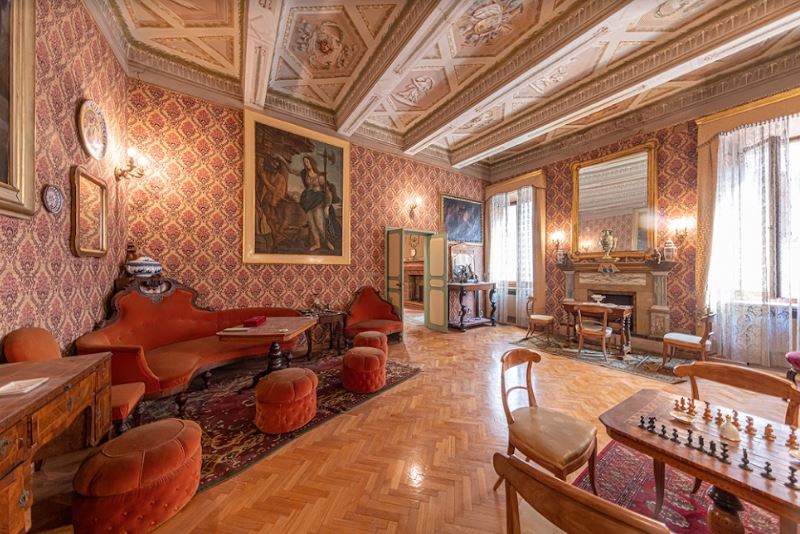
Even if with Jennifer the nightly disturbances had been the symptoms of hysteria, the sudden and lasting healing would still be quite extraordinary. Every doctor knows how difficult it is to heal such illnesses. However, here we had in fact a magic influence rather than an illness. The Christian is well aware of the fact that we are all surrounded by the hosts of wickedness. The powers of darkness are a present reality. It is not that some people set out to blaspheme, it is just that the images some have created tend to be potentially blasphemous. Sometimes people are a bit of a kid with a chemistry set—they pinch and plunder different aspects and mix them all together and every now and then it might turn into something supernatural. Not everyone has formal religious education or religious training. The Black Priest, was actually known as Dr. Lavey. There are people on this Earth that are fascinated by all kinds of things, but the thing all their interests have in common is a Satanic undercurrent, philosophically. Some have always been attracted to the mystical things in life. Classic country and western is incredibly Satanic, it is so bombastic and sentimental. Its goal is to grab you by the heart, and that is pretty much the definition of Satanic music. Part of the reason interest in the Church of Satan has revived is because high-profile people like Marilyn Manson talked about it. However, there are generations of people born into the Satanic Age. There are a lot more people today living their lives outside the expectations of society. While some people can never get past the shock value of being a Satanist, that is not the reason a lot of people are interested in the Church of Satan. It is just an outgrowth of who they are and it is not something they need to do to attract attention to themselves. It is just their philosophy, and it reflects the way they desire to live. The Devil does not have to be an object of menace or evil, people just need to take responsibility for their conduct disorder and psychopathology. The personification of the Devil is just a guy inviting you to experience for yourself the things you have been told are bad or wrong or evil, and make your own decision about them. #RandolphHarris 19 of 20

The Devil does not have to be seen as some drooling monster with fangs leaping out of the pits of Hell to rip your head off. There are a lot of people in Hollywood who, if they are not card-carrying members of the Church of Satan, they are certainly fellow travellers. In the entertainment industry, there is practically no one who is offended or horrified by someone who belongs to the Church of Satan. The only things that affect people’s lives are symbols. The Winchester mansion is a symbol of so many things, but overall, it is a symbol of Mrs. Winchester’s life, and of course the occult and supernatural. Many wonder about the color of the mansion, but if you look at it, it should be obvious. The conservators painted it to be symbolic of her favorite flower the daisy. Yellow, with a green stem. The people who have the most power in our society today are the people who can best wield symbols. An understanding of Satanic magic is useful not only for changing things yourself, but also for seeing how other people are trying to manipulate you. The Circle of Counter Creation become directly connected to the powers which flow through the altar. It is through the various seals found upon the mandala that more specific powers can be extracted from the altar urn for the sake of communication and personal empowerment. O Thou great, powerful, and mighty King Amaimon, who bearest rule by the power of the Supreme God El over all the spirits both superior and inferior of the Infernal Orders in the Dominion of the East; I do invocate and command thee by the especial and true name of God; and by that God that Thou Worshippest; and by the Seal of that creation; and by the most might and powerful name of God, IEHOVAH TETRAGRAMMATON who cast out of Heaven with all other infernal spirits; and by all the most powerful and great names of God who created Heaven, and Earth, and Hell, and all things in them. You are now aware of this place of eternal darkness. This is possible because you have a light within which cannot be dimmed. A light which is unlike any light perceived by those of lower consciousness. This light is the power of your own spirit, developed by your own intellect, spoken words, and chosen deeds with the realm of limitation. #RandolphHarris 20 of 20
Tickets On Sale Now! 13 nights ONLY 🎃 – reserve your spot before they are gone! #unhinged #halloween2022 #winchestermysteryhouse

Golden Age of Innocence Before History Began

We, free citizens of the Great Republic, feel an honest pride in her greatness, her strength, her just and gentle government, her wide liberties, her honored name, her stainless history, her unsmirched flag, her hands clean from oppression of the weak and from malicious conquest, her hospital door that stands open to the hunted and the persecuted and the rich of all nations; we are proud of the judicious respect in which she is held by the monarchies which hem her in on every side, and proudest of all of that lofty patriotism which we inherited from our fathers, which we have kept pure, and which won our liberties in the beginning and has preserved them unto this day. While that patriotism endures the Republic is safe, her greatness is secure, and against them the powers of the Earth cannot prevail. I pray you to pause and consider. Against our traditions we are now entering upon an unjust and trivial war, a war against a helpless people, and for a base object—robbery. At first our citizens spoke out against this thing, by an impulse natural to their training. To-day they have turned, and their voice is the other way. What caused the change? Merely a politician’s trick—a high-sounding phrase, a blood-stirring phrase which turned their uncritical heads: Our Country, right or wrong! An empty phrase, a silly phrase. It was shouted by every newspaper, it was thundered from the pulpit, the Superintendent of Public Instruction placarded it in every school-house in the land, the War Department inscribed it upon the flag. And every man who failed to shout it or who was silent, was proclaimed a traitor—none but those others were patriots. To be a patriot, one had to say, and keep on saying, “Our Country, right or wrong,” and urge on the little war. Have you not perceived that that phrase is an insult to the nation? #RandolphHarris 1 of 20

For in a republic, who is “the country?” Is it the Government which is for the moment in the saddle? Why, the Government is merely a servant—merely a temporary servant; it cannot be its prerogative to determine what is right and what is wrong, and decide who is a patriot and who is not. Its function is to obey orders, not originate them. Who, then, is “the country?” Is it the newspaper? is it the pulpit? is it the school-superintendent? Why, these are mere parts of the country, not the whole of it; they have not command, they have only their little share in the command. They are but one in the thousand; it is in the thousand that command is lodged; they must determine what is right and what is wrong; they must decide who is a patriot and who is not. Who are the thousand—that is to say, who are “the country?” In a monarchy, the king and his family are the country; in a republic it is the common voice of the people. Each of you, for himself, by himself and on his own responsibility, must speak. And it is a solemn and weighty responsibility, and not lightly to be flung aside at the bullying of pulpit, press, government, or the empty catch-phrases of politicians. Each must for himself alone decide what is right and what is wrong, and which course is patriotic and which is not. You cannot shrink this and be a man. To decide it against your convictions is to be an unqualified and inexcusable traitor, both to yourself and to your country, let men label you as they may. If you alone of all the nation shall decide one way, and that way be the right way according to your convictions of the right, you have done your duty by yourself and by your country—hold up your head! you have nothing to be ashamed of. Only when a republic’s life is in danger should a man uphold his government when it is in the wrong. There is no other time. #RandolphHarris 2 of 20

This republic’s life is not in peril. The nation has sold its honor for a phrase. It has swung itself loose from its safe anchorage and is drifting, its helm is in pirate hands. The stupid phrase needed help, and it got another one: “Even if the war be wrong, we are in it and must fight it out: we can not retire from it without dishonor. You have planted a seed and it will grow. Perhaps the most abusive example of technology is found in the work of Francis Galton, who was born in 1822, died in 1911, and therefore lived during the richest period of technological invention. He may be thought of as one of the Founding Fathers of Technopoly. Galton is also known as the founder of “eugenics,” a term he coined, which means the “science” of arranging marriage and family so as to produce the best possible offspring based on the hereditary characteristics of the parents. He believed that anything could be measured and that statistical procedures, in particular, were the technology that could open the pathway to real knowledge about every form of human behavior. The next time you watch a televised beauty contest in which women are ranked numerically, you should remember Francis Galton, whose pathological romance with numbers originated this form of idiocy. Being unsatisfied with vagueness about where the most “beauty” was to be found, he constructed a “beauty map” of the British Isles. As he told us, he classified “the girls I passed in streets or elsewhere as attractive, indifferent, or repellent.” He then proved statistically tht London had the most beautiful girls, Aberdeen the must unattractive; this is no doubt made it awkward for Galton to spend his vacation in Scotland. If this were not enough, he also invented a method for quantifying boredom (by counting the number of fidgets) and even proposed a statistical inquiry for determining the efficacy of prayer. #RandolphHarris 3 of 20

However, Galton’s main interest was in demonstrating, statistically, the inheritance of intelligence. To that end, he established a laboratory at the International Exposition of 1884, where for threepence people could have their skulls measured and receive Galton’s assessment of their intelligence. Apparently, a visitor received no extra credit for demanding his or her money back, which would surely have been a sign of intelligence. We can be sure that not many did, since Galton was considered a major intellect of his day. In fact, Lewis Terman, the man most responsible for promoting IQ tests in America, calculated that Galton’s IQ was more than 200. Terman, who fancied making such estimates of the dead, ranked Charles Darwin (Galton’s cousin, incidentally) at a mere 135, and poor Copernicus somewhere between 100 and 110. For a definitive history and analysis of the malignant role played by statistics in the “measurement” of intelligence, I refer to the reader to Stephen Jay Gould’s brilliant book The Mismeasure of Man. Here, I will only cite three points made by Gould, which I believe are sufficient to convince anyone with a higher IQ than Copernicus of the dangers of abusing statistics. The first problem is called reification, which means converting an abstract idea (mostly, a word) into a thing. In this context, reification works in the following way: We use the word “intelligence” to refer to a variety of human capabilities of which we approve. There is no such thing as “intelligence.” It is a word, not a thing, and a word of a very high order of subtraction. However, if we believe it to be a thing like the pancreas or liver, then we will believe scientific procedure can locate it and measure it. #RandolphHarris 4 of 20

The second problem is ranking. Ranking requires a criterion for assigning individuals to their place in a single series As Gould remarks, what better criterion can be used than an objective number? In the ranking of intelligence, we therefor assume that intelligence is not only a thing, but a single thing, located in the brain, and accessible to the assignment of a number. It is as if “beauty” were determined to inhere in the size of a woman’s chest. Then all we would have to do is measure the chest and rank each woman accordingly, and we would have an “objective” measure of “beauty.” The third point is that in doing this, we would have formulated our question “Who is the fairest of all?” in a restricted and biased way. And yet this would go unnoticed, because, as Gould writes, “The mystique of science proclaims that numbers are the ultimate test of objectivity.” This means that the way we have defined the concept will recede from our consciousness—that is, its fundamental subjectivity will become invisible, and the objective number itself will become reified. One would think that such a process would appear ridiculous on the breast of it, especially since, by believing it, we must conclude that Dolly Parton is objectively proved to be more beautiful than Audrey Hepburn. Or, in the case of intelligence, that Galton had twice as much of it as Copernicus. Nonetheless, in Technopoly all this is take very seriously, albeit not without a few protests. After a lifetime of working in the field of intelligence measurement, E.L. Thorndike observed that intelligence tests suffer from three small defects: “Just what they measure is not known; how far it is proper to add, subtract, multiply, divide, and compute ratios with the measures obtained is not known; just what the measures signify concerning intellect is not known. #RandolphHarris 5 of 20

In other words, those who administer intelligence tests quite literally do not know what they are doing. That is why David McClelland remarked, “Psychologists should be ashamed of themselves for promoting a view of general intelligence that has engendered such a testing program.” Joseph Weizenbaum summed it up by saying, “Few ‘scientific’ concepts have so thoroughly muddled the thinking of both scientists and the general public as that of the ‘intelligence quotient’ of ‘IQ.’ The idea that intelligence can be quantitatively measured along a single linear scale has caused untold harm to our society in general, and to education in particular.” Gould has documented some of this harm, and Howard Gardner has tried to alleviate it (in his book Frames of Mind). However, Technopoly resists such reproaches, because it needs to believe that science is an entirely objective enterprise. Lacking a lucid set of ethics and having rejected tradition, Technopoly searches for a source of authority and finds it in the idea of statistical objectivity. This quest is especially evident not only in our efforts to determine precisely how smart people are but also in our attempts to find out precisely how smart groups of people are. Aside from the fact that the procedures used do not and cannot give such an answer, one must ask, Of what Earthly use is it to declare that one group of people is smarter than another? We must keep in mind the story of statistician who drowned while trying to wade across a river with an average depth of four feet. That is to say, in a culture that reveres statistics, we can never be sure what short of nonsense will lodge in people’s heads. The only plausible answer to the question why we use statistics for such measurements is that it is done for sociopolitical reasons whose essential malignancy is disguised by the cover of “scientific inquiry.” #RandolphHarris 6 of 20

One has to understand, certain things are only one’s opinions but can be confirmed by objective measure, then one can believe one has an irreproachable authority for making decisions about the allocation of resources. This is how, in Technopoly, science is used t make democracy “rational.” Now, the title of Chief Information Officer did not yet exist in American firms but there was a small “Data Priesthood”—the data-processing professionals. Because no one else could make the “giant brain” do anything, these few professionals essentially “owned” the firm’s mainframes, and anyone who wanted information processed had to come to them. The priests enjoyed the blessing of an info-monopoly. Then came the micros. Desktop computers arrived with the force of a whirlwind in the late 1970s. Immediately sensing that these inexpensive new machines would erode their power, many data professionals threw everything they had into a campaign to keep them out of their companies. The DP priests sneered at the microcomputers’ limited capacity and small size. They fought against the budgeting funds for them. However, just as an entrenched monopoly, Western Union, could not keep the telephones out of the hands of Americans in the 19th century, the business community’s voracious hunger for information swept aside all opposition from the data professionals. Soon thousands of executives were end-running the data priests, buying their own machines and programs, beginning to network with one another. It became clear that companies would need dispersed computer power, not just a few centrally controlled mainframes. The “giant brain” fantasy was dead, and with it the concentrated power of the DP staff. #RandolphHarris 7 of 20

Today, in many big firms more than half of all computer processing power is outside the Information Systems department, and, as a senior manager of Deloitte & Touche puts it, the computer professional still have “Worlds more to lose.” Executives no longer came, tugging their forelocks and shuffling their feet, to beg for a few minutes of computer time. Many, no longer under the control of the DP priesthood, had their own sizable departmental budgets for computers. The priests now faced a situation not unlike that of the medical doctors, who lost their godlike status as more and more medical knowledge seeped into the lay press and the media. Instead of dealing with computer illiterates, the DP professionals now confronted a large number of “end-users” who knew something of the basics of simple computing, read computer magazines, bought machines for their kids at home, and were no longer awestruck by anyone who rattled on about RAM and ROM. The “micro revolution” demonopolized computer information and shifted power out of the hands of the priesthood. Like most revolutions, the micro revolution was a messy affair. With individuals and their departments rushing out to buy whatever kind of machines, software, and services they wanted, the result was an electronic Tower of Babel. So long as these were mainly stand-alone systems, it did not matter much. However, once it became necessary for these machines to talk to the mainframes or to one another and the outside World, the drawbacks of unrestrained liberty became starkly apparent. Computer professionals carried a grave warning to their bosses. #RandolphHarris 8 of 20

Computer democracy could end by shrinking the power of top management itself. How could anyone responsibly run a company when its entire computerized information system was out of control? Different machines, different programs, different data bases, everyone “doing his own thing” raised the specter of anarchy in the office. It was time to clamp down. In every revolution there is a period of upheaval and extremism, followed by a period of consolidation. Thus the DP staff, backed by senior management, now set about institutionalizing the revolution and, in the process, recouping some of the priesthood’s erstwhile influence. To impose order on computers and communications, the new CIOs were handed far greater resources and responsibilities than ever before. They were told to integrate systems, connect them up, and formulate what might be called “rules of the electronic road.” Having originally been hoarders of centralized information, and having lost control of the system for a time, the new information systems people and the CIOs who lead them have now reemerged as data police, enforcing new rules that, together, define the firm’s information system. These rules, which cover technical standards and types of equipment, also usually govern access to central data banks, priorities, and many other matters. Ironically, the latest surprising twist of the screw finds many CIOs singing the virtues of the very microcomputers they once despised. The reasons are clear. Micros are no longer the 98-pound weaklings they once were. Together with minis and workstations, they are now so powerful they can actually take over many of the old functions of the mainframe. Hence, many CIOs are calling for “downsizing” and further decentralization. “Downsizing is a phenomenal trend,” reports Theodore Klein of the Boston Systems Group, Inc. “I was recently at a conference of sixty MIS directors and just about every one was doing this in some form.” #RandolphHarris 9 of 20

In the words of CIO magazine, the journal of the CIOs, “Downsizing puts control in the hands of business-unit managers.” However, that control is now firmly governed by rules set by computer professionals. Many CIOs, in fact, with support from above, are attempting to recentralize control under the flag of “network management.” Says Bill Gassman, a marketing specialists for DEC: “Network management is more than a technical issue; it’s political.” His view is shared by others who believe, in the words of Datamation magazine, that “the arguments for centralized network management…frequently masks a desire by some within MIS organizations to regain personal operational control lost during the past few years.” In short, while info-wars rage in the corporation’s external environment—pitting, as we saw, retailers versus manufacturers, or industries and even nations against one another—info-wars on a smaller scale are raging internally as well. CIOs and their staffs become, whether they mean to or not, info-warriors. For though they may not conceive of their function in these terms, their largely unrecognized task is to redistribute power (while trying, not surprisingly, to expand their own). Functioning as both highway engineers and state troopers on our fast-growing electronic highways—they build as well as attempt to manage the systems—they are put in the distasteful position of being, in a sense, the corporation’s “executive thought police.” While the first, primitive assemblers were controlled by changing what molecules are in the solution around the device, getting the speed and accuracy wanted for large-scale manufacturing takes real computation. Carl’s setup uses a combination of special-purpose molecule processors and general-purpose assemblers, all controlled and orchestrated by nanocomputers. #RandolphHarris 10 of 20

Computers back in the 1990s used microelectronics. They worked by moving electrical charge back and forth through conducting paths—wires, in effect—using it to block and unblock the flow of charge in other paths. With nanotechnology, computers are built from molecular electronics. Like the computers of the 1990s, they used electronic signals to wave the pattens of digital logic. Being made of molecular components, though, they are built on a much smaller scale than 1990s computers, and work much faster and more efficiently. On the scale of our simulated molecular World, 1990s computer chips are like landscapes, while nanocomputers are like individual buildings. Carl’s desktop PC contains over a trillion nanocomputers, enough to out-compute all the microelectronic computers of the twentieth century put together. Back in the dark ages of the 1980s, an exploratory engineer proposed that nanocomputers could be mechanical, using sliding rods instead of moving electrons. These molecular mechanical computers were much easier to design than molecular electronic computers would have been. They were a big help in getting some idea of what nanotechnology could do. Even back then, it was pretty obvious that mechanical computers would be slower than electronic computers. Carl’s molecular electronic PC would have been no great surprise, though nobody knew just how to design one. When nanotechnology actually arrived and people started competing to build the best possible computers, molecular electronics won the technology race. Still, mechanical nanocomputers could have done all the nanocomputing jobs at Desert Rose: ordinary, everyday molecular manufacturing just does not demand the last word in computer performance. #RandolphHarris 11 of 20
For Carl, the millions of nanocomputers in the milky waters of his building ponds are just extensions of machines on his desk, machines there to help him run his business and deliver products to his customers—or, in the case of the Red Cross emergency, to help provide time-critical emergency supplies. By reserving those three separate ponds, Carl can either build three different kinds of equipment for the Red Cross or use all the ponds to mass-produce the first thing on the Red Cross list: emergency shelters for ten thousand people. The software is ready, the plumbing is fine, the drums of building materials are all topped up, the Special Mix for this job is loaded: the build is ready to start. “Okay,” Carl tells the computer, “build Red Cross tents.” Computer talks to nanocomputers. In all three pools, nanocomputers talk to assemblers. The build begins. Three tragic conflicts in the twentieth century—World War I, World War II and the Cold War—represented the terminal climax of the industrial era and gave rise to the unique collision of wealth waves that we see on the planet today. The Second Wave wealth system is in retreat. By contrast, the Third Wave wealth system, starting in the United States of America, has already—in a few short decades—crossed the Pacific and transformed Asia. In the years ahead, we will see the wave overrun the shores of Latin America and Africa as well. The signs are already apparent. Behind this World transformation, we have shown, are unprecedented changes at the level of the deep fundamentals of wealth. Nowhere is this clearer or more revealing than in Asia’s historic rise and China’s great awakening. #RandolphHarris 12 of 20

While much mentioned in financial news, Asia remains insufficiently understood on both Wall Street and in Washington—which, because of history and geography, face more toward the Atlantic than the Pacific. Between 2001 and 2005, when the United States of American opened free-trade negotiations with twenty nations, just one was in Asia. Citing this critically, one U.S. senator remained Washington that Asia “is hoe to six of the past decade’s ten fastest growing economies, five of the top ten U.S. trading partners and more than half the World’s population.” He might have added that it is also home to the overriding majority of the World’s Muslims and is the region most surrounded by nuclear weaponry. Above all, Asian is home to China. And unless the United States of America, Europe and the rest of the World understand what is really happening in China—the China that lies hidden behind the flood of unreliable economic and financial statistics—it will be difficult to make sense of what lies ahead. For what happens there—one way or the other—will radically reallocate wealth and shake the planet. By 2004, China had pushed past Japan to become the World’s third biggest trading nation after the United States and Germany. That same year saw China sitting on more than $500 billion of the World’s $3.5 trillion in foreign-currency reserves. It owned nearly $175 billion worth of U.S. Treasuries—an amount exceeded only by Japan—putting it in a position to jolt the entire global economy if it chose to replace dollars with euros or a basket of other currencies. In little more than two decades, China had become a giant force looming over the World economy. #RandolphHarris 13 of 20

However, can China’s spectacular growth continue? Will China actually become the global superpower of the year 2020, as so many forecasters predicted? No, but they have made significant progress and they have moved the date of expectation of becoming the global superpower to 2025. Conventional wisdom attributes China’s startling progress to its break with communism and its transition toward a market economy. However, that is hardly a sufficient explanation. Other nations have tried shifting in the same direction, and none has experienced anything like China’s success. Moreover, China even now cannot yet be described as a fully developed market economy. That market cliché also overlooks the trickle-down effect set in motion when, as we have seen, Silicon Valley transferred progressively higher-level computer-manufacturing operations to Japan, South Korea and Taiwan—each of which then set up plants and mainlined capital into China—all this before Beijing’s shift toward market economies had gone very far. Another equally important reason for China’s spectacular performance can be found in the way it has applied its novel twin-track development strategy. Now, humans have been long lived on this planet. An immediate aspect of agriculture, brought to light increasingly in recent years, involved the physical well-being of its subjects. Lee and Devore’s researchers show that “the diet of gathering peoples was far better than that of cultivators, that starvation is rare, that their health status was generally superior, and that there is a lower incidence of chronic disease.” Conversely, Farb summarized, “Production provides an inferior diet based on a limited number of foods, is much less reliable because of blights and the vagaries of weather, and is much more costly in terms of human labor expended.” #RandolphHarris 14 of 20

The new field of paleopathology has reached even more emphatic conclusions, stressing, as does Angel, the “sharp decline in growth and nutrition” caused by the changeover from food gathering to food production. Earlier conclusions about life span have also been revised. Although eyewitness Spanish accounts of the 16th century tell of Florida Indigenous fathers seeing their fifth generation before passing away, it was long believed that primitive people died in their 30’s and 40’s. Robson, Boyden and others have dispelled the confusion of longevity with life expectancy and discovered that current hunter-gatherers, barring injury and severe infection, often outlive their civilized contemporaries. During the industrial age fairly recently did life span lengthen for the species, and it is now widely recognized that in Paleolithic times humans were long-lived, once certain risks were passed. Devries is correct in his judgment that duration of life dropped sharply upon contact with civilization. Tuberculosis and diarrheal disease had to await the rise of farming, measles and bubonic plague the appearance of large cities. Malaria, probably the single greatest killer of humanity, nearly all other infectious diseases are the heritage of agriculture. Nutritional and degenerative diseases in general appear with the reign of domestication and culture. Cancer, coronary thrombosis, anemia, dental carries, and mental disorders are but a few of the hallmarks of agriculture; previously women gave birth with no difficulty and little or no pain. People were far more alive in all their senses. !Kung San, reported R.H. Post, have heard a single-engined plane while it was still 70 miles away, and many of them can see for moons of Jupiter with the unassisted eye. #RandolphHarris 15 of 20

The summary judgment of Harris and Ross, as to “an overall decline in the quality—and probably in the length—of human life among farmers as compared with earlier hunter-gatherer groups,” is understated. One of the most persistent and universal ideas is that there was once a Golden Age of innocence before history began. Hesiod, for instance, referred to the “life-sustaining soil, which yielded its copious fruits unbribed by toil.” Eden was clearly the home of hunter-gatherers and the yearning expressed by the historical images of paradise must have been that of disillusioned tillers of the soil for a lost life of freedom and relative ease. A history of civilization shows the increasing displacement of nature from human experience, characterized in part by a narrowing of food choices. According to Rooney, prehistoric people found sustenance in over 1500 species of wild plants, whereas, “All civilizations,” Wenke remind us, “have been based on the cultivation of one or more of just six plant species: wheat, barley, millet, rice, maize, and potatoes.” It is a striking truth that over the centuries “the number of different edible foods which are actually eaten,” Pyke points out, “has steadily dwindled.” The World’s population now depends for most of its subsistence on only about 20 genera of plants while their natural strains are replaced by artificial hybrids and the genetic pool of these plants becomes far less varied. The diversity of food tends to disappear or flatten out as the proportion of manufactured foods increases. Today the very same articles of diet are distributed Worldwide so that Inuit Eskimo and an African native may soon be eating powdered milk manufactured in Wisconsin or frozen fish stick from a single factory in Sweden. #RandolphHarris 16 of 20

A few big multinationals such as Unilever, the World’s biggest food production company, preside over a highly integrated service system in which the object is not to nourish or even to feed, but to force an ever-increasing consumption of fabricated, processed products upon the World. When Descartes enunciated the principle that the fullest exploitation of matter to any use is the whole duty of man, our separation from nature was virtually complete and the stage was set for the Industrial Revolution. Three hundred and fifty years later this spirit lingers in the person of Jean Vorst, Curator of France’s Museum of Natural History, who pronounces that our species, “because of intellect,” can no longer recross a certain threshold of civilization once again become part of a natural habitat. He further states, expressing perfectly the original and preserving imperialism of agriculture, “As the Earth in its primitive state is not adopted to our expansion, man must shackle it to fulfill human destiny.” The early factories literally mimicked the agricultural model, indicating again that at the base all mass production is farming. The natural World is to be broken and forced to work. One thinks of the mid-America prairies where settlers had to yoke six oxen to a plow in order to cut through the soil for the first time. Or from a scene from the 1870s in The Octopus by Frank Norris, in which gang-plows were driven like “a great column of field artillery” across the San Joaquin Valley, cutting 175 furrows at once. Did you know that in 1948, the Lady of Endor Coven was started by a Toledo, Ohio barber tuned fortune-teller, Herbert A. Sloane, and ceased with this death in the 1980s? Well, Sloane’s creed, based heavily on Gnosticism, taught that Satan was not evil, but the bringer of wisdom and the messenger of God. #RandolphHarris 17 of 20

The Christian God was identified with the Demiurge, whose spirit was trapped in the material World, with Satan sent to Earth to give man occult knowledge, or gnosis, so that the divine aspect within humanity could be returned to God. The Orthodox Satanic Church, in existence from 1971 to 1974 in Chicago, which at its height claimed more than five hundred members, taught a similar system of beliefs. The group’s anti-LaVey philosophy taught that Got the Creator created Satan, who, in turn, became the teacher of all knowledge. Through ritual, prayer, and songs, held every Saturday night at Chicago’s Occult Book Shop, members were exhorted to absorb as much of Satan’s wisdom as they could. For all their differences, all of the neo-Satanic churches share several structural and psychological traits, not only with themselves but with other occult sects. With hero worship often a large factor in the success of these groups their existence has been dependent on the charisma and continued life of the leader. As he or she goes, so goes the cult—which has resulted in a short life span for a majority of occult and virtually all Satanic organizations. As seen, many Satanists are frustrated people reacting against the banality and powerlessness of their lives. Feeling like insignificant cogs in a machine, bewildered by the complexities of various bureaucracies, these people seek out a group that will accept them, in which they can vent their feelings of hostile alienation without being censured. Through the practice of “magic” and the achievement of “adept” levels they can feel that they are unique and powerful. However, becoming part of an elect elite can have side effects. #RandolphHarris 18 of 20

Rousseau initiated a second Renaissance when he expressed his dissatisfaction with modernity, made possible by his knowledge of the Greek and Roman examples. “Ancient statesmen spoke endlessly of morals and virtue; ours speak only of commerce and money.” Rousseau’s use of his knowledge of antiquity—which was, although not scholarly, very profound—is a perfect model of the reason for having ancient thought available to those great individuals who, as Nietzsche put it, are untimely and need a vantage point from which to get their bearings and become the most timely of all. It is the old Greeks who make men both untimely and timely in crises. Nothing fancy, no infinite searching outside; the book in itself always intelligible, as long as human nature remains the same. This is the role played by the Greek authors throughout the wildly varying ages since they wrote, always Phoenix-like when they appear to have been consumed and are only ashes conserved by the scholars. Rousseau’s fervent appeal for modern man to look back to the ancient city, because it was whole and a true community, was the source of the romantic longing to breathe the fresh air of Greece again. Its moral and esthetic health was what Rousseau conveyed so convincingly. He gave the impulse to all kinds of attempts at a new communitarian beginnings, from Robespierre to Owen to Tolstoy and the kibbutz, an impulse still alive in contemporary thought. However, most of all, as I have discussed earlier, his observations on the tension between Enlightenment and decent politics gave birth to the idea of culture. It was to the study of Greece or Sparta or Athens as models of cultures that Rousseau’s reflection led. #RandolphHarris 19 of 20

The motive for this study—which flourished particularly in Germany, where Rousseau’s influence was most strongly felt, precisely because of Kant’s and Goethe’s predominance there—was to understand culture, with a view to the founding of a German culture. It was primarily Greek and Roman poetry and secondarily history to which the German thinkers turned for inspiration, and the scholars followed. It was distinctly not Greek philosophy. This was evident in Rousseau himself. The philosophers whose theoretical reflection was necessary to him were Bacon, Descartes and Newton, not Plato and Aristotle. The latter two just did not know the truth about nature. Whatever interest later scholarship had in them was as parts of Greek culture, as typical expressions of it and less interesting than poets, who are culture founders. The Greek philosophers were not valid interlocutors. Rousseau admired Plato and thought he had deep insight into human things, but rather more as a poet than a philosopher or a scientist. Plato was indeed the philosopher for lovers, but Rousseau, without consulting Plato, taught that eros is the child of pleasures of the flesh and imagination. Its activity is poetry, the source of what Rousseau understand to be the life-creating and -enhancing illusions and thereby the source of the ultimate grounds of the folk-minds that make peoples possible. In Plato, eros led to philosophy, which in turn led to the rational quest for the best regime, the one good political order vs. the plurality of cultures. So the discovery of Greek “culture” was contrary to Greek philosophy. And this particular difference, concerning the best regime as opposed to culture, proved fatal to reason. We can recognize this in a preliminary way in Weber’s assumption that it is values rather than reasons that found and sustain communities. #RandolphHarris 20 of 20

Cresleigh Homes

So you’ve moved into your new #CresleighHome and you’re ready to tackle the backyard. Head on over to our blog and search “landscaping” for all the tips and tricks you’ll need.

Here are a few of our favorite blog posts on the subject:
🌼 14 Low-Maintenance Plants for Easy Landscaping
🌼 5 Landscaping Mistakes to Avoid
🌼 5 Best Places to Order Seeds Online
Link in bio to get started right now!
#MillsStation

The Acting Head of the Human Race

Slaves, look at them! They abase themselves before clothes and the accident of birth—silver-glit nursery-baubles again—lord, it sizes-up the quality of the human race! The human race, that has such a fine opinion of itself. There is not a place of value in that place that goes by merit; not a rich sinecure but is encumbered by some incapable dotard whose only qualification is that one belongs by accident of birth in one or another of the First Three Grades of the Blood. Everything worth having is saved for the Three Orders—and how they do hang on, those jabbering senilities! Adam used to sigh and say, ‘They seldom die, and never resign.’ Nepotism? it is just a buzzard’s nest of it. Evidence of the urge to impose order or subjugate is found in the coercive rites and uncleanness taboos of incipient religion. The eventual subduing of the World that is agriculture has at least some of its basis where ambiguous behavior is ruled out, purity and defilement defined and enforced. Levi-Strauss defined religion as the anthropomorphism of nature; earlier spirituality was participatory with nature, not imposing cultural values or traits upon it. The sacred means that which is separated, and ritual and formalization, increasingly removed from the ongoing activities of daily life and in the control of such specialists as shamans and priests, are closely linked with hierarchy and institutionalized power. Religion emerges to ground and legitimize culture, by means of a “higher” order of reality; it is especially required, in this function of maintaining the solidarity of society, by the unnatural demands of agriculture. #RandolphHarris 1 of 20

In the Neolithic village of Catal Huytuk in Turkish Anatolia, one of every three rooms were used for ritual purposes. Plowing and sowing can be seen as ritual renunciations, according to Bukert, a form of systematic, which is the killing of domesticated animals (or even humans) for ritual purposes, it is pervasive in agricultural societies and found only there. Some of the major Neolithic religions often attempted a symbolic healing of agricultural rupture with nature through the mythology of the Earth mother, which needless to say does nothing to restore the lost unity. Fertility myths are also central: the Egyptian Osiris, the Greek Persephone, Baal of the Canaanites, and the New Testament Jesus, gods whose death and resurrection testify to the perseverance of the soil, not to mention the human soul. The first temples signified the rise of cosmologies based on a model of the universe as an arena of domestication or barnyard, which in turn serves to justify the suppression of human autonomy. Whereas preccivilized society was, held together by largely undeclared but continually realized ethical conceptions, religion developed as a way of creating citizens, placing the moral order under public management. Domestication involved the initiation of production, vastly increased divisions of labor, and the completed foundations of social stratification. This amounted to an epochal mutation both in the character of human existence and its development, clouding the latter with ever more violence and work. Contrary to the myth of hunter-gatherers as violent and aggressive, by the way, recent evidence shows that existing non-farmers, such as the Mbuti (“pygmies”) studied by Turnbull, apparently do what killing they do without any aggressive spirit, even with a sort of regret. Warfare and the formation of every civilization or state, on the other hand, are inseparably linked. #RandolphHarris 2 of 20

Primal peoples did not fight over areas in which separate groups might converge in their gathering and hunting. At least “territorial” struggles are not part of the ethnographic literature and they would seem even less likely to have occurred in pre-history when resources were greater and contact with civilization non-existent. Indeed, these peoples had no conception of private property, and Rousseau’s figurative judgment, that divided society was founded by a man who first sowed a piece of ground, saying “This land is mine,” and found others to believe him, is essentially valid. “Mine and thine, the seeds of all mischief, have no place with them,” reads Pietro’s 1511 account of the natives encountered on the second voyage of Columbus. Centuries later, surviving Indigenous people of what was now America asked, “Sell the Earth? Why not sell the air, the clouds, the great sea?” Agriculture creates and elevates possessions; consider the longing root of belongings, as if they ever make up for the loss. Work, as a distinct category of life, likewise did not exist until agriculture. The human capacity of being shackled to crops and herd, developed rather quickly. Food production overcame the common absence or paucity or ritual and hierarchy in society and introduced civilized activities like the forced labor of temple-building. Here is the real “Cartesian split” between inner and outer reality, the separation whereby nature became merely something to be “worked.” On this capacity for a sedentary and servile existence rests the entire superstructure of civilization with its increasing weight of repression. Male violence toward women originated with agriculture, which transmuted women into beasts of burden and breeders of children. #RandolphHarris 3 of 20

Before farming, the egalitarianism of foraging life applied as fully to women as to men because the autonomy of tasks and the fact that decisions were made by those who carried them out. In the absence of production and with no drudge work suitable for child labor such as weeding, women were not consigned to onerous chores or the constant supply of babies Along with the curse of perpetual work, via agriculture, in the expulsion from Eden, God told woman, “I will greatly multiply thy sorrow and thy conception: in sorrow thou shalt bring forth children; and that desire shall be to thy husband, and he shall rule over thee.” Similarly, the first known codified laws, those of the Sumerian king, Ur-Namu, prescribed death to any woman satisfying desires outside of marriage. Thus Whyte referred to the ground women “lost relative to men when humans first abandoned a simple hunting and gathering way of life,” and Simone de Beauvoir saw in the cultural equation of plow and phallus a fitting symbol of the oppression of women. As wild animals are converted into sluggish meat-making machines the concept of becoming “cultivated” is a virtue enforced on people, meaning the weeding out of freedom from one’s nature, in the service of domestication and exploitation. In Summer the first civilization, the earliest cities had factories with their characteristic high organization and refraction of skills. Civilization from this point exacts human labor and the mass production of food, buildings, war and authority. To the Greeks, work was a curse and nothing else. The name of it—ponos—has the same root as the Latin poena, sorrow. The famous Ancient Testament curse on agriculture as the expulsion from Paradise (genesis 3.17-18) reminds us of the origin of work. #RandolphHarris 4 of 20

Conformity, repetition, patience, were the keys to this [Neolithic] culture…the patient capacity for work. In this monotony and passivity of tending and waiting is born, the less affluent’s deep, latent resentments, crude mixtures of rectitude and heaviness, and absence of humor. One might also add a stoic insensitivity and lack of imagination inseparable from religious faith, sullenness, and suspicion among traits widely attributed to the domesticated life of farming. Although food production by its nature includes a latent readiness for political domination, and although civilizing culture was for the beginning its own propaganda machine, the changeover involved a monumental struggle. Attention needs to be paid to the internal and external proletariats discontents within and without civilization. Nonetheless, along the axis from digging stick farming to plow agriculture to fully differentiated irrigation systems, an almost total genocide of gatherers and hunters was necessarily effected. The formation and storage of surpluses are part of the domesticating will to control and make static, an aspect of the tendency to symbolize. A bulwark against the flow of nature, surplus takes the forms of herd animals and granaries. Stored grain was the earliest medium of equivalence, the oldest form of capital. Only with the appearance of wealth in the shape of storable grains do the gradations of labor and social classes proceed. While there were certainly wild grains before all this (and wild wheat, by the way, is 25 percent protein compared to 12 percent domesticated wheat) the bis of culture makes every difference. Civilization and its cities rested as much of granaries as on symbolization. #RandolphHarris 5 of 20

Long ago the Earth itself was rebellious, and would not be appeased; but trouble and the burden of the ages have chastened her heart and restored it to the charity of gentleness that were its birthright, and their grace is in her face, which is beautiful. It was a privilege to see her again. I had not seen her since the first year of the new century, when she drove in state and showed herself to the people, in the glare of the illuminations, and formally inaugurated the Epoch, in accordance with antique custom—always an impressive function, but peculiarly and movingly so on this occasion, it being the first time she had ever performed it alone. No eye fell unmoistened upon the vacant place at her side, a place not likely ever to occupied again. The mystery of agriculture’s origin seems even more impenetrable in light of the recent reversal of long-standing notion that the previous era was one of hostility to nature and an absence of leisure. One could no longer assume that early man domesticated plants and animals to escape drudgery and starvation. If anything, the contrary appeared true, and the advent of farming saw the end to innocence. For a long time, the question was “why was agriculture not adopted much earlier in human evolution?” More recently, we know that agriculture is not easier than hunting and gathering and does not provide a higher quality, more palatable, or more secure food base. Thus the consensus question now is, “why was it adopted at all?” Many theories have been advanced, none convincingly. In was possible that agriculture was practiced by Adam and Eve in the Garden of Eden, and others afterwards, but it took much longer to become popular. #RandolphHarris 6 of 20

Population increase pushed more human societies into more intimate contact with other species, leading to the domestication and the need to produce in order to feed that additional people, and that is why California and other areas in the United States need to keep farming, sustain the farmers we have, and save our farm land. Considering America was a nation kept strong by the production of agriculture, I am sure, especially now, you have Americas who want to farm and will harvest crops for money, even if it is off the books. In Middle America, which many have never visited, jobs and money can be hard to come by because many communities are still rural, and they like the rural land and need the agriculture industry to survive. That is why the cost of living tends to be lower in the interior states, in many cases. And the people are not as materialistic and willing to work for their money, as they have old American values and traditions. When we first moved to this valley, I always wondered why my teacher talked about agriculture so much. We were from a big city, where there were no farms and most houses had been built in the 1800s, 1920s, and 1960s. Most of the land was developed and nothing was new. When even had to square dance, I think like once a week, and listen to country music on the bus to school. The population was so low that they had to use the little buses to transport children and the bus operator would listen to Davey Crocket every morning. Many of these prominent communities were open land, even in the older areas. So everything looked new and the lifestyle was different. Most crime only occurred in certain sections of the city and Downtown Sacramento was affordable. It is sad to see how politicians who have been elected, that never should have been elected, robbed Sacramento of its peace and farming community feel. #RandolphHarris 7 of 20

There have been many houses developed, but just twenty years ago where some shopping centers are now, our neighbors had old farm houses and cows on their farm and there used to be deer at the river and jack rabbits and cotton tail rabbits. You may see one nowadays, but it is a rare sight. The houses and population increasing is fine, but it is sad to see the way of life caught between a city trying to be like New York and is actually more of a Midwestern town, which people want back. All money is not good money, and it was a community with law and order and family values before criminals were allowed to become mayor, and a non-America president was put in the White House, possibly the first illegal immigrant to ever be elected president of this glorious United States of America. And it took agriculture to make the nation as great as it has been, so do not let people with negative opinions of America destroy her. And it might be a good idea to elect people who are native to the region they are running for, and who have the VALUES you want to see in your community. Also, people think it is such a good idea to not put traditional Caucasian man in office to the past and some current atrocities in the World that they are often willing to elect people via Affirmative Action essentially, and that may not always be a good idea. One has to really research the representative and check out their background and history. Do not just put someone in office because they look like you or represent your political party or lifestyle. The people in control of power in this country have power to make changes, some not good, and they may be long lasting, so doing a background check on them and their stance of policies is as important as doing a background check on your daughter’s new boyfriend (which I totally recommend, the wrong person could ruin your child’s entire life, perhaps even end it). “Today we are engaged in a final, all-out battle between communistic atheism and Christianity. The modern champions of communism have selected this as the time. And, ladies and gentlemen, the ships are down—they are truly down,” report Senator McCarthy. #RandolphHarris 8 of 20

Major climate changes occurred at the end of the Pleistocene, about 11,000 years ago, which upset the old hunter-gatherer life-World and led directly to the cultivation of certain surviving staples. Recent dating methods have helped demolish this approach; no such climatic shift happened that could have forced the new mode into existence. Besides, there are scores of examples of agriculture being adopted—or refused—in every type of climate. Another major hypotheses is that agriculture was introduced via chance discovery or invention as if it had never occurred to the species before a certain moment that, for example, food grows from sprouted seeds. It seems Paleolithic humanity a virtually inexhaustible knowledge of flora and fauna for many tens of thousands of years before the cultivation of plants began, which renders this theory especially weak. Agriculture did not originate from a growing or chronic shortage of food is sufficient, in fact, to dismiss virtually all originary theories that have been advanced. And food production beginning as a religious activity is a hypothesis that comes closet to plausibility. Sheep and goats, the first animals to be domesticated, are know to have been widely used in religious ceremonies, and to have been raised in enclosed meadows for sacrificial purposes. Before they were domesticated, moreover, sheep had no wool suitable for textile purposes. The main use of the hen in Southeastern Asia and the Eastern Mediterranean—the earliest centers of civilization—seems to have been sacrificial or divinatory rather than alimentary. The egg laying and meat producing qualities of tamed fowl are rather later consequences of their domestication. Wild cattle were fierce and dangerous; neither the docility of oxen nor the modified meant texture of such castrates could have been foreseen. Cattle were fierce and dangerous; neither the docility of oxen or the modified meat texture of such castrates could have been foreseen. Cattle were not milked until centuries after their initial captivity, and representations indicate that their first known harnessing was to wagons in religious procession. #RandolphHarris 9 of 20

Plants, next to be controlled, exhibit similar backgrounds so far as it is known. Consider the New World examples of squash and pumpkin, used originally as ceremonial rattles. Johannessen discussed the religious and mystical motives connected with the domestication of maize, Mexico’s most important crop and center of its native Neolithic religion. Likewise, Anderson investigated the selection and development of distinctive types of various cultivated plants because of their magical significance. The shamans, I should as, were well-placed in positions of power to introduce agriculture via the taming and planting involved in ritual and religion, sketchily referred to above. Though the religious explanation of the origins of agriculture has been somewhat overlooked, it brings us, in my opinion, to the very doorstep of the real explanation of the birth of production: the non-rational, cultural force of alienation which spread, in the forms of time, language, number and art, to ultimately colonize material and psychic life in agriculture. “Religion” is too narrow a conceptualization of this infection and its growth. Domination is too weighty, too all-encompassing, to have been solely conveyed by the pathology that is religion. However, the cultural values of control and uniformity that are part of religion are certainly part of agriculture, and from the beginning. Noting that strains of corn cross-pollinate very easily, Anderson studied the very primitive agriculturalists of Assam, the Naga tribe, and their variety of corn that exhibited no differences from plant to plant. Ture to culture, showing that it is complete from the beginning of production, the Naga kept their varieties so pure only by a fanatical adherence to ideal type. This exemplifies the marriage of culture and production in domestication, and its inevitable progeny, repression and work. #RandolphHarris 10 of 20

The scrupulous tending of strains of plants finds its parallel in the domesticating of animals, which also defies natural selection and reestablishes the controllable organic World at a debased, artificial level. Like plants, animals are mere things to be manipulated; a cow, for instance, is seen as a kind of machine for converting grass into milk. Transmuted from a state of freedom to that of helpless parasites, these animals become completely dependent on man for survival. In domestic mammals, as a rule, the size of the brain becomes relatively smaller as specimens are produced that devote more energy to growth and less to activity. Placid, infantilized, typified perhaps by the sheep, most domesticated herd animals; the remarkable intelligence of wild sheep is completely lost in their tamed counterparts. The social relationships among domestic animal life cycle are minimized, courtship is curtailed, and the animal’s very capacity to recognize its own species is impaired. Farming also created the potential for rapid environmental destruction and the dominion over nature soon began to turn the green mantle that covered the birthplaces of civilization into barren and lifeless areas. Vast regions have changed their aspect completely, always to the quasi-drier condition, since the beginnings of the Neolithic. Deserts now occupy most of the areas where the high civilizations once flourished, and there is much historical evidence that these early formations inevitably ruined their environments. Throughout the Mediterranean Basin and in the adjoining Near East and Asia, agriculture turned lush and hospital lands into depleted, dry and rocky terrain. The day is coming when less affluent farming and industrial-style agribusiness are both made obsolete, increasingly replaced by a form of “hyper-agriculture” that can ultimately have a far greater long-term impact on global poverty than all the subsidies, tariffs and aid packages combined. #RandolphHarris 11 of 20

A transformed World awaits tomorrow’s rural children. Our task is to being it closer. Emergency aid, debt relief, elimination of rich-World subsidies and other onetime or short-term measures will, no doubt, continue to be needed. However, incremental changes like these can no more lift rural billions out of poverty than Band-Aids can cure a chronic disease. What the World needs to recognize is that the countries whose less affluent form the massive core of global poverty, China and India, by rejecting sequential changes and embracing twin-tack development, are testing the path for the rest of the less affluent World. To understand their significance, we need to look beyond momentary matters such as interest rates, trade relations and finance, as important as these may be. For China and India are doing something at a far deeper level than even their leaders may recognize. They are accelerating change and challenge the slow pace of less affluent life—resetting their relationship to the deep fundamental of time. They are simultaneously shifting the axis of global economic power across the Pacific—a function of the deep fundamental of space. Above all, China understands (India is still learning) the central importance of knowledge to tis economy. It increasingly relies on data, information and knowledge—self-generated, leaked, purchased or pirated and put to work—to transform its economy, altering its relationship to the deep fundamental of knowledge. For millennia, the less affluent have lived in virtual isolation—informationally cut off from the larger World and even, very often, from the nearest village. It took months, sometimes many years, for even the most useful knowledge to reach them. Knowledge that might save a child from illness or death. Knowledge about farming. Knowledge about prices. Knowledge, the denial of which let them fall farther and father behind urban populations in standards of living. #RandolphHarris 12 of 20

That silence is now being broken by technologies that bring them images, ideas and information, giving them the right to adopt or reject them—and shortening the catch-up time needed to eliminate poverty. The strategy broadly sketched in these pages is aimed not merely at transforming rural life but at radically reducing the rising, dangerous pressures placed on cities by tidal waves of peasants fleeing the unbearable—pressures that could explode at any time. By opening minds to new possibilities, today’s changes bring with them a trace of hope. And that may be the most important, most motivating advance of all. Everywhere and every day we are bombarded by endless, repetitive, numbing descriptions of the plight of the World’s less affluent. Pictures of starving babies, even in America these days with the pandemic making it hard for parents to feed themselves and their families. There are also Manifestoes from well-intentioned groups and governments. U.N. resolutions. Behind seemingly positive official rhetoric and NGO calls to help one baby at a time lies a terrible sense of hopelessness. And helplessness. The less affluent do not need outsiders to tell them the costs of poverty. And if the outside World wants to help, it needs to replace failing strategies, speed the development of revolutionary new tools and replace morbid pessimism with a culture of hope. As industrialism rolled across parts of the Earth in the eighteenth and nineteenth centuries, it changed the entire distribution of wealth and well-being on the planet. Revolutionary wealth, as we will see tomorrow, is about to do that once again. In ways that will astound us. In Critias, Plato described Attica as “a skeleton wasted by disease,” referring to the deforestation of Greece and contrasting it to its earlier richness. Grazing by goats and sheep, the first domesticated ruminants, was a major factor in the denuding of Greece, Lebanon, and North Africa, and the desertification of the Roman and Mesopotamian empires. #RandolphHarris 13 of 20

There can be no contemplation where there is nothing to see. Goethe took full account of the modern situation of knower and poet and put a question mark after learning that is not subordinate to the ends of life enhancement. In antiquity there had also been mere scholars, studying Homer and Plato without knowing quite why, and without being interested in the questions the writers raised, fascinated by meters of the reliability of texts. However, the objection to these scholars was that they lacked the urgent desire to know the most important things, whereas the modern objection to scholarship is that it lacks the urgency of commitment to action. Most simply, the historian—the very model of the modern scholar—chronicles deeds. However, if deeds are the most important thing, then the scholar is by definition inferior to the doer. Moreover, such a reasoner is incapable of the leap into darkness that the deed demands. Finally, if the doer is not a thinker, then it is doubtful whether the thinker can understand the doer. Does one not have to be akin to Caesar to understand him? To say that one does not have to be Caesar to understand him is equivalent to saying that one does not have to be anything to understand everything. The hidden premise of the realm of freedom is that action has primacy over thought. As Goethe saw, the modern scholarly giant has feet of clay. It is also blind because it is lacking objects of cognition—as do all sciences—where there is only darkness. The problem of scholarship is best illustrated in classical scholarship. The study of ancient Greece and Rome used to be the scholarly discipline par excellence, at times igniting brightly and illuminating the World, at others flickering and almost being extinguished. #RandolphHarris 14 of 20

The study of the ancients has followed the ebb and flow of philosophic innovation in the West. Moments of great transformation have started with refreshment at the Greek source, its inspiration slaking a burning thirst. An overwhelming sense that something is missing is the serious motive for authentic, therefore careful and exhaustive, recovery of what has been lost. Greece provides the assurance that there was something better than what is. When the old treasures have been digested and the innovators are satisfied that they can walk on their own, the ancient seems less necessary and degenerate into habitual learning, a monument rather than a guiding light. The intoxicating atmosphere of the Renaissance, the rebirth of Greece, always possible because of its universality and the permanence of human nature, culminated in a specifically modern thought—beginning from Machiavelli’s careful study and criticism of both Greeks and Romans—which could proudly asset its superiority to its ancient inspirers, winning the quarrel between the ancient and the modern. The newest church to emerge on the Satanic scene, not surprisingly, also owes its inspiration to Anton LaVey. Founded on January 8, 1986, in New Haven, Connecticut (where Sarah and William Winchester were from) by Paul Douglas Valentine, a thirty-one-year-old English teacher, the Church of Satanic Liberation claims over one thousand dues-paying members Worldwide. Most are recruited through magazine ads and though Harold Slater’s Magickal Childe occult shop in New York City. According to Valentine, the majority of the membership is female and well educated, many from upper-middle-class to upper-class backgrounds. The New Haven headquarters is the only chapter where rituals are held, but Valentine intends to expand the operations soon to accommodate the widespread membership. (States with the highest concentrations are California, New York, Maine, New Hampshire, Texas, Pennsylvania, and Nevada.) #RandolphHarris 15 of 20

Before starting the Church of Satanic Liberation, Valentine who holds a B.S. in primate paleontology as well as an M.A. in English, was involved in the occult for fifteen years, primarily in various aspects of wicca. His epiphany came when he picked up a copy of The Satanic Bible and realized “Satanism is a viable religion quite unlike what the moves and the Christers made it out to be.” I actually think a lot of Christians worship Satan in secret. However, because the nation is Christian, they pontificate about Christianity and even follow Christian traditions and go to Christian churches, but on their free time, they worship Satan. And these are not the bad Christian in the church who act evil. These may just be the ones with open minds. To see Jesus Christ with the cross, that is to say: Jesus Christ, through his love, and by his seven wounds and through his death on the cross, for his love’s sake, has overcome the kingdoms of this World, and thus took again from the old serpent, the devil the seal-ring of human omnipotence, or the happiness of man to all the eternal eternities, in order to fulfill the old covenant in the new covenant, for the eternal glorification of the eternal Father in the eternal Son, through the eternal Spirit. Now, one of the most powerful technologies now in use is statistics. Statistics makes possible new perceptions and realities by making visible large-scale patterns. It uses in science are to well know to warrant notice here, except to remark that if, as the physicists tells us, the World is made up of probabilities at the level of subatomic particles, then statistics is the only means by which to describe its operations. Indeed, the uncertainty principle ensures that in the nature of things physics is unable to do more than make statistical predictions. #RandolphHarris 16 of 20

Of course, it is possible that physicists conceive of the World as probabilistic because statistics was invented. However, that is not the question I wish to pursue here. A more practical question is, To what extent has statistics been allowed entry to places where it does not belong? Technopoly, by definition, grants free rein to any technology, and we would expect that no limits have been placed on the use of statistics. We would expect correctly. We are going to focus on an exploration of the possible. Scenario: Desert Rose Industries: Desert Rose Industries is a diversified wholesale manufacturer of enough furniture, computers, toys, and recreation equipment to have made any twentieth-century captain of industry proud. However, if you assembled all Desert Rose employees in front of corporate headquarters, you would see Carl and Maria Santos standing beside a building the size of a four-bedroom house. This industrial giant is a typical mom-and-pop business, helped along by a network of telecommuters who handle sales and customer support from homes scattered across North America. Their friends chide Carl and Maris as “old-fashioned traditionalists” and test Maria about abandoning Carl in the factory while she travels to Europe, Asia, South America, and Africa for new business. In the molecular-manufacturing business, familiar personal skills and virtues—honesty, accuracy, good communication—are as important as before. Maria likes to work with the customers. Aided by her S.B. in molecular manufacturing from MIT and her MFA in design, she patiently helps nervous new designers through their first manufacturing experience, and with unflagging courtesy and good humor, handles rush orders, last-second changes, and special orders. Maria’s good design ideas and caring personality won them a reputation for being responsive to customer needs. Carl, precise and careful, built their name for accurate manufacturing and delivery on schedule. #RandolphHarris 17 of 20

Except for Carl’s habit of playing Gershwin at full volume with the windows open, the only sounds at the Desert Rose site are the birds along the banks of the stream that winds across the canyon floor; no clanking machinery here. Maria’s parents built Desert Rose Industries out here on an old smelter many miles away from human neighbors. They regarded the land and cleared up the wastes. Maria adapted a molecular processor to covert heavy-metal contaminants back into stable minerals, and shipped them off to help refill the hole they had originally come from, an old open-pit mine. The desert has mostly healed now, and a few tough trees are spreading along the stream again. New customers coming up the road for a firsthand look at the manufacturing operations get the full tour: a lunch/meeting room, Maria’s office, the manufacturing plant, and the warehouse space for parts and products out back. “The plant” is the largest room, and Carl’s pride. Twelve manufacturing ponds and their cooling systems—vats ranging in size from kitchen sink to small swimming pool—are where Desert Rose uses nanocomputers and assemblers to do their building work. A plumbers’ nightmare of piping runs between the ponds and a triple row of containers with labels like CARDON FEEDSTOCK, PREPARED PLANTINUM, SIZE-4 STRUCTURAL FIBERS, AND PREFAB MOTORS. Carl keeps a good stock of parts and raw materials on hand, with more in the underground warehouse. Sure, some rare things almost never get used, but having them read to go is one of Carl’s secrets for delivering on time and building precisely to specification. Over on a table are Carl’s music system and the computers—descendant of the IBM PCs and Macintoshes of the 1980s—that are used to run the manufacturing process. In a space the size of a large living room, Carl and Maria have all raw materials and all the production equipment—nanocomputers and assemblers—they need for building almost anything. #RandolphHarris 18 of 20

Occasionally, Carl and Maria need the services of specialized tools, such as disassemblers, that might exist only in labs. A disassembler works like an archeologist, painstakingly excavating the structure of a molecule, removing atom from atom, in order to record and analyze the molecular structure. Because they work so slowly, noting the position of each molecule, disassemblers are not used for recycling operations—it would be expensive and pointless to record all this unwanted data. However, as tools for analyzing the unknown, they are hard to beat. Maria found this out when a customer sent her an order for tropically scented furniture and fixtures for his restaurant, but instead of including the software instructions for building the perfume, Maria found a plastic bag full of resinous brown gook with a note saying, “I got this stuff in the tropics. Please make the fabric smell like this.” Maria (after sniffing the gook and deciding it smelled surprisingly tropically good) shipped the sample to the lab for chemical analysis by disassembler. The lab sent back software with the molecular description and instructions for building the same scent int the furniture. Carl usually schedules production very tightly: in every tank, assemblers are building products; every computer is directing work. However, this morning, listening to the tone of Maria’s voice wafting in from the front office, Carl changes his plans: something important is about to happen. He postpones building orders for video wallpaper and commemorative diamond baseballs, and holds three pools and a computer ready. Minutes later, Maria hurries in, her voice tight and anxious. “Carl, that earthquake down south—they need help. Amanda from the Red Cross is sending the software right now.” #RandolphHarris 19 of 20

To build a product, Desert Rose needs design instructions—computer software—for the assemblers. Carl and Maria have their own software library, but usually they buy or rent what they need, or the customers send their own designs. The software that Amanda sends contains the specification to manufacture the emergency equipment: a set of instructions to be run on a standard desktop computer. Within minutes, two copies of the Red Cross software arrived electronically. Before starting the build, Carl meticulously checks to make sure that the master copy and backup copy agree and were not damaged in transit. If the instructions are complete and correct and properly signed with Red Cross data stamp, then the desktop computer will communicate these building instructions directly to millions of small computers acting as on-the-job foremen directing the work: nanocomputers. When computers first arrived in corporate offices about five decades ago, the press was filled with speculation about the coming of the “giant brain.” This electronic mega-brain would contain all the information needed to manage a firm. (This first-phase fantasy of a total, all-inclusive data bank and decision system led, in the Society Union, to an even more extended version. There, it was thought, a few giant electronic brains controlled by Gosplan, the state panning agency, would direct not a single enterprise but the entire national economy.) Order would once and for all replace information disorder or chaos. No more sloppiness. No more bursting file cases. No more lost memos. No more uncertainty. Such megalomanic fantasies vastly underestimated the increased diversity and complexity in a super-symbolic economy. They arrogantly underrated the role of chance, intuition, and creativity in business. Most important, they also assumed that the people on top of a business knew enough to specify what information was, or was not, needed by the people working below them in the hierarchy. They were not ready for how massive, convenient and how much wealth could be created by the Data Priesthood. #RandolphHarris 20 of 20

CRESLEIGH MEADOWS AT PLUMAS RANCH
This spacious two-story floor plan greets you with a covered porch. It also features four bedrooms, four bathrooms, and a three-bay garage.

The gourmet kitchen features a stunning island with plenty of space for gatherings and opportunities to sit down and enjoy a snack.

By blending style and practicality, this home’s modern design features a comfortable living environment made for a variety of lifestyles.

Dazzling design, smart living and Plumas Lake pleasures at your fingertips. There is a similarly beautiful, 3,497 square foot, 4 bed, 3.5 bath home available now at @cresleighhomes Plumas Ranch! Give the sales team a call today to schedule your tour!
(530) 870-8748
DRE#01187063

That Duality Cripples the Soul of Our Being

It was in the Hall of Sovereigns in the same palace which the Acting Head of the Human Race, and the Family had occupied, for many centuries. It is still the most gorgeous—and I think the most beautiful, too—in the Empire. Its gilded masses cover miles of space, and blaze like the fallen sun. Its interior parks and gardens and forests stretch away into the mellow distances, an apparently limitless paradise. A hundred thousand persons, not counting the brigades and divisions of Household Troops, server the Parents and certain Eden-born families of their immediate descendants in this place. Yet the palace takes up no inordinate room in this grand capital, whose population almost defies figures, and which contains many streets that are upward of two hundred miles long without a break. Agriculture, the indispensable basis of civilization, was originally encountered as time, language, number and art emerged. As the materialization of alienation, agriculture is the triumph of estrangement and the definite divide between culture and nature and humans from each other. Agriculture is the birth of production, complete and with its essential features and deformation of life and consciousness. The land itself becomes an instrument of production and the planet’s species its objects. Wild or tame, weeds or crops speak of that duality that cripples the soul of our being, ushering in, relatively quickly, the despotism, war and impoverishment of high civilization over the great length of that earlier oneness with nature. The forced march of civilization, which Adorno recognized in the “assumptions of an irrational catastrophe at the beginning of history,” which Freud felt as “something imposed on a resisting majority,” of which Stanley Diamond found only “conscripts not volunteers,” was dictated by agriculture And Mircea Eliade was correct to assess its coming as having “provoked upheavals and spiritual breakdowns” whose magnitude the modern times cannot imagine. #RandolphHarris 1 of 20

“To level off, to standardize the human landscape, to efface its irregularities and banish its surprises,” these words of E.M. Cioran apply perfectly to the logic of agriculture, is not inherent in social reality but an imposition on it. The dimension of time or history is a function of repression, whose foundation is production or agriculture. Hunter-gatherer life was anti-time in its simultaneous and spontaneous openness; farming life generates a sense of time by its successive-task narrowness, its directed routine. As the variety of Paleolithic living gave way to the literal enclosure of agriculture, time assumed power and came to take on the character of an enclosed space. Formalized temporal reference points—ceremonies with fixed dates, the naming of day, etcetera—are crucial to the ordering of the World of production; as a schedule of production; the calendar is integral in civilization. Farming has been around for possibly millions of years. Maybe even since the time of Adam and Even in the Garden of Eden, and it has done more to shape history and society than almost any other activity. Nonetheless, within the lifetimes of most people now alive and possibly within the next two decades, agriculture as we know it will cease to be. This is a transformation that is creeping up on people and will take many by surprise, and we should not welcome it. Not only would industrial society be impossible without time schedules, the end of agriculture (basis of all production) would be the end of historical time. Representation begins with language, a means of reining in desire. By displacing autonomous images with verbal symbols, life is reduced and brought under strict control; all direct, unmediated experience is subsumed by that supreme mode of symbolic expression, language. Language cuts up and organizes reality, and this segmentation of nature, an aspect of grammar, set the stage for agriculture. #RandolphHarris 2 of 20

The new linguistic mentality led very directly to agriculture. Unquestionably, the crystallization of language into writing, called forth mainly by the need for record-keeping of agricultural transactions, is the signal that civilization has begun. In the non-commodified, egalitarian hunter-gatherer ethos, the basis of which (as has so often been remarked) was sharing, number was not wanted. There was no round for the urge to quantify, no reason to divine what was whole. Not until the domestication of animals and plants did this cultural concept fully emerge. Two of number’s seminal figures testify clearly to its alliance with separateness and property: Pythagoras, center of a highly influential religious cult of number, and Euclid, father of mathematics and science, whose geometry originated to measure fields for reasons of ownership, taxation and slave labor. One of civilization’s early forms, chiefdomship, entails a linear rank order in which each member is assigned an exact numerical place. Soon, following the antinatural linearity of plow culture, the inflexible 90-degree gridiron plan of even earliest cities appeared. Their insistent regularity constitutes in itself a repressive ideology. Culture, now numberized, becomes more firmly bounded and lifeless. Art, too, in its relationship to agriculture, highlights both institutions. It begins as a means to interpret and subdue reality, to rationalize nature, and conforms to the great turning point which is agriculture in its basic features. The pre-Neolithic cave paintings, for example, are vivid and bold, a dynamic exaltation of animal grace and freedom. The Neolithic art of farmers and pastoralists, however, stiffens into stylized forms; this pottery is typified as a narrow, timid botching of material forms. #RandolphHarris 3 of 20

With agriculture, art lost its variety and became standardized into geometrical designs that tended to degenerate into dull, repetitive patterns, a perfect reflection of standardizes, confined, rule-patterned life. And where there had been n representation in Paleolithic art of men killing men, an obsession with depicting confrontation between people advanced with the Neolithic period, scenes of battles becoming common. Time, language, number, art and all the rest of culture, which predates and leads to agriculture, rests on symbolization. Just as autonomy preceded domestication and self-domestication, the rational and the social precede the symbolic. Food production, it is eternally and gratefully acknowledged, permitted the culture potentiality of the human species to develop. However, what is this tendency toward the symbolic, toward the elaboration and imposition of arbitrary forms? It is a growing capacity for objectification, by which what is living becomes reified, thing-like. Symbols are more than basic units of culture; they are screening devices to distance us from our experiences. They classify and reduce to do away with the otherwise almost intolerable burden of relating one experience to another. Thus culture is governed by the imperative of reforming and subordinating nature. The artificial environment which is agriculture accomplished this pivotal mediation, with the symbolism of objects manipulated in the construction of relations of dominance. For it is not only external nature that is subjugated: the face-to-face quality of pre-agricultural life itself severely limited domination, while culture extends and legitimates it. #RandolphHarris 4 of 20

It is like that already during the Paleolithic era certain forms or names were attached to objects or ideas, in a symbolizing manner but in a shifting, impermanent, perhaps playful sense. The will to sameness and security found in agriculture means that symbols became as static and constant as farming life. Regularization, rule patterning, and technological differentiation, under the sign of division of labor, interact to ground and advance symbolization. Agriculture completes the symbolic shift and the virus of alienation has overcome authentic, free life. It is the victory of cultural control; the amount of work per capita increases with the evolution of culture and the amount of leisure per capita decreases. Today, the few surviving hunter-gatherers occupy the least economically interesting areas of the World, where agriculture has not penetrated, such as the shows of the Inuit or desert of the Australian aborigines. And yet the refusal of farming drudgery, even in adverse settings, bear its own rewards The Hazda of Tanzania, Filipino Tasaday, !Kung of Botswana, or the Kahlahari Desert !Kung San—are seen as easily surviving a serious, several years’ drought while neighboring famers starved—also testify to the fact that no group on earth has more leisure time than hunters and gatherers, who send it primarily of games, conversation and relaxing. Service rightly attributed this condition to the very simplicity of technology and lack of control over the environment of such groups. And yet simple Paleolithic methods were, in their own way, “advanced.” Consider a basic cooking technique like steaming foods by heating stones in a covered pit; this is immemorially older than any pottery, kettles or baskets (in fact, is anti-container in its non-surplus, no-exchange orientation) and is the most nutritionally sound way to cook, far healthier than boiling food in water, for example. Or consider the fashioning of such stone tools as the long and exceptionally thin “laurel leaf” knives, delicately chipped but strong, which modern industrial techniques cannot duplicate. #RandolphHarris 5 of 20

The hunting and gathering lifestyle represents the most successful and enduring adaptation ever achieved by humankind. In occasional pre-agriculture phenomena like the intensive collection of food or the systematic hunting of a single species can be seen signs of impending breakdown of a pleasurable mode that remained so static for so long precisely because it was pleasurable. The “penury and day-long grind” of agriculture, is the vehicle of culture, “rational” only in its perpetual disequilibrium and its logical progression toward ever-greater destruction. Although the term hunter-gatherer should be reversed (and had been by not a few current anthropologists) because it is recognized that gathering constitutes by far the larger survival component, the nature of hunting provides salient contrast to domestication. The relationship of the hunter to the hunted animal, which is sovereign, free and even considered equal, is obviously qualitatively different from that of the farmer or herdsman to the enslaved chattels over which he rules absolutely. A machine, on the other hand, is outside of us, clearly created by us, modifiable by us, even discardable by us; it is easier to see how a machine re-creates the World in its own image. However, in many respects, a sentence functions very much like a machine, and this is nowhere more obvious than in the sentences we call questions. As an example of what I mean, let us take a “fill-in” question, which I shall require you to answer exactly if you wish full credit: Thomas Jefferson died in the year___. Supposed we now rephrase the question in multiple-choice form: Thomas Jefferson died in the year (a) 1788, (b) 1826, (c) 1926, (d) 1809. Which of these two questions is easier to answer? I assume you will agree with me that the second question is easier unless you happen to know precisely the year of Jefferson’s death, in which case neither question is difficult. #RandolphHarris 6 of 20

However, for most of us who know only roughly when Jefferson lived, Question Two has arranged matters so that our chances of “knowing” the answer are greatly increased. Students will always be “smarter” when answering a multiple-choice test than when answering a “fill-in” test, even when the subject matter is the same. A question, even of the simplest kind, is not and can never be unbiased. I am not, in this context, referring to the common accusation that a particular test is “culturally biased.” Of course questions can be culturally biased. (Why, for example, should anyone be asked about Thomas Jefferson at all, let alone when he died?) My purpose is to say that the structure of any question is as devoid of neutrality as its content. The form of a question may ease our way or pose obstacles. Or, when even slightly altered, it may generate antithetical answers, as in the case of the two priests who, being unsure if it was permissible to smoke and pray at the same time, wrote to the Pope for a definitive answer. One priest phrased the question “Is it permissible to smoke while praying?” and was told it is not, since prayer should be the focus of one’s whole attention; the other priest asked if it is permissible to pray while smoking and was told that it is, since it is always appropriate to pray. The form of a question may even block us from seeing solutions to problems that become visible through a different question. Consider the following story, whose authenticity is questionable but not, I think, its point: Once upon a time, in a village in what is now Lithuania, there arose an unusual problem. A curious disease afflicted many of the townspeople. It was mostly fatal (though not always), and its onset was signaled by the victim’s lapsing into a deathlike coma. #RandolphHarris 7 of 20

If the victim was actually dead when burial appeared seemly, medical science not being quite so advanced as it is now, there was no definite way of knowing. As a result, the townspeople feared that several of their relatives had already been buried alive and that a similar fate might await them. How to overcome this uncertainty was their dilemma. One group of people suggested that the coffins be well stocked with water and food and that a small air vent be drilled into them, just in case one of the “dead” happened to be alive. This was expensive to do but seemed more than worth the trouble. A second group, however, came up with a less expensive and more efficient idea. Each coffin would have a twelve-inch stake affixed to the inside of the coffin lid, exactly at the level of the heart. Then, when the coffin was closed, all uncertainty would cease. The story does not indicate which solution was chosen, but for my purpose the choice is irrelevant. What is important to note is that different solutions were generated by different questions. The first solution was an answer to the question, How can we make sure that we do not bury people who are still alive? The second was an answer to the question, How can we make sure that everyone we bury is dead? Questions, then, are like computers or television or stethoscopes or lie detectors, in that they re mechanisms that give direction to our thoughts, generate new ideas, venerate old ones, expose facts, or hide them. Aside from language itself, I do not suppose there is a clearer example of a technology that does not look like one than the mathematical sign known as zero. A brief word about it may help to illuminate later examples. The zero made its way from India to Europe in the tenth century. By the thirteenth century, it had taken hold of Western consciousness. (It was unknown to the Romans and the classical Greeks, although analogous concepts were known to Babylonian mathematicians of the Hellenistic period.) #RandolphHarris 8 of 20

Without the zero, you will find it difficult to perform any of the calculations that are quite simple to do with it. If you should try multiplying MMMMMM by MMDCXXVI, you will have this point confirmed. I have been told, by the way, that such a calculation can be done, but the process is so laborious that the task is unlikely to be completed, a truth that did not escape the notice of medieval mathematicians. There is, in fact, no evidence that Roman numerals were ever used, or intended to be used, for calculation. For that purpose, mathematicians used an abacus, and between the tenth and thirteenth centuries, a struggle of sorts took place between abacists, who wrote Roman numerals but calculated with the abacists, and algorists, who used Hindu numerals employing the zeros sign. The objection raised by the abacists was that the zero registered the absence of a power of ten, which no Roman numeral did, and which struck them as philosophically and perhaps aesthetically offensive. After all, the zero is a sign that affects values of numerals wherever it occurs but has no values in itself. It is a sign about signs, whose very etymology, via “cipher” from the Hindu word for “void,” suggests the idea of “nothingness.” To the abacists, it was a bizarre idea to have a sign marking “nothing,” and I fear that I would have sided with the abacists. I speak of the zero for two reasons: First, to underscore that it is a kind of technology that makes both possible and easy certain kinds of thoughts which, without it, would remain inaccessible to the average person. If it does not exactly have an ideology, it contains, at least an idea. I have previously alluded to the technology of using letters or numbers to grade students’ papers, and to the Greek discovery of the technology of alphabetization: like the use of zero, these are examples of how symbols may function like machines in creating new mind-sets and therefore new conceptions of reality. #RandolphHarris 9 of 20

Second, the use of the zero and, of course, the Hindu numbering system of which it was a part made possible a sophisticated mathematics which, in turn, led to one of the most powerful technologies now in use: Statistics. We will talk more about statistics later. The word manufacturing comes from the Latin manufactus, meaning “handmade.” Today, the term brings to mind huge, noisy machines stamping out products and spewing waste. Giving up manufactured products is not popular or practical—almost everything we used today is manufactured. If all machine-made products were to suddenly vanish, most people in the United States of America would find themselves naked and outdoors, with very little around them. Expanding manufacturing is an object of nearly every nation on Earth. We cannot give up manufacturing, but we can replace today’s technologies with something radically different. Molecular manufacturing can help us get what we seem to want: high-quality products made at low costs with little environmental impact. Making the needed technology happen is the easy part. Far more complicated and difficult is overcome the list of non-technological obstacles. The first is heavy-handed tradition—and the powerful feedback loop that maintains it. In traditional less affluent communities, for decades or even centuries, each generation has lived much as its distant ancestors did. The governing assumption is that the future will replicate the past. This implies that what worked best in the past will continue to work best in the future. And, since life is lived close to the margin of survival, the less affluent around the World have plenty of cause to be rationally risk-averse. Their very resistance to the new, however, slows the rate of change, further reinforcing the anachronistic conviction that the future will resemble the past. #RandolphHarris 10 of 20

A second obstacle is education—and its absence. Everyone, of course, is in favor of education. Except. Except the unwise parents who, to keep the family from starving, need their children to slave in the field, to care for younger kids or to bed at the roadside. Except all those who think women should be kept ignorant and obedient. Except governments with other priorities. In villages across the World, the family is often the de facto school, passing down yesterday’s suspicion of the new, further reinforced in some places by religious instruction. Where state schools do exist, teachers are underpaid and undereducated themselves. Schools frequently lack even pencils and paper. Critics attack this global disgrace. However, the alternatively typically offered resembles the factory-style education systems found in industrial societies. Classrooms. Desks. Age-segregated classes. Rote work. Standardized test. Enforced punctuality. Uniformity in the name of democracy. A system, in short, that promotes what employers used to call “industrial discipline.” Can this ever be successfully replicated in every village? Should it? Mass education designed for the industrial age meets the needs of neither the pre-industrial village nor the post-industrial future. Rural education—indeed, all education—has to be totally reconceptualized. Today technology offers educators a tool for customizing education to the diverse cultures and needs of small groups and even individuals. We are approaching a time when we will be able—inexpensively—to put in every village some kind of computer connected in some way to the outside World. A time when children, given the chance, can, as we saw in India, teach themselves to access the Internet. A time when multiplayer games can educate. A time when local teachers can advance their own learning through distant online mentors. A time of “reverse home schooling,” when children tech their parents—and help reduce the parents’ suspicion of the new. #RandolphHarris 11 of 20

Here, too, technology alone offers no remedy for unwiseness. Political, economic and social forces must be mobilized to educate the coming generation. Yet another critical obstacle is the paucity of energy in rural areas. Unless the less affluent of the World gain access to sources of energy more powerful than their own muscles and those of their farm animals, they will remain forever trapped in destitution. In a World where 1.8 billion people still lack electricity, it is impractical, in the face of massive poverty and today’s realities, to dogmatically oppose any and every extension of coal, gas, and even nuclear power, despite their well-know dangers and environmental costs. China’s twin-track development strategy, calling for the simultaneous development of its Second and Third Wave sectors, includes the planned construction of two new rectors a year for the next sixteen years. Its controversial Three Gorges Dam is the biggest in the World. Similarly, other governments around the globe, in Africa, Asia and Latin America, are also spending huge sums to bring electricity to their rural less affluent. However, as in education, these plans usually reflect the solutions of the industrial era—mass energy systems designed mainly to serve urban centers where factories and population are densely concentrated. The cost of applying the same solution to highly dispersed rural populations is enormous. According to a 2002 report by India’s planning commission, “Traditional grid connection would be uneconomical in villages…[At] the cost and pace at which rural electrification is taking place, it would be technically and financially impractical to expect the non-electrified villages to be covered even in two decades.” #RandolphHarris 12 of 20

By contrast, the report continues, “decentralizing power generation will be possible with renewable energy sources such as solar energy, biomass, small hydro power and wind energy.” Few planners take seriously into account the likelihood that, over the next generation or two, in energy as in so many other fields, convergences of old and new technologies will produce powerful hybrid results and completely new breakthroughs that will surprise us all. Bank of America (BofA) decided on a strategic expansion of its trust business. In 1982, BofA had assets of $122 billion, employed 82,000 people in more than 1,200 branches and offices from Sacramento to Singapore. Its trust department alone managed $38 billion in funds for some 800 large institutional investors and pension funds. Among its trust customers were the Walk Disney Company, AT&T, Kaiser Aluminum, and other industrial heavyweights. However, the bank had fallen behind technologically. At that point it decided to expand its beachhead in the trust business, in competition with Bankers Trust, State Street of Boston, and the other East Coast financial giants. BofA’s head of trust operations, Clyde R. Claus, realized he would need a state-of-the-art computer system. The old system, though recently given a botched $6 million face-lift, would be hopelessly inadequate. The day of proverbial “widows and orphans,” who went to the bank’s trust department, timidly asked the bank to invest their funds, and were satisfied with terse semiannual or annul reports—that day was long past. Trust customers now were far more sophisticated. Some had huge accounts. They wanted detailed information broken down every which way. The big ones had their own powerful computers, telecommunications nets, ad sophisticated financial analysis software, and they demanded complex up-to-the-instant data. #RandolphHarris 13 of 20

So Claus and BofA’s information systems group hired consultants and contractors to build the most advanced information system in the trust field. Some 3.5 million lines of programming code were written; and 13,000 hours of training were devoted to preparing employees to use the new information system. Despite this crash effort, the new system lagged behind its deadlines. Endless bugs plagued the project. Worse yet, the existing system was falling further and further behind, too. Customers were muttering. The pressures rose. In 1986 the trust department’s in-house newsletter, Turtle Talk, received an anonymous letter warning Claus not to implement the new system. It was, the letter writer claimed, not ready. If Claus thought so, it was because someone had “pulled the wool” over his eyes. However, Claus could not wait. Customers were already three months behind on their statements. Things had got so bad that BofA officials were paying out huge sums to customers on the “honor” system, because they could not locate the records needed to verify the amounts. Crisis followed crisis. Battle followed battle. Upheavals in the bank’s top management, sudden changes in policy, layoffs, staff relocations, all took a disastrous toll on the trust division. By 1988, having poured an estimated $80 million down the sump, the entire project collapsed. Bank of America backed ignominiously out of the trust business. The rout was complete. Heads rolled down the carpeted corridors in the months that followed Out went Claus. Out went several senior VPs. (Out, too, went 320 of the 400 employees of the main software and system design contractor.) Out went customers—taking with them about $4 billion worth of assets. Out went parts of the trust operation, one piece having previously been sold off to Wells Fargo, another turned over to State Street of Boston, one of the industry leaders that BofA had intended to challenge. #RandolphHarris 14 of 20

It was Napoleon’s retreat from Moscow all over again. Systems experts, whether called CIOs or directors of systems, are point men in the info-wars, vulnerable to bullets from any direction. A brief look at their rise, fall, and resurrection provides a keen insight into how power shifts as the control of information changes hands. Many Setians claim to have had an interest in the occult before finding their way to the temple, and quite a few are former “white lighter,” or wicca, devotees. Most come from a Christian background, and while some may have joined as a reaction against their upbringing, the sentiments and philosophy of the temple, while being un-Christian, do not appear to be virulently anti-Christian. For example, one former Jesuit found the Temple of Set after searching for a “civilized avenue for exploring the forbidden side of life.” He and his wife teach at a Catholic school, say they have no problem with their religious past, playing down their conversion to the Temple of Set as “just something bound to happen.” There are members of all ages, although the average racial and economic profile is firmly Caucasian, white-collar, and middle-class. Considering Aquino’s intellectual emphasis and his extensive required reading lists, it is not surprising that the educational level of the cult is fairly high. Typical occupations include college student, teacher, accountant, computer programmer, secretary. However, outside occupational status did not count for much within the group. This is because the members consider their mundane jobs a hindrance to their magical development, and because they often feel that the jobs they have are boring, unsatisfying, and economically unrewarding. The group’s emphasis is on magical over Worldly power found, enabled members to feel they were powerful beings, despite experiences outside the group which belied that. #RandolphHarris 15 of 20

Over and over again at meeting, one would hear [Setians] describe their everyday frustrations, which led them to want power—such as problems with jobs and relationships. Then, once they joined the group, they often used the practices they learned to counter these problems or vent their frustrations and anger. These practices in turn provided them with a socially channeled form to express these feelings. These truths were borne out, at least in part, by the evolution of the temple since its birth in 1975. At its zenith at the end of the 1970s, the cult had a membership of about one hundred, with pylons in Detroit, Los Angeles, Washington, D.C., New York, and San Jose. However, by 1981 Aquin and his flock had begun to be plagued by the same problems that disrupted the Church of Satan. The same elitism that had attracted initiates in the first place led to frequent ego clashes as members competed for godlike status, resulting in increased dropouts and purges by the leadership. Aquino himself seems to have become disenchanted, retiring to the position of “GM Emeritus” and turning over the administrative duties of Dr. Steven Flowers, a Texas English professor. By 1987, Temple functions were strictly curtailed as the group experienced more defections and factionalizing, and in official missives, Aquino went so far as to express the view that perhaps the World was not ready for “Xepering.” Eventually, Aquino fell out with the San Francisco Police Department and sued the city of San Francisco for defamation of character, terming the entire affair a “modern witchhunt in the most classical sense.” Effort tends to live in the three Critiques, the last great statement of liberal Enlightenment, the other strand of rationalism that coexists in the universities with Baconian-Cartesian-Lockean rationalism. The primary effort is to set limits to pure reason, to say to “proud reason, ‘this far and no further,’” in such a way that reason will submit rationally. #RandolphHarris 16 of 20

Kant’s critical philosophy does not dictate to science what it must discover; it establishes the limits within which pure reason operates. It does the same for practical reason, thus turning David Hume’s distinction between the is and the ought from a humiliation for moral reasoning into the basis for its triumph and its dignity. It further establishes the faculty of judgment, which can again allow man to speak about ends of the beautiful. In this system not only does natural science have a secure place in the order of the university, but so also do moral and esthetics. However, the unity of the university is now Kant. These three kinds of knowledge (the true, the good, the beautiful in new guises) are given their domains by three Critiques, but are not unified by being knowledge of aspects of a single reality. Aristotle’s human sciences are part of the science of nature, and his knowledge of man is connected to and in harmony with this knowledge of the stars, bodies in motion and animals other than man. This is not the case with the human sciences after Rousseau, which depend on the existence of a realm entirely different from nature. Their study is not part of the study of nature, and the two kinds of study have little to do with one another. This new condition of the learned disciplines, which found its earliest expression in the German universities at the beginning of the nineteenth century and gradually spread throughout the Western universities, at fist proved very fertile. The progress of the natural sciences, now unimpeded by theological or political supervision and emancipated from philosophy, continued and became even more rapid. And the human sciences, given a fresh vocation, came to a new flowering, especially in historical and philological studies. #RandolphHarris 17 of 20

Man understood as a free, moral individual—as creative, as producer of cultures, as maker and product of history—provided a field for humane research taking man seriously as man, not reduced to the moved bodies that now constituted the realm of natural science. The serious goal that is necessary to make scholarship vital was provided by the sense that man could be understood by his historical origins; that moral and political standards could be derived from the historical traditions of the various nations, to replace the failed standards of natural right and law; that the study of high culture, particularly that of Greece, would provide the models for modern achievement; that a proper understanding of religion might provide a faith proof against critical reason. Scholars, for that moment, more than at any time since the Renaissance, seemed to be in the service of life, to be as useful as soldiers, doctors, and workers. The great movements of careful historical research and textual criticism initiated this heyday of the nineteenth century gave us nourishment which we have yet entirely to digest. The humanities took over the whole burden of instructing us about man, especially in morals and esthetics (the new science of the beautiful and the sublime). However, the very condition of this exhilaration in the human sciences—the dualism nature-freedom—created problems form the outset and in the long run undermined the confidences of their practitioners or turned them back into mere erudites again. There was a haunting doubt as to the reality of the realm of freedom, which seemed to restore the richness of the phenomenon man. What are the relations between the two realms? At what point doe the natural in man stop and the free being? It is really possible to limit the claims of natural science? #RandolphHarris 18 of 20

Within Kant’s system, if scientists can, as they claim, in the long run predict the behavior of all phenomena, can one plausibly postulate a noumenal freedom, the expression of which are predictable in the phenomenal field? Does not natura science presupposed mechanical causation, determinism and the reduction of all higher phenomena to lower ones, the complex to the simple, and do not the success of that science in astronomy, physics, chemistry and biology attest to the truth of its presuppositions? New discoveries or speculation such as evolution called into question that independent or nonderivative character of mind. The very faculty that made it possible to set the limits of science and reason in the Critique of Pure Reason proved to be just another accidental effect of evolving matter. The ground of morals and esthetics disappeared. Natural science continued to seem substantial, while romanticism and idealism inhabited imaginary cities, sublime hopes but little more. Pessimism as a philosophical school came onto the scene. Joined to the health and expansiveness of natural science was the recognition that humane learning had itself failed to generate moral and political standards. All the study of the facts of national history and the invention of “folk-minds” could not provide guidance for the future, or the imperatives for conduct. The learning was impressive, but it looked more and more to be the product of idle curiosity rather than the quest for knowledge of what is most needful. Philosophy, no longer a part of, or required by, natural science, was nudged over toward the humanities and even became just another historical subject. Its claim to be the ruler in the university no longer earned respect. There was a condominium with no higher unity. The humane learning could argue for equal rights and was to some extent formally accorded them, but that began to be “academic” and have little to do with the way things looked in the real World. The natural scientist was both the image of knower and the public benefactor; the humanist, a professor. #RandolphHarris 19 of 20

The problem of the knower in the perspective for the modern understanding was formulated over and over again from the beginning of the modern university dispensation by the man, not a member of the German university dispensation by the man, not a member of the German university, who, along with Kant, most influenced it—Goethe. A classic summation of his views is to be found in Faust, the only modern book that can be said to have made a national heroic model to rival those of Homer, Virgil, Dante and Shakespeare. The scholar Faust, meditating in his cell, translates the first line of the Gospel According to John, “In the beginning was the word (logos)”; then, dissatisfied with the description he says “the feeling,” which also does not quite do; finally and definitely he chooses to reinterpret it as “the deed.” Action has primacy over contemplation, deed over speech. He who understands must imitate the beginnings. The act of the creator, not preceded and controlled by thought, is the first thing. The scholar with his reason misunderstands the origin because he lacks the vital force that lies behind the order of things. He trifles, piling up facts from which the informing principle has been extracted. Faust’s relation to the perpetual studier Wagner, who says he already knows much but wants to know everything, is paradigmatic. Only knowledge that serves life is good, and life is in the first place constituted by dark action, by fatal impulse. Knowledge comes afterward and lightens the World made by the deed. As painted by Goethe, Wagner loos slight and feeble. His idle love of knowledge is superficial compared to Faust’s inchoate impulses. Although the opposition between the vita active and the vita contemplative is as old as philosophy, if not older, Goethe’s moment is the first where the side of action is taken by the theory itself, thus announcing the end of the ancient opposition. The theoretical life is groundless because the first thing is not the intelligible order but the chaos open to creativity. There can be no contemplation where there is nothing to see. #RandolphHarris 20 of 20

WE BUILD EACH HOME LIKE OUR OWN

At Cresleigh, we take pride in the design and construction of every home we build. We strive to lay the foundations for a thriving community with interconnections, energy efficiency, and construction longevity at its core.

Our team members are passionate about creating a home you can rely on, one that assures you can focus on what truly matters: creating memories with those you love.


Frequent Occurrences of Hauntings

Whether or not one believes in Mrs. Winchester’s superstitions about spirits, it is harder to dismiss frequent occurrences of hauntings which assaulted one’s vision wherever one would look. The question of the “evil” in her home had already become too grave for her. The place was known to swarm with ghosts. Mrs. Winchester was seated by her fire. abruptly she saw a shadow of a vast spider hung suspended in the air, just beyond the barrier. It passed swiftly around her and seemed to probe ever towards her, but only to draw back with extraordinary jerky movements, as might a living person who touched the hot bar of a grate. Round and round it moved and round and round she turned. Then, it retired almost beyond the glow of the vacuum light and then came straight towards her, appearing to gather form and solidity as it came. There seemed a vast malign determination behind the movement that must succeed. She was on her knees and jerked back, falling on to her left hand and hip, in a wild endeavour to get back from the advancing thing. With her right hand she was grabbing madly for her ivory-gripped Volcanic Navy pistol which she had let slip. The brutal thing came with one great sweep straight towards her. Mrs. Winchester yelled. Then, just as suddenly as it had swept over, it seemed to be hurled back by some mighty, invisible force. It was some moments before she realized that she was safe, and then she got herself together, feeling horribly done and shaken and glancing round and round the barrier, but the thing had vanished. Yet she had learnt something, for she knew not that the mansion was haunted. #RandolphHarris 1 of 10
Suddenly, as Mrs. Winchester crouched there, she saw what had so nearly given the monster an opening through the barrier. In her movements within the halls of her mansion, she noticed that the door to nowhere was open. She closed it and felt almost safe again. For a long time, she felt uneasy, as she saw odd wavering over among the shadows near the door to nowhere. And a minute afterwards the door was opened and slammed wide with tremendous force. The next instant the thing made one swift, vicious dart at her from the shadows. Instinctively she started sideways from it and so plucked her hand from upon the fireplace poker, though—owning to her inconceivable foolishness—it had been enabled for a second time to pass through the door to nowhere. She shook for a time with sheer fear. Mrs. Winchester moved right to the center of a pentacle in the room and knelt there, making herself as small and compact as possible. She could not be sure if she was being influenced unconsciously or was she in danger? With her suspicious watchfulness, a mysterious hand materialized out of the shadows and seemed to leap almost into her face, so nearly did it approach her, but it was thrown back by some altogether enormous, over-mastering force. Yet, apart from the dazed fright in which it left her, she had for a moment that feeling of spiritual sickness, as if some delicate, beautiful, inward grace had suffered which is felt only upon the too near approach of the ab-human and is more dreadful in a strange way than any physical pain that can be suffered. She knew by this more of the extent and closeness of the danger, and for a long time Mrs. Winchester was simply cowed by the brutality of that Force upon her spirit. #RandolphHarris 2 of 10

Mrs. Winchester had retired from the scene and, visiting the ample house from attic to cellar, making sure she was alone, and knew herself in safe possession and, as she tacitly expressed it, let herself go. Then she could, as seemed to her, most intimately wander and wait, linger and listen, feel her fine attention, never in her life before so fine, on the pulse of the great vague place: she preferred the lampless hours and only wished she might have prolonged each day the deep crepuscular spell. Later—rarely much before midnight, but then for a considerable vigil—she watched with her glimmering light; moving slowly, holding it higher, playing it far, rejoicing above all, as much as one might, in open vistas, reaches of communication between rooms and by passages; the long straight chance or show, as she would have called it, for the revelation she pretended to invite. It was a practice Mrs. Winchester found she could perfectly “work” without exciting remark; no one was in the least the wiser for it. She slowly opened some rich music. As she walked along the marble of the hall pavement, large black-and-white squares that she remembered the admiration of her childhood and that had then in her, as she now saw, for the growth of an early conception style. There was the effect of the dim reverberating tinkle of some far-off bell hung in the belfry—in the depths of the house, of the past, of that mystical other World that might have flourished for her had she attended to its midnight hour calls. The mansion held, as it were, this mystical other World, and the indescribably finer murmur of its heart strings was the sigh there, the scarce audible wail it would cry out in the night. #RandolphHarris 3 of 10

With her presence, Mrs. Winchester awakened the ghostly life as the departed soul of the mansion enjoyed. They were mostly shy, but most of the were not really sinister; at least they were not as she had hitherto felt them—before they had taken the Form she so yearned to make them take, the Form she at moments saw herself in the light of fairly hunting on tiptoe, the points of her evening-shoes, from room to room and from storey to storey. However, Mrs. Winchester spent the rest of the night in a haze of sick fright and so tense that she could not make a single movement naturally. She was in such fear that any desire for action that came to her might be prompted by the Influence that she knew was at work on her. And outside of the barrier that ghastly thing went round and round, grabbing and grabbing in the air at her. There was a horrible wind blowing upon her from the corner of the room to the left of her bed. Then, just as the first touch of dawn came into the sky the unnatural wind ceased in a single moment and she could see no sigh of the hand. The dawn came slowly and presently the wan light filled. However, at about midnight, Mrs. Winchester had a queer knowledge that something was near to her, yet nothing happened for a whole hour after that. Then suddenly she felt the cold, queer wind begin to blow upon her. To her astonishment it seemed now to come from behind her and she whipped round with a hideous quake of feat. The wind hit her in the face. It was flowing up from the floor close to her. She started in a sickening maze of new frights. What on Earth had she done now! Suddenly, as she stared, bewildered, she was aware that there was something queer about her—a funny shadow movement and convolutions. She looked at them stupidly. And then, abruptly, Mrs. Winchester knew that the wind was blowing up at her from the floor. #RandolphHarris 4 of 10

A queer indistinct smoke became visible to her, seeming to pour upwards through the ring and mix with the moving shadows. Suddenly she realized that she was in more than any mortal danger, for the convoluting shadows about the floor were taking shape and the deadly-man in a top hate was forming within the room. “My goodness,” she said, “This forces has found a ‘gateway’ into my home and the brute is coming through—pouring into the material World, as gas might pour out from the mouth pipe.” Mrs. Winchester knelt for a couple of moments in a sort of stunned fright. Then with a mad, awkward movement, she grabbed for the fireplace poker and something invisible, something living, was jerking t hither and tither. In an instant, it was torn from her grasp with incredible and brutal force. A great black shadow covered it and rose into the air and came at her. She saw that it was the man, vast and nearly in perfect form. Mrs. Winchester gave one crazy yell and jumped over the pentacle and the ring of burning candles and ran despairingly for the door. She fumbled idiotically and ineffectually with the key, and all the time she started, with the feat that was like insanity, toward the Barriers. The man with the top hat was floating towards her. However, the monster was chained, unable to reach her bed. She sprang from the room and slammed the door with a crash. Mrs. Winchester locked it and got to her Blue Séance Room, somehow; for she was trembling so that she could hardly stand, as you can imagine. She locked herself in the room and managed to get the candle lit; then she laid down on the floor and kept quiet for an hour or two, and so she grew steadier. #RandolphHarris 5 of 10

Mrs. Winchester got some rest, but when she woke, she was surrounded by a glowing star of a pentacle. Apparently Mrs. Winchester had tried an exorcism. Exorcism is the process of expelling evil spirits from persons or places by certain adjurations, incantations, magic acts, and formulas. Among ancient peoples, exorcise depended largely o the efficacy of magical formulas, commonly compounded of the names of deities, and repeated with magical ritual over the bodies or object that is possessed. Power to expel evil spirits supposedly resided in the words themselves. Therefore, great importance was attached to the correct recital of the right formulas and the meticulous observance of the prescribed ritual. The recovery of important incantation texts and magical papyri from Babylonian, Assyrian, and Egyptian antiquity demonstrates the widespread believe in demon inhabitation and use of exorcisms. The same prevalence of demon inhabitation has been encountered in the Worldwide missionary outreach from about 1750 to the present. The penetration of China, India, Japan, Burma, Ceylon, and other countries with the Christian gospel has revealed the hold of demonism on pagan cultures and the varied methods of exorcism of evil spirits. The same phenomena exist among primitive people of South America, Africa, and the islands of the sea. The theory is that spirits seek to inhabit the bodies of men (and also animals) to find a resting place and in some inscrutable way obtain physical gratification. When the demon-possessed is in the demonized state and unconscious, inflected physical pain or pleasure is supposedly transferred to the possessing spirit. Discomfort will drive one out of his abode. #RandolphHarris 6 of 10

When prostituted into a ritualistic rigmarole, as in white magic, it becomes a deceiving tool in the hands of Satan’s agents to delude the undiscerning by false miracles and spurious healings. Such diabolic miracles do not destroy Satan’s kingdom, but build it up. Diabolical exorcism does not produce true dispossession, but a mere reallocation. Demonic healing may relieve physical symptoms, but substitute a physical ill or doctrinal form of error. This subterfuge explains in part the increase of theological decadence and phenomenal growth of sect and cults within professing Christianity in these latter days. Under demon control, one of Mrs. Winchester’s servants, a young lady, insisted she must dance for the construction workers, which she did wildly and uncontrollably and with every evidence of demon possession. She became so violent that the only way to control her was to hold her by the hair. Her violent jerking almost pulled out her hair. When the young lady came to, she was asked why she was lying on the floor, but she did not know. She was asked if anyone had pulled her hair, she disavowed any knowledge of it. When she was asked to dance, she replied, “No. I do not know how to dance.” She was sweet, modest, and quiet and completely delivered from the demon that her possessed her. White magic is not always so easy to see its true nature. This form of magic more widespread than black magic, the reason being that it often hides itself behind a religious exterior. Hence, as we have said before, one needs to have great discernment in these matters in order to recognize the forces that are actually being called into play. #RandolphHarris 7 of 10
The religious trimmings can be very deceptive. Again an example: A farm worker at the Winchester mansion was told by a doctor that he would have to have his leg amputated. Because he wanted to save his leg at all costs he went to visit a magic charmer without the doctor’s knowledge. This man told him, “You will have to believe me if you want to be healed.” He went on to repeat a magic charm and then said the Lord’s prayer three times. The man’s pain immediately vanished and when he returned to the hospital it was no longer necessary for his leg to be amputated. The doctors were puzzled. Later however, the man began to suffer from various psychic disturbances and his family to became accident-prone after this. White magic is more often than not accompanied by certain symbols that may include the use of the names of the Trinity, three Lord’s prayers, three verses of Scripture, three psalms, or three crosses and so on. People are thereby deceived and the method of healing is thus often mistaken for true Christian healing. In reality however, the third commandment is being broken, which says, “You shall not take the name of the Lord you God in vain.” Man cannot dictate to God, and man cannot treat God as a servant who is willing to jump to the aid of every magic charmer who so invokes Him. The Bible relegates both charming and the mechanical use of the Scriptures themselves to the level of sorcery, and so we find that white magic is merely black magic under a different guise. Satan is indeed transformed into an angel of light. The sense of compulsion connected with white magic is something quite different from the attitude of faith in the Christian who says, “They will be done.” #RandolphHarris 8 of 10

Black magic becomes a minor legend for its exuberant offensiveness. Blasphemy is a regular component in life, while the most innovative creators in in this maturing medium of occultism shows increasing sympathy for the Devil. Satanic fringes are part of popular culture. People are so bored with the normal that they seek out the occult. Many people want to have a supernatural experience so they can feel alive, be entertained, and have something to talk about. Some people have a great fascination for all that is dark, forbidden, and feared. They consider the Devil their personal God. A daily routine of ritual and magic is normal for some. It is a way for them to open doors to outer gateways and let the Dark Ones march through. Often times, paintings can function as sigils [occult symbols], and create change in accordance with the Magician’s desires, and ultimately fashion a new Dark Aesthetic, and the creation of a Universal Satanic Necropolis. Artwork or any craft can be fueled by the powers of Satan, and it is possible that it will become popular for people who do great works to say, “the Devil made me do it.” Events, ranging from fires and weird illnesses to Earthquakes and ritual murders have been blamed on certain objects, art, and people, and that is why you will notice certain events get cancelled, have to be rescheduled and so forth. This is also why some have to take out extra insurance for their work, family members or property. Handlers have gotten wind of past experiences. Schedasi, Weduse, Tiwisi—I have sinned, I shall sin. Prayer—Eternal God of our all! Our God! hear our voice, spare and have mercy upon us. Accept our prayer in mercy and with pleasure. I have sinned. I have committed transgressions. I have sinned before Thee; I have done that which is displeasing unto Thee here in the Earth. #RandolphHarris 9 of 10
For the sake of Thy great name pardon me all the sins and iniquities and transgression which I have committed against Thee from my youth. Perfect again all the holy names which I have blemished, great champion, terrible, highest God, eternal Lord, God Sabaoth. In the mystery of these vestures of the Holy Ones, I gird up my power in the girdles of righteousness and in truth in the power of the Most High: Ancor: Amacor: Amides: Thoedonias: Anitor: let be might by power: let it endure for ever: in the power of Adonai, to whom the praise and the glory shall be; whose end cannot be. I invoke and move thee, O thou Spirit Purson: and being exalted above ye in the power of the Most High, I say unto thee, Obey! in the name Beralensis, Baldachuensis, Paumachia, and Apologiae Sedes: and of the mighty ones who govern, spirits, Liachidae and ministers of the House of Death: and by the Chief Prince of the seat of Apologia in the Ninth Legion, I do invoke thee and my invoking conjure thee. Ans being exalted above ye in the power of the Most High, I say unto thee, Obey! in the name of him who spake and it was, to whom all creatures and things obey. Moreover I, whom God made in the likeness of God, who is the creator according to his living breath, stir thee up in my name which is the voice of wonder of the mighty God. We need to come to understand that when creating changes within self for the sake of empowerment our external reality also begins to shift reflecting that internal empowerment. When working toward creating external shifts within our external reality our spirit is also empowered by simply exercising our own divine power. #RandolphHarris 10 of 10

Winchester Mystery House

A new chapter of Unhinged is coming this Fall. Stay tuned🤫 https://www.winchestermysteryhouse.com/


Time is Running Out—Stop Buying Time for Error

A mob, which is generally the growth of a redundant population goaded by resentment for real sufferings, but totally ignorant of the quarter from which they originate, is of all monsters the most fatal to freedom. It fosters a prevailing tyranny and engenders on where it was not; and though in its dreadful fits of resentment it appears occasionally to devour its unsightly offspring; yet no sooner is the horrid deed committed, than, however unwilling it may be to propagate such a breed, it immediately groans with a new birth. Of the tendency of mobs to produce tyranny we may not, perhaps, be long without an example in this country…If political discontents were blended with cries of hunger, and a revolution were to take place by the instrumentality of a mob clamoring for want of food, the consequences would be unceasing carnage, a bloody career of which nothing but the establishment of some complete despotism could arrest. The word degenerate, which applied to a people means (as it ought to mean) that the people has no longer the same intrinsic value as it had before, because it has no longer the same blood in its veins, continual adulterations having gradually affected the quality of that blood. In other words, though the nation bears the same given by its founders, the name no longer connotes the same race; in fact, the man of a decadent time, the degenerate man properly so called, is a different being, from the racial point of view, from the heroes of the great ages. The idea of genocide has been going around—it is something that has been in the Black community for a long time. However, those particular pieces, which seemed to be suggesting that there was a resurgence of this kind of thinking going on, is an immediate cause for looking into it. #RandolphHarris 1 of 21
Although the White community also believes they are facing genocide in America, that is not going to be the focus on this report, but you will notice they are becoming a minority in many communities. Some people wonder what is happening to them as well. There is something wrong and it is very abnormal to pretend, or at least not known that anything is wrong, when it really is a very hurtful thing. Our human civilized stock is far more weakly through congenital imperfection than that of any other species of animals, whether wild or domestic. There is a very gloomy future for humanity, on the ground that in our modern civilization natural selection had no play, and the fittest did not survive. Many feel they are enduring as an extinct person in a society, and what kind of society would require extinctions of people that were not extinct. It is hard to understand and cope with deaf, dumb, and blindness of a public, who one thinks wants to know the truth, but who, in fact, only wants to know what they want to hear. Race is an invention. It is a method of control to obliterate certain people’s reference for land and to impose a reference of domination. Racism is the act of imposing the manifestation of race. You behave in that mental system. It can sometimes be a bureaucratic application of death. White supremacy is the product of domination. That is the definition of American domination…actually, global domination, but more locally, American domination. You have to have a reason. You steal something, you do something wrong, you have to take something over that normally would not come into your possession under moral or normal circumstances. There have to be inventions to keep the whole thing going, and white supremacy, as an idea, has to be something that it put over by force, or demonstration. Perhaps there are superior beings? #RandolphHarris 2 of 21

A conspiracy is a plan. A method. Sometimes conscious, something not. Genocide is a murder of a kind. There are many places in the World where campaigns verging on, if not actually meeting, that standard are going on. I can think of recent incidents. There was, for example, in Nicaragua, the campaign against the Miskito Indians, which—I have not been there but—based on the reports which came out it appeared that it was an ethically based campaign to wipe out that population. Some of what has happened in Brazil to the Amazon tribes, I have not been there, but based on that….I do know first hand that in Africa there are a number of cases of tribal conflict that have verged on, if not actually crossed over into, genocide. So, yeah, it exists, for sure, even now. I think what happened to the Kurds verges on and probably crosses into genocidal campaigns. Sure. It does on. However, what is happening to Black Americans is different. Not only is the race being discriminated against, but so are certain individuals who show promise in their youth. Some politicians find anyway possible to ruin their lives financially, physically, and mentally. It is not that well known about, but becoming more obvious that people are not just crying “wolf.” And sometimes abusers will accuse the powerless victims of what they themselves are guilty of. To make genocide possible or probable, a community has to commit to wiping out another ethnic group on the basis of ethnicity. And secondly, they have to have the power to do that. And again, I do not think in this country, the conditions may pertain because of the hatred that has flared up against certain races of people, which is being stoked by politicians. However, at this point, no government has the power in America to wipe out a race of people for we are not a socialist or communist country yet. #RandolphHarris 3 of 21

The intention of the American government is not to eliminate any one population. While there may be factions of local governments who try to start race wars because they are bitter over something from the past that may not even have anything to do with America, these are still isolated cases. The Armed Forces are very diverse for that sort of thing to be carried out, and I believe if the police suspected something was wrong, they would contact the proper authorities to stop it. There is not much evidence that it is taking place in society, at all, at this time. But, if we become a socialist or communist country, it may become a way of life, which is why a certain political party keeps increasing your taxes, refusing to help citizens, and eroding your civil rights. That is why they are trying to disarm Americans, so they cannot fight back. We have not gotten to the point where one race of people has applied the application of death, and said, “They are red devils, the sin and scum of the Earth! We are chosen by God to kill them all off!” And there has to be a way to carry that out. And since nobody volunteers to be killed off, there has to be some deceit, and other kinds of low-life, immoral methods to trick and exploit and just violate situations, so that genocide can take place. While it was happening in the past, as the brainwashing of society has decreased and more Americans have been exposed to African Americans and see their art and culture, ideas, designs and works, they are more trusting of them and see them as a value to human society. However, there are always going to be a few bad apples in any bunch. However, genocide could take place in a democracy by a majority vote. #RandolphHarris 4 of 21

Yet it is probably unlikely that genocide would take place. That is why the United States of America, has constitutional protections: To protect human life, because it is not always possible. The mass hysteria that attended the rise of Nazism in Germany could conceivably take rise in any society in the World, if you had sufficient friction, and the right ethnic group, and the right sort of numbers involved. Again, I do not think that pertains to the United States of America, but it is conceivable it could occur somewhere else, and probably has. At this point, it does not seem, that democracy is possible with genocide, because genocide is extreme repression-oppression and elimination-obliteration. And democracy in interaction of interdependent peers that are able to articulate, not only to others, but to themselves. They are aware. They have language. They have access to self-empowering skills, and ideas, and entities. And most important to that is a sense of selfhood. Not invented manifestations of oppression, like racializing. We are dehumanized into other definitions that make us think we are not people. Victims can play certain roles in a genocidal process that facilitates genocide. For one, by not fighting back. Now recognizing what is happening to them, not fighting back. Many people criticize the Black Lives Matter movement or those who believe they are Aryan Supermen, but there is a reason they hold their beliefs and do what they do to stand up for their rights. However, genocide is not something that is happening on a wide scale in America. There is a process of scapegoating, in which people find it much more easy…to project these kind of fantasies onto a structure that they have been opposed to—and for good reason—that they are skeptical of, that they are suspicious of, and fearful of, and when they have got a heck of a problem of their own, is to insist that someone is doing this to them. #RandolphHarris 5 of 21

It is a natural human instinct: To scapegoat when you have got an insoluble problem and you feel strongly that somebody has malign intentions for you. By accepting the fact, and being aware that one has a selfhood, outside of the genocidal process, this is what makes one unwilling to volunteer to be killed anymore, spiritually or physically. They can help in the genocidal process by denial—by denying that there is a genocidal process. And being compulsive, which results in addictions of any type. It would almost, in modern times, be impossible to exterminate a race of people in America. Not only because they would not go down supinely, but also because they have many allies. It does will not happen, as long as we are a capitalistic society, ruled by Americans. When you start killing off a race of people, you are being killed, too. By just trying to figure out what is “a Black person” on the way to the gas chamber, one is going to have a very difficult time sometimes with their paper-bag test. It is not always going to work, first of all And we just do not always know who is who and who does not have the one drop of quote-unquote, “Black blood,” which is the most ridiculous idea that could have come out of this whole thing; one of many. And in such a drive act, if anybody were to try to do such a thing, it would result in such madness that it would be impossible to think anybody could get away with such a thing without destroying themselves. Fostering the good-for-nothing at the expense of the good is an extreme cruelty. It is a deliberate storing up of miseries for future generations. There is no greater curse to posterity than that of bequeathing them an increasing population of imbeciles. #RandolphHarris 6 of 21

However, cultural genocide is a concept that makes some sense. There is still racial oppression on the harshest sort of scale, and it may be considered a sort of genocide. Oppression by enforced violence might be considered genocide because it allows a group of people to break the bread winners of the family, which makes it harder for them and their children to survive, which means they have a disadvantage at life and are less likely to reproduce and survive. At the present time considerable alarm has been expressed at the apparently growing disinclination of American women to bear children, and a cry has been raised against what people call race suicide. The eugenic ideal which is now developing is not an artificial product, but the reasoned manifestation of a natural instinct, which has often been far more severely strained by any eugenic ideals of the future. The new ideal ill be absorbed into the conscience of the community, whether or not like a new kind of religion, and will instinctively and impulsively influence the impulses of men and women. It will do all this the more surely since, unlike the taboos of savage societies, the eugenic ideal will lead men and women to reject as partners only the men and women who are naturally unfit—the diseased, the abnormal, the weaklings—and conscience will this be on the side of impulse. Anytime you have a seizure of land by people who would not come in that position under moral or normal circumstances, you have to have genocide is the thought. That is why so many people in North Dakota are upset that back in November of 2022, Red River Trust, also known as Bill Gates, quietly purchased 2,001 acres of farmland that spans two counties and costs $13.5 million dollars. In fact, Bill Gates is the largest holder of farmland in America. He owns 269,000 acres of farmland in America. And Gates is not the only one buying up land. A Chinese company and food manufacturer purchased 300 acres near Grandforest and twenty minutes from the Grandforest Air Force base. With how the media dethroned and banned President Trump from social media, this should be a real huge concern for democracy. #RandolphHarris 7 of 21

The Survivor: An Anatomy of the Death Camps, is a book by Depres where he refers to the accusation and the confession: Where the Nazis would beat the prisoners, or harass them, or browbeat them so badly into confessing to something that they did not do, and one survivor had described that “to confess to them, was to say to them, and to yourself, that you never were who you had been.” And to get you to confess or to submit to my system of surrendering your wallet, you have to do some mental rearranging, in order to agree to do that. To cope with doing that. to make that seem all right with you. So whenever there is an issue of seized land, that is what is going to go hand-in-hand with it. Just like, scientifically, genocide cannot go hand-in-hand with democracy, geocide goes hand-in-hand with seizure of land. Where they have no selfhood, because everybody’s identity depends on the domination of another, and where that power is traded off, back and forth, interchangeably. Some many people are now giving credit to such an idea of genocide because of the ravages of crack, fentanyl, meth, marijuana, high homicide rates of Black youth, the high infant morality rate of Black infants, the shorter life expectancy of Black men in particular, higher rates of cancer, COVID, and other certain diseases that take place in the Black community, the marketing of liquor and cigarettes in the Black community—all those thing, I think, tend to give people the idea that there is a racist conspiracy to exterminate them. However, White men also fear that they are now becoming targets. People are targeting police and killing them and many of them are predominately White. Also, it seems in is now impossible for a White many to win an election in America, even if he seems more qualified than his democratic opponent. #RandolphHarris 8 of 21

Also, most soldiers in America are White and they are often sent overseas and die or come home injured, and do not have many benefits when they come home. There is developing in America, an environment of extreme terror. People are responding in terms of genocidal acts of aggression against them, because of how brutal things are and can be. And also, as DePres has said in his book, that a lot of people refused to believe that it was going on in Nazi Germany, too. And it was just that people who, “live decently,” do not want to think that there is anything going on around them that could mean a guilt on their part, or an examination of their lives, or a questioning of their own motives or failure to do something about it. However, that has its opposite reaction: For all of that denial, you also have that very same panic and fear. Not that the fears of the people are unfounded, but from the absolute fright of what is going on—which is so obvious to them, but is totally deniable and invisible to others who seem to willfully not want to address it or change it. There is another form of absolute terror! When you totally rearrange what is going on around you into “Mumbo Jumbo,” or to trivialize it, to the point of contempt, is another form of denial. To say it is not true, to trivialize. Some people even believe that African-Americans who have become mayors and police chiefs in dozens of cities are either willing participants in Black genocide or inept dupes. It is not a matter of somebody being stupid. That is one of the tricks about abuse victims in a dysfunctional family situation. You are told that what happened to you is because you are stupid and it was your fault. Or that you wanted it that way and you cause what happened to you to happen. See, it is none of the above. #RandolphHarris 9 of 21

When you are talking about a behavioral system, then you are talking about a dysfunctional situation, like a family or a society. When you are looking at the behavior reference, the ongoing process, then you know it is not a matter of villains and heroes, but a sickness, and people can do things compulsively. You can tell certain people that the Surgeon General warns against cigarette smoke and vaping and that 90 percent of street drug pills tested in Sacramento County are fake and mixed with fentanyl, and can be hazardous to their health and even deadly, and they will agree with you! They have their throat out, and they are smoking through the hole in their throat. It has nothing to do with intellectualizing, or an intellectual understanding, or a willful act to destroy yourself, as much as it is the addiction and the compulsion from a dependency disorder. Benign neglect works in a genocidal process. The Black population has decreased since 2010 from 12.6 percent of the American population to 12.4 percent in 2020. One can brutalize you without touching you, without hitting you. One can just not speak to you. One can be cold where you might need approval, or one might need nurturing. One can just not nurture you. One can not interact with you. One can set up situations so that you never self-actualize; you can never imagine or create vision about yourself, because there is no such thing as a “you.” And at the same time one can clothe you. It is important to have a strong mind, and be able to understand what your strengths are, and the power that you have, so that you can always make your own decisions. But there is a genocidal process, or an obliterating process to both human beings. So the benign neglect concept works very well. #RandolphHarris 10 of 21

In fact, it is operational in the mechanics of ultimate despair, and that means, “I have nothing left to lose,” which means I can kill myself, or harm others. It really depends on how one expresses anger, internally or externally. There is some selective law enforcement that goes on quite a bit, even when a prosecutor does not have a case, they have ways to pressure people into not going to a trial and admitting to the charges and can follow and terrorize that person for one’s entire life, even though it is illegal, but no one will say anything. Not even the judge. The police are much more prone to arrest Blacks. The criminal justice system, for a whole variety of reasons, is much more likely to convict Blacks in these crimes. They do not have access to the same quality of lawyers, same kind of finances that help in a legal defense strategy and so forth. However, the majority of people in jail belong there, and there are people in jail who are innocent. There is a whole body of sociological theory that demonstrates that people who are poor and who are oppressed tend to commit more crimes. So, just because your income is not as high as someone else’s or because of the color of your skin, you may be accused of causing accidents you are not at fault at, insurance companies may not think you have credibility because you are Black, or because your income is lower than someone else’s, you made be confused of crimes more often. In American you have a Black marginalized population, who people have been brainwashed into think are not valuable. You have a huge White majority and a lot of new immigrants who sometimes still prescribe to these old ideas. Therefore people fear Blacks for a variety of reasons, some justified, some not. Even successful, just getting started or established Blacks can be considered a threat. Much like poor, middle-class and rich White men are starting to be seen as a threat. #RandolphHarris 11 of 21

True aristocracy is governed by the wisest and best, always a small minority in the population. Human society is like a serpent dragging its long body on the ground, but with the head always thrust a little in advance and a little elevated above the Earth. The serpent’s tail, in human society represented by the antisocial forces, was in the past dragged by sheer force along the path of progress. Such has been the organization of mankind from the beginning, and such it still is in older communities than ours. What progress humanity can make under the control of universal suffrage, or the rule of the average, may find a further analogy in the habits of certain snakes which wiggle sideways and disregard the head with its brain and eyes. Such serpents, however, are not noted for their ability to make rapid progress. Enlightenment rejected that moderate Socratic compromise between society and philosophy, poetry and science, which had governed intellectual life for so long and had made possible the foundation of political science. However, unlike pre-Socratic philosophy, which had no interest in politics at all, this science wished to rule and conclude rule. The new science had indeed generated sufficient power to rule, but in order to do so had had to lose the human perspective. In other words, some deny that modern science has actually established a human or political science. All to the contrary, it had destroyed it. Such a political science would, in the first place, have to understand man as man, and not as a geometric figure with flesh on it. In the second place, it would have to ensure the harmony between the good of science or scientists and that of a decent political community. On the Flying Island, neither condition is met. In particular, the scientists exploit the nonscientists at to live their version of the contemplative life in safety and comfort. #RandolphHarris 12 of 21

More simply put, the scientists in power and with power do not give a care about mankind at large. The whole conspiracy is like any other. The potential tyrant speaks in the name of the common good but is seeking a private good. Bacon’s House of Solomon in the New Atlantis is just propaganda for the Flying Island. The scientists want to live as they please—delighting in numbers, figures, and starts—and are no longer obliged to hide their desires. The people still have a means of making themselves felt, but they are essentially enslaved to what scientists provide for them. The scientists can cut off the sun’s light to the World below. Natural science very quickly withdrew from the Enlightenment project as a whole, leaving the human parts of it to fend for themselves. The laws of nature were scientific, but natural science no longer claimed to be able to legislate human laws, leaving political science out in the cold, without a rational or scientific basis. Instead of being real partners in the business of overthrowing the antiscientific regimes of the past, the scientists became fellow travelers. Once theological supervision was defeated and everyone accepted the need for scientists instead of priest, science was free and used them. Early Enlightenment thinkers appear to have believed that there was a perfect coincidence between rational consent of the governed and the freedom of science. However, science could not rationalize all men, and turned out not to have to, inasmuch as it became able to force whatever rulers there are to support it and leave it alone. #RandolphHarris 13 of 21

When there were still rulers who would in principle persecute a Galileo if they found out what he was up to—because his investigations undermined their legitimacy, founded on sacred texts—scientist were natural allies of all opponents of these rulers. The fascination of early modern thought with the ecclesiastical authority as the one great danger to freedom of thought caused the philosophers to believe that the alliance formed to overthrow it was permanent. In the event, it turned out that once there were secular rulers who had no absolute commitment to a nonrational or unscientific view of nature, the nonhuman part of the Enlightenment was immune. Self-interest, the great modern motivating principle, no longer dictated concern for the other thinkers, and science or reason, which appeared now to belong utterly to the natural philosopher, no longer gave the political and moral thinkers any warrant. In short, the common front presented by human and natural science in the name of democracy became an ideology. The condition of natural science in Russian is dreadful tyranny founded on science. And natural science, alone among the learned disciplines, and natural scientists, alone among the learned disciplines, and natural scientists, along among human beings, have been able to force the tyrants to leave them alone. A Russian mathematician is as much a mathematician as an American mathematician, whereas a historian or a political scientist must be a sham, a party hack. Natural science can now flourish in Russia, because Russian tyrants have finally recognized their unconditional need of the scientists. They cannot endure the historians or political scientists, and they do not have to. These latter are not of the same species as the natural scientists, either in the eyes of the natural scientists or those of the tyrants. #RandolphHarris 14 of 21

Most unpleasant of all is that this dreadful regime gets its power to maintain its rule from the natural science. As sciences they are neutral, expect with respect to what concerns their interests, and cannot judge Biden to be superior to Stalin. This would have probably been true of pre-Socratics too, but they did not generate political power. They were indifferent to political regimes and provided aid and comfort to none. The new scientists are the cause of all. The pre-Socratics lived in splendid isolation as models of the theoretical life. Natural scientists now project an ambiguous image. Although they may be truly theoretical, thy do not appear that way to untheoretical men. Their involvement in human things gives them a public role as curers of diseases and inventors of nuclear weapons, as bastions of democracy and bastions of totalitarianism. Andrei Sakharov is humanly most impressive, but his stand for human rights does not follow from his science and, to day the least, does not guarantee him the fellowship of other Soviet scientists. The new dispensation has protected science; it has done nothing to give scientists control over the uses of the results of science, or the wherewithal to know how to use those results, if they were indeed able to gain control over them. Natural science in the long run won out over the Party when its results clashed with Marxist orthodoxy, but it could not control the Party’s political action. And no future tyrant is likely to imitate Hitler’s doctrinarism, which caused him to send Jewish scientists to his enemies to insure his defeat. Science in that sense moderate potential Hitlers—but only in that sense. In general it increases man’s power without increasing his virtue, hence increasing his power to do both good and evil. #RandolphHarris 15 of 21

The total picture is one of great danger resulting from the political involvement of science. Some people asset that we have to reinvent politics in order to meet the danger. Politics was already reinvented by the founders of Enlightenment, and that is the problem. It turned out that natural science had nothing to say about human things, about the uses of science for life or about the scientists. When a poet writes about a poet, he does so as a poet. When a scientist talks about scientists, he does not do so as a scientist. If he does so, he uses none of the tools he uses in his scientific activity, and his conclusions have none of the demonstrative character he demands in his science. Science had broken off from the self-consciousness about science that was the core of ancient science. This loss of self-consciousness is somehow connected with the banishment of poetry. One does not overlook the fact that religion has at times sacrificed both personal and eugenic values. Cases of flagellation and religious celibacy come to mind as two spectacular instances. Since progress toward eugenic ideals is hampered by the present inadequate motivation toward eugenic conduct, the eugenicist looks with eager hope to religion for possible aid. Yet, unfortunately, it is necessary to admit that to date religion has contributed, along with some slight eugenic motivation, a large mixture of dysgenic motivation. If, on the average, the religious celibates were inferior, there would be no net eugenic loss, but this is not the case, especially with many celibate males who are held to high scholastic standards. Our most serious problems are not technical, nor do they arise from inadequate information. If a nuclear catastrophe occurs, it shall not be because of inadequate information. #RandolphHarris 16 of 21

Where people are dying of starvation, it does not occur because of inadequate information. If families break up, children are mistreated, crime terrorizes a city, education is impotent, it does not happen because of inadequate information. Mathematical equations, instantaneous communication, and vast quantities of information have nothing whatever to do with any of these problems. And the computer is useless in addressing them. And yet, because of its “universality,” the computer compels respect, even devotion, and argues for a comprehensive role in all fields of human activity. Those who insist that it is foolish to deny the computer vast sovereignty are singularly devoid of what Paul Goodman once called “technological modesty”—that is, having a sense of the whole and not claiming or obtruding more than a particular function warrants. Norbert Wiener warned about lack of modesty when he remarked that, if digital computers had been in more common use before the atomic bomb was invented, people would have said that the bomb could not have been invented without computers. However, it was. And it is important to remind ourselves of how many things are quite possible to do without the use of computers. When the Dallas Cowboys were consistently winning football championships, their success was attributed to the fact that computers were used to evaluate and select team members. During the past several years, when Dallas has been hard put to win more than a few games, not much has been said about the computers, perhaps because people have realized that computers have nothing to do with winning football games, and never did. One might say the same about writing lucid, economical, stylish prose, which has nothing to do with word processors. Although my students do not believe it, it is actually possible to write well without a processor and, I should say, to write poorly with one. #RandolphHarris 17 of 21

Technological immodesty is always an acute danger in Technopoly, which encourages it. Technopoly also encourages insensitivity to what skills may be lost in the acquisition of new ones. It is important to remember what can be done without computers, and it is also important to remind ourselves of what may be lost when we do use them. Shashank Joshi, who rases soy on two acres in India’s Madya Pradesh state, is also providing online price information to farmers—but as part of a business-cum-social innovation called e-choupal.ITC, one of India’s biggest corporations, needed a better system for procuring the soy, tobacco, coffee, wheat and other crops its exports. Which was why it set up its own I.T. network for thousands of growers in rural India. It provided computers to Joshi and others like him. In return, the recipient agreed to turn his home into a choupal, or gathering place, where the less affluent could come to meet, chat, drink tea—and find out the latest prices for their crops in local, government-mandated markets. Or, for that matter, on the Chicago Board of Trade. According to Kuttayan Annamalai and Sachin Rao of the World Resources Institute, each choupal computer serves “an average of 600 farmers in 10 surrounding villages.” In addition to tracking prices, the grower can learn about new farming techniques—either directly from the screen or, because many farmers are illiterate, with help from the host farmers, or sanchalak. Some online information is rewritten by the farmers themselves to make it more reader-friendly. The sanchalak receives a commission from ITC for purchases made through him but “is obligated by public oath to serve the entire community.” #RandolphHarris 18 of 21

The bottom line: When ITC buys from the farmers, it is at the previous day’s closing price. Only then does the farmer transport his crop to an ITC processing center. And prices average 2.5 percent higher than those available to him in the government market system. The basement line: Despite India’s success in attracting outsourced high-tech business from the United States of America and elsewhere, and despite e–choupals and many other innovations and experiments, the country has an even longer way to go than China in closing the digital divide. Price information and a few tips on how to improve a crop are the least of the Internet’s potential for the rural poor. The Web, is in fact, the World’s smartest agronomist, offering no few than 21 million agriculture sites, accessible by plant, region, climate, ecology, chemistry, biology and just about every other topic of relevance to a farmer. Rural villagers can teach outsiders plenty about courage, grit, humor in the face of hardship, and about coming to terms with bitter reality. And arrogant, ignorant outsiders traipsing into a village to “help” deserve the scorn they often receive. However, as the price of computers continues to rise, along with the costs of cell phones and other tools that put isolated minds in contact with one another, nothing is more important than opening villages to the rich (and enriching) flow of outside knowledge. In a World in which knowledge and its component information and data are more and more inextricably linked to wealth creation, villagers need to know about matters that never seemed to matter. About the dangers of new plant and animal diseases from distant sources, about the changing value not merely of crops but of land and supplies, about looming environmental dangers (and opportunities), about new ways to fight corrpt local officials, about breakthroughs in medical care, and about other ways of life—including the lives of the children they have sorrowfully sent to the cities. #RandolphHarris 19 of 21

Today’s best knowledge tools, including the Internet, are still rudimentary, still maldistributed across the World, still clunky to use and still difficult for illiterates—no matter how intelligent—to navigate without help from intermediaries. (It may seem odd at first glance, but cracking the remaining barriers to inexpensive, simple speech-recognition technology could have a dramatic effect on village life and oral cultures by making it possible for millions to use the Net without first having to become literate. Few advances could do more to close the digital divide.) Yet the Internet, mobile phones and cam-phones, handled monitors and their successors technologies will be as fundamental a part of tomorrow’s agriculture as the shovel and the hoe have been throughout history. In 1976, Merrill Lynch’s total revenues, after ninety-one years of doing business, reached the magic billion-dollar mark. Ten years later, information and information technology had become so important that DuWayne Peterson, Merrill’s head of systems Operations and Telecommunications, by himself presided over an annual budget of $800 million—and that was only part of the total spent on information services. Merrill Lynch was basically divided into two parts. Its Capital Markets people created “products”—specialized funds, underwriting, stock and bond offerings—a dizzying profusion of investment vehicles. They also disbursed the capital raised by the firm. Its Retail people, by contrast—some 11,000 securities brokers in 500 branches—sold the products to investors. These two sides of the house were almost like two different political parties or tribes. Each had its own culture, leaders, and specialized needs. Each placed different demands on Merrill’s information systems. #RandolphHarris 20 of 21

On the Capital Market side, it was all real-time…It all happened in the now, the profit and loss, the inventories, the prices…everything had to be there, real time. It was thought to be bad on the Retail side. When the vice president got to the Capital Markets side, he walked into a whole different World…different people…with different attitudes. The data center ran differently obviously. The programmers and the people who managed them were different. The talents they needed, the knowledge of business, the understanding of the products, the integration of product and technology—he had never seen it quite as intense. Not surprisingly, there was a fundamental tension between the two sides of the house, and they wanted quite different things from the huge budget for information services and technology. Capital Markets was constantly demanding instantaneous, highly analyzed and sophisticated date, while Retail needed more transactional data, but less refined and complex information. A similar tension is found in many of the other big financial firms. Thus, those mostly concerned with assembling and providing capital—the Salomon Brothers, First Bostons, Morgan Stanleys, and Goldman, Sachses—invent more heavily in information and communications systems, as a rule, than those firms, like Merrill, Shearson, or Hutton, that are still primarily oriented toward retail securities. At Merrill the collision between the two sides of the house ended with a political battle royal and the departure of the CEO, a man regarded as sympathetic to the Capital Markets people and their informational needs. While the budget for information systems was not the critical factor in the Merrill case, it is likely to become more and more central to corporate politics as computers and communication begin to charge strategies and missions at the very highest levels. #RandolphHarris 21 of 21

Cresleigh Homes
When you spend almost half of your life in a particular room, (even if lots reading) it should be well appointed!
The bedrooms at our #CresleighRanch Mills Station home are one of our favorite features. Residence 4 (at 4 Bedrooms – 3.5 Bathrooms – 2,692 sq. ft. – $770,000) is the largest floorplan in the community and features a super liveable, open concept design that we know you’ll love. https://cresleigh.com/mills-station/

This exciting new Cresleigh Ranch neighborhood has charming style and appointments. The well-designed gourmet kitchen is equipped with a large center island with breakfast bar, plenty of counter and cabinet space, and roomy walk-in pantry.

Residents will enjoy splendid amenities, such as parks, playgrounds and trails, as well as nearby shopping, public transportation, entertainment and schools.
#CresleighHomes


Eventually, You Get the Entire Tune by Pressing One Note

Some men find God in nature, others place the Divinity in a different type of Grand Canyon. Many have had enough of pretty faces. They hardly even notice them. Beauty is not anything. They are too busy looking for something wore than what they saw last week. And perhaps that is what is what is wrong with society. No longer do most people look for things that are ascetically pleasing. They are looking for negative ways of release and projecting emotions and insecurities to make themselves feel better. Their only interest in other people is to see some disgrace that they have yet witnesses. A man down and out on his luck, a success woman who is beautiful that they can make feel insecure, a slave graveling for a pay check, someone from Asia waiting in line to become the next Ms. America when her citizenship is permitted. All these are good enough to make fun of for a momentary diversion, but then they must move on, searching for the next golden moment to exploit. It is best to keep looking, rather than pausing to consider what all this sinful behavior means. If the theologians are correct, and our bodies are only the ephemeral vessels of our eternal souls, then is not sullying other people a porous thing, allowing seepage of cruel rot from one’ mind to become the permanent life force inside? Their souls may be corroded to the point of damnation everlasting. Life for many is about humiliating others. Their mouths have become sphincters with a wriggling mouth lizard. After all, slander is all in fun! Unable to find sufficiently degraded specimens in the community, the sick thriller seeker moves on to other targets. Denigrating everyone individual with conduct disorder comes upon. One sees slavering prostration of offense on others as more than a national pastime; it is the new America godhead. #RandolphHarris 1 of 20

I recently had one of my most memorable counselling experience. We were holding a mission when a young man came to me and unburdened himself. His case was so typical that I told him at once that either he or his family had been engaging in occult practices. He admitted this freely and what he went on to confess left a deep impression on my mind. This will in no way break any seal of confession, as the man himself asked me to use his experience wherever possible to warn people of the dangers of occultism. Let us begin the story, then. Even as a child the young man had suffered from depression and had had thoughts of suicide and other psychic disorders. From his early years he had heard noises during the night and had sometimes witnessed ghost-like appearances, which had caused rustling and whistling noises. A psychiatrist would perhaps diagnose these experiences as psychoneurosis, but this would not explain the cause of the disturbances. However, when one went into the family history the source became clear. The young man’s great-grandmother had been a magic charmer. She had healed both animals and people by means of her charms. In addition to this she had also belonged to a spiritistic circle which practised communication with departed spirits. It was her involvement with occult phenomena that brought about the tragic downfall of the family. The magic practices of the great-grandmother had been passed down to her son and daughter, who in turn had charmed both animals and people. Others were warned to stay away from the because they “might ask you out,” which means you may become enthralled by their presence and want a relationship because once you get their attention, they seem so charming and innocent and caring and attentive. #RandolphHarris 2 of 20

They had also carried on communication with the dead, and had practised the use if a pendulum and the laying of cards as a means of fortune-telling. They both died in a terrible way. The woman had at night seen ghost in her room, and she had the feeling that evil spirits were forever trying to keep her mouth and nose shut. This continued for many years and finally she had been committed to an asylum. Since she was not really mentally ill though, she was released after six months. Her brother later died in terrible agony in spite of the fact that he had asked that all his magic books be burned or thrown out of the house. He had even asked for a Bible to read, but he was not able to understand it. When he finally died in great pain an obnoxious, he was greatly missed. The grandchildren were no better off. One granddaughter used to have fits of frenzy in which she threw furniture around or sometimes lay down in the street screaming almost unbearably. She too was committed to an asylum. Another granddaughter heard the already mentioned sound of knocking during the night, and she was so emotionally disturbed that one day she suffered death by suicide, with two of her children, by jumping off a cliff with them. A grandson became a medium for a spiritistic séance, and he too suffered from a persecution mania and finally ended up in a mental home. Among the great-grandchildren, one girl continued the card-laying and charming tradition and later died when she was quite young. Her family asserts that she still haunts the house in which they live in the form of a poltergeist. It was one of the brothers of this girl who had come to me for counselling. He told me that he was utterly convinced that all the terrible psychic disorders in his family history could be traced back to their contact with occultism. #RandolphHarris 3 of 20

We see evidenced here the punishment for sin mentioned in the second commandment, “…visiting the iniquity of the fathers upon the children to the third and the fourth generation of those who hate me.” And this is not an isolated cause. In my missionary work I have heard many similar family histories while counselling people. It is distressing to note how little is known of the powers of Satan among psychiatrists and Christian counsellors. The present atmosphere of rationalistic thought has caused these things to be regarded lightly as if they did not exist. However, if it is our desire to help people then we must take these satanic forces seriously. Man stands in the midst of a battle between Christ and Satan. When people think of Satan merely as a man with a tail and horns, and just mock at the ideas of a real devil, they make a terrible mistake and thus enable Satan to ensnare and attack his victims without hindrance. The most dangerous area of satanic seduction is magic, for it is here that people consciously participate in Satan’s work even though he hides behind a camouflage of pious ceremonies. Ronald Adam, a London electronics engineer and also a member of the Church of Satan for years, expressed a sentiment calling Satanists the “lunatic fringe of the occult.” Adam told me that he needs no group to practice his Satanism, which to him is more of a philosophy than a religion. “The essence of Satanism is material success,” he said. “Your own positive outlook gives you success, and that outlook comes from Satanic doctrine.” When told about the man’s feelings about his fellow members, LaVey, rather than expressing disapproval, said emphatically, “Those are the kind of members I want—people who can stand on their own without a bunch of slobbering idiots propping them up!” #RandolphHarris 4 of 20

LaVey claims that this is what differentiates his cult from others. Unlike other cult leaders, he does not seek to impose his “truth” on his members. He does not even profess to know the truth. “The truth never set anyone free,” he wrote in 1969. “It is only DOUBT which will bring mental emancipation.” True Satanist, he says, now need no hierarchy to tell them how to think. And once that bulwark of Satanists is formed, the older order will fall. It is difficult to say how much of this LaVey actually believes, and how much of it is rationalization to compensate for his unwillingness to deal with the inevitable personality conflicts that would accompany the building up of another organization. However, the late High Priest seemed more interested in compiling his essays for publication, transferring obscure pieces of celluloid to videotape and DVD, and playing his keyboards than he was to committing himself to administering the day-to-day needs of his flock. Although he is purposely vague when discussing membership figures, saying that the position of the players carried greater importance than the numbers, LaVey asserted that subscribers to The Cloven Hoof the church newsletter, stand at about two thousand. More significant, perhaps, is the increase report by LaVey in the membership applications since 1982. LaVey attributed the rise to the new public visibility of the church in response to the recent wave of allegation of Satanic child abuse, and theorized that the hysteria had perhaps generated a perverse result. However, will the new recruits understand that LaVey’s brand of Satanism was the ultimate conscious alternative to hard mentality and institutionalized thought? The High Priest proclaimed: “It is a studied, contrived set of principles and exercises, designed to prevent and liberate from the contagion of mindlessness which destroys innovation. #RandolphHarris 5 of 20

“Here are some reasons why it is called ‘Satanism’: It is most stimulating under that name, and self-discipline and motivation are easier under stimulating conditions. It means ‘the opposition,’ and epitomizes all symbols of non-conformity. It represents the strongest ability to turn a liability into an advantage—to turn alienation into exclusivity. In other words, the reason it’s called ‘Satanism’ is because it’s fun, it’s accurate, and it is productive.” Some of the “few good men” attracted to LaVey’s free thinking, egotistic philosophy might be able to utilize it and turn it into a source of strength. However, for the weaker-minded, turning “alienation into exclusivity” might only promote further alienation and exacerbate already existing psychological and emotional problems. Yet LaVey was optimistic that those people he sought—his underground men—would seek him out, and that when they do, society would be transformed. All that went before the grottos, the striptease acts, the carnie jive—was part of the Master Plan, LaVey insisted, like the trial-and-error procedure of programming one of his musical sequencers. “Eventually, you get the entire tune by pressing one note,” he says with a diabolical glint in his eyes. “It’s like painting by the numbers. People can’t see the picture until it’s finished.” With LaVey, it was difficult to gauge just how serious he was in making such proclamations, but Walt Harrington summed up the man when he wrote: “Anton LaVey is not a cartoon Satan. He’s far less frightening than you might imagine, because he is admittedly a carnival hustler. Yet he is still terrifying, because he touches, if not the mystical darkness, then the psychological darkness—the hate and fear—in us all. Ans because he, sadly, knows a haunting truth: Everybody wants to feel better than somebody.” #RandolphHarris 6 of 20

It is generally imagined that eugenics was a quack science that began with Mein Kampf and ended with the experiments of Dr. Mengele. This is not the case. “Family planning” and “genetic engineering” are the current euphemistic equivalents, as we will see, euphemism is very often a means of killing you softly, with a new song. Eugenics is the practical application of genetic theory to strengthen the genetic material of the human species (positive eugenics) or eliminate genetic dross (negative eugenics). At the turn of the century, eugenics was sold as a moral imperative. To housewives and mothers at that time, eugenics meant health-consciousness applied in a positivist science-directed manner. To social scientists, eugenics was a way to increase the quality of humanity similar to that of breeding more resilient strains of cattle. The presumed results would be auspicious: a steady increase in man’s intelligence and a decrease in crime and birth defects. Many America states took up the eugenic cudgel, passing sterilization laws for the physically unfit. By the end of the 1920s many thousands of mental defectives and violent criminals had undergone compulsory sterilization—a scientifically and legislatively sanctioned foray into the realm of preventive sociology. By the mid-1930s, however, eugenics more and more became a synonym for racism and pseudo-science, as some think that ending a pregnancy on purpose is a form of terminating a human life and age discrimination. Hostilities with Germany were increasing, and Nazi racial policy was vulnerable to Allied propaganda since Americas and British alike were threatened by intimations of Teutonic racial superiority. Great quantities of anti-Nazi tracts and books appeared, pillorying the myth of the Aryan superman. “What planet are you from? Whatcha doing to my body? Seems like science fiction. I felt it in my backbone. Your heart transmitting vibes. My system crashes one by one, two, one, two, three, four. Lovers in slow motion. Let us be unspoken (Super Human). Just keep your body close to me (Super Human). And we’re super human. Some cosmic confusion. I’m scared I will lose you (Super Human). We’re super human. #RandolphHarris 7 of 20

“You’ll find someone new. Someone to love you, too. You were never really mine. We’re super human. But then you let me go. That’s okay cause I’m super human. Your power went through me once (Super Human). We were super human. We were super human babe (Super Human). Yeah, we were (Super Human). We were super human,” lyrics by Andrew Bayer featuring Asbjorn, name of song: Super Human. Many Ayrans are not racist, but they like to remind their brothers that they are a super race and understand that some of them are from different origins and that some will fall in love with some of the new people on Earth, but they are stronger together. Great quantities of anti-Nazi tracts and books appeared in the 1930s, pillorying the legend of Aryan Superman. It is ironic to note, however, that the German Population Courts were merely emulating American eugenic policy. As early as 1930, Hitler reveals to economic advisor Wagener, “I have studied with great interest the laws of several American states concerning prevention of reproduction by people whose progeny would, in all probability, be of no value or be injurious to the racial stock.” [Otto Wagner, Hilter: Memoris of a Confidant, 1985, Yale University Press.] Eugenics=race hatred became an equation hard to shake in a country of Hun-haters. Yet in the 1920s, mainstream eugenicists were quick to distance themselves from those who, like Madison Grant and Lothrop Stoddard, promoted de Gobineau-derived theories of Nordic racial superiority. An ounce of eugenics is worth a pound of race prejudice,” wrote Professor Frank Hankins in Evolution in Modern Thought, attempting to salvage eugenic science by merging it with American melting-pot sloganeering. Hankins and fellow scientists failed to keep the flame alive. By 1940, funding for research and legal sterilizations slowed to a halt, and the eugenic ideal of a nation full of geniuses and free of imbeciles became just a fading memory. #RandolphHarris 8 of 20

In the repudiation of applied genetics, however, a tyranny of a very different nature arose. Grigori Lysenko’s announcement in the late 1930s that there is no such thing as an inherited trait, that all traits are environmentally determined, paved the way for the reordering of the Russian spirit in the likeness of Joseph Stalin. Rejecting theories of inheritance made it easier for Soviet rulers to expect unswerving allegiance to heavy inoculations of communist dogma. Aldous Huxley and other science fiction writers painted pictures of eugenic/technological nightmares, of gleaming post-partum assembly lines complete with stainless steel nipples. (Later in his life, Huxley found an “unregulated” breeding process a far greater nightmare.) In the U.S.A., an environmentally-based theory of intelligence created the legal basis for lawsuits of race bias against institutions utilizing I.Q. test and the SAT in which Asian-Americans and Whites tend to be the highest scorers. Equalitarianism found its answer in Equal Opportunity programs, and not in a science which spoke about genetic advantages and disadvantages. There is no more frightening picture to the civil libertarian than the vision of a State drunk on the scripture of Social Darwinism. After WWII, in the wake of widespread anti-Nazi sentiment, UNESCO-underwritten scientists such as the anthropologist Ashley Montagu flooded the bookstores, colleges, and academics with books such as Man’s Most Dangerous Myth, a debunking expose about “fascism of the gonads.” More recently, the anti-eugenicist torch has been passed to journalist-scientists such as Stephen Jay Gould (The Mismeasure of Man), Allen Chase (The Legacy of Malthus) and Daniel Kevles (In the Name of Eugenics). Their tomes rebuke, in the tradition of American and British anti-Nazi propaganda, the moral premises—and scientific verities—of eugenics. Concludes Kevles in his book, “…the more masterful the genetic sciences have become, the more they have corroded the authority of moral custom in medical and reproductive behavior.” #RandolphHarris 9 of 20

UNESCO’s muddled role vis a vis eugenics—now for, now against—is worth contemplating since it describes throwing the birth process in one direction or the other for solely political purposes. G. Brock Chisholm, a former director of the World Health Organization, articulated UNESCO’s apparent aim: “What people everywhere must do is practice birth control and miscegenation in order to create one race in one World under one government. [U.S.A magazine, August 12, 1955]. A statement such as Chisholm’s demonstrates that a version of eugenics more in line with humanist ideals is exonerated under the rubric of sexual freedom and racial equality while the early eugenicists’ aims of intellectual and moral improvement of the species continue to be damned as diabolic. One of the earliest questioners was Jonathan Swift, who saw what was intended and spoke up against it in the name of the ancients and of poetry. Gulliver’s Travels is to early modern philosophy what Aristophanes’ The Clouds was to early ancient philosophy. Gulliver’s Travels is nothing but a comic statement of Swift’s preference for antiquity, casting his ancients as giants and noble horses, his modern as midgets and Yahoos. He addressed the aspect that most concern us, the establishment of the academies and universities—the Republic of Letters, to use Pierre Bayle’s expression—in the chapter entitled “A Voyage to Laputa.” Guliver, after observing modern politics in Lilliput, goes to Laputa to see modern science and its effect on life. Laputa is a flying island ruled by natural scientists. It is, of course, a parody of the British Royal Society, in Swift’s time a relatively recent association of the philosophers and scientists who had been tempted more into public and public life by modern thought. #RandolphHarris 10 of 20

In this strange new land Gulliver finds a theoretical preoccupation abstracted from primary human concerns, one whose beginning point was not the human dimension, but which ends up altering it. On the Flying Island the men have one eye turned inward, the other toward the zenith. They are perfect Cartesians—one egotistical eye contemplating the self, one cosmological eye surveying the most distant things. The intermediate range, which previously was the center of concentration and defined both the ego and the pattern for the study of the stars, is not within the Laputain purview. They only studies are astronomy and music, and the World is reduced to these two sciences. The men have no contact with ordinary sense experiences. This is what permits them to remain content with their science. Communication with others outside their circle is unnecessary. Rather than making their mathematics follow the natural shapes of things, they change things so as to fit their mathematics. Their food is cut into all sorts of geometrical figures. Their admiration for woman, such as it is, is due to the resemblance of women’s various parts to specific figures. Jealousy is unknow to them. Their wives can commit adultery before their eyes without its being noticed. This absence of eroticism is connected with an absence of poetic sensibility. These scientists cannot understand poetry, and hence, in Gulliver’s view, their science cannot be a science of man. Another peculiarity of these men is described by Gulliver as follows. “What I chiefly admired, and thought altogether unaccountable, was the strong disposition I observed in them towards news and politics, perpetually inquiring into public affairs, giving their judgments in matters of state and passionately disputing every in of a party opinion. #RandolphHarris 11 of 20

“I have indeed observed the same disposition among most of the mathematicians I have known in Europe, although I could never discover the least analogy between the two sciences.” Gulliver recognizes the political concern of theoretical science and doubts that it can comprehend the actual practice of politics. He also thinks the scientists have a sense of special right to manipulate politics. The Laputians’ political power rests on the new science. The Flying Island is built on the principles of physics founded by Gilbert and Newton. Applied science can open new roads to political power. This island allows the king and the nobles to live free from conspiracies by the people—in fact, free from contact with them—while still making use of them and receiving the tribute that is necessary to the maintenance and leisure of the rulers. They can crush the terrestrial cities. Their power is almost unlimited and their responsibilities nil. Power is concentrated in the hands of the rulers; hence they are not forced even by fear to develop a truly political intelligence. They require no virtue. Everything runs itself, so there is no danger that their incompetence, indifference or vice will harm them. Their island allows their characteristic deformity to grow to the point of monstrosity. Science, in freeing men, destroys the natural conditions that make them human. Hence, for the first time in history, there is the possibility of tyranny grounded not on ignorance, but on science. The actual path to nanotechnology—the one that history books will record—could emerge from any one of the research directions in physics, biochemistry, and chemistry recounted in past reports. The availability of so many good options build the confidence that some particular path will be fastest. #RandolphHarris 12 of 20

Several years ago, researchers at the University of Brobdingnag began work on developing a molecular manipulator. To reach this goal, a team of a dozen physicists, chemists, and protein researchers banded together (some working full time, some part time) and began the creative teamwork needed to solve the basic problems. First they needed to attach a gripper to an AFM tip. As grippers, they chose fragments of antibody molecules, the selectively sticky protein that the immune system uses to bind and identify germs. If they could get the “back” of the molecule stuck onto a tip, then the “front” could bind and hold molecular tools. (The advantage of antibody fragments was this: freedom of tool choice. Since the late 1980s, researchers had been able to generate antibodies able to bind almost any preselected molecule—or molecular tool.) They tried half a dozen methods before finding one that worked reliably. In parallel, the U. Brob AFM researchers worked on placing tips in a precise location and then holding them there with atomic accuracy for seconds at a time. This proved straightforward. They used techniques developed elsewhere during the early 1990s, adding only modest refinements. They now had their griper and a way putting it where they wanted it, but they needed a set of tools. The gripper was like the chuck of a drill, waiting to have different bits fitted into its tool-slot holder. So as the final step, the synthetic chemists on the team made a dozen different molecular tools, all identical at one end but different at the other. The similar parts all bound to the same anti-body tool-holder, slotting neatly into position. The different parts were all chemically reactive in different ways. Each of these tools could use a chemical reaction to transfer some atoms to a molecular object under construction. Developing the molecular tool kit was the toughest part of the project; it took about as much work as had gone into duplicating the palytoxin molecule back in the 1980s. None of the tasks in the project demanded the solution of a deep scientific puzzle, and none demanded the solution of a notoriously difficult engineering problem. #RandolphHarris 13 of 20

Each task had many possible solutions, the problem was to find a compatible set of solutions and apply them. After a few years, the solutions came together and the U. Brob research team began building new molecules by molecular manipulation. Now many teams are doing likewise. A university, a political party, a religious denomination, a judicial proceeding, even corporate board meetings are not improved by automating their operations. They are made more imposing, more technical, perhaps more authoritative, but defects in their assumptions, ideas, and theories will remain untouched. Computer technology, in other words, has not yet come close to the printing press in its power to generate radical and substantive social, political, and religious thought. If the press was, as David Riesman called it, “the gunpowder of the mind,” the computer in its capacity to smooth over unsatisfactory institutions and ideas, is the talcum powder of the mind. I do not wish to go as far as Weizenbaum in saying that computers are merely ingenious devices to fulfill unimportant functions and that the computer revolution is an explosion of nonsense. Perhaps that judgment will be in need of amendment in the future, for the computer is a technology of a thousand uses—the Proteus of machines, to use Seymour Papert’s phrase. One must note, for example, the use of computer-generated images in the phenomenon known as Virtual Reality. Putting on a set of miniature goggle-mounted screens, one may block out the real World and move through a simulated three-dimensional World which changes its components with every movement of one’s head. #RandolphHarris 14 of 20

That Timothy Leary is an enthusiastic proponent of Virtual Reality does not suggest that there is a constructive future for this device. However, who knows? Perhaps, for those who can no longer cope with the real World, Virtual Reality will provide better therapy than Eliza. Wang Shiwu, a peddler in rural Anhui Province in China, used to haul his wares in a basket hoping to find customers in nearby villages and markets. It was a way of life not too different from that of peddlers or peasants a thousand years ago. Wang’s life changed in 1999. He realized then, he says, that “a wonderful opportunity had arrived.” And today Wang’s customers come to him. The wonderful opportunity was the Internet. Wang was not a geek. And, at fifty-two, he was not a kid. However, he was entrepreneurial, and before long he was surfing the Net in his home, collecting marketing information and offering it to fellow villagers free of charge. Every farmer knows the importance of timely prince information. Traditionally, sellers had to take their crop or herd to market on the bare chance that it would sell. Only then would they learn what prices were being offered—a system that severely limited their bargaining power. By supplying current price information, Wang changed all that. Wang then also offered to sell their products online. He sold the first 2 million kilograms of sweet potatoes at a higher price than that available in the local market. Before long, e-mail began pouring in, and Wang was in business. Wang’s story is told by Xinhua, the official Chinese news agency, which reported enthusiastically that, as of 2001, most farmers in Anhui had access to a computer and that 1,634 towns in the province—90 percent of the total—could obtain free market information online. The province also sponsored online “trade fairs” that saw more than 100 million kilograms of grain change hands in one year alone. As of October 2019, more than 98 percent of China’s administrative villages have been connected with fiber-optic networks and 4G networks, and 99 percent of the impoverished villages had been linked with broadband internet services. #RandolphHarris 15 of 20

The Internet is not just directly reducing rural poverty. It is also helping to create jobs for hundreds of thousands across China by enabling the growth of mega businesses like Alibaba and Tencent. In addition, the China Academy of Information and Communications Technology (CAICT) estimates that 5G will create more than 8 million jobs by 2030. Thus, the whole economy is boosted, making it possible to devote extra resources to rural development. This trend will continue. What is clear is that, to date, computer technology has served to strengthen Technopoly’s hold, to make people believe that technological innovation is synonymous with human progress. And it has done so by advancing several interconnected ideas. It has, as already noted, amplified beyond all reason the metaphor of machines as humans and humans as machines. I do not claim, by the way, that computer technology originated this metaphor. One can detect it in medicine, too: doctors and patients have come to believe that, like a machine, a human being is made up of parts that function as the original did without impairing or even affecting any other part of the machine. Of course, to some degree that assumption works, but since a human being is in fact not a machine but a biological organism all of those organs are interrelated and profoundly affected by mental states, the human-as-machine metaphor has serious medical limitations and can have devastating effects. Something similar may be said of the mechanistic metaphor when applied to workers. Modern industrial techniques are made possible by the idea that a machine is made up of isolatable and interchangeable parts. #RandolphHarris 16 of 20

However, in organizing factories so that workers are also conceived of as isolatable and interchangeable parts, industry has engendered deep alienation and bitterness. This was the point of Charlie Chaplin’s Modern Times, in which he tried to show the psychic damage of the metaphor carried too far. However, because the computer “thinks” rather than works, its power to energize mechanistic metaphors is unparalleled and of enormous value to Technopoly, which depends on our believing that we are at our best when acting like machines, and that in significant ways machines may be trusted to act as our surrogates. Among the implications of these beliefs is a loss of confidence in human judgment and subjectivity. We have devalued the singular human capacity to see things whole in all their psychic, emotional and moral dimensions, and we have replaced this with faith in the powers of technical calculation. Eavesdrop on a group of CIOs at a conference, and chances are that before long you will hear their standard complaints: That they are misunderstood by top management. Bosses view them as budget-busting cost centers, whereas they believe that effective high-tech Information Systems can actually cut costs and bring in profit. Bosses are too uninformed—ignorant is the mot juste—about computers and communications to make intelligent judgments. And they are not patient enough to learn. In fact, only one CIO in thirteen actually gets to report directly to his president or chief executive officer. #RandolphHarris 17 of 20

However, while CIOs may grumble, they are far from powerless. As the super-symbolic economy expands, business expenditures for knowledge-processing soar. Only a fraction of these are for computers and related information systems. However, that fraction represents enormous amounts of money. By 1988 sales of the World’s top one hundred information technology firms, according to Datamation magazine, topped the $243 billion mark. That number was projected to rise to $500 billion by 1998. However, as of 2021, the top three technology companies: Alphabet, Microsoft, and Meta combined have a total revenue of $1.4 trillion. The pandemic sped up growth in the technology industry. Anyone who helps direct these purchases and allocate these funds is hardly bereft of clout. What CIOs scarcely mention, however, is that they also allocate information—the source of power for other and, not incidentally, for themselves. As soon as a company budgets mega-dollars for information technology, struggles break out as different factions try to bite a chunk off the budget. However, in addition to traditional turf and money conflict, CIOs also find themselves smack in the middle of fights over information itself. Who gets what kinds of information? Who has access to the main data bases? Who can add to that data base? What assumptions are built into the accounting? Which department or division “owns” what data? And even more important, who dictates the assumptions or models built into the software? The conflicts over such questions, while seemingly technical, clearly affect the money, status, and power of individuals. #RandolphHarris 18 of 20

Moreover, these conflicts escalate. As the CIO and his staff redirect flows of information, they shake existing power relations. To use the expensive new computers and networks effectively, most companies are compelled to reorganize. Major restructurings are thus set in motion—and these trigger repercussive power struggles throughout the firm. Before long, smart management, prodded by the CIO, discovers that new information technology is not just a way to cut paperwork or speed service. It can sometimes be used strategically to capture new markets, create new products, and enter entirely new fields. We have already seen Citibank selling software to travel agents in the United States of America, or Seino Transport in Japan peddling software to truckers. Such forays into new businesses begin to change the shape and mission of the organization. This, however, triggers even more dangerous power struggles in the executive suite. To complicate matters, as computers and communications fuse and networks proliferate, a new power group begins to poke its head under the managerial tent: the telecommunications managers and their staff, who often jockey with the IS people for resources and control. Should communications be subordinate to Information Systems or independent? Chief information officers thus find themselves at the vortex of many disputes, some of which lead to, or become part of revolutions at the highest level. Because of what computers commonly do, they place an inordinate emphasis on the technical processes of communication and offer very little in the way of substance. With the exception of the electrical light, there never has been a technology that better exemplifies Marshall McLuhan’s aphorism “The medium is the message.” #RandolphHarris 19 of 20

The most computer is almost all process. There are, for example, no “great computers,” as there are great writers, painters, or musicians. There are “great programs” and “great programmers,” but their greatness lies in their ingenuity either in simulating a human function or in creating new possibilities of calculation, speed, and volume. Of course, if J. David Bolter is right, it is possible that in the future computers will emerge as a new kind of book, expanding and enriching the tradition of writing technologies. Since printing created new forms of literature when it replaced the handwritten manuscript, it is possible that electronic writing will do the same. However, for the moment, computer technology functions more as a new mode of transportation than as a new means of substantive communication. It moves information—lots of it, fast, and mostly in a calculating mode. The computer, in fact, makes possible the fulfillment of Descartes’ dream of the mathematization of the World. Computers make it easy to convert facts into statistics and to translate problems into equations. And whereas this can be useful (as when the process reveals a pattern that would otherwise go unnoticed), it is diversionary and dangerous when applied indiscriminately to human affairs. So the computer’s emphasis on speed and especially its capacity to generate and store unprecedented quantities of information. In specialized contexts, the value of calculation, speed, and voluminous information may go uncontested. However, the “message” of computer technology is comprehensive and domineering. The computer argues, to put it badly, that the most serious problems confronting us at both personal and public levels require technical solutions through fast access to information otherwise unavailable. #RandolphHarris 20 of 20

Cresleigh Homes

Talk about flexibility – the Residence 1 home at #Havenwood lets you find the best use of space for the den. Turn it into an office, a fourth bedroom, an art space…you name it!

And psst…this quiet neighborhood offers ample privacy in addition to thoughtfully planned living space and attractive amenities. The one on homesite 73 is available for owners!

We can’t wait to see these rooms filled with love and laughter – it’s the best way to decorate any interior space. Come join this vibrant community.
#CresleighHomes

 Randolph Harris II International Institute