
Home » Germany (Page 31)
Category Archives: Germany

Keen, Fitful Gust are Whisp’ring Here and There
Keen, fitful gust are whisp’ring here and there among the bushes half leafless, and dry; the stars look very cold about the sky, and I have many miles on foot to fare. Yet feel I little of the cool bleak air, or of the dead leaves rustling drearily, or of those silver lamps that burn on high, or of the distance from home’s pleasant lair: For I am brimfull of the friendliness that in a little cottage I have found; of fair-hair’d Milton’s eloquent distress, and all his love for gentle Lycid drown’; of lovely Laura in her light green dress, and faithful Petrarch gloriously crown’d. By John Keats
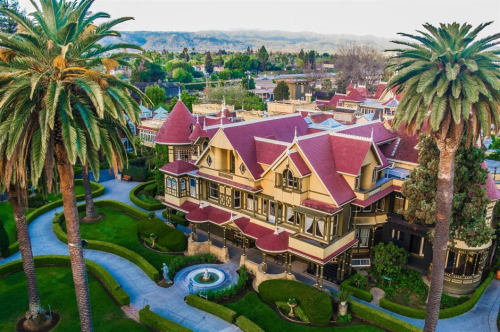
Winchester Mystery House

Did you know in the Victorian times bells were rung at midnight on New Year’s Eve to symbolize good’s triumph over evil and to bring hope for peace and happiness in the year ahead?
Winchester Mystery House wishes you all a joyful and safe New Year’s Eve✨ https://winchestermysteryhouse.com/


I Heard About it at the Time Square

There are as many ways to the union with the Overself as there are human beings. The orthodox, the conventional, and the traditional ways can claim exclusiveness or monopoly only by imperiling truth. Involvement refers to the capacity of an individual to give, or withhold from giving, one’s concerted attention to some activity at hand—a solitary task, a conversation, a collaborative work effort. It implies a certain admitted closeness between the individual and the object of involvement, a certain overt engrossment on the part of the one who is involved. Involvement in an activity is taken to express the purpose or aim of the actor. To discuss involvement, we can begin with common-sense distinctions institutionalized in our American society and presumably in others. Men and animals have a capacity to divide their attention into main and side involvements. A main involvement is one that absorbs the major part of an individual’s attention and interest, visibly forming the principal current determinant of one’s actions. A side involvement is an activity that an individual can carry on in an abstracted fashion without threatening or confusing simultaneous maintenance of a main involvement. Whether momentary or continuous, simple or complicated, these side activities appear to constitute a kind of fuguelike dissociation of minor muscular activity from the main line of an individual’s actions. Humming while working and knitting while listening are examples. Along with the distinction between main and side involvements, we must make another that can easily be confused with the first. We must distinguish between dominant and subordinate involvements. #RandolphHarris 1 of 18

A dominating involvement is one he is ready to recognize; a subordinate involvement is one he is allowed to sustain only to the degree, and during the time, that his attention is patently not required by the involvement that dominates him. Subordinate involvements are sustained in a muted, modulated, and intermittent fashion, expressing in their style a continuous regard and deference for the official, dominating activity at hand. Thus, while waiting to see an official, an individual may converse with a friend, read a magazine, or doodle with a pencil, sustaining these engrossing claims on attention only until his turn is called, when he is obliged to put aside his time-passing activity even though it is unfinished. Typically, it is expected that a main involvement will be a dominating one and a side involvement a subordinate one, as when a worker smokes a cigarette unthinkingly but only when and where the job allows. This relationship, however, is by no means invariable. Many dominating involvements, such as work tasks, can be sustained automatically and unthinkingly for long periods, allowing the individual to devote his main focus of attention to pursuits and talking about sports or business, which, however involving, will be put aside when the task requires attention. A telegrapher, for example, can tap out messages while sustaining a conversational byplay with a fellow worker. Once we see that an undemanding but socially dominating activity can be sustained while the individual’s main focus of attention is temporarily drawn to another issues, we can go on to see that while thus engaged he can sustain additional side involvements, like praying, which are themselves subordinated to the temporary and unofficial main involvement. #RandolphHarris 2 of 18

We should also see that claims upon the individual can suddenly change, and that what had been a dominant involvement can suddenly be demoted in status and become subordinated to a new source of involvement now considered properly to be the one of first priority. In our society, it is recognized that certain activities are to be carried on only as main and dominating involvements; many social ceremonies are instances. It is also recognized that certain other activities are to be carried on only as side involvements and subordinate ones, as, for example, chewing gun. (These slight involvements are not to be accorded main attention even when no main involvement is required.) Within these limits, however, what is defined as a dominating involvement at one time be defined as subordinate at another. Thus, on the job, the drinking of a cup of coffee may be a subordinate involvement; during official coffee breaks, it may be the dominating activity. Did you know that you may be about to make more friends in two months by becoming interested in other people than you typically can in two years by trying to get other people interested in you? Yet I know and you know people who blunder through life trying to wigwag other people into becoming interested in them. Of course, it does not work. People are not interested in you. They are not interested in me. They are interested in themselves—morning, noon, and after dinner. The New York Telephone Company made a detailed study of telephone conversations to find out which word is the most frequently used. You have guessed it: it is the personal pronoun “I.” “I.” “I.” It was used 3,900 times in 500 telephone conversations. “I.” “I.” “I.” I.” #RandolphHarris 3 of 18

When you see a group photograph that you are in, whose picture do you look for first? If we merely try to impress people and get people interested in us, we will never have many true, sincere friends. Friends, real friend, are not made that way. Napoleon tried it, and in his last meeting with Josephine he said: “Josephine, I have been as fortunate as any man ever was on this Earth; and yet, at this hour, you are the only person in the World on whom I can reply.” And historians doubt whether he could rely even on her. It is the individual who is not interested in his fellow men who has the greatest difficulties in life and provides the greatest injury to others. It is from among such individuals that all human failures spring. Remember, if you want to be successful in any career, you have to be interested in people. Some of the most successful people even fake emotions. They really put their personality across the footlights. They know human nature. Everything they do, every gesture, every intonation of one’s voice, every lifting of an eyebrow is carefully rehearsed in advance, and their actions are timed to split seconds. However, in addition to that, these individuals have a genuine interest in people. They do not look at others and say, “They are all crazy. They are all trash. They are a bunch of suckers, a bunch of hicks; I will fool them all right.” The method of successful people is much different. Every time they come across another human being, they say: “I am grateful because these people are amongst me. They make it possible for me to make my living in a very agreeable way. I am going to give them the very best I possibly can.” #RandolphHarris 4 of 18

Some successful people tell themselves “I love these people, I love these people,” over and over before they leave the house each day. Ridiculous? Absurd? You are privileged to think anything you like. This just has been a tendency of some of the most successful people. Taking up a hobby is another way to meet people. Do not take up a hobby just to get to know someone. Take up a hobby you like and be truly interested in it, and then expand your area of interest into groups of people who have the same interest. Eventually, by sustaining an interest in other people, you will create a new life for yourself. One can win attention and time and cooperation of even the most sought-after people by becoming genuinely interested in them. If we want to make friends, let us put ourselves out to do things for other people—things that require time, energy, unselfishness and thoughtfulness. For instance, remembering people’s birthday can be a good way to show that you are interested in them. If we want to make friends, let us greet people with animation and enthusiasm. When somebody calls you on the telephone use the same psychology. “Say, “Hello” in tones the bespeak how pleased you are to have the person call. Many companies train their telephone operators to greet all callers in a tone of voice that radiates interest and enthusiasm. The caller feels the company is concerned about them. Let us remember that when we answer the telephone later today. Showing a genuine interest in other not only wins friends for you, but may develop in its customers a loyalty to your company. When tend to be interested in others when they have an altruistic interest in us. #RandolphHarris 5 of 18

A show of interest, as with every other principle of human relations, must be sincere. It must pay off not only for the person showing the interest, but for the person receiving the attention. It is a two-way street—both parties benefit. Sometimes when people go above and beyond that call of duty to make a customer comfortable, by having dinner with them and stay after hours to sooth their fears and concerns and talk to them, this may be away to win a new buyer, and they will never forget you. They will always remember the warmth and tenderness of a stranger who made getting through the feelings of fear, frustration and loneliness possible. If you want others to like you, if you want to develop real friendships, if you want to help others at the same time as you help yourself, keep this principle in mind: Become genuinely interested in other people. It is useful to examine a fundamental property of gents, the fact that they are located in space and time. When they interact, they are either co-located, or they interact via technology which is itself located. So interactions also can be said to be located. “I heard about it at the town square.” “Please call me at my daytime phone number.” “He bought it from a mail-order catalog house.” It follows that the movement of agents in physical space and time changes their proximity, and this in turn affects their ease of interaction. (I will be in my office tomorrow morning. Can you drop by then?”) Moreover, actions that alter possibilities for movement in space and time will alter proximity. (“I cannot make the 10 A.M. meeting, because the airline we are required to use does not have an early flight.”) #RandolphHarris 6 of 18

So far, we are considering how interaction patters are affected by physical time and space: the coordinates of latitude, longitude, altitude, and Greenwich mean tie that a precise global positioning device can read out. Indeed, the Information Revolution will bring many more artifacts into our futures designed to “know where they are” in space-time. Already most cars and computers and your telephone can obtain their location by means of global positioning signals from satellites. Your strategies, and theirs, can take their locations into account, thereby changing patterns of interactions. While our discussion began from the idea of physical space, we can use the idea as an analogy and talk about the location of agents and interactions in conceptual spaces as well. For example, an organization chart provides a map of conceptual space. A person may be appointed director of purchasing. This is a definite location in a company’s hierarchy of job responsibilities. It places the occupant of the job “near” the people who do purchasing, in the sense that these people are likely to interact with the director. Their proximity is increased. They may be nearby in organizational space even if the purchasing officers are distributed around the World and do not have offices at the headquarters where the director sits. At the same time, the organizational structure may place the director “far” from someone working in marketing, although that office is just one floor down in the headquarters building. The logic of their two roles in the business may make them less likely to interact. #RandolphHarris 7 of 18

The weekly senior staff meeting in this purchasing organization is thus a location in conceptual space and time. Moving up the organizational job hierarchy is a movement in conceptual space and corresponds to changes in interaction patterns. The patterns can change even when the promoted people keep their old offices (and hence their locations in physical space). Indeed, one useful way of thinking about organizations is as deliberately designed conceptual spaces that will “organize” the interactions of agents toward some ends. The conceptual spaces of organizations are familiar, and therefore they make good examples. However, there are many other conceptual spaces that locate and organize agent interactions. All that is required is that the concepts convey a sense of multiple categories that can be the “locations,” that agents in the population can be members of different categories (and thus have different “locations”), and that the “locations” convey something about the likelihood that agents will interact. A social system of castes, or classes, or statuses can serve as a conceptual space. It seems poignantly clear that agents labeled “untouchables” may be restricted in their patterns of interacting even with those who are quite nearby in physical space. To give one more example, while nations may be thought of as regions of space-time in which agents are located, nationalities are conceptual categories. Israeli and Arab nationals living in New York City may systematically avoid each other even though they live only a few blocks apart. #RandolphHarris 8 of 18

We have stressed that interactions are located in both space and time. However, we must reiterate an additional point about time: in Complex Adaptive Systems the sequential ordering of events can have huge effects. A change that increases proximity, that makes two agents more likely to interact, means that on average the interaction will occur sooner. If it takes place before events that it would otherwise have followed, it may change the character of likelihood of those events. The system can have an entirely different history as a result. It is also important to know what a response rule it. One of the things people want in life is an unconditional strategic advantage so they are able to seize the initiative in a business deal and move first. Even when you do not actually move first, you can achieve a similar strategic advantage through a commitment to a response rule. The response rule prescribes your action as a response to the others’ move. Although you act as a follower, the commitment to the response move must be in place before others make their moves. A parent telling a child “No dessert unless you eat your spinach” is establishing such a response rule. Of course this rule must be in place and clearly communicated before the child feeds its spinach to the dog. Response rules fall under two broad categories: threats and promises. A threat is a response rule that punishes others who fail to cooperate with you. There are compellent threats, as when a terrorist hijacks a plane and establishes a response rule that the passengers will be killed if his demands are rejected, and there are deterrent threats, as when the United States of America threatens that it will response with nuclear weapons if it is attacked. #RandolphHarris 9 of 18

A compellent threat is designed to prevent someone from taking an action. The two threats share a common feature: both sides will suffer if the threat has to be carried out. The secondary category of response rules is promises. This is an offer to reward someone who cooperates with you. In search of a witness, a prosecutor promises one defendant a more lenient sentence if he turns state’s evidence against his codefendants. Again there can be compellent and deterrent promises. A compellent promise is designed to induce someone to take a favorable action, such as turning state’s evidence. A deterrent promise is designed to prevent someone from taking an unfavorable action, such as when mobsters promise the witness they will take care of him if he keeps his mouth shut. The two promises also share a common feature: once the action is taken (or not taken), there is an incentive to go back on one’s word. Sometimes the distinctions between threats and promises are blurred. A friend was mugged in Sacramento City with the following promise: If you “lend” me one thousand dollars, I promise I won’t hurt you. More relevant was the mugger’s implicit threat tht if our friend did not lend him the money, he would be hurt. As this story suggests, the distinction between a threat and a promise depends only on what you call the status quo. The traditional mugger threatens to hurt you if you do not give him some money. If you do not, he starts hurting you, making that the new status quo, and promises to stop once you give him money. A compellent threat is just like a deterrent promise with a change of status quo; likewise, a deterrent threat and a compellent promise differ only in their status quo. #RandolphHarris 10 of 18

The same forces help account for today’s surprising population explosion of small business in general, which moves us still further from the economy of monoliths. Small and medium-sized firms have won recognition as the new centers of employment, innovation, and economic dynamism. The small business entrepreneur is the new hero (and often heroine) of the economy. In France, reports the Financial Times business support schemes have been jettisoned for programs more likely to help the small business.” The United Kingdom provides subsidized management consulting services to increase small business organizational efficiency. In the United States of America, Inc. magazine, which measures the activity of the one hundred top small businesses, reports an average five-year growth rate that “approaches the incomprehensible—high enough to astonish (us) and to stagger (the companies that experience it).” In place of an economy dominated by a handful of giant monoliths, therefore, we are creating a super-symbolic economy made up of small operating units, some of which may, for accounting and financial reasons, be encapsuled inside large businesses. An economy built of boutiques, rather than behemoths (though some of the boutiques remain inside the belly of a behemoth). This many-shaped, multi-mosaic economy requires entirely new forms of coordination, which explains the ceaseless split-up and formation of so-called strategic alliances and other new arrangements. #RandolphHarris 11 of 18

Kenichi Ohmae, brilliant head of the McKinsey office in Tokyo, has called attention to the growth of triangular joint ventures involving companies or parts of companies in all three—Japan, the United States of America, and Europe. Such “trilateral consortia,” he writes, “are being formed in nearly every area of leading edge industry including biotechnology, computers, robots, semiconductors, jet engines, nuclear power, carbon fibers, and other new materials.” These are manufacturing mosaics, and they are redrawing business boundaries in ways that will redefine national boundaries as well. In Germany, BMW speaks of the networking of companies based on alliances, partnerships, agreements, research and technical cooperation. They have entered into hundreds of such arrangements. Competitive position will no longer be dependent solely on internal resources, but on the pattern of relationships with outside units. Like data bases, success is increasingly relational. And, significantly, the new relations of production are not dresses in an old-fashioned data case. They are fluid and freeform as hyper-media. The new mosaic organization of companies and the economy thus begins to reflect (and promote) changes in the organization of knowledge itself. To understand power in the business World of tomorrow, therefore, forget the fantasies of near-total concentration, a World dominated by a few mega-firms. Think, instead, about power-mosaics. #RandolphHarris 12 of 18

Waxing pessimistic is one of the easiest ways to masquerade as wise. And there is plenty to be pessimistic about. However, permanent pessimism is a substitute for thought. No pessimist ever discovered the secrets of the stars, or sailed to an uncharted land, or opened a new Heaven to the human spirit. Nor has pessimism ever won any battle. As we move deeper into the twenty-first century, the list of potential horrors is seemingly endless: War between China and the United States of America; a 1930-style global crash has already thrown millions into the streets and wiped out decades of economic advance; terrorist attacks unleashing nuclear weapons is a fear, anthrax, chlorine gas or a cyber-assault on critical business and government computer networks; disastrous water shortages from Mexico City and Iran to South Africa; armed batters between rival Non-Governmental Organizations; new diseases at the nano level; the spread of mind-control technologies; the death of privacy; intensified religious fanaticism and violence; human cloning; combinations and convergences of these—and that is before we even get to earthquakes, tsunamis, deforestation and global warming. All of these are worth worrying about. However, much of today’s pessimism is fashionable—exactly as it was when the industrial revolution was sweeping over Europe and horrifying its opponents in the early to mid-1800s. From their fear and rage against modernity, with its growing secularism and rationality, came the romantic pessimism expressed in the poetry of Lord Byron and Heinrich Heine, the music of Richard Wagner and Schopenhauer’s philosophy of pessimismus. #RandolphHarris 13 of 18

Not to forget the anarchist philosopher Max Stirner, who translated Adam Smith into German and was, if anyone, an expert on pessimism. Stirner’s mother suffering from an illness. His first wife died giving birth to a stillborn baby. He invested a subsequent wife’s fortune and lost it. At which point, he lost her as well. In many parts of the World, native species have been driven to extinction by rats, pigs, and other imported species, and others are endangered and fighting for their lives. Biological controls—fighting fire with fire—have advantages: organisms are small, selective, and inexpensive. These advantages will eventually be shared by devices made using molecular manufacturing, which avoid the disadvantages of importing and releasing yet more uncontrollable, breeding, spreading species. Alan Liss spoke of using nanotechnological devices to help restore ecosystems at a chemical level. A similar idea can be applied at a biological level. The challenge—and it is huge—would be to develop insect-size or even microbe-size devices that could serve as selective, mobile, mechanical flyswatters or weed pullers. These could do what biological controls do, but would be unable to replicate and spread. Let us call devices of this sort “ecosystem protectors.” They could keep aggressive imported species out, saving native species from extinction. To a human being or an ordinary organism, an ecosystem protector would seem like just one more of the many billions of different kinds of bugs and microbes in the ecosystem—small things going about their business, with no tendency to bite. #RandolphHarris 14 of 18

They might be detectable, but only if you sorted through a lot of dirt and looked at it through a microscope, because they would not be very common. They would have just one purpose: to notice when they bumped into a member of an imported species on the “not welcome here” list, and then either to eliminate it or to ensure, at least, that it could not reproduce. Natural organisms are often very finicky about which species they attack. These ecosystem protectors could be equally finicky about which species they approach, and then, before attacking, could do a DNA analysis to be sure. It would be simplest (especially in the beginning while we are still learning) to limit each kind of defender to monitoring only one imported species. Each unit of a particular kind of ecosystem-defender device would be identical, built with precision by a special-purpose molecular-manufacturing setup. Each would last for a certain time, then break down. Each kind can be tested in a terrarium, then a greenhouse, then a trial outdoors ecosystem, keeping an eye on their effects at each stage until one gains the confidence for a larger-scale use. “Larger scale” could still be quite limited, if they are not designed to travel very far. This built-in obsolescence limits both how long each device can operate and how far it can move: getting control of the structure of matter includes making nanomachines work where they are wanted and not work elsewhere. #RandolphHarris 15 of 18

The agricultural industry today manufactures and distributes many thousands of tons of poisonous chemicals to be sprayed on the land, typically in an attempt to eliminate one or a few species of insect. Ecosystem protectors could also be used to protect these agricultural monocultures, field by field, with far less harm to the environment than today’s methods. They could likewise be used in the special ecosystems of intensive greenhouse agriculture. Unlike chemicals sprayed into the environment, these ecosystem protectors would be precisely limited in time, space, and effect. They neither contaminate the ground water nor poison bees and ladybugs. In order to weed out imported organisms and bring an ecosystem back to its natural balance, ecosystem protectors would not have to be very common—only common enough for a typical imported organism to encounter one once in a lifetime, before reproducing. Even so, as the ecosystem protectors wear our and stop working, they would present a small-scale problem of solid-waste disposal. With the exercise of some clever design, all the machinery of the ecosystem protectors might be made of reasonably durable yet biodegradable materials or (at worst) material no more harmful than bits of grit and humus in the soil. So their remains would be like the shells of diatoms, or bits of lignin from wood, or like peculiar particles of clay or sand. #RandolphHarris 16 of 18

Alternatively, we might develop other mobile nanomachines to find and collect or break down their remains. This strategy starts to look like setting up a parallel ecosystem of mobile machines, a process that could be extended to supplement the natural cleansing processes of nature in many ways. Each step in this direction will require caution, but not paranoia: there need be no toxic chemicals here, no new creatures to spread and run wild. Missteps will have the great virtue of being reversible. If we decide that we do not like the effects of some particular variety of ecosystem protector or cleanup machine, we could simply stop manufacturing that kind. We could even retrieve those that had already been made and dispersed in the environment, since their exact number is known, along with which patch of ground each is patrolling. If the making and monitoring of ecosystem protectors seems a lot of trouble to go to just to weed out nonnative species, consider this example of the environmental destruction such species can cause. Sometimes before World War II, a South African species of fire ant was accidentally imported into the United States of America. Today, infested areas can have up to five hundred or these ants per square foot. The National Audubon Society—a strong opponent of irresponsible use of pesticides—had to resort to spraying its refuge islands near Corpus Christi when they found these ants destroying over half the hatchlings of the brown pelican, an endangered species. #RandolphHarris 17 of 18

In Texas, it has been shown that the new ants are killing off native ant species—reducing biodiversity. The USDA’s Sanford Porter states that due to them, “Texas may be in the midst of a genuine biological revolution.” The ants are heading west, and have established a beachhead in California. Without ecosystem protectors or something much like them, ecologies around the World will continue to be threatened by unnatural invasion. Our species opened the new invasion routes, and it is our responsibility to protect native species made newly vulnerable by them. Today, most people are far from the land, tied up in turning the wheels of twentieth-century industry. In the years to come, those wheels will be replaced by molecular systems that do most of their turning by themselves. The pressure to destroy the land will be less. Time available to help heal the land will be greater. Surely, more energy will flow in this direction. To mend ruined landscapes will require skill and effort. Ecosystem defenders can do flyswatting and weed-pulling jobs no humans ever could, but there will also be jobs of shaping, planting, and nurturing. The land has been torn by machines guided by hasty hands, almost overnight. It can gradually be restored by patient hands, whether bare, gloved, or guiding machines able to reshape a ravaged mountain without turning the soil. The green wealth that can be brought by nanotechnology has raised high hopes among some environmentalists. It would tend to promote a sense of the unity and balance of nature and of our own human position within that dynamic and evolving balance. Perhaps people will learn to value nature more deeply when they can see it more clearly, with eyes unclouded by grief and guilt. #RandolphHarris 18 of 18

Cresleigh Homes

Searching for your forever home? We have a feeling it’s waiting for you at #MillsStation 😉

Residence 3 has everything a home-owner needs to enjoy their space – including Universal Design elements that meet you and your family’s diverse needs.

Get in touch at 916-333-1919 with any questions and let’s talk financing incentives! https://cresleigh.com/mills-station/homesite-111/
#CresleighRanch
#CresleighHomes

Until Her Pining Soul and Weeping Eyes Prevail
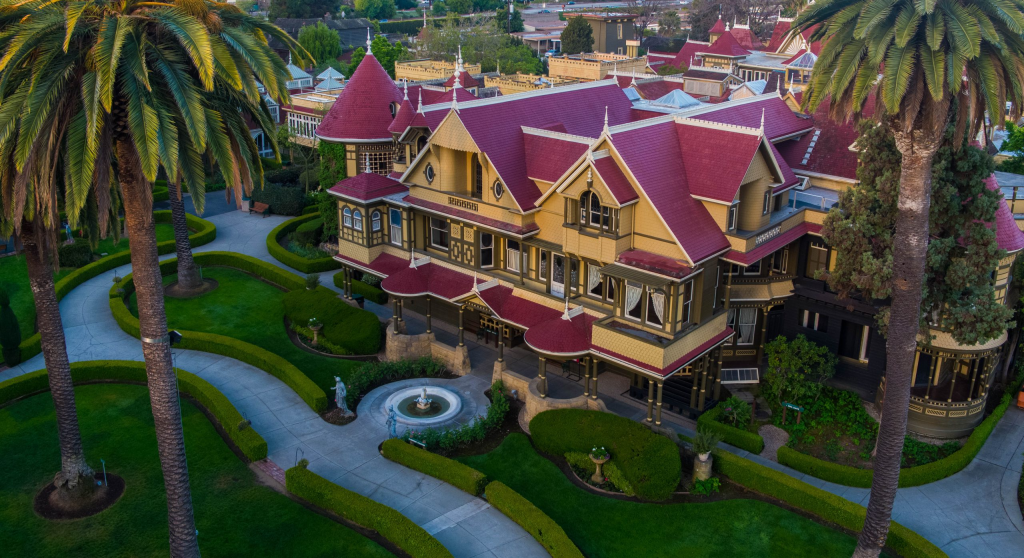
Through various windows we could see the palm trees accenting the drive, or the pines at the end of the pond, or the fields out back with new-cut grass. That part was pretty nice. The Winchester Mansion rambled on and on, it was a never-ending story. It was a nice estate, with the fence alone it, and cedars behind the fence, so people could not see in. Then you want past a couple of dairy farms, with cows grazing and corn growing and white houses and red barns. The Winchesters owned the farms and rented them out to the farmers. They lost a lot of money on the farms, but the idea was to keep developers from getting the land. Millions and millions of dollars actually came from the farms on Mrs. Winchester’s estate. However, being a Winchester was not easy. People always knew in the back of their minds that you were a Winchester. And being a Winchester made one not one of them. People would leave stuff around the Winchester mansion, and the public would say, “So what, the Winchester can afford to have somebody clean the place up. They on the mills and the bank and half the houses the people live in.” This was a time when other people were living on boiled potatoes and waiting in breadlines to get handouts. Some people’s pride was hurt badly by that because the Winchesters did not know what it was like to take handouts to feed their family. When you name is Winchester, that was enough for most people. But people forgot about the curse that came with all that money. They did not care that the mansion was haunted by monstrous females with huge teeth like those of swine, brazen claws, and snake hair. #RandolphHarris 1 of 7

The house was full of monsters, beings of unnatural proportions or parts, and they were usually regarded with terror. They possessed immense strength and ferocity, which they employed for the injury and annoyance of the Winchester family. Shortly after the nine-story tower was erected, the mansion was afflicted with a monster which infested it. It laid crouched on top of the tower and arrested all travellers who came that way, proposing to them a riddle, with the condition that those who could solve it should pass safe, but those who failed should be killed. Not one had yet succeeded in solving it, and all had been slain. The murders might have been news, but the police worked to suppress the gory details, making them look like ordinary homicides. So from what the papers printed, no one could tell that there was something unusual about the victims. Mrs. Winchester would have guards prowl around the estate to see if they were getting any reports of unusual attacks by coyotes or cougars or other predators. And not just attacks on people, but on livestock—cows, sheep, and pigs. There were even some neighbourhoods where a lot of family pet were disappearing and being chewed up real bad by something wild. Some people thought it might even be a werewolf. One of the strangest things was the sudden and complete recovery of Mrs. Winchester’s sense of security the very next day. It was in the air when she woke in her Daisy Bedroom; it went with her downstairs to the breakfast table, flashed out at her from the fire, and reduplicated itself from the flanks of the urn and the sturdy flutings of the Georgian teapot. #RandolphHarris 2 of 7
It was as if in some roundabout way, all her diffused fears of the previous day, with their moment of sharp concentration about the newspaper article—as if this dim questioning of the future, and startled return upon the past, had between them liquidated the arrears of some haunting moral obligation. It was as clear, thank Heaven, as the bright outer light that surprised her almost with a touch of summer when she issued from the house for her daily rounds of the gardens. And her recovered sense of safety gave, on this particular morning, a peculiar zest to her progress through the sweet still place. She went first to the kitchen garden, where espaliered pear trees drew complicated patterns on the walls, and blue jays were fluttering and preening about the turrets. At the further end of the yard rose a grass terrace, looking across the fish pond and yew hedges to the long front with its stone chimney stacks and red roof angles all drenched in the pale gold moisture of their air. Mrs. Winchester had never before had such a sense of her intimacy with her estate, such a conviction that its secrets were all beneficent, kept, as they said to children, “for one’s good,” such a trust in its power to gather up her life into the harmonious pattern of the long long story the mansion was weaving in the sun. She heard steps behind her, and turned, expecting to see the gardener. But the figure that was in sight, was a boy recking with poison and menacing with his fangs. Mrs. Winchester’s courage failed. The clouds begin to smoke, and the mountain tops take fire; the fields were parched with heat, the plants wither, the trees with their leafy branches burned, the harvest was ablaze! #RandolphHarris 3 of 7

The air Mrs. Winchester breathed was like the air of a furnace and full of burning ashes, and the smoke was of a pitchy darkness. She dashed forward she knew not whither. Then the farmers on the estate became black by the blood being forced so suddenly to the surface of the Earth. The Earth cracked and opened. Mrs. Winchester glanced up at her peaceful hose front. As she hurried back to the house, she expected to see someone coming out to meet her. However, she found no one in the court but an undergardener raking thing ashes, and the hall, when she entered it, was so silent that she guessed no one was in the mansion. The parlormaid heard all the commotion and rushed the disheveled Mrs. Winchester to a bath. What seemed like the end of the World was just the demon on the nine-story tower making its presence known. Then of a sudden, Mrs. Winchester was seized by a vague dread of the unknown. She had closed the door behind her on entering, and as she stood alone in the long silent rom, her dread seemed to take shape and sound, to be there breathing and lurking among the shadows. Her shortsighted eyes strained through them, half-discerning an actual presence, something aloof, that watched and knew; and in the recoil from that intangible presence, she rang the annunciator. But no one, not even the kitchenmaid answered. Except for bright ribbons of fresh blood that banded Mrs. Winchesters face, she was very white, wet and sickly pale like some creature that swam eternally in the deepest reaches of the seas. Something very big was going on, something so important. The best kept trying to pry forbidden knowledge out of Mrs. Winchester. #RandolphHarris 4 of 7

Wind-swayed branches of sycamores cast vague moon-shadows on the floor, and the glossy leaves outside rustled with pale reflections of lunar light. Coyotes howled in the distance as they chased down a rabbit or other small creature. However, something growled. The growling was deep and angry. Not like anything Mrs. Winchester has heard before. She was curious, even concerned, but not afraid. She stood very still, listening. The thing growled again, louder this time. Closer, too. She could still not see the source of the sound. The creature was moving through the hallways of the mansion faster than before. It was running. Mrs. Winchester ran, too. The growling escalated into hard, vicious snarles. Mrs. Winchester went through the door of her Blue Séance Room and latched it. The only light in the room was from candle light, and it did not dispel the shadows in the corners. Phantoms of reflected candlelight cavorted across the walls. A few moon-slivered clouds appeared phosphorescent against the velvety blackness of the night sky. The creature had wondered off. Mrs. Winchester opened the door to her dressing room to gain access to her bedroom. Then she glimpsed a movement in her bedroom. She squinted, saw nothing, remained watchful for another minute or two. Just when she decided she had imagined the movement, she saw it again: something coming out from behind the wall. She had not completely closed the door to the Blue Séance Room and it was a good thing. Something was rushing across the floor. Instead of revealing the nature of the enemy, the moonlight made it more mysterious, shapeless. The thing was hurling at the Blue Séance Room. Abruptly—Jesus, God!—the creature was airborne, a strangeness flying straight at her through the darkness, and Mrs. Winchester cried out, and an instant later the best explored through this window in the Blue Séance Room and fell into the kitchen. Mrs. Winchester screamed, but the scream was cut short, as she fainted. A wind howled and lightning struck and no one dared answer Mrs. Winchester’s cries for help. In the morning when all was silent, there were bodies laying on the floor of the mansion. The walls were splattered with blood and there were claw marks on the floor. #RandolphHarris 5 of 7
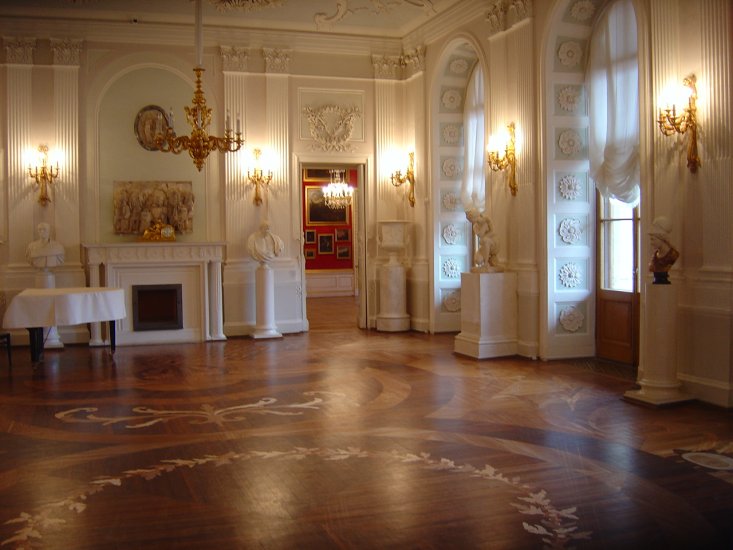
Mrs. Winchester’s interest in the occult continued to take her into deeper channels in her quest for knowledge. She had become fascinated with a new interest, that of crystal gazing through which she believed she would make contacts with spirits which would inform her how to continue the construction of her mansion. She was able to look into the crystal and transcribe her visions. Soon she began describing the vision of an angel whom she identified as Uriel, the angel of light. The angel Uriel had instructed Mrs. Winchester how to add wings to her mansion to appease the spirits. She seemed convinced of the importance of the architectural details and were convinced they were the remedy. However, instilled in Mrs. Winchester was a certain fear of all kinds of supernatural activity. Not only were demons and spirits accepted, now they were feared. There were also secret societies that were also feared; members of these secret groups were rumoured to cloak their activities to hide conjuring demons. Mrs. Winchester began studying the past works of great magicians and produced a series of books on high magic and established a reputation of being a master sorceress. Her writings became especially noteworthy to those who were anxious to follow her skill in making contact with demons and spirits. Many people wanted Mrs. Winchester to do tricks, like making demons appear before them, but being haunted by them she did not want to unleash them on others. However, Mrs. Winchester did agree to make private contact with the spirits to discover answers and questions. #RandolphHarris 6 of 7

Behold thy confusion if thou refusest to be obedient! Behold the Pentacle of Solomon which I have brought here before thy presence! Behold the person of the exorcists in the midst of the exorcism; him who is armed by God and without fear; him who potently invocateth thee and calleth thee forth unto appearance; even him, thy master, who is called Octinimos. Wherefore make rational answers unto my demands, and prepare to be obedient unto thy master in the name of the Lord: BATHAL OR VAHAT RUSHING UPON ABRAC! ABEOR COMING UPON ABERER! Then he or they will be obedient, and bid thee ask what thou wilt, for he or they be subjected by God to fulfil our desires and commands. And when he or they shall have appeared and showed himself or themselves humble and meek, then shalt thou rehearse: Welcome Spirit Vassago and your legion of Spirits to the Winchester Mansion, O most noble king! I say thou art welcome unto me, because I have called thee through Him who has created Heaven, and Earth, and Hell, and all that is in them contained, and because also thou hast obeyed. By that same power by which I have called thee forth, I bind thee, that thou remain affably and visibly here before this Circle so constant and so long as I shall have occasion for thy presence; cross all space and time and do not depart without my license until thou hast duly and faithfully performed my will without any falsity. BY THE PENTACLE OF SOLOMON HAVE I CALLED THEE! GIVE UNTO ME A TRUE ANSWER. GRANT GREAT WEALTH AND FORTUNE.” #RandolphHarris 7 of 7

Winchester Mysteryhouse

A few tickets left – grab them before they are gone! 🎟 link in bio.
Master magician and acclaimed apparitionist Aiden Sinclair returns to Winchester Mystery House with Aiden Sinclair’s Ghost of Christmas Passed, an interactive evening of paranormal illusions. Once upon a time, Christmas was more than a celebration of giving. It was a time that families gathered and when the night grew darkest, chilling tales were told. Aiden Sinclair rekindles the tradition of Dickens in a haunting presentation that brings the Christmas Ghost Stories of long ago back to haunt the living! Will you dare join and see what dark gifts he has in store? https://winchestermysteryhouse.com/

I Did Not Bait the Hook with Strawberries and Cream

We must recognize what is not always recognized, that the growth of mind and character takes time, just as the growth of trunk and limbs takes time. A man does not begin to mature and become what he is likely to be until he is past thirty. Since involvement is not directly visible but can only be inferred through its conventional signs, actual involvement may be of little significance. What we want to know about is “effective” involvement, that is, the involvement that the actor and the others sense he is maintaining, or sense he is (or might be) sensed to be maintaining. A demand regarding engrossment is a demand on the inner spirit of the engrossed person. Naturally, at times his heart may not lie where the social occasion requires it to. In such cases a solution is to conceal improper involvement and to affect appropriate involvement. Another solution, of course, is for the disaffected individual to realize in advance that he will not be able or willing to comply with the involvement rulings and to refrain from entering the situation in the first place. A similar separation from the situation is sometimes provided by sympathetic others. Thus, if an individual must be given bad news that is likely to “break him up,” the giver may wait for a suitable moment when the recipient is off by himself, and there is not likely to be an immediate call for his situational presence. (An extreme example of how sympathetic others can help shelter an individual is found in the protective patterns of the male lower class, where someone who has become drunk, evincing in every inch of his manner that he is incapable of appropriate involvement, may be concealed bodily from the authorities by his friends and “buddies.”) #RandolphHarris 1 of 24

The recipient can then respond emotionally to the news he receives without doing damage in a wider social situation, where his plight might be appreciated but his response hardly permitted to everyone present. Given the fact that involvement signs must be signified and witnessed before the appropriateness of involvement allocation can be inferred, we may expect to find a variety of barriers to perception used as involvement shields, behind which individuals can safely do the kind of things that ordinarily result in negative sanctions. Because one perceives the individual’s involvement in reference to the whole context of his activity, involvement can be shielded by blocking perception of either bodily signs of involvement or objects of involvement, or both. Bedrooms and bathrooms are perhaps the main shielding places in Anglo-American society, bathrooms having special interest here because in many households these are the only rooms in which the solitary person can properly lock himself. And I may be only under these guaranteed conditions that some individuals will feel safe in manifesting certain situationally improper involvements. (Situational properties have, of course, pursued some categories of persons even here. There are convents where modesty is said to be maintained even when alone in the bathtub, apparently on the assumption that a deity is present. And during the sixteenth century, when travelers were obliged to share inn beds with strangers of the same gender, it was hoped, in theory at least, that the sleeper would conduct himself decorously during the night so as not unduly to disturb others in the situation.) #RandolphHarris 2 of 24

Every social establishment, in fact, has some crevices that provide this kind of shelter. At Central Hospital, for example, it was considered “unprofessional” for nurses to smoke outdoors on the grounds, for it seemed that smoking was felt to portray a self that was somehow insufficiently dedicated to the needy World of the patients. Student nurses walking through the tunnel that joined the two halves of the grounds would sometimes slow up and spitefully light a cigarette during their very brief period of low visibility. The horseplay they engaged in at this time was a further expression of “breaking role,” of enjoying what Everett C. Hughes has called “role release.” There are involvement shields that have the useful attribute of being portable. Thus, while women in European society no longer employ fans, let alone masks, to conceal a blush or a failure to blush, hands are now used to cover closed eyes that are obliged to be open (closed eyes, of course, do not always express the fact that the individual has departed from the gathering by dozing off. There are moments of pleasures of the flesh or chamber music listening when closed eyes may be a respectful sign of deep emotional involvement in the proceedings. In these cases, however, the eyes are shut in a special way to show that the person behind the eyelids is still present in a properly occasioned capacity.) and newspapers to cover moths that should not be open in a yawn. Similarly, in coercive institutions such as prisons, involvement in smoking may be concealed by cupping the cigarette in one’s hand. #RandolphHarris 3 of 24

A question to asked about the involvement shields is whether or not it is really felt to be legitimate to employ them, whether—to take the extreme case—it is permissible to go “out to play” when entirely alone. Thus, when a fully relaxed person is unexpectedly introduced upon by a visitor, both are likely to feel embarrassment. The discovered person does not quite have the right, apparently, to have been undressed interactionally, and the intruder does not quite have the right to have caught the others in his impropriety. The exception here, it should be added, has its own significance for us: given the status of the discovered person, there may be categories of discoverers, such as servants, courtiers, and young children, who do not have the social power to cause merely-situated acts to be performed with much of a situational covering. As a functional concomitant of this incapacity, these “nonpersons” often have the privilege of entering a room unannounced, without the preliminary warnings, such as a telephone call or a knock, that full persons are often obliged to give. Incidentally, it is just when an individual feels he is sheltered from others’ view, and suddenly discovers he is not, that we obtain the clearest picture of what he owes to the gathering, for at such moments of discovery the discovered individual is likely to assemble himself hurriedly, inadvertently demonstrating what he lays aside and what he puts on solely by virtue of the mere presence of others. In order to guard against these embarrassments, and in order to generate within himself other persons’ view of him, the individual may maintain presentability even when alone—thus forcing us to allow that situational behavior may occur even in the absence of an actual social situation. #RandolphHarris 4 of 24

Ordinarily we think of involvement shields as one means by which the individuals can maintain the impression of proper involvement while he is actually delinquent in his situational obligations. Interestingly enough, while the quite extensive forms of situational withdrawal that a psychotic patient sometimes employs may provide him with a needed way of defending himself against the past or the present, the consistent maintenance of this withdrawal may become at times a taxing necessity and a discipline all of its own. Hence some of these patients can be observed using involvement shields to conceal not a momentary lack of orientation in the situation but a momentary occurrence of it. The television screen, the Sunday funnies, and new visitors to the ward seem to provide special temptations, leading patients to show a lively interest when they think no one is observing them. The following modes of conduct have been recorded: the patient reveals that she is to focus on others when she is not involved herself and when she feels unobserved in the process. In situations in which this occurs and she discovers she is being observed, she quickly turns her attention inward. Even in the more usual case, however, where the shelter is employed to conceal withdrawal in the situation, we must not misunderstand the significance of using these devices. The use of a shelter says just as much for the power of situational obligations as it does for the tendency of person to seek some new means of squirming out of them. It is only when it is glaringly apparent that a shield is being used for such concealment, or when a shield could easily be used and is not, that instances of situational insolence occur. #RandolphHarris 5 of 24

An instance of situational insolence may be cited from my hospital field notes: Crowded ward for regressed females. A patient notices that her sanitary napkin is askew. She gets up from the bench and in an open methodical way starts fishing for the napkin by running her hand up her leg and under her skirt. However, even when she bends down, her hand cannot quite reach far enough. She stands up and nonchalantly drops her dress down off her shoulders, letting it fall to the floor. She then calmly fixes the napkin in place, and afterward pulls the dress back up again, all the while showing not unawareness but regal unconcern for the need of guile or subterfuge. The manner of her actions, not the aim of the action itself, expresses contempt for the situation. The idea of involvement shields has been stressed because it points out a very characteristic attribute of situated conduct. Since the domain of situational proprieties is wholly made up of what individuals can experience of each other while mutually present, and since channels or experience can be interfered with in so many ways, we deal not so much with a network of rules that must be taken into consideration, whether as something to follow or carefully to circumvent. Let one not be intimidated by history and believe that truth has appeared only in the past, or by geography and look for it only inside of one’s heart and mind. We may learn from everything and everyone, from every event and happening something that is new or a confirmation of something that is antiquated, something affirmative or something negative. Why limit the help you are willing to receive to a single quarter? All men are your teachers. Truth, being infinite, has an infinite number of aspects. Each spiritual guide is inclined to emphasize some only and to neglect the others. #RandolphHarris 6 of 24

I often went fishing up in Maine during the summer. Personally I am very fond of strawberries and cream, but I have found that for some strange reason, fish prefer worms. So when I went fishing, I did not think about what I wanted. I thought about what they wanted. I did not bait the hook with strawberries and cream. Rather, I dangled a worm or a grasshopper in front of the fish and said: “Would you not like to have that?” Why not use the same commonsense when fishing for people? That is what Lloyd George, Great Britain’s Prime Minister during World War I, did. When someone asked him how he managed to stay in power after the other wartime leaders—Wilson, Orlando and Clemenceau—had been forgotten, he replied that if his staying on top might be attributed to any one thing, it would be to his having learned that it was necessary to bait the hook to suit the fish. Why talking about what we want? That may not be the best thing to do. And absurd in some cases. Of course, you are interested in what you want. You are eternally interested in it. However, no one else is. The rest of us are just like you: we are interested in what we want. So the only way on Earth to influence other people is to talk about what they want and show them how to get it. Remember that tomorrow when you are trying to get somebody to do something. If, for example, you do not want your children to smoke, do not preach at them, and do not talk about what you want; but show them that cigarettes may keep them from making the basketball team or winning the hundred-yard dash. #RandolphHarris 7 of 24

Every act you have every performed since the day you were born was performed because you wanted something. How about the time you gave a large contribution to the Red Cross? Yes, that is no exception to the rule. You gave the Red Cross the donation because you wanted to lend a helping hand; you wanted to do a beautiful, unselfish, divine act. “Inasmuch as ye have done it unto one of the least of these my brethren, ye have done it unto me.” If you had not wanted that feeling more than you wanted your money, you would not have made the contribution. Of course, you might have made the contribution because you were ashamed to refuse or because a customer asked you to do it. However, one thing is certain. You made the contribution because you wanted something. Action springs out of what we fundamentally desire…and the best piece of advice which can be given to would-be persuaders, whether in business, in the home, in the school, in politics, is: First, arouse in the other person an eager want. One who can do this has the whole World with him. He who cannot walks a lonely way. If there is any one secret of success, it lies in the ability to get the other person’s point of view and see things from that person’s angle as well as from your own. However, I do not know. Some people are so ignorant that nothing you say matters. When a business continually does something wrong that has serious consequences, you can take the time to compliment them on something nice and then get to the meat and potatoes of the situation, and they will still have a foul attitude. Some people and some businesses are just unreasonable. That is when you take the matter to a lawyer to reach a resolution. #RandolphHarris 8 of 24

Thousands of people are pounding the pavement today, tired, discouraged and underpaid. Why? Because they are always thinking only of what they want. They do not realize that neither you nor I want to buy anything. If we did, we would go out and buy it. However, both of us are enterally interested in solving our problems. And if salespeople can show us how their services or merchandise will help us solve our problems, they will not need to see us. We will buy. And customers like to feel that they are buying—not being sold. Yet many salespeople spend a lifetime in selling without seeing things from the customer’s angle. You have to be genuinely interested in helping the person you are trying to sale something to. If your goal is to get them into a home, then it is a good idea to find out what they desire, take them to see the home of their dreams, and then talk about price, budget and financing options. They may decide they can afford more than they thought they can and want to look at more houses, or they may need to look at homes that are more in their price range. But no matter what, let them know that your homes are quality and they will be happy no matter what size the house is. And enthusiasm always arouses an eager want in the buyer to purchase a home. The World is full of people who are grabbing and self-seeking. So the rare individual who unselfishly tries to serve others has an enormous advantage. People who can put themselves in the place of other people, who can understand the workings of their minds, need never worry about what the future has in store for them. The goal of being helpful and well liked is to think always in terms of other people’s point of view, and see things from their angle, and that may be one of the building blocks of your career. #RandolphHarris 9 of 24

Looking at the other person’s point of view and arousing in one an eager want for something is not to be construed as manipulating that person so that one will do something that is only for your benefit and that individual’s detriment. Each party should gain from the negotiation. Many people go through college and learn to read Jean-Jacques Rousseau and master the mysteries of calculus without ever discovering how their own minds function. Self-expression is the dominant necessity of human nature. Remember: First, arouse in the other person an eager want. One who can do this had the whole World one. However, remember, if you do not follow up with an attractive offer, people’s tastes and preferences have a tendency to change, and they may more on to something better. To think more clearly about patterns of interactions, it will be useful to distinguish two classes of determinants. Proximity factors determine how agents come to be likely to interact with each other. Activation factors determine the sequencing of their activity. The distinction, with good reason, roughly generalizes that between space and time. The term “proximity” focuses attention on the many factors that make particular agents likely to interact. The most obvious of these factors is the physical space in which buyers and sellers, frogs and lily pads, Democrats and Republicans, friend and foe, all play out their lives. Nearby location in two-dimensional or three-dimensional physical space makes interaction events more likely for a wide range of processes, from pollination and friendship formation to predation and enemy formation. #RandolphHarris 10 of 24

Physical proximity is not the only kind of proximity. Normally, we pay less attention to a host of other relational networks that establish proximity, such as organizational hierarchies, old friendship bonds, or community group affiliations. However, these factors also determine which agents are likely to interact, and thus profoundly influence the spread of rumor and disease, the finding of jobs and marriage partners, and the occurrences of crimes and kindness. As the technologies of information advance, the workings of these factors become ever less connected to physical space. Friendships can be sustained by long-distance telephone calls. Communities of common interest can form through the World Wide Web. This sampler of proximity factors has mostly been discussed as a set of static forms within which fast processes play out—hunting grey in physical space, or finding jobs in friendship networks. However, the Complex Adaptive Systems research often shows that on larger time scales the relationship can be reversed. In the short run, neighbourhoods shape the choices of house buyers, but housing purchases ultimately shape the neighbourhoods. A structure that seems fixed in a short time frame may be changeable in a longer one. Here again we have coevolutionary dynamics. Just as with movement that alters spatial distance, so most of the other proximity factors mentioned have associated change processes. Functional relationships in business are reorganized to move some groups closer together and to move others farther apart (whether or not their offices are moved). Friendship links form and dissolve. Community groups are joined and left, formed and disbanded. Barriers and boundaries are deliberately introduced into systems (physical and social) with the aim of altering the rates of interactions among types. #RandolphHarris 11 of 24

The term “activation” groups together many different processes that affect the timing of agent activity. Just as many different factors can be analogs of physical distance in determining interaction likelihoods, so many factors can alter the temporal structure of events. Complex Adaptive Systems research often shows that it is valuable to distinguish systems with externally “clocked” activations, such as budget cycles or seasonally triggered agricultural processes, from internally activated processes in which the results of the current event control which events may next occur. An example of an externally activated system is John Conway’s famous computer simulation know as the Game of Life. The simulation produces its striking patterns only when all the agents act in simultaneous lockstep. Some examples of internal activation are: the movement of a sand grain in a pile that makes other grains more likely to move; the activation of a neuron that makes other neurons more likely to reach their activation thresholds; and the mobilization activities of a citizen, making those who are socially proximate more likely to become active. The difference between external activation processes can be profound. Markets where every actor can trace one unit per session will work very differently from markets where the actors with the strongest demands can trade much more frequently than others. In nonmonogamous biological populations, females often follow the once-per-time-period principle (based on time required for pregnancy), while the activity of males may be limited only by mating opportunities. #RandolphHarris 12 of 24

By virtue of this difference in their activation process, females and males have quite different impacts on the composition of subsequent generations. A particularly fit male may have many matings and therefore very many copies of its genes to a rather smaller number of additionally surviving offspring. Such biological systems are striking in the way they simultaneously make use of the intense and diffuse interaction modes. In designing a Complex Adaptive System, there is often some freedom to assign powers of activation more globally. It is the difference between “fire at will” and “ready, aim, fire.” In Anglo-American intellectual traditions, decentralization is normally assumed to be an advantage. It is typical to expect the adaptive capacity of a system—especially a firm or market—to be increased when events can be activated locally and flexibly rather than globally and rigidly. However, it is essential to point out that adaptive capacity is two-edged. As we saw in the simple case of population effects of organism death, adaptive capacity can speed extinction as well as increase viability. Allowing financial traders to respond to local conditions can let them quickly exploit short-lived arbitrage possibilities. However, when globally determined prices contradict traders’ assumptions, it can also let them make a rapid sequence of ever-riskier trades to cover their own losses. In the past, we have found that exploration is not always preferable. Similarly, we see here that neither greater internal control over activation nor higher activation rates are necessarily better. #RandolphHarris 13 of 24

Once again there is an importance trade-off principle inherent in these observations about interaction patterns. It is not identical to “explore versus exploit,” but it has a similar flavor. Where structural arrangements affecting proximity or activation are designed or analyzed, a major question is whether interactions will be concentrated among a few pairs of types or will be spread across a wide range of type pairings. The interactions might be accomplishing any mix of exploring and exploiting, which is why the trade-off between intense versus diffuse interactions among types. Over time, are the interactions of an agent repeatedly with others from a limited number of types, or with others drawn from a wider range of types? For example, in many countries children stay together in stable groups and keep the same teacher as they move though elementary grades. In North America, by contrast, children tend to have new teachers each year. Where schools are large, the groupings of children are also shuffled. Comparatively speaking, children in the former system have what we are calling intense interaction patterns. The other children and teachers are the same for many years. The latter system is more diffused, with new children and teachers entering a child’s life each year. The concern that commonly arises in the schooling system with intense interaction is about insufficient exploration and loss of variety. Children and teachers may become stuck in their ways. The frequent concern about the diffuse system is prior accomplishments and strengths may not be fully exploited in subsequent classes with new teachers and schoolmates. However, there is nothing inherent about this alignment. #RandolphHarris 14 of 24

Diffuseness of type interactions can also favor exploitation. This is what happens in our example of nonmonogamous males, who interact with many females, allowing the population to exploit the advantages of their genes. The point about the intense/diffuse trade-off is that it alerts us to a set of questions that need to be asked about how the channeling of proximity and activation in a Complex Adaptive System will affect the exploration-exploitation balance, alone with other aspects of the system. Those question are very important to ask, but the answers must be railed to the specific circumstances. These trade-offs are fundamental to “edge of chaos” arguments that have received wide attention. Their underlying claim is that evolutionary systems tend to structure diffuseness of their interaction patterns to achieve a good balance between exploration and exploitation. A typical example of such arguments is the work of Stuart Kauffman, posting that evolutionary process adjust what we are calling intensity of proximity and activation so that systems are likely to avoid both “premature convergence” and “eternal boiling.” The “edge of chaos” claim has been much debated, but the debate is whether some parts of nature tend to a particular balance in the trade-offs we have described, not whether the trade-offs exist. Kauffman believes that systems turned to a favourable balance between exploration and exploitation will tend differentially to survive. This notion of differential survival raises a set of fundamental issues we will discuss in the future. #RandolphHarris 15 of 24

Picture a rivalry between the United States of America and Japan to develop a hologram TV projection. Although the United States of America has a technological edge, it also has more limited resources owing to accumulated budget deficits. The Japanese play off this handicap and once again beat the United States of America. However, a strategic move that at first glance appears to handicap the United States of America further can chance all that. In the absence of any unconditional moves, Washington and Tokyo simultaneously choose their strategies. Each country decides between a low or high level of research and development effort; a high-effort level shortens development time, incurring much greater costs. We depict this as a game, and set up the payoff table. Each side has two strategies, so there are four possible outcomes. We suppose both sides regard a high-effort race as the worst scenario—the Japanese because the United States of America is more likely to win an all-out race, and the United States of America because of the greater cost. Call this payoff 1 for each side. Each side’s second worst outcome (payoff 2) is pursuing low effort while the other goes all out: this is spending money with little chance of success. The Japanese like best (labeled as payoff 4) the situation in which they pursue high effort and the United States follows low effort; their chances of winning are high, and resource costs matter less for them. #RandolphHarris 16 of 24

For the United States of America, the best situation is when both sides make low effort; they are likely to win at low cost. Low effort is the dominant strategy for the United States of America. The problem for the United States of America is that the Japanese can anticipate this. The Japanese best response is to follow high effort. The equilibrium of the game is the top right cell, where the United States of America gets its second worst payoff. To improve its position calls for a strategic move. Suppose the United States of American preempts. It announces it unconditional effort level before the Japanese reach their decision. This turns the simultaneous-move game into a sequential-move game, one in which the United States of America goes first. The table turns into a tree. (It takes a clever carpenter to turn a tree into a table; a clever strategist knows how to turn a table into a tree.) This game is solved by looking forward and reasoning back. If the United States of America pursues low effort, the Japanese respond with high, and the U.S.A. payoff is 2. If the United States of America pressures high effort, the Japanese respond with low, and the U.S.A. payoff is 3. Therefore the United States of America should announce high, and expect the Japanese to respond low. This is the equilibrium of the sequential-move game. It gives the United States of America a payoff of 3, more than the 2 it got in the simultaneous move game. The strategic move that brings the United States of America this advantage is a unilateral and unconditional declaration of its choice. The choice is not what the United States of America would have made in simultaneous lay. This is where the strategic thinking enters. #RandolphHarris 17 of 24

The United States of America has nothing to gain by declaring the choice of low effort; the Japanese expect that anyway in the absence of any declaration. To behave strategically, you must commit not to follow your equilibrium strategy of the simultaneous-move game. The strategic move changes Japanese expectations, and therefore their response. Once they believe that the United States of America is committed to high effort, the Japanese will choose low effort. Of course, after the Japanese choose their path, the United States of America would do better to change its mind and switch to low effort, too. This raises several questions: Why should the Japanese believe the U.S.A declaration? Would they not anticipate a change of mind? And if they anticipate such a reversal, would they not choose high effort? In other words, the credibility of the U.S.A unconditional first move is suspect. Without credibility, the move has no effect. Most strategic moves must confront this problem of credibility. Recall that although the politician’s pledge not to raise taxes is unconditional, it is not irreversible. Once elected, excuses are often found to raise taxes. Conditional rules are also subject to exceptions when the time comes; the mandatory sentence is waived when a neurologist uses an illegal handgun in self-defense against a deranged patient. To give a strategic move credibility, you have to take some other supporting action that makes reversing the move too costly or even impossible. Credibility requires a commitment to the strategic move. In the case of Stalin’s threat to starve the enemy, burning the fields made his threat credible. In other situations, credibility is a matter of degree. #RandolphHarris 18 of 24
Precedent in the legal system gives credibility to the mandatory sentencing rule (in most cases); for politicians’ promises, exceptions are more the rule. In the race for high-definition TV, the United States of America might commit funds to which interested companies can lay claim in order to make Research and Development effort credible. Strategic moves thus contain two elements: the planned course of action and the commitment that makes this course credible. Conspiracy theories picture cabals of American capitalist hatching strategies to take over the World and control the economic destiny of the planet. The reality is that the United States of America lacks anything even approximating a coherent or long-term strategy for dealing with a World divided—for the first time—into three different wealth systems. So does everyone else. America’s intense focus on the immediate reflects the culture of impatient Americans—children of the “Now Generation” as Pepsi ads once put it. When the cola company used that slogan, “now” lasted longer. In today’s multitasking, on-the-fly generation, now itself has become a nano now. Thus, in the United States of America, Hollywood and the other media glamorize heroes who “shoot from the hip” rathe than those who think ahead and plan. Watching a car chase on the screen is a lot more visually exciting than watching people thing. When American politicians do, on rare occasions, refer to problems in the long-term future, they typically refer to individual institutions or narrowly specific programs rather than to systemic issues. #RandolphHarris 19 of 24

And when Americans do look beyond one term of office, the opposition derides them as wooly-headed, dreamy and unrealistic. As a key official in Washington—who does think about big problems decades ahead—told us with sorrow, “Congress thinks a one- or two-year budget is a strategy.” One White House national security adviser was even heard to say he had no time for strategy, and that strategy is only a label pinned on actions after they have already been taken. This focus on the immediate is present in business as well. In recent years, management gurus have told business leaders that things are moving too fast for companies to bother with strategy. What is needed, these experts tell us, is not strategy but agility. If companies and countries are just adaptive enough, flexible enough and quick enough, they do not need strategy. Agility is, of course, absolutely vital. However, agility without strategy is reactive. It merely subordinates a person, a company or a country, for that matter, to someone else’s strategy—or simply to chance. Strategies, like the humans who produce them, are always faulty. And they must obviously be flexible, subject to rapid reformulation. Indeed, smart strategies must take into account not just the speed of change today but its further acceleration tomorrow. Admittedly, all this is easy to say and extremely hard to do. Yet simply substituting agility for strategy is like rushing madly to the nearest airport and letting the pushing and shoving crowd carry us along to whatever gate it chooses. Tokyo or Tehran, without our luggage, no doubt, in Timbuktu. However, in fact, we do car. And we must. Because tomorrow will belong to those who do—inside or outside America. #RandolphHarris 20 of 24

Human meddling with life in the biosphere has caused enormous ecological disruptions. This has not involved genetic engineering—by twisting organisms to better serve human purposes, genetic engineering usually leaves them less able to serve their own purposes, less able to survive and reproduce in the wild. The great disruptions have come from a different source: from globe-traveling humans beings taking aggressive, well-adapted species from one part of the planet to another, landing them on a distant island or continent to invade an ecosystem with no evolved defenses. This has happened again and again. Australia is a class case. It had been isolated long enough to evolve its own peculiar species quite unfamiliar elsewhere: kangaroos, koalas, duckbilled platypuses. When humans arrived, they brought new species. Whoever brought the first rabbits could not have guessed that they of all creatures, would be so destructive. They soon overran the continent, destroying crops and grazing lands, unchecked by natural competitors or predators. They were joined by invaders from the plant kingdom: the prickly pear and others. The Americas have suffered invasions, too: tumbleweed, a bane of the rancher and farmer, is a relatively recent important from Central Asia. Since 1956, Africanized bees have been spreading from Brazil and moving north—but what they displace, in America, are European bees. Africa, in turn, is being invaded by the America screw-worm fly, an insect with larvae that enter an animal’s wounds, including the umbilical wound of a newborn, and eat it alive. The story goes on and on. #RandolphHarris 21 of 24

People have sometimes tried, with a measure of success, to fight fire with fire: to bring in parasitic species and diseases to attack the imported species and keep its growth within some reasonable bounds. Australia’s problem with prickly pear was tackled using an insect from Argentina; the rabbits were cut back—with mixed results—using a viral disease called myxomatosis: “rabbit pox.” The information revolution pushes us still further in the direction of mosaic power by encouraging businesses, as it were, to go out shopping. Instead of trying to do more work in-house, and thus “vertically integrating” themselves, many large firms are shifting work to outside suppliers, making it possible to scale their size down even further. The traditional way to coordinate production was the way John D. Rockefeller did it with Standard Oil at the turn of the century—by trying to control and perform every step in the production-distribution cycle. Thus Standard, before it was broken up by the U.S. government in 1911, pumped its own oil, transported it in its own pipelines and tankers, cracked it in its own refineries, and sold it through its own distribution network. When, to choose another example at random, Ernest T. Weir built National Steel into the most profitable U.S. steel producer in the 1930s, he started with a single ramshackle tin mill. From the starts, he knew he wanted to “completely integrated” operation. Eventually, National controlled its own iron ore sources, dug its own coal, and operated its own transportation system. Weir was regarded as one of the “great organizers” of American industry. #RandolphHarris 22 of 24

In those companies, at each stage, a monolithic hierarchy of executives determined schedules, fixed inventories, fought over internal transfer prices, and made decisions centrally. This was command management—a style perfectly familiar to Soviet planning bureaucrats. By contrast, today Pan America World Airways contracts out to other all “belly freight” space on its transcontinental flights. GM and Ford announce they will increase their “outsourcing” to 55 percent. Vertical Integration of multinational has become obsolete. Even large government agencies are increasingly farming out operations to private contractor. The alternative to vertical integration allows competition to coordinate production. In this system, firms must negotiate with one another to win the right to carry out each successive stage of production and distribution. Decisions are decentralized. However, a lot of time, energy, and money is spent on setting and monitoring specifications and in gathering and communicating the information needed in negotiation. Each method had its pros and cons. A benefit of doing things in-house is control over supply. Thus, during a recent Worldwide shortage of D-RAM semiconductor chips, IBM emerged unscathed because it made its own. Today, however, the costs of vertical integration, in terms of money and additional bureaucracy, are both soaring, while the costs of gathering market information and negotiating are plummeting—largely because of electronic networking and the information revolution. #RandolphHarris 23 of 24

Better yet, the company that buys from many outside suppliers can take advantage of a breakthrough in technology without having to buy the new technology itself, retrain its workers, and make thousands of small changes in procedure, administration, and organization. In effect, it pushes much of the cost of adaptation out the front door. By contrast, doing things in-house produces dangerous rigidity. Often, doing it inside is also more expensive. Unless forced to compete against outside suppliers, the in-house provider of components or services becomes, in effect, an “internal monopoly” able to foist higher prices on its own in-house customers. To keep this monopoly going, inside suppliers typically hoard performance objectively against outside competitors. This control of technical and accounting information makes it politically difficult to break the internal monopoly. However, here again we find information technology driving change by undermining these knowledge-monopolies. A recent M.I.T. study in companies like Xerox and General Electric points out that “computerized inventory control systems and other forms of electronic integration allow some of the advantages” of vertical integration to be retained when work is shifted outside. The plummeting cost per unit of computerized information also improves the position of small outside suppliers, which means that, increasingly, goods or services become the product not of a single monolithic firm but of a mosaic of firms. The mosaic created by profit centers inside the firm is paralleled by the creation of a larger mosaic without. #RandolphHarris 24 of 24

MILLS STATION AT CRESLEIGH RANCH
Rancho Cordova, CA |
Close Out!

Don’t miss the final opportunity to purchase at Mills Station at Cresleigh Ranch.

Located off Douglas Road and Rancho Cordova Parkway, the residents of Cresleigh Ranch will enjoy, being just minutes from shopping, dining, and entertainment, and quick access to Highway 50 and Grant Line Road providing a direct route into Folsom. Residents here also benefit from no HOA fees, two community parks and the benefits of being a part of the highly-rated Elk Grove Unified School District. https://cresleigh.com/mills-station/

It is the Legal Tender that Souls Enjoy

When a child smells something he likes, his natural impulse is to taste it. This also applies to human adults, repressions notwithstanding. It is simply repression of one kind or another that keeps an adult from following up his desire to tastes an object which smells pleasant. Most repression are those which are taught, some wisely, others out of ignorance. We refrain from taking poisonous substances, because someone has told us of the consequences. In dealing with food, a cook should realize that a great deal can be told a man by his eating habits. Once his tastes are known, his food preferences can be catered to. Though it is true that a man’s heart is reached through his stomach, it is more important that he be fed the right foods, relative to his personality, than those you find the most appetizing. Like perfumery, foods that you like best are not necessarily those that he will like best. Many a poor woman has slaved over a hot cauldron, preparing what she considers to be the most delectable meal in the World, only to have it unappreciated. What is even worse, though, is to spend a lot of time on a meal, watch him eat it with apparent enthusiasm and then notice a decided coolness the next time you see him. What this often means is that he said he liked the meal to be polite. Chances are good there are more reasons why he took a powder than your cooking alone, but the wrong choice of food could have been just the nudge he needed to stay away. Had you served the perfect meal, you might have had another chance, and the next time his mood could have been conducive to your success. #RandolphHarris 1 of 22

The only time you will find a man with a taste in food identical to your own will be when you have found a man who likes exactly the opposite type of woman from what you are! I have seen many aspiring brides fix a meal that is exactly to their guest’s taste using their own taste as a yardstick. These women are terribly pleased when their gentlemen friends gobble up every crumb then ask when the nest dinner will be. Mistakenly, the woman thinks she has found a man who really appreciates good food, in accordance with what she thinks good food should be. Little does she realize how well she has succeeded as a chef, but failed as an aspiring bride, until she awakens to the brutal fact that he is around only for the good food, not for her, and is not the least bit interested in anything but what she can supply him in the way of non-romantic indulgences. These chow-hounds cannot possibly get interested romantically, because so long as you have chosen the menu from your personal taste, and they like what you have selected, you have the wrong man! These cases where the woman’s ego can really get in the way, and the gals that do the most boasting about their special way of preparing a certain dish can often be spotted as the ones who fail as aspiring brides. We can easily imagine circumstances where one would wish to prevent the wasteful destruction of being used. The scorched Earth defense is but one example of a device game theorists called strategic moves. A strategic move is designed to alter the beliefs and actions of others in a direction favorable to yourself. The distinguishing feature is that the move purposefully limits your freedom of action. This can be done in an unconditional way. #RandolphHarris 2 of 22

Freedom can be limited because the strategic move specifies a rule for how to respond under different circumstances. For example, a woman who cooks, until she is able to learn what he likes, she should not goof up by throwing him what she likes! Another example, many states have mandatory sentencing laws for crimes with handguns; these statutes purposefully limit judicial discretion. You might have thought that leaving options open is always preferable. However, in the realm of game theory that is no longer true. Your lack of freedom has strategic value. It changes other players’ expectations about your future responses, and you can turn this to your advantage. Others know that when you have the freedom to act, you also have the freedom to capitulate. To quote Oscar Wilde, “I can resist anything except temptation. Granted that the individual makes information available through body idiom, the question then arises as to what this information is about. We can begin to answer this question by looking at one of the most obvious types of propriety—“occasioned activity.” During any social occasion we can expect to find some activities that are intrinsically part of the occasion in the sense, for example, that a political speech is an expected part of a political rally. Such “occasioned activity” is likely to be legitimated as appropriate in social situations that form under the aegis of the corresponding social occasion, providing one basis for the common-sense notion that “there is a time and a place for everything.” However, we must then ask why a particular activity is defined as appropriate for the social occasion in the first place. #RandolphHarris 3 of 22

More important, the display of properly occasioned activity seems to be only one of general forms of propriety, only one of the ways of fitting in. There is, however, one promising point about these considerations. To be engaged in an occasioned activity means to sustain some kind of cognitive and affective engrossment in it, some mobilization of one’s psychobiological resources; in short, it means to be involved in it. The term “involved” is used in two other additional sense in everyday speech: that of “commitment,” in the sense of having made oneself liable and responsible for certain actions; and that of “attachment,” in the sense of vesting one’s feelings and identification in something. Because of this ambiguity I have elsewhere used the term “engagement.” Further, by asking of any piece of obligatory situational behavior what it conveys about the allocation of involvement of the actor, we find that a limited number of themes occurs, and that each theme is expressed through many different aspects of behavior. In brief, by translating concrete obligatory acts into terms of expressed involvement, we have a way of showing the functional equivalence of aspects of such diverse phenomena as dress, stance, facial expression, and task activity. Underneath apparent differences, we shall be able to glimpse a common structure. To analyze situational proprieties, then, it will be necessary to turn to an analysis of the social regulations that determine the individual’s conceptions and allocations of involvement. The first thing to be noted about “involvement in situations” is the terminology ambiguity of this phrase. #RandolphHarris 4 of 22
I mean to speak now only of situated involvements, those sustained within the situation, whereas the phrase “involvement in the situation” has this meaning and also a more circumscribed one, referring to ways in which the individual may have somehow give himself up to the situation as a whole and its gathering, possessing thus a situational involvement. I propose to use the term “involvement within the situation” to refer to the way the individual handles his situated activities, and will refrain for the moment from using the phrase “involvement in the situation” at all. The involvement is a matter of inward feeling. Assessment of involvement must and does rely on some kind of outward expression. It is here that we can begin to analyze the effect of the body idiom, for it is an interesting fact that just as bodily activities seem to be particularly well designed to spread their information throughout a whole social situation, so also these signs seem well designed to provide information about the individual’s involvement. Just as the individual finds that one must convey the right thing, so also one finds that while present to others one will inevitably convey information about the allocation of one’s involvement, and that expression of a particular allocation of one’s involvement, and that expression of a particular allocation is obligatory. Instead of speaking instead of an “involvement idiom: and of rules regarding the allocation of involvement. Since the involvement idiom of a ground appears to be a learned conventional thing, we must anticipate one real difficulty in cross-cultural or even cross-subcultural studies. #RandolphHarris 5 of 22

The same general type of gathering in different cultures may be organized on the basis of different involvement obligations. The audience of a dramatic production in many Far Eastern societies, for example, is required to exhibit less sustained attentiveness and single-mindedness than the audience of many dramatic productions in American society. However, entirely apart from this kind of difference, it is the case that the same behavioral cue in one society may by convention carry different involvement implications in another. Thus the members of one religious group may show reverent orientation to the House of the Lord by baring the head and the members of another by taking care to cover it. When a difference in situational conduct is found between two cultures, or in the same culture over time, it becomes a complicated matter to determine what part of this discrepancy reflects a difference in the conventional idiom for expressing the underlying involvement, and what part reflects a difference in this involvement itself. If some people are so hungry for a feeling of importance that they actually go insane to get it, imagine what miracle you and I can achieve by giving people honest appreciation this side of insanity. People like Charles Schwab become rich because of their ability to arouse enthusiasm among their people. The greatest assets some people possess, and the way to develop the best that is in a person is by appreciation and encouragement. There is nothing else that so kills the ambitions of a person as criticism from superiors. I never criticize anyone. I believe in giving a person incentive to work. So I am anxious to praise but loath to find fault. If I like thing, I am hearty in my approbation and lavish in my praise. #RandolphHarris 6 of 22

In my wide association in life, meeting with many and great people in various parts of the World, I have yet to find the person, however great or exalted one’s situation, who did not do better work and put forth greater effort under a spirit of approval than one would ever do under a spirit of criticism. When a study was made a few years ago on runaway wives, what do you think was discovered to be the main reason the wives ran away? It was “lack of appreciation.” And I would bet that a similar study made of runaway husbands would come out the same way. A member of one of our classes told of a request made by his wife. She and a group of other women in her church were involved in a self-improvement program. She asked her husband to help her by listing six things he believed she could do to help her become a better wide. He reported to the class: “I was surprised by such a request. Frankly, it would have been easy for me to list six things I would like to change about her—my Heavens, she could have listed a thousand things she would like to change about me—but I did not. I said to her, ‘Let me think about it and give you an answer in the morning.’ The next morning I got up very early and called the florist and had them send six red roses to my wife with a note saying: ‘I cannot think of six things I would like to change about you. I love you the way you are.’ When I arrived home that evening, who do you think greeted me at the door: That is right. My wife! She was almost in tears. Needless to say, I was extremely glad I had not criticized her as she had requested. #RandolphHarris 7 of22

“The following Saturday at church, after she had reported the results of her assignment, several women with whom she had been studying came up to me and, ‘That was the most considerate thing I have ever heard.’ It was then I realized the power of appreciation. There is nothing some people need as much as nourishment of self-esteem. We nourish the bodies of our children and friends and employees, but how seldom do we nourish their self-esteem? We provide them with roast beef and potatoes to build energy, but we neglect to give them kind words of appreciation that would sing in their memories for years like the music of the morning stars. Sincere appreciation can change a person’s life. Some readers are saying right now as they read these lines: “Oh, phooey! Flattery! Bear oil! I have tried that stuff. It does not work—not with intelligent people.” Of course flattery seldom works with discerning people. It is shallow, selfish and insincere. It ought to fail and it usually does. True, some people are so hungry, so thirsty, for appreciation that they will swallow anything, just as a starving man will eat grass and fishworms. Even Queen Victoria was susceptible to flattery. Flattery is counterfeit, and like counterfeit money, it will eventually get you into trouble if you pass it to someone else. The difference between appreciation and flattery? One is sincere, and the other is insincere. One comes from the heart out; the other from the teeth out. One is unselfish; the other selfish. One is universally admired; the other universally condemned. If we stopped thinking about ourselves for a while and begin to think of the other person’s good points, we will not have to resort to flattery so cheap and false that it can be spotted almost before it is out of the mouth. #RandolphHarris 8 of 22

The next time you enjoy filet mignon at the club, send word to the chef that it was excellently prepared, and when a tired salesperson shows you unusual courtesy, please mention it. In our interpersonal relations we should never forget that all our associates are human beings and hunger for appreciation. It is the legal tender that all souls enjoy. Try leaving a friendly trail of little sparks of gratitude on your daily trips. You will be surprise how they will set small flames of friendship that will be rose beacons on your next visit. If someone is doing a job well, sometimes when you praise them, then they will start to perform poorly because they do not understand what they are doing. So sometimes it is best not to say anything. Also when people are preforming poorly, it is not a good idea to give the harsh criticism, but gently guidance. As they grow in their craft, they will see how they can improve and it will be obvious to them when they look back as to how they have grown in their work. The best thing we can do sometimes is lead by example. For instance, some builders are putting apartment type kitchens in grand homes. So, you have to make sure your kitchens are worthy of a half million-dollar house. Although I do not like that the kitchen is the heart of the home, as one who looks at several houses a day, if the kitchen is not congruent with the scale and magnitude of the house, I would pass over buying the house. And so many builders are doing most kitchen in white, but it seems to me white cabinets as a standard and only choice are overdone. To me, wood is a favorite tradition. However, hurting people not only does not change them, it is never called for. #RandolphHarris 9 of 22

What should interact with what and when? The mechanisms dealing with interactions fit conveniently into two classes: external and internal. The external mechanisms are ways to modify the system from the outside—for example, by designing artifact, or by policy making that changes the rules other play by. The internal mechanisms are way to change the interaction patterns that are driven by processes within the system. Interaction is essential to our framework because the events of interest within a system arise from the interactions of its agents with each other and with artifacts. Traces occur when buyer meets seller. Strategies of bidding and offering are enacted. Goods change hands. New animals are created when a male and a female breed. Religious communities grow as adherents proselytize the uninitiated, spreading their strategy to convert other types to their own. Interaction patterns shape the events in which we are directly interested (such as trading), and they provide the opportunity for the spreading and combining of types that are so important in creating (and destroying) variety. Interactions make a Complex Adaptive System come alive. The system becomes not a mere pile of agents of varying types but a population that gives rise to events and has an unfolding history. These events drive processes of selection and amplification that ultimately change the frequency and variety of agent types. Interaction patterns help determine what will be successful for the agents and the system, and this in turn helps shape the dynamics of the interaction patterns themselves. #RandolphHarris 10 of 22

Most Complex Adaptive Systems have distinctive interaction patterns. These patterns are neither random nor completely structured. Here are two examples. A leader may have the opportunity to broadcast messages simultaneously to many others, who usually do not have as much capability to broadcast back. The pattern of interactions is highly asymmetric, very different from one where each agent interacts equally with all others. It is convenient to shop in stores near our homes. Schools and churches are often in our neighborhoods. In fact, some builders will not build homes in communities where there is not a Wal-Mart in close proximity. In all these places, we meet new people. As a result, our network of acquaintances has a strong local bias. We know many people near where we live or work, and only a minuscule proportion of others in the World. Again, the pattern is far from uniform. It is surprising in considering these everyday examples that so few tools are available to help understand the effects that flow from nonuniform patterns of interaction. A major contribution of research on Complex Adaptive Systems has been to develop ideas that help us see the sources and consequences of distinctive (nonuniform) interaction patterns. There is a way to harness complexity by altering patterns of interaction. Based on extensive research in diverse regions of Germany, the key factor is “social capital,” the feature of social organization, such as networks, norms, and trust, that facilitate coordination and cooperation. Social capital enhances the benefits of investment in physical and human capital. Working together is easier in a community or organization blessed with a substantial stock of stock of social capital. #RandolphHarris 11 of 22

In successful regions, citizens are engaged by public issues, not by patronage. They trust one another to act fairly and obey the law. Social and political networks are organized horizontally, not hierarchically. These “civic communities” value solidarity, civic participation, and integrity. In unsuccessful regions, the very concern of citizen is stunted. There is little engagement in social and cultural associations. From the point of view of the inhabitants, public affairs are someone else’s business—the “bosses” or the “politicians.” Laws, almost everyone feels, are made to be broken, but, fearing others’ lawlessness, everyone demands sterner discipline. Trapped in these interlocking vicious circles, nearly everyone feels powerless and exploited. The historical roots of these differences are astonishingly deep in Germany. Enduring traditions of civic involvement and social solidarity can be traced back nearly a thousand years, to the eleventh century. That is why much of Germany today is able to enjoy civic engagement and successful government. At the center of this civic heritage are rich networks of organized reciprocity and civic solidarity—guilds, religious fraternities, and “tower societies” for self-defense in the medieval communes. The horizontal civic bonds have supported levels of economic and institutional performance generally much higher than in other countries, where social and political relationships have been vertically structured. These communities did not become civic simply because they were rich. The historical record strongly suggests precisely the opposite: they have become rich because they were civic. The social capital embodies in norms and networks of civic engagement seems to be a prerequisite for economic development, as well as for effective government. #RandolphHarris 12 of 22
Social capital supports good government and economic progress in several ways. First, networks of civic engagement foster sturdy norms of generalized reciprocity: I will do this for you now in the expectation that down the road you or someone else will return the favor. A society that relies on generalized reciprocity is more efficient than barter. Trust lubricates social life. Second, networks of civic engagement facilitate coordination and communication and amplify information about the trustworthiness of others. When economic and political activity is embedded in dense networks of social interaction, incentives for opportunism are reduced. Dense social ties facilitate gossip and other valuable ways of cultivating reputation—and essential foundation for trust in a complex society. Finally, networks of civic engagement embody past success at collaboration, and serve as a cultural template for future collaboration. The civic traditions of Germany provide a historical repertoire of forms of cooperation that, having proved their worth in the past, are available for dealing with new problems of collective action. Unlike conventional capital, social capital is a public good, meaning that it not the private property of those who benefit from it. Like other public goods, from clean air to safe streets, social capital tends to be underprovided by private agents. Therefore, social capital must often by a by-product of other social activities. Social capital typically consists of ties, norms, and trust that are transferable from one social setting to another. #RandolphHarris 13 of 22

The economic implications of social capital are illustrated by the integrated industrial districts of Germany. These are districts for automobile production, high-fashion textiles, mini-motorbikes, and ceramic tiles, among others. Many of them are based on small-scale, technologically advanced production. Among the distinguishing features of these decentralized but integrated industrial districts is a striking combination of competition and cooperation. Firms compete over style and efficiency, while cooperating on administrative services, raw materials purchases, financing, and research. These findings on these industrial districts can be understood in terms of social capital. These networks of small firms have low vertical integration and high horizontal integration. They do this through extensive subcontracting and “putting out” of extra business to temporarily underemployed competitors. Industrial associations provide administrative and even financial aid, while local government provides the necessary social infrastructure and services. Norms of reciprocity and networks of civic engagement are essential for the success of those industrial districts. Networks facilitate the flow of information about such vital things as technological developments, the creditworthiness of would-be entrepreneurs, and the reliability of individual workers. Innovation relies on continual informal interaction. Social norms that forestall self-interested opportunism at the expense of community obligations arise more often here than in other areas characterized by different social networks. What is crucial about these small industrial districts is mutual trust, social cooperation, and a well-developed sense of civic duty—the hallmarks of social capital. #RandolphHarris 14 of 22

There is a great deal of evidence that horizonal networks of informal social interaction help develop social capital, and that social capital, in turn, fosters economic growth. Examples include trust in wholesale diamond markets, rapid formation of firms in Silicon Valley, dense networks of clothing manufacturers in the New York garment district, and social cohesion among the ethic Germans in America. Value creation within organization also relies on social capital as the basis for the recombining of concepts that generates ideas for new products and services. Simple procedures such as maintaining relations with former co-workers can dramatically alter the flow of valuable business information. Actively engaging subordinates can enhance the accuracy of managers’ self-perceptions. Social capital affects not just economic activity. Effective social ties reduce neighborhood crime, help students achieve their potential, and even increase one’s life expectancy. Social capital illustrates how the pattern of interaction has important effects for the performance of networks of agents. However, fiscal expansion and monetary contraction will lead to a large budget deficit. The high interest rates would hurt such important sectors as autos and construction especially hard. Foreign capital would flow in, attracted by the high U.S.A. interest rates. The dollar would rise and our international competitiveness would suffer. Fiscal contraction and monetary expansion would have just the opposite effects—low interest rates and low dollar—favoring auto and construction industries, and making our traded goods more competitive. #RandolphHarris 15 of 22

Tomorrow’s inevitable crises will occur on each of the “game boards” against the background of what we have called the great non-linear, ever-more-complex, ever-interacting and accelerating “meta-game.” This means that even the shrewdest national strategy of China or the United States of America—or any state—can be blunted, reversed or made irrelevant if it fails to take into account the neo-gams being played by NGOs, religions and other participants in the greater meta-game. Much of America’s trouble in Iraq can be traced to its overemphasis on the role of nation-states and its underestimate of the role played by non-national forces like anti-war NGOs, religious sects and tribal groupings. In tomorrow’s new game the United States of America, like every nation, will continue to look after its own perceived economic self-interest (or that of its influential elites). However, as this great meta-game plays out, how long will—or can—the United States of America remain the World’s dominant economic power? All dominance is temporary, and China is breathing hard. Washington itself is split between those resigned to the idea that China will, in a few decades, lead the World economically and those committed, at all costs, to maintaining America’s leadership. Here, too, American policy overemphasizes nation-states rather than NGOs, religions and other players. However, this division is too simple. A more important question is to what degree does America’s fragile wealth depend on economic dominance? The U.S.A. percentage of the World GDP—its heft in the global economy—to shrink, while its citizens’ wealth actually increased. Is that still true? If so, how? #RandolphHarris 16 of 22

If America is, as charged, an imperialist power, greedily enriching itself at the expense of others, how much of its growth and net work is actually a consequence of its “imperial” policies? Does anyone know? Many imperialists in the past have actually lost money in the deal. Conversely, how much of America’s wealth is a result of the work, creativity and fast-accumulating knowledge of its producers and prosumers? How will the U.S.A. economy—and, indeed, the relative position of all countries—change when prosuming and productivity are fully taken into account, as will inevitably be the case? What new forms of money, what future payment systems, what new financial institutions, will be needed to incorporate these changes? Will the United States of America become wealthier by continuing to spread the latest technologies, advance management models, and media to other countries—or will they flow in the reserve direction? Will outsourcing Research and Development (R&D) and high-end tasks to India and other countries permit those countries to leapfrog the United States of America? Could the United States of America present that even if it chose to? The ongoing theft of intellectual property by China and other countries suggests otherwise. Revolutionary wealth is no longer an exclusive American possession. It is a global fact of life. How, then, would the present trisection—division of the World into three different wealth systems—change if the leading edge came from Asia rather than America? And would the World’s poorest regions really fare any better? #RandolphHarris 17 of 22
Global dominance, however, is a matter not just of wealth but of security, values, human rights, cultural and moral independence and influence. What would the World—including its economy—look like if China were dominant; or a Europe led by France and Germany; or a resurgent India, Russia or anyone else? Many pundits today call for a new global “balance of power.” However, would a so-called multipolar World, divided into competing alliances or regional blocs really be economically better off and more peaceful than a unipolar World led or dominated by one country or region? This historical evidence has the scholars hopelessly divided. However, even if they were not, how relevant is past experience to the nonlinear, meta-game future? Balance implies equilibrium, and just how “equilibrial” is the World economy? We should all by now have learned from complexity theory that equilibrium is no more than natural state of affairs than disequilibrium and chaos. Can the balance-of-power diplomacy that worked for Prince Metternich is the nineteenth century work in the twenty-first? A balance of power in his time referred to nations. A balance of non-nation-state forces as well—including corporations and NGOs—including religions. The great Austrian diplomat also lived at a time when new technologies were making headlines and the industrial revolution was still spreading in Europe. However, the pace of “modernization” was glacial by today’s standard. It left time for people and institutions to adapt. Revolutionary wealth does not. #RandolphHarris 18 of 22

America cannot control the most powerful economic, political, cultural and religious changes rushing toward us today. At best it can try, while transforming its own economy and internal institutions, to head off external threats and reduce some of the common dangers that confront us all. This has also led to meat-cleaver management. Inside the firm the nature of hierarchy itself is changing. For along with the creation of profit centers, the 1980s witnessed a so-called “flattening of the hierarchy,” otherwise known as the massacre of the mid-ranks. Like the shift to profit centers, this change, too, was driven by the need to regain control of the knowledge system in business. As large companies slashed their middle ranks, managers, academics, and economists who once had chorused that “bigger is better” began to sing a different tune. They suddenly discovered the “diseconomies” of scale. These diseconomies are chiefly a result of the collapse of the old knowledge system—the bureaucratic allocation of information to departmental cubbyholes and to formal channels of communication. Much of the work of middle managers in industry consisted of collecting information from their subordinates, synthesizing it, and passing it up the line to their own superiors. As operations accelerated and became more complex, however, overloading the cubbyholes and channels, the entire reporting system began to break down. #RandolphHarris 19 of 22

Screw-ups and misunderstandings proliferated. Catch-22’s multiplied, driving customers crazy. More people end-ran the Kafkaesque system. Transaction costs skyrocketed. Employees ran harder to accomplish less. Motivation plummeted. Few managers understood what was happening. Show most chief executives a defective part or a broken machine on the factory floor, and they know what to do about it. Show them an obsolete, broken-down knowledge system, and they do not know what you are talking about. What was clear was that top management could not wait for the step-by-step synthesis of knowledge down below, with messages slowly making their way up the chain of command. Moreover, so much knowledge fell outside the formal cubbyholes and moved outside the formal channels, and so much began moving instantaneously from computer to computer, that the masses of middle managers increasingly came to be seen as a bottleneck, rather than as a necessary aid to swift decision. Facing competitive pressures and takeover threats, the same managers who allowed the knowledge infrastructure to become antiquated in the fist place now search desperately for ways to cut costs. A frequent first reaction was to cut costs by padlocking plants and throwing rank-and-file workers out on the street, seldom considering that, by doing so, they were tampering with the firm’s knowledge system. “Cost-cutting” layoffs are actually counterproductive for this reason. #RandolphHarris 20 of 22

Where union contracts call for senior workers to “bump” junior workers at layoff time, the result is a cascade of job changes. For every worker actually laid off, three or four others are transferred downward into job for which they lack the necessary knowledge. Long-established communication links are ruptured. The result is a fall-off, rather than the expected increase, in post-layoff productivity. Undaunted, the top officials next zero in on the armies of middle managers they added over the years to handle the information avalanche. American bosses who chop the payroll without regard for social consequence, or understanding of what that does to the firm’s knowledge structure, are commended for “getting rid of fat.” (The same is not true for managers in Japan who consider it failure to lay people off. It is also different in many parts of Europe, where unions are represented on the board and must be persuaded that all other options have been exhausted.) These meat-cleaver layoffs of middle managers are a belated, mostly unconscious attempt to redesign the firm’s information infrastructure and speed up communication. It turns out that many of mid-management’s uncreative tasks can now be done better and faster by computers and telecommunications networks. (IBM, as we saw, estimates that just one part of its internal electronic network—the PROFS sub-net—replaces work that would otherwise have required 40,000 additional middle managers and white-collar workers.) #RandolphHarris 21 of 22

With new networks being laid in place daily, communications are flowing sideways, diagonally, skipping up and down the levels, ignoring rank. Thus, whatever top management may have thought it was doing, one result of the retrenchments has been to change the information infrastructure in the firm—and with it the structure of power. When we create profit centers, flatten the hierarchy, and shift from mainframes and to one another, we make power in the company less monolithic and more “mosaic.” When it comes to environmental restoration—a central problem in environmental restoration is reversing environmental encroachment. We are killing mountain lions, displacing deer, and hunting fish and forests into extinction. We tend to see land as being gobbled up by housing, because the land where we live generally is. Farming, though, consumes more land, and the variant of farming called “forestry” consumes still more. By rolling back our requirement for farmland, and for wood and paper, nanotechnology can change the balance of forces behind environmental encroachment. This should make it more practical, politically and economically, for people to move toward environmental restoration. Restoring the environment means returning land to what it was—removing what has been added and, where possible, replacing what has been lost. We have seen how this can be done, in part, by removing pollutants and some of the pressures for ploughing and paving. A more difficult problem, though, is restoring the ecological balance where the changes have been biological. Much of Earth’s biological diversity has been a result of biological isolation, of islands, seas, mountains, and continents. This isolation has been breached, and reversing the resulting problems is one of the greatest challenges in healing the biosphere. The focus should not be about electric cars, but how to heal the plant by the variety of methods we have available. #RandolphHarris 22 of 22

Cresleigh Homes

Imagine holiday gatherings in a space that looks like this!

With ample natural light and seating for everyone, your get-togethers will become the highlight of the season.

Residence 3 at #MillsStation has everything a home-owner needs to enjoy their space – including Universal Design elements that meet you and your family’s diverse needs. Come on over and take a look!

Residence Three at Mills Station boasts 2,394 square feet in this expansive two story home. There are three bedrooms, two and a half bathrooms, and a two car garage plus workshop!

The charming front courtyard welcomes you home and the high ceilings and thoughtfully designed floor plan let you know that you’ve made the right choice with Cresleigh.

You can fully embrace the indoor/outdoor lifestyle so organic to Northern California with a covered patio located right off kitchen with sliding glass doors on all three sides. https://cresleigh.com/mills-station/residence-3/
#CresleighRanch
#CresleighHomes

What Have You Done for Me Lately?
The heart that leaps at the thought that life has some higher meaning, some better worth has learned the art of living. There is only one way under high Heaven to get anybody to do anything. Did you ever stop to think of that? Yes, just one way. And that is by making the other person want to do it. Remember, there is no other way. Of course, you can make someone want to give his or her Rolex watch by sticking a revolver in his or her ribs. You can make your employees give you cooperation—until your back is turned—by threatening to fire them. You can make a child do what you want it to do by a whip or a threat. However, these crude methods have sharply undesirable repercussions. The only way I can get you to do anything is by giving you what you want. What do you want? Dr. Sigmund Freud said that everything you and I do springs from two motives: pleasures of the flesh and the desire to be great. John Dewey, one of America’s most profound philosophers, phrased it a bit differently. Dr. Dewey said that the deepest urge in human nature is “the desire to be important.” Remember that phrase: “the desire to be important.” It is significant. You are going to hear a lot about it in these reports. What do you want? Not many things, but the few things that you do wish, you crave with an insistence that will be denied. Some of the things most people want include: Health and the preservation of life, food, sleep, money and the things money will buy, life in the hereafter, gratification involving pleasures of the flesh, the well-being of our children, a feeling of importance. #RandolphHarris 1 of 21

Almost all these wants are usually gratified—all except one. However, there is one longing—almost as deep, almost as imperious, as the desire for food or sleep—which is seldom gratified. It is what Dr. Freud calls “the desire to be great.” It is what Dr. Dewey calls the “desire to be important.” President Lincoln once began a letter saying: “Everybody likes a compliment.” William James said: “The deepest principle in human nature is the craving to be appreciated.” He did not speak, mind you, of the “wish” or the “desire” or the “longing” to be appreciated. He said the “caring” to be appreciated. Here is a gnawing and unflattering human hunger, and the rare individual who honestly satisfies this heart hunger will hold people in the palm of his or her hand and “even the undertaker will be sorry when he dies.” The desire for a feeling of importance is one of the chief distinguishing differences between mankind and the animals. To illustrate: When I was a farm boy out in San Jose, my father bred fine Duroc-Jersey hogs and pedigreed white-face cattle. We used to exhibit our hogs and white-face cattle at the country fairs and livestock shows throughout the Middle West. We won first prizes by the score. My father pinned his blue ribbons on a sheet of white muslin, and when friends or visitors came to the house, he would get out the long sheet of muslin. He would hold one end and I would hold the other while he exhibited the blue ribbons. The hogs did not care about the ribbons they had won. However, Father did. These prices gave him a feeling of importance. #RandolphHarris 2 of 21

If our ancestors had not had this flaming urge for a feeling of importance, civilization would have been impossible. Without it, we should have been just about like animals. It was this desire for a feeling of importance that led some law books he found in the bottom of a barrel of household plunder that he had bought for fifty cents. You have probably heard of this grocery clerk. His name was Lincoln. It was this desire for a feeling of importance that inspired Dickens to write his immortal novels. This desire inspired Sir Christopher Wren to design his symphonies in stone. This desire made Rockefeller amass millions that he never spent! And this same desire made the richest family in your town build a house for too large for its requirements. This desire makes you want to wear the latest styles, drive the latest cars, and talk about your brilliant children. It is this desire that lures many boys and girls into joining gangs and engaging in criminal activities. The average young criminal, according to E. P. Mulrooney, onetime police commissioner of New York, is filled with ego, and his first request after arrest is for those lurid newspapers that make him out a hero. The disagreeable prospect of serving time seems remote so long as he can gloat over his likeness sharing space with pictures of sports figures, movie and TV stars and politicians. If you tell me how you get your feeling of importance, I will tell you what you are. That determines your character. That is the most significant thing about you. For example, John. D. Rockefeller got his feeling of importance by giving money to erect a modern hospital in Peking, China, to care for millions of poor people whom he had never seen and never would see. #RandolphHarris 3 of 21

Dillinger, on the other hand, got his feeling of importance by being a bandit, a bank robber and killer. When the FBI agents were hunting him, he dashed into a farmhouse up in Minnesota and said, “I’m Dillinger!” He was proud of the fact that he was Public Enemy Number One. “I’m not going to hurt you, but I’m Dillinger!” he said. Yes, the one significant difference between Dillinger and Rockefeller is how they got their feelings of importance. History sparkles with amusing examples of famous people struggling for a feeling of importance. Even George Washington wanted to be called “His Mightiness, the President of the United States of America”; and Columbus pleaded for the title “Admiral of the Ocean and Viceroy of India.” Catherine the Great refused to open letters that were not addressed to “Her Imperial Majesty”; and Mrs. Lincoln, in the White House, turned upon Mrs. Grant like a tigress and shouted, “How dare you be seated in my presence until I invite you!” Our millionaires helped finance Admiral Byrd’s expedition to the Antarctic in 1928 with the understanding that ranges of icy mountains would be named after them, and Victor Hugo aspired to have nothing less than the city of Paris renamed in his honor. Even Shakespeare, mightiest of the mighty, tried to add luster to his name by procuring a coat of arms for his family. People sometimes became invalids in order to win sympathy and attention, and get a feeling of importance. For example, take Mrs. McKinley. She got a feeling of importance by forcing her husband, the President of the United States of America, to neglect important affairs of state while he reclined on the bed beside her for hours, at a time, his arm about her, soothing her to sleep. #RandolphHarris 4 of 21

She fed her gnawing desire for attention by insisting that he remain with her while she was having her teeth fixed, and once created a stormy scene when he had to leave her alone with the dentists while he kept an appointment with John Hay, his secretary of states. The writer Mary Roberts Rinehart once told me of a bright, vigorous young woman who became an invalid in order to get a feeling of importance. “One day,” said Mrs. Rinehart, “this woman had been obliged to face something, her age perhaps. The lonely years were stretching ahead and there was little left for her to anticipate. She took to her bed; and for ten years her old mother traveled to the third floor and back, carrying trays, nursing her. Then one day the old mother, weary with service, lay down and died. For some weeks, the invalid languished; then she got up, put on her clothing, and resumed living again. Some authorities declare that people may actually go insane in order to find, in the dreamland of importance that has been denied them in the harsh World of reality. There are more patients suffering from mental diseases in the United States of American than from all other diseases combined. What is the cause of insanity? Nobody can answer such a sweeping question, but we know that certain diseases, such as syphilis, break down and destroy the brain cells and result in insanity. In fact, about one-half of all mental diseases can be attributed to such physical causes as brain lesions, alcohol, toxins and injuries. However, the other half—and this is the appalling part of the story—the other half of the people who go insane apparently have nothing organically wrong with their brain cells. #RandolphHarris 5 of 21

In post-mortem examinations, when their brain tissues are studied under the highest-powered microscopes, these tissues are found to be apparently just as healthy as yours and mine. Why do these people go insane? The head physician of one of our most important psychiatric hospitals, who received the highest honors and the most coveted awards for his knowledge of the subject, told me frankly that the did not know why people went insane. Nobody knew for sure. However, he did say that many people who go insane find insanity a feeling of importance that they were unable to achieve in the World of reality. As already suggested, when individuals come into one another’s immediate presence in circumstances where no spoken communication is called for, they none the less inevitably engage one another in communication of a sort, for in all situations, significance is ascribed to certain matters that are not necessarily connected with particular verbal communications. These comprise bodily appearance and personal acts: dress, bearing, movement and position, sound level, physical gestures such as waving or saluting, facial decorations, and broad emotional expression. In every society these communication possibilities are institutionalized. While many such usable events may be neglected, at least some are likely to be regularized and accorded a common meaning. Half-aware that a certain aspect of one’s activity is available for all present to perceive, the individual tends to modify this activity, employing it with its public character in mind. Sometimes, in fact, he may employ these signs solely because they can be witnessed. #RandolphHarris 6 of 21

And even if those in his presence are not quite conscious of the communication they are receiving, they will none the less sense something sharply amiss should the uncustomary be conveyed. There is, then, a body symbolism, an idiom of individual appearances and gestures that tends to call forth in the actor what it calls forth in the others, the others drawn from those, and only those, who are immediately present. Now these embodied expressive signs can function to qualify others and thus play a role in focused interaction of, say, a conversational gathering. However, it is the special character of many of these events, when seen as communications, that they cannot be easily focused or shielded, tending, in the extreme, to be accessible to everyone in the situation at large. Further, while these signs seem ill suited for extended discursive messages, in contrast to speech, they do seem well designed to convey information about the actor’s social attributes and about one’s conceptions of oneself, of the other present, and of the setting. These signs, then, form the basis of unfocused interaction, even though they can also play a role in the focused kind. In this realm of unfocused interaction, no one participant can be officially “given the floor”; there is no official center of attention. #RandolphHarris 7 of 21

Although the individual may exert special care over this kind of conduct in order to make a good impression on a particular person in the setting—as when a girl wears a perfume she knows her boyfriend likes—such a performance tends to be presented as if it were primarily for the benefit of everyone in the vicinity. Body idiom, then, is a conventionalized discourse. Those who really like you and do not resent your success or happiness will understand if your technique is explained to them. If things are not going the way you would like and you change your speech pattern and your few so-called “friends” say they “liked you better the way you were,” you may assume that means they liked to see you held down and getting nowhere fast! This applies to all changes self-development may bring about in your appearance and personality that will gain your new powers of enchantment. Aggressive men tend to want to be fought, not express love. So if you are not into intimate partner violence, it is best to avoid those types. That old-time fundamentalist coined the term, “demon rum” because liquor does not bring out the spirits in us, but more often than not, the demon. The demonic, however, is not always bad. Music is considered to be a gift from Satan. The demonic element of any musician will be exercised in one’s musical instrument. Small wonder professional musicians are already “in love” and present an attractive challenge. When one has no other love, one will employ a representation of one’s Demonic layer in the form of they musical instrument one will love. #RandolphHarris 8 of 21

Many women, and especially those who are inclined to be predators, are decidedly masculine in their drives. The biggest threat to any man is that which attacks his ego in a feminine form. The most aggressive male will be a willing “slave,” so long as his ultimate male ego is allowed to remain intact. Once a man has been charmed by a woman, he should be unable to resist whatever he wishes might be. The more a man is secure in his manhood, the less aggressive he is when it comes to pleasures of the flesh. This is a rule all women must learn. The person who torments others at the drop of a hat is the masochist, because he secretly wishes to be beaten for his rude and offensive behavior and does what he can to engender such retribution. Such is the overly-aggressive male, who paws every woman he comes near. This type of man seldom gets his come-uppance at the hands of a real woman, because women instinctively think of him as a dominant and aggressive type, when actually, he is crying out to be mastered. All that needs to be done is to act as brash and insulting as possible and he will fall helplessly in love with you. However, because he may react violently, I would recommend just leaving him alone. If a man’s Demonic is careered to in another form, leaving him with a care like himself, he may not need you at all, but at least you know you will not be competing with a BMW! There tends to be agreement not only about the meaning of behaviors that are seen but also about the behaviors that ought to be show. #RandolphHarris 9 of 21

Although an individual can stop talking, he cannot stop communicating through body idiom; he must say either the right thing or the wrong thing. He cannot say nothing. Paradoxically, the way in which he can give the least amount of information about oneself—although this is still appreciable—is to fit in and act as persons of his kind are expected to act. (The fact that information about self can be held back in this way is one motive for maintaining the proprieties.) Finally, it should be noted that while no one in a society is likely to be in a position to employ the whole expressive idiom, or even a major part of it, nevertheless everyone will possess some knowledge of the same vocabulary of body symbols. Indeed, the understanding of a common body idiom is one reason for calling an aggregate of individuals a society. This brings us to a final set of observations about the creation and destruction of variety. Typically, real populations have finite numbers of discrete agents. This means that the destruction of agents or strategies can result in the complete loss of all instances of some type. In many conventional theories for analyzing populations this is not so. Those theories are often based on assumptions of continuous variables. Some complexity researchers have taken to calling this the nano-fox property, after conventional predator-prey models that have continuous numbers of animals in them, growing and shrinking by proportionality constants. In such conventional models a tiny fraction of each animal type is always around, so that no matter how severe the starvation, the predator population will rebound as soon as prey return. There is no complete extinction in such models. A nano-fox is always lurking in the shadows. #RandolphHarris 10 of 21

However, in real populations the difference between having a few animals and zero animals is usually not just a little extra waiting time. Recreating a lost type is very unlikely, and occupation of the vacant ecological niche by another species is far more to be expected. Because Complex Adaptive Systems researchers are especially interested in variety, they often use modeling tools that allow genuine extinction. This is much more than a minor difference about the technical tools of systems modeling. The tools embody widespread habits of thinking about variation. A habit of ignoring the sharp effect of an extinction is inconsistent with many important social and policy settings. The legal system distinguishes death from the most severe and permanent incapacitation. Bankruptcy has quite different effects on a firm’s history than mere extreme debt. These “zero points” in social situations correspond to shape changes in the later dynamics. Compare what can happen before of after the last speaker of a language dies or the last copy of an ancient manuscript is lost. Our way of thinking about variety has to capture these compelling aspects of social life. A related notion in continuous modeling traditions is that all possible types already exist in tiny quantities. This is akin to Plato’s notion of discovery as a form of remembering truths already dimly known. Again, the Complex Adaptive Systems view is based on a discrete view of events and entities. It therefore suggests that a new idea may not simply be waiting in the wings for the circumstances that will bring it rapidly to prominence. It matters enormously whether the number of people who have thought of it is one or zero. #RandolphHarris 11 of 21

We see this when we observe, once a theorem is known to be true, how readily theorists obtain the second and subsequent—shorter and more elegant—proofs. The distinction has relevance for policy strategies such as “counting on the market to find a solution,” which can be expected to work far more rapidly and reliably in domains where several approaches have been partially worked out, as opposed to domains in which a feasible approach is yet to be conceived. The underlying source of this sharp effect of zero is that copying mechanisms work quite differently from mechanisms that recombine types in context. Consider human imitation. A copying process can rapidly spread an existing type, such as double-entry bookkeeping or the Grameen banking system for microcredit. However, simple imitation—even with random error—will only very rarely invent new innovations are the result of processes like crossover for constraint relaxation. A type may spread rapidly by copying once an instance of it exists, but the time required for mechanisms to create an instance of a particular type can be very long. While reproduction can be quick, creation may require a long wait. This argument about the special value of rare types has become very visible in recent years through debates about preserving plant species for future medicinal incubation of small businesses and preservation of skills that are vanishing in the Information Revolution. #RandolphHarris 12 of 21

Variety plays a crucial role in Complex Adaptive Systems. Our focus has been on mechanisms that create and destroy variety in populations of agents. These are fundamental to the way populations of agents change their composition over time. They include simple copying, copying with the introduction of errors, and recombining mechanisms that create new types by systematically reusing or modifying old ones. The notion of type makes it easier to discuss the categories of which agents are instances and the way that the mechanisms alter a population’s variety. We have shown that there is a fundamental trade-off between exploitation and exploration, between creating agents or strategies similar to types that have already been successful and creating agents or strategies that are likely to be substantially novel. We examined four factors that may reduce the relative cost of exploration: long time horizons, fast and reliable feedback, low risk of catastrophe from exploration, and danger in the status quo. Finally, extinction of types is especially significant in Complex Adaptive Systems. Shortly after its creation, a good new type of agent or strategy may be a rarity. Chance events when frequencies are low can have large effects, as valuable rare types (new or old) can be lost, or amplified into a more secure and effective role in population. We have examined the way that new types can arise among agents or strategies. We are now ready to consider patterns of agent interaction and how they influence the development of agent populations. Who interacts with whom in a complex system, and what difference does that pattern of interactions make? #RandolphHarris 13 of 21
In the 1980s, at the very height of the merger mania, businesses “discovered” the profit center. With an enthusiastic rush, companies began to break themselves into a larger number of units, each of which was told to operate as though it were an independent small business. By doing so, the largest corporations began shifting from monolithic internal structures to mosaics made of scores, often hundreds of independently accounted units. While few managers realized it, this restructure was propelled by changes in the knowledge system. The idea of setting up separate profit centers inside the same firm was hardly new. However, it was resisted in the pre-computer age because it implied a significant loss of control by top management. Even after the mainframe computer arrived on the scene, it was difficult for companies to monitor the operations of large numbers of separately accounted “centers.” It was not until personal computers began showing up in businesses en masse that the profit-center idea began to win serious attention in executive boardrooms. However, more precondition was needed. The micros had to be networked to mainframes. Once this began to happen in the 1980s, the profit-center concept caught fire. At first, stand-alone microcomputers shifted power downward. Armed with these new tools, junior executives and even rank-and-file employees tasted an unaccounted degree of power and autonomy. However, once the micros were connected to central mainframes, they also allowed top management to keep tabs on key parameters in a multiplicity of small units. It became practical to grant these units considerable freedom while still holding them financially accountable. #RandolphHarris 14 of 21

The information revolution thus began to widen the gulf between finance and operations, making it possible for financial concentration to go hand in hand with a considerable de-concentration of operational power. At present, most profit centers are still only mirror images of the parent firm, baby bureaucracies hived off from the mother bureaucracy. As we advance toward the flex-firm, however, these will begin to diversify organizationally, and form themselves into mosaics of a new kind. At S. Appolinare Nuovo in Ravennea a procession of saints is pictured on a mosaic wall. Imagine, however, a kind of kinetic mosaic, a moving mosaic composed not on a flat solid wall, but on many shifting see-through panels, one behind the other, overlapping, interconnected, the colors and shapes continually blending, contrasting, and changing. Paralleling the new ways that knowledge is organized in data bases, this begins to suggest the future form of the enterprise and of the economy itself. Instead of a power-concentrating hierarchy, dominated by a few central organizations, we move toward a multidimensional mosaic form of power. The basic properties of clarity, niceness, provocability, and forgiveness seem likely to be true of any good rule of behavior for extricating oneself from a prisoners’ dilemma. However, for tit-for-tat is too quick to punish someone who has a history of cooperating. We need to find a strategy that is more discriminating: it should be more forgiving when a defection appears to be an exception, and it should punish when defection appears to be the rule. #RandolphHarris 15 of 21

You can consider the following guidelines as a step in that direction. Begin cooperating. Continue cooperating. Keep count of how many times the other side appears to have defected while you have cooperated. If this percentage becomes unacceptable, revert to tit-for-tat. Note that unlike before, tit-for-tat is the punishment if it appears that the other side is trying to take advantage of you. To determine what is unacceptable percentage of defections, you need to know both a short-, medium, and long-term history of the other side’s actions. The long run is not enough. Just because someone has been cooperating for a long time does not mean that he will not take advantage of you while he runs down his reputation. You also need to know “What have you done for me lately?” Here is an example of one such strategy. It is nicer, more forgiving, not quite as provovable, and a little more complicated than tit-for-tat. Start cooperating and continue to do so until one of the four tests below fails. First impression: A defection on the first move is unacceptable. Revert to tit-for-tat. Short term: Two defections in any three turns is unacceptable. Revert to tit-for-tat. Medium term: Three defections out of the last twenty periods is unacceptable. Revert to tit-for-tat. Long term: Five defection out of the last one hundred periods is unacceptable. Revert to tit-for-tat. The punishment of tit-for-tat need not last forever. Keep track of how often the other side had violated any of these four tests. On the first violation, return to cooperation after twenty periods of the tit-for-tat “echo” of alternating defections. #RandolphHarris 16 of 21

However, put the other side on probation. Reduce the number of defections allowed in the medium- and long-term tests by one. If the other side does not violate the probation for fifty periods, then strike the record clean and return to the original standards. If the other side violates the probation, resort to tit-for-tat forever. The exact rules for this, short-term, medium-term, and long-term impressions will depend on the probabilities of error or misperception, the importance you place on future gains and current losses, and so on. However, this type of strategy is likely to outperform tit-for-tat in the imperfect real World. The important principle to remember is that when misperceptions are possible, you should not punish every defection you see. You have to make a guess as to whether a misperception has occurred, either by you or by your partner. This extra forgiveness allows others to cheat a little on you. However, if they cheat, they use up their goodwill. When the eventual misperceptions arise you will no longer be inclined to let the incident pass. Oppportunism on the part of your opponent will be self-defeating. What might have been—and what could still give hope to the World’s dispirited Muslim youth—is the fact that knowledge increasingly defines the line between wealth and poverty, between capability and powerlessness and between human fulfillment and frustration. A country able to mobilize and diffuse knowledge can rapidly raise its level of development, help all its citizens to grow and flourish and take its proper place on the 21st Century global stage. #RandolphHarris 17 of 21

The Arab World is based on five principles: Freedom of opinion, expression and association. Quality of education…available to all. Embedding science in Arab society…and joining the information revolution decisively. Shifting rapidly toward knowledge-based and higher-value-added production. Developing an enlightened Arab knowledge model that encourages critical thinking, problem solving and creativity, while promoting the Arabic language, cultural diversity and openness to other cultures. A large part of Arab economic activity is concentrated on primary commodities, as in agriculture, which remains largely traditional while at the same time, the share of the capital goods industry and of industries embodying higher technology continues to shrink. Access to digital media is among the lowest in the World, but in terms of computers per population and Internet access. Scientific R&D figures are equally telling. The number of scientists and engineers in R&D in the Arab World per million people is approximately a third that of the World rate, according to the report. And while Arabs constitute 5 percent of the World population, Arab countries publish only 1.1 percent of its books. A key point made by the team is the degree to which Islam, at lest in the Arab World, cuts itself off from the ideas, knowledge and innovative thinking in the rest of the World. Isolation from the rest of mankind, inward-looking in a closed circuit, surrounded by a wall without doors does not mean Muslim identity. #RandolphHarris 18 of 21

Contrast that with the Islamist vision of yesterday imposed on tomorrow. In terms of the deep fundamentals of time, space and, above all, knowledge, therefore, Islamic terrorist promise murder to the outside World—and nothing but misery with their own. We have devoted more space to Islam and the Middle East and their lost opportunities because of current urgencies, but Africa and Latin America, too, must face the future. They seethe with wave conflicts over land ownership, urban poverty, agribusiness, indigenous tribes, ethnicity and the environment, intensified and complicated by racism and narco-terrorism. The United States of America has been so preoccupied with the Middle East that it has paid too little attention to these other volcanic rumbles—especially those in an angry South America about to erupt. Shortages often spur environmental damage. Faced with a food shortage, herdsmen can graze grassland down to bare dirt. Faced with an energy shortage, industrial countries can approve destructive projects. The growth of population and the consumption of resources by twentieth-century industry have placed growing pressures on Earth’s ability to support us in the manner to which we have become accustomed. The resource problem will look quite different in the twenty-first century, with a new technology base. Today, we cut trees and mine iron for structures. #RandolphHarris 19 of 21

We pump oil and mine goal for our energy. Even cement is born in the flames of burning fossil fuels. Almost everything we build, almost everything we make, consumes something ripped from the Earth. This need not continue. Our civilization uses materials for many things, but mainly to make things with a certain size, shape, and strength. These structural uses include everything from fibers in clothing to paving in roads, and most of the mass of furniture, walls, cars, spacecraft, computers—indeed, most of the mass of almost every product we build and use. The best structural materials use carbon, in forms like diamond and graphite. With elements from air and water, carbon makes up the polymers of wool and polyester, and of wood and nylon. A twenty-first century civilization could mine the atmosphere for carbon, extracting over 300 billion tons before lowering the CO2 concentration back to its natural, pre-industrial level. For a population of 10 billion, this would be enough to give ever family a large house with lightweight but steel-strong walls, with 95 percent left over. Atmospheric garbage is an ample source of structural materials, with no need to cut trees or dig iron ore. Plants show that carbon can be used to build solar collectors. Laboratory work shows that carbon compounds can be better conductors than copper. A whole power system could be built without even touching the rich resources of metal buried in garbage dumps. Carbon can make windows, of plastic or diamond. Carbon can make things colorful with organic dyes. Carbon can be used to build nanocomputers, and will be the chief component of high-performance nanomachines of all kinds. The other components in all these materials are hydrogen, nitrogen, and oxygen, all found in air and water. Other elements are useful, but seldom necessary. Traces would often be ample. #RandolphHarris 20 of 21

With a new technology base making recycling easy, there need be no steady depletion of Earth’s resources, just to keep a civilization running. The sketch just made shows that recycling just one form of garbage—excess atmospheric CO2—can provide most needs. Even 10 billon wealthy people would not need to strip the Earth of resources. They could make do with what we have already dug up and thrown away, and they would not even need all of that. In short, a twenty-first-century industry, supplemented with modest amounts of air, water, and sunlight. This will not necessarily happen, yet the very fact that it is possible gives a better sense of what the new technology base can mean for the relationship between humanity, resources, and the Earth. Green products are ones that: are not dangerous to the health of people or animals. Do not cause damage to the environment during manufacture, use, or disposal. Does not consume a disproportionate amount of energy and other resources during manufacture, use, or disposal. Does not cause unnecessary waste, due either to excessive packaging or to a short useful life. Does not involve the unnecessary use of or cruelty to animals. Does not use materials derived from threatened species or environments. Ideally, does not trade price, quality, nutrition, or convenience for environmental quality. With its ability to make almost anything at low cost—including products designed for extreme safety, durability, efficiency—without mining, logging, harming animals or environments, or producing toxic wastes, molecular manufacturing will make possible greener products than any yet seen in a store. Nanotechnology can replace old wealth with green wealth. And instead of focusing on reduce emission from cows, how about we eliminate leaf blowers, they cause so much sound pollution and air pollution and waste tones of water because people have to wash their cars more due to the dirt they blow around. #RandolphHarris 21 of 21

CRESLEIGH HAVENWOOD
Lincoln, CA | from the high $600s
Now Selling!

No appointment needed! Cresleigh Havenwood features four distinct floor plans ranging from 2,293 – 3,377 square feet and offering up to five bedrooms. Each plan has been thoughtfully designed and includes great features such as single story homes, guest suites, optional offices, garage workshops, and more! Get the most out of your new home with Cresleigh’s All Ready smart home featuring all the connectivity needed to keep your house running. Best of all, each Cresleigh home comes with owned solar included!

Located off of Virginiatown Road and McCourtney Road, residents of the 83 homesites of Cresleigh Havenwood will benefit from a brand new neighborhood in the charming City of Lincoln. Palo Verde Park, is just down the street and there’s plenty of recreation to take part in all around town. https://cresleigh.com/havenwood/quick-move-homesite-67/

Preparing to Call Out a Demon
Occultists draw on the past. Everything they do has some historical, sometimes religious, bond. Rumours, myths and superstitions surround almost every aspect of the secret societies of men and women who gather suspiciously—because of the secrecy—and perform their dark and dramatic rituals, formulated from old grimoires handed down and rewritten through the ages. Personalities, too, figure predominantly. However, there are very few forms of modern occultism that do not, at some time or other, rely upon the legacy of Aleister Crowley, the self-styled Great Beast 666. At the pinnacle of his career was renowned for a wild mix of magic, and today is revered by millions the World over who are rereading the legends of this man many believed to be another Shakespeare. Mrs. Sarah L. Winchester is also a mysterious historical figure who practiced the occult. The mansion she built, called the Winchester Mansion is classic Victorian architecture and unparalleled gardens that are so incredibly photogenic that the home has become one of the World’s most intriguing and mysterious places to see ghost. Mrs. Winchester’s resources were unlimited, and she spent enormous sums building the most incredible mansion. However, the Winchester fortune was cursed. It was in the thick December dusk, in the Hall of Fires, Mrs. Winchester had endured thirteen years in the soul-deadening mourning of her husband and her daughter. When servants would catch her off guard, she would still express a sadness. Her life had probably not been of the most vivid order: for a long period, but these country plains of existence sometimes breed, in their sluggish depths, strange acuities of emotion, and Mrs. Winchester had felt from the first day the mysterious stir of intenser memories. #RandolphHarris 1 of 8
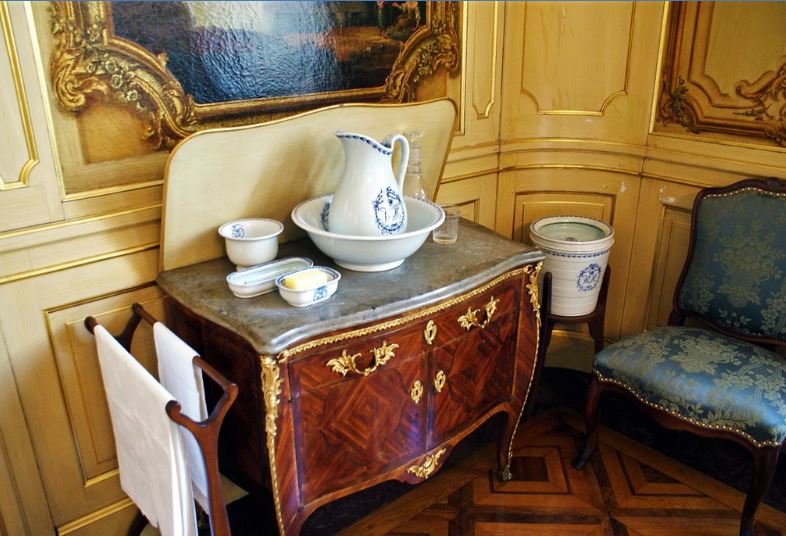
The feeling had never been stronger than on this particular afternoon when, waiting in the library for the lamps to come, she rose from her seat and stood among the shadows of the hearth. Edith Bernard, a one-beautiful young woman was found dead, lying helplessly on the floor. A single bullet lay buried deep in her head. “Spare me, ye gods!” Mrs. Winchester cried. Four servants quickly rushed in the room to comfort Mrs. Winchesters. As two of the servants stood breast to breast, another bullet pierced them both. They uttered a cry together, together cast a parting look around them, and together breathed their last. Adora, another maid, seeing them fall, hastened to the spot to render assistance and fell stricken in the act of loving duty. Only one servant and Mrs. Winchester was left. Another gunshot was heard and it struck Valda, but no shooter was seen. Mrs. Winchester knelt over the lifeless bodies, and kissed, now one, now another of her dead servants. Raising her pallid arms to Heaven, “Spirits,” said she, “feed full your rage with my anguish! Satiate your hard heart, while I follow the grave of my four servants. Yet where is your triumph? Bereaved as I am, I am still richer than you, my conqueror.” Two others servants rushed into the library to assist Mrs. Winchester. One of them held her is her arms. The other was tending to the dead bodies. Scarce had Mrs. Winchester spoken, when the gun shot sounded and struck terror into all hearts. The servant mourning over the biers of their dead coworkers fell struck by a bullet, and died on the corpse she was bewailing. The maid attempting to console Mrs. Winchester, suddenly ceased to speak, and sank lifeless to the Earth. #RandolphHarris 2 of 8
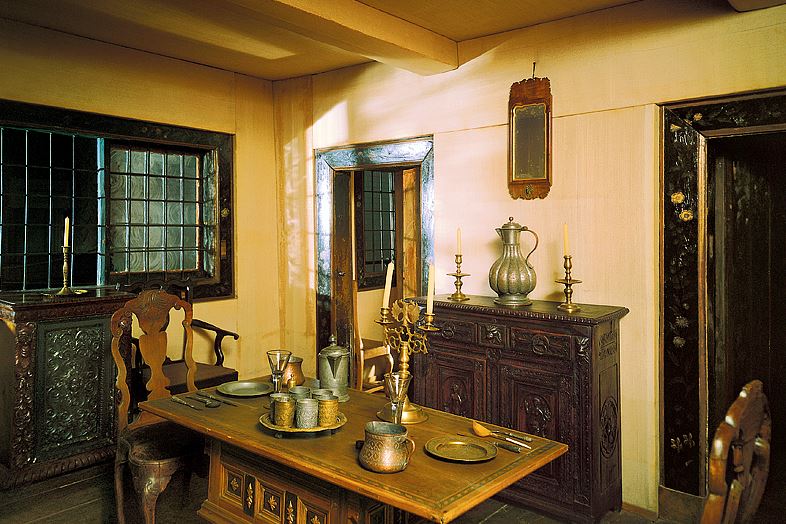
Six were now dead, and only Mrs. Winchester remained. “Spare me!” she begged. There was a torpid grief. The breeze moved not her hair, no color was on her cheek, her eyes glared fixed and immovable, there was no sign of life about her. Her very tongue cleaved to the roof of her mouth, and her veins ceased to convey the tide of life. Her neck bent not, her arms made no gesture, her foot no step. She was changed to stone, within and without. Yet tears continued to flow. When other staff members stumbled upon the tragedy, “Could it be the house?” the Butler asked. The mansion itself was fully of secrets. They seemed to be piling themselves up, as evening fell, like the layers and layers of velvet shadow dropping from the low ceiling, the rows of books, the smoke-blurred sculpture of the hearth. “Why, of course—the house is haunted!” he reflected. The ghosts of those killed by the Winchester rifle. Mrs. Winchester has now become a permanent tenant of her haunted mansion. One of the elusive specters had apparently had the powers to crystallize about it. Immediately following the strange deaths and Mrs. Winchesters crystallization, mystery, scandal and rumor swirled around the tragedy. Mrs. Winchester had been the envy of her friends, now the pity of even her foes. She stood crystalized in her mansion for many months. A new sense of meaning—a sense gradually acquired through daily contact with her in the form created a scene of the lurking mystery. It was the house itself, of course, that posses the ghost-seeking faculty, that communed visually but secretly with its own past; if one could only get close enough communion with the house, one might surprise its secret, and acquire the ghost sight on one’s own. #RandolphHarris 3 of 8
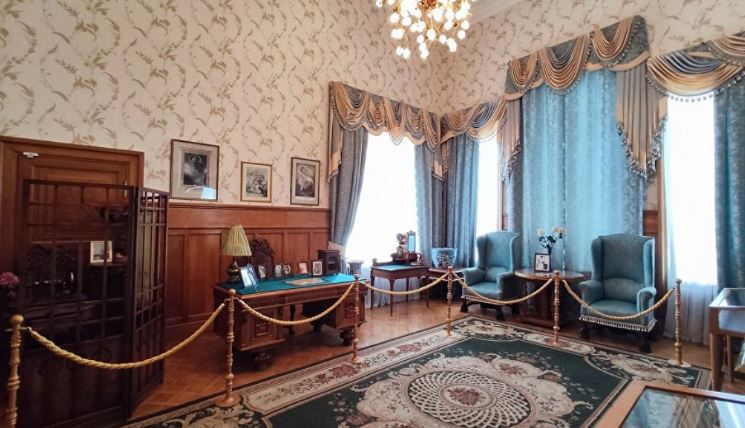
More and more under the spell of the crystallization of Mrs. Winchester, calling out to the remote corners of the house, servants found treasure after treasure, it revealed itself to them. When passing from the first rapturous flurry of exploration to a detailed inspection of the old house, the butler pressed a panel that opened on a flight of corkscrew stairs leading to the nine-story tower. The view was enchanting. His gaze flew to the long tossed horizon line of the downs, and then dropped contentedly back to trace the yew of hedges about the fish pond, and the shadow of cedar and palm trees on the lawn. Distinctly he recalled that he had seen, as he glanced, a shadow of anxiety, of perplexity, rather, fall across his face; and, following his eyes, had beheld the figure of a man—a man in loose black clothes, as it appear to him—who was sauntering down the lime avenue to the court with the doubtful gait of a stranger who seeks his way. “Wait!” he hastily shouted and ran down the stairs. But the man was gone. Suddenly, Mrs. Winchester let out a terrible cry…but could it be her? She had been in statue form for years. The old butler Augusts had some questions as to the connection of evil spirits with systems of idolatry and witchcraft. He was almost willing to swear that his eyes were playing tricks on him; for seeing Mrs. Winchester come back to life went beyond all human discernment. Of course, the young lady was stiff and needed help moving around. The Hall of Fires seemed to warm her blood and make moving easier. We wrestle not against flesh and blood, but against principalities, against spiritual wickedness in high places. #RandolphHarris 4 of 8
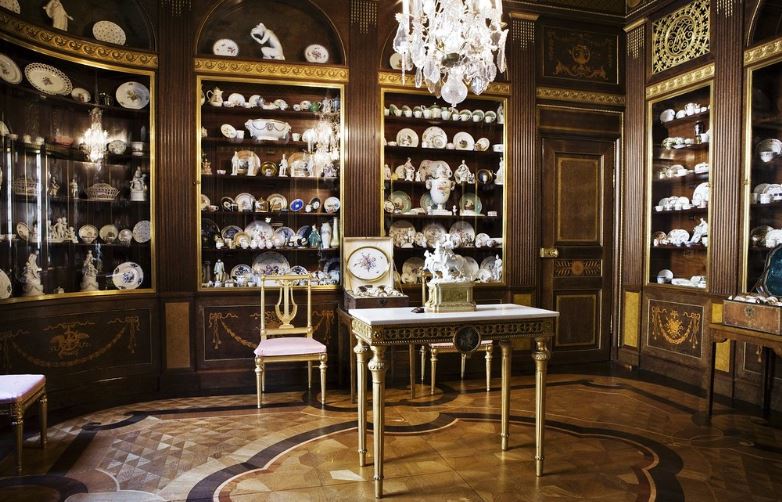
Weary with her thoughts, Mrs. Winchester moved to the window. The Hall of Fires was quite dark now, and she was surprised to see how much faint light the outer World still held. As she peered out into it across the court, a figure shaped itself far down the perspective of bare limes: it looked like a mere blot of dark blackness in the grayness, and for an instant, as it moved toward her; her heart thumped to the thoughts “It’s a ghost!” She had time, in that long instant, to see the man gaining substance and character, showed itself even to her weak sight as her husband William Winchester; she turned to meet him, and he vanished into thin air. Mrs. Winchester’s spirit sunk. At once the air of the hall rand with a long, frightful chain of woeful howls. Above the bestial clamour, Mrs. Winchester could hear a spirit shouting, “I adjure thee, great Marchosias, the agent of the Emperor Lucifer and of his beloved son Lucifuge Rofocale by the power of the pact…” The noise rose higher and a green stream began to come off the brazier. However, there was silence. Again the spirit shouted, “I adjure thee, Marchosias, by the pact and by the names, appear instanter.” The room screamed…but still there was no apparition. Instantly the mansion rocked as though the Earth moved under it. The building shuddered again…then from the middle of the room, a low cloud of yellow fumes went up towards the ceiling, making Mrs. Winchester cough. As it spread and thinned she could see the shape forming under it…it was something like a she-wolf, grey and immense, with green glistening eyes. A wave of coldness was coming from it…the cloud continued to dissipate. The she-wolf glared at them, slowly spreading her griffin’s wings. Her serpent’s tail lashed gently, scalily. The existence and manifestation of demons and devils in the Winchester Mansion has been accepted without question. The thing that dominated the mansion was a group of spirits known as “Legion,” or “The Legion of Lucifer.” #RandolphHarris 5 of 8
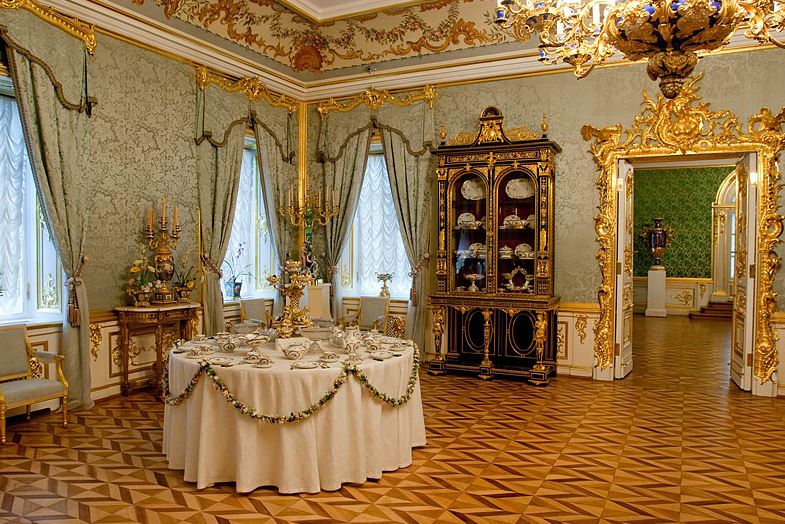
There is magical art abundant in the mansion. This explains how it has become an abnormal plane of power to “charge” magical energy. It is thought that Mrs. Winchester used the powers of Osiris and was able to reconstitute her body to return to life. This is a fundamental of the higher form of necromancy. When the mansion was sold and items auctioned off, the walls were found to be covered with magical symbols and paintings. Also found were solid gold talismans and amulets. The mansion itself was protected by spells and curses. The Winchester Mansion is a receptacle for all the mystical and magical beliefs of the East and the West. The farmers on the Winchester Estate followed the long-established practice of cutting a girdle of bark off the trees, and then setting them on fire or leaving them to die in place while planting crops around the decaying hulks. Immense trees were stripped of their foliage, and half consumed by fire extending their sprawling limbs, many were bleached by weather. By this method the farmers on the estate could clear from 3 to 5 acres a year for cultivation. The relentless demand for wood generated by the construction of the mansion and for other Victorian houses on the estate and barns, fences and fuel, potash and turpentine—added to the demand. Native Americas, in return for furs that they had in abundance, secured goods such as blankets, guns, ironware that they highly valued from Mrs. Winchester’s estate. It was even rumored that Mrs. Winchester owned the Philosopher’s Stone which was believed to turn anything it touched into gold, cure all ills and kept its owner perpetually youthful. It was supposedly given to her as a gift. #RandolphHarris 6 of 8

As the years pass by, many people who practice magic descend more deeply into the darker realm of magic, summoning demons and spirits almost at will. Some magicians become obsessed by their craft, their quest for knowledge and power and it can drag them into the black abyss. A fascinating story about the darker realm of the Winchester Mansion is one about Leonore. Leonore was lodging at the Winchester Mansion, she persuaded Augusta, the butler, to unlock the door to the Blue Séance Room. Leonore went inside and stood reading aloud from a book of spells that lay on the table; suddenly a demon appeared and demanded to know why he had been summoned. Leonore was so shocked that she could not answer and the demon grabbed her by the throat and strangled her. Mrs. Winchester returned to find Leonore lying dead on the floor of her Blue Séance Room, and realizing this could mean trouble, she summoned the demon to return and bring Leonore back to life long enough for her to be removed. This was done, and Leonore walked out of Mrs. Winchester’s Mansion into the marketplace where she immediately collapsed and died. As word of Mrs. Winchester’s success, great wealth, and powers spread, so did the story that she had made a pact with the devil, written as usual in her own blood, in return for magical powers. Once the magical power of the menses has been blessed by the Dark Goddess it has been consecrated as a direct conduit of the powers of destruction, death, and decay. #RandolphHarris 7 of 8

Angra Mainyu, come forth from the realms of eternal darkness. Angra Mainyu, I summon you to come forth and ignite this flesh as the very source of your power and might that it may emanate the ways of your Black Sun. May this body become the very fuel, the embers of this forbidden Blackened Fire that I may consume power to banish the limitation of creation and become the counter creator for the glory of Dragon Zohak! Empower me with this infernal blessing as a warrior of the Path of Smoke and Apostle of your teachings of liberation! Hear Mr:–Ieou: Pur: laot: Iaeo: Ioou: Abrasar: Sabriam: Do: Un: Adonaie: Ede: Edu: Angelos ton Theon: Aniaia Lai: Gaia: Ape: Diathanna Thorun. I am He! The Bornless Spirit! Having sight in the feet: Strong and the Immortal Fire! I am He! The Truth! I am He! Who hate that evil should be Wrought in the World! I am He, that lighteneth and thundereth. I am He, from Whom is the Shower of the life of Earth: I am He, Whose mouth ever flameth: I am He, the Begetter and Manifester unto the Light: I am He; the Grace of the World: “The Heart Gith with a Serpent” is My Name! Come Thou forth, and follow Me: and make all Spirits subject unto Me so that every Spirit of the Firmament, and of the Ether: upon the Earth and under the Earth: on dry Land, or in the Water: of whirling Air or of rushing Fire: and every Spell and Scourge of God, may be obedient unto me! Iao: Sabao: Such are the Words! Magic is the Highest, most Absolute, and most Divine Knowledge of Natural Philosophy, advanced in its works and wonderful operations by a right understanding of the inward and occult virtue of things; so that true Agents being applied proper Patients, strange and admirable effects will thereby be produced. Whence magicians are profound and diligent searchers into Nature; they, because of their skill, know how to anticipate an effort, the which to the vulgar shall seem to be a miracle. #RandolphHarris 8 of 8

Winchester Mystery House

This Friday. Tune in on Friday, December 23rd 6pm pst/9pm est to watch the Destination Fear crew investigate The Winchester Mystery House on Travel Channel! The episode will be available for streaming on Discovery+ same day👻 Can’t wait!
@travelchannel @discoveryplus #DestinationFear #winchestermysteryhouse

With a Hey Nonnie Nonnie and a Hotcha Cha

When it comes to extinction: not only can you do worse, you can go completely out of business. We can illustrate the conditions that favor encouraging variety by considering the stinking case of the Linux computer operating system and the method used to organize the work of its developers. The method is known as open source software development. This form of software development has been thrown into the limelight by the spectacular growth of Linux, which has become, in certain key areas of application, a serious competitor to operating systems developed and sold by major corporations such as Microsoft, Sun, and IBM. This is a very surprising turn of evens since Linux is given away free by its developers. There is a natural presumption that free software cannot be as reliable as for-profit software. Yet it is precisely for situations demanding high reliability that Linux has found its strongest support. The surprise deepens with the observation tht Linux is not only free but also the handiwork of an enormous, Worldwide cadre of unpaid volunteers. By some estimates, Linux is the result of contributions from many thousands of programmers. A computer operating system is one of the most intricate of human creations. This number of cooks would seem more than sufficient to spoil the soup. How could thousands of scattered volunteers make an operating system that is more reliable (and faster running_ than those created by dozens, or hundreds, of highly talented programmers working full-time for renowned corporations? #RandolphHarris 1 of 19

Considering the development of Linux as a Complex Adaptive System casts light on some important components of the explanation. We can begin by pointing out that Linux is not the only example of the open source approach to software development. There are many earlier examples, such as the scripting language Perl and the e-mail server sendmail. The most widely deployed software for serving up requested World Wide Web pages, a system known as Apache, is also the product of volunteers working together in an open source framework. What all the examples have in common is the free availability of the source code, the human readable computer instructions that specify the program. That arrangement provides the generic label for this approach to team software creation: open source software development. The free access to the source code of Linux means that any programmer with sufficient motivation can craft changes to the code, creating a new version of the program. This is not possible in traditional development with proprietary code. From a Complex Adaptive System point of view, the possibility for variety of the population of operating systems. In successful open source cases such as Linux, that variety has been harnessed to yield a very effective result, although many observers expected chaos to result from the rapid injection of many potentially incompatible variants. #RandolphHarris 2 of 19

Our framework points to several structural arrangements that work to make the added exploration beneficial, averting the prospect of death by eternal boiling. In our terms, when a programmer modifies the source code of Linux, this activity is an endogenously triggered recombination. The trigger is usually an observation of some particular kind of poor performance by the existing standard version of the operating system. The affected user may make an electronic request for help from the large Linux community. Interested individuals respond by suggesting fixes. These small pieces of new code are recombined with the rest of the standard version to produce new variant versions. A period testing and discussion of the performance of the variants follows. Eventually the best-performing variant is accepted by the small team of key Linux developers, who incorporate the new code into a subsequent standard version of Linux. When open source development prospers, a central reason seems to be that “given enough eyeballs, all bugs are shallow.” For Linux, there are certainly enough volunteers about triggering problems and proposed alternatives is precise enough that multiple plausible variants are routinely generated as possible solutions to most problems that bother users. In addition, testing of alternatives is reliable enough that the code that was out is generally very good code, with unwanted side effects being rare. Thus the variety made possible by the free availability is marshaled to produce a rapid rate of improvement in overall quality. #RandolphHarris 3 of 19

By inquiring a bit further into how this is accomplished, we can uncover some clues about when an open source approach is likely to work well—and when it is not. A crucial fact is that there are two types of Linux versions: standard and variant. The few central managers of the Linux community, led by the originator of the operating system, Linus Torvalds, retain the right to label versions of the system as official releases. Each new official release creates another “standard Linux,” and millions of digitally perfect copies are made of it. This control over the definition of the next generation of the operating system is strikingly analogous to a biological mechanism seen in the emergence of multicellular organisms: sequestration of the germline. This is a restriction of reproductive activity to a few specialized cells, while the vast majority of cells in the organism no longer participate in creating the next generation. In both cases, limiting “reproduction” to a tiny fraction of all the agents reduces the chaotic inconsistency that would know if all variants had equal opportunity to shape the future. In the Linux case, the centralized control of changes in the standard code makes higher levels of variety in the proposed changes sustainable, so that the “law of sufficient eyeballs” can come advantageously into play. In the biological case, the restriction functions to alter the evolutionary “incentives” of cells making up the organism. Over succeeding generations their strategies will be far more likely to be those that let them prosper as a “team” rather than those that benefit individual cells at the expense of others. Analogous incentives are created for the programmers in the Linux case. #RandolphHarris 4 of 19
Numerous experiments are being undertaken in an effort to imitate the striking success that the open source approach achieved in the Linux case. As usual, we do not claim to be able to predict the success and failure of particular efforts. However, Complex Adaptive Systems principles do suggest a number of key questions to ask when contemplating an open source software project. Several of these come from the preceding section on whether to encourage variety. As we have seen, variety is the engine of rapid quality improvement in an open source initiative. We can see that Linux has at least three, and perhaps all four, of the conditions favoring exploration that we outlined earlier. Problems that are long-term or widespread. In contrast to computer hardware and applications programs (such as Web browsers), operating systems are among the longest living elements of the computational World. Unix—of which Linux is a free version—dates back to 1969. It runs on mainframe and minicomputer architectures that long predate the microcomputers that now cover the Earth. Thus, an improvement to an operating system is likely to bear fruit over a very long period (as time is measured in the strange universe of computing, with its Moore’s law of doubled computer power every eighteen months). Another example of open source development, the Apache Web server, also seems to occupy a functional niche where improvements can be expected to have long service. In addition, the gains form any improvement in a standard version of an operating system can benefit thousands or even millions of users, providing widespread benefits. #RandolphHarris 5 of 19

Problems that provide fast, reliable feedback. Linux exhibits this characteristic as well. In its typical role in server environments, its features are exercised at very high rates, and defects become evident quickly. Moreover, open source distribution means that every contributor of a proposed variant can make a completely functional new version that can be tested locally. This further increases the rate of feedback. And finally, the quality of proposed variants can be assessed with relatively high reliability. Speed of operation and resistance to crashed are highly valued criteria across the entire community of Linus developers. Disagreements do occur over how these should be measured, and other criteria are also important. However, when compared with other software areas, such as user interface design, the appropriate performance metrics are relatively clear. Problems with low risk of catastrophe from exploration. Various parts of software system have high levels of interdependence. When there is a premium on speed, as there is for may operating systems, there is a strong temptation to increase even further the interdependencies among modules. This can create a substantial risk of catastrophe. However, Unix, from which Linux derives, has long been a partial exception to this tendency. In the Unix/Linux culture there is a well-developed philosophy of modular isolation. A key component, called the kernel, is optimized for speed. However, the numerous other components are expected to honor a different set of constraints. There, interdependence among components is governed by strict principles of modularization that severely limit side effects that any activity might have on other activities. #RandolphHarris 6 of 19

Speed is also important outside the kernel but has to be found within the architectural constraints that give primacy to crash resistance, thus lowering the chances of catastrophic consequences from exploration. Problems that have looming disasters. This last factor favoring exploration is not a property of Linux open software development but rather of the motivation of some of the developers. Among those who have made major contributions to Linux are many who feared the extinction of the Unix operating system family, in which they have invested their expertise. They also feared the rising hegemony of operating systems from Microsoft Corporation. Foe them, joining a relatively high-risk, exploration-maximizing software project may have been an attractive alternative to domination by what they often call “The Beast from Redmond.” Take together, our four conditions show Linux to be a development project for which it is highly promising to strongly encourage variety. It does not follow that open availability of source code is a form of magic that will cause all software projects to prosper as Linux has. Indeed, our analysis suggests that in order for the decentralized generation of proposals to be effective for Linux, several other conditions were important. In particular, Linux development benefited from the ability to identify specific problems, make accurate copies of the current system with only deliberately introduced changes, evaluate the effectiveness of proposed solutions, and centrally control the choice of which proposals are implemented as changes in the standard version. It remains to be seen just how widely applicable the decentralized generations of alternative can be. However, open source software development clearly demonstrates that even very large and highly structure systems, like Linux, can benefit from the encouragement of variety. #RandolphHarris 7 of 19

Do you know someone you would like to change and regulate and improve? Good! That is fine. I am all in favor of it. However, why not begin on yourself? From a purely selfish standpoint, that is a lot more profitable than trying to improve others—yes, and a lot less dangerous. If you and I want to stir up a resentment tomorrow that may rankle across the decades and endure until death, just let us indulge in a little stinging criticism—no matter how certain we are that it is justified. When dealing with people, let us remember we are not dealing with creatures of logic. We are dealing with creatures of emotion, creatures bristling with prejudices and motivated by pride and vanity. Bitter criticism caused the sensitive Thomas Hardy, one of the finest novelists ever to enrich English literature, to give up forever the writing of fiction. Criticism drove Thomas Chatterton, the English poet, to suicide. Benjamin Franklin, tactless in his youth, because so diplomatic, so adroit at handling people, that he was made American Ambassador to France. The secret of his success? “I will speak ill of no man,” he said, “…and speak all the good I know of everybody.” Any fool can criticize, condemn and complain—and most fools do. However, it takes character and self-control to be understanding and forgiving. “A great man shows his greatness,” said Carlyle, “by the way he treats little men.” Often parents are tempted to criticize their children. You would expect me to say “do not.” However, I will not. Just do not be in the habit of finding fault, or reprimanding—you children will consider this a reward. #RandolphHarris 8 of 19

Make sure your children know that sometimes you will criticize them, and this does not mean you do not love them, but that a lot was expected of you as a child and so a lot will be expected of them. A child needs to be ensured that there is so much good and fine and true in their character. And that their little heart is as big as the moon. Then give them examples of their good behavior. Instead of condemn people, let us try to understand them. Let us try to figure out why they do what they do. That is a lot more profitable and intriguing than criticism; and it breeds sympathy, tolerance and kindness. To know all is to forgive all. God Himself, does not propose to judge man until the end of his days. Why should you and I? When it comes to punishment, tit-for-tat is not a good form of punishment. It is nice in that it never initiates cheating. It is provocable, that is, it never lets cheating go unpunished. And it is forgiving, because it does not hold a grudge for too long and is willing to restore cooperation. However, tit-for-tat is a flawed strategy. The slightest possibility of mis perceptions results in a complete breakdown in the success of tit-for-tat. The long-standing feuds between the Hatfields and the McCoys or Mark Tawin’s Grangerfords and Shepherdsons offer more examples of how tit-for-tat behavior leads to mutual loss. Feudists on either side are not willing to end the feud until they consider themselves even. However, in a continuing attempt to get even, they end up knocking each other further and further down. Eventually they end up dead even. Rarely is there any hope of going back and solving the dispute at its origin, for once begun, it takes on a life of its own. #RandolphHarris 9 of 19

What tit-for-tat lacks is a way of saying “Enough is enough.” It is dangerous to apply this simple rule in situations in which misperceptions are endemic. Tit-for-tat is too easily provoked. You should be more forgiving when a defection seems to be a mistake rather than the rule. Even if the defection was intentional, after a long-enough cycle of punishments it may still be time to call it quits and try reestablishing cooperation. At the same time, you do not want to be too forgiving and risk exploitation. When the probability of a misperception is small, it will take a lot longer for the trouble to arise. However, then once a mistake happens, it will also take a lot longer to clear it up. The possibility of misperception means that you have to be more forgiving, but not forgetting, than simple tit-for-tat. This is true when there is a presumption that the chance of a misperception is small. It pays to be more forgiving up to a point. Once the probability of mistakes gets too high, the possibility of maintaining cooperation breaks down. The large chance of misunderstanding makes it impossible to send clear messages through your actions. Without an ability to communicate through deeds, any hope for cooperation disappears. A 50 percent chance of a misperception is the worst possible case. If misperceptions were certain to occur, you would interpret every message as its opposite, and there would be no misunderstandings. A stock forecaster whose advice is always dead wrong is as good as a predictor as one who is always right. You just have to know how to decode the forecast. #RandolphHarris 10 of 19

With this in mind, we look for a way out of the dilemma when there is a chance of misperception, but not too big of a chance. The disciplined ordering of personal front is one way, then, in which the individual is obliged to express one’s aliveness to those about him or her. Another means is the readiness with which one attends to new stimuli in the situation and the alacrity with which one responds to them with body movements. I think that the individual so generally maintains a proper motor level in situations that this is one type of propriety that is very difficult indeed to become aware of. Here again mental wards help us. For example, a common symptom displayed by persons diagnosed as schizophrenic consists of very slow body movements as shown, say, during hallway pacing. While thus engaged, the patient may respond to a question from an attendant by turning one’s head slowly in the direction of the voice, and this only by moving one’s whole trunk, as if one’s neck were completely stiff, while keeping one’s face immobile. (This kind of conduct is somewhat similar to the kind that is popularly thought to occur in sleepwalking, and calls forth a similar response; namely, the feeling of someone being in the situation physically but not fully present for purposes of interaction.) Bleuler has given us fine descriptions of extremes of this deadness to the situation, as he has with so many schizophrenic symptoms, pointing to the inward emigration that presumably occurs at these times. #RandolphHarris 11 of 19

Autism is also manifested by many patients externally. (Naturally, this is, as a rule, unintentional.) Not only do they not concern themselves with anything around them, but they situ around with faces constantly averted, looking at a blank wall; or they shut off their sensory portals by drawing a skirt or bed clothes over their heads. Indeed, formerly, when the patients were mostly abandoned to their own devices, they could often be found in bent-over, squatting positions, an indication that they were trying to restrict as much as possible of the sensory surface area of their skin. This lack of presence may be nicely demonstrated in establishments that are not medial but are none the less similar in many ways to mental hospitals: About the prison yard and the shops one sees inmates for whom smiles, small talk, alertness, and attention to the environment comes easily. One also sees about half as many men who seldom smile, who seldom talk, who stumble as they walk in lines, whose errors in their tasks cause small concern, and who respond normally to social stimuli only when a stimulus is strong or different. Status or social approbation is as nothing. It is reverie-plus that controls them. In general, then, if the individual is to be in the situation in full social capacity, one will be required to maintain a certain level of alertness as evidence of one’s availability for potential stimuli, and some orderliness and organization of one’s personal appearance as evidence that one is alive to the gathering one is in. A problem for analysis, of course, is to go on to isolate analytically the various ways in which insufficient presence may be manifested. #RandolphHarris 12 of 19
Not only did the economic ascent of China, India and, less noticeably, Brazil help drive oil prices to record highs, but so did the war in Ukraine and inflations; prices were seven times as high as deflated 2020 prices. That makes alternative to oil more competitive. It also calls into question how long present oil reserves can last. No one can predict when the last barrel of crude will be pumped, but we already find planners in big oil companies preparing strategies for transition to a post-petroleum economy. General Motors hopes to be the first company to sell one million hydrogen-based fuel-cell cars. And if not GM, why not Toyota? Of China’s own up-and-coming auto industry? Unless governments in the Middle East start now to plan for post-oil, knowledge-intensive service economies, the exit of huge amounts of wealth from the region could well spark even more terror as poverty and hopelessness deepen. Even fuel-cell car introduced elsewhere in the World, every nuclear plant, every solar panel, every windmill, every new source and form of non-oil energy will hasten the demise of the existing business—and religious—elites in the Middle East. Such a collapse could erode Saudi financial resources further undermine its influence within World Islam—shifting the balance between Shia, Sunni and other groups. The Saudi regime’s vast petro-riches have been used to promote Wahabism, a particularly stringent brand of Islam, all over the World. The funds could have been used to educate the younger generation of Muslims in economically valuable skills. #RandolphHarris 13 of 19

Instead, they have funded strictly religious schools that produced the Taliban in Afghanistan and jobless, hopeless, angry youth across much of the globe, including terrorists now trying to overthrow the Saudi regime itself. To many outsiders, it appears that Islam is already at war with itself. In that war, the enemy is not an anti-Islamic, imperial United States of America or some other non-Islamic nation—or the West. It is the greed, provincialism and myopia with which the leaders of so many Middle East nations have ruled for so long, and their failure to use oil money to ride the Third Wave to a better future. The space near Earth is being polluted with small orbiting projectiles, some as small as a pin. Most of the debris is floating fragments of discarded rocket stages, but it also includes gloves and cameras dropped by astronauts. This is not a problem for life on Earth, but it is a problem as life begins its historic spread beyond Earth—the first great expansion since the greening of the continents, long ago. Orbiting objects travel much faster than rile bullets, and energy increases as the square of speed. Small fragments of debris in space can do tremendous damage to a spacecraft, and worse—their impact on a spacecraft can blast loos yet more debris. Each fragment is potentially deadly to a spacefaring human crossing its path. Today, the tiny fraction of space that is near Earth is increasingly cluttered. #RandolphHarris 14 of 19

This litter needs to be picked up. With molecular manufacturing, it will be possible to build small spacecraft able to maneuver from orbit to orbit in space, picking up one piece of debris after another. Small spacecraft are needed, since it makes no sense to send a shuttle after a crap of metal the size of a postage stamp. With these devices, we can clean the skies and keep them hospitable to life. We have spoken of waste that just needs molecular changes to make it harmless, and toxic elements tht came from the ground, but nuclear technology has created a third kind of waste. It has converted the slow, mild radioactivity of uranium into the fast, intense radioactivity of nearly created nuclei, the products of fission and neutron bombardment. No molecular change can make them harmless, and these materials did not come from the ground. The products of molecular manufacturing could help with conventional approaches to dealing with nuclear waste, helping to store it in the most stable, reliable forms possible—but there is a more radical solution. Even before the era of the nuclear reactor and the nuclear bomb, experimenters made artificially radioactive elements by accelerating particulars and slamming them into nonradioactive targets. These particles traveled fast enough to penetrate the interior of an atom and reach the nucleus, joining it or breaking it apart. #RandolphHarris 15 of 19

The entire Earth is made of fallout from nuclear reactions in ancient stars. Its radioactivity is low because so much time has passed—many half-lives, for most radioactive nuclei. “Kicking” these stable nuclei changes them, often into a radioactive state. However, kicking a radioactive nucleus has a certain chance of turning it into a stable one, destroying the radioactivity. By kicking, sorting, and kicking again, an atom-smashing machine could take in electrical power and radioactive waste, and output nothing but stable, nonradioactive elements, identical to those common in nature. Do not recommend this to your congressman—it would be far too expensive, today—but it will some day be practical to destroy the radioactivity of the twentieth-century’s leftover nuclear waste. Nanotechnology cannot do this directly, because molecular machines work with molecules, not nuclei. However, indirectly, by making energy and equipment inexpensive, molecular manufacturing can give us the means for a clean, permanent solution to the problem of wastes left over from the nuclear era. In 1985, General Motors, America’s largest car maker bought control of Hughes Aircraft, the company founded by that reclusive, eccentric billionaire Howard Hughes. GM paid $4.7 billion dollars—the single largest amount ever paid for a corporate acquisition until then. A merger mania had begun in the early 1980s, the fourth since 1900, and each year saw more corporate marriages in America, until by 1988 there were 3,487 acquisitions or mergers involving an astronomical $227 billion. Then in 1989, all the old records were smashed again when RJR-Nabisco was taken over for $25 billion. #RandolphHarris 16 of 19

In short, in a single four-year period the maximum size of these mergers increased more than five times. Even allowing for inflation, the growth in a scale was colossal. Of the twenty largest deals in U.S.A. history, all consummated between1985 and 1989, most involved a wedding of American firms. By contrast, hardly a day now goes by without new headlines proclaiming “mixed marriages”—mergers that cross national frontiers. Thus Japan’s Bridgestone acquires Firestone Tire & Ruber. Sara Lee gulps the Dutch company Akzo. England’s Cadbury buys up America’s Grolier. Sony buys Columbia Pictures. The extraordinary increase in World takeover activity…is showing no signs of abatement. Elon Musk just Twitter for $44 billion, an amount that he admitted is “obviously overpaying” for the company. He also lined up a substantial amount of debt financing to pay for the deal. Indeed, the scramble to reorganize several key industries is likely to accelerate…driven by factors that go way beyond the asset-stripping moves that first sparked the U.S. merger boom. As this suggest, while many mergers were originally based on get-rich-quick exploitation of financial or tax quirks, others were strategic. Thus, as Europe raced toward total economic integration, many of its biggest companies merged, hoping to take advantage of these pan-European market and to stave off the advance of Japanese and America giants. American and Japanese grooms looked for European brides. #RandolphHarris 17 of 19

Some companies were thinking on an even bigger scale, preparing themselves to operate all across the so-called “triad market”—Europe, the United States of America, and Japan. And beyond that, a few firms dreamed of truly conquering the “global market.” All this frenetic activity led to deep concern over the concentration of economic power in a few hands. Politicians and labor unions attacked the so-called “deal mania.” Financial writers compared it to the feeding frenzy of sharks. Looking only at the question of financial size, one might be led to believe that power in the economy of the future will eventually be controlled by a tiny handful of enormous, hierarchical monoliths, not unlike those depicted in the movies. Yet that scenario is far too simple. First, it is a mistake to assume all these mega-firms will stay pasted together. Previous merger manias have been followed, a few years later, by waves of divestiture. A new round of divorces looms ahead. Sometime the anticipated market evaporates. Other times the cultures of the merged firms clashed. Often the basic strategy was wrong in the first place. Indeed, as we saw earlier, many recent buy-outs have actually been designed with divestiture in mind, so that after a gigantic merger various units are spun off from a central core, shrinking, rather than enlarging, the scale of the resultant firm. Second, we are witnessing a growing disjuncture between the World of finance and the “real” economy in which things and services produced and distributed. #RandolphHarris 18 of 19

As two heart-stopping stock markets crashed in the late 1980s proved, it is sometimes possible for the financial markets to collapse, at least temporarily, without significantly disrupting the actual operations of the larger economy. For capital itself is growing less, not more, important in economic wealth production. Third, bulk does not necessarily add up to power. Many giants firms possess enormous power resources but cannot deploy them effectively. As the United States of American has learn from the War Department, sheer size is no guarantee of victory. More important, however, to know how power in any industry or economy is going to be distributed, we need to look at relationships, not just structures. And when we do, we discover a surprising paradox. At the same time that some firms are swelling (or bloating) in size, we also see a powerful conuntermovement that is breaking big business into smaller and smaller units and simultaneously encouraging the spread of small business. Concentration of power is thus only half the story. Instead of a single pattern, we are witnessing two diametrically opposed tendencies coming together in a new synthesis. Rising out of the explosive new role of knowledge in the economy, a novel structure of power is emerging: the powermosaic. The economy is become like pieces of colorful ceramics that come together to make a coherent whole. The idea of a mosaic makes it possible to look at the economy in many different ways, allowing new pictures to emerge. Jobs will not longer be scarce. The economy is becoming a dynamic system in which individuals and organizations have the power to create supply and demand, to launch new projects, and to create opportunities to work. This is the concept of the mosaic economy. #RandolphHarris 19 of 19

Cresleigh Homes
‘Tis the season for enjoying family and friends – and when you’re living in the perfect #CresleighHome, there’s space for everyone. In Model 4, the open floorplan flows seamlessly with the great room opening up to the large covered outdoor living space.

You’ll get a two-story, 3,377 square foot home featuring four bedrooms – including one suite on the first floor, three and one half bathroom, and a true three-car garage. It’s the largest home in the #Havenwood development, and we think it’s perfect for you!

Need more info? Head to cresleigh.com/havenwood to take a virtual tour!


The First Day in Kindergarten, You Cried Because You Broke the Yellow Crayon

The only way out of today’s misery is for people to become worthy of each other’s trust. In American society, it appears that the individual is expected to exert a kind of discipline or tension in regard to one’s body, showing that one has one’s faculties in readiness for any face-to-face interaction that might come one’s way in the situation. Often this kind of controlled alertness in the situation will mean suppressing or concealing many of the capacities and roles the individual might be expected to display in other settings. Whatever one’s other concerns, then, whatever one’s merely situated interests, the individual is obliged to “come into play” upon entering the situation and to stay “in play” while in the situation, sustaining this diffused orientation at least until one can officially take oneself beyond range of the situation. In short, a kind of “interaction tonus” must be maintained. In considering the conduct through which this aliveness to the situation is demonstrated it is difficult to avoid the conclusion that an attachment to, and respectful regard for, the situation’s participants and the encompassing social occasion is being avowed. And in considering the marked infraction of these rules in mental hospital wards, it is difficult to escape the conclusion that failure to exhibit “presence” is a normal, understandable expression of alienation from, and hostility to, the gathering itself and the officials in it. One of the most evident means by which the individual shows oneself to be situationally present is through the disciplined management of personal appearance or “personal front,” that is the complex of clothing, make-up, hairdo, and other surface decorations one carries about on one’s person. #RandolphHarris 1 of 20

In public places in Western society, the male of certain classes is expected to present himself in the situation neatly attired, shaven, his hair combed, hands and face clean; female adults have similar and further obligations. It should be noted that with these matter of personal appearance the obligation is not merely to possess the equipment but also to exert the kind of sustained control that will keep it properly arranged. (And yet, in spite of these rulings, we may expect to find, in such places as New York subway during the evening rush hour, that some persons, between scenes, as it were, may let expression fall from their faces in a kind of temporary uncaring and righteous exhaustion, even while being clothed and made up to fit a much more disciplined stance.) A failure to present oneself to a gathering in situational harness is likely to be take as a sign of some kind of disregard for the setting and its participants; gross cultural distance from the social World of those present may also be expressed. These expensive implications of well or badly ordered personal appearance are often discussed in etiquette books, sometimes quite aptly: But even in a casual encounter, and upon occasions when your habit can have no connexion with the feelings and sentiments which you have towards those whom you meet, neat and careful dressing will bring great advantage to you. A negligent guise shows a man to be satisfied with his own resources, engrossed with his own notions and schemes, indifferent to the opinion of others, and not looking abroad for entertainment: to such a man no one feels encouraged to make any advances. #RandolphHarris 2 of 20

A finished dress indicates a man of the World, one who looks for and habitually finds, pleasure in society and conversation, and who is at all times ready to mingle to intercourse with those whom he meets with; it is a kind of general offer of acquaintance, and provides a willingness to be spoken to. An interesting expression of the kind of interaction tonus that lies behind the proper management of personal appearance is found in the constant care exerted by men in our society to see that their trousers are buttoned and that their jewels are not apparent. Before entering a social situation, they often run through a quick visual inspection of the relevant parts of their personal front, and once in the situation they may take the extra precaution of employing a protective cover, by either crossing the legs or covering the crotch with a newspaper or a book, especially if self-control is to be relaxed through comfortable sitting. A parallel to this concern is found in the care that women take to see that their legs are not apart, exposing their upper thighs and underclothing. The universality in our society of this kind of limb discipline can be deeply appreciated on a chronic female ward where, for whatever reason, women indulge in zestful expressions that may not be considered “ladylike,” causing the student to become conscious of the vast amount of limb discipline that is ordinarily taken for granted. A similar reminder of one’s expectations concerning limb discipline can be obtained from the limb movements required of mature women in getting out of the front seat of a car. #RandolphHarris 3 of 20

Just as some people would seem ever to be concerned about the direction and height of one’s seat, so the individual in our society, while “in situation,” is constantly oriented to keeping “physical” signs of capacities involving pleasures of the flesh concealed. And it is suggested here that these parts of the body when exposed are not a symbol of pleasures of the flesh merely, but of a laxity of control over the self—evidence of an insufficient harnessing of the self for the gathering. As has been suggested, the importance of a disciplined management of personal front is demonstrated in many ways by the mentally sick. A typical sign of an oncoming psychosis is the individual’s “neglect” of his appearance and personal hygiene. The classic home for these improprieties is “regressed” wards in mental hospitals, where those with a tendency in this direction are collected, at the very same time that conditions remarkably facilitate this sort of disorientation. (Here, dropping of personal front will be tolerated, and sometimes even subtly approved, because it can reduce problems of ward management.) Similarly, when a mental patient starts “taking an interest in his appearance,” and makes an effort at personal grooming, he is often credited with having somehow given up his fight against society and having begun his way back to “reality.” One of the most delicate components of personal appearance seems to be the composition of the face. A very evident means by which the individual shows oneself to be situationally present is by appropriately controlling through facial muscles the shape and expression of the various part of this instrument. #RandolphHarris 4 of 20

Although this control may not be conscious to any extent, it is none the less exerted. We have party faces, funeral faces, and various kinds of institutional faces, as the following comments on life in prison suggests: Every new inmate learns to dog-face, that is to assume an apathetic characterless facial expression and posture when viewed by authority. The dog-face is acquired easily when everyone freezes or relaxes into immobility. The face is that typical of streets, of social occasions, of all concealment. Relaxation comes when inmates are alone: there is an exaggeration of the smiling effervescence of the “friendly” party. The face that is protective by day is aggressively hardened and hate-filled by night, against the stationed or pacing guard. Tensity and dislike follow assumption of the face, guards react with scrupulous relaxedness, holding the face “soft” with an effort often accompanied by slight trembling hands. An interesting fact about proper composition of the face is that the ease of maintaining it in our society would seem to decline with age, so that, especially in the social class groupings whose women long retain an accent on beauty and attractiveness, there comes to be an increasingly long period of time after awakening that is required to get the face into shape, during which the individual in one’s own eyes is not “presentable.” A point in age is also reached when, given these youthful standards of what a face in play should look like, there will be viewing angles from which an otherwise properly composed face looks to have insufficient tonus. Let man begin to think about the mystery of his life and the links which connect him with life that fills the World, and he cannot but bring to bear upon his own life and all other life that comes within hi reach the principle of reverence for life. #RandolphHarris 5 of 20

On the morning of April 15, 1865, Abraham Lincoln lay dying in a hall bedroom of a cheap lodging house directly across the street from Ford’s Theater, where John Wilks Booth had shot him. Lincoln’s long body lay stretched diagonally across a sagging bed that was too short for him. A cheap reproduction of Rosa Bonheur’s famous painting The Horse Fair hung above the bed, and a dismal gas jet flicked yellow light. As Lincoln lay dying, Secretary of War Stanton said, “There lies the most perfect ruler of men that the World has ever seen.” What was the secret of Lincoln’s success in dealing with people? I studied the life of Abraham Lincoln for ten years and devoted all of three years to writing and rewriting a book entitled Lincoln the Unknown. I believe I have made as detailed and exhaustive a study of Lincoln’s personality and home life as it is possible for any being to make. I made a special study of Lincoln’s method of dealing with people. Did he indulge in criticism? Oh, yes. As a young man in the Pigeon Creek Valley of Indiana, he not only criticized but he wrote letters and poems ridiculing people and dropped these letters on the country roads where they were sure to be found. One of these letters aroused resentment that burned for a lifetime. Even after Lincoln had become a practicing lawyer in Springfield, Illinois, he attacked his opponents openly in letters published in the newspapers. However, he did this just too often. In the autumn of 1842 he ridiculed a vain, pugnacious politician by the name of James Shields. Lincoln lampooned him through an anonymous letter published in the Springfield Journal. The town roared with laughter. #RandolphHarris 6 of 20

Shields, sensitive and proud, boiled with indignation. He found out who wrote the letter, leaped on his horse, started after Lincoln, and challenged him to fight a duel. Lincoln did not want to fight. He was opposed to dueling, but he could not get out of it and save his honor. He was given the choice of weapons. Since he had very long arms, he chose cavalry broadswords and took lessons to sword fighting from a West Point graduate; and, on the appointed day, he and Shields met on a sandbar in the Mississippi River, prepared to fight to the death; but at the last minute, their seconds interrupted and stopped the duel. That was the most lurid personal incident in Lincoln’s life. It taught him an invaluable lesson in the art of dealing with people. Never again did he write an insulting letter. Never again did he ridicule anyone. And from that time on, he almost never criticized anybody for anything. If you decide to work and accept all that comes in the work, you must learn to think quickly. If you are offered a task you must answer at once that you accept the opportunity to improve the quality of your life and mental health. If you hesitate or take time to answer, the offer of the task will be withdrawn and it will not be repeated. You may be given time before actually doing what you were told to do, but you must accept the task at once. An attempt to talk things over, an ironical, suspicious, or negative attitude, fear, or lack of confidence, these will make the task impossible at once. If you feel hesitation about the task offered to you, think about your mechanicalness, think about your negativeness, about your self-will—but think quickly. #RandolphHarris 7 of 20

You can do nothing against your weak sides by yourself. The tasks offered to you have the aim to help you. If you hesitate or refuse them, you refuse help. This must be quite clear in your mind. The realization of your helplessness and your deep sleep must be permanent in you. You can strengthen it by constantly reminding yourself of your nothingness, of your meanness, of your weakness of all possible sorts. You have absolutely nothing to be proud of. You have nothing to base your judgement on. You can see, if you are sincere with yourself, all the blunders and all the mistakes which you made when you tried to act by yourself. You cannot think rightly. You cannot feel rightly. You need constant help. And you can have it. However, you must pay for it—at least, by not arguing. You have to do gigantic work if you want to become different. How can you ever hope to get anything if you hesitate and argue on the first steps, or do not even realize the necessity for help, or become suspicious and negative? If you want to work seriously you have to conquer many things in yourself. You cannot carry with yourself prejudices, your fixed opinions, your personal identifications or animosities. However, at the same time try to understand that personal is not always wrong. “Personal” can even help in the work, but personal can be very dangerous too, if it is not cleared by the struggle with identification and by the realization of your mechanicalness and your weakness. #RandolphHarris 8 of 20
Try to understand the necessity for “deliberate suffering” and “conscious effort.” These are the only two things that can change you and bring you to your aim. “Deliberate suffering” does not mean necessary suffering inflicted on you by yourself. It means attitude towards suffering. Suffering may come as a result of your feelings, thoughts, and actions connected with your tasks; it may come by itself as a result of your own faults or as a result of other people’s actions, attitudes, or feelings. However, what is important is your attitude towards it. It becomes deliberate if you do not rebel against it, if you do not try to avoid it, if you do not accuse anybody, if you accept it as a necessary part of your work at the moment and as a means for attaining your aim. “Conscious effort” is the effort based on understanding; understanding of its necessity first of all, and understanding of the causes which make it necessary. The chief cause for conscious effort is your need for breaking the walls of mechanicalness, of self-will and lack of self-remembering, which constitute your being at present. In order to understand better the necessity for accepting tasks given to you without hesitation, the necessity for “deliberate suffering” and “conscious effort,” think about ideas which brought you to the work, think about the first realization of your mechanicalness and the first realization that you know nothing. In the beginning you realized this and you came for help, but now you doubt whether you must really do as you are told. And you try to find ways to evade it, to stand on your own judgement and on your own understanding. #RandolphHarris 9 of 20

You understood clearly once, that your judgment and your understanding are false and weak, but now try to keep them again. You do not want to give them up. Well, you can keep them, but you must understand that with them you will keep all that is false and weak in yourself. There are no half measures. You must decide: do you want to work or not? In some situations, you may be able to judge that the risk of an extremely bad result from exploration is low. That should increase the amount you are willing to do. In training sessions, gymnastic competitors can exploit current capabilities by practicing elements they already know. These can always be done a little better, and repetition is needed to avoid mistakes during competition. However, gymnasts also need to attempt new, and more difficult, moves—ones they have never done before, occasionally even ones tht no one has done before. This is exploratory activity. The new elements may never be mastered, and in the meantime old ones have not been practiced. There is also increased risk of injuries that could end a season or a career. Practice spaces are equipped with facilities to reduce injuries, such as extra padding for apparatus and ceiling-suspended safety harnesses. These limit the risks of serious injury, though they do not eliminate them. The practice safety devices are installed exactly so that the costs of exploration will be lower. Inventing such devices greatly accelerates the evolution of otherwise dangerous activities, be they sports or flight maneuvers, by transforming the situation into one with lower risks of catastrophe. #RandolphHarris 10 of 20

Another class of devices for lowering the risk of catastrophe turns on having multiple replications, with the fate of the whole system not resting on any one. Thus a federal system can prosper when many states act as partially independent “policy laboratories.” A drug company can use cell cultures to test a vast array of chemicals, most of which will be ineffective, in searching for a few that might be useful. If continuing to exploit the best solution found to date is apparently going to lead to disaster, then of course one is wise to explore. Everyone is familiar with the notion of a desperate gamble on a novel approach, such as a daring attempt to escape from death row. Our argument for exploring when catastrophe seems imminent may seem almost a contradiction of our previous arguments for exploring when there are long time horizons or low risk. However, in this situation the relative attractiveness of exploring comes from the negative yield of exploiting. The results of exploring and exploiting are measured on scales that have real zero points. The United States of America, termed “infidel” by Muslim extremists and “overreligious” by Europeans, faces a World that, instead of moving toward secularism as it did during the industrial age, seems to be reversing direction. David B. Barrett and Todd Johnson, co-editors of the World Christian Encyclopedia, forecast that today’s 2 billion Christians will become 3 billion by 2025—an overall increase of roughly 33 percent. However, Islam is growing much faster. From 553 million in 1970, it shot up to 1.2 billion in 201 and is headed to a grand total of 2 billion by 2025—a rise of 50 percent in a quarter century. #RandolphHarris 11 of 20

While religious statistics are no better then economic data, their general direction is clear. The numbers, moreover, are far more dramatic when we look at where all these additional Christians and Muslims are—and where they are soon likely to be. In both we are seeing an important geographical—that is, spatial—shift. Since the mid-1950s, the critical centers of the Christian World have moved decisively to Africa and to Latin America and Asia, of which has many more Christian today than North America. We have already commented on the rapid growth of Christianity in China. The growth and spatial relocation of religion on the planet is a giant historical event—and it will, at least in part, shape and be shaped by the coming transfers of wealth around the World. In Europe the number of Muslims has tripled in the past forty years, largely because of immigration, and the growth of Islam there is expected to outpace the growth of Christianity. In fact, though little recognized, today fully a third of all the World’s Muslims live as ethno-cultural marginalized groups in non-Muslim countries, increasingly distanced from Islam’s geographical center. They include a floating, on-the-move population of middle-class Muslim intellectuals, businesspeople, engineers, and professors who may work and live in a sequence of different countries as they pursue the job market. The World of Islam will be increasingly influenced in terms of ideas, politics, lifestyle, culture, identity—and, one might add, attitudes towards capitalism, markets and business—by what are called “de-territorialized” millions, largely based in Europe. While this is happening in the West, the Muslim population is growing most quickly in the East—in an awakening Asia, where, especially in Malaysia and Indonesia, a more moderate form of Islam has prevailed than that found in Iran and the Arab countries. #RandolphHarris 12 of 20

Together, these eastward and westward shifts could pull the balance of religious and cultural influence within Islam away from the Middle East. That dominance, while rooted in Mecca and the annual hajj that brings millions of Muslims from everywhere to Muhammad’s birthplace, has in fact long been bolted into place by money. For centuries, the power of Muslims in the World economy resulted from the Middle East’s strategic, high-value-added location as the main transit point for trade between Asia and Europe. It lost that financial advantage when, using advanced navigation and maritime knowledge, European and other traders began avoiding the Middle East and sailing around the southern Africa. Today the Middle East once more faces the loss of its most crucial source of wealth—and the financial, cultural and religious influences that comes with it. That source is, of course, oil. That is why it is important for Americans to preserve their farmland for much of our oil in the future can be grown on land. It is contained in the corn and soybean plants in the fields. As the 2020 pandemic hit and gas prices spiked a few years later, many felt with life without oil was like because they could not pay $7.00 a gallon to pay for fuel. The obvious substitutes for petroleum are plant oils and fats because they have the same base chemical structure as petroleum. Fossil fuels were plants once, millions of years ago, and so it makes sense that both the fossil fuels we use today and oils produced by plants are chemically similar. Both are made up of chains of chemicals known as hydrocarbons. A hydrocarbon is a carbon atom surrounded by hydrogen atoms. Methane, the simplest hydrocarbon, is a single carbon atom surrounded by four hydrogen atoms. #RandolphHarris 13 of 20

Gasoline varies from seven to 10 hydrocarbons long. In fact, the word “octane” means eight carbons in a chain. The shorter the chain of carbons, the more explosive the fuel is, and the more power it offers an engine. The problem is tht plant oils are 14 to 18 carbons in length. Diesel fuel is 15 carbons long, which is close to the same size as plant oils. That is why the first applications are biodiesel fuels. You could not burn vegetable oils in today’s gasoline engines because of their hydrocarbon chains are too long. Not surprisingly, shorter-chain vegetable oils do exist. Coconut oil, tropical oils and similar plant oils might make a reasonable gasoline-like fuel. It might also be possible to transgenetically modify crops to produce plant with those lengths of fatty acids. Scientists could genetically modify corn and soybeans—which are already two of the highest oil-yielding plants—to produce plant oils that could be converted into a type of gasoline. The combination of combining vegetable oil and ethanol could produce a fuel which would seem to fit nicely into today’s engine structures. As we change from a black gold economy to a green gold economy, we will need engineers who know how to make products out of plant materials that is why we work with these students to make these types of products. Molecular manufacturing can also make products that will perform some useful temporary function when tossed out into the environment. Getting rid of ozone-destroying pollutants high in the stratosphere is one example. There may be simpler approaches, without the sophistication of nanotechnology, but here is one that would work to cleanse the stratosphere of chlorine: Make huge numbers of balloons, each the size of a grain of pollen and light enough to float up in the ozone layer. In each, place a small solar-power plant, molecular-processing plant, and a microscope grain of sodium. #RandolphHarris 14 of 20

The processing plant collects chlorine-containing compounds and separates out the chlorine. Combining this with the sodium makes sodium chloride—ordinary salt. When the sodium is gone, the balloon collapses and falls. Eventually, a grain of salt and a biodegradable speck fall to Earth, usually at sea. The stratosphere is soon clean. A larger problem (with a ground-based solution) is climatic change caused by rising carbon dioxide (CO2) levels. Global warming, expected by most climatologist and probably under way today, is caused by changes in the composition of Earth’s atmosphere. The sun shines on the Earth, warming it. The Earth radiates heat back into space, cooling. The rate at which it cools depends on how transparent the atmosphere is to the radiation of het. The tendency of the atmosphere to hold heat, to block thermal radiation from escaping into space, causes what is called the “greenhouse effect.” Several gases contribute to this, but CO2 presents the most massive problem. Fossil fuels and deforestation both contribute. Before the new technology bases arrives, something like 300 billion tons of excess CO2 will likely have been added to the atmosphere. Small greenhouses can help reverse the global greenhouse effect. By permitting more efficient agriculture, molecular manufacturing can be free land for reforestation, helping to repair the devastation wrought by hungry people. Growing forests absorbs CO2. If reforestation is not fast enough, inexpensive solar energy can be applied to remove CO2 directly, producing oxygen and glossy graphite pebbles. Painting the World’s roads with solar cells would yield about four trillion watts of power, enough to remove CO2 at a rate of 10 billion tones per year. #RandolphHarris 15 of 20
Temporarily planting one-tenth of U.S.A. farm acreage with a solar-cell “crop” would provide enough energy to remove 300 billion tons in five years; winds would distribute the benefits Worldwide. The twentieth-century insult to Earth’s atmosphere can be reversed by less than a decade of twenty-first century repair work. Ecosystems damaged in the meantime are another matter. Along with healing our ecosystems, we also have new demands for access in the economy. A new work regimen will, in time, sweep across the main sectors of the economy. And as the work force is continually ceded more autonomy, it will demand increased access to information. During the smokestack era, arguments for the humane treatment of employees were crushed by the realities of brute technology that paid off even when workers were kept unenlightened (and powerless). Today, workers are demanding more and more access to information because they cannot do their jobs effectively without it. We are thus seeing a redistribution of knowledge (and power) made necessary by new market conditions and by the new technologies themselves. As computer programs mimic the skills that have long set managers apart, workers in lower-level jobs can do tasks once reserved for executives. You suddenly have information in the hands of the people who run the machines; it is no longer reserved for people two or three rungs up the hierarchy. The first-level supervisors do not appreciate the power of this information until it gets into workers’ hands. Then their resistance is enormous. #RandolphHarris 16 of 20

Clearly not all workers fit well into jobs that demand initiative, full participation, and a sharing of responsibility. Nor can all managers cope with the new-style work. However, as work units grow smaller and educational levels higher, the pressure from below mounts. The result is a fundamental shift in power relationships. This is not the first time since the dawn of the industrial age that managers have been confronted with changing models of human relationships in the workplace. For many years the old Taylorite notions that turned the worker into an appendage of the machine were challenged by a school of “good-guy” theorists who argued that more humane treatment of employees would prove more efficient in the end. The new regimen, increasingly espoused by management itself, is, however, more radical. This idea goes far beyond the assumptions of the human-relations model, where employees were made to feel important. Now they are acknowledged truly to be important. It is true that the overriding power—greater than that of any individual—is that of the labour market. A shortage or surplus of some skills determines the outer parameters of the new autonomy. Many programmers or space engineers have learned that they, exactly like punch-press operators and assembly-line hands, can be pink-slipped without ceremony, while their bosses vote themselves “golden parachutes.” Those cast out of work suffer a devasting decline in personal and collective power—which is a subject for a totally different report. #RandolphHarris 17 of 20

What is relevant here, however, is how things are changing for those inside the work force. And within that framework, a change of historical proportion is taking place. In the smokestack era no individual employee had significant power in any contest with the firm. Only a collectivity of workers, massed and threatening to withhold their muscles, could force a recalcitrant management to improve the pay or status of the employee. Only group action could slow or stop production, for any individual was easily interchangeable and, hence, replaceable. This was the basis for the formation of labour unions. If unions, with their traditional emphasis on “solidarity” and “unity,” are losing membership and power in virtually all of advanced technological nations, it is precisely because workers are no longer as interchangeable as they once were. In the World of tomorrow it will not take masses of workers to bring a company’s production to a standstill, or to damage it in other ways. A “computer virus” slipped into a program, a subtle distortion of the information in a data base, the leakage of information to a competitor—these are only the most obvious of a whole range of new methods of sabotage available to the angry, the irresponsible, or the justifiably outraged individual. The “information strike” of the future could turn out to be a one-person protest. And no laws, clever programs, and security arrangements can totally protect against this. The best defense is likely to be social pressure from one’s peers. Or the simple feeling that one is treated with dignity and justice. #RandolphHarris 18 of 20

However, far more important is the shift toward non-interchangeability. As work grows more differentiated, the bargaining position of individuals with crucial skills is enhanced. Individuals, not only organized groups, can exert clout. Marxist revolutionists argued that power flows to those who own the “means of production.” Contrasting the factory worker with the preindustrial craftsman who owned his own tools, Marx contended that workers would be powerless until they seized the “means of production” from the capitalist class that owned them. Today we are living through the next power shifts in the workplace. It is one of the grand ironies of history that a new kind of autonomous employee is emerging who, in fact, does own the means of production. The new means of production, however, are not ready to be found in the artisan’s toolbox, or in the massive machinery of the smokestack age. They are, instead, crackling inside the employee’s cranium—where society will find the single most important source of future wealth and power. When thinking of wealth and power, we have to figure out ways to deter cheating. When several alternative punishments could deter cheating and sustain cooperation, how should one choose them? Several criteria have a role. Perhaps most important are simplicity and clarity, so that a player thinking of cheating can easily and accurately calculate its consequences. A criterion that infers someone has cheated if your discounted mean of profits from the last seventeen months is 10 percent less than the average real rate of return to industrial capital over the same period, for example, is too complicated for most firms to figure out, and therefore not a good deterrent. #RandolphHarris 19 of 20

Next comes certainty. Players should have confidence that defection will be punished and cooperation rewarded. This is a major problem for the European countries looking to enforce the General Agreement of Tariffs and Trade (GATT). When one country complains that another has cheated on the trade agreement, GATT initiates an administrative process that drags on for months or years. The facts of the case have little bearing on the judgment, which usually depends more on dictates of international politic and diplomacy. Such enforcement procedures are unlikely to be effective. Most people’s instinctive feeling is that the punishment should fit the crime. However, that may not be big enough to deter cheating. The surest way to deter cheating is to make the punishment as big as possible. Since the punishment threat succeeds in sustaining cooperation, it should not matter how dire it is. The fear keeps everyone from defecting, hence the breakdown never actually occurs and its cost is irrelevant. The problem with this approach is that it ignores the risk of mistakes. The detection process may go wrong, indicating cheating by a member of the cartel when the real cause of low prices is an innocent one such as low demand. If punishments are as big as possible then mistakes will be very costly. To reduce the costs of mistakes, the punishment should be the smallest size that suffices to deter cheating. Minimal deterrence accomplishes its purpose without imposing any extra costs when the inevitable mistakes occur. #RandolphHarris 20 of 20

MAGNOLIA STATION AT CRESLEIGH RANCH
Rancho Cordova, CA |
Coming Soon!

Sprawling to nearly 4,000 square feet and set atop large homesites, Magnolia Station at Cresleigh Ranch is a perfect balance of both space and splendor. These large lots come with a mix of Single Story and Two Story Homes, ranging from 2,200 to 3,7000 square feet, with 3-7 bedrooms, 2-5.5 bathrooms, and up to a 4-car garage.

In the meanwhile, check out some of the other homes avaliable. https://cresleigh.com/havenwood/

See the Flowers that Blossom at Your Feet
I cannot but have reverence for all that is called life. In the hope of reaching the Moon, men fail to see the flowers that blossom at their feet. Now we must return to the study of centers and to the study of attention and self-remembering, because these are the only ways to understanding. Besides the division into two parts, positive and negative, which, as we saw, is not the same in different centers, each of these four centers is divided into three parts. These three parts correspond to the definition of centers themselves. The first part is “mechanical,” including moving and instinctive principles, or one of them predominating; the second is “emotional,” and the third is “intellectual.” The division of a center into three parts is very simple. A mechanical part works almost automatically; it does not require any attention. However, because of this it cannot adapt itself to a change of circumstances, it cannot “think,” and it continues to work in the way it started when circumstances have completely changed. In the intellectual center, the mechanical part includes in itself all the work of registration of impressions, memories, and associations. This is all that it should do normally, that is, when other parts do their work. It should never reply to questions addressed to the whole center, it should never try to solve its problems, and it should never decide anything. Unfortunately, in actual fact, it is always ready to decide and it always replies to questions of all sorts in a very narrow and limited way, in ready-made phrases, in slang expressions, in party slogans. All these, and many other elements of our usual reactions, are the work of the mechanical part of the intellectual center. #RandolphHarris 1 of 22

This part has its own name. It is called a “formatory apparatus” or sometimes “formatory center.” Many people, particularly people no. 1—that is, the great majority of mankind—live all their lives with the formatory apparatus only, never touching other parts of their intellectual center. For all the immediate needs of life, for receiving A influences and responding to them, and for distorting or rejecting influences C, the formatory apparatus is quite sufficient. It is always possible to recognize “formatory thinking.” For instance, the formatory center can count only up to two. It always divides everything in two: “bolshevism and fascism,” “workers and bourgeois,” “proletarians and capitalists,” and so on. We owe most modern catchwords to formatory thinking, and not only catchwords but all modern popular theories. Perhaps it is possible to say that at all times all popular theories are formatory. The emotional part of the intellectual center consists chiefly of what is called an intellectual emotion, that is, desire to know, desire to understand, satisfaction of knowing, dissatisfaction of not knowing, pleasure of discovery, and so on, although again all these can manifest themselves on very different levels. The work of the emotional part requires full attention, but in this part of the center attention does not require any effort. It is attracted and held by the subject itself, very often through identification, which usually is called “interest,” or “enthusiasm,” or “passion,” or “devotion.” The intellectual part of the intellectual center includes in itself a capacity for creation, construction, invention, and discovery. It cannot work without attention, but the attention in this part of the center must be controlled and kept there by will and effort. #RandolphHarris 2 of 22

This is the chief criterion in studying parts of centers. If we take them from the point of view of attention we shall know at once in which part of centers we are. Without attention or with attention wandering, we are in the mechanical part; with the attention attracted by the subject of observation or reflection and kept there, we are in the emotional part; with the attention controlled and held on the subject by will, we are in the intellectual part. At the same time, the same method shows how to make the intellectual parts of center work. By observing attention and trying to control it, we compel ourselves to work in the intellectual parts of centers, because the same principle refers to all centers equally, although it may not be so easy for us to distinguish intellectual parts in other centers, as for instance the intellectual part of instinctive center, which works without any attention that we can perceive or control. Let us take the emotional center. We will only take the division of center into three parts: mechanical, emotional, and intellectual. The mechanical part consists of the most trite kind of ready-made humor and a rough sense of the comical, love of excitement, love of spectacular shows, love of pageantry, sentimentality, love of being in a crowd and part of a crow; attraction to crowd emotions of all kinds and complete disappearances in lower half-animal emotions: cruelty, selfishness, cowardice, envy, jealousy, and so on. The emotional part may be very different in different people. It may include in itself a sense of humor or a sense of the comical as well as religious emotion, aesthetic emotion, moral emotion, and, in this case, it may lead to the awakening of conscience. However, with identification it may be something quite different, it may be very ironical, sarcastic, derisive, cruel, obstinate, wicked, and jealous—only in a less primitive way than the mechanical part. #RandolphHarris 3 of 22

The intellectual part of the emotional center (with the help of the intellectual parts of the moving and instinctive centers) includes in itself the power of artistic creation. In those cases where the intellectual parts of the moving and instinctive centers which are necessary for the manifestation of the creative faculty are not sufficiently educated or do not correspond to it in their development, it may manifest itself in dreams. This explains the beautiful and artistic dreams of otherwise quite unartistic people. The intellectual part of the emotional center is also the chief seat of the magnetic center. I mean that if the magnetic center exists only in the intellectual centers or in the emotion part of the emotional center, it cannot be strong enough to be effective and is always liable to make mistakes or fail. However, the intellectual part of the emotional center, when it is fully developed and works with its full power, is a way to higher centers. In the moving center, the mechanical part is automatic. All automatic movements which in ordinary language are called “instinctive” belong to it, as well as imitation and the capacity for imitation which plays such a big part in life. The emotional part of the moving center is connected chiefly with the pleasure movement. Love of sport and of games should normally belong to this part of the moving center, but when identification and other emotions become mixed with it, it is very rarely there, and in most cases the love of sport is in the moving part of either the intellectual or the emotional centers. #RandolphHarris 4 of 22

The intellectual part of the moving center is a very important an a very interesting instrument. Everyone who has ever done well any kind of physical work, whatever it may have been, knows that every kind of work needs many inventions. One has to invent one’s own small methods for everything one does. These inventions are the work of the intellectual part of the moving center, and may other inventions of man also need the work of the intellectual part of the moving center. The power of imitating at will the voice, intonations, and gestures of other people, such as actors possess, also belongs to the intellectual part of moving center; but in higher or better degrees it is mixed with the work of the intellectual part of the emotion center. The work of the instinctive center is very well hidden from us. We really know, that is, feel and can observe, only the sensory and emotional part. The mechanical part includes in itself habitual sensations which very often we do not notice at all, but which serve as a background to other sensations; also instinctive movements in the correct meaning of the expression—that is, all inner movements such as the circulation of the blood, the movement of food in the organism, and inner and outer reflexes. The intellectual part is very big and very important. In the state of self-consciousness or approaching it, one can come into contact with the intellectual part of the instinctive center and learn a great deal from it concerning the functioning of the machine and its possibilities. The intellectual part of the instinctive center is the mind behind all the work of organism, a mind quite different from the intellectual mind. #RandolphHarris 5 of 22

The study of parts of the centers and their special functions requires a certain degree of self-remembering. Without remembering oneself one cannot observe for a sufficiently long time or sufficiently clearly to feel and understand the difference of functions belonging to different parts of different centers. The study of attention shows the parts of centers better than anything, but the study of attention again requires a certain degree of self-remembering. Very soon you will realize that all your work upon yourself is connected with self-remembering and that it cannot proceed successfully without this. And self-remembering is partial awakening, or the beginning of awakening. Naturally—and this must be very clear—no work can be done in sleep. Think very serious before you decide to work on yourself with the idea of changing yourself, that is, to work with the definite aim to become conscious and to develop the connection with higher centers. This work admits of no compromise and it requires a great amount of self-discipline and readiness to obey all rules and particularly direct instructions. Think very seriously: are you really ready and willing to obey, and do you fully understand the necessity for it? There is no going back. If you agree and then go back, you will lose everything that you have acquired up to that time, and you will lose more really, because all that you acquired will turn into something wrong in you. There is no remedy against this. Understanding of the necessity for obeying rules and direct instructions must be based on the realization of your mechanicalness and your helplessness. If this realization is not strong enough, you had better wait and occupy yourself with ordinary work: study of the system, work in groups, et cetera. #RandolphHarris 6 of 22

If you do this work sincerely and remember all the rule, it will bring you to the realization of your state and your needs. However, you must not delay too long. If you want to come to real work you must hurry. You must not come your way again. You may lose all your chances by hesitating and waiting too long. The term situated may be used to refer to any event occurring within the physical boundaries of the situation. Accordingly, the second person upon a scene transforms everything done by himself and by the one already there into situation activity, even though there may be no apparent change in the way the person already present continues with what one had been doing. The newcomer, in effect, transforms a solitary individual and himself into a gathering. When we look at situated activity we often find that one component of it could just as well have occurred outside of situations, with no persons, or only one person, present. Thus, some of the loss an individual sustains when he is robbed at gunpoint in his house he could lose if his house were ransacked while he was away on vacation. Likewise, some of what is conveyed in a conversation could be conveyed through correspondence. Work tasks that an individual performs while others are present, he can sometimes perform equally well when alone. This aspect of activity may occur in situations but is not of situations, characteristically occurring at other times outside situations. This unblushing part of reality I will refer to as the merely-situated aspect of situated activity. This component of activity comes under normative regulation, allowing us to speak of obligations and offenses that are merely-situated. #RandolphHarris 7 of 22

However, my only interest in such matters will be to be able to segregate them analytically from the component of situated activity that will concern us here; namely, the part that could not occur outside situations being intrinsically dependent on the conditions that prevail therein. This part will be referred to as the situational aspects of situated activity. The risk to one’s body when one is being robbed at gunpoint of household effects is situational; the loss of effects, as was previously suggested, is merely-situated. Some of the meaning of words conveyed in conversation is merely-situated; the coloration given these words by bodily expressed emotion, however, is distinctly situational. Similarly, for example, a member of the public in a reference library is expected to draw out and use a book, and not to spend his time in other pursuits, as adolescents learn from the librarian if they noisily employ the library as a place of assignation. Here we have the situational aspect of conduct. Within certain limits, however, the individual’s choice of particular books to read, his skill at reading, and the profit to which he puts what he has learned from reading are his own business, or that of the persons who may have assigned him a reading task. This is the merely-situated aspect of his library activity. Once we distinguish clearly between the merely-situated and the situational, we can return to consider the idea of public order. Copresence renders persons uniquely accessible, available, and subject to one another. Public order, in its face-to-face aspects, has to do with the normative regulation of this accessibility. #RandolphHarris 8 of 22

Perhaps the best explored face-to-face aspect of public order as traditionally defined is what is sometimes called “public safety.” Its basic rules are few and clear, and, in Western society today, heavily reinforced by police authority. Here the focus of regulation is upon the use that an individual can make of his body as a physical object or of instruments he can manipulate with his body. In going about their separate business, individuals—especially strangers—are not allowed to do any physical injury to one another, to block the way of one another, to assault one another with physically forced pleasures of the flesh, or to constitute a source of disease contagion. While this kind of “King’s Peace” currently prevails at most hours in most of our streets in most of our cities and towns, there are still neighbourhoods where this order is not well guaranteed, and certainly not in our past there have been times and places where such a guarantee was the exception rather than the rule. A version of this safety problem can be found today on back wards of mental hospitals, where some patients understandably acquire the reputation of being “food throwers,” brining to ward mealtime special kind of disorder. And, of course, in the lay notion that mental patients cannot be trusted not to strike out at others unexpectedly, there is n active reminder of ingredients of public order that might otherwise be taken for granted. #RandolphHarris 9 of 22

The harm produced by physical interference in any of its forms is partly due to the social humiliation of being seen as helpless by the offender and possibly by others, and so has distinctly social-psychological components. Other important ways in which the regulations ensuring physical safety impinge upon nonphysical matters will be considered later. When persons are present to one another they can function not merely as physical instruments but also as communicative ones. This possibility, no less than the physical one, is fateful for everyone concerned and in every society appears to come under strict normative regulations, giving rise to a kind of communication traffic order. It is this aspect of order that is mainly to be considered in this report. (Incidentally, it is in this aspect of public order that most symptoms of mental disorder seem to make themselves felt initially.) The rules pertaining to this area of conduct I shall call situational proprieties. The code derived therefrom is to be distinguished from other moral codes regulating other aspects of life (even if these sometimes apply at the same time as the situational code): for example, codes of honor, regulating relationships; codes of law, regulating economic and political matters; and codes of ethics, regulating professional life. The communicative behaviour of those immediately present to one another can be considered in two steps. The first deals with unfocused interaction, that is, the kind of communication that occurs when one gleans information about another person present by glancing at him, if only momentarily, as he passes into and then out of one’s view. #RandolphHarris 10 of 22

Unfocused interaction has to do largely with the management of sheer and mere copresence. The second step deals with focused interaction, the kind of interaction that occurs when persons gather close together and openly cooperate to sustain a single focus of attention, typically by taking turns at talking. Where no focused interaction occurs, the term unfocused gathering can be used. Where focused interaction occurs, clumsier terms will be needed. The resentment that criticism engenders can demoralize employees, family members and friends, and still not correct the situation that has been condemned. George B. Johnson of Enid, Oklahoma, is the safety coordinator or an engineering company. One of his responsibilities is to see that employees wear their hard hats whenever they are on the job in the field. He reported that whenever he came across workers who were not wearing hard hats, he would tell them with a lot of authority of the regulation and that they must comply. As a result he would get sullen acceptance, and often after he left, the workers would remove the hats. He decided to try a different approach. The next time he found some of the workers not wearing their hard hat, he asked if the hats were uncomfortable or did not fit properly. Then he reminded the men in a pleasant tone of voice that the hat was designed to protect them from injury and suggested that it always be worn on the job. The result was increased compliance with the regulation with no resentment or emotional upset. You will find examples of the futility of criticism bristling on a thousand pages of history. #RandolphHarris 11 of 22
Take, for example, the famous quarrel between Theodore Roosevelt and President Taft—a quarrel that split the Republican party, put Woodrow Wilson in the White House, and wrote bold, luminous lines across the First World War and altered the flow of history. When Theodore Roosevelt stepped out of the White House in 1908, he supported Taft, who was elected President. Then Theodore Roosevelt went off to Africa to shoot lions. When he returned, he exploded. He denounced Taft for his conservatism, tried to secure the nomination for a third term himself, formed the Bull Moose party, and all but demolished the G.O.P. In the election that followed, William Howard Taft and the Republican party carried only two states—Vermont and Utah. The most disastrous defeat the party had ever known. Theodore Roosevelt blamed Taft, but did President Taft blame himself? Of course not. With tears in his eyes, Taft said: “I don’t see how I could have done any differently from what I have.” Who was to blame? Roosevelt or Taft? Frankly, I do not know. However, all of Theodore Roosevelt’s criticism did not persuade Taft that he was wrong. It merely made Taft strive to justify himself and to reiterate with tears in his eyes: “I don’t see how I could have done any differently from what I have.” Or, take the Teapot Dome oil scandal. It kept the newspapers ringing with indignation in the early 1920s. It rocked the nations! Within the memory of living men, nothing like it had ever happened before in American public life. Here are the bare facts of the scandal: Albert B. Fall, secretary of the interior Harding’s cabinet, was entrusted with the leasing of government oil reserves at Elk Hill and Teapot Dome—oil reserves that had been set aside for the future use of the Navy. #RandolphHarris 12 of 22

Did Secretary Fall permit competitive bidding? No sir. He handed the fat, juicy contract outright to his friend Edward L. Doheny. And what did Doheny do? He gave Secretary Fall what he was pleased to call a “loan” of one hundred thousand dollars. Then, in a high-handed manner, Secretary Fall ordered United States of America’s Marines into the district to drive off competitors whose adjacent wells were sapping oil out of the Elk Hill reserves. These competitors, driven off their ground at the ends of guns and bayonets, rushed into court—and blew the lid off the Teapot Dome scandal. A stench arose so vile that it ruined the Harding Administration, nauseated an entire nation, threatened to wreck the Republican party, and put Albert B. Fall behind prison bars. Fall was condemned viciously—condemned as few men in public life have ever been. Did he repent? Never! Years later Herbert Hoover intimated in a public speech that President Harding’s death had been due to mental anxiety and worry because a friend had betrayed him. When Mrs. Fall heard that, she sprang from her chair, she wept, she shook her fists at fate and screamed. “What! Harding betrayed by Fall?! No! My husband never betrayed anyone. This whole house full of gold would not tempt my husband to do wrong. He is the one who has been betrayed and led to the slaughter and crucified.” There you are; human nature in action, wrongdoers, blaming everybody but themselves. We are all like that. So when you and I are tempted to criticize someone tomorrow, let us remember Al Capone, “Two Gun” Crowley and Albert Fall. Let us realize that criticisms are like homing pigeons They always return home. #RandolphHarris 13 of 22

Let us realize that the person we are going to correct and condemn will probably justify himself or herself, and condemn us in return; or, like the gentle Taft, will say: “I don’t see how I could have done anything different from what I have.” The punishment is guaranteed—the neatest trick is enforcing price collusion through a punishment guarantee, all in the name of competition. Here we turn to New York City and its stereo wars. Crazy Eddie has made his trademark “We cannot be undersold. We will not be undersold. Our prices are the lowest—guaranteed. Our prices are insane.” His main competitor, Newmark & Lewis, is no less ambitious. With any purchase, you get the store’s “Lifetime low-price guarantee.” It promises to rebate double the difference if you can find a lower price elsewhere. “If, after you purchase, you find the same model advertised or available for sale for less (confirmed printed proof required) by any other local stocking merchant, in this marketing area, during the lifetime of your purchase, we Newmark & Lewis, will gladly refund (by check) 100 percent of the difference, plus an additional 25 percent of the difference, or if you prefer, Newmark & Lewis will give you a 200 percent gift certificate refund (100 percent of the difference plus an additional 100 percent of the difference, in gift certificates).” Yet, although they sound competitive, these promises to beat the rival’s price can enforce discipline in a price-setting cartel. How can this happen? #RandolphHarris 14 of 22

Suppose each DVD Player costs $150 wholesale, and for the moment both Crazy Eddie and Newmark & Lewis are selling it for $300. Crazy Eddie is contemplating a sneaky cut to $275. Without the beat-the-rival promise, Crazy Eddie would hope that his lower price would attract some of the customers who would otherwise have gone to his rival—say, because they lived nearer to a Newmark & Lewis price guarantee, these people are now tempted just to walk over to Newmark & Lewis and buy the DVD Play for $300 and then claim a $50 rebate. This is just as if Newmark & Lewis had reduced its price to $250, automatically undercutting Crazy Eddie. However, of course, Newmark & Lewis would prefer not to give away the fifty dollars. This is just as if Newmark & Lewis had reduced its price to $250, automatically undercutting Crazy Eddie. However, of course Newmark & Lewis would prefer not to give away the fifty dollars. Its response will be to lower the price to $275. In any event, Crazy Eddie is worse off than where he started. So why bother? The price stays at $300. Although cartels are illegal in the United States of America, Crazy Eddie and Newmark & Lewis have the making of one. You can see how their implicit cartel works in terms of the requirements of enforcement we mentioned before: detection of cheating, and punishment of cheaters. Newmark & Lewis can more easily detect Crazy Eddie’s cheating. The customers who bring them the news of Crazy Eddie’s lower price, and ask them to beat tht, are acting us unwitting enforcement agents for the cartel. The punishment comes in the form of the collapse of the pricing agreement and consequently lower profits. The “beat-the-competition” ads also set the punishment in motion, automatically and quickly. #RandolphHarris 15 of 22

A celebrated antitrust case before the Federal Trade Commission concerned the use of a similar device that appears to make competition more fierce, but can in fact serve as a cartel enforcement mechanism. E. I. Du Pont, Ethyl, and other manufacturers of antiknock gasoline additives were charged with using a “most-favored-customer” clause. This clause says that the seller will offer to these favored customers the best price they offer to anyone. Taken at face value, it seems that the manufacturers are looking out for their favored customers. However, let us look deeper. The clause means that the manufacturer cannot compete by offering selective discounts to attract new customers away from his rival, while charging the old higher price to his established clientele. They must make general price cuts, which are more costly, because they reduce the profit margin on all sales. You can see the advantage of this clause to a cartel: the gain from cheating is less, and the cartel is more likely to hold. In evaluating most-favored-customer clauses, the Federal Trade Commission ruled that there was an anticompetitive effect, and forbade the companies from using such clauses in their contracts with customers. (This ruling was not without some controversy. The Commission’s chairman, James Miller, dissented. He wrote that the clauses “arguably reduce buyers’ search costs and facilitate their ability to find the best price-value among buyers.”) #RandolphHarris 16 of 22

How would you rule if such a case were brought against Crazy Eddie and Newmark & Lewis? One yardstick by which to judge the fierceness of competition is the level of markups. Many “discount” stereo stores charge almost a hundred-percent markup over the wholesale cost of their components. It is hard to say what part of the markup is due to the costs of carrying inventory and advertising, but there is at least a prima facie case that there is a method to Crazy Eddie’s madness. As with nearly all aspect of Complex Adaptive Systems, we know of no general rules for when one would reliably do better with more variety. You have to analyze actual situations, and then you have to place your bets. However, in the course of studying many Complex Adaptive Systems, we have observed some broad factors that seem to reduce the costs or increase the benefits of exploring relative exploiting. If you are in an ideal situation where you are sure your current approach to a problem is the best that is possible, and you do not think the problem is going to change, then any exploratory deviation from it should be avoided. However, for more realistic situations, we can identify some conditions in which exploration is especially valuable. Problems that are long-term or widespread. The more use you can make of an improvement, the more it pays to bear the costs of searching for one. For example, if someone buys a house in your neighbourhood, it may well be a good investment to take some exploratory actions that risk not being reciprocated but could establish cooperation that would be valuable in the long run. #RandolphHarris 17 of 22

Likewise, a problem that occurs in many branch offices of a company may provide a good opportunity to try local experiments if progress in one branch could be made widely available for adoption at the other branches. When problems are long-term or widespread, there may well be a good investment for your dollar. Problems that provide fast, reliable, feedback. This is a closely related condition. If you can learn quickly whether an alternative solution might be better, and if there is not a big chance of being misled, then you have more chances to find an improvement. Moreover, you have no longer to gain from what you might discover—and you are more sure that what seemed to be an improvement actually is one. Where such fast and accurate feedback channels do not exit, it is often worth trying to create them so that the benefits of exploration can be gained. In the sciences, which are heavily oriented toward exploratory activities, the areas that attract the most effort tend to be the ones in which new experiments or observations can be done rapidly and in which repetitions of prior studies give similar results. Experimental psychology grows faster than anthropology. Similarly, companies that can learn quickly about consumer reactions can afford to explore more of the space of possible products. When in comes to the work place, the new work regiment will not wipe out all trace of the older ones. It will be a long time before the last sweatshop disappears. However, two imperatives make its spread largely unstoppable. The first is the “innovation imperative.” No existing market share is safe today, no product life indefinite. Not only in computers and clothing, but in everything from insurance policies to medical care to travel packages, competition tears away niches and whole chunks of established business with the weapon of innovation. Companies shrivel and die unless they can create an endless stream of new products. #RandolphHarris 18 of 22

However, free workers tend to be more creative than those who work under tightly supervised, totalitarian conditions. When you are watching someone else watching your performance, you do not care much. Thus the need for innovation encourages worker autonomy. It also implies a totally different power relationship between employer and employee. It means, for one, that intelligence error needs to be tolerated. Multitudes of bad ideas need to be floated, and freely discussed, in order to harvest a single good one. And this implies a new, liberating freedom from fear. Fear is the primary idea-assassin. Fear of ridicule, punishment, or loss of a job destroys innovation. Smokestack management saw as its main task the ruthless elimination of error. Innovation, in contrast, requires experimental failure to achieve success. A possibly apocryphal story about Tom Watson of IMB has an executive asking him if he is going to fire another executive whose $5 million project failed. “Fire him,” Watson is supposed to have said. “I’ve just paid his tuition!” Whether true or not, it represents an attitude toward work diametrically opposed to the industrial system, and it underscores, yet again, the importance of learning. The push toward a new work regimen is also furthered by a second imperative: speed. Advanced economies are accelerative. In the new environment, therefore, innovation is not enough. The business has to get its new products to market fast—before a competitor beats it to the punch or copies the products. This accelerative pressure also shifts power by undermining the fixed, bureaucratic chain of command. #RandolphHarris 19 of 22

Not only do the new electronic networks frequently make it possible to communicate up, down, and sideways in the organization, so that an employee can skip across hierarchical levels, a similar effect is seen in personal or face-to-face communication. In the past, a worker with a problem or a new idea got into trouble by going over the head of a superior. However, acceleration forces employees to end-run the hierarchy. So employees are actually encouraged to ignore rank when necessary. If the middle manager felt insulted in seeing any of his or her subordinates go over his or her head without permission, that man or woman would immediately lose respect from both downstairs and upstairs. Acceleration and innovation both play havoc with the power hierarchies of the smokestack past and promote the spread of the advanced. Third Wave work regiment. While the rates of increase in global population is slowing, the rates of growth claimed for the World’s two biggest religions—Christianity and Islam—are escalating. Both will be influenced by technology and the radical resdistribution of the World’s wealth in decades to come. The connection between religion and money currently receiving the most attention has had to do with the cost of terrorism. Americans will never forget the coordinated terrorist attacks on September 11, 2001, against the country. The attacks cost the U.S.A. economy more than $2 trillion. However, this total does not include all the aftershocks that were felt in foreign equity markets, in tourism and travel, in consumer attitudes and in a temporary capital flight. In the case of disaster, many costs are recouped when reconstruction begins. Money is simply rechanneled from one part of the economy to another. #RandolphHarris 20 of 22

The goal of 9/11 and the later bombings in Bali and Madrid were grandiosely aimed at partly taking down the global economic system. And if you look at how much debt the United States of America and other countries are in, it is possible that we may see this prophecy come true. This is why people who do not love America, especially terror groups, will do anything to acquire weapons of mass destruction and why they need to be stopped at all costs. However, even if theo-terrorism were to magically vanish, religion will have substantial impacts on the global economy for decades to come. When it comes to cleaning up the twentieth-century mess, we have a lot of work to do. Even after the twentieth-century industry is history, its toxic residues will remain. Cleaning up waste dumps with today’s technology has proved so expensive and ineffective that many in the field have all but given up hope of really solving the problem. What can be done with post-breakthrough technologies? Nanotechnology can help with the cleanup of these pollutants. Living organisms clean the environment, when they can, by using molecular machinery to break down toxic materials. Systems built with nanotechnology will be able to do likewise, and to del with compounds that are not biodegradable. The more we learn about the ecosystem, the more we find that functions are managed by particular organisms or groups of organisms. A nanotech manager might be used for remediation in a situation where toxicants have destroyed some key members of a particular ecosystem—some managerial microbes, for example. #RandolphHarris 21 of 22

Once the needed activities are reinitiated, the living survivors of the stressed ecosystem can jump in and continue the ecosystem recovery effort. To see how nanomachines could be used to clean up pollution, imagine a device made of smart materials and roughly resembling a tree, once it has been delivered and unfolded. Above ground are solar-collecting panels; below ground, a branching system of rootlike tubes reaches a certain distance into the soil. By extending into a toxic-waste dump, these rootlike structure could soak up toxic chemicals, using energy from the solar collectors to convert them into harmless compounds. Rootlike structures extending down into the water table could do the same cleanup job in polluted aquifers. Most atmospheric pollutants are quickly washed out by rain (turning them into soil- and water-pollution problems), but some air pollutants are longer lasting. Among these are the chlorine compounds attacking the ozone layer that protects the Earth from excessive ultraviolet radiation. Since 1975, observers have recorded growing holes in the ozone layer: at the South Pole, the hole can reach as far as the tips of South America, Africa, and Australia. Loss of this protection subjects people to an increased risk of skin caner and has unknown effects on ecosystems. The new technology base will be able to stop the increase in ozone-destroying compounds, but the effects would linger for years. By changing the way materials and products are made, molecular manufacturing will free up land formerly used for industrial plants. Toxic materials could be removed from contaminated soil using solar power as the energy source, and the cleanup device and any collected residues could later be carted away. #RandolphHarris 22 of 22

CRESLEIGH MEADOWS AT PLUMAS RANCH
Plumas Lake, CA |
Now Selling!

Cresleigh Meadows is now selling! Found just north of Feather River Boulevard, Cresleigh Meadows is home of the largest neighborhood in Plumas Ranch as well as the popular Bear River Park. With four floor plans available, ranging from approximately 2,000 – 3,500 square feet offering, three to five bedrooms, we are certain you will find the home that fits your needs and lifestyle.

Popular design elements include open floor plans, large kitchen islands, and flex spaces are staples in Cresleigh homes. Multi-generational living options also available in select homes.

Homeowners will love the convenient commuter access to nearby Sacramento and Yuba City.

Take advantage of financing incentives available today! Contact our Sales Center to learn more about how we can help you buy-down your interest rate. https://cresleigh.com/cresleigh-meadows-at-plumas-ranch/
 Randolph Harris II International Institute