
Home » friends (Page 53)
Category Archives: friends
Hope Preaches in the Soul
 Beautiful objects arouse pleasure. Beauty relaxes, but the experience of sublimity is of great emotional intensity. Every sentiment is organized around a relationship to a social object, usually another person or a group such as a family. We associate a sentiment closely with particular persons or groups. If we try to recall love, pity, or other sentiments, we usually think of people by whom or toward whom these sentiments have been felt. We feel shame, pride, guilt, or embarrassment toward our selves as social objects when we imagine how other people judge our appearance to them. A sentiment may develop around a nonhuman object, such as love for a pet or reverence for a deity, but the object is usually personified with human qualities. The soul is said to strive toward beauty, which is a manifestation of the spiritual force that animates all of reality. Given that beauty is an objective property, attainable artistically and knowable critically, by reference to the rules, the question of the percipient’s response to it is usually scant. However, beauty can be expected to arouse the appropriate response, which is referred to briefly and loosely as pleasure or delight. It is the total object, the whole of form and expressiveness and what the form is of, that possesses the beauty. #RandolphHarris 1 of 7
 Just as one can see the Sunlight without looking into the Sun itself, so can one have knowledge of divine ideas. A sentiment established a framework of meaning within which specific events, gestures, and sensations can be given a social interpretation. A sentiment is identified through an organization of responses toward a person, not through particular acts viewed separately. For example, a sentiment may be detected by others even when the individual does not acknowledge his or her feelings. One may deny being in love with a person, but may be imputed the love sentiment by observers who detect a pattern of protection and preoccupation with another person. We believe that we have detected a man’s love for a woman when he demonstrated joy in her presence, sorrow in her prolonged absence, fear when there is danger of losing her, and anger when she is criticized. The characteristic organization of hatred includes being sorry over the enemy’s good fortune, feeling anger at his or her very presence, being happy at their misfortune, and sensing anxiety over his or her possible success. We interpret, justify, and anticipate acts and feelings in relation to the sentiment’s overall pattern. #RandolphHarris 2 of 7
 We attain these ideas in terms of the residual effects of the divine actions—effects which remain in the soul like habitual or buried memories. Our mind is simultaneously enlightened so that it is moved to judge correctly about the object and is hence in accord with God’s own mind on the subject. A sentiment sustains a relationship as an enduring, latent tendency to respond emotionally and overtly toward another person when the opportunity is given. Situational constraints often inhibit direct expression. One factor is over view of what the relationship means to the other person. Sentiments differ in the importance of reciprocal feeling. Reciprocation of hatred will magnify animosity. Failure by the other to reciprocate romantic love may simply heighten the lover’s passion as much as reciprocation. The other person may validate a sentiment with an appropriate but different pattern of gesture and feeling, such as showing gratitude for my kindness. The meaning of a sentiment depends on how the other responds to it. When people have a bad experience, they are often more concerned about how they feel about it, than the issue itself. #RandolphHarris 3 of 7
 Timely and effective communications can help one manage negative sentiment, rebuild trust, and promote loyalty. We become highly aware of a sentiment when a controversial discrepancy arises. A single salient act can seem to contradict the whole pattern. Stealing from a loved one, helping an enemy, or cursing a deity are acts that call the sentiment into question. Most acts within a relationship, however, are assimilated into a sentiment and are anticipated and assessed as reflecting its meaning. Bodily sensations are an intermittent phase of every enduring sentiment. Arousal is more frequent and intense in passionate sentiments, such as romantic love, jealousy, and awe, than in others like kindness, loyalty, and gratitude. These visceral and muscular sensations are essentially autonomic arousal symptoms associated with the flow of adrenaline: heart palpitations, accelerated breathing, flushes, and tremor. However, they may be experienced simply as diffused, generalized excitement. Arousal does not persist unabated, even in passionate sentiments, but arises intermittently. Get involved with your business and reputation to reduce the risk of negative perceptions. #RandolphHarris 4 of 7
 Bodily sensations do not define the nature of the sentiment. Even if regulatory issues make your company leery of social media, it is becoming riskier not to have a readily available, reassuring presence online because your people expect you to be there. As individuals often voice concerns online, you may receive double the negative feedback if you do not respond. Even a few thoughtful communications can show people that you are listening and ready to help, and that is a good thing. Listen to people’s concerns, admit any mistakes, and be clear about how you will improve their experience. There are no explicit patterns of arousal that correspond to different sentiments. Instead, we interpret our sensation in terms of the encompassing relationship. A feeling of excitement can be interpreted as indicating the continued vitality of a sentiment, whether love or hatred. We express sentiments more spontaneously when we are aroused. Of course, we feel bodily sensations of various types much of the time, and many of these—dizziness, fatigue, hunger, aches—have nothing to do with social relationships. We are socialized to attend selectively to our own sensations, however, and to sometimes attribute them a social meaning in terms of the course of interaction with another person. #RandolphHarris 5 of 7
 A sentiment is expressed situationally through a person’s conventional gestures, such as kissing, and overt, involuntary bodily signs of arousal, such as trembling. A review of cross-cultural differences in gestures such as hand movements, laughter, crying, and posturing concluded that there is no natural language of emotional gesture. In dealing with negative sentiment, do not try to respond to everything. Focus on concerns to create the greatest optimistic response. Think beyond a simple apology or refund to what people might expect; what might delight them—perhaps a bonus gift or new benefit. By showings you care about your people and reputation, you may win loyalty and motivate them to praise your brand to others. For facial expressions of emotion, however, there is evidence that anger, disgust, fear, and several other emotions may be expressed and recognized similarly across very diverse cultures. Researchers admit however that in social situations, any natural, innate facial emotion is masked beneath culturally conventional expressions. Even when negative sentiment looms in social media, you can often find loyal customers who will defend your brand. Engage people directly to express appreciation, learn what they like about your company and how you might delight them. #RandolphHarris 6 of 7
 Your personal attention might motivate more business and prompt people to help influence more beneficial sentiment online. Social media is a powerful channel to quickly address key concerns, clarify misconceptions, and offer reassurance. Showing people that you are listening and that you care about how they feel can help transform negative sentiment into a winning experience. We interpret a conventional gesture, such as a smile, in terms of situational factors, previous interactions with a person, subtle details in expressive style, and other social criteria. Human gestures are parts of social communication that become significant to symbols when they arouse the same meaning in the observer as in the expressing person. We indicate ourselves the meaning of our own gestures in terms of the perspective of the other person and shape our gestures in terms of the perspective of the other person and shape our gestures according to the meaning we intend them to have. Gestures become meaningful when interpreted as sentiments, which serve as significant categories or symbols held in common by group members. “Those who live without God in the World, judgment of an everlasting punishment is just upon them; and they shall quake, and tremble, and shrink beneath the glace of God’s all-searching eye (Mosiah 27.31).” #RandolphHarris 7 of 7
All Love is the Love of Some Degree of Beauty
 The love of God is the force that holds the universe together. Thus, it is asserted that love is a single principle permeating all things, from the material through the spiritual, and that this principle is the dynamic factor in cosmic change. There is no difference in essence between the attraction the elements have for one another and the forms of love that exist in human beings. Love, shame, gratitude, contempt, jealousy, and other affective states are experiences frequently and vividly in everyday social life. These states often include a psychic excitement expressed through bodily gestures, and, therefore, may seem to be too private and psychological to bear much relevance for sociology or to be amenable to sociological analysis. The sociological perspective allows us, however, to demonstrate how seemingly individual behavior and experience are shaped by social features, culture shapes the occasion, meaning, and expression of affective experience. Love, pity, indignation, and other sentiments are socially patterns of feelings, gestures, and meaning. One must lose oneself in order to find oneself, but in so doing, one finds that what one has really discovered is God. #RandolphHarris 1 of 6
 Differences in feeling, action, and meaning among sorrow, guilt, and love are socially created, and that is how we learn enduring societal relationships. Social life produces emergent dimensions of emotion that resist reduction to properties inherent in the human organism. One strong tradition takes the conscious feeling to be the emotion. Thus, a passion of the soul is perception, a conscious state, in which the soul is passively affected, as in sense perception, but in which what is perceived is attributed to the soul itself, rather than some physical body. Emotion is merely a sensual feeling, but is refined by communication and sympathetic imagination in primary-group relationships. Thus, love is a sentiment, while lust is not; resentment is, but not rage; the fear of disgrace or ridicule is, but not terror. Shame originates through the organizing influence of social processes upon arousal sensations, bodily gestures, and other emotional elements. If similar sentiments are found in different societies, their origin should be sought in similarities among social relationships, rather than in innate human nature. The one and only way to know what love, happiness, joy, and remorse is, is to actually experience these feelings. Gratitude, for example, supplements exchange and reciprocity relationships everywhere as a powerful means of social cohesion that effects the return benefit. #RandolphHarris 2 of 6
 Thus, the emotion is only cognitions which give rise to it and its expressions, whether voluntary or involuntary. A socially emergent dimension of affect is the prolonged time span of love, hatred, resentment, and most other sentiments. In enduring social relationships, previous interaction and anticipations of the relationship’s future course influence feeling. These social affects transcend the single situation, while rage, surprise, terror are confined to the duration of intense arousal and its transient stimulus. In contrast, a feeling like love or hatred reflects the developing properties of the social relationship over time. The significant sociological problem here is how changes in the social relationships are linked with shifts in the associated feelings. Sometimes when we say what we are feeling, we are actually saying what we are thinking. For example, “I feel that you are not hearing me” is a statement of perception or opinion, rather than of actual feeling, a statement that is debatable (unlike a straightforward statement of real feeling). If you cannot figure out what emotion(s) you are feeling, then give data about what sensations you are feeling: “There is a good fragrance in here” or “My heart is fluttering” or “I feel like a light just turned on in my head.” #RandolphHarris 3 of 6
 Many people suffer by shutting themselves off from their own depths. The structural coherence of feeling, gesture, meaning, and occasion for jealousy or indignation is maintained by social, not psychological, forces. The structure or pattern of jealously, for example, is socially constructed and meaningful. Jealously can be accompanied by diverse psychological dynamics and motives across individuals. One person may be mainly angry at the rival, another person may fear losing his or her partner, while yet another’s jealousy has to be prompted by pressure from concerned friends. The structural coherence of jealousy does not derive from these diverse psychological factors, but from social forces, such as how people respond to expressions of jealousy and how the course and meaning of jealousy are socially defined. Faithfulness to a relationship gradually supplements the psychic forces that originally brought the relationship about. These initial feelings and motives gradually weaken, but in spite of all variety of origin, the original psychic states attain, in the form of faithfulness, a certain similarity. Even a relationship begun for extrinsic reasons develops its own faithfulness which, in turn, gives rise to deeper and more adequate feeling states. That is how that popular term “catch feelings” came to be. #RandolphHarris 4 of 6
 Truly fulfilling relations encompass empathy, vulnerability, and capacity for emotional literacy. The true power and resolve of relationships also comes from their authenticity, their capacity to anchor themselves in real integrity. Emotion is the modifiability of feeling, expression, and meaning in response to social interaction and cultural norms and beliefs. Love, guilt, and compassion are not fixed in innate human nature. Instead, we identify and act upon them in terms of social events, relationships, and values. Psychologists usually conceive of emotion as acting through the person, motivating and directing his or her behavior and experiences. In addition, that activation process may work mainly in the opposite direction, from consciousness and ongoing action toward feeling and gesture. The social person is sentient, reflecting upon feelings and sometimes changing feeling about how they are interpreted. For example, we may summon up feelings of love, or strive to diminish their intensity. We can also try to mobilize love in another person, directing our gestures to shape their feelings. There is a deeper life for humanity, a life in which responsibility and freedom are connected, a life in which happiness not the foundation of what we have, but in what we fundamentally are. #RandolphHarris 5 of 6
 On a larger, historical scale, love and other sentiments change in how they are expressed, where they are appropriate, and what they mean culturally. These social levels of change in feeling and expression are irreducibly independent from the physiological dynamics of emotion, and are an appropriate and important subject for sociological explanation. Emotion is activity and reactivity of the tissues and organs innervated by the autonomic nervous system. An emotion can occur without its typical overt expressions. One can be happy, or feeling love, or excited, or overjoyed, or even angry without anyone else even knowing it. Thus, it seems that the emotion itself is something inner which may or may not issue in overt behavior. Each of your emotions is worth getting to know very well—its nature, its purpose, its expression, its containment, its values, your history with it, your use and misuse of it. Even plants have emotions. I have two potted trees that have been touching for eight years, I move one of them, it took a month, but the other started leaning towards its mate. “And blessed at thou because thou hast established a church among this people; and they shall be established, and they shall be my people. Yeah, blessed is this people who are willing to bear my name (God); for in my name shall they be called; and they are mine” (Mosiah 26.17-18). #RandolphHarris 6 of 6
The Culture of Poverty—It Tends to Perpetuate itself from Generation to Generation!
 Loneliness and the feeling of being unwanted is the most terrible poverty. The social structural conditions to which the poor are exposed (chronic unemployment and under-employment, low income, lack of property ownership, absence of saving and chronic shortage of food, money, medical care, and other necessities of life) give rise to distinctive patterns of community and family disorganization. These, in turn, produce a distinctive set of beliefs, attitudes, and values (that is, strong feelings of marginality, of helplessness, of dependence, and of inferiority, weak ego structure; confusion of sexual identification; lack of impulse control; strong present-time orientation, with relatively little ability to defer gratification and plan for the future. The cultural of poverty, however, is not only an adaptation to a set of objective conditions of the larger society. Once it comes into existence, it tends to perpetuate itself from generation to generation because of its effect on the children. By the time underprivileged children are age six or seven they have usually absorbed the basic values and attitudes of their subcultural and are not psychologically geared to take full advantage of the changing conditions or increased opportunities that may occur in their lifetimes. #RandolphHarris 1 of 6
 Where justice is denied, where poverty is enforced, where ignorance prevails, and where any one class is made to feel that society is an organized conspiracy to oppress, rob, and degrade them, neither persons nor property will be safe. Initially (time/generation I) structural conditions of poverty give rise to subcultural patterns (that is, family and community disorganization), and both of these create in children and adults the patterns of individual personality and behavior characteristic of the poor (for example, weak ego structure, inability to delay gratification). For persons who first become poor as adults (for example, as a result of migration, economic depression, drought, and so forth), this personality and behavior pattern is an adaptation to changed structural conditions. However, their children know nothing else and tend to recreate the same subcultural patterns and to pass on these same personality and behavior patterns to their children. And so on for succeeding generations—a shared set of individual beliefs, values, and attitudes (cultural of poverty) become self-perpetuating and may persist in spite of changes in the larger structural conditions. Saving our planet, lifting people out of poverty, advancing economic growth, these are one and the same challenge. #RandolphHarris 2 of 6
 New generations resemble preceding ones because they confront the same structural conditions and hardships. A housing crisis is increasing poverty levels in California. As of now, 51 percent of adults live in middle-income households, and 29 percent live in lower-income households, while only 20 percent live in upper-income households. The lack of affordable housing, and apartments for middle class, and lower-income families is the reason so many people are struggling to make it. The median cost of a house is now $500,000.00, which is twice the national cost, and homelessness is rapidly increasing across the state. While the region’s median household income is $61,320.00 and the nationwide median is $53,291.00. In contrast the poor are bring in between $14,000.00 to $24,000.00 a year, and there is no place less than $1,000.00 a year for rent. As long as poverty, injustice and gross inequality persist in our World, none of us can truly rest. Poverty, including rates of unemployment, crime, school dropout rates, and drug use, are assumed to be the result of behavior preferred by individuals living within conditions of poverty. The culture of poverty theory presumes the development of a set of deviant norms, whereby behaviors like drug use and gang participation are viewed as the standard (normative) and even desired behaviors of those living in low-income neighborhoods. #RandolphHarris 3 of 6
 Alternatively, individuals behave in ways that are nominally illegal, like participation in the underground economy or participation in gangs, not because they wish to do so or are following cultural norms, but because they have no choice, given the lack of educational and job opportunities available in their neighborhoods. In other words, individual living in poverty may see themselves as forced to turn to illegal methods of getting money, for example by selling drugs, simply to survive within the conditions of the hot economy. Poor children generally share the values, beliefs, and attitudes of the larger society, but as they experience the same lack of socioeconomic opportunity as their parents, they adopt the peculiar social and individual modes of response that characterize the culture of poverty. Also, some people who turn to selling drugs, for instance, to make a living, after they get started, they are not willing to turn to conventional means of earning a living because some of them can make $10,000.00 in a weekend, others have reported making $60,000.00 a month, and they are not willing to give that up to make $10 an hour, as they are making more than a lot of doctors. Hard core drug users spend approximately $60 billion a year on drugs. #RandolphHarris 4 of 6
 Although the dealers are putting their lives and freedom in danger with every transaction they make, and many do get shot and beat up, they feel it is worth it because the money gives them something to live for. They can buy brand new cars, houses, and where there is money, there are a lot of beautiful women. If the set of structural conditions persist, they will recreate the same sociocultural and personality patterns in the new generation. Living in poverty and being unable to participate in the economy is oppressive. People are walking on eggshells. If they are accepted for affordable housing, it is a blessing, because most of the waiting lists in most cities are 20,000 people long. Then affordable housing is no way to live. The people are usually the undesirable people like criminals, uneducated, prostitutes, and drug attics. Also, because most people in affordable housing are on government assistance, they do not work due to physical disability or serious mental problems and tend to be dirty, loud, rude, and violent. They also attract a lot of homeless people and that is why people do not want affordable housing in their communities. The solution would be to give people vouchers, like a supplement to their rent, so they could spread out the undesirables, and they are not segregated to one apartment building or neighborhood. #RandolphHarris 5 of 6
 When affordable housing is erected in high-income areas, the strong housing prices drop very locally and then it radiates outward over time. The new low-income building can lead to a loss of approximately $17 million, as the poverty values individual decrease by 15 percent. That is why education is to important. Education promotes equality and lifts people out of poverty. It teaches children how to become good citizens, how to work for a living, and the righteous values. Education is not just for the privileged few, it is for everyone. It is a fundamental human right. When people are educated it changes their culturally patterned ways of thinking, feeling, and behaving that will be passed on from one generation to the next. That is why a lot of people in the early 19th and 20th century enlisted in the armed services, it taught them discipline and provided education benefits, and helped them learn to deal with society. “The poor and the needy search for water, but there is none; their tongues are parched with thirst. However, if I the Lord will answer them; I, the God, will not forsake them. I will make rivers flow on barren heights, and springs within the valleys. I will turn the desert into pools of water, and the parched grounds into springs.” (Isaiah 41.17-18) #RandolpHarris 6 of 6
Charity is for the Brave and Beautiful
 Measure of giving thanks, helping the underrepresented, and loving members of the community have been linked to participation in charitable programs. Some individuals who are doing well in society know how hard it was for them when they started their lives and had to struggles by themselves to come up in the World, and they see this same phenomenon in others people and want to reach out and provide support to make life a little easier on other individuals. Some movements are good because they are peaceful, supporting, and caring. They offer gentle advice, social inclusion, understand, a sense of community and goods and services needed to support people who may have a requirement. Some members of society are actually looking to conform to social norms and accept the people around them. People who come together for a charitable cause usually have overlapping networks and interpersonal ties for movement recruitment and growth. People are usually recruited by being in close contact, or knowing someone who is familiar to other members. Of course, many people report being drawn to a peaceful social organization by the direct action of God. Subsequent conversation with several individuals who are involved in charitable organizations revealed that significant relationships with relatives or friends has been involved. #RandolphHarris 1 of 5
 Recently, Jillian Harris did a brunch fundraiser at her house to raise money for a charitable group called “Mamas for Mamas,” which is an organization that has like a store and they help new mothers and families with clothes for their babies. The close or either new or in like new condition. Jillian Harris was looking for someone to donate all of the items she no longer needed that were for her son Leo, and that is when she came in contact with the Mamas for Mamas team in Kelowna, Canada and they desired gently used baby items. Much like the way Jillian Harris came into contact with Mamas for Mamas, it has been revealed that 82 percent of people are recruited through social networks. The interconnections between movement network attributes and the interpersonal association of potential participants are just as and perhaps even more important in the recruitment process than social-psychological attributes. When Jillian saw how many families were in need in her community, she felt lucky to help out these single mothers who are trying to work and care for their brand-new babies. The team at Mamas for Mamas puts in a lot of effort to help every family that needs their services by providing them with clothes, making sure they have enough money to pay their rent, and even finding a way to feed them. #RandolphHarris 2 of 5
 The woman at the charity Mamas for Mamas dedicates their time, love, and service without being paid. With the help of Jillian Harris and a crew called Sticks + Stones, they came together to provide the office/work space of Mamas for Mamas with a renovation that is valued over $200,000.00 and 85 generous donors and sponsors also raised $70,000.00 for Mamas for Mamas. Jillian, her family, the crew from Sticks + Stones and all the other participants took what looked like a traditional office building and turned it into what looks like a luxury house for rich and famous new mothers. The space looks phenomenal! So many businesses and people came together and took time out of their busy schedules to provide materials, donations, and labour to help the project come together. Their ambition to make a revolution and give cohesion to the community by unifying people, helping to organize, created an atmosphere of high exaltation, which greatly facilitates peace and love and support to those in need, while providing kind people with a bonding moment that they will remember always. It is amazing how the community came together and invested in the organization Mamas for Mamas with an aura of invincibility and future triumph. #RandolphHarris 3 of 5
 Commitment in the field of social movements suggests that the willingness of people to do what will help maintain the group because it provides what they need. Commitment means the attachment of self to the requirements of social relations that are seen as self-expressive. Commitments links self-interest to social requirements. People can only give what is in their heart, and in the hearts of the people who are linked to Mamas for Mamas is love and concern for the community. This kind of commitment binds members together emotionally, thereby giving rise to group cohesion and solidarity. Gratification flows from attachment to and involvement with other movement member. The moral commitment reflects a beneficial evaluative orientation to the charity and their ideology. Here comment is to reach out and help others, obey the authority of the group, and support its values. Yet, the moral commitment or ideological congruence is not an anomaly. Within many groups there usually are participants who are devoted to advancing the cause on purely moral grounds. Simply put, they do what is righteous. They see it as the way of life. “Do good and share what you have, for such sacrifices are pleasing to God (Hebrews 13.16).” #RandolphHarris 4 of 5
 True success is not just about money and power. It is also about well-being. If you are not happy, then what does all that work add up to? Showing the love of God through charitable acts is something we call can do. Charity helps bonds of tradition that root people within specific landscapes and near familiar people. The efforts make a difference and uplift other people. Many people also find that helping others makes them feel good, too. In addition, when your kids see you being an upright member in the community, they are much more likely to adopt the same mindset and be giving people when they grow up. When friends and family find out about your charitable donations, they may find themselves more motivated to undertake their efforts to give. The Almighty promises us that if we train ourselves to give in times of ease and hardship, our sustenance will increase. Giving awakens our souls and triggers genuine concern for the well-being of others. The personal sacrifice of giving one’s time or possession, no matter how small, for the sake of helping those in need is a blessing and means purifying our soul’s wealth. From a drop of water to gardens of fruit, we must remember that everything in this World is a gift from God. #RandolphHarris 5 of 5

For more information on Mamas for Mamas, which is a registered non-profit please go to: mamasformamas.ca
That was the Straw that Broke the Camel’s Neck!
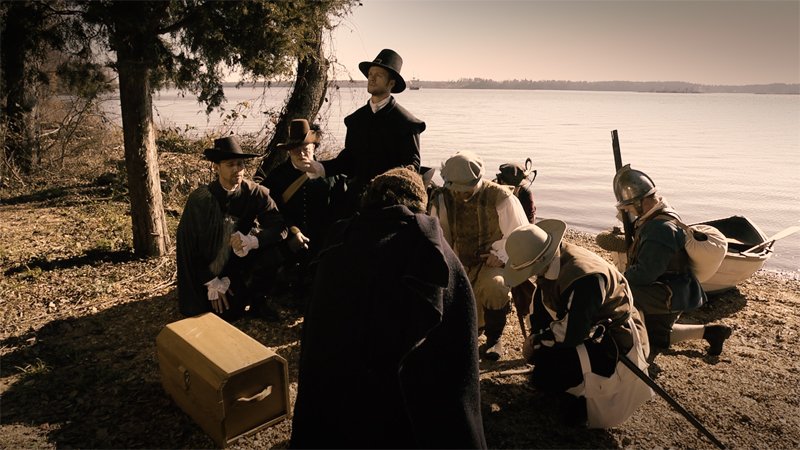 Newcomers may have been prodded by dreams of self-betterment. They did not always provide for others or for the justice necessary between persona and peoples. Social movements are organized collective manifestations of issues for which people have considerable concern. Movements deliberately attempt to promote or resist change in a group, society, or World order of which they are a part. They do so through a variety of means, not excluding violence, revolution, or withdrawal into Utopian communities. Depending upon the degree of correspondence between the goals of a movement and the value orientation of the observers, a movement can be heroic or despicable, on the side of the angels or in the league with the devil. Some movements are more dramatic than others; some are more successful than others; and some are more significant than others in terms of the range and depth of their consequences. However, seldom are they bland or without controversy. Rarely do they not reflect the ongoing dialectic between the individual and society. Hardly ever do they not demonstrate the relativity of belief systems and the importance of human agency or social action in the ebb and flow of social life. Social movements can function as an important bridge for understanding the relation between the individual and society, between structure and process, and between psychology and sociology. #RandolphHarris 1 of 7
 People power is one of the most important resources movements need in order to advance their interests. If a movement is to make headway in its goal attainment efforts, it must reach out, make contact with, and secure potential participants, and then transform at least some of the new recruits into committed members or devotees. Father gives meaning to the environment in which they (the participants) live. Complexity, confusion, hopelessness, and purposelessness are changed into simple understanding, peace, happiness, and a faith in the abstract principles embodied in the person of Father. (He thus) provides an escape from a tortuous mental confusion caused by complex, conflicting circumstances. He gives meaning to the individual life and to the World. However, Individuals who are seen as being especially susceptible to the appeals of movements on the radical right and left are usually dogmatic, highly prejudice, and insecure. The submission to an external cause or authority compensates for the feelings of self-inadequacy, and the desire to escape from an unwanted self. The permanent misfits can find salvation only in complete separation from the self; and they usually find it by losing themselves in the compact collectivity of a mass movement. #RandolphHarris 2 of 7
 By renouncing individual will, judgement, and ambition, and dedicating all their powers to the service of an external cause, people involved with movements are lifted off the restless treadmill which can never lead them to fulfillment. Their moral failing often stems from their own wounded vanity, and perhaps from their well-grounded fear that someone or something has indeed successfully unmasked their pretensions. The underlying participation in various contemporary movements is a collective search for identity. It is a search symptomatic of mass society’s failure to generate and sustain meaningful symbols and anchorages, which are seen as the functions of rituals. These people are demanding that society guarantee each individual a sense of personal worth and dignity. Movement participants are seen as those individuals who lack a series of institutional affiliations and group loyalties. In contrast, those people who are well integrated into kinship groups, cohesive local communities, and various intermediate associations are less susceptible to the appeals of social movements. Readiness to participate thus comes from an absence of those conditions that integrate people into the system and constrain them from involvement. Participants in such movements hypothetically meets the previously isolated participants’ needs for social affiliation, a sense of belongingness, and group identity. #RandolphHarris 3 of 7
 The belief that one’s life situation is largely a matter of fate or destiny has also been discussed in relation to movement participation. It is hypothesized that subjective powerlessness or little internal control renders the person susceptible to movement appeals and participation. It has also been hypothesized that a strong sense of personal control or system blame, is more likely to lead to movement participation, particularly when the movement is political in orientation. A riotous husband, or a loose wife, has an easy opportunity, assisted by means of the persecution, to rid themselves of one who is a check to their vices. When the inquisitors have taken umbrage against an innocent person, all expedients are used to facilitate one’s condemnation; false oaths and testimonies are employed to prove the accused to be worthy of torture and sacrificed to the bigoted revenge. When making a martyr, people involved in the movement pretend to wish the individual well and act like they are advising one well; and pretended kind hints. If the individual is mute, they will shut that individual up without light, or some other necessity to cause harm; and if that individual declares innocence, they torment one till one either dies with pain or confess oneself guilty. #RandolphHarris 4 of 7
 As an important determinant of movement susceptibility is the frustration or tension that supposedly results from status dissonance or inconsistency. The more frequently acute status inconsistencies occur within a population, the greater will be the proportion of that population willing to support programs of social change, even if it is harms innocent people. Some people are, as odd as this sounds, still seeking retribution for the Iberian Conquest of America. From 1492 to 1518, Spanish and Portuguese explores opened up vast parts of Asia and the Americas to European knowledge. In some of the bloodiest chapters in recorded history, the Spanish nearly exterminated the native peoples of the Caribbean islands, toppled and plundered the great inland empires of the Aztec and Incas in Mexico and Peru. Within a single generation of Christopher Columbus’s death in 1506, Spanish conquistadores explored, claimed, and conquered most of South America (except Brazil), Central America, and Southern parts of North America from Florida to California. Led by audacious explorers and military leaders, and usually accompanied by enslaved Africans, they established the authority of Spain and Catholicism over an area that dwarfed their homeland in size and population. #RandolphHarris 5 of 7
 They were motivated by religion, growing pride of nation, and dreams of personal enrichment. “We came here,” explained one Spanish foot soldier in Cortes’s legion, “to serve God and the king, and also to get rich.” In two bold and bloody strokes, the Spanish overwhelmed the ancient civilizations of the Aztec and Incas. In two bloody strokes, the Spanish overwhelmed the ancient civilizations of the Aztecs and Incas. In 1519, Hernando Cortes set out with 600 soldiers from coastal Veracruz and marched over rugged mountains to attack Tenochtitlan (modern-day Mexico City), the capital of Montezuma’s Aztec empire. At its height, centuries before, the ancient city in the Valley of Mexico had contained perhaps 200,000 people, but in 1521, following two years of tense relations between the Spanish and the Aztecs, it fell before Cortes’s assault. The Spanish use of horses and firearms provided an important advantage; so did a murderous smallpox epidemic in 1520 that felled thousands of Aztecs. Of course, Puritan Protestantism forcefully shaped much of early America and indirectly influences it still, but millions do not recognize the ethos and many reject it. God exists within and also beyond our World. #RandolphHarris 6 of 7
 The past is done. We are supposed to learn from it so not to repeat it. Trying to make one individual pay for the sins of many is insane. Also, if you do not like your own country, you are welcome to leave. “Bear with each other and forgive one another if any of you has a grievance against someone. Forgive as the Lord forgave you” (Colossians 3.13). Thanksgiving is a day that should be celebrated. It is a day of giving thanks to God for his goodness and his enduring love. It is also a day that we can take time from our busy lives to come together with our families and have a meal. The federal government gives people time off school, and sometimes work so they can go home, eat and bond with their families. Family, gratitude, and thankfulness are the true meaning of Thanksgiving. Put aside differences. Families can be wonderful and enjoyable, focus on the aspects of your family which you are grateful. Have some fun. Maybe you can start a new tradition like baking a cake together, or sharing happy stories. And eat some turkey, but “No legs for me, you can never tell where a bird’s been walkin’” says Archie Bunker. You are children of God, “I covenant with thee that thou shalt have eternal life; and thou shalt serve me and go forth in my name, and shalt gather together my people” (Mosiah 26.20). #RandolphHarris 7 of 7
That there is an Invasion of my Privates
 A new high in lowness. Prejudice is a social attitude propagated among the public by exploiting class for the purpose of stigmatizing some group as inferior so that the exploitation of either the group itself or its resources or both may be justified. People are generally exploited in hard economic times or competitive economic situations or in periods of major socioeconomic change—bringing special trouble; and corporations or individuals may have profited (commercially, agriculturally, economically, legally, and so on) at the expense of an underrepresented group or individual. The structure would produce the kind of alienation from human identity (alienation of human from human) that is expressed not only in economic terms and not only among the subjugated classes. The person is also estranged from the essential source of identity and if purpose for the human species by making one concerned for their safety and unable to trust former connections or new ones, as they tend to be frustrating and unsatisfying. Scapegoating (the practice of singling out any party for unmerited negative treatment or blame) is used to explain the flow of hostility toward the underrepresented individual under conditions of economic stress. #RandolphHarris 1 of 6
 A wishing of misfortune upon an individual, is one step short of hating them. Ill will can manifest emotions like contempt, jealousy, envy, and schadenfreude (the emotion of taking pleasure in others’ suffering). When one is carrying ill will toward another, they may not look aggressive, but feel it and emanate it (however subtly), reducing the target to something less than human. Relative deprivation is another oppressive method used by oppressors. They make sure the person has a lack of resources to sustain the diet, lifestyle, activities and amenities that the individual is accustomed to or that is widely encouraged or approved in the society to which they belong. That makes the person not only feel alienated, but as if they not worthy because no matter what they do the individual cannot seem to advance in life. So, an individual is not only enduring poverty, but also facing social exclusions. Relative deprivation has important consequences for both behavior and attitudes, including fear, stress, political attitudes, and participation in collective action. People generally operate so as to maximize their own self-esteem. The individual’s sense of personal mastery over life circumstances is one important ingredient for the achiever. #RandolphHarris 2 of 6
 The sense of low self-control is generated by extensive prejudice and discrimination and is a significant element in mobility behavior. One can have control over themselves and gain empowerment by having faith in God, and putting actions behind what one believes in. Demonstrate your faith by knowing that you are a child of God and no matter what circumstances you are facing, you are still worthy of life and worthy of achieving your dreams. God will open doors and create new opportunities and you will have the strength to do what you could not always do. God will show you his favor in unusual ways. Find the dreams in your heart, and keep them in mind every day knowing that they will become a reality. Know that God will comfort your souls, and give unto you success and also those who are with you will experience success. God will grant the strength to bear afflictions, whether they be internal or social. Our souls are precious to God and many people have things in common with us and we will eventually be encouraged and empowered in society. There is a natural power that comes from being a human being. Find your voice and authority to exercise the empowerment that you naturally have. #RandolphHarris 3 of 6
 Keep a healthy attitude about life so that you have the requisite competence and clarity to make successful decisions. As we exercise our faith in God, he will lift us up and carry us through all our trials and, ultimately, save us in the celestial kingdom. Do not be sidetracked from achieving your new goals. Harness your faith in God and adopt a healthy lifestyle. The human mind is an exception to otherwise Universal natural laws, as a thing that is conscious, that is capable of good and evil, or that can be an uncaused cause of action. Humans strive to experience their desires, human freedom, and the expressions of the power of God. Patience preserves pace of the mind in the face of injury, suffering, and sadness. It prevents us from being discouraged—from losing courage. The patient person, therefore, possess a great freedom. One is free to stay in course with one’s life and fulfill one’s responsibility, even when things are difficult. Courage enables us to persist firmly against difficulties. The power of the subconscious mind, when it becomes aware of one’s goal, it provides the means to reject a particular characteristic or adopt it, if it is consistent with our goal attainment. #RandolphHarris 4 of 6
 Our natural drive to achieve, along with our urge to move forward and be out front on the issues, tends to appeal to those who are leaders and bearing responsibility for their own visions, goals, objectives, and expected outcomes. Have a willing commitment, communicate with confidence, courage, and obvious intelligence characterized by determination and resilience. People are born with traits that can be cultivated in the direction of leadership. However, there is no doubt that leadership can be cultivated. The characteristics of leadership, necessarily has to have certain decisiveness and confidence comes from knowledge based on studies and training. The fundamental thing is your basic knowledge, the development of your mind, and your ability to apply this knowledge as you go along in life. There are no mistakes in life; there are only lessons. Great people are those who make others feel that they, too, can become great. With internal discipline there goes together a whole set of moral traits, among others perseverance, conscientiousness, and planning one’s actions. Perseverance enables one to reflect—at length strenuously, and patiently—on some selected issues. This reflection helps to overcome discouragement, apathy, self-indulgence, or laziness. #RandolphHarris 5 of 6
 Be mentally awake! Every work – and especially a scholarly one—calls for a rationally thought-out regularity, planned action, correctness, order and harmony, to avoid sliding into chaos. Exactness and conscientiousness is important so one can finish all details without leaving any gaps or bundling, and as such is the opposite of superficiality. Dear God, thank you for all of our blessings and help us to welcome challenges in our lives. Please give us the strength to persevere in them. When we are feeling weak, tired or discouraged, please help us to remember we depend on you, God. God, also please bless this great nation, for its people and government as well. Bless humanity and the beautiful creatures and environment you have created. May we take better care of ourselves and our planet. We ask for forgiveness for any disobedience, laziness of spirit and lack of faith. God remembers the dreams he placed in our heart. Get your passion back and know that things will work out to your favor. God is going to finish what he started. Forgiveness is the economy of the heart. Forgiveness saves the expense of anger, the cost of hatred, the waste of spirits. Bless it be. #RandolphHarris 6 of 6
The American Public have Become Increasingly Liberal
 The American family structure and the distribution of occupational roles has changed significantly since the 1950s. Specifically there has been changes as the increase of the number of women who combine paid employment with more traditional family roles, the increased divorce rates, the decline in fertility, the increase in the age at marriage, and the increase in female educational attainment. With the female employment rate increasing and education confers benefit in the labor market, then progressive families will invest more in girls’ education. However, the increase in female mobility in education and careers has been of such magnitude and importance that they have affected all groups of women irrespective of their experiences and characteristics. Women have an increased desire for the independence that working outside of the house affords. Attitudes towards women’s roles have become liberalized, but sexual harassment and equal pay have still been problems that women face in modern times. Still, because more women are going to work, their roles are changing and they may no longer stay in relationships that are pleasing and that may be why the divorce rate has increased. #RandolphHarris 1 of 5
 In general, attitudes of the American public have become increasingly liberal. The liberal shift has been a slow, but steady movement at least since 1942. Attitudes, institutional action, legal developments, and public behavior have moved in a consistent direction. Careful tracing of events will show that in government, in the armed forces, on television, on college campuses, and in most public spheres of life, people are more accepting of women and individuals of different ethnic backgrounds. The consistency between general attitudinal changes and macro-level social movement is seductive. However, the United States is also experiencing what is probably the most acute crises in race relations since the end of the Civil War. City after city has suffered racial violence. A spasm of riots has shaken the nation, Colin Kaepernick has decided to take a knee during the National Anthem. People have become more militant as they no longer have civilized leaders encouraging them to calm down, get an education, and respect people in positions of authority, and that even goes for people who are in positions of authority, as they no longer show respect others higher up in the hierarchy. #RandolphHarris 2 of 5
 Many have resorted to aiming themselves and the trade papers have carried accounts of guerrilla warfare. In several cities gunfights have broken out, and mass shootings in churches, nightclubs, concerts, and in schools has taken place. Concurrently with these dramatic events the attitudes of Americans toward integration and acceptances have continued to increase almost as though nothing was happening. Perhaps Americans, given their increasingly liberal attitudes, interpreted the violent acts as justified expressions of rage. This interpretation might then have led many Americans to the conclusion that, to prevent further disruption, a more integrated society was a social necessity. And that is why Barack Obama was elected president, it is why Jerry Brown has been Mayor of California four times, and the very reason Kevin Johnson, with his shady past, was elected the first Black mayor of Sacramento. Some of these positions may not have been earned by the people elected. However, with Americans becoming more liberal, so have the communities, like Sacramento, California building a $600 million sports complex with no parking, which 50 percent of the complex was paid for by tax payers, at a time when there is a housing crisis in California. People have also complained that the many reporters are acting unlawfully and as if they are on drugs and many of this would not have been tolerated in the past when people were more conservative. #RandolphHarris 3 of 5
 A Universe may form a scale for a population at a given time and may not at a later time. Such a change in time would tend to indicate that a change is one of kind, rather than degree. Still, a different issue is raised by the response pattern to the integration in neighborhoods. Large cities have become increasingly diverse, and there is a widespread of acceptance of residential integration. Nonetheless, neighborhoods that were once mostly populated by Whites are seeing White Flight. Whites are moving to more upscale communities. With the houses costing $350,000.00 to $500,000.00, White must be making a lot of money to afford to more to real suburban communities where the houses costing $600,000.00 to $1 million and more. Overall, the trends in general attitudes concerning gender roles and race relations apparently have moved in an egalitarian, liberal direction. Perhaps these shifts are but a part of a general societal trend toward greater tolerance. If you consider only the negatives, you will be discouraged and doubt will creep in, keeping you from God’s best. When you focus on God instead of your circumstances, doubt, fear, anxiety, and negativity do not have a change. #RandolphHarris 4 of 5
 Hostility is probably the most common expression of aggression, ranging from mildly edgy to snarling. Being on the receiving end of hostility can be not only very unpleasant but also sometimes scary, because we know that whoever is delivering it has us in their sights and out of their heart, with attack weaponry ready for the reloading. We need community leaders to be shinning stars and to promote that community members keep the peace, protect their communities, get their education, and act responsible. When we magnify God instead of magnifying your difficulties, faith rises in your hearts. That faith will keep your fully persuaded that God will make a way, even though you do not see a way. And the beauty is that God will show up and do amazing things! Is not a soul at this time as precious unto God as a soul will be at the time of his coming? Is it not as necessary that the plan of redemption should be made known unto this people as well as unto their children? Is it not as easy at this time for the Lord to send his angel to declare these glad tidings unto us as unto our children, or after the time of his coming? Lord, please forgive our unworthiness, and remember our families, friends, and community in your mercy. May the Lord bless your soul, and receive you at the last day into his kingdom, to sit down in peace. #RandolphHarris 5 of 5
The Unconscious Does Not Lie
 Particular attention has been directed toward determining the consequences of various types of communication on the attitudes of those receiving messages since social psychology has begun to treat attitudes as dependent variables. For some, powerful propaganda is seen as having the capability of molding opinion. An interpretive problem was introduced by a significant number of studies reporting that some subjects changed toward the position advocated while other subjects altered their attitudinal positions in the opposite direction. There is no question, according to the theory of social judgment, that after engaging in certain actions we may behave in a certain fashion, the behavior is a part of the totality upon which we can reflect. For example, a prospective patient, who had corresponded with me relative to treatment, finally wrote for an appointment for a certain day. Instead of keeping his appointment, he sent regrets which began as follows: “Owing to foreseen circumstances, I am unable to keep my appointment.” He naturally meant to write unforeseen. He finally came to me months later, and in the course of the analysis, I discovered that my suspicious at the time were justified; there were no unforeseen circumstances to prevent his coming at that time; he was advised not to come to me. The unconscious does not lie. #RandolphHarris 1 of 9
 Attitudes are constantly shifting and changing as people interact with the attitude object and with their social environment. Attitudes flow from social interaction and evolve in the course of it. In turn, attitudes feed into social interaction and help to guide the interaction process. Attitudes are links between individuals and the various collectivities to which they belong. The formation, expression, and functioning of attitudes simultaneously represents both individual and collective process. The suppression and inversion of affects is useful even in social life. If I am conversing with a person to whom I must show consideration while I should like to address him or her as an enemy, it is almost more important that I should conceal the expression of my affection from that individual than that I should modify the verbal expression of my thoughts. If I address this individual in courteous terms, but accompany them by looks or gestures of hatred and disdain, the effect which I produce upon the person is not very different from what it would have been had I cast my unmitigated contempt into that individual’s face. Above all, then, the censorship bids me suppress my affects, and if I am a master of the art of dissimulation I can hypocritically display the opposite affect—smiling where I should like to be angry, and pretending affection where I should like to destroy. #RandolphHarris 2 of 9
 Attitude-behavior relations can be distinguished from most other formulations in terms of the attention one devotes to the concept of action. Behaviors differ in the degree to which they have the character of action. Action is overt behavior that produced some change for the actor. The more public, irreversible, active, and committing the behavior is, the greater the change in produces in the environment and the more real-life consequences it has for the actor. An elderly gentleman was awakened at night by his wife, who was frightened because he laughed so loudly and uncontrollably in his sleep. The man afterwards related that he had the following dream: I lay in my bed, a gentleman known to me came in, I wanted to turn on the light, but I could not; I attempted to do so repeatedly, but in vain. Thereupon my wife got out of bed, in order to help me, but she, too, was unable to manage it; being ashamed of her negligée in the presence of the gentleman, she finally gave it up and went back to her bed; all this was so comical that I had to laugh terribly. My wife said: ‘What are you laughing at, what are you laughing at?’ but I continued to laugh until I woke. The following day the man was extremely depressed, and suffered from a headache: ‘From too much laughter, which shook me up,’ he thought. It is non-trivial actions characterized by active participation, public commitment, and important real-life consequences—that I have in mind as the usual context for significant attitude change. #RandolphHarris 3 of 9
 Analytically considered, the dream looks less comical. In the latent dream-thoughts the gentleman known to him came into the room is the image of death as the great unknown, which was awakened in his mind on the previous day. The old gentleman, who suffers from arteriosclerosis, had good reason to think of death on the day before the dream. The uncontrollable laughter takes the place of the weeping and sobbing at the idea that he has to die. It is the light of life that he is no longer able to turn on. This mournful thought may have associated itself with a failure to effect adult night time intimacy, which he had attempted shortly before this, and in which the assistance of his wife en neglige was of no avail; he realized that he was already on the decline. The dream-work knew how to transform the sad idea of impotence and death into a comic scene and sobbing into laughter. One point may appear obvious: some behaviors are of greater consequence than others for a range of individual dispositions, including attitudes. Nevertheless, if the impact of behavior on attitudes is to be clarified, greater conceptual attention to behavior is to required. #RandolphHarris 4 of 9
 If attitudes are constantly shifting during the course of action, then the determination of the magnitude of the relationships between the attitude and behavior becomes problematic. I began the psychoanalytic treatment of a boy of fourteen who was suffering from tic convulsive, hysterical vomiting, headache, et cetera, by assuring him that after closing his eyes he would see pictures or idea would occur to him, which he was to communicate to me. He replied by describing pictures. The last impression he had received before coming to me was revived visually in his memory. He had been playing a game of checkers with his uncle, and now he saw the checkerboard before him. He commented on various positions that were favourable or unfavourable, on moves he was not safe to make. He then saw a dagger lying on the checker-board—an object belonging to his father, but which his phantasy laid on the checker-board. Then a sickle was lying on the board; a scythe was added; and finally, he saw the image of an old peasant mowing the grass in front of his father’s house far away. This attitude-action problem was very insightful. Viewing the connection between attitudes and behavior as a dynamic interactional relationship introduces vexing complexities into the design of appropriate research. #RandolphHarris 5 of 9
 The boy’s conceptualizations seemed closer to reality than the linear determinism that characterizes many alternative formulations. This lead me to discover the meaning of this series of pictures. Disagreeable family circumstances had made the boy excited and nervous. Here was a case of a harsh, irascible father, who had lived unhappily with the boy’s mother, and whose educational methods consisted of reprimands; he had divorced his gentle and delicate wife, and remarried; one day he brought back to the house a young woman as the boy’s new mother. If attitudes change in the course of social action, then we should expect important social events to have an impact on the attitude distributions of those involved in such events. The illness of the four-teen-year-old boy developed a few days later after the substitute mother was brought back to the house. There is no question that the immediate changes in attitude produced by this event were large and significant. The illness was the result of the suppressed rage against his father that had combined these images into intelligible allusions. The material was furnished by a mythological reminiscence. The sickle was that with which Zeus castrated his father; the scythe and the image of the peasant represented Kronos, the violent old man who devours children, and upon whom Zeus wreaks his vengeance is so unfilial a manner. #RandolphHarris 6 of 9
 Such an analysis reflects a general concern with social change at a micro- or familial level, and the use of attitudinal data in the effort to monitor or assess such change. The level of concerns shifts. The problem now becomes that of determining the interrelationships between aggregated measures of attitude and indices of the behavior of collectivities. The father’s marriage gave the boy an opportunity of returning the reproaches and punishments which the child had once heard his father utter because he played with his genitals (the draught-board; the prohibited moves; the dagger with which could kill one). Masturbation is supposed to be a sin and not to be indulged in, much like pornography. We have here long-impressed memories and their unconscious derivatives which, under the guise of meaningless pictures, have slipped into consciousness by the devious paths opened to them. However, we cannot take dreams literally in a sense that would cause of to take unlawful and adverse reactions, but they can be used as warnings to be more vigilant or show more attention and concern for others. For instance, the Roman Emperor was in the wrong in ordering one of his subjects to be executed because the latter had dreamt that he killed the Emperor. He should have first of all have endeavoured to discover the significance of the man’s dream; most probably it was not what it seemed to be. #RandolphHarris 7 of 9
 And even if a dream of a different content had actually had this treacherous meaning, it would have still been well to recall the words of Plato—that the virtuous person contents oneself with dreaming of that which the wicked individual does in actual life. I am therefore of the opinion that dreams should be acquitted of evil. Whether any reality is to be attributed to the unconscious wishes, I cannot say. Reality must, of course, be denied to all transitory and intermediate thoughts. If we had before us the unconscious wishes, brought to their final and truest expressions, we should still do well to remember that psychic reality is a special form of existence which must not be confounded with material reality. It seems, therefore, unnecessary that people should refuse to accept the responsibility for the immorality of their dreams. With an appreciation of the mode of functioning of the psychic apparatus, and an insight into the relations between conscious and unconscious, all that is ethically offensive in our dream-life and the life of phantasy for the most part disappears. However, if possible, I still encourage people to try and control their impulses in their dreams because they seem so real that it is possible that one could do things they dream about in real life and discover that one is not dreaming. #RandolphHarris 8 of 9
 Nonetheless, for all practical purposes in judging human character, an individual’s actions and conscious expressions of thought are in most cases sufficient. Actions, above all, deserve to be placed in the front rank; for many impulses which penetrate into consciousness are neutralized by real forces in the psychic life before they find issue in action. Indeed, the reason why they frequently do not encounter any psychic obstacle on their path is because the unconscious is certain of their meeting with resistances later. In any case, it is highly instructive to learn something of the intensively tilled soil from which our virtues proudly emerge. For the complexity of the human character, dynamically moved in all directions, very rarely accommodates itself to the arbitrament of simple alternative, as our antiquated moral philosophy would have it. “My son, do not let us be slothful because of the easiness of the way; for so was it prepared for them, that if they would look they might live; even so it is with us. The way is prepared, and if we will look we may live forever. And now, my son, see that you take care of these sacred things, yeah, see that you look to God and live. Go unto this people and declare the word, and be sober. My son, farewell (Alma 37.46-47).” #RandolphHarris 9 of 9

The Prisoner’s Dilemma is the Best-Known Game of Strategy

The World is incredible and there are so many amazing opportunities available to a large percentage of people. Keep your dreams alive. Understand to achieve anything requires faith and belief in yourself, vision, hard work, determination, and dedication. This may perhaps be surprising, for most people—at least those in the Christian cultural tradition—are likely to think that beliefs in God and in immortality must go together. They are inclined to take it for granted that the main if not the only point of immortality—and sometimes perhaps of God, too—is to provide inordinate rewards and punishments. People tend to resist accepting evidence that contradicts their beliefs. Sometimes however, they have no choice. Eventually, people admit that Ariel the Little Mermaid does not exist. Belief perseverance, the persistence of notions people already accept, is a powerful thing. Motivated to protect self-esteem and avoid feeling foolish for believing incorrectly, people can ignore inconsistencies, make up rational-seeming explanations, reject new evidence, or otherwise justify sticking to their original beliefs. They might be right to do so. The new evidence might be wrong. Beliefs can be wrong, too, though. #RandolphHarris 1 of 9

A belief is a probability judgment that links some object or concept to some attribute. The terms object and attribute are used in a generic sense and both terms may refer to any discriminable aspect of an individual’s World. For example, I may believe that cigarettes (an object) are harmful to health (an attribute) or that my quitting smoking (an object) will reduce my capacity to work (an attribute). The content of the belief is defined by the object and attribute in question, and the strength of the belief is defined by the person’s subjective probability that the object-attribute relationship exists (or is true). An attitude is a bipolar evaluative judgement of the object. It is essentially a subjective judgment that I like or dislike the object, that it is good or bad, that I am favorable or unfavorable toward it. Once again, the term object is used in a generic sense. Thus, I may have attitudes toward people (exempli gratia, smokers), institutions (exempli gratia, the Federal Trade Commission), events (exempli gratia, the release of the Surgeon General’s report on smoking), behaviors (exempli gratia, my quitting smoking), outcomes (exempli gratia gaining status in the eyes of my friends), and so on. #RandolphHarris 2 of 9

An intention is a probability judgment that links the individual to some action. An intention is also an impulse for an action which has already found approbation, but whose execution is postponed for a suitable occasion. An intention can be viewed as a person’s belief about his or her own performance of a given behavior. Intentions can be general (exempli gratia, I will quit smoking) or specific (exempli gratia, I will not smoke any cigarettes at John’s party tonight), and they vary in intensity. Like other beliefs, intentions are usually measured by obtaining some index of the individual’s subjective probability that he or she will perform the behavior in question. Now, in the interval thus created, sufficient change may take pace in the motive to prevent the intention from coming to execution. It is not, however, forgotten, it is simply revised and omitted. For the case in which a specific behavior is to be predicted, the individual has certain beliefs about the probable consequences of the specific act that are the determinants of the attitude toward that act. In addition, the actor attributes specific behavioral expectations to references groups, individuals, or other social agents. #RandolphHarris 3 of 9

The totality of these expectations as perceived by the individual constitute the subjective norm concerning the behavior in question. Thus, a person’s behavior and one’s subjective norm. It is important to emphasize norms and attitudes are predictive of behavioral intentions. Thus, the ability of attitudes to predict behavior is dependent upon the strength of the link between behavioral intentions and behavior. One variable that can have an effect on the strength of the relation between behavioral intentions and behaviors is the time that has elapsed between the measurements of the intentions and the observations of the behaviors. Among the problems involved are the stability of the independent variable (intentions) and the operation of unanticipated situational factors that reduce the relationship between the variables of immediate concern. If I resolve in the morning to carry out a certain intention in the evening, I may be reminded of it several times in the course of the day, but it is not at all necessary that it should become conscious throughout the day. As the time for its execution approaches, it suddenly occurs to me and induces me to make the necessary preparation for the intended actions. #RandolphHarris 4 of 9

If I go walking and take a letter with me to be posted, it is not at all necessary that I, as a normal, not nervous individual, should carry it in my hand and continually look for a letter-box. As a matter of fact, I am accustomed to put it in my pocket and give my thoughts free rein on my way, feeling confident that the first letter-box will attract my attention and cause me to put my hand in my pocket and draw out the letter. This normal behavior is a formed intention corresponds perfectly with the experimentally produced conduct of a persons who are under a so-called post-hypnotic suggestion to perform something after a certain time. The suggested intension slumbers in the person concerned until the time for its execution approaches. Then it awakes and excites the action. However, other variables can effect the strength of the link between intentions and behavior. First, an individual has to have a high degree of correspondence in the levels of specificity at which both behavioral intention and behavior are measured. Second, this relationship depends upon the degree to which the individual’s behavior is under volitional control. Contextual variables do limit the choices available to the actor. #RandolphHarris 5 of 9

There is some evidence that the incorporation of measures of personal normative beliefs (that is, the degree to which individuals feel that they personally should perform the behavior in question) would improve the predictive power of the model. The situational variables may alter the individual’s beliefs about the consequences of the behavior which, in turn, will result in a change in attitude. The situational variables may alter the individual’s normative beliefs which, in turn, will result in a change in the subjective norm. The situational variables reduce the association between behavioral intentions and behavior. Therefore, if the link between behavioral intentions and behavior is tenuous, then a mode that predicts behavioral intentions may be of limited interest to those still concerned with the prediction of behavior. That is why staging a crime and predicting how an individual will respond, then by passing a jury trial and sentencing an individual based on a likelihood that they will respond as predicted is unlawful. People often base predicted behavior on how they would respond and it may not be an accurate prediction for the target because there may be other variables at play which have not be considered. #RandolphHarris 6 of 9

Dispositional factors are combined measures of attitudes with measures of personality traits, values, beliefs, or perceived norms in the attempt to explain additional variance in behavioral criteria. Also, the probability of attitudinal change is greater when the individual is unfamiliar and not highly involved with the attitudinal object. Such results suggest that predicting the behavior of the uncertain, uninvolved, and uninformed may require knowledge of more variables than are needed to predict the behavior of those who are certain, involved, and informed. Behavior can be more predictable when one considers attitudes toward the particular act toward a particular object. Situational variables prove that even if attitudes are highly stable, salient, personal characteristics, we should not expect high correlation between attitudes and behaviors under all conditions. Attitudes have predictable relationships with behavior to the extent that the actor has reliable expectations of the behavioral situation. However, it is hard to imagine anyone playing Prisoner’s Dilemma outside the laboratory. Two completely rational individuals might not cooperate, even if it appears that it is in their best interest to do so. There could be underlying factors, such as moral, values, logic, finances, and health that would act as inhibitors. #RandolphHarris 7 of 9

Even when situational variables also have been manipulated by a number of investigators in an effort to explore the impact of such variables on attitudinal-behavioral consistency, there could still be some strong inhibition to reacting as predicted. Even though, consistency can be influenced by direct interpersonal pressures and apparently by anticipated behavioral visibility or disclosure. Individuals who are informed and involved are resistant to attitudinal change. Therefore, staging crime and treating the victim’s response as a geometrical proof is not only illegal so you can convict them based on algorithms and predictions, can lead to a criminal conspiracy because it is an abuse of justice and it is not what the criminal justice system is about. No one should be able to abuse the law in such a matter just to seek revenge. In addition, such an act would take several parties to produce and would leave behind a lot of evidence as to what actually occurred and once the conspiracy is unraveled, all of the participants will be punished. We have seen cases where a criminal seeks revenge on the victim and spends years plotting the perfect take down and gets others involved. #RandolphHarris 8 of 9

People in high positions of authority and in prominent positions may help to facilitate the criminal in getting revenge on one’s target, but in doing so they are aiding and abetting a criminal in the commission of a crime, which means not only are they supporting the criminal and deeming his or her criminal act as acceptable, but they are now also an accessory to the crime itself. An accessory is a person usually not present when the crime itself is committed, but he or she has knowledge of the crime before or after the fact, and may assist in its commission through advice, actions, or financial support. Someone aids and abets a crime if he or she knows of the perpetrator’s unlawful purpose and he or she specially intents to, and does in fact, assist, facilitate, promote, encourage, or instigates the perpetrator’s commission of the crime. At some point, the group involved in the conspiracy has to admit they are wrong, but more than likely, they will keep playing the game, which has become a criminal conspiracy until they are arrested. “All who rage against you will surely be ashamed and disgraced; those who oppose you will be as nothing and perish (Isaiah 41.11).” #RandolphHarris 9 of 9

When You Write with a Wright Pen You Will Always be Right
 Although it is usually difficult to find the person responsible for printers’ errors, the psychologic mechanisms underlying them are the same as in other mistakes. Typographical errors also well demonstrate the fact that people are not at all indifferent to such trivialities as mistakes, and, judging by the indignant reactions of the parties concerned, one is forced to the conclusion that mistakes are not treated by the public at large as accidents. An attitude is the disposition to behave in particular ways toward specific objects, and the degree of optimistic or pessimistic affect associated with some psychological object. Attitude can also be a predisposition to evaluate some symbol or objects, and a delimited totality of behavior with respect to something. A typesetter was imprisoned because instead of ending an article with the official formula ‘Heil Hitler,’ he inadvertently permitted a ‘t’ to attach itself to ‘Heil’ so that it read ‘Heilt Hitler,’ meaning ‘Heal Hitler’ instead of ‘Heil Hitler.’ His pleading that it was a mistake was of no avail. It seems that the Nazis who burned Dr. Freud’s works, nevertheless, recognize the truth of Dr. Freud’s teachings. This mistake plainly showed the typesetter’s view of Adolph Hitler’s personality. His mistake was unconsciously expressed his wish that the Lord may heal Hitler of his perceived tyranny. #RandolphHarris 1 of 5
 Ordinarily, we should not have noticed one of the expected inevitable slips in writing. In fact, William Randolph Hearst said, “Do not be afraid to make a mistake, your readers might like it.” All writes for the press know what pits they are liable to fall into any day. Why does a mistake that glares and gibbers at you in print hide itself so successfully in the copy or the proof? How do you come to set down Rudolf when you mean Randolph? Some students of demonology believe firmly in the constant presence and maleficence of the writer’s devil. We venture to doubt the editor’s assumption of demonological influences. Examination of a great many typographical errors clearly shows that they are based on the mechanisms of a certain kind of situation. Psychologist believe that contributions of typographical and spoken errors sometimes provides evidence to support the postulated existence of stable, underlying attitudes within the individual which influences both his or her verbal expressions and actions. Adolph Hitler was the only person to hold the position of Fuhrer, which is a German word meaning leader or guide. Attitudes are alive and well and gainfully employed in the sphere of action. Despite the confusion, pessimism, and negative evidence some social psychologist refuse to give on their commitment to the belief that attitudes and behaviors must be related. #RandolphHarris 2 of 5
 However, even those who are nearest to the Fuhrer and constantly sing his praises to the Germans, do not really believe what they say, as shown by the wireless from Berlin to the New York Times (12 November 1936), congratulating eighteen hundred boys and girls of the Hitler Youth for taking part in the mightiest Freiheitsbewegung (movement of liberty) in German History. Rudolf Hess, the vice-leader of the Nazi party, used instead the word Freiheitsberaubung (robbery of liberty). The last word appeared in the Lokalanzeiger and caused the publishers no small amount of annoyance. Abstract statements of a highly moral content are not seldom changed erotically through a typographical mistake. Though, the correlations that do occur are large enough to indicate that important causal forces are involved, whatever one’s model of the underlying causal process may be. Evidence must conclude that attitudes and behaviors are related under a variety of conditions and over a range of substantive areas. There is something to this relationship that is sufficient to suggest the operation of causal forces. To establish a pattern or a motive, measures of attitudes that range from a single survey, personal letters, multi-item scales, field observation, task performances, archival records, and self-reports of daily activities must be analyzed. Again, interpretations often vary. #RandolphHarris 3 of 5
 When modest relations between variables are found repeatedly, social scientists frequently recite a litany of reasons that might explain the results. The measures of the variables are unreliable. The measures of the variables are unreliable. The measures are inappropriate or invalid. The independent variable is only one of several determinants of the dependent variable. If time elapses between the measurement of the independent and dependent variable, other variables intervene to mask the relationship or alter the variables under investigation. In one way or another, social psychologist have involved all of the above explanations for their findings regarding the relationship between attitude measures and behavioral criteria. A woman wrote to her sister, felicitating her on the occasion taking possession of a new spacious residence. A friend who was present noticed that the writer put the wrong address on the letter, and what was still more remarkable was the fact that she did not address it to the previous residence, but to one long ago given up, but which her sister had occupied when she first married. #RandolphHarris 4 of 5
 When the friend called her attention to the incorrect address, the writer remarked, “You are right; but what in the World made me do this?”, to which her friend replied: “Perhaps you begrudge her the nice big apartment into which she has just moved because you yourself are cramped for space, and for that reason you put her back into her first residence, where she was no better off than yourself.” “Of course, I begrudge her new apartment,” she honestly admitted. As an afterthought she added, “It is a pity that one is so mean in such matters.” The growth of the mind is the widening of consciousness and each step forward has been a most painful and laborious achievement. If anyone should be inclined to overrate the state of our present knowledge of mental life, all that would be needed to force one to assume a modest attitude would be to remind one of the function of memory. Ego development inevitably entails the rejection of some parts of the person that are threatening a relatively painless experience of living. The unconscious mind often represents the individual’s discordant desires, instincts, or shortcomings. Because the conscious ego can only know itself, the contents of the Persona and the hidden messages reside in the unconscious. Father in Heaven, may we all learn to love unconditionally and treat each other with respect and workout or own problems instead of taking them out on innocent beings. Bless it be. #RandolphHarris 5 of 5
 Randolph Harris II International Institute