
Home » Fox Hollow Farm (Page 32)
Category Archives: Fox Hollow Farm
God is the Most Dynamic Reality in the Universe
 Some doors are heavier than others and the longings of the human heart is life everlasting. The chance to explore unlived life awaits us as long as we are alive, but only if we are willing to succumb to radical change. Irrespective of age, we mourn for those loved and lost. Mourning is one of the deepest expressions of pure love. It is a natural response in complete accord with divine commandment: “The shalt live together in love, insomuch that thou shalt weep for the loss of them that pass away.” (D&C 42.45.) When we lose a near and dear friend, upon whom we have set our hearts, it should be a caution unto us. Our affections should be placed upon God and his work, more intensely than upon our fellow beings. In many respects, once we recognize our mortality we open ourselves to the discoveries that incite growth of our nature. Long before we speak the words, we receive reminders that we have a finite amount of time on Earth. As seedlings of God, we barely blossom on Earth; we fully flower in Heaven. Some people cling to physical powers, both as their chief tool for coping with life, and as the most important element in their self-definition. Since physical powers inevitably decline, such people tend to grow increasingly depressed, bitter, or otherwise unhappy as they grow older. When hardship heaps its heavy load upon us, good may still be gleaned because after much tribulation comes the blessings. #RandolphHarris 1 of 10
 While we are still full of youthful vigor, we tend to feel cheated when mishaps interfere with our strivings. Physical incapacity reverses this stance: we expect some portion of our desires will be frustrated, and we are relieved when our preferences are satisfied. Physical and spiritual trials provide continuing challenges in life. Each of us can provide illustrations from personal experience. Many of us, for instance, are at the twilight of life and endure long and difficult days. We know well the meaning of that divine injunction to endure to the end. To varying degrees, unlived life is everyone’s plight. Our time is finite, our abilities are uneven, and we have to forsake some goals in order to attain others. These limitations are there all along, but erosion of independence finally forces us to reconcile ourselves to them. Everything here on Earth is in a continual flux which allows nothing to assume any constant form. All things change round about us, we ourselves change, and no one can be sure of loving tomorrow what one loves today. When it comes to us, let us make the most of peace of mind, taking care to do nothing to drive it away. Everyone knows that we can be deeply affected by the things of nature. A certain hill of mountain can offer a deep emotional focus to a person’s life or to a family or community. #RandolphHarris 2 of 10
 Can anyone believe that the Great Creator would provide for life and growth and achievement only to snuff it all into oblivion? Reason says no. When my great-grandparents lived in New City, New York, they bought a large house on Strawtown Road. They planted and tended an orchard with great care. The house was graceful to look at from the outside, and inside it was filled with old paintings and photographs, beautiful furniture and plants, stained glass windows and gorgeous wood floors. There was a grand piano in the parlor, and a built in curved wooden bench in the foyer, along with a marvelous fireplace. In front of the house were several lush trees that offered privacy, shade, and beauty for the family and many other people who visited the house. The trees are like members of the family, bound to us as individuals of another species. Many things have a soul. We know these feelings of attachment to things, but we tend not to take them seriously and allow them to be part of our World view. What if we took more seriously this capacity of things to be close to us, to reveal their beauty and express their subjectivity? The result would be a soul-ecology, a responsibility to the things of the World based on appreciation and relatedness rather than on abstract principle. #RandolphHarris 3 of 10
 A real relationship with nature has to be fostered by spending time with it, observing it, and being open to its teachings. Any true relationship requires time, a certain vulnerability, and openness to being affected and changed. A deep ecological sensibility can come only from the deep soul, which thrives in community, in thing that it is not detached from the heart, and in relatedness to particulars. It is a simple idea: if we do not love things in particular, we cannot love the World, because the World does not exist expect in individual things. Really, this truth we have found marks but the beginning of a new day, a new experience, a new life—a life no longer disturbed by fear nor haunted by doubts or filled with regrets of the past or misgivings over the future—a life that can be lived in its fullness today, and a life that will extend through all our tomorrows in an ever-broadening arena of experience, an ever-deepening realization of a presence and a power and a peace that gives us complete security and an ever-greater vision of the more that is yet to come. Care of the World is a tending to the soul that resides in nature as well as in human beings. God is the only power and the only presence there is, and God is right where we are. We live and move and have in our being God. God’s being moves through us and manifests itself in what we are doing. #RandolphHarris 4 of 10
 We cultivate a sense of home wherever we are, in whatever context. The things of the World are part of our home environment, ad so a soulful ecology is rooted in the feeling that this World is our home and that our responsibility to it comes not from obligation nor logic but from true affection. Without a felt connection to thins we become numb to the World and lose that important home and family. The penury we see on our city streets is a reflection of a deeper destitution we feel in our hearts. Care for our actual hoses, then, however humble or grand, is also a care of the soul. No matter how much money we have, we can be mindful of the importance of beauty in our homes. No matter where we live, we live in a neighborhood, and we can cultivate this wider piece of Earth, too, as our home, as a place that is integrally bound to the conditions of our hearts, as a noble instrument in the hands of God. We thank God our Eternal Father for a more tolerant day and greater understanding. The sunshine of goodwill is upon our people. As long as the heart is involved, care of the place will follow. Perseverance is vital to success in any endeavor, whether spiritual our temporal, large or small, public or private. Think seriously of how important perseverance, or the lack of it have been in your own endeavors. Essentially all significant achievement results largely from perseverance. #RandolphHarris 5 of 10
 Did you ever stop to think that you are a spiritual and mental broadcasting station, and that the messages are going out from you in all directions, perhaps even while you are asleep—messages which have an influence on your environment and the people around you? And since everything moves in circles, the messages you broadcast will come back to you. Gather miraculous inner strength and be grateful for the effect of love upon you. We each have trials and challenges to overcome as we strive to keep on the right course. Often the most important trials are those we must face and subdue privately within our own hearts. We are told that the mental atmosphere of a home can influence a dog, cat, or canary to the extent that they become neurotic when surrounded by unhappiness or criticism. There is a place where our physical bodies begin and leave off, but the mind has no such limitations, and our thoughts penetrate everything around us. Perseverance is essential to us in learning and living the principles of the gospel and that will determine our progress as we strive to each exaltation. #RandolphHarris 6 of 10
 The pursuit of excellence should be major work of our lives. Many people, however, give little thought to it. Perhaps they feel that it is not possible for anyone to reach perfection in this life, and so they let the immediate pressures dominate their actions. While it is true that we cannot attain perfection in a total sense in this life, it is also true that we can attain perfection in many specific areas of activity. We are all broadcasting stations, whether or not we know it. Our thoughts, feelings, and emotions, our faiths and fears, tend to make an imprint on our environment. We are also receiving sets, but it does not follow that we must tune in to every program being broadcast. When we want to listen to a certain program we tune our radios to its wavelength. The program already is within the ether in the room, but it does not affect our instrument until we tune in to it. It is fascinating to think that we are both mental broadcasting stations and receiving sets. And it will be even more wonderful when we learn to broadcast only the kind of messages that we wish to have return. Furthermore, if we fail to do what we can and should do in this life, we may deprive ourselves forever of the opportunity to do those things later on and thus lose great eternal blessings. #RandolphHarris 7 of 10
 Heaven is not reached at a single bound, but we build the skyscraper by which we rise from the lowly Earth to the vaulted skies, and we mount to its summit round by round. If a person’s mind is filled with animosity and resentment people will feel it, whether or not one says a word. This animosity arouses within others who have resentment and animosity a feeling like one’s own. One’s thoughts tune in to theirs, and theirs immediately respond by following back into the receptive individual. One accentuates the other. One the other hand, if we are surrounded by people who have resentment and animosity, but we have none, we will not tune in. Their vibrations bypass us, and their antagonism does not arouse an equal antagonism in us because we are not broadcasting on the same mental wavelength. It is the same with everything in life. A person whose thought is filled with the fear of failure tunes in to and picks up vibrations of failure wherever that individual contact them; to one’s own negative thought there is added a great mass of negative thoughts, until finally it seems that the only thing one can think about is failure. In a way, this individual’s will and imagination become hypnotized, because one is tuning in to so much negation. When a person’s mind is upset, disturbed, and unhappy, all one mentally hears is discord because one’s inner ear is listening to a continuous turmoil. #RandolphHarris 8 of 10
 Conversely, a person whose thought is filled with the idea of success, who has faith and confidence in oneself and what one is doing, will tune in to the successful thoughts around one, the thoughts of faith and optimism and happy expectancy. When you get into bed at night, rehearse the things you have accomplished during the day. Allow yourself to feel the satisfaction that comes of work completed or even partially completed. A person who confidently expects good things to happen, expects to be respected, and who expects to find happiness in life where one foes, will not only be broadcasting these thoughts which will make other people happy; one will be receiving them in return. Because one feels friendly, people will respond with friendliness. We all wish to be like this. We not only want to be whole ourselves, because no one can be happy unless he or she is whole, but we want to help others. We not only wish to broadcast good news; good news is what we want to receive. We may not see it now, but everything we do, every day we live is for a purpose. And we have a Heavenly Father who will always be there to life us up and cheer us on. #RandolphHarris 9 of 10
 We care so much about one another as we walk together on our journey. I know Heavenly Father will bless each of us as we pray, work hard and give time a chance. We should decide to think on the affirmative side of life, or accentuate the optimistic and eliminate the pessimistic. In doing this we must make up our minds that we are not going to receive the criticism nor the negative state nor the animosity of anyone. And let us not forget the importance of keeping our minds in a state of good-natured flexibility. If a tree did not bend with the breeze, it would break under a strong wind. We have to be flexible and tolerant as well as optimistic and affirmative. Remember that for everyone who passes out of this World someone else comes in life. Life is a river always flowing, and life itself never get tired, worn out, nor exhausted; it never depletes itself. Also, we do not have to morbidly scan all the accidents any more than we have to listen to the negative conversation. More and more we are coming to see what it means to accentuate the beneficial and eliminate the negative. God is still the supreme power, and the divine spirit is still present with us no matter where we are. We must learn to tune in to the mind of God, for when we do we are tuning in to the most dynamic reality in the Universe. #RandolphHarris 10 of 10
God is Looking for People Who Have Faith that is Demonstrated
 No one lives without accumulating stories. Many things in life offer useful guidance toward finding spiritual values in the World. The spirituality of a place might be marked with a well or drawing on the ground, or a monument, like a castle or mansion. When we place markers on historical battlefields or on houses where our ancestors were born, or where significant historical figures lives, we are performing a genuine spiritual act. We are honoring the special spirit that is attached to a particular place. Family is also a source and focus of spirituality. In many traditions a home shrine and special photographs honor family members. Rites of family gatherings, visits, storytelling, photographs albums, keepsakes, and even tapes of elderly relatives recording their recollections can be spiritual acts that nourish the soul. “The final state of the soul is to dwell with God or be cast out (1 Nephi 15.35).” The opportunity to voice memories to a person who both cares and understands is the most satisfying kind of completion. Story-telling is therefore far more valuable than it may seem. Realizing that such stories allow us to make an ending and find worth in the past elevates remembering and listening to their actual stature. We widen our solitudes by esteeming our memories and making use of them, instead of guarding them in a secret chess, disregarding them, or keeping them to ourselves. #RandolphHarris 1 of 7
 Action and speech are indeed the two activities whose end result will always be a story with enough coherence to be told. The most important and challenging way to honor our ancestors is to fulfill our personal and potential life’s purpose here on Earth. It can take a lifetime to know our parents in their full humanness. As we get older, our respect for our parents’ achievements increases, as does our sympathy for their disappointments and letdowns. The more our own lives twist in unexpected and humbling directions, the more we realize that our parents had been similarly buffeted. We become our parents’ retrospective peers, seeing more of them as we attain each decade. To be fully understood, vulnerability has to be lived rather than merely witnessed. It is not easy to imagine that one’s own body, which is so fresh and often so full of pleasant feelings could slow down, become tired, and may not be as agile as it once was. One cannot imagine it and, in the end, one does not want to. Many of the realizations that rush upon us as we mature are simply not attainable earlier in life. When our parents need our help prior to passing into Heaven, the period after they pass away, and the time of life when we ourselves are weak and near passing, changes our perspective on life and what we scrutinize. #RandolphHarris 2 of 7
 Indeed, it is this period of the relationship that is perhaps the most difficult and, at the same time, the most significant. However, knowing that there is a God who strongly protects against intrusion and violation might help nurture that spirit in our own lives and honor it in others. We may discover that there are ways to be spiritual that do not counter the soul’s needs for body, individuality, imagination, and exploration. Eventually, we might find that all emotions, all human activities, and all spheres of life have deep roots in the mysteries of the soul, and therefore are holy. As children, the chief illusion we project upon our parents are that they know what they are doing and that they have control over what happens. It does not occur to us that what appears to be inflexibility may actually be a cover for confusion, or what comes out of anger may stem from stress, or what seems to be neglect and a lack of concern may be the consequence of depression. If we allow them to account for themselves and to acknowledge the extent to which their actions stemmed from their own weaknesses, all of this can make sense later. The more hurtfully our parents treated us as children, the more crucial it is for us to try to ascertain the wounds of their upbringing. Otherwise, their weaknesses become holes into which we pointlessly pour or resentment. #RandolphHarris 3 of 7
 Everyone of their failures has a story behind it, a history which has been carried forward and re-expressed rising out of a collective need for stronger union between the human and the divine. Exploring the implications of the soul allows us to learn our parents’ history and to see them as people, rather than to react blindly against them and risk replicating their hurts in our own lives. Turing the furor of our reactions into a reasonable quest for understanding is made easier when we are granted full access to our parents’ histories. Formal teachings, rites, and stories of religions provide an inexhaustible source of reflection on the mysteries of the soul. While listening to our mother or father, we might find ourselves standing in the powerful, streaming currents of time and fate. This may represent the stream of events and persons in which the individual finds one’s place. No one lives without making mistakes and incurring regrets, yet we all hope to be worthy of regard in the end. We learn from these formal sources how to understand and deal with the soul in special circumstances, and also how to understand similar images when they appear in dreams. We all hope that our parents survive into extended old age. Many cultures maintain that we each have a unique destiny to fulfill. #RandolphHarris 4 of 7
 It is nice to have many generations in families being alive at the same time, leading to new opportunities for reworking and repairing relations between parents and children. This will also further the collective growth and maturation in the spirit realms. We are all children of parents, yet the ability to picture our parents as children can easily elude us. Like nothing else, such glimpses across generations permits us to comprehend those who shaped us and ultimately ourselves. We must find our soul’s purpose as an ethical and loving person. The ancestors are seen as allies in this process of remembering and a reservoir of power and backing to help us embody our potential in this lifetime. Conversely, when we have lost touch with a sense of greater purpose, if we are fortunate, the ancestors may bring about life changes aimed to guide us into greater contact with our soul’s longing and increased awareness of the agreements made before our birth. This may be an inspiring metaphor of the willingness to step courageously into the river of existence, instead of finding ways to remain safe, dry, and unaffected. The notion of reciprocity, of being helped and then helping in return, appeals to our basic requirement for balance and order. When children watch their parents take time out of their bust lives to help their parents, they learn that devotion can persist. #RandolphHarris 5 of 7
 Children should realize that if they regret the longevity of their parents, they will actually be regretting their own future longevity. As we get to know our parents better, we have new opportunities for correcting old misconceptions. One young man was shocked by something his father did. His father never let anyone near his checkbook. However, he got a really bad trimmer in his hand, but still insisted on paying all his bills himself. One day, out of the blue, he called his son up and asked him to come over to help him write out checks. The son could not believe it. He was incredibly nervous when he sat down next to him to do it. Although he handles million-dollar budgets for his company, his hand also started to shake because he was so honored to help his father with his precious checkbook, as it was a bonding experience. In a way, the father was allowing his son to participate in the ritual of becoming the man of the house. His father’s trust was sweeter to this son than his achievement in the corporate World. Also, the father had the opportunity to see how important he was in his son’s life, despite his son’s having garnered every external success. #RandolphHarris 6 of 7
 Extending leniency to our parents gives us hope that someone will do the same for us when we reach this position of physical need and spiritual reckoning. Even fumbled efforts at helpfulness and reconciliation are significant reckoning. Even fumbled efforts at helpfulness and reconciliation are significant for the hope that they instill and the example they set. People feel blessed to have their parents live so long and that hope is the essence of the commandment to honor our parents, making the prospect of living a long life less frightening. Whatever helps us to become more ethical, on even kilt, and open-hearted is one of the most powerful and sincere offerings we can make to our ancestors. An individual must take time every day to remind oneself that we are also spirits, that we are one with God, and to try to being about a deep realization that there is a power greater than oneself sustaining us; a wise counselor guiding us; a generous provider who is ready and willing to meet the needs of everyday life. We do not deny either the body or the mind, but we do affirm the spirit as the supreme presence and the superior principle of all life. We do come from this thing that we call life, or God, and we are fundamentally spiritual beings even while in the flesh. Therefore, in order to be whole, we must establish a right relationship within this trinity of our being, which is thought, feeling and action. #RandolphHarris 7 of 7
Obligations Curtail Our Freedom to Waste Ourselves
 People who are kind, generous, and compassionate give others a striking affirmation of the intrinsic worth and importance of human beings. After being reduced to bodily terms, we are never the same. For the rest of our lives, we are unable to forget how much it is possible t be in need of others. We approach our relationships differently from then on, emphasizing those bonds which seem likely to withstand the tests of time and strain, and putting less effort into bonds of convenience. The nature of our aspirations changes along with the style of our relationships. We start asking different things of life. Considering how common impairments are, how tremendous the spiritual change it brings, it becomes clear that each has our own special demons and divine figures, our own other-World landscapes and struggles. As a result of these changes, people suffering from detriment or restriction can often tell in a glance whether someone they meet has every had the experience of being helpless. They notice that a gap separates them from those who continue to be beguiled by good health. They watch as friends and relatives go on living from day to day as if they are invincible, dwelling inside a privileged deception. People suffering from ailments are not star athlete’s, who can take a hit and keep on ticking, and sometimes unnecessary psychological stress can make their condition worse, as it can amplify the pain they are experiencing or cause other conditions to flare up. #RandolphHarris 1 of 8
 Healthy people often find themselves distracted by the crude exterior of affliction, bypassing much of the complexity going on beneath the surface. Knowing what to say and do in the presence of a person who is incapacitated requires an awareness of what it is like to have time on one’s hands and to be at the mercy of others, but also knowledge of the range of emotions that arise in reaction to helplessness itself. A man spent several weeks confined to his bed. He was seriously ill and was unable to get out of bed, or move at all, even if it was only to go from laying on one side to laying on the other side. It was in that state of extreme helplessness that he saw how much a person can be in need of others. He was in need not only of his doctors, nurses, and medical staff, but also of God and spiritual help. Not only for medical care, but for comforting words or gestures. The problem of impairment raises two fundamental questions…Why me? (the questions of bafflement), and What can be done? (The question of order and control). We oppose the lessons of helplessness, hardening ourselves against the indignities and rejecting the forced revisions of our priorities. We hope only for recovery and for a return to self-sufficiency. Anything less invokes bitterness. We want to see more clearly and hear more sharply the themes that are special to us. #RandolphHarris 2 of 8
 The important thing is to realize that, although life seems to be a matter of literal causes and effects, in fact we are living our deep stories, often unconsciously. We are condemned to live out what we cannot imagine. People suffering from an aliment or disability first blame the condition. One says, “If only I was not elderly or disabled or pregnant, life for be better for me.” Then they blame other people, saying, “Life would be better if people did not treat me like I football player.” Then, we finally realize it is what we put out there is what determines how our life is and how people treat us. We make our life good—it does not just happen. There are countless pitfalls on the way our of misery. Focusing relentlessly on what has been lost, comparing oneself to others, aspiring for things that are out of reach, and placing blame on others are only some of the most common snares. Each personal variation is uniquely painful. Soul work involves an effort toward increasing awareness of these situations that form the foundations of our lives, for if we become familiar with the characters and themes that are central to our conditions, we can be free from their compulsions and the blindness that comes upon us when we are caught up in them. #RandolphHarris 3 of 8
 When culture and language fail to acknowledge the difficulty of receiving, the dependent person is left doubly burdened, in disliking the help that cannot be repaid and in feeling guilty about the dislike. People know that when someone visits them, that they are simply being visited. They know that one is in receipt of a charitable act and that there is no true relationship. One knows they have nothing in common with the individuals coming to see them, they know all too well. We have often heard people who are elderly or disabled say, “Look at my life—all I do is eat and sleep. What kind of life is this?” They equate their lack of productivity activity with worthlessness. Some people take their mind off of their pain by thinking about what does work right. The most important thing to do is to keep the spirit supple. When we return to our central thought that the prayer of faith shall save the sick and God shall rise the individual up, we must remember that the prayer of faith is definite—it is faith in something and about something. This type of prayer is not generalized, but specific. It is conscious and definite. The prayer of faith is a prayer which expresses faith about some particular thing. What is included is a specific want, or definite need. #RandolphHarris 4 of 8
 If one was praying for a home, one would not be asking for an automobile. If one were praying that his or her neighbor be healed, one would not be asking for money with which to take a trip. In order to enjoy the soulfulness of mythic life, we need a deep inner faith that allows us to know and visit our own deep strata where meaning and values truly are formed. Ritual is an action that speaks to the mind and heart, but it may not make sense in a literal context. In church, people do not eat bread in order to feed their bodies, but to nourish their souls. It is a higher symbolic act. If we could grasp this simple idea, that some actions may not have an effect on actual life, but speak instead to the soul, and if we could let go of the dominant role of function in so many things we do, then we might give more to the soul every day. Frail people try to conceal their needs as much as they can and they like to keep their conditions private. Social workers have been admitted to many apartments where it is more like people are living in private cells, concealing the evidence of their incapacities and averting their eyes from each others’ problems. Usually their presence is only accepted because something had necessitated their help. It was discovered in one such instance that a client had been sitting in the dark for weeks. The light bulbs had burned out in the ceiling fixtures, and he had no floor or table lamps. #RandolphHarris 5 of 8
 Rather than ask one of his neighbors to help, he had been reading by daylight and going to bed when it became too dark to see. His back was hurting and he could barely move without experiencing a great deal of pain, as if his spine was going to snap. Therefore, keep in mind, the one who gives help is more powerful than the one who receives it. Knowing what to do for a person suffering from an impairment and what to cease doing begins with understanding what life is like from that person’s perspective. Without this comprehension, there is a tendency to worry about the wrong things and to give assistance in the wrong ways. Learning all that we can about being dependent allows us to fall short of the ideal to the right extent. Sometimes fear can strike a disabled or elderly person like a malignancy, sapping every and power and attention from their daily lives. They are afraid of the process of their ailment, they are afraid of increasing loss of control, they are afraid of the outcome, and they are afraid of dying. They fear how their families and friends see them, how they feel about them and how their condition affects their lives. #RandolphHarris 6 of 8
 However, what can be even more difficult is when people do not know or cannot see that you are disabled or have a diminished capacity and they force you to work, harass you, physically attack you, use you for money, and threaten you because they know they can get away with it. For young people who are physically disabled, it is like experiencing one’s old age prematurely. They are locked into a parallel isolation, shamed by feelings they do not dare confess. These individuals are frightened because they are young and still have a lot of life to live and are deteriorating much sooner than they are supposed to. They do not have a professor of whatever to understand them and how they feel, and their economy of friends tends to shrink. People do not know how to behave toward them, and it is easy to lose heart for coping. Sometimes they have no spirit for anything, like their heart finally dropped out of them. Theses youngster even get bullied and attacked by people who are much older than them, but have not yet experienced what it is like to have fractured vertebrae in their spine, or whatever. However, they have courage. Courage that comes for their belief in God. The Word courage comes from the Latin cor for heart. We give ourselves fresh heart by pulling our attention away from what has been lost. #RandolphHarris 7 of 8
 It is not that fear and disheartenment can be willed away, but we have to turn our focus in a direction most favorable to their alleviation. The consciousness that heals is definite and deliberate; it is a specializing of the Universal Law. In this law we may have absolute and implicit confidence, but we must also remember that the law can do for us only what it does through us. Its energy and creativeness must be interpreted through our belief and imagination. This is but another way of saying that if we want the principle of electricity to light our living room we must provide a fixture which makes it possible for the electricity to become a light. When we pray in faith we receive what things we pray for. If we believe that we shall receive them, we shall receive them. There is a specific, definite thing we are to receive, but we are to receive it as we believe. For many, relief and happiness can come by understanding the relationship between peace of conscience and peace of mind and by living the principles upon which both of these blessings are founded. God wants each of his children to enjoy the transcendent blessing of peace of conscience. A tranquil conscience invites freedom from anguish, sorrow, guilt, shame, and self-condemnation. It provides a foundation for happiness. It is a condition of immense worth, yet there are few on Earth that enjoy it most often because the principles upon which peace of conscience is founded are either not adequately understood or followed. #RandolphHarris 8 of 8
If a Photograph or a Diamond Ring is All You Have, it Means the World to You!
 Not everyone can find the middle of a circle, but only a person who has the proper knowledge. Similarly, anyone can get angry—that is easy—or can give away money or spend it; but to do all this to the right person, to the right extent, at the right time, for the right reason, and in the right way is no longer something easy that anyone can do. It is for this reason that good conduct is rare, praiseworthy, and noble. This kind of spirituality, so ordinary and close to home, is especially nourishing to the soul. Without this caring incorporated of the sacred into life, the World can become so far removed from the human situation as to be irrelevant. An appreciation for vernacular spirituality is important because without it our idealization of the holy, making it precious and too far removed from life, can actually obstruct a genuine sensitivity to what is sacred. The word mercy has fallen out of common usage in our language. It derives from the antiquated French merci, which means compassion and forbearance toward someone in one’s power. In Latin, merces signifies pay or reward, and the root merc refers to aspects of commerce. The words merchant and mercenary at first seem antithetical to mercy, and one wonders at their common root, but when we have to give help or depend on others for help, we understand why the concept of exchange underlies both usages. Mercy is based entirely on exchange. #RandolphHarris 1 of 6
 Giving help eventually embitters us, unless we are compensated at least by appreciation; accepting help degrades us, unless we are convinced that our helpers are getting something in return. As much as we might prefer to reject this stark accounting, we discover in living through situations of dependence that good will is not enough. There is a delicate balance at the heart of mercy, showing how reciprocation replenishes both the spirit if the helper and the person who is helped. Maturing in age is one of the ways the soul nudges itself into attention to the spiritual aspect of life. The body’s changes teach us about fate, time, nature, mortality, and character. Aging forces us to decide what is important in life. However, those who depend on others for daily survival often feel their very existence is an imposition. Some people engage in a relentless pressure to please—to prove themselves worth of the burdens they impose. Many people who suffer from ailments suppress complaints and avoid asserting themselves, believing that they owe every possible accommodation to those who help them survive. Taking care of a person does not have to entail having power over major aspects of his or her life, but frailty seems to invite invasion. My father used to tell me stories about how care givers would steal my great grandmother’s jewelry, money, wedding and engagement rings, pictures of her family and even her wedding pictures. “You cannot imagine how helpless I feel,” she would tell him.” #RandolphHarris 2 of 6
 So long as we still possess it, the power to carry out simple intentions is one of the many unnoticed pleasures of life. When we lose it, we see what it means to do the most ordinary things our own way. People cut off from inner thoughts and feelings, caught up in pain and suffering and loss cannot get very far when they try to understand themselves consciously. Some people make rebellious bids for control that they then keep secret from their helpers. One woman had a fall down the basement stairs and her daughter was so upset. She hired a woman to come in and do her laundry once a week, so she would never have to go down there. However, the senior citizen still when down there. He daughter did not know, and she is very careful about it. She feels like it is her house, her basement, her washing machine and her life. Submission does not come easily to people who have spent decades running their own lives. Going down those steps made that woman’s basement her own again, just as choosing to violate her daughter’s restrictions made her life her own again. Seizing freedom can be as unreasonable as it is gratifying. #RandolphHarris 3 of 6
 People who have had restriction places on their lives by ailments, injuries, or from aging often feel the need to do something to regain their independence as a means of reminding themselves that they are still able to exert influence over their own domain or their own body. Many people with physical limitations feel their social environment is gradually diminished until all that remains of their power resources is the humble capacity to comply. They feel that they may be required to give up their legal rights and are required to comply or approve in exchange for the room and board they can afford or for the retirement and medical benefits. The managers of their buildings often disrespect them and the analysis often harass them and no one seems to care. The seniors and disabled feel if they complain about the abusive treatment, they will lose their housing, be physically attacked, or their medical and financial benefits will be discontinued, which would mean they would not be able to afford their medication or living expenses and be left on the streets to die. Psychological symptoms, too, often manifest themselves in weight gain or loss, in allergies to various foods, or in idiosyncratic eating habits. And they become more and more isolated emotionally. When people who have disempowered relatives and they become depressed, they mistake this despondency for an accusation that they are not doing a good job. Hoping for appreciation, they instead get quietly hostile acquiescence. #RandolphHarris 4 of 6
 Once families acknowledge the presence and important of power in situations of power in situations of dependency, they tend to have little difficulty taking stock of its distribution and beginning to remedy imbalances on either side. The belief that we do not have the ability to heal arises out of the mistaken idea that our power does the healing, or that the intellect does the healing. All that the will and the intellect could do is to behold or watch the process. The mind fixes its gaze steadfastly upon the principle and then declares that this principle is operative in human affairs, and particularly in the affairs of the one being treated. There is but one healer. This is the spirit of truth. There is but one life principle. This is God in us. There is but one final law. This is the law of good. There is but one ultimate impulsion. This impulsion is love. That which really does the healing can never fluctuate, can never change in its nature. It is not more one day and less the next. It is at this moment absolutely all thee is and it is ever available. We must forever rid ourselves of the idea that it is the personal person who does the healing. We must know that it is not us, but the Father that dwells in us, he does the works. Principle operated irrespective of personal opinion, and when through acquiescence we agree that it is operating, then it must operate. #RandolphHarris 5 of 6
 Sure, an elderly person might not like how you just put water in the sink, swish it around with some suds and call it clean; he or she used to scrub it first with cleanser and then rinse it with disinfectant. Someone might not like how you haphazardly ruin their checkbook by just dashing off the bills, not bothering to mark down the dates, check numbers, who it was to, all that stuff. Especially sometimes when someone does not even mark down the amount of the check. Therefore, it is important to find small, but specific concessions to help meet the preferences of the elderly and disabled, which will yield large satisfactions. There is no formula for this process, but it helps to build an edifice of faith that the Lord will help make crooked paths straight. One must not only know that God is all there is, but one must know that God exists right where the need is—not in the form of the need but in the form of an answer to the need. And I can tell when, when all you have is pictures of your family, who you have never met, they mean the World to you, as well as gold and diamond trinkets. People like connections to their heritage. Grandparents get great joy of seeing pictures of their grandbabies. And child love to have pictures of their ancestors. #RandolphHarris 6 of 6

There are Seven Billion People on this Planet and God Cares What I Had for Lunch

God is life, God is power, and this life and this power are available right now. Perspective is the way we see things when we look at them from a certain distance, and it allows us to appreciate their true valuable. Professional psychology has created a catalogue of disorders, known as the Diagnostic and Statistical Manual of Mental Disorders fifth edition (DSM-5), which is used by doctors and insurance companies to help diagnose and standardize problems of emotional life and behavior with precision. For example, there is a category called adjustment disorders. The problem is adjusting to life, while perhaps sane to all outward appearances, may sometimes be detrimental to the soul. It is extremely important that we do not make decisions of eternal value from the perspective of mortality. For decisions that affect eternity, we need to consider the perspective of our Father in Heaven, as his perspective is essential. God’s eternity signifies an everlasting, endless time. God is a Father, King, and Friend mediated with a knowledge that cannot be surpassed by abstract speculation. God’s plan gives us endurance even amid the wreckage of proximate hopes. Hope keeps us anxiously engaged in good causes even when these appear to be losing causes. Not having an eternal perspective, or losing it, can lead us to have an Earthly perspective as our personal standard and to make decision that are not in harmony with the will of God. #RandolphHarris 1 of 6

God is eternal and through the contingency of finite things and as through the holy through the demands of the moral law, are an immediate, purely spiritual experience called mystical. The union of love and will between the Creator and his creations is permanently retained. Perversion, however, may be regarded either as a condition or as a capability. Society is more eager to accept it as a condition than to respect it as a capability. On its path to progress, society gets just so far—and then again prefers birth to merit, social status to personal achievement. The DSM-5 should also include the diagnosis psychological modernism, an uncritical acceptance of the values of the modern World. It includes blind faith in technology, inordinate attachment to material gadgets and conveniences, uncritical acceptance of the march of scientific progress, devotion to electronic media, and a life-style dictated by advertising. This orientation toward life also tends toward a mechanistic and rationalistic understanding of matters of the heart. In this modernist syndrome, technology becomes the root metaphor for dealing with psychological problems. A modern person comes to therapy and days, “Look, I do not want any long-term analysis. If something is broken, let us fix it. Tell me what I have to do, and I will do it.” The boogey man has long been an indispensable figure in the family for frightening children. Grownups are now terrorized with the threat that the psychiatrist will come get them. #RandolphHarris 2 of 6

Doctors have no imagination in describing diseases. Perhaps that is why their accounts of real illnesses fit imaginary illnesses so well. Such a person is rejecting out of hand the possibility that the source of a problem in a relationship, for example, may be a weak sense of values or failure to come to grips with mortality. The modernist syndrome urges people to buy the latest electronic gear and to be plugged in to news, entertainment, and up-to-the-minute weather reports. It is vitally important not to miss out on anything. There are some people who spend most of their day in front of several television monitors keeping track of events from around the World. These people do not need all of this information professionally, but they feel their lives would be empty if they let any gaps appear in their grasp of the news. A woman who manages a computer firm knows the very latest chemical and mechanical medical treatments, and she can tell you the side effects of whatever pill you are taking; yet in private she feels overwhelmed by her failure to get her life on track and settled. Her sickness is not amenable to the literal medications she knows so well, because her World-weariness is a soul of malady. The difference between mad-doctors and other man-people is roughly the same as that between convex and concave folly. #RandolphHarris 3 of 6

The revenge of mollusk on man, of Shaw on Shakespeare, of the ghetto on God is rapid technological progress, opposition to which qualities one as a reactionary. There seems to be an inverse relationship between information and wisdom. We are overloaded with information about living healthfully, but we have largely lost our sense of the body’s wisdom. We can tune in to news reports and know what is happening in every corner of the World, but we do not seem to have much wisdom in dealing with these World problems. The World demands that we be responsible to it, not to ourselves. We have many demanding academic programs in professional psychology, and states often have rigid requirements for the practice of psychotherapy, and yet there is undoubtedly a severe dearth of wisdom about the mysteries of the soul. Only one is an artist who can see the mysterious in what is ordinary, and can thus transform a solution into a problem. The modernist syndrome also tends to literalize everything it touches. We have a spiritual longing for community and relatedness and for a cosmic vision, but we go after them with literal hardware instead of with sensitivity of the heart. We want to know about peoples from far away places, but we do not want to feel emotionally connected to them. The Lord has given us his standards of worthiness. He has not done it to keep us away from him, but to draw us to him. #RandolphHarris 4 of 6

Philosophy is at the center of every life problem, but it takes soul to reflect on one’s own life with genuine philosophical seriousness. If we looked at mortality as the whole of existence, then pain, sorrow, failure, and short life would be calamity. Our many studies of World cultures are soulless, replacing the common bonding of humanity and it shared wisdom with bites of information that have no way of getting into us deeply, nourishing and transforming our sense of ourselves. Soul, of course, has been extracted from the beginning because we conceive education to be about skills and information, not about depth of feeling and imagination We are not concerned with the weeping and wailing of the family. That is why we must look at life as an eternal thing stretching far into the premortal past and on into the eternal post-death future, then all happenings may be put in proper perspective. The Lord knows what he wants to accomplish with each one of us. He knows the kind of reform he wants to achieve in our lives, and we do not have the right to counsel him. His thoughts are higher than our thoughts. We have a loving, just, and merciful Heavenly Father, who has prepared a plan for our eternal happiness. How seldom do we realize that there are no obstructions to divine power. The Heavens, even the highest Heavens, cannot contain you. #RandolphHarris 5 of 6

As an individual gradually accumulates a storehouse of faith, when the emergency arises, one is able to stand calm and certain, uncaught by the fears of others. God always comes first and that is why our faith is sufficient. Our trust is complete. Our assurance is absolute. Our words are honored by a power great than us—that power which we all have access to, life itself. In life, joy and happiness are important also. For life intended us to be glad. Peace is also important because it rises above the storm of confusion and doubt and uncertainty that so often confronts us. If we listen to peace we will hear it, and it will infiltrate our whole being. We will discover that our words of peace, acting the law of good, will draw upon a power greater than we are and liquidate the confusion. This is the presence of God. Coming to know that divine power and understanding the complexity and the order and the harmony of the human body reinforces our faith in God. Here alone are peace and joy and certainty. Here alone is freedom from fear and doubt. We must learn to turn daily to the one and only supreme source, which is God. To be worthy of the celestial kingdom and the joy that is there, we must keep the commandments! For one who is not able to abide by the law of a celestial kingdom cannot abide a celestial glory. #RandolphHarris 6 of 6

Get Ready Like Royalty—Feel Like Royalty!
 Open up your mind and it will sing to you. The love that goes out into our work comes back as love of self. Work is an important component of the spiritual life, it can be a path to holiness, and profoundly affects the soul. When we think of work, we only consider function, and so the soul elements are left to chance. However, the rituals that are taking place when one performs a task is the soul’s work: something of the soul is being created in the work of ritual. Ordinary actions, too, accomplish something for the soul. Yet, where there is no artfulness about life, there is a weakening of soul. It seems that the problem with most modern manufacturing is not a lack of efficiency, it is a loss of soul. If people had a deep sense of the truly magical nature of their product, they would take care of the souls of their products with sacred imagination. The same principle holds for all professions and for all forms of labor. We could say, then, that all work is sacred, whether you are building a castle, creating a beautiful stain glass window, or taking out the rubbish. A special window might help ritualize a house, or a dinning room table of a special design or select wood could transform the house into an arena that has imaginal depth that feels one’s soul. It may conjure up certain memories and fantasies that have significance. Or work may be a means of sorting out issues that have little to do with the work itself. It may be a response to fate. #RandolphHarris 1 of 8
 We may find ourselves doing work that has been in the family for generations or working at a job that appeared after a number of coincidences and chance events. In this sense, all work is a vocation, a calling from a place that is the source of meaning and identity, the foundation of which are beyond human intention and interpretation. However, we can never do this unless we believe that we can, for the belief that we cannot binds us back to the antiquated precedents and compels us to accept only as much good as has been experienced in the past. If we can get firmly fixed in our mind that the principle of the soul is never bound by precedent, that the doing of new things in science through new discoveries always existed as a possibility, and there was nothing in nature which prohibited the larger experiences, we shall no longer be hypnotized by limitations of the past. It is possible that most of us go through life more or less hypnotized by what everyone has believed. We say that the good we desire cannot come to us because we have never experienced much of it, or there is not enough good to go around, of that God does not hear our prayers. Too often we turn over the possibilities of the individual life to the acceptance of the collective group. Not understanding soul, companies look to the work of other cultures and try to mimic their methods. #RandolphHarris 2 of 8
 It is not possible to care for the soul while violating or disregarding one’s own moral sensibility. What we should break down is the hypnotic suggestions that bind us, and create new avenues in the mind for a fresh approach and a new outlook to the spirit. This is something every individual must do for oneself, but there must be a method or a way to begin. We have to start with the firm faith that we are dealing with power which is not bound. It is not limited. It is not only some power; it is all-power. It is not difficult to convince the mind of this, since plain reasoning compels one to accept such a viewpoint. Alchemy was a process in which raw material was placed in a vessel where it was heated, observed closely, heated some more, passed through various operations and observed once again. In the end, the result was an arcane product imagined mysteriously to be gold, the stone of the philosophers, or a potent elixir. Alchemy was a spiritual practice carried out for the benefit of the soul. Just like many of you work to benefit your family, who are part of your soul. Face it, the only reason many of you get out of bed everyday and go to work is because you believe that the qualities you produce are scared rituals which benefit your soul and are a way to honor God and the people and things you love. #RandolphHarris 3 of 8
 You find your poetic inspiration in your home, family, garden, and furniture to keep going even when you are tired. We must assure ourselves that we have access to the power of God. We could never do this if we felt that the power was external to us, if it were something apart from or different from our own being. We discover that God is immediate and personal, a possibility latent within the self, and ready to be called upon and used. We could imagine our own everyday work alchemically in the same way. We work on the stuff of the soul by means of the things of life. This is an ancient idea. Ordinary life is the means of entry into higher spiritual activity. At the very moment we are hard at work on some Worldly endeavor, we are also working on a different plane. Perhaps without knowing it, we are engaged in the labours of the soul. The more deeply our work stirs imagination and corresponds to images that are sacred at the core of identity and fate, the more it will have soul. Having identified ourselves with the power which is law, and the presence which is the spirit, we must consciously increase our expectation and deepen our realization. This is done by prayer, communing with the divine, until gradually we so extend our concepts of life and the possibilities of living that we are no longer bound by our thought patterns of lack and limitation. #RandolphHarris 4 of 8
 There are two ways of getting out of a trial. One is simply to try to get rid of the trial, and be thankful when it is over. The other is to recognize the trial as a challenge from God to claim a larger blessing than we have ever had, and to hail it with delight as an opportunity of obtaining a larger measure of divine grace. There is one life, that life is God, that life is my life now. This power, this presence, and this life are perfect, complete, whole, and happy. We identify the mind with this wholeness, happiness, and perfection, affirming its presence and embodying a certain feeling about it, and inward awareness. This practice must continue until the idea becomes real to us, not as though we were something apart from or approaching the reality, but as through we were operating from the very center of it, which of course we are. It is an extension or reflection of ourselves. When one concludes a successful business transaction, one feels good about oneself. When one builds their dream house or gets a new care, one stands back and contemplates it, feeling a surge of pride. However, if we allow ourselves to do bad work, the whole society suffers a wound to soul. When it is not possible to feel good about our work, then soulful pride, so necessary for creativity, turns into narcissism. Pride and narcissism are not the same thing; in a sense, they are opposites. #RandolphHarris 5 of 8
 The product of our work should reflect a means of loving ourselves. However, if those products are not lovable, we are forced into a narcissistic place where we lose sight of the work itself and focus on our own personal needs. Love of the World and our place in it, attained largely by our work, turns into solipsistic craving for love. We will never achieve the flowing of our own natures until we find that piece of ourselves, that lovable twin, which lives in the World and as the World. Therefore, finding the right work is like discovering your soul in the World. There will be new thoughts, new ideas coming. We will open our whole consciousness to the influx of that which is larger and better, as we identify with inward peace and joy. At times, however, we may be confronted with negative arguments of set mental patterns which circumscribe, limit, and depress the mind. Our sense may try to insist that we follow the old established precedents as our true guide, since they have been adhered to by humankind from time immemorial. Contradict those vibes, they are so deceiving as the clouded heart. A major part of faith is trusting God when we do not understand why things happen the way they do. #RandolphHarris 6 of 8
 We all know that God gives us opportunities. We have seen God give us favour, good situations, blessings, and promotion. That is the hand of God opening the World up for us. Right here, a certain amount of adventure, of imagination must be brought into play to create a feeling of acceptance which will break down those old thought patterns. We must understand that they are not the Truth of God’s Being, but merely monotonous repetitions of all the negative thought of the ages. We must know that our new declarations of truth have the power within themselves to completely destroy the old thought patterns. We are no longer hypnotized by the old thought patterns; we are no longer bound by negative precedents; we are no longer limited to what everyone has believed, because we know it has no truth, no reality, and no law to support it. It is but a phantom. It is obvious that climbing the ladder of success can easily lead to a loss of soul. Are there any moral problems in the job or workplace—making things detrimental to people or to the Earth, taking excessive profits or contributing to racial and sexist oppression? It is not possible to care for the soul while violating or disregarding one’s own moral sensibility. They will misconstrue your answers due to a lack of love. An alternative may be to choose a profession or projects with soul in mind. #RandolphHarris 7 of 8
 Signs of love and therefore of soul are feelings of attraction, desire, curiosity, involvement, passion, and loyalty in relation to our work. When the soul is involved, the work is not carried out by a need for prestige alone; it raises from a deeper place and therefore is not deprived of passion, spontaneity, and grace. We are and always have been part of God’s Universe. Do not ask someone else to justify your belief, for this is confusion. We must in our own minds increase our faith, reaffirming its own position, which will awaken the mind to the greater influx of blessings. Just as surely as we do this, the prison walls of the lesser self begin to crumble, the horizon experiences begins to push itself father away, and, because more spiritual territory is taken in, greater experiences are bound to follow. “Fools mock at making amends for sin, but goodwill is found among the upright. Each heart knows its own bitterness, and no one else can share its joy. The house of the wicked will be destroyed, but the house of the upright will flourish (Proverbs 14.9-11).” Real satisfaction comes not in understanding God’s motives, but in understanding his character, in trusting in his promises, and in leaning on him and resting in him as the Sovereign who knows what he is doing and does all things well. Look at others with patient eyes, as some leave reality early due to the lack of love. #RandolphHarris 8 of 8
Claim God’s Blessing Instead of Just Longing for them!
 Every calling is great when greatly pursued. Upon the subject of education, not presuming to dictate any plan or system respecting it, I can only say that I view it as the most important subject which we as a people can be engaged in. Every person should receive at least, a moderate education, and thereby be enabled to read the histories of one’s own and other countries, by which one may duly appreciate the value of our free institutions, appears to be an object of vital importance. There is also great advantages and satisfaction to be derived from all being able to read the scriptures and others works, both of a religious and moral nature. I desire to see the time when education, and by its means, morality, sobriety, enterprise and industry, shall become much more than at present, and shall be gratified to have it in my power to contribute something to the advancement of any measure which might have a tendency to accelerate the happy era. The dependent variable of interest has been global self-esteem. However, specific self-concept components may be still more strongly affected by social identity context. One of these is academic self-concept of the school pupil. #RandolphHarris 1 of 7
 Although the data are not abundant, they suggest that racial dissonance may be somewhat more damaging to academic self-concept than to global self-esteem, despite the fact that several studies show that youngsters in desegregated settings perform better academically than those in segregated settings. Although underrepresented children in predominantly privileged schools obtained somewhat higher scores on standardized tests than those in substandard schools, nevertheless, for each group as the proportion in privileged school increases, the [minority] child’s [academic] self-concept decreases. Five studies showed the effect of contextual dissonance on academic self-esteem to be negative and only one study suggested it was beneficial; in two studies, no clear difference appeared. The chief reason, of course, is that dissonant racial context provides a damaging comparison reference group for minority children. Studies generally show that students who are a minority in a privileged school, tend to have marks that compare unfavorably, on average, with those of the majority group attending the same schools. It is thus understandable that their academic self-concept should suffer more than their global self-esteem under these circumstances. #RandolphHarris 2 of 7
 Another self-concept dimension is stability. Although the data suggest that the effect of dissonance on stability is not a powerful one, some evidence indicates that those in dissonant contexts have more unstable, shifting, and uncertain self-concepts. In a study of an urban school system, disprivileged children in dissonant racial contexts were conspicuously more likely to have unstable self-concepts than disprivileged children in consonant contexts; this proved to be true even when self-esteem was controlled. The New York State study also examined the relationship of religious dissonance and self-concept instability controlling on self-esteem. Although contextual dissonance did not show an association to self-concept stability (independent of self-esteem) among Jewish adolescents, some association between these variables appeared among Protestant, and definite association appeared among Catholics. Why contextual dissonance should foster self-concept instability is not certain, but one possibility is that the dissonant context may fail to provide interpersonal confirmation for the individual’s self-hypothesis. Many self-attitudes require confirmation. Among the various types of evidence confirming or disconfirming a self-hypothesis, probably the most important is interpersonal: others must legitimate the individual’s role identity if one is to maintain a stable self-concept. #RandolphHarris 3 of 7
 Thus, with regard to the racial context, the greater self-image instability of minority children in dissonant context may be attributed to the fact that privileged children and teachers in these settings do not provide sufficient confirmation for the minority child’s self-concept. While one may see oneself as physically attractive, mild in disposition, and honest, at least some proportion of the prejudiced privileged children may not appreciate one’s good looks and may act as if one is threatening, aggressive, or dishonest. Such behavior may be fueled by jealousy and competition, and could well introduce doubts and uncertainty in the child’s mind about who or what an individual is. And that is why it is important to teach your child that the only thing that truly matters is their relationship with God and being a good person. While it is nice to have friends and material objects, being good, and doing good is actually what matter. It is also important to have a support group, and the church is a great place to go to talk to someone who is actually concerned with your salvation and concerned about you as a God loving human being. It is great to keep a record, as God has done many miracles. #RandolphHarris 4 of 7
 However, any kind of prejudice—prejudgment—including the excessively optimistic may cause individual to feel uncertain and doubt their ability, it could rob them of their kilter for determining their own value. Especially when people excessively and continuously try to target them as a problem, out of malice, when they know that child is a good person, and it could even lead to health problems like headaches, upset stomach, fatigue, and loss of pleasure in life. The liberal professor who publicly asserts how smart and cute and otherwise wonderful the minority child is, whether or not the child actually is like this at all, may generate equal uncertainty and insecurity in the child, thereby fostering an unstable self-concept. No country can sustain, in idleness, more tan a small percentage of its numbers. The great majority must labor at something productive. A capacity, and taste, for reading, gives access to whatever has already been discovered by others. It is the key, or one of the keys, to the already solved problems. And not only so. It gives a relish, and facility, for successfully pursuing the [yet] unsolved ones. #RandolphHarris 5 of 7
 Social identity dissonance has also been shown to have a bearing on the salience of social identity elements. For example, at any given point, which of various social identity elements—race, religion, age, gender, occupation, and so forth—is at the forefront of attention? One answer to this question is that salience is likely to be governed by the distinctiveness postulate. The distinctiveness postulate implies that what is salient in a person’s spontaneous self-concept is the person’s peculiarities, the ways in which one differs from other people in one’s customary social environment. For example, a minority of a particular group of women is more likely to be conscious of her race; but if she is among men of her own race, she is more likely to be conscious of her gender. It has also been found that girls in classes in which boys were in the majority, and boys in classes in which girls were the majority, were more likely spontaneously to mention gender when describing themselves. Ethnic salience also tended to be higher in dissonant contexts. Similarly, study of American adolescents visiting Israel found that these youngsters were much more likely to be aware of themselves as American when in Israel than when in America. Because of the distinctiveness postulate, social identity components tend to be more salient in dissonant than in consonant contexts. #RandolphHarris 6 of 7
 These data thus suggest that dissonant social identity contexts may have an effect—though not usually a very powerful one—on global self-esteem, academic self-concept, self-concept stability, and salience of identity components. Dissonant context may also have some advantageous consequences, but these are not generally related directly to the self-concept. Identity experiences are events or involvements that test, define, or challenge one’s sense of identity of self-hood, so that it is no longer taken for granted. The forces of the soul can regenerate the outer World. Where we awaken every morning provides the most immediate opportunity for awakening soul to the outer World. It does not matter if you live in an apartment or condominium rather than a house; the image of the house evokes archetypal, permanent aspects of Earth connected with the desire to feel at home in the World. The house is more than a box within which to live; it is a soul activity to be retrieved from the numbness of the World of modern life. God’s grace is given wonderfully, but not wastefully, we must entrust his care to everything we own. #RandolphHarris 7 of 7
Revolution of the Science of the Human Mind
 Help! Save me from seeing, not from dreaming; and keep the thieves, away from my dreams. When I was a younger my grandmother would tell me that “Telling Stories” is a polite way of telling someone they are fibbing. When I was younger, my father used to make me go visit my grandparents, at the time, I did not want to because he would never go with me. However, now I am happy that I did visit my grandparents because it is nice to know where I came from. Recently, the Girl Scouts told the World not to make their children feel they would have to hug relatives if they do not want to. However, I was watching Bewitched ( popular television show from the 1960s and 1970s) and grandma Stephens came to visit her granddaughter Tabatha and Tabatha’s mother, Samantha, made her give grandma Stephens a big hug, and she coached her to do it before she opened the door and let grandma Stephens in. So, grandma Stephens was so impressed at how polite and loving her granddaughter was. And it just reminded me how it is necessary to teach our children to be loving, as it helps to strengthen bonds and makes family members feel loved and respected. Also, if you do not show your parents and grandparents that you cherish them, they will remember that on birthdays, holidays, and when they write their will. #RandolphHarris 1 of 9
 The bearing of social identity elements as race, religion, or gender on the self-concept are varied and complex. Our understanding of these effects, however, has been appreciably advanced by recognizing that the self-concept is more than a random conglomeration of elements; it is, on the contrary, a structure whose elements are arranged in a hierarchy of salience. Some elements are at the center of the individual’s concerns, whereas others are more peripheral. For example, the position of a mother is generally more salient (prominent) to the woman than father is to the man. People are more likely to seek to play central than peripheral roes. If a tennis player ranks high in one person’s value hierarchy and low in another’s, then the former will be more likely to perceive a given situation as an opportunity to perform in terms of that identity. Thus, a scientist may begrudge every moment spent away from his or her laboratory, an athlete may champ at the bit in his or her eagerness to get out on the playing field, and so on. Also, as individual’s grow as people, they will learn how important it is to keep personal information private and to be honest. #RandolphHarris 2 of 9
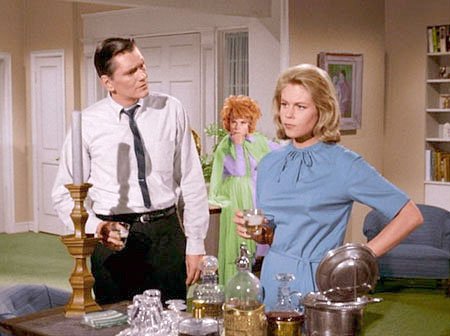 There are a group of people involved in the American news industry and they have questionable ways of sourcing information. Some of them claim to be psychics and believe that they can sense the intent of a situation before it happens. These people often work with government agencies and law enforcement and are able to access personal information and records that are confidential and they often distort the material and lie for fun. Not only that, but they also invade your personal life and spy on you and that is very dangerous because they have been responsible for ruining lives, ripping families apart, getting people hurt and killed all to serve their objectives. To further highlight this illustration, Bewitched is a situational comedy that aired in the 1960 and 1970s. It starred a beautiful young lady called Samantha and she was married to a tall, dark, handsome advertising executive called Darrin who had really nice hair. On the episode called I Confess, which originally aired 4th April 1968, Darrin gets a glimpse of his life if everyone knew that Samantha was a witch. #RandolphHarris 3 of 9
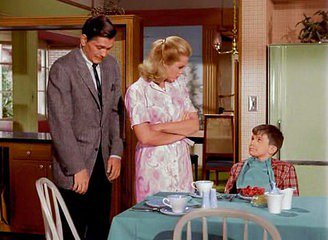 Darrin took his wife Samantha with him to work to tell his boss and owner of the advertising company, Mr. Larry Tate, that Samantha was a witch. Darrin thought that Mr. Tate would be shocked and afraid, but instead he wanted to use Samantha’s powers of witchcraft to take over the World and make his firm the most successful advertising industry on the planet. After that Darrin told his neighbor’s that Samantha was a witch, and people were selling tickets to see her, watching her house, and it put her life in danger. Eventually, Darrin lost his wife and his daughter Tabatha because the military contacted them and told them it was no longer safe for her to life in public because there were so many threats against her life. Fortunately, however, thankfully it was just a dream (and is a television show), so when Darrin woke up he forgot all about it. The idea of true healing still has some meaning. Nevertheless, this fairy tale shows you the dangers of the news media having too much power and access to people’s lives and secrets. When the news is allowed to break the laws and not be punished they put real lives in danger. We should be concerned with the consequence of spiritual decay. #RandolphHarris 4 of 9
 An industry, like the news media, that is built on exposing people and hurting people is very dangerous. To many of these reporters and journalists, we are nothing more than a news story waiting to happen. They do not care about the harm they may cause by leaking sensitive information, as our lives are meaningless to many of them. And, if an individual complains about them invading one’s life or personal business, they will often have an entertainment lawyer reach out and threaten to sue the individual complaining and have that individual arrested. Also, because the news is so powerful and they work with governors, mayors, and law enforcement, they could charge an individual with a crime for contacting them and asking them to leave one alone. The reporters are relentless in Sacramento, California and probably else were and spend years and decades terrorizing people looking for a story and nothing is done until the federal government sees there is a serious problem going on. Some people have been physically attacked by reporters and extorted and these reporters go unpunished. And when they are reported to their parent company or other regulatory agencies, they refuse to investigate and will say something like, “We have no affiliation with them,” or “We need more information.” #RandolphHarris 5 of 9
 Anyone who can dream must have a passionate desire to protect the World of one’s dreams against intruders. With our roles in society, we are more likely to cultivate the skill or qualified relevant to the role performances of central statuses than of peripheral one. For example, an athlete may give full attention to ensuring that he or she is in peak physical condition but show far less concern with whether he or she is behaving properly as a nephew or brother. The pianist may practice endlessly to improve his or her musical ability, but make no effort to learn to perform home repairs. Role performance of central statuses may transfer or diffuse to other statuses. This process is called role-person merger. The person is consisting of all the roles in an individual’s repertoire. The question raised is whether the attitudes and behavior developed as an expression of one role carry over into other situations. For example, the professional who carries the office bearing and air of authority into family and community dealings have become to a considerable degree the professional role played at work. In these circumstances, a particular status moves to the top of one’s identity hierarchy; the role standard, or qualities expected of a status incumbent, become of primary concern to the individual, and these qualities generalize to other roles. #RandolphHarris 6 of 9
 Under certain circumstances, in fact, a social identity element may become so important that it overwhelms the others. One expression of this idea is the labeling theorist’s concept of role engulfment. This concept suggests that the individual’s identification of the self with some labeled category, for example, homosexual, embezzler, or drug addict, may loom so large in his or her consciousness that all else pales by companions. His or her other statuses or characteristics, however, admirable, come to count for nothing in his or her eyes. Furthermore, global self-esteem is more likely to hinge on performance in central than in peripheral roles. This point has been felicitously by William James, “I am who for the time have stacked my all on being a psychologist, am mortified if others know much more psychology than I. However, I am contented to wallow in the grossest ignorance of Greek. My deficiencies there give me no sense of personal humiliation at all. Had I ‘pretensions’ to be a linguist, it would have been just the reverse.” Our supreme focus should be on the spiritual miracles that are available to all of God’s children. #RandolphHarris 7 of 9
 Our sense of who and what we are tends to hinge more importantly on central than on peripheral identity elements. The woman who loses her identity as wife when her husband passes into Heaven, or a man who loses his identity as a carpenter or engineer upon forced retirement, may experience feelings of uncertainty about who or what he or she really is. The loss of peripheral identity elements, on the other hand, may have little effect. For some reason that is not readily evident, sociologists appear to have been more active in developing and elaborating the idea of social identity salience than in examining it empirically. That strongly valued traits have a particularly powerful impact on global self-esteem has been clearly supported by research. Differential social identity valuation would be expected to show similar effects. The dream is one of our most powerful weapons against the psychoanalysts who insist on interpreting it. The powerful dreamer, free of guilt, stand wholly outside this World. The only guilt one feels and for which one is prepared to atone is the guilt of others. In the healthy World of one’s pure spirit, there is no room for guilt. #RandolphHarris 8 of 9
 The most important thing is to save the dream, this is the noblest attribute of an individual and artist, from destruction. We live in a day in which misinformation about our beliefs abounds. In times such as these, a failure to protect and deepen our spiritual foundation is an invitation to have then gnawed at by those who seek to destroy our faith in God, as they gnarl and buckle as us like a chain saw. Our dreams should not be interpreted by someone else. Instead, we should use our own dreams as an inspiration toward attaining precisely that knowledge of which the dreamer is deprived. Otherwise we may find ourselves bound by the advisory’s chains and being led carefully down forbidden paths. Our spiritual foundation goes deeper as sincere personal and family prayers becomes bastions of our faith as we repent daily, seeking the companionship of the Holy Ghost, and learn God and his attributes and strive to become virtuous. Dreams are a beacon of hope and do not let anyone steal your dream no matter how impossible they say it is. Pray for great things, expect great things, work for great things, but above all pray. We love you and thank you, God. #RandolphHarris 9 of 9
Are My Usual Thoughts and Present Actions Worthy of Eternal Life?
 It is a wonderful feeling to conquer wrong practices and to be free and unencumbered from their detrimental effects, both physically and spiritually. We should all take a careful inventory of our habits. Change comes by substituting good habits for less desirable one. We mold our character and future by good thought and acts. Social identity elements refer to the groups, statuses, or social categories to which the members of society are socially recognized as belonging. The human being enters a named, classified World, and is immediately sorted into socially relevant categories. Scarcely has the infant entered the World than he or she is immediately classified according to race, sex, religion, nationality, and so forth. In due course, new socially recognized categories, some of his or her own choosing, are added. These are the fundamental bases upon which society, independent of the special and unique features of each individual, orders and arranges its members. The future we seek is a life motivated by good thoughts, expressed in good works, and sustained by an inner peace and determination of righteous doing. The destiny we desire is an inheritance in the celestial mansion prepared by our Savior for the faithful of God’s children. #RandolphHarris 1 of 8
 We should become so involved in acquiring good quality traits and participating in character-building activities that there is no time to engage in anything worthless or harmful. No universally recognized classification of social identity elements is at hand. As children of God, we are given the privilege and opportunity of choosing which way of life we will follow—which habits we will form. The habits that direct our lives and form our character are fashioned in the commonplace of routine life, and they are acquired by practice. Social identity elements shape the self-concept in a number of ways. To an important extent they define for the individual what he or she is; the individual feels he is a male, lawyer, Protestant, father. Furthermore, if the social identity element is ambiguous (for example, is one an adolescent or a young adult? a music student or a musician?) the self-concept is correspondingly ambiguous. These identity elements, because of their associated role standards, represent criteria for self-judgment. A boy may condemn himself for a lack of courage which a girl may accept without a qualm. Conversely, a boy is unembarrassed at his inability to sew, a girl unembarrassed at her ineptitude at catching forward passes. #RandolphHarris 2 of 8
 Am I setting my sights on eternal goals and working to obtain them? Role performances influence social action; this behavior, in turn, comes to constitute an important part of the content of the self-concept. The good habits of a child’s early training form the foundation for his or her future and sustain the individual in one’s life later on. The professor sees himself as a teacher or writer, but the doctor usually does not; the doctor sees himself or herself as a diagnostician or surgeon, but the professor does not. Furthermore, these actions may generalize to broader aspects of the self-concept. For example, it has been discovered that people whose work requires them to exercise autonomy, make their own decisions, and assume responsibility are more likely to emerge with higher global self-esteem. Although we do not always know what lies ahead, there is strength and safety in righteous conduct. Since social identity elements represent important bases of social evaluation, they may influence self-evaluation. We need to organize our lives based of virtue, and chart a right course as we journey toward eternal life. In the conduct of our lives, we learn that good character-building habits mean everything. It is by such behavior that we harvest the real substance and value of life. The way we live outweighs any words we may profess to follow. #RandolphHarris 3 of 8
 In every society, people are characteristically ordered along a number of dimensions of stratification, for example, occupational, social class, racial, religious, gender, age, and ethnic. Occupations are arranged in a well-recognized hierarchy of prestige; ethnic preferences (including racial) are surprisingly uniform across broad segments of the society and persist over long periods of time; and so on. Since such stratified positions command unequal social self-esteem, social scientists have tended to take it for granted that those ranking lower in the various status hierarchies would have lower self-esteem than the more favored member of society. However, human beings destined purpose is to conquer all habits, to overcome the evil in humanity and to restore good to its rightful place. The ways of life acceptable to the people of the World are not always acceptable to God. We should conduct ourselves wisely before God and sin not. We should not yield to the persuasion of people with evil intent. The principle of reflected appraisals holds that if others look up to us and treat us with respect, then we will respect ourselves accordingly, but if they derogate or disdain us, then our self-esteem normally depends on the respect of others. #RandolphHarris 4 of 8
 Social comparison is at the heart of social evaluation. Bad habits are a reflect of our thoughts and personalities, our behavior and conduct. They are degrading to the choice qualities which are our God-given spiritual endowments of faith, honesty, integrity, and uprightness. Human beings learn about themselves by comparing themselves to others. Evil tendencies destroy character and ruin lives. When first yielding to sin, one’s resistance, self-control, and character are weakened and further transgression usually result. With violation of spiritual laws and rejection of spiritual qualities, our powers of resistance are reduced. Eventually we seem to lose complete control of our ability to resist evil. Imagine the great misery suffered by a person who has practiced a vice for so long that he or she curses it, yet at the same time holds on to it. And that deprived expression of reality is seeking to define life with terrible inadequacy that will revenge itself unto the third and forth generations. Our great challenge is to learn how to control ourselves. We must learn for ourselves and act for ourselves, being careful not to follow those who are not divinely led. We have a responsibility to thwart the work of the evil one—not to assist or perpetuate its cause by yielding to the enticements of sin. #RandolphHarris 5 of 8
 With good habits, we prepare ourselves for excellence. Judging the dead is a universal theme, in which evildoers are punished and the good rewarded. Every Ancient Egyptian hoped to be reborn in the afterlife in the image of Osiris, the God of the dead, and to be admitted into his kingdom. However, before this could happen, the deceased had to appear before a divine tribunal, which examined an individual’s conduct on Earth. In the judgment of the dead, the weighing of the heart ritual took place. The deceased was escorted into the tribunal and stood before Osiris, seated on a throne, and a jury of 42 Gods. In the center of the room was the balance, on which the heart would be weighed. First, however, the deceased had to make a negative confession, asserting that he or she had not committed reprehensible acts, was not guilty of evil deeds, or thoughts, and had not acted in defiance of Maat, goddess of truth and justice, or the divine order. The individual then had to repeat this confession before each member of the tribunal. As the heart was about to be weighed, the deceased pleaded with it not to betray nor condemn him or her, a prayer that was often inscribed on the scarab amulet buried with mummified bodies. #RandolphHarris 6 of 8
 The heart was then placed on the scales to be weighed against the ostrich feather that symbolized Maat. If the heart brought the scales into balance, the deceased was allowed to access the afterlife. However, if heavy with sin, the heart failed to being the scales into balance, the deceased faced the open jaws of Ammut, the Devourer of the Dead, a netherworld creature that was part crocodile, part lion and part hippopotamus. While we are living, it is important to do good. One cannot truthfully say one is confirmed in his or her bad habits, sins, or weaknesses to the point that they cannot be thrown off and repented of. The human will is naturally inclined toward the right. We are spirit children of God and have born within us the power to overcome all evil practices. We have a gracious, kind, and loving Father in Heaven who stands ready to help us. And the Lord said, “I will bring forth out of darkness unto light all their secret works and their abominations; and except they repent I will destroy them from off the face of the Earth; and I will bring light all their secrets and abominations, unto every nation that shall hereafter possess the land. And now, my child, we see that they did not repent; therefore they have been destroyed, and thus far the word of God has been fulfilled. (Alma 37.26-26).” #RandolphHarris 7 of 8
 An individual’s grief, insecure ego, inability to love, shattered dialogue, or entanglement in loneliness traps is also a collective problem for society. Living as we should, obedient and faithful, then we are on our way to the presence of God. Sometimes in life in feels like something is missing and we all want confirmation that we are doing the right thing and pleasing in these eyes of God. When we allow others just to be what he, she, or it is, without imposing our preferences or offering any resistance, the other is no longer something separate over there, apart from me. We are then free to meet and mingle with the other in the open field of awareness, where separate selfhood and otherness dissolve and fade away. Then we discover what it really means to love—to open to others as they are, without imposing our judgments or agendas on the. When the qualities that are desirable in individuals also become universal in the people of a nation, that nation also will have good character. It is a love and practice of all things that are true, honest, l lovely and of good report. #RandolphHarris 8 of 8
Get Out–They Poured Milk Down My Shirt and Put Ham in My Pants!
 Improving humanity will happen by applying science to society. There are many prejudices and misunderstandings still lingering from the past. The castration of old days left behind it traditions of punishment, ignominy, and obloquy, at the least of a kind of shameful dishonor, and such notions, it is likely, still largely prevail among the populace and become attached to the new sterilization. How the attitudes of other people affect our self-concepts also depends on which self-concept component is under consideration. A tennis expert may be highly influential in determining our judgments of our tennis skill, but our parents and friends may be more influential in determining our global self-esteem. There is a difference between role-specific significant others (whose opinions are typically significant with regard to a specific aspect of the individual’s role-set), and orientational others (whose opinions are significant in general). To establish a perspective, index role-specific significant others who’s evaluation of you as a student or employee at your job or school concerns you most. Because people should only be evaluating your material and not you personally, although you are expected to be well-behaved and of good hygiene, they have no right to judge your personally to be involved in your personal life. #RandolphHarris 1 of 12
 Therefore, the only thing they should have an impact on, when it comes to dealing with you, is your performance in school or work. Unless, of course, part of your job as a student or employee or corporation is to also be a good citizen. To reduce drama or the chance of getting anyone’s feelings hurt, it is important to evaluate these different types of relationships based on qualifying criteria. In an effort to reduce sexual harassment claims, employers usually do not allow employees to fraternize, as it might negatively affect the company and employees socially, financially, and legally. Therefore, it is important to have boundaries. Now, when it comes to orientational significant others, list those persons or groups of people whose evaluation of you as a person concerns you most. Generally, the results will show that, with regard to evaluation of the self in a professional context, respondents tend to mention faculty or manager first, with friends and family members following in that order. However, when asked about the views of others toward the self as a person, friends are most frequently mentioned, followed by family members, with faculty and employers in third place. #RandolphHarris 2 of 12
 The impact of others also depends on the degree of crystallization of the self-concept component under consideration. If the component is firmly fixed, others’ views may have little impact; but f it is uncrystallized, we may readily accept the other’s view of ourselves. This point is most evident when bogus qualities are used. When the professors gives us the results of our performance on a test or on a project at work of contrast sensitivity or perceptual discrimination, informing us that we are deficient or superior in this regard, we readily accept the expert judgment of us. The reason is, of course, that we had no performance view of ourselves regarding these qualities. However, the same is true of real but uncrystallized self-concept components. Such is the case, for example, when subjects are asked how good they are at voice control or conveying meaning. Experts’ judgments are easily accepted with reference to qualities on which we have little or no preformulated opinions. It would be far more difficult to convince us, contrary to an established assumption, that we are a fascist or a moron. #RandolphHarris 3 of 12
 There is intrinsic value to being. It is what we fundamentally are. Whether we accept the other’s view of us depends in part on whether or not we are motivated to accept it. Given the self-esteem and self-consistency motives, it is evident that we would prefer to internalize optimistic characteristics than negative, and consistent rather than contradictory, attitudes toward the self. There is evidence to suggest that, in the interests of self-esteem and self-consistency, people engage in selective perception of the attitudes of the other and selective attribution of significance. Discovering and eventually resting in this being brings a feeling of deep inner peace and freedom. As we become intimate with this still center within, we feel more connected to all of life. We experience our wholeness firsthand and become lovers of what is—of life as it appears. Our approach to life becomes increasingly less problematic as we accept what comes and allow what goes, grounded in something that feels unchanging in our core. The fluctuations of health, work, and relationships are held in a bigger and more connected space. Selective perception in the service of self-esteem characteristically involves the belief that others think more highly of us than they actually do. #RandolphHarris 4 of 12
 There is, in fact, ample evidence of such a self-favorability bias. Virtually every study that has explored the issue finds that people tend to believe that others think more highly of them than these others actually do. Furthermore, the self-consistency motive contributes to people’s tendency to believe that others’ attitudes toward them are congruent with their own. Interpersonal congruency is said to exist when the individual perceives others as attributing to one a trait that one attributes to oneself. This theory was investigated in a study of thirty-one women in a sorority house. Subjects were asked to rank themselves on sixteen paired traits, such as warm-cold, mature-immature, dominant-submissive, and so forth. The subject was asked to indicate the adjectives she thought others would assign to her, those she assigned to herself, and those she assigned to each of the other women. The results showed that the subject overestimated the extent to which others saw her as she saw herself, and that this overestimation was strongest for those women whom the subject liked or interacted with most. People thus tend to believe unduly that others—particularly those they know best—see them as they see themselves. #RandolphHarris 5 of 12
 Recognizing and consciously welcoming being into the conventional ritual of modern psychotherapy brings a feeling of shared spaciousness to the therapeutic exploration. People come to relate to their inner and outer lives with more compassionate acceptance and clarity. Selective significance is also enlisted in the service of the self-concept motives. Since significance to those who, we believe, think well (or congruently) of us and to withhold significance from others. The individual is more likely to be influenced by what one believes one’s friends think of him or her than by what one believes his or her nonfriends think of him or her. The net result of this interpersonal selectivity is to attribute greater significance to the opinions of those whose attitudes toward the self are more favorable. That is because our greatest suffering stems from our sense of separation and the feeling or being alone and disconnected from life. One of the beauties is being around people who love, accept, and respect us is that it directly addresses our core need, which is to be loved unconditionally. It also offers an intimate shared shape for us to explore our fears of being open to another being as well as to the whole of life. #RandolphHarris 6 of 12
 What empirical research has made evident is that the principle of reflected appraisals, though fundamentally correct, is an approximation. Whether we see ourselves as others see us depends on who these others are; which aspect of the self is under consideration; and whether we are motivated to accept or reject their views. The self we see when viewing ourselves through the eyes of others is thus seen through a glass, darkly. As the old conditioning is gradually processed, integrated, and released, the transpersonal domains of the soul and spirit begin to unfold. Being together offers a simple and elegant way for the self to meet itself in the apparent other. In so doing, we are looking for ourselves in others. Looking for attributes that make us feel more comfortable and complete. However, it is true, and well recognized, that a large number of defective children are the offspring of parents who are not under restraint and approximate to the normal. These parents usually belong to neurotic groups like American gossip-journalism. They are moralist without character, noise-makers in the coffee house, and it is possible to recognize them and to bring social influences to bear on them. #RandolphHarris 7 of 12
 Cases constantly occur in which to parents of this kind child after child is born in rapid succession, all more or less defective, one way or another, or even in the same way, as in a family of eight, all ambiguous meatheads and ding bats. A question of frequent debate is how far sterilization should be voluntary and how far regulated by legislation. My own prejudices in this matter have always been strongly on the voluntary side, then there would be no need for abortion or pills that make people gain weight, and they can be free to adopted some of these unwanted children in this overpopulated World. Some surgeons appear to have a nervous terror that if they sterilize they may be doing an illegal act, even if they do so at the wish of the patient, and some legal opinions seem to support it, though it is difficult to see who could dispute a voluntary sterilization, and on what grounds. A law to regulate sterilization, standing by itself, would look like class legislation and be in consequence resented by those who ought to feel, not that a punishment is being inflicted on them, but that a privilege is being brought within their reach. That result is best achieved by the free and open practice of voluntary sterilization among all classes of the community. #RandolphHarris 8 of 12
 At the same time, provided that such voluntary sterilization is openly encouraged and practiced, I am now willing to admit that legal facilities may be desirable to bring this method within reach, not only for the poor, who otherwise would not have the means nor the opportunity to secure it, but of the insane and feeble-minded under control, who can legally only give their consent through their nearest relatives, but for whom, alike in their own interest and those of their possible offspring, procreation is undesirable. It is quite possible for such parents to have tolerably normal children, but, with our increased sense of social responsibility, we begin to realize that in so serious a matter no risks must be run here. It is in California that a sterilization law, not indeed entirely admirable, has been most effective, having been applied to many thousands of subjects and worked in a reasonable way. Heredity and eugenics are an extension of natural selection. Improving the genetic makeup of the human population will happen by specifically sterilizing people with genetic defects or undesirable traits, thereby keeping them from reproducing. #RandolphHarris 9 of 12
 We need to establish an Executive Secretary of the American Social Hygiene Association. Their mission will be to use public education to promote premarital abstinence, and also promote sex education and birth control. We also need an Institute of Family Relations to bring marriage and family counseling so we can improve the race. Since the family often suffers problems which threaten its stability, we must treat those problems. In other words, we should establish a marriage counseling center where maladjustments might be brought, studied, classified—and helped is possible. Part of this counseling is to encourage fathers to take an active role in their lives of their children. By 2027, the Institute can employ 70 counselors and counsel over 300,000 men, women and children. This was a technique introduced by Dr. Paul Popenoe (1888-19790, he was a Sunday School teacher and a secular humanist. When he was 17, he fainted after eating a steak dinner and became a strict vegetarian long before it was popular. And true to his Victorian roots, he did not believe in any kind of sex outside of marriage, and he was a virgin on his wedding night. He became the marriage counselor to the stars and sessions maintained privacy. #RandolphHarris 10 of 12
 In total, 20,108 people were sterilized in the state of California prior to 1964. California had by far the highest number of sterilization in the United States of America (33 percent of all sterilization nationwide). Men and women were sterilized. However, because of the sensitive nature of sterilization records, many are difficult to access or have been altered. This suggests that the total known number of sterilizations may be conservative compared to actual number. Eugenicists in California saw sterilization as a tool with a broad range of applications, all of which were applied to prevent the procreation and overcrowding of state institution and to alleviate fiscal constraints on the state. It has been estimated that the sterilization of 10 percent of the population would produce an appreciably beneficial eugenic effect on the whole nation. Experimental Evolution was a product of the Eugenics Record Office, the first building to be devoted solely to the study of human evolution or race biology. Dr. Charles B. Davenport believed that we needed a social movement that would embody the impulses of racial regeneration and genetic editing to prevent the nations of the World from going bankrupt. The aim: how can we now replace the aim quantity by that of quality? #RandolphHarris 11 of 12
 When we grasp that problem in all its branches we see that it is most intimately bound up with our personal lives. And when we recognize how the problem presents itself today we shall realize from the wider human standpoint, having more quality people over quantity is the most vital problem of society. “Behold, I am laboring with them continually; and when I speak the word of God with sharpness they tremble and anger against me; and when I use no sharpness they harden their hearts against it; wherefore, I fear the lest the Spirit of the Lord hath ceased striving with them. For o exceedingly do they anger that it seemeth me that they have lost their love, one towards another; and they thirst after blood for revenge continually. And now, my beloved children, notwithstanding their hardness, let us labor diligently; for if we should cease to labor, we should be brought under condemnation; for we have a labor to perform whilst in this tabernacle of clay, that we may conquer the enemy of all righteousness, and rest our souls in the Kingdom of God (Moroni 9.4-6).” Grief can take care of itself, but to get full value of a joy, you must have somebody to divide it with. #RandolphHarris 12 of 12
 Randolph Harris II International Institute