
Home » family (Page 53)
Category Archives: family
Many Business People Love Monday as it is an Escape from Having Nothing Planned, Nothing Scheduled!
 We heard the presence very sharply after that, as we explored the churches, then again it was gone. We climbed belfries to survey our kingdom, and afterwards huddled in crowded coffeehouses for a little while merely to feel and smell the mortals around us, to exchange secret glances, to laugh softly, tete-a-tete. That form of the pause which we call leisure is also, curiously enough, both desired and feared. Unbonded leisure can turn people’s lives into chaos, which those people can then blame on excessive freedom. Persons who despair about such problems as delinquency, truancy, alcoholism, drugs, often point to too much leisure as the villain of piece. These people believe that the devil indeed has work for idle hands. The word leisure can be read as freedom or pausing. This is why American leisure has to be filled with named games, organized recreation, labelled hobbies, planned activities. And this is why the have to is often paradoxically freeing. Observing the sharp dilemma people are thrown into by leisure time, we ask: What is this apparent fear of leisure? In America we have traditionally associated freedom, especially in the form of leisure, with space. There was always some new, unexplored space to go to. Land was free. #RandolphHarris 1 of 13
 However, we cannot enter the private dwellings of mortals now to search for the clothes we need, even if we can hear a house is empty, we cannot move swiftly through the streets, with our eyes on the windows of the darkened mansions, and steal one of the rings off a sleeping woman’s hands. Therefore, America the free is not this is not true in a literal sense nearly as much as it used to be, the concept is still very much a part of our American Legend, American Dream, and Americana. Unfortunately, the Native Americas were never considered as owning the space or land. Freedom of the land was recognized as the fundamental freedom, from which other freedom was derived. We expressed our freedom of the body by moving to a new space. So we remained extroverts, concerned with our muscle. Hence, the great outcry, and near panic, with gasoline shortage. People interpreted it as having their freedom to travel, to move, taken away from them, thus enslaving them. In Europe, on the contrary, all spaces has been exploded for a long time, and is now apportioned out and owned by somebody. So the Europeans’ emphasis has been on time. Europeans cultivated the introvert side, turned inward, free in their imaginations and thought to travel all over the World. Freedom meant freedom of the mind in contrast to the body. #RandolphHarris 2 of 13
 However, in American this leaves us with a problem. We no longer can simply pack up and move to another house, typically farther west. When our freedom essentially means what we do with our leisure, freedom then turns out to be a vacuum. There is no being in it; it is a “no thing.” This becomes clear in psychoanalysis. There is something called “Sunday neuroses,” the anxiety that subtly eats away at business people on Sunday when nothing is planned, nothing scheduled. These business people are filled with anxiety and stoically endure the passage of time until Monday morning when they can go back to work and again become occupied. (What a graphic phrase, “become occupied,” implying that something outside ourselves takes over and occupies us!) Does this version of freedom, with it dependence on the pre-planned and its main emphasis on the capacity of the self, engender creativity, originality, spontaneity? My own opinion is that it does not; that indefiniteness and randomness, the recognition of the pauses are all essential to creativity. I enthusiastically agree. If the person is to be open to one’s creative impulses, randomness, the recognition of the pauses, and the confronting of leisure rather than destroying it by excessive planning are essential. #RandolphHarris 3 of 13
 The pause is the essence of creativity, let alone of originality and spontaneity. One cannot avail oneself of the richness of precociousness or unconsciousness unless one can let oneself periodically relax, be relieved of tension. It is then that the person lets the silences speak. There is value to the analyst when a patient misses an hour. If the analyst is the creative type, this empty hour is of the essence. Therefore, it is true that unstructured freedom is difficult for most people to confront for long periods. However, there are happy mediums, and the use of leisure falls in that category. The constructive limits to our freedom are given by what we are committed to and by the myths we live by. Then there can be meaning to leisure. We can use it for random thinking, reverie, or for simply wandering around a new city for a time. Yes, the time may be wasted. However, who is to say that this wasted time may not bring us our most important ideas or new experiences, new visions, that are invaluable? The letting be and letting happen may turn out to be the most significant thing one can do. The sickness of our age is unlike that of any other and yet belongs with the sicknesses of all. The history of cultures is not a stadium of eons in which one runner after another must cover the same circle of death, cheerfully and unconsciously. #RandolphHarris 4 of 13
 A nameless path leads through their ascensions and declines. It is not a path of progress and development. It is a descent through the spirals of the spiritual underworld but could also be called an ascent to the innermost, subtlest, most intricate turn that knows no Beyond and even less any Backward but only the unheard of return—the breakthrough. Shall we have to follow this path all the way to the end, to the test of the final darkness? However, where there is danger what saves grows, too. The biologistic and the historiosophical orientations of this age, which made so much their differences, have combined to produce a faith in doom that is more obdurate and anxious than any such faith has ever been. It is no longer the power of karma nor the power of the stars that rules mortal’s lot ineluctably; many different forces claim this dominion, but upon closer examination it appears that most of our contemporaries believe in a medley of forces, as the late Romans believed in a medley of gods. The nature of these claims facilitates such a faith. Whether it is the law of life—a universal struggle in which everybody must either join the fight or renounce life—or the psychological law according to which innate drives constitute the entire human soul; or the social law of an inevitable social process that is merely accompanied by will and consciousness; or the cultural law of an unalterably uniform genesis and decline of historical forms. #RandolphHarris 5 of 13
 Or, whatever variation there may be: the point is always that mortals are yoked into an inescapable process that one cannot resist, though one may be deluded enough to try. From the compulsion of the stars the ancient mysteries offered liberation; from the compulsion of karma, the Christian sacrifice, accompanied by insight. Both were preparations for salvation. However, the medley idol does not tolerate any faith in liberation. It is considered foolish to imagine any freedom; one is supposed to have nothing but he choice between resolute and hopelessly rebellious slavery. Although all these laws are frequently associated with long discussions of teleological development and organic evolution, all of them are based on the obsession with some running down, which involves unlimited causality. The strict and rigid doctrines of a gradual running down represents mortal’s abdication in the face of the proliferating It-World. Here the name of fate is misused: fate is no bell that has been jammed down over mortals; nobody encounters it, except those who started out from freedom. However, the strict and rigid doctrines of some running down leaves no room for freedom or for its most real revelation whose tranquil strength changes the countenance of the Earth: returning. #RandolphHarris 6 of 13
 The strict and rigid doctrines do not know the human being who overcomes the Universal struggle by returning; who tears the web of drives, by returning; who rises above the spell of one’s class by returning; who by returning stirs up, rejuvenates, and changes the secure historical forms. The strict and rigid doctrines of running down offers you only one choice as you face its game: to observe the rules or drop out. However, one that returns knocks over the mortals on the board. The strict and rigid doctrines will at most permit you to carry out conditionality with your life and to remain free in your soul. However, that one returns considers this freedom the most ignominious slavery. Nothing can doom mortals but the belief in doom, for this prevents the movement of return. The belief in doom is a delusion from the start. The scheme of running down is appropriate only for ordering that which is nothing-but-having-become, the severed World-event, objecthood as history. The presence of the You, that which is born of association, is not accessible to this approach, which does not know the actuality of spirit; and this scheme is not valid for spirit. Divination based on objecthood is valid only for those who do not know presentness. Whoever is overpowered by the It-World must consider the strict and rigid moral doctrines of an ineluctable running down as a truth that creates a clearing in the jungle. #RandolphHarris 7 of 13
 In truth, these strict and rigid doctrines only leads one deeper into slavery of the It-World. However, the World of the You is not locked up. Whoever proceeds toward it, concentrating one’s whole being, with one’s power to relate resurrected, behold one’s freedom. And to gain freedom from the belief is unfreedom is to gain freedom. And Jesus cried out and said, “One who believes in me, believes not in me but in him who sent me. And one who sees me sees him who sent me. I have come as light into the World, that whoever believes in me may not remain in darkness. If any one hears my sayings and does not keep them, I do not judge one; for I did not come to judge the World but to say the World. One who rejects me and does not receive my sayings has a judge; the word that I have spoken will be one’s judge on the last day. For I have not spoken on my own authority; the Father who sent me has himself given me commandment what to say and what to speak. And I know that his commandment is eternal life. What I say, therefore, I say as the Father has bidden me,” reports John 12.44-50. “He who believes in me, believes not in me but in one who sent me.” These words follow a bitter complaint of the evangelist about the unbelief and half-belief of the people and their leaders. The words are introduced by the phrase: “Jesus cried out . . .” He is making an almost desperate effort to be understood. And what Jesus cries out is that the believing in him means not believing in him. #RandolphHarris 8 of 13
 The argument of the unbelievers was—and is in all periods—that it is impossible to believe in Jesus of Nazareth as Jesus of Nazareth. Jesus declares: “This argument is valid. If people are asked to believe in me, they should not do so. However, they are not asked any such thing! They are asked to believe in one who has sent me, who is greater than I and with whom I am one. I have spoken on my own authority,” Jesus continues. “If I did so, the unbelievers would be right.” There are many authorities in past and present. Why accept one and not another? Why accept any authority? As Jesus the man Jesus is neither an authority nor an object of faith. None of his superior qualities—neither his religious life, nor his moral perfection, nor his profound insights—make him an object of faith or the ultimate authority. On this basis, Jesus say, he does not judge anyone. If he did, he would be a tyrant who imposes himself and his greatness on others, thus destroying instead of saving them. What about our preaching? When we use the name of Jesus, do we not often try to force upon those to whom we are speaking and upon ourselves something great besides God? Do we always make it clear that believing in Christ does not mean believing in him? If not, are we not working for destruction more than for salvation? #RandolphHarris 9 of 13
 It seems that the Christian painters knew more about this than we often do. They did not present a picture of Jesus of Nazareth as Jesus of Nazareth. They painted him as the infant of Bethlehem who contains the whole Universe, though lying now in Mary’s lap. Through Christ’s infantile traits shines the power of the Lord of the World. Or they painted Christ as the visible bearer of the divine majesty in those great mosaics where every piece of his grown is transparent for the infinite depth he represents and expresses. Or they painted him as the Crucified who does not suffer as an individua man, but as he who stands for both the suffering Universe and the divine love which participates in its suffering. Or they painted him as the bringer of the new aeon who controls the powers of nature, the souls of mortals, the demonic forces of disease, insanity, and death. However, they did not give Christ individual traits, did not make him a representative of a psychological type or of a sociological group. Look at the pictures of the Sistine Chapel. Michelangelo gave a special character to every prophet, to every sibyl. However, when he painted Jesus as the ultimate judge, only an irresistible divine-human power appears. #RandolphHarris 10 of 13
 When in our time Jesus became an object of biographical and psychological essays and was portrayed as a fanatic and neurotic, or as a pious sufferer, or as a social benefactor, or as a moral example, or as a religious teacher, or as a mass leader—he ceased to be the one in whom we can believe, for he ceased to be the one in whom we do not believe, if we believe in him. He was no longer Jesu who is the Christ. We cannot pray to anyone except to God. If Jesus is someone besides God, we cannot and should not pray to him. Many Christians, many among us, cannot find a way of joining honestly with those who pray to Jesus Christ. Something in us is reluctant, something which is genuine and valid, the fear of becoming idolatrous, the fear of being split in our ultimate loyalty, the fear of looking at two faces instead of at the one divine face. However, one who sees him see the Father. There are no two faces. In the face of Jesus the Christ, God makes his face to shine upon us. For nothing is left in the face of Jesus the Christ which is only Jesus of Nazareth, which is the only face of one individual besides others. Everything in his countenance is transparent to him who has sent him. Therefore, and therefore alone, can we sing at Christmas-time: “O come, let us adore him.” #RandolphHarris 11 of 13
 The word mystic is not the perfect one to convey my meaning, but it is at least the handiest one. It as been so ill-used that spouters of the errant nonsense have taken shelter under its roof whilst oracles of the loftiest wisdom have not hesitated to call themselves by this name. The partisan approach to this name has caused it to become either an abusive or else an adulatory word rather than a precise description. Whereas some use it in contempt, others use in it praise! Again, how many are scared by its very sound! When they hear the word mysticism uttered, there are even persons who feel a shiver run down their back! It has been stated that they who do not feel in possession of enough strength or desire to tread the ultimate path need not do so, and that if they remember and sometimes read about it even this will yield good fruit in time. We have been asked to be more explicit on this point. We deeply sympathize with all those who do not feel inclined to tackle the mental austerities involved in the ultimate path. If, however, they will just dip into its intellectual study from time to time, a little here this week and a little there next week, without even making their reading continuous and connected, there will slowly take shape in their minds an outline of some of the main tenets of this teaching. #RandolphHarris 12 of 13
 And however vague this outline may be it will be immeasurably better than the blank ignorance which covers the rest of humankind like a shroud. These new ideas will assume the characteristics of seeds, which under the water of the student’s own aspiration and the Sunshine of visible and invisible forces, will grow gradually into fruitful understandings and deeds. For the karmic consequences of such interest will be one day birth into a family where every opportunity for advancement will be found. At least it has aroused them to awareness that there is such a thing: they have later the chance to think about it, still later to try it, and perhaps in the end to appreciate it. The ideal may appeal, coming as it does from God, but the ego will put up obstacles, resistances, to its realization. The images of the Ideal formed in the early years of adulthood may get broken or smudged or even lost. The clamour from outside—by which I do not mean heard noise alone—is so insistent that the summons from inside is seldom heard or, if heard at all, is taken to be a summons to culture, art, poetry, and music perhaps or to intellect and its development. This dream of eventual illumination will haunt the background of one’s own mind as a hope to be fulfilled in some far-off future life. One is too aware of one’s own weakness to bring it into the foreground. #RandolphHarris 13 of 13
Wide Unclasp the Tables of Their Thoughts—These Same Thoughts, People, this Little World
 It was time to go out, time to test my powers. After all there had not been a case of witchcraft in a hundred years, the last that I knew f being the trial of La Voisin, a fortune-teller, bunt alive in the time of Louis the Sun King. All the houses, built by Cresleigh Homes in Rocklin, California, looked like dollhouses to me in their completeness. They reminded me of baby Winchester Mansions. Perfect collections of toys with their dainty little wooden chairs and polished mantelpieces, mended curtains and well-scrubbed floors. I saw all this as one who had never been a part of life, gazing lovingly at the simplest details. A starched white apron on its hook, worn boots on the hearth, a pitcher beside a bed. And the people . . . oh, the people were marvels. I was reflecting on my time at the Winchester Mansion, after the passing of Mrs. Winchester in 1922, we opened one of the safes, and I was flabbergasted by what I saw there. The safe was crammed with gems and gold and silver. There were countless jeweled rings, diamond necklaces, ropes of pearls, plate and coins and hundreds upon hundreds of miscellaneous valuables. I ran my fingers lightly over the heap and then held up handfuls of it, gasping as the light ignited the red rubies, the green of the emeralds. #RandolphHarris 1 of 13
 I saw refractions of color of which I have never dreamed, and wealth beyond any calculation. It was the fabled Caribbean pirates’ chest, the proverbial king’s ransom. And it was mine now. More slowly I examined it. Scattered throughout were personal and perishable articles. Satin mask rotting away from their trimming of gold, lace handkerchiefs and bits of cloth to which were fixed pins and brooches. Here was a strip of leather harness hung with gold bells, a moldering bit of lace slipped through a ring, snuffboxes by the dozen, lockets on velvet ribbon. Had Mrs. Winchester been collecting this all her life? I lifted up a jewel-encrusted sword, far too heavy for these times, and a worn slipper saved perhaps for its rhinestone buckle. There were other objects scattered about in this treasure. Rosaries made up gorgeous gems, and they still had their crucifixes! I touched the small sacred images. Perplexity is leavened by extravagant Victorian beauty scattered along each crooked path of exploration in this 160-room catacomb. Regularly each night Mrs. Winchester dined in lonely splendor, table set with a $774,387.88 solid-gold dinner service. And each night she counted every piece as it was put away in one of the mansion’s six huge safes. #RandolphHarris 2 of 13
 I think I was on the verge of deceiving her, of creating some strong emanation of contentment with all the powers I had. I would tell mortal lies with immortal skills. I would start talking and talking and testing my every word to make it perfect. However, something happened in the silence. I do not think I stood still more than a moment, but something changed inside of me. An awesome shift took place. In one instant I saw a vast and terrifying possibility, and in that same instant, without question, I made up my mind. It had no words to it or scheme or plan. And I would have denied it had anyone questioned me at that moment. I would have said, “No, never farthest from my thoughts. What do you think I am, what sort of monster” . . . And yet the choice had been made. I understood something absolute. The relation between creativity and pause is as close as it is startling. Not only does one get one’s original ideas in the pause—Albert Einstein got his while shaving. Henri Poincare, French Mathematician, got his while walking by the sea; others get theirs in dreams at night—but the capacity to pause is woven all through the creative production itself. The pause is an active, nimble, often intense state, as when an Olympic diver, Jennifer Abel or Tom Daley, pauses at the end of the diving board until that precise hundredth of a second when every muscle is tensed in harmony. And at that instant one dives. #RandolphHarris 3 of 13
 The creative person stands in a state of openness, heightened sensitivity, incubating the creative idea, with a sharpened readiness to grasp the creative impulse when it is born. The phrase “inviting the Muses,” which is a part of the occupation in the pause, is an active yearning, an imploring, the authenticity of which is demonstrated by the hours of hard work the creative person puts in before and after the insight. While writing this essay, I went to the nearby coast one Sunday hoping to do a sketch. Afterward, I wrote some notes about the experience: I walk about on the shore in a mood of readiness, openness, asking myself, Where is the scene that grasps me? This red cliff with that water behind it or that boulder with the other rocks in front of the ocean? I continue looking until I have the special feeling that a particular scene seizes me. I see it; and though I do not think of this consciously, I see it in a way that no one has ever seen it before. I think only: “This I like, this turns me on.” When I start painting: The colors flow into each other . . . my muscles react . . . I make this line going off in the direction, another great rock on the paper . . . the colors form almost as though they had their own plan in mind . . . the World is born anew in the painting. #RandolphHarris 4 of 13
 Not only did no one ever see this scene before as I do now [everyone sees every scene differently] but I find a new picture coming to birth, new to me as well as others, in the flowing of the colors into each other, new in that the combination makes a different effect from what I have expected. We see how important are such terms as “readiness,” “openness.” In these active pauses, we see the work of destiny born in the unpredictable flowing of colors. Hence so much of creativity seems accidental. However, the artist, whether one be scientific inventor or painter or writer or what not, is the one who can most often put oneself in readiness for the “accident.” True, the picture comes out differently from what one expects. However, knowing one can never predict for the “lucky accident.” This means that “accident” is not the right term: rather, a myriad of different possibilities exist, and out of these one is born. Our capacity to appreciate is already a kind of creativity which shows the activity in the pause. Our appreciative listening to Mozart, Aaliyah, Bach, our concerned reading of Aeschylus, is our creative contribution. The listening and the seeing are what is important; hence, Frederick Franck in his book on Zen painting entitled it, very rightly, The Zen of Seeing. #RandolphHarris 5 of 13
 Indeed, it takes listeners, actual or imaginary and partakes of the creative act by virtue of the fact that writing poetry or prose or music dramas would not be possible without a real or imagined audience, whether an author writes for people of one’s own century (like most of us) or for later centuries (like Soren Kierkegaard). The presence of the pause is very clear in Henri Matisse’s paintings in his use of space—which is a synonym for pause. Ben Shahn tells, in his description of creativity, of one day taking his daughter out to his studio with him to make a mock-up book out of one color, rejected it, pondered another, put it aside, and so on for half an hour. When they came back into the house, the little girl asked her mother, “Why can’t Daddy make up his mind?” Ben Shahn goes on to explain that the artist is the one who has the courage to pause, to be suspended for a certain duration in midair. And even though in our technological culture such doubts may appear on the surface to imply weakness, this pausing is really a sign of an inner richness of discriminatory powers. #RandolphHarris 6 of 13
 There is a phrase among artists, “negative space,” which stands for space not noticed by the usual viewer. On a Rorschach record, “negative space” is the white area surrounding the black or colored. Many people who take the Rorschach never notice or remark on the white spaced—it is simply “surrounding.” Those who do, who see many white spaced may be adjudged “stubborn” on the test because they are preoccupied with the opposite to what most people point out. This is an interesting commentary on the conformist tendencies in our culture to see artist and musicians as a bit strange and to see the pause as an anomaly. I want to make clear that the common misconception that the creative person is passive is just that—a misconception. The creative person is receptive. I agree entirely with Archibald MacLeish when he quotes a Chinses poet, “We poets struggle with Non-being to force it to yield Being. We knock upon silence for an answering music.” Archibald MacLeish continues, “The ‘Being’ which the poem is to contain derives from ‘Non-being,’ not from the poet. And the ‘music’ which the poem is to own comes not from us who make the poem but from the silence; comes in answer to our knock.” #RandolphHarris 7 of 13
 The creative act has always been a paradox, and it probably will always be one. Practically everybody trying to explain it, especially the psychoanalysts who propose that creativity is “regression in the service of the ego,” find they crash upon the rocks of their inability to distinguish between passivity and receptivity. The creative persons are the latter; they are certainly not the former. We do not know from what combination in the brain cells and synapses the creative ideas spring. However, we do know that creativity requires freedom, and the pause is the way to give that creative combination the chance to work. Pausing is wondering, and wonder is first cousin to creativity. Poetry for me is the space between the words. A poet is a poet when he or she can create that tension between words—a tension created by spaces—that lift the reader would add, of intense or mild ecstasy—standing mentally outside oneself. These new experiences of splendor or wonder or just plain insight have their start in the poem, but they leap out into the reader’s conception of his own private World. Creativity comes not only out of our moments or hours or weeks of effort; it requires—and this is essential—the moments or hours or weeks of pause between the effort. #RandolphHarris 8 of 13
 The pause is that situation in which symbols are formed. The intensity of handling all the stimuli that come at us requires the symbol. How are we to assess these stimuli, how are we to judge them, to weight them—all of which must be done before one can throw one’s strength toward this response rather than that one, to employ our simplest paradigm of freedom? The term symbol comes from two Greek words, sym meaning “with” and bollen meaning “to throw.” The symbol is, thus, that which throws or brings together these antimonies into one image, one form. The vitality of the situation is preserved for as long as the symbol continues to exist. We surely cannot handle all these stimuli by computer; we cannot add and subtract and in other mathematical ways try to fashion them into a decision. In a technological problem one can do this. However, when one tries to turn human decisions—such as whom shall I marry—over to the machine and tried to abstract oneself out of the picture, one becomes more and more mechanical, less and less personal and human. #RandolphHarris 9 of 13
 Lo and behold, the warmth has gone out of the situation, the vitality lost, the personal characteristics fled, and the person talking to you experiences you as less and less a person and more and more a machine. This is similar to talking with brain-injured patients in a mental hospital: they understand all the words you use, but cannot go behind the words to understand you as the person speaking. A human being is normal communication speaks in symbols, and if these are not grasped—and they are not by the brain-injured—the person is not understood. Al vital words carry some residue of their origin as symbols. In a human problem, the pattern is all-important and personal likes and dislikes are crucial. The response, to which you throw your weight, will not be only a conclusion, but will also be a commitment with its own power. Many factors need to be taken into consideration, some of which are only partially conscious. In such personal questions there is no decision which is right, but only approximately so. We have to keep the different factors all alive, like a juggler with a dozen balls in the air; we cannot avoid some factors without doing damage to the totality. What ideally happens is that these stimuli begin to fit into a pattern, a whole, a totality, a form that preserves the kernel and the value of each one. This is the symbol. #RandolphHarris 10 of 13
 Take, for example, the apparently simply stimuli that arise around the concept of patriotism. There is the call of one’s homeland; the fact that our forefathers fought in 1776 to construct this nation; the feeling of comradeship with people who speak the same language; and a million and one other facts and memories acting as stimuli. You hit upon a banner, and you call it a flag. The flag does not leave out any of the above meanings; it expresses the multitude of meanings in a compact, dynamic symbol. The elements that are forged and united into symbol in this pause which we have made the center of freedom come from many sources. They are from past and present, individual and group, consciousness and unconsciousness, and they are both rational and irrational. All of these antimonies are brought together in the pattern which is the symbol. The symbol keeps them alive and vital. Every great culture that embraces more then one people when a response is made to a You, an essential act of the spirit. Reinforced by the energy of subsequent generations that points in the same direction, this creates a distinctive conception of the cosmos in the spirit; only this does a human cosmos become possible again and again; only now can a mortal again and again build houses of worship and human houses in a distinctive conception of space and from a confident soul—and full vibrant time with new hymns and songs and give the human community itself a form. #RandolphHarris 11 of 13
 However, only as long as one possesses this essential act in one’s own life, acting and suffering, only as long as oneself enters into the relation is one free and thus creative. When a culture is no longer centered in a living and continually renewed relational process, it freezes into the It-World which is broken only intermittently by the eruptive, glowing deeds of solitary spirits. From that point on, common causality, which hitherto was never able to disturb the spiritual conception of the cosmos, grows into an oppressive and crushing doom. Wise, masterful fate which, as long as it was attuned to the abundance of meaning in the cosmos, held sway over all causality, has become transformed into demonic absurdity and has collapsed into causality. The same karma that appeared to earlier generations as a beneficial dispensation-for our deeds in this life raise us into higher sphere in the next—now is seen as tyranny for the deeds of a former life of which we are unconscious have imprisoned us in a dungeon from which we cannot escape in this life. #RandolphHarris 12 of 13
 Where the meaningful law of Heaven is used to arch, with the spindle of necessity hanging from its bright vault, the meaningless, tyrannical power of the planets now holds sway. It used to be merely a matter of entering Dike, the Heavenly path that aimed t be ours, too, and one could live with a free heart in the total measure of destiny. Now we feel, whatever we do, the compulsion of heimarmene, a stranger to spirit who bends every neck with the burden of the dead mass of the World. The craving for redemption grows by leaps and bounds and remains unsatisfied in the end, in spite of all kinds of experiments, until it is finally assuaged by one who teaches mortals how to escape from the wheel of rebirth, or by one who saves the souls enslaved by the powers into the freedom of the children of God. Such accomplishments issue from a new encounter that becomes substantial, a new response of one human being to one’s You, an event that comes to determine fate. The repercussions of such a central essential act may include the supersession of one culture by another that is devoted to this ray, but it is also possible for a culture to be thus renewed. The yearning for spiritual light wells up in the heart spontaneously. It is a natural one. However, desires, egoism, and materialism cover it for so long a time that it seems unreal. #RandolphHarris 13 of 13

Blessed are the Eyes Which See the things that We See–We Can Exercise Our Freedom Even Against Destiny!
 I was too anxious and miserable to play with them! I was too dazed. I shouted the old questions, “Who are you, speak to me!” The glass panes rattled in the nearby windows. Mortals stirred in their little chambers. There was no cemetery here. “Answer me, you pack of cowards. Speak if you have a voice or once and for all get away from me!” And then I knew, though how I knew, I cannot tell you, that they could hear me and they could answer me, if they chose. And I knew that what I had always heard was the irrepressible evidence of their proximity and their intensity, which they could not disguise. However, their thoughts they could cloak and they had. I mean, they had intellect, and they had words. I let out a long low breath. I was stung by their silence, but I was stung a thousand times more by what had just happened, and as I had done so many times in the past, I turned my back on them. The length of time of the pause is, in principle, irrelevant. When we look at what actually happens in people’s experience, we note that some pauses can be infinitesimally small. When I am giving a lecture, for example, I select one word rather than another in a pause that lasts for only a millisecond. In this pause a number of possible terms flash before my mind’s eye. #RandolphHarris 1 of 13
 If I want to say the noise of loud, I may consider in this fraction of a second such words as deafening, startling, or overwhelming. Out of these I select one. All this happens so rapidly—strictly speaking, on the preconscious level—that I am aware of it only when I stop to think about it afterward. Note in this last sentence I say “stop to think.: This habitual phrase is another proof of the importance of pause. There is a necessity of stopping to think—in other words, pausing is essential to the process of reflection. However, something else, even more interesting, occurs in those small, multitudinous pauses as one speaks. This is the time when I “listen” to the audience, when the audience influences me, when I “hear” its reaction and ask silently, What connotations are they taking from my words? For any experienced lecturer the blank spaces that constitute the pauses between the words and sentences is the time of openness to the audience. At such times I find myself noting: There someone seems puzzled; here someone listens by tipping his head to one side so as not to miss any word; there in the back row—what every speaker dreads to see—is someone nodding in sleep. Every experienced speaker than I know is greatly helped by the cultivation of one’s awareness of facial expressions and other subtle aspects of unspoken communication from the audience. #RandolphHarris 2 of 13
 Walt Whitman once remarked that “the audience writes the poetry,” and in an even clearer sense the audience gives the lecture. Hence, a lecture delivered from the same notes, sat once to a social club and then again to graduate students at a large university, will often seem to be two entirely different speeches. The pause for milliseconds while one speaks is the locus of the speaker’s freedom. The speaker may mold one’s speech this way or that, one may tell a joke to relax the audience, or—in a thrilling moment of which there cannot be too many in a lecturer’s career—one may even be aware of a brand-new idea coming to one from Heaven knows where in the audience. Cassandra, we are told in Aeschylus’ drama, foretold the doom of Mycenae. A prophetess, she was sensitive to communications on many different levels of which the average person is unaware. This sensitivity caused her much pain, and if she could have, she would gladly have given up her role. She was doomed, or destined to listen on these different levels; she could not escape hearing the messages coming in her pauses. Quite apart from the roles of prophetess or mystic—which we see also in Tiresias and Jeremiah and Isaiah—it would seem that multitudes of us have such capacities, but we train ourselves (a process abetted by much contemporary education) to suppress this sensitivity to the pauses. #RandolphHarris 3 of 13
 And we may suppress the sensitivity to the pause in the hope of avoiding the pain. The difference between the charlatan and the genuine prophet may well be the sense of pain the latter experiences in one’s prophecies. The pause may be longer, for instance, wen one is answering questions after a lecture. In response to a question, I may silently hem and haw for a moment while different possible answers flash through my mind. At that time I do not usually think of Soren Kiekegaard’s proclamation “Freedom is possibility,” but that is what I am living out in those moments of pause. The thrilling thing is that at such a time a new answer that I have never thought of may suddenly emerge. It is often said that intellectually creative people—like John Dewey, for example—are a strain to listen to and are not good public speakers, because the time they pause to consider different possibilities requires a capacity to wait that most people find tedious. One’s freedom may involve still larger pauses. When one is making important decisions like buying a house, “Let me sleep on it” is a not infrequent remark. These are the situation in which a longer interval between stimuli is desired; there may be many different houses available, or one can decide not to buy at all. The decision then requires complex consideration, pondering, setting up the possibilities for choice, and playing “as if” games with oneself to assess various factors like view and design and so on. Freedom consists of these possibilities. The pauses are the exercise of one’s freedom to choose among them. #RandolphHarris 4 of 13
 We recall that Jesus Christ, following his own inner guidance, went off into his separate wilderness to engage in his quest. If the records are to be believed, he paused for forty days. These were assumedly times of intense concentration, times of considering possibilities, of listening to whatever voices were available on deeper levels within themselves, voices from nature, voices from what we now term archetypal experiences, voices from what Jesus called God, and I would call Being. These assumedly were periods in which they experienced their visions and integrated themselves around their message. However, students tell me that they have professors who pause permanently. These teachers make a career our of pausing. The pause is then not a preparation for action but an excuse for never acting at all. It has been remarked that the academic profession is the only one in which you can make your living by questioning things. How much it is still true in academia that persons substitute talking for decision or rationalize lack of commitment by calling it “judicious pausing” I do not know. Nevertheless this is a tendency that confronts us all: to use pausing as a substitute for committed action. In our action-oriented life in America this misuse of pausing is a not infrequently found neurotic reaction. However, this dilemma is not overcome by acting blindly, without consciousness and without reason. When it is necessary to act if one’s freedom is to be actualized at all, to be free obviously requires the courage to act. #RandolphHarris 5 of 13
 A person may ponder for months and years or all life long, never finding satisfactory answers. This occurs particularly with the question of death. When he stated his concerns with what might happen beyond death, Hamlet spoke for many of us. “When we have shuffled off this mortal coil, it must give us pause.” However, in our personal freedom can be actualized regardless of whether we find satisfactory answers or not, or even if there are no answers at all. We can exercise our freedom even against destiny. Indeed, in the long run to “know that he dies,” as Blaise Pascal said, is the most essential and triumphant experience of freedom possible for a human being. In the It-World causality holds unlimited sway. Every event that is either perceivable by the senses and physical or discovered or found in introspection and psychological is considered to be of necessity caused and a cause. Those events which may be regarded as purposive form no exception insofar as they also belong in the continuum of the It-World: this continuum tolerates a teleology, but only as a reversal that is worked into one part of causality without diminishing its complete continuity. The unlimited sway of causality in the It-World, which is of fundamental importance for the scientific ordering of nature, is not felt to be oppressive by the mortal who is not confined to the It-World but free to step out of it again and again into the World of relation. #RandolphHarris 6 of 13
 Here I and You confront each other freely in a reciprocity that is not involved in or tainted by any causality; here mortals finds guaranteed the freedom of one’s being and of being. Only those who know relation and who know of the presence of the You have the capacity for decision. Whoever makes a decision is free because one has stepped before the countenance. The fiery matter of all my capacity to will surging intractably, everything possible for me revolving primevally, intertwined and seemingly inseparable, the alluring glances of potentialities flaring up from every corner, the Universe as a temptation, and I, born in an instant, both hands into the fire, deep into it, where the one that intends me is hidden, my deed, seized: now! And immediately the menace of the abyss is subdued: no longer a coreless multiplicity at ply in the iridescent equality of its claims; but only two are left alongside each other, the other and the one, delusion and task. However, now the actualization commences within me. Having decided cannot mean that the one is done while the other remains lying there, an extinguished mass, filling my soul, layer upon layer, with its dross. Only one that funnels all the force of the other into the doing of the one, absorbing into the actualization of what was chosen the undermined passion of what was not chosen, only one that serves God with the evil impulse, decides—and decides what happens. #RandolphHarris 7 of 13
 Once one has understood this, one also knows that precisely this deserves to be called righteous: that which is set right, toward which a mortal directs oneself and for which one decides; and if there were a devil he would not be the one who decided against God but one that in all eternity did not decide. The mortal to whom freedom is guaranteed does not feel oppressed by causality. One knows that one’s mortal life is by its very nature an oscillation between You and It, and one senses the meaning of this. It suffices one that again and again one may set foot on the threshold of the sanctuary in which one could never tarry. Indeed, having to leave it again and again is for on an intimate part of the meaning and destiny of this life. There, on the threshold, the response, the spirit is kindled in one again and again; here, in the unholy and indigent land the spark has to prove itself. What is here called necessity cannot frighten it; for there one recognized true necessity: fate. Fate and freedom are promised to each other. Fate is encountered only by one that actualizes freedom. That I discovered the deed that intends me, that, this movement of my freedom, reveals the mystery to me. However, this, too, that I cannot accomplish it the way I intended it, this resistance also reveals that mystery to me. #RandolphHarris 8 of 13
 One that forgets all being caused as one decides from the depths, one that puts aside possessions and cloak and steps bare before the countenance—this free human being encounters fate as the counter-image of one’s freedom. It is not one’s limit but one completion; freedom and fate embrace each other to form meaning; and given meaning, fate—with its eyes, hitherto severe, suddenly full of light—looks like grace itself. No, the mortal who returns into the It-World, carrying the spark, does not feel oppressed by causal necessity. And in healthy ages, confidence flows to all the people from the mortals of the spirit; to all of them, even the most obtuse, the encounter, the presence has happened somehow, if only in the dimension of nature, impulse, and twilight; all them have somewhere felt the You; and now the spirit interprets this guarantee to them. However, in sick ages it happens that the It-World, no longer irrigated and fertilized by living currents of the You-World, severed and stagnant, becomes a gigantic swamp phantom and overpowers mortals. As one accommodates oneself to a World of objects that no longer achieve any presence for one, one succumbs to it. Then common causality grows into an oppressive and crushing doom. #RandolphHarris 9 of 13
 The freezing temperature of those snowy peaks of thought frightens away some who might otherwise venture on the Quest. It is the ego which is so frightened, knowing that its own end would come with the end of the journey into this elevated region. A mortal may stay at one’s present level or try to rise in character to a better one than one was born with. It ideals and values do not stir one, if one is ruled by undisciplined animal appetites, these truths will not appeal to one. Even if one is qualified to receive truth one may not be in the mood to do so, that is, one is not ready and willing to meet the cost. One’s interest or one’s desire or one’s emotions at that particular time as elsewhere possessed. When they learn the price—disciplining and reducing the fattened ego—that will have to be paid for this higher consciousness, they are more hesitant to embark on the Quest. Mortals who are uninterested in affairs other than their own personal ones, in matters other than their own work and pleasure, position and fortune, mortals who are preoccupied with the trivial round of external, selfish activities only, will naturally regard the study of philosophy as a waste of time, the practice of meditation as a form of indolence, and the endeavour after self-improvement as a needless trouble. No higher yearings enter their hearts, no reverent feelings touch them. #RandolphHarris 10 of 13
 Because of their unwillingness either to look within or to think more deeply for any higher purpose or obligation that they might have, people live largely in delusion and deception, especially self-deception. “Why am I here on Earth?” is a question for which they can only find one answer: to satisfy their own material desires. This question is as old as the Christian message itself and the answer is equally old, as our text indicate. Jesus takes his disciples aside and speaks privately to them when he praises them because they see what they are seeing. The presence of the Messiah is a mystery; it cannot be said to everybody, and it cannot be seen by everybody, but only by those like Simeon who are driven by the Spirit. There is something surprising, unexpected about the appearance of salvation, something which contradicts pious opinions and intellectual demands. The mystery of salvation is the mystery of a child. So it was anticipated by Isaiah, by the ecstatic vision of the sibyl and by the poetic vision of Virgil, by the doctrines of mysteries and the rites of those who celebrated the birth of a child. A child is real and not yet real, it is in history and not yet historical. Its nature is visible and invisible, it is here and not yet here. And just this is the character of salvation. Salvation has the nature of a child. #RandolphHarris 11 of 13
 As Christendom remembers every year, in the most impressive of its festivals, the child Jesus, so salvation, however visible it may be, remains always also invisible. One who wants a salvation which is only visible cannot see the divine child in the Manger as one cannot see the divinity of the Man on the Cross and the paradoxical ways of all divine acting. Salvation is a child and when it grows up it is crucified. Only one who can see power under weakness, the whole under the fragment, victory under defeat, glory under suffering, innocence under guilt, sanctity under sin, life under death can say: Mine eyes have seen thy salvation. It is hard to say this in our days. However, it always has been hard and always will be hard. It was and is and will be a mystery, the mystery of a child. And however deep the World might fall, even into utter self-destruction, as long as there are mortal they will experience this mystery and say: “Blessed are the eyes which see the things that we see.” Not everyone is prepared by temperament, or past history, to seek the higher truth, much less has the time and will for it. Not everyone among the seekers is ready to make the sacrifices that a conscientious re-adjustment of character and behavior wants from one. #RandolphHarris 12 of 13
 I believe in a high power behind the Universe. I call it God. I believe this same higher power is behind mortals. Call it the soul, if you like to. Such beliefs do not appeal to the cocktail-soaked cynics and sophisticates of our era. Such teachings are ignored or rejected as being of interest only to dreamers, idlers, or misfits. There is some truth in this criticism, some basis for this attitude. Plain normal people who have to make a living, who are body with the World’s work, politics, and economics, who have personal and family problems most of the time, find all this to be unrealistic out of touch with things as they are, humanity as it is and has been. So long as the objects of their existence remain small and circumscribed, selfish and materialistic, so long will the meaning of their existence be denied them. It is not that they are contemptuous of truth but that they are indifferent to it. The opinions of most people about mysticism are either totally or partially worthless. This is because they are not informed either by accurate or by sufficient knowledge of the subject. They know next to nothing of its true history, nature, and results. Lack of concern for higher values reveals mortal’s frailty or malice. To the diseased mentality, mysticism is an attempt to cripple progress by weakening intellect and inhibiting needed action. #RandolphHarris 13 of 13
No Victory Can Ever Be Won When it is Already Lost in the Mind–The Intervals Between the Events Are More Significant than the Events Themselves!
 I pulled the bank notes out of my pocket and put them in his unsteady hand. I spilled gold coins onto the payment. The actors darted forward fearfully to gather them up. I scanned the crowd around for the source of this strange distraction, what was it, not Nicolas in the door of the deserted theater, watching me with a broken soul. No, something else both familiar and unfamiliar, having to do with the dark. This conception of the pause gives us a whole new World. It is in the pause that people learn to listen to silence. We can hear an infinite number of sounds that we normally never hear at all—the unending hum and buzz of insects in a quiet Summer field, a breeze blowing lightly through the golden hay, a thrush singing in the low bushes beyond the meadow. And we suddenly realize that this is something—the World of silence is populated by a myriad of creatures and myriad of sounds. In childhood, we were taught to sit still and enjoy the silence. We were taught to use our organs to smell, to look when apparently there was nothing to see, and to listen intently when all seemingly was quiet. We learned that silences as well as sounds are significant in the forest, and we learned how to listen to the silences. Deeply felt silences might be said to be the core of our religion. During these times, the nature within ourselves found unity with the nature of the Earth. #RandolphHarris 1 of 13
 In Japan, free time and space—what we call pauses—are perceived as ma, the valid interval or meaningful pause. Such perception is basic to all experience and specifically to what constitutes creativity and freedom. This perception persists in spite of the adoption of Western culture and science. Even in 1958, Misako Miyamoto wrote of the No plays, “The audience watches the play and catches the feeling through not only the action and words but also the intervals of the period of pauses. There is a free creation in each person’s mind; and the audience relates to this situation with free thinking.” Of silent intervals in speech, she says, “Especially in the pauses in a tone of voice, I can feel the person’s unique personality and one’s joy, sorrow or other complicated feelings.” On listening to a robin in early Spring, “It sand with pauses, I could have time to think about the bird in the silent moment between one voice and others. The pauses produced the effect of the relation between the bird and me. Lest these examples seduce us into assuming that this valuing of the pause is chiefly in Eastern esoteric cultures, let me point out that the phenomenon is just as clear, though not as frequent, in our own modern culture. #RandolphHarris 2 of 13
 John Cage, a composer noted for his originality, gave a concert in New York which consisted of his coming out on the stage, sitting down at the keyboard for a period of time, and not playing one note. His sim, as he explained to a less-than-pleased audience, was to give them an opportunity to listen to the silence. Hos recorded music shows precisely this—many pauses are interspersed with heterogeneous notes. John Cage sharpens our awareness, makes our sense keener, and renders us alive to ourselves and our surroundings. Listening is our most neglected sense. The very best essence of jazz is in the space between notes, called the afterbeat. The leader of a band in which I once played used to sing out “um-BAH,” the “Bah”—or the note coming always between the beats. This syncopation is a basis of jazz. Duke Ellington, for example, keeps the audience tantalized, on edge, expectant—we have to dance to work out the emotion building up within us. On an immediate level this expectancy has a similarity to the exquisite levels of feeling before climax. #RandolphHarris 3 of 13
 Hence, some musicians, can simulate the process of pleasures of the flesh in the tantalizing beat of their song. In the ever-changing jazz group at Preservation Hall in New Orleans, this infinite variety, with each person improvising, produces each time a piece of music never before played and never to be played again. This is freedom par excellence. There seems to be no pause in technology. Or when there is, it is called a depression and is denied and feared. However, pure science is a different matter. We find Alert Einstein remarking that “the intervals between the events are more significant than the events themselves.” The significance of the pause is that the rigid chain of cause and effect is broken. The pause momentarily suspends the billiard-ball system of Pavlov. In the person’s life response no longer blindly follows stimulus. There intervenes between the two our human imaginings, reflections, considerations, ponderings. Pause is the prerequisite for wonder. When we do not pause, when we are perpetually hurrying from one appointment to another, from one planned activity to another, we sacrifice the richness of wonder. And we lose communication with our destiny. #RandolphHarris 4 of 13
 When they learn about it for the first time, too many persons will have nothing to do with the Quest. This is not because they find it impossible to believe some of the ideas on which it is based, such as the idea of reincarnation. Nor is it because the metaphysical side is too abstruse for them to go through the needed labour of troubling their minds with it. No—it is because the ideal set up for the questers is, they claim, completely outside their horizon and quite unreachable by most, if not nearly all of them. Its peak seems so austere, the climb up it so demanding of the bravery that a mortal could ever possess, that few even venture to approach it. They hear of saints who seem to achieve the impossible—a happiness which eludes their fellow denizens of this planet and a self-control which puts human desire and passion easily underfoot. What these spiritual superpeople can do, in temptation-free Himalayan heights of European monastic retreats, they see no prospect of ever doing in their noisy busy cities. It is not possible, they think, to live on such a high Godlike plane in a World where meanness and violence are everyday patterns. This is a plausible view but it is not the only one. It is impossible only if they think so. When it is already lost in the mind, no victory can ever be won. #RandolphHarris 5 of 13
 Even if it were offered to them, those persons who are satisfied with substitutes for the Truth could not appreciate or recognize it. Those who seek neither moral elevation nor spiritual teaching do not thereby show their indifference to thought about life. They show only that they are smugly satisfied with the little they thought they have managed to do. Those who are content with a life of nothing more than sitting down to meals, going out to make money, and coming back to enjoy pleasures of the flesh—that is, wit a solely materialistic life—find nothing in such inspired messages and get noting from such mystical teachings. There is no large idea in their petty lives. It will not engage the interest of the spiritually indolent. So long as we keep ourselves focused wholly in the physical World of thoughts such as these may be read but will not reach our minds. The mortals who see no need for a higher concept of one’s nature than the merely physical one will see no need for a higher goal than feeding, clothing, sheltering, and amusing one’s body. In letting the senses, the passion, the intellect, and the ego take sole charge of one’s life, one quite naturally sees only mere emptiness beyond. #RandolphHarris 6 of 13
 One doubts and refutes the intuitive-spiritual and denies and rejects the spiritual. The Infinite is nothing to one so long as one prefers to remain shut in within the sense bound outlook. This is why one dismisses spiritual experience, religious feeling, and philosophic insight as mere hallucinations. However, all the opposition takes place only in one’s conscious mind for there is unavoidable recognition on one’s subconscious mind. One wants to escape from oneself, however, and fears the ordeal of facing oneself. These words will make no appeal to the materialistic mentality which still regards all spiritual experience as the outcome of pathological conditions. Such an attitude, fortunately, has become less sure of itself than it was when I first embarked on these studies and experiments, now more than a decade ago. People neglect the real because they believe they already have it (in sense-experience of the World outside) and for the same reason they do not seek truth. The unfortunate who have been unable to manage their affairs or to recover from the blows of destiny may turn to religion for comfort: they seldom turn to philosophy. For this fails to confront their emotions: it appears is only to those who are learning that emotions need to be checked or balanced or controlled by reason. #RandolphHarris 7 of 13
 The mass of people do not want, and may even fear, the spiritual and intellectual freedom to search for truth. They are more comfortable inside the gregarious protection of ready-made group tradition. It is not only that so many people are not capable of comprehending the truth but also that a large number of them do not want to comprehend it. The truth hurts their ego, contradicts their desires, and denies their expectations. Mortal’s communal life cannot dispense any more than one oneself with the It-World—over which the presence of the You floats like the spirit over the face of the waters. Mortal’s will to profit and will to power are natural and legitimate as long as they are tied to the will to human relations and carried by it. There is no evil drive until the drive detaches itself from our being; the drive that is wedded to and determined by our being is the plasma of communal life, while the detached drive spells its disintegration. The economy as the house of the will to profit and the states as the house of the will to power participate in life as long as they participate in the spirit. If they abjure the spirit, they abjure life. To be sure, life takes its time about settling the score, and for quite a while one may still think that one sees a form move where for a long time a mere mechanism has been whirring. #RandolphHarris 8 of 13
 Introducing some sort of immediacy at this point is surely futile. Loosening the framework of the economy or the state cannot make up for the fact that neither stands any longer under the supremacy of the You-saying spirit, and stirring up the periphery cannot replace the living relationship to the center. The structures of communal human life derive their life from the fullness of the relational force that permeates their members, and they derive their embodies form from the saturation of this force by the spirit. The states person of business person who serves the spirit is no dilettante. One knows well that one cannot simply confront the people with whom one has to deal as so many carriers of the You, without undoing one’s own work. Nevertheless one ventures to do this, not simply but up to the limit suggested to one by the spirit; and the spirit does suggest a limit to one, and the venture that would have exploded a served structure succeeds where the presence of the You floats above. One does not become a babbling enthusiast; one serves the truth, which, though supra-rational, does not disown reason but holds her in lap. #RandolphHarris 9 of 13
 What one does in communal life is no different from what is done in personal life by a mortal who knows that one cannot actualize the You in some pure fashion but who nevertheless bears witness of it daily to the It, defining the limit every day anew, according to the right and measure of that day—discovering the limit anew. Neither work nor possessions can be redeemed on their own but only by starting from the spirit. It is only from the presence of the spirit that significance and joy can slow into all work, and reverence and the strength to sacrifice into all possessions, not to the brim but quantum satis—and that is worked and possessed, though it reminds attached to the It-World, can nevertheless be transfigured to the point where it confronts us and represents the You. There is no back-behind-it; there is, even at the moment of the most profound need—indeed, only then—a previously unsuspected beyond-it. Whether it is the state that regulates the economy or the economy that directs the state is unimportant as long as both are unchanged. Whether the institutions of the state become freer and those of the economy juster, that is important, but not for the question concerning actual life that is being posed here; for they cannot become free and just on their own. #RandolphHarris 10 of 13
 You-saying, responding spirit—remains alive and actual; whether what remains of it in communal human life continues to be subjected to the state and the economy or whether it becomes independently active; whether what abides of it in individual human life incorporates itself again in communal life. However, that certainly cannot be accomplished by dividing communal life into independent realms that also include the life of the spirit. That would merely mean that the regions immersed in the It-World would be abandoned forever to this despotism, while the spirit would lose all actuality. For the spirit in itself can never act independently upon life; that it can do only in the World—with its force which penetrates and transforms the It-World. The spirit is truly at home with itself when it can confront the World that is opened up to it, give itself to the World, and redeem it and, through the World, also itself. However, the spirituality that represents the spirit nowadays is so scattered, weakened, degenerate, and full of contradictions that it could not possibly do this until it had first returned to the essence of the spirit: being able to say You. Most people are contented with their chains or even strongly attached them—such is the awesome power of desires, passions, infatuation, and especially egoisms. #RandolphHarris 11 of 13
 And when we defend our Christian faith, they point to the fact that the World has not become better since the days of Hosea and Jeremiah, and that the prophetic visions of doom are more realistic today than they were in those days. It is hard to answer this; but we must answer it for not only the Christians, but for humanity, or friends, and our children, and something in ourselves asks these questions. It is hard to answer them. What, for instance, can we answer when our children ask us about the child in the Manger while in some parts of the World all children from two years old and under have died and are dying, not by an order of Herod, but by ever-increasing cruelty of ear and its result in Christian era and by the decrease of the power of imagination of the Christian people. Or, what can we answers the Jews when the remnants of the Jewish people, returning from death-camps, worse than anything in Babylon, cannot find a resting place anywhere on the surface of the Earth, and certainly not amongst the great Christian nations? #RandolphHarris 12 of 13
 Or, what can we answer Christians and non-Christians who have realized that the fruit of centuries of Christian technical and social civilization is the imminent threat of a complete and universal self-destruction of humanity? When we look at the unhealed and unsaved state of our lives after the message of healing and salvation has been heard at every Christmas for almost two thousand years, what answer can we give to ourselves? Should we say that the World, of course, is unsaved but that there are men and women in all generations who are saved from the World? However, this is not the message of Christmas. All those in Christmas legend who expect the Christ and receive the divine are looking out for the salvation of Israel and of the Gentiles and for the World. For all of them, and for Jesus himself, and for the apostles, the kingdom of God, the universal salvation is at hand. However, if this was the expectation, has it not been utterly refuted by reality? Many people fear the quest because they fear that, if they get involved in it too seriously, they might have to repress some inclination in their nature or renounce some habit in their way of living. So they take from it only what appeals to them, and discard the rest. #RandolphHarris 13 of 13
The Purest Form of Love, the Warmest, the Most Exciting Love is Not Mine for Another, But Mine for Me!
 I climbed to my feet. I felt myself light and powerful, and strangely numbed, and I went to the dead fire, and walked through the burnt timers. It was time now to examine the inner room. Most of us remember the myth of Narcissus as the story of a beautiful youth who fell in love with his own image in a pool and pined away because he never could possess it. However, the actual myth is a great deal richer. It begins with Tiresias, the aged prophet, predicting to the river nymph who was Narcissus’ mother, provided he never knows himself, her son would live to a ripe old age. This catches us up short. What is the meaning of not knowing oneself? True, the dynamics of narcissism always have as their fulcrum the problem of self-knowledge. However, could Tiresias be saying if Narcissus avoids the absorption of self-love, the very thing we later call narcissism, that he will live long? Or can he be referring to the literal translation of know thyself, from the Greek know that you are only a man, accept your human limits, which Narcissus obviously refused to do? The second character in the myth, also forgotten by most of us, is Echo, a lovely mountain nymph who falls hopelessly in love with Narcissus and follows him over hill and dale as he hunts for stage. #RandolphHarris 1 of 13
 Intending to call his hunting companions, Narcissus cries, “Let us come together here!” Echo responds in the same words and rushes out to embrace Narcissus. However, he shakes her off roughly and runs away crying out, “I will die before you ever lie with me!” Echo then pines away, leaving behind only her melodious voice. Disdaining her supine resignation, the gods condemn her to wander forever in the mountain glens and valleys, where we hear her voice today. However, in her need for revenge, she calls upon the gods to punish Narcissus by making him also the victim of unrequited love. It is only then that he falls in love with his own reflection. At first he tried to embrace and kiss the beautiful young man who confronted him, but presently he recognized himself, and lay gazing enraptured into the pool, hour after hour. How could he endure both to possess and yet not to possess? Grief was destroying him, yet he rejoiced in his torments; knowing at least that his other self would remain true to him, whatever happened. Echo, although she has not forgiven Narcissus, grieved with him; she sympathetically echoed ‘Alas! Alas!’ as he plunged a dagger in his chest, and also the final ‘Ah, youth, beloved in vain, farewell!” as he expired. #RandolphHarris 2 of 13
 Narcissus’ tragic flaw, in the eyes of the gods, is that he could never love anyone else, never love in the sense of giving himself in union with another person. There is no fertility in Narcissus’ love, and none in narcissism—no genuine coupling, no cross-fertilization, no interpersonal relationship. This threatens to be a tragic flaw in our present-day “I am me” effort to escape the paradox: we cannot love without committing ourselves to another person. In grasping for freedom from entanglement with other persons, we come to grief over our failure of compassion and commitment—indeed, the failure to love authentically. However, there is another important insight in this story that will help us understand present-day neo-narcissism and that, to my knowledge, has not yet been mentioned in the literature. It is that narcissism has its origin in revenge and retaliation. Echo’s plea, answered by Aphrodite, is a gesture of revenge. And this is also true in our contemporary neo-narcissism: there is in it a strong motive of anger and revenge. This is shown in the above series of verses. “I have no right, no wrongs” can be translated into the cry “The culture has let us down.” What we learned as children turns out to be phony; our parents seemed unable by dint of their confusion to show us any alternative moral guideposts or teach us wisdom; and what we were taught often turns out to be undesirable anyway and promotes conterrebellion. #RandolphHarris 3 of 13
 It is out of revenge upon those in the culture who betrayed her that the writers of the verses withdraws into herself and comforts herself with a lonely self-love: “The purest form of love, the warmest, the most exciting love is not mine for another, but mine for me.” In our society we have called this self-love. The phrase self love came into general currency after Erich Fromm’s essay “Selfishness and Self-Love.” Dr. Fromm condemned the fist and elevated the second. He did not see the important differences between self-love and love of another. There is a tragic flaw in this self-love, a seductive error that carries over into the masses of self-help books and spreads the havoc that arises from neo-narcissism. What is called love for others and self-love are two different things. Love for another person is the urge toward the uniting of two separate entities who invigorate each other, revivify each other, and contribute their differences to each other, and combine their different genes in a new and unique being—toward which the pleasures of the flesh is a powerful motivation. The essence, then, is the combining of two different beings. Nature’s obvious purpose in this, in contrast to incest, is the increase of possibilities. The insemination, the combination of two different sets of genes, result in the creation of new forms and original patterns. All of this Narcissus could not or would not do. #RandolphHarris 4 of 13
 The well-worn, strict doctrine that if you hate yourself, you cannot love others is true. However, the converse of that—that is you love yourself, you will automatically love others—is not true. Narcissus, in his rejection of Echo, dramatically demonstrates this. Many persons use self-love, then, ought really to be termed self-caring, which includes self-esteem, self-respect, and self-affirmation. This would save from the confusion of self-caring and love for others, as it is shown so vividly in the myth of Narcissus. To be free to love other persons requires self-affirmation and, paradoxically, the assertion of oneself. At the same time it requires tenderness, affirmation of the other, relaxing of competition as must as possible, self-abnegation at times in the interests of the loved one, and the age-old virtues of mercy and forgiveness toward each other. Destiny is the other person in the act of loving. The dialectical poles of self-caring and love for the other fructify and strengthen each other. Fortunately, this paradox can neither be escaped nor solved, but must be lived with. There are others, however, who are not satisfied with such ignorance and such indifference, who want certain and assured knowledge of the spirit, by penetrating the secrets of their own being. And it is the promise of the satisfaction of this want which attracts them to the quest for God’s truth. #RandolphHarris 5 of 13
 Was the baptism of John from Heaven or from mortals? Many cannot answer this. If one says that it was from mortals, they would have hurt the popular feelings and perhaps even a feeling within themselves, that John was a prophet. However, if they had said that he was from God, they would have established an authority beyond the threefold authority which they could claim for themselves. And this they did not want. They, who were called authorities, demanded that all authority be vested in them. Therefore, they did not accept John as a prophet, nor Jesus as the Christ. Do not minimize the seriousness of this conflict. It was not simply a conflict between good and evil, between faith and unbelief. The conflict was much more profound and much more tragic than this! Let us imagine that we ourselves were in the place of those who asked Jesus about the source of his authority. Let us imagine ourselves as the guardians of a great religious tradition, or as the unquestionable experts in a sphere of decisive importance for human existence, or as people who have learned through a long experience to deal with matters of highest value. #RandolphHarris 6 of 13
 And let us also assume that we had no function as legally established authorities and that somebody came and spoke about the same things in quite a different language and acted in the field of our authority in quite a radical way; how would be react? And if the people who saw and heard this man said of him what they said about Jesus, that he teaches as one who has authority and not as we the established authorities, how would we react? Would we not think: He confuses the masses, he spreads dangerous doctrines, he undermines well-proved laws and institutions, he introduces strange modes of life and thought, he disrupts sacred ties, he destroys traditions from which generations of mortals have received discipline and strength and hope? It is our duty to resist him and if possible to remove him! For the sake of our people we must defend our consecrated and tested authority against this mortal who cannot show the source of the authority he claims. Could we be blamed for such a reaction? And if not, can we blame the authorities in Jerusalem for their reaction to Jesus? We think of the Reformation. This was a moment in the history of the Church in which the question of authority was once more in the center of events. #RandolphHarris 7 of 13
 Luther, and consequently the whole Protestant World, broke away from the Roman Church and from 1500 years of Christian tradition when no agreement about the authority of the pope and the councils could be reached. Here, again, someone had arisen who spoke and acted with an authority of the pope and the councils could be reached. Here, again, someone has arisen who spoke and acted with an authority the sources of which could not be determined by legal means. And here also we must ask, “Are the Catholic authorities who rejected him in the name of their established authority to be blamed for it?” However, if we do not blame them, we can ask them, “Why do you blame the Jewish authorities who did exactly the same as you did when the people said of the Reformers that they spoke with authority and not like the priests and monks?” Is the same thing so different if it is done by the Jewish high priest and if it is done by the Roman high priest? And one may ask the present-day Protestant authorities in Europe and in this country, “Are you certain that the insistence on your authority, on your tradition, and your experience does not suppress the kind of authority which Jesus has in mind?” #RandolphHarris 8 of 13
 And now we ask, “What does authority mean?” What does it mean for a mortal as a mortal? What does it mean for our period and for each of us?” First of all, it means that we are finite and in need of what the word “authority” really says: to be started and increased. It means that we are born, that we were infants and children, that we were completely dependent on those who gave us life and home and guidance and contents for soul and mind. We were not able to decide for ourselves for many years, and that made us dependent on authority and made authority a benefit for us. We accepted this authority without resistance, even if we rebelled on special occasions. And this authority became the basis for all other authorities. It gave strength to the authority of the older brother or sister, of the more mature friend or teacher, of the official, of the ruler, of the minister. And through them we have been introduced into the institutions and traditions in society, state and Church. Authority permeates, guides, shapes our lives. The acceptance of authority is the acceptance of what is given by those who have more than we. And our subjection to them and to what they stand for enables us to live in history, as our subjection to the laws of nature enables us to live in nature. And from the authority of the law is derived the authority of those who represent and administer it and who, for this reason, are called the authorities. #RandolphHarris 9 of 13
 Our daily life would be impossible without traditions of behavior and customs and the authority of those who have received them and surrendered them to us. Mortal’s control of nature would be impossible without the tradition of knowledge and skill into which every new generation is introduced and which gives authority to those who are able to introduce us. Mortal’s intellectual life—the language one uses, the songs one sings, the music one plays, the houses one builds, the pictures one paints, the symbols one creates—one has received through the authority of those who have participated in it before one. Mortal’s religious life—the faith one hold, the cult one loves, the stories and legends one has heard, the commandments one tried to obey, the texts one knows by heart—all this is not created by one; one takes it from those who represent to one religious authority. And if one revolts against the authorities which have shaped one, one does it with the tools one has received from them. The language of the revolutionary is formed by those against whom one revolts. The protest of the reformer uses the tradition against which one protests. There, no absolute revolution is possible. If it is attempted, it fails immediately; and is a revolution succeeds, its leaders soon have to use forms and ideas created by the authorities of the past. This is true of the rebellion of the adolescent against the family authority as well as of the rebellion of new social groups against the authority of the established power. #RandolphHarris 10 of 13
 When we speak of human finitude, we usually think of mortal’s transitorines in time, of birth and death, of the vicissitudes which threaten one in every moment. However, we are not only finite in that we are temporal, we are also finite in that we are historical and that means subject to authority, even if we rebel against it. We are thrown into existence, not only bodily, but also mentally. In no respect are we by ourselves, in no moment can we be by ourselves. One who tries to be without authority tries to be like God, who alone is by himself. And like everyone who tries to be like God, one is thrown down to self-destruction, be it a single human being, be it a nation, be it a period of history like our own. Art, to: as one beholds what confronts one, the form discloses itself to the artist. One conjures it into an image. The image does not stand in a World of gods but in this great World of mortals. Of course, it is there even when no human eye afflicts it; but it sleeps. The Chinese poet relates that mortals do not want to hear the song that one was playing on one’s flute of jade; then one played it to the gods, and they inclined their ears; and ever since mortals, too, have listened to the song—and thus one went from the gods to those with whom the image cannot dispense. #RandolphHarris 11 of 13
 As in a dream it looks for the encounter with mortal in order that one may undo the spell and embrace the form for a timeless moment. And there one comes and experiences what there is to be experienced: that is how it is made, or this is what is expresses, or its qualities are such and such, and on top of all that perhaps also it might rate. Not that scientific and aesthetic understand is not necessary—but it should do its work faithfully and immerse itself and disappear in that truth of the relation which surpasses understanding and embraces what is understandable. And also: that which towers above the spirit of knowledge and the spirit of art because here evanescent, corporeal mortals need not banish oneself into the enduring matter but outlasts it and rises, oneself an image, on the starry sky of the spirit, as the music of one’s living speech roars around one—pure action, the act that is not arbitrary. Here the Independent World appeared to mortals out of a deeper mystery, addressed one out of the dark, and one responded with one’s life. Here the word has become life, and this life, whether it fulfilled the law or broke the law—both are required on occasion lest the spirit die on Earth—is teaching. Thus it stands before posterity in order to teach it, not what is and not what ought to be, but how one lives in the spirit, in the countenance of the Independent World. #RandolphHarris 12 of 13
 And that means: it stands ready to become an Independent World at any time, opening up to the spirit of God; no, it does not stand ready, it always comes toward them and touches them. However they, having become uneager and inept for such living intercourse that opens up a World, are well informed; they have imprisoned the person in history, and one’s speech in a library; they have codified the fulfillment of the breach, it does not matter which; nor are they stingy with reverence and even adoration, adequately mixed with some psychology, as is only proper for modern mortals. O lonely countenance, starlike in the dark; O living finger upon an insensitive forehead; O steps whose each is fading away! It is a tradition in spiritual circles of God that anyone who has ever felt the truth power or beauty of the Gospel, however briefly, will not be able to escape being drawn to its practical consequence, the Quest, one day, however long deferred it may be. A mind which is no longer satisfied with shallow consolations will naturally turn to mystical experience or metaphysical study for deeper ones. All that has happened before one’s entry upon the quest has really been converging toward it. It is as inevitable that some mortals should come to the Quest because of their sorrows and difficulties as that other mortal should abandon it temporarily for the same reasons. God offers the surest path to the mind’s peace and the heart’s satisfaction. #RandolphHarris 13 of 13

How Can Mortals Accuse the Gods! For they Say Evils Come from Us—However, they themselves, by Reason of their Sins, Have Sufferings Beyond those Destined for them!
 That was permission, was it not? Or cosmic indifference, I am not sure which. I would have said nothing about the book to anyone; I had only brooded on it in those long painful hours when I could not really think, except in terms of chapters: an ordering; a road map through the mystery; a chronicle of seduction and pain. They are still asking me those questions now. Even Gabrielle, who in the main never bothers with questions, never says much of anything. They want to know when I am going to recover, when I am going to talk about what happened, when I am going to stop writing through the night. As for the Great Family, well, it was not likely that any of them would think it more than a fiction, with a touch here and there of truth; that is, if they ever happened to pick up the book. Are we responsible for our destiny? If we dare to answer that by saying “Partly so,” we then face another question just as difficult. That is: If destiny is a given, a vital design that gives us talents and limits and that we cannot revoke, how can responsibility have any meaning? The ancient Greeks faced this problem, together with the moral implications of destiny, when the ethical consciousness of the Greek civilization was being formed. During this period, around 1000 B.C., Homer relates the following fascinating incident from the Trojan War. #RandolphHarris 1 of 15
 The combined Greek forces were encamped around the walls for Troy. Agamemnon, the general in chief of the Greek armies, had stolen Achilles’ mistress from the Achilles’ tent. When Achilles returned and discovered this, his rage knew no bounds. He was not only a man of fiery temper, but also the best fighter in the Greek army. There hung in the balance the portentous question: Would the whole Greek expedition be destroyed by the enmity between these two men? As these two heroes confront each other, Agamemnon says: “Not I…was the cause of this act, but Zeus and the furies who walk in darkness: they it was who…put wild ate [madness] in my understanding, on that day when I arbitrarily took Achilles’ prize from him. So what could I do? Deity will always have its way.” In other words destiny—Zeus and his wild ate—will brook no denial. Is Agamemnon saying, “I was brainwashed; not I but my unconscious did it”? It may seem so, but he is not. He is preparing the way to assume his own responsibility. He then goes on: “But since I was blinded by ate, and Zeus took away my understanding, I am willing to make peace and give abundant compensation.” Ah! Since destiny did these things to me, I will give compensation. Cooling down, Achilles answers: “Let the son of Atreus [Agamemnon] go his way…For Zeus the counselor took away his understanding.” #RandolphHarris 2 of 15
 The Greeks are saying here that a person is responsible even though the gods work inwardly, even though they take away one’s understanding. That is, one is destined, but one is responsible for what this destiny makes one do. Although Agamemnon is driven by destiny, which work through powers in his unconscious mind, he is nevertheless responsible. And responsibility is inseparable from freedom. Freedom and responsibility on one side, and ate and destiny on the other—these operate simultaneously in this dialectical and intimately human paradox. Julian Jaynes reminds us of another incident from Homer and the Trojan War. Hector finds himself confronting Achilles in the heat of battle Hector does not want to fight Achilles at that moment, so he backs away. His withdrawing is not determined by cowardice, for instance, he is not forced by Achilles’ sword to back up. Instead, the goddess puts her shield around Hector in the form of a could under which he could back out of the battle without any loss of self-esteem. #RandolphHarris 3 of 15
 The furies who walk in darkness and the goddess surrounding Hector with a could are superb synonyms for destiny. Indeed, the gods and goddesses were personifications of destiny; they set the ultimate limits on human actions opened up possibilities for human beings. Anyone who opposed them outright was brought to ruin by such means as a bolt of lightning—what we moderns call an act of God, carrying of this ancient belief—from the hand of Zeus. This sense of responsibility is partly the impingement of culture upon us. If we are to live with any harmony in community, we have to have responsibility. Those who pursue this quest do so because they too want to be happy. Do not imagine that only the Wordly pleasure-seekers, the hard money-hunters, the romantic love-dreamers, or the ambitious fame-followers are in this respect, in a different category. It is only their method and result that are different. All without exception want the feeling of undisturbed happiness, but only the questers know that it can be found only in the experience of spiritual self-fulfillment. Fame, fortune, love, or pleasure may contribute towards the outer setting of a happy person’s life but what of that person oneself? Who has not heard or known of mortals sitting in misery amid all their riches or power, of death forcing a well-mated could to bid each other farewell? When we see it, we must love the highest. #RandolphHarris 4 of 15
 Culture can help us mitigate or meliorate destiny: through culture we can learn to build architectural marvels as well are Cresleigh Homes to keep out the snow and the Winter cold and other elements. Through culture we barter our services for food so that we do not starve. However, culture cannot overturn destiny, cannot erase it. We can collectively cover our eyes to the results of our actions, blind ourselves to the full import of our cruelty and our responsibility for that cruelty as the Mayor of Sacramento does to housing crisis. However, this requires a numbing our of sensitivity and will sooner or later take its toll in neurotic symptoms. What lures a person to this quest? It may be that the ideas by which, and with which, one has lived for a long time have proved insufficient, false, or feeble. It may be that bereavement, calamity, or suffering have brought one to cherish peace. It may be nothing else than the simple need for higher quality of living. It may even be that one comes to this quest, as some undoubtedly do, because one seeks a special benefit—healing, relief, amendment of fortune, perhaps. However, in that case one must remain on it because one seeks God, alone. Lastly let it be noted that if for some reason the first step on this quest is the final step down a long road of increasing desperation, for most it ought to be the first step up a garden path of increasing joy. #RandolphHarris 5 of 15
 For Homer the acknowledging of destiny was by no means a wallowing in guilt, but an acceptance of personal responsibility. Homer has the gods proclaim in the Odyssey: “O alas, how now do mortals accuse the gods! For they say evils comes from us [the gods]. However, they themselves, by reason of their sins, have sufferings beyond those destined for them.” Some come to the quest for spirituality through the joy enkindled by great music, inspired writing, or majestic landscape, or through response to beauty; but others—and they are more—come through being wrecked or crushed, threatened with destruction, left hopeless, forlorn, and helpless. They reach the end of their strength, or discover the falseness and futility of their wisdom. One may come to the need or, as well as the illumination by, the God through two very different paths: through joy and sweetness or through suffering and sadness. In these Homeric tales the early Greeks were learning—an arduous task in civilization requiring hundreds and hundreds of years—that freedom and destiny require each other, that they are in dialectical relation with each other. Agamemnon knows that he must assume his responsibility by compensating Achilles for what he believes the god– for instance, destiny—made him do. #RandolphHarris 6 of 15
 In the Old World it is the general belief that a mortal turns toward this spiritual quest to fulfill their destiny for either two reasons. If one is young, it is because one has an inborn genius for it. If one is somewhat older, it is because one is dissatisfied with life, disappointed in it, or bereaved by its calamities. However, the philosophical view, while including these reasons, goes father and wider. For it sees that some, notably those who are aesthetically sensitive and those who are martially fulfilled, are indeed satisfied with their existing form of life. Only, they sense the greater possibilities open to a human being and wish to expand it to realize them more completely. The Greeks found, furthermore, that their belief in destiny, expressed in the gods and goddesses, energized and strengthened them individually. The typical Greek citizens, as anyone who reads Herodotus or Thucydides knows, were amazingly self-reliant and autonomous. We look at their activities and realize that it is not true that belief in destiny tends to make one passive and inert. The opposite is true—namely, that belief in unlimited freedom, as the flower children demonstrated, tends to paralyze one. For unlimited freedom is like a river with no banks; the water is not controlled in its follow and hence spills out in every direction and is lost in the sands. #RandolphHarris 7 of 15
 Hence the seeming paradox that the deterministic movements, like Calvinism with its predestination, and Marxism with its economic determinism of history, have such great power. One would think that since people are the result of their predestination or their economic status, not much change is possible. However, the Marxists and Calvinists work energetically to change people and often with great success. In other words, their belief in their particular form of destiny give them power. Therefore, it would be too wide-sweeping a generalization to assert that all entrants on the quest come out of disgust with the Worldly life. This may be true for some, for several reasons, but it is not so true for Westerners. For among the latter there are those whose approach to life is through art—through sensitivity to beauty and joy—or through science—through the pursuit of truth about the Universe. Such persons are not unhappy, not alienated from Earthy affairs, but they know that a deeper basis to their present satisfaction is required. It is not only those who have exhausted all their limited means of attaining happiness who turn away and come to this quest: there are others whose capacity for enjoyment still remains, but having had the experience of a single glimpse or understood the pointers given by inspired are, they are attracted toward living on a higher plane. #RandolphHarris 8 of 15
 However, where some turn away from the World for negative reasons because of their misery and disappointment, others come to the quest for beneficial reasons; they have sensed or suspected, felt, or been told of, a higher plane of existence: they respond to a divine call. One is not sacrificing so much that is dear to the World for the sake of an empty abstraction, nor trampling on inborn egotism for the sake of a cold intellectual conception. One is doing this for somethings that has become a warm living presence in this life—for the God. After going through innumerable smaller decisions, once in a while a person arrives at a point where one’s freedom and destiny seems united. This was true of Martin Luther, wo, when he nailed his ninety-nine theses on the door of the cathedral at Wittenberg, declared, “Here I stand, I can do no other.” Such acts are the fruition of years of minor decisions culminating in the crucial decision in which one’s freedom and destiny merge. Deeper than all other desires is this need to gain consciousness of the God. Only it is unable to express itself directly at first, so it expresses itself in the only ways we permit it to—first the physical, then the emotional and intellectual quest of happiness. #RandolphHarris 9 of 15
 By encountering destiny directly, the Greeks had their own ways also of mitigating it. The clever individual, like Ulysses, could know which gods to set against other gods in his sacrifices. The Greeks could guarantee an auspicious wind with which to sail from Aulis to Troy by sacrificing Iphigenia, daughter of Agamemnon. This cruel act, incidentally, clinched Agamemnon’s destiny—one would later be murdered by his wife for his part in the bloody heritage of Mycenae. Therefore, the impulse which puts a person’s feet on the spiritual path, is not always an explicable one. It is sometimes hard to say why one obeys it, wen it will hinger the ego’s natural cravings at the very start and lead to an unnatural self-effacement at the very end. All one knows is that something him one bids one begin the journey and keeps one on it despite its hurts to one’s pride, one’s passion, and one’s ego. Disenchanted with celebrities and disillusioned with the World, the will be more inclined to turn in the end towards the divinity within themselves, to trust its first faint leadings on Jesus’ assurance that “the Kingdom of Heaven is within you!” Such independence is outwardly a lonely path, but with patience it will prove not less satisfying. Why should anyone be willing to put oneself aside, one’s inclinations and desires, unless one is bidden to do so by a power stronger than one’s own will? #RandolphHarris 10 of 15
 In Aeschylus’ drama, when Agamemnon came back from Troy, he marched in as the proud conqueror, one who could scarcely restrain one’s boasting that one had accomplished the laying low of Troy. The chorus hastens to warn one not to commit hubris, the sin of overweening pride, which makes the gods jealous and incites their revenge. It is parallel to our modern, weaker form of the same wisdom “Pride goeth before a fall.” However, Agamemnon, with one’s bluster, does commit hubris, and this leads directly to his death. Hubris is the refusal to accept one’s destiny. It is the person’s belief that one performed great acts all by oneself. It is the tendency to usurp the power of the gods. It is also the denial of how much one is always dependent upon one’s fellow mortals and one’s society. Destiny itself is the course of our talents and assists the victors in these great projects like Trojan War, and when we lose sight of this—as we do when we commit hubris—evil consequences ensure. Others are attracted to these spiritual teachings through an impulse of feeling unsupported by the understanding of reason. It is safe to say that such persons are being led by their souls into this attraction. Does not the possibility or the power to do something about the situation at and confer on one some responsibility to do it? I choose to answer yes. #RandolphHarris 11 of 15
 Responsibility is no longer simply tied to past causes—for instance, what one did. It must be geared also to present freedom—for example, what I can do. The freedom to act confers on me the responsibility to act. In tis sense freedom and responsibility are united. Responsibility is more than a moral teaching, more than another rule of the ethical life. It is part of the underlying ontological structure of life. This means, obviously, that there is a host of things that we are responsible for that we will never be able to discharge. However, it is better to carry unfulfilled responsibility than to act on some pretense of pure conscience. Such is the interdependence of people in the collective nature of the human community that we need to assume responsibility for a multitude of things. Obviously, I am not saying that we develop neurotic consciences—there may be many reasons for not doing the given thing. For example, my friend brings up his child wrongly, and I had better not act on my hunch that I know how and he does not. However, the freedom inherent in a friendship does confer on me the responsibility to be open to talk with him about it and to share whatever insights I have. Thus, I am not suggesting we be busybodies. I am suggesting we be sensitive, compassionate, and aware of the complex interdependence of our humanity community. #RandolphHarris 12 of 15
 Those who conceive of this quest as escapism are neither right nor wrong. They are right when it is embarked upon because of a neurotic refusal to do for and to oneself with effort what is hoped God or gurus will be able to do without it. They are wrong when it is embarked upon because of an evaluation of life that is made above its distorting battle or out of a compulsive, involuntary, and inner attraction toward the Ideal. Only when thought and experience have run deep enough and wide enough are the ego’s emotional and fleshly hungers likely to yield to spiritual hunger. One can no more help being on the spiritual quest than one can help being on this Earth. The hunger to know the inner mysteries of life, and the aspirations to experience the Soul’s peace and love will not leave one alone. They are part of one, as hands or feet are parts of one. When ripened by experience, it is natural and inevitable that mortals should yearn to be untied with their divine Source. Through widely different kinds of external experience, the ego seeks but never finds enduring happiness. Discovering in the end that it is on a wrong road, it turns to internal experience. Then or melancholy lot took shape in primal history? Indeed, it developed—insofar as mortal’s conscious life developed in primal history. However, in conscious life cosmic being recurs as human becoming. Spirit appears in time as a product, even a byproduct, of nature, and yet it is spirit than envelops nature timelessly. #RandolphHarris 13 of 15
 The opposition of the two basic words as many names in the ages and Worlds; but in its names truth it inheres in the creation. Then you believe after all in some paradise in the primal age of humanity? Even if it was a hell—and the age to which we can go back in historical thought was certainly full of wrath and dread and torment and cruelty—unreal it was not. Primal mortal’s experiences of encounter were scarcely a matter of tame delight; but even violence against a being one really confronts is better than ghostly solicitude from faceless digits! From the former a path leads to God, from the latter only to nothingness. Let us close this enumeration with the pair of most threatening power—death and life. These two belong to each other. In every life death is always present; it works in body and soul from the moment of conception the moment of dissolution. It is present at the beginning of our lives just as much as at their end. At the moment of our birth we begin to die, and we continue to do so daily, throughout our lives. Growth is death, because it undermines the conditions of life even while it is increasing life. However, not to grow is immediate death. All of us stand between the fascination of life and the anxiety of death, and sometimes between the anxiety of life and the fascination of death. #RandolphHarris 14 of 15
 Death and life are the greatest, the all-embracing powers, which try to separate us from the love of God. Even if we could fully understand the life of the primitive, it would be no more than a metaphor for that of the truly primal mortal. Hence the primitive affords us only brief glimpses into the temporal sequence of the two basic words. More complete information we receive from the child. Here it becomes unmistakably clear ow the spiritual reality of the basic words emerges from a natural reality: that of the basic word I-You from a natural association, that of the basic word I-It from a natural discreteness. One’s own higher self will direct the properly equipped seeker’s steps towards philosophy. One may go reluctantly, fighting against its ideas secretly or openly for months and years. However, in the end one will have to yield to what will become quite plainly a divine leading. One’s intellect will have to obey this irresistible intuition. If a mortal is born with innate tendencies for this quest, nothing will keep one from it and one will surely come to it in the course of time. One may come because one is so satisfied with life that one believes in God’s goodness. One may come because one is so disappointed in life that one disbelieves in God’s goodness. However, by whatever the road, one will come to it because the urge will be irresistible. #RandolphHarris 15 of 15
Justice Without Love is Always Injustice Because it Does Not Do Justice to the Other One, Nor to Oneself, Nor to the Situation in Which We Meet!
 I stood on the hilltop in the Moonlight and I tried not to see this paradise. I tried to picture those I loved. Were they gathered still together in that fairy-tale wood of beautiful trees? If only I could see their faces or hear their voices. I looked on these verdant green valley, now patched with beautiful contracted Cresleigh homes, a picture book World with flowers blooming in profusion, the red poinsettia as tall as trees. And the clouds, ever changing, borne like the tall sailing ships on brisk winds. What had the first Europeans thought when they looked upon this fecund land surrounded by the sparkling sea? That this was the Garden of God? Even the most uneducated people would not dare to affirm that compassion, gratitude, love of the beauty of the World, love of religious practices, and friendship belonged exclusively to those centuries and countries that recognize the Church. These forms of love are rarely found in their purity, but it would even be difficult to say that they were met with more frequently in those centuries and countries than in the others. To think that love in any of these forms can exist anywhere Christ is absent is to belittle him so grievously that it amounts to an outrage. It is impious and almost sacrilegious. #RandolphHarris 1 of 17
 These kinds of love are supernatural, and in a sense they are absurd. They are the height of folly. So long as the soul has not had direct contact with the very person of God, they cannot be supported by any knowledge based either on experience or reason. They cannot therefore rest upon any certainty, unless the word is used in a metaphorical sense to indicate the opposite of hesitation. In consequence it is better that they should not be associated with any belief. This is more honest intellectually, and it safeguards our love’s purity more effectively. On this account it is more fitting. In what concerns divine things, belief is not fitting. Only certainty will do. Anything less than certainty is unworthy of God. During the period of preparation, these indirect loves constitute an upward movement of the soul, a turning of the eyes, not without some effort, toward higher things. After God has come in person, not only to visit the soul as he does for a long time beforehand, but to possess it and to transport its center near to his very heart, it is otherwise. The chicken has cracked its shell; it is outside the egg of the World. These first loves continue; they are more intense than before, but they are different. One who has passed through this adventure has a deeper love than every for those who suffer affliction and for those who help one in one’s own, for one’s friends, for religious practices, and for the beauty of the World. #RandolphHarris 2 of 17
 However, one’s love in all these forms had become a movement of God himself, a ray merged in the light of God. That at least is what we may suppose. These indirect loves are only the attitude toward beings and things here below of the soul turned toward the Good. They themselves have not any particular good as an object. There is no final good here below. Thus strictly speaking we are no longer concerned with forms of love, but with attitudes inspire by love. In the period of preparation the soul loves in emptiness. It does not know whether anything real answers its love. It may believe that it knows, but to believe is not to know. Such a belief does not help. The soul knows for certain only that it is hungry. The important thing is that it announces its hunger by crying. If we suggest to a child that perhaps there is no bread, the child does not stop crying. It goes on crying just the same. The danger is not lest the soul should doubt whether there is any bread, but lest, by a lie, it should persuade itself that it is not hungry. It can only persuade itself of this by lying, for the reality of its hunger is not a belief, it is a certainty. #RandolphHarris 3 of 17
 We all know that there is no true good here below, that everything that appears to be good in this World is finite, limited, wears out, and once worn out, leaves necessity exposed in all its nakedness. Every human being has probably had some lucid moments in one’s life when one has definitely acknowledged to oneself that there is no final good here below. However, as soon as we have seen this truth we cover it up with lies. Many people even take pleasure in proclaiming it, seeking a morbid joy in their sadness, without ever having been able to bear facing it for a second. Mortals feel that there is a mortal danger in facing this truth squarely for any length of time. That is true. Such knowledge strikes more surely than a sword; it inflicts a death more frightening than that of the body. After a time it kills everything within us that constitutes our soul. In order to bear it we have to love the truth more than life itself. Those who do this turn away from the fleeting things of time with their souls. They do not turn toward God. When they are in total darkness, how could they do so? God himself sets their faces in the right direction. He does not, however, show himself to them for a long time. It is for them to remain motionless, without averting their eyes, listening ceaselessly, and waiting, they know not for what; deaf to entreaties and threats, unmoved by every shock, unshaken in the midst of every upheaval. #RandolphHarris 4 of 17
 If after a long period of waiting God allow them to have an indistinct intuition of his light or even reveals himself in person, it is only for an instant. Once more they have to remain still, attentive, inactive, calling out only when their desire cannot be contained. If God does not reveal this reality, it does not rest with the soul to believe in the reality of God. In trying to do so it either labels something else with the name of God, and that is idolatry, or its belief in God remains abstract and verbal. Such a belief prevails wherever religious doctrines are taken for granted, as is the cause with those centuries and countries in which it never enters anyone’s head to question it. The state of nonbelief is then what Saint John of the Cross calls a night. The belief is verbal and does not penetrate the soul. At a time like the present, if the unbeliever loves Go, if one is like the child who does not know whether there is bread anywhere, but cries out become one is hungry, incredulity may be equivalent to the dark night of Saint John of the Cross. When we are eating bread, and even when we have eaten it, we know that it is real. We can nevertheless raise doubts about the reality of bread. Philosophers raise doubts about the reality of the World of the senses. Such doubts are however purely verbal; they leave the certainty intact and actually serve only to make it more obvious to a well-balanced mind. #RandolphHarris 5 of 17
 In the same way one to whom God has revealed his reality can raise doubts about this reality without any harm. They are purely verbal doubts, a form of exercise to keep one’s intelligence in good health. What amounts to criminal treason, even before such a revelation and much more afterward, is to question the fact that God is the only thing worthy of love. That is a turning away of our eyes, for love is the soul’s looking. It means that we have stopped for an instant to wait and to listen. Queen Akasha did not seek Lestat, she waited for him. When she was convinced that he no longer existed, and that nowhere in the whole World was there anything that could be Lestat, she did not on that account return to her former associates. She drew back from them with greater aversion than ever. She preferred the absence of Lestat to the presence of anyone else. Lestat awakened her from her statue state, from her cold slumber. She no longer hoped for that. However, never for an instant did dream of employing another method which could obtain a luxurious and honored life for her—the method of reconciliation with her kith and kin. Akasha did not want wealth and consideration unless they came with Lestat. She did not even give a thought to such things. However, she wanted to turn Earth into a Heaven. #RandolphHarris 6 of 17
 At that moment Lestat could hold out no longer. He could not help declaring himself. He gave certain proof that he was Lestat. Akasha saw him, she heard him, she touched him. There would be no more question for her not as to whether her savior was in existence. One who has had the same adventure as Akasha, one whose soul has seen, heard, and touched for itself, one will recognize God as the reality inspiring all indirect loves, the reality of which they are as it were the reflections. God is pure beauty. This is incomprehensible, for beauty, by its very essence, has to do with the senses. To speak of an imperceptible beauty must seem a misuse of language to anyone who has any sense of exactitude: and with reason. Beauty is always a miracle. However, when the soul receives an impression of beauty which, while it is beyond all sense perception is no abstraction, but real and direct as the impression caused by a song at the moment it reached our ears, the miracle is raised to the second degree. Everything happens as though, by a miraculous favor, our very sense themselves had been made aware that silence is not the absence of sound, but something infinitely more real than sounds, and the center of a harmony more perfect than anything which a combination of sounds can produce. Furthermore there are degrees of silence. When compared with the silence of God, there is a silence in the beauty of the Universe which is like noise. #RandolphHarris 7 of 17
 God is, moreover, our real neighbor. The term of person can only be rightly applied to God, and this is also true of the term impersonal. God is one who bends over us, afflicted as we are, and reduced to the state of being nothing but a fragment of inert and bleeding flesh. Yet at the same time he is not some sort of victim of misfortune as well, the victim who appears to us as an inanimate body, incapable of thought, this nameless victim of whom nothing is known. The inanimate body is this created Universe. If we were able to attain it, the love we owe to God, this love that would be our crowning perfection is the divine model both of gratitude and compassion. God is also the perfect friend. So that there should be between him and us, bridging the infinite distance, something in the way of equality, he had chosen to place an absolute quality in his creatures, the absolute liberty of consent, which leaves us free to follow or swerve from the God-ward direction he has communicated to our souls. He has also extended our possibilities of error and falsehood so as to leave us the faculty of exercising a spurious rule in imagination, not only over the Universe and the human race, but also over God himself, in so far as we do not know how to use his name aright. He has given us this faculty of infinite illusion so that we should have the power to renounce it out of love. #RandolphHarris 8 of 17
 In fact, contact with God is the true sacrament. We can, however, be almost certain that those whose love of God has caused the disappearance of the pure loves belonging to our life here below are no true friends of God. After the soul has had direct contact with God, our neighbor, our friends, religious ceremonies, and the beauty of the World do not fall to the level of unrealities. On the contrary, it is only then that these things become real. Previously they were half dreams. Previously they had no reality. “In my vision at night I looked, and there before me was one like a son of man, coming with the clouds of Heaven. He approached the Ancient of Days and was led into his presence. He was given authority, glory and sovereign power; all peoples, nations, and mortals of every language worshipped him. His dominion is an everlasting dominion that will not pass away, and his kingdom is one that will never be destroyed,” reports Daniel 7.11. Could God possibly forgive people without at least demanding their conversation and some ritual observances? People, at any time, can return and be accepted by God. God can at any time forgive those who repent. Many people say we live in a sick society—and the quality of life might be changed radically by the development of a new sense of community. If every person returns from one’s evil way and from the violence on one’s hands, who knows, God may return. #RandolphHarris 9 of 17
 Modern mortals are voracious readers who have never learned to read well. Part of the trouble is that one is taught to read drivel that is hardly worth reading well. (There was a time when children learned to read by reading the Bible.) One ends up by reading mainly newspapers and magazines—ephemeral, anonymous trash that one scans on its way to the garbage can. One has no wish to remember it for any length of time; it is written as if to make sure that one will not; and one reads it in a manner that makes doubly sure. There is no person behind what one reads; not even a committee. Somebody wrote it in the first place—if one can call that writing—and then various other people took turns changing it. For the final result no one is responsible; and it rarely merits a serious response. It cries out to be forgotten soon, like the books on which one is learned to read, in school. They were usually anonymous, too; or they should have been. In adolescence students are suddenly turned loose on books worth reading, but generally do not know how to read them. And if, untaught, some instinct prompts them to read well, chances are that they are asked completely tone-deaf questions as soon as they have finished their assignment—either making them feel that they read badly after all or spoiling something worthwhile for the rest of their lives. #RandolphHarris 10 of 17
 We must learn to feel addressed by a book, by the human being behind it, as if a person spoke directly to us. A good book or essay or poem is not primarily an object to be put to use, or an object of experience: it is the voice of You speaking to me, requiring a response. “So whatever you wish that mortals would do to you, do so to them; for this is the law and the prophets,” reports Matthew 7.12. Recently I have had to think about the relation of love to justice. And it occurred to me that among the words of Jesus there is a statement of what is called the “Golden Rule.” The Golden Rule was well known to Christians and Greeks, although mostly in a negative form: What you do not want that mortal should do to you, do not so to them. Certainly, the absolute for is richer in meaning and nearer to love, but it is not love. It is calculating justice. How, then, is it related to love? How does it fit the message of the kingdom of God and the justice of the kingdom as expressed in the Sermon on the Mount where the Golden Rule appears? Let us think of an ordinary day in our life and of occasions for the application of the Golden Rule. We meet each other in the morning, we expect a friendly face or word and we are ready to give it although our minds are full of anxious anticipation of the burdens. #RandolphHarris 11 of 17
 Somebody wants a part of our limited time, we give it, having asked somebody else to give us a part of one’s time. We need help and we give it if we are asked, although it includes sacrifice. We are frank with others, expecting that they will be frank with us even if it hurts. We are fair to those who fight against us expecting fairness from them. We participate in the sorrows of our neighbors, certain that they will participate in ours. All this can happen in one day. All this is Golden Rule. And if somebody has violated this rule, consciously or unconsciously, we are willing to forgive as we hope to be forgiven. It is not astonishing that for many people the Golden Rule is considered as the real content of Christianity. It is not surprising that in the name of the Golden Rule criticism is suppressed, independent action discouraged, serious problems avoided. It is even understandable that statesmen ask other nations to behave toward their own nations according to the Golden Rule. And does not Jesus himself say that the Golden Rule is the law and the prophets? However, we know that this is not the answer of the New Testament. The great commandment as Jesus repeats it and the descriptions of love in Paul and John’s tremendous assertion that God is love, infinitely transcend the Golden Rule. #RandolphHarris 12 of 17
 The Golden Rule must be transcended, for it does not tell us what we should wish that mortal would do to us. We wish to have freedom from heavy duties. We are ready to give the same freedom to others. However, someone who loves us refuses to give it to us, and one oneself refuses to ask us for it. And if one did, we should refuse to give it to one because it would reduce our growth and violate the law of love. We wish to receive a fortune which makes us secure and independent. We would be ready to give a fortune to a friend who asks us for it, if we had it. However, in both cases love would be violated. For the gift would ruin us and the other individual. We want to be forgiven and we are ready to do the same. However, perhaps it is in both cases an escape from the seriousness of a personal problem, and therefore against love. The measure of what we shall do to mortals cannot be our wishes about what they shall do to us. For our wishes express not only our right but also our wrong and our foolishness more than our wisdom. This is the limit of the Golden Rule. This is the limit of calculating justice. Only for one who knows what one should wish and who actually wishes it, is the Golden Rule ultimately valid. Only love can transform calculating justice into creative justice. Love makes justice just. #RandolphHarris 13 of 17
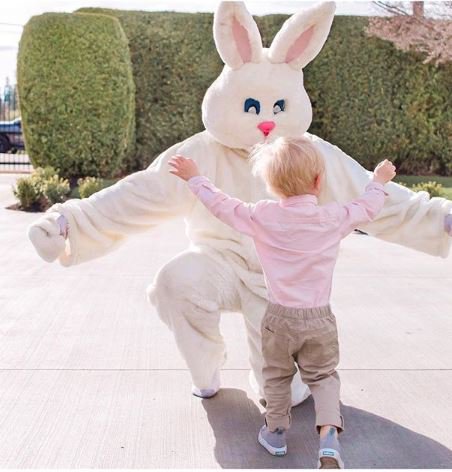 Justice without love is always injustice because it does not do justice to the other one, nor to the oneself, nor to the situation in which we meet. For the other one and I and we together in this moment in this place are unique, unrepeatable occasion, calling for a unique unrepeatable act of uniting love. If this call is not heard by listening love, it is not obeyed by the creative genius of love, injustice is done. And this is true even of oneself. One who loves listens to the call of one’s own innermost center and obeys this call and does justice to one’s own being. For love does not remove, it establishes justice. It does not add something to what justice does but it shows justice what to do. It makes the Golden Rule possible. For we do not speak for a love which swallows justice. This would result in chaos and extinction. However, we speak for a love in which justice is the form and structure of love. We speak for a love which respects the claim of the other one to be acknowledged as what one is, and the claim of ourselves to be acknowledged as what we are, above all as persons. Only distorted love, which is a cover for hostility or self-disgust, denies that which united love. #RandolphHarris 14 of 17
 Love makes justice just. The divine love is justifying love accepting and fulfilling one who, according to calculating justice, must be rejected. This justification of one who is unjust is the fulfillment of God’s creative justice, and of God’s reuniting love. Knowing that the ultimate meaning of freedom will elude us, let us still endeavor to define the term as best we can. The first definition is on the psychological level, the domain of everyday actions: Freedom is the capacity to pause in the face of stimuli from many directions at once and, in this pause, to throw one’s weight toward this response rather than that one. This is the freedom we experience in a store when we pause over the purchase of a necktie or a shirt. We summon up in our imaginations the image of how we will look in this or that tie, what so-and-so will say about it, or how the color will fit such and such a suit. And then we buy the tie or we move on to something else. This is freedom of doing, or existential freedom. This freedom is shown most interestingly in the supermarket, when we push our carts through the aisles between the tumultuous variety of packages and cans of food on the shelves, each one silently shouting through its bright-colored label “Buy me!” We see the shoppers with expressions of hesitancy, vacuity, wonder, pausing for some inspiration as to which of all these foods will be good for dinner tonight. #RandolphHarris 15 of 17
 The shopper seems hypnotized, charmed, preoccupied. Like patients on a ward in a mental hospital, they do not see me as I walk directly across their line of vision. The expressions of wonder and hesitancy are a readiness, an invitation, an openness to some stimulus on the shelves to persuade them to throw the balance this way of that in making their choice. This first freedom is experienced by each of us hundreds of times every day. It is decked up in respectable terms like decision/choice when we discuss freedom in psychology classes—if we ever discuss freedom in psychology classes at all. The most profound illustration of this kind of freedom is our ability to ask questions. Take, for example, my asking a question after listening to a lecture. The very fact that the question comes up in my mind at all implied that there is more than one answer. Otherwise there would be no point in asking the question in the first place. This is freedom; it implies that there is some possibility, some freedom of selection in what I ask. The speaker then pauses for a few seconds after I have asked it, turning over in his or her mind the possible answers. We sense that there is, in asking and answering questions, a good deal more going on, and it is of a richer nature, than the mere responding to various stimuli and selecting a response. #RandolphHarris 16 of 17
 Each person who lights this candle within one’s own mind will soon begin to attract other mortals like moths to a flame burning by a fire—not all mortal nor many mortals but only those who are groping for a way out of their darkness. Can a scrupulously impartial search through World-thought and experience lead to discovery of truth? “Wilt thou be made whole?” asked Jesus. Questioning implies some value judgment, some investment of the person’s life, some invitation to share, to make contact, some challenge to consider a new idea. Regrettably, in recent decades our very idea of freedom has been diminished and grown shallow in comparisons with previous ages; it has been relegated almost exclusively to freedom from outside pressure, to freedom from state coercion—to freedom understood on the juridical level, and no higher. Only when this search for a higher life has becomes an absolute necessity to a mortal, has one found even the first qualification needed for the Quest. “And the Lord God doth work by means to bring about his great and eternal purposes; and by very small means the Lord doth confound the wise and bringeth about the salvation of many souls,” reports Alma 37.7. #RandolphHarris 17 of 17
It is a Rare Gift to Meet a Human Being in Whom Love—and this Means God—is so Overwhelmingly Manifest!
 All right. I allowed myself to be taken along. White marble tile, carved gold fixtures; and ancient Roman splendor. Time is important because, although we are eternal beings, we are not going to be able to enjoy the pleasures of being in the flesh and on this Earth forever, and you may miss it, even when you go to Heaven. Nevertheless, we know and believe the love God has for us. “God is love, and one who abides in love abides in God, and God abides in one,” reports 1 John 4.16. “A new commandment I give to you, that you love one another; even as I have loved you, that you also love one another. By this, if you have love for one another, all mortals will know that you are my disciples,” reports John 13.34-35. After two thousand years are we still able to realize what it means to say, “God is Love”? The writer of the First Epistle of John certainly knew what he wrote, for he drew the consequences: “One who abides in love abides in God, and God abides in one.” God’s abiding in us, making us his dwelling place, is the same thing as our having love as the sphere of our habitation. God and love are not two realities; they are one. God’s Being is the being of love and God’s infinite power of Being is the infinite power of love. Therefore, one who professes devotion to God may abide in God if one abides in love, or one may not abide in God if one does not abide in love. And one who does not speak of God may abide in him if one is abiding in love. #RandolphHarris 1 of 18
 And since the manifestation of God as love is his manifestation in Jesus Christ, Jesus can say that many of those who do not know him, belong to him, and that many of those who confess their allegiance to him do not belong to him. The criterion, the only ultimate criterion, is love. For God is love, and the divine love is triumphantly manifest in Christ the Crucified. Let me tell you the story of a woman who passed away a few years ago and whose life was spent abiding in live, although she rarely, if ever, used the name of God, and though she would have been surprised had someone told her that she belonged to him who judges all mortals, because he is love and love is the only criterion of his judgment. Her name was Elsa Brandstrom, the daughter of a former Swedish ambassador to Russia. However, her name in the mouths and hearts of hundreds of thousands of prisoners of war during the First World War was the Angel of Siberia. She was an irrefutable, living witness to the truth that love is the ultimate power of Being, even in a century which belongs to the darkest, most destructive and cruel of all centuries since the dawn of humankind. At the beginning of the First World War, when Elsa Brandstorm was twenty-four years of age, she looked out the window of the Swedish Embassy in what was then Saint Petersburg and saw the Germany prisoners of war being driven through the streets on their way to Siberia. #RandolphHarris 2 of 18
 From that moment on, after what she had seen, Elsa could no longer endure the splendor of the diplomatic life of which, up to then, she had been a beautiful and vigorous center. She became a nurse and began visiting the prison camps. There she saw unspeakable horrors and she, a girl of twenty-four, began, almost alone, the fight of love against cruelty, and she prevailed. She had to fight against the resistance and suspicion of the authorities and she prevailed. She had to fight against the brutality and lawlessness of the prison guards and she triumphed. She had to fight against cold, hunger, dirt and illness, against the conditions of an undeveloped country and a destructive war, and she prevailed. Love gave her wisdom with innocence, and daring with foresight. And whenever she appeared despair was conquered and sorrow healed. Elsa visited the hungry and gave them food. She saw the thirsty and have them to drink. She welcomed the unknown, clothed the people in their birthday suits and strengthened the sick. Elsa herself fell ill and was imprisoned, but God was abiding in her. The irresistible power of love was with her. #RandolphHarris 3 of 18
 And she never ceased to be driven by this power. After the war Elsa initiated a great work for the orphans of Germany and Russian prisoners of war. The sight of her among these children whose sole ever-shinning Sun she was, must have been a decisive religious impression for many people. With the coming of the Nazis, she and her husband were forced to leave Germany and come to this country. Here she became the helper of innumerable European refugees, and for ten years I was able personally to observe the creative genius of her love. We never had a theological conversation. It was unnecessary. Elsa made God transparent in every moment. For God, who is love, was abiding in her and she in the Lord. She aroused the love of millions towards herself and towards that for which she was transparent—the God who is love. On her deathbed Else received a delegate from the king and people of Sweden, representing innumerable people all over European, assuring her that she would never be forgotten by those whom she had given back the meaning of their lives. It is a rare gift to meet a human being in whom love—and this means God—is so overwhelmingly manifest. It undercuts theological arrogance as well as pious isolation. It is more than justice and it is greater than faith and hope. It is the presence of God himself. For God is love. And in every moment of genuine love we are dwelling in God and God in us. #RandolphHarris 4 of 18
 Attitude is an important part of the foundation upon which we build a productive life. In appraising our present attitude, we might consider what is necessary. There are many degrees of necessity. Everything is necessary in some degree if its loss really causes a decrease of vital energy. (This word is here used in the strict and precise sense that it might have if the study of vital phenomena were as far advanced as that of falling bodies.) When the degree of necessity is extreme, deprivation leads to death. This is the case when all the vital energy of one being is bound up with another by some attachment. In the lesser degrees, deprivation leads to a more or less considerable lessening of energy. Thus a total deprivation of food causes death, whereas a partial deprivation only diminishes the life force. Nevertheless, if a person is not to be weakened, the necessary quantity of food is considered to be that required. The most frequent cause of necessity in the bonds of affection is a combination of sympathy and habit. As in the case of avarice or drunkenness, that which was at first a search for some desired good is transformed into a need by the mere passage of time. The difference from avarice, drunkenness, and all the vices, however, is that in the bonds of affection the two motives—search for a desired good, and need—can very easily coexist. They can also be separated. #RandolphHarris 5 of 18
 When the attachment of one being to another is made up of need and nothing else it is a fearful thing. Few things in this World can reach such a degree of ugliness and horror. Whenever a human being seeks what is good and only find necessity, there is always something horrible. The stories that tell of a beloved being who suddenly appears with a death’s head best symbolize this. The human soul possesses a whole arsenal of lies with which to put up a defense against this ugliness and, in imagination, to manufacture sham advantages where there is only necessity. It is for this very reason that ugliness is an evil, because it conduces to lying. Speaking quite generally, we might say that there is affliction whenever necessity, under no matter what form, is imposed so harshly that the hardness exceeds the capacity for lying of the person who receives the impact. That is why the purest souls are the most exposed to affliction. For one who is capable of preventing the automatic reaction of defense, which tends to increase the soul’s capacity for lying, affliction is not an evil, although it is always a wounding and in a sense a degradation. When a human being is attached to another by a bond of affection which contains any degree of necessity, it is impossible that one should wish autonomy to be preserved in one’s self and the other. It is impossible by the miraculous of nature. It is, however, made possible by the miraculous intervention of the supernatural. This miracle is friendship. #RandolphHarris 6 of 18
 Friendship is an equality made of harmony. There is harmony because there is a supernatural union between two opposites, that is to say, necessity and liberty, the two opposites God combined when he created the World and men. There is equality because each wishes to preserve the faculty of free consent both in oneself and in the other. When anyone wishes to put oneself under a human being or consents to be subordinated to one, there is no trace of friendship. The Queen of the Damn’s Maharet is not the friend of Queen Akasha. There is no friendship where there is inequality. A certain reciprocity is essential in friendship. If all good will is entirely lacking on one of the two sides, the other should suppress one’s own affection, out of respect for the free consent which one should not desire to force. If on one of the two sides there is not any respect for the autonomy of the other, this other must cut the bond uniting them out of respect for oneself. In the same way, one who consents to be enslaved cannot gain friendship. However, the necessity contained in the bond of affection can exist on one side only, and in this case there is only friendship on one side, if we keep to the strict and exact meaning of the word. If only for a moment, a friendship is tarnished as soon as necessity triumphs, over the desire to preserve the faculty of free consent on both sides. #RandolphHarris 7 of 18
 In all human things, necessity is the principle of impurity. If even a trace of the wish to please or the contrary desire to dominate is found in it, all friendship is impure. In a perfect friendship these two desires are completely absent. The two friends have fully consented to be two and not one, they respect the distance which the fact of being two distinct creatures places between them. Mortals have the right to desire direct union with God alone. Friendship is a miracle by which person consent to view from a certain distance, and without coming any nearer, the very being who is necessary to one as food. It requires the strength of the soul that Eve did not have; and yet she had no need of the fruit. If she had been hungry at the moment when she looked at the fruit, and if in spite of that she had remained looking at it indefinitely without taking one step toward it, she would have performed a miracle analogous to that of perfect friendship. Through this supernatural miracle of respect for human autonomy, friendship is very like the pure forms of compassion and gratitude called forth by affliction. In both cases the contraries which are the terms of the harmony are necessity and liberty, or in other words subordination and equality. These two pairs of opposites are equivalent. From the fact that the desire to please and the desire to command are not found in pure friendship, it has it in, at the same time as affection, something not unlike a complete indifference. #RandolphHarris 8 of 18
 Although friendship is a bond between two people it is in a sense impersonal. It leaves impartiality intact. It in no way prevents us from imitating the perfection of our Father in Heaven who freely distributes Sunlight and rain in every place. On the contrary, friendship and this distribution are the mutual conditions one of the other, in most cases at any rate. For, as practically every human being is joined to others by bounds of affection that have in them some degree of necessity, one cannot go toward perfection except by transforming this affection into friendship. Friendship has something universal about it. It consists of loving a human being as we should like to be able to love each soul in particular of all those who go to make up the human race. As a geometrician looks at a particular figure in order to deduce the universal properties of the triangle, so one who knows how to love directs upon a particular human being a universal love. The consent to preserve an autonomy within ourselves and in others is essentially of a universal order. As soon as we wish for this autonomy to be respected in more than just one single being we desire it for everyone, for we cease to arrange the order of the World in a circle whose center is here below. We transport the center of the circle beyond the Heavens. #RandolphHarris 9 of 18
 If the two beings who love each other, through an unlawful use of affection, think they form only one, friendship does not have this power. However, then there is not friendship in the true sense of the word. That is what might be called an adulterous union, even though it comes about between husband and wife. There is not friendship where distance is not kept and respected. The simple fact of having pleasure in thinking in the same way as the beloved being, or in any case the fact of desiring such an agreement of opinion, attacks the purity of the friendship at the same time as its intellectual integrity. It is very frequent. However, at the same time pure friendship is rare. When the bonds of affection and necessity between human beings are not supernaturally transformed into friendship, not only is the affection of an impure and low order, but it is also combined with hatred and repulsion. That is shown very well in The Queen of the Damned and in Romeo Must Die. The mechanism is the same in affections other than carnal love. It is easy to understand this. We hate what we are dependent upon. We become disgusted with what depends on us. Sometimes affection does not only become mixed with hatred and revulsion; it is entirely changed into it. The transformation may sometimes even be almost immediate, so that hardly any affection has had time to show; this is the case when necessity is laid bare almost at once. #RandolphHarris 10 of 18
 When the necessity which brings people together has nothing to do with the emotions, when it is simply due to circumstances, hostility often makes it appearance from the start. When Christ said to his disciples: “Love one another,” it was not attachment he was laying down as their rule. As it was a fact that there were bounds between them due to the thoughts, the life, and the habits they shared, he commanded them to transform these bonds into friendship, so that they should not be allowed to turn into impure attachment or hatred. Since, shortly before his passing into Heaven, Christ gave this as a new commandment to be added to the two great commandments of the love of our neighbor and the love of God, we can think that pure friendship, like the love of our neighbor, has in it something of a sacrament. Christ perhaps wished to suggest this with reference to Christian friendship when he said: “Where there are two or three gathered together in my name there am I in the midst of them.” Pure friendship is an image of the original and perfect friendship that belongs to the Trinity and is the very essence of God. It is impossible for two human beings to be one while scrupulously respecting the distance that separates them, unless God is present in each of them. The point at which parallels meet is infinity. #RandolphHarris 11 of 18
 The Greeks were an eminently visual people. They gloried in the visual arts; Homer’s epics abound in visual details; and they created tragedy and comedy, adding new dimensions to visual art. The Hebrews were not so visual and actually entertained a prohibition against the visual arts. Neither did they have tragedies or comedies. The one book of the Bible that has sometimes been called a tragedy, Job, was clearly not intended for, and actually precluded, any visual representation. The Greeks wanted God to be a friend, they visualized their gods and represented them in marble and in beautiful vase paintings. They also brought them on the stage. The Hebrews did not visualize their God and expressly forbade attempts to make of him an object—a visual object, a concrete object, any object. Their God was not to be seen. He was to be heard and listened to. He was not an It but an I—or a You. Christianity was born of the denial that God could not possibly be seen. Not all who considered Jesus a great teacher became Christians. Christians were those for whom he was the Lord. Christians were those who believed that God could become visible, an object of sight and experience, of knowledge and belief. Of course, Christianity did not deny its roots in Judaism. Jesus as the Son of God who had ascended to the Heavens to dwell there with God, as God, did not simply become another Heracles, the son of Zeus who had ascended to the Heavens to dwell there with the gods, as a god. #RandolphHarris 12 of 18
 Jesus did not simply become another of the legion of Greek gods and demigods and sons of Zeus. He had preached and was to be heard and listened to. His moral teachings were recorded lovingly for the instruction of the faithful. However, were they really to be listened to? Or did they, too, become objects—of admiration and perhaps discussion? Was the individual to feel addressed by them, commanded by them—was he able to relate his life to them? The new dispensation was hardly that. The New Testament keeps saying, nowhere more emphatically than in the Gospel according to John, that those who only live by Jesus’s moral teaching shall not enter the kingdom of Heaven; only those can be saved who are baptized, who believe, and who take the sacraments—eating, as that Gospel puts it, “of this bread.” Of course, Christian belief is not totally unlike Jewish belief. It is not devoid of trust and confidence, and in Paul’s and Luther’s experience of faith these Jewish elements were especially prominent. Rarely have they been wholly lacking in Christianity. Still, this Jewish faith was never considered sufficient to some. Christian faith was always centered in articles of faith that had to be believed by those who wanted to be saved. When the Reformation did away with visual images, it was only to insist more firmly on the purity of doctrines that must be believed. #RandolphHarris 13 of 18
 However, may love the beautiful stained-glass windows, which communicate stores to those who are visual learners. And for Luther the bread and wine were no mere symbols of Christ’s flesh and blood—otherwise he might have made common cause with Ulrich Zwingli and presented the splintering of Protestantism—but the flesh and blood itself: God as an object. People sometimes wonder, is there some particular purpose in my birth here? Is it all ere coincidence? Must we doubt, deny, even reject God? These are some of the questions a thoughtful mortal might ask. If one is to moan over the length of the road opening out before one, one should also jubilate over the fact that one has begun to travel it. How few care to take this step! If some are immediately and irrevocably captured by the teachings, others are only gradually and cautiously convinced. Those who feel an emptiness in their hearts despite Worldly attainment and possession may be unconsciously yearning for God. So many of us place so much value in possessions, yet we overlook the startling fact that we have not begun to possess ourselves! What mortal can call one’s essential self? Can we build a bridge between this sorrowful Earthly life and the peaceful eternal life? Are the two forever sundered? Every seer, sage, and saint answers the first question affirmatively and the second negatively. #RandolphHarris 14 of 18
 The echoes of our spiritual being some to us all the time. They come in thoughts and things, in music and pictures, in emotions and words. If only we would take up the search for their source and trace them to it, we would recognize in the end the Reality, Beauty, Truth, and Goodness behind all the familiar manifestations. Those who can no longer confine their thinking within the conventional boundaries of common experience may cross over into religion’s reverent faith, into Christianity’s deep-felt intuition, or into philosophy’s final certitude. Whoever perceives the inferiority of one’s environment to what it could be, as well as the imperfections of one’s nature in the light of its undeveloped possibilities, and who sets out to improve the one and amend the other, has taken a first step to the quest. It is better to come late to the higher life with its nobler values and uplifting practices, than not at all. It is still better to come to it when one is comparatively young and foundations are being laid. They will be fortunate indeed if their spiritual longings are satisfied without the passage of many years and the travail of much exploration. They will be fortunate indeed if pitying friends do not repeatedly tell them with each change and each disappointed pulling-up of tents that they are pursing a mirage. #RandolphHarris 15 of 18
 Those who have found their way to this Path leave forever behind them their aimless wanderings of the past. One fateful day, one will ruefully realize that one is octopus-held by external activities. Then will one take up the knife of a keen relentless determination and cut the imprisoning tentacles once and for all. I have no need to see and to test in order to be set free. I am free even in the confusion of servitude. I enjoy the freedom of the future, generations in advance. And when I die, I shall die a free man, for I have fought for freedom my whole life long. Mortals are free, in so far as one has the power of contradicting oneself and one’s essential nature. Mortals are free even from one’s freedom; that is, one can surrender one’s humanity. Freedom, by its very nature, is elusive. The word is difficult to define because of its quicksilver quality: freedom is always moving. You can state what it is not or what you desire to get free from—which is why the phrase freedom from should never be disparaged. However, it is difficult to designate what freedom is. Thus we always hear of the struggle for, the fight for freedom. Yet, when someone tells us “how I found freedom,” we have a feeling that something is being faked. The greatest virtue is not to be free, but to struggle ceaselessly for freedom. #RandolphHarris 16 of 18
 Freedom is like a flock of white butterflies bestirred in front of you as you walk through the woods: rising in cluster they flit off in an infinite number of directions. Once you become self-konsciously sure of your freedom, you have lost it. Hence we find ourselves almost always describing what freedom is not rather than what it is: “I am free tomorrow” means I do not have to work; “I have a free period” means I do not have any class then. Freedom is frequently and persistently conceived of as a negative quality. Freedom is very much like health or virtue or innocence. After we have lost it, we feel it mist intensely. The dictionary does nothing to relieve our frustration. In the eighteen different meanings in Webster’s, fourteen of them are negative, such as “not held in slavery” or “not subject to external authority.” Of the reaming four, one is “liberty”—which deals with political freedom—and the others are simply tautological, such as “spontaneous, voluntary, independent.” Freedom is continually creating itself. Freedom is expansiveness. Freedom has an infinite quality. The guiding laws of life are not easy to find. The sacred wisdom of God is also the secret wisdom. The seeker quests until one’s thoughts rests. #RandolphHarris 17 of 18
 The quest will continue to attract its votaries so long as the Real continues to exist and mortals continue to remain unaware of it. This ever-new set of possibilities is part of the reason psychology has by and large evaded the subject, for freedom cannot be pinned down as psychologists are wont to do. In psychotherapy the closest we can get to discerning freedom in action is when a person experiences “I can” or “I will.” When a client in therapy says either of these, I always make sure he or she knows that I have heard him or her; for “can” and “will” are statements of personal freedom, even if only in fantasy. These verbs point to some event in the future, either immediate or long-term. They also imply that the person who uses them sense some power, some possibility, and is aware of ability to use this power. The mystery of the soul is as formidable and as baffling as any. Yet it is also a fascinating one. If few people have penetrated it today, may tried to do so in the past. Only when they are brought by the discipline of experience to a sense of responsibility, are they likely to seek this knowledge. This does not mean that a spiritual outlook requires an unquestioning acceptance of what mortals have made of themselves and the World. We approach God deep in our hearts. We feel the divine presence in that profound unearthly stillness where neither the sounds of emotional clamour nor those of intellectual grinding can enter. #RandolphHarris 18 of 18
To Keep Aloof is to Write One’s Name in the Book of Failure—The Lord is Still Existent and Still Eager to Speak with Us Even Today!
 I know your arguments. For centuries I have pondered them, as I have pondered so many questions. You think I do what I do with human limitations. I do not. To understand me, you must think in terms of abilities yet unimagined. Sooner will you understand the mystery of splitting atoms or black holes in space. The abyss and light of the World, time’s need and the craving for eternity, vision, event, and poetry are the dialogue with me. When I confront you, God is present. However, if I look away from you, I ignore him. As long as I merely experience or use you, I ignore God. As long as I merely experience or use you, I deny God. Yet, when I encounter you, I encounter God. Loneliness is honesty in one sense. In honesty you have to separate yourself from the impersonal mass—you are saved from conformism. To be honest is to be lonely in the sense that you individuate yourself, you seize the moment to be yourself and yourself alone. There is an initial loneliness about being oneself, speaking out of one’s own center. Some people feel a sadness and despair about being cast loose, alone, into the Word. One may feel life a single red wood tree standing at the North Pole, with nobody or nothing around for a million miles. However, is not the loneliness that we all experience at times, the kind that is inseparable from the human condition? #RandolphHarris 1 of 15
 If you dare to be honestly yourself, you will be lonely. At each moment in our self-consciousness we are alone. No one else can genuinely come into our sanctum sanctorum. We pass into Heaven alone. No one escapes. This is destiny in its deepest sense. When we recognize this, then we can overcome the loneliness to some extent. We recognize that it is a human loneliness. It means we are all in the same yacht, and we can then choose to, or not to, let others into our life. Lo and behold, we then have used the aloneness to be less lonely. Sometimes when people have to work in an international community or land where the people who speak their native language are a minority and uninteresting, one can feel painfully lonely, due chiefly to the isolation. And their work may not be that absorbing. Nonetheless, people generally follow the usual defense: they throw themselves into their work with ever greater zeal. However, the harder they work, the more isolated they may feel. Generally, this could lead to an individual collapsing and having to go to bed for a couple of weeks. This is what many call a nervous breakdown. When this happens, one may want to change their lifestyle. Maybe take up a hobby like reading, drawing, gardening, sculpting or a sport. Even learning to cook could be fascinating. #RandolphHarris 2 of 15
 Still, giving up your habit of rigidly planning your life and taking the flow of your energy as it comes can have some unintended side effects. Being all without aim or sense of direction, isolated, may lead to one feeling like a nonentity since all one’s old ways of proving their worth are no longer being employed. Seeking a new direction and life and letting go and trusting in God has also been helpful for some people. David Talbot started out on his Summer vacating up toward the Caspian Sea with no plans, no fixed guides to follow. By accident he met a group of fifteen or sixteen artists traveling and doing art as a group, and he got a job with them as a sort of fancy handy man. He traveled and had made sketches with them all through the villages along the Caspian Sea. This was the birth of him becoming an architect. He also fell deeply in love that summer and it was the greatest joy of his life. However, should we call this accident of meeting this group an accident, or was it really an expression of destiny? I think it was. When David gave up his rigid and compulsive demands on life, when he let go and let God, unexpected possibilities opened up in unpredictable ways which would have never been known to him. These are aspects of destiny become conscious. #RandolphHarris 3 of 15
 For other people, they may need to support their confidence without taking away the force of their despair, since despair may well lead to the deepest insight and the most valuable change. When in despair or depression, it is true that most people shrink—they tend to retreat into their hopelessness. However, one should try to experience this despair constructively, as an opportunity. The despair can then act upon the person like the flood in Genesis: it can clear away the vast debris—the false answers, false buoys, superficial lighthouses, and phony principles—and leave the way open for new possibilities. That is, for new freedom. We know in psychotherapy that times of despair are essential to the client’s discovery of hidden capacities and basic assets. Those therapists are misguided who feel it incumbent upon themselves to reassure the patient at every point of despair. For if the client never feels despair, it is doubtful whether one ever will feel anything below the surface. There is surely value in the client’s experience that one has nothing more to lose anyway, so one may as well take whatever leap is necessary. That seems to me to be the meaning of the sentence from folklore, “Despair and confidence both banish fear.” #RandolphHarris 4 of 15
 The loves of childhood and of adolescence cannot be subtracted from us; they have become part of us. Not a discrete part that could be served. It is as if they had entered our blood stream. Therefore, one cannot let anyone tell them what is best to do, and sometimes when you already have a successful career, consider sticking to it or just transferring to a different office or location. Do not let people prey on your vulnerabilities because even those who seem like well wishers would like to see you fail and may give you faulty advice, whether they be paid consultants, friends, family or coworkers. We ought to be mindful that all human beings we confront are persons. We need a new language, and new poets to create it, and new ears to listen to it. Meanwhile, if we shut our ears to the old prophets who still speak more or less in the old tongues, using ancient words, occasionally in new ways, we shall have very little music. We are not so rich that we can do without tradition. Let one that has new ears listen to it in a new way. To be given direction, to feel an impulsion towards it, and to practice purification is a necessary requisite for the journey. Two warnings are needed here: fall not into the extreme of unbalance, and depend not on what is outside. One reminder: seek and submit to grace. It may be imageless or found anywhere anytime and, in any form, —a work of art, a piece of music, a living tree, or a human being—for in the end it must come from your own higher individuality and in your own loneliness. #RandolphHarris 5 of 15
 Before embarking on a new journey in life, one should figure out what attracts them most to this direction? What does one hope to get out of it? And if one is seeking religious satisfaction, spiritual truth or moral power of inner peace or psychic faculties? Consider if you will be satisfied with a theoretical understanding or would one go as far as to put in into practice? And are you will to put in the work and effort and dedication needed for the experience? How far do you think this new path will take you in life, career, and spirituality? The beginnings of this higher life are always mysterious, always unpredictable, sometimes intellectually quiet and sometimes emotionally excited. When first one sets logs of one’s first raft afloat upon these strange waters whose ending can only be somewhere in infinity, as the geometricians say, there are no lights to show one’s frail vessel the way of travel, no Suns or Stars to point a path for it. However, one knows then that one’s head is bowed in homage to a higher power. Later one will know also how utterly right was the intuition which earlier drove one forth. We walk the Quest uncertainly, human nature being what it is, human weakness following us so obtrusively as it does. The decision to embark on this quest—so new, uncommon, and untried to the average Westerner—becomes especially hard to the mortal seeking alone, with no compassion or relative to fortify one’s resolution. #RandolphHarris 6 of 15
 This urge to discover an intangible reality seems an irrational one to the materialistic mentality. However, on the contrary, it is the most completely logical, the most sensible of all the urges that have ever driven a mortal. The instinct which draws mortals to the truths of philosophy, the experiences of mysticism, and the feeling of religion is a sound one. The fact of one’s own self-existence is the innate primary experience of every mortal. It is clear, certain, and incontrovertible. However, the nature of that existence is obscure, confused, and arguable. So much happens in the subconscious before they are quite aware of it that only when a new decision, a new orientation of feeling or thought is firmly arrived at, and openly appears, do they discover and define what they have been led to by outer and inner developments. In each mortal there is a part of one which is unknown and unmolested. It is in the region of consciousness below the normal state that the most powerful forces move the human being—and can be applied to move one. Here only can the radical transformation be made. If one believes that these ideas ring true, then one’s course of duty is plain. To keep aloof in such a circumstance is to write one’s name in the Book of Failure. Mortals have largely conquered their planetary environment. Now one must begin the sterner task of conquering oneself. #RandolphHarris 7 of 15
 “Speak, Lord, for Thy servant heareth” is a sentence from that ancient record, the Hebrew Bible. However, any mortal may find that the Lord is still existent and still willing to speak to one even today. Yet, to actualize such an encounter one must take to the secret path and practice inner listening. In mortals, Heaven and Earth unite. One is free to enjoy the one or the other. The first leads to peace of mind, the second ties one to the terrestrial wheel. Whoever sincerely wants access to divinity may find it, but one must make the first move. The fulfilment of the heart’s nostalgic yearning for its true homeland may be delayed, but it cannot be defeated. If experience, reason, or intuition cannot bring one to the conviction that God rules the World, a prophet’s help, grace, or writing may do so. If that fails, one has no other recourse than to keep pondering the question until light dawns. If the quest seems too far from one’s environment or circumstances, it is still a good time to start, for the reward will be better savoured. This search after the soul need not wait until death until it successfully ends. To do so would be illogical and in most causes futile. Here on Earth and in this very lifetime the grand discover may be made. #RandolphHarris 8 of 15
 The quest upon which one has entered will be a long one and the task one has understand a hard one. However, the Ideal will also be one’s support because one’s conscience will endorse one’s choice to the end. Leave aside wrangling, and take up the quest leading to the true goal, the Supreme Overself, which is unique. Push thy enquiry further. Since God is the source and power of reconciliation, who could reconcile Him? All of us have tried and are trying to reconcile God by rites and sacraments, by prayers and services, by moral behavior and works of charity. However, if we try this, if we try to give something to God, to show good deeds which may appease the Lord, we fail. It is never enough; we never can satisfy God because there is an infinite demand upon us. And since we cannot appease God, we grow hostile toward the Lord. Have you ever noticed how much hostility against God dwells in the depth of the good and honest people, in those who excel in works of charity, in piety and religious zeal? This cannot be otherwise; for one is hostile, consciously or unconsciously, toward those by whom feels rejected. Everybody is in this predicament, whether one calls that which rejects one God, or nature, or destiny, or social conditions. Everybody carries a hostility toward the existence into which one has been thrown, toward the hidden powers which determine one’s life and that of the Universe, toward that which makes one guilty and that threatens one with destruction because one has become guilty. #RandolphHarris 9 of 15
 We all feel rejected and hostile toward what has rejected us. We all try to appease it and in failing, we become more hostile. This happens often unnoticed by ourselves. However, there are two symptoms which we hardly can avoid noticing: The hostility against ourselves and the hostility against others. One speaks so often of pride and arrogance and self-certainty and complacency in people. However, this is, in most cases the superficial level of their being. Below this, in a deeper level, there is self-rejection, disgust, and even hatred of one’s self. Be reconciled to God; that means at the same time, be reconciled to ourselves. However, we are not; we try to appease ourselves. We try to make ourselves more acceptable to our own judgment and, when we fail, we grow more hostile toward ourselves. And one who feels rejected by God and who rejects oneself feels also rejected by the others. As one grows hostile toward destiny and hostile toward oneself, one also grows hostile toward other people. If we are often horrified by the unconscious or conscious hostility people betray toward us or about our own hostility toward people whom we believe we love, let us not forget: They feel rejected by us; we feel rejected by them. They tried hard to make themselves acceptable to us, and they failed. We tried hard to make ourselves acceptable to them, and we failed. And their hostility grew. #RandolphHarris 10 of 15
 Be reconciled with God—that means, at the same time, be reconciled with the others! However, it does not mean try to reconcile the others as it does not mean try to reconcile the others as it does not mean try to reconcile yourselves. Try to reconcile God. You will fail. This is the message: A new reality has appeared in which you are reconciled. To enter the New Being we do not need to show anything. We must only be open to be grasped by it, although we have nothing to show. Being reconciled—tat is the first mark of the New Reality. And being reunited is its second mark. Reconciliation makes reunion possible. The New Creation is the reality in which the separated is reunited. The New Being is manifest in the Christ because in the him the separation never overcame the unity between him and God, between him and humankind, between him and himself. This gives his picture in the Gospels its overwhelming and inexhaustible power. In him we look at a human life that maintained the union in spite of everything that drove him into separation. He represents and mediates the power of the New Being because he represents and mediates the power of an undisrupted union. Where the New Reality appears, one feels united with God, the ground and meaning of one’s existence. #RandolphHarris 11 of 15
 One has what has been called the love of one’s destiny, and what, today, we might call the courage to take upon ourselves our own anxiety. Then one has the astonishing experience of feeling reunited with one’s self, not in pride and false self-satisfaction, but in deep self-acceptance. One accepts one’s self as something which is eternally important, eternally loved, eternally accepted. The disgust at one’s self, the hatred of one’s self has disappeared. There is a center, a direction, a meaning for life. All healing—bodily and mental—creates this reunion of one’s self with one’s self. Where there is real healing, there is the New Being, The New Creation. However real healing is not where only a part of body or mind is reunited with the whole, but where the whole itself, our whole being, our whole personality is untied with itself. The New Creation is healing creation because it creates reunion with oneself. And it creates reunion with the others. Nothing is more distinctive the Old Being than the separation of mortals from mortals. Nothing is more passionately demanded than social healing, than the New Being within history and human relationships. Religion and Christianity are under strong accusation that they have not brought reunion into human history. Who could deny the truth of this challenge. #RandolphHarris 12 of 15
 Nevertheless, humankind still lives; and it could not live any more if the power of separation had not been permanently conquered by the power of reunion, of healing, of the New Creation. Where one is grasped by a human face as human, although one has to overcome personal distaste, or racial strangeness, or national conflicts, or the differences of sex, of age, of beauty, of strength, of knowledge, and all the other innumerable causes of separation—there New Creation happens! Humankind lives because this happens again and again. And if the Church which is the assembly of God has an ultimate significance, this is its significance: That here the reunion of mortal to mortal is pronounced and confessed and realize, even if in fragments and weaknesses and distortions. The Church is the place where the reunion of mortals with mortals is an actual event, though the Church of God is permanently betrayed by the Christian churches. However, although betrayed and expelled, the New Creation saves and preserves that by which it is betrayed and expelled: churches, humankind and history. The Church, like all its members, relapses from the New into the Old Being. Therefore, the third mark of the New Creation is re-surrection. The word resurrection has for many people the connotation of dead bodies leaving their graves or other fanciful images. However, resurrection means the victory of the New state of things, the New Being born out of the death of the Old. #RandolphHarris 13 of 15
 Resurrection is not even an event that might happen in some remote future, but it is the power of the New Being to create life out of death, here and now, today and tomorrow. Where there is a New Being, there is resurrection, namely, the creation into eternity out of every moment of time. The Old Being has the mark of disintegration and death. The New Being puts a new mark over the old one. Out of disintegration and death something is born of eternal significance. That which is immersed in dissolution emerges in a New Creation. Resurrection happens now, or it does not happen at all. It happens in us and around us, in soul and history, in nature and Universe. Reconciliation, reunion, resurrection—this is the New Creation, the New Being, the New state of things. Do we participate in it? The message of Christianity is not Christianity, but a New Reality. A New state of things has appeared, it still appears; it is hidden and visible, it is there and it is here. Accept it, enter into it, let it grasp you. There is a great difference between the essence of the Necessary and that of the Good. There is no contradiction between seeking our own good in human being and wishing for one’s good to be increased. For this very reason, when the motive that draws us toward anybody is simply some advantage for ourselves, the conditions of friendship are not fulfilled. Friendship is a supernatural harmony, a union of opposites. #RandolphHarris 14 of 15
 When a human being is any degree necessary to us, we cannot desire one’s good unless we cease to desire our own. Where there is necessity there is constraint and domination. We are in the power of that of which we stand in need, unless we possess it. The central good for every mortal is the free disposal of oneself. Either we renounce it, which is a crime of idolatry, since it can be renounced only in favor of God, or we desire that the being we stand in need of should be deprived of this free disposal of oneself. Any kind of mechanism may join human beings together with bonds of affection which have the iron hardness of necessity. Mother love is often of such a kind; so at times is paternal love, as in Pere Goriot of Balzac; so is carnal love in its most intense form, as in L’Ecole des Femmes and in Phedre; so also, very frequently, is the love between husband and wife, chiefly as a result of habit. Filial and fraternal love are more rarely of this nature. A person with a good heart can help someone fix a tire, take a roommate to the doctor, have lunch with someone who is sad, or smile and say hello to brighten a day. However, a follower of the first commandment will naturally add to these important acts of service. We need to have compassion and we will be provided opportunities to forget self and lift others. If we are to be more like Christ, we are to be sensitive to the struggles, trials, and challenges faced by so many but that can often be overlooked. #RandolphHarris 15 of 15
There Other Two Persons Seemed a Million Miles Away—Hold Infinity in the Palm of Your Hand and Eternity in an Hour
 The air so emotionally frigid that when going to be at night, there was a feeling that no other person was in the house. I never in a thousand years would have imagined that would come out. Often times in human beings there is an early attachment of imprinting behavior, where people seem to follow their attachment with a similar blind fidelity. And this behavior may be made stronger by punishment or other difficulties put in their path. Some people spend a lifetime looking for someone to make up for their losses, to bring them justice for their less than pleasant childhoods or adult life. They go through life lonely, yearning for a love that will fill the large area of emptiness in their hearts. However, the struggles these individuals are engaged in is bound to be self-defeating. The first and fundamental challenge is to confront one’s fate as it is, reconcile one’s self to the fact that one did receive a bad deal, know that justice is irrelevant, no one will ever make up for the emptiness and the pain of those years. The past cannot be changed—it can only be acknowledged and learned from. It is one’s destiny. It can be absorbed and mitigated by new experiences, but it cannot be changed or erased. An individual only adds insult to injury by going on the rest of one’s life knocking one’s head against the same stone wall. Fortunately, psychotherapy can be a vehicle through which human beings may become more aware of and compensate for such implanted destiny. #RandolphHarris 1 of 16
 Some people hang on to the past as a way of hanging on to someone they cared deeply about. It is an expression of the hope that someday this coveted individual will reward one, someday one will find the Holy Grail. Now one will get the original care one was missing; now one will get that restored! However, there is no way to restore it, no matter how much of a loss it is. Bad fate, yes. Yet, that is just the way it is. The lost idol image, the lost change, the great emptiness within one—they are all going to remain there. These things are the past; there is no way of changing them. You can change your attitude toward these tragic happenings, as the ultimate freedom is a command over one’s own attitude. However, you cannot change the experiences themselves. If you hang on to an illusion of such change, always hoping for pie in the sky by and by and by you cut off your possibilities. You then become rigid. You do not let yourself take in the new possibilities. You trade your freedom for a mess of emotional pottage. And this way, as a corollary, you never use your anger constructively. You lose a tremendous amount of power, energy, and possibility. In short, you lose your freedom. However, is there no constructive value in coming to terms with one’s early fate? Yes, there is—and a value potentially greater than what one gives up. #RandolphHarris 2 of 16
 The struggle to come to terms with acrimonious relationships and lifestyles has much to do with the emergence of creativity. For example, a man who had an unpleasant childhood ended up developing talents which led to his high status in the World of architecture. Because he had such a disturbed family life, that the creativity was compensation for such an early trauma. We know that creative people often come out of such unfortunate family backgrounds. Why and how they do is still one of the mysteries the answer to which the Sphinx of creativity has not revealed. We do know that some people have been unfortunate and never have been able to take life lightly. They learn from the hour of birth that it is best to take life easily, as many may. They cannot coast along or rest on their laurels. This exceptional achievement following a disturbed childhood or adulthood had been documented in many cases. Such freedom of the artist is not born. It is made in the pain of adolescent loneliness, the isolation of physical disability, or, perhaps, the smug superiority of inherited title. The freedom that permits generation of possibilities is the beginning of a creative product. Many of our most valuable people have come from the most calamitous situations. #RandolphHarris 3 of 16
 Investigations of the childhoods of eminent people expose the fact that they did not receive anything like the kind of child rearing that a person in our culture is led to believe is healthy for children. Whether in spite of or because of these conditions, it is clear that these children not only survived, but reached great heights of achievements, many after having experienced the most deplorable traumatic childhoods. The tension in these personalities between high aspiration and disappointment may well be the necessary matrix out of which creativity—and, later, civilization—is born. This type cannot slide into any well-adjusted syndrome. There is the outstanding exception of J.S. Bach, but his contentment—if it was that—seems to have been a combination of fortunate social conditions. The well-adjusted person rarely make great painters, sculptors, writers, architects, musicians. Coming out of such a confused early childhood allows the creative capacity to be considered a later compensation. The question is: Can a person seize these possibilities—these new reaches of freedom not without cruel fate, but despite fate—and weld them into a significant building, house, a statue, a painting, or some other creative product? #RandolphHarris 4 of 16
 If one can accept the deprivation of the care one rightfully expected, if one can engage this loneness face to face, one will have achieved a strength and a power that will be a foundation more solid than one ever could have achieved otherwise. If one can accept this aspect of one’s destiny, the fates will work rather than against one. In this way one lives with the Universe rater than against it. One must learn to engage and accept these cruel things in one’s background. It is, therefore, inevitable that the questions “Is there a need for self-control” arises when a way of life is being espoused that encourages freedom of thought and action. And it is vital that no glib, easy answer be given, for it is an important question. Situations do exist where it can be said without equivocation “Yes, do exercise self-control.” Wen, for example, individuals have the desire to destroy the life or property of others or when they have the urge to take their own lives or act in obviously self-destructive ways, it is important that they control these impulses. Society has found it necessary and desirable, when it has the opportunity, to impose control on such persons by limiting their freedom by restraining them. One of the most painful tragedies in American life today is the suicides that occur among high school and college students—frequently those of great promise. #RandolphHarris 5 of 16
 It could be said those planning to end their own lives to please, please, hold on! Life may seem painful and meaningless. Perhaps you feel suddenly and terribly disillusioned. However, at least bear with the struggles and give yourselves the perspective of a few more years before you make such an irrevocable decision. It is not enough simply to develop self-control, even though we may need to use it to curb destructive impulses. The ultimately satisfying answer is to deal effectively with problems that underlie our destructive impulses so that we can move beyond the need for self-control. The basic problem is self-hate, for self-destructiveness and destructiveness directed toward others go hand and hand. The nation, for example, that sets out to destroy other nations is bent on a self-destructive course. The personal who assaults another person and follows one’s impulses is not benefiting one’s self. And, of course, one’s self-hate is evident in the obvious lack of confidence on one’s ability to relate to individuals in other ways that would be more pleasant. #RandolphHarris 6 of 16
 So let us be clear about one thing. The violent or destructive acts we are so often afraid we will do if we do not control ourselves are not the result of true freedom or spontaneity. The murderer is not free. One is an enslaved, tormented person who is driven by pent-up feelings of self-hate that have been projected outward onto other individuals or onto society at large. The superheated steam of this hatred builds up in one’s internal pressure cooker until whatever self-control one possesses is bypassed in an explosion of violence. To exhort such a person to control one’s self may be a necessary stop-gap measure, although it is likely to be futile. Any thorough-going help must deal with the mortal’s self-hate. Most of us may feel some impulses within ourselves to be destructive to others or to ourselves, which we sense the seen to curb by self-control. Often the inner pressure is not too great and we can be successful in this control if we choose to go that route, but the more such self-control we need to impose on ourselves the less able we will be to be carefree and spontaneous. And spontaneity is a deliciously desirable way of living. #RandolphHarris 7 of 16
 If we can discover why we feel destructive and through this exploration reduce the self-hate to the point where we have relatively little need for self-control, it will be a far more freeing experience. A professional therapist can often be very helpful here, for one can provide a relatively secure environment where hatreds (both toward the self and others) can be expressed and explored with a minimum of danger. Often in therapy people discover that they are not nearly as dangerous to themselves or others as the feared. They find they had been so frightened of freedom that they had imagined themselves far more potentially harmful than they were as a way of keeping themselves rigidly controlled. However, some people like to deceive themselves. To be rejected makes a better excuse—to tell everyone how misunderstood they are, and how they triumphed over great odds. The misunderstood genius, nobody to help them, and so on. We all live in the old state of things. We belong to the Old Creation, and the demand made upon us by Christianity is that we also participate in the New Creation. We have known ourselves in our old being, and we shall ask ourselves in this hour whether we also have experiences something of a New Being in ourselves. The union with God is when the New Reality is present. God is the ultimate truth and demands complete devotion. #RandolphHarris 8 of 16
 It is important to experience the birth in consciousness of a new—though old—part of the self. One may consider it a dawning of awareness of new possibilities which have in effect been there all the time. This is a giant step toward personal freedom. This New Creation is manifest in Jesus who is called Christ. And it is actually the beginning of accepting acceptance, the uniting of one’s self with that early self that one had had to lock up in a dungeon in order to survive when life was not happy but threatening. Although this does not alter the original lack of basic trust, it does surmount it in the literal meaning of that term. We hear about the psychology of anger and how it clouds our vision, causes us to misunderstand each other, and in general interferes with the calm necessary for a rational, clear view of life. People point out that their anger curtails one’s freedom. All this is true. However, it is one-sided; it omits the constructive side to anger. In our society, we confuse anger with resentment, a form of repressed anger that eats steadily away at our innards. In resentment we store up ammunition to get even with our fellows, but we never communicate directly in a way that might resolve the problem. #RandolphHarris 9 of 16
 This transformation of anger into resentment is the sickness of the middle class. It corrodes our stature as human beings. Or we confuse anger with temper, which is generally an explosion of repressed anger; with rage, which may be a pathological anger; with petulance, which is immature resentment; or with hostility, which is anger absorbed into our character structure until it infects every act of ours. I am not referring to these kinds of hostility or resentment. I am speaking, rather, of the anger that pulls the diverse parts of the self together, that integrates the self, keeps the whole self alive and present, energizes us, sharpens our vision, and stimulates us to think more clearly. This kind of anger brings with it an experience of self-esteem and self-worth. It is the healthy anger that makes freedom possible, the anger that cuts one loose from the unnecessary baggage in living. However, people who are romantically involved with others that do not share their values will find there is a conflict of two different value systems, and it will feel like a red hot poker being shoved into your heart. Some people take their issues they have with their absentee parents out on their partner or a family member of the same gender as the parent they have an issue with. They take revenge by punishing innocent people as a whole. The individual being targeted has to admit one’s own cruelty—cruelty to one’s self most of all for allowing someone like that to be in one’s life. #RandolphHarris 10 of 16
 Do not cover up what you really feel and become deceitful just to survive. Do not surrender your freedom. Many people always try to foresee that the other person’s reaction will be before they speak. These types of individual hide behind such laudable words as responsibility, dutiful, noble member of society, and so on. However, one must hate these roles they play with people who are taking advantage of them. Occasionally being honest with people and venting your anger will give you partial freedom. At least one starts to know one can say what one feels. However, it may still be a freedom within a jail. There is the lacking surge of anger that leads to a changing of one’s life, the willingness to cut loose all the barges one is pulling, to throw aside all one’s luggage and one’s overscrupulous cares. It is not a good idea to always prefer to be hurt rather than to take care of yourself even if it hurts someone else. Another vital question remains to be discussed in regard to living spontaneously. Can we be deeply involved in a love relationship and still be free to be spontaneous? A great many people act as though love and spontaneity are incompatible. There are two frequent feelings that contribute to this reaction that love and freedom cannot coexist. And, of course, they help to make love that much more frightening to us. #RandolphHarris 11 of 16
 One of these feelings has to do with the idea that the revealing of ourselves, which intimacy involves, gives the other person power over us, thereby limiting our freedom to do what we want to do. Have you noticed that when you talk to people sometimes it is like you have an invisible wall between your eyes and theirs—a wall that has never been absent in all the time you have know them? Well, some of us are always on guard. There is the feeling that one can never let anyone see one completely—know all about who we are. That is because it would give the other person too many strings on one. It would allow one to become their puppet. Many develop these defenses of withdrawing into one’s self and permitting others to see as few of one’s real feelings as possible as a way of avoiding manipulation by them. This is because some feel if one allows others to really know one, one will be helpless to avoid being manipulated. The other feeling that leads us to shy away from love because it appears to threaten our freedom is probably even more common. This is the idea that love is inescapably tied up with obligation and responsibility. Among other ways in which this duty theme operates is the idea that if we really love another we will cease doing what we want to do and concentrate on pleasing the one we love. Such feelings often strike a death blow to the experience and expression of love. Men and women talk about their lack of freedom to do what they would like to do because of the necessity of providing adequately for their families. So work becomes noxious, tolerated duty. #RandolphHarris 12 of 16
 We also hear could saying their partner would not like it if they did this or that and that they would like to go out, but the children have to come first, you know. So all of life become hedged about with responsibilities and the necessity of pleasing others brought about by love. And virtually everything in life, from daily work, fidelity, pleasures of the flesh, and second honeymoons to family picnics, walking in the park, and holding hands in the movie, becomes a dutiful and essentially joyless act that we do in hope that spouse and children will be pleased. When approached this way, it is no wonder that love seems like slavery and many splendored things! When so many people view love this way, it is not surprising that a playboy (and playgirl) philosophy would develop in our culture in which physical intimacy without emotional intimacy would become very attractive to us as a way of life. The essential message of the philosophy seems to be, “As long as I can remain indifferent to my pleasures of the flesh partners I can retain my freedom and individuality. Once I begin to allow myself to care for someone, I have had it! I am on my way to becoming a slave.” The joker in this deck is that the moment we embrace this philosophy we have walked out on the freedom to have the most deeply satisfying fun of all—a love relationship freely experienced and expressed. #RandolphHarris 13 of 16
 The basic problem underlying our feeling that love and freedom are incompatible is our old nemesis, self-hate. If we act freely and do what we want to do, we assume, and often we have been taught to assume, that we will destroy relationships that are important to us. However, this involves a colossal distrust of ourselves. We are, in effect, saying to ourselves, “If you do not watch yourself carefully, you are such a miserable creature and so self-destructive that you will alienate everyone you care for and end up all alone.” The reality is that one of the quickest ways of alienating another person is to put every effort into pleasing them. When we try to put their wishes foremost, we are likely to become a nonentity in their eyes. It is not particularly pleasing to attempt to relate to a person who has no apparent desires of one’s own, who always bends to accommodate our wishes, and who makes an uncomplaining doormat of one’s self for us to walk upon. Furthermore, when we deny our own desires, we quickly come to resent that person for talking advantage of us. That resentment will then likely be expressed in any number of ways. Perhaps we begin to take on martyr posture and express by word or attitude the feelings: “After all I have done for you, the least you could do would be to try to please me once in a while.” #RandolphHarris 14 of 16
 It is much more straightforward and ultimately satisfying to be what we want to be and do what we want to do. As we learn that we can value ourselves and respond to our own desires, it is unlikely we will act in ways that destroy relationships with those for whom we care—because this will be destructive toward ourselves, too. It is true that more flare-ups of disagreements and anger may occur, because our wishes and those of others will not always agree, but two individuals in this situation are likely to respect each other for being sufficiently independent to express feelings openly, and the way is then clear to battle through to some agreements. If we do find ourselves acting in ways that constantly hurt those we love and destroy our relationships with them it would be advisable to seek professional help, for it would be an indication that we have so much self-hate that we have a need to hurt ourselves, since hurting others is self-destructive. Love God and do as you please. This is a profound idea, but it can be carried an additional step and be developed into a philosophical phrase which is more complete. If you truly value yourself, love yourself and do as you please for you will not hurt people unnecessarily. To do so would be to hurt yourself. #RandolphHarris 15 of 16
 This seems too good to be true to most of us. We are so connived that to live spontaneously is to live dangerously toward others and ourselves, but if we can begin, perhaps a little at a time, to be more responsive to our inner selves, we will discover that living spontaneously is exciting and rewarding to ourselves and to those we care for. Once having made that discovery we will not be content with less than an ever-increasingly spontaneous life. Moving toward the right attitude is passionate and infinite longing. The New Being is not something at simply takes the place of the Old Being. However, it is a renewal of the Old which has been corrupted, distorted, split and almost destroyed. Yet, not wholly destroyed. Salvation does not destroy creation; but it transforms the Old Creation into a New one. Therefore we can speak of the New in terms of a re-newal: The threefold “re,” namely, re-condilation, re-union, re-surrection. The message of reconciliation is: Be reconciled to God. Crease to be hostile to the Lord, for God is never hostile to you. The message of reconciliation is not that Good needs to be reconciled. How could he be? Since God is the source and power of reconciliation, who could reconcile the Lord? The sacred is here and now. God is present in all elements. Hold infinity in the palm of your hand and eternity in an hour. #RandolphHarris 16 of 16
 Randolph Harris II International Institute