
Home » Experimental Evolution (Page 52)
Category Archives: Experimental Evolution
But Why if He is Only a Myth?
 Let us be finished with this humbug which has fooled humankind for so long. People think that psychiatry is a science of the mind, but it may not be. Some people think psychiatry is a genius for evil rather than for good, and that some members of the psychoanalytic society devote meetings into psychoanalyzing people, which is neither sought nor consented in order to transform a polemicist into a patient. For instance, a young Hapsburg princess wanted to divorce her blue-blooded husband and marry a commoner, a decision Dr. Julius Wagner von Jauregg (a Nobel Prize winning Austrian physician) considered to be the symptom of a mental illness serious enough to justify the young woman’s incarceration in a madhouse. It was this brazen deprivation of personal liberty under the guise of psychiatry that makes people fearful of seeking help for their mental health. And, evidently, many doctors see nothing wrong in such use of psychiatry. Many professionals, too, remain silent about these types of situations. Such a position seems to imply that a person believed to be innocent of an offense might be held morally responsible and be blamed or convicted on the general grounds that it would be socially beneficial to do so. And this seems to conflict with deeply held convictions about the requirements of justice in our commerce with other human beings. #RandolphHarris 1 of 11
 Let the person come by one’s own volition or choice how one will, yet, if one is able, and there is nothing on the way to hinder an individual pursuing and executing one’s will, then individual is fully and perfectly free, according to the primary and common notion of freedom. Eisenhower could have ordered his troops to take Berlin before the Russians arrived and Kennedy was able to call off the invasion of Cuba, but he decided not to do so and that is perfectly consistent with determinism. There is an important distinction between an action being caused or determined by antecedent circumstances, and its being constrained or compelled or coerced by antecedent circumstances. Only when an action that is determined is also in some way constrained or compelled is the actor not morally responsible for that act. Some people argue that the claims of justice are satisfied if we justify the rules according to which a person is judged to be morally responsible and blameworthy on the basis of the principle that social utility ought to be maximized, but then apply these rules to particular cases in a way which precludes any further appeal to this principle of utility. In this way, the claims of justice may be satisfied and the problem of freedom bypassed. This view, usually called rule utilitarianism. #RandolphHarris 2 of 11
 The mind does not always think. We have an infinite number of perceptions of which we are not aware. Habituation and wandering attention, as well as the smallness of the perceptions, explain our failure to notice them. Our attention is often drawn to a sound that has just occurred and we would not otherwise have consciously noticed it, although we registered it. These insensible perceptions are also the signs of personal identity and its constituents; the individual is characterized by traces of one’s previous states which these perceptions preserve by connecting them with one’s present state. They are means of recollection. Along with social interaction and social identity elements, social contexts have an important bearing on the self-concept. The special nature of contextual analysis can be highlighted by comparing it with what is doubtlessly the dominant procedure in sociological research, namely, the individual characteristic approach. To further highlight this illustration, when we ask about the relationship between race and self-esteem, we are looking at the connection between one characteristic of the individual (a social identity element) with another characteristic of the individual (a global attitude toward the self). #RandolphHarris 3 of 11
 When we turn to contextual analysis, on the other hand, the aim is to investigate the bearing of some general property of the group on the thoughts, acts, or norms of its constituent members. Instead of asking: what is the impact of the individual’s social class on his or her self-esteem? we might ask: what is the impact of his or her neighbor’s social class on his or her self-esteem? In other words, how does their socioeconomic status (SES) affect his or her self-concept? The qualities of others structure the individual’s experience. For instance, it may be a very different experience for privileged child to be raised in an disprivileged neighborhood than for a disprivileged child to be raised in a disprivileged community; for a Catholic child to be raised in a Protestant neighborhood than for a Protestant child to be raised in the same neighborhood; for a middle-class child to be reared in a working-class neighborhood than for a working-class child to be reared in this social context. By examining contextual effects, we have accumulated, demonstrating diverse effect. The type of context that appears to be most relevant to the self-concept is the dissonant or consonant context. By consonance or dissonance, we refer to the degree to which the individual’s characteristics match the characteristics predominant in one’s environment. #RandolphHarris 4 of 11
 A way of gaining knowledge is through cultural tradition, whereby an accepted body of facts is passed from generation to generation. In a large-scale survey of adolescents in New York State, the results showed that Jewish children raised in predominantly Gentile neighborhoods had lower global self-esteem than those raised in predominantly Jewish neighborhoods. Furthermore, Catholics raised in non-Catholic neighborhoods and Protestants raised in non-Protestant neighborhoods also had somewhat lower self-esteem than those reared among their coreligionists. Thus, even people high in religious status manifested some self-esteem decline in dissonant contexts, although the effect were not very strong. Culture plays an important role in tradition. Farmers and ranchers in the America Midwest, for example, know that burning their pasturelands early each Spring helps remove dead underbrush so that nutritious pasture grasses can get a better start for the Sumer grazing. Farmers in Iran, however, move their herds into the mountains during the Spring and Summer months and then back to the plains in the Fall and Winter, allowing nature to kill off undesirable weeds and underbrush and replenish the desirable grasses. The corpus of research on dissonant racial contexts is far more abundant. #RandolphHarris 5 of 11
 One point frequently overlooked is that, technically, segregation represents a condition of racial consonance whereas desegregation represents a condition of dissonance. Research findings in this area have not been entirely consistent, but a number of studies indicate that the global self-esteem consequences of racial dissonance are somewhat negative. Thorough review of the effects of desegregation found that in nine studies global self-esteem was low in dissonant context, in four studies it was higher, and in seven studies there was no clear difference. Therefore, the weight of evidence suggest that the global self-esteem consequences of racial dissonance tend to be negative, but the effect are neither powerful nor uniform. There is some evidence that ethnic dissonance may bear on global self-esteem. The data from a study based on a sample of French Canadian men in Sherbrooke, Quebec, some of whom had been educated in French-speaking and some in English-speaking schools, showed that the French who had attended English-speaking schools were more likely than those who had attended French schools to be in occupations of higher prestige. However, their global self-esteem was lower. Otherwise expressed, despite the superior achievements resulting from attendance at English-speaking schools, their sense of self-worth appeared to suffer in an ethnically dissonant context. #RandolphHarris 6 of 11
 When we turn to social class dissonance, little information is available. One study showed that, among higher-class children attending lower-class schools had significantly lower self-esteem than higher-class children attending higher-class schools, and lower-class children in higher-class schools had lower self-esteem than lower-class children in lower-class schools. For both upper- and lower-class children, then, dissonant socioeconomic environments appeared hostile to self-esteem. Although the weight of evidence indicates that the dissonant social identity context exerts a depressing effect on global self-esteem, this effect is not usually a very powerful one. When people are immersed in a culture that is more festive than they own, they may find it annoying that individuals tend to lack respect, hygiene, tact, finesse, education, and structure, but they learn to tolerate the behavior knowing that the situation is only temporary and that the people cannot help themselves. The reasons for expecting contextual dissonance to have some depressing effect on global self-esteem are not obscure. For one thing, the data clearly shows that people in dissonant contexts are more likely to be subjected directly to the ravages of prejudice. #RandolphHarris 7 of 11
 A study of New York States adolescents showed that those in dissonant religious contexts were much more likely than those in consonant contexts to report that they had been teased, laughed at, or left out of things because of their religion. And in Quebec, French-Canadians educated in English-speaking schools were more likely than those in French-speaking schools to report they had experienced ethic prejudice. The reflected appraisals received from those in a dissonant environment may well have been damaging global self-esteem consequences. In addition, the individual socialized in one culture who must judge oneself by the standards of another may feel that there is something strange or wrong about oneself. Thus, if a French Canadian attending an English-speaking school speaks with an exotic accent or, because of one’s French background, thinks or acts in ways that are dissimilar with others in his or her English environment, one may, following the self-attribution principle, conclude that there is something wrong with oneself. That is why it is important to have faith in God. Faith is a strong belief in truths that cannot be verified by personal experiences—serves as an important source of knowledge in almost every culture. #RandolphHarris 8 of 11
 Faith also reflect diversity, in that across and within cultures there are a wide variety of beliefs and opinions as to what constitutes truth. The small and more homogeneous a particular society, the more likely there will be agreement as to what constitutes truth; the larger and more heterogeneous the population, the more likely there will be more diversity of faiths and, hence, many different truths, untruths, and heresies. Faith usually goes beyond tradition, however, because it is often supported by intense emotional commitment. The belief in a supernatural being, or in life after death, for example, usually requires faith beyond personal experience. Yet, surveys consistently show that the vast majority of North Americans (80 to 90 percent) believe in God, the power of prayer, and an afterlife. Because of its emotional and moral connotations, faith is a powerful source of knowledge, and those who question it may suffer some of the most serious social consequences a society has to offer. History is replete with religious wars, inquisitions, hangings, and burnings at the stake motivated by religious convictions and conflicts. In order for people to enforce their beliefs formally, they typically must have the support of those in positions of power and authority. #RandolphHarris 9 of 11
 Each race finds its partisan, especially among those persons who believe that they themselves have authoritative knowledge, which is gained by listening to people who are recognized as authorities or expects. Authority is often linked to power; those in leadership positions may be viewed as more knowledgeable than others and can use their power to influence others. The Mediterranean may claim that they were the pioneers in human civilization and progress, the larger part of classic antiquity, and the still more ancient cultures on which that antiquity was founded, being to their credit; the Alpines boast their proficient in the arts of peace and point to the fact that the human of genius tend to approximate to their type, whether or not of their race; the Nordics claim to be the most adventurous, the most individualistic, and sometimes the most dominant. It is the Nordics who have perhaps been loudest in proclaiming their own virtues, above all in Germany, where, however, they do not predominate, but also to some extent in France and in England and in America. It may perhaps be permitted to a largely Nordic person, ancestrally in a mainly Nordic region, to attempt to take a reasonable and impartial view. #RandolphHarris 10 of 11
 There is something to be said for every race, and the more to be said the better we learn to know it. The preference for one race above another is a little but the outcome of prejudice, often due to the fact that one believes, rightly or wrongly, that one possesses oneself a strain of that preferred racial blood. The eugenist is not called upon to prefer one race above the others and to work for the extinction of the others. If we come to that, it is quite likely that, on a referendum being called, the darker races of our Earth, who happen to be in a large majority, might vote the extinction of the lighter race, and, moreover, find excellent reasons for that decision. Ultimately, we are bound to conclude, pigmentation is a question of exposure to the Sun’s rays, whether ingrained in a race by natural selection or acquired by heredity; it is a problem, not for the eugenist but for the biological anthropologist. The euensist, whether the dark-skinned eugenists or the white-skinned is not called upon to make a decision in the matter. One is simply called upon to improve the stock of the race within which one belongs, “People that they have been wrought upon by the Spirit of God; and had been healed; and they did show forth signs also and did do some miracles among the people (3 Nephi 7.22).” #RandolphHarris 11 of 11
Revolution of the Science of the Human Mind
 Help! Save me from seeing, not from dreaming; and keep the thieves, away from my dreams. When I was a younger my grandmother would tell me that “Telling Stories” is a polite way of telling someone they are fibbing. When I was younger, my father used to make me go visit my grandparents, at the time, I did not want to because he would never go with me. However, now I am happy that I did visit my grandparents because it is nice to know where I came from. Recently, the Girl Scouts told the World not to make their children feel they would have to hug relatives if they do not want to. However, I was watching Bewitched ( popular television show from the 1960s and 1970s) and grandma Stephens came to visit her granddaughter Tabatha and Tabatha’s mother, Samantha, made her give grandma Stephens a big hug, and she coached her to do it before she opened the door and let grandma Stephens in. So, grandma Stephens was so impressed at how polite and loving her granddaughter was. And it just reminded me how it is necessary to teach our children to be loving, as it helps to strengthen bonds and makes family members feel loved and respected. Also, if you do not show your parents and grandparents that you cherish them, they will remember that on birthdays, holidays, and when they write their will. #RandolphHarris 1 of 9
 The bearing of social identity elements as race, religion, or gender on the self-concept are varied and complex. Our understanding of these effects, however, has been appreciably advanced by recognizing that the self-concept is more than a random conglomeration of elements; it is, on the contrary, a structure whose elements are arranged in a hierarchy of salience. Some elements are at the center of the individual’s concerns, whereas others are more peripheral. For example, the position of a mother is generally more salient (prominent) to the woman than father is to the man. People are more likely to seek to play central than peripheral roes. If a tennis player ranks high in one person’s value hierarchy and low in another’s, then the former will be more likely to perceive a given situation as an opportunity to perform in terms of that identity. Thus, a scientist may begrudge every moment spent away from his or her laboratory, an athlete may champ at the bit in his or her eagerness to get out on the playing field, and so on. Also, as individual’s grow as people, they will learn how important it is to keep personal information private and to be honest. #RandolphHarris 2 of 9
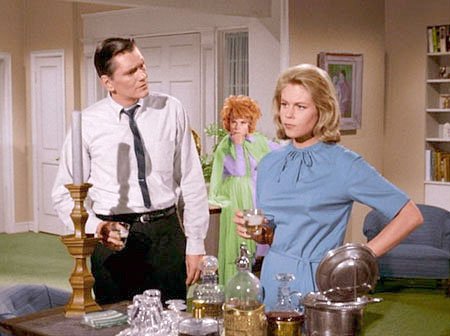 There are a group of people involved in the American news industry and they have questionable ways of sourcing information. Some of them claim to be psychics and believe that they can sense the intent of a situation before it happens. These people often work with government agencies and law enforcement and are able to access personal information and records that are confidential and they often distort the material and lie for fun. Not only that, but they also invade your personal life and spy on you and that is very dangerous because they have been responsible for ruining lives, ripping families apart, getting people hurt and killed all to serve their objectives. To further highlight this illustration, Bewitched is a situational comedy that aired in the 1960 and 1970s. It starred a beautiful young lady called Samantha and she was married to a tall, dark, handsome advertising executive called Darrin who had really nice hair. On the episode called I Confess, which originally aired 4th April 1968, Darrin gets a glimpse of his life if everyone knew that Samantha was a witch. #RandolphHarris 3 of 9
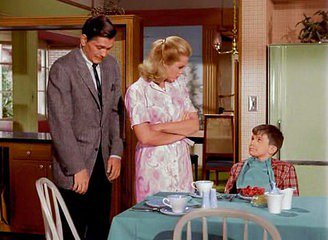 Darrin took his wife Samantha with him to work to tell his boss and owner of the advertising company, Mr. Larry Tate, that Samantha was a witch. Darrin thought that Mr. Tate would be shocked and afraid, but instead he wanted to use Samantha’s powers of witchcraft to take over the World and make his firm the most successful advertising industry on the planet. After that Darrin told his neighbor’s that Samantha was a witch, and people were selling tickets to see her, watching her house, and it put her life in danger. Eventually, Darrin lost his wife and his daughter Tabatha because the military contacted them and told them it was no longer safe for her to life in public because there were so many threats against her life. Fortunately, however, thankfully it was just a dream (and is a television show), so when Darrin woke up he forgot all about it. The idea of true healing still has some meaning. Nevertheless, this fairy tale shows you the dangers of the news media having too much power and access to people’s lives and secrets. When the news is allowed to break the laws and not be punished they put real lives in danger. We should be concerned with the consequence of spiritual decay. #RandolphHarris 4 of 9
 An industry, like the news media, that is built on exposing people and hurting people is very dangerous. To many of these reporters and journalists, we are nothing more than a news story waiting to happen. They do not care about the harm they may cause by leaking sensitive information, as our lives are meaningless to many of them. And, if an individual complains about them invading one’s life or personal business, they will often have an entertainment lawyer reach out and threaten to sue the individual complaining and have that individual arrested. Also, because the news is so powerful and they work with governors, mayors, and law enforcement, they could charge an individual with a crime for contacting them and asking them to leave one alone. The reporters are relentless in Sacramento, California and probably else were and spend years and decades terrorizing people looking for a story and nothing is done until the federal government sees there is a serious problem going on. Some people have been physically attacked by reporters and extorted and these reporters go unpunished. And when they are reported to their parent company or other regulatory agencies, they refuse to investigate and will say something like, “We have no affiliation with them,” or “We need more information.” #RandolphHarris 5 of 9
 Anyone who can dream must have a passionate desire to protect the World of one’s dreams against intruders. With our roles in society, we are more likely to cultivate the skill or qualified relevant to the role performances of central statuses than of peripheral one. For example, an athlete may give full attention to ensuring that he or she is in peak physical condition but show far less concern with whether he or she is behaving properly as a nephew or brother. The pianist may practice endlessly to improve his or her musical ability, but make no effort to learn to perform home repairs. Role performance of central statuses may transfer or diffuse to other statuses. This process is called role-person merger. The person is consisting of all the roles in an individual’s repertoire. The question raised is whether the attitudes and behavior developed as an expression of one role carry over into other situations. For example, the professional who carries the office bearing and air of authority into family and community dealings have become to a considerable degree the professional role played at work. In these circumstances, a particular status moves to the top of one’s identity hierarchy; the role standard, or qualities expected of a status incumbent, become of primary concern to the individual, and these qualities generalize to other roles. #RandolphHarris 6 of 9
 Under certain circumstances, in fact, a social identity element may become so important that it overwhelms the others. One expression of this idea is the labeling theorist’s concept of role engulfment. This concept suggests that the individual’s identification of the self with some labeled category, for example, homosexual, embezzler, or drug addict, may loom so large in his or her consciousness that all else pales by companions. His or her other statuses or characteristics, however, admirable, come to count for nothing in his or her eyes. Furthermore, global self-esteem is more likely to hinge on performance in central than in peripheral roles. This point has been felicitously by William James, “I am who for the time have stacked my all on being a psychologist, am mortified if others know much more psychology than I. However, I am contented to wallow in the grossest ignorance of Greek. My deficiencies there give me no sense of personal humiliation at all. Had I ‘pretensions’ to be a linguist, it would have been just the reverse.” Our supreme focus should be on the spiritual miracles that are available to all of God’s children. #RandolphHarris 7 of 9
 Our sense of who and what we are tends to hinge more importantly on central than on peripheral identity elements. The woman who loses her identity as wife when her husband passes into Heaven, or a man who loses his identity as a carpenter or engineer upon forced retirement, may experience feelings of uncertainty about who or what he or she really is. The loss of peripheral identity elements, on the other hand, may have little effect. For some reason that is not readily evident, sociologists appear to have been more active in developing and elaborating the idea of social identity salience than in examining it empirically. That strongly valued traits have a particularly powerful impact on global self-esteem has been clearly supported by research. Differential social identity valuation would be expected to show similar effects. The dream is one of our most powerful weapons against the psychoanalysts who insist on interpreting it. The powerful dreamer, free of guilt, stand wholly outside this World. The only guilt one feels and for which one is prepared to atone is the guilt of others. In the healthy World of one’s pure spirit, there is no room for guilt. #RandolphHarris 8 of 9
 The most important thing is to save the dream, this is the noblest attribute of an individual and artist, from destruction. We live in a day in which misinformation about our beliefs abounds. In times such as these, a failure to protect and deepen our spiritual foundation is an invitation to have then gnawed at by those who seek to destroy our faith in God, as they gnarl and buckle as us like a chain saw. Our dreams should not be interpreted by someone else. Instead, we should use our own dreams as an inspiration toward attaining precisely that knowledge of which the dreamer is deprived. Otherwise we may find ourselves bound by the advisory’s chains and being led carefully down forbidden paths. Our spiritual foundation goes deeper as sincere personal and family prayers becomes bastions of our faith as we repent daily, seeking the companionship of the Holy Ghost, and learn God and his attributes and strive to become virtuous. Dreams are a beacon of hope and do not let anyone steal your dream no matter how impossible they say it is. Pray for great things, expect great things, work for great things, but above all pray. We love you and thank you, God. #RandolphHarris 9 of 9

C’est tres en Vogue en ce Moment!

The loneliness trap of withdrawal is self-explanatory: it is a silent admission of total defeat and a reluctant resignation to the status quo, to a life devoid of human love. It is frequently the case that privilege and disprivilege are cumulative and reinforcing, low position along one stratification dimension may produce a corresponding position along another. A prime example is social stratification. As a consequence of prejudice and discrimination, even some who are considered to be privileged are not allowed to enjoy equality in education, prestigious occupational positions, nor do they have access to equal pay or full constitutional rights. As a result, they are not only victims of discrimination and have to work harder for occupational prestige, but they are also socially stigmatized. Hence, a general consequence of prejudice and discrimination is to bring about other conditions of life for people who are victimized that produce unfavorable comparisons with those who are allowed social and legal equality, and the comparisons are obviously damaging to self-esteem. And these days, anyone can be a victim of unfair treatment, injustice, and sexual harassment. People you would not even expect to be victims of discrimination have been. From tall, attractive men you would expect to be accept by everyone to beautiful Academy Award winning actresses. #RandolphHarris 1 of 8

Another principle of self-esteem formation is self-attribution. Internal psychological processes are inherently unobservable. Inner states (such as hunger, anger, excitement, sympathy)—are ordinarily understood to be based on private internal stimuli—and may in reality reflect past training in the application of certain descriptive terms to overt behavior and the conditions under which it occurs. Thus, the man who, after devouring an enormous meal, concludes that “I guess that I was hungrier than I thought,” is drawing conclusions about his level of hunger not by consulting his inner experience but by observing his own behavior or its outcomes. Furthermore, it is not just inner states but any aspect of the self that may be influenced by the individual’s observations of his or her own behavior. People derive much of their knowledge [about themselves] from direct experience of the effects produced by their action. Thus, the child who is dejected and gazes at one’s poor report card, or the unequally treated adult whose social identity includes a low prestige job, lack of material possessions, or other evidence of failure would be expected to develop low self-esteem. #RandolphHarris 2 of 8

Because people who are taken advantage of or not fully appreciated in society are victims of prejudice, and hence negative reflected selves (reflected appraisals); because, on the average they tend to compare unfavorably with those who are accepted and worshipped in such valued areas as school achievement, educational level, and occupational success (social comparison); and because they may interpret their unfortunate life circumstances and experiences as overt reflections of a lack of essential work (self-attribution), many professional have simply taken it for granted that people ranking low in the various prestige hierarchies would tend to have lower self-esteem. The facts, however, speak otherwise. Monumental synthesis of this research, involving a review of several thousand studies, offers little support for the conclusion that people who have been consistently subjected to prejudice and discrimination have appreciably lower self-esteem. Why have these sound psychological principle failed to yield the expected results? The critical error, we believe, had lain in viewing the situation from the perspective of the broader society rather than from the viewpoints of the people who are actually facing discrimination. #RandolphHarris 3 of 8

Investigators have frequently overlooked the reality of the situation, in many cases, when it comes to people who are being discriminated against. If we want insight into an individual’s self-esteem, especially when we know they are being discriminated against frequently, then we need to attempt to understand the individual’s definition of the situation, in order to gain entry into his or her phenomenal field or psychological World. You will find that people who are not accepted, in whatever majority considers themselves to be tres en vogue en ce moment (very fashionable at the moment or in the case accepted), has just as high as, if not higher self-esteem. It has a lot to do with principle of reflected appraisals—we tend to see ourselves through the eyes of others. However, which others? Do we see ourselves through the eyes of the broader society or of those with whom we directly interact? The people in our role-set, that is, our God, parents, classmates, teachers, employers, and neighborhood peers, that is where our interaction goes on primarily. Whatever else these particular others may think of us on other groups, they are unlikely to derogate us. Thus, we are more likely to see ourselves from the perspective of members of our own group who love us, than the dominant majority. #RandolphHarris 4 of 8

The traps inherent in attempting to find human companionship as quickly as possible are less immediately apparent. Two traps are particularly difficult to avoid. The first is the trap of panic. Because of intense feelings of shame, stress, and pain, the person sets out immediately to find a mate with single-mindedness that borders on an obsession. While such a strategy may produce a mate, all too often it also produces greater loneliness. One problem is that the single-minded pursuit of a mate, other humans who could provide companionship and friendship are discarded. Therefore, principle of reflected appraisals is thus entirely sound, but by expecting my self-esteem to be degraded because of your mob mentality, you have misapplied your judgments, as I do not chiefly see myself through the eyes of your majority. And the thing with social comparison is equally sound and equally misapplied. It might be expected for some to have lower self-esteem because they compare unfavorably with the majority in terms of socioeconomic status, school marks, or intact family. #RandolphHarris 5 of 8

However, when people know they are good people and doing the best they can, they also understand that everything runs its course. If you are constantly bullying and harassing others, you will lose your favor with God and your fortune will be turned into misfortune. And those who are working hard and doing what is right will eventually be favored. Also, you cannot just attack a person relentlessly and expect them not to respond. The self-attribution principle is also sound but misapplied. For example, career self-concept and, to a lesser extent, global self-esteem tend to be influenced by the person’s evaluation; in other words, one important basis for assessing one’s own work is to observe one’s achievements. However, this is precisely why it is so important to recognize that some of the individual’s statuses are ascribed, whereas others are achievements. But this is precisely why it is so important to recognize that some of the individual’s statuses are ascribed, whereas others are achieved. There is evidence to suggest that the chief ascribed statuses—race, ethnicity, gender, religion—show virtually no association with global self-esteem whereas achieved statuses do show such an association. Social class is achieved, but no matter your economic standing, you can behave like you come from a good home. #RandolphHarris 6 of 8

It is thus apparent that it is not the individual’s behavior but one’s interpretation of the behavior that has consequences for self-esteem. The issue, in other works, is one of attribution. Thus, we have observed that one factor protecting the self-esteem of many adult groups is the system-blame interpretation. Some behavioral outcomes, people may attribute it either to internal properties of the individual or to factors in the external situation. To further highlight this illustration, if someone does well on a work assignment, one can attribute this outcome either to the fact that one is smart (an internal characteristic) or to the fact that the project was easy (the external situation). If occupational failure is explained by prejudice and discrimination (external factors), then the lower occupational status of the group being discriminated against may do some damage to self-esteem. Therefore, any easy and automatic assumption that low prestige in some stratification hierarchy will produce correspondingly low self-esteem is a gross oversimplication. #RandolphHarris 7 of 8

What research has demonstrated is that, although the principles on which this assumption primarily rest—reflected appraisals, social comparison, and self-attribution—are perfectly sound, researchers have tended to overlook the psychological World—the phenomenal field—of people who are considered to be part of an underrepresented group and, in doing so, have frequently reached erroneous conclusions. God has brought light our of darkness, not our of a lesser light, and he can bring your summer out of Winter, though you have no Spring. Though in the ways of fortune, understanding, or conscience you have been benighted until now, wintered and frozen, clouded and eclipsed, damped and benumbed, smothered and stupefied, now God comes to you, not as the dawning of the day, not as the bud of the spring, but as the Sun at noon. God has shifts in your future that if he showed you now, you would not believe. It is exceedingly, abundantly, above and beyond. Suddenly, a dream comes to pass. Suddenly, a promise is fulfilled. Suddenly, the negative turns around. You need to get ready for the surpassing greatness of God’s favor. #RandolphHarris 8 of 8

The Winchester Mystery House

Hauntings, the ghost psyche, spirit communication, and spirit guides–all these phenomena and more have that have taken place inside The Winchester Mystery House have fascinated mankind for centuries. https://winchestermysteryhouse.com/
Get Out–They Poured Milk Down My Shirt and Put Ham in My Pants!
 Improving humanity will happen by applying science to society. There are many prejudices and misunderstandings still lingering from the past. The castration of old days left behind it traditions of punishment, ignominy, and obloquy, at the least of a kind of shameful dishonor, and such notions, it is likely, still largely prevail among the populace and become attached to the new sterilization. How the attitudes of other people affect our self-concepts also depends on which self-concept component is under consideration. A tennis expert may be highly influential in determining our judgments of our tennis skill, but our parents and friends may be more influential in determining our global self-esteem. There is a difference between role-specific significant others (whose opinions are typically significant with regard to a specific aspect of the individual’s role-set), and orientational others (whose opinions are significant in general). To establish a perspective, index role-specific significant others who’s evaluation of you as a student or employee at your job or school concerns you most. Because people should only be evaluating your material and not you personally, although you are expected to be well-behaved and of good hygiene, they have no right to judge your personally to be involved in your personal life. #RandolphHarris 1 of 12
 Therefore, the only thing they should have an impact on, when it comes to dealing with you, is your performance in school or work. Unless, of course, part of your job as a student or employee or corporation is to also be a good citizen. To reduce drama or the chance of getting anyone’s feelings hurt, it is important to evaluate these different types of relationships based on qualifying criteria. In an effort to reduce sexual harassment claims, employers usually do not allow employees to fraternize, as it might negatively affect the company and employees socially, financially, and legally. Therefore, it is important to have boundaries. Now, when it comes to orientational significant others, list those persons or groups of people whose evaluation of you as a person concerns you most. Generally, the results will show that, with regard to evaluation of the self in a professional context, respondents tend to mention faculty or manager first, with friends and family members following in that order. However, when asked about the views of others toward the self as a person, friends are most frequently mentioned, followed by family members, with faculty and employers in third place. #RandolphHarris 2 of 12
 The impact of others also depends on the degree of crystallization of the self-concept component under consideration. If the component is firmly fixed, others’ views may have little impact; but f it is uncrystallized, we may readily accept the other’s view of ourselves. This point is most evident when bogus qualities are used. When the professors gives us the results of our performance on a test or on a project at work of contrast sensitivity or perceptual discrimination, informing us that we are deficient or superior in this regard, we readily accept the expert judgment of us. The reason is, of course, that we had no performance view of ourselves regarding these qualities. However, the same is true of real but uncrystallized self-concept components. Such is the case, for example, when subjects are asked how good they are at voice control or conveying meaning. Experts’ judgments are easily accepted with reference to qualities on which we have little or no preformulated opinions. It would be far more difficult to convince us, contrary to an established assumption, that we are a fascist or a moron. #RandolphHarris 3 of 12
 There is intrinsic value to being. It is what we fundamentally are. Whether we accept the other’s view of us depends in part on whether or not we are motivated to accept it. Given the self-esteem and self-consistency motives, it is evident that we would prefer to internalize optimistic characteristics than negative, and consistent rather than contradictory, attitudes toward the self. There is evidence to suggest that, in the interests of self-esteem and self-consistency, people engage in selective perception of the attitudes of the other and selective attribution of significance. Discovering and eventually resting in this being brings a feeling of deep inner peace and freedom. As we become intimate with this still center within, we feel more connected to all of life. We experience our wholeness firsthand and become lovers of what is—of life as it appears. Our approach to life becomes increasingly less problematic as we accept what comes and allow what goes, grounded in something that feels unchanging in our core. The fluctuations of health, work, and relationships are held in a bigger and more connected space. Selective perception in the service of self-esteem characteristically involves the belief that others think more highly of us than they actually do. #RandolphHarris 4 of 12
 There is, in fact, ample evidence of such a self-favorability bias. Virtually every study that has explored the issue finds that people tend to believe that others think more highly of them than these others actually do. Furthermore, the self-consistency motive contributes to people’s tendency to believe that others’ attitudes toward them are congruent with their own. Interpersonal congruency is said to exist when the individual perceives others as attributing to one a trait that one attributes to oneself. This theory was investigated in a study of thirty-one women in a sorority house. Subjects were asked to rank themselves on sixteen paired traits, such as warm-cold, mature-immature, dominant-submissive, and so forth. The subject was asked to indicate the adjectives she thought others would assign to her, those she assigned to herself, and those she assigned to each of the other women. The results showed that the subject overestimated the extent to which others saw her as she saw herself, and that this overestimation was strongest for those women whom the subject liked or interacted with most. People thus tend to believe unduly that others—particularly those they know best—see them as they see themselves. #RandolphHarris 5 of 12
 Recognizing and consciously welcoming being into the conventional ritual of modern psychotherapy brings a feeling of shared spaciousness to the therapeutic exploration. People come to relate to their inner and outer lives with more compassionate acceptance and clarity. Selective significance is also enlisted in the service of the self-concept motives. Since significance to those who, we believe, think well (or congruently) of us and to withhold significance from others. The individual is more likely to be influenced by what one believes one’s friends think of him or her than by what one believes his or her nonfriends think of him or her. The net result of this interpersonal selectivity is to attribute greater significance to the opinions of those whose attitudes toward the self are more favorable. That is because our greatest suffering stems from our sense of separation and the feeling or being alone and disconnected from life. One of the beauties is being around people who love, accept, and respect us is that it directly addresses our core need, which is to be loved unconditionally. It also offers an intimate shared shape for us to explore our fears of being open to another being as well as to the whole of life. #RandolphHarris 6 of 12
 What empirical research has made evident is that the principle of reflected appraisals, though fundamentally correct, is an approximation. Whether we see ourselves as others see us depends on who these others are; which aspect of the self is under consideration; and whether we are motivated to accept or reject their views. The self we see when viewing ourselves through the eyes of others is thus seen through a glass, darkly. As the old conditioning is gradually processed, integrated, and released, the transpersonal domains of the soul and spirit begin to unfold. Being together offers a simple and elegant way for the self to meet itself in the apparent other. In so doing, we are looking for ourselves in others. Looking for attributes that make us feel more comfortable and complete. However, it is true, and well recognized, that a large number of defective children are the offspring of parents who are not under restraint and approximate to the normal. These parents usually belong to neurotic groups like American gossip-journalism. They are moralist without character, noise-makers in the coffee house, and it is possible to recognize them and to bring social influences to bear on them. #RandolphHarris 7 of 12
 Cases constantly occur in which to parents of this kind child after child is born in rapid succession, all more or less defective, one way or another, or even in the same way, as in a family of eight, all ambiguous meatheads and ding bats. A question of frequent debate is how far sterilization should be voluntary and how far regulated by legislation. My own prejudices in this matter have always been strongly on the voluntary side, then there would be no need for abortion or pills that make people gain weight, and they can be free to adopted some of these unwanted children in this overpopulated World. Some surgeons appear to have a nervous terror that if they sterilize they may be doing an illegal act, even if they do so at the wish of the patient, and some legal opinions seem to support it, though it is difficult to see who could dispute a voluntary sterilization, and on what grounds. A law to regulate sterilization, standing by itself, would look like class legislation and be in consequence resented by those who ought to feel, not that a punishment is being inflicted on them, but that a privilege is being brought within their reach. That result is best achieved by the free and open practice of voluntary sterilization among all classes of the community. #RandolphHarris 8 of 12
 At the same time, provided that such voluntary sterilization is openly encouraged and practiced, I am now willing to admit that legal facilities may be desirable to bring this method within reach, not only for the poor, who otherwise would not have the means nor the opportunity to secure it, but of the insane and feeble-minded under control, who can legally only give their consent through their nearest relatives, but for whom, alike in their own interest and those of their possible offspring, procreation is undesirable. It is quite possible for such parents to have tolerably normal children, but, with our increased sense of social responsibility, we begin to realize that in so serious a matter no risks must be run here. It is in California that a sterilization law, not indeed entirely admirable, has been most effective, having been applied to many thousands of subjects and worked in a reasonable way. Heredity and eugenics are an extension of natural selection. Improving the genetic makeup of the human population will happen by specifically sterilizing people with genetic defects or undesirable traits, thereby keeping them from reproducing. #RandolphHarris 9 of 12
 We need to establish an Executive Secretary of the American Social Hygiene Association. Their mission will be to use public education to promote premarital abstinence, and also promote sex education and birth control. We also need an Institute of Family Relations to bring marriage and family counseling so we can improve the race. Since the family often suffers problems which threaten its stability, we must treat those problems. In other words, we should establish a marriage counseling center where maladjustments might be brought, studied, classified—and helped is possible. Part of this counseling is to encourage fathers to take an active role in their lives of their children. By 2027, the Institute can employ 70 counselors and counsel over 300,000 men, women and children. This was a technique introduced by Dr. Paul Popenoe (1888-19790, he was a Sunday School teacher and a secular humanist. When he was 17, he fainted after eating a steak dinner and became a strict vegetarian long before it was popular. And true to his Victorian roots, he did not believe in any kind of sex outside of marriage, and he was a virgin on his wedding night. He became the marriage counselor to the stars and sessions maintained privacy. #RandolphHarris 10 of 12
 In total, 20,108 people were sterilized in the state of California prior to 1964. California had by far the highest number of sterilization in the United States of America (33 percent of all sterilization nationwide). Men and women were sterilized. However, because of the sensitive nature of sterilization records, many are difficult to access or have been altered. This suggests that the total known number of sterilizations may be conservative compared to actual number. Eugenicists in California saw sterilization as a tool with a broad range of applications, all of which were applied to prevent the procreation and overcrowding of state institution and to alleviate fiscal constraints on the state. It has been estimated that the sterilization of 10 percent of the population would produce an appreciably beneficial eugenic effect on the whole nation. Experimental Evolution was a product of the Eugenics Record Office, the first building to be devoted solely to the study of human evolution or race biology. Dr. Charles B. Davenport believed that we needed a social movement that would embody the impulses of racial regeneration and genetic editing to prevent the nations of the World from going bankrupt. The aim: how can we now replace the aim quantity by that of quality? #RandolphHarris 11 of 12
 When we grasp that problem in all its branches we see that it is most intimately bound up with our personal lives. And when we recognize how the problem presents itself today we shall realize from the wider human standpoint, having more quality people over quantity is the most vital problem of society. “Behold, I am laboring with them continually; and when I speak the word of God with sharpness they tremble and anger against me; and when I use no sharpness they harden their hearts against it; wherefore, I fear the lest the Spirit of the Lord hath ceased striving with them. For o exceedingly do they anger that it seemeth me that they have lost their love, one towards another; and they thirst after blood for revenge continually. And now, my beloved children, notwithstanding their hardness, let us labor diligently; for if we should cease to labor, we should be brought under condemnation; for we have a labor to perform whilst in this tabernacle of clay, that we may conquer the enemy of all righteousness, and rest our souls in the Kingdom of God (Moroni 9.4-6).” Grief can take care of itself, but to get full value of a joy, you must have somebody to divide it with. #RandolphHarris 12 of 12
 Randolph Harris II International Institute