
Home » Executive Secretary of the American Social Hygiene Association (Page 47)
Category Archives: Executive Secretary of the American Social Hygiene Association

A Glowing Tripod Will at Last Give Sign that You Have Reached the Deepest, Nethermost Shrine and by its Light You Will Behold the Mothers!


 If the intellectual were to admit that one also has power, although a different kind from that of the politician, the businessman, and the military leader, it would clear the air. Furthermore, modern society clearly needs the intellectuals and their guidance; the corporate power needs to be shared with them as well as with the other disinherited groups of society. It is worthwhile to recall that in The Queen of the Damned, by Anne Rice, Lestat de Lioncourt, the intellectual vampire appears to be getting ready to be decapitated, but is pulled in by Queen Akasha, the 6,000-year-old most powerful and first vampire in the World. However, later Queen Akasha faces a struggle, when all the vampires turn against her and is herself decapitated by one of the redhead witches the was responsible for bring the dark forces into her life that cursed her with vampirism. This is a graphic allegory of the role of intellectual and the nutrient power that one can express in our day. Be careful who you are willing to die for, as they may not be there to nourish you in your time of need. I have argued against the idea that there is an irreconcilable incompatibility between power and the intellectual. #RandolphHarris 21 of 22


I Love You Anyway, is it So Rare that I Have Been Sleeping with the Dead?


Refuse to Cover the Signs of the End in Our Lives and in Our Souls–We Are a Generation of the End and We Should Know What We Are!


Whenever I Found the Living, there I Found the Will to Power—I Have Been through All the World and I Will Take You to Safe Places!
 These demons are mindless, immature, and deviant, but I had studied their conduct and I have learned from all the evidence why it is that they rage. They are maddened that they do not have bodies, that that cannot feel as we feel. They make the innocent scream filth because the rites of love and passion are things that they cannot possibly know. They can work the body parts but not truly inhabit them, and so they are obsessed with the flesh that they cannot invade. And with their feeble powers they bump upon objects, they make their victims twist and jump. This longing to be carnal is the origin of their anger, the indication of the suffering which is their lot. Power is essential for all living things. Mortals in particular, cast on this barren crust of Earth aeons ago with the hope and the requirement that one survive, finds one must use one’s powers and confront opposing forces at every point in one’s struggle with the Earth and with one’s fellows. Insecure as one has been through the ages, buffeted by limitations and weakness, laid low by illness and ultimately by death, one nevertheless asserts one’s powers in creativity. One product of this is civilization. #RandolphHarris 1 of 13
 The word power comes from the Latin posse, meaning to be able. We can see the vicissitudes of the emergence of power as soon as a baby is born into the World—in his cry and in the waving of his arms in demand that he be fed. The cooperative, loving side of existence goes hand in hand with coping and power, but neither the one nor the other can be neglected if life is to be gratifying. Our appreciation of the Earth and the support of our fellows are not gained by abdication of our powers, but by cooperative use of them. The infant’s capacity to cope with necessities becomes, in the growing adult, the struggle for self-esteem and for the sense of significance as a person. This latter is his psychological reason for living in contrast to the infant’s biological one. They cry for recognition becomes the central psychological cry: I must be able to say I am, to affirm myself in a World into which, by my capacity to assert myself, I put meaning, I create meaning. And I must do this in the face of nature’s magnificent indifference to my struggles. It is important that we remind ourselves that we mean neither will nor power in the competitive sense of the modern day, but rather self-realization and self-actualization. If we are freed from thinking of power only in the pejorative sense, we are better able to agree with others. #RandolphHarris 2 of 13
 Far from treating power only as a term of abuse, one which is to be applied to our enemies (for instance, they are power-driven, but we are motivated only by benevolence, reason, and morality), I use it as a description of a fundamental aspect of the life process. It is not to be identified with life itself; there is much in human existence—like curiosity and love and creativity—that may be and normally is related to power but is not to called power in itself. However, if we neglect the factor of power, as is the tendency in our day of reaction against the destructive effects of the misuse of power, we shall lose values that are essential to our existence as human. A great deal of human life can be seen as the conflict between power on one side (for instance, effective ways of influencing others, achieving the sense in interpersonal relations of the significance of one’s self) and powerlessness on the other. In this conflict our efforts are made much more difficult by the fact that we block out both sides, the former because of the evil connotation of power drives, and the latter because our powerlessness is too painful to confront. #RandolphHarris 3 of 13
 Indeed, the chief reason people refuse to confront the whole issue of power is that if they did, they would have to face their own powerlessness. As soon as powerlessness is referred to by its more personal name, helplessness or weakness, many people will sense that they are heavily burdened by it. Indeed, no social emotion is more widespread today then the conviction of personal powerlessness, the sense of being beset, beleaguered, and persecuted. Majority rule, for which mortals have struggled for centuries, has produced a situation in which mortals are more important, more powerless to influence their government then 200 years ago. The juggernaut of the state grinds on with no attention paid to you or me. And now multitudes are having to get used to living without their usual confidence that America is the World’s most powerful nation, a confidence to which, inadequate as it was, many people clung for their past sense of personal status. To admit our own individual feelings of powerlessness—that we cannot influence many people; that we count for little; that the values to which our parents devoted their lives are to us insubstantial and worthless; that we feel ourselves to be faceless others, insignificant to other people, and therefore, not worth much to ourselves—this is, indeed, difficult to admit. #RandolphHarris 4 of 13
 I cannot recall a time during the last four decades when there was so much talk about the individual’s capacities and potentialities and so little actual confidence on the part of the individual about one’s power to make a difference psychologically or politically. The talk is at least partially a compensatory symptom for our disquieting awareness of our very loss of power. It is, therefore, understandable in this transitional age, when we have at our fingertips the power to blow each other off the face of the planet, that certain persons should purpose we give up the human experiment. We live in times too dangerous to trust to human individual mood or choice…We can no longer control the people in power, and we therefore must resort to pacifying drugs to control our leaders. We can appreciate this despair, especially when we consider the powerlessness of the Blacks, out of which the impetus for this proposal arises. However, this does not prevent our also realizing, as we read with sinking heart of the new discoveries of chemicals that purport to cure modern mortals of their aggressiveness and develop in one a cooperative personality, that use of them goes with depersonalization and loss of our sense of personal responsibility. This alternative would mean, indeed, a gradual abdication of mortal’s humanity. #RandolphHarris 5 of 13
 Other psychologist, noting that we have not done very well in controlling ourselves, propose to do that controlling for us in the form of operant conditioning. We hear of new methods of bringing up our children which will train out of them aggressive tendencies and make them docile and placid. Have everyone forgotten this despair in which people are polarized into two groups, the majority domesticated into docile, sheeplike passivity, their flesh soft and tender, who are then eaten by a tougher group, the engineers of this social program? The failure of nerve theories arise out of the true observation that the exercise of power has done colossal harm in the modern World. The proposals have the double attraction of expressing the reaction against power and promising a utopia in the same breath. They will have a strong following among people threatened by importance and hoping against hope for some substitute for power. American’s concern about the possible misuse of power verges at times on a neurotic obsession. The important question, however, is not whether these theories are right or wrong. #RandolphHarris 6 of 13
 Rather it is whether or not we would, by trying to rid ourselves of our tendencies toward aggression, be discarding those values essential to our humanity—our self-affirmation and self-assertion, just to mention two. And would we not then be adding greatly to our feeling of powerlessness and this setting the stage for an eruption of violence that would dwarf everything so far? For violence has its breeding group in impotence and apathy. True, aggression has been so often and so regularly escalated into violence that anyone’s discouragement and fear of it can be understood. However, what is not seen is that the state of powerlessness, which leads to apathy and which can be produced by the above plans for the uprooting of aggression, is the source of violence. As we make people powerless, we promote their violence rather than its control. Deeds of violence in our society are performed largely by those trying to establish their self-esteem, to defend their self-image, and to demonstrate that they, too, are significant. Regardless of how derailed or wrongly used these motivations may be or how destructive their expression, they are still the manifestations of beneficial interpersonal needs. We cannot ignore the fact that, no matter how difficult their redirection may be, these needs themselves are potentially constructive. #RandolphHarris 7 of 13
 Violence arises not out of superfluity of power but out of powerlessness. Violence is the expression of impotence. Confused as to one’s place in the scheme of a World growing each day closer yet more impersonal, more densely populated yet in face-to-face relations more dehumanized; a World appealing ever more widely for one’s concern and sympathy with unknown masses of mortals, yet fundamentally alienating one even from one’s next neighbor, today Western mortals have become mechanized, routinized, made comfortable as an object; but in the profound sense displaced and thrown off balance as a subjective creator and power. This theme of the alienation of modern mortals runs through the literature and drama of two continents; it can be traced in the content as well as the form of modern art; it preoccupies theologians and philosophers, and to many psychologists and sociologists, it is the central problem of our time. In various ways they tell us that ties have snapped that formerly bound Western mortals to themselves and to the World about them. In diverse language they say that mortals in modern industrial societies are rapidly becoming detached from nature, from one’s old gods, from the technology that has transformed one’s environment and now threatens to destroy it. #RandolphHarris 8 of 13
 From one’s work and its products, and from one’s leisure; from the complex social institutions that presumably serve but are more likely to manipulate one; from the community in which one lives; and above all from oneself—from one’s body and one’s gender, from one’s feelings of love and tenderness, and from one’s art—one’s creative and productive potential. The alienated mortal is every mortal and no mortal, drifting in exercises no power, a stranger to oneself and to others. Alienation as we find it in modern society is almost total; it pervades the relationship of mortals to one’s self. An indefinable sense of loss; a sense that life has become impoverished, that mortals are somehow deracinate and disinherited, that society and human nature alike have been atomized, and hence mutilated, above all that mortals have been separated from whatever might give meaning to their work and their lives. Too frequently, there is a tyranny from above, imitated by followers, which forbids any independent thought and does not tolerate any real search. #RandolphHarris 9 of 13
 Mortal’s search for truth cannot be properly carried on unless one as full freedom in it. Where is the religious or religio-mystical institution which is willing to grant that to him? Is there a single one which lets one start out without being hampered by authoritarian doctrines, taboos, limitations, and traditions which it would impose upon one? Lectures, societies, and group-movements are of limited value: they can never replace nor achieve what is gained by one’s own individual efforts made in the right way. The seeker after truth will not find one’s way easy to travel. One may find that an institution, an authority, or an organization is suffocating one mentally or oppressing one emotionally. This may be the hour when one must claim one’s freedom. It is illusory to believe that, by blindly handing or humbly submitting one’s character and credo, one’s standards and values, one’s spiritual purposes and practices, to any organized group or established church, to a teacher, guide, or guru, to form and formulate, a mortal can evade the responsibility of judging them for oneself, accepting or rejecting by oneself. It is required of every fully human being that one be individual, not a parasite, and that one be oneself, not someone else. #RandolphHarris 10 of 13
 People speak of the religious mortal as one who can dispense with all relations to the World and to beings because the social stage that is allegedly determined from outside is supposed to have been transcended here by a force that works entirely from within. However, two basically different notions are confused when people use the concept of the social: the community built of relation and the amassing of human units that have no relation to one another—the palpable manifestation of modern mortal’s lack of relation. The bright edifice of community, however, for which one can be liberated even from the dungeon of sociability, is the work of the same force that is alive in the relation between mortals and God. However, this is not one relation among others; it is the universal relation into which all rivers pour without drying up for that reason. Sea and rivers—who would make a bold to separate here and define limits? There in only the one flood from I to You, ever more infinite, the one boundless flood of actual life. One cannot divide one’s life between an actual relationship to God and an inactual I-It relationship to the World—praying to God in truth and utilizing the World. Whoever knows the World as something to be utilized knows God the same way. #RandolphHarris 11 of 13
 One’s prayers are a way of unburdening oneself—and fall into the ears of the void. One—and not the atheist who from the night and longing of one’s garret window addresses the nameless—is God. And so we use them for a kind of pleasure which can be called fun. However, it is not the creative kind of fun often connected with play; it is, rather, a shallow, distracting, greedy way of having fun. And it is not by chance that it is that type of fun which can easily be commercialized, for it is dependent on calculable reactions, without passion, without risk, without love. Of all the dangers that threaten our civilization, this is on of the most dangerous ones: the escape from one’s emptiness through a fun which makes joy impossible. Rejoice! This Biblical exhortation is more needed for those who have much fun and pleasure than for those who have little pleasure and much pain. It is often easier to unite pain and joy than to unite fun and joy. Does the Biblical demand for joy prohibit pleasure? Do joy and pleasure exclude each other? By no means! The fulfillment of the center of our being does not exclude partial and peripheral fulfillments. And we must say this with the same emphasis with which we have contrasted joy and pleasure. #RandolphHarris 12 of 13
 We must challenge not only those who seek pleasure for pleasure’s sake, but also those who reject pleasure because it is pleasure. Mortals enjoy eating and drinking, beyond the mere terrestrial need of them. It is a partial ever-repeated fulfillment of one’s striving for life; therefore, it is pleasure and gives joy of life. Mortals enjoy playing and dancing, the beauty of nature, and the ecstasy of life. They fulfill some of one’s most intensive strivings for life; therefore, they are pleasure and give joy of life. Mortals enjoy the power of knowledge and the fascination of art. They fulfill some of one’s highest strivings for life; therefore, they are pleasure and give joy of life. Mortals enjoy the community of mortals in family, friendship, and the social group. They fulfill some fundamental strivings for life; therefore, they are pleasure and give joy of life. “And they had power given unto them, insomuch that they could not be confined in dungeons; neither was it possible that any mortal could slay them; nevertheless they did not exercise their power until they were bound in bands and cast into prison. Now, this was done that the Lord might show forth his power in them. And it came to pass that they went forth and began to preach and to prophesy unto the people, according to the spirit and power which the Lord had given them,” reports Alma 8.31-32. #RandolphHarris 13 of 13
Nobody Does it Without Carrying Scars in One’s Soul One’s Whole Life
 I was enchanted by the World of rock music—the way the singers could scream of good and evil, proclaim themselves angels of devils, and mortals would stand up and cheer. Sometimes they seemed the pure embodiment of madness. And yet it was technologically dazzling, the intricacy of their performance. It was barbaric and cerebral in a way that I do not think the World of ages past has ever seen. Also there was something vampiric about rock music. It must have sounded supernatural even to those who do not believe in the supernatural. I mean the way the electricity could stretch a single note forever; the way harmony could be layered upon harmony until you felt yourself dissolving in the sound. So eloquent of dread it was, this music. The World just did not have it in any form before. Since personal freedom is a venture down paths we have never traversed before, we can never know ahead of time how the venture will turn out. We leap into the future. Where will we land? With freedom one experiences a dizziness, a feeling of giddiness, a sense of vertigo, giddiness, dread—are expressions of the anxiety that accompanies freedom like its shadow. Sometimes a patient in therapy will wryly smile and say, “When I am mad at you, I think I was better off when I was neurotic—then I could go along in only one groove.” #RandolphHarris 1 of 13
 I say “wryly” because if he really believed this, he would not be in therapy in the first place since the purpose of therapy is precisely to take one out of the rigid grooves, the narrow, compulsive trends, which are blocks to freedom. This gives the person a sense of release. However, it is a freedom that brings anxiety. Anxiety is potentially present whenever we are free; freedom is oriented toward anxiety and anxiety toward freedom. Anxiety is the reality of freedom as a potentiality before this freedom has materialized. For freedom is possibility, and who is to forecast what the end result of any possibility may be? Dostoevsky’s Grand Inquisitor saw this clearly: “Nothing has ever been more insupportable for a mortal and a human in society than freedom. Mortals are tormented by no greater anxiety than to find someone quickly to whom one can hand over that gift of freedom with which the ill-fated creature is born.” Freedom is a burden because it brings anxiety in its wake; and the Grand Inquisitor sought to shield people from the paralyzing aspects of anxiety by robbing them of its positive aspects—chiefly, freedom. Requiring the surrender of their freedom, he removed the stimulus to invent new forms, new styles, new ideas—in short, new possibilities. Now, as he insisted, men and women are “vile, weak creatures,” “slaves by nature,” “base creatures.” He is surely logical: if you take away freedom, you make people into the base, weak, vile salves the Grand Inquisitor describes. #RandolphHarris 2 of 13
 It is helpful to keep in mind that anxiety, like dizziness, can be both constructive and destructive. The constructive aspect is stimulating and gives one energy and zest; anxiety is a teacher that, since we carry it inwardly, can never be avoided. Anxiety illuminates experiences that we would otherwise run away from. Civilization is the result of anxiety in that cavemen were forced to invent thinking in order to cope with the saber-toothed tiger and the bison and other animals, which were stronger in tooth and nail and would have exterminated the human race. The anxiety that comes with excessive freedom can also be destructive in that it can paralyze us, isolate us, send us into panic; and when repressed, it may lead to cardiac ailments and other psychosomatic illnesses. These two aspects of anxiety are parallel to constructive and destructive stress. If one lives with any sense of adventure, every person must bear constructive stress; but destructive stress is the excessive tension we see on the modern assembly lines which can tear the human being to pieces. This is why personal freedom is fascinating and the most prized of all human conditions. However, because it is inseparable from anxiety, it is dangerous and understandably dreaded at the same time. #RandolphHarris 3 of 13
 The longer I live and the more I observe in the lives of others, the more numerous becomes the illustrations of higher laws—the factuality of righteousness and the universality of the Quest. This is only as it should be for both are parts of the World-Idea. Thought and action are reflected back by choices and what the consequences of our choices are. They can lead to corruption, or to eternal life. “I have set before you life and death, blessing and cursing; therefore choose life, that both you and your descendants may live,” reports Deuteronomy 30.19. Everything in life goes exactly according to what is written in God’s Word. There are no exceptions. This is the law that affects everyone, whether a believe or a non-believer. You will reap what you sow. All corruption that is in the World comes from lusts. Let no one make the mistake of separating out the quest from everyday life. It is Life itself! Questers are not a special group, a labeled species, which one does or does not join, but are all humanity. This is not merely a matter for a small elite interested in spiritual self-help. It is a serious truth important to every mortal everywhere. The inability to measure up to these ideals does not carry a stigma. All mortals at this level come to Earth with their imperfections. #RandolphHarris 4 of 13
 All mortals seek for truth either consciously and deliberately or unconsciously and blindly, but they can seek only according to their capacity and ability, circumstances and preparedness. It is not a question whether questers are happier than non-questers—for that is an individual personal matter: the division itself is an artificial one. The ascent to Consciousness is for all mortals, not for a few only. Humankind is so near to God and yet so far away from God! Every fresh day is a fresh call from God to mortals. “Then he went home; and the crowd came together again, so that they could not even eat. And when his friends heard it, they went out to seize him; for they said, ‘He is beside himself,’” reports Mark 3.19-21. It is there in all, whether it be latent or patent, this impulse in each mortal to improve and better oneself into a person of worth. Ultimately it develops, in this body or a later one, into the aspiration to transcend oneself. The divine soul dwells in every mortal. Therefore, if only one will apply the faculties one possesses, every mortal may find it. “And his mother and his brothers came; and standing outside they sent to him and called him. And a crowd was sitting about him; and they said to him, ‘Your mother and your brothers are outside, asking for you.’ And he answered, ‘Who are my mother and my brothers?’ And looking around on those who sat about him, he said, ‘Here are my mother and my brothers! Whoever does the will of God is my brother, and sister, and mother,’” reports Mark 3.31-35. #RandolphHarris 5 of 13
 For most of those who go away to a university to study, it is not the first time that they leave the home of their parents. However, for all of them it is an important step on their own independent way of life. Every step on this road brings them farther away from the place from which they came, the family into which they were born. The first moves towards independence occur very early in life—as exemplified in the story of the twelve-year-old Jesus in the temple. And none of these moves is without pain and tragic guilt—as indicated in the anxiety of the parents of Jesus and the reproaches they made to him. However, only after Jesus has begun his public activities the depth of the gap between him and his family becomes fully manifest. In the story which we have just read and which is recorded by the three Gospels, Jesus uses the family relations as symbols for a relation of a higher order for the community of those who do the will of God. Something unconditional breaks into the conditional relations of the natural family and creates a community which is as intimate and as strong as the family relations, and at the same time infinitely superior to it. The depth of this gap is emphasized in the attempt of one’s family to seize him and to bring him home because of his extraordinary behavior which makes them believe he is out of his mind. #RandolphHarris 6 of 13
 And the gap is strongly expressed in Christ’s saying that one who loves father and mother more then him cannot be his disciple, words even sharpened in Luke’s version, where everyone is rejected by one who does not hate father and mother and wife and children and brothers and sisters—and one’s own life. All these words cut with divine power through the natural relation between the members of the family whenever these relations claim to be ultimates. They cut through the bondage of age-old traditions and conventions and their unconditional claims; they cut through the consecration of the family and ties by sacramental or other laws which make them equal to the ties between those who belong to the new reality in the Christ. The family is no ultimate! The family relations are not unconditional relations. The consecration of the family is not a consecration for the final aim of mortal’s existence. We can imagine the revolutionary character of such sayings in face of the religions and cultures of humankind. We can hardly measure their disturbing character in face of what has happened century after century within the so-called Christian nations—with the support of the Christian churches who could not stand the radical nature of the Christian message in this as in other respects. However, in spite of its radicalism, the Christian message does not request this dissolution of the family. #RandolphHarris 7 of 13
 The Christian message affirms the family and limits its significance. Each mortal must someday take this quest. This is as certain as the Sun’s rising, for it is not said on high authority that we can live by bread alone? The work of the opening up to one’s inner being, and to its best, not worst, side is both the duty and the destiny for every mortal. One may evade the first and retain the second for a time but cannot do so for all time. What the quester does of one’s own free choice today, the generality of mortals will be obliged to do tomorrow. The hour of awakening must come to every mortal, even if it has to come at the hour of deathl and when it does it will be with utter amazement and stupefaction at best, or else with all the force of an explosive shock. For one is a member of the human species, not the animal one, and shares its destiny. Jesus takes up the prophecy of Micah, that in the last days “brother will deliver up brother to death, and the father his child, and the children will rise against parents and have them put to death.” It belongs to periods in which the demonic powers get hold of the World, that the family community is turned into its opposite. However, when Jesus uses this prophecy, he adds, “And you will be hated by all for my name’s sake.” The same words which point to the demonic disruption of the family are used to describe its inescapable divine disruption. This is the profound ambiguity of the Biblical teaching. #RandolphHarris 8 of 13
 Now let us look into our own situation. We cannot cut the ties with our family without being guilty. However, the question is: Is it willfulness which demonically disrupts the family communion, or is it the step toward independence and one’s own understanding of the will of God which divinely liberates us from the bondage to our family? We never know the answer with certainty. We must risk tragic guilt in becoming free from father and mother and brothers and sisters. And we know today better than many generations before us what that means, how infinitely difficult it is and that nobody does it without carrying scars in one’s soul one’s whole life. For it is not only the real father or mother or brother or sister from whom we must become free in order to come into our own. It is something much more refined, the image of them, which from our earliest childhood has impregnated our souls. The real father, the real mother may let us go free, although this is by no means the rule in Christian families. However, even if they have the wisdom to do it, their images can prevent us from doing what the will of God is in a concrete situation, namely, to do acts in which love, power, and justice are united. Their image may prevent us from love by subjection to law. It may prevent us from having power by weakening our personal center. #RandolphHarris 9 of 13
 Their image may also prevent us from exercising justice by blinding us to a concrete situation and its demands. And the same thing happens with the images of brothers and sisters. Although it is easier to become free from them in an external sense, they may hiddenly produce decisions which determine for the worse whole periods of our lives. However, do not mistake me! Opposition and revolt are not yet freedom. They are unavoidable stages on the way to freedom. However, if they are not overcome as much as the early dependence must be overcome, they create another servitude. How can this happen? Certainly, in pathological cases, psychotherapy is needed, as Jesus himself acted as a healer, bodily and mentally. However, more is necessary, namely, the dependence on that which gives ultimate independence, the image of that which makes it possible to hate and to love every life, including our own. No human problem and certainly not the family problem can be solved on a finite level. This is true although we know that even the image of God can be distorted by the images of father and mother, so that its saving power is almost lost. This is the danger of all religion and a serious limit for our religious work. #RandolphHarris 10 of 13
 However, it is not a limit for God, who again and again break through the images we have made of him, and who has shown in Christ that he is not only father and mother to us, but also child, and that therefore in hum the inescapable conflicts of every family are overcome. The Father who is also child is more than a father as he is more than a child. Therefore we can pray to the Father in Heaven without transferring our hostility against the father image to him. Because God has become child, it is possible for us to say the Our Father. How dissonant the ego sounds! When it issues from tragic lips, tense with come self-contradiction that they try to old back, it can move us to great pity. When it issues from chaotic lips that savagely, heedlessly, unconsciously represents contradiction, it can make us shudder. When the slips are vain and smooth, it sounds embarrassing or disgusting. Those who pronounce the name of God, wallowing in the soul, uncover the shame of the World spirit that has been debased to mere spirituality. The Quest cannot be evaded. In the end all must come to it; otherwise they will be pulled or pushed along it however unwilling or reluctant they may be. More and more people are moving, albeit at a slow pace and with suspicious minds, into mystical teaching—but they are moving. #RandolphHarris 11 of 13
 Nature is trying to teach mortals to equilibrate themselves. The sooner they learn this lesion, the better for their happiness and success. How beautiful and legitimate the vivid and empathic God sounds! Prayer is our infinite conversation, and the air of conversation is present on all its ways, even before our judges, even in the final hour on Earth. In prayer we actually go out in faith and toward God. Thus, we stand together with the holy Trinity in actuality and are never severed from it. Even solitude cannot spell forsakenness, and when the human World falls silent for one, one his one’s soul say You. How beautiful and legitimate the full armor of God is. It is the pure intercourse with nature. Nature yields to it and speaks ceaselessly with it; she reveals her mysteries to it and yet does not betray her mystery. The soul believers in her and says to the rose: “So it is You”—and at once shares the same actuality with the rose. Hence, when it returns to itself, the spirit of actuality stays with it; the vision of the Sun clings to the blessed eye that recalls its own likeness to the Sun, and the friendship of the elements accompanies mortals into the calm of dying and rebirth. Thus, accepting God as adequate, true, and pure resounds through the ages. And to anticipate and choose an image from the realm of unconditional relation: how powerful, even overpowering, is our Saviour, and how legitimate to the point of being a matter of course! #RandolphHarris 12 of 13
 For it is the unconditional relation in which mortals call the soul of the Holy Ghost has become unconditional for one. If detachment ever touches one, it is surpassed by association, and it is from this that one speaks to others. In vain we seek to reduce our spirituality to something that derives its power from itself, nor can we limit our soul to anything that dwells outside us. Both would once again deactualize the actual, the present relations. Everyone can seek God and then become righteous; everyone can say Father and then becomes son or daughter: actuality abides. The multitudes who people our planet will eventually travel the same course that the philosophic aspirant now travels. However, they will do it slowly through the lapse of numerous centuries; they will move lightly, imperceptibly, and without the intense pressures one puts upon oneself. Mortal are made in God’s image in the sense that one latently possesses certain Godlike qualities. However, these have to be developed by evolution which can be meticulous, through the path of normal experience, or swift through Quest. “Never be weary of good works, but be meek and humble in heart; for such shall find rest to their souls,” Alma 37.34. #RandolphHarris 13 of 13
If We Take Eternity to Mean Not Infinite Temporal Duration but Timelessness, then Eternal Life Belongs to those Who Live in the Present!
 If one would give birth to a dancing star, I tell you one must harbor chaos. I hide nothing from you, not my ignorance, not my fear, not the simple terror that if I try I might fail. I do not even know if it is mine to give more then once, or what is the price of giving it, but I will risk this for you, and we will discover it together, whatever the mystery and the terror, just as I have discovered alone all else. Most of us are so preoccupied with the noise, the uproar, the cacophony of the modern World that we have no energy left for constructive living. We long to pause, to absorb into our day-to-day existence, some calmness, some inner order in which we can call our soul our own, in which we take time to experience some beauty, to know and enjoy our friends, and to let whatever creative impulses or visions we have be heard, listened to, have their moment. This pressing need coincides with influx of Christian influence, especially among the young people in this country, shown by the wide sale of books on religion, and the endless listening to preachers. There can be no doubt of the depth and urgency of the hunger for some psychoreligious center of life. However, it often happens that aspirants put off the sacrifice of time which prayers and meditation call for because, they complain, they are too busy with this or that. Eternal anxiety is the lot of the free mortal. Anxiety is the dizziness of freedom. #RandolphHarris 1 of 13
 Thus they never make any start at all and the years slip uselessly by. In most cases this involves no penalty other than the spiritual stagnation to which it leads, but in some cases where a higher destiny has been reserved for the individual or where a mission has to be accomplished, the result is far different. Everything and everyone that such a person uses as an excuse for keeping away from the practice of meditation, the exercise of devotion, and the communion of prayer may be removed from one’s external life by the higher self. Thus, through loss and suffering, one will be forced to obey the inward call. Human beings are given more than one chance to redeem themselves. Such is the mercy of the higher power. Prayer is a way, available for most of us without a radical changing of our vocation, by which we can put meaningful content into the pause. No matter what form or stripe this prayer may take—yoga of the physical or mental variety—all have in common the aim of providing channels to deeper levels of experience by means of the pause. When I, for example, am overburdened with fatigue or gloom or the distress of problems and the sleeplessness that goes with these things, I may pause temporarily to withdraw myself from the ego-self. #RandolphHarris 2 of 13
 I cannot withdraw myself from the ego-self by the head-on force of thinking. However, it can be done, sometimes with the help of a prayer, or through relaxation, or pausing and letting be. I seek to move into the psyche-self, in which I see tings sub specie aeternitatis, in which I no longer feel the pain described above—the ego-self that feels the pains described above—the ego-self that feels them is temporarily transcended. The fatigue, the distress, the gloom all seem to vanish. They psyche-self, freed from the groveling kind of pain, freed from the narcissism, freed from ego-centered misery, can be a channel to awareness of infinite possibilities. Time-backed and Earth-bound as one is, it is not surprising that one often tries to evade the Quest, to ignore it in various ways such as always keeping bust truing to fulfill increasing ambition, cultivating skepticism disguised as practicality, or demanding instant and demonstrable proofs. However, most often one deflects the thoughts of it or changes the conversation abruptly. If pursued by oneself or others, the very idea makes one nervous. One is uneasy at the thought of higher laws to be obeyed. One is fearful of what one will be asked to do and of the discipline to be practiced. #RandolphHarris 3 of 13
 It is sadly human to want to digress from the straight path of the Quest at times. This happens to many and a proportion of them yields to the desire. Invariable, however, the passing years bring them back to either the leaving point or the starting point. Experience always points up the lesson that the initial urge faith conviction or reasoning which put them on the path was a wise and necessary one. When they learn at first hand with sorrow, loss, or frustration, the picture of life grows a little clearer to them, what the teachers offered free without such unpleasant consequences. One can understand how in the modern World, left to itself, untouched and unthawed by the emergence of any individual, should become alienated and turn into an incubus; but how does it happen at, as you say, the I of mortal is deactualized? Whether it lives in relation or outside it, the I remains assured of itself in its self-consciousness, which is a strong thread of gold on which the changing states are strung. Whether I say, “I see you,” or “I see the tree,” seeing may not be equally actual in both cases, but the I is equally actual in both. Prayer is, par excellence, a concentration of the void, the pause, the no thing. It is a freeing of the self from the clutter of life, giving one a pleasantly dizzy and mildly ecstatic experience. This dizziness is an attractive state that one likes to come back to, at least in memory, in moments throughout the day. #RandolphHarris 4 of 13
 In this sense meditation is a relief and a freedom from our buying and selling, our technological culture. Prayer seems magical and curative because it opens one’s vision and being to a New World, a brightly colored World, conducive to calmness and peacefulness. In general it seems to be a less intense form of the World than the mystics describe, but in quality the same, a World which has within it sweetness, overflowing love, beauty now all about it. This is the common denominator of many diverse methods of prayer. They seem to have in common: stopping the machinery, the noise, the pressure, the haste, the compulsive driveness, and a higher level of consciousness, what was called oceanic. One experiences being absorbed into the Universe and the Universe being temporarily absorbed into one’s self. Egos appear by setting themselves apart from other egos. Persons appear by entering into relation to other persons. One is the spiritual form of natural differentiation, the other that of natural association. The purpose of setting oneself apart is to experience and use, and the purpose of that is living—which means dying one human life long. The purpose of relation is the relation itself—touching the soul. For as soon as we touch the soul, we are touched by a breath of eternal life. #RandolphHarris 5 of 13
 Whoever stands in relation, participates in an actuality; that is, in a being hat is neither merely a part of one nor merely outside oneself. All actuality is an activity in which I participate without being able to appropriate it. Where there is no participation, there is no actuality. Where there is self-appropriation, there is no actuality. The more directly the soul is touched, the more perfect is the participation. The I is actual through its participation in actuality. The more perfect the participation is, the more actual the I becomes. However, the I that steps out of the event of the relation into detachment and the self-consciousness accompanying that, does not lose its actuality. Participation remains in it as a living potentiality. To use words that originally refer to the highest relation but may also be applied to all others: the seed remains in one. This is the realm of subjectivity in which the I apprehends simultaneously its association and its detachment. Genuine subjectivity can be understood only dynamically, as the vibration of the I in its lonely truth. This is also the pace where the desire for ever higher and more unconditional relation and for perfect participation in being arises and keeps rising. In subjectivity the spiritual substance of the person matures. #RandolphHarris 6 of 13
 The person becomes conscious of oneself as participating in being, as being-with, and thus as a being. The ego becomes conscious of oneself as being this way and not that. The person says, “I am”; the ego says, “That is how I am.” “Knowing thyself” means to the person: know yourself as being. To the ego it means: knows your being-that-way. By setting oneself apart from others, the ego moves away from being. This does not mean that the person give up one’s being-that-way, one’s being is different; only, this is not the decisive perspective but merely the necessary and meaningful form of being. The ego, on the other hand, wallows in one’s being-that-way—a fiction that one has devised for oneself. For at bottom self-knowledge usually means to one the fabrication of an effective apparition of the self that has the power to deceive one every more thoroughly; and through the contemplation and veneration of this apparition one seeks the semblance of knowledge of one’s own being-that-way, while actual knowledge of it would lead one to self-destruction—or rebirth. The person beholds one’s self; the ego occupies oneself with one’s My: my manner, my race, my works, my genius. The ego does not participate in any actuality nor does one gain any. One sets oneself apart from everything else and tries to possess as much as possible by means of experience and use. #RandolphHarris 7 of 13
 This is one’s dynamics: setting oneself apart and taking possession—and the object is always It, tat which is not actual. One knows oneself as a subject, but this subject can appropriate as much as it wants to, it will never gain any substance: it remains like a point, functional, that which experiences, that which uses, nothing more. All of its extensive and multifarious being-that-way, all of its eager individuality cannot help it to gain any substance. There are two kinds of human beings, but there are two poles of humanity. No human being is pure person, and none is pure ego; none is entirely actual, none entirely lacking in actuality. Each lives in a twofold I. However, some mortals are so person-oriented that one may call them persons, whiles are so ego-oriented that one may call them egos. Between these and those true history takes place. The more a human being, the more humanity is dominated buy the ego, the more does the I fall prey to inactuality. In such ages the person in the human being and in humanity comes to lead a subterranean, hidden, as it were invalid existence—until it is summoned. There is always the danger that some people will be too separate from the reality of most people’s experience. Let us keep in mind that prayer occurs, often silently, in all gradations, from a chance insight on a crowded elevator to the conscious cultivation of the sense of peace to regular discipline of meditating for short periods several times a day. #RandolphHarris 8 of 13
 There are also dangers in becoming isolated from the World of social action by praying too much, and it can be a detriment to one’s own creativity, which means we should not only pray, but take corrective actions to help assist our prayers. We never wholly leave the ego-self behind, and we still live in the real World with its rationality and irrationality, and with our responsibility toward this World. However, it is precisely in this ever-present World that prayer can give meaning to our pauses. All forms of prayer seek to change the character of the self, a change that involves a new relationship with the void. Many people will be familiar with at least the beginning stages of the void by their practice of meditation. I speak of the holy void because holy, coming from the root whole, refers to the mystical experience of grasping the wholeness of the Universe in one’s prayer. The feeling of the World as bounded whole is the spirituality of God. The holy void is the pause appearing in imaginary spatial form. This is one reason the mystics are so often shepherds since they look out continuously on the endless desert. One has this experience of the void in looking steadily out over the sea, an experience rightly termed oceanic since it gives one feeling of infinity. #RandolphHarris 9 of 13
 Being in the desert or at the ocean where our vision can seemingly go on for ever can give us acute anxiety, since the eyes have no boundaries with which to orient us; or it can give us a sense of profundity, of eternity, or of infinity, all of which are pleasurable. This is why floating in a stimulus-free tank, where we are insulted from every sound and every glimmer of light can bring either intense anxiety or a transcendent, holy experience. In the void the experience of nothingness occurs, and in this one’s spiritual inspirations are called forth and one’s deepest thoughts are made manifest. In the experience of nothingness, we find ourselves cleansed of the chatter and the clatter of a World which is too much with us. If a mortal is born with spiritual capacity but refuses to use it, and even deliberately shuts it away, a day will come wen it will thrust itself up into one’s conscious self for acceptance and use. If one continue to deny it, the capacity will then operate against one, until one’s sanity becomes questionable or one’s fortunes become adverse. No mortal can afford to fail to heed the summons to the Quest. If one does, it is at one’s own peril and one will then fail in everything else, for this is an imperative call coming from the highest part of one’s being. #RandolphHarris 10 of 13
 In is not by accident the people love to believe in myths in searching for ways things can be said and done, for Greek mythic language is one of the ways such truths can be made manifest. In the holy void the nothingness that we experience gives our deeper thoughts room to make themselves manifest, and the otherwise silent inner voice can be heard. This is the equivalent of the listening to the silence we referred to earlier. One method of prayer consists of continuously clearing the mind of all content until God—or being, as some would prefer—can speak to us out of the void. The nothingness then becomes a something; a something that comes, the Christians would say, from the depths of our soul. The void is the dimension of eternity. If we take eternity to mean not infinite temporal duration but timelessness, then eternal life belongs to those who life in the present. Our human hope is these experiences of timelessness—such as when we see something breathtakingly beautiful or hear a piece of music that seems to raise us into that seems to raise us into eternity—is to hang on to the experience of forever. Those who have been personally confronted by an illuminated mortal with the Quest of the God and reject it to continue their quest of the ego instead, are destined to suffer. #RandolphHarris 11 of 13
 On hearing a Symphony of Ruben de Ronde called Save Me I thought the of the sweet sounds, oh, beautiful music, do not cease! Reject me not into the World again. And again in God’s World: O World, I cannot hold thee close enough! Lord, I do fear. Thou has made the World too beautiful this years; my soul is all but out of me—let fall. No burning leaf: prithee, let no bird call. The warning which Light on the Path gives to disciples, but if thou look not for one, if thou pass one by, then there is no safeguard for thee. Thy brain will reel, thy heart grow uncertain, and in the dust of the battlefield thy sight and senses will fail, and thou wilt not know thy friends from thy enemies—this warning is apposite here and should be taken deeply to heart. Necessity will with time force this comprehension on them. Prophets and teachers will disclose this truth to them but if they do not listen then hard experience must disclose it. The void may seem to be contact with pure being, but I prefer a more modest judgment, that one gets glimpses of being, but I prefer a more modest judgment, that one gets glimpses of being, awareness that there is a beckoning path to pure being even though none of us gets very far on it. The concentration on the spaces between words, the intervals, the pauses in life—these yield the touch of ecstasy. However, the moment formulation in words occurs, the no thing becomes a something. #RandolphHarris 12 of 13
 Obviously, one listens with care to any message that may be formulated in moments like these, and one need not worry too much about its origin. It may be interpreted as coming from one’s deeper self, or from the various autosuggestions that occur, or from contact with the being of the Universe. The last may be experiences as a glimpse of Go—assuming that God is conceived as the ground of being and meaning in the Universe. At this point I feel, as I gotten have, what we cannot speak about, we must pass over in silence. How long can a mortal withstand this silent call of the God within one? –as long as one’s hopes and desires can find some measure of satisfaction, as long as frustration does not crush them, or until destiny itself overrides one’s indifference and compels one to heed it. The Call of the Quest once heard may be lost for a while, even a long while, but it will return. The need of truth is an irrepressible one but it may take a long time to come through in all its force and clarity. One is left free to save or destroy oneself, to accept the truth or turn one’s face away from it. “Learn wisdom in thy youth; yes, learn in thy youth to keep the commandments of God. Yea, and cry unto God for all thy support; yea, let all thy doings be unto the Lord, and whithersoever thou goest let it be in the Lord; yea, let all thy thoughts be directed unto the Lord; yes, let the affections of thy heart be placed upon the Lord forever,” reports Alma 37.35,36. #RandolphHarris 13 of 13
Human Beings are Given More than One Chance to Redeem themselves for Such is the Mercy of the Higher Power!
 If you follow your conscience, you do what you want. However, it was simpler than that. I wanted you to have the wealth I gave you. I wanted you…to be happy. I lighted the torch on the wall, and went out for a moment to breathe the fresh air. Then leaving gates and doors unlocked behind me, and went up stairs to watch the twilight melt from the sky. An hour must have passed. The azure light faded, the stars rose. A friend responded to my question as to how he was with these words: “I have got a cold, I did not sleep much last night, everything is going wrong.” My friend went on: “The people who argue that the psyche and the ego are identical are wrong. My ego is in bad shape; my psyche is fine.” All through history human beings have wrestled with the fact that each of us experiences two aspects of selfhood which are never fully separated from each other. One of these aspects is the ego-self. This has the functions Dr. Freud rightly assigned to it: beleaguered monarch thought it is, it keeps, as best it can, some harmony in the different sections of its kingdom. It judges the demands of reality, balances preconscious ideas, and sifts out unacceptable unconscious impulses so that the person can live with some unity. The ego-self is related to the instincts and bodily well-being. A number (though not all) of the concerns about wounded prestige, suffering slights, I would assign to this ego-self. The ego-self’s question is some form of “Do I get what I want?” Hence, its associated with the term egocentricity. #RandolphHarris 1 of 13
 The other aspect is the psyche-self, which seeks to see life steadily and its it whole. The psyche-self is concerned with the context of freedom. The heightened consciousness of which we speak from time to time is a function of the psyche-self. It is the aspect that scans the various possibilities of the self; it is the locus of what we call essential freedom. When Christopher Burney, during the five years in solitary confinement in Germany in World War II, set himself to review everything he had been taught in school in order to keep from going psychotic, he was using not the ego-self, but the source of purpose that transcends the ego, which is the psyche-self. The ego-self is correlated with freedom of doing, the psyche-self with freedom of being. When it is pointed out again and again that freedom depends on how the self relates itself to itself at every moment, one is speaking of the psyche-self in relation to the ego. The self relating to itself was the aspect of selfhood that Dr. Freud never understood. About his therapeutic practice we find Dr. Freud writing, “analysis does not set out to make pathological reactions impossible but to give the patient’s ego freedom to choose one way or the other.” This refers to freedom, but it omits the function most concerned with this freedom—namely, the self relating to itself. #RandolphHarris 2 of 13
 There is a curious phenomenon in human selfhood that I have noticed in my clients and in myself that I call the automatic pilot. The automatic pilot is the device on passenger planes to which the pilot can shift the directing of the plane when, on a long flight, he or she needs to rest. A client, for example, will be intensely anxious about a confrontation one must have with some other person or about a difficult phone call one mast make. Finally, one gets one’s courage up and goes ahead to do these anxiety-laden acts. One is surprised to discover that they turn out much better than one anticipated. There seems to be some unexpected assistance, some power that one did not know one possessed. From a Freudian point of view, it would be asserted that the help of which one was not aware comes from the client’s preconscious; and in Jungianism, it would probably be interpreted as a voice from the unconscious. I call such assistance a function of the psyche-self. The implication is that we, whether we are patients in therapy or not, can rightfully trust ourselves on those deeper dimensions which I have called the psyche-self. #RandolphHarris 3 of 13
 In the welter of self-distrust in which we generally find ourselves these days (covered up as it is by neonarcisscism, techniques of assertiveness, and advice to stand up for yourself), we can bank on more power, more capacity than mist of us give ourselves credit for. This upsurging of strength and energy which we did not know we has is an example of the working of destiny through the psyche-self. However, it is required at the same time that we confront our despair and our anxiety rather than suppressing them; otherwise the despair and anxiety will take over in the moment when we need their opposites. The automatic pilot is partially an influence from Eastern mysticism, particularly Zen Buddhism and its offshorts. It is the phenomena of letting go and letting be. The awareness of the duality of selfhood enables us to correct a radical misunderstanding of Zen Buddhism and other Eastern psychoreligions with regard to transcending the self. There is a passion among some groups in America to lose oneself, to escape from oneself, to get free of oneself. It is significant that this passion came along with, or followed closely, the age of narcissism and the preoccupation with self-sentiments. The “me” decade followed hard upon the Zen decade. #RandolphHarris 4 of 13
 These two phases, me decade and Zen decade, sound contradictory—and they are on paper. However, their proximity shows that they had in common the same longing to escape from oneself. People in search of a drug would ask a friend, “Do you have any uppers?” or if the answer was no, “Do you have any downers?” It did not matter whether the result one got was elation or depression. At least one got free of oneself. The rushing after Zen and the narcissism was thus often to be found in the same person. There was no distinction between the constructive self-concern of a person and the self-concern of one who leaps after one gimmick one weekend and after another gimmick the next weekend. This leaping often leads not only to temporary elation, but to eventual confusion and despair. The loss of the self, I believe is a misnomer. The misunderstanding of the Zen Buddhist goal of freedom from the self actually leads to a more subtle kind of narcissism. One’s own pushiness, one’s demands, one’s egocentricity may still be present; only the person now rationalizes them in terms of nonselfullness. We cannot help noting the exemplars of Zen Buddhism and Transcendental Meditation and other forms of psychoreligion are not without any self; the idea is abused. They are relieved of one phase of the self—namely, what I have called the ego-self. However, they seek to discover in the psyche-self a new clarity, a freshness, a sense of immediacy and of eternity. #RandolphHarris 5 of 13
 The self we transcend in Zen Buddhism and meditation is the ego-self. The ecstasy we experience is the freedom from the concerns of the ego-self, a process of dumping rubbish of the self, followed by the pre-eminent presence, however temporary, of the psyche-self. One gains power over an incubus by addressing it by its real name. Similarly, the It-World that but now seemed to dwarf mortal’s small strength with its uncanny power has to yield to anyone who recognizes its true nature: the particularization and alienation of that out of whose abundance, welling up close by, every Earthly You emerges to confront us—that which appeared to us at times as great and terrible as the mother goodness, but nevertheless always motherly. However, how can we muster the strength to address the incubus by one’s right name as long as a ghost lurks inside us—that I that has been robbed of its actuality? How can the buried power to relate be resurrected in a being in which a vigorous ghost appears hourly to stamp down the debris under which this power lies? How is a being to collect itself as long as the mania of one’s detached I-hood chases it ceaselessly around an empty circle? If caprice is one’s dwelling place, how is anyone to behold one’s freedom? #RandolphHarris 6 of 13
 Even as freedom and fate belong together, caprice belongs with doom. However, freedom and fate are promised to each other and embrace each other to constitute meaning; caprice and doom, the spook of the soul and the nightmare of the World, get along with each other, living next door and avoiding each other, without connection and friction, at home in meaninglessness—until in one instant eye meets eye, madly, and the confession erupts from both that they are unredeemed. How much intellectual eloquence and artistry is used today to prevent or at least conceal this occurrence! Free is the mortal that wills without caprice. One believes in the actual, which is to say: one believes in the real association of the real duality, I and You. One believes in destiny and also that is needs one. It does not lead one, it waits for one. One must proceed toward it without knowing where it waits for one. One must go forth with one’s whole being: that one knows. It will not turn out the way one’s resolve intended it; but what wants to come will come only if one resolves to do that which one can will. One must sacrifice one’s little will, which is unfree and ruled by things and drives, to one’s great will that moves away from being determined to find destiny. #RandolphHarris 7 of 13
 Now one no longer interferes, nor does one merely allow things to happen. One listens to that which grows, to the way of Being in the World, not in order to be carried along by it but rather in order to actualize it in the manner in which it, needing one, wants to actualize it in the manner in which it, needing one, wants to be actualized by one—with human spirit and human deed, with human life and human death. One believes, I said; but this implies: he encounters. The capricious mortal does not believe and encounter. One does not know association; one only knows the feverish World out there and one’s feverish desire to use it. We only have to give use an ancient, classical name, and it walks among the gods. When you say You, he means: You, my ability to use! And what one calls one’s destiny is merely an embellishment of and a sanction for one’s ability to use. In truth one has no destiny but is merely determined by things and drives, feels autocratic, and is capricious. One has no great will and tires to pass off caprice in its place. For sacrifice one lacks all capacity, however much one may talk of it, and you may recognize it by noting that one never becomes concrete. One constantly interferes, in order “to let it happen.” How, one says to you, could one fail to assist destiny? How could one not employ all feasible means required for such an end? That is how one see those who are free; one cannot seem them differently. #RandolphHarris 8 of 13
 However, the free mortal does not have an end here and then fetch the means from there; one has only one thing: always only one’s resolve to proceed toward one’s destiny. Having made this resolve, one will renew it at every fork in the road; and one would sooner believe that one was not really alive than one would believe that the resolve of the great will was insufficient and required the support of means. One believes; one encounters. However, the unbelieving marrow of the capricious mortal cannot perceive anything but unbelief and caprice, positing ends and devising means. One’s World is devoid of sacrifice and grace, encounter and present, but shot through with ends and means: it could not be different and its name is doom. For all one’s autocratic bearing, one is inextricably entangled in unreality; and one becomes aware of this whenever one recollects one’s own condition. Therefore one takes pains to use the best parts of one’s mind to prevent or at least obscure such recollection of one’s falling off, of the deactualized and the actual I, were permitted to reach down to the roots that mortals calls despair and from which self-destruction and rebirth grow, this would be the beginning of the return. “Jesus Christ was not Yes and No; but in him it is always Yes. For all the promises of God find their Yes in him,” reports II Corinthians 1.19,20. #RandolphHarris 9 of 13
 A change in his traveling plans and the angry reaction of the Corinthian Christians to this change is used by Paul for profound and far-reaching assertions about Jesus “the Christ”: “In hi it is always Yes, he is not Yes and No.” This reminds us by contrast of the words of a great Protestant mystic who has said that in Yes and No all things consist, and of philosophers and theologians who are convinced that truth can only be expressed through No and Yes, and above all of Paul’s own central doctrines that God justifies the sinner, that he says “yes” to one whom he says a radical ‘”no” at the same time. And does not Paul in this second letter to Corinthians formulate the Yes and No in a most paradoxical way: “Unknown and yet well known, dying and behold we live, having nothing yet possessing every.” This certainly is Yes and No. However, in the Christ, he says, there is not Yes and No. Really not? Do we not come from Good Friday to Easter, which point to the deepest No and the highest Yes—that of the death and life of Christ? Yes and No: This certainly is the law of all life, but not Yes alone and not No alone. Yes alone is the advice of a self-deceiving confidence which soon will be shaken by the No of the three gray figures: emptiness, guilt, death. No alone is the advice of a self-deceiving despair whose hidden Yes to itself is manifest in its self-seclusion and its resistance against the Yes of love and communion. #RandolphHarris 10 of 13
 And further, Yes and No is the law of truth. Not Yes alone and not No alone! Yes alone is the arrogance which claims that its limited truth is the ultimate truth, but which reveals by its fanatical self-affirmation how many hidden No’s are present in its ground. No alone is the resignation which denies any ultimate truth but which shows by its self-complacent irony against the biting power of every word of truth how strong the Yes to itself is that underlies its ever-repeated No. Truth as well as life unite Yes and No, and only the courage which accepts the infinite tension between Yes and No can have abundant life and ultimate truth. How is such a courage possible? It is possible because there is a Yes above the Yes and No of life and of truth. However, it is a Yes which is not ours. If it were ours, even our greatest, our most universal and most courageous Yes, it would be contrasted by another No. This is the reason why no theology and no philosophy, not even a theology or philosophy of “Yes and No” is ultimate truth. In the moment in which it is expressed, it is contradicted by another philosophy and another theology. Not even the message of Yes and No, be it said by Kierkegaard or by Luther or by Paul, can escape its No. #RandolphHarris 11 of 13
 There is only one reality where there is not Yes and No but only Yes: Jesus as the Christ. First he also stands under the No, as completely as a being can stand; this is the meaning of the Cross. Everything of Christ which is only the expression of a finite life or a finite truth stands with all life and all truth under the No. Therefore, we are not asked to accept Christ as the unquestionable teacher or as the always fitting example, but we are told that in Christ all promises of God have become real, and that in Christ a life and truth which is beyond Yes and No has become manifest. This is the meaning of Resurrection. The No of death is conquered and the Yes of life is transcended by that which has appeared in Christ. A life which is not balanced by death, a truth which is not balanced by error is visible in Christ’s being. Christ shows the final Yes without another No. This is the Easter message; this is the Christian message altogether. And this is the ground of a courage which can stand the infinite tension between Yes and No in everything finite, even in everything religious and in everything Christian. Paul points to the fact that Christian say Amen through Christ. One cannot say Amen to anything expect the reality which is the Christ. Amen is the formula of confirmation, the expression of ultimate certitude. #RandolphHarris 12 of 13
 There is no ultimate certitude expect the life which has conquered its death and the truth which as conquered its death and the truth which has conquered its error, the Yes which is beyond Yes and No. Paul points to that which gives us such a certainty: It is not an historical report, but it is the participation in Christ, in whom we are established, as he says who has given us the guarantee of his Spirit in our hearts. We can stand the Yes and No of life and truth because we participate in the Yes beyond Yes and No, because we are in it, as it is in us. We are participants of Christ’s resurrection; therefore, we can say the ultimate Yes, the Amen beyond our Yes and our No. How many people thing and say that when their material fortunes improve, or their family problems are solved, or their living place is changed they will be able to give time and effort to the spiritual quest, but until then they must wait! However, in actual fact this seldom happens. For when the improvement, solution, or change does take place, new matters call for their attention or new attachments are formed for the ego, and so the spiritual effort gets postponed again. Those who believe that it is better to wait for more propitious circumstances before they begin the Quest, deceive themselves into an unavailing and lugubrious pessimism. Neither tomorrow nor the next year will be any better. Procrastination my be perilous. Later may be too late. Beware of being drawn into that vast cemetery wherein mortals bury their half-born aspiration and paralysed hopes. #RandolphHarris 13 of 13

Love is a Cosmic Force—For those Who Stand in it and Behold in it, People Emerge from their Entanglement in Busy-ness!
 Riding on a train through Switzerland, I looked up suddenly to see Armand directly opposite watching me over the upturned cover of cover of his fur-lined coat. Armand snatched the book out of my hand and insisted that I explain what it was, why I read it, what did the picture on the cover mean? In Paris Armand pursued me nightly through the boulevards and the back streets, only and now and then questioning me on the places I went, the things I did. In Venice, I would look out of my room at the Danieli, to see Armand staring from a window across the way. Only when people are tired of the frustrations and obstruction, the spites and cruelties which so often mar Worldly life, will individuals feel ready to turn in real earnest to the Quest. Only then will its perfect tranquility seem more desirable than the hectic excitement of following desires. The essential point is that the more an executive is involved in the World’s affairs, the more one needs this quest which leads one out of the World. The more one’s life is devoted to acquiring money and good and position, the more one needs a firm base within oneself from which properly to use these things as they ought to be used. A time may come when a mortal may tire of the whole social round, the business or professional rat-race, and desire to turn away from it—when one begins to see through its futilities, vanities, and uneducatedness. #RandolphHarris 1 of 15
 After trying to the usual ways, what other recourse can they have to fulfill this quest? The first appearance of this sense of futility (in the heart’s deeper life), and may pass disregarded and unheeded. However, it will return again and again, and grow apace, until the unsatisfactoriness of a wholly materialistic life, the transitioriness of a merely Earthly happiness, achieve recognition and obtain acceptance. With this negative phase, modern mortal’s inner life begins. They feel vaguely that there are higher laws governing life, that they do not know them. They would like to learn, but in the medley of sects and cults—wit their claims and contradictions—they do not feel safe enough to entrust their lives to any particular one, although attracted to some more than to others. To escape from Worldly troubles, to assuage the disappointment of frustrated hopes, Christians offer a way. The smugly complacent, the thoughtless surface-types, or those always immersed in pettinesses and trivialities will have no awareness of a higher need. However, the others, relatively a few, will find it gnawing at their hearts and tensing their minds. The very condition which is so satisfactory to the larder group brings misery to the smaller one. No longer is one content to be a straw swept along by the river of circumstance. Those who are tired of the falsities and inanities accepted by so many, who want to come to a true life, must come to the quest. #RandolphHarris 2 of 15
 Those who seek a larger meaning to life cannot live like the less affluent for bodily needs alone, or like the professional for bodily and cultural needs alone. Their feeling is still the profounder: a peace and harmony, an understanding and strength. People come to this quest seeking something beyond the misery, wretchedness, and cruelty of this chaotic World, something of light, warmth, kindness, and peace. The need to insulate ourselves privately from the shocks of contemporary living, is partly met my Christianity. There are those who come to this quest simply because they are disillusioned with the World. Wearied with the self-seeking disputations of political schemers, repelled by the heartless treatment of non-followers by political extremists, they turn away and look elsewhere for truth, honesty, goodness. We seek truth for various reasons. One is because it possesses a certitude that gives us anchorage and rest. The free mortal is one who wills without arbitrary self-will. One believes in destiny, and believes that it stands in need of one. One must sacrifice one’s puny, unfree will, that is controlled by things and instincts, to one’s grand will, which quits defined for destined being. #RandolphHarris 3 of 15
 As freedom and destiny, so arbitrary self-will and fate belong together. However, freedom and destiny are solemnly promised to one another and linked together in meaning. Metaphorically, freedom in its essence is the acceptance of the chains which suit you and for which you are suited, and of the barness in which you pull towards an end chosen and valued by yourself, and not imposed. It is not, and never can be, the absence of restrictions, obligations or law and of duty. That direct relationships involve some action on what confronts us becomes clear in one of three examples. The essential deep of art determines the process where by the form becomes a work. That which confronts me is fulfilled through the encounter through which it enters into the World of things in order to remain incessantly effective, incessantly It—but also infinitely able to become again a You, enchanting and inspiring. It becomes incarnate: out of the flood of spaceless and timeless presence it rises to the shore of continued existence. Less clear is the element of action in the relation to human You. The essential act that here establishes directness is usually understood as a feeling, and thus misunderstood. Feelings accompany the Christian spirit and spiritual fact of love, but they do not constitute it; and the feelings that accompany it can be very different. #RandolphHarris 4 of 15
 Jesus Christ’s feeling for the possessed man is different from his feeling for the beloved disciple; but the love is one. Feelings one has; love occurs. Feelings dwell in mortals, but mortals dwell in one’s love. This is no metaphor but actuality; love does not cling to an I, as if the You were merely it content or object; it is between I and You. Whoever does not know this, know this with one’s being, does not know love, even if one should ascribe to it the feelings that one lives through, experiences, enjoys, and expresses. Love is a cosmic force. For those who stand in it and behold in it, mortals emerge from their entanglement in busy-ness; and the good and the evil, the cleaver and the foolish, the beautiful and the unattractive, one after another become actual and a You for them; that is, liberated, emerging into a unique confrontation. Exclusiveness comes into being miraculously again and again—and now one can act, help, heal, educate, raise, redeem. Love is responsibility of an I for a You: in this consists what cannot consist in any feeling—the equality of all lovers, from the smallest to the greatest and from the blissfully secure whose life is circumscribed by the life of one beloved human being to him that is nailed his life long to the cross of the World, capable of what is immense and bold enough to risk it: to love mortals. #RandolphHarris 5 of 15
 Let the meaning of action in the third example, that of the creature and its contemplation, remain mysterious. Believe in the simple magic of life, in service in the Universe, and it will dawn on you what this waiting, peering, stretching of the neck of the creature means. Every word must falsify; but look, these beings live around you, and no matter which one you approach you always reach Being. Relation is reciprocity. My You acts on me as I act on it. Our students teach us, our works form us. When they are touched by the sacred basic word, the wicked become a revelation. How are we educated by children, by animals! Inscrutably involved, we live in the currents of universal reciprocity. You speak of love as if it were the only relationship between mortals; but are you even justified in choosing it as an example, seeing that there is also hatred? As long as love is blind—that is, as long as it does not see a whole being—it does not yet truly stand under the basic word of relation. Hatred remains blind by its very nature; one can hate only part of a being. Whoever sees a whole being and must reject it, is no longer in the domination of hatred but in the human limitation of the capacity to say You. #RandolphHarris 6 of 15
 It does happen to mortals that a human being confronts them and they are unable to address one with the basic word that always involves an affirmation of the being one addresses, and then they have to reject either the other person or themselves: when entering-into-relationship comes to this barrier, it recognizes its own relativity which disappears only when this barrier is removed. Yet whoever hates directly is closer to a relation than those who are without love and hate. This, however, is the sublime melancholy of our lot that every You must become an It in our World. However exclusively present it may have been in the direct relationship—as soon as the relationship has run its course or is permeated by means, the You becomes an object among objects, possibly the noblest one and yet one of them, assigned its measure and boundary. The actualization of the work involves a loss of actuality. Genuine contemplation never lasts long; the natural being that only now revealed itself to me in the mystery of reciprocity has again become describable, analyzable, classifiable—the point at which manifold systems of laws intersect. And even love cannot persist in direct relation; it endures, but only in the alternation of actuality and latency. The human being who but now was unique and devoid of qualities, not at hand but only present, not experienceable, only touchable, has again become a He or She, an aggregate of qualities, a quantum with no shape. #RandolphHarris 7 of 15
 Now I can again abstract from one the color of one’s hair, of one’s speech, of one’s graciousness; but as long as I can do that one is my You no longer and not yet again. Every You in the World is doomed by its nature to become a thing or at least to enter into thinghood again and again. In the language of objects: every thing in the World can—either before or after it becomes a thing—appear to some I as its You. However, the language of objects catches only one corner of actual life. The It is the chrysalis, the You the You the butterfly. Only it is not always as if these states took turns so neatly; often it is an intricately entangled series of events that is tortuously dual. What is the relationship between freedom and determinism? Both of them operate in our day-to-day lives. If we refused to accept either freedom or determinism, we would diminish our possibilities for living. Without determinism and the predictability of plane schedules that goes with it, for example, our lives would be lost in anarchy. However, without freedom and the exuberance that goes with it, without poetry and flights of imagination that freedom entails, we would be swallowed up in apathy. I read everything on the topic I could find, and I pondered the question at length; but evermore, I came out by the same door I went in. #RandolphHarris 8 of 15
 One morning, having gotten up early to go to my study, I walked out to get the morning newspaper, which is thrown on the curb in front of our house. When I was about fifteen steps from the house, in this relaxed, preworking mood, there suddenly came into my mind—so clearly that it seemed like someone speaking out loud—these sentences: Freedom and determinism give birth to each other. Every advance in freedom gives birth to a new freedom. Freedom is a circle within a larger circle of determinism, which is, in turn, surrounded by a larger circle of freedom. And so on ad infinitum. Immediately there crowded also into my mind the demonstrations for this hypothesis. Take Dr. Freud and his description of the unconscious. In his deterministic theory of the mind, he demonstrated that our needs are determined by unconscious childhood experiences and that our so-called rational values are really not rational, but are compensations for their opposites in our unconscious, irrational urges. Dr. Freud seems to be taking our freedom away. However, soon we began to see that the real effect of Dr. Freud’s determinism was to increase the breadth and depth of the human mind. One was, in our present terms, simply clarifying one aspect of destiny. For hereafter the mind would include not only the conscious, the unconscious, and, with an assist from Dr. Jung, the collective unconscious. #RandolphHarris 9 of 15
 Lo and behold, the determinism in Dr. Freud’s theory actually gave us far-reaching possibilities for freedom in self-development, freedom in directing our minds, and freedom in enjoying the ecstatic possibilities of intellectual exploration. Another illustration was Dr. Darwin and the determinism to make us all into a bunch of monkeys? However, after the anger had cooled, we began to see that Darwin’s new theory, deterministic as it was, actually gave us a new intellectual freedom for understanding our past and new freedom in possibilities, especially in the twentieth century, for controlling and directing our evolution. All this ran through my mind in a few seconds. Immediately after that flood of idea, I picked up the newspaper and started back toward the house. However, in the few moments it took to retrace my steps, I became acutely aware of a fragment of poetry running through my mind: “Other friends have flown before—on the morrow one will leave me.” I had no idea where this intrusive and surprising couplet came from, and at that moment I had not the slightest hint as to what it meant. However, I became aware that I was instantaneously filled with anxiety. My frightened mind was now totally occupied by thoughts completely contrary to my exhilaration of minutes before. #RandolphHarris 10 of 15
 I began to recognize an old shadow-companion, an enemy-friend who always put in his leering appearance at just such moments. The context surrounding this verse in my mind indicated that it expressed the anxiety projected by this uninvited and obtrusive guest who spoke so stridently I could not help but listen. It was as though my enemy-friend was saying, “Come off it. Forget these new ideas you have gotten, which you fondly imagine were original. People have known these things for centuries. Forget it all and go in and enjoy your breakfast.” Now very anxious but exhilarated, I hurried into the house not to eat my breakfast, but to scribble down these ideas before they should be lost in the confusion that anxiety creates. Later on in the morning, I recalled where the couplet came from. It was the last two lines of a stanza in Poe’s The Raven. As every schoolboy knows (although later we may have forgotten) the scene of the poem in Poe’s room late at night. Oppressed with feelings of loneliness and alienation, and possibly under the influence of medication, Poe carries on a conversation with this raven who flew into his room and perched on his window sill. Poe gradually begins to feel an affection for this unusual bird, and he fears, in the couplet mentioned, that the bird will desert him—“On the morrow he will leave me.” However, the raven answers this one word, as he does at the conclusion of half of the stanzas in the poem: “Nevermore.” #RandolphHarris 11 of 15
 Being a psychoanalyst, I could not resist pondering the significance of the word “nevermore.” Could it mean “nevermore” will we escape from the human paradox? That is, when we gain enough freedom to get new insights, new visions, will we be attacked by the anxiety that accompanies freedom like a shadow? We may black off our new thoughts by apathy or by strict and rigid doctrines, hanging on to the tried and true ideas that never upset anyone. Yet whatever form of denial we choose, this “nevermore” says that we never will be completely free from this human paradox: that with the freedom presupposed in every new idea, there comes the equivalent anxiety to plague us. This is the curse and the blessing of being human—that we are free but destined at the same moment. However, at the same time this destiny, of which this black bird was a part, is saying something helpful: that its presence, as Poe experienced it, will “nevermore” desert us. Long before the Christian era people spoke of the divine providence at work behind the driving forces of life and history. And in Christianity the words of Jesus about the birds of the air and the lilies of the field, and one’s command not to be anxious about tomorrow, have strengthened the faith in providence. It become the most common belief of Christian people. It gave them courage in danger, consolation in sorrow, hope among ruins. #RandolphHarris 12 of 15
 However, more and more this faith lost is depth. It became a matter-of-course and was deprived of the overwhelming, surprising and triumphant character it has in the words of Paul. When the German soldiers went into the First World War most of them shared the popular belief in a nice God was would make everything work out for the best. Actually, everything worked out for the worst, for the nation and for almost everyone in it. In the trenches of the war, the popular belief in personal providence was gradually broken and in the fifth year of war nothing was left. During the second World War similar developments took place in this country. In the political tensions and fears of the last decade the belief in historical providence also broke down. The confidence, shared by large groups in this country, that in history everything will eventually turn out for the best, has almost disappeared. Today not much of it is left. Neither the personal nor the historical belief in providence had depth or a real foundation. These beliefs were products of wishful thinking and not of faith. Faith in providence is not a part of the Christian faith—a part which is easier to grasp than the other parts. It is not the case, as an old country parson once told me, that people firmly believe in divine providence, but that the higher contents of the Christian faith, sin and salvation, Christ and the Church, are strange to them. #RandolphHarris 13 of 15
 If this is so, then the meaning of providence must also be strange to them and their belief in it is due to break down as such beliefs have in the storms of our century. Faith in providence is faith altogether. It is the courage to say yes to one’s own life and life in general, in spite of the driving forces of fate, in spite of the insecurities of daily existence, in spite of the catastrophes of existence. It is of such courage that Paul speaks in our text. However, first he speaks of the powers which try to make this courage impossible. What do these powers do? They separate us from the love of God. This sentence is surprising. We would point to the dangers of pain and death which threaten our life day by day. Paul is certainly not unaware of them. He enumerates them as tribulation of distress or persecution or famine or nakedness or peril or the sword. However, he feels himself to be a conqueror of them all. And then he starts again and names the powers which threaten to separate us from the love of God. #RandolphHarris 14 of 15
 There is something mysterious about these powers. They do not have evil names like those which Paul has previously listed; most of them have glorious names—Angels, principalities, life, and height. Why are they the ones which are most threatening? It is because they are always at work in every moment of our lives and because they have a double face. They are the powers which rule the World and they rule it for good and for evil. They grasp us by the good they bring and they destroy us by the evil they contain. This is the reason that they are more dangerous than the obvious evils. This is the reason that the triumph over them is the ultimate test which proves that Jesus is the Christ, the bringer of the new state of things. There are billions of forms and of creatures in the Universe spread through space. They appear and vanish, they come and go, create and pass away, grow and decay, act and interact. This has been going on for immense periods of time; but in the thoughtful mortal’s mind there must arise the question, “To what end was is and shall be all this?” If mental restlessness, a discount with ignorance, with the recurring trivialities of life which does not offer any higher meaning, put one on the Quest, one may find oneself suffering from mental loneliness. #RandolphHarris 15 of 15
Justice Without Love is Always Injustice Because it Does Not Do Justice to the Other One, Nor to Oneself, Nor to the Situation in Which We Meet!
 I stood on the hilltop in the Moonlight and I tried not to see this paradise. I tried to picture those I loved. Were they gathered still together in that fairy-tale wood of beautiful trees? If only I could see their faces or hear their voices. I looked on these verdant green valley, now patched with beautiful contracted Cresleigh homes, a picture book World with flowers blooming in profusion, the red poinsettia as tall as trees. And the clouds, ever changing, borne like the tall sailing ships on brisk winds. What had the first Europeans thought when they looked upon this fecund land surrounded by the sparkling sea? That this was the Garden of God? Even the most uneducated people would not dare to affirm that compassion, gratitude, love of the beauty of the World, love of religious practices, and friendship belonged exclusively to those centuries and countries that recognize the Church. These forms of love are rarely found in their purity, but it would even be difficult to say that they were met with more frequently in those centuries and countries than in the others. To think that love in any of these forms can exist anywhere Christ is absent is to belittle him so grievously that it amounts to an outrage. It is impious and almost sacrilegious. #RandolphHarris 1 of 17
 These kinds of love are supernatural, and in a sense they are absurd. They are the height of folly. So long as the soul has not had direct contact with the very person of God, they cannot be supported by any knowledge based either on experience or reason. They cannot therefore rest upon any certainty, unless the word is used in a metaphorical sense to indicate the opposite of hesitation. In consequence it is better that they should not be associated with any belief. This is more honest intellectually, and it safeguards our love’s purity more effectively. On this account it is more fitting. In what concerns divine things, belief is not fitting. Only certainty will do. Anything less than certainty is unworthy of God. During the period of preparation, these indirect loves constitute an upward movement of the soul, a turning of the eyes, not without some effort, toward higher things. After God has come in person, not only to visit the soul as he does for a long time beforehand, but to possess it and to transport its center near to his very heart, it is otherwise. The chicken has cracked its shell; it is outside the egg of the World. These first loves continue; they are more intense than before, but they are different. One who has passed through this adventure has a deeper love than every for those who suffer affliction and for those who help one in one’s own, for one’s friends, for religious practices, and for the beauty of the World. #RandolphHarris 2 of 17
 However, one’s love in all these forms had become a movement of God himself, a ray merged in the light of God. That at least is what we may suppose. These indirect loves are only the attitude toward beings and things here below of the soul turned toward the Good. They themselves have not any particular good as an object. There is no final good here below. Thus strictly speaking we are no longer concerned with forms of love, but with attitudes inspire by love. In the period of preparation the soul loves in emptiness. It does not know whether anything real answers its love. It may believe that it knows, but to believe is not to know. Such a belief does not help. The soul knows for certain only that it is hungry. The important thing is that it announces its hunger by crying. If we suggest to a child that perhaps there is no bread, the child does not stop crying. It goes on crying just the same. The danger is not lest the soul should doubt whether there is any bread, but lest, by a lie, it should persuade itself that it is not hungry. It can only persuade itself of this by lying, for the reality of its hunger is not a belief, it is a certainty. #RandolphHarris 3 of 17
 We all know that there is no true good here below, that everything that appears to be good in this World is finite, limited, wears out, and once worn out, leaves necessity exposed in all its nakedness. Every human being has probably had some lucid moments in one’s life when one has definitely acknowledged to oneself that there is no final good here below. However, as soon as we have seen this truth we cover it up with lies. Many people even take pleasure in proclaiming it, seeking a morbid joy in their sadness, without ever having been able to bear facing it for a second. Mortals feel that there is a mortal danger in facing this truth squarely for any length of time. That is true. Such knowledge strikes more surely than a sword; it inflicts a death more frightening than that of the body. After a time it kills everything within us that constitutes our soul. In order to bear it we have to love the truth more than life itself. Those who do this turn away from the fleeting things of time with their souls. They do not turn toward God. When they are in total darkness, how could they do so? God himself sets their faces in the right direction. He does not, however, show himself to them for a long time. It is for them to remain motionless, without averting their eyes, listening ceaselessly, and waiting, they know not for what; deaf to entreaties and threats, unmoved by every shock, unshaken in the midst of every upheaval. #RandolphHarris 4 of 17
 If after a long period of waiting God allow them to have an indistinct intuition of his light or even reveals himself in person, it is only for an instant. Once more they have to remain still, attentive, inactive, calling out only when their desire cannot be contained. If God does not reveal this reality, it does not rest with the soul to believe in the reality of God. In trying to do so it either labels something else with the name of God, and that is idolatry, or its belief in God remains abstract and verbal. Such a belief prevails wherever religious doctrines are taken for granted, as is the cause with those centuries and countries in which it never enters anyone’s head to question it. The state of nonbelief is then what Saint John of the Cross calls a night. The belief is verbal and does not penetrate the soul. At a time like the present, if the unbeliever loves Go, if one is like the child who does not know whether there is bread anywhere, but cries out become one is hungry, incredulity may be equivalent to the dark night of Saint John of the Cross. When we are eating bread, and even when we have eaten it, we know that it is real. We can nevertheless raise doubts about the reality of bread. Philosophers raise doubts about the reality of the World of the senses. Such doubts are however purely verbal; they leave the certainty intact and actually serve only to make it more obvious to a well-balanced mind. #RandolphHarris 5 of 17
 In the same way one to whom God has revealed his reality can raise doubts about this reality without any harm. They are purely verbal doubts, a form of exercise to keep one’s intelligence in good health. What amounts to criminal treason, even before such a revelation and much more afterward, is to question the fact that God is the only thing worthy of love. That is a turning away of our eyes, for love is the soul’s looking. It means that we have stopped for an instant to wait and to listen. Queen Akasha did not seek Lestat, she waited for him. When she was convinced that he no longer existed, and that nowhere in the whole World was there anything that could be Lestat, she did not on that account return to her former associates. She drew back from them with greater aversion than ever. She preferred the absence of Lestat to the presence of anyone else. Lestat awakened her from her statue state, from her cold slumber. She no longer hoped for that. However, never for an instant did dream of employing another method which could obtain a luxurious and honored life for her—the method of reconciliation with her kith and kin. Akasha did not want wealth and consideration unless they came with Lestat. She did not even give a thought to such things. However, she wanted to turn Earth into a Heaven. #RandolphHarris 6 of 17
 At that moment Lestat could hold out no longer. He could not help declaring himself. He gave certain proof that he was Lestat. Akasha saw him, she heard him, she touched him. There would be no more question for her not as to whether her savior was in existence. One who has had the same adventure as Akasha, one whose soul has seen, heard, and touched for itself, one will recognize God as the reality inspiring all indirect loves, the reality of which they are as it were the reflections. God is pure beauty. This is incomprehensible, for beauty, by its very essence, has to do with the senses. To speak of an imperceptible beauty must seem a misuse of language to anyone who has any sense of exactitude: and with reason. Beauty is always a miracle. However, when the soul receives an impression of beauty which, while it is beyond all sense perception is no abstraction, but real and direct as the impression caused by a song at the moment it reached our ears, the miracle is raised to the second degree. Everything happens as though, by a miraculous favor, our very sense themselves had been made aware that silence is not the absence of sound, but something infinitely more real than sounds, and the center of a harmony more perfect than anything which a combination of sounds can produce. Furthermore there are degrees of silence. When compared with the silence of God, there is a silence in the beauty of the Universe which is like noise. #RandolphHarris 7 of 17
 God is, moreover, our real neighbor. The term of person can only be rightly applied to God, and this is also true of the term impersonal. God is one who bends over us, afflicted as we are, and reduced to the state of being nothing but a fragment of inert and bleeding flesh. Yet at the same time he is not some sort of victim of misfortune as well, the victim who appears to us as an inanimate body, incapable of thought, this nameless victim of whom nothing is known. The inanimate body is this created Universe. If we were able to attain it, the love we owe to God, this love that would be our crowning perfection is the divine model both of gratitude and compassion. God is also the perfect friend. So that there should be between him and us, bridging the infinite distance, something in the way of equality, he had chosen to place an absolute quality in his creatures, the absolute liberty of consent, which leaves us free to follow or swerve from the God-ward direction he has communicated to our souls. He has also extended our possibilities of error and falsehood so as to leave us the faculty of exercising a spurious rule in imagination, not only over the Universe and the human race, but also over God himself, in so far as we do not know how to use his name aright. He has given us this faculty of infinite illusion so that we should have the power to renounce it out of love. #RandolphHarris 8 of 17
 In fact, contact with God is the true sacrament. We can, however, be almost certain that those whose love of God has caused the disappearance of the pure loves belonging to our life here below are no true friends of God. After the soul has had direct contact with God, our neighbor, our friends, religious ceremonies, and the beauty of the World do not fall to the level of unrealities. On the contrary, it is only then that these things become real. Previously they were half dreams. Previously they had no reality. “In my vision at night I looked, and there before me was one like a son of man, coming with the clouds of Heaven. He approached the Ancient of Days and was led into his presence. He was given authority, glory and sovereign power; all peoples, nations, and mortals of every language worshipped him. His dominion is an everlasting dominion that will not pass away, and his kingdom is one that will never be destroyed,” reports Daniel 7.11. Could God possibly forgive people without at least demanding their conversation and some ritual observances? People, at any time, can return and be accepted by God. God can at any time forgive those who repent. Many people say we live in a sick society—and the quality of life might be changed radically by the development of a new sense of community. If every person returns from one’s evil way and from the violence on one’s hands, who knows, God may return. #RandolphHarris 9 of 17
 Modern mortals are voracious readers who have never learned to read well. Part of the trouble is that one is taught to read drivel that is hardly worth reading well. (There was a time when children learned to read by reading the Bible.) One ends up by reading mainly newspapers and magazines—ephemeral, anonymous trash that one scans on its way to the garbage can. One has no wish to remember it for any length of time; it is written as if to make sure that one will not; and one reads it in a manner that makes doubly sure. There is no person behind what one reads; not even a committee. Somebody wrote it in the first place—if one can call that writing—and then various other people took turns changing it. For the final result no one is responsible; and it rarely merits a serious response. It cries out to be forgotten soon, like the books on which one is learned to read, in school. They were usually anonymous, too; or they should have been. In adolescence students are suddenly turned loose on books worth reading, but generally do not know how to read them. And if, untaught, some instinct prompts them to read well, chances are that they are asked completely tone-deaf questions as soon as they have finished their assignment—either making them feel that they read badly after all or spoiling something worthwhile for the rest of their lives. #RandolphHarris 10 of 17
 We must learn to feel addressed by a book, by the human being behind it, as if a person spoke directly to us. A good book or essay or poem is not primarily an object to be put to use, or an object of experience: it is the voice of You speaking to me, requiring a response. “So whatever you wish that mortals would do to you, do so to them; for this is the law and the prophets,” reports Matthew 7.12. Recently I have had to think about the relation of love to justice. And it occurred to me that among the words of Jesus there is a statement of what is called the “Golden Rule.” The Golden Rule was well known to Christians and Greeks, although mostly in a negative form: What you do not want that mortal should do to you, do not so to them. Certainly, the absolute for is richer in meaning and nearer to love, but it is not love. It is calculating justice. How, then, is it related to love? How does it fit the message of the kingdom of God and the justice of the kingdom as expressed in the Sermon on the Mount where the Golden Rule appears? Let us think of an ordinary day in our life and of occasions for the application of the Golden Rule. We meet each other in the morning, we expect a friendly face or word and we are ready to give it although our minds are full of anxious anticipation of the burdens. #RandolphHarris 11 of 17
 Somebody wants a part of our limited time, we give it, having asked somebody else to give us a part of one’s time. We need help and we give it if we are asked, although it includes sacrifice. We are frank with others, expecting that they will be frank with us even if it hurts. We are fair to those who fight against us expecting fairness from them. We participate in the sorrows of our neighbors, certain that they will participate in ours. All this can happen in one day. All this is Golden Rule. And if somebody has violated this rule, consciously or unconsciously, we are willing to forgive as we hope to be forgiven. It is not astonishing that for many people the Golden Rule is considered as the real content of Christianity. It is not surprising that in the name of the Golden Rule criticism is suppressed, independent action discouraged, serious problems avoided. It is even understandable that statesmen ask other nations to behave toward their own nations according to the Golden Rule. And does not Jesus himself say that the Golden Rule is the law and the prophets? However, we know that this is not the answer of the New Testament. The great commandment as Jesus repeats it and the descriptions of love in Paul and John’s tremendous assertion that God is love, infinitely transcend the Golden Rule. #RandolphHarris 12 of 17
 The Golden Rule must be transcended, for it does not tell us what we should wish that mortal would do to us. We wish to have freedom from heavy duties. We are ready to give the same freedom to others. However, someone who loves us refuses to give it to us, and one oneself refuses to ask us for it. And if one did, we should refuse to give it to one because it would reduce our growth and violate the law of love. We wish to receive a fortune which makes us secure and independent. We would be ready to give a fortune to a friend who asks us for it, if we had it. However, in both cases love would be violated. For the gift would ruin us and the other individual. We want to be forgiven and we are ready to do the same. However, perhaps it is in both cases an escape from the seriousness of a personal problem, and therefore against love. The measure of what we shall do to mortals cannot be our wishes about what they shall do to us. For our wishes express not only our right but also our wrong and our foolishness more than our wisdom. This is the limit of the Golden Rule. This is the limit of calculating justice. Only for one who knows what one should wish and who actually wishes it, is the Golden Rule ultimately valid. Only love can transform calculating justice into creative justice. Love makes justice just. #RandolphHarris 13 of 17
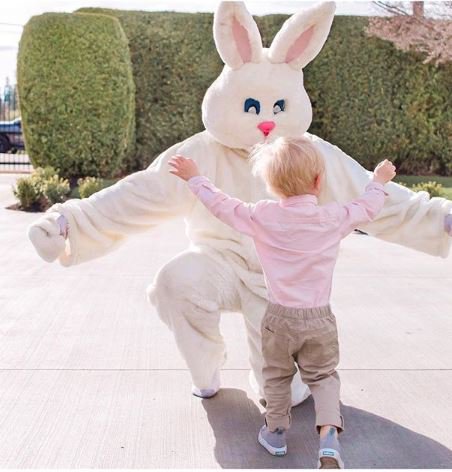 Justice without love is always injustice because it does not do justice to the other one, nor to the oneself, nor to the situation in which we meet. For the other one and I and we together in this moment in this place are unique, unrepeatable occasion, calling for a unique unrepeatable act of uniting love. If this call is not heard by listening love, it is not obeyed by the creative genius of love, injustice is done. And this is true even of oneself. One who loves listens to the call of one’s own innermost center and obeys this call and does justice to one’s own being. For love does not remove, it establishes justice. It does not add something to what justice does but it shows justice what to do. It makes the Golden Rule possible. For we do not speak for a love which swallows justice. This would result in chaos and extinction. However, we speak for a love in which justice is the form and structure of love. We speak for a love which respects the claim of the other one to be acknowledged as what one is, and the claim of ourselves to be acknowledged as what we are, above all as persons. Only distorted love, which is a cover for hostility or self-disgust, denies that which united love. #RandolphHarris 14 of 17
 Love makes justice just. The divine love is justifying love accepting and fulfilling one who, according to calculating justice, must be rejected. This justification of one who is unjust is the fulfillment of God’s creative justice, and of God’s reuniting love. Knowing that the ultimate meaning of freedom will elude us, let us still endeavor to define the term as best we can. The first definition is on the psychological level, the domain of everyday actions: Freedom is the capacity to pause in the face of stimuli from many directions at once and, in this pause, to throw one’s weight toward this response rather than that one. This is the freedom we experience in a store when we pause over the purchase of a necktie or a shirt. We summon up in our imaginations the image of how we will look in this or that tie, what so-and-so will say about it, or how the color will fit such and such a suit. And then we buy the tie or we move on to something else. This is freedom of doing, or existential freedom. This freedom is shown most interestingly in the supermarket, when we push our carts through the aisles between the tumultuous variety of packages and cans of food on the shelves, each one silently shouting through its bright-colored label “Buy me!” We see the shoppers with expressions of hesitancy, vacuity, wonder, pausing for some inspiration as to which of all these foods will be good for dinner tonight. #RandolphHarris 15 of 17
 The shopper seems hypnotized, charmed, preoccupied. Like patients on a ward in a mental hospital, they do not see me as I walk directly across their line of vision. The expressions of wonder and hesitancy are a readiness, an invitation, an openness to some stimulus on the shelves to persuade them to throw the balance this way of that in making their choice. This first freedom is experienced by each of us hundreds of times every day. It is decked up in respectable terms like decision/choice when we discuss freedom in psychology classes—if we ever discuss freedom in psychology classes at all. The most profound illustration of this kind of freedom is our ability to ask questions. Take, for example, my asking a question after listening to a lecture. The very fact that the question comes up in my mind at all implied that there is more than one answer. Otherwise there would be no point in asking the question in the first place. This is freedom; it implies that there is some possibility, some freedom of selection in what I ask. The speaker then pauses for a few seconds after I have asked it, turning over in his or her mind the possible answers. We sense that there is, in asking and answering questions, a good deal more going on, and it is of a richer nature, than the mere responding to various stimuli and selecting a response. #RandolphHarris 16 of 17
 Each person who lights this candle within one’s own mind will soon begin to attract other mortals like moths to a flame burning by a fire—not all mortal nor many mortals but only those who are groping for a way out of their darkness. Can a scrupulously impartial search through World-thought and experience lead to discovery of truth? “Wilt thou be made whole?” asked Jesus. Questioning implies some value judgment, some investment of the person’s life, some invitation to share, to make contact, some challenge to consider a new idea. Regrettably, in recent decades our very idea of freedom has been diminished and grown shallow in comparisons with previous ages; it has been relegated almost exclusively to freedom from outside pressure, to freedom from state coercion—to freedom understood on the juridical level, and no higher. Only when this search for a higher life has becomes an absolute necessity to a mortal, has one found even the first qualification needed for the Quest. “And the Lord God doth work by means to bring about his great and eternal purposes; and by very small means the Lord doth confound the wise and bringeth about the salvation of many souls,” reports Alma 37.7. #RandolphHarris 17 of 17
There Other Two Persons Seemed a Million Miles Away—Hold Infinity in the Palm of Your Hand and Eternity in an Hour
 The air so emotionally frigid that when going to be at night, there was a feeling that no other person was in the house. I never in a thousand years would have imagined that would come out. Often times in human beings there is an early attachment of imprinting behavior, where people seem to follow their attachment with a similar blind fidelity. And this behavior may be made stronger by punishment or other difficulties put in their path. Some people spend a lifetime looking for someone to make up for their losses, to bring them justice for their less than pleasant childhoods or adult life. They go through life lonely, yearning for a love that will fill the large area of emptiness in their hearts. However, the struggles these individuals are engaged in is bound to be self-defeating. The first and fundamental challenge is to confront one’s fate as it is, reconcile one’s self to the fact that one did receive a bad deal, know that justice is irrelevant, no one will ever make up for the emptiness and the pain of those years. The past cannot be changed—it can only be acknowledged and learned from. It is one’s destiny. It can be absorbed and mitigated by new experiences, but it cannot be changed or erased. An individual only adds insult to injury by going on the rest of one’s life knocking one’s head against the same stone wall. Fortunately, psychotherapy can be a vehicle through which human beings may become more aware of and compensate for such implanted destiny. #RandolphHarris 1 of 16
 Some people hang on to the past as a way of hanging on to someone they cared deeply about. It is an expression of the hope that someday this coveted individual will reward one, someday one will find the Holy Grail. Now one will get the original care one was missing; now one will get that restored! However, there is no way to restore it, no matter how much of a loss it is. Bad fate, yes. Yet, that is just the way it is. The lost idol image, the lost change, the great emptiness within one—they are all going to remain there. These things are the past; there is no way of changing them. You can change your attitude toward these tragic happenings, as the ultimate freedom is a command over one’s own attitude. However, you cannot change the experiences themselves. If you hang on to an illusion of such change, always hoping for pie in the sky by and by and by you cut off your possibilities. You then become rigid. You do not let yourself take in the new possibilities. You trade your freedom for a mess of emotional pottage. And this way, as a corollary, you never use your anger constructively. You lose a tremendous amount of power, energy, and possibility. In short, you lose your freedom. However, is there no constructive value in coming to terms with one’s early fate? Yes, there is—and a value potentially greater than what one gives up. #RandolphHarris 2 of 16
 The struggle to come to terms with acrimonious relationships and lifestyles has much to do with the emergence of creativity. For example, a man who had an unpleasant childhood ended up developing talents which led to his high status in the World of architecture. Because he had such a disturbed family life, that the creativity was compensation for such an early trauma. We know that creative people often come out of such unfortunate family backgrounds. Why and how they do is still one of the mysteries the answer to which the Sphinx of creativity has not revealed. We do know that some people have been unfortunate and never have been able to take life lightly. They learn from the hour of birth that it is best to take life easily, as many may. They cannot coast along or rest on their laurels. This exceptional achievement following a disturbed childhood or adulthood had been documented in many cases. Such freedom of the artist is not born. It is made in the pain of adolescent loneliness, the isolation of physical disability, or, perhaps, the smug superiority of inherited title. The freedom that permits generation of possibilities is the beginning of a creative product. Many of our most valuable people have come from the most calamitous situations. #RandolphHarris 3 of 16
 Investigations of the childhoods of eminent people expose the fact that they did not receive anything like the kind of child rearing that a person in our culture is led to believe is healthy for children. Whether in spite of or because of these conditions, it is clear that these children not only survived, but reached great heights of achievements, many after having experienced the most deplorable traumatic childhoods. The tension in these personalities between high aspiration and disappointment may well be the necessary matrix out of which creativity—and, later, civilization—is born. This type cannot slide into any well-adjusted syndrome. There is the outstanding exception of J.S. Bach, but his contentment—if it was that—seems to have been a combination of fortunate social conditions. The well-adjusted person rarely make great painters, sculptors, writers, architects, musicians. Coming out of such a confused early childhood allows the creative capacity to be considered a later compensation. The question is: Can a person seize these possibilities—these new reaches of freedom not without cruel fate, but despite fate—and weld them into a significant building, house, a statue, a painting, or some other creative product? #RandolphHarris 4 of 16
 If one can accept the deprivation of the care one rightfully expected, if one can engage this loneness face to face, one will have achieved a strength and a power that will be a foundation more solid than one ever could have achieved otherwise. If one can accept this aspect of one’s destiny, the fates will work rather than against one. In this way one lives with the Universe rater than against it. One must learn to engage and accept these cruel things in one’s background. It is, therefore, inevitable that the questions “Is there a need for self-control” arises when a way of life is being espoused that encourages freedom of thought and action. And it is vital that no glib, easy answer be given, for it is an important question. Situations do exist where it can be said without equivocation “Yes, do exercise self-control.” Wen, for example, individuals have the desire to destroy the life or property of others or when they have the urge to take their own lives or act in obviously self-destructive ways, it is important that they control these impulses. Society has found it necessary and desirable, when it has the opportunity, to impose control on such persons by limiting their freedom by restraining them. One of the most painful tragedies in American life today is the suicides that occur among high school and college students—frequently those of great promise. #RandolphHarris 5 of 16
 It could be said those planning to end their own lives to please, please, hold on! Life may seem painful and meaningless. Perhaps you feel suddenly and terribly disillusioned. However, at least bear with the struggles and give yourselves the perspective of a few more years before you make such an irrevocable decision. It is not enough simply to develop self-control, even though we may need to use it to curb destructive impulses. The ultimately satisfying answer is to deal effectively with problems that underlie our destructive impulses so that we can move beyond the need for self-control. The basic problem is self-hate, for self-destructiveness and destructiveness directed toward others go hand and hand. The nation, for example, that sets out to destroy other nations is bent on a self-destructive course. The personal who assaults another person and follows one’s impulses is not benefiting one’s self. And, of course, one’s self-hate is evident in the obvious lack of confidence on one’s ability to relate to individuals in other ways that would be more pleasant. #RandolphHarris 6 of 16
 So let us be clear about one thing. The violent or destructive acts we are so often afraid we will do if we do not control ourselves are not the result of true freedom or spontaneity. The murderer is not free. One is an enslaved, tormented person who is driven by pent-up feelings of self-hate that have been projected outward onto other individuals or onto society at large. The superheated steam of this hatred builds up in one’s internal pressure cooker until whatever self-control one possesses is bypassed in an explosion of violence. To exhort such a person to control one’s self may be a necessary stop-gap measure, although it is likely to be futile. Any thorough-going help must deal with the mortal’s self-hate. Most of us may feel some impulses within ourselves to be destructive to others or to ourselves, which we sense the seen to curb by self-control. Often the inner pressure is not too great and we can be successful in this control if we choose to go that route, but the more such self-control we need to impose on ourselves the less able we will be to be carefree and spontaneous. And spontaneity is a deliciously desirable way of living. #RandolphHarris 7 of 16
 If we can discover why we feel destructive and through this exploration reduce the self-hate to the point where we have relatively little need for self-control, it will be a far more freeing experience. A professional therapist can often be very helpful here, for one can provide a relatively secure environment where hatreds (both toward the self and others) can be expressed and explored with a minimum of danger. Often in therapy people discover that they are not nearly as dangerous to themselves or others as the feared. They find they had been so frightened of freedom that they had imagined themselves far more potentially harmful than they were as a way of keeping themselves rigidly controlled. However, some people like to deceive themselves. To be rejected makes a better excuse—to tell everyone how misunderstood they are, and how they triumphed over great odds. The misunderstood genius, nobody to help them, and so on. We all live in the old state of things. We belong to the Old Creation, and the demand made upon us by Christianity is that we also participate in the New Creation. We have known ourselves in our old being, and we shall ask ourselves in this hour whether we also have experiences something of a New Being in ourselves. The union with God is when the New Reality is present. God is the ultimate truth and demands complete devotion. #RandolphHarris 8 of 16
 It is important to experience the birth in consciousness of a new—though old—part of the self. One may consider it a dawning of awareness of new possibilities which have in effect been there all the time. This is a giant step toward personal freedom. This New Creation is manifest in Jesus who is called Christ. And it is actually the beginning of accepting acceptance, the uniting of one’s self with that early self that one had had to lock up in a dungeon in order to survive when life was not happy but threatening. Although this does not alter the original lack of basic trust, it does surmount it in the literal meaning of that term. We hear about the psychology of anger and how it clouds our vision, causes us to misunderstand each other, and in general interferes with the calm necessary for a rational, clear view of life. People point out that their anger curtails one’s freedom. All this is true. However, it is one-sided; it omits the constructive side to anger. In our society, we confuse anger with resentment, a form of repressed anger that eats steadily away at our innards. In resentment we store up ammunition to get even with our fellows, but we never communicate directly in a way that might resolve the problem. #RandolphHarris 9 of 16
 This transformation of anger into resentment is the sickness of the middle class. It corrodes our stature as human beings. Or we confuse anger with temper, which is generally an explosion of repressed anger; with rage, which may be a pathological anger; with petulance, which is immature resentment; or with hostility, which is anger absorbed into our character structure until it infects every act of ours. I am not referring to these kinds of hostility or resentment. I am speaking, rather, of the anger that pulls the diverse parts of the self together, that integrates the self, keeps the whole self alive and present, energizes us, sharpens our vision, and stimulates us to think more clearly. This kind of anger brings with it an experience of self-esteem and self-worth. It is the healthy anger that makes freedom possible, the anger that cuts one loose from the unnecessary baggage in living. However, people who are romantically involved with others that do not share their values will find there is a conflict of two different value systems, and it will feel like a red hot poker being shoved into your heart. Some people take their issues they have with their absentee parents out on their partner or a family member of the same gender as the parent they have an issue with. They take revenge by punishing innocent people as a whole. The individual being targeted has to admit one’s own cruelty—cruelty to one’s self most of all for allowing someone like that to be in one’s life. #RandolphHarris 10 of 16
 Do not cover up what you really feel and become deceitful just to survive. Do not surrender your freedom. Many people always try to foresee that the other person’s reaction will be before they speak. These types of individual hide behind such laudable words as responsibility, dutiful, noble member of society, and so on. However, one must hate these roles they play with people who are taking advantage of them. Occasionally being honest with people and venting your anger will give you partial freedom. At least one starts to know one can say what one feels. However, it may still be a freedom within a jail. There is the lacking surge of anger that leads to a changing of one’s life, the willingness to cut loose all the barges one is pulling, to throw aside all one’s luggage and one’s overscrupulous cares. It is not a good idea to always prefer to be hurt rather than to take care of yourself even if it hurts someone else. Another vital question remains to be discussed in regard to living spontaneously. Can we be deeply involved in a love relationship and still be free to be spontaneous? A great many people act as though love and spontaneity are incompatible. There are two frequent feelings that contribute to this reaction that love and freedom cannot coexist. And, of course, they help to make love that much more frightening to us. #RandolphHarris 11 of 16
 One of these feelings has to do with the idea that the revealing of ourselves, which intimacy involves, gives the other person power over us, thereby limiting our freedom to do what we want to do. Have you noticed that when you talk to people sometimes it is like you have an invisible wall between your eyes and theirs—a wall that has never been absent in all the time you have know them? Well, some of us are always on guard. There is the feeling that one can never let anyone see one completely—know all about who we are. That is because it would give the other person too many strings on one. It would allow one to become their puppet. Many develop these defenses of withdrawing into one’s self and permitting others to see as few of one’s real feelings as possible as a way of avoiding manipulation by them. This is because some feel if one allows others to really know one, one will be helpless to avoid being manipulated. The other feeling that leads us to shy away from love because it appears to threaten our freedom is probably even more common. This is the idea that love is inescapably tied up with obligation and responsibility. Among other ways in which this duty theme operates is the idea that if we really love another we will cease doing what we want to do and concentrate on pleasing the one we love. Such feelings often strike a death blow to the experience and expression of love. Men and women talk about their lack of freedom to do what they would like to do because of the necessity of providing adequately for their families. So work becomes noxious, tolerated duty. #RandolphHarris 12 of 16
 We also hear could saying their partner would not like it if they did this or that and that they would like to go out, but the children have to come first, you know. So all of life become hedged about with responsibilities and the necessity of pleasing others brought about by love. And virtually everything in life, from daily work, fidelity, pleasures of the flesh, and second honeymoons to family picnics, walking in the park, and holding hands in the movie, becomes a dutiful and essentially joyless act that we do in hope that spouse and children will be pleased. When approached this way, it is no wonder that love seems like slavery and many splendored things! When so many people view love this way, it is not surprising that a playboy (and playgirl) philosophy would develop in our culture in which physical intimacy without emotional intimacy would become very attractive to us as a way of life. The essential message of the philosophy seems to be, “As long as I can remain indifferent to my pleasures of the flesh partners I can retain my freedom and individuality. Once I begin to allow myself to care for someone, I have had it! I am on my way to becoming a slave.” The joker in this deck is that the moment we embrace this philosophy we have walked out on the freedom to have the most deeply satisfying fun of all—a love relationship freely experienced and expressed. #RandolphHarris 13 of 16
 The basic problem underlying our feeling that love and freedom are incompatible is our old nemesis, self-hate. If we act freely and do what we want to do, we assume, and often we have been taught to assume, that we will destroy relationships that are important to us. However, this involves a colossal distrust of ourselves. We are, in effect, saying to ourselves, “If you do not watch yourself carefully, you are such a miserable creature and so self-destructive that you will alienate everyone you care for and end up all alone.” The reality is that one of the quickest ways of alienating another person is to put every effort into pleasing them. When we try to put their wishes foremost, we are likely to become a nonentity in their eyes. It is not particularly pleasing to attempt to relate to a person who has no apparent desires of one’s own, who always bends to accommodate our wishes, and who makes an uncomplaining doormat of one’s self for us to walk upon. Furthermore, when we deny our own desires, we quickly come to resent that person for talking advantage of us. That resentment will then likely be expressed in any number of ways. Perhaps we begin to take on martyr posture and express by word or attitude the feelings: “After all I have done for you, the least you could do would be to try to please me once in a while.” #RandolphHarris 14 of 16
 It is much more straightforward and ultimately satisfying to be what we want to be and do what we want to do. As we learn that we can value ourselves and respond to our own desires, it is unlikely we will act in ways that destroy relationships with those for whom we care—because this will be destructive toward ourselves, too. It is true that more flare-ups of disagreements and anger may occur, because our wishes and those of others will not always agree, but two individuals in this situation are likely to respect each other for being sufficiently independent to express feelings openly, and the way is then clear to battle through to some agreements. If we do find ourselves acting in ways that constantly hurt those we love and destroy our relationships with them it would be advisable to seek professional help, for it would be an indication that we have so much self-hate that we have a need to hurt ourselves, since hurting others is self-destructive. Love God and do as you please. This is a profound idea, but it can be carried an additional step and be developed into a philosophical phrase which is more complete. If you truly value yourself, love yourself and do as you please for you will not hurt people unnecessarily. To do so would be to hurt yourself. #RandolphHarris 15 of 16
 This seems too good to be true to most of us. We are so connived that to live spontaneously is to live dangerously toward others and ourselves, but if we can begin, perhaps a little at a time, to be more responsive to our inner selves, we will discover that living spontaneously is exciting and rewarding to ourselves and to those we care for. Once having made that discovery we will not be content with less than an ever-increasingly spontaneous life. Moving toward the right attitude is passionate and infinite longing. The New Being is not something at simply takes the place of the Old Being. However, it is a renewal of the Old which has been corrupted, distorted, split and almost destroyed. Yet, not wholly destroyed. Salvation does not destroy creation; but it transforms the Old Creation into a New one. Therefore we can speak of the New in terms of a re-newal: The threefold “re,” namely, re-condilation, re-union, re-surrection. The message of reconciliation is: Be reconciled to God. Crease to be hostile to the Lord, for God is never hostile to you. The message of reconciliation is not that Good needs to be reconciled. How could he be? Since God is the source and power of reconciliation, who could reconcile the Lord? The sacred is here and now. God is present in all elements. Hold infinity in the palm of your hand and eternity in an hour. #RandolphHarris 16 of 16
 Randolph Harris II International Institute