
Home » Eugenicists (Page 19)
Category Archives: Eugenicists

So Ended Saturn and the God of the Sea—The Heavens and the Earth were Manifest!

The more people have studied different methods of brining up children, the more they have come to the conclusions that what good mothers and fathers instinctively feel like doing for their babies is the best after all. My logic aims to teach and instruct the understanding, not that it may with the slender tendrils of the mind snatch at and lay hold of abstract notions (as the common logic does), but that it may in very truth dissect nature, and discover the virtues and actions of bodies, with their laws as determined in matter, so that one’s science flows not merely from the nature of the mind, but also from the nature of things. If humans are to enhance their powers of creativity, one has to try to control conditions of creative thought. Wonder is the child of rarity. Of course, nature and reliability of knowledge could not be divorced from the method of acquiring it. Acquisition can be managed only through the powers of the human being; hence, any improvement in knowledge must mean better control over human’s faculties of knowing. If humans were to uncover nature’s secrets, if one were to acquire new knowledge of the physical World, one must abandon old ways of search and inquiry and must devise new ways of querying nature directly. #RandolphHarris 1 of 22

The will is the immediate and effective cause of voluntary behaviour. Appetite or desire is the immediate and effective cause of involuntary movement and action of the body. Appetite triggers physiological activity. Human desire reveals habits and patterns of conduct that have been learned under the guidance of the senses and affections. Will marks moments of deliberate choice. It is always associated with those forms of conduct that have both their origin and sanction in reason. An educated person in the days of Elizabeth and James never doubted that the origin of action—its efficient, not its final cause—is choice. The will governs, moderates, and overrules all of human’s behaviour. It is the imperium of conduct. It rules except when the passions engulf it. In its proper function, the will is responsive to two sources of influence: the “seeds” of God’s good in the Nature of humans to which the will is sensitive directly; and information supplied by the understanding. This faculty, playing the role of minister or councillor, supplies the will with right ends in keeping with right desires, and with right means conducible to the ends desired. #RandolphHarris 2 of 22

The liberty, or choice of means is grounded on the Direction of the Judgment. So all the Acts in the Understanding, whereby they are proportioned to the Rules of right Reason. This I think evident—that we find ourselves a power to begin or forbear, continue or end several thoughts of our minds, and motions of our bodies, barely by the choice or preference of the mind. This power which the mind has to prefer the consideration of any idea, or the forbearing to consider it; or to prefer the motion of any part of the body to its rest is that which we call the Will. The actual preferring one to another that which we call volition or willing. The forbearance of that action, consequence to order or command of the mind, is called voluntary. And whatsoever action is performed without such a thought of the mind, is called involuntary. The will has power to control and direct thought. The will can demand, as it is, that the understanding supply all desires information prior to the act of choice. Confronted with a practical problem, the will can ask the understanding to think about, to reason, to judge the matter at hand, drawing upon the accumulated experience stored in memory. #RandolphHarris 3 of 22

The power of will over mind will seem less strange to us when we reflect upon the implications of such modern expressions as “I am trying to remember,” “Try to think,” and “You can at least try to work out the problem.” The power of will over body movement is much more evident than the effect of will on mental activity. The idea of the beginning of motion we have from reflection of what passes in ourselves; where we find by experience, that, barely by willing it, barely by a thought of mind, we can move the parts of our bodies, which were before at rest. The detailed description of the life of primitive hunters and food gatherers has shown that humans—at least since they fully emerged fifty thousand years ago—was most likely not the brutal, destructive, cruel being and hence not the prototype of “man the killer” that we find in more-developed stages of their evolution. However, we cannot stop here. In order to understand the gradual development of humans the exploiter and the destroyer, it is necessary to deal with the development of humans during the period of early agriculture and, eventually, with their transformation into a builder of cities, a warrior, and a trader. #RandolphHarris 4 of 22

From the emergence of humans, approximately half a million years ago to about 9000 B.C., humans did not change in one respect: humans lived from what they gathered or hunted, but did not produce anything new. Humans were completely dependent on nature and did not themselves influence or transform it. This relationship to nature changed radically with the invention of agriculture (and animal husbandry) which occurs roughly with the beginning of the Neolithic period, more precisely, the “Protoneolitihc” period as archeologist call it today—from 9000 to 7000 B.C.—in an area stretching over one thousand miles from western Iran to Greece, including parts of Iraq, Syria, Lebanon, Jordan, Israel, and the Anatolian Plateau in Turkey. (It started later in Central and Northern Europe.) For the first time humans made themselves, within certain limits, independent of nature by using one’s inventiveness and skill to produce something beyond that which nature had thus far yielded to one. It was now possible to plant more seed, to till more land, and to breed more animals, as the population increased. Surplus food could be slowly accumulated to support craftsmen who devoted most of their time to the manufacture of tools, pottery, and clothing. #RandolphHarris 5 of 22

The first great discovery made in this period was the cultivation of wheat and barley, which had been growing wild in this area. It was discovered that by putting seed of these grasses into the Earth, new plants would grow; that one could select the best seed for sowing, and eventually the accidental crossing of varieties was observed, which produced grains very much larger than the seeds of the wild grasses. The process of development from wild grasses to high-yielding modern wheat is not yet fully known. In involved gene mutations, hybridization, and chromosome doubling, and it has taken thousands of years to achieve the artificial selection by humans on the level of present-day agriculture. For humans in the industrial age, accustomed to looking down on nonindustrialized agriculture as a primitive and rather obvious form of production, the Neolithic discoveries may not seem comparable to the great technical discoveries of our day, of which they are so proud. Yet the fact that the expectation that seed would grow was proved correct by results gave rise to an entirely new concept: humans recognized that they could use this will and intention to make this happen, instead of things just “happening.” #RandolphHarris 6 of 22

It would not be exaggerated to say that the discovery of agriculture was the foundation for all scientific thinking and later technological development. After 5000 B.C. Catal Huyuk could afford luxuries such as obsidian mirrors, ceremonial daggers, and trinkets of metal beyond the reach of most of its known contemporaries. Cooper and lead were smelted and worked into beads, tubes and possibly small tools, thus taking the beginnings of metallurgy back int the seventh millennium. Its stone industry in local obsidian and imported flint is the most elegant of the period; its wooden vessels are varied and sophisticated, its woollen textile industry fully developed. Make-up sets for women and very attractive bracelets for men and women were found in the burial sites. They knew the art of smelting copper and lead. The use of a great variety of rocks and minerals shows that prospecting and trade formed a most important item of city’s economy. In spite of this developed civilization, the social structure seems to have lacked certain elements characteristic of much larger stages of evolution. Apparently there was little class distinction between rich and poor. #RandolphHarris 7 of 22

Although the sizes of buildings, equipment, and burial gifts suggest social inequality, this is not a glaring observation. Furthermore, even more impressive evidence for the absence of violence, among the many hundred of skeletons unearthed, not a single one has been found that showed signs of violent death. The Earth’s and woman’s capacity to give birth—a capacity that men lack—quite naturally gave the mother a supreme place in the World of the early agriculturalist. (Only when men could create material things by intellect, id est, magically and technically—could they claim superiority.) The mother, as goddess (often identified with mother Earth), became the supreme goddess of the religious World, while the Earthly mother became the center of family and social life. The mother-goddess is often found to be accompanied by a leopard, clothed with a leopard skin, or symbolically represented by leopards, at the time the most ferocious and deadly animal of the region (or tiger). This would make her the mistress of wild animals, and it also indicated her double role as the goddess of life and death, like so many other goddesses. “Mother Earth,” who gives birth to her children and receives them again after their individual life cycle has ended is not necessarily a destroying mother. #RandolphHarris 8 of 22

The relationship which stands at the origin of all culture, of every virtue, of every nobler aspect of existence, is that between mother and child; it operates in a World of violence as the divine principle of love, of union, of peace. Raising her young, the woman learns earlier than the man to extend her loving care beyond the limits of the ego to another creature, and to direct whatever gift of invention she possesses to the preservation and improvement of the other’s existence. Woman at this stage is the repository of all culture, of all benevolence, of all devotion, of all concern for the living and grief for the dead. Yet of the love that arises from motherhood is not only more intense, but also more universal. Whereas the paternal principle is inherently restrictive, the maternal principle is universal; the paternal principle implies limitation to definite groups, but the maternal principle, like the life of nature, knows no barriers. The idea of motherhood produces a sense of universal maternity among all men, which dies with the development of paternity. The family based on father right is a closed individual organism, whereas the matriarchal family bears the typically universal character that stands at the beginning of all development and distinguishes material life from higher spiritual life. #RandolphHarris 9 of 22

Every woman’s womb, the mortal image of the Earth mother Demeter, will give brothers and sisters to the children of every other woman; the homeland will know only brother and sisters until the day when the development of the paternal system dissolves the undifferentiated unity of the mass and introduces a principle of articulation. Matriarchal states were particularly famed for their freedom from internecine strife and conflict. The matriarchal peoples—and this is no less characteristic—assigned special culpability to the physical injury of one’s fellow humans or even of animals. This picture of the mode of production and social organization of hunters and Neolithic agriculturalists is quite suggestive in regard to certain psychical traits that are generally supposed to be an intrinsic part of human nature. Prehistoric hunters and agriculturalist had no opportunity to develop a passionate striving for property or envy of the “haves,” because there was no private property to hold on to and no important economic differences to cause envy. On the contrary, their way of life was conducive to the development of cooperation and peaceful living. There was no basis for the formation of the desire to exploit other human beings. #RandolphHarris 10 of 22

The idea of exploiting another person’s physical or psychical energy for one’s own purposes is absurd in a society where economically and socially there is no basis for exploitation. The impulses to control others also had little chance to develop. The primitive band society and probably prehistoric hunters since about fifty thousand years ago were fundamentally different from civilized society precisely because human relations were not governed by the principles of control and power; their functioning depended on mutuality. An individual endowed with the passion for control would have been a social failure and without influence. Finally there was little incentive for the development of greed, since production and consumption were stabilized at a certain level. In many highly developed societies, such as the feudal society in the Middle Ages, the members of one occupational group—such as the guilds—did not strive for increasing material profit, but for enough to satisfy the traditional standard of living. Even the knowledge that the members of social classes above them had more luxuries to consume did not generate greed for this surplus consumption. The process of living was satisfying, and hence, no greater consumption appeared desirable. The same holds true for the peasants. #RandolphHarris 11 of 22

The rebellions of the peasants in the sixteenth century were not because they wanted to consume as much as the class above them, but they wanted the basis for a dignified human existence and fulfillment of the traditional obligations the land owners had towards them. Do the data on hunter-gatherers and early agriculturalists suggest that the passion of possessiveness, exploitation, greed, envy did not yet exist and are exclusively products of civilization? We cannot make such a sweeping statement, but there is a great difference between cultures which foster and encourage greed, envy, and exploitativeness by their social structure, and cultures which do the opposite. Within a short period, historically speaking, humans learned to harness the physical energy of oxen and the energy of the winds. They invented the plough, the wheeled cart, the sailing boat, and one discovered the chemical processes involved in the smelting of copper ores (to some extent know earlier), and the physical properties of metals, and one began to work out a solar calendar. #RandolphHarris 12 of 22

As a consequence, the way was prepared for the art of writing and standards and measures. In no period of history till the days of Galileo was progress in knowledge do rapid or far-reaching discoveries so frequent. But social change was not less revolutionary. The small villages of self-sufficient farmers were transformed into populous cities nourished by secondary industries and foreign trade, and these new cities were organized as city states. Human literally created new land. The great cities of Babylonia rose on a sort of platform of reeds, laid crisscross upon the alluvial mud. They dug channels to water the fields and drain the marshes, they built dykes and mounds to protect humans and cattle from the waters and raise them above the flood. This creation of tillable land required a great deal of labour and this capital in the form of human labour was being sunk in the land. Another result of this process was that a specialized labour force had to be used for this kind of work, and for cultivating the land necessary to grow food for those others who were specialized in crafts, public works, and trade. They had to be organized by the community and directed by an elite which did the planning, protecting, and controlling. #RandolphHarris 13 of 22

This means that a much greater accumulation of surplus was needed than in the earlier Neolithic villages, and that this surplus was not just used as food reserve for times of need or growing population, but as capital to be used for an expanding production. The beginning of Neolithic agriculture humans had already developed made it possible for them to produce a small surplus, but this surplus only helped to stabilize their life. When, however, it grew, it could be used for an entirely new purpose; it became possible to feed people who did not directly produce food, but cleared the marshes, built houses and cities and pyramids, or served as soldiers. Of course, such use could only take place when technique and division of labour had reached a degree which made it possible for human labour to be so employed. At this point the surplus grew immensely. The more fields were ploughed, the more marshes were drained, the more surplus could be produced. This new possibility led to one of the most fundamental changes in human history. It was discovered that humans could be used as economic instruments, that they could be exploited, that they could be made a slave. War as an institution was a new invention, like kingdom or bureaucracy, made around 3000 B.C. #RandolphHarris 14 of 22

Then as now, war was not caused by psychological factors, such as human aggression, but, aside from the wishes for power and glory of the kinds and their bureaucracy, was the result of objective conditions that made war useful and which, as a consequence, tended to generate and increase human destructiveness and cruelty. One of the most significant features of the new urban society was that it was based on the principle of patriarchal rule, in which the principle of control is inherent: control of nature, control of slaves, women and children. The new patriarchal man literally “makes” the Earth. His technique is not simply modification of the natural processes, but their domination and control by man, resulting in new products which are not found in nature. Humans themselves came under the control of those who organized the work of the community, and hence the leaders had to have power over those they control. In order to achieve the aims of this new society, everything, nature and humans, had to be controlled and had to either exercise—of fear—power. Humans were aware of their faculties through their behaviour. #RandolphHarris 15 of 22

God gave humans revelations so the use their will to discover God, but some people use religion to control other people. In order to become controllable, humans had to learn to obey and submit, and in order to submit they have to believe in the superior power—physical and/or magic—of their rulers. The new patriarchal system was one based on force and power; it was exploitative and mediated by the psychical mechanism of fear, “awe,” and submission. It was “irrational authority.” To exert power in every form was the essence of civilization; the city found a score of ways of expressing struggle, aggression, domination, conquest—and servitude. The new ways of the cities were rigorous, efficient, often harsh, eve sadistic, and the Egyptian monarchs and their Mesopotamian counterparts boasted on their monuments and tablets of their personal feats in mutilating, torturing, and killing with their own hands their chief captives. In addition to sadism, the passion to destroy life and the attraction to all that is dead (necrophilia) seem to develop in the new urban civilization. There was a destructive, death-oriented myth to be found in the new social order. #RandolphHarris 16 of 22

Each historic civilization begins with a living, urban core, the polis, and ends in a common graveyard of dust and bones, a Necropolis, or city of the dead: fire-scorched ruins, shattered buildings, empty workshops, heaps of meaningless refuse, the population massacred or driven int slavery. Whether we read the story of the Hebrews’ conquest of Canaan or the story of the Babylonians’ wars, the same spirit of unlimited and inhuman destructiveness is shown. A good example is Dr. Sennacherib’s stone inscription on the total annihilation of Babylon: “The city and its houses from its foundation to its top, I destroyed, I devastated, I burned with fire. The wall and the outer wall, temples and gods, temple towers of brick and Earth, as many as they were, I razed and dumped them int the Arakhut Canal. Through the midst of that city I dug canals, I flooded its site with water, and the very foundations thereof I destroyed. I made its destruction more complete than that by a flood.” Nonaggressive societies are not as rare or puny as Dr. Freeman and other exponents of the Freudian theory indicate. Aggressiveness is not just one trait, but part of a syndrome; we find aggression regularly together with other traits in the system, such as strict hierarchy, dominance, class division, ex cetera. #RandolphHarris 17 of 22

In other words, aggression is to be understood as part of the social character, not as an isolated behaviour trait. Societies are not simply differentiated in terms of more or less aggression, or more or less nonaggression, but in terms of different character systems distinguished from each other by a number of traits that form the system, some of which do not have any obvious connection with aggression. What we most learn in God’s yoke, beyond acting with him, is to abandon outcomes to God, accepting that we do not have in ourselves—in our own “heart, soul, mind, and strength”—the wherewithal to make this come out right, whatever “this” is. Even if we “suffer according to the will of God,” we simply “entrust our souls to a faithful Creator in doing what is right,” report 1 Peter 4.19. Now, this is a major part of that meekness and lowliness of heart that we also learn in his yoke. And what rest comes with it! Humility if the framework within which all virtue lives. Our Lord did not say: Learn of Me to despise the World and live in poverty…but only this: Learn of Me for I am gentle and lowly of heart. #RandolphHarris 18 of 22

And one of the signs by which a human may know that one is in a state of grace is this—that one is never puffed up. Accordingly, we are to “clothe ourselves with humility,” reports 1 Peter 5.5, which certainly means loss of self-sufficiency. “God gives grace to the humble. Humble yourselves, therefore, under the mighty hand of God that He may exalt you at the proper time, casting all your anxiety upon Him, because He cares for you,” reports 1 Peter 5.5-7. Humility is a great secret of rest of soul because it does not presume to secure outcomes. Here is a simple fact: We live in a World where, by God’s appointment, “the race is not to the swift, and the battle is not to the warriors, and neither is bread to the wise, nor wealth to the discerning, nor favour to humans of ability; for time and chance overtake them all,” reports Ecclesiastes 9.11. The Lord “does not delight in the strength of the horse; He does not take pleasure in the legs of a man,” reports Psalm 147.10. He has a plan for our life that goes far beyond anything we can work out and secure by means of strong horses and good legs. We simply have to rest in His life as he gives it to us. Knowledge, from Christ, that He is good and great enables us to cast outcomes on Him. We find this knowledge in the yoke of Christ. #RandolphHarris 19 of 22

Resting in God, we can be free from all anxiety, which means deep soul rest. Whatever our circumstance, taught by Christ we are enabled to “rest [be still] in the LORD and wait patiently [or longingly] for Him,” reports Psalm 37.7. We do not fret or get angry because others seem to be doing better than we are, even though they are less deserving than we. However, the Holy Spirit divided unto each one as He will, namely, according to the free choice of the will, not in obedience to necessity. We have free-will with respect to what we will not of necessity, nor be natural instinct. For our will to be happy does not appertain to free-will, but not natural instinct. Hence other animals, that are moved to act by natural instinct, are not said to be moved by free-will. Since then God necessarily wills His own goodness, but other things not necessarily. God has free will with respect to what He does not necessarily will. Since the evil of sin consists in turning away from the divine goodness, by which God wills all things, it is manifestly impossible for Him to will the evil of sin; yet He can make choice of one of two opposites, inasmuch as He can will a thing to be, or not to be. In the same way we ourselves, without sin, can will to sit down, and not will to sit down. #RandolphHarris 20 of 22

In life, be there, do not panic in the face of the pathology; and hold out an optimistic vision of what can come from the pain. To become aware means to perceive one’s wholeness as a person defined by spirit; to perceive the dynamic center that stamps on all utterances, actions, and attitudes the recognizable sign of uniqueness. Such an awareness is impossible if, and as long, the other is for me the detached object of my observation, for that person will not thus yield one’s wholeness and its center. It is possible only when one become present in genuine dialogue. Individuals naturally seek equilibrium because disequilibrium, which is a mismatch between one’s way of thinking and one’s environment, is inherently dissatisfying. When individuals encounter new discrepant information, they enter into a state of disequilibrium. Spiritual experience is the encounter with one’s ground being. It is the moment of one’s life, one’s place in the Universe, and the values that characterize how one lives. Because these issues are central to the self-reflective life and because they are realized in moments of extraordinary clarity with an urgency and authority all their own, they demand attention in the articulation of any definitive psychological system. #RanndolphHarris 21 of 22

God of learning, please guide me in my intellectual quests today. Please keep my mind open and fill it with learning. Land of Spirits, please show yourself to me and teach me to love nature. God, please be true. Be strong. Please keep your promises. I seek wisdom. Please love your children. Please be at peace. Please bless your children. This is my request of you. May all the Holy One help you to make it true. God has given our lard a heritage, for his loving kindness endures forever. God has redeemed us from our foes, for His loving kindness endures forever. God gives food to all creatures, for His loving kindness endures forever. O please give thanks unto God of Heaven, for His loving kindness endures forever. Rejoice in the Lord, O ye righteous, it is befitting for the upright to praise Him. Give thanks unto the Lord with the harp, sing praises unto Him with the ten stringed psaltery. Sing unto Him a new song; play skillfully amid songs of joy, for the word of the Lord is just, and all His work is truth. God loves righteousness and justice; the Earth is full of loving kindness of the Lord. By the word of the Lord were the Heavens made, and all the host of them by His command. God gathered the waters of the sea as a heap; He lay up the deeps in the store-houses. God is Almighty. #RandolphHarris 22 of 22

Cresleigh Homes

Have you ever wondered what it’s like to live in a modern oasis? Maybe a visit to @HUBApts is in your future. 😉🏝 https://www.instagram.com/p/CJ_tyArphH0/

These apartment homes are located in #Folsom and provide the highest level of living to their residents. Head to their profile to get in touch!

Design your perfect home and enjoy the California weather from the balcony, or at the exclusive recreation center that features a pool, spa, and BBQs. https://sites.google.com/fpimgt.com/hubvirtualtours/home
#CresleighHomes

Upon Your Skirts Have Fallen Tears of Mine–Genuine Joy and Creativity Come Out of Paradox!

The run-of-the-mill have a truer capacity for love than intellectuals, who should know better. I have always worked with the temperamental conviction that at bottom there are no insoluble problems, and experience justifies me in so far as I have often seen patients simply outgrow a problem that destroyed others. This “outgrowing,” as I called it, proves on further investigation to be a new level of consciousness. Some higher or wider interest appears on the patient’s horizon, and through this broadening of one’s outlook the insoluble problem loses its urgency. It is not solved logically in its own terms, but fades out when confronted with a new and stronger life urge. It is not repressed and made unconscious, but merely appears in a different light, and so really does become different. What, on a lower level, leads to the wildest conflicts and to panicky outbursts of emotion, from the higher level of personality now looks like a storm in the valley seen from the mountain top. This does not mean that the storm is robbed of its reality, but instead of being in it one is above it. However, since, in a psychic sense, we are both valley and mountain, it might seem a vain illusion to deem oneself beyond what is human. #RandolphHarris 1 of 18

One certainly does feel the affect and is shaken and tormented by the storm, yet at the same time one is aware of a higher consciousness looking on which prevents one from becoming identical with the affect, a consciousness which regards the affect as an object, and can say, “I know that I suffer.” What our text says of indolence, “Indolence of which a human is conscious, and indolence of which one is unconscious, are a thousand miles apart,” hold true in the highest degree of affect. Now and then it happens in my practice that a patient grows beyond oneself because of unknow potentialities, and this becomes an experience of prime importance to me. In the meantime, I have learned that all the greatest and most important problems of life are fundamentally insoluble. They must be so, for they express the necessary polarity inherent in every self-regulating system. They can never be solved, but only outgrown. I therefore asked myself whether this outgrowing, this possibility of further psychic development, is not the normal thing, and whether getting stuck in conflict is pathological. Everyone must possess that higher level, at least in embryonic form, and must under favourable circumstances be able to develop this potentiality. #RandolphHarris 2 of 18

When I examine the course of development in patients who quietly, and as if unconsciously, outgrow themselves, I see that their fates have been something in common. The new thing comes to them from obscure possibilities either outside or inside themselves; they accept it and grow with its help. It seems to me typical that some take the new thing from outside themselves, others from inside; or rather, that it grows int some persons from without, and into others from within. However, the new thing never comes exclusively either form within or from without. If it comes from outside, it becomes a profound inner experience; if it comes from inside, it becomes an outer happening. In no case is it conjured into existence intentionally or by conscious willing, but rather seems to be borne along on the stream of time. The goal toward which the individuation process is ending is “Wholeness” or “Integration”: a condition in which all the different elements of the psyche, both conscious and unconscious, are welded together. The person who achieves this goal possess an attitude that is beyond the reach of emotional entanglements and violent shocks—a consciousness detached from the World. #RandolphHarris 3 of 18

Individuation is a spiritual journey; and the person embarking upon it, although one might not subscribe to any recognized creed, is nonetheless pursuing a religious quest. By paying careful attention to the unconscious, as manifested in dream and fantasy, the individual comes to change one’s attitude from one in which ego and will are paramount to one in in which one acknowledges that one is guided by an integrating factor which is not of one’s own making. This integrating factor, expressed by the emergence of quaternity or mandala symbols, is named the Self; and archetype which not only signifies union between the opposites within the psyche, but is a God-image, or at least cannot be distinguished from one. Unity and totality stand at the highest point on the scale of objective values because their symbols can no longer be distinguished from the imago Dei. Imago Dei (The Image of God) is a concept and theological doctrine in Judaism, Christianity, and Sufism of Islam, which asserts that human beings are created in the image and likeness of God. Hence all statements about the God-image apply to the empirical symbols of totality. Ironically, facing death can being the courage to live and create. By the creative act, we are able to reach beyond our own death. #RandolphHarris 4 of 18

Because we are able to reach beyond our own death when we are creative, this is why creativity is so important, and why we need to confront the problem of the relationship between creativity and death. One needs to devote one’s aesthetic and sensibilities as an artist and their fantasy to the outside World and harness it for the task of creating a real life in relationship with others. The role of the artist is the greatest kind of courage. Many people struggle to create life through symbol and imagination, they demonstrate the essential task of creating in the face of death. It they create themselves and their own lives, however, it may be asked what “self” they are creating. Are they creating false selves and role expectations or authentic selves and authentic lives? Mandalas are cryptograms concerning the state of the self which is presented to the individual creating them. In them, some people see the self—that is, their whole being—actively at work. To be sure, at first one may only simply understand them; but they seem to the individual highly significant, and one guards the like precious pearls. One has the distinct feeling that they are something central, and in time one may acquire through them a living conception of the self. The self, one may think, is like the monad which one is, and which is their World. #RandolphHarris 5 of 18

The mandala represents his monad, and corresponds to the microcosmic nature of the psyche. Now, for clarity, the mandala is an art form that one usually creates, like a painting of patterns or a sketch, and it represents one’s mind. It makes it easier for one to concentrate on, transform, and internalize unconscious things in oneself. Monads are one of the ultimate indivisible units of existence. Monads are independent of one another and innately have the power of action and direction toward some end. Although no monad in reality acts on any other, they work in a divinely preestablished harmony so that an appearance of causal connection is maintained. The concept of the monad is intended, in part, to address the mind-body problem arising from Cartesian dualism. While working on mandalas, there may be a great many and some questions may arise repeatedly: What is this process leading to? Where is its goal? From one’s own experience, one may know that one cannot presume to choose a goal which would seem trustworthy to oneself. It may be necessary to abandon the idea of the superordinate position of the ego. #RandolphHarris 6 of 18

It may be a good idea to go with the scientific analysis of myths which are Symbols of Transformation. This may be an unconscious process. Therefore, let oneself be carried along by the current without a notion of where it will lead one. When one begins drawing the mandalas, however, one will see that everything, all the paths one has been following, all the steps one has been taking, are leading back to a single point—namely, to the mid-point. It may become increasingly plain to one that the mandala is the center. It is the exponent of all paths. It is the paths to the center, to individuation. Some people have seen these artworks on the exterior of Victorian houses, or in the pattern of stained-glass windows, like the stained-glass window Mrs. Winchester created with the spider web and thirteen orbs. The goal of psychic development is the self. Uniform development exists, at most, only at the beginning; later, everything points toward the center. This insight gives one stability, and gradually one’s inner peace will return. One will know that finding the mandala as an expression of the self, one has attained for one the ultimate. And perhaps one will learn more. There is great importance of authenticity and subjectivity in the creation of the self in the World. #RandolphHarris 7 of 18

Our subjectivity is our true home, our natural state, and our necessary place of refuge and renewal. It is the font of creativity, the stage for imagination, the drafting table for planning, and the ultimate heart of our fears and hopes, our sorrows and satisfactions. To the extent that some are struggling to create, not just any selves, but experientially coherent authentic selves, subjectivity is a necessary aspect of one’s creativity. The confrontation between life and death, the courage to create in the face of death, and the authenticity of a subjective self can be organized into a paradoxical model. Genuine joy and creativity come out of paradox. The human psyche is a continuum of constrictive and expansive possibilities. The dread of constriction and expansion promotes dysfunctional extremism or polarization, whereas confrontation with or integration of the poles promotes optimal living. Some people oscillate between the poles of expansion out into life and withdrawal into depression and a fantasy World (light and dark imagery, pleasures of the flesh and spirituality), these extremes can be understood as resting on a continuum, with the therapeutic task being to name and integrate the poles. However, the solitary journey toward independence may be molded after the heroic journey towards consciousness. #RandolphHarris 8 of 18

The pull toward unconsciousness and the need for nurturance and interdependence is part of one’s journey. In Victorian women, hysteria often was a form personality of the vamp and the little girl. The mental hospital is a metaphorical space in which to articulate the crazy-making pressures of middle-class life, particularly for women. The home, the mental hospital, the body: these are woman’s places in the social order that apportion different roles to the genders; and woman herself is the very sense of mutilation. Some women, especially young women experience death by suicide or have a lust for it because they may want to die perfect, certainly not mutilated. To lose your virginity is to be mutilated; virginity is unopen, not yet spoiled. Sleeping Beauty remained perfect. Being Sleeping Beauty also expresses one’s desire to remain a child, and object of fantasy, dependent, and this beauty in their lives makes them want to die as Sleeping Beauty rather than risk imperfection. Some are seeking to balance freedom and security, meaning and emptiness, loneliness and relationship. Death may be seen as warm arms, as a release from the struggle of living. Perhaps it is a good idea to let them know it is acceptable to live and remain pure. #RandolphHarris 9 of 18

When pain becomes too great, contain it with humour and with writing. Presence is critical. Having someone listen to one’s silence, to one’s presence (dasein), and give one immediate, kinesthetic, and profound attention is absolutely necessary. When in a suicidal depression, one needs someone to hold one’s hand. One needs someone to help them see life as a composition, to bring one’s extremes more integrated whole, and to apply one’s creativity to one’s actual life. An essential part of healing is to see one’s individual story in a larger cultural perspective. The balance tbween nurturance and work, and the themes of sacrifice, homelessness, and the closeness between death and rebirth, are especially close to the psyche and psychotherapy of women. Sacrifice is the basis of the early primordial fertility rites and is a necessary part of the spring rebirth. Feeling sacrificed to the dominant patriarchal culture and experiencing the plight of insecurity in the living environment through the dispossession of an archetypal place in the World bring some people together in a bond of empathy and shard humanity. This bond can also unite individuals in an empathy of an intense, preverbal sibling type relationship. #RandolphHarris 10 of 18

When people have someone to groan with in sympathy, it implies a way of being that does not distance but noncognitively feels with one one’s experience and allows one to descend into the underworld, transform the pain unto image and symbol, and re-emerge stronger. As one has someone to work with them through the process and changing imagery, those who have faith and the word of God deep in their hearts will be able to absorb and overcome the fiery darts that the adversary will surely send to destroy us. Otherwise, our faith, hope, and conviction may not endure, and we could become a casualty. I have learned that having the word of God deep in my soul, coupled with faith in the Lord Jesus Christ and His Atonement, allows me to draw upon the power of God to overcome the adversary and anything he may throw at me. As we face challenges, we can rely upon the promise of the Lord taught by Saint Paul: “For God hath not given us a spirit of fear; but of power, and of love, and of a sound mind.” We know that as a child the Saviour grew, and waxed strong in spirit, filled with wisdom: and the grace of God was upon him. We know that as He grew older, Jesus increased in wisdom and stature, and in favour with God and humans. #RandolphHarris 11 of 18

And we know that by the time God’s ministry commenced, those who heard Him were astonished at his doctrine: for his word was with power. Through preparation, the Saviour grew in power and was able to resist all of Satan’s temptations. As we follow the Saviour’s example and prepare through studying the word of God and deepening our faith, we also can draw upon the power of God to resist temptations. Clear the space for change to happen. Let go of the vestiges of your old life, and of illusions that others provide a home for and that your Ghostly Love can provide a relationship. The second phase has to do with descent. These entails one’s experiencing one’s aloneness, one’s vulnerability, tracking the images in one’s dreams and journals, and experiencing one’s images of fire, darkness, crosses, and sacrifice. Remember, there is no expiration date associated with the power God bestows upon those who make and keep temple covenants, nor is there a restriction from accessing that power during a pandemic. However, if we fail to keep our covenants and do not life in a way that allows us to continually qualify to receive His power, the God’s power diminishes in our lives. Focus on your readiness to create your own life, and to meet another person without any baggage or encumbrances from your past. #RandolphHarris 12 of 18

When you are free from encumbrances and baggage, when you do meet someone, you will be free and ready to move into a relationship with clear intentions of creating a stable home and a place for yourself. From then on, your images will deal with rebirth, light, and interdependence. Staying with this process means trusting in the Lord and the logic of one’s psyche and helping one to put one’s images and experiences into the context of a meaningful story. Because without working through the healing process, one is faced with total lack of understanding, either not wanting to understand what one is talking about because it is too painful or one is unable to understand because it is too foreign to their experience or because one is totally unable to listen to another person and hear what one is saying. In any event, the World will seem to offer nothing of care or concern for one’s experience or one’s feelings. It will seem unable and unprepared to give one anything to help one in suffering. One will just suffer, and by asking others to listen, and getting no response, one’s suffering will increase. #RandolphHarris 13 of 18

However, through it all, our Heavenly Father and His Son, Jesus Christ, love us! They care for us! They and Their holy angels are watching over us. I know this is true. As we seek union of feeling, we will call down the power of God to make our efforts whole. We often think of substance in terms of food or money, but perhaps what we all need more of is mercy. Sometimes when a person witnesses your suffering, it makes a difference. Just being seen and heard by another. And one listening and sharing in your deep mourning. It has an impact on other people. Their eyes fill with tears. This makes some people want to listen quietly and mourn with you. The ability to listen is a rare quality, born of love. The ability to sit in silence is even more rare—a holy moment when two sit as one. Th feeling has no need for explanation. When a person manifests the least kindness and love, oh what a power it has over one’s mind. The nearer we get to our Heavenly Father, the more are we disposed to look with compassion on perishing souls—we feel that we want to take them upon our shoulders and cast their sins behind our back. If you would have God have mercy on you, have mercy on another. Let us not judge each other or let or words bite. Let us keep each other’s names safe and give the gift of mercy. #RandolphHarris 14 of 18

Differences can be turned to advantage instead of disadvantage. Unity does not magically happen; it takes work. It is messy, sometimes uncomfortable, and happens gradually when we clear away the bad as fast as the good can grow. Each of us is going to have deeply wounding experiences, things that should never happen. Each of us will also, at various times, allow pride and loftiness to corrupt the fruit we bear. However, Jesus Christ is our Saviour in all things. His power reaches to the very bottom and is reliably there for us when we call on Him. We all beg for mercy for our sins and failures. Jesus freely gives it. And Jesus Christ asks us if we can give that same mercy and understanding to each other. That is the meaning of the soul in the Christian understanding, and can be seen from what the Bible says about God’s soul. Many people are surprised to learn that God, too, has a soul, and even translators of the Bible often do not seem to know what to do about it. Referring to the gross wickedness into which Judea had fallen, the prophet Jeremiah gives the Lord’s word: “Be thou instructed, O Jerusalem, lest my soul depart from thee: and lest I make thee desolate, a land not inhabited,” reports Jeremiah 6.8. #RandolphHarris 15 of 18

However, more recent versions translate this as “or I shall turn from you in disgust,” or “Lest I be alienated from you.” Similarly I Jeremiah 9.9: “Shall not my soul be avenged on a nation as this?”; “Shall I not bring retribution on a nation such as this?”; and “On a nation such as this I shall not avenge Myself?” In these and other cases the word “nephesh” (or soul) occurs in the Hebrews text with reference to God. That is done in order to indicate the utter depth of the response of God to the wickedness of his people. That depth is not successfully communicated by the alternative language offered. The true meaning is hollowed out and lost. Similar observations must be made about Isaiah 1.14. In speaking of the soul of God, reference is always made to the deepest, most fundamental level of his being. And similarly in the New Testament texts such as, “Behold, My Servant Whom I Have Chosen; My Beloved In Whom My Soul Is Well-Pleased” (Matthew 12.18; see Leviticus 26.11; Psalm 11.5; and numerous other passages referring to God’s soul. The heart of the matter is that to refer to someone’s soul is to say something about the ultimate depths of one’s being and something that cannot be communicated by using terms like “person” or “self” or various available pronouns. (see Matthew 11.29.) #RandolphHarris 16 of 18

The human entity has travelled through joy and suffering, experienced birth and death, experimented with good and evil for the very purpose of becoming a fully conscious entity. How then could annihilation—Vendantic or any other kind—be its ultimate fate? Is it for this, that humans should end as a mere speck of dust, that they were born? Consciousness, aspiration insight, and inspirations, artistic creations and scientific revelations, the noblest ethical feeling—all useless because the being hey serve is destined to vanish utterly? If all human’s seeming progress comes to an end with one’s death, one’s own end, how futile it is! It helps little to say that others will benefit by it, for this merely shifts the futility to them, for they too will die. The human situation is unsatisfactory and the Biblical Psalmist succinctly lamented. We have not come from oblivion. All our past is present in our characters, capacities, and tendencies; therefore we shall not go into oblivion. There is no death—only a change of state. We have the power to remove prejudice and build unity while we are here in mortal form. May we draw upon God and walk upright with one another—in perfect peace and harmony. #RandolphHarris 17 of 18

We bring before you today one of yours, people of our past, one who will continue what you started in the long-ago time. God your beloved child is one of us, the family that reached so far back, and we will need you to please guide your family until they are ready to assume their full responsibilities. Be with you children and us as we do that; as your children grow, please be at their side to help. Please come to us today and learn who your children are, come and celebrate with us. Whatever the Lord desireth, He performeth, in Heaven and Earth, in the seas, and all deeps; He causeth mists to arise from the ends of the Earth; He maketh lightening for the rain; He being forth the wind out of His store-houses. God smote the first-born of Egypt, both man and beast. He sent signs and wonders into the midst of Egypt, upon Pharaoh, and upon all His servants. God concerned many nations, and struck down might kings; Sihon, king of the Amorites, and Og, king of the Bashan, and all the kingdoms of Canaan; and gave their land for a heritage unto Israel His people. “Lord” is Thy name for ever; as Lord art Thou known throughout all generations. For the Lord shall judge His people, and have compassion upon His servants. #RandolphHarris 18 of 18

CRESLEIGH RIVERSIDE AT PLUMAS RANCH
MODEL NOW OPEN Plumas Lake, CA |
Now Selling!
If you asked us what our favorite part of this #PlumasRanch home, we’d for sure say all those windows! 😍 But also.. check out that fire pit set up. That’s what perfect nights are made of, right there!

Cresleigh Riverside Model Home is NOW OPEN! Nestled at the southern end of Plumas Lake, bordering an orchard to the west, Cresleigh Riverside is home to the largest home sites in the three Plumas Ranch communities. Its executive-style residences feature space and amenities that are well beyond the norm – many on country lots that back up to the Ranch’s adjacent fruit orchards. With four floor plans available, we are certain you will find the home that fits your needs and lifestyle.

Popular design elements include open floor plans, large kitchen islands, and flex spaces are staples in Cresleigh homes. Additional game rooms, bedroom space and three-car garages provide other custom possibilities.

Gain the freedom of large home sites and the extra space and flexibility with Cresleigh Riverside. Homeowners will love the convenient commuter access to nearly Sacramento and Yuba City.

Best of all, each Cresleigh home comes fully equipped with an All Ready connected home! This smart home package comes included with your home and features great tools including: video door bell and digital deadbolt for the front door, connect home hub so you can set scenes and routines to make life just a little easier. Two smart switches and USB outlets are also included, plus we’ll gift you a Google Home Hub and Go. https://cresleigh.com/cresleigh-riverside-at-plumas-ranch/

Ideally situated in a Cresleigh Ranch location, this prestigious community offers new luxury single-story home designs with second-level options at an exceptional price point. #CresleighHomes

In a World where the Pulse of Time Beats Infinitely Slowly, Birth and Death Count for Little!

Hardships do not build character. They reveal it. Anyone who will tear down Victorian craftsmanship will tear down America. Victorian architecture and religion have made America what it is today. A World without Victorian architecture is in danger of deteriorating into a medieval prison. Just like the unconscious mind, Victorians have a lot of secrets that can take several lifetimes to reveal. Faith and the word of God fills our inner soul and is sufficient to sustain us—and allows us to access His power. The notion that God created this World spectacle for the benefit of the human alone is an absurd and unwarranted anthropolatry, but the notion that life first attains individual self-consciousness in humans is justified in philosophy and by experience. What is it of which one alone is conscious? It is of being oneself, one’s ego. In all earlier stages of evolution, consciousness is entirely veiled in its forms and never becomes self-aware. Only in the human state does individual consciousness of being first dawn. There may exist on other planets creatures infinitely more intelligent and more amiable than human beings. We may not be the only pebbles on the beach of life. Nevertheless the piece of arrogance which places humans highest in the scale of existence contains the dim reverberation of a great truth, for humans bear the divine within their hearts. #RandolphHarris 1 of 19

Human beings have made too much fuss about themselves, their own importance in the cosmic scale. Why should there not be other forms of life superior t them, conscious intelligent beings higher in mentality, character, and spiritual knowledge, better equipped with powers and techniques? Even a partial awareness of what it means to be a human—as above an animal—capable of thinking abstractly, conscious of the vastness of the Universe and the littleness of the ego, asking the ago-old questions about meaning and purpose in life, sometimes getting a glimpse of a few words of the answer through religion, art, Nature, mysticism, joy, suffering, or intelligence, even this is enough to make one wonder what follows in development after one, higher than oneself, if not here then perhaps on other planets or in a fourth dimension. Such beings must already exist somewhere. Are they the gods of ancient fable and myth, disfigured or miscomprehended in human narratives by passing of time? Were they visitors who helped infant humanity reach its tends and then left it, withdrew, except for rare appearances as avatars, angels, or lawgivers? There are existences for beings on levels and in times and space different from ours. The Level we know and the humans we see only partially manifest the World-Idea. #RandolphHarris 2 of 19

The multibirthed nature of human experience fits in with the shimmering galaxies of the multiverse itself. “We are not alone,” could be echoed back by this planet Earth itself. There are beings not subject to the same laws as those governing humankind’s physical existence. They are normally not visible to humans. They are gods. The Gods are both symbols of particular forces and beings dwelling on higher planes. All these figures irrupt autonomously into consciousness as soon as it gets into a pathological state. With regard to the anima, I would particularly like to draw attention to the case described by Nelken. Now the remarkable thing is that these figures show the most striking connections with the poetic, religious, or mythological formulations, though these connections are in no way factual. That is to say, they are spontaneous products of analogy. One such case even led to the charge of plagiarism: the French writer Benoit gave a description of the anima and her classic myth in his book L’Atlantide, which is an exact parallel of Rider Haggard’s She. The lawsuit proved unsuccessful; Benoit and never heard of She. (It might, in the last analysis, have been an instance of cryptomnesic deception, which is often extremely difficult to rule out.) #RandolphHarris 3 of 19

The distinctly “historical” aspect of the anima and Benoit’s condensation with the figures of the sister, wife, mother, and daughter, plus thus associated incest motif, can be found in Goethe (“You were in times gone by my wife of sister”), as well as in the anima figure of the regina and femina alba in alchemy. The English alchemist Eirenaeus Philalethes (“love of truth”), writing about 1645, remarks that the “Queen” was the King’s “sister, mother, or wife.” The same idea can be found, ornately elaborated, in Nelken’s patient and in a whole series of cases observed by me, where I was able to rule out with certainty any possibility of literary influence. For the rest, the anima complex is one of the oldest features of Latin alchemy. When one studies the archetypal personalities and their behaviour with the help of the dreams, fantasies, delusions of patients, one is profoundly impressed by their manifold and unmistakable connections with mythological ideas completely unknown to the layperson. They form a species of singular beings whom one would like to endow with ego-consciousness; indeed, they almost seem capable of it. And yet this idea is not borne out by the facts. There is nothing in their behaviour to suggest that they have an ego-consciousness as we know it. #RandolphHarris 4 of 19

The behaviours show, on the contrary, all the marks of fragmentary personalities. They are masklike, wraithlike, without problems, lacking self-reflection, with no conflicts, no doubts no sufferings; like gods, perhaps, who have no philosophy, such as the Brahma-gods of the Samyutta–nikaya, whose erroneous views needed correction by the Buddha. Unlike other contents, they always remain strangers in the World of consciousness, unwelcome intruders saturating the atmosphere with uncanny forebodings or even with the fear of madness. If we examine their content, id est, the fantasy material constituting their phenomenology, we find countless archaic and “historical” associations and images of an archetypal nature. This peculiar fact permits us to draw conclusions about the “localization’ of anima and animus in the psychic structure. They evidently live and function in the deeper layers of the unconscious, especially that phylogenetic substratum which I have called the collective unconscious. This localization explains a good deal of their strangeness: they being into our ephemeral consciousness an unknown psychic life belonging to a remote past. It is the mind of our unknown ancestors, their way of thinking and feeling, their way of experiencing life and the World, gods and humans. #RandolphHarris 5 of 19

The existence of these archaic strata is presumable the source of the human’s belief in reincarnations and in memories of “previous existences.” Just as the human body is a museum, so to speak, of its phylogenetic history, so too is the psyche. We have no reason to suppose that the specific structure of the psyche is the only thing in the World that has n history outside its individual manifestations. Even the conscious mind cannot be denied a history reaching back at least five thousand years. It is only our ego-consciousness that has forever a new beginning and an early end. The unconscious psyche is not only immensely old, it is also capable of growing into an equally remote future. It moulds the human species and is just as much a part of its as the human body, which, though ephemeral in the individual, is collectively of immense ago. The anima and animus live in a World quite different from the World outside—in a World where the pulse of time beats infinitely slowly, where the birth and death of individuals count for little. No wonder their nature is strange, so strange that their irruption into consciousness often amounts to a psychosis. They undoubtedly belong to the material that comes to light in schizophrenia. #RandolphHarris 6 of 19

What I have said about the collective unconscious may give you give a more or less adequate idea of what I mean by their term. If we now turn back to the problem of individuation, we shall see ourselves faced with a rather extraordinary task: the psyche consists of two incongruous halves which together should form a whole. One is inclined to think that ego-consciousness is capable of assimilating the unconscious, at least one hopes that such a solution is possible. However, unfortunately the unconscious really is unconscious; in other words, it is unknown. And how can you assimilate something unknown? Even if you can form a fairly complete picture of the anima and animus, this does not mean that you have plumbed the depths of the unconscious. One hopes to control the unconscious, but the past masters in the art of self-control, the yogis, attain perfection in samadhi, a state of ecstasy, which so far as we know is equivalent to a state of unconsciousness. It makes no difference whether they call our unconscious a “universal consciousness”; the fact remains that in their case the unconscious has swallowed up ego-consciousness. #RandolphHarris 7 of 19

They do not realize that a “universal consciousness” is a contradiction in terms, since exclusion, selection, and discrimination are the root and essence of everything that lays claim to the name “consciousness.” “Universal consciousness” is logically identical with unconsciousness. It is nevertheless true that a correct application of the methods described in the Pali Canon or the Yoga-sutra induces a remarkable extension of consciousness. But, with increasing extension, the contents of consciousness lose in clarity of detail. In the end consciousness becomes all-embracing, but nebulous; and infinite number of things merge into an indefinite whole, a state in which subject and object are almost completely identical. This is all very beautiful, but scarcely to be recommended anywhere north of the Tropic of Cancer. For this reason we must look for a different solution. We believe in ego-consciousness and in what we call reality. The realities of a north climate are somehow so convincing that we feel very much better off when we do not forget them. For us it makes sense to concern ourselves with reality. Our European ego-consciousness is therefore inclined to swallow up the unconscious, and if this should not prove feasible we try to suppress it. #RandolphHarris 8 of 19

However, if we understand anything of the unconscious, we know that it cannot be swallowed. We also know that it is dangerous to suppress it, because the unconscious is life and this life turns against us if suppressed, as it happens in neurosis. When one of them is suppressed and injured by the other, conscious and unconscious do not make a whole. If they must contend, let it at least be a fair fight with equal rights on both sides. Both are aspects of life. Consciousness should defend its reason and protect itself, and the chaotic life of the unconscious should be given the chance of having its way too—as much of it as we can stand. This means open conflict and open collaboration at once. That, evidently, is the way human life should be. It is the old game of hammer and anvil: between them the patient iron is forged into an indestructible whole, and “individual.” This, roughly, is what I mean by the individuation process. As the same shows, it is a process or course of development arising out of the conflict between the two fundamental psychic facts. The symbol of formation has the closet affinities with alchemical ideas, and especially with the conception of the “uniting symbol,” which yield highly significant parallels. #RandolphHarris 9 of 19

Naturally these are processes which have no meaning in the initial stages of psychological treatments. On the other hand, more difficult cases, such as cases of unresolved transference, develop these symbols. Knowledge of them is of inestimable importance in treating cases of this kind, especially when dealing with cultured patients. How the harmonizing of conscious and unconscious data is to be undertaken cannot be indicated in the form of a recipe. It is an irrational life-process which expressed itself in definite symbols. It may be the task of the analyst to stand by this process with all the help one can give. In this case, knowledge of the symbols is indispensable, for it is in them that the union of conscious and unconscious contents is consummated. Out of this union emerge new situations and new conscious attitudes. I have therefore called the union of opposites the “transcendent function.” This rounding out of the personality into a whole may well be the goal of any psychotherapy that claims to be more than a mere cure of symptoms. As experience piles up, self-structures gradually establish themselves and, in doing so, separate out more and more from other structures which have less to do with one’s identity. #RandolphHarris 10 of 19

In the course of this process, as the self becomes more distinct, other people and things also gain coherence and individuality. There is a growing sense of “Ah yes, this is me, and that is that, and you are you, and this is what goes on between us.” Gradually, with further experiences, if all goes well, the personality develops a relatively stable sense of itself in its environment and a stable sense of what is not self but other people and things. Our life-experiences are increasingly reorganized and integrated, with more linkages to the more central regions of the self, and/or with more clearly delineated object-imagery. Our experiences can become more closely connected with (or, on the other hand, more distant from) the feelings or excitements which originally accompanied the experiences. This is a process through which our experiences can also become relatively less integrated with the person with whim we first experienced them, and relatively less integrated with the feelings or excitements with which we first experienced them. Thus feelings and excitements can be isolated from the structures in terms of which they were first experienced, isolated from structures of self and/or isolated from object-imagery. #RandolphHarris 11 of 19

To give an imaginary illustration of a very complicated process, the experience may be of a child being hugged by the mother and enjoying it. In words: “I like being hugged by mother.” This may be broken up into such substructures as “hugging is lovely” (whoever hugs whom: the “depersonalized” relationship), as well as “I liked being hugged,” “I love mother,” “I like hugging,” “mother loves me,” “mother loves hugging me,” “mother likes hugging,” and so on. This example is also useful in letting us realize just how many structures can emerge out of one experience; it is a mistake to think of an experience being broken up into one self-concept, one object-concept, one relationship, one emotion. “Depersonalizing” is used to describe this process. Depersonalizing is a useful way of coping with distressing feelings, I shall often call it “distancing” or “disowning.” In depersonalizing, emotions and objects differentiate. My first experience of a dog may have been frightening, but “frightening” and “dog” will eventually probably differentiate from each other, so that in due course I can distinguish between the dog which scared me, and dogs in general which have no personal significance for me either frightening or lovable, and so on. #RandolphHarris 12 of 19

At that level of abstraction, dogs remain dogs, whatever my experience of them: object-constancy has been achieved. In depersonalizing, the emotions and self differentiate. “I” and “frightened” differentiate. More generally, I learn that I am not wholly (always) good or wholly (always” bad, or wholly (always) happy or wholly (always) unhappy. Later I have to discover that my feeling hat someone or something is good or bad does not mean that it is so. And I have to discover that my feeling that someone or something is good or bad does not mean that other people think so. Subjectivity is thus turned into objectivity. This process of depersonalizing may be patchy or superficial. Underneath what we have learned about dogs which helps us say we know that not all dogs are frightening although we once knew a frightening puppy, there may be unconscious connections very tightly integrated with a feeling of good or bad about dogs. Part of psychotherapy is to being these unconscious connections into consciousness. When thinking about feelings, it is useful sometimes not to think in a “distancing” or depersonalized way of “love,” or “distress,” or “fear.” It can be instructive to think for a while in terms of “love-of,” and “distress-from,” and “fear-of,” and “hate-of,” and “greed-for,” and “bliss-with.” #RandolphHarris 13 of 19

If we think of feelings apart from who-feels-what-towards-whom, we risk being cut from out roots. Feeling are experienced as relational—once stated, it seems obvious, at least for a healthy functioning organism. Feelings are relational from the start except when something has gone wrong with our biochemistry. When feelings are detached from the experiences in which they were aroused, that is normally due to a later and defensive manoeuver. This component in the object-relation does not therefore separate out in an organized way, as self-structures or object-imagery do in the healthy infant. On the contrary, it looks as though health may consist in keeping feelings attached to the experiences with which they are bound up. Healthy people may have a clear sense of self and of the people and things around them, but they are not much visited by isolated waves of “fear-of” or “bliss-with.” Such feelings would normally be anchored in an experience. Depersonalized feelings are very weird. One of the many contributions made by Dr. Melanie Klein and her associates comes from their intuitive understanding that “I am angry (with a person or thing)” is very close to “Someone or something is very angry with me.” #RandolphHarris 14 of 19

The feeling “angry-with” may be depersonalized, detached from particular experiences, and associated at random with self or with other. Similarly “I feel torn apart (by something in the course of hunger)” may become “I have torn apart (the breast associated with hunger).” For some people there is no differentiation between self-and-feeling; for others there is none between others-and-feeling. It seems that people vary in this respect. The former are likely to experience “I am fine, sad, content, frightened, furious,” et cetera. The latter are likely to experience “He is nice, she is frightening, that is nasty, this is sweet, the other wicked.” Only people who are very out of touch would be assailed by feelings of fear or well-being or anger or love without any clear connections with anything. Illustrating the extreme, a person mainly organized in terms of self-structures, and distant from the World of people and things, might say, “I was so worried when I did not hear…I wondered what I had done wrong. I felt so guilt and worried, then I remembered that I am always forgetting people’s birthdays. Are I not awful.” #RandolphHarris 15 of 19

Another kind of person, mainly organized in terms of other people and things, and distant from one’s own feelings, might say, “They sent this letter which said they were closing down. With a cheque. The cheque was an insult. They have no right to send a notice like that through the post. I went to the Citizens’ Advice Bureau round the corner from where I used to live—not last year but the year before. Almost everyone there was new, much younger and two were Asian.” Yet another kind of person hardly experiences either self or other people, but picks up feelings without firmly attaching them to anyone: “It was really eerie, a dangerous atmosphere. There were a lot of booming noises and a lot of talk which I do not remember. It felt very heavy and threatening. It did not mater, though.” People differ in how they are aware, more in some ways, less in others. One wonders at which point thee types begin to become fixed. It is an interesting area to speculate in. Whole cultures or subcultures may be found which prefer one or other type, so that polite conventional speech requires more awareness of some aspect than another. Thus in some circles it is discourteous to talk about oneself, and in others it is band manners to talk about others, and in yet other circles one should not talk about impersonal matters. #RandolphHarris 16 of 19

Because I cannot deal with the soul here in a thorough and systematic manner that would address main issues (I refer again to the literature noted), my strategy will be twofold: First, I will elaborate a picture or image of the soul, and second, I will look at certain things said about the soul in the Bible. Now the image: Our soul is like an inner stream of water, which gives strength, direction, and harmony to every other element of our life. When that stream is as it should be, we are constantly refreshed and exuberant in all we do, because our soul itself is then profusely rooted in the vastness of God and His kingdom, including nature: and all else within us is enlivened and directed by that stream. Therefore we are in harmony with God, reality, and the rest of human nature at large. As is usual in biblical themes, a little child that has been allowed to develop naturally and have been natured in all the aspects of its being gives us the best presentation of that a life flooded with a healthy soul looks like. Now, beyond the image or picture of an inner stream is this reality: Life is self-initiating, self-directing, self-sustaining activity and power. In this full sense, of course, only God has life. That is the biblical view. Moreover, it his “hand is the soul of every living thing,” Job tells us (Job 12.10). #RandolphHarris 17 of 19

Can it be truth that all this cast travail, all this long long ingathering of experience, all this travel to the farthest limit, is only to end in negation, in unlearning all knowledge and returning to where we started? My heart does not believe it, my reason cannot accept it. “The Father has life in Himself,” Jesus taught, and “gave to the Son also to have life in Himself,” reports John 5.26. “He alone possesses undying life,” reports 1 Timothy 6.16, according to Saint Paul, and is the one “who gives and preserves life to all things,” reports 1 Timothy 5.13. The individual living thing receives its relatively “self-initiating, self-directing, self-sustaining power” from the hand of God. This derivative life flows through the living being in the form of its own soul. As for the human, its peculiar form of soul is related to the unique spirit relationship it has to be God (Genesis 2.7). It is its peculiar form of soul that enlivens everything else in the creature, and its overall condition reflects the state of its soul. In the human being, spiritual life in the kingdom of God is central to its soul and its life. This, we seriously suggest, is not an image but a reality, and one that the image of a stream of water can portray with some force. #RandolphHarris 18 of 19

When we speak of the human soul, then, we are speaking of the deepest level of life and power in the human being. On this land, please pour blessings, O Lord, pour blessings. On this house please pour blessings, O Lord pour blessings. Spirits of the Ancestors, do you see what has been done? A house has been born to continue your line. Once again, a link is forged in the ancient chain and we are all connected that much tighter. Bless this Victorian Mansion; it carries your memory forward to the future. Because God has set His love upon Sarah Winchester’s Mansion and estate, He will protect it; God will protect it because it knows His name. God will rescue the Winchester and its fine Victorian architecture and bring honour to it. Give will give Mrs. Winchester’s estate abundance of long life, and the Winchester mansion shall witness God’s salvation. Hallelujah. Praise the name of the Lord; give praise, ye servants of the Lord, who stand in the house of the Lord, in the courts of the house of God. Praise the Lord, for the Lord is good; sing praise unto the name of God, for it is pleasant. For the Lord hath chosen this estate as wonder of the World and a treasure for many generations to enjoy. Indeed I know that the Lord is great, that our Lord is above all who are worshipped as gods. #RandolphHarris 19 of 19

Winchester Mystery House

Sarah Winchester’s Daisy Bedroom – the room she was trapped in during the 1906 earthquake. Legend says that she had the front of the house boarded up after the earthquake.

Explore in 360 http://ow.ly/280u50CXeNm

A Million Years to Her are Nothing Remarkable—Heaven and Earth Have Faded!

I know what happened there and I am not the only one who knows. There is nothing else that can be said about it. Although defensive aggression, destructiveness, and cruelty are not ordinarily the cause of war, these impulses manifest themselves in warfare. Hence some data on primitive warfare will help to complete the picture of primitive aggression. Among the Walbiri of Australia the characterization of warfare in hunting-gathering societies generally does not emphasize militarism—there is also no class of permanent or professional warriors; there is no hierarchy of military command; and groups rarely engage in wars of conquest. Every human was (and is still) a potential warrior, always armed and ready to defend one’s rights; but one is also an individualist, who prefers to fight independently. In some disputes kinship ties are align humans into opposed camps, and such a group may occasionally have comprised all the humans of a community. However, there are no military leaders, elected of hereditary, to plan tactics and ensure that others adopt the plans. Although some people are respected as capable and courageous fighters and their advice is valued, other humans do not necessarily follow them. #RandolphHarris 1 of 23

Moreover, the range of circumstances in which fights occur is in effect so limited that humans know and can employ the most effective techniques without hesitation. This is still true today even of young bachelors. There was in any case little reason for all-out warfare between communities. Slavery was unknown; portable goods were few; and the territory seized in a battle was virtually an embarrassment to the victors, whose spiritual ties were wit other localities. Small-scale wars of conquest against other tribes occurred occasionally, but I am sure that they differed only in degree from intratribal and even intracommunity fights. Thus the attack on the Waringari that led to the occupation of the water wholes in the Tanami area involved only Wangeiga men—a few score at most; and I have no evidence that communities ever entered into military alliances, either to oppose other Walbiri communities or other tribes. Technically speaking, this kind of conflict among primitive hunters can be described as war; in this sense one may conclude that “war” has always existed within the human species, and hence, that it is the manifestation of an innate drive to kill. This reasoning, however, ignores the profound differences in the warfare of civilized cultures. #RandolphHarris 2 of 23

Primitive warfare, particularly that of the lower primitives, was neither centrally organized nor led by permanent chieftains; it was relatively infrequent; it was not war of conquest nor was it bloody war aimed at killing as many of the enemy as possible. Most civilized war, in contrast, is institutionalized, organized by permanent chieftains, and aims at conquest of territory and/or acquisition of slaves and/or booty. In addition, and perhaps most important of all, is the frequently overlooked fact that there is no important economic stimulus among primitive hunter-gatherers to full-scale war. The birth-death ratio in hunting-gather societies is such that it would be rare for population pressure to cause some part of the population to fight others for territorial acquisition. Even if such a circumstance occurred it would not lead to much of a battle. If hunting rights or rights to some gathering spot were demanded, the stronger, more numerus, group would simply prevail, probably even without battle. In the second place there is not much to gain by plunder in hunting-gathering society. #RandolphHarris 3 of 23

All bands are poor in material goods and there are no standard items of exchange that serve as capital or as valuables. Finally, at the hunting-gathering level the acquisition of captives to serve as slaves for economic exploitation—a common cause of warfare in more modern times—would be useless, given the low productivity of the economy. Captives and slaves would have a difficult time producing more than enough food to sustain themselves. The overall picture of warfare among primitive hunter-gatherers given by Service is supported and supplemented by a number of other investigators, some of who are quoted in the following paragraphs. Dr. D. Pilbeam stresses the absence of war, in contrast to occasional feuds, together with the role of example rather than power among the leaders in a hunting society, and the principle of reciprocity and generosity and the central role of cooperation. (D. Pilbeam, 1970.) Dr. U. H. Stewart comes to the following conclusion concerning territoriality and warfare: There have been many contentions that primitive bands own territories or resources and fight to protect them. Although I cannot assert that this is never the case, it is probably very uncommon. #RandolphHarris 4 of 23

First, if they are too small, the primary groups that comprise the larger maximum bands intermarry. If they are too large, they split off. Second, in the cases reported here, there is no more than a tendency for primary groups to utilize special areas. Third, most so-called “warfare” among such societies is no more than revenge for alleged witchcraft or continued interfamily feuds. Fourth, collecting is the main resource in most areas, but I know of no reported defense of seed areas. Primary bands did not fight one another, and it is difficult to see how a maximum band could assemble its manpower to defend its territory against another band or why it should do so. It is true that durian trees, eagle nests, and a few other specific resources were sometimes individually claimed, but how they were defended by a person miles away has not been made clear. (U. H. Stewart, 1968.) Dr. H.H Turney-High (1971) comes to similar conclusions. He stressed that while the experiences of fear, rage, and frustration are universal, the art of war develops only late in human evolution. Most primitive societies were not capable of war because war requires a sophisticated level of conceptualization. Most primitive societies could not imagine an organization necessary to conquer or defeat a neighbour. #RandolphHarris 5 of 23

According to Rapaport, Turney-High’s work did not find a very friendly reception among anthropologist because he stressed that secondary accounts of battles written by professional anthropologists were hopelessly inadequate and sometimes downright misleading; he believed that primary sources were more reliable, even when they were by amateur ethnologist generations ago. (H.H. Turney-High, 1971.) Dr. Quincy Wright’s monumental work (1,637pages including an extensive Bibliography) presents a thorough analysis of warfare among primitive people based on the statistical comparison of the main data to be found among six hundred and fifty-thee primitive peoples. The shortcomings of his analytical in the classification of primitive societies as well as different kinds of warfare. Nevertheless, his conclusions are of considerable interest because they show a statistical trend that corresponds to the result of many other authors: “The collectors, lower hunters and lower agriculturalists are the least warlike. The higher hunters and higher agriculturalists are more warlike, while the highest agriculturalists and the pastors are the most warlike of all.” (Q. Wright, 1965.) #RandolphHarris 6 of 23

This statement confirms the idea that warlikeness is not a function of human’s natural drives that manifest themselves in the most primitive form of society, but of one’s development in civilization. Dr. Wright’s data show that the more division of labour there is in a society, the more warlike it is, and that societies with compulsory classes are the most warlike of all people. Eventually his data show that the greater the equilibrium among groups and between the group and its physical environment, the less warlikeness one finds, while frequent disturbances of the equilibrium results in an increase in warlikeness. Dr. Wright differentiates among four kinds of war—defensive, social, economic, and political. By defensive war, he refers to the practice of people who have no war in their mores and who fight if actually attacked, “in which case they make spontaneous use of available tools and hunting weapons to defend themselves, but regard this necessity as a misfortune.” By social war he refers to people with whom war “is usually not very destructive of life.” (This warfare corresponds to Dr. Service’s description of war among hunters.) #RandolphHarris 7 of 23

Economic and political wars refer to people who make war in order to acquire women, slaves, raw materials, and land/or, in addition, for the maintenance of a ruling dynasty or class. Almost every body reasons: if civilized humans are so warlike, how much more warlike must primitive humans have been! However, Dr. Wright’s results confirm the thesis that the most primitive humans are the least warlike and that warlikeness grows in proportion to civilization. If destructiveness were innate in humans, the trend would have to be the opposite. A view similar to Dr. Wright’s has also been expressed by M. Ginsberg, who writes: It would seem that war in this sense grows with the consolidation of groups and economic development. Among the simplest peoples we ought to speak rather of feuds, and these unquestionably occur on grounds of abduction of women, or resentments of trespass or personal injury. It must be conceded that these societies are peaceful by comparison with the more advanced of the primitive peoples. However, violence and fear of violence are there and fight occurs, though that is obviously and necessarily on a small scale. #RandolphHarris 8 of 23

The facts are not adequately known, and if they do not support the view of a primitive idyllic peace, they are perhaps compatible with the view of those who think that primary or unprovoked aggressiveness is not an inherent element of human nature. (E. Glover and M. Ginsberg, 1934.) Dr. Ruth Benedict (1959) makes the distinction between “socially lethal” and “non-lethal” wars. In the latter, the aim is not that of subjugating other tribes to the victor as masters and profiteers; although there was much warfare among North American Indian: The idea of conquest never arose in aboriginal North America, and this made it possible for almost all these Indian tribes to do a very extreme thing: to separate war from the state. The state was personified in the Peace Chief, who was a leader of public opinion in all that concerned the in-group and in his council. The Peace Chief was permanent, and though no autocratic ruler he was often a very important personage. However, he had nothing to do with war. He did not even appoint the war chiefs or concern himself with the conduct of war parties. Any human who could attract a following led a war party when and where he would, and in some tribes, he was in complete control for the duration of the expedition. #RandolphHarris 9 of 23

However, this lasted only till the return of the war part. The state, according to this interpretation of war, had no conceivable interest in these ventures, which were only highly desirable demonstrations of rugged individualism turned against an out-group where such demonstrations dis not harm the body politic. (R. Benedict, 1959.) Dr. Benedict’s point is important because it touches upon the connection of war, state, and private property. Socially nonlethal war is to a large extent an expression of adventurousness and the wish to have trophies and be admired, but it was not invoked by the impulse to conquer people or territory, to subjugate human beings, or to destroy the basis for their livelihood. Dr. Benedict comes to the conclusion that “elimination of war is not so uncommon as one would think from the writing of political theorists of the prehistory of war…It is a complete misunderstanding to lay this havoc [war] to any biological need of humans to go to war. The havoc is humanmade.” (R. Benedict, 1959.) Another outstanding anthropologist, Dr. E. A. Hoebel (1958) characterizes warfare among early North American Indians in these terms: “They come closer to William James’s Moral Equivalents of War. #RandolphHarris 10 of 23

“They release aggressions harmlessly: they provide exercise, sport and amusement without destruction; and only mildly is there any imposition of desires by one part on the other.” (E.A. Hoebel, 1958.) Dr. Hoebel comes to the general conclusion that human’s propensity to war is obviously not an instinct, because it is an elaborate cultural complex. He gives as an interesting example the pacifistic Shoshones and the violent Comanches who in the 1600 were still culturally and racially one. The humans of the old did not till the field, but the fruits of plants and trees were sufficient for food. Nor did the women weave for the furs of birds and animals were enough for clothing. Without working there was enough to live, there were few people and plenty of supplies, and therefore the people did not quarrel. So neither large rewards nor heavy punishments where used, but the people governed themselves. However, nowadays people do not consider a family of five children as large, and each child having again five children, before the death of the grandfather, there may be twenty-five grandchildren. The result is that there are many people and few supplies, that one has to work hard for a meagre return. So the people fall to quarreling and though rewards may be doubled and punishments heaped up, ooooooone does not get away from disorder. #RandolphHarris 11 of 23

Now, of all the dimensions of human being that must be dealt with in understanding spiritual formation, the soul is by far the most controversial and inaccessible in today’s World. For various reasons, it was rejected by the field of “psychology”—by very name the “theory of the soul”—as that field tried to develop itself into a “scientific” understanding of humans. The alleged failure to “find” and enduring, nonphysical center that organizes life into a whole has become a part of what is regarded as the outcome of modern thought, as everyone with a high-school education now knows. The issues here certainly run deep, and we do not mean to dismiss them lightly. However, they are not the kind of matters that can be dealt entirely in this scope. Part of soul growth and development involves charity. Charity is act of service, but it is more. It is a condition of the heart. While charity is an essential part of our lives, the ways we develop and exercise it vary as much as each life. “And God is able to make all grace abound toward you; that ye, always having all sufficiency in all things, may abound to every good work: Thanks be unto God for his unspeakable gift,” reports 2 Corinthians 9.6, 8, 16. The Apostle Paul taught that persistence is necessary in serving, as it is in planting and harvesting. “And let us not be weary in well doing: for in due season we shall reap, if we faint not. #RandolphHarris 12 of 23

“As we have therefore opportunity, let us do good until all,” report Galatians 6.9-10. We may plant a good seed, but we must then spend long hours cultivating the plant before we can reap the harvest. And in service to others, our harvest is always twofold. First, our service blesses those we serve. Second, we are blessed with divine help as we serve. Cultivation of the soul has expressed itself in a great wave of popular publications and media presentations on the soul. “Soul” has become almost as attention-getting a some of the biggest celebrities, and as widely used as selling the most popular music. People pride themselves on having and knowing and expressing “soul.” The superficial conditions of ordinary life in most Western contexts have brough this forth. It is a natural reaction to a deeply felt need, for indeed the soul—or, more generally, the spiritual side of life—simply cannot be indefinitely suppressed. Fundamental aspects of life such as art, sleep, pleasures of the flesh, ritual, family (“roots”), parenting, community, health, and meaningful work all are in fact soul functions, and they fail and fall apart to the degree that soul diminishes. It is possible that the reason modern intellectuals have failed to find soul is that soul really is no longer present in their individual lives. #RandolphHarris 13 of 23

Perhaps something like a soulless life really is possible and not just something to be portrayed in fashionable literary works. That would explain why meaning is such a problem for human beings today. “Meaning” in action is fundamentally a matter of “carry over” or transcendence. Meaningful experience flows. It does not leave you stuck on something you cannot get past-whether a word you do not understand or a pointless social situation. Meaning is one of the greatest needs of human life, one of our deepest hungers—perhaps it is, in the final analysis, the most basic need in the realm of the human experience. If life as a whole is meaningful, almost anything can be born. However, in the absence of meaning, boredom and mere effort or willpower are all that is left. “Dead” religion or a dead job or relationship is one that has to be carried on in “meaningless” human routine. In boredom and carrying on by mere willpower, almost nothing can be endured, and people who are well off by all other physical and social standards find such a life unbearable. They re “dead souls.” By contrast, though in meaningful experience we are very active, the presence of meaning, with its power of “carryover,” relieves the pain of effort and makes even great strain exhilarating. #RandolphHarris 14 of 23

It is as if a power beyond us meets our action and carries us. That is always, in some measure, the presence of soul. The human fetus grows through various stages, each of which corresponds to a parallel stage of the whole human race’s own previous evolution. Examine any living organism you choose and you will find that its conception, birth, and growth show an innate evolutionary trend. The process of passing from an embryonic stage to a more evolved one involves considerable differences physically. It is equally true although less apparent, mentally. The nature and functions of humans are reflected in miniature in the cells which compose one’s body, while one oneself reflects those of the Universal Mind in which one is similar to the cell. There is no one cell in the whole organism of a human which does not reflect in miniature the pattern, the proportions, and the functions of the immense cosmos itself. The microorganism has within it all the varied possibilities of becoming a human entity. The body’s physical cells disintegrate into the Earth and become part of the soil until they take new forms in plant and animal life. #RandolphHarris 15 of 23

Just as a class in school one day breaks up and all the students go their separate ways, and in its place another class is formed, so the units are fully individualized only when they enter human stage. Until then they very, very slowly approach this release, just as an embryo in the womb approaches the form of a new born baby. The human body is composed of millions of tiny different intelligences, each having its own specialized life, all having developed from a single generalized cell. Some cells die within hours, others within days or even longer after the body’s own death. The fertilized egg contains all the organs of the human being in miniature. They merely grow and become big to produce the adult. It is an astonishing thought that the entire human body, from its head to its feet, is contained in miniature in the cell from which it starts existence. No microscope can see it, for it still is only an idea. However, given time, the idea finds expression is a form. In our bodies, the phagocyte cells follow they very opposite path to all the other cells, scattering and moving restlessly where the others are settling down into groups. There are millions of living cells which, in their totality, compose the human body. Each has its own separate birth, life, and death. #RandolphHarris 16 of 23

Nature extravagantly spends large fragments of time on outworking her high purpose; a million years to her are nothing remarkable. We poor mortals, however—being helpless prisoners in the captivity of time, whose tyrannous character we have yet to understand—are eager to see improvement and progress before the same day’s sun has set. We need but to consider the enormous duration of the aeons which have straddled the globe since the first Lemurian lived and loved. If they study the World-Idea, those who get discouraged by seeing how slow is humanity’s moral growth, and how few are the signs of its spiritual awakening, may gain fresh hope. The will of Gd is entirely unchangeable. On this point we must consider that to change the will is one thing; to will that certain things should be changed is another. It is possible to will a thing to be done now, and its contrary afterwards; and yet for the will to remain permanently the same: whereas he will would be changed, if one should begin to will what before one had not willed; or cease to will what one had willed before. This cannot happen, unless we presuppose change either in the knowledge or in the disposition of the substance of the willer. For since the will regards good, a human may in two ways begin to will a thing. #RandolphHarris 17 of 23

In one way when that thing begins to be good for one, and this does not take place without a change in one. Thus when the cold weather begins, it becomes good to sit by the fire; though it was not so before. In another way when one knows for the firs time that a whing is good for one, though one did not know it before; hence we take counsel in order to know what is good for us. Now it has already been shown that both the substance of God and His knowledge are entirely unchangeable. Many of the words the Lord has spoken are to be understood metaphorically, and according to the likeness of nature. For when we repent, we destroy what we have made; although we may even do so without change of the will; as, when a human wills to make a thing, at the same time intending to destroy it later. Therefore God is said to have repented, by way of comparison with our mode of acting, in so far as by the deluge He destroyed from the face of the Earth humans whom He had made. The will of God, as it is the first and universal cause, does not exclude intermediate causes that have power to produce certain effects. #RandolphHarris 18 of 23

Since however all intermediate causes are inferior in power to the first cause, there are many things in the divine power, knowledge and will that are not included in order of inferior causes. Thus in the case of Lazarus, one who looked only on inferior causes might have said: “Lazarus will rise again.” And God wills both: that is, that in the order of the inferior cause a thing shall happen; but that in the order of the higher cause it shall not happen; or He may will conversely. We may say, then, that God sometimes declares that a thing shall happen according as it falls under the order of inferior causes, as of nature, or merit, which yet does not happen as not being in the designs of the divine and higher causes. The He foretold Ezechias: “Take order with thy house, for thou shalt die, and not live,” reports Isaiah 38.1. Yet this did not take place, since from eternity it was otherwise disposed in the divine knowledge and will, which is unchangeable. Hence Gregory says (Moral, xvi, 5): “The sentence of God changes, but not His counsel”—that is to say, the counsel of His will. When therefore God says, “I also will repent,” His words must be understood metaphorically. For when they do not fulfill what they have threatened, humans seem to repent. #RandolphHarris 19 of 23

It does not follow from this argument that God has a will that changes, but that He sometimes wills that things should change. Although God’s willing a thing is not by absolute necessity, yet it is necessary by supposition, on account of the unchangeableness of the divine will, as has been said above. There are different stages in the development of people: some stand on the lower, some on the higher ones—and others fill in the space between. There is no equality among human beings, in character or manners, in intelligence or intuitiveness. Those who resent this fact may deny it, thereby revealing their incapacity for understanding truth. Exploitation of the lower types by the higher ones has bred the resentment, and this in turn has blinded the eyes or the mind. By one’s own reactions to the fragments of knowledge of the World-Idea which come to a human, one reveals oneself, one’s kind of character and stage of development. The wise and the foolish, the enlightened and the ignorant, the good, and the bad, dwell on the same Earth outwardly but on different planets inwardly. The human being slowly unfolds its possibilities through the workings of manifold experience. #RandolphHarris 20 of 23

It is there, in this manifold of experience, that there are to be seen conscience, guiding it along ever-higher moral paths; capacity, expressing its active power and creative talent; and intelligence, teaching it to discriminate between foolishness and wisdom or to penetrate through appearance to reality. It is significant that animals tend to live in herds. As humans mature, they reach more and more individuality. Slowly, at times pleasurably and at times painfully, the human entity builds up its consciousness and capacities through the ages. If human needs brought us thus far, human curiosity is bringing us into another kind of cycle. Yet this perception of the ultimate goodness behind life, the ultimate triumph of light and love, need not keep us from recognizing that there are evil tendencies in many humans. We may recognize the as motes in the beam, as dust in the sunray, for we must not lose our perspective about them; but we may still regard them as temporary phases of human vicissitude that will be over-passed and left behind as the slow course of evolution carries out its work upon the human race. #RandolphHarris 21 of 23

For a thousand years in Thy sight are but as a day that is past, and as a watch in the night. Thou carriest humans away as with a flood; they are like moss; they are like grass that grows in the morning. In the morning it flourishes and grows up; in the evening it is cut down and withers. Truly we perish by reason of Thy displeasure, and are overwhelmed by Thy wrath; for Thou hast set our iniquities before Thee, our secret sins in the light of Thy presence. Yea, all our days pass away because of Thy displeasure; we bring our year to an end as a sign. The days of our years are but three-score years and tend, or by reason of strength four-score. Yet is their pride but travail and vanity; for seedily our life is over and we vanish. Who knows the power of Thy wrath? And how fearful is Thine anger! Please teach us, therefore, to number our days, that we may get us a heart of wisdom. Return unto us, O Lord; how long wilt Thou be wroth? O relent Thee concerning Thy servants. Please give us abundantly every morning of Thy lovingkindness, that we may rejoice and be glad all our days. Gladden us according to the days wherein Thou hast afflicted us, the years wherein we have seen sorrow. Please let thy work be revealed unto Thy servants, and Thy glory unto their children. #RandolphHarris 22 of 23

And let Thy graciousness, O Lord our God, be upon us; establish Thou also the work of our hands for us; yea, the work of our hands establish Thou it. Please watch over our families and protect them during their whole life. May our children, and our children’s children know to worship God. May each moment we experience on this Earth welcome us and bring protection. May God increase all His people and may we rejoice with a new life. May our lives grow and give us strength. Lord, please guide us in the way to grow being us healing and strength. May be learn and know the meaning and purpose of our lives on this Earth. Deep inside, may we learn what we must know and do what we must do. Please go before us an open the gates of opportunity. May our journey in this life be smooth and safe. May we know the right thing with all of us and do it no matter what the pain. A hard road lies before us, shining ones, a road filled with great difficulties, a road filled with great joys. Please guide us alone it. Please be at our side, Lord, and send guardian angels. Father of World, we turn to you in prayer that you might bless us, our Father, who took your role here on Earth and performed it well. May we act the role as artfully. Amen. #RandolphHarris 23 of 23

Cresleigh Homes

Make 2021 the year you love the home you’re in. 🙌✨Your #BrightonStation Residence One home features an open layout, allowing plenty of natural light in. https://cresleigh.com/brighton-station/residence-1/

The Owner’s Suite has both a shower and standing tub so you can relax whenever you need it.

Brighton Station at Cresleigh Ranch is Rancho Cordova’s newest home community! This charming neighborhood offers an array of home types with eye catching architecture styles such as Mid-Century Modern, California Modern, Prairie, and Contemporary Farmhouse.
#CresleighHomes


Rubbing their Sleepy Eyes with Lazy Wrists–There is the Brute and the Angel in Almost Every Human!

Americans are trained from infancy for mutationhood. Western civilization is a human running with increased speed through an air-sealed tunnel in search of additional oxygen. In your prayers, pour out your heart to your Father in Heaven in thanks for the blessings you have received. Please be specific in thanking God for His goodness, for your family, for your friends, for your home, for your leaders and teachers, for the gospel, and for His Son, Jesus Christ. If we prayed for the small and simple blessings of if our prayers were only prayers of gratitude, what would our prayers be like? Recognizing our blessings and expressing gratitude increases our happiness. God gives us commandments to protect us and help us to be happy. The commandment to be grateful is no exception. Gratitude takes us outside of ourselves and focuses our attention on God and others. At this beautiful time of year, may our hearts be softened and changed as we increase our gratitude. May we always choose, no matter the season, to be grateful and qualify for God’s acknowledgement and promised blessings. “And one who recieveth all things with thankfulness shall be made glorious; and the things of this Earth shall be added unto one, even an hundred fold, yea, more,” reports Doctrine and Covenants 78.19. #RandolphHarris 1 of 23

When things get tough, perseverance is demonstrated by those who keep going, who do not give up even when others say it cannot be done. When we encounter challenged, success is usually earned by persevering and not becoming discouraged. Early warning signals are evident in many aspects of our lives. For example, a fever can be a first symptom of sickness of disease. Various financial and labour market indicator are used to forecast future trends in local and national economies. And depending upon the area of the World in which we live, we may receiver flood, Earthquake, avalanche, hurricane, tsunami, tornado, or winter storm warnings. We are also blessed by spiritual early warning signals as a source of protection and direction in our lives. Recall how Noah was alerted by God of things not yet seen, and he “prepared the ark to the saving of his house,” reports Hebrews 11.7. Consider the language of the Lord in the revelation known as the Word of Wisdom: “In consequence of evils and designs which do and will exist in the hearts of conspiring humans in the last days, I have warned you, and forewarn you, by giving unto you this word of wisdom by revelation,” reports Doctrine and Covenants 89.4. Spiritual warning should lead to increasingly vigilant watching. #RandolphHarris 2 of 23

You and I live in “a day of warning,” reports Doctrine and Covenants 63.58. And because we have been and will be warned, we need to be, as the Apostle Paul admonished, “watching with all perseverance,” reports Ephesians 6.19. I pray for the guidance of the Holy Ghost. The highest possibility which separates humans from beast is attainment of insight into truth, experience of one’s divine source. A tension holds all thins in equilibrium between coming together of their elements, temporary maintenance of their forms, and passing away int dissolution. This includes the mineral, the plant, the animal, and the human. However, when we look at the last-named, a new possibility opens up which could not have happened to Nature’s earlier kingdoms. All things dissolve in the end, but humans alone dissolve consciously into a higher Consciousness. We are not just higher animals and nothing more, but as human beings we possess a self-consciousness which can be developed until it matures into a thinking power as well as a totally superior kind of awareness—that of God. A human life presents only the opportunity for attaining the realization of God. #RandolphHarris 3 of 23

Developing the full potential of the human mind ought not to be taken away from any human, however evil one may be, and however remote from this goal, in punishment for one’s crimes. Our sole objective where the truths of salvation are concerned should be to find out what the Lord has revealed and then to believe and act accordingly. We testify that God is infinite and eternal and that He ordained the laws whereby His spirit children might have power to advance and progress and become like Him. We know the salvation is in Christ; that He was the Firstborn Son of the Eternal Father; that he was chosen and foreordained in the councils of Heaven to work out the infinite and eternal atonement; that Christ was born into the World as the Son of God; and that He has brought life and immortality to light through the gospel. We believe with perfect surety that Christ came to ransom humans from the temporal and spiritual death brought into the World by the Fall of Adam and that Christ took upon Himself the sins of all humans on condition of repentance. We testify that the gospel of Jesus Christ is the plan of salvation; and that through the Lord’s atoning sacrifice all humans shall be raised in immortality to be judged by Jesus Christ according to the deeds done in the flesh. #RandolphHarris 4 of 23

Those that believe and obey the fullness of gospel shall be raised also unto eternal life in our Father’s kingdom. We believe it is by grace that we are saved after all that we can do, and that building upon the foundation of the atonement of Christ, all humans must work out their salvation with fear and trembling before the Lord. We proclaim that to gain salvation humans must believe in the Lord Jesus Christ, repent of their sins, receive the gift of the Holy Ghost by the laying on of hands, and then press forward with a steadfastness in Christ, keeping the commandments and enduring to the end. How can humans be so blind to the truth of their very being? Their quality of consciousness provides the clue, but it must be followed up. It is questionable whether the advantages of being a human creature are outweighed by the disadvantages. Why? Simply because humans may use their human faculties to transcend their present level and, as they call it, “realize oneself.” The choice between submitting or not submitting to one’s terrestrial genes and hormones belongs to humans, but the tendency to follow them belongs to the earlier stage; it is very, very ancient and is coming under their control very, very slowly. #RandolphHarris 5 of 23

When this transcendence of their ancestry is complete, humans fulfill themselves as truly human. If a human walks upright, it is because this upright poster is symbolic of their gradual progression into ruling their terrestrial body and human nature. The ordinary ego-driven unenlightened human is acted on by lower cosmic Nature, just as plants and animals are. However, in human animal, individuality and intellect are additionally present—whether slightly in the savage or markedly in the highly civilized person. The enlightened human is also acted on, but in one’s case it is by higher cosmic Nature. Instead of being guided by passion and desire, one is guided by intuition. The changeover from lower to higher requires one’s contribution, one’s effort to control nature, to discipline individuality, and to achieve self-mastery. It is not only in the possession of reason and the reception of intuition that the human form of life is superior to other beings, but also in the exercise of will. Humans are an individualized creature. They are aware of their own separate identity and special personality. If humans feel one feel they are not individually responsible for their actions, being entirely responsive to their instincts, they have the choice to learn how to modify their behaviour. #RandolphHarris 6 of 23

Human beings add a new urge, that of conscious development through intelligence to the Earth. The impersonal and eternal part of us is the God in us, symbolized by the upper half of the Sphinx’s head, as the lower half symbolizes the human part, and as the body itself symbolizes the terrestrial part. We cannot separate the importance of the body from the importance of the mind. We are animals in one part of our nature, human beings in the second part, and sometimes angelic in the third part. All make one creature. We learn what our bodies are through the physical senses. We learn a part of what the mind is through our thoughts. We learn still more about the mind’s deeper phases through our non-thoughts—that is, intuitions. Such is the triple nature of humans—a lower self of animal instincts, a middle self of human thoughts, a higher self of divine nature. We may well wonder how animal lust, human cunning, and angelic nobility can come to be mingled in a single entity. That indeed is the mystery of humans. When the whole cosmos shows its double-face of Eternal Consciousness, shadow and light, we must expect the individual creature to show the same. #RandolphHarris 7 of 23

Hence, humans are half animal and half god, with reason as their link; only when they establish an equilibrium between then do they fulfill themselves. Nature is what it is—bipolar—so existence involves struggle and conflict of all of us until the genius in a million finds the point of equilibrium between the two opposing pulls, between the savage and the saint in one. The animal nature is naturally selfish, the spiritual nature unselfish. Between those two poles, humans are brought more and more into conflict with oneself as one evolves. Because they are human animals bonded to a divine spirit, we see humans as erratic in their behaviour and irrelevant in their purposes. They bear the human form externally but are largely predatory animal internally. Mind—that is, character and consciousness—is the real essence of a human. There is the brute and the angel in almost every human. However, how much there is of the one and how little of the other, differs with every human. Returning for a moment to the metaphor of “islands,” it has to be acknowledged that the islands undergo some atypical developments in the course of time. As the infant encounters further experiences, we may think of the island both as disintegrating and as merging in new ways. #RandolphHarris 8 of 23

However, this transformation happens not on a geographical but on a multidimensional scale, and it is not easily visualized on a flat map. It is as though all the green on al the islands (green of leaves, of sea, of stones) merged to contribute to the more abstract concept of “green” without, however, bleaching the green objects on the island. It is as though the flying of the birds and of the leaves in the win were integrated to make the concept of flying. In short, each experience remains itself although generalized abstracted aspects may grow in relative importance as further experiences contribute to them. Differentiating, generalizing, and abstracting go together. Abstraction, differentiation, and generalization are names for different aspects of the same process which are in connection with learning to recognize triangles, oranges, and musical notation: the formation of concept. The concepts now under consideration are at a higher level, that is all. In order to conceptualize the colour puce, I have to perceive and recognize as puce a particular shade in a variety of contexts—generalizing. #RandolphHarris 9 of 23

I have to disentangle it from other features of the situation in which it is embedded—abstracting. And I have to distinguish it from other shades which are not puce—differentiating. Three main sets of abstractions, generalizations, and differentiations with which we are concerned just now are to do with the achievement of some sense of self, some sense of other people and things, and, thirdly, some ways in which self is experienced as related to other people and things. These will be considered one by one. However, perhaps yet another caution is needed before we do so. It is only for the sake of clarity we look at these three sets one by one and “abstract” them. Except in very rare circumstances, my experience of myself is not of me in some pure abstract sense. I am aware at this moment, not of “me,” but of me-getting-an-idea-across-to-you-the-reader and of you-the-reader-understanding-me, you-liking-this-point, you-put-off-by-my-style. In short, and to say it yet again, our experiences come in units of relationship. Gradually, if all goes well, a self, and a sense of self, is established, made up from all the bits of experience in which the persons has been involved. #RandolphHarris 10 of 23

The memory-traces of all these bits remain, but the structures which they form are profoundly affected by the context which the evolving structures provide for each new experience as it happened. Some experiences will have integrated with much that has gone before; some will have been left more or less isolated. Under the influences of a well integrated ego-identity, more central controls gain increasingly more dominance over new information coming in, and the map is no longer so easily modified by further experience. New information, although registered, then has relatively little effect on behaviour or indeed on consciousness. This is in reference to the process of selective perception, by which certain meanings come to predominate over others. Through these processes the sense of self differentiates from not self. Strong psychological structures are created in which the self is involved—self-structures. Self-structures are often strong enough to be functioning as “maps” to the working model of what is going on in and around the organism at a particular time. When this is so, they are strong enough to steer behaviour in a particular direction. When this has happenes, we recognize a stable identity. #RandolphHarris 11 of 23

Appetite and will are two different faculties, yet they have the same function: they impel humans to action. The two faculties are essential to action. Appetite is the efficient and effective cause of processes not having sense organs. It appears, for example, in the movements of nutrition and excretion. It seemed logical to postulate the same kind of originative power for all kinds of movement. That is why we admonish the mora philosophers who spend such an infinite quantity of debate touching good and the highest good to cast their eye abroad upon nature and behold the appetite that is in all things to receive and to give. With receiving and giving as the controlling ideas, there are appetitive motions more precise than that of philosopher in their long and wandering discourses of pleasure, virtue, duty, and religion. Furthermore, if one looks deeply into the experience of human desire one can detect movement, for every obtaining of a desire hath a shew of advancement, as motion though in a circle hath a shew of progression. #RandolphHarris 12 of 23

That is, a desire—say that of obtaining political office, or a mistress—directs one initially to a goal, and arriving at the goal is like retuning to one’s starting point. The will, too, seems to be the immediate impetus to any action that is the outcome of reasoning and judgment. Reason might work well and true, judgment might be sound, but unless the will were moved the intellect would have cerebrated in vain. One function of the imagination, described previously, is that of making reason appealing to the will; and the art of rhetoric discharged its office by applying the dictates of reason to imagination for “better’ moving of the will. As efficient causes, appetite and will allowed two different kinds of behaviour, the sensuous and the rational. In sensuous actions, three features were always present. First, they were immediate and nonreflective; there was no thinking about consequence. Desire, for example, was often touched off by some unlawful wish, and the wish rashly granted before it has been understood and weighed. Second, pleasure and pain attend sensuous actions, and hence were guides to desire. #RandolphHarris 13 of 23

These qualities of experience are shown most clearly in the passions, some emotional experience giving pleasure, as with joy, other experiences giving pain, as with anger. Pleasure and pain are to the particular affections, as light is to particular colours. That is, pleasure or pain is always a feature of emotional experience, just as light is always present in colour. As a quality of experience, pleasure is not most pure and satisfying when accompanying knowledge and learning. Delight always attends upon learning; there is no satiety for satisfaction and appetite are perpetually interchangeable. Many other kinds of behaviour give pleasure because of their novelty. Accordingly, some of life’s pleasures can be graded, the pleasures of knowing exceed those of affections, the affections those of the senses, achievement and victory those of a strong dinner. If the pleasure of learning be not insatiable, why do voluptuous men turn friars, and ambition men turn melancholy? The third feature of sensuous behaviour in some manner involves the affections of passions; that is, sensuous actions are emotional to some degree, great or small. The center of emotional experience is in the heart or its region. #RandolphHarris 14 of 23

Both affections and passions are linked to appetite rather than will. Their activity, strongly tinctured with pleasure and pain, powerfully affects the appetite. Their influence, however, need not be bad. In fact, in the scheme of things, if it does not conflict with reason and will, appetitive behaviour is coloured with good. The affections, indeed, can be properly enlisted by the imagination in efforts to move the will. Only when the affections of their perturbation rise up to disturb judgment and overpower the will are the issues of appetite are evil. As a general rule, behaviour controlled by will is preferable to actions controlled by appetite. “In the beginning God created the Heavens and the Earth. Now the Earth was a formless and empty, darkness was over the surface of the deep, and the Spirit of God was hovering over the waters. And God said, ‘Let there be light,’ and there was light. God saw that the light was good, and he separated the light from the darkness. God called the light ‘day,’ and the darkness he called ‘night.’ And there was evening, and there was morning—the first day,” reports Genesis 1.1-3. Light is a species of quality. #RandolphHarris 15 of 23

Some writers have said that the light in the air has not a natural being such as the colour on a wall has, but only an intentional being, as a similitude of colour in their air. However, this cannot be the case for two reasons. First, because light gives a name to the air, since by it the air becomes actually luminous. However, colour does not do this, for we do not speak of the air as coloured. Secondly, because light produces natural effect, for by the rays of the sun bodies are warmed, and natural changes cannot be brought about by mere intentions. Others have said that light is the sun’s substantial form, but this also sems impossible for two reasons. First because substantial forms are not of themselves objects of the senses; for the object of the intellect is what a thing is. Whereas light is visible of itself. In the second place, because it is impossible that what is the substantial form of one thing should be accidental for of another; since substantial forms of their very nature constitute species: wherefore the substantial form always and everywhere accompanies the species. However, light is not the substantial for of air, for if it were, the air would be destroyed when light is withdrawn. Hence it cannot be the substantial form of the sun. #RandolphHarris 16 of 23

We must say, then, that as heat is an active quality consequent on the substantial form of fire, so light is an active quality consequent on the substantial form of the sun, or of another body that is of itself luminous, if there is any such body. A proof of this is that the rays of different stars produce different effects according to the diverse natures of bodies. Since quality is consequent upon substantial form, the mode in which the subject receives a quality differs ad the mode differs in which a subject receives a substantial form. For when matter receives its form perfectly, the qualities consequent upon the form are firm and enduring; as when, for instance, water is converted into fire. When, however, substantial form is received imperfectly, so as to be, as it were, in process of being received, rather than fully impressed, the consequent quality lasts for a time but is not permanent; as may be seen when water which has been heated returns in time to its natural state. However, light is not produced by the transmutation of matter, as though matter were in receipt of a substantial form, and light were a certain inception of substantial form. For this reason light disappears on the disappearance of its active cause. #RandolphHarris 17 of 23

It is accidental to light not to have a contrary, forasmuch as it is the natural quality of the first corporal cause of change, which is itself removed from contrariety. As heart acts towards perfecting the form of fire, as instrumental cause, by virtue of the substantial form, so does light act instrumentally, by virtue of the Heavenly bodies, towards producing substantial forms; and towards rendering colours actually visible, inasmuch as it is a quality of the first sensible body. God hath done all things, whatsoever He would. The will of God must needs always be fulfilled. In proof of which we must consider that since an effect is confirmed to the agent according to its form, the rule is the same with active causes as with formal causes. The rule in forms is this: that although a thing may fall short of any particular form, it cannot fall short of universal form. For though a thing may fail to be, for example, a man or a living being, yet it cannot fail to be a being. Hence the same must happen in active causes. Something may fall outside the order of any particular cause, but not outside the order of the universal cause; under which all particular causes are included: and if any particular cause fails of its effect, this is because of the hindrance of some other particular cause, which is included in the order of the universal cause. #RandolphHarris 18 of 23

Even in corporeal things this is clearly seen. For it may happen that a star is hindered from producing its effects; yet whatever effect does result, in corporeal things, from this hindrance of a corporal cause, must be referred though intermediate causes to the universal influence of Heaven first. Since, then, the will f God is the universal cause of all things, it is impossible that the divine will should not produce its effect. Hence that which seems to depart from the divine will in one order, returns into it in another order; as does the sinner, who by sin falls away from the divine will as much as lies in one, yet falls back into the order of that will, when it is punished. In the spiritually transformed social dimension is abandonment of all defensiveness. This of course could occur only in a social context where Christ dwells—that is, among his special people. However, it is natural it would occur in the absence of attack and withdrawal, wherever that may be, or where we have an impregnable defense against it. This abandonment includes a willingness to beknown in our most intimate relationships for who we really are. It would include abandonment of all practices of self-justification, evasiveness, and deceit, as well as manipulation. #RandolphHarris 19 of 23

That is not to say we should impose all the fact about ourselves upon those close to us, much less on others at large. Of course we should not. However, it does mean that we do not hide and we do not follow strategies for “looking good.” Jesus’ teachings about not performing for public approval, about letting our “yes” be a “yes” and nothing more, and about not being a hypocrite—having a face that differs from our reality—all find application here. “Be careful not to do your ‘acts of righteousness’ before humans, to be seen by them. If you do, you will have n reward from your Heavenly Father,” reports Matthew 6.1. (Important to read Matthew chapters 5 and 6 in the Christian Bible.) Frequently, death comes as an intruder. It is an enemy that suddenly appears in the midst of life’s feasts, putting out is lights and gaiety. It visits the aged as they walk on faltering feet. Its summons is heard by those who have scarcely reached midway in life’s journey, and often it hushes the laughter of little children. Death lays its heavy hand upon those dear to us and at times leaves us baffled and wondering. In certain situations, as in great suffering and illness, death comes as an Angel of mercy. However, for the most part, we think of it as the enemy of human happiness. #RandolphHarris 20 of 23

The darkness of death can ever be dispelled by the light of revealed truth. “I am the resurrection, and the life,” spoke the Master. “One that believeth in me, though one were dead, yet shall one live: And whosoever liveth and believeth in me shall never die,” reports John 11.25-26. This reassurance, yes, even holy confirmation of life beyond the grace, could well be the peace promised by the Saviour when he assured his disciples: “Peace I leave with you, my peace I give unto you: not as the World giveth, give I unto you. Let not your heart be troubled, nether let it be afraid,” reports John 14.27. So all those who walk with God in this Earthly pilgrimage will be blessed and know that God will not abandon his children who trust in Him. In the night of death God’s presence will be better than a light and safer than a known way. The door is starting to swing from hot to cold. Although it is not as cold as it should be, occasionally a cold day comes. The pokeberries are purple, the sassafras is starting to turn, and the gardens are heavy with tomatoes and mandarin oranges. #RandolphHarris 21 of 23

It is a time to stop and pay attention: the spirit of the land are very busy. I pray to them at this liminal time to open my eyes. Do not let me awake one day and ask where winter has gone. May I be aware of its heavy rain and feet and feet of deep snow, and artic chill. May I be aware of winter’s presence, may we experience rain and lightning and thunder storms, and be as thrilled with it as I will be with arrival of the spring. I set my face to the dark I will travel with the Sun through the dark. I will go with confidence in the deepest dark. Though about me the dark may grow, God is always at my side guiding me to light. This is what I know, God of the Universe. This is what you are telling me and this is what I tell you: the Earth prepares for a great change. Light and dark are equal today, but that will not last. I see the Heavens opened, and the Son of man standing on the right hand of God. The Earth makes its way around the Sun and takes u with it into the year’s dark half. We travel with it, not in calm resignation, but with wild anticipation of what dreams may be dreamt in the night of the World. May they be good dreams. For we saw Him, even on the right hand of God; and we heard the voice bearing record that he if the Only Begotten of the Father. #RandolphHarris 22 of 23

That by God, and through God, and of God, the World are and were created, and the inhabitants thereof are begotten sons and daughters of God. The heavens declare the glory of God, and the firmament shows His handiwork; day unto day expresses His greatness; night unto night makes Him known. There is no speech, there are no words, their voice is not heard. Yet their sway extends over all the Earth and their message to the ends of the World. In the Heavens, He hath set a tent for the Sun. For the Sun is as a bridegroom coming out of his chamber it rejoices as a strong human to run its course. Its going forth is from one end of the Heaven, and its circuit unto the other; nothing is hidden from its heat. The law of the Lord is perfect, restoring the soul; the testimony of the Lord is sure, making wise simple. The precepts of the Lord are right, rejoicing the heart; the commandment of the Lord is clear, enlightening the eyes. The fear of the Lord is pure, enduring forever; the judgments of the Lord are true, they are righteous altogether; more to be desired are they than gold, yea, than must fine gold; sweeter also than honey and the honeycomb. More over by them is Thy servant warned; in keeping of the there is great reward. What can humans discern of their own errors? Please clear me of my hidden faults. #RandolphHarris 23 of 23

Winchester Mystery House

The Witches Cap – named for it’s conical resemblance of a witches hat. Many famous mediums claim this room was “important” to Sarah Winchester, all though we do not know what it may have been used for. How did you feel when you experienced the Witches Cap for the first time?

Winchester Mystery House
A 160-room mansion built to appease the spirits who died at the hands of the Winchester Rifle 👻 The original mansion still stands, but there were also other Victorian houses on the estate for employees. Be sure to show your support and help keep tours possible in the future by taking virtual tours and exploring items in the online gift shop.
🗝 winchestermysteryhouse.com


To Live with Gratitude Ever in Our Hearts is to Touch Heaven!

It is very peaceful to be able to live for your work alone. The self-denial, the sacrifices that our work demands are all compensated for by that lovely serenity of giving yourself to inherit the kingdom of Heaven. Many people believe that we can only experience peace when the conditions in our lives are pleasant. However, we can even feel peace in times of war, and when there is no war raging, many people often lack peace. In order to have peace a person must first find atonement; peace is the result of change within humans in which union has replaced alienation. Peace is harmony and union between humans, it is the overcoming of separateness and alienation. Peace comes through the gospel—through the Atonement of Jesus Christ, our Lord and Savior. Even when the World is in turmoil all around us, we can receive the blessings of inner peace. This blessing will continue with us as we stay true to our testimony of the gospel and as we remember that Heavenly Fathers and Jesus Christ love us and watch over us. In addition to feeling peace ourselves, we can be an influence for peace in our families, our community, and the World. #RandolphHarris 1 of 24

When we keep the commandment, give service, care for family members and neighbour’s, and share the gospel, we work for peace. Think about it. Why do people make fun of people and spread vicious rumors and lies? Because they want to spread evil and hate. However, if we share the Word of God, we will spread love and peace. Whenever we help relieve the suffering of another, we work for peace. “The Comforter, which is the Holy Ghost, whom the Father will send in my name, he shall tech you all things, and bring all things to your remembrance, whatsoever I have said unto you. Peace I leave with you, my peace I give unto you: not as the World giveth, give I unto you. Let not your heart be troubled, neither let it be afraid,” reports John 14.26-27. At this time of year, we frequently think of gifts. We sometimes obsess over gifts we want to give and gifts we hope to receive. However, do we consider the great gift of gratitude? Gratitude is deeper than thanks. Thankfulness is the beginning of gratitude. Gratitude is the completion of thankfulness. Thankfulness may consist merely of words. Gratitude is shown in acts. It especially blesses of families. The Saviour exemplified and taught the importance of gratitude. #RandolphHarris 2 of 24

Many of us had a hard year, and some of us knew 2020 was not going to be a great year. As we lay in bed on the first day of 2021, I am sure a lot of people were thinking, “Is this going to be worth it. Going through another year of uncertainty. Nothing ever changes.” However, a grateful heart comes through expressing gratitude to our Heavenly Father for His blessings and to those around us for all that they bring into our lives. To live with gratitude ever in out hearts is to touch Heaven. When our lives change or become difficult and we have to deal with a lot of difficult people and it seems we are not getting the help we need and thinks are taking much longer than we expect them to, sometimes we need someone to help teach us how to think and look at life. The Scriptures and church are the best way to reeducate ourselves and train our brains to think different. You could spend years trying to convince the people around you to live right and confess their sins, and in many cases, all they will do is get more entrenched in lives, sarcasm, and ignorance. To some people sinning and lying and breaking the law is cool. They think it allows them to be part of an elite group and that they are cool, hip, trendsetters. #RandolphHarris 3 of 24

Therefore, it is important to focus on self. Our hearts must be changed in order to inherit the kingdom of God. How might we change our actions so that our heart may be changed int a grateful hearts and touch heaven? Our Father in Heaven has placed great trust in you. He has a work for you to do. Seek His guidance in prayer. The decisions you make now will set the course for much of what will follow during your mortal life and throughout eternity. We testify that God lives. It is our fervent prayer that you will remain steadfast and valiant throughout your lives and that you will trust in the Saviour and His promises. As you do this, you will be an influence for good in helping to build the kingdom of God and prepare the World for the Second Coming of the Saviour. Heavenly Father has given to us agency, the ability to choose right from wrong and to act four ourselves. Next to the bestowal of life itself, the right to direct our life is one of God’s greatest gifts. We are responsible for the choices we make and must have the agency and courage to stand firm in obeying God’s will, even if we have to stand alone. While we are free to choose our course of actions, we are not free to choose the consequences. Whether for good or bad, consequences follow as a natural result of the choices we make. #RandolphHarris 4 of 24

Some sinful behaviour may bring temporary, Worldly pleasures, but such choices delay our progress and lead to heartache and misery. Righteous choices lead to lasting happiness and eternal life. Remember, true freedom comes from using our agency to choose obedience; loss of freedom comes from choosing disobedience. We are responsible for developing the talents and abilities Heavenly Father has given us. We are accountable to God for what we do with our talents and how we spend our time. Choose to do many good things of your own free will. It seems evident, that humans are carried, by a natural instinct or prepossession, to repose faith in their senses; and that, without any reasoning, or even almost before the use of reason, we always suppose an external Universe, which depends not on our perception, but would exist, though we and every sensible creature were absent or annihilated. Even the animal creation are governed by a like opinion, and preserve this belief of external objects, in all their thoughts, designs, and actions. It seems also evident, that, when humans follow this blind and powerful instinct of nature, they always suppose the very images, presented by these senses, to be the external objects, and never entertain any suspicion, that the one are nothing but a representation of the other. #RandolphHarris 5 of 24

This very table, which we see white, and which we feel hard, is believed to exist, independent of our perception, and to be something external to our mind, which perceives it. Our presence bestows not being on it. Our absence does not annihilate it. It preserves its existence uniform and entire, independent of the situation of intelligent beings, who perceive or contemplate it. However, this universal and primary opinion of all humans is soon destroyed by the slightest philosophy, which teaches us, that nothing can ever be present to the mind but an image or perception, and that the senses are only the inlets, through which these images are conveyed, without being able to produce any immediate intercourses between the mind and the object. The table, which we see, seems to diminish, as we remove father from it: But the real table, which exists independent of us, suffers no alteration: It was, therefore, nothing but its image, which was present to the mind. These are the obvious dictates of reason; and no human, who reflects, ever doubted, that the existences, which we consider, when we say, this house and that tree, are nothing but perceptions in the mind, and fleeting copies or representations of other existences, which remain uniform and independent. #RandolphHarris 6 of 24

So far, then, are we necessitated by reasoning to contradict or depart from the primary instincts of nature, and to embrace a new system with regard to the evidence of our sense. However, here philosophy finds herself extremely embarrassed, when she would justify this new system, and obivate the cavils and objections of sceptics. She can no longer plead the infallible and irresistible instincts of nature: For that led us to a quite different system, which is acknowledged fallible and even erroneous. And to justify this pretended philosophical system, by a chain of clear and convincing argument, or even any appearance of argument, exceeds the power of all human capacity. By what argument can it be proved, that the perceptions of the mind must be caused by external objects, entirely different from them, though resembling them (if that be possible) and could not arise either from the energy of the mind itself, or from the suggestion of some invisible and unknown spirit, or from some other cause still more unknown to us? It is acknowledged, that, in fact, many of these perceptions arise not from anything external, as in dreams, madness, and other diseases. #RandolphHarris 7 of 24

And nothing can be more inexplicable than the manner, in which the body should so operate upon the mind as ever to convey an image of itself to a substance, supposed of so different, and even contrary a nature. It is a question of fact, whether the perceptions of the sense be produced by external objects, resembling them: How shall this question be determined? By experience surely; as all other questions of a like nature. However, here experience is, and must be entirely silent. The mind has never anything present to it but the perceptions, and cannot possibly reach any experience of their connexion with object. The supposition of such a connexion is, therefore, without any foundation in reasoning. To have recourse to the veracity of the supreme Being in order to prove the veracity of our sense, is surely making a very unexpected circuit. If one’s veracity were at all concerned in this matter, our sense would be entirely infallible; because it is not possible that one can ever deceive. Not to mention, that, if the external World be once called in question, we shall be at a loss to find arguments, by which we may prove the existence of that Being or any of his attributes. #RandolphHarris 8 of 24

The Darwinian idea of evolution as a struggle for existence is blind; the philosophic idea sees it as rhythmic unfoldment, following a spiral pattern and accompanied by involution. If we start with the theory that the human form was born out of a pair of apes, that it originated by a process of natural selection, a different view of the descent of humans may be obtained. However, we still need the Missing Link. This is something which will never be found by the methods of scientific investigation. There is evolution only in outward appearance but unfoldment inward reality. The human entity paradoxically contains within itself all lower forms of life from the very beginning, although they are quite different from the one it manifests when fully developed. The living, intelligent human entity preexists elsewhere, and takes up its physical residence on Earth only when it is ready for it. From the moment this specific unit of life separated from the cosmic Life, through all the differences experiences whereby it developed, and through all the different kingdoms of Nature, its spiritual identity as Man was predetermined. #RandolphHarris 9 of 24

The materialist belief that humans have evolved from the monkey is not accepted by philosophy. The race of apes came from a conjunction of primitive man and a female beast. It was a degeneration, not an evolution. It is true that we got our bodies, as Dr. Darwin says, from the best type of animals on Earth through a utilization of them at the time of conception. The progeny was animal plus human. The monkey did not precede man, as so many materialistic biologists assets, but appeared after hi. Had it really preceded him it would not have been in existence today, for in ever case of the evolution of species the predecessors die off and disappear. There is a long evolutionary arch between a thinking animal in human form and a beauty-inspired man. According to philosophic tradition, we are in the “monkey” stage of development where our relationship toward the full “human” stage is as far away as that of a monkey is to a present-day man. The “half-ape” half-human being which passes today for a real “man” will one day give place to the real thing. Only then will it deserve the appellation. The grossest humans, not far from animals in habits and ways, and the most unrefined primitive communities contain this possibility of eventual development. #RandolphHarris 10 of 24

However, the full humans realization can come only with time, with birth after birth slowly and spirally unfold the World-Idea. Anne Rice also mentioned in the Vampire novels that humans may not be God’s final and best creation and that they could still be evolving. Is man only a reasoning ape—a creative animal? The religious instinct, the ethical conscience, the metaphysical faculty, and the mystical intuition proclaim, with one vice, the answer: “No!” Man is the keystone of the arch of material life, whereas an animal lives solely under the impulses of self-preservation and self-procreation. Only in man can this Divine Being arrive at Self-consciousness, because only man can develop intelligence in its fullness. The intelligence which animals possess, however excellently it suffices them, is after all one which is concerned purely with objective things. Animals cannot move in the realm of abstract ideas, but man can escape from the concrete through his developed reason, his religious feeling, his mystic intuition. So far as man is an animal body, he shares with the other animals their interest in eating, drinking, and copulation. However, their interest does not go beyond this point where his does. #RandolphHarris 11 of 24

Men and woman want to know about other things and to express what they know or to receive communications from others concerning what they know. No living creature in the kingdom of animals knows more than its immediate surroundings or cares for more than the sustenance of its immediate existence. It lives in an immense and varied Universe but that fact is lost to its mentality and outside its interest. Only when the evolving entity attains the stage of developed human beings does this unconsciousness disappear. Then life takes on a larger meaning and the life-force becomes aware of itself, individualized, self-conscious. Only then does a higher purpose become possible and apparent. Is there any animal which tries to understand the meaning of is life, much more the meaning of life in the whole cosmos? Only when its consciousness has advanced to some extent to the human kingdom does the beginning of such an attempt become noticeable. When Consciousness in any creature reaches by successive periods of growth the stage where it asks itself “What am I?” thus betraying developed intelligence of a kind which no animal possesses, it is ready to seek the Spirit. #RandolphHarris 12 of 24

As far as we know, the moral idealism and metaphysical thinking which is possible to humans may be impossible to animals. What animal could hold any metaphysical theory, could generalize ideas about space, time, and mind, could analyse situations and relationships, could be seriously concerned about a higher ethical problem? Since we cannot truly communicate with animals, we do not truly understand their mental capabilities, and therefore they do not seem to have the capacity to get outside themselves and to perceive themselves quite impersonally. Some humans do have it and more will have it as they develop their potentialities. A self-conscious creature is one that not only knows its own individual feelings and thoughts, its own mind, but can also reflect upon them. The animal, as far as we know, has not reached this stage but the human has. If there were no way of going beyond it, tied to the physical body as humans are, the outlook would seem bleak for humans. However, they have mental and emotional possibilities and capacities, imaginations and sensitivities, which can carry them where animals may not be able to penetrate. #RandolphHarris 13 of 24

There are certain ideas which belong exclusively to the higher part of human’s nature. We would look in vain into any animal’s mind to match them. Humans are the only creature among Earth’s animals which, as far as we know, aspires to reach beyond themselves, which has the inner urge to grow. Humans also are the only creature which desires to know what life is here for. The human animal is unique. Yes, let it be admitted that man moves and acts with a terrestrial body but let it not be forgotten that humans think with a human brain and feel with a heart capable of responding to calls for charity. More, there is something in them which aspires to spirituality. There are two basic feelings, pleasure and pain, attached to two basic drives: libidinal/pleasure-seeking and aggressive/destructive/pain-associated respectively. According to this view, all pleasurable experiences are associated with libidinal drives, all painful experiences with aggressive/destructive drives. The emergence of self and other out of the earliest units of experience is attributable to these two drives and their associated feelings. #RandolphHarris 14 of 24

The painful experiences which the infant encounters are the first to be organized, and they are experienced as somehow inflicted on the infant by an “other.” This primitive organization of experience constitutes the first differentiation of self from other. It is as though the baby knew that the self is good and the other bad. According to this theory, organization starts when something is experiences as bad—it does not start from an experience of well-being. The sense of “other” is thought to come from times of distress which the infant experiences in terms of “this is terrible but it is not me.” This is in contrast to what is thought to happen at times of well-being. These are so pleasant that it is thought to be of no advantage to the infant to organize the experience into “this is very nice but it is not me. On the contrary. This is how the sense of omnipotent well-being develops which Dr. Freud calls the “purified pleasure-ego”: “all that is good is me and all that is me is good.” The purified pleasure-ego and the pleasant experiences which lead to its construction are the core or germ of the self. The basic units of experience are “precipitants” round which parts of the self “consolidate.” #RandolphHarris 15 of 24

They consolidate by virtue of the common element of pleasure in a number of experiences. What is important is the intense, overwhelming nature of early feeling and its irradiating effect on all other perceptual elements of the introjection. In this view, not only does distress not get organized at this stage with what will become part of the self, but also distressing experiences are not recognized as having a common factor—they are not given meaning except as “other.” Unpleasant experiences are kept apart from each other, and from the sense of well-being—defensively. From this viewpoint, pleasure and pain are the organizing principles for all experiences, taking precedence over any other means of conceptualizing experience. It is not difficult to imagine circumstances in which this could be so, for instance when the infant is so frequently uncomfortable that this makes an overwhelming impact on its development: distress and the absence of distress could come to matter more than anything else. And if we picture a system in which those neural pathways come to be the most dominant, down which pleasure-messages and pain-messages flow, we may imagine how this can happen; this would be a system in which those pathways have more enduring and more extensive reverberations. #RandolphHarris 16 of 24

We could also account for the relatively later conceptualization of distressing experiences, by imagining that, in early states of development, distress somehow disrupts normal message-sending. This disruptive process would be the same as that referred to when it is said of a human baby that the ego is overwhelmed by anxiety, and disintegrates. In the adult, we call it panic. When distress disrupts the immature organism’s organization, this prevents it doing anything other than calling for help from more mature animals. There may be survival-value in this. If the young organism is too immature to react to danger with fight or flight in a successful way, it is perhaps safest that it should be unable to try, and be reduced to only crying for help. The beginnings of ego-functioning are thought to be defensive in this tradition, the purpose being to maintain a sense of well-being and to ward off the infant’s discover that the distress is also its own. However, it may not be true that the sense of well-being and the sense of distress can be the original organizing principles of self and other in every case, though perhaps it was the general cause among those who sought psychotherapeutic help at a particular time during this century. #RandolphHarris 17 of 24

For the most part, to my mind, people need to be fairly well and integrated, before they are able to organize their experiences of the World in terms of “I like” versus “I do not like,” “libidinally” versus “aggressively.” I think it is at least as possible for people’s minds to be organized according to what happened in their early relationships with others, whether pleasurable or painful. Sensations and emotions are thought of as organized into the landscape of what occurs as experience follows experience. Psychic structures form because repeated experiences create them from the most commonly experiences connections, which after a certain point gain some independence from the structures in which they were originally embedded. To my mind, the neurophysiological/classificatory/concept-attaining/structure-building approach provides the basic ideas in terms of which we should understand the emergence of self and other from the original state which Dr. William James (1890) called a “big buzzing blooming confusion,” and Dr. Balint a “harmonious interpenetrating mix-up.” #RandolphHarris 18 of 24

Pleasure and pain may profoundly affect the harmonious interpenetrating mix-up differentiation, but they are not solely responsible. The process I have called concept-formation start off the differentiation of self from other, as they start every other differentiation and integration. Growth is the characteristic of the plant kingdom, movement of the animal, thought of the human. The mineral, the plant, and the animal have the infinite Life-Power within them, too, but they do not know that they have it. Humans alone can know their own divinity. Indeed one is not truly a human until one has know it. What the fishes and birds cannot attain, the human can. And that is the Supreme Awareness, the Divine Being discovered under the cosmic masquerade. The first main element in the transformed social dimension is for individuals to come to see themselves whole, as God Himself sees them. Such a vision sets them beyond the wounds and limitations they have received in their past relationships to others. It is this vision of oneself from God’s point of view that makes it possible to regard oneself as blessed, no matter what has happened. “We are dead,” Paul tells us, and “our life is hid with Christ in God. When Christ, who is our life, shall appear, then we will appear with him, glorious,” reports Colossians 3.3-4. #RandolphHarris 19 of 24

We have stepped into a new life where the primary relationship is with Christ and we are assured of a glorious existence forever. If we place our hope entirely in God, God has a plan for each of us in the work he is doing during our lifetime, and no ne can prevent this from being fulfilled. The part we play in His plans now will extend to the role God has set before us for eternity. Our life in Him is whole and it is blessed, no matter what has or has not been done to us, no matter how shamefully our human circles of sufficiency have been violated. It is God’s sufficiency to us that secures everything else. Paul again said, “Our sufficiency is of God.” “Not that we are competent in ourselves to claim anything for ourselves, but our competence comes for God. He has made us competent as ministers of a new covenant—not of the letter but of the Spirit; for the letter kills, but the Spirit gives life,” reports 2 Corinthians 3.5-6. “And God is able to make all things at all times, having all that you need, you will abound in every good work. As it is written: ‘He has scattered abroad his gifts to the poor; his righteousness endures forever,’” reports 2 Corinthians 9.8-9. It is the God-given vision of us as whole in Him that draws all the poisons from our relationships to others and enables us to go forward with sincere forgiveness and blessings toward them. #RandolphHarris 20 of 24

Only when we have the God-given vision can we stand free from the wounds of the past and from those who have assaulted or forsaken us. Every efficient cause is greater than the thing effected. However, nothing is greater than the will of God. We must not then seek for a cause of it. In no wise has the will of Gd a cause. In proof of which we must consider that, since the will follows from the intellect, there is cause of the will in the person who wills, in the same way as there is a cause of the understanding, in the person that understands. The case with the understanding is this: that if the premiss and its conclusion are understood separately from each other, the understanding the premiss is the cause that the conclusion is known. If the understanding perceive the conclusion in the premiss itself, apprehending both the one and the other at the same glance, in this case the knowing of the conclusion would not be caused by understanding the premises, since a thing cannot be its own cause; and yet, it would be true that the thinker would understand the premises to be the cause of the conclusion. It is the same with the will, with respect to which the end stands in the same relation to the means to the end, as do the premises to the conclusion with regard to the understanding. #RandolphHarris 21 of 24

Hence, if anyone in one act wills and end, and in another act means to that end, one’s willing that end will be the case of one’s willing the means. If in one act one will both end and the means to the end, this cannot be the case. Yet it will be true to say that one wills to order to the end the means to the end. Now as God by one act understands all things in His essence, so by one act He wills all things in His goodness. Hence, as in God to understand the cause is not the cause of His understanding the effect, for He understand the effect in the cause, so, in Him, to will an end is not the cause of His willing the means, yet He wills the ordering of the means to the end. Therefore, He will this to be as means to that; but does not will this on account of that. The will of God is reasonable, not because anything is to God a cause of willing, but in so far as He wills one thing to be on account of another. Since God wills effects to proceed from definite causes, for the preservation of order in the Universe, it is not unreasonable to seek for causes secondary to the divine will. It would, however, be unreasonable to do so, if such were considered as primary, and not as dependent on the will of God. #RandolphHarris 22 of 24

Philosophers have their vanity have thought fit to attribute contingent effects to other causes, being utterly unable to perceive the cause that is shown above all others, the will of God. Since God wills effects to come from causes, all effects that presuppose some other effect do not depend solely on the will of God, but on something else besides: but the first effect depends on the divine will alone. Thus, for example, we may say that God willed humans to have hands to serve His intellect by their work, and intellect, that humans might be human; and willed humans to be humans so that they might enjoy Him (God), or for the completion of the Universe. However, this cannot be reduced to other created secondary ends. Hence such things depend on the simple will of God; but the others on the order of other causes. Look! The garden is growing well! Through your help, and through my work, we have done a great deed, Holy Ones. We have produced food from seeds’ promise. I stop for a moment to praise tomatoes, honouring them by eating one. Lovely is the Spirit of God who grows such things. First I praise their shapes—they shun the easy perfection of the sphere and take instead their own forms. #RandolphHarris 23 of 24

The weight of these tomatoes is worth praising, and the depth of their colour. Before I eat this one, I smell it, taking its scent in deeply, finding in me a resonance that tells me that this is the smell of fertile Earth. Their skin, though stretched tightly, yields quickly; it has performed its duty of containing treasure with uncommon devotion and now relinquishes command to me. With silent thanks, then, I accept the task and eagerly receive the honour so bestowed, hoping, by so doing, to honour in turn the giver of the gift and the gift itself. Our soul has waited for the Lord; He is our help and shield. For our heart rejoices in Him, because we have trusted in His holy name. Let Thy mercy, O Lord, be upon us, according as we have hoped in Thee. Show us Thy loving kindness, O Lord, and please grant us Thy salvation. Arise for our help and redeem us for Thy mercy’s sake. I am the Lord your God, who brought you out of the land of Egypt; open your mouth, and I shall grant you of My bounty. Happy is the people that fares thus, happy is the people whose God is the Lord. As for me, in Thy loving kindness do I trust; my heart rejoices in Thy salvation. I will sing unto the Lord, because He hath dealt bountifully with me. #RandolphHarris 24 of 24

Cresleigh Homes

Determined to make this year your best year yet? Us too. So check out today’s blog post to get started on the right track! 🤩 Link in bio. https://cresleigh.com/blog/

We are sure you will be impressed with four spacious home designs of both single-story and two-story designs, that offer expansive floor plans and an array of options to personalize your home.
#CresleighHomes


I Have a Little Shadow that Goes in and Out with Me

The knights-errant, who wandered about to clear the World of dragons and giants, never entertained the least doubt with regard to the existence of these monsters. What is a human? This is the most important question which has ever been put before the mind. The idea of a human which exists in and is eternally known by the World-Mind is a master-idea. When we can learn what the true worth of a human is and wherein lies one’s real salvation, we shall learn the most practical of all things. For this, more than anything else, will show us how to live on Earth peacefully, prosperously, healthily, and usefully. If a human does not know what one is in the very essence of one’s human beingness, one does not really know what one is talking about. Scientific concepts of the nature of humans which leave out the intuitive and spiritual element in it as existing independently and in its own level, will always remain inadequate to explain humans, however brilliant they themselves admittedly often are. If a human’s life were nothing more than a physiochemical process, then human’s highest aspirations and intuitions, unselfishness and aestheticism would still need an explanation. #RandolphHarris 1 of 20

For more than a century we have been listening to what humans think about the Universe. It might be more illuminating, now, to learn what the Universe thinks about humans. The more one perceives the immensity of intelligence behind the World-Idea, the more one perceives the insignificance of one’s own entity in relation to it. This increasing humility is in striking contrast to the increasing pride which so many intellectuals develop. It is not arrogantly to overrate the function of humans in the Universe to say that one has a co-operative and creative role to play in it. Those who point to one’s insignificance and helplessness do well, but they do not do enough. If experience teaches anything at all, it teaches the littleness of humans but the greatness of Humans. Science frightened humans when, in the last century, it told them that they were not the constant attention of God, as they believed but a most insignificant particle in an immense Universe. Against this immense cosmic background, we may see the paltriness of human pride, the ridiculousness of human conceit. Although it is not possible to offer irrefutable scientific prof of the doctrine of spiritual evolution, it can be shown to be as reasonable a doctrine as any of is rivals. #RandolphHarris 2 of 20

And for those who have had mystical experience of the divine presence behind the mind, of divine wisdom being the cosmos, it is the only acceptable doctrine. For a while after birth, the infant has experiences and memory-traces of experiences, but these are isolated and not connected with each other. The infant’s mind is then like the first map of an unexplored country, mostly blank spaces. Or, since that is too static a picture, the infant’s mind would have a number of what is called units of experience floating around in it, more or less connected with each other but as yet in no ordered or meaningful fashion. Slowly they become organized in gradually more enduring ways. As experiences continue to happen, and repeatedly have common elements, connections begin to be made. These connections are like threads—nerve fibers. The processes referred to are similar but the pictures are different because people need different elements to enliven their imagination. As further experiences become introjected, units of experience can begin to merge, to integrate. #RandolphHarris 3 of 20

This integration is complex business. There is both fusion and fission, both merging and separation as things begin to sort themselves out. Some units of experience will merge with others into more general organizations, but others will separate out (or more accurately will have followings) before merging elsewhere. How this will happen will depend on what “followings” the experiences have in common. Experiences, at this very early stage in life, integrate and develop toward conceptual status, but we can safely say that these experiences are very different form their adult equivalent. Infants cannot organize their World in adult fashion because not enough has happened yet to get more than some very blurry-edged units of experience, each rather separate from the others in some ways, and each incorporating that the observer might call inappropriate (that is misclassified) components. We may think of a sea with floating bits of seaweed, shipwreck wood, fishes, and birds. Slowly, under the impact of further experiences, the flotsam and jetsam of events begin to fit together and to merge into more complex islands, floating in the sea. #RandolphHarris 4 of 20

This merging is accompanied by all kinds of differentiation: all fishes are organized under the heading “fish,” all seaweed—wherever it is and of whatever kind—with seaweed, all gulls with gulls and separate from albatross, and so on. In at least one way, the metaphor of “islands” is a dangerous one, for the early clusters of memory-traces do not disappear upon reorganization, the way islands would disappear if they were magically shunted elsewhere to join up with others. We should rather say new followings both give new significance to the experience and also submerge it in the new contexts, just as a figure may be harder to find once it has been put into a new context. Meanings depend on context. However, the original meanings are not destroyed in the process of further organization—in regression something like the original experiences can be re-experienced. To return from these imaginative flights back to more sedate metaphors: from the beginning of life, experiences leave their mark. That is from the beginning of life, an experience becomes an internalized object-relation with potentially three elements: a sense of self, a sense of other people and things, and a sense of what goes on between the two. #RandolphHarris 5 of 20

And almost from the beginning, some aspects of some experiences have something in common with what has already been experienced. And almost from the beginning, some aspects of some experiences have something in common with what has already been experienced. The common factor may lie mainly in the regions of self-imagery, or in the regions representing other people and things, or in the regions registering relating and feeling, or in all of them, of course. Because of this, our experiences of ourselves are affected by the structures we already have, although of course the later experience may modify them. Similarly our experiences of other people and things are affected by already established structures reflecting our sense of other people and things, although these are, in turn, modified. From the earliest days on, then, differentiating and integrating processes are expanding, solidifying, attenuating, structuring, organizing. The boundaries between self and other (ego-boundaries) become ever more delineated, what the ego (or the self) exerts increasingly more central control over perception and action. #RandolphHarris 6 of 20

As life unfolds, experiences are integrated into more and more complex structures. More object-relations are continually acquired, internalized, differentiated, integrated, made part of the person. This complex reorganizing and integrating does not proceed evenly: there will be some highly organized structures, and others less highly organized: some experiences will be more tightly integrated (that is with many connections to other structures) and some will be connected very loosely indeed. The more easily new experiences are absorbed into structures which already exist (that is the more easily they are connected with them, and organized and integrated with them), the less we notice them. We hardly ever seen experiences for what they are at first glance—our existing structures are so tightly organized that we do not allow the actual information to reach us consciously. Concepts that are strongly connected with other structures and ideas are more difficult to abstract out again. However, things that are more tightly organized as structured patterns (that is they are less integrated with the surrounding structures and less embedded in them), are more easily noticed or understood. #RandolphHarris 7 of 20

Of course, readers who have made a hobby of looking deeper at puzzling things and deceptions will already have strongly established structures with programmes to look for the catch, and they will see exactly what is in the message—but that is just the point I am making. Stronger and more tightly organized structures will act as a context for new experiences, giving meaning which depend on the established context. A slap in the face can be experienced: purely as pain (non-integrated), or as mother attacking me, or as mother angry because I spilled honey all over the tablecloth, or as mother inadvertently hitting me as she whirled round while playing rounders with us. The “slap” can be integrated in different ways. In the final example the “slap” may not have “hurt” at all. Meaning depends more on the context in more integrated structures. It will become less important later that we can use consciousness, words, and language to reassess the context and hence the meaning of an experience. By these means we can abstract even well-absorbed experiences from the context in which they have become embedded. #RandolphHarris 8 of 20

The process by which an experience is integrated into an existing psychic structure is called “metabolizing.” This means the transformation of an experience so that it becomes part of a person, in the same way that we metabolize a biscuit by eating it and it becomes part of our bodies. I used to amuse Leo by saying it is raining cats and dogs. This metaphor of “metabolizing” is useful, providing that we do not lose sight of the fact that the process may also be described by other metaphors, such as “organizing” and “integrating.” The faculties, as we have seen, enabled humans to know and to act. Humans acquired knowledge because learning and knowing in themselves give satisfaction and pleasure. Humans also desire to know because they want to act better, that is, to conduct themselves more effectively and acceptably among their fellows and before their God. Voluntary movement is the kind that humans themselves have control over; they decide whether to act or not to act, to believe or not to believe. Appetite is held to be the efficient cause of actions that are affective or emotional, and nonreflective. #RandolphHarris 9 of 20

The will, distinct from the appetite, is the efficient cause of reflective behaviour. It is the power of saying yes or no prior to action. It is heralded in consciousness by moments of choice. All movement has to have causes, one of which is the efficient cause—that which makes effective all other casual conditions of motion. That which originates any and all human movement is called appetite or desire. It is originative in the sense that it literally starts or triggers off a motion. There are other less immediate causative conditions—material, formal, and final—but they are ineffective without the trigger. Furthermore, appetite is itself best thought of as a kind of conduct-oriented motion. It is the last of a series of events that prompts action, and hence could be have been moved or nudged by forces temporally prior to it. In turn it moves, and thus set things into motion, as for example, the muscles involved in gesturing and speaking. The motion of appetite is like that of a ball and socket joint, having a convex and concave side. There is both a receiving aspect and an impelling aspect, a notion used when postulating a receiving and giving force in the appetites of inanimate things, in their consents and sympathies, and the like. #RandolphHarris 10 of 20

The receiving aspect of notion we still have in our idiom, as when we refer to the moving of the appetite, or to the moving of the will. The impelling aspect of the idea lingers in phrases such as strength of will, strength of appetite, and one had the will to do so-and-so. The idea that the appetite is itself moved prior to moving something else has an important consequence. It is easier to analyze the means of moving the appetite than to describe the impelling aspect of appetite; hence in most analyses of appetite as a force in voluntary movement one discovers much talk and description of the means of moving the appetite and will, and little about the mechanism involved when the appetite and will are movers. There are two forms of appetite. One is the sensitive appetite, which is the efficient cause of all action and conduct that is habitually associated with the senses and emotion. The guides of appetite are pleasure and pain as features or outcomes of the immediate behaviour in prospect. The vision of pleasure is enough to initiate a pleasurable act; the specter of pain is sufficient to inhibit a painful act. #RandolphHarris 11 of 20

The other form of appetite is rational in character, and is best verbalized in English as will. The will is the efficient cause of deliberative or calculative behaviour. As a movement, it is preceded by activity of the rational faculties, notably reason and judgment, when they are directed to practical matters entailing choice and decision. In consciousness it is marked by feelings pleasant and unpleasant and by designations of right and wrong, good and bad. Human action, the sensitive appetite beholds apparent good; the will always takes into account the real good. In the one case, conduct looks good, because the image promises pleasure; in the other case, conduct is good, because it rests on the solid ground of valid and true judgment. Apparent good is that which passes the test of sense experience; real good is that which passes the test of reason. Rational knowledge to moral knowledge is signaled by the announcement, “We proceed now to that knowledge which considers of the Appetite and Will of Humans.” Voluntatem humanam is voluntary movement, id est, all conduct over which the human being can exercise control. #RandolphHarris 12 of 20

The will is governed by right reason, seduced by apparent good, having for its spurs that passions, for its ministers the organs and voluntary motions. We also find that pictures of good, virtue, duty, and felicity are the true objects for the will and desires of humans to aim at. The word desire here and elsewhere refers most often to the appetite of living things, although it is applied metaphorically as in the desire of the magnet for iron particles. “Now I, Moroni, write somewhat as seemeth me good; and I write unto my brethren, the Lamanites; and I would that they should know that more than four hundred and twenty years have passed away since the sign was given of the coming of Christ. And I seal up these records, after I have spoken a few words by way of exhortation unto you. Behold, I would exhort you that when ye shall read these things, if it be wisdom in God that ye should read them, that ye would remember how merciful the Lord hath been unto the children of humans, from the creation of Adam even down until the time that ye shall receive these things, and ponder it in your hearts. #RandolphHarris 13 of 20

“And when ye shall receive these things, I would exhort you that ye would ask God, the Eternal Father, in the name of Christ, if these things are not true; and if ye shall ask with a sincere heart, with real intent, having faith in Christ, he will manifest the truth of it unto you, by the power of the Holy Ghost. And by power of the Holy Ghost ye may know the truth of all things. And whatsoever thing is good is just and true; wherefore, nothing that is good denieth the Christ, but acknowledge that he is. And ye may know that he is, by the power of the Holy Ghost; wherefore I would exhort you that ye deny not the power of God; for he worketh by power, according to the faith of the children of humans, the same today and tomorrow, and forever. And again, I exhort you, my brethren, that ye deny not the gifts of God, for they are many; and they come from the same God. And there are different ways that these gifts are administered; but it is the same God who worketh all in all; and they are given by the manifestations of the Spirit of God unto humans, to profit them. For behold, to one is given by the Spirit of God, that he may teach the word of wisdom; and to another, that one may teach the word of knowledge by the same spirit. #RandolphHarris 14 of 20

“And to another, exceedingly great faith; and to another, the gifts of healing by the same Spirit; and again, to another, that one may work mighty miracles; and again, to another, that one may prophesy concerning all things; and again, to another, the beholding of Angels and ministering spirits; and again, to another, all kinds of tongues; and again, to another, the interpretation of languages and of divers kinds of tongues. And all these gifts come by the Spirit of Christ; and they come unto every human severally, according as he will. And I would exhort you, my beloved brethren, that ye remember that every good gift cometh of Christ. And I would exhort you, my beloved brethren, that ye remember that he is the same yesterday, today, and forever, and that all these gifts of which I have spoken, which are spiritual, never will be done away, even as long as the World shall stand, only according to the unbelief of the children of men. Wherefore, there must be faith; and if there must be faith there must also be hope; and if there must also be hope; and if there must be hope there must also be charity. #RandolphHarris 15 of 20

“And except ye have charity ye can in nowise be saved in the kingdom of God; neither can ye be saved in the kingdom of God; neither can ye be saved in the kingdom of God if ye have not faith; neither ye can do all things which are expedient unto me. And now I speak unto all the ends of the Earth—that is the day cometh that the power and gifts of God shall be done away among you, it shall be because of unbelief. And wo be unto the children of men if this be the case; for there shall be none that doeth good among you, no not one. For if there be one among you that doeth god, one shall work by the power and gifts of God. And wo unto them who shall do these things away and die, for they die in their sins, and they cannot be saved in the kingdom of God; and I speak it according to the words of Christ; and I lie not. And I exhort you to remember these things; for the time speedily cometh that ye shall know that I lie not, for ye shall see me at the bar of God; and the Lord God will say unto you, which were written by this man, like as one crying from the dead, yea, even as one speaking out of the dust? #RandolphHarris 16 of 20

“I declare these things unto the fulfilling of the prophecies. And behold, they shall proceed forth out of the mouth of the everlasting God; and his word shall hiss forth from generation to generation. And God shall show unto you, that which I have written is true. And again I would exhort you that ye would come unto Christ, and lay hold upon every good gift, and touch not the evil gift, nor the unclean thing. And awake, and arise from the dust, O Jerusalem; yea, and put on thy beautiful garments, O daughter of Zion; and strengthen thy stakes and enlarge thy borders forever, that thou mayest no more be confounded, that the covenants of the Eternal Father which he hath made unto thee, O house of Israel, may be fulfilled. Yea, come unto Christ, and be perfected in him, and deny yourselves of all ungodliness; and if ye shall deny yourselves of all ungodliness, and love God with all your might, mind and strength, then is his grace ye may be perfect in Christ; and if by the grace of God ye are perfect in Christ; and if by the grace of God ye are perfect in Christ, ye can in nowise deny the power of God. #RandolphHarris 17 of 20

“And again, if ye by the grace of God are perfect in Christ, and deny not his power, then ye sanctified in Christ by the grace of God, through the shedding of the blood of Christ, which is in the covenant of the Father unto the remission of your sins, that ye become holy, without spot. And now I bid unto all, farewell. I soon go to rest in the paradise of God until my spirit and body shall again reunite, and I am brought forth triumphant through the air, to meet you before the pleasing bar of the great God Almighty, the Eternal Judge of both quick and dead. Amen,” Moroni 10.7-34. So, to heal the open sore of social existence, there is no doubt we must start with the marriage relationship—or, more inclusively, with how men and women are together in our World. If that relationship is wrong in its many dimensions, all who come through it will be seriously damaged. And they will be further damaged by a surrounding World of similarly damaged people, who are trying to manage their ways of being together on the assumption that assault and withdrawal are just the facts of life. Consequently, spiritual formation, and all our efforts as Christians to minister to people, must focus on this humanly most central relationship. #RandolphHarris 18 of 20

Frankly, however, we sometimes see families arriving at church frozen in coldness or seething in anger about many things, even about what it took to get them there on times. And then we may have people conducting the services who can hardly endure one another because of disagreements and painful incidents that have occurred between them—even in the process of determining how the service should be done. Do we need a bumper sticker that says, “There is no excuse for hostility and coldness among Christians”? Yes, that might help. Obviously it is relevant. However, we can only begin to recover the correct social dimension of our lives under Christ by unshakable recognition that there is no human answer to human problems, not even a “religious” answer—which is why the various humanistic “spiritualities” of our day are dead ends. Of course they may offer some help to the distressed human condition. However, they are powerless to dissolve the pervasive structures of assault and withdrawal that characterize our individual and corporate existence. Or, if they are not, then let them do it. They in turn can rightly say to the church, “You do it.” And that too is fair enough. #RandolphHarris 19 of 20

The visible churches, congregations of apprentices to Jesus, must return to the transcendent power of Christ for which they stand. They must drain the assault and withdrawal, the attack and coldness, from the individual men and women who form families under their ministry of Jesus and his kingdom. We must affirm, and make clear by teaching and example, both that and how it takes “three to get married.” (The “Third” of course is God.) That is the true meaning of the union “with benefit of the clergy” that the people of Christ offer. From this basis in the home, established through the church of Jesus Christ, the power of God on Earth can break up the deadly hold of assault and withdrawal over the entire social dimension of the human self. Please rise up, Judge of the Earth, render to the arrogant their recompense. Deliverance comes from the Lord; Thy blessing be upon Thy people. The Lord of hosts be with us; the God of Jacob be our high tower. O Lord of hosts, happy is the human that trusts in Thee. Save, O Lord; O King, please answer us on the day that we call. Save Thy people, and bless Thine inheritance; tend them, and sustain them forever. #RandolphHarris 20 of 20

Cresleigh Homes

Spotted: the coziest place to watch the countdown is in this #MillsStation Residence 3 Great Room. All we need is a glass of sparkling cranberry juice and we are good to go! 🎉

Sophistication and luxury define these gorgeous homes with upscale features and space, within peaceful community. Residence Three at Mills Station boasts 2,394 square feet in this expansive two story home. There are three bedrooms, with the option for adding one more bedroom, two and a half bathrooms, and a two car garage plus workshop!
The charming front courtyard welcomes you home and the high ceilings and thoughtfully designed floor plan let you know that you’ve made the right choice with Cresleigh. You can fully embrace the indoor/outdoor lifestyle so organic to Northern California with a covered patio located right off kitchen with sliding glass doors on all three sides. The good life awaits you. https://cresleigh.com/mills-station/residence-3/

#HappyNYE from #CresleighHomes!! 💙
Let Us Inspect the Lyre, and Weigh the Stress of Every Chord, and See what May be Gained!

Future freedom has no reality; it is only an idea. Reality is what is. The individual is born in a state of intense relatedness to one’s environment, both biologically and libidinally. Prior to birth, self and environment are harmoniously “mixed up,” in fact they interpenetrate each other. In this World there are as yet no objects, only limitless substances and expanses. The large clear cosmological vistas of philosophy reveal the unflattering return of the evolutionary spiral upon itself and help us to appreciate the superb harmony of the World-Idea. With every finished cycle the evolutionary lines moves up higher and thus becomes a spiral. The evolutionary movement moves through a series of advances and retrogressions, and through slow steps broken periodically by violent spurts. Evolution threads its way spiral-fashion, mostly by slow, unhurried inches but at critical periods by mounting leaps. Nor is it seen aright unless its complement and corollary, involution, is seen along with it. All things and all beings, all events and all phenomena are interrelated in an endless chain. In this way evolution circles the Universe again and again, spiral-like. #RandolphHarris 1 of 22

Evolution is not only accomplished by a series of rising and falling arcs but also across long flat plains. There is a pool where we begin to live, a harmonious interpenetrating mix-up, a womb, an ocean. There is a deluge, an unorganized sensory flowing. Then new features begin to appear: volcanoes and lava flows of anger, pits of despair, rocks of detachment. The oceans are bounded and contained by shores. If the shores are calm and sweet, we find ourselves as homebodies. If the shores have breakers and rocks, we turn away oceanwards and become spacebats. Near the shores may be breakers and rollers—but also harbours, reefs and tiny islands, and sandbanks. Islands form in the limitless expanses of the sea, and in the lee of the shore. The islands will form clusters of islands, and eventually landmasses. Each island starts as a cluster of tinier islands. Each landmass starts as a collection of clusters. From all this, something like a personality emerges, and we can begin to consider its structure. Memory-traces, introjections, and internalizations are processes which happen as a result of external stimuli, and they are also structures, that is to say they endure after the stimuli have ceased. #RandolphHarris 2 of 22

An introjection is both a process of the psychic apparatus, and, as a result of that process, a structure. This way of thinking is very much in line with the structure-building connection-strengthening ideas advocated. There are no static structures, only dynamic processes moving at different speeds so that they seem relatively enduring or relatively fleeting. It is a way of thinking which allows us to regard all experiences as processes which in turn start off other processes which make it possible to retain memories of what is happening now so that these experiences can be recalled or built on at a late date. It allows also for the possibility that the memories of our experiences are not static and unalterable but continually subject to further changes with further experiences. Thus we can think of early introjections as contributing to the first outline of a “map” in Dr. Hayek’s sense, and of internalization in general as contributing to map and working model in the continuous monitoring self-steering way which Dr. Hayek postulates. One of Dr. Kernberg’s most useful contributions to developmental theory is his acceptance of the unitary nature of experience. #RandolphHarris 3 of 22

Almost without exception, Western psychological theories have tended to cut experiences into different and separate and often contrasting basics: thinking or feeling or acting; conation or cognition or affect; will or emotion or thought or perception. Since Old Testament times, since Plato and Aristotle, we have tended to believe that thought somehow happens in one part of a person, feeing in another, will and action in another. For Dr. Kernberg, experience comes in wholes: any encounter provides an experience which has unity and leaves an integrated memory behind, though of course some parts of the experience may remain unconscious or preconscious or get repressed or remain unnoticed because the culture does not provide a word—a concept-label—for it. Although experience comes in wholes, an observer, or a very self-aware person, might abstract from the experience afterwards. “Abstract” would be precisely the right word for that, for it would be like considering the colour of a flower abstracted from its other qualities, such as shape or scent, each of which could also be abstracted. #RandolphHarris 4 of 22

What is so interesting about Dr. Kernberg is that, while granting that the mature person can split experiences in these abstract ways, one maintains that the newly born infant cannot, and will not do so for a while. The fact that we adults can do it, can analyse and abstract and split our experiences, makes it difficult for some of us to imagine a kind basic unit of experience in which this split does not exist. In trying to imagine what it might be like to be a baby having basic units of experience, we are limited additionally by the fact that the baby has not yet clearly differentiated “self” from what is “not self” so that we cannot use the word “I” to describe the experience. We are of course also limited by the fact that we have to use words to describe the experience while the baby has no language as yet and is not having an experience with words in it! However, the idea of a basic unit of experience is so essential to what we are trying to think about in this essay, that it is worth trying for an imaginative reconstruction even though it is bound to fail. Imagine a tiny baby being lifted up: There is a great whoosh which is frightening or thrilling or both. There is a sense of very powerful things going on. There is either a sense of sharing in that power (being it) or a sense of being at the mercy of it. #RandolphHarris 5 of 22

That experience, just described, has made a difference to that baby, in that there are now memory-traces. There is not yet an “I” with a memory of that experience, but the memory-trace is there and will affect the next experience because there is now already something established with which the next experience will be met, and which forms part of its context. And the whoosh is there forever, still going on now, in the reverberating memory-traces. And meaning depends on context. And meaning depends on context. So these memory-traces—primitive introjections—can function as an organizing principle for what happens next: the next experience, which is affected by what has gone before, assimilated into it, and so confused. Taking our imaginative reconstruction a bit further, suppose that the baby’s feeling is of fright and not of thrill (and perhaps anger and distress at the nasty sensation), and that the next thing to happen is a bowel movement. Something unaccountable is felt to be happening and is felt to be part of the general discomfort of things. If nothing happens to allay this feeling, then, the original feeling of fright, and perhaps distress and anger, is likely to be confirmed by a bowel movement. #RandolphHarris 6 of 22

In contrast, suppose that the feeling is of thrill and not of fright; then there is now, not a feeling of powerlessness, but rather a sense of glory. And suppose that there is a bowel movement next, then this might be experienced as part of a general splendidness, thrill, powerfulness. If the baby could speak, it might say: Either “Oh! that was nasty, I did not like that and now something else I do not like is happening to me.” Or “Oh! I like that, it is thrilling, I feel grand and do wonderful things.” Something like that is what is meant by the introjection is the earliest, most primitive and basic level in the organization process. It is the reproduction and fixation of an interaction with the environment by means of an organized cluster of memory-traces. A person is not born with an original ego, psyche, self, core, or anything of that sort. The sense of self, of being a person, of identity comes from a gradual emergence of a set of experiences. This set of experiences does not spring from an individual core-self but involves other people from the start. However, the potential person-in-relationship-with-other is there from the start. There is an experience of an event, typically an encounter with someone or something, often called an “object.” #RandolphHarris 7 of 22

This basic unit of experience is called an internalized object. Internalized reminds us that it is learnt and also that it is all happening inside the head of one person: the experience is not what an observer might see while watching a human talking to one’s dog, for instance, but what it is for the human. The simplest internalized object-relation consists of: Some memory-traces which will eventually become organized into structures (processes) which will contribute mainly to a sense of self; some memory-traces getting organized into that will eventually contribute mainly to structures (processes) which build up our images and representations of “objects” (that is of other people and things); some memory traces of the feelings or relationships or transactions implicit in the experience—these can be said to connect with both the above. This sense that experience comes in a harmonious interpenetrating mix-up of self and other is not easily arrived at by introspection. In our culture, just as we abstract from our experiences in terms of feelings versus thoughts, so we also abstract in terms of self versus others. #RandolphHarris 8 of 22

Culture goes deep, which is what makes it hard for us to accept that way of thinking about our experiences is not the only way, not necessarily even a good way. In the unconscious of every man there is hidden a feminine personality, and in that of every woman a masculine personality. It is a well-known fact that gender is determined by a majority of male or female genes, as the case may be. However, the minority of genes belonging to the other gender does not simply disappear. A human therefore has in one a feminine side, an unconscious feminine figure—a fact which one is generally quite unaware. I may take it as known that I have called this figure the “anima,” and its counterpart in a woman the “animus.” This figure frequently appears in dreams, where one can observe all the attributes I have mentioned. Another, no less important and clearly defined figure is that “shadow.” Like the anima, it appears either in projection on suitable persons, or personified as such in dreams. The shadow coincides with the “personal” unconscious (which corresponds to Dr. Freud’s conception of the unconscious). Again like the anima, this figure has often been portrayed by poets and writers. #RandolphHarris 9 of 22

I would like to mention the 2002 Warner Brother’s film, Queen of the Damned, by Anne Rice, as an example. Queen Akasha represents is Prince Lestat’s shadow and personifies everything that he refuses to acknowledge about himself and yet, throughout the film, he is always thrusting her domineering and controlling characteristics upon himself directly or indirectly—for instance when he claims an entire band as his children, or feeds upon a young unsuspecting woman after his concert and other incompatible tendencies. The fact that the unconscious spontaneously personifies certain affectively toned contents in dreams is the reason why I have taken over these personifications in my terminology and formulated them as names. Besides these figures there are still a few others, less frequent and less striking, which have likewise undergone poetic as well as mythological formulation. I would mention, for instance, the figure of the hero and of the wise old man, to name only two of the best known. Reason, memory, and imagination are powers of an encompassing soul. When one ponders on the provinces of memory and imagination, they both partake of rationality. #RandolphHarris 10 of 22

The human body is a manifestation of the soul. It is possible to entertain a soulless notion of the body, but that is considered an aberration. By nature and function, memory and imagination are more rational than sensory, no matter whether they are regarded as aspects of an understanding, or a rational soul, or of mind. The term faculty, accordingly, referred to a dominant feature or characteristic mode of human behaviour. It refers to a kind of movement, to a species of movement of which motion itself is the genus. We do not need to chop up intellect into an active, a passive, and a possible intellect. The movement of the mind is abstracted, apprehended, and reasoned. It lies at the root of all natural actions, subject to the configurations of matter. Among the motions is the motion of Signature or Impression; that is, operation without the communication of substances. Here is the suggestion that the shape or form of motions and their amount (their “how much or dose in nature”) are among the effective conditions to be looked for. One of the effective conditions to be measure is the influence of the stimulus of surrounding things. Voluntary motion in animal and human behaviour cannot be described entirely in terms of quantitative variations. #RandolphHarris 11 of 22

Furthermore, the actions of the senses, motion of imagination, appetite, and will; motion of the mind, determination, and intellectual faculties—these are not entirely physical motions; and although their material and efficient causes should not be disregarded, their formal and final causes must receive prime attention. We are dealing with whole humans. Even when we concentrate on things intellectual, we are mindful of human’s other parts and powers. Of all living and breathing substances human are the most susceptible of education, and not only in their body, but in their mind and spirit, and there again not only in one’s appetite and affection, but in one’s power of wit and reason. Development is not continuous. It moves forward through alternations of lulls and renewals, peaks and valleys and plateaus, in rhythmic fluctuation. The course taken by the universal movement may be upward in spiral evolution or downward in spiral retrogression. The materialist who assets humans to be wholly the product of environment is half right. The immaterialist who assets the opposite is likewise half right. This is because development moves alternately in two opposed directions, never stays in a single one. #RandolphHarris 12 of 22

The course taken by each life-entity in it slow development is neither straight nor direct, but a winding one, going forward and backward upward and downward, curved like a series of interwoven spirals. Why should the waves of life-entities take this spiral-like two-way course? Why do they not go along a direct single one? The answer is that they have to gather experience to grow; if this experience includes totally opposed conditions, all the parts of each entity can grow, all its latent qualities can be stirred into unfoldment. In the opposition of birth and death, growth and decay, in-breathing and exhaling, youth and age, joy and suffering, introversion and extroversion, spirit-form and body-form, it fulfills itself. If these alternating sequences through which every entity has to pass were subject to endless repetition, we would be entitles to criticize the absurdity and uselessness of it all. However, they are not. If the repetitions do occur, they do so on a higher level each time. The net result is genuine evolution of the entity. The cosmic movement traces a circular path, which is why the evolving entity has to pass through opposite extremes and why it is guaranteed a fullness of experience. #RandolphHarris 13 of 22

In no other way could the entity progress toward a higher level be made sure by the periodic arrest of it downward courses. Contrast and difference are innate in the divine World-Idea to control and adjust the conflicting and opposing forces. Life subjects humans to the pairs of opposites, throws them into the conditions one needs to balance one’s experience. In undergoing this reversal of patter, one is compelled to draw upon all one’s latent resources, not merely upon one of them. The movement along a turning spiral road through one birth after another, will in time pass through seemingly unrelated extremes and unfriendly opposites. We see a perpetual struggle going on in the cosmos between two contrary forces. It appears not only in Nature’s operations but also in a human’s inner being. Thus there is no continuous upward movement but rather an alternation, which is of cyclic and spiral kind. Repulsion follows attraction in the human mind, decay contradicts growth in the universal life. The ensouled body is in communion with the body of the World and finds its health in that intimacy. When we relate to our bodies as having a soul, we attend to their beauty and expressiveness. #RandolphHarris 14 of 22

The soul wants more intimacy between consciousness and the soul, between our body and the World’s body, and between ourselves and our fellow human being. The spiritual malformation of children is the inevitable result of not developing the soul. What can inhibit soul development? If children live in an environment where their parents or other adults are constantly engaged conflict habitual, the children and their precious souls, bodies, and minds cannot but absorb the reality of assault and withdrawal in such a climate, and even as infants, it leaves memory traces engrained in their being. As a result, the children feel as if they are being attacked and frozen out and it becomes part of their consciousness. In such a context, you can almost see the children shrivel. Their only hope of survival is to become hardened. This amounts to a constant posture of withdrawal, even from oneself. It is a defensive posture, which, incidentally, makes attack (on others and on oneself) easy and inevitable. Hardened, lonely little souls, ready for addiction, aggression, isolation, self-destructive behaviour, and for some, even extreme violence, go out to mingle their madness with other another in nightmarish school grounds and “communities.” #RandolphHarris 15 of 22

As a result of the chaos and destruction engrained in these children, they turn to their bodies for self-gratification and to control others, or for isolation and self-destruction. The wonder is not that they sometimes destroy one another, but that the adults who produced them and live with them can, with apparent sincerity ask “Why?” Do they really not know? Can they really not see the poison in the social realm? It is another profound case of the blind leading the blind and both falling into a pit. “Every plant that my Heavenly Father has not planted will be pulled up by the roots. Leave them; they are blind guides. If a blind man lead a blind man, both will fall into a pit,” reports Matthew 15.13-14. Marching onward in life, these little people become big people and move on with their malfunctioning souls into workplace, profession, citizenship, and leadership. From them proceeds the next generation of wounded souls. Many of these now “big people,” perhaps “the best and brightest,” try hard to rectify the situation. They sponsor sickeningly shallow solutions to the human problem, such as “education” or “diversity” or “tolerance.” #RandolphHarris 16 of 22

Not that these are not good things in themselves. They are. However, they do not come close to the root of the human problem. They are superficial. The deep root is not ignorance (at least not ignorance of the things you learn getting an “education”) not prejudice, and not intolerance. A very small percentage of human evil comes from them, everything considered; and almost none of that does which affects our most intimate relations and turns us into the kind of people we are. Ignorance, prejudice, and intolerance, far from being the primary sources of evil draw upon the still deeper-lying soul structures of assault and withdrawal, without which they would have little effect. “Difference” only serves as one occasion of assault and withdrawal. Unless the sources deeper than it are effectively dealt with, education, diversity, and “tolerance” will only yield another version of secular self-righteousness and legalism. They will further crush the already famished human frame, being just the opposite of “connecting.” Instead of healing relationships, they will only establish a somewhat more socially stable context within which people shrivel and die. #RandolphHarris 17 of 22

The soul has a vernacular life and has a relationship to the local place and culture. It has a preference for details and particulars, intimacy and involvement, attachment and rootedness. The soul feeds on whatever life grows in its immediate environment. To the soul, the ordinary is sacred and the everyday is the primary source of religion. The soul also needs spirituality. “My beloved son, I write unto you again that ye may know that I am yet alive; but I write somewhat of that which is grievous. For behold, I have had a sore battle with the Lamanites, in which we did not conquer; and Archeantus has fallen by they sword, and also Luram and Emron; yea, and we have lost a great number of our choice humans. And now behold, my son, I fear lest the Lamanites shalls destroy this people; for they do not repent, and Satan stirreth them up continually to anger one with another. Behold, I am labouring with them continually; and when I speak the word of God with sharpness they tremble and anger against me; and when I speak the word of God with sharpness they tremble and anger against me; and when I use no sharpness they harden their hearts against it; wherefore, I fear lest the Spirit of the Lord hath ceased striving with them. #RandolphHarris 18 of 22

“For so exceedingly do they anger that is seemeth me that they have no dear of death; and they have lost their love, one towards another; and they thirst after blood and revenge continually. And now, my beloved son, notwithstanding their hardness, let us labour diligently; for if we should cease to labour, we should be brought under condemnation; for we have a labour to perform whilst in this tabernacle of clay, that we may conquer the enemy of all righteousness, and rests our souls in the kingdom of God. And now I write somewhat concerning the sufferings of this people. For according to the knowledge which I have received from Amoron, behold, behold, the Lamanites have many prisoners, which they took from the tower of Sherrizah; and there were men, women, and children. And the husbands and fathers of these women and children they have slain; and they feed the women upon the flesh of their husbands, and the children upon the flesh of their fathers; and no water, save a little, do they give unto them. And notwithstanding this great abomination of the Lamanites, it doth not exceed that of our people in Moriantum. #RandolphHarris 19 of 22

“For behold, many of the daughters of the Lamanites have they taken prisoners; and after depriving them of that which was most dear and precious above all things, which is chastity and virtue—and after they had done this thing, they did murder them in the most cruel manner, torturing their bodies even unto death; and after they have done this, they devour their flesh like unto wild beasts, because of the hardness of their hearts; and they do it for a token of bravery. O my beloved son, how can a people like this, that are without civilization—(And only a few years have passed away, and they were a civil and a delightsome people) but O my son, how can a people like this, whose delight is in so much abomination—how can we expect that Gd will stay his hand in judgment against us? Behold, my heart cries: Wo unto this people. Come out in judgment, O God, and hide their sins, and wickedness, and abominations from before thy face! And again, my son, there are many widows and their daughters who remain in Sherrizah; and that part of the provisions which the Lamanites did not carry away, behold, the army of Zenephi has carried away, and left them to wander withersoever they can for food; and many old women do faint by the way and die. #RandolphHarris 20 of 22

“And the army which is with me is weak; and the armies of the Lamanites are betwixt Sherrizah and me; and as many as have fled to the army of Aaron has fallen victims to their awful brutality. O the depravity of my people! They are without order and without mercy. Behold, I am but a man, and I have but the strength of a man, and I cannot any longer enforce my commands. And they have become strong in their perversion; and they are alike brutal, sparing none, neither old nor young; and they delight in everything save that which is good; and the suffering of our women and our children upon all the face of this land doth exceed everything; yea, tongue cannot tell, neither can it be written. And now, my son, I dwell no longer upon this horrible scene. Behold, thou knowest the wickedness of this people; thou knowest that they are without principle, and past feeling; and their wickedness doth exceed that of the Lamanites. Behold, my son, I cannot recommend them unto God lest he should smite me. However, behold, my son, I recommend thee unto God, and I trust in Christ that thou wilt be saved; and I pray unto God that he will spare thy life, to witness the return of his people unto him, or their utter destruction; for I know that they must perish except they repent and return unto him. #RandolphHarris 21 of 22

“Ad if they perish it will be like unto the Jaredites, because of the willfulness of their hearts, seeking for blood and revenge. And if it so be that they perish, we know that many of our brethren have deserted over unto the Lamanites, and many more will also desert over unto them; wherefore, write somewhat a few things, if thou art spared and I shall perish and not see thee; but I trust that I may see thee soon; for I have sacred records that I would deliver up unto thee. My son, be faithful in Christ; and may not the things which I have written grieve thee, to weigh thee down unto death; but may Christ lift thee up, and may his sufferings and death, and the showing his body unto our fathers, and his mercy and long-suffering, and the hope of his glory and of eternal life, rest in your mind forever. And may the grace of God the Father, whose throne is high in the Heavens, and our Lord Jesus Christ, who sitteth on the right hand of his power, until all things shall become subject unto him, be, and abide with your forever. Amen,” reports Moroni 9.1-26. God is awe-inspiring in your holy places; the God of America giveth strength and power unto the people; blessed be God. O Lord of retribution, O Lord of retribution, please reveal Thyself! #RandolphHarris 22 of 22

Cresleigh Homes

If one of your resolutions is to love where you live, look no further than @HUBApts in beautiful #Folsom. Everything from the floorboards to the light fixtures embraces modernity, which makes the vibes just right! 😍 https://sites.google.com/fpimgt.com/hubvirtualtours/home

And Now the Purple Dusk of Twilight Time Steals Across the Meadows of My Heart!
Civilization beings with order, grows with liberty, and dies with chaos. If one is always a little hungry, never quite warm enough, and never falling prey to the dangers of the soft life of self-gratification, a person can think and meditate better. Meditation is just oiling the machinery and making the unused parts come into use. You have not done enough, you have never done enough, so long as it is possible that you have something of value to contribute. Let us now consider whether justice requires the toleration of the intolerant, and if so under what conditions. There are a variety of situations in which this question arises. Some political parties in democratic states hold doctrines that commit them to suppress the constitutional liberties whenever they have power. Again, there are those who reject intellectual freedom but who nevertheless hold positions in the university. It may appear that toleration in these cases is inconsistent with the principles of justice, or at any rate not required by them. I shall discuss the matter in connection with religious toleration. With appropriate alterations the argument can be extended to these other instances. #RandolphHarris 1 of 20

Several questions should be distinguished. First, there is the question whether an intolerant sect has any title to complain if it is not tolerated; second, under what conditions tolerant sects have a right not to tolerate those which are intolerant; and last, when they have the right not to tolerate them, for what ends it should be exercised. Beginning with the first question, it seems that an intolerant sect has no title to complain when it is denied an equal liberty. At least this follows if it is assumed that one has no title to object to the conduct of others that is in accordance with principles one would use in similar circumstance to justify one’s action toward them. A person’s right to complain is limited to violations of principles one acknowledges oneself. A complaint is a protest addressed to another in good faith. It claims a violation of a principle that both parties accept. Now, to be sure, an intolerant human will say that one acts in good faith and that one does not ask anything for oneself that one denies to others. One’s view, let us suppose, is that one is acting on the principle that God is to be obeyed and the truth accepted by all. #RandolphHarris 2 of 20

This principle is absolute authority is perfectly general and by acting on it one is not making an exception in one’s own case. As one sees that matter, one is following the correct principle others reject. The reply to this defense is that, from the standpoint of the original position (designed to be a fair and impartial point of view that is to be adopted in our reasoning about fundamental principles of justice), no particular interpretation of religious truth can be acknowledged as binding upon citizens generally; nor can it be agreed that there should be one authority with the right to settle questions of theological doctrine. Each person must insist upon an equal right t decide what one’s religious obligations are. One cannot give up this right to another person or institutional authority. In fact, a human exercises one’s liberty in deciding to accept anther as an authority even when one regards this authority as infallible, since in doing this one in no way abandons one’s equal liberty of conscience as a matter of constitutional law. For this liberty as secured by justice is imprescriptible: a person is always free to change one’s faith and this right does not depend upon one’s having exercised one’s powers of choice regularly or intelligently. #RandolphHarris 3 of 20

We may observe that human beings having an equal liberty of conscience is consistent with the idea that all humans ought to obey God and accept the truth. The problem of liberty is that of choosing a principle by which the claims humans make on one another in the name of their religion are to be regulated. Granting that God’s will should be followed and the truth recognized does not as yet define a principle of adjudication. From the fact that God’s intention is to be complied with, it does follow that any person or institution has authority to interfere with another’s interpretation of one’s religious obligations. This religious principle justifies no one in demanding in law or politics a greater liberty for oneself. The only principles which authorize claims on institutions are those that would be chosen in the original position. Let us suppose, then, that an intolerant sect has no title to complain of intolerance. We still cannot say that tolerant sects have the right to suppress them. For one thing, others may have a right to complain. They may have this right not as a right to complain on behalf of the intolerant, but simply as a right to object whenever a principle of justice is violated. For justice is infringed whenever equal liberty is denied without sufficient reason. #RandolphHarris 4 of 20

The question, then, is whether being intolerant of another in grounds enough for limiting someone’s liberty. To simplify things, assumes that the tolerant sects have the right not to tolerate the intolerant in at least one circumstances, namely, when they sincerely and with reason believe that intolerance is necessary for their own security. This right follows readily enough since, as the original position is defined, each would agree to the right of self-preservation. Justice does not require that humans must stand idly by while others destroy the basis of their existence. Since it can never be to human’s advantage, from a general point of view, to forgo the right of self-protection, the only question, then, is whether the tolerant have a right to curb the intolerant when they are of no immediate danger to the equal liberties of others. Suppose that, in some way or other, an intolerant sect comes to exist within a well-ordered society accepting the two principles of justice. How are the citizens of this society to act in regard to it? Now certainly they would not suppress it simply because the members of the intolerant sect could not complain were they to do so. #RandolphHarris 5 of 20

Rather, since a just constitution exists, all citizens have a natural duty of justice to uphold it. We are not released from this duty whenever others are disposed to act unjustly. A more stringent condition is required: there must be some considerable risks to our own legitimate interests. Thus just citizens should strive to preserve the constitution with all its equal liberties as long as liberty itself and their own freedom are not in danger. They can properly force the intolerant to respect the liberty of others, since a person can be required to respect the rights established by principles that one would acknowledge in the original position. However, when the constitution itself is secure, there is no reason to deny freedom to the intolerant. The question of tolerating the intolerant is directly related to that of the stability of a well-ordered society regulated by the two principles. We can see this as follows. It is from the position of equal citizenship that persons join the various religious associations, and it is from this position that they should conduct their discussions with one another. Citizens in a free society should not think one another incapable of a sense of justice unless this is necessary for the sake of liberty itself. #RandolphHarris 6 of 20

If an intolerant sect appears in a well-ordered society, the others should keep in mind the inherent stability of their institutions. The liberties of the intolerant may persuade them to a belief in freedom. This persuasion works on the psychological principle that those whose liberties are protected by and who benefit from a just constitution will, ceteris paribus (other things equal), acquire an allegiance to it over a period of times. So even if an intolerant sect should arise, provided that it is not so strong initially that it can impose its will straightway, or does not grow so rapidly that the psychological principle has no time to take hold, it will tend to lose its intolerance and accept liberty of conscience. This is the consequence of the stability of just institutions, for stability means that when tendencies to injustice arise other forces will be called into play that work to preserve the justice of the whole arrangement. Of course, the intolerant sect may be so strong initially or growing so fast that the forces making for stability cannot convert it to liberty. This situation presents a practical dilemma which philosophy alone cannot resolve it. #RandolphHarris 7 of 20

Whether the liberty of the intolerant should be limited to preserve freedom under a just constitution depends on the circumstances. The theory of justice only characterizes the just constitution, the end of political action by reference to which practical decisions are to be made. In pursuing this end the natural strength of free institutions must not be forgotten, nor should it be supposed that tendencies to depart from them go unchecked and always win out. Knowing the inherent stability of a just constitution, members of a well-ordered society have the confidence to limit the freedom of the intolerant only in the special cases when it is necessary for preserving equal liberty itself. Therefore, while an intolerant sect does not itself have title to complain of intolerance, its freedom should be restricted only when the tolerant sincerely and with reason believe that their own security and that of the institutions of liberty are in danger. The tolerant should curb the intolerant only in this case. The leading principle is to establish a justice constitution with the liberties of equal citizenship. The just should be guided by the principles of justice and not the fact that the unjust cannot complain. #RandolphHarris 8 of 20

It should be noted that even when the freedom of the intolerant is limited to safeguard a just constitution, this is not done in the name of maximizing liberty. The liberties of some are not suppressed simply to make possible a greater liberty for others. Justice forbids this sort of reasoning in connection with liberty as much as it does in regard to the sum of advantages. It is only the liberty of the intolerant which is to be limited, and this is done for the sake of equal liberty under a just constitution the principles of which the intolerant themselves would acknowledge in the original position. The argument in this and in the preceding sections suggests that the adoption of the principle of equal liberty can be viewed as a limiting case. Even though their differences are profound and no one knows how to reconcile them by reason, humans can, from the standpoint of the original position, still agree on this principle if they can agree on any principle at all. This idea which arose historically with religious toleration can be extended to other instances. Thus we can suppose that the persons in the original position know that they have moral convictions although, as the veil of ignorance requires, they do not know what these convictions are. #RandolphHarris 9 of 20

They understand that the principles they acknowledge are to override these beliefs when there is a conflict; but otherwise they need not revise their opinions nor give them up when these principles do not uphold them. In this way the principles of justice can adjudicate between opposing moralities just as they regular the claims of rival religions. Within the framework that justice established, moral conceptions with different principles, or conceptions representing a different balancing of the same principles, may be adopted by various parts of society. What is essential is that when persons with different convictions make conflicting demands on the basic structure as a matter of political principle, they are to judge these claims by the principles of justice. The principles that would be chosen in the original position are the kernel of political morality. They not only specify the terms of cooperation between persons but they define a pact of reconciliation between diverse religions and moral beliefs, and the forms of culture to which they belong. If this conception of justice now seems largely negative, we shall see that it has a happier side. #RandolphHarris 10 of 20

When we overcome our own selfish desires and put God first in our lives and covenant to serve God regardless of the cost, we are then living the law of sacrifice. One of the best ways to be sure we are keeping the first great commandment is to keep the second. “I am the Lord thy God, thou shalt not have any strange god before me. Thou shalt not take the name of the Lord thy God in vain.” The faithful are required to honour the name of God. If we are to love God with all our heart, soul, mind, and strength, it makes sense that we are naturally to respect the name of God with equal passion and vigour. The law of sacrifice provides an opportunity for us to prove to the Lord that we love Him more than any other thing. As a result the course sometimes becomes difficult since this process of perfection that prepares us for the celestial kingdom to “dwell in the presence of God and His Christ forever and ever,” reports Doctrine and Covenants 76.62. The sacred mission of the Church is to “invite all to come unto Christ,” reports Doctrine and Covenants 20.59. Come unto Christ and be perfected in Him. In that light, the law of sacrifice has always been a means for God’s children to come unto the Lord Jesus Christ. #RandolphHarris 11 of 20

Let us here observe, that a religion that does not require the sacrifice of all things never has power sufficient to produce the faith necessary unto life and salvation; it is though the medium of the sacrifice of all Earthly things that humans do actually know that they are doing the things that are well pleasing in the sight of God. When a human has offered in sacrifice all that one has for the truth’s sake, not even withholding one’s life, and believing before God that one has been called to make this sacrifice because one seeks to do one’s will, one does know, most assuredly, that God does and will accept one’s sacrifice and offering, and that one has not, nor will seek one’s face in vain. Under these circumstances, then one can obtain the faith necessary for one to lay hold on eternal life. We know what we do is pleasing before God and understand that this knowledge comes to us through sacrifice and obedience. Those who come unto Christ in this way receive a confidence that whispers peace to their souls and that will eventually enable them to lay hold upon eternal life. Sacrifice allows us to learn something about ourselves—what we are willing to offer the Lord through our obedience. #RandolphHarris 12 of 20

Through sacrifice and service, one comes to know the Lord. As we sacrifice our selfish desires, serve our God and others, we become more like Him. We do this by our obedience to the commandments of God. Thus, the laws of obedience and sacrifice are indelibly intertwined. As we comply with these and other commandments, something wonderful happens to us. We become more sacred and holy—more like our Lord! In fact, the word sacrifice means literally “to make scared,” or “to render sacred.” Our first lessons about the law of sacrifice, as well as other gospel principles, began in our premotal life. We were taught the fulness of the gospel and the plan of salvation. We knew of the Saviour’s mission and of His futre atoning sacrifice, and we willingly sustained Christ as our Saviour and our Redeemer. In fact, we learn from Revelation 12.9, 11 that it is by “the blood of the Lamb” (Christ’s atoning sacrifice) and our testimony that we are able to overcome Satan. The Lord designed in the beginning to place before humans the knowledge of good and evil, and gave one a commandment to cleave to good and abstain from evil. #RandolphHarris 13 of 20
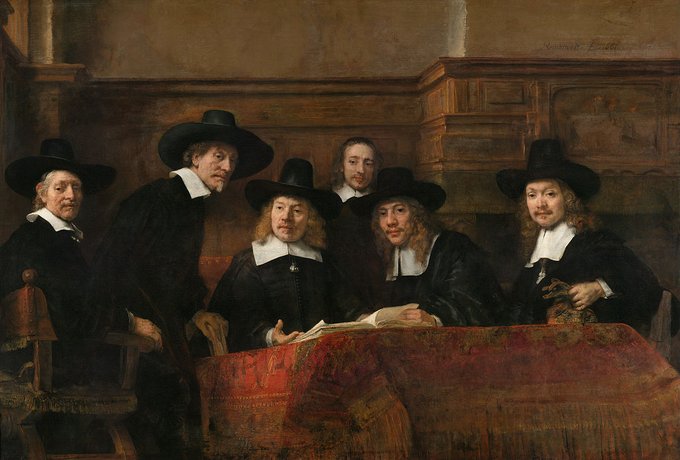
However, if one should fail, God would give unto one the law of sacrifice and provide a Saviour for one, that one might be brought back again into the presence and favour of God and partake of eternal life with God. This is the plan of redemption chosen and instituted by the Alight before human was placed on Earth. Adam and Eve were taught the law of sacrifice and were commanded to practice it by giving offerings. These included two emblems: the firstlings of the flock and the first fruits of the field. They obeyed without questioning. The effect of this law was that the best of the Earth produced, the best specimen in the flock or heard should not be sued for self, but for God. At a time in history when it was a struggle to make sure the family had food, those who sought to worship the Lord were asked to sacrifice the best part of their source of life. It was the real test of Adam and Eve’s faith, and they obeyed. “And now I speak concerning baptism. Behold, elders, priests, and teachers were baptized; and they were not baptized save they brought forth fruit meet that they were worthy of it. Neither did they receive any unto baptism save they came forth with a broken heart and a contrite spirit, and witnessed unto the church that they truly repented of all their sins. #RandolphHarris 14 of 20

“And none were received unto baptism save they took upon them the name of Christ, having a determination to serve him to the end. And after they had been received unto baptism, and were wrought upon and cleansed by the power of the Holy Ghost, they were numbered among the people of the church of Christ; and their names were taken that they might be remembered and nourished by the good word of God, to keep them in the right way, to keep them continually watchful unto prayer, relying alone upon the merits of Christ, who was the author and the finisher of their faith. And the church did meet together oft, to fast and to pray, and to speak one with another concerning the welfare of their souls. And hey did meet together oft to partake of bread and wine, in remembrance of the Lord Jesus. And they were strict to observe that there should be no iniquity among them; and whoso was found to commit iniquity, and three witnesses of the church did condemn them before the elders, and if they repented not and confessed not, their names were blotted out, and they were not numbered among the people of Christ. #RandolphHarris 15 of 20

“However, as oft as they repented and sought forgiveness, with real intent, they were forgiven. And their meetings were conducted by the church after the manner of the workings of the Spirit, and by the power of the Holy Ghost; for as the power of the Holy Ghost led them whether to preach, or to exhort, or to pray, or to supplicate, or to sing, even so it was done,” reports Moroni 6.1-9. It is especially in our families and similarly close associations that we must identify the elements of assault and withdrawal that defeat love and right relation to others. By insight and practice we must break away from them and reserve them, first by learning a calm but firm non-cooperation with those poisonous elements, and then by initiatives of goodwill and blessing in the midst of them. What we do in our meetings as Christians should be focused on enabling us to do this effectively wherever we are. Those meetings should and could be centers from which powerfully redemptive community spreads. Where to start? In various parts of the United States of America, publicly owned vehicles (police, street maintenance, schools) wear a bumper sticker that proclaims, “There is No Excuse for Domestic Violence.” It is a wonderful idea. #RandolphHarris 16 of 20

However, we need to go deeper, of course. We need to become the kind of people whom domestic violence is unthinkable and never an option. We must be transformed in such a way that our minds and bodies—our very souls—simply do not have the makeup for it. This is the work of the Christian spiritual formations. We must begin in the family. Now the slogan must be, “There is No Excuse for Assault or Withdrawal in the Home.” Do you think that would take care of intimate partner violence? Of course it would. However, the reserve is not true: merely avoiding the subject of intimate partner violence, domestic violence or assault can still leave the home a hell of cutting remarks, contempt, coldness, and withdrawal or noninvolvement. Such a hell is often found in the homes of Christians and even of Christian leaders. Frequently they seem to honestly think that such a condition is normal, and they have no knowledge of any other way. Their very theology may strengthen this tragically false outlook. If I were married, I would seek the help of my spouse in this matter. If not, then a trusted friend who is spiritually mature and not abusive. #RandolphHarris 17 of 20

I would then number my areas of need in order of importance, say: Purity, Mind, Prayer, Witness, Giving, Work, Friendship, and Leadership. Then, beginning with the first need, Purity, I would look over the suggested sub-disciplines and choose one to three things which I think would best help me improve. In doing this, I would resist the temptation to commit myself to too many disciplines. Better to succeed in a few than to assure failure by overcommitment. Perhaps, regarding the discipline of Purity I would choose to commit myself, first, to memorizing Scripture which help steel me to temptations, and second, to not watching anything sensual on TV or at the movies. Perhaps under Witness, I would make commitments to pray that God would give me someone to share Christ with and to join an interest club to meet unchurched people. After going through my life I would have perhaps twenty specific things which I could do to improve my eight weakest areas. However, before commitment to the specifics, I would look at the whole list with honest realism, asking, “Are the things which I am about to commit to really within my reach with the help of God?” #RandolphHarris 18 of 20

Perhaps, regarding the discipline of Mind, I have become so convicted that I am considering committing myself to reading the Old Testament once and the New Testament twice, plus reading The Book of Mormon. Make sure your commitments make you sweat, but also make sure that taken together they are manageable. It is better to increase your commitments as you succeed than to bite off more than you can do. Success begets success. Before setting your commitments in concrete, give yourself a week to think about them and pray over them. Seek the Holy Spirit’s guidance for other ways of personal discipline not mentioned in this essay. Ask your spouse of friend to hold you accountable for your disciplines. Even if it has to be over the phone, make sure you regularly confer and pray. Be honest about your success and failures. And be willing to take advice and make adjustments. You may have some complications, no doubt, and may not succeed at time. When this happens, wounded pride and embarrassment can make you want to take your marbles and go home. We do not like to do things which we fail. #RandolphHarris 19 of 20

However, we must realize that failure is a part of succeeding, provided we admit our failures and go at it again. Moreover, we are not under Law but grace. God is not counting our failure against us, and we are not building a treasure of merit with our success. We are simply trying to live a disciplined life which pleases our loving Father—and He understands our failures better than we understand our own children’s. When the movement in one direction has exhausted itself, there is a pause, and then a reversal directs the movement into the opposite direction. The flow of Nature follows the course indicated by the Principle of Reversion, which throws it back after a time in the opposite direction. When the point of farthest travel is reached, the forces reverse themselves. In this way, excess disciplines and even defeats itself. In this way too the Universe and all the different kinds of existence in it are kept in equilibrium. In the to-and-fro movement of human breathing, we have a kay to human development. Study it well with this assistance and you will discern a forward and backward movement, a pendulum-like swing, here too. Everything in the Universe is subject to a pendulum-like movement. It shuttles to and from with a coming-to-be and a ceasing-to-be effect. #RandolphHarris 20 of 20

Winchester Mystery House

Sarah Winchester had multiple rooms dedicated to plants and flowers. This room, her South Conservatory, contains over 200 panes of glass to allow for natural light. How would you spend a day alone in this room?

Explore the house from the comfort of your own home!
Learn More Link in bio. winchestermysteryhouse.com

A 160-room mansion built to appease the spirits who died at the hands of the Winchester Rifle 👻
🗝 winchestermysteryhouse.com


Admittedly, We Now Live in a Different World!

The horse weighs one thousand pounds and I weigh ninety-five. I guess I had better get him to cooperate. Nevertheless, we cannot overlook the fact that, just as consciousness arises from the unconscious, the ego-center, too, crystallizes out of a dark depth in which it was somehow contained in potential. Just as a human mother can only produce a human child, whose deepest nature lay hidden during its potential existence within her, so we are practically compelled to believe that the unconscious cannot be an entirely chaotic accumulation of instincts and images. There must be something to hold it together and give expression to the whole. Its center cannot possibly be the ego, since the ego was born out of it into consciousness and turns its back on the unconscious, seeking to shut it out as much as possible. Or can it be that the unconscious loses its center with the birth of the ego? In that case we would expect the ego to be far superior to the unconscious in influence and importance. Or can it be that the unconscious loses it center with the birth of the ego? #RandolphHarris 1 of 16

In that case we would expect the ego to be far superior to the unconscious in influence and importance. The unconscious would then follow meekly in the footsteps of the conscious, and that would be just what we wish. Unfortunately, the facts show the exact opposite: consciousness succumbs all too easily to unconscious influences, and these are often truer and wiser than our conscious thinking. Also, it frequently happens that unconscious motives overrule our conscious decisions, especially in matters of vital importance. Indeed, the fate of the individual is largely dependent on unconscious factors. Careful investigation shows how very much our conscious decisions depend on the undisturbed functioning memory. However, memory often suffers from the disturbing inference of unconscious contents. Moreover, it functions as a rule automatically. Ordinarily it uses the bridges of association, but often in such an extraordinary way that another thorough investigation of the whole process of memory-reproduction is needed in order to find out how certain memories managed to reach consciousness at all. And sometimes these bridges cannot be found. In such cases it is impossible to dismiss the hypothesis of the spontaneous activity of the unconscious. #RandolphHarris 2 of 16

Another example is intuition, which is chiefly dependent on unconscious processes of a very complex nature. Because of this peculiarity, I have defined intuition as “perception via the unconscious.” Normally the unconscious collaborates with the conscious without friction or disturbance, so that one is not even aware of its existence. However, when an individual or a social group deviates too far from their instinctual foundations, they then experience the full impact of unconscious forces. The collaboration of the unconscious is intelligent and purposive, and even when it acts in opposition to consciousness its expression is still compensatory in an intelligent way, as if it were trying to restore the lost balance. There are dreams and visions of such an impressive character that some people refuse to admit that they could have originated in an unconscious psyche. They prefer to assume that which phenomena derive from a sort of “superconsciousness.” Such people make a distinction between a quasi-physiological or instinctive unconscious and a psychic sphere or layer “above” consciousness, which they style the “superconscious.” #RandolphHarris 3 of 16

As a matter of fact, this psyche, which in Indian philosophy is called the “higher” consciousness, corresponds to what we in the New World called the “unconscious.” Certain dreams, visions, and mystical experiences do, however, suggest the existence of a consciousness in the unconscious. However, if we assume a consciousness in the unconscious, we are at once faced with the difficulty that no consciousness can exist without a subject, that is, an ego to which the contents are related. Consciousness needs a center, an ego to which something is conscious. We know of no other kind of consciousness, nor can we imagine a consciousness without an ego. When there is no one to say: “I am conscious,” there can be no consciousness. Much like there could be no World without God. “In the beginning God created the Heavens and the Earth. Now the earth was formless and empty, darkness was over the surface of the deep, and the spirit of God was hovering over the waters. And God said, ‘Let there be light,’ and there was light. God saw that the light was good, and he separated the light from the darkness. God called the light ‘day,’ and the darkness he called ‘night.’ And there was evening, an there was morning—the first day,” reports Genesis 1.1-5. #RandolphHarris 4 of 16

It is unprofitable to speculate about things we cannot know. I therefore refrain from making assertions that go beyond the bounds of science. It was never possible for me to discover in the unconscious anything like a personality comparable with the ego. However, although a “second ego” cannot be discovered (except in the rare cases of dual personality), the manifestations of the unconscious do at least show traces of personalities. A simple example is the dream, where a number of real or imaginary people represent the dream-thoughts. In nearly all the important types of dissociation, the manifestations of the unconscious assume a strikingly personal form. Careful examination of the behaviour and mental content of these personifications, however, reveals their fragmentary character. They seem to represent complexes that have split off from a greater whole, and are the very reverse of a personal center of the unconscious. I have always been greatly impressed by the character of dissociated fragments as personalities. RandolphHarris 5 of 16

Hence I have often asked myself whether we are not justified in assuming that, if such fragments have personality, the whole from which they were broken off must have personality to an even higher degree. #Since it does not depend on whether the fragments are large or small, the inference seemed logical. Why, then, should not the whole have personality too? Personality need not imply consciousness. It can just as easily be dormant or dreaming. The general aspect of unconscious manifestations of the unconscious assume a strikingly personal form. Careful examination of the behaviour and mental content of these personifications, however, reveals their fragmentary character. They seem to represent complexes that have split off from a greater whole, and are the very reverse of a personal center of the unconscious. I have always been greatly impressed by the character of dissociated fragments as personalities. Hence I have often asked myself whether we are not justified in assuming that, if such fragments have personality, the whole from which they were broken off must have personality to an even higher degree. The inference seemed logical, since it does not depend on whether the fragments are large or small. #RandolphHarris 6 of 16

Why, then, should not the whole have personality too? Personality need not imply consciousness. It can just as easily be dormant or dreaming. The general aspect of unconscious manifestations is in the main chaotic and irrational, despite certain symptoms of intelligence and purposiveness. The unconscious produces dreams, visions, fantasies, emotions, grotesque ideas, and so forth. This is exactly what we would expect a dreaming personality to do. It seems to be a personality that was never awake and was never conscious of the life it had lived and of its own continuity. The only question is whether the hypothesis of a dormant and hidden personality is possible or not. It may be that all of the personality to be found possible or not. It may be that all of the personality to be found in the unconscious is contained in the fragmentary personifications mentioned before. Since this is very possible, all my conjecture would be in vain—unless there were evidence of much less fragmentary and more complete personalities, even though they are hidden. I am convinced that such evidence exists. Unfortunately, the material to prove this belongs to the subtleties of psychological analysis #RandolphHarris 7 of 16

It is therefore not exactly easy to give the reader a simple and convincing idea of it. There are ideas which beco.me obsolete and are allowed to die. However, three ideas are so fundamental that they will always reappear. They are built into the Universe and therefore into humans themselves. These three cosmic forces—Attraction, Repulsion, and Rest—constitute the triune manifestation of the World-Idea. You will find them in every department of existence. There is a movement in the Universe which during one phase seems constructive, but in a later phase seems destructive. However, both are really part of its order, its divine order, for the two phases belong to each other, complement each other, and are necessary to each other. There are two poles of this universal movement: the one, a going-out, affirming, and the other a coming-back and denying. All nature is bisected by this two-way process. The life of the Universe moves through a series of evolutionary oscillations between rest and activity. It is the increasing of one movement which runs parallel with the decrease of the other movement. #RandolphHarris 8 of 16

One is constructive even while the other is destructive. The rhythmic life alternates and reacts. It brings alternation of the alternations and reactions against the reactions. Just as humans and animals pass through their cycles of infancy, youth, maturity, and senility, so does the planet itself which is their abode. The cycle of existence is never-ending. Whoever understands this truth and his own relationship to it will become humble. Existence is an endless affair but it has periods of rest and withdrawal, changes of form and body, of consciousness and selfhood. We are developments brought forth from it and taken back into it. The Universe plays its little part on the surface of unknowable and ineffable Mind and is gone—only to reappear at some immensely far-off time. Worlds come into being, are maintained for a long or short while, change, and dissolve. As we can readily see by observation and experience, this is not less the situation for the creatures—including human creatures—who inhabit these Worlds. Yet most people are too unprepared, too weak and too shallow, to be willing to take these truths. Infinite Mind releases from within itself an infinite variety of suns, stars, planets, substances, plants, and creatures. #RandolphHarris 9 of 16

Even the process itself is an infinite one, countered only by necessary dissolutions and destructions, pauses and rests. Even Universes get old and die off. All that is released into manifestation is subject to this perpetual law of movement and change, growth and decay, death, reappearance, and recurrence. The Universe comes into being, maintains its varied operations, or passes into dissolution by inherent necessity. The entire Universe will dissolve and vanish into the unseen Power whence it came. However, there are many other Universes and galaxies to replace our own. Dawn follows night in the vast cosmos with rhythmical recurrence. Therefore the self-actualized say that there is neither beginning nor end to the Universe but the perennial flow of eternity. The Final is likewise the First. We must understand clearly that creation and dissolution, evolution and involution continue t recur perpetually. It is not a question of long periods of time coming to a final close. This rhythm of the Universe is incessant. According to the Chinese wisdom, when either of the two aspects has developed to its utmost limit, then it begins to transform itself into the polar opposite of its own accord. #RandolphHarris 10 of 16

Our own proverb “The night is darkest just before dawn” is also apt in the transformation of polar opposites. In the sky we see the same phenomenon. The moment when the waxing moon has reached its fullest is immediately followed by the moment when the process of waning begins. The higher position of the mourning sun is no sooner attained in the overhead sky at noon the great orb begins its downward descent. At new mon the waning process comes to an end and the reverse process occurs. The same turning point is reached at winter and summer solstices. The interrelation of these phenomena with the larger phenomenon of the universal creation and dissolution may be seen. At the extreme point of either process there is a turning. Every moment in Nature ultimately reverses itself, but the point of reversal is not reached until it has gone to the extreme. With the reversal it begins to develop opposite qualities. This is an old and well-known idea in China, not only among the people but also among the philosophers. Lao Tzu for instance, says, “To go father and father means to revert back again.” #RandolphHarris 11 of 16

In this shuttle-and-loom, two-way alternating rhythm of the Universe, when the forces attain the midpoint of their arc, they start working in reverse, going down instead of evolving up, decaying and destroying instead of nurturing and vitalizing, yielding pain instead of pleasure. Every condition in human, every effect in Nature is forever seeking to attain its own fullness. Yet the moment that is attained and a pause ensures, it reverses its direction and begins to seek union with its opposite. Thus it balances itself in the end. Evolution is never a straight line. It could not be, in a two-way Universe. At the crisis-point on each way a shock becomes necessary to force a turnabout. This is the same point referred to by ancient Greek thinkers, where everything destroys itself in the end by its own excesses. Heraclitus meant the same when he too taught that all things tend to turn into their opposites. The movement in one direction sooner or later provokes a countermovement in the opposite direction. This reaction leads to a resistance at some point or points; it may also lead to friction and then to fighting. Each phase of this to-and-fro movement covers long periods. #RandolphHarris 12 of 16

When the impetus in one direction exhausts itself, the opposing impetus awakens from tranquility and it active. Today we are not so far removed in time from a social World in which such a constantly generous response was the presumed ideal. I recall from my childhood that my father, as he drove along in his car, always raised his hand to the driver of an oncoming vehicle, and he or she nearly always reciprocated. (Just recently while driving in rural Georgia, a man acknowledged me in this way. I was mildly shocked.) Of course there were not that many oncoming vehicles then. My father also never passed anyone on sidewalk without acknowledging him or her, unless he was in a crowd; and he would always tip his hat to a woman (who, as such, was assumed to be a lady). These, it might be thought, are small things, and if you tried to acknowledge all the drivers you meet today, you would probably wreck your Ultimate Driving Machine. If you spoke to people on the sidewalk that you were unfamiliar with, they would probably think you were crazy or dangerous. No doubt the profound moral insight of our times would also point out the “hypocrisy” involved in such responses. #RandolphHarris 13 of 16

Admittedly, we now live in a different World. However, is it a better World for that? Could the epidemic of addictions and dysfunctions from which the masses duffer possibly be related to that fact that we are constantly in the presence of people who are withdrawn from us, who do not want to acknowledge we are there and frankly would feel more at ease if we were not—people who in many cases explicitly reject us and feel it only right to do so? Is it not the desperate need for approval that drives people so relentlessly today—causing them to go foolish and self-destructive lengths to be “attractive” or at least to get attention—nothing but the echo of a lost World of constant mutual welcome and blessing in family, neighbourhood, school, and work? “Being attractive” and getting attention is the absolute bottom of barrel of being “with others” –the fifteen minutes of fame (for which Andy Warhol is famous) that is now down to fifteen seconds or less. I do not mean to suggest that anyone can overcome our desperate social situation by an individual act of will. Far from it. Whatever might be done, that is not it. This is the World we now have. #RandolphHarris 14 of 16

To do anything of substance about it will require a grace and wisdom that is at no individual’s disposal, and a long-range plan of personal and social development is required. No doubt God has one in mind. However, to make a start where we are, we must recognize that this our World is not normal, but is only usual at present. We must try to see it for what it is and then begin to think of specific ways grace and truth can begin to change it. And above all, we who follow Jesus must understand that a couple of hours per week of carefully calibrated distance in a church setting will be of little help, and may only enforce the patterns of withdrawal that permeate our fallen World. What could we do in our fellowships that would really help make a difference? “The manner of administering the wine—Behold, they took the cup, and said: O God, the Eternal Father, we ask thee, in the name of thy Son, Jesus Christ, to bless and sanctify this wine to the souls of all those who drink of it, that they may do it in remembrance of the blood of thy Son, which was shed for them; that they may witness unto thee, O God the Eternal Father, that they do always remember him, that they may have his Spirit to be with them. Amen,” reports Moroni 5.1-2. #RandolphHarris 15 of 16

Dear Lord in Heaven, Who have the secrets of planting, Who has the secrets of growth, who has the secrets of harvest, it is a harvest that we pray to you, it is today that we pray to you, your holy day, the celebration of Christ. We thank you, God, for your protection, for watching over our field against all danger, whether animals who might have eaten our crops whether humans who might have encroached in our land, whether spirits who might have wished us ill: against all these, Long-Arm, you have defended us and ours. And so to you, guider and protector, teacher and champion, we pray on this day, which is rightly called yours. We thankfully acknowledge that Thou art the Lord our God and God of our fathers, the God of all the lives, our Creator and Creator of the Universe. We offer blessings and thanksgiving to Thy great and holy names because Thou hast kept us in life and sustained us; s mayest Thou continue to keep us in life and sustain us. O gather our exiles into the courts of Thy holy sanctuary to observe Thy statues, to do Thy will, and to serve Thee with a perfect heart. We give thanks unto Thee. Blessed be God to whom we are ever grateful. #RandolphHarris 16 of 16

Cresleigh Homes

#HappyHolidays from #CresleighHomes! We hope you and your loved ones are having a wonderful time together. ❤️ #Cheers to the #WorldsBestCupOfCoffee! 😉4h

This community features a convenient location, and highly ranked schools. Enjoy Cresleigh’s craftsmanship, with single and two-story homes, some with main-floor primary suites, ranging from approximately 2,000 to 4,000 square feet. Make your home your own with hundreds of options for personalization and customization.


 Randolph Harris II International Institute