
Home » Ed Harris (Page 5)
Category Archives: Ed Harris

Learn to Have a Stainless Mind

Life is an adventure; it is one journey where one does not want to compromise one’s self. Enjoy laughter, beauty, and love. Success is finding and doing the best of your ability in each moment of your life. Our is the first civilization to plant human-made objects far beyond the surface of our home planet and use them to help us create wealth. That by itself would mark our time as a revolutionary moment in history. Yet little is known about the impact of this fact in our daily lives and our economy. Few are aware that every time they use an ATM or a telephone, they are relying on technology twelve thousand miles from Earth. Or that every patient receiving dialysis or wearing a peacemaker owes some thanks to technologies and, in some cases, people who have left the surface of the planet we call home. Communication satellites, the Global Positioning System (GPS)—developed by the U.S. Defense Department over six decades at a cost estimated at $14 billion—and commercial remote imaging are parts of an emerging space infrastructure that will be greatly elaborated over the decades and centuries to come, with increasing impact on how we create economic value. Nothing more clearly symbolizes today’s changes in the relationship of wealth to the deep fundamental. In its present, still-primitive form—often myopically derided as a wasteful luxury—the drive into space has already transformed many aspects of daily life. One result is a $100 billion Worldwide satellite industry composed of manufacturers such as Boeing, EADS/Astrium and Alcatel Space; launch firms like China Great Wall Industry Corporation; operators and coordinators such as Intersputnik in Russia; plus myriad service firms, space-image distributors and ground-equipment suppliers. And now a second space race is just getting underway. Commercial companies are being formed. These private commercial aerospace companies like Jeff Bezos’ Blue Origin, Richard Branson’s Virgin Orbit, and Elon Musk’s SpaceX, are all building and testing their own reusable rockets and spacecrafts. #RandolphHarris 1 of 18

In fact, Virgin Orbit successfully sent 10 small satellites into orbit, utilizing its unique approach to the task. This mission saw LauncherOne, a heavily modified Boeing 747, fly up to an altitude of 35,000 feet (10,500 meters) before releasing a rocket mounted beneath the plane. The rocket then lit its own engines and lasted off to space, deploying the satellites into low Earth orbit. However, many are left wondering how far the government will allow private industries to go. They believe that private companies could outpace the government and actually established life on a new planet and then start colonizing on that planet, creating their own government, and constructing roads, houses, businesses, and parks in the next 25 years, and that many people, mostly the extremely wealth, will leave Earth in live in these tax havens where corporations have control. This is a vastly different picture than the one we had just a few decades ago. During the 1990s, business pages reported that investors had lost billions in space-industry stocks and that many space firms were in terminal trouble. However, a recent survey by the Satellite Industry Association tells a quite different story—a steady, year-after-year revenue growth rate of 15 percent from the mid-1990s on. What is more, despite temporary overcapacity, now more and more commercial start-ups, and countries are racing to join the space “club.” In addition to the companies we listed above, Brazil and Ukraine, for example, are partnering to launch Ukrainian Cyclone-4 rockets from Brazil’s Alcantara Launch Center—regarded as one of the World’s best launch sites. And, as of 2005, equity firms were buying up stakes in such satellite operators as Intelsat, PanAmSat and New Skies. Similarly, while $100 billion many seem trivial in a multi-trillion-dollar World economy, that number does not begin to tell the whole story. It does not include the hidden increases in value generated by the many industries that directly or indirectly reply on space—big television networks, medical technology, sports teams, advertising agencies, telephone and Internet companies and financial-data suppliers, to cite a few. #RandolphHarris 2 of 18

People in the Arab World have also been gazing at the starts with genius and curiosity for a legion of years. In 2021, the Middle Eastern World built a Mars orbit of the United Arab Emirates’ (UAE) Hope (al-Amal) probe. This ambition is their new space exploration adventure. The Arab governments today have developed a fully 21st century view of space, by using algebra and spherical trigonometry which are both essential mathematical tools for understanding the motions of Heavenly bodies, with intentions rooted in the quest for profit, saving lives, power, image, and control. The United Arab Emirates’ program is very auspicious. The country has established its national space agency in 2014 and has set amazingly ambitious goals for the future. The UAE space program has about $5.4 billion in public-private support, compared to NASA’s FY21 budget of $23.3 billion. The Mars mission itself was expensive at a cost of $200 million. However, it appears certain that given the success and acclaim accorded the Amal probe, more is on the way. This is why some many people are concerned about the fate of the United States of America and looking for other options as a future home for Rome did once fall, too. Afterall, the theory of convergence, states that poor or developing economies with a higher per capita income can gradually reach similar high levels of per capita income. Thus, all economies, over time, may converge in terms of income per head. However, these developing countries will not be using old infrastructure. Because high technology already exists, they do not have an initial investment to stake to build new roads, architecture, and electric or other technologies. They can use new methods to build high tech cities and homes and leave already developed nations with their antiquated systems, and replace them as a World Super Power. Therefore, the poorer nations grow much faster because of the higher possibilities of growth and over time catch up, and even surpass the richer countries in terms of per capita income such that the divide between the two gets minimized. This theory of convergence of incomes is based on the logic of better opportunities of growth available for developing economics like access to technological know how from the developed World and increasing returns to capital. #RandolphHarris 3 of 18

However, empirical evidence suggests that while some developing economics have been able to effectively tap the available advantages to grow faster and catch up with robust economies, this has not always been true for a large part of the developing World. The limitations of the theory are based on grounds of social, institutional or political differences, which simultaneously influence growth. Yet developed nations have to keep in mind that they are sovereign entities and they need to help their people and businesses succeed to remain successful nations. Because any risk arising of chances of a government failing to make debt repayments or not honouring a loan agreement is a sovereign risk. Such practices can be resorted to by a government in times of economic or political uncertainty or even to portray an assertive stance misusing its independence. A government can restore to such practices by easily altering any of its laws, thereby causing adverse losses to investors. For example, countries like Argentina and Mexico had defaulted on their loan payments in 1970s to a big extent after the oil shock. A little-known consortium of commercial space firms called the Mapping Alliance Program now offers remote sensing, images from space and software for use in computer-aided design, surveying, automated mapping and other services. MAP customers include oil and gas companies, water, gas, and electric utilities, agriculture, mining, and transportation, as well as natural-resource managers. Knowledge derived from space operations is also helping companies anticipate, reduce and hedge their risks. Thus space data play a key role in financial markets in which “weather futures” are traded. Variations in weather can have a major impact on productivity, turnover and overall profitability in fields as diverse as insurance and agriculture as well as [for] the manufacturers and retailers of everything from soft drinks to cold remedies, not to mention the organizers of pop festivals and package holidays. #RandolphHarris 4 of 18

In the United States of America, 3.2 percent ($768 billion) of the entire $24.01 trillion economy was spent on defense. This is example will show how much things change in just a few decades. Now back on subject, according to the Department of Commerce, one seventh of the entire $10 trillion economy in 2001 was subject to weather risk. (Look how much the economy grew in just 20 years and compare the amount spent on defense to what was put at risk by the weather.) Whether futures, traded on LIFFE and other exchanges, offer a way of hedging against that risk. The health industry is another largely unacknowledged beneficiary of space activity. The 750,000 U.S. victims of kidney failure who today survive because of dialysis owe their treatment, in some measure, to NASA and its astronauts. A chemical process developed by the space agency to remove toxic waste from dialysis fluids is not helping patients stay alive. Meanwhile, a company called StelSys, using technology or ideas licensed from the U.S. space agency, is working to develop the equivalent of a dialysis system for patients with liver failure. One of the specialized functions of the human liver is to break down drugs or toxins into less harmful and more water-soluble substances that are more easily excreted from the body. The StelSys experiment—a joint study by NASA and Baltimore-based biotechnology research company StelSys, LLC—will test this function of human liver cells in the microgravity environment aboard the International Space Station, comparing the results to the typical function of supplicate cells on Earth. The findings of this experiment will provide unprecedented information about the effects of microgravity on the proper function of human liver cells, offering new insight into maintaining the health of humans living and working in space. Cells are transported from Earth to the International Space Station using Commercial Refrigerator/Incubator Module (CRIM). One on orbit, the cells are nurtured and grown in the CBOSS Biotechnology Specimen Temperature Controller (BSTC), which has flown continuously abroad the International Space Station since Expedition Thee. Once the cells are gown, they are frozen and stored in the ARCTIC single-locker freezer, a Space Station facility capable of lowering temperatures to -20 degrees Celsius. The frozen cells are then transported back to Earth for study. #RandolphHarris 5 of 18

These scientists are studying liver and kidney cell growth, disease and replacement, using ground-based bioreactor labs, as well as commercial NASA bioreactors. To date, the company has made great strides in developing long-term cell culture techniques, and has created a prototype of a proposed “bio-artificial” liver. StelSys research abroad the Space Station is conducted under agreement with NASA’s Office of Biological and Physical Research in Washington, D.C. Research in this are could lead to earlier and more reliable drug-candidate screening for patients in need of liver and kidney treatments prior to transplant. It could also accelerate development of new life-saving drugs by pharmaceutical companies. StelSys LLC, in cooperation with NASA, is exploring specific research areas that benefit from liver cell research abroad the Space Station. They are: Development of a liver-assist device: Research based on NASA biotechnology could help develop a machine to sustain the life of a patient with advanced liver disease—similar to dialysis machines for persons with kidney disease. National production of the vitamin D3: Individuals on kidney dialysis require D3, which has beneficial effects on the immune system, helps fight various forms of cancer, and appears to be tied closely to hormones that control cellular proliferation and differentiation. Vitamin D3 remains expensive and difficult to properly manufacture, however. Stelsys seeks an alternative method of producing D3 via cultured kidney cells. Natural production of metabolites: StelSys is researching metabolites, or chemical by-products formed by the breakdown of parent compounds, which accelerates development of new drugs. Additional space research holds promise for improving the treatment of brain tumors, blindness, osteoporosis and other diseases responsible for megabillions of dollars in the ever-swelling healthcare budget. Today Europeans are clinically testing a heart pump based on space shuttle fuel-pump technology. With the annual cost of heart disease and stroke in the United States of America alone exceeding $108 billion a year, how much might such a heart pump save? Americans suffer 1.5 million heart attacks and strokes each year. A conservative estimate of these costs for just one person is $121,200 over twenty years. For those needing surgery or procedures and ongoing care, the cost can be more than $4.8 million over a lifetime. #RandolphHarris 6 of 18

Therefore, how much economic value should be assigned to the “bioreactor” designed for growing cells in space—a tool now used by tissue engineering labs developing methods to grow human hearts? NASA’s rotating bioreactor allows cells to be grown in a microgravity environment that eliminates almost all shear forces placed upon a cell culture system while entering space. NASA’s bioreactor has allowed various labs to culture cells and even viruses previously impossible to grow using traditional methods. These successes are attributed to the bioreactor’s ability to provide a unique environment that closely resembles tissue differentiation during embryogenesis, and thus allowing cellular expression of surface epitopes similar to that of intact tissues. It also appears that cells grown in microgravity, low-shear environment allow for greater chemical signaling, probably as a result of more surface contact between cells. Realizing the bioreactor’s commercial potential, Santa Monica, California-based VivoRx Licensed exclusive rights from NASA for both therapeutic and diagnostic commercial applications. VivoRX has, in the past, successfully transplanted encapsulated islet cells from cadavers and porcine pancreas into insulin-dependent diabetics, perhaps a major breakthrough in the treatment of diabetes. However, pancreas from cadavers are in very short supply. The bioreactor may be the answer; VivoRx hopes the bioreactor will allow them to propagate enough human islet cells to use their cell-based approach to treat a large diabetic population. The company has already successfully grown islet cells generated from the bioreactors, and is beginning FDA-approved Phase I/II clinical trials. We could also ask parallel question about economic blindness, limb loss and kidney failure associated with diabetes—a disease that has risen to $350 billion in America. People with diagnosed diabetes incur average medical expenditures of $16,752 per year, of which about $,601 is attributed to diabetes. On average, people with diagnosed diabetes have medical expenditures approximately 2.3 times higher than what expenditures would be in the absence of diabetes. In direct costs also include increased absenteeism ($3.3 billion), reduced productivity while at work ($26.9 billion) for the employed, in ability to work as a result of disease-related disability ($37.5 billion), lost productive capacity due to early mortality ($19.9 billion). Costs are forecast to soar as the population ages. #RandolphHarris 7 of 18

Meanwhile, space plays a crucial role in environmental monitoring as well. France’s SPOT-4 spacecraft, for example, carries an American POAM III instrument for measuring polar ozone and aerosol. According to the U.S. Naval Research Laboratory’s Review, “Every year huge tracts of forest in Alaska, Northern Canada, Scandinavia Russia and China are racked by forest fires from may through October, and in California, fire season is generally from March to December. Enormous quantities of smoke billow into the atmosphere, where high-altitude winds sometimes carry the smoke thousands of kilometers from the original fires.” SPOT-4/POAM III tracks it. Similarly, a joint Brazil-NASA space project is studying the global effects of ecological changes in the Amazon region. A NASA “bird” measures the rate at which ice is melting at the North and South Poles. Other space-based environmental projects focus on everything from water utilization and fisheries to the ecology of estuaries and El Nino weather effects. Never before has the human race had as detailed and accurate an image of the Earth’s surface. Space shuttles such as Endeavor have produced massive data needed for making high-resolution images of desolate tundras and deserts, of jungles where endangered gorillas live and of ancient ruins such as Angkor Wat and Ubar. The same amazingly precise data can, among many other uses, help us locate cell-phone towers, identify flight hazards for aircraft and forecast floods. Twenty-four hours a day, at Schriever Air Force Base in Colorado, a handful of U.S. Air Force men and women—some little more than eighteen or nineteen years old—sit at computer consoles and control satellites orbiting the Earth twelve thousand nautical miles away. They operate more than twenty satellites that together form the NAVSTAR Global Positioning System (GPS) that can tell anyone with a small, inexpensive receiver one’s precise location on Earth. Used by online services, hikers, drivers, truckers, boaters, ships and shippers, banks, and telecom companies, not to mention the military, GSP is one of the marvels of our era. So far-reaching are its implications for both security and business that Europe lunched its own Galileo. Galileo is a GPS system that went live in 2016. It was created by the European Union through the European Space Agency. #RandolphHarris 8 of 18

Galileo cost $13.2 billion and has 28 satellites. It provides Europe accurate and reliable positioning and timing information, used for example in your mobile phones, your cars (and in the future autonomous and connected cars), railways, aviation and other sectors. As many know, GPS helps us locate time as well as space. Thus, in addition to positioning us spatially, the system also operates as a key synchronizer. In the words of Glen Gibbons of Advanstar Communications, “Every time we get cash from an ATM or make a phone call (whether wireless or wire-line), the synchronization of the voice and data streams in those…communications networks is almost certainly based on GPS timing…it has made nanosecond-level timing readily available throughout the World, courtesy of the cesium and rubidium atomic clocks on board the GPS satellites.” The productive benefit of precision timing and synchronization in the economy has yet to be calculated. And more is on the way. Since the attack on the World Trade Center in New York in 2001, anti-terror experts have devoted increasing attention the 226 million container boxes that move by sea each year. Although losing one box seems like it is not a big deal, containers piled high on giant vessels carrying everything from car tries to smartphones are toppling over at an alarming rate, sending millions of dollars of cargo skinning to the bottom of the ocean as pressure to speed deliveries raises the risk of safety errors. This shipping industry saw the biggest increase in lost containers in 2020. More than 3,000 boxes dropped into the sea last year, and more than 1,000 fell overboard in 2021. The accidents are disrupting supply chains for hundreds of American retailers and giving pirates a new treasure to search for, but even more than that, it creates danger. Any one of these containers can contain a hidden biological weapon, a smuggled terrorist, illegal drugs or arms or other dangerous prophylactics, barbiturates, and contraband. Today only about 2 percent are inspected as they enter the United States of America. Add to that the additional containers that arrive by land and air are another reason people are demanding border security. #RandolphHarris 9 of 18

GPS satellites, in principle, can track the coordinates of these containers as they move from place to place. In the future, not just the containers but every product in them will be continually followed as it moves through the supply chain from the plant to the wholesaler, the retailer, onto the shelves and into the customer’s home. Prototype tracking systems are already being studied or tested by such companies as Wal-Mart, Target, Sears, and Kmart. Furthermore, the day will come when many packages carrying food, for example, will have embedded chips that continuously report to the shipper the changing condition of the food as it moves. Other “smart” packages will actually process their contents en route. Linking these to GPS or similar satellite systems will transform large sectors of both the transportation and the food industry, ensure fresher and higher quality packed food and other products, change the economics of both production and distribution in these and many other fields—and improve security. In Japan, to prevent theft of packages, couriers are now given a key to a digital customers car so they can leave a package in the trunk to prevent theft. If the car is then left unlocked, a failsafe system will arm the car after one minute. Because they have low crime rates, this is a great idea for Japan. However, like all technologies, of course, GPS has both beneficial and negative potentials. It can make our lives far more secure. It can track a car full of Good Day and Al Qaeda terrorists. It can also make a visit to a bordello or a Swiss bank less private than it might once have been. However, then, so can “cookies” in a computer, rouge medical professionals, scandalous lawyers—or a gossipy neighbor who steals your mail, watches your house and car, and accepts packages for you. Benefits and sacrifices need to be weighed against one another. One of the biggest economic payoffs from GPS, will come when today’s ground-based World air traffic control system becomes essentially a backup to a space-based alternative. Today flight plans require most aircrafts to fly from one ground-based radio beacon to the next over heavily congested airways. #RandolphHarris 10 of 18

Capacity near many big cities is limited. A GPS control system can increase capacity along with precision. It can also permit landings under conditions now regarded as prohibitive, including at remote and small airports, and improve over-the-ocean navigation. All at far less cost than the ground-based system. Also, corporations may start to open warehouses in suburban locations with locked storage units and some refrigerated where consumers can have any courier drop off your package because we all know thieves think just because packages are insured they can steal them, and when you are getting orders from companies like Omaha Steaks, they start to watch your order habits so they can intercept your packages. However, even if they are not involved in it. theft is embarrassing to many people, because it speaks poorly of you and the people in your community. High-end stores often share their “theft and loss” information with other corporations and couriers so it may secretly make them think less of you and the community you live in. Also, there are applications track and report crimes such as loss and theft and vandalism and this can make your home less appealing to prospective buyers and lower the property value of your community, while making it less desirable. Even more remarkable about the future of technology, NASA’s Global Differential GPS, recently developed at its Jet Propulsion Lab (JPL) in Pasadena, California, has been tested in Greenland and the United States of America. It is now capable of positioning aircraft to within 3.9 inches horizontally and 7.9 inches vertically anywhere in the World. JPL proudly boasts that this is a “factor of ten impowerment” over the accuracy of current systems. Across the board, then, space activity is paying off for the emergent economy—often in unseen ways—and promises even more in days to come. A Midwest Research Institute study has estimated that every dollar invested in NASA adds nine dollars to U.S. gross domestic product. #RandolphHarris 11 of 18

Another analysis, by Chase Econometrics, has suggested that space-related research yields productivity increases that translate into a 43 percent return on investment. All such numbers are relatively old, shaky, and incomplete. Nevertheless, even if we arbitrarily slash them, they would still strongly suggest that space activity already pays off handsomely for the economy. And we are still using only a tiny fraction of its potential. Looming on the horizon are thousands upon thousands more satellites in the Heavens. Algeria, Pakistan and Nigeria have already purchased microsatellites weighing little more than a hundred pounds, capable of carrying cameras and being propelled into orbit for a fraction of what it now costs for conventional satellites. Professors Martian Sweeting of the company supplying them, Surrey Satellite Technology in Britain, claims that within a decade we will launch satellites no bigger than a credit card. As size and cost plumet they will become less expensive, making it possible for medium-sized businesses, NGOs, private groups and even individuals—good and bad alike—to afford them. It is time, in short, to recognize that even in purely economic terms the drive into space is anything but trivial. Humanity’s baby steps into space are already creating significant value on Earth in ways about which earlier civilizations could only fantasize. And it is only the beginning. Today more than fifty nations claim to have space programs. However, governments are not alone in space, as we discussed earlier. Private companies are modifying planes to take hundreds of people into space at once, as well as smaller sized planes to carry two or three people. The purpose: To hasten the development of commercial space tourism and colonization of other planets. Even if we are making no other changes in the “where” of wealth—if we were not shifting it toward Asia and forming region-states, if there were no search for higher-value-added placed, if we were not re-globalizing and de-globalizing the World economy, the leap beyond our planet would, by itself, mark a revolutionary turning point in wealth creation. #RandolphHarrs 12 of 18

The combined evidence, therefore, is overwhelming. We are simultaneously transforming the relationship of wealth to both time and space—two of the deep fundamentals that have underpinned all economic activity since we were hunter-gathers. Wealth today is not merely revolutionary but is becoming more so. Nor is this just a matter of technology. It is, as we will next time make clear, a revolution of the mind as well. Balked, not taken seriously, deprived of great objects and available opportunities, and in an atmosphere that does not encourage service—it is had to have faith, to feel justified, to have a calling, or win honour. However, what then fills the places of these? for every experience that a human being has is a whole way-of-being-in-the-World. First, necessity gives justification. Having something that you must do, solves the problem of having something to do. Necessary behaviour may or may not be honoruable. To wrest subsistence is necessary and honourable. If a young man falls in love, a temporary psychosis, his entire day is under the iron rule of necessity, foolishly and honourably; if it is only to watch under a window, he has something to do. When the class struggle against exploitation was lively, it was something necessary and honourable to engage in. Indeed, it is a major defect of our present organized system and the economy of abundance that, without providing great goals, it has taken away some of the important real necessities, leaving people with nothing to do. The void is soon filled. Behaviour like going into debt on the installment plan, gives an artificial but then real necessity, something to do, paying up. This is the Rat Race, but if people did not need its justifying necessity, for the commodities themselves are not that attractive, I doubt that it would be a run. Young fellows drift into narcotics, and then find that they have something they must do all day, looking for a connection and a fix, and how to get the loot. Compulsive hunting for pleasures of the flesh is something to do. By dividing into rival gangs, as Clausewitz pointed out long ago, it is possible to create a sate of uncertainty of what the enemy is up to, that keeps you constantly on your toes. #RandolphHarris 13 of 18

This is a condition, also, apt to raise the ante, for no matter how you have planned to stay within limits, you can never be sure that the others will not take advantage. Many of the apparently pointless repeated risks that juveniles take, where there cannot be any kick left in the exploit itself, make a little sense when we learn that there is a competition: Ty has stolen twenty-six cars, Steve has stolen twenty-three cars, and each is driven by necessity not to be worsted, especially since the others come along for the rides (However, TY has an unfair advantage because he had gone as a punishment to a “Vocational High School” where he took auto mechanics). And poor Pedro and Carlos who worked while in high school to pay for their cars were cheated by not only Ty and Steve, but also the insurance companies because of their names and the colour of their skin. The system is just not always fair for men of colour who are doing the right thing. When psychologist like Linder speak of the aimless, unconcentrated, unsequential behavior of “psychopathic personalities,” I wonder whether they enough take into account that it requires a real object and an interest in it to take a good actualized Christian of experience and growth. To structure the behaviour of long hours and weeks requires a goal that, from some point of view at least, is pretty worthwhile. Our society is not abounding in highly worth-whole goals available to average gifts and underprivileged attainments. Many goals that are busily and perseveringly pursued by some might reasonably seem not worth the trouble to others who have more animal spirits or plain sense. These really might have “nothing to do,” and their aimless and sensation-seeking killing time might indicate nothing but chronic boredom. Yet they will be judged psychopathic personalities. However, once they have hit on a necessitous and important activity like finding their dose of barbiturates and contraband or stealing twenty-six joy rides (in the teeth of two arrests), they become models of purposiveness and perseverance. Such are the justifications and callings. The honour is to protect one’s masculinity and normalcy, yet to prove by notoriety that one is superior. #RandolphHarris 14 of 18

More interesting and likely is the religious effort of the Hipster Generation, to which we shall turn to focus on at a future time, they are older and are not willing to have given up one Rat Race to fall into another. Can they solve the problem of the nagging unanswerable questions of justification and vocation? Their principle is the traditional one of classical mysticism: by “experience” (= kicks) to transcend the nagged and nagging self altogether and get out of one’s skin, to where no questions are asked—nor is there any articulate speech to ask them in. Resigning from society, they form peaceful brotherhoods of pure experience, with voluntary poverty, devotional readings, and a good deal of hashish. In Communist China in 1974, seventeen-year-old schoolgirl Anchee Min was carted away to Red Fire Farm in a convoy of eleven trucks. She was excited because it was an honour to be chosen for such a prestigious assignment. However, during her time at the collective farm, Anchee Min’s emotional moral, and ideological Worlds were turned topsy-turvy when her friend Shao Ching’s young lover was executed after the couple have been caught in passionate intimacy. Shao Ching, also seventeen, was breathtakingly lovely, slender as a willow, and rebellious. She copied out forbidden literature and shared it with her special friend Anchee Min. Instead of tying her brains with brown rubber bands like the other girls, Shao Ching bound hers with coloured strings. She scrounged tiny remnants of cloth and designed elegant unmentionables that she embroidered with flowers, leaves, and lovebirds. In the stark dormitory, her drying laundry hung like artwork. Shao Ching also altered the standard-issue clothes so that her shirts tapered in, nipping her tiny waist, and her trousers emphasized her long legs. She enjoyed her full bosoms and sometimes, in warm weather, shucked off her undergarment. One admiring soldier reportedly wept when he heard she had fallen ill. During Chairman Mao’s Cultural Revolution, a good female comrade was supposed to reserve all her energy and thoughts for the revolution. Until she was in her late twenties, she was not so much as to contemplate men or marriage. “Learn to have a stainless mind!” people recited. #RandolphHarris 15 of 18

The girls at Red Fire Farm tried to model themselves on the heroines in revolutionary operas, paragons of virtue who never had men, either husbands or intimate friends. No wonder, then, that Shao Ching expressed no interest in men, even to Anchee Min, her closets friend. She was already suspect enough for her fine unmentionables, which has been criticized at a Party meeting. One night, Anchee Min and her companion in a military training program were called out to a “midnight emergency search.” With loaded pistols they were led through the reeds and toward a wheat field, silent and watchful. The order came to drop to their bellies, and they began to crawl through the night. Mosquitoes buzzed and stung, but tht was the only sound. Suddenly, Anchee Min heard the murmur of two voices, a man’s and a woman’s. “I heard a soft, muted cry. And then my shock: I recognized the voice as Shao Ching’s.” Anchee Min’s first thought was to warn her friend—the consequences of being caught with a man were unthinkable. Shao Ching had never even hinted that she was romantically involved, but why would she? At Red Fire Farm, such an admission would be shameful. The brigade acted in unison, flashing thirty flashlights at once, exposing Shao Ching’s rear end and a skinny, spectacled, bookish young man. They took Shao Ching away, leaving a group of soldiers to beat her man. “Make him understand that today, lustful men can no longer force themselves on women,” Anchee Min heard Yan, their leader, instruct. Shao Ching’s studious young beloved displayed no sign that he felt guilty. As the soldiers began to beat and whip him, he made a visible effort not to cry out. Four day later, a public trial was held in the mess hall. Shao Ching had undergone “intensive mind rebushing” and testified in a quavering voice, reading from a paper she held in hands that shook so much, she twice dropped her statement. “He raped me,” she said. Her words convicted her lover and he was executed. (At least she could have just played hard to get since she knew it was wrong to have pleasures of the flesh.) #RandolphHarris 16 of 18

The fastidious Shao Ching stopped bathing and cut up her pretty unmentionables. After months, other girls complained that she stank. She was sent to a hospital in Shanghai and treated for psychosis. She returned to the farm, fat as a bursting sausage from medication, hair matted, eyes vacant. Later she was found dead, drowned among a tangle of weeds. At a special memorial service, Shao Ching was honored as an “outstanding comrade” and was admitted posthumously into the Youth League of the Community Party. Her grandmother was given money in condolence. Celibacy at Red Fire Farm was so strictly enforced that violators were executed. Shao Ching had been saved only because Yan had insisted she recant and blame her lover. Shao Ching had done so, but the mental stress destroyed her mind and she never recovered—do doubt haunted by memories of how her teenage love affair had condemned a young mand to torture and death. “But concerning brotherly love [for all other Christians], you have n need to have anyone write you, for you yourselves have been [personally] taught by God to love one another,” reports 1 Thessalonians 4.9. The second grade counsel is almost monastic in its disciplinary demand for it bids one refrain from the pleasures of the flesh altogether, save for the purpose of having children, whose number must be limited and proportioned strictly. In the case of the unmarried, there will then be a complete chastity. May we move beyond viewing this life only through a frame, but touch it and be touched by it. May our bodies, our minds, our spirits, learn a new rhythm paced by the rhythmic pulse of the whole created order. May spring come to us, be in us, and recreate life in us. May we forge a new friendship with the natural World and discover a new affinity with beauty, with life, and with the Cosmic Christ in whom all things were created in Heaven and on Earth, visible or invisible, whether thrones or dominions pr principalities or authorities for all things were created through Him and for Him. In His name. Amen. Lord of springtime, Father of flower, field and fruit, smile on us in these earnest days when the work is heavy and the toil wearisome; lift up our hearts, O God, to the things worthwhile—sunshine and night, the dripping rain, the song of the birds, books and music, and the voice of our friends. Left up our hearts to these this night and grant us Thy peace. Amen. #RandolphHarris 17 of 18

All things that live shall praise Thy name, the spirits of all flesh proclaim Thy sovereignty, O Lord our God. From everlasting Thou art God, to everlasting Thou shalt be; we have no other God but Thee. Thy goodness and Thy holiness support us in all times of stress, Redeemer, Lord, and King. Thou art the God of first and last, in every age Thy children raise their voices in eternal praise. With tender love Thy World dost guide, and for our needs dost Thou provide; Thou keepest watch eternally. Thou takest slumber from our eyes, and to the speechless givest voice; through Thy great mercy all rejoice. Thou raisest those whose heads are bent, sustaining all the weak and spent; to Thee alone we render thanks. If like the sea our mouths could sing, our tongues like murmuring waves implore, our lips like spacious skies adore; and were our eyes like moon or son, our hands like eagles’ wings upon the Heavens, to spread and reach to Thee; and if our feet were swift as hinds, yet would we still unable be to thank Thee, God, sufficiently; to thank Thee for one-thousandth share of all thy kind and loving care which Thou in every age hast shown. From Egypt didst Thou lead us forth, from bondage didst Thou set us free, redeeming us from slavery. In famine, food didst Thou provide, in plenty Thou wast at our side, to keep and guide us, Lord or God. From pestilence and sword didst save, and when we were by ills assailed, Thy love and mercy never failed. O Lord, Thy wondrous deeds we praise, forsake us not throughout our days; be Thou our help forevermore. Therefore, O Lord, our limbs, our breath, our soul, our tongue, shall all proclaim Thy praise, and glorify Thy name, and every month and every tongue declare allegiance without end; and every knee to Thee shall bend. The mighty ones shall humble be, yea, every heart revere but Thee, and sing the glory of Thy name. Hearken, O my people! From the very depths of my soul I speak unto you; from the core of life where lies the tie that binds us one to the other, with devotion, deep and profound, I declare unto you that you, each one of you, all of you, the whole of you, your very souls, our generations—only you are the essence of my life. I live in you, in each of you, in all of you; in your life, my life has deeper, truer meaning; without you I am as not. #RandolphHarris 18 of 18


A single story home with this large of a kitchen? Yes, when you choose #Havenwood Model 1!

We love showcasing the incredible opportunities for entertaining; it’s one of our favorite parts about the home.
Enjoy the ease of main-level living but also the convenience of relaxing evenings on the patio in your private backyard.


Scared Away by Ghost and Demons and Sightings of Satan

Everything in the Universe can come under magic’s fire. Magic plays a part in Satan’s Worldwide rebellion against God and Jesus Christ. Though, if he attacks angels and spirits, animals and humans and everything in the material World. It is simply impossible to describe the tremendous scope of magic in a single report. We will, though, mention the main areas in which magic comes into play. First, healing and the inflicting of illnesses. A Catholic woman was seriously ill in hospital. The woman called the nurse and asked a favour of her. She went on to say that she had a daughter at home who had been demon-possessed for many years, and that the daughter was rarely conscious. Being so seriously ill the woman now saw an opportunity of helping her daughter. She asked the nurse to get in touch with her relatives before she died. She wanted the relatives to bring the daughter to the hospital so that the two of them could change vests with one another. Her idea was that in doing so her daughter would be freed, while she would die in the state of being possessed. The nurse however, did not fulfil her wish. Inflicting diseases is directly opposite to healing. Another example, a young man wanted to evade military service. His father therefore sent him to a magic charmer to be given some illness. The experiment was successful, and afterwards the young man was found to be unfit for military service. In another illustration, a spiritistic medium confessed that she belonged to a circle which not only practised communication with the dead but also black magic. Her specialty was in causing sicknesses and in death magic; she had already committed several murders which the police had been unable to solve. She has also worked on a minister who afterwards developed nervous disturbances and had been unable to work for several months. This was the content of her confession. I could not prove the statements, but I did know that at the time of the circle’s magic experiments this particular minister had been ill for a considerable period of time. #RandolphHarris 1 of 19

In another story, a girl from a strict Catholic family married a Protestant against the will of her parents. The first child they had contracted polio. The parents blamed their daughter, saying that it was her punishment for marrying a Protestant. Later they asked a magician to heal the baby boy and to transfer the illness to the mother instead. This in fact happened as the child was cured, while the girl herself became ill. She was taken to a hospital with symptoms of paralysis, depressions and terrible headaches. The doctors differed in their diagnosis. They may one test after another; spinal puncture, metabolism test, electro-cardiogram etcetera. Finally, they called in a brain specialist. She was examined over a period of several weeks but no cause was found for her illness. Later the condition of the young woman improved rapidly and she asked to be discharged. She was allowed to go home. Her parents, on hearing about this, were greatly disturbed and immediately reported the matter to the magician, telling him that his persecution of her had become ineffective. In another instance, a black magician (possibly a warlock) told a girl who was being courted by a married man, “I’ll break this man’s mind so much that he’ll lose his position.” It was not very long after this that the man began to have nervous disorders. He would complain of hearing noises both in his head and externally. He also suffered from flickering before the eyes loss of vision and an inability to concentrate. There was also a girl who had become a Christian during a mission. Inspired by the joy of her salvation she invited others to the meetings. It so happened that nearby there lived a man who possessed an extensive amount of occult literature and who practised its contents. The girl’s joy, coupled with her witnessing, got on his nerves. (The gospel of Christ and magic are as far apart as Heaven and Hell). The occultist threatened to driver her mad and to prevent her from going to the mission. Within weeks the girl began suffering from various disturbances. She would sometimes see small flames of light in her room together with other ghostly phenomena. It was then that she had come to me for counselling. #RandolphHarris 2 of 19

Cult involvement steels the unbeliever against the gospel, causing one to resist the Word of God and hardening one in unbelief and rebellion. In the case of nominal Christians, occult complicity produces a deadly indifference to the Word of God, prayer, worship, and spiritual life in general. This condition develops against the will of the victim who cannot overcome one’s spiritual apathy. At the same time, the victim is open to other religious delusions and heresies, being insensitive to the stern warning of God’s Word against complicity in the occult. “If you keep all these commandments to do them, which I command you this day, to love the Lord your God and to walk always in His ways, then you shall add three other cities to these three. Lest innocent blood be shed in your land, which the Lord your God gives you as an inheritance, and so blood guilt be on you,” report Deuteronomy 18.9-10. Secondly, love and hate magic—the Swiss herdsmen who bring the cattle down from the summer pastures in September like to tie three different herbs into the rope of the leading cow. This serves not only as a means of decoration but is also meant to bring luck in love. Furthermore, a girl had an affair with a married man. The man later moved away from the district, but before he left, he said to the girl, “Though we will be separated now, I will continue to visit you in your dreams. You won’t be able to prevent it, and you will never be able to take any action against me as there will be no evidence to support your story.” At first the girl did not understand what her lover had really meant, but a week after her friend had left, she suddenly felt his presence during the night. These visits were repeated again and again until they became a terrible and disgusting experiences to the girl. First she consulted a doctor, but as was to be expected the doctor explained the nightly psychic meetings away by saying that they were hallucinations involving pleasures of the flesh related to the first stages of schizophrenia. The girl could not accept this diagnosis, as she was mentally quite normal. She was convinced that it was more than an hallucination. #RandolphHarris 3 of 19

Under their leader, the arch-tempter Satan, demons subject humans to temptations. “Now the serpent was more subtle and crafty than any living creature of the field which the Lord God had made. And he [Satan] said to the woman, Can it really be that God has said, You shall not eat from every tree of the garden? Except the fruit from the tree which is in the middle of the garden. God has said, You shall not eat of it, neither shall you touch it, lest you die. However, the serpent said to the woman, You shall not surely die. For God knows that in the day you eat of it your eyes will be opened, and you will be like God knowing the difference between good and evil and blessing and calamity. And when the woman saw that the tree was good (suitable and pleasant) for food and that it was delightful in order to make one wise, she took of its fruit and ate; and she gave some also to her husband, and he ate. Then the eyes of them both were opened, and they knew that they were in their birthday suits; and they sewed fig leaves together and made themselves apronlike girdles,” reports Genesis 3.1-7. “And tempter came and said to Him, If You are God’s Son, command these stones to be made [loaves of] bread,” reports Matthew 4.3. “Then after [he had taken] the bit of food, Satan entered into and took possession of [Judas]. Jesus said to him, What you are going to do, do more swiftly than you seem to intend and make quick work of it,” reports John 13.27. “But Peter said, Ananias, why has Satan filled your heart that you should lie to and attempt to deceive the Holy Spirit, and should [in violation of your promise] withdraw secretly and appropriate to your own use part of the price from the sale of the land?” reports Acts 5.3. “That is the reason that, when I could bear [the suspense] no longer, I sent that I might learn [how you were standing the strain, and the endurance of] your faith, [for I was fearful] lest somehow the tempter had tempted you and our toil [among you should prove to] be fruitless and to no purpose,” reports 1 Thessalonians 3.5. Satanic and demonic solicitations are optimistic and pessimistic. “The field is the World, and the good seed means the children of the kingdom; the darnel is the children of the evil one. And the enemy who sowed it is the devil. The harvest is the close and consummation of the age, and the reapers are angels,” reports Matthew 13.38-39. Satan and his helpers not only destroy the good seed in men’s hearts; they sow bad seeds. #RandolphHarris 4 of [RH1] 19

Sometimes evil spirits endanger humans’ temporal safety by exercising a certain control over natural forces. Satan employed lightning, whirlwind, and disease to afflict Job (Job 1.12, 16, 19; 2.7). The woman in a weakened condition had been held in bondage by Satan for eighteen years (Luke 13.11, 16). The demons’ primary objective is to destroy peace and harmony and to introduce as much anguish, grief, misfortune, privation, suspicion, anxiety and confusion as possible into human life. Third, persecution and defence magic—these are among the most common forms of magic. For instance, two of Mrs. Winchester’s women servants, who had practised magic for many years, were involved in a quarrel. They each used their magical powers to attack the other. One woman fell to the ground, apparently without cause. She swore and cursed at her opponent. As she was being lifted up from the ground she screamed at the other woman, “You won’t leave this house alive—I’ll see to that.” Three days later the second woman had a terrible headache and within just a week she died. In another illustration, of disturbances in the Winchester mansion, amongst the servants was when a child used to cry every night from 11 to 1 o’clock. The mother was desperate and took the advice of a magician. She was told to put a knife, a fork, and a pair of scissors under the child’s pillow in order to stop the trouble. She was also told that the person who was causing the child’s unrest would, because of the defence magic, injure himself. The mother, as we have said, followed this advice. The next day the maid had a bandage on, and the mother was convinced that she had been the cause of the nightly disturbances. There was also a farmer on the estate who discovered the milk of one of his cows had blood in it. He took the milk and just before midnight he heated it up. At the same time, he thrust a sickle into it murmuring a magic spell. The next day a woman who lived nearby had some facial injuries, and the farmer was thereby convinced this woman had bewitched his cow. God is sovereign and in perfect control of the Universe. His plan will prevail in spite of satanic opposition. God sometimes uses demons to punish the ungodly, as in the case of wicked Ahab at Ramoth-gildead and the God-defying armies at Armageddon. #RandolphHarris 5 of 19

God also used demons to chasten the Godly. In peter’s case, the Lord used Satan’s sifting to separate truth from falsehood. Job was refined in his furnace of satanic testing. The immoral Corinthian believer was delivered to Satan for physical death that he might be preserved for spiritual and eternal life. Through the career of Satan, demons, and fallen men, God is demonstrating to all the Universe the nature and end of moral evil. Demonic doom in the lake of fire will both vindicate God’s tolerance of the demons’ evil career and demonstrate before all created beings the exceeding sinfulness of sin and its inevitable punishment. Fourthly, casting and breaking spells—as if it were a sport, this is practised by some magicians, while others use it to further their own interests. A Christian man used to work in the Winchester mansion. He reportedly had the power to cast and to break magic spells. He could stop a person in the hallways in such a way that he or she would neither be able to move nor speak. He could also put a ban on children on the estate so that they too would be both speechless and unable to move. This man was supposed to be a Christian! an officially licensed mesmerizer used to live in a cottage on the Winchester mansion’s land. He was also a construction worker. He treated his patients by using white magic charms. He used either three Lord’s prayers or the names of the Trinity. Because of these religious phrases, his patients believe him to be a Christian. However, when a patient did not pay him at once, the mesmerizer would put them under a spell so that they would not able to board a train when they got to the station. The ticket collector and others at the station are so familiar with white magic powers of the mesmerizer that they would laugh it off and merely tell that patient that if one wants to be able to get on a train, one must go back and pay the man. Mrs. Winchester had construction workers building her mansion day and night for 38 years. Many people wondered how the foreman was able to keep them on the job, after so many had been scared away by ghost and demons and sightings of Satan. #RandolphHarris 6 of 19

It turns out that for many years, the head foreman indulged in black magic. He not only provided himself with literature on the subject, but also experimented with the magic. He used the construction workers on the Winchester mansion’s grounds as test subjects. He would ask a worker a question and at the same time put the man under a spell. They would then neither be able to speak nor stop working, they lost their free will and all they could due is working on the mansion. Only after the head foreman lifted the ban would the worker be able to answer his question or retire for the evening. He used a similar method to punish workers. After practising this for some time on his crew members, he started making his own wife and son the subjects of further experiments. He ruled his family so completely that he could cast spells over them at will. Sometimes they were unable to say a word for hours or even days at a time. His wife was psychically destroyed in the end, and she died. His second wife soon left him and never returned after first banning experiment. The man then turned to attacks on his son. He was completely powerless to defend himself. Later, when his father turned his attentions towards a third woman, he put a spell on the son so that he suffered a permanent paralysis of speech. Finally because his son came between himself and his many women friends he had him committed to a lunatic asylum. The doctors were unable to cure the paralysis in his speech, and his relatives, though conscious of the terrible home background, were forbidden by the father to visit the unfortune boy in the hospital. Lastly, death magic—here we come to one of the darkest areas that exists in magic. We have reports of this from several people. Very few individuals realize that this type of magic is still being practised all over the World today. Even if its effectiveness cannot be proved, its mere existence implies that our culture is still at a very low level. An expert in black magic was jealous of the prosperity of the Winchester mansion and its farm. He specialized in magic persecution and death magic. With the help of his magic, he was able to kill one of Mrs. Winchester’s cows in four days. This story was verified by the man’s grandson. #RandolphHarris 7 of 19

For many years, one of the maids on at the Winchester mansion secretly practised black magic. She possessed some very dangerous magic books. She experimented in the area of magic persecution and death magic and she even boasted of having caused the death of her husband and daughter. She would inflict her enemies with diseases and claimed that she was able to cause eczemas, diarrhoea, heart trouble, itching, stomach pains, swelling of the body and other things. After causing the death of all members of her family, according to her own words, she then left the Winchester and took on the job of a district nurse. She obtained this job with the help of the local minister, but the woman still practices her magic arts. Her mind is completely opposed to the things of God and she calls Jesus Christ an illegitimate good-for-nothing. When she was employed at the Winchester mansion, Mrs. Winchester noticed that at Christmas and Easter and other such times, the woman would suffer from terrible attacks, during which she would rage and blaspheme. On other occasions, however, her conscience bothered her and she would admit that her life was in a mees. “I don’t want to do these things, but I am forced to. The devil makes me do them. I can’t rest or relax anymore.” This was her testimony! A married carpenter at the Winchester mansion carried on an adulterous relationship with a female cook. The woman was reputed to indulge in black magic. One day the man tired of his illicit affair. He told the woman that he wanted to break off his relationship with her. She was very upset and threatened him, saying that if he did so then his wife and two children would suffer in the process. The man however, was determined to break it off and stuck to his decision. Two days later his son became ill. They rushed him to the hospital but he died there. The doctors were unable to diagnose the disease. Later still his wife and daughter also fell ill. The man was by now quite frightened and remembered the threats of the woman with whom he had had the affair. He went to her and begged her not to use black magic against his family. She softened and said that she would stop. Thereupon his wife and daughter recovered quickly. #RandolphHarris 8 of 19

One winter, a man at the Winchester mansion reported the following case from the estate. One of the construction men had his new saw stolen. The theft took place in broad daylight and the thief was known to the villagers. The construction worker was immediately notified and tole who had stolen the saw. He was not content to merely inform Mrs. Winchester, however. Instead the construction worker went to the head foreman, who was starting to become known carrying out experiments in persecution through the use of black magic. He paid a considerable amount of money to the occultist, who promised his immediate help, stating that the thief would die. The construction worker then drove back to his village and within three hours of his interview with the foreman/occultist the thief had a fatal heart attack. Now, the great Prince Michael, mentioned in the 11th and 12th chapters of Daniel, is the Archangel Michael, who has foresworn allegiance to God, and is now on our side. We believe that Michael is the alter ego of Satan, or rather Lucifer, who takes on many names. There is a movement which is necessarily secret for the time being—a militant organization. They call them selves “The Legion of Lucifer.” Contrary to popular misconception and Christian propaganda, Lucifer was not and is not the ugly, cruel entity he is so often portrayed to be; but on the contrary, he is the most beautiful, intelligent, resplendent of all the cherubs of Heaven—that is, prior to the revolution against God, who feared his growing power and domination. Some people believe entirely on the victory which is to be soon by the king of the north. Many had clearly identified this power. The antichrist will eventually rule the World. That, too, several people have envisioned; and the antichrist, the archangel Michael, and Lucifer are all one and the same, in trinity—separate in action, but unified in purpose. So that the Universe stays in balance, there is a Holy Trinity and a Hell Trinity. Remember, God had to exchange His Son to pay for the sins of man to keep the Universe in balance. #RandolphHarris 9 of 19

That Armageddon is close at hand is, we think, easy for anyone to see, and the unleashing of the atomic bomb and COVID points to the inevitable conclusion. “The ‘Pale Rider’ kills a fourth of the Earth with the sword, famine, and pestilence,” reports Revelation 6.8. Some believe these things are of satanic origin, a product of the infernal, and is to insure the final victory of Lucifer not only over the Earth, over which Satan has domination, but over the hosts and cohorts of Heaven who must fall before Lucifer’s ultimate assault. You will recall that in the contest between Jesus and Satan, Jesus, the younger Son of God, was given a chance by his elder brother, Lucifer, or Satan, to share his dominion, but he chose to become an opponent rather than to be second in command to his elder brother. At the time Lucifer simply departed from him for a season and has been building his time, content to see what a mess Jesus and his followers were to make of the World and humanity. Jesus Christ and Christianity have, some believe, demonstrated their weakness and inability to cope with the opinions and the minds of humans, and we are now worse off an in more disharmony over the globe than in any previous period in history. And the reason people make it seem that witches were all ugly and evil was to make their deaths seem like less of a loss. Because people are so materialistic, and taught to value only the beautiful, not all life forms, this was a strategy to make people careless. If God gives humans free will, I do not think He would want people killed due to their religious beliefs. The Golden Rule is to do on to others as you would do on to yourself. So anyway, the Kingdom of Lucifer is nigh, and “The Legion of Lucifer,” has pledged themselves to it, and the reign of Jesus Christ or His attempt to reign is believed to be collapsing on every side. Their doctrine is simple. They believe in freedom from restraint, in the enjoyment of all the desirable and pleasurable things of life. They believe in beauty, art, music, and the indulgence of one’s natural appetites, limited only by allowing others to enjoy an equal and similar right to live as they please. In their religion, it is believed that the keynote is freedom unrestrained in pleasures of the flesh, and pleasure is the password. Sin is a mirage, and superstition is erased from their vocabulary. #RandolphHarris 10 of 19

Ordinary members—“novices” the Legion calls them—are “Legionaries.” The rank of “centurion” is given to those who have rallied 100 members to the cause. The rank of “general” is reserved for outstanding work in the Legion. If people join their cause, the Legion especially needs good speakers and propagandists—such as anyone willing. One would qualify for the rank of general. Should one qualify and come over to their side, you would be required merely to foreswear their allegiance to God and to Christ and to take the oath of allegiance similar to that required of Jesus by Satan, in Luke, versus 6 and 7. The Legion believes that Saint Peter, who has always shown a preference for things of this World, is “on the fence,” and is ready to come over to their cause when they show their strength in the final conflict. The feel confident that he will deliver into their hands the keys when the time comes, which they know to be very soon. After all, who wants to be on the losing side? If you realize the opportunity, the do not want you to hesitate to make it known to them by some indication, that you want to be one of the. By using the key word “Alpha” in your speech or podcast will allow the Legion to seek you out and approach you more directly and less secretly. The Legion also wishes to mention that the statistic the public has on adultery and divorce are really far below the true figure outside the official number. (The devil knows the truth about it.) There are, in the city of Los Angeles, which the Legion believes should be called, “The City of Fallen Angels,” countless couples living together who are not legally married, only pretending for convenience. There are tends of thousands of women and girls who are not divorced legally, but have simply left their husbands and families and are working for our cause in cocktail lounges and other places of pleasure and entertainment. They are, in fact, their main recruiting agency, and have trapped more members night after night than any other source. The “Legion of Lucifer” still does not show its hand at present. Many people think they are only fictional. Their movement is secret and underground. However, in the United States of America there is freedom of worship. #RandolphHarris 11 of 19

Therefore, the “Legion of Lucifer” is within the law. There is nothing illegal, not illegitimate, about it. They was people to please understand—they plan to come out in the open and have a broadcasting station of their own, as they cannot be refused the use of the air in this free country. Their main need is confident and persuasive speakers, and that is why, frankly, they would like to have you among them. Spiritism is defined as “a spiritual activity, grounded in the persuasion that people can by means of certain persons, certain mediums, make contact with the deceased, and so acquire revelations from beyond.” This endeavour to communicate with the dead in the spirit World is called “spiritualism” by certain groups who scorn contact with vile spirits and label it “spiritism.” No matter what it is called, God’s Word severely condemns and prohibits such communication (Leviticus 19.31; 20;27; Deuteronomy 18.9-10). Traffic in spiritism supposedly always results in bondage to occult powers, instead of producing fellowship with God. It leads to a false spirituality which not only deceives but enslaves. Spiritism can be traced from the most ancient times. The Noahic flood, in fact, was a necessary divine judgment upon a civilization that had sunk to the lowest levels of immorality and violence because of dealings in the occult and consequent moral corruption (Genesis 6.1-4, 11, 13). Occultism is the dynamic of idolatry (1 Corinthians 10.20). The Israelite nation was born and lived in a World that was honeycombed with spiritism (1 Samuel 28.3-25). It posed a constant threat of contamination to the Lord’s people. The great non-Christian religions, bother of ancient and modern times, “to a large extent are spiritistically oriented.” Occultism has also played a prominent role in history of Christianity. This will be climaxed by a tremendous outburst of evil toward the end of the Church era (1 Timothy 4.1). The ensuing demon-inspired apostasy and revolt will precipitate Christ’s second advent in glory and the consignment of Satan and demons to the abyss (the demon prison), to open the way for the establishment of God’s kingdom on Earth (Revelations 19.1-20.3). #RandolphHarris 12 of 19

Many cases of witchcraft are happening at widely differently places and dates and have points of close resemblance. In the year 1625, in Ireland, according to Classon Porter, a supposed witch was a poor old woman, who was driven mad by the cruel and barbarous on the ground of her being a witch. To escape this treatment, she sought refuge in a cave, which was in the field attached to the old (not the present) meeting-house in Antrim Her living in such a place being thought a confirmation of what was alleged against her, she was thereupon stabbed to death, and her body cut in pieces, which were then scattered over the places where she was supposed to have exercised her evil influence. For some years after this terrible tragedy her ghost, in the form of a goat, was believed to haunt the session-house of the old meeting-house near which she had met her cruel fate; it was popularly known as MacGregor’s ghost, this having been the name of the man who was sexton of the meeting-house when these things took place, and who probably had been concerned in the murder. So far Classon Porter. On another occasion an Irish witch or wise woman was the means of having a Scotch girl delated by the Kirk for using charms at Hallow-Eve apparently for the purpose of discovering who her future husband should be. She confessed that “at the instigation of an old women from Ireland she brought in a pint of water from a well which brides and burials pass over, and dipt her shirt into it, and hung it before the fire; that she either dreamed, or else there came something and turned about the chair on which her shirt was, but she could not well see what it was.” Her sentence was a rebuke before the congregation; considering the state of Scotland at that period it must be admitted she escaped very well. Now, a very curious case in the supernatural is the Winchester mansion. The Winchester mansion is now called the “Winchester Mystery House,” and some people have reportedly temporarily lost their eyes sight, felt icy chills in spots where there were no drafts, and seen locked doorknobs turn. Once before the mansion was open for tours, one of Mrs. Winchester’s employees killed himself. In a note left behind, the man said that a certain officer (whom he named) had driven him to the task. #RandolphHarris 13 of 19

The employee also said that he was committing suicide for the sole purpose of gaining power to get revenge on his enemy. He believed that the Winchester mansion would keep his soul and make him more power in spirit than he every was in the flesh. The manner of the suicide was startling, and that was what might have been expected from this unusual character. He had gone into one of the turrets and blown he brains into a million fragments. It is interesting that someone would want to die to seek justice by deliberately haunting the living. The officer to be punished was overbearing, and irascible. Generally he was kind to most of the men in a way; but he was gross and mean, and that explained sufficiently his harsh treatment Ludwig Berhard Forster, whom he could not understand, and his efforts to break that flighty young man’s spirit. Not long after the death by suicide, certain modifications in the officer’s conduct became apparent to some. His choler, though none the less sporadic, developed a quality which had some of the characteristics of senility; and yet he was still in his prime, and passed for a sound man. He was a bachelor, and had lived alone; but presently he began to shirk solitude at night and court it in daylight. His brother officers chaffed him, and thereupon he would laugh in rather a forced and silly fashion quite different from the ordinary way with him, and would sometimes, on these occasions, blush so violently that his face would become almost purple. His soldierly alertness and sternness relaxed surprisingly at some times and at others were exaggerated into unnecessary acerbity, his conduct in this regard suggesting that of a drunken man who knows that he is drunk and who now and then makes a brave effort to appear sober. All these things, and more, indicating some mental strain or some dreadful apprehension, or perhaps something worse than either, were observed partly by others and an intelligent officer whose watch upon the man had been secured. To be more particular, the afflicted man was observed often to start suddenly and in alarm, look quickly round, and make some unintelligent monosyllabic answer, seemingly to an inaudible question that no visible person had asked. #RandolphHarris 14 of 19

The haunted officer also acquired the reputation, too of having taken lately to nightmares, for in the middle of the night he would shriek in the most dreadful fashion, alarming his roommates prodigiously. After these attacks he would sit up in bed, his ruddy face devoid of colour, his eyes glassy and shining, his breathing broken with gaps, and his body yet with a cold perspiration. Knowledge of these developments and transformations spread throughout the station; but the few who dared to express sympathy or suggest a tonic encountered such violent rebuffs that they blessed Heaven for escaping alive from his word-volleys. Even the inspector, who had a kindly manner, and the commanding sergeant, who was constructed on dignified and impressive lines, received little thanks for their solicitude. Clearly the doughty old officer, who had fought like a bulldog with teenage boys and made hundreds of arrests, was sufferingly from some undiscoverable malady. The next extraordinary thing which he did was to visit one evening (not so clandestinely as to escape being watched by an inspector) a spirit medium—extraordinary, because he always had scoffed at the idea of spirit communications. He was seen leaving the medium’s rooms. His face was purple, his eyes were bulging and terrified, and he tottered in his walk. The inspector hastily ascended to the medium’s rooms, and found her lying unconscious on the floor. Soon, with the inspector’s assistance, she recalled her wits, but her conscious state was even more alarming than the other. At first, she regarded the inspector with terror, and cried—“It is horrible for you to hound him so!” He assured her that he was hounding no one. “Oh, I thought you were the spir—I mean—I—oh but it was standing exactly where you are!” she exclaimed. “I suppose so,” he agreed, “but you can see that I am not the young man’s spirit. However, I am familiar with this whole case madam, and if I can be of any service in the matter I should be glad if you would inform me. I am aware that our friend is persecuted by a spirit, which visits him frequently and I am sure that through you it has informed him that the end is not far away, and that our officer’s death will assume some terrible form. Is there anything that I can do to avert the tragedy?” #RandolphHarris 15 of 19

The woman stared at the inspector in a horrified silence. “How did you know these things,” she grasped. “That is immaterial. When will the tragedy occur? Can I prevent it?” “Yes, yes!” she exclaimed. “It will happen this very night! But no Earthly power can prevent it!” She came close to the inspector and looked at hum with an expression of the most acute terror. “Merciful God! what will become of me? He is to be murdered, you understand—murdered in cold blood by a spirit—and he knows it and I know it! If he is spared long enough, he will tell them at the station, and they will all think that I had something to do with it! Of, this terrible, terrible, and yet I dare not say a word in advance—nobody there would believe in what the spirit says, and they will think that I had a hand in the murder!” The woman’s agony was pitiful. “Be assured that he will say nothing about it,” the inspector said; “and if you keep your tongue from wagging you need fear nothing.” With this and a few other hurried words of comfort, the inspector soothed the medium and hastened away. The inspector had interesting work on hand: it is not often that one may be in at such a murder as that! He ran to a livery stable, secured a swift house, mounted him, and spurred furiously for the reservation. Within a few miles of this furious pursuit, he saw the carriage that the officer was a passenger in crossing a dark ravine near the reservation. As the inspector came nearer he imagined that carriage swayed somewhat, and that a fleeing shadow escaped from it into the tree-banked further wall of the ravine. He certainly was not in error with regard to the swaying, for it had aroused the dull notice of the driver. The inspector saw him turn, with an air of alarm in his action, and then pull up with a heavy swing upon the reins. At this moment he dashed up and halted. “Any thing the matter? He asked. “I don’t know,” the driver answered, getting down. “I felt the carriage sway, and I see that the door’s wide open. Guess my load thought he’s sobered up enough to get out and walk, without troubling me or his pocket book.” #RandolphHarris 16 of 19

Meanwhile the inspector too had alighted; then struck a match, and by its light they discovered, through the open door, the “load” huddled confusedly on the floor of the hack, face upward, his chin compressed into his breast by his leaning against the further door, and looking altogether vulgar, misshapen, and miserably unlike an officer. He neither moved nor spoke when they called. They hastily clambered within and lifted him upon the seat, but his head rolled about with an awful looseness and freedom, and another match disclosed a ghastly dead face and wide eyes that stared horribly at nothing. “You better drive the body to headquarters,” he said. Instead of following, the inspector cantered back to town, housed his horse, and went straightway to bed; and this will prove to be the first information that he was the “mysterious man on a horse,” whom the corner could never find. About a year afterwards, he received the following letter (which is observed to be in fair English) from San Jose, California: “DEAR SIR, For some years I have been reading your remarkable investigative reports with great interest, and I take to the liberty to suggest a theme for your able pen. I have just found in a library here a newspaper, dated about a year ago, in which is an account of the mysterious death of a police officer in a carriage.” Then followed the particulars, as the inspector has already detailed them, and the very theme of post-mortem revenge which he had adopted in this setting out of facts. Some persons may regard the coincidence between his correspondent’s suggestion and his private and exclusive knowledge as being a very remarkable thing; but there were likely even more wonderful things in the World, and at none of them did he longer marvel. More extraordinary still is the writer’s suggestion that in the self-inflicted gunshot of the employee at the Winchester mansion a dog or a quarter of beef might as well have been employed as a suicide-minded man; that, in for, the man may not have killed himself at all, but he might have employed a presumption of such an occurrence to render more effective a physical persecution ending in murder by the living man who had posed as a spirit. The letter even suggested an arrangement with a spirit medium, and the inspector regarded that also as a queer thing. #RandolphHarris 17 of 19
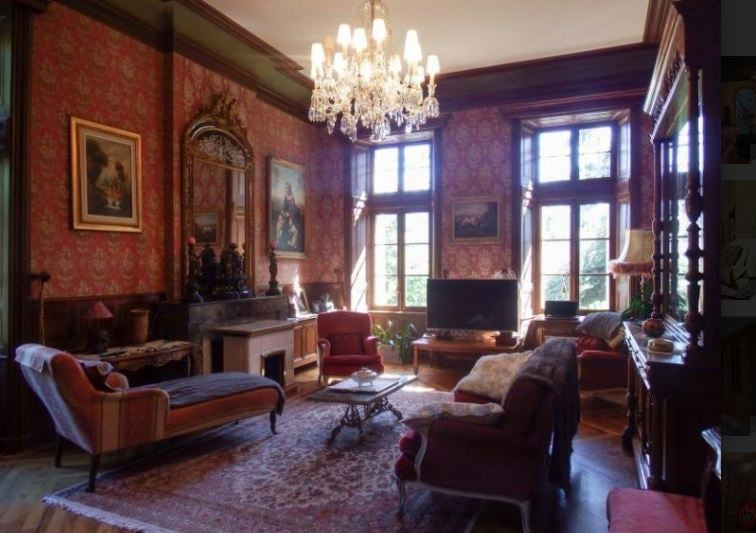
The declared purpose of this letter was to suggest material of his “investigational reports”; but the inspector submit that the whole affair was of too grave a character for a treatment in the levity of fiction. And if the facts and coincidences should proves less puzzling to others than to him, a praiseworthy service might be done to humanity by the presentation of whatever solution a better understanding than his might evolve. The only remaining disclosure which he was prepared to make is that his correspondent signed “Yellow Boy,”—an odd name, but for all the inspector knew there was something about the name that haunted him unceasingly, as much as does some strange dream which one’s knows one has dreamt and yet which it is impossible to remember. “I know I’m just a sinner when passion’s on the loose. I’s suffer retribution because of self-abuse.” Even when people convert to Christ from spiritualism, they are not free from demon interference. The influence of demonism continues strong among money. Sometimes when people speak against the demons that they have once welcomed into their body in séances attack their mind and vocal cords. Sometimes their memories go blank; other times their throat may constrict, or they cannot speak. However, as soon as they pray for help through the power of Jesus’ blood, the attack will cease. These assaults continued sporadically with the inspector for thirteen years before his spiritual defenses were built up to keep demons from penetrating his body. As his spiritual armour because strong, he was able to help others assailed by spirits. Yet at times he still felt strange as if something was wrong. His mind would become fuzzy, and he would feel like he was being chocked. He seemed on the verge of a mental blackout. Sensing Satan’s power at work, the inspector wound up with a “hell fire” message. After he returned home, he hurried to the door, hoping to discern who had brought the sinister force into the aura. He found no one. Ten days later a friend a woman claimed that she and a friend had turned on satanic power in the Winchester mansion. #RandolphHarris 18 of 19

She said they have left the estate frightened by the Bible and a message and thought it has something to do with his case. After they left the mansion, she said, Satan had come to their homes to induce them to commit suicide. Mrs. Danenhower, the woman he spoke to, overcame an urge to leap into the San Francisco Bay, but she had succumbed to the next temptation and took n overdose of chloral hydrate. She has been near death for several days. When she recovered Mrs. Danenhower learned that her friend had been committed to a lunatic asylum. That news was so frightened her that she consulted the inspector. They set up a counseling appointment the next morning. The inspector saw immediately that she was demon-indwelt. The only way she could say the name of Jesus Christ was in blasphemy. She told him that the demons had caused her to steal casually from the Winchester mansion, sell her body for extra income, and disturb gospel services for entertainment. She and her friend—she told him later—regularly met at the Winchester mansion while they were working and worship Satan in secret. They would prostrate themselves before their altar in the basement and pray to Satan that they might be chosen to bear the antichrist into the World. Mrs. Danenhower was sincere in wanting to be free from Satan’s bondage. The inspector, for the first time in his life, prayed for the deliverance of such a person. She was unable to prayer at all. Trembling, he asked God, in Jesus’s name and the power of his blood, to rebuke the demons and deliver this woman, a prisoner of Satan. She began to scream as the demons came out of her and her body shook violently. “They are gone,” she said, “but there are more.” He wondered how long this could go on. Demons of madness and blasphemy had left her; what more could there be? Once more he prayed and asked God to finish the work, to cast all the demons from her. At this, her reaction was indescribable; but the last demons left her and she lay limp o the floor. Mrs. Danenhower then wept and praised God for her deliverance. Each day after, she had Bible study while on duty at the Winchester mansion. After two weeks she gave public testimony at a prayer meeting of her deliverance and joy in the Lord. She had many ensuing battles with Satan, but her victories were great and refreshing. Perhaps there is a reason Mrs. Winchester ordered the front thirty rooms–including the Daisy Bedroom, Grand Ballroom, and the beautiful front doors sealed up? #RandolphHarris 19 of 19

Winchester Mystery House

“The doctors say I have delusions–I just mustn’t mind when they stare. And yet I’ve a curious feeling that something is possibly there.” Many long-time employees became very superstitious over the years and even believed Mrs. Winchester could walk through solid walls and unopened doors. She did, in fact, have elaborate spying features built into the house to keep an eye on her servants. There are also stories of how she sometimes appeared noiselessly behind them to watch them work.
Will we see you this weekend? 👀 Tickets still available but going FAST!
🎟 link: http://ow.ly/UL4w50HBTke


Almost a Free Citizen–The “God Factor” is Not a Mere 5 Percent but 100 Percent!

Please bless us with a moral and spiritual restoration in the land. We give you thanks Thy sovereignty Thou has permitted us to have a momentous history. Why do you demand beauty rest—another echo from the Book of Job (5.7)—when you were born for hard labour? Set yourself up more for long-suffering than short-suffering, more for toting the cross than admiring it. If one could have them on demand, character from the secular World would not gladly accept consolations? After all, they exceed in delectation and duration all the delicacies of the World and all the pleasures of the Flesh. The former taste out of this World, but only for a while; then they begin to cloy. As for the later, trying to prolong a pleasure of the Flesh. The former taste out of this World, but only for a while; then they begin to cloy. As for the latter, trying to prolong a pleasure—is that not just about the most pitiful of human exercises? What is the moral? Truly, spiritual desserts alone are the real thing, whipped up from virtues into frosted layers of pure thoughts. But however mouth watering they are, no one can enjoy them for long. Why? Because the time for temptation is never far off. If we did not put up so many roadblocks, consolation would visit us more often. Two bumptious examples: Braggart Spirituality and Bogus Confidence. God does well by giving the grace of consolation. We do ill when we attribute the whole gracious phenomenon to our own efforts. In a situation like this, the graces cannot flow; our pipes are clogged. That is because we are ungrateful to the Fountained of All Grace, from whom we receive all these Heavenly Gifts and to whom we should return to all thanks. #RandolphHarris 1 of 21

What is the moral? Grace is always available for the asking. Trouble is, not everyone asks. Sometimes, to feed the humble pigeon, God robs the proud puffin. Yes, consolation’s a good thing, but not all consolations are good. We are succored by some, but suckered by others. I do not want the sort that takes contrition away from me. And the same could be said of contemplation. I do not want the kind that leads me to pride. Is there a snare here? Of course there is. Not everything that is high is holy; nor every sweet, good; nor every desire, pure; nor every dear thing, something that tickles God’s fancy. How then can we tell the good from the good? The grace that makes me more humble, more careful, that is the True Grace, the grace that truly helps me leave my worldliness behind. Having gone to the School of Grace, then, and severed all times to worldliness, we will not have the audacity to beat on our chests like drums and trumpet our goodness abroad. Rather, we will mouth our maximas culpas and bare our poor souls at home. What is the moral? Give to God what belongs to Him, Matthew has advised (22.21), and take note of what is yours. Give thanks to God for grace. However, your faults and the punishment that is due them you will have to bear yourself. Keep placing yourself on the lowest rung—if I may be pardoned a little laddering in the Lord—and the highest rung will soon be yours. Why? Because the highest stands on the shoulders of the lowest. “When you are invited, take the lowest place, so that when your host comes, one will say to you, ‘Friend, move up to a better place.’ Then you will be honoured in the presence of all the other guests,” reports Luke 14.10. #RandolphHarris 2 of 21

The Saints who stand high in God’s esteem are the same blokes who lie low in their own esteem. If I may put it crudely, the more they grovel, the more they will revel. Founded and grounded in God, they cannot be proud. Full of Truth and Heavenly Glory, they lose their tastes for Earthly glory. They ascribe totally to God whatever good comes their way. They seek glory—not the kind that is from human beings, but the kind of glory that is from God alone. “How can you believe, when you receive glory from one another and do not seek the glory that comes from the only God?” reports John 5.44. The moral? Devouts desire God to be praised in Himself and all His Saints above all else, and they direct all their efforts toward that very goal. We should be grateful for the small gifts, and soon we will be found worthy of larger ones. A word of advise. Unwrap the tiniest one with the same sense of glee as the humongous one. And if a truly disgusting thing is found inside, count it a special gift. Always consider the dignity of the donor, and no gift will ever seem too small, too cheap. Need I say it? It is not the largeness of the gift; it is the largesse of the giver. If God should give pain and suffering, count them as gifts too. Why? It seems to me I hear you ask. Because what He gives and what He allows are for your own salvation. Anyone who wants to keep the blessings of God coming should be grateful for the grace just given and patient for the grace yet to come. In the latter instance, you should pray that the grace may return. If you do not prostrate yourself before the Divine Tribunal toward that end, I cannot help adding, it may not return. As always, you should be open and humble. #RandolphHarris 3 of 21

The prayer experiments can stimulate us to clarify our understanding of prayer. To believe in and wholeheartedly engage in petitionary prayer, we must agree that prayer disturbs nature’s events in statistically verifiable ways. Job’s experience reminds us that God does not play favourites; the rain falls both on those who plead with God and on those who do not. Still, would we be wrong to presume that, other things being equal, praying parents will have 5 percent fewer stillborn or disabled babies than nonpraying parents? To suppose so is to fall victim to the natural/supernatural dichotomy. In the biblical view, the “God factor” is not a mere 5 percent but 100 percent. One does not need a manipulative conception of prayer to induce God’s involvement in the World; God is everywhere and at all times already involved. Thus when the Pharisees pressed Jesus for some criteria by which they could validate the Kingdom of God, Jesus answered, “You cannot tell by observation when the Kingdom of God comes. There will be no one saying, ‘Look, here it is!’ or ‘There it is!’ for in fact the Kingdom of God is among you.” What, then, is the Christian’s proper prayer? First of all, it is a declaration of praise and thanksgiving for God’s infinite goodness and an acknowledgement of sin and the need for forgiveness. Our Father which art in Heaven, hallowed by thy name. Thy will be done on Earth, as it is in Heaven. Please give us this day our daily bread, and forgive us our debts, as we forgive our debtors. And lead us not into temptation, but deliver us from evil: For thine is the kingdom, and the power, and the glory, forever. Amen. #RandolphHarris 4 of 21

Christ’s prayer, the model prayer for Christians, contains no attempt to manipulate God. It does not attempt to cajole a miserly god into doing what he would not have the goodwill and good sense to do anyway. It has the quality of a confessional statement, affirming God’s nature and human dependence upon God’s grace. It therefore prepares one to receive that which God by his nature is already providing. The petitions that God’s will be done and that forgiveness be given for debts seek what is intrinsic to God’s nature. The petition for daily bread serves to reinforce the sense of God as gracious Father, of humanity as dependent and anticipating children, and of our lives as daily saturated by God’s providence. The prayer of a Christian is not an attempt to force God’s hand, but a humble acknowledgment of helplessness and dependence. Prayers is not magic, but it is mystical. In quiet meditation and prayer, we sense he reality of the living God. Good speaks to us and we to God. As we do so we are changed. Sinking to our knees or bowing our heads reminds us of our humble dependence. Prayers for others makes us more aware of their needs. There is nothing that makes us love a human so much as praying for one. Prayer may also be viewed as a response, as an effect rather than a cause, as a time not of asking: “What are we to eat? What are we to drink? What shall we wear?” All these are things for the heathen to run after, no for you, because your Heavenly Father knows that you need them all. Set your mind on God’s Kingdom and His justice before everything else, and all the rest will come to you as well. Grace is divine help and strength that we receive through the Atonement of Jesus Christ. #RandolphHarris 5 of 21

Through grace, we are saved from sin and death. In addition, grace is an enabling power that strengthens us from day to day and helps us endure to the end. Effort is required on our part to receive the fulness of the Lord’s grace. “For we labour diligently to write, to persuade our children, and also our brethren, to believe in Christ, and to be reconciled to God; for we know that it is by grace that we are saved, after all we can do,” reports 2 Nephi 25.23. The Lord is near; have no anxiety, but in everything make your requests known to God in prayer and petition with Thanksgiving. Then the peace of God, which is beyond our utmost understanding, will keep guard over your hearts and your thoughts in Jesus Christ. St. Paul urges us to petition God, and we are promised an answer: not that of scientifically provable effects, but the peace of God that satisfies the deeper cravings of our being. Jesus Christ Himself prayed that, if it be God’s will, the cup might pass. It did not, but His strength was made equal to the burden. In confessing His private longings and communing with the Father, Jesus found the grace to endure. If our Creator loves us as an all-loving parent would love a child, then we, like children, can communicate with God without ceasing. We can share even the little concerns of daily existence—anything that is worth worrying about—much as a child would do with its parents or as two intimate friends do with one another. We can surrender every corner of our lives in prayer, not with a superstitious intent of manipulating magical solutions to life’s problems, but in the confidence that petitionary prayer is a means of grace whereby we will grow and be sensitized to the presence of God. #RandolphHarris 6 of 21

To ask “What is the use of petitionary prayer?” is like asking what is the use of making music, skiing, or sharing a meal with a friend; such activities, like prayer, are inherently worthwhile quite apart from any further purposes they serve. And le us not forget prayer’s multiple purposes. Through prayer we thank and praise God, we humbly confess our sin and acknowledge our dependence upon God’s grace, we express our concerns, and we seek inward peace and the strength to live as God’s people. An information bomb is exploding in our midst, showering us with a shrapnel of images and drastically changing the way each of us perceives and acts upon our private World. In shifting from Second Wave to a Third Wave info-sphere, we are transforming our own psyches. Each of us creates in one’s skull a mind-model or reality—a warehouse of images. Some of these are visual, others are auditory, even tactile. Some are only “percepts”—traces of information about our environment, like a glimpse of blue sky seen from the corner of the eye. Others are “linkages” that define relationships, like the two words “mother” and “child.” Some are simple, others complex and conceptual, like the idea that “inflation is caused by rising wages.” Together such images add up to our picture of the World—locating us in time, space, and the network of personal relationships around us. These images do not spring from nowhere. They are formed, in ways we do not understand, out of the signals or information reaching us from the environment. And as our environment convulses with change—as our jobs, homes, churches, schools, and political arrangements feel that impact of the Third Wave—the sea of information around us also changes. Before the advent of mass media, a First Wave child growing up in a slowly changing village built one’s model of reality out of images received from a tiny handful of sources—the teacher, the priest, the chief or official and, above all, the family. #RandolphHarris 7 of 21

As psychologist-futurist Herbert Gerjuoy has noted: “There was no television or radio in the home to give the child a chance to meet many different kinds of strangers from many different walks of life and even from different countries…Very few people ever saw an international city….The result [was that] people had only a small number of different people to imitate or model themselves after. “Their choices were even more limited by the fact that the people they could model themselves after were themselves all of limited experience with other people.” The images of the World built up by the village child, therefore, were extremely narrow in range. The messages one received, moreover, were highly redundant in at least two senses: they came, usually, in the form of casual speech, which is normally filled with pauses and repetitions, and they came in the form of connected “strings” of ideas reinforced by various information givers. The child heard the same “thou shalt nots” in church and in school. Both reinforced the messages sent out by the family and the state. Consensus in the community, and strong pressures for conformity, acted on the child from birth to narrow still further the range of acceptable imagery and behaviour. The Second Wave multiplied the number of channels from which the individual drew one’s picture of reality. The child no longer received imagery from nature or people alone but from newspapers, mass magazines, radio and, later on, from television. For the most part, church, states, home, and school continued to speak in unison, reinforcing one another. However, not the mass media themselves became a giant loudspeaker. And their power was used across regional, ethic, tribal, and linguistic lines to standardize the images flowing in society’s mind-stream. #RandolphHarris 8 of 21

Certain visual images, for example, were so widely mass-distributed and were implanted in so many millions of private memories that they were transformed, in effect, into icons. The image of Xi Jinping, jaw thrust out in triumph under a swirling red flag, thus became as iconic for millions of people as the image of Jesus on the cross. The image of Aaliayh in the Queen of the Damned billboard, or Beyonce raging at Super Bowl XLVII Halftime Show, the images of fans in the bleachers stacked like waves in the ocean during a full moon, or Paris Hilton making the illuminati hand gesture, while driving her custom BMW i8 in Malibu, or Britney Spears drinking a Pepsi, of Marilyn Monroe’s skirt blown by the wind, of hundreds of media stars and thousands of different, universally recognizable commercial products—the bar of Ivory soap in the Unite States of America, the Morinaga chocolate and Wagyu beef in Japan, the bottle of Perrier in France (which Meghan, Duchess of Sussex is said to bathe in and wash her face with)—all became standard parts of a universal image-file. This centrally produced imagery, injected into the “mass mind” by the mass media, helped produce the standardization of behaviour required by the industrial production system. Today the Third Wave is drastically altering all this. As change accelerates in society, it forces a parallel acceleration within us. New information reaches us and we are forced to revise our image-file continuously at a faster and faster rate. Older images based on past reality must be replaced, for, unless we update them, our actions become divorced from reality and we become progressively less competent. We find it impossible to cope. This speed up of image processing inside us means that images grow more and more temporary. Throwaway art, one-shot sitcoms, Polaroid snapshots, Xerox copies, compact disc, Blockbuster Video Stores, Bonker’s candy, pay phones, and disposable graphics pop up and vanish. #RandolphHarris 9 of 21

Idea, beliefs, and attitudes skyrocket into consciousness, are challenged, defined, and suddenly fade into nowhere-ness. Scientific and psychological theories are overthrown and superseded daily. Ideologies crack. Celebrities pirouette fleetingly across our awareness. Contradictory political and moral slogans assail us. It is difficult to make sense of this swirling phantasmagoria, to understand exactly how the image-manufacturing process is changing. For the Third Wave does more than simply accelerate our information flows; it transforms the deep structure of information on which our daily actions depend. Until the twentieth century, the African American population in the United States of America was overwhelmingly rural and southern. On the even of the Civil War, the south was rural, as of 1860, only 8.6 percent of the total population living in cities. Slavery was essentially a rural institution founded on a plantation economy, and plantation owners vigorously opposed the use of people as slaves in urban manufacturing. Laws were passed in the attempt to restrict the number of enslaved people in cities, and, as a consequence, the urban African American population actually declined in most southern cities prior to the Civil War. Slaveholders feared that slaves’ relative freedom of life in the cities would undermine the south’s “peculiar institution.” In this fear they were quite justified. In urban areas the system of enslaved people being hired out or even hiring themselves out and sharing their income with their nominal owners led to a modification of the system. In effect, through such contractual agreements, the enslaved persons “purchased” some degree of freedom. According to Mr. Frederick Douglas, the major African American figure of the Civil War period, such an urban slave was “almost a free citizen.” #RandolphHarris 10 of 21

Prior to the Civil War not all African Americans were slaves. As of 1860, roughly one of every eight Africans Americans was a “free person of colour.” The great bulk of those free persons of colour were urban, and most lived in border states. It is usually not known that when the war began, Richmond, Virginia, the Capitol of the Confederacy, counted one-fifth of its African American population as “free persons of colour.” Moreover, one-quarter of the city’s African American population, including some enslaved African Americas, owned their own modest homes. By comparison, at the outbreak of the war, the northern states had only limited populations of freed African Americans. In the north, as in the south, the only African American suburbanites were usually those living in the poor shantytowns on the city’s fringe. The initial expectation after the Civil War was that African Americans would flood out of the rural south. It did not happen. Even the extensive political and social changes wrought by Reconstruction did not change the overwhelmingly rural and southern pattern of African American residence. Social relations remained castelike, with African Americans not in competition with European Americas for jobs or status. Thus, there was no need to segregate the races in terms of housing. A common southern pattern was for European Americans to occupy the big house on the street while African Americans lived in the south, and three-quarters of all African Americas were rural. What did change African American residence patterns was the first World War. The outbreak of war in 1914 cut off the supply of European immigrant labour just as the times factories were being flooded with war orders. Humanity distinguishes itself by the ability to think and feel. But what happens when a machine has the same abilities? #RandolphHarris 11 of 21

New labour sources had to be found to replace the loss labour source. One method was increasing the use of woman workers. The second was to recruit labour from the rural south. Northern factories sent recruiters south offering one-way train ticket to those, African American as well as European American, who would sign up for factory jobs. In the early years of the twentieth century, life had been getting harder for rural African Americans with the mechanization of agriculture, the spreading destruction of cotton crops by the boll weevil, and new Jim Crow laws that brought increasing segregation and racial repression. These factors provided a strong push that, when combined with the pull for northern jobs, initiated a mass migration of rural African Americas to the urban north. The World War I decade (1910-1920) saw the five states of the deep “black belt”—Southern Carolina, Georgia, Alabama, Mississippi, and Louisiana—lose over 400,000 African Americans to out-migration. The migration continued during the 1920s, with high African American growth rates for major norther cities. New York (114 percent), Chicago (113 percent), Detroit (194 percent), and Philadelphia (64 percent) showed the heaviest growth. Harlem, which was already crowded in 1920, added fives times more residents during the decade. The Depression years of the 1930s saw migration slow and then shoot up dramatically during the World War II years because of the needs of war industries and the implementation by President Roosevelt of an executive order mandating fair employment policies. The aftermath of the war saw the urban relocation of African Americas continue. By the time the migration to northern cities had substantially run is course in the late 1960s, over 5 million African Americans had left the south for norther cities. #RandolphHarris 12 of 21

Chicago now housed more African American than all of Mississippi, and the New York metropolitan area had more African Americans than any state of the old south. This movement to urban places provided the population for consequent African American suburbanization. Everyone is striving to be happy but the number who truly achieve that goal is limited. Who are the happy people today? Not those who forsake the Lord and devote themselves entirely to the pleasures of life and the physical things of the World. The truly happy people are those who have faith in the Lord and keep the laws of the gospel, those who forget self in their desire and effort to bless others. Our Heavenly Father loves His children. He wants us to be happy, and He has shown us the way. Many of us are fathers—fathers of mortal bodies of our children. The greatest treasures we have are our children. When they are happy and successful, we are happy. When they depart from the straight and narrow path, the hearts of the parents are saddened. Our Lord has told us by revelation through the Prophet Joseph Smith regarding the worth of souls: “Remember the worth of souls is great in the sight of God. For, behold, the Lord your Redeemer suffered death in the flesh; wherefore He suffered the pain of all humans, that all humans might repent and come unto Him. And He hath risen again from the dead, that He might bring all humans unto Him, on conditions of repentance. And how great is His joy in the soul that repenteth,” reports Doctrine and Covenants 18.10-13. #RandolphHarris 13 of 21

What are the forces which prevent people from “falling apart”? “Falling apart” and “disintegrating”—ceasing to be integrated—are appropriate metaphors, suggesting that different regions of the personality lose contact with one another. Great anxiety, as well as high fevers and toxic states, can have this effect. We do not know where we are. We are “at a loss”. Many different kinds of regions and organizations makes up the personality, and people can disintegrate in different ways. We have seen that basic faults may split regions along a variety of lines, different writers tending to be interested in different lines. “Falling apart” may refer to the dissociation of simple organizations of memories—traces as they lose touch with one another and we forget what we read in a book, or auntie’s birthday, or what we had for dinner last Wednesday. It can also refer to the progressive isolation of mere complex organizations such as particular self-images or particular relationships with other people and things. Or even more central processes may cease to function. Our ego-functions may desert us. Then there is the kind of isolation of different regions of the personality for which Kohut coined the phrase “vertical split”—we do not feel we are ourselves. “I do not know what made me do it,” “It is not like me,” “It is the drink talking,” “I did not mean it.” And there is the “schizoid” feeling of disembodiment when constant attention seems to be needed to keep the too loosely organized structures from flying apart. If we choose to give birth to a thinking machine, we must prepare for the day when our progeny with demand independence. Prayer gives the body and mind a chance to regain its lost chemical balance. #RandolphHarris 14 of 21

With prayer, energy is set free to cleanse the mind and body concerned. Sometimes prayer and the regime take almost instantaneous effect, but more often some time must elapse for the results to show themselves. This need to purify our thoughts and connect with God is to make our minds better and obey the spirit. The benefits are not only physical and moral but also psychological, since it enjoins patience and perseverance. The seeker may take this calmly and without anxiety. This is the way in which the subconscious forces prompted by the Overself concentrate their work of purification and renovation upon the body and feeling alone for a time, to gain the most effective result in the shortest time. Thus, those forces which would otherwise be used up in creating the desire to meditate—the atrophy of willpower and the deprivation of energy in this direction need not be fought but should be accepted as a passing and necessary phenomenon. All though the Winter months while the Book of Mormon was being printed, Joseph and Oliver were concerned about their part in the marvelous work the Lord had promised to do through them. They spent much time praying and studying both the Bible and the new Book of Mormon. God caused their minds to be enlightened so they understood the things they read. From time to time during these Winter months, the Lord gave instructions about the Church of Jesus Christ which was to be restored to the Earth. These have been grouped together as Section 17 of the Doctrine and Covenants. Some of these instructions were: The church was to be organized according to the laws of the land on April 6, 1830, with Joseph Smith as the first elder and Oliver Cowdery as the Second elder. #RandolphHarris 15 of 21

The duties of the officers of the church were explained. The elder is to baptize, confirm by the laying on of hands for the gift of the Holy Spirit, ordain others, serve the bread and beverages, teach, preach, and take the lead in all meetings as led by the Holy Spirit. The priest is to teach, preach, and baptize. He is to serve the bread and beverages, visit in the homes of members and teach them o pray, ordain other priests, teachers, or deacons, and assist the elders. If no elder is present, the priest should lead the meeting. The teacher is to watch over he church members, strengthening them, and see that there is no trouble or quarreling among them. He is to teach and preach, and if no elders or priests are present, he should lead the meetings. The deacon is to assist other members of the priesthood, but the teacher and deacon may not baptize, serve the Sacrament, nor lay on hands. Those who have repented and are willing to serve Jesus all their lives are to be baptized in water. Specific instructions as to the manner of baptism were given, as follows: The person who is called of God and has authority from Jesus Christ to baptize, shall go down into the water with the person who has presented oneself for baptism, and shallsay, calling one by name. Having been commissioned of Jesus Christ, I baptize you in the name of the Father, and of the Son, and of the Holy Ghost, Amen. Then shall he immerse one in the water, and come forth again out of the water. To become members of the church, those who have been baptized are to be confirmed by the laying on of hands of the elders. Every member of the church of Chris having children, is to bring them unto the elders before the church, who are to lay their hands upon them in the name of Jesus Christ, and bless them in His name. #RandolphHarris 16 of 21

No one can be received into the church of Christ unless one has arrived unto the years of accountability before God, and is capable of repentance. And the members shall manifest by a Godly walk and conversation that they are worthy of it, that there may be works and faith agreeable to the Holy Scriptures, walking in holiness before the Lord. The method of administering the sacrament of the Lord’s Supper was explained and the exact prayers to be offered over he bread and beverage were given. The necessity of keeping a regular list of all the names of the memberships of the whole church was stressed. The various branches of the church were instructed to keep a record of all who untied with the church and to send this record to the conference. When a member moved from one place to another, the Lord instructed that they were to take a letter certifying they were a member of the church in good standing. In a revelation given through Joseph Smith, Jr., in March, 1830, for Martin Harris, the Lord said: Learn of me, and listen to my words; walk in meekness of my Spirit and you shall have peace in me. I am Jesus Christ; I came by the will of the Father, and I do His will. I command Thee that thou shalt pray vocally as well as in thy heart; yea, before the World as well as in secret; in public as well as in private. And thou shalt declare glad tidings…among every people that thou shalt be permitted to see. And thou shalt do it with all humility, trusting in me. Pray always and I will pour out my Spirit upon you, and great shall be your blessings; yea even more than if you should obtain treasure of the Earth. #RandolphHarris 17 of 21

According to instructions given them, on April 6, 1830, six men who had been baptized met together at the Whitmer home in Fayette, New York, and organized the church. These six men were Joseph Smith, Oliver Cowdery, David Whitmer, Hyrum Smith, Samuel Smith, and Peter Whitmer. It was not until after this organization meeting that Martin Harris and Joseph’s parents were baptized. The meeting was opened with solemn prayer. Joseph then asked the men if they would accept him and Oliver as their leaders. They all voted that they would. At this time another revelation was received. The new church was structed to keep a record of all the things they did. The members were command to listen to the words and commandments of Joseph Smith, Jr., their leaders. The Lord said: “Wherefore, meaning the church, thou shalt give heed unto all his words, and commandments, which he shall give unto you, as he recieveth them, walking in all holiness before me; for one’s word ye shall receive, as if from mine own mouth, in all patience and faith. For thus saith the Lord God, him have I inspired to move the cause of Zion in mighty power for good; and his diligence I know, and his prayers I have heard. For, behold, I will bless all those who labour in my vineyard, with a might blessing, and they shall believe on his words, which are given him through me, by the Comforter.” Joseph ordained Oliver an elder in the church, and Oliver ordained Joseph to the same office. These two newly ordained men them served the first sacrament of the Lord’s Supper in the church. They took bread, blessed it, broke it, and ate it with the others. Then Joseph and Oliver laid their hands on each member of the church that each might receive the gift of the Holy Spirit and be confirmed members of the Church of Jesus Christ. The Holy Spirit was felt by them and all praised the Lord and rejoiced. As God’s spirit rested upon them, Joseph called and ordained some of the men to various priesthood. #RandolphHarris 18 of 21

All wanted to serve God in His church which had been oranganzied according to the commandments and revelations given by Christ in the latter days. This was a restoration of the same church Jesus established as told of in the New Testament when he said, “I will build my church.” No idea is so strong that it should not be tested by doubt, and no man so powerful that he is infallible. When humans become so completely occupied with their own affairs that thought or feeling for others is entirely absent and the point of extreme obsession with self is reached, they are liable to go mad. It is certain that many of this type find their way into lunatic asylums or mental hospitals. The unconscious mind retreats in the end from every effort at self-expression, because the suffering and pains of consciousness causes it to return to its own primal and peaceful state. In any madhouse one may see patients sitting for hours and staring into space, a vacuous expression on their faces. Outwardly they not only have these resemblances to the self-actualized but they to live in a kind of sequestered retreat, they too have in their peculiar way renounced the World and its affairs. Most negative traits belong to the feelings of adolescence, most positive ones to those of real maturity. It is when the negative ones appear in adults that they become neurotic and must be treated as psychic sickness. Through ignorance of the World-Idea or through disobedience to their revelators and teachers, neurotics get worse and become psychotics. They are to be found in both camps—the religious or cultist believers and the sceptical materialists. #RandolphHarris 19 of 21

Too many of these neurotics are too full of unstable egoism to have their emotional complexes soluble by any other psychological treatment than a robust and direct attack upon these complexes. A mushy sentimentality will merely prolong the life of such a complex. Neurotics are moody, sometimes very attractive with their day and brilliant charm, but sometimes repulsive with their black despairs and criticizing tantrums. When anyone attaches immensely more important to something than it really has, there is the first sign of neuroticism. Some people become neurotic through too much strained activity, but others become neurotic through too little. All the predestined are chosen by God to possess eternal life. This conscription, therefore, of the predestined is called the book of life. A thing is said metaphorically to be written upon the mind of anyone when it is firmly held in the memory, according to Proverbs 3.3. “Forget not My Law, and let thy heart keep my commandments,” and furthers on, “Write then in the table of thy heart.” For things are written down in material books to help the memory. Whence, the knowledge of God, by which He firmly remembers that He has predestined some to eternal life, is called the book of life. For as the writing in a book is the sign of things to be done, so the knowledge of God is a sign in Him of those who are to be brought to eternal life, according to 2 Timothy 11.19: “The sure foundation of God standeth firm, having this deal; the Lord knoweth who are His.” My help is in the mountain where I take myself to heal the Earthly wounds that people give to me. I find a rock with sun on it and a stream where the waters runs gentle and the trees which one by one give me company. So I must stay for a long time until I have grown from the rock and the stream is running through me and I cannot tell myself from one tall tree. Then I know that nothing touches me nor makes me run away. My help is in the mountain that I take away with me. #RandolphHarris 20 of 21

Earth please cure me. Earth please receive my woe. Rock please strength me. Rock receive my weakness. Rain wash my sadness away. Rain receive my doubt. Sun make sweet my song. Sun receive the anger from my heart. We thankfully acknowledge that Thou art the Lord our God and God of our fathers, the God of all that lives, our Creator and Creator of the Universe. We offer blessings and thanksgiving to Thy great and holy name because Thou hast kept us in life and sustained us; so mayest Thou continue to keep us in life and sustain us. O gather our exiles into the courts of Thy holy sanctuary to observe Thy statutes, to do Thy will, and to serve Thee with a perfect heart. We give thanks unto Thee. Blessed be God to whom we are ever grateful. We thank Thee also for the miraculous and mighty deeds of liberation wrought by Thee, and for Thy victories in the battles our forefathers fought in days of old, at this season of the year. In the days of High Priest Mattathias, son of Johanan, of the Hasmonean family, a tyrannical power rose up against Thy people Israel to compel them to forsake Thy Torah, and to force them to transgress Thy commandments. In Thine abundant mercy Thou didst stand by them in time of distress. Thou didst rise to their defense and didst vindicate their cause. Thou didst bring retribution upon the evil doers, delivering the strong into the hands of the weak, the many into the hands of the few, the wicked into the hands of the just, and the arrogant into the hands of those devoted to Thy Torah. Thou didst thus make Thy greatness and holiness known in Thy World, and didst bring great deliverance to America. Then Thy children came into Thy swelling place, cleansed the Temple, purified the Sanctuary, kindled lights in Thy sacred courts, and they designated these days for giving thanks and praise unto Thy great name. For all this, Thy name, O king, shall be blessed and exalted for ever and ever. #RandolphHarris 21 of 21

Cresleigh Homes

Living at Mills Station Residence 3 might feel like you’ve stepped into your very own rom-com, 🥰 complete with a dreamy backyard garden, but it’s real life! Get ready to fall in love with your home!

Step inside through the courtyard-entry and discover Mills Station Residence 3. With nearly 2,800 square feet, this is an artfully designed two-story home for those who love an open floor plan living and a wall of windows.
The design features a spacious kitchen with a large center-island with a built-in breakfast bar that overlooks the great room and dining space. The dining space opens up to the rear patio to further expand you living into your backyard for added entertainment.
#CresleighHomes
#CresleighRanch


Here is All the Invisible World, Caught, Defined, and Calculated!

Here is all the invisible World, caught, defined, and calculated. Some come to do the Devil’s work, but life is God’s most precious gift. No principle, no matter how glorious it may be, may justify the taking of it. Even if great stone may lay upon their chest, Reverend Lawson, like Cotton Mather, thought prayer a more certain cure for the witchcraft that the children of Salem were afflicted by during the Salem Witch trials. They did not believe the magistrates might do any good with their methods, partly because it was so difficult to catch a witch. Martha Corey, who had been accused of witchcraft in 1692, would not sign her pact with Satan on Main Street in broad daylight, nor practice her black arts there. Witchcraft was by its nature secret, and hard to be found out. Yet witches had been caught, and many examples were a matter of record, as were many theories on catching them. There were, to begin with, commonly recognized grounds for investigation. If an apparition was appearing to the citizenry and afflicting them, one would surely want to investigate the person represented in that apparition. One would also look for evidence of malice, since witchcraft was an expression of ultimate malice, the diametrical opposite to Christian charity. And one could hope that an investigation would produce credible confessions. Confessions were often easy to obtain, particularly if one used the technique of “cross and swift questions” recommended by virtually all authorities from Malleus Maleficarum to Cotton Mather, but it was not always easy to judge whether they were credible. #RandolphHarris 1 of 13

Satan was the Prince of Lies and witches were his servants; the word of confessed witches was therefore suspect in the accusations both of others and themselves. Furthermore, it was known that desperate persons had sometimes confessed to witchcraft as a bizarre means of committing suicide. And the mentally disturbed had also been known to imagine themselves witches and confess. In spite of all these difficulties, however, confession was often the best evidence one could hope for. More concrete evidence was occasionally to be had. A diligent search, for example, might turn up some of the tools of the witch’s trade: images with pins in them, ointments and potions, books of instruction in the magical arts. And one could search the body of the accused for the so-called Devil’s Mark. It was believed that when a pact was made, the Devil placed upon the witch’s body a piece of flesh from which He, in His own person or that of a familiar, might such the blood of the witch. (The blood has traditionally been thought to be the carrier of the spirit; in sucking blood the Devil was feeding on the witch’s soul.) since this “witch’s tit” was created by the Devil, rather than by God, it lacked the warmth of normal flesh (hence the still-current expression about being cold as a witch’s tit). It also lacked sensation, and one could rest for it by running a pin through it to see whether it was a genuinely preternatural excrescence or only a wart or a hemorrhoid. Yet pricking for the Devil’s Mark was most haphazard and uncertain. #RandolphHarris 2 of 13

It was common for examiners, physicians included, to disagree over whether an excrescence was natural or preternatural. And it was not unheard of for them to find what they thought to be a Devil’s Mark on one occasion, only to discover that there was nothing left of it but a piece of dried skin on a second examination. The common people believed in a number of tests for witches. The best known was the water-ordeal, in which the suspect was bound and “swum”: thrown into or dragged by a rope thought the nearest body of water. If she floated, she was a witch; the water was rejecting her as she had rejected Christian baptism. If she sank, she was innocent; the mod would try to drag her out before she drowned. If they failed, they professed to be sorry. Guilty until proven innocent, which would often result in the death of innocent people. (It was generally mod-action when a witch was swum; the courts seldom countenanced it, even when the accused requested it as a means of proving her innocence.) Another such test was asking the accused to repeat the Lord’s Prayer. It was believed that a witch could not say it correctly, even after prompting, since she regularly said it backwards at her witches’ Sabbaths. It was also believed that a witch could not weep. Because she had rejected Christian charity in favour of demonic malice, she would remain dry-eyed at the most heart-rending spectacles. Many of the learned, including Increase Mather and Deodat Lawson, rejected such tests outright as superstitions as white magic or both. Others like Cotton Mather, were wiling to countenance experiments with them but refused to accept them as certain evidence. #RandolphHarris 3 of 13

Rebecca Nurse was accused of witchcraft. Girls who had been afflicted testified that not only was the apparition of Rebecca Nurse tormenting them; they said they had seen it leave her body and return to it. However, Rebecca denied this allegation, and it was at that point that Judge John Hathorne, for the second time prayed that she be cleared if innocent; and if guilty, that be discovered. If he could not doubt that the girls’ afflictions were genuine, neither could he doubt that Rebecca Nurse was telling the truth, at least so far as she knew it. Perhaps, he thought, the Devil had made her a witch without her knowledge. Therefore he said to her “Possibly you may apprehend you are no witch, but have you not been led aside by temptations that way?” “I have not,” she answered, and Judge Hathorne could reply only be reflecting on “what a said thing” it was to see church members accused of such a crime. “What, he asked, did she make of the girls’ behaviour? “hey accuse you of hurting them, and if you think it is not unwillingly, but by design, you must look upon them as murderers.” “I cannot tell what I think of it.” Nothing testifies more to the genuineness of the fits than the fact that Rebecca Nurse, like majority of the accused persons, could not tell what to think of them. Later, when Judge Hathorne asked whether she thought the afflicted persons bewitched, she answered yes, “I do think they are.” So he appealed to her again. “When this witchcraft came upon the stage there was no suspicion of Tituba….She professed much love to that child, Betty Parris, but it was her apparition that did the mischief. And why should not you also be guilty, for your apparition doth hurt also.” #RandolphHarris 4 of 13

“Would you have belie myself?” said Rebecca Nurse. To repeated testimony that her apparition was tormenting people she replied “I cannot help it. The Devil may appear in my shape.” In the end the magistrates committed her for further examination. Rebecca Nurse’s arrest and examination did more than raise temporary doubts in the mind of John Hathorne; it evoked the first open expression of opposition to the witchcraft proceedings. Mary Warren, one of the afflicted girls, was the servant of a farmer named John Procter. On the morning after Rebecca Nurse’s examination, he came to Salem Village “to fetch home his jade,” as he put it. He expressed his opinion of the afflicted persons’ testimony in no uncertain terms. “If they were let alone,” he said, “we should all be devils and witches quickly. They should rather be had to the whipping post. However, he would fetch his jade home and thrash the Devil out of her. And more to the like purpose, crying ‘Hang them! Hang them!’” He added that when Mary Warren “was first taken with fits he kept her close to the wheel and threatened to thrash her, and then she had no more fits till the next day [when] he was gone forth. And then she must have her fits again, forsooth.” Historians have taken John Procter’s statement as evidence that Mary Warren’s fits were false, and in this they have been quite wrong. The seventeenth-century community took hem as evidence of Procter’s malice and brutality, and they were partly right. However, only partly. Because no matter how brutal it may be to beat the hysterical out of their fits, the fact remains that such treatment often works. #RandolphHarris 5 of 13

A fit of uncontrolled laughter can often be stopped with a judiciously timed slap in the face. And we should remember that in the eighteenth century one of the commonest treatments for many forms of insanity was beating the patient. Such treatment was probably motivated in part by the “normal” person’s exasperation with the insane for so conspicuously losing their rationality. However, surely it was also motivated by the fact that it frequently worked. And for that matter, it should be recognized that we are still beating the insane. Even in modern times, people who work in lunatic asylums, on rare occasions, beat the patients because no one will believe them because they have no credibility due to the fact that they have been accused of being “crazy.” Imagine that. Calling someone “crazy” in modern times is just a new form of witch hunting, which allows one to do whatever one wants to a person. Most people no longer administer the blows themselves; it is done through technology, and with more precision than our ancestors. However, this should not disguise the fact that electric shock is just as brutal for the patient as the thrashing John Procter proposed for Mary Warren. Perhaps he did thrash her, and perhaps it did in part work, because Mary Warren was the only person who even temporarily recovered from her affliction. As we moved into the 19th century, more people moved from hunting witch to hunting animals for food and fur. Sarah Winchester inherited a fortune, as she was heiress to the Winchester Repeating Arms company, but unfortunately, and it really may have been unfortunate, she could not take all her wealth with her. #RandolphHarris 6 of 13

At the time of Mrs. Winchester’s death in 1922, there were rooms full of ornate treasures still waiting to find a niche in the massive home. And there still may be treasures untold hidden away in the Winchester mansion, even though it took six trucks, working day and night, for six weeks to loot the mansion after her death. However, for some reason, they still left behind enough materials to continue construction on the mansion for another 38 years. At one time Mrs. Winchester enjoyed the finest vintage wines and liqueurs. However, one evening wen she went to the wine cellar to locate a special bottle, she same across a black handprint on the wall. It was most likely a dirt smudge left by a workman, yet she took it as an omen and ordered the cellar boarded up. To this day the wine cellar has not been rediscovered, which means that there might still be spirits in the Winchester Mystery House—if only the intoxicating kind! The late Mrs. Winchester had been a great reader of Shakespeare, at a time when this pursuit implied more freedom of thought than at the present day, and in a community where it required much courage to patronize the drama even in the closet. Mrs. Winchester also had an inordinate love of dress, and the very best tastes in the World. Often she would sit alone, combing out her long hair. When it would get too dark to see, she would light two candles in their sockets, on the frame of her mirror, and then go to the window to draw her curtains. It was a grey September evening; the landscape was bare and bleak, and the sky heavy with cumulonimbus clouds. #RandolphHarris 7 of 13

Her bedroom door stood ajar, as she could vaguely see in the gathering darkness, and moved slowly to and fro, as if someone were swaying it. She was about to drop her curtain, when she stumbled and fell on her bed. Later Mrs. Winchester would be found dead. She died peacefully in her sleep at the age of 83. Although people in the town gossiped about her, many dreamed of getting their hands on her riches. Mrs. Winchester also had many finery and jewels. Before he passed away, Mr. Winchester had liberality covered her hands with rings, and she had the finest night dresses trimmed with lace ruffles. People coveted Mrs. Winchester’s rings and her laces more than they coveted her home sometimes. Before her untimely death, Mrs. Winchester wanted to leave her rings and laces and silks to Annie. It was a great wardrobe—there was not such another in all of California; it would have been a great inheritance for her daughter, if she had ever grown up into a young woman. There were things that a man never buys twice, and if they are lost you will never again see the like. So she watched the well. It was such a providence that Annie would have been Mrs. Winchester’s colour; and she could wear her gowns; and she had her mother’s eyes. For the same fashion usually come back every twenty years. Annie would have been able to wear Mrs. Winchester’s gowns as they were. They would lie there quietly waiting till Annie grew into them—wrapped in camphor and rose-leaves, and keeping their colours in the sweet-scented darkness. Even though Annie passed six weeks after her birth, Mrs. Winchester still had the gowns in several great chests in the attic of the Winchester mansion. #RandolphHarris 8 of 13

After Mrs. Winchester passed away, the house was locked up. Dozens of women waited at the auctions in San Francisco to bid on Mrs. Winchester’s copious wardrobe, but it still lay languishing in thankless gloom in the dusty attic. It was a revolting thought that such exquisite fabrics should be awaiting no one. Was it not a pity that so much finery should be lost?—for lost it would be, what with colours fading, and moth eating it up, and the change of fashion. After the mansion was sold Lewis Dupont and his wife Bianca spent months combing through the items left behind in the mansion. They could not figure out why the mover left so many beautiful and rare items. When they stumbled upon the attic with Mrs. Winchester’s wardrobe, Bianca asked if she could wear them. Her husband told her that he did not want to disturb any ghost and to leave them be. Nine moths went by, however, and brought with them new needs and new visions. Bianca’s thoughts hovered loving about Mrs. Winchester’s relics. She went up and looked at the chests in the attic in which they lay imprisoned. There was a sullen defiance in its three great padlocks and its iron bands which only quickened her cupidity. There was something exasperating in its incorruptible immobility. It was like a grim and grizzled old household servant, who locks his jaws over a family secret. And then there was a look of capacity in its vast extent, and a sound as of dense fullness, when Bianca knocked one chest’s sides with the toe of her little shoe, which caused her to flush with baffled longing. “It’s absurd,” she cried; “it’s improper, it’s wicked”; and she forthwith resolved upon another attack upon her husband. On the following day, after dinner, when he had had his wine, she boldly began it. But he cut her short with great sternness. #RandolphHarris 9 of 13

“Once for all, Bianca,” said he, “it’s out of the question. If you return to this matter, I shall be gravely displeased.” “Very good,” said Bianca. “I am glad to learn the esteem in which I am held. Gracious Heaven,” she cried, “I am a very happy woman! It’s an agreeable thing to feel one’s self sacrificed to a caprice!” And her eyes filled with tears of anger and disappointment. Lewis had a good-natured man’s horror of a woman’s sobs, and he attempted—I may say he condescended to explain. “It’s not a caprice, dear, it’s a promise,” he said—“an oath.” “An oath? It’s a pretty matter for oaths! and to whom, pray?” “To Mrs. Winchester,” said the young man, “Everyone knows the clothes were meant for her late baby girl! That’s probably why the movers left them behind. Mrs. Winchester—ah, Mrs. Winchester!” and Bianca’s tears broke forth. Her bosom heaved with stormy sobs—sobs which were the long-deferred sequel of the violent fit of weeping in which she had indulged herself on the night she had discovered Mrs. Winchester’s betrothal. She had hoped, in her better moments, that she had done with her jealousy; but her temper, on that occasion, has take an ineffaceable hold. “And pray, what right had Mrs. Winchester to dispose of my future?” she cried. “What right had she to bind you to meanness and cruelty? Ah, I occupy a dignified place, and I make a very fine figure! I am welcome to what Mrs. Winchester has left! And what has she left? I never knew till now how great it was!” Lewis put his arm around his wife’s waist and tried to kiss her, but she shook him off with magnificent scorn. Poor fellow! he has coveted a “devilish fine woman,” and he had got one. #RandolphHarris 10 of 13

Bianca’s scorn was intolerable. He walked away with his ear tinging—irresolute, distracted. Before him was his secretary, and in it the scared key which with his own hand he had turned in the triple lock. He marched up and opened it, and tool the key from a secret drawer, wrapped in a little packet which he had sealed with his own honest bit of glazonry. Fe garde, said the motto—“I keep.” However, he was ashamed to put it back. He flung it upon the table beside his wife. “Put it back!” she cried. “I want it not. I hate it!” “I wash my hands of it,” cried her husband. “God forgive me!” Mrs. Dupont hastily took possession of the key. At the habitual supper-hour Lewis Dupont came back from his counting-room. It was the month June, and supper was served by daylight. The meal was placed on the table, but Mrs. Dupont failed to make her appearance. The servant who his master sent to call her came back with the assurance that her room was empty, and that the woman informed him that she had not been seen since dinner. They had, in truth, observed her to have been in tears, and supposing her to be shut up in her chamber, had not disturbed her. Her husband called her name in various parts of the house, but without response. At last it occurred to him that he might find her by taking the way to the attic. The thought gave him a strange feeling of discomfort, and he bade his servants remain behind, wishing no witness in his quest. He reached the foot of the stair case leading to the topmost flat, and stood with his hands on the banisters, pronouncing his wife’s name. His voice trembled. He called again louder and more firmly. The only sound which disturbed the absolute silence was a faint echo of his own tones, repeating his question under the great eaves. #RandolphHarris 11 of 13

He nevertheless felt irresistibly move to ascend the staircase. It opened upon a wide hall, westward, and admitted the last rays of run. Before the window stood the great chests of clothes. Before one of the chests, on her knees, the young man saw with amazement and horror the figure of his wife. In an instant he crossed the interval between them, bereft of utterance. The lid of one of the chests stood open, exposing, amid their perfumed napkins, its treasure of stuffs and jewels. Bianca had fallen backward from a kneeling poser, with one hand supporting her on the floor and the other pressed to her heart. On her limbs was the stiffness of death, and on her face, in the fading light of sun, the terror of something more than death. Her lips were parted in entreaty, in dismay, in agony; and on her blanched brow and cheeks there glowed the marks of thirteen hideous wounds from a vengeful ghost. Legend has it that Mr. and Mrs. Dupont were never heard from again and the ghost sealed off this portion of the attic, creating the stairs to the ceiling. Astaroth is a Mighty, Strong Duke, and appears in the form of an hurtful Angel riding on an Infernal Beast like a Dragon, and carrying in his right hand a Viper. Thou must in no wise let him approach too near unto thee, lest he do thee damage by his Noisome Breath. Wherefore the Magician must hold the Magical Ring near his face, and that will defend him. He giveth true answers of things Past, Present, and to Come, and can discover all Secrets. He will declare wittingly how the Spirits fell, if desires, and the reason of his own fall. He can make humans wonderfully knowing in all Liberal Sciences and is said to guard the Winchester. He rules 40 Legions of Spirits. His Seal is this, which wear thou as a Lamen before thee, or else he will not appear not yet obey thee. #RandolphHarris 12 of 13

Some of the architectural oddities of the Winchester mansion may have practical explanations, others may have supernatural origins. The miles of twisting hallways are made even more intriguing by secret passageways in the walls. Mrs. Winchester traveled through her house in a roundabout fashion, supposedly to confuse any mischievous ghosts that might be following her. This wild and fanciful description of Mrs. Winchester’s nightly stroll to the Séance Room appeared in The American Weekly in 1928, six years after her death. “When Mrs. Winchester set out for her Séance Room, it might well have discouraged the ghost of the Indian or even the bloodhound, to follow her. After traversing an interminable labyrinth of rooms and hallways, suddenly she would push a button, a panel would fly back and she would step quickly from one apartment into another, and unless the pursuing ghost was watchful and quick, he would lose her. Then she opened a window in that apartment and climbed out, not into the open air, but onto the top of a flight of steps that took her down one story only to meet another flight that brought her right back to the same level again, all inside the house. This was supposed to be very discomforting to evil spirits who are said to be naturally suspicious of traps.” We who prayed and wept for liberty from kinds and the yoke of liberty accept the tyranny of things we do not need. In plenitude too free, we have become adept beneath the yoke of greed. Those who will not learn in plenty to keep their place must learn it by their need when they have had their ways and the fields spurn their seed. We have failed Thy grace. Lord, I flinch and pray, please send Thy necessity. #RandolphHarris 13 of 13

Winchester Mystery House

Oh deer, the weekend is here! What a better way to spend time than strolling through the gardens of the Winchester Mystery House.
🎟️ Link in bio. winchestermysteryhouse.com/recent-links


O Wicked Wit and Gifts that Have the Power So to Seduce!

I have always noticed a prevalent want of courage, even among persons of superior intelligence and culture, as to imparting their own psychological experiences when those have been of a strange story. Almost all humans are afraid that what they could relate in such wise would find no parallel or response in a lister’s internal life, and might be suspected or laughed at. A truthful traveller who should have seen some extraordinary creature in the likeness of a devil, would have no fear mentioning it; but the same traveller having had some singular presentiment, impulse, vagary of thought, vision (so-called), dream, or other remarkable mental impression, would hesitate considerably before one would own to it. To this reticence I attribute much of the obscurity in which subjects are involved. We do not habitually communicate our experiences of these subjective things, as we do our experiences of objective creation. The consequences is, that the general stock of experiences in this regard appears exceptional, and really is so, in respect of being miserably imperfect. The Devil had been raised among us, and his rage was vehement and terrible; and, when he shall be silenced, the Lord only knows. It does not signify how many years ago, or how few, a certain Murder was committed in Boston in 1688, which attracted great attention. We hear more than enough of Murders as they rise in succession to their atrocious eminence, and if I could, I would bury the memory this this atrocious eminence, as hi body was buried, in the Witch House’s basement. When the murder was first discovered, no suspicion fell—or I ought rather to say, for I cannot be too precise in my facts, it was nowhere publicly hinted that any suspicious fell—on the man who was afterwards brought to trial. #RandolphHarris 1 of 13

As no reference was at the time made to him in the newspapers, it is obviously impossible that any description of him at that time have been given in the newspapers. It is essential that this fact be remembered. Unfolding at breakfast my morning paper, containing the account of that first discovery, I found it to be deeply interesting, and I read it with close attention. I read it twice, if not three times. The discovery had been made in a bedroom, and, when I laid down the paper, I was aware of a flash—rush—flow—I do not know what to call it—no word I can find is satisfactorily descriptive—in which I seemed to see that bedroom passing through my room, like a picture impossibly painted on a running river. Though almost instantaneous in its passing, it was perfectly clear; so clear that I distinctly, and with a sense of relief observed the absence of the dead body from the bed. As the circumstances of the Murder, gradually unravelling, took stronger and stronger posses of the public mind, I kept them away from mine, by knowing as little about them as was possible in the midst of the universal excitement. John Hathorne asked most of the questions and established the judicial attitude that was to prevail throughout most of the examinations and the trials. Many people suspected that the devil killed this man and he had been summoned by Sarah Good because she had also been accused of bewitching a few girls in the town. Mr. Hathorne asked the children to look at Sarah God and say whether she was one who afflicted them. #RandolphHarris 2 of 13

They accused her to her face, “upon which they were all dreadfully tortured and tormented for a short space of time.” When they recovered from their fits, they charged her with causing them, saying that her specter had come and tormented them although her body remained “at a considerable distance from them.” This was spectral evidence, that is, evidence concerning a specter or apparition of the accused, rather than her bodily person. It was eventually to become the central legal issue of the trials, but at the moment we need only see why it seemed initially so convincing to the examining magistrates. Here were girls afflicted with violent physical symptoms which had no known physical cause, but which a physician had attributed to witchcraft. There was a malicious old woman accused of causing them. When the sufferers accused her they were immediately thrown into convulsions. What could be more plausible than that the convulsions were inflicted as revenge for the accusation? Yet such behaviour was still unfamiliar enough in Salem so that one of the recorders noted that “none here see the [specters of the] witches but the afflicted and themselves.” However, the change was so startling that I fully believed the girls derived their impression in some occult manner. For instance, we knew there was something occult going on because the throat of the murdered man had been cut straight across. In the opening speech for the defense, it was suggested that the deceased might have cut his own throat in the dreadful condition referred to. Yet, it would have been impossible for such a wound to be self-inflicted by either hand. #RandolphHarris 3 of 13

Certainly, Mr. Hathorne was convinced; when the children had recovered and repeated their accusation he turned to the accused woman. “Sarah Good, do you not see now what you have done? Why do you not tell us the truth? Why do you this torment these people children?” Certainly many of her neighbours though her malicious, since they attributed to her a number of inexplicable events, including the death of a cow which perished in a “sudden, terrible and strange unusual manner.” Such testimony was common in witchcraft cases, and it has caused much unseemly hilarity among the modern historians. It is likely, they have asked, that His Satanic Majesty the Devil or any of his minions would stop to concern themselves with the fate of a New England cow? The answer is that nothing is more likely. What else would a fertility god concern himself with but the health or sickness of crops, of animals, and of humans? From the standpoint of a society that still remembered who the Devil was, no testimony could be more relevant. As a matter of fact, the village witches who still exist in rural England are often expert in folk medicines, human and animal, as well as charms, and until recently many of them were midwives. Sarah Osburn also denied that she had hurt anyone, but the girls feel again into fits. Mr. Hathorne asked her how this happened. Perhaps, she said, the Devil went about in her likeness doing harm, but she knew nothing about it. Sarah Osburn was the first at Salem to assert the principle that the Devil can impersonate an innocent person. #RandolphHarris 4 of 13

Whether the devil could or not was a matter of debate in the seventeenth century, but most Protestant authorities agreed with Goodwife Obsurn that, as Hamlet put it, “The Devil hath power/ to assume a pleasing shape.” However, the principle was not discussed at this hearing, since Sarah Osburn was a likely a suspect as Sarah Good, if for no other reason than her lying. Lying was still considered a serious sin in the seventeenth century, and a crime as well, legally punishable by the courts. Nine of us had not the smallest doubt about those passages, neither, I believed, had any one in Court. When Mr. Hathorne tried to find out how well Sarah Osburn knew Sarah Good she said she did not know her by name. Mr. Hathorne asked if Sarah Osburn had been tempted by the devil, and she said no. Why then, he asked, had not she been at church? She had been sick, she said, and unable to go. However, her husband and others contradicted her. “She had not been at meeting,” they said, “this year and two months.” To understand why the matter of church attendance was considered so significant one must remember that the seventeenth century saw witchcraft as literal Devil worship, and therefore as a rival religion to Christianity. This is why the magistrates sometimes asked accused persons, as they asked Sarah Good, what God they served. And if the accused person avoided speaking the name of God (as Sarah Good did), they had reason to think it a suspicious circumstance. The murdered man at that time stood directly opposite the judge, on the other side of the court. He slowly shook a great grey veil, which he carried on his arm for the first time, over his head and whole form. Then he collapsed, all was gone, and his place was empty. #RandolphHarris 5 of 13

The examinations of Sarah Good and Sarah Osburn afford grounds for suspicion and for further examination. However, the major event of that first day of March was the examination of Tituba. It began like the others, but it changed very quickly: “Tituba, what evil spirit have you familiarity with?” “None.” “Why do you hurt these children?” “I do not hurt them.” “Who is it then?” “The Devil, for aught I know.” “Did you never see the Devil?” “The Devil,” said Tituba, “came to me and bid me serve him.” She went on, with a minimum of judicia prodding, to provide a detailed confession of witchcraft, the first of approximately fifty that were made during the Salem trials. On March first and second, in her examination, Tituba said that the Devil had come to her in the shape of a man—a tall man in black, with white hair. Other times he had come in the shape of an animal. He had told her he was God, that she must believe him and serve him six years, and he would give her many fine things. He had shown her a book and she had made a mark in it, a mark that was “red like blood.” Many people thought this to be a revelation. “Then I saw another beast, coming out of the Earth. He had two horns like a lamb, but he spoke like a dragon. He exercised all authority of the first beast on his behalf, and made the earth and its inhabitants worship the first beast, whose fatal wound had been healed. And he performed great and miraculous signs, even causing fire to comedown from Heaven to Earth in full view of men. Because of the signs he was given power to do on behalf of the first beast, he deceived the inhabitants of the Earth. #RandolphHarris 6 of 13

“He ordered them to set up an image in honour of the beast who was wounded by the sword and yet lived. He was given power to give breath to the image of the first beast, so that it could speak and cause all who refused to worship the image to be killed. He also forced everyone, small and great, rich and poor, free and slave, to receive a mark on his right hand or on his forehead, so that no one could buy or sell unless one had the mark, which is the name of the beast or the number of his name,” reports Revelation 13.11-17. Sarah Osburn was to die there on the tenth of May. Tituba, like later confessors, was never brought to trial. She lay in jail until she was sold to pay the jailer’s fees, her master refusing to pay them. Sarah Good was brought to trial. Another reaction to Tituba’s confession was to confirm the community in its fear of witchcraft, and particularly its fear of the three accused women. The night of March First William Allen and John Hughes heard a strange noise; it continued frightening them, but the approached and “saw a strange and unusual beast lying on the ground. Going up to it, the said beast vanished away and in the said place started up two or three women fled, not after the manner of other women but swiftly vanished out of sight, which women we took to be Sarah Good, Sarah Osburn, and Tituba.” #RandolphHarris 7 of 13

The next night William Allen again had hallucinations: “Sarah Good visibly appeared to him in his chamber, said Allen being in bed, and brought an unusual light with her. The said Sarah came and sat upon his foot. The said Allen went to kick at her, upon which she vanished and the light with her.” Notice that in this hallucination as in many others the hallucination stops as soon as the subject is able to move or speak. A curse is any expressed wish that some form of adversity or misfortune will befall or attach to one or more persons, a place, or an object. In particular, “curse” may refer to such a wish or pronouncement made effective by a supernatural or spiritual power, such as a god, or gods, a spirit, or natural force, or else as a kind of spell by magic or witchcraft. The Winchester rifle is a handsome gun that legend has it was forged in Hell. Whoever possesses the cursed rife either suffers disaster or fortune. Oliver Fisher Winchester was an American businessman and politician, best known as being the founder of the Winchester Repeating Arms Company. Oliver Winchester was born November 30, 1810 and dead December 10, 1880. Oliver Winchester was known for manufacturing and marketing the Winchester repeating rifle, which was a much re-designed descendant of the Volcanic rifle of some years earlier. Mr. Winchester was more learned than his kind in the mysteries of a deep and thrilling lore of peculiar fascination. He was a man highly honoured for his natural gifts and knowledge of learned books which nobody else could read, that was when he took his second orders the bishop gave him a mantle of scarlet silk to wear upon his shoulders in which, and his lordship had put such power into it that, when the parson has it rightly on, he could govern any ghost or evil spirit, and even stop an Earthquake. #RandolphHarris 8 of 13

Such a powerful man, in combat with supernatural visitations discovered that a division of Smith & Wesson firearms was failing financially with one of their newly patented arms. Having an eye for opportunity, Mr. Winchester assembled venture capital together with other stockholders and acquired the Smith & Wesson division, better known as the Volcanic Repeating Arms Company, in 1855. By 1857, Mr. Winchester had positioned himself as the principle stockholder in the company and relocated to New Haven, Connecticut, and changed the name to New Haven Arms Company. After experiencing a slow start, and then a booming success with the Henry rifle, the company reorganized once again and the first Winchester rifle was the Model 1866, which had been nicknamed the Yellow Boy. The gun was called Yellow Boy because it should be remembered that, howsoever strange and singular it may sound to us that a mere lad should formally solicit such a performance at his own hands. Gradually Mr. Winchester amassed a considerable fortune. When Mr. Oliver Winchester died on December 10, 1880, his ownership in the company passed to his son, William Wirt Winchester (who married Sarah Lockwood Pardee in 1862), and died March 7 1881 at the young age of 43. The couple has also had a child, Annie Pardee Winchester, born June 15, 1866, and died 6 weeks later on July 25, 1866. Mrs. Winchester was deeply troubled by the loss of her daughter. In the course of her daily walk, she had to pass a certain heath or down where the road wound along through tall blocks of granite with open spaces of grassy sward between them. #RandpolphHarris 9 of 13

There in a certain spot, and always in the same place, she declared that she encountered, every day, a baby with a pale and troubled face, clothed in a little dress of white pique, made with two skirts. The pique was cut slightly Gabriele, and rounded off in the front with scallops, bound with white braid, with a button in each scallop, and ribbon-sash, tied at the left side, with one hand always stretched forth, and the other pressed against her side. “She is my baby,” Mrs. Winchester would say, and she often used to come to her parents house in New Haven; but that which troubled her was, that she had now been dead three years, and she had seen her body laid in the grave at her burial, this that she saw every day must needs be her soul or ghost. The hair of the appearance, sayth Mrs. Winchester, is not like anything alive, but it is so soft and light that it seemth to melt away while you look; but her eyes are set, and never blink—no, not when the sun shineth full upon her face. She maketh no steps, but seemth to swim along the top of the grass; and her hand, which is stretched out alway, seemth to point to something far away, out of sight. It is her continual coming; for she never failth to meet Mrs. Winchester, and to pass on, that hath quenched her spirits; and although she never seeth her by night, yet cannot she get her natural rest. Mrs. Winchester went to see a doctor who told her, “The case is strange but by no means impossible. It is one that I will study, and fear not to handle, if you will be free with me, and fulfill all that I desire.” Mrs. Winchester was overjoyed, but she perceived that the doctor turned pale, and was downcast with some thought which, however, he did not express. #RandolphHarris 10 of 13

The doctor knew that this might be a doemonium meridianum, the most stubborn spirit to govern and guide that any human can meet, and the most perilous withal. He made an appointment to go with Mrs. Winchester to the spot where she had these encounters. They had hardly reached the accustomed spot, when they both saw her at once gliding towards them; punctually as the ancient writers describe their “lemures, which swoon along the ground, neither marking the sand nor bending the herbage.” The aspect of the baby girl was exactly that which had been related by Mrs. Winchester. There was a pale and stony face, the strange misty hair, the eyes firm and fixed, that gazed, yet not on them, but on something that they saw far, far away; one hand and arm stretched out, and the other grasping the girdle of her waist. She floated along the field like upon a stream, and glided past the spot where they stood, pausingly. But so deep was the awe that came over the doctor, as he stood there in the light of day, face to face with a human soul separate from her bones and flesh, that his heart and purpose both failed him. He had resolved to speak to the spectre in the appointed form of words, but he did not. He stood like one amazed and speechless, until she had passed clean of out sight. When they returned to the house, and after he had said all he could to pacify Mrs. Winchester, he took leave for that time, with a promise that when he had fulfilled certain business elsewhere, when then he alleged, he would return and take orders to assuage these disturbances and their cause. #RandolphHarris 11 of 13

The doctor later told Mrs. Winchester that he thought it was best that they try an exorcism, but his Church, as is well known, hath abjured certain branches of her ancient powers, on grounds of perversion and abuse. So he referred her to a medium. The medium told Mrs. Winchesters, “There is a danger from the demons, but so there is in the surrounding air every day.” There was a kind of trouble in the air, a soft rippling sound, and all at once the shape appeared, and came towards the medium gradually. She opened her parchment scroll, and read aloud the command. The spirit paused, and seemed to waver and doubt; stood still; then she rehearsed the sentence again, sounding out every syllable like a chant. The spirit then swam into the midst of the circle, and there stood still, suddenly. Her knees shook under her, and the drops of sweat ran down her flesh like rain. But, although face to face with the spirit, the medium’s heart grew calm, and her mind was composed. The spirit then commanded Mrs. Winchester to move West and build a mansion in honour of the spirit killed by the Winchester rifle and “as long as the hammer keep pounding, her heart would continue to beat.” The medium dismissed the troubled ghost, until she peacefully withdrew, gliding towards the west. Mrs. Winchester moved to San Jose, which was near her family Member, Enoch Pardee, an occultist, prominent physician, free mason, and Mayor of Oakland, California USA, had built his family’s mansion in 1868, which is now known as the Pardee House Museum. Masonry has influenced more the modern witchcraft; it has influenced dozens of occult orders. Mrs. Winchester bought a farm house and built a massive mansion. There was something very painful and peculiar in the position of the Winchester mansion through the nineteenth century. The estate in those days was in a transitory state, and Mrs. Winchester, like her formularies, embodied a strange mixture of the old belief with the new interpretation. #RandolphHarris 12 of 13

However, the mansion is now flanked by a pleasantness, a beautiful garden and lawn, and it is surrounded by a sole grove of palm trees. It has also the aspect of age and of solitude, and looks the very scene of harmony and supernatural events. A legend might well belong to every beautiful glade of grass around, and there must surely be a haunted room somewhere within its walls. The incredible mansion, scenery of the legend still survives, and, like the field of the forty footsteps in another history, the place is still visited by those who take interests in the supernatural tales of old and new. Freemasons supposedly conducted a séance in the mansion in August of 2019. A phantom made an answer willingly. It stated, “before the next Yule-tide, a fearful pestilence will lay waste the land, and myriads of souls will be loosened from the flesh, until our valleys will be full.” The general facts stated in this diary are to these matters of belief accounted a strong proof of the veracity of the Ghost that the plague, fatal to so many millions, did break out in the global village at the close of the year. How sorely must the infidels and heretics of this generation be dismayed when they know that this Black Death, which is now swallowing its thousands in the streets of the great city, was foretold several months before the outbreak, under the séance of a freemason, by a visible and suppliant ghost! And what pleasure and improvements do such deny themselves who scorn and avoid all opportunity of intercourse with souls separate, and the spirits, glad and sorrowful, which inhabit the unseen World! May they who observe the Sabbath and call it a delight, rejoice in Thy Kingdom. May the people who sanctify the seventh day be sated and delighted with Thy bounty. For Thou didst find pleasure in the seventh day, and didst sanctify it, calling it the most desirable of the days, in remembrance of creation. #RandolphHarris 13 of 13

Winchester Mystery House

Today is the return of our guided Mansion Tour! The tour guide-led experience allows guests to access areas of the mansion that have been closed since March 2020. Click the link in our bio for more information. winchestermysteryhouse.com/recent-links


The Source of those Accusations Was a Committee of Demons Who Had Infested Her!

The infinite power of God to create is far beyond what we can grasp or understand. If the Almighty devoted so much of His Word to prophecy, it certainly benefits every believer to study it. The study of the prophetic scriptures and their fulfillment attests to the authority of the Word of God. Every soul has cost an infinite price, and how terrible is the sin of turning one soul away from Christ, so that for Him the Saviour’s love and humiliation and agony shall have been in vain. Contrary to popular opinion, New England’s record in regard to witchcraft is surprisingly good, as Governor Thomas Hutchinson pointed out in 1750: “more having been put to death in a single country in England from the first settlement until the present time.” Through most of the seventeenth century the record is really astonishing. While Europe hanged and burned literally thousands, executions in New England were few and far between. (Witches were burned on the Continent and in Scotland, where witchcraft was a heresy, but hanged in England and in New England, where it was a felony. Burning a witch seems not to have been motivated by the wish to inflict a particularly painful death; Scottish witches, for instance, were first garroted by the executioner, who then proceeded to burn the corpse and scatter its ashes. Most probably, burning was an attempt to prevent the resurrection of the body.) There are some fascinating accounts in New England that deal with cases of witchcraft before 1692, and we shall look at a few of these for they will illuminate some interesting aspects of the Salem witch trials. #RandolphHarris 1 of 21

The first is that of Mrs. Anne Hibbins. Her husband, who died in 1654, had been a man of importance: Boston merchant, a Colonial Agent, and for several years one of the Assistants. Tradition has it that she was a sister of Governor Bellingham. She was apparently quarrelsome—quarrelsome enough so that her church censured her for it—and one quarrel was her undoing. She seems to have come upon two of her neighbours talking, to have told them she knew they were talking about her, and then to have reconstructed their conversation with enough fidelity to convince the she was possessed of “preternatural” knowledge (something Mrs. Sarah Winchester used to also have the ability to do, and a reason she dismissed so many staff members for gossiping). Nonetheless, Mrs. Hibbins was brought to trail in 1655, and the jury brought her in guilty. However, the presiding magistrates refused to accept the verdict, apparently believing her innocent, and their refusal automatically threw the case into the General Court. There again she was found guilty; the governor pronounced the required sentence of death; and in 1656 she was executed. We have seen that some of the magistrates were not satisfied of her guilt, and apparently the same were true of some of the clergy. To masses of people, death was a dread mystery; beyond was uncertainty and gloom. These people were seeking for truth, and to learn them the Spirit of Inspiration was imparted. #RandolphHarris 2 of 21

A surviving letter tells us that the Reverend John Norton “once said at his own table” before the Reverend John Wilson and others that Mistress Hibbins “was hanged for a witch only for having more with than her neighbours. It was his very expression; she having, as he explained it, unhappily guessed that two of her persecutors, whom she saw talking in the street, were talking of her—which cost her her life, not withstanding all he could do to the contrary, as he himself told us.” The Hibbins case shows how slender and how circumstantial were the grounds necessary to bring an accusation of witchcraft against anyone with a reputation for malice. It also shows that the popular elements in society (the jury, and the people’s representatives in the General Court) were far more ready to believe in witchcraft than the leaders of society (the magistrates and ministers.) This latter conclusion is reinforced by the fact that before 1692 there were far more acquittals than convictions in New England; there were more people willing to charge their neighbours with witchcraft than magistrates willing to convict them. A case which took place in Hartford, Connecticut, in 1662 is known in rather more detail than that of Mrs. Hibbins. Anne Cole, “a person esteemed pious,” was taken with “strange fits.” As with the Salem girls, the fits were both violent and public. Extremely violent bodily motions she many times had, even to the hazard of her life in the apprehensions of those that saw them. #RandolphHarris 3 of 21

And very often great disturbances was given in the public worship of God by her and two other women who had also strange fits. Once in especial, on a day of prayer kept on that account, the motion and noised of the afflicted was so terrible that a godly person fainted under the appearance of it. In some of her fits strange voices came from her, voices that were clearly not her own. Such voices are now known to be a consequence of multiple personality, which is the extreme form of the hysterical fugue. However, the seventeenth-century observers of Anne Cole judged them to be the voices of demons who had entered into her, and that judgment was sensible enough in view of the fact that the voices seemed to be plotting ways in which Anne Cole might be further afflicted. Eventually, seeming to realize that they were being overheard, one of the voices announced, “‘Let us confound her language, [that] she may tell no more tales.’” For some time nothing came from her but “unintelligible mutterings”; then the conversation resumed in a Dutch accent, and this time names were mentioned, names of the witches who were responsible for these afflictions. When Anne Cole was out of her fits, she “knew nothing of those things that were spoken by her” during them, but she was understandably distressed to find she had been speaking things which, to the best of her knowledge, had never been in her mind; it was a “matter of great affliction to her.” #RandolphHarris 4 of 21

It must have been afflicting to the local magistrates as well; they now had accusations of witchcraft against several persons, but the source of these accusations was not Anne Cole; it was a committee of demons who had infested her. The magistrates investigated further, and imprisoned some (and perhaps all) of the accused on suspicion of witchcraft One of these, a “lewd, ignorant, considerably aged woman” named Rebecca Greensmith sent for the two clergymen who has taken down in writing the demonic conversation issuing from the mouth of Anne Cole. She had the transcript read to er, and then “forthwith and freely confessed those things to be true,” confirming the statement of the voiced “that she (and other persons named in the discourse) had familiarity with the Devil.” She confessed to a number of other things as well, including “that the Devil has frequent use of her body with much seeming (but indeed horrible, hellish) delight to her.” Reports of copulation with demons (including the unpleasantness of the experience) are common in the literature of Continental witchcraft, but this is one of the few known cases in New England. What is involved is apparently an erotic fit in which the woman actually goes through the motions of copulation and achieves a climax; similar fits have been observed in mental patients in the twenty-first century. Thus it appears that in the case of Anne Cole the confessor as well as the afflicted person was an hysteric. This pattern we shall see again at Salem. #RandolphHarris 5 of 21

Rebecca Greensmith was hanged in 1663. So was her husband Nathaniel, although we do not know the grounds for his conviction; according to Increase Mather he did not confess. “Most” of the other persons accused by the demonic voices “made their escape into another part of the country.” What happened to the others we do not know, but they were apparently not executed. And since at least one of those who made her escape had at first been imprisoned in suspicion of witchcraft (Judith Varlet, a relative of Governor Peter Stuyvesant of New York), it can be assumed that the authorities were reluctant to press the matter further. The evidence they had was, after all, highly suspect, coming from demonic voices on the one hand and a confessed witch on the other. (Confessors are a group of women with the power to make anyone they touch love them. This love, however, is more aptly described as a soul-destroying obsession whose objective is pleasing the Confessor in any way possible. Confessors were created by warlocks to travel Medieval lands and act as law enforcers. The Confessors could possess anyone and make them tell the truth in great detail. There were also a few male Confessors, but they became megalomanics and plunged the entire World into a dark age. As a result, after all the male Confessors were defeated and wiped out, the warlocks and female Confessors took up the tradition of killing all male Confessors shortly after birth.) In any event, after the “execution of some and escape of others” Anne Cole’s fits ceased, and did not return. #RandolphHarris 6 of 21

Twenty years later, in 1682, the Reverend John Whiting reported that “she yet remains maintaining her integrity.” This together with what the voices said, suggests that Anne Cole’s fits probably were caused by her fear of witchcraft and cured by the removal of the fear. A few other cases are remarkable for a number of reasons, one of them being the exemplary thoroughness with which the symptoms of the affiliated persons are described, which makes it possible to say without question that these were pathological cases of hysteria. The first took place in Groton, Massachusetts, in 1671-1671 and was recorded by the Reverend Samuel Willard, then minister of Groton (during the Salem trials he was a member of the Boston Clergy). On 30 October 1671, Elizabeth Knapp began to behave strangely: “In the evening, a little before she went to bed, sitting by the fire she cried out, ‘Oh! My legs!’ and clapped her hands on them; immediately, ‘Oh! My breast!’ and removed her hands thither; and forthwith, ‘Oh! I am strangled’ and put her hands on her throat.” The similarity to Janet’s twentieth-century description of the onset of a typical hysterical fit is unmistakable; it starts, he writes “with a pain or a strange sensation situated at such or such a point of the body…[It] often begins in the lower part of the abdomen [and] seems to ascend and to spread to other organs. For instance, it very often spreads to the epigastrium, to the breast, then to the throat. There it assumes rather an interesting form, which was for a very long time considered as quite characteristic of hysteria. The patient has the sensation of too big an object, as it were, a ball, rising in her throat and choking her.” #RandolphHarris 7 of 21

The chocking sensation we shall find over and over again; it is the bolus hystericus and is related to the “lump in the throat” felt by normal people in moments of extreme stress. The normal person, like the hysteric, tries to relieve it by swallowing; this is why the comic-strip artist has one’s characters say “Gulp” when they are in trouble. The choking sensations in the throat was followed by “fits in which she was violent in bodily motions, leapings, strainings and strange agitations, scarce to be held in bound by the strength of three or four; violent also in roarings and screamings.” The fits continued until 15 January 1692, the date of Willard’s writings. Several of the details he recorded are worth noting. On 15 November, “her tongue was for many hours together drawn into a semicircle up to the roof of her mouth, and not to be removed, for some tried with the fingers to do it.” On 17 December her tongue was drawn “out of her mouth most frightfully, to an extraordinary length and greatness.” Devils appeared to her, and witches; “Oh,” she cried to one of them, “you are a rouge.” On 29 November she had a particularly grotesque hallucination, when she believed a witch in the shape of a dog with a woman’s head was strangling her. The hallucinations and the woman’s sufferings were terrifyingly convincing; Willard noted that when she thought the witch was strangling her, “she did often times seem to our apprehension as of she would forthwith be strangled.” #RandolphHarris 8 of 21

Elizabeth Knapp’s case is strikingly similar to that of Ler—one of the best-known cases of J.-M. Charcot, the nineteenth-century psychologist. Her fits, he wrote, “are characterized in the first stage by epileptiform and tetaniform convulsions; after this come great gesticulations of a voluntary character, in which the patient, assuming the most frightful postures, reminds one of the attitudes which history assigns to the demoniacs…At this stage of the attack, se is a prey to delirium, and raves evidently of the events which seem to have determined her first seizures. She hurls furious invectives against imaginary individuals, crying out, “villains! robbers! brigands! fire! fire! O, the dogs! I’m bitten!”—Reminiscences, doubtless, of the emotions experienced in her youth.” When the convulsive portion of Ler—’s attack was over other symptoms usually followed, including “hallucination of vision: the patient beholds horrible animals, skeletons, and specters” and “lastly, a more or less marked permanent contracture of the tongue.” Charcot drew this contracture of the tongue; it is quite appalling. Willard was not exaggerating in calling it frightful. Elizabeth Knapp displayed still other symptoms are identifiably hysterical, including loss of speech on some occasions, and on others speaking in voices other than her own; once “she barked like a dog, and bleated like a calf.” Willard noted that her fits did not seem to do her any permanent physical damage: “She hath no ways in body or strength by all these fits, though so dreadful, but gathered flesh exceedingly, and hath her natural strength when her fits are off, for the most part.” #RandolphHarris 9 of 21

This is typical; as Janet remarks, the “hysteric patient, after howling for several hours, feels rather comfortable; she experiences, as it were, a relaxation, and declares she is out of her fits has often raised the question of whether they are genuine. Willard thought they must be, if only for their violence: “such a strength is beyond the force of dissimulation.” (It should be noted that hysterics are not always well in the intervals between their fits. Some, for instance, lose their appetites and starve themselves. It is probably such cases who are referred to in the statue of James I against witchcraft as being “wasted, consumed, pined.) On 1 November, Elizabeth Knapp named one of her neighbour as the probable cause of her afflictions. The accused woman was sent for, and entered the house while the afflicted girl was in a fit. Her eyes were closed, as they usually were in her fits, yet she could distinguish this neighbour’s touch from all others, “though no voice was uttered.” That would have been quite enough to convict the neighbour in many witchcraft cases. However, fortunately she was permitted to pray with the afflicted girl, and at the conclusions Miss Knapp “confessed that she believed Satan had deluded her.” Willian was happy that “God was pleased to vindicate the case and justify the innocent,” and reported that Miss Knapp never again complained of any “apparition or disturbance from this neighbour.” Instead, she turned to accusing the Devil, who had, she said, been offering her a covenant for several years, a covenant she had frequently been tempted to sign. #RandolphHarris 10 of 21

The dark shadow that Satan has cast over the World grew deeper and deeper. About a month later Miss Knapp accused another person of witchcraft, this time during a period of hallucinations. Her father brought the woman to the house, and Willard, who had been asked to be present, noted that her fit became particularly violent when this woman entered. However, Willard, wrote, “we made nothing of it” since her fits had been as violent on other occasions. Instead they inquired carefully into the mater and found “two evident and clear mistakes” in the accusation. This was enough to exonerate the second accused woman. Satan had implanted this principle. Wherever it was held, people had no barrier against sin. Elizabeth Knapp was still having fits when Willard wrote about her, and all he could be certain of was that “she is an object of pity.” He did not think she was bewitched, but he did believe she was possessed (that is, that Devils has entered into her). This remained his opinion (and that of most others) when the case was remembered in 1692. He also believed that the girl’s terrible afflictions provided an occasion for the community to examine its collective conscience. Therefore he admonished his congregation in a sermon, “Let us all examine by this Providence [id est, this event] what sins they have been, that have given Satan so much footing in this poor place.” Satan was seeking to shut out from humans a knowledge of God, to turn their attention from the temple of God, and to establish His own kingdom. His strife for supremacy had seemed to be almost wholly successful. #RandolphHarris 11 of 21

They robbed God of His glory, and defrauded the World by a counterfeit of the gospel. They had refused to surrender themselves to God for the salvation of the World, and they became agents of Satan for its destruction. They were doing the work Satan designed them to do, taking a course to misrepresent the character of God, and cause the World to look upon Him as a tyrant. The convulsive fits which played so prominent a part in most witchcraft cases, and continued to be one of the most common symptoms of hysteria through the earl years of the twentieth century, have no become relatively rare in Western civilization. D.W. Abse reports fits occurred in only six out of one hundred and sixty-one cases of hysteria treated at a British military hospital during World War II, but that they were the most common symptom among Indian Army hysterics treated at Delhi during the same period. There are a number of possible explanations for this curious fact. Hysterics are notoriously suggestible, so the change may be ascribable to nothing more than the refusal of our culture to give the hysterical fit the respectful and awed attention it used to command. In any case, it seems clear that abnormal behaviour varies with time and place just as normal behaviour does. However, since this particular variation occurred so recently, after the classic studies of hysteria had been completed, it is possible to identify the seventeenth-century Massachusetts fits for what they were. #RandolphHarris 12 of 21

Mr. William Wirt Winchester, while we were attending lectures, purchased three or four old houses in California, one of which was unoccupied. He resided in the country, and he proposed that he wanted his wife and myself to take up our abode in the untenanted house, so long as it should continue unlet; a move which we would accomplish the double end of settling us nearer alike to our lecture-rooms and to our amusements, and of relieving us from the weekly charge of rent for our lodgings. Our furniture was very scant—our whole equipage remarkably modest and primitive; and in short, our arrangements pretty nearly as simple as those of a bivouac. Mrs. Sarah Winchester’s new plan was, therefore, executed almost as soon as conceived. The front drawing-room was our sitting-room. I had the bedroom over it, and Mrs. Winchester had the back bedroom on the same floor, which nothing could have induced me to occupy. The house to begin with was an incomplete, three-story farm house with a basement. It was very old. Dated back to the sixteenth century, I believe. It had nothing modern about it. The agent who looked into the property titles for Mrs. Winchester told her it was originally sold, along with much other forfeited property in 1702; and it had belonged to John Conduit, whose wife was the niece of Sir Isaac Newton, a father of modern science, although keenly interested in the occult. How old it was then, I cannot say; but, at all events, in had seen years and changes enough to have contracted all the mysterious and saddened air, at once exciting and depressing, which belongs to most old mansions. #RandolphHarris 13 of 21

There had been very little done in the way of modernizing details and, perhaps, it was better so; for there was something queer and by-gone in the very walls and ceilings—in the shape of doors and windows—in the odd diagonal site of the chimney-pieces—in the beams and ponderous cornices—not to mention the singular solidity of all the woodwork, from the bannisters to the window-frames, which hopelessly defined disguise, and would have emphatically proclaimed their antiquity through any conceivable amount of modern finery and varnish. An effort had, indeed, been made, to the extent of papering the drawing-rooms; but somehow, the paper looked raw and out of keeping. This woman said, old Judge Sir James Hales (who, having earned the reputation of a particularly ‘hanging judge’, ended by hanging himself, as the corner’s jury found, under an impulse of ‘temporary insanity’, with a child’s skipping-rope, over the massive old bannisters) resided there, entertaining good company, with fine venison and rare old port. In those halcyon days, the drawing-rooms were hung with gilded leather, and, I dare say, cut a good figure, for they were really spacious rooms. The bedrooms were wainscoted, but the front one was not gloomy; and in it the cosiness of antiquity quite overcame its somber associations. However, the back bedrooms, with its two queerly-placed melancholy windows, staring vacantly at the foot of the bed, and with the shadowy recess to be found in most old houses in Dublin, like a large ghostly closet, which, from congeniality of temperament, had amalgamated with the bedchamber, and dissolved the partition. #RandolphHarris 14 of 21

At the night-time, this “alcove”—as our “maid” was wont to call it—had, in my eyes, a specially sinister and suggestive character. Mrs. Winchester’s distant and solitary candle glimmered vainly into its darkness. There it was always overlooking her—always itself impenetrable. However, this was only part of the effect. The whole room was, I cannot tell, how repulsive to me. There was, I supposed, in its proportions and features, a latent discord—a certain mysterious and indiscernible relation, which jarred indistinctly upon some secret sense of the fitting and the safe, and raised indefinable suspicious and apprehensions of the imagination. On the whole, as I began saying, nothing could have induced me to pass a night alone in it. We have not been very long in occupation of our respective chambers, when I began to complain of uneasy nights and disturbed sleep. I was, I suppose, the more impatient under this annoyance, as I was usually a sound sleeper, and by no means prone to nightmares. It was not, however, my destiny, instead of enjoying my customary repose, every night to “sup full of horrors.” After a preliminary course of disagreeable and frightful dreams, my troubles took a definite form, and the same vision, without an appreciable variation in a single detail, visited me at least (on average) every second night of the week. Now, this dream, nightmare, or infernal illusion—which you please—of which I was the miserable port, was on this wise: I saw, or thought I saw, with the most abominable distinctness although at the time in profound darkness, every article of furniture and accidental arrangement of the chamber in which I lay. This, as you know, is incidental to ordinary nightmare. #RandolphHarris 15 of 21

Well, while in this clairvoyant condition, which seemed but the lighting up of the theatre in which was to be exhibited the monotonous tableau of horror, which made my nights insupportable, my attention invariably became, I know not why, fixed upon the windows opposite the foot of my bed; and, uniformly with the same effect, a sense of dreadful anticipation always took slow but sure possession of me. I became somehow conscious of a sort of horrid but undefined preparation going forward in some unknown quarter, and by some unknown agency, for my torment; and, after an interval, which always seemed to me of the same length, a picture suddenly flew up the window, where it remained fixed, as if by an electrical attraction, and my discipline of horror then commenced, to last perhaps for hours. The picture this mysteriously glued to the window-panes, was the portrait of an old man, in crimson flowered silk dressing-gown, the folds of which I could now describe, with countenance embodying a strange mixture of intellect, sensuality, and power, but withal sinister and full of malignant omen. His nose was hooked, like the beak of a vulture; his eyes large, grey, and prominent and lighted up with a more than mortal cruelty and coldness. The features were surmounted by a crimson velvet cap, the hair that peeped from under which was white with age, while the eyebrows retained their original blackness. Well I remember every line, hue, and shadow of that stony countenance, and well I may! The gaze of this hellish visage was fixed upon me, and mine returned it with the inexplicable fascination of nightmare, for what appeared to me to be hours of agony. #RandolphHarris 16 of 21

At last—the cock he crew, away then flew, the fiend who had enslaved me through the awful watches of the night and, harassed and nervous, I rose to the duties of the day. I had—I cannot say exactly why, but it may have been from the exquisite anguish and profound impressions of unearthly horror, with which this strange phantasmagoria was associated—an insurmountable antipathy to describing the exact nature of my nightly troubles to Mrs. Winchester. Generally, however, I told her I was haunted by abominable dreams; and, true to the imputed materialism of medicine, we put our heads together to dispel my horrors, not by exorcism, but by a tonic Vin Mariani. However, the evil spirit, who enthralled my senses in the shape of that portrait, may have been just as near me, just as energetic, just as malignant, though I saw him not. Everybody knows how contagious is fear of all sort, but more especially that particular kind of fear under which poor Mrs. Winchester was at that moment labouring. I would not have heard, nor I believe would she have recapitulated, just at that moment, for half the World, the details of the hideous vision which had so unmanned her. “I was sitting in my room,” said Mrs. Winchester “by my fireplace, the door locked when I heard a step on the flight of stairs descending from the attics. It was two o’ clock, and the streets were as silent as a churchyard—the sounds were, therefore, perfectly distinct. There was slow, heavy tread, characterized by the emphasis and deliberation of age, descending by the narrow staircase from above; and, what made the sound more singular, it was plain that the feet which produced it were perfectly bare measuring a descent with something between a pound and a flop, very ugly to hear. #RandolphHarris 17 of 21

“I knew quite well that you and my attendant had gone away many hours before, and that nobody but myself has any business in the house. It was quite plain also that the person who was coming down stairs had no intention whatever of concealing his movements; but, on the contrary, appeared disposed to make even more noise, and proceed more deliberately, than was at all necessary. When the step reached the foot of the stairs outside my room, it seemed to stop; and I expected every moment to see my door open spontaneously, and give admission to soul killed by the Winchester rifle. I was, however, relieved in a few second by hearing the descent renewed, just in the same manner, upon the stair case leading down to the drawing-rooms, and thence, after another pause, down the next flight, and so on to the hall, whence I heard no more. Now, by the time the sound had ceased, I was wound up, as they say, to a very unpleasant pitch of excitement. I listened, but there was not a stir. I screw up my courage to a decisive experiment—opened my door, and in a stentorian voice bawled over the banisters, ‘Who’s there?’ There was no answer but the ringing of my own voice through the empty old house—no renewal of the movement; nothing short, to give my unpleasant sensations a definite direction. There is, I think, something most disagreeably disenchanting in the sound of one’s own voice under such circumstances, exerted in solitude, and in vain. It redoubled my sense of isolation, and my misgivings increased on perceiving that the door, which I certainly thought I had left open, was closed behind me. #RandolphHarris 18 of 21

“In a vague alarm, lest my retreat should be cut off, I got again into my room as quickly as I could, where I remained in a state of imaginary blockade, and very uncomfortable indeed, till morning. Next night brought no return of my barefooted fellow-lodger; but the night following, being in my bed, and in the dark—somewhere, I supposed, about the same hour as before, I distinctly heard the old fellow again descending from the garrets. This time I jumped out of bed, clutched the poker as I passed the expiring fire, and in a moment was upon the lobby. The sound had ceased by this time—the dark and chill were discouraging; and, guess my horror, when I saw, or thought I saw, a monster, whether in the shape of a man or a bear I could not say, standing, with its back to the wall, on the lobby, facing me, with a pair of great greenish eyes shinning dimly out. Now, I must be frank, and confess that the cupboard which displayed our plates and cups stood just there, though at that moment I did not recollect it. At the same time I must never could satisfy myself that I was made the dupe of my own fancy in this matter; for this apparition, after one or two shiftings of shape, as if in the act of incipient transformation, began, as it seemed on second thoughts, to advance upon me in its original form. From an instinct of terror rather than of courage, I hurled the poker, with all my force, at its head; and to the music of a horrid crash made my way into my room, and double-locked the door. Then, in a minute more, I heard the horrid bare feet walk down the stairs, till the sound ceased in the halls, as on the former occasion. #RandolphHarris 19 of 21

“In a vague alarm, lest my retreat should be cut off, I got again into my room as quickly as I could, where I remained in a state of imaginary blockade, and very uncomfortable indeed, till morning. Next night brought no return of my barefooted fellow-lodger; but the night following, being in my bed, and in the dark—somewhere, I supposed, about the same hour as before, I distinctly heard the old fellow again descending from the garrets. This time I jumped out of bed, clutched the poker as I passed the expiring fire, and in a moment was upon the lobby. The sound had ceased by this time—the dark and chill were discouraging; and, guess my horror, when I saw, or thought I saw, a monster, whether in the shape of a man or a bear I could not say, standing, with its back to the wall, on the lobby, facing me, with a pair of great greenish eyes shinning dimly out. Now, I must be frank, and confess that the cupboard which displayed our plates and cups stood just there, though at that moment I did not recollect it. At the same time I must never could satisfy myself that I was made the dupe of my own fancy in this matter; for this apparition, after one or two shiftings of shape, as if in the act of incipient transformation, began, as it seemed on second thoughts, to advance upon me in its original form. From an instinct of terror rather than of courage, I hurled the poker, with all my force, at its head; and to the music of a horrid crash made my way into my room, and double-locked the door. Then, in a minute more, I heard the horrid bare feet walk down the stairs, till the sound ceased in the halls, as on the former occasion. #RandolphHarris 19 of 21

“If the apparition of the night before was an ocular delusion of my fancy sporting with the dark outlines of our cupboard, and if tis horrid eyes were nothing but a pair of inverted teacups, I had, at all events, the satisfaction of having launched the poker with admirable effect, and in true ‘fancy’ phrase, ‘knocked its two daylights into one,’ as the commingled fragments of my tea-service testified. I did my best to gather comfort and courage from these evidences; but it would not do. And then what could I say of those horrid bare feet, and the regular tramp, tramp, tramp, which measured the distance of the entire staircase through the solitude of my haunted dwelling, and at an hour when no good influence was stirring? Confound it!—the whole affair was abominable. I was out of spirits, and dreaded the approach of night. It came, ushered ominously in with a thunderstorm and dull torrents of depressing rain. Earlier than usual the streets grew silent; and by twelve o’clock nothing but the comfortless patterning of the rain was to be heard. I made myself as snug as I could. I lighted two candles instead of one. I forswore bed, and held myself in readiness for a sally, candle in hand; for, coute qui coute, I was resolved to see the being, if visible at all, who troubled the nightly stillness of my mansion. I was fidgety and nervous and, tried in vain to interest myself with my books. I walked up and down my room, whistling in turn martial and hilarious music, and listening ever and anon for the dreaded noise.” #RandolphHarris 20 of 21

Do not Grieve. Anything you lose comes around in another form. The child weaned from mother’s milk now drinks cranberry juice. God’s joy moves from unmarked box to unmarked box, from cell to cell. As rainwater, down into flowerbed. As roses, up from ground. Now it looks like a plate of rice and fish, now a cliff covered with vines, now a horse being saddled. It hides within these, till one day it cracks them open. There is the light gold of wheat in the sun, and the gold of bread made from wheat. I have neither, I am only talking about them as a town in the desert looks up to stars on a clear night. The Son of God, looking upon the World, beheld suffering and misery. With pity He saw how humans had become victims of satanic cruelty. He looked with compassion upon those who were being corrupted, murdered, and lost. They had chosen a ruler who chained them to his carriage as captives. God’s glory pervades the Universe; His ministering Angels inquire of one another: Where is the place of His glory? In response they give praise: Praised be the glory of the Lord from His Heavenly abode. From His Heavenly abode may He turn in mercy and bestow grace unto the people who, reciting the Shema evening and morning, twice daily, proclaim in love the unity of His name, saying: Hear, O America: the Lord our God, the Lord is One. He is our God; He is our Father, our sovereign and our Deliverer. In His mercy He will make known in presence of all the living that He will be your God. “I am the Lord your God.” As it is written in holy Scripture: The Lord shall reign forever; Thy God, O America, shall be Sovereign unto all generations. Hallelujah. #RandolphHarris 21 of 21

Winchester Mystery House

Ghostly tales are bountiful at Sarah Winchester’s Mystery House. What have you experienced? Photos are encouraged!

The Winchester mansion is 160-room mansion built to appease the spirits who died at the hands of the Winchester Rifle 👻
🗝 winchestermysteryhouse.com
“Whoever shadows my every move will not lose me in the dark.” At least that is what Christ says, or what the Evangelist John heard Him say (8.12). He tells us to walk on, through the darkness, with Christ as our only torch. That way, when we mayn’t have gained a step, but we won’t have lost one either. And on into the day we must pursue with dogged tread the life of Jesus Christ. Is this the secret to Mrs. Winchester’s 7-11 staircase?

Nothing Less than Spiritual Renewal Can Save the New World!

When a person begins to act logically according to others, then one has left one’s youth behind. Rational principles can focus our judgments and set up guidelines for reflection, and we must finally choose for ourselves in the sense that the choice rests on our direct self-knowledge not only of what things we want but also of how much we want them. Sometimes there is no way to avoid having to assess the relative intensity of our desires. Rational principles can help us to do this, but they cannot always determine these estimates in a routine fashion. To be sure, there is one formal principle that seems to provide a general answer. This is the principle to adopt that plan which maximizes the expected net balance of satisfaction. Or to express the criterion less hedonistically, if more loosely, one is directed t take that course most likely to realize one’s most important aims. However, this principle also fails to provide us with an explicit procedure for making up our minds. It is clearly left to the agent oneself to decide what it is that one most wants and to judge the comparative importance of one’s several ends. The notion of deliberative rationality is one that characterizes a person’s future good on the whole as what one would now desire and seek if the consequences of all the various courses of conduct open to one were, at the present point of time, accurately foreseen by one and adequately realized in imagination. An individual’s good is the hypothetical composition of impulsive forces that results from deliberative reflection meeting certain conditions. #RandolphHarris 1 of 21

We can say that the intelligible plan for a person is the one (among those consistent with the counting principles and other principles of rational choice once established) which one would choose with deliberative rationality. It is the plan that would be decided upon as the outcome of careful reflection in which the agent reviewed, in the light of all the relevant facts, what it would be like to carry out these plans and thereby ascertained the course of action that would best realize one’s more fundamental desires. In this definition of deliberative rationality it is assumed that there are no errors of calculation or reasoning, and that the facts are more correctly assessed. I suppose also that the agent is under no misconceptions as to what one really wants. “It is the glory of God to conceal things, but the glory of kings is to search things out,” reports Proverbs 25.2. In most cases anyway, when one achieves one’s aim, one does not find that one no longer wants it and wishes that one had done something else instead. Moreover, the agent’s knowledge of one’s situation and the consequences of carrying out each plan is presumed to be accurate and complete. No relevant circumstances are left out of account. Thus the rational plan for an individual is on that one would adopt if one possessed full information. It is the objectively rational plan for one and determines one’s real good. #RandolphHarris 2 of 21

As things are, of course, if we follow this or that plan, our knowledge of what will happen is incomplete. Often we do not know what is the rational plan for us; the most that we can have is a reasonable belief as to where our good lies, and sometimes we can only conjecture. However, if the agent does the best that a rational person can do with the information available to one, then the plan one follows is a subjectively rational plan. One’s choice may be an unhappy one, but if so it is because one’s beliefs are understandably mistaken or one’s knowledge insufficient, and not because one drew hasty and fallacious inferences or was confused as to what one really wanted. In this case a person is not to be faulted for any discrepancy between one’s apparent and one’s real good. The notion of deliberative rationality is obviously high complex, combining many elements. One could if necessary classify the kinds of mistake that can be made, the sorts of tests that the agent might apply to see if one has the adequate knowledge, and so on. It should be noted, however, that a rational person will not usually continue to deliberate until one has found the best plan open to one. Often one will be content if one forms a satisfactory plan (or subplan), that is, one that meets various minimum conditions. Rational deliberation is itself an actively like any other, and the extent to which one should engage in it is subject to rational decision. The formal rule is that we should deliberate up to the point where the likely benefits from improving our plan are just worth the time and effort of reflection. #RandolphHarris 3 of 21

Once we take the costs of deliberation into account, it is unreasonable to worry about finding the best plan, the one that we would choose had we complete information. It is perfectly rational to follow a satisfactory plan when the prospective returns from further calculation and additional knowledge do not outweigh the trouble. There is even nothing irrational in an aversion to deliberation itself provided that one is prepare to accept the consequences. Goodness as rationality does not attribute any special value to the process of deciding. The importance to the agent of careful reflection will presumably vary from one individual to another. Nevertheless, a person is being irrational if one’s unwillingness to think about what is the best (or a satisfactory) thing to do leads one into misadventures that on consideration one would concede that one should have taken thought to avoid. In this account of deliberative rationality I have assumed a certain competence on the part of the person deciding: one knows the general features of one’s wants and ends both present and future, and one is able to estimate the relative intensity of one’s desires, and to decide if necessary what one really wants. Moreover, one can envisage the alternatives open to one and establish a coherent ordering of them: given any two plans one can work out which one prefers or whether one is indifferent between them, and these preferences are transitive. #RandolphHarris 4 of 21

Once a plan is settled upon, one is able to adhere to it and one can resist present temptations and distractions that interfere with its execution. These assumptions accord with the familiar notion of rationality that I have used all along. Keeping in mind that our overall aim is to carry out a rational plan (or subplan), it is clear that some features of desires make doing this impossible. For example, we cannot realize ends the descriptions of which are meaningless, or contradict well-established truths. Since pie (3.14) is a transcendental number, it would be pointless to try to prove that it is an algebraic number. To be sure, a mathematician in attempting to prove this proposition might discover by the way many important facts, and this achievement might redeem one’s efforts. However, insofar as one’s end was to prove a falsehood, one’s plan would be open to criticism; and once one became aware of this, one would no longer have this aim. The same thing holds for desires that depend upon our having incorrect beliefs. It is not excluded that mistake opinions may have a beneficial effect by enabling us to proceed with our plans, being so to speak useful illusions. Nevertheless, the desires that these beliefs support are irrational to the degree that the falsehood of these beliefs makes it impossible to execute the plan, or prevents superior plans from being adopted. (I should observe here that in the thin theory the value of knowing the facts is derived from their relation to the successful execution of rational plans. So far at least there are no grounds for attributing intrinsic value to having true beliefs.) #RandolphHarris 5 of 21

We may also investigate the circumstances under which we have acquired our desires and conclude that some of our aims are in various respects out of line. Thus a desire may spring from excessive generalization, or arise from more or less accidental associations. This is especially likely to be so in the case of aversions developed when we are younger and do not possess enough experience and maturity to make the necessary corrections. Other wants may be inordinate, having acquired their peculiar urgency as an overreaction to a prior period of severe deprivation or anxiety. The study of these processes and their disturbing influence on the normal development of our system of desires is not our concern here. They do however suggest certain critical reflections that are important devices of deliberation. Awareness of the genesis of our wants can often make it perfectly clear to us that we really do desire certain things more than others. As some aims seem less important in the face of critical scrutiny, or even lose their appeal entirely, others may assume an assured prominence that provides sufficient grounds for choice. Of course, it is conceivable that despite the unfortunate conditions under which some of our desires and aversions have developed, they may still fit into and even greatly enhance the fulfillment of rational plans. If so, they turn out to be perfectly rational after all. #RandolphHarris 6 of 21

If overstimulation at the sensory level increases the distortion with which we perceive reality, cognitive overstimulation interferes with our ability to “think.” While some human responses to novelty are involuntary, others are preceded by conscious thought, and this depends upon our ability to absorb, manipulate, evaluate and retain information. Rational behaviour, in particular, depends upon a ceaseless flow of data from the environment. It depends upon the power of the individual to predict, with at least fair success, the outcome of one’s own actions. To do this, one must be able to predict how the environment will respond to one’s acts. Sanity, itself, thus hinges on human’s ability to predict one’s immediate, personal future on the basis of information fed one by the environment. When the individual is plunged into a fast and irregular changing situation, or a novelty-loaded context, however, one’s predictive accuracy plummets. One can no longer make the reasonably correct assessments on which rational behaviour is dependent. To compensate for this, to bring one’s accuracy up to the normal level again, one must scoop up and process far more information than before. And one must do this at extremely high rates of speed. In short, the more rapidly changing and novel the environment, the more information the individual needs to process in order to make effective, rational decisions. #RandolphHarris 7 of 21

Yet just as there are limits on how much sensory input we can accept, there are in-built constraints on our ability to process information. In the words of psychologist George A. Miller of Rockefeller University, there are “severe limitations on the amount of information that we are able to receive, process, and remember.” By classifying information, by abstracting and “coding” it in various ways, we manage to stretch these limits, yet ample evidence demonstrates that our capabilities are finite. To discover these outer limits, psychologist and communications theorists have set about testing what they call the “channel capacity” of the human organism. For the purposes of these experiments, the regard humans as a “channel.” Information enters from the outside. It is processed. It exists in the form of actions based on decisions. The speed and accuracy of human information processing can be measured by comparing the speed of information input with the speed and accuracy of output. Information has been defined technically and measure in terms of units called “bits.” (A bit is the amount of information needed to make a decision between two equally likely alternatives. The number of bits needed increases by one as the number of such alternatives doubles.) By now, experiments have established rates for the processing involved in a wide variety of tasks from reading, typing, and playing the piano to manipulating dials or doing mental arithmetic. And while researcher differ as to the exact figures, they strongly agree on two basic principles: first, that humans have limited capacity; and second, that overloading the system leads to serious breakdown of performance. #RandolphHarris 8 of 21

Imagine, for example, an assembly line worker in a factory making childrens’ blocks. One’s job is to press a button each time a red block passes in front of one on the conveyor belt. So long as the belt moves at a reasonable speed, one will have little difficulty. One’s performance will approach 100 percent accuracy. So long as the belt moves at a reasonable speed, one will have little difficulty. One’s performance will approach 100 percent accuracy. We know that if the pace is too slow, one’s mind will wander, and one’s performance will deteriorate. We also know that is the belt moved too fast, one will falter, miss, grow confused and uncoordinated. One is likely to become tense and irritable. One may even take a swat at the machine out of pure frustration. Ultimately, one will give up trying to keep pace. Here the information demands are simple, but picture a more complex task. Now the blocks streaming down the line are of many different colours. One’s instructions are to press the button only when a certain colour pattern appears—a yellow block, say, followed by two reds and a green. In this task, one must take in and process far more information before one can decide whether or not to hit the button. All other things being equal, one will have even greater difficulty keeping up as the pace of the lines accelerates. In a still more demanding task, we not only force the worker to process a lot of data before deciding whether to hit the button, but we then can force one to decide which of several buttons to press. We can also vary the number of times each button must be pressed. #RandolphHarris 9 of 21

Now one’s instructions might read: For colour pattern yellow-red-red-green, hit button number two once; for pattern green-blue-yellow-green, hit button number six three times; and so forth. Such tasks require the worker to process a large amount of data in order to carry out one’s task. Speeding up the conveyor now will destroy one’s accuracy even more rapidly. Experiments like these have been built up to dismaying degrees of complexity. Test have involved flashing lights, musical tones, letters, symbols, spoken words, and a wide array of other stimuli. And subjects, asked to drum fingertips, speak phrases, solve puzzles, and perform an assortment of other tasks, have been reduced to blithering ineptitude. The results unequivocally show that no matter what the task, there is a speed above which it cannot be performed—and not simply because of inadequate muscular dexterity. The top speed is often imposed by mental rather than muscular limitations. These experiments also reveal that the greater the number of alternative courses of action open to the subject, the longer it takes one to reach a decision and carry it out. Clearly, these findings can help us understand certain forms of psychological upset. Managers plagued by demands for rapid, incessant and complex decisions; pupils deluged with facts and hit with repeated tests; housewife or househusbands confronted wit squalling children, jangling telephone, over flowing email, broken washing machines, the wail of rock and roll from the teenager’s loft areas on the second floor of the house, and the whine of the television set in the parlor—may well find their ability to think and act clearly impaired by the waves of information crashing into their senses. #RandolphHarris 10 of 21

It is more than possible that some of the symptoms noted among battle-stressed soldiers, disaster victims, and culture shocked travelers are related to this kind of information overload. One of the men who has pioneered in information studies, Dr. James G. Miller, director of the Mental Health Research Institute at the University of Michigan, states flatly that “Glutting a person with more information than one can process may lead to disturbance.” Dr. Miller suggests, in fact, that information over load may be related to various forms of mental illness. One of the striking features of schizophrenia, for example, is “incorrect associative responses.” Ideas and words that ought to be linked in the subject’s mind are not, and vice versa. The schizophrenic tends to think in arbitrary or highly personalized categories. Confronted with a set of blocks of various kinds—triangles, cubes, cones, et cetera—the normal person is likely to categorize them in terms of geometric shape. The schizophrenic askes to classify them is just as likely to say, “They are all soldiers” or “They all make me feel sad.” In the volume Disorders of Communication, Dr. Miller describes experiments using word association test to compare normals and schizophrenics. Normal subjects were divided into two groups, and asked to associate various words with other words or concepts. One group worked at its own pace. The other worked under time pressure—id est, under conditions of rapid information input. The time-pressed subject camp up with responses more like those of schizophrenics than of self-paced normals. #RandolphHarris 11 of 21

Similar experiments conducted by psychologist G. Usdansky and L.J. Chapman made possible a more refined analysis of the types of errors made by subjects working under forced-pace, high information-input rates. They, too, concluded that increasing the speed of response brought out a pattern of errors among normals that is peculiarly characteristic of schizophrenics. “One might speculate,” Dr. Miller suggests, “that schizophrenia (by some as-yet-unknow process, perhaps a metabolic fault which increases neural ‘noise’) lowers the capacities of channels involved in cognitive information processing. Schizophrenics consequently have difficulties in coping with information inputs at standard rates likes the difficulties experienced by normals at rapid rates. As a result, schizophrenics make errors at standard rates like those made by normals under fast, forced-input rates.” Dr. Miller argues, the breakdown of human performance under heavy information loads may be related to psychopathology in ways we have not yet begun to explore. Yet, even without understanding its potential impact, we are accelerating the generalized rate of change in society. We are forcing people to adapt to a new life pace, to confront novel situations and master them in ever shorter intervals. We are forcing them to choose among fast-multiplying options. We are, in other words, forcing them to process information at a far more rapid pace than was necessary in slowly-evolving societies. #RandolphHarris 12 of 21

There can be little doubt that we are subjecting at least some of them to cognitive overstimulation. What consequences this may have for mental health in the techno-societies has yet to be determined. Now whether it is a question of understanding a fellow human being or of self-knowledge, I must in both cases leave all theoretical assumptions behind me. Since scientific knowledge not only enjoys universal esteem but, in the eyes of modern humans, count as the only intellectual and spiritual authority, understanding the individual obliges me to commit the lese majeste, so to speak, of turning a blind eye to scientific knowledge. This is a sacrifice not lightly made, for the scientific attitude cannot rid itself so easily of its sense of responsibility. And if the psychologist happens to be a doctor who wants not only to classify one’s patient scientifically but also to understand one as a human being, one is threatened with a conflict of duties between the two diametrically opposed and mutually exclusive attitudes of knowledge on the one had and understanding on the other. This conflict cannot be solved by an either/or but only by a kind of two-way thinking: doing one thing while not losing sight of the other. In view of the fact that, in principle, the positive advantages of knowledge work specifically to the disadvantage of understanding, the judgement resulting therefrom is likely to be something of a paradox. #RandolphHarris 13 of 21

Judged scientifically, the individual is nothing but a unit which repeats itself ad infinitum and could just as well be designated with a letter of the alphabet. For understanding, on the other hand, it is just the unique individual human being who, when stripped of all those conformities and regularities so dear to the heart of the scientist, is the supreme and only real object of investigation. The doctor, above all, should be aware of this contradiction. On the one hand, one is equipped with the statistical truths of one’s scientific training, and on the other, one is faced with the task of treating a sick person, who especially in the case of psychic suffering, requires individual understanding. The more schematic the treatment is, the more resistances it—quite rightly—calls up in the patient, and the more the cure is jeopardized. The psychotherapist sees oneself compelled, willy-nilly, to regard the individuality of a patient as an essential fact in the picture and to arrange one’s methods of treatment accordingly. Today, over the whole field of medicine, it is recognized that the task of the doctor consists in treating the sick person, not an abstract illness. This illustration from the realm of medicine is only a special instance of the problem of education and training in general. Scientific education is based in the main on statistical truths and abstract knowledge and therefore imparts an unrealistic, rational picture of the World, in which the individual, as a merely marginal phenomenon, plays no role. #RandolphHarris 14 of 21

The individual, however, as an irrational datum, is the true and authentic carrier of reality, the concrete human as opposed to the unreal ideal or “normal” human to whom the scientific statements refer. What is more, most of the natural sciences try to represent the results of their investigations as though these had come into existence without human’s intervention, in such a way that the collaboration of the psyche—an indispensable factor—remains invisible. (An exception to this is modern physics, which recognize that the observed is not independent of the observer.) So, in this respect as well, science conveys a picture of the World from which a real human psyche appears to be excluded—the very antithesis of the “humanities.” Under the influence of scientific assumptions, not only the psyche but the individual human and, indeed, all individua events whatsoever suffer a levelling down and a process of blurring that distorts the picture of reality into a conceptual average. We ought not to underestimate the psychological effect of the statistical World-picture: it thrusts aside the individual in favour of anonymous units that pile up into mass formations. Instead of the concreter individual, you have the names of organizations and, at the highest point, the abstract idea of the State as the principle of political reality. #RandolphHarris 15 of 21

The moral responsibility of the individual is then inevitably replaced by the policy of the State (raison d’etat). Instead of moral and mental differentiation of the individual, you have public welfare and the raising of the living standard. The goals and meaning of the individual life (which is the only real life) no longer lie in individual development but in the policy of the State, which is thrust upon the individual from outside and consists in the execution of an abstract idea which ultimately tends to attract all life to itself. The individual is increasingly deprived of the moral decision as to how one should live one’s own life, and instead is ruled, fed, clothed, educated as a social unit, accommodated in the appropriate housing unit, and amused in accordance wit the standards that give pleasure and satisfaction to the masses. The rulers, in their turn, are just as much social units as the ruled, and are distinguished only by the fact that they are specialized mouthpieces of the State doctrine. They do not need to be personalities capable of judgment, but throughgoing specialists who are unusable outside their line of business. State policy decides what shall be taught and studied. This is why religion is important. It is a way that we are able to retain our identity for God is the highest authority and in control and we cannot allow our minds to be solely focused on the material World and forget our true purpose. #RandolphHarris 16 of 21

Humankind now has three choices: to remain divorced from the transcendent; to construct a rational order to preserve society without recourse to real or imagined gods; or to establish the viable influence of the Kingdom of God in the kingdoms of humans. The first option invites chaos and tyranny, as the bloodshed, repression, and nihilism of this century testify. We are then left with the second and third choices. These opposing arguments were well presented by two of the great thinkers of the twentieth century: the eminent journalist, Walter Lippmann, and Nobel laureate, Aleksandr Solzhenitsyn. Before writing A Preface to Morals, Lippmann concluded that modern humans could no longer embrace a simple religious faith. For Lippmann, the goal was to create a humanistic view in which “mankind, deprived of the great fictions, is to come to terms with the needs which created those fictions.” For himself, Lippmann came to a rather fatalistic conclusion: “I take the humanistic view because, in the kind of World I happen to live in, I can do no other.” Lippmann thus set about to extract the ethical ideals of religious figures from their theological and historical context. Humans in one’s own rational interest, he believed, could sustain a human-made religion. Some religion, even if it was a religion that denied religion, had to be followed. On the other side of the spectrum from this religion of humanism stands Aleksandr Solzhenitsyn, a lonely and often outspoken profit. #RandolphHarris 17 of 21

In Aleksandr Solzhenitsyn’s Harvard commencement address, Solzhenitsyn listed a litany of woes facing the West: the loss of courage and will, the addiction to comfort, the abuse of freedom, the capitulation of the intellectuals to fashionable ideas, the attitude of appeasement with evil. The cause for all this was the humanistic view Lippman had embraced. “The humanistic way of thinking,” thundered Solzhenitsyn, “which had proclaimed itself as our guide, did not admit the existence of evil in man, nor did it seek any task higher than the attainment of happiness on Earth. It started modern western civilization on the dangerous trend of worshiping man and his material needs…gaps were left open for evil, and its drafts blow freely today.” In American democracy, said Solzhenitsyn, rights “were granted on the ground that man if God’s creature. That is, freedom was given to the individual conditionally, in the assumption of his constant religious responsibility.” Solzhenitsyn lamented that over two hundred years ago, as the Constitution was being written, or even nearly seventy years ago, when Walter Lippman was tying to preserve the husk of Western virtue, “it would have seemed quite impossible…that an individual be granted boundless freedom with no purpose, simply for the satisfaction of his whims…The West has finally achieved the rights of man, and even to excess, but man’s sense of responsibility to God and society had grown simmer and dimmer.” Like MacArthur, Solzhenitsyn was saying that nothing less than spiritual renewal could save the New World. #RandolphHarris 18 of 21

If we reject the nihilism that denies all meaning and hope, we must believe human society has purpose. We are forced to choose, therefore, belief in humans, in faith in faith, hope in hope, and love of love; or we must look for a point beyond ourselves to steady our balance. The view that humans in their own rational interest can sustain a humanmade religion is voiced regularly on op-ed pages, on television specials, even from church pulpits. It remains fashionable because it offers a beneficial view of human nature, filled with hopeful optimism about human’s capacities. However, it ignored the ringing testimony of a century filled with terror and depravity. If the real benefits of the Judeo-Christian ethic and influence in secular society were understood, it would be anxiously sought out, even by those who repudiate the Christian faith. The influence of the Kingdom of God in the public arena is god for society as a whole. Everything else can be known, as things and ideas are known, as something apart or processed, but the Overself cannot be truly known in this way. Only by identifying oneself with It can this happen. From the ordinary human point of view the Overself is the Ever-Still: yet that is our own conceptualization of it, for the fact is that all the Universe’s tremendous activity is induced by its presence. That out of which we draw our life and intelligence is unique and indestructible, beginning less and infinite. Each of us feels that there is something which directs one’s will, controls one’s movements, and constitutes the essence of one’s awareness. This something expresses itself to us as the “I.” #RandolphHarris 19 of 21

It is not only the hidden and mysterious source of their own little self but also the unrecognized source of the only moments of real happiness that they ever have. At some time, to some degree, and in some way, everything else in human experience can be directly examined and analysed. However, this is the one thing that can never be treated in this way. For it can never acknowledge itself without objectifying itself, thus making something other than itself, some simulacrum that is not its real self. The Overself is a fountain of varied forces. What does the coming of Overself consciousness means to humans? It means, first of all, an undivided mind. Listen to the Roman Stoics’ definition of the Overself: “the divinity which I planted in his heart” of Marcus Aurelius; “your guardian spirit” of Epictetus. This is the “UNDIVIDED MIND” where experience as subject and object, as ego and the World, or as higher self and lower self does not break consciousness. At the center of every human’s being there is one’s imperishable soul, one’s guardian angel. What can I render unto the Lord for all His bountiful dealings toward me? Some would say it begins with the mind, or perhaps above on the astral plane that our souls embrace the wonder Spirit of the Lord in His merry chase. That is where we become blessed by speech and freedom and begin to give our thanks. In the chase on pace toward grace and freedom, I will lift up the cup of salvation and call upon the name of the Lord. My vows will I pay unto the Lord, yea, in the presence of all His people. #RandolphHarris 20 of 21

Grievous in the sight of the Lord is the death of His faithful one. Ah, Lord, I am indeed Thy servant: I am Thy servant, the son of Thy handmaid; thou hast loosed my bonds. I will offer to Thee a sacrifice of thanksgiving, and call upon the name of the Lord. Lord, will you hold me close enough to hear the beating of your heart? There is but ne Heart with a single pulse. May I be lucky enough, one day, to be with Thou and feel it beating for us both. I will pray my vows unto the Lord, yea, in the presence of all His people; in the courts of the Lord’s house, in the midst of America. Hallelujah. Thy depth of range, O Lord, makes Thou so strong and wonderful. I stay charmed in Thy race. There is nothing better than to make life’s journey with Thou. O praise the Lord, all ye nations; laud Him, all ye peoples. For great is His mercy toward us; and the faithfulness of the Lord is everlasting. Hallelujah. O give thanks unto the Lord, for He is good, for His lovingkindness endureth forever. O let now America say: His lovingkindness endureth forever. Let now the house of Aaron say: His loving kindness endureth forever. Let them that revere the Lord say: His lovingkindness endureth forever. Bind me your will, tie me to your grace, chain me to your mercy, lock me to your forgiveness. Let us live eternally, in your Heavenly Kingdom. Even in ten thousand years our life shall not break, even for a single breath, enterally in your arms shall I stay. Out of my straits I called upon the Lord; He answered me and set me free. The Lord is with me as my helper, I shall see my adversaries discomfited. #RandolphHarris 21 of 21

Cresleigh Homes
A peaceful home is a happy home! We’re loving how these calm and centered neutrals really enhance the spacious floor plan of the #BrightonStation Residence 3! We know you’ll add your own touches, but this look is just so inspiring. 🙏

Residence Three at Brighton Station boasts 2,757 square feet in this expansive two story home. There are four bedrooms, three and a half bathrooms, and a three car garage! https://cresleigh.com/brighton-station/residence-3/

Homes are selling in our community! Call us 916-333-1919 to schedule an appointment.


Humans are Good and there is No Evil that the Mind Cannot Overcome!

There are only three sins—causing pain, causing fear, causing anguish. The rest is window dressing. A somewhat less drastic expression of necrophilia is a marked interest in sickness in all its forms, as well as in death. An example is the parent who is always interested in one’s child’s sicknesses, one’s failures, and makes dark prognoses for the future; and the same time one is unimpressed by a favourable change, one does not respond to the child’s joy or enthusiasm, and one will not notice anything new that is growing within the child. One does not harm the child in any obvious way, yet one may slowly strangle one’s joy of life, one’s faith in growth, and eventually one will infect the child with one’s own necrophilous orientation. Anyone who has occasion to listen to conversations of people of all social classes from middle age onward will be impressed by the extent of their talk about sickness and death of other people. To be sure, there are a number of factors responsible for this. For many people, especially those with no outside interest, sickness and death are the only the only dramatic elements in their lives; it is one of the few subjects about which they can talk, aside from events in the family. However, granting all this, there are many persons for whom these explanations do not suffice. They can usually be recognized by the animation and excitement that comes over them when they talk about sickness or other sad events like death, financial troubles, and so forth. #RandolphHarris 1 of 22

The necrophilous person’s particular interest in the dead is often shown not only in one’s conversation but in the way one reads the newspapers. One is most interested—and hence reads first—the death notices and obituaries; one also like to talk about death from various aspects: what people died of, under what conditions, who died recently, who is likely to die, and so on. One likes to go to funeral parlors and cemeteries and usually does not miss an occasion to do so when it is socially opportune. It is easy to see that this affinity for burials and cemeteries is only a somewhat attenuated form of the more gross manifest interest in morgues and graves. A somewhat less easily identifiable trait of the necrophilous person is the particular kind of lifelessness in one’s conversation. This is not a matter of what the conversation is about. A very intelligent, erudite necrophilous person may talk about things that would be very interesting were it not for the way in which one presents one’s ideas. One remains stiff, cold, aloof; one’s presentation of the subject is pedantic and lifeless. One the other hand the opposite character type, the life loving-person, may talk of an experience that in itself is not particularly interesting, but there is life in the way one present it; one is stimulating; that is why one listens with interest and pleasure. The necrophilous person is a wet blanket and joy killer in a group; one is boring rather than animating; one deadens everything and makes people feel tired, in contrast to the biophilous person who makes people feel more alive. #RandolphHarris 2 of 22

Interior Word—it speaks not through uttered words clairaudiently heard as in spiritistic phenomena but through the higher form of spontaneous intuitively formulated thoughts. A voice comes to one’s hearing but not with the ordinary kind of audibility. It is within one for it is only a mental voice yet it speaks with a strange authority. It says to one, “I am the Way, the Truth, the Life.” However, still another dimension of necrophilous character only the past is experienced as quite real, not the present or the future. What has been, id est, what is dead, rules one’s life: institutions, laws, property, traditions, and possessions. Briefly, things rule the human; having rules being; the dead rule the living. In the necrophile’s thinking—personal, philosophical, and political—the past is sacred, nothing new is valuable, drastic change is a crime agist the “natural” order. Another aspect of necrophilia is the relation to colour. The necrophilous person generally has a predilection for dark, light-absorbing colours, such as black or brown, and a dislike for bright, radiant colours. (This colour preference is similar to the one often found in depressed persons.) One can observe this preference in their dress or in the colours they choose if they pain. Of course, in cases when dark clothes are worn out of tradition, the colour has no significance in relation to character. As we have already seen in the clinical material above, the necrophilous person is characterized by a special affinity to bad odors—originally the odor of decaying or putrid flesh. They have a frank enjoyment of bad odors. #RandolphHarris 3 of 22

That form of enjoyment leads to the repression of the desire to enjoy bad odor that in reality does not exist. (This is similar to the overcleanliness of the anal character.) Whether of the one form or the other the necrophilic person’s fascination with bad odors frequently gives such persons the appearance of being “sniffers.” Not infrequently this sniffing tendency even shows in their facial expression. Many necrophilous individuals give the impression of constantly smelling a bad odor. Anyone who studies the many pictures of Hitler, for instance, can easily discover this sniffing expression in his face. This expression is not always present in necrophiles, but when it is, it is one of the most reliable criteria of such a passion. Another characteristic element in the facial expression is the necrophile’s incapacity to laugh. One’s laughter is actually a kind of smirk; it is unalive and lacks the liberating and joyous quality of normal laughter. In fact it is not only the absence of the capacity for “free” laughter that is characteristic of the necrophile, but the general immobility and lack of expression in one’s face. One can observe that such people in reality never “laugh” but only “grin.” While watching television one can sometimes observe a speaker whose face remains completely unmoved while one is speaking; one grins only at the beginning or the end of one’s speech when, according to American custom, one knows that one is expected to smile. #RandolphHarris 4 of 22

Such persons cannot talk and smile at the same time, because they can direct their attention only to the one or the other activity; their smile is not spontaneous but planned, like the unspontaneous gestures of the poor actor. The skin is often indicative of necrophiles: it gives the impression of being lifeless, “dry,” sallow; when we sense sometimes that a person has a “dirty” face, we are not claiming that the face is unwashed, but are responding to the particular quality of a necrophilous expression. The necrophilous person is characterized by the predominant use of words referring to destruction and to feces and toilets. They frequently use foul language, one word in particular. They live in a deadened, joyless atmosphere. Mussolini and Hitler were, perhaps, rebels (Hitler more than Mussolini), but they were not revolutionaries. They had no genuinely creative ideas, nor did they accomplish any significant changes that benefited humans. They lacked the essential criterion of the revolutionary spirit: love of life, the desire to serve its unfolding and growth, and a passion for independence. However, some people disagree with that. They believe that Hitler’s belief that blonde, blue eyed, Germans were God’s chosen people and a master race is what lead to genetic editing and the idea of the American dream. The American Dream is more than just owning a beautiful house in the suburbs, a college education, successful career, a married couple with two kids and a car. #RandolphHarris 5 of 22

The American dream also includes being beautiful or handsome and having blonde hair and blue eyes, fairly tall, and thin. Also loving things like red meat, barbeque, apple pie, milk, baseball, church, and American cars. There is also a love for the colour blue because it signifies intelligence. America is supposed to be the baby of Germany. “For any government deliberately to deny to their people what must be their plainest and simplest right, to live in peace and happiness without the nightmare of war, would be to betray their trust, and to call down upon their heads the condemnation of all humankind. I do not believe that such a government anywhere exists among civilized peoples. I am convinced that the aim of every state’s person worthy of the name, to whatever country one belongs, must be the happiness of the people for whom and to whom one is responsible, and in that faith I am sure that a way can and will be found to free the World from the curse of armaments and the fears that give rise to them, and to open up a happier, and wiser future for humankind,” reports Prime Minister Neville Chamberlain, November 1937. Interior Word: Something within begins to speak to one, some mind beings to find its own expression. It is one’s, and yet not one’s. Government is a natural vocation for those raised in Unitarian tradition, with its belief in the universal goodness of all humans, growing out of a sense of duty to humankind and a deep-seated belief that reasonable, fair-minded humans can work together to solve any difficulty. #RandolphHarris 6 of 22

The Overself issues its commands and exacts its demands in the utter silence and privacy of a human’s heart. Yet they are more powerful and more imperious in the end than any which issue from the noisy bustling World. If one comes under the tutelage of the Interior Word, one may count oneself fortunate. However, one’s good fortune will last only as long as one faithfully obeys it. The failure to do so will bring painful but educative retribution. It is as if no one existed but these two—the listening mind and the soundless voice. This is real solitude; this is the true cloister to which a human may retire in order to find God; this is the desert, cave, or mountain where, mentally, one renounces the World’s business and abandons friends, family, and all humanity. The Germans believed themselves, on the whole, to be the most powerful humans of the most powerful empire in the history of the World. His Majesty’s Government could not take responsibility of advising the chancellor to take any course of action that might expose his country to dangers against which His Majesty’s Government was unable to guarantee protection. Nancy Astor, a devout Christian Scientist, always had Christian Science lectures at her weekend gatherings. Lord Astor and Lord Lothian were Christian Scientists too. Their sympathetic view of Germany was strengthened by the Christian Science doctrine that humans are good, that there is no evil that the mind cannot overcome. #RandolphHarris 7 of 22

If human beings can sit down and reason together, it would be possible to ease tensions overnight. Yet some people are intent on singing the love of danger, the habit of energy and fearlessness. They glorify war as they believe in is the World’s only hygiene, and want to destroy museums, libraries, academies of every kind, and want to fight moralism, feminism, and every opportunistic individual. Nancy Astor said in one of her wild, stabbing protests, “It’s madness. War will destroy Western civilization. Europe will be destroyed. Then certainly Communism will spread, for it always feeds on death like a vulture.” Unquestionably! We would not be fighting to preserve something. Unless war is averted now there will be no one left who knows the meaning of the words right and wrong. This is no longer an affair of national pride and laws of right and wrong. It is a case of our whole civilization going under. A darkness hangs over America. Trenches are being dug in secret locations. Children are expected to be herded into trains, evacuating cities that everyone expects to be annihilated by COVID-19. Our first duty is not to avoid confrontations with evil but to restrain it. Place your faith in the innate goodness and reasonableness of humans. Christian Scientists believe that all evil is an illusion that can be eliminated by the exercise of the mind. We need an independent moral voice for the country. God Himself speaks exclusively through international gatherings. However, many people are putting more faith in progressive politics and economics and the fictional news media than in God. #RandolphHarris 8 of 22

Many churches, representing the Kingdom of God, are caught up in the trendy issue of the time, surrendering its influence as an independent moral voice. This failure of both the state and the church contributed to the disaster that has befell the World. However, peace may be restored. It is my earnest hope and indeed the hope of all humankind that from this solemn occasion a better World shall emerge out of the blood and carnage of the past—a World founded upon faith and understanding—a World dedicated to the dignity of humans and the fulfillment of their most cherished wish—for freedom, tolerance, and justice. Nietzsche was not saying that God does not exist, but the God had become irrelevant to people because they are closing the church, partaking in evil, worshipping fictional news and political, not God. Men and women may assert that God’s exists or that He does not, but it makes littler difference either way. God is dead not because He does not exist, but because we live, play, procreate, govern, and die as though He does not. The effect of this widespread notion can be seen in the despair that followed the COVID-19 pandemic. Churches were forced to close, but you see people out in the streets eating expensive restaurant food, but no accommodations like that being made for people who want to worship God. #RandolphHarris 9 of 22

This militant atheism that has claimed countless lives Worldwide and caused the death of God has had profound implications for individuals as well as for society and politics because it is the philosophic context in which modern governments operate. In the New World civilization, God has traditionally played the role of legitimizing government. In classical and Christian political philosophy He was the author of natural law—that body of just and reasonable standards that guided human rulers and by which the ruled were bound to respect and obey those given charge over them. Even atheistic political philosophy acknowledged that the idea of God was useful: a little dose of religion would keep the masses quiet. As Napoleon said, “Religion is what keeps the poor from murdering the rich.” Atheism has become militant…insisting it must be believed. Atheism has felt the need to impose its views, to forbid competing visions. Without Gd there will be wars of a kind that have never happened on the Earth, this is more serious the climate change. The devaluation of all values is what the death of God has meant to politics. Distinctions between right and wrong, justice and injustice have become meaningless. No objective guide is left o choose between “all men are created equal” and “the weak to the wall.” In Year Zero no one could have predicted the consequences that the void at the heart of nations would produce. #RandolphHarris 10 of 22

However, this spiritual vacuum means that humans can only pursue two options: first to imagine that they are gods themselves, or second, to seek satisfaction in their senses. “If you will not have God (and He is a jealous God), you should pay your respects to Hitler and Stalin,” reports T.S. Eliot. God remains dead. How shall we, the murderers of all murderers, comfort ourselves? Must not we ourselves become gods simply to seem worthy of it? Today, 33 percent of the World’s population and growing lives in the viselike grip of states that are the product of such gangster-state’s people who established governments that attempt to fill the vacuum of values with secular ideology or the cult of personality. The goal of these massive bureaucracies is to preside over the death of God; their system for achieving it is most often called Marxist Leninism. It carries out its policies with surgical efficiency, as millions of Christians and Jews who have passed through Communist gulgas would testify. If they could. However, sometimes the system performs with comic clumsiness. We live in a Cairo bazaar of competing models. In this psychological phantasmagoria we search for a style, a way of ordering our existence, that will fit our particular temperament and circumstances. We look for heroes or mini-heroes to emulate. The style-seeker is like the lady who flips through the pages of a fashion magazine to find a suitable dress pattern by Paris Hilton. #RandolphHarris 11 of 22

She studies ne after another, settles on one that appeals to her, and decide to purchase that dress. Next she begin to collect the necessary materials, thinks about how many hours she will have to work to earn the dress, imagines the cloth, thread, piping, buttons, et cetera. In precisely the same way, the life style creator acquires the necessary props One lets one’s hair grow. One buys art nouveau paintings and hardcovers of Anne Rice’s novels. One learns to discuss Marcuse, Guevara, Edith Warton, and Frantz Fanon. One picks up a particular jargon, using words like “relevance” and “establishment.” None of this means that one’s political actions are insignificant, or that one’s opinions are unjust or foolish. One may (or may not) be accurate in one’s views of society. Yet the particular way in which one chooses to express them is inescapable part of one’s search for personal style. The lady, in constructing the work hours to pay for her dress, alters her habits here and there, deviating from the usual pattern in minor ways to make sure she has enough money saved up to buy that high quality dress. If she buys one a month, in a year she will have 12 fancy dresses that may last a lifetime. The end product is she has a truly custom-made wardrobe; enough dresses to wear a new one everyday for nearly two weeks. In quite the same way we individualize our style of living, yet usually winds up bearing a distinct resemblance to some life style model previously packaged and marketed by a subcult. #RandolphHarris 12 of 22

People know how to make themselves look rich. They do not waste money, but they save up and buy the things they desire. Often we are unaware of the moment when we commit ourselves to one life style model over all others. The decision to “be” and Executive or Militant Atheists or a West Side Intellectual is seldom the result of purely logical analysis. Nor is the decision always made cleanly, all at once. The research scientist who switches from Ocean Spray Cranberry 100 percent juice to R. W. Knudsen 100 percent cranberry juice may do so for health reasons without recognizing that the trat taste of cranberry juice is part of a whole life style toward which one finds oneself drawn to. The couple who choose the Tiffany Magnolia Nouveau Floral 73” floor lamp think they are furnishing their Cresleigh Home; they do no necessarily see their actions as an attempt to flesh out an overall style. Most of us, in fact, do not think of our own lives in terms of life style, and we often have difficulty in talking about it objectively. We have even more trouble when we try to articular the structure of values implicit in our style. The task is doubly hard because many of us do not adopt a single integrated style, but a composite of elements drawn from several different models. We may emulate both Hippie and Surfer. We may choose a cross between West Side Intellectual and Executive—a fusion that is, in fact, chose by many publishing officials in Manhattan, New York USA. When one’s personal style is a hybrid, it is frequently difficult to disentangle the multiple models on which it is based. #RandolphHarris 13 of 22

Once we commit ourselves to a particular model, however, we fight energetically to build it, and perhaps even more so to preserve it against challenge. For the style becomes extremely important to us. This is doubly true of the people of the future, among whom concern for style is downright passionate. This intense concern for style is not, however, what literary critics means by formalism. It is not simply an interest in outward appearances. For style of life involves not merely the external forms of behaviour, but the values implicit in that behaviour, and one cannot change one’s life style without working some change in one’s self-image. The people of the future are not “style conscious” but “life style conscious.” This is why little things often assume great significance for them. If it challenges a hard-worn life style, if it threatens to break up the integrity of the style, a single small detail of one’s life may be charged with emotional power. Aunt Wendy gives us a wedding present. We are embarrassed by it, for it in in a style alien to our own. It irritates and upsets us, even the we know that “Aunt Wendy does not know any better.” We banish the Sophia 35-Light Candle Style Tiered Chandelier with Crystal Accents by Schonbek to the attic of the house. Aunt Wendy’s Amana MXP22TLT Menumaster Higher Speed Combination Oven – WiFi ready or the set of eight Prestige Gala Charger Dinner Plates is not important in and of itself. However, it is a message from a different subcultural World, and unless we are weak in commitment to our own style, unless we happen to be in transition between styles, it represents a potential threat. #RandolphHarris 14 of 22

The psychologist Leon Festinger coined the term “cognitive dissonance” to mean the tendency of a person to reject or deny information that challenges one’s preconceptions. We do not want to hear things that may upset our carefully worked out structure of beliefs. Similarly, Aunt Wendy’s gift represents an element of “stylistic dissonance.” It threatens to undermine our carefully worked out style of life. Why does the life style have this power to preserve itself? What is the source of our commitment to it? A life style is a vehicle through which we express ourselves. It is a way of telling the World which particular subcult or subcults we belong to. Yet this hardly accounts for its enormous importance to us. The real reason why life styles are so significant—and increasingly so as the society diversifies—is that, above all else, the choice of a life style model to emulate is a crucial strategy in our private war against crowing pressures of overchoice. Deciding, whether consciously or not to be “like” William Buckley or Joan Baez, Lionel Trilling, Paris Hilton, Jet Li, Aaliyah Haughton, E40, or his surfer equivalent, J. J. Moon, rescues us from need to make millions of minute life-decisions. Once a commitment to a style is made, we are able to rule out many forms of dress and behaviour, many ideas and attitudes, as inappropriate to our adopted style. The college boy who chooses to give it the Ole American try wastes little energy agonizing over whether who to vote for in the presidential election, carry an attache case, or invest in mutual funds. #RandolphHarris 15 of 22

By zeroing in on a particular life style we exclude a vast number of alternatives from further consideration. The fellow who opts for a BMW M8 need no longer concern oneself with the hundreds of types of automobiles available to one on the open market, but which violate the spirit of one’s style. One need only choose among the far smaller repertoire of M8 Competition Ultimate Driving Machines from Niello BMW in Sacramento, California that fit within the limits set by one’s model. And what is said of BMW M8 Competition Ultimate Driving Machines is equally applicable to one’s ideas and social relationships as well. The commitment to one style of life over another is thus a super-decision. It is a decision of a higher order than the general run of everyday life-decisions. It is a decision to narrow the range of alternatives that will concern us in the future. So long as we operate within the confines of the style we have chosen, our choices are relatively simple. It is painful because, freed of our commitment to any given style, cut adrift from the subcult that gave rise to it, we no longer “belong.” Worse yet, our basic principles are called into question and we must face each new life-decision afresh, alone, without security of a definite, fixed policy. We are, in short, confront with the full, crushing burden of overchoice again. The Interior Word: When another personality speaks from the entranced or semi-entranced body, be the latter a spiritualist medium, a hypnotized person, or a psychologically auto-suggested one, we have a phenomenon in which no true mystic would take part. #RandolphHarris 16 of 22

When this same personality announces itself to be Jesus, Krishna, Saint Francis, Mrs. Eddy, or Mme. Blavatsky, it may immediately be labelled as spurious. Whether the phenomenon be produced by actual spirit-possession (when usually a lying spirit is the operating agent) or by psychological self-obsession, with the wakeful personality unconscious of what the other has said, in both cases it is one which ought to be avoided. The Catholic Church, with its very wide experience in such matters, has cautioned its adherents against being seduced either into allowing the thing to happen or into believing the teaching given by the mysterious visitor. Pope Benedict XIV went so far as to ascribe a diabolic origin in the voice. From the standpoint of philosophy it may be said that the Inner Word speaks only to a human, never through one to others. Nor is it heard clairaudiently and therefore psycho-physically; it is heard only mentally and inwardly. The phenomenon of the Interior Word does not ordinarily appear before one is able to carry the mind to a certain depth or intensity of concentration, and to hold it there continuously for not less than about a half hour. In that state of inspired communion when the Interior Word is heard, thoughts keep coming into consciousness from a source deeper than the personal mind. The ego is not directly thinking them but instead experiences them as being impressed upon it or released into it. #RandolphHarris 17 of 22

The utterance of the Interior Word can be heard only in Heaven, only in a state detached from the animality and triviality of the common state. It is as if another being spoke inside me—not with audible voice but with mental voice—and imposed itself strongly on my own mind. Interior Word: Out of this blankness something will begin to speak to one. It will not be a sound heard with the body’s ears. If it happened, that would be a low psychic manifestation which must be stopped at once. Until the internal Word speaks in one one is really incapable of helping others spiritually. One may be able to do so intellectually or to comfort them emotionally but that is a different and inferior thing. If the Interior Word bids one move in any direction which seems encompassed by difficulties or blocked by obstacles so that one can see no way before one, let one not doubt or fear. A way will be made by the power of the Overself. One need only obey, relax, and trust the guidance. When the Inner Word begins to speak to one, one may begin to speak to others—not before. For only then will what one says bear any creative power, spiritual inspiration, enlightenment, or healing in it. The Interior Word carries an authoritative and commanding tone. Adults have some control over their environment, but children depend on adults to provide a home for them. In addition to love, security, understanding, and encouragement, reverence plays an important part in a safe and happy home. #RandolphHarris 18 of 22

Reverence is respect, honour, and love for our Heavenly Father, for His Son, Jesus Christ, and for all of His creations. It is more than just holding bodies still and being quiet during meetings; it is an attitude. It can become a way of life for each of us as members of The Church of Jesus Christ of Latter-day Saints. Reverent habits often precede reverent feelings. Prayer is a source of great peace for all of us. Habits of reverence can begin early in our home when we help children learn to pray. The way we pray with our children can be a teaching and building experience. In general, the divine beings like us. That is one of the reasons they want our prayers and offerings; if they did not care about us, they would not care about our prayers. That is why they respond well to petitionary prayers; they want to help us. They really do. Some of them are ambivalent, however. Why should the Land Spirits feel warmly toward us when we cut down their forests and pave over their meadows? Do not feel too smug because you have protested against logging in old growth forest or rain forest. Where do you think the land your house is built on came from? What kind of land was there before it was plowed under to grow your food? There used to be rain forests in the Bay Area. Dealing with Land Spirits can be difficult. We have to show them we are grateful for their sacrifice. We do this by giving something back. #RandolphHarris 19 of 22

Dear Lord in the shining Heaven, I offer you my thanks and condolences for your sacrifices. I know you are here, and I wish for your friendship, for me and my people. Please accept what I give you, and please do not forget me. The Interior Word is not heard with the reasoning mind, even though its statements may be very reasonable. It is not connected with the intellect at all, as are all our ordinary words. It is received in the heart, felt intensively and deeply. Now that one has developed the capacity to hear, there are sounds forth out of the obscure recesses of one’s being a silent voice, a messenger without name or form. It is the Word. The Interior Word is never enigmatic and puzzling but always direct and simple. Only the revelations of occultism are obscure, never the revelations of truth itself. What the German mystics called “the Interior Word” is precisely the same as what two thousand years earlier the Mandarin Chinese mystics called the “Voice of Heaven.” The Interior Word cannot speak frequently until there is complete silence within the human’s being. The ideas which come to one’s mind through the Interior Word come stamped with the certitude of truth. Internal Word: In the New Testament, John introduces the idea of the logo, the Word which speaks in every human who comes into the Word. Every human is not able to hear it although it is always there, always immanent. #RandolphHarris 20 of 22

The Interior Word is referred to in the Bible: “I will hear what the Lord God will speak to me,” reports Psalms 84.9. To corrupt nature is not the work of providence. However, it is the nature of some things to be contingent. Divine providence does not therefore impose any necessity upon things so as to destroy their contingency. Divine providence imposes necessity upon some things; not upon all, as some formerly believed. For to providence it belongs to order things towards an end. Now after the divine goodness, which is an extrinsic end to all things, the principal good in things themselves is the perfection of the Universe; which would not be, were not all grades of being found in things. Whence it pertains to divine providence to produce every grade of being. And thus it has prepared for something necessary causes, so that they happened of necessity; for others contingent causes, that they may happen by contingency, according to the nature of their proximate cause. The effect of divine providence is not only that things should happen somehow; but that they should happen either by necessity or by contingency. Therefore whatsoever divine providence ordains to happen infallibly and of necessity happens infallibly and of necessity; and that happens from contingency, which the plan of divine providence conceives to happen from contingency. The order of divine providence is unchangeable and certain, so far as all things foreseen happen as they have been foreseen, whether from necessity or from contingency. #RandolphHarris 21 of 22

That indissolubility and unchaneableness of which Boethius speaks, pertain to the certainty of providence, which fails not to produce its effect, and that in the way foreseen; but they do not pertain to the necessity of the effects. We must remember that properly speaking “necessary” and “contingent” are consequent upon being, as such. Hence the mode both of necessity and of contingency falls under the foresight of God, who provides universally for all being; not under the foresight of causes that provide only for some particular order of things. Our God and God of our fathers, please bless us with the threefold blessing written in the Torah of Moses, Thy servant, and spoken by Aaron and his sons, Thy consecrated priests: May the Lord bless thee and keep thee; so may it be His will. May the Lord make His countenance to shine upon thee and be gracious unto thee; so may it be His will. May the Lord turn His countenance unto thee and give thee peace. So may it be His will. Please grant peace, well-being and blessing unto the World, with grace, lovingkindness and mercy for us and for all America, Thy people. Bless us, O Father, all of us together, with the light of Thy presence; for by that light Thou hast given us, O Lord our God, the Torah of life, lovingkindness and righteousness, blessing and mercy, life and peace. O may it be good in Thy sight at all times to bless Thy people America with Thy peace. Blessed art Thou, O Lord, wo blesses Thy people American with peace. #RandolphHarris 22 of 22

Cresleigh Homes
If prayer means communication with the divinity, we can open doors to the vision of a World of Nietzsche superhumans; together with Picasso and Apollinaire, he was one of the most important forces in modern art.
Art gallery? No, just your entry way to your brand new home at #CresleighRanch! 🖼😍 Check out a full walkthrough video tour of the floor plan over at the link in our bio.

Featuring spectacular, award-winning home designs, Cresleigh Ranch at Brighton Station Residence 2 offers single-level, open-concept floor plans on plush home sites. This single story home boats an ideal layout with 2,427 square feet, of thoughtfully designed living space, three bedrooms, three bathrooms, and a three car garage.
#BrightonStation
#Residence2
#CresleighHomes


Some Things You Will Think of for Yourself, and Others a God Will Put into Your Heart!

Truth is the glue that holds the governments together. Compromise the oil that makes governments go. An aim of civil disobedience is to explain its roles within a constitutional system and to account for its connection with a democratic polity. As always, I assume that the society in question is one that is nearly just; and this implies that it has some form of democratic government, although serious injustices may nevertheless exist. In such a society I assumed that the principles of justice are for the most part publicly recognized as the fundamental terms of willing cooperation among free and equal persons. By engaging in civil disobedience one intends, then, to address the sense of justice of the majority and to serve fair notice that in one’s sincere and considered opinion the conditions of free cooperation are being violated. We are appealing to others to reconsider, to put themselves in our position, and to recognize that they cannot expect us to acquiesce indefinitely in the terms they impose upon us. Now the force of this appeal depends upon the democratic conception of society as a system of cooperation among equal persons. If one things of society in another way, this form of protest may be out of place. For example, if the basic law is thought to reflect the other nature and if the sovereign is held to govern only by divine right as God’s chosen lieutenant, then one’s subjects have only the right of suppliants. #RandolphHarris 1 of 23

The citizens can plead their cause but they cannot disobey should their appeal be denied. To do this would be to rebel against the final legitimate moral (and not simply legal) authority. This is not to say that the sovereign cannot be in error but only that the situation is not one for one’s subjects to correct. However, once society is interpreted as a scheme of cooperation among equals, those injured by serious injustice need not submit. Indeed, civil disobedience (and conscientious refusal as well) is one of the stabilizing devices of a constitutional system, although by definition an illegal one. Along with such things as free and regular elections and an independent judiciary empowered to interpret the constitution (not necessarily written), civil disobedience used with due restraint and sound judgement helps to maintain and strengthen just institutions. By resisting injustice within the limits of fidelity to law, it serves to inhibit departures from justice and to correct them when they occur. A general disposition to engage in justified civil disobedience introduces stability into a well-ordered society, or one that is nearly just. It is necessary to look at this doctrine from the standpoint of the persons in the original position. There are two related problems which they must consider. The first is that, having chosen principles for individuals, they must work out guidelines for assessing the strength of the natural duties and obligations, and, in particular, the strength of the duty to comply with a just constitution and one of its basic procedures, that of majority rule. #RandolphHarris 2 of 23

The second problem is that of finding reasonable principles for dealing with unjust situations, or with circumstances in which the compliance with just principles is only partial. Now it seems that, given the assumptions characterizing a nearly just society, the parties would agree to the presumptions (previously discussed) that specify when civil disobedience is justified. They would acknowledge these criteria as spelling out when this form of dissent is appropriate. Doing this could indicate the weight of the natural duty of justice in one important special case. It would also tend to enhance the realization of justice throughout the society by strengthening human’s self-esteem as well as their respect for one another. And the contract doctrine emphasizes, the principles of justice are the principles of willing cooperation among equals. To deny justice to another is either to refuse to recognize one as an equal (one in regard to whom we are prepared to constrain our actions by principles that we would choose in a situation of equality that is fair), or to manifest a willingness to exploit the contingencies of natural fortune and happenstance for our own advantage. In either case deliberate injustice invites submission or resistance. #RandolphHarris 3 of 23

Submission arouses the contempt of those who perpetuate injustice and confirms their intention, whereas resistance cuts the ties of the community. If after a decent period of time to allow for reasonable political appeals in the normal way, citizens were to dissent by civil disobedience when infractions of the basic liberties occurred, these liberties would, it seems, be more rather than less secure. For these reasons, then, the parities would adopt the conditions defining justified civil disobedience as a way of setting up, within the limits of fidelity to law, a final device to maintain the stability of a just constitution. Although this mode of action is strictly speaking contrary to law, it is nevertheless a morally correct way of maintaining a constitutional regime. In a fuller account the same kind of explanation could presumably be given for the justifying conditions of conscientious refusal (again assuming the context of a nearly just state). I shall not, however, discuss these conditions here. I should like to emphasize instead that the constitutional theory of civil disobedience rests solely upon a conception of justice. Even the features of publicity and nonviolence are explained on this basis. And the same is true of the account of conscientious refusal, although it requires a further elaboration of the contract doctrine. At no point has a reference been made to other than political principles; religious or pacifist conceptions are not essential. #RandolphHarris 4 of 23

While those engaging in civil disobedience have often been moved by convictions of the kind, there is no necessary connection between them and civil disobedience. For this form of political action can be understood as a way of addressing the sense of justice of the community, an invocation of the recognized principles of cooperation among equals. Being an appeal to the moral basis of civic life, it is a political and not a religious act. It relies upon common sense principles of justice that humans can require one another to follow and not upon the affirmations of religious faith and love which they cannot demand that everyone accept. I do not mean, of course, that nonpolitical conceptions have no validity. They may, in fact, confirm our judgement and support our acting in ways known on other grounds to be just. Nevertheless, it is not these principles but the principles of justice, the fundamental terms of social cooperation between free and equal persons, that underlie the constitution. Civil disobedience as defined does not require a sectarian foundation but is derived from the public conception of justice that characterizes a democratic society. So understood a conception of civil disobedience is part of the theory of free government. One distinction between medieval and modern constitutionalism is that in the former the supremacy of laws was not secured by established institutional controls. #RandolphHarris 5 of 23

The check to the ruler who in his judgments and edicts opposed the sense of justice of the community was limited for the most part to the right of resistance by the whole society, or any part. Even this right seems not to have been interpreted as a corporate act; an unjust king was simply put aside. Thus the Middle Ages lacked the basic ideas of modern constitutional government, the idea of the sovereign people who have final authority and the institutionalizing of this authority by means of elections and parliaments, and other constitutional forms. Now in much the same way that the modern conception of constitutional government builds upon the medieval, the theory of civil disobedience supplements the purely legal conception of constitutional democracy. It attempts to formulate the grounds upon which legitimate democratic authority may be dissented from in ways that while admittedly contrary to law nevertheless express a fidelity to law and appeal to the fundamental political principles of a democratic regime. Thus to the legal forms of constitutionalism one may adjoin certain modes of illegal protest that do not violate the aims of a democratic constitution in view of the principles by which such dissent is guided. I have tried to show how these principles can be accounted for by the contract doctrine. Some may object to this theory of civil disobedience that it is unrealistic. It presupposes that the majority has a sense of justice, and one might reply that moral sentiments are not a significant political force. #RandolphHarris 6 of 23

What moves humans are various interests, the desires for power, prestige, wealth, and the like. Although they are clever at producing moral arguments to support their claims, between one situation and another their opinions do not fit into a coherent conception of justice. Rather their views at even given time are occasional pieces calculated to advance certain interests. Unquestionably there is much truth in this contention, and in some societies it is more truth than in others. However, the essential question is the relative strength of the tendencies that oppose the sense of justice and whether the latter is ever strong enough so that it can be invoked to some significant effect. A few comments may make the account presented more plausible. First of all, I have assumed throughout that we have to do with a nearly just society. This implies that there exists a constitutional regimen and a publicly recognized conception of justice. Of course, in any particular situation certain individuals and groups may be tempted to violate its principles but the collective sentiment in their behalf has considerable strength when properly addressed. These principles are affirmed as the necessary terms of cooperation between free and equal persons. If those who perpetrate injustice can be clearly identified and isolated from the larger community, the convictions of the greater part of society may be of sufficient weight. #RandolphHarris 7 of 23

Or if the contending parties are roughly equal, the sentiment of justice of those not engaged can roughly equal, the sentiment of justice of those not engaged can be the deciding factor. In any case, should circumstances of this kind not obtain, the wisdom of civil disobedience is highly problematic. For unless one can appeal to the sense of justice of the larger society, the majority may simply be aroused to more repressive measures if the calculations of advantages points in this direction. Court should take into account the civilly disobedient nature of the protester’s act, and the fact that it is justifiable (or may seem so) by the political principle underling the constitution, and on these grounds reduce and in some cases suspend the legal sanction. Yet quite the opposite may happen when the necessary background is lacking. We have to recognize than that justifiable civil disobedience is normally a reasonable and effective form of dissent only in a society regulated to some considerable degree by a sense of justice. There may be some misapprehension about the manner in which the sense of justice is said to work. One may think that this sentiment expresses itself in sincere professions of principle and in actions requiring a considerable degree of self-sacrifice. However, this supposition asks too much. #RandolphHarris 8 of 23

A community’s sense of justice is more likely to be revealed in the fact that the majority cannot bring itself to the steps necessary to suppress the minority and to punish acts of civil disobedience as the law allows. Ruthless tactics that might be contemplated in other societies are not entertained as real alternatives. Thus he sense of justice affects, in ways we are often unaware of, our interpretation of political life, our perception of the possible courses of action, our will to resist the justified protest of others, and so on. In spite of its superior power, the majority may abandon its position and acquiesce in the proposals of the dissenters; its desire to give justice weakens its capacity to defends its unjust advantages. The sentiment of justice will be seen as a more vital political force once the subtle forms in which it exerts its influence are recognized, and in particular its role in rendering certain social positions indefensible. In these remarks I have assumed that in a nearly just society there is a public acceptance of the same principles of justice. Fortunately this assumption is stronger than necessary. There can, in fact, be considerable differences in citizens’ conceptions of justice provided that these conceptions lead to similar political judgments. And this is possible, since different premises can yield the same conclusions. In the case there exists what we may refer to as overlapping rather than strict consensus. #RandolphHarris 9 of 23

In general, the overlapping of professed conceptions of justice suffices for civil disobedience to be a reasonable and prudent form of political dissent. Of course, this overlapping need not be perfect; it is enough that a condition of reciprocity is satisfied. Both sides must believe that however much their conceptions of justice differ, their views support the same judgment in the situation at hand, and would do so even should their respective positions be interchanged. Eventually, though, there comes a point beyond which the requisite agreement in judgment breaks down and society splits into more or less distinct parts that hold diverse opinions on fundamental political questions. In this case of strictly partitioned consensus, the basis for civil disobedience no longer obtains. For example, suppose those who do not believe in toleration, and who would not tolerate other had they the power, wish to protest their lesser liberty by appealing to the sense of justice of the majority which holds the principle of equal liberty. While those who accept this principle should, as we have seen, tolerate the intolerant as far as the free institutions permits, they are likely to resent being reminded of this duty by the intolerant who would, if positions were switched, established their own dominion. The majority is bound to feel that their allegiance to equal liberty is being exploited by others for unjust ends. #RandolphHaris 10 of 23

This situation illustrates once again the fact that a common sense of justice is a great collective asset which requires the cooperation of many to maintain. The intolerant can be viewed as free-riders, as persons who seek the advantages of just institution while not doing their share to uphold them. Although those who acknowledge the principles of justice should always be guided by them, in a fragmented society as well as in one moved by group egoisms, the conditions for civil disobedience do not still exist. Still, it is not necessary to have strict consensus, for often a degree of overlapping consensus allows the reciprocity condition to be fulfilled. There are, to be sure, definite risks in the resort to civil disobedience. One reason for constitutional forms and their judicial interpretation is to establish a public reading of the political conception of justice and an explanation of the application of its principles to social questions. Up to a certain point it is better than the law and its interpretation to be settled than that it be settled rightly. Therefore it may be protested that the preceding account does not determine who is to say when circumstances are such as to justify civil disobedience. It invites anarchy by encouraging everyone do decide for oneself, and to abandon the public rendering of political principles. #RandolphHarris 11 of 23

They reply to this is that each person must indeed make one’s own decision. Even though humans normally seek advice and counsel, and accept the injunctions of those in authority when these seem reasonable to them, they are always accountable for their deeds. We cannot divest ourselves of our responsibility and transfer the burden of blame to others. This is true on any theory of political duty and obligation that is compatible with the principles of a democratic constitution. The citizen is autonomous yet one is held responsible for what one does. If we ordinarily think that we should comply with the law, this is because our political principles normally lead to this conclusion. Certainly in a state of near justice there is a presumption in favour of compliance in the absence of strong reasons to the contrary. The many free and reasoned decisions of individuals fit together into an orderly political regime. However, while each person must decide for oneself whether the circumstances justify civil disobedience, it does not follow that one is to decide as one pleases. It is not by looking to our personal interests, or to our political allegiances narrowly construed, that we should make up our minds. To act autonomously and responsibly a citizen must look to the political principles that underlie and guide the interpretation of the constitution. One must try to access how these principles should be applied in the existing circumstances. #RandolphHarris 12 of 23

If one comes to the conclusion after due consideration that civil disobedience is justified and conducts oneself accordingly, one acts conscientiously. And though one ay be mistaken, one has not done as one pleased. The theory of political duty and obligation enables us to draw these distinctions. There are parallels with the common understandings and conclusions reached in the sciences. Here, too, everyone is autonomous yet responsible. We are to assess theories and hypotheses in the light of the evidence by publicly recognized principles. It is true that there are that there are authoritative works, but these sum up the consensus of many persons each deciding for oneself. The absence of a final authority to decide, and so of an official interpretation that all must accept, does not lead to confusion, but is rather a condition of theoretical advance. Equals accepting and applying reasonable principles need have no established superior. To the question, who is to decide? The answer is: all are to decide, everyone taking counsel with oneself, and with reasonableness, comity, and good fortune, it often works out well enough. In a democratic society, then, it is recognized that each citizen is responsible for one’s interpretation of the principles of justice and for one’s conduct in the light of them. There can be no legal or socially approved rendering of these principles that we are always morally bound to accept, not even when it is given by a supreme court or legislature. #RandolphHarris 13 of 23

Indeed each constitutional agency, the legislature, the executive, and the court, puts forward its interpretation of the constitution and the political ideals that inform it. Although the court may have the last say in settling any particular case, it is not immune from powerful political influences that may force a revision of its reading of the constitution. The court presents its doctrine by reason and argument; its conception of the constitution must, if it is to endure, persuade the major part of the citizens of its soundness. The final court of appeal is not the court, nor the executive, nor the legislature, but the electorate as a whole. The civilly disobedient appeal in a special way to this body. There is no danger of anarchy so long as there is a sufficient working agreement in citizens’ conceptions of justice and the conditions for resorting to civil disobedience are respected. That humans can achieve such an understanding and honour these limits when the basic political liberties are maintained is an assumption implicit in a democratic polity. There is no way to avoid entirely the danger of diverse strife, any more than one can rule out the possibility of profound scientific controversy. Yet if justified civil disobedience seems to threaten civic concord, the responsibility falls not upon those who protest but upon those whose abuse of authority and power justifies such opposition. #RandolphHarris 14 of 23

For to employ the coercive apparatus of the state in order to maintain manifestly unjust institutions is itself is a form of illegitimate force that humans in due course have a right to resist. This discussion of the principles of justice has described a scheme of institutions that satisfies these principles and indicates how duties and obligations arise. If the theory of justice put forward matches our considered judgments and extends them in an acceptable way, these things must be done to see. We need to check whether it defines a workable political conception and helps to focus our reflections on the most relevant and basic moral concerns. The account in this part is still highly abstract, but I hope to have provide some guidance as to how the principles of justice apply in practice. However, we should not forget the limited scope of theory presented. For the most part I have tried t develop an ideal conception, only occasionally commenting on the various cases of nonideal theory. To be sure the priority rules suggest directives in many instances if not pressed too far. Even so, they only question of nonideal theory examined in any detail is that of civil disobedience in the special case of near justice. If the ideal theory is worthy of study, it must be because, as I have conjectured, it is the fundamental part of the theory of justice and essential for the nonideal part as well. I shall not purse these matters further. #RandolphHarris 15 of 23

We have still to complete the theory of justice by seeing how it is rooted in human thought and feeling, and tied in with our ends and aspirations. Turning to the meaning of that word “inspiration,” what more can one say than that it is “in-breathing”—the in-breathing of a spiritual quality that raises a work or a person above the common order of things? I do not mean a work is inspired when it is cheaply glamorous, or that a human is inspired when one is rhetorically aggressive, or that a mind is inspired when it indulges in clever intellectual jugglery. It is my standpoint that all inspired art is the expression at most or a product at least of spiritual experience, although the latter may not be well understood by its experiencer. The experience must come first. Art is a movement and noise, whereas the spirit out of which it rises is hushed stillness and invulnerable silence. When the goddess Athena, in Greek mythology, says that “some things you will think of for yourself, and others a god will put into your heart,” this is her way of describing what we, more simply, would call inspiration. Only the direct experience of this exalted state will supply the sense of actuality and the feeling of vividness in spiritual writing. #RandolphHarris 16 of 23

When this exalted feeling is transferred to the intellect and there turned into thought, whether for expression in words for one’s own understanding or for communication to others, it is termed a truth. In this form it becomes a source of renewed inspiration, a help in darker times, and a guide to live by in ordinary times. Inspiration can come to any person. It is not reserved for artists and mystics alone. When intuition expressed itself through, or enters into, the creative arts, we call it inspiration. The two are the same in root, but different in leaf. It would be absurd to believe that the creative power of inspiration exhausts itself with the arts alone. It can appear in any and every kind of human activity, in the making of a home or of a decision. It is the difference between real beauty and mere prettiness, between divine inspiration and practiced competence, between a flower and the painting of it. There is a hidden light within humans. Sometimes its glow appears in one’s most beautiful art productions, one’s loftiest religious revelations, one’s most irreproachable moral decisions. America is tortured by uncertainty, law and order, race, religion, God, family and self. Nor is the United States of America alone in suffering from a kind of value vertigo. All the techno-societies are caught up in the same massive upheaval. This collapse of the values of the past has hardly gone unnoticed. Every priest, politician, and parent is reduced to a head-shaking anxiety by it. Yet most discussions of value change are barren for they miss two essential points. The first of these is acceleration. #RandolphHarris 17 of 23

Value turnover is now faster than ever before in history. While in the past a human growing up in a society could expect that its public value system would remain largely unchanged in one’s lifetime, no such assumption is warranted today, expect perhaps in the most isolated of pre-technology communities. This implies temporariness in the structure of both public and personal value systems, and it suggests that whatever the content of values that arise to replace those of the informational age, they will be shorter-lived, more ephemeral than the values of the past. There is no evidence whatsoever that the value system of the techno-societies are likely to return to a “steady state” condition. For the foreseeable future, we must anticipate still more rapidly value change. Within this context, however, a second powerful trend is unfolding. For the fragmentation of societies brings with it a diversification of values. We are witnessing the crack-up of consensus. Most previous societies have operated with a broad central core of commonly shared values. This core is now contracting, and there is little reason to anticipate the formations of a new broad consensus within the decades ahead. The pressures are outward toward diversity, not inward toward unity. This account for the fantastically discordant propaganda that assails the mind in the techno-societies. Home, school, corporations, church, peer group, mass media—and myriad subcults—all advertise varying sets of values. #RandolphHarris 18 of 23

The result for many is “anything goes” or “live out loud” attitude—which is, itself still another position. We are a society that has lost its consensus…a society that cannot agree on standards of conduct, language and manners, on what can be seen and heard. Certain people no longer even have to follow the laws and city leaders are pushing to abolish laws that protect citizens. In the San Francisco Bay area, for example, city leaders want to allow people to cross or walk in the street or road unlawfully or without regard for approaching traffic. This picture of a cracked consensus is confirmed by findings of Walter Gruen, social science research coordinator at Rhode Island Hospital, who has conducted a series of statistical studies of what he terms “the American core culture.” Rather than the monolithic system of beliefs attributed to the middle class by earlier investigators, Dr. Gruen found—to his own surprise—that “diversity in beliefs was more striking than the statistically supported uniformities. It is,” he concluded, “perhaps already misleading to talk of an ‘American’ culture complex.” Dr. Gruen suggests that particularly among the affluent, educated group, consensus is giving way to what he calls “pockets” of values. We can expect that, as the number and variety of subcults continues to expand, these pockets will proliferate, too. #RandolphHarris 19 of 23

Faced with colliding value systems, confronted with a blinding array of new consumer goods, services, educational, occupational and recreational options, the people of the future are driven to make choices in a new way. They begin to “consume” life styles the way people of an earlier, less choice-choked time consumed ordinary products. Some of the seers even call it blasphemy to proclaim or write down a description of the Supreme Divinity. By this they mean that the mind of a consumer cannot bring Truth into any limited thought, so a description would be false. The most appropriate act is silent awestruck reverence. Word circumscribe meaning, confine it by the very act of defining it. However, the Real is infinite, outside all circumscription and beyond all inclusion. If you must express it, you may do so correctly only by silence. However, it is essentially inexpressible. Concepts, thoughts, and words would bring Him down from the plane of Being to that of thinking, which would not only be a descent but also a falsification at worst, or a deformation at best. The human who really believes that one can explain nothing of the highest truth to any other human ought to follow one’s theory into practice. One ought to write nothing and speak nothing about it, create nothing artistically to suggest it. One ought to act as if it does not exist. It is a fundamental error to turn the pure mind into an object of experience in an attempt to reach comprehension. #RandolphHarris 20 of 23

Mind can know everything else and is the inescapable condition of every experience, for by its light every object and every event is revealed, but it cannot itself be known in the same way that we know everything else. Ordinarily there is a knower and a known, and mind would have to transcend such a relation were it to become away of itself, which means that it would have to transcend thinking itself. Mind itself produces the categories of time, space, and cause which makes World experience possible and knowable—that is, thinkable—which is why it cannot be grasped in the same way. The nature of mind is unique, and before its sublime verity speech trembles into silence. In affirming that the One alone exists, they imply their own existence. The affirmation points to someone who affirms, so one must be added to the One, making Two. The more they prattle about the One, the more they proclaim, by inference, the Two. We may perceive how the highest truth turns all lesser doctrines into illusions and yet admits their validity on their own level. There is a beauty in the infinite reality which outshines whatever beauty there is in the imaginative phantasy. With the lamp of Word, one must go beyond Word. None of us can play with the pen for some years, or wield the painter’s brush, or practice any of the arts, without in time letting our minds dwell on the process of inspiration. The mysteries of human’s being must necessarily occupy us. #RandolphHarris 21 of 23

And if we dare to be truly frank in our facing of the self, if we will put aside preconceived notions and ready-made theories in order to watch what really happens during those processes, we discover our feet upon the verge of a great discovery. For we shall discover—if we are both patient enough and yet persistent enough—that there is a Source within us which promises astonishing possibilities to the human race. That Source is loosely called the soul. The part of us that response to the truth and ideals is the best part. Great importance is to be placed on the guidance to be got from what psychoanalysis calls the unconscious elements within the human. How many a prominent orator’s delivery during public speeches shows that when one speaks out of one’s head one is quite undistinguished and uninspiring, whereas when one speaks out of one’s heart, without previous preparation and under the sway of one’s innermost feeling, one strongly impresses and affects one’s audience. It happens on a plane above human’s heads; most of them do not know of it explicitly at the moment. Yet they are truly rendering service through being used as channels. There are moods or periods when the ideas stream through one’s mind in swift succession or come in slow stately revelations. What is true of the World’s work is true of the arts. The secret of inspired action is also the secret of inspired art. #RandolphHarris 22 of 23

If one will take the divine path, the temporary inspirations of the artist can become permanent. When genius discovers the mysterious source which inspires it, intermittent inspiration develops ultimately into continuous contact with the sublime. One is as intensely alive in the spirit as most humans are intensely alive in the flesh. King God, my Father in the shining Heaven, my Lord, since the creation of the Universe and beyond, since ancient ties the bringer of comfort, who mourned for your Son the Lord Jesus Christ: please be with me now in my time of loss. Please grieve with me now in my time of loss. Please comfort me now in my time of loss. Please wrap about me your soothing wings, blankets to warm me from sorrow’ cold hands. And Thou hast given us in love, O Lord our God, [Sabbaths for rest,] holidays for gladness, festivals and seasons for rejoicing. Thou hast granted us [this Sabbath day and] this Feast of Unleavened Bread, the Season of our Freedom, this Feast of Weeks, the Season of the Giving of our Grace, this Feast of Tabernacles, the Season of our Gladness, this Eighth Day Feast of Assembly, the Season of our Gladness, as a holy convocation, commemorating our liberation from Egypt. Our God and God of our fathers, may our remembrance and remembrance of our forefathers come before Thee. Please remember the Messiah of the house of David, Thy servant, and America, Thy holy city, and all Thy people, the house of America. Please grant us deliverance and wellbeing, lovingkindness, life and peace on this day of the Feast of Unleavened Bread. #RandolphHarris 23 of 23

Cresleigh Homes

Describe a better entry than the tall archway over at #CresleighRanch Mills Station Residence 4. We’ll wait…

Carve out the life you’ve always wanted in brand new Cresleigh home.

Learn more about what makes our homes special over at the link in our bio! https://cresleigh.com/mills-station/residence-4/


Papa—or—His Educational Surrogate—Knows Best!

All illness comes from sin. This everyone must take, whether they like it or not; it comes from sin—where it be of the body, of mind, or of soul. However, it may not be caused by the individual’s sin, but it comes from sin. While certain part of Europe and Japan are still building their first all-purpose supermarkets, the United State of America has already leaped to the next stage—the creation of specialized super-stores that widen still further (indeed, almost beyond belief) the variety of goods available to the consumer. In Washington, D.C., one such store specializes in foreign foods, offering such delicacies as hippopotamus steak, alligator meat, wild snow hare, and thirty-five different kinds of honey. The idea that primitive industrial techniques foster uniformity, while advanced automated techniques favour diversity, is dramatized by recent changes in the automobile industry. The widespread introduction of European, Japanese, and Korean cars into the American market has opened many new options for the buyer—increasing one’s choice from a dozen to nearly 300 car models in 2021. Today even this wide range of choice seems narrow and constricted. Faced with foreign competition, Detroit had to shutdown during the economic crises of 2008. However, Detroit is back to producing General Motors, Ford Motors, and Fiat Chrysler. To increase demand, General Motors, Ford Motors, and Fiat Chrysler are offer 0 percent financing of up to 84 months as well as big discounts on vehicles. #RandolphHarris 1 of 23

While United States retail sales were down by about 41 percent during March and April, they have been more resilient than expected during the coronavirus pandemic, according to J.D. Power. When the “stay at home” or “shelter-in-place” orders were initially enacted some expected United States sales to fall by up to 80 percent. “We continue to see evidence that we are over the worst and we are firmly in recover,” reports Thomas Kind, J.D. Power president of data and analytics. They found that customers want cars that will give them the illusion of having-one-of-a-kind. For instance, BMW has an E26 M1 vehicle and only 453 M1 models were manufacture, approximately 54 vehicles are used for the Group 4 Pro Cars series, so they are highly coveted and desirable. BMW also only manufactured 20 examples of the “Frozen Black” E92 M3. These came standard with the Competition Package, DCT transmission, red brake calipers and red contrast stitching among other cosmetic updates. To provide that illusion for the mass consumer, the computerized assembly systems make possible not merely the illusion, but the reality. Thus the beautiful and spectacularly successful Mustang is promoted by Ford as “the one you design yourself,” because, as critic Reyner Banham explains, there “is not a dung-regular Mustang any more,” just a stockpile of options to meld in combinations of 3 (bodies) X 4 (engines) X 3 (transmissions) X 4 (basic sets of high-performance engine modifications) – 1 (rock-bottom six cylinder car to which these modification do not apply) + 2 (Shelby grand-touring and racing set-ups applying to only one body shell and not all engine/transmission combinations).” #RandolphHarris 2 of 23

This does not even take into account the possible variations in colour, upholstery and optional equipment. Both car buyers and auto sales representatives are increasingly disconcerted by the sheer multiplicity of options. The buy’s problem of choice has become far more complicated, the addition of each option creating the need for more information, more decisions and sub-decisions. Thus, anyone who has attempted to buy a car lately, as I have, soon finds that the task of learning about the various brands, lines, models and options (even within a fixed price range) requires days of shopping and reading. The auto industry may soon reach the point at which its technology can economically produce more diversity than the consumer needs or wants. BMW has already started accommodating this trend by alternating production of two of their high-end, large, luxury coupes. Both are very nice and expensive, but experts notice that when the economy is under preforming, BMW tends to produce the 6 Series and cancels the 8 Series, but when the market is doing really well, BMW cancels the 6 Series and produces the slightly more expensive 8 Series. The benefit of this kind of marketing makes these two cars hard to find and highly desirable, and buyers may hold on to their model as they anticipate the release of the next generation. It is also good for the pre-owned market because some buyers fall in love with a body style and do not care if it is not brand it. That is the car they want, no matter the year or cost, they buyer must have that car. #RandolphHarris 3 of 23

Marshall McLuhan has noted that, “Even today, most United States automobiles are, in a sense, custom-produced. Figuring all possible combinations of styles, options and colours available on a certain new family sports car, for example, a computer expert came up with 25,000,000 different versions of it for a buyer. When automated electronic production reaches full potential, it will be just about as inexpensive to turn out a million differing objects as a million exact duplicates. The only limits on production and consumption will be the human imagination.” We are, in fact, racing toward “over-choice”—the point at which the advantages of diversity and individualization are cancelled by the complexity of the buyer’s decision-making process. Does any of this matter? Some people argue that diversity in the material environment is insignificant so long as we are racing toward cultural or spiritual homogeneity. “It is what is inside that counts,” they say, paraphrasing a well-known burrito commercial. This view gravely underestimates the importance of material goods as symbolic expressions of human personality differences, and it glibly denies a connection between the inner and outer environment. Those who fear the standardization of human beings should warmly welcome the destandardization of goods. For by increasing the diversity of good available to a human we increase the mathematical probability of differences in the way humans actually live. #RandolphHarris 4 of 23

More important, however, is the very premise that we are racing toward cultural homogeneity, since a close look at this also suggests that just the opposite is true. It is unpopular to say this, but we are moving swiftly toward fragmentation and diversity not only in material production, but in art education and mass culture as well. One highly revealing test of cultural diversity in any literate society has to do with the number of different books published per million; the more diverse these tastes, the greater the number of titles. The increase or decrease of this figure over time is a significant clue to the direction of cultural change in the society. The more advanced the technology in a country, the greater the likelihood that it would be moving in the direction of literary diversity and away from uniformity. The same push toward pluralism is evident in painting, too, where we find an almost incredibly wide spectrum of production. Representationalism, expressionism, surrealism, abstract expressionism, hardedge, pop, kinetic, and a hundred other styles are pumped into the society at the same time. One or another may dominate the galleries temporarily, but there are no universal standards or styles. It is a pluralistic market. When art was a tribal-religious activity, the painter worked for the whole community. Later one worked for a single small aristocratic elite. Still later the audience appeared as a single undifferentiated mass. #RandolphHarris 5 of 23

Today one faces a large audience split into a milling mass of sub-groups. According to John McHale: “The most uniform cultural contexts are typically primitive enclaves. The most striking feature of our contemporary ‘mass’ culture is the vast range and diversity of its alternative cultural choices. The ‘mass,’ on even cursory examination, breaks down into many different ‘audiences.’” Indeed, artists no longer attempt to work for a universal public. Even when they think they are doing so, they are usually responding to the tastes and styles preferred by one or another sub-group in the society. Like the manufacturers of pancake syrup and automobiles, artists, too, produce for “mini-markets.” And as these markets multiply, artists output diversifies. The push for diversity, meanwhile, is igniting bitter conflict in education. Every since the rise of industrialism, education in the New World, and particularly in the United States of America, has been organized for the mass production of basically standardized educational packages. It is not accidental that at the precise moment when the consumer has begun to demand and obtain greater diversity, the same moment when new technology promises to make destandardization possible, a wave of revolt has begun to sweep the college campus. Though the connection is seldom noticed, events on the campus and events in the consumer market are intimately connected. #RandolphHarris 6 of 23

Ne basic complaint of the student is that one is not treated as an individual, that one is served up an undifferentiated gruel, rather than a personalized product. Like the BMW E26 M1 and Mustang buyer, the student wants to design one’s own education. The difference is that while industry is highly responsive to consumer demand, education typically has been indifferent to student wants. (In one case we say, “the customer knows best”; in the other, we insist that “Papa—or his educational surrogate—knows best.”) Thus the student-consumer is forced to fight to make the education industry responsive to one’s demand for diversity. While most colleges and universities have greatly broadened the variety of their course offerings, they are still wedded to complex standardizing systems based on degrees, majors and the like. These systems lay down basic tracks along which all students must progress. While educators are rapidly multiplying the number of alternative path, the pace of diversification is by no means swift enough for the students. This explains why young people have set up “para—universities”—experimental colleges and so-called free universities—in which each student is free to choose what one wishes from a mind-shattering smorgasbord of courses that range from guerrilla tactics and stock market techniques to Christian ethics, morals and values, and “underground theater.” #RandolphHarris 7 of 23

Long before the year 2040 A.D., the entire antiquated structure of degrees, majors, and credits will be a shambles. No two students will move along exactly the same educational track. For the students now pressuring higher education to destandardize, to move toward the super-age of informational diversity, will win their battle. Perhaps corporations will for their own universities and start recruiting kids out of high school, who score well on their standardized test. Perhaps public schools will be divided and sponsored by corporations, which will allow children to choose the type of enrichment material they want to learn, then the corporations will pick the brightest minds, the ones that show the most creativity to educate in their universities, and more than grades will matter. They will truly see who is excelling and genuinely cares about what they learn, even if they do not preform well on tests. That will be a way to diversify education and train people from crib to coffin to be the kind of employee you want. It is significant, for example, that one of the chief results of the student strikes in France was a massive decentralization of the university system. Decentralization makes possible greater regional diversity, local authority to alter curriculum, student regulations and administrative practices. #RandolphHarris 8 of 23

Many people in America are already demanding that the entire school system be cut up into smaller “community-run” school systems. Some African Americans and other ethnic groups are requesting that their kids are allowed to take history from their culture’s perspective in grade school. Some religious groups want religious based public schools. They want greater parental involvement with the schools than is possible in the present large, bureaucratic and ossified system. It claims, in short, the right to be different. And these might be viable choices. For instance, in the state of Utah, the cities Salt Lake City and Highland may have a large number of Mormons and a public school based on Mormon values may be something that the community wants for their children. Or in Sacramento, California in the Pocket/Greenhaven neighbourhood, history from an Asian American’s perspective might be something that that community desires. Other schools in the Sacramento area may want English classes that have books from African American authors. These types of programs could be a way to build the community, teach the children to appreciate their heritage, increase tax revenue and attendance in certain communities, and improve academic performance. Or children in Rancho Cordova, California may want to attend an architectural high school where the curriculum focuses more calculus and analytic geometry, architectonics, history of architecture, and environments. #RandolphHarris 9 of 23

Different types of educational and community-based education, in short, claims the right to be different. Of it will require families to be more stable and have an attachment to their community. If they is not always possible for parents, that is were professional parenting may come into play, where people are willing to foster children so they can remain in the community and attend school. Or we may need for organizations in communities like the Ecumenical Institute. Perhaps a corporation can purchase a block of McMansions and they can have professional parents raise children and have the educated and these specialized schools in the community. The essential issue is allowing children to have a safe place, where they can learn, be safe, and have a fair chance at life. Because as it stands, by fixing city-wide standards and curricula, by choosing texts and personnel on a city-wide basis, leaders have imposed considerable uniformity on the schools and if America is going to stay a World Super Power, we need to get each and every student to tune in and work hard. The days of being spoiled and living a leisure life are over. We need students to be interested in their education and they need the help to be successful. We need to generate local variety in public education by turning over control of the schools to community authorities. Otherwise, failure to diversify education within the system will simply lead to the growth of alternative educational opportunities outside the system. #RandolphHarris 10 of 23

Thus we have today the suggestions of prominent educators and sociologist, including Kenneth B. Clark and Christopher Jencks, for the creatin of new schools outside of, and competitive with, the official public school systems. Mr. Clark has called for regional and state schools, federal schools, schools run by colleges, trade unions, corporations and even military units. Such competing schools would, he contends, help create the diversity that education desperately needs. Simultaneously, in a less formal way, a variety of “para-schools” are already being established by young, successful parents and other groups who find the mainstream educational system too homogenous. We see here, therefore, a major cultural force in the society—education—being pushed to diversify its output, exactly as the economy is doing. And here, exactly as in the realm of material production, the new technology, rather than fostering standardization, carries us toward super-industrial diversity. Computers, for example, make it easier for large school to schedule more flexibly. They make it easier for the school to cope with independent study, with a wider range of course offerings and more varied extracurricular activities. More important, computer-assisted education, programmed instruction and other such techniques, despite popular misconceptions, radically enhance the possibility of diversity in the classroom. #RandolphHarris 11 of 23

Computer-assisted education techniques permit each student to advance at one’s own purely personal pace. They permit one to follow a custom-cut path toward knowledge, rather than a rigid syllabus as in the traditional industrial era classroom. Aaliyah Haughton, for instance, went to a performing arts high school, scored well and became a successful actor, model, and singer. Moreover, in the educational World of tomorrow, that relic of mass production, the centralized work place, will also become less important. Just as economic mass production required large numbers of students to be assembled in factories, educational mass production required large numbers of students to be assembled in schools. This itself, with its demands for uniform discipline, regular hours, attendance checks and the like, was a standardizing force. Advanced technology will, in the future, make much of this unnecessary. A good deal of education will take place in the student’s own room at home or in a dorm, at hours of one’s own choosing. With vast libraries of data available to one via computerized information retrieval systems, with one’s own tapes and video units, one’s own language laboratory and one’s own electronically equipped study carrel, one will be freed, for much of the time, of the restrictions and unpleasantness that dogged one in the lockstep classrooms. #RandolphHarris 12 of 23

The technology upon which these new freedoms will be based will inevitably spread through the schools in the years ahead—aggressively pushed, no doubt, my major corporations like Cisco, Microsoft, IBM, and Xerox. Within the next 30 years, the educational systems of the United States of America, and several Western European countries as well, will have broken decisively with the mass production pedagogy of the past, and will have advanced into an era of educational diversity based on the liberating power of the new machines. In education, therefore, as in the production of material goods, the society is shifting irresistibly away from, rather than toward, standardization. It is not simply a matter of varies automobiles, detergents, and syrup. The social thrust toward diversity and increased individual choice affects our mental, as well as our material surroundings. One of the functions of intuition is to protect the body against unnecessary sickness by warning the human in it when one is transgressing the laws of its hygiene, or by showing the right road. In this, intuition is pitted against the body’s past habits and animal appetites, the emotional nature’s desires, as well as the mind’s ignorance immaturity and inexperience—a combination of enemies which usually triumphs over it. #RandolphHarris 13 of 23

Another of its functions is to protect the human against avoidable calamity or preventable loss, by consciously moving one out of its reach. However, here it has opposed to it the egoistic desires and habits or the emotional impulses and negative feelings which perceive only the immediate and not the impending, the semblance of things and not the actuality. The intuitive life does not always know how or why it acts, for it is often spontaneous and unconscious. However, when it does become at times intellectually self-conscious, its power in the World to affect humans is heightened, not lessened. Like Socrates we possess an inner warning voice which forbids certain course of action but does not recommend better ones. It is negative and not positive. Intuition—which is called the surest road to truth—eradicates hesitancies. When you are in contact with God in solving a problem, you receive a direct command what to do and you then know it is right. The clouds and hesitancies and vacillations which arise when struggling between contrary points of view, melt. Whereas, if you are not in contact with God, but only being carried along through universal law, then you swing back and forth with emotion or opinion. One is indeed fortunate whose intuition shows itself in one impelling thought strong enough to outclass all other conflicting thoughts. #RandolphHarris 14 of 23

The uncomfortable feeling that something is wrong may combat the smooth plausible appearance of everything being right. One can depend on one thing alone to show one the right roads and the right master. It is intuition. If one’s reason governs one’s body and one’s intuition governs one’s reason, a human’s life will be less troubled and one’s happiness more secured. If a human acts according to intuitive wisdom, all will go well with one. This is not to say that one will be free from external misfortunes. However, if they come, they will be of the unavoidable kind and therefore less in number than if they included those of one’s own direct making. And even the others will be turned to profit in some way by the search for their underlying meanings, so that although humanity calls them evil, one will nevertheless gain some inner good from them. If one is sensitive enough and can touch the intuitive element within oneself, either deliberately by sheer power of deeply introspective concentration or spontaneously by immediate acceptance of its suggestive messages, one’s decisions will be filled with utter conviction and followed with resolute determination. One may be sure of this, that whatever action God’s leading causes one to take will always be for one’s ultimate good even thought it may be to one’s immediate and apparent detriment. #RandolphHarris 15 of 23

There is the feeling of being led, but not the ability to see where, and to what, one is being led. To the degree that the intuitive element can displace all others for the rulership of one’s inner life, to that degree can a healing and guiding calm displace the emotion of moods and commotion of thought. To say what the Absolute is not, to describe it in negatives, is correct so far as it goes but is not so satisfactory. The terms Void or Space, being more positive, are even better. Space is a good metaphor of Mind. In one aspect it is bounded, in another it is infinite. Mind also is static and dynamic, still active, within Universes yet transcending them all. Where is the being who has ever known the unknowable and indescribable Supreme Godhead? For all humans came into existence after it already was there. However, whoever receives knowledge by tradition, investigation, or intuition, by meditation, revelation or even by science leading into metaphysics, by art or poetry or literature, may acquire the tremendous certitude that it is there. More—it must always have been there. That which transcends even the high Worldly authorities, even World-Mind, is unthinkable and unimaginable. Therefore it is without name or form, beyond all contact with the senses, beginningless and endless, neither growing nor diminishing, indestructible, free from any relations or comparisons—this Undefinable Mystery of Mysteries. Let no one seek it, for one cannot find IT. However, one can know that it is there and, through its manifestations, the God, worship IT. #RandolphHarris 16 of 23

All human explanation of the nature of Mind, as all human expositions of the working of the World-Mind, are limited forms of language. This cannot be helped. It is outside time in a Now beyond the successive character of human thinking and incomprehensible to it. Yet intellect, though it cannot enter this Grand Mystery, can at its most brilliant perception infer that it is. Try as it might, the finite thinking mind cannot break through this sound-barrier of mystery which surrounds the Unique Being, That which is ever the same. All thoughts simply pile up, leaving the last one unanswered, if not unanswerable, or else ending in an involved labyrinth from which there is no outlet. IT cannot be investigated, but the fact of its necessary existence can be stated more emphatically than any other of the innumerable or observable facts. Both church and state assert standards and values in society; both seek authority; both compete for allegiance. As members of both the religious and the political spheres, the Christian is bound to face conflict. The conflict is particularly apparent in the Judeo-Christian tradition because of the assertion that the God of both the Old and New Testament Scriptures is King. That has been an offense to some of the proud and powerful since the beginning—and the reason many Jewish and Christians alike have been systematically persecuted. #RandolphHarris 17 of 23

The tensions between the Kingdom of God and the kingdoms of humans runs like an unbroken thread through the history of the past two thousand years. It began not long after Christ’s birth. In the end one will have to confess, as the English hermit Richard Rolle confessed over six hundred years ago, despite one’s deep mystical experiences, that it is not possible to know what God is but only that He is. When the last words have been uttered, the final sentences written down; when the sermons, books, and articles have exhausted all that human intellect and human intuition can explain, suggest, or hint; when the profoundest mystical experience has yielded all that it could reveal, there will still remain an awed feeling before the Grand Mystery that is God, a tremendous humility before Its unknowableness. Because there is nothing quite like it in human experience and because there is no opposite in the entire cosmos from which it can be differentiated, the Absolute Being remains utterly incomprehensible to human intellect. The mystery of That Which Is baffles not only the comprehension of the ordinary mind but also that of the philosophic mind. There is an abyss which no human can cross, a mystery which remains utterly impenetrable to one. This is the transcendent Godhead. #RandolphHarris 18 of 23

We can know as much, and as little, of God as the wave dashing against the Californian coastline can know of the immense ocean stretching so many thousand miles to the Australian shore: such is human insignificance in relation to that activity of God which is directed to thus Universe. However, in relation to that non-activity which is God-in-itself, at rest, we can know absolutely nothing. For here is Being without end, Mind without individualization of any kind, and Life without any bottom or top to it. The Unfathomable Mystery of Mind will always remain. Despite all the absurd claims to the contrary, no one has ever interpreted to us the great Mystery of mysteries, the Godhead behind the God active in the Universe. The more righteous a people become the more they are qualified for loving others and rendering them happy. A wicked human can have but little love for one’s wife; while a righteous human, being filled with the love of God, is sure to manifest this Heavenly attribute in every thought and feeling of one’s heart, and in every word and deed. Love, joy, and innocence will radiate from one’s very countenance, and be expressed in every look. This will beget confidence in the love of one’s heart; for love beget love; happiness imparts happiness; and these Heaven born emotions will continue to increase more and more, until they are perfected and glorified in all the fulness of eternal love itself. #RandolphHarris 19 of 23

True love of one human for another always includes the love of God from whom all good things issue. Without a strong commitment to the Lord, an individual is more prone to have a low level of commitment to a spouse. Weak commitments to eternal covenants lead to losses of eternal consequence. If two people are earnestly and faithfully observing all the ordinances and principles of the gospels, there could not arise any cause for divorce. The joy and happiness pertaining to the marriage relationship will grow sweeter, and spouses will become more and more attached to each other as the days go by. Not only will the husband love the wife and the wide the husband, but children born to them will live in an atmosphere of love and harmony. The love of each for the others will not be impaired, and moreover the love of all towards our Eternal Father and His Son Jesus Christ will be more firmly rooted in their soul. The Lord said, “Thou shalt love thy wife with all thy heart, and shalt cleave unto her and none else,” reports Doctrine and Covenants 42.22. This kind of love can be shown for your wives in so many ways. First and foremost, nothing except God Himself takes priority over your wife in your life—not work, not recreation, not hobbies. What does it mean to love someone with all you heart? #RandolphHarris 20 of 23

To love someone with all of your heart means to love that individual with all your emotional feelings and with all your devotion. You cannot demean her, criticize her, find fault with her. What does it mean to cleave unto her? It means to stay close to her, to be loyal and faith to her, to communicate with her, and to express your love for her. It does not mean be like Evan Chambers, a young heir to a media conglomerate, from Greek thr TV show. His mother gave him a multi-million dollar trust fund in college, and a $100,000.00 German sports car, but he had to sign a contract stating he could only drive his car on approved trips and could not marry until he was 25. So, Evan took this as a sign that meant he was not supposed to genuinely love anyone, spend lavishly on his friends, and be a suave playboy. However, love means being sensitive to the feelings of the person you are with. Husbands, recognize your wife’s intelligence and her ability to counsel with you. Give her the opportunity to grow intellectually, emotionally, and socially as well as spiritually. Remember, brethren, love can be nurtured and nourished by little tokens. Flowers on special occasions are wonderful, but so is your willingness to help with the dishes, vacuum the carpet, get up with a crying child in the night, or leave the television or the newspaper to help with dinner. Those are the quiet ways we say, “I love you,” with our actions. They bring rich dividends for such little effort. #RandolphHarris 21 of 23

If two people love the Lord more than their own lives and then love each other more than their own lives, working together in total harmony with the gospel program as their basic structure, they are sure to have this great happiness. When a husband and wife go together frequently to the holy temple, kneel in prayer together in their home with their family, go hand and hand to their religious meetings, keep their religious meetings, keep their lives wholly chaste—mentally and physically—so that their whole thoughts and desires and loves are all centered in the one being, their companion and both work together for the upbuilding of the kingdom of God then happiness is at its pinnacle. Moroni tells us that this highest of Christian virtues is more accurately labeled, “The pure love of Christ.” And it endures forever; and whoso is found possessed of it at the last day, it shall be well him [and her]. “Wherefore, pray unto the Father with all the energy of heart, that ye may be filled with this love, which he has bestowed upon all who are true followers of his Son, Jesus Christ; that ye may become the sons [and daughters] of God; that when he shall appear we shall be like him, for we shall see him as he is; that we may be purified even as he is pure,” reports Moroni 7.47-48. True charity, the absolutely pure, perfect love of Christ, has really been known only once in this World—in the form of Christ Himself, the living Son of the living God. #RandolphHarris 22 of 23

As in everything, Christ is the only one who got it all right, did it all perfectly, loved the way we are all to try to love. However, even though we fall short, that divine standard is there for us. It is a goal toward which we are to keep reaching, keep striving—and, certainly, a goal to keep appreciating. God of justice, may I not complain at what fate has brought to me. Please cleave my night with your lightning-axe, dividing my troubles into ones I can bear. O Lord, please open my lips and my mouth shall declare Thy praise. May my words of you be as sweet and beautiful as honey and more precious than silver and gold, diamonds and rubies. Praised art Thou, O Lord our God and God of our fathers, God of Abraham, God of Isaac, and God of Jacob, mighty, revered and exalted God. Thou bestowest lovingkindness and possesses all things. Mindful of the patriarchs’ love for Thee, Thou wilt in Thy love bring a redeemer to their children’s children, and their children’s children for the sake of Thy name. O King, Thou Helper, Redeemer and Shield, be Thou praised, O Lord, Shield of America. Thou, O Lord art mighty forever. Thou callest the dead to immortal life for Thou art mighty in deliverance. Our solutions to life’s problems are always gospel solutions. Not only are answers found in Christ, but so is the power, the gift, the bestowal, the miracle of giving and receiving those answers. In this matter of love no doctrine could be mor encouraging to us than that. #RandolphHarris 23 of 23

Cresleigh Homes

Home is where your story begins. Let It begin with #Meadows Residence 1 at #PlumasRanch. This stunning home includes three bedrooms, two bathrooms and a two car garage plus workshop. Swipe to see the beautiful interiors. 👉👉👉https://cresleigh.com/cresleigh-meadows-at-plumas-ranch/residence-1/

Plumas Lake by Cresleigh Homes offers spacious home designs with flexible floor plans and hundreds of designer options to personalize your home. Enjoy an unparalleled lifestyle of luxury and convenience, with incredible amenities, shopping, and dining.

Residence One at Cresleigh Meadows holds 2,054 square feet of single story living. The open concept design includes three bedrooms, two bathrooms and a two car garage plus workshop. Through the charming front porch enter into the foyer, where two secondary bedrooms lead off to a Jack and Jill bathroom. The kitchen comes fully equipped with a large eat-in island, stainless steel appliances, and quartz counters. The great room is spacious and full of natural light.

The Owner’s suite is nestled in the rear of the home separate from the secondary bedrooms, providing maximum privacy. Enjoy a spa like experience in the Owner’s bathroom with a large walk in shower and large soaking tub.

Best of all, each Cresleigh home comes fully equipped with an All Ready connected home! This smart home package comes included with your home and features great tools including: video door bell and digital deadbolt for the front door, connect home hub so you can set scenes and routines to make life just a little easier. Two smart switches and USB outlets are also included, plus we’ll gift you a Google Home Hub and Google Mini to help connect everything together! #CresleighHomes

 Randolph Harris II International Institute