
Home » Dreams (Page 63)
Category Archives: Dreams
The Golden Gate Bridge Came as a Secure Link to My Heart, Only it was Shrouded in Fog
 Love. Who knows about another’s love? We have already seen that, although the intensity of love feelings may vary, the nature of love is essentially the same in all caring relationships. In other words, the experience of love is not limited to those who are intimate partners or potential intimate partners. And as we shall see in greater detail in the discussion of healthy families, our ability to love grows out of the context of experiencing love and acceptance in the family or in other relationships. When we have this understanding of love it becomes a contradiction in terms to imagine that we could love one individual to the exclusion of others. Love is not an isolated phenomenon. We learn to love because we have been loved and in the warmth of the experience of love we have been gradually freed to feel love and to express it. In other words, in order to love, we must become loving persons. And when a person has developed the capacity for emotional intimacy and knows the enjoyment and satisfaction of the experience of love, it is natural for that person to seek and find that experience with many different people with whom one comes in contact with. When these qualities of the loving person are seen, it becomes evident that possessiveness in relationships is not a mark of love. It is a mark of insecurity and fear. It is also a destroyer of the experience of love, for when we demand love we cannot experience what we then receive as freely given. #RandolphHarris 1 of 14
 If a husband, for example, resent other relationships that his wife may tend to develop and if he demands that she severely limit her scope of activities and devote herself completely to the home and to him, he is almost certain to encounter resentment on her part. However, even if he does not, how can he trust the love that she shows toward him even if it is genuine? He must always been haunted with the nagging feeling that she would find others more interesting and stimulating to be with if he did not use coercion and threats to keep her close to him. The nature of our society today probably makes it more important than ever before that the nonexclusiveness of love be recognized and incorporated into our lives. For we live in a time when we are likely to feel lonely and isolated. For many Americans and people all around the World the idea of a family, in the tribal sense, no longer exists. Our mobility as a people tends to scatter us across that country and across the World, and blood ties often to be of little significance as far as satisfying needs for relationship is concerned. These circumstances unquestionably leave a void in many people’s lives in family tries may have been a mixed blessing—a situation or thing that has disadvantages as well as advantages. “However, you are a chosen people, a royal priesthood, a holy nation, a people belonging to God, that you may declare the praises of him who called you out of darkness into his wonderful light,” reports 1 Peter 2.9-10. #RandolphHarris 2 of 14
 Nonetheless, the values of these disappearing family experiences are illustrated by account of a man in his thirties who describes this aspect of his childhood in the following way. “My mother was one of ten children, all of whom grew to adulthood and raised families within a radius of seventy-five miles of their birthplace. Family reunions would occur at least once or twice a year, sometimes more frequently. If I pause and remember hard enough, I can still smell the gourmet coffee and other delicious foods like lemon meringue cheese cake, blonde brownies, and fluffy strawberry pie and I can taste the chicken wonton tacos, baked pasta with sausage and baby portobello mushroom white sauce, pepperoncini beef, BBQ smoked brisket chili with tender beef, bacon, tomato, onion, beer, bell peppers, beans and corn topped with cheddar cheese, green onions, and sour cream, along with the ribs and tri-tip that my uncle produced on his ranch. And though I certainly did not think of it in those terms then, in retrospect I think of the equally delicious sense of belonging to a large group of people who exuded a great deal of belonging to a large group of people who exuded a great deal of warmth toward me. I was a town boy, but the family relationship provided the opportunity to spend several Summers earning my bread and board and room on the ranch of one of the others of my uncles. #RandolphHarris 3 of 14
 “Time with the family–it meant a broader experience with people and things. It meant proud rides into two with my uncle for supplies in a car I earned. Above all, it meant the experience of warmth and love, most frequently expressed in teasing by uncles, aunts, and cousins. Since I have been an adult I have learned that the life of the family was not as idyllic as I experienced it. There were jealousies engendered by unequal inheritances. There were the usual petty feelings people who love each other so often find to squabble about. However, by and large I was blissfully unaware of these matters and knowing now that they existed does not dim my remembered pleasures or cause me to discount their reality. Those were good years for me. I wish my children could have the same experiences, but we live hundreds of miles from my brother and sister and from any of my wife’s relatives. And if we were geographically close, I think that the same kinds of things would not happen. When I was a child, the kind of feelings that existed between relatives and brought them together do not seem to exist much any more.” The widespread loss of this kind of family experience has indeed created a void that makes the need for other experiences of intimacy a crucial one. Some have tried to meet this crisis by making the immediate family virtually a closed corporation as far as significant relationships are concerned. #RandolphHarris 4 of 14
 Although it is not put into words, a virtual bargain is made in which a couple tacitly agree that no one outside the family will be permitted to become of emotional significance. Such sealing off of the family through avoiding significant contact with others is a frightened response to a frightening World. We probably enter into such unspoken agreements because we feel in our bones—feeling it intuitively—that to allow ourselves to care for others would increase our vulnerability to the possibility of being hurt. It is probably also a response to our fears about ourselves. If free to establish others relationships, we are so doubtful about our lovability and so fearful that our loved one might learn to care for someone more than ourselves and abandon us that we say in effect, “If you will do the same for me, I will love you and commit my whole life to you.” Such a narrow experience of love based on such deep feelings of insecurity can hardly be described as a deeply satisfying or freeing experience. The loneliness and isolation are only mitigated in a minor way. And, of course, the participants, having no other intimate relationships, have no protection against the catastrophic hurt and loss that would occur with death or other separation from the one-and-only loved one. Another societal bar to real contact is the stereotypes we apply to each other, and the expectations that sometimes entrap people into limited acceptable modes of behavior. However, there is a way to alleviate this problem. #RandolphHarris 5 of 14
 Sometimes it is useful if people are allowed the valuable opportunity to shed the expectations accrued from their identities by taking new names and by agreeing not to talk about their backgrounds—occupation, home town, and so forth—at least when first meeting a new person. Sometimes the trappings of a career, such as clergyman, psychiatrist, nurse, teacher, business executive, require certain types of behavior and elicit stereotyped responses. Under such an agreement an individual is able to explore one’s self more fully by seeing how one really would act and feel outside of one’s occupational constraints and how people would react to one as a person rather than as a member of a group. This is usually done as a group activity, with trusted members. Before they have an opportunity to know each other, group or new community members are given new names, and these are the only names by which they are to be known throughout the life of the group. In one group, for example, there was a highly spirited young man, he was thin, and he looked very youth, so the members called him Peter Pan. Peter Pan seemed to get a huge delight out of all the group events, especially some of the communication and dance activities. It turned out that he was celibate and his abandoned behavior captivated everyone. He was particularly interested in being with the female members of the group. Toward the end of the workshop a rumor started that he was a priest. #RandolphHarris 6 of 14
 Someone mentioned the rumor to “Peter Pan” about him being a priest, and he acknowledged that he was a Roman Catholic priest, and he had been one for twenty years. The group was startled. This certainly did not fit their stereotype. After the experience, Peter Pan expressed his deep appreciation for the opportunity to keep his identity unknown. It was the first time in twenty years that he could learn how people responded to him as a human being and not as a priest. And he had a chance to express some feelings he had been suppressing. As he spoke, tears welled up in his eyes and his gratitude overwhelmed him. Many group members spontaneously embraced him, and he hugged them back tightly. This moving scene left Peter Pan with a warm, glowing smile which he retained for the remainder of the group life. He vowed to go back to try to influence his church to experience more of the warmth and humanness that he experienced. Many months later the glow had not diminished, and he seemed to return to his job with added strength and confidence about the person under his robes. For a person like Peter Pan, this experience was like getting another chance in life, by throwing off the background that has narrowed the opportunity for growth. He was able to take full advantage of the opportunity and felt a strong feeling of self-renewal. #RandolphHarris 7 of 14
 Every other reality in human experience becomes what it is by its nature. The heart beats, the eyes see; it is their nature to do what they do. The heart beats, the eyes see; it is their nature to do what they do. Or, if we take something inorganic like values, we know what the nature of truth is—to state things as close to the reality as possible. And we know the meaning, or the nature, of the value of beauty. Each of these functions in the human being according to its own nature. What, then, is the nature of freedom? It is the essence of freedom precisely that its nature is not given. Its function is to change its nature, to become something different from what it is at any given moment. Freedom is the possibility of development, of enhancement of one’s life; or the possibility of withdrawing, shutting oneself up, denying and stultifying one’s growth. It is the nature of freedom to determine itself. This uniqueness makes freedom different from every other reality in human experience. Freedom is also unique in that it is the mother of all values. If we consider such values as honesty, love, or courage, we find, strangely enough, that they cannot be placed parallel to the value of freedom. For the other values derive their value from being free; they are dependent on freedom. #RandolphHarris 8 of 14
 Take the vale of love. If I know an individual’s love is not given with some degree of freedom, how can I prize a one’s love? What is to keep this so-called love from being merely an act of dependency or conformity? For love can take concrete shape only in freedom. It takes a free mortal to live, for love is both the unexpected discovery of the other and a readiness to do anything for that individual. Take also the value of honesty. Honesty is the best policy. However, it is the best policy, it is not honesty at all but simply good business. When a person is free to act against the monetary interest of his or her company, that is the authentic value of honesty. Unless it presupposes freedom, honesty loses its ethical character. If it is supposedly exhibited by someone who is coerced into it, courage also loses its value. Just punishment, like just almsgiving, enshrines the real presence of God and constitutes something in the nature of a sacrament. That also is made quite clear in the Gospel. It is expressed by the words: “He that is without sin among you let him first cast a stone.” Christ alone is without sin. Christ spared the woman taken in adultery. The administration of punishment was not in accordance with the Earthly life which was to end on the Cross. He did not however prescribe the abolition of penal justice. He allowed stoning to continue. Wherever it is done with justice, it is therefore he who throws the first stone. #RandolphHarris 9 of 14
 As he dwells in the famished wretch whom a just mortal feeds, so one dwells in the condemned wretch whom a just man punishes. He did not say so, but he showed it clearly enough by dying like a common criminal. Christ is the divine model of prisoners and old offenders. As the young workingmen of the Jeunesse Ouvriere Catholique thrill at the thought that Christ is one of them, so condemned criminals have just reason to taste like a rapture. They only need to be told, as the workingmen were told. In a sense Christ is nearer to them than to the martyrs. If Christ is present at the start and the finish, the stone which slays and the piece of bread which provides nourishment have exactly the same virtue. The gift of life and the gift of death are equivalent. Far from being irrational, myths actually save us from irrationality. They make our powerful emotions, which would drive us into psychosis otherwise, into diluted forms which we can absorb. And they do that by virtue of being an art form. The myth has certain characteristics which it shares with other art forms, like poetry, the novel, painting, sculpture, music and dance. These shared characteristics include harmony, balance, rhythm. They are qualities which minister to our inner needs for serenity, for a sense of eternity, and ultimately for courage. All genuine works of art give a sense of meaning which informs us that life is more significant than the disasters, petty or great, which clamor for our attention. #RandolphHarris 10 of 14
 Music hath charms to soothe the savage heart. We have said that the beauty which myths bring to us is a source of their healing power. Within the explosion into their wonderful civilization, the ancient Greeks had a devotion to beauty that was singularly great. One has only to walk through the National Museum at Athens, or the room containing the Elgin marbles in the British Museum in London, to see, in the sheer number of statues, what great heights and depths this civilization produced. This is surely related to the Greeks’ vast fecundity for myths. The whole essence of the works of art has a sense of eternity, the union of human and divine, in a calmness that will be impressed on anyone even more today. Beauty for the ancient Greeks shows a state of being as ontological, rather than as an emotion which can be turned on or off. This saves us from confusing movie actresses, or Miss Americas, or various attractive bodies advertising bikinis, with actual beauty. Some actors and actresses have some beauty, there is no doubt—Ingrid Bergman, Greta Garbo, Lucky Lui, Meghan Markle, Reese Witherspoon, Jillian Harris, Jennifer Lopez, Aaliyah, Paris Hilton, Mindy Lahiri, and Viola Davis, for example. However, it is in spite of the sex appeal rather than because of it. #RandolpHarris 11 of 14
 Helen of Troy was the symbol for Beauty itself. For beauty was the condition of harmony between different truths and different deeds of virtue; and in this sense it was the aspect of Arete that needed most to be cultivated, the treasure of all human aspiration. This could well be the secret of the greatness of Greece, above all the arguments concerning the power given by their enthusiasm at driving back the Persians in 490 and 480 B.C., or all the explanations on the basis of the riches of Athens in this fifth century with its slave populations, and all the other contemporary arguments of our sociologists and psychologists. We are pushed back to the simplest explanation of all: that Helen was the symbol of Beauty and the myth that meant just what is said, namely, that Beauty was worth the whole expedition to Troy. We capitalize the term because the word now takes on divinity for Greeks: Helen is later made a goddess. It may thus be that greatness of Greece and especially of Athens was due to the fact that city-states could be so devoted to Beauty that they lived and died for it. This could well have been the center of their concept of Arete, that indefinable center of virtue which every Athenian sought to achieve above all other things. The Greeks called themselves Hellenes, and the land id called Hellas to this day, which indicates that Helen really was the symbolic figure for the soul of Greece. #RandolphHarris 12 of 14
 The Greek people were fighting for their inner selves which surely makes more sense than fighting for a flag. Any nation which can fight, and win, such battles for their own soul, for their belief in Beauty, deserves in some way to have glory that in universally accorded this little, ancient nations. Art is our way of managing our inner turmoil, transcending our terror, and protecting ourselves from our own psychotic tendencies. From the high tension of Motherwell’s canvases, to the eruption of Hofmann’s brilliant colors, to the despair of Picasso’s Guernica, art relieves our extremes of emotions. Our inordinate passion is drained off; our pressure to act out these emotions in society is relieved, and we are deeply consoled. Art gives us repose and harmony where the otherwise would be explosion and destruction. Thus art is our universal therapist. It mirrors and gives us catharsis for our terror of dehumanization. As we stand in the presence of de Kooning’s canvases, we are strengthened in our efforts to transcend our inner conflicts. Modern art speaks often directly to our subconscious and preconscious selves, as in Pollock and Rothko. Instead of running from our troublesome dreams, we can welcome them into awareness, as when we look at Hofmann or Dali. #RandolphHarris 13 of 14
 In these ways myth as an art form ministers to us on dimensions below consciousness; it encompasses or irrationality and our soul tendencies. Myths thus humanize mortals even though this process is always precarious. Thus myths give us a harmony of rational and irrational, a harmony of antimonies. Myths carry health-giving catharsis, as no one can doubt after seeing Aeschylus’ Agamemnon or Euripides’s Helen. If we wished an explanation for humankind’s invention of myths, we need to go no farther than the fact that myths enables us to live more humanly in the midst of our unhuman, warring unconscious. Myths enable us to exist and persevere as strangers in a strange land. Art is contemplation, it is the joy of intelligence. It is not the tyranny of the ego which is to be removed most of all—although that is a necessary part of the Great Work—nor is it that the ego must be uprooted and killed forever—although its old self must surrender to the new person it has become. No—let it live and attend to its daily work but only as purified being, an ennobled character or quietened mind, an enlightened person—in short, a new ego representing that is best in the human creature. One will still be an “I” but one that is in harmony with the Overself—a descriptive name that ought to be kept and not discarded. So do not in your life attack the ego as so many do, but life it up to the highest possibility. #RandolphHarris 14 of 14
I am Speaking My Feelings of Love to You Because it Pleasures Me, Not Because I am Trying to Please You!
 Deeply felt love gives a relationship uniqueness—a uniqueness that helps give the love an intensity not usually experienced in other associations. However, compulsive pleasures of the flesh is like to be self-defeating; for after an attractive individual is found, we are likely to have the feeling “He [or she] does not really care for me. I am just somebody to have fun with.” And even if genuine caring does develop, these doubts are likely to continue, since we are full of self-doubts and may continue to assume we have been successful only in seducing the other person, not in winning the individual’s love. Handsome people, especially beautiful women, often have such a problem. They make maximum use of their physical attributes to attract the interest of others. Their beauty wins so much praise and attention from people, sometimes to the exclusion of other qualities, they then conclude they are valued for nothing else. When people are viewed as only being attractive, one is likely to say within, “It is not really me that is being loved. It is my beauty, which is not my full essence.” Pleasures of the flesh is sometimes used more as a way of manipulating others than as an expression of affection. Those who use pleasures of the flesh as a weapon of control probably feel inadequate to fight their battles on more open grounds. Fear of anger is often involved, and resentments are expressed in this covert way. Because of how transitory modern relationships have become, both individuals may fail to recognize or admit their feelings of caring. #RandolphHarris 1 of 11
 One of the most interesting but often unrecognized facets of the relationship of pleasures of the flesh and love is that physical intimacy is often used a way of avoiding emotional intimacy. Since we long for love but are afraid to express caring, we often use pleasures of the flesh in relationships as a substitute or counterfeit for the experience of love. Or we may use pleasures of the flesh as a means of driving those away to whom we are potentially emotionally close. Some people are frightened by the opposite gender, and although they may want to be emotionally close, they fear the potential hurt they may feel in a genuine relationship. Without consciously trying to, some have developed a means whereby they can tell themselves one is asking for love and affection while in fact one is constantly pushing potential mates away with their overly aggressive desires for pleasures of that flesh that successfully conceal one’s real warmth. When it comes to pleasure of the flesh, in addition to other motives that may exist in those who are very aggressive (such as the attempt to prove one’s worth), there may be an unrecognized need to alienate people while seeming to be open, frank, and warm that is probably frequently present. If on a very short acquaintance a mortal approaches another person with an invitation dealing with pleasures of the flesh and is refused, one can then say to one’s self something like this: “I offered this individual my love, and he or she was too square [ or frightened, or antiquated, or proud] to accept it. #RandolphHarris 2 of 11
 When such a proposition is accepted, on those occasions the chances of a genuinely satisfying experience of closeness is often extremely remote, as remote as reaching the peak of Mount Himalayas. For both persons are in a good position to have the feeling “I do not really know this person. This individual must be interested in me only for pleasures of the flesh. Therefore, I have got to protect myself by not getting emotionally involved.” And sometimes this can be a subconscious decision where a person may be rendered unattracted to someone they randomly had a casual and intimate encounter with and may not even realize why. In reality, however, they both may be longing for an experience of love, but the way in which the alliance began, coupled with the fear of love they both have, makes the possibility of fulfillment of their desire for love harder to get into than a Beatles concert (nearly impossible). At the end of the evening they are likely to exchange phone numbers, which they are likely never to use. One problem of many engagements is that the couple mistakes physical intimacy for emotional closeness. Many couple become enthralled with the excitement that goes along with the physical closeness that they love each other. Often their feeling for each other is based on only the vaguest knowledge of one another. Sometimes one or both of them may have the feeling “If this individual really knew me, one would not care for me.” Thus the amount of self-revelation may have been consciously limited. #RandolphHarris 3 of 11
 For others the revelation of the self may be thwarted without any particular awareness of the fact that it is happening. And the handy substitute of physical intimacy may successfully conceal the fact even from the participants themselves that they are afraid of love. It is not being suggested that physical intimacy (whether it includes pleasures of the flesh or not) inevitably limits self-revelation and emotional intimacy. It need not be so at all. However, when individuals are so afraid of the vulnerability of love that they are reluctant (consciously or not) to enable another to see themselves as they are, physical intimacy provides a handy way of seeming to be free and open while revealing very little of one’s self. And although physical closeness can be used as a way of avoiding emotional closeness, emotional closeness cannot usually be experienced to it fullest without it. If you want to test this idea, try sitting ten or twelve feet across a room from a person you love and expressing your love from that distance. You will probably feel awkward and embarrassed. When a person is sitting next you in your arms, how much more natural it seems. Absence makes the heart grow founder, but too much absence makes the heart wonder. In fact, 42 percent of long-distance relationships have a chance of not working out because many couples find it difficult to deal directly and verbally with the tensions that arise in their contacts with each other because of their self-doubts and the doubts of each other’s love. #RandolphHarris 4 of 11
 Many couples use satisfying pleasures of the flesh as a form of unspoken communication, reassuring each other of their love. The ideal, of course, would be to have both the spoken and the unspoken ways of expressing love and working through conflicting feelings. It follows naturally from what has been said that a person’s ability to experience emotional freedom and express themselves in a productive manner is part of the freedom to love. Since all of us have some fear of love, we will from time to time have issues in our relationships. It is a matter of degree. The fear of love is expressed in many different ways and some who are quite frightened of love may be relatively free to experience pleasures of the flesh, as already suggested, and use it as a way of avoiding the experience of love. What seems to be missing is the rich texture and three-dimensional quality that would be present if individuals were secure enough within one’s self so that one can reveal one’s self and experience and express one’s love to another person. One’s fear of being hurt makes this an impossibility for some at present. Many people have the difficult task of becoming aware of their self-hatred and discovering that they are worthy of love from themselves and others. #RandolphHarris 5 of 11
 Peter has been badly emotionally damaged in his ability to love and his ability to experience and express his sexuality. He does not allow people to get close to him. He is uncomfortable around all people, particularly women; and he tend to be a loner insofar as any meaningful relationships are concerned. He is frightened of pleasures of the flesh and his fantasies that he will be castrated or maimed in some way upon experiencing pleasures of the flesh. Peter says there is a complete lack of feeling on his part—even physical sensation appears to have been largely missing. Peter will probably have a long and difficult tie achieving any kind of pleasures of the flesh or a loving relationship, even with professional help, since his fears are crippling. Our disgust with pleasures of the flesh are often potential doorways to greater enjoyment because they often mask appetites that are unacceptable to us because of fears and inhibitions we have learned sometime during out lives. However, as we gradually learn that it is worth the risk to open up to the experience of love, and as we gain confidence in our ability to handle whatever hurts may occur, our growing freedom to love will also probably be expressed in a growing freedom to be open to a healthy relationship. #RandolphHarris 6 of 11
 One of the most widespread human problems of modern society is making contact with other humans. Painfully few methods for meeting are socially acceptable, a condition that makes for much human heartbreak. Furthermore, the discomfort in actually verbally engaging another person, in knowing what to say, or what to do prolong and develop the association, is a serious problem for far too many. The agony of this situation is underscored in the extremes found in psychotic patients, many of whom simply have not learned how to enter the human race, how to make contact with another person. When the issue is one of learning how to join with others, there are methods to work around this. Myth is a narration which assumes an art form and thus becomes universalized. Myth has the symbolic power of art, and like any work of art, myths help us to make sense of our World. Like other forms of art, myths relieve our excessive anxiety and guilt feeling and enable us to live in times of turmoil with some inner balance and peace. Myth enables us to experience the universal meaning—say of love, of death, of joy, and even of adversity. More specifically, myth as an art form enables us to confront the events that would be the most hideous, such as the crucifixion of Christ, and to make of that hideousness a form of beauty and meaning. #RandolphHarris 7 of 11
 The Son of Man and the Son of God lives out the grand scenario of the suffering servant and then dies that all of us may be saved. How powerful this scenario is! It makes one understand (though not necessarily agree with) the fundamentalist ministers who say “We preach Christ crucified and risen from the dead.” Consider how many thousands of paintings have been made of the crucifixion through western history, from Cimabue’s through El Greco’s to the most insignificant canvas in the Vatican. This myth has inspired almost every painter in Christendom to give his or her version of the heroic happening. And consider how many statues have universalized Christ’s sufferings, from the countless mosaics to Michelangelo’s Pieta down to the crucifixes on the walls of hundreds of thousands of churches. The great beauty that such a cruel scene calls forth is astonishing indeed. Seeing Queen of the Damned, for example, as mythic, we are freed from excessive anxiety in strange ways. We see the dynamics of a savior and loving relationship, treachery, deception, and the war in perspective; we see it externalized, made universal. We conceive of the war as part of the long path down through the ages of mortal’s inhumanity to mortal. This relieves us of excessive guilt: it is not just ourselves who case this choreography of horror; war is a human paradox. #RandolphHarris 8 of 11
 Many people still assume that they are their country’s people and should be ready to die for freedom. This feeling typically takes the form of patriotism. Other persons who would not agree that political freedom is dying for would nevertheless state the same thing about psychological and spiritual freedom—the right to think and to command one’s own attitude from the 1984 type of spiritual surveillance. For reasons that are endless in their variety and that are demonstrated from the beginning of history down to the freedom marches and freedom rides of this century, the principle of freedom is considered more precious than life itself. We have only to glance at the long line of illustrious person to see that, in the past at least freedom, was our finest treasure. People will endure hunger, fire, the sword and death to preserve only their independence. Human beings sacrifice pleasures, repose, wealth, power and life itself for the preservation of this sole good. To accept the principle that freedom is worthless for those under one’s control and that one has a right to refuse it to them forever, is an infringement of the rights of God himself, who has created mortals to be free. If it is not supported by something which maintains itself by its own power, and this is nothing but freedom, the whole of knowledge has no status. #RandolphHarris 9 of 11
 The first postulate of all philosophy, to act freely in its own terms, seems as necessary as the first postulate of geometry, to draw a straight line. Just as little as the geometrician proves the line, should the philosopher prove freedom. The truth of freedom is self-evident; that is an inalienable right. Freedom is axiomatic, even to think and talk presupposed freedom, means no proof is necessary. The capacity to experience awe and wonder, to imagine and to write poetry, to conceive of scientific theories and great works of art presupposes freedom. All of these are essential to the human capacity to reflect. Almost every moralist in human history has praised freedom. Why these unending and extravagant panegyrics? Why should freedom be so venerated, especially in a World where practically nothing else is granted that devotion? The expressions such as to love our neighbor in God, or for God, are misleading and equivocal. A mortal has all one can do, even if one concentrates all the attention of which one is capable, to look at this small inert thing of flesh, lying stripped of clothing by the roadside. It is not the time to turn one’s thoughts toward God. Just as there are times when we must think of God and forget all creatures without exception, there are times when, as we look at creatures, we do not have to think explicitly of God. At such times, the presence of God in us has as its condition a secret so deep that it is even a secret from us. #RandolphHarris 10 of 11
 There are times when thinking of God separates us from him. Modesty is the condition of nuptial union. In true love it is not we who love the afflicted in God; it is God in us who loves them. When we are in affliction, it is God in us who loves those who wish us well. Compassion and gratitude come down from God, and when they are exchanged in a glance, God is present at the point where the eyes of those who give and those who receive meet. The sufferer and the other love each other, starting from God, through God, but not for the love of God; they loved each other for the love of the one for the other. This is an impossibility. That is why it come about only through the agency of God. One who gives bread to the famished sufferer for the love of God will not be thanked by Christ. One has already had one’s reward in this thought itself. Christ thanks those who do not know to whom they are giving food. Moreover, giving is only one of the two possible forms love for the afflicted may take. Power always means power to do good or to hurt. In a relationship where the strength is very unequally divided, the superior can be just toward the subordinate either in doing one good with justice or in hurting one with justice. In the first case we have almsgiving; in the second, punishment. If one wants to become a World-famous theologian, it seems on various problems of, one should speak profoundly to both mind and heart. life#RandolphHarris 11 of 11
I Fed My Heart Some Jello and Birdseed with a Little Silver Spoon and it Became a Little Yellow Canary which Sang and was Happy!
 All beauty is contained in the ever-changing waves of the sea. It is a beautiful carving, harmoniously bringing forms and sounds together, which are part of totality, and woven together with the serenity we expect from the divine. But oh, the great World is such a wilderness of marvels. I am very happy. It is the joy that goes with the serenity of beauty. The genius of the films as an art form is that they can re-enact myth and symbol. In films we can combine fantasy and actuality, unite past and present and future; and what the beholder sees is not merely a spectacle. One experiences in one’s own emotions what the character on the screen is experiencing. As was demonstrated so well in the film Romeo Must Die, one is able to experience this Hero, Han (Jet Li) through his fantasies, his daydreams, his anxieties and hopes and fears, his plans and his memories. In this sense movies have claim to being the unique art form for our day. They can move instantaneously from childhood, to the present, to an imagined future, and can move from action to fantasy at will. Their genius is in encompassing and stimulating the imagination of the viewer. For many—perhaps most—people, the primary source of joy is other people. However, joy implies the possibility of misery; where there is ecstasy, so is there agony; if hell is other people, so is the divine. The theory pinpoints the arenas of joy and misery as the interpersonal-need areas called inclusion, control, and affection. #RandolphHarris 1 of 16
 The fear of time—the inexorable rolling on of fate, of entropy in our Universe which continues even though we may blot out our awareness of it can be a source of our most severe anxiety. The experience of time hanging over our heads like a sword of Damocles in a subjective phenomenon, private and personal. The symbol and the legends are our ways of holding its threats at bay. The many legends of the afterlife—Heaven, reincarnation, the final conflict—are examples. The legend of progress and the legend of symbolic immortality are all parts of our struggle to make time meaningful. Inclusion behavior refers to association between people, being excluded or included, belonging, togetherness. The need to be included manifests itself as wanting to be attended to, and to attract attention and interest. The classroom hellion who throws erasers is often objecting mostly to the lack of attention paid to him or her. Even if the individual is given negative affection one is partially satisfied, because at least someone is paying attention to him or her. Symbols are our source of freedom and civilization. That is, from our capacity to form into symbols the mass of experiences which impinge upon us as infants, we are able to establish some distance from the World in which we can infuse meaning into our experience. #RandolphHarris 2 of 16
 The symbol-forming process is not born with the birth of the infant but begins to emerge after ten or twelve months. It is one aspect of the development of the infant’s capacity for self-consciousness. This growth is required before the infant is mature enough to abstract itself from the situation and to embrace itself and the World in the same concept. Between these two opposite things—self on the one hand and World on the other—there is a greater or lesser tension. We call this tension awakeness, alertness. It is out of this tension that symbols are born. Symbols, and symbolic thinking, are one aspect of consciousness and self-awareness. The capacity to be aware that I am telling the truth emerges simultaneously with my capacity for telling a lie. The lie is a behavior of transcendence. Being a distinct person, that is, having an identity, is an essential aspect of inclusion. An integral part of being recognized and paid attention to is that the individual be distinguishable from other people. One must be known as a specific individual; one must have a particular identity. The extreme of this identification is that one be understood. #RandolphHarris 3 of 16
 To be understood implies that someone is interested enough on one to find out one’s characteristics. When, say, from the first to the third year, the symbols the infant picks up are doctrines and covenants that are too rigid, made so by too much anxiety on the infant’s part arising from over-permissiveness or over-rigidity on the part of the parents, the infant’s capacity to develop symbols is partially block. A rigidity is begun which limits not only the child’s symbol-forming from then on, but also the child’s openness to the countless symbols that are available in our culture. Then we have a rigid, unfree, drive person, who in later life may well be termed neurotic. This is the curtailing and destruction in the person of the capacity to grow, to change, to create. It may set an almost insurmountable barrier for the creativity of art later on, or the child, when he or she gets to be adults, may well revolt against the whole society and become an artist! An issue that arises frequently at the outset of interpersonal relation is that of commitment, the decision to become involved in a given relation or activity. Usually, in the initial testing of a relationship, individuals try to present themselves to one another, partly to find out in which facet of themselves others will be interested. Frequently, a member is initially silent because he or she is not sure that people are interested in one, a concern about inclusion. #RandolphHarris 4 of 16
 The flavor of inclusion is conveyed through such concepts as interacting with people, with attention, acknowledgement, prominence, recognition, and prestige; with identity, individuality, and interest. It is unlike affection in that it does not involve strong emotional attachments to individual persons. It is unlike control in that the preoccupation is with prominence, not dominance. Just as the symbol-forming power may be arrested in individuals, so also it may be altered, for good or ill, in whole populations. For civilizations are themselves dependent precisely on symbolism. By superseding instinct, the symbol makes civilization possible. Symbolism is so woven into our civilization that our language depends on it. The World is a symbol, and its meaning is constituted by the ideas, images and emotions, which it raises in the mind of the hearer. Language, art and symbolism on the deeper level are identical. Control behavior refers to the decision-making process between people, and the areas of power, influence, and authority. The need for control varies along a continuum from the desire for power, authority, and control over others (and therefore over one’s future), to the need to be controlled, and have responsibility lifted from oneself. An argument provides the setting for distinguishing the inclusion-seeker from the control-seeker. The one seeking inclusion or prominence wants very much to be one of the participants in the argument, while the control-seeker wants to be the winner or, if not the winner, on the same side of the winner. #RandolphHarris 5 of 16
 The prominence-seeker would prefer to be the losing participant; the dominance-seeker would prefer to be a winning nonparticipant. For symbolism is our stand against the rule of sheer instinct. It is the bulwark by which civilization and art tame sheer instinct. In place of the force of instinct which suppresses individuality, society has gained the efficacy of symbols, at once preservative of the commonweal and the individual standpoint. The function of reason is not at all to compete with symbols or to try to suppress all symbols and legends. It is to judge between them. Reason should rightly operate to purify and clarify symbols; it is detrimental to the soul to try by reason to destroy them. Control is also manifested in behavior directed toward people who try to control others. Expressions of independence and rebellion exemplify lack of willingness to be controlled, while compliance, submission, and taking orders indicate various degrees of accepting the control of others. There is no necessary relation between an individual’s behavior toward controlling others and one’s behavior toward being controlled. Two persons who control others may differ in the degree to which they allow others to control them. The domineering sergeant, for example, may accept orders from one’s lieutenant with pleasure and gratefulness, while the neighborhood bully may also rebel against his or her parents. #RandolphHarris 6 of 16
 Advances in civilization threaten the very society which discovers them. The art of free society consists first in the maintenance of a symbolic code; and secondly in the fearlessness of revision, to secure that the code serves those purposes which satisfy an enlightened reason. Those societies which cannot combine reverence to their symbols with freedom of revision, must ultimately decay either from anarchy, or from the slow atrophy of life stifled by useless shadows. Control behavior differs from inclusion behavior in that it does not require prominence. The power behind the throne is an excellent example of a role that would fill a high control-need and a low need for inclusion. The joker exemplifies a high inclusion-need and a low need for control. Control behavior differs from affection behavior in that it has to do with power relations rather than emotional closeness. The frequent difficulties between those who want to get down to business and those who want to get to know one another illustrate a situation in which control behavior is more important for some and affection behavior for others. Affection behavior refers to close personal emotional feelings between two people, especially love and hate in their various degrees. Affection is a dyadic relation; it can occur only between pairs of people at any one time, whereas both inclusions and control relations may occur either in dyads or between one person and a group of persons. #RandolphHarris 7 of 16
 Artists know this intuitively. With fearless energy, poets, painters, architects, musicians, and sculptors expose us to the contents of the symbols. Often the results of such creative action disconcert us. However, the artist’s job is not to comfort—nor even to inform and instruct. The artist’s purpose is to liberate, to cleanse the creative process of those rationalized accretions which we invent in order to shield ourselves from the powerful truth of authentic symbols. Good art wounds as well as delights. It must, because our defenses against the truth are wound so tightly around us. However, as art chips away at our defenses, it also opens us to healing potentialities that transcend intellectual games and ego-preserving strategies. The future of our civilization, its survival and health, is inseparable from the future of its art. Modern art is thus neither a luxury nor a decorative excrescence hanging on the edges of culture. Art is central to any civilization which hopes to remain vital and healthy. In groups, affection behavior is characterized by overtures of friendship and differentiation between members. A common method of avoiding a close tie with any one member is to be equally friendly to all members. Thus, popularity may not involve affection at all; it may be inclusion behavior, as contrasted with going steady, which is usually primarily affection. #RandolphHarris 8 of 16
 A discussion of the nature of love cannot, perhaps, be had without talking about what might be called unequal love relationships. Between a parent and a small child, for example, there is a natural inequality. The parent (hopefully!) is capable of a more mature love than the child and will find satisfaction in expressing love and meeting needs of the child that arise from the natural dependency of the child. The child, on the other hand, no matter how responsive, cuddling, and love one is, remains a child and cannot meet the same needs in the parent that a mature adult could. If the parent has been and is so lacking in other satisfying love experiences that one demands satisfaction of needs that are beyond the capabilities and maturity of the child, the adult is bound to feel frustrated; for the inequality in the relationship is the natural order of things. When a markedly unequal relationship exists between two adults, questions arise about the nature of the feelings involved. For example, a woman may live with a husband she had slowly fallen out of love with. He may contribute little or nothing to her support; indeed she may support him. When he is not feeling well, he may sometimes be physically cruel to her. An outsider looking at the relationship can see a dozen ways in which she would be better off if she locked him out of home and heart. #RandolphHarris 9 of 16
 If she is asked why she continues the relationship she may say, “Well, I feel sorry for him and just cannot bring myself to divorce him. I keep hoping he will get better, but I guess I really know that is unlikely to happen. And in spite of it all, I love him. I really do!” Is this love? Who can judge? Who can dispute the woman’s word that she has a deep caring for her husband? However, when the relationship is examined, serious questions arise. The desirable thing that happen in a loving relationship are not occurring here. The mutual enjoyment that marks a relationship of love can only be said to exist, if at all, on a very minimal level. It would appear that she, by staying with him, is stifling many of her opportunities for growth. One might be easily fooled by appearances into believing that she loves her husband unconditionally, for she makes few apparent demands upon him. However, it would seem impossible that she does not have a great deal of hostility toward him, though she may not recognize it, which she does not express directly. And perhaps her undemanding stance is the expression of her hostility, for in so doing she encourages him to play indefinitely the role of a dependent individual who does not need to take responsibility for one’s own life. It might well be a more honest expression of her feelings and potentially better for both of them if she kicked him out. #RandolphHarris 10 of 16
 What prompts her to continue the relationship? There are probably several reasons. She may be so filled with self-hate that she would not be comfortable if she were not in a marriage where she is constantly hurt. Every counselor has witnessed situations in which a relationship such as the one described has terminated for some reason and the woman has almost immediately entered into a new alliance that is equally hurtful (and predictably so), suggesting that she has a deep-seated need to be punished. Then again she may be so insecure about herself and her worth that she feels that even so hurtful a marriage is better than none. Feeling it unlikely that anyone more satisfying would have anything to do with her, she avoids the potential loneliness and isolation she pictures herself as experiencing without her husband. Fear of love may also be a potent factor in perpetuating the marriage. Without being aware of it, she may feel safer in an alliance where the experience of love is minimal at best. As we have already seen, a relationship in which we are free to express and receive love, free to express our anger, and free to do what we want to do is frightening. #RandolphHarris 11 of 16
 Even a hurtful association may somehow represent safety to us if it helps us to feel that we are not free to experience these freedoms. So when we find ourselves in a relationship in which there is almost constant hurt and we are continually frustrated in our growth and other satisfactions, we may need to ask ourselves why we continue it. Even though we may be quite correct when we say we love the person, this is likely not the real reason we continue a course of action so damaging to us. It will be helpful at this point to recognize again that love never exists in an unalloyed form. Each of us brings our existing self to any relationship—our fear, our past experiences of hurt our self-hate, and our feelings that we are unlovable. All of these factors enter in to contaminate any experience of intimacy into which we may enter. So it will be always true that we are only partially able to enjoy each other’s presence, be empathetic, provide maximum opportunity for each other’s growth, and love each other unconditionally. However, for must of us even the partial experience of love will seem worth the effort. Having examined some of the qualities of love, it becomes apparent that a great deal of pleasures of the flesh has little, if anything, to do with the expression of affection, despite our professed ideals to the contrary. #RandolphHarris 12 of 16
 A difference between inclusion behavior, control behavior, and affection behavior is illustrated by the different feelings a mortal has in being turned down by a fraternity, failed in a course by a professor, and rejected by his young lady. The fraternity excludes him, telling him that they as a group do not have sufficient interest in him. The professor fails him and says, in effect, that he finds him incompetent in his field. His young lady rejects him, implying that she does not find him lovable. With respect to an interpersonal relation, inclusion is concerned primarily with the formation of a relation, whereas control and affection are concerned with relations already formed. Within existent relations, control is the area concerned with who gives orders and makes decisions for whom, whereas affection is concerned with how emotionally close or distant the relation becomes. Inclusion is concerned with the problem in or out, control is concerned with top or bottom, and affection with close or far. The specific difficulties that arise in each area, and that must be overcome in order to realize the full potential of human relationships. Since the inclusion area involves the process of formation, it usually occurs first in the life of a group. People must decide whether they do or do not want to form a group. The issues of interaction are those of making contact, or encounter. #RandolphHarris 13 of 16
 A person who has too little inclusion, who will be called undersocial, tends to be introverted and withdrawn. Consciously, one wants to maintain this distance between himself and others, and insists that he does not want to get emmeshed with people and lose his privacy. However, unconsciously, he definitely wants others to pay attention to him. His biggest fears are that people will ignore him, generally have no interest in him, and would just as soon leave him behind. His unconscious attitude may be summarized by, “No one is interested in me, so I am not going to risk being ignored. I will stay away from people and get along by myself.” There is a strong drive toward self-sufficiency as a technique for existence without others. Behind his withdrawal is the private feeling that others do not understand him. His deepest anxiety, that referring to the self concept, is that he is worthless. He thinks that if no one ever considered him important enough to receive attention, he must be of no value whatsoever. It is likely that this basic fear of abandonment or isolation is the most potent of all interpersonal fears. #RandolphHarris 14 of 16
 The oversocial person tends toward extraversion. He seeks people incessantly and wants them to seek him out. He is also afraid they will ignore him. His unconscious feelings are the same as those of the withdrawn person, but his overt behavior is the opposite. His unconscious attitude is summarized by, “Although no one is interested in me, I will make people pay attention to me in anyway I can.” His inclination is always to seek companionship. He is the type who “cannot stand alone.” All of his activities will be designed to be done “together.” The interpersonal behavior of the oversocial type of person is designed to focus attention on himself, to make people notice him, to be prominent. The direct method is to be an intensive, exhibitionistic participator. By simply forcing himself on the group he forces the group to focus attention on him. The more subtle technique is to try to acquire power (control) or try to be well liked (affection), but for the primary purpose of gaining attention. To the individual for whom the resolution of inclusion relations was successful in childhood, interaction with people present no problem. He is comfortable with people and comfortable being alone. He can be a high or low participator in a group, or can take a moderate role equally well, without anxiety. He is capable of strong commitment to and involvement with certain groups and also can withhold commitment if he feels it is appropriate. Unconsciously, he feels that he is a worthwhile, significant person. #RandolphHarris 15 of 16
 Several methods help to being out inclusion feelings. They focus on the issues involving contact and human encounter, and help to clarify the feelings and lead to some effective coping methods. Difficult as it is really to listen to someone in affliction, it is just as difficult for one to know that compassion is listening to one. The love of our neighbor is the love which comes down from God to mortals It precedes that which rises from mortals to God. God is longing to come down to those in affliction. As soon as a soul is disposed to consent, though it were the last, the most miserable, the most deformed of souls, God will precipitate himself into it to order, through it to look at and listen to the afflicted. Only as time passes does the soul become aware that God is there. However, though it finds no name for him, wherever the afflicted are loved for themselves along, it is God who is present. God is not present, even if we invoke him, where the afflicted are merely regarded as an occasion for doing. They may even be loved on this account, but then they are in their natural role, the role of matter and of things. We have to being to them in their inert, anonymous condition a personal love. Care of the soul requires our appreciation of these ways it presents itself. It is important, then, to revere the spirit and to let the soul burst into life—in creativity, individuality, and imagination. #RandolpHarris 16 of 16
Sometimes One Can Mistake Gratitude for Love—Dogs are Hardly an Article of Faith
 Love or the lack of it is at the root of everything. Guard your children. Weigh wisdom of intervention if such is even possible. Ponder the question of inevitability. To cease wishing is a contemporary emotional and spiritual wasteland, almost like inhabiting the land of the dead. Another characteristic is satiety; if wishes are thought of only as pushed toward gratification, the end consisting of the satisfying of the need, the reality is that emptiness and vacuity and futility are greatest where all wishes are met. For this means one stops wishing. Without faith we cannot want anymore, we cannot wish. The truth of faith consists in true symbols concerning the ultimate. And the faithful is one human being with the power of thought and the need for conceptual understanding. There is a dimension of meaning expressed in the symbolism of the whish, this is what gives the wish its specifically human quality, and without this meaning, the emotional and spiritual aspects of wanting become dried up. When we have faith, it is a symbol that peace and prosperity are just around the corner and it is only a matter of time until all our need will be met. However, the relation to the ultimate is not the same in each case. The philosophical relation is in principle a detached description of the basic structure in which the ultimate manifests itself. #RandolphHarris 1 of 15
 The relation of faith is in principle an involved expression of concern about the meaning of the ultimate for the faithful. The difference is obvious and fundamental. However, it is, as the phrase “in principle” indicates, a difference which is not maintained in the actual life of philosophy and of faith. It cannot be maintained, because the philosopher is a human being with an ultimate concern, hidden or open. And the faithful one is a human being with the power of thought and the need for conceptual understanding. This is not only a biological fact. It has consequences for the life of philosophy in the philosopher and or the life of faith in the faithful. An analysis of philosophical systems, essays or fragments of all kinds shows that the direction in which the philosopher asks the question and the preference one gives to special types of answers is determined by cognitive consideration and by a state of ultimate concern. The historically most significant philosophies show not only the greatest power of thought but the most passionate concern about the meaning of the ultimate whose manifestations they describe. The philosophy, in its genuine meaning, is carried on by people in whom passions of an ultimate concern is united with a clear and detached observation of the way ultimate reality manifests itself in the process of the Universe. #RandolphHarris 2 of 15
 At most general faith means much the same as trust. Therefore, we are being asked to have faith as knowledge of specific truths revealed by God. Faith is a practical commitment beyond the evidence to one’s belief that God exists. We are to have a firm and certain knowledge of God’s benevolence towards us, founded upon the truth of the freely given promise in Christ, both revealed to our minds and sealed upon our hearts through the Holy Spirit. It is this element of ultimate concern behind the philosophical ideas which supplies the truth of faith in them. Our vision of the Universe and our predicament within it unites faith and conceptual work. We may hold that in our sinful state we will inevitably offer a resistance to faith that may be overcome only by God’s grace. It is, however, a further step for individuals of faith to put their revealed knowledge into practice by trusting their lives to God and seeking to obey his will. Humans contain the potentialities of these creative principles, and can choose to make their lives an ascent towards and then a union with the intuitive intelligence. The One is not a being, but infinite being. #RandolphHarris 3 of 15
 Thus Christian and Jewish philosophers who held to a creator God could affirm such a conception that God is infinite, and created the World. God, as the creator of all, is not far from any one of us. Philosophy is not only the mother’s womb out of which science and history have come, it is also an ever-present element in actual scientific and historical work. The frame of reference within which the great physicists have seen and are seeing the Universe of their inquiries is philosophical, even if their actual inquiries verify it. In no case is it a result of their discoveries. It is always a vision of the totality of being which consciously or unconsciously determines the frame of their thought. Because this is so one justified in saying that even in the scientific view of reality an element of faith is effective. Scientific view of reality an element of faith is effective. Scientists rightly try to prevent these elements of faith and philosophical truth from interfering with their actual research. This is possible to a great extent; but even the most protected experiment is not absolutely pure—pure in the sense of the exclusion of interfering factors such as the observer, and as the interest which determines the kind of question asked of nature in an experiment. What we said about the philosopher must also be said about the scientist. Even in one’s scientific work one is a human being, grasped by an ultimate concern, and one asks the question of the Universe as such, the philosophical question. #RandolphHarris 4 of 15
 Intellectual inquiry into the faith is to be understood as faith seeking understanding (fides quaerens intellectum). To believe is to thin with assent (credere est assensione cogitare). It is an act of the intellect determined not by the reason, but by the will. Faith involves a commitment to believe in a God, to believe God, and to believe in God. What is eternal is unchanging. In the same way the historian is consciously or unconsciously a philosopher. It is quite obvious that every task of the historian beyond finding of the facts is dependent on evaluation of historical factors, especially the nature of mortals, one’s freedom, one’s determination, one’s development out of nature and so forth. It is less obvious but also true that even in the fact of finding historical facts philosophical presuppositions are involved. This is especially true in deciding, out of the infinite number of happenings in every infinitely small moment of time, which facts shall be called historically relevant facts. The historian is further forced to give one’s evaluation of sources and their reliability, a task which is not independent of one’s interpretation of human nature. Finally, in the moment in which a historical work gives implicit or explicit assertions about the meaning of historical events for human existence, the philosophical presuppositions of history are evident. Where there is philosophy there is an expression of an ultimate concern; there is an element of faith, however hidden it may be by the passions of the historian for pure facts. #RandolphHarris 5 of 15
 God does not possess anything superadded to his essence, and his essence includes all his perfections. No one can attain to truth unless one philosophizes in the light of faith. Our faith in eternal salvation shows that we have theological truths that exceed human reason. And if one could attain truths about religious claims without faith, these truths would be incomplete. Higher truths are attained through faith. All these consideration show that, in spite of their essential difference, there is an actual union of philosophical truth and the truth of faith in every philosophy and that this union is significant for the work of the scientist and the historian. This union has been called philosophical faith. The term is misleading, because it seems to confuse the two elements, philosophical truth and the truth of faith. Furthermore, the term seems to indicate that there is one philosophical faith, a philosophia perennis, as it has been termed. However, only philosophical questions are perennial, not the answers. There is a continuous process of interpretation of philosophical elements and elements of faith, not one philosophical faith. Revealed theology is a single speculative science concerned with knowledge of God. Because of its greater certitude and higher dignity of subject matter, it is nobler than any other science. #RandolphHarris 6 of 15
 Philosophical theology, though, can make demonstrations using the articles of faith as its principles. Moreover, it can apologetically refute objections raised against the faith even if no articles of faith are presupposed. There is truth of faith in philosophical truth. And there is philosophical truth in the truth of faith. In order to see the latter point we must confront the conceptual expression of philosophical truth with the symbolical expression of truth of faith. Now, one can say that most philosophical concepts have mythological ancestors and that most mythological symbols have conceptual elements which can and must be developed as soon as the philosophical consciousness has appeared. In the idea of God the concepts of being, life, spirit, unity and diversity are implied. In the symbol of the creation concepts of finitude, anxiety, freedom and time are implied. The symbol of the “fall of Adam” implies a concept of mortal’s essential nature, of one’s conflict with oneself, of one’s estrangement from oneself. Only because every religious symbol has conceptual potentialities is theo-logy possible. There is a philosophy implied in every symbol of faith. However, faith does not determine the movement of the philosophical thought, just as philosophy does not determine the character of one’s ultimate concern. Symbols of faith can open the eyes of the philosopher to qualities of the Universe which otherwise would not have been recognized. #RandolphHarris 7 of 15
 Faith is the starting point, scripture offers the data, and philosophy is a supplement not a competitor. Faith, philosophy, and scripture help make sense of each other. However, faith does not command a definite philosophy, although churches and theological movements have claimed and used Platonic, Aristotelian, Kantian or Humean philosophies. The philosophical implications of the symbols of faith can be developed in many ways, but the truth of faith and the truth of philosophy have no authority over each other. In the past few years, a number of persons in psychiatry and related fields have been pondering and exploring the problems of wishing and willing. We may assume that this confluence of concern must be in answer to a strong need in out time for a new light on these problems. It is not wishing that cases illness but lack of wishing. The problem is to deepen people’s capacity to wish, and one side of our task in therapy is to create the ability to wish. Wish is an optimistic picturing in imagination. It is a transitive verb—to wish involves an act. Wishing is similar to faith because it allows us to see beyond our experience and knowledge and hope that something good may happen, and so we send out more beneficial vibrations into the Universe. Every genuine wish is a creative act. I find support for this in therapy: it is indeed a beneficial step when the patient can feel and state strongly, for example, “I wish to buy a beautiful Cresleigh home and feel safe and secure in my community.” #RandolphHarris 8 of 15
 That wish, in effect, moves the conflict from a submerged, unarticulated plane in which one takes no responsibility but expects God and parent to read his or her wishes by telepathy, to an overt, healthy conflict over what one wants. On the basis of theological myth of creation God exults when mortals come through with a wish of one’s own. The wish in interpersonal relationship requires mutuality. This is a truth shown in its breach in many myths, and brings the person to one’s doom. Peer Gynt in Ibsen’s play runs around the World wishing and acting on his wishes; the only trouble is that is wishes have noting to do with the other person he meets but are entirely egocentric, encased in cask of self, sealed up with a bung of self. In The Sleeping Beauty, by the same token, the young princes who assault the briars in order to rescue and awaken the slumbering girl before the time is ripe, are exemplars of behavior which tries to force the other in love and pleasures of flesh before the other is ready; they exhibit a wishing without mutuality. The young princes are devoted to their own desires and needs without relation to Thou. If wish and will can be seen and experienced in this light of autonomous, imaginative acts of interpersonal mutuality, there is profound truth in St. Augustine’s dictum, “Love and do what you will.” #RandolphHarris 9 of 15
 We cannot be naïve about human nature. We know full well that this wishing is stated in ideal terms. We know that the trouble is precisely that mortals do wish and will against their neighbor, that imagination is not only the source of our capacity to form the creative mutual wish but it is also bounded by the individual’s own limits, convictions, and experience; and, thus, there is always in our wishing an element of doing violence to the others as well as to ourselves, no matter how well analyzed we may be or how much the recipient of grace or how many times we have experienced satori. This is called the willful element, willful here being the insistence of one’s own wish against the reality of the situation. Willfulness is the kind of will motivated by defiance, in which the wish is more against something than for its object. The defiant, willful is correlated with fantasy rather than with imagination, and is the spirit which negates reality, whether it be a person or an aspect of impersonal nature, rather than sees it, forms it, respect it, or takes joy in it. There are two realms of will, the first consisting of an experience of the self in its totality, a relatively spontaneous movement in a certain direction. In this kind of willing, the body moves as a whole, and the experience is characterized by a relaxation and by an imaginative, open quality. This is an experience of freedom which is anterior to all talk about political or psychological freedom; it is a freedom, presupposed by the determinist and anterior to all the discussions of determinism. #RandolphHarris 10 of 15
 In contrast, the will of the second realm is that in which some obtrusive element enters is that in which some obtrusive element enters, some necessity for a decision of an either/or character, a decision with an element of an against something alone with a for something. If one uses the Freudian terminology, the “will of the Super-Ego” would be included in their realm. We can will to read but not to understand, we can will knowledge but not wisdom, we can will scrupulosity but not mortality. This is illustrated in creative work. In the second realm of will is the conscious, effortful, critical application to creative endeavor, in preparing a speech for meeting or revising one’s manuscript, for example. However, when actually giving the speech, or when hopefully creative inspiration takes over in our writing, we are engrossed with a degree of forgetfulness of self. In this experience, wishing and willing become one. One characteristic of the creative experience is that it makes for a temporary union by transcending the conflict. The temptation is for the second ream to take over the first; we lose our spontaneity, our free flow of activity, and will become effortful, controlled and so forth, Victorian will power. Our error, then, is that will tries to take over the work of imagination. This is very close to a wish. Will is the capacity to organize oneself so that movement in a certain direction or toward a certain goal may take place. Wish is the imaginative playing with the possibility of some act or state occurring. #RandolphHarris 11 of 15
 Will and wish may be seen as operating in polarity. Will requires self-consciousness; wish does not. Will implies some possibility of either/or choice; wish does not. Wish gives the warmth, the content, the imagination, the innocence’s play, the freshness, and the richness of the will. Will gives the self-direction, the maturity, to wish. Will protect wish, permits it to continue without wish, will loses its life-blood, its viability, and tends to expire in self-contradiction. If you have only will and no wish, you have the dried-up, Victorian, neopuritan mortal. If you have only wish and no will, you have the driven, unfree, infantile person who, as an adult-remaining-an-infant, may become the robot mortal. Awareness of one’s feelings lays the groundwork for knowing what one want. This point may look very simple at first glance—who does not know what one wants? However, the amazing thing is how few people actually do. If one looks honestly into oneself, does one not find that most of what one thinks one wants is just routines like fresh fish on Friday; or what one wants is what one thinks one should want—like being a success in his or her work; or wants to want—like loving one’s neighbor? One can often see clearly the expression of direct and honest wants in children before they have been taught to falsify their desires. The child exclaims, “I like ice cream, I want a cone,” and there is no confusion about who wants what. #RandolphHarris 12 of 15
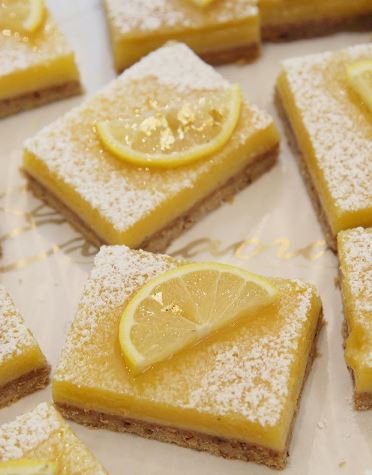 Such directness of desire often comes like a breath of fresh air in a murky land. It may not be best that one has the cone at the time, and it is obviously the parents’ responsibility to say Yes or No if the child is not mature enough to decide. However, let the parents not teach the child to falsify one’s emotions by trying to persuade him or her that he or she does not want the cone! To be aware of one’s feelings and desires does not at all imply expressing them indiscriminately wherever one happens to be. Judgment and decision are part of any mature consciousness of self. However, how is one going to have a basis for judging wat one will or will not do unless one first knows what one wants? For an adolescent to be aware that one wants to drive a brand-new BMW 3 Series, does not mean that one acts on this impulse. However, suppose he never lets his impulses reach the threshold of awareness because they are not socially acceptable? How is he then to know years later, when he buys a care, whether he wants to drive it or not, or whether because thus is then the acceptable and expected act, the routine thing to do? People who voice with alarm the caution that unless desires and emotions are suppressed they will pop out every which way, and everyone, will experience neurotic emotions. As a matter of fact, we know that it is precisely the emotions and desires which have been repressed which later return to drive the person compulsively. #RandolphHarris 13 of 15
 The Victorian gyroscope kind of person had to control his or her emotions rigidly, for, by virtue of having locked them up in jail, one had turned them into lawbreakers. However, the more integrated a person is, the loses compulsive become one’s emotions. In the mature person feelings and wants occur in a configuration. In seeing a dinner as part of a drama on the stage, to give a simple example, one is not consumed with desires for food; one came to see a drama and not to eat. Or wen listening to a concert singer, one is not consumed with pleasures of the flesh even though she may be very attractive; the configuration is set by the fact that one chose in coming to hear music. Of course, as we have indicted, none of us escape conflicts from time to time. However, these are different from being compulsively driven by emotions. Every direct and immediate experience of feeling and wanting is spontaneous and unique. That is to say, the wanting and feeling are uniquely part of that particular situation at the particular time and place. Spontaneity means to be able to respond directly to the total picture—or, as it is technically called, to respond to the figure-ground configuration. Spontaneity is the active “I” becoming part of the figure ground. In a good portrait painting the background is always an integral part of the portrait; so an act of a mature human being is an integral part of the self in relation to the World around it. #RandolphHarris 14 of 15
 Spontaneity, thus, is very different from effervescence or egocentricity, or letting out one’s feelings regardless of the environment. Spontaneity, rather is the acting “I” responding to a particular environment at a given moment. The originality and uniqueness which is always part of spontaneous feeling can be understood in this light. For just as there never was exactly that situation before and never will be again, so the feeling one has at that time is new and never to be exactly repeated. It is only neurotic behavior which is rigidly repetitive. God’s great plan of happiness provide a perfect balance between eternal justice and the mercy we can obtain through the Atonement of Jesus Christ. It also enables us to be transformed into new creatures in Christ. A loving God reaches out to each of us. We know that through his love and because of his Atonement of his only begotten Son, all humankind may be saved, by obedience to the laws and ordinances. Eternal relationships are also fundamental to our theology. The family is ordained of God. Under the great plan of our loving Creator, the mission is to achieve the supernal blessing of exaltation in the celestial kingdom. Finally, God’s love is so great that, except for the few who become people of perdition, God has provided a destiny of glory for all his children, including those who have passed away. Our loving Heavenly Father wants us to have joy. “Do not tell secrets to those whose faith and silence you have not already tested,” reports Kate Atkinson. #RandolphHarris 15 of 15
Pretty Tunes Play as the Sunshine Entertains Our Mines like Pearls so Divine and We Dream the Days Away
 Last night she lay on the bed for hours. She was whispering things. I could not hear her. She would not talk to me. She would not come out of it. She would not get dressed for bed, or take anything to eat or drink. I lay beside her—what you told me to do. I held her. I even sang to her. Sleep does many things for us. In sleep there is the obvious function of resting the tired cells of the body. They are not called upon to fire and react as much as during sleep as during the average day. Do the cells are allowed to go through a longer period of what we call absolute refraction. In the period they build up potentially for future use more easily and efficiently than when they might be called on for quick reactivity with short periods of rest. Also in sleep we have the chance to escape from conscious and direct involvement with the World around us. We can shut out some of the pressures we face in a waking state, and one good turn gets most of the blanket. Sleep can also be an exquisite personal, and spiritual experience. Falling asleep can be an experience to look forward to each night. In a state of slumber, we experience the process of surrendering. That is important because in order to really derive enjoyment and true peace in this sublime state of being, we must be relaxed. Relaxation does not begin until after we have completed the last thing on our list. It is cultivated in intervals during the day. #RandolphHarris 1 of 6
 Going to bed early and getting up early will allow the mind and body to become rested. Another definite function of sleep seems to be to give us a chance to dream. Recently, dreams have been the subject of much research, and we now know a bit more than we used to about them. When, after passing through a narrow defile, one suddenly reaches a height beyond which the ways part and a rich prospect lies outspread in different direction, it is well to stop for a moment and consider whither one shall turn next. We are in somewhat the same position after we have mastered this first interpretation of the dream. We find ourselves standing in the light of discovery. The dream is not comparable to the irregular sounds of a musical instrument, which, instead of being played by the hand of a musician, is struck by some external force; the dream is not meaningless, not absurd, does not presuppose that one part of our store of ideas is dormant while another part begins to awake. It is a perfectly valid psychic phenomenon, actually a wish-fulfillment; it may be enrolled in the continuity of the intelligible psychic activities of the waking state; it is built up by a highly complicated intellectual activity. Dreams seem to play a very important part in preserving our mental health. #RandolphHarris 2 of 6
 When we are dreaming we are involved with what is called Rapid Eye Movement Sleep. REM Sleep comes right after a period of deep sleep during which no dreaming seems to take place. There may be four to six stages of REM sleep each night, lasting for only a few minutes. During this period the eye ball is actually moving underneath the closed eyelid, much as it does when it follows the ball in a tennis match. Subjects who are awakened when the recording instruments indicate they are in REM sleep report on their dreams, but they also give evidence that they are irritated by the interruption, leading dream experts to speculate that the dreaming is very important to them. Dr. Freud believe that dreams serve dynamic functions by protecting sleep and alleviating unconscious wishes. It is easy to show that the wish-fulfillment in dream is often undisguised and easy to recognize, so that one may wonder why the language of dreams has not long since been understood. There is, for example, a dream which I can evoke as often as I please, experimentally, as it were. #RandolphHarris 3 of 6
 If, in the evening, I eat anchovies, olives, or other strongly salted foods, I am thirsty at night, and therefore I wake. The waking, however, is preceded by a dream, which has always the same content, namely that I am drinking. I am drinking long draughts of water; it tastes as delicious as only a cool drink can taste when one’s throat is parched; and then I wake, and find that I have an actual desire to drink. The cause of this dream is thirst, which I perceived when I wake. From this sensation arises the wish to drink, and the dream shows me this wish as fulfilled. It thereby serves a function. I sleep well, and am not accustomed to being waked by a bodily need. If I succeed in appeasing my thirst by means of the dream that I am drinking, I need not wake up in order to satisfy that this. It is thus a dream of convenience. The dream takes the place of action, as elsewhere in life. Unfortunately, the need of water to quench the thirst cannot be satisfied by a dream, as can my thirst can only be quenched if I get up and fetch a glass of water. I thus quite appropriately dreamt that my wife was giving me a drink from a vase; this vase was an Etruscan cinerary urn, which I had brought home from Italy, and had since given away. However, the water in it tasted so salt (apparently on account of the ashes) that I was forced to wake. #RandolphHarris 4 of 6
 Another view holds that dreams simply express a need for some kind of cognitive activity, which is present during sleep as well as when awake. A third view suggests that dreams are more or less unimportant cognitive activities that express internal states during sleep. This would mean that intrinsic energy or tension is acted out through the symbolic content of the dream, regardless of the meaning of the content. All of these views are based on the research evidence we currently have concerning dreams. Whether we are aware of dreaming or not (and evidence suggests that we all do dream every night), sleep is an important part of our lives. We know from many studies that subjects will experience fantastic changes at all levels if they are deprived of it. Subject who have been kept awake experimentally for long periods of time report physical sensation they do not ordinarily have. Some subjects report tingling or numbness in the limbs. Some report headaches, nausea, dizzy feelings, and soreness in muscles. Others report mental confusion. A few have experienced hallucinations and delusions. All report a lowered threshold of tolerance for various stimuli. They have less patience, less ability to stand tension, less tolerance for bothersome noises. #RandolphHarris 5 of 6
 Obviously, we need sleep and we need it to be relatively uninterrupted. However, since sleep is a function of both individual needs and cultural attitudes toward it, the amount needed varies with each individual. The average or the mean is generally expressed as eight hours. If the average work day is eight hors and the average sleep time is eight hours, what do we do with the remaining eight hours a day? In many cases they are more important, for the person may use them in such beneficial ways as to enhance one’s work and enable the sleep to come more readily. People who get adequate sleep receives more flashed of inspiration and insight during the day. “Cease to sleep longer than is needful; retire to thy bed early, that ye may not be weary; arise early, that your bodies and your minds may be invigorated,” reports Doctrine and Covenants 88.124. It is well to be up before day-break, for such a habit contributes to health, wealth and wisdom. Connection have also been made between keeping an early schedule and mental and emotional health. To those who feel defeated and downtrodden, look to the early hours of the day for your rescue because the World is usually a more beautiful place early in the morning. Life is so much more calm. Much more can be accomplished in a shorter amount of time. #RandolphHarris 6 of 6
 Randolph Harris II International Institute