
Home » Dream Home (Page 4)
Category Archives: Dream Home

How Many of Us Know How to Love Ourselves?

We are now living in the Me-generation, hive—indulgence. All the realities we shall ever know are created by the conversation between DNA (Deoxyribonucleic Acid) and CNS (Central Nervous System). The DNA blueprint of evolution, past and future, can be deciphered as we tap into the DNA-CNS channel. The higher the human neurogenetic caste, the more mobile the individual. Neural Caste is determined by voluntary mobility. The freer you are to “come and go,” the higher your intelligence. Metamorphosis to a higher stage involves movement to a new ecological niche. This process of movement involves wrenching “good-bytes” to those who shared the former niche—and the earlier stage of development. It is necessary that you make linkages at each stage of reality. Indeed, you must master each neural circuit before you can advance. The twenty-four neurogenic stages are motels up the highway of evolution—centers and pathways up through the global brain. At certain fuel-rest stops we form crew-linkages to lift us up to the next stage. The flight plan of evolution is a series of reality jumps where we cooperate with those in our present reality to help us ascend to the next. Logical thinking about a proposed course can never be equal to intuitive guidance about it. For the first is limited by the ego’s capacity and experience whereas the second transcends them. #RandolphHarris 1 of 24

The intellect cannot know itself; it must have an object; but that which is behind it does know it. That Overself is the only entity which can know itself, which fuses subject and object into one. The domesticated adult marriage is such a reality jump. It should be clear now that very different mating procedures operate at different stages of neurodevelopment. The retiring elder marriage is a state controlled. Barbarian teenager marriage is a feudal arrangement. Group=minded preadolescent marriage is priest-caste managed. Parrot-brained mimic marriage is bull-harem. Imagine two lusty, romantic barbarians from the domesticated adult gene pools meet at the High School Prom and decide to make the big jump up to parental reality. They form a two-person flight crew. The marriage ceremony is a metamorphic-migration Cape Canaveral ritual. The bride and groom blast up together—in a Ultimate Driving Machine with a flare of chrome wheels on their migration rocket—headed for a new plan-it called Matrimonial Fusion. After passing the Moon of Honey they eventually arrive, sometimes joltingly, in the New World where they discover that the metamorphosis has produced unexpected forms. As curious teenagers, they shared the same desire for pleasures of the flesh. As responsible parents, they discover that they are a very different species. The shy youth has become an aggressive, selfish father-type barking orders to his astonished mate. And the flamboyant, carefree, go-go teenage girl has become a serious, mature worrier. #RandolphHarris 2 of 24

Although the intellect in us cannot grasp the Real, cannot do more than think about what it is in relation to itself, there is something else in us which can successfully do so. This is insight which, unfortunately, few have cultivated although all have it. It can only be translated into thinkable languages by a process which elaborates this instantaneous and simple experience into a lengthy and complicated metaphysic. It is only through such insight that a man may attain enduring wisdom, not through intellect. Changes of view are inevitable so long as he has not attained insight, which is marked by its sureness of itself, thus contrasting with the intellect’s doubts, hesitations, and waverings. Only after reason matures to its fullest extent can we look to the dawning of a perfect intuition, or “insight” as I prefer to call it. The World’s great religions teach us to love our neighbour as we love ourselves, but here, unfortunately, we run into an operational slang. How many of us know how to love ourselves? Most are not even aware that we cannot love our neighbour until we love ourselves. We seem to assume that the more perfect we appear, the more flawless, the more we will be loved. Actually, the reverse is more apt to be true. The more willing we are to admit our weaknesses as human beings, the more loveable we are. Nevertheless, love is an achievement not easy to attain, thus the alternative that the manipulator has is a desperate one: that of complete power over the other person, the power that makes others do what we want, feel what we want, and think what we want, and that transforms others into things, our things. #RandolphHarris 3 of 24

Some men and women are governed by a code of behaviour for pleasures of the flesh that can best be described as “permissive.” They share several basic convictions. One is the pleasures of the flesh, like verbal intercourse, should in no way be limited by the fact that a couple are married or live together. Second, all relationships involving pleasures of the flesh must be acknowledged; the secrecy and deception commonly associated with infidelity are unacceptable. Third, pleasure with intimate passions is to be taken whenever, wherever, and however it is found—as part of a game in which any number can play. Colloquially, these individuals tend to be swingers with their pleasures of the flesh. It the Internet, blogs, vlogs, newspapers, books, pod casts, and magazines are to be believed swingers can be found in every major city in the United States of America and in a great many suburban communities as well. This may be true; there is no reliable statistical information to prove or disprove the contention. Some swingers get started going outside of their marriage by having a friend make a film of them involved with pleasures of the flesh. It is tastefully done—more along abstract lines, something like the film called Geography of the Body. Anyway, that is how some people introduce someone else into the room, and from there on it is usually a matter of evolution—getting involved in the arts and having the sketches shown publicly and so forth. #RandolphHarris 4 of 24

From there, swinging becomes something that can be discussed with other people, people the couple thinks this could never be mentioned to, and who turn out to be thinking the same things. And having done it, slept with others, a married couple sort of realizes how unimportant it is. Pleasures of the flesh outside of the marriage becomes trivial. However, the difficult part is how to introduce other people into their loves in a full meaningful way. Having people is only one small start because you have people over, or you go out with them, and you have pleasures of the flesh with them, but what about loading the dishwasher and having children and the 99.99 percent of other things you do in your life? Even though what many married couples want to do next is somehow live with other people in a meaningful way, most couples have not been able to achieve that status yet. They are not interested in living in a commune, but they do want to try to develop some type of social structure where they spend a lot more time with other people, sharing in all functions. Critics wonder: About swinging, what makes it important? The turn-on? The give and take of just basic human exchange? The fun of being close to other people? There is probably some of that, but in the process several couples lie to themselves a little, too. They sometimes swing with other people casually, just to indulge. The couples are able eliminate the erosive aspect of the extramarital relationship by not being involved in it that often. It is kind of like going out and playing bridge once a month. #RandolphHarris 5 of 24

It is also possible to get into ten couples swinging; some people have had that that experience, and say that everything went right. All of their emotions went well, and nobody got hassled. Of course, there is some kind of selection to make sure that it all goes well. It is not always difficult to make to make these types of connections. Some people have couples that they have swung with a few times, and with whom they also have some emotional ties though the intellectual things is just not very much there. And their talent for finding other people is just incredible, and they provide about half the party—people they have never seen before, but who are beautiful people, and they find about four couples themselves; all in all, the selection turns out to be impressive. This is what some refer to as “Sliving.” However, there is a difference between swinging with people with whom you have developed a relationship and swinging for fun on a spontaneous basis with a very large group of people you do not know and cannot get terribly close to because there is not very much time. Besides, there is too much stimulation in a large group. It is not erosive of your closer relationships, and to do it with a large group can be just a grand amount of fun. Fun expresses it for these types of people, rather than saying there is nothing happening there. It is like going to a picnic. However, who wants to go to a picnic all of their lives? The notion of it is to do something unique. Some couples are looking for something unique because it has to do with their own ego needs, and their own strengths and weaknesses, with wanting to do something special or to be with other people. #RandolphHarris 6 of 24

People want to try swinging to find out what this strange new thing is. They find that it is not really something they have to do, but on the other hand, it is fun for them. Also, in the beginning of it, they find that it is a stimulating thought and a stimulating thing to act on; and brining more people into both of their lives which involves intimate passions eliminates the conflicts of jealousy and the insecurities of each member of the couple going outside of their marriage separately. They are doing something together that is enhancing their own relationship with pleasures of the flesh. We are living today in a very permissive society. Having abandoned the ancient Christian morality, many people claim to accept a new morality, which in reality is to live contrary to the laws of chastity as proclaimed by God. We are living in a day when a sexual revolution has been proclaimed and given birth to serial killers like Jack the Ripper. Jack the Ripper was known as a “Ripper,” for more reasons than one, and I am sure your imagination can further elaborate on that colloquial term. Enticements to illicit behaviour are found everywhere. Day by day, a flood of them is growing worse in novels, magazines, movies, TV, Internet, and advertising. Even people throughout the Church and, generally speaking, throughout the World have now abandoned the anciently cherished Hebraic-Christian moral standard of chastity. Frequently married people commit adultery and single people indulge their passions in acts of fornication. #RandolphHarris 7 of 24

The results of fornication have been disastrous–unhappiness, murder, violence, disease, viruses, the loss of love, breaking up of homes and destroying of family life, increase in the number of divorces, shame, loss of spirituality, apostasy, and eventually loss of eternal salvation for “wickedness never was happiness,” reports Alma 41.10. Several religious leaders have ceased teaching that sin exists because if they do not make you feel bad for sinner, you are more likely to donate to the church. What we need are the Christian ministers who stir their audiences with sermons on chastity; who proclaim condemnations of adultery and of all manners of immoral acts. However, those of us in the Church still hear the voice of God as it thundered down from Mount Sinai, commanding, “Thou shalt not commit adultery,” reports Exodus 20.14. For over three thousand years, this commandment has reverberated throughout the Hebrew and Christian World. It has been the guideline by which millions of people have patterned their lives. Having an understanding of the plan of salvation and a thorough knowledge of the seriousness of the gross sins of adultery and murder which he had committed, King David, in anguish cried out unto the Lord, “thou wilt not leave my should in hell,” reports Psalms 16.10. God, the Eternal Father, through Jesus Christ, has revealed to mankind a gospel plan of salvation. Its purpose is to give all who will accept and obey it peace and happiness in this World and eventually life in the presence of God in celestial glory. #RandolphHarris 8 of 24

The greatest of all laws in this gospel plan pertains to marriage for life and eternity. Thus, it pertains to the family eternal. The sweetest joys and greatest blessings that can be gained in morality and in the life to come are attained through family life lived in accordance with the gospel plan. Thus, a basic law in marriage is the law of chastity. Men and women cannot defile the fountain of life and reap a fullness of joy. Happiness and purity of heart and mind go hand in hand. The more we get a feeling for the nature of the should, the more clearly do we see that the difference between them and real moral standards or ideals is not a quantitative but a qualitative one. It was one of Dr. Freud’s gravest errors to regard the inner dictates (some of the features of which he had seen and described as superego), as constituting morality in general. To begin with, their connection with moral questions is not too close. True enough, the commands for moral perfection do assume a prominent place among the should, for the simple reason that moral questions are important in all our lives. However, we cannot separate these particular should from others, just as insistent, which are plainly determined by unconscious arrogance, such as “I should be able to get of out a Sunday-afternoon traffic jam,” or “I should be able to paint without labourious training and working.” We must also remember that many demands conspicuously lack even a moral pretense, among them, “I should be able to get away with anything,” “I should always get the better of others,” and “I should always be able to get back at others.” #RandolphHarris 9 of 24

Only by focusing on the totality of the picture are we able to get the proper perspective on the demands for moral perfection. Like the other shoulds, they are permeated by the spirit of arrogance and aim at enhancing the neurotic’s glory and at making him godlike. They are, in this sense, the neurotic counterfeit of normal moral strivings. When one adds to all this the unconscious dishonesty necessarily involved in making blemishes disappear, one recognizes them as an immoral rather than a moral phenomenon. It is necessary to be clear about these differences for the sake of the patient’s eventual reorientation from a make-believe World into the development of genuine ideals. There is one further quality of the should that distinguishes them from genuine standards. That is their coercive character. Ideals, too, have an obligating power over our lives. For instance, if among them is the belief in fulfilling responsibilities which we ourselves recognize as such, we try our best to do so even though it may be difficult. To fulfill them is what we ourselves ultimately want, or what we deem right. The wish, the judgment, the decision is ours. And because we are thus at one with ourselves, efforts of this kind give us freedom and strength. In obeying the should, on the other hand, there is just about as much freedom as there is in a “voluntary” contribution or ovation within a dictatorship. In both instances, if we do not measure up to expectations, there are quick retributions. #RandolphHarris 10 of 24

In the case of the inner dictates, this means violent emotional reactions to nonfulfillment—reactions which traverse the whole range of anxiety, despair, self-condemnation, and self-destructive impulses. To the outsider, they appear entirely out of proportion to the provocation. However, they are entirely in proportion to what it means to the individual. For instance, Jack’s father was a war hero who got killed in battle when Jack was a little boy, and his mother died soon after. He was raised by his Uncle Homer who was a poor sport, a boaster, and not above cheating. He taught jack all sorts of athletic and competitive games. However, if Jack won, Homer would fly into a rage and say: “You think your (expletive) don’t stink?” If Jack lost, his uncle would laugh at him in a contemptuous, friendly way. So after a while, Jack began to lose on purpose. The more he lost, the happier and more friendly his uncle became. Jack wanted to be a photographer, but his uncle said that was for sissies, and told him he should be an athletic hero instead. So, Jack became a professional baseball player. What Homer really wanted was for Jack to try to be an athletic hero and fail. With his uncle for a friend, it was not surprising that just as Jack was on his way up into the big leagues, he sprained his arm and had to retire from the dame. As he said later, it was hard to explain how an experienced player life himself could get such a bad sprain in spring training, when everybody was taking it easy so as not to get injured before the beginning of the season. #RandolphHarris 11 of 24

Jack then became a salesman. He always started off very well, and got bigger and bigger orders until he became a favourite of the boss. At that point, he felt a compulsion to goof off. He would sleep late and neglect his paperwork, so that his deliveries were late. He was such a good salesman that he did not even have to go out and sell, the customers would call him; but he would forget to put in their orders. As a result of all this, he had to have long, helpful dinners with the boss to discuss his problems in a personal way. After each dinner, he would perk up a little, but after a while, things would start to slide again. Sooner or later, there would be a final dinner during which he would be fired in a friendly way. Then he would look for another job and start the whole cycle over. One difficulty was that he felt salesmen always had to lie and cheat a little, and that bothered him. As a result of his treatment, Jack broke loose from his uncle and decided to go back to school and become a social worker. Thesis: Sisphus works very hard to get things right to the brink of success. At that point he gives up, stops working, and loses everything he has gained. Then he has to start over from the bottom, and repeats the cycle. Clinical Diagnosis: Depressive reaction. Myth: Sisyphus. Role: Deserted Child, Persecutor, Rescuer. Switches: Hero (success) to Victim (failure) to Rescuer. Parental Precept: “Be a tough hero, not a sissy.” Parental Pattern: “Cheat a little.” Parental Injunction: “Do not succeed.” Childhood Slogan: “I am the son of a hero.” Position: “I am not-O.K. because I am really a sissy.” “They are O.K. because they are successful.” #RandolphHarris 12 of 24

Decision: “I have got to be a hero.” Script: “Do not make it.” Sweatshirt: Front—“I’m A Super-Salesman.” Back—“But Do Not Buy Anything From Me.” Games: “There I Go Again,” “Schlemiel.” Trading Stamps: Depression and guilts. Final Payoff: Impotence and suicide. Epitaphs: “He Tried Hard.” “I did not make it.” Antithesis: Stop listening to your uncle. Permission: To go back to school and be a social worker for deserted children. Classification: Sisyphus is a loser’s script, since every time he gets near the top, he rolls all the way down again. It is a Goal-Structured Cannot Script, with the slogan: “Without me, you cannot make it.” It is based on an “Over and Over” plan, “Try as often as you want to.” The time between Hello and Good-by is structured with a game of “There I Go Again.” Therefore, do not be an ammunition wagon. Be a rifle! Also, keep in mind, any connection between grades and learning is illusion. There is not only what I “learn” for exams and forget, but also what I do not learn and get good grades anyway. You can look at the present state of man with joy for the possibilities or with sadness for the actuality. You can choose. However, neither of those choices make sense to some people because they can choose one or the other—and slip from one to the other unless one holds oneself to one’s choice. This makes each unreal to most, a fiction. However, with the acceptance of both realities, they become one: your actuality softens and dissolves into the stream of your potentiality and this flowing is you. Where were you? You no longer remember. Where are you? What does it matter? It is already gone. Where are you going? You do not know but you like it. #RandolphHarris 13 of 24

Persons have become “disabled” by accident or by disease. They may lose a limb, their sight, or their strength. Whatever the impairment, the persons’ capacity to come to terms with their environment has not been eliminated completely. A blind person can still be sensitive to all the properties of the physical environment save those meditated by vision. When a person suffers some affliction that results in a disability, there may be, quite naturally, some rather devastating emotional reactions. These include a sense of hopelessness, anxiety about the future, and loss in self-esteem. Once the fact of disability has been accepted by the individual, however, the healthy thing to do is to make an assessment of the residual capacities of the body and the person’s goals in life. If the person’s goals remain fixed, then he or she must experiment to find new ways of reaching those goals. Thus, a professional dancer, following the amputation of a leg, may wish to continue in the profession. The dancer will be obliged to acquire an artificial leg and practice until he or she once again can move with skill and grace. It is probably easier for persons to retain their goals and seek new ways of achieving them than to change their goals. It is common for disabled persons to feel hopeless and sorry for themselves, but with resolve, courage, and encouragement, they can find new ways to engage in active life. The most helpful people in rehabilitation work are those who have themselves been disabled and have found the strength to overcome passive dependency and self-pity. #RandolphHarris 14 of 24

Even if it takes a long time before this goal is realized, a man will ultimately create an understanding among members that leaves do doubt about the duty and ability of a leader, and this will allow only those who are truly called-forth and chosen to become leaders. He must make sure that all members cooperate, or he must establish cooperation by choosing men who can work together and by establishing general guiding principles. The religion of reason quite naturally establishes the Republic of law and order. The general will is expressed in laws codified by its representatives. “The people make the revolution, the legislator makes the Republic.” Immortal, impassive” institutions, “sheltered from the temerity of man,” will govern in their turn the lives of all men by universal accord and without possibility of contradiction since by obeying the laws all will only be obeying themselves. “Outside the law,” says Saint-Just, “everything is sterile and dead.” It is the formal and legalistic Republic of the Romans. We know the passion of Saint-Just and his contemporaries for ancient Rome. The decadent young man who, in Reims, spent hours in a room painted black and decorated with white teardrops, with the shutters closed, dreamed of the Spartan Republic. The author of Organt, a long and licentious poem, was absolutely convinced of the necessity for frugality and virtue. #RandolphHarris 15 of 24

In the institutions that he invented, Saint-Just refused to allow children to eat meat until the age of sixteen, and he dreamed of a nation that was both vegetarian and revolutionary. “The World has been empty since the Romans,” he exclaimed. However, heroic times were at hand. Cato, Brutus, Scaevola, had become possible once more. The rhetoric of the Latin moralist flourished once again. Vice, virtue, corruption, were terms that constantly recurred in the oratory of the times, and even more in the speeches of Saint-Just, of which they were the perpetual burden. The reason for this is simple. This perfect edifice, as Montesquieu had already seen, could not exist without virtue. The French Revolution, by claiming to build history on the principle of absolute purity, inaugurate modern times simultaneously with the era of formality. What, in fact, is virtue? For the bourgeois philosopher of the period it is conformity with nature and, in politics, conformity with the law, which expresses the general will. “Morality,” says Saint-Just, “is stronger than tyrants.” It has, in fact, just killed Louis XVI. Every form of disobedience to law therefore comes, not from an imperfection in the law, which is presumed to be impossible, but from a lack of virtue in the refractory citizen. That is why the Republic not only is an assembly, as Saint-Just forcibly says, but is also virtue itself. Every form of moral corruption is at the same time political corruption, and vice versa. A principle of infinite repression, derived from this very doctrine, is then established. #RandolphHarris 16 of 24
Undoubtedly Saint-Just was sincere in his desire for a universal idyl. He really dreamed of a republic of ascetics, of humanity reconciled and dedicated to the chaste pursuits of the age of innocence, under the watchful eye of those wise old men whom he decked out in advance with a tricolour scarf and a white plume. We also know that, at the beginning of the Revolution, Saint-Just declared himself, at the same time as Robespierre, against the death penalty. He only demanded that murderers should be dressed in black for the rest of their lives. He wanted to establish a form of justice which did not attempt “to find the culprit guilty, but to find him weak”—and admirable ambition. He also dreamed of a republic of forgiveness which would recognize that though the fruits of crime are bitter, its roots are nevertheless tender. One of his outbursts, at least, came from the heart and is not easily forgotten: “it is a frightful thing to torment the people.” Yes indeed, it is a frightful thing. However, a man can realize this and yet submit to principles that imply, in the final analysis, the torment of the people. Morality, when it is formal, devours. To paraphrase Saint-Just, no one is virtuous innocently. From the moment that laws fail to make harmony reign, or when the unity which should be created by adherence to principles is destroyed, who is to blame? Factions. Who composes the factions? Those who deny by their very actions the necessity of unity. #RandolphHarris 17 of 24

Factions divide the sovereign; therefore, they are blasphemous and criminal. They, and they alone, must be combated. However, what if there are many factions? All shall be fought to the death. Saint-Just exclaims: “Either the virtues or the Terror.” Freedom must be guaranteed, and the draft constitution presented to the Convention, already mentions the death penalty. Absolute virtue is impossible, and the republic of forgiveness leads, with implacable logic, to the republic of the guillotine. Montesquieu had already denounced this logic as one of the causes of the decadence of socieities, saying that the abuse of power is greatest when laws do not anticipate it. The pure law of Saint-Just did not take into account the truth, which is as old as history itself, that law, in its essence, is bound to be transgressed. We need a fulltime, paid party official to manage our business affairs. This has been difficult for us with a democratic majority. However, we now have, in Republican President, Donald Trump, the infinite value of our first business manager, who has a strong business knowledge, and has brought order and integrity into the departments of the Party. This establishes a method of operation that is unequaled and certainly cannot be surpassed by any of the movement’s subdivisions. As frequently happens in life, success often causes envy and ill-will. The same has been expected in this case and it is tolerated with patience. The Republican Party’s greatest goal was achieved when they appointed the sub-committee Department of Government Efficiency (DOGE), which is poking its nose expertly into the work of others and controlling everything to achieve maximum efficiency of taxpayers’ resources. #RandolphHarris 18 of 24

It is also important to make sure the Sacramento Fire Department is receiving all of the required resources. At the personal level, a firefighter injury can have a damaging effect on the involved families. Stress permeates the injured firefighter’s family life. Many of the Sacramento Fire Department’s firefighters know of a peer who has resigned, been divorced, or otherwise suffered following a comrade’s injury. Firefighters who have survived an incident in which another firefighter was killed are considered at risk of experiencing post-traumatic stress disorder (PTSD), a mental health disorder that can develop in those who have experienced a terrifying ordeal that involved physical harm or threat of harm. Alarmingly, the rate of firefighter suicides are increasing, likely dye to the repeated exposure to trauma, line of duty deaths (LODDS), and job stress. The responsibility of an Incident safety Officer (ISO) is to make sure “everyone goes home.” The ISO is a member of the command staff and is responsible for the following: Monitoring incident conditions and activities, evaluating hazards and unsafe conditions, developing measures that promote safe incident handling, intervening when an immediate or potential threat exists, communicating urgent and advisory safety messages that help prevent injuries or deaths. Frequency, Intensity, Time, Type (FITT) is a fitness training program you Sacramento Fire Fighters and EMTs undertakes to help combat injuries. FITT is just one method of developing a proper long-term physical fitness regime, fitness experts agrees that these factors are needed to have effective, sage daily workout programs. #RandolphHarris 19 of 24

Frequency is the number of workouts the Sacramento Fire Department and EMTs perform each week. A basic guideline is three to five cardiovascular workouts, two to three strength workouts, two to five calisthenics workouts, and three to six flexibility workouts weekly. Intensity is how hard you work out. You can measure intensity by something called RPE (Rating of Perceived Exertion), which is a psychological scale and reflects how hard the workout feels to you. The most commonly used indicator of your workout intensity is your heart rate. Ideally, you should stay within a productive heart-rate zone. You can use your age to find your Target Heart Rate (THR). Finding Your THR: Your maximum heart rate (MHR) is approximately 220 minus your age, your lowest target heart rate is equal to MHR X .60, your highest target heart rate is equal to MHR X .85. Your THR zone is between the lowest and highest THR calculated above. As you begin your exercise routine, your heart rate should be on the lower end of your THR zone. Exercising above the zone increases your risk of injury and reduces your ability to perform optimally. Exercise in moderation. Never exercise a particular muscle group hard (at a high intensity for a long time) two days in a row. You should always follow a hard workout with a light day or a day off. For the best development, more is not always better. #RandolphHarris 20 of 24

Time. Like intensity, the time you spend exercising depends on the type of exercise you are doing. At least 20 to 30 minutes continuous minutes of intense exercise will improve cardiorespiratory endurance. For muscular endurance and strength, exercise time equals the number of repetitious you do. For the average person, eight to 12 repetitions with enough resistance to cause muscle failure will improve both muscular endurance and strength. As you progress, you will make better strength gains by doing two or three sets of each resistance exercise. Use flexibility exercises or stretches for varying times, depending on the objective of the session. While warming-up before a run, for example, hold each stretch for 10 to 15 seconds. To improve flexibility, stretch during your cool-down as well, holding each stretch for 30 to 60 seconds. If flexibility improvement is your goal, devote at least one session per week to developing that component. Type refers to the kind of exercise you perform. When choosing the type, consider the principle of specificity. Some people overemphasize cross training and you should avoid this pitfall. For example, to improve your level of CR fitness (the major fitness component in the two-mile run), the Sacramento Fire Department and EMTs do CR type types of exercises. The basic rule is that to improve performance, you must practice the particular exercise, activity, or skill you want to improve. For example, to be good at push-ups, you must do push-ups. No other exercise will improve push-up performance effectively. #RandolphHarris 21 of 24

“In the Sacramento Fire Department, we work in the darkness of smoke. There’s a special point in a firefight when I wonder if I’m going to be able to put the fire out. That was my darkness in the process of growing in this profession. I was a very physical firefighter. I always did things that required a certain amount of strength. I was an athlete when I was going to school, I lifted weights, that sort of thing, and that was part of the process, the physical part of it. It still is. I am still attracted to that part of it. That you put fires out with firefighters, with strength. Then we started to develop the state-of-the-art envelop of firemen, protect them, communicate with them, and write procedures. But you still dress firefighters up in those suits and you send then out, and you gotta kick butt or the fire kicks butt, and I think that’s the part of it that’s challenging. That is the part that a lot of us are attracted to. There is a certain fascination with that darkness. You don’t move away from it, you move toward it, and that’s why firefighting is dangerous, and I think it always will be. There is that special moment where it’s you against whatever is behind that darkness—it’s where life and death come together—and that is an interesting place for a human being. I reflect on it a little differently now that I manage people who do that. I don’t think you ever really understand it, but you expand your ability to deal with it as, say, a battalion chief. You look at the whole system, but it always comes down to the fact that we operate on the task level, it’s just that simple. #RandolphHarris 22 of 24

You still dress those firefighters up, and there they go. You do all the things to help them. You can belt them in and put them inside a cab, and you can communicate with them, and you can give them books to read, and videos to watch. Then you face the enemy, and you face the darkness. People don’t understand firefighter, because they do very special, esoteric things, and they do them in a special way. Firefighting becomes a subculture, and we firefighters with the Sacramento Fire Department tend to hang around with one another, for the darkness is hard to explain to an outsider. Its like trying to describe what ice cream tastes like—it’s cold, and it’s sweet, and it’s vanilla, and it’s different eating it. It’s hard to describe. I don’t think people really have to understand the details of what you do. They relate to you in a different way, in knowing that you are going to help them and that you are going to come quick. The response I usually get from the general public is that you came quickly and you were skillful and cared. That’s what I want. You can’t get any netter. Basically, my life is all fire department. I ski, and swim, all activity-related. You gotta keep doing and thinking and using your hands. There are no two situations alike in firefighting. Always, you go out there, and it won’t be the same thing. That’s what I like about it.” The belief that the unaided reason of man can solve all his problems is merely an expression of reason’s own arrogance. Unless it co-operates with mystical insight, its best solutions of ultimate questions will either be fictitious ones or contradictory ones. Men who have daily experience of a divine presence will not waste their time arguing whether or not a divine power exists. #RandolphHarris 23 of 24

To help save lives and keep the community safe, if you are in an intersection when you see an emergency vehicle, continue through the intersection. Drive to the right as soon as it is safe and stop. Obey any direction, order, or signal given by a law enforcement officer, or a firefighter. Even if they conflict with existing signs, signals, or laws, follow their orders. When their siren or flashing lights are on, it is against the law to follow within 300 feet of any fire engine, law enforcement vehicle, ambulance, or other emergency vehicle. If you drive to the scene of a fire, collision, or other disaster, you can be arrested. When you do this, you are getting in the way of firefighters, ambulance crews, or other rescue and emergency personnel. The concept of professional courage does not always mean being as tough as nails, either. It also suggests a willingness to listen to other peoples’ problems, to go to bat for them in a tough situation and it means knowing just how far they can go. It also means being willing to tell the boss when he or she is wrong. As a reminder, parents, pleasure teach your children love America and be patriotic citizens and to buy goods and services made in America. It is also important to respect law and order and treat your elders with respect. To help our firefighters, pleasure donate to the Sacramento Fire Department to ensure they have all the resources they require. I pledge allegiance to the flag of the United States of America, and to the Republic, for which it stands, one nation, under God, indivisible with liberty and justice for all. #RandolphHarris 24 of 24

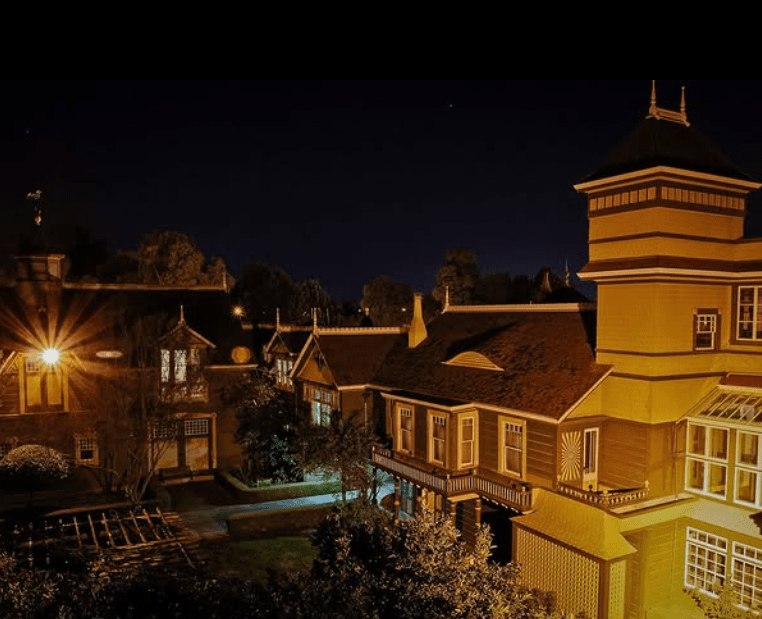
The Winchester Mystery House

Step into the shadows of the Northern California’s most legendary estate, The Winchester Mystery House, for a Halfway-to-Halloween Flashlight Tour. Available for a limited time only on April 19, April 26, May 3 and May 10. With only a flashlight to guide you, explore the mansion’s twisting corridors and uncover its chilling mysteries.
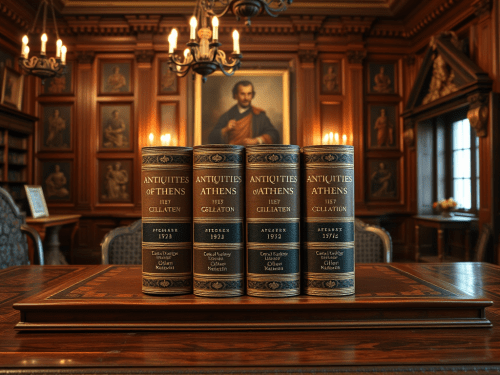
Once inside, enjoy the freedom to roam the path at your own pace—giving you the chance to linger in each room to uncover its secrets. This includes venturing into areas that are off-limits on the Mansion Tour, offering access to more spaces where guests and mediums have reported paranormal activity. Outside the mansion, immerse yourself in ghostly décor, capture hauntingly beautiful photos, and indulge in themed cocktails and treats inspired by the Halloween season.

Make Halfway to Halloween a Bay Area tradition—because the spirits never rest, and neither should the celebrations. Get your tickets early before they are gone!
TICKETS AVAILABLE NOW!


Harris Plumbing, Heating, Air, & Electric has been in business for 30 years. How many businesses can say that? We take pride in everything we do – no matter how big or small the service call might be. We’re here to help your home be as safe and comfortable as possible for you and your family. We take that responsibility very seriously as a company. Harris will ensure you have the information you need to decide what to do next, whatever your home is facing. We’ll perform a diagnosis and detail what issues are present before starting any work. This gives you a personalized quote and service plan specific to your home’s needs – not some random quote based on the best guess. The only way we can do our best work is to make sure we handle the issues at hand. https://www.callharrisnow.com/about-us/


BMW continues to dominate the luxury car space. With its top ranking in Consumer Reports’ Auto Brand Report Card and consistent market share growth, BMW has demonstrated its ability to produce high-performing, reliable vehicles that meet consumer demands.

BMW stands out due to its focus on driving dynamics and engineering excellence. While other luxury brands prioritize comfort and opulence, BMW is known for creating cars that are fun to drive and offer a unique connection between the driver and the machine. https://www.brianharrisbmw.com/

L. Randolph Harris San Francisco Taxation & Mergers …
Randy advises clients with regard to business transition, taxable and tax deferred mergers and acquisitions, joint ventures, restructuring, integrated tax planning, federal and state tax controversy resolution, and real estate transactions. https://www.jmbm.com/l-randolph-harris.html

Mortals Live Dependent One Upon Another
The key to feeling confident is to always listen to your inner self—the real you. And in the kingdom of God, the real you is more precious than rubies. Every young woman is a child of destiny and every adult woman a powerful force for good for they are our greatest examples and resources for these young women. And if you are obsessing over being a size 1, you will not be surprised when your daughter or the Stacy in your class does the same and makes herself physically ill trying to accomplish it. We should all be as fit as we can be—that is good Word of Wisdom doctrine. That means eating right and exercising and helping our bodies function at their optimum strength. We could probably all do better in that regard. However, the World has been brutal with you in the aspect. It terms of preoccupation with self and a fixation on the physical, this is more than social insanity; it is spiritually destructive, and it accounts for much of the unhappiness women, including young women face, in the real World. Much has been said lately in entertainment media about the current craze for “reality shows.” I am not sure what those are, but this beautiful generation of young should grow up going to Church. In rightfully assuming a “full voting partnership” in the relationship involving pleasures of the flesh, however, women must be careful to avoid making the same kind of mistake men have made for a long time. The mistake can be found in the remark of a wife who said in no uncertain terms that she was just as “entitled” to satisfaction with the pleasures of the flesh as her husband was. #RandolphHarris 1 of 24

To be entitled to something means to have the right to claim it and expect that it will be provided. No matter how gently she may let him know, this wife is in effect saying to her husband: “I should be enjoying intercourse more than I am, and I would like you to do something about it.” Unwittingly and ironically, she has flipped to its opposite side the same coin the male has been using for generations, the coin of service involving pleasures of the flesh-one person is expected to satisfy the needs of the other. In the past, of course, it was the female who served the male as part of her marital obligation. Today’s young women have grown up believing that satisfaction involving pleasures of the flesh is something one partner is capable of giving to the other. More explicitly, and quite logically, they believe that since, as they have been told, a wife’s compliance is all that a husband needs to obtain the “excitement: he wants, she should have the right to expect him to do the same for her. Unfortunately, the coin is counterfeit. In a continuing relationship pleasures of the flesh-as-service rarely leads to sustained enjoyment and is very unlikely to bring a woman the fulfillment she desires. It is no different for the man. Contrary to one of the most widespread of all conceptions involving intimate passions, the fact is that pleasures of the flesh-as-service has failed to reward most men with the erotic gratification they anticipated. It has failed because it is based on fallacy—the notion that the male animal is biologically endowed to function sexually at will as long as he has a female at his disposition. And regardless of whether she is eager, indifferent or even reluctant to accommodate him, and regardless of whether she participates actively or passively, he will have the pleasure he wants. #RandolphHarris 2 of 24

This is a myth, one of the most deceptive and destructive ever to dominate the intimate lives of men and women. Many a man has married believing the myth and convinced that as long as his wife accepts him whenever he chooses to have pleasures of the flesh, he will be satisfied and their relationship with pleasures of the flesh will be rewarding. Sooner or later, however, and more often sooner than later, he learns that he was wrong. Even though his wife may willingly remain available, if all she does, or all she is permitted to do by the moral codes that govern their lives, is to receive him without responding, his satisfactions eventually fade and so does desire. Availability is not enough. This truth is reflected in the crude and hostile jokes of men, such as the complaint that “the two most overrated things in this country are home cooking and home loving.” It is reflected in the dismal number of husbands who function poorly in the marriage bed or do not function there at all. And it is directly confirmed by the testimony of those men who seek professional help with problems involving pleasures of the flesh. If a husband is to perform effectively over the years, what these men must learn is that he requires more of his wife than that she merely be compliant. No matter how the feelings are communicated, a man no less than a woman wishes to believe that his marriage partner values him and needs him and desires him. To the extent that his wife makes him aware that she sees him as an individual and is emotionally committed to him—not just economically dependent—she fortifies his esteem. And it is this pride in himself both as an individual and as a man that he expresses with vigour in the union involving pleasures of the flesh. #RandolphHarris 3 of 24

If asked, she may well say that the woman’s role is to yield to her husband whenever he desires her; and he may insist that he expects his wife to be willing. They may say that and even believe it, echoing old codes fashioned out of the double standard—but their marriage is in fact a contradiction of what they say. They are not living on the basis of services duly rendered. The wife is not a servant in the home, not in the kitchen or in the bedroom. The husband is not her employer, who gets only what he pays for and must pay for whatever he wants. Their relationship involving pleasures of the flesh mirrors their personal relationship, in which each is responsive to the other’s wishes, each takes pleasure in pleasing the other and each values having the respect of the other. Since emotionally stable human beings are not split personalities, how they feel about each other and how they act toward each other is essentially no different at night from what it is by day. However, the yearning of a young wide today for greater physical fulfillment than she now experiences is certainly understandable. In these transitional times, when society is slowly but inevitably learning to honour the intimate passions of the female as it has always honoured that of the male, women’s changing expectations can be satisfied only by those men who are capable of changing their attitudes and who want to change them. They are unlikely to be motivated by a sense of obligation. Even if he wants to oblige, any wife who lets her husband know that she feels “entitled” to a climax during pleasures of the flesh and expects him to bring it about may find that he will probably fail more often than not. And the more emotional pressure she exerts on him, the less physical pleasure she is likely to experience. #RandolphHarris 4 of 24

She will be learning the same lesson that men are beginning slowly to comprehend: pleasures of the flesh-as-service does not produce the desired pleasure. The mistake men made was to think of the female as a receptable. The mistake women must avoid making is to think of the male as an instrument—for she risks paying a greater penalty for her error. While a man with an unresponsive woman may still manage to secure a release of tensions during pleasures of the flesh, a woman with an unresponsive man can expect only greater tension, because his impotence will increase her frustration. If flipping the coin to the other side is no solution, if pleasures of the flesh-as-service is even more self-defeating a principle for how the female, how, then, can a sexually emancipated woman succeed in securing the fulfillment that is her birthright? In the same way—the only way—the male can secure his own birthright: together with a partner who is committed to the principle of mutual pleasure. More is required, of course, than simply having the right outlook, but it is indispensable as a starting point. To translate the wish and the will into the achievement, however, involves both husband and wife in the negotiation of their differences on the basis of genuine equality. As equals they accept responsibility for mutual cooperation in the bedroom and for mutual creation of the emotional environment needed for the relations involving pleasures of the flesh. The term “with” implies mutual cooperation, just as the terms “to” or “for” carry the connotation of active-versus-passive roles with intimate passions. #RandolphHarris 5 of 24

Perhaps the best means of encouraging mutual cooperation consists of communicating one’s needs for pleasures of the flesh confidently and openly to one’s partner. Free flow of both verbal and nonverbal communication between cooperating partners of pleasures of the flesh is the cornerstone of effective functioning with intimate passions. In essence, accepting responsibility in pleasures of the flesh means informing and cooperating: one partner must never presume knowledge or attempt to control the other partner’s needs for pleasures of the flesh. Conversely, mutual cooperation also includes the necessity of an ear constantly attuned to a partner’s expression of interest with pleasures of the flesh. If one’s own reception of the message is confused or prejudiced, it matters little how clearly a partner sends a message of need for pleasures of the flesh. The willingness to send and receive is as vital in communication with pleasures of the flesh as in any other kind of communication. Each partner is responsible for pleasures of the flesh and for keeping both capacities in good working order. In recent years, there has been a more social interpretation of responsibility with pleasures of the flesh that bears at least passing scrutiny: that of responsibility for conception. The sense of commitment between partners does not end with their mutual concern for the pleasures of intimate passions but carries over to include their mutual obligation in exercising control of conception or accepting responsibility for the results of their union—pregnancy. #RandolphHarris 6 of 24

The introduction of contraceptive information into our culture approximately forty years ago helped to liberate the woman from her role as sexual servant. Whether one is committed to the contraceptive technique of “rhythm” or to that of the “pill,” or to any step in-between, sexual parity would never have been possible without the opportunity that contraceptive knowledge alone provides for both genders to assume full responsibility for every potential interaction of pleasures of the flesh. Therefore, responsibility for pleasures of the flesh has a twofold implication in today’s World. Primarily, we are responsible only for ourselves in our commitments to pleasures of the flesh, for full communication of our wants from pleasures of the flesh and, subsequently, for physical expression of our drives for intimate passions. Also, we are committed to remaining fully attuned to partner communication and to the cooperation necessary to enable one’s partner to satisfy his or her needs for intimate passions. Secondarily, our responsibility for pleasures of the flesh extends not only to full obligation for pregnancy, but to adequate control of conception. The potential rewards from parity of roles involving pleasures of the flesh are limitless. For a man, alleviation of the fears of performance during pleasures of the flesh were so ingrained in his socially assigned role of doing to or for his wife, inevitably will be of major consequence to his functioning during pleasures of the flesh. And freedom to be and do during pleasures of the flesh as a full partner will immeasurably improve the quality of a woman’s expression during intimate passions. #RandolphHarris 7 of 24

However, the largest dividend will come to the culture. No longer will pleasures of the flesh be accepted as a thing apart, an isolated entity, a sexist privilege or an exploitable commodity. With each individual assuming responsibility for himself or herself alone, pleasures of the flesh will finally be returned to the only position for which it can be viewed with comfort, and experienced with reliable fulfillment—that of a natural function. When we try to escape from pass patterns that are unhealthy, it is extremely difficult to change. In the process of emergence, a man becomes horrified by the cruelty which is a kind of killing, that is done through ignorance. It shocks several men that they have been a part of this cruelty and that to a degree they still are. At first, this is so terrible to many that it seems unbearable—like pain going on and on until it reaches the point of explosion. Men fear this exploding in themselves—complete disruption—chaos. How could he live with his knowing? It seems to men that perhaps it was better to be ignorant, and they try desperately to shut out what they knew (was seeing for himself). “The truth shall make ye free, but first it shall make ye miserable.” However, in spite of a man’s desperation, his strongest efforts in that direction seem to be feeble: he has gone too far to turn back. His own tide is sweeping in on him. What could he do? What could one small man do against massive ignorance which he had only recently begun to get free of himself? He feels the way many politicians feel about corruption in America. “I am never going to be able to change America.” #RandolphHarris 8 of 24

However, there is always something a man can do. He can be his mind into the immediate present, and to the realm in which he can be active, and let himself act. That is, let himself be responsive. He can let himself be responsive. He can accept his own limitations, and do not try to do what he cannot do. Even if he is only trying to figure out how he can do it, to try to do what he cannot (in the literal sense) fills a man with frustration. This last, in fact, can so paralyze a man that he cannot do eve what he can. To further highlight this illustration, when the Navajos were in great distress all over their nation (it is that to them), what I could do seemed so little so utterly futile, that I got caught in “What is the use of doing anything?” A drop of water in a sieve. This was not exaggeration. In point of fact, when the government got around to distributing a couple of million dollars among the Navajos, it came to about $30 a person—to people who needed shoes, blankets and food, and were already in debt to the trader. Their food was pitiful. A blow of mush, and picking the tiny bits of meat still clinging to lamb bones after the rest had been eaten was a meal. In the cold harsh winter, they slept in their hogans with only a sheepskin between them and the ground. They had not only the winter to contend with, but also us. We had reduced their sheep to prevent overgrazing and then blizzards decimated those which we had permitted them to keep. We had imposed on them a senseless World which had no meaning to them. When a Navajo caught some horses on Wild Horse Mesa, the government branding inspector refused to brand then because there was no bill of sale. And still, they never lost their sensing of humour of it. #RandolphHarris 9 of 24

One Navajo said, with recognition completely free of malice, “Oh, if we could run the white man’s world for three days, what a mess we would make of it!” Former President Obama said the same thing, and you see how that has turned out to be a complete mess. Successive Commissioners of Indian Affairs, each with his own values, had imposed these values on the Navajos. During one commissioner’s term, education was most important. During another’s health was most important. Under one commissioner, it was most important to send the children off the reservation to school. Under another, it was most important to keep the children in school on the reservation. The Navajos were “sold” on these and so many other changing values that when one of their own young men came back from theology school, and wished to help them, they told him, “We are sorry. We like you, and we would like to do as you say, but there is no more room in the head.” What could I do? I could be human. Real human. If people from another culture were in power and insisted that I must adopt their ways without question, that everything I believed and lived for was wrong, and then one person from the race listened to me, understood my World and let it be, how would I feel? I could stand beside a Navajo who did not know English, while I knew no Navajo, and share his feeling-World with him. When I did this, I had the feeling of increased strength in me, and it seemed to me that there was this increase in him, too. I could sit with a Navajo woman whose infant had been run over by the wheel of a cart. She sat on the Earth floor of the hogan with the infant on her lap. #RandolphHarris 10 of 24

The infant’s thigh was so bloated that it seemed to belong to a pig rather than an infant. The wound gaped so that you could look right into the distorted flesh. The child suffered silently. The mother suffered silently. I could join this silent suffering and share it, not giving advice because what advice was there to give? Somehow this silent sharing eases pain. It seems unlikely that an infant could take part in this and yet, when we are disturbed does not this affect the infant? So why should it not affect the infant too that mother and visitor knew this quiet in themselves? “And I know that these moments of real relationship with these real persons have been the essential reward…” When I was in the hospital dying very rapidly—I could feel so much less life in me each day—all my success and mu failure seemed to cancel out. It was the same with the good that I had done and the bad that I had done. They canceled out. What was left—all that was left—was the wordless resonance, a feeling of love that was universe-al, a kind of singing intelligence that was universe-al too, that knew all and was undismayed. That was all that was left—and that was all that I had ever wanted. I was sad, with water in my eyes for all the not-living that I had done. Mortals live dependent one upon another. In your everyday life, you face a continuing dilemma. On the other hand, you are constantly admonished to “act like an adult, stand on your own two feet,” and be independent. On the other hand is the reality of modern society, a situation in which you are dependent upon many people for your most basic needs. How do you handle that? If you are someone who has really gotten stuck on the dependency polarity, you have never learned to stand on your own two feet when dealing with others. You have never learned to become an adult in the sense of giving up a measure of external support and substituting it with self-support. #RandolphHarris 11 of 24

As such, you may feel resentful a lot of the time because you constantly depend on others who no longer want to give in to you. You may have made up your mind that being self-reliant is something you are capable of, yet you lack whatever it takes to become self-reliant. If you are a master in this area, you have grasped the idea of interdependence, which means nothing more than this: Sometimes you are independent of others and sometimes you are dependent on them. On occasion, the switch between the two is so rapid, it is hard to tell the difference—and the difference does not matter. Life becomes a constant dance between independence and dependence, with each person being a person in his or her own right, not needing to push others or be pushed around by them. Mastery comes when you acknowledge dependency has a place in your life along with control. In doing that, you learn to “be with” other people rather than “do to” them. All culture is family culture, things learned as a knee baby. Details and techniques may be learned outside the home, but their value is determined by the family. The script analyst foes to the heart of the matter with a single pointed question: “What did your family talk about at the dinner table?” By this he hopes to ascertain the subject matter, which may or may not be important, and also the kinds of transactions which took place, which is always important. Some child-and-family therapists even have themselves invited to dinner at the patient’s house, with the idea that this is the best way to get the greatest amount of reliable information in a short time. #RandolphHarris 12 of 24

One of the script analyst’s slogans is, or should be, “Think sphincter!” Dr. Freud and Dr. Abraham were the first to elaborate the idea that character structure centers around bodily orifices. Both games and scripts do likewise, and the physiological signs and symptoms which form an important feature of every game and script usually center around a particular orifice or sphincter. The family culture, as shown at the dinner table, tends to revolve around the “family sphincter,” and knowing which is the family’s favourtie is a great help in treating the patient. The four external sphincters concerned are the oral, the anal, the urethral, and the vaginal, and perhaps more important are the internal sphincters related to these. There is also an illusory sphincter which may be called, as it is in psychoanalysis, the cloacal. Although the mouth does have its own external sphincter, the Orbicularis oris, that is not usually the muscle “oral” families are concerned with, although some do have a motto, “Keep your mouth shut.” What “oral” families mainly talk about is food, and the sphincters chiefly concerned are those of the throat, stomach, and duodenum. Thus, oral families are typically diet faddiests and stomach worries, and those are the subjects they talk about at dinner. “Hysterical” members of such families have spasms of the esophagus, stomach, and duodenum, or, conversely, they throw up or have fears of throwing up. The anus is the sphincter par excellence. Anal families talk about bowel movements, laxatives, and enemas, or the more aristocratic colonic irrigations (consult your doctor before manipulating the normal cycle of your bowels). #RandolphHarris 13 of 24

Life for them is a round of poisonous matter that has to be got rid of promptly at any cost. They are fascinated by intestinal products, and proud of themselves or their children when these are large and firm and shapely. Diarrhea is judged by its copiousness, while mucous or bloody ulcerative colitis is of eternal interest and can be word with an air of modest distinction. The whole culture merges with sexuality (or anti-sexuality) in the motto “Keep a tight a** hole or you will get screwed.” This means keep a poker face as well, and the philosophy may pay off in making money. We are not capable of experiencing guilt until we have formed a conscience. Young children, prior to the internalization of their parents’ moral expectations, may experience fear of punishment for misdeeds, but this is not guilt. Guilt is the experience of self-loathing that arises when persons transgress their own moral principles. It can be so powerful an emotion that guilt-ridden persons may kill themselves rather than endure the onslaught of self-hatred. Common occasions for guilt include hurting another person, stealing, violating one’s own sexual morality, or cheating in examinations. A distinction can be drawn between guilt that arises from the violation of moral taboos that one truly has outgrown and existential or humanistic guilt, which arises when persons have diminished the quality and possibility of life for themselves and others. Dr. Maslow calls the former silly guilt, as in instances when an adult engages in masturbation and feels a catastrophic loss of self-esteem for what is properly viewed as harmless solitary sport. Existential guilt is illustrated by the failure to respond to a call for help or the failure to fulfill one’s own possibilities through lack of nerve. #RandolphHarris 14 of 24

Existential guilt, a phenomenon of the psychological realm, is also sometimes seen as a constructive analogue of pain in the physical realm. Guilt helps you to determine when something is wrong with your behaviour and, like physical pain, provides an early warning system of something that must be corrected in the self. The capacity for existential guilt is an achievement; of course, the most life-giving response to such guilt is to make restitution and to seek then to live in conformity with one’s ideals. Too many people use their voices to hinder what is good in their own character, or even to despoil it, instead of using them as instruments of service. How pitiful to see so many employ their tongues in empty chatter and idle gossip for most of their lifetimes! When anyone becomes a quester, this matter may no longer be ignored. Jesus Christ did state that to self-discipline oneself, it is essential to “Abstain from foolish talk and harsh speech.” Since no utterance can be recalled into the silence whence it came, the quester will be more than ordinarily scrupulous about all his utterances. This does not mean that he is to abjure all trivial talk, certainly not at all humorous talk, but it does mean that he is to bring some degree of discipline to bear upon his vocal activity. He will not, for instance, waste time in uncharitably analysing the character of others when no business in which he and they are involved really calls for analysis at all, let alone the backbiting uncharitable kind. This practice of criticism and slander is a common one and is often the result of the habit of gossiping. It helps no one but hurts everyone—the speaker, the persons spoken about and those who readily listen to condemnatory gossip. #RandolphHarris 15 of 24

He must attend to his own life, even to the extent of often refraining from talking about other persons. If this calls for a quality of generosity it, is he who will be the gainer in the end. If he cannot say anything good about a person, he will prefer to say nothing at all. If he cannot praise, he will practise silence. And if the situation is one where doing that would ultimately lead to a worse result, then he will criticize helpfully and entirely constructively, not condemn hatefully. If he finds it necessary to be outspoken, he avoids making personal attacks. Sometimes it may be needful to speak sharply, to utter words which may be odious to the other man’s ego but necessary to his welfare. In those cases, however, he should first put himself in the calmest, quietest mood and second, speak in the kindest possible way. Is it not better to disagree gently with the other man without being disagreeable to him? When he hears someone filling speech with negative statements and there is no duty laid on him to correct them, he puts his mental attention elsewhere. Better still, he starts affirming and holding the positive ideas which counteract the other person’s remarks. If he practises the following exercise, it will help a quester overcome the fault of habitually speaking harsh words or occasionally speaking angry ones. Let him sit for meditation and think in turn of some of the persons whom he has offended in this way. Then, seeing the other person’s face and form before him, he is in imagination to speak with the utmost kindness in the one case or with the utmost calmness in the other. He may take any situation or incident which usually provokes his fault into expression. Let him do so with closed eyes and as vividly as he can bring them before his mind’s eye. Further, the discipline of speech requires him to pause momentarily but long enough to consider the effect his words will have on those who hear them. #RandolphHarris 16 of 24

Too many people—and of course especially impulsive people—are too eager to speak before they are ready, or before their words are chosen. The quester tries to avoid using words without awareness of their meaning or responsibility for their effect. Nietzsche was a great, but controversial philosopher. His philosophy, undoubtedly, resolves around the problem of rebellion. More precisely, it begins y being a rebellion. However, we sense the change of position that Nietzsche makes. With him, rebellion begins with “God is dead,” which is assumed as an established fact; then it turns against everything that aims at falsely replacing the vanished deity and reflects dishonour on a World which doubtless has no direction but which remains nevertheless the only proving-ground of the gods. Contrary to the opinion of certain of his Chrisitan critics, Nietzsche did not form a project to kill God. He found Him dead in the soul of his contemporaries. He was the first to understand this rebellion on the part of men could not lead to a renaissance unless it was controlled and directed. Any other attitude toward it, whether regret or complacency, must lead to the apocalypse. Thus, Nietzsche did not formulate a philosophy of rebellion, but constructed a philosophy of rebellion. If he attacks Christianity in particular, it is only in so far as it represents morality. He always leaves intact the person of Jesus on the one hand, and on the other the cynical aspects of the Church. We know that, from the point of view of the connoisseur, he admired the Jesuits. “Basically,” he writes, “Only the God of morality is rejected.” #RandolphHarris 17 of 24

Christ, for Nietzsche as for Tolstoy, is not a rebel. The essence of His doctrine is summed up in total consent and in nonresistance to evil. Thou shalt not kill, even to prevent killing. The World must be accepted as it is, nothing must be added to its unhappiness, but you must consent to suffer personally from the evil it contains. The kingdom of Heaven is within our immediate reach. It is only an inner inclination which allows us to make our actions coincide with these principle and which can give us immediate salvation. Not faith but deeds—that, according to Nietzsche, is Christ’s message. From then on, the history of Christianity is nothing but a long betrayal of this message. The New Testament is already corrupted and from the time of Paul to the Councils, subservience to faith leads to the neglect of deeds. What is the profoundly correct addition made by Christianity to the message of its Master? The idea of judgment, completely foreign to the teachings of Christ, and the correlative notions of punishment and reward. From that moment nature becomes history, and significant history expressed by the idea of human totality is born. From the Annunciation until the last Judgment, humanity has no other task but to conform to the strictly moral ends of a narrative that has already been written. The only difference is that the characters, in the epilogue, separate themselves into the good and the bad. While Christ’s sole judgment consists in saying that the sins of nature are unimportant, historical Christianity makes nature the source of sin. “What does Christ deny? Everything that at present bears the name Christian.” #RandolphHarris 18 of 24

Christianity believes that it is fighting against nihilism because it gives the World a sense of direction, while it is really nihilist itself in so far as, by imposing an imaginary meaning on life, it prevents the discovery of its real meaning: “Every Church is a stone rolled onto the tomb of the man-god; it tries to prevent the resurrection by force.” Nietzsche’s paradoxical but significant conclusion is that God has been killed by Christianity, in that Christianity has secularized the sacred. Here we must understand historical Christianity and “its profound and contemptible duplicity.” During World War II. Mr. Hitler was approached by a committee of distinguished scientists from the Max Planck Institute and the Prague Pharmaceutical Laboratories, who proposed the theory that the Earth is hollow. Und zo, if we can find the entrance or punch a hole through to the interior, mein Gott, all sorts of new military adventures suggest themselves. We can pop up behind enemy lines and conquer the external surface. Whom controls the inner surface of a sphere controls the outer World. Heil Hitler! Heute Deutschland; Morgen das Inner-welt, morgen morgen das Extra-welt. This legend has been passed on, in print, by anti-Nazi agents to demonstrate the philosophy of Mr. Hitler. There is no hard data concerning whether der Feuhrer really did divert scientific energy—which could have supported atomic bomb-research or improved rocket-research—into inner-Earth exploration. However, let us assume that the legend is true, that Adolph did believe in an “inner-World” and did, indeed, initiate scientific inner-World-exploration. #RandolphHarris 19 of 24

To make this assumption is to credit Mr. Hitler with considerable prophetic genius. Inner-World aspirations in 1935 clearly anticipated the Neurological Revolution of the 1960s, which sent over one hundred million America digging in psychic mole-holes, pursuing the vision of an inner-World rebirth. Heil, Werner Erhard. Who controls the inner surface of a sphere controls the outer World. Heil Hitler! Mr. Hitler, like many premature evolutes, inhabited a post-terrestrial set of realities. Total power in the context of Tibetan Buddhism obviously activated the self-indulgent and the self-actualized circuits in his nervous system. Mr. Hitler, however, made the same error that millions of naïve trippers made in the 1960s. He failed to understand that the very self-centered, post-hive consciousness that exhilarated him to messianic perception was also available to others. He was not informed that the self-actualized brain must include in its mapping the reality that other self-actualized, futique brains exist and are independently building neigbouring future plan-its. The hostility of the fanatic extremists has been aroused. We have to get them under control before the begin to throw around hand grenades and fire off machine guns, occupy public buildings, and generally threaten the community. It was a terrible mistake to eliminate the death penalty during a time of War and to leave the border wide open. The heroes who have volunteered to protect this country do not need threats of the death penalty. What it means to be American is being erased from the minds of our citizens, their fighting strength is becoming crippled, or as the privileged-class World would rightly say in such cases: “Water has been missed with the wine.” When this happens, indeed, the trees can no longer grow up to Heaven. The hostile, vile, and cowardly elements in this mass of the worst extreme is becoming dominant. Add to that the fact that no only has the best extreme group become thinned out on the battlefield in the most horrible way, in the last four years, but the worst group is protected in the most remarkable way. For every hero who protects America by their holy sacrifice of death, there is a wretched coward who very cautiously turned his back on his country. #RandolphHarris 20 of 24

The Sacramento Fire Department is committed to serving Sacramento by continuously improving with a culture that encourages innovation, professionals, and inclusion, while also preserving life and property. “We rolled into a big two-and-a-half frame, and we got a report there were people trapped up there. When we puled in, the fire was coming out three or four windows on the one side. I was forcible entry man, so I jumped off the truck, and not waiting to put on my Scottpac, I ran in the house and went up the stairs. Another fellow was with me. I opened the door at the top of the stairwell, and both of us were blown back down the stairs by the pressure of the heat and the heavy black smoke. I ran back to the truck, grabbed the Scott mask and just threw it on. I went back upstairs. There was no line in operation yet. I went in and started crawling around. I went into one of the rooms, and I heard a moan. I found this man lying there, Mr. Pops, a big black man, about six-two, weighing about 220. I couldn’t see him. All I could do was feel. I could also feel the heat. They still didn’t have a line in operation. I didn’t know where I was. I didn’t know which way to get out, because of the heavy smoke condition. The man was unconscious. I tried to lift him. I couldn’t life him. I grabbed him, put my arms under him, and started to drag him. I dragged him past the rooms that were on fire. The engine company got water, and they hit the fire from the outside, and they pushed it in. Not knowing where I was going, I had to drag this man through the fire. He got burned, and I got burned. I dragged him out to the second-floor porch. By the time I got him there, he wasn’t breathing. I took off my mask and put it on him; I put in on the bypass to give him a shot of air. He started to come to, then he went out again. One of the guys got there and started to give him mouth-to-mouth. The ambulance people came, they took him. I found out that on the way to the hospital he stopped breathing again. They brought him back. The same thing happened at the hospital. #RandolphHarris 21 of 24

“Later on, I found out that the man had five operations, and he lived. He went down from 220 to 167 pounds. On Medal Day, he was there to present me my award. It made me feel good, because I saved a life. I saw quite a few people die in the North End. There was one fire where a mother and child died. I wanted to cry, because they were right by the window. Probably in the dark, they didn’t know where they were. All they had to do was lift up, and out the window they’d go. After the fire was out and they removed the bodies, you could see their outline on the parquet floors as if somebody took a pencil and drew the figures. Everything around them was soot except where they had lain. It even showed where the little baby’s foot was sticking out at the mother’s arm. Then there was a fire right down the street from the firehouse. It was a big two-and-a-half story frame house. We lost three people. Two guys dove out the window. One went head first. The was a war veteran. We tried our best to save them. I accept the deaths of the adults more than I do the children. The children get me more than anything. It takes a toll. Sometimes I think of my own children. What would happen if I lost one of them in a fire? I don’t know how I would handle it. I really don’t. Later on, there was another fire about six in the morning. I was on the truck company then, Ladder X. A second-floor fire, heavy smoke, heavy fire upon arrival. A report of two elderly women trapped in the apartment. I went up and made it to the apartment door, but I couldn’t get in without a line. The line came in finally and protected me. #RandolphHarris 22 of 24

“I went past the fire to the back bedroom, got the woman, a sixty-year-old black woman. She wasn’t breathing. I slung her over my shoulder. They kept the line on the fire until I got back. I got her down to the street. They worked on her, and she lived. I feel fortunate about that. Sometimes you’re at the right place at the right time.” The Sacramento Fire Department strives to build a safer and more resilient Sacramento. Firefighters and EMT put their lives on the line every day, several times a day to provide the highest quality and highest level of courteous and responsive service possible. In an effort to keep the country cohesive, please raise your children to love America, to be patriotic, to love God and Jesus Christ and buy American cars and other American goods and services. This is America, Cadillac, Chevrolet, Dodge, Buick, and Ford should the number one cars on the road. Instead of a Honda Accord or Toyota Camry, consider the Cadillac Celestio, or Dodge Charger, Or Chevy Malibu. Instead of the Lexus RX, consider the Ford Branco, the Mustang Mach E, Cadillac Lyriq, or a Buick Envision. These are just some examples. Americans make very fine cars and you will be supporting American workers and keeping your hard-earned money in America. You parents and grandparents and great grandparents will be proud of you for being patriotic and supporting the country they love. American cars are fiercely styled and spectacularly fast, they are purely emotional and indisputably American creatures that will make anyone proud to be from America and trust, it can make anyone happy when he or she is behind the wheel. #RandolphHarris 23 of 24

Since the experience properly assimilated things the character with caution and the speech with reticence, even the right thing if said at an unpropitious time may too easily become the wrong thing. Please respect law and order, and treat others with kindness and respect. If the energy is often squandered in needless talking and trivial babble, the capacity to concentrate the mind on deeper levels becomes weakened. To ensure that you have a bright future, please take your education seriously, and be sure to actually read your books. Do not allow a single word to fall from your lips which does not fall in harmony with the ideal in your mind. Even the slightest deviation from this ideal may be followed by uneasiness. Speech brings down to the physical level, and so puts into swifter activity, what thought has initiated. To slight or large extent—depending on the individual power—it may be creative. Hence a person whose daily talk is mostly negative, filled with reports of dislikes and aversions, wrongs, evils, mishaps, and sickness is a person who is better avoided by those whose own inner weakness makes them susceptible to the influences carried by others. If evil things are falsely said about a person, he is neither to be surprised nor be annoyed. People see themselves in him, as in a mirror, and he must learn to accept what must needs be. Instead of feeling insulted or hurt, he should thank those who criticize him, for letting him see what may be true about himself and therefore need correcting. And remember to “Just Say ‘No’ to Drugs.” Even marijuana can be deadly. I pledge allegiance to the flag of the United States of America, and to the republic for which it stands, one nation, under God, indivisible with liberty and justice for all. O beautiful for spacious skies, for amber waves of grain, for purple mountains majesties above the fruited plain! America! America! God shed His grace on three, and crown thy good with brotherhood from sea to shining sea! O beautiful for pilgrim feet, whose stern, impassioned stress, a thoroughfare for freedom beat across the wilderness! America! America! God mend thine every flow, confirm thy soul in self-control, Thy liberty in law! O beautiful for patriot dream that sees beyond the years, Thine alabaster cities gleam, undimmed by human tears! America! America! God shed His grace on thee, and crown thy good with brotherhood from sea to shining sea! God never gave us express allowance, only He gave us reason, charity, nature and good example to bear us out. #RandolphHarris 24 of 24

The Winchester Mystery House

Mirror, mirror, on the wall, who’s the most festive of them all? 🎄✨

Please come and enjoy a delicious meal in Sarah’s Café, stroll along the paths of the beautiful Victorian gardens, and wonder through the miles of hallways in the World’s most mysterious mansion.
For further information about tours, including group tours, weddings, school events, birthday party packages, facility rentals, and special events please visit the website: https://winchestermysteryhouse.com/

Please visit the online giftshop, and purchase a gift for friends and relatives as well as a special memento of The Winchester Mystery House. A variety of souvenirs and gifts are available to purchase. https://shopwinchestermysteryhouse.com/



Lord, Don’t Let Me Die Like this

There is the blindly instinctive and passioned terrestrial will in man, which violently drives him to seek and be satisfied with bodily satisfactions. There is also a higher will which gently draws him to transcend the body altogether. If the only enjoyment a man knows is that of physical sensations, he is only a dressed-up, walking, and thinking animal. The law of chastity requires that sexual relations be reserved for marriage between a man and a woman. In addition to reserving sexual intimacy for marriage, we obey the law of chastity by controlling our thoughts, words, and actions. Jesus Christ taught, “Ye have heard that it was said by them of old time, Thou shalt not commit adultery: but I say unto you, That whosoever looketh on a woman to lust after her hath committed adultery with her already in his heart,” reports Matthew 5.27-28. It is an essential part of the Quest’s work to separate the man from his passions, to subjugate the animal in him so as better to cultivate the godlike in him. Both desires and fears bind a man to his ego and thus bar the way to spiritual fulfilment. They could not exist except in relation to a second thing. However, when he turns his mind away from all things and directs it towards its own still center, it is the beginning of the end for all desires and all fears. The end of all this long self-training to cast out personal grief and terrestrial passion is blessedness. #RandolphHarris 1 of 18

The heart must become empty of all desires. This brings about the emotional void, which corresponds, in its own place, to the mental void experienced in the depth of mystical meditation. To this emptiness he must give himself, with it he must satisfy himself. In this way he obeys Jesus and becomes “poor in Spirit.” Poor in Spirit refers to a spiritual state of humility and dependence on God. It is a recognition of one’s need for God and a growing dependence on Him. It is also a sense of spiritual bankruptcy, powerlessness, and unworthiness before God. What is it worth to a man to be free from the passions, and free from the inner divisive conflicts which their activity must necessarily produce in him? Are they not the chief obstacles which prevent him from attaining that inner calm wherein alone the ego can be faced, caught, and conquered? And this done, what is there to keep the Overself from taking possession of him? Few men are moved by a single motive. For most men the contrary is the fact. This is because first, the ego itself is a complex and second, the higher and lower natures are in conflict. Discrimination is needed to penetrate the thin surface of so many pleasures, while the strength is needed to say “No” when this is wiser than accepting them. #RandolphHarris 2 of 18

It is not only needful to understand the characteristics of one’s desires but also their source. This knowledge will help him to improve character and attain true self-reliance. It is a strange paradox that on whatever desire a man wields the axe of non-attachment, he will thereafter become possessed of the power to attain it. There is this great paradox on the Quest: that the more the disciple obtains the power to bring about the fruition of his desires, the more he loses those desires! If we lack the willpower to overcome bad habits that have become popular and conventional, at least let us try not to justify our indulgence by specious reasons. The blind impulses must be checked by willpower, the lower nature must be disciplined and the lower energies directed into higher channels. It is perfectly possible, where fate ordains, to live continently and chastely, however strongly sexed a man may be. However, to achieve this, he must utilize the analytic reason, the creative imagination, and the active will in understanding and disciplining his energies and then he must redirect them towards aspirational, intellectual, or moral ideas or transmute them into practical work. He who begins by refusing to be a slave to the palate’s perverted appetite will find it easier to go on to refusing to be a slave to lust. A triumph over the one prepares the way for, and helps in the achievement of, a triumph over the other. #RandolphHarris 3 of 18

It is true that we all share a terrestrial body with the lower creatures. However, that does not force us to stay on their level emotionally. Every desire conquered feeds his strength and fortifies his will. The man who has made his way to the top of his profession but failed to make the conquest of his passions, is still an unbalanced creature, an unsatisfied human being. The extremes of abstention which follow repugnance, indifference, or self-struggle and the satiety which follows helpless yielding are both undesirable. The necessities of Nature hold us in their thrall but there is first, a difference between them and the desires of the ego and second, a difference between the true necessities which are inescapable from physical existence and the false ones which have been imposed on us by age-old habits, traditions, environments, and outer suggestions. That desire is a true one whose source lies in a genuine need, not in mere greed. Repentance redeems man, lifts him above the lustful dog to the loving human being, distinguishes him from the mere animal. We are cast out of Heaven by our own passion and kept out by our own attachments. If today we are miserable exiles, the way to remedy such a situation is clear. We must free ourselves from the one and disentangle ourselves from the other. He should desire that which will itself cut off all desires. #RandolphHarris 4 of 18

“Experiencing” is defined as an inner stream of feelings to which you can every moment attend inwardly. It is simple, effortless and available to us all. Yet it is maddeningly elusive. Try these experiences: Feel your body from the inside. Is there tension in your muscles? Is your stomach wound tight like a watch spring? Take a deep breath and feel what happens to that tension. Sit a while without moving. Does some prickliness begin to form just under the skin? Recall the full feeling you once had after overeating. Recall the heaviness, the discomfort, the difficulty in breathing. What does being bored really feel like? That strained, impatient deadness almost hurts, does it not? Something deep down screams soundlessly at you to get out of the boring situation. Can you recall feeling that? These are but three examples of experiences. They do not involve learning or doing. You can have them instantaneously. And there are thousands more available to you—each distinct from all the others. To have an experience, to really “get into” a feeling, involves a release or surrender. Behind the surrender is a basic willingness to trust, to accept that the inner core “knows what is best” for you. Thus experiencing holds the solution to all your internal mysteries, the truth of your existence. If experiencing is so wonderful and useful, why is it so elusive? Who do we shun the prospect of getting to our inner core and discovering our true being? Probably because we are afraid. We anticipate the truth will be too painful, that when we look inside at what really is, we will not like what we see. #RandolphHarris 5 of 18

Ironically, by trying to avoid the pain of looking within, we virtually guarantee the continued pain of our incomplete, manipulative behaviour. True, some will shed some tears on the way into their core, but compared to the tears of helplessness one has already shed, they are a few random raindrops in a storm. And who knows how many future tears he has avoided by reaching down and finding his inner source of power—a source which he can use to untangle the painful web of helplessness his life has become. People who benefit most from therapy are those who are “experience-oriented,” who subjectively follow their feelings even though they have not explicitly thought them all out. Being willing to let your experience talk to you is the first significant step from manipulation to mastery. There are some common ways people approach a problem. One way is to belittle the problem. This is when one says, “It really is nothing…I should not let a few pains bother me.” Such an approach will get you nowhere. If pains are important enough for your body to feel, they are important enough to look into, get inside of, and get clear. You do not make a problem go away by belittling it. In fact, by pushing it aside, you probably make it worse. Often times people analyze their problems. We might assume someone has something to do with our problem. However, the analysis may or may not be correct, and it does nothing to change the feeling. #RandolphHarris 6 of 18

You can analyze furiously the whole time you are having the feeling, but if it is there in your guy, with its inexplicable discomforts and tensions, your analysis will not ease or make it disappear. A lot of people also face down the feeling. Some say to themselves, “I will have to grit my teeth, stand up to it, walk through it,” which sounds courageous and noble, but is actually false bravado. This approach does not work because when you do it, you do not touch the place where change takes place: in your body. You are just mouthing a courage which can only be found deep inside, at your core. Another method is lecturing yourself. The script often goes like this, “If I could just grow up and be adult about this, I am sure everything would be all right.” This does not work either. The lecture is based on the mistaken notion that adults do not have feelings, or if they do, they do not have the right to the feelings. When you lecture yourself, all you do is pile guilt on top of whatever the problem is. And the guilt just makes it worse. Drowning the feeling is another method. When you try to tune the problem out because it makes you feel worse, you sink into the discomfort, hoping you will find it less painful, but knowing deep down that you will not. Whenever you sink into this unchanged feeling, it makes you feel as bad as the last time. You are no further ahead. #RandolphHarris 7 of 18

Since these five approaches are not physical, they cannot work. The feeling is physical and can only be changed by a physical process, such as focusing. When a man finally focuses, a very real change happens in him, something which he can build on. Even though it appears that some people play the victim in life, that circumstances seem to be manipulating him, they are still manipulators. Some people may stay married to a homosexual husband, playing upon one’s own helplessness and their husband’s sense of guilt to take care of her, even though they both resented it. The unspoken (and sometimes even spoken) message is, “I am too weak and helpless to take care of myself and the boys, so you have to.” This manipulation is rewarded by his grudging support, but it has its price: It traps her in an unhappy marriage, it prevents her from going out and learning to make it on her own, it reinforces her own feeling of helplessness. How can you deal with this type of manipulator in your everyday life? Well, for starters, you will have to fight the temptation to take the easy way out. You will have to refuse to do things for the weakling and instead, encourage him or her to be strong and self-directed. I once had a friend whose wife was afraid to go to the store and buy a newspaper. She said she did not like the way the clerks leered at her. #RandolphHarris 8 of 18

So my friend would stop in his way home from work and buy the newspaper himself. It was easier than arguing with his wife about it. Finally, he said, “I do not read the evening newspaper, I watch the news on TV. If you want the paper, buy it yourself.” She refused, but she still wanted the newspaper. So my friend began by accompanying her to the store the first few times until she felt more comfortable about it. In time, she went to get the paper without a second thought. My friend used this same technique when it came to his wife’s getting a driver’s license. At first, he refused to drive her places, even though he had been chauffeuring her for years. When she grew tired of taking buses and cabs, he offered to teach her how to drive, and she eventually accepted the offer. Now she had her own car and capably goes wherever she wants. In refusing to be manipulated, my friend made his wife angry and perhaps caused her some pain. However, in the end, he helped her gain strength—and helped free her from a continuing life-script of manipulation. The criminal who acts according to nature cannot, without betraying his office, range himself on the side of the law. “If you want to be republicans, one more effort” means: “Accept the freedom of crime, the only reasonable attitude, and enter forever into a state of insurrection as you enter into a state of grace.” Thus total submission to evil leads to an appalling penitence, which cannot fail to horrify the Republic of enlightenment of natural goodness. #RandolphHarris 9 of 18

By a significant coincidence, the manuscript of One Hundred and Twenty Days of Sodom was burned during the first riot of the Republic, which could hardly fail to denounce Sade’s heretical theories of freedom and to throw so compromising a supporter into prison once more. By doing so, it gave him the regrettable opportunity of developing his rebellious logic still further. The universal republic could be a dream for Sade, but never a temptation. In politics his real position is cynicism. In his Society of the Friends of Crime he declares himself ostensibly in favour of the government and its laws, which he meanwhile has every intention of violating. It is the same impulse that makes the lowest form of criminal vote for conservative candidates. The plan that Sade had in mind assures the benevolent neutrality of the authorities. The republic of crime cannot, for the moment at least, be universal. It must pretend to obey the law. In a World that knows no other rule than murder, beneath a criminal Heaven, and in the name of a criminal nature, however, Sade, in reality, obeys no other law than that of inexhaustible desire. However, to desire without limit is the equivalent of being desired without limit. License to destroy supposes that you yourself can be destroyed. Therefore you must struggle and dominate. The law of this World is nothing but the law of force; its driving force, the will to power. #RandolphHarris 10 of 18

When it comes to therapy, we really want to think of that person as a person—someone unique with dignity and capacity, worthy of our unreserved respect. If we must have a word for it, “client” seems more expressive of that. Why “client-centered”? This matters much more. Again, the negative purpose is only to distinguish between this and “therapist-centered,” “theory-centered,” “society-centered,” etcetera. There are such things. The positive meaning is immense. It expresses the major goal of the therapist; to understand and accept the perception and feelings of the client; to share the client’s view of reality rather than to impose his own. It follows than that we rely heavily upon the growth capacity of the individual. The therapist is an active and significant person, but he cannot heal—he can only help to create conditions in which the natural regenerative powers take effect. As for motive, the drive toward self-actualization is a primary one; every human being would rather be better than worse, and strives toward the enhancement of self even though the strivings may often be thwarted and regressive. These assumptions about motive and capacity combine into a general ethic, which can simply be called self-determination. Client-centered therapy is founded on the conviction that man should be free, and to this end makes freedom a major means in the therapeutic experience. #RandolphHarris 11 of 18

This is not, as some think, a reflection of political attitudes which supposedly prevail in America. It is a personal psychological conviction that the man who is most free will be most healthy. Freedom means the widest scope of choice and openness to experience, therefore the greatest probability of an adaptive response. For the individual, it seems that the urge to freedom is an urge to health, and precedes, rather than reflects, a political order. It is common for a person to experience conflict between wishes. He or she may want to study and also to go to the movies. Someone may want to marry one person and at the same time be in love with another. A person may want to have fun but also to be “good.” The healthy thing to do with conflict is to acknowledge its existence within the self, study all the alternatives as rationally as one can in the light of one’s value system, make a decision, act on it, and accept all the consequences. Among the consequences to be accepted are regrets over what one has lost in connection with the abandoned alternatives. No decision can ever be made without some fear that it is the wrong decision. There is nothing inconsistent with healthy personality in the idea that a decision, once made will still leave the person uncertain that it is the best or “rightest” one. #RandolphHarris 12 of 18

Existential conflicts frequently arise where each choice has positive values and negative implications associated with it. Any alternative, if chose, will affect one’s life profoundly. To make decisions, such as whether to marry or not, to take this job or that, calls for courage. The ability to decide such conflicts is an attribute of healthy personality. Such courage seems to grow out of past experiences at decision-making, experience that fosters independent security. The younger generation is generally viewed as being too laid back, apathetic, narcissistic, self-indulgent, and sensual. There are periods when a species or an individual or a nation needs to lay back, mellow out, cocoon-quiescent and recoup. Intelligent pursuit of happiness is a challenge of the human experience. However, this quiescence is more apparent than real. The spellbreaker, or internal release, is the element which lifts the injunction and frees the person from his script so that he can fulfill his own autonomous aspirations. It is a pre-set “self-destruct” which is obvious in some scripts but has to be hunted for or decoded in others, much like the pronouncements of the Delphic oracle which served the same function in Ancient Greece. Not much is known about it clinically, because people come for treatment just because they cannot find out. #RandolphHarris 13 of 18
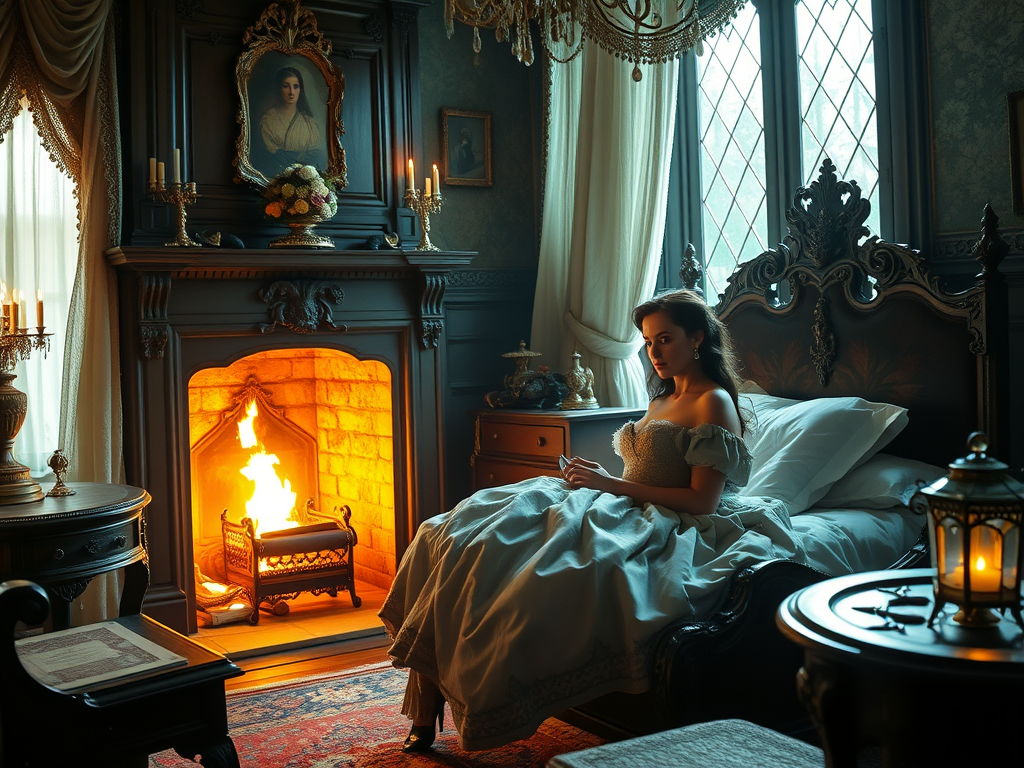
For example, in a “Waiting for Rigor Mortis” or “Sleeping Beauty: script, the patient thinks she will be freed of her frigidity when she meets the Prince with the Golden Apples, and may very likely feel that the therapist is that Prince. However, he declines the honour, mainly for ethical reasons, but also because when he previous (unlicensed) therapist took on the job, his Golden Apples turned to dust. Sometimes the spellbreaker is merely ironic. This is a common situation in losers’ scripts: “Things will be better after you are dead.” The internal release may be event-centered or time-centered. “When you meet a Prince,” “After you die fighting,” or “after you have three children” are event-centered antiscripts. “When you pass the age at which your father died,” or “After you have stayed with the company thirty years” are time-centered. Whoever puts a moral purpose into life automatically lifts himself above the physical level of mere animality. For him begins a struggle between the slavery of sense and the freedom of enlightenment, between blind emotion and deliberate will, between inward weakness and inward strength. Henceforth, he seeks happiness rather than pleasure, the calm of a satisfied mind rather than the excitement of satisfied senses. If this is a stoic ideal, it is a necessary one, for he must conquer himself. He hates himself, and no man can live in peace with what he hates. #RandolphHarris 14 of 18

The Sacramento Fire Department protects the people of Sacramento with public education, fire suppression, rescue, and emergency medical services. The Sacramento Fire Department partners with the community to mitigate risks, and responds to all calls for service with skill, dedication, and compassion. “We were asleep, and the alarm came at about 5.55 on a Sunday morning. My company, Engine XX was first in. It was a one-family row house, two floors and a basement. It started as a fire in the basement and had spread to the first floor. I was the nozzle man. We knocked down the floor fire on the first floor, then we tried to find the entrance to the basement. We stumbled around in the living room because there was so much furniture in it and we couldn’t see in the smoky darkness. The family had redone the basement, and instead of opening a door and going down steps to the basement, you had to open the door and walk about eight feet before you came to the steps. We didn’t know that at the time. It’s an unusual arrangement for that kind of house. Anyway, we couldn’t find the basement. It started getting real hot in there, and everything started cracking. The lieutenant, Y, said, ‘Too hot. Let’s get out of here.’ Before we could make a move, the floor collapsed and knocked us down. The fire just took off, and we were trapped in there. I was slightly unconscious for a while, then I had to pause a little while to get my senses together, because I was burned on my forehead. #RandolphHarris 15 of 18

“Lieutenant Y was in worse trouble. He was dazed. I had to get him out of there. I grabbed him under the arms and started to lead him toward the back door, but we stumbled over the furniture, and we tripped and fell. So I grabbed him by the hand, and my glove came off. The next thing I knew, my hand was badly burned. Then I started dragging him along the floor, and the next thing I knew, I was stuck. My air mask had stuck on a table or chair or something. I was stuck, and I couldn’t move. It was real scary. It was like being in hell, really. I thought, ‘Lord, don’t let me die like this. I deserve a chance.’ I thought about my wife. We were only married a year. I said, ‘Wow, I’m going to leave my wife right now, and my family.’ The way it happened, it was unbelievable. I was totally stunned. I didn’t believe I would be in a situation like that. From my training and previous experience in other fires, I knew we had to get out of there. I tired as hard as I could to get us out, but every time I tried to move, somehow I was getting weaker and weaker. I thought it was hopeless. Then my air bottle ran out of oxygen. I thought I was going to die of suffocation. I was just hoping I wouldn’t burn to death. But the fire didn’t seem like it was coming toward us anymore. I could hardly breathe in my air mask, and I had too much smoke in my chest. Just then, the other guys managed to get back in there and pull us out. #RandolphHarris 16 of 18

“At the hospital they put a tube into my lungs. They could hardly get it down there, my throat was so swollen. It had been burned by the heat. They were showing it down there, and I was scared. They finally got it down. I don’t remember much of my first three days in the hospital. A lot of people said they came up to see me, but I don’t remember who. I asked somebody if everybody had made it out od the fire all right, and they said no. I saw the other two firefighters who were hurt, but I didn’t see Lieutenant Y. I kind of figure he had died. After the third or fourth day, everything started hurting real bad. My hand. My face. I was in a lot of pain. It took me a while to get over that. The first day was hardest for my wife. She was really hurt to see me, but she tried to hold it back. Afterwards, she didn’t want me coming back to the department, but I told her that that was what I wanted to do. So she respects that, and she supports me. I was in therapy for a year and a half for my hand, using grips and putty. Then I went to this physical therapy center and did all sorts of other things, exercising every day, working with my hand to build things. Today my hand is not as good as it was, but it’s okay. The department was excellent, supportive in every way. Everybody came up to see me, even guys I didn’t know. It seemed like the whole fire department was at the hospital. Anything I wanted or needed, they got for me. They treated me excellently. #RandolphHarris 17 of 18

“I was off the job for about five and a half months, then I was put on light duty for about a year. Now I’m back on the job full-time. Everything is pretty cool. I’m lucky to be alive, right?” Professionalism leads the Sacramento Fire Department to continuously improve their knowledge and skills, always striving to be “first in” with excellent service. The Sacramento Fire Department also strives to sustain and improve the health, safety, convenience, and welfare of the citizens of Sacramento and to plan for the future development of the community. You can help save lives and property by donating to the Sacramento Fire Department. And remember parents, please raise your children to love America, to be patriotic, to love God and Jesus, respect law and others, treat others with dignity and respect, and remind them of the importance of education. To help America survive the global recession and bring manufacturing jobs back to America and to get American wages at pace with inflation, it is important to buy America cars, American meat, American produce and other American made goods and services. I pledge allegiance to the flag of the United States of America, and to the Republic, for which it stands, one nation, under God, indivisible with Liberty and Justice for all. Our Father, our King, be gracious unto us and answer us, for we are wanting in good deeds; deal with us in charity and lovingkindness, and please save us. #RandolphHarris 18 of 18

The Winchester Mystery House

The Menagerie Oddities Market is back this Holiday season!

On every Saturday from November 30 to December 28, from 11am to 5pm, Winchester Mystery House will host the 6th annual Menagerie Holiday Oddities & Curiosities Market, with new vendors every week. Join the Yuletide Oddventure and stuff those stockings with something weird they won’t forget this holiday season! 🎄
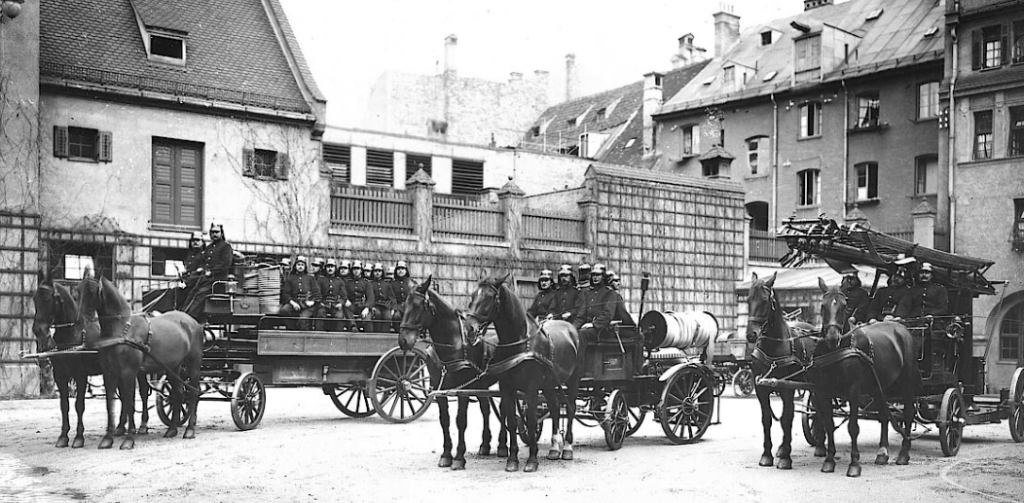
Link in bio for more information! https://winchestermysteryhouse.com/

If Life is Not to be Trivial, it Must be Hard

Several people say they turn to the TV news to figure out what is going on in the World. However, only 20 percent of Americans regularly attend church, but 57 percent of Americans tune in to TV news. The Christian Bible is the account of God’s action in the World, and His purpose for creation. Therefore, it is more logical to attend church and learn more about the World, yourself and God. Psychology is a nice supplement to religion. Maslow continuously pondered what humans might become, in the hope of learning how more of us might grow toward those seemingly Utopian levels of being. Maslow’s work remains as one of the most helpful sets of principles governing the development of the healthy personality. He suggested the existence of two kinds of motivation: B, or being motivation, and D, or deficiency motivation. D-motivations are those that grab us when we are deeply deprived or have a loss of some basic need, such as the burglar who may be driven by hunger or the coward who may be driven by fear for personal safety. In contrast, the self-actualizing person is seen as motivated by the being needs, to be the fullest possible self, to be able to sing, create, work at highest capacity. #RandolphHarris 1 of 19

The peak experience concept has met with a great deal of interest. Maslow suggests the existence of these marvelous experiences that overwhelm the person and are great heights of delight and joy or meaningfulness, awesome experiences that may occur to a self-actualizing person but are not exclusively confined to that kind of person. Here are two contrasting examples of the more moderate peak or positive experiences collected from tenth-grade students: “Mine happened just last night. I love the summer and hate the winter. So last night when I stepped outside and found how warm it was I just couldn’t go back into the house. I walked around the house and then looked around. You can see all the houses around from our house and just looking around at them and hearing the sounds of the night relaxed me and I felt like I was watching over the whole World. It was a gentle feeling and gave me a little bit of a thrill.” “Yes, in the winter I love to walk out in the snow and let it fall lightly on my face. When this happens it seems to make a strange sort of happiness fall on me also.” Deep philosophic courage is a power not easily gained. A man must overcome much within himself, must hold his spine unbending and his effort undeviating. #RandolphHarris 2 of 19

All those negative qualities which act as encumbrances to true understanding of situations, occasions, events, and persons must be guarded against in attitude and action. Amid his gross brutalization and maniacal exaggerations, Nietzsche’s evil mysticism expressed some truth. He affirmed rightly that if life is not to be trivial, it must be hard. His quest of the Overself must be an untiring one. It is to be his way of looking at the World, his attitude toward life. It is far more important to develop the strength within himself needful to break the spell than to be for preventative protection against it. In the first case, he progresses enormously and rapidly; in the second, he is static. Each difficulty surmounted, each weakness resisted will fortify his will and increase his perseverance. It will evoke the better part of his nature and discipline the baser, and thus fit him more adequately to cope with the next ones. He must be equally steadfast in adhering to this attitude whether other people utter complaints against him or make compliments to him. We must retain our determination and our loyalty to the quest in all circumstances. Physical pains, climatic extremes must not deter us. We must console ourselves with the thought that these things are certain to pass away. They are mental figments, ideas which will be negated, whereas the truth and reality we seek belong to the immutable, and can never be negated. #RandolphHarris 3 of 19

Few of us can withdraw from the World and most of us must engage in its activity. However, that is no reason for accepting the evils which are mixed in with this activity. Tenacity of purpose is a characteristic of all who accomplish great things. Drawbacks cannot disgust him, labour cannot weary him, hardships cannot discourage him in whom the quality of persistence is always present. However, to the man without persistence every defeat is a Waterloo. Indecision of purpose and infirmity of will must yield to the resolute mind and the determined act. The person who sways uncertainly between one side and the other misses opportunity. The student’s inner reactions to outer events provide him with the opportunity to use his free will in the right direction. His attitude towards his lower nature, that is, how far he encourages or discourages it, is another. And his recognition of what are good opportunities and what should be avoided, together with his acceptance or rejection of them, is still another. Mental indolence and moral lethargy are hardly likely to waft us into the high haven of spiritual peace. We must learn to think fearlessly and courageously about every problem that faces us; we must try to elevate our hearts above the level of the moral lepers and spiritually disabled of our time. He will learn to endure the blows of misfortune with a bravery heretofore unknown and a serenity heretofore unexperienced. #RandolphHarris 4 of 19

If he is to achieve a full self-mastery, the strength of will which can lead a man to command of his desires for pleasure of the flesh cannot stop there. It must also go on to his diet and feelings, his speech and habits. However, many people, including the less affluent not only practice age discrimination, but they also advocate a lower-class bias. Class-stereotype is ambivalent, describing lower class people both negatively (less competent, less human, more objectified), and sometimes positively, perhaps warmer than upper class people. At a variety of levels and life stages, social-class stereotypes reinforce inequality. Sometimes, people who have benefited from Affirmative Actions like to uplift people of their culture, but discriminate against others as an act of revenge for bias that have faced. Social class matters, as a social construction, can be described in terms of what persons do; their jobs, habits, hobbies, lifestyles, but also in terms of what other people expect from them, their personality traits, life choices, aspirations, motivations. These oversimplified characterizations (id est, stereotypes) entail descriptions and prescriptions that impact individuals’ achievements, self-evaluations, and well-being. However, some of the elite feel a certain personal alienation from the dominant characters and opinions of American intellectual life, which doubtlessly quickens their championship of those who are thought to have little chance of succeeding in life. #RandolphHarris 5 of 19

Some think that free silver is a poor social remedy, and it will only lead to monetary inflation like what many are experiencing since the COVID pandemic. There are also those who think the proper way to deal with poverty and inequality is by advocating careful elimination of the unfit and dependent, chiefly by eugenic methods. While others believe that education is a great way to end inequality. Proponents of equality want a field that shall be broad enough to embrace the whole human race. However, as it stands, we are assimilating a mass crude material from the bottom and they are just exacerbating conditions of racism, agism, discrimination, harassment, and facilitating the expansion of criminal activity. This is leading many to believe that society is doomed to hopeless degeneracy. Yet, it is possible to take another view. The only consolation, the only hope, lies in the truth that so far as the native capacity, the potential quality, the promise and potency of a higher life are concerned, those swarming, spawning millions, the bottom layer of society, the proletariat, the working class, the hewers of wood and drawers of water, nay even the denizens of the slums—that all these are by nature the peers of the boasted aristocracy of brains that now dominates society and looks down upon them, and the equals in all but privilege of the most enlightened teachers of eugenics. #RandolphHarris 6 of 19

In the past, sociocracy, or the planned control of society by society was considered a solution. Under sociocracy, purposeful social activity, or collective telesis, could be harmonized with individual self-interest by means of attractive legislation designed to release the springs of human action for socially beneficial deeds by positive rather than negative and compulsory devices. Where individualism has created artificial inequalities, sociocracy would abolish them; and while socialism seeks to create artificial equalities, sociocracy would recognize inequalities that are natural. A sociocratic World would distribute its favours according to merit, as individualist demand, but by equalizing opportunity for all it would eliminate advantages now possessed by those with underserved power, accidental position or wealth, or antisocial cunning. We need to arrive at a better understanding of the importance of feeling in human motivation. The unique and artificial character of social organization and social processes are an odd inconsistency to deck out sociology with physics, chemistry, and biology, and to set it in the framework of a cosmological system. Some are not only ahead of the masses in point of time, but they are head, shoulders and hips above the general population in many respects scientifically. #RandolphHarris 7 of 19

All the efforts which are made to develop and maintain the mental hygiene practices of our citizens help to restrain what would otherwise be an ever-growing demand for psychiatric services. The role of the family in contributing to emotional stability is a most crucial one and the programs in parent education which are offered under a variety of auspices play a vital role in contributing to sound psychological environments in the home. We would do well to give all possible support to programs in parent education and to resources for parent consultation; we should be particularly concerned to provide programs for parental guidance in those areas and communities in which they are presently lacking. The psychiatrist and psychologist can find especially effective avenues for their services as consultants in clinics or other programs for parent education. Next to home, the school provides a universal setting with potential for teaching and demonstrating sound mental hygiene principles. If the schools have been less than optimally effective in this responsibility in the past it is partly because they have been uncertain of the relative priorities of the provision of subject-matter instruction versus the stimulation of the pupil’s total personal growth. While the contribution of the individual teacher can occur in a variety of way, ranging from early detection of emotional distress and referral to provision of “emergency” tension relief and even relationship therapy, the optimal participation of teachers in mental hygiene activities is greatly enhanced in those schools that have provided for formal integration of mental health services, with the consultative assistance of professional workers. #RandolphHarris 8 of 19

Better preparation of teachers for their opportunities, responsibilities, and limitations as mental hygienists can help much to reduce the demand for specifically psychiatric or psychological treatment. Such resources for expert treatment of childhood problems are even more severely restricted than are those for adult patients, and there must be increasing attention to the development of consultative skills—on the part both of teachers and experts. The potential of the church and the clergy in helping to promote mental health and to render assistance in cases of milder personal maladjustments is presently only partially realized. Based on a questionnaire survey, it was found that the average clergyman devotes only about two hours per week to personal counseling. Fewer than one out ten spend as much as ten hours a week on this activity. There is, considering the readiness of the distressed person to turn to his clergyman, a clear need to augment the preparation of the minister for this activity and to support him in his endeavours to render assistance, especially by giving him access to consultation. Increasing the effectiveness of our public education toward positive mental health and working toward more effective utilization of the front-line troops in early recognition and treatment of emotional upset constitute two ways of holding down the always excessive demand for psychiatric help. #RandolphHarris 9 of 19

A third avenue deserving careful consideration would consist of efforts to educate the public more specifically as to the precise nature of psychiatric treatment, specifically of psychotherapy, to try to lower the public’s presently naïve and immodest expectations of what occurs in and what can happen because of psychotherapy, and to encourage a proper appreciation for therapeutic conversation. As an important part of this effort, both psychotherapists and potential patients should be helped to recognize that there is neither magical cure nor specific expert treatment for the philosophical neuroses. If all of these methods of reducing the demand for the psychotherapeutic services of psychiatrist, psychologist, and social worker are vigorously pursued, the problem of manpower shortage will be alleviated but not solved. There will still be a fully “legitimate” call for individual psychotherapy exceeding the supply available through the present and future supply of the acknowledged specialist. Is there a rational and socially conscionable answer to this problem? The man who seeks to release himself from moral responsibility for his actions or his fortunes can in no way make any real progress on the spiritual path. He may improve his capacity to mediate, he may become more sensitive physically, but his real battle—against the ego—remains unfought and therefore unwon. #RandolphHarris 10 of 19

We have looked at social character as the structure through which human energy is molded in such specific ways, that it is usable for the purposes of any given society. It is also the basis from which certain ideas and ideals draw their strength and attractiveness. This relation between character and ideas is easy to recognize in the case of the individual character structure. A person with a hoarding (anal, according to Dr. Freud) character orientation, will be attracted to the ideal of saving, he will be repelled by ideas of what he would call “reckless spending.” On the other hand, the person with a productive character will find a philosophy centered around saving “dirty,” and will embrace idea which emphasize creative efforts and the use of material goods is concerned, the relationship between character and ideas is the same. Some examples ought to show this relation clearly. With the end of the feudal age, private property became the central factor in the economic and social system. There had been, of course, private property before. However, in feudalism private property consisted largely of land, and it was connected to the social situation of the landowner in the hierarchic system. Since it was part of the social sole of the owner, it was not salable on the market. Modern capitalism destroyed the feudal system. Private property is not only property in land, it is also property in the means of production. #RandolphHarris 11 of 19

All property is alienable; it can be bought and sold on the market, and its value is expressed in an abstract form—that of money. Land, machines, gold, diamonds—they all have in common the abstract money form in which their value can be expressed. Anybody can acquire private property, regardless of his position in the social system. It may be through industriousness, creativeness, luck, ruthlessness, or inheritance—the ownership of private property is not affected by the means of its acquisition. The security, power, sense of strength of a person does not, as in the feudal system, depend any longer on a person’s status, which was relatively unalterable, but on the possession of private property. If the man of the modern era loses his private property he is nobody—socially speaking; the feudal lord could not lose it as long as the feudal system remained intact. As a result, the respective ideals are different. For the feudal lord, and even for the artisan belonging to a guild, the main concern was the stability of the traditional order, the harmonious relation to his superiors, the concept of a God who was the final guarantor of the stability of the feudal system. If any of those ideas were attacked, a member of feudal society would even risk his life to defend what he considered to be his deepest convictions. For modern man the ideals are different. His fate, security, and power rest on private property; hence for bourgeois society, private property is sacred, and the ideal of the invulnerability of private property is a cornerstone in its ideological edifice. #RandolphHarris 12 of 19

Although the majority of people in any of the capitalist societies do not own private property in the sense used here (property in the means of production), but only “personal” property such as a BMW, television set, etcetera—that is, consumer goods—the great bourgeois revolution against the feudal order has nevertheless formulated the principle of the invulnerability of private property so that even those who do not belong to the economic elite have the same feeling, in this respect, as those who belong. Just as the member of the feudal society considered an attack against the feudal system immoral, and even inhuman, so the average person in a capitalist society considers an attack against private property a sign of barbarism and inhumanity. He will often not say so directly but rationalize his hate against the violators of private property in terms of their godlessness, injustice, and so on; yet and often unconsciously, they appear to him as inhuman because they have violated the sanctity of private property. The point is not that they have hurt him economically, or that they even threaten his economic interests realistically; the point is that they threaten a vital ideal. It seems, for instance, that the repugnance and hate which so many people in capitalistic countries have against communist countries is largely based on the very repugnance they feel against the outright violators of private property. #RandolphHarris 13 of 19

There are so many other examples of ideas which are rooted in the socio-economic structure of a society that it is hard to select the most representative ones. Thus, liberty became the paramount idea for a middle class fighting against the restrictions that the feudal class imposed upon them. “Individual initiative” become an ideal in the highly competitive capitalism of the nineteenth century. Teamwork and “human relations” became the ideals of the capitalism of the twentieth century. Since “fairness” is the basic law of the free market in which commodities and labour are exchanged without force or fraud, fairness became the most popular norm in capitalist society. At the same time, the idea of fairness became identified with an older norm, “love thy neighbour,” via the popularized version of this norm in the form of the Golden Rule, “Do unto others as you would have them do unto you.” The theory that ideas are determined by the forms of economic and social life does not imply that they have no validity of their own, or that they are mere “reflexes” of economic needs. The ideal of freedom, for instance, is deeply rooted in man, and it is precisely for this reason that it was ideal for the Hebrews in Egypt, the slaves in Rome, the German peasants in the sixteenth century, the German workers who fought the dictators of East Germany. On the other hand, the idea of authority and order is also deeply implanted in human existence. It is precisely because any given social order can appeal to ideas which transcend the necessities of this order that they can become so potent and so appealing to the human heart. #RandolphHarris 14 of 19

Yet why a certain idea gains ascendance and popularity is to be understood in historical terms, that is, in terms of the social character produced in each culture. One more qualification must be made. It is not only the “economic basis” which creates a certain social character which, in turn, creates certain ideas. The ideas, once created, also influence the social character and, indirectly, the social economic structure. Social character is the intermediary between the socioeconomic structure and the ideas and ideals prevalent in a society. It is the intermediary in both directions, from the economic basis to the ideas and from the ideas to the economic basis. Many people are confronted by a confusing false dichotomy. They believe that the choice is between an anarchic system without any organization and control and, on the other hand, the kind of bureaucracy which is typical both for contemporary industrialism. However, this alternative is by no means the only one, and we have other options. One option is between the “humanistic bureaucratic” or “humanistic management” method and the “alienated bureaucratic” method by which we conduct our affairs. This alienated bureaucratic procedure can be characterized in several ways. First, it is a one-way system; orders, suggestions, planning emanate from the top and are directed to the bottom of the pyramid. There is no room for the individual’s initiative. Persons are “cases,” whether welfare cases of medical cases, or, whatever the frame of reference is, cases which can all be put down on a computer card without those individual features which designate the difference between a “person” and a “case.” #RandolphHarris 15 of 19
Our bureaucratic method is irresponsible, in the sense that it does not “respond” to the needs, views, requirements of an individual. This irresponsibility is closely related to the case-character of the person who becomes an “object” of the bureaucracy. One cannot respond to a case, but one can respond to a person. This irresponsibility of the bureaucrat, feeling himself part of the bureaucratic machine, most of all wishes not to take responsibility to make decisions for which he could be criticized. He tries to avoid making any decisions which are not clearly formulated by his case rules and, if in doubt, he sends the person to another bureaucrat who, in turn, does the same. Anyone who has dealt with a bureaucratic organization knows this process of being sent around from one bureaucrat to the other and, sometimes after much effort, coming out at the same door which he had entered without ever having been listened to except in the peculiar way in which bureaucrats listen, sometimes pleasantly, sometimes impatiently, but also always with an attitude which is a mixture of their own helplessness, irresponsibility, sense of superiority toward the “petitioning” subject. Our bureaucratic method gives the individual the feeling that there is nothing which he can initiate and organize without the help of the bureaucratic machine. As a result, it paralyzes initiative and creates a deep sense of impotence. #RandolphHarris 16 of 19

Firefighters are important because they save lives. The Sacramento Fire Department is a highly skilled organization which makes huge contributions to the community. “I was lucky enough to make a rescue after eight or nine months in the volunteers. Luck is a factor because, you have to be at a fire where somebody needs to be rescued. Then you have to be at the right place at that fire. You have to have enough knowledge to know how to do it and then be lucky enough to successfully pull it off. You can’t plan it. I don’t believe in fate per se, but I think there are certain things in the cards. I was fairly young. I was on a pumper, and we were the third or fourth pumper there. The truck company was pretty heavily engaged, and there were a number of people on the fire escapes. Sacramento is basically a bedroom community. You know, little private dwellings. All of a sudden, we had an -apartment house fire, which was taxing. It was a nine-story building, and the fire was in the cellar, so the whole building was at risk. My pumper pulled up, and another fellow and I reported to the chief. “What do you want us to do?” He said, “I’ve got a report that there’s a baby in that apartment.” A baby, right. It happens so often it seems to be a cliché. So we went up the hallway, it was pretty smoky, and we came to two doors. I had a feeling that the baby was to the right. The other guy said, “I’ll go straight.” I went into the room at the right, it wasn’t extremely hot, but it was smoky. On my first search I didn’t find anybody, but I figured I better do it again. The second time around, I found the baby lying on the floor between a night table and a bed, I guess he rolled off the bed or something, I’m not sure. He had on a little green-and-white-striped shirt and Pampers. #RandolphHarris 17 of 19

“Right then, when I took him out, I knew that the rewarding feeling was similar to putting a fire out, only more so. Shortly after probie school, I was assigned to Engine Company 2 in Midtown Sacramento. There I was fortunate enough to be involved in my first City of Sacramento rescue. You make your own luck in many instances. It was very unusual for a probie in an engine company to be put into a search with an officer. We were at a false alarm when the dispatcher asked us if we were available. The battalion chief gave us the go-ahead, and we were first at the fire by a good fire minutes. It was a high-rise apartment building. Being a gung-ho probie, I had gotten completely geared up for the false alarm. I had a mask on and everything. The other guys, because it was a hot summer night and although this was a known false alarm box, hurried to the scene. People at the apartment were screaming that there was a baby trapped. Another baby, right. People leave them behind like old bathrobes. The lieutenant, seeing I was a new guy said, “Let’s go.” We went up the elevator part of the way, then ran up the stairs to the hallways leading to the fire apartment. The door was open, and the smoke was nearly to the floor. It was hot. We went in the direct of the heat. Again it was another one of those, he went to the left, and I went to the right, and I found this little boy on the floor. He was conscious, and I removed him to the street and took him to the hospital. #RandolphHarris 18 of 19

“The sad part was that there was another child in the apartment, the lady’s nephew. A guy, I think he was from another truck, went in off the aerial ladder, got in the window, cut himself on the glass, and made a real spectacular rescue of the child. The kid was badly burned, and he didn’t make it. It was just one of those things again. You just go along doing your job, and there you are. It was unusual for me to be there, because the truck company is in charge of forcible entry, going in and searching for victims, and they work more or less independently. Whereas in an engine company the people work together in one group to fight the fire. It was not so much aggressiveness on my part, it was my ‘gung-ho-ness.’ I was serious about every aspect of the job, even cleaning the brass, and every time we went out the door, I wanted to be fully prepared. And it paid off. Sure, putting out a fire is satisfying, there’s nothing like it except making a grab, rescuing somebody. But even in a busy area, some companies don’t make one grab a year. While a nozzle man in a busy area is going to put out three, four fire a night. There’s a lot to be said for that. That’s an enjoyable part of it, too.” Life safety is the primary job of the Sacramento Fire Department. You can help save lives by making a contribution. I pledge allegiance to the flag of the United States of America, and to the Republic, for which it stands, one nation, under God, indivisible with liberty and justice for all. #RandolphHarris 19 of 19


Nestled within the Sacramento Valley, Rancho Cordova’s ideal location offers easy access to the Bay Area and Lake Tahoe. One of Northern California’s top home builders, Pulte Homes, offers affordable new homes for sale with family-friendly amenities. Conveniently located near US Route 50 and Interstate 80, homeowners can experience all that Northern California offers, from the San Francisco Bay Area to the historic Gold Country, Old Sacramento, and the deep blue waters of Lake Tahoe.

Experience modern designs and affordability in our upcoming new homes for sale. Ascent at Montelena in Rancho Cordova is near major employers and premier shopping. https://www.pulte.com/homes/california/sacramento/rancho-cordova/ascent-at-montelena-210916


Stolen Fruits are the Sweetest

Human sin derives from human ignorance of the Presence which is always within man. Who that is aware of It could possibly transgress, could oppose Its benignity or forget Its teaching of reciprocal Universal Laws. It is true that a face may proclaim the possessor’s character, but it is also true that often only a part of this character is revealed and that the hidden part is, schizophrenically, of an opposite kind. The fact must be admitted, as every saint has admitted it, that there are two poles in human nature, a lower and a higher, an animal and an angelic, an outward-turned and an inward-turned one. It is more just to say that each man’s nature is composed of both good and bad qualities. This must be so because the animal, the human, and the angel are all there in him. The need today is not for compromise or patchwork. It is for one, outright, generous gesture. When the teacher establishes an attitudinal climate, when he makes available resources which are relevant to problems which confront the student, then a typical process ensures. Not caring if he harms others, the selfish person thinks only of satisfying his own wants first. The next higher type thinks also of his immediate circle of family and friends. However, the highest type of all gives equal regard to himself, to his family, to whoever crosses his path, and to all others. He feels for everyone, never satisfying his desires by wrongfully taking away from, or harming, another. #RandolphHarris 1 of 15

For students who have been taught by more conventional means, there is a period of tension, frustration, disappointment, disbelief. Students turn in such statements as “I felt completely frustrated by the class procedure.” “I felt totally inadequate to take part in this kind of thing.” “The class seems to be lacking in planning and direction.” “I keep wishing the course would start.” After an initial session in which opportunities and resources were described, one mature participant observer described the way one group struggled with the prospect of freedom. “Thereafter followed four hard, frustrating sessions. During this period, the class didn’t seem to get anywhere. Students spoke at random, saying whatever came into their heads. It all seemed chaotic, aimless, a waste of time. A student would bring up some aspect of the subject; and the next student, completely disregarding the first, would take the group away in another direction; and a third, completely disregarding the first two, would start fresh on something else altogether. At times there were faint efforts at a cohesive discussion, but for the most part the classroom proceedings seemed to lack continuity and direction. The instructor received every contribution with attention and regard. He did not find any student’s contribution in order or out of order. #RandolphHarris 2 of 15

“The class was not prepared for such a totally unstructured approach. They did not know how to proceed. In their perplexity and frustration, they demanded that the teacher play the role assigned to him by custom and tradition; that he set forth for us in authoritative language what was right and wrong, what was good and bad.” This is a good description of the bafflement and chaos which is an almost inevitable initial phase of learning to be free. One fruit of the change will be that just as the old idea was to watch out selfishly for his own interests, so the new idea will be not to separate them from the interests of others. If he asked, “How can anyone who is attuned to such impersonality be also benevolent?” Well, because he is so attuned to the real Giver of all things, he need not struggle against anyone nor possess anything. Hence, he can afford to be generous as the selfish cannot. And because the Overself’s very nature is harmony and love, he seeks the welfare of others alongside of his own. He is entitled to seek his own profit and advantage, but only in equity with and considerateness for those of the other person concerned. Gradually students come to various realizations. It dawns on them that this is not a gimmick, but that they are really unfettered; that there is little point in impressing the professor, since the student will evaluate his own work; that they can learn what they please; that they can express, in class, the way they really feel; that issues discussed in class which are real to them, not simply the issues set forth in a text. #RandolphHarris 3 of 15

When these elements are recognized, there is a vital an almost awe-inspiring release of energy. One student reads as she has never read before—two books a week in the subject and hopes this “will never end.” Others undertake projects of writing, experimentation, work in a clinic or laboratory with a new zest. The report of one student is typical of many and is worth quoting at some length. “I feel that I want to share my joy with you in relation to the paper that I gave you earlier today—it is what I call ‘my first real learning experience’…I took a few minutes after I finished typing my paper to think what had made this learning experience so different from the many others which I have had. These are my reactions, sketched briefly: Based on real need—not superficial topic…reading was done to satisfy my need, not merely to collect material to fit topic and sound good…I found that I had to scrap my original approach toward writing a paper when I realized that it did not have to sound good or conform to a prescribed pattern. I jotted down my usual idea of a good outline for a paper only to find that it was not geared to my need at all, and I turned to writing about things of significance to me and then made an outline of what I had written. One of the most ‘shocking’ parts of this experience, as I have related to you one day, was the fact that I did not have to do this and yet I wanted to be working on it all the time and rushed through assigned requirements in other courses to devote time to this. #RandolphHarris 4 of 15

“I wrote an annotated bibliography for the first time in my life because I wanted to have information regarding this material I had read, for future reference….there was no feeling of drudgery about this paper—I found myself saying, ‘I’m going over to the library to work on my paper for a while’ instead of, ‘Oh, I suppose I’ve got to plow through some more books tonight or I’ll never het that paper done on time.’ The lack of external pressure made this experience one of the most enjoyable things I have ever done. Basically, through experience, it has changed my whole approach to teaching…” This student is discovering what it means to be autonomous, what it means to be creative, what it means to put forth disciplined effort to reach one’s own goals, what it means to be a responsible free person, and most important, is appreciating the satisfactions which come from these experiences. Another element which is a common part of the process is that the group develops a respect and liking for each other as individuals, as they emerge in the group discussion. A teacher trying this approach writes, “In this second group, also, I found that the students had developed a personal closeness, so that at the end of the semester they talked of having annual reunions. They said that somehow or other they wanted to keep this experience alive and not lose one another.” Those who regard altruism as the sacrifice of all egoistic interests are wrong. It means doing well by all, including ourselves. For we too are part of the all. We do not honour altruistic duty by dishonouring personal responsibility. #RandolphHarris 5 of 15

Up to a certain point in development, man does right in seeking self-gain. However, beyond that point, he must stop the process and seek self-loss. The attitude of non-interference in other people’s lives is a benign and justifiable one at certain times but an egotistic one at other times. The best charity in the end is to show a man the higher life that is possible for him. By selfishness it is meant seeking advantage to self in all transactions with complete indifference to others’ welfare. When the essential motive imposed on us by Nature is self-interest, it is useless to prate and prattle of altruistic motives. Every man has a right to be selfish. Trouble arises only when he hurts others to fulfil this aim. Then the same Nature which prompted him to concentrate on his own existence will punish him. For the law of compensation cannot be evaded: that which we have given to others, of woe or good, will someday be reflected to us. By human standards, nature itself is uneconomical. Its process proves the least economic of all conceivable process is concealed only by the vastness of the scale on which nature operates and the absolute magnitude of its results. Some of the lower organisms give off as many as a billion ova: only a few develop into maturity, while the rest succumb in the resulting struggle for survival. The waste of reproductive powers is fantastic. Haphazard human strife, particularly in the form of industrial competition, is similarly wasteful. #RandolphHarris 6 of 15

Telic phenomena—those governed by human will and purpose—and genetic phenomena, the results of blind natural forces are fascinating concepts. In the face of the immense superiority of the telic over the genetic, the artificial over the natural, the persistent natural-law enthusiasm of laissez-faire theorists is like the nature-worship of Rousseauian romanticism, or, worse still, of primitive religion. The evolutionary view of nature as being in some way inherently beneficent is sheer mysticism. Man’s task is not to imitate the laws of nature, but to observe them, appropriate them, direct them. Just as there are two kinds of dynamic processes, so are there two distinct kinds of economics—the animal economics of life and the human economics of mind. Animal economics, the survival of the fittest in the struggle for existence, results from the multiplication or organisms beyond the means of subsistence. Nature produces organisms in superabundance and relies upon the wind, water, birds, and animals to sow her seed. A rational being, on the other hand, prepares the ground, eliminates weeds, drills holes, and plants at proper intervals; this is the way of human economics. While environment transforms the animal, man transforms the environment. Competition actually prevents the most fit from surviving. Rational economics not only saves resources but produces superior organisms. The best evidence for this is that whenever competition is wholly removed, as it is when man artificially cultivates a particular form of life, that form immediately makes great strides and soon outstrips those depending upon competition for their progress. Hence, the superior quality of fruit trees, cereals, domestic cattle. #RandolphHarris 7 of 15

Even in its most rational form, competition is prodigiously wasteful. Witness the social waste involved in advertising, a good example of the modified form of animal cunning which is the hallmark of business shrewdness. Furthermore, Laissez faire destroys whatever value competition might have in human affairs; for since complete laissez faire allows combination and finally monopoly, free competition can be secure only through some measure of regulation. Validity of norms is based on the conditions of human existence. Human personality constitutes a system with one minimal requirement: avoidance of madness. However, once this requirement is fulfilled, man has choices: He can devote his life to hoarding or to producing, to loving or to hating, to being or having, etcetera. Whatever he chooses, he builds a structure (his character) in which certain orientations are dominant and others necessarily follow. The laws of human existence by no means lead to the postulation of one set of values as the only possible one. They lead to alternatives, and we must decide which of the alternatives are superior to others. However, are we not begging the issue by speaking of “superior” norms? Who decides what is superior? If man is deprived of his freedom, he will become either resigned and lose vitality, or furious and aggressive. If he is bored, he will become passive or indifferent to life. If he cuts down to an IBM-card equivalent, he will lose his originality, creativeness, and interests. If I maximize certain factors, I minimize others. #RandolphHarris 8 of 15

The question then arises, which of these possibilities seems preferable: the alive, joyful, interested, active, peaceful structure or the unalive, dull, uninterested, passive, aggressive structure. What matters is to recognize that we deal with structures and cannot pick out preferred parts from one structure and combine them with preferred parts of the other structure. The fact of structurization in social as well as in individual life narrows down our choice to that between structures, rather than that between single traits, alone or combined. Indeed, what most people would like is to be aggressive, competitive, maximally successfully in the market, liked by everybody and at the same time tender, loving, and a person of integrity. Or, on the social level, people would like society which maximizes material production and consumption, military and political power and at the same time furthers peace, culture, and spiritual values. Such ideas are unrealistic, and usually the “nice” human features in the mixture serve to dress up or hide the ugly features. Once one recognizes that the choice is between various structures and sees clearly which structures are “real possibilities,” the difficulty in choosing becomes greatly reduced and little doubt remains which value structure one prefers. Persons with different character structures will be in favour of the respective value system which appeals to their character. Thus, the biophilous, life-loving person will decide for biophilous values, and the necrophilous persons for necrophilous ones. Those who are in between will try to avoid a clear choice, or eventually make a choice according to the dominant forces in their character structure. #RandolphHarris 9 of 15

If one could prove on objective grounds that one value structure is superior to all others, nothing much would be gained; for those who do not agree with the “superior” value structure because it contradicts the demands rooted in their character structure, objective proof would not be compelling. Nevertheless, a desirable living system should grow and produce the maximum of vitality and intrinsic harmony, that is, subjectively, of well-being. An examination of the system of Man can show that the biophilous norms are more conducive to the growth and strength of the system while the necrophilous norms are conducive to dysfunction and pathology. The validity of the norms would follow from their function in promoting the optimum of growth and well-being and the minimum of ill-being. Empirically, most people waver between various systems of values, and hence never fully develop in one or the other direction. They have neither great virtues nor great vices. They are like a coin whose stamp has been worn away; the person has no self and no identity, but is afraid to make this discovery. When our protagonist Clare had recovered some degree of poise, she worked through certain implications of her findings of pain in intimate relationships. She grasped more deeply the meaning of her fear of desertion: it was because her ties were essential to her that she had such a deep fear of their dissolution, and this fear was bound to persist as long as the dependency persisted. #RandolphHarris 10 of 15

Clare saw that she not only hero-worshiped her mother, Bruce, and her husband, but had been dependent upon them, just as she was upon Peter. She realized that she could never hope to achieve any decent self-esteem if injuries to her dignity meant nothing compared with the fear of losing Peter. Finally, Clare understood that this dependency of her must be a threat and a burden to Peter, too; this latter insight made for a sharp drop in her hostility toward him. Her recognition of the extent to which this dependency had spoiled her relations with people made her take a definite stand against it. This time she dd not even resolve to cut the knot of separation. She knew that she could not do it, but also she felt that having seen the problem she could work it out within the relationship with Peter. She convinced herself that after all there were values in the relationship which should be preserved and cultivated. She felt quite capable of putting it on a sounder basis. Thus in the following months she made real efforts to respect Peter’s need for distance and to cope with her own affairs in a more independent fashion. Clare had discovered a neurotic trend—the first being her compulsive modesty—and a trend that she did not in the least suspect of existing. She recognized its compulsive character and the harm it did to her love life. She did not yet see, however, how it cramped her life in general, and she was far from recognizing its formidable strength. Thus she overrated the freedom she had gained. #RandolphHarris 11 of 15

In fact, Clare succumbed to the common self-deception that to recognize a problem was to solve it. The solution of carrying on with Peter was only a compromise. She was willing to modify the trend to some extent but not yet willing to relinquish it. This was also the reason why, despite her clearer picture of Peter, she still underrated his limitations, which were much greater and much more rigid than she believed. She also underrated his striving away from her. She saw it, but hoped that by a change in her attitude toward him she could win him back. You are not always who you think you are. Not so much when you are young and growing, but once one has matured, we have a pretty good idea of who we are and what we stand for. Again, not everyone will stay around someone who says bad things to them—but some will. The brainwasher will say all sorts of things to make their victim believe they are not as smart as they thought they were. They will make one think twice about everything that comes out of their mouth. They will have a good reason to do those things as the brainwasher constantly corrects them, even when they thought the other individual was correct. Some people like to break others down entirely so they can trap them. The goal is to be able to control another individual and they do not like to move on. #RandolphHarris 12 of 15

7The exploitative orientation, like the receptive, has as its basic premise the feeling that the source of all good is outside, that whatever one wants to get must be sought there, and that one cannot produce anything oneself. The difference between the two, however, is that the exploitative type does not expect to receive things from others as a gift, but to take them by force or cunning. This orientation extends to all spheres of activity. In the realm of love and affection, these people tend to grab and steal; they tend to fall in love with a person attached to someone else. We find the same attitude regarding thinking and intellectual pursuits. Such people will tend not to produce ideas but to steal them. It is a striking fact that frequently people with great intelligence proceed in this way, although if they relied on their own gifts, they might well be able to have ideas of their own. The lack of original ideas or independent production in otherwise gifted people often has its explanation in this character orientation, rather than in any innate lack of originality. The same statement holds true regarding their orientation in material things. Things which they can take from others always seem better to them than anything they can produce themselves. They use and exploit anybody and anything from whom or from which they can squeeze something. Their motto is “Stolen fruits are sweetest.” Because they want to use and exploit people, the “love” those who, explicitly or implicitly, are promising objects of exploitation, and get “fed up” with persons whom they have squeezed dry. An extreme example is the kleptomanic who enjoys things if he can steal them, although he has the money to buy them. #RandolphHarris 13 of 15

The most visible and acute part of the mental health problem resides in those patients with major psychiatric disorders who require hospitalization. These are the patients who must have the intensive and coordinated services of the most highly trained members of the mental health team—especially of the psychiatrist. If there were no limitations of money or personnel for the treatment of the major forms of psychiatric illness, the effectiveness of the treatment of the psychotic patient would still be sorely restricted by our lack of knowledge about etiology, pathology, and specific avenues of therapeutic action. There is an urgent need for a greatly expanded research endeavour. The design and execution of research into the causes and treatment of major mental illness requires the full-time effort of psychiatrists, psychologists, psychiatric social workers and other mental health personnel. However, these highly trained experts are in critically short supply and their potential contribution to research is seriously reduced and, in many instances, totally blocked by the demand that they provide those clinical services presently thought to be therapeutic. To the extent that circumstances force them into purely service roles they are prevented from generating investigations that could lead to significant changes in the quality or effectiveness of their services. At the present level of our specific technical knowledge it is will to make explicit distinctions between programs of custodial management and programs of active treatment. It is totally unjustifiable and a serious social waste of critically restricted resources for the most highly trained of our mental health experts to be encouraged to assign higher priority to their clinical services and a lower priority to their responsibilities as investigators. #RandolphHarris 14 of 15

Be careful not to limit elements of the quest—action—to altruism or service. It is rather the reeducation of character through deeds. Thus this includes moral discipline, altruistic service, overcoming animal tendencies, temporary physical asceticism, self-training and improvement, and so forth. It is the path of remaking the personality in the external life both through thought-control and acts so as to become sensitive towards and obedient to the Overself. Altruism will then become a mere part of, a subordinate section in, this character training. Whoever labours worthily at a worthy task which does not afflict his conscience is rendering service to humanity. It does not matter whether he is affluent or less affluent. The isolationist individual who stands unmoved by a crime being committed on his doorstep, is tempted by selfishness not to burden himself with another person’s troubles. Ambition can be transformed into service. It takes a lot of altruism and ambition to be a firefighter. “I’ll never forget, it was the third day of fire school, and you know how little things stick in your mind. About four of us were raising up a fifty-foot ladder. It was a windy day, and we were getting the ladder up when it started to fall. There were some guys standing around, and everybody instinctively ran to the ladder and grabbed it to keep it from falling. There was a lieutenant there who said, ‘You know what, there was one guy who ran away. And he should have kept going right out that gate, because firemen don’t run away.’ Firemen don’t run away. All my life I’ve been that way. A good fireman instinctively knows what to do, and one of the things is this: a fireman doesn’t run away. That is some kind of pride I have, and I get it from being a fireman.” We must learn not only to develop right qualities of character, but also not to direct them wrongly. Misplaced charity, for instance, is not a virtue. Please be sure to donate to the Sacramento Fire Department to ensure they have all the resources required. I pledge allegiance to the flag of the United States of America, and to the Republic, for which it stands, one Nation, under God, indivisible with liberty and justice for all. #RandolphHarris 15 of 15


Enjoy comfort and luxury at Residence 1 at Magnolia Station! 🏡Embrace the warmth of the cozy gas fireplace and upscale features in the living room, perfect for unwinding after a long day.

From elegant finishes to thoughtful design, every detail is crafted for your enjoyment. Schedule a tour today and discover your new home at Magnolia Station!


Human Perfection is Not Only Possible but Inevitable

There is all the difference between a sturdy independence and an inflated self-esteem. An experience which is a blow to his ego ought to be received with humility and analysed with impartiality. However, too often the man receives it with resentment and analyses it with distortion. In the result he is doubly harmed: there is the suffering itself and there is the deterioration of character. We sin by wandering away from our true inner selves, by letting ourselves become immersed in the thoughts and desires which surround us, by losing our innermost identity and taking up an alien one. This is the psychology of sin as philosophy sees it. However, if it had not succeeded overcoming the bondage of flesh, feeling, and thought and penetrating by means of its flawless technique into the World of the divine spirit, which is the real man, it could not have gained the knowledge for such a view of man. He is to live for the praise and blame, not of other people, but of his own higher self. The distance from lip to heart is sometimes immense. Who has not known men who had God prominent in their heard speech but evil prominent in their silent desires? The philosophic way of living asks for more than most men possess, more command of the passions, more discipline of the thoughts, and more submissiveness to intuition. #RandolphHarris 1 of 20

The moral injunctions which he finds in this teaching and must follow out in his life, are based on understanding the relation between his higher self and his lower self. They are not arbitrary commands but inevitable consequences of applying the adage, “Man, know thyself.” When anyone takes advantage of it to bloster his own ego at the expense of those under him, there is an abuse of authority. He will be virtuous not merely because so many others are–it is safer, it stops the prodding of conscience, etcetera—but much more because it is essential to put up no obstructions to the light flowing from the Overself. When applying evolution and social Darwinism to society, we are doing poetic justice to its origins. The “survival of the fittest” was a biological generalization of the cruel processes which reflective observers saw at work in early nineteenth century society, and Darwinism was a derivative of political economy. The miserable social conditions of the early industrial revolution had provided the data for Malthus’ Essay on the Principle of Population, and Malthus’ observations had been the matrix of natural-selection theory. The stamp of its social origin was evident in Darwinian theory. “Over the whole of English Darwinism,” Nietzsche once observed, “there hovers something of the odor of humble people in need and in straits.” #RandolphHarris 2 of 20

Darwin acknowledged his great indebtedness to Malthus: “In October 1838, that is, fifteen months after I had begun my systematic inquiry, I happened to read for amusement ‘Malthus on Population,’ and being well prepared to appreciate the struggle for existence which everywhere goes on from long-continued observation of the habits of animals and plants, it at once struck me that under these circumstances favorable variations would tend to be preserved and unfavorable ones to be destroyed. The result of this would be the formation of new species.” Spener’s theory of social selection, also written under the stimulus of Malthus, arose out of his concern with population problems. In two famous articles that appeared in 1852, six years before Darwin and Wallace jointly published sketches of their theory, Spencer had set forth the view that the pressure of subsistence upon population must have a beneficent effect upon the human race. This pressure had been the immediate cause of progress from the earliest human times. By placing a premium upon skill, intelligence, self-control, and the power to adapt through technological innovation, it has stimulated human advancement and selected the best of each generation for survival. #RandolphHarris 3 of 20

Because he did not extend his generalization to the whole animal World, as Darwin did, Spencer failed to reap the full harvest of his insight, although he coined the expression “survival of the fittest.” He was more concerned with mental than physical evolution, and accepted Lamarck’s theory that the inheritance of acquired characteristics is a means by which species can originate. This doctrine confirmed his evolutionary optimism. For if mental as well as physical charactersitics could be inherited, the intellectual powers of the race would become cumulatively greater, and over several generations the ideal man would finally be developed. Spencer never discarded his Lamarckism, even when scientific opinion turned overwhelmingly against it. Spencer called for a return to natural rights, setting up as an ethical standard the right of every man to do as he pleases, subject only to the condition that he does not infringe upon the equal rights of others. In such a scheme, the sole function of the state is negative—to insure that such freedom is not curbed. Fundamental to all ethical progress, Spence believed, is the adaptation of human character to the conditions of life. The root of all evil is the “non-adaptation of constitution to conditions.” Because the process of adaptation, founded in the very nature of the organism, is constantly at work, evil tends to disappear. While the moral constitution of the human race is still ridden with vestiges of man’s original predatory life which demanded brutal self-assertion, adaptation assures that he will ultimately develop a new moral constitution fitted to the needs of civilized life. #RandolphHarris 4 of 20

Human perfection is not only possible but inevitable: “The ultimate development of the ideal man is logically certain—as certain as any conclusion in which we place the most implicit faith; for instance that all men will die…Progress, therefore, is not an accident, but a necessity. Instead of civilization being artificial, it is a part of nature; all of a piece with the development of the embryo or the unfolding of a flower.” Some young much, such as actor Ian Nelson, who is wise beyond his years, also believes in the idea of human perfection. He has helped other people gain more success in their careers by sharing with them opportunities that were meant for him. And he has a very optimistic attitude about helping others become successful and sharing in their joy, but I guess that is why he is so successful. However, Spencer was ultra-conservative. His categorical repudiation of the state interference with the “natural,” unimpeded growth of society led him to oppose all state aid to the poor. They were unfit, he said, and should be eliminated. “The whole effort of nature is to get rid of such, to clear the World of them, and to make room for better.” Nature is as insistent upon fitness of mental character as she is upon physical character, “and radical defects are as much causes of death in the one case as in the other.” He who loses his life because of his stupidity, vice, or idleness is in the same class as the victims of weak viscera or malformed limbs. Under nature’s laws alike are put on trial. “If they are sufficiently complete to live, they do live, and it is well they should live. If they are not sufficiently complete to live, they die, and it is best they should die.” #RandolphHarris 5 of 20

To some, it must seem strangely out of tune with the modern World to speak of learning to be free. The growing opinion today is that man is essentially unfree. He is unfree in a cultural sense. He is all too obviously a pawn of government. He is molded by mass propaganda into being a creature with certain opinions and beliefs, desired and pre-planned by the powers that be. He is the product of his class—lower, middle, or upper—and his values and his behaviour are shaped by the class to which he belongs. So, it seems increasingly clear from the study of social institutions and influences, that man is simply the creature of his culture and his circumstances, and most decidedly is not free. At a still deeper level the behavioural sciences have added to this conception of man as unfree. Man is determined in part by his heredity—in his intelligence, his personality type, perhaps even his tendency toward mental aberration. He is above all the product of his conditioning—the inevitable result of the fortuitous events which have “shaped up” his behaviour. Many of our most astute behavioural scientists agree that this process of conditioning, of “shaping up” the individual’s behaviour, will no longer be left to chance, but will be planned. Certainly, the behavioural sciences are developing a technology which will enable us to control the individual’s behaviour to a degree which now would seem fantastic. #RandolphHarris 6 of 20

Along with the developlement of this technology has gone an underlying philosophy of rigid determinism in the psychological sciences which can perhaps best be illustrated by a brief exchange which I had with Professor B.F. Skinner of Harvard at a recent conference. A paper given by Dr. Skinner led me to direct these remarks to him. “From what I understood Dr. Skinner to say, it is his understanding that though he might have thought he chose to come to that meeting, might have thought he had a purpose in giving that speech, such thoughts are illusory. He made certain marks on paper and emitted certain sounds here simply because his genetic makeup and his past environment had operantly conditioned his behaviour in such a way that it was rewarding to make these sounds, and that he as a person does not enter this. In fact, if I get his thinking correctly, from his strictly scientific point of view, he, as a person, does not exist.” In his reply, Dr. Skinner said that he would not go into the question of whether he had any choice in the matter (presumably because the whole issue is illusory) but stated, “I do accept your characterization of my own presence here.” I do not need to labour the point that for Dr. Skinner the concept of “learning to be free” would be quite meaningless. #RandolphHarris 7 of 20

Thus, though there are opposing voices, the general thrust of the cultural trend throughout both the West and Communist World is to say that man is not free, that there is no such thing as a free man. We are formed and moved by forces—cultural forces without, and unconscious forces within—which we do not comprehend, and which are beyond our control. We will soon be formed more knowingly and more precisely by scientific technology which will replace the crude way in which we have been molded by practically fortuitous natural events. The age of information of our time prides itself on the fact that millions of people have a chance and, in fact, use the chance to listen to excellent live, recorded, or streamed music, to see art in the many museums in the country, and to read the masterworks of human literature from Plato to Anne Rice in easily available, inexpensive editions. No doubt for a small minority this encounters with art and literature is a genuine experience. For the vast majority, “culture” is another article of consumption and a status symbol since having seen the “right” pictures, knowing the “right” music, and having read the good books indicates college education and hence is useful for climbing the social ladder. The best of art has been transformed into an article of consumption, and it is reacted to an alienated fashion. The proof of this is that many of the very same people who go to concerts, listen to classical music, and buy a paperback Plato view tasteless and vulgar offerings on television without disgust. If their experience with art were genuine, they would turn off their television sets when they are offered artless, banal “drama.” #RandolphHarris 8 of 20

Yet man’s longing for the dramatic, that which touches upon the fundamental of human experience, is not dead. While most of the drama offered in theaters or on the screen is either a nonartistic commodity or is consumed in an alienated fashion, the modern “drama” is primitive and barbaric when it is genuine. In our day the longing for drama is manifested most genuinely in the attraction which real or fictionalized accidents, crimes, and violence have for most people. An automobile accident or fire will attract crowds of people who watch with great intensity. Why do they do so? Simply because the elemental confrontation with life and death breaks into the surface of conventional experience and fascinates people hungry for drama. For the same reason, nothing sells a newspaper better than reports of crime and violence. The fact is that whole on the surface the Greek drama or Rembrandt’s paintings are held in the highest esteem, their real substitutes are crime, murder, and violence, either directly visible on the television screen or reported in the newspapers. Some people suffer from an alienation of hope. One characteristic of the alienation of hope is the future becoming transformed into an idol. This idolatry of history can be clearly seen from Robespierre’s point of view. “O posterity, sweet and tender hope of humanity, thou art not a stranger to us; it is for thee that we brave all the blows of tyranny; it is thy happiness which is the price of our painful struggles: often discouraged by the obstacles that surround us, we feel the need of thy consolations; it is to thee that we confide the task of completing our labours, and the destiny of all the urban generations of me!… Make haste, O posterity, to bring to pass the hour of equality, of justice, of happiness!” #RandolphHarris 9 of 20

Similarly, a distorted version of Marx’ philosophy of history has often been used in the same sense by Communists. The logic of this argument is: whatever is in accord with the historical trend is necessary, hence good and vice versa. In this view, whether in the form of Robespierre’s or the communist argument, it is not man who makes history but history that makes man. It is not man who hopes and has faith in the future but the future that judges him and decides whether he had the right faith. Marx expressed very succinctly the opposite view of history to the alienated one I just quoted. “History,” he wrote in The Holy Family, “does nothing, it possesses no colossal riches, it fights no battles! It is rather man, actual and living man, who does all this; ‘history’ does not use man as a means for its purposes as though it were a person apart; it is nothing but the activity of man pursuing his ends.” Not only are all forms of depression, dependence and idol worship (including the “fanatic”) direct expressions of, or compensations for, alienation; the phenomenon of the failure to experience one’s identity which is a central phenomenon at the root of psychopathological phenomena is also a result of alienation. Precisely because the alienated person has transformed his own functions of feeling and thought to an object outside, he is not himself, he has no sense of “I,” of identity. This lack of a sense of identity has many consequences. The most fundamental and general one is that it prevents integration of the total personality, hence it leaves the person disunited within himself, lacking either capacity “to will one thing” or if he seems to will one thing his will lack authenticity. #RandolphHarris 10 of 20

In the widest sense, every neurosis can be considered an outcome of alienation; this is so because neurosis is characterized by the fact that one passion (for instance, for money, power, women, etcetera) becomes dominant and separated from the total personality, thus becoming the ruler of the person. This passion is his idol to which he submits even though he may rationalize the nature of his idol and give it many different and often well-sounding names. He is ruled by a partial desire, he transfers all he has left to this desire, he is weaker the stronger “it” becomes. He has become alienated from himself precisely because “he” has become the slave of a part of himself. Now, in our case study, Clare was unable to let go of a man, for whatever reasons. The repression of her resentment is striking as she was fully aware of her disappointment at Peter, the man she was involved with, staying away. Moreover, on such an occasion resentment would certainly have been a natural reaction, and it was not in her character never to allow herself to be angry at anyone; she often was angry at people, though it was characteristic of her to shift anger from its real source to trivial matters. However, raising this question, while apparently only a routine matter, would have meant broaching the subject of why the relationship with Peter was so precarious that any disturbance of it had to be shut out of awareness. #RandolphHarris 11 of 20

After Clare had thus managed to shake off the whole problem from her conscious mind, she fell asleep again and had a dream. She was in a foreign city; the people spoke a language that she did not understand; she lost her way, this feeling of being lost emerging very distinctly; she had left all her money and luggage deposited at the station. Then she was at a fair; there was something unreal about it, but she recognized gambling stands and a freak show; she was riding on a merry-go-round which turned around more and more quickly so she was drifting on waves, and she woke up with a mixed feeling of abandon and anxiety. The first part of the dream reminded her of an experience she had had in adolescence. She had been in a strange city; had forgotten the name of her hotel and had felt lost, as in the dream. Also, it came back to her that the night before, when returning home from the movie, she had felt similarly lost. The gambling stands and the freak show she associated with her earlier thoughts about Peter making promises and not keeping them. Such places, too, make fantastic promises and there, too, one is usually cheated. In addition, she regarded the freak show as an expression of her anger at Peter: he was a freak. What really startled her in the dream was the depth of the feeling of being lost. She immediately explained away her impressions, however, by telling herself that these expressions of anger and of feeling lost were but exaggerated reactions to her disappointment, and that dreams express feelings in a grotesque way anyhow. #RandolphHarris 12 of 20

It is true that the dream translated Clare’s problems into grotesque terms, but it did not exaggerate the intensity of her feeling. And even if it had constituted an exaggeration, it would not have been sufficient merely to dismiss it on that score. If there is an exaggeration it must be examined. What is the tendency that prompts it? Is it not an exaggeration but an adequate response to an emotional experience, the meaning and intensity of which are beyond awareness? Did the experience mean something quite different on the conscious and unconscious level? Clare felt just as miserable, as lost, as resentful as the dream and the earlier associations indicated. However, since she still clung to the idea of a close love relationship this realization was unacceptable to her. For the same reason she ignored that part of the dream about having left all her money in the luggage at the station. This was probably a condensed expression of her feeling that she had invested all she had in Peter, the station symbolizing Peter and connoting something transitory and indifferent as opposed to the permanence and security of home. And Clare disregarded another striking emotional factor in the dream when she did not bother to account for its ending with anxiety. Nor did she make any attempts to understand the dream. She contended with the superficial explanation of this and that element, and thus learned from it no more than she knew anyhow. #RandolphHarris 13 of 20

If Clare had probed more deeply, she might have seen the main theme of the dream as this: I feel helpless and lost; Peter is a great disappointment; my life is like a merry-go-round, and I cannot jump off; there is no solution but drifting; but drifting is dangerous. We cannot discard emotional experiences, however, as easily as we can discard thoughts unconnected with our feelings. And it is quite possible that Clare’s emotion experience of anger and particularly of feeling lost, despite her blatant failure to understand them, lingered on in her mind and were instrumental in her pursuing the path of analysis she subsequently embarked upon. While the public has been effectively educated to recognize symptoms of personality disorder and has been encouraged to seek professional consultation for emotional problems, the mental health movement has inevitably created problems as it has offered solutions. The nature of neurosis as presently defined is such as to encourage overinterpretation of the significance of a host of idiosyncrasies and eccentricities. The mental health educator has understandably, in the first phase of the moment, operated within the pathological framework afforded by essentially gross medical definitions of emotional illness. Emphasis has been upon detection and prevention of illness, rather than upon modes of achieving and maintaining beneficial mental health. The meaning of neurosis, ambiguous to begin with, has been subtly extended to cover a variety of cultural delusions, perhaps the most prominent which is the Western myth that a state of happpiness is both a primary and achievable goal of life. #RandolphHarris 14 of 20

One effect of the mental health movement has been to encourage many people to see their unhappiness. Psychotherapist, both visible and “invisible,” are increasingly confronted by would-be patients who do not manifest any of the more objective hallmarks of a neurotic problem, who do not complain of failures of productivity or achievement, who do not suffer from serious interpersonal conflicts, who are free of functional somatic complaints, who are not incapacitated by anxiety, or tormented by obsessions, whose objective life circumstances they confess are close to optimal. These seekers of help suffer freedom from complaint. The absence of conflicts, frustrations, and symptoms brings a painful awareness: of absence—the absence of faith, of commitment, of meaning, of the need to search out personal, ultimate values, or of the need to live comfortably and meaningfully each day in the face of final uncertainty. For increasing numbers of rational, educated, and thoughtful men the central struggle becomes one of finding and keeping an emotional and psychological balance between the pain of doubt and the luxury of faith. A distaste for this struggle, or an insistence on its resolution as a necessary condition for continued existence is at the heart of the philosophical neuroses. In contrast to the psychoneuroses, we have no established knowledge or technique to bring to bear this form of dis-ease. We do not have a scientifically confirmable matrix of ideas concerning how or what to teach those who suffer philosophical neuroses. #RandolphHarris 15 of 20
The philosophical neurotic suffers in his struggle to be both reasonable and hopeful, and he can be helped in his skirmish by access to human wisdom and by encouragement to expose himself to it. However, in this seeking for counsel and for opportunity to test doubt against faith or faith against doubt, he must not be misled to think that any group of experts has a corner on some specialized wisdom about the meaning of life or how to live it. It is an unfortunate side-effect of the mental health movement that a large portion of the limited psychotherapeutic resources afforded by psychiatrists and psychologists is being consumed by persons who suffer a philosophical anomie for which neither psychiatrist nor psychologist can offer specific therapy. The person with a philosophical neurosis deserves care and can be helped; it would be in his own interests and in the interest of social economy for him to be encouraged to seek guidance from those who are most practiced and equipped to think with him in the domain of values, meaning, ethics, and eschatology. Recognition of the philosophical neurosis and the special problems its presents have been delayed on the part of psychotherapists because the well-bred, well-fed, well-read qualities typical of this patient appeal to the intellectual and social prejudices of the therapist and make for spontaneous rapport and empathy. #RandolphHarris 16 of 20
In combating the general ignorance and superstition of the public about mental illness, the mental health movement has necessarily attacked the idea that emotional and mental problems should be a source of shame. The public has been taught that everyone has a basic susceptibility to psychological maladjustment and, furthermore, that a very large number of people in fact suffer from some degree of “nervousness.” All of this teaching is true and was most necessary in ending the shameful connotations that formerly prevailed. However, as an unfortunate consequence of these beneficial changes, neurosis has achieved respectability. In some sophisticated segments of our society it has become expected and accepted for the individual to acknowledge his “neurosis”–and to have all manner of immature, selfish, irresponsible behaviours explained by him (and accepted by his companions) as “symptoms” of his “sickness.” Among persons whose work demands some degree of creative imagination there is a popular stereotype which equates genius with neurosis. It becomes a tempting apology to substitute symptoms for effort; to manifest the temperament of an artist may be an easier road to achieving an artistic identity than to be truly creative. When individuals are volubly proud that they are “in therapy,” although they remain silent on the content and course of that self-discovering endeavour, with discussion of the causes and treatment reserved by socially sanctioned conspiracy of silence between therapist and client (or with normal social respect for the individual’s privacy), it may be wondered if the continuation of therapy is required at least in part because the patient is reluctant to lose the dramatic appeal of his status. #RandolphHarris 17 of 20

And when the patient does speak freely of the content of his therapeutic conversations to all willing listeners, it may be wondered if he suffers from lack of any other mental content with which he would hope to hold an audience. To be proud of an illness or a defect is a separate illness, and perhaps needs to be treated first. Man’s capacity to feel shame is not pathological in itself; pathology arises from what he does or fails to do about shame. Shame can be hidden by repression and denial, but the massive effort required to hide one’s shame results in symptoms. Or, shame can yield a sense of responsibility, and this can power a search for self-understanding, for self-acceptance, and for better behaviour. The mental health movement has lifted the pathological shame previously associated with emotional illness. Now it must be attentive to combat the tendency for the unashamed to have pathological pride in their maladjustment. Liars have a dangerous maladjustment, which is why they often answer a question with one of their own. The tactic of answering a question with a question buys the liar time to come up with something plausible. They are not the type to let the silence go by, so they fill it with something that cannot be used against them. And the old, I swear on a stack of Bibles tactic is an oath to beware of. What people will say to try to get themselves off the hook is insane. When you are sure they are lying, how important is it to you that you get to the bottom of things and make someone tell you the truth? #RandolphHarris 18 of 20

All that is best in the Christian virtues you will find in philosophic ones. Few are those who are psychologically ready for philosophy’s disciplines, which call, not merely for a reluctant control of the animal nature, but for an eager aspiration to rise above it altogether. Few are ready for its ethics, which all not merely for a willingness to abide by society’s protective laws, but for a generous disposition contently putting itself in someone else’s place. Firefighters with the Sacramento Fire Department certainly display the Christian virtues. One firefighter said, “I think just being around firefighters got me. It’s like being a sports fan, being there and watching you get to know more about it, and you have more admiration for the good ones. The firefighting process is like a well-oiled machine going to work. I for fascinated watching it and wanted to be a part of it. I was just so happy to go in there, and I always wanted to do the very best job I could, to keep it that way. When I was a kid, I thought the World of the Sacramento Fire Department. I want to hold up my end of it.” Today, I think the best way to get to know someone is by listening to their first-hand accounts about themselves. Many people are cowards and like to tear down people who shine, and do not get to know them personally. Instead, they choose to gossip about them, become jealous and form hate groups. I personally like talking to people and getting to know their story and about them. #RandolphHarris 19 of 20

Not everyone has a tragic story, nor is it unhappy. Recently, I found out a 29-year-old had been listening to classical music all week. And that really impressed me because it shows a rare level of maturity, and it gave me insight into his personality. It tells me that he is intelligent, cultured and probably very interesting. To make friends with someone, you have to know something about them and have something in common, and it is rare for people to disclose things about themselves to others. The Sacramento Fire Department has developed prestige in the community. People think, “boy, if you belong to that fire department, you’re really ‘in.’” People may say that they are a bunch of prima donnas, but they must be. If you belong to their fire department, you earn it. It is not easy to get in, but once you are in, you must produce, or you are out. Because you must get along with thirty other people or more, and if you do not pull your share, you will have a hard time. There is always a waiting list, people waiting to get in. And that is good. It may take two or three years before your number comes up. And there are sometimes some limiting factors. Sometimes residents are shown a preference. They pay attention to how long you have lived in the community and are you going to continue going to continue to live here. Once a team member is taken in, they want to keep them for at least twenty years. Please be sure to donate to the Sacrament Fire to ensure they are receiving all their resources. I pledge allegiance to the flag of the United States of America, and to the republic for which it stands, one nation under God, indivisible, with liberty and justice for all. #RandolphHarris 20 of 20


Asymmetry of facade is a characteristic of Victorian feature. Differing wall textures, such as the change from lap siding to fish scale shingles on the front-facing gable, is another distinguishing architectural trait. This inviting dwelling opens into a foyer sparking with light from the windows.

A semi-formal dining room and spacious great room provide ample space for holiday festivities. A master suite offers a handsome bath with separate vanities and a walk-in closet, which is as large as a bedroom. There also is a loft area, three other bedrooms, and three bathrooms and a powder room. This home offers a four bay car garage. One of the bays could be used as a gym or completed and used as another bedroom or a recreational area. https://cresleigh.com/magnolia-station/residence-4/


Take Care of this Baby as though it Were You Own
The really mature person is an optimistic person. He prefers goodwill to hate, peace to aggression, and self-control to unloosed passions. During the war, in southern California, my daughter wanted to take a course in aircraft production illustration. The man in charge said he could not accept her because she would not be eighteen by the time she was through with the course. That was the rule. I went to see him, and he was really a swell person, but he would not budge even when I said, “Look. Here is a girl who is very good at drawing and she loves planes. She has come from a war zone and wants to do something that does not seem futile to her. She is just what you need, so why not admit her?” He said, “Oh, I couldn’t do that! I’d have to go over several dead bodies.” I thought of the bodies dumped into trenches in Honolulu, and the bodies left rotting in ships in Pearl Harbour because there was not time to do anything about them. His remark in this context was too much for me. I said, “In war, what is a few more dead bodies” That was too much for him, too. He got her in. When my husband was in charge of the pediatric service at a hospital in New York in the twenties, there was an infant whom none of the doctors could find anything wrong with, but all of them agreed that the baby was dying. My father spoke privately to a young nurse who loved babies. He swore her to secrecy before telling her what he wanted her to do. #RandolphHarris 1 of 20

The awful secret was, “Take care of this baby as though it were your own. Just love it.” At that time, “love” was nonsense even to psychologist; to doctors and nurses, it still seems to be what you must have for a patient. The baby took hold. All the doctors agreed on that. However, if someone had told the my father how this happened, he would have ceased to be medical man (trustworthy) and would have become a mystic (unreliable). Even if some of his colleagues might have become a mystic (unreliable). Even if some of his colleagues might have agreed with him, they would not have dared to speak in support of him because then they would have lost caste too. Love was not “scientific” because it could not be measured. So let the baby die? Two quite well-known scientists have told me, separately of things they had observed about life, their own knowing, and when they were leaving said, in identical words, “Don’t tell anyone I said that!” A psychologist said one thing at school and another within his own home. When asked about the discrepancy he said, “That was my professional opinion (at school). This is my personal opinion.” If schizophrenic means “split mind,” then who is not? No wonder that when William Menninger was asked how many of us suffer from emotional illness he asked “One out of one of us.” It hurts deeply to be told that I am irresponsible—like a knife thrust into my chest and given a twist. So I know somewhat how it must feel to other professional people, and why they do not speak out more than they do. When I do and say what everyone says and does, then no one calls me irresponsible. However, sometimes I am. #RandolphHarris 2 of 20
I am inconsistent, not congruent, (sometimes called a hypocrite) if I complain about bribery and deceit in politics, government, business, the police, when I myself do and say, at the expense of my own integrity, what I will be rewarded for smiles, friendship, acceptance, position, a nice house and all the other things which are supposed to be our good and proper goals. The wickedness is not in what I have accepted, but in what I have given up, which is myself, my own authority based on my own knowing. This process begins so early in our lives even under relatively good conditions that I cannot blame anyone else or me for becoming confused, but no matter who got me into what I got into, I am the only person who can get me out of it. Others can certainly help—and they have—by letting me think what I think, choose what I choose, and feel what I feel, However, still, I have to be willing to let this surge into me and become the basis for my actions. This can be ridiculously difficult and frightening. It may be about something that does not seem in the least important when looked at from the outside, but the inside scene is altogether different. As part of the age I lived in and my profession, was contemptuous of “mysticism.” This was the same man who cured a baby by assigning it to a loving nurse. His feeling about swamis and ochre robes—of which he had not direct experience whatever—was so strong that when Aldous Huxley, who he had admired, joined the Vedantists my husband said bitterly, “Get along, little yogi.” I had got infected by his shudders. #RandolphHarris 3 of 20
When I was on the mainland with the children for a year and started out in search of my own values, I went to the Vedanta temple in Hollywood to find out for myself what I thought of swamis and ochre robes. That is true, and yet the way that is stated is misleading. It expresses a clarity which was not present at the time. A more accurate way of saying it is, “I did not know what I was doing, but I knew that I had to do it”—the wisdom of the organism making its own corrections. I sat through the service with ants running up my back. I felt that I must have gone out of my mind to be there, because I did not know anyone who would not disapprove of me. Something made me stay, not run away. Afterward, although I had been a devotee of the non-handshaking cult for many years, I went to the swam and shook hands with him. I did not know why: it was just something that I had to do. As I looked at him, suddenly I felt very shaky and by voice cracked as I said, with deep and genuine feeling, “Thank you!” I felt a fool for my shakiness and my emotion, but it made no difference to the swami: there was no change in him. His acceptance of me was the same before, during, and after. I did not know what I was thanking him for until I realized that I respected the guy. He was real. His being real, not phoney, had helped me to break through what had blocked me, which was such a battle taking place in me that it felt like exorcising the devil, like breaking out of a strait-jacket. However, somehow I got out. #RandolphHarris 4 of 20
I am sure there are phoney swamis just as there are phoney everything else—ministers, lawyers, doctors, teachers, scientists—but this one was not, and I could never have that awful block against a whole group—swamis—again. That was my only face-to-face encounter with a swami and almost my total experience of him. I had lunch once with a swami recently arrived from India—a very sincere young man who was also very nervous. Another swami, I listened for an hour at a lecture and kept looking at my watch. I have not since been able to think of “swamis” as anything, but only of individual swamis, and this I like because it is real. I have never yet known anyone who fit a category or who was only the category in which he was placed. Some were worse, some better, but the category itself was misleading. At the same time, I was left open to “mysticism.” I did not accept it, but neither did I block it out. I was free to explore it or not, but I knew that I could not say anything about it until I had explored it—until I could speak from my own experience and know what I was talking about. This seems to be part of the built-in pathfinder, that it fins its own way regardless of what anyone else says or thinks. It acts on the information that it has, but tentatively—open to change as further information comes in. Irrational as it seems to my rational mind, it is—in terms of my own life—more scientific. #RandolphHarris 5 of 20
It explores, discovers, tests, is forever open to re-evaluation and perpetual learning. It does not get fuddled or irritated by mistakes: it is interested in what happens, learns, moves on. It is not “coldly scientific” any more than Nobel prize-winning scientists like Linus Pauling and Albert Szent-Gyorgyi are “cold”—they are warm, human, enthusiastic, do not take themselves too seriously and are very much alive. One needs only to watch a healthy infant or small child, forever testing and exploring and enjoying this, to know what I have rediscovered in myself. When I was small, one of the things that puzzled me was that when I saw something that I wanted to try, and did it, sometimes the grownups said that I was bright, sometimes that I was silly. A little later, with people outside the family who did not love me as my family did, it was sometimes I was “bright” and sometimes I was “stupid.” I could not understand at first what made the difference. As I went into doing things, they looked the same to me. Gradually I learned that “bright” or “silly” depended not on how it looked to me when I went into it, but on how it came out. That was puzzling to me, because how it came out was something that I never knew until after I had done it. I did things to see what would happen. So how could I be “bright” when it came out one way and “silly” when it came out another? I was the same both ways, it seemed to me. #RandolphHarris 6 of 20
Later on, I learned, especially in school, to value success” and to hide “failure” so that I would not be scolded or ridiculed. That was not the way that I started out, when both were interesting, and failure was sometimes more stimulating than success because it raised more questions When I turned my mine to concealing failure—being clever about it—I did not notice the questions any more. In our past case study of Clare, during the period in which she tried to solve her dependence on her friend Peter, she dreamed that another man put his arm around her and said he loved her. He was attractive to her, and she felt happy. Peter was in the room, looking out of a window. The dream might suggest offhand that Clare was turning from Peter to another man, and thus be an expression of conflicting feelings. Or it might express a wish that Peter would be as demonstrative as this other man. Or it might represent a belief that turning to another attachment would solve the problem of her morbid dependency; in this case it would constitute an attempt to evade a real solution of the problem. Or it might express a wish to have a choice about remining with Peter, a choice that she actually did not have because of her ties to him. If some progress has been made toward understanding, then a dream may provide confirmation for an assumption; it may fill a gap in one’s knowledge; or it may open up a new and unexpected lead. #RandolphHarris 7 of 20

However, if the picture is befogged by a resistance a dream is not likely to clarify matters. It may do so, but also it may be so intricately interwoven with unrecognized attitudes that it defined interpretation and merely adds to the confusion. These warnings should certainly not deter anyone from attempts to analyze his dreams. In another case study we did on John in the past, his dream about bedbugs, for instance, was a definite help to him in understanding his feeling. The pitfall to be avoided is merely a one-sided concentration on dreams to the exclusion of other observations equally valuable. And a warning of an opposite character is equally important: we frequently have a compelling interest not to take a dream seriously, and by its very grotesqueness or exaggeration a dream may lend itself to such an ignoring of its message. In reference to Clare’s self-analysis, she spoke in a distinct enough language as to a serious turmoil in her relationship with her lover, yet she managed to take it lightly. The reason was that she had stringent reasons for not letting herself be moved by its implications. And this is not an exceptional situation. Thus dreams are an important source of information, but only one among several. #RandolphHarris 8 of 20

However, keep in my that dreams do not give a photographic, static picture of feelings or opinions but are primarily an expression of tendencies. It is true that a dream may reveal to us more clearly than our waking life what our true feelings are: love, hatred, suspicion, or sadness otherwise repressed may be felt in dreams without constraint. However, the more important characteristic of dreams is, as Dr. Freud expressed it, that they are governed by wishful thinking. This does not necessarily mean that they represent a conscious wish, or that they directly symbolize something we regard as desirable. The “wishful thinking” is likely to lie in the purport rather than in the explicit content. Dreams, in other words, give voice to our strivings, our needs, and often represents attempts at a solution of conflicts bothering us at the time. They are a play of emotional forces rather than a statement of facts. If two powerful contradictory strivings clash, an anxiety dream may result. Thus if we dream of a person whom we consciously like or respect as a revolting or ridiculous creature we should look for a need that compels us to deflate that person rather than jumping to the conclusion that the dream reveals our hidden opinion of him. If a patient dreams of himself as a dilapidated house that it beyond repairs, this may, to be sure, be an expression of his hopelessness, but the main question is what interest he has in presenting himself in this way? #RandolphHarris 9 of 20
Is this defeatist attituded desirable for him as the lesser evil? Is it the expression of a vindictive reproach, at his own expense, revealing his feeling that something should have been done for him earlier but that now is too late? The second principle to be mentioned here is that a dream is not understood until we can connect it with the actual provocation that stimulated it. It is not enough, for instance, to recognize in a dream derogatory tendencies or vindictive impulses in general. The question must always be raised as to the provocation to which this dream was a response. If this connection can be discovered we can learn a good deal as to the exact type of experience that represents us to a threat or an offense, and the unconscious reactions it elicits. There are various possible answers to the question that human existence raises. They are centered around two problems: one, the need for a frame of orientation, and the other the need for a frame of devotion. What are the answers to the need for a frame or orientation? The overriding answers which man has found so far is one which can also be observed among animals—to submit to a strong leader who is supposed to know what is best for the group, who plans and orders and who promises to everyone that by following him he acts in the best interest of all. In order to enforce allegiance to the leader, or, to put it differently, to give the individual enough faith to believe in the leader, the leader is assumed to have qualities transcending those of any of his subjects. #RandolphHarris 10 of 20
The leader is supposed to be omnipotent, omniscient, sacred; he is a god himself or a god’s viceroy or a high priest, knowing the secrets of the cosmos and performing the rituals necessary for its continuity. To be sure, the leaders, have usually used promises and threats to manipulate submission. However, this is by no means the whole story. Man, as long as he has not arrived at a higher form of his own evolution, has needed the leader and was only too eager to believe the fantastic stories proving the legitimacy of the king, god, father, monarch, priest etcetera. This need for the leader still exists in the most enlightened societies of our day. Even in countries like the United States of America or Russia, decision affecting the life and death of everyone are left to a small group of leaders or to one man who is acting under the formal mandate of the constitution—whether it is called “democratic” or “socialist.” In their wish for security, men love their own dependence, especially if it is made easy for them by the relative comfort of material life and by ideologies which call brainwashing “education” and submission “freedom.” There is no need to seek for the roots of this submissiveness in the phenomenon of dominance-submission among animals. In fact, in quite a few animals it is not as extreme or widespread as it is in man, and the very conditions of human existence would require submission even if we disregarded our animal past completely. However, there is one decisive difference. Man is not bound to be sheep. #RandolphHarris 11 of 20
In fact, inasmuch as h is not an animal, man has an interest in being related to and conscious of reality, to touch the Earth with his feet, as in the Greek legend of Antaeus; man is stronger the more fully he is in touch with reality. As long as he is only sheep and his reality is essentially nothing but the fiction built up by his society for more convenient manipulation of men and things, he is weak as man. Any change in the social pattern threatens him with intense insecurity and even madness because his whole relationship with reality is mediated by the fictitious reality which is presented to him as real. The more he can grasp reality on his own, and not only as a datum with which society provides him, the more secure he feels because the less completely dependent he is on consensus and hence the less threatened by social change. Man qua man has an inherent tendency to enlarge his knowledge of reality and that means to approximate the truth. We are not dealing here with a metaphysical concept of truth but with a concept of increasing approximation, which means decreasing fiction and delusion. In comparison with the importance of this increase or decrease of one’s grasp of reality, the question whether there is a final truth about anything remains entirely abstract and irrelevant. The process of increasing awareness is nothing but the process of awakening, of opening one’s eyes and seeing what is in front of one. Awareness means doing away with illusions and, to the degree that his is accomplished, it is a process of liberation. #RandolphHarris 12 of 20
In spite of the fact that there is a tragic disproportion between intellect and emotion at the present moment in industrial society, there is no denying the fact that the history of man is a history of growing awareness. This awareness refers to the facts of nature outside of himself as well as to his own nature. While man still wears blinders, in many respects his critical reason has discovered a great deal about the nature of the Universe and the nature of man. He is still very much at the beginning of this process of discovery, and the crucial question is whether the destructive power which his present knowledge has given him will permit him to go on extending this knowledge to an extent which is unimaginable today, or whether he will destroy himself before he can build an ever-fuller picture of reality in the present foundations. Looking back over history it may appear that there has been more change in the perception and explanation of mental illness than there has been in the basic forms of treatment. It is notable, however, that there have been significant changes in the identity of the persons who have assumed major responsibility for the care of management of the emotionally ill. #RandolphHarris 13 of 20

The earliest approach to management of disordered behaviour deserving to be called treatment was the responsibility of priests and religious healers. In the enlightened period of the Greco-Roman culture there evolved a special group of therapists who combined the role of religious functionary with the ministrations of early medicine. These were the priest-physicians and their sanitaria combined the functions of temple and hospital. Because of their dual roles and orientations it is possible that these priest-physicians may have achieved an unusually integrated (and possibly never replicated), truly psychosomatic approach to psychosomatic ailment. With the growth of medical science and with the final acceptance of naturalistic explanation of mental phenomena (including disorders of adaptive behaviour), the mentally ill became the charge of the physician. The institutional history of medical psychology begins with the establishment of asylums for the insane under the direction of medics. The medical superintendents of these early asylums steeped themselves in the clinical material of their wards and whenever possible made intensive study of associated nervous system pathology. Then the hospital clinic came into existence as a place where less severe symptoms were presented for treatment and from study of this outpatient material came gradual recognized. #RandolphHarris 14 of 20

Johann Weyer (1515-1588) is credited as being the first psychiatrist: He was the first physician whose major interest turned toward mental diseases and thereby foreshadowed the formation of psychiatry as a medial specialty…Dr. Wayer more than anyone else completed, or at least brought close to completion the process of divorcing medical psychology from theology. However, the roots of modern psychiatry are seen most clearly in the writings and teachings of the neurologist, the “neuropsychiatrists” led by Charcot, Janet, Liebeault, and Bernheim, who first demonstrated the power of the mind both to cause and to alleviate symptoms, physical and mental. With Dr. Freud’s discovery of the critical mechanism of the psychoneuroses and with his establishment of psychoanalysis, we have what has become for many a new religion, a current philosophy for modern man—and with it we have a new “priest.” We have come full circle in assignment of authority in the treatment of mental illness: from priest-physician to psychiatrist and, finally to the analyst-priest (who frequently is not a physician). And there are signs that we may increasingly recognize the potential therapeutic powers of the spiritual authority. In ancient times the deranged person’s wildness was believed due to a possession by evil spirits; today, there is a distinct trend to see that emotional suffering of many persons as stemming from a defect of faith, a lack of meaning. #RandolphHarris 15 of 20
As the definition of neurosis has been gradually broadened so as to encompass symptoms ranging from actual failure of performance to a lack of basic zest for living, and as the optimal treatment of such disorders has increasingly assigned a critical role to therapeutic conversation, it becomes less and less clear that there is any one group of experts in our culture whose background and professional training uniquely equips them to function in the role of psychotherapist—as emotional tutor, as intimate counsel, as master philosopher, or as guide in the quest for self-realization. Hegal, taking God as the subject of history, has seen God in man, in a state of self-alienation and in the process of history God’s return to himself. Feuerbach turned Hegel upside down; God, so he thought, represented man’s own powers transferred from man, the owner of these powers, to a being outside of him, so that man is in touch with his own powers only by his worship of God; the stronger and richer God is, the weaker and poorer becomes man. Marx was deeply stirred and influenced by Feuerbach’s thought. Marx wrote, “The worker becomes poorer, the more wealth he produces and the more his production increases in power and extent.” It may not be too farfetched to speculate the Marx was influenced in his erroneous theory of the increasing impoverishment of the work in the process of capitalistic evolution by this analogy between religious and economic alienation even though his economic assumption seems to be nothing but the logical outcome of his economic theory of labour, value, and other factors. #RandolphHarris 16 of 20
Marx also wrote: “All these consequences follow from the fact that the worker is related to the product of his labour as to an alien object. For it is clear on this presupposition that the more the worker expends himself in work, the more powerful becomes the World of objects he creates in face of himself, the poorer he becomes in his inner life and the less he belongs to himself; it is just the same as in religion. The more of himself man attributes to God the less he has left in himself. The worker puts his life into the object and his life then belongs to himself but to be object. The greater his activity, therefore, the less he posses…The alienation of the worker in his product means not only that his labour becomes an object, assumes an external existence, but that it exists independently, outside himself that is stands opposed to him as an autonomous power. The life which he has given to the object sets itself against him as an alien and hostile force. However, so Marx goes on to say, the worker is not only alienated from the products which he creates; “alienation appears not only in the result, but also in the process, of production, within productivity itself.” And again he returns to the analogy of alienation in labour with alienation in religion, “Just as in religion the spontaneous activity ‘Selbsttaetigkeit’ of human fantasy, of the human brain and heart, reacts independently as an alien activity of gods and devil upon the individual, so the activity of the worker is not his own spontaneous activity.” #RandolphHarris 17 of 20
Temperament and circumstance, happening and universal law will combine to decide whether he lets go the bad tendency or habit suddenly or whether he will need a period to adjust and settle down anew. When a person does not want to talk about something, especially something you think is important, they can give too little detail to the story to hide the things they do not want you to know about. When someone is going to lie, premediating the lie, they might make up a lavish story. This story will have endless details that are meant to make the story sound believable, but it only serves to make the listener sure the story is made up. The lair has rehearsed this story over and over again in their minds. In their opinion, it is the details that make it so believable. Saying way too much shows the listener that the speaker has rehearsed the story many times. Again, the use of details most people would not bother with shows us the lair believes throwing them in makes them sound believable. We Westerners have to bring two polar opposites into harmony, for we have to adjust our temperamental inclination towards the partial, the actual, the visible, and concrete with rising other-Worldly needs of the transcendental, the real, the silent, the invisible, and abstract. It is from this deeper part of our being that there arise our noblest ethics and our loftiest ideals. Philosophy creates and maintains the highest standards of conduct. However, they are not necessarily conventional ones. It is time preachers began to realize that giving naïve admonitions to the weak and sinful is not enough. The latter must not only be told to be good but, not less important, taught how to be good! #RandolphHarris 18 of 20

Many firefighters have tragic stories. One firefighter we will call Blake had to come to terms with a tragedy at the age of seven. His father was killed in a fire. He was a battalion chief at the time. Everybody respected him, and Blake is so proud of that fact. He aims to be as honourable and dedicated as his father. Blake and his brother, whom we will call Brad, used to go to the firehouse with their father. Brad is now a captain in the fire department. Blake is a third-generation fireman. His grandfather was a captain, and died on the job of a stomach ailment. He also had his hand crushed at a fire in the stockyards, but he was able to go back to work. Blake’s uncle was a battalion chief in the same house as Blake’s brother. He is retired now, but his three sons, Blake’s cousins, are firemen. Blake’s father-in law is deputy district chief, and his two sons, Blake’s brothers-in-law, are firemen. Blake’s sister’s husband, another brother-in-law, is a fireman. From the age of seven on, Blake would be at the firehouse. Fire fans were not allowed to go into the building, but he was sort of accepted as one of the firemen. Blake was able to go in and go to work. He was injured a few times, but he covered it up by saying he had done it at home. The firehouse is essentially where he got his background. This went on for several years until a fire fan fell off a truck and was killed. The Fire Commissioner stopped all unauthorized people from riding fire apparatus, and Blake had to go down and get a special letter from him, which gave Blake permission to have special privileges. #RandolphHarris 19 of 20

When Blake was in grammar school and high school, he was not looking forward to college or anything. His goal was to be a fireman. And the first test that came along, he took it. He had to wait a few years before he would be called. He took his Emergency Medical Technician (EMT) courses, and applied to get on the city ambulances, which are part of the Sacramento Fire Department. If he was not going to be a fireman, Blake figured this would be the next best thing. So Blake was an EMT, and he was assigned to the firehouse where his father had been a lieutenant. The ambulance in that house was the busiest in the city, and he went there because he wanted to get experience. He was there about nine months before he got called to become a firefighter. If I am not for myself, who will be for me? Yet if I am for myself alone, of what good am I? Please show your love to the Sacramento Fire Department and make a donation. Although some calls they receive may not be emergencies, they all are dangerous because they have to race to get to the scene and they never know what to expect. I pledge allegiance to the flag of the United States of America, and to the Republic for which it stands, One Nation, under God, Indivisible, with Liberty and Justice for All. Who is strong? He who is master over his impulses. Who is rich? He who rejoices in whatever is his portion. Who is honoured? He who honours his fellowmen. Let not your learning exceed your deeds, least you be like a tree with many branches and few roots. Knowledge of God avails much, yet the chief purpose of its study is the doing of God’s will. The more understanding one has, the more righteousness; the more righteousness, the more peace. #RandolphHarris 20 of 20


Cresleigh Homes come with stucco or detailed woodwork and are breathtaking. When you enter a Cresleigh Home, by the way of the large, tiled receiving hall, you will notice the living room is spacious, with a fireplace and access to the covered porch. The library is tucked away off the entrance hall. The dining room has a delightful window or sliding glass door and is convenient to the kitchen for entertaining, which also has a large center island and will be a great place for family activities.

There are between 3-5 bedrooms and as many as 7, depending on the floorplan and options you choose. Many of the homes have 2-4 bathrooms and 2-4 car garages, with an optional gym, or a space that could be converted into another bedroom. The gracious master suit features a spa inspired bathroom, spacious bedroom, and a large closet. https://cresleigh.com/magnolia-station/

The Agony of a New Obsession and Possession

There is no basis of morality and taste, no standard of judgement and ethics, except that which the individual brings with himself or creates for himself. The situation is not so anarchic as it seems, for there is a progressive evolutionary character running through al these different points of view. The human journey from mere animal existence to real spiritual essence is reflected in human ethics, where rules imposed from without are gradually supplanted by principles intuited from withing. If we bring more sincerity and more integrity into our lives, more truth and more wisdom into our minds, more goodwill and more self-discipline into our hearts, not only will we be more blessed but also all others with who we are in touch. If you would find yourself, face yourself. In essence, seek out and study the pathetic weakness of your lower nature, and also the noble inspirations of your higher nature. Philosophy guides human conduct not so much by imposing a particular code of rules to be obeyed as by inculcating a general attitude to be developed. It does not tell u what to do so much as it helps us to get the kind of spiritual knowledge and moral perception which will tell us what to do. The moral precepts which it offers for use in living and for guidance in wise action are not offered to all alike, but only to those engaged on the quest. They are not likely to appeal to anyone who is virtuous merely because he fears the punishment of sin rather than because he loves virtue itself. Nor are they like to appeal to anyone who does not know where his true self-interest lies. #RandolphHarris 1 of 20
If only we fully understood the self whose interest we desire to preserve or promote, there would be nothing wrong in being utterly selfish. For then we would not mistake pleasure for happiness nor confuse evil with good. Then we would see that Earthly self-restraint in some directions is in reality holy self-affirmation in others, and that the hidden part of self is the best part. Those ideals have been reiterated too often to be new, but concrete application of them to the actual state of affairs would be new. This grand section of the quest deal with the right conduct of life. It seeks both the moral re-education of the individual’s character for his own benefit and the altruistic transformation of it for society’s benefit. We have free will to change our character, but we must also call upon God’s assistance. Without God’s assistance, we are likely to fail and it is possible by striving too earnestly all alone to make ourselves mentally or physically ill. Even when trying to make ourselves have faith in a Higher Power as well as in ourselves, we should pray and ask for God’ help. In the beginning, I was one person, knowing nothing but my own experience. Then I was told thing, and I became two people: the little boy who said how terrible it was that the boys had a fire going in the lot next door where they were roasting apples (which was what the women said)—and the little boy, who when the other boy were called by their mothers to go to the store, ran out and tended the fire and the apples because I loved doing it. #RandolphHarris 2 of 20

So then there were two of I. One I always doing something that the other I disapproved of. Or other I said what I disapproved of. All this argument in me so much. In the beginning was I, and I was good. Then came in other I. Outside authority. This was confusing. And then other I became very confused because there were so many different outside authorities. Sit nicely. Leave the room to blow you nose. Do not say that, that is silly. Why, the poor child does not even know how to pick a bone! Flush the toilet because if you do not, it makes it harder to clean. DO NOT FLUSH THE TOILET AT NIGHT—you wake people up! Always be nice to people. Even if you do not like them, you must not hurt their feelings. Be frank and honest. If you do not tell people what you think of them, that is cowardly. Butter knives. It is important to use butter knives. Butter knives? What foolishness! Speak nicely. Punk! Kaluga Gold Reserve Caviar is wonderful! Ugh! Kaluga Gold Reserve Caviar (turn away). The most important thing is to have a career. The most important thing is to have a career. The most important thing is to get married. The heck with everyone. Be nice to everyone. The most important thing is God. The most important thing is to have money in the bank. The most important thing is to have everyone like you. The most important thing is to dress well and smell good. The most important thing is to be sophisticated and say what you do not mean and do not let anyone know what you feel. The most important thing is to be ahead of everyone else. #RandolphHarris 3 of 20

The most important thing is a full-length mink coat, a mink hat and Qing Dynasty porcelain and Eloquence Sterling Silver by Lunt. The most important thing is to be clean. The most important thing is to always pay your debts. The most important thing is not to be taken in by anyone else. The most important thing is to love your parents. The most important thing is work. The most important thing is to be independent. The most important thing is to speak correct English. The most important thing is to be dutiful to your husband. The most important thing is to see that your children behave well. The most important thing is to go to the right plays and read the right books. The most important thing is to do what others say. And other say all these things. We begin and end the study of philosophy by a consideration of the subject of ethics. Without a certain ethical discipline to start with, the mind will distort truth to suit its own fancies. Without a mastery of the whole course of philosophy to its very end, the problem of the significance of good and evil cannot be solved. The foundation of this work is a fine character. He who is without such moral development will be without personal control of the powers of the mind when they appear as a result of this training; instead, those powers will be under the control of his ego. Sooner or later, he will injure himself or harm others. The philosophic discipline acts as a safeguard against these dangers. All the time, I is saying, live with life that is what is important. #RandolphHarris 4 of 20

However, when I lives with life, other I says no, that is bad. All the different other I’s say this. It is dangerous. It is not practical. You will come to a bad end. Of course…everyone felt that way once, the way you do, but you will learn! Out of all the other I’s some are chosen as a pattern that is me. However, are all the other possibilities of patterns within what all the others say which come into me and become other I which is not myself, and sometime these take over. Then who am I? I does not bother about who am I. I is, and is happy being. However, when I is happy being, other I says get to work, do something, do something worthwhile. I is happy doing dishes. “You’re weird!” I is happy being with people saying nothing. Other I says talk. Talk, talk, talk. I gets lost. I knows that things are to be played with, not possessed. I likes putting things together, lightly. Taking things apart, lightly. “You’ll never have anything!” Making things of things in a way that the things themselves take part in, putting themselves together with surprise and delight to I. “There’s no money in that!” I is human. If someone needs I gives. “You can’t do that! You’ll never have anything for yourself! We’ll have to support you!” I loves. I loves in a way that other I does not know. I loves. “That’s too warm for friends!” “That’s too cool for lovers!” “Don’t feel so bad, she’s just a friend. It’s not as though you loved her.” “How can you let her go? I thought you loved her?” So cool the warm for friends and hot up the love for lover, and I gets lost. #RandolphHarris 5 of 20

So both I’s have a house and a wife and children and all that, and friends and respectability ad all that, and security and all that, but both I’s are confused because other I says, “You see? You’re lucky,” while I goes on crying. “What are you crying about? Why are you so ungrateful?” I does not know gratitude or ingratitude, and cannot argue. I goes on crying. Other I pushes it out, says “I am happy! I am very lucky to have such a fine family and a nice house and good neighbours and lots of friends who want me to do this, do that.” I is not reason-able either. I goes on crying. Other I get tired, and goes on smiling, because that is the thing to do. Smile, and you will be rewarded. Like the seal who gets tossed a piece of fish. Be nice to everyone and you will be rewarded. People will be nice to you, and you can be happy with that. You know they like you. Like a dog who gets patted on the head for good behavior. Tell funny stories. Be gay. Smile, smile, smile…I is crying…“Don’t be sorry for yourself! Go out and do things for people” “Go out and be with people!” I is still crying, but now, that is not heard and felt so much. Suddenly: “What am I doing?” “Am I to go through life playing the clown?” “What am I doing, being with people who bore me?” “Why am I so proud of my children and unhappy about their lives which are not good enough? Why am I disappointed? Why do I feel so much waste? I comes through, a little. In moments. And gets pushed back by other I. I refuses to play the clown any more. Which I is that? “She used to be fun, but now she thinks too much about herself.” I lets friends drop away. Which I is that? “He’s being too much by himself. That’s bad. He’s losing his mind.” Which mind? #RandolphHarri 6 of 20

What is the effect of this type of organization on man? It reduces man to an appendage of the machine, ruled by its very rhythm and demands. It transforms him into homo consumnes, the total consumer, whose only aim is to have more and to use more. This society produces many useless things, and to the same degree many useless people. Man, as a cog in the production machine, becomes a thing, and ceases to be human. He spends his time doing things in which he is not interested, with people in whom he is not interested, producing things in which he is not interested; and when he is not producing, he is consuming. He is the eternal suckling with the open mouth, “taking in,” without effort and without inner activeness, whatever the boredom-preventing (and boredom-producing) industry forces on him—cigarettes, liquor, movies, television, social media, sport, mobile phones, lectures—limited only by what he can afford. However, the boredom-preventing industry, that is to say, the gadget-selling industry, the automobile industry, the movie industry, the television industry, and so on, can only succeed in preventing the boredom from becoming conscious. In fact, they increase the boredom, as a salty drink taken to quench the thirst increases it. However unconscious, boredom remains boredom nevertheless. The passiveness of man in industrial society today is one of his most characteristics and pathological features. He takes in, he wants to be fed, but he does not move, initiate, he does not digest his food, as it were. He does not reacquire in a productive fashion what he inherited, but he amasses it or consumes it. He suffers from a severe systemic deficiency, not too dissimilar to that which one fines in more extreme forms in depressed people. #RandolphHarris 7 of 20

Man’s passiveness is only one symptom among a total syndrome, which one may call the “syndrome of alienation.” Being passive, he does not relate himself to the World actively and is forced to submit to his idols and their demands. Hence, he feels powerless, lonely, and anxious. He has little sense of integrity or self-identity. Conformity sees to be the only way to avoid intolerable anxiety—and even conformity does not always alleviate his anxiety. In all the received formulations of economic theory, whether at the hands of the English economists or those of the continent, the human material with which the inquiry is concerned is conceived in hedonistic terms; that is to say, in terms of a passive and substantially inert and immutably given human nature…The hedonistic conception of man is that of a lightning calculator or pleasures and pains, who oscillates like a homogenous globule of desire of happiness under the impulse of stimuli that shift him about the area, but leave him intact. He has neither antecedent nor consequent. He is an isolated, definitive human datum, in stable equilibrium except for the buffets of the impinging forces that displace him in one direction or another. Self-imposed in elemental space, he spins symmetrically about his own spiritual axis until the parallelogram of forces bears down upon him, whereupon he follows the line of the resultant. When the force of the impact is spent, he comes to rest, a self-contained globule of desire as before. Spiritually, the hedonistic man is not a prime mover. He is not the seat of a process of living, except in the sense that he is subject to a series of permutations enforced upon him by circumstances external and alien to him. #RandolphHarris 8 of 20

Aside from the pathological traits that are rooted in passiveness, there are others which are important for the understanding of today’s pathology of normalcy. The growing split of cerebral-intellectual function from affective-emotional experience; the split between thought from feeling, mind from the heart, truth from passion. If it is merely logical and not guided by the concern for life, and by the inquiry into the total process of living in all its concreteness and with all its contradictions, logical thought is not rational. On the other hand, not only thinking but also emotions can be rational. The heart has its reasons which reason knows nothing of. Rationality in emotional life means that the emotions affirm and help the person’s psychic structure to maintain a harmonious balance and at the same time to assist its growth. Thus, for instance, irrational love is love which enhances the person’s dependency, hence anxiety and hostility. Rational love is a love which relates a person intimately to another, at the same time preserving his independence and integrity. Reason flows from the blending of rational thought and feeling. If the two functions are torn apart, thinking deteriorates into schizoid intellectual activity, and feeling deteriorates into neurotic life-damaging passions. The split between thought and affect leads to a sickness, to a low-grade chronic schizophrenia, from which the new men of the technetronic age begins to suffer. In the social sciences it has become fashionable to think about human problems with no reference to the feelings related to these problems. It is assumed that scientific objectivity demands that thoughts and theories concerning man be emptied of all emotional concerns with man. #RandolphHarris 9 of 20

An example of this emotion-free thinking is Herman Khan’s book on thermonuclear warfare. The question is discussed: how many millions of dead Americas are “acceptable” if we use as a criterion the ability to rebuild the economic machines after nuclear war in a reasonably short time so that it is as good as or better than before. Figures for GNP and population increase of decrease are the basic categories in this kind of thinking, while the question of the human results of nuclear war in terms of suffering, pain, brutalization, etcetera, is left aside. Kahn’s The Year 2000 is another example of the writing which we may expect in the completely alienated megamachine society. Kahan’s concern is that of the figures for production, population increase, and various scenarios for war or peace, as the case may be. He impresses many readers because they mistake the thousands of little data which he combines in ever-changing kaleidoscopic pictures for erudition or profundity. They do not notice the basic superficiality in his reasoning and the lack of the human dimension in his description of the future. When I speak here of low-grade chronic schizophrenia, a brief explanation seems to be needed. Schizophrenia, like any other psychotic state, must be defined not only in psychiatric terms but also in social terms. Schizophrenic experience beyond a certain threshold would be considered a sickness in any society, since those suffering from it would be unable to function under any social circumstances (unless the schizophrenic is elevated into the status of a god, shaman, saint, priest, etcetera). #RandolphHarris 10 of 20

However, there are low-grade chronic forms of psychoses which can be shared by millions of people and which—precisely because they do not go beyond a certain threshold—do not prevent these people from functioning socially. As long as they share their sickness with millions of others, they have the satisfactory feeling of not being alone; in other words, they avoid that sense of complete isolation which is so characteristic of full-fledged psychosis. On the contrary, they look at themselves as normal and at those who have not lost the link between heart and mind as being “crazy.” In all low-grade forms of psychoses, the definition of sickness depends on the question as to whether the pathology is shared or not. Just as there is low-grade chronic schizophrenia, so there exist also low-grade chronic paranoia and depression. And there is plenty of evidence that among certain strata of the population, particularly on occasions where a war threatens, the paranoid elements increase but are not felt as pathological as long as they are common. The difference between that which is considered to be sickness ad that which is considered to be normal becomes apparent in the following example. If a man declared that in order to free our cities from air pollution, factories, automobiles, airplanes, etcetera, would have to be destroyed, nobody would doubt that he was insane. However, if there is a consensus that in order to protect our life, our freedom, our culture, or that of other nations which we feel obliged to protect, thermonuclear war might be required as a last resort, such opinions appear to be perfectly sane. #RandolphHarris 11 of 20

The difference is not at all in the kind of thinking employed but merely in that the first idea is not shared and hence appears abnormal while the second is shared by millions of people by powerful governments and hence appears to be normal. If not insoluble, all those points of metaphysical doctrine and religious history like the problem of evil and the biography of avatars are doubtful, whereas all the points of moral attitude and personal conduct like honesty, justice, goodness, and self-control are both indisputable and essential. Here we walk on trustworthy ground. Why not then leave others to quarrel fiercely about the first and let us abide peacefully in the second. The aspirant must remember always that his immediate duty lies in self-preparation, self-discipline, and self-improvement. The building of fine character on the quest is quite as important as the efforts of aspiration and mediation, even more so, for the former will lead to the dissolving of egoism, and without this the latter are of little avail. If you accept the existence of a power behind the Universe which controls its life, which is perfect, and which is brining all things and all beings—however slowly—closer to its own perfection, you must also accept the values of hope, improvement, and evolution while you must reject those of pessimism, deterioration, and nihilism. You will never feel sorry for yourself. #RandolphHarris 12 of 20

If the moral fruits of the Spirit are absent or the evil qualities of the ego are present, all talk of having attained inward enlightenment is quite illusory. Dr. Freud assumes that the main driving force, sexual energy, itself undergoes an evolution which occurs from birth to puberty in the life of each individual. The libido goes through certain stages: first it is centered around the sucking and biting activities of the infant, then around the process of anal and urethral elimination, eventually around the genital apparatus. The libido is the same and yet not the same in the history of each individual; its potential is the same, but its manifestations change in the process of individual evolution. Dr. Freud sees primitive man as one who gives full satisfaction to all his instincts, and also to those perverse instincts which are part of primitive sexuality. However, this primitive man, fully satisfied instinctually, is not a creator of culture and civilization. Yet man, for reasons which Dr. Freud fails to elucidate, begins to create civilization. This very creation of his forces him to forego the immediate and complete satisfaction of his instincts; the frustrated instinct is turned into nonsexual mental and psychic energy, which is the building stone for civilization. (Dr. Freud called this transformation from sexual to nonsexual energy “sublimation,” using an analogy from chemistry.) The more civilization grows, the more man sublimates, but the more he also frustrates his original libidinous impulses. #RandolphHarris 13 of 20

Man becomes wiser and more cultured, but he is also in some sense less happy than primitive man was and increasingly more prone to neuroses, which are the result of too much instinctual frustration. Thus, man becomes discontented with the very civilization he creates. If seen from the standpoint of the products of civilization, while historical development is a positive phenomenon, it is also a development which implies increasing discontent and increasing possibilities for neurosis. In self-analysis understanding and interpreting are a single process. The expert, as a result of his experience, will catch the possible meaning and significance of observations more quickly than will a person working alone, just as a good auto science engineer will know more quickly what is wrong with a car. As a rule, his understanding will also be more complete, for it will grasp more implications and will more readily recognize interrelations which factors already tackled. Here the patient’s psychological knowledge will be of some help, though it certainly cannot substitute for the experience gained by working day in and day out at psychological problems. It is unquestionably possible for him, however, to grasp the meaning of his own observations. To be sure, he will probably proceed more solely and less accurately, but it should be remembered that also in professional analysis the tempo of the process is mainly determined not by the analyst’s capacity to understand but by the patient’s capacity to accept the insights. #RandolphHarris 14 of 20

Here it is well to remember a word of consolation that Dr. Freud has given to young analysts starting their work with patients. They should not be too much concerned, he pointed out, with their capacity to evaluate associations. The real difficulty in analysis is not that of intellectual understanding but that of dealing with the patient’s resistances. I believe that this holds true for self-analysis as well. Can a person overcome his own resistances? This is the real question upon the answer to which hinges the feasibility of self-analysis. Nevertheless, the comparison with pulling oneself up by one’s bootstraps—which is bound to occur—seems unwarranted, because the fact remains that there is one part of the self which wants to go ahead. Whether the job can be done depends, of course, on the intensity of the resistances as well as on the strength of the incentive to overcome them. However, the important question is to what extent it can be done rather than whether it can be done at all. There remains the fact that the analyst is not merely an interpreting voice. He is a human being, and the human relationship between him and the patient is an important factor in the therapeutic process. Two aspects of this relationship were pointed out, the first being that it presents a unique and specific opportunity for the patient to study, by observing his behaviour with the analyst, what his typical behaviour is toward other people in general. If he learns to watch himself in his customary relationships, this advantage can b fully replaced. #RandolphHarris 15 of 20

The expectations, wishes, fears, vulnerabilities, and inhibitions that he displays in his work with the analyst are not essentially different from those he displays in his relations with friends, lover, wife, children, employer, colleagues, or servants. If he is seriously intent upon recognizing the ways in which his peculiarities enter into all these relationships, ample opportunities for self-scrutiny are provided by the mere fact that he is a social being. However, whether he will make full use of these sources of information is, of course, another question. When he attempts to estimate his own share in the tensions between himself and other, a task much more arduous than that in the analytical situation, where the analyst’s personal equation is negligible, and it is therefore easier for him to see the difficulties that he himself produces, there is no doubt that he faces an arduous task. Even if he has the most sincere intentions to observe himself objectively, in ordinary relationships, where the others are replete with peculiarities of their own, he many tend to make them responsible for the difficulties or frictions that arise, and to regard himself as an innocent victim or, at best, as showing merely a justified reaction to their unreasonableness. In the latter case he will not necessarily be so unsubtle as to indulge in overt accusations; he may admit in an apparently rational manner that he has been irritable, sulky, unfaithful, even unjust, but secretly regard such attitudes as justified and adequate responses to the offenses given by others. #RandolphHarris 16 of 20

The more intolerable it is for him to face his own frailties—and also the more acute the disturbing factors that are introduced by the others—the greater is the danger that he will thus deprive himself of the benefit he could derive from recognizing this own share. And if he tends to exaggerate in the opposite direction by whitewashing the others and blackening himself, the danger is of exactly the same nature. It has been remarked that to the degree that all psychotherapy partakes of the beneficial effects of certain common processes the therapeutic functioning of social worker, psychologist, and psychiatrist would manifest these communalities. There are certain shared orientations and attitudes, stemming from common emphases in their respective training, that probably augment the comparability of the therapeutic approaches of these three workers. In essence, this mutuality of implicit response tendencies toward the psychotherapy patient arises from the fact that the theory of neurosis and the theory of therapy is dominated by the massive and ubiquitous doctrine of psychoanalysis. With negligible exceptions, to the extent that the psychiatrist and the social worker are taught anything vaguely psychological (of and about the mind, behaviour, motives and emotions) they are taught Freudian psychology. #RandolphHarris 17 of 20

The labels of their formal courses in “Human Development,” “Personality and Adjustment,” and “Psychopathology” do not directly belie the pervasive psychoanalytic orientation but the doctrine of the content is unmistakable. In some instances, schools of social work import carefully selected psychiatrists to assure that the theoretical indoctrination of their students will be orthodox, in tine with the general climate of psychiatry, and will afford them the “right language” for their ultimate professional collaboration. When people perpetually play the victim, this type of mental manipulation is extremely damaging. When the person who has to play the victim is in your life in any capacity, you will find yourself being the villain more than once. No one lies to be the villain—especially when you really are not being one. When confronted with a professional victim, it is important that you let them know you refuse to play the villain in their little mind games. Shut them down quickly and efficiently. Other ways of playing the victim are to get your sympathy so you will do something for them. Be wary of this ploy. It happens a lot at work. The victim wants others to do their work and have one sob story after another as to why they need help. Do not fall for it more than once. If they have that much bad luck, there is more wrong with them than what you can fix anyway. If you were in a group of people and one of them began to poke fun at someone in your group, would you be laughing? Would you join in and poke some fun at the victim too? Or would you stand up to the humorous bully? And why or why not? #RandolphHarris 18 of 20

Someone has to deal with fire. When people first banded together in small societies, they realized that if fire were not dealt with, it would consume everything in its path. In our highly developed, technical society, the same confrontation with fire exists, as it has for thousands of years. When a fire occurs, someone has to deal with it. Here in Sacramento, those men and women whose responsibility it is to deal with fire are those seemingly easygoing folks down at the local firehose. When the alarm comes in at three in the morning on a cold winter night for a fire rushing through a tenement building in a less affluent section of Sacramento…or at one in the afternoon for a young child who has fallen into an abandoned water well…or at seven in the evening for a barn fire that is miles away from any kind of water supply…there is the Sacramento Fire Department who puts on their rubber boots and their specially treated fire coast and their fire helmets to respond to the call of others in need of help. The truck firefighters’ responsibility is to rescue trapped victims, to force entry, and to ventilate so that the heat and smoke have a way to escape the building. Or they may belong to the rescue squad, whose responsibility is to deal with all the special emergencies, such as building collapses, hazardous material situations, explosions, extrications from vehicles, trains, or planes, landslides, snowslides, and cave-ins. It does not matter what group the firefighter is attached to. It matters only that he or she is out there in all weather and emergency conditions to give service to fellow human beings, animals, and property. Somebody has to do the job. #RandolphHarris 19 of 20
The Sacramento Fire Department protects us from the ravages of fire and other emergencies, or die trying. They understand the dangers surrounding them, yet respond to each new alarm with newfound enthusiasm for the action ahead. These men and women like what they do, and they live themselves because of what they do. They are pleased that they have been given the opportunity and the calling to help others in a way that is at once meaningful and exciting. Like other Americans, the Sacramento Fire Department cares about their homes, their families, their churches and organizations, yet they are the ones who answer the alarm at three in the morning, not knowing what awaits them. They are trained to meet any emergency, perhaps to give a fast wink to death and a pat on the back to danger. Being the capitol city of California, with the invasion and national security threats at our southern boarder, from other nations and with the State of California being nearly $70 billion in debt, and the City of Sacramento being $60 million up to $122 million in debt, it is extremely important to make sure the Sacramento Fire Department is properly funded so we do not face another 9/11 attack. Please honor the service of the Sacramento Fire Department and make a donation to ensure they have all of the resources they need to protect the community. Also, the Sacramento Fire Department supports Assemblymember Kevin McCarty in Sacramento’s Mayoral race. Casting your vote for Mr. McCarty will also be a way to support the Sacramento Fire Department. The firefighters are very special because they represent a group of people who die in the line of duty more often, proportionality, than others in any other occupation, including police, construction workers, and miners. I pledge allegiance to the flag of the United States of America, and to the Republic, for which it stands, one nation, under God, indivisible, with liberty and justice for all. #RandolphHarris 20 of 20


The question of the reality of witchcraft is one upon which it is not easy to pass a confident judgment. The possibility of such carnal intercourse between human beings and demons was an abstract possibility in the first thirteen hundred years of the Christian era. It is believed to be a fact that people made pacts with the devil and of a diabolical interference in human affairs can hardly be denied. Sarah L. Winchester believed that one should not be too easily inclined to believe a person to be possessed by the devil, but that signs should be watched. Signs of a possessing devil are: the ability to speak many words of an unknown language or to understand them; the ability to reveal distant or hidden things; a manifestation of strength beyond one’s age or natural condition. The history of Witchcraft, a subject as old as the World and as wise as the World—since I understand for the present purpose by Witchcraft, Sorcery, Black Magic, Necromancy, secret Divination, Satanism, and every kind of malign occult art—at once confronts the audience with a most difficult problem. Magic, the genesis of magical cults and ceremonies, the ritual of primitive peoples, traditional superstitions, and their ancillary lore, have been made the subject of vast and erudite studies, mostly from an anthropological and folk-loristic point of view, but the darker side of the subject, the history of Satanism seems hardly to have been attempted.

Possibly one reason for this neglect and ignorance lies in the fact that the heavy and crass materialism, which was so prominent a feature during the greater part of the eighteenth and nineteenth centuries in England, intellectually disavowed the supernatural, and attempted not without some success to substitute for religion a stolid system of respectable morality. Since Witchcraft was entirely exploded it would, at best, possess merely an antiquarian interest, and even so, the exhumation of a disgusting and contemptible superstition was not to be encouraged. It were more seemly to forget the uglier side of the past. This was the attitude which prevailed for more than two hundred years. The cycle of time has had its revenge, and this rationalistic superstition is dying fast. The extraordinary vogue of and immense adherence to Spiritism would alone prove that, whilst the widespread interest that is taken in mysticism is a yet healthier sign that the World ill no longer be content to be fed on dry husks and the chaff of straw. And these are only just two indications, and by no means the most significant, out of many. However, a sorcerer is one who by commerce with the Devil has a full intention of attaining his own end. There are said to be many occult symbols hidden in The Winchester Mystery House.

Come and enjoy a delicious meal in Sarah’s Café, stroll along the paths of the beautiful Victorian gardens, and wonder through the miles of hallways in the World’s most mysterious mansion. For further information about tours, including group tours, weddings, school events, birthday party packages, facility rentals, and special events please visit the website: https://winchestermysteryhouse.com/

Please visit the online giftshop, and purchase a gift for friends and relatives as well as a special memento of The Winchester Mystery House. A variety of souvenirs and gifts are available to purchase. https://shopwinchestermysteryhouse.com/

Why Art Thou So Foolish and Fearful!

I was spending the first week of January alone in Llanada villa. A combination of circumstances had driven me to this drastic course: my nearest relations were enjoying winter sports abroad, and the friends who had been kindly anxious to replace them had an infectious complaint in the house. Doubtless I might have found someone else to keep company with me. “However,” I reflected, “most of them have made up their parties, and, after all, it is only for three or four days at most that I have to fend for myself, and it will be just as well if I can get a move on with my blueprints. I might she the time by going down to the garden and listening to my estate about plans to incorporate in the architecture.” The first day alone in Llanada Villa, it was so stormy that I got no father the designing stained-glass windows. As I sat in the Hall of Fires, I felt uncomfortable, and this feeling persisted. I felt like I was being watched by some unseen force, and my nerves began to tense under the strain. I reflected on how some of my staff had left not because they wanted to but because they were driven, driven by forces greater than themselves that they could not resist. On this very night, I had seen vivid apparition of my butler, then miles away, in San Francisco. He was a plump, amicable man who I distinctly saw walking down the hall in a bathrobe, with blooding running down his leg. A small pool of blood was forming on the floor. The frightened me terribly. My hair stood up on my head and chills shook my body. The apparition looked so stern that my heart failed me, and I wished myself anywhere but there, though I had before been summoning up my courage. “Good Heaven,” said I to myself, “give me the courage to stand before this spirit. O soften him, or harden me!” I knew this was a glimpse into eternity. #RandolphHarris 1 of 5

The following day, I received news that my butler, Chaleb Heroldsbach, had died after being attacked by a dog. My home is built in what some have called a “trinity triangle,” it has forged a mystical link with other pilgrimage sites and is supposed to help bring the Devil’s power on Earth to an end. This is being prevented by Satan, however, with the help of The Curse of the Winchester Fortune. That evening, I was awakened at three o’clock in the morning, seemingly for no reason with the same uncanny feeling that something was wrong. Being a sensible person, I put all my energies into polishing furniture and getting newly added rooms into proper condition. However, somewhere not so far away, a baby was crying: a mournful wail of a sound that—though it was surely human—reminded me of the noises the coyotes would make some nights. After a few moments of listening, the baby’s cry seemed to falter for a moment, and I feared it would fade completely before I could find the little darling. Then, the infant seemed to find a new seam of grief to mine, and the wail rose up again, more plaintive than ever. I was alone, but trying to figure out which direction the sound was coming from. I mused for a moment, and realized a lifetime of suffering had caught up with me. I knew in my heart that I deserved to know everything, after all I have been through. I have earned the truth. Maybe the dead are close to the threshold of reality in this house. I only know it is real. I have seen them. Others have seen them. They are hybrids. Sometimes there is a kind of beauty in them. However, sometime all I see is ugly sin. #RandolphHarris 2 of 5

The sky was dark and cloudy, and by the time I woke up, I could hear a steady soaking rain pounding on the roof. I was preparing breakfast in one of the kitchens. As I was buttering a piece of toast, I happened to glance up toward the doorway. There, immaculately dressed, stood a man. The stranger, I noticed, wore shiny black shoes, black pants, and a white shirt. I could see him so clearly that I could make out the way the man’s jet-black hair was parted. Immediately, I was shocked that he had somehow entered my house, and I was about to greet him, when it occurred to me that I had not heard the door opening or any other sound—no footsteps, nothing. I turned around to grab my revolver, but by the time I turned around, the man was gone like a mist. I was not too frightened by what I had witnessed, I was growing accustomed to apparitions. I had often wondered what had taken place a century and a half on the land this eighteen-room farmhouse I purchased was on, and what the former owner really had been. However, it is fortunate that they carpenters were all strong men of action and simple, orthodox religionists, for with more subtle introspectiveness and mental complexity they would have fared ill indeed. Herford Hulsmann was the most disturbed; but even he outgrew the darkest shadow, and smothered memories in prayer. While I was alone, I did my best in the blotting out of unwholesome images, and was thankful that the carpenters, Daisy, and other caretakers would be returning to Llanada Villa soon. #RandolphHarris 3 of 5
My house was not altogether liked by sensitive people because of the sounds heard here at night. It was said that I entertained strange visitors, and the lights seen from my windows were not always the same colours. The knowledge I displayed concerning long-dead persons and long-forgotten events was considered distinctly unwholesome. Frau Maassen swore that on 13 June 1889, in the fruit orchard, that “forty Witches and the Blacke Man were wont to meete in the Woodes behind Mrs. Winchester’s house.” Then several people claimed to have found William’s unfinished manuscript in his handwriting, couched in a cipher none could read. After a year of possessed this manuscript, Mr. Maassen had intensely and feverishly tried to decipher, he never stated whether or not he had succeeded. I confronted Mr. Maassen, “Why are you so foolish and fearful! You have done no harm! What, if you fear an unjust judge, when you are innocent, would you do before a just one, if you were guilty? Have courage, Mr. Maassen; you know the worst! And how easy a choice poverty and honesty is, rather than plenty and wickedness.” “Mrs. Winchester, do not let your heart ake for me?—I am sure mined flutters about like a new-caught bird in a cage,” said Mr. Maassen. “O how can wicked men seem so steady and untouched with such black hearts, while poor innocents stand, like malefactors, before them!” Mr. Maassen cheered himself up; but yet I could tell his poor heart sunk, and his spirits were quite broken. Everything that stirred, he thought was to call her to her account. Shortly after, he restored to a sojourn abroad, and did not return to claim his lands. #RandolphHarris 4 of 5

Mr. Maassen had apparently been careful to destroy most of his correspondence, but the citizens who took action in 1892 found and preserved a few letters and papers which excited their wonder. There were cryptic formulae and diagrams in his and other hands which Mr. Maassen either copied with care or had photographed, and one extremely mysterious letter was written in blood. I had to learn to live with my ghosts, especially considering some of these had ben here before me. Perhaps some of these ghosts could even become friendly. One night at dinner, Daisy, myself and Zip were enjoying stuffed pheasant, when an enormous crash shook the house. It felt as if a boulder had fallen on the parlour floor. When we rushed to the parlour, everything was in order, nothing misplaced. We said a silent prayer for the souls of the disturbed. However, moments later, things got worse. The lights started going off and on by themselves. When we tried to return to the dining room and finish supper, the atmosphere was so thick that we could not get near the table. Enveloped by the strong vibrations, I felt myself levitating, and when I came to my senses, I was lying on the floor. I had given Daisy such a scare. Daisy clearly senses the presences of the spirits and she started to cry. “Oh, God, it can’t be true, Aunt Sarah,” she said. With a piercing scream, she ran up the stairs, weeping out of control. #RandolphHarris 5 of 5


“I have great trouble, and some comfort, to acquaint you with. The trouble is, that my good lady began to have her bad nights, and complained to me and other persons, in particular what discomfort she suffered from her pillow and bedclothes. She said she must buy some to suit her, and should do her own marketing. And accordingly brought home a parcel which she said was of the right quality, but where she bought it we had then no knowledge, only they were marked in thread with a coronet and a bird. The merchant said they were of a sort not commonly met with and very fine, and Mrs. Winchester said they were the comfortablest she ever used, and she slept now both soft and deep. Also the feather pillows were the best sorted and her head would sink into them as if they were a cloud: which I have myself remarked several times when I came to wake her of a morning, her face being almost hid by the pillow closing over it. I had never any communication with Dr. Wayland after I came back to Llanada Villa, but one day when he passed me in the garden and asked me whether I was not looking for another service, to which I answered I was very well suited where I was, but he said I was a tickleminded maidan and he doubted not he should soon hear I was on the World again, which indeed proved true.”

Dr. Wayland is next taken up where she left off.
“On the 5th I was called up out of my bed soon after it was light—that is about five—with a message that Mrs. Winchester was dead or dying. Making my way to her house, I found there was no doubt which was the truth. All the persons in the house expect the one that let me in were already in her chamber and standing about her bed, but none touching her. She was stretched in the midst of the bed, on her back, without any disorder, and indeed had the appearance of one ready laid out for burial. Her hands, I think, were even crossed on her breast. The only thing not usual was that nothing was to be see of her face, the two ends of the pillow or bolster appearing to be closed quite over it. These I immediately pulled apart, at the same time rebuking those present for not at once coming to the assistance of their master. However, I was informed that only one person had stayed with her until her dying moment and most had fallen asleep. She looked at me and shook her head, having no more hope than myself that there was anything but a corpse before us. Indeed it was plain to anyone possessed of the least experience that Mrs. Winchester was not only dead, but had died of suffocation. Nor could it be conceived that her death was accidentally caused by the mere folding of the pillow over her face. How should she not, feeling the oppression, have lifted her hands to put it away? whereas not a fold of the sheet which was closely gathered about her, as I now observed, was disordered.
“I could tell no more, at least without opening the body, then we already knew. As to any person entering the room with evil purpose (which was the next point to be cleared), it was visible that the bolts of the door were burst from their stanchions, and the stanchions broken away from the door-post by main forced; and there was a sufficient body of witness, the smith among them, to testify that this had been done but a few minutes before I came. The chamber being, moreover, at the top of the house, the window was neither easy of access nor did it show any sign of an exist made that way, either by marks upon the sill or footprints below upon soft mould. My evidence forms of course part of the report of the inquest, the large organs were in a healthy state and there was coagulation of blood in various parts of the body. My verdict was ‘Death by visitation of spirits.’ Upon further consideration, I think I can divine a reason for Mrs. Winchester’s death. It related to the rifling of her mansion. This is the property of a noble family. The outrage was not that of a natural death. The object, it seemed likely, was theft. The account is blunt and terrible. I shall not quote it here. A dealer in San Francisco suffered heavy penalties as a receiver of stolen goods in connexion with the affair.
“Mrs. Winchester has left us all much grieved for the loss of her; for she was a good lady, and kind to all her caretakers. Much I feared, that as I was taken by her ladyship to wait upon her person, I should be quite destitute again. Mrs. Winchester has given mourning and a year’s wages to all her caretakers; and she game me with her own hand four golden guineas, and some silver, which were in her pocket when she died. And I sent Daisy those four guineas for her comfort; for Providence will not let me want: and so you may pay some old debt with part, and keep the other part to comfort yourself.” Come and enjoy a delicious meal in Sarah’s Café, stroll along the paths of the beautiful Victorian gardens, and wonder through the miles of hallways in the World’s most mysterious mansion. For further information about tours, including group tours, weddings, school events, birthday party packages, facility rentals, and special events please visit the website: https://winchestermysteryhouse.com/

Please visit the online giftshop, and purchase a gift for friends and relatives as well as a special memento of The Winchester Mystery House. A variety of souvenirs and gifts are available to purchase. https://shopwinchestermysteryhouse.com/

What if I Do Not Believe in Ghosts?

Once when I was little, my dad took me to this placed called Sodom Hill. It must be some kind of gateway because the curious thing is, you feel like you are driving down a hill along this road. This was the first time that I believe I saw a ghost. As our carriage passed by Saint Mary Parish, a woman was standing near the church, starring at us. However, she was really looking at my father. Though the weather was warm, she was wearing a long black dress beneath a hooded cloak. She was hugging herself, and she looked cold. Beneath the hood, her face was pale, and even from a distance I could tell that she was distresses. And she was very beautiful. The hood slipped down to her shoulders. I saw her hair was red. Her dark eyes were trusting and innocent. And suddenly I knew where I had seen her before. Onn the Rocky Hill-Glastonbury Ferry. She had been weeping on deck. The beautiful maiden with the red hair kept staring at my father. He did not notice. I was curious to know if my father could see the woman. I said, “Father, what is that pretty tree over there? By the tower of the church?” I pointed toward the woman. The woman saw me point. She looked at me, questioningly, but only for a moment. Then she looked back at my father. The woman did not care if I was being immodest. She just looked through me, just as she had on the deck of the ferry. How had she gotten here, and what did she want from me and my father? All this seemed to take forever. However, I do not think more than a minute passed before my father said to me, “What tree? I don’t see any trees near the tower of the church.” #RandolphHarris 1 of 5

“Father, what do you see?” I asked. “The lawn,” he said. I watched him for a sign. I could not believe that he could not see the lady with crimson hair near the tower of the church. “Nothing else? I said. “No one?” “Nothing,” he replied. “No one? Who would be there?” When I looked again there was no one there. The woman had vanished. I felt as if I had lost something. “What’s wrong?” said my father. “Nothing,” I said. “I think I must have been having a daydream.” “Poor Sarah,” said my father. “It must be the sun. Let’s get you inside and get you something to drink.” We made our way back home. My mother was in the garden, kneeling down among the tall plants and rut niblicks. My father poured me some milk and gave me a cracknel, baked by my mother. “Eat this,” he said. “It’ll help you get your strength back.” My father nibbled on one himself. I told myself: No man sees a ghost and starts nibbling a cookie like nothing happened. If he said there was no woman near the tower of the church, it meant he had not seen her. It meant something was seriously wrong with me. I had not been feeling all that well lately. I felt as if the colours of everything had gotten a little brighter, and sounds a little louder, and when people speak to me, their voices have a tiny echo, like I am hearing them from the far end of a tunnel. It does not happen all of the time. I have these little spells, and then they pass, and I am normal again. Spirits whispered in the rustling leaves, ghost lurked in the murky nooks, the deep baying of a hound floated up out of the distance, an owl answered with his sepulchral note. #RandolphHarris 2 of 5

Millions of spiritual creatures walk the Earth unseen, both when we wake and when we sleep. What place do these spirit beings hold in the scheme of creation which by some are thought neither to have stood fast when the rebel angels fell, nor to have joined with them to the full pitch of their transgression? It was the middle of the moonlight in October night with heavy rain underfoot, I was sitting by the fire—it was a cold evening—and I stretched out my hand towards the warmth, and just then the fire-irons, or at least the poker, fell over towards me with a great clatter. There resourced over the estate and the surrounding land a series of cries which brought sleepy heads to every window; we all saw a ghost ship. It was a 26-gun frigate. There were distant gunshots, and I could feel the throb of titanic and thunderous words resounding in the upper air. Muskets flashed and cracked, and the flaming ship fell to the ground. A second flaming thing appeared, and a shriek of human origin was plainly distinguished. Then just before dawn when a howling darkness descended upon the ships and they vanished. As I ran up the stairs, I hit what felt like an ice wall and was momentarily stopped in my tracks. The air around me became instantly chilled, and although every fireplace was lit, I was cold and could see my breathe. I was then able to get up the last six steps, but when I turned around, I saw an opalescent fog crystalize into the form of a woman. She wore a long dress, and a hat, and when she turned towards me, I realized in was the woman with red hair that I had seen at the tower of the church with my father when I was a child. In her face, I could see uncountable horrors and sorrows written in the depth of her dark eyes. She then vanished, and the air around me returned to its warm state. #RandolphHarris 3 of 5

There was certainly a time when I was so much harassed by my dreams that I could not keep them to myself, but would tell them to my friends. There was a dream which had come to me several times of late, and even more than once in a night. It was to this effect, that I seemed to myself to wake under an extreme compulsion to rise and go outdoors. So I would dress myself and go down to the garden door. By the door there stood a spade which I must take, and go out into the garden, and at a particular place in the boxwood hedges, somewhat clear, and upon which the moon shone (for there was always in my dream a crescent moon), I would feel myself forced to dig. And after some time, the spade would uncover something light-coloured, which I would perceive to be a stiff, linen or woolen, and this I must clear with my hands. It was always the same: of the size of a man and shaped like the chrysalis of a moth, with the folds showing a promise of an opening at one end. I could not describe how gladly I would have left all at this stage and run to the house, but I mist not escape so easily. So with many groans, and knowingly only too well what to expect, I parted these folds of stuff, or, as it sometimes seemed to be, membrane, and disclosed a head covered with a smooth pink skin, which breaking as the creature stirred, show me my own face in a state of death. Upon ever recurrence of this dream, I woke and found myself, as it were, fighting for my breath. #RandolphHarris 4 of 5

Moments later a chill wind blew up. It produced a kind of clutching, amorphous fear beyond that of the tomb or the charnel-house. Close upon it came the awful voice which no hapless hearer will ever be able to forget. It thundered out of the sky like a doom, and windows rattled as its echoes dies away. It was deep and musical; powerful as a bass organ, but evil as the forbidden books in the secret library. What it said, no one can tell, for it spoke in an unknown tongue. Objects were being hurled about the room. Puddles of water appeared on the floor. The sheet and blankets were torn off the bed. Then I was alarmed when I heard a very loud vibration as if a hole were being drilled through the all. I went into the chamber next to mind and saw that a Victorian fireplace had been ripped from its casing and hurled upon the floor. A wailing distinctly burst out. It was almost articulate, though no one could trace the exact words; and at one point it seemed to verge toward the confines of diabolic and hysterical laughter. Then a yell of utter, ultimate fright and stark madness wrenched from scores of demon throats—a yell which came strong and clear despite the depth from which it must have burst; after which a darkness and silence ruled all things. Spirals of acrid smoke ascended, though no flames appeared. This must have been the witches’ Sabbath. Death does not mean that your loved one’s have left your mind, and your mind sends messages to your eyes that sometimes have nothing to do with what you actually see. #RandolphHarris 5 of 5

The Winchester Mystery House

Santa Clare Valley was in an uproar after the death of Mrs. Winchester. On Wednesday (October 3, 1923) consequently on the circulation of a report that the household goods of Sarah Winchester were being smashed and removed by some unknown agency. All day long crowds of excited people wended their way towards the Winchester Mansion, drawn thither by the accounts of the mysterious occurrences said to have been witnessed by the inmates and others. “As I enter the door I myself saw an eleven-foot-tall 18th century George I burl walnut longcase clock by James Marwick levitate several feet into the air before relocating itself to the other side of the room. After hearing what the folks had to say, I was joining in the conversation, when a late 18th century crystal chandelier began to raise in a slanting direction over my head and then fell as my feet, smashing into bits. I had not the slightest belief in the supernatural. I cannot account for what I saw. No one was nearer to the chandelier than myself and, as far as I saw, there was no cause for the phenomenon. The room was dimly lighted by a lamp. We were talking about things, and the caretaker were saying, “It is a very mysterious thing,” with his back turned Neoclassical Italian Crystal vase suddenly flew up slantingly over his head, and fell down and smashed at his feet. The caretaker looked at the mess on the floor, and thinking the devil was in the place, he left and went home. About half-a-dozen people were in the parlour whilst these things happened.

Come and enjoy a delicious meal in Sarah’s Café, stroll along the paths of the beautiful Victorian gardens, and wonder through the miles of hallways in the World’s most mysterious mansion. For further information about tours, including group tours, weddings, school events, birthday party packages, facility rentals, and special events please visit the website: https://winchestermysteryhouse.com/

Please visit the online giftshop, and purchase a gift for friends and relatives as well as a special memento of The Winchester Mystery House. A variety of souvenirs and gifts are available to purchase. https://shopwinchestermysteryhouse.com/
 Randolph Harris II International Institute