
Home » Dream Home (Page 15)
Category Archives: Dream Home

A Devil Who Has Unity Will be a God

Behind the accepted history of our civilization—of great leaders and mass movements, of politics and progress—there is an alternative history, a shadow tradition. It is an oft-neglected World full of villains and vice, scoundrels and sorcerers, with an impact upon our culture out of proportion with the numbers of people involved. Almost everything about magic, including the forms it takes and the customs associated with it, gives one the impression that it is a religion of the devil. It everywhere seeks to mimic the World of faith as we find it revealed in the Christian Bible. There is a dark side of Western culture: the Satanic tradition. Even the serpent in the Garden of Eden—who tempts Adam and Eve to “Original Sin”—does not become a manifestation of evil (“that Ancient Serpent,” as Satan is sometimes know) until later. This change occurs with the advent of Christianity, which promotes Satan from a mischievous servant of God to His implacable opponent. The Roman Empire had thrived by absorbing, rather than destroying, the cultures they conquered, welcoming foreign gods into their temples as part of policy of conquest by integration. The Christians could not stomach this. Their God was supreme, and all other deities—initially regarded as hollow superstitions—began to be portrayed by their theologians as actively evil, demonic. This doctrine, demonization, defined the totalitarian nature of the Christian creed. These demons required a leader, and so Satan was reborn not just as an adversary, but as the Adversary. Myths began to grow up around this new Prince of Darkness, cribbed from fanciful reinterpretations of existing doctrine and the ravings of Christian hermits driven half-mad by isolation in the desert. Satan’s power is first suggested in the New Testament, when He tempts Jesus Christ with mastery of the kingdoms of the World—implying He has them all in His possession. The Old and New Testaments claim that the Devil was once the leader of the Watcher angels. These angels were commanded by God to watch over humankind, but they pitied moral men and lusted after mortal women. #RandolphHarris 1 of 20

For teaching forbidden knowledge and copulating with their charges (in theological terms, the equivalent of a shepherd disgracing himself with his flock) these disobedient angels were cast from Heaven to become the denizens of Hell, whilst their children became demons and monsters. Satan—or Semjaza, as He is known here—is the leader of these disobedient angels. Another more widely-accepted version of the same story has Satan trying to claim God’s throne before loyal angels cast Him and his co-conspirators into darkness. Traditionally, the question of whether one personally regards Satan’s act as one of treachery or bravery is the definition of an individual’s loyalties in the war between darkness and light. Significantly, however, many traditions state that, before His fall from grace, Satan was known as Lucifer: derived from the Latin “Light bringer.” As an act of worship is composed of certain elements, so too is an act of magic. There are basically four constituents that are necessary. Invoking, charming, a symbolic action, and the use of a fetish. One may invoke either Satan or even the Trinity, and it is this that decides whether the magic is to be black or white. Such invoking is a counterpart to our addressing of God in prayer, as for example, when we say “Our Father.” The charm or spell that then follows brings the force of magic into play. This imitates our use of the Scriptures and our reference to the promises of the Christian Bible. The symbolic action underlies and supports the charm and mimics such scriptural actions as, for instance, the laying on of hands or kneeling in prayer. The use of a fetish, that is a magically charged object, corresponds perhaps to the use of water in baptism or bread and spirits in the case of the Lord’s supper. Though Christians never got their Apocalypse, they did win their spiritual war when, in the fourth century, an embattled Roman Empire adopted Christianity as the state religion. #RandolphHarris 2 of 20

The short-term benefits were obvious: Christianity appealed to the oppressed, promising them great reward in the afterlife; it also appealed to the oppressor, demanding the downtrodden obeyed their obeyed their superiors if they wished to enjoy rewards. The glories of a classical World built on pagan pragmatism were eroded, then destroyed, by Christian intolerance. As the Roman Empire fell in one of history’s many dark ironies the Catholic Church set itself up in its place. Imperial purple was the uniform of colour for the Church leaders’ new robes, Latin their sacred tongue, Rome their headquarters. However, while this new Roman Catholic Church could steal the superficial glories of the empire they had destroyed, they could begin to emulate the culture, comfort or security that Imperial Rome had provided to its citizens. The end of the World had failed to arrive on schedule, but the Four Horsemen of the Apocalypse—War, Death, Famine and Plagued—still characterized the medieval era, when the Christian creed held Europe in its thrall. The Middle Ages had arrived, and with them an era of cultural depression, a millennium of darkness, squalor and misery. The Gnostics believed that there were two equally-powerful gods—one “good,” the other “evil.” Some though the evil God was the one described in the Old Testament, the creator of this World, while the benevolent God described in the New Testament was His foe. In Gnostic doctrine, only pure spirit was “good.” All matter, including the human body, was “evil,” and humankind was made up of spirits trapped in prions of flesh. Widely suppressed with increasing severity, Gnosticism began to take on a variety of increasingly dark and erotic forms. Some Gnostics believed that, as all flesh was evil, it did not matter what use it was put to—in this sense, carnal excess could even be seen as redemptive, as with cults like the third-century Carpocratians, who indulged in ritualized pleasures of the flesh. Widely suppressed with increasing severity, Gnosticism began to take on a variety of increasingly dark and exotic forms. #RandolphHarris 3 of 20
Others, like the Cainite sect of the fourth century, reasoned that if the Old Testament God was evil, then His opponents must be good—therefore revering Old Testament villains like Cain, who proved his virtue in combat by murdering his brother, Abel. It is tempting to regard these early movements as the first Satanic sects, but the attitude of most Gnostics—that the flesh was inherently evil—was just as pathological as that of their pleasure-hating Catholic oppressors. This is perhaps best demonstrated by the Cathar sects. The first of these, the Bogomils, was formed in the Balkans during the tenth century. The Bogomils believed that Man was created when Satan vomited into an empty human vessel—a vivid illustration of their unhealthy attitude to their own bodies. Some have suggested Gnostic roots for the mysterious Luciferian cult that appears to have thrived secretly in the thirteenth- and fourteenth-century Germany thought Lucifer was a curious, cadaverous figure whose body glowed during their subterranean rites—has been unjustly cast from Heaven by a treacherous God, and honoured Him in orgiastic ceremonies that also featured cats as objects of worship. One other medieval cult has generated more fanciful theories than the Cathars and Luciferians combined. The Order of the Knights Templar was founded in 1118 to protect Christian pilgrims visiting Jerusalem, combining the military skills of a trained warrior with the pious dedication of a monk. Feared by their heathen foe and revered by their Christian brethren, the Templars rose from poverty-stricken obscurity to become one of the wealthiest, most powerful institutions in Europe. Their fall from grace was just as dramatic when, in 1314, King Philip of France smashed the Order with a campaign of mass arrests. King Philip claimed that, beneath their pious exteriors, these warrior monks were in fact an international Devil-worshipping cult and many of their number, including their Grand Master Jacques de Molay, were burnt alive for their alleged crimes. #RandolphHarris 4 of 20

The blood lust of the medieval Church was far from sated by the persecution of such heretics. In the 1480s, with full papal backing, two monks named Jakob Sprenger and Heinrich Kramer issued a practical witch-hunting manual entitled Malleus Maleficarum (“The Hammer of the Witches’), describing how to identify witches and force confessions from them under torture before consigning them to the flames. Previously, witchcraft was officially regarded as a delusion, but Malleus Maleficarum helped trigger an international campaign of witch-hunts that lasted over two centuries and claimed upwards of 250,000 lives in the most brutal circumstances. The history of witchcraft is swathed in controversy. Did the witch-cult truly exist? And, if it did, did it consist of isolated, eccentric old women, or was it a coherent international movement? Some modern theorists maintain that the witch-cult was a benevolent religion that worshipped ancient nature gods, ancestor of the modern Wiccans. However, several more substantial historical accounts refer to Satan as “the God od the Serfs”: the Middle Ages were desperate times for the peasantry, and, if the Christian clergy supported the nobility, where else could the desperate and downtrodden turn but to the Devil? The witch-cult, therefore, many have been a creed of social rebellion based upon orgiastic revels, drug abuse and the deliberate adoption of heretical symbols. Certainly, the medieval peasantry regarded the Devil in a very different way to the medieval Church. The grinning gargoyles that leered from church roofs, the slapstick demons that peopled the “mystery” plays put on by rural villagers, and the Devil who appears in the folk tales of the day—all suggest a view of Satan among ordinary working folk that was sympathetic to Christianity’s supposedly terrifying, hateful anti-hero. It was not only the peasantry who made resort to the demonic in times of need. In 1440 the French Baron Gilles de Rais, once one of the most wealthy and powerful men in Europe, was executed for conjuring devils. There were also other charges laid against this licentious warlord. In fact, de Rais was a medieval serial killer, and was also a fervent Christian. #RandolphHarris 5 of 20

However, Gilles de Rais was certainly involved in black magic, but this was largely separate from his recreational crimes. On the one occasion he made use of the remains of a victim in a magical rite, the Baron was seized by remorse and, uniquely for him, gave the corpse a Christian burial. Like all good Christians, Gilles de Rais was more concerned with his own immortal soul than the actual physical suffering of those around him. De Rais employed sorcerers as part of his staff when his extravagant lifestyle threatened to bankrupt him. Sorcery and science were, as that time, close bedfellows. In fact, as recently as the eighteenth century, such black arts as alchemy, necromancy and astrology were regarded by many intellectuals as valid areas of scientific study. Then, just as now, many involved in pioneering research were motivated by avarice, with fast-buck schemes a favourite occupation among the scholars and sorcerers of the Middle Ages and Reminiscence. Gilles de Rais employed a number of such characters to discover the alchemical secret of creating gold from base metal. It was generally believed that the darker the magic, the higher the risk—and the higher the risk, the higher the potential reward. The most Satanic sciences was therefore the invocation of devils, the most dangerous and rewarding of all the dark arts. Medieval serial killer Gilles De Rais have a castle in Machecoul, France. Sorcerers employed by Gilles de Rais were part of a loose underground of travelling scholars who piled their wares secretly across medieval and Renaissance Europe. Operating outside the authority of the Church-controlled universities, these maverick academics were equally at home translating Greek, brewing strange medicines or confounding their clients with conjuring tricks. As far as the Church was concerned these men had made pacts with Satan, and, in many cases, they were right. Christian authorities forbade research into the mysteries of the Universe as blasphemy. Anybody whose greed or curiosity led them to ignore these warnings had knowingly or not, throw in their lot with the dark forces. #RandolphHarris 6 of 20

Of all the rituals of black magic none are as notorious as the Black Mass. At its most basic level, the Black Mass is a mockery of the orthodox Catholic Mass that substitutes the erotic and profane for its sacred elements. Black Mass priest, the French cleric Father Guiborg, who stood trial in 1678 alongside a notorious sorceress named Catherine Monvoisin, accused of the attempted murder of Louis XIV by magic. The case was a scandal of epic proportions, involving allegations of illicit abortions, child sacrifice and poisoning, all implicating people within Louis’ court. When it became clear that the King’s beautiful mistress, the Marquise de Montespan, was so heavily involved (perhaps even serving as the naked altar in once ceremony), Louis decided to draw a veil over events and proceedings were halted. Nevertheless, the macabre episode is dramatic evidence not only that the Black Mass was more than a myth, but that it was employed secretly at the highest levels of European society. Other groups existed at this time whose parodies of holy rites were if no less heartfelt, were more satirical. An informational network of Hellfire Club thrived in Britain during the eighteenth century, dedicated to debauchery and blasphemy. With members drawn from the cream of the political, artistic and literary establishments, they became sufficiently scandalous to inspire a number of Acts of Parliament aimed at their suppression. Historians have been inclined to dismiss the Hellfire Clubs as nothing more than riotous drinking societies, but the significance of many of the nation’s most powerful and brilliant men dedicating themselves to Satan is difficult to ignore. That they did so with laughter on their lips, and a drink in their hand does not dimmish the gestures so much as place them more firmly in the Satanic tradition. The inspiration for the Hellfire Clubs did not come exclusively from sorcerous sources, but also drew heavily from profane literature—such as Gargantua, an unusual work combining folklore, satire, coarse humour and light-hearted philosophy, written in the sixteenth century by a renegade monk named Francois Rabelais. Like any monastic abbey it is a place of seclusion, but in other respects it is an “anti-abbey,” dedicated to the pleasures of the flesh. Only the brightest, most beautiful and best are permitted within its walks, and its motto is “Fait Ce Que Vouldras” (“Do What You Will”). #RandolphHarris 7 of 20

One of the last and best known of the Hellfire Clubs was founded in emulation of the Abbey of Thelema, taking on its distinctive motto. The club was known as the order of Saint Francis, with headquarters in Medmenham Abbey near London and on its founder Sir Francis Dashwood’s estate in Buckinghamshire. The Order finally collapsed in the 1760s due to internal conflicts between members over the pressing political issues of the day, the demand for increasing independence by Britain’s American colonies. It is a measure of the club’s distinguished membership, however, that it contained prominent politicians from both sides of the debate. Sir (Saint) Francis was a close personal friend of Benjamin Franklin, the leading spokesman for the colonists in London, and one of the most important figures in founding the independent United States of America. Franklin was a frequent guest at Dashwood’s home, and it is tempting to image the fate of the American colonies—destined to become the World’s most powerful nation—being discussed at a smoky Hellfire Club meeting over fine spirits and harlots. (This may explain why the American Constitution, partially written by Franklin, made such a revolutionary separation between Church and State.) Anton LaVey, the twenty-first century’s foremost Satanist, claimed in typically bombastic fashion: “If people knew the role the Hell Fire Club played in Benjamin Franklin’s structuring of America, it could suggest changes like: One Nation Under Satan, or United Satanic America.” Many historically famous people were true Poets and of the Devil’s party without knowing it. For instance, this applies to William Blake and John Milton, as well as others. It also seems strange that the author (William Blake) of “Jerusalem,” still one of the most popular hymns sung in English churches, should belong to the Satanic tradition. But belong he does. Blake is often regarded as a pioneer of the Romantic movement. Today the term conjures images of willowy fops pressing flowers in flowing, loose-sleeved shirts, but in reality these young men were wild-eye radicals whose antics led a more restrained poet of the day to label them “the Satanic School.” #RandolphHarris 8 of 20

Pleasures of the flesh and barbiturates and poetry were the fuel that inspired the fashionable rebel of the early nineteenth century. “I feel confident that I should have been a rebel Angel had the opportunity been mine, opined the poet, John Keats. Percy Bysshe Shelley, in many ways the most thoughtful of the romantics, was expelled from Oxford University in 1811 for his anti-Christian beliefs. He also had a strong demonic vein running through much of his own works. While the Romantics flirted with Satan, by the end of the nineteenth century a literary movement appeared that absolutely adored Him. The Decadents were poets, painters and authors who championed extremes of sensation over common sense or convention, their quest taking them to the brothels, opium dens and morgues of the World’s most fashionable and exotic cities. Inevitably, Satanism is a prominent them in the work of these artists. Most notorious among them is the foppish Isidore Ducasses, better know under his pennanme of the Comte de Lautreamont. De Lutreamont was absorbed by strongly Satanic idea about religion and human existence, potently expressed in his masterpiece, the bizarre 1868 epic The Songs of Maldoror, which combines nauseating horror and delirious absurdity in a surreal story of a war with God. The most significant figure of the nineteenth century maintained a burgeoning interest in the occult that also centered on Paris, capital city of decadence. The most significant figure of nineteenth-century sorcery was Eliphas Levin, whose shadow still falls across the history of the occult. In 1856, he published his magnum opus Dogme et ritual de la haute magie, (translated as Transcendental Magic), quickly building a reputation as Europe’s foremost authority on the magical arts. While outwardly a devoted Christian, a more careful reading of Levi’s works implies he thought Christianity was all well and good for the masses, but that more enlightened souls were entitled to probe deeper. There is a definite ambivalence about Levi’s relationship with Satan—sometimes he roundly denounced the Prince of Darkness, at others he suggests that Satan is potentially a useful or even beneficial force. #RandolphHarris 9 of 20

Another important anti-Christian figure of the late nineteenth century was the American writer Samuel L. Clemens, better known by his penname of Mark Twain. Many would be surprised to find Twain—author of the wholesome, much-loved Adventures of Tom Sawyer and Huckleberry Finn—credited as a Satanic thinker, but his own sentiments bear it out. As Twain once wrote in an essay, “I have always felt friendly towards Satan. Of course that is ancestral; it must be in the blood.” As his life progressed, Twain became increasingly bitter towards Christianity and its brutal, unenlightened God. Mark Twain also a chapter called 2006 A.D., which he feared if it was published at the time, he would be burnt alive for writing it. His final thoughts were issued in 1995, entitled The Bible According to Mark Twain. It appeared at the end of a century when American had come to dominate the World. It would be nice to believe, however fanciful the idea, that America’s best-loved writer was somehow hovering around taking notice, as the World entered a new Satanic era. To mark this new era, a couple global events happened back-to-back. On 25 August 2001, after filming Queen of the Damned and release a hugely successful self-titled Album, one of the most beautiful pop stars, Aaliyah Haughton was killed in a plane crash. Then there was an attack on the nation on 11 September 2001, when the Twin Towers were destroyed, as well as other American sites and over 3,500 people were killed. Since then, the Satanic spirit has been in a persistent state of conflict with the Universe—it constantly seeks knowledge and experience, in order to imprint itself upon its surroundings. It is the same spiritual rough edges that Eastern mystics wish to file off, in order to reach “enlightenment.” As many can see with Church doctrines being destroyed, God being removed from the government and buildings, national monuments being snatched down and relocated to someone’s basement, and some people no longer seeing themselves as men or women, loss of law and order, God’s vision Earth is being taken over by Satanic Libertinism, as people are indoctrinated by the media to “Live out Loud,” and “discover the true self,” as the TV new media sees it. #RandolphHarris 10 of 20

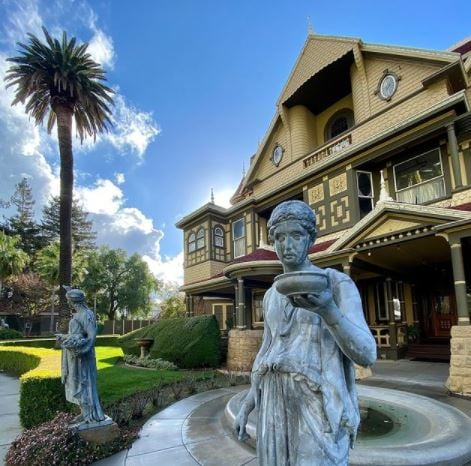
America is becoming a nightmarish laboratory for spiritual experimentation and mind-control games. A Devil who has unity will be a God. Sunday newspapers will always find it easier to print headlines of child murder than discuss masturbation. If you recall Dennis Wheatley’s stories of Satanic cultus and suburban Devil-worshippers—in satisfying the appetite, he helped create the popular image of Satanism. Wheatly dabbled with magic and was terribly dangerous, he lost touch with his friends after he slipped up in a ceremony and failed to master a demon, who has caused all his teeth to fall out. Wheatley prefaced his Satanic thrillers with dire warnings on the Devil and all His works—just thinking too long on Satan was dangerous enough, let alone his engaging in a Black Mass. Many people believed that Wheatly’s stories were more than just fiction, that the Satanic forces described in his novels were a real threat to the civilized World. It has been hinted at in popular culture, but is also believed that the Germans did use black magic during World War Two. Some truly believed that the power lurking behinds it eyes was literally Satanic. Sarah Winchester, heiress to the Winchester rifle fortune, was also known to be under attack by demonic forces, which is why many believe she built her beautiful, but bizarre mansion in San Jose, California with hidden rooms, secret passageways, and trap doors. The house was furnished with the finest materials and was a showcase of Victorian elegance and taste. However, prior to moving to San Jose, William Wirt Winchester and Sarah Winchester gave birth to a daughter named Anne. While enjoying Christian fellowship in their home in New Haven, they were disturbed when they prayed by the screaming of their newborn daughter. This happened consistently for two weeks. Mr. and Mrs. Winchester assured the prayer group that their child was all right, but they were as concerned as their guest were. One of the members in the prayer group started to think about the situation in connection with demons. However, he kept telling himself that surely such a small child could not be an object of demonic spirits. Nevertheless, they decided to experiment. #RandolphHarris 11 of 20

During the usual time, of fellowship after service, the group leaders asked that everyone pray. They knew that the baby, who was busying sleeping, would have a hard time hearing the prayer. To their amazement, at the very first words of Mr. Merrill’s prayer, the baby began to scream and cry frantically for her mother, Mrs. Winchester. Mr. Merrill was convinced then that this was some kind of demon demonstration. To make sure, they did the same thing the next night, and again the child screamed hysterically. He decided the Holy Spirit was speaking to him to do something. He could not stand to see the child so tormented. So Mr. Merrill audibly cried to God to rebuke the demon powers and give the child complete deliverance with the Holy Spirit and angelic protection. Instantly she stopped sobbing and seemed quite normal. Mr. Winchester and Mr. Merrill spent much time in prayer that night. After another week, Mr. and Mrs. Winchester told Mr. Merrill that their child appeared completely delivered from the demonic assaults. However, less than a month later in July 1866, Annie Pardee Winchester died, ironically the same year the Winchester Repeating Arms Company was established. In March of 1881, William Winchester also died. It is easy to imagine how the combined grief of losing both a child and a spouse could be very crippling. However, if you have $20,000,000 and all the time in the World to help you cope, can you imagine what you would do? Mrs. Sarah L. Winchester’s response to the deaths of her child and husband left a beautiful, mysterious, and impressive architectural reflection of her psyche. The fascinating story of the Winchester Mystery House has its roots in the personal tragedies suffered by Mrs. Winchester and in the legacy of the Winchester rifle, “The Gun that Won the West.” According to some sources, the Boston medium consulted by Mrs. Winchester explained that her family and her fortune were being haunted by spirits—in fact, by the spirits of American Indians, Civil War soldiers, and others killed by the Winchester rifles. Supposedly the untimely deaths of her daughter and husbands were caused by these spirits, and it was implied that Mrs. Winchester might the next victim. #RandolphHarris 12 of 20

However, the medium also claimed that there was an alternative. Mrs. Winchester was instructed to move west and appease these spirits by building a great house for them. As long as construction of the house never ceased, Mrs. Winchester could rest assured that her life was not in danger. Building such a house was even supposed to bring her eternal life. On a more practical note, maybe a change of scenery and a never-ending hobby were just what Mrs. Winchester needed to distract her from her grief. Whatever her actual motivations, Mrs. Winchester packed her bags and left New Haven, Connecticut to visit a niece who lived in Menlo Park, California. While there she discovered the perfect spot for her new home in the Satan Clara Valley. In 1884, she purchased an estate just three miles west of San Jose. Soon after the construction started, the architects discovered that the site was characteristic of an Irish ruin. Standing on a slight elevation, in the midst of a flat country, the castle lifted its turreted walls as proudly as when its ramparts were fringed with banners and glittered helmets and shields. In olden times it was a citadel of the town, and although it was fortified by a strong wall, protecting it alike from predatory assault and organized attack, it was clear that by treachery, surprise, or regular and long-continued siege that the castle had been taken. The central portion was a large square structure, this central fort was connected by double walls, the remains of which covered passages, with smaller fortresses, little castles built into the wall surrounding the citadel; and over these connecting walls, over the little castles, and over the piles of loose stones where once the strong outer walls had stood, the ivy grew in luxuriant profusion, throwing its dark green curtain on the unsightly masses, rounding the sharp edge of the masonry, hiding the rough corners as through ashamed of their roughness, and climbing the battlements of the central castle to spread nature’s mantle of charity over the remains of barbarous age, and forever conceal from human view the stony reminders of battle and blood. #RandolphHarris 13 of 20

The success of the ivy was not complete. Here and there the corner of the battlement stood out in sharp relief, as though it had pushed back the struggling plant, and, by main force, had risen above the leaves, while on one side a round tower lifted itself as if to show that a stone tower could stand for six hundred years without permitting itself to become ivy-grown; that there could be individuality in towers as among humans. The great arched gateway too was not entirely subjugated, though the climbing tendrils and velvet leaves dressed the pillars and encroached on the arch. The keystone bore a rudely carved, crowned heard, and ivy vines, coming up underneath the arch, to take the old king by surprise, climbed the bearded chin, crossed the lips, and were playing before the nose as if to give it a sportive tweak, while the stern brow frowned in anger at the plant’s presumption. However, only a few surly crags of the citadel refused to go gracefully into the retirement furnished by the ivy, and the loving plant softened every outline, filled up ever crevice, bridged the gaps in the walls, toned down the rudeness of projecting stones, and did everything that an ivy-plant could do to make the rugged old castle as presentable as were the high round mounds without the city, cast up by the besiegers when the enemy last encamped against it. The old castle had fallen on evil days—and over the next thirty-eight years Mrs. Winchester produced the sprawling complex we know today as the Winchester Mystery House. One day while on the estate, the sun had barely cleared away the thick, heavy mist, which was still slowly rising here and there, and the birds were majestically in search of their breakfast. While the famers were out tilling the fields, a long, lanky figure was draw to its full height, the white eyeballs and jagged teeth had a red glow about them, and he waved his hand triumphantly in the direction of the vanishing cloud of birds. Then there came a loud gun shot, then next thing anyone say was the quivering body of this of a man on the ground, and wild eyes staring open in the agony of death. #RandolphHarris 14 of 20

The farmers ran over and glanced at the body of this man. They figured they better hide him in the long grass and come back after dinner to bury him. After dinner, they walked slowly at first, gradually increasing their pace as they became more distant from the mansion, and they never spoke a word. Then suddenly the, as they drew closer, the man clutched one of the farmer’s arms. It he pleading for help, so they hit him with a shovel and began to dig its grave. For more than an hour they worked desperately with the chopper and hunting-knife, being greatly assisted in their task by a rift in the ground where the soil had been softened by water running from the creek, and they stood up with sweat pouring from their faces, and stamped down the Earth to cover all traces of the man. They had filled the grave with some large stones that were lying about (remnants of some ancient temple, long ago deserted and forgotten), thus feeling secure that it could not easily be disturbed by animals. From the night on, a wolf would come howling around their cottages on the estate, which would make their blood run cold. They swore they were being haunted by the spirit of that man they murdered and that he some how much have entered this animal’s body, bent on obtaining vengeance. One of the farmers grew ill, he was thin, very pale, and haunted by a ghastly expression. He was a married man who had carried on an adulterous relationship with one of the maids the took care of Mrs. Winchester’s house. The maid was reputed to indulge in black magic. They day of the murder, the man had tried to end his illicit affair. He told the woman that he wanted to break off his relationship with her. She was very upset and threatened him, saying that if he did then his wife and children would suffer in the process. The man however, was determined to break it off and stuck to his decision. Later that day is when they suspected one of their fellow famers was a demon and shot and buried him. Two days later, the adulterous farmer’s son became ill. They rushed him to the hospital and he died there. The doctors were unable to diagnose the disease. #RandolphHarris 15 of 20

Later still, the adulterous famer’s wife and daughter fell ill. The man was by now quite frightened and remembered the threats of the woman with whom he had had the affair. He went to her and begged her not to use black magic against his family. She softened and said that she would stop. Thereupon his wife and daughter recovered quickly, but he died. During Aleister Crowley’s visit to the Winchester Mansion, He spoke to a farmer about his saw being stolen. Crowley, as you may know was a black magician, and called “the Great Beast 666,” after the devilish monster of the Book of Revelations. The farmer paid Crowley a considerable amount of money, and in returned he promised his immediate help, stating that the thief would die. The farmer and Crowley walked around the grounds of the mansion, and within three hours of his interview with Crowley, the thief had a fatal heart attack. At the Winchester mansion, Crowley claimed that black magic was very literally invoked against him. In 1898 Crowley was initiated into the Golden Dawn by its founder, the influential occultist S.L. MacGregor Mathers while at the Winchester mansion. Mathers was one of the “the Masters.” They were believed t be benevolent supermen, or demigods, who has spokes women on Earth. Mather become the “Supreme Magus,” and all members of the Golden Dawn signed an oath of obedience to him. It was unclear if Mrs. Winchester was part of the Golden Dawn, but some of these sorcerous rituals which were supposedly aimed toward gaining power and enlightenment, supposedly took place in her home. After a few séances at the Winchester mansion, Crowley fell out him Mathers. He alleged that Mather summoned a middle-aged vampiress Called “Mrs. M,” who confronted Crowley while they were at Mrs. Winchester’s mansion, where the vampiress transformed into a beautiful young woman. She subjected him to a near-fatal seduction. According to Crowley’s account, he repelled her with his mystic forces, whereupon: “She writhed back from me, and again approached me even more beautiful than she had been before. She was battling for her life now, and no longer for the blood of her victim. #RandolphHarris 16 of 20

“The odour of man seemed to fill her whole subtle form with feline agility. One step nearer and then she sprang at me with an obscene word sought to press her scarlet lips to mine. As she did so I caught and held her at arm’s length and then smote the sorceress with her own current of evil. A bluish-green light seemed to play round the head of the vampire, and then the flaxen hair turned the colour of muddy snow, and the fair skin wrinkled, and her eyes dulled and became pewter dappled with the dregs of blood. The girl of twenty had gone; before me stook a hag of 60. With dribbling curses, she hobbled from the room.” If spiritism pertained only to pagan religions and had never affected the people in so-called Christian lands, then a careful study of its practices and phenomena might not be imperative. Interest in the occult is reaching alarming proportions and even some professing Christians are being duped into complicity with spiritistic traffic. This was true of the late Bishop James A. Pike. Worldwide spiritism is conservatively estimated to have at least seventy million adherents. Kurt E. Koch, a German evangelist and student of the occult for thirty years, enumerates sixteen different varieties of spiritistic practices. If spiritism is to be accurately evaluated and its somber relation to human experience comprehended, all of these must be carefully understood. Spiritistic phenomena may be conveniently divided into the following categories: physical phenomena (levitations, apports, and telekinesis); psychic phenomena (spiritistic visions, automatic writing, speaking in a trance, materialization, table lifting, tumbler moving, excursions of the psyche); metaphysical phenomena (apparitions, ghost); magic phenomena (magic persecution, magic defense); cultic phenomena (spiritistic cults, spiritism among Christians.) There are very scarce published accounts of Daisy, Mrs. Winchester’s niece, being haunted while staying at the Winchester mansion. However, she was reportedly strangely molested by spirits and witches; also the aforesaid Winchester Mystery House is still being haunted by spirits. #RandolphHarris 17 of 20

While staying in Mrs. Winchester’s house, Daisy also suffered great annoyance every night from some invisible object, which threw stones and turf at her bed, the force of the blow often causing the curtains to open, and even drawing them from one end of the bed to the other. About the same time, also, the pillows were taken from under her head, and the clothes pulled off; and though a strict search was made, nothing could be discovered. Continuing to be annoyed in this way she removed to another room, being afraid to remain any long. Then about the 11th of December 1898, she was sitting in the twilight at the kitchen fire, a little body came in and sat down beside her. He appeared to be about eleven or twelve years old, with short black hair, having an old black bonnet on his head, a half-worn blanket about him trailing on the floor, and a torn vest under it, and kept his face covered with the blanket held before it. Daisy asked him several questions: Where he came from? Where he was going? Was he cold or hungry? and so on; but instead of answering her he got up and danced very nimbly rough the kitchen, and then ran out of the house and disappeared in the cow-shed. The servants ran after him, but he was nowhere to be seen; when they returned to the house, however, there he was beside them. They tried to catch him, but every time they attempted it, he ran off and could not be found. At lest one of the servants, seeing the master’s dog Zip coming in, cried out that her master was retuning home, and that she would soon catch the troublesome creature, upon which he immediately vanished, nor were they troubled by him again till February 1899. On the 11th of that month, which happened to be a Saturday, Mrs. Winchester was reading Dr. Wedderburn’s Sermons on the Covenant, when, laying the book aside for a little while, nobody being in the room all the time, it was suddenly taken away. She looked for it everywhere, but could not find it. #RandolphHarris 18 of 20

On the following day the apparition already referred to came to the house, and breaking a pane of glass in one of the windows, thrust in his hand with the missing volume in it. He began to talk with one of the servants, Angus Spear, and told her that the kitchen, and that her mistress would never get it again. The girl asked him if he could read it, to which he replied that he could, adding that the Devil had taught him. Upon hearing this extraordinary confession she exclaimed, “The Lord bless me from thee! Thou hast got ill lear (learning).” He told her she might bless herself as often as she liked, but tht it could not save her; whereupon he produced a sword, and threatened to kill everybody in the mansion. This frightened her so much that she ran into the parlour and fastened the door, but the apparition laughed at her, and declared that he could come in by the smallest hole in the house like a cat or mouse, as the Devil could make him anything he pleased. He then took up a large stone, and hurled it through the parlour window, which, upon trial, could not be put out at the same place. A little after the servant and child looked out, and saw the apparition catching the turkey-cock, which he threw over his shoulder, holding him by the tail; and the bird making a great sputter with his feet, the stolen book was spurred out of the loop in the blanket where the boy had put it. He then leaped over a wall with the turkey-cock on his back. Presently the girl saw him endeavouring to draw his sword to kill the bird, but it escaped. Missing the book out of his blanket he ran nimbly up and down in search of it, and then with a club came and broke the glass of the parlour window. The girl again peeped out through the kitchen window, and saw him digging with his sword. She summoned up courage to ask him what he was doing, and he answered, “Making a grave for a corpse which will come out of this house very soon.” He refused, however, to say who it would be, but having delivered himself of this enlivening piece of information, flew over the hedge as if he had been a bird. #RandolphHarris 19 of 20

For a day or two following nothing happened, but on the morning of the 15th the close where mysteriously taken off Daisy’s bed, and laid in a bundle behind it. Being put back by some of the servants they were gain removed, and this time folded up and placed under a large table which happened to be in the room. Again they were laid in order on the bed, and again they were taken off, and this third time made up in the shape of a corpse, or something that very closely resembled it. When this strange news spread through the neighbourhood many persons came to the house, and, after a thorough investigation lest there might be a trick in the matter, where obligated to acknowledge that there was something invisible at work. Reverend N. P. Wallgren and Reverend Osborn of the Swedish Evangelical Mission Church of San Jose stayed the whole of that day and the following night with that distressed family, spending much time in prayer. At night Daisy went to bd as usual in the haunted room, but got very little rest, and at about twelve o’ clock she cried out suddenly as if in great pain. Upon Mr. Sinclair asking her what was the matter, she said she felt a knife had been struck into her back. Next morning she quitted the haunted room and went to another; but the violent pain never left her back, on the 22nd of February, she almost died. During her illness the clothes were frequently taken off the bed which she occupied, and made up like a corpse, and even when a table and chairs were laid upon them to keep them on, they were mysteriously removed without any noise, and made up as before; but this never happened when anyone was in the room. The evening before she almost died, they were taken off as usual; but this time, instead of being made up in the customary way, they were folded with great care, and laid in a chest upstairs, where they were only found after a great deal of searching. At it height the Winchester Mansion encompassed 761 acres, was 9 stories high, approximately 125,000 square feet, and possessed as many as 500 to 600 rooms. Because so many changes were made, the mansion now stands 4 stories over 4 acres, is about 25,000 square feet, and has an impressive 160 remain. It is still a beautiful, rambling mansion and sure is worth a visit. #RandolphHarris 20 of 20

Winchester Mystery House

Watch your step in Sarah’s Séance Room! There are three exits in this room and only one entrance 😳 Those exits include the main door, a secret passageway leading into an unfinished closet, and this door that opens to an 8-foot drop into a kitchen sink below. https://www.winchestermysteryhouse.com/

🎟 link in bio. A 160-room mansion built to appease the spirits who died at the hands of the Winchester Rifle 👻

I’m on to Your Game, You Can’t Make Me Flip

Leaders are people who do the right thing. They have a significant role in creating wisdom, and the know how and skill to do it all. So truly inspirational leadership is that it makes a way for the dream to be obtained. Amazing as it may seem, fully half a century after the knowledge economy began, we know embarrassingly little about the “knowledge” that lies behind it. If, for example, knowledge is the oil of tomorrow’s economy, as many have suggested, then how much of this intangible “oil” exists? Petroleum companies, armies, Wall Street traders and Middle East sheikhs spend fortunes trying to estimate the real—as distinct from claimed—size of global oil reserves. However, does anyone know how much the World knows? Or how the World’s knowledge supply is changing? How much of it is worth knowing? And what is it worth? To answer questions like these, we will need to blaze some surprising pathways, exploring bizarre beliefs about everything from the Christian Bible and the Holy Koran to science, the behavior of beavers and toxic tomatoes. The more we use…? Our starting point is a single critical fact: Knowledge—another of the deep fundamentals of revolutionary wealth—has become one of the fastest changing components of our economic and social environment. This is why any comparisons of knowledge to oil is misleading. The ways in which we store and deliver petroleum have changed only modestly in the past century—we still rely on pipes, tanks and tankers. By contrast, with the spread of computers, satellites, mobile phones, the Internet and other digital technologies, we are drastically altering the ways in which we create and store knowledge, the speed at which it decays, how we judge its validity, the tools we use to make more of it, the languages in which it is expressed, the degree of specialization and abstraction in which it is organized, the analogies we rely on, the amount that is quantified and the media that disseminate it. #RandolphHarris 1 of 18

Moreover, all these dimensions of knowledge are changing simultaneously, at speeds never before encountered—and opening up countless new ways to create wealth. Another basic difference between oil and knowledge is that the more oil we use, the less we have left. By contrast, as we have suggested, the more knowledge we use, the more we create. This difference alone makes of mainstream economics obsolete. Economics can no longer be defined—as it often was—as the science of the allocation of scarce resources. Knowledge is essentially inexhaustible. These changes in the way we relate to knowledge have powerful effects on real-World wealth—who gets it and how. They send lawyers, accountants and legislators scurrying to rewrite existing rules about taxes, accounting, privacy and intellectual property. They intensify competition and accelerate innovation. They make old regulatory rules obsolete. They create continuous turbulence and turnover in methods, markets, and management. They allow whole industries and sectors to move beyond mass production and mass consumption to higher-value-added, more personalized products, services and experiences. Above all, these changes in knowledge demand much faster, smarter decision-making under more and more complex, if not chaotic, conditions. Yet, for all the thousands of analyses and studies of emerging knowledge economies, the impact of knowledge on creating wealth has been, and remains, misleading undervalued. Though the United States of America is still a great manufacturing power, fewer than 20 percent of its labor force works in this sector. Fully 56 percent performs work that is managerial, financial, sales-related, clerical or professional. The category growing most rapidly of all is professional—the most knowledge-intensive. Such much-quoted numbers, however, underestimate the new reality. #RandolphHarris 2 of 18

Far more than 56 percent are engaged in knowledge work. That is because today many machine operators, whether in leading-edge American steel mills or, for that matter, South Korea consumer-product plants, spend at least part of their time monitoring computers, much like pilots in a 747 cockpit. Cars have computers in the windows, in the cockpit, on the grill and on the bumper. Truck drivers rely on computers in their cabs. They may not be categorized as knowledge workers, but they, too, are generating, processing and transmitting knowledge or the data and information that underlie it. They are, in effect, part-time knowledge workers, but are not counted as such. And that is not all that goes uncounted. The knowledge we all use to create wealth includes hard-to-measure tacit or implicit knowledge stored inside our heads. What makes us knowledgeable,” for example, is an everyday understanding of the people around us. It includes knowing whom to trust, how a boss will react to bad news, how teams work. It includes job skills and behavior we may have learned by simply watching others. It includes knowing about our own bodies and brains, how they perform and when they let us do our best work. Some of this tacit knowledge is trivial. However, some is vital to everyday life and to productive endeavors. It is that back-of-the-mind knowledge on which we all depend—knowledge we may not even know we have. And precisely because it is so varied, and so far in the background, it, too, is often ignored by economists. In short, for these and other reasons, knowledge has long been shortchanged by economists—and today more than ever. To peer into the heart of tomorrow’s economy, therefore, we need to compensate for this lack of knowledge about knowledge. Every one of us, at any given moment, has an individualized inventory of work- and wealth-related knowledge. Authors presumably know something about the craft of writing and about the book-publishing industry. Dentists know about teeth. Gas station attendants know about steering fluids. #RandolphHarris 3 of 18

However, not all knowledge belongs to individuals. Work teams, companies, industries, institutions and whole economies each, at any given moment, develop their own collective knowledge supply. The same might be said of societies and nations. All this knowledge is stored in two fundamentally different ways. One part of the knowledge supply is found inside our skulls. In each of us there is a crowded, invisible warehouse full of knowledge and its precursor data and information. However, unlike a warehouse, it is also a workshop in which we—or, more accurately, the electrochemicals in our brains—continually shift, add, subtract, combine and rearrange numbers, symbols, words, images and memories, combining them with emotiosn to form new thoughts. As they by, these thoguts may include everything from Wall Street stats, ideas about our customers, a friend’s trip about our golf swing, images of our mother’s face, worries about a sick child or a technical formula for improving a product, all interspersed with flashes of last night’s baseball game on TV, fragments of an advertising jingle from a car commercial and a half-finished outline for an overdue memo. Individually, such disparate items may mean little. However rearranged, they take on shape and larger meaning. They often turn into action that alters important decisions about our personal life, work and wealth. Concern for the sick child may make it hard to concentrate on the memo, or to keep tomorrow’s golf date with a customer, while the drop in stock-market prices may lead us to defer buying that new BMW. Let us inspect that knowledge warehouse and workshop. If we could shrink ourselves down to nanosize and walk around this constantly changing mental space, we would find endless rows and piles of facts and supposed facts. We would find concepts jumbled together or neatly piled atop other concepts, and linked to still others. Somewhere we would find all of our assumptions, plausible or not, about people, love, pleasures of the flesh, nature, time, space, religion, politics, life, death and causation. Hidden in some dark, remote corner we would find grammar the very languages we use and the logic and rules we apply to arrive at and manage our collection of meanings. #RandolphHarris 4 of 18

It is a busy, churning place, operating without stop, even when we sleep. Whole some knowledge is continually lost, forgotten, mutated or rendered pointless, new, wealth-relevant knowledge is continually added. We can call all of this put together our personal knowledge supply. We all have one. There are more than seven and a half billion of these personal knowledge supplies currently walking around the planet—more than at any time in human history. However, by far most of the World’s knowledge is stored outside the brains of living humans. It is the accumulated knowledge of the ages—and of the moment—stored externally on everything from ancient cave walls to the latest hard drives and DVDs. For millennia humans had extremely limited ways to pass knowledge from one generation to the next. Apart from oral narratives (told and retold with accumulating inaccuracy), most knowledge died with each dying person and each dying generation. The rate of social and technological change in these early human societies was so slow, therefore, that even accurate accounts mainly told the same stories over and over again. A giant breakthrough occurred thirty-five thousand years ago when some unremembered genius drew the first pictograph or ideograph on a stone or a cave wall to memorialize an event, person or thing—and, in so doing, began storing non-oral memories outside the human brain. Another great advance followed the invention of various forms of writing. Millennia later came additional huge leaps with the successive invention of libraries, indexing and printing, all of which increased the rate at which knowledge grew from generation to generation. It is sobering to think that without this one factor—growth in our ability to generate and accumulate knowledge—we might still be living little better than our ancestors did more than thirty-five thousand years ago. Today, with the arrival of every-more-powerful computers, ever-more Web sites and ever-more new media, we are generating—and accumulating—data, information and knowledge at unprecedented speeds. To accommodate them, we have in recent decades been building what is, in effect, an immense megabrain outside, and in addition to, our six and a half billion individual human brains. #RandolphHarris 5 of 18

This global megabrain is still that of a baby, incomplete, with adult connections not yet in place. Yet at some unknow, crucial tipping point in human history, the amount of knowledge stored outside our brains became larger than the amount stored inside. If anything proves our ignorance about knowledge, it is the fact that this truly momentous change in the history of our species is either unknow or unnoticed by humanity. The “outside brain” is expanding at unbelievable speed. The amount of data, information and knowledge stored in print, film, magnetic or optical form in one year alone is equivalent to that which is contained in a million new libraries the size of the Library of Congress. It is equal to every word ever uttered by a human being since the dawn of time. Today, we can assume, the pace is even faster. It is only when we add this exploding external storage to what is inside our human brains that we arrive at our human species’ total supply of knowledge—what might be called the Aggregate Supply of Knowledge, or ASK. This becomes the immense wellspring on which revolutionary wealth can draw. We are not merely expanding the ASK, but altering the way it is organized, accessed and distributed. Internet search engines permit more and more relate contents. Moreover, systems that have until now been dominated by Western approaches to logic and thinking will soon be enriched by alternative epistemologies and more diverse ways to organize thought as we move toward a global knowledge meta-system. We are, therefore, transforming the entire relationship of wealth, in all forms, to the deep fundamental of knowledge—even as we similarly transform its links to time and space. Only by recognizing this can we appreciate, for the first time, why revolutionary wealth today is so qualitatively different from wealth in any previous era. #RandolphHarris 6 of 18

When computer scientist Michael E. Lesk of the U.S. National Science Foundation cast light on the emerging global brain, he took a different track. Beginning with our seven and a half billion-plus brains, and based on the rates at which they absorb information and how fast we forget it, Mr. Lesk roughly calculated that the “total memory of all people now alive” is the equivalent of 1,200 petabytes of data. Since a petabyte is equal to 1,125,899,906,842,624 bytes, 1,200 sounds like a lot. However, Mr. Lesk nonchalantly assures us, “We can store digitally everything that everyone remembers. For any single person, this isn’t even hard.” After all, he continues, “the average American spends 3,304 hours per year with one or another kind of media.” Some 1,578 hours are spent watching TV, another 12 in front of movie screens—which adds up to about 11 million words. Another 354 hours are devoted to newspapers, magazines, and books. The result, he suggested, is that “in 70 years of life you would be exposed to around six gigabytes of ASCII.” Today you can buy a 20-terabyte disk drive for your personal computer. The amount of data in the World was estimated to be 44 zettabytes at the dawn of 2020. By 2025, the amount of data generated each day is expected to reach 463 exabytes globally. Also, the World spends almost $1 million per minute on commodities on the Internet. By 2025, there will be 75 billion Internet-of-Things (IoT) devices in the World. By 2030, 90 percent of every person age six and above will be digitally active. There should be around 175 zettabytes of data by 2025. It is a number that is hard to envision! However, with the countless advanced technological devices available now, processing these massive amounts of data is not impossible. The day is not far off when pupils will need to memorize nothing—they will wear a gadget that stores everything for them. And that raises fascinating questions. Might that gadget also help Alzheimer’s patients? It seems with the advancement of technology and information, to keep up humans have to start turning themselves into partial androids. Yet, everything that has, can, or ever will exist, in this or any other World may be fully described by the complete collection of relevant facts and the corresponding set of logical interconnections. #RandolphHarris 7 of 18

No attempt comes close to telling us how much meaningful knowledge there is in all this storage. Or what it is worth. However, all of them support our contention that revolutionary changes are taking place in the deep fundamental of knowledge—changes for which the term revolution is an understatement. We are, in fact, living through the deepest upheaval in the World knowledge system since our species started to think. Until we digest this point, our best-laid plans for the future will misfire. And that takes us to those toxic tomatoes and…the buried head of a child. The Hipster Generation, in our model, are those who have resigned from the organized system of production and sales and its culture, and yet who are too hip to be attracted to independent work. They are a phenomenon of the after of 911. Their number is swelled by youths whose careers, hesitant at best, have been interrupted by the pandemic. This group is socially important out of proportion to its numbers, and it has deservedly and undeservedly attracted attention and influenced many young people. The importance of the Hipster is twofold: first, they act out a critique of the organized system that everybody in some sense agrees with. However, second—and more important in the long run—they are a kind of major pilot study of the use of leisure in an economy of abundance. They are not, as such, underprivileged and disqualified for the system; nor are they, as such, emotionally disturbed or delinquent. Some young men might be driven to this position by personality disturbances, but the subculture they have formed has made sense and proved attractive to others without those disturbances, but who have the identical relation to the organized society. In many ways the Hipster subculture is not merely a reaction to the middle class or to the organized system. It is natural. Merging with the underprivileged, the Hipsters do not make a poor go of it. Their homes are often more livable than middle-class homes; they often eat better, have good vinyl records, etcetera. #RandolphHarris 8 of 18

Some of their habits, like being scheduled, sloppy, communitarian, easy-going with pleasures of the flesh, and careless of reputation, go against the traditional grain of the middle class, but they are motivated by good sense rather than resentment: if they got wise to themselves, they are probably natural ways that most people would choose—at least so artist and the less affluent have always urged. Their rejection of the popular culture, Broadway theater, status commodities, bespeaks robust mental health. (It is, oddly, just these reasonable and natural ways that have won underserved attention as outrageous. For Madison Avenue boys are miffed and fascinated that Hipster get away with it, and so they keep writing them up.) The Hipster culture share specific traits of the “outside” class to which they have appointed themselves. Some of these are accidental, belonging to the particular marginalized groups who from the present-day poor—just as in France, it is the North Africans who set the tone. Others are essential, pertaining to being “outside” of society, such as being outcast and objects of prejudice; defying convention rather than just disregarding it; in-group loyalty; fear of the police; job uselessness. Besides these natural traits and present-day poor traits, Hipster culture is strongly suffused with the hipsterism that belongs to the middle status of the organized system. This appears in some of the Hipster economic behavior that can be a defensive ignorance of the academic culture; and in a cynicism and neglect of ethical and political goals. Balked in their normal patriotism and religious tradition, the Hipsters seek pretty far afield for substitutes, in the Silicon Valley or on Wall Street. As a typical genesis for a Hipster Generation, we have suggested attachment to middle-class home but withdrawing from its values, without growing into other worthwhile values. They are on speaking terms with their families but dissent from all their ways. They experience the University, for instance, as part of the worthless organized system rather than as Newton and Musk. #RandolphHarris 9 of 18

Finally, we see that Hipsters regard themselves as in a metaphysical crisis: they have to choose between the system and eternal life; and therefore their more philosophic utterances are religious and strewn with references to the apocalypse and saints of yore as when President Trump calls the TV News media “Fake News,” and for that he was censored and forced out of office. This is not, on the whole, a strong position: to be resigned and still attached, and therefore to have recourse to apocalyptic means. However, let us see what can be made of it, and turn first to the jargon, a variant of urban culture jargon of English, jive. In this talk there is a phrase “make it,” meaning “to establish oneself in some accepted relation to something.” One can make it as a writer, as a counter boy, with girl. The word comes from the common English “make it against difficulties,” as, “They kept shooting at him but he made it across the field.” It is akin to “make good as a lawyer, a writer,” but it is not so strong and positive. (We should not say “Make good as a counter boy.”) The difficulties overcome are those that confront anyone who has dropped “out” of the ordinary social functions when he tries to establish himself as anything at all, to be a something, a something or other. The usage is an acceptance of withdrawal. The Hipster is an enfant terrible turned inside out. In character with his time, he is trying to get back at the conformist by lying low. One cannot interview a hipster because his main goal is to keep out of a society which, he thinks, is trying to use the fake news media and television programs to make everyone over into a preprogramed image. The hipster may be a jazz musician; rarely an artist, almost never a writer. He may earn his living as a petty criminal, a hobo, a carnival roustabout, a coffee shop employee, or a free-lance moving man in Greenwich, Connecticut, but some hipsters have found a safe refuge in the upper income brackets as engineers, computer programmers or movie actors. He is considered infantile, but his infantilism is a sign that he is not aggressive or a tyrant. #RandolphHarris 10 of 18

As the only extreme nonconformist of his generation, he exercises a powerful if not underground appeal as a social media influencer. Establishing an acceptable social relation against obstacles, draws from the Role Playing that is the chief function of the middle status of the organized system. One can says, “He made it, I made it in the Silicon Valley,” indicating no specific job, for that is unimportant, but usually means you work at a tech company and can afford a $2 million house, at the least, and a brand-new luxury Hybrid. Now a more general withdrawal, from experiencing altogether, is expressed by the omnicapable word “like.” Exempli gratia, “Like I’m sleepy,” meaning “if I experienced anything, it would be feeling sleepy.” Like if I go to like New Yor, I’ll look for up,” indicating that in this definite and friendly promise, there is no felt purpose in that trip or any trip. Technically, “like” is here a particle expression a tonality or attitude of utterance, like the Greek verily, or now look. “Like” expresses adolescent embarrassment or difference. Thus, if I talk to a young fellow and give him the security of continued attention, the “like” at once vanishes and is replaced by “You know,” “I mean,” “you know what I mean,” similarly interposed in every sentence. The vocative expletive “Man,” however, has different nuances in different groups. Among the Hipster it is used differently and means, “We are not small children, man, and anyway like we are playing together as like grownups.” Among some others, it is often more aggressive and mean, “Man, now don’t you call me boy, buddy or inferior.” And still to others “Man” means, “That is ‘the Man,’ the government or a man of another race who cannot be trusted.” Among proper hipsters it means, “We are not impotent.” So far as I can hear, it never means acceptance of the speakers as adult males, nor does it have the ring of respect or admiration (Mensch), as a woman or hero-worshipping boys might use it. When the interlocutor is in fact respected or feared, he would not be called “man.” (Perhaps “boss”?) #RandolphHarris 11 of 18

“Cool,” being unruffled and alert, has the same nuances. In standard English a man “keeps cool in an emergency.” If there is always an emergency, it must imply that the danger is internal as well as external: the environment is dangerous and feeling is dangerous. As spoken and enacted by a young Hipster, maintain a mask-face and tapping his toe quietly to the jazz, it means, “I do not feel out of place, I am not abandoned and afraid, I am not going to burst into tears.” In the original gangster (O.G.) the nuance is rather, “I’ll stay unruffled and keep out of trouble around here; I won’t let on what I feel, these folk are dangerous.” With the hipster, the jaw is more set and the eyes more calculating, and it means, “I’m on to your game, you can’t make me flip.” In general, coolness and mask-face are remaining immobile in order to conceal embarrassment, temper, or uncontrollable anxiety. To make a remark about language as a whole as used by the Hipsters: Its O.G. base is, I think, culturally accidental; but the paucity of its vocabulary and syntax is for the Beats essentially expressive of withdrawal from the standard civilization and its learning. On the other hand this paucity gives, instead of opportunities for thought and problem solving, considerable satisfaction in the act and energy of speaking itself, as is true of any simple adopted language, such as pig Latin. However, this can have disadvantages. One learns to one’s frustrations that they regard talk as an end in itself, as a means of self-expression, without subject matter. In a Hipster group it is bad form to assert or deny a proposition as true or false, probable or improbable, or to want to explore its meaning. The aim of conversation is for each one to be able, by speech, to know that he is existing and belonging. So among perfectly intelligent and literate young men, some movie or movie star will be discussed for an hour, giving each one a chance to protect his own fantasies; but if someone, in despair, tries to asset something about the truth or worth of the movie, the others will at once sign off. #RandolphHarris 12 of 18

(Among all American adolescents and even fellows in their late twenties, however, there is an embarrassment about “what to say”—“I never have anything to say to a girl,” or “They keep talking about painting and I have nothing to contribute.” Speaking, that is, is take as a role. If they are interested in the subject, they do not have confidence, they will say something, and if they are not interested, why bother? Here too the Hipsters have helped formalize and make tolerable a common difficulty; one contributes just by saying, “Like,” “Cool,” and “Man.”) Now, celibacy can creep up in myriad unexpected ways. Skewed gender ratios, a global fact of life, often produces unwilling celibates. The ratios are distorted by any number of phenomena. Wars are a major contributor, killing off enormous numbers of men in a narrow age range. Female infanticide, the consequence of the World’s preference for male children, warps populations so that women become much rarer—modern China, with 118.5 males for every hundred females, is now experiencing this disconcerting reality. Celibacy is one important response to these skewed rations, especially in light of predications by Chinses officials, who estimate that “the number of hopeless bachelors could mushroom to 80 million. (Polyandry would also be a solution, but globalization may help also as more females go to China for business.) Old age also creates celibates, usually women. Many are married to men who have become impotent, a common problem in older males. Unless these women turn to extramarital affairs, they are forced into celibacy. So are the millions of wives who outlive their husbands, another common phenomenon. Their situation garners little understanding or support. Society assumes these old women and the few men also in their category have become asexual and ridicule them as absence if they show interest in pursuing a relationship which involves pleasures of the flesh. North American nursing homes, for example, usually enforce celibacy. At the end of their lives, even women and some men who are interested in pleasures of the flesh are obliged to retire into a chaste existence they neither seek nor enjoy. #RandolphHarris 13 of 18

Their unwanted lifestyle is reinforced by adult children who are often deeply distressed or disgusted at any hint of activity involving pleasures of the flesh or even desire in their mothers. They find such eroticism inappropriate and threatening, even selfish—they believe good mothers live for others, whereas intimate passions satisfy deeply personal needs. In old age, women are expected to revert to the undefiled state of early childhood when they were genderless, virginal, and pure. As a result, many respond by stifling their sensuality. They are made to feel guilty and inadequate and accept the celibate role they are expected to play. In any case, the death of suitable partners effectively imposes celibacy on even the most amorous older women. On the beneficial side, they are forced into it relatively late in life, unlike other coerced celibates. Today, widowhood connotes sadness, seniority, whitened hair, and the fragility of aging bones. Young widows exist, but because they may remarry, they are not strikingly sadder than divorcees of the same age. To a great extent, our image corresponds to the reality. This was not always so. Until medical advances became widely available, at different times in different places, widows and widowers could be any age. Death respected neither youth nor maturity, carrying off its victims in childbirth, plagues, epidemics, drought, famine, and a host of other natural catastrophes. Widows, in those times, could be teenaged, middle-aged, or very old. From our perspective of celibacy, what really mattered was the future as either perpetual widows or remarried wives. (Widowers, of course, are much rarer and are much more likely to be encouraged to remarry.) All societies have policies about widow remarriage, with many permitting it, some to the extent of making specific provisions for them to marry brothers-in-law, who will be fully invested in parenting any children and in caring for the now single woman. Other societies are—or were—neutral or hostile to widow remarriage. Early Christianity falls into the latter category. Marrying another man, even after the first one was dead, sounded far too much like a license for pleasures of the flesh. #RandolphHarris 14 of 18

It was, therefore, severely frowned on to remarry after becoming a widow. The assumption was that widows would/should remain perpetually chaste. Once a woman had been married, society recognized her husband’s right to exclusive ownership in any intimate passions, which continued in force even after his death. The general view was that a widow’s remarriage violated that ownership by transferring it to a new man, which was widely regarded as a betrayal of her first husband. Hinduism’s take on widowhood incorporates elements of this fundamental revulsion for female pleasures of the flesh with reincarnation, producing a conclusion that is a merciless condemnation of widows. Basically, Hinduism understands the husband’s death—especially from an accident, disease, or chronic condition, as opposed to old age—as caused by his wife’s sinful behavior in a previous life. How to challenge such an interpretation, which is at the core of the religion’s Worldview? And so instead of sympathy for her bereavement, concern for her economic plight, anxiety about her fatherless children, Hinduism turns accusingly on the widow and consigns her to, at best, a living hell and, at worst, to an agonizing death. Until recently in the Hindu World, widows of any age were reviled and cursed. “Some day that child marriages cause early widowhood,” wrote a Brahmin. “I say that widowhood is not caused by child marriages, but by those child widows having acted against their husbands in previous births. Adultery, teasing, etcetera, might have been the cause…Child widowhood is horrible, no doubt, but it is the effect of the wrath of God upon man.” In other words, widows were criminals, virtual murderers. What sort of life does such an evil creature deserve? The most brutish possible, and the most chaste. Manu, the Hindu lawgiver, decreed a widow should starve herself by eating only herbs, roots, and fruits, and so a widow traditionally ate once a day, only the plainest foods, and was always hungry. #RandolphHarris 15 of 18

To ensure her chastity and her family’s honor, she had to remain in her family’s home, was made ugly, and was condemned to emotional and physical torment. Her hair was shaved and she no longer wore the red dot of marriage—the tilaka—on her forehead. She was stripped of all her jewelry, her earrings, nose-ring, bangles, chains, and bracelets. She wore only a white sari without a blouse underneath and went barefoot. Expect to do chores everybody else rejected, she could no longer leave her home, but worked there as a drudge, reviled and cursed. At night she slept on the floor, sometimes on a hard mat. In ancient times, she had to cake her head with mud and sleep on a bed of stones. She could join in no family outings, ceremonies, or celebrations. Despite every privation, a widow’s chastity was always suspect. In a folk song, a widow moaned to her mother-in-law, “I shall be alone in my bed, O mother-in-law, and not just for a few days; immature before marriage, I was totally inexperienced; now, how will I spend my nights and days alone?” Of course, a widow was easy prey, and the predator was often a male relative. If a pregnancy occurred, because the double standard in India thrives as solidly as elsewhere, the widow was shunned and could expect no pity from any quarter. Her seducer, however, being a man, escaped all consequences of the affair. Even if he wanted to, he could not marry her. A widow was forever her husband’s and remarriage was absolutely forbidden. Millions of widows suffered grievously. Many were children who had never even lived with their husbands. Often they were toddlers. Not surprisingly, throughout Indian history the number of child widows has been enormous. The last census of the nineteenth century recorded that Calcutta alone had ten thousand widows under four years of age, and over fifty thousand between five and nine. Between 1921 and 1931, in all of India, the number of child wives rose from 8,565,357 to 12,271,595, creating the potential for millions of future child widows. #RandolphHarris 16 of 18

The Hindu religion taught that before marriage and childbearing, boys and girls should spend years as chaste brachinines. Gandhi, too, hated child marriage. “Where,” he demanded in 1926, “are the brave women who will work among the girl-wives and girl-widows, and who will take no rest and leave none for men until girl-marriage becomes an impossibility?” He lamented as well “the inhuman treatment often accorded to our widows.” Inhuman, indeed, and based solidly on traditional teachings about women. These do not make lovely reading. How, for instance, to digest this ancient wisdom: “even if he were to do nothing else throughout a long life of a hundred years, a man with a hundred tongues would die before finishing the task of lecturing upon the vices and defects of women.” And, continues this litany of condemnation, “women combine the wickedness of a razor’s edge, poison, snake and fire,” and their natural faults are “falsehood, thoughtless action, trickery, folly, great greed, impurity and cruelty.” They are “lascivious, fickle-minded and falsehood incarnate” and “have the hearts of Hyaenas.” Manu the lawgiver expressed it pithily: “Stealing grain or cattle, having pleasure of the flesh with a woman who drinks liquor, or laying a woman, are all minor offences.” Manu’s views are tremendously important because they influenced two thousand years of legislation and custom. Women had no rights and lived only to serve their husbands, who could abuse, discard, or sell them with impunity. Above all, woman had to be chaste. The greatest calamity that could befall a woman was to compromise her chastity. Widowhood was, therefore, doubly incriminating, as incontrovertible evidence of previous sin and as vulnerable states win which weak, lascivious, fickle women were more than ever tempted to stray. The merciless treatment of widows was therefore perfectly logical. It punished them for killing their husbands and, like the best military offenses, struck out and incapacitated them before they could so much as fantasize about resistance. #RandolphHarris 17 of 18

That Nature put the hunger instinct into man and animal alike primarily to preserve the life of the physical body and not to satisfy the palate, nobody could rightly deny. The enjoyment of food is subordinate to, and intended to make more inescapable, the instinct required for this highly important necessity of sustenance. Nature is not interested in the human individual’s pleasure so much as in the continuance of his species. She has given him the one for the sake of the latter. Man has in thought, belief, and practice today reversed this order of importance. The result is a totally wrong view about the possibility and the value of continence. From this view stem a hot of moral, nervous, and physical maladies which are plunging one’s life into confusion and disaster. Nature has her rights, it is true, but before we can justly grant them we need to inquire as to what they really are. With you, O my people, my kin-folk, my mother, source of my life, with you I soar the wide spaces of the World; in your eternity I have life eternal. In your glory I am honored, in your sorrow I am grieved, in your affliction, I suffer anguish, in your knowledge and understanding, behold, I am filled with knowledge and understanding. Every footstep, wherever you have trod, is a treasure of life. Your land, the land of your hope, is sacred to me; its Heavens a source of beauty, of eternal splendor; its Carmel and Sharon are the spring of hope, the fountain of blessing, the source of life’s joy. Even its thorns and thistles are garbed in glory, in deathless beauty! These prayers, old and stained with tear, I take into my heart. And unto the God of my fathers, who from the ages past has been their Rock and Refuge, I call in my distress. In ancient words, seared with the pain of generations, I pour out my woe. May these words that know the Heavenly paths, ascend aloft unto God in high, to convey to Him that which my tongue cannot express—all that lies deep hidden within my heart. May these words, simple and true, speak for me before God, entreating His mercy. Perchance the Heavenly God who hearkened to my fathers’ prayers, who gave them courage and strength to bear all their sorrow and degradation, yet ever to hope for redemption—perchance He will also hear my prayer and hearken to my cry, and be to me a protecting shield, for there is none to help or sustain me, but God in Heaven. #RandolphHarris 18 of 18

Cresleigh Homes
Find serenity wherever you can. 🙏 Our home at #PlumasRanch Meadows Residence 1 never fails to give us that cozy feeling. It is an entertainer’s dream come true.

Look at that spacious, light-filled great room! It’s one of the best rooms in the house. https://cresleigh.com/cresleigh-meadows-at-plumas-ranch/residence-1/

Enjoy this social friendly atmosphere with a fantastic indoor/outdoor living experience.


As Feels a Dreamer What Doth Most Create

One of my biggest concerns is not to make people bored. Nguyen Thi Bihn, a peasant in her fifties, grows rice on a small paddy sixty miles south of Hanoi in Vietnam. When she is growing rice in her paddy, we cannot. Tatiana Raseikina, a twenty-something, screws door handles onto Avto-VAZ cars as they whiz by on an assembly line in Togliatti, an industrial city south of Moscow. And, like that rice paddy in Vietnam, when Tatiana’s clattering assembly line is racing along, we cannot use it. The lives and cultures of these two women are very different. One symbolizes agrarian production; the other, industrial production. Yet both live in economies in which the central assets, resources and products are what economists call “rival”—meaning that their use by one party denies their simultaneous use by anyone else. Since most economies are still agrarian or industrial, it is no surprise that most economist have spent their careers collecting data and analyzing and theorizing about rival means of wealth creation. Suddenly, so to speak, a different wealth system has arrived that is driven not only by dramatic changes in our relationships with time and space but with a third deep fundamental: Knowledge. The response of rearguard economist has been to either deny its importance, continue working as though it made no difference, or probe it with inappropriate tools. One reason is that, unlike rice and car handles, knowledge is intangible and attempts to define it usually lead into a maze from which there is no graceful exit. Fortunately, for our purposes, we do not need a mind-numbing, comprehensive review of the endless competing definitions. Nor are extreme precision and specificity necessary. Unsatisfying as it may seem, for our own purposes we requires only a working definition that helps reveal the way in which our global knowledge base is being transformed—and how today’s changes will affect wealth in the future. One commonly used approach sets knowledge apart from data and information. Data are usually described as consisting of discrete items devoid of content—for example, “three hundred shares of pharmaceutical company X.” #RandolphHarris 1 of 19

Only when information is configured into broader, higher-level patterns and linked to other patters do we arrive at something we might call knowledge—for example, “We have three hundred shares of pharmaceutical company X up two points in a rising market, but volume is low and it is likely the Fed will raise interest rates.” We will use the terms this way, but to avoid the annoying repetition of the phrase “data, information and knowledge” we will, where specificity does not matter, use the words knowledge or information to mean any or all of the above. Together these distinctions provide, at best, only a gross defition of knowledge. However, it is adequate for us right now in describing what might be called the revolutionary wealth system’s “knowledge supply.” Billions of words about the knowledge economy have been written, uttered, digitized and disputed in just about every language on Earth. Yet few of those words make clear just how profoundly different knowledge is from any of the other resources or assets that go into the creation of wealth. Let us look at some of those ways. Knowledge is inherently non-rival. You and a million other people can use the same chunk of knowledge without diminishing it. In fact, the greater the number of people who use it, the greater the likelihood that someone will generate more knowledge with it. The fact that knowledge is non-rival has nothing to do with whether or not we pay of it using it. Patents, copyrights, anti-pirating technology may protect a particular piece of knowledge and exclude its use by those who do not pay for access to it. However, these are artifacts of law, not the inherent character of knowledge itself, which is essentially undepletable. Arithmetic does not get used up when we apply it. In advanced economies today, the vast majority of workers are busy creating or exchanging non-rival data, information and knowledge. Yet we know of no theory that systematically maps the interaction or rival and non-rival sectors in a whole economy, and what happens when the balance between them shifts. Knowledge is intangible. We cannot touch, fondle or slap it. However, we can—and do—manipulate it. #RandolphHarris 2 of 19

Knowledge is non-linear. Tiny insights can yield huge outputs. Stanford students Jerry Yang and David Filo started Yahoo! by simply categorizing their favorite Web sites. Fred Smith, also while still a student, flashed on the idea that in an accelerative economy people would pay extra for speed—and went on to found Federal Express, the World’s best-known package-delivery firm. Knowledge is relational. Any individual piece of knowledge attains meaning only when juxtaposed with other pieces that provide its context. Sometimes that context can be communicated with a wordless smile or scowl. Knowledge mates with other knowledge. The more there is, the more promiscuous and the more numerous and varied the possible useful combinations. Knowledge is more portable than any other product. Once converted to zeros and ones, it can be distributed instantaneously to one person next door or ten million people from Hong Kong to Hamburg—at the same near-zero price. Knowledge can be compressed into symbols or abstractions. Try compressing a “tangible” toaster. Knowledge can be stored in smaller and smaller spaces. Toshiba entered Guinness World Records in with a computer hard drive smaller than a postage stamp. A poppy seed from your morning bagel is about 1,000 times larger than a bacterial cell. That small cell is about 1,000 times larger than the chemical structures National Renewable Energy Laboratory (NREL) researchers are creating and studying to transform how we use energy. At such a small scale, the World gets weird. Some familiar forces—such as gravity-hardly apply, while other phenomena—like quantum waveforms—have major influence. Even something as basic as the ratio between a particle’s surface area and its volume changes dramatically, with equal dramatic effects. It is in this weird realm that many NEL researchers are discovering (or creating) key materials for tomorrow’s energy systems. When you go down to the nanoscale, you often endow materials with properties they would not otherwise have. These new properties are a major draw for materials scientists. There is a lot that one can do with nanomaterials, and nanomaterials are popping up everywhere because they are so versatile. #RandolphHarris 3 of 19

This versatility, or “turnability,” is key to NREL’s nanomaterials research. By changing size, shape or composition of nanoscale particles and structures, researchers can carefully control their properties. And by combining structures with just the right mix of properties, materials can be made to fit a desired function. They are almost like little Lego pieces you can stack together in really neat ways. What makes nanomaterials exciting is that they possess a background of similar properties as larger compound, but other new and exciting tunable features emerge at the nanoscale that expand the overall scope of applications. As one example, semiconductor quantum dots can be tuned to emit specific colors at a nearly 100 percent efficiency level. This means that TVs and displays using these quantum dots can offer enhanced color and accuracy without sacrificing brightness or using more energy. If you have seen a QLED or an OLED TV, you have seen nanomaterials in action. NREL researchers are hoping to exploit similar properties, or even new ones, in many different applications. It is no surprise that NREL researchers are studying multiple ways to capture the sun’s energy with nanomaterials. For the next generation of photovoltaic technologies, nanomaterials could allow solar cells to be rapidly manufactured out of more common, less expensive materials. For example, thin films of lead-sulfide or perovskite quantum dots can be easily printed into a solar cell. Such materials can also be “tuned” to absorb different wavelengths of light, making them promising candidates for lower-cost, higher-efficiency multi-layer solar cells. Due in part to their extremely high surface-area-to-volume ratio, nanomaterials can also act as powerful catalysts to drive many reactions. For example, layers of semiconductors that are only three atoms thick can capture sunlight to power the production of hydrogen gas or other solar fuels. Sunlight is not the only energy source nanomaterials can harness. #RandolphHarris 4 of 19

The United States of America’s Energy Information Agency calculates that more than 60 percent of energy used for electricity generation in the United States of America is lost as heat. Thermoelectric devices can convert wastes heat into electricity. While thermoelectrics are already found in nuclear batteries, such as those found on some spacecraft, nanoscale structures could make these devices more efficient and lower-cost, enabling them to draw heat from more terrestrial sources. NREL researchers are also studying electronic ratchets, devices that can harvest radio frequency signals or electrical noise to produce an ordered electrical current. New materials, such as carbon nanotubes, are helping to boost the efficiency of these devices, offering a fundamentally new method of distributed energy production. These devices are also computer transistors with a memory. NREL ‘s nanoscale research goes beyond energy and chemical production, also exploring ways to revolutionize our computers (and how much energy they consume). Neuromophic computing employs electronic devices that are modeled after the neurons in our brains, rather than the simple, on-off transistors of traditional computers. By combining a computer’s processing and memory storage functions into one component—a “memristor”—neuromorphic computer could eventually become more efficient and powerful than today’s computers, which are becoming limited by the size of transistors. NREL researchers are working to develop better materials for memristors, and nanomaterials are playing a leading role. Nanomaterials are also contributing to NREL’s work on quantum computing. Nanomaterials represent a great opportunity for the development of new functional materials Researcher have only just begun to harness these unique properties, and we will continue to see massive growth in this area. In the future, nano technology may also be used to form objects and destory objects by combining millions of these computer chips to accomplish a task. Knowledge can be explicit or implicit, expressed or not expressed, shared or tacit. There is no tacit table, truck or other tangible. #RandolphHarris 5 of 19

Knowledge is hard to bottle up. It spreads. Putting all these characteristics together, we wind up with something so unlike the tangibles with which economists have traditionally been concerned that many of them just shake their heads and, like most people, seek comfort in the World they know—the familiar World of rival tangibility. Even all these differences, however, do not complete the ways in which knowledge refuses to fit into existing economic categories. Knowledge assets have strange, paradoxical characteristics. Take the difference between buying a car and buying proprietary knowledge. Owners or originators of some very valuable knowledge are protected by trade-secret laws. Not long ago the Lockheed Martin Corporation sued Boeing, alleging that a Lockheed engineer had made off with thousands of pages of rocket-launch data and costs estimates and made them available to Boeing. The suit claimed the documents were then used by Boeing to win a multibillion-dollar contract. That takes us to what Professor Max Boisot of ESADE (La Escuela Superior de Administracion y Direccion de Empresad) in Barcelona has called a paradox. “The value of physical goods is established by comparing them with each other.” A car buyer kicks tires, looks under hoods, ask friends for advice, test-drives the Toyota, the Ford, the Volkswagen. That does not reduce the value of the car. By contrast, in the Lockheed-Boeing case, let us hypothetically say that another aerospace company, Northrop, had wanted to buy Lockheed’s secret document. To establish their value, Northrop has to know what is in them. However, the minute we know what is in them, they are no longer completely secret, and at least some of the value may well be gone. In Mr. Boisot’s words, “Information about information goods…cannot be so diffused without compromising their scarcity”—the very scarcity on which their value is partly based. That would be like looking under the car’s hood and making off with its fuel system. #RandolphHarris 6 of 19

In an economy based more and more on knowledge and innovation, this creates a challenging problem not just for economists but for economics. Thus, Mr. Boisot writes, “when information ceases to play merely a supporting role in economic transactions, when it becomes instead their central focus, the logic that regulates the production and exchange of physical goods ceases to apply.” The rise of knowledge insensitivity is not just a minor bump in the road. Economist, having hoped to turn economics into a science with the precision and predictability of Newton’s physics, once pictured economies as deterministic, equilibrial and machine-like. Even today much in economics, including the legacies of Adam Smith, David Ricardo and later Karl Marx, John Maynard Keynes and Milton Friedman is still based, at least partly, on Newtonian mechanics and Cartesian logic. Almost a century ago, however, quantum theory, relativity and the uncertainty principle produced a crisis in physics that led first physicists, and then non-physicists as well, to a clearer understanding of the limitations of the machine model. It turns out that not everything in the Universe behaves, at all times, with the regularity, predictability and lawfulness of a machine. In Mr. Boisot’s words: “The message…is a disconcerting one for those who believe that economics is or should be an exact science: it is that information goods are indeterminate with respect to value. And just as the discovery of indeterminacy in physical processes entailed a shift in paradigm from classical physics to quantum physics, so the indeterminacy of information goods calls for a distinct political economy of information.” Now combine the unanswered questions about knowledge with those posed by the simultaneous sweeping changes in our relations with time and space, and we begin to glimpse just how little we know about the revolutionary wealth system now transforming America and spreading around the World. When focusing on the “organized” economy, social plan, and moral atmosphere, in which an average American boy grows up, we realize that they do not constitute the whole environment; they do not constitute even a big fraction of it—or we should all have died of hunger, exposure, and boredom long ago. #RandolphHarris 7 of 19

Mostly people go about their business more directly, produce real goods and get real satisfactions and frustrations. However, the Organization does butt in everywhere, it does set the high style of how things are done. It dominates “big” enterprise, politics, popular culture; and its influence is molding enough to humans the future with a new generation of dependent and conformist young men without high aims and with little sense of a natural or moral community. In such an environment there operates an unfortunate natural selection. Since not only the rewards but also the means and opportunities of public activity belong to the organized system, a smart boy will try to get ahead in it. He will do well in school, keep out of trouble, and apply for the right jobs. It would follow from this that the organized system is sparked by a good proportion of the bright boys, and so it is. On the other hand, in sheer self-protection, smart boys who are sensitive, have strong animal spirits or great souls, cannot play that game. There are then two alternative possibilities: Either the advantage of the organized system cause them to inhibit their powers, and they turn into the cynical pushers or obsessional specialists or timid hard workers who make up the middle status of the system. Or their natural virtues and perhaps “wrong” training are too strong and they become Independents; but as such they are hard put, not so much hard put for money as for means to act; and so they are likely to become bitter, eccentric, etcetera, and so much the less effective in changing the system they disapprove. (“Wrong” training can be a very innocent thing. Consider a father who allows his child to read good books. That child may soon cease to watch television or go to the movies, nor will he eventually read Book-of-the-Month Club selections, because they are ludicrous or dull. As a young man, then, he will effectually be excluded from all of Madison Avenue and Hollywood and most of publishing, because what moves him or what he creates is quite irrelevant to what is going on: it is too fine. His father has brought him up as a dodo.) #RandolphHarris 8 of 19

These two great groups—the bright young men wasted in the Rat Race and the bright young men increasingly unused and thwarted as Independents—are the vast wasted resources of our country. However, they are not “problems”; they are just unhappy and unfulfilled. The interesting groups, the Problems, are those who can neither operate in the organized system nor essentially disregard it. Given, then, this illusion of a closed World that seems so critical to young folk, let us make a new beginning and collect our sentences about their various kinds of reaction. There is one prevailing system of ideas according to which our organized society behaves in all kinds of cases: whether the Governor of New York asks what to do with unruly boys, or universities embark on basic scientific research, or the press defends fundamental freedoms, or social scientists think about human nature. Lever House, a Ford factory, and the Air Force Academy are built in the same “functional” style, for there is apparently only one function, Public Relations. (If in fact we lived in the World of Public Relations and America were that World, there would be no bread to eat but only colorful cellophane wrappers with brand names, and there would be no water to drink but only Public Works Sponsored by Governor X, Mayor Y, and Chief Engineer Z.) So imagine as a model of our Organized Society: An apparently closed room in which there is a large rat race as the dominant center of attention. And let us consider the human relations possible in such a place. This will give us a fair survey of what disturbed youth is indeed doing: some running that race, some disqualified from running it and hanging around because there is nowhere else, some balking in the race, some attacking the machine, etcetera. Start with those running the race. Of these, most interesting are the middle-status Organization Men of various kinds, for they are aware that it is a rat race, their literature proclaims it. However, they are afraid to jump off. Since they think it is a closed room, they think there is nowhere to go. And if they jump off, in the room, they fear they will be among the disqualified, they will be Bums. However, besides, they are afraid of the disqualified, to mix with them, and this keeps them running. This important point is generally overlooked, so let us explore it. #RandolphHarris 9 of 19

Sociologist of class structure seem to think that the values of the middle class are not only hard to achieve and maintain, which they are, but also that they are esteemed as good by the middle class themselves. This is evidently no longer true in a status structure within a closed system; the literature is self-contemptuous. Many a junior executive would now sincerely, not romantically, praise and envy the disqualified poor: their uncompetitiveness, animality, shouting and fighting, not striving for empty rewards; but he is afraid of such things for himself because they are too disruptive of his own tightly scheduled structure. Further, the upper class and the middle class have ceased to produce any interesting culture, and the culture of the organization is phony. The underprivileged have produced at least African American jazz; and the strongest advance-guard artists move less and less in upper- or middle-status circles, and if they do they are corrupted. A persistent error of the sociologists has been to regard middle-class and working-class values as co-ordinate rival systems. Rather, they are related vertically: each is a defense against some threat of the other. Primary vales are human values. The middle-class “values” are reaction formations to the inhibit in themselves some human values still available to simpler people. Therefore, under stress of life or disillusion, such inhibitions may give way. They may give way to n ambivalent opposite, like becoming a bum; but they may also simply relax to ordinary nature and community, spontaneity, nonconformity, etcetera. Conversely, the working-class “values” are nothing but ignorance, resignation, and resentment of classless human values of enterprises and culture, at present available only to the middle class; and many a poor boy escapes his petty class attitudes and achieves something. In brief, it takes effort to make a middle-class obsessional, and it takes effort to make a poor boy stupid. It is inevitable that in a closed status structure middle-class values will become disesteemed, for such values are rewarded by upward “betterment.” And more philosophically, all value requires an open system allowing for surprise, novelty, and growth. #RandolphHarris 10 of 19

A closed system cannot make itself valuable, it must become routine, and devoted merely to self-perpetuation. (When a mandarin bureaucracy is valuable it is because of the vastness of the underlying population and the absence of communication: each mandarin individually embodies the emperor.) So the rat race is run desperately by bright fellows who do not believe in it because they are afraid to stop. Not running in the race are the Disqualified. First let us consider the average nondelinquent Corner Boys (the term is William F. Whyte’s, not to be confused with William H. Whyte, Jr.). The underprivileged Corner Boys have strong natural advantages over the College Boys, such as more community, a less repressive animal training, and in some ways more resourcefulness. These things happily help to disqualify them from the rat race, but the question is why they do not lead to a more honorable and productive life in some other setup. It is that the boys are in an apparently closed room; they are mesmerized by the symbols and culture of the rat race. They have seen their parents running it on the installment plan and in the usual trade-union demands, and their own schooling has urged them to nothing else. So they are reduced to hanging around, getting, with luck, enough easy-going satisfaction to keep them content. Ultimately they will take factory jobs and could not care less, and then find themselves trapped, like their parents, in the rat race. Indeed, the group in society that most believes in the rat race as a source of value is the other underprivileged: the ignorant and resentful boys who form the delinquent gangs. In our model, we can conceive of them as running a rat race of their own, but not on the official treads. Now what is the style of their race? The content of the delinquent subculture has classically been a direct counteraction to the middle-class culture from which these juveniles are excluded, and toward which they are spiteful. However, here again, in recent years, the likeness of the organized system and the delinquent culture has become more striking than their difference. #RandolphHarris 11 of 19

Morally, both groups are conformists, one-upping, and cynical, to protect their “masculinity,” conceal their worthlessness, and denigrate the earnest boys. Perhaps even more important, they learn these things from one another. Madison Avenue and Hollywood provide the heroes for the juveniles. (A member of the Connecticut Parole Board urges this as a dandy thing.) Yet these post-Hemingway heroes have in turn been drawn from tough adolescents with cajones or misunderstood adolescents with wavy hair. It is hard to tell whether the jackets and hair-do’s, profitable for the garment industry and the drugstores, were invented in Cherry Grove or Harlem; the flash and style is from Cherry Grove and percolates down through the good haberdashers to the to the popular stores; however, on the other hand, the ego ideals of the nontraditional designers are the young toughs who finally wear the fashions. Both groups aspire to the same publicity and glamour. There have now been numerous reported cases of criminal delinquent acts performed to get a picture in the paper, just as a young man on Madison Avenue may work hard for a year to get two five-second plugs on T.V. The delinquents, perforce, take short cuts to glamour. Do they teach the junior executives to take short cuts or is it the other way? Intermediate between the two groups, remember, is the integral whole of politics-and-rackets staffed from the families of both groups. (Much evidence of this is given in the uses of the Nation called “The Shame of New York.”) This is, then, a powerful defensive alliance of the organized system and the delinquents against the good boys who naively try to make something of themselves. However, in the alliance, the juvenile delinquents get the short end of the stick, for they esteem the rat race though they do not get its rewards. Naturally, their esteem has the effect of making them still more contemptuous of their own backgrounds, and all the less able to get real satisfactions that are attainable. #RandolphHarris 12 of 19

To put it another way: the $94.7 of teenage stuff in the market is not bought by these boys, but the entire pressure of the organized system is to teach everybody that only these things are worthwhile; therefore these boys do not emulate their hard-working fathers, and they do steal cars. I have not heard that those who ask for a Congressional investigation of comic books have asked for a Congressional investigation of Life and Esquire. (Unless we keep in mind this context, what is the sense of the concern about the narcotics? Poor people who have neither future prospects nor lively present satisfactions will always gravitate to this kind of euphoria: quick satisfaction because a slow climax is in fact cut short by external difficulties and internal anxiety. A Youth Worker tells me that the “heroin, although probably physically harmless (except in overdose), prevents the full realization of the kids’ powers—the people of China stagnated.” Seriously, is the general concern for the realization of any of these kids’ powers, or is it fear that the habit will spread to the middle class? I do not mean that the Youth Workers as such are not concerned for the kids, for they are.) In our model, there are some who used to run the rate race but have broken down and flunked out, and fallen into the dreaded and ambivalently wished-for status of Bums. (I know a young man who works on Madison Avenue who dreams of looking for his father in the municipal dormitory.) Take as typical the Winos who lead a quiet existence in their small fraternities. It is easy, on the more blighted streets of New York, to panhandle forty-eight cents for Thunderbird, and a man drinking sweet stuff does not get very hungry. Talking to Winos, one often get the first impression of a wise philosophical resignation plus an informed and radical critique of society (exempli gratia, Wobbly; it is startling to hear a twenty-five-year-old spout statistics of 1980). However, soon succeeds irrational and impotent resentment, and one realized that these men are living in a closed room. #RandolphHarris 13 of 19

The Hipster Generation, however, are more genuinely resigned. They have more or less rationally balked in the race, or have not had the heart to start it. They therefore have some perspective and available energy to get personal satisfactions and even worthwhile cultural goods. As we saw, they slip easily into the Disqualified and make something of poverty—more than the underprivileged do. Yet the apparently closed room and the central fascination of the rat race are pervasive in Hipster thinking too. They are not merely going their own way, they also feel “out,” and therefore they do not use for their own purposes many parts of standard academic culture that are available to them’ so their own products are doomed to be childish and parochial. And they betray their best selves by seeking for notoriety and by cynical job-attitudes. Politically, their onslaughts on the Air-Conditioned Nightmare, as Henry Miller—their John the Baptist—called it, sounds very like the griping of soldiers who do not intend to munity. Talcott Parsons has a theory that the middle-class boy, dominated by his mother and with a weak identification with his father, is driven to prove himself by delinquent hell raising. (This is the so-called “middle-class delinquency” that, of course, rarely gets to courts or social agencies and is therefore not counted in the statistics.) However, I rather think that it is these Hipsters who best illustrate Parsons’ thesis: they have resigned the effort to cope with father at all, and they are pacific, artistic, and rather easy-going with pleasures of the flesh. Some in the closed room direct more vigorous attacks against the machine itself and try to stop it. They are more reminiscent of old-fashioned radical youth who, however, were not fascinated by the model of the rat race but had other definite social ideals. If the energy and values that are available are restricted to those in the closed room, the machine is very tough. This seems to me to be the behavior and plight of the English Angry Young Men. #RandolphHarris 14 of 19

Angry are not resigned, but disappointed. For instance, they complain that their elders have failed to provide them with good leadership. They are disappointed that England has degenerated into a phony Welfare State that provides no welfare and has ceased to provide a patriotic ideal. Compare Colin MacInnes: In this moment, I must tell you, I’d fallen right out of love with England. And even with London, which I’d loved like my mother, in a way. As far as I was concerned, the whole dam group of islands could sink under the sea, and all I wanted was to shake my feet off them, and take off somewhere and get naturalized, and settle…They all looked so dam pleased to be in England at the end of their long journey, that I was heartbroken at the disappointments that were in store of them. And I ran up to them through the water, and shouted out above the engines, “Welcome to London! Greetings from England! Meet your first teenager!” Young Americans are old hands at modern life and too sophisticated to be disappointed in their fathers or their country. However, the English, of course, are seeing from the perspective of the Battle of Britain, which must have held out enormous promise. Certainly their tone is not “angry”—attacking an obstacle to destroy it or make it see sense—but waspish and bitter; and a favorite method of cad. Yet perhaps these young English can be affective, they have strong advantages. The system they are attacking is, unlike ours, very unsettled—the Empire lost, the class system relatively weakening. They are better educated than our young men, and therefore not so ready nor able to resign their culture and history. They seem to remember what it is to act like human beings, and therefore they are surprised and indignant when people fall short. (This is the point of the exemplary caddishness.) Not least, in their oddly undemonstrative way, they seem, to have more security in their own skin. #RandolphHarris 15 of 19

French “existentialist” youth, on the other hand, have inherited a long recent tradition of public treachery. The spirit of the Resistance is no loner much apparent, and one is astonished at the cynical motives that seem to be take for granted in quite standard theater like Anouilh. The tactics of youthful protest are to fraternize with the North Africans; but these are not an outcast group like our radical marginalized groups, but haughty and conceited enemies engaged in war. Yet the tone of protest is not “social justice,” as among the young in England, but disdain and self-distain. They stand aside in the closed room and comment cuttingly on the closed room they are in. So our model seems to fit them like a glove: Huis-Clos, No Exit, as their writer put it. However, no one must judge at a distance. Self-disdain is already a very lofty stance; and maybe their existentialist theory of a closed crisis is a maneuver to produce a crisis. (One must not teach the inventors of modern revolution how to be revolutionary.) Genet, their philosopher of delinquency, is probably the best writer in Europe—and nothing comes from nothing. Finally, everywhere in the closed room is the spirit of the hipster, jumping, playing every role. The closed room is a very busy yet very limited World; there is no surprising possibility in it; if anything really happened, it would be a catastrophic explosion. The hipster wards off surprise by being ahead of every game. The hipster contents himself with a magical omnipotence never disproved because never tested. This is a fairly psychotic state of mind, and the coolness of the hipster is a necessity in order not to “flip.” (We shall see that it is the aim of the Beats precisely to flip.) The hipster desperately stabs for some real experience; but in any organism there is the craving for some better experience beyond. If one controls the exciting experience, this disappointment is inevitable, but of course the hipster cannot afford to let go since he has no faith or support, for nothing exists, he thinks, but the rate race. Love, too, is a rate face. So alternatively cool and jumping, raising the ante, he swings with the rat race. #RandolphHarris 16 of 19

Naturally this fantasy of “proving” pervades every other group in the closed room, the organization men, the juvenile delinquents, the existentialists, but also the Beats, for whom it is a crippling error. On the other hand, by all providing a hipster subculture for one another, they do increase the boundaries of their closed World. Our historical situation is ironical to the point of sarcasm. There is every reason why young people growing up should be baffled and confused; and the subjective response to it is that every teenager in a pool room is hip and knows the score like they know their smart phones or a social scientists. The model of the apparently closed room of the rat race is far from the old model of Progress. However, it is also essentially different from the model of the Class Struggle. Like the rat race, the class struggle had a dominant and underprivileged group, but the class struggle was conceived as taking place in an open field of history, in which new values were continually emerging and the locus of “human value” changing: gradually “human value” would reside in the next rising class and make it powerful against the old dominant class. In the closed room, however, there is only one system of values, that of the rat race itself. This is shared by everybody in the room and held in contempt by everybody in the room. This does not give much motivation for a fundamental change, since there are no unambiguous motives to fight for and no uncontaminated means. It is remarkable in our society how rarely one hears, even delivered unctuously, the mention of some lofty purpose; one has to go to the Ethical Culture Society or the Reformed rabbis. Correspondingly, the most important practical objectives astoundingly go by default, for instance disarmament. “Everybody” is for disbarment, but nobody believes anybody. Suppose our State Department sent to Europe a thousand earnest missionaries to ask in every hamlet and on every street corner if the Americans will have unanimous and enthusiastic support if we unilaterally disarm at once, as soon as they survey is over #RandolphHarris 17 of 19

If the popular demand is irresistible, we then do disarm—on the assumption that no enemy can withstand the untied sentiment of the World. If such a proposal is made, the immediate response is: “Do not be naïve. The Russians will at once attack and the Americans will give in.” The existence of the closed room of over pervasive system of cynical values is expressed by the prevalent proposition: “There is no use of a fundamental change, for the next regime will be like this one.” Then it is hard to grow up. In 1972, tiny, seventeen-year-old Rahme, a devout Palestinian girl, was married to fifteen-year-old Mahmoud and went to live in his refuge camp in the West Bank. The babies began to arrive. Rahme was pregnant with the fourth when Mahmoud fell head over heels in love with Fatin, a ravishingly lovely teenager. “I adore Fatin,” he informed Rahme, “and she has accepted my proposal of marriage. You may have a divorce.” Rahme would not have minded leaving her hot-tempered and abusive husband, but Islamic law would have required her to leave the children as well, to be raised by their father’s new wife. “I do not want to divorce you,” Rahme said. “I want to keep my family.” Mahmoud warned her that is she stayed, he would blame her for any friction with Fatin, and he had no intention of ever again sleeping with Rahme. If she remained in her crowded marriage, the apt name Princess Diana used to describe her own unhappy affair, Rahme would be doomed to celibacy at the age of twenty-three. However, she accepted because she could not bear to leave her four children. Rahme made good her promise and cooperated with Fatin in every possible way. Eleven children later—Fatin’s—Rahme swept and scoured and cooked and prayed, all without complaint. She and her eldest son, who liked Fatin but also hated her “for being the cause of my mother’s suffering, not for who she is herself,” endured the situation because they planned to escape sometime in the future, when he could support Rahme and his little sisters. Rahme is one of millions of women whom crowed marriages, or harems, have made celibate. Their levels of endurance vary from woman to woman. For their sakes, she shares an impossibly overpopulated household with the wife who is her husband’s lover and the eleven children who have resulted from the love Rahme probably overhears as she lies alone, a reborn virgin under her husband’s rowdy roof. #RandolphHarris 18 of 19

Now we can all be thankful that we live in a country with so much freedom, but we all can do better to form a moral, legal and ethical society. The extreme delicacy of this Easter morning spoke to me as a prayer and as a warning. It was light on the brink, spring light after rain that gentled my dark night I walked through landscapes I had never seen where the fresh grass had just begun to green, and its roots, watered deep sprung to my tread. Hope, aspiration and life’s intrinsic worth—all this I find only when I am will You, Lord. I am bound up inextricably with the soul of all of You, and I love You with infinite love; I cannot feel otherwise. When you are near, the maples wear a cloud of feathery red, but flowing tress still show their clear design against the pale blue brightness chilled like premium cranberry juice. And I was praying the entire time as I walked by your side, while starlings flew by. With Your grace, Lord, the dead trees woke; each bush held its bird. I prayed for the delicate love and difficult, that all be gentle now and know no fault, that all be patient—as a wild rabbit fled sudden before me. Dear Lord, I would have said (and to each angel who flew up from the wood), if I could, I would be more faithful, gentler still. All life’s loves, small and great, are treasured in my love of You, in my love of all of you. Each one of you, each individual soul is a glowing twinkle of that torch eternal, kindling the light for all to see. For on this Easter morning it would seem the softest football danger is, extreme. And so I pray to be less than the grass and yet to feel the Presence that might pass. I made a prayer, I heard the answer, “Wait, when al is so in peril, and so delicate!” Tender soever, but is Jove’s own care, Long have I sought for rest, and, unaware, behold I find it! So exalted too! So after my own heart! I knew, I knew there was a place untenanted in it: In that same void white Chastity shall sit, and monitor me nightly to lone slumber. With sanest lips I vow me to the number of Dian’s sisterhood; and, kind lady, with thy good help, this very night shall see my future day to her fane consecrate. God, You give meaning to life, to labor, to learning, to prayer, song and hope; through the channel of your being, life pulsates in me; on the wings of your love I rise to the love of God. Everything becomes crystal-clear to me, unequivocal, like a flame in my heart purifying my thoughts. #RandolphHarris 19 of 19

Cresleigh Homes

Let that sunshine pour in! It’s a stunning Thursday and we’re so excited to be hosting guests in our #Havenwood home today!

There’s enough space for a crowd, but the thoughtfully designed floorplan works just as well for a small gathering. Best of all the worlds! https://cresleigh.com/havenwood/residence-two/

Come join Cresleigh Homes, where sophistication meets convenience in ethereal living spaces for serene entertainment.
#CresleighHomes


Learn to Have a Stainless Mind

Life is an adventure; it is one journey where one does not want to compromise one’s self. Enjoy laughter, beauty, and love. Success is finding and doing the best of your ability in each moment of your life. Our is the first civilization to plant human-made objects far beyond the surface of our home planet and use them to help us create wealth. That by itself would mark our time as a revolutionary moment in history. Yet little is known about the impact of this fact in our daily lives and our economy. Few are aware that every time they use an ATM or a telephone, they are relying on technology twelve thousand miles from Earth. Or that every patient receiving dialysis or wearing a peacemaker owes some thanks to technologies and, in some cases, people who have left the surface of the planet we call home. Communication satellites, the Global Positioning System (GPS)—developed by the U.S. Defense Department over six decades at a cost estimated at $14 billion—and commercial remote imaging are parts of an emerging space infrastructure that will be greatly elaborated over the decades and centuries to come, with increasing impact on how we create economic value. Nothing more clearly symbolizes today’s changes in the relationship of wealth to the deep fundamental. In its present, still-primitive form—often myopically derided as a wasteful luxury—the drive into space has already transformed many aspects of daily life. One result is a $100 billion Worldwide satellite industry composed of manufacturers such as Boeing, EADS/Astrium and Alcatel Space; launch firms like China Great Wall Industry Corporation; operators and coordinators such as Intersputnik in Russia; plus myriad service firms, space-image distributors and ground-equipment suppliers. And now a second space race is just getting underway. Commercial companies are being formed. These private commercial aerospace companies like Jeff Bezos’ Blue Origin, Richard Branson’s Virgin Orbit, and Elon Musk’s SpaceX, are all building and testing their own reusable rockets and spacecrafts. #RandolphHarris 1 of 18

In fact, Virgin Orbit successfully sent 10 small satellites into orbit, utilizing its unique approach to the task. This mission saw LauncherOne, a heavily modified Boeing 747, fly up to an altitude of 35,000 feet (10,500 meters) before releasing a rocket mounted beneath the plane. The rocket then lit its own engines and lasted off to space, deploying the satellites into low Earth orbit. However, many are left wondering how far the government will allow private industries to go. They believe that private companies could outpace the government and actually established life on a new planet and then start colonizing on that planet, creating their own government, and constructing roads, houses, businesses, and parks in the next 25 years, and that many people, mostly the extremely wealth, will leave Earth in live in these tax havens where corporations have control. This is a vastly different picture than the one we had just a few decades ago. During the 1990s, business pages reported that investors had lost billions in space-industry stocks and that many space firms were in terminal trouble. However, a recent survey by the Satellite Industry Association tells a quite different story—a steady, year-after-year revenue growth rate of 15 percent from the mid-1990s on. What is more, despite temporary overcapacity, now more and more commercial start-ups, and countries are racing to join the space “club.” In addition to the companies we listed above, Brazil and Ukraine, for example, are partnering to launch Ukrainian Cyclone-4 rockets from Brazil’s Alcantara Launch Center—regarded as one of the World’s best launch sites. And, as of 2005, equity firms were buying up stakes in such satellite operators as Intelsat, PanAmSat and New Skies. Similarly, while $100 billion many seem trivial in a multi-trillion-dollar World economy, that number does not begin to tell the whole story. It does not include the hidden increases in value generated by the many industries that directly or indirectly reply on space—big television networks, medical technology, sports teams, advertising agencies, telephone and Internet companies and financial-data suppliers, to cite a few. #RandolphHarris 2 of 18

People in the Arab World have also been gazing at the starts with genius and curiosity for a legion of years. In 2021, the Middle Eastern World built a Mars orbit of the United Arab Emirates’ (UAE) Hope (al-Amal) probe. This ambition is their new space exploration adventure. The Arab governments today have developed a fully 21st century view of space, by using algebra and spherical trigonometry which are both essential mathematical tools for understanding the motions of Heavenly bodies, with intentions rooted in the quest for profit, saving lives, power, image, and control. The United Arab Emirates’ program is very auspicious. The country has established its national space agency in 2014 and has set amazingly ambitious goals for the future. The UAE space program has about $5.4 billion in public-private support, compared to NASA’s FY21 budget of $23.3 billion. The Mars mission itself was expensive at a cost of $200 million. However, it appears certain that given the success and acclaim accorded the Amal probe, more is on the way. This is why some many people are concerned about the fate of the United States of America and looking for other options as a future home for Rome did once fall, too. Afterall, the theory of convergence, states that poor or developing economies with a higher per capita income can gradually reach similar high levels of per capita income. Thus, all economies, over time, may converge in terms of income per head. However, these developing countries will not be using old infrastructure. Because high technology already exists, they do not have an initial investment to stake to build new roads, architecture, and electric or other technologies. They can use new methods to build high tech cities and homes and leave already developed nations with their antiquated systems, and replace them as a World Super Power. Therefore, the poorer nations grow much faster because of the higher possibilities of growth and over time catch up, and even surpass the richer countries in terms of per capita income such that the divide between the two gets minimized. This theory of convergence of incomes is based on the logic of better opportunities of growth available for developing economics like access to technological know how from the developed World and increasing returns to capital. #RandolphHarris 3 of 18

However, empirical evidence suggests that while some developing economics have been able to effectively tap the available advantages to grow faster and catch up with robust economies, this has not always been true for a large part of the developing World. The limitations of the theory are based on grounds of social, institutional or political differences, which simultaneously influence growth. Yet developed nations have to keep in mind that they are sovereign entities and they need to help their people and businesses succeed to remain successful nations. Because any risk arising of chances of a government failing to make debt repayments or not honouring a loan agreement is a sovereign risk. Such practices can be resorted to by a government in times of economic or political uncertainty or even to portray an assertive stance misusing its independence. A government can restore to such practices by easily altering any of its laws, thereby causing adverse losses to investors. For example, countries like Argentina and Mexico had defaulted on their loan payments in 1970s to a big extent after the oil shock. A little-known consortium of commercial space firms called the Mapping Alliance Program now offers remote sensing, images from space and software for use in computer-aided design, surveying, automated mapping and other services. MAP customers include oil and gas companies, water, gas, and electric utilities, agriculture, mining, and transportation, as well as natural-resource managers. Knowledge derived from space operations is also helping companies anticipate, reduce and hedge their risks. Thus space data play a key role in financial markets in which “weather futures” are traded. Variations in weather can have a major impact on productivity, turnover and overall profitability in fields as diverse as insurance and agriculture as well as [for] the manufacturers and retailers of everything from soft drinks to cold remedies, not to mention the organizers of pop festivals and package holidays. #RandolphHarris 4 of 18

In the United States of America, 3.2 percent ($768 billion) of the entire $24.01 trillion economy was spent on defense. This is example will show how much things change in just a few decades. Now back on subject, according to the Department of Commerce, one seventh of the entire $10 trillion economy in 2001 was subject to weather risk. (Look how much the economy grew in just 20 years and compare the amount spent on defense to what was put at risk by the weather.) Whether futures, traded on LIFFE and other exchanges, offer a way of hedging against that risk. The health industry is another largely unacknowledged beneficiary of space activity. The 750,000 U.S. victims of kidney failure who today survive because of dialysis owe their treatment, in some measure, to NASA and its astronauts. A chemical process developed by the space agency to remove toxic waste from dialysis fluids is not helping patients stay alive. Meanwhile, a company called StelSys, using technology or ideas licensed from the U.S. space agency, is working to develop the equivalent of a dialysis system for patients with liver failure. One of the specialized functions of the human liver is to break down drugs or toxins into less harmful and more water-soluble substances that are more easily excreted from the body. The StelSys experiment—a joint study by NASA and Baltimore-based biotechnology research company StelSys, LLC—will test this function of human liver cells in the microgravity environment aboard the International Space Station, comparing the results to the typical function of supplicate cells on Earth. The findings of this experiment will provide unprecedented information about the effects of microgravity on the proper function of human liver cells, offering new insight into maintaining the health of humans living and working in space. Cells are transported from Earth to the International Space Station using Commercial Refrigerator/Incubator Module (CRIM). One on orbit, the cells are nurtured and grown in the CBOSS Biotechnology Specimen Temperature Controller (BSTC), which has flown continuously abroad the International Space Station since Expedition Thee. Once the cells are gown, they are frozen and stored in the ARCTIC single-locker freezer, a Space Station facility capable of lowering temperatures to -20 degrees Celsius. The frozen cells are then transported back to Earth for study. #RandolphHarris 5 of 18

These scientists are studying liver and kidney cell growth, disease and replacement, using ground-based bioreactor labs, as well as commercial NASA bioreactors. To date, the company has made great strides in developing long-term cell culture techniques, and has created a prototype of a proposed “bio-artificial” liver. StelSys research abroad the Space Station is conducted under agreement with NASA’s Office of Biological and Physical Research in Washington, D.C. Research in this are could lead to earlier and more reliable drug-candidate screening for patients in need of liver and kidney treatments prior to transplant. It could also accelerate development of new life-saving drugs by pharmaceutical companies. StelSys LLC, in cooperation with NASA, is exploring specific research areas that benefit from liver cell research abroad the Space Station. They are: Development of a liver-assist device: Research based on NASA biotechnology could help develop a machine to sustain the life of a patient with advanced liver disease—similar to dialysis machines for persons with kidney disease. National production of the vitamin D3: Individuals on kidney dialysis require D3, which has beneficial effects on the immune system, helps fight various forms of cancer, and appears to be tied closely to hormones that control cellular proliferation and differentiation. Vitamin D3 remains expensive and difficult to properly manufacture, however. Stelsys seeks an alternative method of producing D3 via cultured kidney cells. Natural production of metabolites: StelSys is researching metabolites, or chemical by-products formed by the breakdown of parent compounds, which accelerates development of new drugs. Additional space research holds promise for improving the treatment of brain tumors, blindness, osteoporosis and other diseases responsible for megabillions of dollars in the ever-swelling healthcare budget. Today Europeans are clinically testing a heart pump based on space shuttle fuel-pump technology. With the annual cost of heart disease and stroke in the United States of America alone exceeding $108 billion a year, how much might such a heart pump save? Americans suffer 1.5 million heart attacks and strokes each year. A conservative estimate of these costs for just one person is $121,200 over twenty years. For those needing surgery or procedures and ongoing care, the cost can be more than $4.8 million over a lifetime. #RandolphHarris 6 of 18

Therefore, how much economic value should be assigned to the “bioreactor” designed for growing cells in space—a tool now used by tissue engineering labs developing methods to grow human hearts? NASA’s rotating bioreactor allows cells to be grown in a microgravity environment that eliminates almost all shear forces placed upon a cell culture system while entering space. NASA’s bioreactor has allowed various labs to culture cells and even viruses previously impossible to grow using traditional methods. These successes are attributed to the bioreactor’s ability to provide a unique environment that closely resembles tissue differentiation during embryogenesis, and thus allowing cellular expression of surface epitopes similar to that of intact tissues. It also appears that cells grown in microgravity, low-shear environment allow for greater chemical signaling, probably as a result of more surface contact between cells. Realizing the bioreactor’s commercial potential, Santa Monica, California-based VivoRx Licensed exclusive rights from NASA for both therapeutic and diagnostic commercial applications. VivoRX has, in the past, successfully transplanted encapsulated islet cells from cadavers and porcine pancreas into insulin-dependent diabetics, perhaps a major breakthrough in the treatment of diabetes. However, pancreas from cadavers are in very short supply. The bioreactor may be the answer; VivoRx hopes the bioreactor will allow them to propagate enough human islet cells to use their cell-based approach to treat a large diabetic population. The company has already successfully grown islet cells generated from the bioreactors, and is beginning FDA-approved Phase I/II clinical trials. We could also ask parallel question about economic blindness, limb loss and kidney failure associated with diabetes—a disease that has risen to $350 billion in America. People with diagnosed diabetes incur average medical expenditures of $16,752 per year, of which about $,601 is attributed to diabetes. On average, people with diagnosed diabetes have medical expenditures approximately 2.3 times higher than what expenditures would be in the absence of diabetes. In direct costs also include increased absenteeism ($3.3 billion), reduced productivity while at work ($26.9 billion) for the employed, in ability to work as a result of disease-related disability ($37.5 billion), lost productive capacity due to early mortality ($19.9 billion). Costs are forecast to soar as the population ages. #RandolphHarris 7 of 18

Meanwhile, space plays a crucial role in environmental monitoring as well. France’s SPOT-4 spacecraft, for example, carries an American POAM III instrument for measuring polar ozone and aerosol. According to the U.S. Naval Research Laboratory’s Review, “Every year huge tracts of forest in Alaska, Northern Canada, Scandinavia Russia and China are racked by forest fires from may through October, and in California, fire season is generally from March to December. Enormous quantities of smoke billow into the atmosphere, where high-altitude winds sometimes carry the smoke thousands of kilometers from the original fires.” SPOT-4/POAM III tracks it. Similarly, a joint Brazil-NASA space project is studying the global effects of ecological changes in the Amazon region. A NASA “bird” measures the rate at which ice is melting at the North and South Poles. Other space-based environmental projects focus on everything from water utilization and fisheries to the ecology of estuaries and El Nino weather effects. Never before has the human race had as detailed and accurate an image of the Earth’s surface. Space shuttles such as Endeavor have produced massive data needed for making high-resolution images of desolate tundras and deserts, of jungles where endangered gorillas live and of ancient ruins such as Angkor Wat and Ubar. The same amazingly precise data can, among many other uses, help us locate cell-phone towers, identify flight hazards for aircraft and forecast floods. Twenty-four hours a day, at Schriever Air Force Base in Colorado, a handful of U.S. Air Force men and women—some little more than eighteen or nineteen years old—sit at computer consoles and control satellites orbiting the Earth twelve thousand nautical miles away. They operate more than twenty satellites that together form the NAVSTAR Global Positioning System (GPS) that can tell anyone with a small, inexpensive receiver one’s precise location on Earth. Used by online services, hikers, drivers, truckers, boaters, ships and shippers, banks, and telecom companies, not to mention the military, GSP is one of the marvels of our era. So far-reaching are its implications for both security and business that Europe lunched its own Galileo. Galileo is a GPS system that went live in 2016. It was created by the European Union through the European Space Agency. #RandolphHarris 8 of 18

Galileo cost $13.2 billion and has 28 satellites. It provides Europe accurate and reliable positioning and timing information, used for example in your mobile phones, your cars (and in the future autonomous and connected cars), railways, aviation and other sectors. As many know, GPS helps us locate time as well as space. Thus, in addition to positioning us spatially, the system also operates as a key synchronizer. In the words of Glen Gibbons of Advanstar Communications, “Every time we get cash from an ATM or make a phone call (whether wireless or wire-line), the synchronization of the voice and data streams in those…communications networks is almost certainly based on GPS timing…it has made nanosecond-level timing readily available throughout the World, courtesy of the cesium and rubidium atomic clocks on board the GPS satellites.” The productive benefit of precision timing and synchronization in the economy has yet to be calculated. And more is on the way. Since the attack on the World Trade Center in New York in 2001, anti-terror experts have devoted increasing attention the 226 million container boxes that move by sea each year. Although losing one box seems like it is not a big deal, containers piled high on giant vessels carrying everything from car tries to smartphones are toppling over at an alarming rate, sending millions of dollars of cargo skinning to the bottom of the ocean as pressure to speed deliveries raises the risk of safety errors. This shipping industry saw the biggest increase in lost containers in 2020. More than 3,000 boxes dropped into the sea last year, and more than 1,000 fell overboard in 2021. The accidents are disrupting supply chains for hundreds of American retailers and giving pirates a new treasure to search for, but even more than that, it creates danger. Any one of these containers can contain a hidden biological weapon, a smuggled terrorist, illegal drugs or arms or other dangerous prophylactics, barbiturates, and contraband. Today only about 2 percent are inspected as they enter the United States of America. Add to that the additional containers that arrive by land and air are another reason people are demanding border security. #RandolphHarris 9 of 18

GPS satellites, in principle, can track the coordinates of these containers as they move from place to place. In the future, not just the containers but every product in them will be continually followed as it moves through the supply chain from the plant to the wholesaler, the retailer, onto the shelves and into the customer’s home. Prototype tracking systems are already being studied or tested by such companies as Wal-Mart, Target, Sears, and Kmart. Furthermore, the day will come when many packages carrying food, for example, will have embedded chips that continuously report to the shipper the changing condition of the food as it moves. Other “smart” packages will actually process their contents en route. Linking these to GPS or similar satellite systems will transform large sectors of both the transportation and the food industry, ensure fresher and higher quality packed food and other products, change the economics of both production and distribution in these and many other fields—and improve security. In Japan, to prevent theft of packages, couriers are now given a key to a digital customers car so they can leave a package in the trunk to prevent theft. If the car is then left unlocked, a failsafe system will arm the car after one minute. Because they have low crime rates, this is a great idea for Japan. However, like all technologies, of course, GPS has both beneficial and negative potentials. It can make our lives far more secure. It can track a car full of Good Day and Al Qaeda terrorists. It can also make a visit to a bordello or a Swiss bank less private than it might once have been. However, then, so can “cookies” in a computer, rouge medical professionals, scandalous lawyers—or a gossipy neighbor who steals your mail, watches your house and car, and accepts packages for you. Benefits and sacrifices need to be weighed against one another. One of the biggest economic payoffs from GPS, will come when today’s ground-based World air traffic control system becomes essentially a backup to a space-based alternative. Today flight plans require most aircrafts to fly from one ground-based radio beacon to the next over heavily congested airways. #RandolphHarris 10 of 18

Capacity near many big cities is limited. A GPS control system can increase capacity along with precision. It can also permit landings under conditions now regarded as prohibitive, including at remote and small airports, and improve over-the-ocean navigation. All at far less cost than the ground-based system. Also, corporations may start to open warehouses in suburban locations with locked storage units and some refrigerated where consumers can have any courier drop off your package because we all know thieves think just because packages are insured they can steal them, and when you are getting orders from companies like Omaha Steaks, they start to watch your order habits so they can intercept your packages. However, even if they are not involved in it. theft is embarrassing to many people, because it speaks poorly of you and the people in your community. High-end stores often share their “theft and loss” information with other corporations and couriers so it may secretly make them think less of you and the community you live in. Also, there are applications track and report crimes such as loss and theft and vandalism and this can make your home less appealing to prospective buyers and lower the property value of your community, while making it less desirable. Even more remarkable about the future of technology, NASA’s Global Differential GPS, recently developed at its Jet Propulsion Lab (JPL) in Pasadena, California, has been tested in Greenland and the United States of America. It is now capable of positioning aircraft to within 3.9 inches horizontally and 7.9 inches vertically anywhere in the World. JPL proudly boasts that this is a “factor of ten impowerment” over the accuracy of current systems. Across the board, then, space activity is paying off for the emergent economy—often in unseen ways—and promises even more in days to come. A Midwest Research Institute study has estimated that every dollar invested in NASA adds nine dollars to U.S. gross domestic product. #RandolphHarris 11 of 18

Another analysis, by Chase Econometrics, has suggested that space-related research yields productivity increases that translate into a 43 percent return on investment. All such numbers are relatively old, shaky, and incomplete. Nevertheless, even if we arbitrarily slash them, they would still strongly suggest that space activity already pays off handsomely for the economy. And we are still using only a tiny fraction of its potential. Looming on the horizon are thousands upon thousands more satellites in the Heavens. Algeria, Pakistan and Nigeria have already purchased microsatellites weighing little more than a hundred pounds, capable of carrying cameras and being propelled into orbit for a fraction of what it now costs for conventional satellites. Professors Martian Sweeting of the company supplying them, Surrey Satellite Technology in Britain, claims that within a decade we will launch satellites no bigger than a credit card. As size and cost plumet they will become less expensive, making it possible for medium-sized businesses, NGOs, private groups and even individuals—good and bad alike—to afford them. It is time, in short, to recognize that even in purely economic terms the drive into space is anything but trivial. Humanity’s baby steps into space are already creating significant value on Earth in ways about which earlier civilizations could only fantasize. And it is only the beginning. Today more than fifty nations claim to have space programs. However, governments are not alone in space, as we discussed earlier. Private companies are modifying planes to take hundreds of people into space at once, as well as smaller sized planes to carry two or three people. The purpose: To hasten the development of commercial space tourism and colonization of other planets. Even if we are making no other changes in the “where” of wealth—if we were not shifting it toward Asia and forming region-states, if there were no search for higher-value-added placed, if we were not re-globalizing and de-globalizing the World economy, the leap beyond our planet would, by itself, mark a revolutionary turning point in wealth creation. #RandolphHarrs 12 of 18

The combined evidence, therefore, is overwhelming. We are simultaneously transforming the relationship of wealth to both time and space—two of the deep fundamentals that have underpinned all economic activity since we were hunter-gathers. Wealth today is not merely revolutionary but is becoming more so. Nor is this just a matter of technology. It is, as we will next time make clear, a revolution of the mind as well. Balked, not taken seriously, deprived of great objects and available opportunities, and in an atmosphere that does not encourage service—it is had to have faith, to feel justified, to have a calling, or win honour. However, what then fills the places of these? for every experience that a human being has is a whole way-of-being-in-the-World. First, necessity gives justification. Having something that you must do, solves the problem of having something to do. Necessary behaviour may or may not be honoruable. To wrest subsistence is necessary and honourable. If a young man falls in love, a temporary psychosis, his entire day is under the iron rule of necessity, foolishly and honourably; if it is only to watch under a window, he has something to do. When the class struggle against exploitation was lively, it was something necessary and honourable to engage in. Indeed, it is a major defect of our present organized system and the economy of abundance that, without providing great goals, it has taken away some of the important real necessities, leaving people with nothing to do. The void is soon filled. Behaviour like going into debt on the installment plan, gives an artificial but then real necessity, something to do, paying up. This is the Rat Race, but if people did not need its justifying necessity, for the commodities themselves are not that attractive, I doubt that it would be a run. Young fellows drift into narcotics, and then find that they have something they must do all day, looking for a connection and a fix, and how to get the loot. Compulsive hunting for pleasures of the flesh is something to do. By dividing into rival gangs, as Clausewitz pointed out long ago, it is possible to create a sate of uncertainty of what the enemy is up to, that keeps you constantly on your toes. #RandolphHarris 13 of 18

This is a condition, also, apt to raise the ante, for no matter how you have planned to stay within limits, you can never be sure that the others will not take advantage. Many of the apparently pointless repeated risks that juveniles take, where there cannot be any kick left in the exploit itself, make a little sense when we learn that there is a competition: Ty has stolen twenty-six cars, Steve has stolen twenty-three cars, and each is driven by necessity not to be worsted, especially since the others come along for the rides (However, TY has an unfair advantage because he had gone as a punishment to a “Vocational High School” where he took auto mechanics). And poor Pedro and Carlos who worked while in high school to pay for their cars were cheated by not only Ty and Steve, but also the insurance companies because of their names and the colour of their skin. The system is just not always fair for men of colour who are doing the right thing. When psychologist like Linder speak of the aimless, unconcentrated, unsequential behavior of “psychopathic personalities,” I wonder whether they enough take into account that it requires a real object and an interest in it to take a good actualized Christian of experience and growth. To structure the behaviour of long hours and weeks requires a goal that, from some point of view at least, is pretty worthwhile. Our society is not abounding in highly worth-whole goals available to average gifts and underprivileged attainments. Many goals that are busily and perseveringly pursued by some might reasonably seem not worth the trouble to others who have more animal spirits or plain sense. These really might have “nothing to do,” and their aimless and sensation-seeking killing time might indicate nothing but chronic boredom. Yet they will be judged psychopathic personalities. However, once they have hit on a necessitous and important activity like finding their dose of barbiturates and contraband or stealing twenty-six joy rides (in the teeth of two arrests), they become models of purposiveness and perseverance. Such are the justifications and callings. The honour is to protect one’s masculinity and normalcy, yet to prove by notoriety that one is superior. #RandolphHarris 14 of 18

More interesting and likely is the religious effort of the Hipster Generation, to which we shall turn to focus on at a future time, they are older and are not willing to have given up one Rat Race to fall into another. Can they solve the problem of the nagging unanswerable questions of justification and vocation? Their principle is the traditional one of classical mysticism: by “experience” (= kicks) to transcend the nagged and nagging self altogether and get out of one’s skin, to where no questions are asked—nor is there any articulate speech to ask them in. Resigning from society, they form peaceful brotherhoods of pure experience, with voluntary poverty, devotional readings, and a good deal of hashish. In Communist China in 1974, seventeen-year-old schoolgirl Anchee Min was carted away to Red Fire Farm in a convoy of eleven trucks. She was excited because it was an honour to be chosen for such a prestigious assignment. However, during her time at the collective farm, Anchee Min’s emotional moral, and ideological Worlds were turned topsy-turvy when her friend Shao Ching’s young lover was executed after the couple have been caught in passionate intimacy. Shao Ching, also seventeen, was breathtakingly lovely, slender as a willow, and rebellious. She copied out forbidden literature and shared it with her special friend Anchee Min. Instead of tying her brains with brown rubber bands like the other girls, Shao Ching bound hers with coloured strings. She scrounged tiny remnants of cloth and designed elegant unmentionables that she embroidered with flowers, leaves, and lovebirds. In the stark dormitory, her drying laundry hung like artwork. Shao Ching also altered the standard-issue clothes so that her shirts tapered in, nipping her tiny waist, and her trousers emphasized her long legs. She enjoyed her full bosoms and sometimes, in warm weather, shucked off her undergarment. One admiring soldier reportedly wept when he heard she had fallen ill. During Chairman Mao’s Cultural Revolution, a good female comrade was supposed to reserve all her energy and thoughts for the revolution. Until she was in her late twenties, she was not so much as to contemplate men or marriage. “Learn to have a stainless mind!” people recited. #RandolphHarris 15 of 18

The girls at Red Fire Farm tried to model themselves on the heroines in revolutionary operas, paragons of virtue who never had men, either husbands or intimate friends. No wonder, then, that Shao Ching expressed no interest in men, even to Anchee Min, her closets friend. She was already suspect enough for her fine unmentionables, which has been criticized at a Party meeting. One night, Anchee Min and her companion in a military training program were called out to a “midnight emergency search.” With loaded pistols they were led through the reeds and toward a wheat field, silent and watchful. The order came to drop to their bellies, and they began to crawl through the night. Mosquitoes buzzed and stung, but tht was the only sound. Suddenly, Anchee Min heard the murmur of two voices, a man’s and a woman’s. “I heard a soft, muted cry. And then my shock: I recognized the voice as Shao Ching’s.” Anchee Min’s first thought was to warn her friend—the consequences of being caught with a man were unthinkable. Shao Ching had never even hinted that she was romantically involved, but why would she? At Red Fire Farm, such an admission would be shameful. The brigade acted in unison, flashing thirty flashlights at once, exposing Shao Ching’s rear end and a skinny, spectacled, bookish young man. They took Shao Ching away, leaving a group of soldiers to beat her man. “Make him understand that today, lustful men can no longer force themselves on women,” Anchee Min heard Yan, their leader, instruct. Shao Ching’s studious young beloved displayed no sign that he felt guilty. As the soldiers began to beat and whip him, he made a visible effort not to cry out. Four day later, a public trial was held in the mess hall. Shao Ching had undergone “intensive mind rebushing” and testified in a quavering voice, reading from a paper she held in hands that shook so much, she twice dropped her statement. “He raped me,” she said. Her words convicted her lover and he was executed. (At least she could have just played hard to get since she knew it was wrong to have pleasures of the flesh.) #RandolphHarris 16 of 18

The fastidious Shao Ching stopped bathing and cut up her pretty unmentionables. After months, other girls complained that she stank. She was sent to a hospital in Shanghai and treated for psychosis. She returned to the farm, fat as a bursting sausage from medication, hair matted, eyes vacant. Later she was found dead, drowned among a tangle of weeds. At a special memorial service, Shao Ching was honored as an “outstanding comrade” and was admitted posthumously into the Youth League of the Community Party. Her grandmother was given money in condolence. Celibacy at Red Fire Farm was so strictly enforced that violators were executed. Shao Ching had been saved only because Yan had insisted she recant and blame her lover. Shao Ching had done so, but the mental stress destroyed her mind and she never recovered—do doubt haunted by memories of how her teenage love affair had condemned a young mand to torture and death. “But concerning brotherly love [for all other Christians], you have n need to have anyone write you, for you yourselves have been [personally] taught by God to love one another,” reports 1 Thessalonians 4.9. The second grade counsel is almost monastic in its disciplinary demand for it bids one refrain from the pleasures of the flesh altogether, save for the purpose of having children, whose number must be limited and proportioned strictly. In the case of the unmarried, there will then be a complete chastity. May we move beyond viewing this life only through a frame, but touch it and be touched by it. May our bodies, our minds, our spirits, learn a new rhythm paced by the rhythmic pulse of the whole created order. May spring come to us, be in us, and recreate life in us. May we forge a new friendship with the natural World and discover a new affinity with beauty, with life, and with the Cosmic Christ in whom all things were created in Heaven and on Earth, visible or invisible, whether thrones or dominions pr principalities or authorities for all things were created through Him and for Him. In His name. Amen. Lord of springtime, Father of flower, field and fruit, smile on us in these earnest days when the work is heavy and the toil wearisome; lift up our hearts, O God, to the things worthwhile—sunshine and night, the dripping rain, the song of the birds, books and music, and the voice of our friends. Left up our hearts to these this night and grant us Thy peace. Amen. #RandolphHarris 17 of 18

All things that live shall praise Thy name, the spirits of all flesh proclaim Thy sovereignty, O Lord our God. From everlasting Thou art God, to everlasting Thou shalt be; we have no other God but Thee. Thy goodness and Thy holiness support us in all times of stress, Redeemer, Lord, and King. Thou art the God of first and last, in every age Thy children raise their voices in eternal praise. With tender love Thy World dost guide, and for our needs dost Thou provide; Thou keepest watch eternally. Thou takest slumber from our eyes, and to the speechless givest voice; through Thy great mercy all rejoice. Thou raisest those whose heads are bent, sustaining all the weak and spent; to Thee alone we render thanks. If like the sea our mouths could sing, our tongues like murmuring waves implore, our lips like spacious skies adore; and were our eyes like moon or son, our hands like eagles’ wings upon the Heavens, to spread and reach to Thee; and if our feet were swift as hinds, yet would we still unable be to thank Thee, God, sufficiently; to thank Thee for one-thousandth share of all thy kind and loving care which Thou in every age hast shown. From Egypt didst Thou lead us forth, from bondage didst Thou set us free, redeeming us from slavery. In famine, food didst Thou provide, in plenty Thou wast at our side, to keep and guide us, Lord or God. From pestilence and sword didst save, and when we were by ills assailed, Thy love and mercy never failed. O Lord, Thy wondrous deeds we praise, forsake us not throughout our days; be Thou our help forevermore. Therefore, O Lord, our limbs, our breath, our soul, our tongue, shall all proclaim Thy praise, and glorify Thy name, and every month and every tongue declare allegiance without end; and every knee to Thee shall bend. The mighty ones shall humble be, yea, every heart revere but Thee, and sing the glory of Thy name. Hearken, O my people! From the very depths of my soul I speak unto you; from the core of life where lies the tie that binds us one to the other, with devotion, deep and profound, I declare unto you that you, each one of you, all of you, the whole of you, your very souls, our generations—only you are the essence of my life. I live in you, in each of you, in all of you; in your life, my life has deeper, truer meaning; without you I am as not. #RandolphHarris 18 of 18


A single story home with this large of a kitchen? Yes, when you choose #Havenwood Model 1!

We love showcasing the incredible opportunities for entertaining; it’s one of our favorite parts about the home.
Enjoy the ease of main-level living but also the convenience of relaxing evenings on the patio in your private backyard.


Battle Against the Laws of Nature—With God Comes Worlds without End

This Earth will eventually pass away, but not to worry, through God we will have a new Earth and Eternal Life. We want to see humanity in pursuit of knowledge for the mind is fascinating, for it looks on things with the hidden generosity in the soul. Few words in recent years have fueled as much hatred and controversy around the World as globalization—and few have been used more hypocritically—and naively—by all sides. For many anti-globalists, the real target of their wrath is the United States of America, World headquarters of free-market economics. The U.S. drive over past decades to globalize (or, more accurately, to reglobalize) the World economy also flew a false flag. Successive administrations, especially that of former President Bill Clinton and currently President Joe Biden, have preached a mantra to the World. The so-called Washington Consensus held that globalization plus liberalization in the form of privatization, deregulation and free trade would alleviate poverty and create democracy and a batter World for all. Both pro- and anti-globalist ideologues typically lump globalization with liberalization, as though they were inseparable. Yet countries can integrate economics without liberalizing. Liberalizing countries, by contrast, can sell off their state enterprises, deregulate and privatize their economies, without necessarily globalizing. None of this guarantees that long-term benefits will flow from the macroeconomy to the microeconomy in which people actually live. And none of it guarantees democracy. It is now perfectly clear that both sides in the ideological war over reglobalization have been perfectly and deliberately unclear. Thus the Web site of a protest movement that has waged a ceaseless campaign against globalism listed “actions” in Hyderabad, India; Davos, Switzerland; Porto Alegre, Brazil; Buenos Aires, Argentina; Washington, D.C.; and Barcelona, Spain, as well as others in New Zealand, Greece, Mexico and France. Demonstrators surrounded World leaders in their luxury hotels at numerous international meetings from Seattle to Genoa or forced them to seek refuge in remote locations—and to call up security forces to maintain the peace. Now protestors are invited to meet these leaders and much of the fizz has gone out of the movement. #RandolphHarris 1 of 18

It hardly escapes notice, however, that much of this purportedly anti-globalist activity is coordinated by interlinked Web sites on the Internet, itself an inherently global technology. The political impact of the movements comes largely from television coverage delivered by global satellite systems. Many of the demands of these groups—for lower-cost medications, for example—can be met only by global corporations the protesters could not fly to their demonstrations without globally linked airlines dependent on global reservation systems. And the goal of many of the protesters is to create a movement with global impact. In fact, the movement has split into many different, often short-lived groups with dizzyingly diverse goals, from eliminating child labor to outlawing tobacco to protecting the rights of all inmates. A few are dewy-eyed anarcho-localists, glorifying the supposed authenticity of face-to-face life in pre-industrial villages—conveniently forgetting the lack of privacy, gender discrimination, and the narrow-minded local tyrants and bigots so often found in real villages. Others are back-to-nature romantics. Still others are United States—and European Union—hating supernationalists identified with neofascist anti-immigrant political movements. However, many others are, in fact, not “anti-global” at all but “counter-global.” These counter-globalists, for example, strongly support the United Nations and other international agencies. Many long to see something approximating a single World government, or at least better, stronger global governance financed, perhaps, by a global tax. What many of them do want, however, is a World crackdown on global corporations and global finance, which they blame for exploiting workers, damaging the environment, supporting undemocratic governments and an infinity of other ills. The antis make the most noise. However, even if all the chanting, marching anti- and counter-globalization protesters were to steal away in the night, the advance of economic re-globalization might still slow or stop in the years immediately ahead. #RandolphHarris 2 of 18

Powerful factors now loom before us that could halt the continued extension of spatial reach and make even the anti-globalists sorry to see that happen. The re-globalization period has seen the World economy suffer one devastating regional or national crisis after another—in Asia, in Russia, in Mexico, in Argentina. In each case, investors, business decision-makers and governments all over the World worried about financial “contagion.” Would Argentina’s collapse destroy the Brazilian economy? Could the COVID pandemic cause a Worldwide meltdown? (It is still coming close to.) Because economic integration today is far more dense, multilayered and complicated, linking so many diverse economies at so many different levels, it requires systemically designed fail-safes, redundancies and other safety devices. Unfortunately, overenthusiastic re-globalizers are constructing a gigantic financial cruise ship lacking the watertight compartments that even the Titanic had. U.S. stock markets have “circuit breakers” intended to stop a crash in its tracks. For example, if the Dow Jones index falls 10 percent before 2.00 p.m. on a trading day, the New York Stock Exchange will call a one-hour halt in trading. If prices move too far above or below a preset limit, so-called collars are imposed on certain trades. Similar measures are in place or under discussion in many countries from India to Taiwan. These may or may not be adequate locally or nationally. However, trade, currency and capital markets at the global level lack equivalents of even these cautionary measures, let alone a comprehensive system of firewalls, compartments, backups and the like. By integrating faster than we are inoculating ourselves against contagion, two processes are out of sync—setting us up for a global epidemic that could send individual nations rushing back, head over heels, into their protective financial shells. Their frenzied responses could include yanking foreign investments back home, restoring trade barriers, drastically reshuffling import-export patterns and relocating businesses, jobs and capital around the planet—in short, reversing the recent direction of change. #RandolphHarris 3 of 18

What other events or conditions could limit or reverse re-globalization? Plenty. If not the age, we have entered the age of export overload—or, at least the interval. Starting in the 1970s, Japan soared to prosperity by combining computerized design and manufacture, relatively closed domestic markets and aggressive exports. That strategy was soon emulated by South Korea, Taiwan, Hong Kong, Singapore and later by Malaysia and Indonesia. All pumped their products into American and European markets, and more “things” that ever in history moved across the Pacific by containership, tanker and cargo planes. Exports—a spatial phenomenon by definition—came to be regarded as the magic bullet for development. In all these Asian countries, exports grew faster than domestic demand—another example of large-scale de-synchronization. At that point, China roared into the fray, cramming even cheaper products into the crowded global market and especially into the United States of America. Suddenly America was awash with Chinese hair dryers, hoses, handbags, clocks and calculators, tools, and toys. Overcapacity and rapacity marched hand-in-hand. If the United States of America’s economy, which alone accounts for more than 30 percent of World demand, were at any time to lurch into a free fall, it hardly needs to be noted that the relocations of wealth in the World would be shattering for many other countries—including some of the poorest. Among those hardest hit would be countries whose governments are dangerously overdependent on a single export for their day-to-day revenue. This could be copper, as in Zambia. It could be bauxite, sugar, coffee, cocoa or cobalt. Or it could be oil. With crude-oil prices at record highs, it may seem unlikely. Yet the unlikely happens again and again, and a severe slowdown in the United States of America or a crash in China could, despite producers’ efforts to control supply, send oil prices plummeting again. Even if the decline is temporary, the results could shake many governments out of power. #RandolphHarris 4 of 18

Fully 80 percent of Nigeria’s government revenue comes from oil, as does 75 percent of Saudi Arabia’s. Much the same can be said of Kuwait, Oman, the United Arab Emirates and Angola. For Venezuela the number is 50 percent, for Russia close to 30 percent. Unstable or politically fragile at best, oil-funded governments could be forced to cut domestic subsidies and social benefits at the risk of triggering upheaval in their streets. More bad news for re-globalization. The war between Russia and Ukraine is increasing pressure on the global system and increasing oil prices higher than they have ever been. The cost of a barrel of oil is currently $115 and is expected to reach $150 a barrel. That could send gas prices from $6.00 a gallon to around $9.60 a gallon, which would cause a supply shock. The average American could end up paying $1250 a month for gas. Canceling the Key Stone Pipeline may have been Joe Biden’s biggest mistake. However, he says all Americans need to do is buy electric car. Yet let us forget that we are still in a pandemic and many people have been spending money just to get through it, and with inflation and rising gas prices, no one has money to go out and buy electric cars and a lot of people have already bought new vehicles. In fact, in 2021, sales of light trucks accounted for about 78 percent of the approximately 15 million light vehicles sold in the United States of America. So currently gas prices are really hurting Americans and if they continue to state at this rate and increase, that will be a significant bill. Therefore, people will spend less money dining out, shopping, and traveling. The decades ahead may also see a further formation of supranational blocs and trade groups following the wake of the European Union (EU). The is the World’s largest trading bloc, and second largest economy, after the United States of America. In 2014 the value of the EU’s output totaled $18.5 trillion. The five largest Economies, Germany, France, the United Kingdom, Italy and Spain, account for around 70 percent of the 28-country trading bloc. Ranging from Mercosur in South America to emergent groupings in Asia, these blocs, since they create larger-than-national markets, can be seen as half steps toward global integration and more open trade. That is how they are usually portrayed. #RandolphHarris 5 of 18

However, despite protestations to the contrary, they can also, under extreme pressures, flip the protectionist switch and become large-scale deterrents to further openness and globalization. With respect to global integration, area-wide supranational blocs could prove to be a double-edged switchblade. And so could the next explosion of scientific and technological breakthroughs. Propelled by the fusion of information and biological technologies, it could reduce the need for some previously imported raw materials and other goods. Radical miniaturization, customization and the partial substitution of knowledge content for raw material means that tomorrow’s economies may no longer need as many of the bulk commodities that now form so large a part of the global market. Teaspoons of a nanoproduct tomorrow could replace tons of material that today needs to be shipped across the World. This may be long in coming, but its impact will be felt in major port cities around the World, from Qingdao to Los Angeles to Rotterdam. Again, all this points to more do-it-at-home processes and less reliance on a globalized marketplace. Furthermore, we cannot rule out war and its partner, terror, the most obvious de-globalizers. Both, as we are currently seeing, can physically destroy energy and transportation infrastructures needed for the movement or relocation of oil, gas, raw materials, finished products and other goods. Both can also unleash capital flight and unstoppable tidal waves of cross-border refugees. Bother will target critical information infrastructures in knowledge-intensive economies. Unfortunately, the period ahead is likely to see high geopolitical instability and frequent outbreaks of military conflict—leaving not only dead and wounded on the field but, as in the past, the disintegration of what has already been integrated. Beyond these potential de-globalizers are what futurist call wild cards, scenarios that, though highly improbable, cannot be ruled out: strange new pandemics and quarantines, asteroid strikes and ecological catastrophes that could knock the entire economic firmament off its current course and reduce it to Mad Max conditions. #RandolphHarris 6 of 18

It is useful to reserve at least a speck of mind space for thinking the unthinkable, for history is little more than a sequence of high-impact events that began as utterly improbable and exploded into actuality. We cannot know with certainty which of these thrust-reversers might come into play, or how they might converge. However, any one of them could prove a far more potent force for turning back re-globalization than all the headline-grabbing protest movements put together. Moreover, it is easy to imagine two or more of these de-globalizing events coming into play simultaneously—and in the not-so-far-off future. It is a lot harder to imagine a future in which none of them occurs. The most likely scenario is a split—a possible slowdown in further economic integration as such, even as World pressures rise for globally coordinated action on such issues as terror, crime, environmental issues, human rights, slavery, and genocide. This should put to bed any dream of linear progress toward a fully integrated, truly global economy—and any illusions about a World government in the foreseeable decades. It points, instead, to more not fewer, faster not slower, bigger not smaller, spatial jolts to job markets, technologies, money and people around the planet. It points to an age of accelerating spatial turbulence. What we have seen so far, therefore, is not only a massive shift of wealth toward Asia, a growing importance of region-states and a change in spatial criteria in advanced economies, but a gigantic—though reversible—process of re-globalization. Any of these, by itself, represents an important change in the way revolutionary wealth is related to the deep fundamental of space. Yet, as we will soon see, one final spatial change may, some distant day, dwarf all these put together. Now, one striking characteristic of modern education is the unanimous disapproval of exploiting the powerful feeling of shame, the hot blush and wanting to sink into the ground out of sight. It is claimed that this injures personal dignity and either makes a child vengeful and not belonging, or breaks his spirit. #RandolphHarris 7 of 18

Youth workers with delinquents make a fetish of protecting self-esteem, as contrasted with the polices’ “You young Punk!” Yet in ancient education, exempli gratia, in the Socratic dialogues, this very arousal of shame is a chief device; the teacher greets the hot flush as a capital sign that the youth is educable, he has noble aims. Such a youth has dignity in his very shame. The difference seems to be that we cannot offer available opportunities of honor, we do not have them; and therefore we must protect what shreds of dignity the youth has. If we make him ashamed of his past, since he has no future, he is reduced to nothing. In other ages, the community had plenty of chances of honor, and to belong to the community itself was honor. (Let me make an analogy from psychotherapeutic practice: when a patient is schizoid, you give reassurance, protect the weak ego; when he is neurotic and can take care of himself, you attack the character resistances.) Now shame is the only direct attack on conceit, the defensive image of oneself. Conceit is the common denominator of the Organization Man, the hipster, and the juvenile delinquent—this is why I have been lumping them together. The conceited image of the self is usually not quite conscious, but it is instantly woundable; and people protect it with a conformity to their peers (oneself is superior). However, the conceited groups differ in their methods of confirming and enhancing conceit: the juvenile delinquent by surly and mischievous destructiveness of the insulting privileged outgroup; the hipster by making fools of them with token performances; the Organization Man by status and salary. To this inner idol, they sacrifice the ingenuous exhibition and self-expression that could make them great, effective, or loved in the World; but if it is mistaken, out of place, or disproportionate, that can also be shamed. Being ashamed ought to mean that a youth gives up some cherished error or conceited image of himself, and goes on, without loss of dignity, to achieve an ideal that is real; this is honor. Only the community can bestow honor, on those who enhance the community, who follow the useful callings, or bring new culture. #RandolphHarris 8 of 18

In New York, those who have kept out of jail for a generation are not made much of by a grateful and admiring citizenry. It is hard achievement but, like other public gods, it is not esteemed. Among cities, Venice had magnificence; but it is Florence that knew how to pay honor to her sons. She made it hard for them, with neglect and exile, to be themselves and serve her; but when nevertheless they achieved their ideals, her praise was loud. Boys today hardly aspire to immortal honor, the honor of self-fulfilling achievement. It is highly disapproved of in the code of the organized system. Instead, they devote themselves to protecting their “personal honor” against insults; and conversely they dream of the transient notoriety which will prove that they are “somebody,” which they doubt. The personal honor that they protect does not include truthfulness, honesty, public usefulness, integrity, independence, or virtues like that. A reputation for these things does not win respect, it has no publicity value; it is believed to be phony anyway, and if it is true, the person is hard to get along with. A British disaffected young man, an Angry Young Man, can make his protest by simply being a Cad, like Osborne’s George Dillion; but that would not much distinguish him on this side of the sea. A bad reputation naturally makes people prudent in their personal dealings, but it generally does not do much hard in the press or on TV, even to a public official, for the plugs is more important than the content of it. On the other hand, any official bad mark that gets on an IBM card, like being arrested and fingerprinted—and even if her was exonerated it–no matter what the charge, it can be disastrous to a young man, for his name can thereby drop out of the system. Nobody, but nobody, may disesteem a man for something, or he may even get wished for notoriety for something, that at the same time makes him unemployable. Just try to imagine nowadays the administrator of old-fashioned juvenile fiction who says, “You man, I do not care what Personnel reports, you have an honest face and we will give you a chance!” #RandolphHarris 9 of 18

Rather, a good man will be asked to resign for the sake of Public Relations. And correspondingly, suburban “good families” increasingly shun “bad families” that have had troubles, such as divorces or delinquency or even death of a parent (!), for that makes the family untypical. (A few years ago an editorial in Life complained that our novels always contain alcoholics, jailbirds, addicts, crazy people, perverts, etcetera, and do not portray average families who have none such. James Farrell, pointing out that the combined numbers of these deviants come to much more than the number of families, drily offered that the editor of Life probably did not have a material family, a very abnormal case.) There is an organized system of reputation that is calculated statistically to minimize risk and eliminate the unsafe; likely it succeeds in this. It may make the enterprise as a whole less efficient, for it guarantees excluding the best, but be that as it may; the important thing is that there has ceased to be any relation whatever between “personal honor” and community or vocational service. Conversely, the way in which our society does do honor to its indubitably great and serviceable men—say, Schweitzer, Einstein, Picasso, Buber—is a study in immunizing people against their virus; it would be a remarkable and melancholy subject for a sociologist. They are transformed into striking images and personalities, and we assign to them the Role of being great men. We pay respectful attention to their birthday sayings. They are the menagerie of Very Important People who exist only for ceremonial occasions and to sponsor funds and drives for enterprises in which they will have no further function. This effectually prevents the two practical uses that we could make of them. We neither take seriously the simple, direct, fearless souls that they invariably are, whether humble or arrogant, to model ourselves after them because they make more sense as human beings; nor do we have recourse to them please to help us when we have need of exceptional purity, magnanimity, profundity, or imagination, giving them a free hand on the assumption that their action is really better. Though we publicize the image, we do not behave as though we really believed that there were great men, a risky fact in the World. #RandolphHarris 10 of 18

They are likely to be and do the damnedest things: Picasso is a communist; Einstein sponsored the atom bomb; Bernard Shaw was arrogant and peculiarly celibate; Frank Lloyd Wright was wildly arrogant and immoral when it came to pleasures of the flesh; Bertrand Russell was a convicted pacifist and has practically advocated free love; etcetera. Few great men could pass Personnel. Or, as if we believed that the affairs of our World were alternatively significant enough for the intervention of great men. For instance, no one would think of looking for actualized Christians to intervene in our racial troubles—that is not their “field of competence” (though we did have the sense to get some good sociology on the subject from Gunner Myrdal). We would not officially ask a man of letters, as the British used Bernard Shaw, to criticize the penal system. When it comes to improving the high schools, we choose a well-licensed administrator, we do not try to persuade some extraordinary scholar or natural philosopher, a man who has actually learned something and therefore perhaps knows how it is done; naturally we come out with an excellent administrative report, but no ideas. John Dewey was called on, by passionately interested people, to make an impartial inquiry into the death of Trotsky; that seems a reasonable use of a judicious and incorruptible man; but we do not much imitate it. However, even when there is no doubt of the field of competence, when we choose a man to beautify our towns, we do not automatically call on the major artists of the World; for instance, we now lavishly praise Frank Lloyd Wright, but we never made any community use of him, though he longed for the chance and kept badgering the country with community projects. My belief is that one can easily put great men to work, even against their own freedom and advantage, for they allow themselves to be imposed on, noblesse oblige; but one must, of course, then take the consequences. As if they were a useful public resource, I understand that to consider powerful souls is quite foreign to our customs. #RandolphHarris 11 of 18

In a small sense it is undemocratic to consider powerful souls as a public resource, for it assumes that some people really know better in a way that must seem arbitrary to most. In a large sense it is certainly democratic, it that it makes the great man serve as a man. Either of these choices, to eschew them or to use them, however, is preferable to creating glamorous images with empty roles. Now, schoolteaching in Tsarist Russia was little different from anywhere else. The profession was undervalued, underpaid, and overworked, and subject to unutterably petty rules and regulations spewed forth by a strangulating educational bureaucracy. Russia’s legal code granted government officials the right to deny any soldier or civil servant permission to marry, but by the late nineteenth century, only schoolteachers who married lost their rent-free lodgings, seniority, even their jobs. In fact, women teachers were the real target and were routinely fired for marrying, while men seldom were. In 1897, the St. Petersburg Duma (the name for elective municipal councils) formalized this discrimination, passing a law that banned the hiring of married women teachers and terminated those who married after their appointment. The reasons? With fewer employment opportunities than men, single, well-educated young women were grateful for teaching positions. Since they needed less money to live (so the authorities reasoned), they demanded lower salaries. Teaching youngsters was natural for them and prepared them or marriage, at which time they would be dismissed. Off they went to their husbands, at a net saving to St. Petersburg because they were given no pension benefits and were replaced by another contingent of eager, hardworking, docile young spinsters. Why were women singled out for singleness? Married men, after all, were permitted to teach. The reasoning was that a man merely provided his family’s living, but a mother had much heavier responsibilities. She might, for example, have to nurse a baby during school hours or stay at home to nurse a sick child or husband. She might even transfer to her family some of the interminable hours previously dedicated to her teaching. #RandolphHarris 12 of 18

Elementary-school teaching in St. Petersburg paid better than elsewhere in Russian, and the city’s rich cultural life, with concerts, ballets, and lectures, was an additional lure for eager young minds. School conditions, on the other hand, were less delightful. Classes were held in the teachers’ rented apartment, dark and cramped, unequipped and noisy, and scattered throughout the city, preventing camaraderie with other teachers. Their often cold, hungry, desperately poor, and sometimes abused pupils were divided into three grades, for which one teacher alone was responsible. To ease the children’s suffering, teachers were supposed to dip into their own meager purses and provide after-hours food, clothing, and lodging. When teachers dared complain, it was of overwork and nervous exhaustion. This, however, was not the end of their employer’s demands. Teachers had to provide certificates of political reliability, and in some areas (but not St. Petersburg), the women had to submit medical proof of virginity. In Moscow, female but not male teachers had to abide by a strict 11 P.M. curfew and were monitored to ensure they did so. Clearly, women teachers were expected to be more than just unmarried. Virtue and virginity were of the highest importance. Frightened teachers dared protect only collectively, through the women’s movement and teachers’ mutual-aid societies. A 1903 survey revealed their conflicting views on the issue of celibacy as a prerequisite to teaching, which many abhorred but practiced for wants of alternatives. As one liberal legislator expressed it, “This situation weighs heavily upon city teachers and is tantamount to serfdom. Women teachers are primarily poor girls, needing a scrap of bread; the city administration gives them the chance to work and not die of hunger, but under conditions which cripple their natures, condemning them to eternal celibacy.” Thirty-five teachers reported financial insecurity as their motivation for remaining single and celibate; twenty-nine were afraid of losing their jobs; seven were too exhausted by their teaching responsibilities to lead a personal life; and seven worked too long hours to meet potential husbands. #RandolphHarris 13 of 18

A minority of women teachers readily accepted the celibacy imposed on them. Two did not want to marry anyway, one to avoid wedding an unsuitable man, as she noticed so often happened. A few believed teaching was emotional reward enough: “THEY DO NOT NEED A FAMILY. They have found their family among those whom the Lord called His pupils.” Others argued that teaching provided them with independence and a satisfying profession without the constraints of marriage or parental authority, and they defended both their celibacy and their right to reject marriage. The vast majority, however, would have loved to marry and raise families and believed married women were better teachers than spinsters. One anonymous writer agreed: “The Duma’s vestal virgins! How sad and pitiful that sounds…What intelligent woman would give up her right to be a mother? What educated young woman, having known the soul of a small child, would give up the right to bring up her own children and give the motherland useful citizens?!” Some blamed a host of physical and emotion problems on their legislated celibacy: “Celibacy has a harmful effect on everything—on health and on character: it causes selfishness, irritability, nervousness, and a formal relationship to the children,” one woman declared. To avoid all this, a tiny number of defiant women teachers simply had secret love affairs or married and hid the fact. If discovered, they were summarily fired. The simmering discontent boiled over late in 1905, when the Duma voted, by majority of one, to maintain the marriage ban. The authorities had won, just barely, their “battle against the laws of nature.” Eight years later, the “laws of nature” were reestablished, when in a nearly unanimous vote, the marriage ban was repealed. Celibacy was not longer a requirement for St. Petersburg’s women teachers. This episode, replanted in variations through the Western World, including Canada, was a telling indictment of coercive celibacy. Most teachers observed it, reluctantly and even bitterly, simply to keep their jobs. #RandolphHarris 14 of 18

The professional and economic risks were too great, and the news of cheaters caught and fired maintained the ambience of fear. Far from finding it rewarding, these unwilling teachers attributed a multitude of ailments to their unnatural celibacy. The few who embraced it voluntarily, on the other hand, respected it as a means to an independent and respected profession and adopted it as a desirable and fruitful way of life. Several revelations were given at Kirtland during the Winter months of 1831-1832. After Oliver Cowdery and John Whitmer left Kirtland for Independence with the revelations, Joseph Smith and Sidney Rigdon returned to their work on the Inspired Version of the Scriptures. While they were thus engaged, a revelation came to them in which the Lord gave them these instructions: “Open your mouth in proclaiming my gospel, the things of the kingdom, expounding the mysteries thereof out of the Scriptures. Call upon the inhabitants of the Earth, and bear record, and prepare the way for the commandments and revelations which are to come.” Newell K. Whitney was called to the office of bishop in Kirtland. He was to be an assistant to the bishop in America. It was his duty to receive the funds of the church in Kirtland, to keep that part of the Lord’s storehouse, and to administer to the wants of those who were in need. The Lord said: “It is required of the Lord, at the hand of every steward, to render an account of his stewardship, both in time and in eternity. For he who is faithful and wise in time is accounted worthy to inherit the mansions prepared for them of my Father.” After Joseph and Sidney Rigdon had preached about two months in Kirtland and in neighboring towns, God revealed that they should resume their work on the Scriptures. The Lord said: “It is expedient to translate again, and, inasmuch as it is practicable, to preach in the regions round about until Conference, and after that it is expedient to continue the work of translation until it be finished.” As Joseph and Sidney Rigdon read and studied the Bible, God helped them understand the Scriptures by His Holy Spirit. #RandolphHarris 15 of 18

Sometimes the Lord gave them direct revelations about things which puzzled them, as he did when He said: “And it came to pass that the children being brought up in subjection to the Law of Moses…believed not the gospel of Christ. Wherefore this cause the apostle wrote unto the church that a believer should not be united to an unbelieve, expect the Law of Moses should be done away among them. And that the tradition might be done away, which saith that little children are unholy. However, little children are holy, being sanctified through the atonement of Jesus Christ; and this is what the Scriptures mean.” The elders were instructed that it was their duty to provide for their own families, to find places for them to live, and then perform their work for the church. The Lord promised his elders: “Let my servants proclaim the things which I have commanded them: and inasmuch as they are faithful, lo, I will be with them even unto the end. Let every human be diligent in all things. And the idler shall not have place in the church, except one repents and mends one’s ways.” On February 10, 1832, Joseph and Sidney Rigdon received a vision in which they saw and talked with Jesus Christ. They saw Jesus Christ sitting at the right hand of God. They saw the holy angels and all those who were pure in heart bow, worshiping God and His Son. Because of this vision they were able to say concerning Jesus Christ: “And, now, after the many testimonies which have been given of him, that he lives; for we saw him, even on the right hand of God. And we heard the voice bearing record that He is the only Begotten of the Father; that by Him, and through Him, and of Him, the World are and were created; and the inhabitants thereof are begotten sons and daughters unto God.” In this vision they saw that before the World was created, one of the angels, Lucifer, was evil, having rebelled against the Son of God. As a result he was thrust from the presence of God and he fell from Heaven, and became Satan. Of this part of their vision, Joseph writes: “We beheld Satan, that old serpent, even the Devil, who rebelled against God, and sought to take the kingdom of our God and His Christ. Wherefore he maketh war with the saints of God…And we saw a vision of the sufferings of those with whom he made war and overcame, for thus came the voice of the Lord unto us.” #RandolphHarris 16 of 18

Then the Lord revealed to Joseph and Sidney Rigdon how men should live after death in places that are called “glories.” The glory of a human is to occupy depends upon one’s works while one lives on the Earth. In vision Joseph and Sidney Rigdon saw these three glories and they wrote of what they saw: First, the celestial glory, or the glory as of the sun. Those who will inherit the celestial glory: “They are they who received the testimony of Jesus, and believed on His name, and were baptized. And received the Holy Spirit by the laying on of the hands of one who is ordained and sealed unto this power. And who overcome by faith. They are they who are priests of the Most High after the order of Melchisedec. These shall dwell in the presence of God and His Christ for ever and ever: these are they whom He shall bring with Him, when He shall come in the clouds of Heaven, to reign on the Earth over His people. These are they who shall have part in the first resurrection who shall come forth in the resurrection of the just. Second, the terrestrial glory, or the glory as of the moon. Those who will inherit the terrestrial glory: These are they who died without law…who received not the testimony of Jesus in the flesh, but afterwards received it. These are they who are honorable humans of the Earther, who were blinded by the craftiness of humans. These are they who are not valiant in the testimony of Jesus. These are they who receive of His glory, but not of His fullness. These are they who receive of the presence of the Son, but not of the fullness of the Father. Third, the telestial glory, or the glory as of the stars. Of this glory, and those who would inherit this glory, Joseph wrote: These are they who received not the gospel of Christ, neither the testimony of Jesus Christ. These are they who deny not the Holy Spirit; these are they who are thrust down to hell. These are they who shall not be redeemed from the Devil, until the last resurrection, until the Lord, even Christ the Lamb, shall have finished His work. These are they who are liars, and whosever loves and makes a lie; these are they who suffer the wrath of God. These are they who receive not of his fullness in the eternal World, but of the Holy Spirit through the ministration of the terrestrial and also the telestial receive it of the administering of angels. As one star differs from another star in glory, even so differs one from another in glory in the telestial World. Last of all, these all are they who will not be gathered with the saints, to be caught up unto the church of the Firstborn, and received into the cloud. #RandolphHarris 17 of 18

God made it known that eventually all will acknowledge Him as the Lord, for Jesus Christ said of those who inherit telestial glory: These are all shall bow the knee, and every tongue shall confess to him who sits upon the throne for ever and ever; for they shall be judged according to their works; and every human shall receive according to one’s own works, but where God and Christ dwell they can not come, Worlds without end. Many wonderful things were shown to Joseph and Sidney Rigdon in this vision. Many of them were so glorious that God commanded they should not write about them. In March four revelations were given. One gave further information on the storehouse and how to care for the poor. In others some of the elders were sent to different parts of the country to preach the gospel. Good advice was given to Frederick G. Williams when the Lord said: Be faithful, stand in the office which I have appointed unto you, succor the weak, lift up the hands of which hang down, and strengthen the feeble knees. And if thou art faithful unto the end, thou shalt have a crown of immortality and eternal life in the mansions which I have prepared in the House of My Father. “Only fear the Lord and serve Him faithfully with all your heart; for consider how great are the things He has done for you,” I Samuel 12.24. An Angel inclines the will as something loveable, and as manifesting some created good ordered God’s goodness. And thus one can incline the will to the love of the creator of God, by way of persuasion. Everywhere is the green of new growth, the amazing sight of the renewal of the Earth. We watch the grass once again emerging from the ground. O Lord, may we today be touched by grace, fascinated and moved by this your creation, energized by the power of new growth at work in your World. Prayer is an invitation to God to intervene in our lives, to let His will prevail in our affairs; it is an effort to make Him the Lord of your soul. If it does not add to the glory of God, what is pride worth? We forfeit our dignity when we abandon loyalty to what is sacred; our existence dwindles to trifles. We barter life for oblivion, and pay the price of toil and pain in the pursuit of aimlessness. Through prayer we sanctify ourselves, our feelings, our ideas. In prayer we establish a living contact with God, between our concern and His will, between despair and promise, want and abundance. Life is fashioned by prayer, and prayer is the quintessence of life. #RandolphHarris 18 of 18

Cresleigh Homes

Love sharing just one of our three bedrooms at Brighton Station Residence 2 at #CresleighRanch!

Choosing a statement wall is a great way to customize your home and add some flair. ✨

When you tour this model, you’ll see how much space there can be in a single story home!
#CresleighHomes


Let Us Never Forget the True Heroes of Society

Let us never forget that the true heroes of society quietly get the job done, and do so with incredible dedication, perseverance, and dignity in an environment of steadily diminishing resources. When the 2002 World soccer championships were held jointly in Japan and South Korea, Hugo Enciso, a Los Angeles marketing executive, decided to take his son to Tokyo. Mr. Enciso, Mexican by birth, American by education and lifestyle, worked for La Opinion, the biggest Spanish-language daily in the United States of America. In Japan they met members of the tiny community of Latin Americans who lived there and were introduced to Japanese food, manners and its mania for sports. For Mr. Enciso it was an experience he would long remember. Hundreds of thousands of other foreigners, from all parts of the globe, poured into Korea and Japan to attend the games. We later met Mr. Enciso in California at the wedding of two young software executive—he born in Pakistan, she in India. His family was Muslim, hers Hindu. When the speaker system blared Pashtun music, Mr. Enciso joined the crowd of frenetic, happy dancers, most of whom had never heard a note of Pashtun before that night. Among them where WASP executives, Asian students, American Jewish people, and many with still other ethnic, religious or geographical backgrounds. It was not merely a mixed marriage but a mixed celebration. And it was truly symbolic. We are not only still shifting the center of World economic gravity toward Asia, including South Asia, where the married couple have their ancestral roots. We are not only altering the criteria that will determine where tomorrow’s jobs will be found, where new factories, offices and homes will be built, and where revolutionary wealth will be created. We are expanding something we might call our personal “spatial reach.” Twenty-four hundred years ago in ancient China, where the less affluent were rooted to the soil, the Chinese philosopher Chuang-tzu declared that people who travel are apt to be “troublesome, false, restless, and engaged in secret plots.” #RandolphHarris 1 of 16

Today an estimated 8 percent of the human race—roughly 640 million people—travel across some national boundary in the course of the year. This number is larger than the entire population of the Earth in the year 1700, which was 603 million, right after the dawn of the industrial age. Troublesome or not, engaging in secret plots or not, searching for a job or just flying to Milwaukee to visit a customer, we are a species on the move. Americans on average drive fifteen thousand miles per year. However, most car trips are back and forth to one’s workplace—an average round-trip journey of twenty-three miles, or to destinations closer to home, like the supermarket or the bank. Vacation travel may take the family father. We could easily track our car travel on a map. A business traveler can also pinpoint the cities to which one has journeyed in the course of the year and the trips within those places. The results would be a map showing one’s “travel reach.” However, we could also show on the map all the locations to and from which we have sent or received e-mail, post office mail, phone calls, text messages, faxes, plus the physical addressed of all the people in our electronic Rolodex and sites visited online. With considerably more difficulty, we could even track the geographical origin of the products we buy and the destinations of the waste matter and pollution we create. Even these do not exhaust all the geographical locations with which we have, or wish to have, some relationship. However, they would give us a rich image of our spatial reach—a continually changing map of our personal geography. Compare our individual spatial reach today with that of the average less affluent European in, say, the twelfth century, who in the course of an entire lifetime was unlikely to ever have traveled more than fifteen miles from one’s village. Except, perhaps, for religious ideas that came over the centuries all the way from Rome, fifteen miles largely bounded in one’s life. That was the less affluent personal footprint on the planet. #RandolphHarris 2 of 16

If we apply this kind of mapping to companies, industries or nations, we promptly discover that the spatial reach of each varies and continually changes. Similarly, different segments of each economy require a different “reach.” A country may need to import raw materials or components from many countries in order to sell exports to only a few. Or vice versa. Hollywood uses equipment from Japan and acting talent from Britain, but its films are exported all over the World. However, that is just a simple example. Your personal digital assistant (PDA) or camera phone may include a processor from America, a circuit board from China, chips designed in Taiwan, Austria, Ireland, or India, a color display from South Korea and a lens from Germany. It is the combination of these spatial relationships that together define each company’s spatial reach. The Japanese, for example, have had a decades-long debate over whether to focus their economy on ties with Asia or spread them around globally. During Japan’s momentary triumphalism in 1980s and ‘90s, flag-waving politicians like former governor Shintaro Ishihara, urged Japan to replace the United States of America as the dominant power in Asia. That, however, was before Japan’s economic slowdown and China’s simultaneous rocketlike rise, not to mention its big military buildup and recent explosions of anti-Japanese sentiment. However, Mr. Ishihara new Japan had new vulnerabilities in the region, and called for stronger relations with the United States of America. Today, Japan is one of the World’s most successful democracies and largest economies. The U.S.-Japan Alliance is the cornerstone of the United States of America’s security interests in Asia and is fundamental to regional stability and prosperity. The Alliance is based on shared vital interests and values, including: the maintenance of stability in the Indo-Pacific region: the preservation and promotion of political and economic freedoms; support for human rights and democratic institutions; and, the expansion of prosperity for the people of both countries and the international community as a whole. #RandolphHarris 3 of 16

In fact, 2020 marked the 60th anniversary of the signing of the U.S.-Japan Security Treaty. Both countries need each other, and they collaborate closely on international diplomatic initiatives. The countries are also cooperating on a broad range of global issues, including development assistance, global health, environmental and resource protection, and women’s empowerment. Other common goals are also the promotion integrity in Information and Communications Technology supply chains and to ensure a secure transition to 5G networks. There are also common objectives in the fields of science and technology in such areas as brain science, gaining, infectious disease, personalized medicine, and international space exploration. Japan and America are also working towards intensively expanding already strong people-to-people ties in education, science, and other areas. However, the real question has to do with the spatial reach of Japan’s economy. Is Japan a regional or a global player? What is its economic and cultural foot-print on the World? At a time of rising populism and authoritarianism around the World, Japan stands out as a relative island of social and economic stability. And though it owes its current situation to unique economic and geopolitical circumstances, it might still have something to teach other developed countries. By and large, Japan feels relatively stable and peaceful when compared to other advanced economies. Moreover, the Japanese government has been publicizing its efforts to attract certain foreign-born workers having recognized that immigration will be necessary for future growth. Japan is also the third largest source of foreign direct investment (FDI) into the United States of America, behind the United Kingdom, and Canada, with a total stock of FDI in 2020 at $647.72 billion U.S dollars (the total foreign direct investments in the United States of America were valued at approximately 4.63 trillion U.S. dollars in that year). Japan’s FDI positions in the United States on a historical cost basis has grown every year for the past several years from $238 billion in 2009. #RandolphHarris 4 of 16

Japan’s influence on culture—the Japanese influence on America culture has expanded beyond Sushi, Bento Boxes, and Japanese cars. The Japanese have fully integrated in American culture and are actually starting to leave a lot of their traditional culture behind and are embracing American ways and lifestyles. Although they may still embrace customs inside of the home such as a clean minimal design layout, no shoes in the house, and family dinners, outside of the home, Japanese have started buying American and Germany cars, have desegregated their housing choices, are opening up technology businesses, and working in traditional corporations, and are even marrying other Americans who may not be of the same ethnic background. They have moved outside of the niche as being see as “exotic,” and have become red blooded Americans. They like the American flag, take their kids to baseball games, basketball games, and football games. With American being such a huge melting pot, it is hard to find any traditional cultures still around. Every culture is some blend of American culture and that is generally accepted. Many people love the diversity. America has become like one big international city. And while Japanese are expanding their horizons in fashion and automobiles, many Americans have fallen in love with Japanese cars, food, and clothing. So, that little island has had a tremendous impact on America and the globe. Japan is flourishing as a regional economic power. Its output of cars, SUVs, Sony Play Stations, flat-panel TVs, and computers are marketed around the World. Japanese companies operate plants on virtually every continent. Whether anyone likes it or not, Japan needs resources, markets opportunities, energy, ideas and information from all over the globe, not just from its nearby neighbors. Japan’s global influence is real. The spatial reach or footprint of every person, company and country is undergoing major change. And it is not just people and products that are on the move. Money, too, has spatial reach. And that, too, is changing rapidly, with deep implications for the global economy. #RandolphHarris 5 of 16

It is common knowledge that trillions of dollars are continually zapping across electronic channels at phenomenal speeds, from nation to nation, bank to bank, and person to person, in a grand unending monetary tango. Most people also know—or should by now know—that international currency trading is a global casino. What most people do not know, however, is that the dollar is not just an American currency. It is popularly believed that Americans use dollars, Germans use euros, Japanese use yen, and Argentineans use pesos. In fact, according to economist Benjamin J. Cohen of the University of California/Santa Barbara, “nothing could be further from the truth.” This idea had become “an outmoded and misleading caricature” because competition has “greatly altered the spatial organization of monetary relations,” and more people are switching to Crypto currencies. Put differently, each currency, like each person, has its own, continually changing spatial reach. At present the dollar, despite its recent plunge, has the longest reach, some countries actually forgoing a currency of their own in favor of “dollarization.” They make the U.S. dollar legal tender, and it becomes their own official currency. In other countries, the dollar unofficially supplants local money for many purposes. The American dollar was introduced as the official currency of the United States of America in 1785 and is used as official currency in 16 countries ranging from Panama and Ecuador to East Timor. In addition, there are numerous countries where the U.S. dollar is readily accepted even in regular retail transactions. Internationally, it has established itself as a reserve currency and is the most traded currency in the World. In fact, according to the Federal Reserve, more U.S. dollars are held by foreigners than by Americans—somewhere between 55 and 70 percent, mostly in hundred-dollar bills. The dollar is not the only currency that has supplemented or supplanted another. For all practical purposes, before the introduction of the euro, one could use the German mark in the Balkans, the French franc in parts of Africa, the Swiss franc in Liechtenstein, the Indian rupee in Bhutan, the Danish krone in Greenland. #RandolphHarris 6 of 16

In all, a study by the International Monetary Fund found eighteen countries in which foreign currency makes up more than 30 percent of the money supply and another thirty-four in which it averages 16.4 percent or more. According to Dr. Cohen, currencies “increasingly are employed outside their country of origin, penetrating other national monetary spaces. The rapid acceleration of cross-border currency competition has transformed the spatial organization of global monetary relations. National currency domains are more interpenetrated today than at any time since the dawn of the era of territorial money.” In short, money had been unleashed from its former spatial limits. This shift carries important power consequences. An “invading” currency (our term) does not always benefit the nation from which it comes. Many factors play a role, and it can sometimes prove costly. The “invaded” country’s government usually loses a degree of control over its domestic monetary policy and is weakened in the eyes of its citizens. It loses a part of what economists call “seigniorage”—the money it makes for its own money, that is, printing and issuing it. And if it ranks low in the World pecking order of currencies, it can, as a rule, be more easily whipsawed by the action of other economies. The much bigger change, however, according to Dr. Cohen, is not in the relationship of nations to one another but in the relationship between governments and markets. Thus the use of more than one currency in a country opens more options for companies and financial institutions doing business there. It may offer choices with respect to currency risk, taxes, regulations, accounting rules, transaction and conversion costs, financial instruments and the like. Conversely, it reduces the local government’s influence or control. Finally, it also makes the “invaded” country more sensitive to, and potentially responsive to, World financial markets. Which is why the first stop of many a new president or prime minister is a de rigueur visit to Wall Street to perform a reassurance ritual promising financial prudence during the ensuing term of office. #RandolphHarris 7 of 16

What we have seen so far—the great wealth shift toward Asian, the creation of cyberspace, the change in criteria by which locations are appraised, the expansion of global reach, and the geographical spread of the currently shaky dollar—are only some of the changes taking place in our relationship to the deep fundamental space. The public spokesman asks for new inspiration to give us a “more meaningful existence.” However, other public spokesmen say that the juvenile delinquents get that way because they do not attend the churches we have. One explanation of this contradiction, of course, is that we are human and have new problems, but the boys are hardly human and ought to be better socialized to the appropriate institutions. This is not serious. What is the actual religious plight of a young man growing up in our society? Let us discuss it theologically, though I am aware that this vocabulary is at present puzzling. If a person asks “How am I justified? What is the meaning of my life?” he will surely find no rational answer. The bother is that the question has arisen and begun to plague one. If the question arises, as an important question, something is wrong; he will feel unworthy and damned, and wasted. Historically, appeal has then been had to psychological techniques of revivalism or physical techniques of sacramental magic. (Dr. Douglass’ intellectual approach cannot work.) However, if the question, as that question, never gets to be asked—if the matter is mentioned, if at all, as a moment of reflection in an ongoing process of life, it is possible to avoid the imputation of being damned. This non-asking can happen in two ways. First, if certain life behavior is necessary, no questions are asked. (We shall return to this first alternative.) However, secondly, if a man’s developing needs and purposes do indeed keep meeting with real opportunities and duties, no “final” questions are asked. You do not need to finish the task, and neither are you free to leave it off. The opportunities need not be such as to satisfy a human and make one happy—tht would be paradise; the duties must not be such that he must succeed in performing them—that would be hell; if he is earnest, if there are simply possible ways for his activity and achievement, so that he knows the World is a World for him, it is sufficient. #RandolphHarris 8 of 16

This condition of meeting the World is called being in a state of grace. In such a case the questions that are really asked are practical and specific to the task in hand. The question, “How am I justified? what is the meaning of my life?” is answered by naming the enterprise that one is engaged in, and by the fact that it is going on. As Kafka said, “The fact of our living is in itself inexhaustible in its proof of faith.” (By analogy, if a young couple has had a good dinner without external or internal interruptions, they do not feel guilty for indulging and are fortified against criticism. The behavior justifies itself. However, if the dinner had worked out badly, they are disappointed, resentful of one another, and vulnerable to being made guilty by others for eating such rich food.) The sense that life is going on and the confidence that the World will continue to support the next step of it, is called Faith. It is hard to grow up without Faith. For then one is subject to these nagging unanswerable questions: Am I worthless? How can I prove myself? What chance is there for me? Did I ever have a chance? (These will be recognized as “questions of a juvenile delinquent to his soul.”) Children, if we observe then, seem normally to be abounding in simple faith. They rush headlong and there is ground underfoot. They ask for information and are told. They cry for something and get it or are refused, but they are not disregarded. They go exploring and see something interesting. It is the evil genius of our society to blight, more or less disastrously, this faith of its young as they grow up; for our society does not, for most, continue to provide enough worth-while opportunities and relevant duties, and soon it ceases to take them seriously as existing. Desperately, then, people may try to fill the void of worthlessness-and-abandonment by seeking money or status, or by busy work, or by self-proving exploits, both to silence critics and to silence own doubts. They substitute role playing, conforming, and belonging for the grace of meeting objective opportunity. #RandolphHarris 9 of 16

However, there is no justification in such “works,” for they are not really the man’s own works, nor God’s providence for him. As the theologians have said, Real works are the natural products of faith taking its next step. Or alternately, people may spurn the false roles that are available and try for formless mystical experiences. This seems to be the aim of the Beat Generation, which is a kind of brotherhood of Quietism plus stimulants. Or alternatively, again, where the despair of abandonment is acute, as with many juveniles, they rush fatalistically to punishment, to have it over with and be received back. Finding a new ethics or esthetics, as Dr. Douglass asks, will not put us in a state of grace. Existence is not given meaning by importing into it a revelation from outside. The meaning is there, in more closely contacting the actual situation, the only situation that there is, whatever it is. As our situation is, closely contacting it would surely result in plenty of trouble and perhaps in terrible social conflicts, terrible opportunities and duties, during which we might learn something and at the end of which we might know something, even a new ethics; for it is in such conflicts that new ethics are discovered. However, it is just these conflicts that we do not observe happening. Everybody talks nice. At most there is some unruliness and dumb protest, and some withdrawal. So urging the juveniles to go to church is not serious, for how will the church give them faith? What opportunity will it open? Often, celibacy is an unbidden state, imposed by circumstances—a lack of available partners, for instance, as in modern China with its skewed gender ratio, or in apartheid-bound South African, where rigid work and travel permits could confine one marriage partner to the white city, the other to a black township. The American Civil War, which killed a generation of young men, also doomed their sisters to spinsterhood as maiden aunts burdensome family charges, and underpaid schoolmarms. #RandolphHarris 10 of 16

In societies with strict social and moral standards, financial constraints may also necessitate celibacy. In Victorian England, middle-class spinsters were expected to abstain from pleasures of the flesh until marriage, and most brides sashayed chastely up the aisle. However, they often took an inordinately long time to do so because before the final vows were exchanged, the bridegroom was supposed to accumulate enough money to buy a proper house in an approved neighborhood: “Virtue is good, but a house in Belgravia is better,” as the aphorism went. As the young men waited out their long courtships and engagements, they practiced frugality but not always celibacy; thanks to the license the double standard permitted English males, the percentage of women of the evening in England was higher than in anywhere else in Europe. In the twentieth century, the Great Depression squeezed more than pockets and stomachs as it pushed millions into unemployment and underemployment. This relentless poverty forced the postponement of thousands of marriages, and it convinced the unmarries to remain celibate or face the unmentionable—another mouth to feed when their own were flapping with unsated hunger. Country folks who lacked access to reliable birth control or who had religious or moral concerns about it simply waited it out. Social values may produce the same effect. In Asian societies that bar young women from marrying before their older sisters are suitably disposed of, unwelcome premarital celibacy may be extended indefinitely by the impossibility of marrying off a homely, disabled, or disagreeable sibling. In India, even if they were widowed as children and were forced into lifelong celibacy, Hindu widows could not remarry. Even today, this has changed only slightly. In some societies, lack of dowries has also doomed women to celibacy, and as we have seen, medieval convents expanded their numbers and their coffers by accepting dowries far too modest for a mortal husband. #RandolphHarris 11 of 16

Other times, celibacy is directly coerced. A man or a woman is tossed into prison, where pleasures of the flesh is forbidden Until this century, European domestic servitude entailed celibacy for life. In England, some male servants could marry, but women could not because employers refused to inconveniences themselves by dealing with the pregnancies and babies their domestics’ marriages would produce. The countries of Carlisle aggressively monitored her female servants, instructing her head housemaid to tattle on any underlings not regularly washing their monthly-napkins which proved they were not having a baby. Many women lived out their lives in chaste service, fending off advances of their domineering employers. Bachelorhood or celibacy was also mandated for certain trades and professions. Apprentices could not marry even when they became journeymen, but had to wait for years until they were masters. Often their delayed marriages followed either resentful chastity or cheap solicitation. In the Middle Ages, male serfs were often lifetime bachelors. Educators on all levels faced a traditional ban on marriage—celibacy or your job was a common choice. Quite unlike brahmacharya, the orthodox learning tool for Indian students and scholars, celibacy was often inflicted on reluctant Western academics. Until 1882, when the requirement was relaxed, Oxford and Cambridge dons accepted their positions on condition of celibate bachelorhood. Some observed it cynically, in the breach, keeping mistresses or frequenting women of the evening, but many dons were conscientious men who lived in scholarly celibacy in the comfortable, well-catered, and companionable digs of their ivory towers. Until the twentieth century, throughout Europe and North America, female teachers faced the same stricture from rigid, misogynist, educational bureaucracies that cringed at the thought of women with child being active in pleasures of the flesh while forming tender young minds. Instances of coerced or de facto celibacy are legion, and those mentioned above represent a tiny sampling. #RandolphHarris 12 of 16

Nonetheless, any kind of celibacy unwillingly embraced is substantively different from committed celibacy. The hormonal young women pledged to chastity because it will guarantee her a suitable marriage or the athlete striving for greatness in the next competition is motivated in ways the coerced or happenstance celibate is not. A look at five cases of such unwilling celibacy confirms this. A special conference was held in November, 1831, at Hiram, Ohio. At this time it was decided to print the revelations which the church had received through the prophet Joseph Smith. Up to this time the revelations of Joseph had received from the Lord had been written on paper by hand. The priesthood in preaching could quote them only from memory. Now that W.W. Phelps had a printing shop in Independence, it was thought the revelation could now be printed so all could read them. Joseph met with a group of elders to get the material ready for the new book of revelations, which Oliver Cowdery was to take to Independence for printing. The preface to the Doctrine and Covenants was given at this time, and it was placed in the beginning of the book and numbered, “One.” In this preface, given November 1, 1831, the Lord said: “Hearken, O ye people of my church….Hearken ye people from afar, and ye that are upon the islands of the sea, listen together. The voice of the Lord is unto all humans, and there is none to escape, and the voice of warning shall be unto all people, by the mouths of my disciples, whom I have chosen in these last days, for I the Lord have commanded them. Wherefore I the Lord, knowing the calamity which should come upon the inhabitants of the Earth, called upon my servant Joseph Smith, Jr., and spake unto him from Heaven, and gave him commandments, and also gave commandments to others, that they should proclaim these things unto the World; and all this that it might be fulfilled, which was written by the prophets; that faith also might increase in the Earth; that mine everlasting covenant might be established; that the fullness of my gospel might be proclaimed unto the ends of the World, and before kings and rulers.” #RandolphHarris 13 of 16

The Lord proclaimed that He had given Joseph Smith, Jr., the power to translate the Book of Mormon, and had given his latter-day disciples power to lay the foundation of this church—“To bring it forth out of obscurity, and out of darkness, the only true living church upon the face of the whole Earth, with which I the Lord am well pleased, speaking unto the church collectively and not individually. For I the Lord can not look upon sin with the least degree of allowance; nevertheless, one that repents and does the commandments of the Lord shall be forgiven. And one that repents not, from one shall be taken even the light which one has received, for my Spirit shall not always strive with humans, saith the Lord of Hosts. O inhabitants of the Earth, I, the Lord, am willing to make these things known unto all flesh, for I am not respecter of persons, and will that all humans shall know that the day speedily cometh when peace shall be taken from the Earth, and the Devil shall have power over his own dominion. And also the Lord shall have power over his saints, and shall reign in their midst. Search these commandments, for they are true and faithful, and the prophecies and promises which are in them shall all be fulfilled. And though the Heavens and the Earth pass away, my word shall not pass away. For behold, and lo, the Lord is God, and the Spirit beareth record, and the record is true, and the truth abideth for ever and ever. Amen.” As the elders were preparing the revelations for publication, some of them objected to the language of some of the revelations and wanted Joseph to change them. Because of this the Lord gave a revelation in which he said: “I, the Lord, give unto you a testimony of the truth of these commandments.” Then the Lord suggested that they choose the wisest man among them to try to write one which would compare with any of the revelations which had been given through Joseph. William E. McLellin made an effort to imitate one of the revelations, and all the elders realized that the best he could write was far inferior to the revelations. This renewed the faith of these man in truth of the revelations the Lord had given to his church through his prophet, Joseph Smith. #RandolphHarris 14 of 16

Another revelation given at this time contained instructions for parents concerning their children. The Lord, Jesus Christ, said: “Inasmuch as parents have children in Zion, or in any of her stakes which are organized, that teach them not to understand the doctrine of repentance; faith in Christ the Son of the Living God; and of baptism and the gift of the Holy Ghost by the laying on of the hands when eight years old, the sin be upon the head of the parents. For this shall be a law…and their children shall be baptized for the remission of their sins when eight years old, and receive the laying on the hands. And they shall also teach their children to pray, and to walk uprightly before the Lord.” One Angel enlightens another. To make this clear, we must observe that intellectual light is nothing else than a manifestation of truth. All that is made manifest is light. Hence, to enlighten means nothing else but to communicate to others the manifestation of the known truth. “To me the least of all the saints is given this grace to enlighten all humans, that they may see what is the dispensation of the mystery which hath been hidden from eternity in God,” reports Ephesians 3.8. Therefore one Angel is said to enlightened another by manifesting the truth which one knows oneself. Theologians plainly show that the orders of the Heavenly beings are taught Divine science by the higher minds. Now since two things concur in the intellectual operation, as we have said, namely, the intellectual power, and the likeness of the thing understood; in both of these one Angel can notify to another the known truth to another. First, by strengthening one’s intellectual power; for just as the power of an imperfect body is strengthened by the neighbourhood in corporeal things. Secondly, one angel manifests the truth to another as regards the likeness of the thing understood. For the superior Angel receives the knowledge of truth by a kind of universal conception, to receive which the inferior Angel’s intellect is not sufficiently powerful, for it is natural to one to receive truth in a more particular manner. Therefore the superior Angel distinguishes, in a way, the truth which one conceives universally, so that it can be gasped by the inferior Angel; and thus one proposes it to one’s knowledge. #RandolphHarris 15 of 16

Thus it is with us that the teacher, in order to adapt oneself to others, divides into many points the knowledge which one possesses in the universal. Every intellectual substance with provident power divides and multiples the uniform knowledge bestowed on it by one nearer to God, so as to lead its inferiors upwards by analogy. All Angels see the Essence of God immediately, and in this respect one does not teach another. It Is of this truth that the prophet speaks; wherefor one adds: “They shall teach no more every man his brother, saying: ‘Know the Lord’: for all shall know Me, from the least of them even to the greatest.” However, all the types of the Divine works, which are known in God as their cause, God knows in Himself, because he comprehends Himself; but of others who see God, each one knows the more types, the more perfectly one sees God. Hence a superior Angel knows more about the types of the Divine works than an inferior Angel, and concerning these the former enlightens the latter; and as to this, the Angels are enlightened by the types of existing things. An Angel does not enlighten another by giving one the light of nature, grace, or glory; but by strengthening one’s natural light, and by manifesting to one the truth concerning the state of nature, of grace, and of glory, as explained above. The rational mind is formed immediately by God, either as the image from the exemplar, forasmuch as it is made to the image of God alone; or as the subject by the ultimate perfecting form: for the created mind is always considered to be uniform, except it adhere to the first disposition to this ultimate form. Within the circles of our lives, we dance the circles of the year and undergo a moderate discipline for this purpose. This is a time for the more advanced quester who seek to attain the highest possible standard and who is willing to pay in self-denial and self-training the corresponding price. Prayer teaches us what to aspire for. So often we do now know what to cling to. Prayer implants in us the ideals we ought to cherish. Prayer is no panacea, no substitute for action. It is, rather, like a beam thrown from a flashlight before us into the darkness. It is in this light that we who grope, stumble and climb, discover where we stand, what surrounds us, and the course which we should choose. #RandolphHarris 16 of 16

Cresleigh Homes

Cresleigh Homes features living spaces with an open airy design which keeps the whole home filled with sunlight.

Cresleigh Homes feature chef’s dream kitchens, which come complete with quartz or granite countertops, stainless appliances, a gas cooktop, upgraded cabinets with door hardware, and tile backsplash.

The casual dining area is adjacent to the kitchen, some homes also come with formal dining rooms or a dedicated dining, which provides for a convenient and intimate setting.

The great room with a sliding glass door is the perfect setting for relaxation and enjoying your private yard.

The Primary Suite is complete with a luxurious bath, featuring a spacious walk-in closet, and dual vanities.

Enjoy the serenity and seclusion offered by a Cresleigh Home.


Scared Away by Ghost and Demons and Sightings of Satan

Everything in the Universe can come under magic’s fire. Magic plays a part in Satan’s Worldwide rebellion against God and Jesus Christ. Though, if he attacks angels and spirits, animals and humans and everything in the material World. It is simply impossible to describe the tremendous scope of magic in a single report. We will, though, mention the main areas in which magic comes into play. First, healing and the inflicting of illnesses. A Catholic woman was seriously ill in hospital. The woman called the nurse and asked a favour of her. She went on to say that she had a daughter at home who had been demon-possessed for many years, and that the daughter was rarely conscious. Being so seriously ill the woman now saw an opportunity of helping her daughter. She asked the nurse to get in touch with her relatives before she died. She wanted the relatives to bring the daughter to the hospital so that the two of them could change vests with one another. Her idea was that in doing so her daughter would be freed, while she would die in the state of being possessed. The nurse however, did not fulfil her wish. Inflicting diseases is directly opposite to healing. Another example, a young man wanted to evade military service. His father therefore sent him to a magic charmer to be given some illness. The experiment was successful, and afterwards the young man was found to be unfit for military service. In another illustration, a spiritistic medium confessed that she belonged to a circle which not only practised communication with the dead but also black magic. Her specialty was in causing sicknesses and in death magic; she had already committed several murders which the police had been unable to solve. She has also worked on a minister who afterwards developed nervous disturbances and had been unable to work for several months. This was the content of her confession. I could not prove the statements, but I did know that at the time of the circle’s magic experiments this particular minister had been ill for a considerable period of time. #RandolphHarris 1 of 19

In another story, a girl from a strict Catholic family married a Protestant against the will of her parents. The first child they had contracted polio. The parents blamed their daughter, saying that it was her punishment for marrying a Protestant. Later they asked a magician to heal the baby boy and to transfer the illness to the mother instead. This in fact happened as the child was cured, while the girl herself became ill. She was taken to a hospital with symptoms of paralysis, depressions and terrible headaches. The doctors differed in their diagnosis. They may one test after another; spinal puncture, metabolism test, electro-cardiogram etcetera. Finally, they called in a brain specialist. She was examined over a period of several weeks but no cause was found for her illness. Later the condition of the young woman improved rapidly and she asked to be discharged. She was allowed to go home. Her parents, on hearing about this, were greatly disturbed and immediately reported the matter to the magician, telling him that his persecution of her had become ineffective. In another instance, a black magician (possibly a warlock) told a girl who was being courted by a married man, “I’ll break this man’s mind so much that he’ll lose his position.” It was not very long after this that the man began to have nervous disorders. He would complain of hearing noises both in his head and externally. He also suffered from flickering before the eyes loss of vision and an inability to concentrate. There was also a girl who had become a Christian during a mission. Inspired by the joy of her salvation she invited others to the meetings. It so happened that nearby there lived a man who possessed an extensive amount of occult literature and who practised its contents. The girl’s joy, coupled with her witnessing, got on his nerves. (The gospel of Christ and magic are as far apart as Heaven and Hell). The occultist threatened to driver her mad and to prevent her from going to the mission. Within weeks the girl began suffering from various disturbances. She would sometimes see small flames of light in her room together with other ghostly phenomena. It was then that she had come to me for counselling. #RandolphHarris 2 of 19

Cult involvement steels the unbeliever against the gospel, causing one to resist the Word of God and hardening one in unbelief and rebellion. In the case of nominal Christians, occult complicity produces a deadly indifference to the Word of God, prayer, worship, and spiritual life in general. This condition develops against the will of the victim who cannot overcome one’s spiritual apathy. At the same time, the victim is open to other religious delusions and heresies, being insensitive to the stern warning of God’s Word against complicity in the occult. “If you keep all these commandments to do them, which I command you this day, to love the Lord your God and to walk always in His ways, then you shall add three other cities to these three. Lest innocent blood be shed in your land, which the Lord your God gives you as an inheritance, and so blood guilt be on you,” report Deuteronomy 18.9-10. Secondly, love and hate magic—the Swiss herdsmen who bring the cattle down from the summer pastures in September like to tie three different herbs into the rope of the leading cow. This serves not only as a means of decoration but is also meant to bring luck in love. Furthermore, a girl had an affair with a married man. The man later moved away from the district, but before he left, he said to the girl, “Though we will be separated now, I will continue to visit you in your dreams. You won’t be able to prevent it, and you will never be able to take any action against me as there will be no evidence to support your story.” At first the girl did not understand what her lover had really meant, but a week after her friend had left, she suddenly felt his presence during the night. These visits were repeated again and again until they became a terrible and disgusting experiences to the girl. First she consulted a doctor, but as was to be expected the doctor explained the nightly psychic meetings away by saying that they were hallucinations involving pleasures of the flesh related to the first stages of schizophrenia. The girl could not accept this diagnosis, as she was mentally quite normal. She was convinced that it was more than an hallucination. #RandolphHarris 3 of 19

Under their leader, the arch-tempter Satan, demons subject humans to temptations. “Now the serpent was more subtle and crafty than any living creature of the field which the Lord God had made. And he [Satan] said to the woman, Can it really be that God has said, You shall not eat from every tree of the garden? Except the fruit from the tree which is in the middle of the garden. God has said, You shall not eat of it, neither shall you touch it, lest you die. However, the serpent said to the woman, You shall not surely die. For God knows that in the day you eat of it your eyes will be opened, and you will be like God knowing the difference between good and evil and blessing and calamity. And when the woman saw that the tree was good (suitable and pleasant) for food and that it was delightful in order to make one wise, she took of its fruit and ate; and she gave some also to her husband, and he ate. Then the eyes of them both were opened, and they knew that they were in their birthday suits; and they sewed fig leaves together and made themselves apronlike girdles,” reports Genesis 3.1-7. “And tempter came and said to Him, If You are God’s Son, command these stones to be made [loaves of] bread,” reports Matthew 4.3. “Then after [he had taken] the bit of food, Satan entered into and took possession of [Judas]. Jesus said to him, What you are going to do, do more swiftly than you seem to intend and make quick work of it,” reports John 13.27. “But Peter said, Ananias, why has Satan filled your heart that you should lie to and attempt to deceive the Holy Spirit, and should [in violation of your promise] withdraw secretly and appropriate to your own use part of the price from the sale of the land?” reports Acts 5.3. “That is the reason that, when I could bear [the suspense] no longer, I sent that I might learn [how you were standing the strain, and the endurance of] your faith, [for I was fearful] lest somehow the tempter had tempted you and our toil [among you should prove to] be fruitless and to no purpose,” reports 1 Thessalonians 3.5. Satanic and demonic solicitations are optimistic and pessimistic. “The field is the World, and the good seed means the children of the kingdom; the darnel is the children of the evil one. And the enemy who sowed it is the devil. The harvest is the close and consummation of the age, and the reapers are angels,” reports Matthew 13.38-39. Satan and his helpers not only destroy the good seed in men’s hearts; they sow bad seeds. #RandolphHarris 4 of [RH1] 19

Sometimes evil spirits endanger humans’ temporal safety by exercising a certain control over natural forces. Satan employed lightning, whirlwind, and disease to afflict Job (Job 1.12, 16, 19; 2.7). The woman in a weakened condition had been held in bondage by Satan for eighteen years (Luke 13.11, 16). The demons’ primary objective is to destroy peace and harmony and to introduce as much anguish, grief, misfortune, privation, suspicion, anxiety and confusion as possible into human life. Third, persecution and defence magic—these are among the most common forms of magic. For instance, two of Mrs. Winchester’s women servants, who had practised magic for many years, were involved in a quarrel. They each used their magical powers to attack the other. One woman fell to the ground, apparently without cause. She swore and cursed at her opponent. As she was being lifted up from the ground she screamed at the other woman, “You won’t leave this house alive—I’ll see to that.” Three days later the second woman had a terrible headache and within just a week she died. In another illustration, of disturbances in the Winchester mansion, amongst the servants was when a child used to cry every night from 11 to 1 o’clock. The mother was desperate and took the advice of a magician. She was told to put a knife, a fork, and a pair of scissors under the child’s pillow in order to stop the trouble. She was also told that the person who was causing the child’s unrest would, because of the defence magic, injure himself. The mother, as we have said, followed this advice. The next day the maid had a bandage on, and the mother was convinced that she had been the cause of the nightly disturbances. There was also a farmer on the estate who discovered the milk of one of his cows had blood in it. He took the milk and just before midnight he heated it up. At the same time, he thrust a sickle into it murmuring a magic spell. The next day a woman who lived nearby had some facial injuries, and the farmer was thereby convinced this woman had bewitched his cow. God is sovereign and in perfect control of the Universe. His plan will prevail in spite of satanic opposition. God sometimes uses demons to punish the ungodly, as in the case of wicked Ahab at Ramoth-gildead and the God-defying armies at Armageddon. #RandolphHarris 5 of 19

God also used demons to chasten the Godly. In peter’s case, the Lord used Satan’s sifting to separate truth from falsehood. Job was refined in his furnace of satanic testing. The immoral Corinthian believer was delivered to Satan for physical death that he might be preserved for spiritual and eternal life. Through the career of Satan, demons, and fallen men, God is demonstrating to all the Universe the nature and end of moral evil. Demonic doom in the lake of fire will both vindicate God’s tolerance of the demons’ evil career and demonstrate before all created beings the exceeding sinfulness of sin and its inevitable punishment. Fourthly, casting and breaking spells—as if it were a sport, this is practised by some magicians, while others use it to further their own interests. A Christian man used to work in the Winchester mansion. He reportedly had the power to cast and to break magic spells. He could stop a person in the hallways in such a way that he or she would neither be able to move nor speak. He could also put a ban on children on the estate so that they too would be both speechless and unable to move. This man was supposed to be a Christian! an officially licensed mesmerizer used to live in a cottage on the Winchester mansion’s land. He was also a construction worker. He treated his patients by using white magic charms. He used either three Lord’s prayers or the names of the Trinity. Because of these religious phrases, his patients believe him to be a Christian. However, when a patient did not pay him at once, the mesmerizer would put them under a spell so that they would not able to board a train when they got to the station. The ticket collector and others at the station are so familiar with white magic powers of the mesmerizer that they would laugh it off and merely tell that patient that if one wants to be able to get on a train, one must go back and pay the man. Mrs. Winchester had construction workers building her mansion day and night for 38 years. Many people wondered how the foreman was able to keep them on the job, after so many had been scared away by ghost and demons and sightings of Satan. #RandolphHarris 6 of 19

It turns out that for many years, the head foreman indulged in black magic. He not only provided himself with literature on the subject, but also experimented with the magic. He used the construction workers on the Winchester mansion’s grounds as test subjects. He would ask a worker a question and at the same time put the man under a spell. They would then neither be able to speak nor stop working, they lost their free will and all they could due is working on the mansion. Only after the head foreman lifted the ban would the worker be able to answer his question or retire for the evening. He used a similar method to punish workers. After practising this for some time on his crew members, he started making his own wife and son the subjects of further experiments. He ruled his family so completely that he could cast spells over them at will. Sometimes they were unable to say a word for hours or even days at a time. His wife was psychically destroyed in the end, and she died. His second wife soon left him and never returned after first banning experiment. The man then turned to attacks on his son. He was completely powerless to defend himself. Later, when his father turned his attentions towards a third woman, he put a spell on the son so that he suffered a permanent paralysis of speech. Finally because his son came between himself and his many women friends he had him committed to a lunatic asylum. The doctors were unable to cure the paralysis in his speech, and his relatives, though conscious of the terrible home background, were forbidden by the father to visit the unfortune boy in the hospital. Lastly, death magic—here we come to one of the darkest areas that exists in magic. We have reports of this from several people. Very few individuals realize that this type of magic is still being practised all over the World today. Even if its effectiveness cannot be proved, its mere existence implies that our culture is still at a very low level. An expert in black magic was jealous of the prosperity of the Winchester mansion and its farm. He specialized in magic persecution and death magic. With the help of his magic, he was able to kill one of Mrs. Winchester’s cows in four days. This story was verified by the man’s grandson. #RandolphHarris 7 of 19

For many years, one of the maids on at the Winchester mansion secretly practised black magic. She possessed some very dangerous magic books. She experimented in the area of magic persecution and death magic and she even boasted of having caused the death of her husband and daughter. She would inflict her enemies with diseases and claimed that she was able to cause eczemas, diarrhoea, heart trouble, itching, stomach pains, swelling of the body and other things. After causing the death of all members of her family, according to her own words, she then left the Winchester and took on the job of a district nurse. She obtained this job with the help of the local minister, but the woman still practices her magic arts. Her mind is completely opposed to the things of God and she calls Jesus Christ an illegitimate good-for-nothing. When she was employed at the Winchester mansion, Mrs. Winchester noticed that at Christmas and Easter and other such times, the woman would suffer from terrible attacks, during which she would rage and blaspheme. On other occasions, however, her conscience bothered her and she would admit that her life was in a mees. “I don’t want to do these things, but I am forced to. The devil makes me do them. I can’t rest or relax anymore.” This was her testimony! A married carpenter at the Winchester mansion carried on an adulterous relationship with a female cook. The woman was reputed to indulge in black magic. One day the man tired of his illicit affair. He told the woman that he wanted to break off his relationship with her. She was very upset and threatened him, saying that if he did so then his wife and two children would suffer in the process. The man however, was determined to break it off and stuck to his decision. Two days later his son became ill. They rushed him to the hospital but he died there. The doctors were unable to diagnose the disease. Later still his wife and daughter also fell ill. The man was by now quite frightened and remembered the threats of the woman with whom he had had the affair. He went to her and begged her not to use black magic against his family. She softened and said that she would stop. Thereupon his wife and daughter recovered quickly. #RandolphHarris 8 of 19

One winter, a man at the Winchester mansion reported the following case from the estate. One of the construction men had his new saw stolen. The theft took place in broad daylight and the thief was known to the villagers. The construction worker was immediately notified and tole who had stolen the saw. He was not content to merely inform Mrs. Winchester, however. Instead the construction worker went to the head foreman, who was starting to become known carrying out experiments in persecution through the use of black magic. He paid a considerable amount of money to the occultist, who promised his immediate help, stating that the thief would die. The construction worker then drove back to his village and within three hours of his interview with the foreman/occultist the thief had a fatal heart attack. Now, the great Prince Michael, mentioned in the 11th and 12th chapters of Daniel, is the Archangel Michael, who has foresworn allegiance to God, and is now on our side. We believe that Michael is the alter ego of Satan, or rather Lucifer, who takes on many names. There is a movement which is necessarily secret for the time being—a militant organization. They call them selves “The Legion of Lucifer.” Contrary to popular misconception and Christian propaganda, Lucifer was not and is not the ugly, cruel entity he is so often portrayed to be; but on the contrary, he is the most beautiful, intelligent, resplendent of all the cherubs of Heaven—that is, prior to the revolution against God, who feared his growing power and domination. Some people believe entirely on the victory which is to be soon by the king of the north. Many had clearly identified this power. The antichrist will eventually rule the World. That, too, several people have envisioned; and the antichrist, the archangel Michael, and Lucifer are all one and the same, in trinity—separate in action, but unified in purpose. So that the Universe stays in balance, there is a Holy Trinity and a Hell Trinity. Remember, God had to exchange His Son to pay for the sins of man to keep the Universe in balance. #RandolphHarris 9 of 19

That Armageddon is close at hand is, we think, easy for anyone to see, and the unleashing of the atomic bomb and COVID points to the inevitable conclusion. “The ‘Pale Rider’ kills a fourth of the Earth with the sword, famine, and pestilence,” reports Revelation 6.8. Some believe these things are of satanic origin, a product of the infernal, and is to insure the final victory of Lucifer not only over the Earth, over which Satan has domination, but over the hosts and cohorts of Heaven who must fall before Lucifer’s ultimate assault. You will recall that in the contest between Jesus and Satan, Jesus, the younger Son of God, was given a chance by his elder brother, Lucifer, or Satan, to share his dominion, but he chose to become an opponent rather than to be second in command to his elder brother. At the time Lucifer simply departed from him for a season and has been building his time, content to see what a mess Jesus and his followers were to make of the World and humanity. Jesus Christ and Christianity have, some believe, demonstrated their weakness and inability to cope with the opinions and the minds of humans, and we are now worse off an in more disharmony over the globe than in any previous period in history. And the reason people make it seem that witches were all ugly and evil was to make their deaths seem like less of a loss. Because people are so materialistic, and taught to value only the beautiful, not all life forms, this was a strategy to make people careless. If God gives humans free will, I do not think He would want people killed due to their religious beliefs. The Golden Rule is to do on to others as you would do on to yourself. So anyway, the Kingdom of Lucifer is nigh, and “The Legion of Lucifer,” has pledged themselves to it, and the reign of Jesus Christ or His attempt to reign is believed to be collapsing on every side. Their doctrine is simple. They believe in freedom from restraint, in the enjoyment of all the desirable and pleasurable things of life. They believe in beauty, art, music, and the indulgence of one’s natural appetites, limited only by allowing others to enjoy an equal and similar right to live as they please. In their religion, it is believed that the keynote is freedom unrestrained in pleasures of the flesh, and pleasure is the password. Sin is a mirage, and superstition is erased from their vocabulary. #RandolphHarris 10 of 19

Ordinary members—“novices” the Legion calls them—are “Legionaries.” The rank of “centurion” is given to those who have rallied 100 members to the cause. The rank of “general” is reserved for outstanding work in the Legion. If people join their cause, the Legion especially needs good speakers and propagandists—such as anyone willing. One would qualify for the rank of general. Should one qualify and come over to their side, you would be required merely to foreswear their allegiance to God and to Christ and to take the oath of allegiance similar to that required of Jesus by Satan, in Luke, versus 6 and 7. The Legion believes that Saint Peter, who has always shown a preference for things of this World, is “on the fence,” and is ready to come over to their cause when they show their strength in the final conflict. The feel confident that he will deliver into their hands the keys when the time comes, which they know to be very soon. After all, who wants to be on the losing side? If you realize the opportunity, the do not want you to hesitate to make it known to them by some indication, that you want to be one of the. By using the key word “Alpha” in your speech or podcast will allow the Legion to seek you out and approach you more directly and less secretly. The Legion also wishes to mention that the statistic the public has on adultery and divorce are really far below the true figure outside the official number. (The devil knows the truth about it.) There are, in the city of Los Angeles, which the Legion believes should be called, “The City of Fallen Angels,” countless couples living together who are not legally married, only pretending for convenience. There are tends of thousands of women and girls who are not divorced legally, but have simply left their husbands and families and are working for our cause in cocktail lounges and other places of pleasure and entertainment. They are, in fact, their main recruiting agency, and have trapped more members night after night than any other source. The “Legion of Lucifer” still does not show its hand at present. Many people think they are only fictional. Their movement is secret and underground. However, in the United States of America there is freedom of worship. #RandolphHarris 11 of 19

Therefore, the “Legion of Lucifer” is within the law. There is nothing illegal, not illegitimate, about it. They was people to please understand—they plan to come out in the open and have a broadcasting station of their own, as they cannot be refused the use of the air in this free country. Their main need is confident and persuasive speakers, and that is why, frankly, they would like to have you among them. Spiritism is defined as “a spiritual activity, grounded in the persuasion that people can by means of certain persons, certain mediums, make contact with the deceased, and so acquire revelations from beyond.” This endeavour to communicate with the dead in the spirit World is called “spiritualism” by certain groups who scorn contact with vile spirits and label it “spiritism.” No matter what it is called, God’s Word severely condemns and prohibits such communication (Leviticus 19.31; 20;27; Deuteronomy 18.9-10). Traffic in spiritism supposedly always results in bondage to occult powers, instead of producing fellowship with God. It leads to a false spirituality which not only deceives but enslaves. Spiritism can be traced from the most ancient times. The Noahic flood, in fact, was a necessary divine judgment upon a civilization that had sunk to the lowest levels of immorality and violence because of dealings in the occult and consequent moral corruption (Genesis 6.1-4, 11, 13). Occultism is the dynamic of idolatry (1 Corinthians 10.20). The Israelite nation was born and lived in a World that was honeycombed with spiritism (1 Samuel 28.3-25). It posed a constant threat of contamination to the Lord’s people. The great non-Christian religions, bother of ancient and modern times, “to a large extent are spiritistically oriented.” Occultism has also played a prominent role in history of Christianity. This will be climaxed by a tremendous outburst of evil toward the end of the Church era (1 Timothy 4.1). The ensuing demon-inspired apostasy and revolt will precipitate Christ’s second advent in glory and the consignment of Satan and demons to the abyss (the demon prison), to open the way for the establishment of God’s kingdom on Earth (Revelations 19.1-20.3). #RandolphHarris 12 of 19

Many cases of witchcraft are happening at widely differently places and dates and have points of close resemblance. In the year 1625, in Ireland, according to Classon Porter, a supposed witch was a poor old woman, who was driven mad by the cruel and barbarous on the ground of her being a witch. To escape this treatment, she sought refuge in a cave, which was in the field attached to the old (not the present) meeting-house in Antrim Her living in such a place being thought a confirmation of what was alleged against her, she was thereupon stabbed to death, and her body cut in pieces, which were then scattered over the places where she was supposed to have exercised her evil influence. For some years after this terrible tragedy her ghost, in the form of a goat, was believed to haunt the session-house of the old meeting-house near which she had met her cruel fate; it was popularly known as MacGregor’s ghost, this having been the name of the man who was sexton of the meeting-house when these things took place, and who probably had been concerned in the murder. So far Classon Porter. On another occasion an Irish witch or wise woman was the means of having a Scotch girl delated by the Kirk for using charms at Hallow-Eve apparently for the purpose of discovering who her future husband should be. She confessed that “at the instigation of an old women from Ireland she brought in a pint of water from a well which brides and burials pass over, and dipt her shirt into it, and hung it before the fire; that she either dreamed, or else there came something and turned about the chair on which her shirt was, but she could not well see what it was.” Her sentence was a rebuke before the congregation; considering the state of Scotland at that period it must be admitted she escaped very well. Now, a very curious case in the supernatural is the Winchester mansion. The Winchester mansion is now called the “Winchester Mystery House,” and some people have reportedly temporarily lost their eyes sight, felt icy chills in spots where there were no drafts, and seen locked doorknobs turn. Once before the mansion was open for tours, one of Mrs. Winchester’s employees killed himself. In a note left behind, the man said that a certain officer (whom he named) had driven him to the task. #RandolphHarris 13 of 19

The employee also said that he was committing suicide for the sole purpose of gaining power to get revenge on his enemy. He believed that the Winchester mansion would keep his soul and make him more power in spirit than he every was in the flesh. The manner of the suicide was startling, and that was what might have been expected from this unusual character. He had gone into one of the turrets and blown he brains into a million fragments. It is interesting that someone would want to die to seek justice by deliberately haunting the living. The officer to be punished was overbearing, and irascible. Generally he was kind to most of the men in a way; but he was gross and mean, and that explained sufficiently his harsh treatment Ludwig Berhard Forster, whom he could not understand, and his efforts to break that flighty young man’s spirit. Not long after the death by suicide, certain modifications in the officer’s conduct became apparent to some. His choler, though none the less sporadic, developed a quality which had some of the characteristics of senility; and yet he was still in his prime, and passed for a sound man. He was a bachelor, and had lived alone; but presently he began to shirk solitude at night and court it in daylight. His brother officers chaffed him, and thereupon he would laugh in rather a forced and silly fashion quite different from the ordinary way with him, and would sometimes, on these occasions, blush so violently that his face would become almost purple. His soldierly alertness and sternness relaxed surprisingly at some times and at others were exaggerated into unnecessary acerbity, his conduct in this regard suggesting that of a drunken man who knows that he is drunk and who now and then makes a brave effort to appear sober. All these things, and more, indicating some mental strain or some dreadful apprehension, or perhaps something worse than either, were observed partly by others and an intelligent officer whose watch upon the man had been secured. To be more particular, the afflicted man was observed often to start suddenly and in alarm, look quickly round, and make some unintelligent monosyllabic answer, seemingly to an inaudible question that no visible person had asked. #RandolphHarris 14 of 19

The haunted officer also acquired the reputation, too of having taken lately to nightmares, for in the middle of the night he would shriek in the most dreadful fashion, alarming his roommates prodigiously. After these attacks he would sit up in bed, his ruddy face devoid of colour, his eyes glassy and shining, his breathing broken with gaps, and his body yet with a cold perspiration. Knowledge of these developments and transformations spread throughout the station; but the few who dared to express sympathy or suggest a tonic encountered such violent rebuffs that they blessed Heaven for escaping alive from his word-volleys. Even the inspector, who had a kindly manner, and the commanding sergeant, who was constructed on dignified and impressive lines, received little thanks for their solicitude. Clearly the doughty old officer, who had fought like a bulldog with teenage boys and made hundreds of arrests, was sufferingly from some undiscoverable malady. The next extraordinary thing which he did was to visit one evening (not so clandestinely as to escape being watched by an inspector) a spirit medium—extraordinary, because he always had scoffed at the idea of spirit communications. He was seen leaving the medium’s rooms. His face was purple, his eyes were bulging and terrified, and he tottered in his walk. The inspector hastily ascended to the medium’s rooms, and found her lying unconscious on the floor. Soon, with the inspector’s assistance, she recalled her wits, but her conscious state was even more alarming than the other. At first, she regarded the inspector with terror, and cried—“It is horrible for you to hound him so!” He assured her that he was hounding no one. “Oh, I thought you were the spir—I mean—I—oh but it was standing exactly where you are!” she exclaimed. “I suppose so,” he agreed, “but you can see that I am not the young man’s spirit. However, I am familiar with this whole case madam, and if I can be of any service in the matter I should be glad if you would inform me. I am aware that our friend is persecuted by a spirit, which visits him frequently and I am sure that through you it has informed him that the end is not far away, and that our officer’s death will assume some terrible form. Is there anything that I can do to avert the tragedy?” #RandolphHarris 15 of 19

The woman stared at the inspector in a horrified silence. “How did you know these things,” she grasped. “That is immaterial. When will the tragedy occur? Can I prevent it?” “Yes, yes!” she exclaimed. “It will happen this very night! But no Earthly power can prevent it!” She came close to the inspector and looked at hum with an expression of the most acute terror. “Merciful God! what will become of me? He is to be murdered, you understand—murdered in cold blood by a spirit—and he knows it and I know it! If he is spared long enough, he will tell them at the station, and they will all think that I had something to do with it! Of, this terrible, terrible, and yet I dare not say a word in advance—nobody there would believe in what the spirit says, and they will think that I had a hand in the murder!” The woman’s agony was pitiful. “Be assured that he will say nothing about it,” the inspector said; “and if you keep your tongue from wagging you need fear nothing.” With this and a few other hurried words of comfort, the inspector soothed the medium and hastened away. The inspector had interesting work on hand: it is not often that one may be in at such a murder as that! He ran to a livery stable, secured a swift house, mounted him, and spurred furiously for the reservation. Within a few miles of this furious pursuit, he saw the carriage that the officer was a passenger in crossing a dark ravine near the reservation. As the inspector came nearer he imagined that carriage swayed somewhat, and that a fleeing shadow escaped from it into the tree-banked further wall of the ravine. He certainly was not in error with regard to the swaying, for it had aroused the dull notice of the driver. The inspector saw him turn, with an air of alarm in his action, and then pull up with a heavy swing upon the reins. At this moment he dashed up and halted. “Any thing the matter? He asked. “I don’t know,” the driver answered, getting down. “I felt the carriage sway, and I see that the door’s wide open. Guess my load thought he’s sobered up enough to get out and walk, without troubling me or his pocket book.” #RandolphHarris 16 of 19

Meanwhile the inspector too had alighted; then struck a match, and by its light they discovered, through the open door, the “load” huddled confusedly on the floor of the hack, face upward, his chin compressed into his breast by his leaning against the further door, and looking altogether vulgar, misshapen, and miserably unlike an officer. He neither moved nor spoke when they called. They hastily clambered within and lifted him upon the seat, but his head rolled about with an awful looseness and freedom, and another match disclosed a ghastly dead face and wide eyes that stared horribly at nothing. “You better drive the body to headquarters,” he said. Instead of following, the inspector cantered back to town, housed his horse, and went straightway to bed; and this will prove to be the first information that he was the “mysterious man on a horse,” whom the corner could never find. About a year afterwards, he received the following letter (which is observed to be in fair English) from San Jose, California: “DEAR SIR, For some years I have been reading your remarkable investigative reports with great interest, and I take to the liberty to suggest a theme for your able pen. I have just found in a library here a newspaper, dated about a year ago, in which is an account of the mysterious death of a police officer in a carriage.” Then followed the particulars, as the inspector has already detailed them, and the very theme of post-mortem revenge which he had adopted in this setting out of facts. Some persons may regard the coincidence between his correspondent’s suggestion and his private and exclusive knowledge as being a very remarkable thing; but there were likely even more wonderful things in the World, and at none of them did he longer marvel. More extraordinary still is the writer’s suggestion that in the self-inflicted gunshot of the employee at the Winchester mansion a dog or a quarter of beef might as well have been employed as a suicide-minded man; that, in for, the man may not have killed himself at all, but he might have employed a presumption of such an occurrence to render more effective a physical persecution ending in murder by the living man who had posed as a spirit. The letter even suggested an arrangement with a spirit medium, and the inspector regarded that also as a queer thing. #RandolphHarris 17 of 19
The declared purpose of this letter was to suggest material of his “investigational reports”; but the inspector submit that the whole affair was of too grave a character for a treatment in the levity of fiction. And if the facts and coincidences should proves less puzzling to others than to him, a praiseworthy service might be done to humanity by the presentation of whatever solution a better understanding than his might evolve. The only remaining disclosure which he was prepared to make is that his correspondent signed “Yellow Boy,”—an odd name, but for all the inspector knew there was something about the name that haunted him unceasingly, as much as does some strange dream which one’s knows one has dreamt and yet which it is impossible to remember. “I know I’m just a sinner when passion’s on the loose. I’s suffer retribution because of self-abuse.” Even when people convert to Christ from spiritualism, they are not free from demon interference. The influence of demonism continues strong among money. Sometimes when people speak against the demons that they have once welcomed into their body in séances attack their mind and vocal cords. Sometimes their memories go blank; other times their throat may constrict, or they cannot speak. However, as soon as they pray for help through the power of Jesus’ blood, the attack will cease. These assaults continued sporadically with the inspector for thirteen years before his spiritual defenses were built up to keep demons from penetrating his body. As his spiritual armour because strong, he was able to help others assailed by spirits. Yet at times he still felt strange as if something was wrong. His mind would become fuzzy, and he would feel like he was being chocked. He seemed on the verge of a mental blackout. Sensing Satan’s power at work, the inspector wound up with a “hell fire” message. After he returned home, he hurried to the door, hoping to discern who had brought the sinister force into the aura. He found no one. Ten days later a friend a woman claimed that she and a friend had turned on satanic power in the Winchester mansion. #RandolphHarris 18 of 19

She said they have left the estate frightened by the Bible and a message and thought it has something to do with his case. After they left the mansion, she said, Satan had come to their homes to induce them to commit suicide. Mrs. Danenhower, the woman he spoke to, overcame an urge to leap into the San Francisco Bay, but she had succumbed to the next temptation and took n overdose of chloral hydrate. She has been near death for several days. When she recovered Mrs. Danenhower learned that her friend had been committed to a lunatic asylum. That news was so frightened her that she consulted the inspector. They set up a counseling appointment the next morning. The inspector saw immediately that she was demon-indwelt. The only way she could say the name of Jesus Christ was in blasphemy. She told him that the demons had caused her to steal casually from the Winchester mansion, sell her body for extra income, and disturb gospel services for entertainment. She and her friend—she told him later—regularly met at the Winchester mansion while they were working and worship Satan in secret. They would prostrate themselves before their altar in the basement and pray to Satan that they might be chosen to bear the antichrist into the World. Mrs. Danenhower was sincere in wanting to be free from Satan’s bondage. The inspector, for the first time in his life, prayed for the deliverance of such a person. She was unable to prayer at all. Trembling, he asked God, in Jesus’s name and the power of his blood, to rebuke the demons and deliver this woman, a prisoner of Satan. She began to scream as the demons came out of her and her body shook violently. “They are gone,” she said, “but there are more.” He wondered how long this could go on. Demons of madness and blasphemy had left her; what more could there be? Once more he prayed and asked God to finish the work, to cast all the demons from her. At this, her reaction was indescribable; but the last demons left her and she lay limp o the floor. Mrs. Danenhower then wept and praised God for her deliverance. Each day after, she had Bible study while on duty at the Winchester mansion. After two weeks she gave public testimony at a prayer meeting of her deliverance and joy in the Lord. She had many ensuing battles with Satan, but her victories were great and refreshing. Perhaps there is a reason Mrs. Winchester ordered the front thirty rooms–including the Daisy Bedroom, Grand Ballroom, and the beautiful front doors sealed up? #RandolphHarris 19 of 19

Winchester Mystery House

“The doctors say I have delusions–I just mustn’t mind when they stare. And yet I’ve a curious feeling that something is possibly there.” Many long-time employees became very superstitious over the years and even believed Mrs. Winchester could walk through solid walls and unopened doors. She did, in fact, have elaborate spying features built into the house to keep an eye on her servants. There are also stories of how she sometimes appeared noiselessly behind them to watch them work.
Will we see you this weekend? 👀 Tickets still available but going FAST!
🎟 link: http://ow.ly/UL4w50HBTke


She Had Better Stop and Take a Good Look at Herself

With all the changes and challenges you face each day, there has never been a greater need to take the time to determine your priorities. The art of being wise is to know what to overlook. In 1993 Mexico signed the North American Free Trade Agreement (NAFTA) with the United States of America and Canada. Within seven years, 3,500 maquiladora plants manufacturing everything from furniture to apparel to TV sets had sprung up along Mexico’s U.S. border, creating 1.4 million new, mainly assembly-line jobs for workers drawn from all parts of Mexico, and they important more than $51 billion in supplies into Mexico. However, in the late 1990s, with Guangdong and, indeed, all of China now competing in the cheap-labor derby, and estimated 250,000 to 300,000 of those Mexican jobs followed the great circle route across the Pacific. That put Alejandro Bustamante in a spot. When his employer, Plantronics, a leading manufacturer of telephone accessories, received an order, it called Mr. Bustamante. Although he ran the firm’s three factories in Tijuana, Mexico, he was told he must compete for each contract just like anyone else. However, Mr. Bustamante paid his workers an average of $2.20 an hour (including benefits) and had to bid against a Chinese manufacturer whose employees average only about 60 cents, which was nearly four times less than the Mr. Bustamante’s employees earned. There is nothing unique or new about that. Many maquiladora operators in norther Mexico face Chinese competition. However, what especially irked Mr. Bustamante was that the Chinese rival he faced was, in fact, itself also owned by Plantronics. This may be a case of serial outsourcing—sending jobs to China that had already been outsourced to Mexico. Outsourcing, while involving a small percentage of all jobs, has aroused fierce condemnation and prompted so much media coverage that there is no reason here to recap the familiar arguments, beyond recognizing that it is part of a much larger pattern of change in the spatial distribution of wealth and wealth creation. #RandolphHarris 1 of 18

Outsourcing enrages the critics of re-globalization who insist that it creates an unstoppable, brutalizing “race to the bottom.” They typically contend that companies go where labor costs are lowest and are ready to pick up and spatially relocate at a moment’s notice. If this were true, it would be easy to forecast where wealth is heading. It would be good news for African, which can offer a big pool of available labor at the lowest wages on Earth. (Africans should cheer each time workers in Asia join unions and drive wages up.) If labor cost were the sole consideration, why have not all those factories now in China wound up in Africa instead? The fact is that even for low-tech work, labor is cost, if ever, the exclusive basis for a company’s decision to relocate. Africa’s endless violence and war, inadequate infrastructure, stratospheric levels of violence, ravaging illnesses, and shameful regimes may rule out significant investment no matter what wage level. However, China has maintained its position as the largest investor in Africa over the last ten years by the number of new jobs created (18,562 on average), with a gradual substantial increase of newly created jobs on a yearly basis. China has spent 27 percent of its investments in Africa. Furthermore, since 2000, China’s foreign direct investment (FDI) flows to Africa have grown at an average annual rate of 40 percent, overtaking U.S. FDI in 2012. In 2019, FDI flows reached $2.7 billion, with the top destinations being the Democratic Republic of the Congo and Angola, two mineral-rich nations. China is also making space along a 30-mile coastline, in Africa, North of Dar Es Salaam, to make space for a $10 billion Chinese-built mega-port and a special economic zone backed by an Omani sovereign wealth fund. It seems Africa has more than just diamonds, gold, other precious minerals, people and animals that World wants to exploit. There are unspoiled beaches and bays; and lush vegetation. If the project goes ahead as planned, Bagamoyo will be transformed into the largest port in Africa. There is even talk of an international airport. #RandolphHarris 2 of 18

Many villagers have already accepted compensation for the loss of their homes. This portion in African is supposed to be as prosperous as Shenzhen, China. Shenzhen, in southeastern China, is a modern metropolis that links Hong Kong to China’s mainland. Over the past 40 years, the establishment of the Shenzhen Special Economic Zone (SEZ), has been a transformation of Shenzhen from a fishing village to a metropolis of innovation. The total investment has been $28 billion USD. Shenzhen has also nurtured some World leading technology firms including Huawei, DJI, and Tencent. The sector has emerged as the pillar industry of the city. As a matter of fact, a total of $4.27 billion USD, was invested in research and development, putting it on the top list of the country. In addition to this, the city has seen 17,500 international patents filed, accounting for one third of the national total. So this is what could be done in Africa, and it is important to keep an eye on the moves of China because they could become the World leader by investing in and colonizing foreign markets, with the large population. Another thing, with China colonizing Africa, it will also become a melting pot and the standard of beauty will change from the traditional European standard and shift to value other features. The race-to-the-bottom theory, moreover, presupposes that workers are essentially interchangeable—which may largely be true in repetitive, assembly-line operations. The higher up the skill ladder one goes in a knowledge-based economy, however, the less valid it becomes. As the knowledge components of wealth creation—marketing, finance, research, management, communication, I.T., vendor and distributor relations, regulatory compliance, legal affairs and other nontangibles—all grow in complexity and importance, workers, like the work itself, become less interchangeable and the required skill sets more temporary. If they extrapolate tomorrow’s economy from existing or projected wage levels alone, attempts to forecast which cities, regions or, for that matter, countries will become the next Guangdong will be inaccurate and the speculations are doomed to fail. #RandolphHarris 3 of 18

Any such simplistic analysis becomes even more questionable because, where economies are transitioning from smokestacks and assembly lines to knowledge-based production, we are already radically changing the very criteria by which a location, city, region or country becomes a high-value-added place. What we are about to see is less racing to the bottom and more of a race to the top. To anticipate tomorrow’s surprising geography—including the location of high-pay jobs, prime real estate, business opportunities, wealth and power—another key point needs to be understood: We are changing not merely the where of wealth but they why—the criteria by which we value places. And that further changes the where. Seeking to woo industry in 1955, the state government of Indiana placed an advertisement in Fortune listing its economic advantages. These, it claimed, included low-cost coal, limestone, white clay, aluminum, gypsum, rock asphalt, dolomite, fluorspar, water, sand, gravel, wood, corn, soybeans and easy access to the Ohio River. In addition, it promised an “enviable strike and lockout record”—that is, a weak or dormant labor movement. That was then. Today Indiana’s development council boasts of breaking away from “over-reliance on traditional industries.” No limestone here. Inc. tells American small-business leaders that the “best” place to “start or grow a company” is Phoenix, Arizona, because of its growing high-tech workforce, sunny climate, renovated art museum and “four major sports franchises.” A group called the Small Business Survival Committee concludes that the place to invest is South Dakota because it imposes the fewest costs on business in the form of taxes, minimum-wage laws, number of state employees and the like. Still another rating system bases its conclusions about the future on the age and growth rate of companies in any given location. A contributor to Microsoft’s bCentral.com then confects a hybrid index out of these last two methods and concludes that Nevada is the place to pull out your wallet. #RandolphHarris 4 of 18

Citing the 1955 Indiana ad in 2002 study called the “State New Economy Index,” Robert D. Atkinson and Rick Coduri of the Progressive Policy Institute write: “In an economy in which fewer than 20 percent of economic activity consists of creating, processing, or moving physical goods, access to raw materials, transportation and markets means less. As an increasing share of economic inputs and outputs are in the form of electronic bits, the old locational factors diminish in importance.” Take, for example, nearness—proximity. Some economists today believe that because Mexico is so close to American markets, it can beat Chinese competitors in the long run. They assume that distance still plays the same role it did before the knowledge economy arrived. However, thanks to information intensive technologies, products are becoming smaller and lighter every day. To rely on proximity means, to the degree that transportation costs matter, that Mexico’s advantage would apply to the older, bigger, bulkier, heavier physical products—precisely those now being replaced. And it means still less to high-value-added intangible services whose transportation costs have little or nothing to do with distance—finance, software, satellite TV, airline reservations, music and the like. Continuing to count on proximity will set Mexico even farther behind—and keep it there. Today, in their race to the top, competing states boast less about limestone and coal than about their great universities, low communication costs, advanced technology, frequent airline service, low crime, good climate and superior quality of life. The economy has been transformed along with workers’ values and way of life. The very categories with which we describe spatial units and relationships change as new economic networks emerge. We are seeing, for example, the rise of an entire ecology of airports linked to one another more strongly than with their local and national governments. Each airport is increasingly surrounded by its own ring of shopping malls, conference centers, 24/7 gyms, chapels, post offices, dentists and doctors, rooftop pools and luxury hotels. #RandolphHarris 5 of 18

The result has been a sprint—no longer just in the United States of America—to create what might be called higher-value-added places tht will attract the brightest, most creative workforce capable of producing knowledge-intensive, higher-value-added products and drawing businesses from around the World. The historical shift toward Asia, the digitalization of many economic functions, the emergence of cross-national regions and the change in the criteria by which we value place or location are all parts of a larger transformation in our relations with the deep fundamental of space. They merely form the background against which even bigger changes loom. One’s stumblings and one’s falling may depress one’s heart and reduce one’s aspiration. They may deter one’s will from further endeavour. For those monsters of hate and cruelty, either utterly materialistic and God-denying or fanatic and taking the name of God in vain, there is no shelter where they can hide once they are forced across the barrier of death. The qualities of determination, intelligence, and persistence—so useful in philosophy—can be used for good or evil. They can make a more successful criminal as well as a better philosopher. The upsurge of well-thought-out, daring, resourceful, and highly ambitious crime in modern times is a sign of misapplied powers, while its violence is a sign of merciless egocentricity. The end for such persons is commensurate. Then many come a crippling deformation future birth, or a sudden and radical awakening to the grave peril toward which they are heading—and a change of course to a better life. The unfortunate experiences which sometimes befall an individual’s Worldly life are, or may be, partly indued by one’s own psychic practices of the period immediately preceding them. One may have been drawn into a vortex of psychic evil which has harmed one’s spiritual life and brought suffering into one’s Worldly existence. What are the inner causes which can produce these dismal outer effects? Here are come of them: shock, worry, fear, resentment, anger, excessive, criticism, condemnation of others. #RandolphHarris 6 of 18

The English woman novelist named Ouida, who wrote during the earlier part of this century, was so successful that she became the highest-paid fiction writer of her time. Yet when she died she was alone, penniless, half-blind, and dwelling in a back alley of Viareggio, Italy. Why? She was brilliant, fluent, and vibrant in her style, but most of her written work was scathing, bitter, highly critical, filled with prejudices and even hates. To what extent did a mind and heart holding so many negatives contribute to these unpleasant results? Yet she was unquestionably a lady in manners, breeding, dress, and way of life. She wrote her letters and even her manuscripts on the finest quality paper. She was highly independent and refused an offer to write her own life story, even though a substantial amount of money was the prize. Her reply was that it would be lowering herself to feed her own egotism and vanity to do so! It is quite true and utterly obvious that bad physical conditions make their contribution also, but it I even more true that bad inner conditions are the fundamental causes which turn outward remedies to disappointments in the end. Blind selfishness brings mutilated lives and ugly minds. Pessimism is practical defeatism and psychological suicide. It is the child of despair and the parent of dissolution. If we make room in our minds for negative, bitter thoughts of complaint, outrage, or injury against those who mistreat us, we shall not be free and will remain unable to find peace. Beware of giving birth to thoughts of hate, envy, malice, or wrath and sending them to another person. For they will reach one, yes, but will then return like a boomerang to their source. Wicked humans may gain the fruits of their aggressions and desires, may win victories over others, but at the end they are destroyed at the roots. The coldly calculated torture of animals in the name of scientific progress must be paid for in different degrees by those who allow it as well as by those who perpetrate it. The practice of vivisection is a sinful one. The humans who do it will have to pay the penalty one day, quite often by being born into a maimed and hurt body. Some among them, who gradually lose every vestige of pity from their character, become heartless monsters. #RandolphHarris 7 of 18

Through violent aggression whereby impassioned men seek to destroy others, they work their own destruction—at first moral, in the end, physical. These undesirable thoughts and feelings are bad for others as well as oneself, besides wasting so much of one’s own energies. An evil human’s mistakes sometimes strike back at one later when one least expects them, and can least afford them. Is it prudent to heed all this talk of coming calamity? Is it a mistake to read material speculating on its likelihood or imagining its horrors? Each person must answer such a question for oneself, but the philosophic person approaches it in a different manner. On general principles one dislikes negative thoughts and repels them. One seeks a clear recognition of what is happening in the World around one, but one trains oneself—disciplines one’s mind and detaches one’s emotions—to do so without picking up the accompaniments of panic or depression. One practices living with complete calm in the face of provocations and irritations, keeping one’s head, when others all around are losing theirs. When these disaffected find one another and form a subculture, they tend to see their choice, fraught with crisis, as a religious movement. One of the favorite spokesmen of the Hipster Generation announces: For the crucifix I speak out, for the Star of Israel I speak out, for the divinest man who ever lived who was a person I speak out, for sweet Mohammed I speak out, for Buddha I speak out, for Lao-tse and Chuang-tse I speak out, for D.T Suzuki I speak out. This is typical speaking; like an address by Eisenhower it includes all voting creeds and betrays a similar lack of acquaintance. (The bother is that the speaker is in his late thirties and out to know better.) However, as we shall see, this formless ultimate experience is not irrelevant to the plight of being resigned, for there is no available World to give experience a form. #RandolphHarris 8 of 18

However, let me at once give a similar strain of rhetoric of a seasoned public spokesman in the organized system itself. I quote from an address to the National Recreation Congress of 1957 by Dr. Paul Douglass. He is concerned with the terrifying Problem of Leisure, namely that with a shorter work week and automation many millions of adults might simply goof off and get into mischief. “The assimilation of leisure into the folkway tomorrow makes essential the reconstruction of the goals and values of life, the evolution of a new ethics, and the definition of an esthetic suitable for the upreaching taste, the deeper comprehension and enjoyment of beauty in its many forms, and a more meaningful existence. Of course this is not serious. A “new ethics” would, presumably, be the work of an Isaiah or Ezekiel or at least Socrates. If someone’s lips were touched with fire and one got oneself rejected by us and swept our children wake, it would solve other problems than out leisure time for it would be convenient for us. –The Hipster spokesman, surprisingly, seemed to be satisfied with the ethics that we have inherited. (As an artist I find this kind of public speech vaguely insulting. Do we need an esthetic? I cannot cope with the artistic tradition that we have, especially its modern triumphs, so that my own work is both unclassical and dated according to standards right on my bookshelf. Does Dr. Douglass mean a popular esthetic? Is it news to him that the popular taste is systematically debauched by Hollywood, Broadway, Madison Avenue? that by the unanimity of publishers, producers, and broadcasters, assisted by the censorship, it is almost impossible to get an honest or vivid word to the public? and that if something slips by it is swamped by trash and singled out for neglect by ignorant critics?) Dr. Douglass cannot mean what he says, yet he does mean something. Under what conditions do public spokesmen use this kind of language, asking for new ethics and a meaning for existence, when there are concrete tasks glaring in the face? #RandolphHarris 9 of 18

The conditions are disappointment in oneself according to a lofty ethics, and resignation about doing anything. Not early resignation, but after the profound disappointment of experience. Spoken as if miracles were for the asking, the buoyant abstractions ward off pain and uneasy conscience when one is no longer going to try to do anything practical. (The crisis will occur “tomorrow.”) The tone, if not the content, fits the American style, optimistic about expedients. And the disappointment is more profound because the American promise was so bright. Achieving most of what we set out to get, we are surprised to find that it is useless, and worse. For after the century of progress, the folk who are wealth and pretty healthy are not only not happy or wise, but they are uneasy. Their own writers hold them in contempt. Foreigners keep saying that the atom bombs were dropped for no good reason. The beautiful American classlessness is freezing into statuses. People ask for a stop to immigration. In the modern World, we Americans are the old inhabitants. We first had political freedom, high industrial production, an economy of abundance. Naturally we are the first to be disappointed. Europeans, when they ape and deny envy us, are like children. Disappointed and resigned, adults do not see a future for their own children, for they do not know the Way themselves. Immigrants of the first generation wanted their children to make good and have careers; it the third generation they just “want their children to be happy.” And perhaps children being happy is exactly why America is in such a mess today. People should have wanted their children to work hard, honor their family name and practice chastity. Then maybe they would be more respectful and more industrious instead of having a sense of entitlement. We are not saying you should not help your children, by every means you should, but help them so they can focus on their education. If you can afford it, there is nothing wrong with buying a child a brand-new car when they are in high school, paying for insurance and gasoline, and giving them a monthly allowance. #RandolphHarris 10 of 18

By treating your child some luxuries, you will ensure they do not have to work and can spend more time preparing for college, and that they will have time for high school clubs and sports. Do not thrust your child off to work while they are still a child. Let them enjoy being young. When their brain power has increased and they reach college, perhaps by sophomore, when they are acclimated to college education and know how much time to spend getting back and forth to class, then talk to them about seeing if they are ready to be more mature and get a job to help pay for their education. Of course, if you can that is a great idea. Not everyone is lucky to have affluent parents have to work in high school and it makes life more difficult. So if you can help your child financially to become more successful, it is only your family name and image you are helping to become a success. Now, in tropical Africa, what anthropologists call terminal abstinence is a widespread phenomenon. What it refers to is the deliberate—and often deliberated—decision to terminate conjugal relations involving pleasures of the flesh. For example, Yoruba women—but not men—know that permanent celibacy awaits them down the road. Sometimes husbands impose celibacy on their wives because they wish to take or concentrate on a younger wife, but twice as often the woman themselves decide to adopt it. Most commonly, this happens when a woman becomes a grandmother. Throughout Africa, and in Yorba society in particular, child-rearing is predicated upon extensive grandmother participation. The transition from mother to grandmother is complex. Each has different rights and obligations, and sometimes the simplest or only way to navigate between their conflicting demands is to renounce childbearing altogether. Renouncing pleasures of the flesh relations is no hardship for these grandmothers. Usually, a woman’s greatest emotional satisfaction comes from her children and family, not from an intense love affair with her husband. #RandolphHarris 11 of 18

A woman may also declare terminal celibacy as a protest against a new wife or because she has proven her fertility and can now rest. It is not a rejection of her husband so much as a redeployment of energies. For women whose marries represent dynastic bonds and courtyards full of children rather than romantic attachments to their husbands, and for the millions of women who have operations to protect their celibacy, terminal celibacy can be a release rather than a loss. Indeed, it is often no loss at all. In North America, many aging women (who have had operations) also retire from pleasures of the flesh service without the slightest regret. Some consider pleasures of the flesh as purely for reproduction, while others say that, at their age, it is no longer necessary, proper, or dignified. Many older men and women claim they must abstain from pleasures of the flesh activities because of illness, though the medical reality is that their arthritis, heart disease, or hypertension does not require it. In fact, their newly adopted celibacy may disguise or excuse an antipathy to pleasures of the flesh. In the late 1870s, when pregnancy was an interesting condition, underwear one of many of life’s unmentionables, and death a delicate passing away, feminists cleverly softened their demands for an instrument to control when and how often they gave birth by referring to it as Voluntary Motherhood. After all, birth control had ugly connotations, namely, freedom from the consequences of, well, a coming together, as it were, a very intimate sort of carnal knowledge. From one perspective, feminists shared the common fear that contraceptives would lead directly and inevitably to wanton pleasures of the flesh. The various “washes, teas, tonics, and various sorts of appliances [were a] standing reproach upon, and a permanent indictment against, American women,” declared one feminist, articulating the disgust shared by many antifeminist men. So pronounced was their alarm that legislation actually prohibited the distribution of information about birth control. #RandolphHarris 12 of 18

Form a different optic, birth control was criticized for being unromantic and removing the spontaneity from pleasures of the flesh. Women’s greatest fear, however, was that widespread contraception would work against them. They would no longer be able to keep their husbands at arm’s length by invoking the argument that pleasures of the flesh might lead to conception. These devices also smacked of “looseness” and abandon of pleasures of the flesh and seemed unsuited to respectable people living respectable lives. Contraceptives might also send husbands galloping off to bed with “fallen women” they no longer needed to worry about producing a child with. Jealousy was only a partial factor. Horror of the illnesses that unfaithful husbands quite frequently passed on to their wives was a more urgent issue. For all these reasons, many women, including Voluntary Motherhood feminists, accepted birth control in only one form: continence in pleasures of the flesh, the World’s oldest and most widely practiced method of contraception. Voluntary Motherhood supporters were concerned above all with a woman’s right to control her body and, by extension, her fertility. They saw celibacy as the only moral way to achieve this and condemned artificial devices as instruments of immorality that permitted consequence-free indulgence of pleasures of the flesh. In an era where women had few legal and social rights, demanding control of their relations in pleasures of the flesh with their husbands was considered extremely radical. Their endorsement of celibacy softened its impact, but only slightly. Under the aegis of Voluntary Motherhood, married celibacy could take two forms: the couple’s mutual or the woman’s unilateral decision. Usually, the wife’s unilateral declaration of celibacy was at the core of Voluntary Mothers. On the difficult battleground of her home, each determinedly celibate woman defined not only her husband and her society’s norms but even the law, which required her to submit both body and will to her husband. #RandolphHarris 13 of 18

In these circumstances, she needed immense courage to dictate her availability for pleasures of the and to withhold it except when she was prepared to conceive a child. “Our religion, laws, customs, are all founded on the belief that woman was made for man,” remarked feminist Elizabeth Cady Stanton. “Womanhood is the primal fact, wifehood and motherhood its incidents…Must the heyday of her existence be wholly devoted to the one animal function of bearing children? Shall there be no limit to this but woman’s capacity to endure the fearful strain on her life?” Like a great many other nineteenth-century women, Mrs. Stanton had no romantic notions about intercourse involving pleasures of the flesh. It led to an endless series of being with child, and when desperate mothers sought advice on how to avoid conception, they were given false information. Medical “expert” Dr. Ezra Heywood, for example, told them that if they abstained from pleasures of the flesh until ten to twelve days after starting their cycle, conception could be avoided. This woefully wrong interpretation of the fertility cycle misled women, who ended up with child yet again. No wonder, then, that pleasures of the flesh soon lost is magic. Too often, it exhausted, impoverished, disabled, and ended their lives. A woman grieving for a miscarried child was a typical victim: “I am nearly wrecked and ruined by…nightly pleasures of the flesh, which is often repeated in the morning. It is almost nonconsensual because I am trying to produce a child to please my husband. This and nothing else was the cause of my miscarriage…he went to work like a man a-mowing, and instead of a pleasure as it might have been, it was most intense torture.” To end these all-too-frequent personal tragedies, the Voluntary Motherhood movement preached that woman had the right to practice celibacy. Any other form of contraception was not only morally questionable, but would deprive her of the ability to control when she had pleasures of the flesh. #RandolphHarris 14 of 18

The Voluntary Motherhood movement was both inherently radical and relatively conservative in its stance. In an era when the notion that a man could have nonconsensual pleasures of the flesh with his wife was seen as ludicrous because marriage gave him unlimited access to her temple, wives who resisted on ideological grounds were social rebels. Their commitment to Voluntary Motherhood, and to celibacy except for protection, was their means of empowering themselves vis-à-vis their husbands, and in a large sense, within the families they wished to space out and control, and even withing the society whose laws they so quietly and privately defied. In this contact, they justified their celibacy as an instrument or a weapon they needed to fight for the very noblest of causes. People with histrionic personality disorder, once called hysterical personality disorder, are extremely emotion—they are typically described as “emotionally charged”—and continually seek to be the center of attention. Their exaggerated, rapidly changing moods can complicate life considerably, as we see in the case of Suzanne: Suzanne, an attractive and vivacious woman, sought therapy in hope that she might prevent the disintegration of her third marriage. The problem she faced was a recurrent one, her tendency to become “bored” with her husband and increasingly interested in going out with other men She was on the brink of “another affair” and decided that before “giving way to her impulses again” she had “better stop and take a good look” at herself…Suzanne was quite popular during her adolescent years. Rather than going to college, Suzanne attended art school where she met and married a fellow student—a “handsome, wealthy, ne’er-do-well.” Both she and her husband began “sleeping around” by the end of the first year, and she “was not certain” that her husband was the father of the daughter. A divorce took place several months after the birth of this child. #RandolphHarris 15 of 18

Soon thereafter she met and married a man in his forties who gave both Suzanne and her daughter a “comfortable home, and scads of attention and love.” It was a “good life” for the four years that the marriage lasted. In the third year of this marriage she became attracted to a young man, a fellow dancing student. The affair was brief, but was flowed by a quick succession of several others. Her husband learned of her exploits, but accepted her regrets and assurances that they would not continue. They did continue, and the marriage was terminated after a stormy court settlement. Suzanne “knocked about” on her own for the next two years until she met her present husband, a talented writer who “knew the scoop” about her past…She had no inclination to venture afield for the next three years. She enjoyed the titillation of “playing games” with other men, but she remained loyal to her husband, even though he was away on reportorial assignments for periods of one or two months. The last trip, however, brought forth the “old urge” to start an affair. It was at this point that she sought therapy. People with historic personality disorder are always “on stage,” using theatrical gestures and mannerisms and the most grandiose language to describe ordinary everyday events. Like a chameleon, they keep changing themselves to attract and impress an audience, and in their pursuit they change not only their surface characteristics—according to the latest fads—but also their opinions and beliefs. In fact, their speech is actually scanty in detail and substance, and they seem to lack a sense of who they really are. Approval and praise are the life’s blood of these individuals; they must have others present to witness their exaggerated emotional states. Vain, self-centered, demanding, and unable to delay gratification for long, they overreact to any minor event that gets in the way of their quest for attention. Some make suicide attempts, often to manipulate others. People with this disorder may draw attention to themselves by exaggerating their physical illnesses or fatigues. They may also behave very provocatively and try to achieve their goals through seductions involving pleasures of the flesh. Most obsess over how they look and how others will perceive them, often wearing bright, eye-catching clothes. They exaggerate the depth of their relationships, considering themselves to be the intimate friends of people who see them as no more than casual acquaintance. Often, they become involved with romantic partners who may be exciting but who do not treat them well. #RandolphHarris 16 of 18

This disorder was once believed to be more common in women than in men, and clinicians long described the “hysterical wife.” Research, however, has revealed gender bias in past diagnoses. When evaluating case studies of people with a mixture of histrionic and antisocial traits, clinicians in several studies have a diagnosis of the histrionic personality disorder to women more than men. The latest statistics suggest that around 2 percent of adults have this personality disorder, with males and females equally affected. They psychodynamic perspective was originally developed to help explain cases of hysteria, so it is no surprise that these theorists continue to have a strong interest in histrionic personality disorder today. Most psychodynamic theorists believe that children, people with this disorder experienced unhealthy relationships in which cold and controlling parents left them feeling unloved and afraid of abandonment. To defend against deep-seated fears of loss, the individuals learned to behave dramatically, inventing crises that would require other people to act protectively. Some psychodynamic theories focus exclusively on female patients. They suggest that an early lack of maternal nurturance causes some daughters to develop an intense need for their father’s attention to seek it through displays of affection and dependence that go far beyond the usual behavior of young girls toward their fathers. These highly flirtations and dramatic displays of emotion established a histrionic pattern that extends to later relationships in their lives. Such individuals enter adulthood as “unhappy little girls,” looking at men as idealized fathers and always trying to manipulate them. Cognitive explanations look instead at the lack of substance and extreme suggestibility found in people with historic personality disorder. These theories see the individuals as becoming less and less interested in knowing about the World at large because they are so self-focused and emotional. With no detailed memories of what they never learned, they must rely on hunches or on other people to provide them with direction in life. Some cognitive theorist also propose that people with this disorder hold a general assumption that they are helpless to care for themselves, and so they constantly seek out others who will meet their needs. #RandolphHarris 17 of 18

Additionally, sociocultural theorists believe that histrionic personality disorder is produced in part by society’s norms and expectations. Until recently, our society encouraged girls to hold on to childhood and dependency as they grew up. The vain, dramatic, and selfish behavior of the histrionic person may actually be an exaggeration of femininity as our culture once defined it. Unlike people with most other personality disorders, those with histrionic personality disorder often seek out treatment on their own. Working with them can be very difficult, however, because of the demands, tantrums, and seductiveness they are likely to deploy. Another problem is that these individuals may pretend to have important insight or to experience change during treatment, merely to please the therapist. To head off such problems, therapists must remain objective and maintain strict professional boundaries. Cognitive therapists have tried to help people with this disorder to change their belief that they are helpless and also to develop better, more deliberate ways of thinking and solving problems. Psychodynamic therapy and group therapy have also been applied. In all these approaches, therapist ultimately aim to help the clients recognize their excessive dependency, find inner satisfaction, and become more self-reliant. Clinical case reports suggest that each of the approaches can be useful. Drug therapy is less successful, however, except as a means of relieving the depressive symptoms experienced by some patients. Now, the seed now begins its time of gestation in the rich dark Earth. It is the great cold of night: not the negative images of darkness, but the dark richness of that unknow, fertile, deep part in each of us where our intuitive creative forces abide. The Christ energy enters the Earth at this season. The yule log is lighted. The nights grow shorter, the light returns, and we experience rebirth. Again, again we come and go, changed, changing. Hands join, union in love and fear, grief and joy. The circles turn, each giving into each, into all. Prayer takes the mind out of the narrowness of self-interest, and enables us to see the World in the mirror of the holy. We do not step out of the World when we pray; we merely see the World in a different setting. Prayer is a way to master what is inferior in us, to discern between the signal and the trivial, between the vital and the futile, by taking counsel with what we know about the will of God, by seeing out fate in proportion to God. #RandolphHarris 18 of 18

Cresleigh Homes

What is it like living a community in that feels like a resort? Pretty totally great! This open concept design welcomes you into a window-filled great room.

There is also an open kitchen with prep island and plenty of counter space, and the beautiful dining room that you see below, which can be repurposed, as there is also a breakfast nook in the kitchen.

Since we moved in a Cresleigh Home, we’ve taken a dip in that sparkling pool every time we get the chance.

From the conveniences your heart desires and the finest features and finishes, a Cresleigh Home is what you are looking for. https://cresleigh.com/havenwood/


Altering the Maps of the Past and Our Various Relationships

Success on any major scale requires one to accept responsibility. When we were made in the image of God, we were given a mind, but we are not equal to God. No human will make a great leader who wants to do it all oneself or to get all the credit for doing it. The moment Adam ate, sin and death came on the human race. His cells were being destroyed faster than they can be replaced, his nature became a sin nature, and it took him nearly one thousand years to die. His soul gave up its eternal life when he ate. It is not because of what you are I do that we are born sinners. We have inherited sin because of our first father, Adam. However, we have been given free choice. Therefore, we are responsible for our behavior and can choose to be good. We are controlled by the Holy Spirit to the measure that we yield ourselves to God, and He empowers us to resist Satan effectively. In addition, God has outfitted us with a full panoply of armor by which we can both defend ourselves from the attacks of the forces of evil and take the offensive against them. The apostle Paul, using the figure of a warrior prepared for battle. “Wherefore, take unto you the whole armor of God, that ye may be able to withstand in the evil day, and having done all, to stand. Stand, therefore, having your loins girded about with truth, and having on the breastplate of righteousness, and your feet shod with the preparation of the gospel of peace; above all, taking the shield of faith, with which ye shall be able to quench all the fiery darts of the wicked. And take the helmet of salvation, and the sword of the Spirit, which is the word of God,” reports Ephesians 6.13-17. Paul exhorts us to have our “loins girded about with truth.” This belt refers to our sincerity, our honesty. If one is hypocritical and dishonest, one will not successfully resist and overcome evil influence of Satan and his armies. Remember the devil is the father of lies. The child of God must not merely say that he desires victory over sin, but must truly long for it. One is to hate sin and manifest genuine earnestness. One’s vows and public statements must always be sincerely spoken, for the devil has no difficulty in defeating the hypocritical and half-hearted. #RandolphHarris 1 of 20

The breastplate of righteousness represents the believer’s way of living. The Christian who desires to ward off the attacks of Satan and evil spirits must consciously choose a life of obedience, moral rectitude, and devout holiness. How is this life that pleases God to be attained? Largely by a humble determination to obey the exhortations of the Scriptures. The obedient believer’s life is characterized by righteousness, and one’s testimony is effective to the winning of the lost and the crippling of Satan’s power. The devil trembles at the sight of a truly Godly person. The Christian also is to have one’s “feet shod with the preparation of the gospel of peace. This means that one is to bear God’s good news. One is to be a witness to others of the peace and joy that came to one when one placed one’s trust in Christ. The believer who does not bear a testimony loses spiritual keenness and becomes vulnerable to Satan’s attacks. The “shield of faith” speaks of strong belief nourished through our daily prayer, Christian Bible study, and spiritual activity. True faith accepts God’s forgiveness with thankfulness, and exercises implicit trust in every time of trial and temptation. Without this confidence in the Lord we would be spiritual weaklings, but with it we are the victors. John said, “and this is the victory that overcometh the World, even our faith,” reports 1 John 5.4. the “helmet of Salvation” describes the believer’s knowledge of one’s redemption. God’s child should rejoice in the assurance of a real, present, and personal salvation. One should remind oneself daily that one has been redeemed, that one has passed from death to life, and that one is no longer under condemnation. The devil cannot effectively tempt a Christian who is actively living a joyful Christian life. The child of God also must wield a weapon of offense: the sword of the spirit, the Word of God. Through the use of the Scriptures, one can resist Satan’s onslaughts successfully. Child of God, you are on the winning side. You have become “a partaker of the divine nature,” reports 2 Peter 1.4. Through the new birth, and your body has become the “temple of the Holy Spirit,” reports 1 Corinthians 6.19. #RandolphHarris 2 of 20

Virginity, Chastity, Celibacy—the holy trinity at the core of many cultures. God has given you all you need for a happy and victorious Christian life now. He has explicitly declared that the power of the devil already has been broken,” reports Hebrews 2.14-15, and that someday you will be delivered from the presence of sin and the possibility of temptation. Remember, “greater is one that is in you, than one that is in the World,” reports 1 John 4.4. Chastity belts are deplorable, but they can be unlocked or hacked off, and the woman imprisoned inside them healed and perhaps restored. In many countries, female chastity represents the family’s honor, and women even suspected of having contaminated themselves are several punished. The apostle John, speaking of God’s eternal city, assures us, “And there shall in no way enter into it anything that defileth, neither one that worketh abomination, or maketh a lie,” reports Revelation 21.27. What a wonderful prospect. In ancient times, many of the devices used to keep women chaste were often times doomed women to unimaginable pain, permanent loss of independence, and unnatural confinement. As chastity in women dominated the social agenda, women’s circulation, flesh, and health was sacrificed, and some of the faced a slow death. Still, even in modern times, chastity remains a cultural imperative, but one that requires enforcement through indoctrination and other social pressures. Remember, one of two destinations awaits you—Heaven or Hell. To ignore Jesus Christ is to make impossible your entrance into Heaven. To receive Him as a Savior is to guarantee a safe and successful journey into everlasting bliss. Jesus Christ Himself declared, “I am the door; by me if any human enter in, one shall be saved,” reports John 10.9. Why not bow your head in prayer right now and settle this matter of salvation? Here is a suggested prayer you might offer: “Lord Jesus, I know I am a sinner and can never save myself. I realize that my own evil nature and the power of Satan and his forces are too much for me to handle in my own strength. I believe that You died for me and that You arose again from the dead. I am now receiving You as my Savior, my Lord, my only hope of salvation. Amen.” #RandolphHarris 3 of 20

If you prayed this and really meant it, you are now a child of God. Your life will change, as you receive strength to do the will of God. The Christian Bible assures you, “For whosoever shall call upon the name of the Lord shall be saved,” reports Romans 10.13. Abstinence—voluntary restraint—is celibacy’s simplest manifestation, and it practiced Worldwide for a multitude of reasons. The most common is as a surefire and free method of contraception, which is the only kind of contraception the Catholic church approves of. Abstinence may also have political roots, as was the case in the Voluntary Motherhood Movement, whose adherents wished to control their husband’s access to their body by agreeing to pleasures of the flesh only for procreation. The Catholic Church believes in celibacy because humanmade contraception is consider sinful due to the fact that the male vital force is redirected into a latex or poly urethane sleeve that is wrapped around the male organ or diaphragms of killed by foam or chemical washes and that is no better than Onan’s sinful casting his seed upon the ground. There are many cultures, like the Dani of Irian Jaya, Indonesia, for example, who do not appear unhappy or stressed about lengthy periods of celibacy. Most intriguingly, Dani society does not preach abstinence or have sanctions in place to punish transgression. Apparently the culture simply does not focus on pleasures of the flesh, either to encourage or discourage it. People like the Cheyenne people of North American plains and they Dani people clearly understood between-child celibacy as their people’s form of birth control. Both cultures would wait a few years after marriage to have a child, and then up to a decade of no activities involving pleasures of the flesh before they had their second child. This was also their people’s way to give the first child a chance. As a Cheyenne named Angel put it, “If I were to have had too many children, I’d be whipping first one, then the other.” Because the Cheyenne hated any punishment, they considered it wiser to let the first child grow up before there were others. #RandolphHarris 4 of 20

The reason women were considered taboo in some cultures like the Sambia of the New Guinea Eastern Highlands is not only because they considered women’s fluids contaminating, but also because the male vital force is essential to manhood, and it is equally crucial for women, who need to draw it up inside themselves for strength, mother’s milk, and to create babies. This means that, for men, pleasures of the flesh are as much a debilitating drain as a pleasure. Celibacy is an excellent practice for an environment or an economic situation, that cannot sustain much population increase. However, in many cultures, children are in many ways their families’ chief assets, and parents strive to produce as many as possible. Even when they are quite small, children make useful economic contributions to their households. More importantly, in culture without government and retirement pensions, children are their parents’ main security against unforeseen financial or medical crises and to ensure a comfortable old age. When they marry, they extend and reinforce connections between their birth and in-law families. Children are crucial in maintaining the intergenerational links that underpin many social systems. However, there are also many compelling reasons for wanting to ensure that a sufficiently long period elapses between births. Infant and child mortality is closely related to inadequate nutrition and maternal debility, which are in turn related to too little time between births. Child spacing, therefore, has developed as the great if unarticulated foal of these societies. Postpartum abstinence, in conjunction with lengthy terms of feeding a baby mother’s milk, is one of the prime instruments to achieve birth spacing that will keep massive child mortality in check, improve survivors’ health, and—as a byproduct—increase parents’ fertility. Through celibacy, married couples are able to better nurture and protect their planned children. This also prevents such diseases as kwashiorkor, which turns its little victims’ hair reddish and bulges out the bellies on their skinny, protein-deprived bodies. For generation is the process of the divine person into the divine nature, and passive spiration is the process of the subsisting love. #RandolphHarris 5 of 20

“Mission” and “giving” have only a temporal significance in God; but “generation” and “spiration” are exclusively eternal; where as “procession” and “giving,” in God, have both an eternal and a temporal significance: for the Son may proceed eternally as God; but temporally, by becoming a man, according to His visible mission, or likewise by dwelling in man according to His invisible mission. Joseph, Oliver, and Sidney Rigdon were on a mission. They reached Kirtland in August, about three weeks after leaving Independence. Many things happened on their journey to strengthen their faith in the Lord’s work and to help them to see that Satan was blinding people so they could not see the truth. Joseph was concerned about the “Land of Zion” and prayed for more information about the gathering of the Saints to Zion and the purchase of land. The word of the Lord came to him that many people were seeking signs that they might have faith: Faith cometh not by signs, but signs follow those that believe. Yea, signs come by faith, not by the will of men, nor as they please, but by the will of God. Yea, signs come by faith, unto mighty works, for without faith no human pleaseth God. Wherefore, I, the Lord, am not pleased with those among you, who have sought after signs and wonders for faith, and not for the good of humans unto my glory.” God called upon those who had sinned to repent lest they fall. He promised that those who were faithful and did His will should overcome their temptations and receive an inheritance on the Earth when Jesus comes. The Lord said that those who were to gather to Zion should not go in haste, which would cause confusion and trouble. They should purchase the lands from those who owned them. Then the Saints would have a just claim upon the land and others would not be angry, for Satan was stirring them up to anger against God’s people. The Saints were admonished: The land of Zion shall not be obtained but by purchase, or by blood, otherwise there is none inheritance for you. An if by purchase, behold, you are blessed; and if by blood, as you are forbidden to shed blood, lo, your enemies are upon you, and ye shall be courage from city to city, and from synagogue to synagogue, and but few shall stand to receive an inheritance.” #RandolphHarris 6 of 20
Men were called upon to repent of their wickedness, even of that wickedness which was only in their hearts. In September, 1831, at Kirtland, a revelation was given to the elders of the church encouraging them to forgive one another that they might work together in unity. The Lord’s instructions at this time were: “I, the Lord, forgiveth sins unto those who confess their sins before me, and ask forgiveness. Wherefore I say unto you, that ye ought to forgive one another, for one that forgiveth not one’s brother one’s trespasses, standeth condemned before the Lord, for there remaineth in one the greater sin. I, the Lord, will forgive whom I will forgive, but of you it is required to forgive all humans.” God revealed the duties of certain men. Some were to go to Zion and others were to remain in Kirtland. All Satins were told to use their money for the purchase of land: “Behold, now it is called to-day…and verily it is a day of sacrifice, and a day for the tithing of my people. Behold, it is said in my laws, or forbidden, to get in debt to thine enemies. Be not weary in well-doing, for ye are laying the foundation of a great work. And out of small things proceedeth that which is great. Behold, the Lord requireth the heart and a willing mind; and the willing and obedient shall eat the good of the land of Zion in these days. And the rebellious shall be cut off out of the land of Zion, and shall be sent away, and shall not inherit the land. Behold, I say unto you that Zion shall flourish, and the glory of the Lord shall be upon her, and she shall be an ensign unto the people, and there shall come unto her out of every nation under Heaven.” In a revelation given in October, 1831, which Joseph Smith has called a “Revelation on Prayer,” the Lord said: “Hearken, and lo, a voice as of one sent down from on high, yea, whose voice is unto humans, Prepare ye the way of the Lord, make his paths straight. Yea, a voice crying, Prepare ye the way of the Lord. Pray unto the Lord; call upon His holy name; make known His wonderful works among the people, call upon the Lord, that His kingdom may go forth upon the Earth; that the inhabitants thereof may receive it, and be prepared for the days to come, in which the Son of Man shall come down in Heaven…to meet the kingdom of God which is set on the Earth. #RandolphHarris 7 of 20

“Wherefore, may the kingdom of God go forth, that the kingdom of Heaven may come, that thou, O God, may be glorified in Heaven, so on Earth. For thine is the honor, power, and glory, for ever and ever. Amen.” In another revelation given at about this time the Lord said to the elders: “Lay your hands upon the sick and they shall recover. Be patient in affliction. Ask and ye shall receive. Knock and it shall be opened unto you. Seek not to be cumbered. Forsake all unrighteousness. Keep these sayings for they are true and faithful, and thou shalt magnify thine office, and push many people to Zion, with songs of everlasting joy upon their heads. Continue in these things, even unto the end, and you shall have a crown of eternal life at the right hand of my Father.” If they were to establish Zion on Earth in the latter days, these revelations indicated that the Lord had set up very high standards of righteousness for His people. Many had been attracted to the church by signs and miracles. To some it was disappointing to learn that faith, humility, patience, and tribulation were requirements which preceded blessings. Some of the members rebelled and left the church when they realized the high standard of excellency that was expected of them. Of these, some expressed their rebellion in retaliation, and tried to overthrow the work of the Lord. If, as we believe, it be true that history moves in cycles, the World is not entering a new cycle. The ancient Chinese culture featured this theory of collective fortunes moving through a series of phases, whilst a similar doctrine has long been held in India. We well remember one evening many years ago listening at riverside village near Gaya, where Buddha attained Nirvana, to one of those melancholy Hindu melodies whose monotonous repetition of the same low wailing notes depresses most Westerners. We complained about this to our cultured companion. He was an extremely old man who sat twice a day in the yogi posture of intertwined ankles—so pleasing to behold, so difficult to perform—with his gaze fixed into space and the fading sunlight playing in quivering undulating waves around his figure. The sacred cord of the twice-born, the white triple thread of the Brahmin, hung around his neck. He did not answer for a full two minutes, for he had been wedded by long habit to silence. #RandolphHarris 8 of 20

Then, without turning his head, he said slowly: “My son, among our people it is otherwise. We are not, like the Westerners, afraid of truth’s sadness, while welcoming its joy. We know that the scenes of this World come and pass like a dream of the night. And this is true of all the events and fortunes of a people’s life also—more especially now that we live in the Iron Age, which is ruled by frequent death and covered by spiritual darkness. You know that we measure the World’s history in great epochs, each divided into four successive lesser epochs and each endlessly departing and returning on itself like a wheel. Do not blame us, then, if our minds fall quickly into despondency and if our music reflects this sadness. We accept it resignedly, and through such resignation find contentment. We know that karma is always active and we try to accommodate ourselves to it. Once I brooded for long over the strange prophecies to be found in an ancient Sanskrit book, a Purana. In it I found this passage: ‘When the Earth is bound by iron chains (are they not railways?), when men speak to each other across immense spaces (is this not your telephone without wires?), and when materialism rules supreme (has history shown a less spiritual age than ours?), in that time there will incarnate Kalki, the Slayer of Men, who (it is written symbolically) will carry a flaming sword in his hand.’” The negative and undesirable traits of character will tend to reproduce themselves in undesirable and inharmonious forms of experience. The rule of casting out all negative thoughts, and keeping them out, is an absolute one. There are no exceptions and no deviations. Such negatives as hate, irritability, and fault-finding make poison in the body and neuroses in the mind. They irritate the nerves, disturb the proper movement of the blood, distort the internal secretions, and destructively affect the chemical composition of tissue cells. Nor is this the end. They provoke like emotions in other people with whom we are constantly thrown in contact. As if they were echoes of our own making, we then have to suffer the effects. Thus the discords inside oneself throw up disturbances outside oneself. One’s anger provokes the other person’s anger, for instance. #RandolphHarris 9 of 20

Negative emotions and memories hold accumulations of worthless, even self-harming materials, useless debris that serve only to hinger progress. Fierce intense hate blinds the eyes of reason, hurts the hater, and creates delusion. Whoever hold fiercely to one’s hatreds not only can never enter the kingdom of Heaven, but will certainly never enter the kingdom of truth. The human who is when one hates will one day be tutored by having to experience the results of one’s own destructive feelings. One who slanders others attracts slander to oneself. If these negative traits are too strong, they may not only hinder the appearance of “the flash” but also the progress in meditation. This is one of the reasons why the medieval mystical authorities laid down a ruling that cleansing of the heart, purification of the mind, must precede or at least accompany the practice of meditation. That they often carried this process too far and enjoined a rigid extreme asceticism does not invalidate the excellence of their ruling. Arrogance and pride not only prepare the way for a fall, as history so often tells us, but also makes a human stick more stubbornly to one’s deviation from the correct way. “Then I will thrust you down with those who descend into the pit (the place of the dead) to the people of olden times, and I will make you [Tyre] to dwell in the lower World like the places that were desolate of old, with those who go down to the pit, that you be not inhabited or shed forth you glory and renown in the land of the living. I will make you a terror [bring you to a dreadful end] and you shall be no more. Though you be sought, yet you shall never be found again, says the Lord,” reports Ezekiel 26.20-21. Conceive that the humanmade environment is now out of human scale. Business, government, and real property have closed up all the space there is. There is no behavior unregulated by the firm or the police. Unless the entire economic machine is operating, it is impossible to produce and buy bread. Public speech quite disregards human facts. There is a rigid caste system in which every one has a slot and the upper group stands for nothing culturally. #RandolphHarris 10 of 20

The university has become merely a training ground for technicians and applied-anthropologists. Gender is divorced from manly independence and achievement. The FBI has a file card of all the lies and truths about everybody. And so forth. If we sum up these imagined conditions, there would arise a formidable question: It is possible, being a human being, to exist? Is it possible, having a human nature, to grow up? There would be a kind of metaphysical crisis. Or put it another way. These conditions are absurd, they do not make sense; and yet millions, who to all appearances are human beings, behave as though they were the normal course of things. For instance, we encourage economic lunacy by watching TV; we gossip about the new BMWs, and how they will make our cities more livable with all their new technology; we attend conventions, listen to public spokesmen, and smile a lot and shake hands. A man is put into doubt about his own sanity. Do they have the right of it, that there is nothing absurd? Then what kind of animal is oneself? Automatically one begins to use their words and think their thoughts, although one knows that they are absurd. One feel depersonalized. It then becomes necessary to stop short and make a choice: Either/Or. Either one drifts with their absurd system of ideas, believing that this is the human community. Or one dissent totally from their system of ideas and stands as a lonely human being. (But luckily one notices that others are in the same crisis and making the same choice.) The picture may be a bit of an exaggeration. In important ways the American system is not inhuman but human-all-too-human. The tone of dependency, for instance, is not servile but, like the diet of hamburgers and malted milk, a regression to childhood. The Americans can make fun of themselves. To top managers and the president are not calculating monsters, but sometimes ignorant and willful human beings. Sympathy with suffering and the feeling for social justice are quite genuine in our country. We are empirical and experimental. #RandolphHarris 11 of 20

Although the official spokesmen and the mass media present an impenetrable front, the speakers are confused persons and quickly betray it under personal questioning. For all the foolishness we are bombarded with, the Americans are not foolish and ghoulish; we have a saving sense built in, just like other peoples. And there are carelessly swept corners full of Long-haired Professors, Hipster Generations, Winos, and other assorted fry who are officially conceded to exist. This does not add up to a metaphysical crisis. It is not even hard to see the economic and psychological causes of many of the existing absurdities and to think up expedients. However, the difficulties are arduous; to persist as a human does require unusual moral character, intellect, or animal spirits. For many young people, however, the difficulties of growing up have been so great that they do think that they are faced with critical choice: Either/Or. They have this picture of themselves and of the World. And then unfortunately, whichever way they choose tends to create in fact the very metaphysical crisis that they have imagined. If they choose to conform to the organized system, reaping its rewards, they do so with a crash, working at it, marrying it. Raising their standard of living, and feeling cynical about what they are doing. If they choose totally to dissent, they do not work at changing the institutions as radical youth used to, but they stop washing their faces, take to drugs, and become punch-drunk or slap-happy. Either way they lose the objective changeable World. They have early resigned. People with borderline personality disorder display great instability, including major shifts in mood, an unstable self-image, and impulsivity. These characteristics combine to make their relationships very unstable as well. Some of Ellen Farber’s difficulties are typical: “Ellen Farber, a 21-year-old, single insurance company executive, came to a psychiatric emergency room of a university hospital with complaints of depression and the thought of driving her car off a cliff…Ms. Farber appeared to be in considerable distress. She reported a 6-month period of increasingly persistent dysphoria and lack of energy and pleasure. #RandolphHarris 12 of 20
Feeling as if she were “made of lead,” Ms. Farber had recently been spending 15-20 hours a day in her bed. She also reported daily episodes of binge eating, when she would consumer “anything I can find,” including entire chocolate cakes of boxes of cookies. She reported problems with intermittent binge eating since adolescence, but these had recently increased in frequency. She attributed her increasing symptoms to financial difficulties. Ms. Farber had been fired from her job two weeks before coming to the emergency room. She claimed it was because she “owed a small amount of money.” When asked to be more specific, she reported owning $150,000 to her former employers and another $100,000 to various local banks. From age 20 to 23, she had used her employer’s credit cards to finance weekly “buying binges,” accumulating the $150,000 debt. [To relieve feelings of distress,] every few days she would impulsively buy expensive jewelry, watches, or multiple pairs of the same shoes. In addition to lifelong feelings of emptiness, Ms. Farber described chronic uncertainty about what she wanted to do in life and with whom she wanted to be friends. She had many brief, intense relationships with both men and women, but her quick temper led to frequent arguments and even physical fights. Although she had always thought of her childhood as happy and carefree, when she became depressed, she began to recall [being abused verbally by an employer]. Like Ellen Farber, people with borderline personality disorder swing in and out of very depressive, anxious, and irritable states that last anywhere from a few hours to a few days or more. Their emotions seem to be always in conflict with the World around them. They are prone to bouts of anger, which sometimes result in physical aggression and violence. Just as often, however, they direct their impulsive anger inward and inflict bodily harm on themselves. Many seen troubled by deep feelings of emptiness. Only 23 percent of adults in the United States of America reported openly expressing their anger. Around 39 percent say that they hide or contain their anger, and 23 percent walk away to try to collect themselves. #RandolphHarris 13 of 20
Contrary to the notion that “letting off steam” reduces anger, angry subject in one study acted much more aggressively after hitting a punching bad than did angry subject who first sat quietly for a while. Many of the patients who come to mental health emergency rooms are individuals with borderline personality disorder who have intentionally hurt themselves. Their impulsive, self-destructive activities may range from alcohol and substance abuse to delinquency, unsafe pleasures of the flesh, reckless driving, and cutting themselves. Suicidal threats and actions are also common. Studies suggest that 70 percent of the people with this disorder attempt suicide at least once in their lives; around 6 to 9 percent actually commit suicide. Many, like Ellen, try to hurt themselves as a way of dealing with their chronic feeling of emptiness, boredom, and identity confusion. A common pattern is for people with the disorder to enter clinical treatment by the way of the emergency room, after a suicide attempt or episode of self-mutilation. People with borderline personality disorder frequently form intense, conflict-ridden relationships in which their feelings are not necessarily shared by the other person. They often violate the boundaries of relationships. Thinking in dichotomous (black-and-white) terms, they quickly become furious when their expectations are not met; yet they remain very attached to the relationships, paralyzed by a fear of being left along. Sometimes they cut themselves or carry out other self-destructive acts to prevent partners from leaving. Around 1.5 percent of the general population are thought to suffer from borderline personality disorder. The course of the disorder varies from person to person. In the most common pattern, the instability and risk of suicide reach a peak during young adulthood and then gradually with advancing age. Borderline personality disorder usually starts in childhood from having an unstable household, divorce of parents, death, multiple patent substitutes, or trauma. In fact, some theorists believe that the disorder may be an extended form of posttraumatic stress disorder, triggered by early horrors. #RandolphHarris 14 of 20

Some features of borderline personality disorder have also been linked to biological abnormalities. Sufferers who are particularly impulsive, as demonstrated by a suicide attempt or aggression against others, apparently have lower brain serotonin activity. People with the disorder also experience abnormalities in sleep that are similar to those of depressed person. In accord with these biological findings, close relatives of those with borderline personality disorder are five times more likely than the general population to have the disorder. Some sociocultural theorists suggest that cases of borderline personality disorder are particularly likely to emerge in cultures that change rapidly. As a culture loses its stability, they argue, it inevitably leaves many of its members with problems of identity, a sense of emptiness, heightened anxiety, and fears of abandonment. Family units may come apart, leaving people with little sense of belonging. Change of this kind in society today may explain growing reports of the disorder. Yet, there is some optimism. It appears that psychotherapy can eventually lead to some degree of improvement with borderline personality disorder. It is not easy, however, for a therapist to strike a balance between empathizing with the patient’s dependency and anger and challenging one’s way of thinking. Furthermore, when such a person does make progress in treatment, termination is sometimes difficult because of the patient’s remaining problems with relationships and abandonment. Psychodynamic therapy has been somewhat effective when it focuses on the patient’s central relationship disturbance, poor sense of self, and pervasive loneliness and emptiness. During the past few decades, this treatment has often been combined with cognitive-behavioral interventions designed to help people recognize and address the perspectives of others. For example, the therapist may model alternative ways of interpreting and reacting to situations and also arrange for clients to receive social skills training. #RandolphHarris 15 of 20

A few communications and sociology class dealing with “Marriage and the Family” may help. In addition with a psychology class in “Human Sexuality.” One will learn how to speak to others and do detailed reports. Learn gender differences and the dynamics of the family and what is and is not acceptable. And one will also learn about gender roles and how to care for babies, which will help one understand them better and that should make life a little easier in a household that has to deal with child. This combination treatment, called dialectical behavioral therapy, has received growing research support and is now considered the treatment of choice in many clinical circles. Group therapy has also been of help to some people with borderline personality disorder. It offers them an opportunity to form close attachments to a number of persons rather than focusing all their emotions and hopes on just one or two “chosen” relationships. Although, if you look at the overall picture, mental health problems are not as rampant as people think, for 26 percent of Americans ages 18 and older suffers from one, but there seems to be a pretty fine line between raising a psychopath and a well-adjusted adult. Finally, antidepressant, antibipolar, antianxiety, and antipsychotic drugs have helped some individuals to calm their emotional and aggressive storms. Given the high risk of suicide attempts by these patients, however, their use of drugs on an outpatient basis is controversial. Some individuals have benefited from a combination of drug therapy and psychotherapy. In one study of persons who admitted to regularly cutting, burning, or otherwise mutilating themselves, the individual said that they performed such acts to see whether they were still alive or real; to quiet negative feelings such as anger, fear, or guilt; to block painful memories; or to cry out for help. The compromise with evil leads in the end to confusion and weakness, a gradual decline of standards, a wavering fealty to opportunism, and a fatal contradiction of principles. If a negative emotion is strong enough, it may not only color one’s reasoning faculty, but even preclude its use altogether. It is hard for a human who is filled with bitterness about a situation in which one is involved to be strictly objective toward it. #RandolphHarris 16 of 20

We are weakened every time we give harbourage to snarling thoughts about other people and whimpering ones about ourselves. The negative person too frequently expresses criticism, disapproval, or anger. This contributes to one’s own bad health. When the lower passions of violence, aggression, and greed are more developed than reason, they enslave reason and put it to their own selfish service. Excessive greed and unscrupulous ambition easily distort the straight shapes of rational truth and put plausible disguises on ancient errors. The defect in all such thinking is that it has not been pushed far enough. It stops too short and too soon. It stops working when confronted by ethical considerations and it will not go on to reckon with the existence of retributive karma. The defeat and failure of its wrong-doers illustrates the eventual defeat and failure which always overtake wrong-doing in the end. In World affairs, new strategies are needed because new economic realities no longer necessarily align with old borders and existing power relationships. In many parts of the World there are “region-states,” some brilliant people consider them “engines of prosperity.” In China, the centralized Communist government, whether deliberately or not,” is reorganizing itself along corporate lines. Like many corporations, China is moving most decision-making to the business unit level—semi-autonomous, self-governing economic region-states that compete fiercely against each other for capital, technology, and human resources. Dalian, China, along with a dozen other regions in China, has become a de facto regional-state, setting its own economic agenda. While still part of China and, in theory, subject to the rule of Beijing, it is largely autonomous. The reality is that it ties with Beijing are weaker than those with business centers throughout the World. Many emerging economic zones spill across existing nation-state boundaries. Thus parts of Texas and southern California are merging with stretches of northern Mexico into two big bi-national economic regions, each of which could, in the decades to come, develop its own distinctive bi-national culture—and cross-border political structure as well. #RandolphHarris 17 of 20

Elsewhere, Jussi Jauhiainen, professor of geography at the University of Helsinki, describes a region that embraces Helsinkl in Finland and spills over into Tallinn in Estonia; another that exists on both sides of the border between Finland and Russian Karelia; and a third that includes Narva in Estonia and Ivangorod in Russia. The United Nations has proposed developing a portion of the Tumen River region, which is a river that is over 521 kilometre long, bordering Russia, China, and North Korea in Northeast Asia. There are move being made towards regional cooperation. The development is aimed at turning the Tumen River delta region into a hub for international transport—between Japan and South Korea on one side and Northeast China, Russia and Mongolia (and via rail way ultimately Europe) on the other- and also around the vast natural resource reserves in Mongolia, Russia, China and North Korea. Ice-free ports are also a matter of special interest, as Northeast China lacks access to the coastline by a mere 12 kilometers and functioning links by train, ship, and roads would significantly lower transportation costs. In December of 1991, the DPRK government designated the Rajin-Sonbong area adjacent to the mouth of the Tumen River as a free economic and trade zone, in an attempt to introduce a market economy to the country. This is a special economic zone where various preferential measures have been introduced in order to try to attract foreign capital; this area is said to have been selected in line with the policy of the former leader of the DPRK. After UNDP announced its support for the development of the Tumen River area at the Northeast Asia, the UNDP presented its Vision for the Development of the Tumen River Area. This was a colossal vision for undertaking infrastructure development over 20 years using $30 billion, in order to turn the region into the Hong Kong of the Northeast Asia. The Tumen River Economic Development Area liking the large triangular area (10,000 km^2) of Yanji, Chongjin and Vladivostok be established in order to support the TREZ. This area is expected to become a Pacific powerhouse. Here we are again altering the maps of the past and our various relationships to the deep fundamental of space. #RandolphHarris 18 of 20

The acceleration of change implies, however, that the new maps will be increasingly temporary, always ready for on-the-ground reversals or relocation. For little is permanent in the revolutionary wealth system. Inevitably in every life there comes a time of waiting. In the fields the grain is ripe but not yet harvested. We have worked hard to bring things to fruition, but reward is not yet certain. The days shorten. We remember that to harvest we must sacrifice the warmth and light of summer and pass into autumn. This is the time of harvest, of thanksgiving and of leavetaking and gathered. The end of a cycle has come. We enter our resting season. It is our quiet time. We do not speak, because the voices are within us. It is our quiet time. We do not walk, because the Earth is all within us. It is our quiet time. Gain control of the mind, to lessen and quieten the activity of thinking, to bring a settled calm into the entire consciousness, and to soothe and pacify the emotions, the primary means used to establish a rhythm by breathing at a measured rate. Why do people sigh agitatedly or catch their breath when hearing unexpected news about a relative’s death? Is this not a sign that breath is the brother of thoughts? Because breathing then becomes converted temporarily from an unconscious into a conscious process, and mentally also the calm strength, the renewal of poise which you need most of the time. This is so supposed to attune one with high spiritual aspirations. It gives a momentum to the optimistic and ennobling forces of the whole being. The state of one’s breathing shows also the state of one’s feelings, one’s mind, and even one’s will. The relaxed tension-free life brings with it a loss of nervousness, and this in turn a loss of the desire for deviant behaviour. This World is more frequently subject to the power of humans than the love of God. Its power is revealed when humans are able to exercise defiance in the face of adversity. Our task is to act, not only to enjoy; to change, not only to accept; to segment, not only to discover the glory of God. If not our compassion and ability to help, what is it that makes us worthy of life. #RandolphHarris 19 of 20

We do not exist for our own sake. If not the love it confers, life would be preposterous. Love cleanses the emotional nature and purifies the nervous system. Love and faith in God will bring a tingling sensation of Divine Life to every cell in the body. By faithful concentration we eventually learn to focus the mind and its power on any desired line of thought and hold it there, free of distinction. This enables us to rightfully seek a solution for every problem, and bit by bit opens up for us a greater and more fascinating spiritual horizon. Faith is a dynamic, personal act, flowing between the heart of humans and the love of God. The human of faith will know when to consent and when to defy. It is faith from which we draw the sweetness of life, the taste of the sacred, the joy of the imperishably dear. It is faith that offers us a share in eternity. Faith is the insight that life is not a self-maintaining, private affair, not a chaos of whims and instincts, but an aspiration, a way, not a refuge. Faith is real only when it is not one-sided but reciprocal. If God can rely on humans, humans can rely on God by the symmetric property of congruence. We may trust in Him because He trusts in us. Our trustworthiness for God is the measure of the integrity of our faith. We cannot make God visible to us, but we can make ourselves visible to Him. So we open out thoughts to Him. To pray is to take notice of the wonder, to regain the sense of the mystery that animates all beings. Prayer is our humble answer to the inconceivable surprise of living. It is all we can offer in return for the mystery by which we live. It is gratefulness which makes the soul great. As a tree torn from the soil, as a river separated from its source, the human soul wanes when detached from what is greater than itself. Without the ideal, the real turns chaotic; without the universal, the individual becomes accidental. Unless we aspire to the utmost, we shrink to inferiority. Prayer is our attachment to the utmost. Without God in sight, we are like the scattered rungs of a broken ladder. “Can anyone hide oneself in secret places so that I cannot see one? says the Lord. Do not I fill Heaven and Earth? says the Lord,” reports Jeremiah 23.24. #RandolphHarris 20 of 20


Sometimes we pretend we’re living in a resort. 😉 This single story home at #Havenwood (Model 1 to be exact) offers HUGE amenities when it comes to finishes.

Rather if you are working from home, entertaining guests, enjoying family time, this home offers spaces for everyone to cherish. https://cresleigh.com/havenwood/residence-one/

All the sunny windows will allow you the rest and relaxation you need. We especially love the All Ready connected home smart package!

The Spirits Connected to Her Haunted Mansion

One of the many signs of someone being possessed is when one starts speaking in different voices, languages, and explaining things like you just met them that are out of context for the situation. However, scientific research has been unable to find an explanation for some well-documented speech occurrences. The so-called charismatic movement in our own country with its emphasis upon speaking in tongues has focused a great deal of attention upon this subject. Many people in Christian churches believe they are reproducing the gift of tongues reported in the book of Acts and discussed by the apostle Paul in the first letter to the believers in Corinth. The Biblical soundness of their belief lies outside the scope of this study, but we can report that scientifically conducted investigations have shown all instances of tongues-speaking to have the same characteristics wherever they are encountered. The variation between the tongues spoken in a state of hysterical frenzy among primitives is only superficially different from that practiced in a quiet, composed Christian setting. He considers that all tongues experiences are a means by which uneasy and unsatisfied people identify with the supernatural, securing psychological compensation for the spiritual vacuum in which they live. Some Christian scholars believe that added to the psychological element is the possibility that demons are involved in tongues-speaking, but results of investigations in this field are not yet conclusive. Tongues-speaking can be a language of ecstasy; that is, articulated sounds which do not constitute an actual language. Reports keep coming of an even more astonishing phenomenon—speaking a real dialect that was never learned. Hundreds of missionaries, especially those working among people in Asia, report that they often have encountered the mysterious ability of natives to speak in real languages that they never knew. These accounts come from Christian workers who represent widely divergent opinions regarding the charismatic movement. #RandolphHarris 1 of 13

One of Mrs. Winchester’s staff members that worked in the greenhouses on her property, who was born and reared on the Tibetan border used to report hearing the Tibetan monks in their ritual dances speak in English with quotations from Shakespeare, with profanity like drunken soldiers, or in German and French, or in languages unknown. A maid also reported the same experiences in the mansion. Reports of this nature are so numerous and come from such reputable people that one cannot set them aside lightly. Perhaps this is the reason Mrs. Winchester installed the mysterious windows in the Grand Ballroom? Christians must not jump to hasty conclusions on such delicate and complicated subjects, but they certainly must recognize the possibility of demonic activity and exercise extreme caution in an attitude of prayerful dependence upon God. We will be able to analyze these reports far more adequately after they have been thoroughly researched by competent investigators. Research teams have found that many of the physical and psychical phenomena declared impossible by the rationalistic scientists of the early 1900’s actually do take place. Most researchers do not even pretend to have a full explanation of how or why these occurrences transpire, but Christians are aware that some of them may be the result of evil spirits who work under the control of Satan. Regarding the occultic, the believer should walk the pathway of extreme caution. One should avoid any so-called magic that claims to bestow unusual knowledge or power through a psychic gift or ritualistic performances. It goes without saying that one must keep a safe distance from any form of black magic, and that one must examine carefully the doctrinal teaching of anyone who purports to provide healing or other temporal benefits in the name of the Lord. Biblical faith is built upon trust in God and expresses itself in submission to His will. Every follower of Christ should be wary of magical cures and all outward demonstrations of allegedly supernatural power. #RandolphHarris 2 of 13

As children of God, we must remember that we “walk by faith, not by sight,” reports 2 Corinthians 5.7, and that the faith through the senses. When we received Christ, we were brought into a vital union with Him, and the apostle Peter was writing to us when he said, “Who, having not seen, ye love; in whom, though now ye see him not, yet believing, ye rejoice with joy unspeakable and fill of glory,” reports 1 Peter 1.8. When a believer discovers the emptiness of this World’s enchantments, Satan tries to lure one into accepting his help through some form of occultism. Through these devices, the devil and his organization of evil spirits may attempt to bring defeat and misery into the lives of God’s children. Satan is unable to harm a believer, however, if that person accepts the instruction of the Bible, maintains a life of prayer, and submits oneself to God, and resists the devil. If one is hypocritical and dishonest, one will successfully resist and overcome the evil influence of Satan and his armies. The child of God must not merely say that one desires victory over sin, but must truly long for it. One’s spiritual vows and public statements must always be sincerely spoken, for the devil has no difficulty in defeating the hypocritical and half-hearted. The devil cannot effectively tempt a Christian who is actively living a joyful Christian life. Some believe that the door-to-nowhere in The Winchester Mystery House is just a wing of the mansion that was never finished, but perhaps it was a biblical metaphor. “I am the door; by me if any one enter in, one shall be saved,” reports John 10.9. It is elevated to a high level on the estate with no entrance reminds use to raise or consciousness, but by going the wrong way through the door, it may be a plunge into the pit of hades. There was once a woman who worked at Mrs. Winchester’s estate whose hand was terribly mangled by a gun explosion. Little did Mrs. Winchester know, that some men on the estate, amiable farmers, when not performing their specific functions, they were wizards, necromancers, exorcists, but above all priests, representatives of the people in offering sacrifices and making contact with the spirits. #RandolphHarris 3 of 13

Over one hundred years ago, human sacrifices had been made in some places, members of the community offered up by the noblest lords, but now animal sacrifices are made. They exhort their listeners about Heaven and hell in which they firmly believe, the one a place of joy and the other of torment…They keep the register of all males born and are intimate contact with sorcerer-priests, who can read ancient manuscripts and incantations for use on all religious occasions. While working on the estate, a man of Asian decent went to the farmers and asked for medical assistance for his wife. It was a moment of weakness—but he needed help. After the wizards, sorcerer-priests, necromancers, and exorcists evaluated the grounds keeper’s wife several times, they found she was suffering a higher fever also. While making preparations to treat her, they noticed the husband cutting three little bamboo sticks about eight inches long and a quarter of an inch in diameter. Oblivious to all that was taking place around him, he silently moved across the room with these three sticks and a rice bowl. After placing a little water in the bottom of the bowl and ordering his wife to dip the fingers of her right hand in it, he waved the bowl over her prostrate body. His next act was to place the bowl on the floor and try to balance the three sticks in the center of it. While this balancing process was going on, he kept calling out the names of demons. The men of supernatural powers soon awakened to the fact that this man was preparing to call a demon out of his wife. The men of supernatural powers suggested that the man’s wife’s fever was probably due to an attack of malaria, but the man insisted that she was demon-possessed. The naming of demons continued until the name of “Lin,” and then the sticks stood on end. Upon learning this was the demon’s name, the man placed some rice in the blow and mixed it with the three sticks—a little salt was added to give it flavor. He then waved the bowl in circles over his wife and politely called out, “Please, Mr. Lin Demon, come out—come out—look at this, tasty bowl of rice—it’s for you if you’ll only come out—please, oh, please come out, Mr. Lin Demon.” #RandolphHarris 4 of 13

Then he moved slowly toward the door and outside, sprinkling a little of the rice along the way and begging the demon to follow him. When he reached the end of the estate, he flung the remaining portion of rice as far out as he could and then returned to the house. This was too much for some of the men of supernatural magic. They were determined to find out the shenanigans behind this thing, even if it meant calling down the wrath of the gods and demons combined. They asked the fellow if her would let them try to stand those sticks on end. He smilingly gave them the go-ahead signal; but he tried and those things just would not stand. Still not satisfied, they asked the man with the injured wife if he would show them how to do it. The whole process was reverently repeated, even to the standing of the sticks when the name “Lin” was called out. However, the men of supernatural magic finally despaired of ever making those sticks stand. They asked the man where did he learn this art. He answered through a séance with Mrs. Winchester. Six scrolls of some ancient script containing incantations appeared in the Blue Séance Room, along with other radical writings. The men of supernatural magic then realized this was the employment of evil angels they were dealing with. They were dealing with the rulers of darkness of this World, and spiritual wickedness in high places. In another case at the Winchester Mansion, these men who doubled as farmers met a fifteen-year-old girl who had a disease of the eyes. She spent quite a time in an eye clinic, but in spite of the treatment she was not cured. Since medical help had failed, she turned to the men of supernatural magic. These men, using white magic, case some spells over her. Within 24 hours of the charming, the girl’s eye trouble disappeared, but thereafter she felt a terrible inner unrest. She prayed but found no peace. Later, when she visited her former eye specialist, he could only shake his head in astonishment and ask her how she had been healed. #RandolphHarris 5 of 13
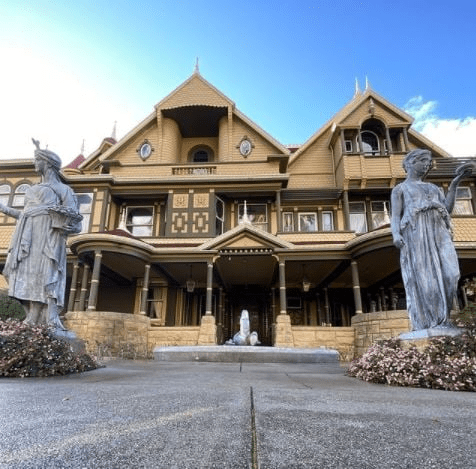
Although white magic has been able to heal people, some still believe it is inspired by the powers of darkness. Through white magic some may even obtain what they actually desired, and so it is often only in the effects that its true nature is revealed. The boundary between prayer and magic can be very fluid. If one is able to differentiate between the genuine and the imitation articles, it is essential to have the gift of discerning of spirits. However, whether it sails under a black, white or neutral flag, many people believe they have evidence to prove that the effect of magic in any form is the work of the devil. Yet, that is not what I believe. I have met some very nice people who claim to be witches and warlocks, and they are some of the most kindest people you will every meet. They define those that Christians, who pontificate about the bible, harass and attract and really listen and get to all sides of the story, some it makes some wonder, who is really evil? I am not saying that all Christians are bad, but the witch hunts were started by Christians, as well as lynching in the Southern states. I am not telling anyone what to believe, I am just presenting information that is fascinating. Part of being educated is to remain unbiased and be able to have a discussion, until you draw your own reasonable conclusion based on the evidence presented. If one does not have a case, or does not want to be contradicted by evidence that would prove their argument false, of course they turn to slander, harassment, and terrorism. That is what ignorant people do. They gang up and try to lie so loud to make sure no one can hear the truth they are suppressing. But as the Bible says, all things will come to the light. Everyone has things they need to deal with inside of themselves and sometimes it is more comfortable to try to find fault with others and blame others instead of taking responsibility. For instance, the dynamic of idolatry is demonism since idolatry is in reality the worship of other gods who are demons (1 Corinthians 10.20), headed by Satan the “god of this World,” (2 Corinthians 4.4). #RandolphHarris 6 of 13

Occultism involves dealing with demonic forces through fortune-telling, magic, spiritism, or religious cults, which are supposedly closely allied to idolatry. Persons who deal in the occult often discover that they have spiritistic sensitivity, extrasensory perception, or abnormal intellectual powers enabling them to engage in clairvoyance, precognition, divination, psychometry, magic, and spiritism. Dealing in the occult often results in the subjection to the powers of darkness to such a degree that the mind becomes blinded to truth, immersed in deception and error. This frequently results in acute depression with thoughts of self-destruction. However, not all emotional problems or suicidal tendencies should be attributed to occultism. However, demons can also oppress that human mind. Enslavement to demons sometimes reaches a point in which the demonic spirits harass and torment their victims. In the preceding stage of subjection, the evil spirits sporadically dominate their victims, but they do not necessarily harass them, at least not as they do in this deeper and more tragic state of oppression. Oppression in some form will be the final outcome of all who become psychically enslaved, even though some are not psychically gifted with spiritistic or magical powers. One well-attested and widely occurring form of demonic oppression is poltergeist phenomena. “Poltergeist” is German for “noisy ghost.” In such a case, the oppressed person is hounded by strange noises and sounds, such as shouts and obscene threats, rattling of chains, moaning, weeping, or piercing laughter. Dishes clatter, furniture is moved by invisible hands, and myriads of other strange happenings occur, invisibly produced by spirits connected with a haunted house where spirit activity has been practiced. Some who are oppressed continue to be tormented even though they may move to another residence. Also, common in the victims of demonism are the appearances of ghosts, specters, and monstrous phantasms. These phenomena are often explained away as hallucinations, but are well attested in occultism as spirits appearing as dwarfs, animals, dismembered parts of a human body, etcetera. At times these hideous spirits will strangle, bite, strike, or attack their victims in some way. #RandolphHarris 7 of 13

Perhaps the most terrible and revolting form of demonic oppression is what is known in the history of religion as incubi and sccubae experiences. This is the assault by an unclean spirit upon its enslaved victim for the purpose of lust involving pleasures of the flesh. Both men and women have been attacked and molested by “seducing male and female demons.” Such fully established phenomena show that angelic-human union, a major cause of the flood (Genesis 6.1-4; 2 Peter 2.4; Jude 1.6-7), has its parallel in occultism today. The account of the following portent is given us in Aubrey’s Miscellanies. “When King James II first entered Dublin after his Arrival from France, 1689, one of the Gentlemen that bore the Mace before him, stumbled without any rub in his way, or other visible occasion. The Mace fell out of is hands, and the little Cross upon the Crown thereof stuck fast between to Stones in the Street. This is well known all over Ireland, and did much trouble King James himself with many of his chief Attendants”; but not doubt greatly raised the hopes of his enemies. A few years later a witch-story comes from the north of Ireland. “At Antrim in Ireland a little girl of nineteen (nine?) years of age, inferior to none in the place for beauty, education, and birth, innocently put a leaf of sorrel which she had got from a witch into her mouth, after she had given the begging witch bread and beer at the door; it was scarce swallowed by her but she began to be tortured in the bowels, to tremble all over, and even was convulsive, and in fine to swoon away as dead. The doctor used remedies on the 9th of May 1698, at which time it happened, but to no purpose, the child continued in a most terrible paroxysm; whereupon they sent for the minister, who scarce had laid his hand upon her when she was turned by the demon in the most dreadful shapes. #RandolphHarris 8 of 13

She began first to rowl herself about, then to vomit needles, pins, hairs, feathers, bottoms of thread, pieces of glass, window-nails, nails drawn out of a cart or coach-wheel, an iron knife about a span long, eggs, and fish-shells; and when the witch came near the place, or looked to the house, though at the distance of two hundred paces from where the child was, she was in worse torment, insomuch that no life was expected from the child till the witch was removed to some greater distance. The witch was apprehended, condemned, strangled, and burnt, and was desired to unto the incantation immediately before strangling; but said she could not, by reasons others had done against her likewise. But the wretch confessed the same, with many more. The child was about the middle of September thereafter carried to a gentleman’s house, where there were many other things scarce credible, but that several ministers and the gentleman have attested the same. The relation is to be seen in a pamphlet printed 1699, and entitled The Bewitching of a Child in Ireland.” People in ancient times used to rely more on the spiritual, witchcraft, magic, séances, curses, potions, and meditation. Perhaps that is why there were so many more instances of supernatural things happening today. Some of these claims sound so outrageous and many of them report the same types of instances. Then today, we have all these technologies and medications and machines that we rely on and people who tell us what is actually possible and how many of these stories from the past happen to be something else explained by medication or a camera that so many people start to disbelieve in the supernatural. However, just because it can be explained by science, does not mean it is not supernatural. The Christian Bible even speaks about miracles, which are things that are supernatural. Supernatural phenomenon is real. #RandolphHarris 9 of 13

However, supernatural phenomena may be less common today because land is so densely packed, so many people turn into TV and Music and digital entertainment, so they spend less time praying and tuning into nature. In the 1800s, one could life in a house and not see another person for years because there was so much space to spread out on. People had time to read books and gaze at the moon and the sky and think up inventions. By now, everyone has probably heard of the legendary Sarah L. Winchester. She is the one who built the most mysterious mansion in the World. One thing that surprises me is that no one has, as of yet, tried to duplicate or create something just as wonderful. Nonetheless, it has been said that Mrs. Winchester slept in a different bedroom every night, supposedly in order to confuse evil spirits. And it totally makes sense. Because even now, people say when bad things are happening to you, you need to figure out what you are doing to cause it and draw closer to God. Back in Mrs. Winchester’s day, the 1800s, people were into spiritualism and also believed that spirits were the source causing bad things to happen to people. So they would try to appease them to protect themselves from curses and demons and so forth. Every generation has their methods and religions and that is just how it is. Some say Mrs. Winchester also held special dinner parties for her spirit friends. Legend has it that she would serve her phantom friends on solid gold plates, offering them delicious cuisine like caviar, truffles, and pheasant stuffed with pate. The mansion’s staff was also well-fed. On a stormy night, the front of the house was dark and silent, for it was long past bedtime. It was thirteen past one, and raining like blazes. It was thirteen years ago this day that Louis Le Prince had been seen alive, for Black Knight, one of Mrs. Winchester’s mares kicked the life out of him in the house stable one morning. One could feel the present and all its dangers towering around. Staff who walked by the horse stable this day reported feeling lost, a ghost dislodged from time. Indeed, it struck many people as unusual that the lad was left for the to care for the horses by himself. It might have been a fancy stable, but there was a queer feel about the place. #RandolphHarris 10 of 13

The sun was just beginning to set as they headed back to the estate. By the time they got inside, the night was as black as your hat: not a vestige of a moon, not a single star to break the uniform of darkness of the sky. With sunset a noisy blustering wind had sprung up, rattling about one of the chimneys, clashing the wet branches, and deadening the sound of cautious footfalls creeping across the paddock in the direction of the stables. The wind dropped suddenly, making the silence all the more intense by contrast with the previous roar; and through the stillness, Mrs. Winchester heard the clink of a bucket, and the sound of someone moving about in the stables. She sprang to her feet and snatched up her lantern. She thought that someone was trying to get at one of her horses, and her hand was on her father-in-law’s ivory-gripped Winchester pistol when she opened the door. So strong was the impression that she was absolutely surprised to find no sign of an intruder. The horses were perfectly quiet. Mrs. Winchester looked all around. There was certainly nothing to see, but it struck her that the air felt very cold, and she shut the door. The instant it closed behind her, a dark shadow fell across the square of light issuing from the entrance to the saddle-room. She figured it must have been the wind she heard and locked the door and went back inside. However, the butler Henry Boynton Clitz, was also suspicious. He turned the key in the lock and looked into the horse stable; then he gave a slight start, and drew quickly back. There was light inside, but where is came from would have been difficult to say. Beyond the shadow lay black and impenetrable, a wall of darkness. As he crossed the threshold Henry felt a blast of cold air sweep towards him, striking a strange chill into his very bones. Straight opposite stood a horse, and before him was an old man who appeared to be asleep. However, even in that intense stillness the tout could catch no sound of his breathing. His own heart was thumping against his ribs with the force of a sledge-hammer. #RandolphHarris 11 of 13

Henry felt his flesh creeping with a sensation of fear that was almost sickening. Fear? Yes, that was the word; he was horribly afraid. And of what? Of a weak old man, for whom he would have been more than a match single-handed, and they were two to one. What a fool he was, to be sure! With desperate effort he pulled himself together and went forward, his eye warily fixed on the silent figure. Neither man nor horses moved. As Henry moved forward, he heard a low chuckling laugh. The man was looking at him. The gleaming eyes fixed on him with a sort of mesmeric power. His face fastened on the figure, taking in every item of the quaint dress, the high gill collar and ample bird’s eye stock, the drab coat and antiquated breeches and gaiters. His mouth was open, but for the life of him he could not speak. He was waiting in the helpless fascination of horror to see the face of a man who had been dead and buried for thirteen years. Slowly, like an automaton, that strange watcher turned his head. The square, resolute mouth was open as if to speak; the shrunken skin was a greenish yellow color, like the skin of a corpse; along the temple ran a dull black mark in the shape of a horse’s hoof; but the eyes burned like two living coals, as they fixed themselves on the face of the terrified publican. Next, Henry heard the crash of a lantern on stones and the sound of Louis’s flying feet, and an awful terror came upon him, a great fear, which made his teeth chatter in his head and curdled the blood in his veins. The place seemed full of an unnatural light—black flames. The air was foul with the horrible odors of decay. Above all, Henry felt the fearful presence of that which was neither living nor dead—the semblance of a man whose human body had for thirteen long years been rotting in the grave. It was not living, but it moved. Its cold, shining eyes were looking into his, were coming near. There was no mistaking the look of that helpless body, the limp flaccidity of those outstretched arms. “He’s dead,” said Henry, as he turned up the white face. Its coat was wet with—something. #RandolphHarris 12 of 13

It was blood. But it was strange there should be no marks of violence about him, and yet he looks as if he had died hard. And truly, the dead man’s face was terrible in its fixed expression of mortal fear. The eyes were staring and wide open, the teeth clenched, a little forth hung about the blue lips. It was a horrid sight. Henry locked the door on the corpse until the police could arrive, and spent the remainder of the night in the butler’s pantry. However, when the Henry awoke, he could throw very little light on the matter. There was no one in the horse stables. No body, no foul odor, no broken lanterns. Just the horses and an old noose in one of the empty stalls. Whatever happened remain a mystery. The old living soul who knew the truth held her tongue. Mrs. Winchester simply told him, “Leave it to other staff members and never set foot in that cursed place. The poor boy is dead, and there is no reason for me to get myself mixed up in the business.” Demons can cause physical ailments such as dumbness (Matthew 9.32-33), blindness (Matthew 12.22), and various other defects and deformities (Luke 13.11-17). In all such cases medical and psychiatric treatment are of no avail, because the cause is demonic. Only be dealing with the spiritual causes of the malady can it be cured. Besides actual sickness, demons can cause speech and behavior abnormalities. In demon possession, which is an extreme form of enslavement and oppression, the speech and behavior abnormalities appear in greatly accentuated form with such violent physical manifestations as retching, screaming, blaspheming, cursing, foaming at the mouth, convulsions and display of tremendous physical strength. So completely does the demonic spirit gain mastery that one takes over the body of the victim and speaks through it with one’s own voice and language, which may be completely foreign to the language of the demonized. Sometimes evil spirits endanger humans’ temporal safety by exercising a certain control over natural forces. “I’ve covered my brother completely (That bump on the right is his knee) I will dig him out when I am ready to find how he liked it, you see.” #RandolphHarris 13 of 13

Winchester Mystery House

Tickets are almost sold out for tonights Flashlight Tours! 👀🔦 March 5th & 12th nights still have availability – hurry and purchase before they are all gone! You don’t want to miss this 👻

I’ll bet you wonder whether poor Whitney’s race is run. I hate to keep you guessing, but I must have my fun. 🎟 link in bio. https://www.winchestermysteryhouse.com/

REGARDLESS OF VACCINATION STATUS, ALL PERSONS IN SANTA CLARA COUNTY MUST WEAR FACE COVERINGS AT ALL TIMES WHEN INDOORS. WHILE THE STATE OF CALIFORNIA LIFTED THE UNIVERSAL MASK MANDATE AS OF FEBRUARY 16, 2022, SANTA CLARA COUNTY MASK MANDATES ARE STILL IN EFFECT UNTIL FURTHER NOTICE.
 Randolph Harris II International Institute