
Home » Drama (Page 9)
Category Archives: Drama
The Kingdom of Heaven is within You–Wisdom Penetrates Everywhere on Account of its Perfect Purity
 There will come a time, a time to tell you everything slowly so that you understand. However, now is not that time. Something is stirring in me, knowledge as clear as if a voice is speaking: this is not the most difficult part. Often two people will try to express their feelings toward each other verbally, or will try to explain themselves or some situation, and they simply cannot understand each other. This occurs when people are inarticulate, when conflicts about their feelings are prominent and they try to hide it, when they are not really familiar with what their feeling is, or when they are very intellectualized and the words are used defensively to obfuscate the situation. Especially with intellectual people, words paradoxically can be the largest obstacle to communication because people often spend a great deal of time and word trying not to say something or avoiding the central point, which is often known to themselves. If we are able to have a satisfying and fulfilling sense of completion in our lives insofar as meaningful relationships are concerned that we need to experience emotional intimacy beyond our immediate families, it seems an inescapable conclusion. And not to have these wider experiences both raises questions about the nature of our family relationships and threatens them. For to expect that all of one’s needs for emotion intimacy with adults can be satisfied by one person is to put an almost unbearable burden on any association. And to attempt to do so suggests an immaturity and overdependency that is detrimental to the experience and expression of love. #RandolphHarris 1 of 17
 If we are two independent individuals who recognize that we are essentially alone and do not fool ourselves into believing that we do not in the last analysis live essentially separate lives, even in marriage we are most happy and fulfilled. To attempt to avoid our essential loneliness and isolation through neurotic dependence on each other is a pseudo escape from an important reality. Let there be spaces in your togetherness for the pillars of the temple stand apart, and the oak and the cypress grow not in each other’s shadow. Although our increased mobility and decreased clan experiences have tended to brings us face to face with our loneliness and isolation, the net results may not be negative. If we can develop close tires with others in spite of the fears of love that deter us, we may discover there are better reasons for intimacy than those created by the happenstance of being related by common ancestry. Three married couples formed a very close and loving relations that has existed over a period of seven or eight years. They have probably been together on an average of two times a month during that times. Since some members of the group had a professional interest in psychotherapy, it was not unnatural that the group frequently explored their feelings about each other and other relationships in their lives, often talking long into the night. Sometimes violent feelings came to the surface that seemed likely to split the couples apart. The strength of these feelings should put a red flag on some of one’s interpersonal relations. #RandolphHarris 2 of 17
 If an individual finds oneself verbally going in and hurting other people quite viciously and unintentionally or unconsciously, it is important to be able to better understand that one is somehow responding to an internal force rather than the situation he or she is involved in. Sometimes when a person feels another individual pulling away from them, the response to their living one psychologically is for the individual who feels they may be abandoned to go after that individual even more strongly, which is self-defeating since all they do is withdraw even more rapidly. Many individuals respond to abandonment by giving full vent to the hostility and anger that they are experiencing and blame it complete on the person with him they are involved with. However, it is best to stop whatever it is that one is doing and try, as honestly as one possibly can, to say to the other person: I do not feel I am being very fair with you,” or something to that effect, which lets him or her know that a bit of irrationality has exhibited itself and it has really confused the issues that we were discussing. Another important lesson is not to fear that irrational side. Know that it is there and know that there is enough sanity to not be afraid to give full vent to that irrational part of oneself, since it does two things: it can give an individual clearer handles as to where it came from, as well as giving the other person an opportunity to be more able to cope with one more as a total person in a more beneficial way. #RandolphHarris 3 of 17
 Each time people are honest, individuals can emerge from these experiences with deeper feelings of love for each other. Sometimes, in conflicts, what is actually going on is people are acting out a lot of the hostility that they have towards one of their parents, and it takes some insight into one’s own soul to understand the emotion that is influencing one’s response to another individual on what they thought were non-emotional issues. At times people feel defensiveness about reflecting on their own emotions, as they do not know what they will reveal about themselves. These feelings can be compounded by normal conflicts that happen during the day, which could lead to a blow on, when that is not a rational response. People who have unresolved issues are often emotionally dangling on the edge of a cliff with almost no way of rescue. If people realize they have problems, then they can do something about them by facing them. Those who get help have a desire not to let destructive impulses take over their lives. By revealing what the underlying situation involves, it leaves one to have more optimistic experiences with others and can lead to an increase in one’s feeling of personal significance, and in confidence regarding one’s ability to succeed at making connections with people. One can then proceed to enjoy more the human encounter. It is interesting that one of the most empathic themes of the New Testament is the importance attached to the experience of love among the early Christians as expressed in such phrases as, “Beloved, let us love one another; for love is of God.” #RandolphHarris 4 of 17
 One reason for this emphasis on love, in addition to the teachings of Jesus, may have been the fact that in some instances conversion to Christianity meant complete spitting up of families who were hostile to the new sect and its members. With such isolation and loneliness thrust upon them, the new converts would naturally seek to satisfy their need for intimacy with each other. They did, no doubt, have the same fear of love that hinders us, for the record shows they bickered among themselves and found many ways to deprive themselves of experiencing and expressing the love they longed for. Can the expression of pleasures of the flesh can be exclusive? Certainly, if we choose to, we can limit expression of pleasures of the flesh to one person. There are any ways of expressing love to others in addition to expressing it through pleasures of the flesh. We are free to choose whatever way or ways we wish. From a mental health standpoint it is important to make this choice a conscious decision. A great many men and women expend a great deal of emotional energy attempting to avoid awareness of pleasures of the flesh for anyone other than a spouse. When awareness of desire does creep in they feel guilty and frightened because they do not trust themselves we the power of a conscious choice. #RandolphHarris 5 of 17
 We have already examined the damage to emotional and physical health that such dulling of awareness can bring about. If we can recognize and accept within ourselves that we do—in common with most of humanity—have such desires for pleasures of the flesh, it will be much more healthy. However, also keep in mind some people choose to abstain. Nonetheless, for those who choose to have adult relationships with passionate intimacy, they can enjoy the delicious feelings and decide on a conscious level what, if anything, they want to do about them. It is surprising how many people imagine they are somewhat unusual in having strong desires for pleasures of the flesh for more than one person. This is probably particularly true with women, for whom it is not culturally acceptable to have such feelings. However, women who are alive to their feelings do have these desires, and it is often a great relief to a woman to find she is not unique in this respect. As a culture we are quite reluctant to openly examine the fact that large numbers of married persons do not choose to be exclusive in their relationships. We are probably particularly afraid to recognize that any possible good could result from extramarital affairs. To do so might seem to condone or even encourage such behavior and perhaps lead to the collapse of our monogamous system, at least as we know it. However, if that system is of value and if it is not already a fiction, then the open examination of all relevant questions certainly should not destroy it. #RandolphHarris 6 of 17
 On the one hand it is undoubtedly true that many extramarital relationships are destructive events in which the individual is using a conquest as another way of avoiding intimacy, while on the other hand there are other instances where individuals appear to be open up to the experience and expression of love in an affair in a way in which they have not been able to do with a spouse. One of these aspects of marriage that we do not like to admit is the fact that it may not be most conducive to the experience of love. There are many reasons a married person can find for not feeling close to a spouse. There may be unspoken resentments about any number of things that have been built up over a period of time. The relationship may be experienced primarily in terms of obligation and duty so that the experience of freedom so conducive to love has evaporated in that trapped feeling. It is probably true that these are ways in which we avoid experiencing the love that is there because of our fear of love. However, be that as it may, it is not surprising that some people find they experience love more freely outside of marriage. Some people have an uncommon personal warmth, gentility, and graciousness. We often find the minds of others to be highly developed faculties of critical observation joined with an innate reverence for the sacred to explore the fundamental issues of the human heart: knowledge of its present state, of its higher potentials, of the nature of the Universe. #RandolphHarris 7 of 17
 Being intellectually stimulated is a very important quality in any relationship. Many people have a sincere inner aspiration for deeper knowledge and experience of the inviolable spirit within their own hearts. We are simply human beings exploring ever more profound truths with increasing depth and concentration. Freedom is thus more than a value itself: it underlies the possibility of valuing; it is basic to our capacity to value. Without freedom there is no value worthy of the name. In this time of disintegration of concern for pubic weal and private honor, in this time of the demise of our values, our recovery—if we are to achieve it—must be cased on our coming to terms with this source of all values: freedom. This is why freedom is so important as a goal of psychotherapy, for whatever values the client develops will be based upon one’s experience of autonomy, sense of personal power and possibilities, all of which are based on the freedom one hopes to achieve in therapy. “And I will show you something different from either your shadow at morning striding behind you. I will show you fear in a handful of dust. A crowd flowed over London Bridge, so many, I had not thought death had on done so many,” The Waste Land by T.S. Eliot (1922). What followed the publication of Eliot’s poem, and what I believe Eliot was predicting, was the waste land of our culture, the disintegration of the World we all had know and counted on, The Great Depression, the Dust Bowl, World War II and the Savings and Loan Crises. #RandolphHarris 8 of 17
 Nobody knew it would happen then—except the artists. Even if T.S. Eliot would have known it consciously, I doubt it. However, when he wrote that poem, he knew it unconsciously with the genius of the poet. It is woven around the medieval myth of the wasteland and its impotent king. Eliot pictures our age as a wasteland in which the king has lost his potency and hence cannot procreate, a land in which no crops can grow, a land that is wasting away. The king is powerless to do anything about it. The whole poem is a fantastic prophecy—by common consent one of the great classic. In the same year, 1922, The Great Gatsby by F, Scott Fitzgerald appeared. Several films were made of this novel which I think were travesties; they missed the whole point of the story. Actually The Great Gatsby is a prediction of the demise of the American Dream, the dream that everybody can get rich like Horatio Alger. In this novel Fitzgerald draws the picture of a man who believes he can make himself over into anything he wishes: he sprang from his Platonic conception of himself. He had a ferocious indifference to the drums of his destiny, to destiny itself. At one point Gatsby cries incredulously, “Can’t repeat the past? Why of course you can!” He believed he could do anything, he worshipped change, with no regard for destiny or society. Here is a man who believed in optimistic thinking with a vengeance. He lived by the belief that destiny and determinism had no place in this World. #RandolphHarris 9 of 17
 The novel ends in a crashing tragedy—a tragedy which the human potential movement the New Age people have not yet appreciated, even in the early 2000’s. If it does not give it some kind of religious meaning, if it does not make of it the analogy of a sacrament, the legal character of punishment has no true significance; and therefore all penal offices, from that of the judge to that of the executioner and the prison guard, should in some sort share in the priestly office. Justice in punishment can be defined in the same way as justice in almsgiving. It means giving our attention to the victim of affliction as to a being not a thing; it means wishing to preserve in one the faculty of free consent. When they are really despising the weakness of affliction, mortals think they are despising crime. One is thus the object of the greatest contempt. Contempt is the contrary of attention. There are exceptions only where there is a crime which for some reason has prestige, as is often the case with murder on account of the fleeting moment of power which it implies, or where the crime does not make a very vivid impression upon those who assess it culpability. Stealing is the crime most devoid of prestige, and it causes most indignation because property is the thing to which people are most generally and powerfully attached. Even in the penal code, that is apparent. #RandolphHarris 10 of 17
 No state is beneath that of a human being enveloped in cloud of guilt, be it true or false, and entirely in the power of a few mortals who are to decide one’s fate with a mortal who are to decide one’s fate with a word. These mortals do not pay any attention to one. Moreover, from the moment when anyone falls into the hands of the law with all its penal machinery until the moment one is free again—and those known as hardened criminals are like Neil Caffery in the TV Series White Collar, in that they hardly ever do get free until the day of their death—such a one is never an object of attention. Everything combines, down to the smallest details, down even to the inflections of people’s voices, to make one seem vile and outcast in all mortal’s eyes including one’s own. The brutality and flippancy, the terms of scorn and the jokes, the way of speaking, the way of listening and of not listening, all these things are equally effective. There is no intentional unkindness in it all. It is the automatic effect of a professional life which has as its object crime seen in the form of affliction, that is to day in the form of horror and defilement are exposed in their starkness. Such contact, being uninterrupted, necessarily contaminates, and the form this contamination takes is contempt. It is this contempt which is reflected on every prisoner at the bar. #RandolphHarris 11 of 17
 The penal apparatus is like a transmitter which turns the whole volume of defilement contained in all the circles where the miserable crime is to be found upon each accused person. The mere contact with this penal apparatus causes a kind of horror in part of the soul remaining intact, and the horror is in exact proportion to the innocence. Those who are completely rotten receive no injury and do not suffer. If there is not something between the penal apparatus and the crime capable of cleansing defilement, it cannot be otherwise. This can only be God. Infinite purity alone is not contaminated by contact with evil. All finite purity becomes defilement itself through prolonged contact. However, the code may be reformed, punishment cannot be human unless it passes through Christ. The severity of the sentence is not the most important thing. Under present conditions, a condemned mortal, although guilty and given a punishment which is relatively light in view of one’s offense, can more often than not be rightly considered as having been the victim of cruel injustice. What is important is that the punishment should be legitimate, that is to say that is should be recognized as having a divine character, not because of its content but because it is the law. It is important that the whole organization of penal justice should be directed toward obtaining from the magistrates and their assistants the attention and respect for the accused that is due from every mortal to any person who may be in one’s power and from the accused one’s consent to the punishment inflicted, a consent of which the innocent Christ has given us the perfect model. #RandolphHarris 12 of 17
 A death sentence for a slight offense, pronounced in such a way, would be less horrible than a sentence of six months in prison given as it is at the present day. Nothing is more frightful than the spectacle, now so frequent, of an accused, whose situation provides one with nothing to fall back on, but one’s own words, and who is incapable of arranging these words because of one’s social origin and lack of culture, as one stands broken down by guilt, affliction, and fears, stammering before judges who are not listening and who interrupt one in tones of ostentatious refinement. For as long as affliction is to be found in society, for as long as legal or private almsgiving and punishment are inevitable, the separation between civil institutions and religious life will be a crime. The lay conception considered alone is completely false. It only has some excuse as a reaction against a totalitarian religion. In that respect, it must be admitted, it is partly justifiable. In order to be present everywhere, as it should, religion must not only not be totalitarian, but it must limit itself strictly to the plane of supernatural love which alone is suitable for it. If it did so it would penetrate everywhere. The Bible says: “Wisdom penetrates everywhere on account of its perfect purity.” #RandolphHarris 13 of 17
 Through the absence of Christ, mendicity, in the widest sense of the word, and penal action are perhaps the most frightful things on the Earth—two things that are almost infernal. They have the very color of hell. Prostitution might be added to them, for it is to real marriage what almsgiving and punishment without charity are to almsgiving and punishment which are just. Mortals have received the power to do good or harm not only to body but to the souls of their fellows, to the whole soul of those in whom God is not present and to all that part of the soul uninhabited by God of the others. A mortal may be indwelt by God, by the power of evil or merely by the mechanism of the flesh. When one gives or punishes, what one bears within one enters the soul of the other through the bread of the sword. The substance of the bread and the sword are virgin, empty of good and of evil, equally capable of conveying one or the other. One who is forced by affliction to receive bread or to suffer chastisement as one’s could exposed in starkness and defenseless both to evil and to good. There is only one way of never receiving anything but good. It is to know, with our whole soul and not just abstractly, that mortals who are not animated by pure charity are merely wheels in the mechanism of the order of the World, like inert matter. After that we see that everything comes directly from God, either through the love of a mortal, or through the lifelessness of matter, whether it be tangible or psychic, through spirit or water. #RandolphHarris 14 of 17
 All that increases the vital energy in us is like the bread for which Christ thanks the just. All the blows, the wounds, and the mutilations are like a stone thrown at us by the hand of Christ. Bread and stone both come from Christ and penetrating to our inward being bring Christ into us. Bread and stone are love. We must eat the bread and lay ourselves open to the stone, so that it may skin as deeply as possible into our flesh. If we have any armor able to protect our soul from the stones thrown by Christ, we should take it off and cast it away. Our World is manifold, and our attitudes are manifold. What is manifold is often frightening because it is not neat and simple. Mortal prefer to forget how many possibilities are often to them. They like to be told that there are two World and two ways. This is comforting because it is so tidy. Almost always one way turns out to be common and the other one is celebrated as superior. Those who tell of two ways and praise one are recognized as prophets or great teachers. They save mortals from confusion and hard choices. They offer a single choice that is easy to make because those who do not take the path that is commended to them live a wretched life. To walk far on this path may be difficult, but the choice is easy, and to hear the celebration of this path is pleasant. Wisdom offers simple schemes, but truth is not so simple. Not all simplicity is wide. However, a wealth of possibilities breeds dread. #RandolphHarris 15 of 17
 Hence, those who speak of many possibilities speak of the few and are of help to even fewer. The wise offer only two ways, of which one is good, and thus help many. We are to enter a new and different rhythm and tell such as will listen that they need not be forlorn, lost, or without hope because they find one to appeal to their hearts or mind. They are asked to follow the God within themselves, for the Kingdom of Heaven is within you. Those who feel alone in this matter or who can only walk outside the groups on an independent path should be reminded that there is a God within them who can guide and help them if they turn to him. The Quest not only begins in the heart but also ends there too. It is an endeavour to lift to a higher plane, and expand to a larger measure, the whole of one’s identity. It brings in the most important part of oneself—being, essence, consciousness. One know thyself! There is a whole philosophy distilled into the single and simple statement. Between the ordinary mortal who takes oneself is one is, and the philosopher who does exactly the same, there stands the Quester. In the first case, outlook is narrow, being limited by attending to the inescapable necessities and demands of day-to-day living. In other case, peace of mind has been established, the thirst for knowledge fulfilled, the discipline of self realized. #RandolphHarris 16 of 17
 In between these two, the Questers is not satisfied with oneself, has a strong wish to become a better and more enlightened mortal. One tires to exercise one’s will in the struggle for realization of one’s ideal. It lifts human consciousness vertically and enlarges human experience spiritually. If the Infinite Being is trying to express its own nature within the limitations of this Earth—and therefore trying to express itself through us, too—it is our highest duty to search for and cultivate our diviner attributes. Only in this way do we really fulfill ourselves. This search and this cultivation constitute the Quest. It offers a conception of life which originates on a higher level. The Quest is both a search for truth and dedication to the Overself. By “Quest” I mean the deliberate and conscious dedication to the search for spiritual truth, freedom, or awareness. The inner meaning of life does not readily reveal itself; it must be searched for. Such a search is the Quest. “Who among you fears the LORD and obeys the word of his servant? Let one who walks in the dark, who has no light, trust in the name of the LORD and rely on one’s God,” reports Isaiah 50.10-11. It is the Lord who gives salvation even unto Kings, it is the Lord who delivered even David from the hateful sword; let our sons grow as plants grow, and let our daughters be cornerstones, polished as if they were the cornerstones of the palace…happy is that people, whose God is the Lord. #RandolphHarris 17 of 17
Sometimes One Can Mistake Gratitude for Love—Dogs are Hardly an Article of Faith
 Love or the lack of it is at the root of everything. Guard your children. Weigh wisdom of intervention if such is even possible. Ponder the question of inevitability. To cease wishing is a contemporary emotional and spiritual wasteland, almost like inhabiting the land of the dead. Another characteristic is satiety; if wishes are thought of only as pushed toward gratification, the end consisting of the satisfying of the need, the reality is that emptiness and vacuity and futility are greatest where all wishes are met. For this means one stops wishing. Without faith we cannot want anymore, we cannot wish. The truth of faith consists in true symbols concerning the ultimate. And the faithful is one human being with the power of thought and the need for conceptual understanding. There is a dimension of meaning expressed in the symbolism of the whish, this is what gives the wish its specifically human quality, and without this meaning, the emotional and spiritual aspects of wanting become dried up. When we have faith, it is a symbol that peace and prosperity are just around the corner and it is only a matter of time until all our need will be met. However, the relation to the ultimate is not the same in each case. The philosophical relation is in principle a detached description of the basic structure in which the ultimate manifests itself. #RandolphHarris 1 of 15
 The relation of faith is in principle an involved expression of concern about the meaning of the ultimate for the faithful. The difference is obvious and fundamental. However, it is, as the phrase “in principle” indicates, a difference which is not maintained in the actual life of philosophy and of faith. It cannot be maintained, because the philosopher is a human being with an ultimate concern, hidden or open. And the faithful one is a human being with the power of thought and the need for conceptual understanding. This is not only a biological fact. It has consequences for the life of philosophy in the philosopher and or the life of faith in the faithful. An analysis of philosophical systems, essays or fragments of all kinds shows that the direction in which the philosopher asks the question and the preference one gives to special types of answers is determined by cognitive consideration and by a state of ultimate concern. The historically most significant philosophies show not only the greatest power of thought but the most passionate concern about the meaning of the ultimate whose manifestations they describe. The philosophy, in its genuine meaning, is carried on by people in whom passions of an ultimate concern is united with a clear and detached observation of the way ultimate reality manifests itself in the process of the Universe. #RandolphHarris 2 of 15
 At most general faith means much the same as trust. Therefore, we are being asked to have faith as knowledge of specific truths revealed by God. Faith is a practical commitment beyond the evidence to one’s belief that God exists. We are to have a firm and certain knowledge of God’s benevolence towards us, founded upon the truth of the freely given promise in Christ, both revealed to our minds and sealed upon our hearts through the Holy Spirit. It is this element of ultimate concern behind the philosophical ideas which supplies the truth of faith in them. Our vision of the Universe and our predicament within it unites faith and conceptual work. We may hold that in our sinful state we will inevitably offer a resistance to faith that may be overcome only by God’s grace. It is, however, a further step for individuals of faith to put their revealed knowledge into practice by trusting their lives to God and seeking to obey his will. Humans contain the potentialities of these creative principles, and can choose to make their lives an ascent towards and then a union with the intuitive intelligence. The One is not a being, but infinite being. #RandolphHarris 3 of 15
 Thus Christian and Jewish philosophers who held to a creator God could affirm such a conception that God is infinite, and created the World. God, as the creator of all, is not far from any one of us. Philosophy is not only the mother’s womb out of which science and history have come, it is also an ever-present element in actual scientific and historical work. The frame of reference within which the great physicists have seen and are seeing the Universe of their inquiries is philosophical, even if their actual inquiries verify it. In no case is it a result of their discoveries. It is always a vision of the totality of being which consciously or unconsciously determines the frame of their thought. Because this is so one justified in saying that even in the scientific view of reality an element of faith is effective. Scientific view of reality an element of faith is effective. Scientists rightly try to prevent these elements of faith and philosophical truth from interfering with their actual research. This is possible to a great extent; but even the most protected experiment is not absolutely pure—pure in the sense of the exclusion of interfering factors such as the observer, and as the interest which determines the kind of question asked of nature in an experiment. What we said about the philosopher must also be said about the scientist. Even in one’s scientific work one is a human being, grasped by an ultimate concern, and one asks the question of the Universe as such, the philosophical question. #RandolphHarris 4 of 15
 Intellectual inquiry into the faith is to be understood as faith seeking understanding (fides quaerens intellectum). To believe is to thin with assent (credere est assensione cogitare). It is an act of the intellect determined not by the reason, but by the will. Faith involves a commitment to believe in a God, to believe God, and to believe in God. What is eternal is unchanging. In the same way the historian is consciously or unconsciously a philosopher. It is quite obvious that every task of the historian beyond finding of the facts is dependent on evaluation of historical factors, especially the nature of mortals, one’s freedom, one’s determination, one’s development out of nature and so forth. It is less obvious but also true that even in the fact of finding historical facts philosophical presuppositions are involved. This is especially true in deciding, out of the infinite number of happenings in every infinitely small moment of time, which facts shall be called historically relevant facts. The historian is further forced to give one’s evaluation of sources and their reliability, a task which is not independent of one’s interpretation of human nature. Finally, in the moment in which a historical work gives implicit or explicit assertions about the meaning of historical events for human existence, the philosophical presuppositions of history are evident. Where there is philosophy there is an expression of an ultimate concern; there is an element of faith, however hidden it may be by the passions of the historian for pure facts. #RandolphHarris 5 of 15
 God does not possess anything superadded to his essence, and his essence includes all his perfections. No one can attain to truth unless one philosophizes in the light of faith. Our faith in eternal salvation shows that we have theological truths that exceed human reason. And if one could attain truths about religious claims without faith, these truths would be incomplete. Higher truths are attained through faith. All these consideration show that, in spite of their essential difference, there is an actual union of philosophical truth and the truth of faith in every philosophy and that this union is significant for the work of the scientist and the historian. This union has been called philosophical faith. The term is misleading, because it seems to confuse the two elements, philosophical truth and the truth of faith. Furthermore, the term seems to indicate that there is one philosophical faith, a philosophia perennis, as it has been termed. However, only philosophical questions are perennial, not the answers. There is a continuous process of interpretation of philosophical elements and elements of faith, not one philosophical faith. Revealed theology is a single speculative science concerned with knowledge of God. Because of its greater certitude and higher dignity of subject matter, it is nobler than any other science. #RandolphHarris 6 of 15
 Philosophical theology, though, can make demonstrations using the articles of faith as its principles. Moreover, it can apologetically refute objections raised against the faith even if no articles of faith are presupposed. There is truth of faith in philosophical truth. And there is philosophical truth in the truth of faith. In order to see the latter point we must confront the conceptual expression of philosophical truth with the symbolical expression of truth of faith. Now, one can say that most philosophical concepts have mythological ancestors and that most mythological symbols have conceptual elements which can and must be developed as soon as the philosophical consciousness has appeared. In the idea of God the concepts of being, life, spirit, unity and diversity are implied. In the symbol of the creation concepts of finitude, anxiety, freedom and time are implied. The symbol of the “fall of Adam” implies a concept of mortal’s essential nature, of one’s conflict with oneself, of one’s estrangement from oneself. Only because every religious symbol has conceptual potentialities is theo-logy possible. There is a philosophy implied in every symbol of faith. However, faith does not determine the movement of the philosophical thought, just as philosophy does not determine the character of one’s ultimate concern. Symbols of faith can open the eyes of the philosopher to qualities of the Universe which otherwise would not have been recognized. #RandolphHarris 7 of 15
 Faith is the starting point, scripture offers the data, and philosophy is a supplement not a competitor. Faith, philosophy, and scripture help make sense of each other. However, faith does not command a definite philosophy, although churches and theological movements have claimed and used Platonic, Aristotelian, Kantian or Humean philosophies. The philosophical implications of the symbols of faith can be developed in many ways, but the truth of faith and the truth of philosophy have no authority over each other. In the past few years, a number of persons in psychiatry and related fields have been pondering and exploring the problems of wishing and willing. We may assume that this confluence of concern must be in answer to a strong need in out time for a new light on these problems. It is not wishing that cases illness but lack of wishing. The problem is to deepen people’s capacity to wish, and one side of our task in therapy is to create the ability to wish. Wish is an optimistic picturing in imagination. It is a transitive verb—to wish involves an act. Wishing is similar to faith because it allows us to see beyond our experience and knowledge and hope that something good may happen, and so we send out more beneficial vibrations into the Universe. Every genuine wish is a creative act. I find support for this in therapy: it is indeed a beneficial step when the patient can feel and state strongly, for example, “I wish to buy a beautiful Cresleigh home and feel safe and secure in my community.” #RandolphHarris 8 of 15
 That wish, in effect, moves the conflict from a submerged, unarticulated plane in which one takes no responsibility but expects God and parent to read his or her wishes by telepathy, to an overt, healthy conflict over what one wants. On the basis of theological myth of creation God exults when mortals come through with a wish of one’s own. The wish in interpersonal relationship requires mutuality. This is a truth shown in its breach in many myths, and brings the person to one’s doom. Peer Gynt in Ibsen’s play runs around the World wishing and acting on his wishes; the only trouble is that is wishes have noting to do with the other person he meets but are entirely egocentric, encased in cask of self, sealed up with a bung of self. In The Sleeping Beauty, by the same token, the young princes who assault the briars in order to rescue and awaken the slumbering girl before the time is ripe, are exemplars of behavior which tries to force the other in love and pleasures of flesh before the other is ready; they exhibit a wishing without mutuality. The young princes are devoted to their own desires and needs without relation to Thou. If wish and will can be seen and experienced in this light of autonomous, imaginative acts of interpersonal mutuality, there is profound truth in St. Augustine’s dictum, “Love and do what you will.” #RandolphHarris 9 of 15
 We cannot be naïve about human nature. We know full well that this wishing is stated in ideal terms. We know that the trouble is precisely that mortals do wish and will against their neighbor, that imagination is not only the source of our capacity to form the creative mutual wish but it is also bounded by the individual’s own limits, convictions, and experience; and, thus, there is always in our wishing an element of doing violence to the others as well as to ourselves, no matter how well analyzed we may be or how much the recipient of grace or how many times we have experienced satori. This is called the willful element, willful here being the insistence of one’s own wish against the reality of the situation. Willfulness is the kind of will motivated by defiance, in which the wish is more against something than for its object. The defiant, willful is correlated with fantasy rather than with imagination, and is the spirit which negates reality, whether it be a person or an aspect of impersonal nature, rather than sees it, forms it, respect it, or takes joy in it. There are two realms of will, the first consisting of an experience of the self in its totality, a relatively spontaneous movement in a certain direction. In this kind of willing, the body moves as a whole, and the experience is characterized by a relaxation and by an imaginative, open quality. This is an experience of freedom which is anterior to all talk about political or psychological freedom; it is a freedom, presupposed by the determinist and anterior to all the discussions of determinism. #RandolphHarris 10 of 15
 In contrast, the will of the second realm is that in which some obtrusive element enters is that in which some obtrusive element enters, some necessity for a decision of an either/or character, a decision with an element of an against something alone with a for something. If one uses the Freudian terminology, the “will of the Super-Ego” would be included in their realm. We can will to read but not to understand, we can will knowledge but not wisdom, we can will scrupulosity but not mortality. This is illustrated in creative work. In the second realm of will is the conscious, effortful, critical application to creative endeavor, in preparing a speech for meeting or revising one’s manuscript, for example. However, when actually giving the speech, or when hopefully creative inspiration takes over in our writing, we are engrossed with a degree of forgetfulness of self. In this experience, wishing and willing become one. One characteristic of the creative experience is that it makes for a temporary union by transcending the conflict. The temptation is for the second ream to take over the first; we lose our spontaneity, our free flow of activity, and will become effortful, controlled and so forth, Victorian will power. Our error, then, is that will tries to take over the work of imagination. This is very close to a wish. Will is the capacity to organize oneself so that movement in a certain direction or toward a certain goal may take place. Wish is the imaginative playing with the possibility of some act or state occurring. #RandolphHarris 11 of 15
 Will and wish may be seen as operating in polarity. Will requires self-consciousness; wish does not. Will implies some possibility of either/or choice; wish does not. Wish gives the warmth, the content, the imagination, the innocence’s play, the freshness, and the richness of the will. Will gives the self-direction, the maturity, to wish. Will protect wish, permits it to continue without wish, will loses its life-blood, its viability, and tends to expire in self-contradiction. If you have only will and no wish, you have the dried-up, Victorian, neopuritan mortal. If you have only wish and no will, you have the driven, unfree, infantile person who, as an adult-remaining-an-infant, may become the robot mortal. Awareness of one’s feelings lays the groundwork for knowing what one want. This point may look very simple at first glance—who does not know what one wants? However, the amazing thing is how few people actually do. If one looks honestly into oneself, does one not find that most of what one thinks one wants is just routines like fresh fish on Friday; or what one wants is what one thinks one should want—like being a success in his or her work; or wants to want—like loving one’s neighbor? One can often see clearly the expression of direct and honest wants in children before they have been taught to falsify their desires. The child exclaims, “I like ice cream, I want a cone,” and there is no confusion about who wants what. #RandolphHarris 12 of 15
 Such directness of desire often comes like a breath of fresh air in a murky land. It may not be best that one has the cone at the time, and it is obviously the parents’ responsibility to say Yes or No if the child is not mature enough to decide. However, let the parents not teach the child to falsify one’s emotions by trying to persuade him or her that he or she does not want the cone! To be aware of one’s feelings and desires does not at all imply expressing them indiscriminately wherever one happens to be. Judgment and decision are part of any mature consciousness of self. However, how is one going to have a basis for judging wat one will or will not do unless one first knows what one wants? For an adolescent to be aware that one wants to drive a brand-new BMW 3 Series, does not mean that one acts on this impulse. However, suppose he never lets his impulses reach the threshold of awareness because they are not socially acceptable? How is he then to know years later, when he buys a care, whether he wants to drive it or not, or whether because thus is then the acceptable and expected act, the routine thing to do? People who voice with alarm the caution that unless desires and emotions are suppressed they will pop out every which way, and everyone, will experience neurotic emotions. As a matter of fact, we know that it is precisely the emotions and desires which have been repressed which later return to drive the person compulsively. #RandolphHarris 13 of 15
 The Victorian gyroscope kind of person had to control his or her emotions rigidly, for, by virtue of having locked them up in jail, one had turned them into lawbreakers. However, the more integrated a person is, the loses compulsive become one’s emotions. In the mature person feelings and wants occur in a configuration. In seeing a dinner as part of a drama on the stage, to give a simple example, one is not consumed with desires for food; one came to see a drama and not to eat. Or wen listening to a concert singer, one is not consumed with pleasures of the flesh even though she may be very attractive; the configuration is set by the fact that one chose in coming to hear music. Of course, as we have indicted, none of us escape conflicts from time to time. However, these are different from being compulsively driven by emotions. Every direct and immediate experience of feeling and wanting is spontaneous and unique. That is to say, the wanting and feeling are uniquely part of that particular situation at the particular time and place. Spontaneity means to be able to respond directly to the total picture—or, as it is technically called, to respond to the figure-ground configuration. Spontaneity is the active “I” becoming part of the figure ground. In a good portrait painting the background is always an integral part of the portrait; so an act of a mature human being is an integral part of the self in relation to the World around it. #RandolphHarris 14 of 15
 Spontaneity, thus, is very different from effervescence or egocentricity, or letting out one’s feelings regardless of the environment. Spontaneity, rather is the acting “I” responding to a particular environment at a given moment. The originality and uniqueness which is always part of spontaneous feeling can be understood in this light. For just as there never was exactly that situation before and never will be again, so the feeling one has at that time is new and never to be exactly repeated. It is only neurotic behavior which is rigidly repetitive. God’s great plan of happiness provide a perfect balance between eternal justice and the mercy we can obtain through the Atonement of Jesus Christ. It also enables us to be transformed into new creatures in Christ. A loving God reaches out to each of us. We know that through his love and because of his Atonement of his only begotten Son, all humankind may be saved, by obedience to the laws and ordinances. Eternal relationships are also fundamental to our theology. The family is ordained of God. Under the great plan of our loving Creator, the mission is to achieve the supernal blessing of exaltation in the celestial kingdom. Finally, God’s love is so great that, except for the few who become people of perdition, God has provided a destiny of glory for all his children, including those who have passed away. Our loving Heavenly Father wants us to have joy. “Do not tell secrets to those whose faith and silence you have not already tested,” reports Kate Atkinson. #RandolphHarris 15 of 15

Strong Family Cultures Will Help Our Children Live in the World

Some families are in jeopardy of being lost. Values are the prime target of the adversary, as well are the sanctity of marriage and the central importance of families. It is the duty of parents to teach their children to keep the commandments of God. Our morals and spiritual values provide an anchor and the safe harbor of a home where each child of a loving Heavenly Father can be influenced for food and acquire eternal values. People who feel the love and support of their parents are proud of the example they have set. This makes life so enjoyable for many families that the children want to follow in the footsteps of the parents, to continue on through experiencing the same joy that had been theirs in their younger days. Some parents always find the time to take the family on vacation and they can count on fun experiences. As a result of such a solid background, the children are not able to turn from the teachings of their parents because their actions would reflect on their parents’ character. Culture is defined as the way of life of a people. There is a unique gospel culture, a set of values and expectations and practices common to all followers of God. This gospel culture, or way of life, comes from the plan of salvation, the commandments of God, and the teachings of living prophets. It is given expression in the way we raise our families and live our individual lives. #RandolphHarris 1 of 5

However, so much has changed during our lifetime. The effects of childhood trauma, including emotional neglect or abuse in childhood, can have alarmingly potent effect on our psyche as we enter adulthood, event to the extent of rewiring the brain. The children of narcissistic parents, those who meet the diagnostic criteria for Narcissistic Personality Disorder, know this all too well, having been raised by someone with a limited capacity for empathy and an excessive sense of grandiosity, false superiority and entitlement. Children of narcissistic parents are programmed at an early age to seek validation where there is one, to believe their worthiness is tied to the reputation of their families, and to internalize the message that they can only sustain their value by how well they can serve the needs of their parents. If given at all, they have lived an existence where love was rarely given. As the child of a narcissistic parent or parent, one is taught that they are not inherently worthy, but rather that there worth depended on what they could do for the narcissistic parent and how compliant one is. The emphasis on appearance, status, reputation is at an all-time high in households with a narcissistic parent. Due to the narcissistic parent’s grandiosity, false mask and need to be the best, children in these situations are probably part of a family that was presented in the best possible light, with neglect taking place behind closed doors. #RandolphHarris 2 of 5

There is something really disturbing about parents who compete with their kids. Women who strive to be as hot as their teenage daughters. Parents threatened by the success of their adult children. Men who date girls the same age as their son’s girlfriend or daughter. And men who actually date their son’s girlfriends. Some parents even conspire with the children’s enemies to hurt their own kids because they envy them so much. So how have we gotten to this place? We all know that times have changed—and parenting is much more difficult as a result. Some parents feel like they did not have a chance to live the life they wanted so they take out their anger usually on one child who reminds them of what they would like to be. Let us take a closet look and find a way out of this madness and toward a better way to parent. Shine a light on yourself, rather than on your child. Get out of the mindset that your child is the enemy and you must win. Win what? No matter how your child behaves, you must commit to parenting from thoughtfulness, not anxiety, jealousy, and reactivity. Keep in the forefront of your mind that even at times of high stress, you are an adult and your children are supposed to learn from you. You want your children to look back and think of you as someone who loved God, followed the laws, and did everything possible to protect them, instead of sabotaging their lives and setting them up to fail. #RandolphHarris 3 of 5

As adults, some people know that their parent or parents are bad and do not have their best interest at heart, but they still talk to them because they know their parents will not live forever and want to enjoy them while they are around, while secretly praying that their parent will repent and start showing them rest and unconditional love. Strong leaders focus on the preservation of their own integrity. They have a willingness to take responsibility for their own emotional well-being and do not try to make other people happy by changing their character. Being a strong leader is a quality that will actually help your child want to be led by you, rather than battle you. Remember that you are on your child’s team, not on the opposing side. You should not be sharing the personal business with their enemies who happen to be dangerous nor plotting to end the life of your own child. Some people saw that Casper the Ghost is a cautionary tale about Richie’s parents from Richie Rich killing him for insurance money. The Bible predicted that in the last days, “They will be divided, father against son and son against father, mother against daughter and daughter against mother, mother-in-law against daughter daughter-in-law and daughter-in-law against mother-in-law,” reports Luke 12.53. #RandolphHarris 4 of 5

Lessons taught in the home by goodly parents are becoming increasingly important in today’s World, where the influence of the adversary is so wide spread. As we know, he is attempting to erode and destroy the very foundation of our society—the family. In cleaver and carefully camouflaged ways, the wicked one is attacking commitment to family life throughout the World and undermining the culture and covenants of faithful believers in God. Parents must resolve that teaching in the home is a most sacred and important responsibility. We must train up our children in the way he or he should go, this responsibility ultimately rests on the parents. According to the great plan of happiness, it is goodly parents with the care and development of Heavenly Father’s children. Parents should also pray in earnest, asking our Eternal Father to help them love, understand, and guide the children the Lord sent to them. It is also a good idea to hold family prayer, scripture study, and family home evenings and eat together as often as possible, making dinner a time of communication and the teachings of values. Parents should also share their testimonies often with their children, commit them to keep the commandments of God, and promise the blessings that our Heavenly Father promises his faithful children. Our strengthened family cultures will be a protection for our children from the fiery darts of the adversary embedded in their peer culture, the entertainment and television news. #RandolphHarris 5 of 5

God is Up in His Ivory Shower!
 When people are talking to people, it is important that one darn sure understands what is going on. Cultural legacies matter—they are powerful and pervasive and they persist, long after their original usefulness has passed. However, do not assume that legacies are an indelible part of who we are. “Let no corrupt communication proceed out of your mouth, but only that which is good and edifying, that it may minister grace unto the hearers,” reports Ephesians 4.29. If we are honest about where we come from and are willing to confront those aspects of our heritage that do not suit the professional World, we can change. We can and should participate in continuing civil dialogue, especially when we view the World from differing perspectives. When we understand what it really means to be a good person—when we understand how much culture and history and the World outside of the individual matter to professional success—then we do not have to throw up our hands in despair at other people when they make mistakes. We have a way to make success out of the unsuccessful. “A soft answer turns away wrath: but grievous words stir up anger,” reports Proverbs 15.1. Although it is important to be frank about a subject we would all too often rather ignore, a soft answer consists of a reasoned response—disciplined words from a humble heart. Words that may be firm in information can be soft in spirit. #RandolphHarris 1 of 7
 Why are we so squeamish? Why is the fact that each of us comes from a culture with its own distinctive mix of strength and weaknesses, tendencies and predispositions, so difficult to acknowledge? Who we are cannot be separated from where we are from—and when we ignore that fact, accidents happen. You can imagine how frustrating it can be when people are all thinking furiously, trying to square their assumptions about a person or situation they know nothing about. There exists today a great need for people to cultivate respect for each other across wide distances of belief and behavior and across deep canyons of conflicting agendas. It is impossible to know all that informs our minds and hearts or even to fully understand the context for the trials and choices we each face. Even intelligent individuals have trouble with the group mentality trap. In order to avoid the hazards of hardheadedness and self-interest in a group setting where the issues at hand may appear to be impossible to solve, we need to understand a genuine dialogue that will free individuals to do their best thinking. When each person feels that his or her opinions and emotions are taken seriously, the intelligence of a group or community can move beyond the intelligence quotient of any of the individuals, into the collective genius. Learning to relate to the person behind the opinions by shifting to a more beneficial point of view is the most effective way of ending the conflict. #RandolphHarris 2 of 7
 When a person is trying to express to you what is going on, it is never a good idea to compare and contrast their situation with someone you think who has a more difficult time. Whatever the person talking to you is going through has nothing to do with comparing their situation to someone else’s. They are trying to explain what is going on with them and get some kind of empathy or advice. Sometimes we need to fully own the limits of our own imperfections and rough edges in communicating with others, and practice with tender regard for another’s experience what we are thinking. Hearing someone who has it harder does not and should not make us feel better. It would be like a struggling adult talking about their situation and someone saying, “Well, when your father was twenty-one he has a successful career, a house in the hills, and a brand-new car.” And it is like, that is nice, but there may be something someone is trying to express about their situation that has nothing to do with a comparison. They may be looking for help on how to deal with something they think is personal. Rising above our own feelings requires an unselfish generosity, the kind of generosity that contributes to happiness. Everyone has a different lifestyle and other people’s failures of successes have nothing to do with one’s situation. #RandolphHarris 3 of 7
 It is sometimes like because people, even if they are older, get together in groups and because they have had a hard life, they want to take it out on someone who was rising above the doom and gloom and mistakes others made with their life. And when they finally bring that person down and that person is suffering, they want that individual to know that they have had a hard life and why should you have it any different. It is like seeing you suffer makes them feel better, and they want to blame you for their problems. Typically as we age, empathy for another person’s perspective comes easier than it does during earlier periods, but not always for some. Research on healthy adult development reveals that one key characteristic of maturity is the increased capacity to respect and even embrace another person’s point of view. Vast improvements in relationships are made when we can move beyond our rigid ideas and attempt to encounter others as people, not positions. Perhaps most exciting are the community—even global—implications of simply getting to know each other before we attempt to “solve” problems. “For the Lord sees not as people see; people look at the outside appearance, but God look at the heart,” reports 1 Samuel 16.7. It does not matter who is more right. What matters is listening to each other an understanding the other’s perspective. The willingness to see through each other’s eyes will transform corrupt communication in ministering grace. #RandolphHarris 4 of 7
 Western communication has what linguists call a transmitter orientation—that is, it is considered the responsibility of the speaker to communicate ideas clearly and unambiguously. However, there is something beautiful in the subtlety of the exchange in Eastern culture, in the attention that each party must pay to the motivations and desires of the other. It is civilized, in the truest sense of that word: it does not permit insensitivity or insensitivity or indifference. However, high-power distance communication works only when the listener is capable of paying close attention, and it only works if the two parties in a conversation have the luxury of time, in order to unwind each other’s meanings. It does not work in high finance when time is an issue and people are exhausted and trying to get a situation taken care of before a deadline. Speaking through grace and compassionate language when the cultivated gift of the Holy Ghost pierces our hearts with empathy for the feelings and context of others. It enables us to transform hazardous situations into holy places. God looks upon our hearts and cares what we are thinking. It is also important to understand that sometimes people have had discussions in the past, and they only reason they may revisit them is because some third-party steps in with their opinions. So people who have had a discussion in the past understand what the other is saying and does not have to go into much detail. #RandolphHarris 5 of 7
 And, frankly, sometimes people just need to mind their own business and keep their opinions to themselves, especially if you start trying to power force in a situation that has nothing to do with you and there is clear evidence that your influence has made the situation much worse. No one asked for your opinion, no one asked for your help and if you had followed the law all the pain and suffer and decades of corrective action and millions of dollars would not have been spent trying to correct a problem you created by trying to force your influence over a situation that was under control. People are not here to have their faith questioned and challenged. We are here to remind ourselves that we are not alone, to reaffirm centuries-old traditions with like-minded souls from around the World. We are not brainwashed, we are not being forced, we are all confirmed, we are doing this on our own. The Church does not make mistakes. We are all sinners, we are not perfect, we cannot expect anyone to be perfect like God, but it is important to show respect and not try to force your situations or ways onto others, especially when they can have fatal and lifelong impacts. Sometimes when people are watching you, they cannot help but feel jealous because you believe in something; it is more than they can say. #RandolphHarris 6 of 7
 When you follow a leader, a code, a God, and it give your life meaning not by seeking to attain control of someone else’s narrative and reshaping, but through the opposite: by relinquishing it; we shall go one pursuing the path which the Lord has marked out before us. We have the right to influence who gets elected, what gets taught in schools, what gets sold in stores, and what rights we have in order to make decisions about our own bodies in lives. You cannot own a person and try to control their lives by using political forces. You cannot assume you know more than a person does about their products when you are not an expect. America is a law of lands and we have a capitalistic system because other systems can be very dangerous and deadly, as they do not respect human lives nor freedom of choice. America used to be a different World, where slavery was legal and everyone can see how deadly and dangerous it is when people do not have the freedom to make choices about their own lives, bodies, health and occupations. “Teach ye diligently and my grace shall attend you, that you may be instructed more perfectly in theory, in principle, in doctrine, in law of the gospel, in all things that pertain unto the kingdom of God, that are expedient for you to understand; of both in Heaven and in the Earth, and under the Earth; things which must shortly come to pass; thing which are at home; things which are abroad; the wars and the perplexities of the nations,” reports Doctrines and Covenants 88.78-80. #RandolphHarris 7 of 7
He Opened the Door, Your Honor
 There are many currents in this Earthly life—some are safe and others are not. The current that is good for the soul encourages reflection and reverie. There are rich prospects for revival in the privileges granted the golden years of life that allow people to live out their existence with a far greater purpose in mind. The golden years are about more than accumulating comforts. It is for resuming activities that we gave up during the commotion of our earlier years, which may renew our spirit for life. Physical problems may have reduced our choices and stripped away previously dominant aspects of our identity, but it is also important to remember that many seniors are actually much more active and stronger than some people who are younger than they are. Maturing is not always a life sentence to pain and suffering, it all depends on how well a person takes care of themselves. However, throughout life, our bodies tend to get banged up, even young people suffer debilitating pains, and this requires them to slow down. Yet, injuries and age are not reason for anyone to give up on their dreams. If a person has one hour to live and discovers oneself and one’s life in that hour, is not this a valid and important growth? There are no deadlines on living, none on what one may do or feel so long as one is alive. People have to resolve to invest themselves in the sacrifice of love and mature with Godly zeal. #RandolphHarris 1 of 10
 Infirmaries or age may disrupt so many of the patterns that previously constrained us that we may at least attain the freedom to be fully ourselves. The powerful forces in our lives surface as we age, allowing one to discover previously untapped abilities, and pursue their development. These forces are real. We should never ignore them. Their development may inspire us with fresh purposes. We do not take well to uselessness. Many become painfully aware that absence does not make the heart grow founder. Retirement and indisposition challenge us to redefine what it means to be of use and to have purpose. Outside of making a living, raising a family, or practicing the trade or profession around which we have built our identity, most of us would be hard-pressed to designate other aims. One does not incorporate a professional self for some forty years only to cast it off suddenly as a worn outer garment. It is our flesh and blood, giving meaning and purpose to our lives. Our lives are structured such that grappling with emptiness is usually concentrated at the end. In youth, our time is filled with schooling. Middle age is consumed with work, and the last third of life is left to leisure. Younger people crave work and free time, middle-aged people long for leisure and opportunities to learn, and older people wish above all for useful activity and new knowledge. #RandolphHarris 2 of 10
 We could wipe out ninety percent of senior’s woes at a stroke by finding them suitable work. Real work and real education, that is the open secret of satisfaction from birth to passing. Some people cherish the opportunity to hang clothes on a line outdoors. The fresh smell, the wet fabrics, the blowing wind, and the drying Sun go together to make an experience of nature and culture that is unique and particularly pleasurable for its simplicity and the good memories it brings of youth. Clothes tossed on a line by the wind arouse a pleasurable scent and touch upon the vitality, the deep pleasures of ordinary life, and unseen forces of nature. The Sun kills germs and therefore the clothes smell so much better. If you are old enough to recall, you could smell the Sunshine in lined dried clothes and with the mixture of fabric softener, they smelled like Heaven. As keepers of home and gardens the spirit still move and speak but if we attend. They found in the unplanned sproutings in the flower beds, and sudden moments of blinding beauty, as where Sunlight glances across a newly-waxed table or the wind stirring clean laundry into fresh choreography. Many of the arts practiced at home are especially nourishing to the soul because they foster contemplation and demand a degree of skill and artfulness, such as changing a lock, arranging flowers, cooking and making repairs. #RandolphHarris 3 of 10
 What counts as real work is an individual question. Activities such as teaching, creating things of beauty, or helping other people are highly esteemed by some. I have a friend who is taking time over several months to paint a garden scene on a low panel of her dining room wall. Sometimes these extraordinary arts bring out the individual, so that when you go into a home you can see the special character of your hosts in a particular aspect of their home. Attending to the soul in these ordinary things usually leads to a more individual life, if not to an eccentric style. However, those accustomed to more traditional careers may not be satisfied with the kinds of work they are able to do within their reduced physical capacities, or around the house. What is sometimes needed during retirement is a willingness to accept a kind of excommunication from the things from which one formerly derived satisfaction. A stumbling-block for many is that the work available to them is unpaid. Many believe that the labourer is worthy of one’s hire, that you get what you pay for. It is very hard for a lot of people to believe that their work is valued when they do it for nothing. Assigning worth to a task according to the amount of money received is an attitude not easily discarded, no matter how vehemently reassurances are offered that one’s unpaid work is valued. #RandolphHarris 4 of 10
 We each employ personal constructs, customary channels through which our thoughts reach conclusions, and that these constructs limit what we are able to perceive. When a person is under pressure one is not likely to develop new channels; instead one will tend to reverse oneself along the dimensional lines which have already been established. A man who had been a successful packing designer had a stroke in which he lost the use of his right hand. He recounts a painful moment of reckoning that occurred soon after his return home from the hospital: I was home alone. I cannot recall the exact circumstances but I suspect I must have tried to do something with my right arm and failed. Then it hit me—the realization I had been trying to deny since I had my stroke. I was going to be crippled for the rest of my life. They say that your past life flashes before you when you are drowning. I do not know about that, but it certainly happened to me with this realization. “Now when our hearts are depressed, and we are about to turn back, behold, the Lord comforted us and said: Go amongst your brethren, and bear with patience thine afflictions, and I will give onto you success,” reports Alma 26.27. Seeing his situation in such dire terms left this man choiceless and bereft. However, reading the scriptures is supposed to remind God of his promises, and he is more likely to fulfill them. #RandolphHarris 5 of 10
 Contained in the designs he had rendered with his right hand had been all he knew of his talents and all he has surmised about making a meaningful life. The mysteries of God are unfolded unto us only according to his will and by the power of the Holy Ghost. Eventually, the man realized that there was more to him and to life than had emerged in his previous career, but much time and struggle elapsed before he was able to widen his views to this extent. Once the initial pressures of disability or idleness abate, our former ways of perceiving may gradually fall away. “God will not give you any more than you can handle,” reports 1 Corinthians 10.13. A woman who was diagnosed with multiple sclerosis (MS) at the young age of thirty-seven states, “The knowledge that I have MS has made me want to be even more clear about exactly what life is and to be direct in my response. Tamia, a successful and absolutely gorgeous singer with one of the most beautiful voices many have ever hears was also diagnosed with MS, at the tender age of twenty-eight. It was difficult for her to deal with the symptoms and attacks while trying to keep up her successful career. “God the Father of all compassion and the God of all comfort, who consoles us in all our troubles, so that we can alleviate those in any trouble with the solace we ourselves receive from God,” reports 2 Corinthians 1.4. #RandolphHarris 6 of 10
 Some people find that they are satisfied by their sheer pleasure of being in the midst of activity. It fills a person with soul, reflects their love of nature, and irrepressible eccentricity of the imagination. When imagination is allowed to move to deep places, the sacred is reveled. The more different kinds of thoughts we experience around a thing and the deeper our reflections go by its artfulness, the more fully its sacredness can emerge. To feel their lives are worthwhile, others need to participate in something larger than themselves. They need to know that somewhere, at least for a few hours a week, their presence is expected and their efforts make a difference. It gives people a feeling of being alive again. Many feels like they have a new lease on life. There is no reason why one should sit back and vegetate because one has reached a certain age or suffers from injuries. There has to be meaning in what we do. It follows, then, that living artfully can be a tonic for the secularization of life that characterizes our time. We can, of course, bring religion more closely in tune with ordinary life by immersing ourselves in formal rituals and traditional teachings; but we can also serve religion’s soul by discovering the natural religion in all things. The route to this discovery is art, both the fine arts and those of everyday life. #RandolphHarris 7 of 10
 If we could loosen our grip on the functionality of life and let ourselves be arrested by the imaginal richness that surrounds all objects, natural and human-made, we might ground our secular attitudes in a religious sensibility and give ordinary life soul. Until we manage to redefine our purposes in this way, our days may lose their momentum and our spirits may yield to lassitude. When a fifty-three-year-old man was forced to retire from his position as a corporate executive due to worsening osteoporosis from vertebral compressions fractures, which caused pain that got worse when he would stand or walk, trouble bending and twisting his body, he spent the next several months dreaming all night long that he was at work. He even felt envious and degraded each morning as he watched his wife leave for her job. After struggling through the chasm of having nothing to do, he eventually emerged with another view of his circumstances. An elderly neighbor asked him for help doing her taxes. He had been feeling so worthless that he was surprised that she thought of him. Then another neighbor needed help doing her budget. She had gotten into bad debt with credit cards, so she started coming over once a month to figure out how to match her income with her expenses. Then a friend asked his advice in managing his stock. It kept building like that. #RandolphHarris 8 of 10
 We can approach the depth that is the domain of our soul when we find the essential passion, that solid, palpable, and intellectually satisfying appreciation of life beyond our perceived limitations. After a while, he started seeing ten or fifteen regular clients. Because he cannot go to them, they come right to his living room. He would do everything from balance checkbooks to manage stock portfolios. He does it for free because they are so kind to him and acting as their accountant and investment manager gives him the chance to use his education and experience. This man was finally able to relinquish his previous notions of a useful life and replace them with ideas that fit his circumstances. Many of the crises of the latter half of life or by an on-set disability, is marked by desperate bids to retain old channels of satisfaction and fulfillment. It is only when we let go of the familiar that fresh life can come in and revive us by imagination with exceptional range and depth. God is the minimum as well as the maximum. The small things in everyday life are no less sacred than the great issues of human existence. “Behold, my beloved brethren, we came into the wilderness not with the intent to destroy our brethren, but with the intent that perhaps we might save some few of their souls,” reports Alma 26.26. #RandolphHarris 9 of 10
 Treatment deals with thoughts rather than with people. We must be careful never to associate a negative condition with the person who suffers from it. It does not belong to you nor anyone else. Perfection is already accomplished; it was and is and will remain. There is a perfect idea back of every organ and there is a perfect actor back of all life. The more completely you realize this the more effective will be your psychological treatment, because this treatment is a conscious pronouncement about the spiritual self and its relationship to the Universe or God. Faith and trust in the Lord requires us to acknowledge that his wisdom is superior to our own. We must also acknowledge that his plan provides the greatest potential for spiritual development and learning. Through their age and disability, some people are able to speak up for others and share in their suffering and let them know someone understands. Some are able to help save lives and help others prosper with their career and knowledge. If these people had not matured or suffered from a loss of ability, they would have never been able to reach the millions and give them hope, or simply help their neighbors avoid financial ruin and homelessness. “God is mindful of every people, whatsoever land they may be in; he numbers his people, and his bowels of mercy are over all the Earth. Now, this is our joy, and we will give thanks unto God forever. Amen,” reports Alma 26.37. #RandolphHarris 10 of 10
It is Me Against the World–You Have Been Sentenced to a Life of Pain and Suffering!
 We must learn to get our own broadcasting station in order. We must tune our own receiving sets. It may take time and effort, but the goal we seek is worth the journey, and the prize that is offered is worthy of our effort. Heaven is lost only because we lack the idea of harmony; it was destined from the foundation of the World that right should finally win and that love should concur all. We all are spiritual and mental broadcasting stations. There is a silent force flowing from us in every direction at all times. How necessary it is that we assume the role of announcer and the broadcaster. How necessary that we write our own program and deliver it ourselves. It is a law, a vibration which reproduces the word of God, the intonation, the inflections are broadcasted. As we pursue the building of this sure foundation, I am fearful that some of us may have lost sight of our divine responsibility to nurture each other in this process. We cannot force love and respect and admiration. We cannot force faith and testimony of truth. Even though we cannot force those things that matter most, there are ways we can help one another. That is, we can prepare hearts to obtain a deep and abiding testimony that God is the Savior of the World. #RandolphHarris 1 of 13
 If things have soul, then they can also suffer and become neurotic: such is the nature of the soul. Care of the soul therefore entails looking out for things, noticing where and how they are suffering, seeing their neuroses, and nursing them back to health. We do not usually concern ourselves with the state of things and tolerate much more ugliness and neglect in the things of our society than we should endure. We do not seem to realize how much our own pain reflect the ailments of our things. There is no separation between out soul and the World soul. If the World is neurotic, we will share in that disorder. If we are depressed, it may be because we are living or working in a depressed building. People impeded by either illness or frailty often feel demeaned by the World around them. Rejections come at them from all directions, from random strangers to providers of medical care. To many, the disabled serve as constant visible reminders to the able-bodies that the society they live in is shot through with inequality and suffering, and that they live in a counterfeit paradise. As God tunes the great musical instruments of creation, on the strings of this great World guitar are angels, humans, and things. We all vibrate sympathetically like different octaves of the same time, our human hearts pulsing in the same rhythms as those of the material and spiritual. World#RandolphHarris 2 of 13
 We participate in the fate and condition of our objects, just as they participate in ours. Dignity is a solitary attribute. Other people can detract from it, but we have to replenish it on our own. In situations of physical incapacity, self-possession is maintained by literal holding onto oneself in spite of every possible infringement. A man disabled in a car accident claimed that he learned that it was considered bad form for him to behave like a normal person in certain situations. When someone is frightened or in pain, speaking up is not easy. Tasks are given priority over feelings, productivity over kindness. Is the cancer that afflicts our human bodies essentially the same as the cancer we see corroding our cities? Is our personal health and the health of the World one and the same? Many people tend to think that the World is their enemy, that it is full of poisons that attack us, seeding us with illness and death. “It’s just me against the World. Nothin’ to lose. Witnessin’ killings, leavin’ dead bodies in abandoned buildings. More bodies being buried, I’m losing my homes in a hurry, they are relocating to the cemetery. Got me worried stressin’, my vision is blurred. The question is will I live? No one in the World loves me. I’m headed from danger, don’t trust strangers,” reports Tupac Shakur in Me Against the World. #RandolphHarris 3 of 13
 Although the late Tupac Shakur was a young man, many senior citizens and children can relate to him. My friend’s son was afraid to go to school today because of all of the mass shootings he has been hearing about on television news. And the elderly fear leaving their houses. A sixty-six-year-old woman with degenerative arthritis decided to give up leaving her house because on the street she feels like a crippled old lady, a nothing because of how people look away from her. And how the drivers behave, constantly almost running her over with their cars like it is some kind of funny joke to see fright in someone’s eyes as a 2,000 -5,000-pound piece of metal comes close to striking them with a force that could end their lives. Some of them even yell curses. And the lady made up her mind that she is safe and secure in her house. She has plenty to read and a lot to think about. She goes on to say, “If I really want to see what is going on out there, I can look out my windas (windows).” If the World soul and our own souls are one, then as we neglect and abuse the things of the World, we are at the same time abusing ourselves. If we are to attempt to develop a sound practice of ecology, we need to tend to our inner pollutions at the same time, and if we are to attempt to clean up our personal lives through therapy or some other method, we will bed at the same time to tend to the neuroses of the World and to the suffer of people and things. #RandolphHarris 4 of 13
 Medical contempt hurts as much as any illness. Amidst pressures to hurry, patients who slow things down are regarded as obstacles. Those who cannot hear or see well or may have issues with mobility, or who ask that information be repeated, or who need to discuss their problems thoroughly are especially dreaded by hurried staff in many medical facilities. When it comes to human life, people need good quality treatment. We only get one body and if serious conditions are overlooked or not treated that person could lose their precious life or suffer an irreversible condition that may impair the quality of their life all because an analysis has a vice, or malicious intentions. No one wants to be held captive and helpless. Care of the soul requires that we have listen and see the World’s suffering. In many American cities, streets and open spaces are littered with abandoned refuse—old tires, appliances, furniture, paper, feces, urine and garbage. Houses are boarded up, windows are smashed, wood is rotting, weeds have grown wild, grass is brown, and trees are dying. We behold such a scene and think, the solution is to solve the problem of poverty. However, why not feel for the things and people themselves. We see things and people in a suffering condition—sick, broken, and dying. This disease before us is our failure in relation to the World. #RandolphHarris 5 of 13
 What is it in us that can allow people and the things of the World to become so distressed and to show so many symptoms without a nursing response from us? What are we doing when we treat people and things so badly? After some people have endure hardships and see how much more life they have to live and what can possibly go wrong, they want to let go to avoid feeling decades more of unnecessary pain. After a serious surgery and a “questionable hemorrhage, which was going to causing him to lose so much blood that he was going to die, this is how one young man responded. “Please, please, get these doctors to listen to me. They are going to transfuse blood into me any minute, blood that I do not want. I do not care where I am bleeding. Why doesn’t anyone listen? I am ready to die. I have had a good life. Now I just want to lie here, in peace. Please, can you make them understand? They keep coming in here and patting me on the arm and telling me it will be all right, but they do not cancel the transfusions. Maybe they will listen to you, a nice young lady, if you tell them for me.” When someone is frightened or in pain, speaking up to this extent is not easy. If a physician talks quickly and uses obscure language, the person is doubly silenced. People whose physical powers are constricted cannot live by American values, which presume that one is able-bodied and independent. #RandolphHarris 6 of 13
 Those who are not self-sufficient cannot control the outcomes of ordinary tasks, let alone their larger undertakings. They dare not invest their self-esteem solely in what they are able to accomplish, and they cannot afford to live for a future that may be more difficult than their present or past. Veronika Decide to Die is a movie about a young lady (Sarah Michelle Gellar) in the midst of a struggle. She felt powerless, and had to learn a way to react to all the negative messages around her in order to survive. Proving that she was still strong, capable, and attractive was a message she tried to give to a negative World a dozen times a day. Veronika felt she was stuck in a soul sucking financial job, and she was tired of evolving. She has no personal life and was morbidly depressed. Veronika had expected life to be like a strong whiskey, but felt she was being force fed a weak tea. One day, she took a hand full of pills to end her life, but she woke up in a mental hospital and now had a heart condition. Her botched suicide attempt caused an aneurysm in her heart, and she only had a week left to live. Older people who have retained their good health and full physical capacities often find themselves similarly estranged. By virtue of age, most no longer go along with our culture’s preference for the future over the past, and retirement may have hurtled them into days more focused on being than doing. Watching their peers cope with physical problems, they may regard their self-sufficiency as a perishable privilege. It addition to these pressures, everywhere they look aging itself is scorned. #RandolphHarris 7 of 13
 Deflecting disdain on so many levels at once takes considerable stamina. Instead, many people, older and young, absorb the contempt and begin to despise themselves for no longer being capable to fulfill American values. They shrink themselves down to the size of these degrading expectations, taking on an outer demeanor which constrains their self-expression but which is regarded by others as more acceptable for their age, gender, race, culture or status. Older or disabled people who insist on remaining themselves face an exhausting divergence between who they know themselves to be and how others treat them. They feel drained each time strangers respond to them as if they are discounted or worthless members of society. These individuals are regarded as something alien, a foreign species. While our leaders fight for the rights of illegal immigrants and provide them with lawyers and financial assistance. Destructive reactions, such as the tendency to equate old age or disability with mental deficiency, are surprisingly common, and many people have no place to turn. A well-intention young senator, who is an advocate for illegal immigrants, gave a group of older people a tour around the Senate Chamber. He treated them a little like schoolchildren; explaining the legislative process in words of one syllable and shouting, as if they could not speak any English. #RandolphHarris 8 of 13
 Finally, turning to one of the group, the Senator asked, “And what used you to be?” The old man fixed an evil eye on him and replied, “I still am.” Self-preservation can sometimes be accomplished in a sentence. Usually, however, the struggle is more protracted and the feelings that are aroused cannot be handled so succinctly. Repeatedly treated as simple-minded, many people begin to question their intelligence and competence. So little regard reaches older and disabled people from the outside World that their inner stores of confidence may slowly become depleted. Far more is involved than what occurs at the given moment of an encounter when elderly or disabled individuals meet the able-bodied every day. It is a history of learned inferiority. Aged and disabled people must constantly find ways to override other people’s inability to see them. Labels often prevent us from seeing beauty. Much like the trashed-out areas of our cities, the billboards, the thoughtless destruction of buildings that have memory and a long past, and the construction of cheap housing and commercial buildings—these and countless other soulless ways of dealing with things and people indicate anger, a rage at the World itself. #RandolphHarris 9 of 13
 When our citizens spray-paint a trolley or subway or a bridge or a sidewalk, or the side of a historical building, clearly they are not just angry at society. They are raging at the things of the Word, we have to find some insight into this anger, because at a certain level those people who are desecrating our public places are doing a job for us. We are implicated in their acting out. Why does our culture seem so angry at things and people? Why do we take out our frustrations upon the very things that could potentially make our World into a satisfying and comforting home? One answer is may be that when we are cut off from soul and its sensitivity to get great spans of time and even timeless elements, we long painfully for an ideal future and for immortality. Things have a different lifespan than humans; they can outlast many generations. Historical buildings remind us of a past we were not part of. Those past times represent our desire for immortality. If our life efforts are directed toward making a new World, toward growth and constant improvement, then the past will be the enemy, a reminder of death. Concentration on growth and change erodes appreciation for the eternal realities, those parts of the self that transcend the limits ignorance. However, the soul loves the past and does not merely learn from history, it thrives on the stories and vestiges of what has been. #RandolphHarris 10 of 13
 Our history, like many elder and disabled people, youth, and other vulnerable groups, hold fiercely to our remaining capacities. For society, and each and every person, there is a limit to the amount of surrender we are able to countenance without losing ourselves. Acts of self-assertion do not have to be monumental to be vitalizing. One of the powers of soul, is a vision of life that embraces past, presence, and future in a way that transcends ordinary awareness. A soul of sensibility awakens an appreciation for old ways and ancient wisdom, for buildings that hold in their architecture and design the tastes and style of another era. Soul loves the past and does not merely learn from history, it feeds on the stories and vestiges of what was. We are also so angry at things and people that we feel no longer serves us. Abusing things and people is no way to have power over anything, it is actually a way of displaying that you are helpless and weak. Many of the rusting objects and rotting builds decorated with graffiti that pollute our city streets are outmoded or no longer functioning tools. If we define a thing or people only in terms of their function, when they no longer function the way we would like, or refuse to, we have no feeling for them. We discard them without a proper burial. And yet, old things and people who have been through tremendous struggles eventually reveal that they hold a great deal of soul. #RandolphHarris 11 of 13
 Our history and people and bits of evidence of past times seem literally to glow with soul. Do not be afraid to talk to God, as he is the oldest soul maker in the World. Always remember that God speaks a certain kind of language and there is nothing negative in it. We believe in prayerful, affirmative life above anything else. We believe in actually talking to God and then letting God answer. God is unquestionably transcendent. He is wholly other than the World he made. God is the pure and unsullied Mind of the Universe, transcending virtue, transcending knowledge, transcending the good itself. God is the World’s prime mover. God is beyond thought and being. God is an independently existing entity. God will always respond to us. We shall always receive the comfort and consolation we need, the inward sense of security and well-being that everyone must have to be happy and whole. Let us find a new wavelength for our mental instruments, and as surely as we do this we shall begin to broadcast on this wavelength. We shall discover that we are not only helping ourselves, but we are helping everyone around us. #RandolphHarris 12 of 13
 First of all, we must be sure that we are right inside, and then learn to trust ourselves because we have faith in God. Let us tune our mental instruments to success and happiness, to the idea of physical wholeness, and above everything else to the comforting thought that there is a love in the Universe which by its very presence dissolves all hate; there is a faith that neutralizes all fear; there is a confidence that brushes aside every doubt. God never deserts us, and we shall never have to convince God to be Good. All we have to do is reverse our whole mental and spiritual outlook on life and then the miracle will take place, because what goes out must return. We live in an intense reality. Somewhere along our journey in the mortal World, we must find a faith greater than all our doubts and fears and uncertainties. Somewhere along the line we must find a love greater than all animosity. And we must find a peace beyond our confusion. This is the pathway that we are all seeking, whether or not we know it, and we are being guided by a loving intelligence which evermore seeks to being us peace and comfort, cheer and good-will, happiness and success, healthy and abundance. And we are willing to enter into a covenant with our God to do his will, and to be obedient to his commandments. #RandolphHarris 13 of 13
The Soul Exists Beyond Our Personal Circumstances and Conceptions
 The soul exists beyond our personal circumstances and conceptions. There is a dimension to human dialogue that is more subtle and often quite difficult to recognize. For if dialogue can grow, it can also deteriorate, slowly and subtly, to the point where an individual can be trapped in a totally impoverished relationship without even being able to recognize what happened or why. The process is very similar to the way the body grows and ages, on a day-to-day basis, without any visible change. The very fact that a person can tolerate deteriorated dialogue and sometimes even encourage it is something that we would often prefer to deny, for reflecting on the implications is not pleasant. In situations where there is an erosion or dissolution, there is only one kind of success: the ability to draw others to us rather than drive them away. Dependency has its own rules of conduct and its own route to mastery. Under the pressure of this necessity, many people change more deeply than ever before in their lives. Since dialogue involves reciprocal sharing with other human beings, its deterioration must also be reciprocal, and each person must share part of the responsibility. An individual can only receive to the extent that one gives, and, in that sense, dialogue is mirror of this personality. Exposing vulnerability is a reflexive process: the more of ourselves we reveal to others, the more of ourselves we reveal to others, the more others tend to reveal of themselves. #RandolphHarris 1 of 8
 Some people come off with a very authoritarian style of behavior and that can be so hurtful that it will wear out the good will of one’s associates. Understanding the life-threatening nature of the lack of dialogue makes it easier to comprehend the radical, often aggressive manner in which many people flee from situations of deteriorated dialogue. Sometimes individuals who have been married for years suddenly up and leave without warning, to live with another person. However, our personality styles are not as frozen as we might think. When an individual drops their hard façade after he or she finds out that one has pushed one’s situation to the limit and are left with no other means of fending off abandonment, their worst dread. Treating our friends and family and spouses with courtesy and respect will serve as a lifeline and could later strike an individual as a revelation. Our faults tend to get worse before they can get better. If self-centered people do not change as they get older, the result is an increasing sense of vulnerability that transforms the normal losses and changes of aging into insults, outrages, and terrors. Some people may that being with a self-centered person is a lot like being choked to death in their current environment, that their very existence is being threatened. Dialogue had deteriorated below a certain critical threshold, until one of the partners can no longer tolerate the isolation. #RandolphHarris 2 of 8
 Through the ravages of dependency, many emerge transformed because they have no other choice. They reach the point where they are both appalled by themselves and afraid that they will be left alone. There are only two ways in which it is possible to get rid of anger, worry, fear, despair, or the other undesirable affections. One is that an opposite affection should overpoweringly break over us, and the other is by getting so exhausted with the struggle that we have to stop—so we drop down, give up, and do not care any longer. Out of this emptiness, we derive a readiness for the arrival of a new self. The exhaustion of the lower and the entrance of the higher emotions are often simultaneous. Some people may not be doing anything else but pour out all their grievances, endlessly repeated. They may not make confessions about their injustices of which they have been a victim, but of the things for which he or she blames oneself. We may feel overwhelmed. As we listen, an immense tenderness may invade our hearts because we see the person who has been going through turmoil visibly transform. Their crabbed features may gradually unbend, lighting up, becoming beautiful. #RandolphHarris 3 of 8
 Conversations are accelerated by conversations, a combination of speaking and being heard, expression and reception. Humility in the conversation is one’s frank acceptance of all experiences, just as love in the relationship is simply the sense of beauty that reveals to the World its body and its soul. Attending a Roman Catholic Mass, people are often struck by the translation of ancient prayers they know well from the antiquated days, when the Mass was sung in Latin. “Lord, only say the word and my soul shall be healed.” We no longer make a distinction between soul and self. It could be tempting to place the idea of care of the soul in the category of self-improvement. However, the soul has an infinite depth of a person and of a society, compromising all the many mysterious aspects that go together to make up our identity. Sometimes when we listen to an individual and say very little, it allows the other person’s presence and tender response that would not have known what it is to be perceived as beautiful. Whether through prayer or a human-to-human exchange, we turn painful discoveries into new growth when our efforts are witnessed and appreciated, rather than expended in isolation. #RandolphHarris 4 of 8
 Our souls, the mystery we glimpse when we look deeply into ourselves, is part of a larger soul, the soul of the World. This World and soul affects each individual thing, whether natural or human-made. You have a soul, the trees in the forest have a soul, and even our cars have a soul. Most unsettled by deterioration or an erosion of independence are those who have spent their adulthood shunning close relationships. Maturation mandates contact with others, often in physically intimate ways and with a frequency that permits little concealment. When such people are forced to depend on others for their survival, they are thrust into the very aspect of life that once brought them their greatest hurt and disappointment. By revisiting early sources of pain, we finally allow for their revision. Overwhelmingly negative attitudes toward other people and life can be corrected only be reconsidering the situation n which the faulty interpretation was made. People generally do not attempt this kind of reexamination without some social pressure or without finding that they have no other options. They may be drained financially; often they are cut off from their own children and their social circle; their careers are placed in jeopardy and sometimes ruined; material possessions that they have slaved for years are quickly cast aside. #RandolphHarris 5 of 8
 People often wake up to reality when they are sick because the central threat is to the individual’s very existence, their humanity. Life is dialogue, and when the idea of being left alone crashes over the individual like a tidal wave, it is a major threat to life, as is readily verified in health statistics. People hate being so weak. When an individual cannot lift a laundry basket without getting chest pain, they realize they need intimate relationships. They want people to bring them pies and kid around with them. A world of needs exists in addition to our own. Many people cannot give credence to the needs and sufferings of others until they have been helpless themselves. Those who are cold and indifferent to the sufferings of others may nevertheless learn that it is in their best interest to be of assistance to others, if only because they realize that someday they may need such help themselves. The shell of some have built around their emotions melts, and their defenses—a wall built of humor, acerbity, and cynicism—falls before a welling of emotion that is a total departure from one’s usual state of mind. Sharpe edges of themselves become porous and weak. People can reach into their soul more easily, and they, in turn, become more compassionate. After enlightenment, people do not set hard borders around their identity; they are suffused with a kind of peacefulness, almost a sense of joy. It may all seem very strange. #RandolphHarris 6 of 8
 To the modern person who may think of the psyche as a chemical apparatus, the body as a machine, and the manufactured World as a marvel of human brainpower and technology, the idea of the soul might seem strange indeed. The best some forms of psychology can do with our occasional intuitive sensation that all things are alive is to explain the phenomenon as projections, the unconscious endowment of human fantasy onto an inanimate object. After losing both of his parents at a young age, a young man suppressed his own needs in order to devote himself to caring for his younger siblings. He then maintained this self-containment long into his adult life. It was not until he had a vulnerable moment so many years later he allowed other people to take care of himself and see into him. It is quite a different approach for individuals who are used to being strong and independent to allow things themselves to have vitality and personality. In this sense, care of the soul is a step outside the paradigm of modernism, into something entirely different. Our own position changes when we grant the World its soul. Then, as the things of the World present themselves vividly, we watch and listen. We respect them because we are not their creator and controller. They have as much personality and independence as we do. #RandolphHarris 7 of 8
 After we spend our lives focusing on externals, and regard anything else as idle daydreaming our perspectives change as we mature. When externals are applied to the stretch of life that lays ahead of us when we are aging, in old age, facing serious ailments which we may not recover from, the possibility of dying and the possible World beyond leaves us absolutely nothing. The inner landscape, once it is really discovered and lived in, is aglow. When we discuss concerns that we never have verbalized during our active business careers: feelings of vulnerability and fear, and questions about the value of what we have done with our lives it offers hope. Gradually, we can become dedicated to helping others make the shift from external to internal reverence. The thing that happens when we pray aright is simple. We create an attitude of complete acceptance in our own minds. When we do this, the Law of God, which is all powerful, begins to operate on this acceptance and begins to rearrange all the facts and activities of our lives in such a way that we have accepted will actually transpire in our experience. How wonderful to realize that at last we have located the divine presence at the only place we could recognize it—within ourselves, within everything. And how wonderful it is to know that at least we have reached our goal. #RandolphHarris 8 of 8
The Kingdom of God is in the Human Atom
 When we allow the great possibilities of life to enter into us, and when we embrace them, then we are most individual. The parts of ourselves that we neglect lie in wait for us, like an accusation. More than any other influence, ailments foster our recognition of unlived life. We become detached from the life we had been living and see its presumptions. However, sometimes the only thing to do is to be where we are at this moment, looking about in the full light of consciousness, other times standing comfortably in the deep shadows of mystery and the unknown. The transformations achieved by people facing serious medical conditions or advanced age tend to be far more dramatic than those attained by people still caught up in the business of living a full life. Weakness in itself is an intense experience and brings with it new life. The very constraints that challenges impose compel us to confront what is incomplete in ourselves. However, in many cases, it is not beneficial to think about how we used to be and the thing we used to be able to do, as that might cause unnecessary stress and make an individual sad. The fact is, the people with medical issues and some who are of advanced age cannot do what we once were able to. Therefore, we have to learn to accept ourselves as we are as we continue on life’s journey. How we live now, what our attitudes are toward living, growing, and aging, will be the most influential factors in determining how we progress in life. Peace of conscience relates to our inner self and is controlled by what we personally do. #RandolphHarris 1 of 7
 When our life changes, we have time and the impulsion to face ourselves. Peace of conscience is the essential ingredient to your peace of mind. Taking about a half and hour a day in complete solitude, with no outside interruption, can be essential for a new beginning. The soul path is marked by neurotic tendencies as well as by high ideals, by ignorance as well as by knowledge, and by daily incarnated life as well as by high levels of consciousness. Therefore, when we call up a friend to talk about the latest mess that has come into our lives, we are tending another turn in our personal frustrations. The soul becomes greater and deeper through the living out of the messes and the frustrations, as we rediscover our faith. It is okay to sometimes let go of the pursuit of perfection. It is also important to realize that we cannot exhort others into our level of awareness, sometimes it is impossible to induce them away from the concerns to which they are attached. Words alone cannot instigate such breakthroughs. In many cases, dire events are what most people have to experience because these events hasten the process of discovery more than all the reasoning and analysis any of us can gather. Realizations that take years to achieve in psychotherapy can happen in hours in a hospital bed. When people go through emptiness, it precedes significant change. The individual hard at work in the process of soul-making is becoming a microcosm, a human World. Peace of conscience can come only from God through a righteous, obedient life. It cannot exist otherwise. #RandolphHarris 2 of 7
 Over a lifetime, however long or short, cosmic humanity and the spiritual ideal are revealed in human flesh, in various degrees of imperfection. Until an aliment persuades us that time is running out, we may employ a variety of justifications for putting off what we really want to accomplish. Remaining for years in a stifling job or hiding in bitterness from intimate relationships are versions of oblivion as potent as many addictions. Gradually, our expended years become so numerous that we can no longer excuse them as a prelude to the real content of our lives. Physical limitations finally compel us to confront the difference between the life we had hoped to live and the way we are actually living. We can no longer reassure ourselves that someday we will accomplish what we have been deferring. And it is not a good idea to call your aspirations a bucket list. Still look at them as goals and dreams, and know that they can still be within reach, and that you still have a chance for a recovery and to live beyond your projected age. No one can give us back the days we spend stressing and being distressed. No one wants to look back and regret wasted years. Be grateful for every clear-headed day that God blesses us with. A tranquil conscience invites freedom and provides a foundation for happiness. #RandolphHarris 3 of 7
 God wants each of his children to enjoy the transcendent blessing of peace of conscience. In times of increasing uncertainty, instead of ruminating over lost opportunities, our task is to recognize what we can still attain and which parts of ourselves can still be recovered. As we become transparent, revealed for exactly who we are and not who we wish to be, then the mystery of human life as a whole, glistens momentarily in a flash of incarnation. Everything we once took for granted might become precious. Spirituality emanates from the ordinariness of this human life made transparent by lifelong tending to its nature and fate. The path of the soul will not allow concealment of the shadow without unfortunate consequences. We do not achieve the goal of enlightenment, at the core of our hearts, without letting all of human passion into the fray. It takes a lot of material, alchemically, to produce the refinement of our goals. However, if we can tolerate the full weight of human possibility as the raw material for an alchemical, soulful life, then at the end of the path we may have a vision within ourselves standing nobly in our soul, which marks the eons of time in our own lifespan. Then our soul, care for in courage, will be solid, so weathered and mysterious, and that divinity will emanate from our very being. We will have the spiritual radiance of one who has had a rapid change in life perspective and a realignment of life’s priorities. #RandolphHarris 4 of 7
 Spiritual life does not truly advance by being separated either from the soul or from its intimacy with life. The ultimate married of spirit and soul is the wedding of Heaven and Earth, our highest ideals and ambitions united with our symptoms and complaints. Healing of the body also calls for an adjustment of mental and emotional statues, along with introducing spiritual values. Today most physicians recognize the power of thought in relations to the body. All realize the dynamic energy of the emotions. There is also an added comfort in the mind of an individual when one knows that he or she is having proper physical care, proper diet, exercise, and right medical and surgical attention when necessary. The person’s mind is in a more composed state, and this enables the person to heal and live a higher quality life. If a person must undergo a serious physical operation, what is more important than that one’s mind be at peace? This alone would reduce the element of risk. Let us do all that we can to remove superstition, intolerance, and bigotry, which are the result of ignorance. All should unite not only to alleviate physical suffering, but insofar as possible to remove it cause. If much of this cause lies hidden in the realm of mind, relief and happiness can come by understanding the relationship between peace of conscience and peace of the mind and by living the principles upon which both of these blessings are founded. #RandolphHarris 5 of 7
 God is a God of love and intelligence. As conversation matures and is sustained through the workings of the Holy Ghost, peace and healing come to the soul. There is but one final power and presence in the Universe, which is good; and there is but one final impulsion in the Universe, which is love. It is only through love that we find the presence in its greatness and can use the power in its fullness. The next thing we discover is that, having come to realize that love alone opens the doorway to the secret chamber, we should realize that this power must be used affirmatively. We cannot use it while we deny it. We cannot use it while our minds are filled with doubts and uncertainties about it. Love is a feeling. Faith tis the key to use this feeling. Love has nothing in it that could hurt anything; faith has nothing in it that can deny any good. This is the starting point; a love that cannot hurt and a faith that will not be denied. Total peace and healing come only through full conversion of the soul. As our souls become healed, we will find peace within ourselves. Some have even experienced the miracle of the Atonement to the degree that they can neither remember the pains from their sins nor feel guilt because the healing of their souls is so complete. It is a cleansing experience both to the mind and the heart. The creative power of the Kingdom of God is in the human atom, in your life, and in mine. Joy replaces bitterness. #RandolphHarris 6 of 7
 It is the use of this power that we are interested in because there is a possibility here beyond our fondest dreams and our highest hopes—the possibility of knowing the truth that can set us free from fear and want and limitation. And, the Bible tells us, finally from death itself. Isaiah 25.8 reports, “God will swallow up death for all time, and the Lord God will wipe tears away from all faces, and he will remove the reproach of his people from all the Earth; for the Lord has spoken.” We must realize that the Power exists and that it operates from the center of our own being, in our own minds; we must approach it in love. We should take certain definite times every day to recognize the divine presence within us and around us. God is the only power and only presence there is, and God is right where we are. We live and move and have our being in God. God’s being moves through us and manifests itself in what we are doing. “And we are willing to enter into a covenant with our God to do his will, and to be obedient to his commandments in all things that he shall command us, all the remainder of our days,” reports Mosiah 5.2,5. It is through this total conversion experience that we truly come to personally know and feel the character and greatness of God. It is the means whereby we become not only servants of the Lord, but his friends as well. #RandolphHarris 7 of 7
God is Looking for People Who Have Faith that is Demonstrated
 No one lives without accumulating stories. Many things in life offer useful guidance toward finding spiritual values in the World. The spirituality of a place might be marked with a well or drawing on the ground, or a monument, like a castle or mansion. When we place markers on historical battlefields or on houses where our ancestors were born, or where significant historical figures lives, we are performing a genuine spiritual act. We are honoring the special spirit that is attached to a particular place. Family is also a source and focus of spirituality. In many traditions a home shrine and special photographs honor family members. Rites of family gatherings, visits, storytelling, photographs albums, keepsakes, and even tapes of elderly relatives recording their recollections can be spiritual acts that nourish the soul. “The final state of the soul is to dwell with God or be cast out (1 Nephi 15.35).” The opportunity to voice memories to a person who both cares and understands is the most satisfying kind of completion. Story-telling is therefore far more valuable than it may seem. Realizing that such stories allow us to make an ending and find worth in the past elevates remembering and listening to their actual stature. We widen our solitudes by esteeming our memories and making use of them, instead of guarding them in a secret chess, disregarding them, or keeping them to ourselves. #RandolphHarris 1 of 7
 Action and speech are indeed the two activities whose end result will always be a story with enough coherence to be told. The most important and challenging way to honor our ancestors is to fulfill our personal and potential life’s purpose here on Earth. It can take a lifetime to know our parents in their full humanness. As we get older, our respect for our parents’ achievements increases, as does our sympathy for their disappointments and letdowns. The more our own lives twist in unexpected and humbling directions, the more we realize that our parents had been similarly buffeted. We become our parents’ retrospective peers, seeing more of them as we attain each decade. To be fully understood, vulnerability has to be lived rather than merely witnessed. It is not easy to imagine that one’s own body, which is so fresh and often so full of pleasant feelings could slow down, become tired, and may not be as agile as it once was. One cannot imagine it and, in the end, one does not want to. Many of the realizations that rush upon us as we mature are simply not attainable earlier in life. When our parents need our help prior to passing into Heaven, the period after they pass away, and the time of life when we ourselves are weak and near passing, changes our perspective on life and what we scrutinize. #RandolphHarris 2 of 7
 Indeed, it is this period of the relationship that is perhaps the most difficult and, at the same time, the most significant. However, knowing that there is a God who strongly protects against intrusion and violation might help nurture that spirit in our own lives and honor it in others. We may discover that there are ways to be spiritual that do not counter the soul’s needs for body, individuality, imagination, and exploration. Eventually, we might find that all emotions, all human activities, and all spheres of life have deep roots in the mysteries of the soul, and therefore are holy. As children, the chief illusion we project upon our parents are that they know what they are doing and that they have control over what happens. It does not occur to us that what appears to be inflexibility may actually be a cover for confusion, or what comes out of anger may stem from stress, or what seems to be neglect and a lack of concern may be the consequence of depression. If we allow them to account for themselves and to acknowledge the extent to which their actions stemmed from their own weaknesses, all of this can make sense later. The more hurtfully our parents treated us as children, the more crucial it is for us to try to ascertain the wounds of their upbringing. Otherwise, their weaknesses become holes into which we pointlessly pour or resentment. #RandolphHarris 3 of 7
 Everyone of their failures has a story behind it, a history which has been carried forward and re-expressed rising out of a collective need for stronger union between the human and the divine. Exploring the implications of the soul allows us to learn our parents’ history and to see them as people, rather than to react blindly against them and risk replicating their hurts in our own lives. Turing the furor of our reactions into a reasonable quest for understanding is made easier when we are granted full access to our parents’ histories. Formal teachings, rites, and stories of religions provide an inexhaustible source of reflection on the mysteries of the soul. While listening to our mother or father, we might find ourselves standing in the powerful, streaming currents of time and fate. This may represent the stream of events and persons in which the individual finds one’s place. No one lives without making mistakes and incurring regrets, yet we all hope to be worthy of regard in the end. We learn from these formal sources how to understand and deal with the soul in special circumstances, and also how to understand similar images when they appear in dreams. We all hope that our parents survive into extended old age. Many cultures maintain that we each have a unique destiny to fulfill. #RandolphHarris 4 of 7
 It is nice to have many generations in families being alive at the same time, leading to new opportunities for reworking and repairing relations between parents and children. This will also further the collective growth and maturation in the spirit realms. We are all children of parents, yet the ability to picture our parents as children can easily elude us. Like nothing else, such glimpses across generations permits us to comprehend those who shaped us and ultimately ourselves. We must find our soul’s purpose as an ethical and loving person. The ancestors are seen as allies in this process of remembering and a reservoir of power and backing to help us embody our potential in this lifetime. Conversely, when we have lost touch with a sense of greater purpose, if we are fortunate, the ancestors may bring about life changes aimed to guide us into greater contact with our soul’s longing and increased awareness of the agreements made before our birth. This may be an inspiring metaphor of the willingness to step courageously into the river of existence, instead of finding ways to remain safe, dry, and unaffected. The notion of reciprocity, of being helped and then helping in return, appeals to our basic requirement for balance and order. When children watch their parents take time out of their bust lives to help their parents, they learn that devotion can persist. #RandolphHarris 5 of 7
 Children should realize that if they regret the longevity of their parents, they will actually be regretting their own future longevity. As we get to know our parents better, we have new opportunities for correcting old misconceptions. One young man was shocked by something his father did. His father never let anyone near his checkbook. However, he got a really bad trimmer in his hand, but still insisted on paying all his bills himself. One day, out of the blue, he called his son up and asked him to come over to help him write out checks. The son could not believe it. He was incredibly nervous when he sat down next to him to do it. Although he handles million-dollar budgets for his company, his hand also started to shake because he was so honored to help his father with his precious checkbook, as it was a bonding experience. In a way, the father was allowing his son to participate in the ritual of becoming the man of the house. His father’s trust was sweeter to this son than his achievement in the corporate World. Also, the father had the opportunity to see how important he was in his son’s life, despite his son’s having garnered every external success. #RandolphHarris 6 of 7
 Extending leniency to our parents gives us hope that someone will do the same for us when we reach this position of physical need and spiritual reckoning. Even fumbled efforts at helpfulness and reconciliation are significant reckoning. Even fumbled efforts at helpfulness and reconciliation are significant for the hope that they instill and the example they set. People feel blessed to have their parents live so long and that hope is the essence of the commandment to honor our parents, making the prospect of living a long life less frightening. Whatever helps us to become more ethical, on even kilt, and open-hearted is one of the most powerful and sincere offerings we can make to our ancestors. An individual must take time every day to remind oneself that we are also spirits, that we are one with God, and to try to being about a deep realization that there is a power greater than oneself sustaining us; a wise counselor guiding us; a generous provider who is ready and willing to meet the needs of everyday life. We do not deny either the body or the mind, but we do affirm the spirit as the supreme presence and the superior principle of all life. We do come from this thing that we call life, or God, and we are fundamentally spiritual beings even while in the flesh. Therefore, in order to be whole, we must establish a right relationship within this trinity of our being, which is thought, feeling and action. #RandolphHarris 7 of 7
Obligations Curtail Our Freedom to Waste Ourselves
 People who are kind, generous, and compassionate give others a striking affirmation of the intrinsic worth and importance of human beings. After being reduced to bodily terms, we are never the same. For the rest of our lives, we are unable to forget how much it is possible t be in need of others. We approach our relationships differently from then on, emphasizing those bonds which seem likely to withstand the tests of time and strain, and putting less effort into bonds of convenience. The nature of our aspirations changes along with the style of our relationships. We start asking different things of life. Considering how common impairments are, how tremendous the spiritual change it brings, it becomes clear that each has our own special demons and divine figures, our own other-World landscapes and struggles. As a result of these changes, people suffering from detriment or restriction can often tell in a glance whether someone they meet has every had the experience of being helpless. They notice that a gap separates them from those who continue to be beguiled by good health. They watch as friends and relatives go on living from day to day as if they are invincible, dwelling inside a privileged deception. People suffering from ailments are not star athlete’s, who can take a hit and keep on ticking, and sometimes unnecessary psychological stress can make their condition worse, as it can amplify the pain they are experiencing or cause other conditions to flare up. #RandolphHarris 1 of 8
 Healthy people often find themselves distracted by the crude exterior of affliction, bypassing much of the complexity going on beneath the surface. Knowing what to say and do in the presence of a person who is incapacitated requires an awareness of what it is like to have time on one’s hands and to be at the mercy of others, but also knowledge of the range of emotions that arise in reaction to helplessness itself. A man spent several weeks confined to his bed. He was seriously ill and was unable to get out of bed, or move at all, even if it was only to go from laying on one side to laying on the other side. It was in that state of extreme helplessness that he saw how much a person can be in need of others. He was in need not only of his doctors, nurses, and medical staff, but also of God and spiritual help. Not only for medical care, but for comforting words or gestures. The problem of impairment raises two fundamental questions…Why me? (the questions of bafflement), and What can be done? (The question of order and control). We oppose the lessons of helplessness, hardening ourselves against the indignities and rejecting the forced revisions of our priorities. We hope only for recovery and for a return to self-sufficiency. Anything less invokes bitterness. We want to see more clearly and hear more sharply the themes that are special to us. #RandolphHarris 2 of 8
 The important thing is to realize that, although life seems to be a matter of literal causes and effects, in fact we are living our deep stories, often unconsciously. We are condemned to live out what we cannot imagine. People suffering from an aliment or disability first blame the condition. One says, “If only I was not elderly or disabled or pregnant, life for be better for me.” Then they blame other people, saying, “Life would be better if people did not treat me like I football player.” Then, we finally realize it is what we put out there is what determines how our life is and how people treat us. We make our life good—it does not just happen. There are countless pitfalls on the way our of misery. Focusing relentlessly on what has been lost, comparing oneself to others, aspiring for things that are out of reach, and placing blame on others are only some of the most common snares. Each personal variation is uniquely painful. Soul work involves an effort toward increasing awareness of these situations that form the foundations of our lives, for if we become familiar with the characters and themes that are central to our conditions, we can be free from their compulsions and the blindness that comes upon us when we are caught up in them. #RandolphHarris 3 of 8
 When culture and language fail to acknowledge the difficulty of receiving, the dependent person is left doubly burdened, in disliking the help that cannot be repaid and in feeling guilty about the dislike. People know that when someone visits them, that they are simply being visited. They know that one is in receipt of a charitable act and that there is no true relationship. One knows they have nothing in common with the individuals coming to see them, they know all too well. We have often heard people who are elderly or disabled say, “Look at my life—all I do is eat and sleep. What kind of life is this?” They equate their lack of productivity activity with worthlessness. Some people take their mind off of their pain by thinking about what does work right. The most important thing to do is to keep the spirit supple. When we return to our central thought that the prayer of faith shall save the sick and God shall rise the individual up, we must remember that the prayer of faith is definite—it is faith in something and about something. This type of prayer is not generalized, but specific. It is conscious and definite. The prayer of faith is a prayer which expresses faith about some particular thing. What is included is a specific want, or definite need. #RandolphHarris 4 of 8
 If one was praying for a home, one would not be asking for an automobile. If one were praying that his or her neighbor be healed, one would not be asking for money with which to take a trip. In order to enjoy the soulfulness of mythic life, we need a deep inner faith that allows us to know and visit our own deep strata where meaning and values truly are formed. Ritual is an action that speaks to the mind and heart, but it may not make sense in a literal context. In church, people do not eat bread in order to feed their bodies, but to nourish their souls. It is a higher symbolic act. If we could grasp this simple idea, that some actions may not have an effect on actual life, but speak instead to the soul, and if we could let go of the dominant role of function in so many things we do, then we might give more to the soul every day. Frail people try to conceal their needs as much as they can and they like to keep their conditions private. Social workers have been admitted to many apartments where it is more like people are living in private cells, concealing the evidence of their incapacities and averting their eyes from each others’ problems. Usually their presence is only accepted because something had necessitated their help. It was discovered in one such instance that a client had been sitting in the dark for weeks. The light bulbs had burned out in the ceiling fixtures, and he had no floor or table lamps. #RandolphHarris 5 of 8
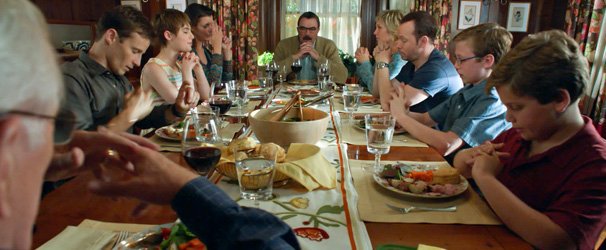 Rather than ask one of his neighbors to help, he had been reading by daylight and going to bed when it became too dark to see. His back was hurting and he could barely move without experiencing a great deal of pain, as if his spine was going to snap. Therefore, keep in mind, the one who gives help is more powerful than the one who receives it. Knowing what to do for a person suffering from an impairment and what to cease doing begins with understanding what life is like from that person’s perspective. Without this comprehension, there is a tendency to worry about the wrong things and to give assistance in the wrong ways. Learning all that we can about being dependent allows us to fall short of the ideal to the right extent. Sometimes fear can strike a disabled or elderly person like a malignancy, sapping every and power and attention from their daily lives. They are afraid of the process of their ailment, they are afraid of increasing loss of control, they are afraid of the outcome, and they are afraid of dying. They fear how their families and friends see them, how they feel about them and how their condition affects their lives. #RandolphHarris 6 of 8
 However, what can be even more difficult is when people do not know or cannot see that you are disabled or have a diminished capacity and they force you to work, harass you, physically attack you, use you for money, and threaten you because they know they can get away with it. For young people who are physically disabled, it is like experiencing one’s old age prematurely. They are locked into a parallel isolation, shamed by feelings they do not dare confess. These individuals are frightened because they are young and still have a lot of life to live and are deteriorating much sooner than they are supposed to. They do not have a professor of whatever to understand them and how they feel, and their economy of friends tends to shrink. People do not know how to behave toward them, and it is easy to lose heart for coping. Sometimes they have no spirit for anything, like their heart finally dropped out of them. Theses youngster even get bullied and attacked by people who are much older than them, but have not yet experienced what it is like to have fractured vertebrae in their spine, or whatever. However, they have courage. Courage that comes for their belief in God. The Word courage comes from the Latin cor for heart. We give ourselves fresh heart by pulling our attention away from what has been lost. #RandolphHarris 7 of 8
 It is not that fear and disheartenment can be willed away, but we have to turn our focus in a direction most favorable to their alleviation. The consciousness that heals is definite and deliberate; it is a specializing of the Universal Law. In this law we may have absolute and implicit confidence, but we must also remember that the law can do for us only what it does through us. Its energy and creativeness must be interpreted through our belief and imagination. This is but another way of saying that if we want the principle of electricity to light our living room we must provide a fixture which makes it possible for the electricity to become a light. When we pray in faith we receive what things we pray for. If we believe that we shall receive them, we shall receive them. There is a specific, definite thing we are to receive, but we are to receive it as we believe. For many, relief and happiness can come by understanding the relationship between peace of conscience and peace of mind and by living the principles upon which both of these blessings are founded. God wants each of his children to enjoy the transcendent blessing of peace of conscience. A tranquil conscience invites freedom from anguish, sorrow, guilt, shame, and self-condemnation. It provides a foundation for happiness. It is a condition of immense worth, yet there are few on Earth that enjoy it most often because the principles upon which peace of conscience is founded are either not adequately understood or followed. #RandolphHarris 8 of 8
 Randolph Harris II International Institute