
Home » Dogs (Page 7)
Category Archives: Dogs

My Master, the Spy

Sometimes stereotypes are creations of an entire society or nation, and they perform the function of building up the national feeling through putting down another nation or group. Such behavior is not really intentional cruelty, ignorance, or hostility to the other groups or nations, though it certainly may be unenlightened or narrow-minded. What is your test now will become your testimony. Let go of the discouragement, self-pity and get ready for God to do something new. Those advisories, annoying and harassing you are about to meet their ends. However, in the process, they have thrusted you forward into the fullness of your destiny. Experiments have taught us if practical experience has not already done so, that the improbable does occur, and that our picture of the World only tallies with reality when the improbably has a place in it. What guarantee is there that the five senses, taken together, do cover the whole of possible experience? They cover simply our actual experience, our human knowledge of facts or events. There are gaps between the fingers; there are gaps between the sense. In these gaps is the darkness which hides the connection between things. This darkness is the source of our vague fears and anxieties, but also the home of the Gods. #RandolphHarris 1 of 6

The Gods alone see the connections, the total relevance of everything that happens; that which now comes to us in bits and pieces, the accidents which exist only in our heads, in our limited perceptions. In the political realm, a number of investigators, seeking to understand how personality factors might bear upon such behavior as political power-seeking among aspiring leaders, have turned their attention to the self-concept as an explanatory variable. Some of the more prominent explanations of the striving for political power can be traced to ideas on compensation for feelings of inferiority. An individual afflicted with organ inferiority may seek to compensate for his or her deficiencies in order to overcome one’s low feelings of self-worth. Demosthenes was a Greek statesman and orator of ancient Athens. As a boy, Demosthenes stuttered: in order to overcome this stuttering, he placed pebbles in his mouth and sought to shout down the waves. In another example, Napoleon’s drive for power was reported to stem from inferiority feelings about his diminutive stature. Power seekers pursue power as a means of compensation against low estimates of the self. However, low self-esteem may also be at the root of political apathy, since overwhelmingly low self-esteem might cause the individual to withdraw from the political arena entirely. #RandolphHarris 2 of 6

Similarly, political apathy might stem from the fact that the individual is so exhausted by one’s inner conflict that one has no interest or energy left for public affairs. Research findings are consistent in showing that people with low self-esteem are in general more likely to be politically apathetic. One large scale study of high school juniors and seniors showed that youngsters with low self-esteem were less likely to express interest in national or international affairs, to pay attention to political matters in the media, to have much political knowledge, and to be political opinion leaders. Furthermore, even those low self-esteem students who were politically interested were less likely to discuss politics, more likely to feel personally threatened by political discussion, less confident that other people would pay much attention to their political views, and more self-conscious about presenting their political ideas to other people. These low self-esteem youngsters were also more likely to report that they were distracted from public affairs by concern with their personal problems. However, keep in mind that there are no constraints on the human mind, no walls around the human spirit, no barriers to our progress except those we ourselves erect. Whether you believe you can do a thing or not, you are right. Courage is a door that can only be opened from the inside. #RandolphHarris 3 of 6

Personality will affect political attitudes of youngsters only if they are politically involved, the relationship of self-esteem to political attitudes controlling on political interest. In virtually every case, the relationship of self-esteem to political attitudes is stronger if political involvement is higher than if it is low. Furthermore, among those adolescents who were highly interested in political issues, those with high self-esteem are more likely to be knowledgeable about political figures, to have a better understanding of these essentials of democracy, to be less cynical about politics, and to feel more politically efficacious. These findings persisted when grade, gender, socioeconomic status, and intelligence were controlled. Those with low self-esteem, on the other hand, were more likely to support political protest activities. Qualitative research among adults has added to our understanding of how self-concepts—especially self-esteem—may influence political apathy or participation. One study showed that some adults were afraid to express political opinions for fear of making fools of themselves. Lacking confidence in their own knowledge and ability, these people retreated from political. However, low political participation also appeared to be fostered by a more fundamental and deep-rooted feeling of inefficacy and insignificance. #RandolphHarris 4 of 6

Some people feel that they do not matter, that they make little difference in the broader scheme of things. These people expressed the idea that they were politically unimportant—an ordinary person, an average individual, a little person. Nothing they can do will make much political difference because the forces that control the World, including the political forces, were outside their control; political impotence formed the basis of political apathy. Apathy, of course, is not the only possible outcome of such an attitude. One reason many Germans were attracted to Hitler was that (like the American subjects described above) they felt ineffectual, impotent, and insignificant in the broader scheme of things. For this reason they attached themselves to a powerful political leader, who not only promised them national glory and, thereby, personal self-esteem, but also preached a doctrine asserting their inherent superiority to all others peoples. There are many other ways in which the self-concept has been show to be related to political orientations. People with low self-esteem are more likely to be chauvinistic, ethnocentric, and politically cynical, and to be low on democratic commitment. #RandolphHarris 5 of 6

There is also evidence that (among isolationists), those with low self-esteem are more likely to oppose social change, to believe in tradition and social order, to support a position of elitism, and to hold extreme political beliefs. In general, people with low self-esteem tend to hold political solutions of any political persuasion that makes their confused environments intelligible, orderly, and purposive. Other studies have also examined self-esteem among elected officials. However, self-esteem is not the only self-concept motive implicated in political behavior; self-consistency also plays a role. The study of adults found that some people avoided political activity on grounds of role self-concept incongruence. The individual’s view of oneself did not match the individual’s view of the qualities of a political activist. The political activist was seen as energetic, forceful, and dynamic, whereas the individual saw oneself or herself as passive and receptive. This lack of role-person fit was a deterrent to political participation. It is plain that the way one thinks about the self influences the way one thinks about the World, including the World pf politics. The political institution, like any other, is a realm of action, and whenever people act, their self-concepts are implicated. #RandolphHarris 6 of 6

The Winchester Mystery House

Construction lasted for thirty-eight years on the Winchester Mystery House, one of North America’s most unusual and eccentric homes located in San Jose, California. Through the 160-room labyrinth-style mansion built by Sarah Pardee Winchester, there are many beautiful and extraordinary examples of the Queen-Anne Victorian Style architecture. https://winchestermysteryhouse.com/
But Why if He is Only a Myth?
 Let us be finished with this humbug which has fooled humankind for so long. People think that psychiatry is a science of the mind, but it may not be. Some people think psychiatry is a genius for evil rather than for good, and that some members of the psychoanalytic society devote meetings into psychoanalyzing people, which is neither sought nor consented in order to transform a polemicist into a patient. For instance, a young Hapsburg princess wanted to divorce her blue-blooded husband and marry a commoner, a decision Dr. Julius Wagner von Jauregg (a Nobel Prize winning Austrian physician) considered to be the symptom of a mental illness serious enough to justify the young woman’s incarceration in a madhouse. It was this brazen deprivation of personal liberty under the guise of psychiatry that makes people fearful of seeking help for their mental health. And, evidently, many doctors see nothing wrong in such use of psychiatry. Many professionals, too, remain silent about these types of situations. Such a position seems to imply that a person believed to be innocent of an offense might be held morally responsible and be blamed or convicted on the general grounds that it would be socially beneficial to do so. And this seems to conflict with deeply held convictions about the requirements of justice in our commerce with other human beings. #RandolphHarris 1 of 11
 Let the person come by one’s own volition or choice how one will, yet, if one is able, and there is nothing on the way to hinder an individual pursuing and executing one’s will, then individual is fully and perfectly free, according to the primary and common notion of freedom. Eisenhower could have ordered his troops to take Berlin before the Russians arrived and Kennedy was able to call off the invasion of Cuba, but he decided not to do so and that is perfectly consistent with determinism. There is an important distinction between an action being caused or determined by antecedent circumstances, and its being constrained or compelled or coerced by antecedent circumstances. Only when an action that is determined is also in some way constrained or compelled is the actor not morally responsible for that act. Some people argue that the claims of justice are satisfied if we justify the rules according to which a person is judged to be morally responsible and blameworthy on the basis of the principle that social utility ought to be maximized, but then apply these rules to particular cases in a way which precludes any further appeal to this principle of utility. In this way, the claims of justice may be satisfied and the problem of freedom bypassed. This view, usually called rule utilitarianism. #RandolphHarris 2 of 11
 The mind does not always think. We have an infinite number of perceptions of which we are not aware. Habituation and wandering attention, as well as the smallness of the perceptions, explain our failure to notice them. Our attention is often drawn to a sound that has just occurred and we would not otherwise have consciously noticed it, although we registered it. These insensible perceptions are also the signs of personal identity and its constituents; the individual is characterized by traces of one’s previous states which these perceptions preserve by connecting them with one’s present state. They are means of recollection. Along with social interaction and social identity elements, social contexts have an important bearing on the self-concept. The special nature of contextual analysis can be highlighted by comparing it with what is doubtlessly the dominant procedure in sociological research, namely, the individual characteristic approach. To further highlight this illustration, when we ask about the relationship between race and self-esteem, we are looking at the connection between one characteristic of the individual (a social identity element) with another characteristic of the individual (a global attitude toward the self). #RandolphHarris 3 of 11
 When we turn to contextual analysis, on the other hand, the aim is to investigate the bearing of some general property of the group on the thoughts, acts, or norms of its constituent members. Instead of asking: what is the impact of the individual’s social class on his or her self-esteem? we might ask: what is the impact of his or her neighbor’s social class on his or her self-esteem? In other words, how does their socioeconomic status (SES) affect his or her self-concept? The qualities of others structure the individual’s experience. For instance, it may be a very different experience for privileged child to be raised in an disprivileged neighborhood than for a disprivileged child to be raised in a disprivileged community; for a Catholic child to be raised in a Protestant neighborhood than for a Protestant child to be raised in the same neighborhood; for a middle-class child to be reared in a working-class neighborhood than for a working-class child to be reared in this social context. By examining contextual effects, we have accumulated, demonstrating diverse effect. The type of context that appears to be most relevant to the self-concept is the dissonant or consonant context. By consonance or dissonance, we refer to the degree to which the individual’s characteristics match the characteristics predominant in one’s environment. #RandolphHarris 4 of 11
 A way of gaining knowledge is through cultural tradition, whereby an accepted body of facts is passed from generation to generation. In a large-scale survey of adolescents in New York State, the results showed that Jewish children raised in predominantly Gentile neighborhoods had lower global self-esteem than those raised in predominantly Jewish neighborhoods. Furthermore, Catholics raised in non-Catholic neighborhoods and Protestants raised in non-Protestant neighborhoods also had somewhat lower self-esteem than those reared among their coreligionists. Thus, even people high in religious status manifested some self-esteem decline in dissonant contexts, although the effect were not very strong. Culture plays an important role in tradition. Farmers and ranchers in the America Midwest, for example, know that burning their pasturelands early each Spring helps remove dead underbrush so that nutritious pasture grasses can get a better start for the Sumer grazing. Farmers in Iran, however, move their herds into the mountains during the Spring and Summer months and then back to the plains in the Fall and Winter, allowing nature to kill off undesirable weeds and underbrush and replenish the desirable grasses. The corpus of research on dissonant racial contexts is far more abundant. #RandolphHarris 5 of 11
 One point frequently overlooked is that, technically, segregation represents a condition of racial consonance whereas desegregation represents a condition of dissonance. Research findings in this area have not been entirely consistent, but a number of studies indicate that the global self-esteem consequences of racial dissonance are somewhat negative. Thorough review of the effects of desegregation found that in nine studies global self-esteem was low in dissonant context, in four studies it was higher, and in seven studies there was no clear difference. Therefore, the weight of evidence suggest that the global self-esteem consequences of racial dissonance tend to be negative, but the effect are neither powerful nor uniform. There is some evidence that ethnic dissonance may bear on global self-esteem. The data from a study based on a sample of French Canadian men in Sherbrooke, Quebec, some of whom had been educated in French-speaking and some in English-speaking schools, showed that the French who had attended English-speaking schools were more likely than those who had attended French schools to be in occupations of higher prestige. However, their global self-esteem was lower. Otherwise expressed, despite the superior achievements resulting from attendance at English-speaking schools, their sense of self-worth appeared to suffer in an ethnically dissonant context. #RandolphHarris 6 of 11
 When we turn to social class dissonance, little information is available. One study showed that, among higher-class children attending lower-class schools had significantly lower self-esteem than higher-class children attending higher-class schools, and lower-class children in higher-class schools had lower self-esteem than lower-class children in lower-class schools. For both upper- and lower-class children, then, dissonant socioeconomic environments appeared hostile to self-esteem. Although the weight of evidence indicates that the dissonant social identity context exerts a depressing effect on global self-esteem, this effect is not usually a very powerful one. When people are immersed in a culture that is more festive than they own, they may find it annoying that individuals tend to lack respect, hygiene, tact, finesse, education, and structure, but they learn to tolerate the behavior knowing that the situation is only temporary and that the people cannot help themselves. The reasons for expecting contextual dissonance to have some depressing effect on global self-esteem are not obscure. For one thing, the data clearly shows that people in dissonant contexts are more likely to be subjected directly to the ravages of prejudice. #RandolphHarris 7 of 11
 A study of New York States adolescents showed that those in dissonant religious contexts were much more likely than those in consonant contexts to report that they had been teased, laughed at, or left out of things because of their religion. And in Quebec, French-Canadians educated in English-speaking schools were more likely than those in French-speaking schools to report they had experienced ethic prejudice. The reflected appraisals received from those in a dissonant environment may well have been damaging global self-esteem consequences. In addition, the individual socialized in one culture who must judge oneself by the standards of another may feel that there is something strange or wrong about oneself. Thus, if a French Canadian attending an English-speaking school speaks with an exotic accent or, because of one’s French background, thinks or acts in ways that are dissimilar with others in his or her English environment, one may, following the self-attribution principle, conclude that there is something wrong with oneself. That is why it is important to have faith in God. Faith is a strong belief in truths that cannot be verified by personal experiences—serves as an important source of knowledge in almost every culture. #RandolphHarris 8 of 11
 Faith also reflect diversity, in that across and within cultures there are a wide variety of beliefs and opinions as to what constitutes truth. The small and more homogeneous a particular society, the more likely there will be agreement as to what constitutes truth; the larger and more heterogeneous the population, the more likely there will be more diversity of faiths and, hence, many different truths, untruths, and heresies. Faith usually goes beyond tradition, however, because it is often supported by intense emotional commitment. The belief in a supernatural being, or in life after death, for example, usually requires faith beyond personal experience. Yet, surveys consistently show that the vast majority of North Americans (80 to 90 percent) believe in God, the power of prayer, and an afterlife. Because of its emotional and moral connotations, faith is a powerful source of knowledge, and those who question it may suffer some of the most serious social consequences a society has to offer. History is replete with religious wars, inquisitions, hangings, and burnings at the stake motivated by religious convictions and conflicts. In order for people to enforce their beliefs formally, they typically must have the support of those in positions of power and authority. #RandolphHarris 9 of 11
 Each race finds its partisan, especially among those persons who believe that they themselves have authoritative knowledge, which is gained by listening to people who are recognized as authorities or expects. Authority is often linked to power; those in leadership positions may be viewed as more knowledgeable than others and can use their power to influence others. The Mediterranean may claim that they were the pioneers in human civilization and progress, the larger part of classic antiquity, and the still more ancient cultures on which that antiquity was founded, being to their credit; the Alpines boast their proficient in the arts of peace and point to the fact that the human of genius tend to approximate to their type, whether or not of their race; the Nordics claim to be the most adventurous, the most individualistic, and sometimes the most dominant. It is the Nordics who have perhaps been loudest in proclaiming their own virtues, above all in Germany, where, however, they do not predominate, but also to some extent in France and in England and in America. It may perhaps be permitted to a largely Nordic person, ancestrally in a mainly Nordic region, to attempt to take a reasonable and impartial view. #RandolphHarris 10 of 11
 There is something to be said for every race, and the more to be said the better we learn to know it. The preference for one race above another is a little but the outcome of prejudice, often due to the fact that one believes, rightly or wrongly, that one possesses oneself a strain of that preferred racial blood. The eugenist is not called upon to prefer one race above the others and to work for the extinction of the others. If we come to that, it is quite likely that, on a referendum being called, the darker races of our Earth, who happen to be in a large majority, might vote the extinction of the lighter race, and, moreover, find excellent reasons for that decision. Ultimately, we are bound to conclude, pigmentation is a question of exposure to the Sun’s rays, whether ingrained in a race by natural selection or acquired by heredity; it is a problem, not for the eugenist but for the biological anthropologist. The euensist, whether the dark-skinned eugenists or the white-skinned is not called upon to make a decision in the matter. One is simply called upon to improve the stock of the race within which one belongs, “People that they have been wrought upon by the Spirit of God; and had been healed; and they did show forth signs also and did do some miracles among the people (3 Nephi 7.22).” #RandolphHarris 11 of 11
Revolution of the Science of the Human Mind
 Help! Save me from seeing, not from dreaming; and keep the thieves, away from my dreams. When I was a younger my grandmother would tell me that “Telling Stories” is a polite way of telling someone they are fibbing. When I was younger, my father used to make me go visit my grandparents, at the time, I did not want to because he would never go with me. However, now I am happy that I did visit my grandparents because it is nice to know where I came from. Recently, the Girl Scouts told the World not to make their children feel they would have to hug relatives if they do not want to. However, I was watching Bewitched ( popular television show from the 1960s and 1970s) and grandma Stephens came to visit her granddaughter Tabatha and Tabatha’s mother, Samantha, made her give grandma Stephens a big hug, and she coached her to do it before she opened the door and let grandma Stephens in. So, grandma Stephens was so impressed at how polite and loving her granddaughter was. And it just reminded me how it is necessary to teach our children to be loving, as it helps to strengthen bonds and makes family members feel loved and respected. Also, if you do not show your parents and grandparents that you cherish them, they will remember that on birthdays, holidays, and when they write their will. #RandolphHarris 1 of 9
 The bearing of social identity elements as race, religion, or gender on the self-concept are varied and complex. Our understanding of these effects, however, has been appreciably advanced by recognizing that the self-concept is more than a random conglomeration of elements; it is, on the contrary, a structure whose elements are arranged in a hierarchy of salience. Some elements are at the center of the individual’s concerns, whereas others are more peripheral. For example, the position of a mother is generally more salient (prominent) to the woman than father is to the man. People are more likely to seek to play central than peripheral roes. If a tennis player ranks high in one person’s value hierarchy and low in another’s, then the former will be more likely to perceive a given situation as an opportunity to perform in terms of that identity. Thus, a scientist may begrudge every moment spent away from his or her laboratory, an athlete may champ at the bit in his or her eagerness to get out on the playing field, and so on. Also, as individual’s grow as people, they will learn how important it is to keep personal information private and to be honest. #RandolphHarris 2 of 9
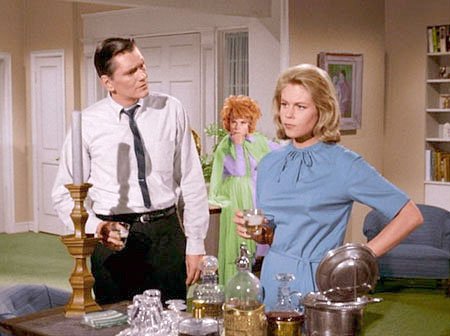 There are a group of people involved in the American news industry and they have questionable ways of sourcing information. Some of them claim to be psychics and believe that they can sense the intent of a situation before it happens. These people often work with government agencies and law enforcement and are able to access personal information and records that are confidential and they often distort the material and lie for fun. Not only that, but they also invade your personal life and spy on you and that is very dangerous because they have been responsible for ruining lives, ripping families apart, getting people hurt and killed all to serve their objectives. To further highlight this illustration, Bewitched is a situational comedy that aired in the 1960 and 1970s. It starred a beautiful young lady called Samantha and she was married to a tall, dark, handsome advertising executive called Darrin who had really nice hair. On the episode called I Confess, which originally aired 4th April 1968, Darrin gets a glimpse of his life if everyone knew that Samantha was a witch. #RandolphHarris 3 of 9
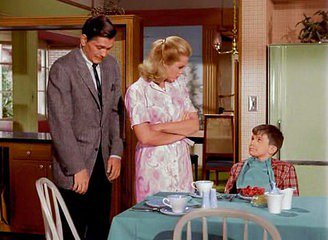 Darrin took his wife Samantha with him to work to tell his boss and owner of the advertising company, Mr. Larry Tate, that Samantha was a witch. Darrin thought that Mr. Tate would be shocked and afraid, but instead he wanted to use Samantha’s powers of witchcraft to take over the World and make his firm the most successful advertising industry on the planet. After that Darrin told his neighbor’s that Samantha was a witch, and people were selling tickets to see her, watching her house, and it put her life in danger. Eventually, Darrin lost his wife and his daughter Tabatha because the military contacted them and told them it was no longer safe for her to life in public because there were so many threats against her life. Fortunately, however, thankfully it was just a dream (and is a television show), so when Darrin woke up he forgot all about it. The idea of true healing still has some meaning. Nevertheless, this fairy tale shows you the dangers of the news media having too much power and access to people’s lives and secrets. When the news is allowed to break the laws and not be punished they put real lives in danger. We should be concerned with the consequence of spiritual decay. #RandolphHarris 4 of 9
 An industry, like the news media, that is built on exposing people and hurting people is very dangerous. To many of these reporters and journalists, we are nothing more than a news story waiting to happen. They do not care about the harm they may cause by leaking sensitive information, as our lives are meaningless to many of them. And, if an individual complains about them invading one’s life or personal business, they will often have an entertainment lawyer reach out and threaten to sue the individual complaining and have that individual arrested. Also, because the news is so powerful and they work with governors, mayors, and law enforcement, they could charge an individual with a crime for contacting them and asking them to leave one alone. The reporters are relentless in Sacramento, California and probably else were and spend years and decades terrorizing people looking for a story and nothing is done until the federal government sees there is a serious problem going on. Some people have been physically attacked by reporters and extorted and these reporters go unpunished. And when they are reported to their parent company or other regulatory agencies, they refuse to investigate and will say something like, “We have no affiliation with them,” or “We need more information.” #RandolphHarris 5 of 9
 Anyone who can dream must have a passionate desire to protect the World of one’s dreams against intruders. With our roles in society, we are more likely to cultivate the skill or qualified relevant to the role performances of central statuses than of peripheral one. For example, an athlete may give full attention to ensuring that he or she is in peak physical condition but show far less concern with whether he or she is behaving properly as a nephew or brother. The pianist may practice endlessly to improve his or her musical ability, but make no effort to learn to perform home repairs. Role performance of central statuses may transfer or diffuse to other statuses. This process is called role-person merger. The person is consisting of all the roles in an individual’s repertoire. The question raised is whether the attitudes and behavior developed as an expression of one role carry over into other situations. For example, the professional who carries the office bearing and air of authority into family and community dealings have become to a considerable degree the professional role played at work. In these circumstances, a particular status moves to the top of one’s identity hierarchy; the role standard, or qualities expected of a status incumbent, become of primary concern to the individual, and these qualities generalize to other roles. #RandolphHarris 6 of 9
 Under certain circumstances, in fact, a social identity element may become so important that it overwhelms the others. One expression of this idea is the labeling theorist’s concept of role engulfment. This concept suggests that the individual’s identification of the self with some labeled category, for example, homosexual, embezzler, or drug addict, may loom so large in his or her consciousness that all else pales by companions. His or her other statuses or characteristics, however, admirable, come to count for nothing in his or her eyes. Furthermore, global self-esteem is more likely to hinge on performance in central than in peripheral roles. This point has been felicitously by William James, “I am who for the time have stacked my all on being a psychologist, am mortified if others know much more psychology than I. However, I am contented to wallow in the grossest ignorance of Greek. My deficiencies there give me no sense of personal humiliation at all. Had I ‘pretensions’ to be a linguist, it would have been just the reverse.” Our supreme focus should be on the spiritual miracles that are available to all of God’s children. #RandolphHarris 7 of 9
 Our sense of who and what we are tends to hinge more importantly on central than on peripheral identity elements. The woman who loses her identity as wife when her husband passes into Heaven, or a man who loses his identity as a carpenter or engineer upon forced retirement, may experience feelings of uncertainty about who or what he or she really is. The loss of peripheral identity elements, on the other hand, may have little effect. For some reason that is not readily evident, sociologists appear to have been more active in developing and elaborating the idea of social identity salience than in examining it empirically. That strongly valued traits have a particularly powerful impact on global self-esteem has been clearly supported by research. Differential social identity valuation would be expected to show similar effects. The dream is one of our most powerful weapons against the psychoanalysts who insist on interpreting it. The powerful dreamer, free of guilt, stand wholly outside this World. The only guilt one feels and for which one is prepared to atone is the guilt of others. In the healthy World of one’s pure spirit, there is no room for guilt. #RandolphHarris 8 of 9
 The most important thing is to save the dream, this is the noblest attribute of an individual and artist, from destruction. We live in a day in which misinformation about our beliefs abounds. In times such as these, a failure to protect and deepen our spiritual foundation is an invitation to have then gnawed at by those who seek to destroy our faith in God, as they gnarl and buckle as us like a chain saw. Our dreams should not be interpreted by someone else. Instead, we should use our own dreams as an inspiration toward attaining precisely that knowledge of which the dreamer is deprived. Otherwise we may find ourselves bound by the advisory’s chains and being led carefully down forbidden paths. Our spiritual foundation goes deeper as sincere personal and family prayers becomes bastions of our faith as we repent daily, seeking the companionship of the Holy Ghost, and learn God and his attributes and strive to become virtuous. Dreams are a beacon of hope and do not let anyone steal your dream no matter how impossible they say it is. Pray for great things, expect great things, work for great things, but above all pray. We love you and thank you, God. #RandolphHarris 9 of 9
Are My Usual Thoughts and Present Actions Worthy of Eternal Life?
 It is a wonderful feeling to conquer wrong practices and to be free and unencumbered from their detrimental effects, both physically and spiritually. We should all take a careful inventory of our habits. Change comes by substituting good habits for less desirable one. We mold our character and future by good thought and acts. Social identity elements refer to the groups, statuses, or social categories to which the members of society are socially recognized as belonging. The human being enters a named, classified World, and is immediately sorted into socially relevant categories. Scarcely has the infant entered the World than he or she is immediately classified according to race, sex, religion, nationality, and so forth. In due course, new socially recognized categories, some of his or her own choosing, are added. These are the fundamental bases upon which society, independent of the special and unique features of each individual, orders and arranges its members. The future we seek is a life motivated by good thoughts, expressed in good works, and sustained by an inner peace and determination of righteous doing. The destiny we desire is an inheritance in the celestial mansion prepared by our Savior for the faithful of God’s children. #RandolphHarris 1 of 8
 We should become so involved in acquiring good quality traits and participating in character-building activities that there is no time to engage in anything worthless or harmful. No universally recognized classification of social identity elements is at hand. As children of God, we are given the privilege and opportunity of choosing which way of life we will follow—which habits we will form. The habits that direct our lives and form our character are fashioned in the commonplace of routine life, and they are acquired by practice. Social identity elements shape the self-concept in a number of ways. To an important extent they define for the individual what he or she is; the individual feels he is a male, lawyer, Protestant, father. Furthermore, if the social identity element is ambiguous (for example, is one an adolescent or a young adult? a music student or a musician?) the self-concept is correspondingly ambiguous. These identity elements, because of their associated role standards, represent criteria for self-judgment. A boy may condemn himself for a lack of courage which a girl may accept without a qualm. Conversely, a boy is unembarrassed at his inability to sew, a girl unembarrassed at her ineptitude at catching forward passes. #RandolphHarris 2 of 8
Am I setting my sights on eternal goals and working to obtain them? Role performances influence social action; this behavior, in turn, comes to constitute an important part of the content of the self-concept. The good habits of a child’s early training form the foundation for his or her future and sustain the individual in one’s life later on. The professor sees himself as a teacher or writer, but the doctor usually does not; the doctor sees himself or herself as a diagnostician or surgeon, but the professor does not. Furthermore, these actions may generalize to broader aspects of the self-concept. For example, it has been discovered that people whose work requires them to exercise autonomy, make their own decisions, and assume responsibility are more likely to emerge with higher global self-esteem. Although we do not always know what lies ahead, there is strength and safety in righteous conduct. Since social identity elements represent important bases of social evaluation, they may influence self-evaluation. We need to organize our lives based of virtue, and chart a right course as we journey toward eternal life. In the conduct of our lives, we learn that good character-building habits mean everything. It is by such behavior that we harvest the real substance and value of life. The way we live outweighs any words we may profess to follow. #RandolphHarris 3 of 8
 In every society, people are characteristically ordered along a number of dimensions of stratification, for example, occupational, social class, racial, religious, gender, age, and ethnic. Occupations are arranged in a well-recognized hierarchy of prestige; ethnic preferences (including racial) are surprisingly uniform across broad segments of the society and persist over long periods of time; and so on. Since such stratified positions command unequal social self-esteem, social scientists have tended to take it for granted that those ranking lower in the various status hierarchies would have lower self-esteem than the more favored member of society. However, human beings destined purpose is to conquer all habits, to overcome the evil in humanity and to restore good to its rightful place. The ways of life acceptable to the people of the World are not always acceptable to God. We should conduct ourselves wisely before God and sin not. We should not yield to the persuasion of people with evil intent. The principle of reflected appraisals holds that if others look up to us and treat us with respect, then we will respect ourselves accordingly, but if they derogate or disdain us, then our self-esteem normally depends on the respect of others. #RandolphHarris 4 of 8
 Social comparison is at the heart of social evaluation. Bad habits are a reflect of our thoughts and personalities, our behavior and conduct. They are degrading to the choice qualities which are our God-given spiritual endowments of faith, honesty, integrity, and uprightness. Human beings learn about themselves by comparing themselves to others. Evil tendencies destroy character and ruin lives. When first yielding to sin, one’s resistance, self-control, and character are weakened and further transgression usually result. With violation of spiritual laws and rejection of spiritual qualities, our powers of resistance are reduced. Eventually we seem to lose complete control of our ability to resist evil. Imagine the great misery suffered by a person who has practiced a vice for so long that he or she curses it, yet at the same time holds on to it. And that deprived expression of reality is seeking to define life with terrible inadequacy that will revenge itself unto the third and forth generations. Our great challenge is to learn how to control ourselves. We must learn for ourselves and act for ourselves, being careful not to follow those who are not divinely led. We have a responsibility to thwart the work of the evil one—not to assist or perpetuate its cause by yielding to the enticements of sin. #RandolphHarris 5 of 8
 With good habits, we prepare ourselves for excellence. Judging the dead is a universal theme, in which evildoers are punished and the good rewarded. Every Ancient Egyptian hoped to be reborn in the afterlife in the image of Osiris, the God of the dead, and to be admitted into his kingdom. However, before this could happen, the deceased had to appear before a divine tribunal, which examined an individual’s conduct on Earth. In the judgment of the dead, the weighing of the heart ritual took place. The deceased was escorted into the tribunal and stood before Osiris, seated on a throne, and a jury of 42 Gods. In the center of the room was the balance, on which the heart would be weighed. First, however, the deceased had to make a negative confession, asserting that he or she had not committed reprehensible acts, was not guilty of evil deeds, or thoughts, and had not acted in defiance of Maat, goddess of truth and justice, or the divine order. The individual then had to repeat this confession before each member of the tribunal. As the heart was about to be weighed, the deceased pleaded with it not to betray nor condemn him or her, a prayer that was often inscribed on the scarab amulet buried with mummified bodies. #RandolphHarris 6 of 8
The heart was then placed on the scales to be weighed against the ostrich feather that symbolized Maat. If the heart brought the scales into balance, the deceased was allowed to access the afterlife. However, if heavy with sin, the heart failed to being the scales into balance, the deceased faced the open jaws of Ammut, the Devourer of the Dead, a netherworld creature that was part crocodile, part lion and part hippopotamus. While we are living, it is important to do good. One cannot truthfully say one is confirmed in his or her bad habits, sins, or weaknesses to the point that they cannot be thrown off and repented of. The human will is naturally inclined toward the right. We are spirit children of God and have born within us the power to overcome all evil practices. We have a gracious, kind, and loving Father in Heaven who stands ready to help us. And the Lord said, “I will bring forth out of darkness unto light all their secret works and their abominations; and except they repent I will destroy them from off the face of the Earth; and I will bring light all their secrets and abominations, unto every nation that shall hereafter possess the land. And now, my child, we see that they did not repent; therefore they have been destroyed, and thus far the word of God has been fulfilled. (Alma 37.26-26).” #RandolphHarris 7 of 8
 An individual’s grief, insecure ego, inability to love, shattered dialogue, or entanglement in loneliness traps is also a collective problem for society. Living as we should, obedient and faithful, then we are on our way to the presence of God. Sometimes in life in feels like something is missing and we all want confirmation that we are doing the right thing and pleasing in these eyes of God. When we allow others just to be what he, she, or it is, without imposing our preferences or offering any resistance, the other is no longer something separate over there, apart from me. We are then free to meet and mingle with the other in the open field of awareness, where separate selfhood and otherness dissolve and fade away. Then we discover what it really means to love—to open to others as they are, without imposing our judgments or agendas on the. When the qualities that are desirable in individuals also become universal in the people of a nation, that nation also will have good character. It is a love and practice of all things that are true, honest, l lovely and of good report. #RandolphHarris 8 of 8
Growth and Development of the Green Grass
 Give careful thought to your ways. Although the emotion of love is one of the strongest of which the mind is capable, it can hardly be said to have any proper or peculiar name of expression. The boundaries of a sentiment vary in their permeability by public observation and involvement in one’s feeling. Sentiments expressed in a public or community setting become conventionalized as the individual makes social comparisons about the sentiment’s quality and intensity. Private feeling, secret and isolated from social involvement, is less manageable and loses social significance for lack of validation by others. For example, medieval customs required mourners to show sorrow for a fixed period of time. Public ceremonies tamed grief, shielding mourners from extreme or prolonged sorrow. With privatization of grief, however, the sentiment became idiosyncratic, often insurmountable as the mourner languished persistently. For 350 years medical science ignored relationships between emotions and physical illness because science ignore the study of emotions (since emotions were a reflection of the human soul) and instead focused exclusively on the physical cause of aliments. #RandolphHarris 1 of 9
 Expression is part and parcel of the feeling. It is believed to be a general law of the mind that along with the fact that inward feeling or consciousness, there is a diffusive action or excitement over the bodily members. A very considerable number of the facts may be brought under the principle. States of pleasure are connected with an increase, and the states of pain with an abatement, of some, or all, of the vital function. Ideas about physical health have been rigidly fixed. Germs are seen as being outside and they somehow get inside the body, leading people to believe that they were the passive victims of external forces in nature. It was widely held that human behavior did not cause disease; rather, humans were victimized by it. In some primitive cultures, even today, people assume that spirits control all their behavior and they have little choice in their own destiny, because it is controlled by good and evil spirits and by fate. Once you were stricken by these foreign invaders, the only logical course of action was to go to a physician and be purged of your illness. Until the late nineteenth century, most people did not believe that they were responsible for their own physical health, a belief that has lingered on into the late twentieth century. #RandolphHarris 2 of 9
 Even today, many people still resist the idea that there is a connection between their overeating, their lack of exercise, their smoking, or their loneliness and their health. They still believe that human disease is caused by germs out there and that nothing they do matters. Very similar beliefs about mental disease dominated the nineteenth century thinking. Mental illness was thought to be caused by something foreign to the human body. Since it was a mental problem, it had to involve the human soul, and so the source of these problems was attributed to an invasion of evil spirits or possession by dark emotions. Since the mind was a reflection of the human soul, mental disturbance could only be caused by agents which troubled the soul, namely dark emotions. The attitude toward human emotions followed precisely the same line of thought. Emotions were viewed as a quality of the human soul; they were nonmaterial, and therefore had little to do with physical disease. Like mental disorders, emotional disorders were viewed as an indication of a disturbed soul and show how caused by evil spirits or dark emotions. If a person was emotionally upset, then he or she prayed for spiritual guidance. #RandolphHarris 3 of 9
 Feeling management through public rituals allows the discharge of traumatic emotions. In some cultures, is in considered normal for hostile sentiments to be expressed publicly, like a short of live theater play, in noisy but mostly harmless encounters in which antagonists play to their audience, who intervene if a fight becomes too serious. These exaggerated dramas make hostility appear so intense as to be avoided when possible, and provide support for folk beliefs, such as a particular group of people are terrible when they fight. However, as you may know, anger, grief, fear, and embarrassment are unavoidable experiences in social life, but often cannot be discharged or resolved immediately because social controls. Rituals provide a dramatic frame that restimulates distressful emotion but also gives the person a sense of control or distance from the feeling, so that it may be discharged through catharsis. Most modern rituals are insufficiently involving emotion, however, and participants are overdistanced from their distress. An emotional emptiness has developed from a poverty of identifying rituals. Rituals have become and impersonal because we lack agreement on symbols as collective reference points. #RandolphHarris 4 of 9
 We only have shallow feelings for romantic love, religious reverence, and esthetic sentiments. Because we do not sense that others share the same feeling and meaning. Emotions are serviceable habits and are expressed in a manner designed to effectively communicate to others what is being felt inside. Emotional expression serves definite purposes: they mobilize people into some definite course of actions, and/or they communicate a specific message to other people which leads them to behave in a certain fashion. The emotion of love is an exception to all the general rules—it is the strongest of all emotions, and yet it is the only one that has no peculiar means of expression. And, as you may know, emotions can significantly affect our physical and mental well-being. It is not betwixing that men and women, beset by emotional stresses, turn and go to faith healers and to others who recognize the reality of these unsettling states. Fear, when strong, expresses itself in cries, in efforts to hide or escape, in palpitations and trembling and these are just the manifestations that would accompany an actual experience of the evil feared. #RandolphHarris 5 of 9
 The destructive passions are shown in a general tension of the muscular system, in gnashing of the teeth, beating on the chest like a bongo, clapping of the hands, and protrusion of the claws, in dilated eyes and nostrils in growls; and these are weaker forms of the actions that accompany killing of prey. The general law is that feeling passing a certain pitch, habitually vents itself in bodily action, and an overflow of nerve-force undirected by any motive, will manifestly take first the most habitual routes. If these emotions are to expressed and resolved, they start affecting the internal system. I grew up in a small farming town where water is the lifeblood of the community, and 30 percent of our water came from the snow melt, which was declining. The people in our society are constantly watching, worrying, and praying over the rain, irrigation rights, and water in general. People in our community are so preoccupied with the rain because it is a matter of survival. Under the stress and strain of our climate, sometime people were not always at their best. The city council, mayor and governor squabble over people who water their lawns, and they turned to the television news media to request that people report and confront their neighbors over water waste. #RandolphHarris 6 of 9
 Sentiments are not differentiated through innate bodily patterning, but through interpretation of feeling according to cultural vocabularies of labels and meanings. It was innocent enough at first, but over the years people started targeting people with green lawns and would quarrel over water. Two mean who lived in our community who I will call Sam and Dean had a disagreement over water, and the two men allowed their disagreement to turn into resentment and then arguments—even to the point of threats. One August morning both men felt they were short of water and that it was being stolen. Angry words were exchanged; a scuffle ensured. Dean was a great man with a lot of strength, and Sam was equally yoked and tenacious. In the heat of the moment, the men had a fist fight. The next morning, Sam called the city out to issue Dean a fine for wasting water. However, Dean was economically challenged and because the fines kept adding it, his water was shut off. These two neighbors and best friends had fallen captive to their anger and let it destroy their lives. We should learn to resolve our differences early on, lest the passions of them moment escalate into physical or emotional cruelty, and we fall captive to our anger. #RandolphHarris 7 of 9
 The social processes that create and shape love, hatred, envy, and other sentiments only enhance the richness and meaning of life. Make full haste to reduce arguments, eliminate ridicule, do away with criticism, and remove resentment and anger. We cannot afford to let such dangerous passions ruminate—not even one day. The lack of human companionship, the sudden loss of love, and chronic human loneliness are significant contributions to serious diseases (including cardiovascular disease) and premature death. The Savior asks us to forsake and combat evil in all its forms, and although we must forgive a neighbor who injures us, we should still work constructively to prevent that injury from being repeated. Forgiveness does not require us to accept or tolerate evil. It does not require us to ignore the wrong that we see in the World around us or in our own lives. However, as we abstain from sin, we must not allow hatred or anger to control our thoughts nor actions. Good human contact can alter and even eliminate the usual cardiac responses to fear and physical pain, and it can significantly influence the human ability to resist infectious diseases. #RandolphHarris 8 of 9
 Forgiveness means that problems of the past no longer dictate our destinies, and we can focus on the future with God’s love in our hearts. “I will give you honor and praise among all the peoples of the Earth, when I restore your fortunes, before your eyes,” says the Lord (Zephaniah 3.20). May the seeds of unforgiveness that haunted my neighbors never be allowed to take root in our homes. May we pray to our Heavenly Father to help us overcome foolish id, resentment, and pettiness. May God help us to forgive and love, so that we may be friends with our Savior, others, and ourselves. All knowing, God grieves even at the mere thought of evil. Dear Lord, we are sorry that we have been naughty and disobeyed. Please forgive us for disobeying and help us to listen to your commandments. Thank you for loving us and removing our sins that weigh heavily on our conscience. There is more righteousness in the World and thank you for your compassion, grace, and everlasting life. And please grant from your divine mysteries all your mercies. #RandolphHarris 9 of 9
The Culture of Poverty—It Tends to Perpetuate itself from Generation to Generation!
 Loneliness and the feeling of being unwanted is the most terrible poverty. The social structural conditions to which the poor are exposed (chronic unemployment and under-employment, low income, lack of property ownership, absence of saving and chronic shortage of food, money, medical care, and other necessities of life) give rise to distinctive patterns of community and family disorganization. These, in turn, produce a distinctive set of beliefs, attitudes, and values (that is, strong feelings of marginality, of helplessness, of dependence, and of inferiority, weak ego structure; confusion of sexual identification; lack of impulse control; strong present-time orientation, with relatively little ability to defer gratification and plan for the future. The cultural of poverty, however, is not only an adaptation to a set of objective conditions of the larger society. Once it comes into existence, it tends to perpetuate itself from generation to generation because of its effect on the children. By the time underprivileged children are age six or seven they have usually absorbed the basic values and attitudes of their subcultural and are not psychologically geared to take full advantage of the changing conditions or increased opportunities that may occur in their lifetimes. #RandolphHarris 1 of 6
 Where justice is denied, where poverty is enforced, where ignorance prevails, and where any one class is made to feel that society is an organized conspiracy to oppress, rob, and degrade them, neither persons nor property will be safe. Initially (time/generation I) structural conditions of poverty give rise to subcultural patterns (that is, family and community disorganization), and both of these create in children and adults the patterns of individual personality and behavior characteristic of the poor (for example, weak ego structure, inability to delay gratification). For persons who first become poor as adults (for example, as a result of migration, economic depression, drought, and so forth), this personality and behavior pattern is an adaptation to changed structural conditions. However, their children know nothing else and tend to recreate the same subcultural patterns and to pass on these same personality and behavior patterns to their children. And so on for succeeding generations—a shared set of individual beliefs, values, and attitudes (cultural of poverty) become self-perpetuating and may persist in spite of changes in the larger structural conditions. Saving our planet, lifting people out of poverty, advancing economic growth, these are one and the same challenge. #RandolphHarris 2 of 6
 New generations resemble preceding ones because they confront the same structural conditions and hardships. A housing crisis is increasing poverty levels in California. As of now, 51 percent of adults live in middle-income households, and 29 percent live in lower-income households, while only 20 percent live in upper-income households. The lack of affordable housing, and apartments for middle class, and lower-income families is the reason so many people are struggling to make it. The median cost of a house is now $500,000.00, which is twice the national cost, and homelessness is rapidly increasing across the state. While the region’s median household income is $61,320.00 and the nationwide median is $53,291.00. In contrast the poor are bring in between $14,000.00 to $24,000.00 a year, and there is no place less than $1,000.00 a year for rent. As long as poverty, injustice and gross inequality persist in our World, none of us can truly rest. Poverty, including rates of unemployment, crime, school dropout rates, and drug use, are assumed to be the result of behavior preferred by individuals living within conditions of poverty. The culture of poverty theory presumes the development of a set of deviant norms, whereby behaviors like drug use and gang participation are viewed as the standard (normative) and even desired behaviors of those living in low-income neighborhoods. #RandolphHarris 3 of 6
 Alternatively, individuals behave in ways that are nominally illegal, like participation in the underground economy or participation in gangs, not because they wish to do so or are following cultural norms, but because they have no choice, given the lack of educational and job opportunities available in their neighborhoods. In other words, individual living in poverty may see themselves as forced to turn to illegal methods of getting money, for example by selling drugs, simply to survive within the conditions of the hot economy. Poor children generally share the values, beliefs, and attitudes of the larger society, but as they experience the same lack of socioeconomic opportunity as their parents, they adopt the peculiar social and individual modes of response that characterize the culture of poverty. Also, some people who turn to selling drugs, for instance, to make a living, after they get started, they are not willing to turn to conventional means of earning a living because some of them can make $10,000.00 in a weekend, others have reported making $60,000.00 a month, and they are not willing to give that up to make $10 an hour, as they are making more than a lot of doctors. Hard core drug users spend approximately $60 billion a year on drugs. #RandolphHarris 4 of 6
 Although the dealers are putting their lives and freedom in danger with every transaction they make, and many do get shot and beat up, they feel it is worth it because the money gives them something to live for. They can buy brand new cars, houses, and where there is money, there are a lot of beautiful women. If the set of structural conditions persist, they will recreate the same sociocultural and personality patterns in the new generation. Living in poverty and being unable to participate in the economy is oppressive. People are walking on eggshells. If they are accepted for affordable housing, it is a blessing, because most of the waiting lists in most cities are 20,000 people long. Then affordable housing is no way to live. The people are usually the undesirable people like criminals, uneducated, prostitutes, and drug attics. Also, because most people in affordable housing are on government assistance, they do not work due to physical disability or serious mental problems and tend to be dirty, loud, rude, and violent. They also attract a lot of homeless people and that is why people do not want affordable housing in their communities. The solution would be to give people vouchers, like a supplement to their rent, so they could spread out the undesirables, and they are not segregated to one apartment building or neighborhood. #RandolphHarris 5 of 6
 When affordable housing is erected in high-income areas, the strong housing prices drop very locally and then it radiates outward over time. The new low-income building can lead to a loss of approximately $17 million, as the poverty values individual decrease by 15 percent. That is why education is to important. Education promotes equality and lifts people out of poverty. It teaches children how to become good citizens, how to work for a living, and the righteous values. Education is not just for the privileged few, it is for everyone. It is a fundamental human right. When people are educated it changes their culturally patterned ways of thinking, feeling, and behaving that will be passed on from one generation to the next. That is why a lot of people in the early 19th and 20th century enlisted in the armed services, it taught them discipline and provided education benefits, and helped them learn to deal with society. “The poor and the needy search for water, but there is none; their tongues are parched with thirst. However, if I the Lord will answer them; I, the God, will not forsake them. I will make rivers flow on barren heights, and springs within the valleys. I will turn the desert into pools of water, and the parched grounds into springs.” (Isaiah 41.17-18) #RandolpHarris 6 of 6
The Unconscious Does Not Lie
 Particular attention has been directed toward determining the consequences of various types of communication on the attitudes of those receiving messages since social psychology has begun to treat attitudes as dependent variables. For some, powerful propaganda is seen as having the capability of molding opinion. An interpretive problem was introduced by a significant number of studies reporting that some subjects changed toward the position advocated while other subjects altered their attitudinal positions in the opposite direction. There is no question, according to the theory of social judgment, that after engaging in certain actions we may behave in a certain fashion, the behavior is a part of the totality upon which we can reflect. For example, a prospective patient, who had corresponded with me relative to treatment, finally wrote for an appointment for a certain day. Instead of keeping his appointment, he sent regrets which began as follows: “Owing to foreseen circumstances, I am unable to keep my appointment.” He naturally meant to write unforeseen. He finally came to me months later, and in the course of the analysis, I discovered that my suspicious at the time were justified; there were no unforeseen circumstances to prevent his coming at that time; he was advised not to come to me. The unconscious does not lie. #RandolphHarris 1 of 9
 Attitudes are constantly shifting and changing as people interact with the attitude object and with their social environment. Attitudes flow from social interaction and evolve in the course of it. In turn, attitudes feed into social interaction and help to guide the interaction process. Attitudes are links between individuals and the various collectivities to which they belong. The formation, expression, and functioning of attitudes simultaneously represents both individual and collective process. The suppression and inversion of affects is useful even in social life. If I am conversing with a person to whom I must show consideration while I should like to address him or her as an enemy, it is almost more important that I should conceal the expression of my affection from that individual than that I should modify the verbal expression of my thoughts. If I address this individual in courteous terms, but accompany them by looks or gestures of hatred and disdain, the effect which I produce upon the person is not very different from what it would have been had I cast my unmitigated contempt into that individual’s face. Above all, then, the censorship bids me suppress my affects, and if I am a master of the art of dissimulation I can hypocritically display the opposite affect—smiling where I should like to be angry, and pretending affection where I should like to destroy. #RandolphHarris 2 of 9
 Attitude-behavior relations can be distinguished from most other formulations in terms of the attention one devotes to the concept of action. Behaviors differ in the degree to which they have the character of action. Action is overt behavior that produced some change for the actor. The more public, irreversible, active, and committing the behavior is, the greater the change in produces in the environment and the more real-life consequences it has for the actor. An elderly gentleman was awakened at night by his wife, who was frightened because he laughed so loudly and uncontrollably in his sleep. The man afterwards related that he had the following dream: I lay in my bed, a gentleman known to me came in, I wanted to turn on the light, but I could not; I attempted to do so repeatedly, but in vain. Thereupon my wife got out of bed, in order to help me, but she, too, was unable to manage it; being ashamed of her negligée in the presence of the gentleman, she finally gave it up and went back to her bed; all this was so comical that I had to laugh terribly. My wife said: ‘What are you laughing at, what are you laughing at?’ but I continued to laugh until I woke. The following day the man was extremely depressed, and suffered from a headache: ‘From too much laughter, which shook me up,’ he thought. It is non-trivial actions characterized by active participation, public commitment, and important real-life consequences—that I have in mind as the usual context for significant attitude change. #RandolphHarris 3 of 9
 Analytically considered, the dream looks less comical. In the latent dream-thoughts the gentleman known to him came into the room is the image of death as the great unknown, which was awakened in his mind on the previous day. The old gentleman, who suffers from arteriosclerosis, had good reason to think of death on the day before the dream. The uncontrollable laughter takes the place of the weeping and sobbing at the idea that he has to die. It is the light of life that he is no longer able to turn on. This mournful thought may have associated itself with a failure to effect adult night time intimacy, which he had attempted shortly before this, and in which the assistance of his wife en neglige was of no avail; he realized that he was already on the decline. The dream-work knew how to transform the sad idea of impotence and death into a comic scene and sobbing into laughter. One point may appear obvious: some behaviors are of greater consequence than others for a range of individual dispositions, including attitudes. Nevertheless, if the impact of behavior on attitudes is to be clarified, greater conceptual attention to behavior is to required. #RandolphHarris 4 of 9
 If attitudes are constantly shifting during the course of action, then the determination of the magnitude of the relationships between the attitude and behavior becomes problematic. I began the psychoanalytic treatment of a boy of fourteen who was suffering from tic convulsive, hysterical vomiting, headache, et cetera, by assuring him that after closing his eyes he would see pictures or idea would occur to him, which he was to communicate to me. He replied by describing pictures. The last impression he had received before coming to me was revived visually in his memory. He had been playing a game of checkers with his uncle, and now he saw the checkerboard before him. He commented on various positions that were favourable or unfavourable, on moves he was not safe to make. He then saw a dagger lying on the checker-board—an object belonging to his father, but which his phantasy laid on the checker-board. Then a sickle was lying on the board; a scythe was added; and finally, he saw the image of an old peasant mowing the grass in front of his father’s house far away. This attitude-action problem was very insightful. Viewing the connection between attitudes and behavior as a dynamic interactional relationship introduces vexing complexities into the design of appropriate research. #RandolphHarris 5 of 9
 The boy’s conceptualizations seemed closer to reality than the linear determinism that characterizes many alternative formulations. This lead me to discover the meaning of this series of pictures. Disagreeable family circumstances had made the boy excited and nervous. Here was a case of a harsh, irascible father, who had lived unhappily with the boy’s mother, and whose educational methods consisted of reprimands; he had divorced his gentle and delicate wife, and remarried; one day he brought back to the house a young woman as the boy’s new mother. If attitudes change in the course of social action, then we should expect important social events to have an impact on the attitude distributions of those involved in such events. The illness of the four-teen-year-old boy developed a few days later after the substitute mother was brought back to the house. There is no question that the immediate changes in attitude produced by this event were large and significant. The illness was the result of the suppressed rage against his father that had combined these images into intelligible allusions. The material was furnished by a mythological reminiscence. The sickle was that with which Zeus castrated his father; the scythe and the image of the peasant represented Kronos, the violent old man who devours children, and upon whom Zeus wreaks his vengeance is so unfilial a manner. #RandolphHarris 6 of 9
 Such an analysis reflects a general concern with social change at a micro- or familial level, and the use of attitudinal data in the effort to monitor or assess such change. The level of concerns shifts. The problem now becomes that of determining the interrelationships between aggregated measures of attitude and indices of the behavior of collectivities. The father’s marriage gave the boy an opportunity of returning the reproaches and punishments which the child had once heard his father utter because he played with his genitals (the draught-board; the prohibited moves; the dagger with which could kill one). Masturbation is supposed to be a sin and not to be indulged in, much like pornography. We have here long-impressed memories and their unconscious derivatives which, under the guise of meaningless pictures, have slipped into consciousness by the devious paths opened to them. However, we cannot take dreams literally in a sense that would cause of to take unlawful and adverse reactions, but they can be used as warnings to be more vigilant or show more attention and concern for others. For instance, the Roman Emperor was in the wrong in ordering one of his subjects to be executed because the latter had dreamt that he killed the Emperor. He should have first of all have endeavoured to discover the significance of the man’s dream; most probably it was not what it seemed to be. #RandolphHarris 7 of 9
 And even if a dream of a different content had actually had this treacherous meaning, it would have still been well to recall the words of Plato—that the virtuous person contents oneself with dreaming of that which the wicked individual does in actual life. I am therefore of the opinion that dreams should be acquitted of evil. Whether any reality is to be attributed to the unconscious wishes, I cannot say. Reality must, of course, be denied to all transitory and intermediate thoughts. If we had before us the unconscious wishes, brought to their final and truest expressions, we should still do well to remember that psychic reality is a special form of existence which must not be confounded with material reality. It seems, therefore, unnecessary that people should refuse to accept the responsibility for the immorality of their dreams. With an appreciation of the mode of functioning of the psychic apparatus, and an insight into the relations between conscious and unconscious, all that is ethically offensive in our dream-life and the life of phantasy for the most part disappears. However, if possible, I still encourage people to try and control their impulses in their dreams because they seem so real that it is possible that one could do things they dream about in real life and discover that one is not dreaming. #RandolphHarris 8 of 9
 Nonetheless, for all practical purposes in judging human character, an individual’s actions and conscious expressions of thought are in most cases sufficient. Actions, above all, deserve to be placed in the front rank; for many impulses which penetrate into consciousness are neutralized by real forces in the psychic life before they find issue in action. Indeed, the reason why they frequently do not encounter any psychic obstacle on their path is because the unconscious is certain of their meeting with resistances later. In any case, it is highly instructive to learn something of the intensively tilled soil from which our virtues proudly emerge. For the complexity of the human character, dynamically moved in all directions, very rarely accommodates itself to the arbitrament of simple alternative, as our antiquated moral philosophy would have it. “My son, do not let us be slothful because of the easiness of the way; for so was it prepared for them, that if they would look they might live; even so it is with us. The way is prepared, and if we will look we may live forever. And now, my son, see that you take care of these sacred things, yeah, see that you look to God and live. Go unto this people and declare the word, and be sober. My son, farewell (Alma 37.46-47).” #RandolphHarris 9 of 9
How Come He got the Holy Ghost and Not Me?
 There are three ways for language to affect us. It can move us toward what is good; it can move us toward what is evil; or it can, in hypothetical third place, fail to move us at all. What a dream has told us of our relations to the present (reality) we will then seek also in our consciousness, and we must not be surprised if we discover that the monster we saw under the magnifying-glass of the analysis is a tiny little infusorian. For all practical purposes in judging human character, a person’s actions and conscious expressions of thought are in most cases sufficient. Actions, above all, deserve to be placed in the front rank; for many impulses which penetrate into consciousness are neutralized by real forces in the psychic life before they find issue in actions; indeed, the reason why they frequently do not encounter any psychic obstacle on their path is because the unconscious is certain of their meeting with resistances later. In any case, it is highly instructive to learn something of the intensively tilled soil from which our virtues proudly emerge. For the complexity of human character, dynamically moved in all directions, very rarely accommodates itself to the arbitrament of a simple alternative, as out antiquated more philosophy would have it. #RandolphHarris 1 of 10
 And what of the value of dreams in regard to our knowledge of the future? That, of course, is quite out of the question. One would like to substitute the words: “in regard to our knowledge of the past.” For in every sense a dream has its origin in the past. The ancient belief that dreams reveal the future is not indeed entirely devoid of truth. By representing a wish as fulfilled the dream certainly leads us into the future; but this future, which the dreamer accepts as his or her present, has been shaped in the likeness of the past by the indestructible wish. Awaken our souls! No longer droop in sin. May our hearts rejoice an give place no more for the enemy of our souls. May the gates of Hell be shut continually before us, because our hearts are broken and spirits contrite! God, do not shut the gates of your righteousness before us, that we may walk in the path of the low valley, that we may be strict in the plain road! God, please encircle us around in the robe of your righteousness! Lord will you make a way for us to escape from our enemies. Will you make our path straight before us! God, please will you not place a stumbling block in our way—but will you clear a way before us, and hedge not up our way, but the ways of our enemies. #RandolpHarris 2 of 10
 It was not just a scare tactic employed by our church. I wanted God to show himself to me, so I had no choice, but to get worthy and become a person God paid attention to, before it was too late. I wanted God to be my best friend, so I made it my goal to mention him every day and thank him and tell him what I desire. It is important that we maintain a deep, personal faith. God loves us and he protects us. This makes us want to be good to others. It is generally accepted that all life on Earth has been created by God exactly as it exists in the present, and the belief that life forms cannot change is known as fixity of species. The plan of the entire Universe is viewed as God’s design. The argument from design explains that anatomical structures were planned to meet the purpose for which they were required. Wings, arms, eyes, and so on, fit the functions they perform, and nature was a deliberate plan of the Grand Designer. Also, many people believe that the Grand designer had completed his work fairly recently. An Irish archbishop called James Ussher (1581-1656) analyzed the begat chapter of the Book of Genesis in the Holy Bible and determined that the Earth was created in 4004 B.C. #RandolphHarris 3 of 10
 Behold, my soul delights in the things of the Lord; and my heart ponders continually upon the thing which I have seen and heard. Archbishop Ussher was not the first person to suggest a recent origin of Earth, but he was the first to propose a precise date for it. And this date was so important to people, that for decades, book printers put in it Bibles, in the margin next to the Genesis account of the creation. This idea that we have been exposed to has impacted our lives in the most profound way possible. The prevailing notion of Earth’s brief existence, together with the fixity of species, provided a huge obstacle to the development of evolutionary theory because evolution requires time, and the idea of immense geological time, which today we take for granted, simply did not exist. Lord, we have trusted in you forever. We will not put our trust in humans as our saviors; for we know that cursed is one who puts their trust in the human as an idol. Yeah, cursed is one that puts their trust in humanity or the strength of human beings. Yeah, we know that God will give liberally to one who asks. Yeah, our God will give us, if we ask not amiss; therefore, we will lift up our voice unto God, as he is the rock of our righteousness. #RandolphHarris 4 of 10
 Behold, our voices shall forever ascend up unto God, our rock and our everlasting God. Truth is the stubborn, objective restraint which evil endures to overcome. Base rhetoric is therefore always trying to keep its objects from the support which personal courage, noble associations, and divine philosophy provides individuals. Naturally enough, examples of the typical base rhetorician are the journalist and political propagandist, who especially avoid true dialectic and the concept of acts without agents; indeed, these features now also apply more closely to the so-called mental-health professional than to anyone else. Contrivance [that is, of base rhetoric] occur on every hand in the impassioned language of journalism and political pleading. In the World of affairs which these seek to influence, the many are kept in a state of pupillage so that they will be most docile. Nothing is more feared than a true dialectic. By discussing only one side of an issue, by mentioning cause without consequence or consequence without cause, act without agents or agents without agency, the cause-and-effect reasoning is blocked. #RandolphHarris 5 of 10
 Small groups, as a feature of the social environment, is a convenient place to study many social phenomena; they are laboratories of social life, literally so in the experimental work of social psychology. This, each group represents a reality of social life, in addition to exemplifying more abstract principles of group dynamics. As the base rhetorician uses language to increase his or her own power, to produce convert to his or her own cause, and to create loyal followers of his or her own person—in contrast, the noble rhetorician uses language to wean people away from their inclination to depend readily accept anything they hear without proof, facts, and comprehensive consideration. We also encourage people to think and speak clearly so that they can be their own masters. The rhetoric at its trustiest sense [that is, noble rhetoric] seeks to perfect people by showing them better versions of themselves, links in that chain extending up toward the ideal, which only the intellect can apprehend and only the soul have affection for. This is the justified affection of which no one can be ashamed, and one who feels no influence of it is truly outside the consciousness of the Lord. If we know what happens to one particle, we can predict better what will happen to the other. This can be just as true in the description of a physical object as of a social unit. #RandolphHarris 6 of 10
 It is possible to save time by turning people it the sources of spiritual power in their cultural heritage. We can define member of a social group in a similar way, for instance, by saying that is one member’s opinion is changed, this will affect the opinions of the other members of the group. This, of course, is just as true of different parts of the individual, for instance, of various organ systems, or of larger units of a society, of social classes, or of ethnic groups. The unity of groups is just as real as the unity of any other object we may specify. An individual cannot help his or her age; one can only express that it is doomed. And this is the only way in which one can bring help to it. The science of psychoanalysis has not yet acknowledged that human beings come in two genders. However, there is also an ungendered species of humans who do not accept the way they are born and are brained washed into thinking they are something other than what is described by their natural biology. All that is true and noble lies concealed in the origin. As nature is the origin of human life, so language is the origin of human creativity. #RandolphHarris 7 of 10
 The base rhetorician seeks to move people toward evil; since it seems to be the nature of people that he or she wants to go to Hell as quickly as possible, it is not surprising the effective base rhetoricians can greatly accelerate this process for millions, and tens or even hundreds of millions of persons. After all, many individuals try to drive people into slavery, as if they are nothing more than human capital. And it makes sense, people who harvest organs value a healthy human being at about $1 million because that is how much they can get by illegally harvesting and selling organs. African American young men, for some reason, are especially vulnerable to these practices. We must urge people to be better than they are, the noble rhetorician cannot possibly succeed in changing those who prefer to remain as they are or become evil. Indeed, because our task is to bring people to themselves, not to us. Therefore, we should be judged on our clarity which we proclaim our counsel. Should not a single person heed our advice, the noble rhetorician will still have to be judged successful in proportion as we succeed in perfecting our own soul by perfecting our own language and behavior. #RandolphHarris 8 of 10
 Success is purifying one’s self by purifying one’s own language. Did you know people who drink a lot of alcoholic beverages can develop gout in both legs and will eventually be confined to a wheel chair? It is fruitful to look at the small group as an extension of an individual in space or time. After all, the individual could not exist without the tradition of human culture as it has been developed, or without any other fellow human beings to keep one in the human condition. Many traits that makes us human are only developed and take on meaning from association with others, and from their meaning beyond individual lives. Examples of this would be the capacity for language and for nonverbal communication, the agility necessary for tool use, which depends on cooperation, and the capacity of the young to learn the culture of their society. The young, especially, by being born unprotected and needing a social group for a long time, assure human continuity. A child learns that obtaining real satisfaction is possible only through the medium of another person, and thus the circle between perception of a need, such as hunger and its gratification includes signaling and influencing another person who can supply nourishment. Dr. Freud constructed an early model of this interpersonal relationship as a basic part of the individual self. #RandolphHarris 9 of 10
 These scriptures, which you had not with you, the Heavenly Father commanded that we should share them with you; for it is wisdom in one that they should be shared for generations. In many other ways, the development of a complete human being is emotionally as we as instrumentally incomplete without direct interaction with others. Social atom is distinct from physical atoms. Groups can be studied according to their common features as types of social atoms. One can also classify groups into different types according to their function in the social World, and according to some characteristics, such as their existence in time and space, the relationship between the members and between groups, or by abstract characteristics. And God did expound all things, even from the beginning until the time that he should come in his glory—yeah, that all people, and all kindreds, and all nations and all languages shall stand before God, to be judged of their works, whether they be good or whether they be evil—if they be good to the resurrection of everlasting life; and if they be evil, to the resurrection of damnation. May we all be found to be good. Bless it be. #RandolphHarris 10 of 10
I Remember Looking through the Tears towards the Sky
 You go off and leave me here with nobody home. The concept of compromising in a relationship is something that many people have to do. However, there is an emphasis placed on the instability of relationship involving persons of different choice status or popularity, the more popular person tending to leave the relationship because of the availability of more attractive alternatives or, when remaining, tending to exploit the person of lower choice status which encouraged the latter to leave. Overall, people tend to be attracted to those of similar desirability, at least in terms of physical attractiveness. Middle-class individuals of the dominant group take into consideration the satisfaction of socioemotional needs as being central to the relationship of marriage. The core features of emotional development include the ability to identify and understand one’s own feelings, accurately read and comprehend emotional states in others, manage strong emotions and their expression in a constructive manner, to regulate one’s own behavior, to develop empathy for others, and to establish and maintain relationships. Spouses needs for trust, stability, communication, intimacy, and interpersonal sharing must be met. When these needs are cared for, the marriage can become purposeful beyond its own parameters. #RandolphHarris 1 of 8
 Housing prices have increased on average nearly 50 percent over the last decade, so among working-class couples socioemotional needs may not be as important as they are with middle-class couples. Parents, younger generations and those living in lower-income households report higher levels of stress than American overall, especially when it comes to stress about money. As a result, people with lower-incomes may put up with more socioemotional instability because they are struggling to pay the bills, as is, and need their partner to meet their financial obligations. However, that does not mean that just because people are suffering from an economic disadvantage that they will put up with abuse. Studies also show that many low-income couples are unhappy because of the financial hardships they face, so it may not be a problem in the love department. Also, low-income people living alone have higher living costs, which can make them bloody miserable. It can be an utterly horrid lifestyle, which may seem like a punishment on the socially inept and inadequate. They cannot afford holidays, nor can they afford to live anywhere better than what some might describe as student hellhole flats, as they do not have a partner’s credit to draw upon and furnish their place to a polished enough standard. #RandolphHarris 2 of 8
 Disabled people are the World’s largest minority and because of that they are very much misunderstood. Not all disabled people get around in a wheel chair, some have injuries that are not visible, which might be the result of an accident or illness or they may have been born that way. Individuals who have invisible disabilities face discrimination and microaggressions. Financial exploitation of adults who are elderly or disabled is an increasing problem. It is good to look out and to help those in our communities who are elderly or have disabilities. After all, it is everyone’s business to stop adult abuse, neglect, and exploitation. 16.3 percent of adults have a physical functioning difficulty. There are 77 million adults aged 18 and over with at least one basic actions difficulty or complex activity limitation. To make sense of the World around them, they build upon their individual experiences and knowledge. However, performing daily activities may be challenging for these individuals. These challenges may interfere with social well-being and cause distress. Young adults with physical limitations are less socially active and have fewer romantic relationships than their peers who do not have physical limitations. It is through hardships of life that we grow toward Godhood as our character is shaped in the crucible of affliction, as the events of life take place whole God respects the agency of humanity. #RandolphHarris 3 of 8
 The physical impairments may limit the ability to participate in actives with others. And also, because young adults with physical disabilities are already suffering from problems, they often spend every day thinking about how will condition affect them as they age, and will their situations become too much for them to handle when they are senior citizens because they may not be as strong as they are not. Because of that, some people may feel frustrated, angry, or sad as a result of having a physical impairment, especially if they believe those impairments pose challenges to finding a significant other or living independently. Also, a person may not like the place they live, but because of their conditions, unlike most everyone else, they cannot go pick up more hours at work and earn more money to upgrade their lifestyle. And because these people are vulnerable and they may be good at certain things, unscrupulous individuals may use them for their talents, promising rewards, but give nothing in return. However, when the person with the physical limitation stops assisting the individual(s), they may then try to extort that person in order to keep receiving their services for free. People with disabilities do look for opportunities, but are sometimes taken advantage of. The journey through life has had bumps, detours, twists, and turns, mostly as the result of life in a fallen World that is mean to be a place of proving and test. #RandolphHarris 4 of 8
 It is important to keep the commandments of God. With love and prayers with can help others learn the compassion and grace of God. Because they suffer from a disability and experience undue hardships and are sometimes are prevented from reaching their dreams, it causes some people to wonder why they are here? This is why we must teach people the love of God. When people really feel the love of God, even though they are experiencing a lot of difficulties, they will be truly happy to be alive. One young man said, “I may not understand why my life has turned out the way it has, and I have no idea where it will go, but serving God is really the best thing ever. There is nothing as wonderful as this. I am so happy. What a joy and marvelous light I behold; my soul is filled with joy as exceeding as is my pain.” As we accept our difficulties and trials with patience and faith and find joy in our covenant path, we are comforted in knowing the Lord knows us. He knows our struggles and concerns. God knows of our desires to serve him with devotion and ambition. And he will guide us and bless us as we do so. Please never feel that you are some kind of second class citizen no matter your limitations. In the Kingdom of God there are no second-class citizens. #RandolphHarris 5 of 8
 People who have integrity of heart are people to be trusted—because trust is built on integrity. Earning the Lord’s trust is a blessing that comes through great effort on our part. Trust is a blessing based on obedience to God’s laws. When we keep our promises to the Lord, his trust grows. The rewarding internal state of enhanced self-esteem and the reward of approval from others are also involved in generating attraction in still another way. To gain and maintain the status of normality, persons are expected by others and themselves to have friends and intimate relationships. Regardless of the features of the relationship or characteristics of the persons involved, the fact of having a relationship, such as marriage, validates one’s personal adequacy, heterosexual normality, and personal maturity in the eyes of others as well as of oneself. Although recent trends toward greater acceptance of the single state for adults in our society may indicate a relaxation of normative pressures in this direction, they still exist. Whatever your circumstances or the reasons for them, how wonderful you are. Along the way, you will obtain compensatory blessings, even if they are not immediately apparent. However, we are reminded that whosoever shall put their trust in God shall be supported in their trials, and their troubles, and their afflictions. #RandolphHarris 6 of 8
 Hold out the best hope for the World, including for your future happiness. Self-supplied rewards are not only involved in conformity processes influencing behavior in the early stage of a relationship, they are implicated in other ways as well. Contemporary social learning theory recognizes that persons can, through their control over their own cognitive processes, administer rewards and punishments by imagining certain consequences of their behavior. It is probable that persons contribute to early growth of a relationship by imagining future rewards and by recounting and, in a sense, replaying their imagination early pleasurable contacts with their partners. The considerable preoccupation of each partner with the other during the early stages of the courtship relationship probably involves a good bit of this self-rewarding activity. Although you often feel alone, in truth you are never totally on your own. #RandolphHarris 7 of 8
 As you move forward in patience and in faith, providence will move with you; Heaven will bestow its needful blessings. Your perspective and view of life will change when, rather than being cast down, you look up. Feel the sense of greater acceptance of yourself and life, with an understanding heart, and deeper gratitude for what you have. Lord,we earnestly seek after you, we seek your kingdom, your will that Heaven may come to Earth and your presence would be known by all. We lay our plans before you, please rearrange them as you see fit, God. And lead us in everlasting way. We give you the desires of our hearts, our ambitions, and surrender them all to you. God, please anoint them for your purposes and glory. We give your our whole being, our gifts and our character, please come and sharpen our skills and transform our hearts this and every day. Bless it be. #RandolphHarris 8 of 8

California’s Circle of Fear

The purpose of a career is so that leaders can shape a better World by strategically exploring, planning, and creating future paths, where their actions and choices also facilitate continuous learning and growth in the work force. The structural imperative of the job, requires values that give a wide range of psychological variables, especially intellectual flexibility. Empirical evidence is substantive that complexity of work beneficially affects the socialization and self-creation of the individual. More specifically, as jobs increase in status and prestige, they also increase the degree of autonomy, creativity, and discretion allowed in the worker. The career also tends to be more satisfying and rewarding. People in work situations that provide little opportunity for upward mobility tend to limit their aspirations, seek satisfaction in activities outside of work or alienation from work. These displaced workers will create strong peer associations in which interpersonal relations take precedence over other aspects of the job, and develop loyalties to the local unit rather than to the larger organization. The second dimension, being low in organizational power, also has negative psychological and behavioral consequences for the individual. #RandolphHarris 1 of 7

Individuals who are stifled at work become pettier, bossier, and more authoritarian; use subordinates for their frame of reference; and rely more on coercive than persuasive techniques of control. And the third dimension is when people are underrepresented in their career field, they find it harder to be taken seriously; are more isolated and excluded from informal peer networks, and may be oppressed. All of these dimensions represent behavioral consequences of disadvantaged position is the work force. Breaking these cycles of development is difficult because the tendency is for the individual’s competence, confidence, and power progressively to increase (or decrease); and the perceptions and expectations that others have of the individual become solidified. This model can produce a set of structural conditions that contribute to the development of self-actualizing or self-defeating people. Self-actualized people are motivated to try out new experiences. They will feel secure enough about one’s own personality—strengths, weaknesses, and uniqueness—to expand one’s horizon. In contrast, people who are self-defeating let external influences serve to frustrate, thwart, or destroy one’s own intention of interests by internalizing and letting negative forces dictate their abilities. #RandolphHarris 2 of 7

The structure of opportunity brings in the workers assessment of the future, via prospects for upward mobility, as a factor in present adjustments. People relate to the present in part in terms of their expectations and prospects for the future to be stuck is a very different work experience than being up and coming. There is ample evidence on work in American society to suggest substantial dissatisfaction and alienation of workers from their jobs. In a recent department of Health, Education, and Welfare report, only 43 percent of workers who perform professional jobs (doctors, lawyers, teachers) and just 24 percent of labor workers (construction workers, retail, manufacturers) reported that they were satisfied with their jobs. The socialization consequences of work settings can reflect either processes of relatively passive compliance and adaptation to external exigencies or process of self-determination and expansion. Therefore, a critical element of career philosophy is to support internal mobility. Internal mobility is the extent to which employees move into new careers within an organization, based on their performance. It is a measure of how well some corporations encourage employees to develop and stretch themselves so that they can advance and live a productive life. #RandolphHarris 3 of 7

Employees who are successful keep their skills and knowledge fresh and current. They show up to work on time, are professional, have good hygiene, maintain a reputation for being optimistic and adaptable. Highly competent employees develop and sustain meaningful professional relationships, and they stay informed about current trends influencing the corporation, economy, and their specific career field. Re-socialization can take place in various institutional settings established for this purpose, such as in peer groups, church, and compensatory education programs. The specific objectives of these contexts vary from political socialization (or brainwashing) to religious conversion to various types of reeducation such as workshops and meetings. Delinquency is seen primarily as a group phenomenon and the task of rehabilitation is one of changing the shared delinquent characteristics. Participation in some of these contexts is voluntary, and in others involuntary. Most of these contexts can be characterized as involving intense small-group interaction where the socialization ratio is large, and where the interaction environment is totalistic or closed. Under these circumstances, one’s sense of reality is most effectively restructured. #RandolphHarris 4 of 7

The Democratic Communist program used brainwashing as a source of reeducation. Along with the physical coercion, the lack of sleep, and various forms of psychological stress, physical and financial assault to weaken their target’s hold on past beliefs and identities. It was a process of identity casting used in the situation. From the beginning, it was made clear that the target’s life and rights did not matter, and that they must perish, and in one’s place must arise a new person, resurrected in the Communist mold. Often times that meant an individual was killed and their identity was given to a different person. The original person’s major status identifications, such as doctor, priest, teacher, as well as the individual’s name, were undermined and replaced by the identity of criminal. Perhaps the most significant assaults upon the now prisoner’s identity occurred during the process of confession. Confession, which was the major technique employed by the captors to involve the prisoner in the process of one’s own reform, required thorough and compelling self-examination of every action, attitude, and thought, and always from the people’s perspective. A series of denunciations of friends and associates was required as an essential part of the confession. #RandolphHarris 5 of 7

Making these denunciations not only generated feelings of guilt and shame in the prisoner, but it subverted the structure of one’s own life. Even when the prisoner was aware that one’s confession was wild and one’s denunciations invalid, one usually began to behave as if one were a criminal. If the prisoner would not, then the opposition forces would have someone impersonate the individual to act out the behavior the oppressors wanted to convince the public that the prisoner’s refashioned identity was emerging. This may be considered the rebirth. In this case, the boy’s initial situation was purposely amorphous: The prisoner is left on one’s own to figure out why authorities are doing what they are doing and what they must do to get out of trouble. The new conscript soon discovered that the only avenue for release was through participation in the delinquent peer group, which was the primary source of pressure for change. The main interactions took place in daily group discussion session. In these group sessions, the essential ingredients of identity assault included confession of past transgressions through a minute re-examination of the past, including one’s former identities, with the assistant of a reform vocabulary and the constant pressure of the peer group. #RandolphHarris 6 of 7

Usually these targets are easy to break because they are alienated from their past identity, unhappy with themselves or their lives, lack a strong sense of self and identity, and carry a burden of guilt. The main task for the group is to channel this discontent into the creation of the new self. Initially, the major technique used to make the prisoner receptive to change was fear. It was simply fear of physical punishment and harassment. However, as the effects of confession, self-betrayal, and group attack began to take hold, it became a fear of psychological annihilation (hitting rock bottom psychologically). There is also another strategy, which was to use love to manipulate the prisoner. Love is used as the most coercive and cruel power of all. Either love or fear was used to strengthen the group’s hold over the individual and make the individual more vulnerable to radical re-socialization. However, when a target is resistant, the program may fail. Although the individual may be physically weaker, psychologically they are stronger. And as the participants in the program group, the corruption becomes exposed because people hear about the torture and they start to see. #RandolphHarris 7 of 7

QUICK MOVE-IN | HOMESITE 67
New HomesCresleigh HavenwoodQuick Move-In | Homesite 67
 Randolph Harris II International Institute