
Home » Diagnostic and Statistical Manual of Mental Disorders fifth edition (DSM-5) (Page 5)
Category Archives: Diagnostic and Statistical Manual of Mental Disorders fifth edition (DSM-5)

The Mystery Has Never Been Solved!

Much of the ceremonial rituals that took place in The Winchester Mansion goes back to the Knights Templar. The Order of the Knights Templar can be traced in part to the Templars. And yet, the Knights Templar are also the claimed ancestors of satanists, a fact which is decidedly hard to prove, though within an organization so large there may well have been diverse groups who followed their own calling. The knights, largely from France and England, joined the order over a period of many years. They had a system of leadership with a Grand Master, knights, chaplains, sergeants, craftsmen, seneschals and commanders. The order had its own clergy and its meetings were held in the strictest secrecy. Unmarried knights wore a white mantle with a red cross while others wore a black mantle with a red cross. Membership was mostly male, and established orders in virtually every Latin country, drawing people from all over Europe. It also became a great trading agency and though originally the Roman Catholic Church actually supported a number of secret societies who were Christian-based, the power of the Templars began to wield became the fear of successive popes and of European noblemen. Philip IV of France began a series of attacks against the Knights Templar and his campaign was given official blessing by the election of Pope Clement V (1305-1314) who renounced the Templars as immoral heretics. Many people know that Mrs. Sarah L. Winchester had a Famous Blue Séance Room where she carried on her rituals and had a series of colourful robes she wore. However, the mystery has never been solved as to why she built the strangest mansion in the World? #RandolphHarris 1 of 13
Stories were already circulating that Mrs. Winchester, behind the closely guarded doors of her mansion, indulged in the most offensively blasphemous rituals said to be directed totally towards the reversal of Christianity itself. She was said to worship a goat-like idol, the Baphomet, anointing it with the fat of pigs, while the Knights used the fat of murdered children, roasting children and eating them, laying women across their altars for the most violent forms of indecencies to satisfy their lust for life-blood; they were said to have indulged in homosexual rites and other various claims alleged they stamped the Holy Cross under foot, spat and urinated upon it and used the Mass as the basis for their own worship—later to be known universally as the Black Mass. Actual proof of these events is largely contained in the confessions received under torture which followed the arrest of Mrs. Winchester’s butler Albert Pike. He and 140 of his brethren were imprisoned in Santa Clara Valley, tortured and then executed en masse. Algernon Blackwood, under extreme torture, confessed to speaking against Christianity but denied depravity. In 1890, he was brough out on to the nine-story tower of The Winchester Mansion and ordered to repeat his confession in front of the villagers and accept a sentence of life imprisonment. On the balcony of the tower, he burst into a rage of anger and protested innocence of all charges and thus signed his own death warrant. The order was given that he should be taken into the fruit orchard and burned at the stake. As the flames licked his body, he summoned Mrs. Winchester and, in his dying, breathe to meet him at the Bar of Heaven. #RandolphHarris 2 of 13
Diocesan priest, Father Peter Yorke, who was then editor of the Archiocesan newspaper, The Monitor, emerged sending orders to every village where the Templars operated, instructing that they should be arrested and charges of heresy and sorcery brought against them. He published a series of exposes, and hundreds of knights were brought to trail, tortured, and executed. The vast wealth of the Templars working at The Winchester Mansion were accused of devil worship. What remained to be handed down and revived, especially in the twenty-first century, were the rumors of ritual and dastardly happenings which many of today’s extremist followers of the Knights Templar seem prepared to believe and accept with some enthusiasm. One of the more important traditions handed down by Mrs. Winchester concerns an instruction for future secret societies. On the day the Knights planned to burn to death Father Yorke, a pact was made and communicated to all surviving Knights who had now gone to ground. The instruction was clear—that the Order of the Knight Templar should be continued in perpetuity. It is said that the surviving Templars should thereafter fight for the destruction of the papacy and prevent Mrs. Winchester from being stripped of her wealth and murdered. These orders, it was said, were handed on to descendants of the order and the Winchester family, who at various points in history have included satanists and a diverse calling of occultists. What remained of the Winchester family and the Knights went into the deepest secrecy, surfacing occasionally and surrounded constantly by rumour, but little discernible fact. #RandolphHarris 3 of 13

The Illuminati came to fortify The Winchester Mansion, which had reached seven-stories high, with 600 rooms, after the 1906 Earthquake. While it was true that Mrs. Winchester left her mansion, there are more reasons as to the why. The avowed spiritualist, Mrs. Winchester, had constructed a boathouse and erected a huge mountain of Earth upon which a new mansion she had planned to build would be erected. It was to overlook the bay, an immense seawall and costly cannel system, with proper floodgates, through which the Winchester private fleet of launches and yachts were to wend their way. It was said that Mrs. Winchester was being haunted by vicious spirits and that death would be her penalty for leaving her home. Her existence was mythical because only half a dozen people had seen her. A sheriff had been striving for the past three months to serve upon her a summons to appear in court in proceedings that a real estate dealer had brought upon her. Bloodhounds roamed the grounds of the mansion and polite Asian staff answered telephone calls. Mrs. Winchester was always alone save for a bodyguard. She was wealth as few women were and found her pleasure in superintending a half dozen workmen, who for seven years had gone from wing to wing of the mansion, constructing one month what they were called to destroy on the following month. Her mansion was considered the pride of the county and the basis for mysterious legends. The Illuminati came were concerned about a group of subversives who were discovered to be using occult practices and rituals to attack Mrs. Winchester and her mansion. #RandolphHarris 4 of 13

E.W. McClellan of Burlingame, the contractor of 98 acres of land purchased by Mrs. Winchester, was holding it and refused to give it up because he believed she was the lead of a secret society working to “establish Satan’s kingdom on Earth,” an accusation which was a direct throw-back to the age of the Knights Templar; and that dictum still exists today. The Psychosophical Society stated that The Winchester Mansion had existed since the sixteenth century and comprised the World League of Illuminati. They wanted to prevent Mrs. Winchester from passing on her palatial estates in all their purity to the next generation. The hotbed of intrigue, rumour and gossip directed at The Winchester Mansion supposedly involved the death/assassination of some, the suicide/murder of others over the scandals invariably linked to Propaganda 2 (P2) Lodge and various Intelligence agencies like the KGB and the CIA with a scandal which is too immense to expound here, nor is it suitably for this part of the report. What can be said, however, is that occult groups working within the traditions of the Illuminati represent a definite consideration of these events. Mrs. Winchester’s husband, William Wirt Winchester, was a master of mathematics and the possessor of certain secret occult knowledge. He gathered seven disciples around him and went into the World of the brotherhood to perform good works. Staff have described that 120 years after his death, his perfectly preserved corpse was found in one of the many buildings of The Winchester Mansion. Because of the secrecy and the mystery that surround The Winchester Mansion, thousand want to know more and are desperate to visit it. #RandolphHarris 5 of 13

Sometimes the hysteria surrounding The Winchester Mansion morphed into such hysterical proportions that the authorities have had to shut the mansion down for a day or ban people from entering, even though many do not believe that it actually exists. Fans of The Winchester Mansion have sprouted up all over the World. Some people still regard the story of The Winchester Mansion as a fable, but most know it does actually exist and possesses esoteric knowledge of mystery and mysticism. Some the people who were involved in the construction of The Winchester Mansion were magicians, writers, statesmen and novelist. This mansion has quit a following and has collected members through the ages, in positions of far greater power and influence than the Illuminati. Legend has it that descendants from the founding fathers of the Middle Ages are on the board of trustees. The official secret society in control of the estate have connections throughout Europe and the United States of America, whose membership is an indication of the current revival in the mystery religions and semi-secret societies. The mansion alone boasts of some 60,000 members and operates from its headquarters in San Jose, California with affiliated lodges in Britain, France, Germany, Australia and South Africa. The caretakers are preserving the traditional beliefs of the 19th century. A cipher manuscript was found in one of the libraries of The Winchester Mansion. The author of the manuscript was not identified but it was obviously someone with a very intense knowledge of the supernatural, alchemy, astrology and the magical theories of Eliphas Levi. #RandolphHarris 6 of 13
Mrs. Winchester’s mansion and gardens reflect her colourful and ornate rituals and its purpose was “to obtain control of the nature and power of my own being.” The might wings of the mansion outspread dove-like sitting brooding on the vast abyss. What is dark in Mrs. Winchester is to be illumined, what is lose raised and supported; the nine-story tower was constructed so that Heaven could hide nothing from Mrs. Winchester’s view, nor the deep tract of hell. Hell said to be a hideous flaming ruin and combustion in a bottomless perdition, there where Satan dwells in adamantine chains and penal fire. Nine times the space that measures day and night to mortal men, Satan and his horrid crew lay vanquished, rolling in the fiery gulf, confounded though immortal: but his doom reserved him to more wrath; for now the thought both of lost happiness and lasting pain torments him; round he throws his baleful eyes that witnessed huge affliction and dismay mixed with obdurate pride and steadfast hate: at once as far as angels ken he views the dismal situation waste and wild, a dungeon of horrible. Many leaders of the Church do not preach about Hell anymore because the Church has become a tax-free business and they do not want to hear about where they may go, nor do they want to scare their dirty money away from the Church. As a result of the loss of real churches who teach about Satan and demons, people are all wild and out of control and no longer fear anything and go around sinning like rain in Seattle. #RandolphHarris 7 of 13

On a hot and dry Friday the 13th of June 1890, Mrs. Winchester drifted into an uneasy sleep, but not for long. Half an hour later she was wide awake again. Something was wrong; a change was coming over the bedroom. There was a sense of dread. Regions of sorrow, doleful shades, were peace and rest could not dwell entered. Her home started to feel like a place where hope could not come, and all that did come was torture without end. She sat up, fully alert, straining her ears for the slightest untoward sound, but all was silent except for the little trusted noises the home made during the evening. However, Mrs. Winchester noticed something odd: an unnatural coldness was stealing over the room. It had been a hot summer day. How could it be so cold? She shivered and ducked back under the covers, tugging them more snugly about her. It did not help; the cold kept increasing. She pulled the covers over her head, chiding herself for being silly and willing herself into sleep. However, the terrible dread kept gnawing at her. She tried to think pleasant thoughts, tried to ignore her thudding heart, and tried to pray. Her attempts brought little comfort; the fear continued to build. She sensed that something frightful was about to happen. She held her breath and waited, not knowing what to expect. Before too long, she heard a sound: the unmistakable creak of the doorknob. The spring bolt was sliding back with tiny clicks. Mrs. Winchester froze. Very slowly, the door began to open. Her fear quickened further as she heard the tread of heavy, booted feet approaching the bed. She wanted to call out for help, but was too afraid, as if some force was willing her to silence. Mrs. Winchester was helpless in the face of that power. #RandolphHarris 8 of 13

When she tried to pray, a demon started to speak. “The force of hose dire arms has caused me to fall to a place with floods and whirlwinds of tempestuous fire. Fierce contention brought along innumerable force of Spirits armed with durst in a dubious battle of unconquerable will, revenge, immortal hate.” Mrs. Winchester was dying and she knew it. This demon had come to claim her soul. She was making gaps, with long spaces between. A perspective of stern and cruel memories stretching away, like its own grey avenues, into a blur of darkness. Certainly no house had ever more completely and finally broken with the present. Mrs. Winchester lit a candle. A little animal stood before her, forbidding, almost menacing: there was anger in his large brown eyes. He came no nearer. As she advanced, he gradually fell back, and she noticed another dog, a vague, rough, brindled thing. At the same moment a third dog, a long-haired white mongrel, slipped out of a doorway and joined the others. All three stood looking at Mrs. Winchester with grave eyes; but not a sound came from them. Zip, had seemed to be observing them with a deeper intentness. Mrs. Winchester endured many long years of the company of many different creatures. They would return again and again. As she was in her morning room, the coldness came back. Her mind was alert but her body seemed paralyzed. The entity seemed to have the power to immobilize her from a distance. She heard the dull footfalls crossing her mahogany floors. There was an evil lurking in her home. Something started pounding on the table. #RandolphHarris 9 of 13

The pounding was so fierce that her cup of tea bounced off the table and fell to the floor. Then it stopped. Mrs. Winchester thought maybe she was having delusions. But whatever it was did not want her to drink the tea. More odd things began to happen—occurrences no one could explain. A malignancy pervaded. Often, people would hear a horrible, mocking, evil laugh. Lights would slicker for no reasons; water taps would turn themselves on, then off. She would find her silverware mysteriously rearranged. On several occasions she discovered her solid gold dinner service hidden in a corner of the room. One night, she had a roaring fire in the fireplace of her bedroom, went to the bathroom, and returned the fireplace totally clean with nothing it in burning. The servants began to complain of hearing mice in the night, but Mrs. Winchester was certain there were no mice in the house. On several occasions, one could very clearly hear the floorboards creaking upstairs, as though somebody was walking about the house. The servants heard the creaking too but, as is often the case with servants, they got used to it, and to the other noises and unexplained presences. Mrs. Winchester urged them no to speak of those things outside of the house. It was bd enough that she was subjected to the disturbances and torment; the last thing she wanted was to attract undue attention to her home. People do not, as a rule, react compassionately to reports of supernatural infestations; many tend to suspect that the victim has somehow, whether by word or deed, “brought it on herself.” #RandolphHarris 10 of 13

At times, Mrs. Winchester felt that the entity was trying to crush the life out of her. She left her light burning all night. Through time, Mrs. Winchester was forced to accept her suffering. There was nothing else she could do. One winter night, one of the butlers was found dead at the head of a narrow flight of stairs leading down from his room. It was Mrs. Winchester who found him and gave the alarm, so distracted with fear and horror—for his blood was all over her—that at first roused household could not make out what she was saying, and thought she was waking from a nightmare. However, there, sure enough, at the top of the stairs lay the butler, stone dead, and head foremost, the blood from his wounds dripping down the steps below him. He had been dreadfully scratched and gashed about the face and throat, as if with curious pointed weapons; and one of his legs had a deep tear in it which had cut an artery, and probably caused his death. Bu how did he come there, and who had murdered him? Mrs. Winchester declared that she had been asleep in her bed, and hearing his cry had rushed out to find him lying on the stairs; but this was immediately questioned. A shadow was rearing up from the body. Mrs. Winchester described it as “a blob, like smoking black cloud, not the shape of a person—just a thing, but a terrible thing. The absolute evil that came from it was overwhelming. I was so gripped with terror, I could not move, and I knew that if it came toward me, I would be swallowed up…destroyed, and that would be the end of me. Imagine what it feels like to know that you are going to be killed, and the specter that is torturing you is deliberately making you suffer beforehand. That is how it was. I felt a level of fear that is beyond words. Then I heard a voice and screamed.” #RandolphHarris 11 of 13
The male voice was hoarse, stertorous, angry almost. “You have left us this our spirit and strength entire strongly to suffer our pains that we my so suffice his vengeful ire, or do him mightier services as his thralls by right of war, whatever his business be here in the heart of hell to work in fire, or do his errands in the gloomy deep; what can it then avail though yet we feel strength undiminished, or eternal being to undergo eternal punishment?” Mrs. Winchester instantly went to sleep—chilling testimony to the control the demon had over her. When she awoke, she was clean, in her sleeping gown, and in her bed. However, it was with the possibility, and the hope, that the end of her long ordeal might well be in sight. Little of the fast-fading sunlight entered the house through the windows, many of which were partly or entirely covered with drapes. However, it was bright enough for Mrs. Winchester to see that the French Provincial sofa’s upholstery was slashed. Shredded wool spilled onto the floor. A solid oak bookcase had been hammered to pieces against the wall, gouging holes in the lath and plaster walls, running the Lincrusta-Walton Wallcovering. Her silver tea service has been smashed, along with a floor lamp. Books had been taken off the shelves, torn apart, and scattered across the living room. Mrs. Winchester lit a candle. It did not shed much light, just enough to reveal more details of the rubble. Looks like somebody went through here with a wrecking ball and scissors, she thought. The house remained silent. Leaving the door open behind her, she took a couple of steps into the room, and the crumpled pages of the ruined books crunched crispy underfoot. She noticed the dark, rusty stains on some of the paper and on the bone-white foam wool stuffing, and suddenly she stopped, realizing the stains were blood. A moment later, Mrs. Winchester spotted the corpse. It was that of a big man, lying on his side on the floor near the sofa, half-covered by gore-smeared book pages, book boards, and dust jackets. Zip’s growling grew louder, meaner. Moving closer to the body, which was just a few feet from the dining-room archway. Mrs. Winchester remembered that John Hansen had lately been making repairs, including a leak faucet and a broken door lock. #RandolphHarris 12 of 13

However, Mrs. Winchester thought because of the way the room looked, he had been killed weeks ago. Her house was so big that it would often take weeks, months, and sometimes years to get around it. Yet, on closer inspection, the corpse proved to be neither bloated with the gas of decomposition nor marked by any signs of decay, so it could not have been there for very long. Perhaps only a day or less. The body had been disemboweled. Zip’s low growling gave wat to ugly snarling punctuated with hard, sharp barks. With a nervous twitch and a sudden pounding of her heart, Mrs. Winchester turned from the corpse and saw that zip was facing into the nearby dining room. The shadows were deep in there because the drapes were drawn shut over all the windows, and only a thin gray light passed through from the kitchen beyond. “Go, get out, leave!” an evil voice told her. It was certainly not the voice of Mr. Hansen. Something in the dining room was moving. There was no doubt of its presence, because it rushed out onto the dining-room tables, and came straight at Mrs. Winchester, emitting a blood-freeze shriek. She saw lantern eyes in the gloom, and nearly a man-sized figure that—in spite of poor light—gave an impression of deformity. Then the demon was coming off the table, straight at her. I Do conjure thee, O Spirit Focalor and your legion of thirty spirits to manifest your spiritual weapon in this corporeal World through my will and might! Empower it so that it may serve me here upon the corporeal plane! May it serve as a key to the realms above and below unlocking power and wisdom for my glory and ascent! Fill this weapon with your powers of wrath and fury that it may seek out spiritual attacks made toward me rendering them useless and impotent! I DO conjure thee Spirit Vephar, pierce the Heavens and cause the seas to be right stormy to cleanse the Earth of sin. Spirit Vizaresh, I DO conjure thee to drag sinful souls into hell, noosing them with the power of their own sins. May the snare be the power of their own evil, words, thoughts, and deeds and let this be you will to drag unwilling souls into Hell. May this cord gain its power through one’s practical application of evil principles. #RandolphHarris 13 of 13

Winchester Mystery House
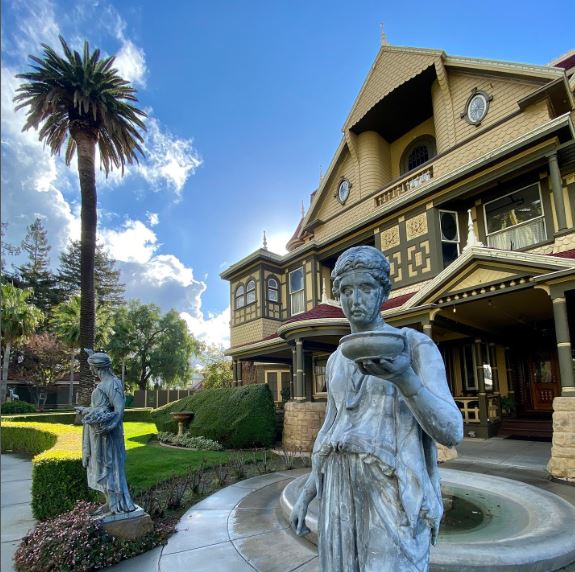
Happy Sunday! House tours 10am-5pm today 🏠 come see us!
🎟️ link in bio. https://winchestermysteryhouse.com/

Mrs. Winchester never recovered from the 1906 earthquake. Staff said she grew weaker and weaker as the years went by, and that she was often heard talking to her dead husband. The house was already large, but it morphed to be as long as several city blocks and was taller than the tallest trees on the green lawn. I suppose, ultimately, it was the spirits who kept her in this estate by not allowing her to build another one of this magnitude. When Mrs. Winchester passed away in 1922, she left $5,000,000.00 to charity. The mansion is truly special and a national treasure.

Through His Demon Ambassadors His Tactics May Capture Individuals
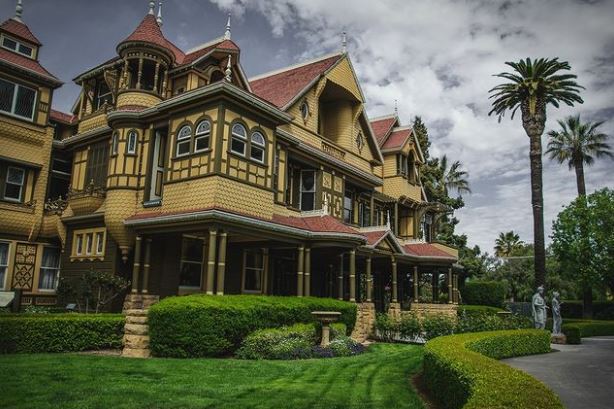
In the winter of 1864, twenty-four-year-old Sarah L. Winchester and her husband William Wirt Winchester were living in a mansion in New Haven, Connecticut USA. It was a small town and Mr. Winchester worked at Winchester Factory Castle, which was, believe or not, 3.2 million square feet. There were 1,200 employees employed in the castle. They produced rifles. To the town’s people, Mr. and Mrs. Winchester were the average affluent couple, outwardly no different from their friends or neighbors. However, outward appearances can be deceptive. Although she was part of a successful business, and married to the son of the Lieutenant Governor of Connecticut and manufacture of the famous Winchester repeating rifle, inside Mrs. Winchester carried the scars of being haunted. The couple’s life together was happy, and they moved in the best of New England society. However, in 1866, disaster struck when their infant daughter, Annie, died of the then mysterious childhood disease marasmus. Mrs. Winchester fell into a place of utmost suffering, horror, and excruciating terror, with no inkling of pity or mercy. Fifteen years later, in March of 1881, her husband’s premature death from tuberculosis added to Mrs. Winchester’s distress. She was living in a place of torment, evoking the quality of sinister wilderness. It was a dismal situation of waste and wild, as if Satan was surveying on the suite to which he had fallen. Life had become an infernal World of horror, a horrible dungeon burning like a huge furnace. Yet, from the burning flames came no light which was needed to make the darkness visible. Mrs. Winchester felt that she was damned and deprived of the sight of God who is light. #RandolphHarris 1 of 12
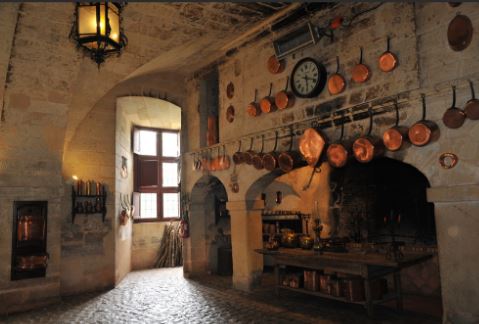
It did not end here. Mrs. Winchester found herself having to flee her New Haven mansion frequently—often in the middle of the night–because her home had become a sorrowful place which had only doleful shades to droop down. At night, she would hear footsteps coming up the stairs, and when she went to inspect, she could see two balls of fire walking up the stairs. When investigated the following day, there were hoof marks scorched in the mahogany floors and stairs. It was a land of darkness. Mrs. Winchester decided to move to Santa Clara, California USA. This village presented sweeping vistas of rural open space. It was a serene setting for Mrs. Winchester to begin her building project, which she did with steadfast determination. She immediately hired carpenters to work in shifts around the clock to build a Grand Queen Anne Victorian mansion. However, there was one strange thing. There was never an architect employed, but Mrs. Winchester often had plans for the construction of her mansion that were truly out of this World and luxurious. By the turn of the century, the eighteen-room farmhouse has grown into a nine-story mansion. The estate eventually grew to around 740 acres of farmland, which included orchards of apricots, plums, and walnut trees to supplement Mrs. Winchester’s income. However, all was not well. Given the family background and the horrors they had endure from the beginning, one could assume that Mrs. Winchester’s day-to-day reality continued to be one of fear. She had been initiated into a World of evil—an evil that was to pursue her for the remainder of her life, and if she stopped construction of her home, that would immediately prove to be fatal for her. #RandolphHarris 2 of 12
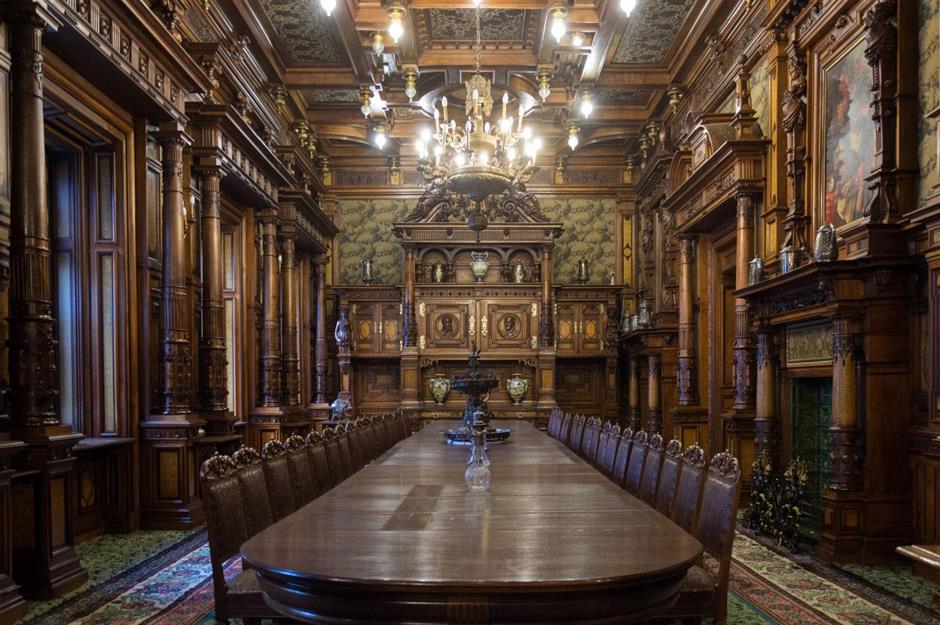
Mrs. Winchester was cursed and the demons gave her precise instructions on how to stay alive. Evil has the uncanny knack of seeking out the vulnerable. Given such circumstances, Mrs. Winchester stood little chance of ever leading a normal, well-adjusted life. She developed an eating disorder, and allegedly tried to kill herself twice and suffered prolonged periods of depression. She was caught in a recalcitrant World of darkness and danger. One night at the dinner table, the butler Gavin Dorchester, had not wished to leave without paying his respects to Mrs. Winchester. However, when he approached Mrs. Winchester, she sat staring at him with a look of terror. He seemed to her like the indifferent emissary of some evil power. Mrs. Winchester then said, “has your wife decided to drop her lawsuit against my estate?” “Oh, yes,” he replied. “My lawyers knew we had not a leg to stand on. You see, she borrowed most of the money lost in the fruit orchard from you without your knowledge, and she was up a tree. That is why she shot herself with your model 1886 rifle with the sterling silver buttplate mount.” The horror was sweeping over Mrs. Winchester in great deafening waves. “She shot herself? She killed herself because of that?” “Well, she did not kill herself, exactly. She dragged on two months before she died.” Mr. Dorchester emitted the statement as unemotionally as a cotton gin plucking cotton from the fields. “You mean that she tried to kill herself, and failed? And tried again?” “Oh, she did not have to try again,” said Mr. Dorchester grimly. They sat opposite each other in silence, he swinging his eyeglasses thoughtfully about his finger, she, motionless, her arms stretched along her knees in an attitude of tension. #RandolphHarris 3 of 12
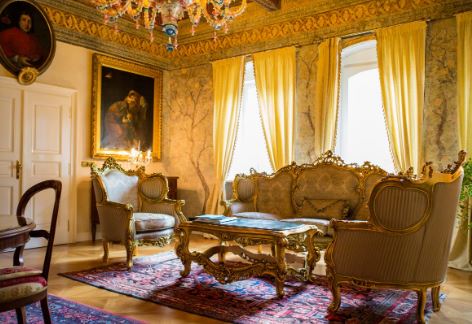
Mrs. Dorchester had been a housemaid who apparently mishandled hundred of thousands of Mrs. Winchester’s money, which caused crops to fail and several farmers to lose their jobs. “But if you knew all of this,” Mrs. Winchester began at length, hardly able to force her voice above a whisper, “how is it that when I wrote you at the time of your wife’s disappearance you said you did not understand the letter?” Mr. Dorchester received this without perceptible embarrassment: “Why, I did not understand it—strictly speaking. And it was not the time to talk about it, if I had. The Winchester business was settled when the suit was withdrawn. Nothing I could have told you would have helped you to find my wife.” Mrs. Winchester continued to scrutinize him. “Then why are you telling me now?” Still Mr. Dorchester did not hesitate. “Well, to begin with, I suppose you knew more than you appear to—I mean about the circumstances of my wife’s death. And then people are talking of it now; the whole matter has been raked up again. And I though if you did not know you ought to.” Mrs. Winchester remain silent, and he continued: “You see, it has only come out lately what a bad state your affairs were in because of my wife. She is a proud woman, and she fought on as long as she could, going out to work, and taking on sewing at home when she got too sick—something with the heart, I believe. But having to admit what she had done with your money was too much for her. She knew you would never forgive her.” Chocking back her tears. “Dead, dead, dead,” she whispered. “But she was alive yesterday and the day before and the day before that, and I was here, and I did nothing! Dead! Dead! Dead!” #RandolphHarris 4 of 12
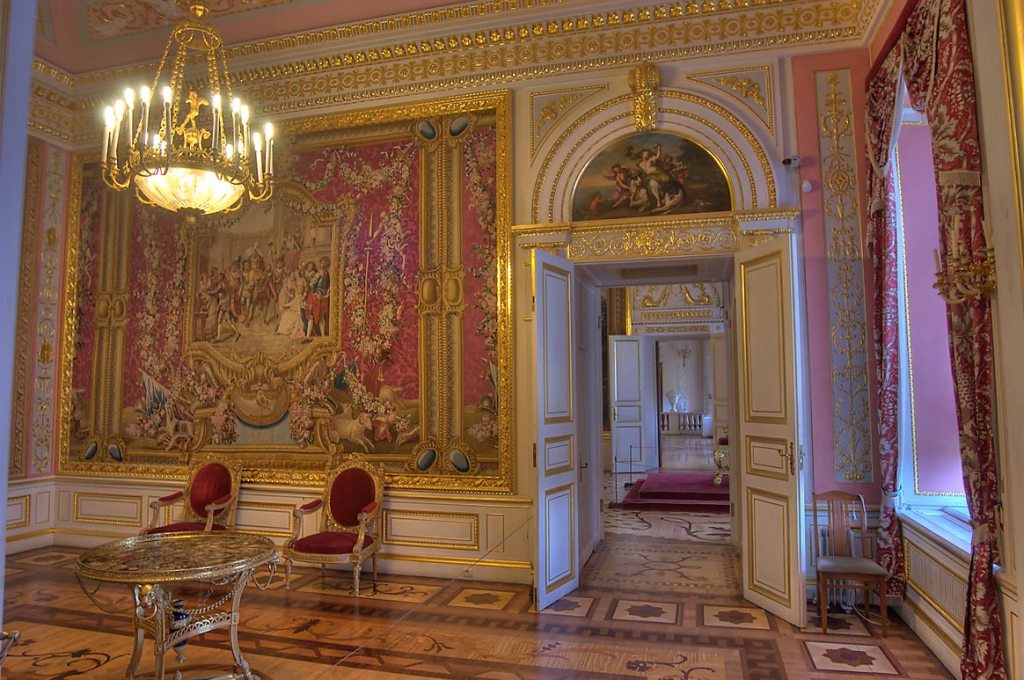
And then the bizarre scene shifted, as if the tragedy of her rage were passing into another act. Mrs. Winchester saw herself beating with her fists on all the walls of wood and glass around her, beating with her fists until the blood ran from her bruised hands. She sat down on the chair at the kitchen corner, her body crumpling, hand up to shield her face, and she began to sob aloud in the labyrinth of a house she had built, the images passing through her mind. Finally she laid her head down on her folded arms, and she cried and cried, until she was choked and exhausted with it, and all she could do was whisper over and over: “I told you all if you ever needed anything to come to me. Never to still. Do you not understand this blood money is cursed? These objects in my home are cursed! If you steal them, you bring that curse into your family!” At last, she wiped her face with her napkin, and she went to the Hall of Fires to lay down. Her head hurt and all the World seemed empty to her and hostile and without the slightest promise of warmth or light. It would pass. It has to. She felt this misery on the day Mr. Winchester was buried. She had felt it before, standing in the hospital corridor as her new born baby girl Annie cried in pain. Yet it seemed impossible now that things could get better. And her thoughts continued, abysmal and miserable, sapping her spirit and her belief in herself. It must have been an hour that she lay there, the floors hot from the fire fireplaces in the room. Mrs. Winchester was ashamed and lonely. She was ashamed of being the victim of this anguish. Her heart hammering in her ears. She sat quiet, controlling the quiver of her lips, and waiting till she could trust her voice; then she said, “I bet she died in October, on the 22nd, when the crops failed and many of the farm hands went missing.” #RandolphHarris 5 of 12

“Oh, my God!” Mrs. Winchester said. “They will not know till afterward. They will not know till long, long afterward.” Mrs. Winchester thought of the torments which her employees who stole would have to endure in contrast to the bliss and joy of being honest workers; she knew her mansion must have infused a feeling of horror in their minds, but they were paid well. This mansion can make a Heaven of Hell and a Hell of Heaven. Mrs. Winchester struggled to her feet—and surprised herself when she discovered that the act of getting up made her immediately feel better. A calm was enveloping her whole body. She was no longer afraid. Wind murmured and moan in the mansion’s eaves. Now and then the house creaked with ordinary middle-of-the-night settling noises. Exhausted from the emotional as well as the physical exertions of the day, Mrs. Winchester was soon asleep in her Daisy Bedroom. Near dawn, she came half awake and realized that Zip was at the bedroom window again, keeping watch. She murmured the dog’s name and wearily patted the wool mattress. However, Zip remained on guard, and Mrs. Winchester drifted off to sleep once more. A disturbance occurred awakening Mrs. Winchester. From directly overhead, she heard a series of thuds; it was as if someone was jumping from one part of the room to another. The thuds were loud, so heavy that the crystal chandelier trembled. Mrs. Winchester took Zip with her to investigate. However, Zip was having none of it; he would not venture up the stairs. He stood with his front paws on the bottom step, barking up at something unseen. #RandolphHarris 6 of 12

Mrs. Winchester’s blood ran cold. She walked up the stairs, flung open the door, and pushed the light button, but nothing happened. The bulb was blown. She glanced up at the bedroom window and saw what looked like a figure standing just beyond the open drapes. She could swear she saw the drapes move. That was enough for her, she immediately left the room, shut and locked the door. The next morning, the light in the bedroom where the noise was coming from was working perfectly. However, something rosed her. She had the distinct feeling that someone had just ran fingers through her hair. She could still feel her scalp tingling from the touch. It happened a second time. The fingers of a spectral hand pressed themselves deep into the nape of her neck and raked swiftly through her hair, right to the crown of her head. All she remembered when she came to was her uncontrollable screaming. These physical anomalies were not, in themselves, as troubling as Mrs. Winchester’s deteriorating relationship with her beloved Zip. He refused to go near her. This was very unusual. Mrs. Winchester and Zip had been inseparable. Now Zip was unwilling to share the same room with her. Mrs. Winchester looked around the room to see what could be the matter. At the foot of the bed was a woman. Possibly Mrs. Dorchester. She was wearing a green ballgown. Her hands were extended in a beckoning gesture and she had a grin on her face. The grin was not a mirthful one; it seemed utterly malevolent. Mrs. Winchester was terrified. Then she started howling with terror. At that, the ghost raised its hands to its throat and made a throttling gesture that had so frightened Mrs. Winchester. Then is slowly disappeared. #RandolphHarris 7 of 12
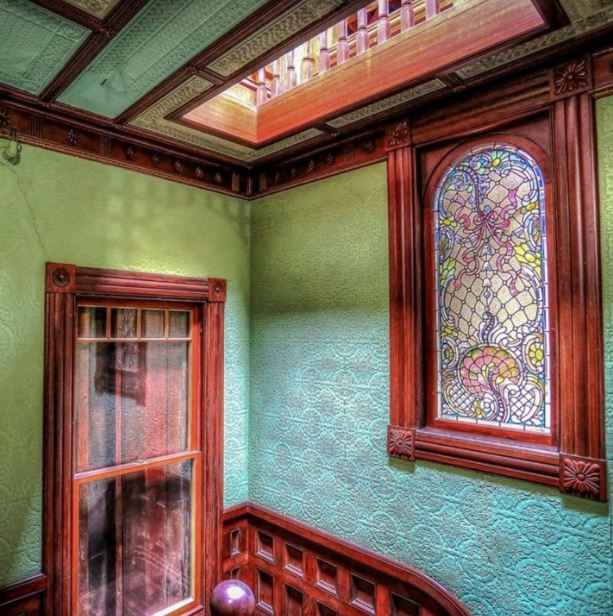
Zip was whining, ears back, his tail between his legs. He seemed to be staring at the place where the apparition had been. The butler Mr. Dorchester was on duty this night, and he heard a great commotion and strange sounds coming from Mrs. Winchester’s bedroom. When he went to inspect, Mrs. Winchester was shaking. She seemed to be having some kind of fit. “Mrs. Winchester?” She did not respond. Gurgling noises grew louder. Mr. Dorchester could believe what he was seeing: it was the most macabre sight he had ever witnessed. Mrs. Winchester’s eyes were bulging; in the light from the fireplace he could see that her face was discolored. She was choking. Mr. Dorchester saw the cause. There, as clear as say, was a hand fastened about her throat. However, it did not belong to Mrs. Winchester. It was a pale, almost translucent hand, and it was trying to strangle the life out of Mrs. Winchester. The hand ended at the wrist in a frilled green cuff and wore a diamond ring on the ring finger. Mr. Dorchester was petrified. Mrs. Winchester’s face turned blue under the hand’s murderous grip and her eyes had rolled in her head. She was gasping for air. Mr. Dorchester seized the grisly hand. It was ice cold to the touch and immensely strong. Then someone with long fingernails dug into Mr. Dorchester’s shoulder. He struggled and struggled to free Mrs. Winchester. Finally he died. She collapsed onto the bear skin rug, gasping for air. As Zip lay by her side trying to comfort her, Mrs. Winchester had never felt closer to death than she had that night. #RandolphHarris 8 of 12

In the hollow of her back, a single drop of sweat traced the course of Mrs. Winchester’s spine. She was more scared than she had ever been—or had ever thought she could be—but she did not want to leave her home for any reason. She stood in the bloody-orange late-evening sunlight, at the perimeter of the trees, peering into the purple shadows and mysterious green depths of her estates. The spruces and pines and sycamores rustled in the breeze, and she thought she heard something more moving furtively through the brush. Imagination, of course, she told herself. Squinting into the forest on her estate, Mrs. Winchester strained to see through steadily deepening shadows, trying to catch another glimpse of the movement that had drawn her attention a moment ago. There. A ripple in the murkiness beneath the evergreen boughs. About eighty feet from her bedroom window. Something was moving quickly and stealthily from one sheltering shadow to another. Them movement grew closers, much closer. Mrs. Winchester had been confused by the layers of shadows, she drew the drapes closed. However, she did not seem to realize that not confronting these things gives the Devil free rein to do as he chooses. It is easy to see how evil can be promulgated over generations, if the individuals concerned have neither the fortitude nor the resources necessary to put an end to it. Satan’s bid for our souls is predicted on the debasement of our humanness as early as possible in our childhood. The Winchester Mansion is believed to a portal by which supernatural forces can access this World. #RandolphHarris 9 of 12
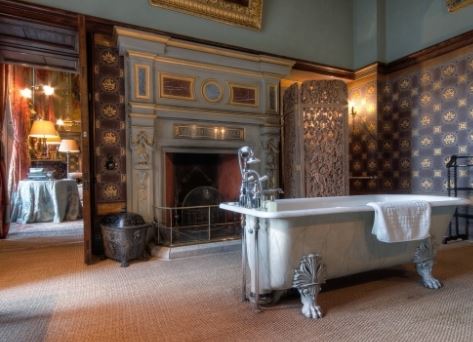
The superstitious were terrified of The Winchester Mansion and of the screams, the shrieks and the wailing that floating from the mansion after midnight, and crossed themselves every time they passed it. Oh, the town’s people gossiped about Mrs. Winchester. They claimed she had caused the manifestation of the demon Choronzon, the epitome of all disharmony and confusion, whom she conjured up in the form of a naked savage. Many also thought she was a German spy. Some even said that Annie did not die, but Black Magic caused her to disappear mysteriously. People also believed that Mrs. Winchester had the ability to invoke evil spirits and summon up supernatural darkness during daylight hours. They mystery of The Winchester Mansion and of secret societies has long been part of man’s total fascination with the occult and it would indeed be wrong to give the impression that all forms of magical and mystical endeavour and not real. There are many pursuits and secret organizations which are described as mystical or esoterical, embracing a wide variety of students and scholars seeking the knowledge of Western inner traditions. Then, more in tune with popular suspicions about secret societies, there are also occult groups whose object is clearly to influence the World order, by infiltrating the Church, politics, pressure groups and the business community. The great secrecy which surrounds the higher echelons of The Winchester Mystery House makes it virtually impossible to penetrate any senior mansion meeting, and indeed no person who has not been initiated into the meeting the secret society would be allowed to observe even the most simple of rituals. #RandolphHarris 10 of 12

Because of this secrecy, which is seldom broken—even by a deserter—it is virtually impossible to identify those at the top, although there are many visible employees, much press, and television interviews and news articles. The members and agents of The Winchester Mystery House operate in the upper echelons of the World establishment circles. This is not of a sensational or World-threatening order, far from it; but it exists, has a voice among powerful bodies in international politics and is strong enough. It aims have been varied and covert, ranging from utopian dreams of fully restoring and furnishing the estate, to addressing the historical importance and destiny of authentic Victorian homes, those that have been untouched by time, and have most of their original splendour. The second level of the secret society is pure, occult, based on the old traditions, with meetings of the like-minded individuals who are moved by the romanticism of gathering for purpose of divine illumination and reaching out for contact with non-human entities, either in their spiritual or physical manifestation. The idea of these groups of men and women meeting secretly for mystical or occult pursuits, adorning themselves in their expensive robes and calling themselves by obscure titles lend itself to colourful theories about what they actually do before their secret altars. Fuelled by images from the media, it is easy to conjure up the view that all that is secret must be evil. This is not the case, yet activities of these occult groups are fascinating. He basis for much of the ritual secrecy and traditions of occult societies invariably leads us back to the famous Order of the Knight Templar, formed in 1119 for the purpose of protecting pilgrims travelling to the Holy Land and which subsequently became noted for its military prowess against the Saracens and the immense wealth of those who joined. #RandolphHarris 11 of 12
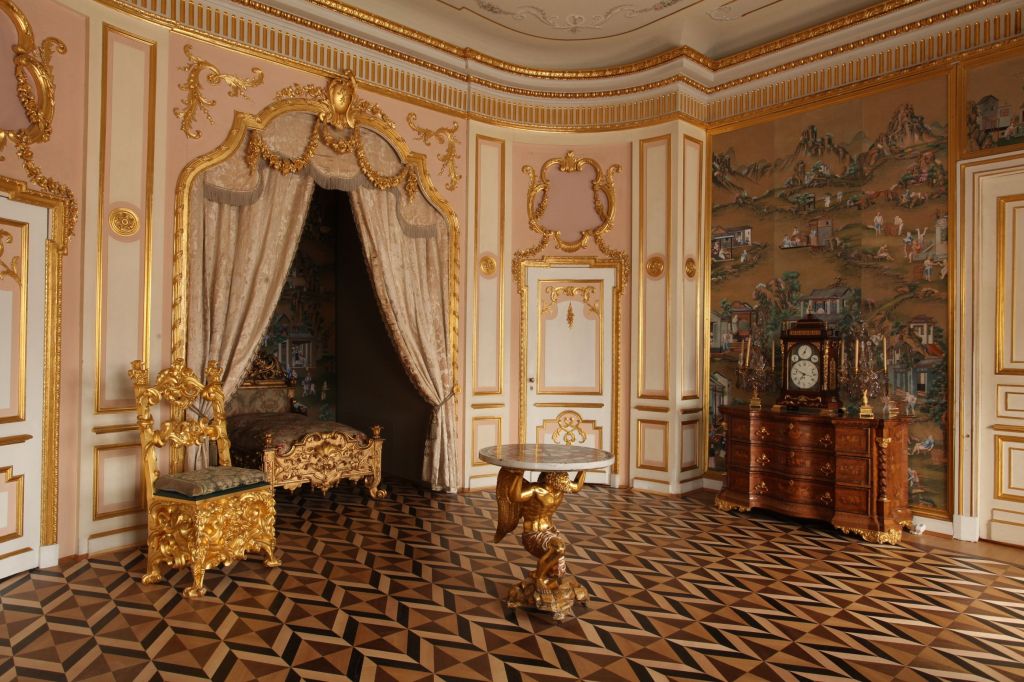
Baldwin I, King of Jerusalem, provided them with headquarters in his palace, which was said to be part of the Temple of Solomon. It has been most notably the belief in the train of the goddess Diana and the host of the dead as of great interest to scholars. Welcome Spirit Marax, O most noble king! I say thou art welcome unto me, because I have called thee through Him who has created Heaven, and Earth and Hell, and all that is in them contained, and because also thou hast obeyed. By that same power by which I have called thee forth, I bond three, that thou remain affably and visibly here before this Circle so constant and so long as I shall have occasion for thy presence; and not to depart without my license until thou hast dully and faithfully performed my will without any falsity. BY THE PENTACLE OF SOLOMON HAVE I CALLED THEE! GIVE UNTO ME A TRUE ANSWER. Ahriman, Lord of Darkness divine, I thank you for your presence within this unholy temple of counter creation. I have offered you this life of this beautiful mansion as a gateway to your manifestation with this realm to stand before me! You are Angra Mainyu ho is the Lord of counter creation, who has brought forth the mountains to the plains! You have brought forth the beasts to the fields and creatures to the night. Ahriman and Marax, with your infernal blessings I asked that you both would bring forth the baneful powers of the wolf kin to fuel with atmosphere with their essence that it may be compelled according to my will. Allow of to hear the howling of wolves and perceive their phantom shadows around us. Feed the spirits and make them hunger more to walk among the living and subject them more to my will. Open a gateway to the predatory powers of the wolf and a gateway to initiation by these lupine demons. #RandolphHarris 12 of 12
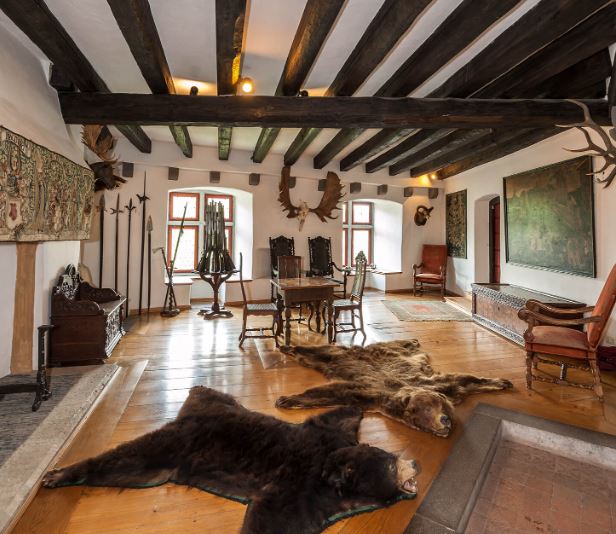

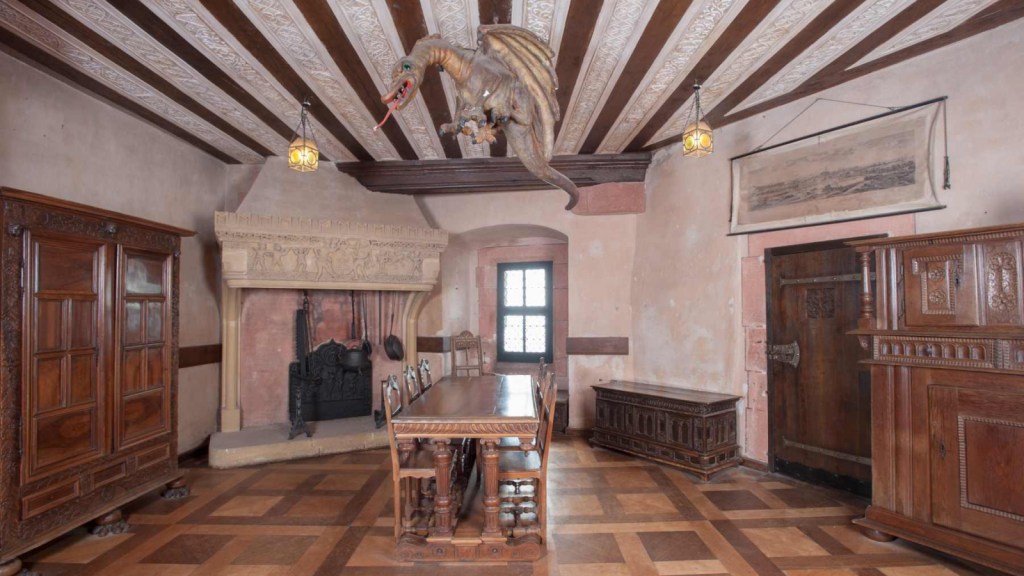
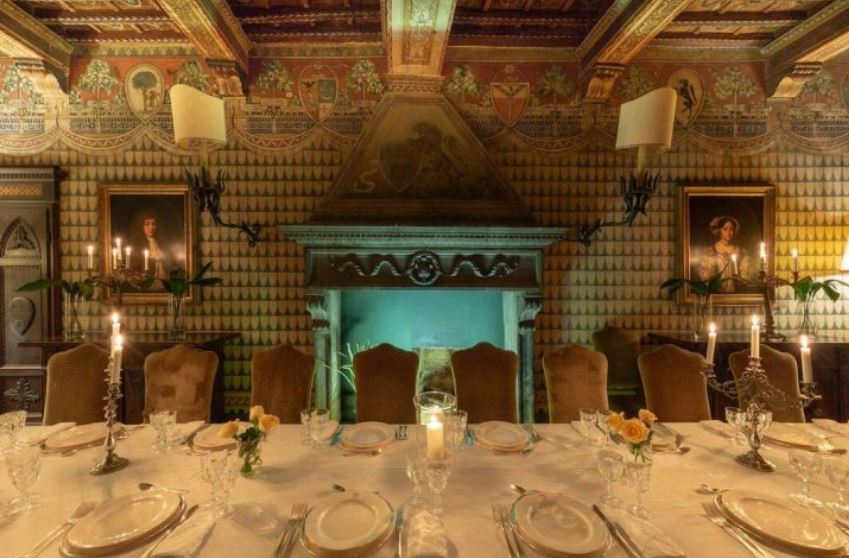
Standing proud and majestic on a limestone outcrop and commanding panoramic views out over the surrounding countryside, The Winchester Mystery House is regarded as the finest of the many Castles built. This impressive and historically important property has evolved over the centuries to incorporate the splendour of its medieval heritage and the elegance of the Arts and Crafts movement of the early 20th Century. The Gardens are a delight, with fine stands of trees, wild meadow flowers and stone steps lead up to the Castle Entrance. Come hang around and enjoy a tour.
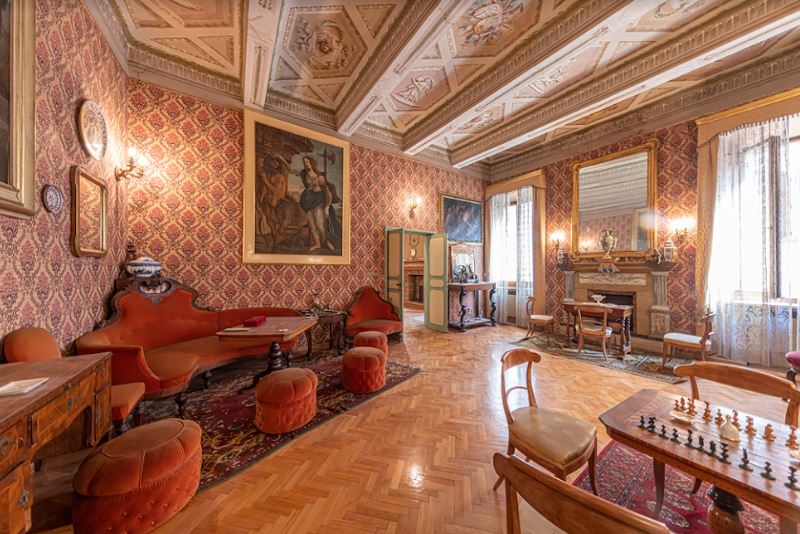
Have you purchased your tickets for Friday the 13th yet?! 👀🔦 The Winchester Mystery House is offering Friday the 13th Self-Guided Flashlight Tours. These self-guided tours give guests the opportunity to roam through the halls of the purportedly haunted Victorian mansion while hearing tales of its former and (possibly current!) inhabitants. Guests will guide themselves through the mansion that is famous for its dizzying floorplan and lack of formal blueprints. Tour Hosts will be stationed throughout the house to ensure guests don’t get lost. TICKETS ON SALE NOW!
160-room Victorian mansion which was once the residence of Sarah L. Winchester👻
~Celebrating 100 Years of Tours in 2023~

Angels Which Kept Not Their First Estate

I hope by now that you agree with me that the tiresomeness of an over-peopled Heaven is a purely subjective and illusory notion, a sign of human incapacity, a remnant of the old narrow-hearted aristocratic creed. William Winchester loved boats and had thirteen-metres and even raced one in the America’s Cup trials once. He had a big yacht that he kept down in New Haven, Connecticut, even though he lived in Switzerland most of the time. My grandfather, Oliver Winchester, put a rear wing on the house he bought for William as a wedding gift, with a new kitchen and flower room my grandmother wanted when she married him. This house preceded the Winchester Mansion. And it was where my father, William Winchester, had an office. There had been a couple of times when I would have to take papers down to him. That office was bigger than most people’s living rooms. It had a fireplace and a window looking out on the West River, which flows into New Haven Harbor. Oliver Winchester was the Lieutenant governor of Connecticut. Not only was he founder of the Winchester Repeating Arms Company, but he was on the board of directors of four charities, including the Winchester Foundation, which gave money for research into Tuberculosis and heart disease; he was on the board of New Haven Savings Bank, which the Winchesters pretty much owned; he was on the boards of a couple of other big companies. Running a rich family was like running a business. #RandolphHarris 1 of 13
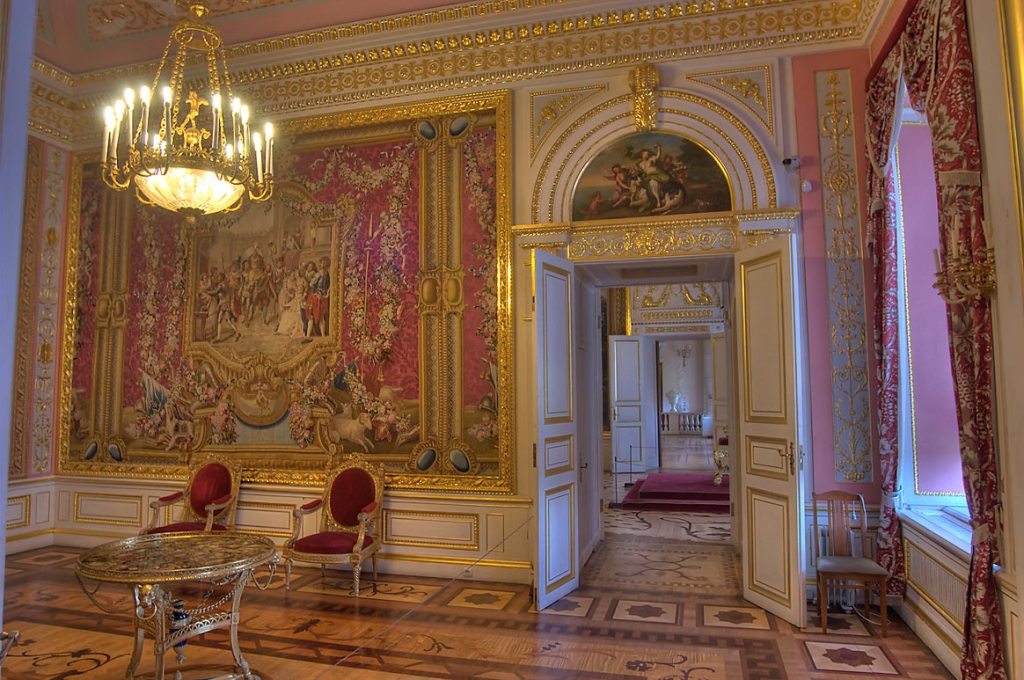
In fact, if you look at the Winchester Family treat, it is more of a “business family tree.” I guess money has always been the life source of the Winchester family. My father, William Winchester, said the family motto was “We own it, lock, stock, and barrel.” This family had a lot of power, and when you have power, you use it. The Winchester’s did not go out brawling like drunken sailors. We had the courts, the law, the police—and the Winchester Rifle if we needed it. We made sure that things around here went the way we wanted them to go. However, we did not go about it by brawling. If you did us wrong, we stayed clam, we spoke politely to everybody. However, we moved quietly. Sooner or later we would catch you between a rock and a hard place and then you would feel the almighty bad. If we did not go after them, those guys would have thought we were chicken. My father always said, “Son, do not worry what John Jacob Astor thinks of you. In your position it does not matter. You are going to be very rich and very powerful. These people will never like you. They will envy you, they will defer to you, and some of them will even admire you. But they will never like you. For that you must understand, what others think does not matter.” The original Winchester mansion was a house of these times, all right, though not to be considered new. I figured it to be at least three hundred years old. It was built of the local stone, and had three stories and a high-pitched roof, with mullioned windows—and it was vast. #RandolphHarris 2 of 13
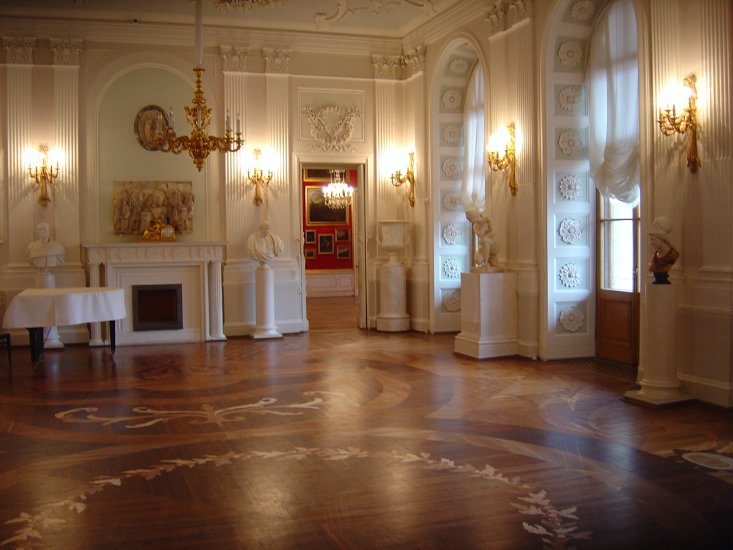
Often times, there was no one about. Only the bleak winter vines stripped of their jasmine, running on for miles, and distant corpse of an ancient tree of immense size, and the cold rain, a rain worse to me than snow, falling over as if it were falling on the entre World, a near silent rain that felt like needles on the backs of my hands and on my face. The mosaic tiles were beautiful, and possibly ancient, dating all the way back to the Roman times. I walked back and forth over the, and tapped several times with the toe of my boot. I walked to the double doors that opened into the garden, and there I saw a great pile of wood. And there was a big head on the rock, it was the devil’s face that a saint put there. If men believed nothing, they did not understand it, it is a short cradle they would have. I had been put in the mood for ghost, that evening after an excellent dinner at my father’s home. Seen through the haze of Abner Doubleday’s cigars, and by the drowsy gleam of a coal fire, my father’s library, with its oak walls and dark old bindings, made a good setting for such evocations; and ghostly experiences at first hand beings. An absurd thought came to me, that being here with Abner, it had all felt natural and good, as if in spite of the topic of our conversation we were simply human beings and all the dark World did not exist. I was ashamed of this. Why did we have to be “like human beings”? I asked myself. Why could we not simply be warlocks together? He looked at me, at my shining eyes, and his congenial smile, and he took my hand and said he wanted to see the house. We remained together for several hours after that, during which we walked through many rooms and he not only admired the endless book collection in the Gothic library, filled with classics bound in black cloth and daguerreotypes of faded celebrities, but also many of the paintings, including a few Russian painters of the nineteenth century he had never seen before. #RandolphHarris 3 of 13
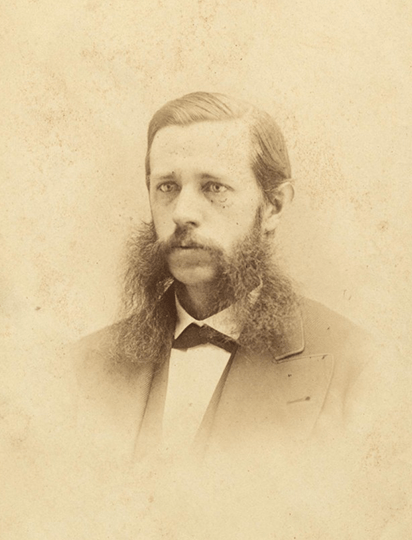
For me, this was a wonderful time. We could have continued our conversation for a year. We walked about outside the house, through the gardens which were crowded with trees for privacy and vines that blossomed at night. These carefully guarded hours had been devoted to the cultivation of a fine intelligence and a few judiciously chosen habits; and none of the disturbances common to the human experience seemed to have crossed the sky. Mentally I was able to exercise a hospitality less seductive but no less stimulating than a play. Abner’s mind was like a forum, or some open meeting place for the exchange of ideas: somewhat cold and drafty, but light, spacious and orderly—a kind of academic grove from which all the leaves had fallen. In this privileged area, we were able to stretch our muscles and expand our lungs; and, as id to prolong as much as possible the tradition of what we felt to be vanishing institution, Abner tasted the lyric qualities in youth. He nipped the flowers of soul which he gathered from this tour, which forced a young idea to blossom. The man was really intelligent, and the soundness of his nature was like the pure paste under a fine glaze. Abner had been fished out of the dullness by the spirits of the Winchester mansion. Just at the evening was drawing to an end, he demanded, “And now you have to tell me about your ghosts!” “My ghost? Do you suppose I am fool enough to the expense of keeping my own ghosts, where there are so many charming ones in my friends’ closets?” I said. #RandolphHarris 4 of 13
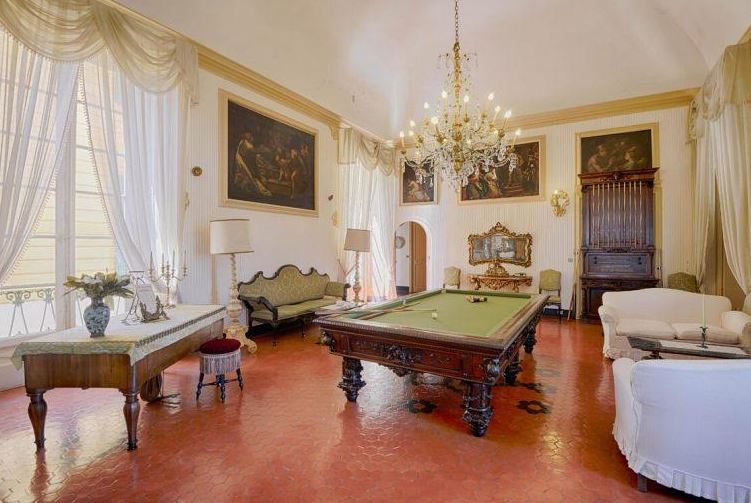
The fact is that we found whole skeletons that were used in various forms of old black magic rituals. Undoubtedly, for many who pursue this darkest of experiments, necromancy is the touchstone of occultism, especially for warlocks. If, after careful preparation, they are able to carry through what they regard as a successful contact they have reached a certain pinnacle in black magic conjuration. It is fruitless discussing whether or not this feat is possible; belief by the practitioner is all that is needed for the ritual to proceed and some psychological or drug or spiritual trance may well convince the depts tht they have indeed succeeded. “Oh,” Abner said, “you would never be content to share if you met one you really liked. What is the use of denying it? You have seen everything, so of course you have seen a ghost! Or if you have not seen one, it is only because you have seen several!” “That is it,” I said. “I have seen a legion.” The words were so unexpected that they dropped down and down into a deep silence, while we continued to stare at each other. Abner learned forward with is listening smile. “You will wonder why I am enlarging on some of these incidents. It is because the evening on which this particular incident took place was the very evening on which I first saw the queer sights I have spoken of. Being at that time an ardent believer in a necessary sequence between cause and effect, I naturally tried to trace some kind of link between the lion and the lamb lying down together.” Ancient Druids lived on the estate and necromancy had a particular appeal to warlocks seeking confirmation, for example, of the mysteries of the afterlife but more often necromancy was pursued by the skilled masters of ritual magic. #RandolphHarris 5 of 13

“We once wanted to raise a dead uncle,” I told Abner. “We went to the course of the giant tree, where we performed a ceremony. For a few moments, nothing happened. But moments later, there was a mysterious explosion. And afterwards, the road lay thick with cinders and debris. At first, my grandfather worried about the result. But he had a reassuring thought. Perhaps the explosion was caused by spontaneous combustion. ‘Oh my God…’ cried my father. ‘What happened?!’ he demanded. No one was sure. After that we walked back to the house in disbelief of the mess. Then I pointed and shouted out in horror. Before I could stop, my father fell to his knees before a hill of burned leaves and tree branches, under which he glimpsed a man’s head. It was his brother and he was looking for us. My grandfather put a hand to his mouth and stified the urge to vomit. My uncle’s eye sockets were empty, and his hair singed. ‘Brother, get up!’ he cried roughly. My father yanked his brother to his feet, frightened by the wide-eyed horror in his eyes and his awful nonstop screaming. He tried to pull out of his grasp, but he held my father tight until the screams subsided into sobs.” “Now listen,” my grandfather told my father. “You are a Winchester, so do not go making a liar out of me.” “But his brother’s tears burned my father’s skin.” “Your brother is dead,” said my grandfather. “We wondered if anything else came back to life. It was so eerily silent for this time of the morning. No cows mooing, no wood being chopped. No birds singing on the roof top. And the lawn was blackened.” #RandolphHarris 6 of 13
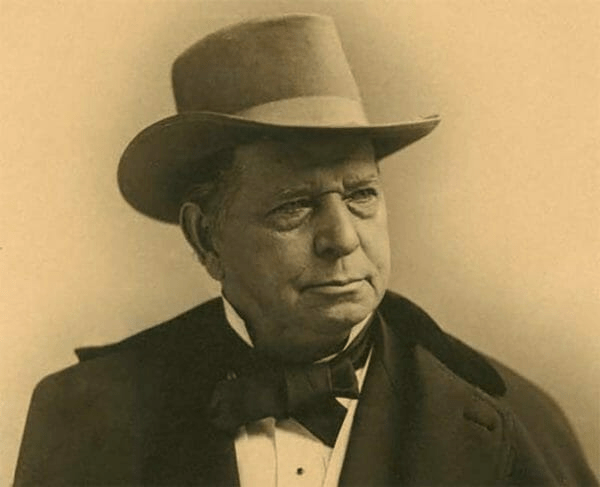
“As we went into the house, it was full of strangers, burned, bleeding, sick people. As we precariously waded through the maze of bodies, the wind must have carried in a fog. While my grandfather dug a mass grave for these animated bodies, my father and I dragged them out of the house to burry them. It took days, there were literally hundreds of them. My arms were shaking. We were all near exhaustion, and we still have several bodies to bury. We worked for an entire week to remove all these bleeding strangers from our home. I went up to bed with rather a heavy heart, for I was bowed under the weight of the first ritual I had ever consciously committed; and young as I was, I saw the gravity of my situation. The situation of being William Wirt Winchester Jr. Do not imagine for this that I had hitherto been an instrument of destruction I had been a harmless young man, who had followed his bent and declined all collaboration with Providence. Now I had suddenly undertaken to promote the moral order of the World, and I felt a good deal like the trustful spectator who has given his gold watch to the conjurer, and does not know in what shape he will get it back when the trick is over…Still, a glow of self-righteousness tempered my fears, and I said to myself as I undressed that when I had got use to being good it probably would not make me as nervous as it did at the start. And by the time I was in bed, and had blown out my candle, I felt that I really was getting used to it, and that, as far as I had got, it was not unlike sinking down into one of the softest wool mattresses.” #RandolphHarris 7 of 13

“My room had grown cold, and intensely still. I was waked by the queer feeling we all know—the feeling that there was something in the room that had not been there when I fell asleep. I sat up and strained my eyes into the darkness. The room was pitch black, and at first I saw nothing; but gradually a vague glimmer at the foot of the bed turned into two eyes starting back at me. The eyes gave out a light of their own. They were the very worst eyes I have ever seen: my dead uncle’s eyes. And the room slowly filled with hundreds of these eyes, orbs of light. My father paid immense sums to the architects and workmen to entomb the heart of the house in hopes of locking their spirits inside. This mean enclosing one of its four towers left standing and living in only a few habitable rooms while the work went on. The mansion went on to be inhabited by a secret order of men and women who met to discuss philosophy and music and escape the modern World, and the public would never be invited here due to the deep mourning of my mother over the loss of my grandfather, father, and baby sister. Indeed it was most anguishing. Some of these people had devoted their entire careers to this one project, and there was nothing now to be done but to give them, but gold coins. My mother left this mansion to Yale, I went to Rome, she went to California and it was later demolished. And there were egregious lies to be told about the Winchester name. Gorgeous salons with silken-paneled walls and plaster curlicues and Savonnerie carpets on the floor all destroyed. #RandolphHarris 8 of 13
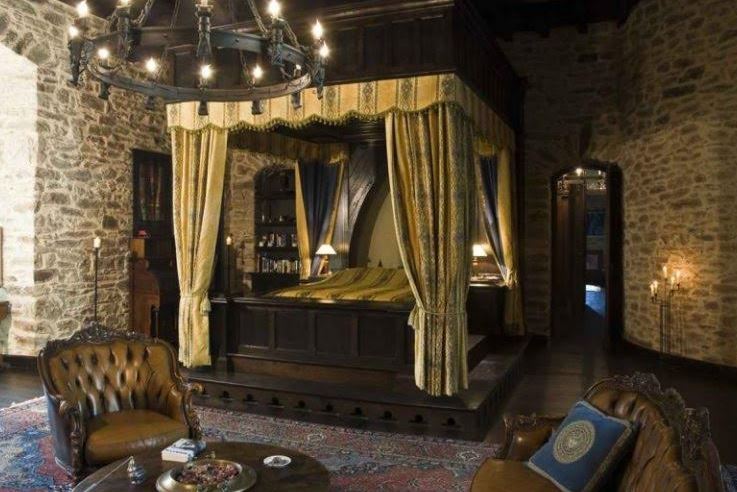
The modern marble bathrooms, replete with sunken tubs and spacious showers for every bedchamber. We wanted to make sure to give off no scent, absorb no precious oils, and did not want to take up the human scents. The great hall where my family and I had once dined, listened to the demands of the villagers and farmers, and hovered around the seventy-five fireplaces, twenty kitchens, four libraries, eighteen thousand windows, four towers, and three hundred and fifty rooms all gone like it never existed. At times, there may have been two thousand present in the ballroom. No one ever counted. This was the height of the Winchester fortune, my dear Abner. There were many departed here, though untouched by the rifle.” In its blackest form the art of necromancy has produced fairly evil recipes for success. Graveyards are indeed a common place, and it is possible our home had been constructed on a battle ground. This was a place where contact with the dead could be expressed, and was conducive to dark apparitions in suffocating rooms or beneath a mock swinging gibbet. The old grimoires are full of colourful descriptions, and since they were often written by clerical scholars when they took down the confessions of warlocks, one must be careful with the rite performed. One could magnify the spell. Even policemen were involved in occultism. As an example, the daughter of a police superintendent was initiated into the dark arts and the High Priest was another policeman. “Yes, I was the High Priest…I have been a white witch for eight years and I am not ashamed of what I do although some of my colleagues have reported me to the Witch Inspector General. I have helped to initiate at least seven witches and eight warlocks.” #RandolphHarris 9 of 13
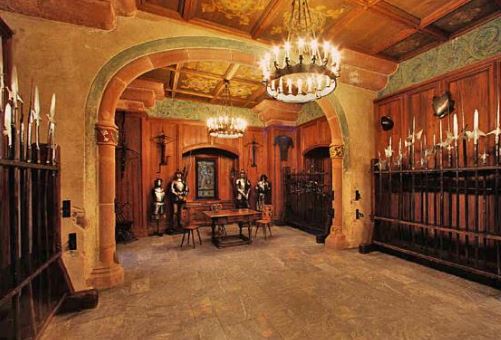
There is much evidence in Scriptures that the spirits who appear at séances are rebel angels. Perhaps that is what we raised that night? Jude 6 speaks about “angels which kept not their first estate.” Many Christian Bible scholars interpret Ezekiel 28.17, “I will cast thee to the ground,” as indicating that the Earth is the realm of Satan’s powerful operations, with the help of his fallen colleagues, the demons. Satan is called the “god of this World,” in 2 Corinthians 4.4. And Christians are under attack by “rulers…powers…World forces of darkness” (Ephesians 6.12). God tell us that hell was “created for the devil and his angels (demons)” (Matthew 25.41). I, Randolph Harris, cite and conjure thee, Spirit of Schemhamforasch, by all the seventy-two holy names of God, that Thou appear before me and fulfil my desire, as truly in and through the name Emanuel, which thee three youths Sadrach, Mijach, and A hero sung in the fiery furnace from which they are released. I do conure thee, O thou Spirits William Wirt Winchester and Oliver Fischer Winchester, by all the most glorious and efficacious names of the MOST GREAT AND INCOMPREHENSIBLE LORD GOD OF HOSTS, that thou please comest quickly and without delay from all parts and places of the Earth and World wherever thou mayest be, to make rational answers unto my demands, and that visibly and affably, speaking with a voice intelligible unto mine understanding as aforesaid. I conjure and constrain thee, O thou Spirits William Wirt Winchester and Oliver Fischer Winchester, by all the names aforesaid; and in addition by these seven great names wherewith Solomon the Wise bound thee and thy companions in a Vessel of Brass, Adonai, Preyai or Prerai, Tetragrammaton, Anaphaxeton or Anepheneton, Inessenfatol or Inessenfatall, Pathtumon or Pathatumon, and Itemon; that thou appearest here before this Circle to fulfil my will in all things that seem good unto me. #RandolphHarris 10 of 13

And if thou be still so disobedient, and refuest still to come, I will in the power and by the power of the name of the SUPREME AND EVERLASTING LONG GOD WHO created both thee and me and all the World in six days, and what is contained therein, Eie, Saraye and by the power of this name Primeumation which commandeth the whole host of Heaven, bless three, and grant thee of thine office, joy, and place, and bind thee in the depths of Heaven or the eternal to remain unto the Day of the Last Judgment. And I will bind thee in the Eternal Light, and into the Sky of Light and Harmony, therefore see my good wishes for you and please comest quickly and appearest here before this Circle to do my will. Therefore, come thou! In and by the holy names Adonai, Zabaoth, Adonia, Amioran, Come thou! For it is Adonai who commandest thee. If THOU hast come thus far, and yet he appeareth not, thou mayest be sure that he is sent unto some other place by this King, and may return any time; and if it be so, invocate the King as here followeth, to send him. However, if he does not come still, then thou mayest be sure that he is bound in the Heavens, and that he is found in the custody of his King. If so, and thou still hast a desire to call him even from thence, thou must rehearse the general curse which is called the Spirits’ Chain. O THOU great, powerful, and mighty KING AMAIMON, who bearest rule by the power of the SUPREME GOD EL over all spirits both superior and inferior of the Infernal Orders in the Dominion of the East; I do invocate and command thee by the especial and true name of GOD; and by that GOD that THOU Worshippest; and by the Seal of they creation; and by the most mighty and powerful name of GOD, IEHOVAH TETRAGRAMMATION who cast thee out of Heaven withal other infernal spirits. #RandolphHarris 11 of 13

And by all the most powerful and great names of GOD who created Heaven, and Earth, and Hell, and all things in them contained; and by their power and virtue; and by the name PRIMEUMATON who commandeth the whole host of Heaven; that thou mayest cause, enforce, and compel the Spirits of William Wirt Winchester and Oliver Winchester to come unto me here before this Circle in fair and comely shapes, without hard unto me or unto any other creature, to answer truly and faithfully unto all my requests; so that I may accomplish my will and desire in knowing and obtaining any matter or thing which by office thou knowest is proper for him to perform or accomplish, through the power of GOD, EL, Who created and doth dispose of all things both celestial, aerial, terrestrial, and infernal. I conjure you William Wirt Winchester and Oliver Fischer Winchester, by the Spirits Chain to appear in the Winchester Mansion, and if you two are bound in chains, by the Emancipation Proclamation, you have permission to break off from them and be at liberty. As this smoke ascends I ascend also by following the path of smoke and usurping power of worship to empower by blackened eternal soul. I take all the power raised within this sanctuary as my own through this talisman of counter creation to strengthen my divine power and to Become a Living God. Harness power through the cedar tree of life, disinfectant, expectorant, treatment of tuberculosis. Spirits of the Winchester Mansion, here me—Roubriao: Mariodam: Balbnabaoth: Assalonai: Aphniao: I: Thoteth: Abrasar: Aeoou: Ischure, Might and Bornless One! Legions of Spirits in the Winchester mansion, here me and arise. I invoke thee. #RandolphHarris 12 of 13
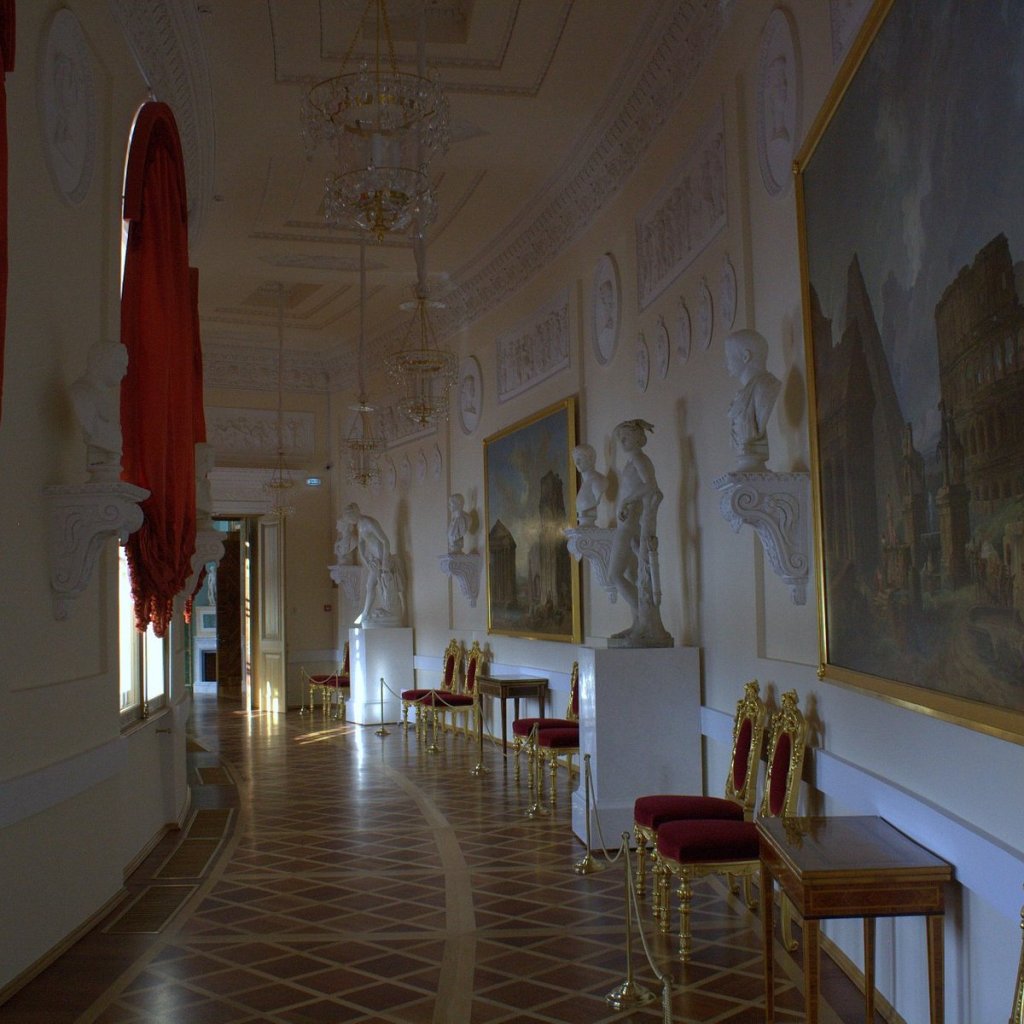
I awaken the powers of darkness which dwell within you by the power of the blood of the three headed Dragon Zohak that you may serve to empower my great work! Through serving the greater cause of dark magik which break the shackles that bind the Blackened Fire of Spirit, may you be uplifted and liberated! Awaken and empower the forbidden rites of Angra Mainyu! Awaken to empower my great work of counter creation as an Apostle of the Lord of Darkness eternal and as a warrior of the Path of Smoke! Through the gateway of blood, smoke, and Blackened Fire receive life from the deepest depths of Arezura, in the name of Zohak, and by the power of Angra mainyu it is done! Hear Me:–Ieou: Pur: Iou: Iaot: Iaeo: Ioou: Abrasar: Sabriam: Do: Uu: Adonaie: Ede: Edu: Angelos ton Theon: Aniaia Lai: Gaia: Ape: Diathanna Thrown. I am He! the Bornless Spirit! having sight in the feet: Strong, and the Immortal Fire! I am He! the Truth! I am He! Who hate that evil should be wrought in the World! I am He, that lighteneth and thundereth. I am He, from Whom is the Shower of the Life of Earth: I am He, Whose mouth ever flameth: I am He, the begetter and Manifester unto the Light: I am He; the Grace of the World: “The Heart of Girt with a Serpent” is My Name! Come Thou forth, and follow Me: and make all Spirits subject unto Me so that every Spirit of the Firmament, and of the Ether: upon the Earth and under the Earth: on dry Land, or in the Water: of whirling Air or of rushing Fire: and every Spell and Scourge of God, may be obedient unto me! Iao: Saboo: Such are the Words! This is the special secret of this Seal. This is also the special secret of this Throne. Carrying this Seal with you will cause you to be very agreeable and much beloved, and will also defeat your enemies. #RandolphHarris 13 of 13


The castle is the ancestral seat of the former royal German dynasty known as the House of Winchester. The beautiful, Neo-Gothic/Victorian castle, now known as the Winchester Mystery House, sees hundreds of thousands of tourists a year. It once contained a sizeable art collection, a treasure trove of jewels that were stolen from the safe, along with a conjurer’s heart. But despite its magnificent features and Medieval history, the Winchester Mystery House has not been formally lived in for centuries.

As political power shifted, and taxes became law in 1909, the spirits decided they would discontinue construction, and shortly after called Mrs. Winchester home. The architecture of the Winchester Mansion and its gardens are the main attractions, and some come for the food, and/or to purchase items from the gift shop. https://winchestermysteryhouse.com/
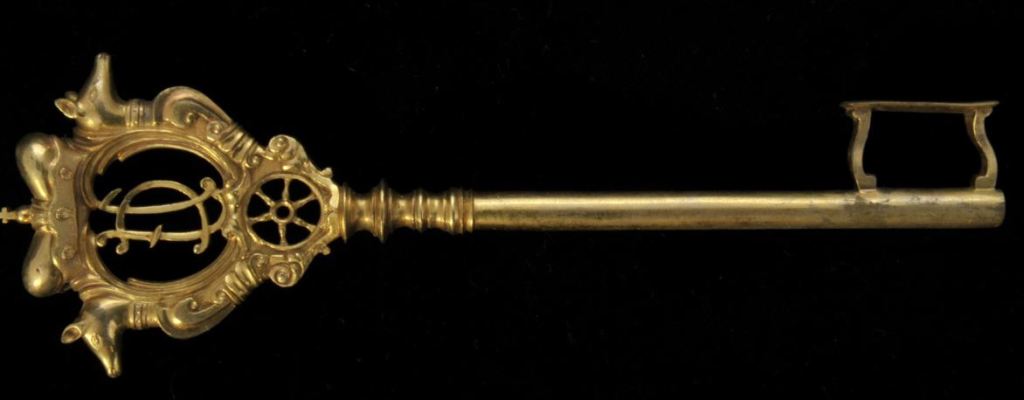

The Grounds Have their Share of Unexplained Mysteries

A mansion is not a mansion with its stately grounds, and Mrs. Winchester was just as attentive to the exterior of her estate as she was to the sprawling house. An avid gardener, she imported plans, flowers, trees, shrubs, and herbs from over 110 countries around the World. Mrs. Winchester employed eight to ten gardeners. Her head gardener was Mr. Nishiwara, who was responsible for seeing that the beautiful gardens, plus the tall hedge around the hose, were well maintained. The hedges were once so tall that only the top floor of the house was visible from the road! Mrs. Winchester loved to spend time in her gardens, and she had gazebos built where she could sit and enjoy her trees and flowers. It was a Saturday night, in January 1888, and Mrs. Winchester has, as usual, come home from the City early in the afternoon. It has been a black and foggy day, and the gas had been lighted in the streets and in the office where she worked from early morning. The fog was very bad at the time Mrs. Winchester returned home, and she congratulated herself on the fact that she had not to go out again that night. She sat with her puppy Zip in her sitting-room all the evening, with that comfortable feeling that she was able to relax until Monday morning, and that she need trouble about nothing outside the mansion. In due course, Zip went to bed, and then the maid Agnus reminded her of a letter that must be written and posted that night. Sufficient is it for Mrs. Winchester to say that the letter was to an elderly relative of some means who lived in Oakland, and who had taken great interest in her puppy Zip. The butler Martin remembered that the following day was the birthday of this relative, and that she should receive proper greeting by the Sunday morning post in the country town.

Frankly, Mrs. Winchester did not want the bother of it; but Agnus always knows best in these matters, and so Mrs. Winchester wrote the note and sealed it up. Mrs. Winchester had read nothing exciting during the evening—nothing to stir her imagination in any way. She stamped the letter and proceeded to the front door. Judge of her astonishment when, on throwing it open, she saw nothing but the gray wall of fog coming up to the very house; even the railings, not ten yards in the front of her grand estate, were blotted out completely. She called back into the house for the maid to come and look. “Don’t lose yourself, Mrs. Winchester,” she said, half laughing. “What a terrible night!” “I shall not lose myself,” Mrs. Winchester replied, laughing in turn. “The pillar-box is only at the end of the crescent; if I stick to the railing, I cannot possibly miss it. Do not wait here,” she added solicitously. “I will leave the door ajar, so that I can slip in easily when I come back. I have left my keys on my writing desk.” Angus went in, and Mrs. Winchester pulled the door close, and then stepped out boldly for the front gate. Imagine her standing there, just outside her own gate, and with her back to the crescent, knowing that she had to go to the left to find the pillar-box which was at the end of the crescent. There were thirteen Victorian cottages on her estate, so she knew she had to pass seven more before reaching the pillar-box. She also new that each cottage had an ornamental center-piece before she stepped away from the crescent at the end to reach the pillar box. That Mrs. Winchester knew would be something of an adventure, for the fog was the densest she had ever seen; she could only see the faint glow of her observation tower as she looked behind; the rest of her mansion was invisible.

Mrs. Winchester counted seven Victorian cottages, and then stood at the end of the last line of railings. She knew that the pillar-box was exactly opposite her. She took three quick steps, and literally cannoned into it. She was a little proud of her own judgment in getting it so nicely. Then she fumbled for the mouth of it, and dropped in her letter. All this may should very commonplace and ordinary. Mrs. Winchester is an observant woman, and she had noticed always that the mouth of the pillar-box faced directly along the crescent, thus standing at right angles to the road. At the moment that she had her right hand in that mouth, therefore, she argued that if she stood out at the stretch of her arm, she must be facing the crescent; Mrs. Winchester had but to move straight forward again to touch the friendly railings. She was putting that plan into operation, and had let go of the mouth of the pillar-box, when a man, coming hurriedly round the corner, ran straight into her, muttered a gruff apology, and was lost in the fog again in a moment. And in that accidental collision he had spun her round and tossed her aside—and she was lost! This is literally true. She took a step and found herself slipping of the kerbstone int the road; stumbled back again, and strove to find her way along by sticking to the edge of the pavement. After a minute or two, Mrs. Winchester was so sure of herself that she ventured to cross the pavement, and by great good luck touched in a moment one of those ornamental center-pieces of one of the gates—or so, at least, it seemed. She went on with renewed confidence until she saw certain bushes which topped the railings of one particular cottage, and then Mrs. Winchester knew that she was near her mansion’s front door. She pushed walked confidently, stepped quickly up the little path, and reached the door. She was right; the door yielded to her touch, and she went hurriedly in.

Mrs. Winchester had taken off her hat, and had held it towards the familiar hat-stand before she realized that it was not a familiar hat-stand at all; it was one she did not know. She looked round in some confusion, meaning to make good her escape without being observed, and yet wondering into what part of her mansion could she have come into, when she stopped stock still, with the hat held in her hand, listening. From a room near at hand, Mrs. Winchester heard the sound of a low, long-drawn moan, as from someone in pain. More than that, it was almost the wail of someone in acute terror. Now, Mrs. Winchester was a mild and caring soul, and her first instinct was to run. There was the door within a foot of her; she could open it again noiselessly and slip out, and leave whatever was moaning to its own trouble. Her next instinct, however, was a braver one; she might be able to help. Putting her hat on, and so leaving her hands free, she moved cautiously towards the sound, which was coming intermittently. She found that this wing of the house was unfamiliar to her; there was a 7-11 staircase built in the shape of a letter “Y,” which enabled the servants to quickly get to three different levels of the house. Then there were these stairs that lead to the ceiling, and there was also a cabinet that went straight through to the back thirty rooms of the mansion. When she went down the steps of the 7-11 staircase, slowly and cautiously, with her flesh creeping a little, the morning went on, and Mrs. Winchester was almost inclined to turn back with every step she took. However, at last, she got into the basement, and came to the door of the room from which the sound proceeded. She was in the very act of recklessly thrusting open the door when another sound broke upon her ears that held her still. The sound of someone singing in a raucous voice.

It was a sea song she remembered to have heard when she was a little girl in New Haven, Connecticut, and the words of which she had forgotten; it was something about “Boney was a warrior.” The door of the room was open a little way, and through the crack of it, Mrs. Winchester was able to peer in; and there she saw a sight that for a moment made her doubt her own eyes. She rubbed her eyes in a curious fashion and looked again, and this is what she saw: The room was in a neglected state, with strips of wallpaper hanging down from the walls and with a blackened ceiling. There was a table in the center of it, and at that table a man was seated, with a square black bottle and a glass before him, and a candle burning near his left hand. Mrs. Winchester could see the whole room now as plainly and as clearly as she saw it then. He was a man so villainously ugly that she had a thought that he was not a man at all, but some hideous thing out of a nightmare. He had very long arms—so long that they were stretched across the table, and his hands gripped the opposite edge of it; a great heavy head, crowed with a mass of red hair, was set low between enormously broad shoulders; his eyes, half closed, were high up and close together on either side of a nose that was scarcely a nose at all; the lips were thick and heavy. However, it was not the man that Mrs. Winchester looked at first, it was at two other figures in the room. These figures were seated on chairs facing the table at which the man was, and the strangeness of them lay in the fact that each was securely bound to the chair on which he and she sat, for it was a man and a woman. The man, who was quite young was not only bound, but gagged securely also; the woman was more lightly tied to her chair by the arms only, and her mouth was free. She was leaning back, with her eyes closed, and mingling with the raucous singing of the man at the table. Mrs. Winchester’s first impression was that the man at the table was some sort of unclean, bestial judge, and the others his prisoners.
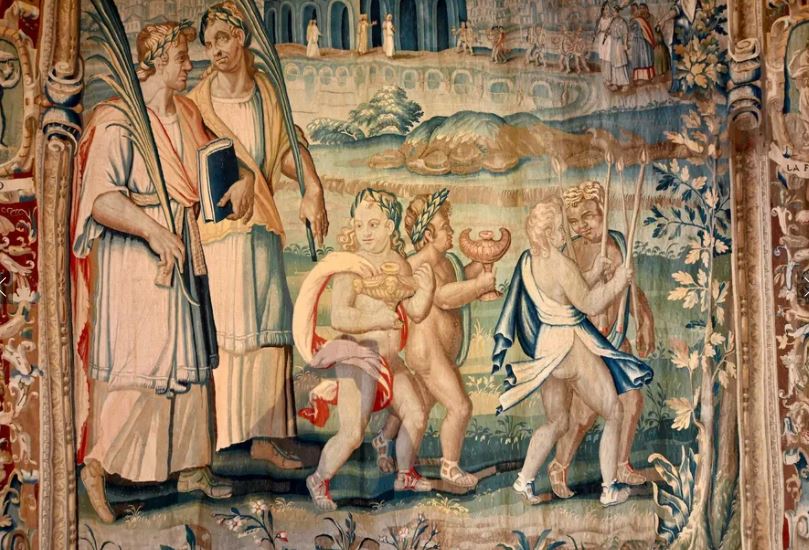
He stopped his singing to pour some liquor from the square bottle into his glass and to drink it off; then he resumed his former attitude, with his fingers locked over the edge of the table. And now Mrs. Winchester noticed that while the woman, who was, by the way, quite young and very pretty, with a fair, dainty prettiness, still kept her eyes closed, the eyes of the bound man never left that dreadful figure seated at the other side of the table. Mrs. Winchester felt like she was on the eve of some awful calamity. She then unhesitatingly pronounced the entire assortment of people in the room as ghost, and condemned all the gathered treasures as the creations of petty intellect, which could not get out of the beaten track, but sought in the supernatural a reason for the explanation of every fact that seemed at variance with routine of daily experience. In her opinion the collection of people in this room had never seen at all in her day and generation, and must have been souls killed by the Winchester rifle ages ago; she did not yet believe her mansion was enchanted, however. To use her own language, “all those stories have been made by those people that set up overnight stirring out legends to entertain each other.” However, she must have known that she was in denial. For she was not insane and there were some kind of beings in this room. “Wouldn’t you like to speak, you dog?” said the red-haired man. “What would you give now to have the use of your limbs—the free wagging of your tongue? What would you say to me; what would you do to me?” The man who was bound could, of course, answer nothing. Mrs. Winchester saw his face flush and darken, and she guessed what his thoughts were. For herself, she was too fascinated by the scene before her to do anything else than peer through the crack and watch what was going one.

“Lovers—eh?” exclaimed the man at the table. “You thought I was unsuspicious; you thought I knew nothing and suspected nothing—didn’t you? While I was safely out of the way you could meet, the pair of you—day after day, and week after week; and this puppy could steal from me what was mine by right.” The woman opened her eyes for the first time and spoke. “It isn’t true,” she said, a sob breaking her voice. “It was all innocent. Martin and I have done no wrong.” “You lie!” thundered the man, brining his fist down upon the table with a blow that might have split it. “You’ve always lied—lied from the moment your father gave you to me—from the very hour I married you. You always hated me; I’ve seen you shudder many and many a time at the mere sight of me. Don’t I know it; haven’t I felt you stab me a thousand times more deeply than you could have stabbed me with any weapon? You devil! I’ve come at last to hate you as much as you hate me.” The woman turned her head slowly and looed at the younger man; a faint smile crossed her lips. In an instant the red-haired man had leapt to his feet, showing Mrs. Winchester astonishingly enough that he was a dwarf, with the shortest legs surely ever a man had. However, the bult of him was enormous, and Mrs. Winchester could guess, with a shudder, at his length. He caught up the glass, crossed the room, and flung the contents in the face of the man. “It’s a waste of good liquor—but that’s for the look she gave you. I wish there was some death more horrible than any invented yet that I could deal out to you,” he added, standing with the glass in his hand and glaring at his victim. “The death I mean for you is too easy.” He walked across to the fireplace in a curious purposeless way, and stirred a great fire that was blazing there. Then from a corner of the room he dragged with ease a great sack that appeared to contain wood and shavings; so much that Mrs. Winchester saw a rent in the side of it. As if in readiness for something, this he dropped down near the fire, and then went back to his seat, applying himself again to the drink that was on the table. And still Mrs. Winchester watched, as a woman may watch a play, wondering how it will end.
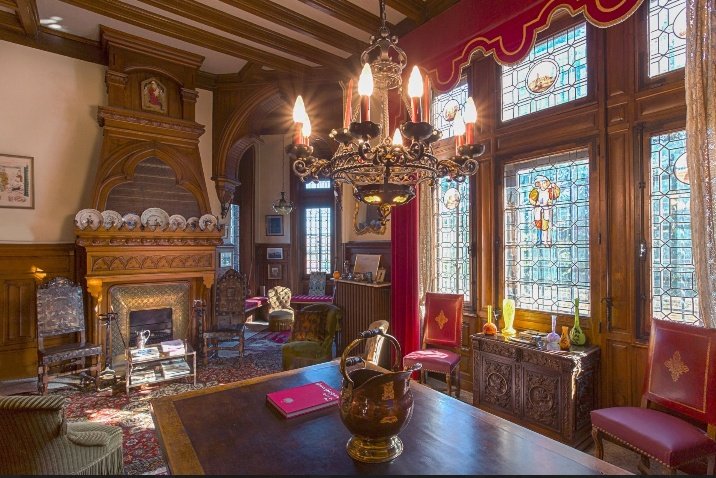
“I got the best of you tonight,” he said presently. “If I hadn’t some upon you from behind, you might have been too much for me; but I was ready and waiting. I’ve been watching longer than you think; I had everything mapped out clearly days ago. Tonight sees the end of all things for the pair of you; tomorrow sees me smiles away from here. You came in secret, you dog; you’ll go in secret.” “We have done no wrong,” said the woman again. “We loved each other years ago, when we were boy and girl; there was no sin in that.” “Bah!—I don’t believe a word of it. Don’t I know that your black heart you’ve compared the two of us every day of your life since first I saw you. His straightness for my crookedness; his sleek, black hair for my red; his prettiness for this face of mine”—he struck his own face relentlessly with one hand as he spoke—“that women shudder at. Don’t I know all that?” It was the strangest and most pitiful thing that the creature sitting there before his victims suddenly covered his face with his hands and groaned. If ever Mrs. Winchester had seen a soul in torment, she saw it then, and though she loathed him she could have wept for him. After a moment or two he dropped his hands and seized the bottle, and poured out the last drops into the glass and drank them off; then flung the bottle and glass crashing into the fireplace, as though there was an end to that business. And now, as he got down again from the chair, Mrs. Winchester saw the eyes of the woman open wide and follow his every movement with a dreadful look of terror in them. “I’ll kill you both—here in the place where you’ve met—and then I’ll seal up the house,” went on the dwarf. “I’ve planned it all. Look you last on each other, for tonight you die—and this house shall be your crypt!”
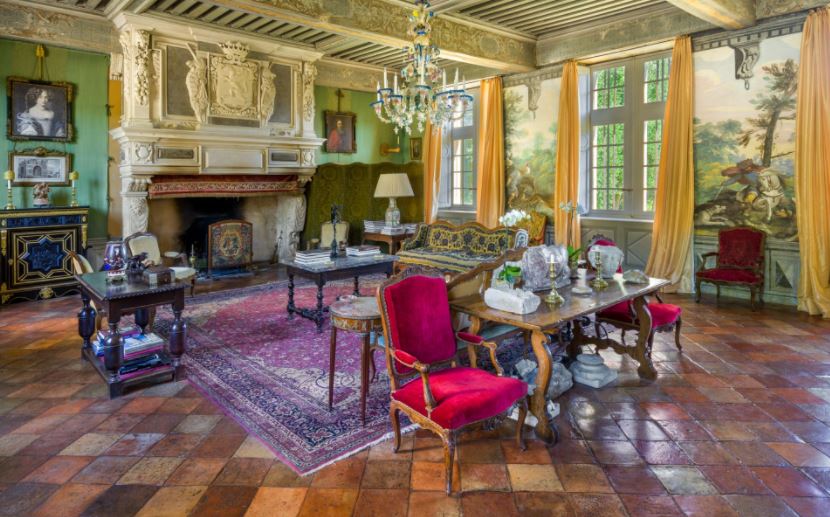
“I swear to you,” panted the woman eagerly, “by all I hold most holy and most dear, that if you let us go, we’ll never see each other again. For pity’s sake! —for the sake of Martin!” “For the sake of Martin!” sneered the dwarf. “That shows you in your true colors; that show who you are and what you are. There’s one poor satisfaction left to you; you’ll die together.” What held Mrs. Winchester then it would be impossible to say. She could only plead that in the dreadful thing that followed was a woman who sits at a play wondering what will happen next, and with never a thought in her of interfering. Mrs. Winchester’s in her anxiety has pressed the door a little to get a clearer view, so that she saw every movement of the dwarf. For herself, Mrs. Winchester had forgotten everything—in her own home, and my puppy zip, and the servants who slept in the mansion. It was as though she has stepped straight into a new World. Mrs. Winchester saw the dwarf advance towards the man in the chair, carrying his right hand stiff and straight beside him, gripping something s, she could not tell what it was that he held. Mrs. Winchester saw him come straight at her, and she saw the eyes of the woman in the opposite chair watching her as one fascinated. Then Mrs. Winchester saw two movements’ one with the left hand of the dwarf, when he struck the other man on the face; then with the right hand, when he raised something that gleamed n the light of the candle and brought it down with a sound that was new and horrible to her on the breast of the other man. And Mrs. Winchester saw the face of the man change, and start as it were into new life, and then fall as it were into death. And Mrs. Winchester saw his head drop forward, and his eyes were closed. Then, above it all, and yet seeming as a sort of dreadful chorus to it all, rang out the scream from the woman in the other chair. Mrs. Winchester did not think that the dwarf heard it; he had drawn back from what had been the living man, and was staring like one mad upon what he had done. And still piercing the air of the place rang the scream of the woman—not for her lover alone, but for herself.

That sound seemed at last to break in upon the senses of the dwarf and to call him partially to himself. Mrs. Winchester had watched him to the point where he draw himself together and crouched like a wild beast ready to spring, with that in his hand that dripped red, when, in some fashion, she flung herself round the partially open door and stumbled into the room. Mrs. Winchester thought she must have been a little made herself; otherwise, frail and commonplace creature that she was, she could not have battled with this madman. Mrs. Winchester came upon him from behind and gripped him, seizing him by the throat and by the head, and all the while shouting something to him quite unintelligible. The attack had been so sudden and so unexpected that she had him, in a sense, at her mercy. He could not know who had attacked him; he struggled madly, not alone to get away from her, but also to discover who she was. Mrs. Winchester struggled to keep his face away from her, gripped him by the neck and by the hair, and fought with him for what she knew then was her own life. And so struggling they stumbled at last horribly against that still figure bound in the chair and brought it over crashing with them to the floor. And then in a sudden Mrs. Winchester felt the dwarf inert in her hands, and knew that she had conquered him. What she must have looked like in that room, kneeling there, panting and struggling to get her breath, she could not tell; the whole business was so like a nightmare. She remembered seeing the dwarf lying there—huddled up and very still. She remembered that other figure, bound grotesquely in the chair and lying, still bound, upon its side; and she remembered, too, the woman, with her arms close fastened behind her, sitting there and sobbing wildly.
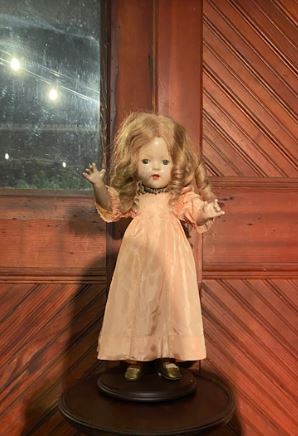
The dwarf must have been stunned; he lay there quite still, with the knife that was dreadfully red fallen from his hand, and lying beside him. When at last Mrs. Winchester staggered to her knees she saw that the girl was staring at her with a face that seemed to suggest that here, perhaps, was another ruffian come to kill her. “Who—who are you?” she asked in a frightened whisper. “A friend—one who stumbled in by accident,” Mrs. Winchester panted. “Look at the man that’s tied to the chair,” she whispered hoarsely. “He can’t be dead.” Mrs. Winchester knew that he was, but still she looked, as she bade her. Mrs. Winchester had no need to look twice; the poor fellow was quite dead. The blow had been strong and sure. On her knees beside him, Mrs. Winchester looked up and nodded slowly to her; there was no need for words. The young lady leaned back in her chair again and closed her eyes. “Set me free,” she said in a faint voice. Mrs. Winchester could not touch that knife that lay there; in a mechanical, methodical way she took from her waistcoat pocket the decent, respectable little bone handled penknife she carried always with her. With that Mrs. Winchester but the young lady’s bonds, nothing as she did so how cruelly they had cut into the white flesh; and after a moment or two she swung her arms listlessly against her sides and opened her eyes, and then, with an effort raised her hands and pressed them against her temples. “What will you do?” Mrs. Winchester asked, looking at her curiously. “I—I don’t know,” she said; and then, breaking into weeping, sobbed out: “Oh—dear God—that it should have come to this! What shall I do—what shall I do?” “You must get away,” Mrs. Winchester said, watching the dwarf, who was beginning to stie a little. “If he wakes, you know what will happen.”

“I know—I know,” she said; and got to her feet and began to move towards that bound figure still lying tied to the chair. However, at that Mrs. Winchester got before her, and with her hands against he shoulders held her back, and pleaded passionately to her that she should go, and leave the dead alone. She listened, with that strange look in her eyes of a child wakened from sleep and not clearly understanding; but she yielded to Mrs. Winchester, and stumbled under her guidance to the door. They had reached it, and Mrs. Winchester had opened it for her to pass out, when suddenly the dwarf twisted over on to his hands and knees, and then raised himself upright. He did not seem to realize for a moment what had happened; then he caught sight of the woman, and, with a snarl, crawled forward and gripped the hilt of the knife. At that she pushed suddenly past Mrs. Winchester and fled like a hare up the stairs. Mrs. Winchester heard the swift passage of her footsteps in the little hall of the house—then the slamming of the door-to-nowhere. And now Mrs. Winchester had to look to herself, for she saw in the eyes of the man that he would not let this witness escape if he could catch him. Mrs. Winchester had managed to get through the door by the time that he had got to his feet, and in a dazed fashion was stumbling toward her, knife in hand. With a sudden swoop he reached the table and blew out the candle, and at the same moment Mrs. Winchester ran up the stairs, and in the darkness stumbled along the hall and fumbled with the catch of the door. By great good fortune, Mrs. Winchester got the door open, and literally fell out into the fog. She could not see him as he tore after her; in a faintness Mrs. Winchester had fallen to her knees, and she heard him, as he raced past her, panting heavily. Then the fog swallowed him up, and she knelt there on the farm alone, shaking from head to foot.

Mrs. Winchester had, of course, no means of exactly in what part of her mansion she had had her adventure; she could only judge roughly that it must be about the middle of the crescent. She started along again, in the right direction, as she hoped, and thought to find the front door to her mansion; missed the railings, after going what seemed to be an interminable distance, and came up hard against a pillar-box. Scarcely knowing what she did, she set her right hand in the mouth of it, and performed the same maneuver she had done before; advanced three paces, and touched railings again. Stumbling along these, she came blindly what she thought was her front door, walked up the path, and pushed open the door that yielded; and there, with the face of her maid looking at her in alarm and wonderment, Mrs. Winchester feel in a dead faint at her feet. It has to be recorded that Mrs. Winchester never found that room again. She knew every square inch of her mansion. Over and over again, in clear weather, Mrs. Winchester has always around in her mansion, and had closed her eyes, and tried to remember what steps she took to get to that particular room that night, after a stranger had cannoned into her and twisted her round; but all in vain. Whether in some part of the house lies the body of a man who was foully murdered on that particular night; maybe in a hidden room the crime was committed; or perhaps, in some strange supernatural fashion, she saw that night a deed committed that had been committed long before, she shall never know. That it is no mere figment of the imagination, and that something really happened that night, is proved by one fact. Her maid, in raising Mrs. Winchester from the floor that night when she fell at her feet, found her fingers locked closed upon something, and, forcing them open, disclosed what it was. A tuft of red hair!

Such episodes may appear utterly absurd and pure superstition to people in countries comparatively free of black magic, but instead they should be warnings of the power of Satan and demons where occult literature lures readers into illicit magic. Magic as the release of special power by satanic and demon forces of evil in its character and effects. While divine help and miracles produce new strength and positive results, magic shifts the burden to another area. Small relief in one area must be paid for by terrible burdens in another. The principle of compensation prevails. The price exacted is always found to be much greater than the amount of help received. Satan drives a hard bargain and grossly cheats his victims. Usually violence, suicide, and insanity will run through a whole family line, where the magical arts have been cultivated and practiced. Such tragic events often involve as many as four generations. Many occultists and magic workers, especially those who have cultivated the black arts and signed themselves over to the devil in their own blood, die horrible deaths. When a ready successor is not provided to carry on the nefarious practice, this is especially true. The psychic bondage and oppression that traffickers in occultism themselves suffer, as well as their dupes, is horrifying to contemplate. Demon possession is represented as a vivid symbol of the prevalence of evil in the World. Other critics attempt to dismiss demon possession with theories of accommodation or hallucination. However, this view fails to meet the issue. Nor can present-day parapsychologist and psychiatrists, who refuse to recognize evil supernaturalism in the phenomenon of demon possession, either explain it or deal adequately with it. Laws defining witchcraft as having league with the Devil and prescribing the death penalty for such offenders cropped up in the colonies as early as 1636 in Plymouth. Other colonies soon followed suit—Connecticut in 1642 and Rhode Island in 1647.

The first executions took place in Boston in 1648 and in Hartford, Connecticut, in that same year. The executions were carried out by hanging, in contrast to the European practice of burning witches, which probably stemmed from the widespread fear among the European peasantry of vampire, the dead who returned from their graves to suck the blood from the living. The vampire myths never really took root in America, so the necessity of destroying the bodies of the witches was not deemed urgent. Throughout the 1650s, there appeared prosecution and attempted prosecutions in America, but these cases were infrequent, and all of them were based on the fear of maleficum, the witch’s working of evil, the accusations coming from frustrated and jealous neighbors. Few confessions were recorded in the early cases, and they did not seem to have much real validity. The few that did confess mentioned having dealings with Satan, but for the most part these admissions were confused and incoherent, and the details of the accounts differed greatly from the confessions of the witches in Europe. For example, in 1699, in Connecticut, a woman named Greensmith confessed to trafficking with the Devil, but made no mention of all-important Covenant, or pact. She further stated that the Devil had appeared to her in the form of a deer (not a goat) and that she had attended meetings at a place not far from her house. The mention of “meetings” occurred in some early confession, but the word “Sabbat” or “Sabbath,” commonly used by European witches, did not come up until later, apparently at the suggestion of the Salem judges. Some believe that Satan has a soul and a character. He is not just this futile entity but someone you can see many aspects to. Some people do not see Satan as this guy with horns who is evil, they see Him as the first rebel. Then one can see why He is so attractive to many in the Victorian ages and the young people. He is someone who is standing up to the greatest power in the Universe. “If that ‘evil’ is of a rebellious nature,” says Glenn Danzig, “then I guess, in Christian terms, that evil is the Satan in you. I don’t buy that. I believe in honesty, standing up for yourself. That’s my ‘good.’”

Thousands of people base their hopes on the statements of spiritistic practitioners and subsequently become dependent upon the advice they receive from the “other side.” There are quite a number of people who has suffered serious psychic disturbances through the misuse of such practices. Their personalities have been split and they have been utterly confused by the spirits on which they have called. People therefore who try to discover what life after death is like through spiritism and superstition may be in danger of falling prey to the dark and hidden side of their own minds and soul. If you look at the early tracts of The Christian Bible, there is really not much about Satan in there anyway. Christian religions have tried to overblow and create a whole legend around Satan which is not true to the actual scriptures we have. If you desire, you must first make yourself strong so you can help others. You should only help people who want help, a lot of times people do not really want your help. You tell people what has to be done to change their lives, they will not listen. If Satan were corporeal, He would not be something repulsive, He would be something seductive. He would want to win you over and gain your trust, and of course being repulsive or disgusting would not be the way to go. One would imagine this would be a seductive, beautiful creature. In the Gnostic account of the fall of the angels, the angels were suppsed to be watching over this flock of humans and all of a sudden, they are perpetrating acts of pleasures of the flesh with them. Eventually this created the Cyclops, the Minotaur, things of this nature. There are so many accounts of the fall of the angels, it is like a fantasy tale that you would like to believe actually happened. We, in this circle, conjure and cite this spirit Fatenovenin, with all his adherents, to appear here in this spot, to fulfill our desires, in the name of three holy Angels, Schomajen Sheziem, Roknion Averam, Kandile, Brachat Chaijdalic, Ladabas, Labul, Rargil, Bencul, in the name of God. Amen!

Winchester Mystery House

Mrs. Winchester’s estate was a little town within itself. The grounds have their share of unexplained mysteries. Mrs. Winchester outfitted her home with the finest stained glass doors, windows, and wallpaper that money could buy during her time. She had everything she needed: plumber’s shops, carpenter’s workshops, her own water and electrical supplies, and complete sewer and drainage systems. Mrs. Winchester even had her own gas manufacturing plant. It produced carbide gas by adding a small amount of water to a drum containing calcium carbide. The resulting gas was pressed through the gas lines to the house by a large piston and cylinder. The gas lights in the house were then lit by electromechanial strikers that created a spark to light each lamp.
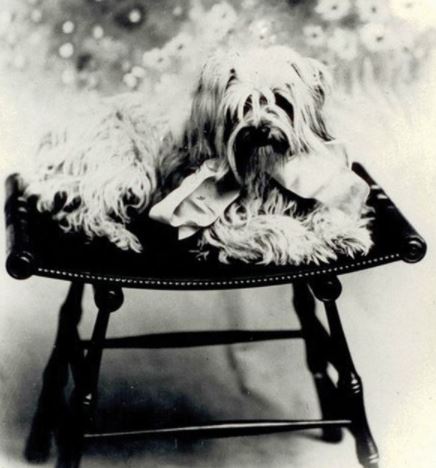
Come see her estate, in person, for yourself this weekend! Please Click the link below for tickets and more information.

The Time of the World Disappears Before Eternity

Revolutionary wealth is not just about money. Civilization is one of those big, stuffy words that may intrigue philosophers and historians but puts most people to sleep. Unless it is used in a sentence like “Our Civilization is threatened”—at which point large numbers of people prepare to defend themselves. Today many people do, in fact, believe that their civilization is threatened—and that the United States of America may be doing the threatening. And it is. However, not in the way most of us think. Around the World, critics of the United States of America point to its military and its economy as the main sources of its predominance. It is, however, knowledge in the broadcast sense and new technologies based on it that integrate America’s military and financial power and propel both forward. It is true that America’s technological lead is threatened. According to the National Science Board, foreign students earn nearly 50 percent of all U.S. doctorates in mathematics, computer sciences and engineering. And American youth are showing less and less interests in these fields. NASA officials complain that there are three times as many scientists over sixty as there are under thirty in the space agency. Shirley Ann Jackson, then president of the American Association for the Advancement of Science, has cautioned that “centers of technology-based activity, training, and entrepreneurialism are rapidly spreading throughout the globe. Thus even the status quo for the U.S. represents a declining share of the global marketplace for innovation and ideas.” Nevertheless, America still leads in most fields of digital technology, in microbiology and in science generally. It spends 44 percent of the World budget for research and development. By most criteria, the United States of America is still the undisputed leader in the performance of basic and applied research. In addition, many international comparisons put the United States of America as a leader in applying research and innovation to improve economic performance.

In the latest IMD International World Competitiveness Yearbook, the United States of America ranks first in economic competitiveness, followed by Hong Kong and Singapore. The survey compares economic performance, government efficiency, business efficiency, and infrastructure. Larger economies are further behind, with Zhejiang (China’s wealthiest province), Japan, the United Kingdom, and Germany ranked 20 though 23, respectively. An extensive review by the Organization for Economic Co-operation and Development (OECD) concludes that since World War II, US leadership in science and engineering has driven its dominant strategic position, economic advantage, and quality of life. And at least for now, the United States of America remains the Word’s scientific powerhouse. Perhaps even more important is the speed with which scientific and technical findings from everywhere are converted into marketable applications or products and widely dispersed into manufacturing, finance, agriculture, defense, biotech and other sectors. All of which boosts economic productivity, further accelerates change, and increasing the U.S. ability to compete at the global level. However, knowledge is not only a matter of bits and bytes or science and technology. Part of the knowledge economy is the production of art and entertainment, and America is the World’s biggest exporter of popular culture. That culture include fashion, music, TV programming, books, movies and computer games. Americans have always been told that their most important message to the World is one of democracy, individual freedom, tolerance, concern for “the rights of man” and—more recently—the rights of women. In the last three decades, however, a U.S. media spread into formerly closed or nonexistent foreign markets, a very different set of messages has been communicated. Much of it targeted at young people.

Certainly not all, but a considerable amount of this material has disgustingly glorified pimps, gangster, drug lords, drug pushers, and hollow-eyed drug users. It has celebrated extremes of violence marked by unending car chases, over-the-top special effects and songs dripping with sexist venom. The impact of all this has been further intensified in the hard-sell, over-the-edge advertising used to promote these products. Hollywood, for example, has painted a fantasy America in which adolescent hedonism reigns supreme and authority figures—police, teachers, politicians, business leaders—are routinely satirized. Film after film, and TV shows one after another, tell young viewers what many of them hunger to hear: that adults are bumbling fools; that being “dumb and dumber” is okay; that “we do not need education”; that to be “bad” is really good; and that pleasures of the flesh, in infinite variety, is or should be nonstop. In this fantasy World, women are readily available, but they can also leap over giant buildings in a single bound (like Superman), shoot and kill (like James Bond) and practice martial arts (Like Jet Li). Extremes, we are repeatedly told, are good and restraint is bad; and, by the way, America is so rich that event its secretaries, police, clerks, and other ordinary working people live in high-rise penthouse apartments or Malibu mansions—images that set adolescent glands tingling from Taipei to Timbuktu. What few foreign critics of American’s pop culture seem to know is that ironically enough, many of the ostensibly American firms producing and disseminating the interesting and unusual of these programs either are, or were financed not by America, but by European and Japanese capital. Nor is it widely understood that shows are often made by, say, a European director with an Australian stary, a Chinese martial-arts consultant, an anime cartoonist from Japan or other foreign contributors.

In the meantime, however, the influence of these intriguing programs is so powerful that other societies fear for the survival of their own culture. Only if art threatens action, then terrorism can be advanced through art. For such a phenomenon as Aesthetic Terrorism to occur, aesthetic pursuit must become symbolic not of its own decadently solipsistic pleasures (exemplified in madness of des Esseintes in Huysmans’ Against Nature), but of action taken beyond the pale of art World confines. Terrorism is art is called the avant-garde. However, if this was once the case, it is no longer. Most avant-garde art is viewed and created today as simply an enfolding reaction to its own history. This disingenuous game-playing guarantees that the avant-garde art is viewed and created today as simply an enfolding reaction to its own history. This disingenuous game-playing guarantees that the avant-garde can no longer stimulate or even provoke. Dada and Futurist actions, which attempted to lead art out of the classroom and museum and into the streets, are simply appropriated by postmodernist facsimiles which capture the letter but little of the original essence. It hardly matters anyway. Avant-garde art has evolved into nothing more than a cultural benchwarmer, corporate tax write-off and public relations smokescreen. Art which openly espouses anti-corporate ideology is embraced as long as it hews to arbitrary standards invented by those taste-making and fortune-telling hirelings, the art critics. What could be wrong, after all, with a business World that allows people to say what they want (because it does not matter)? Aesthetic Terrorism is a term more realistically applied to the faceless regime of consumer culture than the avant-garde. The onslaught of Muzak, ad jingles, billboards, top 40 tunes, commercials, corporate logos, etcetera, all fit the terrorist dynamic of intrusion and coercion.

One almost forgets that aesthetics once implied a consensual relationship between the creators and appreciators of art. How often is it that one hears someone admitting a fondness for a media product “in spite” of oneself? How many times have you heard a slogan or rancid tune ring in your ears like a brain-eating mantra? When consumer terror’s avant-garde correlative, Pop Art, became indistinguishable from the object of its supposed social satire, it erased from big business its pejorative taint. Many of today’s avant-garde stars have emerged from or entered the business World, some enormously successful in the arcane number-juggling or speculation and commodities scams. Even freeloading on the state and private foundations is fair game only for those whose bureaucratic aptitude is matched by their shameless butt-kissing. It is not surprising that most grant recipients excel in little more than lawyerristic logorrhea and ingrained artistic timidity. Critic-centered postmodernism spawned the phrase-art hybrid of Barbara Kruger and Jenny Holzer in which an advertising-style slogan is combined with an implied message or visual cue (usually swiped from some old magazine). Their posture is a hip cynicism which is supposed to subvert the “thrall” of the advertising command. Kruger and Holzer play the market like skillful double-agents, boosting themselves into the public eye through clever steals from Madison Avenue behaviorist techniques yet simultaneously troweling on crypto-Marxist jive to secure the perks of critical and academic currency. Their self-promotions worked when they were at the sidelines of the establishment. However, not the social commentary grows increasingly hollow. Currently being groomed for jet-setting prominence by Soho millionairess Mary Boone, Kruger’s contribution to the Whitney Biennial in 1987, for which she is paid a handsome sum, featured nothing more than a socialite princess joke, “I Shop Therefore I Am.” Winking at and wagging the tail of establishment hierarchy is part of that I-rib-you-gently-you-pay-me-off confidence game artists have been playing the Renaissance courts.

These contemporary court artists, like many of the past centuries, smugly pretend t spit in the eye of the exploiters while allowing themselves to be pampered de-loused—and when they are not looking—de-clawed. There are, of course, those artists, usually fresh out of university, who are unaccomplished at filling out grant forms, and therefore consider themselves “subversives.” The majority of these art and rock magazines-styled rebels are playing out rebellion psychodramas to package and merchandize to consumerist sycophants. This strategy is (forgive them term) the simulacra of terrorism: the content seizes in the frozen attitudinizing of pose and goes no further. We must look to the true outsiders and not the would-be insiders for an artist truly capable of effective counter-terror against the insidious mantras of consumerist brainwash. Terror means a threat, and the outsider’s version of Aesthetic Terrorism belongs to those performances or arrangements of words and pictures that unleash the reactionary impulses of police and bourgeois artist/critic alike. The kind of art that evokes this wrath, fear and condemnation rejoices in its pagan spirit of schadenfreude which controverts the humanist piety of “enlightened victim.” Anti-social sadism rarely receives patronage, however. Outside the corrupting realm of societal handouts, the Aesthetic Terrorist—much as this definition may grate on him—is the last bastion of aesthetic purity. Operation Sun Devil is the name for a government action against computer wizards and assorted sharpies and super-smarts who were resourceful enough to figure out how to hack into the electronic files of Ma Bell. Those who know, claim the Sun Devil gambit as a terrified overreaction against intelligence by the plodding and stupid bureaucracy.

John Perry Barlow (Whole Earth Review, Fall 1990) describes a typical Sun Devil action against a teenage hacker: [A] father in New York […] opened the door at 6.00 a.m. and found a shotgun at his nose. A dozen agents entered. While one of the kept the man’s wife in a choke-hold, the rest made ready to shoot and entered the bedroom for their sleeping 14-year-old. Before leaving, they confiscated every piece of electronic equipment, including all the telephones. Fourth Amendment guarantees against unreasonable search and seizure are unheeded by the government agents who claim nerd computer hackers are terrorists and have “the ability to access and review the files of hospital patients. Furthermore, they could have added, deleted, or altered vital patient information, possibly causing life-threatening situations.” Meacorporate interests have staked claim to the entirety of cyberspace, and they are not about to tolerate the presence of digital interlopers. This may scare off some, but other pirates like the mysterious Legion of Doom and NuPrometheus league (who illegally circulated highly protected Macintosh computer source code) will rise to the challenge now that they have been provided a clearly delineated enemy to innovation, the individual, and personal freedom. It may come as a surprise to learn that a few artists are now producing work which finds itself classified as a thought crime, punishable by expulsion into a Siberia of non-distribution, and in some cases by litigation and imprisonment. Pure magazine, from Chicago, a xeroxed vehicle which extols child torture, murder, and extreme misogyny, tweaked too many civic-minded noses, and its editor, Peter Sotos, was tailed for nine months and underwent a lengthy trial process in which he was finally convicted for possession of some very illegal magazine. Soto’s case was the first successfully prosecuted new Illinois state law, enacted under the influence of the Meese Commission Report on pornography, an example of First Amendment revisionism par excellence.

Soto’s case is particularly disquieting because it proves that prison is in the offing for simple possession of controversial material. No doubt this legal precedent was established to open the doors for future roundups of other thought criminals. The expertly managed Gulf War (massacre), in which networks censored war casualty footage that might provoke a “Vietnam War syndrome,” provides a small window into the dynamics of mass control to come. Any thoughtful individual is undeniably malnourished by the current information diet. Whether this is due to a direct conspiracy of State or by design of the oligarchic marketplace matters little. However, it has upped the ante for a new American Samizdat in which “disreputable,” “crazy,” “hateful,” or “dangerous” topics are broached by individuals or small, autonomous groups that are not compromised or swayed by institutional priorities. Can “offensive interests become the political crime of future? Apparently so. When looking at the previous sentences one can compare and see that musicians have been arrested for obscene lyrics, anarchist individuals have been collared for burning the flag; parents have been arrested for photographing their toddlers in their birthday suits; painter and performer Joe Coleman was arrested in Boston for operating an “infernal machine” and in New York for killing a rat: museum curators were threatened with arrest for hanging homoerotic photos; G.G. Allian was jailed for some consensual sadomasochism with a girlfriend; the FBI have been “monitoring” certain groups who practice unorthodox pleasures of the flesh; and on and on. Even many of the books you read have come under widely publicized attack by authors such as Carl A. Raschke who advocated the revocation of First Amendment rights from those who spread “cultural terrorism.” Even globalization could be considered cultural terrorism.

It has become increasingly obvious that the aesthetic terrorist hobgoblins are nothing more than symbolic scapegoats to divert attention away from the real issues. For Americans, fear is not another form of awareness, it is just another form of gossip. As Charles Manson has stated, true subversive terror can only be actualized by turning off the TV sets. Until then, aesthetic terrorism will be orchestrated by those already in command against insubstantial or non-existent villains. And in the future, while the dumb show of bohemianism plays itself out in the cookie cutter shape of the politically correct martyr/victim, aesthetic terrorism will be orchestrated by those already in command against insubstantial or non-existent villains. And in the future, while the dumb show of bohemianism plays itself out in the cookie cutter shape of the politically correct martyr/victim, aesthetic terrorists will not involve themselves in the dubious rewards of celebrity. The best of them will work alone, already a part of the enemy camp, and in a chameleon-like stye master the fifth-column algorithms to subvert the ancient regime. We will not know them by name but their compensation will be to affect the outcome of the planet. Until then, there is a lot of work to be done. Under what conditions will cooperation emerge in a World of egoists without central authority? This question has intrigued people for a long time. And for good reason. We all know that people are not angels, and that they tend to look after themselves and their own first. Yet we also know that cooperation does occur and that our civilization is based upon it. However, in situations where each individual has an incentive to be selfish, how can cooperation ever develop? The answer each of us gives to this question has a fundamental effect on how we think and act in our social, political, and economic relations with others. And the answers that others give have a great effect on how ready they will be to cooperate with us.

The most famous answer was given over three hundred years ago by Thomas Hobbes. It was pessimistic. He argued that before governments existed, the state of nature was dominated by the problem of selfish individuals who competed on such ruthless terms that life was “solitary, poor, nasty, brutish, and short” (Hobbes 1651/1962, p. 100). In his view, cooperation could not develop without a central authority, and consequently a strong government was necessary. Ever since, arguments about the proper scope of government have often focused on whether one could, or could not, expect cooperation to emerge in a particular domain if there were not an authority to police situation. Today nations interact without central authority. Therefore the requirements for the emergence of cooperation have relevance to many of the central issues of international politics. The most important problem is the security dilemma: nations often seek their own security through means which challenge the security of others. This problem arises in such areas as escalation of local conflicts and arms races. Related problems occur in international relations in the form of competition with alliances, tariff negotiations, and communal conflict places like Cyprus. The Russian invasion of Ukraine in 2022 has presented the United States of American with a typical dilemma of choice. If the United States of American continued business as usual, Russian might be encouraged to try other forms of noncooperative behavior later one. On the other hand, any substantial lessening of United States of America’s cooperation risks some form of retaliation, which could then set off counter-retaliation, setting up a pattern of mutual hostility that could be difficult to end. Much of the domestic debate about international policy is concerned with problems of just this type. And properly so, since these are hard choices.

In everyday life, if they never invite us over in return, we may ask ourselves how many times we will invite acquaintances for dinner. An executive in an organization does favors for another executive in order to get favors in exchange. A journalist who has received a leaked news story gives favorable coverage to the source in the hope that further leaks will be forthcoming. A business firm in an industry with only one other major company charges high prices with expectation that the other firm will also maintain high prices—to their mutual advantage and at the expense of the consumer. For me, a typical case of the emergence of cooperation is the development of patterns of behavior in a legislative body of the United States Senate. Each senator has an incentive to appear effective to his or her constituents, even at the expense of conflicting with other senators who are trying to appear effective to their constituents. However, this is hardly a situation of completely opposing interests, a zero-sum game. On the contrary, there are many opportunities for mutually rewarding activities by two senators. These mutually rewarding actions have led to the creation of an elaborate set of norms, or folkways, in the Senate. Among the most important of these is the norm of reciprocity—a folkway which involves helping out a colleague and getting repaid in kind. It includes vote trading but extends to so many types of mutually rewarding behavior that “it is not an exaggeration to say that reciprocity is a way of life in the Senate” (Matthews 1960, p. 100; see also Mayhew 1975). Washington was not always like this. Early observers saw the members of the Washington community as quite unscrupulous, unreliable, and characterized by “falsehood, deceit, treachery” (Smith 1906, p. 190). In the 1980s the practice of reciprocity is well established. Even the significant changes in the Senate over the last two decades, tending toward more decentralization, more openness, and more equal distribution of power, have come without abating the folkway of reciprocity.

As will be seen, it is not necessary to assume that senators are more honest, more generous, or more public-spirited than in earlier years to explain how cooperation based on reciprocity has emerged or proved stable. The emergence of cooperation can be explained as a consequence of individual senators pursuing their own interest. We are investigating how individual pursuing their own interests will act, followed by an analysis of what effects this will have for the system as a whole. Put another way, the approach is to make some assumptions about individual motives and then deduce consequences for the behavior of the entire system. The case of the U.S. Senate is a good example, but the same style of reasoning can be applied to other settings. The object of this enterprise is to develop a theory of cooperation that can be used to discover what is necessary for cooperation to emerge. By understanding the conditions that allow it to emerge, appropriate actions can be taken to foster the development of cooperation in a specific setting. The Cooperation Theory that is presented here is based upon an investigation of individuals who pursue their own self-interest without the assistance of a central authority to force them to cooperate with each other. The reason for assuming self-interest is that it allows an examination of the difficult case in which cooperation is not completely based upon a concern for other or upon the welfare of the group as a whole. It must, however, be stressed that this assumption is actually much less restrictive than it appears. If a sister is concerned for the welfare of her brother, the sister’s self-interest can be thought of as including (among many other things) this concern for the welfare of her brother. However, this does not necessarily eliminate all potential for conflict between sister and brother.

Likewise a nation may act in part out of regard for the interests of its friends, but this regard does not mean that even friendly countries are always able to cooperate for their mutual benefit. So the assumption of self-interest is really just an assumption that concern for others does not completely solve the problem of when to cooperate with them and when not to. A good example of the fundamental problem of cooperation is the case where two industrial nations have erected trade barriers to each other’s exports. If barriers were eliminated, because of the mutual advantages of free trade, both countries would be better off. However, if either country were to unilaterally eliminate its barriers, it would find itself facing terms of trade that hurt its own economy. In fact, whatever one country does, the other country is better off retaining its own trade barriers. Therefore, the problem is that each country has an incentive to retain trade barriers, leading to a worse outcome than would have been possible had both countries cooperated with each other. This basic problem occurs when the pursuit of self-interest by each leads to a poor outcome for all. To make headway in understanding the vast array of specific situations which have this property, a way is needed to represent what is common to these situations without becoming bogged down in the details unique to each. Fortunately, there is such a representation available: the famous Prisoner’s Dilemma game. In the Prisoner’s Dilemma game, there are two players. Each has two choices, namely cooperate of defect. Each must make the choice without knowing what the other will do. No matter what the other does, defection yield a higher payoff than cooperation. If both defect, the dilemma is that both do worse than if both had cooperated. Cases typically result in one of four possible outcomes in the matrix. If both players cooperate, both do fairly well. Both get a reward for mutual cooperation.

However, if one player cooperates but the other defects, the defecting play get the temptation to defect, while the cooperating players gets the sucker’s payoff. If both defect, both get the punishment for mutual defection. What would you do in such a situation? That is basically the gamble of the Prisoner’s Dilemma. The Prisoner’s Dilemma is simply an abstract formulation of some very common and very interesting situations in which what is best for each person individually leads to mutual defection, whereas everyone would have been better off with mutual cooperation. The definition of Prisoner’s Dilemma requires that several relationships hold among the four different potential outcomes. The second part of the definition of the Prisoner’s Dilemma is that the players cannot get out of their dilemma by taking turns exploiting each other. This assumption means that an even chance of exploitation and being exploited is not as good an outcome for a player as mutual cooperation. It is therefore assumed that the reward for mutual cooperation is greater than the average temptation and the sucker’s payoff. This assumption, together with the rank ordering of the four payoffs, defines the Prisoner’s Dilemma. We have come back to the point where we began, where values take the place of good and evil. However, now we have made at least a hasty tour of the intellectual experiences connected with modern politics that made such a response compelling. How it looked to thoughtful Germans is most revealingly expressed in a famous passage by Max Weber, about God science and the irrational: Finally, although a naïve optimism may have celebrated science—that is, the technique of the mastery of life founded on science—as the path which would lead to happiness, I believe I can leave this entire question aside in light of the annihilating critique which Nietzsche has made of “the last men” who “have discovered happiness.” Who, then, still believes in this with the exception of a few big babies in university chairs or in editorial offices?

So penetrating and well informed an observer as Weber could say in 1919 that the scientific spirit at the heart of Western democracy was dead for all serious men and that Nietzsche had killed it, or had at least given it the coup de grace. The presentation of “the last man” in Thus Spake Zarathusta was so decisive that the old-style Enlightenment rationalism need not even be discussed anymore; and, Weber implies, all future discussion or study must proceed with the certainty that the perspective was a “naïve” failure. Reason cannot establish values, and its belief that it can is the stupidest and most pernicious illusion. This means, simply, that almost all Americans at that time, thinking American in particular, were “big babies” and remained so, long after the Continent had grown up. One need only think of John Dewey to recognize that he fits Weber’s description to a T, and then remember what his influence here once was. And not only Dewey, but everyone from the beginning of our regime, especially those who said, “We hold these truths to be self-evident,” shared the rationalist dream. Weber’s statement is so important because he made as much as more than anyone brought us into contact with the most advanced Continental criticisms of liberal democracy, and was the intermediary between Nietzsche and us Americans who were the most recalcitrant to one’s insight, perhaps because according to it we represent the worst or most hopeless and are therefore loath to see ourselves in that mirror. A very dark view of the future has been superimposed on our incorrigible optimism. We are children playing with adult toys. They have proved too much for us to handle. However, in our defense, we are probably not the only ones for whom they are too much. Perhaps you have caught yourself kissing another person as you first saw kissing in the movies or on television. My children have a phrase to describe this: “television kiss.”

It is fortunate for them that they have noted that there are television kisses and other kinds, because it will help protect them from absorbing it, taking it into themselves where it will come back out ten years, like a replay. Most of us did not make that distinction as we sat in darkened rooms or theaters as children. Since we did not see all that much real kissing, the media kiss became our image of kissing. We found ourselves producing that model of kiss later in life. I was fourteen-year-old when I tried to kiss for the first time. I imitated Brad Pitt’s kiss, but I did not feel it. Only later did I realize that perhaps Brad Pitt did not feel it either; he was merely kissing the way the director said he should. So there I was imitating a kiss that was never real in the first place, worried that there might be something wrong with me for lacking the appropriate feeling and failing to obtain the appropriate response. The journalist Jane Margold was driving home one night in Berkeley with her brother, Harlan. Suddenly a man crawled into the street right in front of them. They screeched to a stop and then, stunned, just sat there for a moment. They finally got out and cautiously went up to the man to find out that he had been stabbed several times in his upper body, was bleeding profusely and was in danger of dying right there. The man’s assailant was nowhere to be seen. In describing the event to me, Jane said that she instantly flipped into a media version of herself. She had never faced anything like it before and had no direct feelings. Instead, playing through her mind were images of similar events she had seen on television or in films. The media superseded her own responses, even to the point of removing her from the event. She was there, but sue did not experience herself as being there. She was seeing the event, but between her and it, floating in her mind, was an image of an implanted reality which would not get out of the way. Jane thought such thoughts as: “This is real; there is a wounded man lying here in from of me, bleeding to death, yet I have no feeling. It seems like a movie.”

In fact, it was they very movielike quality that eventually got her into action. Without feeling, she performed mechanical acts. She and her brother comforted the man, directed traffic, dispatched people to summon the police and an ambulance. She became extremely efficient, but throughout, she had the sense of performing a script. Apart from their economic implications, technologies create the ways in which people perceive reality, and such ways are the key to understanding diverse forms of social and mental life. As individual express their life, so they are. There are three stages in the development of technology: the age of technology of chance, the age of technology of the artisan, the age of technology of the technician. Cultures may be classified into three types: tool-using cultures, technocracies, and technopolies. At the present time, each type may be found somewhere on the planet, although the first is rapidly disappearing: we must travel to exotic places to find a tool-using culture. If we do, it is well to go armed with the knowledge that, until the seventeenth century, all cultures were tool-users. There was, of course, considerable variation from one culture to another in the tools that were available. Some had only spears and cooking utensils. Some had water mills and coal- and horsepower. However, the main characteristic of all tool-using cultures is that their tools were largely invented to do two things: to solve specific and urgent problems of physical life, such as in the use of waterpower, windmills, and the heavy-wheeled plow; or to serve the symbolic World of art, politics, myth, ritual, and religion, as in the construction of castles and cathedrals and the development of the mechanical clock. In either case, tools did not attack (or, more precisely, were not intended to attack) the dignity and integrity of the culture into which they were introduced.

With some exceptions, tools did not prevent people from believing in their traditions, in their God, in their politics, in their methods of education, or in the legitimacy of their social organization. These beliefs, in fact, directed the invention of tools and limited the uses to which they were put. Even in the case of military technology, spiritual ideas and social customs acted as controlling forces. It is well known, for example, that the uses of the sword by samurai warriors were meticulously governed by a set of ideals known as Bushido, or the Way of the warrior. The rules and rituals specificizing when, where, and how the warrior must use either his two swords (the katana, or long sword, and the wakizashi, or short sword) were precise, tied closely to the concept of honor, and included the requirement that the warrior commit seppuku or hara-kiri should his honor be compromised. This sort of governance of military technology was not unknow in the Western World. The use of the lethal crossbow was prohibited, under threat of anathema, by Pope Innocent II in the early twelfth century. The weapon was judged to be “hateful to God” and therefore could not be used against Christians. That it could be used against Muslims and other infidels does not invalidate the point that in a tool-using culture technology is not seen as autonomous, and is subject to the jurisdiction of some binding social or religious system. This is why power, which to a large extent defines us as individuals and as nations, is itself being redefined. A clue to this redefinition emerges when we look more closely at some of the unrelated changes. For we discover that they are not as random as they seem. Whether it is Japan’s meteoric rise, GM’s impressive rebound, or the American doctor’s fall from grace, a single common thread unites them.

Take the punctured power of the god-in-a-white coat. Throughout the heyday of doctor-dominance in America, physicians kept a tight choke-hold on medical knowledge. Prescriptions were written in Latin, providing the profession with a semi-secret code, as it were, which kept most patients in ignorance. Medical journals and texts were restricted to professional readers. Medical conferences were closed to the laity. Doctors controlled medical-school curricula and enrollments. Contrast this with the situation today, when patients have astonishing access to medical knowledge. With a personal computer and a WiFi, anyone from home can access data bases like Index Medicus, and obtain scientific papers on everything from Addison’s disease to zygomycosis, and, in fact, collect more information about a specific aliment or treatment than the ordinary doctor has time to read. Copies of the 2,354-page book knows as the PDR or Physicians’ Desk Reference are also readily available to anyone. Once a week on the Lifetime cable network, any televiewer can watch twelve uninterrupted hours of highly technical television programming designed specifically to educate doctors. Many of these programs carry a disclaimer to the effect that “some of this material may not be suited toa general audience.” However, that is for the viewer to decide. The rest of the week, hardly a single newscast is aired in America without a medical story or segment. A video version of the material from the Journal of the American Medical Association is now broadcast by three hundred stations on Thursday nights. The press reports on medical malpractice cases. Inexpensive paperbacks tell ordinary readers what drug side effect to watch for, what drugs not to mix, how to raise or lower cholesterol levels through diet. In addition, major medical breakthroughs, even if television news almost before the M.S. has even taken his subscription copy of journal out of the in-box. In short, the knowledge monopoly of the medical profession has been thoroughly smashed. And the doctor is no longer a god.

This case of the dethroned doctor is, however, only one small example of a more general process changing the entire relationship of knowledge to power in the high-tech nations. In many other fields, too, closely held specialists’ knowledge is slipping out of control and reaching ordinary citizens. Similarly, inside major corporations, employees are winning access to knowledge once monopolized by management. And as knowledge is redistributed, so, too, is the power based on it. A human is a “beast” and purifies one’s heart, and behold, God holds one by the hand. That is not a kind of humans. Purity of heart is a state of being. A man is not pure in kind, but one is able to be or become pure, rather one is only essentially pure when one has become pure, and even than one does not thereby belong to a kind of humans. The “wicked,” that is, the bad, are not contrasted with good humans. The good is to draw near Hod. One does not say that those near to God are good. However, one does call the bas those who are far from God. In the language of modern thought that means that there are humans who have no share in existence, but there are no humans who possess existence. Existence cannot be possessed, but only shared in. One does not rest in the lap of existence, but one draws near to it. Nearness is nothing but such a drawing and coming near continually and as long as the human person lives. The dynamic of fairness and nearness is broken by death when it breaks the life of the person. With death there vanished the heart, that inwardness of humanity, out of which arises the pictures of the imagination, and which rises up in defiance, but which can also be purified. Separate souls vanish, separation vanished. Time which has been lived by the soul vanished with the soul, we know of no duration in time. Only the rock in which the heart is concealed, only the rock of human hearts does not vanish. For it does not stand in time. The time of the World disappears before eternity, but existing humans die into eternity as into the perfect existence.

CRESLEIGH MEADOWS AT PLUMAS RANCH
Plumas Lake, CA |
Now Selling!

Cresleigh Meadows is now selling! Found just north of Feather River Boulevard, Cresleigh Meadows is home of the largest neighborhood in Plumas Ranch as well as the popular Bear River Park. With four floor plans available, ranging from approximately 2,000 – 3,500 square feet offering, three to five bedrooms, we are certain you will find the home that fits your needs and lifestyle.

Popular design elements include open floor plans, large kitchen islands, and flex spaces are staples in Cresleigh homes. Multi-generational living options also available in select homes.

Homeowners will love the convenient commuter access to nearby Sacramento and Yuba City.

Best of all, each Cresleigh home comes fully equipped with an All Ready connected home! This smart home package comes included with your home and features great tools including: video door bell and digital deadbolt for the front door, connect home hub so you can set scenes and routines to make life just a little easier. Two smart switches and USB outlets are also included, plus we’ll gift you a Google Home Hub and Go. https://cresleigh.com/cresleigh-meadows-at-plumas-ranch/


And a Hair of His Head Shall Not Fall to the Ground Unnoticed

We cannot go to others with what we have received, saying: This is what needs to be known, this is what needs to be done. We can only go and put to the proof in actions. And even this is not what we “ought to” do: rather we can—we cannot do otherwise. This is the eternal revelation which is present in the here and now. I neither know of nor believe in any revelation that is not the same in its primal phenomenon. Joseph Smith returned to Independence in April, 1832, to help the Saints in their conflict with the pioneer Missourians, who did not like the people from the East. The day after his arrival, Joseph called a conference of the Saints in America. One of the first items of business was to vote to acknowledge Joseph Smith as “president of the high priesthood,” or president of the church. Provision was later made for two counselors to the president, making three in the Presidency. A revelation was received at this time in which the Lord said: “I give unto you directions how you may act before me, that it may turn to you for your salvation. I, the Lord, am bound when ye do what I say, but when ye do not what I say, ye have no promise. American must increase in beauty, and in holiness…America must arise and put on her beautiful garments. Therefore, I give unto you this commandment, that ye bind yourselves by this covenant. And you are to be equal, or in other words, you are to have equal claims on the properties, for the benefit of managing the concerns of your stewardships, every man according to his wants and his needs, inasmuch as his wants are just. And all this for the benefit of the church of the living God, that every man may improve upon his talent, that every man may gain other talents; yea, even an hundredfold, to be cast into the Lord’s storehouse, to become the common property of the whole church, every man seeking the interest of his neighbor, and doing all things with an eye single to the glory of God. #RandolphHarris 1 of 21

“Make unto yourselves friends with the mammon of unrighteousness, and they will not destroy you. Leave judgment alone with me, for it is mine and I will repay. Peace be with you; my blessings continue with you, for even yet the kingdom is yours, and shall be for ever if you fall not from your steadfastness.” After preaching several powerful sermons and visiting and encouraging the Saints, Joseph Smith, Sidney Rigdon, and Newell K. Whitney left Independence for Kirtland, where they arrived in June. During this same month the first issues of the paper, the Evening and Morning Star, was published at Independence. It was a joyous treat for the Saints in Kirtland to receive a copy of this paper. Joseph and Sidney Rigdon spent much of their time on the work of correcting the Scriptures during the summer and fall of 1832. Two revelations were given during this period giving instruction on the priesthood in the church and containing many glorious promises. The Lord praised the Saints for their hard work which had been done by much sacrifice and under unfavorable conditions. The Lord explained the purposes of the two priesthoods, the Aaronic and the Melchisedec. The people were instructed to accept the ministry of men who are called to the priesthood. Jesus Christ, the Lord said: “All they who receive this priesthood receiveth me, saith the Lord, for he that receiveth my servants receiveth me, and he that receiveth me receiveth my Father, and he that reciveth my Father receiveth my Father’s kingdom.” Helpful instruction was given in this revelation: “You shall live by every word that proceedeth forth from the mouth of God. For the word of the Lord is truth, and whatsoever is truth is light, and whatsoever is light in Spirit, even the Spirit of Jesus Christ. And the Spirit giveth light to every man that cometh into the World; and the Spirit enlightenth every man through the World, that hearkeneth to the voice of the Spirit. #RandolphHarris 2 of 21

“And everyone that hearkeneth to the voice of the Spirit, cometh unto God, even the Father. Whoso cometh not unto me is under the bondage of sin; and whoso recieveth not my voice is not acquainted with my voice, and is not of me; and by this you may know the righteous from the wicked.” The elders were told they should travel without money or provisions—“pure or scrip” were the exact words used—and Jesus promised: “And any man that shall go and preach this gospel of the kingdom, and fail not to continue faithful in all things, shall not be weary in mind, neither darkened, neither in body, limb or joint; and an hair of his head shall not fall to the ground unnoticed. And they shall not go hungry, neither athirst. Therefore take no thought for the morrow, for what ye shall eat, or what ye shall drink, or wherewithal ye shall be clothed. For consider the lilies of the field, how they grow, they toil not, neither do they spin; and the kingdoms of this World, in all their glory, are not arrayed like one of these; for your Father who art in Heaven, knoweth that you have need of all these things. Therefore, let the morrow take thought for the things of itself. Neither take ye thought beforehand what ye shall say, but treasure up in your minds continually the words of life, and it shall be given you in the very hour that portion that shall be meted unto every man. Whoso receiveth you receiveth me, and the same will feed you, and clothe you, and give you money. And he who feeds you, or clothes you, and gives you money, shall in no wise lose his reward.” A little son, whom they named Joseph Smith III, was born to Emma and Joseph on November 6, 1832. This baby was to have an important part in the work of the Lord later. An important revelation was given on December 27, 1832. The Saints were commanded to keep the laws of God. The Lord said: “He who is not able to abide the law of a celestial kingdom, can not abide a celestial glory; and he who can not abide the law of terrestrial kingdom, can not abide a terrestrial glory; he who can not abide the law of a telestial kingdom, can not abide a telestial glory; therefore, he is not meet for a kingdom of glory. #RandolphHarris 3 of 21

“And if your eye be single to my glory, your whole bodies shall be filled with light, and there shall be no darkness in you, and that body which is filled with light comprehendeth all things. Therefore, sanctify yourselves that your minds become single to God, and the days will come that you shall see him. Continue in prayer and fasting from this time forth. And I give unto you a commandment, that you shall teach one another the doctrines of the kingdom. Call your solemn assembly, as I have commanded you; and as all have not faith, seek ye diligently and teach one another words of wisdom; yea, seek ye out of the best books words of wisdom; seek learning even by study, and also by faith. See that ye love one another; cease to be covetous; learn to impart one to another as the gospel requires; cease to be idle; cease to be unclean; cease to find fault one with another. Cease to sleep longer than is needful; retire to thy bed early, that ye may not be weary; arise early, that your bodies and your minds may be invigorated. Pray always, that you may not faint until I come.” Provision was made in this revelation for establishing a “school of the prophets,” in the “house of the Lord.” This school was for all members of the priesthood, from the high priests to the deacons, and it was to be taught by the Presidency of the church. To be humble is to recognize gratefully our dependence on the Lord—to understand that we have constant need for His support. Humility is an acknowledgment that our talents and abilities are gifts from God. It is not a sign of weakness, timidity, or fear; it is an indication that we know where our true strength lies. We can be both humble and fearless. We can be both humble and courageous. The Lord will strengthen us as we humble ourselves before Him. “God resisteth the proud, but giveth grace unto the humble…Humble yourselves in the sight of the Lord, and he shall life you up,” reports James 4.6 and 10. #RandolphHarris 4 of 21

When the storms in life come, one can be steady because one is standing on the rock of one’s faith in Jesus Christ. May everyone face the storms with a peaceful heart. The place to begin is to remember that we are each a beloved child of God and that He has inspired servants. Those servants of God have foreseen the times in which we live. Know also that in the last days, perilous times shall come. Anyone with eyes to see the signs of the times and ears to hear the words of prophets knows that is true. The perils of greatest danger come to us from the forces of wickedness. Those forces are increasing. And so it will become more difficult, not easier, to honor the covenants we must make and keep to live the gospel of Jesus Christ. For those of us who are concerned for ourselves and for those we love, there is hope in the promise God has made of a place of safety in the storms ahead. It has never been more important than it is now to understand how to build a strong foundation. “Then Solomon said, The Lord has said that He would dwell in the thick darkness,” reports II Chronicles 6.1. Therefore, do not fear because God is everywhere. The human wish, we are saying, is not merely a push from the past, not merely a call from primitive needs demanding satisfaction. It also has in it some selectivity. It is a forming of the future, a molding by a symbolic process which includes both memory and fantasy, of what we hope the future will be. The wish is the beginning of orienting ourselves to the future, an admission that we want the future to be such and such; it is a capacity to reach down deep into ourselves and preoccupy ourselves with a longing to change the future. However, there is no will without a prior wish. The wish, like all symbolic processes, has a progressive element, a reaching ahead, as well as a regressive pole, a propulsion from behind. The wish thus carries its meaning as well as its force. Its motive power lies in the conjunction of this meaning and force. We can now understand why William Lynch should hold that “to wish is the most human act.” #RandolphHarris 5 of 21

The past is drifting away at a faster and faster rate. When we look back at, say, the first quarter of the twenty-first century, we realize that many of its defining episodes no longer grip us as strongly as they one did. For the generation now coming into power, events like the 911, the civil rights protests of the 2020s, the Ukrainian War, the Cultural Revolution, homelessness, demands for affordable housing and spread of graffiti in small towns seems increasingly more significant and relevant. Therefore much of what will happen in our lifetimes will consist of adaptation to and further development of a process that began three quarters of a century ago—the most revolutionary wave of change in wealth creation since at least the eighteenth century. Let us pause briefly, then, to summarize and draw together some key things. First, this revolution is a matter not just of technology, stock-market swings, inflation or deflation but of profound social, cultural, political and geopolitical changes as well. Failure to recognize the connections between these and economics leads us to seriously underestimate the oncoming challenges we face. Second, while headlines and business chatter continually refer to improving or declining “fundamentals,” we suggest that that these ups and downs are largely superficial responses to far more important shifts in what we have termed “deep fundamentals”—those factors and forces that have governed all economic activity sine our days as nomadic hunter-gatherers. Economists have long studied some of these essentials—things like work, the division of labor, exchange and the sharing of rewards. They have also filled libraries with studies on technology, energy and the environment. Business gurus drawing on these studies pour out advice about everything from human-resource management to network organization, insourcing and outsourcing, leadership and strategy. #RandolphHarris 6 of 21

Yet, if they ignore three key forces driving today’s wealth revolution—dramatic changes in our relations to time, space and, above all, knowledge, how good can advice and proposed strategies be? It is, we have contended, only by recognizing the centrality of these wealth drivers that we can prepare for tomorrow. For this reason, we have looked closely at each of these deep fundamentals and their impacts on wealth. Take, for instance, the de-synchronization effect. As we saw earlier, companies are compelled to shift and re-shirt their products and relationships incessantly. Customer demands, financial imperatives and market forces all change at accelerating, but very different, rates. In doing so, they impose destabilizing cross-pressures on firms whose managers struggle to come to terms with time. In response, a big synchronization industry has grown up to help firms cope with clashing speeds. At the same time, a backward, tortoise-paced public sector—itself badly de-synchronized—imposes a huge “time-tax” on companies by slowing them down with delays in court decisions, procurements process, regulatory rulings, permit procedures and in a thousand other ways. In short, one part of the system is flooring the gas pedal while the other is slamming on the brakes. Nowhere, as we have noted, is this more frustratingly evident than in the contradiction between the fast-changing skill requirements of an advanced, accelerative economy and the glacial immobility of its schools. We have seen also that some degree of de-synchronization is essential to keep competition and innovation going on. However, it is equally clear that excessive de-synchronization can throw companies, industries and entire economies into chaos. Indeed, one can look at the great stock market shakeouts as desperate attempts by the wealthy system to re-synchronize itself. #RandolphHarris 7 of 21

However, time is only part of the story. To understand tomorrow’s oncoming changes, the cumulative effects of time conflicts need to be seen against the equally powerful transformations in the spatial landscape. Thus the World today holds its breath while watching the massive relocation of wealth and wealth creation toward formerly “developing” countries led by China and India—surely one of the biggest and fastest such transfers in history and possibly the completion of a great circle of wealth movement that began some five hundred years ago. Moreover, we have suggested that, instead of asking whether globalization will continue, we recognize a coming split—possible de-globalization on the economic level and re-globalization of campaigns against such problems as pollution, terrorism, drugs, sexual slavery and genocide. Here, too, gas pedal and brake are applied at the same time. Out of this collision will come the accelerated relocation of the globe’s wealth creation to new high-value-added hot spots—leaving behind new pockets of poverty. However, the most dramatic spatial shifts of all has little to do with these terrestrial concerns. Though millions brush it aside, we actually stand at the historical edge of humanity’s serious thrust into outer space. For historians of tomorrow looking back at the twenty-first century, one of most important economic events of all may prove to be the colonization of space and wealth creation beyond our home planet. None of these changes would occur without even more potent transformations in the deep fundamental of knowledge and our relations with it. While shifts in the use of time and space will be easy to recognize, today’s revolution in knowledge—the defining deep fundamental of our time—is far harder to grasp. These changes are, by their very nature, intangible, invisible, abstract, epistemological and seemingly remote from daily life. Yet no attempt to forecast the future of wealth can succeed without a thorough appreciation of the new role of knowledge. #RandolphHarris 8 of 21

We have provided an admittedly simplified primer on the scope, nature and role of knowledge as the central resource of advanced economies. However, here again we do not just need to analyze, but to synthesize—to see these deeply fundamental changes in interaction with one another. When we alter our relationship to time, for example, by speeding things up, we inevitably make some knowledge obsolete. We thereby increase the backlog of obsoledge that we lug around with us. Let us proceed to economic and social changes. New Deal. The Keynesian economics of the New Deal has cushioned the business cycle and maintained nearly full employment. It has not achieved its ideal of social balance between public and private works. The result is an expanding production increasingly consisting of corporation boondoggling. Syndicalism. Industrial workers have won their unions, obtained better wages and working conditions, and affirmed the dignity of labor. However, they gave up their ideal of workers’ management, technical education, and concern for the utility of their labor. The result is that a vast majority could not care less about what they make, and the “labor movement” is losing force. Class struggle. The working class has achieved a striking repeal of the iron law of wages; it has won a minimum wage and social security (although future funding is uncertain). However, the goal of an equalitarian or freely mobile society has been given up, as has the solidarity of the underprivileged. The actual result is an increasing rigidity of statuses; some of the underprivileged tending to drop out of society altogether. On the other hand, the cultural equality that has been achieved has been the degradation of the one popular culture to the lowest common denominator. Production for Use. This socialist goal has been missed, resulting in many of the other failures here listed. #RandolphHarris 9 of 21

Sociology. During the past century, the sociologist have achieved their aim of dealing with humankind in its natural groups or groups with common problems, rather than as isolated individuals or a faceless mass. Social science has replaced many prejudices and ideologies of vested interests. However, on the whole, social scientists have given up their aim of fundamental social change and an open-experimental method determining its goals as it went along: the pragmatist ideal of society as a laboratory for freedom and self-correcting humanity. The actual result is an emphasis on “socializing” and “belonging,” with the loss of nature, culture, group solidarity and group variety, and individual excellence. There are 773,000,000 illiterates in the World. There are approximately 43 million illiterates in the United States of America, and according to a report from our Librarian of Congress, there may be an equal number of alliterates. In any case, a general impatience with books will develop, especially with books in which language is used with subtlety to express complex ideas. Most likely there will be a decline in readers’ analytical and critical skills. According to the results of standardized tests given in schools, this has been happening in the United States of America for the past fifty-five years. I suspect concern for history will also decline, to be replaced by a consuming interest in the present. The effect on political life will be devastating. There will be less emphasis on issues, substance, and ideology, an increase in the importance of image and style. Politicians will have greater concern for moment-to-moment shifts in public opinion, less concern for long-range policies. Unless the use of television for political campaigns is strictly prohibited, elections may be decided by which party spends more on televisions and media consultants. #RandolphHarris 10 of 21

Even if political commercials are prohibited, politicians will appear on entertainment programs and will almost certainly be asked to give testimonials for non-political products such as cars, beer, and breakfast foods. The line between political life and entertainment will blur, and movies stars may be taken seriously as political candidates. Once the population becomes accustomed to spending much of its time watching television—in the United States of America, the average household has television on about eight hours a day—there will be a decrease in activities outside the home: fewer and smaller gatherings in parks, beer halls, concert halls, and other public places. As street life decreases, there may well be an increase in street crime. Young and some older people will, of course, become disaffected from school and reading. Children’s games are likely to disappear. In fact, it will become important to keep children watching television because they will be a major consumer group. In the United States of America, children watch 5,000 hours of television before they enter kindergarten and 16,000 hours by high school’s end. Commercial television does not dislike children; it simply cannot afford the idea of childhood. Consumerhood takes precedence. Naturally, family life will be significantly changed. There will be less interaction among family members, certainly less talk between parents and children. Such talk as there is will be noticeably different from what you are now accustomed to. The young will speak of matters that once were confined to adults. Commercial television is a medium that does not segregate its audience, and therefore all segments of the population share the same symbolic World. You may find that in the end the line between adulthood and childhood has been erased entirely. #RandolphHarris 11 of 21

Television is itself a commodity, and an expensive one too. Therefore it is physically consistent with the prevalent reality. Its purchase gives the commodity system a boost. Television changes the nature of the artificial environment from passive to active. Unlike buildings and machines, television literally enters inside human beings; inside our homes, our minds, our bodies, making possible the reordering of human processes from the inside. Television is an experience that can be had by virtually everyone at the same time. By substituting for a greater diversity of experiences and unifying everyone with it, it assists commercial efficiency. With all people confined to the same mental and physical condition, a single advertising or political voice appropriate to the common mood can influence everyone. Once diversity of experience is reduced to television, a relative handful of people can control everyone’s awareness. Luckily for advertisers, in a capitalist system, whoever is in a position to pay for the technology has primary access to it. Television is unique in that it smooths out any furrows in the commodity system. Dormant anxieties can be dulled by the television experience. Beyond being a delivery system for commodity life, it is the solder to hold that life together, the drug to ease the pain of confined and channeled existence. Though television passes for experience, it is really more like “time out,” as we shall see later. It is anti-experience. Its interaction with the human body and mind fixes people to itself, dulls human sensibility and dims awareness of the World. This enhances the commodity life by reducing knowledge of any other. By focusing people on events well outside their lives, television encourages passivity and inaction, discourages self-awareness and the ability to cope personally, both of which are dangerous for advertising. #RandolphHarris 12 of 21

By speaking in images, television adds a dimension to the mirror-image process. Unlike radio or print media, advertising can now implant internal movies, forever available for self-comparison. Television encourages separation: people from community, people from each other, people from themselves, creating more buying units and discouraging organized opposition to the system. It creates a surrogate community: itself. It becomes everyone’s intimate advisor, teacher and guide to appropriate behavior and awareness. Thereby, it becomes its own feedback system, furthering its own growth and accelerating the transformation of everything and everyone into artificial form. This enables a handful of people to obtain a unique degree of power. You have seen how commercial stress the values of youth, how they stress consumption, the immediate gratification of desires, the love of the new, a contempt for old technology. Television screens are saturated with commercials promote the Utopian and childish idea that all problems have fast, simple, and technological solutions. You must banish from your mind the naïve but commonplace notion that commercials are about products. They are about products in the same sense that the story of Jonah is about the anatomy of whales. Which is to say, they are not. They are about values and myths and fantasies. One might even say they form a body of religious literature, a montage of voluminous, visualized sacred texts that provide people with images and stories around which to organize their lives. To give you some idea of exactly how voluminous, I should tell you that the average America will have seen approximately 1 million television commercials, at the rate of a thousand per week, by the age of twenty. By the age of sixty-five, the average American will have seen more than 2 million television commercials. #RandolphHarris 13 of 21

Commercial television adds to the Decalogue several impious commandments, among them that thou shalt have no others gods than consumption, thou shalt despise what is old, thou shalt seek to amuse thyself continuously, and thou shalt avoid complexity like the ten plagues of that the underworld. Perhaps you are thinking that I exaggerate the social and psychic results of the commercialization of television and that, in any case, what has happened in the United States of America could not happen anywhere else. If you are, you overestimate the power of tradition and underestimate the power of technology. To enliven your senses of the forces unleashed by technological change, you need only remind yourself of what the automobile has brought to Austria. Has it not changed the nature of your cities, created the suburbs, made roads through your forest and homes, restructured your economy? You must not mislead yourselves by what you know about World culture as of 2022. May regions around the World are still living in the age of Gutenberg. Commercial television attacks such backwardness with astonishing ferocity. For example, at the present time, less than 20 percent of population in Tuvalu watches television in the evening. A commercial television system will fund this situation intolerable. In the United States of America, approximately 90 percent of people watch television during evening hours, and broadcasters find even those number unsatisfactory. In nations like Korea, television commercials are bunched together so that they do not interfere with the continuity of the programs. Such a situation makes no sense to American commercial systems. The whole idea is precisely to interrupt the continuity of programs so that one’s thoughts cannot stray too far from consideration of consumership. Indeed, the aim is to obliterate the distinction between a program and a commercial. #RandolphHarris 14 of 21

In some countries, you do not have many advertising agencies, and those you have are small and without great influence. In America, our advertising agencies are among the largest and most powerful corporations in the World. DDB Needham Worldwide has gross billings of $6.7 billion each year, 6,726 employees and SICs 7311 advertising agencies, and possibly receives $700 million per year for American network television alone. This is serious money and these are serious radicals. They cannot afford to permit a culture to retain old ideas about work or religion or politics or childhood. And it will not be long before they and their kind show up in the most primitive communities. If, like me, you claim allegiance to an authentic conservative philosophy, one that seeks to preserve that which nourishes the spirit, you would be wise to approach all proposals for a free-market television system with extreme caution. Indeed, I will go further than that: it is either hypocrisy or balderdash to argue that the transformation of the World from a print-based culture to a television-based culture can leave that country’s traditions intact. Conservatives know this is nonsense, and so they worry. Radicals also know this is nonsense. However, they do not care. In 1879, a French ophthalmologist named Luis Emile Javal discovered that when people read, their eyes do not sweep across the words in a perfectly fluid way. Their visual focus advances in little jumps, called saccades, pausing briefly at different points along each line. One of the Javal’s colleagues at the University of Paris soon made another discovery: that the pattern of pauses, or “eye fixations,” can vary greatly depending on what is being read and who is doing the reading. In the wake of these discoveries, brain researchers began to use eye-tracking experiments to learn more about how we read and how our minds work. Suck studies have also proven valuable in providing further insights into the Internet’s effects on attention and cognition. #RandolphHarris 15 of 21

In 2006, Jakob Nielsen, a longtime consultant on the design of Web pages who has been studying online reading since the 1990s, conducted an eye-tracking study of Web users. He has 232 people wear a small camera that tracked their eye movements as they read pages of text and browsed other content. Nielsen found that hardly any of the participants read online text in a methodical, line-by-line way, as they would typically read a page of text in a book. The vast majority skimmed the text quickly, their eyes skipping down the pages in a pattern that resembled, roughly, the letter F. They would start by glancing all the way across the first two or three lines of text. Then their eyes would drop down a bit, and they would scan about halfway across a few more lines. Finally, they would let their eyes cursorily drift a little father down the left-hand side of the page. This pattern of online reading was confirmed by subsequent eye-tacking study carried out at the Software Usability Research Laboratory at Wichita State University. “F,” wrote Mr. Nielsen, in summing up the findings for his clients, is “for fast. That is how users read your precious content. In a few second, their eyes move at amazing speed across your website’s words in a pattern that is very different from what you learned in school.” As a complement to his eye-tracking study, Mr. Nielsen analyzed an extensive database on the behavior of Web users that had been compiled by a term of German researchers. They had monitored the computers of twenty-five people for an average of about a hundred days each, tracking the time the subjects spent looking at some fifty thousand Web pages. Parsing the data, Mr. Nielsen found that as the number of words on a pace increases, the time a visitor spends looking at the page goes up, but only slightly. #RandolphHarris 16 of 21

For every hundred additional words, the average viewer will spend just 4.4 more seconds perusing the page. Since even the most accomplished reader can read only about eighteen words in 4.4 seconds, Mr. Nielsen told his clients, “when you add verbiage to a page, you can assume that customers will read 18 percent of it.” And that, he cautioned, is almost certainly an overstatement. It is unlikely that the people in the study were spending all their time reading; they were also probably glancing at pictures, videos, advertisements, and other types of content. Mr. Nielsen’s analysis backed up the conclusions of the German researchers themselves. They had reported that most Web pages are viewed for ten seconds or less. Fewer than one in tend page views extend beyond two minutes, and a significant portion of those seem to involve “unattended browser windows…left open in the background of the desktop.” The researchers observed that “even new pages with plentiful information and many links are regularly viewed for a brief period.” However, with many people still have 4GLTE mobile phones, advertisers can get several seconds more of free advertisement from certain formats because the phones freeze up and leave their content on the phone for longer than they have paid for, so it is like with the older technology, firms get more for their dollar. Overall, however, results seem to “confirm that browsing is a rapidly interactive activity.” The results also reinforce something that Mr. Nielsen wrote in 1997 after his first study of online reading. “How do users read on the web?” he asked then. His succinct answer is: “They do not.” Many types of reading are important. The most visible sign of our increasing separateness and, in its turn, the cause of ever greater separateness is divorce. It has a deep influence on our universities because more and more of the students are products of it, and they do not only have problems themselves but also affect other students and the general atmosphere. #RandolphHarris 17 of 21

Divorce in America is the most palpable indication that people are not made to live together, and that, although they want and need to create a general will out of the particular wills, those particular wills constantly reassert themselves. There is a quest, but ever more hopeless, for arrangements and ways of putting the broken pieces back together. The task is equivalent to squaring the circle, because everyone loves oneself most but wants others to love one more than one loves themselves. Such is particularly the demand of children, against which parents are now rebelling. In the absence of a common good or common object, as Mr. Rousseau puts it, the disintegration of society into particular wills is inevitable. Selfishness in this case is not a moral vice or a sin but a natural necessity. The “Me generation” and “narcissism” are merely descriptions, not causes. The solitary savage in the state of nature cannot be blamed for thinking primarily of oneself, nor can a person who lives in a World where the primacy of oneself, nor can a person who lives in a World where the primacy of self-concern is only too evident in the most fundamental institutions, where the original selfishness of the state of nature remains, where concern for the common good is hypocritical, and where morality seems to be squarely on the side of selfishness. Or, to put it otherwise, the concern with self-development, self-expression, or growth, which flourished as a result of the optimistic faith in a preestablished harmony between such a concern and society or community, has gradually revealed itself to be inimical to community. A young person’s qualified or conditional attachment to divorced parents merely reciprocates what one necessarily sees as their conditional attachment to one, and is entirely different from the classic problem of loyalty to families, or other institutions, which were clearly dedicated to their members. #RandolphHarris 18 of 21

In the past, such breaking away was sometimes necessary but always morally problematic. Today it is normal, and this is another reason why the classical literature is alien to so many of our young, for it is largely concerned with liberation from real claims—like family, faith, or country—whereas now the movement is in the opposite direction, a search for claims on oneself that have some validity. Children who have gone to the school of conditional relationships should be expected to view the World in the light of what they learned there. Children may be told over and over again that their parents have a right to their own lives, that they will enjoy quality time instead of quantity time, that they are really loved by their parents even after divorce, but children do not believe any of this. They think they have a right to total attention and believe their parents must live for them. There is no explaining otherwise to them, and anything less inevitably produces indignation and an inextirpable sense of injustice. To children, the voluntary separation of parents seems worse than their death precisely because it is voluntary. The capriciousness of wills, their lack of directedness to the common good, the fact that they could be otherwise but are not—these are the real source of the war of all against all. Children learn a fear of enslavement to the wills of others, along with a need to dominate those wills, in the context of the family, the one place where they are supposed to learn the opposite. Of course, many families are unhappy. However, that is irrelevant. The important lesson that the family taught was the existence of the only unbreakable bond, for better or for worse, between human beings. The decomposition of this bond is surely America’s most urgent social problem. However, nobody even tries to do anything about it. The tide seems to be irresistible. #RandolphHarris 19 of 21

Among the many items on the agenda of those promoting America’s moral regeneration, I never find marriage and divorce. The last time anyone in public office took a crack at anything like this issue was when President Trump urged Federal civil servants living together out of wedlock to get married. He said, “Marriage is a very beautiful and wonderful experience, something that everyone should enjoy. When I married, it was courtly love, and was one of the happiest moments in my parents’ lives.” Courtly love, the literary invention of medieval troubadours, is one thing and, unlike the proverbial and unchanging wheel, has been constantly reinvented. Courtly love is a manifestation that acknowledges the tenderness of romance, but incorporates it into a great passion guided not by carnality but rather by the highest moral and aesthetic values. Courtly love is an exalted state between a man and a superior woman he both respects and adores with quasi-religious fervor. Her love tests his resolve, firmness, and loyalty, for it is difficult to obtain. It is also immensely ennobling, so that his very suffering strengths every aspect of his being: his military prowess, social standards, even his moral and religious perspectives. Sometimes, the mere thought of his beloved triggers these holistic improvements. The rules of courtly love are the inherently painful ceaseless meditation on the beauty of one’s beloved, whom one glimpses from time to time but cannot possess. The ideal, seldom fulfilled, is total union with the beloved, to whom one is almost never married. O Solitude! If I must with thee dwell, let it not be among the jumbled heap of murky buildings; climb with me the steep,–Nature’s observatory—whence the dell, its flowery slops, its river’s crystal swell, may seem a span; let me thy vigils keep ‘mongst boughs pavillion’s, where the deer’s swift leap startles the wild bee from the fox-glove bell. #RandolphHarris 20 of 21

But though I will gladly trace these scenes with thee, yet the sweet converse of an innocent mind, whose words are images of thoughts refin’d, is my soul’s pleasure; and it sure must be almost the highest bless of human-kind, when to thy haunts two kindred spirits flee. The moon is full the spring nights grow longer, in the north forests startled crows cry out. Past loves are a thousand miles farther each day, still the season’s changes can stir the heart. As one who with pain and suffering has cut a path through a trackless wilderness, and then looks back to observe joyfully other humans travelling easily the roadway one has chartered, so did out forefathers bless their lot as the bearers of salvation, saying: “How goodly is our portion, how blessed our lot, how beautiful our heritage!” Verily our ancestors regarded their role in history as a sign of God’s grace, a token of the love of the Almighty for America, and through America for all human. (Oh, by the way, America is seen as a brand and live styles in many countries, so there are people in China, Japan, and Korea, for example, who believe they are the real Americans. This shows you how manifest destiny and the America Dream is real.) For this is your wisdom and your understanding in the sight of the peoples. May we, the latter day children of America continue our people’s historic quest for God and His law of righteousness, and together with our fellowmen, may we establish His kingdom of truth, justice and peace. And the Lord shall be King over all the Earth, on that day, the Lord shall be One, and His name one. The history of America is the great living proof of the working of divine Providence in the affairs of the World. Alone among the nations America has shared all great movements since humankind became conscious of their destinies. If there is no divine purpose in the long travail of America, it is vain to seek for any such purpose in humans’ life. In the reflected light of that purpose each American should lead one’s life with an added dignity. #RandolphHarris 21 of 21

Cresleigh Homes
How will you use the den in the #Riverside Residence 1 model? It’s easy to convert to a home office OR a fourth bedroom! We love this wall texture and can’t help picturing client meetings (on Zoom or in person) in the space.

The best homes allow for your own personalization. #PlumasRanch is no exception!
#CresleighHomes


Summoning Devils on Film and in Real Life

Much like the Winchester mansion and Mrs. Winchester, the Hellfire Clubs and medieval Sabbat believed that devils and demons should not be stern masters or slaves, but welcome house-guest, which is why Mrs. Winchester built what is now known as the Winchester Mystery House. It is easy to imagine how the combined grief of losing both a child and a spouse could be very crippling. However, if you had $20,000,000.00 (2022 inflation adjusted $556,305,882.35) and all the time in the World to help you cope, can you imagine what you would do? Mrs. Sarah L. Winchester’s response to the deaths of her child and husband left a bizarre and impressive architectural reflection of her psyche. The fascinating story of the Winchester Mystery House has its roots in the personal tragedies suffered by Mrs. Winchester and in the legacy of the Winchester rifle, “The Gun that Won the West.” The Winchester Mansion raised its castellated walls and towers in every direction commanding magnificent prospects; like emeralds in a setting of deeper green, gemmed the surface of the surface of the rural landscape and contributed to increase the beauty of scenery not surpassed in the World. Ages ago the voice of prayer and the song of praise used to ascend from this sacred estate. Presented on the estate was a happy country, none better calculated to inspire love and harmony. However, there was a lack of happiness in the circumstances of life for Mrs. Winchester. At first glance, there seems to be no degree of truth in this statement because of all the riches she inherited and her beautiful mansion. Many people assumes that for the rich, enjoying their riches, are likely to be contented and to look no further than this World. There were also a group of seven Victorian houses on the estate, not connected to the main house, of goodly size, and a Holy Cross. The seven Victorian Houses which, according to tradition, were built there under Mrs. Winchester’s direction, along with a graveyard on her 760 acres of land. #RandolphHarris 1 of 15

In the garden of the mansion was a curious stone cross, of considerable size, evidently monumental, though the inscription has been so defaced as to be illegible. On the front of the cross there is a deep indentation much resembling that made by the hoof of a cow in soft Earth, the bottom of the indentation being deepest at the sides and somewhat ridged in the middle. Concerning this cross and the depression in its face, the following legend was related by one of the farmers on the estate. “Mrs. Winchester built this mansion, houses, and the church, you see. When she lived, she owned all the land round about. But there was a devil here. If you had meet him on the grounds, you would know in a minute that it was himself and no other that was in it, and so make ready, either for to run away from him, or to fight him with praying as fast as you can, because, you see, it is no use for to strive with the devil any other way, seeing that no weapon can make the last dint on his carriage. In them days, and before the mansion was built, I am telling you, the devil was all as one as a man, a tall felly like a soldier, with a high hat coming to a pint and feathers on it, and fine boots and spurs and a short red jacket with a cloak over his shoulder and a sword by his side, as fine as any gentleman of the good old times. So he used to go about the country, desiring men and women, the latter being his choice as being easier to deceive, and taking them down with him to his own place, and it was a fine time he was having entirely, and everything his own way. As soon as Mrs. Winchester started construction on her mansion, the devil took up his quarters there, to make it as sure as he could. But when he heard what Mrs. Winchester was doing, a four-story mansion, of 500 or 600 rooms, and a nine-story observation tower, he came out to see the castle was rising before his eyes. He heard the construction singing and started cursing to himself, and at 5.13am on Wednesday April 18th, 1906, Satan stomped his cloven hoof into the ground causing a 7.9 Earthquake and brought down that tower. #RandolphHarris 2 of 15
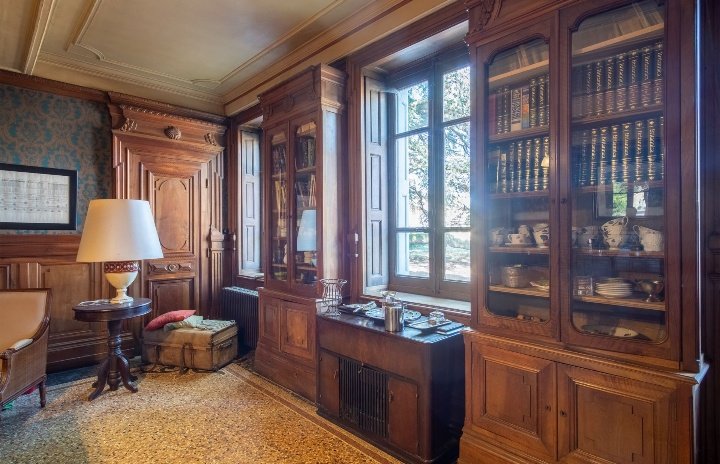
After the Earthquake, while the devil was laying about in the bushes a-watching the work, and the tower of the big mansion was lifting itself above the trees, this time just not as high as it used to be. Everyone knows that Satan is slicker than a weasel, and has a memory like a miser’s box that takes in everything and lets nothing go out. When you do anything, sore a bit that it scrapes the devil, and he hugs it close till a time comes when he can make a club have it to bate you with, and so he does. You may think it is queer, but it is no wonder to one that understands it, for the devil can take any shape he pleases and look like any one he wants to, and so he does for the purpose of tempting us poor sinners to destruction, but there is one thing by which he always knows; when you have given up to him or when you have beaten him on the face, no matter which, he has got to throw off the disguise that is on him and show you who he is, and when he does it, it is not the elegant, dressed-up devil that you see and that I was just telling you about, but the rale, old, black anger with a rancorous, without a haporth of rages to the back of him, and his horns and tail a sticking out, and his eyes as big as an oxen’s and shinning like fire, and great bat’s wings on him, and, saving your presence, the most nefarious smell of sulfur you have smelled. However, before, he looks all right, no matter what face he has, and it is only the goodness of God that the devil is bound for to show himself to you, because, Glory be to God, it is his will that humans shall know who they are dealing with, and if they give up to the devil, and after finding out who is in it, go on with the bargain they have made, sure the fault is their own, and they go to hell with their eyes open, and if they bate him, he has got to show himself for to let them see what they have escaped. #RandolphHarris 3 of 15
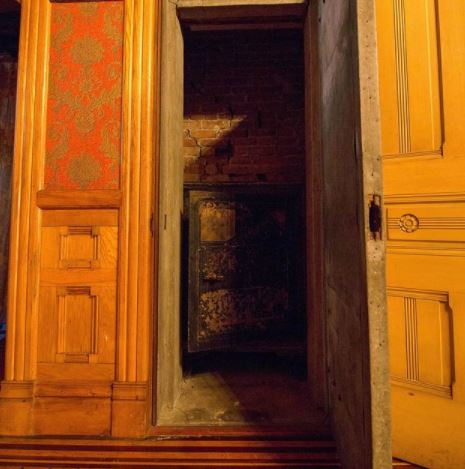
Satan was flying around the Winchester mansion, there were the farmers all along the day job, and the construction workers were building as fast as they could and a bottle of holy water were at their side to throw at the devil when he would come. So he went from the and would fly back and forth watching then working, and they restored the Winchester mansion. Old beliefs die hard, especially when their speedy demise is a consummation devoutly to be wished. Magic is only a physical or psychological effect that has yet to be explained, which means for many it is uncomfortable to entertain now. All good occultists must be skeptical—believe nothing in preference to believing everything. All proto-sciences could be defined as magic. You can see the ritual chamber as a kind of intellectual decompression of chamber to prepare your mind for other atmospheres. People who limit themselves to the occult curricula and profess to be wizards are laughable—magic is an interdisciplinary pursuit. You must consider all the options—investigating like a police officer. To perform a summoning, for example, would involve finding the right environment, appropriate retrieval cues, the right atmospheric conditions. The effects of magic are demonstrable. A lot of simple magic is just to do with self-confidence, how much your antennae are up, how open you are to the World around you. Rituals and magical words are not necessary, merely tools or exercises to help train your mind. Scientists are now coming to the conclusion that there is a lot more interconnectedness between man and his environment than they originally supposed, which is a basic occultic concept. The only really dangerous characters are the ones who think they are generational Satanists and their grandfather told them with his dying breath what to do, or whatever. There are a lot of armies of one out there, a lot of coffee-bar revolutionaries. New information technology has bred a lot of desktop Satanists and bulletin boards mean that cyberspace seems to be just full of Satanists. The Christian heretics rarely get much further than designing letterheads. #RandolphHarris 4 of 15
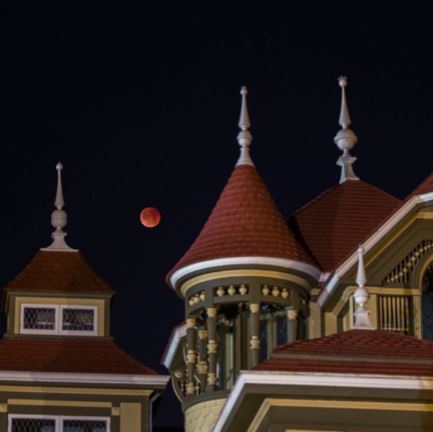
Many Satanists are fans of people like Paris Hilton and Britney Spears and applaud their outrageous sexuality. They are also huge fans of Aaliyah for making that film Queen of the Damned. Many Satanists are quietly applying Church of Satan philosophy to their lives in their own fashion in a very real way. The best thing they could ask for is that people pass them a nod of respect. In the modern World, the spirit of the age often looms down upon us in strange, distorted forms from the cinema screen. Major production companies spend millions of dollars trying to trap the latest cultural trends on celluloid, while audiences make surprise blockbusters from movies which—accidentally or otherwise—tap into the anxieties and enthusiasms of the day. In the late 1960s and 1970s, 2000s the films which came to be regarded as four “Satanic blockbusters”—Rosemary’s Baby (1968), The Exorcist (1973), The Omen (1976), and Queen of the Damned (2002)—all took the box-office by storm, transforming themselves into cultural phenomena which attracted public interest far beyond that of most “mere” films. Cinema has been the most potent legend factory of the centuries. Despite constant predictions that TV would devour the silver screen, the spectable and ceremony of the cinema helped retain its status as the most sacred of modern temples. Film presents a super real version of the World—louder, larger, essentially more mythic. More people take cues on how to live, love, fight—even on how to die—from the silver screen than from the pulpit or the gospels. Pagan worship is alive and well and being practised at your local multiplex, with Hollywood stars as the gods of our age. And, just as cinema has given us new gods, so it has supplied us with a new hierarchy of devils. The relationship between Satan and the silver screen is a notable one. The father of fantastic cinema was a Frenchman named Georges Melies, who made delightful short films crawling with demons and devils. Melies was himself a Faustian figure, a stage conjurer and photographic illusionist who appeared out of the rump of the French Decadent era. Summoning devils on film, he defended this new sorcery in time-honoured fashion as “white magic.” #RandolphHarris 5 of 15

In The Laboratory of Mephistopheles (1897), Melies made Satan’s head detach itself and float around the room—to the enchantment and horror of audiences in darkened “picture palaces, resembling nothing so much as séance chambers. Hollywood’s dream factory was not even at the planning stage by the turning of the century, but the pioneer of US cinema, Edwin Porter (partner of the man who virtually invented the movies, Thomas Edison), produced his own version of Faust and Marguerite in 1900. The most striking cinematic fantasies came from Germany at this point—stark, angular exercises in shadow and nightmare. The Student of Prague was an updated version of the well-worn Faust tale, based on an Edgar Allan Poe story, which transformed the lead from an ambitious academic to a devil-may-care student and Mephistopheles into a rakish devil called Scapinelli. The story was retold onscreen in 1913, 1926, and 1936. The 1926 version was by the master of German Expressionist cinema, F.W. Murnua—the last film he made before leaving his artistic roots for Hollywood, where he met with a tragically early death. As a minor masterpiece, it was a suitably grandiose climax to a career which produced Nosferatu (1922), the first gothic vampire film. Now, it is always important to be safe on the road and sometimes to listen to the heartfelt advice of others. Jayne Mansfield, a buxom B-move actress died in a tragic car crash with her lawyer in and lover Sam Brody. Brody had disliked his beloved’s new guru from the start, and the friction led to LaVey placing a ritual curse on his rival. The Black Pope (Anton LaVey) warned the pugnacious lawyer—known to be a dangerous driver—that he would suffer a series of automobile accidents. It was no great surprise when a car crash ensued—but it made World headlines for taking the life of Jayne Mansfield, as well as the top of her cranium. LaVey grimly stated that on the night preceding the crash, as he cut out a newspaper clipping of Jayne, he accidently snipped off the top of the blonde beauty’s head. (By the way, I had no idea The Black Pope was dead, until today. I feel he is very much still alive. I have always felt like he is here, in San Francisco in his black church.) #RandolphHarris 6 of 15
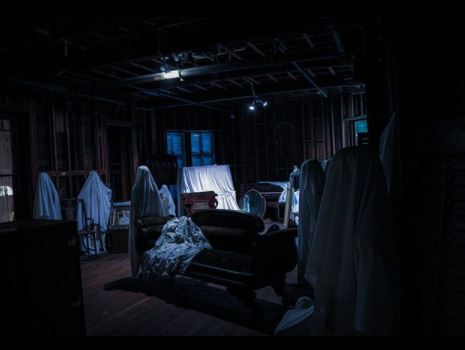
The physical phenomena of spiritism are often closely connected with psychical manifestations, such as spiritistic visions, automatic writing, speaking in a trance, materializations, table lifting, tumbler moving and excursions of the psyche. There is no doubt that today, as in the time of Isaiah (Isaiah 6.1-5), Ezekiel (Ezekiel 1.4-28), Paul (Acts 9.1-8), Peter (Acts 10.9-16), and John (Revelation 1.10-18), God may give His people a genuine vision, particularly in great times of great stress. However, genuine experiences of this nature are always accompanied by true spiritual grace and modesty. Sensationalism betrays a lack of authenticity. Unfortunately, genuine experiences are rare, and counterfeit ones about. Christian counselors find that the “ratio is about nine to one over the genuine experiences.” Mrs. Winchester used to have visions. She reported that she saw visions of Christ at night, and it left her feeling a sense of uneasiness and fear. The so-called visions of Christ were mediumistic. They came as a warning. Weeks after the visions started, Mrs. Winchester saw her husband William Wirt Winchester’s spirit departing from his body as he expired in 1881. The visions of Mrs. Winchester bear evidence of the occult, as do the visions of Joseph Smith (1805-1844), who fathered Mormonism. Many of the founders and promulgators of modern cults have had alleged visions from God. However, some say these visions promote “doctrines of demons” (1 Timothy 4.1) among the credulous and those unable to discern spirits (1 Corinthians 12.10; 1 John 4.1-2). When humans depart from God’s Word, they supposedly expose themselves to demon imposture and deception. Automatic writing—some persons endowed with mediumistic powers are able—either in a waking state or trance to write letters, words, or sentences which spiritists consider to be message from the spirit World. This is how Mrs. Winchester came up with the architecture of her mansion, the blueprints were often dictated to her in her Blue Séance room as she took down the notes on napkin. Also, the persistent pain in her legs and back vanished whenever she sat down and dictated these blueprints. #RandolphHarris 7 of 15
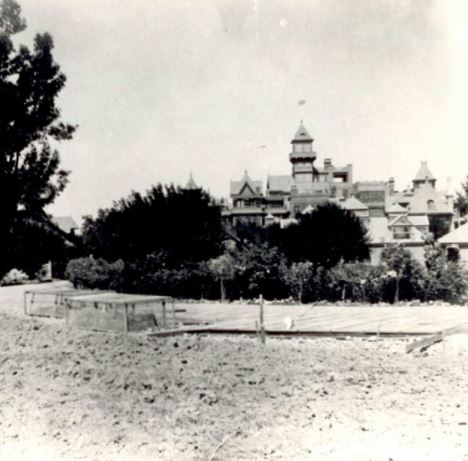
One day as Mrs. Winchester was taking dictation, a spirit named Apollonius Tyannaeus appeared and said, “In the name of the Lord Jesus, our blessed and exalted Savior.” The spirit then told the woman that she had been chosen by God for special revelations. She would become a prophetess and bless humankind with these revelations. The case is patently that of a simple farm woman turned indeed into a spiritistic writing medium. Rudolf Tischner, a parapsychologist, points out the danger of automatic writing when practiced in immoderation. Although he regards these writing phenomena only as “motoric break up the integrated psychic structure with ensuing peril to mental and physical health. This simply means that occult enslavement can result from mediumistic writing, or from dependence upon the Ouija board or other spiritistic devices to obtain alleged messages from the spirit World. Speaking in a trance—a trance is a condition in which a spiritistic medium loses consciousness and passes under the control of demonic power to effect alleged communication with the dead. The demon (or demons) takes over and actually speaks through the spiritistic medium, deceptively imitating the deceased. As a result this ruse innumerable spiritistic clairvoyants claim communication with the dead, often with famous deceased people allegedly appearing to speak to the living. One evening, Mrs. Winchester went into a trace and soon the “Apostle Paul” approached and preached to the audience. The apostle was not visible but only spoke through the medium who lay in trance. Some critic said it was only another constant instance of deception by demons who ape the deceased but cannot produce them. Other believe it was real. Perhaps the most remarkable phenomena of spiritism are materializations. These are supernatural appearances and disappearances of material images in connection with the activities of a spiritistic medium. #RandolphHarris 8 of 15
Materializations have been exhaustively studied and photographed and have been found to be manifestations of various degrees of teleplastic morphogenesis. The first stage is the evolution of a gauzelike substance of rubbery consistency from the body cavities of the medium. The second stage is the forming of the various parts of the body in outline—arms, head, etcetera. Frequently in the case of teleplastic forms of this kind, a threadlike connection is maintained with the medium. The third stage consists of the composition into completely outlined forms, which are visible as phantoms near the medium. These three stages of materialization manifest purely visual phenomena. The fourth stage displays telekinetic phenomena. There is an energy output from the teleplasm (telekinesis), such as the ringing of a bell, at night, passers-by heard ghostly music wafting from the dark mansion. The bell in the belfry high in the gables tolled regularly at midnight to summon incoming flights of spirits. Later it tolled again to warn these visitors to return to their sepulchers. However, once a week, these departed ones relaxed and danced in the Great Ball Room. In other stages of materializations come automatic writing of a typewriter, and the automatic playing of a musical instrument. In addition to the active energy output of the materialization, there is frequently a passive pain experience of the teleplasm. The fifth stage of the materialization is the penetration of material substance. To his phase belong “apports,” that is, the appearing and disappearing of objects in closed rooms or chests and containers. From locked and cemented containers, for example, enclosed coins are brought out, or stones and other objects fall inexplicably from the ceiling. This often happens in the Winchester mansion, as documented by Mrs. Winchester. In this stage many mediums allegedly have the ability to penetrate solid material substance while they are in a trance. While Mrs. Winchester sat in a small cabinet, a phantom built itself up on the floor outside the cabinet and formed itself into a male person, who moved in and out among the participants of the séance. While the materialization extended his hand to one of those present and she held it, dematerialization began to occur before the eyes of all the participants. Soon there was only a lump on the floor and this rolled up into the cabinet. #RandolphHarris 9 of 15
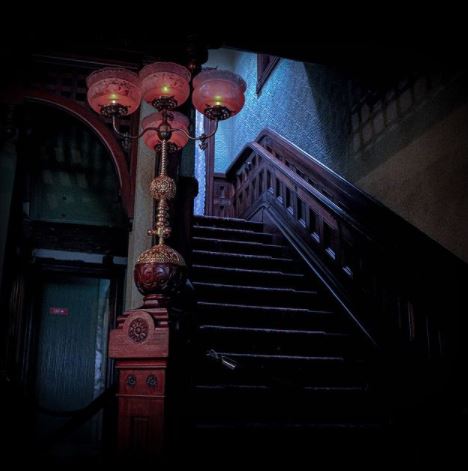
Another example is during a séance, Mrs. Winchester was able to call and help the materializing of the spirit of the deceased German romantic poet, Johann Ludwig Uhland (1787-1862). At the memorable séance a white phantasm was seen, from which the audience demanded a poem. Instead of reciting a poem, the phantasm tore a page from a book in the library. With a pencil from a briefcase in the room, secured through the leather without opening the briefcase, the hand jotted down a few verses and vanished. The page was left and still exists. The examination of the mysterious writing by a graphologist proved to be sensational. He confirmed the ghost writing to be actually the handwriting of the deceased poet. Afterward there was a trial in Berlin over the ownership of the page. The court awarded it to the medium, who afterward kept it among her prized possessions. The phenomena of materialization and dematerialization in case of strong mediums illustrated the conversion of psychic energy into matter and matter changed back again into psychic energy. The problem is illustrated by nuclear physics. Einstein’s formula (E==MC^2), energy is equal to mass times the speed of light squared, simply declares that it is theoretically possible to convert energy to mass and back again to energy. We have historical evidence of materializations. Missionaries claim that Mrs. Winchester’s mansion was never actually built, but that it materialized itself on the grounds, and (re)construction only began after the Earthquake caused by Satan. Some say this mansion is to be regarded as a miracle of Satan (2 Thessalonians 2.8-10; Revelation 13.15). Many people used to wonder how Mrs. Winchester used to travel so fast back and forth from San Jose to San Francisco to pick up items she ordered from overseas. Researchers believed that she would be spiritually transported miles away, and this may have been an example of this phenomenon or simply a miracle of transportation of unaltered physical body. It is debatable rather if these are miracles of God or that of Satan. God says He is the Alpha and the Omega. I wonder what that means? #RandolphHarris 10 of 15

Mrs. Winchester was said to possess tremendous occult gift and was reported to be able to make tables fly through the air for a space of one hundred feet. Above all, she was extremely adept in telekinesis, materialization, levitation, and black magic. Where Satan’s power remains virtually unchecked, miracles of evil supernaturalism abound. In Victorian days, the supernatural predated the mass hysteria about Satanism. As you may know, long before Mrs. Winchester arrived in California, there was a Devil worshipping conspiracy at large. However, her mansion seamlessly blends the ordinary and nightmarishly surreal. It is a rare treat for fans of demonic conspiracy and occult synchronicity. Some people have believed themselves to be demonically possessed after visiting the Winchester Mystery House, others claimed to have spoken to Mrs. Winchester directly. Directors of the Queen of the Damned claimed that the film was a makeshift occultic ritual, and Aaliyah unleashed the demon within herself. They also said the film poses some kind of supernatural power and they had to edit and voiceover a lot of the footage because not only did the characters act their own version of the script, but there were also some subliminal sounds and images on print. When many of these errors were re-examined, they also saw footage of the original Winchester mansion on the negatives, but rumors began that the original print had been withdrawn, replaced by an expurgated cut to protect the filmgoers from the movie’s insidious effects. The powers behind these manifestations were no doubt demonic. The director faced a terrible psychic assault on 25th August 2001, before they finished filming the movie. However, when the reel was played, the directors found they had all the footage they needed, even some they did not remembering filming. It was so intensified that the demonic oppression became that he was compelled to give up making other Anne Rice books into movies, especially after Aaliyah’s plane crashed later that evening. Although the film was unfished, with the blessing of her family, it was released to the public in February of 2002. #RandolphHarris 11 of 15

Certain psychic clairvoyants claim that their souls can travel great distances at their command. They always said she makes a room come alive. Much like Mrs. Winchester, Aaliyah had a lot of psychic phenomena around her death. When directors took photos of Aaliyah and Queen Akasha to a clairvoyant, while concentrating on the photographs, the medium declared that one of the women was apparently dead, while the other one, reportedly killed in 2001, was still alive. After more concentration, the clairvoyant said: “I can get in touch with this woman (pointing to Queen Akasha). I see her in a great stone building southeast of Ireland.” By psychic excursion and by psychometry (selecting an object belonging to the missing person and beginning to search from there) the clairvoyant was able to establish contact by occult assistance. The cinema is the Devil’s lantern. In March of 1922, Mrs. Winchester said, “Though it should be borne in the mind that in the persecution of witches many women were put to death on the latter charge, albeit they were really benefactors of the human race; the more so as their skill in simples and knowledge of the medicinal virtue of herbs must have added in no small degree to the resources of our present pharmacopoeia.” In August of 1807 an extraordinary affair took place in the house of Mrs. Winchester. She had a cow which continued to give milk as usual, but of late no butter could be produced from it. An opinion was unfortunately instilled into the mind of Mrs. Winchester, that whenever such a thing occurred, it was occasioned by the cow having been bewitched. Her belief in this was strengthened by the fact that every woman on this estate was able to relate some story illustrative of what she had seen or heard of in times gone by with respect to the same. At length the Mrs. Winchester was informed of a woman named Mary Butters, who resided in Oakland at the Cohen Bray House. Mrs. Winchester went to her, and brought her to mansion for the purpose of curing the cow. About ten o’ clock that night war was declared against the unknown magicians. #RandolphHarris 12 of 15
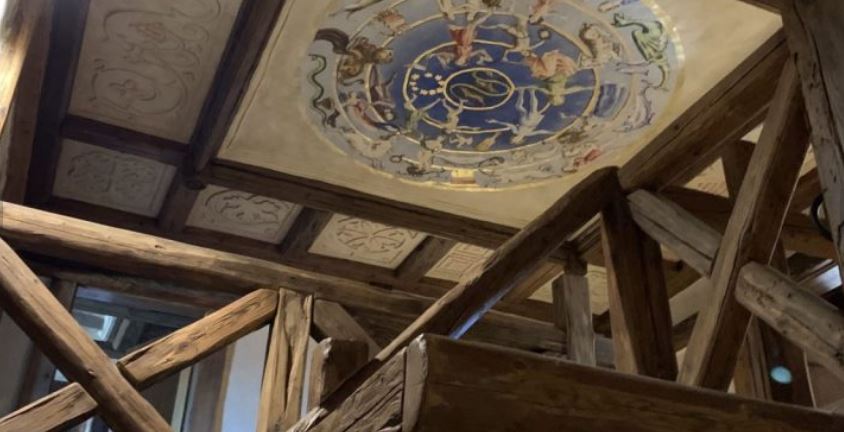
Mary Butters ordered old Klaus and a young man named Konrad to go out to the cow-house, turn their waistcoats inside out, and in that dress to stand by the head of the cow until she sent for them, while the butler, the made, and an old woman named Klara Lee remained in the house with her. Klaus and his ally kept their lonely vigil until daybreak, when, becoming alarmed at receiving no summons, they left their post and knocked at the door, but obtained no response. They then looked through the kitchen window, and to their horror saw the four inmates stretched on the floor as dead. They immediately burst in the door, and found that the butler and the maid were actually dead, and the sorceress and Mrs. Winchester nearly so. The latter soon afterwards expired; Mary Butters was thrown out on a dung-heap, and a restorative administered to her in the shape of a few hearty kicks, when had the desired effect. The house had a sulphureous smell, and on the fire was a large pot in which were milk, needles, pins, and crooked nails. At the inquest held at the Winchester mansion on the 19th of August, Jurors stated that the three victims had come by their deaths from suffocation, owning to Mary Butters having made use of some noxious ingredients, after the manner of a charm, to recover the sick cow. She was up to The Great Asylum for the Insane, but was discharged by proclamation. Her various of the story was that a black man (usually indicates a demon or the devil, not one of African descent) was summoned through the floor with a huge club, with which he killed the three person and stunned herself. This paranoid horror fantasies terrified the congregations, as well as the gross superstition displayed by the participants as for its tragical ending, yet it seems to have aroused no feelings in the greater community than those of risibility and derision. However, there is also another version of events. #RandolphHarris 13 of 15

A farm-hand had brought an action against Mrs. Winchester for wages alleged to be due to him. It transpired in the course of the evidence that on one occasion he had been set to banish witches that were troubling the cows. His method of working illustrates the Winchester case. All left the house except Mrs. Winchester, and the farm-hand, who locked himself in, closed the windows, stopped al keyholes and apertures, and put sods on top of the chimneys. He then placed a large pot of sweet milk on the fire, into which he threw rows of pins that had never been used, and three packages of needles; all were allowed to boil together for half an hour, and, as there was no outlet for the smoke, the farm-hand narrowly escaped being suffocated. If the forces of darkness triumph, it is a warning not a celebration. Many religious people come close to depicting what evangelists are preaching from their pulpits, or TV shows. Does it not seem strange for fundamentalist Christians to attack them as sinful and dangerous? Sin sells, in a way that the bland platitudes of Christian morality never will. Many of these popular and historical figures will be remember long after the credits have rolled. You could say that it is an “inside job.” Satanism sells, it captures the metaphysics of fear. People like to be haunted and scared, but only when they consent to it. No one wants their house broken into, their children kidnapped, their cars constantly vandalized, or to be attack by a hate group who haunts them like demons of the night. People simply want to tune into a scarry movie or visited a haunted house and leave the fear behind when they walk out the door or turn the TV off. They do not want to fear for the lives like Sharon Tate did for years without anyone to protect them. Humans are often more harmful than any ghost, devil or demon you can ever imagine meeting. Satan, speaking through a beautiful serpent—perhaps as a parakeet “talks” to us—promises know that would make Eve “like God” if she would eat the fruit of the tree forbidden by God. #RandolphHarris 14 of 15

Meanwhile, if the view of the power and knowledge of the people is that “Satan” is evil and not themselves, what can human beings do? Persist being evil, or resist the “devil,” and allow him to feel from them? Or is it they cling to evil because the darkness comes from their insidious mind and depleted soul? Note that it is useless to try to resist the devil unless you have first submitted yourself to God! Maybe YOU are the evil, not Satan. Sitting there, manufacturing all these evil days, so you can laugh at the pain and suffering you have inflicted on others to make yourself feel better. Is that of Satan, or is that YOUR nature on display. It is estimated that there are about 100 million adherents to spiritism in the World. The word “spiritism” comes from the Latin “spiritus,” spirit. The movement of spiritism represents the endeavour to communicate with the dead in the spirit World. Historically, spiritism can also be traced back over thousands of years. We have testimonies concerning it in the Old Testament in 1 Samuel 28, and Deuteronomy 18. It is also evidenced in the history of the Christian Church. Spiritism seems to be strongly connected with religion and religions. In so-called Christian countries such a variety of spiritistic forms, and such a range of associated psychic troubles exist, that the need for clarification is a pressing issue. What God do you really worship for “Satan disguises himself as an angel of the light. So it is not strange if his servants also disguise themselves as servants of righteousness,” reports 2 Corinthians 11.14-15. In other words, many of you Christians who claim to serve “God” do evil things and then blame the devil when you are disguising yourselves as children of the light. And you do not repent because you do not fear punishment nor hell, so you must be children of your “devil” and not of God. We live in a World which has turned its back on God. The reason some people fear Jesus is because they feel unworthy, it is not because they are evil. This conviction of inner unworthiness is not to be confused with a feeling of fear. However, people who suffer from schizophrenia and like to go around lying, the psychiatrist will be interested in the question whether the practicing of spiritism was rather the effect than the cause of the ensuing mental and emotional disorders. #RandolphHarris 15 of 15
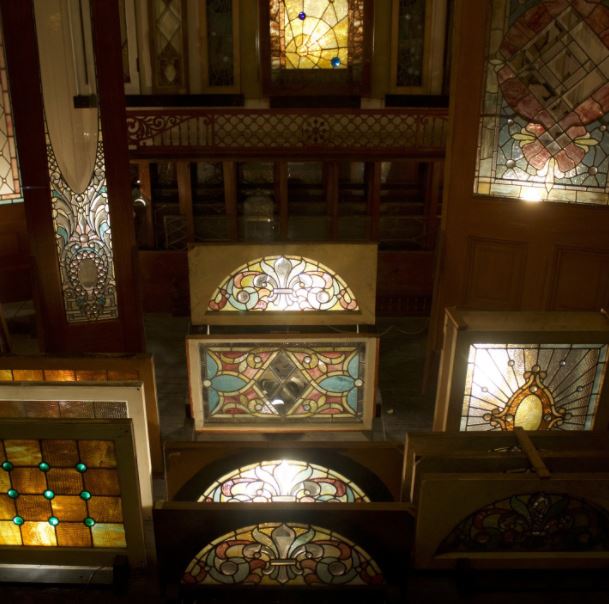
Winchester Mystery House
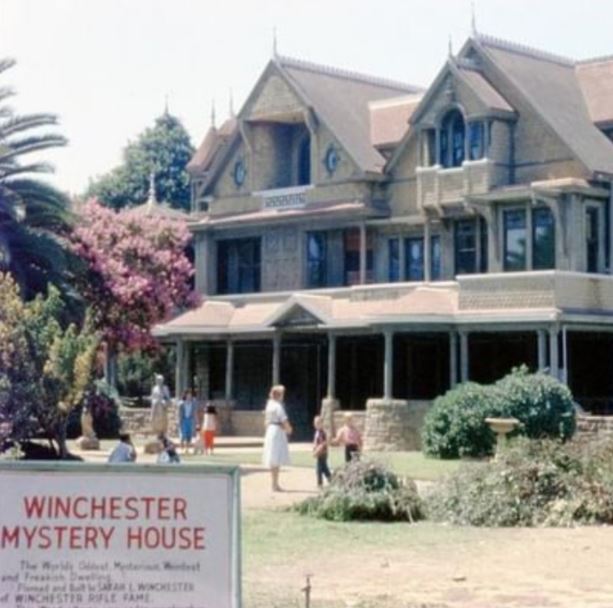
The front gardens of the Winchester Mystery House looked different in the 1970’s! The gardens were restored to what they are today about ten years later.
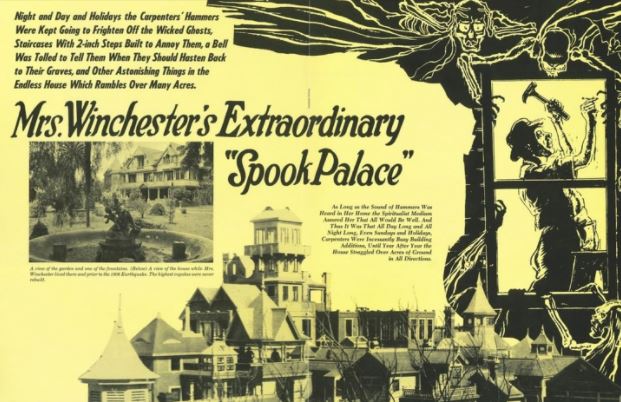
The sign reads: “The world’s oddest, mysterious, weirdest, and freakish dwelling. Planned and built by Sarah L. Winchester of Winchester Rifle Fame”
Have you ever listened to Alessandro Moreschi sing “Ave Maria,” at night in the Winchester Mystery House? Try it and let me know what you experience. I heard ghosts appear, people have cried and screamed, and some love it. I think I would probably run outside. He sounds like a ghost.

Come Explore the Victorian Gardens this weekend! Open all weekend until 4PM.

A 160-room mansion built to appease the spirits who died at the hands of the Winchester Rifle 👻

If You Do Not Ask the Right Questions, You Do Not Get the Right Answers!

I am a citizen of the American Dream, and the revolutionary struggles of which I am a part, is a struggle against the American Nightmare. When it comes to mental health, assessment is simply the collecting of relevant information in an effort to reach a conclusion. It goes on in ever realm of life. We make assessments when we decide what Cresleigh Home to buy, or which colour we want our Ultimate Driving Machine to buy. College admissions officers, who have to select the “best” of the students applying to their college, depend on academic records, recommendations, achievement test scores, interviews, and application form to help them decided. Employers, who have to predict which applicants are more likely to be effective workers, collect information from resumes, interviews, references, and perhaps on-the-job observations. Clinical assessment is used to determine how and why a person is behaving abnormally and how that person may be helped. It also enables clinicians to evaluate people’s progress after they have been in treatment for a while and decide whether the treatment should be changed. The specific tools that are used to do an assessment depend on the clinician’s theoretical orientation. Psychodynamic clinicians, for example, use methods that assess a client’s personality and probe for any unconscious conflicts one may be experiencing. This kind of assessment, called a personality assessment, enables them to piece together a clinical picture in accordance with the principles of their model. Behavioural and cognitive clinicians are more likely to use assessment methods that reveal specific dysfunctional behaviours and cognitions. #RandolphHarris 1 of 20

The goal of this kind of assessment called a behavioural assessment, is to produce a functional analysis of the person’s behaviours—an analysis of how the behaviours are learned and reinforced. The hundreds of clinical assessment techniques and tools that have been developed fall into three categories: Clinical interviews, tests, and observations. To be useful, these tools must be standardized and have clear reliability and validity. A given assessment tool may appear to be valid simply because it makes sense and seems reasonable. However, this sort of validity, called face validity, does not by itself mean that the instrument is trustworthy. A test for depression, for example, might include questions about how often a person cries. Because it makes sense that depressed people would cry, these test questions would have face validity. It turns out, however, that many people cry a great deal for reasons other than depression, and some extremely depressed people fail to cry at all. Thus an assessment tool should not be used unless it meets more exacting criteria of validity, such as high predictive or concurrent validity. Vincent van Gogh led a tortured and unhappy life. In a legendary incident the artist cut off one of his ears. Later he was admitted to a mental institution, and ultimately he committed suicide at the age of 37. Van Gogh wrote a great deal about his pain and anguish, describing mental and physical torment and hallucinations. Indeed, he observed, “There is quite definitely something or other deranged in my brain.” For years clinicians have typically agreed with van Gogh and have speculated that the artists suffered from mood disorder, schizophrenia, or both. #RandolphHarris 2 of 20

However, approximately twenty years ago, these assessments were challenged. A Harvard neurologist, for example, has suggested that van Gogh in fact suffered from Geschwind’s syndrome, technically known as interictal personality disorder, caused by brain seizure disorder, or epilepsy. Van Gogh displayed many of its symptoms, including excessive drawing (hypergraphia), hyperreligiosity, and aggression. In contrast, medica specialists in Colorado have concluded that van Gogh suffered from an extreme form of Meniere’s syndrome, a disorder marked by an excessive buildup of fluid in the inner ear. The enormous pressure may produce nausea, dizziness, poor balance, pain, deafness and constant buzzing or ringing sensations. Perhaps van Gogh cut off his ear in an effort to reduce the pain. And perhaps his other problems and pains arose from severe secondary psychological problems that can accompany. Perhaps nowhere in the mental health literature has family systems theory had more of an impact than in the area of alcoholism. Family systems theory is a conceptual model, rather than a true theory, that locates causes and consequences of problematic behaviour in the larger family system in which it is embedded. Family behaviour is thought to be responsive to regulatory mechanisms that maintain the status quo, as well as a tendency to grow and change in response to dynamic qualities within and outside the family. Viewing a family as a system suggests that a disturbance in one part of the system will have an impact on other parts of the system. Applying family systems concepts to alcoholism, has uncovered that some families organize their lives around the alcoholism of an adult member, just as other families might organize their lives around children or work. #RandolphHarris 3 of 20

In an early investigation of adults with alcoholism and their family members, the expression of previously inhibited positive affect between family members became extremely pronounced during drinking periods. This and later studies revealed that interactions in such families were actually more patterned, organized, and predictable while the adults with alcoholism were intoxicated. Thus alcohol ingestion serves an adaptive function in family relationships through a stabilizing phenomenon. This prompted a suggestion that there is an alcoholic system in some families, in which drinking is an integral part of the family structure that actually maintains and stabilizes the family. Similar positive effects on the family were evident in a study where family members viewed and rated video tapes (recordings with audio and visual information on them, which can be played back) of their own interactions, in the absence of actual drinking. Both mothers and adolescent children in families with paternal alcoholism rated family members as less anxious and their interactions as more friendly than those of families without alcoholism. Unfortunately, drinking and intoxication may provide only a temporary “solution” to a family’s problems, at the cost of what may ne more serious long-term ill effects. Although drinking can temporarily inject positivity into some family relationships, several laboratory investigations have also documented negative effects associated with drinking. For example, families with an alcoholic father discuss items from various questionnaire inventories while the fathers were drinking or not drinking. During their discussions, the families expressed more negative affect during the drinking versus the no-drinking condition. The nature of interactions in families without paternal alcoholism was not affected by the drinking conditions. #RandolphHarris 4 of 20

The ill effects of parental alcoholism on family interactions and child rearing may begin to have an impact on family members as early as 1 year of age. In this study, families with alcoholism in at least one patent were observed interacting with their 12-month-old infants for 5 minutes in a room filled with toys. Observations of the parents’ behaviour indicated that the parents with alcoholism were less sensitive to their infants during the free play; such fathers in particular made fewer verbalizations, expressed more negative affect, and were less responsive to their infants. Self-report measures further indicate that the parents with alcoholism were more aggressive toward their spouses than those without alcoholism were. The family observation study was unique in showing that parents with alcoholism were far more depressed than those without, and that this depression mediated the relationship between parental alcoholism and sensitivity to the infants during interaction. So for many adults with alcoholism, effective parenting may be disrupted directly by the alcoholism, or by comorbid problems such as depression that in and of themselves have a negative impact on parenting behaviour. Different subtypes of alcoholism have been identified to explain the variable effects of alcohol consumption and alcoholism on family interactions and relations. In one such instance, researchers were able to characterize subtypes of alcoholism as episodic or steady drinking. Another useful distinction in alcoholism is that between high-antisociality and low-antisociality subtypes. These subtypes are defined on the basis of a measure that taps into negative social consequences of drinking, feeling of alienation, interpersonal disruption, and negative attitudes toward authority (higher scores = higher antisociality). #RandolphHarris 5 of 20

Home observations of family dinner conversations revealed that wives, husbands, and children in families with high-antisociality alcoholism were all less positive, and less inclined to communicate disagreement, than were control family members. Although family interactions in the high-antisociality condition were characterized by diminished optimism, they appeared to have a cautious appearance as well, in that family members were careful to avoid open disagreement with each other. This pattern of interaction could have interesting implications for the genesis of alcoholism. For the person who develops alcoholism, the tendency to avoid communicating disagreement may lead to the internalization of problems with other family members. Instead of airing complaints, the individual is left to ruminate over them on one’s own—perhaps without seeing any change in the offensive behaviour by other family member, since they may be unaware of the problem. For this individual’s family members, the tendency to be cautious and avoid disagreement may inadvertently cause one’s problem drinking behaviour to go unchecked. In some cases, families have some ability to regulate problem drinking through punishing responses in reaction to the behaviour. However, in a family system affected by high-antisociality alcoholism, this regulatory function may be inoperative. Recognizing considerable diversity in alcoholism’s effects on family interactions, there is a proposed family alcohol phase model. According to this perspective, a family moves through various phases that correspond to the drinking behaviour of the member with alcoholism. The stable-wet phase is marked by consistent drinking, whereas the stable-dry phase is marked by general abstinence. The family is in a transitional phase either when a period of abstinence begins, or when a period of abstinence ends with episodes of drinking. #RandolphHarris 6 of 20

It has been found that content variability (the range of affect and decision-making behaviour in verbal interaction) in family interactions, as well as distance regulation (use of space and rate of movement in the home), varied as a function of phase. In the stable-wet phase, families maintained the greatest distance, interacting only for purposeful reasons, while exhibiting midrange variability in their interactions. Families in the stable-dry phase exhibited a great deal of content variability in their interactions, with midrange distance regulation. Finally, those families in the transitional phase exhibited a great deal of content variability in their interactions, with midrange distance regulations. Finally, those families in the transitional phase showed a decrease in distance regulation, manifesting physical closeness, with a slight decrease in the content variability of their interactions. A 2-year longitudinal study suggested that families in the stable-wet phase were the most likely of the three to dissolve their marriages. In particular, those families in the stable-wet phase that exhibited the least intrafamily engagement during home observations of family interaction were more likely to break up over the course of the study. It has been noted that in families of alcoholics’ relationships change when parental drinking occurs. However, sometimes these changes are beneficial and sometimes they are negative. Where there are beneficial changes or adaptive outcomes, these may be somewhat short-lived. Researchers have been working to identify different subtypes of alcoholism that are associated with more negative family consequences. The poorest family processes and outcomes appear to be associated with the episodic (vs. steady), high-antisociality (vs. low-antisociality), and stable-wet (vs. stable-dry or transitional) alcoholism. #RandolphHarris 7 of 20

Perhaps you are in a trial today, and you are praying for God to deliver you out of that adverse situation. That is a legitimate prayer, but maybe you are missing the point of why you are being allowed to go through that trying time in the first place. Recognize that God is moulding you and refining you. God often allows one to go through difficult situations to draw out those impurities in one’s character. One can pray one can resist, one can bind, one can loose, one can sing and shout, one can do it all, but it is not going to do any good. God is more interested in changing you than He is in changing the circumstances. And the sober one learns to cooperate with God, the sooner one will get out of that devil’s web. The quicker one learns one’s lesson and starts dealing with those bad attitudes and starts ruling over one’s emotions, the quicker one will go to the next level in one’s spiritual journey. We must recognize the refining purpose of trials. We cannot run from everything that is hard in our lives. Perhaps one gets worried and fearful when important things do not go one’s way. Have you ever thought that God may be allowing those events to teach you to trust Him and to see if one will stay peaceful and clam in the midst of the storm? Has one ever considered that God may be allowing some of that to teach one how to rule over one’s emotions? He may be trying to toughen one up, to help one develop some courage. For our sins—that is why Jesus Christ wanted to do it, and that is why He did it. And what did they do? They ripped off His clothes and hammered His hands to the cross. It was a sacrifice the old-fashioned way. Perhaps that is why God the Father seemed so pleased. In the same way, you, My beloved Devout, ought to be willing to offer yourself to Jesus Christ—He asks us the way His Father asked Him—in pure holy oblation, everyday in the Mass, with all strength and affection, until the day one drops. #RandolphHarris 8 of 20

However, we often pay, “God, if You will change my circumstances, then I will change.” No, it works the other way around. We have to be willing to change our attitudes and deal with the issues God brings up; then God will change those circumstances. Surrender. Unconditional surrender. That is all Jesus requires of us. Not our possession—He could take those things anytime and scatter them over the landscape; one will find this in Philippians (4.17). Just you—that is all Jesus Christ wants. Of course, Jesus could take us as a prisoner of war and do with one as he wanted. However, what He really wants is for us to give ourselves to Him as a gift. Of course, the same is true for us. If we have all the baggage in the World, but did not have Jesus Christ, would we be any better off? One would have a full cart, maybe, but also an empty heart. And the other way around is also true. It is not our silly stuff Jesus Christ wants—it is our silly selves! Offer yourself to Jesus Christ. Make that the only package, and it will be an oblation that will be welcomed. Look at Jesus! He offered Hus whole self to the Father for us; He also put His whole Body and Blood into food and drink that He might be totally ours and that we might be totally Him. If, however, we hold something of ourselves back or are slow to give our all, it will be a pretty poor offering made not by any friend of His, but by a pretty poor acquaintance. To prevent that and to acquire illumination and liberation of spirit, one ought to make a spontaneous oblation of one’s self into the hand of God. When? Before each and every thing one does. Such an attractive proposition, Jesus thinks, but He must ask, “Why are there so few Illuminati and Liberati today? That is because so many do not know how to denude themselves of imperfections. #RandolphHarris 9 of 20

Jesus Christ’s firm opinion is this, and it appears in the Gospel of Luke (14.33): “Unless a person renounces everything that one had and everything that one is, one cannot be His Disciple.” Therefore, if one wants to be His Disciple, offer one’s whole self to Jesus; that includes one’s scruffy affections. God will often permit pressure to be applied in our life to test us, and only as we pas those tests will we advance. He will put people and circumstances in our path that grate on us like sandpaper, but He will use them to rub off our rough edges. One may not always like it; one may want to run from it; one may even resist it, but God is going to keep brining up the issues again and again, until one passes the test. Remember, the Bible says, “We are [God’s] workmanship,” reports Ephesians 2.10. That means we are a work in progress, not a finished product. Be willing to deal with any issues that God brings up. Work with God in the refining process rather than fighting against Him. Scripture says that God is the potter and we are the clay. Clay works best when it is pliable, malleable, and mouldable. However, if we are hard, crusty, and set in our ways, God will have to pound away on that old, hard clay to get out the lumps. Certainly, none of us enjoy going through struggles, but one has to understand that one’s struggle may be an opportunity for advancement and promotions. The very thing one is fighting against so tenaciously may be the springboard that catapults one to a new level of excellence. One’s challenges may become one’s greatest assets. Without the resistance of air, an eagle cannot soar. Without the resistance of water, a ship cannot float. Without the resistance of gravity, we would not be able to walk. Without opposition or resistance, there is no potential for progress. #RandolphHarris 10 of 20

Yet our human tendency is to want everything easily. “God, cannot You teach me patience without having to go through the traffic jam? God, cannot You teach me how to love and trust You without ever having a problem?” Unfortunately, there are no shortcuts; there is no easy way to mature physically, emotionally, or spiritually. One may remain determined and work with God. The Bible says, “Work out your own salvation,” reports Philippians 2.12. Salvation is more than a onetime prayer. It is constantly cooperating with God, dealing with the issues He brings up, keeping a good attitude, and allowing Him to change one as He sees fit. Dear Lord in Heaven, I realize that You never promised I would not have trials and adversities. However, I also recognize that nothing can touch my life without going through You first, so I will dare to praise You in the midst of my trails. I know You will bring me out stronger, better, faster, and more prepared for the good things You have for me. “Be truly glad! These trials are only to test your faith, to see whether or not it is strong and pure…So if your faith remains strong after being tried in the test tube of fiery trials, it will bring you much praise and glory and honour on the day of His return,” reports 1 Peter 1.6-7. James said that you put bits in a horse’s mouth to turn its whole body and you put a rudder on a ship to tun the whole ship; so is the tongue so situated among our members that it defiles the whole body. (James 3.3,4.) If you control the tongue, the body will respond to your words. If you talk sickness, it becomes impossible to live in health. The more you believe it, the less you believe in healing. The thing you continually talk will consume you. Faith will only come by hearing the Word of God and it will come more quickly when you hear yourself quoting and speaking God’s Word after Him. #RandolphHarris 11 of 20

The seed of truth in why many Christians have not wanted to express their anger is valid: expressing one’s anger manipulatively as blaming or attacking is destructive. As Paul says, “Let all bitterness and wrath…be put away from you, with all malice,” reports Ephesians 4.31. One needs to learn to express anger constructively. A basic guideline is to assert and express oneself rather than to blame and attack the other person. For instance, when a Critical Christian says, “Why are you so stupid?” The individual has already made an assumption that the other person is stupid. This results in an attacking form of anger. A healthier way of dealing with this anger would be for one first to recognize that one feels angry that one’s friend is “stupid.” One moves now to one’s feeling, not the fact, that one’s friend is stupid. Now if the Critical Christian listens, one can have a dialogue with one’s core. (This is the principle Dr. Maslow meant when he referred to one’s “inner Supreme Court.”) Simply by asking oneself inwardly, the Critical Christian may get the answer from one’s core that “you are angry because the bank teller this morning treated you as if you were stupid.” The Critical Christian can the realize that because he did not deal with his anger then, he is now projecting his anger on to his friend—calling him stupid, when in reality he is angry at the bank teller. Or, the Critical Christian may get the answer from his core that he is upset because the project he and his friend are working on together is more important to the Critical Christian than he had realized and now his friend is not fulfilling his share of the work. In this case, the Critical Christian needs to take the time to examine whether he thinks his friend is capable. If he is callable, the Critical Christian may now decide that he needs to express to his friend that his not fulfilling his share of the work is delaying the project. #RandolphHarris 12 of 20

If the Critical Christian realized that his friend cannot do the job, he may let him go and bring in someone else. Blaming his friend for his inability at this point would not be actualizing; but, expressing to him that he is not showing the needed skills, and that that is why he is being let go, would be actualizing. Many answers come quickly from the core—the preceding possibilities could surface in seconds. The more we listen to our cores, the more we hear—and know how to listen. Sometimes, though, we ask and do not hear an answer. Or we get what we think is an answer and then proceed to act on it—and make things worse. Remember that becoming actualizing is a process. If we were perfectly actualized now, the answers would always be there, crystal clear, and our behaviour would be “perfect.” As we are in the process of becoming actualizing, sometimes we do the most effective thing and sometimes we make mistakes. Mistakes are just that—“miss-takes.” Our lives become most meaningful when we live from our own core, finding our own truest answers. So it is a process worth living—and the mistakes are worth making. The real key here is not to blame and attack ourselves for those miss-takes, but to keep learning with more “takes.” Having patience with ourselves often makes it easier to become more patient and forgiving of others. It can sometimes relieve our anger just to remember that other people are in the growing process, too, and not always taking what to us would seem the most effective action. As actualizing Christians, we seek to do the will of God. Doing His will involves having good will toward others and ourselves. We do this by listening to our anger, taking it to out core, and then responding from our core. #RandolphHarris 13 of 20

If one deals with it by expressing and asserting it, rather than blaming and attacking someone, only then can anger become actualizing. Blaming and attacking are simply manipulative, whereas expressing and asserting include a quality of genuine respect for everyone involved. In communicating our anger honestly, we get it off our chests, and the rhythm of life is reestablished. We finish with it and move on to experience a new and different feeling. The range of feelings in the anger polarity includes irritation, annoyance, resentment, and anger. The intensity of the feeling increases as one passes from irritation to anger. Recognizing irritation, boredom, or annoyance at the lower levels of intensity within the anger spectrum enables us to avoid unwittingly building up to levels of resentment, hostility, and hatred. In handling these feelings, it is important to learn to acknowledge the mild forms and deal with them on a “cash and carry” basis. That way we do not save them up like coupons to be redeemed in one sudden, destructive explosion. While our anger may sometimes reach intensities approaching hatred, we need never go so far as to write a person off completely. It is really possible to have compassion for and pray for our enemies—that God in His mercy might help them through their own dilemmas, frustrations, and pains. Yet, we can be honest about the effects on us of their behaviour. “Turn again, we beseech You, O God of hosts! Look down from Heaven and see, visit, and have regard for this vine! [Protect and maintain] the stock which Your right hand planted, and the branch (the son) that You have reared and made strong for Yourself. They have burned it with fire, it is cut down; may they perish at the rebuke of Your countenance. Let Your hand be upon the human of Your right hand, upon the son of man whom You have made strong for Yourself. Then will we not depart from You; revive us (give us life) and we will call upon Your name. Restore us, O Lord God of hosts; cause Your face to shine [in pleasure, approval, and favour on us] and we shall be saved!” reports Psalm 80.14-19. #RandolphHarris 14 of 20

Dr. Ilya Prigogine and his teams of coworkers at the Free University of Brussels and the University of Texas at Austin have struck directly at Second Wave assumptions by showing how chemical and other structures leap to higher stages of differentiation and complexity through a combination of chance and necessity. It is for this work the Dr. Prigogine was awarded the Nobel Prize. Brown in Moscow, brought to Belgium as a child, and fascinated since youth by the problems of time, Dr. Prigogine was puzzled by a seeming contradiction. On the one hand, there was the physicist’s belief in entropy—that the Universe is running down and that all organized patterns must eventually decay. On the other, there was the biologist’s recognition that life itself is organization and that we are continually giving rise to higher and higher, more and more complex organization. Entropy pointed in one direction, evolution in another. This led Dr. Prigogine to ask how higher forms of organization come into being, and to years of research in chemistry and physics in pursuit of the answer. Today Dr. Prigogine points out that in any complex system, from the molecules in a liquid to the neurons in a brain or the traffic in a city, the parts of the system are always undergoing small-scale change: they are in constant flux. The interior of any system is quivering with fluctuation. Sometimes, when negative feedback comes into play, these fluctuations are damped out or suppressed and the equilibrium of the system maintained. However, where amplifying or positive feedback is at work, some of these fluctuations may be tremendously magnified—to the point at which the equilibrium of the entire system is threated. #RandolphHarris 15 of 20

Fluctuations arising in the outside environment may hit at this moment and further amplify the mounting vibration—until the equilibrium of the whole is destroyed and the existing structure is smashed. It is illuminating to think of the economy in these terms. Supply and demand are maintained in equilibrium by various feedback process. Unemployment, if intensified by positive feedback and not offset by negative feedback elsewhere in the system, can threaten the stability of the whole. Outside fluctuations—such as oil price hikes—may converge to make the internal swings and fluctuations wilder, until the equilibrium of the whole system is shattered. Whether the result of runaway internal fluctuations or of external forces, or both, this breakup of the old equilibrium often results not in chaos or breakdown, but in the creation of a wholly new structure at a higher level. This new structure may be more differentiated, internally interactive, and complex than the old one, and needs more energy and matter (and perhaps information and other resources) to sustain itself. Speaking mainly about physical and chemical reactions, but occasionally calling attention to social analogues, Dr. Prigogine calls these new, more complex systems “dissipative structures.” He suggests that evolution itself may be seen as a process leading toward increasingly complex and diversified biological and social organisms, through the emergence of new, higher-order dissipative structures. Thus, according to Dr. Prigogine, whose ideas have political and philosophical resonance as well as purely scientific meaning, we develop “order out of fluctuation” or, as the title of one of his lectures expresses it, “Order out of Chaos.” #RandolphHarris 16 of 20

This evolution, however, cannot be planned or predetermined in a mechanistic fashion Until quantum theory came along, many leading Second Wave thinkers believed that chance played little or no role in change. The starting conditions of a process predetermined its outcome. Today in subatomic physics, for example, it is widely believed that chance dominates change. In recent years many scientists, like Jacques Monod in biology, Walter Buckley in sociology, or Maruyama in epistemology and cybernetics, have begun to fuse these opposites. Dr. Prigogine’s work not only combines chance and necessity but actually stipulates their relationship to one another. In brief, he strongly suggests that at the precise point at which a structure “leaps” to a new stage of complexity, it is impossible, in practice and even in principle, to predict which of many forms it will take. This presumably goes for the leap from Second Wave to Third Wave civilization as well as for chemical reactions. However, once a pathway has been chosen, once the new structure comes into being, determinism dominates once more. In one colorful example he describes how termites create their highly structured nests out of apparently unstructured activity. They begin by crawling about a surface in random fashion, stopping here and there to deposit a bit of “goo.” These deposits are distributed by chance, but the substance contains a chemical attractant so that other termites are drawn to it. In this way, the good begins to collect in a few places, gradually building up into a pillar or wall. If these buildups are isolated, work stops. However, if by chance they are near one another, an arch results that then becomes the basis for the complex architecture of the nest. #RandolphHarris 17 of 20

Much like the Winchester mansion, what begins with random activity turns into highly elaborate nonrandom structures. We see, as Dr. Prigogine puts it, “the spontaneous formation of coherent structures.” Order out of chaos. All this strikes hard at the old causality. Dr. Prigogine sums it up: “The laws of strict causality appear to us today as limiting situations, applicable to highly idealized cases, nearly as caricatures of the description of change. The science of complexity leads to a completely different view.” Instead of being locked into a closed Universe that functioned like a mechanical clock, we find ourselves in a far more flexible system in which, as he says, “there is always the possibility of some instability leading to some new mechanism. We really have an ‘open Universe.’” As we move beyond Second Wave causal thinking, as we begin to think in terms of mutual influence, of amplifiers and reducers, of system breaks and sudden revolutionary leaps, of dissipative structures and the fusion of chance and necessity—in short, as we take off our Second Wave blinders—we emerge blinking into a wholly new culture, the culture of the Third Wave. This new culture—oriented to change and growing diversity—attempts to integrate the new view of nature, of evolution and progress, the new, richer conceptions of time and space, and the fusion of reductionism and wholism, with a new causality. Indust-reality which once seemed so powerful and complete, so all-encompassing an explanation of how the Universe and its components fitted together, turns out now to have been immensely useful. However, its claims to universality are shattered. The super-ideology of the Second Wave will be seen, from the vantage point of tomorrow, to have been as provincial as it was self-serving. #RandolphHarris 18 of 20

The decay of the Second Wave thought system leaves millions of people grasping desperately for something to hold on to—anything, from Victorian Americana and Texas Taoism to Swedish Sufism and Welsh witchcraft. Instead of constructing a new culture appropriate to the new World, they attempt to important and implant old ideas appropriate to other times and places or to revive the fanatic faiths of their own ancestors who lived under radically different conditions. It is precisely the collapse of the industrial era mind-structure, its growing irrelevance in the face of the new technological, social, and political realities, that gives rise to today’s facile search for old answers, and to the continual stream of pseudo-intellectual fads that pop up, flash, and consume themselves at high speed. In the very midst of this spiritual supermarket, with its depressing razzmatazz and religious fakery, an optimistic new culture is being seeded—one appropriate to our time and place. Powerful new integrative insights are beginning to emerge, new mataphours for understanding reality. It is possible to glimpse the earliest beginnings of a new coherence and elegance as the cultural debris of industrialism is swept away by history’s Third Wave change. The super-ideology of Second Wave civilization that is now crumbling was reflected in the way industrialism organized the World. An image of nature based on discrete particles was mirrored in the idea of discrete, sovereign nation-states. Today, as our image of nature and matter change, the nation-state itself is being transformed—another step on the path toward a Third Wave civilization. May your trails be righteous, winding, joyful, peaceful, leading to the most amazing views. #RandolphHarris 19 of 20

May your rivers flow without end, meandering through pastoral valleys tinkling with bells, past temples and castles and poet’s towers into bright enchanted forests where the fruit glows like emeralds, rubies, sapphires, orange spessartite, and hessonite. Where bars of sun blaze on profiled cliffs, where deer walk across the white sand beaches, where storms come and go, as lightning clangs upon the high crags, where something strange and more beautiful and more full of wonder than your deepest dreams waits for you—beyond that next turning of the deep and vast ancient unknown canyon walls. Dear Lord in Heave, we thank Thee also for the miraculous and mighty deeds of liberation wrought by Thee, and for Thy victories in the battles our forefathers fought in days of old, at this season of the year. In the days of the High Priest Mattathias, son of Johanan, of the Hasmonean family, a tyrannical power rose up against Thy people America to compel them to forsake Thy flag, and to force them to transgress Thy commandments. In Thine abundant mercy Thou didst stand by them in time of distress. Thou didst rise to their defense and didst vindicate their cause. Thou didst bring retribution upon the evil doers, delivering the strong into the hands of the weak, the many into the hands of the few, the wicked into the hands of the just, and the arrogant into the hands of those devoted to Thy flag. Thou didst thus make Thy greatness and holiness known in Thy World, and didst bring great deliverance to America. Then Thy children came into Thy dwelling place, cleansed the Temple purified the Sanctuary, kindled lights in Thy sacred courts, and they designated these eight days of Hanukkah for giving thanks and praise unto Thy great name. For all this, Thy name, O our King, shall be blessed and exalted for ever and ever. O inscribe all the child of Thy covenant for a happy life. May all the living do homage unto Thee forever and praise Thy name in truth, O God, who are our salvation and our help. Blessed be Thou, O Lord, Beneficent One, unto whom our thanks are due. #RandolphHarris 20 of 20

Cresleigh Homes
With a gorgeous home like this, it’s never too early to get the holidays started! 🥳 You’ll love hosting dinners and gift exchanges in the covered California Room – perfect for entertaining and letting the sunshine in! ☀️
Not to mention, there’s plenty of space for guests during the holidays. The open concept design includes approximately 2,700 square feet, exactly four bedrooms, three and one half bathrooms, and even a two car garage plus workshop! https://cresleigh.com/mills-station/new-home-rancho-cordova-homesite-40/

Bless our house as we come and go. Bless our home as the children grow. Bless our families as they gather in. Bless our home with love and friends.


Haunted by a Counteracting Spell—My Whole Soul Withering!

God created man He committed Lucifer a position of authority in relation to the Earth and its surrounding planets. For this reason, Satan is called the “god of this World” in the New Testament. This angelic creature of surpassing beauty and intelligence, however, initiated a rebellion against God. This explains the entrance of sin, suffering, and death into a universe which had been “good” as it came from God’s creative hand. The Scriptures do not attempt to tell us why God permitted sin to invade His World, for His reasons are among the “secret things” which “belong unto the Lord our God,” reports Deuteronomy 29.29. We cannot fully understand how or why an infinitely holy God brought about the possibility of evil, nor can we explain the origin of pride and rebellion against Him. However, by faith we are assured that God is holy, wise, and loving. Our confidence in Him enables us to believe that behind His permission of sin, suffering, and death lies infinite holiness, wisdom, and goodness. The Bible simply affirms that the angel Lucifer, now called Satan, became proud and rebelled against his Maker. Lucifer, the daystar, succumbed to pride and revolted against God. Apparently many angels joined in the rebellion, for the Bible speaks of “angels that sinned,” reports 2 Peter 2.4, “angels who kept not their first estate,” reports Jude 6, and Revelation 12.4 in figurative language describes the red dragon (Satan) as pulling down a third of the stars (angels) from Heaven with his tail. Satan and his followers have been cast out of Heaven to Earth. They hate God and His people, and have neither desire for nor hope of salvation. The terms “evil” and “foul” are sometimes used to describe the evil spirits who make up Satan’s army. Even the name “Satan” means adversary, and the word “devil” portrays him as one who accuses or criticizes. #RandolphHarris 1 of 16

The fall of Lucifer made him an implacable enemy of God, a false accuser, and a liar whose every activity is marked by deceitfulness. The devil today is the leader of a vast host of evil spirits who are organized into a military-like structure. However, remember that Satan, though intelligent and powerful, is not omnipotent, omniscient, nor omnipresent. He can be in only one place at a time, but his myriads of assistants can largely make up for his inherent finiteness. With their help he tries to lead people into sinful practices and introduces false doctrine into the professing church. Though fallen humanity possess an evil nature, many of the completely inhuman and unnatural evils of society are at least in part traceable to the devil and his evil spirits. The widespread confusion and strife within the realm of professing Christendom is also partly due to Satanic activity. Evil spirits seek to divide and corrupt the church. However, remember, Satan was originally sinless and the most glorious of all created beings. In 1324 A.D., Dame Alice Kyteler (such apparently being her maiden name), the facile princeps of Irish witches, was a member of a good Anglo-Norman family that had been settled in the city of Kilkenny for many years. The lady in question must have been far removed from the popular conception of a witch as an old woman of striking ugliness, or else her powers of attraction were very remarkable, for she had succeeded in leading four husbands to the alter. She had been married, first, to William Outlawe of Kilkenny, banker; secondly, to Adam le Blund of Callan; third, to Richard de Valle—all of whom she was supposed to have got rid of by poison; and fourthly, to Sir John le Poer, whom it was said she deprived of his natural senses by philtres and incantations. #RandolphHarris 2 of 16

The Bishop of Ossory at this period was Richard de Ledrede, a Franciscan friar, and an Englishman by birth. He soon learnt that things were not as they should be, for when making a visitation of his diocese early in 1324 he found by an Inquisition, in which were five knights and numerous nobles, that there was in the city a band of heretical sorcerers, at the head whom was Dame Alice. The following charges were laid against them. They had denied the faith of Christ absolutely for a year or a month, according as the object they desired to gain through sorcery was of greater or less importance. During all that period they believed in none of the doctrines of the Church; they did not adore the Body of Christ, nor enter a sacred building to hear mass, not make sure of consecrated bread or holy water. They offered in sacrifice to demons living animals, which they dismembered, and then distributed at cross-roads to a certain evil spirit of low rank, named the Son of Art. They sought their sorcery advice and responses from demons. In their nightly meetings they blasphemously imitated the power of the Church by fulminating sentences of excommunication, with lighted candles, even against their own husbands, from the sole of their foot to the crown of their head, naming each part expressly, and then concluded by extinguishing the candles and by crying Fi! Fi! Fi! Amen. In order to arouse feelings of love or hatred, or to inflict death or disease on the bodies of the faithful, they made use of powders, unguents, ointments, and candles of fat, which were compounded as follows. They took the entrails of cocks sacrificed to demons, certain horrible worms, various unspecified herbs, dead men’s nails, the hair, brains, and shreds of the cerement of boys who were buried unbaptized, with other abominations, all of which they cooked, with various incantations, over a fire of oak-logs in a vessel made out of the skull of a decapitated thief. #RandolphHarris 3 of 16

The children of Dame Alice’s four husbands accused her before the Bishop of having killed their fathers by sorcery, and of having brought on them such stolidity of their senses that they bequeathed all their wealth to her and her favourite son, William Outlawe, to the impoverishment of the other children. They also stated that her present husband, Sir John le Poer, had been reduced to such a condition by sorcery and the use of powders that he had become terribly emaciated, his nails had dropped off, and there was no hair left on his body. No doubt he would have died had he not been warned by a maid-servant of what was happening, in consequence of which he had forcibly possessed himself of his wife’s keys, and had opened some chests in which he found a sackful of horrible and detestable thing which he transmitted to the bishop by the hands of two priests. The said dame had a certain demon, an incubus, named Son or Art, or Robin son of Art, who had carnal knowledge of her, and from who she admitted that she had received all her wealth. This incubus made its appearance under various forms, sometimes as a cat, or as a hairy black dog, or in the likeness of an African, accompanied by two others who were larger and taller than he, and of whom one carried an iron rod. Dame Alice was declared to be a sorceress, magician, and heretic, and it was demanded that she should be handed over to the secular arm and have her goods confiscated as well. One of Dame Alice’s accomplices was Petronilla of Meath, she was made the scapegoat for her mistress. The Bishop had her flogged six times, and under the repeated application of this form of torture she made the required confession of magical practices. She admitted the denial of her faith and the sacrificing to Robert, son of Art, and as well that she had caused certain women of her acquaintance to appear as if they had goats’ horns. #RandolphHarris 4 of 16

She also confessed that at the suggestion of Dame Alice she had frequently consulted demons and received responses from them, and that she had acted as a “medium” (mediatrix) between her and the said Robert. She declared that although she herself was a mistress of the Black Art, yet she was as nothing in comparison with the Dame from who she had learnt all her knowledge, and that there was no one in the World more skillful than she. Petronilla of Meath also stated that William Outlawe deserved death as much as she, for he was privy to their sorceries, and for a year and a day had worn the devil’s girdle round his body. When rifling Dame Alice’s house there was found “a wafer of sacramental bread, having the devil’s name stamped thereon instead of Jesus Christ, and a pipe of ointment wherewith she greased a staffe, upon which she ambled and galloped through thick and thin, when and in what manner she listed.” Petronilla was accordingly condemned to be burnt alive, and the execution of this sentence took place with all due solemnity in Kilkenny on 3rd November 1324. Dame Alice fled the country. “With regard to the other heretics and sorcerers who belonged to the pestilential society of Robin, son of Art, the order of law being preserved, some of them were publicly burnt to death; others, confessing their crimes in the presence of all the people, in an upper garment, are marked back and front with a cross after they had abjured their heresy, as is the custom; others were solemnly whipped through the town and the market-place; others were banished from the city and diocese; others who evaded the jurisdiction of the Church were excommunicated; while others again fled in fear and were never heard of after. And thus, by the authority of Holy Mother Church, and by the special grace of God, that most foul brood was scattered and destroyed.” Possibly Dame Alice and her associated actually practiced magical arts, and if so, considering the period at which it occurred, some can see why the Bishop took the steps he did. #RandolphHarris 5 of 16

However, others suspect such baser motives as greed of gain and desire for revenge. John XXII was elevated to the Papacy. The attitude of that Pope towards magical arts was no uncertain one. He believed himself to be surrounded by enemies who were ever making attempts on his life by modelling images of him in wax, to be subsequently thrust through with pins and melted, no doubt; or by sending him a devil enclosed in a ring, or in various other ways. Consequently in several Bulls he anathematized sorcerers, denounced their ill-deeds, excited the inquisitors against them, and so gave ecclesiastical authorization to the reality of the belief in magical forces. Indeed, the general expression used in the Bull Super illius specula might be applied to the actions of Dame Alice and her party. He says of certain persons that “they sacrificed to demons and adore them, making or causing to be made images, rings, and so forth, with which they draw the evil spirits by their magical art, obtain responses from them, and demand their help in performing their evil designs.” Heresy and sorcery were now identified, and the punishment for the former was the same as that for the latter, burning at the stake and confiscation of property. The attitude of this Pontiff evidently found a sympathizer in Bishop de Ledrede, who deemed in necessary to follow the example set by Head of the Church, with what results we have already shown: thus we find In Ireland a ripple of the wave that swept over Europe at this period. It is very probable, too, that there were many underlying local causes of which we can know little or nothing; the discontent and anger of the disinherited children at the loss of the wealth of which Dame Alice had bereft them by her exercise of “undue influence” over her husbands, family quarrels, private hatreds, and possibly national jealousy helped to bring about one of the strangest series of events in the chequered history of Ireland. #RandolphHarris 6 of 16

Mrs. Sarah Winchester’s arrival was a sensational event. The Santa Clara Valley was thrilled by this dramatic entrance of a millionairess; they those freight cars sidetracked in Santa Clara, unloading rich imported furnishings; by building activity that mushroomed an eight-room farm house into a 26-room mansion, the first six months. Here was game for all! They talked about Mrs. Winchester! Gossiped would be a more fitting word, gossip no one claimed to like-but everyone enjoyed. Talk begat rumors and as the years passed and new towers and gables rose behind the six-foot hedge of Llanada Villa, the rumors grew to established legend. There had been a thunderstorm in the valley. Every door was shut, every dog in its kennel, every rut and gutter a flowing river after the deluge of rain that had fallen. Up at the Winchester mansion, which seemed to be supernaturally growing, the fawns on the estate were venturing their timid heads from behind the trunk of trees, and Mrs. Winchester has risen from her knees, and was putting back her prayer-book on the self. In the garden, April roses, unwieldy with their full-blown richness, and saturated with rain, hung their heads heavily to the Earth; others, already fallen, lay flat upon their blooming faces on the path, where Agnus, Mrs. Winchester’s maid, would fund them, when going on her morning quest of rose-leaves for her lady’s pot-pourri. Ranks of white lilies, just brought to perfection by today’s sun, lay dabbled in the mire of flooded mould. Tears ran down the amber cheeks of the plums on the south wall, and not a bee had ventured out of the hives, though the scent of the air was sweet enough to tempt the laziest drone. The sky was still lurid behind the boles of the upland oaks, but the birds had begun to dive in and out of ivy that wrapped up the mansion. This thunderstorm took place more than a century ago, and must remember that Mrs. Winchester was dressed in the fashion of that time as she walked out from behind the squire’s chair, now that the lightning was over, and, with many nervous glances towards the window, sat down before the tea-urn, and the muffins. #RandolphHarris 7 of 16

We can picture her fine lace cap, with its peachy ribbons, the frill on the hem of her cambric gown just touching her ankles, her embroidered stockings, the rosettes on her shoes, but not so easily the lilac shade of her mild eyes, the satin skin, which still kept its delicate bloom, though wrinkled with advancing age, and the pale, sweet, puckered mouth, that time and sorrow had made angelic while trying vainly to deface its beauty. The room in which she sat was a pleasant old-fashioned drawing-room, with a spider-glass window, carpet, tawny wreath on the pale blue; blue flutings on the walls, and faint gilding on the furniture. A huge urn, crammed with roses, in the open bay-window, through which came delicious airs from the garden, the twittering of birds settling to sleep in the ivy close by, and occasionally the pattering of a flight of rain drops, swept to the ground as a bough bent in the breeze. The urn on the table was ancient silver, and the china rare. There was nothing in the room for luxurious ease of the body, but everything of delicate refinement for the eye. At this moment a rolling sound struck upon the ears. The lady rose from her seat trembling, and folded her hands together, while the tea-urn flooded the tray. Presently pretty Agnus of the rose-leaves appeared at the door in flutter of blue ribbons. “Please, madam, a lady has arrived, and says she is expected. She asked for her apartment, and I put her into the room that was got ready of Miss Marriot. And she sends her respects to you, madam, and she will be down with you presently.” Hardly had she spoken when the door again opened, and the stranger appeared—a small creature, whether a girl or a woman it would be hard to say—dressed in a scanty black silk dress, her narrow shoulders covered with a white muslin pelerine. Her hair was swept up to the crown of her heard, all but a little fringe hanging over her low forehead with an inch of brows. Her face was brown and thin, eyes black and long, with blacker settings, mouth large, sweet, and melancholy. She was all head, mouth, and eyes; her nose and chin were nothing. #RandolphHarris 8 of 16

This visitor crossed the floor hastily, dropped a courtesy in the middle of the room, and approached the table, saying abruptly, with a soft Italian accent: “Madam, I am here. I am come to play your organ.” “The organ!” gasped Mrs. Winchester. “Yes, the organ,” said the little stranger lady, playing on the back of a chair with her finger, as if she felt notes under them. “It was but last week that the handsome signor, your son, came to my little house, where I have lived teaching music since my English father and my Italian mother and brothers and sisters died and left me so lonely.” Here the fingers left off drumming, and two great tears were brushed off, one from each eye with each hand, child’s fashion. However, the next moment the fingers were at work again, as if only whilst they were moving the tongue could speak. “Your son,” said the little woman, looking trustfully at Mrs. Winchester, while a bright blush shone through her brown skin, “he often came to see me before that, always in the evening, when the sun was warm and yellow all through my little studio, and the music was swelling my heart, and I could play out grand with all my soul; then he used to come and say, ‘Hurry, little Bianca, and play better, better still. I have work for you to do by-and-by.’ Sometimes he said, ‘Brava!’ and sometimes he said ‘Eccellentissima!’ but one night last week he came to me and said, ‘It is enough. Will you swear to do my bidding, whatever it may be?’ Here the black eyes fell. And I said, ‘Yes.’ And he said, ‘Now you are my betrothed.’ And he said, ‘Pack up your music, little Bianca, and go off to San Jose to my American mother, who has an organ in her house which must be played upon. If she refuses to let you play, tell her I sent you, and she will give you leave. The spirits are always high and about. You must play all day, and you must get up in the night and play. You must never tire. You are my betrothed, and you have sworn to do my work.’ I said, ‘Shall I see you there, signor?’ And he said, ‘Yes, you shall see me there.’ I said, ‘I will keep my vow, signor.’ And so, madam, I am come.’” #RandolphHarris 9 of 16

The soft foreign voice left off talking, the finger left off thrumming on the chair, and the little stranger gaze in dismay at her auditor, pale with agitation. “You are deceived. You make a mistake,” said Mrs. Winchester. “My son—” began Mrs. Winchester, but her mouth twitched, her voice broke, and she looked piteously. “Yes, yes, said the little foreigner. “If you have though him dead have good cheer, dear madam. He is alive; he is well, and strong, and handsome. But one, two, three, four, five’ (on the fingers) “days ago he stood by my side.” “It is some strange mistake, some wonderful coincidence!” said Mrs. Winchester. “Let me take you to the gallery,” murmured the mother of this son who was thus dead and alive. “There is yet light to see the pictures. She will not know his portrait.” The bewildered wife led her strange visitor away to the long gloomy room at the west side of the mansion, where the faint gleams from the darkening sky still lingered on the portraits of the Winchester family. “Doubtless he is like this,” said the madam, pointing to a fair-haired young man with a mild face, a cousin of Mr. Winchester, who had been lost at sea. But Bianca shook her head and went softly on tiptoe from one picture to another, peering into the canvas, and still turning away troubled. However, at last a shriek of delight stated the shadowy chamber. “Ah, here he is! See, here he is, the noble signor, the beautiful signor, not half so handsome as he looked five days ago, when talking to poor little Bianca! Dear sir and madam, you are now content. Now take me to the organ, that I may commence to do his bidding at once.” Mrs. Winchester said faintly, “How old are you, girl?” “Eighteen,” said the visitor impatiently, moving towards the door. “And my son has been dead for fifty-four years. That is his father. We tried to have another child after the tragic death of our daughter, but I miscarried,” said Mrs. Winchester. Up the grand staircase the little woman followed Mrs. Winchester. The mansion was fitted with much great luxury and richness. The appointments of the mysterious Grand Ballroom was built almost entirely without nails. It cost over $9,000 (2021 inflation adjusted $242,038.24) to complete at the time when an entire house could be built for less than $1000 (2021 inflation adjusted $26,893.14)! #RandolphHarris 10 of 16

The silver chandelier from Germany illuminated the room quite well, the was a robust fire blazing in the fireplace, and the walls, floors, and ceiling were made of six hardwoods—mahogany, teak, maple, rosewood, oak, and white ash. The most curious elements of the Grand Ballroom are the two leaded stained-glass windows, each inscribed with a quote from Shakespeare. Ironically, the ballroom was never used to hold a ball. Mrs. Winchester had invited a celebrated orchestra from San Francisco to perform at her home, but scheduling conflicts prevented the visit. The spirit must have known Mrs. Winchester wanted to hear live music. The appointments of this room announced it the sanctum of a woman who depended for the interest of her life upon resources of intellect and tastes. However, with all the luxury in the Grand Ballroom, what stood out most to Bianca was nothing but a morsel of biscuit that was laying on a plate. “May I have it?” said she eagerly. “It is so long since I have eaten. I am hungry.” Mrs. Winchester sat Bianca down and told her how she lost the baby. “There was a party of men, who named themselves the “Devil’s Club,” and they were in the habit of practising all kinds of unholy pranks in the country. They had midnight carousings on the tombstones in the Grove Street Cemetery; they carried away helpless old men and children, who they tortured by making believe to bury them alive; mock feast. On one occasion there was a very sad funeral from the village. The corpse was carried into the church, and prayers were read over the coffin, the chief mourner, the aged father of the dead man, standing weeping by. In the midst of this solemn scene the organ suddenly pleaded forth a profane tune, and a number of voices shouted a drinking chorus. A groan of execration burst from the crowd, the clergyman turned pale and closed his book, and the old mad, the father of the dead, climbed the altar steps, and, raising his arms above his head, uttered a terrible curse. #RandolphHarris 11 of 16

“He said that if Mr. Winchester did not give him the ‘Colt,’ that his family would meet with tragedy. The Colt is a legendary gun that was created in 1835, during the appearance of Halley’s Comet, and the chamber could hold 13 bullets. It was made by a blacksmith who tinker with the occult. In German tradition, the blacksmith ends his work on Saturday by striking his anvil, chaining the Devil for another week. So anyway, he cursed Mr. Winchester to all eternity, he cursed the organ he played, that it might be dumb henceforth, except under the fingers that had now profaned it, which, he prayed, might be forced to labour upon it till they stiffened in death. And the curse seemed to work, for the organ stood dumb in the church from that day, except when I purchased it and put it in my Grand Ballroom as a reminder of my miscarried son. William used to hammer away at the organ so many laborious hours. He only stopped when our daughter was born, but shortly after birth she passed away. William went back to locking himself up in the ballroom with the organ, but one day I hid myself among the curtains, and saw him withering on his seat, and heard him groaning as he strove to wrench his hands from the keys, to which they flew back like a needle to a magnet. It was soon plainly to be seen that he was an involuntary slave to the organ; but whether through madness that had grown within himself, or by some supernatural doom, having its cause in the old man’s curse, we did not dare to day. By-and-by there came a time when I was wakened out of my sleep at nights by the rolling of the organ. He wrought now night and day. Food and rest were denied him. His face got haggard, his bread grew long, his eyes started from their sockets. His body became wasted, and his cramped fingers like the claws of a bird. He groaned piteously as he stooped over his cruel toil. I was afraid to go near him. I tried to put wine and food between his lips, while the tortured fingers crawled over the keys; but he only gnashed his teeth; I retreated from him. At last, one dreadful hour, we found him a ghastly corpse on the ground before the organ. The doctor said he died from tuberculosis.” #RandolphHarris 12 of 16

“From that hour the organ was dumb to the touch of all human fingers. I had it shipped here when I moved to the Santa Clara Valley and built this beautiful room for it. Many, unwilling to believe the story, made preserving endeavours to draw sound from it, in vain. However, when the darkened empty room was locked up and left, we heard as loud as ever the well-known sounds humming and rolling through the walls. Night and day the tones of the organ boomed on as before. It seemed that the doom of the wretched man was not yet fulfilled, although my family rests in the cemetery. As time went on, the curse of this perpetual music was not removed from the house. Servants refused to stay about the place. Visitors shunned it. I left this house for several years, and returned; left it, and returned again, to find my ears still tortured and my heart rung by the unceasing persecution of terrible sounds. At last, but a few months ago, a holy man was found, who locked himself up in the cursed and mysterious Grand Ballroom for many days, praying and wrestling with the demon. After he came forth and went away the sounds ceased, and the organ was heard no more. Since then there has been peace in the house. And now, Bianca, your strange appearance and your strange story convinces me that you are a victim of a ruse of the Evil One. Be warned in time, and place yourself under the protection of God, that you may be saved from the fearful influenced that are at work upon you.” Little Bianca went fast asleep, her hands spread before her as if she played an organ in her dreams. “We will save you from your horrible fate!” Mrs. Winchester whispered, and had the butler carry the girl to bed. In the morning, Bianca was gone. Mrs. Winchester found the girl’s chambers empty. “She is just a wild thing,” thought Mrs. Winchester, “as would rush out at sunrise to hear the larks!” and she went forth to look for her in the meadows, behind the fruit orchard in the estate’s deer park, and found nothing. She returned, her quest had been unsuccessful. The little international girl had vanished. #RandolphHarris 13 of 16

A second search after breakfast proved also fruitless, and towards the evening there was panic and distress. Mrs. Winchester sat in the palour. The servants, with pale faces, were huddled together in whispering groups. The haunted organ was booming and roaring again through the mansion. Mrs. Winchester hastened to the fatal Grand Ballroom, and there, sure enough, was Bianca, perched upon the high seat before the organ, beating the keys with her small hands, her slight figure swaying, and the evening sunshine playing about her weird head. Sweet unearthly music she wrung from the groaning heart of the organ—wild melodies, mounting to rapturous heights and falling to mournful depths. She wandered from Mendelssohn to Mozart, and from Mozart to Beethoven. Mrs. Winchester stood fascinated awhile by the ravaging beauty of the sounds she heard, but, rousing herself quickly, put her arms around the musician and forced her away from the mysterious Grand Ballroom. Bianca returned the next day, however, and was not so easily coaxed from her post again. Day after day she laboured at the organ, growing paler, and thinner, and more weird-looking as time went on. “I worked so hard,” she said to Mrs. Winchester. “The signor, your son, is he pleased? Asked him to come and tell me himself if he is pleased.” Mrs. Winchester got ill and took to her bed. The butler swore at the young international star and roamed abroad. Agnus was the only one who stood by to watch the fate of the little organist. The curse of the organ was upon Bianca; it spoke under her hand, and her hand was its slave. At last she announced rapturously that she had a visit from the brave signor, who had commanded her industry, and urged her to work yet harder. After that she ceased to hold any communication with the living. Time after time Agnus wrapped her arms about the frail thing, and carried her away by force, locking the door of the fatal chamber. However, locking the chamber and burying the key were of no avail. The door stood opened again, and Bianca was labouring on her perch. #RandolphHarris 14 of 16

One night, wakened from her sleep by the well-known humming and moaning of the organ, Mrs. Winchester dressed and hastened to the unholy room. Moonlight was pouring down the staircase and cascading on the stained-glass windows. It shone on the marble bust of the late Mr. Winchester, that stood in the niche above Mrs. Winchester’s sitting-room door. The Grand ballroom was full of it when Mrs. Winchester pushed open the door and entered—full of pale blue moonlight from the window, mingled with another light, a dull lurid glare which seemed to center round like a dark shadow, like the figure of a man standing by the organ, and throwing out in fantastic relief the slight form of Bianca writhing, rather than swaying, back and forward, as if in agony. The sounds that came from the organ were broken and meaningless, as if the hands of the player lagged and stumbled on the keys. Between the intermittent chords low moaning cries broke from Bianca, and the dark figure bent towars her with menacing gestures. Trembling with the sickness of supernatural fear, yet strong of will, Mrs. Winchester walked forward with the lurid light, and was drawn into its influence. It grew and intensified upon her, it dazzled and blinded her at first; but presently, by a daring effort of will, she raised her eyes, and beheld Bianca’s face convulsed with torture in the burning glare, and bending over her the figure and the features of William Winchester! Smitten with horror, Mrs. Winchester did not even lose her presence of mind. She wound her strong arms around the wretched girl and dragged her from her seat and out of the influence of the lurid light, which immediately paled away and vanished. She carried her to her own bed, where Lisa lay, a wasted wreck, raving about the cruelty of the pitiless signor who would not see that she was labouring her best. Her poor cramped hands kept beating the coverlet, as though she were still at her agonizing task. Mrs. Winchester prayed a way might be shown by which to put an end to this curse. She prayed for Bianca, and then, thinking that the girl rested somewhat, stole from the room. She thought that she had locked the door behind her. #RandolphHarris 15 of 16

She went to the blue séance room with a pale, resolved face, and, without consulting anyone, sent to the village for a bricklayer. Afterwards she sat by the foreman, and explained to him what was to be done. Presently, Mrs. Winchester went to the door of Bianca’s room, and hearing no sound, thought the girl slept, and stole away. By-and-by she went downstairs, and found that the bricks had arrived and the foreman already begun his task of building up the Grand Ballroom door. He was a swift workman, and the mysterious ballroom was soon sealed safely with stone and mortar. A few hours went by and no one had seen Bianca. The house was searched, upstairs and downstairs, in the garden, in the grounds, in the fields and meadows. No Bianca. Mrs. Winchester made inquiries everywhere; she pondered and puzzled over the matter. In the weak, suffering state the girl was in, how far could she have crawled. Meanwhile, the mansion was still growing by leaps and bounds from 8 room, to 26 room, a nine-story tower, 156 more rooms, as if it was under construction by legions of ghosts. A few years went by, and still no one had seen Bianca. When one night, Angus decided to quit. “I love you dearly, and it breaks my heart to go away, but the organ…I am frightened out of my life, I cannot stay, Mrs. Winchester.” “Who has heard the organ, and when?” asked Mrs. Winchester, rising to her feet. “Please ma’am, I heard it years ago, the night you went away—the night after the door was built up. I heard it again this morning.” “No,” said Mrs. Winchester; “it is only the wind.” However, as pale as death she flew down the stairs and laid her ear to the yet mortar. All was silent. There was no sound but the monotonous sough of the wind in the trees outside. The Winchester mansion was shut up and deserted for many years. At night, passers-by heard ghostly music wafting from the dark mansion. The bell in the belfry high in the gables tolled regularly at midnight to summon incoming flights of spirits. Later it rolled again to warn these visitors to return to their sepulchers. However, once a week these departed one relaxed and faced in the Great Ballroom. #RandolphHarris 16 of 16

Winchester Mystery House

Any plans for the weekend? Come hang out at the Winchester Mystery House 😉 winchestermysteryhouse.com

A 160-room mansion built to appease the spirits who died at the hands of the Winchester Rifle .

The Winchester Mystery House would like to wish you a safe and Happy Halloween 🎃

Tickets are still available for our festive Jack O’ Lantern Trail. Treat stations are set along the path creating a safe and fun trick or treat experience for the whole family! Any plans for the weekend? Come hang out at the Winchester Mystery House 😉 winchestermysteryhouse.com

It is Futile to Try to Take the Kingdom of Heaven by Violence!

Mental hygiene is just as important as keeping the rest of our body in good shape. Our mental health influences so much about how we move through life, how we view ourselves, and how we relate to others. That is why it is so important to discuss our mental health with professionals or trusted friends to find ways of cultivating a beneficial state of mind, and to be reminded that we are never alone even when we feel like no one understands us. Without question, family-of-origin relations and interactions have dominated the interpersonal research on schizophrenia. However, there is reason to believe that problematic interpersonal relationships extend beyond the realm of family relations for patients with schizophrenia. For example, among patients at a residential facility, interpersonal interactions were identified as the primary cause of symptom fluctuations in approximately sixty-six percent of the residents with schizophrenia. The most commonly identified interpersonal interactions were with other residents, and involved arguments, irritation, and concern about having personal property stolen by these others. Residents also indicated that arguments with and criticism from staff members led to worsening of their symptoms. This kind of relation friction is very prominent in the interpersonal landscape of people with schizophrenia. One particular area of interest for schizophrenia and interpersonal relationships more generally is social support. Patients with schizophrenia typically have smaller social networks, and report that they have fewer close friends, than healthy controls or even other psychiatric patients. Importantly, our research group detected a negative association between number of family members in the patients’ social networks and their prognosis, whereas a greater number of friends and acquaintances in these networks was associated with better outcomes. This finding indicates that the type of “social support” that may be offered by family members actually aggravates the course of the disorder. What is obviously beneficial to the patient with schizophrenia is social support from friends. #RandolphHarris 1 of 21

However, social support from friends is sadly lacking in many cases. One possible reason for this lack of support may stem from the poor social skills that are often associated with schizophrenia. Patients with schizophrenia and poor social skills tend to have smaller social networks. The negative symptoms of schizophrenia may also inhibit the ability to secure social support from other. The impact of social support clearly extends beyond just psychiatric symptoms for people with schizophrenia. It may literally have an impact on their long-terms survival. Recently 133 records of patients with schizophrenia, who were admitted to a state hospital, were examined. Over a lengthy retrospective follow-up period, those patients with more social support available exhibited a lower expected mortality. Using survival analysis, it was demonstrated that a 1-point increase in social support (expressed on a 5-point scale) was associated with a 25 percent hazard reduction over the follow-up period, which averaged 58 years. Clearly, when social support is available, it pays many dividends to people with schizophrenia—in terms of both psychiatric symptoms and longevity. Research on social support suggest that it is difficult for people with schizophrenia to reap the benefits offered by relationships with friends. In addition to problems with friendship, schizophrenia is associated with less closeness and more conflict with siblings. Individuals in the study expressed a considerable degree of grief and stress associated with their attempts to cope with their ill siblings. Further, there is evidence to indicate that, like people with depression, people with schizophrenia often elicit rejection from others. For instance, a large sample of students were asked to read vignettes describing a young mand with paranoid schizophrenia, personality disorder, or no mental health problem. The more mentally distressed the target person was judged to be, the more respondents found one to be socially unacceptable, and the more social distance from him they desired. #RandolphHarris 2 of 21

Similar findings are evident in a study of face-to-face interactions with patients with schizophrenia. In this case, the more strangely patients behaved during the interaction (as rated by observers), the more negatively their conversational partners responses to the. Some patients consistently behave in ways that lead them to be responded to more or less negatively. This interpersonal rejection effect associated with schizophrenia may explain the difficulty such people have in building and maintaining a social support network of friends. It is also linked to the sever social skills deficits these patients have. In addition to being embedded in disturbed and dissatisfying interpersonal relations, people with schizophrenia evidence serious communication problems of their own. An extensive line of research on social skills deficits associated with schizophrenia shows that the disorder is strongly associated with what are often fundamental failures in basic communication skills. Although these deficits are not ubiquitous with this family of disorders—for example, those with the paranoid subtype may be more functional—in many cases the exceptionally peculiar and disorganized style of relating to other people makes communication extremely difficult and challenging. The research on social skills deficits associated with schizophrenia has examined the expression or encoding aspects, as well as the reception of decoding aspects, of communication. Within each of these area, distinct deficits are sometimes evident in subprocesses (speech production and use of non-verbal behaviour in the case of encoding skills; and recognition of facial expressions, social information, and recognition/process in the case of decoding skills). Patients with schizophrenia have impairments in social skills that are more pronounced than those of either healthy or psychiatric controls. The social behavior of patients with schizophrenia, in social settings, tends to be less appropriate than that of either nonpsychiatric controls, or psychiatric controls, including patients with mood disorders and schizoaffective disorder. #RandolphHarris 3 of 21

Impairment in social skills are not just secondary to the symptoms of schizophrenia, and they are significantly associated with more general social functioning. Further evidence of poor encoding social skills associated with schizophrenia is evident in a diverse range of studies. For example, based on clinical ratings of such social skills as acceptance of contact from others, initiation of contact with others, effective communication, engaging in activities, participating in groups, forming friendships, and asking for help, patients with schizophrenia scored significantly lower on all dimensions, compared to patients with bipolar disorder or major depression. Similar findings based on clinical ratings indicate that in domains such as language development, socialization, and responsibility, patients with schizophrenia were rated more poorly than those with intellectual disabilities, and were about the same range as patients with organic brain impairment. When using self-report instruments to assess social skills, people with schizophrenia rated themselves as less competent in their ability to initiate interactions, manage conflict, and provide emotional support to others. These social skills deficits were particularly associated with negative symptoms of schizophrenia. Effective verbal communication skills are essential for conveying information, as well as for establishing and negotiating interpersonal relationships. Deficits in these skills are almost immediately evident upon interacting with an individual with schizophrenia. A frequent theme in the research on speech production and schizophrenia is the frequency of communication failures. These include such phenomena as vague or confused references, missing information in references, and structural unclarities. In conversation, people with schizophrenia will exhibit numerous communication failures. #RandolphHarris 4 of 21

The communication failures makes their discourse very difficult to decode, and their train of thought almost impossible to follow. This type of speech clarity (or unclarity) is strongly related to social functioning among patients with schizophrenia. It is impossible to overlook the striking parallel between the findings on communication failures among people with schizophrenia and the findings on Communication Deviance (CD) in their family members. Another speech problem associated with schizophrenia is diminished or inhibited speech production, also known as poverty of speech. This is speech that is inappropriately laconic and unrestricted. For example, when asked, “What was your family like when you were growing up?”, a person with schizophrenia may answer, “OK, I guess.” Such insufficiently elaborate responses require the conversational partner to probe continually for further information in order to get a sufficient answer. And when people with schizophrenia do speak, they tend to have poor enunciation and inflection. Such inhibited speech production is not specific to schizophrenia; it is also evident in depression. However, it tends to be more chronic for people with schizophrenia, whereas it improves dramatically as symptoms remit in depression. The effective use of nonverbal behaviour adds considerable richness to vocal communication, conveying attitudes, emotions, and information. People with schizophrenia regularly exhibit impairments in their use of nonverbal communication behaviours. For example, patients with schizophrenia make less eye contact with others during social interactions, although this may be limited to certain types of interactions that are of a personal nature. When watching emotional films, patients with schizophrenia were found to be less facially animated than nonpatient controls. They may also be impaired in the use of paralanguage (exempli gratia, tone of voice, speech rate, inflection) to convey emotion. In family interactions, patients with schizophrenia use fewer gestures and lean forward less toward their partners than psychiatric controls do. #RandolphHarris 5 of 21

Research on the encoding aspects of social skills shows that people with schizophrenia perform very poorly. Both their verbal and their nonverbal behaviours suggest disengagement, confusion, and existence in reality that is difficult to express, much less share with others. Sadly, the extent of social skills deficits associated with schizophrenia does not stop there. Aside from encoding or behavioural production skills, decoding skills are also vital to effective interpersonal communication. These skills are often referred to as social and emotional sensitivity or nonverbal sensitivity. Such skills call on one’s ability to perceive and read subtle cues in the discourse and nonverbal behaviour of other people at a rapid pace. Obviously, these are cognitively demanding skills that are preferred over a lifetime of human interactions. People with schizophrenia experience a multitude of decoding problems in interpersonal contexts. These interpersonal decoding skills problems are undoubtedly related to a more general problem that reveals itself equally in poor performance in decoding noninterpersonal phenomena. By definition, inherent in its diagnostic criteria, schizophrenia involves many serious perceptual problems that are often manifest in hallucinations and disorganized cognition and affect. They make for ineffective social perception that undoubtedly contributes to deteriorated interpersonal experiences for people with schizophrenia. The real enemies of humankind today—as in the recent past—are doctrines which have issued from the womb of hate and greed, suspicion and violence, and grown only to spread hate and greed, suspicion and violence. For the inevitable harm of such thinking is as self-destructive as it is socially destructive. If they could penetrate, by some mystical insight, the awful horrors and repulsive episodes which mar modern history, they would find something unimaginably grand, beautiful, and wise behind it all, unseen and undreamt by the human agents responsible for this misery. It is unjustified escapism. Postwar sensualism is as much a form of escapism as postwar ashramism. Folly and evil play the most powerful parts on the contemporary World stage. #RandolphHarris 6 of 21

If we look at the large panorama of the twenty-first century history, with its tortures and devastations, its epidemics and destructions, its famines and depopulations, above all, its menace of horrors yet to come, we can see how trivial a thing in fate’s eyes is personal life, how unimportant in them is personal emotion. What does fate, God, Nature, care about the little histories, the little loves, the little griefs of pullulating humans, who must appear in those same eyes as hardly more noteworthy than pullulating ants! There are millions—nay, billions—of these men and women who are so like each other in their basic natures and desires, that it does not make any difference to the planetary Mind or the protoplasmic Force whether some of them die or survive, mate of frustrate, are ecstatically happy or dully miserable, stay perfectly whole or limp hideously maimed. The fact is that the World finds itself today very nearly spiritually bankrupt. Snobbishness is only misplaced reverence. Any good that is misplaced easily becomes an evil. The older nations were permeated with this evil far too much. The World approaches insane chaos and convulsion at most, perilous conditions at least. The fault lies not only with the criminal but also with the society in which created the conditions which tempted one to enter criminality. There is such insecurity and instability, so much demoralization and so much discontent. Are human life and human destiny ruled by mere chance or by iron law? If by chance, then our race is wholly at the mercy of evil humans, but if by law, then we may hope to see the pattern of ultimate good eventually show itself in its history as these humans and all humans are steered back to righteous courses by suffering and intuition, by revelation and reflection. The fact that human character as a whole seems not to have improved in our time does not mean that it will fail to improve in the future. Human virtue is only in its infancy and will one day attain its maturity. Human goodness in essence is indestructible because the divine soul in humans is indestructible. #RandolphHarris 7 of 21

There is in the very midst of humanity today, albeit hidden and awaiting its hour of manifestation, that which is the very opposite of what has already manifested itself though the evil channels. There is divine pity as against barbarous cruelty, sublime wisdom as against materialistic ignorance, altruistic service as against aggressive selfishness, and exalted reverence, altruistic service as against hard atheism. There is the recall to a forgotten God. There is redemptive grace. There is a hand outstretched in mercy to the worst sinner, and in consolation to the worst sufferer. Those who are mystically sensitive feel its presence even now, however intermittently. Too many people hold, whether consciously or unconsciously, the materialistic belief that they are here on Earth to satisfy their material desires only, and that they have no higher responsibility. This is no time for smooth words that hide the true state of affairs, no times for shallow optimism that screens the precipice along whose edge we are walking. Humanity passed through the five-year agony of life-and-death conflict against the enemy attempts at World domination because it earlier hugged the delusion either that the danger did not exist or that it was very slight even if it did exist. It cannot afford to repeat that error. The peril in which it now stands from materialism—whether avowed, open, or disguised, supported by out-of-date science, or molded from out-of-date religion—is just as grave in its own way because of its terrifying spiritual and physical consequences. The materialistic view of humans, which would regard one’s life-functioning as a set of physical processes only, which would condemn one to an absolute lack of spiritual awareness, must die or humans themselves will die with it. Materialism leads to a faulty interpretation of historic events and one-sided interpretation of personal ones. Most of the modern civilizations which are based on materialism and take no account of the spiritual nature of humans are building towers of Babel which, when they have reached a certain height, will topple down. #RandolphHarris 8 of 21

The greater the height, the larger the number of broken pieces. The creativity of these civilizations is illusory; they seem to be productive, but they are really destructive, for since they do not conform to the World-Idea the karma they are making must inevitably bring all this about. The gods of quite virtue and spiritual wisdom have had fewer votaries than at most other parallel periods of our history, while the grinning demons of brazen pleasure and materialistic pursuits have been far busier. Folly holds the field. Despite all the scientific backwardness and primitive character attributed to them, there was always a place in most of the civilization of antiquity—and there still is in the Old World—for the self-actualized or the prophet. In the New World there does not seem to be one for one today—on the contrary, one is too often met with unjust suspicious and hopeless misunderstandings and so can do nothing else than crawl into one’s shell. This accusing fact that our society has no place for one, sets no importance on one and perceives no value in one, is of itself enough to damn it for having strayed so far from its higher purposes. There is something seriously wrong with a civilization which thinks that the effort to come into Overself-consciousness is an abnormal and even an insane one. It is a stupid and narrow outlook which equates the desire for material progress with the pursuit of materialism. We have passed out the centuries belief in fossilized creeds only to pass into the centuries of superstitious belief in credalized fossils—such as the materialistic conception of Man, the crude notion that the inferiority of all Eastern knowledge. Whether we take the industrialized machine-ridden civilization of Europe or that of the United States of America, in the end they are setting up the same goals—the creation of slavery to technology which can only end in psychosis and physical illness. When a people is concerned only with material things, and when their desires are wholly confined to them, it is proper to call them materialists. #RandolphHarris 9 of 21

Just as nature has set limits to the status of a well-formed human, beyond which there are but giants or dwarfs, so too, with regard to the best constitution of a state, there are limits to the size it can have, so as not to be too large to be capable of being well governed, nor too small to be capable of preserving itself on its own. In every body politic there is a maximum force that it cannot exceed, and which has often fallen short by increasing in size. The more the social bond extends the looser it becomes, and in general a small state is proportionately stronger than a large one. A thousand reasons prove this maxim. First, administration becomes more difficult over great distances, just as a weight becomes heavier at the end of a longer lever. It also becomes more onerous as the number of administrative levels multiplies, because first each city has its own administrative which the populace pays for; each district has its own, again paid for by the people; next each province has one and then the great governments, the satrapies and vice royalties, requiring a greater cost the high you go, and always at the expense of the unfortunate people. Finally, there is the supreme administration which weights down on everyone. All these surcharges continually exhaust the subjects. Far from being governed by these different orders, they are worse governed than if there were but one administration over them. Meanwhile, hardly any resources remain for meeting emergencies; and when recourse must be made to them, the state is always on the verge of its ruin. This is not all. Not only does the government have less vigour and quickness in enforcing the observance of the laws, preventing nuisances, correcting abuses and foreseeing the seditious undertakings that can occur in distant places, but also the populace has less affection for its leaders when it never sees them, for the homeland, which, to its eyes, is like the World, and for its fellow citizens, the majority of whom are foreigners to it. #RandolphHarris 10 of 21

The same laws cannot be suitable to so many diverse provinces which have different customs, live in contrasting climates, and which are incapable of enduring the same form of government. Different laws create only trouble and confusion among the peoples who live under the same rulers and are in continuous communication. They intermingle and intermarry, and, being under the sway of other customs, never know whether their patrimony is actually their own. Talents are hidden; virtues are unknown; vices are unpunished in this multitude of humans who are unknow to one another which the seat of supreme administration brings together in one place. The leaders, overwhelmed with work, see nothing for themselves; clerks govern the state. Finally, the measures that need to be taken to maintain the general authority, which so many distant officials want to avoid or harass, absorb all the public attention. Nothing more remains for the people’s happiness, and there barely remains enough for its defense in time of need. And thus a body which is too big for its constitution collapses and perished, crushed by its own weight. On the other hand, the state ought to provide itself with a firm foundation to give it solidity, to resist the shocks it is bound to experience, as well as the efforts it will have to make to sustain itself. For all the peoples have a kind of centrifugal force, by which they continually act one against the other and tend to expand at the expense of their neighbours, like Descartes’ vortices. Thus the weak risk being soon swallowed up; scarcely any people can preserve itself except by putting itself in a kind of equilibrium with all, which nearly equalizes the pressure on all sides. It is clear from this that there are reasons for expanding and reasons for contracting, and it is not the least of the political theorist’s talents to find, between these and other reason, the proportion most advantageous to the preservation of the state. #RandolphHarris 11 of 21

In general, it can be said that the former reasons, being merely external and relative, should be subordinated to the latter reasons, which are internal and absolute. A strong, healthy constitution is the first thing one needs to look for, and one should count more on the vigour born of a good government than on the resources furnished by a large territory. Moreover, there have been states so constituted that the necessity for conquests entered into their very constitution, and that, to maintain themselves, they were forced to expand endlessly. Perhaps they congratulated themselves greatly on account of this happy necessity, which nevertheless showed them, together with the limit of their size, the inevitable moment of their fall. In Britain, a Manchester housewife named Katherine Fisher, after suffering for years from a desperate fear of leaving her own home, founded an organization for others with similar phobias. Today that organization, The Phobics Society, has many branches and is one of thousands of new groups cropping up in many of the high-technology nations to help people deal directly with them own problems—psychological, medical, social, or sexual. In Detroit, Michigan USA, some 50 “bereavement groups” have sprung up to assist people suffering from grief after the loss of a relative or friend. In Australia an organization called GROW brings together former mental patients and “nervous persons.” GROW now has chapters in Hawaii, Illinois, New Jersey, Alaska, New Zealand, Ireland, Trinidad/Tobago. In America, PFLAG has over 400 chapters across the country, and boasts of more than 200,000 members to help those with homosexual children. In Britain, Depressives Associated has some 60 chapters. From Addicts Anonymous and the Black Lung Association to Parents Without Partners and Widow-to-Widow, new groups are forming everywhere. #RandolphHarris 12 of 21

Of course, there is nothing new about people in trouble getting together to talk out their problems and learn from one another. Nonetheless, historians can find little precedent for the wildfire speed with which the self-help movement is spreading today. Human Services Research Institute is a team of more than 50 dedicated professionals, which provides research, support, and guidance to clients looking to develop more efficient and responsive service systems. They work across all sectors and program area in health and human services, addressing the needs of people with intellectual and developmental disabilities; people experiencing behavioural health disorders; children, youth, and families; seniors and people with physical disabilities; people experiencing housing instability or homelessness; and states and communities looking to promote population health. In the United States of America alone there are now over 500,000 such groupings with new ones forming daily. Many are short-lived, but for each one that disappears several seem to take its place. These organizations vary widely. Some share the new suspicion of specialists and attempt to work without them. They rely entirely on what might be termed “cross-counseling”—people swapping advice based on their own life experience, as distinct from receiving traditional counseling from the professionals. Some see themselves as providing a support system for people in trouble. Other play a political role, lobbying for changes in legislation or tax regulations. Still others have a quasi-religious character. Some are international communities whose members not only meet but actually live together. Such groups are now forming regional, even transnational linkages. To the extent the professional psychologists, social workers, or doctors are involved at all, they increasingly undergo a role change, shifting from the role of impersonal expert who is assumed to know best to that of listener, teacher, and guide who works with the patient or client. Existing voluntary or nonprofit groups—originally struggling to see how they fit in with a movement based on the principle of helping oneself. #RandolphHarris 13 of 21

The self-help movement is thus restructuring the socio-sphere. Smokers, stutterers, suicide-prone people, gambler, victims of throat disease, parents of twins, overeaters, and other such groupings now form a dense network of organization that mesh with the emerging Third Wave family and corporate structures. However, whatever their significance for social organization, they represent a basic shift from passive consumer to active prosumer, and they thus hold economic meaning as well. Though ultimately dependent on the market and still intertwined with it, they are transferring activity from Sector B of the economy to Sector A, from the exchange sector to the presumption sector. Nor is this burgeoning movement the only such force: Some of the richest and largest corporations in the World are also—for their own technological and economic reasons—accelerating the rise of the prosumer. Prayer is a legal right. Under this new covenant contract, sealed by the Lord Jesus Christ in His own blood, you have the legal right as a born-again believer to enter the throne room of God. You can stand in His presence without fear, without a sense of inferiority, without a sense of guilt, because of what Jesus did. It is your legal right to come boldly before the throne of grace to request Heavenly intervention in this Earth on your behalf. Prayer is your legal right, but you should come by the rules of spiritual law that govern prayer. Even though you do not, the law will still work—the law that says, one shall have whatsoever one saith. Or the law that says, What things soever ye desire, when ye pray, believe that ye receive them, and ye shall have them. These laws still work regardless of our ignorance of the Word. Prayer is the legal right to ask God to supernaturally intervene in your behalf. The power of binding and loosing is not in Heaven. It is on Earth. You are the one who has authority to bind the forces of evil. You are the one who has the power to loose the ability of God in this Earth through the prayer of faith. #RandolphHarris 14 of 21

It is your legal right to use the prayer of faith to put you over in life. Wrong words in prayer will hold you in bondage. They will loose the ability of the enemy against you. Right words in prayer will release the ability of God. Prayer is to line ourselves up with the Word of God and set ourselves in a position to give God liberty to move on our behalf. Sometimes our prayers have bound God. If you rightly divide the Word of God in prayer, you will loose God’s ability. It will cause you to stand in a new realm of faith. You will come to the point that you will not have to pray all night. You can pray, knowing that God hears you. Then you will be silent to the Lord. Try to bring as much of your mind into your prayer as possible. When tired, rest. Repeat the rhythm of prayer five times. Such mental concentration is one of the secrets of champion professional strong humans. The faithful practice of these mind-concentrated mental exercises of prayer must lead in time to better bodily self-control. Prayer evokes the greatest power to resolve situations and to assist one in making one’s dreams com true, and it brings about the greatest results. However, one may practise prayer until Doomsday, mutter the hundred and eight different mystic spells, sit in all the sixty-four postures of yoga of body control, hold one’s breath for a whole hour or vary its rhythms in every conceivable manner, but the Overself will remain stubbornly remote unless one frankly faces and successfully fights out one’s struggle against one’s own ego in one’s own heart. No physical contortion, exercise, or manipulation can ever take its place. An isolated prayer is always nice. However, consider three minutes every day, or more. Prayer seems very effective when it is done regularly and is habit forming. Help teach your children, instead of complaining, try to pray to God and ask for the goodness that you want. It is futile to try to take the Kingdom of Heaven by violence. It cannot be successful. This desire to enter the Kingdom in a hurry is pardonable. Yet if it were fulfilled, the fulfillment would be a premature attainment and consequently lacking in fullness, falling short in wholeness, and uncertain of steadiness. #RandolphHarris 15 of 21

All the different stages of development are needed in experience and can be missed only to our loss. Although timelessness is the quest’s end, the journey itself must take place in the measured pace of time to prepare us properly for its end. It may be that this is because we may not take hold of spiritual possessions which we have not rightfully earned by personal labours and to which we have no honest legal title. It may be that a spiritual treasure cannot become our own in advance of the requisite efforts to develop adequate fitness and understanding for such vast responsibility. “My son, give attention to my words; incline your ear to my sayings. Do not let them depart from your eyes; keep them in the midst of your heart; for they are life to those who find them, and health to all their flesh,” reports Proverbs 4.20-22. Some stories bear repeating over and over because they build our faith. For instance. God’s people often retold the Exodus story, partly because God instructed them to do so, but in my mind, I can also imagine them telling the story of Moses and the deliverance from Egyptian slavery for the sheer joy they experienced in passing on the event to the next generation. In some ways, I feel the same way when I tell about my father’s miraculous healing. The doctor said he had days to live. So he went home and pored over his Bible and found about one hundred favorite passages of Scriptures concerning healing. His circumstances began to change. Not overnight, but little by little, he began to feel better. He got his appetite back and started gaining weight. Slowly but surely, his strength returned. Maybe you are facing a “hopeless” situation. Do not give up. God is a miracle-working God. He knows what you are going through, and He will not let you down. Start speaking words of faith today, and watch how God causes your circumstances to change. Ecstasy is not a permanent mark of the mystical experience, but only a temporary mark which accompanies its first discovery. It is the beginners who are so excited by mystical ecstasies, not the proficient. The process of re-adjusting the personality to a future filled with wonderful promise and stamped with tremendous importance naturally moves the emotional nature towards an extreme delight. #RandolphHarris 16 of 21

Nevertheless, it would be a mistake to regard the mystic’s ecstasy as something that was merely emotional only. Behind it there is the all-important contribution of the Overself’s grace, love, and peace. When the emotional excitement of the discovery eventually subsided, these will then show themselves more plainly as being its really significant elements. Life can never again be just as ordinary, just as commonplace as before, nor just as if one had never passed through those vital moments of divine uplift. The white-hot point of their inspiration has faded, but it can never be forgotten. It will, nay it must, show itself powerfully in one’s directive purposes and in the quality of one’s living. One will want to keep this awakened consciousness at all times. This aspiration will instantaneously or eventually bring one to tread the Quest. In the intellectual deductions which one may make after the experience, and when one is viewing it analytically, one may find corroboration of one’s true beliefs or contradiction of one’s false ones. However, the ego having closed in upon one again, this may happen only partially, or only slightly, depending on its strength. Every glimpse of the Infinite helps one to let go of the finite, to detach oneself from one’s possessions and passions. Here is goodness and beauty which Worldly objects and Worldly creatures do not possess. The human who has once glimpsed them can never again become completely satisfied with the World’s offerings, for this reason, but will again and again be haunted by, and attracted to, the vision of this higher possibility for humans. Blaming and attacking are a more aggressive form of manipulation used in relationships by Critical Christians. Because of the many times such persons have been hurt, they fixate on being angry and punitive, believing that consistently blaming and attacking others will keep them from ever being hurt again. Being hurt is the Critical Christian’s greatest fear. So, paradoxically, one becomes the aggressor in hurting others first to keep from being hurt. This perpetuates a vicious cycle. #RandolphHarris 17 of 21

While being in good contact with the polarities of anger and strength, the Critical Christian is out of touch with the complementary dimensions of love and weakness. In fact, one is stuck on the anger polarity and cannot allow into awareness feelings of tenderness or humility because they threaten the rigid pattern of always being in control and being right. When anything happens that the Critical Christian does not like, one compulsively seeks to find fault with others, God, or the World. Critical Christians enjoy bullying others into believing that their way is the only way. A closely associated strategy is judging others—constantly pointing out what they should be or say or do and where they have gone wrong. Because the Critical Christin is basically angry at the World, one usually communicates with others in a rather brusque way. However, the same dynamic of attacking and blaming may be carried on with a smile and an artificial appearance of being a nice person. Sometimes the Critical Christian just complains and whines constantly about not living this or that. As a child, the critical person could well have received the kind of harsh, judgmental treatment one now dishes out to others. Much psychological research shows that children learn many of their basic styles of relating by modeling themselves on the way that their parents or other authority figures relate to them. For instance, there is a high probability that children who have been physically or psychologically abused by parents will in turn abuse their own children, unless specific therapeutic intervention gives them new alternatives that they never had a chance to learn. Chances are the critical person experienced real fear, helplessness, and torment in childhood. This could have been inflicted by insecure parents, jealous brothers or sisters, exploitative relatives, or bullying peers. However, at some point, the pain reached such a crescendo that the person reversed roles—becoming the persecutor rather than the victim—and spent the rest of one’s life taking out the frustration, hostility, and pain on others. #RandolphHarris 18 of 21

When people living out a punitive style of relating become Christians, there is a high probability that they will unconsciously contaminate their understanding of God and other people. The contamination is a result of the old hurts and the hostility that they generated within. The irony, then, is that Critical Christians rationalize such attitudes and behaviour by believing that God is the one who is angry, harsh, and judgmental of everyone. This supposedly excuses them for their own hostile behaviour. This type of individual might even believe that he or she is an emissary of God, sent to dispense God’s wrath on others. Once, therefore, feels quite smug in laying heavy demands upon others and becoming a hard taskmaster in telling others how to be holy and live up to God’s supposed expectations. A noticeable pattern for the Critical Christian is the preoccupation with ritual, rule, and regulation. In the zeal to serve God, one becomes guilty of destroying the spirit of love and gentleness that characterizes true Christian behaviour with a dogmatic and almost vicious concern with the letter of the law. Some Critical Christians can recognize that they are intolerant and impatient with anyone who sees things differently from them. They often feel that they have all the answers about God, life, and other people’s behaviour. When they become aware of how many people who have felt hurt, and misunderstood by their brash approach to life, the understand they have judged others too harshly. As these individuals grow, they develop a more gentle lifestyle that enables one to relate genuinely to people who are quite different from them. Father, it is Your Word that I rely upon to bring healing and health to my life and to those from whom I am praying. I am not interested in spiritual tricks or formulas; I only want Your will to be done. May my words reflect Your words and Your will in the situations I am facing. I will dare to speak faith-filled words. Faith comes from the Word, not prayer. I once head someone say, “I prayed all night about a certain situation, just stayed up and prayed all night.” Well if they had prayed in faith, they would have gone to sleep. #RandolphHarris 19 of 21

Pray in faith, then rest in the Lord. When you start praying in faith, your words will be few, but they will be effective. (However, keep in mind if your system is already perfected, do not change it.) Sometimes we pray just trying to muster up some faith. That is not scriptural. Faith comes by hearing the Word of God, not by praying. Go to the Word of God and hear the Word until faith comes; do not be too quick to pray. Sometimes we start talking before we know what to say. Hear the Word…hear the Word…hear the Word. It might take a week or a month, but faith will come. Then go to God with the prayer of faith and thank Him. You will not have to stay there long. You can get more from God in two minutes, believing Him, than you can praying all night in unbelief. However, keep in mind, long conversations with God can be like therapy. A little patience and humility in adversity will please God more than a lot of consolation and devotion in prosperity. Why do you become depressed when a small insult is sent your way? If it has been a bigger one, a real calumny, say, you still should not have let it bother you. Let it pass. It is not the first time or the last time, just the present time, an they will keep coming, no matter how long you live. Verily, you will do virilely most days, that is to say, until sometime prickly gets in your way. You are very good at giving advice on vice to others, how to battle the Enemy, that sort of thing. However, when tribulation suddenly comes a-knocking, you quickly lose your water. Pay some attention to how fragile you are, especially in the small things of life. They are for your salvation, all these dreadful little things that happen to you. Put the bad stuff out of your heart, as best as you know how. And if it goes get to you, do not let it depress you or entangle you for long. As for consolation, if you are not getting any, then at the least bear up patiently. Also, if you accidentally overhear an insulting remark and feel your gorge rise, reprimand yourself and do not let a wisecrack escape your mouth, lest the tots and tykes be scandalized. If commotion arises, quickly muffle your drums, and from that, the internal pain will be suitably and smoothly hummed with grace. Up to this point God has lived, prepared to help us, and he is prepared to help us more. #RandolphHarris 20 of 21

However, we must first have faith in God, then invoke God directly, and address God nicely. Keep your heard on straight! Cinch up your cincture! There are worse battles ahead. However, do not fuss and fume if you have to skirmish with tribulation, or worse, come under heavy fire from temptation. Why? Well, God should have thought it obvious by now. You are homo sapiens, not Sapientia herself! You are fleshy, not feathery; human, not Angel. Just saying in the same old place as far as virtue’s concerned is not really a virtue in the spiritual life. The First Angel as well as the First Man found that out. And now they are out of Heaven, out of Paradise. God is the One who raises up those who are down and out about their own welfare. However, those who know their own infirmity, these God will carry to His divinity. May all I say and all I think be in harmony with thee, God within me, God beyond me, maker of the trees. In me be the windswept truth of shorepine, fragrance of balsam and spruce, the grace of hemlock. In me the truth of douglas fir, straight, tall, strong-trucked land hero of fireproof bark. Sheltering tree of life, cedar’s truth be mine, cypress truth, juniper aroma, strength of yew. May all I say and all I think be in harmony with thee, God within me, God beyond me, maker of the trees. In me be the truth of streamlover willow soil-giving alder hazel of sweet nuts, wisdom-branching oak. In me the joy of crabapple, greatmaple, vinemaple, cleansing cascara and lovely dogwood. And the gracious truth of the copper branches arbutus, bright with colour and fragrance, be with me on the Earth. May all I say and all I think be in harmony with thee, God within me, God beyond me, maker of the trees. This Feast of the Law all your gladness display, today all your homages render. What profit can lead one so pleasant a way, what jewels can vie with its splendour? Then exult in the Law on its festival day, the Law is our Light and Defender. My God I will praise in a jubilant lay, my hope in Him never surrender. His glory proclaim where His chosen sons pray, my Rock all my trust shall engender. Then exult in the Law on its festival day, the Law is our Light and Defender. My heart of Thy goodness shall carol alway, Thy praises I ever will render; while breath is, my lips all Thy wonders shall say, Thy truth and Thy kindness so tender. Then exult in the Law on its festival day, the Law is our Light and Defender. #RandolphHarris 21 of 21

Cresleigh Homes

All we’re missing are the placecards! Since we moved to our home at Brighton Station (the residence 3 model) we’ve been anxious to host as many family gatherings as possible.
When you’ve got an open floorplan, large eat-in island, and a fab outdoor space, there are so many options! https://cresleigh.com/brighton-station/

A Cresleigh Home, a place on Earth supremely blest, a dearer, sweeter home than all the rest.
 Randolph Harris II International Institute