
Home » Courage (Page 50)
Category Archives: Courage

We Seek Truth for Various Reasons—One is Because it Possesses Certitude that Gives Us Anchorage and Rest!


Come and get it! 📢🏡 There are 4 homes left for sale at #RocklinTrails and 2 of them are fully-furnished model homes. 😍 Did we mention the community also boasts a private playground?
Stop by the Sales Center today for more information!
https://cresleigh.com/new-homes-in-rocklin-california-rocklin-trails/

All the Rapture and Pain I Had Known in these Past Month Came Together Inside Me–I Never Promised My Soul to the Devil for this!
 But no matter, only so many children can be made by one in a century. And new offspring will be weak. However, this is not necessarily a bad thing. The rule of the old covens had wisdom in it that strength should come with time. And then again, there is the old truth: you might make titans or imbeciles, no one knows why or how. Whatever will happen will happen, but choose your companions with care. Choose them because you like to look at them and you like the sound of their voices, and they have profound secrets in them that you wish to know. In other words, choose them because you love them. Otherwise you will not be able to bear their company. Make sure before you select a mate that they have some lifetime before you choose them. Never let loneliness drive you to fall in love with someone because their helplessness will be so completely your fault. Remember, beware of that power, and the power you have over those who are dying. Loneliness in us, and that sense of power can be a strong combination. What relation does this pattern of passivity/madness that we have seen in Treasure have to do with the violence in our society, which has become such a critical problem for contemporary men and women? #RandolphHarris 1 of 23
 A friend of mine, not in analysis or psychotic in any way, tells us how it feels to be in a rage after a quarrel with his wife: How close this rage is to a temporary psychosis! As I walk down the street on a sidewalk that seems very far away, I cannot think; I am in a daze. However, it is foggy only externally—inside I am hyperalive, hyperaware of every thought and feeling, as though I am in an illuminated World, everything very real. The only trouble is that this inner illumination has practically no connection with the outside World. I feel slightly ashamed in relation to the outside World—ashamed and defenseless. If people made fun of me or suddenly demanded something important of me (say an accident occurred on the street). I would not be able to respond. Or if I did respond, I would have to get out of my “mad”; it would be broken through. The streets are foreign; they seem empty though people are walking on them just as always. I do not know the streets very well (though I have seen them thousands of times). I walk on as though I am drunk, picking up my feet and self-consciously putting down. I go into a restaurant, Wan Li at Renaissance Beijing Wangfujing Hotel, afraid the cashier girl will not recognize me—I am in a different skin—or she will think something is wrong. (She does recognize me and is friendly as always. #RandolphHarris 2 of 23
 I go to the men’s room ; I read the graffiti over the urinal without any emotion. I am still afraid someone will require something of me, attack me, and I could not defend myself. I come back to my seat, staring out the window at the far end of the restaurant. I feel only a vague relation to the World. Food is brought me; I am not much interested in eating or taste; I go vaguely through the motions. I try to recall the details of our quarrel, without much success—two or three things stand out with great vividness; the rest is a jumble. I eat my favorite cuisine, a little chicken egg foo young, with rice and gravy, and a bit of my shrimp egg roll, as I sipped on a little jasmine tea. A waiter comes up, a middle-aged Chinese gentleman, and he says to me: “I can see you think too much,” he pointed to his forehead. “You got some problem?” I smiled and nodded. He went on: “These days everybody got some problem.” His words were strangely comforting. He went away, shaking his head. This was the first breakthrough of the outside World. It made me laugh to myself, and helped me much more than one would think. I could understand how, when this state is relatively permanent, people do themselves harm, step in front of a motor car for example. They do this mostly out of a lack of awareness of the real World about them. They do it also out of revenge. Or they get a gun and shoot somebody. #RandolphHarris 3 of 23
 The experience of being caught up in such a rage is very close to the historical experience of being “mad.” What, for example, is the meaning of “mad” in such statements as the following made by a young African American man in Harlem: The White cops, they have a damn sadistic nature…We do not need them here in Harlem! They start more violence than any other people start…When we’re dancing on the street because we can’t go home, here comes one cop, he’ll want to chase everyone. And he gets mad. I mean he gets mad! He comes into the neighborhood aggravated and mad. In this statement, this African America man is saying that there is a relationship between the “mad” of the policeman and violence in Harlem. Does the policeman, by inciting a violent reaction, use his own rage as a stimulus to preserve what he feels is law and order? Is this one of the reasons a man would choose to become a police officer in the first place? Does he seize upon a culturally accepted psychosis and use it to ally himself with the status quo, thereby giving himself the right, in line of duty, to carry a club and gun with which to let out his own violence? #RandolphHarris 4 of 23
 In the verbatim reports in Violent Men, by professor of criminology Hans Toch, we can consider these questions in greater detail. Dr. Toch believes, for example, that: The African American and the European American officers and suspects—their pride, their fear, their isolation, their need to prove themselves, above all their demand for respect—are strangely alike: victims both, prisoners of an escalating conflict they did make and cannot control. As shown by their own reports, the policemen feel they have to uphold “law and order,” and they identify this with their own individual self-esteem and masculinity. Time after time it is clear that the policeman is fighting an impotence-potency battle within himself that he expands and projects on the concept of “law and order.” Affronts to themselves the police interpret as affronts to the law of the land. They have to insist, then, that the suspects respect their authority and power. They feel their manhood or womanhood is being challenged and their reputation, on which their self-respect is based, is at stake. However, this is understandable when you look at the record number of police killings in Brazil’s state of Rio de Janerio. #RandolphHarris 5 of 23
 In 2016, out of 46,000 officers, 147 of them were killed and numbers are expected to climb. Majority of the killings happen in the less affluent areas. These figures help to illustrate an institutional failure to protect police, and they highlight the systematic shortcomings in training and the use of lethal force, which has made Brazil’s police a major actor in violence that plagues that country. Some people say that the conflict starts with a culture of physical and psychological torture in Brazil’s military police training, which has also directly impacted the way in which these officers serve society and in turn are treated by society. Military police officers in Brazil are critical of their training regimen, in which physical, psychological, and disciplinary abuses are allegedly committed by their superiors and are thought to be commonplace. “Sometime, it was lunchtime and my superiors would shout at me that I was a monster, a parasite,” Ex-soldier Darlan Menezes Abrantes explains. “It was as if they were training a dog. A soldier is trained to only be afraid of his superiors. The training was just meant to mess with your feelings, so that you leave the barracks as a pit bull, wanting to bite someone.” #RandolphHarris 6 of 23
 “How am I going to serve society being trained like that? It’s ridiculous,” Ex-soldier Darlan Menezes Abrantes adds. “Police have to learn quick thinking, the ability to make decisions. But right now they train police as they would a dog for a street fight. The officers can do anything and the soldiers just have to bow their heads. You are only trained to be afraid of the officers, that’s it. A soldier who sees an officer, even from far off, trembles with fear.” The school of hard knocks is the rule rather than the exception when training military police officers. Courses are concerned with imprinting the military culture on the future soldiers, with little theoretical teaching on topics such as criminal law or human rights. Over 21,000 public security personnel from various federal agencies were interviewed, over 50 percent of whom were military police. Of these officers, 83 percent said they received a full year of training before beginning work; 39 percent said they were victims of physical or psychological torture during training; 64 percent stated they had been humiliated or disrespected by their superiors. However, officers are prohibited from talking about negative experiences, and they have little opportunity to report violations. #RandolphHarris 7 of 23
 The institutionalization of human rights violations within the military police during training has a direct impact on how police interact with the general population. A typical instance of an officer who, responds to a call of a family fight, sees a man sitting in a car who he thinks can tell him something about the altercation: The officer asks the man to step out of the car. The man response, “You can’t do this to me, I’m on private property.” He seemed obnoxious, the officer reported, his “attitude bothered me.” The man eventually got out of the car, but kept his hands in the pocket of his trench coat. This continued to bother the officer, who asked him to take his hands of out his pocket. Meeting with continued refusal, he called another policeman and they forced the hands out. The policeman sees this as an unforgivable defiance of his authority. He must assert police authority at all costs…(“I felt it was imperative that I take the man’s hands out of his pockets…He became abusive as we took hold of him…We arrested him and put him in the back seat of the patrol car, where he threatened to urinate on the seat, kicked and pounded on the glass.”) Police explain that they go out with batons in hand and wearing shorts and military police shirts, so that they can give the population a sense of security. #RandolphHarris 8 of 23
 However, on the streets barbarism prevails: petty theft, harassment, weed-smoking, everything you can imagine. “When we got hold of the suspects, it was only beating, beating, beating, and pepper spray, a lot of pepper spray. That was the first time I came into contact with the torture techniques used by the military police,” says Rodrigo Nogueira Batista—a Navy graduate who is currently serving a 30-year prison sentence for several crimes, including attempted homicide—who had been chosen to participate in a summar operations, two months after joining the military police. The culture of violence is born through the dehumanization of the military police during training. The police are created in order to guarantee a hierarchy and discipline within the community and to create a certain image of the force. Some believe they were not made to protect neither the police nor the population. The man with his hands in his pockets we talked about earlier, saw the police as the arm of the government and the enemy of the people, and he was humiliated. And, indeed, he is right in the sense that the policeman must cow him to preserve his own authority. #RandolphHarris 9 of 23
 Blue Power in this instance is the opposite side of the coin of Power to the people. Each is engaged in protecting one’s own self-image, one’s own sense of being a human being. However, the police man, by virtue of one’s identification with law enforcement and one’s gun and badge, has a special advantage. However, there is also a special morality that police officers must follow even in their private lives. An officer cannot do things that most humans do: drink alcohol, tell a lie, fall into debt. An officer can actually be punished for these things. This creates the image of a superhuman that does not exist. The police are also forbidden from speaking in a foreign language, except when it is required as a function of their roles as an officer. The human rights of police officers are frequently violated with these rules. Yet we want them to respect the rights of the citizens when they do not have their own rights respected. Police cannot publish things on social media about the internal workings of the organization without having to respond to them. Some are under investigation and responding to various inquires for having expressed themselves on social media. Sometimes they are sent to Internal Affairs because of a comment that someone made on a website and it can be boring and embarrassing. The military police cannot question a superior. #RandolphHarris 10 of 23
 Because of the way the police are trained and the history of the country, suspects regularly feel that the cards are stacked against them, that no matter what they say they are going to jail, will be found guilty or killed. Their opponent in the dual are protected with a badge and gun, and often the suspect will challenge the officer to take off his or her badge and settle differences “man to man.” The placing on of hands, the physical contact, and the other aspect of touching are especially significant. The suspect has to protect the inviolability of their body. The police officer feels he or she has to assert their authority. And when it comes to asking for identification, it is a highly personal thing. Psychologically, demanding identification is like requiring a person to undress physically; it gives a person who has already been told he or she is inferior an added feeling of personal humiliation. To provokes the suspect’s sense of outrage, and the police officers finds that these situations can sometimes be pushed to the brink of a riot over a simple proof of identity. Noteworthy in these events is that often the mortal who ends up in jail was simply trying, through one’s act, to defend one’s self-image or one’s reputation or one’s rights. Both officer and suspect and almost everyone else is struggling to some for or other to build or protect one’s self-esteem, one’s sense of significance as a person. #RandolphHarris 11 of 23
 Both police and suspects are fighting an impotence-potency battle within themselves. Each interprets this in one’s own, though diametrically opposite, way. True, this power battle can be blown up to paranoid proportions, the offense simply being imagined; or it can take the infantile form of bullying or some other deviation. However, in order to see the roots of violence we must go below these psychological dynamics and seek its source in the individual’s struggle to establish and protect one’s self-esteem. This, in essence, a beneficial need—it is potentially constructive. Prisons do not deter criminals. Prisons unman and dehumanize; violence rests on exploitation and exploitativeness, and prison is a power-centered jungle. There seems to be growing evidence that the police and guards on one side and the incarcerated mortals on the other are of the same personality type. Our research indicated that ranks of law enforcement contain their share of violent men and women. The personalities, outlooks and actions of these officers are similar to those of the other people in our lives. They reflect the same fears and insecurities, the same fragile, self-centered perspectives. They display the same bluster and bluff, panic and punitiveness, rancor and revenge, pride and shame as do others. And whereas much police violence springs out of adaptation to police work rather than out of the problems of infancy, the result, in practice, is almost the same. #RandolphHarris 12 of 23
 The need for potency, which is another way of phrasing the struggle for self-esteem, is common to all of us. We see its beneficial form in the rebellion at the Attica, New York, prison, where the leader of the revolting inmates proclaimed: “We don’t want to be treated any longer as statistics, as numbers…We want to be treated as human beings, we will be treated as human beings.” Another inmate, older than the first, took a more realistic view: “If we cannot live as people, we will at least try to die as men.” History records that twenty-eight of them did die several days later when the troopers charged into the prison, shooting. However—such is the strange partnership between guards and prisoners, both being in prison and both being of the same personality types—history records that some prisoner died using their bodies to protect their prison guards from the shots. It seems necessary therefore to distinguish between alienating conditions on the one hand and estranged states on the other, although the distinction may be difficult, there being no question here of a simple stimulus-response situation. It also seems appropriate to limit the term alienation to mean an individual feeling or state of dissociation from self, from others, and from the World at large. Such states, although functions of the conditions that produce them, should not be confused with the conditions themselves. #RandolphHarris 13 of 23
 Alienation refers to different kinds of dissociation, break or rupture between human beings and their objects, whether the later be other persons, or the natural World, or their own creations in art, science and society; and subjectively, the corresponding states of disequilibrium, disturbance, strangeness and anxiety. One of the concepts linked with alienation is the idea of anomie to describe the conditions of normlessness, the collapse of rules of conduct. The notion of anomie, like that of alienation itself, has been used to refer to a wide array of social and personal disorders. Anomie is a breakdown in the cultural structure, occurring particularly when there is an acute disjunction between the cultural norms and goals and the capacities of members of the group to act in accord with them. The breakdown of values causes people to respond to this conflict between ends and means in various deviant ways; and of those individual adaptations one in particular—retreat from the struggle to get ahead (as in the case of harlots of addicts)—is worth mentioning here. Anomie is a social condition rather than a psychological state, we can identify it as an important cause of alienation, particularly when the response takes the form of retreat; but we should not confuse it with alienation as a state of mind. #RandolphHarris 14 of 23
 Similar considerations apply to other concepts which are often confused with alienation. For example, social isolation may lead to a state of estrangement, but not all isolates are alienated. Indeed, alienation may result from the social pressures of group, crowd or mass. By the same token alienation should not be confused with social disorganization, since, as we shall see, estrangement may also result in highly organized bureaucracies. Alienation is often associated with loneliness; but again, not all lonely people are estranged. Loneliness can be a creative part of human experience and another form of loneliness is self-rejection which is not really loneliness but anxiety; people who try to overcome or escape loneliness will end only by becoming self-alienated. What we have here are important conditions or correlates of alienation. Any one of these conditions may have different effects on men and women of varying personalities in different social situations, predisposing some more and others less to alienated states. Thus one mortal retreats from life, another rebels; and each of these in turn exhibits many different modes of behavior. Whatever the approach, central to the definition of alienation is that idea that mortals have lost their identity or selfhood. #RandolphHarris 15 of 23
 We acquire a self or identity through interaction with others. However, if one acquires a self by communicating with others, especially through language, then anxiety about or loss of selfhood is a social as well as an individual problem. What this means is that the person who experiences self-alienation is not only cut off from the springs of one’s own creativity, but is thereby also cut off from groups of which one would otherwise be a part; and one who fails to achieve a meaningful relationship with others is deprived of some part of oneself. The self can only be preserved by identification with God, godless mortal’s essential bread at being dominated by an alien power which threatens our dissolution—by which the anxiety that loss of self can be produced is realized. Despair about loss of self is called a sickness unto death. The World dominated by a giant technological and bureaucratic apparatus of one’s own creation has caused much of this alienation. The price we pay for progress is anxiety, a dread of life perhaps unparalleled in its intensity and increasing to such a pitch that the sufferer may feel oneself to be nothing more than a lost point in empty space, inasmuch as all human relationships appear to have no more than a temporary validity. #RandolphHarris 16 of 23
 Alienation is defined as loss of identity and is illustrated by men and women who trouble over the simple yet complex question, “Who am I?” In the Untied States of American today the literature of psychoanalysis is rich in its descriptions of such cases. Alienation is the remoteness of the neurotic from one’s own feelings, wishes, beliefs, and energies. It is the loss of the feeling of being an active, determining force in one’s own life. It is the loss of feeling oneself as an organic whole. Or, the alienated mortal is one who does not experience oneself as the center of one’s World, as the creator of one’s own acts—but one’s act and their consequences have become one’s masters, whom one obeys, or whom one may even worship. The alienated person is out of touch with oneself as one is out of touch with any other person. Implicit in most approaches to alienation is the ideal of an integrated mortal and of a cohesive society in which one will find meaning and satisfaction in one’s own productivity and in one’s relations with others. A person in solidarity society will no longer find the only aim of one’s conduct in oneself and, understanding that one is the instrument of a purpose greater than oneself, one will see that one is not without significance. We may well ask, was there ever such a society? Romantic notions about our own past or about primitive culture do not help us here. #RandolphHarris 17 of 23
 I have an love of spiritual freedom and intellectual independence, and think it is important to keep away from all restrictive, limiting, and narrowing groups, organization, and institutions. I have seen so many lost to the cause of Truth by such constrictions of the mind and heart, so much of its good undone by this harm, that I shrink from the idea of becoming tagged as some one man’s disciple or as a member of some ashram, society, or church. If this man has found the Right, why not let one’s natural expression of it—whether in writing, art, or life—be enough? Why create a myth around one, to befog others and falsify the goal? Why not let well alone? Having no official connection with any group, sect, organization, or church leaves me free to help anyone, anywhere. A strongly individualistic temperament cannot be at ease in the collective membership of an organization where strict and rigid doctrines are set up like the Great Wall of China and where patriotism rejects salvation for those outside. Such a temperament needs the free air of unfettered thinking and uncircumscribed good will. It can sympathize intellectually with many different points of view without losing itself in any one of them, but it can do so only because it belongs to none. #RandolphHarris 18 of 23
 The routine devotions of an institution do not appeal to this type of temperament—sensitive, moody, and independent as it is. The mortal who has seen the light and experienced its warmth will prefer one’s own way of living if it is the consequence of one’s awakening. One’s mind is bound by no religious doctrines, one’s conduct by no prohibitions or commandments. However, this does not mean one is free to do what one pleases. One mortal and one God are all the organizations needed. More is a superfluity. The seeker who cherishes one’s independent path and individual thought cannot comfortably fit into a group where all alike must be pressed into the same shape. It seems historically inevitable that every spiritual movement should sooner or later become organized and institutionalized. In that way it reflects the need and serves the tendency of average human nature. However, where a person is not average and refused to be taken up into it by that means, preferring to keep one’s independence and one’s allegiance, one is just as much entitled to do so. Those who feel tempted to do so, may study the public cults and listen to the public teachers but it would be imprudent to join any of the first or follow any of the second. It would be wiser to remain free and independent or they may be led astray from the philosophical path. #RandolphHarris 19 of 23
 By rejecting the easy way of joining a particular sect, a labeled group, one rejects at the same time the withdrawal of sympathy or understanding from all other groups which usually or often accompanies the joining. If the universal character of truth requires one to keep one’s mind uncorralled, the personal need of strength confirms the requirement. What is it that is eternal: the primal phenomenon, present in the here and now, of what we call revelation? It is mortal’s emerging from the moment of the supreme encounter, being no longer the same as one was when entering into it. The moment of encounter is not a living experience that stirs in the receptive soul and blissfully rounds itself out: something happens to mortals. At times it is like feeling a breath and at times like a wresting match; no matter: something happens. The mortal who steps out of the essential act of pure relation has something More in one’s being, something new has grown there of which one did not know before and for whose origin one lacks any suitable words. Whereever the scientific World orientation in its legitimate desire for a causal chain without gaps may place the origin of what is new here: for us, being concerned with the actual, no subconscious and no other psychic apparatus will do. #RandolphHarris 20 of 23
 Actually, we receive what we did not have before, in such a manner that we know: it has been given to us. In the language of the Bible: “Those who wait for God will receive strength in exchange.” Being faithful one accepts, one does not ask who gives. Mortals receives, and what one receives is not a content but a presence, a presence as strength. This presence and strength includes three elements that are not separate but may nevertheless be contemplated as three. First, the whole abundance of actual reciprocity, of being admitted, of being associated with one is altogether unable to indicate what that is like with which one is associated, nor does association make life any easier for us—it makes life heavier but heavy with meaning. And this is second: the inexpressible confirmation of meaning. It is guaranteed. Nothing, nothing can henceforth be meaningless. Questions about the meaning of life has vanished. However, if it were still there, it would not require an answer. You do not know how to point to or define the meaning, you lack any formula or image for it, and yet it is more certain for you than the sensations of your sense. What could it intend with us, what does it desire from us, being revealed and surreptitious? It does not wish to be interpreted by us—for that we lack the ability—only to be done by us. #RandolphHarris 21 of 23
 It does not wish to be interpreted by us—for that we lack the ability—only to be done by us. This comes third: it is not the meaning of another life, but that of this our life, not that of a beyond but of this our World, and it wants to be demonstrated by us in this life and this World. The meaning can be received but not experienced; it cannot be experienced, but it can be done; and this is what it intends with us. The guarantee does not wish to remain shut up within me, it wants to be born into the World by me. However, even as the meaning itself cannot be transferred or expressed as a universally valid generally acceptable piece of knowledge, putting it to the proof in action cannot be handed on as a valid ought; it is not prescribed, not inscribed on a table that could be put up over everybody’s head. The meaning we receive can be put to the proof in action only by each person in the uniqueness of one’s being and in the uniqueness of one’s life. No prescription can lead us to the encounter, and none leads from it. Only the acceptance of the presence is required to come to it or, in a new sense, to go from it. As we have nothing but a You on our lips that we are released from it into the World. #RandolphHarris 22 of 23
 That before which we live, that in which we live, that out of which an into which we life, the mystery—has remained what it was. It has become present for us, and through its presence it has made itself known to us as salvation; we have known it, but we have no knowledge of it that might diminish or extenuate its mysteriousness. We have come close to God, but no closer to an unriddling, unveiling of being. We have felt salvation but no solution. We cannot go to others with what we have received, saying: This is what needs to be known, this is what needs to be done. We can only go and put to the proof in action. And even this is not what we ought to do: rather we can—we cannot do otherwise. This is the eternal revelation which is present in the here and now. I neither know of nor believe in any revelation that is not the same in its primal phenomenon. I do not believe in God’s naming himself or in God’s defining himself before mortals. The word of revelation is: I am there as whoever I am there. That which reveals is that which reveals. That which has being is there, nothing more. The eternal source of strength flows, the eternal touch is waiting, the eternal voice sounds, nothing more. #RandolphHarris 23 of 23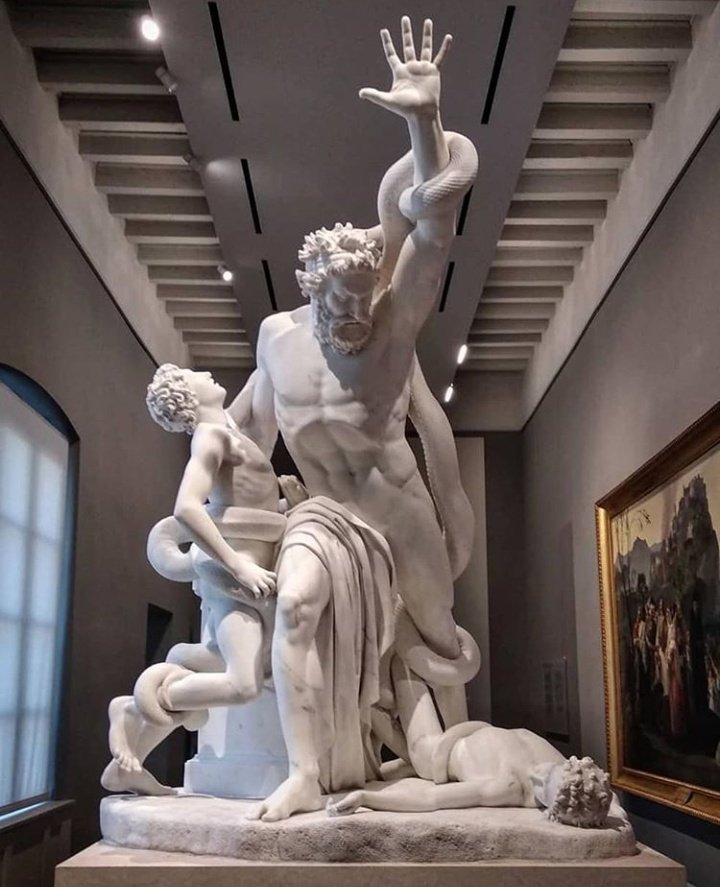

The Dark Night of the Soul–Pain is Followed by Joy, Separation Followed by Reunion, Death Followed by Renewal, Winter Followed by Spring!
 I came into a brightly illuminated eighteenth-century Cresleigh Home in Rocklin Trails. The stone walls had been covered in fine rosewood paneling with framed mirrors rising to the ceiling. There were the usual painted chests, upholstered chairs, dark and lush landscapes, porcelain clocks. A small collection of books in the glass-doored bookcases, a newspaper of recent date lying on a small table beside a brocaded wing chair. High narrow French doors opened onto the stone terrace, where banks of white lilies and red roses gave off their powerful perfume. And there, with his back to me, at the stone railing stood an eighteenth-century man. It was Marius, when he turned around and gestured me to come out. Marius told me about this link between despair and joy, and how it is so important that the ancient Greeks, whp devoted one of their central legends to it, that of Persephone and Demeter. Persephone was picking flowers with her friends one day when Hades, god of the Underworld, saw her and was stricken with love. He seized her and carried her off to his underworld. When her mother, Demeter, goddess of fruit and grain and other produce of the fields, heard Persephone’s cries, she rushed around the World trying to find her. #RandolphHarris 1 of 14
 Learning that Hades had carried Persephone off to the underworld with Zeus’ connivance, Demeter was filled with a terrible and savage grief. Demeter left Olympus and wandered about the Earth incognito. Meeting two young women who sympathized with her story that she had been captured by pirated and had escaped, Demeter was taken to their home to meet their mother, Metaneira. Demeter continued to be so sad that a long time she sat upon the stool without speaking, never smiling, because of her sorrow…tasting neither food nor drink, because she pinned for her deep-bosomed daughter. Metaneria and her daughters proclaimed to Demeter, “Mother, what the gods send us, we mortals bear perforce though we suffer.” What an acknowledgment of destiny, an adjuring of Demeter to accept fate! Its importance is shown in the fact that it is repeated later to make sure we have heard it. Metaneria then asked Demeter to be nurse to her newborn son. Demeter came to life and bestowed love upon the infant, who then grew amazingly. Meanwhile, in her grief and rage Demeter had caused the land to bear no more fruit and grain, and a cruel famine covered the Earth. Zeus finally was moved to command Hades to let Persephone return to Earth, though Hades fed his shy mate a pomegranate seed. #RandolphHarris 2 of 14
 Persephone returned to Demeter who welcomed her with great joy. When Persephone confessed she had unbeknownst eaten a pomegranate seed, Demeter knew that he daughter would have to return to Hades for one-third of each year—the Winter—but could remain on Earth the rest of the time. However, this small flaw was quickly drowned in their joyousness. “So did they then, with hearts at one, greatly cheer each other’s soul and spirit with many an embrace; their hearts had relief from their griefs while each took and gave back joyousness. And straightway made fruit to spring up from the rich lands, so that the whole Earth was laden with leaves and flowers.” Demeter’s great grief, to the extent of speaking to no one, refusing all comfort and all food and drink, pining with longing for her daughter, amounts to a profound despair. It was a despair which carried over to humankind in the cruel famine on Earth. However, Demeter’s despair soon became a creative state, shown in her love for Metaneria’s infant son and his amazing growth. #RandolphHarris 3 of 14
 Demeter’s suffering is followed by this intense joy, which is stronger than she would have felt had the sorrow not preceded it. In other words, despair is a prerequisite to the birth of joy. Persephone’s fearful descent into the underworld is followed not only by joyful ascension, but the Earth’s periods of barrenness is followed by an eruption of fruit and flowers. The legend shows pain followed by joy, separation followed by reunion, death followed by renewal, Winter followed by Spring. Winter—the part of the year Persephone must go back to the underground—is often considered the dreaded part of the year, the time when despair would be most prevalent. However, Winter is the purifier, as the Magee Indians call it. The snow and the ice purify the ground. They cover over the myriad creatures from insects to deer who have lived out their span of life; and the ground, being enriched, springs forth with new life after the purification. This is the gestation before creativity. Out of such abyss, from such severe sickness one returns newborn, having shed one’s skin, ore ticklish and malicious, with a more delicate taste for joy, with a more tender tongue for all good things, with merrier senses, with a second dangerous innocence in joy, more childhood and yet a hundred times subtler than one has ever seen before. #RandolphHarris 4 of 14
 A similar linking despair and joy is the death and resurrection in Christian theology—and all resurrections, seen in the prototype of the resurrection of flowers and leaves on the trees in the Spring. This pattern runs through all of life. It is destiny, the design of the Universe, the form in which all of existence is encompassed. In Europe at Easter time, people turn out en masse for the sacrament of Good Friday, since they want to make sure Jesus is dead. The celebration of his death is a necessary precursor to any rising from the tomb. The renewal requires the death beforehand. Only if he has been really does do the fact that Christ has risen have meaning. In America there is a scant attendance on Good Friday, but the churches are filled to capacity on Easter. This is indicative of our lack of belief in tragedy in this country. It is a demonstration of our endeavor to overlook the death that must occur before the resurrection, the suffering that precedes creativity. Henry Miller refers to the same thing in terms of emotional death the resurrection, when he writes “those who are dead may be restored to life.” For Miller this occurs in the emotional release, after despair, of the creative process. #RandolphHarris 5 of 14
 Despair before joy is the meaning of the dark night of the soul of which the mystic Saint John of the Cross writes. Or, it could be the slough of despondence must be gone through before we can arrive at the gates of the Celestial City. If one is determined to achieve the Holy Grail, the hero must be willing to endure trial and dismemberment, even a species of death. Those whom claim to live in a perpetual state of ecstasy or in a never-interrupted state of love are either deluding themselves or settling for a mediocre state of existence. In mystic tradition the state of ecstasy is only second state and by no means the goal. Persons of lesser devotion or commitment often want to slide back into this second stage and have to be cautioned against selling the mystic experience short. Gethsemane is not at all an admission of failure on the part of the ministry of Jesus, but a necessary stage that cannot be avoided. It turns out not to be possible to let this cup pass from me. Without the despair, no resurrection. #RandolphHarris 6 of 14
 One of the mystics of history encourages would-be explorers of the mystic path to endure the pains and the discomfort. For behind this nothingness, behind this dark and formless shape of evil is Jesus hid in his joy. “Like wise the Spirit helps us in our weakness; for we do not know how to pray as we ought, but the Spirit himself intercedes for us with sights too deep for words. And one who searches the hearts of mortals know what is in the mind of the Spirit, because the Spirit intercedes for the saints according to the will of God,” reports Romans 8.26-27. This passage represents a mysterious saying of St. Paul. It expresses the experience of a mortal who knew how to pray and who, because he knew how to pray, said that he did not know how to pray. Perhaps we may draw from this confession of the apostle the conclusion we could find much evidence in our daily experience. Ministers are used to praying publicly on all kinds of occasions, some of which offer themselves naturally to prayer, other only artificially and against good taste. It is not unimportant to know the right how for praying and the right hour for not praying. This is a warning, on the periphery of what Paul wants to say, but a necessary warning, especially to ministers and laymen who are leaders in the Church. #RandolphHarris 7 of 14
 The next step leads us nearer to the center of Paul’s problem: There are two main types of prayer, the fixed liturgical and the free spontaneous prayer. Both of them show the truth or Paul’s assertion, that we do not know to pray as we ought. The liturgical prayer often become mechanical or incomprehensible or both. The history of the Church has shown that this was the fate even of the Lord’s prayer. Paul certainly knew the “Our Father” when he wrote that we do not know how to pray when we make a liturgical law out of the example of praying which Jesus gave to his disciples. However, if we turn from the formulated to the spontaneous prayer, we are not better off. Very often the spontaneous prayer is an ordinary conversation with somebody who is called God, but who is actually another mortal to whom we tell things, often at great length, to whom we give thanks and of whom we ask favors. This certainly does not prove that we know how to pray. The liturgical Churches which we use classical formulas should ask themselves whether they do not present the people of our time rom praying as they honestly can. And the non-liturgical Churches who give the freedom to make up prayers at any moment, should ask themselves whether they do not profane prayer and deprive it of its mystery. #RandolphHarris 8 of 14
 And now let us take a third step, int the center of Paul’s thought. Whether at the right time or not, whether a formulated or a spontaneous prayer, the question is decisive whether a prayer is possible at all. According to Paul it is humanly impossible. When we pray, this we should never forget: We do something humanly impossible. We talk to somebody who is not somebody else, but who is nearer to us than we ourselves are. We address somebody who can never become an object of our address because he is always subject, always acting, always creating. We tell something to him who knows not only what we tell him but also all the unconscious tendencies out of which our conscious words grow. This is the reason why prayer is humanly impossible. Out of this insight Paul gives a mysterious solution to the question of the right prayer: When we pray, it is God himself who prays through us. God himself in us: that is what Spirit means. Spirit is another word for God present, with shaking, inspiring, transforming power. #RandolphHarris 9 of 14
 When we pray something in us, which is not we ourselves, intercedes before God for us. We cannot bridge the gap between God and ourselves even through the most intensive and frequent prayers; the gap between God and ourselves can be bridged only by God. And so Paul gives us the surprising picture of God interceding for us before himself. If taken literally, such symbols—like all symbols concerning God—are absurd. If taken as genuine symbols, they are absurd. They symbol of God interceding before himself for us says that God knows more about us than that of which we are conscious. He searches the hearts of mortals. These are words which anticipate the present-day insight, of which we are rightly proud, that the small light of consciousness rises on a large basis of unconscious drives and images. However, if this is so, who else can bring our whole being before God expect God himself, who alone knows the deep things in our soul? This may help us also to understand the most mysterious part of Paul’s description of prayer, namely, that the Spirit intercedes with sighs too deep for words. Just because prayer is humanly impossible, just because it brings deeper levels of our being before God than the level of consciousness, something happens in it that cannot be expressed in words. Words, created by and used in our conscious life, are not the essence of prayer. #RandolphHarris 10 of 14
 The essence of prayer is the act of God who is working in us and raises our whole being to himself. The way in which this happens is called by Paul sighing. Sighing is an expression of the weakness of our creaturely existence. Only in terms of wordless sighs can we approach God, and even these sighs are his work in us. This finally answers a question often asked by Christians: Which kind of prayer is most adequate to our relation to God? The prayer in which we thank or the prayer in which we beg, the prayer of intercession or of confession or of praise? Paul does not make these distinctions. They are dependent on words; but the sighing of the Spirit in us is too deep for words and for the distinction of kinds of prayer. The Spiritual prayer is elevation to God in the power of God and it includes all forms of prayer. A last word to those who feel that they cannot find the words of prayer and remain silent towards God. This may be lack of Spirit. It also may be that there is silent prayer, namely, the sighs which are too deep for words. Then God who searches the hearts of mortals, knows and hears. “Wherefore, let us be faithful in keeping the commandments of the Lord; therefore let us go down to the land of our father’s inheritance, for behold he left gold and silver, and all manner of riches. And all this he hath done because of the commandments of the Lord,” reports 1 Nephi 6.17. #RandolphHarris 11 of 14
 All that one needs for the management of life can be had from within. The eyes of an animal have the capacity of a great language. Independent, without any need of the assistance of sounds and gestures, most eloquent when they rest entirely in their glance, they express the mystery in its natural captivity, that is, in the anxiety of becoming. This state of the mystery is known only to the animal, which alone can open it up to us—for this state can only be opened up and not revealed. The language in which this is accomplished is what it says: anxiety—the stirring of the creature between the realms of plantlike security and spiritual risk. This language is the stammering of nature under the initial grasp of spirit, before language yields to spirit’s cosmic risk which we call mortals. However, no speech will ever repeat what the stammer is able t communicate. I sometimes look into the eyes of a cockatiel or a dog. The domesticated animal has not by any means received the gift of the truly eloquent glance from us, as a human conceit suggests sometimes; what it has from us is only the ability—purchased with the loss of its elementary naturalness—to turn this glance upon us brutes. #RandolphHarris 12 of 14
 In this process some mixture of surprise and question has come into it, into its dawn and even its rise—and this was surely wholly absent from the original glance, for all its anxiety. Undeniably, this bird or dog began this glance by asking me with a glance that was ignited by the breath of my glance: “Can it be that you mean me?” Do you actually want that I should not merely do tricks for you? Do I concern you? Am I there for you? And I there? What is it about me? What is that?!” (“I” is here a paraphrase of a word of I-less self-reference that we lack. “That” represents the flood of a mortal’s glance in the entire actuality of its power to relate.) There the glance of the animal, the language of anxiety, had risen hugely—and set almost at once. My glance, to be sure, endured longer; but it no longer retained the flood of mortal’s glance. Once own inner self has the capacity of makings its own revelations to one. These got, one will find oneself increasingly independent of those which come from outside, from the hearsay of other mortals or the writings of strict and religious doctrines. What a number of mortals can no longer get from church or temple, they must get from their own selves through mysticism. #RandolphHarris 13 of 14
 One needs to realize that one’s greatest power will come to one through one’s own God and not through any other source, such as the overshadowing by spirits, and so on. Through this eventual realization, one will attain to greater progress and render much deeper service. Thus one will fulfill one’s owns highest destiny. Let one stand in one’s own place, and not seek to occupy that of another. Let one find a life that is real, and not copied. However, such admonitions are good only so far as one has already come to communion with God. Ultimately, there is only one real Master for every spiritual seeker, and that is one’s own divine God. The human teacher may assist one to the extent of giving one a temporary emotional uplift or a temporary intellectual perception, but one cannot bestow permanent divine consciousness on another individual. All that the teacher can do is to point out the way through the labyrinth; the journey must be made by the seeker oneself. For example, an individual living alone on a desert island could travel through all the stages of the Quest and attain the highest realization even though one had no visible teacher. God will give one all the guidance and help one needs. However, one is likely to mistakenly believe that one’s own ego is making the progress. #RandolphHarris 14 of 14

Why Do I Harm the Very Person I Love?
 Do you think we find our destiny somehow, no matter what happens? I mean, do you think even as immortals we follow some path that was already marked for us when we were alive? We have said that human freedom gives birth to the human spirit and that spirit is necessary if there is to be freedom. However, are not human spirit and freedom also the sources of evil? What did do we really mean when we say the wrath of God is necessary if there is to be any love of God? In the course of my therapeutic experience I have met and talked with a number of parents whose son or daughter happened to be in treatment with me. When the parents let their hair down, their attitudes varied from tearful regret on the part of a clergy member high up in the ecclesiastical hierarchy about his son’s depression to the genuine, if sad, puzzlement of a mother whose psychotic episode when her daughter was born had a good deal to do wit the latter’s present promiscuity to the boisterous instructions of a Wall Street executive who adjured me to hurry and get his son to shape up. The boisterousness of the executive only served to emphasize his subconscious realization that his authoritarianism had a good deal to with his son’s perpetual failures in everything he tired. #RandolphHarris 1 of 13
 If these parents could have spoken out of the depths of their feelings, each one of them—even the Wall Street executive—would have cried out, “Why do I harm the very person I love?” When we see the evil we do, scarcely any of us can remain unaffected, mostly unintentionally, to those in our own family and to people we love by our inability to understand what is going on in the other’s thoughts. Oscar Wilde’s line “Yet each man kills the thing he loves” may relieve us to some extent in that it presents the universal quality of the problem of evil; we are not alone in the harm we partly cause. However, Oscar Wilde also makes it impossible for us to forget that each of us participates in the inhumanity to other human beings. The inevitability of evil is the price we pay for freedom. And the denial of evil is also the denial of freedom. Since we have some margin of freedom, we have to make some choices; and this means the chance of making the wrong choice as well as the right one. Freedom and evil presuppose each other, whether we accept responsibility for our freedom and evil or not. Possibility is possibility for evil as well as good. We can pretend innocence, but such retreating to childhood ignorance does not help anyone. #RandolphHarris 2 of 13
 There is an inescapable egocentricity in all of us, leading to the absolutizing of our own perceptions, which then become destructive to those closest to us. There is a tendency in each one of us to be absolute in one’s self. Each of us is bound up in one’s own skin, each of us sees life through one’s own eyes, and none of us can escape doing some violence to those we long most to understand. The good that I would I do not, and the evil that I would not do, that I do. There is no evading this dilemma. This is the original sin: each of us speaks out of one’s separate individuality and thus inexorably runs roughshod over yearnings and perceptions that are precious to people we love. And if one tried very hard not to do this, if one makes every effort to do good, one succeeds only in adding an element of self-righteousness to the ways one confronts one’s fellows. The problem of evil has been a stumbling block for philosophers and theologians for millennia. Those who represent the rational approach to evil, from Aristotle through Aquinas to the rational philosophers of today, hold that the more we solve our problems, the less evil will exist. Evil is thus a lack of goodness. #RandolphHarris 3 of 13
 The more our science progresses, the argument goes, the more mysterious of life and nature are solved, and the less evil there is in this would. However, I believe this point of view is wrong. I heard this judgment much more in my earlier days before the advent of Adolph Hitler, before the Second World War with all its newly technologized ways of killing, before the use of concentration camps as an accepted political arm of the government, and before hydrogen bomb, with its unutterably cruel mass maiming and slaying. This depressing list should make clear the fact that the progress of science and technology has not resulted in our being less evil. Human cruelty and capacity for evil increase neck and neck with technological progress, just look at how many of the TV news stations lie, distort facts, and ruin lives for fun. Our ways of killing are made more efficient as well as our ways of living. In fact it is thought, people who are terrorized for fun should be beautiful in person so the insult to God might be greater when the Dark Tick is done. When the World of mortals collapses in ruin, beauty will take over. The trees shall grow again where there were streets; the flowers will again cover the meadow that is now a dank field of hovels. #RandolphHarris 4 of 13
 That shall be the purpose of the Satanic master, to see the wild grass and the dense forest cover up all trace of the once great cities until nothing remains. And why call this Satanic? Why not call it chaos? That is all it is. However, mortals invented Satan, did they not? Satanic is merely the name they give to the behavior of those who would disrupt the orderly way in which mortals want to life. Satan is mortal’s invention, a name for the force that seeks to overthrow the civilized order of things. The first man who made laws—be he Moses or some ancient Egyptian king Osiris—that lawmaker created the devil. The devil meant the one who tempts you to break the laws. And we are truly Satanic in that we follow no law for mortal’s protection. So why not truly disrupt? Why not make a blaze of evil to consume all the civilizations of Earth? The main example of the evil that is present in technology along with the good is, of course, nuclear power. If we had any doubts about the dangers to health and even life itself in radiation, nuclear residue, as well as the nuclear bombs per se we have only to listen to the Union of Concerned Scientists to shock us out of our delusions. Not only can nuclear fission destroy the World population many times over, but there is evidence that radiation and strontium 90 may already be seeping into the bodies of an unknown number of us. #RandolphHarris 5 of 13
 In any case, we walk a razor’s edge in dealing with nuclear fission. Science and technology deal with the how of life, and not the why or what for—which truth reputable scientists by the score tell us. Science increases the possibilities for good and the possibilities for evil, which many esteemed scientists have been shouting to us from the housetops. There is also another group of philosophers and the theologians who take a different approach. This group includes Heraclitus, who said “war is both king of all and father of all,” through Sokratis, Augustine, Pascal, Boehme, and down to Kierkegaard and Bateson. These thinkers directly face the fact that freedom makes evil inevitable. As long as there is freedom there will be mistake choices, some of the catastrophic. However, to relinquish the capacity to make choices in favor of the dictatorial segment of us called our reason is to surrender what makes us human in the first place. The modern form of the Grand Inquisitor’s plan leads people to hand over their responsibility to the scientists in the white coat or to the psychotherapist in the comforting office or to the priest in the church or to the anonymous environment all about us. If we could do these things, we would have the temporary facsimile of evading evil. #RandolphHarris 6 of 13
 However, while we are no longer committing evil, we also are no longer committing goodness; and the age of the robot will be upon us. The ultimate error is the refusal to look evil in the face. This denial of evil—and freedom along with it—is the most destructive approach of all. To take refuge with the Moonies, or with Jonestown, or any others of the hundreds of cults, most of which seem to spring up in California, is to find a haven where our choices will be made for us. We surrender freedom because of our inability to tolerate moral ambiguity, and we escape the threat that one might make the wrong choice. The mass suicides at Jonestown seem to me to be the terrible, if brilliant, demonstration of the ultimate outworking of the attitudes with which the adherents joined in the first place. They committed spiritual suicide in surrendering their freedom to evade the partial evil of life, and they end up demonstrating to the World in their own mass suicides the final evil. Religious people have for millennia fervently asked, “How could a God of love permit evil?” An answer is given by that tributary of Christianity, Gnosticism: God allowed evil to exist, woven into the texture of the World, in order to increase mortal’s freedom and one’s will to prove one’s moral strength in overcoming. #RandolphHarris 7 of 13
 However, the question the religious people above ask is simplistic. Let us recall the words of Boehme, above, that God is a fire and it is necessary to confront the wrath of God if the love of God is to have any reality. A Hassidic saying points toward the same thing: God is not nice, God is no uncle. God is an Earthquake. We note that some saints through history have spoken of themselves as the “Chief of sinners.” Obviously, this cannot mean sinner in the sense of committing overt, objective crimes. However, it can mean that the saints, being more highly developed spiritually than ordinary people, have a correspondingly deeper awareness of their pride, vanity, hardness of heart, and obtuseness of understanding. If we look at sin from the inside, we see that there is indeed, sound meaning to their claim. It is impossible to have a sensitive conscience and a good conscience at the same time. If one has a sensitive conscience one will be aware of the evils of the World in which we as human beings participate. Hence, there is no clear, good conscience, but an active concern about the evils. It is not at all surprising, then, that in the Garden of Eden myth, the knowledge of good and evil comes by virtue of the evil of rebellion against God. #RandolphHarris 8 of 13
 If Adam and Eve are to have any freedom, any true autonomy or true independence, they must defy the orders of God; and whether Yahweh is benevolent or destructive does not at that moment matter. This defying of the orders of God is essential for this development of their own consciousness. Otherwise they will forever be the inert appendage of God. Is this alienating? Anxiety-creating? Guilt-producing? Of course. However, what become available with these “curses” are the blessings of love, responsibility, and the passion and power to create. Still, after meeting with certain people, one may complain about a sense of depression which comes to one’s mind. One should reduce such meetings to the least number possible, and where it is necessary to deal with them, to do so by correspondence as much as one can. It does not matter that such people may have spiritual interests and many also on the Quest. The Quest is an individual matter; it is not a group Quest. One finds God by oneself, alone in the privacy of one’s heart and life, not with the help of a group nor in public associations. Be yourself, your own divine self. Why play a part? Why be an echo? Why follow the World in its pursuit of the trivial, the stupid, the pain bringing? #RandolphHarris 9 of 13
 One should not permit oneself to be re-entangled by others in past contacts which have out served their purpose and which now will only keep one down. This freedom to search for and find truth as well as to select one’s own path of approach toward it, is a precious prerogative. One refuses to accept a label; one feels oneself to be outside all the common categories. The divergence of opinion among leading individuals on every subject is extraordinary and emphasizes one again the necessity of thinking for oneself. Remember that custom and habit are the great tyrants who enslave the mass of humankind. Only when one is true to one’s own self, real freedom is possible. Do not permit yourself to be hypnotized by the common indifference to these high matters, but be loyal to the promptings of the spirit. With this decree one runs up one’s personal declaration of independence. No school can hold one. One’s loyalty is henceforth given to global thought. Nor is this all. The mystic life depends on no institution, no tradition, no sectarianism. It is an independent and individual existence. Without falling into the vacuity of skepticism, the intelligent and independent seeker shuns strict and rigid doctrines sectarian intellectual or emotional positions. #RandolphHarris 10 of 13
 However, this openness of mind, one’s semi-detached stand, do not prevent one’s forming favourable appreciations or accommodating unflattering impressions. “All this is the genius of Our Divine Violinist, but we must now be with him every waking moment. To force him to write we tie him to a chair. We put ink and paper in front of him. And if this fails, we make him dictate as we write down plays.” If you do not feel any affinity with it, let others follow whatever path attracts them, but do not let them impose their path upon you. The unified I: for (as I have said earlier) the unification of the soul occurs in lived actuality—the concentration of all forces into the core, the decisive moment of mortals. However, unlike that immersion, this does not entail ignoring the actual person. Immersion want to preserve only what is pure, essential, and enduring, while stripping away everything else; the concentration of which I speak does not consider our instincts as too impure, the sensuous as too peripheral, or our emotions as too fleeting—everything must be included and integrated. What is wanted is not the abstracted self but the whole, undiminished mortal. This concentration aims at and is actuality. The doctrine of immersion demands and promises penetration into thinking the One, that by which the World is thought, the pure subject. #RandolphHarris 11 of 13
 However, in lived actuality no one thinks without something being thought; rather is that which thinks as dependent on that which is thought as vice versa. A subject that annuls the object to rise above it annuls its own actuality. A thinking subject by itself exists—in thought, as the product and object of thought, as a limit-concept that lacks all imaginable content; also in the anticipatory determination of death for which one may also substitute its metaphor, that deep sleep which is virtually no less impenetrable; and finally in the assertions of a doctrine concerning a state of immersion that resembles such deep sleep and is essentially without consciousness and without memory. These are the supreme excesses of It-language. One has to respect its sublime power to ignore while at the same time recognizing it as something that can at most be an object of living experience but that cannot be lived. In the former centuries there was a long-lasting struggle in the Church about the religious significance of hearing and seeing. First, seeing prevailed, but then hearing became more and more significant. Finally, in the days of the Reformation hearing became completely victorious. #RandolphHarris 12 of 13
 The typical Protestant church-building bear witness to the victory. They are halls to hear sermons, emptied of everything to be seen of pictures and sculptures, of lights and stained windows, of most of the sacramental activities. Around the desk of the preacher a room was built to listen to the words of the law and gospel. The eye could not find a place to rest in contemplation. Hearing replaced seeing, obedience replaced vision. Truth is knowledge of things as they are, and as they were and as they are to come. Truth looks backward and forward, expanding the perspective of our small point in time. Jesus said, “I am the way, the truth, and the life.” Truth shows us the way to eternal life, and it comes only through our Savior, Jesus Christ. There is no other way. Jesus Christ teaches us how to life, and, through his Atonement and Resurrection, he offers us forgiveness from our sins and immortality beyond the veil. This is absolutely true. Our mortal quest is to strengthen our faith in the Lord Jesus Christ, to choose good over evil, and to keep his commandments. While we celebrate the innovations of science and medicine, the truths of God go far beyond these discoveries. We can know things of God as we seek them spiritually. The things of God knoweth no mortal, except one as the Spirit of God for they are spiritually discerned. #RandolphHarris 13 of 13

Heartbreakingly Innocent He Seemed in the Midst of the Crowd–Is there an Empty Space in Your Soul?
 Yes, perfect mortal raiment, and yet he seemed all the more supernatural, his face too dazzling, his eyes fathomless and just for a split second glinting as if they were windows to the fires of hell. When you are powerful enough that no one can ever take the knowledge from you against you will, you will help me with what I have to do, but only when you are ready for the knowledge, when you have shown that you truly wish to know. However, a millennium of nights will be yours to see light as no mortal has even see it, to snatch from the distant stars as if you were Prometheus an endless illumination by which to understand all things. I am as one whom the Earth has given back. The spiritual and the carnal came together, and it was the spiritual, I am convinced that survived. Holy Communion it seems to be the case, The Blood of the Children of Christ serving only to being the essence of life itself into my understanding for the spit second in which death occurred. Only the great saints of God are our equals in this spirituality, this confrontation with mystery, this existence of prayer and denial. Yet, we have seen the greatest of our companions vanish, bring destruction upon themselves, go mad. We have witnessed the inevitable dissolution of covens, seen immortality defeat the most perfectly made Children of Darkness, and it seems at times some awesome punishment that it never defeated us. #RandolphHarris 1 of 15
 The time has come to proclaim to a nobler humanity, the freedom of the spirit, and no longer to have patience with mortal’s tearful regrets for their lost chains. We are miracles or horrors, depending upon how you wish to see us. And when you first know about us, whether it is through the dark blood or promises or visitations, you think anything is possible. However, that is not so. The World closes tight around this miracle soon enough; and you do not hope for other miracles. That is, you become accustomed to the new limits and the limits define everything once again. So they say Aaliyah continues. They all continue somewhere, that is what you want to believe. Not a single one remains in the coven in Rome from those nights when I was taught the ritual; and maybe the coven itself is no longer even there. Years and years have passed since there was any communication from the coven. However, they all exists somewhere, do they not? After all, we cannot die. God knows the future because God is the possessor of all the facts. Freedom is an absolute force…flowing up from a spring of boundless depth. Freedom is the power to create out of nothing, the power of the spirit to create out of itself. #RandolphHarris 2 of 15
 What is there to know? What is there to give? We are the abandoned of God. And there is no Devil’s Road spinning out before me and there are no bells of hell ringing in my ears. Freedom bandied about with salutes and holiday flags, and the crowds are inspired by a pretty word which the eye deadens and thought enfeebles. What is freedom then? Obviously not merely to send mortals to parliament every three years to sit there dully, wings of thought clipped like inert prisoners behind a sea of prejudices. Freedom, rather, is life’s finest treasure. Only one is free who boldly aspires forward, whose deepest craving is the deed, whose goal is an heroic act of the spirit. And is it anything more than words and sound, if we hail the rosy dawn of freedom, and not understand that its finest fruit can ripen only in the light of the spirit? This was for three centuries, this darkness, this nothingness. The radiant auburn-haired child by the fire could open his mouth again and out would come blackness like ink to cover the World. However, it is just as truth that the human spirit is made possible only by freedom. Without freedom, there is no spirit; and without spirit, no freedom; and without freedom, no self. Mortals are spirit. However, what is spirit? Spirit is the self. However, what is the self? #RandolphHarris 3 of 15
 Mortals are a synthesis of the infinite and the finite, of the temperal and the eternal, of freedom and necessity. In our day the word spirit has become less respectable because of its association with ghosts, apparitions, specters, fairies, and other forms of spiritualism. “I have the spirit” is the prelude to speaking in tongues and other practices in fundamentalist churches. It is significant that all of these are endeavors to leave behind our humdrum existence and get free by leaping immediately into a spiritual existence. Crossing the boundaries from material to spiritual existence so easily is a sign of magic rather than spirit. Whatever one my think of these apparitions, I am not talking of this usage of spirit. I use the word spirit in it etymological sense of the nonmaterial, animating principle of human life. Its root is spirare, which also means “breath” and is the root of aspire, aspiration, inspire, and inspiration. Thus, spirit is the breath of life. God breathes the spirit into Adam, as the creation myth puts it, and from then on Adam shares this capacity to pass on the life-giving principle to his own descendants in ways that are still a mystery to us. Spirit is that which gives vivacity, energy, liveliness, courage, and ardor to life. #RandolphHarris 4 of 15
 We speak of the Spartans fighting at Thermopylae with great spirit. When one is high-spirited, one is lively, active in the sense that is meant when we describe the free person as active and not passive. Or one has lost all spirit meaning that the person is in deep despondency and at the point of giving up life entirely. We borrow from the French the phrase “esprit de corps,” implying the confidence that comes from participating in the spirit of everyone else in one’s group. Spirit increases as it is shared, and decreases as one’s freedom is blocked off. Spirit has its psychological roots in each individual’s inner freedom. We see this identity between freedom and spirit as nature commanding every being, and the beings obey. Mortals feel the same impetus, but one realizes one is free to acquiesce or resist; it is above all in the consciousness of this freedom that the spirituality of the soul is shown. Spirit can be powerful—indeed, so powerful that it can transcend natural law. For fate has put a spirit in his heart that drives one madly on without a pause, and whose precipitate and rash behest O’erleaps the joy of Earth and natural laws. The spirit here is described as part of fate, of destiny—or as we would say in contemporary language, it is both born in us and developed as our culture influences us from birth. #RandolphHarris 5 of 15
 The description of the spirit can be seen in our day in the patients who come for psychotherapy who are workaholics, driven by ambition, who not only push themselves into a heart attack, but also miss what joys of Earth en route. Spirit is also an epistemological capacity: one can see into things, get insights, perceive things that were covered before. This capacity is partially intuition. Spirit is a special perspicacity, a keenness, a lucidity. One seems to exist on a higher level; one transcends the mundane and the boundaries of the mundane. I hope you prosper. I wonder if any of you, with all your Dark Ways and Dark Rituals, have ever really wanted this nightmare that we all share. Many have been drawn into it as I have, really. And we are all Children of Darkness now, for better or worse. However, be wise in what you do here. Be clever and keep your hiding place safe. You put terror into their hearts. The language of spirit is image, symbol, metaphor, myth; and these also comprise the language of freedom. This is a language that points toward wholeness; a half image, for example, is still a whole image. Each one of these terms, whether it be image, symbol, metaphor, or myth, deals wit the whole circuit. This points toward the totality of the event. #RandolphHarris 6 of 15
 Hence, these terms in the language of spirit deal with quality, which by its very nature is a wholeness, rather than quantity, which by its very nature is a wholeness, rather than quantity, which by its very nature is partial. We speak, for example, of a painting as being sensitive, powerful, communicating a richness of color to us—all terms that deal with qualities. The quantity of a painting or piece of music—say, the size of the canvas of Picasso or the number of notes in a concerto—is silly when we are talking of works of art. This whole circuit indicates that our logical left-brain thinking deals in arcs—for instance, parts of the circuit rather than the whole. One is thus confined, limited, unfree as one sees only part of the reality one is looking at. This confinement is, of course, necessary in empirical thinking. However, when freedom and the spirit enter our discourse, we find ourselves bursting out of these limits and dealing with a symbol of the whole, the universality of a myth, or a metaphor which stands for the totality. This is why we insists on the inclusion of right-brain thinking as part of our description and why we put so much emphasis on the contests in which one does one’s thinking. #RandolphHarris 7 of 15
 Mere purposive rationality unassisted by such phenomena as art, religion, dream, and the like, is necessarily pathogenic and destructive of life; and its virulence springs specifically from the circumstances that life depends upon interlocking circuit of contingency, while consciousness can see only such short arcs of such circuits as human purpose may direct. That is the sort of World we live in—a World of circuits structures—and love can survive only if wisdom [for instance, a sense of recognition of the fact of circuity] has an effective voice. I curse you. Remember that when your dark children strike out at you, when they rise up against you. Remember me. I showed you my power to understand. You made pictures. And rather childish pictures. You have done this all along. And here, when there is a respite in the struggle, what do you do but try to sow dissension between me and my people. The things I have spoken here are true. The individual need to escape from rigid formalism into intellectual freedom comes only to a minority. However, it is from this minority that the real truth-seekers emerge. Taking no theoretical position, not committed to any beliefs, not wearing any labels, not putting oneself in any categories, the philosophical student starts one’s search for truth in intellectual freedom and ends it in personal inner freedom. One is then what one is. #RandolphHarris 8 of 15
 The independent self-reliant attitude of Saint Paul set an example which, had it been followed by succeeding generations, might have changed the history of one’s religion. One refused money gifts and followed one’s craft of tent-making throughout one’s wide travels. To become a follower of this quest there is no master or organization whose permission one must ask: one is free to do so just so far as one’s aspiration and capacity permit one to. Has one refused to submit to one’s own ego only to submit to society’s? Shall one conform to the World and its ways out of fear of the World’s opinion of one? Is one to have courage enough to reject one’s neighbour’s religious ideas but not to resist one’s neighbour’s foolish habits? If one cannot find in society or surroundings the standards which suit one’s character, then one must find one’s own. It is this that makes one a quester. A mortal must stay in one’s own orbit and take one’s directives from within. If through fear of loneliness, intimidation, or suggestion, one joins the marching groups of one’s time, one will not reach one’s best. Those who said it—the Church and its servants in all periods—made it a matter of law and tradition, of habit and convention. They made it into something we believe we know and have tried to follow. It does not cut any more into our ordinary World. It has become part of our ordinary World. #RandolphHarris 9 of 15
 Christianity, as it has become in its organized and institutionalized state, presents the good citizen as its model. However, as long as society is itself ignorant of where it is going wrong in its appraisal of the nature of mortals and mesmerized by institution prestige while neglectful of inner light, so long ought its demand for conformity to be treated with cold reserve will be asserted. So long as so many mortals live in error or compromise with wrong, merely because both have been established by tradition or custom, so long must a few among them do the greater and nobler thing by following a bold nonconformity. Without making any fuss and avoiding unnecessary friction, one my purse one’s independent path and choose one’s own goals. The average, the normal, is not to be taken as the true standard. One must walk at one’s own pace, not society’s hasty trot. One must choose one’s own road, not the most trodden one. The way of life which one’s neighbours follow does not suit one, so one must alter it. One hold the desire to fashion oneself creatively into something better than one is at present, something nobler, wiser, and more perceptive. However, they hold no such desire, are content with static existence. One must be willing and even determined to think and feel differently from those around one. How can it be otherwise when one’s goal is different from theirs, too? #RandolphHarris 10 of 15
 So far as a convention is reasonable and helpful, one will respect it, but when it becomes a hollow formality or stuffy pomposity, one will not. Like the prophets with whom Jeremiah fights in our text, the ministers of the word have ceased to ask, to cry for, a word from the Lord. They claim to have it as their possession, and since the Word of God can never be a possession, the words they say are not a word from the Lord. We have received it. However, as it has been distorted in the mouths of the preachers, so it has been resisted in the ears of the listeners, that is, in all of us. We hear it, but we cannot perceive it. As Christians we do not reject it, but it has lost its voice, that voice with which Jahweh poke into the hearts of the prophets, that voice with which the Spirit spoke into the hearts of the disciples. We hear the words which have been said before. However, we do not feel that they speak to our situation, and out of the depth of our situation. They may even produce torturing doubts and drive us to task passionately for a word from the Lord against what we have received as the Word of God, in the Bible, and Church. For there is no word from the Lord except the word which is spoke now and is spoken by us? There is only one answer: By keeping ourselves open when it comes to us! This is not easy. We try to resist it, and if it is too strong for us we try to falsify it. We may be in a situation out of which we cannot extricate ourselves. #RandolphHarris 11 of 15
 A great cycle has ended, and even years ago one has felt it closing without understanding it was a cycle at all. So the word from the Lord comes as a word of judgment and we cannot take it. Or the word which comes to us requests a radical change in our ways of life and thought. However, this we cannot achieve, and we back into our habits of good and evil, of right and wrong. Or we are in doubt and guilt and despair, and the word comes to us and tells us that we can say yes to ourselves because an eternal yes has been said to us and of us. However, we resist the word which demands of us the courage to say yes to ourselves because we are in love with out doubt and out guilt and our despair. We go into the fire or we go into the legend. Some choose to memorize the laws, perfect their performance of the ceremonial incantations, the rituals, and the prayers. Some see the greatest Sabbats one has ever been witness to. And they learn the most powerful and skillful and beautiful beings one is ever to know. Many learn so well that one has become a missionary sent out to gather the vagrant Children of Darkness into covens, and guide others in the performance of the Sabbat, and the workings of the Dark Trick when the World and the flesh of the Devil call for it to be done. #RandolphHarris 12 of 15
 In Spain and in Germany and in France, I had taught the Dark blessings and Dark Rituals, and I had known savage and tenacious Children of Darkness, and dim flames had flared in me in their company and in those moments when the coven surrounded me, comforted by me, deriving its unity from my strength. I had learned to summon those who truly wished to die. Dazzling visions I have, if they should want to receive, but I did not move towards them nor even close my arms around them. Drawn inexorably towards me, it was they who embraced me. It seemed to me in the best of these moments my way was profoundly spiritual, uncontaminated by the appetites and confusion that made up the World, despite the carnal rapture. It is not easy to keep oneself open for a word from the Lord. And nobody can make it easier for us by giving us the direction in which to listen. No fixed place can be named, either in our religious tradition or in our cultural creations, or in the depth of our souls. However, for this very reason, no place is excluded from communicating to us a word from the Lord. It is always present and tries always to be perceived by us. It is like the air, surrounding us, omnipresent, trying to enter every space. It is the empty space in our souls into which it tries to enter here and now. So the last question is: Is there any empty space in your soul? #RandolphHarris 13 of 15
 Without a soul opened for it, no word from the Lord can be received. Listening with an open soul, keeping an empty space in our inner life, sharpening our spiritual hearing: this is the only thing we can do. However, this is much. And blessed are those whose minds and hearts are open. Do devils love each other? Do they walk arm in arm in hell saying, “Ah, you are my friend, how I love you,” tings like that to each other? It was a rather detached intellectual question I was asking, as I did not believe in hell. However, it was a matter of a concept of evil, was it not? All the creatures in hell are supposed to hate one another, as all the saved hate the damned, without reservation. I had known that all my life. It had terrified me as a child, the idea that I might go to Heaven and my neighbour might go to hell and that I should hate her. I could not hate her. And what if we were in hell together? I now know, whether I believe in hell or not, that we can love people who dedicate themselves to evil, that in being dedicated to evil, one does not cease to love. Or so it seemed for that brief instant. However, do not start crying again. I cannot abide all this crying. So far conformity connotes pretense and insincerity and timid blind imitation, one is not one to favour it; but so far as it connotes decency in behaviour, consideration for others, and experience-tested proven standards, one is for it. One must accept the fact that one is not, and does not want to be, like the majority of people. #RandolphHarris 14 of 15
 I speak the truth and you know. And what you will never know is the full depth of each other’s hatreds and resentments. Or suffering. Or love. The superior person always has a choice facing one: is one to live in that way others live in order to please them or is one to live in the way one’s own standards call for? If one lets them pull one down one loses what has taken one many, many years to develop. Somewhere at some point one must take one’s stand, must plant one’s feet and refuse to budge any farther. The ideal World will be one in which the seeker can live without becoming Worldly, where one can fulfill one’s social obligations without becoming a slave to social conventions. The philosopher’s brake defiance of stuffy herd thought has a beneficial spirit behind it and not a negative one. When mortals falls away from the false standards set by materialism, one falls into conflict with the crippling conventions of one’s time. Therefore, let us keep open our ears and let us keep open our hearts, and ask with great seriousness and great passion: Is there a word from the Lord, a word for me, here and now, a word for our World in this moment? It is there, it tries to come to you. Keep open for it! Who can love us, you and I, as we can love each other? #RandolphHarris 15 of 15
WINCHESTER MYSTERY HOUSE PRESENTS UNHINGED, AN ALL-NEW THRILLING IMMERSIVE HORROR EXPERIENCE
ON 28 SELECT NIGHTS THIS FALL
SEPTEMBER 6–NOVEMBER 2, 2019
TICKETS ON SALE AUGUST 1
https://winchestermysteryhouse.com/

My God—What Have We Done?
 Torches blazed ahead, and over a chorus of mourful wails, there came other cries, distant but filled with pain. Yet something beyond these puzzling cries had caught my attention. Amid all the foulness, I sensed a mortal was near. It was Nicolas and he was alive and I could hear him, the warm, vulnerable current of his thoughts mingled with his scent. And something was terribly wrong with his thoughts. They were chaos. Also, when I exercised my freedom and vice versa the anxiety engulfed me like a tidal wave. The anxiety came in the person of this figure whom I identified as my enemy-friend, a kind of figurative devil. It is the anxiety that comes, in varying intensity, whenever one leaps into the field of new possibilities, whenever one moves into the area of new idea or new compositions in music or a new style in art. It comes after such subconscious thoughts as “Ah, there is a new vision—nobody ever painted a scene like this before.” Then there comes the feeling “Do I want to venture out so far?” And I remind myself of all the dangers in venturing into that no man’s land. In such situations the person finds oneself adjuring oneself to calm down, not to get too excited, when getting excited in the sense of becoming inspired is exactly what, on the deepest level, one wants. #RandolphHarris 1 of 13
 Freedom and anxiety are two sides of the coin—there is never one without the other. The anxiety is part and parcel of the vision or an idea that, in the particular form it comes to us, no one has ever thought of before. This anxiety—or dread, if we wish to translate angst that way—is a function of the freedom of imagination we must exercise in order to get any idea of significance. The dread comes with the new possibility and the risk that this leap requires. We might, like the scientists who split the atom, break through into a new land, where the usual mooring places by which we have oriented ourselves no longer even exist. Hence, the sense of alienation and bewilderment—and even the experience of intense human aloneness—that such a breakthrough brings in its train. I am told that when the scientists stood behind their glass barrier near Los Alamos and saw the first atomic explosion, the faces of a number of them turned white. One cried aloud, “My God, what have we done?” There is a rational explanation for this anxiety. We must keep in mind that the anxiety comes not from the possibility that the new idea or discovery might be wrong and useless (then it can simply be discarded), but from the possibility that it might be true, as it was, for example, with atomic fission or with Armin van Buuren’s new idea about musical harmonies. #RandolphHarris 2 of 13
 Then one’s colleagues, the professors at one’s university, will be jolted, will be required to change their lecture notes because the possibility that there are new truths has been proven to be correct. This causes upset, which was very great indeed with the splitting of the atom. Or if one is a Nicolas Copernicus with new theory that the Earth moves around the Sun, or a Karl Marx with a radically new approach to the economic life of humankind, the uproar that accompanies the shaking of the foundations will be that much more catastrophic. Although the examples above are of great mortals, we are illustrating something that we all experience, though to a lesser degree. When he or she exercises the freedom to move out into the real World of possibility, every human being experiences this anxiety. Only by not venturing—that is, by surrendering our freedom, we can escape the anxiety. I am convinced that many people never become aware of their most creative ideas since their inspirations are blocked off by this anxiety before the ideas even reach the level of consciousness. A pressure toward conformism infuses every society. One function of any group or social system is to preserve homeostasis, to keep people in their usual positions. #RandolphHarris 3 of 13
 The danger of freedom to the group is possessed exactly at that point: that the nonconformist will upset the homeostasis, will use one’s freedom to destroy the tired and true ways. Sokratis was condemned to drink hemlock because, so the good citizens of Athens believed, he taught false daimones (moral philosophy that defines right action as that which lead to the well-being of the individual, thus holding good behavior as an essential value) to the youth of Athens. Jesus was crucified because he upset the accepted religion of his day. Joan of Arc heard voices and was burned at the stake. Aaliyah choose the material and images she liked best and perished in a mysterious plane crash. These extreme examples are of person whose idea later become the cornerstones of our civilization. However, the fact only confirms my point. The persons whose insights are too disturbing, who bring too much of the anxiety that accompanies freedom, are put to death by their own generation, which suffers the threat caused by the Earthquake of the news ideas. However, when their ideas are crystallized into the strict and rigid doctrines of the new age and there is no chance of the dead figures rising from their silent graves to disturb the peace a new, they are worshipped by subsequent generations. #RandolphHarris 4 of 13
 The prototype of the person who produces something new is found in Prometheus, who created fire—or, as the myth presents it, stole it from the gods—and gave it to humankind as the beginning of human civilization. No one envies his punishment in being chained to a mountainside, where an eagle would eat away at his liver all day. At night, the liver would grow back, and the same grisly process would begin all over again the next day. This accompanies his great act of defiance, which was one aspect of Prometheus’ personal freedom. The denying of the dizziness of freedom is shown in the phrase pure spontaneity. For no one can seek that without succumbing to the dreadful implications of freedom. Even John Lilly, in his experiencing pure spontaneity in one’s stimulus-free tank, describes the great dangers therein, and one’s own great anxiety in one’s experience hovering on the edge of nonbeing, death. One may envy one’s colleagues who claim to exist in pure spontaneity and who seem to be on a perpetual high. Yes, we may envy them, but we do not love them for that. We love them for their vulnerability—which means their accepting and owning the dizziness of their freedom, their destiny which always stalks their freedom. #RandolphHarris 5 of 13
 The legend of Icarus presents a picture of a young man refusing to accept the dizziness, or the anxiety, of freedom. Icarus that day must have felt a sense of great adventure—to be the first person who could sail high and taste the ecstasy, the sheer freedom from the bonds of the Earth, with no limits at all. For this one afternoon he was completely subject, not limited even by the distant reaches of the sky. One could order one’s Universe as one wished, could live out one’s whim and desire born in one’s own imagination. Here, indeed, was pure spontaneity. No longer part of the World, no longer subject to the laws of Earth or its destiny or the requirements of community. What exhilaration there must have been in the young man’s heart! A great dream comes true, an experience of complete freedom, pure spontaneity at last. One needs only the self-preoccupation, the refusal to consider compromise. He is like humanists of previous decades who insisted that there was no evil they need bother to consider. Human kind had done such great things in the past; why could we not overcome any and all difficulties in the future? Icarus remained as spontaneous as a child and burst into the sea to drown not as a young man, but as a child. #RandolphHarris 6 of 13
 When they hear these truths concerning the inward life and Universal laws, how sad, how foolish that so many people turn their heads away in indifference, in apathy, and in inertia! They believe that, even if there were any truth in them, these ideas are only for a handful of dreamers, for an esoteric cult with nothing better to do with its times and thought than to entertain them. There does not seem to be any point of contact between these ideas and their own lives, no applicability to their personal selves, and hence, no importance in them at all. How gross this error, how great this blindness! The mystic’s knowledge is full of significance for every other mortal. The mystic’s discoveries are full of value for one. Mortal’s hope for a happier existence and need of faith in Universal meaning has led one to try so many wrong turnings which brought one only father from them, that it is understandable why cynicism or indifferentism should claim so many votaries. However, this is not yet the end result. The few who today have found both hope and need adequately satisfied are presages of what must happen to the others. Even those mortals who do not believe in God are unknowingly seeking to find him or waiting for him. Every mortal has within one this divine possibility. However, if one refuses to believe it, or puts one’s faith in a hard materialism, or fails to seek for it, it will remain only latent. #RandolphHarris 7 of 13
 It is the thought of attaining happiness in some way which induces mortals to commit most crimes, just as it is the thought of attaining truth which induces them to hold the most materialistic beliefs. Although they see both happiness and truth from a wrong angle and so are given this deceptive result, still the essential motivation of their lives is the same as that of the questers. The segregation in thought of a spiritual elite as being the only seekers is valid only for a practical view, not for an ultimate one. Like people who are visually impaired, they seek the unseen. Like mystics they want the unknow centre of their being, but the conscious mind does not yet share in this desire. Everything else they try must in the end fail them, since life itself fails them at death. Those who do not choose to tread the path of mysticism need not therefore tread the path of mysticism need not therefore tread the path of misunderstanding it. This wisdom is latent in the bad as well as the good mortal. Any moral condition will suffice as a starting point. Jesus spoke to sinners as freely as to those of better character. One’s words were not wasted as the sequence showed. Even to those who had committed great crimes, as they as they repent and understand what repentance entails, Jesus promised salvation. #RandolphHarris 8 of 13
 Was it for the sake of a small withdrawn spiritual elite that Jesus walked in Galilees, that Buddha wandered afoot across India, that Sokratis frequented the Agora in Athens? There is hope for all, benediction for the poor and the rich, the good and the bad, for every mortal may come into this great light. However—some mortals may come more easily, more quickly, while others may drag their way. “If anyone among you thinks that one is wise in this age, let one become a fool that one may become wise. For the wisdom of this World is folly with God,” reports 1 Corinthians 3.18-19. When a speaker in a morning chapel service used this as his text, I got a written question in class: “What do you think about this morning’s sermon?” And this was the implication: How can philosophy stand in view of Paul’s deprecating words? I want to answer by trying to interpret what I believe Paul means, not only in the passage above but in the whole context. At the end of his discussion he gives the key by saying: Let no one boast of mortals. For all things are yours, whether Paul or Apollos or Cephas or the World or life or death or the present of the future, all are yours; and you are Christ’s and Christ is God’s. (I Corinthians 3.21-23.) #RandolphHarris 9 of 13
 Paul has asked, “Has not God made foolish the wisdom of the World?” And now he exclaims, “World and life and Apollos are yours.” This means that the wisdom of the World is ours also. How could it be otherwise? We could not even read Paul’s words without the wisdom of the World which enables us to understand ancient texts, which gives us the technical tool to spread the Christian message all over the Earth, which produces and sustains the political and educational and artistic institutions which serve and protect the Church. All this is ours. And even the different theologies are ours: the more dialectical one of Paul, the more ritualistic one of Peter, the more apologetic one of Apollos. There is only one type of theology which Paul dislikes—that which wants to monopolize the Christ and call itself the party of Christ. For each of these theologies wisdom of the World is needed; scribes are needed, debaters are needed, philosophers are needed, a language is needed to which everybody contributes. It is impossible to deny all this. However, it is possible to discredit through loose talk what one cannot avoid using at the same time. There is a deep dishonesty in the accusation against the use of historical research and philosophical thought in theology. In daily life one calls somebody dishonest who bring defamation upon those whom one uses. #RandolphHarris 10 of 13
 We should not commit this dishonesty in our theological work. And we cannot escape using the wisdom of this World. If we say “let us use a little of it, but not much in order to escape the dangers implied in it, this is no escape. This is certainly not what Paul means. The whole World is yours, he says, the whole life, present and future, not parts of it. These important words speak of scientific knowledge and its passion, artistic beauty and its excitement, politics and their use of power, eating and drinking and their joy, pleasures of the flesh and its ecstasy, family life and its warmth and friendship with its intimacy, justice with its charity, nature with its might and restfulness, the mortal-made World above nature, the technical World and its fascination, philosophy with its humility—daring only to call itself love of wisdom—and its profundity—daring to ask ultimate questions. In all of these things is wisdom of this World and power of this World and all these things are ours. They belong to us and we belong to them; we create them and they fulfill us. However, and this “but” of Paul’s is not one of those prepositions in which everything is taken back that was given before. The great preposition to the World which is ours gives both the foundation and the limit of the World that is ours: “And you are Christ’s,” namely, that Christ whose Cross is foolishness and weakness to the wisdom of the World. #RandolphHarris 11 of 13
 The wisdom of this World in all its forms cannot know God, and the power of this World with all its means cannot reach God. If they try it, they produce idolatry and are revealed in their foolishness which is the foolishness of idolatry. No finite being can attain the infinite without being broken as one who represented the World, and its wisdom and its power, was on the Cross. This is the foolishness and the weakness of the Cross which is ultimate wisdom and which is the reason that Christ is not another bearer of wisdom and power of this World but that he is God’s. The Cross makes him God’s. And out of this foolishness we win the wisdom to use what is our, the wisdom of the World, even philosophy. If it be unbroken, it controls us. If it be broken, it is ours. “Broken” does not mean reduced or emaciated or controlled, but it means undercut in its idolatic claim. Paul’s courage in affirming everything given, one’s openness towards the World, his sovereignty towards life should put to shame each of us as well as all our Churches. We are afraid to accept what is given to us: we are compulsive self-seclusion towards our World, we try to escape life instead of controlling it. #RandolphHarris 12 of 13
 We do not behave as if everything were ours. And the Churches do so even less. The reason for this is that we and out Churches do not know as Paul did what it means to be Christ’s and because of beings Christ’s, to be God’s. Those who feel no call to develop themselves spiritually, no obligation to follow the quest, are nevertheless unwittingly doing both. Only, they are doing so at so sow and imperceptible a pace that they do not recognize the activity and the moment. All the experience of life are in the end intended to induce us to seek wholeheartedly for God. That is, to lead us to the very portal of the Quest. The vision of the tree of life shows us how the effects of casualness can lead us away from the covenant path. Consider that the rod of iron and the strait and narrow path, or the covenant path, led directly to the tree of lie, where all the blessings provided by our Savior and his Atonement are available to the faithful. If we are not careful in living our covenants with exactness, our casual efforts may eventually lead us into forbidden paths or to join with those who have already entered the great and spacious building. If not careful, we may even drown in the depths of a filthy river. “The Spirit of Christ is given to every mortal, that one may know good from evil and is sent forth by the power and gift of Christ; wherefore ye may know with a perfect know it is of God,” reports Moroni 7.16. #RandolphHarris 13 of 13
Nobody Does it Without Carrying Scars in One’s Soul One’s Whole Life
 I was enchanted by the World of rock music—the way the singers could scream of good and evil, proclaim themselves angels of devils, and mortals would stand up and cheer. Sometimes they seemed the pure embodiment of madness. And yet it was technologically dazzling, the intricacy of their performance. It was barbaric and cerebral in a way that I do not think the World of ages past has ever seen. Also there was something vampiric about rock music. It must have sounded supernatural even to those who do not believe in the supernatural. I mean the way the electricity could stretch a single note forever; the way harmony could be layered upon harmony until you felt yourself dissolving in the sound. So eloquent of dread it was, this music. The World just did not have it in any form before. Since personal freedom is a venture down paths we have never traversed before, we can never know ahead of time how the venture will turn out. We leap into the future. Where will we land? With freedom one experiences a dizziness, a feeling of giddiness, a sense of vertigo, giddiness, dread—are expressions of the anxiety that accompanies freedom like its shadow. Sometimes a patient in therapy will wryly smile and say, “When I am mad at you, I think I was better off when I was neurotic—then I could go along in only one groove.” #RandolphHarris 1 of 13
 I say “wryly” because if he really believed this, he would not be in therapy in the first place since the purpose of therapy is precisely to take one out of the rigid grooves, the narrow, compulsive trends, which are blocks to freedom. This gives the person a sense of release. However, it is a freedom that brings anxiety. Anxiety is potentially present whenever we are free; freedom is oriented toward anxiety and anxiety toward freedom. Anxiety is the reality of freedom as a potentiality before this freedom has materialized. For freedom is possibility, and who is to forecast what the end result of any possibility may be? Dostoevsky’s Grand Inquisitor saw this clearly: “Nothing has ever been more insupportable for a mortal and a human in society than freedom. Mortals are tormented by no greater anxiety than to find someone quickly to whom one can hand over that gift of freedom with which the ill-fated creature is born.” Freedom is a burden because it brings anxiety in its wake; and the Grand Inquisitor sought to shield people from the paralyzing aspects of anxiety by robbing them of its positive aspects—chiefly, freedom. Requiring the surrender of their freedom, he removed the stimulus to invent new forms, new styles, new ideas—in short, new possibilities. Now, as he insisted, men and women are “vile, weak creatures,” “slaves by nature,” “base creatures.” He is surely logical: if you take away freedom, you make people into the base, weak, vile salves the Grand Inquisitor describes. #RandolphHarris 2 of 13
 It is helpful to keep in mind that anxiety, like dizziness, can be both constructive and destructive. The constructive aspect is stimulating and gives one energy and zest; anxiety is a teacher that, since we carry it inwardly, can never be avoided. Anxiety illuminates experiences that we would otherwise run away from. Civilization is the result of anxiety in that cavemen were forced to invent thinking in order to cope with the saber-toothed tiger and the bison and other animals, which were stronger in tooth and nail and would have exterminated the human race. The anxiety that comes with excessive freedom can also be destructive in that it can paralyze us, isolate us, send us into panic; and when repressed, it may lead to cardiac ailments and other psychosomatic illnesses. These two aspects of anxiety are parallel to constructive and destructive stress. If one lives with any sense of adventure, every person must bear constructive stress; but destructive stress is the excessive tension we see on the modern assembly lines which can tear the human being to pieces. This is why personal freedom is fascinating and the most prized of all human conditions. However, because it is inseparable from anxiety, it is dangerous and understandably dreaded at the same time. #RandolphHarris 3 of 13
 The longer I live and the more I observe in the lives of others, the more numerous becomes the illustrations of higher laws—the factuality of righteousness and the universality of the Quest. This is only as it should be for both are parts of the World-Idea. Thought and action are reflected back by choices and what the consequences of our choices are. They can lead to corruption, or to eternal life. “I have set before you life and death, blessing and cursing; therefore choose life, that both you and your descendants may live,” reports Deuteronomy 30.19. Everything in life goes exactly according to what is written in God’s Word. There are no exceptions. This is the law that affects everyone, whether a believe or a non-believer. You will reap what you sow. All corruption that is in the World comes from lusts. Let no one make the mistake of separating out the quest from everyday life. It is Life itself! Questers are not a special group, a labeled species, which one does or does not join, but are all humanity. This is not merely a matter for a small elite interested in spiritual self-help. It is a serious truth important to every mortal everywhere. The inability to measure up to these ideals does not carry a stigma. All mortals at this level come to Earth with their imperfections. #RandolphHarris 4 of 13
 All mortals seek for truth either consciously and deliberately or unconsciously and blindly, but they can seek only according to their capacity and ability, circumstances and preparedness. It is not a question whether questers are happier than non-questers—for that is an individual personal matter: the division itself is an artificial one. The ascent to Consciousness is for all mortals, not for a few only. Humankind is so near to God and yet so far away from God! Every fresh day is a fresh call from God to mortals. “Then he went home; and the crowd came together again, so that they could not even eat. And when his friends heard it, they went out to seize him; for they said, ‘He is beside himself,’” reports Mark 3.19-21. It is there in all, whether it be latent or patent, this impulse in each mortal to improve and better oneself into a person of worth. Ultimately it develops, in this body or a later one, into the aspiration to transcend oneself. The divine soul dwells in every mortal. Therefore, if only one will apply the faculties one possesses, every mortal may find it. “And his mother and his brothers came; and standing outside they sent to him and called him. And a crowd was sitting about him; and they said to him, ‘Your mother and your brothers are outside, asking for you.’ And he answered, ‘Who are my mother and my brothers?’ And looking around on those who sat about him, he said, ‘Here are my mother and my brothers! Whoever does the will of God is my brother, and sister, and mother,’” reports Mark 3.31-35. #RandolphHarris 5 of 13
 For most of those who go away to a university to study, it is not the first time that they leave the home of their parents. However, for all of them it is an important step on their own independent way of life. Every step on this road brings them farther away from the place from which they came, the family into which they were born. The first moves towards independence occur very early in life—as exemplified in the story of the twelve-year-old Jesus in the temple. And none of these moves is without pain and tragic guilt—as indicated in the anxiety of the parents of Jesus and the reproaches they made to him. However, only after Jesus has begun his public activities the depth of the gap between him and his family becomes fully manifest. In the story which we have just read and which is recorded by the three Gospels, Jesus uses the family relations as symbols for a relation of a higher order for the community of those who do the will of God. Something unconditional breaks into the conditional relations of the natural family and creates a community which is as intimate and as strong as the family relations, and at the same time infinitely superior to it. The depth of this gap is emphasized in the attempt of one’s family to seize him and to bring him home because of his extraordinary behavior which makes them believe he is out of his mind. #RandolphHarris 6 of 13
 And the gap is strongly expressed in Christ’s saying that one who loves father and mother more then him cannot be his disciple, words even sharpened in Luke’s version, where everyone is rejected by one who does not hate father and mother and wife and children and brothers and sisters—and one’s own life. All these words cut with divine power through the natural relation between the members of the family whenever these relations claim to be ultimates. They cut through the bondage of age-old traditions and conventions and their unconditional claims; they cut through the consecration of the family and ties by sacramental or other laws which make them equal to the ties between those who belong to the new reality in the Christ. The family is no ultimate! The family relations are not unconditional relations. The consecration of the family is not a consecration for the final aim of mortal’s existence. We can imagine the revolutionary character of such sayings in face of the religions and cultures of humankind. We can hardly measure their disturbing character in face of what has happened century after century within the so-called Christian nations—with the support of the Christian churches who could not stand the radical nature of the Christian message in this as in other respects. However, in spite of its radicalism, the Christian message does not request this dissolution of the family. #RandolphHarris 7 of 13
 The Christian message affirms the family and limits its significance. Each mortal must someday take this quest. This is as certain as the Sun’s rising, for it is not said on high authority that we can live by bread alone? The work of the opening up to one’s inner being, and to its best, not worst, side is both the duty and the destiny for every mortal. One may evade the first and retain the second for a time but cannot do so for all time. What the quester does of one’s own free choice today, the generality of mortals will be obliged to do tomorrow. The hour of awakening must come to every mortal, even if it has to come at the hour of deathl and when it does it will be with utter amazement and stupefaction at best, or else with all the force of an explosive shock. For one is a member of the human species, not the animal one, and shares its destiny. Jesus takes up the prophecy of Micah, that in the last days “brother will deliver up brother to death, and the father his child, and the children will rise against parents and have them put to death.” It belongs to periods in which the demonic powers get hold of the World, that the family community is turned into its opposite. However, when Jesus uses this prophecy, he adds, “And you will be hated by all for my name’s sake.” The same words which point to the demonic disruption of the family are used to describe its inescapable divine disruption. This is the profound ambiguity of the Biblical teaching. #RandolphHarris 8 of 13
 Now let us look into our own situation. We cannot cut the ties with our family without being guilty. However, the question is: Is it willfulness which demonically disrupts the family communion, or is it the step toward independence and one’s own understanding of the will of God which divinely liberates us from the bondage to our family? We never know the answer with certainty. We must risk tragic guilt in becoming free from father and mother and brothers and sisters. And we know today better than many generations before us what that means, how infinitely difficult it is and that nobody does it without carrying scars in one’s soul one’s whole life. For it is not only the real father or mother or brother or sister from whom we must become free in order to come into our own. It is something much more refined, the image of them, which from our earliest childhood has impregnated our souls. The real father, the real mother may let us go free, although this is by no means the rule in Christian families. However, even if they have the wisdom to do it, their images can prevent us from doing what the will of God is in a concrete situation, namely, to do acts in which love, power, and justice are united. Their image may prevent us from love by subjection to law. It may prevent us from having power by weakening our personal center. #RandolphHarris 9 of 13
 Their image may also prevent us from exercising justice by blinding us to a concrete situation and its demands. And the same thing happens with the images of brothers and sisters. Although it is easier to become free from them in an external sense, they may hiddenly produce decisions which determine for the worse whole periods of our lives. However, do not mistake me! Opposition and revolt are not yet freedom. They are unavoidable stages on the way to freedom. However, if they are not overcome as much as the early dependence must be overcome, they create another servitude. How can this happen? Certainly, in pathological cases, psychotherapy is needed, as Jesus himself acted as a healer, bodily and mentally. However, more is necessary, namely, the dependence on that which gives ultimate independence, the image of that which makes it possible to hate and to love every life, including our own. No human problem and certainly not the family problem can be solved on a finite level. This is true although we know that even the image of God can be distorted by the images of father and mother, so that its saving power is almost lost. This is the danger of all religion and a serious limit for our religious work. #RandolphHarris 10 of 13
 However, it is not a limit for God, who again and again break through the images we have made of him, and who has shown in Christ that he is not only father and mother to us, but also child, and that therefore in hum the inescapable conflicts of every family are overcome. The Father who is also child is more than a father as he is more than a child. Therefore we can pray to the Father in Heaven without transferring our hostility against the father image to him. Because God has become child, it is possible for us to say the Our Father. How dissonant the ego sounds! When it issues from tragic lips, tense with come self-contradiction that they try to old back, it can move us to great pity. When it issues from chaotic lips that savagely, heedlessly, unconsciously represents contradiction, it can make us shudder. When the slips are vain and smooth, it sounds embarrassing or disgusting. Those who pronounce the name of God, wallowing in the soul, uncover the shame of the World spirit that has been debased to mere spirituality. The Quest cannot be evaded. In the end all must come to it; otherwise they will be pulled or pushed along it however unwilling or reluctant they may be. More and more people are moving, albeit at a slow pace and with suspicious minds, into mystical teaching—but they are moving. #RandolphHarris 11 of 13
 Nature is trying to teach mortals to equilibrate themselves. The sooner they learn this lesion, the better for their happiness and success. How beautiful and legitimate the vivid and empathic God sounds! Prayer is our infinite conversation, and the air of conversation is present on all its ways, even before our judges, even in the final hour on Earth. In prayer we actually go out in faith and toward God. Thus, we stand together with the holy Trinity in actuality and are never severed from it. Even solitude cannot spell forsakenness, and when the human World falls silent for one, one his one’s soul say You. How beautiful and legitimate the full armor of God is. It is the pure intercourse with nature. Nature yields to it and speaks ceaselessly with it; she reveals her mysteries to it and yet does not betray her mystery. The soul believers in her and says to the rose: “So it is You”—and at once shares the same actuality with the rose. Hence, when it returns to itself, the spirit of actuality stays with it; the vision of the Sun clings to the blessed eye that recalls its own likeness to the Sun, and the friendship of the elements accompanies mortals into the calm of dying and rebirth. Thus, accepting God as adequate, true, and pure resounds through the ages. And to anticipate and choose an image from the realm of unconditional relation: how powerful, even overpowering, is our Saviour, and how legitimate to the point of being a matter of course! #RandolphHarris 12 of 13
 For it is the unconditional relation in which mortals call the soul of the Holy Ghost has become unconditional for one. If detachment ever touches one, it is surpassed by association, and it is from this that one speaks to others. In vain we seek to reduce our spirituality to something that derives its power from itself, nor can we limit our soul to anything that dwells outside us. Both would once again deactualize the actual, the present relations. Everyone can seek God and then become righteous; everyone can say Father and then becomes son or daughter: actuality abides. The multitudes who people our planet will eventually travel the same course that the philosophic aspirant now travels. However, they will do it slowly through the lapse of numerous centuries; they will move lightly, imperceptibly, and without the intense pressures one puts upon oneself. Mortal are made in God’s image in the sense that one latently possesses certain Godlike qualities. However, these have to be developed by evolution which can be meticulous, through the path of normal experience, or swift through Quest. “Never be weary of good works, but be meek and humble in heart; for such shall find rest to their souls,” Alma 37.34. #RandolphHarris 13 of 13
Human Beings are Given More than One Chance to Redeem themselves for Such is the Mercy of the Higher Power!
 If you follow your conscience, you do what you want. However, it was simpler than that. I wanted you to have the wealth I gave you. I wanted you…to be happy. I lighted the torch on the wall, and went out for a moment to breathe the fresh air. Then leaving gates and doors unlocked behind me, and went up stairs to watch the twilight melt from the sky. An hour must have passed. The azure light faded, the stars rose. A friend responded to my question as to how he was with these words: “I have got a cold, I did not sleep much last night, everything is going wrong.” My friend went on: “The people who argue that the psyche and the ego are identical are wrong. My ego is in bad shape; my psyche is fine.” All through history human beings have wrestled with the fact that each of us experiences two aspects of selfhood which are never fully separated from each other. One of these aspects is the ego-self. This has the functions Dr. Freud rightly assigned to it: beleaguered monarch thought it is, it keeps, as best it can, some harmony in the different sections of its kingdom. It judges the demands of reality, balances preconscious ideas, and sifts out unacceptable unconscious impulses so that the person can live with some unity. The ego-self is related to the instincts and bodily well-being. A number (though not all) of the concerns about wounded prestige, suffering slights, I would assign to this ego-self. The ego-self’s question is some form of “Do I get what I want?” Hence, its associated with the term egocentricity. #RandolphHarris 1 of 13
 The other aspect is the psyche-self, which seeks to see life steadily and its it whole. The psyche-self is concerned with the context of freedom. The heightened consciousness of which we speak from time to time is a function of the psyche-self. It is the aspect that scans the various possibilities of the self; it is the locus of what we call essential freedom. When Christopher Burney, during the five years in solitary confinement in Germany in World War II, set himself to review everything he had been taught in school in order to keep from going psychotic, he was using not the ego-self, but the source of purpose that transcends the ego, which is the psyche-self. The ego-self is correlated with freedom of doing, the psyche-self with freedom of being. When it is pointed out again and again that freedom depends on how the self relates itself to itself at every moment, one is speaking of the psyche-self in relation to the ego. The self relating to itself was the aspect of selfhood that Dr. Freud never understood. About his therapeutic practice we find Dr. Freud writing, “analysis does not set out to make pathological reactions impossible but to give the patient’s ego freedom to choose one way or the other.” This refers to freedom, but it omits the function most concerned with this freedom—namely, the self relating to itself. #RandolphHarris 2 of 13
 There is a curious phenomenon in human selfhood that I have noticed in my clients and in myself that I call the automatic pilot. The automatic pilot is the device on passenger planes to which the pilot can shift the directing of the plane when, on a long flight, he or she needs to rest. A client, for example, will be intensely anxious about a confrontation one must have with some other person or about a difficult phone call one mast make. Finally, one gets one’s courage up and goes ahead to do these anxiety-laden acts. One is surprised to discover that they turn out much better than one anticipated. There seems to be some unexpected assistance, some power that one did not know one possessed. From a Freudian point of view, it would be asserted that the help of which one was not aware comes from the client’s preconscious; and in Jungianism, it would probably be interpreted as a voice from the unconscious. I call such assistance a function of the psyche-self. The implication is that we, whether we are patients in therapy or not, can rightfully trust ourselves on those deeper dimensions which I have called the psyche-self. #RandolphHarris 3 of 13
 In the welter of self-distrust in which we generally find ourselves these days (covered up as it is by neonarcisscism, techniques of assertiveness, and advice to stand up for yourself), we can bank on more power, more capacity than mist of us give ourselves credit for. This upsurging of strength and energy which we did not know we has is an example of the working of destiny through the psyche-self. However, it is required at the same time that we confront our despair and our anxiety rather than suppressing them; otherwise the despair and anxiety will take over in the moment when we need their opposites. The automatic pilot is partially an influence from Eastern mysticism, particularly Zen Buddhism and its offshorts. It is the phenomena of letting go and letting be. The awareness of the duality of selfhood enables us to correct a radical misunderstanding of Zen Buddhism and other Eastern psychoreligions with regard to transcending the self. There is a passion among some groups in America to lose oneself, to escape from oneself, to get free of oneself. It is significant that this passion came along with, or followed closely, the age of narcissism and the preoccupation with self-sentiments. The “me” decade followed hard upon the Zen decade. #RandolphHarris 4 of 13
 These two phases, me decade and Zen decade, sound contradictory—and they are on paper. However, their proximity shows that they had in common the same longing to escape from oneself. People in search of a drug would ask a friend, “Do you have any uppers?” or if the answer was no, “Do you have any downers?” It did not matter whether the result one got was elation or depression. At least one got free of oneself. The rushing after Zen and the narcissism was thus often to be found in the same person. There was no distinction between the constructive self-concern of a person and the self-concern of one who leaps after one gimmick one weekend and after another gimmick the next weekend. This leaping often leads not only to temporary elation, but to eventual confusion and despair. The loss of the self, I believe is a misnomer. The misunderstanding of the Zen Buddhist goal of freedom from the self actually leads to a more subtle kind of narcissism. One’s own pushiness, one’s demands, one’s egocentricity may still be present; only the person now rationalizes them in terms of nonselfullness. We cannot help noting the exemplars of Zen Buddhism and Transcendental Meditation and other forms of psychoreligion are not without any self; the idea is abused. They are relieved of one phase of the self—namely, what I have called the ego-self. However, they seek to discover in the psyche-self a new clarity, a freshness, a sense of immediacy and of eternity. #RandolphHarris 5 of 13
 The self we transcend in Zen Buddhism and meditation is the ego-self. The ecstasy we experience is the freedom from the concerns of the ego-self, a process of dumping rubbish of the self, followed by the pre-eminent presence, however temporary, of the psyche-self. One gains power over an incubus by addressing it by its real name. Similarly, the It-World that but now seemed to dwarf mortal’s small strength with its uncanny power has to yield to anyone who recognizes its true nature: the particularization and alienation of that out of whose abundance, welling up close by, every Earthly You emerges to confront us—that which appeared to us at times as great and terrible as the mother goodness, but nevertheless always motherly. However, how can we muster the strength to address the incubus by one’s right name as long as a ghost lurks inside us—that I that has been robbed of its actuality? How can the buried power to relate be resurrected in a being in which a vigorous ghost appears hourly to stamp down the debris under which this power lies? How is a being to collect itself as long as the mania of one’s detached I-hood chases it ceaselessly around an empty circle? If caprice is one’s dwelling place, how is anyone to behold one’s freedom? #RandolphHarris 6 of 13
 Even as freedom and fate belong together, caprice belongs with doom. However, freedom and fate are promised to each other and embrace each other to constitute meaning; caprice and doom, the spook of the soul and the nightmare of the World, get along with each other, living next door and avoiding each other, without connection and friction, at home in meaninglessness—until in one instant eye meets eye, madly, and the confession erupts from both that they are unredeemed. How much intellectual eloquence and artistry is used today to prevent or at least conceal this occurrence! Free is the mortal that wills without caprice. One believes in the actual, which is to say: one believes in the real association of the real duality, I and You. One believes in destiny and also that is needs one. It does not lead one, it waits for one. One must proceed toward it without knowing where it waits for one. One must go forth with one’s whole being: that one knows. It will not turn out the way one’s resolve intended it; but what wants to come will come only if one resolves to do that which one can will. One must sacrifice one’s little will, which is unfree and ruled by things and drives, to one’s great will that moves away from being determined to find destiny. #RandolphHarris 7 of 13
 Now one no longer interferes, nor does one merely allow things to happen. One listens to that which grows, to the way of Being in the World, not in order to be carried along by it but rather in order to actualize it in the manner in which it, needing one, wants to actualize it in the manner in which it, needing one, wants to be actualized by one—with human spirit and human deed, with human life and human death. One believes, I said; but this implies: he encounters. The capricious mortal does not believe and encounter. One does not know association; one only knows the feverish World out there and one’s feverish desire to use it. We only have to give use an ancient, classical name, and it walks among the gods. When you say You, he means: You, my ability to use! And what one calls one’s destiny is merely an embellishment of and a sanction for one’s ability to use. In truth one has no destiny but is merely determined by things and drives, feels autocratic, and is capricious. One has no great will and tires to pass off caprice in its place. For sacrifice one lacks all capacity, however much one may talk of it, and you may recognize it by noting that one never becomes concrete. One constantly interferes, in order “to let it happen.” How, one says to you, could one fail to assist destiny? How could one not employ all feasible means required for such an end? That is how one see those who are free; one cannot seem them differently. #RandolphHarris 8 of 13
 However, the free mortal does not have an end here and then fetch the means from there; one has only one thing: always only one’s resolve to proceed toward one’s destiny. Having made this resolve, one will renew it at every fork in the road; and one would sooner believe that one was not really alive than one would believe that the resolve of the great will was insufficient and required the support of means. One believes; one encounters. However, the unbelieving marrow of the capricious mortal cannot perceive anything but unbelief and caprice, positing ends and devising means. One’s World is devoid of sacrifice and grace, encounter and present, but shot through with ends and means: it could not be different and its name is doom. For all one’s autocratic bearing, one is inextricably entangled in unreality; and one becomes aware of this whenever one recollects one’s own condition. Therefore one takes pains to use the best parts of one’s mind to prevent or at least obscure such recollection of one’s falling off, of the deactualized and the actual I, were permitted to reach down to the roots that mortals calls despair and from which self-destruction and rebirth grow, this would be the beginning of the return. “Jesus Christ was not Yes and No; but in him it is always Yes. For all the promises of God find their Yes in him,” reports II Corinthians 1.19,20. #RandolphHarris 9 of 13
 A change in his traveling plans and the angry reaction of the Corinthian Christians to this change is used by Paul for profound and far-reaching assertions about Jesus “the Christ”: “In hi it is always Yes, he is not Yes and No.” This reminds us by contrast of the words of a great Protestant mystic who has said that in Yes and No all things consist, and of philosophers and theologians who are convinced that truth can only be expressed through No and Yes, and above all of Paul’s own central doctrines that God justifies the sinner, that he says “yes” to one whom he says a radical ‘”no” at the same time. And does not Paul in this second letter to Corinthians formulate the Yes and No in a most paradoxical way: “Unknown and yet well known, dying and behold we live, having nothing yet possessing every.” This certainly is Yes and No. However, in the Christ, he says, there is not Yes and No. Really not? Do we not come from Good Friday to Easter, which point to the deepest No and the highest Yes—that of the death and life of Christ? Yes and No: This certainly is the law of all life, but not Yes alone and not No alone. Yes alone is the advice of a self-deceiving confidence which soon will be shaken by the No of the three gray figures: emptiness, guilt, death. No alone is the advice of a self-deceiving despair whose hidden Yes to itself is manifest in its self-seclusion and its resistance against the Yes of love and communion. #RandolphHarris 10 of 13
 And further, Yes and No is the law of truth. Not Yes alone and not No alone! Yes alone is the arrogance which claims that its limited truth is the ultimate truth, but which reveals by its fanatical self-affirmation how many hidden No’s are present in its ground. No alone is the resignation which denies any ultimate truth but which shows by its self-complacent irony against the biting power of every word of truth how strong the Yes to itself is that underlies its ever-repeated No. Truth as well as life unite Yes and No, and only the courage which accepts the infinite tension between Yes and No can have abundant life and ultimate truth. How is such a courage possible? It is possible because there is a Yes above the Yes and No of life and of truth. However, it is a Yes which is not ours. If it were ours, even our greatest, our most universal and most courageous Yes, it would be contrasted by another No. This is the reason why no theology and no philosophy, not even a theology or philosophy of “Yes and No” is ultimate truth. In the moment in which it is expressed, it is contradicted by another philosophy and another theology. Not even the message of Yes and No, be it said by Kierkegaard or by Luther or by Paul, can escape its No. #RandolphHarris 11 of 13
 There is only one reality where there is not Yes and No but only Yes: Jesus as the Christ. First he also stands under the No, as completely as a being can stand; this is the meaning of the Cross. Everything of Christ which is only the expression of a finite life or a finite truth stands with all life and all truth under the No. Therefore, we are not asked to accept Christ as the unquestionable teacher or as the always fitting example, but we are told that in Christ all promises of God have become real, and that in Christ a life and truth which is beyond Yes and No has become manifest. This is the meaning of Resurrection. The No of death is conquered and the Yes of life is transcended by that which has appeared in Christ. A life which is not balanced by death, a truth which is not balanced by error is visible in Christ’s being. Christ shows the final Yes without another No. This is the Easter message; this is the Christian message altogether. And this is the ground of a courage which can stand the infinite tension between Yes and No in everything finite, even in everything religious and in everything Christian. Paul points to the fact that Christian say Amen through Christ. One cannot say Amen to anything expect the reality which is the Christ. Amen is the formula of confirmation, the expression of ultimate certitude. #RandolphHarris 12 of 13
 There is no ultimate certitude expect the life which has conquered its death and the truth which as conquered its death and the truth which has conquered its error, the Yes which is beyond Yes and No. Paul points to that which gives us such a certainty: It is not an historical report, but it is the participation in Christ, in whom we are established, as he says who has given us the guarantee of his Spirit in our hearts. We can stand the Yes and No of life and truth because we participate in the Yes beyond Yes and No, because we are in it, as it is in us. We are participants of Christ’s resurrection; therefore, we can say the ultimate Yes, the Amen beyond our Yes and our No. How many people thing and say that when their material fortunes improve, or their family problems are solved, or their living place is changed they will be able to give time and effort to the spiritual quest, but until then they must wait! However, in actual fact this seldom happens. For when the improvement, solution, or change does take place, new matters call for their attention or new attachments are formed for the ego, and so the spiritual effort gets postponed again. Those who believe that it is better to wait for more propitious circumstances before they begin the Quest, deceive themselves into an unavailing and lugubrious pessimism. Neither tomorrow nor the next year will be any better. Procrastination my be perilous. Later may be too late. Beware of being drawn into that vast cemetery wherein mortals bury their half-born aspiration and paralysed hopes. #RandolphHarris 13 of 13
How Can Mortals Accuse the Gods! For they Say Evils Come from Us—However, they themselves, by Reason of their Sins, Have Sufferings Beyond those Destined for them!
 That was permission, was it not? Or cosmic indifference, I am not sure which. I would have said nothing about the book to anyone; I had only brooded on it in those long painful hours when I could not really think, except in terms of chapters: an ordering; a road map through the mystery; a chronicle of seduction and pain. They are still asking me those questions now. Even Gabrielle, who in the main never bothers with questions, never says much of anything. They want to know when I am going to recover, when I am going to talk about what happened, when I am going to stop writing through the night. As for the Great Family, well, it was not likely that any of them would think it more than a fiction, with a touch here and there of truth; that is, if they ever happened to pick up the book. Are we responsible for our destiny? If we dare to answer that by saying “Partly so,” we then face another question just as difficult. That is: If destiny is a given, a vital design that gives us talents and limits and that we cannot revoke, how can responsibility have any meaning? The ancient Greeks faced this problem, together with the moral implications of destiny, when the ethical consciousness of the Greek civilization was being formed. During this period, around 1000 B.C., Homer relates the following fascinating incident from the Trojan War. #RandolphHarris 1 of 15
 The combined Greek forces were encamped around the walls for Troy. Agamemnon, the general in chief of the Greek armies, had stolen Achilles’ mistress from the Achilles’ tent. When Achilles returned and discovered this, his rage knew no bounds. He was not only a man of fiery temper, but also the best fighter in the Greek army. There hung in the balance the portentous question: Would the whole Greek expedition be destroyed by the enmity between these two men? As these two heroes confront each other, Agamemnon says: “Not I…was the cause of this act, but Zeus and the furies who walk in darkness: they it was who…put wild ate [madness] in my understanding, on that day when I arbitrarily took Achilles’ prize from him. So what could I do? Deity will always have its way.” In other words destiny—Zeus and his wild ate—will brook no denial. Is Agamemnon saying, “I was brainwashed; not I but my unconscious did it”? It may seem so, but he is not. He is preparing the way to assume his own responsibility. He then goes on: “But since I was blinded by ate, and Zeus took away my understanding, I am willing to make peace and give abundant compensation.” Ah! Since destiny did these things to me, I will give compensation. Cooling down, Achilles answers: “Let the son of Atreus [Agamemnon] go his way…For Zeus the counselor took away his understanding.” #RandolphHarris 2 of 15
 The Greeks are saying here that a person is responsible even though the gods work inwardly, even though they take away one’s understanding. That is, one is destined, but one is responsible for what this destiny makes one do. Although Agamemnon is driven by destiny, which work through powers in his unconscious mind, he is nevertheless responsible. And responsibility is inseparable from freedom. Freedom and responsibility on one side, and ate and destiny on the other—these operate simultaneously in this dialectical and intimately human paradox. Julian Jaynes reminds us of another incident from Homer and the Trojan War. Hector finds himself confronting Achilles in the heat of battle Hector does not want to fight Achilles at that moment, so he backs away. His withdrawing is not determined by cowardice, for instance, he is not forced by Achilles’ sword to back up. Instead, the goddess puts her shield around Hector in the form of a could under which he could back out of the battle without any loss of self-esteem. #RandolphHarris 3 of 15
 The furies who walk in darkness and the goddess surrounding Hector with a could are superb synonyms for destiny. Indeed, the gods and goddesses were personifications of destiny; they set the ultimate limits on human actions opened up possibilities for human beings. Anyone who opposed them outright was brought to ruin by such means as a bolt of lightning—what we moderns call an act of God, carrying of this ancient belief—from the hand of Zeus. This sense of responsibility is partly the impingement of culture upon us. If we are to live with any harmony in community, we have to have responsibility. Those who pursue this quest do so because they too want to be happy. Do not imagine that only the Wordly pleasure-seekers, the hard money-hunters, the romantic love-dreamers, or the ambitious fame-followers are in this respect, in a different category. It is only their method and result that are different. All without exception want the feeling of undisturbed happiness, but only the questers know that it can be found only in the experience of spiritual self-fulfillment. Fame, fortune, love, or pleasure may contribute towards the outer setting of a happy person’s life but what of that person oneself? Who has not heard or known of mortals sitting in misery amid all their riches or power, of death forcing a well-mated could to bid each other farewell? When we see it, we must love the highest. #RandolphHarris 4 of 15
 Culture can help us mitigate or meliorate destiny: through culture we can learn to build architectural marvels as well are Cresleigh Homes to keep out the snow and the Winter cold and other elements. Through culture we barter our services for food so that we do not starve. However, culture cannot overturn destiny, cannot erase it. We can collectively cover our eyes to the results of our actions, blind ourselves to the full import of our cruelty and our responsibility for that cruelty as the Mayor of Sacramento does to housing crisis. However, this requires a numbing our of sensitivity and will sooner or later take its toll in neurotic symptoms. What lures a person to this quest? It may be that the ideas by which, and with which, one has lived for a long time have proved insufficient, false, or feeble. It may be that bereavement, calamity, or suffering have brought one to cherish peace. It may be nothing else than the simple need for higher quality of living. It may even be that one comes to this quest, as some undoubtedly do, because one seeks a special benefit—healing, relief, amendment of fortune, perhaps. However, in that case one must remain on it because one seeks God, alone. Lastly let it be noted that if for some reason the first step on this quest is the final step down a long road of increasing desperation, for most it ought to be the first step up a garden path of increasing joy. #RandolphHarris 5 of 15
 For Homer the acknowledging of destiny was by no means a wallowing in guilt, but an acceptance of personal responsibility. Homer has the gods proclaim in the Odyssey: “O alas, how now do mortals accuse the gods! For they say evils comes from us [the gods]. However, they themselves, by reason of their sins, have sufferings beyond those destined for them.” Some come to the quest for spirituality through the joy enkindled by great music, inspired writing, or majestic landscape, or through response to beauty; but others—and they are more—come through being wrecked or crushed, threatened with destruction, left hopeless, forlorn, and helpless. They reach the end of their strength, or discover the falseness and futility of their wisdom. One may come to the need or, as well as the illumination by, the God through two very different paths: through joy and sweetness or through suffering and sadness. In these Homeric tales the early Greeks were learning—an arduous task in civilization requiring hundreds and hundreds of years—that freedom and destiny require each other, that they are in dialectical relation with each other. Agamemnon knows that he must assume his responsibility by compensating Achilles for what he believes the god– for instance, destiny—made him do. #RandolphHarris 6 of 15
 In the Old World it is the general belief that a mortal turns toward this spiritual quest to fulfill their destiny for either two reasons. If one is young, it is because one has an inborn genius for it. If one is somewhat older, it is because one is dissatisfied with life, disappointed in it, or bereaved by its calamities. However, the philosophical view, while including these reasons, goes father and wider. For it sees that some, notably those who are aesthetically sensitive and those who are martially fulfilled, are indeed satisfied with their existing form of life. Only, they sense the greater possibilities open to a human being and wish to expand it to realize them more completely. The Greeks found, furthermore, that their belief in destiny, expressed in the gods and goddesses, energized and strengthened them individually. The typical Greek citizens, as anyone who reads Herodotus or Thucydides knows, were amazingly self-reliant and autonomous. We look at their activities and realize that it is not true that belief in destiny tends to make one passive and inert. The opposite is true—namely, that belief in unlimited freedom, as the flower children demonstrated, tends to paralyze one. For unlimited freedom is like a river with no banks; the water is not controlled in its follow and hence spills out in every direction and is lost in the sands. #RandolphHarris 7 of 15
 Hence the seeming paradox that the deterministic movements, like Calvinism with its predestination, and Marxism with its economic determinism of history, have such great power. One would think that since people are the result of their predestination or their economic status, not much change is possible. However, the Marxists and Calvinists work energetically to change people and often with great success. In other words, their belief in their particular form of destiny give them power. Therefore, it would be too wide-sweeping a generalization to assert that all entrants on the quest come out of disgust with the Worldly life. This may be true for some, for several reasons, but it is not so true for Westerners. For among the latter there are those whose approach to life is through art—through sensitivity to beauty and joy—or through science—through the pursuit of truth about the Universe. Such persons are not unhappy, not alienated from Earthy affairs, but they know that a deeper basis to their present satisfaction is required. It is not only those who have exhausted all their limited means of attaining happiness who turn away and come to this quest: there are others whose capacity for enjoyment still remains, but having had the experience of a single glimpse or understood the pointers given by inspired are, they are attracted toward living on a higher plane. #RandolphHarris 8 of 15
 However, where some turn away from the World for negative reasons because of their misery and disappointment, others come to the quest for beneficial reasons; they have sensed or suspected, felt, or been told of, a higher plane of existence: they respond to a divine call. One is not sacrificing so much that is dear to the World for the sake of an empty abstraction, nor trampling on inborn egotism for the sake of a cold intellectual conception. One is doing this for somethings that has become a warm living presence in this life—for the God. After going through innumerable smaller decisions, once in a while a person arrives at a point where one’s freedom and destiny seems united. This was true of Martin Luther, wo, when he nailed his ninety-nine theses on the door of the cathedral at Wittenberg, declared, “Here I stand, I can do no other.” Such acts are the fruition of years of minor decisions culminating in the crucial decision in which one’s freedom and destiny merge. Deeper than all other desires is this need to gain consciousness of the God. Only it is unable to express itself directly at first, so it expresses itself in the only ways we permit it to—first the physical, then the emotional and intellectual quest of happiness. #RandolphHarris 9 of 15
 By encountering destiny directly, the Greeks had their own ways also of mitigating it. The clever individual, like Ulysses, could know which gods to set against other gods in his sacrifices. The Greeks could guarantee an auspicious wind with which to sail from Aulis to Troy by sacrificing Iphigenia, daughter of Agamemnon. This cruel act, incidentally, clinched Agamemnon’s destiny—one would later be murdered by his wife for his part in the bloody heritage of Mycenae. Therefore, the impulse which puts a person’s feet on the spiritual path, is not always an explicable one. It is sometimes hard to say why one obeys it, wen it will hinger the ego’s natural cravings at the very start and lead to an unnatural self-effacement at the very end. All one knows is that something him one bids one begin the journey and keeps one on it despite its hurts to one’s pride, one’s passion, and one’s ego. Disenchanted with celebrities and disillusioned with the World, the will be more inclined to turn in the end towards the divinity within themselves, to trust its first faint leadings on Jesus’ assurance that “the Kingdom of Heaven is within you!” Such independence is outwardly a lonely path, but with patience it will prove not less satisfying. Why should anyone be willing to put oneself aside, one’s inclinations and desires, unless one is bidden to do so by a power stronger than one’s own will? #RandolphHarris 10 of 15
 In Aeschylus’ drama, when Agamemnon came back from Troy, he marched in as the proud conqueror, one who could scarcely restrain one’s boasting that one had accomplished the laying low of Troy. The chorus hastens to warn one not to commit hubris, the sin of overweening pride, which makes the gods jealous and incites their revenge. It is parallel to our modern, weaker form of the same wisdom “Pride goeth before a fall.” However, Agamemnon, with one’s bluster, does commit hubris, and this leads directly to his death. Hubris is the refusal to accept one’s destiny. It is the person’s belief that one performed great acts all by oneself. It is the tendency to usurp the power of the gods. It is also the denial of how much one is always dependent upon one’s fellow mortals and one’s society. Destiny itself is the course of our talents and assists the victors in these great projects like Trojan War, and when we lose sight of this—as we do when we commit hubris—evil consequences ensure. Others are attracted to these spiritual teachings through an impulse of feeling unsupported by the understanding of reason. It is safe to say that such persons are being led by their souls into this attraction. Does not the possibility or the power to do something about the situation at and confer on one some responsibility to do it? I choose to answer yes. #RandolphHarris 11 of 15
 Responsibility is no longer simply tied to past causes—for instance, what one did. It must be geared also to present freedom—for example, what I can do. The freedom to act confers on me the responsibility to act. In tis sense freedom and responsibility are united. Responsibility is more than a moral teaching, more than another rule of the ethical life. It is part of the underlying ontological structure of life. This means, obviously, that there is a host of things that we are responsible for that we will never be able to discharge. However, it is better to carry unfulfilled responsibility than to act on some pretense of pure conscience. Such is the interdependence of people in the collective nature of the human community that we need to assume responsibility for a multitude of things. Obviously, I am not saying that we develop neurotic consciences—there may be many reasons for not doing the given thing. For example, my friend brings up his child wrongly, and I had better not act on my hunch that I know how and he does not. However, the freedom inherent in a friendship does confer on me the responsibility to be open to talk with him about it and to share whatever insights I have. Thus, I am not suggesting we be busybodies. I am suggesting we be sensitive, compassionate, and aware of the complex interdependence of our humanity community. #RandolphHarris 12 of 15
 Those who conceive of this quest as escapism are neither right nor wrong. They are right when it is embarked upon because of a neurotic refusal to do for and to oneself with effort what is hoped God or gurus will be able to do without it. They are wrong when it is embarked upon because of an evaluation of life that is made above its distorting battle or out of a compulsive, involuntary, and inner attraction toward the Ideal. Only when thought and experience have run deep enough and wide enough are the ego’s emotional and fleshly hungers likely to yield to spiritual hunger. One can no more help being on the spiritual quest than one can help being on this Earth. The hunger to know the inner mysteries of life, and the aspirations to experience the Soul’s peace and love will not leave one alone. They are part of one, as hands or feet are parts of one. When ripened by experience, it is natural and inevitable that mortals should yearn to be untied with their divine Source. Through widely different kinds of external experience, the ego seeks but never finds enduring happiness. Discovering in the end that it is on a wrong road, it turns to internal experience. Then or melancholy lot took shape in primal history? Indeed, it developed—insofar as mortal’s conscious life developed in primal history. However, in conscious life cosmic being recurs as human becoming. Spirit appears in time as a product, even a byproduct, of nature, and yet it is spirit than envelops nature timelessly. #RandolphHarris 13 of 15
 The opposition of the two basic words as many names in the ages and Worlds; but in its names truth it inheres in the creation. Then you believe after all in some paradise in the primal age of humanity? Even if it was a hell—and the age to which we can go back in historical thought was certainly full of wrath and dread and torment and cruelty—unreal it was not. Primal mortal’s experiences of encounter were scarcely a matter of tame delight; but even violence against a being one really confronts is better than ghostly solicitude from faceless digits! From the former a path leads to God, from the latter only to nothingness. Let us close this enumeration with the pair of most threatening power—death and life. These two belong to each other. In every life death is always present; it works in body and soul from the moment of conception the moment of dissolution. It is present at the beginning of our lives just as much as at their end. At the moment of our birth we begin to die, and we continue to do so daily, throughout our lives. Growth is death, because it undermines the conditions of life even while it is increasing life. However, not to grow is immediate death. All of us stand between the fascination of life and the anxiety of death, and sometimes between the anxiety of life and the fascination of death. #RandolphHarris 14 of 15
 Death and life are the greatest, the all-embracing powers, which try to separate us from the love of God. Even if we could fully understand the life of the primitive, it would be no more than a metaphor for that of the truly primal mortal. Hence the primitive affords us only brief glimpses into the temporal sequence of the two basic words. More complete information we receive from the child. Here it becomes unmistakably clear ow the spiritual reality of the basic words emerges from a natural reality: that of the basic word I-You from a natural association, that of the basic word I-It from a natural discreteness. One’s own higher self will direct the properly equipped seeker’s steps towards philosophy. One may go reluctantly, fighting against its ideas secretly or openly for months and years. However, in the end one will have to yield to what will become quite plainly a divine leading. One’s intellect will have to obey this irresistible intuition. If a mortal is born with innate tendencies for this quest, nothing will keep one from it and one will surely come to it in the course of time. One may come because one is so satisfied with life that one believes in God’s goodness. One may come because one is so disappointed in life that one disbelieves in God’s goodness. However, by whatever the road, one will come to it because the urge will be irresistible. #RandolphHarris 15 of 15
In the Engaging of Destiny Our Freedom is Born, Just as With the Coming of the Light the Day Overcomes the Night!
 The music was like the music of old, when all songs had been the songs of the body, and the songs of the mind had not yet been invented. As we begin to confront our destiny as a given, unchangeable series of events which, no matter how painful, needs to be acknowledged and accepted, we become able to experience the relief of one who was a slave and is now is free. The freedom of each of us is in proportion to the degree with which we confront and live in relation to our destiny. Unfortunately, the term destiny has been so used and misused by Hollywood films that the word has almost solely the connotation of inescapable catastrophe, secret doom, irrevocable ruin—all of which gives a curiously erotic flavor to the films, as though the secret urge to be carried off for pleasures of the flesh by Zeus camouflaged as bull were present in the subconscious of all of us, male as well as female. True, the definitions of destiny do include irrevocable fate, but they also include much more. The verb form of the word, destine, is defined as to ordain, to devote, to consecrate. Destiny is a cognate of the term destination, which implies moving toward a goal. We discern two trends in these different meanings: one the element of direction, and the other the sense of plan or design. These are all aspects of the human condition; our billiard balls have been left far being. #RandolphHarris 1 of 16
 I define destiny as the pattern of limits and talents that constitutes the givens in life. These may be on a grand scale, like death, or on a minor scale like the gasoline shortage. As we shall see below, it is in the confronting of these limits that our creativity emerges. Our destiny cannot be canceled out; we cannot erase it or substitute anything else for it. However, we can choose how we shall respond, how we shall live out our talents which confront us. Destiny is a term that describes our condition prior to sociological and mortal judgments. One’s destiny is archetypal and ontological; the term refers to one’s original experience at each moment. It is the design of the Universe speaking through the design of each one of us. Destiny confronts us on different levels. There is our destiny on the cosmic level, like birth and death. We may postpone death slightly by giving up smoking, for example, or we may invite it by living; but all the while passing into Heaven stands there irrevocable waiting. Dylan Thomas’s poem on the death of his father is an impassioned and arresting creative work. However, it did not cancel out the fact that his father had to pass into Heaven. Also on this cosmic level are Earthquakes and volcanoes, or we can take our chances, remaining in the path of the eruptions. However, we cannot escape the fact that volcanoes and other such eruptions of the Universe do occur without the slightest concern for us. #RandolphHarris 2 of 16
 When we admit these so-called destructive aspects of destiny, we also see that the beneficial wide of the pattern includes the pleasure in the pathless woods and the rapture by the lonely shore. There is a second group of givens genetic. Our destiny is expressed in our physical characteristics, like the color of our eyes and skin, the race we happened to be born into, whether we are male or female, and so on. Anatomy is destiny. One’s talents—such as special gifts for music, art, or mathematics—are part of this bundle. One feels possessed by them. There is no denying talents without penalty, and one name for the attempt at denial is neurosis. Third, there is the cultural aspect of destiny. At birth we are thrown into a family we did not pick, into a culture about which we knew nothing, and into a particular historical period about which we had no say. We may, and sometimes need to, fight our family, but there is no successful way of disowning this fount from which we sprang. Freedom’s great emotional potency is due to the fact that human life and indeed the pursuit of happiness depend upon the nature and the efficiency of these means which culture gives mortals in their struggle with the environment, with other human beings, and with Destiny herself. #RandolphHarris 3 of 16
 A fourth groups of givens is circumstantial. The stock market rises and falls; a war is declared; Pearl Harbor is attacked. Once these happen, they cannot be reversed nor avoided nor ignored nor done over again. One can think of the different forms of destiny on a spectrum with various gradations. On the left-hand extreme position I would put what the philosophers call necessity and the poets call fate, like Earthquakes and volcanoes. These are scarcely at all susceptible to human change. Determinism I would place near this end also. In the middle I would place the unconscious function of the human mind, since this is partly determined and partly influenced by human activity. The cultural aspects of destiny I would place nearer the right end of the spectrum, since, though we have no voice in choosing our society or historical period, we have a good deal of freedom in how we use them. On the extreme right hand I would put talent, for though it is given in once sense, we have considerable freedom with respect to how we use it. There are also varying ways of relating to one’s destiny. One is to cooperate with it. The aspects of destiny assigned to every mortal is suited to one, and suits one to oneself. Another way is be aware of and to acknowledge one’s destiny. Most of us do this, at least superficially with physical size, anatomy, and death. #RandolphHarris 4 of 16
 A fourth way is the outright confronting and challenging of one’s destiny. A fifth and most active response is encountering and rebelling against destiny. Rage, rage against the dying of the light is an example of this. These ways are not mutually exclusive, to be sure, and we all use all of them at different times. The role of talent as a form of destiny is shown in a letter Beethoven wrote when he was twenty-eight and becoming so hearing impaired that “others heard the shepherd singing and I heard nothing. Oh, if I were rid of this affliction I could embrace the World! I feel that my youth is just beginning and I not always been ill? Grant me but half freedom from my affliction and then—as a complete, ripe mortal I shall return to you and renew the old feelings of friendship. You must see me as happy as it is possible to be here below—not unhappy. No! I cannot endure it. I will take Fate by the throat; it shall wholly overcome me. Oh, it is so beautiful to live—to live a thousand times! I feel that I am not made for a quiet life.” We can, of course, spend our lives trying to falsify or flee from our destiny. F. Scott Fitzgerald’s The Great Gatsby is the story of a young man who tried to falsify his past. Gatsby changed his name, disowned his parents, cultivated a British accent, and spent the crucial years after the World war trying to win back Daisy, the rich young lady with who he had fallen in love when he was in military training. #RandolphHarris 5 of 16
 In Fitzgerald’s words, “The truth was that Jay Gatsby of West Egg, Long Island, sprang from his platonic conception of himself. So he invented just the sort of Jay Gatsby that a seven-year-old boy would be likely to invent, and to this conception he was faithful to the end.” At the tragic ending, the fabulous dance orchestras were silenced, the last person had left the once-crowned parties, Gatsby’s big house was empty, Daisy had gone back to her rich husband. And Gatsby’s body floats dead in his own swimming pool. Fitzgerald sums up the tragedy and relates it to us all: “Gatsby had come a long way to this blue lawn, and his dream must have seemed so close that he could hardly fail to grasp it. He did not know that it was already behind him, somewhere back in that vast obscurity beyond the city, where the dark fields of the republic rolled on under the night. Gatsby believed in the green light, the orgiastic future that year by year recedes before us. It eluded us then, but that is no matter—tomorrow we will run faster, stretch out our arms father….And one fine morning—so we beat on, boats against the current, borne back ceaselessly into the past.” #RandolphHarris 6 of 16
 With beautiful insight, Fitzgerald sees the human compulsion to repeat behavior: “tomorrow we will run faster.” Id this not our universal hubris? “No man of woman born / Coward or brave, can shun one’s destiny,” Homer proclaimed centuries ago. We human beings beat on like boats against the current, while we are all the time borne back ceaselessly into the past. Fitzgerald rightly observed that each of us to some extent falsifies, denies, or dodges one’s destiny—to commit the errors is all too human. He himself was especially of this type, as imaginative writers often are, and his special difficulty with his own destiny, which obviously included his early fame, led to his alcoholism and early death. So he knows of what he speaks. Destiny is a vital design. This means that destiny is a destination, or the significant direction or conflict of directions each one of us senses within oneself. Our will is free to realize or not to realize this vital design which we ultimately are, but we cannot…change it, abbreviate it, or substitute anything for it. The environment we live in, the outside World we face, and our own character as it has developed up until that moment simply make this task easier or harder. Life means the inexorable necessity of realizing the design for an existence which each one of us is. The sense of life is nothing other than each one’s acceptance of one’s inexorable circumstance and, on accepting it, converting it into one’s own creation. #RandolphHarris 7 of 16
 Destiny in this sense is that design in our lives that we spend our years trying to find, seeking and groping, trying this job and that one, loving this woman or man and that one, stumbling into this therapist’s office or that one, sometimes with success and sometimes with failure. The tendency, present especially in America, to believe that we can change everything at any time we wish, that nothing in character or existence is fixed or given (in Los Angeles not even death) and that now with psychotherapy or the cults we can remake our lives and personalities over the weekend is not only a misperception of life, but is also a desecration of it. Psychoanalysis and its offspring provide varied ways of trying to discover this vital design of each of us. Gurus—or other persons who claim to have some transterrestial connections—are so prized in our day because they presume to tell us what our vital design is. To the extent that we are able to live out or destiny, we experience a sense of gratification and achievement, a conviction that we are becoming what we were meant to become. It is an experience of authenticity, a feeling of being in accord with the Universe, a conviction of genuine freedom. The huge World that girdles us about puts all sorts of questions to us, and tests us in all sorts of ways. #RandolphHarris 8 of 16
 Some of the test we meet by actions that are easy, and some of the questions we answer in articulately formulated words. However, the deepest question that is ever asked admits of no reply but the dumb turning of the will and tightening of our heartstrings as we say, “Ye, I will even have it so!” When the vital design is covered up and silenced, however, the sensitive person has the experience of acting like a prig—one feels unreal, ungenuine, inauthentic. This design is not an idea or plan thought up by the person involved, and freely chosen. The design is anterior to all the ideas one’s intellect forms, and to all the decisions of one’s will. Life is essentially a drama, because it is a desperate struggle—with things and even with our own character—to succeed in being in fact that which we are in design. Often our pressure to deny our destiny comes from such things as our insecurity, our dread of ostracism, our fear and anxiety, and our lack of courage to risk ourselves. These, in turn, come largely from the pressure to conform: it is safer to belike everybody else. The vital design, the authentic pattern to which we are called can then be left far behind. However, the tendency to deny our destiny may also come from a conflict between possibilities—between, say, being a scientist or a poet, as in Goethe’s life. #RandolphHarris 9 of 16
 There is the conflict in classical tragedy, for example, between Orestes’ love and pity for his mother and his need to avenge his father, the love-hate dilemma that arises from a fundamental human conflict between desire and destiny. There is a tendency among us to separate that which has an evil connotation in destiny, which we generally call fate, from that which is constructive, which we call destiny. It is crucial to remember that the concept of destiny is prior to the moral criteria of good and evil. So let there be no confounding the ought to be of mortality, which inhabits mortal’s intellectual region, wit the vital imperative, the has to be of personal vocation, situated in the most profound and primary region of our being. We need to accept the negative fate element together with the beneficial destiny. Adolph Hitler developed his great power over the German people by his use of the destiny of the German people, he was using the term correctly no matter how destructive his campaigns turned out to be. “The devil can quote scripture” has a meaning far beyond what we normally assume. Destiny and freedom from a paradox, a dialectical relationship. By this I mean that they are opposites that need each other—like day and night, Summer and Winter, God and the devil. #RandolphHarris 10 of 16
 Out of encountering of the forces of destiny come our possibilities, our opportunities. In the engaging of destiny our freedom is born, just as with the coming of the light day overcomes the night. Destiny, as we have declared, is not to be thought of as a ball and chain that afflict human beings. It is true that there is a divinity that shapes our ends, rough-hew them how we will. However, it is likewise true, as Shakespeare also points out, “The fault, dear Brutus, is not in our stars, but in ourselves, that we underlings.” These statements sounds like a clear contradiction. However, they are paradoxes instead. Freedom is by no means the absence of destiny. If there were no destiny to confront—no death, no illness, no fatigue, no limitations of any sort and no talents to pose against these limitations—we would never develop any freedom. The meaning of the dialectical relation between freedom and destiny is that, even though they are opposites, they are still bound together. They imply each other. If destiny changes, freedom must change, and vice versa. First comes a thesis; this gives rise to its antithesis; and this, in turn, leads to a synthesis. Each not only makes the other possible; each stimulates activity in the other pole, gives power and energy to the other. Thus we can truly speak of destiny being born out of freedom and freedom being born out of destiny. #RandolphHarris 11 of 16
 For freedom is honed in the struggle with destiny. The freedom that develops in our confronting our destiny produces the richness, the endless variety, the capacity to endure, the ecstasy, the imagination, and the imagination, and the other capacities that characterize the World and ourselves as conscious creatures, free but destined, moving in it. In this sense destiny is personal: Each of us suffers one’s own destiny. It is out of the dialectical relation of destiny and freedom that creativity and civilization are born. Thus freedom and necessity [destiny] meet and fuse not only in my present and future choices but in the very individuality of my existence. Each and every decision establishes a new foundation for the formation of my real historical self: I am bound by the decisive character of my choices; in virtue of these choices I have become what I wanted myself to be. Hence, there are all the paradoxical statements about freedom. We are doomed to be free by the very fact of being born. We are condemned to freedom. Mortals are the being condemned to translate necessity into freedom. Thus mortals begin to have some sense of that cosmic pathos of the I without as yet realizing this. The human body is the carrier of its sensations, from its environment. In this particularity the body learns to know and discriminate itself, but this discrimination remains on the plane where things are next to each other. #RandolphHarris 12 of 16
 However, once the I of the relation has emerged and has become existent in tis detachment, it somehow eternalizes and functionalizes itself and enters into the natural fact of the discreteness of the body from its environment, awakening I-likeness in it. Only now can the conscious I-act, the first form of the basic word I-It, of experience by an I, come into being. The I that has emerged proclaims itself as the carrier of sensations and the environment as their object. Of course, this happens in a primitive and not in epistemological manner; yet once the sentence “I see the tree” has been pronounced in such a way that it no longer relates a relation between a human I and a tree You but the perception of the tree object by the human consciousness, it has erected the crucial barrier between subject and object; the basic word I-It, the word of separation has been spoken. If we are curious and interested enough to follow up correctly the clues and hints which life gives us sometimes; if we observe, study, analyse, and pray; and if we become sensitive enough, then we shall be driven to become pilgrims with no choice except engagement in a spiritual quest. Our supreme need and deep request is then inner work. When one wakes up to the suspicion that ordinary purposes of human life on Earth hide other much more important ones, and that one will have to find them by oneself, one may begin to seek out and study the teachings of those who have gone farther along this way. #RandolphHarris 13 of 16
 Whether we are guided by human experience or superhuman revelation, by intuitive feeling or intellectual thinking, we must come in the end to the recognition of the great mystery which surrounds us. The mysterious enigmas of the spiritual life must sooner or later challenge the sleeping mind of mortals into wakeful thoughts. Our so-called intelligentsia, who played with political red fire until they painfully felt its destructiveness on their own persons, played at the same time with intellectual disdain for those who escaped from the World into ivory-towers of spiritual seeking. The second World war, however, began the process of making them feel the barrenness of their own fields and the stark coldness of their own outlooks. So quite a number of them have begun to peep into the ivory-towers and to find out what goes on there. The resultant discoveries are opening their eyes. The spirit’s beauty has lured mortals on a dream of unfound gold. For the heart of mortals has always seemed to me like a grey galleon moving on the green seas of thought and seeking this World of treasure. #RandolphHarris 14 of 16
 Ineffable bliss and serene joy are at the heart of all things and that is one of the reasons why people seek God’s infinite happiness even though they are not all aware of this. Those who turn to the spiritual life for material benefits, such as better relations with other people and better physical healthy are entitled to do so. However, they should remember Jesus’ counsel: “Seek ye first the Kingdom of of Heaven,” for then not only will “all these things [material benefits] be added unto you” but they have a chance of gaining the kingdom whereas the other approach postpones such a glorious result. God must be sought for his own sake; otherwise the spiritual quest will not be found or else will be found only in fleeting glimpses. That is the goal, that is the final end. However, there are two others pairs of realities which may separate us from the love of God—height and depth, and things present and things to come. Everyone understands their meaning without guidance. However, it is hard to exhaust the richness of this meaning. Height and depth are the highest and lowest points in the movements of the stars; they are the points of their greatest and least influence, for good and for evil. Height and depth are the moments in which a life process reaches its strongest realization, in vitality and success and power, and in which it reaches its weakest realization, perhaps its end. #RandolphHarris 15 of 16
 Height and depth are the moments of victory and defeat, of fulfillment and emptiness, of elevation and depression, of fascination and of anxiety. And both moments, heights as well as depth, try to separate us from the love of God, the one by its light, the other by its darkness, both making God invisible. Things present and things to come—the first pints to the impact which the present makes upon us. It points to the seductive power of the present, to our refusal to look back or ahead when we are held in the grip of the acute enjoyment or the acute pain of the present moment. And things to come means the expectation of the new, the joy of the unexpected, the courage of the risk. However, it also means the incalculable, the contingent, and the anxiety about the strange and unknown. If we prepare our hearts, feasting upon the words of Chris can happen at any time and on any occasion. Our Heavenly Father loves us. He has provided a perfect plan for us to enjoy his blessings. In this life, we are all invited to come unto Christ and receive the restored gospel of Jesus Christ, receiving the gift of the Holy Ghost, and faithfully living the gospel. We must commit to the strait and narrow path and press forward with a steadfastness in Christ. It is an experience of joy, nourishment, celebration, sharing, expressing love to families and loved ones, communicating our thanksgiving to God, and building relationships while enjoying abundant, incredibly delicious food. #RandolphHarris 16 of 16
 Randolph Harris II International Institute