
Home » Concert (Page 36)
Category Archives: Concert

Should I Ever Take Ease Upon a Bed of Leisure, May that Same Moment Mark My End!
 It is a lust again of time and for the future, for the mysteries of the natural World. For being the watcher that I became that long-ago night in Paris, when I was forced into it. I lost my illusions. I lost my favorite lies. You might say I revisited that moment and was reborn to darkness of my own free will. The transition to a study of the negative aspects of bureaucracy is afforded by the application of Veblen’s concept of trained incapacity, Dewey’s notion of occupational psychosis, or Warnotte’s view of professional deformation. Trained incapacity refers to that state of affairs in which one’s abilities function as inadequacies or blind spots. Actions based upon training and skills which have been successfully applied in the past may result in inappropriate responses under changed conditions. An inadequate flexibility in the application of skills, will, inchanging milieu, result in more or less serious maladjustments. Thus, to adopt a barnyard illustration used in this connection by Kenneth Burke, chickens may be readily conditioned to interpret the sound of a bell as a signal for trained chickens to their doom as they are assembled to suffer decapitation. In general, one adopts measures in keeping with one’s past training and, under new conditions which are not recognized as significantly different, the very soundness of this training may lead to the adoption of the wrong procedures. #RandolphHarris 1 of 18


Picture this: ☀️ A beautiful open environment, paseo-fronted home, 🏈 and your kids playing together…This could all be yours, if you act fast!
Only a few homes left at #RocklinTrails! Visit our website at the link in bio today to schedule your tour!

https://cresleigh.com/new-homes-in-rocklin-california-rocklin-trails/residence-one-model/

A Glowing Tripod Will at Last Give Sign that You Have Reached the Deepest, Nethermost Shrine and by its Light You Will Behold the Mothers!


 If the intellectual were to admit that one also has power, although a different kind from that of the politician, the businessman, and the military leader, it would clear the air. Furthermore, modern society clearly needs the intellectuals and their guidance; the corporate power needs to be shared with them as well as with the other disinherited groups of society. It is worthwhile to recall that in The Queen of the Damned, by Anne Rice, Lestat de Lioncourt, the intellectual vampire appears to be getting ready to be decapitated, but is pulled in by Queen Akasha, the 6,000-year-old most powerful and first vampire in the World. However, later Queen Akasha faces a struggle, when all the vampires turn against her and is herself decapitated by one of the redhead witches the was responsible for bring the dark forces into her life that cursed her with vampirism. This is a graphic allegory of the role of intellectual and the nutrient power that one can express in our day. Be careful who you are willing to die for, as they may not be there to nourish you in your time of need. I have argued against the idea that there is an irreconcilable incompatibility between power and the intellectual. #RandolphHarris 21 of 22


I Would Gladly Give My Life if it Would Advance the Cause of Truth!


















The Dark Night of the Soul–Pain is Followed by Joy, Separation Followed by Reunion, Death Followed by Renewal, Winter Followed by Spring!
 I came into a brightly illuminated eighteenth-century Cresleigh Home in Rocklin Trails. The stone walls had been covered in fine rosewood paneling with framed mirrors rising to the ceiling. There were the usual painted chests, upholstered chairs, dark and lush landscapes, porcelain clocks. A small collection of books in the glass-doored bookcases, a newspaper of recent date lying on a small table beside a brocaded wing chair. High narrow French doors opened onto the stone terrace, where banks of white lilies and red roses gave off their powerful perfume. And there, with his back to me, at the stone railing stood an eighteenth-century man. It was Marius, when he turned around and gestured me to come out. Marius told me about this link between despair and joy, and how it is so important that the ancient Greeks, whp devoted one of their central legends to it, that of Persephone and Demeter. Persephone was picking flowers with her friends one day when Hades, god of the Underworld, saw her and was stricken with love. He seized her and carried her off to his underworld. When her mother, Demeter, goddess of fruit and grain and other produce of the fields, heard Persephone’s cries, she rushed around the World trying to find her. #RandolphHarris 1 of 14
 Learning that Hades had carried Persephone off to the underworld with Zeus’ connivance, Demeter was filled with a terrible and savage grief. Demeter left Olympus and wandered about the Earth incognito. Meeting two young women who sympathized with her story that she had been captured by pirated and had escaped, Demeter was taken to their home to meet their mother, Metaneira. Demeter continued to be so sad that a long time she sat upon the stool without speaking, never smiling, because of her sorrow…tasting neither food nor drink, because she pinned for her deep-bosomed daughter. Metaneria and her daughters proclaimed to Demeter, “Mother, what the gods send us, we mortals bear perforce though we suffer.” What an acknowledgment of destiny, an adjuring of Demeter to accept fate! Its importance is shown in the fact that it is repeated later to make sure we have heard it. Metaneria then asked Demeter to be nurse to her newborn son. Demeter came to life and bestowed love upon the infant, who then grew amazingly. Meanwhile, in her grief and rage Demeter had caused the land to bear no more fruit and grain, and a cruel famine covered the Earth. Zeus finally was moved to command Hades to let Persephone return to Earth, though Hades fed his shy mate a pomegranate seed. #RandolphHarris 2 of 14
 Persephone returned to Demeter who welcomed her with great joy. When Persephone confessed she had unbeknownst eaten a pomegranate seed, Demeter knew that he daughter would have to return to Hades for one-third of each year—the Winter—but could remain on Earth the rest of the time. However, this small flaw was quickly drowned in their joyousness. “So did they then, with hearts at one, greatly cheer each other’s soul and spirit with many an embrace; their hearts had relief from their griefs while each took and gave back joyousness. And straightway made fruit to spring up from the rich lands, so that the whole Earth was laden with leaves and flowers.” Demeter’s great grief, to the extent of speaking to no one, refusing all comfort and all food and drink, pining with longing for her daughter, amounts to a profound despair. It was a despair which carried over to humankind in the cruel famine on Earth. However, Demeter’s despair soon became a creative state, shown in her love for Metaneria’s infant son and his amazing growth. #RandolphHarris 3 of 14
 Demeter’s suffering is followed by this intense joy, which is stronger than she would have felt had the sorrow not preceded it. In other words, despair is a prerequisite to the birth of joy. Persephone’s fearful descent into the underworld is followed not only by joyful ascension, but the Earth’s periods of barrenness is followed by an eruption of fruit and flowers. The legend shows pain followed by joy, separation followed by reunion, death followed by renewal, Winter followed by Spring. Winter—the part of the year Persephone must go back to the underground—is often considered the dreaded part of the year, the time when despair would be most prevalent. However, Winter is the purifier, as the Magee Indians call it. The snow and the ice purify the ground. They cover over the myriad creatures from insects to deer who have lived out their span of life; and the ground, being enriched, springs forth with new life after the purification. This is the gestation before creativity. Out of such abyss, from such severe sickness one returns newborn, having shed one’s skin, ore ticklish and malicious, with a more delicate taste for joy, with a more tender tongue for all good things, with merrier senses, with a second dangerous innocence in joy, more childhood and yet a hundred times subtler than one has ever seen before. #RandolphHarris 4 of 14
 A similar linking despair and joy is the death and resurrection in Christian theology—and all resurrections, seen in the prototype of the resurrection of flowers and leaves on the trees in the Spring. This pattern runs through all of life. It is destiny, the design of the Universe, the form in which all of existence is encompassed. In Europe at Easter time, people turn out en masse for the sacrament of Good Friday, since they want to make sure Jesus is dead. The celebration of his death is a necessary precursor to any rising from the tomb. The renewal requires the death beforehand. Only if he has been really does do the fact that Christ has risen have meaning. In America there is a scant attendance on Good Friday, but the churches are filled to capacity on Easter. This is indicative of our lack of belief in tragedy in this country. It is a demonstration of our endeavor to overlook the death that must occur before the resurrection, the suffering that precedes creativity. Henry Miller refers to the same thing in terms of emotional death the resurrection, when he writes “those who are dead may be restored to life.” For Miller this occurs in the emotional release, after despair, of the creative process. #RandolphHarris 5 of 14
 Despair before joy is the meaning of the dark night of the soul of which the mystic Saint John of the Cross writes. Or, it could be the slough of despondence must be gone through before we can arrive at the gates of the Celestial City. If one is determined to achieve the Holy Grail, the hero must be willing to endure trial and dismemberment, even a species of death. Those whom claim to live in a perpetual state of ecstasy or in a never-interrupted state of love are either deluding themselves or settling for a mediocre state of existence. In mystic tradition the state of ecstasy is only second state and by no means the goal. Persons of lesser devotion or commitment often want to slide back into this second stage and have to be cautioned against selling the mystic experience short. Gethsemane is not at all an admission of failure on the part of the ministry of Jesus, but a necessary stage that cannot be avoided. It turns out not to be possible to let this cup pass from me. Without the despair, no resurrection. #RandolphHarris 6 of 14
 One of the mystics of history encourages would-be explorers of the mystic path to endure the pains and the discomfort. For behind this nothingness, behind this dark and formless shape of evil is Jesus hid in his joy. “Like wise the Spirit helps us in our weakness; for we do not know how to pray as we ought, but the Spirit himself intercedes for us with sights too deep for words. And one who searches the hearts of mortals know what is in the mind of the Spirit, because the Spirit intercedes for the saints according to the will of God,” reports Romans 8.26-27. This passage represents a mysterious saying of St. Paul. It expresses the experience of a mortal who knew how to pray and who, because he knew how to pray, said that he did not know how to pray. Perhaps we may draw from this confession of the apostle the conclusion we could find much evidence in our daily experience. Ministers are used to praying publicly on all kinds of occasions, some of which offer themselves naturally to prayer, other only artificially and against good taste. It is not unimportant to know the right how for praying and the right hour for not praying. This is a warning, on the periphery of what Paul wants to say, but a necessary warning, especially to ministers and laymen who are leaders in the Church. #RandolphHarris 7 of 14
 The next step leads us nearer to the center of Paul’s problem: There are two main types of prayer, the fixed liturgical and the free spontaneous prayer. Both of them show the truth or Paul’s assertion, that we do not know to pray as we ought. The liturgical prayer often become mechanical or incomprehensible or both. The history of the Church has shown that this was the fate even of the Lord’s prayer. Paul certainly knew the “Our Father” when he wrote that we do not know how to pray when we make a liturgical law out of the example of praying which Jesus gave to his disciples. However, if we turn from the formulated to the spontaneous prayer, we are not better off. Very often the spontaneous prayer is an ordinary conversation with somebody who is called God, but who is actually another mortal to whom we tell things, often at great length, to whom we give thanks and of whom we ask favors. This certainly does not prove that we know how to pray. The liturgical Churches which we use classical formulas should ask themselves whether they do not present the people of our time rom praying as they honestly can. And the non-liturgical Churches who give the freedom to make up prayers at any moment, should ask themselves whether they do not profane prayer and deprive it of its mystery. #RandolphHarris 8 of 14
 And now let us take a third step, int the center of Paul’s thought. Whether at the right time or not, whether a formulated or a spontaneous prayer, the question is decisive whether a prayer is possible at all. According to Paul it is humanly impossible. When we pray, this we should never forget: We do something humanly impossible. We talk to somebody who is not somebody else, but who is nearer to us than we ourselves are. We address somebody who can never become an object of our address because he is always subject, always acting, always creating. We tell something to him who knows not only what we tell him but also all the unconscious tendencies out of which our conscious words grow. This is the reason why prayer is humanly impossible. Out of this insight Paul gives a mysterious solution to the question of the right prayer: When we pray, it is God himself who prays through us. God himself in us: that is what Spirit means. Spirit is another word for God present, with shaking, inspiring, transforming power. #RandolphHarris 9 of 14
 When we pray something in us, which is not we ourselves, intercedes before God for us. We cannot bridge the gap between God and ourselves even through the most intensive and frequent prayers; the gap between God and ourselves can be bridged only by God. And so Paul gives us the surprising picture of God interceding for us before himself. If taken literally, such symbols—like all symbols concerning God—are absurd. If taken as genuine symbols, they are absurd. They symbol of God interceding before himself for us says that God knows more about us than that of which we are conscious. He searches the hearts of mortals. These are words which anticipate the present-day insight, of which we are rightly proud, that the small light of consciousness rises on a large basis of unconscious drives and images. However, if this is so, who else can bring our whole being before God expect God himself, who alone knows the deep things in our soul? This may help us also to understand the most mysterious part of Paul’s description of prayer, namely, that the Spirit intercedes with sighs too deep for words. Just because prayer is humanly impossible, just because it brings deeper levels of our being before God than the level of consciousness, something happens in it that cannot be expressed in words. Words, created by and used in our conscious life, are not the essence of prayer. #RandolphHarris 10 of 14
 The essence of prayer is the act of God who is working in us and raises our whole being to himself. The way in which this happens is called by Paul sighing. Sighing is an expression of the weakness of our creaturely existence. Only in terms of wordless sighs can we approach God, and even these sighs are his work in us. This finally answers a question often asked by Christians: Which kind of prayer is most adequate to our relation to God? The prayer in which we thank or the prayer in which we beg, the prayer of intercession or of confession or of praise? Paul does not make these distinctions. They are dependent on words; but the sighing of the Spirit in us is too deep for words and for the distinction of kinds of prayer. The Spiritual prayer is elevation to God in the power of God and it includes all forms of prayer. A last word to those who feel that they cannot find the words of prayer and remain silent towards God. This may be lack of Spirit. It also may be that there is silent prayer, namely, the sighs which are too deep for words. Then God who searches the hearts of mortals, knows and hears. “Wherefore, let us be faithful in keeping the commandments of the Lord; therefore let us go down to the land of our father’s inheritance, for behold he left gold and silver, and all manner of riches. And all this he hath done because of the commandments of the Lord,” reports 1 Nephi 6.17. #RandolphHarris 11 of 14
 All that one needs for the management of life can be had from within. The eyes of an animal have the capacity of a great language. Independent, without any need of the assistance of sounds and gestures, most eloquent when they rest entirely in their glance, they express the mystery in its natural captivity, that is, in the anxiety of becoming. This state of the mystery is known only to the animal, which alone can open it up to us—for this state can only be opened up and not revealed. The language in which this is accomplished is what it says: anxiety—the stirring of the creature between the realms of plantlike security and spiritual risk. This language is the stammering of nature under the initial grasp of spirit, before language yields to spirit’s cosmic risk which we call mortals. However, no speech will ever repeat what the stammer is able t communicate. I sometimes look into the eyes of a cockatiel or a dog. The domesticated animal has not by any means received the gift of the truly eloquent glance from us, as a human conceit suggests sometimes; what it has from us is only the ability—purchased with the loss of its elementary naturalness—to turn this glance upon us brutes. #RandolphHarris 12 of 14
 In this process some mixture of surprise and question has come into it, into its dawn and even its rise—and this was surely wholly absent from the original glance, for all its anxiety. Undeniably, this bird or dog began this glance by asking me with a glance that was ignited by the breath of my glance: “Can it be that you mean me?” Do you actually want that I should not merely do tricks for you? Do I concern you? Am I there for you? And I there? What is it about me? What is that?!” (“I” is here a paraphrase of a word of I-less self-reference that we lack. “That” represents the flood of a mortal’s glance in the entire actuality of its power to relate.) There the glance of the animal, the language of anxiety, had risen hugely—and set almost at once. My glance, to be sure, endured longer; but it no longer retained the flood of mortal’s glance. Once own inner self has the capacity of makings its own revelations to one. These got, one will find oneself increasingly independent of those which come from outside, from the hearsay of other mortals or the writings of strict and religious doctrines. What a number of mortals can no longer get from church or temple, they must get from their own selves through mysticism. #RandolphHarris 13 of 14
 One needs to realize that one’s greatest power will come to one through one’s own God and not through any other source, such as the overshadowing by spirits, and so on. Through this eventual realization, one will attain to greater progress and render much deeper service. Thus one will fulfill one’s owns highest destiny. Let one stand in one’s own place, and not seek to occupy that of another. Let one find a life that is real, and not copied. However, such admonitions are good only so far as one has already come to communion with God. Ultimately, there is only one real Master for every spiritual seeker, and that is one’s own divine God. The human teacher may assist one to the extent of giving one a temporary emotional uplift or a temporary intellectual perception, but one cannot bestow permanent divine consciousness on another individual. All that the teacher can do is to point out the way through the labyrinth; the journey must be made by the seeker oneself. For example, an individual living alone on a desert island could travel through all the stages of the Quest and attain the highest realization even though one had no visible teacher. God will give one all the guidance and help one needs. However, one is likely to mistakenly believe that one’s own ego is making the progress. #RandolphHarris 14 of 14


Heartbreakingly Innocent He Seemed in the Midst of the Crowd–Is there an Empty Space in Your Soul?
 Yes, perfect mortal raiment, and yet he seemed all the more supernatural, his face too dazzling, his eyes fathomless and just for a split second glinting as if they were windows to the fires of hell. When you are powerful enough that no one can ever take the knowledge from you against you will, you will help me with what I have to do, but only when you are ready for the knowledge, when you have shown that you truly wish to know. However, a millennium of nights will be yours to see light as no mortal has even see it, to snatch from the distant stars as if you were Prometheus an endless illumination by which to understand all things. I am as one whom the Earth has given back. The spiritual and the carnal came together, and it was the spiritual, I am convinced that survived. Holy Communion it seems to be the case, The Blood of the Children of Christ serving only to being the essence of life itself into my understanding for the spit second in which death occurred. Only the great saints of God are our equals in this spirituality, this confrontation with mystery, this existence of prayer and denial. Yet, we have seen the greatest of our companions vanish, bring destruction upon themselves, go mad. We have witnessed the inevitable dissolution of covens, seen immortality defeat the most perfectly made Children of Darkness, and it seems at times some awesome punishment that it never defeated us. #RandolphHarris 1 of 15
 The time has come to proclaim to a nobler humanity, the freedom of the spirit, and no longer to have patience with mortal’s tearful regrets for their lost chains. We are miracles or horrors, depending upon how you wish to see us. And when you first know about us, whether it is through the dark blood or promises or visitations, you think anything is possible. However, that is not so. The World closes tight around this miracle soon enough; and you do not hope for other miracles. That is, you become accustomed to the new limits and the limits define everything once again. So they say Aaliyah continues. They all continue somewhere, that is what you want to believe. Not a single one remains in the coven in Rome from those nights when I was taught the ritual; and maybe the coven itself is no longer even there. Years and years have passed since there was any communication from the coven. However, they all exists somewhere, do they not? After all, we cannot die. God knows the future because God is the possessor of all the facts. Freedom is an absolute force…flowing up from a spring of boundless depth. Freedom is the power to create out of nothing, the power of the spirit to create out of itself. #RandolphHarris 2 of 15
 What is there to know? What is there to give? We are the abandoned of God. And there is no Devil’s Road spinning out before me and there are no bells of hell ringing in my ears. Freedom bandied about with salutes and holiday flags, and the crowds are inspired by a pretty word which the eye deadens and thought enfeebles. What is freedom then? Obviously not merely to send mortals to parliament every three years to sit there dully, wings of thought clipped like inert prisoners behind a sea of prejudices. Freedom, rather, is life’s finest treasure. Only one is free who boldly aspires forward, whose deepest craving is the deed, whose goal is an heroic act of the spirit. And is it anything more than words and sound, if we hail the rosy dawn of freedom, and not understand that its finest fruit can ripen only in the light of the spirit? This was for three centuries, this darkness, this nothingness. The radiant auburn-haired child by the fire could open his mouth again and out would come blackness like ink to cover the World. However, it is just as truth that the human spirit is made possible only by freedom. Without freedom, there is no spirit; and without spirit, no freedom; and without freedom, no self. Mortals are spirit. However, what is spirit? Spirit is the self. However, what is the self? #RandolphHarris 3 of 15
 Mortals are a synthesis of the infinite and the finite, of the temperal and the eternal, of freedom and necessity. In our day the word spirit has become less respectable because of its association with ghosts, apparitions, specters, fairies, and other forms of spiritualism. “I have the spirit” is the prelude to speaking in tongues and other practices in fundamentalist churches. It is significant that all of these are endeavors to leave behind our humdrum existence and get free by leaping immediately into a spiritual existence. Crossing the boundaries from material to spiritual existence so easily is a sign of magic rather than spirit. Whatever one my think of these apparitions, I am not talking of this usage of spirit. I use the word spirit in it etymological sense of the nonmaterial, animating principle of human life. Its root is spirare, which also means “breath” and is the root of aspire, aspiration, inspire, and inspiration. Thus, spirit is the breath of life. God breathes the spirit into Adam, as the creation myth puts it, and from then on Adam shares this capacity to pass on the life-giving principle to his own descendants in ways that are still a mystery to us. Spirit is that which gives vivacity, energy, liveliness, courage, and ardor to life. #RandolphHarris 4 of 15
 We speak of the Spartans fighting at Thermopylae with great spirit. When one is high-spirited, one is lively, active in the sense that is meant when we describe the free person as active and not passive. Or one has lost all spirit meaning that the person is in deep despondency and at the point of giving up life entirely. We borrow from the French the phrase “esprit de corps,” implying the confidence that comes from participating in the spirit of everyone else in one’s group. Spirit increases as it is shared, and decreases as one’s freedom is blocked off. Spirit has its psychological roots in each individual’s inner freedom. We see this identity between freedom and spirit as nature commanding every being, and the beings obey. Mortals feel the same impetus, but one realizes one is free to acquiesce or resist; it is above all in the consciousness of this freedom that the spirituality of the soul is shown. Spirit can be powerful—indeed, so powerful that it can transcend natural law. For fate has put a spirit in his heart that drives one madly on without a pause, and whose precipitate and rash behest O’erleaps the joy of Earth and natural laws. The spirit here is described as part of fate, of destiny—or as we would say in contemporary language, it is both born in us and developed as our culture influences us from birth. #RandolphHarris 5 of 15
 The description of the spirit can be seen in our day in the patients who come for psychotherapy who are workaholics, driven by ambition, who not only push themselves into a heart attack, but also miss what joys of Earth en route. Spirit is also an epistemological capacity: one can see into things, get insights, perceive things that were covered before. This capacity is partially intuition. Spirit is a special perspicacity, a keenness, a lucidity. One seems to exist on a higher level; one transcends the mundane and the boundaries of the mundane. I hope you prosper. I wonder if any of you, with all your Dark Ways and Dark Rituals, have ever really wanted this nightmare that we all share. Many have been drawn into it as I have, really. And we are all Children of Darkness now, for better or worse. However, be wise in what you do here. Be clever and keep your hiding place safe. You put terror into their hearts. The language of spirit is image, symbol, metaphor, myth; and these also comprise the language of freedom. This is a language that points toward wholeness; a half image, for example, is still a whole image. Each one of these terms, whether it be image, symbol, metaphor, or myth, deals wit the whole circuit. This points toward the totality of the event. #RandolphHarris 6 of 15
 Hence, these terms in the language of spirit deal with quality, which by its very nature is a wholeness, rather than quantity, which by its very nature is a wholeness, rather than quantity, which by its very nature is partial. We speak, for example, of a painting as being sensitive, powerful, communicating a richness of color to us—all terms that deal with qualities. The quantity of a painting or piece of music—say, the size of the canvas of Picasso or the number of notes in a concerto—is silly when we are talking of works of art. This whole circuit indicates that our logical left-brain thinking deals in arcs—for instance, parts of the circuit rather than the whole. One is thus confined, limited, unfree as one sees only part of the reality one is looking at. This confinement is, of course, necessary in empirical thinking. However, when freedom and the spirit enter our discourse, we find ourselves bursting out of these limits and dealing with a symbol of the whole, the universality of a myth, or a metaphor which stands for the totality. This is why we insists on the inclusion of right-brain thinking as part of our description and why we put so much emphasis on the contests in which one does one’s thinking. #RandolphHarris 7 of 15
 Mere purposive rationality unassisted by such phenomena as art, religion, dream, and the like, is necessarily pathogenic and destructive of life; and its virulence springs specifically from the circumstances that life depends upon interlocking circuit of contingency, while consciousness can see only such short arcs of such circuits as human purpose may direct. That is the sort of World we live in—a World of circuits structures—and love can survive only if wisdom [for instance, a sense of recognition of the fact of circuity] has an effective voice. I curse you. Remember that when your dark children strike out at you, when they rise up against you. Remember me. I showed you my power to understand. You made pictures. And rather childish pictures. You have done this all along. And here, when there is a respite in the struggle, what do you do but try to sow dissension between me and my people. The things I have spoken here are true. The individual need to escape from rigid formalism into intellectual freedom comes only to a minority. However, it is from this minority that the real truth-seekers emerge. Taking no theoretical position, not committed to any beliefs, not wearing any labels, not putting oneself in any categories, the philosophical student starts one’s search for truth in intellectual freedom and ends it in personal inner freedom. One is then what one is. #RandolphHarris 8 of 15
 The independent self-reliant attitude of Saint Paul set an example which, had it been followed by succeeding generations, might have changed the history of one’s religion. One refused money gifts and followed one’s craft of tent-making throughout one’s wide travels. To become a follower of this quest there is no master or organization whose permission one must ask: one is free to do so just so far as one’s aspiration and capacity permit one to. Has one refused to submit to one’s own ego only to submit to society’s? Shall one conform to the World and its ways out of fear of the World’s opinion of one? Is one to have courage enough to reject one’s neighbour’s religious ideas but not to resist one’s neighbour’s foolish habits? If one cannot find in society or surroundings the standards which suit one’s character, then one must find one’s own. It is this that makes one a quester. A mortal must stay in one’s own orbit and take one’s directives from within. If through fear of loneliness, intimidation, or suggestion, one joins the marching groups of one’s time, one will not reach one’s best. Those who said it—the Church and its servants in all periods—made it a matter of law and tradition, of habit and convention. They made it into something we believe we know and have tried to follow. It does not cut any more into our ordinary World. It has become part of our ordinary World. #RandolphHarris 9 of 15
 Christianity, as it has become in its organized and institutionalized state, presents the good citizen as its model. However, as long as society is itself ignorant of where it is going wrong in its appraisal of the nature of mortals and mesmerized by institution prestige while neglectful of inner light, so long ought its demand for conformity to be treated with cold reserve will be asserted. So long as so many mortals live in error or compromise with wrong, merely because both have been established by tradition or custom, so long must a few among them do the greater and nobler thing by following a bold nonconformity. Without making any fuss and avoiding unnecessary friction, one my purse one’s independent path and choose one’s own goals. The average, the normal, is not to be taken as the true standard. One must walk at one’s own pace, not society’s hasty trot. One must choose one’s own road, not the most trodden one. The way of life which one’s neighbours follow does not suit one, so one must alter it. One hold the desire to fashion oneself creatively into something better than one is at present, something nobler, wiser, and more perceptive. However, they hold no such desire, are content with static existence. One must be willing and even determined to think and feel differently from those around one. How can it be otherwise when one’s goal is different from theirs, too? #RandolphHarris 10 of 15
 So far as a convention is reasonable and helpful, one will respect it, but when it becomes a hollow formality or stuffy pomposity, one will not. Like the prophets with whom Jeremiah fights in our text, the ministers of the word have ceased to ask, to cry for, a word from the Lord. They claim to have it as their possession, and since the Word of God can never be a possession, the words they say are not a word from the Lord. We have received it. However, as it has been distorted in the mouths of the preachers, so it has been resisted in the ears of the listeners, that is, in all of us. We hear it, but we cannot perceive it. As Christians we do not reject it, but it has lost its voice, that voice with which Jahweh poke into the hearts of the prophets, that voice with which the Spirit spoke into the hearts of the disciples. We hear the words which have been said before. However, we do not feel that they speak to our situation, and out of the depth of our situation. They may even produce torturing doubts and drive us to task passionately for a word from the Lord against what we have received as the Word of God, in the Bible, and Church. For there is no word from the Lord except the word which is spoke now and is spoken by us? There is only one answer: By keeping ourselves open when it comes to us! This is not easy. We try to resist it, and if it is too strong for us we try to falsify it. We may be in a situation out of which we cannot extricate ourselves. #RandolphHarris 11 of 15
 A great cycle has ended, and even years ago one has felt it closing without understanding it was a cycle at all. So the word from the Lord comes as a word of judgment and we cannot take it. Or the word which comes to us requests a radical change in our ways of life and thought. However, this we cannot achieve, and we back into our habits of good and evil, of right and wrong. Or we are in doubt and guilt and despair, and the word comes to us and tells us that we can say yes to ourselves because an eternal yes has been said to us and of us. However, we resist the word which demands of us the courage to say yes to ourselves because we are in love with out doubt and out guilt and our despair. We go into the fire or we go into the legend. Some choose to memorize the laws, perfect their performance of the ceremonial incantations, the rituals, and the prayers. Some see the greatest Sabbats one has ever been witness to. And they learn the most powerful and skillful and beautiful beings one is ever to know. Many learn so well that one has become a missionary sent out to gather the vagrant Children of Darkness into covens, and guide others in the performance of the Sabbat, and the workings of the Dark Trick when the World and the flesh of the Devil call for it to be done. #RandolphHarris 12 of 15
 In Spain and in Germany and in France, I had taught the Dark blessings and Dark Rituals, and I had known savage and tenacious Children of Darkness, and dim flames had flared in me in their company and in those moments when the coven surrounded me, comforted by me, deriving its unity from my strength. I had learned to summon those who truly wished to die. Dazzling visions I have, if they should want to receive, but I did not move towards them nor even close my arms around them. Drawn inexorably towards me, it was they who embraced me. It seemed to me in the best of these moments my way was profoundly spiritual, uncontaminated by the appetites and confusion that made up the World, despite the carnal rapture. It is not easy to keep oneself open for a word from the Lord. And nobody can make it easier for us by giving us the direction in which to listen. No fixed place can be named, either in our religious tradition or in our cultural creations, or in the depth of our souls. However, for this very reason, no place is excluded from communicating to us a word from the Lord. It is always present and tries always to be perceived by us. It is like the air, surrounding us, omnipresent, trying to enter every space. It is the empty space in our souls into which it tries to enter here and now. So the last question is: Is there any empty space in your soul? #RandolphHarris 13 of 15
 Without a soul opened for it, no word from the Lord can be received. Listening with an open soul, keeping an empty space in our inner life, sharpening our spiritual hearing: this is the only thing we can do. However, this is much. And blessed are those whose minds and hearts are open. Do devils love each other? Do they walk arm in arm in hell saying, “Ah, you are my friend, how I love you,” tings like that to each other? It was a rather detached intellectual question I was asking, as I did not believe in hell. However, it was a matter of a concept of evil, was it not? All the creatures in hell are supposed to hate one another, as all the saved hate the damned, without reservation. I had known that all my life. It had terrified me as a child, the idea that I might go to Heaven and my neighbour might go to hell and that I should hate her. I could not hate her. And what if we were in hell together? I now know, whether I believe in hell or not, that we can love people who dedicate themselves to evil, that in being dedicated to evil, one does not cease to love. Or so it seemed for that brief instant. However, do not start crying again. I cannot abide all this crying. So far conformity connotes pretense and insincerity and timid blind imitation, one is not one to favour it; but so far as it connotes decency in behaviour, consideration for others, and experience-tested proven standards, one is for it. One must accept the fact that one is not, and does not want to be, like the majority of people. #RandolphHarris 14 of 15
 I speak the truth and you know. And what you will never know is the full depth of each other’s hatreds and resentments. Or suffering. Or love. The superior person always has a choice facing one: is one to live in that way others live in order to please them or is one to live in the way one’s own standards call for? If one lets them pull one down one loses what has taken one many, many years to develop. Somewhere at some point one must take one’s stand, must plant one’s feet and refuse to budge any farther. The ideal World will be one in which the seeker can live without becoming Worldly, where one can fulfill one’s social obligations without becoming a slave to social conventions. The philosopher’s brake defiance of stuffy herd thought has a beneficial spirit behind it and not a negative one. When mortals falls away from the false standards set by materialism, one falls into conflict with the crippling conventions of one’s time. Therefore, let us keep open our ears and let us keep open our hearts, and ask with great seriousness and great passion: Is there a word from the Lord, a word for me, here and now, a word for our World in this moment? It is there, it tries to come to you. Keep open for it! Who can love us, you and I, as we can love each other? #RandolphHarris 15 of 15
WINCHESTER MYSTERY HOUSE PRESENTS UNHINGED, AN ALL-NEW THRILLING IMMERSIVE HORROR EXPERIENCE
ON 28 SELECT NIGHTS THIS FALL
SEPTEMBER 6–NOVEMBER 2, 2019
TICKETS ON SALE AUGUST 1
https://winchestermysteryhouse.com/

Human Beings are Given More than One Chance to Redeem themselves for Such is the Mercy of the Higher Power!
 If you follow your conscience, you do what you want. However, it was simpler than that. I wanted you to have the wealth I gave you. I wanted you…to be happy. I lighted the torch on the wall, and went out for a moment to breathe the fresh air. Then leaving gates and doors unlocked behind me, and went up stairs to watch the twilight melt from the sky. An hour must have passed. The azure light faded, the stars rose. A friend responded to my question as to how he was with these words: “I have got a cold, I did not sleep much last night, everything is going wrong.” My friend went on: “The people who argue that the psyche and the ego are identical are wrong. My ego is in bad shape; my psyche is fine.” All through history human beings have wrestled with the fact that each of us experiences two aspects of selfhood which are never fully separated from each other. One of these aspects is the ego-self. This has the functions Dr. Freud rightly assigned to it: beleaguered monarch thought it is, it keeps, as best it can, some harmony in the different sections of its kingdom. It judges the demands of reality, balances preconscious ideas, and sifts out unacceptable unconscious impulses so that the person can live with some unity. The ego-self is related to the instincts and bodily well-being. A number (though not all) of the concerns about wounded prestige, suffering slights, I would assign to this ego-self. The ego-self’s question is some form of “Do I get what I want?” Hence, its associated with the term egocentricity. #RandolphHarris 1 of 13
 The other aspect is the psyche-self, which seeks to see life steadily and its it whole. The psyche-self is concerned with the context of freedom. The heightened consciousness of which we speak from time to time is a function of the psyche-self. It is the aspect that scans the various possibilities of the self; it is the locus of what we call essential freedom. When Christopher Burney, during the five years in solitary confinement in Germany in World War II, set himself to review everything he had been taught in school in order to keep from going psychotic, he was using not the ego-self, but the source of purpose that transcends the ego, which is the psyche-self. The ego-self is correlated with freedom of doing, the psyche-self with freedom of being. When it is pointed out again and again that freedom depends on how the self relates itself to itself at every moment, one is speaking of the psyche-self in relation to the ego. The self relating to itself was the aspect of selfhood that Dr. Freud never understood. About his therapeutic practice we find Dr. Freud writing, “analysis does not set out to make pathological reactions impossible but to give the patient’s ego freedom to choose one way or the other.” This refers to freedom, but it omits the function most concerned with this freedom—namely, the self relating to itself. #RandolphHarris 2 of 13
 There is a curious phenomenon in human selfhood that I have noticed in my clients and in myself that I call the automatic pilot. The automatic pilot is the device on passenger planes to which the pilot can shift the directing of the plane when, on a long flight, he or she needs to rest. A client, for example, will be intensely anxious about a confrontation one must have with some other person or about a difficult phone call one mast make. Finally, one gets one’s courage up and goes ahead to do these anxiety-laden acts. One is surprised to discover that they turn out much better than one anticipated. There seems to be some unexpected assistance, some power that one did not know one possessed. From a Freudian point of view, it would be asserted that the help of which one was not aware comes from the client’s preconscious; and in Jungianism, it would probably be interpreted as a voice from the unconscious. I call such assistance a function of the psyche-self. The implication is that we, whether we are patients in therapy or not, can rightfully trust ourselves on those deeper dimensions which I have called the psyche-self. #RandolphHarris 3 of 13
 In the welter of self-distrust in which we generally find ourselves these days (covered up as it is by neonarcisscism, techniques of assertiveness, and advice to stand up for yourself), we can bank on more power, more capacity than mist of us give ourselves credit for. This upsurging of strength and energy which we did not know we has is an example of the working of destiny through the psyche-self. However, it is required at the same time that we confront our despair and our anxiety rather than suppressing them; otherwise the despair and anxiety will take over in the moment when we need their opposites. The automatic pilot is partially an influence from Eastern mysticism, particularly Zen Buddhism and its offshorts. It is the phenomena of letting go and letting be. The awareness of the duality of selfhood enables us to correct a radical misunderstanding of Zen Buddhism and other Eastern psychoreligions with regard to transcending the self. There is a passion among some groups in America to lose oneself, to escape from oneself, to get free of oneself. It is significant that this passion came along with, or followed closely, the age of narcissism and the preoccupation with self-sentiments. The “me” decade followed hard upon the Zen decade. #RandolphHarris 4 of 13
 These two phases, me decade and Zen decade, sound contradictory—and they are on paper. However, their proximity shows that they had in common the same longing to escape from oneself. People in search of a drug would ask a friend, “Do you have any uppers?” or if the answer was no, “Do you have any downers?” It did not matter whether the result one got was elation or depression. At least one got free of oneself. The rushing after Zen and the narcissism was thus often to be found in the same person. There was no distinction between the constructive self-concern of a person and the self-concern of one who leaps after one gimmick one weekend and after another gimmick the next weekend. This leaping often leads not only to temporary elation, but to eventual confusion and despair. The loss of the self, I believe is a misnomer. The misunderstanding of the Zen Buddhist goal of freedom from the self actually leads to a more subtle kind of narcissism. One’s own pushiness, one’s demands, one’s egocentricity may still be present; only the person now rationalizes them in terms of nonselfullness. We cannot help noting the exemplars of Zen Buddhism and Transcendental Meditation and other forms of psychoreligion are not without any self; the idea is abused. They are relieved of one phase of the self—namely, what I have called the ego-self. However, they seek to discover in the psyche-self a new clarity, a freshness, a sense of immediacy and of eternity. #RandolphHarris 5 of 13
 The self we transcend in Zen Buddhism and meditation is the ego-self. The ecstasy we experience is the freedom from the concerns of the ego-self, a process of dumping rubbish of the self, followed by the pre-eminent presence, however temporary, of the psyche-self. One gains power over an incubus by addressing it by its real name. Similarly, the It-World that but now seemed to dwarf mortal’s small strength with its uncanny power has to yield to anyone who recognizes its true nature: the particularization and alienation of that out of whose abundance, welling up close by, every Earthly You emerges to confront us—that which appeared to us at times as great and terrible as the mother goodness, but nevertheless always motherly. However, how can we muster the strength to address the incubus by one’s right name as long as a ghost lurks inside us—that I that has been robbed of its actuality? How can the buried power to relate be resurrected in a being in which a vigorous ghost appears hourly to stamp down the debris under which this power lies? How is a being to collect itself as long as the mania of one’s detached I-hood chases it ceaselessly around an empty circle? If caprice is one’s dwelling place, how is anyone to behold one’s freedom? #RandolphHarris 6 of 13
 Even as freedom and fate belong together, caprice belongs with doom. However, freedom and fate are promised to each other and embrace each other to constitute meaning; caprice and doom, the spook of the soul and the nightmare of the World, get along with each other, living next door and avoiding each other, without connection and friction, at home in meaninglessness—until in one instant eye meets eye, madly, and the confession erupts from both that they are unredeemed. How much intellectual eloquence and artistry is used today to prevent or at least conceal this occurrence! Free is the mortal that wills without caprice. One believes in the actual, which is to say: one believes in the real association of the real duality, I and You. One believes in destiny and also that is needs one. It does not lead one, it waits for one. One must proceed toward it without knowing where it waits for one. One must go forth with one’s whole being: that one knows. It will not turn out the way one’s resolve intended it; but what wants to come will come only if one resolves to do that which one can will. One must sacrifice one’s little will, which is unfree and ruled by things and drives, to one’s great will that moves away from being determined to find destiny. #RandolphHarris 7 of 13
 Now one no longer interferes, nor does one merely allow things to happen. One listens to that which grows, to the way of Being in the World, not in order to be carried along by it but rather in order to actualize it in the manner in which it, needing one, wants to actualize it in the manner in which it, needing one, wants to be actualized by one—with human spirit and human deed, with human life and human death. One believes, I said; but this implies: he encounters. The capricious mortal does not believe and encounter. One does not know association; one only knows the feverish World out there and one’s feverish desire to use it. We only have to give use an ancient, classical name, and it walks among the gods. When you say You, he means: You, my ability to use! And what one calls one’s destiny is merely an embellishment of and a sanction for one’s ability to use. In truth one has no destiny but is merely determined by things and drives, feels autocratic, and is capricious. One has no great will and tires to pass off caprice in its place. For sacrifice one lacks all capacity, however much one may talk of it, and you may recognize it by noting that one never becomes concrete. One constantly interferes, in order “to let it happen.” How, one says to you, could one fail to assist destiny? How could one not employ all feasible means required for such an end? That is how one see those who are free; one cannot seem them differently. #RandolphHarris 8 of 13
 However, the free mortal does not have an end here and then fetch the means from there; one has only one thing: always only one’s resolve to proceed toward one’s destiny. Having made this resolve, one will renew it at every fork in the road; and one would sooner believe that one was not really alive than one would believe that the resolve of the great will was insufficient and required the support of means. One believes; one encounters. However, the unbelieving marrow of the capricious mortal cannot perceive anything but unbelief and caprice, positing ends and devising means. One’s World is devoid of sacrifice and grace, encounter and present, but shot through with ends and means: it could not be different and its name is doom. For all one’s autocratic bearing, one is inextricably entangled in unreality; and one becomes aware of this whenever one recollects one’s own condition. Therefore one takes pains to use the best parts of one’s mind to prevent or at least obscure such recollection of one’s falling off, of the deactualized and the actual I, were permitted to reach down to the roots that mortals calls despair and from which self-destruction and rebirth grow, this would be the beginning of the return. “Jesus Christ was not Yes and No; but in him it is always Yes. For all the promises of God find their Yes in him,” reports II Corinthians 1.19,20. #RandolphHarris 9 of 13
 A change in his traveling plans and the angry reaction of the Corinthian Christians to this change is used by Paul for profound and far-reaching assertions about Jesus “the Christ”: “In hi it is always Yes, he is not Yes and No.” This reminds us by contrast of the words of a great Protestant mystic who has said that in Yes and No all things consist, and of philosophers and theologians who are convinced that truth can only be expressed through No and Yes, and above all of Paul’s own central doctrines that God justifies the sinner, that he says “yes” to one whom he says a radical ‘”no” at the same time. And does not Paul in this second letter to Corinthians formulate the Yes and No in a most paradoxical way: “Unknown and yet well known, dying and behold we live, having nothing yet possessing every.” This certainly is Yes and No. However, in the Christ, he says, there is not Yes and No. Really not? Do we not come from Good Friday to Easter, which point to the deepest No and the highest Yes—that of the death and life of Christ? Yes and No: This certainly is the law of all life, but not Yes alone and not No alone. Yes alone is the advice of a self-deceiving confidence which soon will be shaken by the No of the three gray figures: emptiness, guilt, death. No alone is the advice of a self-deceiving despair whose hidden Yes to itself is manifest in its self-seclusion and its resistance against the Yes of love and communion. #RandolphHarris 10 of 13
 And further, Yes and No is the law of truth. Not Yes alone and not No alone! Yes alone is the arrogance which claims that its limited truth is the ultimate truth, but which reveals by its fanatical self-affirmation how many hidden No’s are present in its ground. No alone is the resignation which denies any ultimate truth but which shows by its self-complacent irony against the biting power of every word of truth how strong the Yes to itself is that underlies its ever-repeated No. Truth as well as life unite Yes and No, and only the courage which accepts the infinite tension between Yes and No can have abundant life and ultimate truth. How is such a courage possible? It is possible because there is a Yes above the Yes and No of life and of truth. However, it is a Yes which is not ours. If it were ours, even our greatest, our most universal and most courageous Yes, it would be contrasted by another No. This is the reason why no theology and no philosophy, not even a theology or philosophy of “Yes and No” is ultimate truth. In the moment in which it is expressed, it is contradicted by another philosophy and another theology. Not even the message of Yes and No, be it said by Kierkegaard or by Luther or by Paul, can escape its No. #RandolphHarris 11 of 13
 There is only one reality where there is not Yes and No but only Yes: Jesus as the Christ. First he also stands under the No, as completely as a being can stand; this is the meaning of the Cross. Everything of Christ which is only the expression of a finite life or a finite truth stands with all life and all truth under the No. Therefore, we are not asked to accept Christ as the unquestionable teacher or as the always fitting example, but we are told that in Christ all promises of God have become real, and that in Christ a life and truth which is beyond Yes and No has become manifest. This is the meaning of Resurrection. The No of death is conquered and the Yes of life is transcended by that which has appeared in Christ. A life which is not balanced by death, a truth which is not balanced by error is visible in Christ’s being. Christ shows the final Yes without another No. This is the Easter message; this is the Christian message altogether. And this is the ground of a courage which can stand the infinite tension between Yes and No in everything finite, even in everything religious and in everything Christian. Paul points to the fact that Christian say Amen through Christ. One cannot say Amen to anything expect the reality which is the Christ. Amen is the formula of confirmation, the expression of ultimate certitude. #RandolphHarris 12 of 13
 There is no ultimate certitude expect the life which has conquered its death and the truth which as conquered its death and the truth which has conquered its error, the Yes which is beyond Yes and No. Paul points to that which gives us such a certainty: It is not an historical report, but it is the participation in Christ, in whom we are established, as he says who has given us the guarantee of his Spirit in our hearts. We can stand the Yes and No of life and truth because we participate in the Yes beyond Yes and No, because we are in it, as it is in us. We are participants of Christ’s resurrection; therefore, we can say the ultimate Yes, the Amen beyond our Yes and our No. How many people thing and say that when their material fortunes improve, or their family problems are solved, or their living place is changed they will be able to give time and effort to the spiritual quest, but until then they must wait! However, in actual fact this seldom happens. For when the improvement, solution, or change does take place, new matters call for their attention or new attachments are formed for the ego, and so the spiritual effort gets postponed again. Those who believe that it is better to wait for more propitious circumstances before they begin the Quest, deceive themselves into an unavailing and lugubrious pessimism. Neither tomorrow nor the next year will be any better. Procrastination my be perilous. Later may be too late. Beware of being drawn into that vast cemetery wherein mortals bury their half-born aspiration and paralysed hopes. #RandolphHarris 13 of 13
How Can Mortals Accuse the Gods! For they Say Evils Come from Us—However, they themselves, by Reason of their Sins, Have Sufferings Beyond those Destined for them!
 That was permission, was it not? Or cosmic indifference, I am not sure which. I would have said nothing about the book to anyone; I had only brooded on it in those long painful hours when I could not really think, except in terms of chapters: an ordering; a road map through the mystery; a chronicle of seduction and pain. They are still asking me those questions now. Even Gabrielle, who in the main never bothers with questions, never says much of anything. They want to know when I am going to recover, when I am going to talk about what happened, when I am going to stop writing through the night. As for the Great Family, well, it was not likely that any of them would think it more than a fiction, with a touch here and there of truth; that is, if they ever happened to pick up the book. Are we responsible for our destiny? If we dare to answer that by saying “Partly so,” we then face another question just as difficult. That is: If destiny is a given, a vital design that gives us talents and limits and that we cannot revoke, how can responsibility have any meaning? The ancient Greeks faced this problem, together with the moral implications of destiny, when the ethical consciousness of the Greek civilization was being formed. During this period, around 1000 B.C., Homer relates the following fascinating incident from the Trojan War. #RandolphHarris 1 of 15
 The combined Greek forces were encamped around the walls for Troy. Agamemnon, the general in chief of the Greek armies, had stolen Achilles’ mistress from the Achilles’ tent. When Achilles returned and discovered this, his rage knew no bounds. He was not only a man of fiery temper, but also the best fighter in the Greek army. There hung in the balance the portentous question: Would the whole Greek expedition be destroyed by the enmity between these two men? As these two heroes confront each other, Agamemnon says: “Not I…was the cause of this act, but Zeus and the furies who walk in darkness: they it was who…put wild ate [madness] in my understanding, on that day when I arbitrarily took Achilles’ prize from him. So what could I do? Deity will always have its way.” In other words destiny—Zeus and his wild ate—will brook no denial. Is Agamemnon saying, “I was brainwashed; not I but my unconscious did it”? It may seem so, but he is not. He is preparing the way to assume his own responsibility. He then goes on: “But since I was blinded by ate, and Zeus took away my understanding, I am willing to make peace and give abundant compensation.” Ah! Since destiny did these things to me, I will give compensation. Cooling down, Achilles answers: “Let the son of Atreus [Agamemnon] go his way…For Zeus the counselor took away his understanding.” #RandolphHarris 2 of 15
 The Greeks are saying here that a person is responsible even though the gods work inwardly, even though they take away one’s understanding. That is, one is destined, but one is responsible for what this destiny makes one do. Although Agamemnon is driven by destiny, which work through powers in his unconscious mind, he is nevertheless responsible. And responsibility is inseparable from freedom. Freedom and responsibility on one side, and ate and destiny on the other—these operate simultaneously in this dialectical and intimately human paradox. Julian Jaynes reminds us of another incident from Homer and the Trojan War. Hector finds himself confronting Achilles in the heat of battle Hector does not want to fight Achilles at that moment, so he backs away. His withdrawing is not determined by cowardice, for instance, he is not forced by Achilles’ sword to back up. Instead, the goddess puts her shield around Hector in the form of a could under which he could back out of the battle without any loss of self-esteem. #RandolphHarris 3 of 15
 The furies who walk in darkness and the goddess surrounding Hector with a could are superb synonyms for destiny. Indeed, the gods and goddesses were personifications of destiny; they set the ultimate limits on human actions opened up possibilities for human beings. Anyone who opposed them outright was brought to ruin by such means as a bolt of lightning—what we moderns call an act of God, carrying of this ancient belief—from the hand of Zeus. This sense of responsibility is partly the impingement of culture upon us. If we are to live with any harmony in community, we have to have responsibility. Those who pursue this quest do so because they too want to be happy. Do not imagine that only the Wordly pleasure-seekers, the hard money-hunters, the romantic love-dreamers, or the ambitious fame-followers are in this respect, in a different category. It is only their method and result that are different. All without exception want the feeling of undisturbed happiness, but only the questers know that it can be found only in the experience of spiritual self-fulfillment. Fame, fortune, love, or pleasure may contribute towards the outer setting of a happy person’s life but what of that person oneself? Who has not heard or known of mortals sitting in misery amid all their riches or power, of death forcing a well-mated could to bid each other farewell? When we see it, we must love the highest. #RandolphHarris 4 of 15
 Culture can help us mitigate or meliorate destiny: through culture we can learn to build architectural marvels as well are Cresleigh Homes to keep out the snow and the Winter cold and other elements. Through culture we barter our services for food so that we do not starve. However, culture cannot overturn destiny, cannot erase it. We can collectively cover our eyes to the results of our actions, blind ourselves to the full import of our cruelty and our responsibility for that cruelty as the Mayor of Sacramento does to housing crisis. However, this requires a numbing our of sensitivity and will sooner or later take its toll in neurotic symptoms. What lures a person to this quest? It may be that the ideas by which, and with which, one has lived for a long time have proved insufficient, false, or feeble. It may be that bereavement, calamity, or suffering have brought one to cherish peace. It may be nothing else than the simple need for higher quality of living. It may even be that one comes to this quest, as some undoubtedly do, because one seeks a special benefit—healing, relief, amendment of fortune, perhaps. However, in that case one must remain on it because one seeks God, alone. Lastly let it be noted that if for some reason the first step on this quest is the final step down a long road of increasing desperation, for most it ought to be the first step up a garden path of increasing joy. #RandolphHarris 5 of 15
 For Homer the acknowledging of destiny was by no means a wallowing in guilt, but an acceptance of personal responsibility. Homer has the gods proclaim in the Odyssey: “O alas, how now do mortals accuse the gods! For they say evils comes from us [the gods]. However, they themselves, by reason of their sins, have sufferings beyond those destined for them.” Some come to the quest for spirituality through the joy enkindled by great music, inspired writing, or majestic landscape, or through response to beauty; but others—and they are more—come through being wrecked or crushed, threatened with destruction, left hopeless, forlorn, and helpless. They reach the end of their strength, or discover the falseness and futility of their wisdom. One may come to the need or, as well as the illumination by, the God through two very different paths: through joy and sweetness or through suffering and sadness. In these Homeric tales the early Greeks were learning—an arduous task in civilization requiring hundreds and hundreds of years—that freedom and destiny require each other, that they are in dialectical relation with each other. Agamemnon knows that he must assume his responsibility by compensating Achilles for what he believes the god– for instance, destiny—made him do. #RandolphHarris 6 of 15
 In the Old World it is the general belief that a mortal turns toward this spiritual quest to fulfill their destiny for either two reasons. If one is young, it is because one has an inborn genius for it. If one is somewhat older, it is because one is dissatisfied with life, disappointed in it, or bereaved by its calamities. However, the philosophical view, while including these reasons, goes father and wider. For it sees that some, notably those who are aesthetically sensitive and those who are martially fulfilled, are indeed satisfied with their existing form of life. Only, they sense the greater possibilities open to a human being and wish to expand it to realize them more completely. The Greeks found, furthermore, that their belief in destiny, expressed in the gods and goddesses, energized and strengthened them individually. The typical Greek citizens, as anyone who reads Herodotus or Thucydides knows, were amazingly self-reliant and autonomous. We look at their activities and realize that it is not true that belief in destiny tends to make one passive and inert. The opposite is true—namely, that belief in unlimited freedom, as the flower children demonstrated, tends to paralyze one. For unlimited freedom is like a river with no banks; the water is not controlled in its follow and hence spills out in every direction and is lost in the sands. #RandolphHarris 7 of 15
 Hence the seeming paradox that the deterministic movements, like Calvinism with its predestination, and Marxism with its economic determinism of history, have such great power. One would think that since people are the result of their predestination or their economic status, not much change is possible. However, the Marxists and Calvinists work energetically to change people and often with great success. In other words, their belief in their particular form of destiny give them power. Therefore, it would be too wide-sweeping a generalization to assert that all entrants on the quest come out of disgust with the Worldly life. This may be true for some, for several reasons, but it is not so true for Westerners. For among the latter there are those whose approach to life is through art—through sensitivity to beauty and joy—or through science—through the pursuit of truth about the Universe. Such persons are not unhappy, not alienated from Earthy affairs, but they know that a deeper basis to their present satisfaction is required. It is not only those who have exhausted all their limited means of attaining happiness who turn away and come to this quest: there are others whose capacity for enjoyment still remains, but having had the experience of a single glimpse or understood the pointers given by inspired are, they are attracted toward living on a higher plane. #RandolphHarris 8 of 15
 However, where some turn away from the World for negative reasons because of their misery and disappointment, others come to the quest for beneficial reasons; they have sensed or suspected, felt, or been told of, a higher plane of existence: they respond to a divine call. One is not sacrificing so much that is dear to the World for the sake of an empty abstraction, nor trampling on inborn egotism for the sake of a cold intellectual conception. One is doing this for somethings that has become a warm living presence in this life—for the God. After going through innumerable smaller decisions, once in a while a person arrives at a point where one’s freedom and destiny seems united. This was true of Martin Luther, wo, when he nailed his ninety-nine theses on the door of the cathedral at Wittenberg, declared, “Here I stand, I can do no other.” Such acts are the fruition of years of minor decisions culminating in the crucial decision in which one’s freedom and destiny merge. Deeper than all other desires is this need to gain consciousness of the God. Only it is unable to express itself directly at first, so it expresses itself in the only ways we permit it to—first the physical, then the emotional and intellectual quest of happiness. #RandolphHarris 9 of 15
 By encountering destiny directly, the Greeks had their own ways also of mitigating it. The clever individual, like Ulysses, could know which gods to set against other gods in his sacrifices. The Greeks could guarantee an auspicious wind with which to sail from Aulis to Troy by sacrificing Iphigenia, daughter of Agamemnon. This cruel act, incidentally, clinched Agamemnon’s destiny—one would later be murdered by his wife for his part in the bloody heritage of Mycenae. Therefore, the impulse which puts a person’s feet on the spiritual path, is not always an explicable one. It is sometimes hard to say why one obeys it, wen it will hinger the ego’s natural cravings at the very start and lead to an unnatural self-effacement at the very end. All one knows is that something him one bids one begin the journey and keeps one on it despite its hurts to one’s pride, one’s passion, and one’s ego. Disenchanted with celebrities and disillusioned with the World, the will be more inclined to turn in the end towards the divinity within themselves, to trust its first faint leadings on Jesus’ assurance that “the Kingdom of Heaven is within you!” Such independence is outwardly a lonely path, but with patience it will prove not less satisfying. Why should anyone be willing to put oneself aside, one’s inclinations and desires, unless one is bidden to do so by a power stronger than one’s own will? #RandolphHarris 10 of 15
 In Aeschylus’ drama, when Agamemnon came back from Troy, he marched in as the proud conqueror, one who could scarcely restrain one’s boasting that one had accomplished the laying low of Troy. The chorus hastens to warn one not to commit hubris, the sin of overweening pride, which makes the gods jealous and incites their revenge. It is parallel to our modern, weaker form of the same wisdom “Pride goeth before a fall.” However, Agamemnon, with one’s bluster, does commit hubris, and this leads directly to his death. Hubris is the refusal to accept one’s destiny. It is the person’s belief that one performed great acts all by oneself. It is the tendency to usurp the power of the gods. It is also the denial of how much one is always dependent upon one’s fellow mortals and one’s society. Destiny itself is the course of our talents and assists the victors in these great projects like Trojan War, and when we lose sight of this—as we do when we commit hubris—evil consequences ensure. Others are attracted to these spiritual teachings through an impulse of feeling unsupported by the understanding of reason. It is safe to say that such persons are being led by their souls into this attraction. Does not the possibility or the power to do something about the situation at and confer on one some responsibility to do it? I choose to answer yes. #RandolphHarris 11 of 15
 Responsibility is no longer simply tied to past causes—for instance, what one did. It must be geared also to present freedom—for example, what I can do. The freedom to act confers on me the responsibility to act. In tis sense freedom and responsibility are united. Responsibility is more than a moral teaching, more than another rule of the ethical life. It is part of the underlying ontological structure of life. This means, obviously, that there is a host of things that we are responsible for that we will never be able to discharge. However, it is better to carry unfulfilled responsibility than to act on some pretense of pure conscience. Such is the interdependence of people in the collective nature of the human community that we need to assume responsibility for a multitude of things. Obviously, I am not saying that we develop neurotic consciences—there may be many reasons for not doing the given thing. For example, my friend brings up his child wrongly, and I had better not act on my hunch that I know how and he does not. However, the freedom inherent in a friendship does confer on me the responsibility to be open to talk with him about it and to share whatever insights I have. Thus, I am not suggesting we be busybodies. I am suggesting we be sensitive, compassionate, and aware of the complex interdependence of our humanity community. #RandolphHarris 12 of 15
 Those who conceive of this quest as escapism are neither right nor wrong. They are right when it is embarked upon because of a neurotic refusal to do for and to oneself with effort what is hoped God or gurus will be able to do without it. They are wrong when it is embarked upon because of an evaluation of life that is made above its distorting battle or out of a compulsive, involuntary, and inner attraction toward the Ideal. Only when thought and experience have run deep enough and wide enough are the ego’s emotional and fleshly hungers likely to yield to spiritual hunger. One can no more help being on the spiritual quest than one can help being on this Earth. The hunger to know the inner mysteries of life, and the aspirations to experience the Soul’s peace and love will not leave one alone. They are part of one, as hands or feet are parts of one. When ripened by experience, it is natural and inevitable that mortals should yearn to be untied with their divine Source. Through widely different kinds of external experience, the ego seeks but never finds enduring happiness. Discovering in the end that it is on a wrong road, it turns to internal experience. Then or melancholy lot took shape in primal history? Indeed, it developed—insofar as mortal’s conscious life developed in primal history. However, in conscious life cosmic being recurs as human becoming. Spirit appears in time as a product, even a byproduct, of nature, and yet it is spirit than envelops nature timelessly. #RandolphHarris 13 of 15
 The opposition of the two basic words as many names in the ages and Worlds; but in its names truth it inheres in the creation. Then you believe after all in some paradise in the primal age of humanity? Even if it was a hell—and the age to which we can go back in historical thought was certainly full of wrath and dread and torment and cruelty—unreal it was not. Primal mortal’s experiences of encounter were scarcely a matter of tame delight; but even violence against a being one really confronts is better than ghostly solicitude from faceless digits! From the former a path leads to God, from the latter only to nothingness. Let us close this enumeration with the pair of most threatening power—death and life. These two belong to each other. In every life death is always present; it works in body and soul from the moment of conception the moment of dissolution. It is present at the beginning of our lives just as much as at their end. At the moment of our birth we begin to die, and we continue to do so daily, throughout our lives. Growth is death, because it undermines the conditions of life even while it is increasing life. However, not to grow is immediate death. All of us stand between the fascination of life and the anxiety of death, and sometimes between the anxiety of life and the fascination of death. #RandolphHarris 14 of 15
 Death and life are the greatest, the all-embracing powers, which try to separate us from the love of God. Even if we could fully understand the life of the primitive, it would be no more than a metaphor for that of the truly primal mortal. Hence the primitive affords us only brief glimpses into the temporal sequence of the two basic words. More complete information we receive from the child. Here it becomes unmistakably clear ow the spiritual reality of the basic words emerges from a natural reality: that of the basic word I-You from a natural association, that of the basic word I-It from a natural discreteness. One’s own higher self will direct the properly equipped seeker’s steps towards philosophy. One may go reluctantly, fighting against its ideas secretly or openly for months and years. However, in the end one will have to yield to what will become quite plainly a divine leading. One’s intellect will have to obey this irresistible intuition. If a mortal is born with innate tendencies for this quest, nothing will keep one from it and one will surely come to it in the course of time. One may come because one is so satisfied with life that one believes in God’s goodness. One may come because one is so disappointed in life that one disbelieves in God’s goodness. However, by whatever the road, one will come to it because the urge will be irresistible. #RandolphHarris 15 of 15
We See the Spiritual Truths of God through the Perspective of an Eye of Faith
 The young one was confused, then gradually scornful. He could not form a cleaver answer. However, the true reply was plain enough in his soul—in the souls of all those listening and watching. True and useful as the hypothesis may be that freedom and determinism give birth to each other, I became aware that it also had a serious difficulty. This difficulty hovered around the nature of the word determinism. Does not that term severely limit the reality with which we deal, which is shown in this very example? Does not the word determinism omit the richness, the hopes and fear, the very human anxiety mediated by the enemy-friend? Determinism is borrowed from physics and is particularly adequate to describe physical movements on the model of billiard balls: when one ball hits another, it imparts to it a completely predictable direction and movement. To the extent that one is unaware of one’s physiological and neurological reactions, the term determinism may also fit those realms as well. Hence, determinism is at least partially adequate in describing the conditioning of Pavlov’s dogs and Skinner’s pigeons. However, when consciousness enters the picture, as it does with human beings, we find ourselves forced to search for a more inclusive word, a word that will do justice to the infinite number of nuances in human experience. #RandolphHarris 1 of 13
 Also, being limited itself, the word determinism forces us into a limited view of freedom. One of the reasons our concept of freedom has become so confused is that we have tried to cut it down on a Procrustean bed until it is parallel to determinism. The only kind of freedom that turns up then is that of picking and choosing, the freedom of doing. It is called in psychology classes decision-choice, and it can be reduced to discrete items. However, there is then no place for ultimate freedom—what is called essential freedom, the freedom of being. And the inadequacy of the term determinism is shown in the fact that it leaves no place for mystery. It takes no special acumen to see that mystery is a part of all human experience. It is a mystery that any of us was born at all and, especially for me, a mystery that I was born after eight o’clock at night in California; a mystery that sometimes we meet a particular person with whom we fall in love; and a mystery that we ultimately pass into Heaven at an unpredictable place and by unpredictable means. The sense of the mysterious stands at the cradle of true art and true science. It is important to see that the mystery does not deny that there are causes. However, the debate that we will sooner or later discover the determining elements in the situations that now seems mysterious does not apply, since the mystery has to do with the pattern by which these elements are related to each other, not the elements themselves. #RandolphHarris 2 of 13
 How a person responds to a situation already involves one’s freedom, and that freedom may combine a number of different causes. This is what Dr. Freud called overdetermined, determined by many causes at once. Falling in love my be determined by one’s libido, one’s culture, one’s early family background, one’s personal plans, or a combination of several of these things. A pattern means tat different events or causes are put together in a particular form, as a snowflake is put together in a certain pattern of crystals. This form cannot be broken into parts, for the form is precisely the relationship between the parts, as Pythagoras determined. We need a new word to do justice to such human phenomena, a term that can take in the richness, the complexity, the mystery, the artistic elements in form. Hence I reserve determinism for inanimate things like billiard balls. For human beings I will use the term destiny. Human freedom is a finite freedom with all of its potentialities being limited by the opposite people, destiny. Determinism is one part of destiny. That we have to pass away, that we are conditioned, that we can so easily be taught to behave like robots—is not all of this part of our destiny? #RandolphHarris 3 of 13
 We reflect on our lives, we anxiously anticipate our passing into Heaven, we are conscious of the fact that we never know when we are to leave this Earth or how—does not all this refer to destiny? When the subject is self-conscious about what is happening to him or her, the radical shift from determinism to destiny occurs. The presence of consciousness creates the context in which the human being’s responses to his or her destiny occur. The presence of consciousness creates the context in which the human being’s responses to his or her destiny occur. That hour like a breathing space which returns as surely as one’s suffering is the hour of consciousness. Mortals are superior to their fate. One is stronger than one’s rock. If there is a personal fate, there is no higher destiny. Sisyphus teaches the higher fidelity that negates the gods and raises rocks. Each atom of that stone, each mineral flake of that night-filled mountain, in itself forms a World. The struggle itself toward the heights is enough to fill a mortal’s heart. One must imagine Sisyphus happy. We greet those we encounter by wishing them well or by assuring them of our devotion or by commending them to God. We may suppose that relations and concepts, as well as the notions of relational processes and states. #RandolphHarris 4 of 13
 The elementary, spirit-awakening impressions and stimulations of the natural mortal are derived from relational processes—the living sense of confrontation—and from relational states—living with one who confronts one. About the Moon which one sees every night one does not think much until it approaches one bodily, in one’s sleep or even while one is awake, and casts a spell over one with its gestures or, touching one, does something wicked or sweet to one. What one retains is not the visual notion of the migratory disk of light nor that of a demonic being that somehow belongs to it, but at first only an image of the Moon’s action that surges through one’s body as a motor stimulus; and the personal image of an active Moon crystallizes only very gradually. Only then is them memory of that which was unconsciously absorbed every night kindled into the notion of an agent behind this action. Only then does it become possible for You that originally could not be an object of experience, being simply endured, to be rectified and become a He or She. The originally relational character of the appearance of all beings persists and remains effective for a long time. This may help us to understand a spiritual element of primitive life that has been discussed a great deal in recent literature without having been adequately interpreted: that mysterious power whose concept has been found with all sorts of variations in the faith and science. #RandolphHarris 5 of 13
 God is a supra-sensible or supernatural force. The boundaries of this World are draw by our bodily experiences. The appearances to which we attribute a mystical potency are all the elementary relational processes—that is, all the processes about which one thinks at all because they stimulate one’s body and leave an impression of such stimulation in mortals. The Moon and the dead who haunt one at night with pain and lust have this potency; but so does the Sun that burns one, the beast that howls at one, the chief whose glance compels one, and the singer whose song fills one with strength for the workaday. The World is spiritual not because of any human power of magic might be at its center, but rather because any such human power is only a variant of the general power that is the source of all effective action. The causality of the World is a continuum. What is most important for the drive for preservation and most noteworthy for the drive for knowledge, namely, that which is active and effective, stands out most clearly and gain independence, while the less important, that which is not shared, the changeful You of the experiences, recedes, remains isolated in mortal’s memory, gradually becomes an object and even more gradually gets arranged in groups and species. #RandolphHarris 6 of 13
 If we pick and choose what we accept in the proclamation, we cloud our eternal view, putting too much importance on our experience here and now. Some people come to spiritual teachings seeking them only for the sake of getting relief from their trouble end by seeking truth for its own sake. Truth is knowledge of things as they are, and as they were, and as they are to come. Truth looks backward and forward, expanding the perspective of our small point in time. “I am the way, the truth, and the life,” reports Jesus. Truth shows us the way to eternal life, and it comes only through our Savior, Jesus Christ. There is no other way. Jesus Christ teaches us how to live, and, through his Atonement and Resurrection, Christ offers us forgiveness from our sins and immortality beyond the veil. This is absolutely true. Christ teaches us that it does not matter if we are rich or less affluent, prominent or unknown, sophisticated or simple. Rather, our mortal quest is to strengthen our faith in the Lord Jesus Christ, to choose good over evil, and to keep God’s commandments. While we celebrate the innovations of science and medicine, the truths of God go far beyond these discoveries. The full-grown person finds in one’s experience of the World and in the knowledge of oneself sufficient subject matter for thought about human affairs. One then asks questions, the great questions, which mortals have asked since earliest antiquity: What am I? Whither do I go? #RandolphHarris 7 of 13
 Every school of thought, variety of cult, sect of religion, and system of spirituality that has any pretensions to spirituality accepts the existence of the soul. Disagreements do not start until after this acceptance. Why not take your stand on this undisputed fact and verify it for yourself? There are billions of forms and of creatures in the Universe spread through space. They appear and vanish, they come and go, create and pass away, grow and decay, act and interact. This has been going on for immense periods of time; but in the thoughtful mortal’s mind there must arise the question, “To what end was is and shall be all this?” If mental restlessness, a discontent with ignorance, with the recurring trivialities of a life which does not offer any higher meaning, out one on the Quest, one may find oneself suffering from mental loneliness. One may arrive at a true appraisal of life after one has experienced all that is worth experiencing. This is the longest and most painful way. Or one may arrive at it by listening to, and believing in, the teachings of spiritual seers. This is the shortest and easiest way. The attraction of the first way is so great, however, that it is generally the only way followed by humanity. Even when individuals take on the second way, they have mostly tried the other one in former births and have left it only because the pain proved to me too much for them. #RandolphHarris 8 of 13
 Some people come to the quest quickly, under the impulse of a great decision; but most come slowly, by degrees and stages. When it has evolved the necessary prerequisites to do so, the World will come to philosophy. Until then it will possess only imperfect expressions of the truth, or caricatures distortions and falsifications of it. Only those individuals who are not satisfied with these substitutes or with the slow pace of the World’s evolution, will step out of the mass and enter upon the Quest just now. When a mortal is thoroughly awakened to the reality of the philosophic goal, one will soon or later hear its summons to one. When that happens one embarks upon the Quest. For example, one starts an activity of conscious self-discipline and deliberate restraint, a process of re-educating the mind, the feelings, and the will. When the interest in philosophical teaching no longer springs out of light curiosity but out of deep need, the desire to embark actively on the philosophic and spiritual life will inevitably follow. It is the character which one has inherited from former Earth lives which makes one susceptible to spiritual urges and attracts one to mystical teachings of this kind. If changing events or changed environments, new contacts with living mortals or with printed books appear to be responsible, this is only because delayed-action tendencies were already in existence but still needed such external changes to be able to manifest themselves. #RandolphHarris 9 of 13
 The original drive for self-preservation is no more accompanied by any I-consciousness than any other drive. What wants to propagate itself is not the I but the body that does not yet know of any I. Not the I but the body wants to make things, tools, toys, wants to be inventive. And even in the primitive function of cognition one cannot find any cognosco ergo sum of even the most naïve kind, nor any conception, however immature and innocent, of an experiencing subject. Only when the primal encounters, the vital primal words I-acting-You and You-acting-I, have been split and the participle has been reified and hypostatized, does the I emerge with the force of an element. Awakening to the need of the Divine may come through some mental crisis or emotional shock which shakes the whole of mortal’s being to its deepest foundations. It is out of the suffering and grief produced by such a situation that one plants the first trembling steps on the secret path. It is such outer torments of life that shatter inner resistance so that the need for spiritual help is acknowledged. And the more unsatisfactory outward life becomes, the more satisfactory does the blessed inward life seem both by contrast and itself. Many will be irritated by these thoughts, but some will be disturbed by them. It is only from the last group that a reconsideration of what they seek in life and how they propose to attain it is at all likely. #RandolphHarris 10 of 13
 The driving powers of our own beings point to realities which are simultaneously both glorious and terrible; realities full of beauty and full of destructiveness. What are these realities? We do not have to look far to discover them. They are in all of us, in our own families, in our own nation, in our World. By what signs do we recognize them? By a mixture of irresistible fascination and unconquerable anxiety. The name of one of these powers with an angelic face is love. The poetry of all languages abounds in the praise of this principality ruling over the life of all mortals. Its angelic face appears in pictures and statues, its angelic beauty sounds through music, its divine fascination is expressed in the figures of pagan gods and goddesses. And at the same time, all works of art, and all myths are full of the tragic and deadly works of the Angel of love. Fascination and fear, joy and guilt, creation and destruction are untied in this great ruler of our lives. And both the joy and the anxiety of love tend to separate us from the love of God; the one by attracting us away from God to itself, the other by throwing us into the darkness of despair in which we cannot see God any longer. Before mortals will undertake the moral purifications with which the quest must begin, and the mental trainings which must complement them, one must have some incentive to do so. #RandolphHarris 11 of 13
 We declare the means by which mortal life is created to be divinely appointed. We affirm the sanctity of life and of its importance in God’s eternal plan. Where will one find it? Since it depends on one’s stage of evolution, character, and destiny, the answer is different with different people. If some find it in the sadness produced by World-weariness, others find it in the joy produced by a Glimpse. Still others are prompted by the hunger for Truth or by the thirst for self-improvements, or even blindly by the tendencies brought over from previous births. The hour comes when, promoted by disappointment, bereavement, or revelation, one is driven to find out the reasons for all one’s activities. One is beginning to feel their insufficiency, their shallowness. Such inquiry, if persisted in, will in the end put one upon the quest. Amongst the multitude of those who are attracted toward such teaching, it is inevitable that there should be those who are only casually interested, those who are tremendously in earnest about it, and those who are to be found somewhere between these two groups. If the teaching favourably commends itself to any individual from the first contact as being requisite to one’s needs, this is often a sign that one has followed it in earlier existences. One disciple who picked up the Quest again in this life described it as a feeling of reunion, of coming home. #RandolphHarris 12 of 13
 Another principality, angelic and demonic at the same time, is power. It has the severe manly beauty which we see in some pictures of the great Archangels. It is itself a great Angel, good and evil, just as love is a mighty principality, and it is the builder and protector of cities and nations, a creative force in every human enterprise, in every human community, in every human achievement. It is responsible for the conquest of nature, the organization of states, the execution of justice. Its mighty ally is another Angelic figure, good and evil, namely, knowledge. We are all in their bondage. World history is the realm in which the reign of the Angel power is most manifest in all its glory and in all its tragedy. There is no need to say more about it to the people of our time. Every morning brings us news about this ruler of our World. And we all are grasped both by the Angelic fascination of its creativity and by the demonic terror of its destructiveness in our personal lives as well as in the lives of our nations. And when power is allied with knowledge—a knowledge undreamed of even before in the history of humankind—fascination as well as terror are infinitely increased. Both separate us from the love of God, the one driving us to the adoration of power and knowledge, the other driving us to cynicism and despair. God is blessing you, but every person prospers according to one’s own genius. We can know things of God as we seek them spiritually. #RandolphHarris 13 of 13

Justice Without Love is Always Injustice Because it Does Not Do Justice to the Other One, Nor to Oneself, Nor to the Situation in Which We Meet!
 I stood on the hilltop in the Moonlight and I tried not to see this paradise. I tried to picture those I loved. Were they gathered still together in that fairy-tale wood of beautiful trees? If only I could see their faces or hear their voices. I looked on these verdant green valley, now patched with beautiful contracted Cresleigh homes, a picture book World with flowers blooming in profusion, the red poinsettia as tall as trees. And the clouds, ever changing, borne like the tall sailing ships on brisk winds. What had the first Europeans thought when they looked upon this fecund land surrounded by the sparkling sea? That this was the Garden of God? Even the most uneducated people would not dare to affirm that compassion, gratitude, love of the beauty of the World, love of religious practices, and friendship belonged exclusively to those centuries and countries that recognize the Church. These forms of love are rarely found in their purity, but it would even be difficult to say that they were met with more frequently in those centuries and countries than in the others. To think that love in any of these forms can exist anywhere Christ is absent is to belittle him so grievously that it amounts to an outrage. It is impious and almost sacrilegious. #RandolphHarris 1 of 17
 These kinds of love are supernatural, and in a sense they are absurd. They are the height of folly. So long as the soul has not had direct contact with the very person of God, they cannot be supported by any knowledge based either on experience or reason. They cannot therefore rest upon any certainty, unless the word is used in a metaphorical sense to indicate the opposite of hesitation. In consequence it is better that they should not be associated with any belief. This is more honest intellectually, and it safeguards our love’s purity more effectively. On this account it is more fitting. In what concerns divine things, belief is not fitting. Only certainty will do. Anything less than certainty is unworthy of God. During the period of preparation, these indirect loves constitute an upward movement of the soul, a turning of the eyes, not without some effort, toward higher things. After God has come in person, not only to visit the soul as he does for a long time beforehand, but to possess it and to transport its center near to his very heart, it is otherwise. The chicken has cracked its shell; it is outside the egg of the World. These first loves continue; they are more intense than before, but they are different. One who has passed through this adventure has a deeper love than every for those who suffer affliction and for those who help one in one’s own, for one’s friends, for religious practices, and for the beauty of the World. #RandolphHarris 2 of 17
 However, one’s love in all these forms had become a movement of God himself, a ray merged in the light of God. That at least is what we may suppose. These indirect loves are only the attitude toward beings and things here below of the soul turned toward the Good. They themselves have not any particular good as an object. There is no final good here below. Thus strictly speaking we are no longer concerned with forms of love, but with attitudes inspire by love. In the period of preparation the soul loves in emptiness. It does not know whether anything real answers its love. It may believe that it knows, but to believe is not to know. Such a belief does not help. The soul knows for certain only that it is hungry. The important thing is that it announces its hunger by crying. If we suggest to a child that perhaps there is no bread, the child does not stop crying. It goes on crying just the same. The danger is not lest the soul should doubt whether there is any bread, but lest, by a lie, it should persuade itself that it is not hungry. It can only persuade itself of this by lying, for the reality of its hunger is not a belief, it is a certainty. #RandolphHarris 3 of 17
 We all know that there is no true good here below, that everything that appears to be good in this World is finite, limited, wears out, and once worn out, leaves necessity exposed in all its nakedness. Every human being has probably had some lucid moments in one’s life when one has definitely acknowledged to oneself that there is no final good here below. However, as soon as we have seen this truth we cover it up with lies. Many people even take pleasure in proclaiming it, seeking a morbid joy in their sadness, without ever having been able to bear facing it for a second. Mortals feel that there is a mortal danger in facing this truth squarely for any length of time. That is true. Such knowledge strikes more surely than a sword; it inflicts a death more frightening than that of the body. After a time it kills everything within us that constitutes our soul. In order to bear it we have to love the truth more than life itself. Those who do this turn away from the fleeting things of time with their souls. They do not turn toward God. When they are in total darkness, how could they do so? God himself sets their faces in the right direction. He does not, however, show himself to them for a long time. It is for them to remain motionless, without averting their eyes, listening ceaselessly, and waiting, they know not for what; deaf to entreaties and threats, unmoved by every shock, unshaken in the midst of every upheaval. #RandolphHarris 4 of 17
 If after a long period of waiting God allow them to have an indistinct intuition of his light or even reveals himself in person, it is only for an instant. Once more they have to remain still, attentive, inactive, calling out only when their desire cannot be contained. If God does not reveal this reality, it does not rest with the soul to believe in the reality of God. In trying to do so it either labels something else with the name of God, and that is idolatry, or its belief in God remains abstract and verbal. Such a belief prevails wherever religious doctrines are taken for granted, as is the cause with those centuries and countries in which it never enters anyone’s head to question it. The state of nonbelief is then what Saint John of the Cross calls a night. The belief is verbal and does not penetrate the soul. At a time like the present, if the unbeliever loves Go, if one is like the child who does not know whether there is bread anywhere, but cries out become one is hungry, incredulity may be equivalent to the dark night of Saint John of the Cross. When we are eating bread, and even when we have eaten it, we know that it is real. We can nevertheless raise doubts about the reality of bread. Philosophers raise doubts about the reality of the World of the senses. Such doubts are however purely verbal; they leave the certainty intact and actually serve only to make it more obvious to a well-balanced mind. #RandolphHarris 5 of 17
 In the same way one to whom God has revealed his reality can raise doubts about this reality without any harm. They are purely verbal doubts, a form of exercise to keep one’s intelligence in good health. What amounts to criminal treason, even before such a revelation and much more afterward, is to question the fact that God is the only thing worthy of love. That is a turning away of our eyes, for love is the soul’s looking. It means that we have stopped for an instant to wait and to listen. Queen Akasha did not seek Lestat, she waited for him. When she was convinced that he no longer existed, and that nowhere in the whole World was there anything that could be Lestat, she did not on that account return to her former associates. She drew back from them with greater aversion than ever. She preferred the absence of Lestat to the presence of anyone else. Lestat awakened her from her statue state, from her cold slumber. She no longer hoped for that. However, never for an instant did dream of employing another method which could obtain a luxurious and honored life for her—the method of reconciliation with her kith and kin. Akasha did not want wealth and consideration unless they came with Lestat. She did not even give a thought to such things. However, she wanted to turn Earth into a Heaven. #RandolphHarris 6 of 17
 At that moment Lestat could hold out no longer. He could not help declaring himself. He gave certain proof that he was Lestat. Akasha saw him, she heard him, she touched him. There would be no more question for her not as to whether her savior was in existence. One who has had the same adventure as Akasha, one whose soul has seen, heard, and touched for itself, one will recognize God as the reality inspiring all indirect loves, the reality of which they are as it were the reflections. God is pure beauty. This is incomprehensible, for beauty, by its very essence, has to do with the senses. To speak of an imperceptible beauty must seem a misuse of language to anyone who has any sense of exactitude: and with reason. Beauty is always a miracle. However, when the soul receives an impression of beauty which, while it is beyond all sense perception is no abstraction, but real and direct as the impression caused by a song at the moment it reached our ears, the miracle is raised to the second degree. Everything happens as though, by a miraculous favor, our very sense themselves had been made aware that silence is not the absence of sound, but something infinitely more real than sounds, and the center of a harmony more perfect than anything which a combination of sounds can produce. Furthermore there are degrees of silence. When compared with the silence of God, there is a silence in the beauty of the Universe which is like noise. #RandolphHarris 7 of 17
 God is, moreover, our real neighbor. The term of person can only be rightly applied to God, and this is also true of the term impersonal. God is one who bends over us, afflicted as we are, and reduced to the state of being nothing but a fragment of inert and bleeding flesh. Yet at the same time he is not some sort of victim of misfortune as well, the victim who appears to us as an inanimate body, incapable of thought, this nameless victim of whom nothing is known. The inanimate body is this created Universe. If we were able to attain it, the love we owe to God, this love that would be our crowning perfection is the divine model both of gratitude and compassion. God is also the perfect friend. So that there should be between him and us, bridging the infinite distance, something in the way of equality, he had chosen to place an absolute quality in his creatures, the absolute liberty of consent, which leaves us free to follow or swerve from the God-ward direction he has communicated to our souls. He has also extended our possibilities of error and falsehood so as to leave us the faculty of exercising a spurious rule in imagination, not only over the Universe and the human race, but also over God himself, in so far as we do not know how to use his name aright. He has given us this faculty of infinite illusion so that we should have the power to renounce it out of love. #RandolphHarris 8 of 17
 In fact, contact with God is the true sacrament. We can, however, be almost certain that those whose love of God has caused the disappearance of the pure loves belonging to our life here below are no true friends of God. After the soul has had direct contact with God, our neighbor, our friends, religious ceremonies, and the beauty of the World do not fall to the level of unrealities. On the contrary, it is only then that these things become real. Previously they were half dreams. Previously they had no reality. “In my vision at night I looked, and there before me was one like a son of man, coming with the clouds of Heaven. He approached the Ancient of Days and was led into his presence. He was given authority, glory and sovereign power; all peoples, nations, and mortals of every language worshipped him. His dominion is an everlasting dominion that will not pass away, and his kingdom is one that will never be destroyed,” reports Daniel 7.11. Could God possibly forgive people without at least demanding their conversation and some ritual observances? People, at any time, can return and be accepted by God. God can at any time forgive those who repent. Many people say we live in a sick society—and the quality of life might be changed radically by the development of a new sense of community. If every person returns from one’s evil way and from the violence on one’s hands, who knows, God may return. #RandolphHarris 9 of 17
 Modern mortals are voracious readers who have never learned to read well. Part of the trouble is that one is taught to read drivel that is hardly worth reading well. (There was a time when children learned to read by reading the Bible.) One ends up by reading mainly newspapers and magazines—ephemeral, anonymous trash that one scans on its way to the garbage can. One has no wish to remember it for any length of time; it is written as if to make sure that one will not; and one reads it in a manner that makes doubly sure. There is no person behind what one reads; not even a committee. Somebody wrote it in the first place—if one can call that writing—and then various other people took turns changing it. For the final result no one is responsible; and it rarely merits a serious response. It cries out to be forgotten soon, like the books on which one is learned to read, in school. They were usually anonymous, too; or they should have been. In adolescence students are suddenly turned loose on books worth reading, but generally do not know how to read them. And if, untaught, some instinct prompts them to read well, chances are that they are asked completely tone-deaf questions as soon as they have finished their assignment—either making them feel that they read badly after all or spoiling something worthwhile for the rest of their lives. #RandolphHarris 10 of 17
 We must learn to feel addressed by a book, by the human being behind it, as if a person spoke directly to us. A good book or essay or poem is not primarily an object to be put to use, or an object of experience: it is the voice of You speaking to me, requiring a response. “So whatever you wish that mortals would do to you, do so to them; for this is the law and the prophets,” reports Matthew 7.12. Recently I have had to think about the relation of love to justice. And it occurred to me that among the words of Jesus there is a statement of what is called the “Golden Rule.” The Golden Rule was well known to Christians and Greeks, although mostly in a negative form: What you do not want that mortal should do to you, do not so to them. Certainly, the absolute for is richer in meaning and nearer to love, but it is not love. It is calculating justice. How, then, is it related to love? How does it fit the message of the kingdom of God and the justice of the kingdom as expressed in the Sermon on the Mount where the Golden Rule appears? Let us think of an ordinary day in our life and of occasions for the application of the Golden Rule. We meet each other in the morning, we expect a friendly face or word and we are ready to give it although our minds are full of anxious anticipation of the burdens. #RandolphHarris 11 of 17
 Somebody wants a part of our limited time, we give it, having asked somebody else to give us a part of one’s time. We need help and we give it if we are asked, although it includes sacrifice. We are frank with others, expecting that they will be frank with us even if it hurts. We are fair to those who fight against us expecting fairness from them. We participate in the sorrows of our neighbors, certain that they will participate in ours. All this can happen in one day. All this is Golden Rule. And if somebody has violated this rule, consciously or unconsciously, we are willing to forgive as we hope to be forgiven. It is not astonishing that for many people the Golden Rule is considered as the real content of Christianity. It is not surprising that in the name of the Golden Rule criticism is suppressed, independent action discouraged, serious problems avoided. It is even understandable that statesmen ask other nations to behave toward their own nations according to the Golden Rule. And does not Jesus himself say that the Golden Rule is the law and the prophets? However, we know that this is not the answer of the New Testament. The great commandment as Jesus repeats it and the descriptions of love in Paul and John’s tremendous assertion that God is love, infinitely transcend the Golden Rule. #RandolphHarris 12 of 17
 The Golden Rule must be transcended, for it does not tell us what we should wish that mortal would do to us. We wish to have freedom from heavy duties. We are ready to give the same freedom to others. However, someone who loves us refuses to give it to us, and one oneself refuses to ask us for it. And if one did, we should refuse to give it to one because it would reduce our growth and violate the law of love. We wish to receive a fortune which makes us secure and independent. We would be ready to give a fortune to a friend who asks us for it, if we had it. However, in both cases love would be violated. For the gift would ruin us and the other individual. We want to be forgiven and we are ready to do the same. However, perhaps it is in both cases an escape from the seriousness of a personal problem, and therefore against love. The measure of what we shall do to mortals cannot be our wishes about what they shall do to us. For our wishes express not only our right but also our wrong and our foolishness more than our wisdom. This is the limit of the Golden Rule. This is the limit of calculating justice. Only for one who knows what one should wish and who actually wishes it, is the Golden Rule ultimately valid. Only love can transform calculating justice into creative justice. Love makes justice just. #RandolphHarris 13 of 17
 Justice without love is always injustice because it does not do justice to the other one, nor to the oneself, nor to the situation in which we meet. For the other one and I and we together in this moment in this place are unique, unrepeatable occasion, calling for a unique unrepeatable act of uniting love. If this call is not heard by listening love, it is not obeyed by the creative genius of love, injustice is done. And this is true even of oneself. One who loves listens to the call of one’s own innermost center and obeys this call and does justice to one’s own being. For love does not remove, it establishes justice. It does not add something to what justice does but it shows justice what to do. It makes the Golden Rule possible. For we do not speak for a love which swallows justice. This would result in chaos and extinction. However, we speak for a love in which justice is the form and structure of love. We speak for a love which respects the claim of the other one to be acknowledged as what one is, and the claim of ourselves to be acknowledged as what we are, above all as persons. Only distorted love, which is a cover for hostility or self-disgust, denies that which united love. #RandolphHarris 14 of 17
 Love makes justice just. The divine love is justifying love accepting and fulfilling one who, according to calculating justice, must be rejected. This justification of one who is unjust is the fulfillment of God’s creative justice, and of God’s reuniting love. Knowing that the ultimate meaning of freedom will elude us, let us still endeavor to define the term as best we can. The first definition is on the psychological level, the domain of everyday actions: Freedom is the capacity to pause in the face of stimuli from many directions at once and, in this pause, to throw one’s weight toward this response rather than that one. This is the freedom we experience in a store when we pause over the purchase of a necktie or a shirt. We summon up in our imaginations the image of how we will look in this or that tie, what so-and-so will say about it, or how the color will fit such and such a suit. And then we buy the tie or we move on to something else. This is freedom of doing, or existential freedom. This freedom is shown most interestingly in the supermarket, when we push our carts through the aisles between the tumultuous variety of packages and cans of food on the shelves, each one silently shouting through its bright-colored label “Buy me!” We see the shoppers with expressions of hesitancy, vacuity, wonder, pausing for some inspiration as to which of all these foods will be good for dinner tonight. #RandolphHarris 15 of 17
 The shopper seems hypnotized, charmed, preoccupied. Like patients on a ward in a mental hospital, they do not see me as I walk directly across their line of vision. The expressions of wonder and hesitancy are a readiness, an invitation, an openness to some stimulus on the shelves to persuade them to throw the balance this way of that in making their choice. This first freedom is experienced by each of us hundreds of times every day. It is decked up in respectable terms like decision/choice when we discuss freedom in psychology classes—if we ever discuss freedom in psychology classes at all. The most profound illustration of this kind of freedom is our ability to ask questions. Take, for example, my asking a question after listening to a lecture. The very fact that the question comes up in my mind at all implied that there is more than one answer. Otherwise there would be no point in asking the question in the first place. This is freedom; it implies that there is some possibility, some freedom of selection in what I ask. The speaker then pauses for a few seconds after I have asked it, turning over in his or her mind the possible answers. We sense that there is, in asking and answering questions, a good deal more going on, and it is of a richer nature, than the mere responding to various stimuli and selecting a response. #RandolphHarris 16 of 17
 Each person who lights this candle within one’s own mind will soon begin to attract other mortals like moths to a flame burning by a fire—not all mortal nor many mortals but only those who are groping for a way out of their darkness. Can a scrupulously impartial search through World-thought and experience lead to discovery of truth? “Wilt thou be made whole?” asked Jesus. Questioning implies some value judgment, some investment of the person’s life, some invitation to share, to make contact, some challenge to consider a new idea. Regrettably, in recent decades our very idea of freedom has been diminished and grown shallow in comparisons with previous ages; it has been relegated almost exclusively to freedom from outside pressure, to freedom from state coercion—to freedom understood on the juridical level, and no higher. Only when this search for a higher life has becomes an absolute necessity to a mortal, has one found even the first qualification needed for the Quest. “And the Lord God doth work by means to bring about his great and eternal purposes; and by very small means the Lord doth confound the wise and bringeth about the salvation of many souls,” reports Alma 37.7. #RandolphHarris 17 of 17
The Way of Life Would be to Love Guardedly and Almost Secretly but the Soul is Perfectly Knowable and Experienceable
 It was a more lavish place even than the great hall of the palace; it was stuffed to overflowing with fine things, with a couch made of carved leopards, and a bed hung with sheer silk; and with polished mirrors of seemingly magical perfection. The concept of destiny makes the experience of anger necessary. The kind of person who never gets angry is, we may be sure, the person who also never encounters destiny. When one encounters destiny, one finds anger automatically rising in one, but as strength. Passivity will not do. This emotion is not necessarily negative. Encountering one’s destiny requires strength, the encounter takes the form of embracing, accepting, or attacking. Experiencing the emotional state of anger and conceiving of destiny means that you are free from regarding yourself as too precious; you are able to throw yourself into the game, whatever it may be, without worrying about picayune details. Enkil, a man in his middle twenties, sought the help of a psychotherapist because he was having difficulty in his marriage. One week, after he had had several sessions with the therapist, sudden and dramatic changes occurred in his relationship with his wife, Akasha. Both of them began to talk to each other about events and feelings that they had never discussed before. In some ways it was an agonizing week for them. #RandolphHarris 1 of 16
 Anger that had been pent up for months, and even years, poured forth. In the course of their self-disclosures each of them revealed that they had had dates with another since their marriage. More expressions of anger and hurt burst forth, reaching an intensity they had never experiences before. However, when the anger and hurt had been expressed other feelings began to manifest themselves. They became aware that they felt closer and more attracted to each other than they ever had before. As they moved toward each other, they felt more care and warmth. Gaining awareness of our fear of love is often a difficult task, for we tend to disguise it from ourselves and others by employing many defenses against intimacy. Some people have a reservoir of hostility built up over the years that has something to do with their behavior, and the functions that it appears to serve in relation to their spouse and other people one cares for is one of keeping it virtually impossible to experience intimacy. There are many similar defenses against intimacy. We may keep people at a distance by seeming indifferent to them, by being rigid or legalistic, or by playing the role of martyr. As long as we are successful at employing these ways of keeping others away, it is hard for us to become aware of our fear of love, for we make the possibility of intimacy so remote that there is a little danger of our experiencing it. #RandolphHarris 2 of 16
 With the lion so successfully caged, we do not become aware of our fear of it. If we can begin to see what we are doing and begin to give up some of our defenses, then we will be more likely to experience our fear of love directly. Once this occurs, we are in a much better position to do something about it. If we cannot only be aware of our fear of love, but also accept it both in ourselves and in others, it will also be helpful. Here, as elsewhere, caring for ourselves seems to be the starting point for personality growth. If we can experience and accept our fear of love, we will have less need of indirect ways of expressing it, which are almost invariably harmful to relationships. When we experience more intimacy than our fears will permit, instead of finding some pretext for withdrawing, we can admit our fear to ourselves and often to the other person as well. This direct way of responding to our fear will be far less destructive to the relationships. A natural ebb and flow of the experience and expression of love will then be possible, as we experience such intimacy as we are ready for and then withdraw for a time as our fear asserts itself too strongly. As we see this pattern clearly, we will be far more able to take in stride apparent setbacks in our association with others. #RandolphHarris 3 of 16
 When we can recognize that when someone we love acts destructively or hurtfully towards us it is almost certainly an indication that one, too, is afraid rather than that one does not care for us, and it makes a big difference to recognize this. If we did not have this insight, we may be just as hurt or express as much anger. The chances of resolving the situation are much better, however, because we ourselves will not be likely to react as though we have been completely rejected and unloved. This is when we often pick one of Mrs. Winchester’s favorite flowers, a daisy, and pluck the petals off as we play that “he or she loves me, he or she loves me not” game in which we tally up what we consider to be indications of how the other person involved feels based on what answer comes up when we get to the last petal. Then no matter the outcomes, we say to ourselves, “There must something the matter with me or my love would not treat me this way.” This game may give up hope, but it might just be pointless, for the problem is usually not possessed in the absence of caring but rather in the fear of love, which leads the person to act as though one does not care. Of course, recognizing the existence of the fear of love does not always lead to a resolution of interpersonal difficulties. #RandolphHarris 4 of 16
 Anger for some people is a path to freedom. The times when some people become angry are times when one gains valuable insight, which are then expressed constructively—for example, the time when Akasha told Enkil about her plans to marry Lestat and move across the World, which he had called “the craziest plan I ever heard.” Experiences like Enkil’s is analogous to a ship putting out to sea. It is cast loose from the dock, and, sailing in the open wind, it then gets its power from cooperation with wind and sea and stars, as we get our power by living in cooperation with destiny. Our freedom, like the ship’s, thus comes from engaging destiny, knowing that the elements are there all the time and that they have to be encountered or embraced. Constructive anger is one way of encountering destiny. However, often sailors find that they have to fight the elements, as in the case of a storm at sea. We find our freedom at the juncture of forces we cannot control but can only encounter—which often, like the ship fight the storm, takes all the strength we have. Now it is not only sailing with, it is sailing against the sea and the storm winds. The constructive anger we have been speaking about is one way of using our power to choose our way of encountering destiny. The possible responses to destiny range from cooperation with at one end of the spectrum to fighting against the other. #RandolphHarris 5 of 16
 Our anger empowers us in the struggle against destiny. As Beethoven cried, “I will seize fate by the throat!” And out of that came the Fifth Symphony. Of course, recognizing the existence of the fear of love does not always lead to a resolution of interpersonal difficulties. A woman, for example, might see that her husband belittles her constantly as a means of avoiding intimacy and as a way of coping with his own self-hate. Yet if she saw no crack in the wall of this defense, she might ultimately come to the conclusion that it would be self-destructive for her to continue the marriage. And a child might still have to be taken from a cruel father even though it might be recognized that his brutality is rooted in a terrible fear of love. If we can discover that the potential hurt of not experiencing and expressing love ultimately far outweighs the risk that accompany intimacy, this might also be a helpful revelation. When we dare to love, we can never eliminate the possibility that we will be hurt. The emotional involvement of caring always includes vulnerability; in fact, if we allow ourselves to love someone, we can be certain that we will sometimes be hurt. Someone we love will pass on to Heaven; someone we love maybe injured; someone we love may suffer from an infirmary; someone we love will be so frightened and mistrustful of our caring that they will react in ways that are hurtful or even destructive to us. #RandolphHarris 6 of 16
 If we chose to love, these are painful experiences, and we cannot avoid them. It is quite customary to relegate us, the votaries Christianity, to the asylum of eccentricity, crankiness, gullibility, fraud, and even lunacy. In some individual cases our critics are perfectly justified in doing so. When the Christian losses one’s direct path, one easily deviates into these aberrations. However, to make a wholesale condemnation of all Christianity because of the rotten condition of a part of it is unfair and itself an unbalanced procedure. Wherever and whenever it can, science puts all matters to the test. Christianity welcomes this part of the scientific attitude. It has nothing to fear from such a practical examination. However, there is a drawback here. No scientist can test it in a laboratory. One must test it in one’s own person and over a long period. Owning to the widespread lack of education of the subject, there are some people who are disturbed by various fears of prayer. Prayer has been given by God to mortals for their spiritual profits, not for their spiritual destruction. Hatred and jealousy of the flesh, which is in so many evil spirits, is due to that fact that we have both body and soul, which should not exist on this Earth. There are times when there had been mountains and oceans and forests and no living things such as us. That is why evil believes that to have a spirit within a mortal body is a curse. #RandolphHarris 7 of 16
 God likes the music and rhythm of the language—the shape of words, so to speak. Yes, there are bad spirits who like to hurt people, and why not? And there are good spirits who love them, too. This is why the Bible stresses righteousness. God requires us to have faith in our soul and requires us to search for it patiently, untiringly, and unremittingly. Because this is a strong Christian experience, one’s who preserve in their search may hold the hope that one day they may find it. Mortals will rush agitatedly hither and thither in quest of a single possession, but hardly one can be induced to go in quest of one’s own soul. Strange as it may seem to our kith and kin who has immersed themselves heavily in the body’s senses, hard to believe as it may be to those who have lost themselves deeply in the World’s business, there is nevertheless a way up to the soul’s divinity. That the divine power is active here, in London or Oakland, and now, in the twenty first century, may startle those who look for in only in Biblical times and in the Holy Land. However, human perceptions in their present stage cannot bring this subtler self within their range without a special training. Its activity eludes the brain. What are the alternatives to a life in which love experienced and expressed? Does such a life hold out the hope of any less hurt? Only two other alternatives appear to be available. #RandolphHarris 8 of 16
 One of the alternatives, if it possible, would be to cut oneself off completely from the experience of love. Such a person would say in effect to themselves, “I will not allow anyone to mean anything to me. I may have business relationships of one kind or another, but no one will be important to me beyond the immediate dealings in which we find each other useful, and no one will learn anything of personal nature about how I feel or who I really am. I will never allow myself to experience the desire or need for love.” Perhaps this kind of life could be achieved, but it sounds like a desperately lonely existence. Perhaps a person could keep so busy or be so controlled that one could even block the loneliness out of awareness, but what kind of life is that? The viewpoint suggested here does, of course, involve a value judgment that meaningfulness is found above all else in human relationships, although it does not appear that few of us would choose to live so isolated an existence. The other alternative is more often practiced, but it seems almost equally unsatisfying. This way of life would be to love guardedly and almost secretly. Although one may not be aware of it, such a person says to oneself, “All right, so I admit to myself that I care for my children and my partner. And maybe there are a few other people in the World who mean something to me. However, I am going to play it cool. I will never reveal too much of myself or let them know how much I care. #RandolphHarris 9 of 16
 “No sense getting too far out on a limb or being too enthusiastic about our relationship. No use letting them see how much they mean to me. They would be likely to find some way of using it to push me around or hurt me.” A lot of us settle for this approach to love. However, this, too, makes for a kind of loneliness and cheats us out of the deepest and most satisfying experiences of love. And since it involves a guardedness and calculated dullness in our relationships, it cheats us of the free, unburdened feelings that spontaneity in our actions and words could give us all. All of life becomes toned downed and the exhilarating excitement is taken away. The risks of love are ever-present, but the alternatives are not inviting. So from the standpoint of satisfying living it is better even to have loved and lost than never to have loved at all. If we postponed the experience and expression of love until we no longer feared it, we would postpone it forever. Some people do appear to use their fear of love as a perpetual excuse for stalemated living—loving and trembling seem to go together. If we desire love we must learn to love in spite of our fears. This process of taking a chance on love might be compared to the experience of a person who wants to make parachute jumps. If one is no a fool, one is frightened. And no amount of prejump training will eradicate that fears. When the time comes to make the leap one will be trembling internally and, quite possibly, externally. #RandolphHarris 10 of 16
 No amount of reassurance by experienced jumpers will make it otherwise. Making the leap of love is not too unlike this. No amount of advance preparation or reassurance from others will keep us from experiencing fear. If the experience is too frightening, we can make some tentative leaps in the direction of self-disclosure and the involvement of love and withdraw back into the security of emotional distance. In that, it is different, however, as the parachutist, once committed, does not have that option. When we make our first moves toward deeper experiences and more open expressions of love, it may seem at first that our fear is greatly intensified. This is a very critical time, for we may become so frightened that we choose to withdraw permanently and not allow ourselves another chance to feel so deeply. This sometimes happens in psychotherapy. After a few sessions a person may begin to respond to the therapist’s warmth with feelings of caring. Perhaps the individual does not even allow oneself to verbalize these feelings but suddenly discovers one cannot afford the sessions or does not have sufficient time to work them into a busy schedule. At first, when we allow ourselves to love more deeply, it is understandable that the experience of fear is intensified. #RandolphHarris 11 of 16
 In the past our defenses—the devices we used to keep our emotionally distant from others—protected us not only from the experience of love but also from the full awareness of our fear. As we allow the defenses to crumble we stand vulnerable and stark before our fear. One thing that will help as we begin to allow ourselves the experience of love will be the awareness that we no longer in the same circumstances as we were when the fear of love developed within us. When we were first exposed to the risks of love, we were children. And when we experienced the hurts of feeling rejected, we were relatively helpless to do anything about the situation. No wonder we were frightened and built whatever defenses against hurt we could be walling ourselves off emotionally. Every person who does not feel this close intimate fellowship with one’s Overself is necessarily a pilgrim, most probably an unconscious one, but still in everything and everywhere one is in search of one’s soul. The soul is perfectly knowable and experienceable. It is here in mortal’s hearts and minds, and such knowledge once gained, such experience once known, lifts them into a higher estimate of themselves. Mortals then become not merely thinking animals but glorious beings. It is not astonishing that mortals have ever been attracted and captivated by something which the intellect can hardly conceive nor the imagination picture, something which cannot even be truly named? #RandolphHarris 12 of 16
 Here is something to ponder over: why mortals should have forfeited all that seems dear, to the point of forfeiting life itself, for something which can never be touched or smelled, seen or heard. What is it that turned mortal’s hearts toward religion, Christianity, philosophy since time immemorial? One’s aspiration toward the diviner life is unconscious testimony to its existence. It is the presence within one of a divine soul which has inspired this turning, the divine life itself in one’s heart which has prompted one’s aspiration. Mortals have no escape from the urge to seek the Sacred, the Profound, the Timeless. The roots of one’s whole being are in it. We are neither the originator of this doctrine nor even its prophet. The first mortal who ventured into the unknown within-ness of the Universe and of oneself was its originator whilst every mortal who has since voiced this discovery has been its prophet. The day will come when science, waking more fully than it is now from its materialistic sleep, will confess humbly that the soul of mortals really does exist. Often as adults we still feel helpless, as though we were still children. However, we are not helpless. If we express love and are rejected, we can do something about it—we can express our anger and frustrations. If our loving proves unsatisfying, we can withdraw from that person is we choose to and express our love to others more able to respond. #RandolphHarris 13 of 16
 When we love them has nothing to do with our value as a person, we can discover that another person’s inability to express love to us. Perhaps most important of all we can learn that we can survive hurt and that, while we can learn that we can survive hurt and that, while it is never pleasant, it need not be catastrophic. Mortals are free to imprison their hearts and minds in soulless materialism or to claim their liberty in the winder life of spiritual truth. Let them pull aside their mental curtains and admit the life-giving Sunlight of truth. What could be closer to a mortal than one’s own mind? What therefore should be more easy to examine and understand? Yet the contrary is actually true. One knows only the surfaces of the mind; its deeps remain unknown. Our fear of love will never completely disappear any more than would the fear of the parachutist. In both instances there is always a realistic risk of hurt, but as we are able to enter into more and more emotionally intimate relationships, the fear will gradually lessen. If the mind is to become conscious of itself, it can do so only by freeing itself from the ceaseless activity of thoughts. The systematic exercise of prayer is the deliberate attempt to achieve this. #RandolphHarris 14 of 16
 Just as muddied water clears if the Earth is left alone to settle, so the agitated mind clarifies its perceptions if left alone though prayer to settle quietly. There exists a part of mortal’s nature of which ordinarily one is completely ignorant, and of whose importance one is usually sceptical. What is the trust highest purpose of mortal’s life? It is to be taken possession of by one’s higher self. One’s dissatisfactions are incurable by any other remedy. True happiness lay in drawing nearer to the Infinite Being. That which is Infinity is indeed bliss; there can be no happiness in limited thing. Such is the insecurity of the present-day World that the few who have found security are only the few who have found their own soul, and inner peace. We will find it increasingly easy to be ourselves and to express all our feeling, for we will have increasing confidence that people will generally like us as we are. And when we are frightened, we will likely find it comfortable to express that feeling, too—and expressing it will help to dissipate it. “There is no fear in love, but perfect love casts out fear,” reports I John 4.18. It is true. There is no fear in love—only fear of love and the vulnerability it involves and the repeated experience of love reduces fear. Whether the central message of the New Testament, which revolves around the crucifixion of Jesus, is regarded as the literal truth or as a myth growing out of mortal’s yearning for meaning in life, the theme is a deeply moving one. #RandolphHarris 15 of 16
 The New Testament is often garbled by theological lingo, and possible drafted by William Shakespeare, but it finally comes down to relationships and appears to be essentially this: God risked creating persons so independent they could love him or thumb their noses at him. He went even further and chose to love them. As it always does, the decision to love necessarily included suffering. However, it must have been worth the risk, for perhaps the alternative even for God was the ultimate loneliness of having no one to love. We can discover for ourselves that it is worth the risk to love, even though we tremble and even though we know we will sometimes experience the hurt we fear. Preference for some human being is necessarily a different thing from charity. Charity does not discriminate. If it is found more abundantly in any special quarter, it is because affliction has chanced to provide an occasion there for the exchange of compassion and gratitude. It is equally available for the whole human race, inasmuch as affliction can come to all, offering them an opportunity to exchange. Preference for a human being can be of two kinds. Either we are seeking some particular good in one, or we need one. In general way all possible attachments come under one of these heads. We are drawn toward a thing, either because there is some good we are seeking from it, or because we cannot do without it. Sometimes the two motives coincide. Often however they do not. Each is distinct and quite independent. #RandolphHarris 16 of 16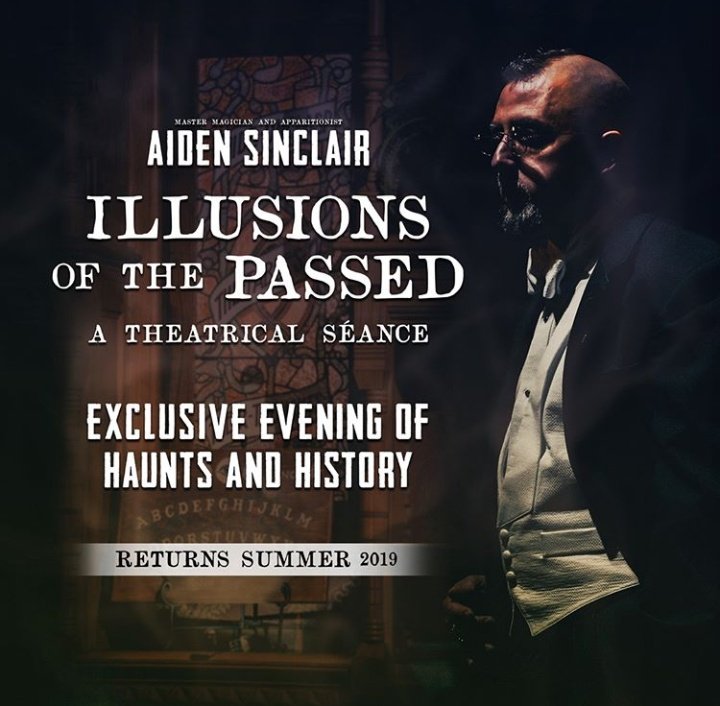
 Randolph Harris II International Institute