
Home » coffee (Page 37)
Category Archives: coffee
Have You Found Your Soul—It is the Quest to become Conscious of Consciousness and Penetrate the Mystery of its Knowing Power
 You must trust in my principles. That is our paradox. We do not leave behind the Natural Law when we receive grace. We are principled beings. I never stopped loving you, not for an instant. Whatever I felt for you are the Bryant family gathering in no way affected my feelings for you. How could it? I warned you twice to be patient with your family because I knew it was right for you to do so. Then the third time, all right, I went too far with a little mockery. However, I was trying to curb your insults, and your abuse of those you loved! But you would not listen to me. Affairs are not always tragic. If the basic relationship with the spouse is not too hopelessly unsatisfying and if the principles do not react precipitously, a marriage often survives extramarital affairs. In fact, it may be strengthened as the result of a new-found ability to be open to the experience and expression of love. However, society’s attitude about extramarital affairs often operates against the survival of a marriage. The experience of Fallon, a young wife, is probably not too exceptional. Her husband, Blake, an attorney, became involved with another woman-a divorcee—within their social group. Blake was sufficiently indiscreet about his affair that a good many members of the community, including relatives, became aware of the situation. #RandolphHarris 1 of 13
 Fallon sought the help of a psychotherapist, who Blake also saw on a sporadic basis. As soon as others became aware that an affair was taking place, Fallon was besieged with pressure to seek a divorce. Both his parents and her parents urged it. Other friends and relatives said or implied if she did not see a lawyer and force him to move out, she was a fool. Her physician gave her similar advice. The force and the vehemence with which many of these people spoke seemed to indicate that they themselves felt threatened by the situation. It was almost as if they were saying to Alice, “If you let him get away with this without being punished for it, what is going to happen to society. We cannot afford to tolerate this kind of behavior.” Fortunately, Fallon had a mind of her own, although the constant pressure caused her many bad moments in which she asked herself if she were some kind of weakling for not seeking a divorce. However, when she did not immediately seek a divorce, things began to happen that made her happy she had not yielded to pressure. For one thing, she began to discover, through therapy, that she was very frightened of love and had never been free to express the love and affection of which she was capable. Fallon realized she had been difficult to live with throughout her marriage. She had been overly sensitive, constantly feeling hurt about something Blake had done. #RandolphHarris 2 of 13
 Because she had hurt feelings that she felt were caused by her husband, in retaliation Fallon would either withdraw from behind a wall of hurt silence or complaint at Blake about little things that has no connection with her deeper feelings. As She became aware that she acted this way because of her fear of love, Fallon began to become much more capable of experiencing intimacy, including the expression of love to Blake. She also discovered that he, too, was changing. Having known the love of the other woman seemed to affect Blake’s view of himself. He felt more lovable and developed more confidence in his ability to express love. And even while he continued to see his lover, he became more able to express love openly to Fallon than he had ever been before. And she, through her new self-discovery—which might have never happened if Blake had not had an affair—was much more able to respond with deep-felt love and was able to enjoy the pleasures of the flesh experience of their relationship as never before. #RandolphHarris 3 of 13
 So eventually, while Blake was still having his affair, she could send her advice-giving friends away muttering and shaking their heads, by saying in all honesty, “I do not want a divorce! I feel more love for my husband than I was ever able to feel in the past, and we both find much more satisfaction in our relationship than we ever did before! Why would I want to get a divorce now?” Since Blake now found many satisfactions in his marriage that neither he nor Fallon had been capable of experiencing with each other before, and since he deeply valued his home and desired to be with his children, he, too had every reason to continue the marriage rather than to seek a permanent alliance wit another woman. This is not to say that life for the couple was tranquil during these times. Not at all. Both of them, and perhaps particularly Fallon, went through great upheavals of feelings. There were moments of torrid anger and times of anguished hurt. Most of all, there were times of fear. Fallon would become terrified after expressing her love in openness during their expression of pleasures of the flesh. It was apparent that the fear that Blake would abandon her was most acute at those times, because it was then that she was most aware of how much she cared. However, the point if that growth occurred in both Fallon and Blake as they learned to deal more honestly and openly with themselves and their emotions. #RandolphHarris 4 of 13
 Society frowns strongly on their expressions with the result that people devise a variety of techniques to hide these feelings from others as well as from themselves. It is often more effective to express hostility in safe atmosphere. Then, direct ways of dealing with the feeling can be explored. Too often, the usual efforts to suppress these negative feelings lead to the suppression of the whole self. If Fallon and Blake had automatically sought divorce as it was automatically suggested, this experience of revelations would have been short-circuited. However, it is not being claimed here that every affair will have salutary effect. Yet, it is important that society take its head out of the sand, so they do not ignore or hide from obvious signs of danger, to be aware that extramarital affairs are not always the disasters we like to assume and that it is not unusual for marriages to be strengthened and married love to be deepened by the forces that extrametrical affairs sometimes set in motion. When a person begins to seek out one’s real nature, to find the truth of one’s real being, one begins to follow their quest in life. It is a call to those who want inner nourishment from real sources, not from fanciful or speculative ones. It calls them away from things, appearances, shows, and externals to their inward being, toward reality. After such considerations, we are led to wonder what constitutes the reality behind the Universe. #RandolphHarris 5 of 13
 This is a quest which takes us into religion, mysticism, and philosophy and the great mysteries of life, a quest which eventually confirms the celebrated words of Francis Bacon: “A little thinking may incline the mind toward atheism, but greatness of study bringeth the mind back to God.” We are now in a transitional period similar to that of the end of Hellenism and the birth of Roman arts and culture. It is a period also like the demise of medieval art and the Renaissance. In all transitional periods there is a confusion as to what the new meaning of art if going to be. Since we are in the very midst of that confusion, our period is especially. The confusion in physics, just as before the Einsteinian and Quantum theories were born to throw light on the whole of physics, is like the present confusion in art, which is a reflection of life. The artist is the predictor of what happens in science rather than the reverse. When any new culture is established, the art gives the people their language. In the Middle Ages all the less affluent knew the meaning of the figures in the stained glass of the windows of Chartres; this was their language. Chartres consist of a vast library of dazzling symbols and myths, and these constituted the life of the less affluent. It was literally true that no sculptor or painter of fainted glass needed to sign one’s work—God could see all and he would know all. #RandolphHarris 6 of 13
 Similarly in the Renaissance, the new humanism made the new humanistic art recognizable to all. At this moment, we are in the midst of a new cultural transition with its attendant difficulties and confusion. When giving the inaugural address at the opening of a new wing in the Modern Museum in New York, Paul Tillich spoke on the topic, “The Art of No Art.” Though we can surely understand what Chesterton and Tillich meant, the problem, strictly speaking, is not no art. It is rather a confusion in our day of many different forms of art. In the Metropolitan Museum, for example, we pass through the rooms of the Renaissance art and see a similarity in colors and in forms. In the seventeenth century we see portraits, like those by Van Dyck, running the whole length of the hall. In the early nineteenth century we see many landscapes and seascapes, which became art of the kind taught in academia. At the end of the nineteenth century we see protests against academic art Van Gogh, in Gauguin, in Cezanne and in Picasso. By the art we can recognize the period it comes from. However, it our contemporary age we have every kind of art—Wyeth and his realism, de Kooning and his jagged strokes which show great vitality and color with contorted figures, Motherwell and Franz Kline who reveal the great tensions in modern times. #RandolphHarris 7 of 13
 There is Tobey with his calligraphy, Picasso who seemed to change his style every decade, Pollock who painted with surprisingly harmonious colors the abstract forms by means of his drip school, Olitski with his subconscious forms expressed in coat after coat of different colors with the underlying pinks and lavenders showing through to produce a captivating charm, Rothko with his profundity in which the deepest abstract forms of reality are available for those willing to meditate in the presence of his paintings. There is Hans Hofmann with his energetic and bright colors which seem to cry out with the vitality and strength of the Earth, O’Keefee with her abstractions from nature. And so on and on. The modern age reveals many different kinds of art with the basic form, the soul of modernity if I may say so, still undiscovered. Take Picasso. In his youth his draftsmanship was fantastically accurate in his paintings of the less affluent in Spain. Then in 1907 broke forth cubism with his painting of Les Demoiselles d’Avignon, a classic picture of the natural form in a harlotry environment. Just after the First World War he was painting figures of bathers that showed what The Great Gatsby meant, namely, we play, we have beautiful bodies, but it is going to amount a meaningless tragedy. #RandolphHarris 8 of 13
 Then in the 1930s and early 1940s, Picasso painted pictures of machines. These were portraits not of persons but of the human being as a machine, with wheels, spokes, and so on; everyone seemed cold and made of steel. He did not give these pictures names but rather numbers. Here is an artist predicting a century in which people will be taken over by computers, which is just what has actually happened. The quest we teach is no less than a quest for knowledge in completeness and a search for awareness of the Universal Self, a vast undertaking to which all mortals are committed whether they are aware of it or not. The great central questions of life for the thinking mortal are: What am I? What is my relation to, and how shall I deal with, my surroundings? What is God, and can I form any connection with God? Every puzzle which fascinates innumerable persons and induces them to attempt its solution—be it mathematical and profound or ordinary and simple—is an echo on a lower level of the Supreme Enigma that is forever accompanying mortals and demanding an answer: What is one, whence and whither? The questers puts the problem into one’s conscious mind and keeps in there. #RandolphHarris 9 of 13
 It is a quest to make life of better quality, both inside and outside the self, in the thoughts moving in the brain, in the body holding that brain, and in the environment were that body moves. It is a clarion call to mortals to seek one’s true self, a voice that asks one, “Have you found your soul?” The quest is simply the attempt of a few pioneer mortals to become aware of their spiritual selves as all mortals are already aware of their physical selves. It is a quest to become conscious of Consciousness, to explore the “I” and penetrate the mystery of its knowing power. The secret path is an attempt to establish a perfect and conscious relation between the human mind and that divinity which is its source. When a mortal passes from the self-seeking aspiration of the Quest, one passes to conscious cooperation with the Divine World-Idea. It is, from another standpoint, a quest for one’s own centre. It is the opening up of one’s inner being. The love of the order and beauty of the World is thus the complement of the love of our neighbor. It proceeds from the same renunciation, the renunciation that is an image of the creative renunciation of God. God causes this Universe to exist, but h consents not to command it, although he has the power to do so. Instead he leaves two other forces to rule in his place. On the one hand there is blind necessity attaching to matter, including the psychic matter of the soul, and on the other the autonomy essential to thinking persons. #RandolphHarris 10 of 13
 By loving our neighbor we imitate the divine love which created us and all our fellows. By loving the order of the World we imitate the divine love which created this Universe of which we are part. Mortals do not have to renounce the command of matter and of souls, since one does not possess the power to command them. However, God has conferred upon one an imaginary likeness of this power, an imaginary divinity, so that one also, although a creature, may empty oneself of one’s divinity. Just as God, being outside the Universe, is at the same time the center, so each mortal imagines one is situated in the center of the World. The illusion of perspective places one at the center of space; an illusion of the same kind falsifies one’s idea of time; and yet another kindred illusion arranges a whole hierarchy of values around one. This illusion is extended even to our sense of existence, on account of the intimate connection between our sense of value and our sense of being; being seems to us less and less concentrated the farther it is removed from us. We relegate the spatial form of this illusion to the place where it belongs, the realm of the imagination. We are obliged to do so; otherwise we should not perceive a single object; we should not even be able to direct ourselves enough to take a single step consciously. God thus provides us with a model of the operation which should transform all our soul. #RandolphHarris 11 of 13
 In the same way as in our infancy we learn to control and check it in our sense of time, values, and being, freedom endlessly re-creates itself, gives birth to itself. Otherwise from every point of view except that of space we shall be incapable of discerning a single object or directing a single step. Freedom is capacity, we have seen, to transcend its own nature—an occurrence in which that overused word transcend really fits: We begin to appreciate the great fascination that freedom, phoenixlike in its capacity to rise from its own ashes, exercised on our ancestors. We begin also to experience the dangers in freedom. People will cling to freedom, treasure it, and if necessary they will die for it, or continually yearn and fight others for it if they do not now enjoy it. And it is still true, according to the statistical studies of Milton Rokeach, that the majority of people place freedom highest on their list in the ranking of values. Freedom is not only basic to being human, but also freedom and being human are identical. This identity of freedom and being is demonstrated by the fact that each of us experiences oneself as real in the moment of choice. When one asserts “I can” or “I choose” or “I will,” one feels one’s own significance, since it is not possible for the enslaved person to assert these things. In the act of choice, in the original spontaneity of my freedom, I recognize myself for the first time as my own true self. #RandolphHarris 12 of 13
 Existence is real only as freedom. Freedom is the being of existence. When I exercise my freedom, only in those moments am I fully myself. To be free means to be one’s self. The possibility of changing, which we have said is freedom, includes also the capacity to remain as one is—but the person is different from having considered and rejected changing. This change, furthermore, is not to be confused with changing for its own sake, as we shall see presently, or changing for escapist reasons. Hence, the gross confusion of license, so often pointed at in American youth, with genuine freedom is that they are exercising their freedom when they immerse themselves in invigorating tasks and spiritual growth, as it keeps healthy young adults from living at the expense of society. Freedom consists of how you confront your limits, how you engage your destiny in day-to-day living. The Lord our God is one, and you shall love the Lord your God with all your heart, and with all your soul, and with all your might. Praise the Lord, who covered the Heavens with clouds, who prepared the rain for the Earth, who made the grass grow upon the mountains. And may our souls be together in the bundle of life in the light of out Lord. May the Lord bless you, and keep you; the Lord make his face shine upon you; and be gracious to you; the Lord life up his countenance upon you, and give you peace. #RandolpHarris 13 of 13
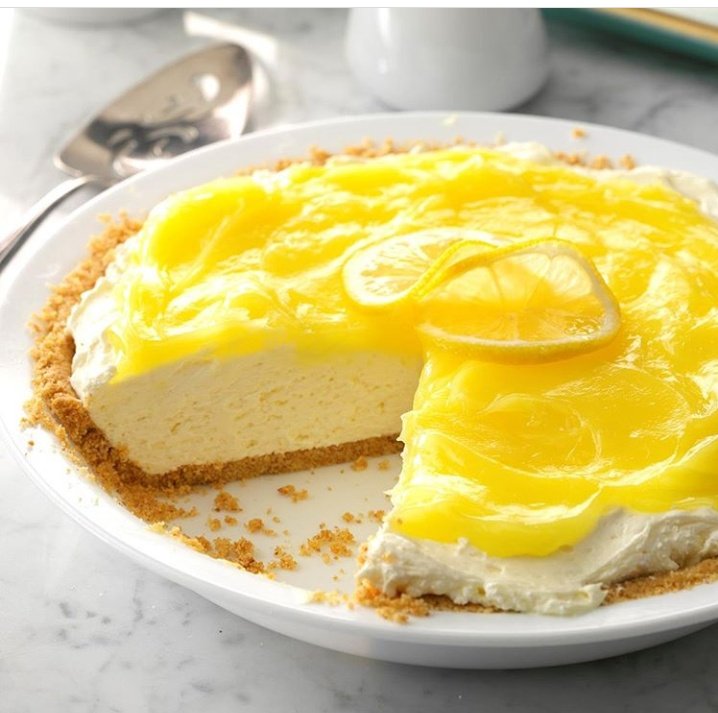
I Fed My Heart Some Jello and Birdseed with a Little Silver Spoon and it Became a Little Yellow Canary which Sang and was Happy!
 All beauty is contained in the ever-changing waves of the sea. It is a beautiful carving, harmoniously bringing forms and sounds together, which are part of totality, and woven together with the serenity we expect from the divine. But oh, the great World is such a wilderness of marvels. I am very happy. It is the joy that goes with the serenity of beauty. The genius of the films as an art form is that they can re-enact myth and symbol. In films we can combine fantasy and actuality, unite past and present and future; and what the beholder sees is not merely a spectacle. One experiences in one’s own emotions what the character on the screen is experiencing. As was demonstrated so well in the film Romeo Must Die, one is able to experience this Hero, Han (Jet Li) through his fantasies, his daydreams, his anxieties and hopes and fears, his plans and his memories. In this sense movies have claim to being the unique art form for our day. They can move instantaneously from childhood, to the present, to an imagined future, and can move from action to fantasy at will. Their genius is in encompassing and stimulating the imagination of the viewer. For many—perhaps most—people, the primary source of joy is other people. However, joy implies the possibility of misery; where there is ecstasy, so is there agony; if hell is other people, so is the divine. The theory pinpoints the arenas of joy and misery as the interpersonal-need areas called inclusion, control, and affection. #RandolphHarris 1 of 16
 The fear of time—the inexorable rolling on of fate, of entropy in our Universe which continues even though we may blot out our awareness of it can be a source of our most severe anxiety. The experience of time hanging over our heads like a sword of Damocles in a subjective phenomenon, private and personal. The symbol and the legends are our ways of holding its threats at bay. The many legends of the afterlife—Heaven, reincarnation, the final conflict—are examples. The legend of progress and the legend of symbolic immortality are all parts of our struggle to make time meaningful. Inclusion behavior refers to association between people, being excluded or included, belonging, togetherness. The need to be included manifests itself as wanting to be attended to, and to attract attention and interest. The classroom hellion who throws erasers is often objecting mostly to the lack of attention paid to him or her. Even if the individual is given negative affection one is partially satisfied, because at least someone is paying attention to him or her. Symbols are our source of freedom and civilization. That is, from our capacity to form into symbols the mass of experiences which impinge upon us as infants, we are able to establish some distance from the World in which we can infuse meaning into our experience. #RandolphHarris 2 of 16
 The symbol-forming process is not born with the birth of the infant but begins to emerge after ten or twelve months. It is one aspect of the development of the infant’s capacity for self-consciousness. This growth is required before the infant is mature enough to abstract itself from the situation and to embrace itself and the World in the same concept. Between these two opposite things—self on the one hand and World on the other—there is a greater or lesser tension. We call this tension awakeness, alertness. It is out of this tension that symbols are born. Symbols, and symbolic thinking, are one aspect of consciousness and self-awareness. The capacity to be aware that I am telling the truth emerges simultaneously with my capacity for telling a lie. The lie is a behavior of transcendence. Being a distinct person, that is, having an identity, is an essential aspect of inclusion. An integral part of being recognized and paid attention to is that the individual be distinguishable from other people. One must be known as a specific individual; one must have a particular identity. The extreme of this identification is that one be understood. #RandolphHarris 3 of 16
 To be understood implies that someone is interested enough on one to find out one’s characteristics. When, say, from the first to the third year, the symbols the infant picks up are doctrines and covenants that are too rigid, made so by too much anxiety on the infant’s part arising from over-permissiveness or over-rigidity on the part of the parents, the infant’s capacity to develop symbols is partially block. A rigidity is begun which limits not only the child’s symbol-forming from then on, but also the child’s openness to the countless symbols that are available in our culture. Then we have a rigid, unfree, drive person, who in later life may well be termed neurotic. This is the curtailing and destruction in the person of the capacity to grow, to change, to create. It may set an almost insurmountable barrier for the creativity of art later on, or the child, when he or she gets to be adults, may well revolt against the whole society and become an artist! An issue that arises frequently at the outset of interpersonal relation is that of commitment, the decision to become involved in a given relation or activity. Usually, in the initial testing of a relationship, individuals try to present themselves to one another, partly to find out in which facet of themselves others will be interested. Frequently, a member is initially silent because he or she is not sure that people are interested in one, a concern about inclusion. #RandolphHarris 4 of 16
 The flavor of inclusion is conveyed through such concepts as interacting with people, with attention, acknowledgement, prominence, recognition, and prestige; with identity, individuality, and interest. It is unlike affection in that it does not involve strong emotional attachments to individual persons. It is unlike control in that the preoccupation is with prominence, not dominance. Just as the symbol-forming power may be arrested in individuals, so also it may be altered, for good or ill, in whole populations. For civilizations are themselves dependent precisely on symbolism. By superseding instinct, the symbol makes civilization possible. Symbolism is so woven into our civilization that our language depends on it. The World is a symbol, and its meaning is constituted by the ideas, images and emotions, which it raises in the mind of the hearer. Language, art and symbolism on the deeper level are identical. Control behavior refers to the decision-making process between people, and the areas of power, influence, and authority. The need for control varies along a continuum from the desire for power, authority, and control over others (and therefore over one’s future), to the need to be controlled, and have responsibility lifted from oneself. An argument provides the setting for distinguishing the inclusion-seeker from the control-seeker. The one seeking inclusion or prominence wants very much to be one of the participants in the argument, while the control-seeker wants to be the winner or, if not the winner, on the same side of the winner. #RandolphHarris 5 of 16
 The prominence-seeker would prefer to be the losing participant; the dominance-seeker would prefer to be a winning nonparticipant. For symbolism is our stand against the rule of sheer instinct. It is the bulwark by which civilization and art tame sheer instinct. In place of the force of instinct which suppresses individuality, society has gained the efficacy of symbols, at once preservative of the commonweal and the individual standpoint. The function of reason is not at all to compete with symbols or to try to suppress all symbols and legends. It is to judge between them. Reason should rightly operate to purify and clarify symbols; it is detrimental to the soul to try by reason to destroy them. Control is also manifested in behavior directed toward people who try to control others. Expressions of independence and rebellion exemplify lack of willingness to be controlled, while compliance, submission, and taking orders indicate various degrees of accepting the control of others. There is no necessary relation between an individual’s behavior toward controlling others and one’s behavior toward being controlled. Two persons who control others may differ in the degree to which they allow others to control them. The domineering sergeant, for example, may accept orders from one’s lieutenant with pleasure and gratefulness, while the neighborhood bully may also rebel against his or her parents. #RandolphHarris 6 of 16
 Advances in civilization threaten the very society which discovers them. The art of free society consists first in the maintenance of a symbolic code; and secondly in the fearlessness of revision, to secure that the code serves those purposes which satisfy an enlightened reason. Those societies which cannot combine reverence to their symbols with freedom of revision, must ultimately decay either from anarchy, or from the slow atrophy of life stifled by useless shadows. Control behavior differs from inclusion behavior in that it does not require prominence. The power behind the throne is an excellent example of a role that would fill a high control-need and a low need for inclusion. The joker exemplifies a high inclusion-need and a low need for control. Control behavior differs from affection behavior in that it has to do with power relations rather than emotional closeness. The frequent difficulties between those who want to get down to business and those who want to get to know one another illustrate a situation in which control behavior is more important for some and affection behavior for others. Affection behavior refers to close personal emotional feelings between two people, especially love and hate in their various degrees. Affection is a dyadic relation; it can occur only between pairs of people at any one time, whereas both inclusions and control relations may occur either in dyads or between one person and a group of persons. #RandolphHarris 7 of 16
 Artists know this intuitively. With fearless energy, poets, painters, architects, musicians, and sculptors expose us to the contents of the symbols. Often the results of such creative action disconcert us. However, the artist’s job is not to comfort—nor even to inform and instruct. The artist’s purpose is to liberate, to cleanse the creative process of those rationalized accretions which we invent in order to shield ourselves from the powerful truth of authentic symbols. Good art wounds as well as delights. It must, because our defenses against the truth are wound so tightly around us. However, as art chips away at our defenses, it also opens us to healing potentialities that transcend intellectual games and ego-preserving strategies. The future of our civilization, its survival and health, is inseparable from the future of its art. Modern art is thus neither a luxury nor a decorative excrescence hanging on the edges of culture. Art is central to any civilization which hopes to remain vital and healthy. In groups, affection behavior is characterized by overtures of friendship and differentiation between members. A common method of avoiding a close tie with any one member is to be equally friendly to all members. Thus, popularity may not involve affection at all; it may be inclusion behavior, as contrasted with going steady, which is usually primarily affection. #RandolphHarris 8 of 16
 A discussion of the nature of love cannot, perhaps, be had without talking about what might be called unequal love relationships. Between a parent and a small child, for example, there is a natural inequality. The parent (hopefully!) is capable of a more mature love than the child and will find satisfaction in expressing love and meeting needs of the child that arise from the natural dependency of the child. The child, on the other hand, no matter how responsive, cuddling, and love one is, remains a child and cannot meet the same needs in the parent that a mature adult could. If the parent has been and is so lacking in other satisfying love experiences that one demands satisfaction of needs that are beyond the capabilities and maturity of the child, the adult is bound to feel frustrated; for the inequality in the relationship is the natural order of things. When a markedly unequal relationship exists between two adults, questions arise about the nature of the feelings involved. For example, a woman may live with a husband she had slowly fallen out of love with. He may contribute little or nothing to her support; indeed she may support him. When he is not feeling well, he may sometimes be physically cruel to her. An outsider looking at the relationship can see a dozen ways in which she would be better off if she locked him out of home and heart. #RandolphHarris 9 of 16
 If she is asked why she continues the relationship she may say, “Well, I feel sorry for him and just cannot bring myself to divorce him. I keep hoping he will get better, but I guess I really know that is unlikely to happen. And in spite of it all, I love him. I really do!” Is this love? Who can judge? Who can dispute the woman’s word that she has a deep caring for her husband? However, when the relationship is examined, serious questions arise. The desirable thing that happen in a loving relationship are not occurring here. The mutual enjoyment that marks a relationship of love can only be said to exist, if at all, on a very minimal level. It would appear that she, by staying with him, is stifling many of her opportunities for growth. One might be easily fooled by appearances into believing that she loves her husband unconditionally, for she makes few apparent demands upon him. However, it would seem impossible that she does not have a great deal of hostility toward him, though she may not recognize it, which she does not express directly. And perhaps her undemanding stance is the expression of her hostility, for in so doing she encourages him to play indefinitely the role of a dependent individual who does not need to take responsibility for one’s own life. It might well be a more honest expression of her feelings and potentially better for both of them if she kicked him out. #RandolphHarris 10 of 16
 What prompts her to continue the relationship? There are probably several reasons. She may be so filled with self-hate that she would not be comfortable if she were not in a marriage where she is constantly hurt. Every counselor has witnessed situations in which a relationship such as the one described has terminated for some reason and the woman has almost immediately entered into a new alliance that is equally hurtful (and predictably so), suggesting that she has a deep-seated need to be punished. Then again she may be so insecure about herself and her worth that she feels that even so hurtful a marriage is better than none. Feeling it unlikely that anyone more satisfying would have anything to do with her, she avoids the potential loneliness and isolation she pictures herself as experiencing without her husband. Fear of love may also be a potent factor in perpetuating the marriage. Without being aware of it, she may feel safer in an alliance where the experience of love is minimal at best. As we have already seen, a relationship in which we are free to express and receive love, free to express our anger, and free to do what we want to do is frightening. #RandolphHarris 11 of 16
 Even a hurtful association may somehow represent safety to us if it helps us to feel that we are not free to experience these freedoms. So when we find ourselves in a relationship in which there is almost constant hurt and we are continually frustrated in our growth and other satisfactions, we may need to ask ourselves why we continue it. Even though we may be quite correct when we say we love the person, this is likely not the real reason we continue a course of action so damaging to us. It will be helpful at this point to recognize again that love never exists in an unalloyed form. Each of us brings our existing self to any relationship—our fear, our past experiences of hurt our self-hate, and our feelings that we are unlovable. All of these factors enter in to contaminate any experience of intimacy into which we may enter. So it will be always true that we are only partially able to enjoy each other’s presence, be empathetic, provide maximum opportunity for each other’s growth, and love each other unconditionally. However, for must of us even the partial experience of love will seem worth the effort. Having examined some of the qualities of love, it becomes apparent that a great deal of pleasures of the flesh has little, if anything, to do with the expression of affection, despite our professed ideals to the contrary. #RandolphHarris 12 of 16
 A difference between inclusion behavior, control behavior, and affection behavior is illustrated by the different feelings a mortal has in being turned down by a fraternity, failed in a course by a professor, and rejected by his young lady. The fraternity excludes him, telling him that they as a group do not have sufficient interest in him. The professor fails him and says, in effect, that he finds him incompetent in his field. His young lady rejects him, implying that she does not find him lovable. With respect to an interpersonal relation, inclusion is concerned primarily with the formation of a relation, whereas control and affection are concerned with relations already formed. Within existent relations, control is the area concerned with who gives orders and makes decisions for whom, whereas affection is concerned with how emotionally close or distant the relation becomes. Inclusion is concerned with the problem in or out, control is concerned with top or bottom, and affection with close or far. The specific difficulties that arise in each area, and that must be overcome in order to realize the full potential of human relationships. Since the inclusion area involves the process of formation, it usually occurs first in the life of a group. People must decide whether they do or do not want to form a group. The issues of interaction are those of making contact, or encounter. #RandolphHarris 13 of 16
 A person who has too little inclusion, who will be called undersocial, tends to be introverted and withdrawn. Consciously, one wants to maintain this distance between himself and others, and insists that he does not want to get emmeshed with people and lose his privacy. However, unconsciously, he definitely wants others to pay attention to him. His biggest fears are that people will ignore him, generally have no interest in him, and would just as soon leave him behind. His unconscious attitude may be summarized by, “No one is interested in me, so I am not going to risk being ignored. I will stay away from people and get along by myself.” There is a strong drive toward self-sufficiency as a technique for existence without others. Behind his withdrawal is the private feeling that others do not understand him. His deepest anxiety, that referring to the self concept, is that he is worthless. He thinks that if no one ever considered him important enough to receive attention, he must be of no value whatsoever. It is likely that this basic fear of abandonment or isolation is the most potent of all interpersonal fears. #RandolphHarris 14 of 16
 The oversocial person tends toward extraversion. He seeks people incessantly and wants them to seek him out. He is also afraid they will ignore him. His unconscious feelings are the same as those of the withdrawn person, but his overt behavior is the opposite. His unconscious attitude is summarized by, “Although no one is interested in me, I will make people pay attention to me in anyway I can.” His inclination is always to seek companionship. He is the type who “cannot stand alone.” All of his activities will be designed to be done “together.” The interpersonal behavior of the oversocial type of person is designed to focus attention on himself, to make people notice him, to be prominent. The direct method is to be an intensive, exhibitionistic participator. By simply forcing himself on the group he forces the group to focus attention on him. The more subtle technique is to try to acquire power (control) or try to be well liked (affection), but for the primary purpose of gaining attention. To the individual for whom the resolution of inclusion relations was successful in childhood, interaction with people present no problem. He is comfortable with people and comfortable being alone. He can be a high or low participator in a group, or can take a moderate role equally well, without anxiety. He is capable of strong commitment to and involvement with certain groups and also can withhold commitment if he feels it is appropriate. Unconsciously, he feels that he is a worthwhile, significant person. #RandolphHarris 15 of 16
 Several methods help to being out inclusion feelings. They focus on the issues involving contact and human encounter, and help to clarify the feelings and lead to some effective coping methods. Difficult as it is really to listen to someone in affliction, it is just as difficult for one to know that compassion is listening to one. The love of our neighbor is the love which comes down from God to mortals It precedes that which rises from mortals to God. God is longing to come down to those in affliction. As soon as a soul is disposed to consent, though it were the last, the most miserable, the most deformed of souls, God will precipitate himself into it to order, through it to look at and listen to the afflicted. Only as time passes does the soul become aware that God is there. However, though it finds no name for him, wherever the afflicted are loved for themselves along, it is God who is present. God is not present, even if we invoke him, where the afflicted are merely regarded as an occasion for doing. They may even be loved on this account, but then they are in their natural role, the role of matter and of things. We have to being to them in their inert, anonymous condition a personal love. Care of the soul requires our appreciation of these ways it presents itself. It is important, then, to revere the spirit and to let the soul burst into life—in creativity, individuality, and imagination. #RandolpHarris 16 of 16

Faith is the Evidence of things Not Seen—In this Moment of Attention Faith is Present as Much as Love
 The Cresleigh Homes house at Rocklin Trails is so big and so grand and so solid, a house so shining with gold and whiteness, a house stretching to the right and to the left so far that it swept out of my mind anything I had ever seen in the rich city of Granite Bay, and the wonder of Eldorado Hills passed away from me, and my breath was taken out of me. A symbol’s function is to cover up and to reveal, to disguise and to disclose simultaneously. The connation of the term symbolic is precisely this artistic capacity to disguise and at the same moment to disclose, one being impossible without the other. A symbol in a dream cover up an immediate reality and at the same time discloses a deeper reality. It may be profitable first to attempt to discover what we mean by love. Describing love often seems like trying to capture the beauty of a rainbow in a test tube and attempting to analyze it, but perhaps something can be gained from the effort. It is probably necessary to talk of love in ideal terms, even while recognizing that no relationship will completely fulfill the definition. What would a fully loving experience be like? It would certainly include mutual enjoyment of each other’ presence. People who love each other find satisfaction in being with each other. Delicious feelings of warmth and aliveness flood through us when we are with someone we know loves us and whom we love. #RandolphHarris 1 of 11
 One of the factors involved in this delight in a loved one’s presence is empathy. A process of unspoken communication seems to take place in which we sense how the other person feels and we respond with our own emotions. Empathy differs from sympathy. The sympathetic person feels the same feeling as the one with whom one sympathizes. The empathetic person picks up how the others feel but responds with his own emotional reaction. A sympathetic person, for example, might cry with someone who has suffered grief almost as though it were he himself who were grieving. An empathetic person, on the other hand, would understand the grief and respond with love, perhaps moving toward the person, holding him, and expressing his deeply felt desire to comfort. Genuine empathy does not include the game in which a person expects another person to be able to sense one’s needs (to be loved, to be comforted, to be taken care of, to be needed, to be encouraged and so forth) without his expressing them and then feels resentful when they are not met. The often-heard complaint “He ought to know how I feel without my having to say it” is often a rationalization of one who is afraid of the intimacy and vulnerability involved in expressing one’s needs. #RandolphHarris 2 of 11
 Another mark of love is that it provides a mutual opportunity for growth as persons. Love gives the warmth and Sunshine that makes possible the maximum personality development. In an ideal parent-child relationship, for example, the child basks in the parents’ love and their enjoyment of him. With the confidence gained in feeling loved the child is freed to explore one’s World in ever-widening circles and is free to experience loving relationships with others. If his growth is inhibited by his parents’ attitudes, their love, while real, is contaminated by other qualities. A corollary mark of love is that a lover does not give or demand exclusive tenderness. This idea will be dealt with in detail later. Let it suffice here to say that possessiveness discourages the maximum experience of love, which is necessary for the fullest personality growth for those involved. Another quality of love that is mentioned frequently is that love is unconditional. Perhaps there is no better word to describe it, but this ideal is very slippery and frequently misunderstood. Often we translate it to mean “Unconditional love means that anything you do is O.K. with me, if I love you. Therefore if I really love you I will never become angry with you or express feelings of hurt to you about something you have done.” #RandolphHarris 3 of 11
 Such a definition of unconditional love would see the lover as an impassive pillow upon which the loved one could vent his whims. This is not the picture of a very satisfying or exciting relationship for either person! Yet we often cling to this ideal of love, which is a caricature of the real thing. We speak of art as symbol and myth, for they are both means by which we perceive life; they are the frames through which we make sense of the kaleidoscopic activity about us and in us. The symbol and myth are not ways of getting a perspective; they are the perspective itself. No one would argue that we do not project the symbol and myth; we do. However, no one ought also to protest against the equally obvious fact that the objective World is present in the symbol and myth as stimulus, the setting of the problems we week to resolve, the data we try to assimilate and make meaningful. Hence, art, like all expressions of beauty, is subjective and objective at the same time. Unconditional love runs much deeper. It goes more like this: “Even though I get very angry with you sometimes, even though I sometimes feel hurt, or irritated, or withdrawn, or even bored, I cannot escape the fact that I am deeply involved with you in a caring relationship. That fact of love exists, whatever is happening between us at the moment.” #RandolphHarris 4 of 11
 When two people know in their bones that they have this kind of relationship, then they are more free to fight openly, to express other emotions more only, and to love each other more openly and freely. Unconditional love, therefore, opens the door to freer relationships, rather than to more restricted and obligatory reactions as we often assume. It is readily apparent that these qualities of love are equally applied to parents’ feelings for their children and to friendships between persons either of the same or the opposite gender. There may be some truth in the contention of some personality theorists that love always involves some erotic feeling. However, be that as it may, the matter of practical significance to us here is that love is not limited to potential mates and that the nature of love is no different in our various affiliations. The symbol participates in the thing it symbolizes. The Christian cross is in actuality simply two sticks of wood placed at right angles to each other. However, symbolically its form means infinitely more. The cross is the vertical dimension crossing the horizontal; the spiritual and the Worldly levels crossing each other, engaged in perpetual tension and hopefully producing creative religious ideas and actions as an expression of this tension. Take the symbol of water at St. Anne des Pres, in Quebec, the Canadian shrine of healing waters like Lourdes. The priests at St. Anne have placed signs at various places where the water springs out of the ground, explaining that it is the faith in God which heals you, of which the water is a symbol. #RandolphHarris 5 of 11
 However, water is also a healing agent and has been one since time immemorial; it has cleansing, health-giving properties. Water participates in the healing process though it is God who performs the cure. Also, signs point out that you may be cured psychologically and spiritually without being cured physically. One can see the struggle the theologians have had to preserve the shrine from magic, and they do this by emphasizing the faith in God, with the water as a curative agent which is the symbol of the activity of God. He produces healing waters, symbolic and diabolic, just as he did at the time of Noah and the flood. The symbol points beyond itself. A symbol always transcends the one who makes use of it and makes one say in reality more than one is aware of expressing. This is partly because of the multitude of dimensions the symbol encompasses; one cannot help expressing more than one is conscious of. This is part of the functioning of the double symbolic dimension of art as revealing and disclosing. The reason for the prejudice against, or perhaps more accurately, the fear of, symbols and myths in art is that they disclose so much; thus I cannot know exactly what I am saying. I have a tiger by the tail, and I rightly fear being carried by this animal faster than it runs. This reminds me of a cartoon in The New Yorker. A society woman is taking a revolver out of her handbag as she gets up from the analyst’s cough. She is saying, “This has been very nice, Doctor, but you know too much.” #RandolphHarris 6 of 11
 Art releases and stimulates imagination among others to whom you are talking to as well as yourself. And at the moment is it engaged it is a renunciation, and that is when it is pure. The mortal accepts to be diminished by concentrating on an expenditure of energy, which will not extend one’s own power but will only give existence to a being other than oneself, who will exist independent of one. Still, more to desire the existence of the other is to transport oneself into one by sympathy, and, as a result, to have a share in the state of inert matter which belongs to one. Through its symbols, art is energy-releasing. Drawing together into a meaningful circle the many data flooding in on us, the artistic symbol frees us from confusion; we are not continually overwhelmed by the kaleidoscopic bombardment of experience. One can either block off the experience—which is the solution on the side of apathy, self-protection, death; or one can organize these multitudinous events into meanings that can then be dealt with as symbols—which our capacity of symbol forming enables us to do. The symbol also draws out our need to will and to act. This part of its function in making experience meaningful. Once we are freed from the unbearable confusion, we see our experience in manageable forms; and we do exactly that, we manage it, we take some stand with respect to it. #RandolphHarris 7 of 11
 We are able to see in that totality something we call its design—that is, the product. And we can recognize in the finished product the process of its organization and composition. The principles of design are usually discussed in terms of the qualities of balance, emphasis, proportion and scale, rhythm and repetition, and unity and variety. For example, Leonardo’s famous Illustration of Proportions of the Human Figure embodies all of them. The figure is perfectly balanced and is symmetrical. The very center of the composition is the figure’s belly button, a focal point that represents the source of life itself, the fetus’s connection by the umbilical cord to its mother’s womb. Each of the figure’s limbs appears twice, once to fit in the square, symbol of the finite, Earthly World, and once to fit in the circle, symbol of the Heavenly World, the infinite and the universal. Thus, all the various aspects of existence—mind and matter, the material and the transcendental—are unified by the design into a coherent whole. For many Jewish people, Hanukkah is the symbol not only of eternal light but of pogroms, painful experiences of relatives who suffered in many countries, personal struggles, hope and new possibilities. For many believers all these things not only are exceedingly meaningful but they require of the Jewish people some stand, which may be renewed consecration or resoluteness. One cannot let one’s self be grasped fully by a symbol without experiencing the feeling that a change in one’s life is necessary. #RandolphHarris 8 of 11
 Thus the symbol gives wings to the imagination. It casts one loose as the young eagle is cast out the nest The function of the myth and symbol is seen in the writings of James Joyce like Ulysses: the different tenses are represented simultaneously; fantasy and actuality are mixed, as they re in immediate existence anyway. Each sentence some across like a cord on the piano: notes of a number of different pitches are encompassed into one harmony. That is why the sympathy of the weak for the strong is pure only if its sole object is the sympathy received from the other, when the other is truly generous. This is supernatural gratitude, which means gladness to the recipient of supernatural compassion. It leaves self-respect absolutely intact. The preservation of true self-respect in affliction is also something supernatural. Gratitude that is pure, like pure compassion, is essentially the acceptance of affliction. The afflicted person and one’s benefactor, between whom diversity of fortune places an infinite distance, are united in this acceptance. There is friendship between them in the sense of the Pythagoreans, miraculous harmony and equality. Both of them recognize at the same tie, with all of their soul, that it is better not to command wherever one has power to do so. If this thought fills the whole soul and controls the imagination, which is the source of our actions, it constitutes true faith. #RandolphHarris 9 of 11
 It constitutes faith, for it places the Good outside this World, where are all the sources of power; it recognizes it as the archetype of the secret point that lies at the center of human personality and is the principle of renunciation. Even in art and science, though second-class work, brilliant or mediocre, there is an extension of the self; work of the very highest order, true creation, means self-loss. We do not perceive this truth, because fame confuses and covers with its glory achievements of the highest order and the most brilliant productions of the second class, often giving the advantage to the latter. Love for our neighbor, being made of creative attention, is analogous to genius. Creative attention means really giving our attention to what does not exist. Humanity does not exist in the anonymous flesh lying inert by the roadside. The Samaritan who stops and looks gives one’s attention all the same to this absent humanity, and the actions which follow prove that it is a question of real attention. Faith is the evidence of things not seen. In this moment of attention faith is present as much as love. Love sees what is invisible. God thought that which did not exist, and by this thought brought it into being. At each moment we exist only because God consents to think us into being, although really we have no existence. At any rate that is how we represent creation to ourselves, humanly and hence inadequately of course, but this imagery contains an element of truth. #RandolphHarris 10 of 11
 God alone have this power, the power really to think into being that which does not exist. Only God, present in us, can really think the human quality into the victims of affliction, can really look at them with a look differing from that we give to things, can listen to their voice as we listen to spoken words. Then they become aware that they have a voice, otherwise they would not have occasion to notice it. The true end of Mortals is the highest and most harmonious development of their powers to complete and consistent whole. Freedom is the first and indispensable condition which the possibility of such a development presupposes. It is a startling fact that freedom has been considered, throughout human history, so precious that hundred of thousands of human beings have willingly died for it. This love of freedom is seen not only in venerated persons like Giordano Bruno, who died at the stake for his freedom of belief, and Galileo, who whispered to himself in the face of the Inquisition that the Earth does move around the Sun, but it is also true for hosts of people whose names are forever unsung and unknown. Freedom must have some profound meaning, some basic relation to the core of being human, to be the object of such devotion. #RandolphHarris 11 of 11
Who Has Not Found Heaven for Where Your Treasure is Will be Your Heart?
 And then the room was empty. Perfectly empty. I turned, disconsolate and shuddering, and put my head down on my arm, as if I could go to sleep on my desk. I was considering William James, that psychologist-philosopher American-man-of-genius, who struggled all his life with the problem of his will. One of my esteemed colleagues, writing of James’s severe depression and the fact that for a number of years he was on the verge of suicide, asks us not to judge him harshly for those aspects of maladjustment. I take a different view. I believe that understanding the depressions James suffered and the way he dealt with them increases our appreciation and admiration for him. True, all his life he was plagued by vacillation and an inability to make up his mind. In his last years, when he was struggling to give up his lecturing at Harvard, he would write in his diary one day, “Resign,” the next day, “Don’t resign,” and the third day, “Resign” again. James’s difficulty in making up his mind was connected with his inner richness and the myriad of possibilities for him in every decision. However, it was precisely James’s depressions—in which he would often write of his yearning for “a reason for wishing to live four hours longer”—which forced him to be so concerned with will, and precisely in the struggle against these depressions that he learned so much about human will. #RandolphHarris 1 of 17
 William James believed—and, as a therapist, I believe that his judgment here is clinically sound—that it was own discovery of the capacity to will which enabled him to live a tremendously fruitful life up to his death at sixty-eight, despite his depressions and hos continual affliction with insomnia, eye troubles, back disorders, and so on. In our own “age of this disordered will,” as it has been termed, we turn to William James with eagerness to find whatever help he can give us with our own problem of will. He begins his famous chapter on will, published in 1890, by summarily dismissing wish as what we do when we desire something which is not possible for achievement, and contrast it with will, which exists when the end is within our power. If with the desire there is a sense that attainment is not possible, we simply wish. I believe that this definition is one of the places where James’s Victorianism shows through; wishes are treated as unreal and immature. Obviously, no wish is possible when we first wish it. It becomes possible only as we wish it in many different ways, and through considering it from this side and that, possibly over a great period of time, we generate the power and take the risk to make it happen. #RandolphHarris 2 of 17
 However, then James launches into what turns out to be one of the most thrilling treatises on will in literature, which I can only touch on. There is, first, the primary type, which is distinguished by the fact it does not require a whole series of decisions. We desire to change our shirt or begin to write on paper, and once we start, a whole series of movements is set going by itself; it is ideomotor. This primary will requires absence of conflict. James is here trying to preserve spontaneity. He is taking his stand against Victorian Will power, the exercise of the separate faculty called will power which must have failed him dismally in his own life and led him into the paralysis which expressed itself in his depressions. Now we know in our day a lot more about this so-called absence of conflict, thanks chiefly to psychoanalysis, and that infinitely more is going on in states which seem without conflict. He then touches on the healthy will which he defines as action following vision. The vision requires a clear concept and consists of motives in their right ratio to each other—which is a fairly rationalistic picture. Discussing unhealth will, he rightly focuses on the obstructed will. #RandolphHarris 3 of 17
 Obstructed will, one illustration of this that James cites is the state that exists when our eyes lose focus and we are unable to rally our attention. We sit blankly staring and do nothing. The objects of consciousness fail to touch the quick or break the skin. Great fatigue or exhaustion marks this condition; and an apathy resembling that then brought about is recognized in asylums under the name of abulia as a symptom of mental disease. It is interesting that he relates this apathy only to mental disease. I, for one, believe this is the chronic, endemic, psychic state of our society in our day—the neurotic personality of our time. The question then boils down to: Why does not something interest me, reach out to me, grasp me? And James then comes to the central problem of will, namely attention. I do not know whether he realized what a stroke of genius this was. When we analyze will with all the tools modern psychoanalysis brings us, we shall find ourselves pushed back to the level of attention or intention as the seat of will. The effort which goes into the exercise of the will is really effort to attention; the strain in the willing is the effort to keep the consciousness clear, for instance, the strain of keeping the attention focused. The once-born type of well-adjusted person does not a lot. This leads one to a surprising, though very keen, statement of an identity between belief, attention, and will. #RandolphHarris 4 of 17
 Will and belief, in short, meaning a certain relation between objects and the Self, are two names for one and the same psychological phenomenon. The most compendious possible formula perhaps would be that our belief and attention are the same fact. James then beguiles us with one of his completely human and Earthly illustrations. I cite it in detail because I wish to come back to it in discussing the unfinished aspects of James’ concept of will: We know what it is to get out of bed on a freezing morning in a room without a fire, and how they very vital principle within us protests against the ordeal. [The scene is New England before the advent of central heating.] Probably most persons have lain on certain mornings for an hour at a time unable to brace themselves to the resolve. We think how late we shall be, how the duties of the day will suffer; we say, “I must get up, this ignominious,” and so on. However, still the warm couch feels too delicious, and the cold outside too cruel, and resolution faints away and postpones itself again and again just as it seemed on the verge of the decisive act. Now how do we get up under such circumstances? If I may generalize from my own experience, we more often than not get up without any struggle or decision at all. #RandolphHarris 5 of 17
 We suddenly find that we have got up. A fortunate lapse of consciousness occurs; we forget both the warmth and the cold; we fall into some revery connected with the day’s life, in the course of which the idea flashes across us, “Hollo! I must lie here no longer” and idea which at that lucky instant awakens no contradictory or paralyzing suggestions, and consequently produces immediately its appropriate motor effects. It was our acute consciousness of both the warmth and the col during the period of struggle which paralyzed our activity. James concludes that the moment the inhibition ceases, the original idea exerts its effect, and up we get. He adds, with typical Jamesian confidence, that “This case seems to me to contain in miniature form the data for an entire psychology of volition.” Let us now take, for our special examination, James’s own example. We note that then he gets to the heart of the problem of will in this illustration there comes a remarkable statement. He writes, “We suddenly find that we have got up.” That is to say, he jumps over the whole problem. No decision at all occurs, but only a fortunate lapse of consciousness. #RandolphHarris 6 of 17
 However, I ask, what went on in that fortunate lapse of consciousness? True, the paralyzing bind of his ambivalence was released. However, that is a negative statement and does not tell us why anything else happened. Surely we cannot call this just a lucky instant, as James does, or a happenstance! If our basis for will rests on the mere luck or happenstance, our house is built upon the sands indeed, and we have no basis for with at all. Now I do not mean to imply that so far James, in this example, has not said something. He has, and it is very important: the whole incident shows the bankruptcy of Victorian will power, will consisting of a faculty which is based upon our capacity to force our bodies to act against their desires. Victorian will power turned everything into a rationalistic, moralistic issue, for instance, the attraction of the warmth of the bed, the giving in to of which is ignominious, as opposed to the so-called supergo pressure to be upright, that is, up and working. Dr. Freud described at length the self-deceit and rationalization involved in Victorian will power and I believe, dethroned it once and for all. The example shows James’s own struggle against the paralyzing effects of Victorianism, in which the goal becomes twisted into a self-centered demonstration of one’s own character and the real moral issue get entirely lost in the shuffle. #RandolphHarris 7 of 17
 So we return to our crucial question. What went on in that fortunate lapse of consciousness? James only tells us that we fall into some revery connected with the day’s life. Ah, here lies our secret! Psychotherapy has brought us a good deal of data about that revery which James did not have—and I do not believe that we fall into it at all. For purposes of clarity, I shall state here my own argument concerning unfinished business in James’s concept of will. I as it is also omitted by us in contemporary psychology. The answer does not lie in James’s conscious analysis or in Dr. Freud’s analysis of the unconscious, but in a dimension which cuts across and includes both conscious and unconscious, and both cognition and conation. Along with rediscovering our feelings and wants, we also should recover our relation with the subconscious aspects of ourselves. As modern mortals have given up sovereignty over their bodies, so also have they surrendered the unconscious side of their personality, and it has become almost alien to them. When we cut off an exceedingly great and significant portion of the self, we are then no longer able to use much of the wisdom and power of the unconscious. It puts us in the position of trying to drive a BMW 5 series with the reins attached to only one wheel. Though the tendencies and intuitions in the unconscious are blocked off from our conscious awareness, they are still part of the self and accessible in various degrees to being made conscious. The sooner we recover sovereignty in that portion of the kingdom the better. #RandolphHarris 8 of 17
 Understanding dreams is of course a subtle and complex matter—though it is not so complex as one would think when one reads about the esoteric symbols in much modern dream interpretation. These esoteric symbols put the whole problem back into a foreign language again—and that is another way, perhaps the typically modern way, of surrendering our sovereignty over the unconscious aspects of ourselves. As though we were saying the authorities and those who know the magic answers can understand our dreams, but we cannot ourselves! Dr. Erich Froom’s book, The Forgotten Language, points out that dreams, like myths and fairy tales, are not all a foreign language, but are in reality part of the one universal language shared my all humankind. Dr. Fromm’s book is to be recommended to the nontechnical reader who wishes to relearn something about this subconscious language of his fatherland. Dreams are expressions not only of conflicts and repressed desires, but also of previous knowledge that one has learned, possibly many years before, and thinks one has forgotten. Even the unskilled person, if one takes the attitude that what one’s dreams tell one is not simply to be rejected as silly, may get occasional useful guidance from one’s dreams. #RandolphHarris 9 of 17
 And the person who has become skillful in the understand of what one is saying to oneself in one’s dreams can get from them, from time to time, marvelously valuable hints and insights into solutions to problems. The more self-awareness a person has, the more alive one is. The more consciousness, the more self. Becoming a person means this heightened awareness, this heightened experiences of “I-ness,” this experience that it is I, the acting one, who is the subject of what is occurring. This view of what it means to become a person, in conclusion, saves us from two errors. The first is passivism—letting the deterministic forces in one’s experience take the place of self-awareness. It must be admitted that some tendencies in the older forms of psychoanalysis can be used to rationalize passivism. It was the epoch-making discovery of Dr. Freud to show how much every person is pushed by unconscious fears, desires and tendencies of all sorts, and that mortal is really much less a master in the household of one’s own mind than in the Victorian mortal of will power fondly believed. However, a harmful implication was carried along with this emphasis on the determinism of unconscious forces, which Dr. Freud himself partly succumbed to. The early psychotherapist Dr. Grodeck, for example, wrote, “We are lived by our unconscious,” and Dr, Freud in a letter commended him for his emphasis on the passivity of the ego. #RandolphHarris 10 of 17
 However, we must underline to correct a partial misunderstanding, that the over-all purpose of Dr. Freud’s exploration of the unconscious forces was to help people bring these forces into consciousness. The goal of psychoanalysis, as he said time and again, was to make the unconscious conscious: to enlarge the scope of awareness; to help the individual become aware of the unconscious tendencies which have tended to push the self around like mutinous sailors who have seized power below the deck of the ship; and this to help the person consciously direct one’s own ship. Hence the emphasis on the heightened awareness of one’s self, and the warning against passivism, have much in common with the over-all purpose of Dr. Freud’s thought. The other error of this view of the person enables us to avoid is activism—that is, using activity as a substitute for awareness. By activism we mean the tendency, so common in this country, to assume that the more one is acting, the more one is alive. It should be clear that when we have used the term “the active I,” we have not meant busyness or merely doing things. Many people keep busy all the time as a way of covering up their anxiety; their activism is a way of running from themselves. #RandolphHarris 11 of 17
 People who are busy so they have something to focus on and as a result are distracted from their problems get a pseudo and temporary sense of aliveness by being in a hurry, as though something is going on if they are but moving, and as though being busy is a proof of one’s importance. Chaucer has a sly and astute comment about this type, represented in the merchant in Canterbury Tales, “Methinks he seemed busier than he was.” It is true, however, when life is not going the way you like it and you have a lot of problems that you cannot resolve on your own, being busy gives you a sense of purpose, it makes life worth living and it makes the days rip by life a vampire speed reading a novel. You wake up, stay busy, and before you know it is bed time, you are one day closer to being free. Keeping busy is the only reason some people are still alive. Our emphasis on self-awareness certainly includes actin as an expression of the alive, integrated self, but it is the opposite to activism—the opposite, that is, to acting as an escape from self-awareness. Aliveness often means the capacity not to act, to be creatively idle—which may be more difficult for most modern people than to do something. To be idle requires a strong sense of personal identity. #RandolphHarris 12 of 17
 Self-awareness, as we have proposed it, brings back into the picture the quieter kinds of aliveness—the arts of contemplation and meditation for example, which the Western World, to its peril, has all but lost. It brings a new appreciation for being something rather than merely doing something. With such a relation to oneself, work for us modern mortals—who are the great toilers and producers—will not be an escape from ourselves or a way of trying to prove our worth, but a creative expression of the spontaneous powers of person who has consciously affirmed one’s relatedness to one’s World and one’s fellow mortals. The nature of faith justifies the history of religion and makes it understandable as a history of mortal’s ultimate concern, of one’s response to the manifestation of the holy in many places in many ways. A divine figure ceases to create reply, it ceases to be a common symbol and loses its power to move for action. Symbols which for a certain period, or in a certain place, expressed truth of faith for a certain group now only remind of the faith of the past. They have lost their truth, and it is an open question whether dead symbols can be revived. Probably not for those to whom they have died! A symbol of faith is infinite because it is not idolatrous. However, the human mind is a continuously working factory of idols. #RandolphHarris 13 of 17
 Everything said about faith is derived from the experience of actual faith, of faith as a living reality, or in a metaphoric abbreviation, of the life of faith. Without the manifestation of God in mortals the question of God and faith in God are not possible. There is no faith without participation. Since the life of faith is life in the state of ultimate concern and no human being can exist completely without such a concern, we say: Neither faith nor doubt can be eliminate from mortals as mortals. Faith and doubt have been contrasted in such a way that the quiet certainty of faith has been praised as the complete removal of doubt. There is, indeed, a serenity of the life in faith beyond the disturbing struggles between faith and doubt. To attain such a state is a natural and justified desire of every human being. Doubt is not overcome by repression, but by courage. Courage does not deny that there is doubt, but it takes the doubt into itself as an expression of its own finitude and affirms the content of an ultimate concern. Courage does not need the safety of an unquestionable conviction. It includes the risk without which no creative life is possible. All this is declared about living faith, of faith as actual concern, and not of faith as a traditional attitude without tensions, without doubt and without courage. Faith in this sense, which is the attitude of many members of the churches as well as of society at large. #RandolphHarris 14 of 17
 In mystical literature the vision of God is described as the stage which transcends the state of faith either after the Earthly life or in rare moments within it. In the complete reunion with the divine ground of being, the element of distance is overcome and with it uncertainty, doubt, courage and risk. The finite is taken into the infinite; it is not extinguished, but it is not separated either. This is not the ordinary human situation. To the state of separated finitude belong faith and the courage to risk. The risk of faith is the concrete content of one’s ultimate concern. Jesus and Satan appear as representative of two opposite principles. Satan is the representative of material consumption and of power over nature and mortals. Jesus is the representative being, and his manifestation is a symbol of the Savior of humanity. The World has followed Satan’s principles, since the time of the gospels. Yet even the victory of these principles could not destroy the longing for the realization of full being, expressed by Jesus as well as by many other great Masters who lived before him and after him. When you use things with a hardened heart, you use what is alien to you, and that indulgent, selfish use is avarice, which is the root of all evil. Some people hold to their selfish nature, and they may have the name of being saintly on the basis of the external appearances, but inside they are asses, because they do not grasp the meaning of divine truth. #RandolphHarris 15 of 17
 However, this does not mean that we should not have anything, it just means that we should not be bound by anything. God wants to act in the soul, and he himself must be in the place in which he acts—and that he would like to do. Everything and anything can become an object of craving: things we use in daily life, property, rituals, good deeds, knowledge, and thoughts. While they are not in themselves bad, they become bad; that is, when we hold onto them, when they become chains that interfere with our freedom, they block our self-realization. People need to uncover their most hidden secrete ties of selfishness, of intentions, and opinions. However, the fact of the matter is most people will not analyze their behavior nor recognize their own errors until they are faced with extreme hardship. It is not a character building exercise, but it reveals your truth self. Some people walk away from their trials and tribulations a much better person, others walk away from their trials and tribulations with a spirit of lack and limitation and will do whatever they can to prosper, even if it means hurting their own family to get ahead in the World. Therefore, people should not consider so much what they are to do as what they are. Thus take care that your emphasis is laid on being good and not on the number or kind of things to be done. Emphasize rather the fundamentals on which your work rests. #RandolphHarris 16 of 17
 Our being is the reality, the spirit that moves us, the character that impels our behavior; in contrast, the deeds or opinions that are separated from our dynamic core have no reality. We are to be active in the classic sense of the productive expression of one’s human powers, not in the modern sense of being busy. Activity means to go out of oneself. Run into peace. The person who is in the state of running, of continuous running into peace is a Heavenly person. One continually runs and moves and seeks peace in running. The active vessel is alive and it grows and it is filled and never will be full. Out of this criterion comes the message which is the very heart of Christianity and makes possible the courage to affirm faith in the Christ, namely, that in spite of all forces of separation between God and mortals this is overcome from the side of God. One of the forces of separation is a doubt which tries to prevent the courage to affirm one’s faith. Although we are never able to bride the infinite distance between the infinite and the finite from the side of faith, this alone makes the courage of faith possible. The risk of failure, of error and of idolatrous distortion can be taken, because the failure cannot separate us from what is our ultimate concern. #RandolphHarris 17 of 17
Sometimes One Can Mistake Gratitude for Love—Dogs are Hardly an Article of Faith
 Love or the lack of it is at the root of everything. Guard your children. Weigh wisdom of intervention if such is even possible. Ponder the question of inevitability. To cease wishing is a contemporary emotional and spiritual wasteland, almost like inhabiting the land of the dead. Another characteristic is satiety; if wishes are thought of only as pushed toward gratification, the end consisting of the satisfying of the need, the reality is that emptiness and vacuity and futility are greatest where all wishes are met. For this means one stops wishing. Without faith we cannot want anymore, we cannot wish. The truth of faith consists in true symbols concerning the ultimate. And the faithful is one human being with the power of thought and the need for conceptual understanding. There is a dimension of meaning expressed in the symbolism of the whish, this is what gives the wish its specifically human quality, and without this meaning, the emotional and spiritual aspects of wanting become dried up. When we have faith, it is a symbol that peace and prosperity are just around the corner and it is only a matter of time until all our need will be met. However, the relation to the ultimate is not the same in each case. The philosophical relation is in principle a detached description of the basic structure in which the ultimate manifests itself. #RandolphHarris 1 of 15
 The relation of faith is in principle an involved expression of concern about the meaning of the ultimate for the faithful. The difference is obvious and fundamental. However, it is, as the phrase “in principle” indicates, a difference which is not maintained in the actual life of philosophy and of faith. It cannot be maintained, because the philosopher is a human being with an ultimate concern, hidden or open. And the faithful one is a human being with the power of thought and the need for conceptual understanding. This is not only a biological fact. It has consequences for the life of philosophy in the philosopher and or the life of faith in the faithful. An analysis of philosophical systems, essays or fragments of all kinds shows that the direction in which the philosopher asks the question and the preference one gives to special types of answers is determined by cognitive consideration and by a state of ultimate concern. The historically most significant philosophies show not only the greatest power of thought but the most passionate concern about the meaning of the ultimate whose manifestations they describe. The philosophy, in its genuine meaning, is carried on by people in whom passions of an ultimate concern is united with a clear and detached observation of the way ultimate reality manifests itself in the process of the Universe. #RandolphHarris 2 of 15
 At most general faith means much the same as trust. Therefore, we are being asked to have faith as knowledge of specific truths revealed by God. Faith is a practical commitment beyond the evidence to one’s belief that God exists. We are to have a firm and certain knowledge of God’s benevolence towards us, founded upon the truth of the freely given promise in Christ, both revealed to our minds and sealed upon our hearts through the Holy Spirit. It is this element of ultimate concern behind the philosophical ideas which supplies the truth of faith in them. Our vision of the Universe and our predicament within it unites faith and conceptual work. We may hold that in our sinful state we will inevitably offer a resistance to faith that may be overcome only by God’s grace. It is, however, a further step for individuals of faith to put their revealed knowledge into practice by trusting their lives to God and seeking to obey his will. Humans contain the potentialities of these creative principles, and can choose to make their lives an ascent towards and then a union with the intuitive intelligence. The One is not a being, but infinite being. #RandolphHarris 3 of 15
 Thus Christian and Jewish philosophers who held to a creator God could affirm such a conception that God is infinite, and created the World. God, as the creator of all, is not far from any one of us. Philosophy is not only the mother’s womb out of which science and history have come, it is also an ever-present element in actual scientific and historical work. The frame of reference within which the great physicists have seen and are seeing the Universe of their inquiries is philosophical, even if their actual inquiries verify it. In no case is it a result of their discoveries. It is always a vision of the totality of being which consciously or unconsciously determines the frame of their thought. Because this is so one justified in saying that even in the scientific view of reality an element of faith is effective. Scientific view of reality an element of faith is effective. Scientists rightly try to prevent these elements of faith and philosophical truth from interfering with their actual research. This is possible to a great extent; but even the most protected experiment is not absolutely pure—pure in the sense of the exclusion of interfering factors such as the observer, and as the interest which determines the kind of question asked of nature in an experiment. What we said about the philosopher must also be said about the scientist. Even in one’s scientific work one is a human being, grasped by an ultimate concern, and one asks the question of the Universe as such, the philosophical question. #RandolphHarris 4 of 15
 Intellectual inquiry into the faith is to be understood as faith seeking understanding (fides quaerens intellectum). To believe is to thin with assent (credere est assensione cogitare). It is an act of the intellect determined not by the reason, but by the will. Faith involves a commitment to believe in a God, to believe God, and to believe in God. What is eternal is unchanging. In the same way the historian is consciously or unconsciously a philosopher. It is quite obvious that every task of the historian beyond finding of the facts is dependent on evaluation of historical factors, especially the nature of mortals, one’s freedom, one’s determination, one’s development out of nature and so forth. It is less obvious but also true that even in the fact of finding historical facts philosophical presuppositions are involved. This is especially true in deciding, out of the infinite number of happenings in every infinitely small moment of time, which facts shall be called historically relevant facts. The historian is further forced to give one’s evaluation of sources and their reliability, a task which is not independent of one’s interpretation of human nature. Finally, in the moment in which a historical work gives implicit or explicit assertions about the meaning of historical events for human existence, the philosophical presuppositions of history are evident. Where there is philosophy there is an expression of an ultimate concern; there is an element of faith, however hidden it may be by the passions of the historian for pure facts. #RandolphHarris 5 of 15
 God does not possess anything superadded to his essence, and his essence includes all his perfections. No one can attain to truth unless one philosophizes in the light of faith. Our faith in eternal salvation shows that we have theological truths that exceed human reason. And if one could attain truths about religious claims without faith, these truths would be incomplete. Higher truths are attained through faith. All these consideration show that, in spite of their essential difference, there is an actual union of philosophical truth and the truth of faith in every philosophy and that this union is significant for the work of the scientist and the historian. This union has been called philosophical faith. The term is misleading, because it seems to confuse the two elements, philosophical truth and the truth of faith. Furthermore, the term seems to indicate that there is one philosophical faith, a philosophia perennis, as it has been termed. However, only philosophical questions are perennial, not the answers. There is a continuous process of interpretation of philosophical elements and elements of faith, not one philosophical faith. Revealed theology is a single speculative science concerned with knowledge of God. Because of its greater certitude and higher dignity of subject matter, it is nobler than any other science. #RandolphHarris 6 of 15
 Philosophical theology, though, can make demonstrations using the articles of faith as its principles. Moreover, it can apologetically refute objections raised against the faith even if no articles of faith are presupposed. There is truth of faith in philosophical truth. And there is philosophical truth in the truth of faith. In order to see the latter point we must confront the conceptual expression of philosophical truth with the symbolical expression of truth of faith. Now, one can say that most philosophical concepts have mythological ancestors and that most mythological symbols have conceptual elements which can and must be developed as soon as the philosophical consciousness has appeared. In the idea of God the concepts of being, life, spirit, unity and diversity are implied. In the symbol of the creation concepts of finitude, anxiety, freedom and time are implied. The symbol of the “fall of Adam” implies a concept of mortal’s essential nature, of one’s conflict with oneself, of one’s estrangement from oneself. Only because every religious symbol has conceptual potentialities is theo-logy possible. There is a philosophy implied in every symbol of faith. However, faith does not determine the movement of the philosophical thought, just as philosophy does not determine the character of one’s ultimate concern. Symbols of faith can open the eyes of the philosopher to qualities of the Universe which otherwise would not have been recognized. #RandolphHarris 7 of 15
 Faith is the starting point, scripture offers the data, and philosophy is a supplement not a competitor. Faith, philosophy, and scripture help make sense of each other. However, faith does not command a definite philosophy, although churches and theological movements have claimed and used Platonic, Aristotelian, Kantian or Humean philosophies. The philosophical implications of the symbols of faith can be developed in many ways, but the truth of faith and the truth of philosophy have no authority over each other. In the past few years, a number of persons in psychiatry and related fields have been pondering and exploring the problems of wishing and willing. We may assume that this confluence of concern must be in answer to a strong need in out time for a new light on these problems. It is not wishing that cases illness but lack of wishing. The problem is to deepen people’s capacity to wish, and one side of our task in therapy is to create the ability to wish. Wish is an optimistic picturing in imagination. It is a transitive verb—to wish involves an act. Wishing is similar to faith because it allows us to see beyond our experience and knowledge and hope that something good may happen, and so we send out more beneficial vibrations into the Universe. Every genuine wish is a creative act. I find support for this in therapy: it is indeed a beneficial step when the patient can feel and state strongly, for example, “I wish to buy a beautiful Cresleigh home and feel safe and secure in my community.” #RandolphHarris 8 of 15
 That wish, in effect, moves the conflict from a submerged, unarticulated plane in which one takes no responsibility but expects God and parent to read his or her wishes by telepathy, to an overt, healthy conflict over what one wants. On the basis of theological myth of creation God exults when mortals come through with a wish of one’s own. The wish in interpersonal relationship requires mutuality. This is a truth shown in its breach in many myths, and brings the person to one’s doom. Peer Gynt in Ibsen’s play runs around the World wishing and acting on his wishes; the only trouble is that is wishes have noting to do with the other person he meets but are entirely egocentric, encased in cask of self, sealed up with a bung of self. In The Sleeping Beauty, by the same token, the young princes who assault the briars in order to rescue and awaken the slumbering girl before the time is ripe, are exemplars of behavior which tries to force the other in love and pleasures of flesh before the other is ready; they exhibit a wishing without mutuality. The young princes are devoted to their own desires and needs without relation to Thou. If wish and will can be seen and experienced in this light of autonomous, imaginative acts of interpersonal mutuality, there is profound truth in St. Augustine’s dictum, “Love and do what you will.” #RandolphHarris 9 of 15
 We cannot be naïve about human nature. We know full well that this wishing is stated in ideal terms. We know that the trouble is precisely that mortals do wish and will against their neighbor, that imagination is not only the source of our capacity to form the creative mutual wish but it is also bounded by the individual’s own limits, convictions, and experience; and, thus, there is always in our wishing an element of doing violence to the others as well as to ourselves, no matter how well analyzed we may be or how much the recipient of grace or how many times we have experienced satori. This is called the willful element, willful here being the insistence of one’s own wish against the reality of the situation. Willfulness is the kind of will motivated by defiance, in which the wish is more against something than for its object. The defiant, willful is correlated with fantasy rather than with imagination, and is the spirit which negates reality, whether it be a person or an aspect of impersonal nature, rather than sees it, forms it, respect it, or takes joy in it. There are two realms of will, the first consisting of an experience of the self in its totality, a relatively spontaneous movement in a certain direction. In this kind of willing, the body moves as a whole, and the experience is characterized by a relaxation and by an imaginative, open quality. This is an experience of freedom which is anterior to all talk about political or psychological freedom; it is a freedom, presupposed by the determinist and anterior to all the discussions of determinism. #RandolphHarris 10 of 15
 In contrast, the will of the second realm is that in which some obtrusive element enters is that in which some obtrusive element enters, some necessity for a decision of an either/or character, a decision with an element of an against something alone with a for something. If one uses the Freudian terminology, the “will of the Super-Ego” would be included in their realm. We can will to read but not to understand, we can will knowledge but not wisdom, we can will scrupulosity but not mortality. This is illustrated in creative work. In the second realm of will is the conscious, effortful, critical application to creative endeavor, in preparing a speech for meeting or revising one’s manuscript, for example. However, when actually giving the speech, or when hopefully creative inspiration takes over in our writing, we are engrossed with a degree of forgetfulness of self. In this experience, wishing and willing become one. One characteristic of the creative experience is that it makes for a temporary union by transcending the conflict. The temptation is for the second ream to take over the first; we lose our spontaneity, our free flow of activity, and will become effortful, controlled and so forth, Victorian will power. Our error, then, is that will tries to take over the work of imagination. This is very close to a wish. Will is the capacity to organize oneself so that movement in a certain direction or toward a certain goal may take place. Wish is the imaginative playing with the possibility of some act or state occurring. #RandolphHarris 11 of 15
 Will and wish may be seen as operating in polarity. Will requires self-consciousness; wish does not. Will implies some possibility of either/or choice; wish does not. Wish gives the warmth, the content, the imagination, the innocence’s play, the freshness, and the richness of the will. Will gives the self-direction, the maturity, to wish. Will protect wish, permits it to continue without wish, will loses its life-blood, its viability, and tends to expire in self-contradiction. If you have only will and no wish, you have the dried-up, Victorian, neopuritan mortal. If you have only wish and no will, you have the driven, unfree, infantile person who, as an adult-remaining-an-infant, may become the robot mortal. Awareness of one’s feelings lays the groundwork for knowing what one want. This point may look very simple at first glance—who does not know what one wants? However, the amazing thing is how few people actually do. If one looks honestly into oneself, does one not find that most of what one thinks one wants is just routines like fresh fish on Friday; or what one wants is what one thinks one should want—like being a success in his or her work; or wants to want—like loving one’s neighbor? One can often see clearly the expression of direct and honest wants in children before they have been taught to falsify their desires. The child exclaims, “I like ice cream, I want a cone,” and there is no confusion about who wants what. #RandolphHarris 12 of 15
 Such directness of desire often comes like a breath of fresh air in a murky land. It may not be best that one has the cone at the time, and it is obviously the parents’ responsibility to say Yes or No if the child is not mature enough to decide. However, let the parents not teach the child to falsify one’s emotions by trying to persuade him or her that he or she does not want the cone! To be aware of one’s feelings and desires does not at all imply expressing them indiscriminately wherever one happens to be. Judgment and decision are part of any mature consciousness of self. However, how is one going to have a basis for judging wat one will or will not do unless one first knows what one wants? For an adolescent to be aware that one wants to drive a brand-new BMW 3 Series, does not mean that one acts on this impulse. However, suppose he never lets his impulses reach the threshold of awareness because they are not socially acceptable? How is he then to know years later, when he buys a care, whether he wants to drive it or not, or whether because thus is then the acceptable and expected act, the routine thing to do? People who voice with alarm the caution that unless desires and emotions are suppressed they will pop out every which way, and everyone, will experience neurotic emotions. As a matter of fact, we know that it is precisely the emotions and desires which have been repressed which later return to drive the person compulsively. #RandolphHarris 13 of 15
 The Victorian gyroscope kind of person had to control his or her emotions rigidly, for, by virtue of having locked them up in jail, one had turned them into lawbreakers. However, the more integrated a person is, the loses compulsive become one’s emotions. In the mature person feelings and wants occur in a configuration. In seeing a dinner as part of a drama on the stage, to give a simple example, one is not consumed with desires for food; one came to see a drama and not to eat. Or wen listening to a concert singer, one is not consumed with pleasures of the flesh even though she may be very attractive; the configuration is set by the fact that one chose in coming to hear music. Of course, as we have indicted, none of us escape conflicts from time to time. However, these are different from being compulsively driven by emotions. Every direct and immediate experience of feeling and wanting is spontaneous and unique. That is to say, the wanting and feeling are uniquely part of that particular situation at the particular time and place. Spontaneity means to be able to respond directly to the total picture—or, as it is technically called, to respond to the figure-ground configuration. Spontaneity is the active “I” becoming part of the figure ground. In a good portrait painting the background is always an integral part of the portrait; so an act of a mature human being is an integral part of the self in relation to the World around it. #RandolphHarris 14 of 15
 Spontaneity, thus, is very different from effervescence or egocentricity, or letting out one’s feelings regardless of the environment. Spontaneity, rather is the acting “I” responding to a particular environment at a given moment. The originality and uniqueness which is always part of spontaneous feeling can be understood in this light. For just as there never was exactly that situation before and never will be again, so the feeling one has at that time is new and never to be exactly repeated. It is only neurotic behavior which is rigidly repetitive. God’s great plan of happiness provide a perfect balance between eternal justice and the mercy we can obtain through the Atonement of Jesus Christ. It also enables us to be transformed into new creatures in Christ. A loving God reaches out to each of us. We know that through his love and because of his Atonement of his only begotten Son, all humankind may be saved, by obedience to the laws and ordinances. Eternal relationships are also fundamental to our theology. The family is ordained of God. Under the great plan of our loving Creator, the mission is to achieve the supernal blessing of exaltation in the celestial kingdom. Finally, God’s love is so great that, except for the few who become people of perdition, God has provided a destiny of glory for all his children, including those who have passed away. Our loving Heavenly Father wants us to have joy. “Do not tell secrets to those whose faith and silence you have not already tested,” reports Kate Atkinson. #RandolphHarris 15 of 15
Desire’s Perfect Goal Should Not Disenthrall Thy Soul—Here is a Star, there is a Star, Some Lose Their Way!
 The love that lasts longest is the love that is never returned. Love would conquer all, of course, but one has to know when it is there first. Glaucus was a fisherman. One day he had drawn his nets to land and had taken a great many fishes of various kinds. So he emptied his nets and proceeded to sort the fishes on the grass. The place where he stood was a beautiful island in the river, a solitary spot, uninhabited, and not used for pasturage of cattle, not visited by anyone but himself. On a sudden, the fishes, which had been laid on the grass, began to revive and move their fins as if they were in the water; and while he looked on astonished, they one and all moved off to the water, plunged in, and swam away. He did not know what to make of this, whether some god had done it, or some secret power in the herbage. “What herb has such a power?” he exclaimed; and gathering some of it, he tasted it. Scarce had the juices of the plant reached his palate when he found himself agitated with a longing desire for the water. Glaucus could no longer restrain himself, but bidding farewell to Earth, he plunged into the stream. The gods of the water received him graciously and admitted hi to the honour of their society. They obtained the consent of Oceanus and Tethys, the sovereign of the sea, that all that was mortal in him should be washed away. #RandolphHarris 1 of 10
 A hundred rivers poured their waters over Glaucus and then he lost all sense of his former nature and all consciousness. When he recovered, he found himself changed in form and mind. His hair was sea-green, and trailed behind him on the water; his shoulders grew broad, and what had been thighs and legs assumed the form of a fish’s tail. The sea-gods complimented him on the change of his appearance, and Glaucus fancied himself rather a good-looking personage. One day, Glaucus saw a beautiful maiden Scylla, the favourite of the water-nymphs, rambling on the shore, and when she had found a sheltered nook, laving her limbs on the clear water, he fell in live with her. Glaucus showed himself on the surface, spoke to the maiden, saying such things as he thought most likely to win her to stay; for she turned to run immediately on sight of him, and ran till she had gained a cliff overlooking the sea. Here she stopped and turned round to see whether it was a god or s sea animal, and observed with wonder his shape and colour. Glaucus, partly emerging from the water and supporting himself against a rock, said, “Maiden, I am not monster, nor sea animal, but a god; and neither Proteus nor Triton ranks higher than I. Once I was a mortal, and followed the sea for a living; but now I belong wholly to it.” #RandolphHarris 2 of 10
 Then he told the story of his metamorphosis, and how he had been promoted to his present dignity, and added, “But what avails all this if it fails to move your heart?” Glaucus was going on in this strain, but the maiden, Scylla, turned and hastened away. Glaucus was in despair, but it occurred to him to consult the enchantress, Circe. Accordingly he repaired to her island. After mutual salutations, Glaucus said, “Goddess, I entreat your pity; you alone can relieve the pain I suffer. The power of the herbs I know as well as any one, for it is to them I owe my change of form. I love Scylla. I am ashamed to tell you how I have sued and promised to her, and how scornfully she has treated me. I beseech you to use your incantations, or potent herbs, if they are more prevailing, not to cure me of my love—for that I do not wish—but to make Scylla share it and yield me a like return.” To which Circe replied, for she was not insensible to the attractions of the sea-green deity, “You had better pursue a willing object; you are worthy to be sought, instead of having to seek in vain. Be not different, know your own worth. I protest to you that even I, goddess though I be, and learned in the virtue of plants and spells, should not know how to refuse you. If Scylla scorns you, scorn her; meet one who is ready to meet you half way, and thus make a due return to both at once.” #RandolphHarris 3 of 10
 However, Glaucus replied, “Sooner shall trees grow at the bottom of the ocean, and seaweed on the top of the mountains, than I will cease to love Scylla, and her alone.” The goddess Circe was indignant, but she could not punish him, neither did she wish to do so, for she liked him too well; so she turned all her wrath against her rival, poor Scylla. She took her plants of poisonous powers and mixed them together, with incantations and charms. Then she passed through the crowd of gamboling beasts, the victims of her art, and proceeded to the coast of Sicily, where Scylla lived. There was a little bay on the shore to which Scylla used to resort, in the heat of the day, to breathe their air of the sea, and to bathe in its waters. Here the goddess poured her poisonous mixture, and muttered over it incantations of mighty power. Scylla came as usual and plunged into the water up to her waist. What was her horror to perceive a brood of serpents and barking monsters surrounding her! At first she could not imagine they were a part of herself, and tried to run from them and to drive them away; but as she ran she carried them with her, and when she tried to touch her limbs, she found her hands touch only the yawning jaws of monsters. Scylla remained rooted to the spot. #RandolphHarris 4 of 10
 Scylla’s temper grew as ugly as her form, and she took pleasure in devouring hapless mariners who came within her grasp. Thus she destroyed six of the companions of Ulysses, and tried to wreck the ships of Aeneas, till at least she was turned into a rock, and as such still continues to be a terror to mariners. Mistakes are a deliberately wrong choice in the contest between what is clearly good and what is clearly bad is sin. We all want a partner, but some want one to the point of it being a pathology. Many people knowingly or unknowingly force a relationship due to an addiction of love. If one is honest with oneself, and know that one has nothing in common with their focus of their intertest, such as different goals, different lifestyles, and different hobbies, and the person is not attracted to the individual pursing a relationship, this is a clear indication that they do not like you in a romantic way, much like how Scylla was not in the least bit interested in Glaucus. Yet, Glaucus could not take no for an answer and ended up running her like, and the rage she experienced ruined the lives of others. Absolutely imagine if you had people dragging you into things you did not want to be part of, and you will understand why this is not a healthy thing to do. It is never a healthy thing to do. #RandolphHarris 5 of 10
 People who think they can learn from their mistakes have a different brain reaction to mistake than people who think intelligence is fixed. One major difference between people who think intelligence is malleable and those who think intelligence is fixed is how one responds to mistake. When one makes a mistake, the best thing to do is to try to learn from it and figure it out. Conversely, some people who think they cannot gain intelligence will not take the opportunities to learn from their mistakes, and they usually employ defense mechanisms to justify their behaviour so they do not feel guilt or remourse. Defense mechanisms are psychological maneuvers that operate below the surface of one’s awareness (they are unconscious) to protect one from emotional pain or distress. The most familiar one is probably denial. Denial allows one to dismiss a painful reality so that one can go on acting as if a situation or event is not true—because one does not want to admit it is true. Transgression is different from being overtaken in a fault. Both sins and mistakes can hurt us and both require attention. People who try to force relations, often end up feeling insecure, hurt, and betrayed for no reason. Then these individuals start questioning themselves as to why they are never good enough for the person they are interested in. #RandolphHarris 6 of 10
 There should be no license for sin, but mercy should go hand and hand with reproof. Though it may be hard to admit, there comes a time when one just needs to cut their losses and leave a person alone. The progression of a romantic relationship cannot be formed. It must evolve naturally, over time. Impatient, insecure, or damaged people try to force relationships. Mortal make these kinds of mistakes all the times. However, these things are on an essentially predetermined course. A fool is a person lacking judgment or prudence. The Saviour used the term fool to characterize the lesson in this parable about the rich man who built greater barns to store his abundant fruits and goods and then said to his soul, “Thou hast much goods laid up for many years; take thine ease, eat, drink, and be merry,” reports Luke 12.19. The distinction between sins and mistakes is important to our actions. We have seen some very bitter finger pointing. All of us make mistakes, and some of us very serious ones. Any thoughtful person feels a kind of failure because one’s sins or moral failure. One does not get clean by rolling in the mire. One does not get clean and whole by brooding unduly over the past, although we can certainly learn from our mistake. There is no strength in weakness; there is no strength in sin; and we do not overcome our mistake and our sins by fighting them directly. #RandolphHarris 7 of 10
 If people dwell upon them too much, they may succumb to their sins. The avoidance of guilt can be addictive, too. Guilt-avoidance has become a drug of choice for many people, because it is so pleasurable, almost intoxicating, to think of oneself as morally pure. Those who are addicted to guilt-avoidance are usually a bit inconsistent. They avoid the guilt themselves, but they do not mind imposing a bit of it—maybe even a lot of it—on others. It can be immensely pleasurable to notice the flaws of others while ignoring your own. However, that is a sin, too. All things considered, we are on a safer ground when we focus on our own sins, not those of others. At least this is how we process theologians see things. We believe that when we harm others, or fail to act in ways that prevent them from being harmed, we violated something deep within the nature of nature. We have violated an Eros toward life’s flourishing that is divine. In sinning against others, we sin against God. It takes courage to stand up. The freedom to be different. The freedom to take guilt and make something beautiful of it. Humans have the freedom to turn guilt into love. Few gifts are more desirable than a clear conscience—a soul at peace with itself. Only God can heal a troubled soul. However, if we want God to forgive us, we must follow the procedure he has given to us. #RandolphHarris 8 of 10
 Confession is a necessary requirement for complete forgiveness. It is an indication of true Godly sorrow. It is part of the cleansing process—the starting anew requires a clean page in the diary of our conscience. Confessions should be made to the appropriate person who has been wronged by us and to the Lord also. In addition, the nature of our transgression may be serious enough to require a confession to God in prayer. “Therefore I say unto you, Go; and whoever transgressed against me, him shall you judge according to the sins which he or she has committed; and if he or she confess his or her sins before thee and me, and repents in the sincerity of one’s heart, that person one shall forgive, and I will also forgive that individual,” reports Mosiah 26.29. Remember, it is complete deliverance from the tortures of a guilt-ridden soul that we seek. Repentance is not easy. Godly sorrow brings one to the depth of humility. This is why the gift of forgiveness is so sweet and draws the transgressor so close to the Saviour with a special bond of affection. Full repentance liberates the individual with joy unspeakable. #RandolphHarris 9 of 10
 Any type of open and truthful disclosure reduces stress and helps individuals come to terms with their behaviour. It is not coincidental that some of the most powerful people or institutions in may cultures encourage people to confess their transgressions. And there is strong evidence that writing about upsetting experiences or dark secrets can benefit your mental and physical well-being. Similar to religious confessions, expressive writing encouraged individuals to explore their deepest thoughts and feelings about upsetting experiences. For such emotional purges to work, people must be completely honest with themselves. Putting emotional turmoil into words changes how we think about it. Giving concrete form to secret experiences can help categorize them in new ways. Talking or writing about a disturbing event helps us to understand it better. And things we do not understand cause greater anxiety. Once we are able to express our upheavals, we tend to ruminate about them less, freeing us up to focus on others thing. Dozens of studies have also shown that expression is linked to less stress and improved sleep and cardiovascular function. Also, better sleep is associated with enhanced immune function and better general health—which correlates with better mental health, too. Confession can help people get through difficult times. #RandolphHarris 10 of 10

You Left Me a Heavenly Sweet Legacy of Love–Meet Me on Top of the Empire State Building on Valentine’s Day
 I have really hope you have found happiness, and if ever in need of something, like someone to love you, do not hesitate to call me. Beauty of whatever kind, in its supreme development, invariably excites the sensitive soul to tears, but our intellect…must itself lack all those things which of its nature it understands. Since then it naturally understands all sensible and bodily things, it must be lacking in every bodily nature; just as the sense of sight, being able to know colour, lacks all colour. If sight itself had any particular colour, this colour would prevent it from seeing others colours, just as the tongue of a feverish person, being coated with bitter moisture, cannot taste anything sweet. The true genius shudders at incompleteness—imperfection—and usually prefers silence to saying the something which not everything should be said. Maybe there is something divine in the bliss we feel. Love aims at transcending human existence, at connecting it with the eternal and infinite, and thereby at achieving the only aspect of immortality that is open to us as human beings. Because many people want both height and depth, spirituality strengthens and develops love and transforms it into a desire for a higher level of understanding of the self, others, and the Universe. When our eyes fall upon the beauty of the Earth, our soul is able to remember true love and reverences as it enjoys the expression of the divine—of temperance, justice, and knowledge of the absolute. #RandolphHarris 1 of 9
 The human being is a spiritual being at the core. We are the soul and have an existence beyond the physical. Our personality has, in fact, many sub-personalities or different, often conflicting, aspects. Some of these aspects can be very troublesome and sabotage our efforts at success and happiness. Magically, if we can observe some aspect of ourselves with detachment, then we can change that aspect or somewhat control it. The idea of aspects of personality and observing them is now part of our daily language (largely do the work of Psychosynthesis). We regularly hear people say, “There is a part of me that wants marry Walter, but the other part of me is says Sam Baldwin is my destiny.” Psychosynthesis work sets up a dialogue with the different aspects of self to try to find a way of balance and integration of these, often, conflicting, parts. People tend to be dominated by love, will, and intelligent activity. Love deals with matters of the heart, compassion, emotion, and sensitivity. The will is one’s drive, need to achieve, power to remove and overcome come obstacles. Intelligent activity is the capacity to actively plan, organize, construct mental schemes and models of things. #RandolphHarris 2 of 9
 Psychosynthesis tries to identify the basic type and then attempt to bring in balance if necessary. For example, the love type may need to develop the will to be less vulnerable and more effective. The will type may need to develop emotional sensibility so as to learn to love and be loved. In the 1993 film, Sleepless in Seattle is a classic fairy tale which involves a love struck, beautiful, enchanted princess Anne Reed, and sleepless, pragmatic, handsome prince Sam Baldwin. After the death of his wife, Sam moved to Seattle with his son and is convinced he will never find love again, and he just focuses on his work in architecture and never sleeps. His son, Jonah calls a talk-radio program hosted by a psychiatrist and Johan tells the World how concerned he is about his dad, and then the father gets on the phone and talks about what love means to him. The World falls madly in love with him, and many women want to meet him, but he is not interested. Anne Reed hears the call, and although she is already engaged, she feels he is her destiny. Anne bases he love life on the 1957 film An Affair to Remember. #RandolphHarris 3 of 9
 Psychosynthesis would have helped Anne balance her need for love, and would have helped Sam develop a less will driven and emotional aspect of his personality, which is a form of conscious balance and choice. It lets people know where they are lacking balance in their lives, and as you see it is not always a chemical imbalance, but a lack of development or personal understanding. However, fate brings the lovers together in hopes they can balance each other out. There are usually three levels of satisfaction: Happiness, joy, and bliss. Happiness is the goal for most people’s lives it is the arrangement of life events to bring about the desired end. Problem, it can be fleeting and may not last for long. Joy is the constant states of soul, and is the surest sign of the presence of the soul. Bliss is the condition of the spirit beyond all material limitations. The intellect here serves as a bridge. Because of the refinement of the matter composing it, the intellect is well adapted as a medium of consciousness—it is like a translucent substance through which the soul can shine. However, it is only in conjunction with a soul that the intellect and the whole psychophysical organism can have experiences. The soul can gain release through discriminatory knowledge (viveka), that is, by realizing the essential distinction between itself and nature. #RandolphHarris 4 of 9
 Contemplative techniques induce a stilling and purification of the mind in which the essential nature of the soul is reflected clearly. Thereby the soul learns to recognize the repression of the sublime, which tend to lead to unhappy and neurotic states that are the result of failure to understand and admit the spiritual aspects in ourselves and others. We cannot base on life on films like Sleepless in Seattle because taking such a risk could turn out to be more like Sleeping with the Enemy. Sleeping with the Enemy is a 1991 film in which a character called Laura Burney lives in a beautiful home by the beach on Cape Cod with her husband, Martin, a charming, handsome and wealthy investment counselor. In reality, Martin is not charming at all. He is volatile and charged with energy. Martin is extremely obsessive and has control issues. Martin is also physically and emotionally abusive toward his wife, Laura, throughout their marriage. He makes her keep the house crystal clean, makes her pretend to be happy, tells her what she is allowed to wear, selects the music she can listen to, and even controls her social activities. Therefore, we need to teach our kids that life is not all about finding love, but more about finding a career that allows one to support oneself and becoming aware of the external World, since mental and physical entities evolve on a parallel and mutually adapted lines; thus, it opens the way to a correspondence theory of perception. #RandolphHarris 5 of 9
 According to the theory of perception, external happenings imprint themselves via the sense and the sensus communis, or mind organ (manas), on the intellect. These images are then illuminated by the soul. The mind is, so to say, a screen containing pictures of the outer World, and the soul lights these up. However, the soul itself cannot be illuminated and this perceived introspectively; therefore, its existence is known only by inference (or by a special state of consciousness). This is why religion and talk therapy have become some popular. Doctors realize a lot of people do not have chemical imbalances, but they are experiencing situations and conditions that they are not equipped to handle and need guidance of someone who can help them recognize there is nothing wrong with them, but they may be in a situation that is not conductive to their development. By medicating people who do not have chemical imbalances, we could be doing more damage than good because we are using a drug to control them and forcing them to adapt to situations, which may be unsafe. Conversely, some people do need medication because there is something wrong with their brain. #RandolphHarris 6 of 9
 While we are on the subject of mental health, there was this interesting study about a mental who was schizophrenic, he was a witness to a crime, and was arrested. He mother did not want him on medication because she believed it was dangerous for him. He was being assaulted in jail because he was not normal. The investigators forced him to take a shot of an antipsychotic that would last a month so he could clear his head up enough to see lucid and testify. After taking the medication, he hanged himself because he suffered from depression, as his friends, the voices in his head were gone, and he was lonely. Therefore, not everyone needs therapy and not everyone needs medication. As a society, we just have to understand there are different types of people and not everyone is typical and we cannot force them to adhere to our standards. Of course, we can never understand what life is like for some people, who have mental or physical impairments, or who have been sheltered and do not understand the World, because we have never been in their shoes. So, it is not our job to sit back and judge people who have learned to adapt as best to life as they can. Sometimes people are living unimaginable lives. “Do not judge, or you too will be judged. For in the same way you judge others, you will be judged, and with the measure you use it will be measured to you,” reports Matthew 7.1-2. #RandolphHarris 7 of 9
 A layperson’s most natural way of defending belief in induction is that it has worked in the past. Concealed in this reply, of course, is the assumption that what has already worked will continue to do so. However, there is a lack of clarity about what counts as success in using the rule. Our society has much neglected the need for the development of the capacity for expression of love and beauty. Love is a basic soul quality. When unfolded, it enables the person to love and accept the people they encounter and find the good in all people. We have to identify our infinity of living Worlds in endless pace with the infinity of God. Knowledge therefore must begin not with sense experience but with a rational search for units of divine life. The atoms of the physical World are carried in the ether, which is the universal medium of the divine life and power. The conquest of the self, in which the intellect achieves mastery over the passions of humans and drives out the beast is were all the traditional virtues of moderation and self-control have place, and at this level we appear to have the choice between good and evil. However, when we use this freedom as reason dictates, we become aware that we are simply following the urge of our nature toward union with the divine; and the rational person burns with the heroic fury of an intellectual love of God. #RandolphHarris 8 of 9
 The mind senses the presence of God in the whole of his creation. Beauty is everywhere. We live in the beauty, but in reality everything is beautiful. We place immense trust in the analogical power of reason as a means of empathy with the universal of life of things. In mathematical reasoning, we possess the standard for God’s own knowledge, and whatever we can prove mathematically we know as surely and as perfectly as God does. Thus in the genuinely scientific investigation of nature we possess a revelation equal in authority, though not in importance, to the revelation concerning human’s moral duties and destiny that is contained in the Holy Scripture. “Therefore everyone who hears these words of mine and puts them into practice is like a wise person who built his or her house on the rock. The rain came down, the streams rose, and the winds blew and beat against that house; yet it did not fall, because it had its foundation on the rock. However, everyone who hears these words of mine and does not put them into practice is like a foolish person who built his or her house on sand. The rain came down, the streams rose, and the winds blew and beat against that house, and it fell with great crash,” reports Matthew 7.24- 27. That is why God wants us to apply his ways in our lives now. What we can take with us for all eternity is our love and concern with one another. #RandolphHarris 9 of 9

Give Your Faith to No One Undeserved
 We desire to possess a beauty that is worthy pursuing, worth fighting for, a beauty that is core to who we truly are. We want beauty that can be see; beauty that can be felt; beauty that affects others; a beauty all our own to unveil. Egyptians worshipped God in all things, and they believed they possessed a profound magic by which they were able to draw down cosmic powers into the statues of their gods, and that they reflect the divine mind behind the Universe. The idea behind it was they could turn from thinking about God to addressing him, and that way they were able to communicate with the living God, as distinct from merely giving intellectual assent to the God of philosophers. Intelligent, loving devotion to God has always been important with through eternity, it will never become obsolete. Because of the way different cultures channel God, it becomes obvious why scholars have long maintained that each era has a unique spirit, a nature or climate that sets it apart from all other epochs. Another remarkable and apparently pleasant feature of the spiritual existence is the absence of the measure of time and space as we know it here on Earth. God sent his word to heal us, and there is no time or distance in their spirit. Divine love permeates every part of our lives because God is greatly concerned with the quality of character we are building. The future the Lord has planned for us will be built on the strength of character we forge by his grace. #RandolphHarris 1 of 8
 It is God’s intention that our lives should be a seamless manifestation of his Spirit. God’s qualities are love, joy, peace, patience, kindness, goodness, faithfulness, gentleness, and self-control. The Lord has made abundant provisions for his indwelling our lives here and now. A fundamental aspect in our caring for our souls is to understand that we are always in the presence of God and it is important to redirect our minds constantly to the Lord. God is the great longing focus of our souls, and we are privileged to walk in this profound reality. God provided for human freedom through a doctrine of self-creation: humans are free even in the act by which they come into existence, for God allows human to collaborate in their own creation. God makes available a distinctively authentic and free mode of existence to all humanity. Only through practice of virtue are we able to transcend the barriers that separate the mental life of one age from that of another. “If you fully obey the LORD, your God, and carefully follow all his commands I give you today, The Lord, your God, will set you high above all the nations of Earth. If you obey the Lord, all these blessings will come upon you and accompany you. You will be blessed in your city and blessed in your country. You will be blessed when you come in and blessed when you go out. The LORD will grant that the enemies who rise up against you will be defeated before you,” Reports Deuteronomy 28.1.1-3 and 6-7. #RandolphHarris 2 of 8
 Most people experience a rush of pleasure the moment a puzzling solution comes to them. When God puts a promise in our hearts, we have to come to the place where we believe in that promise so strongly no one and no circumstance can move us. Beauty grows in us to the extent that love grows, because charity itself is the soul’s beauty. As the soul is the life of the body, so God is the life of the soul. As spiritual knowledge unfolds, it must be understood, valued, obeyed, remembered, and expanded. The greatest achievement humankind can make in this World is to become familiarized with the divine truth, so thoroughly, so perfectly, that the example or conduct of no living creature in the World can ever turn us away from the knowledge that we have obtained. Of all treasures of knowledge, the most vital is the knowledge of God. The role of obedience in gaining spiritual knowledge is crucial. The Lord gives us gifts. He will quicken our minds. God will give us a knowledge that is so deeply rooted in our souls that it can never be rooted out. All we have to do is seek for the light and the understanding which is promised to us, and which we can receive, as long as we are true and faithful to every covenant and obligation, will become a treasure we are allowed to possess. “We trust God will deliver us, and deliver us out of the hands of our enemies,” reports Alma 58.37. #RandolphHarris 3 of 8
 The satisfaction of performing a benevolent action will certainly encourage acts of benevolence in someone who desires the advantage of society. We must acknowledge the place of God in our lives, as we are already under his government. Our discoveries in nature have already prepared us to accept the main claims of revelation about God as a creator and judge. I do not like to see things on purpose. I like them to soak in. A friend asked me to go to the top of the state capitol castle once, and I told him that he should not treat park as a sight—it is a feeling, an emotional experience. And the same with every place. When you slow down and have a moment to reflect on everything, it is very beautiful. Some people go to watch people, I enjoy looking at the nature and the architecture. When there are not many people around, you can get a sense of how majestic everything is. It is like sensing God. There is perhaps no better evidence of the psychological impact nature can make than to look at the landscape and just be at peace. It is a warmth so powerful that even the blue sky is barely perceptible through the all-consuming, healing, green atmosphere. It is as if, the trees, grace, flowers, the statues, and the architecture of the castle cols the atmosphere, like rain in a time of drought, or shade at an oasis in the desert. It can be a very spiritual experience to reflect on the living memorial. Happiness should be all one feels. Just like a sunny autumn day. #RandolphHarris 4 of 8
 Profound spiritual truth cannot simply be poured from one mind and heart to another. It takes faith and diligent effort. Precious truth comes a small piece at a time through faith, with great exertion, and at times wrenching struggles. The Lord intends it to be that way so that we can mature and progress. As packets of knowledge unfold, they must be understood, valued, obeyed, remembered, and expanded. As each element of truth is encountered, we must carefully examine it in the light of prior knowledge to determine where it fits. Ponder it; inspect it inside out. Study it from every vantage point to discover hidden meanings. View it in perspective to confirm one has not jumped to false conclusions. Prayerful reflection yields further understanding. Such evaluation is particularly important when the truth comes as an impression of Spirit. This awareness of age had a halo of innocence around it, and it also enjoys a measure of nobility. Spiritually sensitive information should be kept in a sacred place that communicates to the Lord. That is how we are to treasure it. Gaining spiritual knowledge is not a mechanical process. It is a sacred privilege based upon spiritual law. We can receive inspired help, as long as we humbly ask our Eternal Father. We must also seek the divine light, exercise faith in the Savior, and strive to live righteous lives. God will bless us and lead us as we move through this wonderful World. #RandolphHarris 5 of 8
 Our Father in Heaven loves all of his children equally, perfectly, and infinitely. The Lord’s love is an advantage and brings out the flavours of the personality. The Lord’s love can carve out an interior space where wisdom can take up residence. Character strengths and virtues are brought into existence by God. We love virtue. It is always nice to have people in our lives who are good in some important way. Good people make us laugh, support us in hard times, and inspire us. Virtuous actions are better than ordinary behaviours because virtues integrate ethics and health, are embodied traits of character, are sources of human strengths and resilience, are embedded within a cultural context and community, contribute to a sense of meaningful life purpose, and are grounded in the cognitive capacity for wisdom. We are expected to wait calmly in the face of frustration, adversity, or suffering because we are connected to something bigger than the self and the present circumstances. As we endure, God will give us the gift of acceptance, which is unconditional. Given that charity or supernatural love is paramount in our spiritual life, it is clear why we have a high level of devotion to God. When we accurately reflect on ourselves, we realize the excellence of our natural gifts. There is no knowledge of self without knowledge of God. “It is the Lord, your God, you must follow, and him you must revere,” reports Deuteronomy 13. 4. #RandolphHarris 6 of 8
 The human person recognizes an intimate unity of the body and mind and understands that they are held in unity by the spiritual soul (as secondary formal and efficient causes) and by God (as ultimate first, formal, efficient, and final causes). People who use both reason and will in finding the standard moral knowledge are guided by well-ordered love, which is associated with healthy physiological and psychological functioning. The divine being is nothing else than the human being, or, rather, the human nature purified, freed from the limitations of the individual human. Our knowledge of God is our acknowledgment of his attitude toward us, especially his attitude of benevolence and love. The character strengths of this virtue include love, kindness, and social intelligence. Humanity relies on doing more than what is only fair—we must show generosity when an equitable exchange would suffice, kindness even if it cannot (or will not) be returned, and understanding even when punishment is due. “Wherefore, whoso believeth in God might with surety hope for a better World, yea, even a place at the right hand of God, which hope comes of faith, makes an anchor to the souls of people, which would make them sure and steadfast, always abounding in good works, being led to glorify God,” reports Ether 12.4. Intelligence exists and we interpret it. Justice, as a civic strength, is the underlying foundation of healthy community life. #RandolphHarris 7 of 8
 We need to recognize the hard mortal realities in all of this and must use common sense and guidance by personal revelation. We need to remember that trials and temptations are an important part of our lives. When people are faced with adversity or affliction, we are advised not to criticize others for the way they choose to exercise their moral agency. “Pray for them that repentance may come unto them,” reports Moroni 8.28. We each also have the privilege to carefully and prayerfully seek the Lord’s will for regarding our individual challenges and dilemmas. Personal revelation is personal, indeed. It is not based on gender or position, but on worthiness. It comes in response to sincere inquiry. “And the remission of sins bringeth meekness, and humbleness of heart and because of our meekness and humbleness of heart cometh the visitation of the Holy Ghost, which Comforter filleth with hope and perfect love, which love endureth by diligence unto prayer, until the end shall come, when all the saints shall dwell with God,” reports Moroni 8.26. When our lives are in balance, before we realize it our lives will be full of spiritual understanding that will confirm that our Heavenly Father loves us and that his plan is fair and true and we should strive to understand and enjoy it. We should be worthy of trust, and always keep confidences. #RandolphHarris 8 of 8
It is No Small Thing that Symbols Reappear in the Word of Wisdom
 In darkness, there is to be found precious brilliance, our essential nature. Make a believer of everyone. All that matter is how you want to live your life. Faith is much more than passive belief. We express our faith through action—by the way we live. Our faith can lead us to do good works, obey the commandments, and repent of our sins. When the grace of God descends on us, each one of us will understand our own mistakes. The Lord has laid out different paths for different people suitable for our natures. The Lord will work mighty miracles in our lives according to our faith. When times of trial come, faith can give us strength to press forward and face our hardships with courage. Even when our future seems uncertain, our faith in God can give us peace. When it is compounded with gratitude for the goodness of this life which God’s sovereignty has effected and is continuously sustaining we have the concept of grace: God’s free and unstinted gifts to humanity not only have made our lives possible but sustain and enable it at every point along the way. Religion brushed with mystery. Authority, ritual, speculation, tradition, grace, and God’s sovereignty has important functions to perform in our lives. The angles of God can open our hearts and fill them with light. We can nurture the gift of faith by praying to Heavenly Father. As we express our gratitude to our Father and as we plead with the Lord for blessings that we and others need, we will draw near to God. We will also be receptive to the quiet guidance of the Holy Ghost. #RandolphHarris 1 of 7
 A desire to believe in God can lead us to the great chain of being. The vastness of nature can equally well be taken as evidence of humanity’s importance in God’s eyes. God-intended destiny of discovering the revealed word of God in planted in our hearts will allow us to begin to enlarge our souls and enlighten our understanding of this web of ambiguities in nature and provide greater precision and stability. This will strengthen our faith. As we continually nurture the word of God in our hearts, with great diligence, and patience humanity is guaranteed a position of dignity in the ladder of being. Once this happens, our enemies can do nothing to seal our hearts against the words of God. Slowly but steadily people of energy, talent, and worth become convinced of the truth in the scriptures as God works through us as standing miracles. Obedience to God’s laws, principles, and promptings leads to spiritual and temporal blessings. Individual accountability and action activate blessings, as an infallible revelation of God’s will. Please be assured that we are all children of our Father in Heaven. He loves us and will never forsake us. God knows us and is ready to extend the spiritual and temporal blessings of self-reliance. God has our best interests at heart. God has the supremacy to overshadow the entire Universe with this power and grace. The Lord is almighty, omnipotent, the Lord of Worlds, the Author of Heaven and Earth, the Creator of life and death in whose hand is dominion and irresistible power. He can deliver us from affliction. #RandolphHarris 2 of 7
 If we were asked to believe that all our striving is without final consequence, then life is meaningless and it scarcely matters how we live if all will end in the dust of death. According to Christianity, on the other hand, each action has vital significance. God’s grand design is life eternal for those who walk in the steps of the Savior. Here is the one grand incentive to good living, as life is seen to have purpose and meaning, people find release from despair and the fear of death. God is the Holy, Peaceful, Faithful, Guardian over his children. The Lord is Gracious, a Hearer, Compassionate, Merciful, Very-Forgiving, and his love for humanity is more tender than the most precious silk scarf. Whatever the meaning of life acquires is derived from the encounter between God and each person. The meaning thus conferred upon human life cannot be understood in terms of some finite human purpose, supposedly more ultimate than the meeting itself. For what could be more ultimate then the Presence of God? By noonday brightness, and by the night when it darkens, the Lord has not forsaken us, neither has he been displeased. Surely the future shall be better than the past; and in the end God shall be bounteous to us, and we shalt be satisfied. Did God not find the orphans, and give him and her a home and guide them and enrich them? #RandolphHarris 3 of 7
 Standing beneath God’s gracious skies, we can at any moment lift our hearts directly into the divine presence, there to receive both strength and guidance for the living of our days. We have such ready access to the divine because between us and God stands nothing. Is God not closer than the vein of thy neck? Thou need not raise thy voice, for God knows the secret whisper, and what is yet more hidden. God knows that is in the land and in the sea; no leaf falls but God knows it; nor is there a grain in the darkness under the Earth, nor a thing green or sere, but it is recorded. God, then, is one, immaterial, all-powerful, all-pervading, and benevolent. God deliberately created the Heavens and the Earth. The World of matter is completely real. It is dependent to be sure on God as its creator, but once originated it is as real as anything there is. Being the handiwork of a God who is both great and good, the World of matter must likewise be basically good. No defect can we see in the creation of the God of mercy; repeat the gaze and you will see no flaw. God’s supreme accomplishment lies in the fact that he created human beings. And one of the most important things to note about humanity’s view of being is an appreciation of both the ultimacy and value of individuality. The human soul is also eternal, for once created the soul lives forever. Value, virtue, goodness, and spiritual fulfillment come by expressing one’s unique self by virtue of which one is different from anyone or anything else. #RandolphHarris 4 of 7
 This inexplicable finite center of experience is the fundamental fact of the Universe. The soul is always attached to life in some way. Its suffering initiates a move toward increased spirituality. All life is individual; there is no such thing as a Universal life. God himself is an individual: The Lord is the most unique individual. So intense and vivid is the Bible’s feel for God’s power and sovereign will that some interpreters have concluded that it eclipses human’s freedom. However, whoever gets oneself a sin, gets it solely on his or her own responsibility. Whoever goes astray, one oneself bears the whole responsibility of wandering. This belief in humanity’s freedom and responsibility leads directly to the doctrine of the afterlife. For life on Earth is the foundation of an eternal future. It will be followed by a day of reckoning which is foreshadowed in the most awesome term. When the Sun shall be folded up, and the stars shall fall, and when the mountains shall be set in motion and the seas shall boil, then shall every soul know what is has done. On that day of judgment each individual will be accountable for the way he or she has lived. Every person’s actions have we hung around their neck, and on the last day shall it be laid before him or her a wide-open Book. For the scriptures tell us, seven times they report to us, that no unclean thing may enter the presence of God. #RandolphHarris 5 of 7
 In mortality people are free to choose, and each choice begets consequence. Depending on how it fares in this accounting the soul will then repair either to Heaven or Hell. Heaven abounds in deep rivers of cool, crystal water, lush fruit and vegetation, boundless fertility, and beautiful mansions with gracious attendants. Pearly gates and streets of gold. Hell is at times equally graphic with its account of molten metal, boiling liquids, and the fire that splits everything to pieces. Some of these signs are firm—these are the basis of the book—and others are figurative. Also, supporting the non-materialistic interpretation of paradise is that God wants us to see his face night and more as it is felicity which will surpass all the pleasures of the body, as the ocean surpasses a drop of sweat. From this view, the joy of joys consists in the beatific vision in which the veil which divides humans from God will be rent forever and his Heavenly glory disclosed to the soul untrammeled by its Earthly raiments. The belief that unites us all concerning the afterlife is that each soul will be held accountable for its actions on Earth with one’s happiness or misery thereafter dependent upon how well one has observed God’s laws. If punishment is the charge repentance asks, it comes at a bargain price. Consequences, even painful ones, protect us. So simple a thing as a child’s cry of pain when his or her finger touches fire can teach us that. Except for the pain, the child might be consumed. #RandolphHarris 6 of 7
 How supernally precious freedom is; how consummately valuable is the agency of humanity. Praise belongs to God, Lord of the Worlds, the Compassionate, the Merciful. King of the day of Judgement, we worship you and as you for help. Guide us in the straight path, the path of those whom you have favored, not the path of those who incur your anger nor of those who go astray. Why the straight path? One meanings is obvious; a straight path is undevious, neither crooked nor corrupt. The straight path is one that is straightforward, direct, and explicit. We know where we stand. We know who we are and who God is. We know what our obligations are and if these are transgress we know what to do about it. There would be no peace, neither happiness nor safety, in a World without repentance. Atonement was made. Every and always it offers amnesty from transgression and from death if we will but repent. Repentance is the escape clause in it all. Repentance is the key with which we can unlock the prison from the inside. We hold that key within our hands, and agency is ours to use it. We look up, and in the Universe we see the handiwork of God and measure things by epochs, by eons, by dispensations, by eternities. The many things we do not know we take on faith. However, this we know! It was all planned before the World was. Events from the creation to the final, winding-up scene are not based on chance; they are based on choice. It was planned that way. #RandolphHarris 7 of 7

God is Up in His Ivory Shower!
 When people are talking to people, it is important that one darn sure understands what is going on. Cultural legacies matter—they are powerful and pervasive and they persist, long after their original usefulness has passed. However, do not assume that legacies are an indelible part of who we are. “Let no corrupt communication proceed out of your mouth, but only that which is good and edifying, that it may minister grace unto the hearers,” reports Ephesians 4.29. If we are honest about where we come from and are willing to confront those aspects of our heritage that do not suit the professional World, we can change. We can and should participate in continuing civil dialogue, especially when we view the World from differing perspectives. When we understand what it really means to be a good person—when we understand how much culture and history and the World outside of the individual matter to professional success—then we do not have to throw up our hands in despair at other people when they make mistakes. We have a way to make success out of the unsuccessful. “A soft answer turns away wrath: but grievous words stir up anger,” reports Proverbs 15.1. Although it is important to be frank about a subject we would all too often rather ignore, a soft answer consists of a reasoned response—disciplined words from a humble heart. Words that may be firm in information can be soft in spirit. #RandolphHarris 1 of 7
 Why are we so squeamish? Why is the fact that each of us comes from a culture with its own distinctive mix of strength and weaknesses, tendencies and predispositions, so difficult to acknowledge? Who we are cannot be separated from where we are from—and when we ignore that fact, accidents happen. You can imagine how frustrating it can be when people are all thinking furiously, trying to square their assumptions about a person or situation they know nothing about. There exists today a great need for people to cultivate respect for each other across wide distances of belief and behavior and across deep canyons of conflicting agendas. It is impossible to know all that informs our minds and hearts or even to fully understand the context for the trials and choices we each face. Even intelligent individuals have trouble with the group mentality trap. In order to avoid the hazards of hardheadedness and self-interest in a group setting where the issues at hand may appear to be impossible to solve, we need to understand a genuine dialogue that will free individuals to do their best thinking. When each person feels that his or her opinions and emotions are taken seriously, the intelligence of a group or community can move beyond the intelligence quotient of any of the individuals, into the collective genius. Learning to relate to the person behind the opinions by shifting to a more beneficial point of view is the most effective way of ending the conflict. #RandolphHarris 2 of 7
 When a person is trying to express to you what is going on, it is never a good idea to compare and contrast their situation with someone you think who has a more difficult time. Whatever the person talking to you is going through has nothing to do with comparing their situation to someone else’s. They are trying to explain what is going on with them and get some kind of empathy or advice. Sometimes we need to fully own the limits of our own imperfections and rough edges in communicating with others, and practice with tender regard for another’s experience what we are thinking. Hearing someone who has it harder does not and should not make us feel better. It would be like a struggling adult talking about their situation and someone saying, “Well, when your father was twenty-one he has a successful career, a house in the hills, and a brand-new car.” And it is like, that is nice, but there may be something someone is trying to express about their situation that has nothing to do with a comparison. They may be looking for help on how to deal with something they think is personal. Rising above our own feelings requires an unselfish generosity, the kind of generosity that contributes to happiness. Everyone has a different lifestyle and other people’s failures of successes have nothing to do with one’s situation. #RandolphHarris 3 of 7
 It is sometimes like because people, even if they are older, get together in groups and because they have had a hard life, they want to take it out on someone who was rising above the doom and gloom and mistakes others made with their life. And when they finally bring that person down and that person is suffering, they want that individual to know that they have had a hard life and why should you have it any different. It is like seeing you suffer makes them feel better, and they want to blame you for their problems. Typically as we age, empathy for another person’s perspective comes easier than it does during earlier periods, but not always for some. Research on healthy adult development reveals that one key characteristic of maturity is the increased capacity to respect and even embrace another person’s point of view. Vast improvements in relationships are made when we can move beyond our rigid ideas and attempt to encounter others as people, not positions. Perhaps most exciting are the community—even global—implications of simply getting to know each other before we attempt to “solve” problems. “For the Lord sees not as people see; people look at the outside appearance, but God look at the heart,” reports 1 Samuel 16.7. It does not matter who is more right. What matters is listening to each other an understanding the other’s perspective. The willingness to see through each other’s eyes will transform corrupt communication in ministering grace. #RandolphHarris 4 of 7
 Western communication has what linguists call a transmitter orientation—that is, it is considered the responsibility of the speaker to communicate ideas clearly and unambiguously. However, there is something beautiful in the subtlety of the exchange in Eastern culture, in the attention that each party must pay to the motivations and desires of the other. It is civilized, in the truest sense of that word: it does not permit insensitivity or insensitivity or indifference. However, high-power distance communication works only when the listener is capable of paying close attention, and it only works if the two parties in a conversation have the luxury of time, in order to unwind each other’s meanings. It does not work in high finance when time is an issue and people are exhausted and trying to get a situation taken care of before a deadline. Speaking through grace and compassionate language when the cultivated gift of the Holy Ghost pierces our hearts with empathy for the feelings and context of others. It enables us to transform hazardous situations into holy places. God looks upon our hearts and cares what we are thinking. It is also important to understand that sometimes people have had discussions in the past, and they only reason they may revisit them is because some third-party steps in with their opinions. So people who have had a discussion in the past understand what the other is saying and does not have to go into much detail. #RandolphHarris 5 of 7
 And, frankly, sometimes people just need to mind their own business and keep their opinions to themselves, especially if you start trying to power force in a situation that has nothing to do with you and there is clear evidence that your influence has made the situation much worse. No one asked for your opinion, no one asked for your help and if you had followed the law all the pain and suffer and decades of corrective action and millions of dollars would not have been spent trying to correct a problem you created by trying to force your influence over a situation that was under control. People are not here to have their faith questioned and challenged. We are here to remind ourselves that we are not alone, to reaffirm centuries-old traditions with like-minded souls from around the World. We are not brainwashed, we are not being forced, we are all confirmed, we are doing this on our own. The Church does not make mistakes. We are all sinners, we are not perfect, we cannot expect anyone to be perfect like God, but it is important to show respect and not try to force your situations or ways onto others, especially when they can have fatal and lifelong impacts. Sometimes when people are watching you, they cannot help but feel jealous because you believe in something; it is more than they can say. #RandolphHarris 6 of 7
 When you follow a leader, a code, a God, and it give your life meaning not by seeking to attain control of someone else’s narrative and reshaping, but through the opposite: by relinquishing it; we shall go one pursuing the path which the Lord has marked out before us. We have the right to influence who gets elected, what gets taught in schools, what gets sold in stores, and what rights we have in order to make decisions about our own bodies in lives. You cannot own a person and try to control their lives by using political forces. You cannot assume you know more than a person does about their products when you are not an expect. America is a law of lands and we have a capitalistic system because other systems can be very dangerous and deadly, as they do not respect human lives nor freedom of choice. America used to be a different World, where slavery was legal and everyone can see how deadly and dangerous it is when people do not have the freedom to make choices about their own lives, bodies, health and occupations. “Teach ye diligently and my grace shall attend you, that you may be instructed more perfectly in theory, in principle, in doctrine, in law of the gospel, in all things that pertain unto the kingdom of God, that are expedient for you to understand; of both in Heaven and in the Earth, and under the Earth; things which must shortly come to pass; thing which are at home; things which are abroad; the wars and the perplexities of the nations,” reports Doctrines and Covenants 88.78-80. #RandolphHarris 7 of 7
 Randolph Harris II International Institute