
Home » Charity (Page 51)
Category Archives: Charity
Feel a Kinship in Loneliness—a Kinship with the Whole of Nature, with the Universe of Dawns and Stars
 I did not want to sleep. I lay on my blanket trying to sleep, but sleep did not come and I did not want it. I never wanted it. However, now my thoughts were racing. We were going home, and I had so much to think about because so much had happened, and now they were saying these strange things. And what had happened today? What had had happened with Leo Pete—I could remember it. There were like bright shapes in my mind for which I did not have words. I had never felt anything before like the power that had come out of me. In the times of the creation of symbols, the function of the artist is to create new order. In times of excessively rigid symbols, in contrast, the function of the artist is to create chaos. This latter is the challenge facing modern artists. The artists are concerned with form and the breaking up of misused form. This is so not only of the professional artists but of the artist in each of us. The German poet Johann Christian Friedrich Holderlin wrote that when danger increases, the power to meet it also increases. Holderlin was a great poet and a schizophrenic at the same time; his pathology was related to his poetic talent. Thus epilepsy was called in ancient times the God-given illness, and it was thought by some persons in ancient Greece that psychosis produced poetry and profound inspiration. That is why great art often emerges in the after math of psychosis and neurosis. Some of the new artistic sensibility may reside in those very pathological aspects of life. #RandolphHarris 1 of 20
 In light of this, I think it would be very important if we would value our breakdowns more, take more interest in our so-called neurotic symbols. Our breakdowns are often the place where we discover our vocations as artists or other professionals. And pathological tendencies often reveal and enrich the artist’s repertoire of symbols. They force people to wake up to life, to feel, not to go through life somnambulistically, not to let one’s neurotic patterns block off one’s appreciation of beauty. If it had not been for the inner chaos of some individuals, when they see a field of poppies in super bloom, they might just think, “Well, these fields of red poppies are pretty,” and go on to ignore them, instead of letting the moment inspire one and see that there is God’s grace being manifested in nature. The beauty of the poppies allows some feel a kinship in their loneliness—a kinship with the whole of nature, with the Universe of dawns and stars; it jars some out of their old routine. In this respect a breakdown, when one strikes a psychological road block, can be a very valuable experience. The times when one is wounded are often times when, out of these wounds, come new thoughts, new possibilities. Art and the beauty from which it comes makes us stop and take inventory of our lives. #RandolphHarris 2 of 20
 Art and its symbols disrupt and enrich us who receive them, whether they are pretty or not. The richness of the artistic symbol is a richness of you and me, the receivers. The viewer thinks and feels a symbol, and by the symbol one gets one’s artistic response. For example, I am walking along a street and I see a cross in a shop window. I pay no attention to it at first, but four or five steps down the street I suddenly get a lot of ideas. Perhaps it symbolizes the crucifixion? Or perhaps it is a Ku Klux Klan cross, to be burned in that yard across the street? Or perhaps it is an advertisement for the Red Cross. Thus the symbol cues off in me, the viewer, the agony of the Ku Klux Klan’s cross or the ideal meaning of the Christian cross, as well as other possible meanings. The responses are obviously not in the symbol itself; they are in us, the viewers. However, you cannot feel them until the symbol hits you. You cannot think in that rich way except with the help of symbols. The central Crucifixion in Matthias Grunewald’s Isenheim Altarpiece, c. 1512-1515 is one of the most tragic and horrifying depictions of Christ on the cross ever painted. Many people cannot bear to look at it. Rigor mortis has set in, Christ’s body is torn with wounds and scars, his flesh is greenish gray, his feet are mangled, and his hands are stiffly contorted in the agony of death. The painting portrays suffering, pure and simple. #RandolphHarris 3 of 20
 However, Grunewald painted this altarpiece for a hospital chapel, and it was assumed that patients would find solace in knowing that Christ has suffered at least as much as they. In this painting, the ugly and horrible are transformed into art, not least of all because, as Christians believe, resurrection and salvation await the Christs after his suffering. The line that runs down Christ’s right side is, in fact, the edge of a double door that opens to reveal the Annunciation and Resurrection behind. In the latter, Christ’s body has been transformed into a pure, unblemished white, his hair and beard are gold, and his wounds are rubies. A symbol is a bridging act. It puts together rational and emotional, cognitive and conative, past and present, individual and social, conscious and unconscious. All these are formed together as a montage. Marshall McLuhan, similarly, uses the figure of transparency: a symbol is a collage of transparent items. You can see through the top one to the various levels below and behind it, which is one way to look at Rothko’s and Olitski’s paintings. Nevertheless, there is something that needs to be said about the creative use of anger. Yet it is very elusive and perhaps escapes precise definition. Why can some people fight so creatively and effectively, while for others it seems to lead only to further frustration and bitterness? Many of the factors in symbolism are probably involved, but perhaps there is something more. #RandolphHarris 4 of 20
 Very likely it is involved with the basic themes of our fear of love and our distrust of ourselves. One man in counseling said, “When somebody hurts you, you want to hurt them back.” When he said this, he was referring to his angry exchanges with his wife, which usually ended with no creative resolutions or awareness of their love for each other. When we see the anger of another toward us as primarily an attempt to hurt us rather than as an attempt to communicate feelings, and when we then reciprocate by attempting to hurt the other rather tan primarily expressing our feelings, it seems unlikely that we can achieve any creative experience. We are most likely to fly off onto a tangent of accusation and probing at weak points in the other person’s defenses where they can be hurt the most. Why does this happen? It is probably because we feel very threatened and incapable of dealing directly with another person. If we allow the other person full expression of feelings without reacting defensively and hurtfully, our self-hate leads us to assume that we will be overwhelmed. Often involved, too, is the assumption that expression of anger means the absence of love, which is probably an unconscious reaction to our fear of the experience of love, which the direct expression of anger can bring. #RandolphHarris 5 of 20
 Looking at this from the beneficial aspect, it might be said that the quality that exists when anger is used creatively is a persistent basic trust and good humor. If a person could put into word, this is the kind of attitude that might go something like this: “Here we are, two people who are madder than hades at each other. And while we are both saying things, which to the outsider might sound terribly rejecting, yet I some how sense that he matters a great deal to me and that I matter a great deal to him.” It is that kind of attitude that can lead to the experience one man reported when, as the anger subsided, both he and his wife broke into pleased grins. “You know,” he said, “I really enjoyed that heated debate, even while it was going on. I felt really alive and like I was really being myself. And I enjoyed you standing up for yourself and explaining your position.” Such an attitude involved a feeling of self-worth in which one feels lovable and assumes the other person cares. The feeling, “He is angry with me, so he must not love me,” does not enter the picture. The individual is also sufficiently unafraid of love that one can enjoy the encounter of love even in its angry form. He also does not condemn himself for being angry. This discussion of the creative use of anger should not be closed without recognizing that there will always be situations in which we do not express all of the anger we feel. There will be situations, perhaps at work, for example, where we will choose to suppress anger. Often the results of expressing anger would not be as bad as we assume they would be. #RandolphHarris 6 of 20
 Nonetheless it is possible to suppress anger without destroying ourselves. If it appears necessary, it is best that we do it with full awareness, knowing that we are angry, choosing to suppress it, and accepting the fact that we choose to do so. Discussing our feelings with some safe third person unconnected with the situation may help us to deal with the feelings. However, in relationship that really matter to us—where we long for the experience of love—the creative expression of anger will usually be the most satisfying and productive choice. The psychodramtic technique also uses the body, in that the person acts out a situation rather than just verbalizing it. The fantasy methods require an expansion of our explanation of the effectiveness of the methods, since they do not involve physical movement, but rather the full use of the imagination. Frequently, the loss of a significant person early in life has a traumatic effect upon the child. Later, this can have serious consequences for one’s adult relations with others. Whenever this situation is suspected and seems to be interfering seriously with the present functioning of the individual, this technique may prove very helpful. The central person, or protagonist, is asked to select someone in the group whom one feels is similar to the lost person and role-play with the individual the situation of meeting this lost individual. If the latter is dead, the protagonist imagines oneself going to Heaven for the meeting. The scene begins with a conversation about how the protagonist tell the lost one about one’s feeling about him or her. #RandolphHarris 7 of 20
 After a few interchanges, the protagonist is asked whether or not the role player is portraying the lost individual accurately. If one is not quite right, the roles are reversed and the protagonist plays the role of the missing one. This technique of role reversal is used several times as appropriate to help the protagonist feel how the other person feels. Other group members are invited to alter ego, that is, to stand behind one of the principals and say things they think the principal is feeling but not saying. Usually this combination of role reversal and alter ego brings out the major elements of the situation and allows the protagonist to explore and feel the full dimensions of the issue. The action is closed by having a realistic solution enacted, where the reality is now based on all the revealed issues. Usually the group leader or an experienced member is the director, although when the group becomes experienced all group members can participate in the direction of the enactment. The protagonist may select the actors one wants to play other parts, or they may volunteer, or sometimes it may be more useful to have one play to an empty chair. One changes chairs as one plays both parts. The technique is part of the psychodramatic method and usually is most effective when directed by someone familiar with that method. It tends to be a very emotionally involving method and in unskilled hands can leave the protagonist in some distress. #RandolphHarris 8 of 20
 To further illustrate, when she was nice, Anne’s father had divorced her mother, and left home. Anne knew that he had remarried since then and had more children. When she was about fourteen he had asked her to spend the Summer with him, but for some circumstantial reasons she did not go. Now, at forty, Anne has never seen her father since, although she admitted to always being vaguely in search of him. Currently she was having a great deal of difficulty with her husband, particularly in the area of feeling much and giving much to him. As the discussion proceeded, it became clear that she may have not been able to give herself fully to her husband because she had never resolved her feelings for her father. It seemed then that the best way to deal with the marital problem was to start with the father relationship. Anne was asked to select someone most like her father from the group. One man came to her mind immediately. Then she was asked to enact with him the hypothetical scene in which she finally meets her father. The other members of the group were invited to double whenever they wished, that is, whenever they thought that Anne or her father were not saying all they felt. Anne began by asking the father his name. Just as she began to say her name she began to cry. This continued for ten or fifteen minutes with Anne crying and her “father” holding her. The group, of course, was very surprised, moved, and tear. It was especially surprising since Anne had been quite closed and uninvolved in the group prior to this. #RandolphHarris 9 of 20
 Finally, after the group had sat silently while Anne cried, she stopped. At this point it was very important to continue, although Anne was very tired. What had occurred was catharsis, but it just opened the door for further work on the problem and was not an end in itself. She continued the meeting scene, telling the father how she felt. She seemed to be omitting her hostile feelings, so one group member played her alter ego and Anne could begin expressing them more easily. It became apparent that Anne had not thought much about her father’s situation, so she was asked to reverse roles and play her father. This enabled her better to understand how he might feel. At one point her mother was introduced into the situation in the person of another group member, and Anne played, at various times, all three roles: self, father, and mother, to get a sense of what was happening in the trio. Finally, it seemed that Anne was really becoming exhausted, so she was asked to talk to her father and try to work out a realistic future with him now that the many aspects of the problem had been somewhat experienced and understood. This was accomplished nicely and they ended in a fond embrace, with a more rational understanding of the situation. #RandolphHarris 10 of 20
 Several other things could have been done with Anne; she could have confronted her father’s second wife, or his other children, or gone back and talked to her husband. However, it seemed that what she did was the most immediately important and drained all the energy she had. It was unlikely that she would have been receptive to any more exercises at the time. After this her mood changed radically and she became much happier and more effusive, a feeling that lasted during the remaining days of the workshop. Following is her own report of the episode and the events and feelings surrounding it. Anne’s account: When I really got plugged in emotionally at that group was when everyone walked off and left Stan alone in that room. [The group had left alone a group member who felt rejected, so that he could experience the feeling of being abandoned. Anne could not do it, and returned to be with him.] Inside me was the recurrent feeling that if he needs someone then someone will be there. Not that someone would or could do anything but that he would not be left completely alone. The second thing that had impact was when one of the girls was describing her feelings about her father’s closeness and concern, telling her what a precious little darling she was to him (her hang-up was too much father, mine was too little) and again the impact of, “I wish my father would have told me these things.” #RandolphHarris 11 of 20
 The next thing was your direct confrontation, “You never talk about your husband. Why?” Because it is damn hard for me to admit failure (rejection) again—first my father, then my first husband, and now my second husband. When you said, “Pick out someone in the group to be your father,” Casper came to mind, and when we were there and he was holding on to me and I felt his arms and looked at them, they were like my father’s: muscled, brown with light-colored hair, kind of springy hair. (Casper is my father’s name, too.) When I sat on that cushion and looked at him, the intensity of feeling was enormous. I had no feeling of my body extremities. Just deep inside, somewhere behind my umbilicus, a gathering of something into a huge ball, soft and musky outside and hard as tungsten at the core. It kept moving up past my stomach, exploding in my chest and gushing out through my head, mouth, eyes, ears, nose. The pain began with the gushing, increased with the upward movement, and became unbearable with the explosion. My chest was tight and kept trying to push it back down. All during this time, I could only look at Casper’s face, mostly eyes, and when I said, “I am Anne Rice,” it really broke loose. I have never felt like that before nor have I ever cried like that before. Every noise, sob, cry which came out was coming from the same place that the original one came from only they were not so large or hard-cored, and they gradually diminished in size. #RandolphHarris 12 of 20
 The pain kept diminishing also in relationship to the size. I had no awareness of anyone else in the room. There was only Casper and myself. In between the noise and pain the awareness of his arms around me and the hanging on to him, the feeling of being enfolded, the feeling of comfort, the feeling of “I am home, at last,” the feeling of peace, serenity, and happiness began to gain dominance and profundity. It is incomprehensible to me, even now, that I could have had all that inside me and had no awareness of the fact that it was there. However, at that point I did not care about the whys and wherefores, but only that it was out, and it was just great. Then I felt really loosened up and felt available to everyone else. During the subsequent time of the group, I had that beautiful feeling inside of being at peace with myself and the rest of the World. I still cannot get onto hostility/anger regarding my father, but maybe it is just not time yet. I am sure there is quite a bit directed towards my mother. My mother and father divorced when I was nine years old with great bitterness on my mother’s part, which she expressed in depth and detail as to what a hard time it was. However, he came to see my brother and me on occasion until I was twelve. Whenever he did come, we would go on to the airport or Cleveland and fly in the plane or a blimp. It was a marvelous, happy feeling. Those things where a blast. I never saw him after that age, however. That made me feel inadequate. #RandolphHarris 13 of 20
 My father remarried and he wrote to me infrequently. Mother told me to answer his letters. When I was seventeen, he had gone into the Navel Reserve. He sent me money for tuition and books for a year at the University. That made me feel good. That spring both he and his wife wrote and asked me to come to California and spend their leave wit them and go to Yellowstone Park. I was happy about their invitation, but my mother had hysterics and said that all he wanted was a baby-sitter, and if I went I could never come home again. I felt strongly upset with her. At that point, I wrote that I could not come out to California, and I have never heard from him since. At the time, I felt like a scared little child, but also felt I did not deserve any better. Over a period of time, I had thought that was all there was to it and that it had no effect on me and my life. (How wrong can one be?) Having achieved some measure of success professionally, I began to have a recurrent fantasy and dream of meeting him. When I was about thirty, this developed in frequency and intensity. I had never worked through the fantasy beyond the initial confrontation. The recurrent themes were: I would find out where he was, I would go there, I would talk with him, and would tell him who I was. I always had hopes that he would be proud of me, he would be happy to see me, and all would be joy. #RandolphHarris 14 of 20
 I have never had a fantasy or dream since the experience in the group about y father and although I would like to see him if I could, I do not have the tension or anxiousness about it. The need does not seem to be there. You are absolutely right about the draining of energy. The tension of trying to push it up and trying to suppress it, or its trying to push up and out and struggle to give up control and the struggle to not fall apart for years does deplete one, down to the bottom. Also, it is such a joy to find the feeling of release that is part of the reward for the struggle, and I feel that is part of the whole need and process. Painful as it was, the peacefulness far outweighs the pain. (A second example illustrates the method applied to a death rather than a separation.) It had been noted in one group that Michelangelo was somewhat naive and seemed to lean heavily on the authority figures, idolize them, and make them omniscient. Michelangelo was a young man in his early twenties whose father had died when he was five. He had never really experienced grief. The account of his father’s death given him by his mother had been accepted, and he never reflected on the situation again. Because of his difficult relation with authorities, it seemed promising to explore the feelings surrounding his father’s death in order to understand and clarify the authority situation. #RandolphHarris 15 of 20
 He was asked to imagine himself going to Heaven (some say that is what inspired The Last Judgment, “Guidizio Universale,” Sistine Chapel, 1531-1541) meeting his father, and talking to him about the circumstances surrounding his death and the subsequent events up to the present. He selected a group member most like his father to play that role, and began discussing his feelings around his father’s death. He frequently traded roles with his “father,” his “mother” was brought in and he reversed roles with her, and several group members served as his alter ego. He discussed missing his father, what effect it had on his later life, whether or not his father would be proud of him, hostility toward his father, his father’s attitude toward his mother and vice versa. Through all of these he was very involved and very depressed as the drama unfolded. Finally the accumulated emotion overwhelmed him and he buried his head in his “father’s” shoulder and began to cry. The cry was one of the most incredible imaginable. It lasted for twenty or thirty minutes without stopping. It varied from crying without tears, to sobbing, to crying without noise, to an infant’s tears, to a tantrum, to a quiet wail. After it was over, a long silence claimed the group. #RandolphHarris 16 of 20
 Slowly a discussion began of the impact of the event. One of the group members had a sudden insight that explained the crying. It sounded as though he had cried out all the crying he had never been able to get out—almost in sequence, backwards. Starting with an adult cry, he progressed backward through adolescent crying, childhood crying, and even wailed like an infant. All the crying that had been stored up and suppressed had finally been unleased. He felt exhausted and exhilarated. He was a very relaxed man thereafter. The dependency lessened, the voice became firmer, and the feeling prevailed that he had worked through much of the unresolved feelings for his father, and was ready to meet his peers more realistically. Michelangelo was immediately put back into the dramatic situation and a realistic solution of the relation between a son and a dead father was elaborated upon. What happened: In both these cases the original abandonment, happening at a very early age, had a devastating effect upon the child, an effect that was quickly covered over. The covering allowed the immediate sorrow to be bearable but took a profound toll in the basic personality. Anne’s relations with men were not as good as they could have been, and Michelangelo’s relations with male authorities and with women, wen it came to his being a man, were sadly slightly dysfunctional. #RandolphHarris 17 of 20
 The suppression Michelangelo required in order to endure the original abandonment acted as a cork on all the feelings surrounding the event. The dramatic reliving of these situations exploded the cork and the repressed feelings flooded out. In both cases, the relief was monumental. This release was essential to their psychological progress, but equally important was the subsequent conclusion of the relationship, and the following upon the catharsis to a realistic relation with the lost person. The events were so shaking that the full effect will not be known for several months, perhaps years. However, all indications are that these two people have entered a new phase of emotional development. Through the experience they were able to bear with unbearable sorrow and thereby gain renewed self-esteem and freedom from the burden of that sorrow. The second technique worthy of special mention is the use of fantasy, specifically the method derived from the guided daydream or initiated symbol projection. These methods, only recently developed, have a profound power to deal with very deep material in a very short time. When the deepest unconscious material is sought, it appears to be the method of choice. The method has great untapped potential and is so exciting and dramatic that several examples will be presented, including firsthand accounts from those experiencing the fantasy. #RandolphHarris 18 of 20
 On God’s part creation is not an act of self-expansion but of restraint and renunciation. God and all his creatures are less than God alone. God accepts this diminution. He emptied a part of his being from himself. He had already emptied himself in this act of divinity; that is why Saint John says that the Lamb had been slain from the beginning of the World. God permitted the existence of things distinct from himself and worth infinitely less than himself. By this creative act he denied himself, as Christ has told us to deny ourselves. God denied himself for our sakes in order to give us the possibility of denying ourselves for him. This response, this echo, which it is in our power to refuse, is the only possible justification for the folly of love of the creative act. The religions which have a conception of this renunciation, this voluntary effacement of God, his apparent absence and his secret presence here below, these religions are true religion, the translation into different languages of the great Revelation. The religions which represent divinity as commanding wherever it has the power to do so seem false. Even though they are monotheistic they are idolatrous. #RandolphHarris 19 of 20
 One who being reduced by affliction to the state of an inert and passive thing, returns, at least for a time, to the state of a human being, through the generosity of others; such as one, if he or she knows how to accept and feel the true essence of this generosity, receives at the very instant a soul begotten exclusively of charity. One is born from on high of water and of the Spirit. (The word in the Gospel, anothen, means from on high more often than again.) To treat our neighbor who is in affliction with love is something like baptizing him or her. One from whom the act of generosity proceeds can only behave as one does if one’s thought transports one into the other. At such a moment one also consists only of water and of the Spirit. Generosity and compassion are inseparable, and both have their model in God, that is to say, in creation and in the Passion. Christ taught us that the supernatural love of our neighbor is the exchange of compassion and gratitude which happens in a flash between two beings, one possessing and the other deprived of human personality. One of those two is only a little piece of flesh, vulnerable, inert, and bleeding beside a ditch; one is nameless; no one knows anything about him. Those who pass by this thing scarcely notice it, and a few minutes afterward do not even know that they saw it. Only one stops and turns his attention toward it. The actions that follow are just the automatic effect of this moment of attention. The attention is creative. #RandolphHarris 20 of 20

But Awakening to the Two Worlds Brought Face to Face is Tantamount to Getting on the Trail of their Secret Relationships
 The sky was a faint lilac color now, overcast and reflecting the city glow. As we move on year by year in this life, we learn that telling does not necessarily purge; telling sometimes merely is a reliving and it is a torment. When Picasso paints a portrait of Gertrude Stein with one large eye in the middle of her forehead, what is he trying to communicate? When Cezanne gives this advice to young painters, “Paint nature in cubes, rectangles and planes,” what is he saying? Gertrude Stein has two eyes like the rest of us; Cezanne knows that there is no pure cube or rectangle in nature. Picasso and Cezanne are speaking in symbols. Why are symbols? A symbol is a condensed way of saying something below our customary discursive language. For that reason, symbols speak on several levels at once. A stop sign at the corner says only one thing, namely stop at that corner, and is understood by everyone from two years of age on. However, a symbol is an image, a form which communicates many things at once. This gives the symbol its rich meaning and its power to delight us. Picasso is saying that he sees Gertrude Stein a strong woman with commanding manner; she looks at you with the power of an X-ray machine. It also may symbolize the trinity and God’s omnipresence and divine providence. #RandolphHarris 1 of 15
 Cezanne sees nature as much more than simple trees and clouds. He sees symbols which take in all the vertical lines in the World from a yardstick to a laser beam, and cones in all the curving lines of mountains and shores, say of Mont Saint Victoire and its lake, which he painted many times. He wants the young painters to grasp nature not superficially but in its heart and soul. A symbol, indeed, assumes two planes, two Worlds of ideas and sensations, and a dictionary of correspondences between them. This lexicon is the hardest thing of all to draw up. However, awakening to the two Worlds brought face to face is tantamount to getting on trail of their secret relationships. If I recount an experience of my own on a shop in the Mediterranean, it may help us to het on this trail of symbols in art. I stood on the prow of a Greek ship steaming into the harbor of Istanbul. I saw the flags of the different nations flying from the masts of the vessels in the harbor. I noticed the red and black of the Turkish flag, the yellow and red of the Rumanian and the French tricolor. I observed these colored cloths with interest, noted the various nations to which they belonged, and mused on how many countries it take to make up Europe. #RandolphHarris 2 of 15
 Then, as my ship passed round the bend of the Golden Horn, I suddenly saw an American flag. My reaction was entirely different. I had an experience that grasped my total self—a surging moment of joy, then a longing for my country which I had not seen for two years. My mind was flooded with all the rich and potent connotations of homeland. I recalled my childhood in at 19735 Warrington Dr. in Detroit, Michigan in the charming brick English Colonial Tudor mansion located in Sherwood Forest, and I felt a surge of loneliness for my parents and brothers and sisters who were still back there. The sight of the flag also cued off my conflicts about being American and identified with that country: I felt a guilt similar to what I felt when my dad told me about what happened to him from his service in Vietnam. I felt again the moral conflict and the soul sense of nationalistic power. The flags of other countries were signs. The flag of my own country was a symbol. Artistic symbols and myths speak out of the primordial, preconscious realm of the mind which is powerful and chaotic. Both symbol and myth are ways of bringing order and form into chaos. They are the instruments by which we continually struggle to make out experience intelligible to ourselves. #RandolphHarris 3 of 15
 Myth is a large controlling image which gives meaning to the ordinary facts of life, and symbol is a small image which performs a similar function for specific events. Both are our ways of organizing our experience so that it makes sense. Dreams are so valuable because they are made up of symbols. It a dream I was successful in warding off a threatened disturbance of my sleep; this time the threat came from a sensory stimulus. It was only chance, however, that enabled me to discover the connection between the dream and the accidental dream-stimulus, and in this way to understand the dream. One midsummer morning in a Tyrolese mountain resort I woke with the knowledge that I had dreamed: The Pope is dead. I was not able to interpret this short, non-visual dream. I could remember only one possible basis of the dream, namely, that shortly before this the newspapers had reported that his holiness was slightly indisposed. However, in the course of the morning my wife asked me: “Did you hear the dreadful tolling of the church bless this morning?” I had no idea that I had heard it, but now I understood my dream. It was the reaction of my need for sleep to the noise by which the pious Tyroleans were trying to wake me. I avenged myself on them by the conclusion which formed the content of my dream, and continued to sleep, without any further interest in the tolling of the bells. #RandolphHarris 4 of 15
 We could say in therapy that one symbol used by a person in a dream has within it the person’s whole life. Hence symbols are so important in psychotherapy and art—and in all life. After experiential elements have been acquired and associated, in order that behavior be creative and useful rather than merely bizarre, it must be evaluated as to its relevance for satisfying the situation. Introducing sound of a screeching chalk into a symphony, or ketchup into a fine liqueur, or using a paper clip to dig a tunnel—all these are usual connections between diverse elements, but their value is somewhat dubious. Evaluating scientific products is often less ambiguous than judging the worth of artistic ones. Usually the techniques of experimentation and testing developed by science are adequate to evaluate the merit of a new achievement. Artistic excellence, however, seems more ephemeral, and depends on the artist’s own feeling of satisfaction, or on public reaction and social trends. The waxing and waning in popularity of Kafka, Sinatra, Telemann, Van Gogh, or Tiffany lampshades illustrates the difficulty of evaluating artistic achievement. Conscious methods of evaluation have been worked at extensively, especially in the scientific realm. The whole superstructure of experimental and statistical design of experiments is an attempt to evaluate ideas or hypotheses. #RandolphHarris 5 of 15
 Other less objective methods from the unconscious realm are also used to evaluate a product. Scientists and artists will often talk of having a good or bad feeling about their work. Some mathematicians have reported waking up knowing they had solved a difficult problem. After this insight, it may have taken days to actually work out the details, but the scientists knew that within oneself were the elements sufficient to solve one’s problem. On the other hand, there is a feel of non-solution. An engineer reported a childhood incident in which he was building a model airplane. It has all parts but a motor. However, he reports, he knew that even with a motor it would not fly. As he analyzed it, his feel arose from a recognition that there just were not enough parts, and because he did not know enough about airplanes to make it fly. Apparently, in these cases, the unconscious had advance information about the adequacy of solutions, and signals this intelligence through bodily sensations. Ability to respond to these sensations can be very profitable in abandoning some trails and pursuing others. There will be errors, but learning to respond to the bodily sensations increases the likelihood of arriving at a satisfactory conclusion. #RandolphHarris 6 of 15
 Emotional blocks to adequate evaluation occur in the matter of decision-making. On the one hand, fear of disappointing others or the self, general insecurity about personal competence, or a compulsive perfectionism can prevent a deservedly favorable evaluation of a mortal’s own productions. On the other hand, the need for wish fulfilment, the drive for achievement, or a competitive urge can give rise to unwarranted acceptance of one’s work. Conflict, vacillation, or premature decisions may result. (There are also, of course, many other causes of problems of appraisal.) To the degree that these factors are present, an individual will have difficulty in evaluating realistically one’s own productions and will tend either to accept them uncritically, or to reject worthwhile achievement. In either case, creative behavior will suffer. The following technique uses these ideas regarding evaluation. The primary implication for training methods of this analysis of the creative process’s evaluation phase concerns the bodily feeling of right or wrong. People can be taught to trust these intuitions, so that if they are uncertain about a course of action, they will rely upon their feeling about it. Not that these feelings are invariably right. However, teaching an awareness of their existence will allow them to be noticed and evaluated by each person. One individual may find that his or her feelings turn out to be valuable all the time, another may find them useful only in certain areas, while a third may learn to use some other cues in conjunction with them. #RandolphHarris 7 of 15
 The feels are sometimes called prelogical thinking. This means that the total body is involved in resolving a problem, and there are some stirrings going on prior to the brain comprehending the problem and arriving at a logical solution. If a person can become aware of these preliminary stirrings and make use of them, he or she can acquire a quicker and sounder way to reach conclusions. This phenomenon often occurs during the making of important decisions throughout life. Often one has the experience that one course of action does not feel right although the reasons are not clear. Sometimes this is called hunch or intuition. Ability to use this process is often reported by creative people. Sculptors often speak of their products in these terms. They may look at a piece of sculpture and feel that it works or it does not. Most are reluctant or incapable of saying why it works or not, but they are certain of the feeling. They then proceed to change it until it does work. Cultivation of the sensitivity to prelogical cues expands a person’s capacity for making sensible judgments. It is simply a matter or training oneself to be sensitive to signals already present within, and being able to use them for one’s own benefit. Often we muddy up the swift, bright waters of anger by inserting demands into the situation. Lacking confidence in ourselves and the other person to deal creatively with feeling, we attempt to impose control on that person. At such times we often imply something like, “If you ever do that again, I will punish you [by leaving you, by not having anything to do with you, etcetera. #RandolphHarris 8 of 15
 Perhaps there are times when it is necessary or desirable to issue a clear ultimatum of some kind. If a person means it and is willing to carry out the threat and is not attempting to manipulate the other, it may be a self-affirming expression. However, ultimatums go far beyond the simple expression of anger, and fighting with those we care for will usually be more creative if demands are not present. Again it needs to be pointed out that there are subtleties involved. There appears to be an unspoken communication that often occurs between people that makes words mean different things. For example, if some women say to their husbands in anger, “Darn it, I do not ever want you to do that again,” neither they nor their husbands will experience it as an attempt to control. Their total relationship says otherwise, whereas coming from some other women it might be experiences as a threat to the man’s freedom. It is hardly creative use of anger if a woman feels free to blow up at her husband at any provocation and then becomes a frightened, quaking, disaster area if he raises his voice. Nor is the husband any more effective who rants and rages, bullying his way through family life, too insecure to let anyone else voice their angry feelings. #RandolphHarris 9 of 15
 It sometimes happens that, when an individual has been repressed for most of one’s life in the awareness and expression of anger, and then becomes free to have this experience, one appears to feel almost nothing except anger in one’s relationships with others. One seems, for the moment at least, to be cut off from other feelings that are also important, such as feelings of hurt, warmth, tenderness, and love. What happens is that we often mask these other feeling by expressing only our anger or by seeming to be angry when that is not our basic feeling at all. When we do this it is probably because we feel less vulnerable expressing anger. Genuine anger is a way of letting another person know we are involved with one. However, to let one know that one has hurt us is to go a step farther and say to one in effect, “I am not invulnerable to what you say and do. I can be reached. And you know how to do it.” And finally, to express love is to venture out even father on the limb of vulnerability. When we become angry with someone with whom we are closely involved, it can almost be assumed that some degree of hurt and caring is also present. If we are unaware of these feelings it is probably because of our fear of love and the vulnerability involved. Often the natural sequence of these feelings, if not inhibited, is to be first aware of the anger. When that is expressed the hurt comes into awareness. If the hurt is expressed the awareness of love often comes to the fore. #RandolphHarris 10 of 15
 Christ made this clear enough with regard to the love of our neighbor. He said that he would one day thank his benefactors, saying to them: “I was anhungered and ye gave me meat.” Who but Christ himself can be Christ’s benefactor? How can a man give meat to Christ, if he is not raised at least for a moment to the state spoken of by Saint Paul, when he no longer lives in himself but Christ lives in him? The text of the Gospel is concerned only with Christ’s presence in the sufferer. Yet it seems as though the spiritual worthiness of one who receives has nothing to do with the matter. It must then be admitted that it is the benefactor oneself, as a bearer of Christ, who causes Christ to enter the famished sufferer with the bread he gives one. The other can consent to receive this presence or not, exactly like the person who goes to communion. If the gift is rightly given and rightly received, the passing of a morsel of bread from one mortal to another is something like a real communion. Christ does not call his benefactors loving or charitable. He calls them just. The Gospel makes no distinction between the love of our neighbor and justice. In the eyes of the Greeks also a respect for Zeus the supplaint was the first duty of justice. #RandolphHarris 11 of 15
 We have invented the distinction between justice and charity. It is easy to understand why. Our notion of justice dispenses one who possesses from the obligation of giving. If one gives all the same, one think one has a right to be pleased with oneself. One thinks one had done a good work. As for one who receives, it depends on the way one interprets this notion whether one is exempted from all gratitude or whether it obliges one to offer servile thanks. Only the absolute identification of justice and love makes the coexistence possible of compassion and gratitude on the one hand, and on the other, of respect for the dignity of affliction in the afflicted—a respect felt by the sufferer oneself and the others. It has to be recognized that no kindness can go further than justice without constituting a fault under a false appearance of kindness. However, the just must be thanked for being just, because justice is so beautiful a thing, in the same way as we thank God because of his great glory. Any other gratitude is servile and even animal. The only difference between the mortal who witnesses an act of justice and the mortal who receives a material advantage from it is that in such circumstances the beauty of justice is only a spectacle for the first, while for the second it is the object of a contact and even a kind of nourishment. Thus the feeling which is simple admiration in the first should be carried to a far higher degree in the second by the fire of gratitude. #RandolphHarris 12 of 15
 To be ungrateful when we have been treated with justice, in circumstances where injustice is easily possible, it to deprive ourselves of the supernatural and sacramental virtue contained in every pure act of justice. Nothing better enables us to form a conception of this virtue than the doctrine of natural justice as we find it set forth with an incomparable integrity of spirit in a few marvelous lines of Thucydides. The Athenians, who were at war with Sparta, wanted to force the inhabitants of the little island of Melos, allied to Sparta from all antiquity and so far remaining neutral, to join with them. It was in vain the men of Melos, faced with the ultimatum of the Athenians, invoked justice, imploring pity for the antiquity of their own town. As they would not give in, the Athenians razed their city to the ground, put all their men to death, and sold their women and children as slaves. Thucydides has put the lines in question into the mouth of these Athenians. They begin by saying that they will not try to prove that their ultimatum is just. “Let us treat rather of what is possible…You know it as well as we do; the human spirit is so constituted that what is just is only examined if there is equal necessity on both sides. However, if one is strong and the other week, that which is possible is imposed by the first and accepted by the second.” #RandolphHarris 13 of 15
 The men of Melos said that in the case of a battle they would have the gods with them on account of the justice of their cause. The Athenians replied that they saw no reason to suppose so. “As touching the gods we have the belief, and as touching men the certainty, that always, by a necessity of nature, each one commands wherever he has the power. We did not establish the law, we are not the first to apply it; we found it already established, we abide by it as something likely to endure forever; and that is why he apply it. We know quite well that you also, like all the others, once you reached the same degree of power, would act in the same way.” Such lucidity of mind in the conception of injustice is the light that comes immediately below that of charity. It is the clarity that sometimes remains where charity once existed but has become extinguished. Below comes the darkness in which the strong sincerely believe that their cause is more just than that of the weak. That was the case with the Romans and the Hebrews. Possibility and necessity are terms opposed to justice in these lines. Possible means all that the strong can impose upon the weak. #RandolphHarris 14 of 15
 It is reasonable to examine how far this possibility goes. Supposing it to be known, it is certain that the strong will accomplish one’s purpose to the extreme limit of possibility. It is a mechanical necessity. Otherwise it would be as though one willed and did not will simultaneously. There is a necessity for the strong as well as the weak in this. When two human beings have to settle something and neither as the power to impose anything on the other, they have to come to an understanding. Then justice is consulted, for justice alone has the power to make two wills coincide. It is the image of that Love which in God unites the Father and Son, and which is the common thought of separate thinkers. However, when there is a strong and a weak there is no need to unite their wills. There is only one will, that of the strong. The weak obeys. Everything happens just as it does when a mortal is handling matter. There are not two will to be made to coincide. Then mortal wills and the matter submits. The weak are like things. There is no difference between throwing a stone to get rid of a troublesome dog and saying to a slave: “Chase that dog away.” Beyond a certain degree of inequality in the relations of mortals of unequal strength, the weaker passes into the state of matter and loses one’s personality. The men of old used to say: “A man loses half his soul the day he becomes a slave.” #RandolphHarris 15 of 15
The Stars in the Heavens Sing a Music if Only We Had the Ears to Hear
 We do have legends. We had a goddess. However, now is not the time for all those things. You need not believe all I have seen. What I do have to give you is a vision. I think a vision is stronger than an illusion. And the vision is that we can exist as powerful beings without hurting anyone who is good and kind. Let us explore the human mind as it engages in the creative act. This capacity to create—which we all have, though in varying degrees—is essentially the ability to find form in chaos, to create form where there is only formlessness. That is what leads us to beauty, for beauty is that form. Beauty reveals a form in the Universe—the harmony of the spheres, as Kepler called it. It is a form which is present in the circling of the planets. It is a form which is felt in the curves and balance of our own bodies. And it is present especially in the way we see the World, for we form and reform the World in the very act of perceiving it. The imagination to do this is one of the elements that make us human beings. Since our assumption is that the chief source of joy is the realization and use of one’s resources, it follows that the failure to use these resources leads to a lack of joy. Setting aside for the moment differences in emotional reactions, this assumption maintains that the master of any skill enjoys one’s area of expertness more than if one were not a master. A good skier enjoys skiing more than one would if one could not ski well, for instance. Similarly for a violinist, a taster, a knowledgeable person, a god typist, a health person, a fine athlete and so on. #RandolphHarris 1 of 19
 The more of one’s abilities an individual has developed and can use, the more pleasure one feel within oneself. When you want to be better than you are, joy awaits you. The concept of creativity is the most adequate one to express the notion of joy through the optimal development of personal functioning. Creativity implies not only the use of one’s capacities, but also includes going beyond them into previously unexplored areas. For is the essential nature of a thing as distinguished from the matter in which it is embodied. We recall Plato’s ideas of the essences in Heaven. These he rightly calls forms. Form is a pattern, an image and an order given to what would otherwise simply be chaos. Form is the nonmaterial structure of our loves, on the basis of which we live and on which we base our own particular character. We recall the studies of especially creative people that were made by Frank Barron. Dr. Barron showed his cards—cards with many different drawings and paintings on them—to creative people and their counterparts, people who were not especially creative, asking them to pick out the cards that liked best. The latter group chose the orderly cards; they liked things to be clear, understandable, unclutter. However, the creative people chose the chaotic cards. The most striking thing about the creative people was this taste for chaos. They preferred the scribbles where there was no form whatever; they found a challenge in the chaos. #RandolphHarris 2 of 19
 Creative people yearned to make form out of it, to make of the chaos about them an order which is their own. This is the purpose of their existence. This is the fundamental creative aspect of all human beings whether they are especially talented or not. The human imagination is shown in these strivings—which may sometimes be passion and sometimes simply curiosity—to put things into form. It is what Einstein did when he proclaimed that matter and energy are related in one formula, E= mc2. Our human mind is continuously doing that, obviously on a lesser scale. Before one is able to use one’s experience in unusual, productive, and satisfying (that is, creative) ways, one must acquire a repertoire of experiences. One must be open to experience, able to perceive and sense one’s environment, and be aware of one’s own internal feelings. After being acquired, the experiential elements within a person must be related to each other. An individual must have the ability to associate two or more experiences which can lead to a useful product when they are joined. Many products may be generated in the course f creative activity, but the evaluation as to which of these satisfy the situation, and which are worthless, is essential. This phase distinguishes the bizarre from the creative, and the productive from the mundane. After the generation of an original idea or product, detailed work is usually in order. An enduring contribution involves much underlying effort. #RandolphHarris 3 of 19
 The above steps can be approached not only at the conscious and unconscious levels, but also through a discussion of the role of emotional blocks. The conscious attempts to enhance an individual’s capacity in the acquisition area is institutionalized as scholarship—the quest for more knowledge to add to an individual’s repertoire. Science, the method of determining the worth of a given statement, is the social institution aimed at the evaluation area. And conscious attempts to increase expression are institutionalized as the arts, where a variety of modes of communication are developed. However, methods of enhancement of the creative process that occur on a more unconscious level have not been institutionalized. It is for this level that a variety of techniques are being developed which give promise of widening mortal’s horizons by affording one new access to one’s self, and providing means for capitalizing on one’s latent internal abilities. When I am sitting in an audience listening to a talk, I find myself making lines in my imagination from a light in the ceiling to the other lights, moving my head a little bit so that such and such will be a complete triangle, or such and such will make a perfect circle. What I happen to do it with, lines and objects, other people do with music, forming various tunes in their minds. #RandolphHarris 4 of 19
 If you are aware, I think you will find you are always subconsciously in the process of breaking something down in your imagination and putting it back together again. We do that in our ordinary reverie and we do it especially at night in our dreams. Odd things are put together—Socrates, say, is talking to the people we met yesterday. Dreams do fantastic things which seem absurd until, in thinking about the dream the next day, we find the key. All of this a making of form. The clearest aspect of form is obviously in architecture. The Parthenon is a dignified, majestic triumph of form. The Cathedral of Chartres is likewise magnificent form. Mont Saint Michel shows a combination of human and natural forms. The triangular for of the Earth, coming up out of the water in a small mountain, is built upon by human ingenuity with the triangles of Gothic architecture. One church is used as the foundation of the ones that succeeding generations erected, until finally, with the triangular peak of the last cathedral, the spire stretches up, again in triangular form, into Heaven itself. We scarcely need to add that the triangle is the central symbol of medieval culture, shown not only in Gothic architecture but also in philosophy and theology in the triangle of the Father, Son and Holy Spirit. The form dictates the content. We select, say, a sonnet to write or a drama to construct, because the content we have in mind can best be formed out of chaos and put into the particular forms of sonnet or drama or whatever form seems to fit. #RandolphHarris 5 of 19
 There is a danger in erasing chaos too easily, for it then takes away one’s stimulation. Several years ago, I took the training for transcendental meditation. I have always been interested in meditating and have done it more or less on my own. When I finished that course my mantra was given to me, I was instructed to meditate twenty minutes in the morning as soon as I woke up and twenty minutes at four or five o’clock in the afternoon. So I, being an obedient soul, started out doing that. I found that after meditating I would go down to my desk in my studio and sit there to write. And nothing would come. Everything was so peaceful, so harmonious; I was blissed out. And I had to realize through harsh experience that the secret of being a writer is to go to your desk with your mind fully of chaos, full of formlessness—formlessness of the night before, formlessness which threatens you, changes you. The essence of a writer is that out of this chaos, through struggle, or joy, or grief—through trying a dozen or perhaps a hundred ways in rewriting—one finally gets one’s ideas into some kind of form. So I learned I had to meditate with discretion in the early morning in order not to lose the chaos, and to choose those times when I had finished the day’s work and was ready to be blissed out with pleasure. #RandolphHarris 6 of 19
 Acquiring knowledge and experience means feeding input to a human system. A person must have some material to work with in order to be creative and to become the person one can be. One must have information and experiences that have been felt and integrated into the individual’s soul. Ability to learn is a prerequisite for the acquisition of information, but there is a different requirement for acquiring experience. Increased awareness of one’s environment through better developed senses greatly increases the material with which a person can create. Sherlock Holmes, identifying a client’s region of origin from the smell of his tobacco; a physician, perceiving a slight shadow in an X-ray; a psychologist, observing recurrent head scratching of a patient; a musician, noting the rhythm of a train’s wheels—all these observations enhance the chances for effective behavior within the respective situations. In addition to acquiring information and developing the senses, there is another area through which experiential elements come. Awareness of feelings and emotions allows experience to be felt and integrated into the self. The person who is open to experience, and able to feel and appreciate, has more experiential elements than the constricted, denying individual who cannot allow oneself to feel deeply. #RandolphHrris 7 of 19
 A drama is a drama because of its form, a ballet is a dance because of its form. The Flamenco (baile) is a highly-expressive, Spanish dance because of its form. Rock and roll is a rebellion against the classical form in music, and has its own form which is shown in its discords and in its special beat. The ancient Greek philosophers set out to discover the original substance in the Universe out of which all things were made. Was it air? or ether? or water? Heraclitus proposed fire. However, each philosopher got trapped because the next question was, How did this element get its substance? Then came Pythagoras to cut the Gordian knot. He held that the fundamental element was no substance at a, but was really the form in which everything in nature is related to everything else. Form is nonmaterial, and has its existence only as things are related to other things. When I hold up a finger on each hand, you may say that there is no relation between the two. However, you would be wrong: there is the distance between them. If I put up another finger and draw an imaginary line among them, I would have a triangle. Or I get a cone, or a rectangle, or a circle. And soon I have an abstract drawing which is pure form! #RandolphHarris 8 of 19
 It is not by accident that Pythagoras was the inventor not only of a great deal of mathematics (everyone studies the Pythagorean theorem in geometry in high school), but also the inventor of a number of important principles in the theory of music. The tone of a violin is a vibration of a strong of a certain length. Pythagoras made the famous discover that if their lengths are in a simple numerical ratio, vibrating strings under equal tension sound together in harmony. So we have laws of harmony and discord, all derivative from form. To Pythagoras is attributed the lyrical line, “The stars in the Heavens sing a music if only we had the ears to hear.” Now in Pythagoras, art and mathematics were identified. This was a beautiful prediction of what was to come in our modern physics. The older concern with molecules and electron has changed; our physicists are ready to admit that they do not really know what those are. “Something unknown is doing we do not know what,” says Sir Arthur Eddington. What they do know is the relationship of one form to another; they recognize the form. They know if the form is such and such, then we have such and such a physical object. #RandolphHarris 9 of 19
 The prototype of this significance of form is in the fascinating story of the myth of creation in the beginning of Genesis. “The Earth was without form and void,” it goes. This is a fantastic condition: when I go down to my studio, it is the way I hope to be each morning. “And God separated the light from the darkness.” Those mornings when this happened in my studio, when insights come so fast I can scarcely catch them with my pen, are great mornings! And the legend goes on, “Then God separated the sea from the land and the sky from the sea.” Now separating, diving, relating—these are all words of form. All the verbs in this fascinating legend are verbs relating to form. We read nothing about molecules or electrons, but only that God divides, separates, God forms. Creativity is an emulating of God in that we destroy the cosmos and then build it up again in ways that we hope will be closer to our heart’s desire. We hope and strive for the form in the rhythm which we have in our hearts, and in our heartbeat and the rhythm in our breathing. The chaos about us is continually being reformed, only to be destroyed again by history, by nature, and by human perversity. “My photographs are a picture of the chaos in the World,” remarked the artist-photographer Alfred Stieglitz, “and of my relationship to that chaos. My prints show the World’s constant upsetting of mortal’s equilibrium, and their eternal battle to reestablish it.” #RandolphHarris 10 of 19
 However, the works of art living on year after year are vital proof before our eyes that reconstruction of form, of order, is eternally going on in our World. It is in this sense that the artists are the source of our conscience and our moral courage. Facilitation or inhibition of a person’s ability to be open and sensitive to knowledge, sensation, and feeling can occur on the various levels of awareness or consciousness. On a conscious level, sensitivity is a function of life-background, including exposure to traditional teaching methods for acquiring information about and contact with life experiences. Unconsciously, a person’s ability not merely to learn, but also to sense and feel, is very much connected to one’s emotional development. Emotional blocks to learning are many. Many childhood experiences prevent a person from being able to learn, because of anxiety, fear, conflict, or other immobilizing emotions engendered, for example, when parental competition with a child makes test-taking so full of conflict (the child may possibly excel the parents) that the student cannot study or retain; unresolved emotional problems also block off or distort perceptions, and blunt the ability to sense experience accurately as, for instance, when fear of criticism makes a person hear critical words where none exist. #RandolphHarris 11 of 19
 One of the first steps many of us may need to take toward the creative use of anger is to become aware of our anger. As has already been noted, many people develop some degree of numbness to their awareness of anger. Some progress needs to be made in reawakening this awareness before anger can be used creatively. How can this be done? If we can examine the process by which we become deadened to anger, it is often helpful. The key often is possessed in our relationship with our parents. One young man, Monsieur Lestat de Lioncourt, had particular difficulty in being aware of and expressing anger toward women. When he examined the relationship that had existed between himself and his mother, it became apparent that she had constantly manipulated and controlled Monsieur de Lioncourt’s life in many ways as he was growing up. It would be natural, of course, that he would feel much frustration and anger as a result. However, he remembered that, if he expressed any negative reaction or rebelled against this control in any way, she would react with such hurt and disappointment in him that he would feel very guilty. Gradually, Monsieur de Lioncourt, even as a child, built a psychological defense against this intolerable situation; be no longer felt his anger when she manipulated him. #RandolphHarris 12 of 19
 It was only as Monsieur de Lioncourt was able to remember many of these events of his life with mother and was able to experience and express some of the anger pent up since childhood that he became capable of realistic and open relationships with women in his adult life. Sometimes when we allow ourselves to experience long-buried anger and resentment from our childhood, it results in strained relationships between ourselves and our parents, if they are still alive. However, when they boil to the surface, it does usually seem necessary and desirable to deal with these feelings directly; and if the individual can stick with it, a new relationship built on honest reactions and an awareness of our common human failings may emerge from the wreckage of the old, unsatisfying, and unrealistic relationship. Problems of feeling, either emotion-flattening or hyperexcitation, are usually tied to very complex emotional problems. For example, people often cannot allow themselves to feel deep affection of others because of their fear of rejection is too great. Inhibitions of this kind can occur whether the individual is experiencing inanimate objects, ideas, other people, or one’s self. In all these cases, the individual’s openness to experience is seriously curtailed, and the repertoire of elements to enter potentially into one’s creative behavior is sharply diminished. #RandolphHarris 13 of 19
 The job of helping a person become more open and enriched is therefore threefold: removal of emotional blocks; development of an awareness of one’s self and one’s feelings; and development of a sensitivity and perceptiveness about other people and the World around one. Also, if we can act on or express whatever awareness of anger we do have, it will often help us to awaken to our feelings of anger. To further highlight this illustration, if a person gains the courage to talk about the slight irritations that one feels, the freedom to do this gives one confidence to become aware of more intense feelings. Once the process is started, the relief is so great that anger floods into awareness with increasing ease. Some people who are relatively dead to their anger react almost immediately to anger-producing situations with some physical symptom. Skilled therapists, for example, will often recognize a clenched fist, a tensed body, or a foot making a kicking motion, or a sudden depressed attitude as a probable sign of anger of which the person has not allowed one’s self to be fully aware. Sometimes we can use such symptoms to help ourselves recognize our anger. #RandolphHarris 14 of 19
 One therapist discovered that when talking to clients, he himself sometimes would very quickly develop a headache. By examining these occasions more closely he discovered that they occurred when unrecognized anger toward the client was building up. Once he had discovered this, he found that when such headaches developed he could examine his feelings and let the anger come into focus where he could deal with it directly. Once the anger was recognized and expressed, the headache would quickly disappear. If we examine the possibility that we may project our feelings of anger onto others, sensitivity to our anger may also be enhanced. All of us have some tendency to read into others the feelings that we are reluctant to recognize and accept in ourselves. If we can face it, very often when we feel that someone dislikes and resents us, we will discover that we resent them. For example, a mother might react very firmly to a child’s outburst against her request that he carry out the trash. She might feel that he carries a resentful grudge about this task, hating her for limiting his freedom to go out and play. In reality he, having had his outburst, may quickly forget the incident. If the mother were able to recognize it in herself, she might discover that she resents him for seemingly limiting her freedom and keeping her trapped in the home. #RandolphHarris 15 of 19
 Gary James had been in psychotherapy for several month when one day he expressed the idea that his therapist was angry at him. He was asked to play the role of the therapist and express that anger. As he “became” the therapist and talked to a pillow in another chair, which represented himself, Gary James said, “I am angry and impatient with you. I feel like giving you a good kick in the britches so you will get to work and we can get somewhere in therapy!” The therapist then said to him, “Now will you be yourself and try saying the same thing to me.” At first Gary James looked at the therapist in some surprise, then a little gleam of awareness began to appear on his face. “Yeah,” he said, “maybe I am a little angry and impatient with you. You sit there and look wise and do not seem to do a damn thing for me. I think I do feel like giving you a kick in the britches so you will get to work and help me get somewhere in therapy!” After he finished, Gary James’s face lighted up with a grin of pleasure and satisfaction that he had been able to be ware of and express the hitherto unrecognized anger. It was an important step forward for him, and it happened because he was helped to experience his projection. Like many projections, it was based on some truth, also, for the therapist admitted to Gary James the he had felt some impatience toward him, which he had not expressed. #RandolphHarris 16 of 19
 If we ask ourselves if we are feeling angry at the right people and for the real reasons, it may also help us become aware of our angry. For sometimes we mask from others and from ourselves our real anger by feeling irritation about less threatening things. Sometimes we do this by getting angry at people who are less threatening to us. When we cannot face and deal with our angry at the boss, for example, we may heckle the wife and kids. Or we may nag the wife about leaving dishes in the sink or not keeping the house tidy rather than recognize and deal openly with the fact that we are angry and hurt because she does not express her love for us as much as we would like. To recognize and express this basic anger and hurt would be to reveal our deep need of her and make us feel very vulnerable. Our fear of love makes such an expression of anger seem very risk. It is much safer to be aware only of last night’s dishes! If we are honest, when we become disproportionately angry about things, they must be viewed as relatively inconsequential, it may help to ask ourselves what it is we are really angry about. It seems impossible, but there is a way—a way with which we are familiar. We know quite well in what likeness this tree s made, this tree that has grown within us, this most beautiful tree where the birds of the air come and perch. We know what is the most beautiful of all. No forest bears its equal. #RandolphHarris 17 of 19
 Sometime still a little more frightful than a gibbet—that is the most beautiful of all trees. It was the seed of this tree that God placed within us, without or knowing what seed it was. If we had known, we should not have said yes at the first moment. It is this tree that has grown within us and has become ineradicable. Only a betrayal could uproot it. When we it a nail with a hammer, the whole of the shock received by the large head of the nail passes into the point without any of it being lost, although it is only a point. If the hammer and the head of the nail were infinitely big it would be just the same. The point of the nail would transmit this infinite shock at the point to which it was applied. Extreme affliction, which means physical pain, distress of soul, and social degradation, all at the same time, is a nail whose point is applied at the very center of the soul, whose head is all necessity spreading throughout space and time. Affliction is a marvel of divine technique. It is a simple and ingenious device which introduces into the soul of a finite creature the immensity of force, blind, brutal, and cold. The infinite distance separating God from the creature is entirely concentrated into one point to pierce the soul in its center. The person to whom such a thing happens has no part in the operation. One struggles like a butterfly pinned alive into an album. However, through all the horror one can continue to want to love. #RandolphHarris 18 of 19
 There is nothing impossible in wanting to love through pain, no obstacle, one might almost say no difficulty. For the greatest suffering, so long as it does not cause the soul to faint, does not touch the acquiescent part of the soul, consenting to a right direction. It is only necessary to know that love is a direction and not a state of the soul. If one is unaware of this, one falls into despair at the first onslaught of affliction. One whose soul remains ever turned toward God through nail pierces it finds oneself nailed to the very center of the Universe. It is the true center; it is not the middle; it is beyond space and time; it is God. In a dimension that does not belong to space, that is not time, that is indeed quite a different dimension, this nail has pierced cleanly through all creation, through the thickness of the screen separating the soul from God. In this marvelous dimension, the soul, without leaving the place and the instant where the body to which it is united is situated, can cross the totality of space and time and some into the very presence of God. It is at the intersection of creation and its Creator. This point of intersection is the point of the intersection of the arms of the Cross. Saint Paul was perhaps thinking about things of this kind when he said, “That ye, being rooted and grounded in love, may be able to comprehend with all saints what is the breadth, and length, and depth, and height; and to know the love of Christ, which passeth knowledge,” reports Epistle to the Ephesians 3.17-19. #RandolphHarris 19 of 19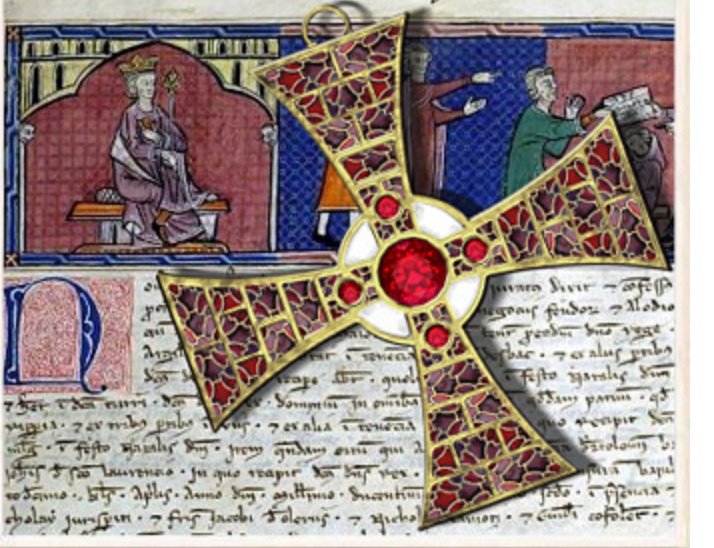

I Hope I Have Never Fallen and Never Shall Fall to Such a Depth of Cowardice and Ingratitude
 A World of silent cathedrals. Thousands of magnificent cities. Measureless galleries. Warriors poised in their chariots inscribed in arabesque bas-reliefs spiraling into eternity. Objects have their own light and beauty. There is grandeur in this view of life…having been originally breathed by the Creator into a few forms or into one; and that, whilst this planet has gone cycling on according to the fixed law of gravity, from so simple a beginning endless forms most beautiful and most wonderful have been and are being evolved. Above us shone the bright stars, beyond the zig zag line traces in the black sky by the tip of the foremast as it weaves back and forth; the gleaming stars charmed our eyes. The evening lights of Rocklin Trails had been left far in the rear. Without a doubt this was the most amazing and intense experience of my life. The faces of other people were clear and beautiful and open. Their faces looked bright and strong, like those of archangels. I could look at them without fear of shyness and with frank admiration and adoration. People looked pure, shed of a fog of dissimulations, anxieties, hypocrisies. Everyone was true to one’s own self and no one was ashamed. It was, so I had heard, a land where silence and serenity were an essential part of its beauty. I wanted to be quiet with my own heart and open to my own spirit. I sought especially the answer to the question of the relationship of the beauty of nature to the Infinite, to what some people call the Absolute and others call God. #RandolphHarris 1 of 16
 It was thus a strange kind of expectancy that I felt as I sat with my companions of the Cresleigh Rocklin Trails community looking at the stars gleaming in the night’s sky. A half Moon peeked over the pyramidal roof tops, and the stars scrutinized us in their sharp way, peering more brightly than the eyes of a cat at night. We witnessed another act of the drama which proves everlastingly that mortals are not alone in this natural paradise. It is a special little kingdom. Creation is a stone thrown uphill against the downward rush of habit. We must remember that without habit we cannot exits, just as without creation we would not exist. Habit and creation, or law and freedom, or gravity and turbulence, depending upon how or in what aspects we view these polarities, conduct an incessant and fruitful dialectic. In another aspect, of from another and judgmental point of view, we may call the polarities Heaven and Hell, though it is not always clear which is. Without contraries there is no progression. The doors of perception are cleansed, and by doors we mean those structural aspects of consciousness of which we are speaking, and by cleansed, we mean, unhinged and plain removed. The love of God and the vow of love inwardly is renewed each second of each day, each time eternal and each time wholly complete and new. #RandolphHarris 2 of 16
 Everyday as the bird rise with the lavender dawn, as from the buses on either side comes the exhilarating trills of warblers, the merry chirps of sparrows, and a well-blended chorus of notes from countless other feathery creatures, with faithfulness I pray God will not refuse us the grace. A silent priest whose figure and face arrested our attention was all and stood with natural dignity and grace of figure; his face was delicate, sensitive, intelligent. His clear blue eyes especially attracted us. We had seen him in the coffee shop, where he had quietly waited for coffee, which should have shown us that he was not native to this part of the globe. He had a pleasing English accent and a rich, expressive voice; he told us he was studying the rich treasures of Byzantine art and hagiography. We later learned that he was of a high British Family. About the human body itself there are several features we tend not to notice, they seem so common. When we have considered these common enough facts briefly, we may then turn to certain features of the human mind that also are so commonplace that one must make a special point of thinking about them if they are to be noticed at all. Our bodies are not closed, but open. Some of the openings seem mostly to let things in and other seems mostly to let thing out, but the main function of the 10 or 12 openings and numerous minor ones is to provide a constant interchange of materials between the system or field that we identify ourselves and the systems or fields that we recognize as not-ourselves. We generally face the way we are going. Another way of putting this is to say that our face is front. #RandolphHarris 3 of 16
 In terms of temporal passage, the things that have not yet happened are in front of us, in the course of time we shall face them. Like almost everything in nature, in our gross aspect we are approximately symmetrical, and generally bilateral. We have two ears and they are located on opposite side of the head. The fact of bilateral symmetry has a great deal to do with how we locate ourselves and all the not-ourselves in space and time. The stone road led up through a valley where the blossoming lemon and orange trees of this Easter season were exuberant with their delicate bright shades. They unceasingly tempted us to pause, like the mythological Circe, with their intoxicating order—but our muscles were responding like tuned violin strings and we had no choice but to continue up the beckoning path. I need not go on with these commonplaces, for you can yourself think of many more and of their consequences for our sense of self: our jointedness, our plasticity, the flexibility of control we have over our openings, our shape and our size and the tiny span we occupy in the scale of magnitude of the physical World, our remarkable similarity to one another, the counterphoic quality of our motility, our bony skeletons and casings, our living and moving brains, and our perishability. Joy arises from the full development of personal functioning. The parts of the body may be taught and trained, exercised and sharpened. The senses may be made more acute to discriminate smells and sights. Strength and stamina can be increased in the muscles. #RandolphHarris 4 of 16
 Sensory awareness and appreciation can be awakened so that more sensitivity to bodily feelings and natural events can be developed. Motor control can be cultivated so that development of mechanical and artistic skills result, and coordination and dexterity improve. The nervous system may be developed through study and the acquisition of knowledge and experience. Logical thinking and the creative potential can be nurtured and brought to fruition. Bodily functions controlling the emotions can also be developed. Awareness of emotions, appropriate expression of feelings (and their relation to other functions such as thinking and action) can be trained. I remind you of these aspects of our structure—the structural shapes of our destiny—both because I want as well to remind you of certain aspects of the structure of mind and because mind and body bear to one another a relationship which poses for psychology its ultimate and most crucial problem. I seem no reason why we should not conceive of the body as a machine, and indeed I can think of no reasonable alternative conception. However, protoplasm is different from all other mechanical systems in that it feels, and that in its complex human embodiment it possesses what we know as our own consciousness. #RandolphHarris 5 of 16
 This consciousness has a structure in the same sense that our body does, and some of its structural aspects do seem to derive from the structure of the body, though to say “derive from” already prejudges the question and exhibits one of the structural aspects of my own consciousness (and yours as well, I would guess), which sees a before and an after, logical antecedent and logical consequence, cause and effect. Thus far our realized human has acquired a finely tuned body, and has developed it to its full integrated functioning. If one is to develop further, one must be able to relate to other people in order to achieve the most joy. Since ours is a communal culture, this means functioning in such a way that human interaction is rewarding for all concerned. This theory assets that our needs from and toward other people are three: inclusion, control, and affection. We achieve interpersonal joy when we find a satisfying flexible balance in each of these areas between ourselves and other people. Inclusion refers to the need to be with people and to be alone. The effort in inclusion is to have enough contract to avoid loneliness and enjoy people; enough aloneness to avoid enmeshment and enjoy solitude. The fully realized mortal can feel comfortable and joyful both with and without people, and knows how much of each—and when—one functions best. #RandolphHarris 6 of 16
 The phenomenon of feeling cannot be shown to arise from any peculiarity of our mechanical constitution. The attempt to deduce it (for instance, the property of feeling) from the laws of mechanics, applied to never so ingenious a mechanical contrivance, would obviously be futile. It can never be explained, unless we admit that physical events are but degraded or undeveloped forms of physical events. We see frequently in creative individuals such an ability to transcend the ordinary boundaries of structures of consciousness; indeed, more than ability, an actual desire to break through the regularities of perception, to shatter what is stable or constant in consciousness, to go beyond the given World to find that something-more or that something-different that intuition says is there. Let us take a look at the features of mind that are as commonplace as those we have considered in thinking of the human body, but that ordinarily do not claim our attention. One word of qualification first, however. Structural characteristics of our body, even though we recognize them as dynamic and passing, seem to us more tangible than the structures of consciousness of which I shall speak. When I say that these structures I mean simply that they are relatively enduring and constantly recurring psychic dispositions, and thus have a sort of permanence and distinctness and boundedness which make the word structure appropriate. #RandolphHarris 7 of 16
 Our mind so operates that we consider the proposition logically impossible that a thing can both be and not be at the same time. Definitively and certainly, as far as human beings have the right to use these two words, our vocations impose upon us the necessity of engaging in intellectual work. And that is in order that we may serve God and the Christian faith in the realm of intelligence. The degree of intellectual honesty that is obligatory for us, by reason of our particular vocations, demands our artistic creations be so intimate and secret that no one can penetrate into them from outside. In the area of control the effort is to achieve enough influence so that a mortal can determine one’s future to the degree that one finds most comfortable, and to relinquish enough control so that one is able to learn on others to teach, guide, support, and at times to take some responsibility from one. The fully realized mortal is capable of either leading or following as appropriate, and of knowing where one personally feels most comfortable. Space and time seem to exist independently of our perception of them, and to be separate categories of being, themselves independent of one another. In science we say that a protocol sentence is one that specifies some space-time coordinate and ascribes to a thing or event there a certain quantity or value. #RandolphHarris 8 of 16
 In common sense, anything that happens happens at some particular time and in some particular place. Everything in principle has an explanation; that is, if we could but know everything, there would be no unintelligible or unaccountable—for event. In common parlance, there is a reason for everything. In affection the effort is to avoid being engulfed in emotional entanglement (not being free to relate without a deep involvement), but also to avoid having too little affection and a bleak, sterile life without love, warmth, tenderness, and someone to confide in. The fully realized mortal is aware of one’s needs, and function effectively not only in close, emotionally involving situations, but also in those of lesser intensity. As in the other two areas, one is able to both give and take, comfortably and joyfully. This approach to human potential is called Interpersonal Relations. Our mind seems to be distinct and separate from other minds, our self to belong to us alone; and like everything else, we exist in a particular time for us, the present, and a particular place, our body. Our self is the only self we known, and no other self knows us. And while our own individual mind, if it could validly be compared with other minds, might prove to be remarkably similar to those other minds, to us it is unique, the only one. Assume now that one has a good body structure, functioning well, and one relates optimally with the people of his or her life. However, one function within a society, and one’s development cannot be completed without the support of the society. #RandolphHarris 9 of 16
 If the society is repressive, one cannot develop fully. If social institutions are destructive, one cannot grow. If family life is constricting, if work is dehumanizing, if laws are humiliating, if norms are intolerable, if bigotry and prejudice are the bases human functioning, then our fully realized mortal is deep trouble. Joy at the level of organization comes when society and culture are supporting and enhancing to self-realization. Approaches at this level are called Organizational Relations. This, then, is our framework. Joy is developed through the levels of body-structure, personal functioning, interpersonal relations, and organizational relations. The fact that attention seem to wax and wane, that mind seems to sleep and to wake, that time seem to pass moment by moment in a succession of states rather than in an unstoppable flow, that most inanimate objects seem impenetrable and unmoving, that up seem to be above down, that the inside of a thing cannot be the outside of it, and so on are the basic achievement of consciousness. Joy is the feeling that comes when one realizes one’s potential for feeling, for having inner freedom and openness, for expression of expression of oneself, for being able to do whatever expression of oneself, for being able to do whatever one is capable of, and for having satisfying relations with others and society. In the older day the psychiatric way of determining whether or not the patient had what was called a clear sensorium was to ask the “W” questions: who are you, where are you, why are you here, when did you arrive, what is your name, what day I it, which way is out and so on. #RandolphHarris 10 of 16
 Knowing these whys and wherefores, and being able in addition to make some simple comparisons and strike some arithmetical averages, meant that you were sane enough for most purposes. It is no longer news that modern mathematics and physics can do so very well without some of these common-sense notions, and in most of the modern arts as well there are significant works that aim at breaking up the best established of our regularities of perception. A large part of the effort, unfortunately, must go into undoing. Guilt, shame, embarrassment, or fear of punishment, failure, success, retribution—all must be overcome. Destructive and blocking behavior, thoughts, and feelings must be altered. The experiences which I call hellish are marked by a sense of impossible distance between people, of intrinsic solitariness of the self, of vast darkness and desolation throughout the Universe, of the puniness of the shelters we have made for ourselves, the feebleness of fire against the outer coldness and darkness, and an anticipation of death or a feeling that one is already dead. The light and glow with which persons are suffused, or which come visibly from them, in the Heavenly experience, seems to go out when the experience is one of Hell. Or the person may seem to move in dark ugly red shadows, or to be a sickly green. Smiles become meaningless grimaces, and all human actions seem mere puppetry. In the hellish experience, time may seem impossibly slow and painful, and determinism is experienced as being a prison. #RandolphHarris 11 of 16
 By contrast, determinism is experienced under happier conditions as being perfectly natural and quite all right. The subject knows, with the preacher in Ecclesiastes, that there is nothing new under the Sun, that every story is an old story and has been told an infinite number of times before, but somehow that knowledge is not disturbing. Everything is reconciled; time does not matter. Talents and abilities must be developed and trained. It sounds overwhelming, but there is cause for optimism. Much work is now being done at all levels. You will recognize in these observations some concrete illustrations of the age-old paradoxes that philosophy grapples with, the paradoxes that art occasionally resolves. The philosophic problems are these: the problem of the one and the many, unity and variety; determinism and freedom; mechanism and vitalism; good and evil; time and eternity; the plenum and the void; moral absolutism and moral relativism; monotheism and polytheism and atheism. These are the basic problems of human existence, and, so far as we possibly can, we arrange things so as to forget them. The requirement that the Universe has put to the human brain is that of striking an average in countless dimensions simultaneously, so that the individual unit of life (for instance you and I) may continue to be alive as long as possible, and thus that life on the whole may increase. However, the paradox is that this striking of averages requires, from the individual point of view, a sacrifice of self. #RandolphHarris 12 of 16
 We are required to be part of universal habit, but evolution has brought us to that point of consciousness where we as individual human beings realize the preciousness of consciousness and perhaps take pride in our individual, inimitable selfhood. It does not make sense that we should be given life on the one hand and death on the other. The easiest thing to do is to forget it, and we usually succeed in doing so, with the help of our average-making brain, that remarkable machines which psychologist are now working to simulate in some material that does not feel and need not dissolve so soon. We are working hard to achieving personal growth through the exploration of feelings and a strong effort is being made to create an atmosphere of openness and honesty in communicating with each other. Ordinally, a strong feeling or group solidarity develops and group members are able to use each other very profitably. It is evident that an experience of such intensity and emotional importance may provide a means for initiating or facilitating the process of personal growth. It is easy enough to slide into the comforting sentiment, “Love will solve all.” However, it is not helpful to tell people that they should love. #RandolphHarris 13 of 16
 Telling they should love only promotes hypocrisy and sham, of which we have a good deal too much in the area of love already. Sham and hypocrisy are greater deterrents to learning to love than is outright hostility, for at least the latter may be honest and can then work worked with. Simply the proclaiming of the point that the World’s hostilities and hatreds would be overcome if only people could love invites more hypocrisy; and furthermore, we have learned in out dealings how crucial it is to lead from strength, and to meet people directly and realistically. If we begin by trying to make ourselves as individuals able to love, we shall make our most useful contribution to a World in dire need of concern for the neighbor and stranger. As with peace, those who call for love loudest often express it least. To make ourselves capable of loving, and ready to receive love, is the paramount problem of integration; indeed the key to salvation. Do let me thank you again from the bottom of my heart for your kindness to me. I shall often think of you. I hope that we shall have news of each other from time to time. May we reverse or slow down some of the averaging process, alter our experience of the passage of time, dissolve many definitions and melt many boundaries, permit greater intensities or more extreme values of experience to occur in many dimensions. I hope I have never fallen, and never shall fall, to such a depth of cowardice and ingratitude. #RandolphHarris 14 of 16
 I do not need any hope or any promise in order to believe that God is rich in mercy. I know this wealth of his with the certainty of experience; I have touched it. What I know of it through actual contact is so far beyond my capacity of understanding and gratitude that even the promise of future bliss could add nothing to it for me; since for human intelligence the addition of two infinites is not an addition. God’s mercy is manifest in affliction as in joy, by the same right, more perhaps, because under this form it has no human analogy. Mortal’s mercy is only shown in giving joy, or may in inflicting pain with a new to outward results, bodily healing or education. However, it is not the outward results of affliction that bear witness to divine mercy. When we try to disguise this, the outward results of true affliction are nearly always bad. It is in affliction itself that the splendor of God’s mercy shines, from its very depths, in the heart of its inconsolable bitterness. If still preserving in our love, we fall to the point where the soul cannot keep back the cry “My God, why hast thou forsaken me?” if we remain at this point without ceasing to love, we end by touching something that is not affliction, not joy, something that is central essence, necessary and pure, something not of the senses, common to joy and sorrow: the very love of God. #RandolphHarris 15 of 16
 It is the same as when we see someone very dear to us after a long absence; the words we exchange with one do not matter, but only the sound of one’s voice, which assures us of one’s presence. The knowledge of this presence of God does not afford consolation; it takes nothing from the fearful bitterness of affliction; nor does it heal the mutilation of the soul. However, we know quite certainly that God’s love for us is the very substance of this bitterness and this mutilation. I should like out of gratitude to be capable of bearing witness to this. This is the source of beauty. Even if there were noting more for us than life on Earth, even if the instant of death were to being us nothing new, the infinite superabundance of the divine mercy is already secretly present here below in its entirety. If we believe that the Father is within us, and if we believe that all things are possible to God, then we should no longer deny that God knows what to do with his own creation, and we should include ourselves in that creation. Only got can give life. And we should never forget that God is always working constructively. The greatest gift of life is to be accepted. #RandolphHarris 16 of 16
What is so Frightening about Freedom? We Cherish it. We Fight for it. Yet We Run from it and Go to Great Lengths to Avoid an Awareness of it. Why?
 Hello, you have the most amazing digs. I simply love your paintings. We also express our fear of freedom by seeing much of our lives in terms of demands and obligations. Few of us can claim we lack talent, for whatever shortage of abilities we may have, most of us have a real knack for playing this game! Getting along in the World as it is, adequate degree of social conformity, capacity to adapt to a wide range of conditions, ability to fit in—this kind of adjustment is not an unmixed blessing; the unadjusted complex person, who does not fit in very well in the World as it is, sometimes perceives the World more accurately than does one’s better adjusted fellow. Deceitfulness is identified with duplicity, lack of frankness, guile, subterfuge. Again, one recalls the adjective self-descriptions of the complex people: gloomy, pessimistic, bitter, dissatisfied, demanding, pleasure-seeking, spendthrift. There is certainly some suggestion here of early deprivation, of pessimism concerning the source of supply, which is seen as untrustworthy and which must be coerced, or perhaps tricked, into yielding. It is as though the person had reason to believe that one would not get what was coming to one unless one made sure that one did, by whatever device might be available. #RandolphHarris 1 of 21
 It is this lack of infantile trust that leads to adult duplicity and craftiness. One aspect of complexity then (and perhaps a penalty sometimes attaching to it) is, to render it in the common phrase, a sort of “two-facedness,” an inability to be wholly oneself at all times. The more simple, natural, and likeable person finds it easier to be always oneself. As compensation, the complex person may possess the capacity to be ironic or sardonic, which can be valuable attitudes. The preference for complexity is clearly associated with originality, artistic expression, and excellence of esthetic judgment. Originality was one of the three criterion variables around which the assessment research program was organized, and every subject was rated by the faculty members of one’s department on the degree or originality one had displayed in one’s work. It is Saturday afternoon and the wife says, “Matthias, how about watching the kids for the rest of the afternoon while I go shopping?” Now, Matthias may not feel at all enthusiastic about this plan for his afternoon. However, there is a good chance that he will feel some obligation (“After all, she does work pretty hard, too!”) and will agree (by a grunt) with the proposal. However, he may also feel that she has made an unreasonable demand. So he makes a few grumbling “bitches” about it, and the wife goes off feeling hurt, angry, or guilty, with some of the fun taken out of her expedition. #RandolphHarris 2 of 21
 By playing the demand-obligation game Matthias has blinded himself to the alternatives that he had. What are some of the things he might have said? “Honey, I was just going to call a couple of the guy and get together with them. How about calling a baby-sitter?” Or, “Gee, I was looking forward to spending the afternoon with you and the kids. Is there any other time you could do it?” Or, “I was planning to do somethings around the house that I can’t do if I have to watch the kids. Please call in a sitter.” Of course, there is always the chance, and perhaps not so remote either, that if Matthias were aware of his alternatives and felt free to exercise them, he might genuinely enjoy playing with the children for the afternoon, but with the help of the demand-obligation game he manages to keep himself miserable and unfree. If you think you do not play this game, look at your gift-giving habits. See how often you tell yourself that a gift is expected or that you owe it to a person, thereby blunting your enjoyment in giving as an expression of your love. One of the tricky aspects of the demand-obligation game is that, when we rebel against what others expect of us and against our own feelings of obligation, we are no more free than when we accede to them. #RandolphHarris 3 of 21
 If Matthias flatly refuses to stay home with the children because it is expected of him, he has not really acted freely on the basic question of whether he would enjoy that time with his youngsters. Probably many hipster types are so busy rebelling against society’s expectations that they are not free to ask themselves whether they are living the life most satisfying to themselves. Whenever we perceive life primarily in terms of others’ expectations, we are less than fully free. Not being ourselves with others is another way we often express our fear of freedom. None of us is completely ourselves all of the time in our encounter with others, and no doubt some lack of candor is often necessary, even desirable, in our complicated society. However, we overwork if, for we constantly tell ourselves in all kinds of situations that we cannot really be ourselves. We say that we cannot be genuine with another because: “He’s not really capable of understanding how I feel.” Or: “He wouldn’t love me any more.” Or: “She is too mature [or too young] to understand what I’m talking about.:” Or: “He hasn’t read as much about these psychological things as I have, and it would be completely over his head if I told him how I feel.” Or “He has so many troubles at the office I don’t want to burden him with my feelings about what goes on here at home.” Or: “She reacts emotionally whenever I say how I feel, so I’ve just learned to keep my mouth shut.” #RandolphHarris 4 of 21
 Many other things some of us do could be interpreted as expressions of our fear of freedom. Some people live vicariously, substituting imaginary lives for the adventure of living: “I guess I read an average of six of seven mystery novels a week.” Psychosomatic illnesses probably perform this, among other, services: “I’m sorry, but I have another one of my sick headaches tonight and just can’t go out. Intellectualism provides a way of substituting rumination for spontaneous living: “Doctor, I’ve read just about every psychology book I can get my hands on. I can’t understand why I keep on having troubles.” Perhaps a person must have more commerce with oneself and one’s feeling states and less with the environment during childhood if one is later to have sufficient communication with one’s own depths to produce original thought. In this view, originality evidenced in maturity is to some extent dependent upon the degree to which the person in early childhood is faced with a complicated relationship to the maternal source of supply, combined with one’s capacity to persist at and eventually to achieve some mastery of this earliest problem situation. The argument would be that this primitive experience of phenomenal complexity sets a pattern of response which results in slower maturation, more tentativeness about the final form of organization, a resistance to early crystallization of the personality, and finally, greater complexity in one’s view both of the outer and of the inner Worlds. #RandolphHarris 5 of 21
 Perhaps such speculation is unwarranted, however, and in any case it is clear that a great many other factors are involved in determining originality. What can be said is that originality and artistic creativeness and discrimination are related to the preference for complexity. The complex person’s greater flexibility in thought process is shown by a correlation with rated rigidity, defined as inflexibility of thought and manner; stubborn, pedantic, unbending, firm. That repressive overcontrol may sometimes be associated with the preference for simplicity has already been indicated by the correlation of complexity with constriction, and by another correlation with impulsiveness. It is shown also in the relation of the complexity measure to psychiatric variables that are scaled with hysteria, which also correlates with Schizophrenia and psychopathic deviate. Thus complexity goes along both with lack of control impulse and with the failure of repression which characterizes the schizophrenic process. This is by no means to suggest that because a person is complex, unresponsive, and lazy that they show schizophrenic tendencies of a pathological degree, but it is reasonable to supper that it correlates the sort of free-floating symbolic activity and frank confrontation and expression of the unconscious that is often so startling present in schizophrenic patients. #RandolphHarris 6 of 21
 Healthy people are usually able to repress aggressive and erotic impulses, or to render them innocuous by rationalization, reinterpretation, or gratification in a substitutive manner which will not cause conflict. At the risk of being over-simple, we might say that preference for the complex in the psychic life makes for a wider consciousness of impulse, while this sort of simplicity, when it is preferred, is maintained by a narrowing of that consciousness. The perceptual decision in favor of admitting complexity may make also for greater subjectively experienced anxiety. To tolerate complexity, one must very often be able to tolerate anxiety as well, this finding would seem to day. The person who prefers complexity is socially nonconformist. With all the ways people have of expressing their fear of freedom it may be fair to say that the most unlimited ability that the human being has is that of building cage around itself. And once we build our cage, we work hard to keep them in constant report. What is so frightening about freedom? We cherish it. We fight for it. Yet we run from it and go to great lengths to avoid an awareness of it. Why? One reason we are afraid of freedom is that we do not trust ourselves. If we were not restricted in some way, we are afraid of what we would do. #RandolphHarris 7 of 21
 One woman described a lifelong fear of high places. When she began to explore her feelings further, she became aware that she had always been afraid that if the opportunity presented itself, she might jump to her death. By being afraid of and avoiding such places she was able to bypass the risk that her mistrust of herself told her was involved. Another young wife and mother suffers considerable inconvenience because she has never learned to drive. As she talked about it, it became clear that the freedom to come and go as she pleases is too frightening. “I’m afraid of what I might do,” she said. “I might start running around be begin neglecting my home and family.” And so she keeps herself immobile and as dependent on her husband as possible. All of us, no doubt, have some kind of fear like this. We are afraid that is we ever let ourselves go we would be likely to run wild or become savages, or lazy, no-good transients, or neglecting parents. It follows, of course, that our distrust of ourselves is rooted in our self-hate. It is as though we were constantly warning ourselves to be on guard against ourselves: “Look out, now, this guy is no damn good. Let him our of your sight and he’s liable to do most anything. Keep him hobbled. And do not let down your guard for a moment.” #RandolphHarris 8 of 21
 In reality, however, it is not the genuinely free person who runs wild, becomes a savage, or lack the motivation to be productive. On the contrary, behavior that is destructive to the self or to others is an indication that the person is enslaved to repressed feelings that drive one and that one cannot face openly. Such behavior is the by-product of self-hate. If we have lived our lives denying freedom to ourselves, perhaps there is some justification for our mistrust or freedom. Just as a bid who has spent all its life in a cage might bewildered if released and not to know how to handle life in the wild, so we, too, may not be very well prepared to handle freedom. Many people need professional help as they seek to grant themselves greater personal freedom. A second reason we are afraid of freedom is that freedom, like love, means vulnerability. When we are free and spontaneous in our relationships with others, our guard is down. We are open to the possibility of being hurt. Consequently, we often keep ourselves bound emotionally. Coupes often have the mystifying and frustrating experience of discovering shortly after marriage that they no longer have such a strong, delicious desire for each other as they had before. Sometimes they immediately conclude that they no longer love each other. #RandolphHarris 9 of 21
 This is probably incorrect, for love is not so unstable a quality as all that. What has happened is that the couple has become frightened, since marriage is so intense a relationship with so much potential for being hurt. They react to their fear by unconsciously cutting off their freedom to experience and express their love. And, of course, they discover all kinds of misleading and irrelevant reasons for their change of feelings. Sometimes we pick safe moments to be free. One wife complained that the only time her husband was affectionate was invariably when he was about to leave for work. At that moment he would become the loving, cuddly teddy bear of a husband whom she had dreamed of all her life. At practically all other times he would be cool and aloof. It appears evident that he felt free to be loving at that moment when he just had to leave within quick five minutes. For then it was relatively safe for his love to come out of hiding. It could not possibly lead to anything further, which might mean more vulnerability. He could hug her and run! And she was left thinking to herself, “Fell well my lonely one, nothing else here can be done. So hit the freeway. I don’t ever want to see you again. You didn’t do me right, so a long good-bye tonight. Maybe in some other life, I will see you again. I will bet the Dow Jones if you didn’t come back, I’ll be just fine. Imagine how crushed she was for you to say I was not the one. My friends say I was in denial defending you as a perfect friend, but no one was held prisoner. It’s you again! Maybe someday in your dreams, my love, maybe you can say ‘Damn, it’s you again!’” (Hit the Freeway by Toni Braxton). #RandolphHarris 10 of 21
 So our fear of freedom does make some kind of sense, emotionally. We feel we cannot be trusted with freedom and to be free is to risk being hurt. However, understanding why we fear freedom does not make it any less desirable as a goal in life. For in actuality our enslavement to fear is more hurtful to us than freedom. Avoidance of freedom exacts a heavy toll in our lives. Some readers may have been thinking, during our discussion of the los of the center of values in our society, that what is necessary is simply to work out a new set of values. And others may have the thought, “There is nothing wrong with the values of the past—such as love, equality and human fellowship. We need simply to bring these values back again. Both of these pints miss the central problem—namely, that modern mortals have to a great extent lost the power to affirm and believe in any value. No matter how important the content of the values may be, or how suitable this or that value may be on paper, what the individual needs is a prior capacity, namely, the power to do the valuing. The triumph of barbarism in such movements as Hitlerian fascism did not occur because people forgot the ethical traditions of our society as one might misplace a code. The humanistic values of liberty and the greatest good for the greatest number, the Hebrew Christian values of community and love for the stranger, were still in the textbooks, were still taught in Saturday and Sunday school, and no archeological expedition was needed to unearth them. #RandolphHarris 11 of 21
 People rather have lost the value of individual competition, the pursuit of competitive enterprise, and individual effort and initiative, and the inner capacity to affirm, to experience values and goals as real and powerful for themselves. There is, furthermore, something artificial about setting out to find a center of value, as though one were shopping for a new coat. The endeavors to discover values outside oneself generally slide the individual directly into the question of what the group expects of one—what the style these days, in values as in coats? And this, as we have seen, has been part-and-parcel of the trends toward emptiness in our society. There is even something wrong in the phrase discussion of values. One never receives one’s convictions about values through intellectual debates. The things in a person’s life which one actually does value-one’s children and one’s love for them and theirs for one, the pleasure one has in drama or listening to music or playing gold, the pride one has in one’s work—all these one accepts as realities. One would regard any theoretical discussion of the value of one’s loving one’s children, or one’s pleasure in music, for example, as irrelevant if not impertinent. If you pushed one, one would say, “I value the love of my children because I actually experience it,” and if you pressed far enough to irritate one, one might well say, “If you have not experienced it yourself, I cannot explain it to you.” #RandolphHarris 12 of 21
 In actual life the real value is something we experience as connected with the reality of our activity, and any verbal discussion is on a quite secondary level. We do not mean to psychologize values, or to imply that anything toward which one is inclined at the moment is good and true. Nor are we implying any depreciation of the role of the sciences of mortal, as well as philosophy and religion, in clarifying values. Indeed, I believe that the combined contributions of all these disciplines are requires for the solution of our crucial problem of what values modern mortals can live by. However, we do mean to emphasize that unless the individual oneself can affirm the value; unless one’s own inner motives, one’s own ethical awareness, are made the starting place, no discussions of values will make much real difference. Ethical judgment and decision must be rooted in the individual’s own power to evaluate. Only as one oneself affirms, on all levels of oneself, a way of acting as part of the way one sees reality and chooses to relate to it—only thus will the value have effectiveness and cogency for one’s own living. For this obviously is the only way one can or will take responsibility for one’s action. And it is the only way that one will learn from one’s action how better to act next tie, for when we act by rote or rule we close our eyes to the nuances, the new possibilities, the unique ways in which every situation is different from every other. #RandolphHarris 13 of 21
 Furthermore, it is only as the person chooses the action, affirms the goal in one’s own awareness, that one’s action will have conviction and power, for only then will one really believe in what one is doing. For one thing, our fear of freedom results in inner tension. We have a virtually irrepressible desire to be more spontaneous and free. Since this desire is frightening, a conflict situation is present. We have to expend great amounts of energy keeping our cages in constant repair. Energy thus expanded in maintaining rigid control of ourselves puts a strain on us physically and emotionally. No doubt many physical and emotional problems are associated with this strain. Our fear of freedom also frequently leads to numbness of oneself. When we do not feel free to be ourselves, one way out is gradually to cut ourselves off from awareness of our feelings. Extreme instances of this occur in certain schizophrenic patients who seem totally incapable of experiencing a genuine emotion of any kind. Life and the freedom to feel have become so frightening that they have retreated into a World where there is no feeling. However, deadness to the self is not limited to such individuals. All of us in some degree have retreated from complete awareness. And to this extent we have deprived ourselves of the opportunity of living life at its fullest. Often this numbness affects our relations with others, and we find it difficult to sense how we really feel toward others. #RandolphHarris 14 of 21
 Apparently, even the most basic sense can become somewhat dulled, giving all of life a kind of gray bleakness. And it is not unusual for a person who has been making progress in psychotherapy to report a new sense of awareness. The grass may seem greener. Natural beauty, unnoticed before, is seen with new eyes; and there is a fresh feeling of aliveness in one’s body. Fear from freedom also often cuts us off from the experience of love. When we are not free to be ourselves, we are staying at a distance from others. Since we do not let others see us as we are and since we withhold our true feelings from them, we make it almost impossible for them and ourselves to feel emotionally close. And if the other person, in spite of our masks, appears to care for us, we always have an out. We can say, “He doe not love me for what I am. I have seduced him into caring for me, and he likes me only because of what I let him see of me. If we really knew me, he would no longer care for me.” Thus we persuade ourselves that we dare not give up our slavery to our masks. And at the same time we also protect ourselves from making the frightening discovery that those who love us, love us in spite of—not because of—the masks we wear. In this way we perpetuate our fear of spontaneity. #RandolphHarris 15 of 21
 Our fear of freedom is especially evident in two particular areas that deserve individual examination. We are afraid of the freedom to be angry and of the freedom to be aware of and enjoy of pleasures of the flesh feelings. Pleasure, joy, and happiness all involve a sense of well-being, a sense of being up, and having good feelings toward yourself and/or others. “And the Lord God doth work by means to bring about his great and eternal purposes; and by very small means the Lord doth confound the wise and bringeth about the salvation of many souls,” reports Alma 37.7. The price we pay for avoiding the pain of being fully alive is that we are excluded from the pleasure as well. Preference for simplicity is associated with social conformity, respect for custom and ceremony, friendliness toward tradition, somewhat categorical moral judgment, an undeviating patriotism, and suppression of such troublesome new forces as inventions that would temporarily cause unemployment. It seems evident that, at its best, preference for simplicity is associated with personal stability and balance, while at its worst it makes for categorical rejection of all that threatens disorder and disequilibrium. In its pathological aspect it produces stereotyped thinking, rigid and compulsive mortality, and hatred of instinctual aggressive and erotic forces which might upset the precariously maintained balance. #RandolphHarris 16 of 21
 There is a passage in Hugo’s Les Miserables which is remarkably coincident with these observations. It occurs at that point in the narrative when Javert, the single-minded and merciless representative of the law, has turned his own World upside-down by allowing Jean Valjean, the outlaw whom he has so relentlessly pursued, and whom he finally had in his grasp, to escape. He says to himself, in this surprising moment, “There is something more than a duty.” At this, “he was startled; his balances were disturbed; one of the scales fell into the abyss, the other flew into the sky.” To be obliged to acknowledge this: infallibility is not infallible, there may be an error in the doctrine, all is not said when a code has spoken, society is not perfect, authority is complicate with vacillation, a cracking is possible in the immutable, judges are mortal, the law may be deceived, the tribunals may be mistaken…to see a flaw in the immense blue crystal of the firmament! Certainly it was strange, that the fireman of order, the engineer of authority, mounted upon the blind iron-horse of the rigid path, could be thrown off by a ray of light! that the incommutable, the direct, the correct, the geometrical, the passive, the perfect, could bend! Until now all that he had above him has been in his sight a smooth, simple, limpid surface; nothing there unknown, noting obscure; nothing which was not definite, coordinated, concatenated, precise, exact, circumscribed, limited, shut in, all foreseen; authority was a plane; no fall in it, no dizziness before it. #RandolphHarris 17 of 21
 Javert had never seen the unknown except below. The irregular, the unexpected, the disorderly opening of chaos, the possible slipping into an abyss; that belonged to inferior regions, to the rebellious, the wicked, the miserable. This passage brings together many observations made intuitively by Hugo and arrived at in more pedestrian manner in this research. A precise simplicity is seen to be related to authority, stick doctrines, tradition, morality, constriction, and repression. The opposite of all these things is typified by the flaw in the crystal, by the irregular, by disorderly chaos, by such qualities as are to be found in the inferior regions, where reside the rebellious, the wicked, and the miserable. The emphasis here is pathological, and the dichotomy absolute, but if we extend the range into normal behavior and admit the many shortcomings of the typology, there is considerable agreement between Hugo’s intuition and this set of correlations. We would suggest that the types of perceptual preference we have observed are related basically to a choice of what to attend to in the complex of phenomena that makes up the World we experience; for the World is both stable and unstable, predictable and unpredictable, ordered and chaotic. To see it predominantly as one or the other is a sort of perceptual decision. #RandolphHarris 18 of 21
 One may attend to its ordered aspect, to regular sequences of events, to a stable center of the Universe (the Sun, the church, the state, the home, the parent, God, eternity, etc.), or one may instead attend primarily to the eccentric, the relative, and the arbitrary aspect of the World (the briefness of the individual life, the blind uncaringness of matter, the sometime hypocrisy of authority, accidents of circumstance, the presence of evil, tragic fate, the impossibility of freedom for the organism capable of conceiving freedom, and so on). Either of these perceptual decisions may be associated with a high degree of personal effectiveness. It is as though there is an effective and an ineffective aspect of each alterative. Our thinking about these various aspects is as yet based only upon clinical impressions of our subjects, but it is perhaps worth recording while we go on with the business of gathering more objective evidence. At its best, the decision in favor of order makes for personal stability and balance, a sort of easy-going optimism combined with religious respect for authority without subservience to it. This sort of decision will be made by persons who from an early age had good reason to trust the stability and equilibrium of the World and who derived inner sense of comfort and balance from their perception of an outer certainty. #Randolphharris 19 of 21
 At its worst, the decision in favor of order makes for categorical rejection of all that threatens disorder, a fear of anything might being disequilibrium. Optimism becomes a matter of policy, religion a prescription and a ritual. Such a decision is associated with stereotyped thinking, rigid and compulsive morality, and hatred of instinctual aggressive and erotic forces which might upset the precariously maintained balance. Equilibrium depends essentially upon exclusion, a kind of perceptual distortion which consists in refusing to see parts of reality that cannot be assimilated to some preconceived system. The decision in favor of complexity, at its best, makes for originality and creativeness, a greater tolerance for unusual ideas and formulations. The sometimes disordered and unstable World has its counterpart in the person’s inner discord, but the crucial ameliorative factor is a constant effort to integrate the inner and outer complexity in a high-order synthesis. The goal is to achieve the psychological analogue of mathematical elegance: to allow into the perceptual system the greatest possible richness of experience, while yet finding in this complexity some over all patter. #RandolphHarris 20 of 21
 Such a person is not immobilized by anxiety in the face of great uncertainty, but is at once perturbed and challenged. For such an individual, optimism is impossible, but pessimism is lifted from the personal to the tragic level, resulting not in apathy but in participation in the business of life. At its worst, such a perceptual attitude leads to grossly disorganized behavior, to surrender to chaos. It results in nihilism, despair, and disintegration. The personal life itself becomes simply an acting out of the meaninglessness of the Universe, a bitter joke directed against its own maker. The individual is overwhelmed by the apparent insolubility of the problem, and find the disorder of life disgusting and hateful. One’s essential World-view is thus depreciative and hostile. The Universe is a spiritual system and we are part of it; God is right where we are and is discovered at the center of our own being. Turning from everything that denies this and quietly contemplating the Perfection of the Inner Mortal, who is an incarnation of God, we meet the Great Reality in the only place we shall ever discover it, within our own hearts and souls and minds. The immediate availability of good conscious is the practical application of spiritual thought as a force to the solution of human problems; the inevitable necessity that good shall come to every soul; this leads to the belief in immortality and the continuity of the individual stream of consciousness, and eternal expansion of the individual life. #RandolphHarris 21 of 21
The Lord Will Indeed Give What is Good, and Our Land Will Yield its Harvest
 I shut off the overhead chandelier immediately and switched on two of the smaller corner lamps. It was softly dim now, but not uncomfortably so, and I directed everyone to sit down. To day of the moment of genuine encounter—the vitalizing transaction, as I have called it—that it may be as frail as love or blessedness is perhaps to out too much emphasis on the fragility of the live and growing thing that psychotherapy is designed to nourish. Certainly many psychotherapists take a hardier view. In fact, psychotherapeutic patience aims to overcome precisely the febrile quality of the state of being in love and the disillusion that time brings if there is no capacity for such growth and change in the relationship. Recall Housman’s poem in A Shropshire Lad: “Oh, when I was in love with you, then I was clean and brave, and miles around the wonder grew how well did I beave. But now the fancy passes, and noting shall remain, and miles around they will say that I am quite myself again.” The fact of the matter is that psychotherapy properly practiced is a discipline of considerable technical complexity, and diagnosis is by no means either name-calling or even labeling or pigeon-holding. Diagnosis itself is, if really well done, a form of relationship calling for a fineness of empathic understand and, a genuine encounter. #RandolphHarris 1 of 13
 The interest in psychotherapy is in the general problem of describing people in their relationships with other people as much as it is in exploring the special case of two person who talk to each other for the express purpose of inducing changes in behavior of one of them. The goal is concerned with understanding the conditions that make personal interactions mutually satisfying, constructive, and on-going, on the one hand, and antagonizing, destructive, and stultifying, on the other. Space-time coordinates are not necessarily accurate determinates of the form of personal interaction for almost any two people, Monday morning at work in the office can be very different from Friday afternoon after work in a bar. Even in the same place and at the same time, two men are likely to interact differently from two women, or from a man and a woman. People who bear a superior-subordinate relation to one another will interact differently from those whose relation to one another is coordinate. Such differences as older and younger, stronger and weaker, not as aware and intelligent, rich and poor, psychotic and sane, will make a difference too in the form of personal interactions. Related to such differences as these, but not entirely co-extensive with them, are the need-structures of the persons involved. #RandolphHarris 2 of 13
 There are some persons whose needs are so intense that they force almost all their personal interactions into the same for, thus limiting greatly the range of possible response on the part of the other person. Such a necessitous and undifferentiated character may be given to all interactions by the orally deprived person, who strives desperately and incessantly to get from others, fearing starvation and abandonment if one is not immediately fed (love, or admiration, or applause in some form). So one with needs for order and balance may react frantically to interaction with a person who is seen as threatening to upset things, or who flaunts various derivative forms on rigid indiscipline. There are, of course, many less compelling and theoretically unclaimed needs for which satisfaction is sought, and generally found in personal interaction. From other person one may get information, entertainment, helpful criticism, praise, blame, money for services rendered, inspiration, pleasures of the flesh, food, transportation, votes, and even psychotherapy. Which brings us to the special case tat is the focus of this investigation. #RandolphHarris 3 of 13
 Psychotherapy is for private patients who have some disturbance in interpersonal relations but are not sick enough to require hospitalization generally takes place in the office of a psychiatrist or a psychologist, and usually accompanied, more or less immediately, by the payment of a fee. It is begun at the behest of the patient, who has come to the opinion that his or her mind is not working properly, or who at least knows that one’s body is not working properly and that medical men and women have told one that the cause lies in one’s mind. Imagine if our minds where they powerful that they control our bodies and our environments. That is compelling because it indicates through enough education and training, we should be able to heal our own bodies, minds, and have better control over our environment. So anyway, the patient is usually very unhappy, and one’s personal interactions in the past have been unsuccessful in satisfying one’s needs (some of which, indeed, one may not be aware of). Therapist are supposed to gain a certain amount of gratification to be had from being a person of power and wisdom, to whom other come from help. However, besides monetary motives and others, it sometimes happens that the therapist is also quite unsuccessful in other personal interactions, and doing psychotherapy is one of the few ways in which one can really get into contact with other people. #RandolphHarris 4 of 13
 Humans can look before and after. One can transcend the immediate moment, can remember the past and plan for the future, and thus choose a good which is greater, but will not occur till some future moment in preference to a lesser, immediate one. By the same token one can feel oneself into someone else’s needs and desires, can imagine oneself in the other person’s place, and so make one’s choices with a view to the good of one’s fellows as well as oneself. This is the beginning of the capacity, however imperfect and rudimentary it may be in most people, to love thy neighbor and to be aware of the relation between their own acts and the welfare of the community. The human being not only can make such choices of values and goas, but one is the being who must do so if one is to attain integration. For the value—the goal one moves toward—serves one as a psychological center, a kind of core of integration which draws together one’s powers as the core of a magnet draws the magnet’s lines of force together. Knowing what one wants is essential for the beginnings of the child’s and young person’s capacity for self-direction. Knowing what one wants is simply the elemental form of what in the maturing person is the ability to choose one’s own values. #RandolphHarris 5 of 13
 The mark of the mature being is that one’s living is integrated around self-chosen goals: one knows what one wants, no longer simply as the child wants ice cream but as the grown person plans and works toward a creative love relationship or toward business achievement or what not. One loves the members of one’s family not because one has been thrown together with them by the fate of birth but because one finds them loveable and chooses to love them; and one works not merely from automatic routine, but because one consciously believes in the value of what one is doing. Anxiety, bewilderment and emptiness—the chronic psychic infirmary of modern mortals—occurs mainly because one’s values are confused and contradictory, and one has no psychic core. We can now add that the degree of an individual’s inner strength and integrity will depend on how much one believes in the values one lives by. Many people want to know how a person can maturely and creatively choose and affirm such values? In the first place, one’s values and the difficulty in affirming them depend very much on the age we live in. The beliefs and traditions handed down in society tend to become crystalized into rigid forms which suppress individual vitality. For example, many people still believe that America is supposed to accept poor huddled masses from anywhere, but the gold rush is over, and many Americans cannot afford their cars, mortgage and rent. In fact, 7.1 million Americas are 90 days overdue on their care loans. #RandolphHarris 6 of 13
 America is also suffering from a housing crisis, record debt, and high insurance costs. What happens in such a time is that vitality gets divorced from tradition, and tends to become diffuse rebelliousness which loses its power like water flowing in every direction on the ground. Are we not caught between authoritarian trends on one side and directionless vitality on the other? In times of social upheaval, like our own, people suffer from feelings of rootlessness and tend to cling to authority and established institutions as a source of security in the storm. Most people are incapable of tolerating change and uncertainty in all sectors of life at once. So many people will turn toward a more conservative authoritarian belief in economics and politics, more rigid moral attitudes, and will join in increased numbers the conservative, fundamentalist rather than liberal ideologies. However, people who are confused and bewildered and in a panic about what to believe will grab at destructive and demonic values. Communism comes in to fill the vacuum of faith caused by those who seek rebellion. For rebels, it provides a sense of purpose which heals internal agonies of anxiety and doubt as they feel helpless to help themselves. However, we many not be afraid that this nation will go communistic—as I am not—but the seizing upon destructive values shows itself in other ways. #RandolphHarris 7 of 13
 There are clear signs that liberal, reactionary trends are growing—in religion, in politics, in education, in philosophy, and in tendencies toward ridged doctrines in science. Same sex marriage is accepted by many churches, democrats refuse to allow the president to protect our country, schools want to start teaching kids about homosexuality and transgender in second grade, and people really believe that humans evolved from apes. Japan has been a very conservative country, but recently to women from Japan, who had been inflicted by rebellious Californians went on the Japanese news a declared they wanted same sex marriage. Such a reactionary trend and declaration is unheard of on traditional Japanese culture. When people feel threatened and anxious, they sometimes become more liberal, and when in doubt they may lose their heritage, identity and culture; and then they lose their own vitality. They use manifestations of popular culture and rebellion to build new values and create a wide spread kaleidoscope deviant behavior which is now acceptable because everyone is doing it; or they make an outright panicky retreat into the past. However, many are discovering that the flight to the past does not work. Difficult as it is, we must accept ourselves and our society where we are, and find our ethical center through a deeper understanding of ourselves as well as through a courageous confronting of our historical situation. #RandolphHarris 8 of 13
 In the last few years another movement has been growing which is very different from the return to religion. Many intellectuals and other sensitive persons have become more and more aware of their loss in being cut off from the religious and ethical traditions of the culture, and that those who were not familiar with the thought of Moses, Isaiah, Job, Jesus, Buddha, Lao-tzu, Dr. Freud were missing something of crucial significance in an age where mortals must rediscover their values. They have turned with a new interest to the ethical and religious wisdom of the past, not necessarily the ways and customs. To the extent that this trend is not a product merely of the anxiety of our day—as in its best exemplars it certainly is not—it is indeed salutary. However, the danger lies in the fact that some intellectuals, being newcomers to the field and therefore less able to differentiate at the moment, are apt to seize on the more obvious and vocal but less sound aspects of the cultural tradition. If the interest of the intellectuals in politics chiefly contributes to the growth of liberalism and whatever goes and reaction, we are the more lost. The real problem, thus, is to distinguish what is healthy in ethics, politics, and religion, and yields a security which increases rather than decreases personal worth, responsibility and freedom. #RandolphHarris 9 of 13
 Not to move forward, to stay where we are, to regress, or to become lawless and lackadaisical, in others words to rely on what we have, is very tempting, for what he have, we know; we can old onto it, feel secure in it. We fear and consequently avoid, taking a step into the unknown, the uncertain; for, indeed, while the step may not appear risky to us after we have take it, before we take that step the new aspects beyond it appear very risky, and hence frightening. Only the only the cold, the tired, is safe; or so it seems. Every new step contains danger of failure, and that is one of the reasons people are so afraid of freedom. Obviously, this reveals a neurotic problem which has to be resolved. Mortal’s task is to unite love and will. They are not united by automatic biological growth but must be part of our conscious development. In society, will tends to be set against love. The backdrop of human existence implied in every myth of the Garden of Eden, every story of paradise, every “Golden Age”—a perfection which is deeply embedded in mortal’s collective memory. Our needs are met without self-conscious effort on our part, this is the first freedom, the first yes. However, this first freedom always breaks down. And it does so because of the development of human consciousness. We experience our difference from conflict with our environment and the fact that we are subjects in a World of objects. #RandolphHarris 10 of 13
 This is the separation between self and World, the split between existence and essence. This first freedom is inadequate because one cannot remain in it if we are to develop as human beings. And though we experience our separation from it as guilt, we must nevertheless go through with it. However, it remains the source of all perfection, the backdrop of all utopias, the perpetual feelings that there ought to be paradise someplace, and the efforts—forever creative but forever doomed to disappointment—that make us try to recreate a perfect state. We cannot—not because of something God does, or some chance accident, or some happenstance that might have been different. We cannot because of the simple development of the human consciousness. However, nevertheless, we still always seek, as when we write a good paragraph or do a good work of art. We fall anew, but we remain ready to arise and pit ourselves anew against our fate. This is why human will, in its specific form, always begins in a “no.” We must stand against the environment, be able to give a negative; this inheres in consciousness. All will has its source in the capacity to say “no”—a “no” not against the parents (although it shows itself in coming out against them, representatives of the personal authoritative Universe as they are). #RandolphHarris 11 of 13
 The “no” is a protest against a World we never made, and it is also an assertion of one’s self in the endeavor to remold and reform the World. Willing, in this sense, always begins against something—which generally can be seen as specifically against the first union with the World. Small wonder that this is done with guilt and anxiety, as in the Garden of Eden, or with conflict, as in normal development. However, the child individual has to go through with it, for it is the unfolding of one’s own consciousness which prods the individual. And small wonder that, though one affirms it on one level, on another one regrets it. The lesson is to give up fighting and assimilate, take your soul in as part of your own strength, and, as a result, become more affirmative as a person. This is why the reuniting of will and love is such an important task and achievement for mortals. Will must come in to destroy the bliss, to make possible a new level of experience with other persons and the World; to make possible, freedom in the mature sense, and consequent responsibility. Will comes in to lay the ground work which makes a relatively mature love possible. No longer seeking to re-establish a state of infancy, the human being now freely takes responsibility for one’s choices. #RandolphHarris 12 of 13
 Will destroys the first freedom, the original union, not in order to fight the Universe forever—even through some of us do stop at that stage. With the first bliss of physical union broken, mortal’s task is now the psychological one of achieving new relationships which will be characterized by the choice of which people to love, which groups to devote oneself to, and by the conscious building of those affections. Hence, I speak of the relating of love and will not as a state given us automatically, but as a task; and to the extent it is gained, it is an achievement. It points toward maturity, integration, wholeness. None of these is ever achieved without relation to its opposite; human progress is never one dimensional. However, they become touchstones and criteria of our response to life’s possibilities. God is our perfect Father. He loves us beyond our capacity to understand. He knows what is best for us. God sees the end from the beginning. He wants us to act to gain needed experience. When God answers yes, it is to give us confidence. When God answers no, it is to prevent error. When God withholds an answer, it is to have us grow through faith in him, obedience to his commandments, and a willingness to act on truth. We are expected to assume accountability by acting on a decision that is consistent with his teachings without prior confirmation. We are not to sit passively waiting or to murmur because the Lord has not spoken. We are to act. #RandolphHarris 13 of 13
What is Given to the Eyes is the Intention of the Soul as the Soul is the Tension of the Body
 I have given them every opportunity. Every type of advancement and profit sharing as well, but they want me in residence. They want my authority. Learning is not the accumulation of scraps of knowledge. It is a growth, where every act of knowledge develops the learner, thus making one capable of constituting ever more and more complex objectivities—and the object growth in complexity parallels the subjective growth in capacity. As we have been exploring the deeper significance of wish, we have noticed that a curious theme has been constantly emerging. Something more is going in a wish than meets the eye. This theme is implied when we speak of the autonomous element in wishing, or when we speak of the wish to imagination and spontaneity. And the theme is present especially when we consider the meaning of the wish, that aspect of the wish in human beings that goes beyond mere force and is expressed in language, art, and other symbols. The same theme was also present as the big “X” which James leaped over in his illustration of getting out of bed on a cold morning. Among the most common inner conflicts are those that are hard to resolve in any reasonable manner. Everyone has had to face the frustrations of wanting to hurt someone one likes, feeling guilty because of pleasures of the flesh they are feeling towards someone beyond their reach, aching to achieve certain unattainable goals, or feeling unworthy because one’s wishes to exploit others. #RandolphHarris 1 of 20
 There is nothing in World more pitiful than an irresolute mortal, oscillating between two feelings, who would willingly unite the two, and who does not perceive that nothing can unite them. Most real-life situations cannot be neatly summarized. This is because there are important elements in the conflict that draw the person toward choice, but each good thing seems to be balanced by a disadvantage. One solution to such a conflict is to take the bad with the good. Another, of course, is to stay away from the entire situation, losing the benefits as well as the punishment. Making a choice can be so difficult, creates so much stress, that individuals experiences decidophobia—a fear of making a decision. Unless you are a very rare bird, you have undoubtedly experienced this particular phobia. In come people, it can get to be a pattern in which they never seem to be able to resolve any of their problems. This theme, running through our discussion like an obligato, is intentionality. By intentionality, I mean the structure which gives meaning to experience. It is not to be identified with intentions, but is the dimension which underlies them; it is mortal’s capacity to have intentions. It is our imaginative participation in the coming day’s possibilities in James’s example out of which comes the awareness of our capacity to form, to mold, to change ourselves and the day in relation to each other. James’s reverie as he lay in bed is a beautiful, albeit denied, expression of it. Intentionality is at the heart of consciousness. I believe that it is also the key to the problem of wish and will. #RandolphHarris 2 of 20
 First, what does the term mean? We shall define it in two stages; the preliminary stage is the fact that our intentions are decisive with respect to how we perceive the World. This afternoon, for instance, I go up to see a house in the mountains. Suppose, first, that I am looking for a place which come friends can rent for the Summer months. When I approach the house, I shall question whether it is sound and well-built, gets enough Sun, and other things having the meaning of shelter to me. Or suppose that I am a real estate speculator: then what will strike me will be how easily the house can be fixed up, whether it will bring a price attractively higher than what I shall have to pay for it, and other things meaning profit. Or let us say that it is the house of friends I am visiting: then I shall look at it with eyes which see it as hospitality—its open patio and easy chairs which will make our afternoon talk more pleasant. Or, if this is a cocktail party at the house of friends who have snubbed me at a party at my house, I find myself feeing things that indicate that anyone would prefer my cottage to theirs, and other aspects of the invidious envy and social state for which we human beings are notorious. #RandolphHarris 3 of 20
 Or, finally, if this afternoon I am outfitted with my watercolor materials and bent on doing a sketch, I shall see how the house clings to the side of the mountain, the pattern of the lines of the roof leading up to the peaks above and sweeping away into the valley below, and, indeed, now I even prefer the house without too many fancy features for the greater artistic possibilities this give me. In each one of these five instances, it is the same house that provides the stimulus, and I am the same mortal responding to it. However, in each case, the house and experience have an entirely different meaning. However, this is only one side of intentionality. The other side is that it also does come from the object. Intentionality is the bridge between these. It is the structure of meaning which makes it possible for us, subjects that we are, to see and understand the outside World, objective as it is. In intentionality, the dichotomy between subject and object is partially overcome. The concept seems to me so important, and has been so neglected in contemporary psychology, that I ask the reader to go with me into an exploration of its meaning. What is given to the eyes [in our terms, what is perceived] is the intention of the soul. The soul is the tension of the body. It then meant how we know reality, that is, it was an epistemology. Two kinds of intentionality were made distinct: intensio primo, referring to knowing particular things—that is, objects which actually exist; and intensio secundo, the relations of these objects to general concepts—that is, knowing by conceptualization. #RandolphHarris 4 of 20
 All of this presupposes that we could not know a thing unless we already, in some way, participated in it. Intentionality is what the is what the intellect grasps about the thing understood. The intellect through a species of being informed in the act of intelligence through a species of being informed in the act of intelligence, forms itself some intention of the understood thing. In the process of knowing, we are in-formed by the thing understood, and in the same act, our intellect simultaneously gives form to the thing we understand. What is important here is the word in-form, or forming in. To tell someone something, to in-form one, is to form one—a process that can sometimes become very powerful in psychotherapy by the therapist’s saying just one sentence, or one word, at the right moment. How different this is from the indoctrination many of us got in graduate school, that information is simply dry data, external to us, which we manipulate! Intentionality thus begins as an epistemology, a way of knowing reality. It carries the meaning of reality as we know it. The mind is not simply passive clay on which sensations write, or something which merely absorbs and classifies facts. What really happens is that objects themselves conform to our ways of understanding. A good example of this is mathematics. These are constructs in our minds; but nature conforms, “answers,” to them. #RandolphHarris 5 of 20
 Physics is mathematical not because we know so much about the physical World, but because we know so little; it is only its mathematical properties that we can discover. The human mind is an active, forming participant in what it knows. Understanding, itself, is then constitutive of its World. Consciousness is defined by the fact that it intends something, points toward something outside itself—specifically, that it intends the object. Thus, intentionality gives meaningful contents to consciousness. There are not-too-rare cases of the influence of the ideas of one mortal on another in such a germane way that they become part and parcel of the second mortal’s thought and may seem to have always been in his or hers. Intentionality is built into the warp and woof to free association, dreams, and fantasies. Consciousness never exists in a subjective vacuum but is always consciousness of something. Consciousness not only cannot be separated from its objective World, but, indeed constitutes its World. The upshot is that meaning is an intention of the mind. The act and experience of consciousness itself is a continuous molding and remolding of our World, self related to objects and objects to self in inseparable ways, self participating in the World as well as observing it, neither pole of self or World being conceivable without the other. This, of course, does not mean that we cannot bracket for the moment the subjective or objective side of the experience. #RandolphHarris 6 of 20
 When I measure my house to see how paint it will take to repaint it, or when I get a report on some endocrinological tests on my child, I bracket for the moment how I feel about it: I want only to understand as clearly as I can these measurements. However, then my responsibility is to put these objective facts back into the context in which they have meaning for me—my project to paint my house, or my caring for the health of my child. I believe that one of our serious errors in psychology is to bracket out part of experience and never put it back together again. If faith is the state of being ultimately concerned, all preliminary concerns are subject to it. The ultimate concern gives depth, direction and unity to all other concerns and, with them, to the whole personality. A personal life which has these qualities is integrated, and the power of a personality’s integration is one’s faith. It must be repeated at this point that such an assertion would be absurd if faith were wat it is in its distorted meaning, the belief in things without evidence. Yet the assertion is not absurd, but evident, if faith is ultimate concern. Ultimate concern is related to all sides of reality and to all sides of human personality. The ultimate is one object beside others, and the ground of all others. As the ultimate is the ground of everything that is, so ultimate concern is the integrating center of the personal life. Being without it is being with a center. #RandolphHarris 7 of 20
 When a person has lost their essence, such a state can only be approached but never fully reached, because a human being deprived completely of a center would cease to be a human being. For this reason once cannot admit that there is any mortal without an ultimate concern or without faith. The center unites all elements of a mortal’s personal life, the bodily, the unconscious, the conscious, the spiritual ones. In the act of faith every nerve of mortal’s body, every striving of mortal’s soul, every function of mortal’s spirit participates. However, body, soul, spirit, are not three parts of mortal. They are dimensions of mortal’s being, always within each other; for mortals is a unity and not composed of parts. Faith, therefore, is not a matter of the mind in isolation, or of the soul in contrast to mind and body, or of the body (in the sense of terrestrial faith), but is the centered movement of the whole personality toward something of ultimate meaning and significance. Ultimate concern is passionate concern; it is a matter of infinite passion. Passion is not real without a bodily basis, even if it is the most spiritual passion. #RandolphHarris 8 of 20
 In every act of genuine faith the body participates, because genuine faith is a passionate act. “Behold, when the time cometh that they shall dwindle in unbelief, after they have received so great blessings from the hand of the Lord—having a knowledge of the creation of the Earth, and all mortals, knowing the great and marvelous works of the Lord from the creation of the World; having power given them to do all things by faith; having all the commandments from the beginning, and having been brought by his infinite goodness into this precious land of promise—behold, I say, if the day shall come that they will reject the Holy One of Israel, the true Messiah, their Redeemer and their God, behold, the judgments of him that is just shall rest upon them,” reports 2 Nephi 1.10. The way in such the soul participates is manifold. The body can participate both in vital ecstasy and in asceticism leading to spiritual ecstasy. However, whether in vital fulfillment or vital restriction, the body participates in the life of faith. The same is true of the unconscious strivings, the so-called instincts of mortal’s psyche. They determine the choice of symbols and types of faith. Therefore, every community of faith tries to shape the unconscious strivings of its members, especially of the new generations. “My heart hath been weighed down with sorrow from time to time, for I have feared, lest for the hardness of your hearts the Lord your God should come out in the fulness of his wrath upon you, that ye be cut off and destroyed forever,” reports 2 Nephi 1.17. #RandolphHarris 9 of 20
 Still, that is not the only fear I have been hiding in my heart, it is not the only burden that has been troubling my soul. I worry “that a cursing should come upon you for the space of many generations; and ye are visited by sword, and by famine, and are hated, and are le according to the will and captivity of the Devil. These things might come upon you, but you are a choice and favored people of the Lord. However, behold, his (God’s) will be done; for his ways are righteousness forever,” reports 2 Nephi 1.18-19. If the faith of somebody expresses itself in symbols which are adequate to one’s unconscious strivings, these strivings cease to be chaotic. They do not need repression, because they have received sublimation and are untied with the conscious activities of the person. Faith also directs mortal’s conscious life by giving it a central object of con-centration. The disrupting trends of mortal’s consciousness are one of the great problems of all personal life. If a uniting center is absent, the infinite variety of the encountered World, as well as of the inner movements of the human mind, is able to produce or complete disintegration of the personality. There can be no other uniting center than the ultimate concern of the mind. There are various ways in which faith unites mortal’s mental life and gives it a dominating center. #RandolphHarris 10 of 20
 Faith can be the way of discipline which regulates the daily life; it can be the way of prayer and contemplation; it can be the way of concentration on the ordinary work, or on a special aim or on another human being. In each case, faith is presupposed; none of it could be done without faith. Mortal’s spiritual function, artistic creation, scientific knowledge, ethical formation and political organization are consciously or unconsciously expressions of an ultimate concern which gives passion and creative love to them, making them inexhaustible in depth and untied in aim. We have shown how faith determines and unites all elements of personal life, how and why it is its integrating power. In doing so we have painted a picture of what faith can do. However, we have not brought into this picture the forces of disintegration and disease which prevent faith from creating a fully integrated personal life, even in those who represent the power of faith most conspicuously, the saint, the great mystics, the prophetic personalities. Mortals are integrated only fragmentarily and have elements of disintegration or disease in all dimensions of one’s being. There is a close, inner relationship between caring and intentionality, suggested already by the fact that the root word “tend”—to take care of—is the center of the term intentionality. #RandolphHarris 11 of 20
 A word itself embodies a cumulative, creative wisdom in that it is the product of centuries of molding, forming, and re-forming on the part of an infinite number of people who are trying to communicate something important to themselves and to the fellow members of their culture. Let us see what help we can find in understanding intentionality and its related terms intend and intention by tracking down their etymological sources. All of these terms come from Latin Stem intendere, which consists of in plus tendere, tensum, the latter, interestingly enough, meaning to stretch, and from which we get our word tension. This tells us immediately that intention is a stretching toward something. Now a fact which may be surprising to many readers, as it was to me, is that the first meaning given for intend in Webster’s does not have to do with purpose or design, as when we say, “I intend to do something,” but is rather, to mean, signify. Only secondly does Webster give the definition to have in mind a purpose or a design. Most people in our voluntaristic Victorian tradition have tended to skip over the primary and central meaning and to use the concept only in its derivative meaning of conscious design and purpose. And since our psychology soon became able to prove that such conscious designs and purposes were mostly illusions and that we are not at all creatures of these nice, freely-chosen, voluntary plans, we were constrained to throw out the whole package of intents with the caboodle of intentions. #RandolphHarris 12 of 20
 We had known already that the road to Hell is paved with good intentions, and we now saw that these intentions, good or bad, were figments of our own self-conceit anyway. However, if you change self-conceit to self-concern and realize that there is no knowledge or act at all without this self-concern—that everything has its concern or intent in it, and that we know our World by virtue of these intents—if you make these sifts from the pejorative to the absolute form of the same words, how different the implication is! The more significant aspect of intention is its relation to meaning. We use this in one form in the legal phrase asking: What is the intent of the law? when referring to its meaning. Intent is the turning of the mind toward an object, hence a design, purpose. The design and purpose come after the hence. That is to say, the voluntaristic aspects of the experience are possessed in the fact that already the mind is turned toward an object which has a certain import and meaning for us. All the way through this etymology is, of course, that little word tend. It refers to movement toward something—tend toward tendency. To me, it seems to be the core of our whole quest; its presence there in the center is a perpetual reminder that our meanings are never purely intellectual or our acts purely result of pushes from the past; but in both we are moving toward something. And mirabile dictu, the word also means, as we briefly say, to take care of—we tend our sheep and cattle, and we tend to ourselves. #RandolphHarris 13 of 20
 Thus, when I declare, “Meaning is an intention of the mind,” I include both the meaning and the act, the movement toward something. I point out this dual meaning in the German language: the word meinung which signifies either opinion or meaning, has the same stem as the Germany verb meinen, to intend. In pondering the English language at this point, I was surprised—being brought up to think that the objective fact was the epitome of everything and occupied the place next to God is not indeed His Throne itself—to find that we also have that dual import. When I say, “I mean the BMW is black,” you take my sentence as giving you merely a statement of fact; it is a unilateral equivalence, “A” is “B.” However, when I say, “I mean to turn the corner, but the car says it is not recommended,” you take my mean as my intention, a statement of my commitment and conviction. Only later will we see if I can make it come true. Therefore, every meaning has within it a commitment. And this does not refer to the use of my muscles after I get an idea in order to accomplish the idea. And most of all, it does not refer to what a behaviorist might say on reading these paragraphs, “Just as we have always said—the consciousness is only in the act anyway, and we might as well study only the muscular action, the behavior, to start with.” No, our analysis leads to exactly the opposite conclusion, that a sheer movement of the muscles, as the larynx in talking, is exactly what you do not have. #RandolphHarris 14 of 20
You have, rather, a human being intending something. And you cannot understand the overt behavior expect as you see it in relation to, and as an expression of, its intention. Meaning has no meaning apart from intention. Each act of consciousness tends toward something, is a turning of the person toward something, and has within it, no matter how latent, some push toward a direction for action. Cognition, or knowing, and conation, or willing, then go together. We could not have one without the other. This is why commitment is so important. If I do not will something, I could never know it; and if I do not know it; and if I do not know something, I would never have any content for my willing. In this sense, it can be said directly that mortals make their own meaning. Note that I do not say that they only makes one’s meaning, or that it is not dialectically related at every instant to reality; I say that if one is not engaged in making one’s meaning, one will never know reality. My task, so far, has been to define the concept of intentionality. I have emphasized that it contains both our knowing and our forming reality, and that these are inseparable from each other. From the point of view of intentionality, James’s reverie as he is compelled in bed is entirely sensible, and his sudden act of getting up is not at all a will-o’-the-wisp lucky instant or fortunate happening, but an understandable and reliable expression of his connection with the day’s events. It is his imaginative participation in the day and the events of the day, which is reaching out to him, grasping him, that accomplishes the getting up. #RandolphHarris 15 of 20
 One can also say that the integrating power of faith has healing power. This statement, however, needs comment in view of linguistic and actual distortions of the relation of faith and healing. Linguistically (and materially) one must distinguish the integrating power of faith from what has been called faith healing. Faith healing, as the term is actually used, is the attempt to heal others or oneself by mental concentration on the healing power in others or in oneself. There is such healing power in nature and mortals, and it can be strengthened by mental acts. In a non-depreciating sense one could speak of the use of magic power; and certainly there is healing magic in human relationships as well as in the relation to oneself. It is a daily experience and sometimes one that is astonishing in its intensity and success. However, one should not use the word faith for it, and one should not confuse it with the integrating power of an ultimate concern. The integrating power of faith in a concrete situation is dependent on the subjective and objective factors. The subjective factor is the degree to which a person is open for the power of faith, and how strong and passionate is his ultimate concern. Such openness is what religion calls grace. It is given and cannot be produced intentionally. #RandolphHarris 16 of 20
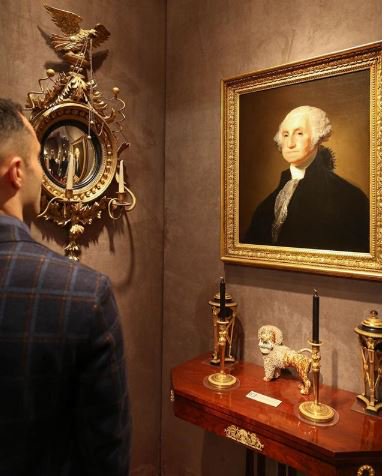 The objective factor is the degree to which a faith has conquered its idolatrous elements and is directed toward the really ultimate. Idolatrous faith has a definite dynamic: it can be extremely passionate and exercise a preliminary integrating power. It can heal and unite the personality, including its soul and body. The gods of polytheism have shown healing power, not only in a magic way but also in terms of genuine reintegration. The objects of modern secular idolatry, such as nation and success, have shown healing power, not only by the magic fascination of a leader, a slogan or a promise but also by the fulfillment of otherwise unfulfilled strivings for a meaningful life. However, the basis of the integration is too narrow. Idolatrous faith breaks down sooner or later and the disease is worse than before. The one limited element which has been elevated to ultimacy is attacked by other limited elements. The mind is split, even if each of these elements represents a high value. The fulfillment of the unconscious drives does not last; they are repressed or explode chaotically. The concentration of the mind vanishes because the object of concentration has lost its convincing character. Spiritual creativity shows an increasingly shallow and empty character, because no infinite meaning gives depth to it. The passion of faith is transformed into the suffering of unconquered doubt and despair, and in many cases into an escape to neurosis and psychosis. #RandolphHarris 17 of 20
 Idolatrous faith has more disintegrating power than indifference, just because it is fait and produces a transitory integration. This is the extreme danger of misguided, idolatrous faith, and the reason why the prophetic Spirit is above all the Spirit which fights against the idolatrous distortion of faith. The healing power of faith raises the question of its relation to other agencies of healing. We have already referred to an element of magic influence from mind to mind without referring to the medical art, its scientific presuppositions and its technical methods. There is an overlapping of all agencies of healing and none of them should claim exclusive validity. Nevertheless, it is possible conceptually to limit each of them to a special function. Perhaps one can say that the healing power of faith is related to the whole personality, independent of any special disease of body or mind, and effective positively or negatively in every moment of one’s life. It precedes, accompanies and follows all other activities of healing. However, it does not suffice alone in the development of the personality. In finitude and estrangement mortals are not a whole, but are disrupted into different elements. Each of these elements can disintegrate independently of other elements. Parts of the body can become sick, without producing mental disease; and the mind can become sick without visible bodily failures. In some forms of mental sickness, especially neurosis, and in almost all forms of bodily disease the spiritual life can remain completely healthy and even gain in strength. #RandolphHarris 18 of 20
 Therefore, medical art must be used wherever such separated elements of the whole of the personality are disintegrating for external or internal reasons. This is true of mental as well as bodily medicine. And there is no conflict between them and the healing power of the state of ultimate concern. It is also clear that medical activities, including mental healing, cannot produce a reintegration of the personality as a whole. Only faith can do this. The tension between the two agencies of health would disappear if both sides knew their special functions and their special limits. Then they would not be worried about the third agency, the healing by magic concentration on the powers of healing. They would accept its help while revealing at the same time its great limitations. There are as many types of integrated personalities as there are types of faith. There is also the type of integration which unites many characteristics of the different types of personal integration. It was this kind of personality which was created by early Christianity, and missed again and again in the history of the Church. Its character cannot be described from the point of view of faith alone; it leads to the questions of faith and love, and of faith and action. “And because of the intercession for all, all mortals come unto God; wherefore, they stand in the presence of him, to be judged of him according to the truth and holiness which is in him. I leave unto you a blessing, yea, even my first blessing,” reports 2 Nephi 2.9 and 10 and 2 Nephi 1. 28. #RandolphHarris 19 of 20
 Having a family who want the worse for you and that you cannot trust is the biggest cruse in the World, worse than death. Count your blessings. Even if they are not the richest people, be happy they love and protect you. Eventually the tables turn, even in corruption, destiny has to take place, there is a wheel and sometimes you are low and other times you are high, hopefully you get a nice long spin on the high road to balance it out. Do not bother telling people the painful things you feel towards them, just hold on to it and release it in constructive ways. Talk to a friend or something. When people do bad things, especially to good people, it eventually has to reflect on their sou and one day they will know they need to seek forgiveness. All the money and possessions in the World cannot replace love and chances are bad people are not well loved anyway. They are all drying out from all of their emotions. As long as you try as hard as you can to be a good person and do the right thing is what matters. And stay sober. Like First Lady Nancy Reagan preached in the 1980s, “Just say no to drugs.” Enjoying reality with a clear mind is the best thing. We need to see things as they are and find safe ways to deal with things that can be unpleasant. “The is the work and the end is silence. And in between are all the stories,” reports Kate Atkinson. #RandolphHarris 20 of 20
Who Has Not Found Heaven for Where Your Treasure is Will be Your Heart?
 And then the room was empty. Perfectly empty. I turned, disconsolate and shuddering, and put my head down on my arm, as if I could go to sleep on my desk. I was considering William James, that psychologist-philosopher American-man-of-genius, who struggled all his life with the problem of his will. One of my esteemed colleagues, writing of James’s severe depression and the fact that for a number of years he was on the verge of suicide, asks us not to judge him harshly for those aspects of maladjustment. I take a different view. I believe that understanding the depressions James suffered and the way he dealt with them increases our appreciation and admiration for him. True, all his life he was plagued by vacillation and an inability to make up his mind. In his last years, when he was struggling to give up his lecturing at Harvard, he would write in his diary one day, “Resign,” the next day, “Don’t resign,” and the third day, “Resign” again. James’s difficulty in making up his mind was connected with his inner richness and the myriad of possibilities for him in every decision. However, it was precisely James’s depressions—in which he would often write of his yearning for “a reason for wishing to live four hours longer”—which forced him to be so concerned with will, and precisely in the struggle against these depressions that he learned so much about human will. #RandolphHarris 1 of 17
 William James believed—and, as a therapist, I believe that his judgment here is clinically sound—that it was own discovery of the capacity to will which enabled him to live a tremendously fruitful life up to his death at sixty-eight, despite his depressions and hos continual affliction with insomnia, eye troubles, back disorders, and so on. In our own “age of this disordered will,” as it has been termed, we turn to William James with eagerness to find whatever help he can give us with our own problem of will. He begins his famous chapter on will, published in 1890, by summarily dismissing wish as what we do when we desire something which is not possible for achievement, and contrast it with will, which exists when the end is within our power. If with the desire there is a sense that attainment is not possible, we simply wish. I believe that this definition is one of the places where James’s Victorianism shows through; wishes are treated as unreal and immature. Obviously, no wish is possible when we first wish it. It becomes possible only as we wish it in many different ways, and through considering it from this side and that, possibly over a great period of time, we generate the power and take the risk to make it happen. #RandolphHarris 2 of 17
 However, then James launches into what turns out to be one of the most thrilling treatises on will in literature, which I can only touch on. There is, first, the primary type, which is distinguished by the fact it does not require a whole series of decisions. We desire to change our shirt or begin to write on paper, and once we start, a whole series of movements is set going by itself; it is ideomotor. This primary will requires absence of conflict. James is here trying to preserve spontaneity. He is taking his stand against Victorian Will power, the exercise of the separate faculty called will power which must have failed him dismally in his own life and led him into the paralysis which expressed itself in his depressions. Now we know in our day a lot more about this so-called absence of conflict, thanks chiefly to psychoanalysis, and that infinitely more is going on in states which seem without conflict. He then touches on the healthy will which he defines as action following vision. The vision requires a clear concept and consists of motives in their right ratio to each other—which is a fairly rationalistic picture. Discussing unhealth will, he rightly focuses on the obstructed will. #RandolphHarris 3 of 17
 Obstructed will, one illustration of this that James cites is the state that exists when our eyes lose focus and we are unable to rally our attention. We sit blankly staring and do nothing. The objects of consciousness fail to touch the quick or break the skin. Great fatigue or exhaustion marks this condition; and an apathy resembling that then brought about is recognized in asylums under the name of abulia as a symptom of mental disease. It is interesting that he relates this apathy only to mental disease. I, for one, believe this is the chronic, endemic, psychic state of our society in our day—the neurotic personality of our time. The question then boils down to: Why does not something interest me, reach out to me, grasp me? And James then comes to the central problem of will, namely attention. I do not know whether he realized what a stroke of genius this was. When we analyze will with all the tools modern psychoanalysis brings us, we shall find ourselves pushed back to the level of attention or intention as the seat of will. The effort which goes into the exercise of the will is really effort to attention; the strain in the willing is the effort to keep the consciousness clear, for instance, the strain of keeping the attention focused. The once-born type of well-adjusted person does not a lot. This leads one to a surprising, though very keen, statement of an identity between belief, attention, and will. #RandolphHarris 4 of 17
 Will and belief, in short, meaning a certain relation between objects and the Self, are two names for one and the same psychological phenomenon. The most compendious possible formula perhaps would be that our belief and attention are the same fact. James then beguiles us with one of his completely human and Earthly illustrations. I cite it in detail because I wish to come back to it in discussing the unfinished aspects of James’ concept of will: We know what it is to get out of bed on a freezing morning in a room without a fire, and how they very vital principle within us protests against the ordeal. [The scene is New England before the advent of central heating.] Probably most persons have lain on certain mornings for an hour at a time unable to brace themselves to the resolve. We think how late we shall be, how the duties of the day will suffer; we say, “I must get up, this ignominious,” and so on. However, still the warm couch feels too delicious, and the cold outside too cruel, and resolution faints away and postpones itself again and again just as it seemed on the verge of the decisive act. Now how do we get up under such circumstances? If I may generalize from my own experience, we more often than not get up without any struggle or decision at all. #RandolphHarris 5 of 17
 We suddenly find that we have got up. A fortunate lapse of consciousness occurs; we forget both the warmth and the cold; we fall into some revery connected with the day’s life, in the course of which the idea flashes across us, “Hollo! I must lie here no longer” and idea which at that lucky instant awakens no contradictory or paralyzing suggestions, and consequently produces immediately its appropriate motor effects. It was our acute consciousness of both the warmth and the col during the period of struggle which paralyzed our activity. James concludes that the moment the inhibition ceases, the original idea exerts its effect, and up we get. He adds, with typical Jamesian confidence, that “This case seems to me to contain in miniature form the data for an entire psychology of volition.” Let us now take, for our special examination, James’s own example. We note that then he gets to the heart of the problem of will in this illustration there comes a remarkable statement. He writes, “We suddenly find that we have got up.” That is to say, he jumps over the whole problem. No decision at all occurs, but only a fortunate lapse of consciousness. #RandolphHarris 6 of 17
 However, I ask, what went on in that fortunate lapse of consciousness? True, the paralyzing bind of his ambivalence was released. However, that is a negative statement and does not tell us why anything else happened. Surely we cannot call this just a lucky instant, as James does, or a happenstance! If our basis for will rests on the mere luck or happenstance, our house is built upon the sands indeed, and we have no basis for with at all. Now I do not mean to imply that so far James, in this example, has not said something. He has, and it is very important: the whole incident shows the bankruptcy of Victorian will power, will consisting of a faculty which is based upon our capacity to force our bodies to act against their desires. Victorian will power turned everything into a rationalistic, moralistic issue, for instance, the attraction of the warmth of the bed, the giving in to of which is ignominious, as opposed to the so-called supergo pressure to be upright, that is, up and working. Dr. Freud described at length the self-deceit and rationalization involved in Victorian will power and I believe, dethroned it once and for all. The example shows James’s own struggle against the paralyzing effects of Victorianism, in which the goal becomes twisted into a self-centered demonstration of one’s own character and the real moral issue get entirely lost in the shuffle. #RandolphHarris 7 of 17
 So we return to our crucial question. What went on in that fortunate lapse of consciousness? James only tells us that we fall into some revery connected with the day’s life. Ah, here lies our secret! Psychotherapy has brought us a good deal of data about that revery which James did not have—and I do not believe that we fall into it at all. For purposes of clarity, I shall state here my own argument concerning unfinished business in James’s concept of will. I as it is also omitted by us in contemporary psychology. The answer does not lie in James’s conscious analysis or in Dr. Freud’s analysis of the unconscious, but in a dimension which cuts across and includes both conscious and unconscious, and both cognition and conation. Along with rediscovering our feelings and wants, we also should recover our relation with the subconscious aspects of ourselves. As modern mortals have given up sovereignty over their bodies, so also have they surrendered the unconscious side of their personality, and it has become almost alien to them. When we cut off an exceedingly great and significant portion of the self, we are then no longer able to use much of the wisdom and power of the unconscious. It puts us in the position of trying to drive a BMW 5 series with the reins attached to only one wheel. Though the tendencies and intuitions in the unconscious are blocked off from our conscious awareness, they are still part of the self and accessible in various degrees to being made conscious. The sooner we recover sovereignty in that portion of the kingdom the better. #RandolphHarris 8 of 17
 Understanding dreams is of course a subtle and complex matter—though it is not so complex as one would think when one reads about the esoteric symbols in much modern dream interpretation. These esoteric symbols put the whole problem back into a foreign language again—and that is another way, perhaps the typically modern way, of surrendering our sovereignty over the unconscious aspects of ourselves. As though we were saying the authorities and those who know the magic answers can understand our dreams, but we cannot ourselves! Dr. Erich Froom’s book, The Forgotten Language, points out that dreams, like myths and fairy tales, are not all a foreign language, but are in reality part of the one universal language shared my all humankind. Dr. Fromm’s book is to be recommended to the nontechnical reader who wishes to relearn something about this subconscious language of his fatherland. Dreams are expressions not only of conflicts and repressed desires, but also of previous knowledge that one has learned, possibly many years before, and thinks one has forgotten. Even the unskilled person, if one takes the attitude that what one’s dreams tell one is not simply to be rejected as silly, may get occasional useful guidance from one’s dreams. #RandolphHarris 9 of 17
 And the person who has become skillful in the understand of what one is saying to oneself in one’s dreams can get from them, from time to time, marvelously valuable hints and insights into solutions to problems. The more self-awareness a person has, the more alive one is. The more consciousness, the more self. Becoming a person means this heightened awareness, this heightened experiences of “I-ness,” this experience that it is I, the acting one, who is the subject of what is occurring. This view of what it means to become a person, in conclusion, saves us from two errors. The first is passivism—letting the deterministic forces in one’s experience take the place of self-awareness. It must be admitted that some tendencies in the older forms of psychoanalysis can be used to rationalize passivism. It was the epoch-making discovery of Dr. Freud to show how much every person is pushed by unconscious fears, desires and tendencies of all sorts, and that mortal is really much less a master in the household of one’s own mind than in the Victorian mortal of will power fondly believed. However, a harmful implication was carried along with this emphasis on the determinism of unconscious forces, which Dr. Freud himself partly succumbed to. The early psychotherapist Dr. Grodeck, for example, wrote, “We are lived by our unconscious,” and Dr, Freud in a letter commended him for his emphasis on the passivity of the ego. #RandolphHarris 10 of 17
 However, we must underline to correct a partial misunderstanding, that the over-all purpose of Dr. Freud’s exploration of the unconscious forces was to help people bring these forces into consciousness. The goal of psychoanalysis, as he said time and again, was to make the unconscious conscious: to enlarge the scope of awareness; to help the individual become aware of the unconscious tendencies which have tended to push the self around like mutinous sailors who have seized power below the deck of the ship; and this to help the person consciously direct one’s own ship. Hence the emphasis on the heightened awareness of one’s self, and the warning against passivism, have much in common with the over-all purpose of Dr. Freud’s thought. The other error of this view of the person enables us to avoid is activism—that is, using activity as a substitute for awareness. By activism we mean the tendency, so common in this country, to assume that the more one is acting, the more one is alive. It should be clear that when we have used the term “the active I,” we have not meant busyness or merely doing things. Many people keep busy all the time as a way of covering up their anxiety; their activism is a way of running from themselves. #RandolphHarris 11 of 17
 People who are busy so they have something to focus on and as a result are distracted from their problems get a pseudo and temporary sense of aliveness by being in a hurry, as though something is going on if they are but moving, and as though being busy is a proof of one’s importance. Chaucer has a sly and astute comment about this type, represented in the merchant in Canterbury Tales, “Methinks he seemed busier than he was.” It is true, however, when life is not going the way you like it and you have a lot of problems that you cannot resolve on your own, being busy gives you a sense of purpose, it makes life worth living and it makes the days rip by life a vampire speed reading a novel. You wake up, stay busy, and before you know it is bed time, you are one day closer to being free. Keeping busy is the only reason some people are still alive. Our emphasis on self-awareness certainly includes actin as an expression of the alive, integrated self, but it is the opposite to activism—the opposite, that is, to acting as an escape from self-awareness. Aliveness often means the capacity not to act, to be creatively idle—which may be more difficult for most modern people than to do something. To be idle requires a strong sense of personal identity. #RandolphHarris 12 of 17
 Self-awareness, as we have proposed it, brings back into the picture the quieter kinds of aliveness—the arts of contemplation and meditation for example, which the Western World, to its peril, has all but lost. It brings a new appreciation for being something rather than merely doing something. With such a relation to oneself, work for us modern mortals—who are the great toilers and producers—will not be an escape from ourselves or a way of trying to prove our worth, but a creative expression of the spontaneous powers of person who has consciously affirmed one’s relatedness to one’s World and one’s fellow mortals. The nature of faith justifies the history of religion and makes it understandable as a history of mortal’s ultimate concern, of one’s response to the manifestation of the holy in many places in many ways. A divine figure ceases to create reply, it ceases to be a common symbol and loses its power to move for action. Symbols which for a certain period, or in a certain place, expressed truth of faith for a certain group now only remind of the faith of the past. They have lost their truth, and it is an open question whether dead symbols can be revived. Probably not for those to whom they have died! A symbol of faith is infinite because it is not idolatrous. However, the human mind is a continuously working factory of idols. #RandolphHarris 13 of 17
 Everything said about faith is derived from the experience of actual faith, of faith as a living reality, or in a metaphoric abbreviation, of the life of faith. Without the manifestation of God in mortals the question of God and faith in God are not possible. There is no faith without participation. Since the life of faith is life in the state of ultimate concern and no human being can exist completely without such a concern, we say: Neither faith nor doubt can be eliminate from mortals as mortals. Faith and doubt have been contrasted in such a way that the quiet certainty of faith has been praised as the complete removal of doubt. There is, indeed, a serenity of the life in faith beyond the disturbing struggles between faith and doubt. To attain such a state is a natural and justified desire of every human being. Doubt is not overcome by repression, but by courage. Courage does not deny that there is doubt, but it takes the doubt into itself as an expression of its own finitude and affirms the content of an ultimate concern. Courage does not need the safety of an unquestionable conviction. It includes the risk without which no creative life is possible. All this is declared about living faith, of faith as actual concern, and not of faith as a traditional attitude without tensions, without doubt and without courage. Faith in this sense, which is the attitude of many members of the churches as well as of society at large. #RandolphHarris 14 of 17
 In mystical literature the vision of God is described as the stage which transcends the state of faith either after the Earthly life or in rare moments within it. In the complete reunion with the divine ground of being, the element of distance is overcome and with it uncertainty, doubt, courage and risk. The finite is taken into the infinite; it is not extinguished, but it is not separated either. This is not the ordinary human situation. To the state of separated finitude belong faith and the courage to risk. The risk of faith is the concrete content of one’s ultimate concern. Jesus and Satan appear as representative of two opposite principles. Satan is the representative of material consumption and of power over nature and mortals. Jesus is the representative being, and his manifestation is a symbol of the Savior of humanity. The World has followed Satan’s principles, since the time of the gospels. Yet even the victory of these principles could not destroy the longing for the realization of full being, expressed by Jesus as well as by many other great Masters who lived before him and after him. When you use things with a hardened heart, you use what is alien to you, and that indulgent, selfish use is avarice, which is the root of all evil. Some people hold to their selfish nature, and they may have the name of being saintly on the basis of the external appearances, but inside they are asses, because they do not grasp the meaning of divine truth. #RandolphHarris 15 of 17
 However, this does not mean that we should not have anything, it just means that we should not be bound by anything. God wants to act in the soul, and he himself must be in the place in which he acts—and that he would like to do. Everything and anything can become an object of craving: things we use in daily life, property, rituals, good deeds, knowledge, and thoughts. While they are not in themselves bad, they become bad; that is, when we hold onto them, when they become chains that interfere with our freedom, they block our self-realization. People need to uncover their most hidden secrete ties of selfishness, of intentions, and opinions. However, the fact of the matter is most people will not analyze their behavior nor recognize their own errors until they are faced with extreme hardship. It is not a character building exercise, but it reveals your truth self. Some people walk away from their trials and tribulations a much better person, others walk away from their trials and tribulations with a spirit of lack and limitation and will do whatever they can to prosper, even if it means hurting their own family to get ahead in the World. Therefore, people should not consider so much what they are to do as what they are. Thus take care that your emphasis is laid on being good and not on the number or kind of things to be done. Emphasize rather the fundamentals on which your work rests. #RandolphHarris 16 of 17
 Our being is the reality, the spirit that moves us, the character that impels our behavior; in contrast, the deeds or opinions that are separated from our dynamic core have no reality. We are to be active in the classic sense of the productive expression of one’s human powers, not in the modern sense of being busy. Activity means to go out of oneself. Run into peace. The person who is in the state of running, of continuous running into peace is a Heavenly person. One continually runs and moves and seeks peace in running. The active vessel is alive and it grows and it is filled and never will be full. Out of this criterion comes the message which is the very heart of Christianity and makes possible the courage to affirm faith in the Christ, namely, that in spite of all forces of separation between God and mortals this is overcome from the side of God. One of the forces of separation is a doubt which tries to prevent the courage to affirm one’s faith. Although we are never able to bride the infinite distance between the infinite and the finite from the side of faith, this alone makes the courage of faith possible. The risk of failure, of error and of idolatrous distortion can be taken, because the failure cannot separate us from what is our ultimate concern. #RandolphHarris 17 of 17
Sometimes One Can Mistake Gratitude for Love—Dogs are Hardly an Article of Faith
 Love or the lack of it is at the root of everything. Guard your children. Weigh wisdom of intervention if such is even possible. Ponder the question of inevitability. To cease wishing is a contemporary emotional and spiritual wasteland, almost like inhabiting the land of the dead. Another characteristic is satiety; if wishes are thought of only as pushed toward gratification, the end consisting of the satisfying of the need, the reality is that emptiness and vacuity and futility are greatest where all wishes are met. For this means one stops wishing. Without faith we cannot want anymore, we cannot wish. The truth of faith consists in true symbols concerning the ultimate. And the faithful is one human being with the power of thought and the need for conceptual understanding. There is a dimension of meaning expressed in the symbolism of the whish, this is what gives the wish its specifically human quality, and without this meaning, the emotional and spiritual aspects of wanting become dried up. When we have faith, it is a symbol that peace and prosperity are just around the corner and it is only a matter of time until all our need will be met. However, the relation to the ultimate is not the same in each case. The philosophical relation is in principle a detached description of the basic structure in which the ultimate manifests itself. #RandolphHarris 1 of 15
 The relation of faith is in principle an involved expression of concern about the meaning of the ultimate for the faithful. The difference is obvious and fundamental. However, it is, as the phrase “in principle” indicates, a difference which is not maintained in the actual life of philosophy and of faith. It cannot be maintained, because the philosopher is a human being with an ultimate concern, hidden or open. And the faithful one is a human being with the power of thought and the need for conceptual understanding. This is not only a biological fact. It has consequences for the life of philosophy in the philosopher and or the life of faith in the faithful. An analysis of philosophical systems, essays or fragments of all kinds shows that the direction in which the philosopher asks the question and the preference one gives to special types of answers is determined by cognitive consideration and by a state of ultimate concern. The historically most significant philosophies show not only the greatest power of thought but the most passionate concern about the meaning of the ultimate whose manifestations they describe. The philosophy, in its genuine meaning, is carried on by people in whom passions of an ultimate concern is united with a clear and detached observation of the way ultimate reality manifests itself in the process of the Universe. #RandolphHarris 2 of 15
 At most general faith means much the same as trust. Therefore, we are being asked to have faith as knowledge of specific truths revealed by God. Faith is a practical commitment beyond the evidence to one’s belief that God exists. We are to have a firm and certain knowledge of God’s benevolence towards us, founded upon the truth of the freely given promise in Christ, both revealed to our minds and sealed upon our hearts through the Holy Spirit. It is this element of ultimate concern behind the philosophical ideas which supplies the truth of faith in them. Our vision of the Universe and our predicament within it unites faith and conceptual work. We may hold that in our sinful state we will inevitably offer a resistance to faith that may be overcome only by God’s grace. It is, however, a further step for individuals of faith to put their revealed knowledge into practice by trusting their lives to God and seeking to obey his will. Humans contain the potentialities of these creative principles, and can choose to make their lives an ascent towards and then a union with the intuitive intelligence. The One is not a being, but infinite being. #RandolphHarris 3 of 15
 Thus Christian and Jewish philosophers who held to a creator God could affirm such a conception that God is infinite, and created the World. God, as the creator of all, is not far from any one of us. Philosophy is not only the mother’s womb out of which science and history have come, it is also an ever-present element in actual scientific and historical work. The frame of reference within which the great physicists have seen and are seeing the Universe of their inquiries is philosophical, even if their actual inquiries verify it. In no case is it a result of their discoveries. It is always a vision of the totality of being which consciously or unconsciously determines the frame of their thought. Because this is so one justified in saying that even in the scientific view of reality an element of faith is effective. Scientific view of reality an element of faith is effective. Scientists rightly try to prevent these elements of faith and philosophical truth from interfering with their actual research. This is possible to a great extent; but even the most protected experiment is not absolutely pure—pure in the sense of the exclusion of interfering factors such as the observer, and as the interest which determines the kind of question asked of nature in an experiment. What we said about the philosopher must also be said about the scientist. Even in one’s scientific work one is a human being, grasped by an ultimate concern, and one asks the question of the Universe as such, the philosophical question. #RandolphHarris 4 of 15
 Intellectual inquiry into the faith is to be understood as faith seeking understanding (fides quaerens intellectum). To believe is to thin with assent (credere est assensione cogitare). It is an act of the intellect determined not by the reason, but by the will. Faith involves a commitment to believe in a God, to believe God, and to believe in God. What is eternal is unchanging. In the same way the historian is consciously or unconsciously a philosopher. It is quite obvious that every task of the historian beyond finding of the facts is dependent on evaluation of historical factors, especially the nature of mortals, one’s freedom, one’s determination, one’s development out of nature and so forth. It is less obvious but also true that even in the fact of finding historical facts philosophical presuppositions are involved. This is especially true in deciding, out of the infinite number of happenings in every infinitely small moment of time, which facts shall be called historically relevant facts. The historian is further forced to give one’s evaluation of sources and their reliability, a task which is not independent of one’s interpretation of human nature. Finally, in the moment in which a historical work gives implicit or explicit assertions about the meaning of historical events for human existence, the philosophical presuppositions of history are evident. Where there is philosophy there is an expression of an ultimate concern; there is an element of faith, however hidden it may be by the passions of the historian for pure facts. #RandolphHarris 5 of 15
 God does not possess anything superadded to his essence, and his essence includes all his perfections. No one can attain to truth unless one philosophizes in the light of faith. Our faith in eternal salvation shows that we have theological truths that exceed human reason. And if one could attain truths about religious claims without faith, these truths would be incomplete. Higher truths are attained through faith. All these consideration show that, in spite of their essential difference, there is an actual union of philosophical truth and the truth of faith in every philosophy and that this union is significant for the work of the scientist and the historian. This union has been called philosophical faith. The term is misleading, because it seems to confuse the two elements, philosophical truth and the truth of faith. Furthermore, the term seems to indicate that there is one philosophical faith, a philosophia perennis, as it has been termed. However, only philosophical questions are perennial, not the answers. There is a continuous process of interpretation of philosophical elements and elements of faith, not one philosophical faith. Revealed theology is a single speculative science concerned with knowledge of God. Because of its greater certitude and higher dignity of subject matter, it is nobler than any other science. #RandolphHarris 6 of 15
 Philosophical theology, though, can make demonstrations using the articles of faith as its principles. Moreover, it can apologetically refute objections raised against the faith even if no articles of faith are presupposed. There is truth of faith in philosophical truth. And there is philosophical truth in the truth of faith. In order to see the latter point we must confront the conceptual expression of philosophical truth with the symbolical expression of truth of faith. Now, one can say that most philosophical concepts have mythological ancestors and that most mythological symbols have conceptual elements which can and must be developed as soon as the philosophical consciousness has appeared. In the idea of God the concepts of being, life, spirit, unity and diversity are implied. In the symbol of the creation concepts of finitude, anxiety, freedom and time are implied. The symbol of the “fall of Adam” implies a concept of mortal’s essential nature, of one’s conflict with oneself, of one’s estrangement from oneself. Only because every religious symbol has conceptual potentialities is theo-logy possible. There is a philosophy implied in every symbol of faith. However, faith does not determine the movement of the philosophical thought, just as philosophy does not determine the character of one’s ultimate concern. Symbols of faith can open the eyes of the philosopher to qualities of the Universe which otherwise would not have been recognized. #RandolphHarris 7 of 15
 Faith is the starting point, scripture offers the data, and philosophy is a supplement not a competitor. Faith, philosophy, and scripture help make sense of each other. However, faith does not command a definite philosophy, although churches and theological movements have claimed and used Platonic, Aristotelian, Kantian or Humean philosophies. The philosophical implications of the symbols of faith can be developed in many ways, but the truth of faith and the truth of philosophy have no authority over each other. In the past few years, a number of persons in psychiatry and related fields have been pondering and exploring the problems of wishing and willing. We may assume that this confluence of concern must be in answer to a strong need in out time for a new light on these problems. It is not wishing that cases illness but lack of wishing. The problem is to deepen people’s capacity to wish, and one side of our task in therapy is to create the ability to wish. Wish is an optimistic picturing in imagination. It is a transitive verb—to wish involves an act. Wishing is similar to faith because it allows us to see beyond our experience and knowledge and hope that something good may happen, and so we send out more beneficial vibrations into the Universe. Every genuine wish is a creative act. I find support for this in therapy: it is indeed a beneficial step when the patient can feel and state strongly, for example, “I wish to buy a beautiful Cresleigh home and feel safe and secure in my community.” #RandolphHarris 8 of 15
 That wish, in effect, moves the conflict from a submerged, unarticulated plane in which one takes no responsibility but expects God and parent to read his or her wishes by telepathy, to an overt, healthy conflict over what one wants. On the basis of theological myth of creation God exults when mortals come through with a wish of one’s own. The wish in interpersonal relationship requires mutuality. This is a truth shown in its breach in many myths, and brings the person to one’s doom. Peer Gynt in Ibsen’s play runs around the World wishing and acting on his wishes; the only trouble is that is wishes have noting to do with the other person he meets but are entirely egocentric, encased in cask of self, sealed up with a bung of self. In The Sleeping Beauty, by the same token, the young princes who assault the briars in order to rescue and awaken the slumbering girl before the time is ripe, are exemplars of behavior which tries to force the other in love and pleasures of flesh before the other is ready; they exhibit a wishing without mutuality. The young princes are devoted to their own desires and needs without relation to Thou. If wish and will can be seen and experienced in this light of autonomous, imaginative acts of interpersonal mutuality, there is profound truth in St. Augustine’s dictum, “Love and do what you will.” #RandolphHarris 9 of 15
 We cannot be naïve about human nature. We know full well that this wishing is stated in ideal terms. We know that the trouble is precisely that mortals do wish and will against their neighbor, that imagination is not only the source of our capacity to form the creative mutual wish but it is also bounded by the individual’s own limits, convictions, and experience; and, thus, there is always in our wishing an element of doing violence to the others as well as to ourselves, no matter how well analyzed we may be or how much the recipient of grace or how many times we have experienced satori. This is called the willful element, willful here being the insistence of one’s own wish against the reality of the situation. Willfulness is the kind of will motivated by defiance, in which the wish is more against something than for its object. The defiant, willful is correlated with fantasy rather than with imagination, and is the spirit which negates reality, whether it be a person or an aspect of impersonal nature, rather than sees it, forms it, respect it, or takes joy in it. There are two realms of will, the first consisting of an experience of the self in its totality, a relatively spontaneous movement in a certain direction. In this kind of willing, the body moves as a whole, and the experience is characterized by a relaxation and by an imaginative, open quality. This is an experience of freedom which is anterior to all talk about political or psychological freedom; it is a freedom, presupposed by the determinist and anterior to all the discussions of determinism. #RandolphHarris 10 of 15
 In contrast, the will of the second realm is that in which some obtrusive element enters is that in which some obtrusive element enters, some necessity for a decision of an either/or character, a decision with an element of an against something alone with a for something. If one uses the Freudian terminology, the “will of the Super-Ego” would be included in their realm. We can will to read but not to understand, we can will knowledge but not wisdom, we can will scrupulosity but not mortality. This is illustrated in creative work. In the second realm of will is the conscious, effortful, critical application to creative endeavor, in preparing a speech for meeting or revising one’s manuscript, for example. However, when actually giving the speech, or when hopefully creative inspiration takes over in our writing, we are engrossed with a degree of forgetfulness of self. In this experience, wishing and willing become one. One characteristic of the creative experience is that it makes for a temporary union by transcending the conflict. The temptation is for the second ream to take over the first; we lose our spontaneity, our free flow of activity, and will become effortful, controlled and so forth, Victorian will power. Our error, then, is that will tries to take over the work of imagination. This is very close to a wish. Will is the capacity to organize oneself so that movement in a certain direction or toward a certain goal may take place. Wish is the imaginative playing with the possibility of some act or state occurring. #RandolphHarris 11 of 15
 Will and wish may be seen as operating in polarity. Will requires self-consciousness; wish does not. Will implies some possibility of either/or choice; wish does not. Wish gives the warmth, the content, the imagination, the innocence’s play, the freshness, and the richness of the will. Will gives the self-direction, the maturity, to wish. Will protect wish, permits it to continue without wish, will loses its life-blood, its viability, and tends to expire in self-contradiction. If you have only will and no wish, you have the dried-up, Victorian, neopuritan mortal. If you have only wish and no will, you have the driven, unfree, infantile person who, as an adult-remaining-an-infant, may become the robot mortal. Awareness of one’s feelings lays the groundwork for knowing what one want. This point may look very simple at first glance—who does not know what one wants? However, the amazing thing is how few people actually do. If one looks honestly into oneself, does one not find that most of what one thinks one wants is just routines like fresh fish on Friday; or what one wants is what one thinks one should want—like being a success in his or her work; or wants to want—like loving one’s neighbor? One can often see clearly the expression of direct and honest wants in children before they have been taught to falsify their desires. The child exclaims, “I like ice cream, I want a cone,” and there is no confusion about who wants what. #RandolphHarris 12 of 15
 Such directness of desire often comes like a breath of fresh air in a murky land. It may not be best that one has the cone at the time, and it is obviously the parents’ responsibility to say Yes or No if the child is not mature enough to decide. However, let the parents not teach the child to falsify one’s emotions by trying to persuade him or her that he or she does not want the cone! To be aware of one’s feelings and desires does not at all imply expressing them indiscriminately wherever one happens to be. Judgment and decision are part of any mature consciousness of self. However, how is one going to have a basis for judging wat one will or will not do unless one first knows what one wants? For an adolescent to be aware that one wants to drive a brand-new BMW 3 Series, does not mean that one acts on this impulse. However, suppose he never lets his impulses reach the threshold of awareness because they are not socially acceptable? How is he then to know years later, when he buys a care, whether he wants to drive it or not, or whether because thus is then the acceptable and expected act, the routine thing to do? People who voice with alarm the caution that unless desires and emotions are suppressed they will pop out every which way, and everyone, will experience neurotic emotions. As a matter of fact, we know that it is precisely the emotions and desires which have been repressed which later return to drive the person compulsively. #RandolphHarris 13 of 15
 The Victorian gyroscope kind of person had to control his or her emotions rigidly, for, by virtue of having locked them up in jail, one had turned them into lawbreakers. However, the more integrated a person is, the loses compulsive become one’s emotions. In the mature person feelings and wants occur in a configuration. In seeing a dinner as part of a drama on the stage, to give a simple example, one is not consumed with desires for food; one came to see a drama and not to eat. Or wen listening to a concert singer, one is not consumed with pleasures of the flesh even though she may be very attractive; the configuration is set by the fact that one chose in coming to hear music. Of course, as we have indicted, none of us escape conflicts from time to time. However, these are different from being compulsively driven by emotions. Every direct and immediate experience of feeling and wanting is spontaneous and unique. That is to say, the wanting and feeling are uniquely part of that particular situation at the particular time and place. Spontaneity means to be able to respond directly to the total picture—or, as it is technically called, to respond to the figure-ground configuration. Spontaneity is the active “I” becoming part of the figure ground. In a good portrait painting the background is always an integral part of the portrait; so an act of a mature human being is an integral part of the self in relation to the World around it. #RandolphHarris 14 of 15
 Spontaneity, thus, is very different from effervescence or egocentricity, or letting out one’s feelings regardless of the environment. Spontaneity, rather is the acting “I” responding to a particular environment at a given moment. The originality and uniqueness which is always part of spontaneous feeling can be understood in this light. For just as there never was exactly that situation before and never will be again, so the feeling one has at that time is new and never to be exactly repeated. It is only neurotic behavior which is rigidly repetitive. God’s great plan of happiness provide a perfect balance between eternal justice and the mercy we can obtain through the Atonement of Jesus Christ. It also enables us to be transformed into new creatures in Christ. A loving God reaches out to each of us. We know that through his love and because of his Atonement of his only begotten Son, all humankind may be saved, by obedience to the laws and ordinances. Eternal relationships are also fundamental to our theology. The family is ordained of God. Under the great plan of our loving Creator, the mission is to achieve the supernal blessing of exaltation in the celestial kingdom. Finally, God’s love is so great that, except for the few who become people of perdition, God has provided a destiny of glory for all his children, including those who have passed away. Our loving Heavenly Father wants us to have joy. “Do not tell secrets to those whose faith and silence you have not already tested,” reports Kate Atkinson. #RandolphHarris 15 of 15
At Such a Curious Earth Love is Supposed to be for the Souls of Sanity—I am Glad they Did Believe it!

Success without integrity is nothing. Productive love always implies a syndrome of attitude that care of, responsibility, respect and knowledge. If love, I care—that is, I am actively concerned with the other person’s growth and happiness; I am not a spectator. I am responsible, that is, I respond to the other individual’s needs, to those this person can express and more so to those one cannot or does not express. I respect the other individual, that is (according to the original meaning of re-spicere) I look at this person as if one is, objectively and not distorted by my wishes and fears. I know this individual, I have penetrated through this person’s surface to the more of this individual’s being and related myself to this being from my core, from the center, as against the periphery, of my being. Care of the soul asks us to observe its needs continually, to give them our wholehearted attention. Imagine advising someone with many signs of neglect of soul to build an annex on one’s house for soul work. It may seem strange or even unusual to do something so expensive and so external to deal with our psychological complaints. Yet it is obvious that soul is not going to be healed solely by means of one hour of interior retreat in the midst of an active modern life. Our retreat from the World may have to be more serious and more constantly present in out lives than a weekly counseling visit or an occasional day spa and massage. #RandolphHarris 1 of 19

Today we find a radical situation occurring as women beg into discover that they are much more than they or the men in their lives have known or been willing to admit. Women’s role in life, in this country, has been drastically limited to a few portrayals or dimensions. However, in the past few years, a developing, revolutionary, self-emergence program is shaking the foundations of society and is certainly giving a lot of people reason to lose sleep. This country has been the inheritor of an Antiquated World attitude toward women. Even in the Bible, women were portrayed as having the very important roles of wife, mother, and homemaker, rarely anything else. Oh, there were always spots for dancing girls, servants, comfort women, slaves, and craftswomen. However, the life of the typical woman in the Old World was very clearly marked out for her. If she were fortunate, attractive, and/or from a wealthy family, a girl could look forward to getting married, raising children, building a household, and gaining respect by doing a creditable job in these limited areas. One of the classical descriptions of the ideal wife comes from the Old Testament of the Bible and has been used to shape the life of women ever since: A good wife who can find? She is far more precious than jewels. The heart of her husband trusts in her, and she will have no lack of gain. She does him good, and not harm all the days of her life. #RandolphHarris 2 of 19

A productive wife seeks wool and flax, and works with willing hands. She like the ships of the merchant, she brings her food from afar. She rises while it is yet night and provides food for her household and tasks for her maidens. She considers a field and buys it; with the fruit of her hands she plants a vineyard. She girds her loins with strength and makes her arms strong. She perceives that her merchandise is profitable. Her lamp does not go out at night. She puts her hands to the distaff, and her hands hold the spindle. She looks well to the ways of her household, and does not eat the bread of idleness. Her children rise up and call her blessed; her husband also, and he praises her: “Many women have done excellently, but you surpass them all.” Charm is deceitful, and beauty is vain, but a woman who fears the Lord is to be praised. Give her of the fruit of her hands, and let her works praise he in the gates. God does not make us holy in the sense that he makes our character holy. He makes us holy in the sense that he has made us innocent before him. And then we have to turn that innocence into holy character through the moral choices we make. These choices are continually opposed and hostile to the things of our natural life which we have become so deeply entrenched. We can either turn back, making ourselves if no value to the kingdom of God, or we can determinedly demolish things that exalt themselves against the knowledge of God. #RandolphHarris 3 of 19

That is a full-time and not unimportant job, living up to those expectations! In the Old World, it was probably all a woman could handle. However, in those times, there must have been occasions when the woman could have participated in decision-making and some of the other ongoing life of the town or country. Yet, there was no opportunity for her. Medicine, above all psychotherapy and psychoanalysis, often claims that healing anxiety is its task because all anxiety altogether, for anxiety is sickness, mostly in a psychosomatic, sometimes only in a psychological sense. All forms of anxiety can be healed, and since there is no ontological root of anxiety there is no existential anxiety. Medical insight and medical help—this is the conclusion—are the way to the courage to be; the medical profession is the only healing profession. Although this extreme position is taken by an ever-decreasing number of physicians and psychotherapists it remains important from the theoretical point of view. It includes a decision about the nature of mortals which must be made explicit, in spite of the positivistic resistance to ontology. The psychiatrist who asserts that anxiety is always pathological cannot deny the potentiality of illness in human nature, and one must account for the facts of finitude, doubt, and guilt in every human being; one must, in terms of one’s own presupposition, account for the universality of anxiety. #RandolphHarris 4 of 19

One cannot avoid the question of the human nature since in practicing one’s profession one cannot avoid the distinction between health and illness, existential and pathological anxiety. This is why more and more representatives of medicine generally and psychotherapy specifically ask for the cooperation with the philosophers and theologians. And it is why through this cooperation a practice of counseling has developed which is, like every attempted synthesis, dangerous as well as significant for the future. The medical faculty needs a doctrine of mortals in order to fulfill its theoretical task; and it cannot have a doctrine of mortal without the permanent cooperation of all those faculties whose central object is human beings. The medical profession has the purpose of helping mortal in some of their existential problems, those which usually are called diseases. However, it cannot help a person without the permanent cooperation of all other professions whose purpose is to help mortals as mortals. Both the doctrines about mortals and the help given to mortal are a matter of cooperation from many points of view. Only in this way is it possible to understand and to actualize mortal’s power of being, one’s essential self-affirmation, one’s courage to be. In our present day, women have been relieved of much of the drudgery of homemaking. It is still a very hard job and one filled with great responsibility, especially the role of mothering. #RandolphHarris 5 of 19

Productive love when directed toward equals may be called brotherly love. In motherly love the relationship between the two persons involved is one of inequality; the child is helpless and dependent on the mother. In order to grow, the baby must become more and ore independent, until the child does not need all of its support from the mother. Thus the mother-child relationship is paradoxical and, in a sense, tragic. It requires the most intense love on the mother’s side, and yet this very love must help the child to grow away from the mother, and to become fully independent. It is easy for any mother to love her child before this process of separation has begun—but it is the task in which most fail, to love the child and at the same time to let it go—and to want to let it go. Many men, not understanding the intricacies of home economics, grumble and growl about their workaday World and tell their wives that homemaking is a snap! Yet, if they have to take over the chores fora day when their wives are sick or out of town, they frequently find out just how difficult it all is. However, what with modern appliances and good planning,many women are finding time left over after housework and child-care is done. Keeping busy and out of mischief by devotion to creative or domestic chores was the Old World solution to free hours. “Make it your ambition to lead a quiet life, to mind your own business and t work with your hands, just as you were told,” reports 1 Thessalonians 4.11. #RandolphHarris 6 of 19

Women began discovering the fuller nature of their beings along time ago, but were more or less resigned to their limited existence until,with dramatic results, men began to put them to work outside of the home. The tragic story of labor’s abuses and the subsequent involvement of women in there form movements is but a short chapter in the history of womankind’s growing awareness of its greater potentials. In erotic love, another drive is involved:that for fusion and union with another person. While brotherly love refers to all mortals and motherly love to the child and all those who are in need of our help, erotic love is directed to one person, normally of the opposite gender, with whom fusion and oneness is desired. Erotic love begins with separateness, and ends in oneness. Motherly love begins with oneness, and leads to separateness. If the need for fusion were realized in motherly love, it would mean destruction of the child as an independent being, since the child needs to emerge from one’smother, rather than remained dependent on her. If erotic love lacks brotherly love and is only motivated by the wish for fusion, it is sexual desire without love, or the perversion of love as we find it in the sadistic and masochistic forms of love. “People that had been wrought upon by the Spirit of God, and had been healed; and they did show forth signs also and did some miracles among the people,” reports 3 Nephi 7.22. #RandolphHarris 7 of 19
Critics of women’s rights should remember that women have been very instrumental in bringing about social changes. Women played a significant part in protecting the abuses of drinking, and had much pressure brought to bear on the legislation for Prohibition. Not that this was necessarily the best legislation we could have had! Nevertheless, the economic and political power of women was felt. Then, in their insistence on equal treatment, women demanded the right to vote and today are very instrumental in legislation and their force is felt all across the World today. Also, in recent years, mothers have become an important force for peace. Women have demonstrated abilities in every field of endeavor formerly thought to be beyond their talents and capabilities.They can run congress, lathes, computer, the senate, be presidents of corporations and of countries; they write, edit, and publish books; they paint prize-winning paintings, drives buses and trucks, repair TV’s and telephone lines, perform surgery, pull teeth, preach, teach, practice law, and administer educational institutions. Without doubt, the high degree of skills demonstrated by many of them is destroying old concepts as effectively as it is damaging the egos of some males. #RandolphHarris 8 of 19

However, do not be offended by this, but I do not think anyone can run a house as well as a woman. It takes a certainly kind of womanly love to cook, clean, do laundry, iron, organize, look good, sew, deal with business people and keep the house peaceful while standing sane. Reese Witherspoon’s Whiskey in a Tea Cup is a New York Times Best Seller and one of the most influential books to come to public attention in recent times. Without putting down the important dimensions of wife, mother, actress, business woman, singer, model and homemaker, Mrs. Witherspoon urges women to actualize their natural fourth dimensions: creative and productive talents. She also shares some personal stories, wives tales, recipes, and lets other women that the career can be just as important as her housewifely roles, which gives many women the incentive to declare themselves as full-fledged human beings. One understands fully mortal’s need to be related only if one considers the outcome of the failure of any kind of relatedness, if one appreciates the meaning of narcissism. The only reality the infant can experience is one’s own body and affection. The baby has not yet the experience of “I” as separate from “thou.” The precocious darling is still in a state of oneness with the World, but a oneness before the awakening of his or her sense of individual reality. #RandolphHarris 9 of 19

The World outside, for the baby, exists only as so much food, or so much warmth to be used for the satisfaction of one’s own needs, but not as something or somebody who is recognized realistically and objectively. This orientation has been named primary narcissism, and it is not a bad thing. In normal development, children are often treated as the are deities or prized possession, and this is important for their safety, security, and confidence. This state of narcissism is slowly overcome by a growing awareness of reality outside, and by a correspondingly growing sense of “I” as differentiated from “thou.”This change occurs at first on the level of sensory perception, when things and people are perceived as different and specific entities, a recognition which lays the foundation for the possibility of speech; to name things pre-supposes recognizing them as individual and separate entities. It takes much longer until the narcissistic state is overcome emotionally; for the child up to the age of seven or eight years, other people still exist mainly as means for the satisfaction of one’s needs. They are exchangeable inasmuch as they fulfill the function of satisfying these needs, and it is only around the ages between eight and nine years that another person is experienced in such a way that the child can begin to love, that is to say, to feel that the needs of another person are as important as their own. #RandolphHarris 10 of 19

However, that may not necessarily be the full story. Babies smile at only a few weeks old to bond with their parents and make them happy, as they know how powerful being cute is because it will compel people to want to take care of them and love them. Many parents also have their pleasure of knowing that they are their child’s first real love, in a platonic sense, of course. The fact that utter failure to relate oneself to the World is insanity, points to the other fact: that some form of relatedness is the condition for any kind of sane living. However, among the various forms of relatedness, only the productive one, freedom and integrity while being, at the same time, untied with one’s fellow mortals. “Therefore, go ye unto your homes, and ponder upon the things which I have said, and ask of the Father, in my name, that ye may understand and prepare your minds for the morrow, and I come unto you again,” reports 3 Nephi 17.3. In the interpretation of human existence theology and medicine unavoidably joined philosophy, whether they were conscious of it our not. And in joining philosophy they joined each other even if their understanding of mortals went toward opposite directions. This is why theologians and ministers eagerly seek collaboration with medical professional, and many forms of occasional institutionalized cooperation result. #RandolphHarris 11 of 19

One of the very first patients monitored was a woman 72 years of age who was in the coronary care unit because she had what is known as 2:1 heart block; that is, the upper portion of her heart (called the atrium) would begin the beat, but only every other beat would cause the remainder of her heart (the ventricles) to beat. During the pulse taking, a patient’s heart rate began to vary from its pattern of 2:1 block, changing back and forth from 2 degrees to 1 degree block. In essence, her heart began to change from 30 up to 60 beats per minute. During two other episodes of pulse taking and one episode of blood pressure measurement, very similar cardiac reactions occurred. While this patient was still in heart block, however, there was one other episode of pulse taking during which there were no heart rate or hearty rhythm changes. For three minutes prior to a sequence in which a nurse came to this patient’s bedside simply to give her a pill, the patient’s heart rate had been a regular 2:1 heart block rate of 35 beats per minute. However, during the entire one minute the nurse was at her bedside, the patient’s heart rate abruptly changed to a different mode of conduction and her heart rate was 70-75 beats per minute, only to change back abruptly to a rate of 35 beats per minute and 2:1 heart block for the three minutes after the nurse left the patient’s bedside. #RandolphHarris 12 of 19

A similar reaction occurred when the nurse brought this patient lunch. Later that same day, the medicine (atropine) the cardiologist had prescribed took effect, and the patient was no longer in continuous 2:1 block. During this period we again monitored an episode of pulse taking. This time the beat-to-beat heart rate both before and after pulse taking was approximately 70-75 beats per minute, with only periodic episodes of heart block occurring. However, when the nurse took the patient’s pulse, the heart rate was slightly elevated, the beat became quite rhythmic,and the periodic pattern of heart block was completely abolished. In the light of the type of cardiac problems experienced by this patient and the medication she was given, it was not difficult for us to deduce the changes in the patient’s nervous system that were producing these reactions. Understanding those physiological mechanisms suggests that bedside matter of human compassion, medication and religious could be an effective three-fold method to help heal patients and keep them alive. Research indicates the prayer can extend a person’s life by four years. Evidence is causing more and more people to believe that there is metaphysical forces beyond science at work in the World and human beings are conduits of this spiritual power. #RandolphHarris 13 of 19

Religious doctrines typically include prescriptions for taking care of one’s own body (e.g., your body is a temple), and support psychological traits that are associated with self-control, such as humility, patience, mindfulness, and compassion. In addition, religious doctrines offer behavioral techniques, including mediation and prayer, that can help people regulate their emotions and actions. When people are exposed to religious themes or call to mind their religious beliefs, they are better able to endure discomfort, delay gratification, and follow through on challenging tasks. Religious people learn through training to control their emotions, particularly the negative emotions of fear, anger, and hatred, as these can push them towards a darkness they do not want to access. These beings are mindful of their thoughts and intentions and meditate and pray about their choices. However, the physician must be fully aware of the treatment to make sure the patient is receiving adequate medical care. And as a minister, one may radiate healing power for mind and body and help to remove symptoms and neurotic anxiety. The anxiety of fate and death produces nonpathological strivings for security. Large sections of mortal’s civilization serve the purpose of giving people safety against the attacks of fate and death. #RandolphHarris 14 of 19

Mortals realize that no absolute and no final security is possible; mortals also realize that life demands again and again the courage to surrender some or even all security for the sake of full self-affirmation. Nevertheless,mortal reduce the power of fate and the threat of death as much as possible. Pathological anxiety about fate and death impels toward a security which is comparable to the security of a prison. One who lives in this prison is unable to leave the security given to one by one’s self-imposed limitations. However, these limitations are not based on a full awareness of reality. Therefore, they security of the neurotic is unrealistic. One fears what is not to be feared and one feels to be safe what is not safe. The anxiety which one is not able to take upon oneself produces images having no basis in reality, but it recedes in the face of things which should be feared. That is, one avoids particular dangers, although they are hardly real, and suppress the awareness of having to die although this is an ever-present reality. Misplaced fear is a consequence of the pathological form of the anxiety of fate and death. “And it came to pass that Jesus spake unto them, and bade them arise. And they arose from the Earth, and he said unto them: Blessed are ye because of your faith. And now behold, my joy is full,” reports 3 Nephi 17.19-20. #RandolphHarris 15 of 19

In the last two years, the Women’s Liberation Movement, Time’s Up, and the Daughters of Sappho have been actively promoting a campaign for women’s full rights. Many of their tactics are alarming to men, to say the least! Men refuse women their full rights for a number of reasons. Tradition is an important obstacle, and the simple fact that women have always played a more or less passive, subservient role to men still looms large in the forefront of the conflict. Some men do not know how to relate to a woman who does not conform to what they think is a man’s inherent right of dominance and leadership. Nearly all of our social custom and a large percentage of our speech phrases contain an unconscious assumption that women are secondary in importance to men—are subservient to them, are to be protected by them, are pitifully incapable of matching their mental powers. The man is always the head of the household, even though today it is the women who actually manages and cares for the ongoing activities of the typical American home. Interestingly enough, the history of the word man means human being and mind; the word woman is a combination of two words meaning wife of a human being. And in Mandarin Chinese woman means we. Little wonder that males and females raised by the same mental set: a woman is a being that evolves with times and culture and becomes fully accepted. #RandolphHarris 16 of 19

Except for the definitely generic roles of fathering and mothering, the physical structure of men’s and women’s roles of fathering and mothering, the physical structure of men’s and women’s bodies plays very little part in determining fitness and aptitude for most jobs. There is nothing biologically determining in the roles of physician, surgeon, teacher, therapist, preacher, bookkeeper, computer programmer, or the thousands of other jobs in the nation today. Furthermore, biologist tell us that in terms of real endurance women are superior to men! Typically, men have larger skeletal and muscular structures, but that is really unimportant in terms of the stresses of modern living. Ananalogy can be drawn in terms of Sequoia sempervirens and a Syagrus romanzoffiana. Men are taught in most of the World, but especially America, to be strong and rugged, to use all stresses as building blocks against other stresses—as when an athlete strains and exercises one’s muscles in order to build stronger ones. Men are taught to compress their emotions into rigid anti-emotional-stress walls. Thus, internally and externally, men build themselves to withstand pressures, much like a Sequoia sempervirens. Women are typically taught to experience their emotions, to display them, to let them out, and even to utilize them to advantage. #RandolphHarris 17 of 19

Without pressure build-ups on the inside, they remain supple, and when tensions arise from outside come at them, women are able to be more flexible with stress and life situations, much like the Syagrus romanzoffiana. It is not the unyielding Sequoia sempervirens that stands after the hurricane has blown past; it is the flexible and resilient Syagrus romanzoffiana. However, you also notice, although men and women are similar, their brains are different. Men and women usually attack different types of attention. You do not usually have a bunch of females jealous of a man, and you do not usually have a bunch of men jealous of a woman, but with gender bending and confusion growing larger in society, men and women are going to have to learn how to deal with different kinds of stressors to weather the storms. Another factor that interfere with acceptance by men of the equal rights and qualities of women is fear, but most men will neither accept nor acknowledge this reason. Also a product of the conditioning process is men’s unwillingness to understand their own needs for competence and ego integrity. Yet it is a false competence and a phony integrity that cannot stand up to testing, and the real test in this case is the ability and willingness to share a place in the Sun with other. Not your place or his place or my place or her place, but our place. #RandolphHarris 18 of 19

The concept of sharing obviates the concept of competition between the genders and all of its conceits and manifestations. Yet, became we have grown up with the myth of male dominance, most of us (women included) are unprepared or unequipped to have it challenged. Women have demonstrated their capabilities in far too many ways for them to not be fully accepted as human beings; yet, as we have said many times, there are real lags between our intellectual understanding of reality and the changes in our institutions ordinary behavior that show our understanding. “If all pathways just led to now, then all I have been through was worth it somehow. For every treasure that is lost and found,through open doorways, when the lights have burned out, all I want is to be with you and feel like I am someone new. I could breathe if we just play down here tonight. All I want is to be with you. I feel you close in all I do. I can see; you light my way so clear tonight,” reports Tonight by Emma Hewitt and Cosmic Gate. And instead of being subject to death, when that last enemy shall be destroyed, and death be swallowed up in victory, through that atonement they can become the fathers and mothers of lives, and be capable of perpetual and eternal progression. #RandolphHarris 19 of 19

 Randolph Harris II International Institute