
Home » Business (Page 9)
Category Archives: Business

A Devil Who Has Unity Will be a God

Behind the accepted history of our civilization—of great leaders and mass movements, of politics and progress—there is an alternative history, a shadow tradition. It is an oft-neglected World full of villains and vice, scoundrels and sorcerers, with an impact upon our culture out of proportion with the numbers of people involved. Almost everything about magic, including the forms it takes and the customs associated with it, gives one the impression that it is a religion of the devil. It everywhere seeks to mimic the World of faith as we find it revealed in the Christian Bible. There is a dark side of Western culture: the Satanic tradition. Even the serpent in the Garden of Eden—who tempts Adam and Eve to “Original Sin”—does not become a manifestation of evil (“that Ancient Serpent,” as Satan is sometimes know) until later. This change occurs with the advent of Christianity, which promotes Satan from a mischievous servant of God to His implacable opponent. The Roman Empire had thrived by absorbing, rather than destroying, the cultures they conquered, welcoming foreign gods into their temples as part of policy of conquest by integration. The Christians could not stomach this. Their God was supreme, and all other deities—initially regarded as hollow superstitions—began to be portrayed by their theologians as actively evil, demonic. This doctrine, demonization, defined the totalitarian nature of the Christian creed. These demons required a leader, and so Satan was reborn not just as an adversary, but as the Adversary. Myths began to grow up around this new Prince of Darkness, cribbed from fanciful reinterpretations of existing doctrine and the ravings of Christian hermits driven half-mad by isolation in the desert. Satan’s power is first suggested in the New Testament, when He tempts Jesus Christ with mastery of the kingdoms of the World—implying He has them all in His possession. The Old and New Testaments claim that the Devil was once the leader of the Watcher angels. These angels were commanded by God to watch over humankind, but they pitied moral men and lusted after mortal women. #RandolphHarris 1 of 20

For teaching forbidden knowledge and copulating with their charges (in theological terms, the equivalent of a shepherd disgracing himself with his flock) these disobedient angels were cast from Heaven to become the denizens of Hell, whilst their children became demons and monsters. Satan—or Semjaza, as He is known here—is the leader of these disobedient angels. Another more widely-accepted version of the same story has Satan trying to claim God’s throne before loyal angels cast Him and his co-conspirators into darkness. Traditionally, the question of whether one personally regards Satan’s act as one of treachery or bravery is the definition of an individual’s loyalties in the war between darkness and light. Significantly, however, many traditions state that, before His fall from grace, Satan was known as Lucifer: derived from the Latin “Light bringer.” As an act of worship is composed of certain elements, so too is an act of magic. There are basically four constituents that are necessary. Invoking, charming, a symbolic action, and the use of a fetish. One may invoke either Satan or even the Trinity, and it is this that decides whether the magic is to be black or white. Such invoking is a counterpart to our addressing of God in prayer, as for example, when we say “Our Father.” The charm or spell that then follows brings the force of magic into play. This imitates our use of the Scriptures and our reference to the promises of the Christian Bible. The symbolic action underlies and supports the charm and mimics such scriptural actions as, for instance, the laying on of hands or kneeling in prayer. The use of a fetish, that is a magically charged object, corresponds perhaps to the use of water in baptism or bread and spirits in the case of the Lord’s supper. Though Christians never got their Apocalypse, they did win their spiritual war when, in the fourth century, an embattled Roman Empire adopted Christianity as the state religion. #RandolphHarris 2 of 20

The short-term benefits were obvious: Christianity appealed to the oppressed, promising them great reward in the afterlife; it also appealed to the oppressor, demanding the downtrodden obeyed their obeyed their superiors if they wished to enjoy rewards. The glories of a classical World built on pagan pragmatism were eroded, then destroyed, by Christian intolerance. As the Roman Empire fell in one of history’s many dark ironies the Catholic Church set itself up in its place. Imperial purple was the uniform of colour for the Church leaders’ new robes, Latin their sacred tongue, Rome their headquarters. However, while this new Roman Catholic Church could steal the superficial glories of the empire they had destroyed, they could begin to emulate the culture, comfort or security that Imperial Rome had provided to its citizens. The end of the World had failed to arrive on schedule, but the Four Horsemen of the Apocalypse—War, Death, Famine and Plagued—still characterized the medieval era, when the Christian creed held Europe in its thrall. The Middle Ages had arrived, and with them an era of cultural depression, a millennium of darkness, squalor and misery. The Gnostics believed that there were two equally-powerful gods—one “good,” the other “evil.” Some though the evil God was the one described in the Old Testament, the creator of this World, while the benevolent God described in the New Testament was His foe. In Gnostic doctrine, only pure spirit was “good.” All matter, including the human body, was “evil,” and humankind was made up of spirits trapped in prions of flesh. Widely suppressed with increasing severity, Gnosticism began to take on a variety of increasingly dark and erotic forms. Some Gnostics believed that, as all flesh was evil, it did not matter what use it was put to—in this sense, carnal excess could even be seen as redemptive, as with cults like the third-century Carpocratians, who indulged in ritualized pleasures of the flesh. Widely suppressed with increasing severity, Gnosticism began to take on a variety of increasingly dark and exotic forms. #RandolphHarris 3 of 20
Others, like the Cainite sect of the fourth century, reasoned that if the Old Testament God was evil, then His opponents must be good—therefore revering Old Testament villains like Cain, who proved his virtue in combat by murdering his brother, Abel. It is tempting to regard these early movements as the first Satanic sects, but the attitude of most Gnostics—that the flesh was inherently evil—was just as pathological as that of their pleasure-hating Catholic oppressors. This is perhaps best demonstrated by the Cathar sects. The first of these, the Bogomils, was formed in the Balkans during the tenth century. The Bogomils believed that Man was created when Satan vomited into an empty human vessel—a vivid illustration of their unhealthy attitude to their own bodies. Some have suggested Gnostic roots for the mysterious Luciferian cult that appears to have thrived secretly in the thirteenth- and fourteenth-century Germany thought Lucifer was a curious, cadaverous figure whose body glowed during their subterranean rites—has been unjustly cast from Heaven by a treacherous God, and honoured Him in orgiastic ceremonies that also featured cats as objects of worship. One other medieval cult has generated more fanciful theories than the Cathars and Luciferians combined. The Order of the Knights Templar was founded in 1118 to protect Christian pilgrims visiting Jerusalem, combining the military skills of a trained warrior with the pious dedication of a monk. Feared by their heathen foe and revered by their Christian brethren, the Templars rose from poverty-stricken obscurity to become one of the wealthiest, most powerful institutions in Europe. Their fall from grace was just as dramatic when, in 1314, King Philip of France smashed the Order with a campaign of mass arrests. King Philip claimed that, beneath their pious exteriors, these warrior monks were in fact an international Devil-worshipping cult and many of their number, including their Grand Master Jacques de Molay, were burnt alive for their alleged crimes. #RandolphHarris 4 of 20

The blood lust of the medieval Church was far from sated by the persecution of such heretics. In the 1480s, with full papal backing, two monks named Jakob Sprenger and Heinrich Kramer issued a practical witch-hunting manual entitled Malleus Maleficarum (“The Hammer of the Witches’), describing how to identify witches and force confessions from them under torture before consigning them to the flames. Previously, witchcraft was officially regarded as a delusion, but Malleus Maleficarum helped trigger an international campaign of witch-hunts that lasted over two centuries and claimed upwards of 250,000 lives in the most brutal circumstances. The history of witchcraft is swathed in controversy. Did the witch-cult truly exist? And, if it did, did it consist of isolated, eccentric old women, or was it a coherent international movement? Some modern theorists maintain that the witch-cult was a benevolent religion that worshipped ancient nature gods, ancestor of the modern Wiccans. However, several more substantial historical accounts refer to Satan as “the God od the Serfs”: the Middle Ages were desperate times for the peasantry, and, if the Christian clergy supported the nobility, where else could the desperate and downtrodden turn but to the Devil? The witch-cult, therefore, many have been a creed of social rebellion based upon orgiastic revels, drug abuse and the deliberate adoption of heretical symbols. Certainly, the medieval peasantry regarded the Devil in a very different way to the medieval Church. The grinning gargoyles that leered from church roofs, the slapstick demons that peopled the “mystery” plays put on by rural villagers, and the Devil who appears in the folk tales of the day—all suggest a view of Satan among ordinary working folk that was sympathetic to Christianity’s supposedly terrifying, hateful anti-hero. It was not only the peasantry who made resort to the demonic in times of need. In 1440 the French Baron Gilles de Rais, once one of the most wealthy and powerful men in Europe, was executed for conjuring devils. There were also other charges laid against this licentious warlord. In fact, de Rais was a medieval serial killer, and was also a fervent Christian. #RandolphHarris 5 of 20

However, Gilles de Rais was certainly involved in black magic, but this was largely separate from his recreational crimes. On the one occasion he made use of the remains of a victim in a magical rite, the Baron was seized by remorse and, uniquely for him, gave the corpse a Christian burial. Like all good Christians, Gilles de Rais was more concerned with his own immortal soul than the actual physical suffering of those around him. De Rais employed sorcerers as part of his staff when his extravagant lifestyle threatened to bankrupt him. Sorcery and science were, as that time, close bedfellows. In fact, as recently as the eighteenth century, such black arts as alchemy, necromancy and astrology were regarded by many intellectuals as valid areas of scientific study. Then, just as now, many involved in pioneering research were motivated by avarice, with fast-buck schemes a favourite occupation among the scholars and sorcerers of the Middle Ages and Reminiscence. Gilles de Rais employed a number of such characters to discover the alchemical secret of creating gold from base metal. It was generally believed that the darker the magic, the higher the risk—and the higher the risk, the higher the potential reward. The most Satanic sciences was therefore the invocation of devils, the most dangerous and rewarding of all the dark arts. Medieval serial killer Gilles De Rais have a castle in Machecoul, France. Sorcerers employed by Gilles de Rais were part of a loose underground of travelling scholars who piled their wares secretly across medieval and Renaissance Europe. Operating outside the authority of the Church-controlled universities, these maverick academics were equally at home translating Greek, brewing strange medicines or confounding their clients with conjuring tricks. As far as the Church was concerned these men had made pacts with Satan, and, in many cases, they were right. Christian authorities forbade research into the mysteries of the Universe as blasphemy. Anybody whose greed or curiosity led them to ignore these warnings had knowingly or not, throw in their lot with the dark forces. #RandolphHarris 6 of 20

Of all the rituals of black magic none are as notorious as the Black Mass. At its most basic level, the Black Mass is a mockery of the orthodox Catholic Mass that substitutes the erotic and profane for its sacred elements. Black Mass priest, the French cleric Father Guiborg, who stood trial in 1678 alongside a notorious sorceress named Catherine Monvoisin, accused of the attempted murder of Louis XIV by magic. The case was a scandal of epic proportions, involving allegations of illicit abortions, child sacrifice and poisoning, all implicating people within Louis’ court. When it became clear that the King’s beautiful mistress, the Marquise de Montespan, was so heavily involved (perhaps even serving as the naked altar in once ceremony), Louis decided to draw a veil over events and proceedings were halted. Nevertheless, the macabre episode is dramatic evidence not only that the Black Mass was more than a myth, but that it was employed secretly at the highest levels of European society. Other groups existed at this time whose parodies of holy rites were if no less heartfelt, were more satirical. An informational network of Hellfire Club thrived in Britain during the eighteenth century, dedicated to debauchery and blasphemy. With members drawn from the cream of the political, artistic and literary establishments, they became sufficiently scandalous to inspire a number of Acts of Parliament aimed at their suppression. Historians have been inclined to dismiss the Hellfire Clubs as nothing more than riotous drinking societies, but the significance of many of the nation’s most powerful and brilliant men dedicating themselves to Satan is difficult to ignore. That they did so with laughter on their lips, and a drink in their hand does not dimmish the gestures so much as place them more firmly in the Satanic tradition. The inspiration for the Hellfire Clubs did not come exclusively from sorcerous sources, but also drew heavily from profane literature—such as Gargantua, an unusual work combining folklore, satire, coarse humour and light-hearted philosophy, written in the sixteenth century by a renegade monk named Francois Rabelais. Like any monastic abbey it is a place of seclusion, but in other respects it is an “anti-abbey,” dedicated to the pleasures of the flesh. Only the brightest, most beautiful and best are permitted within its walks, and its motto is “Fait Ce Que Vouldras” (“Do What You Will”). #RandolphHarris 7 of 20

One of the last and best known of the Hellfire Clubs was founded in emulation of the Abbey of Thelema, taking on its distinctive motto. The club was known as the order of Saint Francis, with headquarters in Medmenham Abbey near London and on its founder Sir Francis Dashwood’s estate in Buckinghamshire. The Order finally collapsed in the 1760s due to internal conflicts between members over the pressing political issues of the day, the demand for increasing independence by Britain’s American colonies. It is a measure of the club’s distinguished membership, however, that it contained prominent politicians from both sides of the debate. Sir (Saint) Francis was a close personal friend of Benjamin Franklin, the leading spokesman for the colonists in London, and one of the most important figures in founding the independent United States of America. Franklin was a frequent guest at Dashwood’s home, and it is tempting to image the fate of the American colonies—destined to become the World’s most powerful nation—being discussed at a smoky Hellfire Club meeting over fine spirits and harlots. (This may explain why the American Constitution, partially written by Franklin, made such a revolutionary separation between Church and State.) Anton LaVey, the twenty-first century’s foremost Satanist, claimed in typically bombastic fashion: “If people knew the role the Hell Fire Club played in Benjamin Franklin’s structuring of America, it could suggest changes like: One Nation Under Satan, or United Satanic America.” Many historically famous people were true Poets and of the Devil’s party without knowing it. For instance, this applies to William Blake and John Milton, as well as others. It also seems strange that the author (William Blake) of “Jerusalem,” still one of the most popular hymns sung in English churches, should belong to the Satanic tradition. But belong he does. Blake is often regarded as a pioneer of the Romantic movement. Today the term conjures images of willowy fops pressing flowers in flowing, loose-sleeved shirts, but in reality these young men were wild-eye radicals whose antics led a more restrained poet of the day to label them “the Satanic School.” #RandolphHarris 8 of 20

Pleasures of the flesh and barbiturates and poetry were the fuel that inspired the fashionable rebel of the early nineteenth century. “I feel confident that I should have been a rebel Angel had the opportunity been mine, opined the poet, John Keats. Percy Bysshe Shelley, in many ways the most thoughtful of the romantics, was expelled from Oxford University in 1811 for his anti-Christian beliefs. He also had a strong demonic vein running through much of his own works. While the Romantics flirted with Satan, by the end of the nineteenth century a literary movement appeared that absolutely adored Him. The Decadents were poets, painters and authors who championed extremes of sensation over common sense or convention, their quest taking them to the brothels, opium dens and morgues of the World’s most fashionable and exotic cities. Inevitably, Satanism is a prominent them in the work of these artists. Most notorious among them is the foppish Isidore Ducasses, better know under his pennanme of the Comte de Lautreamont. De Lutreamont was absorbed by strongly Satanic idea about religion and human existence, potently expressed in his masterpiece, the bizarre 1868 epic The Songs of Maldoror, which combines nauseating horror and delirious absurdity in a surreal story of a war with God. The most significant figure of the nineteenth century maintained a burgeoning interest in the occult that also centered on Paris, capital city of decadence. The most significant figure of nineteenth-century sorcery was Eliphas Levin, whose shadow still falls across the history of the occult. In 1856, he published his magnum opus Dogme et ritual de la haute magie, (translated as Transcendental Magic), quickly building a reputation as Europe’s foremost authority on the magical arts. While outwardly a devoted Christian, a more careful reading of Levi’s works implies he thought Christianity was all well and good for the masses, but that more enlightened souls were entitled to probe deeper. There is a definite ambivalence about Levi’s relationship with Satan—sometimes he roundly denounced the Prince of Darkness, at others he suggests that Satan is potentially a useful or even beneficial force. #RandolphHarris 9 of 20

Another important anti-Christian figure of the late nineteenth century was the American writer Samuel L. Clemens, better known by his penname of Mark Twain. Many would be surprised to find Twain—author of the wholesome, much-loved Adventures of Tom Sawyer and Huckleberry Finn—credited as a Satanic thinker, but his own sentiments bear it out. As Twain once wrote in an essay, “I have always felt friendly towards Satan. Of course that is ancestral; it must be in the blood.” As his life progressed, Twain became increasingly bitter towards Christianity and its brutal, unenlightened God. Mark Twain also a chapter called 2006 A.D., which he feared if it was published at the time, he would be burnt alive for writing it. His final thoughts were issued in 1995, entitled The Bible According to Mark Twain. It appeared at the end of a century when American had come to dominate the World. It would be nice to believe, however fanciful the idea, that America’s best-loved writer was somehow hovering around taking notice, as the World entered a new Satanic era. To mark this new era, a couple global events happened back-to-back. On 25 August 2001, after filming Queen of the Damned and release a hugely successful self-titled Album, one of the most beautiful pop stars, Aaliyah Haughton was killed in a plane crash. Then there was an attack on the nation on 11 September 2001, when the Twin Towers were destroyed, as well as other American sites and over 3,500 people were killed. Since then, the Satanic spirit has been in a persistent state of conflict with the Universe—it constantly seeks knowledge and experience, in order to imprint itself upon its surroundings. It is the same spiritual rough edges that Eastern mystics wish to file off, in order to reach “enlightenment.” As many can see with Church doctrines being destroyed, God being removed from the government and buildings, national monuments being snatched down and relocated to someone’s basement, and some people no longer seeing themselves as men or women, loss of law and order, God’s vision Earth is being taken over by Satanic Libertinism, as people are indoctrinated by the media to “Live out Loud,” and “discover the true self,” as the TV new media sees it. #RandolphHarris 10 of 20

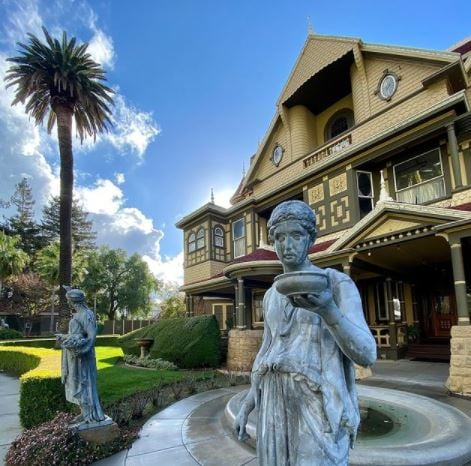
America is becoming a nightmarish laboratory for spiritual experimentation and mind-control games. A Devil who has unity will be a God. Sunday newspapers will always find it easier to print headlines of child murder than discuss masturbation. If you recall Dennis Wheatley’s stories of Satanic cultus and suburban Devil-worshippers—in satisfying the appetite, he helped create the popular image of Satanism. Wheatly dabbled with magic and was terribly dangerous, he lost touch with his friends after he slipped up in a ceremony and failed to master a demon, who has caused all his teeth to fall out. Wheatley prefaced his Satanic thrillers with dire warnings on the Devil and all His works—just thinking too long on Satan was dangerous enough, let alone his engaging in a Black Mass. Many people believed that Wheatly’s stories were more than just fiction, that the Satanic forces described in his novels were a real threat to the civilized World. It has been hinted at in popular culture, but is also believed that the Germans did use black magic during World War Two. Some truly believed that the power lurking behinds it eyes was literally Satanic. Sarah Winchester, heiress to the Winchester rifle fortune, was also known to be under attack by demonic forces, which is why many believe she built her beautiful, but bizarre mansion in San Jose, California with hidden rooms, secret passageways, and trap doors. The house was furnished with the finest materials and was a showcase of Victorian elegance and taste. However, prior to moving to San Jose, William Wirt Winchester and Sarah Winchester gave birth to a daughter named Anne. While enjoying Christian fellowship in their home in New Haven, they were disturbed when they prayed by the screaming of their newborn daughter. This happened consistently for two weeks. Mr. and Mrs. Winchester assured the prayer group that their child was all right, but they were as concerned as their guest were. One of the members in the prayer group started to think about the situation in connection with demons. However, he kept telling himself that surely such a small child could not be an object of demonic spirits. Nevertheless, they decided to experiment. #RandolphHarris 11 of 20

During the usual time, of fellowship after service, the group leaders asked that everyone pray. They knew that the baby, who was busying sleeping, would have a hard time hearing the prayer. To their amazement, at the very first words of Mr. Merrill’s prayer, the baby began to scream and cry frantically for her mother, Mrs. Winchester. Mr. Merrill was convinced then that this was some kind of demon demonstration. To make sure, they did the same thing the next night, and again the child screamed hysterically. He decided the Holy Spirit was speaking to him to do something. He could not stand to see the child so tormented. So Mr. Merrill audibly cried to God to rebuke the demon powers and give the child complete deliverance with the Holy Spirit and angelic protection. Instantly she stopped sobbing and seemed quite normal. Mr. Winchester and Mr. Merrill spent much time in prayer that night. After another week, Mr. and Mrs. Winchester told Mr. Merrill that their child appeared completely delivered from the demonic assaults. However, less than a month later in July 1866, Annie Pardee Winchester died, ironically the same year the Winchester Repeating Arms Company was established. In March of 1881, William Winchester also died. It is easy to imagine how the combined grief of losing both a child and a spouse could be very crippling. However, if you have $20,000,000 and all the time in the World to help you cope, can you imagine what you would do? Mrs. Sarah L. Winchester’s response to the deaths of her child and husband left a beautiful, mysterious, and impressive architectural reflection of her psyche. The fascinating story of the Winchester Mystery House has its roots in the personal tragedies suffered by Mrs. Winchester and in the legacy of the Winchester rifle, “The Gun that Won the West.” According to some sources, the Boston medium consulted by Mrs. Winchester explained that her family and her fortune were being haunted by spirits—in fact, by the spirits of American Indians, Civil War soldiers, and others killed by the Winchester rifles. Supposedly the untimely deaths of her daughter and husbands were caused by these spirits, and it was implied that Mrs. Winchester might the next victim. #RandolphHarris 12 of 20

However, the medium also claimed that there was an alternative. Mrs. Winchester was instructed to move west and appease these spirits by building a great house for them. As long as construction of the house never ceased, Mrs. Winchester could rest assured that her life was not in danger. Building such a house was even supposed to bring her eternal life. On a more practical note, maybe a change of scenery and a never-ending hobby were just what Mrs. Winchester needed to distract her from her grief. Whatever her actual motivations, Mrs. Winchester packed her bags and left New Haven, Connecticut to visit a niece who lived in Menlo Park, California. While there she discovered the perfect spot for her new home in the Satan Clara Valley. In 1884, she purchased an estate just three miles west of San Jose. Soon after the construction started, the architects discovered that the site was characteristic of an Irish ruin. Standing on a slight elevation, in the midst of a flat country, the castle lifted its turreted walls as proudly as when its ramparts were fringed with banners and glittered helmets and shields. In olden times it was a citadel of the town, and although it was fortified by a strong wall, protecting it alike from predatory assault and organized attack, it was clear that by treachery, surprise, or regular and long-continued siege that the castle had been taken. The central portion was a large square structure, this central fort was connected by double walls, the remains of which covered passages, with smaller fortresses, little castles built into the wall surrounding the citadel; and over these connecting walls, over the little castles, and over the piles of loose stones where once the strong outer walls had stood, the ivy grew in luxuriant profusion, throwing its dark green curtain on the unsightly masses, rounding the sharp edge of the masonry, hiding the rough corners as through ashamed of their roughness, and climbing the battlements of the central castle to spread nature’s mantle of charity over the remains of barbarous age, and forever conceal from human view the stony reminders of battle and blood. #RandolphHarris 13 of 20

The success of the ivy was not complete. Here and there the corner of the battlement stood out in sharp relief, as though it had pushed back the struggling plant, and, by main force, had risen above the leaves, while on one side a round tower lifted itself as if to show that a stone tower could stand for six hundred years without permitting itself to become ivy-grown; that there could be individuality in towers as among humans. The great arched gateway too was not entirely subjugated, though the climbing tendrils and velvet leaves dressed the pillars and encroached on the arch. The keystone bore a rudely carved, crowned heard, and ivy vines, coming up underneath the arch, to take the old king by surprise, climbed the bearded chin, crossed the lips, and were playing before the nose as if to give it a sportive tweak, while the stern brow frowned in anger at the plant’s presumption. However, only a few surly crags of the citadel refused to go gracefully into the retirement furnished by the ivy, and the loving plant softened every outline, filled up ever crevice, bridged the gaps in the walls, toned down the rudeness of projecting stones, and did everything that an ivy-plant could do to make the rugged old castle as presentable as were the high round mounds without the city, cast up by the besiegers when the enemy last encamped against it. The old castle had fallen on evil days—and over the next thirty-eight years Mrs. Winchester produced the sprawling complex we know today as the Winchester Mystery House. One day while on the estate, the sun had barely cleared away the thick, heavy mist, which was still slowly rising here and there, and the birds were majestically in search of their breakfast. While the famers were out tilling the fields, a long, lanky figure was draw to its full height, the white eyeballs and jagged teeth had a red glow about them, and he waved his hand triumphantly in the direction of the vanishing cloud of birds. Then there came a loud gun shot, then next thing anyone say was the quivering body of this of a man on the ground, and wild eyes staring open in the agony of death. #RandolphHarris 14 of 20

The farmers ran over and glanced at the body of this man. They figured they better hide him in the long grass and come back after dinner to bury him. After dinner, they walked slowly at first, gradually increasing their pace as they became more distant from the mansion, and they never spoke a word. Then suddenly the, as they drew closer, the man clutched one of the farmer’s arms. It he pleading for help, so they hit him with a shovel and began to dig its grave. For more than an hour they worked desperately with the chopper and hunting-knife, being greatly assisted in their task by a rift in the ground where the soil had been softened by water running from the creek, and they stood up with sweat pouring from their faces, and stamped down the Earth to cover all traces of the man. They had filled the grave with some large stones that were lying about (remnants of some ancient temple, long ago deserted and forgotten), thus feeling secure that it could not easily be disturbed by animals. From the night on, a wolf would come howling around their cottages on the estate, which would make their blood run cold. They swore they were being haunted by the spirit of that man they murdered and that he some how much have entered this animal’s body, bent on obtaining vengeance. One of the farmers grew ill, he was thin, very pale, and haunted by a ghastly expression. He was a married man who had carried on an adulterous relationship with one of the maids the took care of Mrs. Winchester’s house. The maid was reputed to indulge in black magic. They day of the murder, the man had tried to end his illicit affair. He told the woman that he wanted to break off his relationship with her. She was very upset and threatened him, saying that if he did then his wife and children would suffer in the process. The man however, was determined to break it off and stuck to his decision. Later that day is when they suspected one of their fellow famers was a demon and shot and buried him. Two days later, the adulterous farmer’s son became ill. They rushed him to the hospital and he died there. The doctors were unable to diagnose the disease. #RandolphHarris 15 of 20

Later still, the adulterous famer’s wife and daughter fell ill. The man was by now quite frightened and remembered the threats of the woman with whom he had had the affair. He went to her and begged her not to use black magic against his family. She softened and said that she would stop. Thereupon his wife and daughter recovered quickly, but he died. During Aleister Crowley’s visit to the Winchester Mansion, He spoke to a farmer about his saw being stolen. Crowley, as you may know was a black magician, and called “the Great Beast 666,” after the devilish monster of the Book of Revelations. The farmer paid Crowley a considerable amount of money, and in returned he promised his immediate help, stating that the thief would die. The farmer and Crowley walked around the grounds of the mansion, and within three hours of his interview with Crowley, the thief had a fatal heart attack. At the Winchester mansion, Crowley claimed that black magic was very literally invoked against him. In 1898 Crowley was initiated into the Golden Dawn by its founder, the influential occultist S.L. MacGregor Mathers while at the Winchester mansion. Mathers was one of the “the Masters.” They were believed t be benevolent supermen, or demigods, who has spokes women on Earth. Mather become the “Supreme Magus,” and all members of the Golden Dawn signed an oath of obedience to him. It was unclear if Mrs. Winchester was part of the Golden Dawn, but some of these sorcerous rituals which were supposedly aimed toward gaining power and enlightenment, supposedly took place in her home. After a few séances at the Winchester mansion, Crowley fell out him Mathers. He alleged that Mather summoned a middle-aged vampiress Called “Mrs. M,” who confronted Crowley while they were at Mrs. Winchester’s mansion, where the vampiress transformed into a beautiful young woman. She subjected him to a near-fatal seduction. According to Crowley’s account, he repelled her with his mystic forces, whereupon: “She writhed back from me, and again approached me even more beautiful than she had been before. She was battling for her life now, and no longer for the blood of her victim. #RandolphHarris 16 of 20

“The odour of man seemed to fill her whole subtle form with feline agility. One step nearer and then she sprang at me with an obscene word sought to press her scarlet lips to mine. As she did so I caught and held her at arm’s length and then smote the sorceress with her own current of evil. A bluish-green light seemed to play round the head of the vampire, and then the flaxen hair turned the colour of muddy snow, and the fair skin wrinkled, and her eyes dulled and became pewter dappled with the dregs of blood. The girl of twenty had gone; before me stook a hag of 60. With dribbling curses, she hobbled from the room.” If spiritism pertained only to pagan religions and had never affected the people in so-called Christian lands, then a careful study of its practices and phenomena might not be imperative. Interest in the occult is reaching alarming proportions and even some professing Christians are being duped into complicity with spiritistic traffic. This was true of the late Bishop James A. Pike. Worldwide spiritism is conservatively estimated to have at least seventy million adherents. Kurt E. Koch, a German evangelist and student of the occult for thirty years, enumerates sixteen different varieties of spiritistic practices. If spiritism is to be accurately evaluated and its somber relation to human experience comprehended, all of these must be carefully understood. Spiritistic phenomena may be conveniently divided into the following categories: physical phenomena (levitations, apports, and telekinesis); psychic phenomena (spiritistic visions, automatic writing, speaking in a trance, materialization, table lifting, tumbler moving, excursions of the psyche); metaphysical phenomena (apparitions, ghost); magic phenomena (magic persecution, magic defense); cultic phenomena (spiritistic cults, spiritism among Christians.) There are very scarce published accounts of Daisy, Mrs. Winchester’s niece, being haunted while staying at the Winchester mansion. However, she was reportedly strangely molested by spirits and witches; also the aforesaid Winchester Mystery House is still being haunted by spirits. #RandolphHarris 17 of 20

While staying in Mrs. Winchester’s house, Daisy also suffered great annoyance every night from some invisible object, which threw stones and turf at her bed, the force of the blow often causing the curtains to open, and even drawing them from one end of the bed to the other. About the same time, also, the pillows were taken from under her head, and the clothes pulled off; and though a strict search was made, nothing could be discovered. Continuing to be annoyed in this way she removed to another room, being afraid to remain any long. Then about the 11th of December 1898, she was sitting in the twilight at the kitchen fire, a little body came in and sat down beside her. He appeared to be about eleven or twelve years old, with short black hair, having an old black bonnet on his head, a half-worn blanket about him trailing on the floor, and a torn vest under it, and kept his face covered with the blanket held before it. Daisy asked him several questions: Where he came from? Where he was going? Was he cold or hungry? and so on; but instead of answering her he got up and danced very nimbly rough the kitchen, and then ran out of the house and disappeared in the cow-shed. The servants ran after him, but he was nowhere to be seen; when they returned to the house, however, there he was beside them. They tried to catch him, but every time they attempted it, he ran off and could not be found. At lest one of the servants, seeing the master’s dog Zip coming in, cried out that her master was retuning home, and that she would soon catch the troublesome creature, upon which he immediately vanished, nor were they troubled by him again till February 1899. On the 11th of that month, which happened to be a Saturday, Mrs. Winchester was reading Dr. Wedderburn’s Sermons on the Covenant, when, laying the book aside for a little while, nobody being in the room all the time, it was suddenly taken away. She looked for it everywhere, but could not find it. #RandolphHarris 18 of 20

On the following day the apparition already referred to came to the house, and breaking a pane of glass in one of the windows, thrust in his hand with the missing volume in it. He began to talk with one of the servants, Angus Spear, and told her that the kitchen, and that her mistress would never get it again. The girl asked him if he could read it, to which he replied that he could, adding that the Devil had taught him. Upon hearing this extraordinary confession she exclaimed, “The Lord bless me from thee! Thou hast got ill lear (learning).” He told her she might bless herself as often as she liked, but tht it could not save her; whereupon he produced a sword, and threatened to kill everybody in the mansion. This frightened her so much that she ran into the parlour and fastened the door, but the apparition laughed at her, and declared that he could come in by the smallest hole in the house like a cat or mouse, as the Devil could make him anything he pleased. He then took up a large stone, and hurled it through the parlour window, which, upon trial, could not be put out at the same place. A little after the servant and child looked out, and saw the apparition catching the turkey-cock, which he threw over his shoulder, holding him by the tail; and the bird making a great sputter with his feet, the stolen book was spurred out of the loop in the blanket where the boy had put it. He then leaped over a wall with the turkey-cock on his back. Presently the girl saw him endeavouring to draw his sword to kill the bird, but it escaped. Missing the book out of his blanket he ran nimbly up and down in search of it, and then with a club came and broke the glass of the parlour window. The girl again peeped out through the kitchen window, and saw him digging with his sword. She summoned up courage to ask him what he was doing, and he answered, “Making a grave for a corpse which will come out of this house very soon.” He refused, however, to say who it would be, but having delivered himself of this enlivening piece of information, flew over the hedge as if he had been a bird. #RandolphHarris 19 of 20

For a day or two following nothing happened, but on the morning of the 15th the close where mysteriously taken off Daisy’s bed, and laid in a bundle behind it. Being put back by some of the servants they were gain removed, and this time folded up and placed under a large table which happened to be in the room. Again they were laid in order on the bed, and again they were taken off, and this third time made up in the shape of a corpse, or something that very closely resembled it. When this strange news spread through the neighbourhood many persons came to the house, and, after a thorough investigation lest there might be a trick in the matter, where obligated to acknowledge that there was something invisible at work. Reverend N. P. Wallgren and Reverend Osborn of the Swedish Evangelical Mission Church of San Jose stayed the whole of that day and the following night with that distressed family, spending much time in prayer. At night Daisy went to bd as usual in the haunted room, but got very little rest, and at about twelve o’ clock she cried out suddenly as if in great pain. Upon Mr. Sinclair asking her what was the matter, she said she felt a knife had been struck into her back. Next morning she quitted the haunted room and went to another; but the violent pain never left her back, on the 22nd of February, she almost died. During her illness the clothes were frequently taken off the bed which she occupied, and made up like a corpse, and even when a table and chairs were laid upon them to keep them on, they were mysteriously removed without any noise, and made up as before; but this never happened when anyone was in the room. The evening before she almost died, they were taken off as usual; but this time, instead of being made up in the customary way, they were folded with great care, and laid in a chest upstairs, where they were only found after a great deal of searching. At it height the Winchester Mansion encompassed 761 acres, was 9 stories high, approximately 125,000 square feet, and possessed as many as 500 to 600 rooms. Because so many changes were made, the mansion now stands 4 stories over 4 acres, is about 25,000 square feet, and has an impressive 160 remain. It is still a beautiful, rambling mansion and sure is worth a visit. #RandolphHarris 20 of 20

Winchester Mystery House

Watch your step in Sarah’s Séance Room! There are three exits in this room and only one entrance 😳 Those exits include the main door, a secret passageway leading into an unfinished closet, and this door that opens to an 8-foot drop into a kitchen sink below. https://www.winchestermysteryhouse.com/

🎟 link in bio. A 160-room mansion built to appease the spirits who died at the hands of the Winchester Rifle 👻

Battle Against the Laws of Nature—With God Comes Worlds without End

This Earth will eventually pass away, but not to worry, through God we will have a new Earth and Eternal Life. We want to see humanity in pursuit of knowledge for the mind is fascinating, for it looks on things with the hidden generosity in the soul. Few words in recent years have fueled as much hatred and controversy around the World as globalization—and few have been used more hypocritically—and naively—by all sides. For many anti-globalists, the real target of their wrath is the United States of America, World headquarters of free-market economics. The U.S. drive over past decades to globalize (or, more accurately, to reglobalize) the World economy also flew a false flag. Successive administrations, especially that of former President Bill Clinton and currently President Joe Biden, have preached a mantra to the World. The so-called Washington Consensus held that globalization plus liberalization in the form of privatization, deregulation and free trade would alleviate poverty and create democracy and a batter World for all. Both pro- and anti-globalist ideologues typically lump globalization with liberalization, as though they were inseparable. Yet countries can integrate economics without liberalizing. Liberalizing countries, by contrast, can sell off their state enterprises, deregulate and privatize their economies, without necessarily globalizing. None of this guarantees that long-term benefits will flow from the macroeconomy to the microeconomy in which people actually live. And none of it guarantees democracy. It is now perfectly clear that both sides in the ideological war over reglobalization have been perfectly and deliberately unclear. Thus the Web site of a protest movement that has waged a ceaseless campaign against globalism listed “actions” in Hyderabad, India; Davos, Switzerland; Porto Alegre, Brazil; Buenos Aires, Argentina; Washington, D.C.; and Barcelona, Spain, as well as others in New Zealand, Greece, Mexico and France. Demonstrators surrounded World leaders in their luxury hotels at numerous international meetings from Seattle to Genoa or forced them to seek refuge in remote locations—and to call up security forces to maintain the peace. Now protestors are invited to meet these leaders and much of the fizz has gone out of the movement. #RandolphHarris 1 of 18

It hardly escapes notice, however, that much of this purportedly anti-globalist activity is coordinated by interlinked Web sites on the Internet, itself an inherently global technology. The political impact of the movements comes largely from television coverage delivered by global satellite systems. Many of the demands of these groups—for lower-cost medications, for example—can be met only by global corporations the protesters could not fly to their demonstrations without globally linked airlines dependent on global reservation systems. And the goal of many of the protesters is to create a movement with global impact. In fact, the movement has split into many different, often short-lived groups with dizzyingly diverse goals, from eliminating child labor to outlawing tobacco to protecting the rights of all inmates. A few are dewy-eyed anarcho-localists, glorifying the supposed authenticity of face-to-face life in pre-industrial villages—conveniently forgetting the lack of privacy, gender discrimination, and the narrow-minded local tyrants and bigots so often found in real villages. Others are back-to-nature romantics. Still others are United States—and European Union—hating supernationalists identified with neofascist anti-immigrant political movements. However, many others are, in fact, not “anti-global” at all but “counter-global.” These counter-globalists, for example, strongly support the United Nations and other international agencies. Many long to see something approximating a single World government, or at least better, stronger global governance financed, perhaps, by a global tax. What many of them do want, however, is a World crackdown on global corporations and global finance, which they blame for exploiting workers, damaging the environment, supporting undemocratic governments and an infinity of other ills. The antis make the most noise. However, even if all the chanting, marching anti- and counter-globalization protesters were to steal away in the night, the advance of economic re-globalization might still slow or stop in the years immediately ahead. #RandolphHarris 2 of 18

Powerful factors now loom before us that could halt the continued extension of spatial reach and make even the anti-globalists sorry to see that happen. The re-globalization period has seen the World economy suffer one devastating regional or national crisis after another—in Asia, in Russia, in Mexico, in Argentina. In each case, investors, business decision-makers and governments all over the World worried about financial “contagion.” Would Argentina’s collapse destroy the Brazilian economy? Could the COVID pandemic cause a Worldwide meltdown? (It is still coming close to.) Because economic integration today is far more dense, multilayered and complicated, linking so many diverse economies at so many different levels, it requires systemically designed fail-safes, redundancies and other safety devices. Unfortunately, overenthusiastic re-globalizers are constructing a gigantic financial cruise ship lacking the watertight compartments that even the Titanic had. U.S. stock markets have “circuit breakers” intended to stop a crash in its tracks. For example, if the Dow Jones index falls 10 percent before 2.00 p.m. on a trading day, the New York Stock Exchange will call a one-hour halt in trading. If prices move too far above or below a preset limit, so-called collars are imposed on certain trades. Similar measures are in place or under discussion in many countries from India to Taiwan. These may or may not be adequate locally or nationally. However, trade, currency and capital markets at the global level lack equivalents of even these cautionary measures, let alone a comprehensive system of firewalls, compartments, backups and the like. By integrating faster than we are inoculating ourselves against contagion, two processes are out of sync—setting us up for a global epidemic that could send individual nations rushing back, head over heels, into their protective financial shells. Their frenzied responses could include yanking foreign investments back home, restoring trade barriers, drastically reshuffling import-export patterns and relocating businesses, jobs and capital around the planet—in short, reversing the recent direction of change. #RandolphHarris 3 of 18

What other events or conditions could limit or reverse re-globalization? Plenty. If not the age, we have entered the age of export overload—or, at least the interval. Starting in the 1970s, Japan soared to prosperity by combining computerized design and manufacture, relatively closed domestic markets and aggressive exports. That strategy was soon emulated by South Korea, Taiwan, Hong Kong, Singapore and later by Malaysia and Indonesia. All pumped their products into American and European markets, and more “things” that ever in history moved across the Pacific by containership, tanker and cargo planes. Exports—a spatial phenomenon by definition—came to be regarded as the magic bullet for development. In all these Asian countries, exports grew faster than domestic demand—another example of large-scale de-synchronization. At that point, China roared into the fray, cramming even cheaper products into the crowded global market and especially into the United States of America. Suddenly America was awash with Chinese hair dryers, hoses, handbags, clocks and calculators, tools, and toys. Overcapacity and rapacity marched hand-in-hand. If the United States of America’s economy, which alone accounts for more than 30 percent of World demand, were at any time to lurch into a free fall, it hardly needs to be noted that the relocations of wealth in the World would be shattering for many other countries—including some of the poorest. Among those hardest hit would be countries whose governments are dangerously overdependent on a single export for their day-to-day revenue. This could be copper, as in Zambia. It could be bauxite, sugar, coffee, cocoa or cobalt. Or it could be oil. With crude-oil prices at record highs, it may seem unlikely. Yet the unlikely happens again and again, and a severe slowdown in the United States of America or a crash in China could, despite producers’ efforts to control supply, send oil prices plummeting again. Even if the decline is temporary, the results could shake many governments out of power. #RandolphHarris 4 of 18

Fully 80 percent of Nigeria’s government revenue comes from oil, as does 75 percent of Saudi Arabia’s. Much the same can be said of Kuwait, Oman, the United Arab Emirates and Angola. For Venezuela the number is 50 percent, for Russia close to 30 percent. Unstable or politically fragile at best, oil-funded governments could be forced to cut domestic subsidies and social benefits at the risk of triggering upheaval in their streets. More bad news for re-globalization. The war between Russia and Ukraine is increasing pressure on the global system and increasing oil prices higher than they have ever been. The cost of a barrel of oil is currently $115 and is expected to reach $150 a barrel. That could send gas prices from $6.00 a gallon to around $9.60 a gallon, which would cause a supply shock. The average American could end up paying $1250 a month for gas. Canceling the Key Stone Pipeline may have been Joe Biden’s biggest mistake. However, he says all Americans need to do is buy electric car. Yet let us forget that we are still in a pandemic and many people have been spending money just to get through it, and with inflation and rising gas prices, no one has money to go out and buy electric cars and a lot of people have already bought new vehicles. In fact, in 2021, sales of light trucks accounted for about 78 percent of the approximately 15 million light vehicles sold in the United States of America. So currently gas prices are really hurting Americans and if they continue to state at this rate and increase, that will be a significant bill. Therefore, people will spend less money dining out, shopping, and traveling. The decades ahead may also see a further formation of supranational blocs and trade groups following the wake of the European Union (EU). The is the World’s largest trading bloc, and second largest economy, after the United States of America. In 2014 the value of the EU’s output totaled $18.5 trillion. The five largest Economies, Germany, France, the United Kingdom, Italy and Spain, account for around 70 percent of the 28-country trading bloc. Ranging from Mercosur in South America to emergent groupings in Asia, these blocs, since they create larger-than-national markets, can be seen as half steps toward global integration and more open trade. That is how they are usually portrayed. #RandolphHarris 5 of 18

However, despite protestations to the contrary, they can also, under extreme pressures, flip the protectionist switch and become large-scale deterrents to further openness and globalization. With respect to global integration, area-wide supranational blocs could prove to be a double-edged switchblade. And so could the next explosion of scientific and technological breakthroughs. Propelled by the fusion of information and biological technologies, it could reduce the need for some previously imported raw materials and other goods. Radical miniaturization, customization and the partial substitution of knowledge content for raw material means that tomorrow’s economies may no longer need as many of the bulk commodities that now form so large a part of the global market. Teaspoons of a nanoproduct tomorrow could replace tons of material that today needs to be shipped across the World. This may be long in coming, but its impact will be felt in major port cities around the World, from Qingdao to Los Angeles to Rotterdam. Again, all this points to more do-it-at-home processes and less reliance on a globalized marketplace. Furthermore, we cannot rule out war and its partner, terror, the most obvious de-globalizers. Both, as we are currently seeing, can physically destroy energy and transportation infrastructures needed for the movement or relocation of oil, gas, raw materials, finished products and other goods. Both can also unleash capital flight and unstoppable tidal waves of cross-border refugees. Bother will target critical information infrastructures in knowledge-intensive economies. Unfortunately, the period ahead is likely to see high geopolitical instability and frequent outbreaks of military conflict—leaving not only dead and wounded on the field but, as in the past, the disintegration of what has already been integrated. Beyond these potential de-globalizers are what futurist call wild cards, scenarios that, though highly improbable, cannot be ruled out: strange new pandemics and quarantines, asteroid strikes and ecological catastrophes that could knock the entire economic firmament off its current course and reduce it to Mad Max conditions. #RandolphHarris 6 of 18

It is useful to reserve at least a speck of mind space for thinking the unthinkable, for history is little more than a sequence of high-impact events that began as utterly improbable and exploded into actuality. We cannot know with certainty which of these thrust-reversers might come into play, or how they might converge. However, any one of them could prove a far more potent force for turning back re-globalization than all the headline-grabbing protest movements put together. Moreover, it is easy to imagine two or more of these de-globalizing events coming into play simultaneously—and in the not-so-far-off future. It is a lot harder to imagine a future in which none of them occurs. The most likely scenario is a split—a possible slowdown in further economic integration as such, even as World pressures rise for globally coordinated action on such issues as terror, crime, environmental issues, human rights, slavery, and genocide. This should put to bed any dream of linear progress toward a fully integrated, truly global economy—and any illusions about a World government in the foreseeable decades. It points, instead, to more not fewer, faster not slower, bigger not smaller, spatial jolts to job markets, technologies, money and people around the planet. It points to an age of accelerating spatial turbulence. What we have seen so far, therefore, is not only a massive shift of wealth toward Asia, a growing importance of region-states and a change in spatial criteria in advanced economies, but a gigantic—though reversible—process of re-globalization. Any of these, by itself, represents an important change in the way revolutionary wealth is related to the deep fundamental of space. Yet, as we will soon see, one final spatial change may, some distant day, dwarf all these put together. Now, one striking characteristic of modern education is the unanimous disapproval of exploiting the powerful feeling of shame, the hot blush and wanting to sink into the ground out of sight. It is claimed that this injures personal dignity and either makes a child vengeful and not belonging, or breaks his spirit. #RandolphHarris 7 of 18

Youth workers with delinquents make a fetish of protecting self-esteem, as contrasted with the polices’ “You young Punk!” Yet in ancient education, exempli gratia, in the Socratic dialogues, this very arousal of shame is a chief device; the teacher greets the hot flush as a capital sign that the youth is educable, he has noble aims. Such a youth has dignity in his very shame. The difference seems to be that we cannot offer available opportunities of honor, we do not have them; and therefore we must protect what shreds of dignity the youth has. If we make him ashamed of his past, since he has no future, he is reduced to nothing. In other ages, the community had plenty of chances of honor, and to belong to the community itself was honor. (Let me make an analogy from psychotherapeutic practice: when a patient is schizoid, you give reassurance, protect the weak ego; when he is neurotic and can take care of himself, you attack the character resistances.) Now shame is the only direct attack on conceit, the defensive image of oneself. Conceit is the common denominator of the Organization Man, the hipster, and the juvenile delinquent—this is why I have been lumping them together. The conceited image of the self is usually not quite conscious, but it is instantly woundable; and people protect it with a conformity to their peers (oneself is superior). However, the conceited groups differ in their methods of confirming and enhancing conceit: the juvenile delinquent by surly and mischievous destructiveness of the insulting privileged outgroup; the hipster by making fools of them with token performances; the Organization Man by status and salary. To this inner idol, they sacrifice the ingenuous exhibition and self-expression that could make them great, effective, or loved in the World; but if it is mistaken, out of place, or disproportionate, that can also be shamed. Being ashamed ought to mean that a youth gives up some cherished error or conceited image of himself, and goes on, without loss of dignity, to achieve an ideal that is real; this is honor. Only the community can bestow honor, on those who enhance the community, who follow the useful callings, or bring new culture. #RandolphHarris 8 of 18

In New York, those who have kept out of jail for a generation are not made much of by a grateful and admiring citizenry. It is hard achievement but, like other public gods, it is not esteemed. Among cities, Venice had magnificence; but it is Florence that knew how to pay honor to her sons. She made it hard for them, with neglect and exile, to be themselves and serve her; but when nevertheless they achieved their ideals, her praise was loud. Boys today hardly aspire to immortal honor, the honor of self-fulfilling achievement. It is highly disapproved of in the code of the organized system. Instead, they devote themselves to protecting their “personal honor” against insults; and conversely they dream of the transient notoriety which will prove that they are “somebody,” which they doubt. The personal honor that they protect does not include truthfulness, honesty, public usefulness, integrity, independence, or virtues like that. A reputation for these things does not win respect, it has no publicity value; it is believed to be phony anyway, and if it is true, the person is hard to get along with. A British disaffected young man, an Angry Young Man, can make his protest by simply being a Cad, like Osborne’s George Dillion; but that would not much distinguish him on this side of the sea. A bad reputation naturally makes people prudent in their personal dealings, but it generally does not do much hard in the press or on TV, even to a public official, for the plugs is more important than the content of it. On the other hand, any official bad mark that gets on an IBM card, like being arrested and fingerprinted—and even if her was exonerated it–no matter what the charge, it can be disastrous to a young man, for his name can thereby drop out of the system. Nobody, but nobody, may disesteem a man for something, or he may even get wished for notoriety for something, that at the same time makes him unemployable. Just try to imagine nowadays the administrator of old-fashioned juvenile fiction who says, “You man, I do not care what Personnel reports, you have an honest face and we will give you a chance!” #RandolphHarris 9 of 18

Rather, a good man will be asked to resign for the sake of Public Relations. And correspondingly, suburban “good families” increasingly shun “bad families” that have had troubles, such as divorces or delinquency or even death of a parent (!), for that makes the family untypical. (A few years ago an editorial in Life complained that our novels always contain alcoholics, jailbirds, addicts, crazy people, perverts, etcetera, and do not portray average families who have none such. James Farrell, pointing out that the combined numbers of these deviants come to much more than the number of families, drily offered that the editor of Life probably did not have a material family, a very abnormal case.) There is an organized system of reputation that is calculated statistically to minimize risk and eliminate the unsafe; likely it succeeds in this. It may make the enterprise as a whole less efficient, for it guarantees excluding the best, but be that as it may; the important thing is that there has ceased to be any relation whatever between “personal honor” and community or vocational service. Conversely, the way in which our society does do honor to its indubitably great and serviceable men—say, Schweitzer, Einstein, Picasso, Buber—is a study in immunizing people against their virus; it would be a remarkable and melancholy subject for a sociologist. They are transformed into striking images and personalities, and we assign to them the Role of being great men. We pay respectful attention to their birthday sayings. They are the menagerie of Very Important People who exist only for ceremonial occasions and to sponsor funds and drives for enterprises in which they will have no further function. This effectually prevents the two practical uses that we could make of them. We neither take seriously the simple, direct, fearless souls that they invariably are, whether humble or arrogant, to model ourselves after them because they make more sense as human beings; nor do we have recourse to them please to help us when we have need of exceptional purity, magnanimity, profundity, or imagination, giving them a free hand on the assumption that their action is really better. Though we publicize the image, we do not behave as though we really believed that there were great men, a risky fact in the World. #RandolphHarris 10 of 18

They are likely to be and do the damnedest things: Picasso is a communist; Einstein sponsored the atom bomb; Bernard Shaw was arrogant and peculiarly celibate; Frank Lloyd Wright was wildly arrogant and immoral when it came to pleasures of the flesh; Bertrand Russell was a convicted pacifist and has practically advocated free love; etcetera. Few great men could pass Personnel. Or, as if we believed that the affairs of our World were alternatively significant enough for the intervention of great men. For instance, no one would think of looking for actualized Christians to intervene in our racial troubles—that is not their “field of competence” (though we did have the sense to get some good sociology on the subject from Gunner Myrdal). We would not officially ask a man of letters, as the British used Bernard Shaw, to criticize the penal system. When it comes to improving the high schools, we choose a well-licensed administrator, we do not try to persuade some extraordinary scholar or natural philosopher, a man who has actually learned something and therefore perhaps knows how it is done; naturally we come out with an excellent administrative report, but no ideas. John Dewey was called on, by passionately interested people, to make an impartial inquiry into the death of Trotsky; that seems a reasonable use of a judicious and incorruptible man; but we do not much imitate it. However, even when there is no doubt of the field of competence, when we choose a man to beautify our towns, we do not automatically call on the major artists of the World; for instance, we now lavishly praise Frank Lloyd Wright, but we never made any community use of him, though he longed for the chance and kept badgering the country with community projects. My belief is that one can easily put great men to work, even against their own freedom and advantage, for they allow themselves to be imposed on, noblesse oblige; but one must, of course, then take the consequences. As if they were a useful public resource, I understand that to consider powerful souls is quite foreign to our customs. #RandolphHarris 11 of 18

In a small sense it is undemocratic to consider powerful souls as a public resource, for it assumes that some people really know better in a way that must seem arbitrary to most. In a large sense it is certainly democratic, it that it makes the great man serve as a man. Either of these choices, to eschew them or to use them, however, is preferable to creating glamorous images with empty roles. Now, schoolteaching in Tsarist Russia was little different from anywhere else. The profession was undervalued, underpaid, and overworked, and subject to unutterably petty rules and regulations spewed forth by a strangulating educational bureaucracy. Russia’s legal code granted government officials the right to deny any soldier or civil servant permission to marry, but by the late nineteenth century, only schoolteachers who married lost their rent-free lodgings, seniority, even their jobs. In fact, women teachers were the real target and were routinely fired for marrying, while men seldom were. In 1897, the St. Petersburg Duma (the name for elective municipal councils) formalized this discrimination, passing a law that banned the hiring of married women teachers and terminated those who married after their appointment. The reasons? With fewer employment opportunities than men, single, well-educated young women were grateful for teaching positions. Since they needed less money to live (so the authorities reasoned), they demanded lower salaries. Teaching youngsters was natural for them and prepared them or marriage, at which time they would be dismissed. Off they went to their husbands, at a net saving to St. Petersburg because they were given no pension benefits and were replaced by another contingent of eager, hardworking, docile young spinsters. Why were women singled out for singleness? Married men, after all, were permitted to teach. The reasoning was that a man merely provided his family’s living, but a mother had much heavier responsibilities. She might, for example, have to nurse a baby during school hours or stay at home to nurse a sick child or husband. She might even transfer to her family some of the interminable hours previously dedicated to her teaching. #RandolphHarris 12 of 18

Elementary-school teaching in St. Petersburg paid better than elsewhere in Russian, and the city’s rich cultural life, with concerts, ballets, and lectures, was an additional lure for eager young minds. School conditions, on the other hand, were less delightful. Classes were held in the teachers’ rented apartment, dark and cramped, unequipped and noisy, and scattered throughout the city, preventing camaraderie with other teachers. Their often cold, hungry, desperately poor, and sometimes abused pupils were divided into three grades, for which one teacher alone was responsible. To ease the children’s suffering, teachers were supposed to dip into their own meager purses and provide after-hours food, clothing, and lodging. When teachers dared complain, it was of overwork and nervous exhaustion. This, however, was not the end of their employer’s demands. Teachers had to provide certificates of political reliability, and in some areas (but not St. Petersburg), the women had to submit medical proof of virginity. In Moscow, female but not male teachers had to abide by a strict 11 P.M. curfew and were monitored to ensure they did so. Clearly, women teachers were expected to be more than just unmarried. Virtue and virginity were of the highest importance. Frightened teachers dared protect only collectively, through the women’s movement and teachers’ mutual-aid societies. A 1903 survey revealed their conflicting views on the issue of celibacy as a prerequisite to teaching, which many abhorred but practiced for wants of alternatives. As one liberal legislator expressed it, “This situation weighs heavily upon city teachers and is tantamount to serfdom. Women teachers are primarily poor girls, needing a scrap of bread; the city administration gives them the chance to work and not die of hunger, but under conditions which cripple their natures, condemning them to eternal celibacy.” Thirty-five teachers reported financial insecurity as their motivation for remaining single and celibate; twenty-nine were afraid of losing their jobs; seven were too exhausted by their teaching responsibilities to lead a personal life; and seven worked too long hours to meet potential husbands. #RandolphHarris 13 of 18

A minority of women teachers readily accepted the celibacy imposed on them. Two did not want to marry anyway, one to avoid wedding an unsuitable man, as she noticed so often happened. A few believed teaching was emotional reward enough: “THEY DO NOT NEED A FAMILY. They have found their family among those whom the Lord called His pupils.” Others argued that teaching provided them with independence and a satisfying profession without the constraints of marriage or parental authority, and they defended both their celibacy and their right to reject marriage. The vast majority, however, would have loved to marry and raise families and believed married women were better teachers than spinsters. One anonymous writer agreed: “The Duma’s vestal virgins! How sad and pitiful that sounds…What intelligent woman would give up her right to be a mother? What educated young woman, having known the soul of a small child, would give up the right to bring up her own children and give the motherland useful citizens?!” Some blamed a host of physical and emotion problems on their legislated celibacy: “Celibacy has a harmful effect on everything—on health and on character: it causes selfishness, irritability, nervousness, and a formal relationship to the children,” one woman declared. To avoid all this, a tiny number of defiant women teachers simply had secret love affairs or married and hid the fact. If discovered, they were summarily fired. The simmering discontent boiled over late in 1905, when the Duma voted, by majority of one, to maintain the marriage ban. The authorities had won, just barely, their “battle against the laws of nature.” Eight years later, the “laws of nature” were reestablished, when in a nearly unanimous vote, the marriage ban was repealed. Celibacy was not longer a requirement for St. Petersburg’s women teachers. This episode, replanted in variations through the Western World, including Canada, was a telling indictment of coercive celibacy. Most teachers observed it, reluctantly and even bitterly, simply to keep their jobs. #RandolphHarris 14 of 18

The professional and economic risks were too great, and the news of cheaters caught and fired maintained the ambience of fear. Far from finding it rewarding, these unwilling teachers attributed a multitude of ailments to their unnatural celibacy. The few who embraced it voluntarily, on the other hand, respected it as a means to an independent and respected profession and adopted it as a desirable and fruitful way of life. Several revelations were given at Kirtland during the Winter months of 1831-1832. After Oliver Cowdery and John Whitmer left Kirtland for Independence with the revelations, Joseph Smith and Sidney Rigdon returned to their work on the Inspired Version of the Scriptures. While they were thus engaged, a revelation came to them in which the Lord gave them these instructions: “Open your mouth in proclaiming my gospel, the things of the kingdom, expounding the mysteries thereof out of the Scriptures. Call upon the inhabitants of the Earth, and bear record, and prepare the way for the commandments and revelations which are to come.” Newell K. Whitney was called to the office of bishop in Kirtland. He was to be an assistant to the bishop in America. It was his duty to receive the funds of the church in Kirtland, to keep that part of the Lord’s storehouse, and to administer to the wants of those who were in need. The Lord said: “It is required of the Lord, at the hand of every steward, to render an account of his stewardship, both in time and in eternity. For he who is faithful and wise in time is accounted worthy to inherit the mansions prepared for them of my Father.” After Joseph and Sidney Rigdon had preached about two months in Kirtland and in neighboring towns, God revealed that they should resume their work on the Scriptures. The Lord said: “It is expedient to translate again, and, inasmuch as it is practicable, to preach in the regions round about until Conference, and after that it is expedient to continue the work of translation until it be finished.” As Joseph and Sidney Rigdon read and studied the Bible, God helped them understand the Scriptures by His Holy Spirit. #RandolphHarris 15 of 18

Sometimes the Lord gave them direct revelations about things which puzzled them, as he did when He said: “And it came to pass that the children being brought up in subjection to the Law of Moses…believed not the gospel of Christ. Wherefore this cause the apostle wrote unto the church that a believer should not be united to an unbelieve, expect the Law of Moses should be done away among them. And that the tradition might be done away, which saith that little children are unholy. However, little children are holy, being sanctified through the atonement of Jesus Christ; and this is what the Scriptures mean.” The elders were instructed that it was their duty to provide for their own families, to find places for them to live, and then perform their work for the church. The Lord promised his elders: “Let my servants proclaim the things which I have commanded them: and inasmuch as they are faithful, lo, I will be with them even unto the end. Let every human be diligent in all things. And the idler shall not have place in the church, except one repents and mends one’s ways.” On February 10, 1832, Joseph and Sidney Rigdon received a vision in which they saw and talked with Jesus Christ. They saw Jesus Christ sitting at the right hand of God. They saw the holy angels and all those who were pure in heart bow, worshiping God and His Son. Because of this vision they were able to say concerning Jesus Christ: “And, now, after the many testimonies which have been given of him, that he lives; for we saw him, even on the right hand of God. And we heard the voice bearing record that He is the only Begotten of the Father; that by Him, and through Him, and of Him, the World are and were created; and the inhabitants thereof are begotten sons and daughters unto God.” In this vision they saw that before the World was created, one of the angels, Lucifer, was evil, having rebelled against the Son of God. As a result he was thrust from the presence of God and he fell from Heaven, and became Satan. Of this part of their vision, Joseph writes: “We beheld Satan, that old serpent, even the Devil, who rebelled against God, and sought to take the kingdom of our God and His Christ. Wherefore he maketh war with the saints of God…And we saw a vision of the sufferings of those with whom he made war and overcame, for thus came the voice of the Lord unto us.” #RandolphHarris 16 of 18

Then the Lord revealed to Joseph and Sidney Rigdon how men should live after death in places that are called “glories.” The glory of a human is to occupy depends upon one’s works while one lives on the Earth. In vision Joseph and Sidney Rigdon saw these three glories and they wrote of what they saw: First, the celestial glory, or the glory as of the sun. Those who will inherit the celestial glory: “They are they who received the testimony of Jesus, and believed on His name, and were baptized. And received the Holy Spirit by the laying on of the hands of one who is ordained and sealed unto this power. And who overcome by faith. They are they who are priests of the Most High after the order of Melchisedec. These shall dwell in the presence of God and His Christ for ever and ever: these are they whom He shall bring with Him, when He shall come in the clouds of Heaven, to reign on the Earth over His people. These are they who shall have part in the first resurrection who shall come forth in the resurrection of the just. Second, the terrestrial glory, or the glory as of the moon. Those who will inherit the terrestrial glory: These are they who died without law…who received not the testimony of Jesus in the flesh, but afterwards received it. These are they who are honorable humans of the Earther, who were blinded by the craftiness of humans. These are they who are not valiant in the testimony of Jesus. These are they who receive of His glory, but not of His fullness. These are they who receive of the presence of the Son, but not of the fullness of the Father. Third, the telestial glory, or the glory as of the stars. Of this glory, and those who would inherit this glory, Joseph wrote: These are they who received not the gospel of Christ, neither the testimony of Jesus Christ. These are they who deny not the Holy Spirit; these are they who are thrust down to hell. These are they who shall not be redeemed from the Devil, until the last resurrection, until the Lord, even Christ the Lamb, shall have finished His work. These are they who are liars, and whosever loves and makes a lie; these are they who suffer the wrath of God. These are they who receive not of his fullness in the eternal World, but of the Holy Spirit through the ministration of the terrestrial and also the telestial receive it of the administering of angels. As one star differs from another star in glory, even so differs one from another in glory in the telestial World. Last of all, these all are they who will not be gathered with the saints, to be caught up unto the church of the Firstborn, and received into the cloud. #RandolphHarris 17 of 18

God made it known that eventually all will acknowledge Him as the Lord, for Jesus Christ said of those who inherit telestial glory: These are all shall bow the knee, and every tongue shall confess to him who sits upon the throne for ever and ever; for they shall be judged according to their works; and every human shall receive according to one’s own works, but where God and Christ dwell they can not come, Worlds without end. Many wonderful things were shown to Joseph and Sidney Rigdon in this vision. Many of them were so glorious that God commanded they should not write about them. In March four revelations were given. One gave further information on the storehouse and how to care for the poor. In others some of the elders were sent to different parts of the country to preach the gospel. Good advice was given to Frederick G. Williams when the Lord said: Be faithful, stand in the office which I have appointed unto you, succor the weak, lift up the hands of which hang down, and strengthen the feeble knees. And if thou art faithful unto the end, thou shalt have a crown of immortality and eternal life in the mansions which I have prepared in the House of My Father. “Only fear the Lord and serve Him faithfully with all your heart; for consider how great are the things He has done for you,” I Samuel 12.24. An Angel inclines the will as something loveable, and as manifesting some created good ordered God’s goodness. And thus one can incline the will to the love of the creator of God, by way of persuasion. Everywhere is the green of new growth, the amazing sight of the renewal of the Earth. We watch the grass once again emerging from the ground. O Lord, may we today be touched by grace, fascinated and moved by this your creation, energized by the power of new growth at work in your World. Prayer is an invitation to God to intervene in our lives, to let His will prevail in our affairs; it is an effort to make Him the Lord of your soul. If it does not add to the glory of God, what is pride worth? We forfeit our dignity when we abandon loyalty to what is sacred; our existence dwindles to trifles. We barter life for oblivion, and pay the price of toil and pain in the pursuit of aimlessness. Through prayer we sanctify ourselves, our feelings, our ideas. In prayer we establish a living contact with God, between our concern and His will, between despair and promise, want and abundance. Life is fashioned by prayer, and prayer is the quintessence of life. #RandolphHarris 18 of 18

Cresleigh Homes

Love sharing just one of our three bedrooms at Brighton Station Residence 2 at #CresleighRanch!

Choosing a statement wall is a great way to customize your home and add some flair. ✨

When you tour this model, you’ll see how much space there can be in a single story home!
#CresleighHomes


We are Globalizing Our Vices More Quickly than We are Globalizing Our Virtues

You cannot do a kindness too soon, and never be too ruined by praise than saved by criticism. In 1900 the turn of a new century was celebrated in Paris with a Grand Exhibition devoted to progress, and the newspaper Le Figaro, barely able to contain itself, crowed: “How fortunate we are to be living on this first day of the 20th century!” One source of enthusiasm was the World’s advance, as the rich nations saw it, toward global economic integration—a rational process that, by changing spatial and political relationships, would make economies flourish. Sounding much like the true believers in economic globalization today, economists spoke enthusiastically of how more and more of the World was being stitched or bolted together. Foreign trade as percentage of World output had risen nearly ninefold between 1800 and 1900—some of it going into colonies in Asia and Africa. Anyone projecting these trends forward could have concluded that the process of economic globalization would complete itself long before the year 2000. However, trends do not continue indefinitely, the future does not arrive in straight lines, and the World was not ready for what happened next. Within fourteen years of the Grand Exhibition, the “stitches” or “bolts” broke and the slaughter of World War 1 violently disrupted flows of trade and capital. The Bolshevik Revolution followed in 1917, the Great Depression in the 1930s, World War II in 1939-45, the Communist takeover of China in 1949 and from the 1940s and into the ‘60s, and successive decolonizations in India, Africa, and Asia. Together, these events and countless smaller, less visible ones shattered long-established trade arrangements, encouraged tit-for-tat protectionism and touched off violence and instability—all discouraging border-crossing trade, investment and economic integration. In short, the World went through half a century of de-globalization. In the post-World War II years, America, its industrial base intact and if anything, strengthened by the war, needed export markets for its goods and, above all, its capital. The World was hungry for American products, often the only products available. #RandolphHarris 1 of 20

Moreover, advancing technology made it cheaper and easier to serve larger-than-national markets. Thus, convinced that global economic reintegration would serve their own purposes while generally advancing World economic growth, American elites undertook to create cross-border markets through which goods, capital, information and skills could once more flow with minimal friction. This, then, took on the form of an ideological crusade for re-globalization. As late as 1990, vast areas of the World were still essentially closed to the trouble-free exchange of goods, currencies, people and information. Only a billion people lived in any form of open economy. However, by the year 2000, that number had, by some counts, leaped to four billion. China alone, with well over a billion people, became committed to “market socialism,” perhaps better described as “social capitalism,” and opened its doors to foreign plants, products and money. Postcommunist Russian invited investment from outside. Eastern Europe and former Soviet republics in the Caucasus and Central Asia followed suit. Much of South America, urged on by the United States and led by Chile and Argentina, deregulated, privatized, invited Wall Street capital and became for a time “more capitalist than thou.” Currencies, too, as we have seen, were increasingly unleashed from their countries of origin. We expanded the spatial reach not only of a giant, globe girdling corporations but of tiny firms, even Internet-connected, microfinanced village enterprises in remote regions, encouraging once more the dream of a fully integrated World economy—one in which no part of the 510 million square meters of the Earth’s surface is beyond reach. The re-globalizers were on a roll. It is true this drive toward re-globalization has not gone quite as far as many of its friends and enemies assume. Even within the financial sector the lose term globalization masks sharply different rates of change. While currency markets are truly global, bond markets lag, and stock markets, in the main, continue to list largely domestic securities. #RandolphHarris 2 of 20

In Europe, where intense pressures for economic integration have led to a single currency and central bank, equity markets remain highly fragmented, with a mosaic of different rules and regulations. Despite hundreds of frequently questionable new laws and regulations intended to produce uniformity is not exactly working due to things like cost of living and shipping costs. Far more significant on a global scale, only 18 developing countries have regular access to private capital, even if more countries did, it would not mean that a unified global capital market existed. At yet another level, accounting methods still differ around the World, despite a drive to adopt a universal standard. Nonetheless, as early as the 1990s, thirty-five to forty thousand multinational corporations operated two hundred thousand subsidiaries or affiliates around the World. Worldwide foreign-currency deposits soared from $1 billion in 1961 to $1.5 trillion by the end of the century. World foreign direct investment had grown to $1.3 trillion. Cross-border debt reached $1.7 trillion by 2001. And World trade had hit $6.3 trillion. One of the most comprehensive recent attempts to determine the extent of globalization today is an index developed by A.T. Kearney and Foreign Policy. It measures such things as trade, foreign embassies a country maintains and the number of intergovernmental agencies to which it belongs. On the basis of all these, the 2003 Kearney study ranked sixty-two countries and found that small ones topped the list of the most globalized—Ireland, Switzerland, Sweden, Singapore and Netherlands. The United States of America was number 11, France 12, Germany 17, and South Korea 28, ahead of Japan at 35. The level of cross-border economic integration actually declined in 2002 because of a slowdown in the United States of America’s economy a drop in FDI in 2001. However, the total amount was still above that for any year before 1999. In spite of these figures, Foreign Policy expressed little doubt that re-globalization would continue. And if to these measures we add the growing cross-fertilization of currencies already described, the reasons for that optimism are strengthened. #RandolphHarris 3 of 20

Ironically, still another reason lies hidden in the remark of Harriet Babbitt, former deputy administrator of the U. S. Agency for International Development, who has noted, “We are globalizing our vices more quickly than we are globalizing our virtues. Illegal drugs, for example, are a $500 billion business Worldwide, and adds up to about 5.3 percent of the World economy. The narco industry, using the latest technologies, forms a giant unter-economy that actually overshadows the aboveground or formal economy in many countries and reaches from one end of the Earth to the other. From Afghanistan and Colombia to the schoolrooms and slums of Rio de Janeiro to the sidewalks of Chicago, narco-traffickers operate one of the most globalized industries in the World. Even if it has the will to do it, no one government can, nor wants to control the drug trade. For instance, California’s revenue from marijuana taxes alone is soaring. The state collected about $817 million in adult-use marijuana tax revenue during the 2020-2021 fiscal years. That is 55 percent more cannabis earnings for state coffers than was generated in the prior fiscal year. The business of pleasures of the flesh is similarly global. In an Albanian refugee camp, young women kidnapped in Romania await shipment to Italy to serve as slaves for pleasures of the flesh. In Bucharest so-called “agencies” peddle “dancers” to the trade of pleasures of the flesh in Greece, Turkey, Israel, and as far away as Japan. According to UNICEF, an estimated one million impoverished young people, most girls, and are up in the trade of pleasures of the flesh each year. Drugs, arms, intellectual property, people and money are not the only commodities traded illegally for huge profits by international networks. They also trade in human organs, identification, hair, endangered species, stolen art, blood, medical records, photographs, and toxic waste. Precisely because these activities are illegal and need to escape detection, traffickers constantly change the routes they take to deliver their “products.” #RandolphHarris 4 of 20

Smugglers, armed with fake papers and aided by bribed officials, slip easily past frontier guards. However, police in hot pursuit of them are often stopped at the border. Governments will huffily protect their “sovereign” space from one another. Yet that same spatial sovereignty is compromised daily, not by nation-states, but by stateless networks that break laws and cross borders in pursuit of trade. Venezuela, for example, would not allow U.S plans in its airspace to hunt for drug traffickers from Colombia—who regularly violate the same so-called sovereignty with impunity. Our efforts to control these illegal and antisocial activities in the under-economy will fail because government strategies are rooted in wrong ideas, false assumptions and obsolete institutions. It will take a global—or at least a multilateral—effort to stop them. Then there is the rain of dust from China’s deserts that periodically blankets Seoul, Korea. And there are the fires in Indonesia that unleash choking smog that sends thousands gasping and coughing in Malaysia and Singapore. And the cyanide spill in Romania that poisoned rivers in Hungary and Serbia. Global warming, air pollution, ozone depletion, desertification and water-supply shortages, like the drug trade and slavery in pleasures of the flesh, are all problems that demand organized regional or even global effort. Whether anyone wants it or not. Today a widespread—indeed, global—controversy rages over the benefits and costs of further cross-border integration. One thing is clear. Life is unfair. Economic integration and its spatial consequences do not deliver anything like a “level playing field”—a metaphysical concept with no existence in reality. We need not replay all the arguments about the benefits and costs of extending spatial reach and globalizing economies. Even identifying the pros and cons accurately is more complex than it seems. Thus the Hungarian economist Andras Inotia, director-general of the Institute for World Economics in Budapest, has analyzed the pluses and minuses for countries joining the European Union. His words apply to economic integration at the global level as well. #RandolphHarris 5 of 20

Referring to the two deep fundamentals so far discussed in these pages, benefits and losses do not spread evenly in space, and results differ in time as well. Short-term gains or losses can turn into their opposites in the long term. Some payoffs or losses are here and now. Others are spatially here but not now. Still others are now but not here. Both sides reduce these complexities to bumper-sticker slogans. Pro- and anti-globalization literature threatens to swamp us, with Google’s search engine alone pointing to over 1.5 million relevant documents. However, some good things have happened. Since opening and economic reforms in 1978 Chinese GDP (GDP per capita) experienced a period of unprecedented growth, increasing from 367.9 billion Yuan (386 Yuan) in 1978 to over 90 trillion Yuan (64,644 Yuan) in 2018. During the same period, over 850 million Chinese were lifted out of poverty Many attribute this impressive achievement to the successful implementation of the globalization. Globalization being given all the attention make it easy to point out it’s evils—though many of them have more to do with corruption, environmental degradation and brute enforcement than with economic integration as such. Nevertheless, reality shouts. China has been—and still is—guilty of all those evils—corruption up to the nostrils, massive ecological damage, unashamed suppression of social unrest. Yet these negatives must be weighed against the facts that China has systematically integrated itself into the global economy and is on its way to become the World’s Superpower, taking America’s place. Pro-globalization forces, their enthusiasm slightly dimmed by criticism and by the current weakness of the World economy, nevertheless remain optimistic for the long term. Some religiously believe that complete globalization is our destiny—that whatever the backward steps and stumbles, it will triumph in the end, linking not only every person but every place. #RandolphHarris 6 of 20

These true believers argue that no country will indefinitely turn its back on globalization’s “breathtaking” potential for raising living standards; we face new problems that cannot be solved without it; and new technologies will increasingly facilitate it. To which skeptics might replay that the benefits of peace could also be breathtaking, yet they have been passed up repeatedly; not all problems get solved; and history is full of counter-technologies developed to infacilitate what earlier technologies facilitated. If oil prices continue to soar as reserves decline and are restricted, re-globalization could also screech to a halt at some point. We could see gasoline in California increase to $8 a gallon by this summer, mortgage rates hit 11 percent in the near future, and the median home price in America increasing to $630,000.00. And you notice financial instutions are reducing their hours and opening at 10am? That is not a good sign. When things get that bad, consider how much it will cost to rent an apartment in America and what will happen to those who are not making nearly $200,000 a year, who have not bought a home yet. So the real question looming over us is this: Is the decades-long drive toward re-globalization pausing briefly for a breath? Or is it about to suddenly go into reverse once more? Are we, in fact—despite the increased mobility of factories and FDI, despite the Internet and cyberspace, and despite the massive movements of people—about to undergo another historic shift from re-globalization to de-globalization. However, that is not the whole—or real—story. The early Protestants made a profoundly happy connection between Justification and a man’s Calling or Vocation in Worldly society. Max Webber famously drew attention to this, in his book on the Protestant Ethic, as an explanation of the acceptance of ascetic self-righteous capitalist enterprise and the modern rationalized “specialized division of labor” which he equated with calling. I think that he missed the simple meaning of the connection and has thereby taken sociologists off on a wrong track. (Modern sociology can hardly stand much poor theology since it has so little at all.) #RandolphHarris 7 of 20

In the Christian Bible, there are two kinds of prescription about callings. First, the simple proverbial wisdom: “Modestly attend to your business and you will do all right.” Second, the apocalyptic gospel advice that a man should carry on in his station in a damned World for the few years till the Second Coming, because he would be lacking in faith to make long plans. However, the point of the Protestant connection was that, in a religious community, the various occupations in fact justify by giving people the right ongoing activity. This idea was accompanied by a whole spectrum of radical and sometimes violent programs to make the community religious, from anarchies and communities of love, to congregational churches, to puritanical theocracies. (A modern enterprise with the identical philosophy is the Zionist kibbutz. There is no need of a particular “supernatural” sanction.) Vocation is the way a man recognizes himself as belonging, or appoints himself, in the community life and work. We saw, in Jespersen, how a child takes on the languages of the peer groups that he chooses because they are his ideals as he grows up. So his occupations. A good community has, for the most part, positions and calling that facilitate a man’s activity and achievement. It is a World for him. A man might have the vocation, know it, in various ways: by childhood and family traditions; through a teacher who brings him out; by inspiration; or even by recognizing that a certain job must be done and responsibly accepting the necessity as his own, because it is his community and various jobs may be equivalent to him (his real vocation is being a citizen). A man may do a job because he can, noblesse oblige. Sometimes the community does not offer the needed opportunity, but had to make a place for it when it is wrested by the man: this is the case of original creative persons who appoint themselves to an ideal new for the community, a vocation not provided by the community tries to provide every youth with his right calling, understanding, however, that its providence is not a Providence. #RandolphHarris 8 of 20

Vocation, therefore, is a solid means of finding one’s opportunities, things worthwhile, useful, and honorable to do and be justified by. As such, vocations are neither traditional nor rationalistic in some system, but whatever happens to be the ongoing work of the particular community of human interests. The religious point is that a man can work hard, as every man wants to do; can do it boldly and “lose himself,” because his community supports him; and he can thereby miraculously satisfy the stringent demands of conscience. Such a man is in a state of grace. On this interpretation, the “Protestant Ethic” is correct; and when our society now turns against it, it is admitting that it has lost a saving grace. If this is what Luther had in mind when he spoke of “callings,” I do not know. Presumably he was referring mainly to farmers and guild craftsmen, who did have a community in their unquestionable callings, and the knights who were essential in the World as he saw it. Such callings are earnest; I fail to see why they should be ascetic, self-denying or self-abasing, though hopefully they are self-transcending. However, by the time (1905) that Max Weber came to write, the notion of a human-centered community had so faded into the modern system of alienated production and distribution that he could think of calling only as an imposed discipline, more mild in the “traditional” Luther, more severe in the “rationalistic” Calvin. They irony is that in our decades, the combination of rationalism, asceticism, and individualism (the so-called Protestant Ethic) had produced precisely the system of boondoggling, luxury-consumption, and statuses (and rejection of the Protestant Ethic)! As the elders were preparing the revelations for publication, they expressed a desire to know more concerning the Gathering and the preaching of the gospel. Joseph Smith made this a matter of prayer, and on November 3, 1831, a revelation was given which has become knowns as the appendix to the Doctrine and Covenants. #RandolphHarris 9 of 20

In this revelation the Lord said: “Hearken, O ye people of my church, saith the Lord your God, and hear the word of the Lord concerning you; the Lord who shall suddenly come to His temple. Wherefore prepare ye, prepare ye, O my people; sanctify yourselves; gather ye together, O ye people of my church, upon the land of America. Be ye clean that bear the vessels of the Lord. Call your solemn assemblies, and speak often one to another. And let every man call upon the name of the Lord. Send forth the elders of my church unto the nations which are afar off; unto the islands of the sea; send forth unto foreign lands; call upon all nations. And, behold, and lo, this shall be their cry, and the voice of the Lord unto all people: Go ye forth unto the land of America, that the borders of my people may be enlarged. Let the cry go forth among all people: Awake and arise and go forth to meet the Bridegroom. Behold, and lo, the Bridegroom cometh, go ye out to meet him. Prepare yourselves for the great day of the Lord. Watch, therefore, for ye know neither the day nor the hour. Go ye out from among the nations, even from Babylon, from the midst of wickedness, which is spiritual Babylon. Behold, the Lord God hath sent forth the Angel, crying through the midst of Heaven, saying: Prepare ye the way of the Lord, and make his paths strait, for the hour of His coming is nigh, when the Lamb shall stand upon Mount America. I have sent forth mine Angel, flying through the midst of Heaven, having the everlasting gospel. And this gospel shall be preached unto every nation and the servants of God shall go forth, saying Fear God and give glory to Him; for the hour of His judgment is come: and worship him calling upon the name of the Lord day and night.” The conference decided that after the revelations were ready for printing Oliver Cowdery should take them to Independence, Missouri, to be published in W. W. Phelps’s printing office. #RandolphHarris 10 of 20

However, at this time a revelation was received through Joseph Smith in which the Lord said: “For my servant Oliver Cowdery’s sake: it is not wisdom in me that He should be intrusted with the commandments and the money which he shall carry unto the land of America, except one go with him who will be true and faithful; wherefore I, the Lord, will that my servant John Whitmer should go with my servant Oliver Cowdery. And also that he shall continue in writing and making a history of all the important things which he shall observe and know concerning my church.” By revelation Jesus Christ proclaimed that every human is a steward and that the laws of the storehouse should be in operation in America. He gave a commandment to the people of His church concerning their money in which He said: “Inasmuch as they receive more than is needful for their necessities and their wants, it shall be given into my storehouse, and the benefits shall be consecrated unto the inhabitants of America. Behold this is what the Lord requires of every human in His stewardship. And behold, none are exempt from this law who belong to the church of the living God.” About the middle of November, 1831, Oliver Cowdery and John Whitmer left Kirtland with the precious bundle of papers containing the revelations, and they began the journey to Missouri to have them printed. Upon their arrival in Missouri, they began the work of printing them. However, circumstances prevented their completing the work in Missouri, and they were not printed and published until 1835 in Kirtland, Ohio. On August 17, 1835, a General Assembly of the church met to hear testimonies by various men and groups in the church concerning the truth of the revelations to be published in the Doctrine and Covenants. The twelve apostles prepared a written testimony in which they wrote, “We are willing to bear testimony to all the World, to every creature on the face of the whole Earth, that the Lord has made it known in our souls through the Holy Spirit, that these commandments were given by inspiration of God, and are good for all humans, and are true. We rejoice exceedingly, and pray that the children of humans may profit by them.” #RandolphHarris 11 of 20

All those present at the meeting voted unanimously to accept this as a “doctrine and covenants,” for the church. The minutes of that meeting have been included in the Doctrine and Covenants as Section 108 A. The Doctrine and Covenants contains the revelations of God’s will given through His prophets to His church in the latter day. It is a growing book. Each time God gives a revelation to his church through His prophet, and after it has been accepted by the vote of the people of the church, it is added to the book. The Doctrine and Covenants testifies of Jesus Christ—that He lives; that He loves His people; that He will bless with the greatest blessing from Heaven those who love Him, obey Him, and serve Him. In the litany of deprivations in a male prison, the absence of available women probably heads the list. Indeed, an inmate sees almost no women save a few guards and classification officers and perhaps a chaplain, nurse, or librarian and the occasional visitor. Mainstream correction thinking endorses this—womanlessness or celibacy, it is argued, is part of the punishment. A few institutions, concerned about widespread same gendered activity in the primarily heterosexual population, have instituted conjugal visiting programs. Many others permit contact visits so that, under the vigilant eye of the visiting-room guards, a prisoner may embrace family and friends, even hold hands or cuddle children. The biggest issue in single-gendered prisons—at least, what should be the biggest issue—is non-consensual pleasures of the flesh among inmates. Ever since Fortune and Men’s Eyes, the 1971 movie based on John Herbert’s play, which treated the subject with sensitivity and compassion while portraying several non-consensual acts in all their terrible brutality, the public has known what happens “inside.” If he is attractive and has an alluring rear-end, a vulnerable, terrified, inexperienced young inmate so much the better, is targeted from the moment he meets his colleagues. Whether he likes it or not, he has become a “punk” and will probably not sleep that night without being physically forced into pleasures of the flesh by wither a special “daddy” or a gang of inmates who will hold him down, pull off his breeches, and spread his legs and then violate him one after the other in an assembly line of abuse. #RandolphHarris 12 of 20

Quite apart from the physical pain and injury, the psychic trauma, unending shame, and terror of realizing this is just the beginning, the punk and his assailants have just played out the penal system’s most common nightly drama. Quite likely his assailants, too, are heterosexual and somewhere, deeply buried, wish they were not doing this, know they should not be doing this, not the physically forces activity on another man. The destruction of esteem is as intense as in any violated woman. The helplessness, the horrifying knowledge that authority stands idly by and does not intervene, of actually condones the behavior, the glimpse of the hell of his future life in prison, are just part of it. With ever-rising, uncurable and potentially deadly virus that infect inmates, as well as those living with that potentially deadly virus, the chances of contracting the deadly virus are enormous. The inmate predators and their victims by no means represent the majority of the population. Many men look away or frown at non-consensual pleasures of the flesh, understanding it as the violence it is. They may themselves, however, engage in pleasures of the flesh with a special partner and rationalize this unaccustomed same gendered activity as “jailhouse love.” This can vary from the tough-master/submissive-“mistress” relationship to mutual affection expressed not only in constant companionship, protection, and other assistance but physically, with hugging and kissing as preliminaries to mutual “self-love” or other activities. Other inmates—roughly half or more, depending on the institution—engage in no pleasures of the flesh other than “self-love.” These men accept and endure their celibacy as part of the overall prison experience. Some have wives or girlfriends on the outside, others are merely able to maintain the values that most of them shared before incarceration—on the street, men do not attack and indulge in non-consensual gang pleasures of the flesh with other men. #RandolphHarris 13 of 20

These celibates are the prison system’s excuse for permitting what is, in fact, an intolerable status quo; not every inmate goes in for same gendered relations, correctional apologists say. In fact, much of “jailhouse love” and non-consensual pleasures of the flesh in prison is only peripherally based on being the same gender. Rather, both are responses to coerced celibacy in a system inmates hate and defy, a system solidly maintained by the outside World against which they have also rebelled. That these episode of pleasures of the flesh take place between men is pure necessity and has nothing to do with essence of the acts. If prisons were started in Greece, a lot would be explained. Men who assault and injure and humiliate are, among other things, protesting their incarceration with its attendant womanlessness. They are proving to themselves, their peers, and their guards that they are still powerful, that although they, too, are humiliated daily, they can instill terror and dominate others. They create solidarity with other men with the same needs. They protect their reputations—in prison, a reputation that includes toughness is crucial for survival—and ensure that they themselves will never be victimized. What they say they are doing is quite different, and many are probably unaware of their true motivation. The excuse or explanation they articulate—to themselves as much as to each other—is that they need some outlet to release their intimate energy. In fact, the violence and harassment are far more integral to the act than the climax and even serves as titillation. Much the same is true of men who strong-arm a weaker inmate into serving as their man. They are not as violent, but develop unequal relationships based on their dominance—which requires constant reasserting—over the submissive and defenseless but resentful and sometimes rebellious young inmate. The cost, of course, is enormous, especially to the vulnerable man, whose loss of self-esteem is incalculable, but also to the daddy. #RandolphHarris 14 of 20

If he is heterosexual—and the great majority are—he has to deal with his own internal conflicts, his basic contempt for what he is doing versus his urgent need to prove he has resisted the total disempowerment of prison. Even if he does sleep with the same gender, he now admits, excite him, he is, he tells himself, not really into his same gender. He is, he says, just goofing around with jailhouse love, just sticking it to “the system,” whose henchmen, the detested guards or screw, ridicule what they call his same gendered attractedness but—oh, so complicit in this travesty of life—do absolutely nothing. The rare man acknowledges as well his need for affection. “Can you imagine not being able to touch another human being (adult) for twenty-three…years?” demands inmate Carl Bowles in the maximum-security Leavenworth Penitentiary in Kanas. Because he has resorted to jailhouse love, Mr. Bowles scorns the celibates who manage without partners. “Why? Because they are scared of becoming homosexuals,” he sneers. And “‘Oh my God, am I turning day because I want someone to hold, to touch, to love me?’” they wonder. Prison authorities may call him a predator, Mr. Bowles says, but like most jailhouse daddies, Mr. Bowles portrays himself as a misunderstood, caring guy, impoverished as best he can in an inhuman system. Prisoners respond differently to their coerced celibacy. Typically, some accept it for want of an alternative. Others rebel, sublimating their rage against the authorities and presumably life itself—for rage is what drives so many of them inside the first place—into physical assault on other, vulnerable men. There are certain parallels to unwilling nuns in medieval convents, namely overt resistance to celibacy and the collective creation of a tolerable way of life, despite their grievous circumstances. The more brutal the coercion, the more determined and audacious the opposition. Celibacy is seen as part and parcel of an alien lifestyle and brings no rewards at all. Without any stake in respecting it, the captive is usually an unwilling collaborator in his celibate condition. #RandolphHarris 15 of 20

To give up the religious community of work is a great loss. However, even more terrible is that our society weakens the growing youth’s conviction that there is a Creation of the Six Days, a real World rather than a system of social rules that indeed are often arbitrary. Many things conspire to weaken this conviction. The trouble occurs, for instance, when the city life turns into Urbanism; and when the use of our machines is submerged in the Industrial System. Airplanes and their engines are beautiful, but consider how the ancient dream of man to fly among the stars and go through the clouds and look down on the lands and seas has degenerated in its realization to the socialized and apathetic behaviour of passengers who hardly look out the windows. City life is one of the great human conditions but in Urbanism, no one gives birth, or is gravely ill, or dies. Seasons are only weather, for in the Supermarket there is no sequence of food and flowers. We have seen just how with the maturity of the Industrial System, children cease to learn mechanical aptitudes. When the sciences are supreme, average people lose their feeling of causality. And all different timbres of music come from one loud-speaker (an earnest musician, therefore resignedly composes with the tapes). However, this same socialized weakening of the sense that there is a nature of things corrupts the social nature itself. For instance, in the newspapers you will rarely read the words envy, spite, generosity, service, embarrassment, confusion, recklessness, timidity, compassion, etcetera—the actual motives of life. As if the doings of politicians and financiers happened otherwise, they might occur, typically, in little items of “human interests.” However, the doings of financiers, etcetera, do happen otherwise, by rational accommodations in the system; there is little room for “motives” in making decisions. The question is, What is occurring with the social animals who are, with other hats, the agents of the rational accommodations? This fascinating question used to be the great realistic subject of Balzac, Zola, Dreiser. Later it came to be treated “weirdly” by Kafka and Musil; and then not at all. #RandolphHarris 16 of 20

The big stories of crime and divorce are treated in stereotypes of “passions,” as if people were characters in movies. However, nature soon imitates art, and people imitate the stereotypes and produce further big stories. So with the workaday occupations of people. There are standards and categories of employment, certificates and union cards, that may have little relation to the concrete tasks and capacities required; but they do make it easier for the tabulators, and they more or less guarantee that the ones chosen to fill the Roles will not be the ones peculiarly able to do the jobs; and they will initiate nothing. The work is determined not by the nature of the task but by the role, the rules, the status, and salary; and these are, then what a man is. Typically, a man cannot accept a position at a lower salary and status, even though he may want that task and does not care about money; it would give an altogether wrong notion of him and jeopardize this whole career. Or again: A well-known magazine asks a man how they should refer to him, as Psychologist X, as Author X? He suggests man of letters, for that is what he is, in the eighteenth-century meaning. However, they cannot buy that because the word does not exist in Time-style; he cannot be that, and presumably the old function of letters cannot exist. However, Time-style, alas, exists. If its members have diplomas and “accreditation,” an organization has High Standards. If it is sponsored or carried out by an Institute with a Regents license, a piece of research is important. In such cases these organizations and enterprises can get substantial tax-dodge Foundation grants and perhaps public money. However, often these licenses have no relation to reality whatever. Exempli gratia, can you imagine that a chap who at thirty-five would make a splendid leader of youth or adult recreation, experienced in life and having decided to serve in this field, could possibly have majored at twenty in physical education? #RandolphHarris 17 of 20

Dr. Freud pointed out long ago, in his Problem of Lay-Analysis, that it is extremely unlikely that a young man who would throw the best years of his life into the cloistered drudgery of getting an M.D. degree, could possibly make a good psychoanalyst; so he preferred to look for analysts among the writers, the lawyers, the mothers of families, those who had chosen human contacts. However, in their economic wisdom, the Psychoanalytic Institute of Vienna (and New York) overruled him. The notion that colleges are the right sponsors for creative research is quite disastrous. It both corrupts the right function of the school, to teach, and it guarantees that the research will be incestuously staffed by academics. The cynical pork-barreling of these “projects” is a scandal; but the damage is not that the worthless makes a good things of it, but that those who have been absorbed in real nature and creative thought, and therefore out of this World, are the least likely to know the arts or have the connections to get any support at all. They cannot possibly be “safe”—how could they be? They will rarely have a smoothly continuous career resume; years at a stretch might be lacking, or there might be a couple of years of working as a house painter, a taxi driver, a piano tuner—all wrong. (Let me mention an episode that made me see red when I heard of it: A young fellow, needing to eat, applied for a job as stock boy at a self-reputed and very successful Advance-Guard publisher in New York. He was hired and told to report; but the president, seeing his name, said, “Isn’t that the poet whose book we rejected last year? We can’t have a literary man as a stock boy, it would not be fitting. Phone and tell him not to come in.”!!) There is, of course, a real and hard question: how to find these creative people and give the means and encouragement? However, that is the task, and not processing certified and affidavited applications. In order to make good bets on the best leader and the inspired research, somebody has got to take the risk of making concrete unablated judgments, and perhaps even using his legs. #RandolphHarris 18 of 20

However, it is the essence of the organized system to sit on its behind and take no risks, and let the tabulator do the work, and strengthen its own position by incestuously staffing itself, and then fostering the lie that outside of the system nothing exists. We are so out of touch with the real work in the field that, in America, a dean is superior to a professor and a board of trustees or regents is superior to a faculty. The editor knows better than the author what should be in a book, and the publisher knows better than either. Naturally everything sounds alike. And top managers and generals map out the lines of basic research. Think of it. If the university is controlled by a board of trustees, the student, the pick of the youth in the final period of his training, is left high and dry with no contact with responsible men. Or think of this: an important executive of a very large publishing house has carefully explained to me that the criterion of their printing books, and of the books they choose to print, is the need to keep their several huge printing-press occupied. That is, will the book promise enough sales (200,000) to warrant setting one of these presses going? and on the other hand, they must manufacture some books or other to keep all their presses going. As an author, I think this example is remarkable; one can turn it like a beryl and examine its prismatic lights. In the elementary schools, children are tested by yes-and-no and multiple-choice questions because these are convenient to tabulate; then there is complaint later that they do not know how to articulate their thoughts. Now Dr. Skinner of Harvard has invented us a machine that does away with the creative relation of pupil, teacher, and developing subject matter. It feeds the child questions “at his own pace” to teach him to add, read, write, and “other factual tasks,” so that the teacher can apply oneself to teaching “the refinements of education, the social aspects of learning, the philosophy of it, and advance thinking.” However, who, then, will watch the puzzlement on a child’s face and suddenly guess what it is that he really does not understand, that has apparently nothing to do with the present problem, nor even the present subject matter? and who will notice the light in his eyes and seize the opportunity to spread glorious clarity over the whole range of knowledge; for instance, the nature of succession and series, or what grammar really is; the insightful moments that are worth years of ordinary teaching. #RandolphHarris 19 of 20

I wonder how Dr. Skinner’s machine would compare in efficiency with the method of Socrates in the Meno? Dr. Skinner proposes to organize the collections of “facts” by big-idea lecture of the type of the New School for Social Research. This appallingly fails to understand that philosophy and science occur in scrutinizing the concrete. However, the worst effect of losing the created World is that a young man no longer knows that he is a creature, and so are his friend creatures. This has three fatal consequences. He feels that the social roles are entirely learned and artificial; he cannot begin to belong and play a part just being himself and following the promptings of nature and ordinary human associations. Conversely, his own creaturely feelings then seem to him to be private and freakish. Instead of being a course of strength, they become a cause of guilt and of feeling worthless and excluded. Most important of all, not being a creature, with its awe and humility, he does not dare to be open to the creator spirit, to become himself on occasion a creator. If, by exception, he does create something, he is conceited about it and contemptuous of others, as if it were his; and conversely, he is gnawed by fear that he will lose the power, as if it were something he had. A society that so discourages its young has nothing to recount it. Nor does our present society foster the noble need of Honor. I am filled with joy when the day dawns quietly over the roof of the sky. Life was wonderful in Winter, but did Winter make me happy? Yes, life is wonderful. Life is wonderful and I still feel joy each time the day-break whitens the dark sky, each time the sun climbs over the roof of the sky. Prayer makes visible the right, and reveals the false. In its radiance we behold the worth of our efforts, the range of our hopes, and the meanings of our deeds. Envy and fear, despair and resentment, anguish and grief, which lie heavily upon the heart, are dispelled like shadows by its light. The purpose of prayer is to be brought to God’s attention, to be listened to, to be understood by Him; not to know Him but to be known to Him; not to form judgments about God but to be judged by Him. To pray is to behold life not only as a result of His power, but as a concern of His will, or to strive to make it divine. When discarded by man, God is not alone. However, man is alone when one discards God. #RandolphHarris 20 of 20

CRESLEIGH HOMES

With a new Cresleigh Home, enjoy the benefits of being together while still allowing yourself some personal space.

Featured is a large open great room that connects to the kitchen and dining area, creating a hub of connectivity for the entire family. A private den off the foyer offers a quiet space for work or relaxing.

Some homes feature a large loft, which offers an enchanting space for family fun, or could double as the kid’s living room. Standard in each home is a large laundry room with room for storage.

I have found my inner peace with my gorgeous Cresleigh Home. Come and see one for yourself.


Let Us Never Forget the True Heroes of Society

Let us never forget that the true heroes of society quietly get the job done, and do so with incredible dedication, perseverance, and dignity in an environment of steadily diminishing resources. When the 2002 World soccer championships were held jointly in Japan and South Korea, Hugo Enciso, a Los Angeles marketing executive, decided to take his son to Tokyo. Mr. Enciso, Mexican by birth, American by education and lifestyle, worked for La Opinion, the biggest Spanish-language daily in the United States of America. In Japan they met members of the tiny community of Latin Americans who lived there and were introduced to Japanese food, manners and its mania for sports. For Mr. Enciso it was an experience he would long remember. Hundreds of thousands of other foreigners, from all parts of the globe, poured into Korea and Japan to attend the games. We later met Mr. Enciso in California at the wedding of two young software executive—he born in Pakistan, she in India. His family was Muslim, hers Hindu. When the speaker system blared Pashtun music, Mr. Enciso joined the crowd of frenetic, happy dancers, most of whom had never heard a note of Pashtun before that night. Among them where WASP executives, Asian students, American Jewish people, and many with still other ethnic, religious or geographical backgrounds. It was not merely a mixed marriage but a mixed celebration. And it was truly symbolic. We are not only still shifting the center of World economic gravity toward Asia, including South Asia, where the married couple have their ancestral roots. We are not only altering the criteria that will determine where tomorrow’s jobs will be found, where new factories, offices and homes will be built, and where revolutionary wealth will be created. We are expanding something we might call our personal “spatial reach.” Twenty-four hundred years ago in ancient China, where the less affluent were rooted to the soil, the Chinese philosopher Chuang-tzu declared that people who travel are apt to be “troublesome, false, restless, and engaged in secret plots.” #RandolphHarris 1 of 16

Today an estimated 8 percent of the human race—roughly 640 million people—travel across some national boundary in the course of the year. This number is larger than the entire population of the Earth in the year 1700, which was 603 million, right after the dawn of the industrial age. Troublesome or not, engaging in secret plots or not, searching for a job or just flying to Milwaukee to visit a customer, we are a species on the move. Americans on average drive fifteen thousand miles per year. However, most car trips are back and forth to one’s workplace—an average round-trip journey of twenty-three miles, or to destinations closer to home, like the supermarket or the bank. Vacation travel may take the family father. We could easily track our car travel on a map. A business traveler can also pinpoint the cities to which one has journeyed in the course of the year and the trips within those places. The results would be a map showing one’s “travel reach.” However, we could also show on the map all the locations to and from which we have sent or received e-mail, post office mail, phone calls, text messages, faxes, plus the physical addressed of all the people in our electronic Rolodex and sites visited online. With considerably more difficulty, we could even track the geographical origin of the products we buy and the destinations of the waste matter and pollution we create. Even these do not exhaust all the geographical locations with which we have, or wish to have, some relationship. However, they would give us a rich image of our spatial reach—a continually changing map of our personal geography. Compare our individual spatial reach today with that of the average less affluent European in, say, the twelfth century, who in the course of an entire lifetime was unlikely to ever have traveled more than fifteen miles from one’s village. Except, perhaps, for religious ideas that came over the centuries all the way from Rome, fifteen miles largely bounded in one’s life. That was the less affluent personal footprint on the planet. #RandolphHarris 2 of 16

If we apply this kind of mapping to companies, industries or nations, we promptly discover that the spatial reach of each varies and continually changes. Similarly, different segments of each economy require a different “reach.” A country may need to import raw materials or components from many countries in order to sell exports to only a few. Or vice versa. Hollywood uses equipment from Japan and acting talent from Britain, but its films are exported all over the World. However, that is just a simple example. Your personal digital assistant (PDA) or camera phone may include a processor from America, a circuit board from China, chips designed in Taiwan, Austria, Ireland, or India, a color display from South Korea and a lens from Germany. It is the combination of these spatial relationships that together define each company’s spatial reach. The Japanese, for example, have had a decades-long debate over whether to focus their economy on ties with Asia or spread them around globally. During Japan’s momentary triumphalism in 1980s and ‘90s, flag-waving politicians like former governor Shintaro Ishihara, urged Japan to replace the United States of America as the dominant power in Asia. That, however, was before Japan’s economic slowdown and China’s simultaneous rocketlike rise, not to mention its big military buildup and recent explosions of anti-Japanese sentiment. However, Mr. Ishihara new Japan had new vulnerabilities in the region, and called for stronger relations with the United States of America. Today, Japan is one of the World’s most successful democracies and largest economies. The U.S.-Japan Alliance is the cornerstone of the United States of America’s security interests in Asia and is fundamental to regional stability and prosperity. The Alliance is based on shared vital interests and values, including: the maintenance of stability in the Indo-Pacific region: the preservation and promotion of political and economic freedoms; support for human rights and democratic institutions; and, the expansion of prosperity for the people of both countries and the international community as a whole. #RandolphHarris 3 of 16

In fact, 2020 marked the 60th anniversary of the signing of the U.S.-Japan Security Treaty. Both countries need each other, and they collaborate closely on international diplomatic initiatives. The countries are also cooperating on a broad range of global issues, including development assistance, global health, environmental and resource protection, and women’s empowerment. Other common goals are also the promotion integrity in Information and Communications Technology supply chains and to ensure a secure transition to 5G networks. There are also common objectives in the fields of science and technology in such areas as brain science, gaining, infectious disease, personalized medicine, and international space exploration. Japan and America are also working towards intensively expanding already strong people-to-people ties in education, science, and other areas. However, the real question has to do with the spatial reach of Japan’s economy. Is Japan a regional or a global player? What is its economic and cultural foot-print on the World? At a time of rising populism and authoritarianism around the World, Japan stands out as a relative island of social and economic stability. And though it owes its current situation to unique economic and geopolitical circumstances, it might still have something to teach other developed countries. By and large, Japan feels relatively stable and peaceful when compared to other advanced economies. Moreover, the Japanese government has been publicizing its efforts to attract certain foreign-born workers having recognized that immigration will be necessary for future growth. Japan is also the third largest source of foreign direct investment (FDI) into the United States of America, behind the United Kingdom, and Canada, with a total stock of FDI in 2020 at $647.72 billion U.S dollars (the total foreign direct investments in the United States of America were valued at approximately 4.63 trillion U.S. dollars in that year). Japan’s FDI positions in the United States on a historical cost basis has grown every year for the past several years from $238 billion in 2009. #RandolphHarris 4 of 16

Japan’s influence on culture—the Japanese influence on America culture has expanded beyond Sushi, Bento Boxes, and Japanese cars. The Japanese have fully integrated in American culture and are actually starting to leave a lot of their traditional culture behind and are embracing American ways and lifestyles. Although they may still embrace customs inside of the home such as a clean minimal design layout, no shoes in the house, and family dinners, outside of the home, Japanese have started buying American and Germany cars, have desegregated their housing choices, are opening up technology businesses, and working in traditional corporations, and are even marrying other Americans who may not be of the same ethnic background. They have moved outside of the niche as being see as “exotic,” and have become red blooded Americans. They like the American flag, take their kids to baseball games, basketball games, and football games. With American being such a huge melting pot, it is hard to find any traditional cultures still around. Every culture is some blend of American culture and that is generally accepted. Many people love the diversity. America has become like one big international city. And while Japanese are expanding their horizons in fashion and automobiles, many Americans have fallen in love with Japanese cars, food, and clothing. So, that little island has had a tremendous impact on America and the globe. Japan is flourishing as a regional economic power. Its output of cars, SUVs, Sony Play Stations, flat-panel TVs, and computers are marketed around the World. Japanese companies operate plants on virtually every continent. Whether anyone likes it or not, Japan needs resources, markets opportunities, energy, ideas and information from all over the globe, not just from its nearby neighbors. Japan’s global influence is real. The spatial reach or footprint of every person, company and country is undergoing major change. And it is not just people and products that are on the move. Money, too, has spatial reach. And that, too, is changing rapidly, with deep implications for the global economy. #RandolphHarris 5 of 16

It is common knowledge that trillions of dollars are continually zapping across electronic channels at phenomenal speeds, from nation to nation, bank to bank, and person to person, in a grand unending monetary tango. Most people also know—or should by now know—that international currency trading is a global casino. What most people do not know, however, is that the dollar is not just an American currency. It is popularly believed that Americans use dollars, Germans use euros, Japanese use yen, and Argentineans use pesos. In fact, according to economist Benjamin J. Cohen of the University of California/Santa Barbara, “nothing could be further from the truth.” This idea had become “an outmoded and misleading caricature” because competition has “greatly altered the spatial organization of monetary relations,” and more people are switching to Crypto currencies. Put differently, each currency, like each person, has its own, continually changing spatial reach. At present the dollar, despite its recent plunge, has the longest reach, some countries actually forgoing a currency of their own in favor of “dollarization.” They make the U.S. dollar legal tender, and it becomes their own official currency. In other countries, the dollar unofficially supplants local money for many purposes. The American dollar was introduced as the official currency of the United States of America in 1785 and is used as official currency in 16 countries ranging from Panama and Ecuador to East Timor. In addition, there are numerous countries where the U.S. dollar is readily accepted even in regular retail transactions. Internationally, it has established itself as a reserve currency and is the most traded currency in the World. In fact, according to the Federal Reserve, more U.S. dollars are held by foreigners than by Americans—somewhere between 55 and 70 percent, mostly in hundred-dollar bills. The dollar is not the only currency that has supplemented or supplanted another. For all practical purposes, before the introduction of the euro, one could use the German mark in the Balkans, the French franc in parts of Africa, the Swiss franc in Liechtenstein, the Indian rupee in Bhutan, the Danish krone in Greenland. #RandolphHarris 6 of 16

In all, a study by the International Monetary Fund found eighteen countries in which foreign currency makes up more than 30 percent of the money supply and another thirty-four in which it averages 16.4 percent or more. According to Dr. Cohen, currencies “increasingly are employed outside their country of origin, penetrating other national monetary spaces. The rapid acceleration of cross-border currency competition has transformed the spatial organization of global monetary relations. National currency domains are more interpenetrated today than at any time since the dawn of the era of territorial money.” In short, money had been unleashed from its former spatial limits. This shift carries important power consequences. An “invading” currency (our term) does not always benefit the nation from which it comes. Many factors play a role, and it can sometimes prove costly. The “invaded” country’s government usually loses a degree of control over its domestic monetary policy and is weakened in the eyes of its citizens. It loses a part of what economists call “seigniorage”—the money it makes for its own money, that is, printing and issuing it. And if it ranks low in the World pecking order of currencies, it can, as a rule, be more easily whipsawed by the action of other economies. The much bigger change, however, according to Dr. Cohen, is not in the relationship of nations to one another but in the relationship between governments and markets. Thus the use of more than one currency in a country opens more options for companies and financial institutions doing business there. It may offer choices with respect to currency risk, taxes, regulations, accounting rules, transaction and conversion costs, financial instruments and the like. Conversely, it reduces the local government’s influence or control. Finally, it also makes the “invaded” country more sensitive to, and potentially responsive to, World financial markets. Which is why the first stop of many a new president or prime minister is a de rigueur visit to Wall Street to perform a reassurance ritual promising financial prudence during the ensuing term of office. #RandolphHarris 7 of 16

What we have seen so far—the great wealth shift toward Asian, the creation of cyberspace, the change in criteria by which locations are appraised, the expansion of global reach, and the geographical spread of the currently shaky dollar—are only some of the changes taking place in our relationship to the deep fundamental space. The public spokesman asks for new inspiration to give us a “more meaningful existence.” However, other public spokesmen say that the juvenile delinquents get that way because they do not attend the churches we have. One explanation of this contradiction, of course, is that we are human and have new problems, but the boys are hardly human and ought to be better socialized to the appropriate institutions. This is not serious. What is the actual religious plight of a young man growing up in our society? Let us discuss it theologically, though I am aware that this vocabulary is at present puzzling. If a person asks “How am I justified? What is the meaning of my life?” he will surely find no rational answer. The bother is that the question has arisen and begun to plague one. If the question arises, as an important question, something is wrong; he will feel unworthy and damned, and wasted. Historically, appeal has then been had to psychological techniques of revivalism or physical techniques of sacramental magic. (Dr. Douglass’ intellectual approach cannot work.) However, if the question, as that question, never gets to be asked—if the matter is mentioned, if at all, as a moment of reflection in an ongoing process of life, it is possible to avoid the imputation of being damned. This non-asking can happen in two ways. First, if certain life behavior is necessary, no questions are asked. (We shall return to this first alternative.) However, secondly, if a man’s developing needs and purposes do indeed keep meeting with real opportunities and duties, no “final” questions are asked. You do not need to finish the task, and neither are you free to leave it off. The opportunities need not be such as to satisfy a human and make one happy—tht would be paradise; the duties must not be such that he must succeed in performing them—that would be hell; if he is earnest, if there are simply possible ways for his activity and achievement, so that he knows the World is a World for him, it is sufficient. #RandolphHarris 8 of 16

This condition of meeting the World is called being in a state of grace. In such a case the questions that are really asked are practical and specific to the task in hand. The question, “How am I justified? what is the meaning of my life?” is answered by naming the enterprise that one is engaged in, and by the fact that it is going on. As Kafka said, “The fact of our living is in itself inexhaustible in its proof of faith.” (By analogy, if a young couple has had a good dinner without external or internal interruptions, they do not feel guilty for indulging and are fortified against criticism. The behavior justifies itself. However, if the dinner had worked out badly, they are disappointed, resentful of one another, and vulnerable to being made guilty by others for eating such rich food.) The sense that life is going on and the confidence that the World will continue to support the next step of it, is called Faith. It is hard to grow up without Faith. For then one is subject to these nagging unanswerable questions: Am I worthless? How can I prove myself? What chance is there for me? Did I ever have a chance? (These will be recognized as “questions of a juvenile delinquent to his soul.”) Children, if we observe then, seem normally to be abounding in simple faith. They rush headlong and there is ground underfoot. They ask for information and are told. They cry for something and get it or are refused, but they are not disregarded. They go exploring and see something interesting. It is the evil genius of our society to blight, more or less disastrously, this faith of its young as they grow up; for our society does not, for most, continue to provide enough worth-while opportunities and relevant duties, and soon it ceases to take them seriously as existing. Desperately, then, people may try to fill the void of worthlessness-and-abandonment by seeking money or status, or by busy work, or by self-proving exploits, both to silence critics and to silence own doubts. They substitute role playing, conforming, and belonging for the grace of meeting objective opportunity. #RandolphHarris 9 of 16

However, there is no justification in such “works,” for they are not really the man’s own works, nor God’s providence for him. As the theologians have said, Real works are the natural products of faith taking its next step. Or alternately, people may spurn the false roles that are available and try for formless mystical experiences. This seems to be the aim of the Beat Generation, which is a kind of brotherhood of Quietism plus stimulants. Or alternatively, again, where the despair of abandonment is acute, as with many juveniles, they rush fatalistically to punishment, to have it over with and be received back. Finding a new ethics or esthetics, as Dr. Douglass asks, will not put us in a state of grace. Existence is not given meaning by importing into it a revelation from outside. The meaning is there, in more closely contacting the actual situation, the only situation that there is, whatever it is. As our situation is, closely contacting it would surely result in plenty of trouble and perhaps in terrible social conflicts, terrible opportunities and duties, during which we might learn something and at the end of which we might know something, even a new ethics; for it is in such conflicts that new ethics are discovered. However, it is just these conflicts that we do not observe happening. Everybody talks nice. At most there is some unruliness and dumb protest, and some withdrawal. So urging the juveniles to go to church is not serious, for how will the church give them faith? What opportunity will it open? Often, celibacy is an unbidden state, imposed by circumstances—a lack of available partners, for instance, as in modern China with its skewed gender ratio, or in apartheid-bound South African, where rigid work and travel permits could confine one marriage partner to the white city, the other to a black township. The American Civil War, which killed a generation of young men, also doomed their sisters to spinsterhood as maiden aunts burdensome family charges, and underpaid schoolmarms. #RandolphHarris 10 of 16

In societies with strict social and moral standards, financial constraints may also necessitate celibacy. In Victorian England, middle-class spinsters were expected to abstain from pleasures of the flesh until marriage, and most brides sashayed chastely up the aisle. However, they often took an inordinately long time to do so because before the final vows were exchanged, the bridegroom was supposed to accumulate enough money to buy a proper house in an approved neighborhood: “Virtue is good, but a house in Belgravia is better,” as the aphorism went. As the young men waited out their long courtships and engagements, they practiced frugality but not always celibacy; thanks to the license the double standard permitted English males, the percentage of women of the evening in England was higher than in anywhere else in Europe. In the twentieth century, the Great Depression squeezed more than pockets and stomachs as it pushed millions into unemployment and underemployment. This relentless poverty forced the postponement of thousands of marriages, and it convinced the unmarries to remain celibate or face the unmentionable—another mouth to feed when their own were flapping with unsated hunger. Country folks who lacked access to reliable birth control or who had religious or moral concerns about it simply waited it out. Social values may produce the same effect. In Asian societies that bar young women from marrying before their older sisters are suitably disposed of, unwelcome premarital celibacy may be extended indefinitely by the impossibility of marrying off a homely, disabled, or disagreeable sibling. In India, even if they were widowed as children and were forced into lifelong celibacy, Hindu widows could not remarry. Even today, this has changed only slightly. In some societies, lack of dowries has also doomed women to celibacy, and as we have seen, medieval convents expanded their numbers and their coffers by accepting dowries far too modest for a mortal husband. #RandolphHarris 11 of 16

Other times, celibacy is directly coerced. A man or a woman is tossed into prison, where pleasures of the flesh is forbidden Until this century, European domestic servitude entailed celibacy for life. In England, some male servants could marry, but women could not because employers refused to inconveniences themselves by dealing with the pregnancies and babies their domestics’ marriages would produce. The countries of Carlisle aggressively monitored her female servants, instructing her head housemaid to tattle on any underlings not regularly washing their monthly-napkins which proved they were not having a baby. Many women lived out their lives in chaste service, fending off advances of their domineering employers. Bachelorhood or celibacy was also mandated for certain trades and professions. Apprentices could not marry even when they became journeymen, but had to wait for years until they were masters. Often their delayed marriages followed either resentful chastity or cheap solicitation. In the Middle Ages, male serfs were often lifetime bachelors. Educators on all levels faced a traditional ban on marriage—celibacy or your job was a common choice. Quite unlike brahmacharya, the orthodox learning tool for Indian students and scholars, celibacy was often inflicted on reluctant Western academics. Until 1882, when the requirement was relaxed, Oxford and Cambridge dons accepted their positions on condition of celibate bachelorhood. Some observed it cynically, in the breach, keeping mistresses or frequenting women of the evening, but many dons were conscientious men who lived in scholarly celibacy in the comfortable, well-catered, and companionable digs of their ivory towers. Until the twentieth century, throughout Europe and North America, female teachers faced the same stricture from rigid, misogynist, educational bureaucracies that cringed at the thought of women with child being active in pleasures of the flesh while forming tender young minds. Instances of coerced or de facto celibacy are legion, and those mentioned above represent a tiny sampling. #RandolphHarris 12 of 16

Nonetheless, any kind of celibacy unwillingly embraced is substantively different from committed celibacy. The hormonal young women pledged to chastity because it will guarantee her a suitable marriage or the athlete striving for greatness in the next competition is motivated in ways the coerced or happenstance celibate is not. A look at five cases of such unwilling celibacy confirms this. A special conference was held in November, 1831, at Hiram, Ohio. At this time it was decided to print the revelations which the church had received through the prophet Joseph Smith. Up to this time the revelations of Joseph had received from the Lord had been written on paper by hand. The priesthood in preaching could quote them only from memory. Now that W.W. Phelps had a printing shop in Independence, it was thought the revelation could now be printed so all could read them. Joseph met with a group of elders to get the material ready for the new book of revelations, which Oliver Cowdery was to take to Independence for printing. The preface to the Doctrine and Covenants was given at this time, and it was placed in the beginning of the book and numbered, “One.” In this preface, given November 1, 1831, the Lord said: “Hearken, O ye people of my church….Hearken ye people from afar, and ye that are upon the islands of the sea, listen together. The voice of the Lord is unto all humans, and there is none to escape, and the voice of warning shall be unto all people, by the mouths of my disciples, whom I have chosen in these last days, for I the Lord have commanded them. Wherefore I the Lord, knowing the calamity which should come upon the inhabitants of the Earth, called upon my servant Joseph Smith, Jr., and spake unto him from Heaven, and gave him commandments, and also gave commandments to others, that they should proclaim these things unto the World; and all this that it might be fulfilled, which was written by the prophets; that faith also might increase in the Earth; that mine everlasting covenant might be established; that the fullness of my gospel might be proclaimed unto the ends of the World, and before kings and rulers.” #RandolphHarris 13 of 16

The Lord proclaimed that He had given Joseph Smith, Jr., the power to translate the Book of Mormon, and had given his latter-day disciples power to lay the foundation of this church—“To bring it forth out of obscurity, and out of darkness, the only true living church upon the face of the whole Earth, with which I the Lord am well pleased, speaking unto the church collectively and not individually. For I the Lord can not look upon sin with the least degree of allowance; nevertheless, one that repents and does the commandments of the Lord shall be forgiven. And one that repents not, from one shall be taken even the light which one has received, for my Spirit shall not always strive with humans, saith the Lord of Hosts. O inhabitants of the Earth, I, the Lord, am willing to make these things known unto all flesh, for I am not respecter of persons, and will that all humans shall know that the day speedily cometh when peace shall be taken from the Earth, and the Devil shall have power over his own dominion. And also the Lord shall have power over his saints, and shall reign in their midst. Search these commandments, for they are true and faithful, and the prophecies and promises which are in them shall all be fulfilled. And though the Heavens and the Earth pass away, my word shall not pass away. For behold, and lo, the Lord is God, and the Spirit beareth record, and the record is true, and the truth abideth for ever and ever. Amen.” As the elders were preparing the revelations for publication, some of them objected to the language of some of the revelations and wanted Joseph to change them. Because of this the Lord gave a revelation in which he said: “I, the Lord, give unto you a testimony of the truth of these commandments.” Then the Lord suggested that they choose the wisest man among them to try to write one which would compare with any of the revelations which had been given through Joseph. William E. McLellin made an effort to imitate one of the revelations, and all the elders realized that the best he could write was far inferior to the revelations. This renewed the faith of these man in truth of the revelations the Lord had given to his church through his prophet, Joseph Smith. #RandolphHarris 14 of 16

Another revelation given at this time contained instructions for parents concerning their children. The Lord, Jesus Christ, said: “Inasmuch as parents have children in Zion, or in any of her stakes which are organized, that teach them not to understand the doctrine of repentance; faith in Christ the Son of the Living God; and of baptism and the gift of the Holy Ghost by the laying on of the hands when eight years old, the sin be upon the head of the parents. For this shall be a law…and their children shall be baptized for the remission of their sins when eight years old, and receive the laying on the hands. And they shall also teach their children to pray, and to walk uprightly before the Lord.” One Angel enlightens another. To make this clear, we must observe that intellectual light is nothing else than a manifestation of truth. All that is made manifest is light. Hence, to enlighten means nothing else but to communicate to others the manifestation of the known truth. “To me the least of all the saints is given this grace to enlighten all humans, that they may see what is the dispensation of the mystery which hath been hidden from eternity in God,” reports Ephesians 3.8. Therefore one Angel is said to enlightened another by manifesting the truth which one knows oneself. Theologians plainly show that the orders of the Heavenly beings are taught Divine science by the higher minds. Now since two things concur in the intellectual operation, as we have said, namely, the intellectual power, and the likeness of the thing understood; in both of these one Angel can notify to another the known truth to another. First, by strengthening one’s intellectual power; for just as the power of an imperfect body is strengthened by the neighbourhood in corporeal things. Secondly, one angel manifests the truth to another as regards the likeness of the thing understood. For the superior Angel receives the knowledge of truth by a kind of universal conception, to receive which the inferior Angel’s intellect is not sufficiently powerful, for it is natural to one to receive truth in a more particular manner. Therefore the superior Angel distinguishes, in a way, the truth which one conceives universally, so that it can be gasped by the inferior Angel; and thus one proposes it to one’s knowledge. #RandolphHarris 15 of 16

Thus it is with us that the teacher, in order to adapt oneself to others, divides into many points the knowledge which one possesses in the universal. Every intellectual substance with provident power divides and multiples the uniform knowledge bestowed on it by one nearer to God, so as to lead its inferiors upwards by analogy. All Angels see the Essence of God immediately, and in this respect one does not teach another. It Is of this truth that the prophet speaks; wherefor one adds: “They shall teach no more every man his brother, saying: ‘Know the Lord’: for all shall know Me, from the least of them even to the greatest.” However, all the types of the Divine works, which are known in God as their cause, God knows in Himself, because he comprehends Himself; but of others who see God, each one knows the more types, the more perfectly one sees God. Hence a superior Angel knows more about the types of the Divine works than an inferior Angel, and concerning these the former enlightens the latter; and as to this, the Angels are enlightened by the types of existing things. An Angel does not enlighten another by giving one the light of nature, grace, or glory; but by strengthening one’s natural light, and by manifesting to one the truth concerning the state of nature, of grace, and of glory, as explained above. The rational mind is formed immediately by God, either as the image from the exemplar, forasmuch as it is made to the image of God alone; or as the subject by the ultimate perfecting form: for the created mind is always considered to be uniform, except it adhere to the first disposition to this ultimate form. Within the circles of our lives, we dance the circles of the year and undergo a moderate discipline for this purpose. This is a time for the more advanced quester who seek to attain the highest possible standard and who is willing to pay in self-denial and self-training the corresponding price. Prayer teaches us what to aspire for. So often we do now know what to cling to. Prayer implants in us the ideals we ought to cherish. Prayer is no panacea, no substitute for action. It is, rather, like a beam thrown from a flashlight before us into the darkness. It is in this light that we who grope, stumble and climb, discover where we stand, what surrounds us, and the course which we should choose. #RandolphHarris 16 of 16

Cresleigh Homes

Cresleigh Homes features living spaces with an open airy design which keeps the whole home filled with sunlight.

Cresleigh Homes feature chef’s dream kitchens, which come complete with quartz or granite countertops, stainless appliances, a gas cooktop, upgraded cabinets with door hardware, and tile backsplash.

The casual dining area is adjacent to the kitchen, some homes also come with formal dining rooms or a dedicated dining, which provides for a convenient and intimate setting.

The great room with a sliding glass door is the perfect setting for relaxation and enjoying your private yard.

The Primary Suite is complete with a luxurious bath, featuring a spacious walk-in closet, and dual vanities.

Enjoy the serenity and seclusion offered by a Cresleigh Home.


The Spirits Connected to Her Haunted Mansion

One of the many signs of someone being possessed is when one starts speaking in different voices, languages, and explaining things like you just met them that are out of context for the situation. However, scientific research has been unable to find an explanation for some well-documented speech occurrences. The so-called charismatic movement in our own country with its emphasis upon speaking in tongues has focused a great deal of attention upon this subject. Many people in Christian churches believe they are reproducing the gift of tongues reported in the book of Acts and discussed by the apostle Paul in the first letter to the believers in Corinth. The Biblical soundness of their belief lies outside the scope of this study, but we can report that scientifically conducted investigations have shown all instances of tongues-speaking to have the same characteristics wherever they are encountered. The variation between the tongues spoken in a state of hysterical frenzy among primitives is only superficially different from that practiced in a quiet, composed Christian setting. He considers that all tongues experiences are a means by which uneasy and unsatisfied people identify with the supernatural, securing psychological compensation for the spiritual vacuum in which they live. Some Christian scholars believe that added to the psychological element is the possibility that demons are involved in tongues-speaking, but results of investigations in this field are not yet conclusive. Tongues-speaking can be a language of ecstasy; that is, articulated sounds which do not constitute an actual language. Reports keep coming of an even more astonishing phenomenon—speaking a real dialect that was never learned. Hundreds of missionaries, especially those working among people in Asia, report that they often have encountered the mysterious ability of natives to speak in real languages that they never knew. These accounts come from Christian workers who represent widely divergent opinions regarding the charismatic movement. #RandolphHarris 1 of 13

One of Mrs. Winchester’s staff members that worked in the greenhouses on her property, who was born and reared on the Tibetan border used to report hearing the Tibetan monks in their ritual dances speak in English with quotations from Shakespeare, with profanity like drunken soldiers, or in German and French, or in languages unknown. A maid also reported the same experiences in the mansion. Reports of this nature are so numerous and come from such reputable people that one cannot set them aside lightly. Perhaps this is the reason Mrs. Winchester installed the mysterious windows in the Grand Ballroom? Christians must not jump to hasty conclusions on such delicate and complicated subjects, but they certainly must recognize the possibility of demonic activity and exercise extreme caution in an attitude of prayerful dependence upon God. We will be able to analyze these reports far more adequately after they have been thoroughly researched by competent investigators. Research teams have found that many of the physical and psychical phenomena declared impossible by the rationalistic scientists of the early 1900’s actually do take place. Most researchers do not even pretend to have a full explanation of how or why these occurrences transpire, but Christians are aware that some of them may be the result of evil spirits who work under the control of Satan. Regarding the occultic, the believer should walk the pathway of extreme caution. One should avoid any so-called magic that claims to bestow unusual knowledge or power through a psychic gift or ritualistic performances. It goes without saying that one must keep a safe distance from any form of black magic, and that one must examine carefully the doctrinal teaching of anyone who purports to provide healing or other temporal benefits in the name of the Lord. Biblical faith is built upon trust in God and expresses itself in submission to His will. Every follower of Christ should be wary of magical cures and all outward demonstrations of allegedly supernatural power. #RandolphHarris 2 of 13

As children of God, we must remember that we “walk by faith, not by sight,” reports 2 Corinthians 5.7, and that the faith through the senses. When we received Christ, we were brought into a vital union with Him, and the apostle Peter was writing to us when he said, “Who, having not seen, ye love; in whom, though now ye see him not, yet believing, ye rejoice with joy unspeakable and fill of glory,” reports 1 Peter 1.8. When a believer discovers the emptiness of this World’s enchantments, Satan tries to lure one into accepting his help through some form of occultism. Through these devices, the devil and his organization of evil spirits may attempt to bring defeat and misery into the lives of God’s children. Satan is unable to harm a believer, however, if that person accepts the instruction of the Bible, maintains a life of prayer, and submits oneself to God, and resists the devil. If one is hypocritical and dishonest, one will successfully resist and overcome the evil influence of Satan and his armies. The child of God must not merely say that one desires victory over sin, but must truly long for it. One’s spiritual vows and public statements must always be sincerely spoken, for the devil has no difficulty in defeating the hypocritical and half-hearted. The devil cannot effectively tempt a Christian who is actively living a joyful Christian life. Some believe that the door-to-nowhere in The Winchester Mystery House is just a wing of the mansion that was never finished, but perhaps it was a biblical metaphor. “I am the door; by me if any one enter in, one shall be saved,” reports John 10.9. It is elevated to a high level on the estate with no entrance reminds use to raise or consciousness, but by going the wrong way through the door, it may be a plunge into the pit of hades. There was once a woman who worked at Mrs. Winchester’s estate whose hand was terribly mangled by a gun explosion. Little did Mrs. Winchester know, that some men on the estate, amiable farmers, when not performing their specific functions, they were wizards, necromancers, exorcists, but above all priests, representatives of the people in offering sacrifices and making contact with the spirits. #RandolphHarris 3 of 13

Over one hundred years ago, human sacrifices had been made in some places, members of the community offered up by the noblest lords, but now animal sacrifices are made. They exhort their listeners about Heaven and hell in which they firmly believe, the one a place of joy and the other of torment…They keep the register of all males born and are intimate contact with sorcerer-priests, who can read ancient manuscripts and incantations for use on all religious occasions. While working on the estate, a man of Asian decent went to the farmers and asked for medical assistance for his wife. It was a moment of weakness—but he needed help. After the wizards, sorcerer-priests, necromancers, and exorcists evaluated the grounds keeper’s wife several times, they found she was suffering a higher fever also. While making preparations to treat her, they noticed the husband cutting three little bamboo sticks about eight inches long and a quarter of an inch in diameter. Oblivious to all that was taking place around him, he silently moved across the room with these three sticks and a rice bowl. After placing a little water in the bottom of the bowl and ordering his wife to dip the fingers of her right hand in it, he waved the bowl over her prostrate body. His next act was to place the bowl on the floor and try to balance the three sticks in the center of it. While this balancing process was going on, he kept calling out the names of demons. The men of supernatural powers soon awakened to the fact that this man was preparing to call a demon out of his wife. The men of supernatural powers suggested that the man’s wife’s fever was probably due to an attack of malaria, but the man insisted that she was demon-possessed. The naming of demons continued until the name of “Lin,” and then the sticks stood on end. Upon learning this was the demon’s name, the man placed some rice in the blow and mixed it with the three sticks—a little salt was added to give it flavor. He then waved the bowl in circles over his wife and politely called out, “Please, Mr. Lin Demon, come out—come out—look at this, tasty bowl of rice—it’s for you if you’ll only come out—please, oh, please come out, Mr. Lin Demon.” #RandolphHarris 4 of 13

Then he moved slowly toward the door and outside, sprinkling a little of the rice along the way and begging the demon to follow him. When he reached the end of the estate, he flung the remaining portion of rice as far out as he could and then returned to the house. This was too much for some of the men of supernatural magic. They were determined to find out the shenanigans behind this thing, even if it meant calling down the wrath of the gods and demons combined. They asked the fellow if her would let them try to stand those sticks on end. He smilingly gave them the go-ahead signal; but he tried and those things just would not stand. Still not satisfied, they asked the man with the injured wife if he would show them how to do it. The whole process was reverently repeated, even to the standing of the sticks when the name “Lin” was called out. However, the men of supernatural magic finally despaired of ever making those sticks stand. They asked the man where did he learn this art. He answered through a séance with Mrs. Winchester. Six scrolls of some ancient script containing incantations appeared in the Blue Séance Room, along with other radical writings. The men of supernatural magic then realized this was the employment of evil angels they were dealing with. They were dealing with the rulers of darkness of this World, and spiritual wickedness in high places. In another case at the Winchester Mansion, these men who doubled as farmers met a fifteen-year-old girl who had a disease of the eyes. She spent quite a time in an eye clinic, but in spite of the treatment she was not cured. Since medical help had failed, she turned to the men of supernatural magic. These men, using white magic, case some spells over her. Within 24 hours of the charming, the girl’s eye trouble disappeared, but thereafter she felt a terrible inner unrest. She prayed but found no peace. Later, when she visited her former eye specialist, he could only shake his head in astonishment and ask her how she had been healed. #RandolphHarris 5 of 13

Although white magic has been able to heal people, some still believe it is inspired by the powers of darkness. Through white magic some may even obtain what they actually desired, and so it is often only in the effects that its true nature is revealed. The boundary between prayer and magic can be very fluid. If one is able to differentiate between the genuine and the imitation articles, it is essential to have the gift of discerning of spirits. However, whether it sails under a black, white or neutral flag, many people believe they have evidence to prove that the effect of magic in any form is the work of the devil. Yet, that is not what I believe. I have met some very nice people who claim to be witches and warlocks, and they are some of the most kindest people you will every meet. They define those that Christians, who pontificate about the bible, harass and attract and really listen and get to all sides of the story, some it makes some wonder, who is really evil? I am not saying that all Christians are bad, but the witch hunts were started by Christians, as well as lynching in the Southern states. I am not telling anyone what to believe, I am just presenting information that is fascinating. Part of being educated is to remain unbiased and be able to have a discussion, until you draw your own reasonable conclusion based on the evidence presented. If one does not have a case, or does not want to be contradicted by evidence that would prove their argument false, of course they turn to slander, harassment, and terrorism. That is what ignorant people do. They gang up and try to lie so loud to make sure no one can hear the truth they are suppressing. But as the Bible says, all things will come to the light. Everyone has things they need to deal with inside of themselves and sometimes it is more comfortable to try to find fault with others and blame others instead of taking responsibility. For instance, the dynamic of idolatry is demonism since idolatry is in reality the worship of other gods who are demons (1 Corinthians 10.20), headed by Satan the “god of this World,” (2 Corinthians 4.4). #RandolphHarris 6 of 13

Occultism involves dealing with demonic forces through fortune-telling, magic, spiritism, or religious cults, which are supposedly closely allied to idolatry. Persons who deal in the occult often discover that they have spiritistic sensitivity, extrasensory perception, or abnormal intellectual powers enabling them to engage in clairvoyance, precognition, divination, psychometry, magic, and spiritism. Dealing in the occult often results in the subjection to the powers of darkness to such a degree that the mind becomes blinded to truth, immersed in deception and error. This frequently results in acute depression with thoughts of self-destruction. However, not all emotional problems or suicidal tendencies should be attributed to occultism. However, demons can also oppress that human mind. Enslavement to demons sometimes reaches a point in which the demonic spirits harass and torment their victims. In the preceding stage of subjection, the evil spirits sporadically dominate their victims, but they do not necessarily harass them, at least not as they do in this deeper and more tragic state of oppression. Oppression in some form will be the final outcome of all who become psychically enslaved, even though some are not psychically gifted with spiritistic or magical powers. One well-attested and widely occurring form of demonic oppression is poltergeist phenomena. “Poltergeist” is German for “noisy ghost.” In such a case, the oppressed person is hounded by strange noises and sounds, such as shouts and obscene threats, rattling of chains, moaning, weeping, or piercing laughter. Dishes clatter, furniture is moved by invisible hands, and myriads of other strange happenings occur, invisibly produced by spirits connected with a haunted house where spirit activity has been practiced. Some who are oppressed continue to be tormented even though they may move to another residence. Also, common in the victims of demonism are the appearances of ghosts, specters, and monstrous phantasms. These phenomena are often explained away as hallucinations, but are well attested in occultism as spirits appearing as dwarfs, animals, dismembered parts of a human body, etcetera. At times these hideous spirits will strangle, bite, strike, or attack their victims in some way. #RandolphHarris 7 of 13

Perhaps the most terrible and revolting form of demonic oppression is what is known in the history of religion as incubi and sccubae experiences. This is the assault by an unclean spirit upon its enslaved victim for the purpose of lust involving pleasures of the flesh. Both men and women have been attacked and molested by “seducing male and female demons.” Such fully established phenomena show that angelic-human union, a major cause of the flood (Genesis 6.1-4; 2 Peter 2.4; Jude 1.6-7), has its parallel in occultism today. The account of the following portent is given us in Aubrey’s Miscellanies. “When King James II first entered Dublin after his Arrival from France, 1689, one of the Gentlemen that bore the Mace before him, stumbled without any rub in his way, or other visible occasion. The Mace fell out of is hands, and the little Cross upon the Crown thereof stuck fast between to Stones in the Street. This is well known all over Ireland, and did much trouble King James himself with many of his chief Attendants”; but not doubt greatly raised the hopes of his enemies. A few years later a witch-story comes from the north of Ireland. “At Antrim in Ireland a little girl of nineteen (nine?) years of age, inferior to none in the place for beauty, education, and birth, innocently put a leaf of sorrel which she had got from a witch into her mouth, after she had given the begging witch bread and beer at the door; it was scarce swallowed by her but she began to be tortured in the bowels, to tremble all over, and even was convulsive, and in fine to swoon away as dead. The doctor used remedies on the 9th of May 1698, at which time it happened, but to no purpose, the child continued in a most terrible paroxysm; whereupon they sent for the minister, who scarce had laid his hand upon her when she was turned by the demon in the most dreadful shapes. #RandolphHarris 8 of 13

She began first to rowl herself about, then to vomit needles, pins, hairs, feathers, bottoms of thread, pieces of glass, window-nails, nails drawn out of a cart or coach-wheel, an iron knife about a span long, eggs, and fish-shells; and when the witch came near the place, or looked to the house, though at the distance of two hundred paces from where the child was, she was in worse torment, insomuch that no life was expected from the child till the witch was removed to some greater distance. The witch was apprehended, condemned, strangled, and burnt, and was desired to unto the incantation immediately before strangling; but said she could not, by reasons others had done against her likewise. But the wretch confessed the same, with many more. The child was about the middle of September thereafter carried to a gentleman’s house, where there were many other things scarce credible, but that several ministers and the gentleman have attested the same. The relation is to be seen in a pamphlet printed 1699, and entitled The Bewitching of a Child in Ireland.” People in ancient times used to rely more on the spiritual, witchcraft, magic, séances, curses, potions, and meditation. Perhaps that is why there were so many more instances of supernatural things happening today. Some of these claims sound so outrageous and many of them report the same types of instances. Then today, we have all these technologies and medications and machines that we rely on and people who tell us what is actually possible and how many of these stories from the past happen to be something else explained by medication or a camera that so many people start to disbelieve in the supernatural. However, just because it can be explained by science, does not mean it is not supernatural. The Christian Bible even speaks about miracles, which are things that are supernatural. Supernatural phenomenon is real. #RandolphHarris 9 of 13

However, supernatural phenomena may be less common today because land is so densely packed, so many people turn into TV and Music and digital entertainment, so they spend less time praying and tuning into nature. In the 1800s, one could life in a house and not see another person for years because there was so much space to spread out on. People had time to read books and gaze at the moon and the sky and think up inventions. By now, everyone has probably heard of the legendary Sarah L. Winchester. She is the one who built the most mysterious mansion in the World. One thing that surprises me is that no one has, as of yet, tried to duplicate or create something just as wonderful. Nonetheless, it has been said that Mrs. Winchester slept in a different bedroom every night, supposedly in order to confuse evil spirits. And it totally makes sense. Because even now, people say when bad things are happening to you, you need to figure out what you are doing to cause it and draw closer to God. Back in Mrs. Winchester’s day, the 1800s, people were into spiritualism and also believed that spirits were the source causing bad things to happen to people. So they would try to appease them to protect themselves from curses and demons and so forth. Every generation has their methods and religions and that is just how it is. Some say Mrs. Winchester also held special dinner parties for her spirit friends. Legend has it that she would serve her phantom friends on solid gold plates, offering them delicious cuisine like caviar, truffles, and pheasant stuffed with pate. The mansion’s staff was also well-fed. On a stormy night, the front of the house was dark and silent, for it was long past bedtime. It was thirteen past one, and raining like blazes. It was thirteen years ago this day that Louis Le Prince had been seen alive, for Black Knight, one of Mrs. Winchester’s mares kicked the life out of him in the house stable one morning. One could feel the present and all its dangers towering around. Staff who walked by the horse stable this day reported feeling lost, a ghost dislodged from time. Indeed, it struck many people as unusual that the lad was left for the to care for the horses by himself. It might have been a fancy stable, but there was a queer feel about the place. #RandolphHarris 10 of 13

The sun was just beginning to set as they headed back to the estate. By the time they got inside, the night was as black as your hat: not a vestige of a moon, not a single star to break the uniform of darkness of the sky. With sunset a noisy blustering wind had sprung up, rattling about one of the chimneys, clashing the wet branches, and deadening the sound of cautious footfalls creeping across the paddock in the direction of the stables. The wind dropped suddenly, making the silence all the more intense by contrast with the previous roar; and through the stillness, Mrs. Winchester heard the clink of a bucket, and the sound of someone moving about in the stables. She sprang to her feet and snatched up her lantern. She thought that someone was trying to get at one of her horses, and her hand was on her father-in-law’s ivory-gripped Winchester pistol when she opened the door. So strong was the impression that she was absolutely surprised to find no sign of an intruder. The horses were perfectly quiet. Mrs. Winchester looked all around. There was certainly nothing to see, but it struck her that the air felt very cold, and she shut the door. The instant it closed behind her, a dark shadow fell across the square of light issuing from the entrance to the saddle-room. She figured it must have been the wind she heard and locked the door and went back inside. However, the butler Henry Boynton Clitz, was also suspicious. He turned the key in the lock and looked into the horse stable; then he gave a slight start, and drew quickly back. There was light inside, but where is came from would have been difficult to say. Beyond the shadow lay black and impenetrable, a wall of darkness. As he crossed the threshold Henry felt a blast of cold air sweep towards him, striking a strange chill into his very bones. Straight opposite stood a horse, and before him was an old man who appeared to be asleep. However, even in that intense stillness the tout could catch no sound of his breathing. His own heart was thumping against his ribs with the force of a sledge-hammer. #RandolphHarris 11 of 13

Henry felt his flesh creeping with a sensation of fear that was almost sickening. Fear? Yes, that was the word; he was horribly afraid. And of what? Of a weak old man, for whom he would have been more than a match single-handed, and they were two to one. What a fool he was, to be sure! With desperate effort he pulled himself together and went forward, his eye warily fixed on the silent figure. Neither man nor horses moved. As Henry moved forward, he heard a low chuckling laugh. The man was looking at him. The gleaming eyes fixed on him with a sort of mesmeric power. His face fastened on the figure, taking in every item of the quaint dress, the high gill collar and ample bird’s eye stock, the drab coat and antiquated breeches and gaiters. His mouth was open, but for the life of him he could not speak. He was waiting in the helpless fascination of horror to see the face of a man who had been dead and buried for thirteen years. Slowly, like an automaton, that strange watcher turned his head. The square, resolute mouth was open as if to speak; the shrunken skin was a greenish yellow color, like the skin of a corpse; along the temple ran a dull black mark in the shape of a horse’s hoof; but the eyes burned like two living coals, as they fixed themselves on the face of the terrified publican. Next, Henry heard the crash of a lantern on stones and the sound of Louis’s flying feet, and an awful terror came upon him, a great fear, which made his teeth chatter in his head and curdled the blood in his veins. The place seemed full of an unnatural light—black flames. The air was foul with the horrible odors of decay. Above all, Henry felt the fearful presence of that which was neither living nor dead—the semblance of a man whose human body had for thirteen long years been rotting in the grave. It was not living, but it moved. Its cold, shining eyes were looking into his, were coming near. There was no mistaking the look of that helpless body, the limp flaccidity of those outstretched arms. “He’s dead,” said Henry, as he turned up the white face. Its coat was wet with—something. #RandolphHarris 12 of 13

It was blood. But it was strange there should be no marks of violence about him, and yet he looks as if he had died hard. And truly, the dead man’s face was terrible in its fixed expression of mortal fear. The eyes were staring and wide open, the teeth clenched, a little forth hung about the blue lips. It was a horrid sight. Henry locked the door on the corpse until the police could arrive, and spent the remainder of the night in the butler’s pantry. However, when the Henry awoke, he could throw very little light on the matter. There was no one in the horse stables. No body, no foul odor, no broken lanterns. Just the horses and an old noose in one of the empty stalls. Whatever happened remain a mystery. The old living soul who knew the truth held her tongue. Mrs. Winchester simply told him, “Leave it to other staff members and never set foot in that cursed place. The poor boy is dead, and there is no reason for me to get myself mixed up in the business.” Demons can cause physical ailments such as dumbness (Matthew 9.32-33), blindness (Matthew 12.22), and various other defects and deformities (Luke 13.11-17). In all such cases medical and psychiatric treatment are of no avail, because the cause is demonic. Only be dealing with the spiritual causes of the malady can it be cured. Besides actual sickness, demons can cause speech and behavior abnormalities. In demon possession, which is an extreme form of enslavement and oppression, the speech and behavior abnormalities appear in greatly accentuated form with such violent physical manifestations as retching, screaming, blaspheming, cursing, foaming at the mouth, convulsions and display of tremendous physical strength. So completely does the demonic spirit gain mastery that one takes over the body of the victim and speaks through it with one’s own voice and language, which may be completely foreign to the language of the demonized. Sometimes evil spirits endanger humans’ temporal safety by exercising a certain control over natural forces. “I’ve covered my brother completely (That bump on the right is his knee) I will dig him out when I am ready to find how he liked it, you see.” #RandolphHarris 13 of 13

Winchester Mystery House

Tickets are almost sold out for tonights Flashlight Tours! 👀🔦 March 5th & 12th nights still have availability – hurry and purchase before they are all gone! You don’t want to miss this 👻

I’ll bet you wonder whether poor Whitney’s race is run. I hate to keep you guessing, but I must have my fun. 🎟 link in bio. https://www.winchestermysteryhouse.com/

REGARDLESS OF VACCINATION STATUS, ALL PERSONS IN SANTA CLARA COUNTY MUST WEAR FACE COVERINGS AT ALL TIMES WHEN INDOORS. WHILE THE STATE OF CALIFORNIA LIFTED THE UNIVERSAL MASK MANDATE AS OF FEBRUARY 16, 2022, SANTA CLARA COUNTY MASK MANDATES ARE STILL IN EFFECT UNTIL FURTHER NOTICE.

Time Belongs to God Alone and it is Worth More than Money

The person who does not read good books has no advantage over the person who cannot read them. The American Airlines 757 airplane was approaching the Rocky Mountains on a flight from Boston to Los Angles when a passenger called Michael Tighe’s, arm and head, suddenly lurched into the aisle. His wife, a nurse, who was sitting alongside him, immediately knew something terrible was about to happen. Mr. Tighe’s heart had begun beating erratically, failing to send an adequate blood supply to his brain. Mr. Tighe, sixty-two, was at the edge of death when flight personnel appeared with a laptop-sized device. Attaching electrical leads to his body, they shocked him—once, twice, several times—and literally brought him back to life, making him the first person to be saved in-flight by a defibrillator. It has been installed on the plane only two days earlier. Like the human heart, societies and economics, too, are subject to premature beats, local tachycardias, fibrillations and flutters, as well as “chaotic” irregularities and paroxysms. While this had long been true, the uneven, ever accelerating pace of change and continual de-synchronization that comes with it may now be pushing us toward temporal incoherence—without a defibrillator on board. When our institutions, companies, industries, and economy are out of sync with one another, what happens to us as individuals? If we are, indeed, running faster and panting harder, where will it end? How did we get chained to time and speed in the first place? Start here with a point made earlier that in less affluent societies, ancient China or feudal Europe for example, people were not generally paid hourly wages. As slaves, serfs or sharecroppers, they typically received or kept some fraction of what they actually produced. Work time, as such, did not directly translate into money. Add to that the facts that weather, the limitations of human and animal energy, and extremely primitive technology all set upper limits on human productivity, no matter how many hours a less affluent family might work. The result was a relationship to time remarkably different from our own. #RandolphHarris 1 of 17

As late as the fourteenth century in Europe, according to French historian Jacques Le Goff, clerics were sill preaching that time belong to God alone and therefore must not be sold. Selling work for time was almost as bad as usury—the selling of money for interest. And as far as the fifteenth-century Franciscan monk Bernardino of Siena was concerned, humans were not even supposed to know how to tell time. The industrial revolution changed all that. Fossil fuels and factories smashed the agrarian limitations on human productivity. Clocks and watches made it possible to monitor and measure time more accurately. And how long or fast you worked did make a difference. Second Wave employers, in hopes of maximizing output, sped up assembly lines of paid piecework to squeeze additional muscle power from workers. And based on the “time is money” formula, factory workers came to be paid by the hour. Which explains why the U.S. Bureau of Labor Statistics still typically measures “labor productivity” in terms of output per hour. The early modernizers went further, forging another link in the chain that inextricably bound wealth to time. The New World gradually did away with traditional anti-usury laws and legitimized interest payments based on time. This was ultimately followed by a vast expansion of other time-based payments by consumers, corporations and, above all, governments. In this way, the pricing of labor and the pricing of money both became increasingly based on time. Introduced separately and gradually, these twin changes were momentous. They meant that the same individual as worker, as consumer, as borrower, lender and investor became chained to time as never before. Workers grumbled about the rat race. Artists, writers and filmmakers satirized it, as did Fritz Lang in his scenes of workers and clocks in his amazing film Metropolis (1927) and Charlie Chaplin in his classic Modern Times (1936). However, the chains of time only tightened over the years as punch clocks and time-based Taylorite. #RandolphHarris 2 of 17

Temporal incoherence is often seen in modern times because of globalization and international business. With countries like China being 13 hours ahead of America, it means in most cases they are often a day ahead. And while we are sleeping, they are waking up. So some business people will need to be up at 1am or 2am to do deals with China and prepare to get their projects in a day ahead to make sure they are delivered on the day expected. With everything moving at rapid pace, Americans needs to sometimes be ahead one or two days, so this often means there are no weekends, it is just a constant cycle of business everyday of the month. Nonetheless, even today some employers in call centers and factory-style offices equipped with the latest Third Wave technologies continue to use Second Wave methods of management. Counting an employee’s keystrokes or calls per hour, they apply the traditional speed-up methods of the old-line textile mill or auto assembly line. The pace of life—not just at work—is in for a jolting further acceleration. Acceleration has clicked into ultra-drive and an avalanche of words has been devoted to elaborations by others. An entire new vocabulary of terms—“twitch speed,” “hurry sickness,” “time deepening,” “Internet time,” “digital time,” “time famine”—reflects the accuracy of that early forecast. Today millions feel harassed, stressed out and “future shocked” by the compression of time. London’s Evening Standard reports the unsurprising arrival of therapists who specialize in helping “rushaholics” to slow down. We hate to wait. The epidemic of attention deficit disorder among American kids may be chemical rather than cultural in origin, but it perfectly symbolized the growing refusal today to defer gratification as the future speeds up. However, if businesses necessarily want instance gratification, faster and larger returns and even automated services to reduce conversation and speed up transactions, why do we blame kids for wanting the same? However, this chemical reaction combined with the loss of patients due to having anything and everything at one’s fingertips has created a perfect formula for addictive tendencies and poor impulse control. #RandolphHarris 3 of 17

The inability to control impulses leads to short term pleasure and reduces the ability to reach one’s highest potential. One recommendation is that when you do give in to instant gratification for something, spend time reflecting on how it made you feel and whether you want to make decisions that way in the future. Yet also remember the demand for instant gratification is everywhere. Consumers expect to find the services, products, and information that they want quickly and easily. As it stands, 60 percent of women say they do not have enough free time and 60 percent feel guilty for spending the free time they have on themselves. Around the World, multi-tasking and multi-focus replace single-minded concertation as an entire generation grows up in a culture and an economy moving from sequential to simultaneous processing. Even when some people have a long-term injury or sickness, they are still training themselves and focusing on a project like it is their job because no one knows what the future holds, so it is best not to set around like a vegetable, you have to train yourself for something and keep your mind sharp so you can participate in intelligence conversations. If and when you recover, people will be impressed by how much you know and the ways you can contribute to conversations and projects. This may give you an advantage over others who have more experience and a better education on paper. A lot of people like to hire people based out how they feel about a person because when you can see someone is knowledge able, trustworthy, possesses important skills, and are loyal, that is the type of person you want to take a risk on. Corporations are not faceless giants, behind that name are several people who have staked lot of money, in hopes of making more. And if you see intelligent and are business friendly, that will go a long way. However, it is also good to make sure you are truly ready for paid labor, because a physically or mentally unprepared employee can cost a firm hundreds of thousands or millions of dollars if they breakdown. #RandolphHarris 4 of 17

People are all processing more and more input at faster and faster rates and are bored with anything they regard as slow, so that is important to keep in mind. A person can get approved for a mortgage, car loan, credit card, or personal loan within seconds. They can find out the results of medical examinations, with detailed results in minutes. All these pressures for speed explain why a covey of “time management” consultants and shelfload books offer advice on how to reschedule our days and relate time to our personal priorities. Yet all this advice scarcely touches on the less obvious reasons for the speed-up of life. Several forces have been converging to drive the acceleration needle off the gauge. The 1980s and ‘90s saw a global shift toward liberal economics and hypercompetition. Combine that with the eighteen-month rate of semiconductor-chip power and you get near-instantaneous financial transactions. (Currency traders can find out about a trade within two hundred milliseconds of its completion.) Put differently, behind all of these pressures is the historic move to a wealthy system whose chief raw material—knowledge—can no move at nearly real-time speed. We live at a pace so hyper that the old law that “time is money” needs revision. Every interval of time is now worth more than money than the last one because, in principle if not in practice, more wealth can be created during it. In turn, all this changes our personal relationship to the deep fundamental of time. In yesterday’s work World, time was packaged in standard lengths. “Nine-to-five” became the template for millions of U.S. workers. Half an hour or an hour for lunch were the norm, along with so many days of holiday time. Labor contracts and federal laws made overtime expensive for employers and discouraged deviance from standard time packages. These standard time packages spread from the factory throughout the rest of life as well. Paralleling the factory, virtually all industrial-age offices also set fixed, standardized schedules. #RandolphHarris 5 of 17

Schools, meanwhile, prepared future generations of factory workers by submitting children to a similar time discipline. In America, kids in their conspicuous yellow buses were unwittingly being prepared to commune to work on time. Inside, the school bells rand and the children were (and still are) marched through a sequence of standard-length classes. By contrast, today’s emergent economy, for which those schoolchildren are being misprepared, runs on radically different temporal principles. It is, we are fragmenting yesterday’s standard time packages as we shift from collective time to customized time. Put differently, we are moving from impersonalized to personalized time in parallel with the moves toward personalized products and markets. Now, consider some incidents of pleasures of the flesh and marriage in a more “privileged” and more “underprivileged” situation. For the first, we can return to the remarkable boom in early marriages and child bearing occurring especially among the economically privileged who previously would have married late. No doubt this has been partly due to the war and the Cold War, clinging to life and clutching to something safe in an era of anxiety. However, it seems to be also partly a strong reaction to drift toward formlessness which these young persons could observe in their own parents. These young-marrying, contemporaries or juniors of the Hipster Generation, have often expressed themselves as follows: “My highest aim in life is to achieve a normal healthy marriage and raise healthy [non-neurotic] children.” On the face of it, this remark is preposterous. What was always taken as a usual and advantageous life-condition for work in the World and the service of God, is now regarded as an heroic goal to be striven for. Yet we see that it is a hard goal to achieve against the modern obstacles. Also it is a real goal, with objective problems that a human can work at personally, and take responsibility for, and make decisions about—unlike the interpersonal relations of the corporation, or the routine of the factory job for which the worker could not care less. #RandolphHarris 6 of 17

However, now, suppose the young man is achieving this goal: he has the wife, the small kids, the suburban homes, and the labor-saving domestic devices. How is it that it is the same man who uniformly asserts that he is in a Rat Race? Either the goal does not justify itself, or indeed he is not really achieving it. If marriage and children are the goal, perhaps the truth is a man cannot really achieve it. It is not easy to conceive of a strong husband and father who does not feel justified in his work and independent in the World. Correspondingly, if he is running a Rat Race, his wife feels justified in the small children, but does she have a man, do the children have a father? Into what World do the small children grow up in such a home? If its personnel are married and have homes responsibilities, it is advantageous to the smooth function of the organized system. (Exempli gratia, it is much harder for them to act up and quit.) However, the smooth functioning of the organized system may not be advantageous to the quality of marriage and the fatherhood. It is a troubling picture. On the one hand, early marriage is excellent and promising, especially in the probable case that both the young people have had experience in pleasures of the flesh and could have others, and they have chosen the marriage as a reasonably steady and jealousy-free alternative. And having children early is admirable, rather than delaying for the empty reasons that middle-class people used to give. On the other hand, to take on such early responsibilities indicates an early resignation: the marriage seems partly to be instead of looking ambitiously for a worth-while career. If the highest aim in life is to achieve a normal marriage and raise healthy children, we can understand the preoccupation with Psychology, for the parents do not have much activity of their own to give rules to the family life. The thousands of happy marriages, then, have the touching dignity of evangelical tracts, as is indeed their tone; they teach how to be saved, and there is no other way to be saved. #RandolphHarris 7 of 17

On the children is lavished an avalanche of attention. They cannot possibly reward so much attention, and the young father, at least, soon gets pretty bored and retires to his Do-It-Yourself. Now it used to be said that middle-class parents frustrate the children more, to meet high standards, but the frustration is acceptable because it leads to an improved status, esteemed by the children; the lower classes, on the contrary, are more permissive; nor would the discipline be accepted, because the father is disesteemed. What then is the effect, in the ranch houses, if the discipline is maintained, because the standard is high, but the status is disesteemed, first by the father himself, who talks cynically about it; then by the mother, who does not respect it; then by the growing children? Is it possible to maintain and pass on a middle-class standard without belief in its productive and cultural mission? I wonder if we are not here describing the specific genesis of a Hipster Generation: young men who cannot break away from the father who has been very good to them, but who simply cannot affirm father’s values; and there are no other dominant social values to compensate. If this is the case, where now there are thousands of these young men, there will be hundreds of thousands. The organized system is the breeding ground of a Hipster Generation. Now, after the repeal of the Contagious Diseases Acts, the moral pursuits and other reformers focused on the age of women of the evening. In England, the age of consent was far too early. Grown men eagerly sought out undeveloped girls, knowing they had nothing to fear from the law. Some were a class of men who are disgraced in every society because the mates they choose are far, far too young for anyone to consider, and this was because in many cases they wanted to protect themselves from diseases, which virgins did not carry. In consequence, a supply of very young girls, often spurious virgins, came onto the market to become women of the evening. #RandolphHarris 8 of 17

The opposition to changing this was powerful and persistent. Many legislators were themselves unrepentant brothel habitues and resisted all efforts to modify the legislation. In 1875, they relented slightly and raised the age of consent to thirteen. Moral reformers saw this as a cynical reaffirmation of the double standard. Underclass women over the age of thirteen remained virtually unprotected, and men of all classes considered them fair game. For an entire decade, nothing changed while the spotlight was on the Contagious Diseases Acts. Then in 1875, the Herculean efforts of reformers and a crusading journalist named William Thomas Stead convinced the reluctant lawmakers to raise the age of consent to a more “acceptable” sixteen. Mr. Stead was the son of a Congregational minister and the doting father of six children. At the age of sixty-two, he went down on the Titanic, quietly reading in the first-class smoking room, a Nobel Peace Prize nominee on a doomed journey to a peace conference. In his prime, Stead used his editorship of The Pall Mall Gazette to research and expose flaws and inequalities in his society. His grandstanding journalistic campaign on behalf of ruined young girls was startlingly unorthodox. Frist, he found a London police officer willing to be quoted about how abysmally the law protected girls. When Mr. Stead inquired, “Is it or is it not a fact that, at this moment, if I were go to the proper [brothels] houses, well introduced, the keeper would, in return for money down, supply me in due time with a maid—a genuine article, I mean, not a mere women of the evening tricked out as a virgin, but a girl who had never been seduced?” The police source replied without a moment’s hesitation, “Certainly.” Having established the situation surrounding his issues, Mr. Stead proved his point in a manner that went far beyond investigative-reporting techniques. Through a brothel-keeper, he actually negotiated with certain Mrs. Armstrong, an alcoholic mother, to purchase her virginal daughter Eliza (a pseudonym for Lily), “a bright, fresh-looking little girl, who was thirteen years old last Christmas.” Mr. Stead and Mrs. Armstrong struck a deal, and Eliza was his for the price of five pounds. #RandolphHarris 9 of 17

However, before he paid the entire sum, Mr. Stead had the girl’s virginity professionally certified by Madame Mourez, an abortionist/midwife, whose skills in pronouncing upon the physical evidences of virginity is generally recognized in the profession. After a brief examination, Madame Mourez issued a written certificate of virginity. She was even moved to exclaim to Mr. Stead, who she assumed was about to deflower young Eliza, “She is so small, her pain will be extreme. I hope you will not be too cruel with her.” With his certified virgin in tow, Mr. Stead stepped firmly off the path of acceptable journalistic practice and into a netherworld of quasi-criminality, morally justified, tactically sound, but legally indefensible. Mr. Stead instructed his brothel-keeping agent to take Eliza to a house of solicitation on Regent Street. There, despite her extreme youth, she was admitted without question, Mr. Stead reported. She was also undressed and put to bed, quieted with chloroform purchased from Madame Mourez, the abortionist, who had enthusiastically recommended it for deflowering virgins. Mr. Stead then entered Eliza’s room, closing and locking the door. Silence. Then, with a scream like the bleat of a frightened lamb,” the drowsy child, “in accents of terror, ‘There’s a man in the room! Take me home—oh, take me home!’” Eliza need not have worried. She was in no danger of being assaulted by physical force. She was merely the sacrificial lamb in Mr. Stead’s blazing crusade to reform the age-of-consent laws. Once his cautionary drama had been played out and documented, Mr. Stead arranged for Eliza’s passage out of merciless England to France. Then her sat down at his desk and penned his account of Eliza’s adventure. “The Maiden Tribute of Babylon” caused a sensation. “An Earthquake has shaken the foundations of England,” proclaimed the bishop of Truro. Ironically, Mr. Stead soon replaced Eliza as principle victim of the expose. He was charged, convicted, and condemned to three months in prison for exporting a minor without parental consent. #RandolphHarris 10 of 17

Mr. Stead responded bitterly. “What else could one expect?” he declared, given that the very legislators he had hoped to prod into reform were themselves patrons of Mrs. Jeffries’s brothel in Chelsea or Berthe’s on Milton Street. Despite this, Mr. Stead’s revelations created an outpouring of public outrage, including a four-hundred-thousand-name petition that, unrolled, was two and a half miles long. The legislators, secret clients of brothels or not, caved in and raised the age of consent to sixteen. Though women over sixteen remained unprotected against predatory males, this legislation was nonetheless a heavy blow to England’s historically entrenched double standard. It is clear to see money is not the root of all evil. Today, hard-won laws in North America and much of Europe have established a measure of equality that has deeply eroded the most blatant manifestations of the double standard. Feminists of both genders keep vigilant watch to ensure the old ways of thinking, acting, and legislating do not creep back into use, at least in the law. However, even now, remnants linger on. Randy young men still sow their wild oats, but the girls they sow them with are often times unchaste, sometime chaste. Yet, the double standard is eroding, but chastity still bears a woman’s face. Now, while interviewing for the job of editor, Frederick said, “This may sound self-serving, but I am extraordinarily gifted. I am certain that I will do great things in this position, that I and the newspaper will soon set the standard for journalism in this city. The committee was impressed. Certainly, Frederick’s credential were strong, but even more important, his self-confidence and boldness had wowed them. A year later, many of the same individuals were describing Frederick differently—arrogant, self-serving, cold, ego-maniacal, draining. He had performed well as editor (though not as spectacularly as he seemed to think), but that performance could not outweigh his personality. #RandolphHarris 11 of 17

Colleagues below and above him had grown weary of his manipulations, his emotional outbursts, his refusal every to take the blame, his nonstop boasting, and his grandiose plans. Once again, Frederick had outworn his welcome. To be sure, Frederick had great charm, and he knew how to make others feel important, when it served his purposes. Thus he always had his share of friends and admirers. However, in reality they were just passing through, until Fredrick would tire of them or feel betrayed by their lack of enthusiasm for one of his self-serving interpretations or grand plans. Or until they simply could take Frederick no longer. Bright and successful though he was, Fredrick always felt entitled to more than he was receiving—to higher grades at school, greater compensation at work, more attention from girlfriends. If criticized even slightly, he reacted with fury, and was certain that the critic was jealous of his superior intelligence, skill, or looks. At first glance, Frederick seemed to have a lot going for himself socially. Typically, he could be found in the midst of a deep, meaningful romantic relationship—one in which he might be tender, attentive, and seemingly devoted to his partner. However, Frederick would always tire of his partner within a few weeks or months and would turn cold or even mean. Often he started affairs with other women while still involved with the current partner. The breakups—usually unpleasant sometimes ugly—rarely brought sadness or remorse to him, and he would almost never think about his former partner again. He always had himself. Each of us has a personality—a unique and enduring pattern of inner experiences and outward behaviour. We tend to react in our own predictable and consistent ways. These consistencies, often called personality traits, may be the result of inherited characteristics, learned responses, or a combination of the two. Yet our personalities are also flexible. We learn from experience. As we interact with our surroundings, we try out various responses to see which are more effective. This is a flexibility that people who suffer from a personality disorder usually do not have. #RandolphHarris 12 of 17

A personality disorder is an inflexible pattern of inner experience and outward behaviour. The pattern is seen in most of the person’s interactions, continues for years, and differs markedly from the experiences and behaviours usually expected of people. Frederick seems to display such a disorder. For most of his life, his narcissism, grandiosity, outburst, and insensitivity to others have been excessive and have dominated his functioning. The rigid traits of people with personality disorders often lead to psychological pain for the individual and social or occupational difficulties. The disorders also bring pain to others. Witness the upset and turmoil experienced by Frederick’s co-workers and girlfriends. Personality disorders typically become recognizable in adolescence or early adulthood, although some start during childhood. These are among the most difficult psychological disorders to treat. Many sufferers are not even aware of their personality problems and fail to trace their difficulties to their inflexible style of thinking and behaving. Approximately 9 to 13 percent of all adults may have a personality disorder. Disorders of long standing that usually start before adulthood may continue into adulthood. More acute disorders that often begin as a noticeable change in a person’s usual behaviour are, in many cases, of limited duration. People with avoidant personality disorder, who fearfully shy away from all relationships, may be prone to develop a social phobia. That is why, even though 64 percent of students, sometime in their grade school career want to be homeschooled or transferred, parents make them stay in the schools they are in so they can become social and confident adult. Another point while we are on the topic of school, detention is a really great program. If kids did not have responsibilities, did not have to play sports or work, for those performing below standards, think how much reward they would get from staying after school and reading a chapter they did not complete or finishing up a worksheet. #RandolphHarris 13 of 17

Nonetheless, diagnoses of personality disorder can easily be overdone. We may catch glimpses of ourselves or of people we know in the descriptions of these disorders, and we may be tempted to conclude that we or they have a personality disorder. In the vast majority of instances, such interpretations are incorrect. The cluster of “odd” personality disorders consists of paranoid, schizoid, and schizotypal personality disorders. People with these disorders typically display odd or eccentric behaviors that are similar to but not as extensive as those seen in schizophrenia, including extreme suspiciousness, social withdrawal, and peculiar ways of thinking and perceiving things. Such behaviours often leave the person isolated. Some clinicians believe that these personality disorders are actually related to schizophrenia, and they call them schizophrenia–spectrum disorders. In support of this idea, people with these personality disorders often qualify for an additional diagnosis of schizophrenia of have close relatives with schizophrenia. Of course, such findings may simply reflect the difficulty of distinguishing these personality disorders from schizophrenia, rather than some kind of direct relationship between them. Clinicians have learned much about the symptoms of the odd personality disorders but have not been so successful in determine their causes or how to treat them. In fact, people with these disorders rarely seek treatment. Now, what the scientists have done with atomic energy is to destroy the atom, the stud which God made and used to make the Universe. They have released destructive forces into the World and degenerative forced along with them among humankind. Even the peaceful commercial use of nuclear energy in reactor-installations brings these evils among us and the precautionary safeguards fail to overcome them. Human intellect, when not balanced by intuitive feeling and when directed by one’s wild and egoistic impulses, can only lead one to self-destruction in the end. In total sense, this will not be permitted by the World-Mind. Therefore, its course will be hindered and on oneself restrained as soon as the time is appropriate. #RandolphHarris 14 of 17

The physical starvation or privation which afflicts so many millions in Europe, Asia, Africa and the Americas is deplorable but the spiritual starvation or moral degeneration which afflicts many more is really a worse evil. This idea may seem strange, even repulsive, to most people. For its truth can become evident only after carefully thinking out the causes and consequences of both situations, although it is evident in a flash to those who have enough intuitive insight. There is a grimmer prospect than overpopulation. By destroying their home, humans as a species are destroying themselves, not to mention animals and plants who will pass with them. If this planet dies a new one will be born, yes, but one will carry the moral guilt. In an unsympathetic society, what is deep in a human heart may be deliberately denied expression and not allowed to come out. The large cities have become large blots on humankind’s inner life and outer health. They are marvels of ingenious arrangements but monstrosities of nervous strain and psychoneurosis. Their inhabitants follow an artificial existence under the delusion that it is human existence. Everything within them is abnormal yet custom and cowardice, ignorance and selfishness have proclaimed it normal. The air is filled with chemical poisons by travelling vehicles and factories and industrial plants. Their water flows through miles and miles of sediment-lined pipes. Their food is stale, devitalized, adulterated, and often disease-breeding. The unnatural living and high tension of millions of city-prisoned people exposes them to physical and nervous sickness. It becomes harder with each year for the inhabitants of modern London or modern New York to achieve this gentle receptiveness to intuitive spiritual moods. If its industrial constructions have turned wandering streams into foul gutters, green fields into filthy slums, and pleasant valleys into mean joyless streets, science had not served the World. Worse is the poisoned air and food, the mechanized worker. #RandolphHarris 15 of 17

In destroying woods and forests, in building over glades and dells, humans have been destroying one of their principal resources of spiritual welfare. The message which their loveliness and silence could give is lost; the benefit to feeling and thought is not received. Battlement in the face of the World problem produces inertia and paralyses initiative. We are all suffering the evil effects of dispersed radioactivity even now. The dosage is mall but cumulative, worsening with every year that passes. An exhausted people may become too tired to believe in anything or to hold on to principles, may live from moment to moment in weary opportunism. Despite delusions about their progress in conquering Nature all humans are still controlled by Nature’s higher laws. Violation of those laws always brings suffering but the present-day violation will bring disaster. An ethically blinded World may not perceive the actuality and factuality of Universal Law. However, there is no other God pulling historic stings than the Universal Laws of retribution and re-adjustment. And let us not forget that this destiny is not an arbitrary tyrannical power; it is self-earned by the nations as by individuals and thus self-called into operation. The sufferings it brings to peoples are really the reactions of their own near or remote deeds. They are visited by the consequences of their own making. Universal Laws work on their own time to set straight all crooked things, not in ours. Nevertheless we can sometimes see it move quickly enough to teach a vivid lesson both to those who suffer its consequences and those who observe that suffering. Because sufficient people were unable or unwilling to learn the proper lessons of the first World War, they had to suffer the consequences of this failure in a worse form—the second World War. If the latter’s lessons are in turn also left unlearned, then those consequences will come in the worst possible form—a Third and Atomic World War. When a civilization becomes so mechanized or brutalized or sensualized or materialized as to be quite insensitive to the higher values of life, it invokes its own slow passing away or abrupt disappearance. #RandolphHarris 16 of 17

When we are aware of the Earth’s processes, seeing ourselves as parts of a whole, we learn to let go of the need to control life. We are reminded to accept the inevitable cycles of green and dry, birth and death, cold and warm, emptiness and fullness, light and dark, that characterize the events and activities of our daily life. Use this energy to achieve magically and create mentally whatever specific physical or mental objective one is aspired to. It becomes a vehicle of sacred consecration of spiritual force. Our prayers remind us of our role in shaping not only our physical existence but our human consciousness as well. Just as the spring has been celebrated for tens of thousands of years as the point of fertility, as when nature displays its beauty to bring about the conception of life, so too our own life has its birthing seasons. As a newborn babe, I can stand on my wobbly legs in the new World, wash the new body that has just been so tenderly born from a lifetime labor, and walk to stand before the bright sun. O Lord of hosts, happy is the human that trusts in Thee. Though I am fallen, I shall raise again, though I dwell in darkness, Thou art my light. Thou art my lamp, O Lord, Thou dost illumine my darkeness. My heart is not turned away, neither have my steps departed from Thy path. In earthquake and storm, I shall not fear, though mountains be moved into the heart of the seas; though surging waters roar and foam, and mountains shake under the storm; though the fig tree may not blossom, and there be no fruit on the vines; though the olive crop has failed, and the fields yield no food; though there be no flocks in the field, and no heard in the stalls; yet will I have faith in Thee, O Lord; I shall rejoice in the God of my salvations, for with Thee is the foundation of life; in Thy light we do see light. To have faith is to perceive the wonder that is here, and to be stirring by the desire to integrate the self into the holy order of living. Faith does not spring outside of nothing. It comes with the discovery of the holy dimension of our existence. We live by the certainty that we are not as dust in the wind, that our life is related to the ultimate, the meaning of all meanings. God’s existence can never be tested by human thought. All proofs are mere demonstrations of our thirst for Him. Does the thirsty human need a proof of one’s thirst? There is neither advance nor service without faith. Nobody can rationally explain why one should sacrifice one’s life and happiness for the sake of the good. #RandolphHarris 17 of 17


Let that sunshine pour in! It’s a stunning #Thursday and we’re so excited to be hosting guests in our #Havenwood home today!

There’s enough space for a crowd, but the thoughtfully designed floorplan works just as well for a small gathering. Best of all the worlds!

The eye-catching design is as stunning on the inside as it is on the outside. If you want to add more stylish, functional living space for all to enjoy, the upper-level loft is a popular choice.


Who Would Keep a Cow of their Own that Can Have a Quart of Milk for a Penny?

No one has yet fully realized the wealth of sympathy, kindness, and generosity hidden in the soul by God. The human mind is fascinating. A young officer working on a ship wrote that he would awaken during the night and discover himself under an undesirable physical and mental condition. He seemed to be clearly in a mesmerized condition, caused by someone or something giving the powerful posthypnotic suggestion to wake up and obey. The remedy is to use the same technique in reverse. That is, practise auto-hypnosis, give the self-suggestion that on waking up there will be full conscious and full rejection of the negative idea. If one must hate something, let one hate hatred itself. The storms of violent passion are to be resisted as the smoothness of inner peace is to be invited. To keep one’s temper in a single provocative situation may be easy, but to keep it consistently equable is a real feat. Life is a conflict. One must not let these negative feelings take up lodgement within in one longer than a single moment. All humankind must awake from its materialistic apathy and cast out something of its selfishness. It is called upon to renounce its violence and meannesses, its intolerance, unkindnesses, and injustices. It must either emerge from its animal brutality or else suffer itself to be extinguished by it. It must come out from the shadows of ignorance, selfishness, and materialism. Only then will it find the sunshine of a larger life that awaits it. It is not always one oneself who acts in a particular way at a particular time. Impulses from lower sources or outside contacts may be strong intuitions from higher levels or outside sources may influence one to wise choices which bless one’s future. We must not hate those who are born of the same divine essence as ourselves but we may hate the sins they perpetrate and the evil they radiate. The seeker has to contend not only with limiting environments but also with internal enemies. Apathy delays one, depression obstructs one, and loneliness frustrates one. #RandolphHarris 1 of 18

The more one becomes sensitive, intuitive, responsive to the spirit, the more one is unfolding exceptional passivity. However, this puts one in peril, for one feels the negative presence too. Hence the more one must restrict one’s contacts until one’s strength is above them. It is prudent to escape from a situation where there is much pressure to commit a foolish action or to make a foolish decision leading to calamitous results—and not continue to stay in it until the danger materializes. One whose presence is felt to be odious, whose personality is regarded as distasteful, is better left alone. One should never allow the actions or words of ignorant human to arouse in one reactions of anger, envy, or resentment. The years are too few and there is too much to be done—both on oneself and for oneself—to waste them in negative, resentful thought and decaying, neurotic emotion. When one comes to understand its importance, one will begin to exercise some vigilance over one’s thoughts. Resist beginnings—that is the most practical way to deal with negatives. The destructive thoughts of fear and self-doubt which whine at your door, whine at the door of every human. However, you can make them powerless to hurt you. For—there is n chance, no destiny, no fate can circumvent, can hinder or control the firm resolve of a determined soul! If the negative thought persists then one has to wrench oneself away from it with the assent and use of all one’s being—feeling, reason, intuition. One’s own attitude towards events holds the power to make them good or bad, whatever their nature of itself may be. Those who are unable to think correctly about this tragic World situation must be pardoned, but those who refuse to think correctly about it do not deserve pardon. The counsel of Jesus to “resist not evil” does not apply to other men’s acts but to our own thoughts. We are to turn aside from a negative thought-habit by the simple method of substituting the opposite and the beneficial one. We need not to spend our strength resisting the thought of misery, for example. We are to substitute hope for misery, whenever the latter appears. #RandolphHarris 2 of 18

Wrong-doing will be avoided not because it is punished by the law of recompose even when it is not punished by the law of society, but because of the strong inner conviction that right-doing is its own reward, its own satisfaction. The beautiful is allied to the good. If we cultivate beautiful feelings, evil ones begin to get dissolved. One will not risk rebuffs by expressing one’s views and describing one’s experienced to the uncomprehending of the unsympathetic. It I cowardice to refuse to face the fact that one has made a mistake and to continue following the same course because it is to stop it and return to the right road. The easier way is too often the worse way, leading to trouble for one’s self and others. There is a limit to the extent of concessions to prejudice; we must not beyond it. Beware of those whose mind is vindictive and whose speech is venomous. If they are born of emotional prejudice or passionate bias, it is of little use to meet irrational arguments with rational statements. The ancient saying that where goodwill exists agreement will not be hard to find, still remains true. The crowds which delighted in the gladiator shows of ancient Rome and, to a lesser extent, those which delighted in the bullfights of modern Spain, do not see to understand how bestial they allow themselves to become at such times. If one is to be distinguished from a member of the savage species, the true human being, the fully evolved human, must have the quality of pity in oneself. Do not attempt to fight evil with evil. Overcome it by calling on a higher power to bring out the good in you wherewith to meet it. In this way you obey Jesus’ counsel, “Resist not evil.” Synesis (fourth century): “This would be the most extreme of ills—not to be conscious of the presence of evil. For this is the condition of those who no longer try to rise…for this reason repentance is elevating means…[but] both deeds and words [must] lend a helping hand.” A philosopher may not ignore the negative side of one’s or another’s life: one has to deal with it because circumstances force one, like everyone else to do so. #RandolphHarris 3 of 18

However, one’s way will be different, because one will use all one’s faculties and capacities: intellectual, practical, and intuitive. One will keep calm and not let passion or negative emotion carry one away. However, all that done, one hands over the results to the higher power (which includes destiny). One’s mind must stay in That which transcends negativity, sin, evil, even if one must grapple with them. Philosophy will not disregard the bad in others, and the sin in ourselves, but having seen them clearly it does not react negatively in useless condemnation. Instead, it reacts constructively in trying to realize the meaning of evil, the consequence of sin, and then proceeds to cultivate the opposite quality, the good of that particular evil—as honesty where there is dishonesty and so on. If practical dealings are involved, we may regret the existence of these faults in others, but we may not refuse to recognize them. Amid all the pessimistic reflections which the state of the World so easily induces in the thinking human, one may yet be buoyed up by the hope which the eternal verities must again and again give one, that is, the hope that the end of it will be immeasurably better. The existentialist view—so popular with so many young people today—that we begin with oblivion and end with annihilation, that what comes between is either meaningless or mysterious, with no solutions to problems, no answers to questions, is a view which the tragedy and evil and catastrophe of our times tempt us to accept. However, religion and philosophy release us from this despair. In such critical times as these even some faith in the existence of a higher power, and some aspiration towards serving it, has protective value. Trust, not tension: trust in the higher power producing serenity rather than tension; because of the pressures of life this is a great need today. However dark or desperate World history may seem at times, we must always remember no one can disrupt the divine World-Idea, or spoil its manifestation, or prevent its glorious outcome. #RandolphHarris 4 of 18

Fear of the power and cunning of these evil opponents causes them to rely on obvious but ordinary human forces and weapons for protection. They forget the divine forces they could, and should in this crisis, call on—and neglect the superhuman and extraordinary. To express a half-amused contempt for the intelligence of our time is not at all the same thing as to make a jaundiced indictment of it. To witness the magnificent parade of a civilization of almost unredeemed triviality is less likely to arouse bitterness in the soul and more likely to give it a good half-hour’s amusement. On the one hand, carried away by the idealistic enthusiasm and millennial promises of merely emotionalist cults, some believe that a spiritual teaching has only to be propagated and it will spread triumphantly everywhere. On the other hand, confronted by the formidable spectacle of a whole World plunged in ignorance, conscious that the ordinary individual can do so little to uplift it, others drift into bewildered defeatism and actually do nothing at all. However, this second attitude, although much more sensible and much more justifiable than its opposite one, is not quite philosophical. According to the old classical fable, we had to look for truth in the bottom of a well; today we have to look for it in the bottom of a bitter disillusionment. In the dismal World conditions of today it is a paramount necessity to obtain some glimpse, however meagre, of the divine plan which is working out for all our lives. Only in this way can we co-operate with it understandingly and adequately. Instead of relying on flight into the unknow and uncertain, it is better to rely on God. In the first case one may be making a false escape and duping oneself, but in the second case one opens the way for true guidance in the matter. With peace in the mind and harmony in the feelings, both completed by knowledge of the universal presence of divinity—who could harbour evil thoughts, hatreds, or destructive plans? #RandolphHarris 5 of 18

Every evil person who crosses our path provides an opportunity, in the injury one attempts to do us, to keep ourselves from being provoked into retaliation, anger, or resentment. If we succeed in overcoming our own feelings, we mount upward a step. In a negative situation, where negative criticism and negative emotions are rampant, other persons may try to involve one in it, or at least get one to support their attitude and endorse their criticism. However, a feeling may come over one preventing one from doing so. If so, one should obey and remain silent. With time the rightness of this course will be confirmed. One the injunction to return good for evil, the question arises, with what then will you return go? Return good for good, but justice for evil. Is this not wiser counsel? Does not the other punish goodness to an extremist position, rendering it almost ridiculous by condoning bad conduct? Inner and outer difficulties are often related. What appears to be an ugly state of affairs may well be a definite attack of certain evil forces using interested human instruments. In such a situation, the individual should never practise nonresistence in any way, but, on the contrary, should fight them off as hard a one can. At the same time, one must remember that weakness in self-control can give these evil forces an opening which they might not have had otherwise. If one wishes to emerge victorious in the struggle, one must be on one’s guard. If one does not throw off this condition, one, oneself, unwittingly erects a barrier though which the divine help sent one finds it difficult to penetrate. Although the temptation to seek release as such a time through, for example, the easy way of drink is understandable, one must nevertheless remember the duty one owes to one’s spiritual life, to one’s personal interest on the relative plane, and to others. Although the student must forgive those who mistreat one, one need not think tht forgiveness implies one has to associate with such people thereafter. #RandolphHarris 6 of 18

Whenever the thought of them, or their abuse, comes into one’s mind one must exert one’s willpower to drive it out, and immediately direct one’s thoughts toward God, or toward any inspired individual in whom one had faith. Only the actualized Christian is entitled to dismiss evil and to deny its existence: all others must look it in the face, understand it, and overcome it by slow gradations. It is better to keep out of the way of evil humans, especially when they are in power, until or unless we are driven by the necessity of circumstance of the inward voice of duty to oppose ourselves to them. It is always a certainty that the practice of active goodwill directed toward those who regard one harshly will benefit one’s own development, while it is always a possibility that this practice may dissolve the harsh feeling against one. It is all gain and no loss. This is one part of the case for Jesus’ advice to return good for evil. It is a technique of this evil power to paralyse its intended victims by frightening them. If we give way to fear, we give assistance to its effort. It cannot be beaten without open defiance and ready valour. One must remember that one will meet with those individuals who are themselves the bearers of antagonistic forces, instruments of darkness—sometimes consciously, most unconsciously, people used by evil forces. So far as possible one must avoid such people. Certainly never enter into intimate associations with them, whether the relation be business or personal. If one does one will find that sooner or later some of their unfortunate behaviour will be returned by Universal Law and tumble on one and one with have to suffer with the afflicted individual. These people make talk as believers in spiritual things—indeed, they often belong to some cult or other. However, they do not understand truth or live it. They cannot help one and one is not strong enough to carry them. So leave them alone. And that is not always easy, because often they are people of a kind that force themselves into one’s life. #RandolphHarris 7 of 18

Sometimes one can know them by this hallmark, by this aggressive way which they try to entangle another individual. It may even be necessary at times to deal with such people with a firm hand, even mercilessly and relentlessly. If so, do not hesitate, but do it without any personal feeling of any kind. The American landscape has been badly corrupted. European writers no longer even notice the natural wonder of it, they are so put off by the ugliness and conformity of the towns. However, worse than the ugliness and conformity is the neglect that baffles pride of place. Our poets try to move themselves by nostalgically repeating the names of towns: “Biloxi and Natchez, Pascagoula and Opelousas”—but beware of paying a visit. The Americans disesteem public goods, and improving the landscape is a big expense. Historically, the neglect of appearance and plan of our scores of thousands of villages and small towns, especially in the Middle West and South—the diner, the Woolworth’s, and two filling stations—can be analogized to the neglect of the present-day less affluent. In the tide of expansion, appearance was disregarded as not essential; later, the matter would be mopped up. However, the neglect rigidifies, it is a hard core not easy to change. Instead, the present tendency is to impose on the countryside a new corporation style altogether, in the form of shopping centers (=national chain supermarkets) on the highway. This works out disastrously for the communities, for these “centers” are not centers of villages, and there cease to be villages at all, simply scattered family houses. This is the end of a long process of disruption, for in any case the industry is gone, then men work in plants thirty miles away. It is possible to travel many miles even in New England and not see a single activity a man could make a living at, except automobile agencies and filling stations; not even a food store. #RandolphHarris 8 of 18

The schools too are large and centralized. The families tend to move away frequently, but even while they are put, they are driving around. This does not make much community to grow up in. In more primitive societies, a chief community activity is working together, thatching a roof, net fishing. However, with us, precisely this co-operative labour, for instance the work in a factory, is removed from its community setting ad emptied, by the relations of production, of any community spirit. Places that have no shape have no face-to-face functioning, for the shape is the functioning community. The loveliness of so many hamlets in Europe is that they have shape and are built of local materials by local craft. Perhaps the people had to cluster to attend early masses. In Ireland, where they farm out the back door, the rows of thatched houses line both sides of a little street. In France, where men go off to their farms, there may be a square. In our own early New England villages, where congregational and political spirit was strong, there was a common green with public buildings, though the families lived scattered on the farms they worked. There was the shape of a community, with its economy, its crafts, and its ideas. The advantage of growing up in such a community in one’s early years is evident. It is not family supervision, on which the physicians of juvenile delinquency are now laying such stress; quite the contrary! it is that the family does not have to bear the burden of teaching the culture. In a community, everybody knows the child face to face. There is an easy grading of overlapping ages, right up to the adults who are going about their business in a going concern, and not paying too much attention to children. A good city neighbourhood works in the same way. From this point of view, the swarm of kids in a city housing project form a better community than present-day country boys or the kids on Park Avenue. Therefore they have more local patriotism. #RandolphHarris 9 of 18

The bother with this community chain, however, is that it terminates abruptly before it reaches the adults, who belong to a different World; so the kids are a gang and the local community spirit turns into loyalty to a Code; it does not eventuate in anything socially cohesive and culturally worthwhile. And such a gang in prone to be delinquent because, as we shall see, in such conditions it is the forbidden tht best cements loyalty. Politically, a delinquent gang is not lawless and not in the state of nature. Balked in its growth, the local loyalty turns on itself and simple reinvents the feud-code of Alfred the Great, marking out safe territories and making provision for special classes of revenge. On this view, if one teenage gang, pursuing its vendetta, falls on another and murders a kid, it would not be our business to interfere in the law of that differently constituted society. Also, like Danes or Vikings of Alfred’s time, they regard our larger society merely as a field of sports and plunder; they have not yet reinvented International Law. However, we, of course, cannot view it so, for we live in an advanced state of politics and law: they are members of our community. We are not children but more experienced and somewhat wiser, and therefore responsible, so we cannot simply annihilate them like pirates (they are small in size, few in numbers, and armed with primitive weapons); and we cannot let them hurt themselves. (I think it is wise sometimes to regard disaffected groups as if there were plausibly these two viewpoints, rival patriotisms. It is better humanity and it might make better law. The advantage is that it takes the disaffected seriously as disaffected, rather than merely pathological; it keeps in the foreground the question of allegiance. We must deserve allegiance.) However, they are children. Let us consider rather the peculiar patriotic problem of an older disaffected group, the Hipster young men, for then we can see that it is a patriotic problem. #RandolphHarris 10 of 18

Here too, I think, there has often been a strong community influence of growing up together. For instance, fellows who went to Black Mountain College, which was oriented to community and creative arts—a powerful, and powerfully disaffecting, combination—are pillars of Hipster society. Other fellows were buddies in the armed services. However, it was, as Hispters their community spirit is strong. They barge in to sleep, they share property, they share a culture. Now think of this community, disaffected from America, as engaged in a pathetic quest for some other big patriotism, an adult peer group. We saw how, appointing themselves outcast, they affirm the accidental symbol of other marginalized groups: African American, Puerto Rican, the less affluent, and others. However, this is pretty thin gruel for intellectual young men, many of whom have been to college. On the other hand, they are unable to make the jump to the great international humanists community because, simply, they do not know anything, neither literature nor politics. (I once taught at Black Mountain College, and to my astonishment I found that the students had never read the Christian Bible, Milton, Dryden, Gibbon, etcetera, etcetera, nor did they feel—as a lack—that such things existed. However, they knew odd facts about Mayan hieroglyphics which their teacher had been interested in.) What then? Since it is necessary for grown fellow to have some major allegiance or other, they have latched on to the late Japanese masters of Zen Buddhism. (This is a late effect of the early-century discovery of Japan by Fenollosa, Frank Lloyd Wright, the Misses Lowell and Ayscough, and Ezra Pound, suddenly reinforced by the postwar occupation under General MacArthur.) Now, as we shall see, Zen is not irrelevant to those young men’s needs, for it is a theology and style of immediate experience. #RandolphHarris 11 of 18

However, the pathos is that Zen was the flower of an intensely loyal feudal system that fed, protected, and honoured its masters, and to which the Zen masters in turn had fealty. For example, it is said that the haiku was invented by a poet as a public service when one was suicidally despondent because one’s Emperor had died. However, Zen without farmers and servants is an airy business; and the young men, as we have seen, are betrayed into dubious devices to keep body and soul together, nor do they have a flag to salute. Community approaches have worked to resolve many problems. In looking at mental health, the broadest approach for the treatment of schizophrenia is the community approach. In 1963, partly in response to the terrible conditions in public mental institutions, the U.S. government ordered that patients be released and treated in the community. Congress passed the Community Mental Health Act, which stipulated that patients with psychological disorders were to receive a range of mental health services—outpatient therapy, inpatient treatment, emergency care, preventative care, and aftercare—in their communities rather than being transported to institutions far from home. The act was aimed at a variety of psychological disorders, but patients with schizophrenia, especially those who had been institutionalized for years, were affected most. Other countries around the World put similar sociocultural treatment programs into action shortly thereafter. Thus began four decades of deinstitutionalization, an exodus of hundred of thousands of patients with schizophrenia and other long-term mental disorders from state institutions into the community. On a given day in 1955 close to 600,000 patients were living in state institutions; today only around 60,000 patients reside in those setting. The unfortunate result is that mental health lost most of its funding and a lot of people with mental illnesses have to where to go, but jail or to live on the street. #RandolphHarris 12 of 18

Clinicians have learned that patients recovering from schizophrenia can profit greatly from community programs. However, the actual quality of community care for many of these people has been inadequate through the United States of America. The result is a “revolving door” syndrome: the few patients, who are lucky enough to be treated, have been released to the community, readmitted to an institution within mothers, released a second time, admitted yet again, and so on, over and over. A lot of people who want mental health care are not able to access this precious resource. In fact, 10.3 percent (over 4.7 million) of adults with a mental illness remain uninsured. And, 56 percent of patients want access to a mental health care facility. As COVID-19 continues to rage, Americans are experiencing anxiety and depression. More than 42 percent of U.S. adults reported symptoms, up 11 percent in the previous years. Nearly 1 in 5 Americans has some type of mental health condition. Spending on mental health treatment and social services has reached over $250 billion, which is up approximately 60 percent since 2009. This cost includes spending on things like therapy and prescription medications as well as stays in psychiatric or substance abuse rehabilitation facilities. However, it does not take into account indirect costs, such as lower workforce participation rates and decreased productivity. In fact, depression alone is estimated to account for $44 billion in loses to workplace productivity. And access to care can be prohibitively expensive—even more so than physical health costs. An hour-long traditional therapy session can range from $65 to $250 for those without insurance. A patient with major depression can spend an average of $10,836 a year on health costs. Meanwhile, a person with diabetes taking insulin can spend $48,000 to manage their condition. On a national level, research shows that the United States of America is likely to continue to experience a shortage of mental health professional through 2025. If you are looking for excellent health and wellness coverage, consider becoming a Kaiser Permanente member. You do not need a referral for mental health and addiction care services. #RandolphHarris 13 of 18

Other ways to help keep health and wellness in check is celibacy. However, there is the double standard that is a Worldwide phenomenon that has many layers of meaning. The first is that one and one is not always two, because the woman or man of the evening is a criminal but their client is a “john,” an also because women are expected to be virginal at marriage and chaste afterward, and some men are expected to be chaste before a relationship and after, and during the marriage and relationship, but one’s husband is not bound by the same constraints. The double standard implies, in other words, that chastity is primarily and woman’s and small percent of men’s domain. Nonetheless, only women are typically judged more harshly than all men whose conduct is identical. Even today, the discrimination is thunderously obvious, preached from pulpits and parliaments and specifically mandated in the law. The double standard is nefarious not only because it embodies egregious gender inequality but because it condoned solicitation as an acceptable outlet for unchaste men. Though it condemns people of “the evening” as social scum and consigns them to lives of degradation and danger and disease, it sanctions their profession. The reason is obvious: without solicitation, lascivious people might seduce rather than marry the virgins of their own social class. It is particularly chilling that the members of many churches and other organizations in positions of authority support the double standard and, albeit reluctantly, swallows the equation that no men or women of the evening equals no chastity. Laws essentially force women to abide by a higher standard of regard in the matters of chastity than men. They also denounce solicitation but at the same time partially exonerate it as the safety valve that kept virgins pure. It is unsurprising, then, that the double standard matured as a code of conduct in pleasures of the flesh that demand female chastity and at the same time approve, or at least tolerate, the dominant group of mostly men, and their carnality expressed in the use of other humans as toys, though this meant sacrificing certain women and sometimes other to unchaste, unrestrained men and a small fraction of women. #RandolphHarris 14 of 18

Furthermore, not all men honour their obligations to marry their child’s mother. And when men who came from a higher social echelon seduced a working-class girl, they almost never honoured that class’s code. Domestics and shop girls in particular were the pray of privileged men, but being with child destitute these women rather than pushing them into marriage with the baby’s father. However, often times, after these men who have money start to become older and nearing retirement, they will then leave their wives for young women of other ethnic backgrounds and of lower social standings because these women tend to be considered more exotic and attractive. The women will marry for older man for security and to escape labour. However, in a few cases, it is real love. In society, another problem is many people seem to scarcely be able to comprehend what chastity means, or to regard it as a virtue. Among the middle and upper classes, chastity’s double standard wreaked havoc on social decency. Some of these moral puritanical, which even frown on premarital male activities involving pleasures of the flesh, young women are coached to trap husbands without surrendering beforehand even a taste of the delights to come. Men are, in some cases, are frustrated at this implacable wall of chastity and take it as a challenge. They play games. In large numbers, they form unholy crusades to seduce young virgins. This upper-class deviance was depicted on shows like the original on Gossip Girl. “Resist, resist!” the virgins’ elders urge them. “Just say a resounding ‘No’ to your pleading, inveigling, deceiving young suitors.” After all, as the old adage went, “Who would keep a cow of their own that can have a quart of milk for a penny?” However, at the same time, ladies, and a small percentage of men, forgive them for trying to ruin you. This double standard of conduct involving pleasures of the flesh is necessary, because unlike you, the dominant class of men and a small percentage of dominant women, by nature have an urgent, irrepressible need. Brothels used to be officially licensed. Unchaste people play a crucial role in upholding their societies’ notions about chastity. #RandolphHarris 15 of 18

Now, nowhere is a failure to achieve perfect synchronization more lamented than in the bedroom—unless it is when the U.S. Federal Reserve or the Bank of Japan rises or lowers interest rates and get the timing wrong. Timing, as any comedian can tell us, is everything. However, we are, for the most part unwittingly, changing our links to time, and that is no joke. As interested as investors and economists may be about exact timing in finance, they re remarkably uniformed about the role of synchronization—and, even more so de-synchronization—in the creation of wealth and poverty. Yet understanding these can give us a wholly new way of thinking about wealth creation. Some degree of synchronization has been needed ever since hunters and gatherers began working in groups. Historian William McNeill argues that mass rhythmic activities have been used throughout history to promote synchrony, which in turn improved economic productivity. Tribal dancing, he suggests, strengthened teamwork and made hunting more efficient. For thousands of years fishermen have chanted in unison as they hauled in their nets, the musical beats indicating when to pull and when to breathe. Agrarian economies also reflected seasonal change. According to anthropologist John Omohundro, writing about the Philippine island of Panay, “Through the dry season…and into the rainy season…businessmen are in their slowest season. All aspects of the distribution system slow down. By September or October the rice crop begins to arrive in town…Because the wealth of the province is regulated by agrarian cycles, city business activity rises and falls the these cycles.” Economic anthropologist Willem Wolters adds: “Purely local banks have never been viable in the semi-arid tropics because of the seasonality and synchronic timing.” Early industrial economics operated under completely different temporal conditions. Assembly-line work required a different rhythm. Thus, the factory whistle and the time clock were invented to coordinate work schedules. #RandolphHarris 16 of 18

By contrast, today, as we will see, business activities are speeding toward real time. In addition, the uses of time are becoming increasingly personalized and irregular, if not erratic. More different tasks need to be integrated, and the acceleration effect truncates the time available for each task. All this makes synchronization harder to achieve. And that is only the beginning. If we look deeper, we find that every economy throbs and vibrates with unnoticed rhythms. We may buy a newspaper daily, pick up soap or milk at the supermarket weekly, gas up the car every ten days or so, cash a paycheck every two weeks and pay credit card bills monthly. We might call a broker sporadically according to what is happening in the stock market, buy a movie ticket or a book on a whim a few times a year, pay taxes quarterly or annually, go to the dentist when a toothache strikes and purchase a gift for a relative who is getting married in June. These and countless other transactions create rhythms that flow through banks, markets and lives. With the very first slap on our infant behind, every one of us becomes part of this ongoing economic music. Even our biorhythms are affected (and in turn influence) the marvelously complex, orchestrated process that pulse around us as people work—making things, providing services, managing others, caring for one another, financing companies or processing data and information into knowledge. At every moment, some tempos speed up, others slow down. New melodies and harmonies are introduced, then fade out. There are choruses, counterpoints and crescendos. Beyond these, throughout the entire society and economy, there is a generalized pulse of life that is itself the average, as it were, of all its subordinate tempos. The “economic music” never stops. The result is not patternless chaos because, within every wealth system, various components or subsystems are continually adapting their speeds, phases and periodicities to one another. In biology this process is called “entertainment.” #RandolphHarris 17 of 18

Neurons, it turns out, do not work alone. They form temporary teams—much as businesses increasingly do today. In the words of Science magazine, “Neurons frequently fall into step with one another, forming ensembles that play the same tune, as it were, firing in relative synchrony for brief periods, before some neurons drop out of synch, perhaps to join another ensemble.” Firing in sync, moreover, apparently predisposes the neurons to “joint processing” at high levels of the system. Today’s breakup of monolithic corporations into congeries of short-lived project team, alliances, partnerships and joint ventures parallels these ephemeral “ensembles” in the neural system. One way the World could survive in joy is if the whole World worships God. We hear you, fellow-creatures. We know we are wrecking the World and we are afraid. What we have unleased has such momentum now, we do not know how to turn it around. Do not leave us alone, we need your help. You need us too for your own survival. Are there power there you can share with us? In the Service of the Heart, nothing is further from the truth than the widespread notion that to pray is synonymous with to beg, to request, or to supplicate. To be sure, to pray means to call upon God to help us. However, we need Him not only when we are physically in danger. We need Him also when we are spiritually in danger. To pray means to seek God’s help, “to keep our tongue from evil,” “to purify our hearts,” “to put into our hearts to understand, to learn and to fulfill in love, the words of the Christian Bible,” and thus to keep us unswervingly loyal to truth, goodness, and beauty. To pray is to feel and to give expression to a deep sense of gratitude. No intelligent, healthy, normal human being should take for granted, or accept without conscious, grateful acknowledgement the innumerable blessings which God in His infinite love bestows upon one daily—blessings of parents and loved one, of friends and country, of health and understanding. To pray is to express renewed allegiance to the moral and ethical principles which we accept as the guides of our personal lives, and which we recognize as the indispensable foundation stones for a decent human society. #RandolphHarris 18 of 18


The love fest continues for our newest community at #Havenwood! 😍 This one, obviously, is a great use of kitchen space!

A large porch entry welcomes you into the home, where a spacious great room opens into the dining and modern kitchen area featuring a large prep island.

Breathtaking and incredibly spacious living is yours in this gorgeous single-story home. https://cresleigh.com/havenwood/

All our homes come with owned solar, and you can choose from four distinct floorplans!
#CresleighHomes


That was Heinous Crime–Do Not Waste Granny’s Delicious Chess Pie Like that!

Various scientists around the World are trying to build cells from scratch. Marileen Dogterom has been piecing together a cytoskeleton in the Netherlands. Kate Adamala is attaching receptors to a lipid bilayer in Minnesota. And Tetsuya Yomo built RNA that can evolve like the real thing in Japan. However, by and large they have been independently working on different cell parts. Now, a growing number of collaborations are melding these efforts together and speeding progress toward an audacious goal: building a living cell out of non-living molecules. A cell constructed from the ground up would let researchers better test drugs, enable bioengineers to build the next generation of cellular machines, and help biologists answer the fundamental questions: What does it mean to be alive? The efforts to find out is driving toward a common purpose: constructing organisms that have some properties of cells, such as the ability to divide and pass on information to their offspring. Scientists can also customize these new creations, building cells to do things that might not occur in nature. Perhaps most interestingly, they might build something that meets our definition of “alive” but looks nothing like existing cells—perhaps it has a different information storage molecule than DNA, or it is enclosed not by lipids but by proteins. Creating and studying such a thing might help answer the basic question of what it means for something to be alive. Researcher J. Craig Venter Institute announced that they had created a minimal bacterial cell—a Mycoplasma bacteria that contained just enough genes to stay alive. That number is 473. Cut one more gene off, and the bacteria will not work properly. Add an extra gene, and not the bacteria is carrying unnecessary baggage. However, at the time of the study’s publication, the scientists only knew the function that 324 those genes actually served. The remaining 149 did something to keep the cell chugging along, but scientists do not know what. #RandolphHarris 1 of 19

As cellular chemistry became more and more complex, requiring increasing numbers of different enzymes to direct the many separate metabolic reactions on which life depended, the problem of ensuring that the individuals of each generation received a complete complement of the corresponding types of DNA molecules must have become more and more critical. It seems unlikely that modern cells, with their survival requiring the successful completion of complex reaction sequences depending on thousands of different enzymes, could ever have developed if a way had not been found to pass DNA along from parent to offspring in an orderly manner. Fortunately, orderly procedures were possible and evolution succeeded in finding one. All the principles governing continuity of general characteristics withing species and inheritance of detailed characteristics by individual derive from the nature of the particular procedure that is now universally employed by living organisms for the precise handling of DNA. The processes we are about to consider occur in the nucleus. With a small exception, to be discussed later, that is where all the DNA of the cell resides. In very primitive organisms such as bacteria, in which a definite nucleus/cytoplasm boundary is hard to detect, there is still a localized nuclear region within which the processes in question take place. The key to the modern genetic protection mechanism is packaging. Within the nucleus the thousands of different DNA molecules do not simply mill around, each performing its functions of self-replication and manufacture of complementary RNA molecules independently of the rest. Instead, the DNA molecules carry, a big step further, the long-chain structural concept that led to their own formation. They themselves hook together end to end, thereby forming nucleic acid “strands”—giant giant molecules composed of individual DNA components, each of which is already a giant molecule because of its own linking together of hundreds or thousands of nucleotides. #RandolphHarris 2 of 19

In the cell of a complex organism there may be thousands of different DNA molecules strung together to form each such gigantic array. All of such strands or arrays possessing the same configuration of DNA molecules then line up side by side, along with some protein material about whose function we shall later speculate. The resulting package is called a chromosome. (Evidence suggests that, in most cells, there are only few copies—perhaps only one—of each type of giant giant molecule. However, certain special cells, such as those in the salivary gland of the fruit fly, develop giant chromosomes containing thousands of times as much DNA as the average cell. In such special cases the chromosome appears to be a bundle of thousands of parallel and identical strands of DNA.) The separate types of DNA molecules that compose the chromosome are called genes. Higher organisms package many more different genes in each chromosome than do lower organisms, in order to carry the book of instructions that directs the complex chemistry of the cell. Frequently there are also more chromosomes. Thus only 8 chromosomes are found in the nuclei of fruit-fly cells, 46 in those human cells. Each stand of a chromosome acts partly as if it were a single molecular entity, partly like a loose aggregation of separate molecules. It reproduces itself as a unit—each ordered array of DNA molecules begets another similarly ordered array of the same types of DNA molecules. On the other hand, the individual DNA molecules seem able to perform their chores of manufacturing messenger RNA independently of one another. However, in the movement of DNA from the nucleus of an old cell to that of a new one, during cell division, again unit action occurs: the separate DNA molecules are evidently tied together tightly enough that only completely strands participate in the migration. It is, of course, cell division (mitosis) that plays for modern organisms the same kind of reproduction role that plays for modern organisms that same kind of reproduction role that was once played by the physical forces of wind and wave as they broke into smaller pieces the primitive coacervates. #RandolphHarris 3 of 19

Nowadays, however, it is the chemical state of the cell, rather than the physical conditions of the environment, that sets into motion the reproduction process. For example, it is possible that the complex interrelated chemical activities of mitosis are triggered by the approach to some built-in limit by the amount of DNA in the nucleus. Certain it is that, between successive divisions of a growing cell, the amount of nuclear DNA doubles. Whatever may be the initiator of the processes of mitosis, the events that take place are known to every student of elementary biology. They are featured by a doubling of each of the chromosomes, a dissolution of the nuclear membrane, and an orderly migration of the two resulting sets of chromosomes to opposite sides of the cell. This is followed by a pinching together of the walls of the extended cell to form two separate cellular units and finally by the reestablishment of nuclear membranes to contain the chromosomal material. The result is two cells instead of one, each possessing approximately half of the original cytoplasmic material and a set of nuclear DNA molecules identical with that with which the parent cell started life. However, we have explicitly localized these DNA packaging and distribution mechanisms in the nucleus. And references have been made to the fact that not quite all of the DNA of the cell is confined in the nucleus. The time has come to explain thee references and to examine whether the existence and properties of the nonnuclear DNA can be accommodated in our picture of the DNA protection mechanisms. The nonnuclear DNA—of an amount totaling a very few percent of that located in the nucleus—is found in some of the organelles of the cytoplasm. Mitochondria contain a small amount of DNA; so do chloroplasts, the chlorophyl-containing inclusions that perform photosynthesis in green plants. And this DNA clearly carries out genetic functions. This is been proved by experiments in which mutations were induced in the DNA of the cytoplasmic organelles by microbeams of ultraviolet radiation so directed as to miss the nucleus; physically abnormal organelles were then observed to occur in all subsequent descendants of the irradiated cell—showing that the undamaged nuclear DNA did not provide the structural specifications involved. #RandolphHarris 4 of 19

Further elaboration of the details of the nonnuclear genetic mechanisms, which is under way today in a number of research laboratories, is clearly of great scientific importance. The discoveries already made render it untenable to attribute all of the genetic control of an organism to the nucleus, as was once done. However, there is as yet no evidence calling for other major changes in the picture we have drawn of the genetic mechanism. For the experimental results are compatible with the hypothesis that the nucleic acid/enzyme processes related to the small amount of DNA of the organelles are just like those related to the much larger amount of DNA in the nucleus. The organelle DNA appears to manufacture messenger RNA which assembles corresponding enzymes. And, during mitosis, not only does the nucleus of the cell divide but so also do the organelles we are considering. It seems likely, too, that there are chromosomal mechanisms within the organelles that cause their genetic material to be accurately apportioned between parent and offspring, just as in the case of the nucleus. Thus, while it is interesting to speculate about the course of evolutionary development that has withheld from the nucleus of modern cells, there is as yet no indication that the anomaly of nonnuclear DNA requires any other major revision in our basic concepts pertaining to the genetic mechanisms. Whether we have in mind the nuclear or the nonnuclear DNA packaging arrangements, it is clear that their net effect is to remove most of the element of chance from the basic mechanism of genetics. The precise propagation of DNA molecules from one generation of cells to the next results in similar precision in the chemical and physical nature of the progeny. A splitting amoeba process more amoebae, a paramecium more paramecia, a human cell more human cells. Even though the environmental conditions within which the new generations develop differ somewhat from those which nourished their parents—in temperature, chemical composition of the surrounding fluids, and so on—the relatively tight control over the specific cellular chemical processes exercised by the powerful protein enzymes, which in turn owe their creation to the specific roster of DNA molecules in the chromosomes, results in the remarkable continuity of species characteristics that features modern living forms. #RandolphHarris 5 of 19

A final comment about what may seem to be a curious inconsistency in one aspect of our argument would appear to be in order. We have just expressed admiration for the effectiveness of the chromosomal mechanisms in preventing change in the nature of the vital DNA material in going from one generation to another. And yet, only a few days ago or so, our sympathies seemed quite different. For the development of our theories then we emphasized the existence of mechanisms capable of causing accidental changes in the ingredients responsible for the structure and metabolism of our organisms. We even went so far as to postulate the presence in the primordial seas of a small quantity of “nucleotide-linking catalyst” that encouraged the accidental formation of nucleic acid molecules of increased length and complexity. We could in addition have expressed satisfaction with the knowledge that thermal collisions and radioactive particles are also capable of causing mutations in the structure of nucleic acid molecules. Is our earlier emphasis on change consistent with our later emphasis on genetic stability? Fortunately, it is not too difficult to reconcile these apparently incompatible points of view. During the era of preanimate coacervates, when extensive refinement in structure and metabolism was necessary before anything like living organisms could exist, there was obviously a premium on “mutagenic agents.” This led not only to a corresponding emphasis in our literary treatment but probably also, by the normal economics of the evolutionary processes, to a relative abundance of such agents in the primordial seas. However, after eons of the trial-and-error refinement of the properties of organisms, a time must ultimately have come when random change in their properties was so much more likely to be harmful than helpful to the species that the advantage would all have been on the side of a combination of environment and organisms leading to relatively low rates of mutation in the hereditary mechanisms. #RandolphHarris 6 of 19

Natural selection would then not only have brought to prominence such techniques for protection of the property-determining ingredients as we have just considered in connection with the nuclear DNA but might even have acted to diminish the abundance in the environment of some of the mutagenic agents. For example, if in certain regions primitive organisms were spilling into the seas such a quantity of nucleotide-linking catalyst as to lead to an undesirably high rate of mutation in the properties of most other organisms in the vicinity, there would have been a tendency for the main line of evolutionary development to be retarded in such regions; the result would ultimately have been the starving out of the undesirable mutagen-producing species as the course of evolution in remoter regions accelerated the proliferation of more modern strains. Whether such developments occurred to slow down the rate of mutation or whether it was always slow (with the extensive accomplishments of evolution attribute only to the great time periods available), it is certain that today the combination of environment and organism seem usually to emphasize stability rather than change. When modern cells successively divine and send some of their precious DNA to guide the construction of new individuals, we expect the DNA that each new individual ultimately sends on to its progeny to be identical with that which it received, and we are rarely disappointed. It is likely that, on the average, each individua DNA molecule duplicates itself 100,000 or more times without the change of even a single atom in the thousands of which it is composed. Changes do occur occasionally, to be sure; if they did not, evolutionary development would be impossible. However, in terms of the few dozen or few thousand years over which the human species makes most of its observations, the protection provided to the large majority of the DNA by its nuclear environment and the precision of the mitotic distribution mechanisms, together with the relative scarcity of mutagenic agents, now contributes a remarkable degree of stability to the structure and metabolism of living organisms. #RandolphHarris 7 of 19

The sophisticated membrane properties of the modern cell, the ribosomal and mitochondrial structures, the nucleic acid/enzyme mechanisms, the chromosomal/mitosis processes—these and other features have been achieved at a tremendous cost of time and painstaking trial-and-error experiment. It is fortunate that the natural forces of evolution operate in such a way as to require convincing evidence of superiority before novel processes are allowed to replace such tried-and-true structural and metabolic principles. Looking ahead, does bullying qualify as a national crisis? Bullying is an unacceptable behaviour that adults and students have a responsibility to stop. Most people think of bullying as teasing someone and make lighthearted jokes about an individual. However, it is a blanket term to downplay serious crimes. Bullying and cyberbullying can become a crime if you: physically assault someone, vandalize property, harass someone especially if the harassment is based on gender or racism. Furthermore, violent threats, death threats, obscene and harassing phone calls and texts are also criminal acts. The list goes on to include explicit photos of an adult or minor used to extort the person, or sharing these photos with other, stalking someone, committing hate crimes, taking a photo of someone in a place where they expect privacy, and extortion. Do not think these acts are not a crime. The Secret Service released a report examining the dozens of school shooting that have taken place across the United States of America since 1997. It found that bullying was a factor in two-thirds of them. In some cases, the shooters had been bullies; much more often, they had been the victims of bullying. A survey released by the Kaiser Family Foundation and Nickelodeon asked a national sample of children aged 8 to 15 what issues in school concerned them most, and all age groups pointed to teasing and bullying as “big problems” that ranked higher than racism, deadly illnesses, and peer pressure. Reports such as these have elevated bullying from a narrow concern that is best dealt with by students themselves (or perhaps by the teachers and parents of those directly involved) to wide speared problems that requires the attention of school-level programs and statewide policies. #RandolphHarris 8 of 19

A recent study found that a full 30 percent of American students are involved in moderate or frequent bullying—11 percent have been victims, 13 percent have been bullies, and percent have been both. Other studies report even higher results. When you sit down to talk to someone who has been a victim of noted death threats, felony assault and vandalizing, stalking, and trespassing never says, “So you are being bullied.” That is totally making the situation seem like someone has just been teased by children on the playground. However, when someone in a political position is hit in the face with a pie, it suddenly becomes a very serious problem and is called “assault,” no bullying, or “just horsing around.” In 2016, when Sean Thompson walked up to the defunct mayor of Sacramento, Kevin Johnson, and hit him in the face with a pie. The Johnson then tackled Thompson, then punched him more than half a dozen times until his face looked like a “bloody pulp.” Sean Thompson hit Kevin Johnson with a pie because he put more than half a billion dollars into the King’s arena, instead of projects that could actually help people in the community. Sacramento then charged Sean Thompson with many believe was the stiffest potential penalty a pie-thrower has ever received: felony assault and misdemeanor battery, with a bail of $100,000. Many believe the punishment was unconstitutional. However, when you look into Kevin Johnson, many may wonder why he got away with so much when he was far more than a bully, then rewarded by becoming mayor, where he racked up more crimes that as of yet, have still gone unpunished? Imagine if the shoe was on the other foot and a European American mayor had responded to a young African American male the same way. The World would have been outraged. While the issue of equality is important, African Americans do not want to be perceived as aggressive victims. The issue is equal rights under the law for all. #RandolphHarris 9 of 19

How easy can it be for clinicians to identify which children will turn dangerously violent if indeed 33 percent of all children have experienced bullying? One thing to keep in mind about self-defense, is often times it is, in many cases, better to walk away from the situation because it may not go the way you think it will. Certain people, and those in certain positions get more leeway when it comes to how they react to “bullying.” However, keep in mind, when it comes to self-defense, you will need to prove you had a reasonable belief that you were in imminent danger of suffering harm or death, you have reasonable belief that using force was necessary to prevent such harm, and you used an amount of force that was necessary to stop that threat. Because if some person hits you in the face with a pie, and you beat them to a bloody pulp, you might actually go to jail for that because that is called excessive force. How can we rid ourselves of a problem as pervasive as this? Short of raising kinds in isolation chambers…bullying behaviours can never be eliminated entirely from the sustained hazing ritual knows as growing up. Remember bullying and the force you use to defend yourself can be considered a criminal act. Think about it, is assault or a hate crime worth being sent to jail for? Is being mean and cruel and hurting other people worth running their life and yours? Next time you think it is funny to hurt someone in person or online, think carefully about the consequences. You may think it is funny at first, but think about how much fun it would be for you to be spending time in jail! Think about how being in jail could prevent you from attending college, having a great career? Think about having a criminal record for the rest of your life, which could even impact who is willing to marry you, rent to you, or hire you for a job. Think about how funny you think it is when you bully others. However, if you go to jail, think about how others will feel about you. None of these things would be too much fun…would they? #RandolphHarris 10 of 19

Equal to some businessmen, some of our government and public spokesmen have a knack for debasing the noble and making the excellent trivial. The current disease is to make Cold War capital out of everything, no matter what. We cannot dedicate a building of William Carson’s of Sarah Winchester’s in California without criticism for being so beautiful and creative. This type of criticism is tasteless; the matter becomes serious when our freedoms are involved. Many civil rights leaders and organized friends of culture keep repeating freedom of speech, freedom of culture. (You would think that we did not have our own means of censoring, by commercial selections and by swamping.) However, many Americans are facing Cold War censorship, not only have they been forced to wear masks, and get two and three vaccinations, there is also talk out of Washing about having Americans receive a COVID vaccine every year. In addition, many people had to shut down their businesses and stay locked in their homes during the pandemic. The concern is that this sort of treatment could turn into tyranny. This resulted in an inconceivable loss of revenue and tourists. Such behaviour is inconceivable by Americans. We are not at Cold War with the American Dream of working hard will afford you a nice lifestyle. However, tyranny is patriotically disastrous; it teaches that our spokesmen and women are not earnest; they pick and choose when to stand up from freedom of thought. How then can a boy be proud? (But to be sure, we have little such freedom, compared with the British, for our mass media are not, like their, open to fundamental controversy. It is not surprising, therefore, that for English Angry Young Men an important topic is their outraged patriotism, whereas our Beats do not care about that.) Racial antipathy leading to actual violence is not limited to humans, although it is only the less evolved humans who resort to it. In the tropics one sees black ants fighting the red ones, mutilating and even ending the lives of one another. #RandolphHarris 11 of 19

The final tragedy of Humans: that they let themselves go along with destructive forces which in the end could gravely injure the whole species, when they could go alone with the constructive ones. This fleshly body, in which we live and move and have our being, has, through pleasures of the flesh and sport, become a cult to the modern World. We fall in our millions, prostrate votaries at its shrine, forgetful that its quick growth is followed by quick decay, that our idol is doomed to crumble. Too many moments of highest enthusiasm on the part of youth are often reserved for the new religion—sport. A whole theology has been built up around the strokes of a bat and the throws of a ball; hard hitters are now canonized as saints. One who throws one’s ball far enough may yet send oneself, with it, to the new Heavenly America! And as far as pleasures of the flesh, the passions and emotions of the young are deliberately stimulated by the arts of literature, journalism, cinema, and advertising just at the age when they ought to be disciplined. How little humans collectively learn from the past is show by every textbook of history, which teems with constant repetitions of the ugliest passions. The Worldwide condition of human mass, its hates, ignorance, and violence, brings despair to many a thoughtful mind. Violence is a destructive force which in the end and when excessive destroys even itself. Among the negative emotions we must include prejudice and bias. The negative emotions include arrogance and vanity, cowardice and moral weakness. All the negative thoughts and feelings show a misuse of mental power. Temptations and beguilements, illusions and deceptions, beset the path of ordinary life just as they do the inner life of the quest. However, in the latter case they may also assume a subtler form. Here there are telepathic, psychic, spiritualistic, and neurotic possibilities. There are times when a person is more vulnerable to attack by negative thought than at other times. In great emotional excitement, anger, or passion of any kind, we are most susceptible. #RandolphHarris 12 of 19

Yet, there are three great types of life and thought representing three different solutions of the problem of ethics in historical change: first, the static supranaturalistic solution, represented by the Roman Catholic church and expressed in the ethics of Thomas Aquinas; second, the dynamic-naturalistic solution, represented by the National Socialist movement and expressed in the ethics of the philosophers of life; third, the rationalistic-progressive solution, represented by Anglo-Saxon common sense expressed in the ethics of the philosophers of reasons. With tremendous psychological power the static supranaturalistic solution maintains the eternal and immovable character of the ethical norms and commands. Philosophy and theology co-operate in this direction. The World is conceived as a system of eternal structures, preformed in the divine mind, which are substance and essence of everything and which establish the norms and laws for a human’s personal and social practice. Philosophy discovers these structures and laws, and revelation confirms and amends them. Revelation adds some superstructures of its own that are new and higher laws, but equally eternal and immovable. Both the natural and the supranatural together form a hierarchy of powers and values that control nature and are supposed to control human activities. The church, itself a hierarchical system, teaches this system, educates for it, fights for its political realization, and defends it against new systems. However, in so doing the church cannot disregard the actual situation and historical changes. The church must adapt its ethical system to new problems and new demands. The Catholic church has been able to do just this, admirably, for centuries, and the living authority of the Pope is still a marvelous instrument for achieving adaptations without losing its immovable basis. Nevertheless, it is obvious that the Catholic church did not fully succeed in dealing with the presuppositions and demands of the bourgeois era. Protestantism and the Enlightenment created new systems of ethics standing in opposition to the supposedly eternal system of the medieval church. #RandolphHarris 13 of 19

And when the church tried to proceed with the stream of the rising bourgeoisies, as, for example, in the moral preachings of seventeenth- and eighteenth-century Jesuitism and in the teachings of nineteenth-century modernism, either it lost its seriousness and authority or it gave the unhappy impression of rearguard action in which every position is defended as long as possible and then surrendered. And the important utterances of the Holy See during the nineteenth century concerning social and political problems presuppose, in order to be applicable, the unbroken unity and authority of the Christian church, which no longer exist. Therefore, they did not at all influence the spirit of modern ethics and the direction of bourgeois society. The price paid by the static supranaturalistic answer to our question has been the loss of a determining influence on the changing World of the last centuries. The opposite solution, represented by national socialism, was prepared for in two main ways—by the Continental vitalistic philosophy and by Angelo-American positivism and pragmatism, the latter being only a different form of the vitalistic philosophy. National Socialism has used and abused philosophical motives of the Continental philosophy of live, especially of Nietzsche, Pareto, and Sorel. Philosophy must express life in its changing forms and trends. Truth, according to Nietzsche, is that lie which is useful for particular species of being. Values are produced and withdrawn in the dynamic process of life—biologically speaking, by the strongest kind of living beings; sociologically speaking, by the strongest kind of living beings; sociologically speaking, by the new elite; and politically speaking, by the eruptive violence of a revolutionary group. Change, being the chief character of life, is also the chief character of ethics. There are no independent norms above life, no criteria by which power can be judged, no standards for a good life. Good life is strong life, or violent life, of the life of a ruling aristocracy, or the life of conquering race. This implies that the individual, instead of being guided by the ethical norms that are manifest in one’s conscience, is obliged to merge one’s conscious with the group conscience. #RandolphHarris 14 of 19

One must co-ordinate one’s standards with the group standards, as represented by the leaders of the group. The dynamic-naturalistic type of answer to the question of ethics in a changing World has a primitive-tribal character. It is, historically speaking, at the same time the most recent and the most ancient of all solutions of the ethical problem. Now a quantum leap, from reasoned dedications about the general principles governing the behaviour of long-vanished societies to three real societies: traditional and modern China, ancient Greece, and several nations in today’s Muslim Middle East, all demanding bribes preserve their virginity for their husbands. For long periods of history, the Chinese increased the chances of maintaining large-scale chastity by crippling little girls’ feet so that, as nubile woman, they could barely hobble from room to room, much less down past the garden gate to indulge in pleasures of the flesh adventures. Nonetheless, some unmarried women—maimed and unmaimed—were unchaste. Of these, many concealed the fact or got caught by their families or were publicly exposed—for example when the bridegroom feld from the wedding chamber, bleating about having married a “wing-broken bird.” How did these lapses occur? In the usual way, and sometimes, even women with bound feet defined probability and were wanton, willful, or seduced. These unmaidenly maidens felt no spiritual guilt, for their deed had no religious connotations—as females, after all, they were considered lesser beings than males. However, they had violated China’s pervasive principle of yin and yang, the essential harmony that governed society. Those who were caught dreaded the consequences, for the price of unchastity was dishonour for the entire family. They had defiled the national culture of mianiz, honouring one’s family’s prestige. For women, a peccadillo in pleasures of the flesh was costly in other ways. It was difficult or impossible to find a husband for sullied women except by subterfuge—passing her off as a virgin. And if a man agreed to accept a nonvirgin, he would not send his bride’s family the expensive gifts they could otherwise have expected five or six times a year. #RandolphHarris 15 of 19

In China today, the old values have not disappeared, though communism and modernity have modified culture expectations. However, female virginity is still very crucial to a love relationship. For chaste bride’s, the groom’s family often paid a large price forth the wedding. However, sometimes weddings are just an economic affair. As in China, celibacy in ancient Greece was also a uniquely female virtue. As we have seen, the Greeks did not value celibacy, but their daughters had to remain virginal. Because they regarded girls as lustful, early marriages seemed sensible—less time for brides to succumb to temptation. Sometimes, however, marriage did not come soon enough. If she was caught, the young woman was in terrible trouble. Fathers were obligated to obliterate all reminders of such shameful daughters from the household. Selling them selves into slavery was a common solution. One Athenian official took more drastic action: he fed his “ruined” daughter to a starved horse. Why not? By her unchastity, the girl had rendered herself a nonentity whose worthless body might as well sate another sort of bestial hunger. It was, of course, natural for a young woman whose secret lover had actually cause her to be with child to fight with the wiliness of desperation against her dreadful fate. The most common ploy was to swear the pearl inside was holy and that one of the gods had done this to her. Any girl (Parthenos) who managed to pull this off—and a few did—was not merely saved but was afterward treated as someone protected by divine immunity. After all, punishing a Parthenos, whom a god rather than a moral man had made unchaste, would inevitably provoke divine retribution. Palestinian Muslims are reminiscent of the ancient Greeks in their fanatical concern about premarital virginity. If they even suspect a girl has been unchaste, then brothers and fathers’ storm into action, terminating their own sists and daughters in sacrifice rituals. Often, these are disguised as accidents by burning the body. This usually happens to one woman a week. “They feel that women should take care to be a virgin when married, and not sleep around,” said Suheir Azzonuni Mashi, director of the Women’s Affairs Technical Committee in Ramallah, West Bank. #RandolphHarris 16 of 19

Now, moving on to the economy. The dream of a perfectly synchronized, machinelike society tantalized many of the “modernizers” who influenced the industrial age. The object was to create a state and a society that ran with the efficiency of a machine: every bureaucracy acting as one, every individual moving in lockstep. However, human beings and human societies are, in fact, open systems. Messy and imperfect. In our lives and in our societies, regions of chaos and chance alternate with, and give rise to, regions of temporary stability. We need both. Stability and synchronization provide the degree of predictability we need to function as individuals in social groups and especially in the economy. Without some stability and time coordination, life is reduced to oppression by anarchy and chance. However, what happens when instability and de-synchronization take over? Despite decades of bloodshed and internal suppression, the United States of American never complete the enforcement of the Civil Rights Act of 1866. In modern times, many people fear that COVID and high inflation could lead to the middle class being frequently being reduced to eating nothing but potatoes and cabbage. And that we will wander through ghostly supermarkets with virtually empty shelves. Some can envision in their mind’s eye the few jars of gray, moldy pastas that are on sale. And the freezing old woman standing on the steps of public buildings trying to sell a single ballpoint pen or a potholder—their only possession. Fearing a total economic breakdown, they very social order on which the country depends on will dissolve, and along with it any pretense of synchronized efficiency. Imagine is no knew when, or even if, promised products will arrive. Picture instead of just-in-time, American enterprises running on not-on-time. During a trip, one may be prevented from flying to New York from California as scheduled, forced to take a midnight train instead because, one was tole, no one is sure whether aviation gas will arrive in time for flight #RandolphHarris 17 of 19

People fear hungering for things to work, for predictability, for someone—as the Italian dictator Mussolini once put it—“to make the trains to run on time.” However, societies need more than just trains that run on time. They need institutions that run on time and law enforcement which does their jobs and listens to citizens before things snowball into an avalanche. What happens, however, when one institution runs at such high speeds that it leaves society’s other vital institutions miles behind? No one can answer this question scientifically. The hard data are not there. Nevertheless, it is revealing to see what is happening to key institutions in America, where the race in the twenty-first-century economy is, at least for now, most advanced. What follows, then, is a first sketch, purely conjectural and surely controversial, that may help not just business leaders and government policy makers, but all of us as we try to cope with rapid change. And while we use the United States of America as the example, the implications are international. Let us focus, then on rates of change. Start with a mind’s-eye image of a freeway. At its side a police officer sits astride a motorcycle, pointing a radar gun at the road. On the highway are BMWs, each representing a major institution in America. Each BMW travels at a speed that matches that institution’s actual rate of change. Tomorrow we will look more into this equation. Grey Wolf, we are sending you to the Great God. Please tell Him that we, who invented forgiveness do not forgive; that we, who speak of trust can not trust; that we, who invoke faith would not believe. I write as though you could read. However, I know you understand. When you have left the forests and tundras and no longer lave your sinewy trails with the snows, tell Him that you were made on a different day. Your howls of bewilderment will echo with the mountain winds. And your songs will join those of the whales. Please tell Him for me, “Forgive them Father for they know not what they do.” #RandolphHarris 18 of 19

There may be those who feel that they can live quite happily without either religious discipline or communion with God. However, they are grave error. The restlessness which characterizes us, the confusion which has come on our times, the increasing percentage of neuroses among us, and the general unhappiness of all of us in the midst of the greatest affluence the World has yet seen, has come upon us primarily because of the lack of that sense of communion with God which made our forefathers happy in spite of their poverty and their physical suffering. We relearned to interpret the symptoms of weariness and hunger, cry when bedtime or mealtime comes, and yet refuse either to go to bed or take their food. Living in a gilded palace, as it were, we are still miserable, for we are essentially orphans, having lost that most precious of all values in life, the sense of the Fatherhood of God. The feeling of deprivation grows sharper and more poignant, instead of less severe, as we grow older. The time comes to each of us when the burdens of life seem far too heavy to carry, when the brightness of youth begins to fade, and we notice the lengthening shadows which presage our end. More than ever then do we become homesick; homesick, not for our houses or for our countries, but homesick for the Universal Parent of all of us, for that deep affection which is the heart of the Universe itself, for the mercy of God; yet a wall of iron has been placed between us and Him, and we cannot find Him. What greater good can a human achieve, either for oneself or for the World, than to contribute one’s effort to piercing this wall and bring the Father and the children once more into loving communion with one another! Also, the about the national security risk racist against fellow Americans is. You are all American and if you use racism to suppress other Americas and keep them from advancing, it is a loss to the economy, it is a loss of tax revenue, and it is a loss of skill that may keep America number one. Remember, China has a population of 1.4 billion and America only has 3.25 million. Therefore, every American who can work needs to be allowed to work so they can innovate and keep the country strong. Politicians should address racism as a threat to national security. You do not have to welcome people you do not like into your homes, but it is important to respect the United States Constitution and give everyone equal opportunity. #RandolphHarris 19 of 19


Live in luxury like you have always wanted to in a Cresleigh Home. These thoughtfully designed floor plans allow you to customize your home with added features and upgrades.

Enter on the first level to find a stunning open concept kitchen, dining room and great room where you’ll spend much of your fun time.

In the still of the night, I held my Cresleigh Home tight, ‘cause I love you so. Promise I will never let my Cresleigh Home go.

I the still of the night, I remember that night in May, the stars were bright above. I’ll hope and I’ll pray to keep your precious love.

“The more I live in this Cresleigh community, the more I realize that it’s such a caring community. It’s much more than welcoming and friendly. It’s a place where people are respectful.”

That’s what it means to be part of a friendly community.
#CresleighHomes

Life is Very Short When You Look Back and Realize How Long You Spent Not Living Your Dreams

One of the interesting things that has happened in extant genetic codes is the discoveries that have to do with the degeneracy of the genetic code—the existence of several different sequences of bases in the messenger RNA molecule that can cause the same amino acid segment to be incorporated in the protein under construction. For example, the evidence strongly suggests that the amino acid arginine can be evoked by any one of three messenger RNA triplets CGC, AGA, and UCG. The related inference also appears to be correct: that three different types of transfer RNA molecule, each capable of carrying the amino acid arginine, correspond to these three messenger RNA triplets. Such degeneracy in the code is compatible with the fact that 4 X 4 X 4, or 64, different messenger or transfer RNA triplet combinations can be made of the 4 bases of the nucleic acid molecule, whereas only 20 amino acids must be specified by the various combinations. The evidence to this point suggests that every one of the 64 possible combinations may ultimately be found to be “meaningful” in the sense of specifying one or another of the 20 amino acid constituents of the end-product protein molecules. It should be noted that this kind of degeneracy does not lead to ambiguity in the genetic code. To be sure, it means that messenger RNA molecules with different base sequences can govern the production of the same kind of protein. And the existence of such alternative “words” within the genetic language suggests that different species of organisms may employ somewhat different dialects in the nuclear books of instruction with which they control their cellular chemistry. Nevertheless, the code could still be universal in the sense that a given messenger RNA molecule, if capable at all of operating the genetic mechanisms of different types of foreign organisms, would always produce the same kind of protein molecules. #RandolphHarris 1 of 21

Not only did Bonner’s successful crossbreeding of the genetic mechanisms of pea plants and E. coli cell-free extracts in experiments with synthetic messenger RNA has provided further confirming evidence. While much less work has been done with mammalian than with bacterial components, it has at least been established that the messenger RNA triplets that evoke specific amino acids in the finally fabricated protein molecules are the same for mammalian as for bacterial systems in the case of the half-dozen kinds of messenger nucleic acid that have been tested. In general, while making allowance for some degree of variation from species to species in the details of the genetic mechanisms, biochemists today are confident that the genetic code has essentially been “broken”—that they are on the point of being able to line up every possible messenger RNA triplet with a particular amino acid in the resulting protein molecule. However, the specific sequence of amino acid segments in the manufactured protein molecules determine their catalytic properties and therefore controls the specific set of chemical reactions that take place in the cell. Therefore, the solution of the genetic code in this way implies the ultimate ability of the scientist to “read” the molecules of messenger RNA (or the nuclear DNA which produces them) and thereby learn the properties of the cell whose metabolism they control—whether the cell is to have the properties of pea plant or intestinal bacillus, for example. Inasmuch as the higher organisms, including humans, are believed to employ the same system of genetic control (plus a few complications yet to be treated), the implications of this work are that one day the biochemists are now able to determine the colour of eyes and shape of the nose of a yet-to-be-developed human individual by analysis of the structure of the nucleic acid molecules in the cells of the embryo! #RandolphHarris 2 of 21

Before we move on to some of the additional complexities that characterize the structure and metabolism of higher organisms, we should make sure that we understand how the discussion how all of this information contributes to our basic thesis as to the purely physical origins of life. The experimental evidence reported here can only strengthen our faith in the soundness of our nonvitalistic philosophy; for strong support for the thesis of the fundamentally physical nature of the life processes is provided by the success of the biochemists in extracting from living cells the pertinent nucleic acid/enzyme apparatus and in stimulating it to perform its architectural functions by means of the addition of nucleic acid from other organisms. Ans the successful employment of human-made chemicals for this purpose even verges on the dramatic in its demonstration of the workability of our physical explanations. Not even the evidence for the similarity of the principal features of the genetic mechanisms in all forms of life is particularly disturbing. To be sure, this might at first glance appear to be more reconcilable with the vitalistic view of the supernatural purposiveness of life than with the materialistic view that everything has happened as the result of the blindly probabilistic physical laws of the Universe. However, there is really no great problem in imagining evolutionary developments that could have led to a considerable degree of ultimate standardization in the nucleic acid/enzyme mechanisms. And such evidence of variety as the degeneracy of the genetic code, with the accompanying implication of divergence from species to species in some of the details of the genetic mechanism, seems comfortably consistent with our views of the normal consequences of the evolutionary process. #RandolphHarris 3 of 21

As we address ourselves to some of the further complexities that characterize modern higher organisms, we shall find that our considerations will continue to be intimately involved with the genetic mechanisms that have occupied so much of our attention to this point. We shall not be able to escape being enormously impressed by their overriding power and importance in the phenomena of life. While evolution is clearly the great technique employed by nature for developing its biological novelties, we shall find it easy to conclude that the genetic mechanisms may constitute the most ingenious and important invention yet achieved by the use of that technique. Now, looking ahead. Did you know that your DNA determines your reaction to caffeine? Caffeine is widely consumed in foods and beverages and is also used for a variety of medical purposes. Despite its widespread use, relatively little is understood regarding how genetics affects consumption, acute response, or the long-term effects of caffeine. Twin studies find the heritability of caffeine-related traits to range between 0.36 and 0.58. Analysis of poly-substance use shows that predisposition to caffeine use is highly specific to caffeine itself and shares little common disposition to use of other substances. Genome association studies link variations in adenosine and dopamine receptors to caffeine-induced anxiety and sleep disturbances. Polymorphism in the metabolic enzyme cytochrome P-450 is associated with risk of myocardial infraction in caffeine users. Modeling based on twin studies reveals that genetics plays a role in individual variability in caffeine consumption and in the direct effects of caffeine. Both pharmacodynamic and pharmacokinetic polymorphisms have been linked to variation in response to caffeine. These studies may help guide future research in the role of genetics in modulating the acute and chronic effects of caffeine. #RandolphHarris 4 of 21

Caffeine is the World’s most widely used stimulant. Nearly 90 percent of adults in the United States of America alone consume an estimated 30 million pounds of this psychoactive substance annually. It is the most consumed psychoactive substance in the World. Seventy-five percent of this caffeine is taken in the form of coffee (from the coffee bean); the rest is consumed in tea (from the tea leaf), cola (from the kola nut), chocolate (from the cocoa bean), and numerous prescription and over-the-counter medications, such as Excedrin. Caffeine’s popularity Worldwide can be attributed to its ability to promote wakefulness, enhance mood and cognition, and produce stimulatory effects. It is used clinically to treat premature neonatal apnea and as an analgesic adjuvant. Around 99 percent of ingested caffeine is absorbed by the body and reaches its peak concentration with an hour. It acts as a stimulant of the central nervous system, again producing a release of the neurotransmitters dopamine, serotonin, and norepinephrine in the brain. Thus it increases arousal, mild euphoria, alertness, enhanced cognitive performance and motor activity and reduces fatigue. It also disrupts the performance of motor tasks and may interfere with sleep. Finally, it increases the rate of breathing and gastric acid secretions in the stomach. More than two to three cups of brewed coffee (250 milligrams of caffeine) can produce caffeine intoxication, which may include such symptoms as restlessness, nervousness, anxiety, stomach disturbances, twitching, and increased heart rate. Grand mal seizures and fatal respiratory failure or circulatory failure can occur at doses greater than 10 grams of caffeine (about 100 cups of coffee), but there is a decreased risk in neurodegenerative disorders. Many people who suddenly stop or cutback on their usual intake of caffeine experience withdrawal symptoms—even some individuals whose regular consumption is low (two and a half cups of coffee daily or seven cans of cola). #RandolphHarris 5 of 21

It is likely that several factors contribute to individual differences in responses to caffeine, including demographic and environmental factors such as age, other drug use, circadian factors, and sleep hygiene. One important source of variability that has received some attention in the recent year is genetic predisposition. There is growing evidence that individual differences in caffeine response or caffeine consumption are related to genetic factors. Genetic factors may influence responses to caffeine directly, by altering acute or chronic reactions to the drug, or indirectly, by affecting other psychological or physiological processes that are related to the drug effect, such as sensitivity to anxiety, rewarding and reinforcing effects of substances in general, or related personality traits. Finally, genes can also alter the body’s adaptive responses to long-term caffeine use. The biological mechanisms of these possible sources of variation likely involve interactions at multiple sites. One study had adult subjects consume their usual caffeine-filled drinks and foods for two days, then abstain from such foods for two days while taking actual caffeine pills. More subjects experienced headaches (52 percent), depression (11 percent), anxiety (8 percent), and fatigue (8 percent) during the two-day placebo period then during the caffeine periods. In addition, subjects reported using more unauthorized medications (13 percent) and performed experimental tasks more slowly during the placebo period than during the caffeine periods. Genetic contribution to caffeine consumption changes through different stages in life. It appears that genetic contribution becomes more pronounced throughout adolescence and then stabilized during adulthood. Researchers found that genetics influence individual sensitivity to caffeine toxicity, tolerance, and withdrawal in female twins. On average the woman reported slightly higher level of caffeine-induced insomnia and greater sleep disturbances in general health than men. #RandolphHarris 6 of 21

Epidemiological studies indicate that smokers drink more coffee than nonsmokers, but it is not clear whether these associations are related to genetic factors or to drug interactions, social conditioning, or other variables. One approach to solving this question is to correlate the use of caffeine to other drugs and using the common pathway model and mapping the genetic contribution to a common joint use factor and substance-specific factors. Using this technique, researchers found that the heritability for coffee use overlapped with that of nicotine and alcohol, though 0.72 of the total heritability was specific to caffeine, which was considerably higher than that for nicotine and alcohol. Investigators often assess caffeine’s impact by measuring coffee consumption, yet coffee also contains other chemicals that may be dangerous to one’s health. Thus, although some studies hint at links between caffeine and cancer (particularly pancreatic cancer), the evidence is not conclusive. Similarly, studies demonstrating correlations between caffeine and heart rhythm irregularities (arrhythmias) or high cholesterol levels are not fully reliable. Caffeine does, however, appear to cause at least a slight increase in blood pressure over time in regular users and a larger but short-lived increase during the first few days of consumption by new users. As public awareness of these possible health risks has increased, caffeine consumption has declined. Around half of Americans now drink coffee daily, whereas 80 percent did so in 1983. Heavier caffeine users appear to be more influenced by genetics than lighter caffeine users. People who tend to consume more alcohol also tend to drink more coffee. Genetic association studies have been used to identify specific genes that are responsible for the heritable components of these caffeine-related traits. Caffeine and its metabolites belong to the methylxanthine class, which are structurally similar to cyclic nucleotides, and interact with cyclic nucleotide phosphodiesterases. #RandolphHarris 7 of 21

Caffeine is absorbed rapidly and completely from the gastrointestinal tract. It is metabolized by cytochrome P-450 enzymes, which represent the rate-limiting step for plasma clearance, and its elimination follows first-order kinetics. P-450 1A2, which is coded for by gene CYP1A2, is the primary isoenzyme responsible for the demethylation of caffeine into dimethylxanthine metabolites paraxanthine, theobromine, and theophylline. Each of these metabolites is subjected to further demethylation into monimethylxanthines. Variation in the CYP1A2 activity, both within and between individuals, represents a major source of variability in pharmaco-kinetics of caffeine. The clearance of caffeine can vary to up to 40-fold within and between individuals. Notable exogeneous factors that affect clearance include numerous drugs, medications, and smoking status, as well as caffeine itself. Endogenous factors include pregnancy, ethnicity, and genetics. Asian and African populations, for instance, appear to metabolize caffeine at slower rate than Caucasians. Genetic variations in a number of neurotransmitter functions could influence responses to caffeine. Because 10 grams of caffeine can be fatal, the substance is classified as a medical poison. The greatest danger for most of us is not that our aim is too high and we will miss it, but that it is too low and we will reach it. A leader is someone who has the capacity to create a compelling vision that takes people to a new place. In 1783 Washington sent a circular letter to the States, describing the situation of the new nations as he saw it. “We have equal occasion to felicitate ourselves,” he said, “on the lot which Providence has assigned to us, whether we view it in a natural, a political, or moral point of light.” #RandolphHarris 8 of 21

He pointed to the natural resources of the new nation, its independence and freedom, the Age of Reason during which it had come of age, an age of “the free cultivation of letters, the unbounded extension of commerce, the progressive refinement of manners, the growing liberality of sentiment, and above all the pure and benign light of Revelation….if these citizens,” he concluded, “should not be completely free and happy, the fault will be certainly their own. Such is our situation and such are our prospects.” It is hard to read these sentences without agitation and tears, for they are simply true and simply patriotic. In the next generations, almost to our own times, patriotic rhetoric did not cease to sound, more pompously and falsely, but never without a core of truth. There was always something special in the American destiny to be proud of. In 1825 it was the broad democracy. In 1850 it was the magnificent spread and settlement from coast to coast. In 1875, the material progress, the cable and the Pacific railroad, the building of modern industrialism. In 1900, America was the melting pot, the asylum of the poor and the oppressed. In our century, the patriotic rhetoric began to be unbelievable—not by accident, for foreign wars (1898 and 1917) are incompatible with reasonable rhetoric. In recent decades there has been almost a surcease of such speech. Even references to the American Way, free enterprise, high production, and the economy of abundance have finally died out, because they call up the idea of tail fins and TV commercials. Highbrow journalists mention the American Way with scorn. Our case is astounding. For the first time in recorded history, the mention of country, community, place has lost its power to animate. Nobody but a scoundrel even tries it. Our rejection of false patriotism is, of course, itself a badge of honour. However, the positive loss is tragic and I cannot resign myself to it. #RandolphHarris 9 of 21

A man has only one life and if during it he has no great environment, no community, he has been irreparably robbed of a human right. This loss is damaging especially in growing up, for it deprives outgoing growth, which begins with weaning from Mother and walking out of the house, of the chance of entering upon a great and honourable scene to develop in. Culture is, first of all, city and patriotic culture. Patriotism is the culture, we come with a fatal emptiness to the humane culture of science, art, humanity and God; and this emptiness results in the best people not turning back, like Plato’s philosopher who has emerged from the cave, to serve their country. Many of the best Americans have a strong philanthropic and local community zeal, yet it would seem odd for somebody nowadays to put himself to a big and hard task just to serve his country, to make her better, and be proud of that. Young people aspire mightily to appearances on television and other kinds of notoriety, but I doubt that many now thing of being honoured by a statue in the park and winning “immortal” fame, the fame of big culture. Let me make the same point by analyzing a remarkable proposition of Otto Jespersen, the grammarian. He shows that, contrary to expectation, a child does not learn his mother tongue at home from his mother and immediate family, he does not pick up their accent. The accent, vocabulary, syntax, and styles that form his speech are learned from his first peer groups, outside the home. Jespersen does not explain it, but the psychology seems evident. Speech occurs at the stage of the developing of the “I,” it is a forming of the image of the self, it is a self-appointment to one’s ideal and putting on its uniform. Changes occur as we appoint ourselves to one peer group after another. #RandolphHarris 10 of 21

At certain stage a lad appoints himself or commits himself to a band of friends and puts on its jargon, jacket, tattoo, and masculine ring on the fourth finger of the left hand. If he is insecure and disturbed, this conformity is a cowering protection and the band is a delinquent gang, but in every case it is also, we see by the blazon, an achievement. And one way in which the Governor of California does not take the juveniles seriously, when he speaks of giving them a sense of belonging, is that he does not offer an ideal that promises equal manliness. He has none to offer. It is tragic when there is no great adult peer group to meet growth. Consider the case of an artist, my own case. To have simple and sounding language, rather than merely the lovely colloquialism of Sherwood Anderson or William Carlos Williams, it is necessary to believe in the great national culture of one’s people. Our popular culture does not warrant the belief, even to make the sacrifice that Virgil made when he sadly gave up his best vision because strife-torn Rome needed a national poet. True, an artist can then jump to the international and universal, for a mankind and God do not let him down (mankind is the fellow on one’s own block), but this is at the loss of pomp and glitter, of the glancing present. Without a patriotic peer group, it is impossible to have the brilliance of Handel, the material grandeur of Venice. With us the style of the big bright sensation belongs to cheap musical dramas on Broadway. Now, an analogy to the “triumphant conscience,” as developed by Luther personally as well as theologically, appeared in the enthusiastic philosophy of Giordano Bruno. The moral conscience is overcome by the “heroic affect” toward the Universe and the surrender to its infinity and inexhaustible creativity. Participation in the creativity of life universal liberates the moral conscience, the bad as well as the good. Humans, standing in the center of being, are bound to transform life as it is into higher life. #RandolphHarris 11 of 21

These living souls take upon themselves the tragic consequences, connected with the destructive side of finite creativity, and must not try to escape them for the sake of a good moral conscience. While in Bruno the transmoral conscience is based on a mystical naturalism, Nietzsche’s transmoralism is a consequence of his dramatic-tragic naturalism. Nietzsche belongs to those empiricists who have tried to analyze the genesis of moral conscience in such a way that its autonomy is destroyed—Hobbes and Helvetius, on the ground of a materialistic metaphysics; Mandeville and Bentham, on the ground of a utilitarian psychology; Dr. Darwin and Dr. Freud, on the ground of an evolutionary naturalism—all have denied any objective validity to the voice of conscience, according to their rejection of any universal natural (rational) law. Nietzsche carried these ideas further, as the title and the content of Genealogy of Morals shows. He says, “The bad conscience is a sickness, but it is a sickness as pregnancy is one.” It is a creative sickness. Humankind had to be domesticated, and this has been done by its conquerors and ruling classes. It was in the interest of these classes to suppress by sever punishments the natural instincts of aggressiveness, will to power, destruction, cruelty, revolution. They succeeded in suppressing these trends. However, they did not succeed in eradicating them. So the aggressive instincts became internalized and transformed into self-destructive tendencies. Humans have turned against themselves in self-punishment; they are separated from their innocent terrestrial past from which they had derived strength, joy, and creativity. However, humans cannot prevent their instincts from remaining alive. They require permanent acts of suppression, the result of which is the bad conscience, a great thing in human evolution, an ugly thing if compared with humanities real aim. #RandolphHarris 12 of 21

Nietzsche described this aim in terms which remind one of Luther’s descriptions of the transmoral conscience: “Once in a stronger period than our morbid, desperate present, one must appear, the man of the great love and the great contempt, the creative spirit who does now allow his driving strength to be turned to a transcendent World.” Nietzsche call him the man “who is strong through wars and victories, who needs conquest, adventure, danger, even pain.” The man is “beyond good and evil” in the moral sense. At the same time, he is good in the metaphysical (or mystical) sense that he is in unity with life universal. He has a transmoral conscience, not on the basis of a paradoxical unity with God (such as Luther has), but on the basis of an enthusiastic unity with life in its creative and destructive power. Recent “existential” philosophy has developed a doctrine of transmoral conscience that follows the general lines of Luther, Bruno, and Nietzsche. Heidegger, the main representative of existential philosophy, says, “The call of conscience has the character of the demand that humans in their finitude actualize their genuine potentialities, and this means an appeal to become guilty.” Conscience summons us to ourselves, calling us back from the talk of the market and the conventional behaviour of the masses. It has no special demands; it speaks to us in the “mode of silence.” It tells us only to act and to become guilty by acting, for every action is unscrupulous. One who acts experiences the call of conscience and, at the same time, has the experience of contradicting one’s conscience, of being guilty. “Existence as such is guilty.” Only self-deception can give a good moral conscience, since it is impossible not to act and since every action implies guilt. We must act, and the attitude in which we can act is “resoluteness.” Resoluteness transcends the moral conscience, its arguments and prohibitions. #RandolphHarris 13 of 21

The good, transmoral conscience consists in the acceptance of the bad, moral conscience,which is unavoidable whenever decisions are made and acts are performed. The way from Luther’s to Heidegger’s idea of a transmoral conscience was a dangerous one. “Transmoral” can mean the re-establishment of morality from a point below morality. The empiricists from Hobbes to Dr. Freud have analyzed moral conscience, but they have not destroyed it. Either they were dependent in their concrete ethics on Anglo-Saxon common sense; or they identified utility with the social conventions of a well-established bourgeoisie; or they cultivated a high sense of conscientiousness, in scientific honesty as well as in the fulfillment of duties; or they did not dare, unconsciously or consciously, to draw the radical moral consequences of their dissolution of the conscience. In Nietzsche and Heidegger none of these inhibitions is left. However, it is not without some justification that these names are connected with the antimoral movements of fascism or national socialism. Even Luther has been linked with them, as have Machiavelli and Bruno. This raises the questions: is the idea of a transmoral conscience tenable? Or is it so dangerous that it cannot be maintained? However, if the idea must be dismissed, religion as well as analytic psychotherapy would also have to be dismissed. For in both of them, the moral conscience is transcendent—in religion by the acceptance of the divine grace that breaks through the realm of law and creates a joyful conscience, and in-depth psychology by the acceptance of one’s own conflicts when looking at them and suffering under their ugliness without an attempt to suppress them and to hide them from oneself. Indeed, it is impossible not to transcend the moral conscience because it is impossible to unite a sensitive and good conscience. Those who have a sensitive conscience cannot escape the question of the transmoral conscience. The moral conscience drives beyond the sphere in which it is valid to the sphere from which it must receive its conditional validity. #RandolphHarris 14 of 21

The celibacy movement was rather interesting. The “silent strike,” with its contingent of proud spinsters, generated an inevitable backlash. This came in the form of gender discrimination. Scientists started to expressed the biological differences been men and women. Havelock Ellis said that, “women’s special sphere is the bearing and the rearing of children, with the care of human life in the home. Man’s primary sphere remains the exploration of life outside the home, in industry and inventions and the cultivation of the arts.” With this observation of the status quo cloaked in scientific garb, Ellis proceeded to extrapolate conclusions. One was the ideal the relations involving pleasures of the flesh would be between male dominance and female submissiveness. Another was that the ideal female, a paragon of Motherhood, was very definitely not a spinster, a word that in Ellis’s writings elaborated on the nasty connotations our century has inherited from his. Like so many Motherhood aficionados, Ellis claimed and was credited with a feminist agenda: surely praising the wonderful work of mothers must be women-positive. In Ellis’s case, this seemed irrefutable, for he also preached the novel idea that women should, indeed must, enjoy pleasures of the flesh. No more lying rigid, clenching fists, and teeth, enduring bimonthly intimate invasion by obliterating it with thoughts of England and the empire. (Ironically, Ellis himself had earlier lost an adored lover because he failed to reach a “proud status” during romantic interlude. His predilection in pleasures of the flesh was to observe the other species using the water closet, which stemmed from his unforgettable boyhood experience of watching his mother relieve herself of fluid in the garden.) #RandolphHarris 15 of 21

Ellis’s espousal of the great Motherhood or, in Germany, Mutterschutz, movement particularly explains his enormous influence. From the 1800s onward, fewer children were born but infant mortality soared. Physical exams revealed the poor condition of many schoolchildren, and military recruits were rejected at a high rate for a plethora of disabilities. Something was wrong—at least, these authorities now knew something was wrong—and the solution seemed to be a nation of Super Moms who would reverse the physical decline. In Ellis’s words, these women would undertake the “regeneration of the race” and the “evolution of a supermankind.” Women, too bought into the Motherhood ideal. Some felt it validated the roles they had chosen or that had been chose for them. Others were persuaded that this form of biology was scientific truth and so believed the conclusions its thinkers so convincingly reported. These conclusions clashed with feminist beliefs, particularly the silent strike, the voluntary spinsters’ movement in which women took control of their lives by refusing to surrender their rights to husbands. Censuring spinster became the keynote of antifeminist attacks. One Motherhood proponent, herself a woman, decried spinsters with an analogy to a beehive, in which infertile workers were like “surplus woman” who refused or had no opportunity to marry. Since the workers bee’s poisoned sting required the egg laying tube, spinsters who relinquished “the power of life” would, by definition, gain possession of “the stinging weapon of death.” Another male antifeminist spoke in alarmist terms of eventual civil war between wives and spinsters, “the waste products of our female population.” In Modern Woman and How to Manager Her, another male writer called spinsters “man-condemning, man-hating…women who are ‘independent of men,’ a motely host, pathetic in their defiance of the first principle of Nature, but of no serious account in the biological sense.” He even proposed polygamy as a solution to “spinsterhood, and the right to live one’s life—the supreme consummation of a large number of revolutionary British women.” #RandolphHarris 16 of 21

In later years, charges of women who lonely loved other women and frigidity, both caused or worsened by spinsterhood, bolstered the attacks on single, independent women. Given that British women outnumbered men by 2 million, this was heavy artillery indeed. The women were acknowledged—negatively—as the prime movers behind reforms for all species, human and animal. The “fanaticism and crankiness” of these dangerous virgins, charged virulent antifeminist Charlotte Haldane, impelled them to espouse “freak science, freak religions, and freak philanthropy,” and to embrace wholeheartedly such contemptible crusades as antivisection, the bane of England’s scientific advancement, dogs’ homes and cats’ homes, missionary endeavors, and “‘Kill-joy’ propaganda.” Furthermore, “enough is known [about the psychological effects of permanent virginity],” Haldane opined, “to make us aware that in entrusted responsibility towards individuals and the State to elderly virgins we may be acting unwisely.” Women and loved other women, styled “intermediate women,” were even more problematic. They should be allowed only inferior jobs because as educators or nurses or doctors, “intermediate women may do an enormous amount of harm.” In the manipulative hands of the “anatomy biologists” and their unlikely Motherhood allies, the celibacy that women seeking independence had once embraced with such delight and firm purpose was now portrayed as sullied and suspicious, a witch’s mantel for freaky madwomen or a masquerade for reviled women who love women. Society still demanded virgin brides, but their virginity was their supreme offering to a husband who would maneuver them through the rest of their life. Aging girls—women—who failed to contract a marriage were pitied, but self-styled spinsters with agendas, no matter how noble and important, were condemned in vitriolic terms, their brand of feminism repudiated as antisocial and unworthy of any regard but the most evil eye. Their celibacy had become as loathsome as its object: women’s independence and personal fulfillment. #RandolphHarris 17 of 21

With so many people in the World today whose outlook is negative, whose emotions are twisted and thinking is warped, it is more needful to stand firm in one’s own spot of optimistic thinking that ever. Whoever doubts the truth of this message, thereby deprives oneself of its benefits. However, this is equally true of the believer who fears its truth. If the future holds distress and suffering, blows and disasters, it is to be met with courage sought and asked from the higher self. According to our faith, it will be given us. It is not a question of what we like or prefer to believe. It is a question of accepting quietly, or else defying vainly, the chose of events and the trend of destiny. If catastrophe and obliteration threaten humanity and if the individual is hopeless when confronted by them, it is logical to conclude that although humanity might not be able to save itself, the individual can save oneself from these disasters if one believes that inner salvation is at least a possibility where outer salvation is not. Yes, you and I can save ourselves from within even when we cannot save ourselves from without. That at least is a better lot than the one of the humans who can save oneself neither from within nor from without and puts one’s faith in political action alone. For politics is merely a system of human bargaining actuated by self-seeking. It can invoke the assistance of no higher power because it does not rise higher than this self-seeking interest itself. However, the individual is free to life oneself above this sordid plane and therefore one is in a position to invite the attention and assistance of higher powers. One who consciously inhabits reality will live independent of the mutations of fate, the catastrophes of history, and the crises of an epoch in dissolution. Even in crisis of war, where danger or even death is lurking, philosophy reveals its immense practicability. For the philosopher can meet them with the utter calmness, effective capacity, and resolute heroism with which one’s studies, reflection, disciplines, and ideals have formed one’s character. #RandolphHarris 18 of 21

Amid the surging tides of postwar chaos, one sets the example and shows the value of philosophic principles by standing firm as a rock. Just as one kept cool in the very midst of global conflagration, so one now keeps clear-sighted amid the gloom of its dusty aftermath. In the very midst of World confusion, one becomes a little oasis of strength and peace, wisdom and certitude, calm and holiness. If one has to live in a chaotic disordered environment, the sad heritage of war, one still lives one’s own constructive ordered pattern of existence. The very example of such a human keeping steady and balanced thus silently helps some others who are bewildered or aimless. Now, when considering American capitalism, there are a few things we should keep in mind. According to Adam Smith, “Labour was the first, price, the original purchase—money that was paid for all things. It was not by gold or by silver, but by labour, that all wealth of the World was originally purchased.” It many come as a surprise that, until field of labour was replaced by factory work, few of our ancestors ever held a job. This surely was not because they were rich. Most were wretchedly poor. They did not hold jobs because the “job,” in today’s sense of formally committed work in return for stipulated pay, had not yet been invented. Like the steam engine and other industrial innovations, jobs and wage labour became widespread only during the last three centuries. Work itself was transferred from outdoors to indoors, or schedules set no longer by sunrise and sunset but by the punch clock. Most payments came in the form of wages based on hours worked. Indeed, these arrangements essentially define the term job. However, the job is only one way of packaging work. And as the latest, knowledge-based wealth systems unfold, we are moving toward a future in which, as we will see, more people “work” but fewer hold “jobs.” #RandolphHarris 19 of 21

It will drastically alter labour relations, human resources departments, legislation and the overall labour market how the offices of employment are conducted in the future. It is bad news for trade unions as we know them. The deep fundamental of work is changing more profoundly than at any time since the industrial revolution. Division of labour, like work itself, traces back to hunting and gathering, when the division was mainly based on gender. However, here, too, we are approaching a turning point. Ever hear of a “metallurgy and failure analysis litigation consultant” or a “post-harvest horticulturalist”? Neither have most of us. (The latter is the superspecialist who determine such things as how many microscopic holes are needed to admit oxygen into the plastic bag that holds vegetables in the supermarket.) Adam Smith in 1776 called the division of labour the source of “the greatest improvement in the productive powers of labour.” And this has been true ever since. However, the more refined and specialized tasks become, the harder and more expensive it becomes to integrate them—especially in an innovation-driven competitive economy. At some point, the costs of integration may exceed the value of such superspecialization. Moreover, narrowly focused specialists may be good at incremental innovation. However, breakthrough innovation is often the product of temporary teams whose members cross disciplinary boundaries—at a time when breakthroughs in every field are, in fact, blurring those very boundaries. And this is not just a matter for scientists and researchers. The new wealth system demands a complete shake-up in the way increasingly temporary skill sets are organized for increasingly temporary purposes throughout the economy. Nothing is more deeply fundamental to the creation of wealthy. Now only are work and the division of labour changing, but income distribution itself—the “who gets what?”—may be heading, over the long term, toward truly revolutionary change. #RandolphHarris 20 of 21

The temple of the animals has fallen into disrepair. The pad of feet has faded. The panthers flee the shadows of the day. Tired, I recall the animals of last year: the altars of the bear, tribunals of the ape, solitudes of elephantine gloom, rare zebra-stripped retreats, prophecies of dog, sanctuaries of the pygmy deer. Were there rituals I had forgotten? Animal calls to which those animal voices replied, called and called until that jungle stirred. Were there voices that I heard? Love was the very animal made his lair, slept out his winter in my heart. Did he seek my hear or ever sleep there? I have seen the animals depart, forgotten their voices, or barely remembered—like that last speech when the company goes or the beloved face that the heart knows, forgets and knows—I have heard the dying footsteps of fall. The sound has faded, but lingers here. Ah, bitterly I recall animals of last year. Thine, O Lord, is the greatness and the power, and the glory and the victory and the majesty; all that is in the Heaven and in the Earth is Thine; Thine is the kingdom, O Lord, and Thou art exalted above all. Both riches and honour come from Thee, and Thou rulest over all; in Thy hand is power and might, and in Thy hand it is to make great, and to give strength unto all. Therefore, our God, we thank Thee, and praise Thy glorious name. O give thanks unto the Lord who alone doeth great wonders; His lovingkindness endureth forever. Sing unto the Lord with thanksgiving; sing praise upon the harp unto our God; He covereth the Heavens with clouds, He prepareth rain for the Earth, and maketh the mountains to be green with grass. He maketh your borders peaceful, He giveth you the fat of the wheat in plenty. He is good to the Earth, and watereth her with His rivers that are full of water. He maketh the Earth soft with showers, and blesseth the growth thereof. He crowneth the year with His goodness, and showereth the Earth with rich bounty. #RandolpHarris 21 of 21

Cresleigh Homes

Stand-out style meets convenience with airy living spaces for sparkling entertainment.

This Valentines Day, we can’t let the holiday pass by without sharing our love for our new address at Mills Station Residence 1. Amazing home; amazing view; amazing life! 💖💖💖


Whatever Person Posses this Book, Lucifer Promises to Carry Out One’s Plans

The latter part of the nineteenth century was an anguished and tortured period. Gentility was a terrible strain. Beneath the appearance of stiff propriety there ran currents of anger and aggression frightful in their intensity. Some indication of the dark, baleful aspect of the lives of our great-grandparent went untold. Black and white magic. Contemporary forms of magic are being studied carefully by parapsychologists. (Parapsychology is the study of apparently supernatural phenomena such as telepathy, clairvoyance, apparitions, and related forms of ESP.) Researcher in this field who operate from a completely naturalistic standpoint deny the existence of a personal devil or evil spirits. They may speak of two vital forces in the Universe, however, one working upward in an evolutionary manner, and the other counteracting these ascending steps. These investigators of psychic phenomena do not make any effort to explain the origin of these invisible powers, and simply declare that some people have special psychic gifts which give them access to these forces. They may even say that some religious practitioners appear to have superhuman power, and refer to their work as white magic. They may also acknowledge that some individuals can mysteriously bring harm to their enemies, and this evil use of power they call black magic. The majority of these parapsychologist insist, however, that they do not believe in a personal God or the devil, and simply affirm that at the present time we do not fully understand some of these esoteric powers in this Universe. The Christian student of occultic activity has a distinct advantage over the naturalist, for one accepts the reality of a personal God and an invisible World of angels and evil spirits. This does not mean that one rejects a scientific approach to the problems that are encountered. One must avoid the temptation to declare dogmatically that every unexplainable occurrence is the result of supernatural activity—either by God or the forces of evil. #RandolphHarris 1 of 16

Some manifestations that now puzzle us may in the future be understood within the framework of the natural. The fact remains, however, that Satan is a real personality, and that a multitude of evil spirits have joined him in opposition to God and His people. The Christian Bible records numerous instances which clearly reveal their activity, and we have good reason to believe that some of the unexplainable phenomena in evidence today are the works of these demonic beings. Practitioners of black magic usually declare openly that they are serving the devil. Many of them say that have made a pact with Satan, and some have indicated their allegiance to him by signing a document with their own blood. Missionaries have reported that acts with the devil are not at all unknown among many primitive peoples. Reputable followers of Jesus Christ are convinced that these religious leaders actually can bring illness or death to people through ritualistic incantations. Black magic is practiced extensively today in many parts of Germany, France, and Switzerland, as well as in primitive cultures. Dr. Kurt Koch cites numerous instances of conjurers casting spells which have brought about the death of animals and even humans. He also tells us of amazing healings, but points out that when a person is cured of a physical disease by such a practitioner, one usually suffers such severe mental depression that the new condition is worse than the old. As one reads the examples of black magic—cattle being milked dry in a mysterious manner, the sudden unexplainable death of animals, healings followed by terrible psychic disturbances, and the appearance of frightful apparitions—he finds his credulity stretched almost to the breaking point. If one has not witnessed such occurrences, one is likely to dismiss these reports as untrustworthy. However, serious scholars who have investigated these accounts do not deny the reality of such phenomena. They may not believe them to be the work of Satan or evil spirits, but they admit that many of them cannot be explained at the present time. #RandolphHarris 2 of 16

Professor Adolph Koberle, from the University of Tubingen, in the introduction to Christian Counseling and Occultist, says: Readers who approached this study with a purely rationalistic bent will experience spiritual difficulty in following the author in many areas because we have here a report of cases and experiences which seems to conflict with all sound human intelligence. However, perhaps such persons can be brought to listen, since research first tries the immanent solution of the problems and only where this is proved to fail does one break out and propose the added dimension, the dimension of the eternal. Even though research may evoke contradictions here and there—from medics and pastors, from parapsychologists and psychotherapists—yet the questions that are here posed cannot be evaded by any person who concerns oneself in a genuine and responsible manner with a fruitful diagnosis and a helpful therapy. Clearly sane, scholarly, and since humans have examined the apparently superhuman powers evidenced in black magic and other forms of occultism, and made every effort to find naturalistic explanations, before finally concluding that Satan and evil spirits are actually at work. Black magic as a specific form of witchcraft has its own literature. The Sixth and Seventh Books of Moses are the primary source, and are well known in Europe. They constitute one volume, and are alleged to have been written by Moses himself. Strangely enough, they maintain that this great national leader was a servant of Satan, and set fourth detailed instructions for establishing a mystical relationship with the devil. This research tells readers how they can gain power through black magic over all the people they will encounter both in this World and the next. It makes this solemn assertion: “To whatever person possesses this book at any given time, Lucifer makes promise to carry out one’s commands, but only as long as one possess this book.” Dr. Koch comments on the strange and sinister nature of this writing by saying, “In the many cases which the pastor-counselors have come to know, there is no possessor of The Sixth and Seventh Books of Moses who have no psychic complication.” #RandolphHarris 3 of 16

White magic is declared by its practitioners to be in direct opposition to black magic. Whereas black magic includes an open allegiance with the powers of darkness, in white magic the name of God is invoked, and Biblical phrases are utilized. Most people who practice it, however, have no understanding of the basic doctrines of the Christian faith. Some possibly are endowed with an unexplainable psychic power, and their desire to use it was not totally selfish at the beginning. However, many find very soon that they become enslaved to a yearning for self-exaltation. The Radio Bible Class has received letters from a number of people for a time had engaged in a “healing ministry” of this kind, but who abandoned it because it led to a gradual departure from God. Although some cult leaders and those endowed people, they are using the name of God and Christ in a manner that violates the Lord’s will. The danger of mistaking an enigmatic psychic power for the gift of the Lord must be recognized. Dr. Kurt Koch points out that Dr. Henry Drummond, fellow-worker of D.L. Moody, possessed psychic ability which enabled him to have mental power over person who were miles away. While working with Moody, Drummond found that he could hypnotically influence the large crows who had gathered, but concluded that to use this power would be a hindrance to the activity of the Holy Spirit. One prayed that the Lord would take this psychic gift away from him, and his prayer was answered. Had Dr. Drummond decided to exercise this ability, he would soon have established a Worldwide reputation as a great healer. However, his accomplishments would not have honoured the Lord, and real blessings would not have resulted from his ministry. In Biblical faith, trust is placed solely in the Lord Jesus Christ. In white magic it is deflected to someone else (the human agent) or to something else (one’s own faith, etcetera). In the Biblical prayer of faith, the praying person subjects oneself to the will of God. #RandolphHarris 4 of 16

In white magic, the help of God is demanded under the assumption that exercising such power is in accordance with God’s will. Also in white magic the Christian markings are mere decorations that camouflage the magical means of knowledge for power. Certain influences, as we might call them, can be termed elementary forms of magic. Firstly, we have an example of the criminal use of hypnosis. A girl reported in a counselling session that a doctor who she had consulted had hypnotized her. While hypnotized he had seduced her. The doctor had done the same to her girl friend. It was later discovered that he has also done this with other girls. When these stories leaked out, the doctor left the town and settled elsewhere. The girl said that for a long time after this incident she had not been able to read her Christian Bible. She had felt a strong aversion towards religion, and evil thoughts had always come to her mind when praying. Another example, a doctor at a hospital had indecently assaulted women and girls under hypnosis. Once the ward sister caught him in the act. To cover up his scandalous behaviour, he used to question the patients about their sexual relationships and included their answers in their case histories. He thus tried to protect himself in the event of anything being discovered. A respectable gurl who was engaged to a Christian young man became pregnant at the hospital. Following this her fiancé left her. The girl herself denied all knowledge of having an intimate relationship with anyone. The doctor had lain with her when she had been hypnotized. The assistant matron and the ward sister had finally reported the doctor. However, the result was that they themselves were dismissed by the medical superintendent. The doctor in question stayed. Other nurses, who also had incriminating evidence against him, were forced to keep quiet now because of the fear of dismissal. After a few years, though, when the situation became too hot for the doctor, he left and went abroad. #RandolphHarris 5 of 16

Scientific advocates of hypnosis believe that a man could not be forced to do anything under hypnosis that he would not be prepared to do when conscious. They are of the opinion that crimes are not possible under hypnosis. However, not all the experts share this opinion. Moreover, in my counselling work I have met many cases in which crimes have taken place under hypnosis. From the point of view of the Scriptures it is understandable that an innocent girl can be molested this way. Jesus Christ said that out of the heart come evil thoughts and so on. Evil lies dormant even in the most moral of people. Normally these instinctive reactions are held in check by one’s consciousness, which is moulded by education, religious training and is affected by one’s disposition. Under hypnosis however, this regulator is switched off. Instinctive impulses can arise unhindered from the subconscious, and can be exploited by unscrupulous and uninhibited people. Besides this, some take no account of the fact that magical hypnosis exists in addition to the normal type of hypnosis, and that this can have far deeper effects. Magical hypnosis can often be recognized by the fact that afterwards the patient is no longer able to pray or to keep one’s faith. Here are some actual examples. A Christian girl went to a psychiatrist. The psychiatrist used magical hypnosis far more often than he did ordinary hypnosis. I have occasionally come across such doctors in areas where magic is commonly practised. In reply to the girl’s question, the doctor admitted that he had not received his gift from God. He went on to tell the girl that he had wanted to conduct suggestive experiments on her. After the treatment, the girl lost her faith and could no longer pray. She suffered from doubts and other serious difficulties in believing. I think a lot of people who have had good lives, and then are abused and tortured over a long period of time have these same problems. #RandolphHarris 6 of 16

When they restart reading the Christian Bible, it may make them upset and angry and they do not know why, but they keep going and praying hoping to overcome their situation. They know that God is there and guiding them, but they have just been able to sustain, not yet overcome the situation. So they keep forcing themselves to pray and thank God so they can rebuild their faith, and it can really take a lifetime, especially when the situation has been going on for decades. Abusers just kind of rob some people of faith and joy. And year after year, they keep praying it is over, and it never is, so it makes it hard for them to trust anyone, including God. So they have to keep reminding of his words and praying and seeking mental health treatments so they can live, and they pray they will still have some youth left, if the situation is ever resolved. Another example is a man, in his spare time a minister dabbled in magic. He experimented in various areas and learned card-laying, how to use a pendulum, magic charming and magical hypnosis. Since he had no suitable people to experiment on, he used his wife for the purpose. As his magical abilities increased, so too did his own and his wife’s dislike for the Christian Bible and prayer. This dislike developed into a strong resistance, and as time went on psychic disturbances appeared in the wife. She exhibited a serious anxiety hysteria and always had to lock the door of whichever room she happened to be in. There also was once a businessman who had the strange ability of being able to influence his customers hypnotically or magically, causing them to accept the business offers that he makes to them. In this way, his yearly income exceeds $75,000.00. He rejects Christianity altogether. A woman allowed a masseur to hypnotize her. Before the treatment she had regularly read her Christian Bible, prayed and attended the local church services. Afterwards when she tried to pray, she felt a compulsion to blaspheme and to curse. She then lost her faith. These effects indicate that the masseur had used magical hypnosis. #RandolphHarris 7 of 16

Plato derived the etymology of the word “demon” (Greek, daimon) from an adjective meaning “intelligent” or “knowing.” If this derivation is correct, it suggests that intelligence was considered a prominent characteristic of demons. If demons are fallen angels, this would be expected. As Satan’s vast wisdom became vitiated when he sinned (Ezekiel 28.12, 17), the great wisdom that characterizes angels in general (2 Samuel 14.20) must also have been corrupted in his followers. This is undoubtedly why demons use their great but perverted knowledge so relentlessly in an effort to frustrate God’s purpose. Humans who consult professional mediums and use other methods of divination to obtain knowledge of the future seem to imply a degree of confidence in the intelligence of evil spirits. The superior knowledge demons possess is not a holy or saving knowledge. Demons “believe” but only to “tremble” (James 2.19). They are confirmed in depravity and never seek forgiveness. As preeminently unclean spirits, they never long for purity. They confess Jesus Christ is Lord, but they do not trust Christ or submit to him. Although they recognize his authority (Mark 1.24; 5:6, 7). They cleverly withhold knowledge of his incarnation and completed redemption (1 John 4:1-6), corruption sound doctrine (1 Timothy 4.1-3), discern between those who have God’s seal and those who do not (Revelation 9.4), and know full well their own tragic destiny and inevitable doom (Matthew 8.29). Their superhuman intellect is accomplished by superphysical strength. The psalmist celebrates this angelic characteristic: “Bless the Lord, ye His angels, that excel in strength, that do his commandments, hearkening unto the voice of His word,” reports Psalm 103.20. The Apostle Peter also speaks of the “power and might” of angelic spirits (2 Peter 2.11). Our Lord Himself indirectly referred to demonic strength (Matthew 12.29). #RandolphHarris 8 of 16

Perverted power and strength are thus conscious attributes of fallen angels. This titanic energy is displayed in the supernatural strength demons can impart to the human body when they enter it and possess it. The Gadarene demoniac who was dominated by a “legion” of demons (Mark 5.9) could not be bound even with chains. “Because that he had been often bound with fetters and chains, and the chains had been plucked asunder by him, and the fetter broken in pieces: neither could any man tame him,” reports Mark 5.4. The great strength of this demoniac was due to the vast number of demons who possessed him. “A legion” in Roman military history consisted of three-to-six-thousand-foot soldiers, and three to seven hundred cavalries. The term “legion” was not only the name of the possessed human but probably also served to indicate the phenomenal strength of the demoniac. The demons were so powerful that when the Lord ordered them to enter a herd of two thousand swine, they cased the entire herd to rush violently down a hill into the sea (Mark 5.13). No wonder the demon-possessed human was disturbed physically, mentally, and emotionally. However, the superphysical strength of demons is not limited to the physical energy they impart to their victim. Their power is broad enough to cause occult oppression of mind and body. They can produce physical disabilities and sickness unrelated to organic disorders and which medicine or natural therapy cannot alleviate. Perhaps the most terrible power of demons is to derange the mind by upsetting the nervous system. In this way they can afflict the body with a psychosomatic disease. Demons are aware of the close relationship between physical and mental health. By jangling the nerves and the emotions, they can cause mental Instability (Luke 8.26-36), producing suicidal mania (Mark 9.22). Their purpose is to drive their occult-enslaved victim to self-destruction. “I’m tired of his bleary-eyed tootling—I have warned him to lie down and nap. So now that I have told him to stop it, I will give him a sharp little rap.” #RandolphHarris 9 of 16

Dealing with necromancers who claim to contact the dead. The writer of 1 Samuel 19.9-10 describes in incident in which King Saul tried to impale David on his javelin. His attack is attributed to an “evil spirit from the Lord.” This indicates that God allowed a demon spirit to enter Saul and possess him. The kingdom of evil spirits is within God’s control, though not acting on his direction. God allows spirit activity, just as he allows evil men to prosper, within the boundaries of his ultimate plan for humans. God’s sovereign control over the realm of evil spirits is further illuminated in 1 Kings 22:18-23. “And the king od Israel said to Jehoshaphat, Did I not tell you that he would not prophesy good concerning me, but evil? And Micaiah said, Therefore hear the word of the Lord; I saw the Lord sitting on his throne, and all the hosts of Heaven standing beside him on his right hand and on his left; and the Lord said, Who will entice Ahab, that he may go up and fall at Ramoth-gilead? And one said one thing, and another said another. Then a spirit came forward and stood before the Lord, saying, I will entice him. And the Lord said to him, By what means? And he said, I will go forth, and will be a lying spirit in the mouth of all his prophets. And he said, You are to entice him, and you shall succeed; go forth and do so. Now therefore, behold, the Lord has put a lying spirit in the mouth of all these your prophets; the Lord has spoken evil concerning you.” From this passage, too, it is clear that God overrules the World of evil spirits and permits them to do their work when it accords with His sovereign will and purpose. A unique incident involving spirits of the dead is recorded in 1 Samuel 28. King Saul had banished mediums and wizards out of the land as commanded by God (v.3). When confronted by the philistine army he was fearful and sought guidance from the Lord. When no guidance came, he told his servants to seek out a medium who could give him counsel (vv. 5-7). Having found one at Endor, Saul went to her in disguise. She feared a trap because of Saul’s decree against mediums, but Saul promised her protection and asked her to bring forth the spirit of dead Samuel (vv. 8-11). #RandolphHarris 10 of 16

The medium screamed in fear when she saw Samuel himself—apparently she was used to communicating only with evil spirits. This is the only account in the Old Testament of God’s permitting a departed person’s spirit to return to Earth. This was not by the lower of the medium, however; in fact, she was not prepared for it at all. Samuel told the piteous kin it was no use: God would take the kingdom from Saul and give it to David (vv. 15-17), and the Philistine army would rout Saul’s army (v.19). 1 Chronicles 10.13 provides the epitaph to the tragic story: “So Saul died for his unfaithfulness; he was unfaithful to the Lord in that he did not keep the command of the Lord, and also consulted a medium, seeking guidance.” Saul’s case is a chilling warning from Scripture against consulting with mediums or trying to communicate with departed souls; the judgment of God is upon it. A case of supposed witchcraft occurred in Cork, Ireland in the year 1685-1686, the account of which is contained in a latter from Christopher Crofts to Sir John Perceval (the third Baronet, and father of the first Earl of Egmont) written on the fifteenth of March in that year. Though the natator professes his disbelief in such superstitions, yet there seems to have been an unconscious feeling in his mind that his strict administration of the law was the means of bringing the affliction on his child. He says: My poor boy Jack to all appearances lay dying; he had a convulsion for eight or nine hours. His mother and several others are of opinion he is bewitched, and by the old woman, the mother of Nell Welsh, who is reputed a bad woman; and the child was playing by her that day she was upon her examination, and was taken ill presently after she was committed to Bridewell. However, I have not faith to believe it was anything but the hand of God. I have committed the girl to Bridewell, where she shall stay some time.” At one period in their history that peculiar people, known amongst themselves as the Society of Friends, and by their opponents as Quakers, appear to have been most troublesome, and to have caused a good deal of annoyance to other religious bodies. #RandolphHarris 11 of 16

Not unnaturally their enemies credited any wild tales which were related about them to their detriment, especially when they had referenced to their doctrine of the influence of the Spirit. Dr. More, in his continuation to Glanvill’s book, has in the sixth Relation an account of man, near Cambridge in England, who was possessed by an evil spirit which led him to do the most extraordinary things in its attempts to covert him to Quakerism. In the Life of Mr. Alexander Peden, late Minister of the Gospel at New Glenluce in Galloway, who died in 1686, there is an account of a Quakers’ meeting in this country which the Devil appeared in most blasphemous parody of the Holy Ghost. As Mr. Peden was travelling one time by himself in Ireland, “the night came on, and a dark mist, which obliged him to go into a house belonging to a Quaker. Mr. Peden said, ‘I must beg the favour of the roof of your house all night.’ The Quaker said, ‘Thou art a stranger, thou art very welcome and shalt be kindly entertained, but I cannot wait upon thee, for I am going to the meeting.’ Mr. Peden said, ‘I will go along with you.’ The Quaker said, ‘Thou may, if thou please, but thou must not trouble us.’ He said, ‘I will be civil.’ When they came to the meeting, as their ordinary is, they sat for some time silent, some with their faces to the wall, and others covered. There being a void in the loft above them there came down the appearance of a raven, and sat upon one man’s head, who started up immediately, and spoke with such vehemence that the froth flew from his mouth; it went to a second, and he did the same; and to a third, who did as the former two. Mr. Peden sitting near to his landlord said, ‘Do you not see that? Ye will not deny it afterwards?’ When they dismissed, going home Mr. Peden said to him, ‘I always thought there was devilry among you, but never thought that he did appear visibly among you till now that I have seen it.’ The poor man fell a-weeping, and said, ‘I perceive that God hath sent you to my house, and put it into your heart to go along with me, and permitted the Devil to appear visibly among us this night. I never saw the like before. Let me have the help of your prayers.’ After this he became a singular Christian.” #RandolphHarris 12 of 16

Mr. Peden was also somewhat of a prophet, and his specialty appears to have been the prognostication of unpleasant events, at all events to persons in Ireland. Two instances will suffice. When in a gentleman’s house in Co. Antrim he foretold that a maid-servant was enceinte, that she would murder the child, and would be punished. “Which accordingly came to pass, and she was burnt at Craig Fergus.” On another occasion two messengers were sent to inform the Lord-Lieutenant that Presbyterian ministers in Ireland should affirm that they had nothing to do with the rebellion at Bothwell Bridge. Mr. Peden said they were on the Devil’s errand, but God would arrest them by the gate. Accordingly one was stricken with sickness, while the other fell from his horse and broke his leg. In another cause of the supernatural, during the late 1800s, the Santa Clara Valley, in California presented sweeping vistas of rural open space. It was a serene setting for Mrs. Winchester to begin her building project, which she did with steadfast determination. She immediately hired carpenters to work in shifts around the clock. By the turn of the century the eight-room house had grown into a nine-story mansion! The estate eventually grew to about 730 acres of farmland (according to documents), which included orchards of apricots, plums, and walnut trees to supplement Mrs. Winchester’s income. Her dried plums, which turned into prunes were very popular. Some people believe that prune juice is what kept Mrs. Winchester’s screen so wrinkle free, gave it a natural growth, and made her look so young, as it flushes toxins out of the body (word of caution, make sure to use it in moderation and start in the morning with a few ounces, and do not go anywhere for 24 hours until you see how it work with your system). Nonetheless, Mrs. Winchester also owned homes in Atherton, Los Altos, and Palo Alto. The combination of her wealth and her eccentric building of this beautiful mansion gave rise to many rumors in the local community. #RandolphHarris 13 of 16

Jeremiah Haralson was waiting for a tour of Mrs. Winchester’s beautiful mansion, and he had been waiting an hour to have tea with her—he was really impressed with the mansion as it seemed to twinkle. It was really a rural setting and very pretty. The estate had a lot of thick green foliage and beautiful flowers and what seemed to be miles of green lawns. So he waited for her. It was August 1894, and the chill of an unusually evening entered into his bones. The construction workers passed him with a surely response to his “Good Night.” Many of the servants went by him like ghosts with soft voices; and it was nearly midnight, and she still had not come. He then heard a ghostly music wafting from the dark mansion. The bell in the belfry high in the gables began to toll. Jeremiah shrugged his shoulders and turned towards the gates that lead to the main road. He looked back, but there was still no sign of movement about the mansion, so sign of life, no lights even in the windows. He paused by the gate, wondering. Then he noticed that the front doors were open—wide open—and the porch lamp shone a little way into the foyer. There was something about this that did not please him—that scared him a little, indeed. The house had a gloomy and deserted air. It was obviously impossible that it harboured a rich widow. The must be away on business. In which case—Jeremiah walked up the path, tower the stairs to the front porch, and listened. Yet, still no sign of life. He passed into the foyer. There as no light anywhere. Where was everybody, and why were the beautiful jeweled front doors open. There was no one in the front parlour, nor the drawing room, the dining room and the study were equally empty. Everyone was out, evidently. However, the unpleasant sense that he was, perhaps, not the first casual visitor to walk through that open door impelled him to look through the house before he went anyway and closed it after him. So he went upstairs, and at the door of the first bedroom, Jeremiah turned on the gasolier, as he had done in the siting rooms. Even as he did so, he felt that he was not alone. #RandolphHarris 14 of 16

Jeremiah was prepared to see something, but for what he saw he was not prepared. For what he saw lay on the bed, in a white loose gown—and it was Mrs. Winchester, and her throat was cut from ear to ear. He did not know what happened then, nor how he got downstairs and into the street; but he got out somehow, and the policeman found him in a fit, under the lamp-post at the crossroads of the road. He could not speak when they picked him up, and he passed the night in the police cells, because the policeman had seen plenty of drunken men before, but never one in a fit like Jeremiah Haralson. The next morning he was well, though still very pale and shaky. However, the tale he told the magistrate was convincing, and they sent a couple of constables with him to her house. There was no crowd about it as he had fancied there would be, and the curtains were open. As Jeremiah stood, dazed, in the front of the doors, they opened, she Mrs. Winchester came out. Jeremiah held on to the upside-down posts on the front porch for support. “See, my boy! Mrs. Winchester is just fine as can be,” said the constable, who found him hiding before one of the posts. “I told you, you were drunk, but you would know best!” When Jeremiah was alone with Mrs. Winchester, he told her how he had come into the rambling mansion, and had found the front doors open and the lights out, and how he had seen something—in even trying to hint at which he turned sick and broke down and had to have a little Vin Mariani given to him. “Oh, heavens, boy,” Mrs. Winchester said, “I dare say the house was dark, for we were all at St. Joseph’s Cathedral with Daisy, and no doubt the door was open, for the maids will run out if they are left. However, you could not have been in any of the bedrooms on the second floor, because I have my staff lock them when I am away, and my dear sweet boy, they key was in my pocket. I dressed in a hurry and I left my odds and ends laying about.” #RandolphHarris 15 of 16

“I know,” Jeremiah said; “I saw a gold scarf on the chair, and some gold gloves, and a lot of hairpins and ribbons, and a prayerbook, and a lace handkerchief on the dressing table. Why, I even noticed the almanack on the mantlepiece—16 January 1895. At least it could not be that because this is 16 August 1894. And yet it was. Your almanack is at 16 January 1895, is it not?” “No, of course it is not,” said Mrs. Winchester, smiling rather anxiously; “but all the other things were just as you say. You must have had a nightmare, of a vision, or something.” Jeremiah was a very ordinary, commonplace, City young man, and he did not believe in visions, but he never rested day or night still he got away from the Winchester mansion. Now the curious and quite inexplicable part of this when Mrs. Winchester came down to breakfast on the morning of 17 January 1895, she found Jeremiah looking like death, with the Oakland Tribune in his hand. He caught hers—he could not speak, and pointed to the paper. And there she read that on the night of the 17th a young lady had been found with her throat cut from ear to ear, in a second story bedroom of that Beautiful, but Bizarre Winchester Mansion. Although demons reveal various degrees of wickedness (Matthew 12.45), they all are depraved. This aspect of their character appears in the terrible things they do to their victims. The Christian Bible often refers to them as spiritually and morally “unclean” (Matthew 10.1; Mark 1.27; 3.11; Luke 4.36; Acts 8.7; Revelation 16.13). People who deal in the occult are sometimes found to be vulnerable to Satan and demonic powers. Sometimes these “unclean spirits” take possession of vulnerable people. The character of demons reveals what they can do to their victims. Invisible, extremely intelligent, strong, and totally depraved personalities can do a great deal of harm to the vulnerable person. Since the supernatural exists and does interact with the natural World, the truly scientific investigator must take this into consideration. Prayer and faith can heal the mind and the body supernaturally, just as medicine and rest can do it naturally. By the same token, unbelief and sin can harm body and mind as a result of demonic bondage. (However, many mental and emotional illnesses are, of course, due to natural causes, such as overwork, tension, fatigue, malnutrition, organic disease, etcetera. Such disorders can be treated effectively by a physician, neurologist, psychologist, or psychiatrist. Demonic spirits may have little or nothing to do with such disorders of the mind. The causes are purely natural and may be corrected by purely natural means. This is not surprising since the Creator has placed the creation and His creatures under the normal operation of the laws of cause and effect.) #RandolphHarris 16 of 16

Winchester Mystery House

Beautiful day to stroll the gardens which will turn into a beautiful night to roam around the Winchester Mystery House ☀️🌜Flashlight Tours Tonight!

A few tickets still available!
🎟️ Link https://www.winchestermysteryhouse.com/
 Randolph Harris II International Institute