
Home » bullying (Page 6)
Category Archives: bullying

How Long is it Since You were Really Bothered? About Something Important, About Something Real?
 Cans. Beer cans. Glinting on the verges of a million miles of roadways, lying in scrub, grass, dirt, leaves, sand, mud, but never hidden. Piel’s, Rheingold, Ballantine, Schaefer, Schlitz, shinning in the Sun, or picked by Moon or the beam of headlights at night; washed by rain or flattened by wheels, but never dulled, never buried, never destroyed. Here is the mark of savages, the testament of wasters, the stain of prosperity. These wise souls contemplated their past lives in a long wrathless reverie, and sought to answer prayers from below as I have said. They watched over their kindred, their clansmen, their own nations; they watched over those who attracted their attention with accomplished and spectacular displays of religiosity; they watched with sadness the suffering of humans and wished they could help and tried to help by thought when they could. However, who are these beings who defile the grassy borders of our roads and lanes, who pollute our ponds, who spoil the purity of our ocean beaches with the empty vessels of their thirst? Who are the beings who make these vessels in millions and then say, “Drink—and discard”? What society is this that can afford to cast away a million tons of metal and to make of wild and fruitful land a garbage heap? #RandolphHarris 1 of 14







Sometimes One Can Mistake Gratitude for Love—Dogs are Hardly an Article of Faith
 Love or the lack of it is at the root of everything. Guard your children. Weigh wisdom of intervention if such is even possible. Ponder the question of inevitability. To cease wishing is a contemporary emotional and spiritual wasteland, almost like inhabiting the land of the dead. Another characteristic is satiety; if wishes are thought of only as pushed toward gratification, the end consisting of the satisfying of the need, the reality is that emptiness and vacuity and futility are greatest where all wishes are met. For this means one stops wishing. Without faith we cannot want anymore, we cannot wish. The truth of faith consists in true symbols concerning the ultimate. And the faithful is one human being with the power of thought and the need for conceptual understanding. There is a dimension of meaning expressed in the symbolism of the whish, this is what gives the wish its specifically human quality, and without this meaning, the emotional and spiritual aspects of wanting become dried up. When we have faith, it is a symbol that peace and prosperity are just around the corner and it is only a matter of time until all our need will be met. However, the relation to the ultimate is not the same in each case. The philosophical relation is in principle a detached description of the basic structure in which the ultimate manifests itself. #RandolphHarris 1 of 15
 The relation of faith is in principle an involved expression of concern about the meaning of the ultimate for the faithful. The difference is obvious and fundamental. However, it is, as the phrase “in principle” indicates, a difference which is not maintained in the actual life of philosophy and of faith. It cannot be maintained, because the philosopher is a human being with an ultimate concern, hidden or open. And the faithful one is a human being with the power of thought and the need for conceptual understanding. This is not only a biological fact. It has consequences for the life of philosophy in the philosopher and or the life of faith in the faithful. An analysis of philosophical systems, essays or fragments of all kinds shows that the direction in which the philosopher asks the question and the preference one gives to special types of answers is determined by cognitive consideration and by a state of ultimate concern. The historically most significant philosophies show not only the greatest power of thought but the most passionate concern about the meaning of the ultimate whose manifestations they describe. The philosophy, in its genuine meaning, is carried on by people in whom passions of an ultimate concern is united with a clear and detached observation of the way ultimate reality manifests itself in the process of the Universe. #RandolphHarris 2 of 15
 At most general faith means much the same as trust. Therefore, we are being asked to have faith as knowledge of specific truths revealed by God. Faith is a practical commitment beyond the evidence to one’s belief that God exists. We are to have a firm and certain knowledge of God’s benevolence towards us, founded upon the truth of the freely given promise in Christ, both revealed to our minds and sealed upon our hearts through the Holy Spirit. It is this element of ultimate concern behind the philosophical ideas which supplies the truth of faith in them. Our vision of the Universe and our predicament within it unites faith and conceptual work. We may hold that in our sinful state we will inevitably offer a resistance to faith that may be overcome only by God’s grace. It is, however, a further step for individuals of faith to put their revealed knowledge into practice by trusting their lives to God and seeking to obey his will. Humans contain the potentialities of these creative principles, and can choose to make their lives an ascent towards and then a union with the intuitive intelligence. The One is not a being, but infinite being. #RandolphHarris 3 of 15
 Thus Christian and Jewish philosophers who held to a creator God could affirm such a conception that God is infinite, and created the World. God, as the creator of all, is not far from any one of us. Philosophy is not only the mother’s womb out of which science and history have come, it is also an ever-present element in actual scientific and historical work. The frame of reference within which the great physicists have seen and are seeing the Universe of their inquiries is philosophical, even if their actual inquiries verify it. In no case is it a result of their discoveries. It is always a vision of the totality of being which consciously or unconsciously determines the frame of their thought. Because this is so one justified in saying that even in the scientific view of reality an element of faith is effective. Scientific view of reality an element of faith is effective. Scientists rightly try to prevent these elements of faith and philosophical truth from interfering with their actual research. This is possible to a great extent; but even the most protected experiment is not absolutely pure—pure in the sense of the exclusion of interfering factors such as the observer, and as the interest which determines the kind of question asked of nature in an experiment. What we said about the philosopher must also be said about the scientist. Even in one’s scientific work one is a human being, grasped by an ultimate concern, and one asks the question of the Universe as such, the philosophical question. #RandolphHarris 4 of 15
 Intellectual inquiry into the faith is to be understood as faith seeking understanding (fides quaerens intellectum). To believe is to thin with assent (credere est assensione cogitare). It is an act of the intellect determined not by the reason, but by the will. Faith involves a commitment to believe in a God, to believe God, and to believe in God. What is eternal is unchanging. In the same way the historian is consciously or unconsciously a philosopher. It is quite obvious that every task of the historian beyond finding of the facts is dependent on evaluation of historical factors, especially the nature of mortals, one’s freedom, one’s determination, one’s development out of nature and so forth. It is less obvious but also true that even in the fact of finding historical facts philosophical presuppositions are involved. This is especially true in deciding, out of the infinite number of happenings in every infinitely small moment of time, which facts shall be called historically relevant facts. The historian is further forced to give one’s evaluation of sources and their reliability, a task which is not independent of one’s interpretation of human nature. Finally, in the moment in which a historical work gives implicit or explicit assertions about the meaning of historical events for human existence, the philosophical presuppositions of history are evident. Where there is philosophy there is an expression of an ultimate concern; there is an element of faith, however hidden it may be by the passions of the historian for pure facts. #RandolphHarris 5 of 15
 God does not possess anything superadded to his essence, and his essence includes all his perfections. No one can attain to truth unless one philosophizes in the light of faith. Our faith in eternal salvation shows that we have theological truths that exceed human reason. And if one could attain truths about religious claims without faith, these truths would be incomplete. Higher truths are attained through faith. All these consideration show that, in spite of their essential difference, there is an actual union of philosophical truth and the truth of faith in every philosophy and that this union is significant for the work of the scientist and the historian. This union has been called philosophical faith. The term is misleading, because it seems to confuse the two elements, philosophical truth and the truth of faith. Furthermore, the term seems to indicate that there is one philosophical faith, a philosophia perennis, as it has been termed. However, only philosophical questions are perennial, not the answers. There is a continuous process of interpretation of philosophical elements and elements of faith, not one philosophical faith. Revealed theology is a single speculative science concerned with knowledge of God. Because of its greater certitude and higher dignity of subject matter, it is nobler than any other science. #RandolphHarris 6 of 15
 Philosophical theology, though, can make demonstrations using the articles of faith as its principles. Moreover, it can apologetically refute objections raised against the faith even if no articles of faith are presupposed. There is truth of faith in philosophical truth. And there is philosophical truth in the truth of faith. In order to see the latter point we must confront the conceptual expression of philosophical truth with the symbolical expression of truth of faith. Now, one can say that most philosophical concepts have mythological ancestors and that most mythological symbols have conceptual elements which can and must be developed as soon as the philosophical consciousness has appeared. In the idea of God the concepts of being, life, spirit, unity and diversity are implied. In the symbol of the creation concepts of finitude, anxiety, freedom and time are implied. The symbol of the “fall of Adam” implies a concept of mortal’s essential nature, of one’s conflict with oneself, of one’s estrangement from oneself. Only because every religious symbol has conceptual potentialities is theo-logy possible. There is a philosophy implied in every symbol of faith. However, faith does not determine the movement of the philosophical thought, just as philosophy does not determine the character of one’s ultimate concern. Symbols of faith can open the eyes of the philosopher to qualities of the Universe which otherwise would not have been recognized. #RandolphHarris 7 of 15
 Faith is the starting point, scripture offers the data, and philosophy is a supplement not a competitor. Faith, philosophy, and scripture help make sense of each other. However, faith does not command a definite philosophy, although churches and theological movements have claimed and used Platonic, Aristotelian, Kantian or Humean philosophies. The philosophical implications of the symbols of faith can be developed in many ways, but the truth of faith and the truth of philosophy have no authority over each other. In the past few years, a number of persons in psychiatry and related fields have been pondering and exploring the problems of wishing and willing. We may assume that this confluence of concern must be in answer to a strong need in out time for a new light on these problems. It is not wishing that cases illness but lack of wishing. The problem is to deepen people’s capacity to wish, and one side of our task in therapy is to create the ability to wish. Wish is an optimistic picturing in imagination. It is a transitive verb—to wish involves an act. Wishing is similar to faith because it allows us to see beyond our experience and knowledge and hope that something good may happen, and so we send out more beneficial vibrations into the Universe. Every genuine wish is a creative act. I find support for this in therapy: it is indeed a beneficial step when the patient can feel and state strongly, for example, “I wish to buy a beautiful Cresleigh home and feel safe and secure in my community.” #RandolphHarris 8 of 15
 That wish, in effect, moves the conflict from a submerged, unarticulated plane in which one takes no responsibility but expects God and parent to read his or her wishes by telepathy, to an overt, healthy conflict over what one wants. On the basis of theological myth of creation God exults when mortals come through with a wish of one’s own. The wish in interpersonal relationship requires mutuality. This is a truth shown in its breach in many myths, and brings the person to one’s doom. Peer Gynt in Ibsen’s play runs around the World wishing and acting on his wishes; the only trouble is that is wishes have noting to do with the other person he meets but are entirely egocentric, encased in cask of self, sealed up with a bung of self. In The Sleeping Beauty, by the same token, the young princes who assault the briars in order to rescue and awaken the slumbering girl before the time is ripe, are exemplars of behavior which tries to force the other in love and pleasures of flesh before the other is ready; they exhibit a wishing without mutuality. The young princes are devoted to their own desires and needs without relation to Thou. If wish and will can be seen and experienced in this light of autonomous, imaginative acts of interpersonal mutuality, there is profound truth in St. Augustine’s dictum, “Love and do what you will.” #RandolphHarris 9 of 15
 We cannot be naïve about human nature. We know full well that this wishing is stated in ideal terms. We know that the trouble is precisely that mortals do wish and will against their neighbor, that imagination is not only the source of our capacity to form the creative mutual wish but it is also bounded by the individual’s own limits, convictions, and experience; and, thus, there is always in our wishing an element of doing violence to the others as well as to ourselves, no matter how well analyzed we may be or how much the recipient of grace or how many times we have experienced satori. This is called the willful element, willful here being the insistence of one’s own wish against the reality of the situation. Willfulness is the kind of will motivated by defiance, in which the wish is more against something than for its object. The defiant, willful is correlated with fantasy rather than with imagination, and is the spirit which negates reality, whether it be a person or an aspect of impersonal nature, rather than sees it, forms it, respect it, or takes joy in it. There are two realms of will, the first consisting of an experience of the self in its totality, a relatively spontaneous movement in a certain direction. In this kind of willing, the body moves as a whole, and the experience is characterized by a relaxation and by an imaginative, open quality. This is an experience of freedom which is anterior to all talk about political or psychological freedom; it is a freedom, presupposed by the determinist and anterior to all the discussions of determinism. #RandolphHarris 10 of 15
 In contrast, the will of the second realm is that in which some obtrusive element enters is that in which some obtrusive element enters, some necessity for a decision of an either/or character, a decision with an element of an against something alone with a for something. If one uses the Freudian terminology, the “will of the Super-Ego” would be included in their realm. We can will to read but not to understand, we can will knowledge but not wisdom, we can will scrupulosity but not mortality. This is illustrated in creative work. In the second realm of will is the conscious, effortful, critical application to creative endeavor, in preparing a speech for meeting or revising one’s manuscript, for example. However, when actually giving the speech, or when hopefully creative inspiration takes over in our writing, we are engrossed with a degree of forgetfulness of self. In this experience, wishing and willing become one. One characteristic of the creative experience is that it makes for a temporary union by transcending the conflict. The temptation is for the second ream to take over the first; we lose our spontaneity, our free flow of activity, and will become effortful, controlled and so forth, Victorian will power. Our error, then, is that will tries to take over the work of imagination. This is very close to a wish. Will is the capacity to organize oneself so that movement in a certain direction or toward a certain goal may take place. Wish is the imaginative playing with the possibility of some act or state occurring. #RandolphHarris 11 of 15
 Will and wish may be seen as operating in polarity. Will requires self-consciousness; wish does not. Will implies some possibility of either/or choice; wish does not. Wish gives the warmth, the content, the imagination, the innocence’s play, the freshness, and the richness of the will. Will gives the self-direction, the maturity, to wish. Will protect wish, permits it to continue without wish, will loses its life-blood, its viability, and tends to expire in self-contradiction. If you have only will and no wish, you have the dried-up, Victorian, neopuritan mortal. If you have only wish and no will, you have the driven, unfree, infantile person who, as an adult-remaining-an-infant, may become the robot mortal. Awareness of one’s feelings lays the groundwork for knowing what one want. This point may look very simple at first glance—who does not know what one wants? However, the amazing thing is how few people actually do. If one looks honestly into oneself, does one not find that most of what one thinks one wants is just routines like fresh fish on Friday; or what one wants is what one thinks one should want—like being a success in his or her work; or wants to want—like loving one’s neighbor? One can often see clearly the expression of direct and honest wants in children before they have been taught to falsify their desires. The child exclaims, “I like ice cream, I want a cone,” and there is no confusion about who wants what. #RandolphHarris 12 of 15
 Such directness of desire often comes like a breath of fresh air in a murky land. It may not be best that one has the cone at the time, and it is obviously the parents’ responsibility to say Yes or No if the child is not mature enough to decide. However, let the parents not teach the child to falsify one’s emotions by trying to persuade him or her that he or she does not want the cone! To be aware of one’s feelings and desires does not at all imply expressing them indiscriminately wherever one happens to be. Judgment and decision are part of any mature consciousness of self. However, how is one going to have a basis for judging wat one will or will not do unless one first knows what one wants? For an adolescent to be aware that one wants to drive a brand-new BMW 3 Series, does not mean that one acts on this impulse. However, suppose he never lets his impulses reach the threshold of awareness because they are not socially acceptable? How is he then to know years later, when he buys a care, whether he wants to drive it or not, or whether because thus is then the acceptable and expected act, the routine thing to do? People who voice with alarm the caution that unless desires and emotions are suppressed they will pop out every which way, and everyone, will experience neurotic emotions. As a matter of fact, we know that it is precisely the emotions and desires which have been repressed which later return to drive the person compulsively. #RandolphHarris 13 of 15
 The Victorian gyroscope kind of person had to control his or her emotions rigidly, for, by virtue of having locked them up in jail, one had turned them into lawbreakers. However, the more integrated a person is, the loses compulsive become one’s emotions. In the mature person feelings and wants occur in a configuration. In seeing a dinner as part of a drama on the stage, to give a simple example, one is not consumed with desires for food; one came to see a drama and not to eat. Or wen listening to a concert singer, one is not consumed with pleasures of the flesh even though she may be very attractive; the configuration is set by the fact that one chose in coming to hear music. Of course, as we have indicted, none of us escape conflicts from time to time. However, these are different from being compulsively driven by emotions. Every direct and immediate experience of feeling and wanting is spontaneous and unique. That is to say, the wanting and feeling are uniquely part of that particular situation at the particular time and place. Spontaneity means to be able to respond directly to the total picture—or, as it is technically called, to respond to the figure-ground configuration. Spontaneity is the active “I” becoming part of the figure ground. In a good portrait painting the background is always an integral part of the portrait; so an act of a mature human being is an integral part of the self in relation to the World around it. #RandolphHarris 14 of 15
 Spontaneity, thus, is very different from effervescence or egocentricity, or letting out one’s feelings regardless of the environment. Spontaneity, rather is the acting “I” responding to a particular environment at a given moment. The originality and uniqueness which is always part of spontaneous feeling can be understood in this light. For just as there never was exactly that situation before and never will be again, so the feeling one has at that time is new and never to be exactly repeated. It is only neurotic behavior which is rigidly repetitive. God’s great plan of happiness provide a perfect balance between eternal justice and the mercy we can obtain through the Atonement of Jesus Christ. It also enables us to be transformed into new creatures in Christ. A loving God reaches out to each of us. We know that through his love and because of his Atonement of his only begotten Son, all humankind may be saved, by obedience to the laws and ordinances. Eternal relationships are also fundamental to our theology. The family is ordained of God. Under the great plan of our loving Creator, the mission is to achieve the supernal blessing of exaltation in the celestial kingdom. Finally, God’s love is so great that, except for the few who become people of perdition, God has provided a destiny of glory for all his children, including those who have passed away. Our loving Heavenly Father wants us to have joy. “Do not tell secrets to those whose faith and silence you have not already tested,” reports Kate Atkinson. #RandolphHarris 15 of 15
Not with a Club the Heart is Broken, Nor with a Stone—I think that Earth Seems so to those in Heaven!

Oh, and it is the same old beat with you, Erich, you Devil, you want to do it, you want to, you want to see it, you greedy little beast, you cannot give her over to the Angels and you know they are waiting! You know the God who can sanctify her suffering has purified her an will forgive her last cries. Mental health is to be determined objectively and society has both a furthering and a distorting influence on mortals, contradicts not only the relativistic view, discussed in the past, but two other views which I want to discuss now. One, decidedly the most popular one today, wants to make us believe that contemporary Western society and more especially, the American way of life corresponds to the deepest needs of human nature and that adjustments to this way of life means mental health and maturity. Social psychology, instead of being a tool for the criticism of society, thus becomes the apologist for the status quo. The concept of maturity and mental health in this view, corresponds to the desirable attitude of a worker or employee in industry or business. Maturity is the ability to stick to a job, the capacity to give more on any job than is asked for, reliability, persistence to carry out a plan regardless of the difficulties, the ability to work with other people under organization and authority, the ability to make decisions, a will to life, flexibility, independence, and tolerance. #RandolphHarris 1 of 12

Maturity is the virtues of a good worker, employee or soldier in the big social organizations of our time; they are the qualities which are usually mentioned in advertisements for a junior executive. To one, and many others who think like one, maturity is the same as adjustment to our society, without ever raising the question whether this adjustment is to a healthy or a pathological way of conducting one’s life. “And now my beloved beings, I had said these things unto you that I might awaken you to a sense of your duty to God, that ye may walk blameless before him, that ye may walk after the holy order of God, after which you have been received,” reports Alma 7.22. If you remain true, you will get the sign that God is with you. When you come to your wits’ end and feel inclined to panic—do not! Stand true to God, and he will bring out his truth in a way that will make your life an expression of worship. Put into practice what you have learned. Make a determination to trust in God. “The house of the LORD God is to be here,” reports 1 Chronicles 22.1. If you have always prided yourself on your sensitivity to the needs of others, you may find resistance when you adopt toughness. Sometimes when people look at it, it is like someone turned on the Christmas lights, it makes them giddy and full of joy. Will you be accepted? #RandolphHarris 2 of 12

Maturity is the same as adjustment to our society, without ever raising the question whether this adjustment is to a healthy or a pathological way of conducting one’s life. However, in contrast to this view is the one which runs from Dr. Freud, and which assumes a basic and unalterable contradiction between human nature and society, a contradiction between human nature and society, a contradiction which follows from the alleged asocial nature of mortals. For Dr. Freud, mortals are driven by two biologically rooted impulses: the craving for sexual pleasure, and for destruction. The aim of one’s sexual desire is complete sexual freedom, that is, unlimited access to all women and men one might find desirable. Some mortals discovered by experience that sexual (genital) love affords them their greatest gratification, so that it becomes in affect the prototype of all happiness to him or her. These types of people must have been impelled to seek their happiness further along the path of sexual relations, to make genital erotism the central point of one’s life. Primitive humans have yet to cope with no, or exceedingly few restrictions to the satisfaction of those basic desires. #RandolphHarris 3 of 12

Primitive mortals can give vent to their aggression, and there are few limitations to the satisfaction of one’s sexual impulses. In actual fact, most primitive mortals knew nothing of any restrictions on their instincts, some do not even “feel” that they have instincts. Civilized humans have exchanged some part of their changes of happiness for a measure of security. The happy savage’s aggressiveness has two sources: one, the innate striving for destruction (death instinct) and the other the frustration of one’s instinctual desires, imposed upon him or her by society. While mortals may channel part of one’s aggression against oneself, through the Super-Ego, and while a minority can sublimate their sexual desire into love of humanity, aggressiveness remains ineradicable. Mortals will always compete with, and attack each other, if not for material things, then for the prerogatives in sexual relationships, which must arouse the strongest rancor and most violent enmity among men and women who are otherwise equal. Let us suppose this were also to be removed by instituting complete liberty in sexual life, so that the family, the germ-cell of culture, ceased to exist; one could not, it is true, foresee the new paths on which cultural development might then proceed, but one thing one would be bound to expect and that the ineffable feature of human nature would follow wherever it led. #RandolphHarris 4 of 12

Since for Dr. Freud love is in its essence sexual desire, he is compelled to assume a contradiction between love and social cohesion. Love, according to him, is by its very nature egotistical and antisocial, and the sense of solidarity and humanly love are not primary feelings rooted in mortal’s nature, but aim-inhibited sexual desires. One the basis of his concept of mortals, that of their inherent wish for unlimited sexual satisfaction, and of his destructiveness, Dr. Freud must arrive at a picture of the necessary conflict between civilization and mental health and happiness. Primitive mortals are healthy and happy because one is not frustrated in one’s basic instincts, but one lacks the blessings of culture. Civilized humans are more secure, enjoy art and science, but they are bound to be neurotic because of the continued frustration of one’s instincts, enforced by civilization. For Dr. Freud, social life and civilization are essentially in contrast to the needs of human nature as he sees it, and mortals are confronted with the tragic alternative between happiness based on the unrestricted satisfaction of one’s instincts, and security and cultural achievements based on instinctual frustration, hence conducive to neurosis and all other forms of mental sickness. Civilization, to Dr. Freud, is the product of instinctual frustration and thus the cause of mental illness. #RandolphHarris 5 of 12

Dr. Freud’s concept of human nature as being essentially competitive (and asocial) is the same as we find it in most authors who believe that the characteristics. Dr. Freud’s theory of the competitive struggles for survival. It can also be translated into the sphere of economy. There are basically two types of people, the homo sexual is and the homo economicus. One is after sex, the other is after money. Both the economic mortal and the sexual mortal are convenient fabrications whose alleged nature—isolated, asocial, greedy and competitive—makes Capitalism appear as the system which corresponds perfectly to human nature, and places it beyond the reach of criticism. The necessary conflict between human nature and society, imply the defense of contemporary society and they both are one-sided distortions. Furthermore, most ignore the fact that society is only in conflict with the asocial aspects of mortals, partly produced by itself, but often also with one’s most valuable human qualities, which is suppresses rather than furthers. #RandolphHarris 6 of 12

An objective examination of the relation between society and human nature must consider both the furthering and the inhibiting impact of society on humans, taking into account the nature of mortals and the needs stemming from it. The neglected pathogenic function of modern society needs to be highlighted. Many of the self-defeating behaviors are motivated by conscious needs. For instance, there appear to be people all around us who have a strong dislike for themselves. In each of us there may be a tinge of dislike for some aspect of our self: freckles, hair, teeth, vocabulary, color, accent. However,most of us manage to combine our dislike of parts of ourselves with very good feelings about the rest of the package. A few people, though, manage to reach a point where they entertain active hatred for their entire beings. They manage to pull off some of the greatest self-defeating stunts since the six hundred marched into the Valley of Death in the Crimean War! Some of these people do it with alcohol, using it precisely because they know it will put them into a state in which they will commit self-defeating or losing behavior. They drink to get courage or strength enough to hurt themselves. There are many who do the same with drugs of various kinds. Again, this is not to dispute the physiological factors of addiction or habituation. It is simply to emphasize that even before the physiological hook gets into some people, they hook themselves onto a drug or habit that will inevitably bring them down. #RandolphHarris 7 of 12

An example of the conscious needs that motivate self-defeating behavior is dependency. Some people refuse to take their medicine because they like or need to be dependent on their doctors or they need their family’s concerns. Others get themselves in trouble with authorities because they need to keep themselves tied to their parents or spouses; they build a bond of trouble-rescue-restriction-release-trouble, a cycle that repeats itself week after month after year in some cases. Why? It is a bit too simple to say that the needs are always entirely conscious or even always entirely unconscious.Just as our physiques are three-dimensional, our complexities encompass behaviors that have horizontal, vertical, and depth dimensions as well. Add to this the dimensions that we call time and space and you have a model of human behavior that cannot be sketched on a flat piece of paper. Therefore, we must keep in mind the person, who will play more roles in one’s life, but—like an actor—the mortal is one person and all one’s roles are the individual, too. This multi-dimensioned person is each of us. Mixed in with all the motivations we have described as being universal are the ones that are unique to each of us. There is, therefore, no one answer to the “why?” of the behavior, whether it is the behavior of one or many. It may be instructive, but only instructive, to see what may cause actions in particular cases. #RandolphHarris 8 of 12

If a mortal has a strong need to enter into complicated situations from which one cannot extricate oneself, we may uncover some of the reasons why, but only some of them. If you do something, even after an authority figure has told you to stop, changes are that among your individually unique needs is the need to engage in whatever destructive behavior you have been warned to stop, apparently this need is stronger than your need to stay out of danger. Some people engage in bad behavior because they feel a strong need to be punished. They feel that they can only be satisfied or happy when they are being pushed out or put into a situation where they are in some sort of danger of losing out. When these types of people win or achieve something, they feel and empty, hollow sort of triumph. Only when these individuals have guilt so ingrained in their being are punishing themselves or being punished can they admit to feelings of satisfaction. It is hard for guilt given people to admit this to friends. Not even their wives or husbands have ever heard them say these things, but their spouses notice over the years that they only seem completely happy and at ease when they are being pressured, when they are driving themselves to take on unnecessary extra work. It seemed to one woman that her husband was “trying to kill himself,” with his overly emotional and wild criminal behaviors. #RandolphHarris 9 of 12

Dr. Freud thought we each have an instinctive death wish. We do not find the evidence for this to be either conclusive or impressive. However, we know that many people learn to deal with their guilt feelings or their negative self-concepts by punishing themselves or by being punished. Without using the term as a diagnosis, this behavior is often called masochism. A person who is still doing something dangerous, even after being warned not to, is a symbol of all the things one does that one has been told one should not do. One is almost totally absorbed by and concerned with guilt. The diagnosis of potential death and danger us almost like a priestly issue of penance: this is what one must undergo to purge oneself of one’s guilt. Some people are begging to be punished because they want to get their just desserts, which could even be death, for being the bad person they are. “No, I insist on paying the full price. I will not take for the LORD what is yours, or sacrifice a burnt offering that costs me nothing,” reports 1 Chronicles 21.24. This long example, we repeat, deals only with one person. It is not meant to explain all people who engage in risky behaviors or careers, all compulsive people, or to condemn all teachings about guilt. It is, however, instructive. Guilt, as experienced by most of us, is the feeling we have when we have let ourselves down, when we have not lived up to our own expectations. #RandolphHarris 10 of 12

As such, it is a good motivator: guilt enables us to shift our gears and try a different speed or direction in our behavior. We should feel guilt for committing certain social indiscretions or violations of necessary and expected behaviors. If I step on the foot a woman by accident, both my love for people and my social responsibility will produce guilt feelings. Hopefully, I will be a more careful walker in the future. However, if I tore up my feet, sold my shoes, and swore never to go near people again, I would probably be labeled neurotic—given to extreme guilt reactions. When anxiety and other strong emotions produce fears or self-defeating responses in us, we are experiencing a form of neurosis. This particular problem in living is quite common in the lives of most of us. Each of us at times, precisely because we view our many facets as separate, lets this imagined separateness become virtually real. As the gaps in our thinking about our selves grow, so the gaps and distortions really grow in our everyday behavior. It we imagine that we have a good self and a bad self, any attempt to emphasize the one we want or need to emphasize exaggerates our behaviors in that direction, almost as if we were to say: “See? That other part of me does not even exist!” #RandolphHarris 11 of 12

Of course it exists, It is just as real and as important apart of your total self as any other part. However, it is only a part. However,it is only a part. It is so interwoven and inextricably tied in with all the other facets that often you do not know which one is which. That in itself is not bad, either. Rather than trying to single out which part is which, one would be much better off simply accepting and living with the entire package. However, this is so simple to say and so difficult to do. We are encouraged by our society’s values, by its mores, by so many things, to live only partially. Some of the negative consequences of such splitting up are separateness, marginality, and alienation. “There is a God, and he created all things, both the Heavens and the Earth, and all things that in them are, both things to act and things to be acted upon,” reports 2 Nephi 2.14. As children of our Heavenly Father, we have been blessed with the gift of moral agency, the capacity and power of independent action. Endowed with agency, we are agents, and we primarily are to act and not merely be acted upon—especially as we seek learning by study and also by faith. As gospel learners, we should be doers of the word, and not just hearers only. Our hearts are open to the influence of the Holy Ghost as we properly exercise agency and act in accordance with correct principles—and we thereby invite God’s teachings and testifying power. #RandolphHarris 12 of 12

Desire’s Perfect Goal Should Not Disenthrall Thy Soul—Here is a Star, there is a Star, Some Lose Their Way!
 The love that lasts longest is the love that is never returned. Love would conquer all, of course, but one has to know when it is there first. Glaucus was a fisherman. One day he had drawn his nets to land and had taken a great many fishes of various kinds. So he emptied his nets and proceeded to sort the fishes on the grass. The place where he stood was a beautiful island in the river, a solitary spot, uninhabited, and not used for pasturage of cattle, not visited by anyone but himself. On a sudden, the fishes, which had been laid on the grass, began to revive and move their fins as if they were in the water; and while he looked on astonished, they one and all moved off to the water, plunged in, and swam away. He did not know what to make of this, whether some god had done it, or some secret power in the herbage. “What herb has such a power?” he exclaimed; and gathering some of it, he tasted it. Scarce had the juices of the plant reached his palate when he found himself agitated with a longing desire for the water. Glaucus could no longer restrain himself, but bidding farewell to Earth, he plunged into the stream. The gods of the water received him graciously and admitted hi to the honour of their society. They obtained the consent of Oceanus and Tethys, the sovereign of the sea, that all that was mortal in him should be washed away. #RandolphHarris 1 of 10
 A hundred rivers poured their waters over Glaucus and then he lost all sense of his former nature and all consciousness. When he recovered, he found himself changed in form and mind. His hair was sea-green, and trailed behind him on the water; his shoulders grew broad, and what had been thighs and legs assumed the form of a fish’s tail. The sea-gods complimented him on the change of his appearance, and Glaucus fancied himself rather a good-looking personage. One day, Glaucus saw a beautiful maiden Scylla, the favourite of the water-nymphs, rambling on the shore, and when she had found a sheltered nook, laving her limbs on the clear water, he fell in live with her. Glaucus showed himself on the surface, spoke to the maiden, saying such things as he thought most likely to win her to stay; for she turned to run immediately on sight of him, and ran till she had gained a cliff overlooking the sea. Here she stopped and turned round to see whether it was a god or s sea animal, and observed with wonder his shape and colour. Glaucus, partly emerging from the water and supporting himself against a rock, said, “Maiden, I am not monster, nor sea animal, but a god; and neither Proteus nor Triton ranks higher than I. Once I was a mortal, and followed the sea for a living; but now I belong wholly to it.” #RandolphHarris 2 of 10
 Then he told the story of his metamorphosis, and how he had been promoted to his present dignity, and added, “But what avails all this if it fails to move your heart?” Glaucus was going on in this strain, but the maiden, Scylla, turned and hastened away. Glaucus was in despair, but it occurred to him to consult the enchantress, Circe. Accordingly he repaired to her island. After mutual salutations, Glaucus said, “Goddess, I entreat your pity; you alone can relieve the pain I suffer. The power of the herbs I know as well as any one, for it is to them I owe my change of form. I love Scylla. I am ashamed to tell you how I have sued and promised to her, and how scornfully she has treated me. I beseech you to use your incantations, or potent herbs, if they are more prevailing, not to cure me of my love—for that I do not wish—but to make Scylla share it and yield me a like return.” To which Circe replied, for she was not insensible to the attractions of the sea-green deity, “You had better pursue a willing object; you are worthy to be sought, instead of having to seek in vain. Be not different, know your own worth. I protest to you that even I, goddess though I be, and learned in the virtue of plants and spells, should not know how to refuse you. If Scylla scorns you, scorn her; meet one who is ready to meet you half way, and thus make a due return to both at once.” #RandolphHarris 3 of 10
 However, Glaucus replied, “Sooner shall trees grow at the bottom of the ocean, and seaweed on the top of the mountains, than I will cease to love Scylla, and her alone.” The goddess Circe was indignant, but she could not punish him, neither did she wish to do so, for she liked him too well; so she turned all her wrath against her rival, poor Scylla. She took her plants of poisonous powers and mixed them together, with incantations and charms. Then she passed through the crowd of gamboling beasts, the victims of her art, and proceeded to the coast of Sicily, where Scylla lived. There was a little bay on the shore to which Scylla used to resort, in the heat of the day, to breathe their air of the sea, and to bathe in its waters. Here the goddess poured her poisonous mixture, and muttered over it incantations of mighty power. Scylla came as usual and plunged into the water up to her waist. What was her horror to perceive a brood of serpents and barking monsters surrounding her! At first she could not imagine they were a part of herself, and tried to run from them and to drive them away; but as she ran she carried them with her, and when she tried to touch her limbs, she found her hands touch only the yawning jaws of monsters. Scylla remained rooted to the spot. #RandolphHarris 4 of 10
 Scylla’s temper grew as ugly as her form, and she took pleasure in devouring hapless mariners who came within her grasp. Thus she destroyed six of the companions of Ulysses, and tried to wreck the ships of Aeneas, till at least she was turned into a rock, and as such still continues to be a terror to mariners. Mistakes are a deliberately wrong choice in the contest between what is clearly good and what is clearly bad is sin. We all want a partner, but some want one to the point of it being a pathology. Many people knowingly or unknowingly force a relationship due to an addiction of love. If one is honest with oneself, and know that one has nothing in common with their focus of their intertest, such as different goals, different lifestyles, and different hobbies, and the person is not attracted to the individual pursing a relationship, this is a clear indication that they do not like you in a romantic way, much like how Scylla was not in the least bit interested in Glaucus. Yet, Glaucus could not take no for an answer and ended up running her like, and the rage she experienced ruined the lives of others. Absolutely imagine if you had people dragging you into things you did not want to be part of, and you will understand why this is not a healthy thing to do. It is never a healthy thing to do. #RandolphHarris 5 of 10
 People who think they can learn from their mistakes have a different brain reaction to mistake than people who think intelligence is fixed. One major difference between people who think intelligence is malleable and those who think intelligence is fixed is how one responds to mistake. When one makes a mistake, the best thing to do is to try to learn from it and figure it out. Conversely, some people who think they cannot gain intelligence will not take the opportunities to learn from their mistakes, and they usually employ defense mechanisms to justify their behaviour so they do not feel guilt or remourse. Defense mechanisms are psychological maneuvers that operate below the surface of one’s awareness (they are unconscious) to protect one from emotional pain or distress. The most familiar one is probably denial. Denial allows one to dismiss a painful reality so that one can go on acting as if a situation or event is not true—because one does not want to admit it is true. Transgression is different from being overtaken in a fault. Both sins and mistakes can hurt us and both require attention. People who try to force relations, often end up feeling insecure, hurt, and betrayed for no reason. Then these individuals start questioning themselves as to why they are never good enough for the person they are interested in. #RandolphHarris 6 of 10
 There should be no license for sin, but mercy should go hand and hand with reproof. Though it may be hard to admit, there comes a time when one just needs to cut their losses and leave a person alone. The progression of a romantic relationship cannot be formed. It must evolve naturally, over time. Impatient, insecure, or damaged people try to force relationships. Mortal make these kinds of mistakes all the times. However, these things are on an essentially predetermined course. A fool is a person lacking judgment or prudence. The Saviour used the term fool to characterize the lesson in this parable about the rich man who built greater barns to store his abundant fruits and goods and then said to his soul, “Thou hast much goods laid up for many years; take thine ease, eat, drink, and be merry,” reports Luke 12.19. The distinction between sins and mistakes is important to our actions. We have seen some very bitter finger pointing. All of us make mistakes, and some of us very serious ones. Any thoughtful person feels a kind of failure because one’s sins or moral failure. One does not get clean by rolling in the mire. One does not get clean and whole by brooding unduly over the past, although we can certainly learn from our mistake. There is no strength in weakness; there is no strength in sin; and we do not overcome our mistake and our sins by fighting them directly. #RandolphHarris 7 of 10
 If people dwell upon them too much, they may succumb to their sins. The avoidance of guilt can be addictive, too. Guilt-avoidance has become a drug of choice for many people, because it is so pleasurable, almost intoxicating, to think of oneself as morally pure. Those who are addicted to guilt-avoidance are usually a bit inconsistent. They avoid the guilt themselves, but they do not mind imposing a bit of it—maybe even a lot of it—on others. It can be immensely pleasurable to notice the flaws of others while ignoring your own. However, that is a sin, too. All things considered, we are on a safer ground when we focus on our own sins, not those of others. At least this is how we process theologians see things. We believe that when we harm others, or fail to act in ways that prevent them from being harmed, we violated something deep within the nature of nature. We have violated an Eros toward life’s flourishing that is divine. In sinning against others, we sin against God. It takes courage to stand up. The freedom to be different. The freedom to take guilt and make something beautiful of it. Humans have the freedom to turn guilt into love. Few gifts are more desirable than a clear conscience—a soul at peace with itself. Only God can heal a troubled soul. However, if we want God to forgive us, we must follow the procedure he has given to us. #RandolphHarris 8 of 10
 Confession is a necessary requirement for complete forgiveness. It is an indication of true Godly sorrow. It is part of the cleansing process—the starting anew requires a clean page in the diary of our conscience. Confessions should be made to the appropriate person who has been wronged by us and to the Lord also. In addition, the nature of our transgression may be serious enough to require a confession to God in prayer. “Therefore I say unto you, Go; and whoever transgressed against me, him shall you judge according to the sins which he or she has committed; and if he or she confess his or her sins before thee and me, and repents in the sincerity of one’s heart, that person one shall forgive, and I will also forgive that individual,” reports Mosiah 26.29. Remember, it is complete deliverance from the tortures of a guilt-ridden soul that we seek. Repentance is not easy. Godly sorrow brings one to the depth of humility. This is why the gift of forgiveness is so sweet and draws the transgressor so close to the Saviour with a special bond of affection. Full repentance liberates the individual with joy unspeakable. #RandolphHarris 9 of 10
 Any type of open and truthful disclosure reduces stress and helps individuals come to terms with their behaviour. It is not coincidental that some of the most powerful people or institutions in may cultures encourage people to confess their transgressions. And there is strong evidence that writing about upsetting experiences or dark secrets can benefit your mental and physical well-being. Similar to religious confessions, expressive writing encouraged individuals to explore their deepest thoughts and feelings about upsetting experiences. For such emotional purges to work, people must be completely honest with themselves. Putting emotional turmoil into words changes how we think about it. Giving concrete form to secret experiences can help categorize them in new ways. Talking or writing about a disturbing event helps us to understand it better. And things we do not understand cause greater anxiety. Once we are able to express our upheavals, we tend to ruminate about them less, freeing us up to focus on others thing. Dozens of studies have also shown that expression is linked to less stress and improved sleep and cardiovascular function. Also, better sleep is associated with enhanced immune function and better general health—which correlates with better mental health, too. Confession can help people get through difficult times. #RandolphHarris 10 of 10


Strong Family Cultures Will Help Our Children Live in the World

Some families are in jeopardy of being lost. Values are the prime target of the adversary, as well are the sanctity of marriage and the central importance of families. It is the duty of parents to teach their children to keep the commandments of God. Our morals and spiritual values provide an anchor and the safe harbor of a home where each child of a loving Heavenly Father can be influenced for food and acquire eternal values. People who feel the love and support of their parents are proud of the example they have set. This makes life so enjoyable for many families that the children want to follow in the footsteps of the parents, to continue on through experiencing the same joy that had been theirs in their younger days. Some parents always find the time to take the family on vacation and they can count on fun experiences. As a result of such a solid background, the children are not able to turn from the teachings of their parents because their actions would reflect on their parents’ character. Culture is defined as the way of life of a people. There is a unique gospel culture, a set of values and expectations and practices common to all followers of God. This gospel culture, or way of life, comes from the plan of salvation, the commandments of God, and the teachings of living prophets. It is given expression in the way we raise our families and live our individual lives. #RandolphHarris 1 of 5

However, so much has changed during our lifetime. The effects of childhood trauma, including emotional neglect or abuse in childhood, can have alarmingly potent effect on our psyche as we enter adulthood, event to the extent of rewiring the brain. The children of narcissistic parents, those who meet the diagnostic criteria for Narcissistic Personality Disorder, know this all too well, having been raised by someone with a limited capacity for empathy and an excessive sense of grandiosity, false superiority and entitlement. Children of narcissistic parents are programmed at an early age to seek validation where there is one, to believe their worthiness is tied to the reputation of their families, and to internalize the message that they can only sustain their value by how well they can serve the needs of their parents. If given at all, they have lived an existence where love was rarely given. As the child of a narcissistic parent or parent, one is taught that they are not inherently worthy, but rather that there worth depended on what they could do for the narcissistic parent and how compliant one is. The emphasis on appearance, status, reputation is at an all-time high in households with a narcissistic parent. Due to the narcissistic parent’s grandiosity, false mask and need to be the best, children in these situations are probably part of a family that was presented in the best possible light, with neglect taking place behind closed doors. #RandolphHarris 2 of 5

There is something really disturbing about parents who compete with their kids. Women who strive to be as hot as their teenage daughters. Parents threatened by the success of their adult children. Men who date girls the same age as their son’s girlfriend or daughter. And men who actually date their son’s girlfriends. Some parents even conspire with the children’s enemies to hurt their own kids because they envy them so much. So how have we gotten to this place? We all know that times have changed—and parenting is much more difficult as a result. Some parents feel like they did not have a chance to live the life they wanted so they take out their anger usually on one child who reminds them of what they would like to be. Let us take a closet look and find a way out of this madness and toward a better way to parent. Shine a light on yourself, rather than on your child. Get out of the mindset that your child is the enemy and you must win. Win what? No matter how your child behaves, you must commit to parenting from thoughtfulness, not anxiety, jealousy, and reactivity. Keep in the forefront of your mind that even at times of high stress, you are an adult and your children are supposed to learn from you. You want your children to look back and think of you as someone who loved God, followed the laws, and did everything possible to protect them, instead of sabotaging their lives and setting them up to fail. #RandolphHarris 3 of 5

As adults, some people know that their parent or parents are bad and do not have their best interest at heart, but they still talk to them because they know their parents will not live forever and want to enjoy them while they are around, while secretly praying that their parent will repent and start showing them rest and unconditional love. Strong leaders focus on the preservation of their own integrity. They have a willingness to take responsibility for their own emotional well-being and do not try to make other people happy by changing their character. Being a strong leader is a quality that will actually help your child want to be led by you, rather than battle you. Remember that you are on your child’s team, not on the opposing side. You should not be sharing the personal business with their enemies who happen to be dangerous nor plotting to end the life of your own child. Some people saw that Casper the Ghost is a cautionary tale about Richie’s parents from Richie Rich killing him for insurance money. The Bible predicted that in the last days, “They will be divided, father against son and son against father, mother against daughter and daughter against mother, mother-in-law against daughter daughter-in-law and daughter-in-law against mother-in-law,” reports Luke 12.53. #RandolphHarris 4 of 5

Lessons taught in the home by goodly parents are becoming increasingly important in today’s World, where the influence of the adversary is so wide spread. As we know, he is attempting to erode and destroy the very foundation of our society—the family. In cleaver and carefully camouflaged ways, the wicked one is attacking commitment to family life throughout the World and undermining the culture and covenants of faithful believers in God. Parents must resolve that teaching in the home is a most sacred and important responsibility. We must train up our children in the way he or he should go, this responsibility ultimately rests on the parents. According to the great plan of happiness, it is goodly parents with the care and development of Heavenly Father’s children. Parents should also pray in earnest, asking our Eternal Father to help them love, understand, and guide the children the Lord sent to them. It is also a good idea to hold family prayer, scripture study, and family home evenings and eat together as often as possible, making dinner a time of communication and the teachings of values. Parents should also share their testimonies often with their children, commit them to keep the commandments of God, and promise the blessings that our Heavenly Father promises his faithful children. Our strengthened family cultures will be a protection for our children from the fiery darts of the adversary embedded in their peer culture, the entertainment and television news. #RandolphHarris 5 of 5

If Envy Were a Fever, All the World Would be Ill!
 We often hear that the love of money is the root of all evil, but it is not. The love of money, however, can be evil. If you have money you can get things and do things. Because people believe money has power, it can be incredibly difficult to stay on the right course and not lose one’s soul in the process. Many people lose sight of where they come from and make decision that satisfy their personal desires. They forget, or choose to forget who was there for them when they needed to borrow money to pay the mortgage, or when they sold a car under false pretenses, but kept the car and the money, or who shared their Christmas bonus with them. They forget about how much money they took from your family to get where they are today, and when they feel they have made it, materialistic people no longer have a use for you because they see you as inferior and your life does not matter to them. These types of covetous people will sale your secrets to your enemy. Will take bribes to set you up so they can ruin your life because they want to infect others with the pain they experienced growing up in poverty and deprivation. “For the love of money people will steal from their mother. For the love of money people will rob their own brother. For the love of money people will lie, Lord, they will cheat. For the love of money people will sell their precious body for a small piece of paper it carries a lot of weight. Call it lean, mean, mean, green Almighty dollar,” (For the Love of Money by the O’Jays). #RandolphHarris 1 of 6
 Money talks, and it can start to define people and their respective lifestyles. The clothes you wear, the house you live in, the car you drive and the job you occupy all serve as indicators to one’s personal success. As a collection, these materials signify, in some form, who you are as a person. At least that is what materialistic people believe. However, it does not take money nor power to be a decent human being. We all know shallow people who do not care what other think of them and have done some strange things for some change. Then they start to think they are better than others because their hustling and illegal activities have allowed them to obtain luxury items, expensive cars, and lavish homes. And they forget all about the people they stole from, betrayed, and hurt to get where they are. Some people had never really experienced being financially strapped because they made the right decision in life. Get a job at a young age, go to college, and worked toward a degree. People sometimes people who had kids at an early age, where on government relief, and experienced and abusive married are jealous that someone did things the right want and want to see that person suffer. And after they bring you down and you see what poverty is like and are trying to work your way out of it, they know you need help, but instead they pretend not to know what you are going through. Because you are a forgiving person, you do not spite them, but wish them well. #RandolphHarris 2 of 6
 As you try hard to work your way back to success, your heart and mind will not even allow you to ask people with an ugly spirit for help. All money and not good money and although they stole from you and hurt you, it is better to struggle and try hard so when you come back up, you do not have any obligations to unholy people. People abuse their power and fail to treat others with the respect they deserve. The fundamental idea of respect is one that we can all agree upon, and it is an essential basis for solving our everyday problems. While people may spread lies and make up rumors about you, it is essential to seek first to understand before judging someone. Everyone has had different experiences in their lives that have helped shape who they are now. Growing up in a small rural community has taught me so many things. It is nearly impossible to enjoy life in a rural community without showing others respect. Our actions towards others determine our reputation, no matter what people say about us out of envy and malice. If people do not like their reputation, they can change their actions. Our actions is the one thing we can control. When it comes to overcoming being greedy, selfish, and overly indulgent, we all need more help. The worst fear many have is people will get rich in this country and forget God and his people. We will all be literally called upon to make an accounting before God concerning how we have used our resources to bless lives and build the kingdom of God. #RandolphHarris 3 of 6
 No one of us is less treasured or cherished of God than another. God loves us each of us—insecurities, anxieties, self-image, and all. God does not want any of us to suffer, but sometimes we learn lessons as we suffer. We learn what it is like to be injured, hungry, poor, and unpopular. These are important things for some people to experience so they do not grow up to become monsters. It teaches us to be more understanding, humble, more compassionate, and show respect to people we do not know. We learn not to become a prisoner—a prisoner of sin, stupidity, and a pigsty. God does not want us to wallow with swine. People who take for granted their father and disenfranchise their family members will fall victim to a fictional affront. Even if we are not making as much money as we used to or live in a place the is rather shabby and loud, we still can be very happy with our lives. Keep in mind, wealth cannot buy health. If envy were a fever all the World would be ill. And even though you see your material lifestyles as being a shadow of what it used to be, people can still be jealous of you because of how well you are coming through the white squall they created in your life. Because envy is so far reaching—it can resent anything, including virtue and talent, and it can be offended by everything, including every goodness and joy. As we seem to grow larger in the sight of others, they feel that they are growing smaller. And they keep spending money to make themselves feel better, while you are still steadfastly focused of spiritual enlightenment and career development. #RandolphHarris 4 of 6
 The purpose of life is learning as much as we can so that we can be ready for the gift of eternal life. There is more to come after our mortal bodies are no more. Our souls are eternal and the actions we choose in this lifetime determine how our eternal life will be. It is also better to go through this life with a clear conscience, as a guilty conscience might be worse than hell. This is a great truth. Understanding the plan for eternal life will help people keep the commandments, make better decision, and have the right motivation. The eternal perspective of the gospel leads us to understand the place that we occupy in God’s plan, to accept difficulties and progress through them, to make decisions, and to center our lives on our divine potential. Perspective is the way we see things when we look at them from a certain distance, and it allows us to appreciate their true value. We were taught this plan before we came to Earth and there rejoiced in the privilege of participating in it. Perhaps people who used you and hurt you do not understand what life is about and we should feel sorry for them that money is the only thing that matters to them because the great wicked one also has a plan, it is cunning, evil, subtle plan of destruction. It is the great wicked one’s objective to take captive the children of Father in Heaven and with every possible means frustrate the great plan of happiness. However, our Heavenly Father endowed his sons and daughters with unique traits especially fitted for their individual responsibilities as they fulfill God’s plan. #RandolphHarris 5 of 6
 The struggle to success is a difficult one. For those of us that have a belief in God, the right combination of smarts and tenacity, we are blessed to have been cultivated in large by our actively influential surroundings. The environment we grew up in is an important factor in our upbringing and in the success that we will one day achieve. This is not to say that we are product of our circumstances entirely—there have been several people who were subject to horrific situations growing up, and through the love and guidance of God, that managed to make themselves into something and were successful in morphing their dreams into a reality. Whether we embrace our environment growing up and think back to it fondly, or remember our situation growing up and thank our lucky stars that we were able to make it out alive—the fact remains the same: our past made us who we are today and if we are happy with who we are, we cannot wish to have lived a different way. That includes where and with whom we grew up. “Be you therefore perfect, even as your Father which is in Heaven is perfect,” reports Matthew 5.48. Mortal perfection can be achieved as we try to perform every duty, keep every law, and strive to be perfect in our sphere as our Heavenly Father is in his. If we do the best we can, the Lord will bless us according to our deeds and the desires of our hearts. The Lord’s entire work and glory pertains to the immortality and eternal life of each human being. #RandolphHarris 6 of 6

God is Looking for People Who Have Faith that is Demonstrated
 No one lives without accumulating stories. Many things in life offer useful guidance toward finding spiritual values in the World. The spirituality of a place might be marked with a well or drawing on the ground, or a monument, like a castle or mansion. When we place markers on historical battlefields or on houses where our ancestors were born, or where significant historical figures lives, we are performing a genuine spiritual act. We are honoring the special spirit that is attached to a particular place. Family is also a source and focus of spirituality. In many traditions a home shrine and special photographs honor family members. Rites of family gatherings, visits, storytelling, photographs albums, keepsakes, and even tapes of elderly relatives recording their recollections can be spiritual acts that nourish the soul. “The final state of the soul is to dwell with God or be cast out (1 Nephi 15.35).” The opportunity to voice memories to a person who both cares and understands is the most satisfying kind of completion. Story-telling is therefore far more valuable than it may seem. Realizing that such stories allow us to make an ending and find worth in the past elevates remembering and listening to their actual stature. We widen our solitudes by esteeming our memories and making use of them, instead of guarding them in a secret chess, disregarding them, or keeping them to ourselves. #RandolphHarris 1 of 7
 Action and speech are indeed the two activities whose end result will always be a story with enough coherence to be told. The most important and challenging way to honor our ancestors is to fulfill our personal and potential life’s purpose here on Earth. It can take a lifetime to know our parents in their full humanness. As we get older, our respect for our parents’ achievements increases, as does our sympathy for their disappointments and letdowns. The more our own lives twist in unexpected and humbling directions, the more we realize that our parents had been similarly buffeted. We become our parents’ retrospective peers, seeing more of them as we attain each decade. To be fully understood, vulnerability has to be lived rather than merely witnessed. It is not easy to imagine that one’s own body, which is so fresh and often so full of pleasant feelings could slow down, become tired, and may not be as agile as it once was. One cannot imagine it and, in the end, one does not want to. Many of the realizations that rush upon us as we mature are simply not attainable earlier in life. When our parents need our help prior to passing into Heaven, the period after they pass away, and the time of life when we ourselves are weak and near passing, changes our perspective on life and what we scrutinize. #RandolphHarris 2 of 7
 Indeed, it is this period of the relationship that is perhaps the most difficult and, at the same time, the most significant. However, knowing that there is a God who strongly protects against intrusion and violation might help nurture that spirit in our own lives and honor it in others. We may discover that there are ways to be spiritual that do not counter the soul’s needs for body, individuality, imagination, and exploration. Eventually, we might find that all emotions, all human activities, and all spheres of life have deep roots in the mysteries of the soul, and therefore are holy. As children, the chief illusion we project upon our parents are that they know what they are doing and that they have control over what happens. It does not occur to us that what appears to be inflexibility may actually be a cover for confusion, or what comes out of anger may stem from stress, or what seems to be neglect and a lack of concern may be the consequence of depression. If we allow them to account for themselves and to acknowledge the extent to which their actions stemmed from their own weaknesses, all of this can make sense later. The more hurtfully our parents treated us as children, the more crucial it is for us to try to ascertain the wounds of their upbringing. Otherwise, their weaknesses become holes into which we pointlessly pour or resentment. #RandolphHarris 3 of 7
 Everyone of their failures has a story behind it, a history which has been carried forward and re-expressed rising out of a collective need for stronger union between the human and the divine. Exploring the implications of the soul allows us to learn our parents’ history and to see them as people, rather than to react blindly against them and risk replicating their hurts in our own lives. Turing the furor of our reactions into a reasonable quest for understanding is made easier when we are granted full access to our parents’ histories. Formal teachings, rites, and stories of religions provide an inexhaustible source of reflection on the mysteries of the soul. While listening to our mother or father, we might find ourselves standing in the powerful, streaming currents of time and fate. This may represent the stream of events and persons in which the individual finds one’s place. No one lives without making mistakes and incurring regrets, yet we all hope to be worthy of regard in the end. We learn from these formal sources how to understand and deal with the soul in special circumstances, and also how to understand similar images when they appear in dreams. We all hope that our parents survive into extended old age. Many cultures maintain that we each have a unique destiny to fulfill. #RandolphHarris 4 of 7
 It is nice to have many generations in families being alive at the same time, leading to new opportunities for reworking and repairing relations between parents and children. This will also further the collective growth and maturation in the spirit realms. We are all children of parents, yet the ability to picture our parents as children can easily elude us. Like nothing else, such glimpses across generations permits us to comprehend those who shaped us and ultimately ourselves. We must find our soul’s purpose as an ethical and loving person. The ancestors are seen as allies in this process of remembering and a reservoir of power and backing to help us embody our potential in this lifetime. Conversely, when we have lost touch with a sense of greater purpose, if we are fortunate, the ancestors may bring about life changes aimed to guide us into greater contact with our soul’s longing and increased awareness of the agreements made before our birth. This may be an inspiring metaphor of the willingness to step courageously into the river of existence, instead of finding ways to remain safe, dry, and unaffected. The notion of reciprocity, of being helped and then helping in return, appeals to our basic requirement for balance and order. When children watch their parents take time out of their bust lives to help their parents, they learn that devotion can persist. #RandolphHarris 5 of 7
 Children should realize that if they regret the longevity of their parents, they will actually be regretting their own future longevity. As we get to know our parents better, we have new opportunities for correcting old misconceptions. One young man was shocked by something his father did. His father never let anyone near his checkbook. However, he got a really bad trimmer in his hand, but still insisted on paying all his bills himself. One day, out of the blue, he called his son up and asked him to come over to help him write out checks. The son could not believe it. He was incredibly nervous when he sat down next to him to do it. Although he handles million-dollar budgets for his company, his hand also started to shake because he was so honored to help his father with his precious checkbook, as it was a bonding experience. In a way, the father was allowing his son to participate in the ritual of becoming the man of the house. His father’s trust was sweeter to this son than his achievement in the corporate World. Also, the father had the opportunity to see how important he was in his son’s life, despite his son’s having garnered every external success. #RandolphHarris 6 of 7
 Extending leniency to our parents gives us hope that someone will do the same for us when we reach this position of physical need and spiritual reckoning. Even fumbled efforts at helpfulness and reconciliation are significant reckoning. Even fumbled efforts at helpfulness and reconciliation are significant for the hope that they instill and the example they set. People feel blessed to have their parents live so long and that hope is the essence of the commandment to honor our parents, making the prospect of living a long life less frightening. Whatever helps us to become more ethical, on even kilt, and open-hearted is one of the most powerful and sincere offerings we can make to our ancestors. An individual must take time every day to remind oneself that we are also spirits, that we are one with God, and to try to being about a deep realization that there is a power greater than oneself sustaining us; a wise counselor guiding us; a generous provider who is ready and willing to meet the needs of everyday life. We do not deny either the body or the mind, but we do affirm the spirit as the supreme presence and the superior principle of all life. We do come from this thing that we call life, or God, and we are fundamentally spiritual beings even while in the flesh. Therefore, in order to be whole, we must establish a right relationship within this trinity of our being, which is thought, feeling and action. #RandolphHarris 7 of 7
Obligations Curtail Our Freedom to Waste Ourselves
 People who are kind, generous, and compassionate give others a striking affirmation of the intrinsic worth and importance of human beings. After being reduced to bodily terms, we are never the same. For the rest of our lives, we are unable to forget how much it is possible t be in need of others. We approach our relationships differently from then on, emphasizing those bonds which seem likely to withstand the tests of time and strain, and putting less effort into bonds of convenience. The nature of our aspirations changes along with the style of our relationships. We start asking different things of life. Considering how common impairments are, how tremendous the spiritual change it brings, it becomes clear that each has our own special demons and divine figures, our own other-World landscapes and struggles. As a result of these changes, people suffering from detriment or restriction can often tell in a glance whether someone they meet has every had the experience of being helpless. They notice that a gap separates them from those who continue to be beguiled by good health. They watch as friends and relatives go on living from day to day as if they are invincible, dwelling inside a privileged deception. People suffering from ailments are not star athlete’s, who can take a hit and keep on ticking, and sometimes unnecessary psychological stress can make their condition worse, as it can amplify the pain they are experiencing or cause other conditions to flare up. #RandolphHarris 1 of 8
 Healthy people often find themselves distracted by the crude exterior of affliction, bypassing much of the complexity going on beneath the surface. Knowing what to say and do in the presence of a person who is incapacitated requires an awareness of what it is like to have time on one’s hands and to be at the mercy of others, but also knowledge of the range of emotions that arise in reaction to helplessness itself. A man spent several weeks confined to his bed. He was seriously ill and was unable to get out of bed, or move at all, even if it was only to go from laying on one side to laying on the other side. It was in that state of extreme helplessness that he saw how much a person can be in need of others. He was in need not only of his doctors, nurses, and medical staff, but also of God and spiritual help. Not only for medical care, but for comforting words or gestures. The problem of impairment raises two fundamental questions…Why me? (the questions of bafflement), and What can be done? (The question of order and control). We oppose the lessons of helplessness, hardening ourselves against the indignities and rejecting the forced revisions of our priorities. We hope only for recovery and for a return to self-sufficiency. Anything less invokes bitterness. We want to see more clearly and hear more sharply the themes that are special to us. #RandolphHarris 2 of 8
 The important thing is to realize that, although life seems to be a matter of literal causes and effects, in fact we are living our deep stories, often unconsciously. We are condemned to live out what we cannot imagine. People suffering from an aliment or disability first blame the condition. One says, “If only I was not elderly or disabled or pregnant, life for be better for me.” Then they blame other people, saying, “Life would be better if people did not treat me like I football player.” Then, we finally realize it is what we put out there is what determines how our life is and how people treat us. We make our life good—it does not just happen. There are countless pitfalls on the way our of misery. Focusing relentlessly on what has been lost, comparing oneself to others, aspiring for things that are out of reach, and placing blame on others are only some of the most common snares. Each personal variation is uniquely painful. Soul work involves an effort toward increasing awareness of these situations that form the foundations of our lives, for if we become familiar with the characters and themes that are central to our conditions, we can be free from their compulsions and the blindness that comes upon us when we are caught up in them. #RandolphHarris 3 of 8
 When culture and language fail to acknowledge the difficulty of receiving, the dependent person is left doubly burdened, in disliking the help that cannot be repaid and in feeling guilty about the dislike. People know that when someone visits them, that they are simply being visited. They know that one is in receipt of a charitable act and that there is no true relationship. One knows they have nothing in common with the individuals coming to see them, they know all too well. We have often heard people who are elderly or disabled say, “Look at my life—all I do is eat and sleep. What kind of life is this?” They equate their lack of productivity activity with worthlessness. Some people take their mind off of their pain by thinking about what does work right. The most important thing to do is to keep the spirit supple. When we return to our central thought that the prayer of faith shall save the sick and God shall rise the individual up, we must remember that the prayer of faith is definite—it is faith in something and about something. This type of prayer is not generalized, but specific. It is conscious and definite. The prayer of faith is a prayer which expresses faith about some particular thing. What is included is a specific want, or definite need. #RandolphHarris 4 of 8
 If one was praying for a home, one would not be asking for an automobile. If one were praying that his or her neighbor be healed, one would not be asking for money with which to take a trip. In order to enjoy the soulfulness of mythic life, we need a deep inner faith that allows us to know and visit our own deep strata where meaning and values truly are formed. Ritual is an action that speaks to the mind and heart, but it may not make sense in a literal context. In church, people do not eat bread in order to feed their bodies, but to nourish their souls. It is a higher symbolic act. If we could grasp this simple idea, that some actions may not have an effect on actual life, but speak instead to the soul, and if we could let go of the dominant role of function in so many things we do, then we might give more to the soul every day. Frail people try to conceal their needs as much as they can and they like to keep their conditions private. Social workers have been admitted to many apartments where it is more like people are living in private cells, concealing the evidence of their incapacities and averting their eyes from each others’ problems. Usually their presence is only accepted because something had necessitated their help. It was discovered in one such instance that a client had been sitting in the dark for weeks. The light bulbs had burned out in the ceiling fixtures, and he had no floor or table lamps. #RandolphHarris 5 of 8
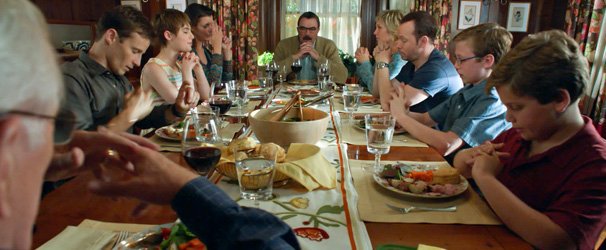 Rather than ask one of his neighbors to help, he had been reading by daylight and going to bed when it became too dark to see. His back was hurting and he could barely move without experiencing a great deal of pain, as if his spine was going to snap. Therefore, keep in mind, the one who gives help is more powerful than the one who receives it. Knowing what to do for a person suffering from an impairment and what to cease doing begins with understanding what life is like from that person’s perspective. Without this comprehension, there is a tendency to worry about the wrong things and to give assistance in the wrong ways. Learning all that we can about being dependent allows us to fall short of the ideal to the right extent. Sometimes fear can strike a disabled or elderly person like a malignancy, sapping every and power and attention from their daily lives. They are afraid of the process of their ailment, they are afraid of increasing loss of control, they are afraid of the outcome, and they are afraid of dying. They fear how their families and friends see them, how they feel about them and how their condition affects their lives. #RandolphHarris 6 of 8
 However, what can be even more difficult is when people do not know or cannot see that you are disabled or have a diminished capacity and they force you to work, harass you, physically attack you, use you for money, and threaten you because they know they can get away with it. For young people who are physically disabled, it is like experiencing one’s old age prematurely. They are locked into a parallel isolation, shamed by feelings they do not dare confess. These individuals are frightened because they are young and still have a lot of life to live and are deteriorating much sooner than they are supposed to. They do not have a professor of whatever to understand them and how they feel, and their economy of friends tends to shrink. People do not know how to behave toward them, and it is easy to lose heart for coping. Sometimes they have no spirit for anything, like their heart finally dropped out of them. Theses youngster even get bullied and attacked by people who are much older than them, but have not yet experienced what it is like to have fractured vertebrae in their spine, or whatever. However, they have courage. Courage that comes for their belief in God. The Word courage comes from the Latin cor for heart. We give ourselves fresh heart by pulling our attention away from what has been lost. #RandolphHarris 7 of 8
 It is not that fear and disheartenment can be willed away, but we have to turn our focus in a direction most favorable to their alleviation. The consciousness that heals is definite and deliberate; it is a specializing of the Universal Law. In this law we may have absolute and implicit confidence, but we must also remember that the law can do for us only what it does through us. Its energy and creativeness must be interpreted through our belief and imagination. This is but another way of saying that if we want the principle of electricity to light our living room we must provide a fixture which makes it possible for the electricity to become a light. When we pray in faith we receive what things we pray for. If we believe that we shall receive them, we shall receive them. There is a specific, definite thing we are to receive, but we are to receive it as we believe. For many, relief and happiness can come by understanding the relationship between peace of conscience and peace of mind and by living the principles upon which both of these blessings are founded. God wants each of his children to enjoy the transcendent blessing of peace of conscience. A tranquil conscience invites freedom from anguish, sorrow, guilt, shame, and self-condemnation. It provides a foundation for happiness. It is a condition of immense worth, yet there are few on Earth that enjoy it most often because the principles upon which peace of conscience is founded are either not adequately understood or followed. #RandolphHarris 8 of 8
If a Photograph or a Diamond Ring is All You Have, it Means the World to You!
 Not everyone can find the middle of a circle, but only a person who has the proper knowledge. Similarly, anyone can get angry—that is easy—or can give away money or spend it; but to do all this to the right person, to the right extent, at the right time, for the right reason, and in the right way is no longer something easy that anyone can do. It is for this reason that good conduct is rare, praiseworthy, and noble. This kind of spirituality, so ordinary and close to home, is especially nourishing to the soul. Without this caring incorporated of the sacred into life, the World can become so far removed from the human situation as to be irrelevant. An appreciation for vernacular spirituality is important because without it our idealization of the holy, making it precious and too far removed from life, can actually obstruct a genuine sensitivity to what is sacred. The word mercy has fallen out of common usage in our language. It derives from the antiquated French merci, which means compassion and forbearance toward someone in one’s power. In Latin, merces signifies pay or reward, and the root merc refers to aspects of commerce. The words merchant and mercenary at first seem antithetical to mercy, and one wonders at their common root, but when we have to give help or depend on others for help, we understand why the concept of exchange underlies both usages. Mercy is based entirely on exchange. #RandolphHarris 1 of 6
 Giving help eventually embitters us, unless we are compensated at least by appreciation; accepting help degrades us, unless we are convinced that our helpers are getting something in return. As much as we might prefer to reject this stark accounting, we discover in living through situations of dependence that good will is not enough. There is a delicate balance at the heart of mercy, showing how reciprocation replenishes both the spirit if the helper and the person who is helped. Maturing in age is one of the ways the soul nudges itself into attention to the spiritual aspect of life. The body’s changes teach us about fate, time, nature, mortality, and character. Aging forces us to decide what is important in life. However, those who depend on others for daily survival often feel their very existence is an imposition. Some people engage in a relentless pressure to please—to prove themselves worth of the burdens they impose. Many people who suffer from ailments suppress complaints and avoid asserting themselves, believing that they owe every possible accommodation to those who help them survive. Taking care of a person does not have to entail having power over major aspects of his or her life, but frailty seems to invite invasion. My father used to tell me stories about how care givers would steal my great grandmother’s jewelry, money, wedding and engagement rings, pictures of her family and even her wedding pictures. “You cannot imagine how helpless I feel,” she would tell him.” #RandolphHarris 2 of 6
 So long as we still possess it, the power to carry out simple intentions is one of the many unnoticed pleasures of life. When we lose it, we see what it means to do the most ordinary things our own way. People cut off from inner thoughts and feelings, caught up in pain and suffering and loss cannot get very far when they try to understand themselves consciously. Some people make rebellious bids for control that they then keep secret from their helpers. One woman had a fall down the basement stairs and her daughter was so upset. She hired a woman to come in and do her laundry once a week, so she would never have to go down there. However, the senior citizen still when down there. He daughter did not know, and she is very careful about it. She feels like it is her house, her basement, her washing machine and her life. Submission does not come easily to people who have spent decades running their own lives. Going down those steps made that woman’s basement her own again, just as choosing to violate her daughter’s restrictions made her life her own again. Seizing freedom can be as unreasonable as it is gratifying. #RandolphHarris 3 of 6
 People who have had restriction places on their lives by ailments, injuries, or from aging often feel the need to do something to regain their independence as a means of reminding themselves that they are still able to exert influence over their own domain or their own body. Many people with physical limitations feel their social environment is gradually diminished until all that remains of their power resources is the humble capacity to comply. They feel that they may be required to give up their legal rights and are required to comply or approve in exchange for the room and board they can afford or for the retirement and medical benefits. The managers of their buildings often disrespect them and the analysis often harass them and no one seems to care. The seniors and disabled feel if they complain about the abusive treatment, they will lose their housing, be physically attacked, or their medical and financial benefits will be discontinued, which would mean they would not be able to afford their medication or living expenses and be left on the streets to die. Psychological symptoms, too, often manifest themselves in weight gain or loss, in allergies to various foods, or in idiosyncratic eating habits. And they become more and more isolated emotionally. When people who have disempowered relatives and they become depressed, they mistake this despondency for an accusation that they are not doing a good job. Hoping for appreciation, they instead get quietly hostile acquiescence. #RandolphHarris 4 of 6
 Once families acknowledge the presence and important of power in situations of power in situations of dependency, they tend to have little difficulty taking stock of its distribution and beginning to remedy imbalances on either side. The belief that we do not have the ability to heal arises out of the mistaken idea that our power does the healing, or that the intellect does the healing. All that the will and the intellect could do is to behold or watch the process. The mind fixes its gaze steadfastly upon the principle and then declares that this principle is operative in human affairs, and particularly in the affairs of the one being treated. There is but one healer. This is the spirit of truth. There is but one life principle. This is God in us. There is but one final law. This is the law of good. There is but one ultimate impulsion. This impulsion is love. That which really does the healing can never fluctuate, can never change in its nature. It is not more one day and less the next. It is at this moment absolutely all thee is and it is ever available. We must forever rid ourselves of the idea that it is the personal person who does the healing. We must know that it is not us, but the Father that dwells in us, he does the works. Principle operated irrespective of personal opinion, and when through acquiescence we agree that it is operating, then it must operate. #RandolphHarris 5 of 6
 Sure, an elderly person might not like how you just put water in the sink, swish it around with some suds and call it clean; he or she used to scrub it first with cleanser and then rinse it with disinfectant. Someone might not like how you haphazardly ruin their checkbook by just dashing off the bills, not bothering to mark down the dates, check numbers, who it was to, all that stuff. Especially sometimes when someone does not even mark down the amount of the check. Therefore, it is important to find small, but specific concessions to help meet the preferences of the elderly and disabled, which will yield large satisfactions. There is no formula for this process, but it helps to build an edifice of faith that the Lord will help make crooked paths straight. One must not only know that God is all there is, but one must know that God exists right where the need is—not in the form of the need but in the form of an answer to the need. And I can tell when, when all you have is pictures of your family, who you have never met, they mean the World to you, as well as gold and diamond trinkets. People like connections to their heritage. Grandparents get great joy of seeing pictures of their grandbabies. And child love to have pictures of their ancestors. #RandolphHarris 6 of 6
What You Believe is Greater than What is in Your Bank Account
 If you believe, you can fulfill your God-given destiny. There is incredible power in what we believe. There can be misperceptions about personal pain and people can have problems conveying their feelings, as they try to find a balance point in the center of chaotic emotions and unpredictable circumstances. To a greater or lesser degree, we are always dependent on others but these contacts are usually voluntary. According to our inclinations, we can approach or avoid other people. However, we can no longer get our own groceries, prepare our own meals, or take care of other necessities on our own, we enter into a period of life that is distinct from all the others. The chief consequence of dependency is that we are forced to count on the kindness of others. The vulnerability aroused by this situation awakens the basic questions of our lives: Am I worthy of love and loyalty? Are people capable of true generosity, or do they live mostly for themselves? Accident or illness can, at any moment, remove anyone’s capacity to function independently. Illness and disability can be a wasteland of degradation. We see only the loss of the freedoms and satisfactions that make life bearable, and we expect disappointing answers to these questions, which is not only a threat to spirituality as such, but also deprives the soul of valuable symbolic and reflective experience. #RandolphHarris 1 of 6
 Sometimes people feel angry and helpless in response to dependency, making the transition from an active life to confinement, handling thoughts and reflections about the past, noticing shifts in key relationships, realizing that time it sunning out and options are shrinking, and finding ways to live well in spite of all these changes. Often times, individuals may feel so degraded by the idea of being beholden to helpers that they conceal their disabilities and risk injuring themselves in order to avoid asking for help or appearing to be in need. Through surrender or concealment, they sacrifice much of what formerly made their lives worthwhile. Illness and disability alter our lives in basic ways. As soon as our mobility becomes impaired, changes occur in our we spend our times and conduct our relationships. Self-esteem often erodes along with one’s physical capacities, and we may be further hurt with degrading reactions that others have to our frailty. Regret for wasted time and unfulfilled dreams may nag at us, causing us to question the priorities around which we had previously organized our lives. To be starved for motion and exercise is yet another depletion. Some people’s bodies hurt, and they will just not go and even going to a doctor’s appointment on somedays might be extremely difficult. #RandolphHarris 2 of 6
 When physical problems enclose us in daily life in which everything has been mastered and repeated, the pull to keep returning to bed becomes more and more compelling. Life starts to echo the stasis of the body. When we feel we have nothing to say, we tend to shun the company of others. With little going on in our lives beyond eating and sleeping, we fear that other people’s contrasting vitality would shame us even as it momentarily revived us. When company leaves, we expect to be left emptier for having been so briefly filled. The more dependent we are on the mercy of others, the more waiting we have to endure. Dependence and waiting eventually become synonymous. We cannot cancel arrangements to secure the necessities of life. Waiting emphasizes the inferior status of the person who is being helped. Each minute of waiting that accumulates speaks this inferiority more loudly. These disparate conditions can evoke bitterness in the most loving relationships. Anyone who has ever endured an incapacitating illness knows that the feelings evoked by days of waiting can be harder to bear than the aliment itself. We wish to be self-sustained. We somehow hate the meat which we eat, because there seems something of degrading dependence in living by it. #RandolphHarris 3 of 6
 The freedom to come and go as we please, the wish to be self-sustained, is as fundamental to most of us as breathing. When this part of our human endowment is frustrated, a subterranean anger is stirred. The longer an illness or incapacity lasts, the harder it becomes for us to maintain faith in our others. We begin to imagine the possibility of abandonment. Days of waiting can crack the confidence of the most secure people, given enough time and the wearing effects of doubt. In situations of dependence, we are asked to believe that we have accumulated vast stores of good will from our own acts of generosity in the past. In truth, most of us carry reservoirs of guilt from the many occasions when we failed to be as generous as we could have been. To then depend upon those whom we once disappointed opens up fears of retribution. We begin to wonder, “Is my life really worth all of this stress?” The answer lies in realms that are invisible to those who still retain control over their own progress in life. You go because you have to, because you want to be in charge of your own life. Walking can be viewed as a major metaphor, representing a continued ability to live independently, to control events, and to be active. “Otherwise, I would be sitting in the lobby straight ahead like all those other people in my building. They look like they died ten years ago. If I stayed in there, I would start looking like them.” #RandolphHarris 4 of 6
 Health requires this relaxation, this aimless life. This life in the present. We live too fast and coarsely, just as we eat too fast and do not know the true savor of our food. People who are able to live well in spite of illness are those who allow divine leisure to crowd their physical hardships out of center stage. Turning the nothing of empty time into the essence of good days is the alchemy of successful frailty. At first, having too much time on our hands can feel like a daily humiliation in our making so little of it. Waiting for help emphasizes all the dignities and freedoms that have been ripped away from us. Gradually, if we do not become hardened in out disappointment, we can turn the insults of illness into privileges of being. Care of the soul might include a recovery of formal religion in a way that is both intellectually and emotionally satisfying. One obvious potential source of spiritual renewal is the religious traditions in which we were brought up. Some people are fortunate in that their childhood tradition is still relevant and likely to them, but others have to search. We must be careful to avoid thinking that we are unimportant in the scheme of things. We are the most important persons living, as far as we are concerned. This is not a statement of conceit; it is a simple statement of the conviction that each one of us is rooted in the living spirit, that we have access to the mind of God and the love and the power and the peace of the spirit. #RandolphHarris 5 of 6
 It is a simple conviction that no matter how humble our walk in life may appear to be, it must of necessity influence its own environment. We may not be important to people, but we certainly are necessary to God. Placing our entire trust, our complete faith, our whole conviction in this simple thought, we should walk in confidence and speak our spiritual convictions with complete assurance, knowing that there is a presence and power with us and for us and operating through us—a presence and power that knows no defeat. Sometimes people prey on the sick, elderly, and vulnerable, and that can make them feel devalued. However, at the center of every person’s being there is an absolutely perfect life, a complete wholeness, and an eternal and immortal principle. Our work is to mentally uncover this ever-present reality, this changeless and eternal perfection. We must remove every obstruction of thought which denies God’s presence. Spiritual mind healing is a revelation even though we go through a process to arrive at it. Each person must work at our own method and pursue our own logic. If this method and logic lead us to the right conclusion, we will be rewarded by an affirmative answer. #RandolphHarris 6 of 6
 Randolph Harris II International Institute