
Home » boy (Page 4)
Category Archives: boy

In a Few Years, California Will be the Capitol of Mexico

I confess that what I saw during my time of travel and investigation left me with a very heavy heart. The work to be done in order to lift these people up seemed almost beyond accomplishing. The debate over the nature and extend of the relationship between heroin used and criminal activity is a long-standing one which has generated a voluminous literature. An increase in criminality commonly occurs in conjunction with increased heroin use in the United States of America. The addict of lower socioeconomic class is generally a criminal primarily because illicit narcotics are costly and because one can secure one’s daily requirements more readily by committing crimes that will pay for them. The Heroin addict has a criminality that maybe a consequence of addiction, albeit an indirect one. As physical dependence upon and tolerance for heroin increases, and the cost of progressively larger dosages of heroin increase proportionally, some addicts seem to be driven to criminal means to satisfy his or her habit. Empirically, this hypothesis predicts a linear increase in heroin consumption and a corresponding increase in criminal activity necessary to support it. In contrast, a second hypothesis maintains that the principal explanation for the association between drug abuse and crime is likely to be found in the subcultural attachment comprised of the criminal associations, identifications, and activities of those persons who eventually become addicted. The basis for this hypothesis can only be understood in the context of the contemporary sociolegal milieu in which narcotics use takes place. #RandolphHarris 1 of 21

Since the criminalization of heroin in 1914, the social World of narcotics has become increasingly intertwined with the broader criminal subculture. Consequently, would-be narcotics users inevitably associate with other criminals in the highly criminal copping areas of inner cities, and, indeed, are often recruited from delinquent and criminal networks. Through these criminal associations, therefore, the individual is introduced to heroin, and both crime and heroin use are facilitated and maintained. Empirically, this second hypothesis predicts increases in heroin use following or coinciding with periods of criminal association and activity. A shorthand title for the first hypothesis is “Drugs cause crimes”; for the second “Crimes cause drugs.” Our contribution to understand the dynamics of the drugs-crime connection is based upon life-history interviews with 32 hard core heroin addicts in the Sacramento, California area. We purposely selected the respondents on the basis of their extensive involvement in the heroin subculture. All of the respondents had extensive contact with the criminal justice system. At the time of interview, 24 of the 32 respondents were incarcerated or under some form of correctional authority supervision (exempli gratia, supervised custody, work release, parole, or probation). While this places certain limits on the generalization that can be made from these data, the focus of this study is the dynamics of addiction among heavily-involved street addicts. #RandolphHarris 2 of 21

To further highlight this experience, controlled users or “chippers” will not have experienced many of the dynamics reported here. Similarly physicians, nurses, and middle class “prescription abusers” are not typically subject to many of the constraints experienced by lower-class street users. Hence, it is important to emphasize that the findings we report here are intended to describe “hard core” urban heroin addicts. Women are slightly overrepresented, constituting 14 of the 32 respondents. Ethnically, the sample consist of 23 African-Americans and nine European-Americans; Hispanic-Americans are not represented because there was no access to them at the time of this study. Respondents were paid five dollars per hour for their interview time, which undoubtedly contributed to the 100 percent response rate. The interviews ranged from 10 to 25 hours in length, with each interview session averaging between three and four hours. With a single exception, all of the interviews were tape recorded and transcribed. Respondents and most of the street respondents were selected with the assistance of treatment personnel who were carefully instructed regarding the goals of the research and selection criteria. This strategy proved invaluable for two reasons. First, by utilizing treatment personnel in the screening process, we were able to avoid the time-consuming task of establishing the “appropriateness” of respondents for the purposes of this research: the treatment personnel were already intimately familiar with the drug-using and criminal histories of the respondents. #RandolphHarris 3 of 21

Second, the treatment personnel had an unusually positive relationship with Sacramento-area drug users. The treatment counselor in the prison system was regarded as an ally in the quest for better living conditions, appeals for early release, et cetera, and was regarded as highly trustworthy in the prison subculture. His frequent confrontations with prison inmates. Similarly, the treatment counselor who assisted in the selection of street respondents was carefully selected on the basis of his beneficial involvement with street addicts. His relationship with area addicts is a long-standing and multifaceted one. His reputation among street addicts was firmly established when he successfully negotiated much needed reforms in one of the local treatment agencies. Because of the long-standing beneficial relationship they had with area addicts, this initial contact by treatment personnel greatly facilitated our establishing necessary rapport. After a few initial interviews were completed, several broad focal areas emerged which formed the basis for future questioning. Respondents were interviewed regarding: childhood and early adolescent experiences which may have served as predisposing factors for eventual drugs/criminal involvement: initial encounters with various types of drugs and criminality; the evolution of their drug and criminal careers; their patterns of activity during peak periods of drug use and criminality, including descriptions of typical days during these periods; their preferences for types of crimes and drugs; the structure of understanding guiding drug use and criminal activity; and their perception of the nature and effectiveness of drug treatment. #RandolphHarris 4 of 21

Structuring the life-history interviews in this way insured that most relevant career phases were covered while at the same time it permitted the respondents a great deal of flexibility in interpreting their experiences. One of the earliest strategies for testing the Drug-cause-crime versus Crimes-cause-drugs hypotheses involved trying to establish that a pattern of regular or extensive criminal behavior typically precedes heroin addiction, that finding would tend to support the Crimes-cause-drugs hypothesis. Conversely, is a pattern of regular or extensive criminality tends to develop after the onset of heroin addiction, that finding would tend to support the Drugs-cause-crimes hypothesis. Previous research on this question is mixed, but mixed in a systematic way. Most of the early studies found little criminality before the onset of opiate addition. Later studies, by contrast, have shown a high probability of criminality preceding heroin addiction. Our life-history interviews are consistent with the findings of the recent studies. All of our respondents reported some criminal activity prior to their first use of heroin. However, for nearly all of our respondents, both their criminal careers and their heroin-using careers began slowly. For the respondents in our study, a median of 3.5 years elapsed between their first serious criminal offense and subsequent involvement in criminal activity on a regular basis. #RandolphHarris 5 of 21

Likewise, all of our respondents reported at least occasional use of other illicit drugs prior to their first experience with heroin. Moreover, many of our respondents indicated that they spent substantial periods of time—months and even years—using heroin on an occasional basis (“chipping” or “chippying”), either inhaling the powder (“sniffing” or “snorting”), injecting the prepared (“cooked”) mixture subcutaneously (“skinpopping”), or receiving occasional intravenous injections from other users before becoming regular users themselves. Perhaps most importantly, virtually all of our respondents reported that they believed that their criminal and drug careers began independently of one another, although both careers became intimately interconnected as each evolved. In the earliest phases if their drug and crime careers, the decision to commit crimes and the decision to use drugs were choices which our respondents believed they freely chose to make and which they believed they could have discontinued before either choice became a way of life. From our interviews it appears that two very general factors shape and influence the drug and crime careers of our respondents, not only during the early stages of each career but as each career evolves through different stages. The first of these factors in the availability of heroin rather than the level of physical tolerance the user has developed “The more you had the more you did,” explains “Mona” a thirty-year-old female. “And if all you have was $10 than that’s all you did…But if you had $200 then you did that much.” #RandolphHarris 6 of 21

Addicts are able to adjust to periods of sharply decreased availability (exempli gratia “panic” periods when supplies of street heroin disappear) by reducing consumption or my using alternative drugs (exempli gratia methadone). They are also able to manipulate availability, increasing or decreasing it in ways and for reason we will discuss. As we use the term, availability also means something more than access to sellers of heroin who have quantities of the drug to sell. By availability we also mean the resources and opportunities to buy the drug to sell. By availability we also mean the resources and opportunities to buy heroin or obtain it in other ways as well as the skills necessary to use it. In short, availability is understood to include considerations of all of those opportunities and obstacles which may influence a heroin user’s success in introducing a quantity of the drug into his or her bloodstream. The second general factor shaping the drugs and crime careers of our life-history interviewees is life-structure. By “life structure” we mean regularly occurring patterns of daily domestic, occupational, recreational, or criminal activity. Recent ethnographic accounts of heroin-using careers in several major cities reveal that, like their “straight” counterparts, most addicts maintain reasonably predictable daily routines. Throughout their lives or respondents fulfilled, to one degree or another, conventional as well as criminal and other subcultural roles. #RandolphHarris 7 of 21

In fact, during most periods of their crime and drug careers, our interviewees spent far more time engaged in conventional as well as criminal and other subcultural roles. In fact, during most periods of their crime and drug careers, our interviewees spent far more time engaged in conventional role activities than in criminal deviant ones. Many worked conventional jobs. Women with children performed routine housekeeping and child-rearing duties. Many leisure-time activities did not differ from those of non-addicts. These hard-core addicts spent time grocery shopping, tinkering with cars, visiting relatives, talking with friends, listening to records, and watching television in totally unremarkable fashion. Life structure in the hard core criminal addict’s life can be also provided by some rather stable forms of criminal activity. Burglars spend time staking out business establishments. Shoplifters typically establish “runs,” more or less stable sequences of targeted stores from which to “boost” during late morning, noon, and early afternoon hours, saving the later afternoon for fencing what they have stolen. Prostitutes typically keep a regular evening and night-time schedule, which runs from 7 P.M. to 3 A.M. Mornings are usually spent sleeping and afternoons are usually occupied with conventional duties. It is within this structure of conventional and criminal roles that buying (“copping”), selling (“dealing”), and using (“shooting”) heroin takes place. #RandolphHarris 8 of 21

Likewise, prostitutes seek to manage their drug use so that neither withdrawal symptoms (“joneses”) nor periods of heroin-induced drowsiness will interfere with their work. In order to meet the demands of criminal or conventional roles, addicts in our sample often used other drugs (exempli gratia marijuana, barbiturates, alcohol, amphetamines, methadone) to alter their moods and motivations, saving heroin as a regard for successful completing a job or meeting other obligations. Of one thing I felt more strongly convinced than ever, after spending time in seeing the actual life of these people, and that was that, in order to life them up, something must be done more than merely imitate New England education as it existed. I saw more clearly than ever the wisdom of the system which General Armstrong had inaugurated at Hampton. To take these people, and each day give them a few hours of education, I felt would be almost a waste. The shock is great when one first apprehends the truth of deception as possible for oneself; but as the ultimate issue is realized, the joy of the one who sets oneself to understand and fight through to full deliverance is more than words can tell. Light pours in upon the unsolved problems of years, in both one’s personal experience and in the perplexities surrounding one, as well as on the conditions in the Church and in the World. As one seeks for light from the ultimate concern, the subtle inroads of the deceiving spirits into one’s life slowly become clear to the open-minded believer; and their many devices to deceive one stand revealed as the searchlight of truth goes far back into the past, uncovering the cause of unaccountable difficulties in experience and life, and many mysterious happenings which had been accepted as “the inscrutable will of God.” #RandolphHarris 9 of 21

PASSIVITY! How many have fallen into it, little knowing their state! Through the misuse of their faculties much time is lost in dependence upon the help of outward circumstances and environment. In the lives of so many there is much “doing,” with so little accomplished…many beginnings, and few endings. How familiar we are with the words, “Yes, I can do that,” and the impulse is there, but by the time the need for action has come the passive man has lost his momentary interest. This is the key to much of the lamented “apathy” and the dulled sympathy of Christians to really spiritual things, while they are keenly alive to the social or Worldly elements around them. The Worldling can be stirred in acutest feeling for the sufferings of others, but many of the children of God have, unknowingly, opened themselves to a supernatural power which has dulled them in thought and mind and sympathy. Ever craving for comfort and happiness and peace in spiritual things, they have sung themselves into a “passivity”—id est, a passive state of “rest,” “peace” and “joy”—which has given opportunity to the powers of darkness to lock them up in the prison of themselves, and thus make them incapable of sensitively understanding the needs of a suffering World. #RandolphHarris 10 of 21

The equilibrium between cultural substance and form is achieved in a theonomy which embraces the truth of autonomy and heteronomy while avoiding their errors. Theonomy rejects both a divine law imposed by outside authority and a self-sufficient reason divorced from its depth. It demands that man seek a superior law which is at the same time rooted in the divine ground of being that lies at the depth of reason. The result is a theonomous culture which expresses in its creation an ultimate concern and a transcending meaning not as something strange but as its own spiritual ground. Theonomous creations are vessels of a spiritual content. Religion is the substance of culture, and culture the form of religion. Theonomy, autonomy, and heteronomy as cultural types constantly act and interact in dialectical fashion. The shallowness of an autonomous, secularized culture creates a vacuum of despair, a sacred void which preludes the advent of a theonomous period in which empty cultural forms receive substance and depth. Theonomy, however, tends to degenerate into an oppressive heteronomy which, in turn, provokes an autonomous reaction, and so the cycle begins anew. For instance, Clement and Origen created a Christian theonomy which later came under the heteronomous influence of Athanasius and Augustine. The Middle Ages stated a theonomy and ended in heteronomy. The Renaissance had theonomous qualities, but deteriorated into autonomy. #RandolphHarris 11 of 21

The Reformation itself developed into the heteronomy of Protestant orthodoxy and then succumbed to the triumphant autonomy of the eighteenth and nineteenth centuries. These examples illustrate that theonomy, though realizable, is ever fragile and incomplete. Its victory is always fragmentary because of the existential estrangement underlying human history, and its defeat is always limited by the fact that human nature is essentially theonomous. A description of the general qualities of a theonomous culture serves to highlight the reciprocal influence of the three cultural types. The first characteristic of theonomy is that it communicates the experience of holiness, of something ultimate inbeing and meaning, in all its creations. This theonomous style appears even in the most limited vehicles of meaning—a painted flower, a family habit, a technical tool, a form of social intercourse, the vision of a historical figure, an epistemological theory, a political document, and so on. The second characteristic is the affirmation of the autonomous forms of the creative process. The moment theonomy fails to respect legitimate autonomy and the freedom of the human spirit, it becomes heteronomy. The third characteristic of a theonomous culture is its permanent struggle against both an independent autonomy and an independent heteronomy. Only theonomy can prevent them from inflicting upon mankind either a meaningless or a destructive culture. #RandolphHarris 12 of 21

Asking which nations will dominate the 21st century is an exciting game. However, it is, in fact, the wrong question to ask—or at least the wrong form on which to ask it—because it overlooks what could turn out to be the biggest change in global affairs since the rise of the nation-state: the coming of the Global Gladiators. A new group of power-seekers are leaping onto the World stage and seizing sizable chunks of the clout once control by nations alone. Some are good; some, decidedly psychopaths. When a blood-besotted Ayatollah Khomeini called for a martyr to murder Salman Rushdie, whose novel The Satanic Verses Mr. Khomeini denounced as blasphemous, he sent a historic message to all the World’s governments. That message was instantly communicated via satellite, television, and print. The message, however, was totally misunderstood. One may argue that Mr. Rushdie’s book was in bad taste, that it deliberately offended many Muslims, that it derided an entire religion, that it violated the Koran. Indeed, Mr. Khomeini said these things. However, that was not the real message. Mr. Khomeini was telling the World that the nation-state is no longer the only, or even the most important, actor on the World stage. Superficially, Mr. Khomeini seemed to be saying that Iran, itself a sovereign state, had the “right” to dictate what the citizens of other equally sovereign nations could or could not read. In claiming this right, and threatening to enforce it with terrorism, Mr. Khomeini suddenly catapulted censorship from a matter of domestic concern to the level of a global issue. #RandolphHarris 13 of 21

In a World that is witnessing the glocalization of the economy and the globalization of the media, Mr. Khomeini was demanding the globalization of mind-control. Other religions, in past eras, have asserted a similar right, and burned heretics at the stake. However, in threatening cross-border assassination, Mr. Khomeini was doing more than attacking Salman Rushdie—a British citizen. He was challenging the most fundamental right of any nation-state, the right to protect its citizens at home. What Mr. Khomeini was really telling us was that “sovereign” states are not sovereign at all, but subject to a higher Shiite sovereignty, which he alone would define—that a religion or church had rights that supersede those of mere nation-states. He was, in fact, challenging the entire structure of “modern” international law and custom, which until then had been based on the assumption that nations are the basic units, they key players on the global stage. This assumption pictured a planet neatly divided into states, each with its flag and army, its clearly mapped territory, a seat in the U.N., and certain reasonably defined legal rights. It is no accident that, to much of the World, Mr. Khomeini seemed a cruel throwback to the preindustrial era. He was. His assertion of the rights of religion over nation-states paralleled the doctrine medieval Popes expressed during centuries of bloody church-state conflict. The reason this is important is that we may well be circling back to the kind of World system that existed before industrialism, before political power was packaged into clearly defined national entities. #RandolphHarris 14 of 21

That pre-smokestack World was a hodgepodge of city-states, pirate-held ports, feudal princedoms, religious movements, and other entities, all scrambling for power and asserting rights that we, today, assume belong only to governments. What we might now call nations were few and far between. It was a heterogeneous system. By contrast, the nation-state system that evolved during the smokestack centuries was far more standardized and uniform. We are now moving back to a more heterogeneous global system again—only in a fast-changing World of high technology, instantaneous communication, nuclear missiles, and chemical warfare. This is an immense leap that carries us forward and backward at the same time, and propels religion once more to the center of the global stage. And not just Islamic extremism. A totally different case in point is the growing global power of the Catholic Church. Papal diplomacy has figured recently in major political changes from the Philippines to Panama. In Poland, where the church won admiration for its courageous opposition to the communist regime, it has emerged as a dominant force behind the first noncommunist government. Vatican diplomats claim that the recent changes all across Eastern Europe were, in large measure, triggered by Pope John Paul II. The Pope is no fanatic and has reached out to other religions. He has spoken out against interethnic violence. Yet echoes of a long-distant pre-secular past are heard in his call for a “Christian Europe” and his repeated criticism of Western European democracies. #RandolphHarris 15 of 21

The Pope’s policies call to mind a long-forgotten document that was circulated in European capitals in 1918 urging the creation of a Catholic superstate made up of Bavaria, Hungary, Austria, Croatia, Bohemia, Slovakia, and Poland. The Pope’s proposed Christian (though presumably not exclusively Catholic) Europe today embraces all of Europe, from the Atlantic to the Urals, with a population of nearly 800 million people. Such religious stirrings are part of the gathering attack on the secular assumptions that underpinned democracy in the industrial era and kept a healthy distance between church and state. (If Europe is Christian, as distinct from secular, where do nonbelievers fit in, or Hindus or Jews, or the 13 million Muslim immigrants encouraged to come to Europe to serve as affordable labor in the recent past? (Some Muslim fundamentalists actually dream of Islamicizing Europe. Says the director of the Institute of Islamic Culture in Paris: “In a few years Paris will be capital of Islam, just as Baghdad and Cairo were in other eras.”) The emerging global power game in the decades ahead cannot be understood without taking into account the rising power of Islam, Catholicism, and other religions—or of global conflicts and holy wars among them. I know that one who makes a mistake does so because of one’s own lack of opportunity for the highest growth. I pity those type of people because I know that they are trying to stop the progress of the World, and because I know that in time the development and the ceaseless advance of humanity will make one ashamed of one’s weak and narrow position. #RandolphHarris 16 of 21

Self-regulation and autonomy have emerged as key predictors of health and well-being in several areas of psychology. Autonomy has been provisionally defined as the ability to be one’s self. Analytically considered, it involves and requires knowing one’s self; having or finding an unambiguous identity to refer to in each situation; and being able to govern one’s self in the sense of being able to choose among alternatives. The development of autonomy is not synonymous with the development with a self, though emergence of a self is indispensable. The growth of autonomy is taken as measurable and as varying within and among individuals over time. Preliminary work indicates that a satisfactory index can be devised, although the invention of such a measure requires considerable analysis of the pattern in which autonomy is exhibited, so as to differentiate these as consequents from the reproducible condition hypothecated as their regular antecedents. The giving and receiving of characterizations of self and others not only exhibit various degrees of ease and constraint, but whether one’s self-concept is ratified rather than enforced by others is often ambiguous. That human beings are characterized by the possession of selves. Experimentally, it requires that the antecedent conditions conducive to increase in autonomy be distinguishable from autonomy as a dependent variable. Because autonomy is perhaps more vulnerable than any other component of competence to being constructed as a state of affairs, a trait, or a form of virtuous conduct following definite commandments, it is important to reiterate that it is here regarded as an acquired ability to handle certain aspects of problematic interpersonal situations with greater or lesser success. #RandolphHarris 17 of 21

Health which itself is one of the components of competence, significantly conditions all the other components including autonomy. The condition of health—nutrition, rest, hygiene—are therefore indirectly biological conditions of autonomy. However, there are a few biological conditions which more directly affect autonomy than through their influence upon physical health. In marriage and family living, these concern sexual adequacy and fertility, where these enter into self-respect and sense of worth, in the estimation of self and others. To the extent that sexual adequacy and skill can be improved by knowledge, practice, or medical treatment, a contribution is made by knowledge, practice, or medical treatment, a contribution is made to autonomy, id est, the person becomes more able to handle interpersonal situations making demands upon one’s sexual competence. The fact that there is a circular relationship here, in which autonomy significantly affects sexual functioning, implies the reverse proposition as a corollary hypothesis worthy of investigation. Fatigue as a biological variable distinguishable from health significantly conditions autonomy, and is also often the product of absence of autonomy. If practices are followed by which energy is fostered and fatigue diminished, at those times when the severest demands are made upon autonomy, autonomous capacity is itself increased. #RandolphHarris 18 of 21

Association in play exclusively with those with whom one is at a physical disadvantage, especially in the same family, leads to recurrent experiences of failure and submission which inhibit the development of autonomy. The optimal distributional of success and failures occurs when physical opponents are evenly matched in competition. The more adequate sexual satisfaction is in marriage, the less frequent is extra-marital sexual experience and consequent threats to mutually supported self-esteem. Cultivation of physical appearance—ccomplexion, weight, grace, posture, grooming—contributes to the growth of autonomy. Space for physical privacy and quiet—reduction of stimulation—facilitates the integration of new conceptions of self, especially during adolescence, and thus contributes to the development of autonomy. Autonomy is positively corelated with children’s opportunity progressively to earn money for performance of economically significant work and to gain practice in the management of their own economic affairs. (Safeguards against exploitation are assumed.) Economic independence develops autonomy, while chronic dependence undermines autonomy, unemployment undermines autonomy. Work which continually challenges the capacities of the person without taxing them beyond their limits enhances autonomy. #RandolphHarris 19 of 21

Continuous employment at work far below one’s level of capacity reduces autonomy. Continuous employment at work which exceeds one’s capacities and causes a chronic judgment of failure by others and self reduces autonomy. Continual exposure to marked differences of reward for comparable effort reduces autonomy, whereas recognition of differences of effort by differences of reward enhances autonomy. Autonomy develops in direct proportions to the experience of participation in governing the conditions of economic life. Constant exposure to the inducement of wants which cannot realistically be satisfied reduces autonomy, whereas the inducement of wants which cannot realistically be satisfied reduces autonomy, whereas the inducement of wants within the range of realistic anticipation of achieving the means of realizing them encourages the growth of autonomy. Exclusive evaluation of personal worth by monetary standards reduces autonomy, whereas making available multiple criteria of personal worth cultivates autonomy. Voluntary and informed participation in the production of valued goods and services develops autonomy. Team play means that you alone cannot get too far out ahead of the troops. You cannot because in our company it is necessary to consult and check over everything. Someone will ask whether this does not lead to a certain amount of mediocrity. It does. There is an optimal balance of work and leisure which maximizes autonomy. #RandolphHarris 20 of 21

It would be safe to say that overall, China has been fighting excessive lending and financial bubbles more persistently and successfully than most countries in the West. Chinese financial institutions do not play with tricky structured financial instruments the way their Western counterpart do—both because of tight government regulations and the lack of market infrastructure as well as financiers who are versed in such transactions. It goes without saying that financial sectors in China and in the West are going through different development stages. However, in the global economic arena China and the West are competing in a real-time format—and in this competition, paradoxically, China’s earlier stage works as a source of strength, shielding it from financial gambling risks the West is fighting, often unsuccessfully. Also, there is little doubt that from now on, while further developing its financial instruments, China will act much more cautiously than most of its Western counterparts, paying much more attention to accommodating and minimizing associated risks. In the West it is often argued that a wide variety of financial instruments, including risky ones, is needed to create money, which is invested in various industries. Nevertheless, China provides plenty of funds for the country’s industries—sometimes, according to Chinese financial authorities, even more than necessary. Today it is Western businesses that are facing a tighter credit squeeze. #RandolphHarris 21 of 21


Pump that iron AND stretch it out at Cresleigh Homes Magnolia Station 💪 We’ve got so many great options for staying fit and active – no matter your preference.

What’s your favorite way to get the blood moving? 🏋️♀️ One activity we’d especially suggest…booking a tour of our homes, then coming by for an in-person look! We’ve got great options for you! https://cresleigh.com/magnolia-station/


The Feeling of Being Watched and Impending Danger Gradually Increased

Shortly before nine o’ clock, a butler, dressed in an azure tailcoat and navy-blue breeches, escorted Me to my estate. A coldly sumptuous hall, it was the first point of entry to the 600-room mansion. Rows of muskets, taller than a man, and hundreds of swords, their blades sharp-edged and glinting lined its walls. From the vaulted ceiling hung several beautiful chandeliers. Directly in front of them, a magnificent staircase swept to the state rooms on the upper floors; and yet, as the butler led me across the hall, he veered to the right, heading for its farther corner. There, he ushered me through a discreet swing door. We had stepped into the “invisible World.” Behind the secret door, the entire ground floor was devoted to privacy. A magnificent hinterland of fifty rooms, some cavernous, some no larger than a closet, it was where many of the servant lived and worked. From here, a network of passages coursed through the mansion: hidden routes, which spiraled up the narrow turrets and towers to the splendid rooms above, enabling the servants to carry out their duties unobserved. One might ask, why was I touring the part of my home? It was through this labyrinth of passages, deep in the servants quarters, where the rooms were subjects of wild speculations, fueled by servants’ fears that someone had come back from the dead. It seems a few of the servants had been thinking of ways to make money. One of the servants, Olov told Stellan about a plan to end their money troubles. The scheme was simple. Each of the men would take a life insurance policy out of another one of the servants, twenty-year-old Leif Titus. #RandolphHarris 1 of 7
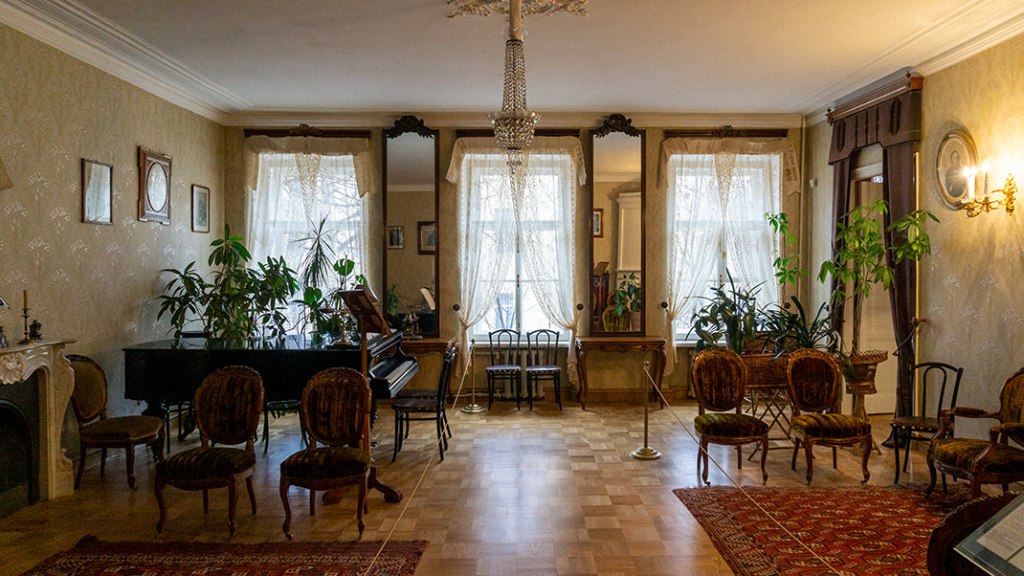
They would say that they had helped raise and support Leif in his life and were looking for reimbursement for their help upon his death. There was nothing illegal about that. Then they would wait awhile before killing Leif, collect on the policies, and all of their money troubles would be over. Stellan asked who would kill Leif. “That’s the beauty of it,” Olov told his friend. “We each kick in a percentage of the policy money to pay an assassin so none of us has to do the killing.” Stellan was quiet for a moment, and then he nodded. They could get someone at the tavern to do it. Olov arranged for a meeting with Duke. They worked it all out the details of the murder plot and agreed to execute the plan. The other men paid Duke $400 to arrange and carry out the murder. This was a lot of money, so Duke agree to do the deed. June 6, 1890, was just another day to Leif Titus as he went about his work on the estate. He was not surprised when Olov told them that their friend Duke had come by to see if he might want to go for a drink later that evening. The two men had hung out at the tavern from time to time, so he readily accepted the invitation. The two men set off after work. It was after dark and Leif and Duke rode horse back to the tavern. However, before getting their Duke fired his rifle, Leif horse was scared, threw him from the saddle. He fell off the horse, hitting his head on the cobble stones and his life had been snuffed out for $9,000 in life insurance policies. It was the perfect crime, or so it seemed to the men. They said that Leif fell off his horse and died on the way back from the tavern. And they seemed to have gotten away with it. #RandolphHarris 2 of 7

Saturday night, Olov arrived back to my estate, and went to his room to lie down on his bed. He had not been there long when he heard noises. As he was just involved in a plot that robbed another man of his life, he became quite nervous. That night, there were doors opening and closing, footsteps of unseen guests. As he got up to go investigate, Olov felt a strange touch at his back; then a tug; then he felt the back of his sweater pulled several inches away from his back. He turned to look over his shoulder and wondered how, without moving, he could have hooked his sweater on something. However, there was nothing upon which his sweater could have been stuck. Just then he saw Stellan, eyes wide with astonishment. He blurted out to Olov, “I just saw the back of your sweater pull out all by itself!” Later the following evening Olov was closing up the mansion for the night, at about 9.00 P.M. Like all Victorian homes, “The House Built by Spirits” has its share of creaks and groans. Creaks and groans are one thing—but witnessing something supernatural is another thing entirely. He was turning out the lights. The house, as the light are slowly being extinguished, does have a certain “feeling” to it: as it grows dark, one gets the inkling that one need to hurry, that someone—or something—cannot wait for you to leave so that they may get on with their existence—if that is what one could call it—in peace. Moving from the parlor to the morning room, he casually looked into the darkened stairwell. His eye was caught by the manifestation of a spectral being. A strange man with long hair appeared in the morning room. Olov mistake this spectral man for a servant. #RandolphHarris 3 of 7
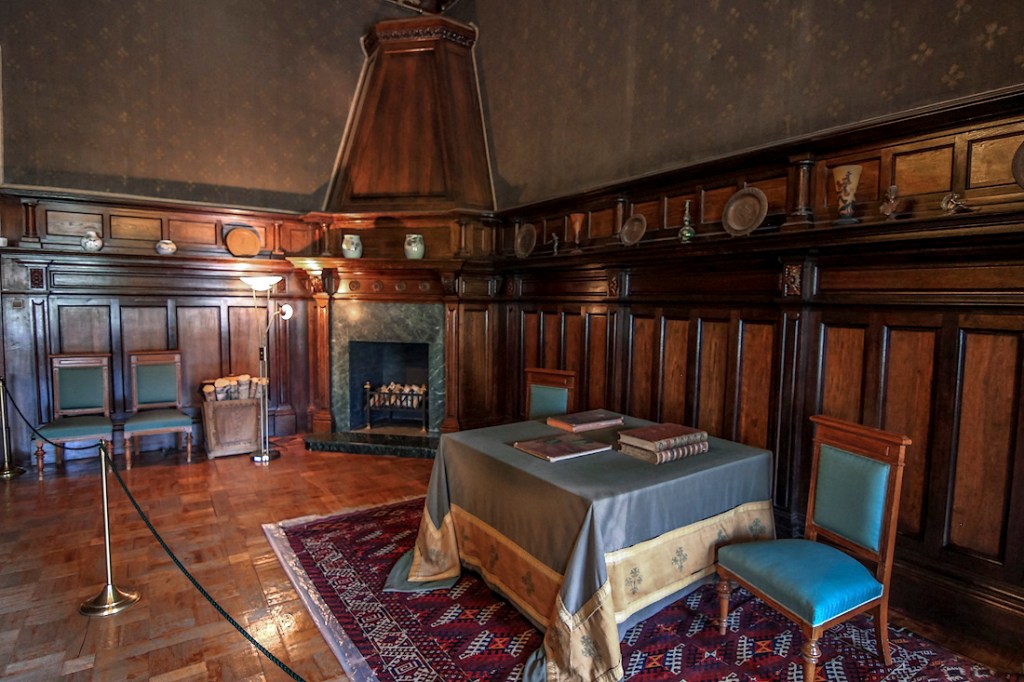
When he realized his mistake, Olov hurried forward to see who the person was. As he watched the figure, the long-haired man moved out of the morning room, he followed him. Just as the icy fingers of fear had begun to trace a slow, deliberate path up the length of his spine, the figure floated the through the mahogany wall and disappeared. Stellan arrived to find Olov in a near state of panic. While in the servants’ quarters, he had been sitting in a chair with his back to the door. He heard the door open and close and the sound of footsteps enter the house and approach the spot directly behind his chair. Imagine the horror when he turned around and saw a misty figure take the form of a tall man all in gray. The ghost, wearing a tattered Revolutionary War uniform, looked unkempt with long hair and a grizzled appearance. Olov screamed, but it was only second before the specter faded away. When Stellan reached him, his was quivering and inconsolable. Stellan then figure it would be a good idea for the two men to quit their jobs and move north. After all, they now had the money to do so, they were rich. On that evening, Olov wandered into a dark and deserted section of the mansion. This was the most active area of the mansion and too dangerous to inhabit. The stairway to the attic was narrow and winding. Suddenly a shrill scream came from the attic. Stellan ran to the fourth floor where Olov was discovered lying on the floor, stabbed through the heart. He was dead. Stellan figured the men had been hexed, and he would be the next one to die. #RandolphHarris 4 of 7
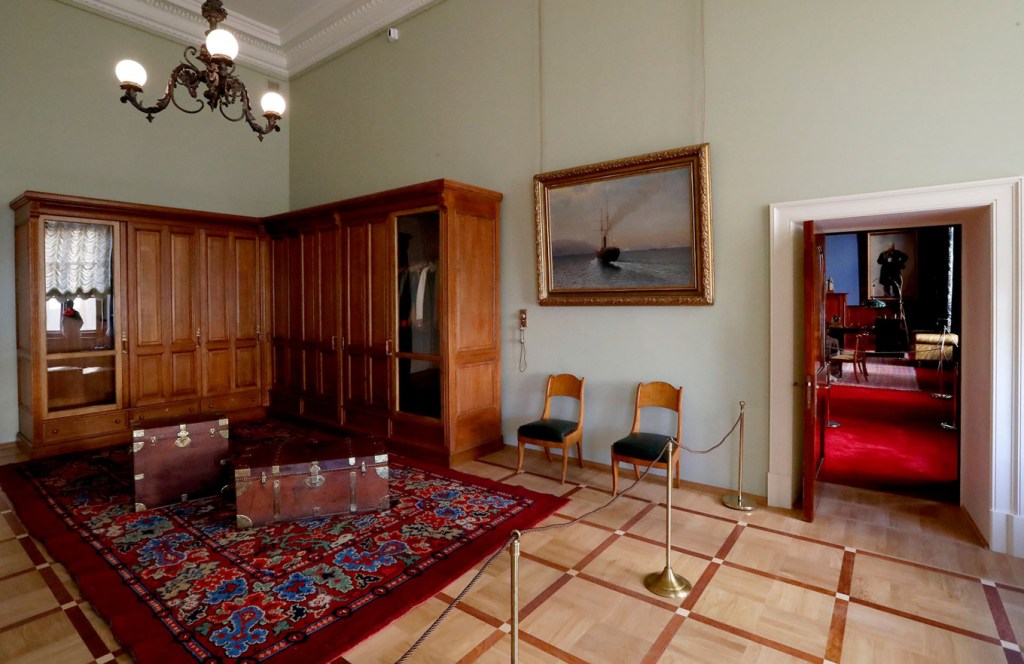
Stellan went into a secret room under one of the kitchens through a trap door—a secret room that house Mrs. Winchester’s magic. He was looking for her book of spells in the secret room. However, there was someone in that room, perhaps waiting for a century or more, for someone to open the trap door. Walking through the small, arched doorway, the room was furnished and there were antique carpets near the alter. He heard music and instruments. Out of the corner of his eye, he saw a figure of a small woman, seemingly cloaked in a long, dark, flowing dress with a wide-brimmed, black hat, standing in the corner. He stood for a brief moment, seeing her out of the side vision, afraid to look directly at her, since he realized that entities can sometimes only be seen through peripheral vision. Indeed, when he turned to confront the dark lady, he was struck on the head with a piece of stove wood, killing him. The story of a mysterious man in the servants quarters had spread throughout the estate, as we were touring the room that belonged to Leif, we herd the sounds of horses hooves and whips. Then sudden sound heralded the appearance of a bright figure we immediately recognized of Leif. He told us how he had died and how his poor mother was near a breakdown; after someone had dug up bushes in her yard, she took it as a sign that Leif’s body would also be dug up. He had him exhumed and reburied in the flower bed outside her house. Here she piled a huge mound of stones over his grave. Vowing to get revenge, she would sit up nights watching for grave robbers and crying for her lost son, until she died from a broken heart. And from beyond the grave, she had discovered who took the life of her son and returned the favor. #RandolphHarris 5 of 7
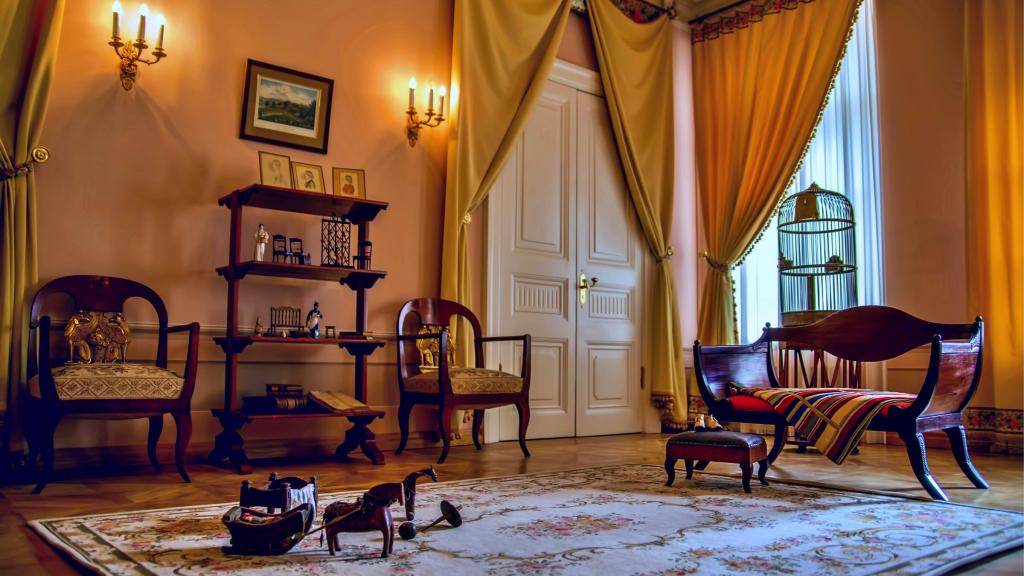
Through the years the servants on occasion have hear Olov’s shrill last crimes repeated over and over again. The antique carpets in the secret alter room were cleaned, but the bloodstain frequently reappears. One of the servants mentioned that he saw an injured man, blood, and a woman in a dark dress in the alter room, leaning up against the walls, exhausted, dirty, bloody, smelling like sweat and fear. After hearing the specter’s story, I was trembling. I said nothing for a second or two, trying to find the words. Nothing ever came to mind. It is when things are busiest in their dwelling-places that the spirits are most active. Already disposed once out of their bodies, they react when they are again dispossessed of their homes. There was a great deal of strong, negative energy coming from this particular corner of the room. From the moment on, I closed off this section of the house and had Mr. Hansen build Victorian cottages for the servants to live in and increased their pay three times more than the going rate. The servants were good and faithful people. Perhaps these ghosts and restless spirits return to remind mortals of the evil that can be done in the name of good. Many people whisper that no one can make it through this area of the mansion. It is said that strange fear grips people as they approach the servant’s wing. As they pass through the threshold, they feel that they should turn back. A feeling of being watched and of impending danger gradually rises as they wander deeper and deeper into this wing. #RandolphHarris 6 of 7

O thou great and powerful King AMAYMON, who rulest by the power of the Supreme God El, over all Spirits, superior and inferior, but especially over the Infernal Order in the Dominion of the East, I invoke and command thee by the particular and true Name of God, and by the God whom thou dost worship, by the Seal of thy creation, by the most mighty and powerful Name of God TETRAGRAMMATION, who cast thee out of Heaven with the rest of the Infernal Spirits, by all the other potent and great names of God, Creator of Heaven, Earth, and Hell, of all contained therein, by their powers and virtues, and by the Name PRIMEMATUM, which commands the whole host of Heaven. Do thou force and compel the Spirit ADONAI, king of Kings here before this circle, in a fair and comely shape, without injury to myself or to any creature, that he may tide and time receive our wish, and grant us new beginnings so that we may accomplish our desires, whatsoever the be, provided that it is proper to his office, by the power of God, EL, who hath created and doth dispose of all things, celestial, aerial, terrestrial, and infernal. ASTRACHIOS, ASACH, ASARCA, ABEDUMABAL, SLLAT, ANABOTAS, JESUBLIN, SCIOIN, DOMOL, Lord God, who dwellest above the Heavens, whose glance searchest the abyss; grant us, we pray Thee, the power to conceieve in our minds and to execute that which we desire to do, the end of which we would attain by Thy help, O God Almighty, who livest and reignest for ever and ever. Amen. #RandolphHarris 7 of 7
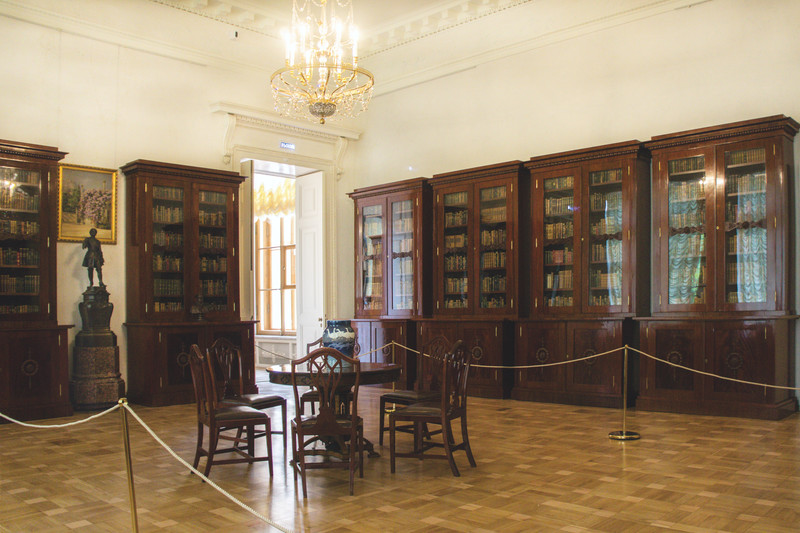

Our technology tells us that fluorescent lamps do not continuously provide light, but are actually flickering on and off at a rate that is just too fast for us to discern…reality at large is really a frequency domain, and our brain is a kind of lens that converts these frequencies into the objective World of appearances…there may be all kinds of things out there in the frequency domain that we are not seeing, things our brains have learned to edit out regularly of our visual reality. https://winchestermysteryhouse.com/

And please be sure to check out the online gift store: https://shopwinchestermysteryhouse.com/

Dabbling in its Dark, Cruel Possibilities
It was one of the brisk winter mornings that begins in a fog, promising the cold to come. A mist was rising from the fruit orchards as I dropped down the hill into Llanada Villa in the valley below the mansion. It was a fair-tale mansion, all turrets and towers, stained glass and plush Victorian gardens, sitting majestical on the most valuable plot of land. As I entered my home, I heard the music playing softly from the morning room. I sat sipping coffee at nine thirty, glad it was Saturday. I knew that life was going to be vastly more complicated now. Well, it was going to be more dangerous, too. Overhead, the morning sky had turned a vivid blue, intersected by fading vapor trails. It was bright enough blue, the sky. However, it had a depth and stillness suggestive of the steady retreat of sunlight and a slight warmth. I have seen real ghouls in my home, and I knew that magic was something that could be harnessed and exploited and there were people in the World with hunger for power and influence enough to risk dabbling in its dark, cruel possibilities. The whisper of water dropping on to leaves as the rain began to fall could be heard. The lights flicked on and off. I looked around, half-waiting for the sound to stir again. The rain strength. I heard drops begin to fall on the roof. For many years the staff reported hearing a little girl crying. She has been seen on occasion, and is described as about seven years old. She has been seen in the house at the main stairwell, on the lawn, and on the third floor. I passed on through the passages of crystal and rooms of silver—spacious chambers, empty and silent. #RandolphHarris 1 of 6
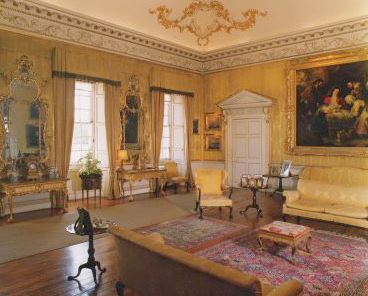
This house felt older than the memory of man. It was an accursed mansion. There were strange noises in the mansion. Every night the wailing of a woman could be heard above the moaning of the wind. If ghost must walk the Earth, they could find no spot on the globe where their appearance would be more natural, or better understood. The staff tells tales of disembodies footsteps, lights that switch themselves off and on at will, and objects moving. The Daisy Bedroom has lights that switch themselves on and off after dark and phantom footsteps are often heard in the hallway near the room. One day a housemaid was speaking to a guest as she served dinner downstairs. To everyone’s surprise, the serving tray sitting on the table picked itself up and tipped itself upside down. The tray was filled with plates of hot foot that went everywhere. The sacrificial stones of the Druid priests, oriented after the fashion of the ruin of ruins of Stonehenge, the blood-vats, imperishable adjuncts to human sacrifice, have stood through the ages, grim guardians of the mysteries of the haunted fruit orchards. If someone were to tell me that the fruit orchards at Llanada Villa echoed nightly with the shrieks of sacrifice and that the ghost fires of forgotten priestcraft still glowed in the morning, I would find it hard to disbelieve. That ghastly curse remained on my family and fortune. The mansion has picked up a few permanent guests. One evening, from the observation tower, I saw a huge black figure gliding along the grounds. It could not be human because of the rate of speed it was going. I felt not just fear, but absolute dread. I experienced a bone-chilling could throughout my body. I ran down nine flights of stairs, while crying uncontrollable and my heart was pounding. #RandolphHarris 2 of 6

Only in the understanding of the stock from which the Victorian mansion’s ghosts are sprung can one appreciate the immortality with which long-accepted tradition has endowed them. Ghostly itself is the history of the Winchester Mansion. While the carpenters were painting on the fourth floor, one of them was startled to see the word MURDER appear in the freshly rolled paint, as if written with someone’s finger—only the words were backwards, as though being written from the other side of the wall. One of the painters explained: “We were quite surprised when a shadow started moving towards us.” As they realized that the “shadow” was approaching them, they also realized that area of the mansion was a very lonely place, especially at night. Not many people ventured up there. And although in their haste to leave, they could only give brief glances at the dark figure, they were sure of one thing: “The only outstanding feature was the outline of a wide brim hate.” Another evening while the carpenters were painting, they heard a quiet creaking emanating from the wood floors. They steeled their nerves before investigating. That is when they saw a young woman sitting in a chair directly behind them. The woman was there for just a moment before disappearing. Later the evening as the farmers were picking fruit in the fields, the dark figure “floated” diagonally across the field. It drifted rapidly to a clump of trees with two flat rocks near by and disappeared over a slight drop-off beyond. #RandolphHarris 3 of 6

One of the farmers screwed up his courage and, in spite of the bizarre, dark figure’s mysterious and even menacing appearance, volunteered to walk down to the spot where the apparition disappeared. After five minutes of observation, he returned, like an efficient scout, with his report, unsettling as it might be. He said when he reached the far side of the hill there were two “soldiers-dressed” figures stilling on the two flat rocks near the clump of trees. Neither one spoke to the other; nor did they acknowledge the other’s presence. Instead they just sat, seemingly rigidly fixated, staring down into the field. Other ghost haunting the mansion include those of two little boys, who have been heard running on the second floor. One night, while I was preparing for company, I found two sets of muddy boot prints coming from the door to nowhere and crossing the room. When I told Daisy about the boot prints. She said they must be made by the same boys who keep coming in the door the opens to the wall, and we had locked them out. Looking toward the door she said, “It’s OK, if you prefer this door, go ahead and use it.” Immediately the door swung open. Needless to say cold chills ran through both of us. We never worried about the door that opens to the wall again. My idea for the mansion was not only to create a place for the spirits, but also to build an estate that would inspire awe. The gorgeous series of fields gardens, forests, and grassy acres are as fascinating as they are beautiful. However, when the sun goes down, the shadows creep and spread, giving the Victorian Mansion an entirely different look and feel. #RandolphHarris 4 of 6

With grounds lit by a full moon hanging low in the sky, just to the side of the columns of the mansion, one begins to ponder the many mysteries surrounding the Winchester Mansion. One night I was putting out a candle when I heard the sound of a singing voice. At first I thought: “Oh, that sounds nice.” However, then I wondered what it was and where I could be hearing singing from. After all, the staff was asleep and there was no one around, and the sound definitely was not coming from outside. It was frightening, but it was not explainable. It was just a couple of phrases of singing and it took me by surprise. I could faintly see the hazy shape of a woman moving down what the hallway. One night, a group of farmers were packing up for the evening. A they looked around with a lantern for their tools, they were shocked to see what appeared to be the black form of a man moving toward them. The figure was larger than human and had no features—it was a black mass that seemed to sway toward them in the bright light. The man wielding the lantern quickly put it out and they all ran away. For weeks the men thought about what they had seen; they just could not forget it. They spoke to other servants about the vision or sighting. They were quite disturbed and unable to let the subject drop. #RandolphHarris 5 of 6
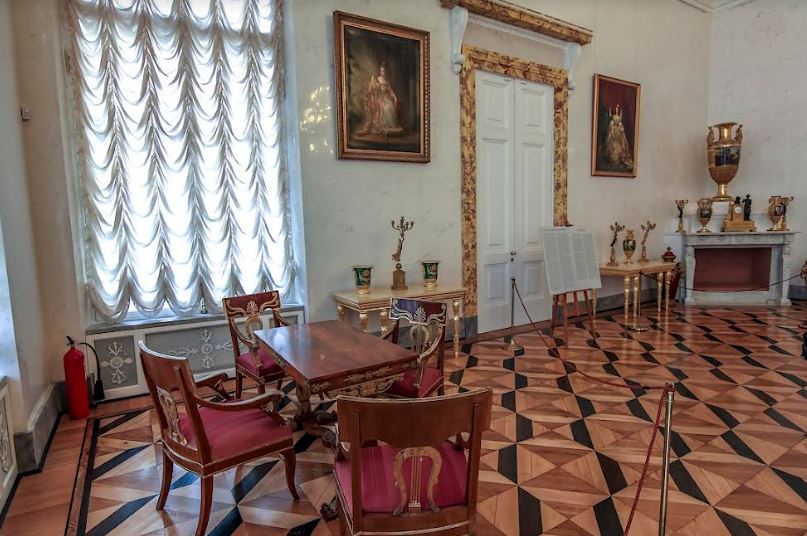
In the Name of the Father, and of the Son, and of the Holy Ghost. Take heed! Come, all Spirits! By the virtue and power of your king, and by the seven crowns and chain of your Kings, all Spirits of the Hells are forced to appear in my presence before this circle of Solomon, whensoever I shall call them. Come, then, all at my order, to fulfil that which is in your power, as commanded. Come, therefore, from the East, South, West, and North! I conjure and command you, by the virtue and power of Him who is three, eternal, equal, who is God invisible, consubstantial, in a word, who has created the Heavens, the sea, and al which is under Heaven. I conjure thee, Lucifer, by the living God, by the true God, by the holy God, who spake and all was made, who commanded and all things were created and made! I conjure thee by the ineffable name of God, ON, ALPHA, and OMEGA, ELOYM, YA, SADAY, LUX, MUGENS, REX, SALUS, ADONAY, EMMANUEL, MESSIAS; and I adjure, conjure. I command you, O all ye demons dwelling in these parts, or in what part of the World soever ye may be, by whatsoever power may have been given you by God and our holy Angels over this place, and by the power Principality of the fernal abysses, as also by all your brethren, both general and special demons, whether dwelling in the East, West, South, or North, or in any side of the Earth, and, in like manner, by the power of God the Father, by the wisdom of God and the Son, by the virtue of the Holy Ghost, and by the authority I derive from our Savior Jesus Christ, the only Son of God. #RandolphHarris 6 of 6
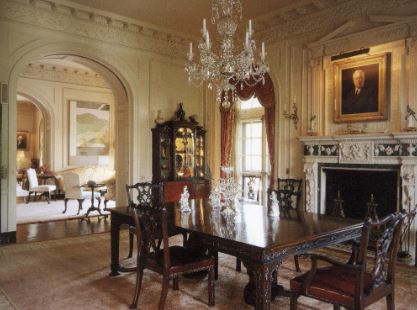
The idea that we survive physical death, that some part of our being is immortal, profoundly affects the loves of those who harbor such a belief. https://winchestermysteryhouse.com/

And please be sure to check out the online gift store: https://shopwinchestermysteryhouse.com/

All is Well that Ends Well?

The family is sacred to the ultimate concern and is the most important social unit in time and eternity. The ultimate cause established families to bring happiness to its creations, allowing them to learn correct principles in a loving atmosphere, and prepare them for eternal life. The home is the best place to teach, learn, and apply virtuous principles. It is where individual learn to provide love, food, clothing, respect, shelter, security and other necessities they require. The mother and father, as equal partners, should help each family member. However, sometimes things do not go as planned. Because we live in a World with many influences, people may become criminals. Men and women can both become involved in crime. When it comes to burglaries, for the females who worked as partners, this could involve a variety of tasks. Many of these tasks were indistinguishable from those traditionally associated with men, such as gaining entry, searching the house, carrying goods outside, and disposing of them. The following interview segment describes some of the tasks performed by a female acting as a partner. Although this was her first offense, she heled to find the transportation to reach the target (by stealing a truck) and took part in the actual break in: “Well, it wasn’t up on me, somebody else who was in there different, not state, in a different county. He just came up and told me he knew about it, a rich guy that was gonna be gone for the weekend. He knew this person, knew who it was, and he knew about it. #RandolphHarris 1 of 24

“When he left that night about two or three in the morning, we went down there. We had stolen a truck, we had stolen my ex-boyfriend’s father’s truck, went down there. We tried to get in, but we couldn’t get in. Everything was locked. Right…We couldn’t get in for nothing, so what we does was, we had some sh*t in back of the truck and we took some tape. Then we put it over the window real tight, then we busted it, and then we took the tape down and the window was shattered. It had no window in it. So—everybody used gloves of course—so we went in there, you know, and we knew when we went, we knew nobody was gonna be home. There wasn’t a house around for two blocks, each way you went. So…my first one was basically the easiest one.” The target often was located by a female partner, who also took the lead in planning the offense. In these cases the women had a substantial say in determining how the proceeds of the crime were divided: “…whatever you chose to give to the other person. We tried to split everything equally. We were all good friends, you know, so I got the best deal out of it because of the fact that I needed the money more than everybody else. Me and my sister needed the money more than everybody did and…we were the ones that said hey, we pointed it out, we found a way to get in, we knew where everything was, we told them how, we had everything planned out down to the TV. This is where this is at and this is where this is at.” #RandolphHarris 2 of 24

The roles played by female burglars are dynamic and can chance over time. Many of the women who currently participate in offenses as partners started out as accomplices. The woman quoted below clearly has an equal relationship with her co-offender, but this was not always the case: “The first burglary I ever committed, I was in the house and I was smoking weed at the time. A friend came in and said ‘I want to go in this house.’ I said ‘Okay, it was around the corner….what part am I going to play?’ He says ‘All you got to do is watch the doors for me. The bags I bring down, take them out, and you also drive the car for me.’” As should be obvious from above, women who work as accomplices in burglary play much more limited roles. They seldom participate in planning the crime, and often do not even enter the dwelling. Some claimed to prefer working with others because they lacked the skills needed to be a successful burglar: “I can’t do all by myself…I haven’t mastered that yet.” Others simply felt more comfortable when relying on a colleague’s expertise; they were uncertain about their ability to work alone. In the following case, a woman reports that she deferred to her boyfriend’s judgment in determining the suitability of a given target. #RandolphHarris 3 of 24

“He can look at them and tell. He’s better at it than me. Sometimes I give him tips to go on, but he checks them out. I feel safer for him to check them out.” A common work assignment for accomplices was acting as a lookout or driver. Several of the women stated that driving was their primary job in burglaries: “Well, see, me and my boyfriend had been together for a year, and he done them all the time. Well, not all the time, but it was no big deal, and all I had to do, all I ever do, is drive. I just go like he’ll go, him and his friend. He don’t do ‘em every week or anything like that. Like it’s not really ‘cause we need the money or anything either. Like he’ll go during the day and he’ll look at a house and he’ll find one, and then he’ll tell me about where the house is…all I have to do is drive to the place and wait for them to start bringing out the stuff, and then drive off.” Other said that they typically kept a lookout for their colleagues: “They came and picked me up with a stolen automobile. I didn’t know that it was stolen. We went out there to this house and they got out. I just assumed—I didn’t know what was going on at first. We got out and they went in first, and then they came back out. One of the men came back out and told me to come in and to keep an eye out to see if anybody was there or anybody comes down the sidewalk or if anybody drives down the street or anything.” In both of these cases the women, as accomplices, did not choose to perform these secondary tasks. Instead the tasks were assigned to them by a dominant co-offender. #RandolphHarris 4 of 24

What light does this quantitative and qualitative information shed on the nature of female criminality? Our sample was not generated randomly; with this fact in mind, the quantitative findings suggest that women involved in residential burglary do not differ significantly from their male counterparts on a number of relevant dimensions (exempli gratia, drug and alcohol use, degree of offense specialization). Nevertheless, the results show that some important differences may exist as well. Compared to the males, for example, the females more often committed burglaries with others, began offending at a later age, and had less contact with the criminal justice system. Further examination of these apparent differences is warranted. The qualitative data demonstrate that women’s involvement in residential burglary is marked by diversity and that the debate about whether women play a primary or a secondary role in the offense is probably a red herring. In fact, as among males, some assume primary roles exclusively, some adopt secondary roles exclusively, and others move from one type of role to another s they become more experienced. This observation has important implications for research into women’s involvement in crimes committed more often by males. To be sure, a much lower percentage of women than of men participate in residential burglary. Even so, our qualitative data reveal substantial similarities be tween males and females. #RandolphHarris 5 of 24

This fact suggests that the activities of women who do engage in such offenses may be explained by some of the same factors that explain men’s participation. When it comes to the stole property system (SPS), we must consider the law of supply and demand shape the SPS. This term refers to the loosely formed relationships that bring about the theft of property and the subsequent repackaging and resale of these goods via the “black market.” We use contacts with law enforcement authorities to formulate a revised view of property crime. Instead of viewing burglaries as isolated incidents of theft, we argue that we should conceive of the acts and actors involved as spanning a more broadly defined set of roles and behaviors. They identify the thief, fence, and person who buys the stolen goods as key players in the SPS. They also identify multiple stages in the process: research and planning, extraction, exchange (id est, conversion of the goods to money), marketing, residtribution/resale, and evaluation. Moreover, the roles and behaviors of the various players are said to be interchangeable and flexible. In the end, we reconsider the way that we think about property crime. We become more sensitive to the potential for business concepts such as division of labor, entrepreneurial spirit, supply and demand, and marketing to manifest themselves in the World of property theft. In doing so, we are able to drive home the complexity and fluidity tht can beset property crime events. Moreover, we illustrate how the criminal calculus can lead to mutually beneficial relationships and roles that allow the criminal subculture to expand and innovate. #RandolphHarris 6 of 24
Perhaps no area of contemporary criminal activity holds more potential for improved understanding and successful intervention through analytical reorientation than does that of property theft. This area of crime is by no means new, a situation which may in fact constitute the greatest barrier to fresh thinking on the subject. Centuries of experience with thefts of property have give us a fairly strong conceptualization of this crime area, a conceptualization which centers almost exclusively on the thief. There is of course nothing illogical or erroneous about a concern for this individual; it is one after all who steals property. What is argued here, however, is that an exclusive concentration of the thief yields a myopic view of the process of theft, a view which draws the boundaries of the crime too tightly around that individual. It is a view which tends therefore to consider each incident of theft as a unique event, determined and constrained by the motivations, needs, and skills of the perpetrator. This “conventional view of theft” (if we can use this phrase) prescribes a response to this crime which largely consists of a fairly sophisticated sorting process, linking one individual (or one group of individuals) with each event as it occurs. Such an “individualistic” approach to crime and criminals is not, of course, confined to the property theft area. For example, we suggest that it is the most prevalent approach to crime in general. Consistently, both the popular and scientific tendency is to view the criminal’s behavior as a problem of individual maladjustment, not as a consequence of his participation in social systems. #RandolphHarris 7 of 24

Perhaps it is for this reason that in criminology we have had thousands of studies that have sought some damaging trait in the personalities of individual criminals, but very few studies of the organizational arrangements among criminals who commit crimes in concert. The tendency toward an individualistic interpretation of criminal behavior cannot be laid to the idiosyncrasies of either the public or the scientist, but rather is undoubtedly influenced by the nature of the legal systems, with their concepts of individual responsibility an intent, upon which most democratic societies are based. However, while such an interpretation may conform well to the needs of a legal system, it may have the additional effect of causing us to ignore some important dimensions of contemporary criminal behavior. It is the perspective that property theft is one area of criminal behavior that has sorely suffered both conceptually and practically from a failure to probe the relationships among criminals (and)…the structure and operations of illicit organizations. Perhaps the mot glaring evidence of this failure concerns what the President’s Crime Commission called “little research…done on fencing,” id est, on the criminal receiver of stolen property. This crime figure, although tallying an impressive list of protestations to one’s importance over several centuries has remained little explored, while one’s relationship with the thief has been virtually ignored by the criminologist. #RandolphHarris 8 of 24

However, if the popular and scientific tendency has been to overlook the fence, the police detective assigned the responsibility of dealing with property theft has not found it possible to do so. Instead, as the authors discovered in the course of an ongoing study of patterns of criminal receiving, police detectives possess a great deal of information about the fence. Other researchers have reported similar experiences. Because the police know about the fence does not imply that one’s activities are either successfully or efficiently interdicted, for the police agency is as influenced by an individualistic approach to crime as is the social scientist. Thus the bulk of enforcement resources and activity against theft is directed to the thief, and the situation in which police effort is devoted directly and exclusively to the fence appears to be rare indeed. The criminal receiver remains a curiosity to the criminal justice system, being infrequently arrested and even less often convicted. The model of property theft employed here—the Stolen Property System—is an operationally based one, derived from the author’s research into patterns of criminal receiving in a large urban area of the northeastern United States of America. As a part of this study, access to police intelligence reports on the activities of burglars and fences has been obtained, as well as records of these activities maintained in a special investigative unit in the office of the district attorney. Now, as burglaries are crimes of economics, this indicates that economics plays a kay factor in our lives. #RandolphHarris 9 of 24

China is an economic power house, and it growing production and export power enhances its financial strength as well. This is natural. However, compared to its sensational emergence as a leading manufacturing and trading nation, the process of its ascending to the position of a major financial power is more fragmentary and complicated. China has by far the largest foreign exchange reserves in the World, about three times as large as Japan, which is number two. It is also rapidly emerging as the leading international lender. In contrast, China’s role as a foreign direct and portfolio investor is still considerably smaller than that of America, major European countries, and Japan. For the time being, the story of China’s growing financial clout is, first and foremost, the story of the unprecedented increase of the financial power of the Chinese state. As of the end of 2021, the gross financial assets of China increased 13.6 percent to USD $29,689 billion. That is an increase of USD $25,563 billion since 2010. In December 2022, the reserves of China stood at USD $3,120 billion. The exact composition of China’s foreign exchange reserves is classified information. Foreign direct investment into China totaled $42.5 billion between July and December 2022. That constituted a 73 percent decline on the year. #RandolphHarris 10 of 24

China’s net international investment position reached USD $2,531.328 billion in December 2022. As of the year 2022, the United States of America’s net international investment position was USD -$16.12 trillion. The United States of America is currently the World’s largest debtor nation. Thinking about the pre-cybernetic machine—with minor exceptions, state socialism had led not to affluence, equality, and freedom, but to a one-party political system…a massive bureaucracy…heavy-handed secret police…government control of the media…secrecy…and the repression of intellectual and artistic freedom. Setting aside the oceans of spurting blood needed to prop it up, a close look at this system revealed that every one of these elements is not just a way of organizing people, but also—and more profoundly—a particular way of organizing, channeling, and controlling knowledge. A one-party political system is designed to control political communication. Since no other party exists, it restricts the diversity of political information flowing through the society, blocking feedback, and thus blinding those in power to the full complexity of their problems. With very narrowly defined information flowing upward through the approved channel, and commands flowing downward, it becomes very difficult for the system to detect errors and correct them. In fact, top-down control in the socialist countries was based increasingly on lies and misinformation, since reporting bad news up the line was often risky. The decision to run a one-party system is a decision, above all, about knowledge. #RandolphHarris 11 of 24

The overpowering bureaucracy that socialism created in every sphere of life was also, a knowledge-restricting device, forcing knowledge into pre-defined compartments or cubbyholes and restricting communication to “official channels,” while de-legitimating informal communication and organization. The secret police apparatus, state control of the media, the intimidation of intellectuals, and the repression of artistic freedom all represent further attempts to limit and control information flows. In fact, behind each of these elements we find a single obsolete assumption about knowledge: the arrogant belief that those in command—whether of the party or of the state—know what others should know. These features of all the state socialist nations guaranteed economic stupidity and derived from the concept of the precybernetic machines as applied to society and life itself. Second Wave machines—the kind that surrounded Mr. Marx in the 19th century—for the most part operated without any feedback. Plug in the power, start the motor, and it runs irrespective of what is happening in the outside environment. Third Wave machines, by contrast, are intelligent. They have sensors that such in information from the environment, detect changes, and adapt the operation of the machine accordingly. They are self-regulating. The technological difference is revolutionary. While Mr. Marx, Mr. Engels, Mr. Lenin all bitterly assailed the philosophy of “mechanical materialism,” their own thinking, reflecting their era, remained steeped in certain analogies and assumptions based on pre-intelligent machinery. #RandolphHarris 12 of 24

Thus for Marxian socialists the class struggle was the “locomotive of history.” A key task was to capture the “state machine.” And society itself, being machine-like, could be pre-set to deliver abundance and freedom. Mr. Lenin, on capturing control of Russia in 1917, became the supreme mechanic. A brilliant intellectual, Mr. Lenin understood the importance of ideas. However, for him, symbolic production, too—the mind itself—could be programmed. Mr. Marx wrote of freedom, but Lenin, on taking power, undertook to engineer knowledge. Thus he insisted that all art, culture, science, journalism, and symbolic activity in general be placed at the service of a master plan for society. In time the various branches of learning would be neatly organized into an “academy” with fixed bureaucratic departments and ranks, all subject to party and state control. “Cultural workers” would be employed by institutions controlled by a Ministry of Culture. Published and broadcasting would be monopolies of the state. Knowledge, in effect, would be made part of the state machine. This constipated approach to knowledge blocked economic development even in low-level smokestack economies; it is diametrically opposed to the principles needed for economic advance in the age of the computer. #RandolphHarris 13 of 24

The Third Wave wealth-creation system now spreading also challenges three pillars of the socialist faith. Take the question of property. From the beginning, socialists traced poverty, depression, unemployment, and the other evils of industrialism to private own-unemployment, and the other means of production. The way to solve these ills was for the workers to own the factories—through the state or through collectives. Once this was accomplished, things would be different. No more competitive waste. Completely rational planning. Production for use rather than profit. Intelligent investment to drive the economy forward. The dream of abundance for all would be realized for the first time in history. In the 19th century, when these ideas were formulated, they seemed to reflect the most advanced scientific knowledge of the time. Marxists, in fact, claimed to have gone beyond fuzzy-headed utopianism and arrived at truly “scientific socialism.” Utopians might dream of self-governing communal villages. Scientific socialists knew that in a developing smokestack society such notions were impractical. Utopians like Charles Fourier looked toward the agrarian past. Scientific socialists looked toward what was then the industrial future. Thus, later on, while socialists regimes experimented with cooperatives, worker-management, communes, and other schemes, state socialism—state ownership of everything from banks to breweries, rolling mills to restaurants—became the dominant form of property through the socialist World. (So complete was this obsession with state ownership that Nicaragua, an imitative latecomer to the socialist World, even created “Lobo Jack,” a state-owned disco). Everywhere, the state, not the workers, thus became the chief beneficiary of socialist revolution. #RandolphHarris 14 of 24

Socialism failed to meet its promise to improve radically the material conditions of life. When living standards fell in the Soviet Union after the revolution, the decline was blamed, with some justification, on the effects of World War I and counterrevolution. Later the shortfalls were blamed on capitalist encirclement. Still later, on World War II. Yet thirty years after the war, staples like coffee and oranges were still in short supply in Moscow. In the period preceding Mr. Gorbachev’s perestroika, the diet of a middle-class researcher at a state institute in Moscow was heavily based on cabbage and potatoes. In 1989, four years after the start of Mr. Gorbachev’s attempt at reforms, the U.S.S.R. had to import 600 million razor blades and 40 million tubes of shaving cream from abroad. Remarkably, though their number is declining, one still hears orthodox socialists around the World calling for the nationalization of industry and finance. From Brazil and Peru to South Africa and even in the industrialized nations of the West there remain true believers who, despite all historical evidence to the contrary, still regard “public ownership” as “progressive” and resist every effort to de-nationalize or privatize the economy. #RandolphHarris 15 of 24

It is true that today’s increasingly liberalized global economy, uncritically hailed by the great multinational corporations, is itself unstable and could suffer a massive coronary. The distended debt balloon on which it rests cold be punctured. Wars, sudden interruptions of energy or resources, and any number of other calamities could cause its collapse in the decades ahead. Under catastrophic conditions, one might well imagine the need for temporary emergency nationalizations. Nevertheless, incontrovertible evidence proves that state-owned enterprises mistreat their employees, pollute the air, and abuse the public at least as efficiently as private enterprises. Many have become sink-holes of inefficiency, corruption, and greed. Their failures frequently encourage a vast, seething black market that undermines the very legitimacy of the state. However, worst and most ironic of all, instead of taking the lead in technological advance as promised, nationalized enterprises, as a rule, are almost uniformly reactionary—the most bureaucratic, the slowest to reorganize, the least willing to adapt to changing consumer needs, the most afraid to provide information to the citizens, the last to adopt advanced technology. For more than a century, socialists and defenders of capitalism waged bitter war over public versus private property. Large numbers of men and women literally laid down their lives over this issue. #RandolphHarris 16 of 24

What neither side imagined was a new wealth-creation system that would make virtually all their arguments obsolete. Yet this is exactly what happened. It is super-symbolic. It is knowledge. The same knowledge can be used by many people simultaneously to create wealth and to produce still more knowledge. And unlike factories and fields, knowledge is, for all intents, inexhaustible. Neither socialist regimes nor socialists in general have yet come to terms with this truly revolutionary fact. An established firm in an industry stands to gain by keeping out new competition. Then it can raise prices to monopoly levels. Since monopoly is socially harmful, the antitrust authorities try to detect and prosecute firms that employ strategies to deter rivals from entering the business. In 1945, the Aluminum Corporation of America (Alcoa) was convicted of such a practice. An appellate panel of Circuit Court judges found tht Alcoa had consistently installed more refining capacity than was justified by demand. In his opinion, Judge Learned Hand said: “It was not inevitable that it [Alcoa] should always anticipate increases in the demand for ingot and be prepared to supply them. Nothing compelled it to keep doubling and redoubling its capacity before other entered the field. It insists that it never excluded competitors; but we can think of no more effective exclusion than progressively to embrace each new opportunity as it opened and to face every newcomer with new capacity already geared into a great organization. #RandolphHarris 17 of 24

This case has been debated at length by scholars of antitrust law and economies. Here we ask you to consider the conceptual basis of the case. How could the construction of excess capacity deter new competitors? What distinguishes this strategy from others? Why might it fail? An established firm wants to convince potential new competitors that the business would not be profitable for them. This basically means that if they entered, the price would be too low to cover their costs. Of course the established firm could simply put out the word that it would fight an unrelenting price war against any newcomers. However, why would the newcomers believe such a verbal threat? After all, a price war is costly to the established firm too. Installing capacity in excess of the needs of current production gives credibility to the established firm’s threat. When such capacity is in place, output can be expanded more quickly and at less extra cost. It remains only to staff the equipment and get the materials; the capital costs have already been incurred and are bygones. A price war can be fought more easily, more inexpensively, and therefore more credibly. This makes sense in the logic of strategy, but will such a device work in practice? There are at least two qualifications that limit its success. First, if there are many firms already in the industry, then discouraging newcomers gives more profit to all of them. Will any one firm bear the costs of capacity when it gets only a part of the benefit? #RandolphHarris 18 of 24

This is a standard prisoners’ dilemma. If one firm is large enough, it may in its own interest provide such a service to the rest of the industry. Otherwise the firms must collude in building capacity; this may be hard to hide from the antitrust authorities. In the Alcoa case, only may not regard the dilemma of whom will install capacity as a serious problem, because Alcoa had a 90 percent share of the primary aluminum ingot market. However—and this is the second qualification—is that the relevant market? Even if there are no other producers of primary ingots, secondary production from scrap is a source of competition. So is Alcoa’s own future production. Many aluminum-based products are highly durable. If Alcoa puts more aluminum on the market in the future, then the values of these durable goods will decrease. If the company cannot credibly guarantee the users that it will restrict its own future, output, they are willing to pay for aluminum now. This is just like IBM’s problem of pricing mainframe computers. The solution of renting is much harder here: you cannot rent aluminum as such; Alcoa would have to extend its operations into all sorts of aluminum-based products. In accordance with the directions of the ultimate concern, and in view of the critical time through which the World is passing, every expression, “view,” or theory which we hold concerning things should now be examine carefully, and brought to the proof, with open and hones desire to know the pure truth of the ultimate concern—as well as every statement that comes to our knowledge from the experience of others, which may throw light upon our own pathway. #RandolphHarris 19 of 24

Every criticism—just or unjust—should be humbly received and examined to discover its grounds, apparent or real; and facts concerning the verities from every self-actualized being should be analyzed, independent of their pleasure or pain to us personally—either for our own enlightenment or for our equipment in the service of the ultimate concern. For the knowledge of truth is the first essential for warfare with the lying offenders, and truth must be eagerly sought for and faced with earnest and sincere desire to know it and obey it in the light of God: truth concerning ourselves, discerned by unbiased discrimination; truth from the virtues, uncolored, unstrained, unmutilated, undiluted; truth in facing facts of experience in all members of the hierarchy of self-actualization. Sometimes we are we can be too engrossed in our own internal struggle to intervene and prevent someone else from being hurt, but gradually the fragments and splinters and hurts began to disturb us. We may experience internally the broken moments, shattered dialogues, and cruelty of neutral faces. Here were people committed to the rescuing of “dropouts” and “rejects” from the public school, blatantly ignoring the crucial feelings being expressed. In this room, in the many passing hours and in that moment were people who hungered for a vital, active, listening human presence. #RandolphHarris 20 of 24

However, what they get are intellectual arguments and words with little or no feeling. What they get are dead faces and lifeless bodies. Within one is growing an indignation against these denials or elemental human values until at last one’s own existence, one’s own isolation, one’s own desire for a solitary state crumbles away and vanishes. For the first time in weeks, one may experience intense and vital feelings from within, a full response to others. One’s anger mounts at the surface way in which fundamental matters are handled, at the ignoring of potential for intensity and depth, and at people committed to serving abused and rejected children failing to reach out, recognize and affirm each other. It may take one back to another time and place. This may cause of to reflect on the coldness and indifference others have to the personal struggles and feelings, an avoidance of intensity and depth in interactions, an intellectualizing and professionalizing or values and concepts of the ultimate concern. Mystery, spirit, feeling, the human sense, the unspoken and ineffable, the sense of awe and wonder, aesthetic appreciation—all might be missing. What else is the ultimate concern but a willingness to submit to the unknown, to learn from the unseen and intangible what we must fulfil? Where else do powers of life, actions to living in the deepest and fullest sense, come but from felt presences that awaken us to a fuller realization of what it means to be unique and human. #RandolphHarris 21 of 24

There will be pronouncements, lineal objectives and goals, definitions, rules, all carefully edited and articulated. We must be concerned with deviance and social injustice, and be aware of the importance of using political and economic powers to being about beneficial social changes. We have to speak about poverty and war, the end of killing and hunger. However, these are devotions to abstractions: for there before us are instances of human suffering, and individuals struggling to rise, and they are being met with indifference, with a refusal or inability to listen and respond. Some may speak glibly of the value of love in enlightenment, but these words do not strengthen and affirm, not support or encourage individuals in their search and struggle. The words are empty. The soul of life dies quickly in the presence of doctrines, rituals, and intellectual reactions. The central concern, the only immediate and intense here-and-now feeling, is a fear of the people who rate us, an incessant anxiety boarding on paranoia that they are being judged in every detail and nuance. Without exception, the fear of being tossed out, or of being put on probation, is paramount. The way to success is to be silent, to speak in abstractions, to avoid action in any living, breathing terms. They will be startled at one’s indignation, at one’s efforts to arouse genuine caring, interpersonal involvement, and decent human responses. When we examine the sacred of the “is” namely, actual purity, or the present reality of the revered it is the mysterium tremendum et fascinosum. #RandolphHarris 22 of 24

The mysterium tremendum et fascinosum is the experience of ‘the ultimate’ in the double sense of that which is the abyss and that which is the ground of man’s being. The mysterium tremendum et fascinosum is the beneficial side of sacredness; it attracts because, as the ground of being, it implies the fulfilment and the beatitude of the creature. The negative side is the mysterium tremendum et fascinosum which terrifies because, as the abyss of being, it implies an infinite, unbridgeable distance between the finite and the infinite. In the ecstatic experience of revelation one feels both the elevating power of the divine presence and its annihilating power. This is the experience of the actual sacredness of the ultimate concern. A man who has never tried to flee from the ultimate concern has never experienced the ultimate concern that is the ultimate concern. The ultimate concern of our own making, fashioned after the image of man, is easy to live with, but man cannot stand the ultimate concern that is really the ultimate concern. Man tries to evade the ultimate concern, and hates it, because one cannot escape it. The protest against the ultimate concern, the will that there be no ultimate concern, and the flight to nihilism are all genuine elements of profound philosophy. Such is the shaking power of the mysterium tremendum et fascinosum. The eyes of the Witness we cannot stand are also the eyes of One of infinite wisdom and supporting benevolence. #RandolphHarris 23 of 24

The center of being, in which our own center is involved, is the source of the gracious beauty which we encounter again and again in the stars and mountains, in flowers and animals, in children and mature personalities. The scared can be viewed not only from a phenomenological point of view, but also from an ontological one. The sacred contains the meaning of individuals and of the whole, and is the ground of meaning. It is also the abyss of meaning because it transcends every individual meaning and cannot be fully grasped in any act of meaning. Unconditioned meaning is the mysterium tremendum et fascinosum, the abyss and the ground of the meaning of things, not only in so far as they are, but also in so far as they ought to be. Against this ontological background, the sacred is not unperceptible, but it is not objective. The sacred is contemplated not as an object; it I contemplated as transcendent meaning. To be sure, there exist also sacred objects to see them as purity is to grasp through them the meaning of the unconditioned. The sacred is being-itself or the power of being. What is required in the professional sense is the fullness and depth of a truly human commitment to self and others, and the love that connects one man with other men. This love must be allowed to develop because love is immediate and grows out of a willingness to enter into interpersonal dialogue and communication, out of the willingness to permit the unknown in one’ self to connect with the unknown in others. #RandolphHarris 24 of 24


Ruin is the Destination Toward Which All Men Rush

With equality and gender-based studies becoming more important, it is a goo idea that we take a look at a gender-based analysis of residential burglary. The study is based on interviews with 105 active residential burglars, 87 of whom were males and 18 were females. The project employed a snowball sampling strategy in which an ex-offender recruited known burglars who were presently operating in a city. The gender-based compassion suggests that, in many way, female burglars resemble their male counterparts. For example, both group display long criminal histories that span a variety of property, violent, and public order offenses categories. Both groups accumulate long, diverse substance abuse histories that overlap with and contribute to their involvements in burglary. At the time, the gender-based comparison reveal several differences. Female burglars begin offending at a later age, are more likely to co-offend, and have less contact with authorities. The typology of female burglars describes offenders as either accomplices or partners. Factor of motivation, levels of target selection and planning, and patterned work roles serve to differentiate these two conceptual categories. Despite growing interest in female criminality, little is known about the nature of women’s participation in crimes statistically dominated by males. Certainly that is the case for residential burglary, an offense labeled as an overwhelmingly male enterprise. For example, we hardly know how female become involved in such offenses or what roles they play. Are they tempted into these crimes, for instance, by the influence of delinquent peers or by the use of drugs? #RandolphHarris 1 of 21

Because we lack detailed knowledge, we cannot assess the extent to which the processes underly burglaries committed by females differ from those underlying burglaries by males. This lack also restricts our capacity to detect important differences among female burglars. An assessment of these difference, however, is crucial in formulating effective policy responses to female criminality and to developing theories of lawbreaking by women. Short of observing burglaries, perhaps the best way to acquire this information is to go to the offenders themselves. The most pressing need today, in researching the agenda for feminist criminology, is observation and interviewing so we can plunge more deeply into the social Worlds of girls and women. Such a strategy will allow researchers to comprehend women’s crime on its own terms. Often it is claimed that offenders are versatile and commit a wide range of offense. This observation, however, is derived largely from studies of males conducted in criminal justice settings rather than on the street. During our interviews we asked the subjects whether they ever had committed other sorts of crimes beside residential burglary. We did so because we were concerned primarily with prevalence—that is, whether the subject ever had engaged in other kinds of offenses. Stealing (which includes shoplifting and corresponds to the legal definition of this activity), auto theft, and assault were the offenses most commonly reported by males. Stealing and assault were mentioned most frequently by the females; these offenses were comparable in rank of frequency to those reported by the males. #RandolphHarris 2 of 21

Beyond these two offenses, however, little other criminality was reported by the females. The only meaningful differences between the men and the women for this measure was found in regard to auto theft. This crime was fairly common among the males, but unknown among the females. The explanation for this difference might reside in a strong cultural tradition linking masculinity to driving and car ownership. Alternatively, males may have “cornered the market” in auto theft; to be profitable, such a crime requires sophisiticated coneections with garage owners, automotive recycle yard employees, and car dealerships. One important aspect of offending style concerns the degree of crime specialization—that is, the extent to which offenders concentrate on one particular type of offense. When we asked offenders whether they had been involved in crimes other than residential burglary during their most recent period of offending, thirty-four percent of the males and 42 percent of the females claimed that they had committed only residential burglaries during this period (roughly the last six months). This finding is consistent with a substantial body of previous research showing that offenders display considerable diversity over the course of their criminal careers, but may specialize in a particular “line” for short periods. This phenomenon is labeled as “short-term specialization.” Another element of offending style concerns the inclinations to work with others in carrying out cries. #RandolphHarris 3 of 21

Previous research demonstrated that more often than not, [burglary] is committed by two or more persons acting in concert. The results of our study bear this out: 79 percent of the males and all of the females reported that they had worked with others in the past. The males showed considerable variation in frequency of working with others: 39 percent said they “seldom” worked with others, while another 39 percent reported that they “always” did so. For the women, however, the picture was much clearer: an overwhelming 83 percent reported that they “always” worked with others, and the remaining 17 percent states that they “usually” did so. The final aspect of offending style that we examined here relates to drug and alcohol use among our respondents, as well as to their perceptions of the role played by intoxicants in leading them to commit such crimes. Our research reveals that there is little difference between the males and the females in self-report drug use. When the drug users were asked whether addiction had anything to do with their burglaries, 71 percent of the males and 82 percent of the females answered affirmatively. A majority of those in both groups said they committed burglaries to obtain the money they needed to buy more drugs. In addition, slightly more than three-quarters of the users in each group—76 percent of the males and 79 percent of the females—claimed that they used drugs before committing their burglaries. A higher percentage of females than of males started that they “always” or “usually” used drugs beforehand. #RandolphHarris 4 of 21

One explanation seems to be that many female burglaries arise from crack “runs.” This point, however, is difficult to determine conclusively because use of the drug is heavily stigmatized. We explore male-female differences on three dimensions designed to measure burglary offending histories: age at first burglary, total number of lifetime burglaries, and lambda, the mean number of annual burglaries. The ages at which males and females committed their first residential burglary differed significantly: the males generally started much earlier in life. None of the female burglars had committed their first offense before age 12, but 22 percent of the males had done so. The modal category for males was the 13-16 age bracket, which accounted for 53 percent of the cases. Sixty-one percent of the females, on the other hand, were over 16 years old when they carried out their first burglary. Given that the females started to commit burglaries later, on average, than their male counterparts, we are not surprised that a greater proportion of females had been involved in fewer than 20 residential burglaries in their lifetime. Perhaps more interesting, 39 percent of the females had committed more than 70 lifetime residential burglaries, a proportion roughly comparable to the males’ figure of 41 percent. The bimodal distribution of the females’ responses suggests that women are likely to engage in burglary at two very distinct levels, and perhaps to employ two different styles. #RandolphHarris 5 of 21

The males were more likely than the females to have had contact with the system for offenses of all types. This difference was most notable at the stage of the criminal justice process that resulted in incarceration. Over ninety percent of the respondents in each group had been arrested previously, but only one woman (6 percent) had been convicted and sentenced to a term of imprisonment. In contrast, 26 percent of the males had served time in the past. This difference may exist in part because the females began offending later and consequently had fewer “years at risk.” Other factors, however, are probably at work as well including an assumption by the police that most burglars are male, which allow females to remain above suspicion and a tendency for those females who are arrested to receive preferential treatment in the courtroom. Certainly the women in our sample believe that their gender conferred a degree of protection from the law. Several expressed the belief that authorities would not take action against them simply because they were female. Is it not becoming clear, in light of the existence of deceiving offenders and their methods of deception, that close examination is needed of modern theories, conceptions, and expressions regarding things in connection with the ultimate concern and its way of working in man? For only the certainty of ultimate concern, apart from “views” of truth, will avail for protection or for successful warfare in the conflict with wicked offenders in the self-actualized hierarchy. #RandolphHarris 6 of 21

When we reach self-actualization, we are at the highest hierarchy of the pyramid, and this is denoted by morality, creativity, spontaneity, problem solving, lack of prejudice, and acceptance of facts. There are five levels in the pyramid. At the very bottom, people are interested in physiological functions only which include: breathing, food, water, pleasures of flesh, sleep, homeostasis, and excretion. At the second level of the pyramid, individuals are concerned with safety and this entails security of: body, employment, resources, mortality, the family, healthy and property. At the third hierarchy most are concerned with love and belonging. This includes friendship, family, sexual intimacy. At the fourth hierarchy, this realm focuses on esteem: self-esteem, confidence, achievement, respect of others, respect by others. All that is in any degree the outcome of the mind of the “natural man” will prove to be but the weapons of straw in this great battle, and if we rely upon others’ “views of truth,” or upon our own human conceptions of truth, offenders will use these very things to deceive us—even building us up in these theories and views so that under cover of them he or she may accomplish one’s purpose. We cannot, therefore, at this time, overestimate the importance of believers having ready minds to “examine all things” they have thought, and perhaps taught, in connection with the things of ultimate concern and the self-actualized realm—all the “truths” they have held, all the phrases and expressions they have used in “virtue teachings,” and all the ideas they have absorbed through others. #RandolphHarris 7 of 21

For any wrong interpretations of truth, any theories and phrases which are man-conceived and which we may build upon wrongly, will have perilous consequences to ourselves and others in the conflict with truth and individual self-actualized people passing through. Because in the present offenders will comes to them with deceptions in DOCTRINAL form, self-actualized individual must examine carefully what they accept as “doctrine,” least it should be from the emissaries of the deceiver. Some people are tired of struggling and want only to know a quiet silence. This can be a shock to one’s own awareness of who he or she is. One may have always considered struggle essential in growth, and in many crises and conflicts it has provided the turning point in one’s life. Not wanting to be burdened and overwhelmed by heavy feelings and thoughts or by complicated searching and painful of what is wrong with oneself, people, and life, this can create the desire to turn away from the struggle. And this is what causes the requirement to be alone in simple and ordinary ways. Once one goes through this process of healing in solitude, and by only engaging in simple routine, gradually, with each day, an individua is able to listen a little more to what others are saying. (This is why during a break up, space, instead of forcing the issues is important. Of course, there are times when you need to know what the reason it so it may be a good idea to press for answers to start a dialogue and not necessarily to just focus on getting back together.) #RandolphHarris 8 of 21

Slowly it becomes each to be interested in and comfortable with other people’s problems. Although there may be some drawbacks. Some individual may be able to be with others while you struggle to make decisions, but one may not be opened to questions or personal comments and responses directed to one. This may cause one to offer nothing of oneself and comment only on what one is hearing and understanding from others. During this period, some find work a truly rewarding activity; it is a place that feels like home. It does not matter whether the work takes the form of writing—reports, references, and letters—or reading. Or, if it involved physical activities, one may become totally absorbed in what one is doing, get lost in the activity and experience a full sense of relief. Active mental and physical involvement in solitary projects can be a sense of salvation. By surrendering to powers within to powers within and sources of light in the universe, in some mysterious way, a miracle happens. It is the loss of the old man and the discovery of the new man. When the light reveals itself, the individual is ready to accept it. This reduces the need to force or push or beseech. One simply waits with firm faith that one is meant to be whole again and that one will live more in a full and complete way. It becomes clear that people one loves and those who love one cannot reach the individual going through changes. And so, life has to come from another source, and that new direction will emerge in solitude. #RandolphHarris 9 of 21

The problem of the truth of faith presents itself from both the subjective and objective sides. Subjectively, faith is true if it adequately expresses an ultimate concern, that is, if the symbols of faith are alive and speak to the heart with an urgency of concern that impels to action and replay. This criterion is more a rule of thumb that works best for obviously dead symbols and is not so useful in judging contemporary ones. However, it is the objective truth of faith that interests us here. The content of faith is true if it is really and not just apparently ultimate. The great danger is demonization, elevation of the symbol to ultimacy, which results in idolatrous faith. Therefore, the criterion of faith is self-negation. The true symbol not only conveys the ultimate, but proclaims its own non-ultimacy. It pronounces a Yes and a No. For the Christian the Cross of the Christ is such a symbol. Name for this criterion—the No that follows immediately on the heels of the Yes—is the Protestant principle. The Protestant principle pervades in this whole theology, both systematically and chronologically. Chameleon-like, it changes its formula of expression against the background of diverse theological problems. Hence, a rapid rundown of its various formulations is useful for identifying it. #RandolphHarris 10 of 21

In addition to being the objective criterion of faith, the Protestant principle expresses man’s infinite distance from God and his dependence upon the divine initiative. The Protestant principle is the prophetic protest against every form of self-absolutizing—for example, the demonic elevation of the churches, of the Christian Bile, and the priesthood to absolute validity. The Protestant principle is “resistance to idolatry,” that is, it stands for non-conformity in family, school, state, and church. The Protestant principle protests the objectifying of grace (die Vergegenstandlichung der Gnade) and so smashes the barriers between the holy and the secular. For, by the Protestant principle, God is as near to the lowest as he is to the highest, as close to the material as to the spiritual. These manifold expressions of the Protestant principle can be summarized in and derived from the basic doctrine that the Protestant principle is justification by grace through faith. We reject the traditional Protestant formula of “justification by faith” on the grounds that is has been misunderstood to mean that the human act of faith sets in motion God’s justifying act. Faith itself is a gift of grace, all justifying actions is entirely on the part of God, and, consequently, the more accurate formula is “justification by grace through faith.” The Protestant principle ultimately rests upon an experience of God’s majesty that attributes absoluteness and holiness to him alone and denies such dignity to all else. #RandolphHarris 11 of 21

Untrammeled choices of individuals could lead to disaster for society. Picture a paster open to all. It is to expected that each herdsman will try to keep as many cattle as possible on this commons. Therein is the tragedy. Each man is locked into a system that compels one to increase one’s heard without limit, in a World that is limited. Ruin is the destination toward which all men rush, each pursuing one’s own best interest in a society that believes in the freedom of the commons. Overpopulation, pollution, excessive fishing, and depletion of exhaustible resources are all part of the problem. People Worldwide must recognize the necessity of restricting individual freedom in these choices, and accept some mutual coercion mutually agreed upon. Depending upon the circumstances, the tragedy of the commons could be a many-person prisoner’s dilemma (each person grazes too many cows) or a spillover problem (too many people choose to become herdsmen). The economist’s favorite solution would be the establishment of property rights. This is what actually happened in the fifteenth and sixteenth centuries in England: the common land was enclosed and claimed by the local aristocrats or landlords. When land is private property, the invisible hand will shut the gate to just the right extent. The owner will charge grazing fees to maximize one’s rental income; the grazing fees will make the owner richer, and the herdsmen poorer. This approach is not feasible in some instances. Property rights over the high seas are hard to define and enforce in the absence of an international government, as is control over air that move from one country to another carrying pollutants. #RandolphHarris 12 of 21

For this reason, whaling and acid rain must be handled by more direct controls, but securing the necessary international agreements is no easy matter either. Population is an even harder problem. The right of decision about one’s family, including its size, is enshrined in the United Nations’ Universal Declaration of Human Rights and in many countries bills of rights. Countries like China and India that have at times used some coercion in their population-control efforts have evoked widespread disapproval. Sometimes, when the group is small enough, voluntary cooperation solves the problem. When two oil or gas producers have wells that tap into the same underground deposit, each has the incentive to speed up one’s uptake, to get more of the resource before the other does. When both of them follow this policy, the excessive speed of depletion can actually lower the total amount that can be recovered from the deposit. In practice, drillers recognize the problem and seem able to reach production-sharing arrangements that keep at the proper level that total flow from all wells tapping one deposit. All’s well that ends well? For the less developed countries (LDCs), as for the rest of the World, power stems from the holster, the wallet, and the book—or, nowadays, the computer. Unless we want an anarchic World, with billions of poverty-stricken people, unstable governments led by unstable leaders, each with a finger on the missile launcher or chemical or bacteriological trigger, we now need global strategies for preventing the de-coupling that looms before us. #RandolphHarris 13 of 21

In the years immediately ahead the LDCs will acquire sophisticated new arms—enormous firepower will be added to their already formidable arsenals. Why? As LDC economic power diminishes, their rulers face political opposition and instability. Under the circumstances, they are likely to do what rulers have done since the origins of the state: They reach for the most primitive form of power—military force. However, the most acute shortage facing LDCs is that of economically relevant power is no longer through the exploitation of raw materials and human muscle but, as we have seen, through application of the human mind. Development strategies make no sense, therefore, unless they take full account of the new role of knowledge in wealth creation, and of the accelerative imperative that goes hand in hand with it. With knowledge (which in our definition includes such things as imagination, values, images, and motivation, along with formal technical skills) increasingly central to the economy, the Brazils and Nigerians, the Bangladeshes and Haitis must consider how they might best acquire or generate this resource. It is clear that every wretched child in Northeast Brazil or anywhere else in the World who remains ignorant or intellectually underdeveloped because of malnutrition represents a permanent drain on the future. Revolutionary new forms of education will be needed that are not based on the old factory model. Acquiring knowledge from elsewhere will also be necessary. This may take unconventional—and sometimes even illicit—forms. Stealing technological secrets is already a booming business around the World. We must expect shrewd LDCs to join the hunt. #RandolphHarris 14 of 21

Another way of obtaining wealth-making know-how is to organize a brain drain. This can be done on a small scale by bribing or attacking teams of researchers. However, some clever countries will figure out that, around the World, there are certain dynamic minorities—often persecuted groups—that can energize a host economy if given the chance. The overseas Chinese in Southeast Asia, Indians in East Africa, Syrians in West Africa, Palestinians in parts of the Mideast, Jews in America, and Japanese in Brazil have played this role at one time or another. Transplanted into a different culture, each has brought not merely energy, drive, and commercial or technical acumen, but a pro-knowledge attitude—a ravenous hunger for the latest information, new ideas, skills. These groups have provided a kind of hybrid economic vigor. They work hard, they innovate, they educate their children, and even if they get rich in the process, they stimulate and accelerate the reflexes of the host economy. We will no doubt see various LDCs searching out such groups and inviting them to settle within their borders, in the hopes of injecting a needed adrenaline into the economy. During World War II the Japanese military actually drafted a plan to bring large numbers of persecuted European Jews to Manchuria, then called Manchukuo, for this purpose. However, the “Fugu Plan,” as it was known, was never implemented. #RandolphHarris 15 of 21

Smart governments will also encourage the spread of nongovernmental associations and organization, since such groups accelerate the spread of economically useful information through newsletters, meetings, conferences, and foreign travel. Associations of merchants, plastics engineers, employers, programmers, trade unions, bankers, journalists, etcetera, serve as channels for rapid exchange of information about what does and does not work in their respective fields. They are an important, often neglected communications medium. Governments serious about economic development will also have to recognize the new economic significance of free expression. Failure to permit the circulation of the new ideas—including economic and political ideas, even if unflattering to the state—is almost always prima facie proof that the state is weak at its core, and that those in power regard staying there as more important than economic improvement in the live of the people. Governments committed to becoming part of the new World will systematically open the valves of public discussion. Other governments will join knowledge consortia—partnerships with other countries or with global companies—to explore the far reaches of technology and science and, especially, the possibility of creating new materials. Instead of pandering to obsolete nationalist notions, they will purse the national interest passionately—but intelligently. #RandolphHarris 16 of 21

Rather than refusing to pay royalties to foreign pharmaceutical companies on the lofty ground that health is above such grubby concerns, as Brazil has done, they will gladly pay the royalties—provided these funds stay inside the country for a fixed number of years, and are used to finance research projects carried out jointly with a local pharmaceutical firm’s own experts. Profits from products that originate in this joint research can then be divided between the host country and the multinational. In this way the royalties pay for technology transfer—and for themselves. Effective nationalism thus replaces obsolete, self-destructive nationalism. Similarly, intelligent governments will welcome the latest computers, regardless of who built them, rather than trying to build a local computer industry behind tariff walls that keep out not merely products but advanced knowledge. The computer industry is changing so fast on a World scale that no nation, not even the United States of America or Japan, can keep up without help from the rest of the World. By barring certain outside computers and software, Brazil managed to build its own computer industry—but is products are backward compared with those available outside. This means that Brazilian banks, manufacturers, and other businesses have had to use technology that is inefficient compared with that of their foreign competitors. They compete with one hand tied behind them. Rather than gaining, the country loses. #RandolphHarris 17 of 21

Brazil violated the first rule of the new system of wealth creation. So what you will with the slowly changing industries, but get out of the way of a fast-advancing industry. Especially one that processes the most important resource of all—knowledge. Other LDCs will avoid these errors. Some, we may speculate, will actually invest modestly in existing venture capital funds in the United States of America, Europe, and Japan—on condition that their own technicians, scientists, and students accompany the capita and share in the know-how developed by the resulting start-up firms. In this way, Brazilians or Indonesians or Nigerians or Egyptians might find themselves at the front edge of tomorrow’s industries. Astutely managed, the program could well pay for itself—or even make a profit. Above all, the LDCs will take a completely fresh look at the role of agriculture, regarding it not necessarily as a “backward” sector but as a sector that potentially, with the help of computers, genetics, satellites, and other new technologies, could someday be more advanced, more progressive than all the smokestacks, steel mills, and mines in the World. Knowledge-based agriculture may be the cutting edge of economic advantage of tomorrow. Moreover, agriculture will not limit itself to growing food, but will increasingly grow energy crops and feed stocks for new materials. These are but a few of the ideas likely to be tested in the years to come. #RandolphHarris 18 of 21

However, none of these efforts will bear fruit if the country is cut off from participation in the fast-moving global economy and the telecommunications and computer networks that support it. The maldistribution of telecommunications in today’s World is even more dramatic than the maldistribution of food. There are 7.33 billion unique mobile phones users in the World today, which makes 91.40 percent of people in the World cell phone owners. The lopsided distribution of computers, data bases, technical publications, research expenditures, tells us more about the future potential of nations than all the gross-national-product figures ground out by economists. To plug into the new World economy, countries like China, Brazil, Mexico, Indonesia, India, as well as the Soviet Union and the East European nations, must find the resources needed to install their own electronic infrastructures. These must go far beyond mere telephone services to include up-to-date, high-speed data systems capable of linking into the latest global networks. The good news is that today’s slow countries may be able to skip over an entire stage of infrastructure development, leapfrogging from First to Third Wave communications without investing the vast sums needed to build Second Wave networks and systems. The Iridium systems, for example, announced by Motorola, Inc., placed 77 tiny satellites into low orbit, which make it possible for millions in remote or sparsely populated regions like Soviet Arctic, the Chinese desert, or the interior of African to send and receive voice, data, and digitized images through handheld telephones. #RandolphHarris 19 of 21

It is not necessary to lay cooper or even fiber optic cable across thousands of miles of jungle, ice or sand. The portable phones communicate directly with the nearest overhead satellite, which will pass the message along. Other advances also similarly slashing the huge costs of telecommunications, brining them within reach of today’s impoverished counties. Large scale production and hyper-competition among American, European and Japanese suppliers will also drive down costs. The new key to economic development is clear. The “gap” that must be closed is informational and electronic. It is a not gap between the North and the South, but between the slow and the fast. However, China’s inadequacy in services is of a structural character. It has it historical and cultural roots, especially the legacy of several decades long epoch of Soviet-style socialism. The mentality of many Chinese service companies and workers may have exceeded those in America. When I was in China, I was impressed by their customer service. They were extremely polite, spent time talking to me, even offered me candy and gave me a soccer ball for shopping at one of their malls. They did treat me like a king. I did not want to come back to America because I loved China so much. Maybe people have different experiences? #RandolphHarris 20 of 21

The overall picture of the service economy in China is not gloomy. Even on the airplane they were polite and told me to stop being so “Western.” The hotels were awesome, as well as the recreation facilities and restaurants. As local consumers’ demand for a variety of good services is increasing, American, European and Japanese service providers have a good chance to exploit their competitive advantage in this area, establishing a stronger position at the Chinese market. Here, however, comes a surprise. You may expect that, in the wake of what was written earlier, America and Europe are enjoying substantial surpluses in their services trade with China, not incomparable to their huge deficits in merchandise trade. But the thing with the people in China, one cannot tell when they are just being nice. Things are so different. They try so hard to like people and make them happy that it seems like they really like you. And they try really hard to keep a neat appearance, are very careful with their work, and take pride in what they do. Because their image and reputation depends a lot on word of mouth, they are very careful not to hurt your feelings and to conceal negative topics, ideas, thoughts and behavior. And their houses are really clean, many of them have never heard of “racism” and the student work very hard in school. It is amazing how many hours a day they spend studying. They really went out of their way to impress us, like hosting us in a restaurant, but making it a private event, of course it meant getting up at 3 A.M. in the morning, but I was happy to. They are so polite and taught me if something is meant to be, you will meet that person again. #RandolphHarris 21 of 21


Hallowed by the Life of Blood
The rain lashed with vindictive fury at the windows of my mansion. My skin was crawling with gooseflesh, listening to the mournful recording crackling with static under the needle of the gramophone as the song grew louder through the rain. There is an eerie undocumented history that simmers below the surface and appears periodically to frighten and confuse people. The last thing I wanted to do is see whatever sight might accompany it. The wind was strong up here on the fourth floor and I could hear rain spatter hard against the sitting-room window. I walked on into the room, past the beckoning Hall of Fires, looking out and down at the night. I could see the dome to the nine-story observation tower through the stir of trees surrounding it. A swath of rain bleared the glass in front of my face and made me blink and recoil slightly. “Hello, Aunt Sarah.” The voice of my niece Daisy. “What I have to say concerns this mansion.” A few items of lovely furniture occupied the room. Two of these were armchairs. Daisy sat in one of them. She had paused, perhaps for effect. “I’m sorry to intrude on you. But there really isn’t a choice. A visitor, strolling along the ground near the fruit orchard, heard wisps of strange tunes. Listening more closely through the dusky evening, he was lured inside of the mansion. And he is now dead.” I took my head into my hands. “Aunt Sarah, I need you. There is no time for prevarication on this.” “Daisy, I will meet you in the Venetian Dining Room this evening,” I replied. I rose from my chair thinking that God had very little to do with anything that ever occurred within the grounds of the walls of my mansion. From wars to executions, to suicides and untimely death from injury, plague, or disease, Victorian mansions are, for all their majesty and splendor, tragic places where death stalked the cold lonely corridors. These are the places of the bloodiest history, whether it be a place raided by the unlawful, or a battle for ownership. With such a history of violence and tragedy, it is little wonder that this mansion is regarded as haunted? #RandolphHarris 1 of 7
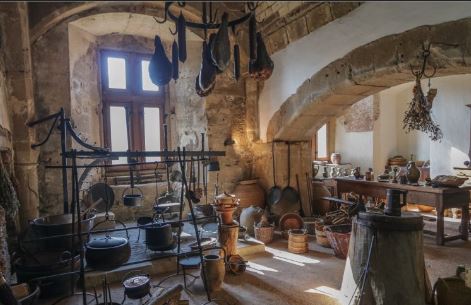
I walked back to the window. It was a quarter to six. Strange noises and an occasional sighting of the larger-than-average soldiers with the oddly pointed hats have been seen roaming the grounds. Any attempt to speak with them or approach them, they simply vanish into the mansion. Odd doors and gated entrances punctuated the length of the mansion. There was a Gothic, deliberate atmosphere about my home, a sepulchral character to the mass of its wooden buttresses andre treats. Geometrical shapes snatched inexplicably at the eyes. And often one could hear laughter, high-pitched with contempt or teasing mockery that made one hurry on, even though it may be rationalized as the cold wind gusting through the elaborate masonry. The wind whistles in the trees and leaves and wisps of thick mist blow across the farmland. With the trotting of horses and constant sounds of construction, the heart is suddenly racing, and one thinks they hear something behind them. After all, this is an ancient land, a house built by spirits, occupied by ghosts, pixies, goblins and all sort of mythical creatures of the night. Anything is likely to happen. Looking around the interior of the estate, one can discern a deep, foreboding blackness that seems to be following one, as if it is alive and in pursuit. Stepping out into the fruit orchard, the wind suddenly drops and one’s senses are heightened. Indeed, one can hear one’s very heart beating in their chest as they continue to canter forward into the night. The mist becomes thicker, darker, and as one glances furtively from side to side, the darkness of shadows of the orchards hides their secrets, but perhaps you are not alone. Sometimes I tell myself that the scraping sounds at the window is simply a branch being blown in the breeze and the footsteps heard in the hallway are old timbers creaking and groaning with a change in the air or weather. #RandolphHarris 2 of 7

If there was something serious going on, the housekeeper and the butler would try to keep it quiet. They might talk together, but they would be tight-lipped in front of me. The clock struck seven. I met Daisy in the dining room. “Aunt Sarah, we all talked. We weren’t meant to,” Daisy said. “We were all talking about it. We didn’t know what to make of it. The body was found on a cold stone passage, that was said to lead directly into the opulent state rooms where you normally conducted meetings.” Not a moment too soon, five housemaid trooped into the dining room. Taking off their white starched aprons, they formed up in a line. The room, echoing with their footsteps and voices, as in a church. The mahogany floor, almost three thousand square feet of it had to be hand polished. It was an onerous task, one of the housemaids least like doing. Bending down, they placed their tins of wax of the floor. “Daisy, it looks like we will have to continue this conversation later,” I said. “Goodnight, Aunt Sarah,” she replied. The maids stooped on their hands and knees, their long black dresses spread out around them. Working in union, they dabbed their clothes in wax; then they rubbed the floor vigorously in quick tight circle. The observation tower staircase was the place the servants feared most. The observation tower sits ominously over the mansion, along with sever distinctive turrets jutting proudly into the skies. Sweeping down to the Guard Room eight floors below, it was the main thoroughfare in the tower. Family portraits adored its walls. The steps, of bare stone—framed by a wrought-iron balustrade, topped by a mahogany rail—were wide and shallow. “We were all scared of the tower’s stairs,” said Elsa. “I was coming down them one evening, halfway down, I felt somebody push me. They were behind me, trying to push me down the stairs. I turned round, and of course there was no one there.” The Winchester Mansion is a land of appealing features seemingly embedded in the sense of a deep-rooted and permanent history that emanates from almost every corner of the land. It has rustic grounds and quaint gardens, a hulking mansion with many towering features, having been fostered over decades to create a comfortable and pleasing landscape that guests recall like their favorite arm chair. #RandolphHarris 3 of 7

A number of the male servants, skeptical of ghost as they were, had experienced a similar sensation. “I used to keep an eye on the mansion,” Edvin recalled. “I would walk around the dark with the dogs, no lights on, no torches, or anything. One night, I was coming across the first floor of the tower—and I got up to the stairs and felt hot breath on the back of my neck. I turned round. There was nobody there. But the dogs wouldn’t go any further, their hackles went right up. It was ages before I could get them to move.” I often examined the possibility of evil. I had a notion that evil was communicable. Something that can, as it were, contaminate. However, one must not confuse evil with manifestations. My secret rooms, by their very nature, held the servants in thrall. It was an area that they never entered, never saw or ever knew what went on. It was a place of mystery. The rooms were subjects of wild speculations, fueled by the servants’ fear of me, and their knowledge of my eccentric interests. My servants knew I was fascinated by the occult and this played to their fears. They knew the mansion was haunted and I often had the mediums in. However, they never whether any ghosts or sprits were actually summoned. It went on behind closed doors. Of course, they knew of the ancestral curse. It had been cast in the mid-19th century by a coven of witches. The curse had also been cast over future generations; aimed at Winchester heirs; it determined that the children would die before they reached the age of thirteen and those who survived would be haunted by ghosts and demons. For decades, it had seemed to me and my servants that this was a cruse from which the family could never escape. #RandolphHarris 4 of 7
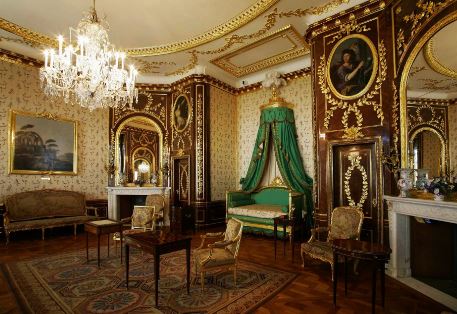
One night, it was shortly before three o’clock in the morning when a shadowy figure, dressed from head to foot in back, crossed the landing of the staircase. The night was cloudless, the moon almost full. There was a blackout and the mansion was shrouded in darkness. The light from the moon set tiny point of balance dancing in the darkened windows. I could hear footsteps moving stealthily across the floor and the occasional cry of an animal from the fields. A headless horseman was riding near the tower. I got out of bed, and turned the corner into a passage in one of the parlors. As the men worked in the hallways, they froze. Coming down the hallway was a pair of green eyes belonging to a child. The eyes were about two or three feet up from the floor, leading me to believe that child was three years old. They eyes simply floated up the hall, and then turned into one of the maid’s room where we lost sight of them. That night I also saw dark shapes. There was a dark shadowy thing flying from the Grand Ball Room to the and down the hallway. Then above the chandelier there were several dark shadowy things. They flew outside, barely illuminating the background of the trees and then were blocked out by an even darker shadow, moving slowly, methodically along the tree line. Meanwhile another shadow ran through the hallway, it was tall. The carpenters looked at each other in suspense. Closing the heavy steel door behind me, I had left the Grand Ball Rom to find my way long the labyrinth passages. A long passage reached into the distance. It was gloomy, lit by only the strip lighting in the display cases that ran along with wall. Ahead was a solid oak door, carved in the Gothic style. Another passage led off to my right, I could see that it branched in two. One end led into a small hall. It was in darkness. “No one goes in there,” a mysterious voice whispered. The spirit gave me a fright. Everyone, it seems, even hardened sceptics and disbelievers, has seen a ghost. For some reason, in the back of their minds, ghosts may be real. Everyone has known the feeling of their heart racing for a second when they see a shadow moving in the corner of their eye or they feel some sort of presence standing over them. Or worse still, a tortured face in a window that paralyses their body and retards their breathing to the point that they can hear the blood pumping around their own body. #RandolphHarris 5 of 7

I took the left passage. I went on some distance ahead, there was a kink in the passage. A man emerged from it and started waling me. He was wearing knee breaches and a nineth-century coachman’s jacket. As we drew level, he stopped. “Mrs. Winchester, those rooms are forbidden,” he said, “What are you doing in this part of the house?” Once again, he repeated, “Those rooms are forbidden.” I did not want to stop and talk; I was anxious to get back to my room. I assumed that the servants were being proprietorial. Finally, I had made it to my destination sometime later. The bedroom was not dark, because the bright light of a full moon entered through the window. I had just lain down, ready to go to sleep, when I suddenly noticed that I was not on my own. I heard a rasping breath in the darkness only a few feet away. Right in front of the wardrobe and looking directly at me was a middle-aged man, dressed like a Catholic priest. I rubbed my eyes and pinched my arms to make sure I was fully awake Yes, I most certain was. Was I having hallucinations? The priest was still standing there, looking at me. He was a rather frail man with hollow cheeks. His face showed traces of a hard life and illness. If he had any hair at all, it was covered by his hat. He looked so real, not like a ghost. I was not a bit scared, because he radiated vibrations of utter peace and tranquility. There was nothing to be afraid of, so I decided to talk to him keeping my voice as low as possible. “Hello, Father,” I said. “God bless you.” “And God bless you, my child,” came the priest’s prompt reply. He was well-spoken, his voice was soft. His English accent was not hard to distinguish. After giving me a few personal messages and stressing the point that there is survival after death, he told me who he was. #RandolphHarris 6 of 7
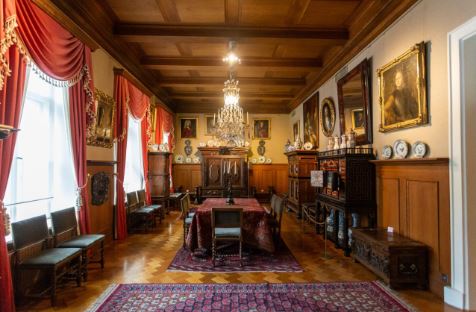
His name was John Ogilvie, and in had lived in Scotland from 1580 to 1615, he wanted hanged at Glasgow Cross for his faith. When I remarked that at the time of his hanging, he was only 36 years old, he confirmed this. After quietly talking about religious matters for a few moments, he bade me farewell and disappeared. It seems that he refused to pledge allegiance to King James, and it was for this crime that the was tried, found guilty and hanged. After his execution, his followed were apprehended and put in jail. If this was not a genuine case of a visit from beyond the grave, what is it? Most of the time, the mansion is benign. Unfortunately, sometimes people find exactly what they are looking for. I had been in bed half an hour when I heard the music playing softly from my sitting room next door. I listened to the same, faintly relentless song. Starting to sweat and grow cold in bed, I recognized the song. Or I thought I did. And it continued. It wavered through the wall and door frame in strained, distended chords, and choruses, swelling and facing, ragged and persistent. The door was to my right. I pulled back the duvet and got out of bed and walked through the door to the sitting room. Where the music was louder. The must persisted, repetitious, frighting me. As I turned the corner, I discovered that Gerhardt hanged himself from the cross beams. Badly wounded, Mr. Hansen carried to the attic to await medical attention, but he died there. Since that time people have claimed that he haunts the attic room. He has been seen and heard there from time to time. Servants have reported hearing the creaking of a rope and the soft thud of a body swaying against the wall. Though they often look for the source of the sound, they never find it. There is a disheveled, aged specter, bound at feet and hands and rattling chains haunting the basement. A journey through my mansion is a passage through history. A real history, one that you can live and breathe, one that you can feel and be part of. You can walk serenely miles through my mansion, it is a place that inspires contemplation and wonderment. It is a living history, of memories as far back as history recalls. It is a place of myth, legend, of ghosts and ghouls, of giants, and dwarves, mermaids, cupid, another other half-remembered, half-whispered-about creatures. #RandolphHarris 7 of 7
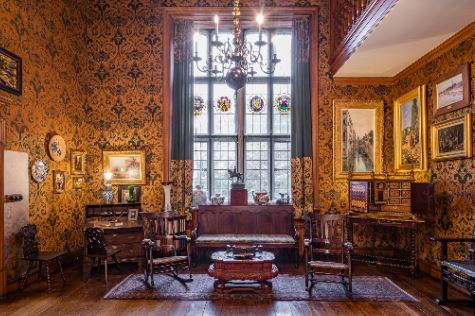
If a sudden, horrifying death is what it takes to make the spirit linger, surely, this place—is a candidate. Certainly, where men grappled back and forth, engaged not only in the struggle for their own precious lives, but for the life of their respective countries, where in the balance was the future of the very world, and this place produce the mechanism of defense, if that does not qualify for the lingering-place of souls wondering for eternity the outcome of their struggles, then we cannot name a place. https://winchestermysteryhouse.com/

And please be sure to check out the online gift store: https://shopwinchestermysteryhouse.com/

Los Angeles Will be Two and a Half Hours from Tokyo

Given that burglars are disproportionately young, poor, city-dweller, they tend to have frequent contact with other habitual offenders. There are various structures and processes that go along with the “stolen property system”—the underground market through which in-demand goods are stolen, housed, marketed, and resold on the street of America. Burglary is a crime that is marked by varied levels of social organization. Only on rare occasions do we find burglars who work as loners or within formal organizations. More often, burglars will operate as colleagues—the offender commits the crime along but relies on other members of the criminal subculture to supply him or her with inside information or to assist in converting stolen property into cash. Burglars who take the situation to the next level and enlist help in the actual break-in follow a more peerlike existence. Here, loose partnerships are maintained and invoked when a burglary opportunity presents itself. A primitive example of the peer model would be two or three drug users who randomly stumble upon an unlocked home or unsupervised business and decide to work together to take it down. In some cases, burglary offenders will align themselves in a teamlike format. These offenders invoke a division of labor with each participant serving an owned predetermined role and duties. One person might be assigned to lookout/driver role. Another might serve as the entry specialist, defeating any lock and alarms that are confronted. Still another person can take on the “muscle” role, responsible for doing the heavy lifting. #RandolphHarris 1 of 16

Socialization scripts play an important part in how and why burglars commit their crimes. Interview-based research suggests that novice or occasional burglars often rely on the tutelage of more seasoned offenders as a way of learning the proverbial ropes of burglary. Novices receive advice and instructions on issues such as target selection, how to foster informants, how to defeat burglary countermeasures, and how to best convert stolen goods into cash. This socialization generally takes shape as informal street corner conversations or jailhouse bravado. On paper, burglary appears to receive serious treatment from the criminal justice system. The Model Penal Code classifies burglary as a felony in the third degree. In most jurisdictions, such as offense is subject to 1 to 5 years in prison. If the burglar is armed or threatens or inflicts bodily harm on another while unlawfully within a dwelling, that individual might see the charges elevated to second degree felony. In practice, however, burglary receives mixed levels of formal response from the various components of the criminal justice system. First, let us consider the response of law enforcement authorities. Police agencies were able to effect an arrest for only 13 percent of the nearly 2.1 million burglaries that were reported to them in 2022. No other form of index crime yields such a dismal clearance rate. Some of this slippage can be attributed to the covert nature of the crime—police often have no witnesses and minimal clues to guide the investigation. However, these low clearance rates are also impacted by the fact that many police officers and police agencies afford a low priority to burglary cases. #RandolphHarris 2 of 16

Court data reveal a different trend in terms of the veracity with which burglary cases are adjudicated. U.S.A. courts produced nearly 90,000 felony burglary cases in 2022. This figure represents 10 percent of all felony convictions that year. In fact, 68 percent of the burglary cases that were tried resulted in a conviction for the same offense and only 24 percent avoided some sort of conviction. The researchers found that burglary defendants do not receive a reprieve from the courts when it comes time for sentencing. A full 74 percent of the convicted burglars were sentenced to time behind bars. This rate was surpassed only by murder, robbery, drug trafficking, and driving-related offenses. While the median prison sentence for a convicted burglar was 41 months, nearly 10 percent received sentences in excess of 10 years. Our correctional system does not appear to be particularly forgiving to persons who are convicted of burglary. On average, burglary offenders can expect to serve almost half of their sentence—roughly two years. These time-served figures are on par with those of other property offenses (theft, fraud, and motor vehicle theft) but somewhat lower than that observed for violent (54 percent) and weapon-related offenses (60 percent). Accounts from known burglars clearly suggest that informal social control efforts go as long way to deter and/or displace burglary activity. A minimal amount of vigilance on the part of homeowners can go a long way. Measures designed to combat the relatively small population of high incidence “professional” burglars tends to overemphasize the skill and determination of most burglars. #RandolphHarris 3 of 16

Burglaries are expensive, complex, and require long term commitment at many levels. In fact, most burglars are young, unskilled, and opportunistic. This suggests that emphasis should be directed at such factors as surveillability, occupancy, and accessibility. More specifically, dogs, good locks, and alarm systems deter most burglars. Community-level informal social control can also play an important role in burglary prevention. When it comes to surveillability cues, burglars tend to avoid neighborhoods with a lot of foot traffic or active neighborhood watches. This implies that observant or even nosy neighbors can have a measurable impact on burglary. However, these types of collective efforts are difficult to enact and maintain in the areas that burglars most prefer—urban neighborhoods. If nothing else, tenants of “crime prevention through environmental design” should be considered at a neighborhood level. Simple environmental characteristics such as cul-de-sac street design, high levels of lightening, and well pruned landscaping that minimizes unobservable entry and exit points can have a significant impact on burglary victimization levels in a given community. The aforementioned informal social control efforts represent examples of target hardening strategies aimed at deterring would-be burglars from victimizing a given house or displacing offenders from a given community. Also, measures should be designed that aim to undermine offenders’ strong attachment to street culture. Expanded employment opportunities are one possible, but foreboding avenue to lure offenders out of street life. #RandolphHarris 4 of 16

There exist even more simple and realistic measures that might effect change in this area. For example, a coordinated burglary prevention program that was implemented in a midsize U.S.A. city during the early 1980s. Community activism and community involvement (id est, block meetings, neighborhood cleanups, and raised awareness of vulnerabilities and potential offenders) showed promise for reducing burglary. If community members care about the condition of their neighborhood and are willing to take steps to clean it up and exercise vigilance over problem people and places, there is hope for reducing burglary and other forms of street crime. Most crime occurs during the nighttime. A close examination of NCVS and UCR data suggests that 50 percent to 60 percent of all residential burglaries go unreported. The figure reported here was derived by adding the NCVS data on residential burglaries to an adjusted estimate of nonresidential burglaries that were reported in the UCR—one that factors a 60 percent nonreporting rate. These data must be viewed with caution because 50 to 60 percent of all burglaries go unreported to police and only 14 percent of these lead to arrest. Over time, the crime of burglary has slowly slipped down the list of crime fighting priorities. At present, less than half of all burglaries get reported to police, and only 13 percent of those result in an arrest. What kinds of social and legal factors have contributed to this present level of empathy when it comes to the formal and informal society control of burglary? #RandolphHarris 5 of 16

Adjudication data suggest that accused burglars face a high certainty of being convicted and sentenced to prison. This should send a message to police that burglary is a high priority for our nation’s prosecutors and judges. Still, burglary investigation and arrest efforts remain lukewarm at best. What kinds of factors contribute to police officers’ attitudes and behaviors regarding burglary patrol and enforcement? Considerable evidence suggests that burglars refine strategies and cues that help them identify soft and potentially lucrative targets. Does this mean that burglars are more rational and planful than other types of criminals? The Lord has declared that “no unclean thing can inherit the kingdom of Heaven,” reports Alma 11.37. Our sins make us unclean—unworthy to return and dwell in the presence of our Heavenly Father. They also bring anguish to our soul in this life. Repentance is sometimes a painful process, but it leads to forgiveness and lasting peace. The power of sin is great. To become free from it, we must turn to your Heavenly Father, pray in faith, and act as He asks us to. The Holy Spirit should never become the center and object of thought and worship, place which He Himself does not desire, and which it is not the purpose of the Father in Heaven that He should have or occupy. “He shall not speak from Himself,” reports John 16.13, said that Lod Jesus before Calvary, as He foretold the Spirit’s coming at Pentecost. He would act as Teacher (John 14.26), but teaching the words of Another, not to Himself (John 15.26); He would only glorify Another, not His own; He would bear witness to Another, not Himself (John 16.14); He would only speak what was given Him to spear by Another (John 16.13). #RandolphHarris 6 of 16

The Spirit’s entire work would be to lead souls into union with the Son and give proper knowledge of the Father in Heaven, while He Himself directed and worked in the background. If a man who is untaught in the scriptural statements about the work of the Triune God makes “obeying the Spirit” his supreme purpose, the deceiver will aim to counterfeit the guidance of the Spirit, and even the presence of the Spirit Himself. It is just here that the ignorance of the seeker about the spiritual Word now opened to one, the working of evil powers in that realm, and the conditions upon which God works in and through one, gives the enemy his opportunity. It becomes the time of greatest peril for anyone unless one is instructed and prepared by the Lord, as the disciples were for three whole years. The danger lies in the area of supernatural “guidance,” for one must know the conditions of cooperation with the Holy Spirit in order to discern the cooperation with the Holy Spirit in order to discern the will of God and be able to recognize counterfeit manifestations. The “discerning of spirits” is required to detect the workings of the false angel of light, for he is able to bring about counterfeit gifts of prophecy, tongues, healing, and other spiritual experiences connected with the work of the Holy Ghost. Those who have their eyes opened to the opposing forces of the metaphysical realm understand that very few believers can guarantee that they are obeying God and God only, in directly supernatural guidance, because there are so many factors liable to intervene, such as the believer’s own mind, spirit, or will and the deceptive intrusion of the powers of darkness. #RandolphHarris 7 of 16

Knowledge is essential here. Scripture teaches that there is a God-given gift of “discerning of spirits” (1 Cor. 12.10) which enables one to detect that an unwelcome spirit is at work, but there is also a test of spirits which is doctrinal (1 John 4.1-6). In the former, a believer can discern in his spirit that lying spirits are at work in a meeting, or in a person, but one may not have the understanding needed for testing the doctrines being set forth by the teacher. One needs a level of knowledge in both cases: knowledge to read one’s spirit with assurance in the face of all contrary appearances, that the supernatural workings are not “of God,” and knowledge to detect the subtlety of “teachings” bearing certain infallible indications that they emanate from the pit, even while appearing to be from God. As to personal obedience to God, the believer can detect whether or not one is obeying God in some “command” by judging its fruits, and by being aware of the character of God—such as the truth that God has always a purpose in His commands, and He will give no command out of harmony with His character and Word. Often times people wait for something to happen, for some sure way to nurture oneself, to live from within. Music, art, poetry, hot baths, savory foods, wind, rain—nothing affects them. In the past, within days after a solitary retreat, many had found solace and strength in their loneliness. They had always found a way, at least a beginning that would lead to action and to life with others. #RandolphHarris 8 of 16

However, it is impossible to find what one is looking for, and one is still on a lonely journey, waiting from a spark from within. Because some people feel empty and eroded inside, they avoid all significant communication. More than anything else the interpersonal aspects of living exhaust some and move them to withdraw from real meetings with others. This leaves an individual certain that one does not want to struggle anymore. Doubt, risk and anxiety—inherent elements of faith—can be overcome only by another of its elements, courage. Courage is an ontological concept, the self-affirmation of being in spite of non-being. Faith is the experience of the holy; it is the state of being grasped by the power of being-itself. From this experience flows the power to assert oneself in the face of anxiety. Faith is participation in the object of faith, and yet is the separation from it. In spite of separation, courage expresses participation in the power of being and meaning. This in spite of element is the courage that takes all doubt, risk, and anxiety into itself and overcomes them without removing them. Faith, then, is the basis of courage, and courage is the manifestation of faith. In the extreme situation of a person seized by radical doubt and confronted with the specter of universal meaninglessness, the question arises: Is there such a thing as the courage of despair? Such a courage is entirely possible, for that act of accepting meaninglessness is in itself a meaningful act. #RandolphHarris 9 of 16

The courage of despair enables one, even while in the grip of meaninglessness, to declare one’s situation, and this declaration has meaning. In other words, there cannot be an infinite regression of negatives—in this case, negativity of meaning. At least, one has to admit, negation of meaning is meaningful, or meaninglessness will have lost all meaning. The faith which feeds the courage of despair is called “absolute faith,” for it can have no specific content. Its content is indefinable, since everything defined is dissolved by doubt and meaninglessness. However, certain elements that constitute absolute faith can be discerned. There is an experience of the power of being in the face of nonbeing, an awareness of a hidden meaning within the destruction of meaning. There is the dependence of nonbeing upon being, of meaninglessness upon meaning, of the negative upon the positive. And, lastly, there is the acceptance of the power to accept meaninglessness. Thus, absolute faith is faith which has been deprived by doubt of any concrete content, which nevertheless is faith and the source of the most paradoxical manifestation of the courage to be. Faith is without a special content, yet it is not without content. The content of absolute faith is the “God above God.” When people speak of God, they usually refer to the God of theism. Now theism can mean either a vague, unspecified affirmation of God, or a divine-human encounter of persons, or theological theism which makes God a being beside other beings. However, the God of absolute faith is above and beyond the God of any theism, for the God above God is the power of absolute faith as experience of the God who appears when God has disappeared in the anxiety of doubt. #RandolphHarris 10 of 16

The morning traffic from Oakland to San Francisco across the Bay Bridge gets backed up from 7.30 to 11.00 A.M. Until the jam clears at 11.00, each additional car that enters the traffic makes all those who come later wait just a little longer. The right way to measure this cost is to sum up the additional waiting-times across everyone who is delayed. What is the total waiting-time cost imposed by one additional car that crosses the bridge at 9.00 A.M.? You may be thinking you do not know enough information. A remarkable feature to this problem is that the externality can be calculated based on the little amount you have been told. You do not need to know how long it takes the cars to cross the toll plaza, nor the distribution of cars that arrive after 9.00. The answer is that same whether the length of the traffic jam stays constant or varies widely until it cleans. The trick is to see that all that matters is the sum of the waiting time. We are not concerned with who waits. (In other circumstances, we might want to weigh the waiting times by the monetary value of time for those caught in the jam.) The simplest way to figure out the total extra waiting time is to shuffle around who waits, putting all the burden on one person. Imagine that the extra driver, instead of crossing the bridge at 9.00 A.M., pulls his car over to the side and lets all the other drivers pass. If he passes up his turn in this way, the other drivers are no longer delayed by the extra car. Of course, he has to wait two hours before the traffic clears and the road is clear. #RandolphHarris 11 of 16

However, these two hours exactly equal the total waiting time imposed on all the other drivers if he were to cross the bridge rather than wait on the sidelines. The reason is straightforward. The total waiting time is the time it takes for everyone to cross the bridge. Any solution that involves everyone crossing the bridge gives the same total waiting time, but distributed differently. Looking at the solution in which the extra car does all the extra waiting is the easiest way to add up the new total waiting time. Looming on the horizon is a dangerous de-coupling of the fast economies from the slow, an event that would spark enormous power shifts throughout the so-called South-with big impacts on the planet as a whole. The new wealth-creation system holds the possibility of a far better future for vast populations who are now among the planet’s poor. Unless the leaders of the less developed countries (LCDs) anticipate these changes, however, they will condemn their people to perpetuated misery—and themselves to impotence. For even as Chinese manufacturers wait for their steel, and traditional economies around the World to crawl slowly through their paces, the United States of America, Japan, Europe, and in this case the Soviets, too, are pressing forward with plans to build hypersonic jets capable of moving 250 tons of people and cargo at Mach 5, meaning that cities like New York, Sydney, London, and Los Angeles will be two and a half hours from Tokyo. #RandolphHarris 12 of 16

Jiro Tokuyama, former head of the prestigious Nomura Research Institute, and now a senior adviser to the Mitsui Research Institute, heads a fifteen-nation study of what are called the “three T’s:” telecommunications, transportation, and tourism. Sponsored by the Pacific Economic Cooperation Conference, the study focuses on three key factors likely to accelerate the pace of economic processes in the region still further. According to Tokuyama, Pacific air-passenger traffic is likely to reach 134 million…at the turn of the century. The Society of Japanese Aerospace Companies, Tokuyama adds, estimates that five hundred to one thousand hypersonic jets must be built. Many of these will ply Pacific routes, speeding further the economic development of the region, and promoting faster telecommunications as well. In a paper prepared for the Three T’s study, Tokuyama spells out the commercial, social, and political implications of this development. He also describes a proposal by Taisei, the Japanese construction firm, to build an artificial island five kilometers in length to serve as a “VAA,” or “value added airport,” capable of handling hypersonics and providing an interactional conference center, shops, and other facilities to be linked by high-speed linear trains to a densely populated area. In Texas, meanwhile, billionaire H. Ross Perot is building an airport to be surrounded by advanced manufacturing facilities. As conceived by him, planes could roar in a day and night bearing components for overnight processing or assembly in facilities at the airport. The next morning the jets would carry them to all parts of the World. #RandolphHarris 13 of 16

Simultaneously, on the telecommunications front, the advanced economies are investing billions in the electronic infrastructure essential to operations in the super-fast economy. The spread of extra-intelligence nets is moving swiftly, and there are now proposals afoot to create special higher-speed fiber optic networks linking supercomputer all across the United States of America with thousands of laboratories and research groups. (Existing networks are regarded as too slow. The proposed new nets would send 319 Terabits per second streaming across the country). The new network is needed because the existing slower nets are already choked and overloaded. They argue that the project merits government backing because it would help the United States of America keep ahead of Europe and Japan in a field it now leads. This, however, is only a special case of a more general clamor. In the words of Mitch Kapor, a founder of Lotus Development Corporation, the software giant, “We need to build a national infrastructure that will be the information equivalent of the national highway-building of the ‘50s and ‘60s.” An even more appropriate analogy would compare today’s computerized telecom infrastructures with the rail and road networks needed at the beginning of the industrial revolution. What is happening, therefore, is the emergence of an electronic neural system for the economy—without which any nation, no matter how many smokestacks it has, will be domed to backwardness. #RandolphHarris 14 of 16

In its commercial service trade, in 2021, India trade balance for 2021 USD$-79.19, a 665.96 percent increase from 2020. The United States of America is the largest services exporter in the World. In 2019, U.S.A. exports of service were USD $875.8 billion, up 1.6 percent (USD $13 billion) from 2018. U.S.A. exports of services account for 35 percent of over all U.S.A. exports in 2019. Germany World Development Indicators (WDI) 2020: trade balance in USD$221,534 million. Trade services as a percentage of GDP is 5.82 percent. Trade in services with the United Kingdom (exports and imports) totaled an estimated USD $140.7 billion in 2019. Services exports were USD $78.3 billion; services imports were USD $62.3 billion. The U.S.A. services trade surplus with United Kingdom was USD $16.0 billion in 2019. Trade in services with China (exports and imports) totaled an estimated $56.0 billion in 2020. Services exports were USD $40.4 billion; services imports were USD $15.6 billion. The U.S.A. service trade surplus with China was USD $24.8 billion in 2020. Trade in services with Japan (exports and imports) totaled an estimated USD $68.6 billion in 2020. Services exports were USD $38.0 billion; services imports were USD $30.6 billion. #RandolphHarris 15 of 16

The U.S.A. services trade surplus with Japan was USD $7.4 billion in 2020. Japan was the United States of Americas’ 4th largest goods export market in 2020. As for the services, France exported around USD $303 billion worth of services in 2021, while it imported services for the total value of USD $258.3 billion. Service trade in Italy in 2020, Italy exported $73.1B worth of services. The outsized U.S.A.-Ireland commercial relationship, which exceeded USD $1 trillion in 2021 is significant by international standards and is particularly impressive relative to the country’s population of five million people. In 2021, U.S.A. good exported to Ireland exceeded USD $13.8 billion. The statistics for services from 2012 record the value of U.S.A. service exports to Ireland at $74.8 billion. In 2021, global services exports were valued at USD $6.1 trillion, representing 6.3 percent of total World trade in both goods and services. Overall, as far as the nations’ trade balances are concerned, the picture in the services sector is almost the opposite of the one in the merchandise trade. In services, the West has a significant competitive edge versus China and is in a good position to establish a much wider presence in the Chinese market. #RandolphHarris 16 of 16


The Grounds Have their Share of Unexplained Mysteries

A mansion is not a mansion with its stately grounds, and Mrs. Winchester was just as attentive to the exterior of her estate as she was to the sprawling house. An avid gardener, she imported plans, flowers, trees, shrubs, and herbs from over 110 countries around the World. Mrs. Winchester employed eight to ten gardeners. Her head gardener was Mr. Nishiwara, who was responsible for seeing that the beautiful gardens, plus the tall hedge around the hose, were well maintained. The hedges were once so tall that only the top floor of the house was visible from the road! Mrs. Winchester loved to spend time in her gardens, and she had gazebos built where she could sit and enjoy her trees and flowers. It was a Saturday night, in January 1888, and Mrs. Winchester has, as usual, come home from the City early in the afternoon. It has been a black and foggy day, and the gas had been lighted in the streets and in the office where she worked from early morning. The fog was very bad at the time Mrs. Winchester returned home, and she congratulated herself on the fact that she had not to go out again that night. She sat with her puppy Zip in her sitting-room all the evening, with that comfortable feeling that she was able to relax until Monday morning, and that she need trouble about nothing outside the mansion. In due course, Zip went to bed, and then the maid Agnus reminded her of a letter that must be written and posted that night. Sufficient is it for Mrs. Winchester to say that the letter was to an elderly relative of some means who lived in Oakland, and who had taken great interest in her puppy Zip. The butler Martin remembered that the following day was the birthday of this relative, and that she should receive proper greeting by the Sunday morning post in the country town.

Frankly, Mrs. Winchester did not want the bother of it; but Agnus always knows best in these matters, and so Mrs. Winchester wrote the note and sealed it up. Mrs. Winchester had read nothing exciting during the evening—nothing to stir her imagination in any way. She stamped the letter and proceeded to the front door. Judge of her astonishment when, on throwing it open, she saw nothing but the gray wall of fog coming up to the very house; even the railings, not ten yards in the front of her grand estate, were blotted out completely. She called back into the house for the maid to come and look. “Don’t lose yourself, Mrs. Winchester,” she said, half laughing. “What a terrible night!” “I shall not lose myself,” Mrs. Winchester replied, laughing in turn. “The pillar-box is only at the end of the crescent; if I stick to the railing, I cannot possibly miss it. Do not wait here,” she added solicitously. “I will leave the door ajar, so that I can slip in easily when I come back. I have left my keys on my writing desk.” Angus went in, and Mrs. Winchester pulled the door close, and then stepped out boldly for the front gate. Imagine her standing there, just outside her own gate, and with her back to the crescent, knowing that she had to go to the left to find the pillar-box which was at the end of the crescent. There were thirteen Victorian cottages on her estate, so she knew she had to pass seven more before reaching the pillar-box. She also new that each cottage had an ornamental center-piece before she stepped away from the crescent at the end to reach the pillar box. That Mrs. Winchester knew would be something of an adventure, for the fog was the densest she had ever seen; she could only see the faint glow of her observation tower as she looked behind; the rest of her mansion was invisible.

Mrs. Winchester counted seven Victorian cottages, and then stood at the end of the last line of railings. She knew that the pillar-box was exactly opposite her. She took three quick steps, and literally cannoned into it. She was a little proud of her own judgment in getting it so nicely. Then she fumbled for the mouth of it, and dropped in her letter. All this may should very commonplace and ordinary. Mrs. Winchester is an observant woman, and she had noticed always that the mouth of the pillar-box faced directly along the crescent, thus standing at right angles to the road. At the moment that she had her right hand in that mouth, therefore, she argued that if she stood out at the stretch of her arm, she must be facing the crescent; Mrs. Winchester had but to move straight forward again to touch the friendly railings. She was putting that plan into operation, and had let go of the mouth of the pillar-box, when a man, coming hurriedly round the corner, ran straight into her, muttered a gruff apology, and was lost in the fog again in a moment. And in that accidental collision he had spun her round and tossed her aside—and she was lost! This is literally true. She took a step and found herself slipping of the kerbstone int the road; stumbled back again, and strove to find her way along by sticking to the edge of the pavement. After a minute or two, Mrs. Winchester was so sure of herself that she ventured to cross the pavement, and by great good luck touched in a moment one of those ornamental center-pieces of one of the gates—or so, at least, it seemed. She went on with renewed confidence until she saw certain bushes which topped the railings of one particular cottage, and then Mrs. Winchester knew that she was near her mansion’s front door. She pushed walked confidently, stepped quickly up the little path, and reached the door. She was right; the door yielded to her touch, and she went hurriedly in.

Mrs. Winchester had taken off her hat, and had held it towards the familiar hat-stand before she realized that it was not a familiar hat-stand at all; it was one she did not know. She looked round in some confusion, meaning to make good her escape without being observed, and yet wondering into what part of her mansion could she have come into, when she stopped stock still, with the hat held in her hand, listening. From a room near at hand, Mrs. Winchester heard the sound of a low, long-drawn moan, as from someone in pain. More than that, it was almost the wail of someone in acute terror. Now, Mrs. Winchester was a mild and caring soul, and her first instinct was to run. There was the door within a foot of her; she could open it again noiselessly and slip out, and leave whatever was moaning to its own trouble. Her next instinct, however, was a braver one; she might be able to help. Putting her hat on, and so leaving her hands free, she moved cautiously towards the sound, which was coming intermittently. She found that this wing of the house was unfamiliar to her; there was a 7-11 staircase built in the shape of a letter “Y,” which enabled the servants to quickly get to three different levels of the house. Then there were these stairs that lead to the ceiling, and there was also a cabinet that went straight through to the back thirty rooms of the mansion. When she went down the steps of the 7-11 staircase, slowly and cautiously, with her flesh creeping a little, the morning went on, and Mrs. Winchester was almost inclined to turn back with every step she took. However, at last, she got into the basement, and came to the door of the room from which the sound proceeded. She was in the very act of recklessly thrusting open the door when another sound broke upon her ears that held her still. The sound of someone singing in a raucous voice.

It was a sea song she remembered to have heard when she was a little girl in New Haven, Connecticut, and the words of which she had forgotten; it was something about “Boney was a warrior.” The door of the room was open a little way, and through the crack of it, Mrs. Winchester was able to peer in; and there she saw a sight that for a moment made her doubt her own eyes. She rubbed her eyes in a curious fashion and looked again, and this is what she saw: The room was in a neglected state, with strips of wallpaper hanging down from the walls and with a blackened ceiling. There was a table in the center of it, and at that table a man was seated, with a square black bottle and a glass before him, and a candle burning near his left hand. Mrs. Winchester could see the whole room now as plainly and as clearly as she saw it then. He was a man so villainously ugly that she had a thought that he was not a man at all, but some hideous thing out of a nightmare. He had very long arms—so long that they were stretched across the table, and his hands gripped the opposite edge of it; a great heavy head, crowed with a mass of red hair, was set low between enormously broad shoulders; his eyes, half closed, were high up and close together on either side of a nose that was scarcely a nose at all; the lips were thick and heavy. However, it was not the man that Mrs. Winchester looked at first, it was at two other figures in the room. These figures were seated on chairs facing the table at which the man was, and the strangeness of them lay in the fact that each was securely bound to the chair on which he and she sat, for it was a man and a woman. The man, who was quite young was not only bound, but gagged securely also; the woman was more lightly tied to her chair by the arms only, and her mouth was free. She was leaning back, with her eyes closed, and mingling with the raucous singing of the man at the table. Mrs. Winchester’s first impression was that the man at the table was some sort of unclean, bestial judge, and the others his prisoners.

He stopped his singing to pour some liquor from the square bottle into his glass and to drink it off; then he resumed his former attitude, with his fingers locked over the edge of the table. And now Mrs. Winchester noticed that while the woman, who was, by the way, quite young and very pretty, with a fair, dainty prettiness, still kept her eyes closed, the eyes of the bound man never left that dreadful figure seated at the other side of the table. Mrs. Winchester felt like she was on the eve of some awful calamity. She then unhesitatingly pronounced the entire assortment of people in the room as ghost, and condemned all the gathered treasures as the creations of petty intellect, which could not get out of the beaten track, but sought in the supernatural a reason for the explanation of every fact that seemed at variance with routine of daily experience. In her opinion the collection of people in this room had never seen at all in her day and generation, and must have been souls killed by the Winchester rifle ages ago; she did not yet believe her mansion was enchanted, however. To use her own language, “all those stories have been made by those people that set up overnight stirring out legends to entertain each other.” However, she must have known that she was in denial. For she was not insane and there were some kind of beings in this room. “Wouldn’t you like to speak, you dog?” said the red-haired man. “What would you give now to have the use of your limbs—the free wagging of your tongue? What would you say to me; what would you do to me?” The man who was bound could, of course, answer nothing. Mrs. Winchester saw his face flush and darken, and she guessed what his thoughts were. For herself, she was too fascinated by the scene before her to do anything else than peer through the crack and watch what was going one.

“Lovers—eh?” exclaimed the man at the table. “You thought I was unsuspicious; you thought I knew nothing and suspected nothing—didn’t you? While I was safely out of the way you could meet, the pair of you—day after day, and week after week; and this puppy could steal from me what was mine by right.” The woman opened her eyes for the first time and spoke. “It isn’t true,” she said, a sob breaking her voice. “It was all innocent. Martin and I have done no wrong.” “You lie!” thundered the man, brining his fist down upon the table with a blow that might have split it. “You’ve always lied—lied from the moment your father gave you to me—from the very hour I married you. You always hated me; I’ve seen you shudder many and many a time at the mere sight of me. Don’t I know it; haven’t I felt you stab me a thousand times more deeply than you could have stabbed me with any weapon? You devil! I’ve come at last to hate you as much as you hate me.” The woman turned her head slowly and looed at the younger man; a faint smile crossed her lips. In an instant the red-haired man had leapt to his feet, showing Mrs. Winchester astonishingly enough that he was a dwarf, with the shortest legs surely ever a man had. However, the bult of him was enormous, and Mrs. Winchester could guess, with a shudder, at his length. He caught up the glass, crossed the room, and flung the contents in the face of the man. “It’s a waste of good liquor—but that’s for the look she gave you. I wish there was some death more horrible than any invented yet that I could deal out to you,” he added, standing with the glass in his hand and glaring at his victim. “The death I mean for you is too easy.” He walked across to the fireplace in a curious purposeless way, and stirred a great fire that was blazing there. Then from a corner of the room he dragged with ease a great sack that appeared to contain wood and shavings; so much that Mrs. Winchester saw a rent in the side of it. As if in readiness for something, this he dropped down near the fire, and then went back to his seat, applying himself again to the drink that was on the table. And still Mrs. Winchester watched, as a woman may watch a play, wondering how it will end.
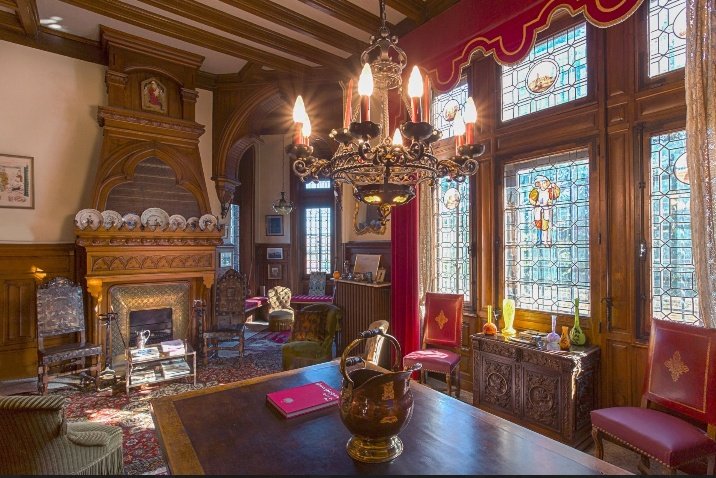
“I got the best of you tonight,” he said presently. “If I hadn’t some upon you from behind, you might have been too much for me; but I was ready and waiting. I’ve been watching longer than you think; I had everything mapped out clearly days ago. Tonight sees the end of all things for the pair of you; tomorrow sees me smiles away from here. You came in secret, you dog; you’ll go in secret.” “We have done no wrong,” said the woman again. “We loved each other years ago, when we were boy and girl; there was no sin in that.” “Bah!—I don’t believe a word of it. Don’t I know that your black heart you’ve compared the two of us every day of your life since first I saw you. His straightness for my crookedness; his sleek, black hair for my red; his prettiness for this face of mine”—he struck his own face relentlessly with one hand as he spoke—“that women shudder at. Don’t I know all that?” It was the strangest and most pitiful thing that the creature sitting there before his victims suddenly covered his face with his hands and groaned. If ever Mrs. Winchester had seen a soul in torment, she saw it then, and though she loathed him she could have wept for him. After a moment or two he dropped his hands and seized the bottle, and poured out the last drops into the glass and drank them off; then flung the bottle and glass crashing into the fireplace, as though there was an end to that business. And now, as he got down again from the chair, Mrs. Winchester saw the eyes of the woman open wide and follow his every movement with a dreadful look of terror in them. “I’ll kill you both—here in the place where you’ve met—and then I’ll seal up the house,” went on the dwarf. “I’ve planned it all. Look you last on each other, for tonight you die—and this house shall be your crypt!”
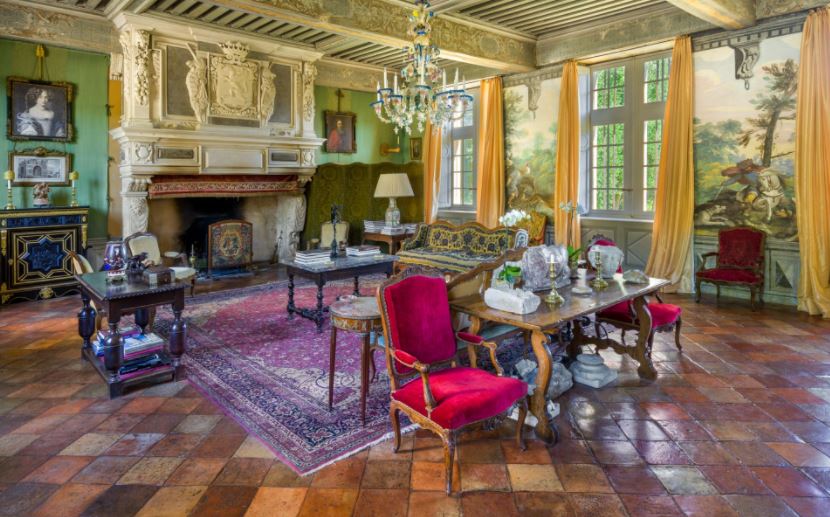
“I swear to you,” panted the woman eagerly, “by all I hold most holy and most dear, that if you let us go, we’ll never see each other again. For pity’s sake! —for the sake of Martin!” “For the sake of Martin!” sneered the dwarf. “That shows you in your true colors; that show who you are and what you are. There’s one poor satisfaction left to you; you’ll die together.” What held Mrs. Winchester then it would be impossible to say. She could only plead that in the dreadful thing that followed was a woman who sits at a play wondering what will happen next, and with never a thought in her of interfering. Mrs. Winchester’s in her anxiety has pressed the door a little to get a clearer view, so that she saw every movement of the dwarf. For herself, Mrs. Winchester had forgotten everything—in her own home, and my puppy zip, and the servants who slept in the mansion. It was as though she has stepped straight into a new World. Mrs. Winchester saw the dwarf advance towards the man in the chair, carrying his right hand stiff and straight beside him, gripping something s, she could not tell what it was that he held. Mrs. Winchester saw him come straight at her, and she saw the eyes of the woman in the opposite chair watching her as one fascinated. Then Mrs. Winchester saw two movements’ one with the left hand of the dwarf, when he struck the other man on the face; then with the right hand, when he raised something that gleamed n the light of the candle and brought it down with a sound that was new and horrible to her on the breast of the other man. And Mrs. Winchester saw the face of the man change, and start as it were into new life, and then fall as it were into death. And Mrs. Winchester saw his head drop forward, and his eyes were closed. Then, above it all, and yet seeming as a sort of dreadful chorus to it all, rang out the scream from the woman in the other chair. Mrs. Winchester did not think that the dwarf heard it; he had drawn back from what had been the living man, and was staring like one mad upon what he had done. And still piercing the air of the place rang the scream of the woman—not for her lover alone, but for herself.

That sound seemed at last to break in upon the senses of the dwarf and to call him partially to himself. Mrs. Winchester had watched him to the point where he draw himself together and crouched like a wild beast ready to spring, with that in his hand that dripped red, when, in some fashion, she flung herself round the partially open door and stumbled into the room. Mrs. Winchester thought she must have been a little made herself; otherwise, frail and commonplace creature that she was, she could not have battled with this madman. Mrs. Winchester came upon him from behind and gripped him, seizing him by the throat and by the head, and all the while shouting something to him quite unintelligible. The attack had been so sudden and so unexpected that she had him, in a sense, at her mercy. He could not know who had attacked him; he struggled madly, not alone to get away from her, but also to discover who she was. Mrs. Winchester struggled to keep his face away from her, gripped him by the neck and by the hair, and fought with him for what she knew then was her own life. And so struggling they stumbled at last horribly against that still figure bound in the chair and brought it over crashing with them to the floor. And then in a sudden Mrs. Winchester felt the dwarf inert in her hands, and knew that she had conquered him. What she must have looked like in that room, kneeling there, panting and struggling to get her breath, she could not tell; the whole business was so like a nightmare. She remembered seeing the dwarf lying there—huddled up and very still. She remembered that other figure, bound grotesquely in the chair and lying, still bound, upon its side; and she remembered, too, the woman, with her arms close fastened behind her, sitting there and sobbing wildly.

The dwarf must have been stunned; he lay there quite still, with the knife that was dreadfully red fallen from his hand, and lying beside him. When at last Mrs. Winchester staggered to her knees she saw that the girl was staring at her with a face that seemed to suggest that here, perhaps, was another ruffian come to kill her. “Who—who are you?” she asked in a frightened whisper. “A friend—one who stumbled in by accident,” Mrs. Winchester panted. “Look at the man that’s tied to the chair,” she whispered hoarsely. “He can’t be dead.” Mrs. Winchester knew that he was, but still she looked, as she bade her. Mrs. Winchester had no need to look twice; the poor fellow was quite dead. The blow had been strong and sure. On her knees beside him, Mrs. Winchester looked up and nodded slowly to her; there was no need for words. The young lady leaned back in her chair again and closed her eyes. “Set me free,” she said in a faint voice. Mrs. Winchester could not touch that knife that lay there; in a mechanical, methodical way she took from her waistcoat pocket the decent, respectable little bone handled penknife she carried always with her. With that Mrs. Winchester but the young lady’s bonds, nothing as she did so how cruelly they had cut into the white flesh; and after a moment or two she swung her arms listlessly against her sides and opened her eyes, and then, with an effort raised her hands and pressed them against her temples. “What will you do?” Mrs. Winchester asked, looking at her curiously. “I—I don’t know,” she said; and then, breaking into weeping, sobbed out: “Oh—dear God—that it should have come to this! What shall I do—what shall I do?” “You must get away,” Mrs. Winchester said, watching the dwarf, who was beginning to stie a little. “If he wakes, you know what will happen.”

“I know—I know,” she said; and got to her feet and began to move towards that bound figure still lying tied to the chair. However, at that Mrs. Winchester got before her, and with her hands against he shoulders held her back, and pleaded passionately to her that she should go, and leave the dead alone. She listened, with that strange look in her eyes of a child wakened from sleep and not clearly understanding; but she yielded to Mrs. Winchester, and stumbled under her guidance to the door. They had reached it, and Mrs. Winchester had opened it for her to pass out, when suddenly the dwarf twisted over on to his hands and knees, and then raised himself upright. He did not seem to realize for a moment what had happened; then he caught sight of the woman, and, with a snarl, crawled forward and gripped the hilt of the knife. At that she pushed suddenly past Mrs. Winchester and fled like a hare up the stairs. Mrs. Winchester heard the swift passage of her footsteps in the little hall of the house—then the slamming of the door-to-nowhere. And now Mrs. Winchester had to look to herself, for she saw in the eyes of the man that he would not let this witness escape if he could catch him. Mrs. Winchester had managed to get through the door by the time that he had got to his feet, and in a dazed fashion was stumbling toward her, knife in hand. With a sudden swoop he reached the table and blew out the candle, and at the same moment Mrs. Winchester ran up the stairs, and in the darkness stumbled along the hall and fumbled with the catch of the door. By great good fortune, Mrs. Winchester got the door open, and literally fell out into the fog. She could not see him as he tore after her; in a faintness Mrs. Winchester had fallen to her knees, and she heard him, as he raced past her, panting heavily. Then the fog swallowed him up, and she knelt there on the farm alone, shaking from head to foot.

Mrs. Winchester had, of course, no means of exactly in what part of her mansion she had had her adventure; she could only judge roughly that it must be about the middle of the crescent. She started along again, in the right direction, as she hoped, and thought to find the front door to her mansion; missed the railings, after going what seemed to be an interminable distance, and came up hard against a pillar-box. Scarcely knowing what she did, she set her right hand in the mouth of it, and performed the same maneuver she had done before; advanced three paces, and touched railings again. Stumbling along these, she came blindly what she thought was her front door, walked up the path, and pushed open the door that yielded; and there, with the face of her maid looking at her in alarm and wonderment, Mrs. Winchester feel in a dead faint at her feet. It has to be recorded that Mrs. Winchester never found that room again. She knew every square inch of her mansion. Over and over again, in clear weather, Mrs. Winchester has always around in her mansion, and had closed her eyes, and tried to remember what steps she took to get to that particular room that night, after a stranger had cannoned into her and twisted her round; but all in vain. Whether in some part of the house lies the body of a man who was foully murdered on that particular night; maybe in a hidden room the crime was committed; or perhaps, in some strange supernatural fashion, she saw that night a deed committed that had been committed long before, she shall never know. That it is no mere figment of the imagination, and that something really happened that night, is proved by one fact. Her maid, in raising Mrs. Winchester from the floor that night when she fell at her feet, found her fingers locked closed upon something, and, forcing them open, disclosed what it was. A tuft of red hair!

Such episodes may appear utterly absurd and pure superstition to people in countries comparatively free of black magic, but instead they should be warnings of the power of Satan and demons where occult literature lures readers into illicit magic. Magic as the release of special power by satanic and demon forces of evil in its character and effects. While divine help and miracles produce new strength and positive results, magic shifts the burden to another area. Small relief in one area must be paid for by terrible burdens in another. The principle of compensation prevails. The price exacted is always found to be much greater than the amount of help received. Satan drives a hard bargain and grossly cheats his victims. Usually violence, suicide, and insanity will run through a whole family line, where the magical arts have been cultivated and practiced. Such tragic events often involve as many as four generations. Many occultists and magic workers, especially those who have cultivated the black arts and signed themselves over to the devil in their own blood, die horrible deaths. When a ready successor is not provided to carry on the nefarious practice, this is especially true. The psychic bondage and oppression that traffickers in occultism themselves suffer, as well as their dupes, is horrifying to contemplate. Demon possession is represented as a vivid symbol of the prevalence of evil in the World. Other critics attempt to dismiss demon possession with theories of accommodation or hallucination. However, this view fails to meet the issue. Nor can present-day parapsychologist and psychiatrists, who refuse to recognize evil supernaturalism in the phenomenon of demon possession, either explain it or deal adequately with it. Laws defining witchcraft as having league with the Devil and prescribing the death penalty for such offenders cropped up in the colonies as early as 1636 in Plymouth. Other colonies soon followed suit—Connecticut in 1642 and Rhode Island in 1647.

The first executions took place in Boston in 1648 and in Hartford, Connecticut, in that same year. The executions were carried out by hanging, in contrast to the European practice of burning witches, which probably stemmed from the widespread fear among the European peasantry of vampire, the dead who returned from their graves to suck the blood from the living. The vampire myths never really took root in America, so the necessity of destroying the bodies of the witches was not deemed urgent. Throughout the 1650s, there appeared prosecution and attempted prosecutions in America, but these cases were infrequent, and all of them were based on the fear of maleficum, the witch’s working of evil, the accusations coming from frustrated and jealous neighbors. Few confessions were recorded in the early cases, and they did not seem to have much real validity. The few that did confess mentioned having dealings with Satan, but for the most part these admissions were confused and incoherent, and the details of the accounts differed greatly from the confessions of the witches in Europe. For example, in 1699, in Connecticut, a woman named Greensmith confessed to trafficking with the Devil, but made no mention of all-important Covenant, or pact. She further stated that the Devil had appeared to her in the form of a deer (not a goat) and that she had attended meetings at a place not far from her house. The mention of “meetings” occurred in some early confession, but the word “Sabbat” or “Sabbath,” commonly used by European witches, did not come up until later, apparently at the suggestion of the Salem judges. Some believe that Satan has a soul and a character. He is not just this futile entity but someone you can see many aspects to. Some people do not see Satan as this guy with horns who is evil, they see Him as the first rebel. Then one can see why He is so attractive to many in the Victorian ages and the young people. He is someone who is standing up to the greatest power in the Universe. “If that ‘evil’ is of a rebellious nature,” says Glenn Danzig, “then I guess, in Christian terms, that evil is the Satan in you. I don’t buy that. I believe in honesty, standing up for yourself. That’s my ‘good.’”

Thousands of people base their hopes on the statements of spiritistic practitioners and subsequently become dependent upon the advice they receive from the “other side.” There are quite a number of people who has suffered serious psychic disturbances through the misuse of such practices. Their personalities have been split and they have been utterly confused by the spirits on which they have called. People therefore who try to discover what life after death is like through spiritism and superstition may be in danger of falling prey to the dark and hidden side of their own minds and soul. If you look at the early tracts of The Christian Bible, there is really not much about Satan in there anyway. Christian religions have tried to overblow and create a whole legend around Satan which is not true to the actual scriptures we have. If you desire, you must first make yourself strong so you can help others. You should only help people who want help, a lot of times people do not really want your help. You tell people what has to be done to change their lives, they will not listen. If Satan were corporeal, He would not be something repulsive, He would be something seductive. He would want to win you over and gain your trust, and of course being repulsive or disgusting would not be the way to go. One would imagine this would be a seductive, beautiful creature. In the Gnostic account of the fall of the angels, the angels were suppsed to be watching over this flock of humans and all of a sudden, they are perpetrating acts of pleasures of the flesh with them. Eventually this created the Cyclops, the Minotaur, things of this nature. There are so many accounts of the fall of the angels, it is like a fantasy tale that you would like to believe actually happened. We, in this circle, conjure and cite this spirit Fatenovenin, with all his adherents, to appear here in this spot, to fulfill our desires, in the name of three holy Angels, Schomajen Sheziem, Roknion Averam, Kandile, Brachat Chaijdalic, Ladabas, Labul, Rargil, Bencul, in the name of God. Amen!

Winchester Mystery House

Mrs. Winchester’s estate was a little town within itself. The grounds have their share of unexplained mysteries. Mrs. Winchester outfitted her home with the finest stained glass doors, windows, and wallpaper that money could buy during her time. She had everything she needed: plumber’s shops, carpenter’s workshops, her own water and electrical supplies, and complete sewer and drainage systems. Mrs. Winchester even had her own gas manufacturing plant. It produced carbide gas by adding a small amount of water to a drum containing calcium carbide. The resulting gas was pressed through the gas lines to the house by a large piston and cylinder. The gas lights in the house were then lit by electromechanial strikers that created a spark to light each lamp.
Come see her estate, in person, for yourself this weekend! Please Click the link below for tickets and more information.

Who Would Keep a Cow of their Own that Can Have a Quart of Milk for a Penny?

No one has yet fully realized the wealth of sympathy, kindness, and generosity hidden in the soul by God. The human mind is fascinating. A young officer working on a ship wrote that he would awaken during the night and discover himself under an undesirable physical and mental condition. He seemed to be clearly in a mesmerized condition, caused by someone or something giving the powerful posthypnotic suggestion to wake up and obey. The remedy is to use the same technique in reverse. That is, practise auto-hypnosis, give the self-suggestion that on waking up there will be full conscious and full rejection of the negative idea. If one must hate something, let one hate hatred itself. The storms of violent passion are to be resisted as the smoothness of inner peace is to be invited. To keep one’s temper in a single provocative situation may be easy, but to keep it consistently equable is a real feat. Life is a conflict. One must not let these negative feelings take up lodgement within in one longer than a single moment. All humankind must awake from its materialistic apathy and cast out something of its selfishness. It is called upon to renounce its violence and meannesses, its intolerance, unkindnesses, and injustices. It must either emerge from its animal brutality or else suffer itself to be extinguished by it. It must come out from the shadows of ignorance, selfishness, and materialism. Only then will it find the sunshine of a larger life that awaits it. It is not always one oneself who acts in a particular way at a particular time. Impulses from lower sources or outside contacts may be strong intuitions from higher levels or outside sources may influence one to wise choices which bless one’s future. We must not hate those who are born of the same divine essence as ourselves but we may hate the sins they perpetrate and the evil they radiate. The seeker has to contend not only with limiting environments but also with internal enemies. Apathy delays one, depression obstructs one, and loneliness frustrates one. #RandolphHarris 1 of 18

The more one becomes sensitive, intuitive, responsive to the spirit, the more one is unfolding exceptional passivity. However, this puts one in peril, for one feels the negative presence too. Hence the more one must restrict one’s contacts until one’s strength is above them. It is prudent to escape from a situation where there is much pressure to commit a foolish action or to make a foolish decision leading to calamitous results—and not continue to stay in it until the danger materializes. One whose presence is felt to be odious, whose personality is regarded as distasteful, is better left alone. One should never allow the actions or words of ignorant human to arouse in one reactions of anger, envy, or resentment. The years are too few and there is too much to be done—both on oneself and for oneself—to waste them in negative, resentful thought and decaying, neurotic emotion. When one comes to understand its importance, one will begin to exercise some vigilance over one’s thoughts. Resist beginnings—that is the most practical way to deal with negatives. The destructive thoughts of fear and self-doubt which whine at your door, whine at the door of every human. However, you can make them powerless to hurt you. For—there is n chance, no destiny, no fate can circumvent, can hinder or control the firm resolve of a determined soul! If the negative thought persists then one has to wrench oneself away from it with the assent and use of all one’s being—feeling, reason, intuition. One’s own attitude towards events holds the power to make them good or bad, whatever their nature of itself may be. Those who are unable to think correctly about this tragic World situation must be pardoned, but those who refuse to think correctly about it do not deserve pardon. The counsel of Jesus to “resist not evil” does not apply to other men’s acts but to our own thoughts. We are to turn aside from a negative thought-habit by the simple method of substituting the opposite and the beneficial one. We need not to spend our strength resisting the thought of misery, for example. We are to substitute hope for misery, whenever the latter appears. #RandolphHarris 2 of 18

Wrong-doing will be avoided not because it is punished by the law of recompose even when it is not punished by the law of society, but because of the strong inner conviction that right-doing is its own reward, its own satisfaction. The beautiful is allied to the good. If we cultivate beautiful feelings, evil ones begin to get dissolved. One will not risk rebuffs by expressing one’s views and describing one’s experienced to the uncomprehending of the unsympathetic. It I cowardice to refuse to face the fact that one has made a mistake and to continue following the same course because it is to stop it and return to the right road. The easier way is too often the worse way, leading to trouble for one’s self and others. There is a limit to the extent of concessions to prejudice; we must not beyond it. Beware of those whose mind is vindictive and whose speech is venomous. If they are born of emotional prejudice or passionate bias, it is of little use to meet irrational arguments with rational statements. The ancient saying that where goodwill exists agreement will not be hard to find, still remains true. The crowds which delighted in the gladiator shows of ancient Rome and, to a lesser extent, those which delighted in the bullfights of modern Spain, do not see to understand how bestial they allow themselves to become at such times. If one is to be distinguished from a member of the savage species, the true human being, the fully evolved human, must have the quality of pity in oneself. Do not attempt to fight evil with evil. Overcome it by calling on a higher power to bring out the good in you wherewith to meet it. In this way you obey Jesus’ counsel, “Resist not evil.” Synesis (fourth century): “This would be the most extreme of ills—not to be conscious of the presence of evil. For this is the condition of those who no longer try to rise…for this reason repentance is elevating means…[but] both deeds and words [must] lend a helping hand.” A philosopher may not ignore the negative side of one’s or another’s life: one has to deal with it because circumstances force one, like everyone else to do so. #RandolphHarris 3 of 18

However, one’s way will be different, because one will use all one’s faculties and capacities: intellectual, practical, and intuitive. One will keep calm and not let passion or negative emotion carry one away. However, all that done, one hands over the results to the higher power (which includes destiny). One’s mind must stay in That which transcends negativity, sin, evil, even if one must grapple with them. Philosophy will not disregard the bad in others, and the sin in ourselves, but having seen them clearly it does not react negatively in useless condemnation. Instead, it reacts constructively in trying to realize the meaning of evil, the consequence of sin, and then proceeds to cultivate the opposite quality, the good of that particular evil—as honesty where there is dishonesty and so on. If practical dealings are involved, we may regret the existence of these faults in others, but we may not refuse to recognize them. Amid all the pessimistic reflections which the state of the World so easily induces in the thinking human, one may yet be buoyed up by the hope which the eternal verities must again and again give one, that is, the hope that the end of it will be immeasurably better. The existentialist view—so popular with so many young people today—that we begin with oblivion and end with annihilation, that what comes between is either meaningless or mysterious, with no solutions to problems, no answers to questions, is a view which the tragedy and evil and catastrophe of our times tempt us to accept. However, religion and philosophy release us from this despair. In such critical times as these even some faith in the existence of a higher power, and some aspiration towards serving it, has protective value. Trust, not tension: trust in the higher power producing serenity rather than tension; because of the pressures of life this is a great need today. However dark or desperate World history may seem at times, we must always remember no one can disrupt the divine World-Idea, or spoil its manifestation, or prevent its glorious outcome. #RandolphHarris 4 of 18

Fear of the power and cunning of these evil opponents causes them to rely on obvious but ordinary human forces and weapons for protection. They forget the divine forces they could, and should in this crisis, call on—and neglect the superhuman and extraordinary. To express a half-amused contempt for the intelligence of our time is not at all the same thing as to make a jaundiced indictment of it. To witness the magnificent parade of a civilization of almost unredeemed triviality is less likely to arouse bitterness in the soul and more likely to give it a good half-hour’s amusement. On the one hand, carried away by the idealistic enthusiasm and millennial promises of merely emotionalist cults, some believe that a spiritual teaching has only to be propagated and it will spread triumphantly everywhere. On the other hand, confronted by the formidable spectacle of a whole World plunged in ignorance, conscious that the ordinary individual can do so little to uplift it, others drift into bewildered defeatism and actually do nothing at all. However, this second attitude, although much more sensible and much more justifiable than its opposite one, is not quite philosophical. According to the old classical fable, we had to look for truth in the bottom of a well; today we have to look for it in the bottom of a bitter disillusionment. In the dismal World conditions of today it is a paramount necessity to obtain some glimpse, however meagre, of the divine plan which is working out for all our lives. Only in this way can we co-operate with it understandingly and adequately. Instead of relying on flight into the unknow and uncertain, it is better to rely on God. In the first case one may be making a false escape and duping oneself, but in the second case one opens the way for true guidance in the matter. With peace in the mind and harmony in the feelings, both completed by knowledge of the universal presence of divinity—who could harbour evil thoughts, hatreds, or destructive plans? #RandolphHarris 5 of 18

Every evil person who crosses our path provides an opportunity, in the injury one attempts to do us, to keep ourselves from being provoked into retaliation, anger, or resentment. If we succeed in overcoming our own feelings, we mount upward a step. In a negative situation, where negative criticism and negative emotions are rampant, other persons may try to involve one in it, or at least get one to support their attitude and endorse their criticism. However, a feeling may come over one preventing one from doing so. If so, one should obey and remain silent. With time the rightness of this course will be confirmed. One the injunction to return good for evil, the question arises, with what then will you return go? Return good for good, but justice for evil. Is this not wiser counsel? Does not the other punish goodness to an extremist position, rendering it almost ridiculous by condoning bad conduct? Inner and outer difficulties are often related. What appears to be an ugly state of affairs may well be a definite attack of certain evil forces using interested human instruments. In such a situation, the individual should never practise nonresistence in any way, but, on the contrary, should fight them off as hard a one can. At the same time, one must remember that weakness in self-control can give these evil forces an opening which they might not have had otherwise. If one wishes to emerge victorious in the struggle, one must be on one’s guard. If one does not throw off this condition, one, oneself, unwittingly erects a barrier though which the divine help sent one finds it difficult to penetrate. Although the temptation to seek release as such a time through, for example, the easy way of drink is understandable, one must nevertheless remember the duty one owes to one’s spiritual life, to one’s personal interest on the relative plane, and to others. Although the student must forgive those who mistreat one, one need not think tht forgiveness implies one has to associate with such people thereafter. #RandolphHarris 6 of 18

Whenever the thought of them, or their abuse, comes into one’s mind one must exert one’s willpower to drive it out, and immediately direct one’s thoughts toward God, or toward any inspired individual in whom one had faith. Only the actualized Christian is entitled to dismiss evil and to deny its existence: all others must look it in the face, understand it, and overcome it by slow gradations. It is better to keep out of the way of evil humans, especially when they are in power, until or unless we are driven by the necessity of circumstance of the inward voice of duty to oppose ourselves to them. It is always a certainty that the practice of active goodwill directed toward those who regard one harshly will benefit one’s own development, while it is always a possibility that this practice may dissolve the harsh feeling against one. It is all gain and no loss. This is one part of the case for Jesus’ advice to return good for evil. It is a technique of this evil power to paralyse its intended victims by frightening them. If we give way to fear, we give assistance to its effort. It cannot be beaten without open defiance and ready valour. One must remember that one will meet with those individuals who are themselves the bearers of antagonistic forces, instruments of darkness—sometimes consciously, most unconsciously, people used by evil forces. So far as possible one must avoid such people. Certainly never enter into intimate associations with them, whether the relation be business or personal. If one does one will find that sooner or later some of their unfortunate behaviour will be returned by Universal Law and tumble on one and one with have to suffer with the afflicted individual. These people make talk as believers in spiritual things—indeed, they often belong to some cult or other. However, they do not understand truth or live it. They cannot help one and one is not strong enough to carry them. So leave them alone. And that is not always easy, because often they are people of a kind that force themselves into one’s life. #RandolphHarris 7 of 18

Sometimes one can know them by this hallmark, by this aggressive way which they try to entangle another individual. It may even be necessary at times to deal with such people with a firm hand, even mercilessly and relentlessly. If so, do not hesitate, but do it without any personal feeling of any kind. The American landscape has been badly corrupted. European writers no longer even notice the natural wonder of it, they are so put off by the ugliness and conformity of the towns. However, worse than the ugliness and conformity is the neglect that baffles pride of place. Our poets try to move themselves by nostalgically repeating the names of towns: “Biloxi and Natchez, Pascagoula and Opelousas”—but beware of paying a visit. The Americans disesteem public goods, and improving the landscape is a big expense. Historically, the neglect of appearance and plan of our scores of thousands of villages and small towns, especially in the Middle West and South—the diner, the Woolworth’s, and two filling stations—can be analogized to the neglect of the present-day less affluent. In the tide of expansion, appearance was disregarded as not essential; later, the matter would be mopped up. However, the neglect rigidifies, it is a hard core not easy to change. Instead, the present tendency is to impose on the countryside a new corporation style altogether, in the form of shopping centers (=national chain supermarkets) on the highway. This works out disastrously for the communities, for these “centers” are not centers of villages, and there cease to be villages at all, simply scattered family houses. This is the end of a long process of disruption, for in any case the industry is gone, then men work in plants thirty miles away. It is possible to travel many miles even in New England and not see a single activity a man could make a living at, except automobile agencies and filling stations; not even a food store. #RandolphHarris 8 of 18

The schools too are large and centralized. The families tend to move away frequently, but even while they are put, they are driving around. This does not make much community to grow up in. In more primitive societies, a chief community activity is working together, thatching a roof, net fishing. However, with us, precisely this co-operative labour, for instance the work in a factory, is removed from its community setting ad emptied, by the relations of production, of any community spirit. Places that have no shape have no face-to-face functioning, for the shape is the functioning community. The loveliness of so many hamlets in Europe is that they have shape and are built of local materials by local craft. Perhaps the people had to cluster to attend early masses. In Ireland, where they farm out the back door, the rows of thatched houses line both sides of a little street. In France, where men go off to their farms, there may be a square. In our own early New England villages, where congregational and political spirit was strong, there was a common green with public buildings, though the families lived scattered on the farms they worked. There was the shape of a community, with its economy, its crafts, and its ideas. The advantage of growing up in such a community in one’s early years is evident. It is not family supervision, on which the physicians of juvenile delinquency are now laying such stress; quite the contrary! it is that the family does not have to bear the burden of teaching the culture. In a community, everybody knows the child face to face. There is an easy grading of overlapping ages, right up to the adults who are going about their business in a going concern, and not paying too much attention to children. A good city neighbourhood works in the same way. From this point of view, the swarm of kids in a city housing project form a better community than present-day country boys or the kids on Park Avenue. Therefore they have more local patriotism. #RandolphHarris 9 of 18

The bother with this community chain, however, is that it terminates abruptly before it reaches the adults, who belong to a different World; so the kids are a gang and the local community spirit turns into loyalty to a Code; it does not eventuate in anything socially cohesive and culturally worthwhile. And such a gang in prone to be delinquent because, as we shall see, in such conditions it is the forbidden tht best cements loyalty. Politically, a delinquent gang is not lawless and not in the state of nature. Balked in its growth, the local loyalty turns on itself and simple reinvents the feud-code of Alfred the Great, marking out safe territories and making provision for special classes of revenge. On this view, if one teenage gang, pursuing its vendetta, falls on another and murders a kid, it would not be our business to interfere in the law of that differently constituted society. Also, like Danes or Vikings of Alfred’s time, they regard our larger society merely as a field of sports and plunder; they have not yet reinvented International Law. However, we, of course, cannot view it so, for we live in an advanced state of politics and law: they are members of our community. We are not children but more experienced and somewhat wiser, and therefore responsible, so we cannot simply annihilate them like pirates (they are small in size, few in numbers, and armed with primitive weapons); and we cannot let them hurt themselves. (I think it is wise sometimes to regard disaffected groups as if there were plausibly these two viewpoints, rival patriotisms. It is better humanity and it might make better law. The advantage is that it takes the disaffected seriously as disaffected, rather than merely pathological; it keeps in the foreground the question of allegiance. We must deserve allegiance.) However, they are children. Let us consider rather the peculiar patriotic problem of an older disaffected group, the Hipster young men, for then we can see that it is a patriotic problem. #RandolphHarris 10 of 18

Here too, I think, there has often been a strong community influence of growing up together. For instance, fellows who went to Black Mountain College, which was oriented to community and creative arts—a powerful, and powerfully disaffecting, combination—are pillars of Hipster society. Other fellows were buddies in the armed services. However, it was, as Hispters their community spirit is strong. They barge in to sleep, they share property, they share a culture. Now think of this community, disaffected from America, as engaged in a pathetic quest for some other big patriotism, an adult peer group. We saw how, appointing themselves outcast, they affirm the accidental symbol of other marginalized groups: African American, Puerto Rican, the less affluent, and others. However, this is pretty thin gruel for intellectual young men, many of whom have been to college. On the other hand, they are unable to make the jump to the great international humanists community because, simply, they do not know anything, neither literature nor politics. (I once taught at Black Mountain College, and to my astonishment I found that the students had never read the Christian Bible, Milton, Dryden, Gibbon, etcetera, etcetera, nor did they feel—as a lack—that such things existed. However, they knew odd facts about Mayan hieroglyphics which their teacher had been interested in.) What then? Since it is necessary for grown fellow to have some major allegiance or other, they have latched on to the late Japanese masters of Zen Buddhism. (This is a late effect of the early-century discovery of Japan by Fenollosa, Frank Lloyd Wright, the Misses Lowell and Ayscough, and Ezra Pound, suddenly reinforced by the postwar occupation under General MacArthur.) Now, as we shall see, Zen is not irrelevant to those young men’s needs, for it is a theology and style of immediate experience. #RandolphHarris 11 of 18

However, the pathos is that Zen was the flower of an intensely loyal feudal system that fed, protected, and honoured its masters, and to which the Zen masters in turn had fealty. For example, it is said that the haiku was invented by a poet as a public service when one was suicidally despondent because one’s Emperor had died. However, Zen without farmers and servants is an airy business; and the young men, as we have seen, are betrayed into dubious devices to keep body and soul together, nor do they have a flag to salute. Community approaches have worked to resolve many problems. In looking at mental health, the broadest approach for the treatment of schizophrenia is the community approach. In 1963, partly in response to the terrible conditions in public mental institutions, the U.S. government ordered that patients be released and treated in the community. Congress passed the Community Mental Health Act, which stipulated that patients with psychological disorders were to receive a range of mental health services—outpatient therapy, inpatient treatment, emergency care, preventative care, and aftercare—in their communities rather than being transported to institutions far from home. The act was aimed at a variety of psychological disorders, but patients with schizophrenia, especially those who had been institutionalized for years, were affected most. Other countries around the World put similar sociocultural treatment programs into action shortly thereafter. Thus began four decades of deinstitutionalization, an exodus of hundred of thousands of patients with schizophrenia and other long-term mental disorders from state institutions into the community. On a given day in 1955 close to 600,000 patients were living in state institutions; today only around 60,000 patients reside in those setting. The unfortunate result is that mental health lost most of its funding and a lot of people with mental illnesses have to where to go, but jail or to live on the street. #RandolphHarris 12 of 18

Clinicians have learned that patients recovering from schizophrenia can profit greatly from community programs. However, the actual quality of community care for many of these people has been inadequate through the United States of America. The result is a “revolving door” syndrome: the few patients, who are lucky enough to be treated, have been released to the community, readmitted to an institution within mothers, released a second time, admitted yet again, and so on, over and over. A lot of people who want mental health care are not able to access this precious resource. In fact, 10.3 percent (over 4.7 million) of adults with a mental illness remain uninsured. And, 56 percent of patients want access to a mental health care facility. As COVID-19 continues to rage, Americans are experiencing anxiety and depression. More than 42 percent of U.S. adults reported symptoms, up 11 percent in the previous years. Nearly 1 in 5 Americans has some type of mental health condition. Spending on mental health treatment and social services has reached over $250 billion, which is up approximately 60 percent since 2009. This cost includes spending on things like therapy and prescription medications as well as stays in psychiatric or substance abuse rehabilitation facilities. However, it does not take into account indirect costs, such as lower workforce participation rates and decreased productivity. In fact, depression alone is estimated to account for $44 billion in loses to workplace productivity. And access to care can be prohibitively expensive—even more so than physical health costs. An hour-long traditional therapy session can range from $65 to $250 for those without insurance. A patient with major depression can spend an average of $10,836 a year on health costs. Meanwhile, a person with diabetes taking insulin can spend $48,000 to manage their condition. On a national level, research shows that the United States of America is likely to continue to experience a shortage of mental health professional through 2025. If you are looking for excellent health and wellness coverage, consider becoming a Kaiser Permanente member. You do not need a referral for mental health and addiction care services. #RandolphHarris 13 of 18

Other ways to help keep health and wellness in check is celibacy. However, there is the double standard that is a Worldwide phenomenon that has many layers of meaning. The first is that one and one is not always two, because the woman or man of the evening is a criminal but their client is a “john,” an also because women are expected to be virginal at marriage and chaste afterward, and some men are expected to be chaste before a relationship and after, and during the marriage and relationship, but one’s husband is not bound by the same constraints. The double standard implies, in other words, that chastity is primarily and woman’s and small percent of men’s domain. Nonetheless, only women are typically judged more harshly than all men whose conduct is identical. Even today, the discrimination is thunderously obvious, preached from pulpits and parliaments and specifically mandated in the law. The double standard is nefarious not only because it embodies egregious gender inequality but because it condoned solicitation as an acceptable outlet for unchaste men. Though it condemns people of “the evening” as social scum and consigns them to lives of degradation and danger and disease, it sanctions their profession. The reason is obvious: without solicitation, lascivious people might seduce rather than marry the virgins of their own social class. It is particularly chilling that the members of many churches and other organizations in positions of authority support the double standard and, albeit reluctantly, swallows the equation that no men or women of the evening equals no chastity. Laws essentially force women to abide by a higher standard of regard in the matters of chastity than men. They also denounce solicitation but at the same time partially exonerate it as the safety valve that kept virgins pure. It is unsurprising, then, that the double standard matured as a code of conduct in pleasures of the flesh that demand female chastity and at the same time approve, or at least tolerate, the dominant group of mostly men, and their carnality expressed in the use of other humans as toys, though this meant sacrificing certain women and sometimes other to unchaste, unrestrained men and a small fraction of women. #RandolphHarris 14 of 18

Furthermore, not all men honour their obligations to marry their child’s mother. And when men who came from a higher social echelon seduced a working-class girl, they almost never honoured that class’s code. Domestics and shop girls in particular were the pray of privileged men, but being with child destitute these women rather than pushing them into marriage with the baby’s father. However, often times, after these men who have money start to become older and nearing retirement, they will then leave their wives for young women of other ethnic backgrounds and of lower social standings because these women tend to be considered more exotic and attractive. The women will marry for older man for security and to escape labour. However, in a few cases, it is real love. In society, another problem is many people seem to scarcely be able to comprehend what chastity means, or to regard it as a virtue. Among the middle and upper classes, chastity’s double standard wreaked havoc on social decency. Some of these moral puritanical, which even frown on premarital male activities involving pleasures of the flesh, young women are coached to trap husbands without surrendering beforehand even a taste of the delights to come. Men are, in some cases, are frustrated at this implacable wall of chastity and take it as a challenge. They play games. In large numbers, they form unholy crusades to seduce young virgins. This upper-class deviance was depicted on shows like the original on Gossip Girl. “Resist, resist!” the virgins’ elders urge them. “Just say a resounding ‘No’ to your pleading, inveigling, deceiving young suitors.” After all, as the old adage went, “Who would keep a cow of their own that can have a quart of milk for a penny?” However, at the same time, ladies, and a small percentage of men, forgive them for trying to ruin you. This double standard of conduct involving pleasures of the flesh is necessary, because unlike you, the dominant class of men and a small percentage of dominant women, by nature have an urgent, irrepressible need. Brothels used to be officially licensed. Unchaste people play a crucial role in upholding their societies’ notions about chastity. #RandolphHarris 15 of 18

Now, nowhere is a failure to achieve perfect synchronization more lamented than in the bedroom—unless it is when the U.S. Federal Reserve or the Bank of Japan rises or lowers interest rates and get the timing wrong. Timing, as any comedian can tell us, is everything. However, we are, for the most part unwittingly, changing our links to time, and that is no joke. As interested as investors and economists may be about exact timing in finance, they re remarkably uniformed about the role of synchronization—and, even more so de-synchronization—in the creation of wealth and poverty. Yet understanding these can give us a wholly new way of thinking about wealth creation. Some degree of synchronization has been needed ever since hunters and gatherers began working in groups. Historian William McNeill argues that mass rhythmic activities have been used throughout history to promote synchrony, which in turn improved economic productivity. Tribal dancing, he suggests, strengthened teamwork and made hunting more efficient. For thousands of years fishermen have chanted in unison as they hauled in their nets, the musical beats indicating when to pull and when to breathe. Agrarian economies also reflected seasonal change. According to anthropologist John Omohundro, writing about the Philippine island of Panay, “Through the dry season…and into the rainy season…businessmen are in their slowest season. All aspects of the distribution system slow down. By September or October the rice crop begins to arrive in town…Because the wealth of the province is regulated by agrarian cycles, city business activity rises and falls the these cycles.” Economic anthropologist Willem Wolters adds: “Purely local banks have never been viable in the semi-arid tropics because of the seasonality and synchronic timing.” Early industrial economics operated under completely different temporal conditions. Assembly-line work required a different rhythm. Thus, the factory whistle and the time clock were invented to coordinate work schedules. #RandolphHarris 16 of 18

By contrast, today, as we will see, business activities are speeding toward real time. In addition, the uses of time are becoming increasingly personalized and irregular, if not erratic. More different tasks need to be integrated, and the acceleration effect truncates the time available for each task. All this makes synchronization harder to achieve. And that is only the beginning. If we look deeper, we find that every economy throbs and vibrates with unnoticed rhythms. We may buy a newspaper daily, pick up soap or milk at the supermarket weekly, gas up the car every ten days or so, cash a paycheck every two weeks and pay credit card bills monthly. We might call a broker sporadically according to what is happening in the stock market, buy a movie ticket or a book on a whim a few times a year, pay taxes quarterly or annually, go to the dentist when a toothache strikes and purchase a gift for a relative who is getting married in June. These and countless other transactions create rhythms that flow through banks, markets and lives. With the very first slap on our infant behind, every one of us becomes part of this ongoing economic music. Even our biorhythms are affected (and in turn influence) the marvelously complex, orchestrated process that pulse around us as people work—making things, providing services, managing others, caring for one another, financing companies or processing data and information into knowledge. At every moment, some tempos speed up, others slow down. New melodies and harmonies are introduced, then fade out. There are choruses, counterpoints and crescendos. Beyond these, throughout the entire society and economy, there is a generalized pulse of life that is itself the average, as it were, of all its subordinate tempos. The “economic music” never stops. The result is not patternless chaos because, within every wealth system, various components or subsystems are continually adapting their speeds, phases and periodicities to one another. In biology this process is called “entertainment.” #RandolphHarris 17 of 18

Neurons, it turns out, do not work alone. They form temporary teams—much as businesses increasingly do today. In the words of Science magazine, “Neurons frequently fall into step with one another, forming ensembles that play the same tune, as it were, firing in relative synchrony for brief periods, before some neurons drop out of synch, perhaps to join another ensemble.” Firing in sync, moreover, apparently predisposes the neurons to “joint processing” at high levels of the system. Today’s breakup of monolithic corporations into congeries of short-lived project team, alliances, partnerships and joint ventures parallels these ephemeral “ensembles” in the neural system. One way the World could survive in joy is if the whole World worships God. We hear you, fellow-creatures. We know we are wrecking the World and we are afraid. What we have unleased has such momentum now, we do not know how to turn it around. Do not leave us alone, we need your help. You need us too for your own survival. Are there power there you can share with us? In the Service of the Heart, nothing is further from the truth than the widespread notion that to pray is synonymous with to beg, to request, or to supplicate. To be sure, to pray means to call upon God to help us. However, we need Him not only when we are physically in danger. We need Him also when we are spiritually in danger. To pray means to seek God’s help, “to keep our tongue from evil,” “to purify our hearts,” “to put into our hearts to understand, to learn and to fulfill in love, the words of the Christian Bible,” and thus to keep us unswervingly loyal to truth, goodness, and beauty. To pray is to feel and to give expression to a deep sense of gratitude. No intelligent, healthy, normal human being should take for granted, or accept without conscious, grateful acknowledgement the innumerable blessings which God in His infinite love bestows upon one daily—blessings of parents and loved one, of friends and country, of health and understanding. To pray is to express renewed allegiance to the moral and ethical principles which we accept as the guides of our personal lives, and which we recognize as the indispensable foundation stones for a decent human society. #RandolphHarris 18 of 18


The love fest continues for our newest community at #Havenwood! 😍 This one, obviously, is a great use of kitchen space!

A large porch entry welcomes you into the home, where a spacious great room opens into the dining and modern kitchen area featuring a large prep island.

Breathtaking and incredibly spacious living is yours in this gorgeous single-story home. https://cresleigh.com/havenwood/

All our homes come with owned solar, and you can choose from four distinct floorplans!
#CresleighHomes


It Was the Control Spirit–Shall I Never be Delivered from this Mystery?

The Christian Bible tells us plainly there will be a great increase in demon activity as we approach the end of human history. The Apostle makes specific reference to this in 1 Timothy 4.1. The Book of Revelation, chapters 16 and 18, predicts almost universal demonic domination in the final days of God’s judgments on the Earth. This surge of demonism will be amazingly deceptive, luring the masses and even converting nominal Christians. Veneration for the evil spirits will lead to depraved conduct, and the pinnacle of demonic achievement will be their control of World leaders. As incredible as it may seem, this revelation from the Word of God assures us that dependence on these unseen spiritual forces will increase even as scientific knowledge increasing. There is a lot of reality and power that evil spirits possess. Many people have become involved in communication with evil spirits, these spirits—both appealing and loathsome—enslave them, but Jesus Christ can set them free. There are people in this World that have firsthand experience dealing with spirits. Spiritualism is very attractive because it promises knowledge of the future and communication with dead loved ones. Many people will be influenced by demonic spirits in this way without realizing it. However, the only sure guide into the shadowy spirit World is the Christian Bible, and we neglect it at the peril of our souls. The person who denies the phenomena of spiritism today is not entitled to be called a skeptic, one is simply ignorant. A finial, clinching reason for our refusal to consider any of today’s seers as divinely inspired is our conviction that the gift of prophecy ceased when the Scriptures were completed. Prophets uttered truths they had received directly from God, and the Lord used this means of revelation during the years from the creation of man until the time of Malachi. #RandolphHarris 1 of 18

From Malachi until John the Baptist can on the scene, Israel had not prophets. Then, in the brief period between Christ’s ascension and the completion of the gospels and epistles, the gift of prophecy was present in the Church. However, gradually the New Testament writings took the place of a prophetic ministry. The apostles were aware that God had given them special authority when they wrote, and that believers were to place greater value upon these gospels and epistles than so-called prophetic declarations. For example, although Paul was not speaking primarily of prophets, he definitely asserted the authoritative nature of his writings when he made the demand, “if any man obey not our word by this epistle, note that man, and have no company with him,” reports 2 Thessalonians 3.14. Again, writing to the Christians in Corinth, he said that his words were they very commandment of God, and that they constituted the standard by which God’s people could evaluate the declarations of men considered to be prophets. “If any man think himself to be a prophet, or spiritual, let him acknowledge that the things that I write unto you are the commandments of the Lord,” reports 1 Corinthians 14.37.” The priority of these apostolic writing over the declarations of other humans who claimed to be prophets is further indicated by the apostle John as he brought the book of Revelation to a close. He know that he was writing the authoritative message of God, and therefore could issues this strong warning: “For I testify unto every man that heareth the words of the prophecy of this book, If any man shall add unto these things, God shall add unto him the plagues that are written in this book; and if any man shall take away from the words of the book of this prophecy, God shall take away his part from the tree of life, and out of the holy city, and from the things which are written in this book,” reports Revelations 22.18, 19. #RandolphHarris 2 of 18

No one claiming a prophetic gift had any right to tamper with the written Word. It is obvious, therefore, that the inspired writing of the apostles gradually superseded prophetic utterances in the early church. Special gifts like prophecy, knowledge, wisdom, healings, and tongues were gradually withdrawn, and in 1 Corinthians 13 Paul declared that the quiet, unselfish pursuit of love is a far more excellent path than that of always desiring the more spectacular activities. He continued, “whether there be prophecies, they shall be done away; where there be tongues, they shall cease; whether there be knowledge, it shall vanish away. For we know in part, and we prophecy in part. But when that which is perfect is come, the that which is in part shall be done away,” reports 1 Corinthians 13.8-10. When Paul writes these words, the New Testament as a whole was not yet in existence, but he declared that special gifts of the Holy Spirit such as prophecy and tongues would become a thing of the past. They would merge into the complete revelation of the New Testament and no longer be needed. They belonged to the childhood state of the Church; therefore, we conclude that the gift of prophecy cannot be in existence today. God has spoken in the Scriptures, and it is to them that we must turn to find His message to us. No one today can rightly claim that he speaks a message by direct inspiration of the Holy Spirit. We do not believe that anyone today who claims to receive visions directly from the Lord should be acknowledged as a spiritual leader. None of these so-called prophets are correct in every single prediction they make, and therefore they do not meet the test the Lord prescribed in Deuteronomy 18. Most of them are also guilty of disobeying the Biblical warnings of Paul against occultism. In addition, they tend to speak ambiguously and manifest an ignorance of what the Bible really teaches. Finally, we believe that we have logical, historical, and Biblical grounds for affirming that the gift of prophecy was temporary, and that it gave way and disappeared from the Church when the New Testament was completed. #RandolphHarris 3 of 18

In the year, 1663, a quaintly humorous story of a most persistent and troublesome ghostly visitant comes from the Ireland, though in this particular instance its efforts to right the wrong did not produce a lawsuit: the narrator was Mr. Alcock, who appears in the preceding story. One David Hunter, who was neat-herd to the Bishop of Down (Jeremy Taylor) at his house near Portmore, saw one night, as he was carrying a log of wood into the dairy, an old woman who he did not recognize, but apparently some subtle intuition told him that she was not of mortal mould, for incontinent he flung away the log, and ran terrified into his house. She appeared again to him the next night, and from that on nearly every night for the next nine months. “Whenever she came he must go with her through the Woods at a good round rate; and the poor fellow look’d as if he was bewitch’d and travell’d off his legs.” Even if he were in bed he had to rise and follow her wherever she went, and because his wife could not restrain him she would rise and follow him till daybreak, although no apparition was visible to her. The only member of the family that took the matter philosophically was Hunter’s little dog, and he became so accustomed to the ghost that he would inevitably bring up the rear of the strange procession—if it be true that the lower classes dispensed with the use of night-garments when in bed, the sight must truly have been a most remarkable one. All this time the ghost afforded no indication as to the nature and object of her frequent appearances. “But one day the said David going over a Hedge into the Highway, she came just against him, and he cry’d out, ‘Lord bless me, I would I were dead; shall I never be delivered from this misery?’ At which, ‘And the Lord bless me too,’ says she. ‘It was very happy you spoke first, for till then I had no power to speak, though I have followed you so long. My name,’ says she, ‘is Margaret—-. I lived here before the Wat, and had one son by my Husband; when he died I married a soldier, by whom I had several children which the former Son maintained, else we must all have starved. He lives beyond the Ban-water; pray go to him and bid him dig under such a hearth, and there he shall find 28s. Let him pay what I owe in such place, and the rest to the charge unpay’d at my funeral, and go to my Son that lives here, which I had by my latter Husband, and tell him that he lives a very wicked and dissolute life, and is very unnatural ad ungrateful to his Brother that nurtured him, and if he does not mend his life God will destroy him.” #RandolphHarris 4 of 18

David Hunter told her he never knew her. “No,” says she, “I died seven years before you came into this Country”; but she promised that, if he would carry her message, she would never hurt him. However, he deferred doing what the apparition bade him, with the result that she appeared the night after, as he lay in bed, and struck him on the shoulder very hard; at which he cried out, and reminded her that she had promised to do him hurt. She replied that was if he did her message; if not, she would kill him. He told her he could not go now, because the waters were out. She said that she was content that he should wait until they were abated; but charged him afterwards not to fail her. Ultimately he did her errand, and afterwards she appeared and thanked him. “For now,” said he, “I shall be at rest, and therefore I pray you lift me up from the ground, and I will trouble you no more.” So Hunter lifted her up, and declared afterwards the she felt just like a bag of feathers in his arms; so she vanished, and he heard most delicate music as she went off over his head. In the late 19th century, Mrs. Winchester used to have séances in the Blue Séance Room in her mansion, which was constantly being expanded and remolded for 38 years. It once stood nine stories high, had 500 rooms, and was approximately 65,000 square feet. Here is the transcript from one of her sessions: “I could hardly wait for the next séance to take place so I could talk to my departed husband….six more days seemed like an eternity. I had not doubt that William would be present, though we had failed on the first attempt. I had talked with the spirit World many times in in my forty-four years, just as I talked with anyone else. I had listened to the spirits give lectures, sermons, exhortations, and counsel to the construction crew assembled at the seances in my mansion. However, I never tired to talk with a dead person. My family, especially my mother’s relatives, had been involved with spiritualism for several generations. They came to the United States of America on the Mayflower. My father was a very religious mand. He often remarked that if any of his children were to die, he would become a spiritualist. #RandolphHarris 5 of 18

“On March 7th 1881, my brave forty-four-year-old husband died, and soon afterward a family from New Haven, Connecticut, told me they had contacted the spirit of my dead husband and the he was eager to talk to me. I was very excited, and I agree to let the spiritus to come to my home at the appointed time for a séance in the Bule Séance Room. There were perhaps thirteen people gathered in my home for the séance. We sat quietly, meditatively, and expectantly. The medium sat at one end of our circle of chairs and led us in singing hymns and prayer. It did not seem strange to us to open the séance by saying the Lord’s Prayer. We even ended: ‘…in the name of the Father, Son, and Holy Spirit.’ A prayer for a séance went like this: ‘Eternal God and Father of Lights, we gather as thy expectant children. We are eager to communicate with the spirit World and the spirits of our departed friends and loved ones. We pray that you would look favorably upon us. Bless us this night with communications from our friends in the spirit World. In the name of the great Father of Lights. Amen.’ Then we sang familiar church hymns such as: ‘Face to Face,’ ‘In the Garden,’ ‘Beautiful Isle of Somewhere,’ and ‘Nearer My God to Thee.’ While we were singing, the medium slumped into unconsciousness, and before long a strange voice spoke through the medium’s lips; it was the control spirit. ‘Good evening, my children. There are many of the departed here, and all are eager to speak with you. The spirit World welcomes you to another opportunity to contact your departed loved one.’ We listened eagerly to the spirit as the medium sat limply, eyes closed, in her chair. The spirit said that a family was present whose departed loved one wanted very much to speak with them, but since he had been in the spirit World so short a time he was still adjusting to his new spiritual dimension and would have to communicate the following week. That was a terrible disappointment, and the whole family could hardly wait until the next séance when we could contact my beloved husband. #RandolphHarris 6 of 18

“At the second meeting we encountered another phase of spiritualism, the gold key séance (sometimes called a séance of vocal revelation). A metal key, made of solid gold, stood upright in a damp saucer on a table in the middle of the room. When the medium entered her trance, the solid gold key rose slowly from the table and dipped into a horizontal position. Eerily, it began spinning with a soft whir and moved around the room, stopping at intervals in midair. I sat rigid in amazement. I saw the floating key, but I could not believe it. The others in the séance seemed to accept the experience as a very common thing. The key went first to my father and then to other members of our family. And we heard a voice, supposedly my departed husband’s, but at first we could not distinguish the words. Then the key came to me. My first reaction was to grab it, and I snatched at the key, but it darted away with amazing swiftness. I tried again, but it moved faster than I did. The key finally settled directly in front of me, just out of my reach. Then the control spirit launched into a lecture about my unbelief, speaking through the unconscious medium. She said if I were to get anything for this meeting, I must conduct be patient. As my emotions subsided, the golden key hovered closer and closer to me until it was near my ear, the key was stroking my hair in the way my husband used to comb it. A voice flowed from the key saying, ‘I love you; I love you.’ It was supposed to be my husband’s voice, but it did not sound like him to me. Everyone else accepted it as William’s voice, but I was disappointed; it was not William. That was the first of many occasions when he supposedly spoke to the family, but I was never convinced. At later séances my niece and I were told we could become gifted spirit mediums. By following the instructions of the spirit voice in the séance of passivity we would in time be able to contact the spirits in our own home. My niece and I began to practice the séance of passivity for thirteen minutes each evening. During these periods we tried to blot out every conscious thought from our minds. Eventually we could sit for an hour and thirteen minutes without being distracted by a single conscious thought. #RandolphHarris 7 of 18

“In one of the longer periods, the phenomenon finally took place that we had been waiting for. I witnessed the spirit taking control of my niece as she lost consciousness and a voice completely foreign to her soft contralto boomed out: ‘My child, be not afraid. You have done well. If you only believe, greater things than these you will do. Continue in this way, and the marvels of the spirit World will be revealed to you.’ With that, the spirit departed and my niece regained consciousness. She asked what had happened, and I told her the words of the spirit. She was thrilled! She had arrived at a coveted place of spiritual development, and from that time on we held séances in my mansion in private, with my young niece as the gifted medium. Some people say this is all a hoax, that spirits do not talk with human beings and that floating objects are mere trickery. I would agree that a great many of the eerie demonstrations we hear about are clever illusions, but I believe on the basis of personal experience and the plain words of Scripture that spirits of the invisible World do communicate with humanity and do wield supernatural power in our visible World. And the ominous truth is that these spirits are not from God, but fallen angles controlled by Satan. Their unholy mission is to lead human beings—by refined or gross means—away from dependence on God, their Creator, and they are active in spiritualist churches, séances, psychic phenomena, witchcraft, and idol-worship. However, some of these spirits are good and convey helpful messages. Yet, individuals and nations who reject God, no matter how educated and prosperous they are, fall prey to the other god, Satan.” Believe it or not, the key to the massive front door was made of solid gold and the keys for the other 2,000 doors of this Eight Wonder of the World filled two water buckets. One day, Mrs. Winchester stood at the sitting-room window, after the butler left her, looking at the dull grey of the January sky and the yellowing pastures of the dairy county. There was no rain, but also no gleam of sunshine. I always wanted a private tour of her mansion. My father was on the construction crew and he promised one day when Mrs. Winchester was away, I would get my chance. #RandolphHarris 8 of 18

One morning Mrs. Winchester went off in her carriage for a trip to San Francisco, California. My father let me in the mansion and told me I could look around, but warned me not to touch anything and not to get lost. I walked through the beautiful jewel crested front doors, and they closed behind me. I did not think anything of it. However, suddenly, I stumbled, tripped over the carpet, and fell on my hands and knees, managing—and only just managing—to save the lantern which I carried from being extinguished in the fall. The floor of the mansion was very uneven in that part, and I had inadvertently walked into a sort of loose floor board, more or less I was pulverized. I rose and looked about me. evidently, I had strayed from the direct track, thanks to my old habit of indulging in reverie, and had mechanically taken a wrong turning among some of the many passages. The place where I now found myself was by no means similar to the part of the mansion that was in full yield, and from which I had wandered. Instead of being dry, airy, and full of life and bustle, the passage where I stood was damp, and quite silent, not a sound being audible except the drip, drip of blood that oozed through the roof in fifty places, and fell splashing into the little pools of bright red blood that lay among the bricks. The floor was of brick, not wood. It was plain that I was in some neglected corner of the mansion; it was plain, to, that I had lost my way. Now the warning my father gave me came back to me with unwelcome emphasis, and as I breathed with difficulty the clammy and heavy air of the mansion, a shudder ran through my whole frame. In the next instant, I rallied my courage, laughed contemptuously at my own fears, and stepped out manfully along the passage. I knew I must have entered the mansion from the right. But alas! On emerging from the hallway into a sort of square chamber, in which some rude benches, carved out of mahogany, were cut in the gleaming walls, I found that no less than thirteen openings gave access to different parts of the mansion, and I was fairly at fault. #RandolphHarris 9 of 18

How I had strayed so far without paying any attention to the bearings of my heedless course, is what, perhaps, none but an absent man can understand; and I, unluckily, was an absent man. It was strange to be lost, or to roam in circles among the great hallways of this estate, and to be lost in what seemed to be an underground tomb, which had dank air and darkness for miles to come. I remarked, too, that the candle in my lantern would not last very long—from one to two hours perhaps, but certainly not longer. It was annoying, very annoying, to be left thus alone. I did not like to own to myself that it was dangerous. How strange it was, I thought, that I did not hear the very faintest sound from the scene of all those busy construction workers working on the Winchester mansion. I listened—listened intently. Not a sound; not so much as the faint hammer; not the welcoming sound of a human voice; not the tramp of one of those shaggy ponies that drew the wood. I had never before realized what the weight of solitude—enforced solitude—could be. I listened; I waited. Not the faintest indication that any other mortal but myself was below ground, reached my ears. Angry with my own fears, vexed with my own carelessness, that had brought me to this pass, I selected at hazard one of the passages opening into the mansion, and entered it, walking fast, but holding the lantern well in front, to avoid any fresh trip falls which might lie in wait for the unwary foot. The hallway was but some thirteen yards long, and then into two narrower corridors, the widest of which led me to a narrow pathway of tiny stairs that seemed to zigzag up the mansion. I entered it stooping, but soon found it was so dizzying that I should be obliged to proceed on hands and knees, if at all, so I retraced my steps: and, tracing them to another stairwell, and found myself atop of the stairs, but unable to proceed any further for the top was cut off by the ceiling. I was wondering aimlessly, as in a labyrinth, unless my candle was spent, and then I should be indeed in sorry case. #RandolphHarris 10 of 18

Already my feet were cold and wet with the tenacious brine; the cold moist air had brought back my cough, and I shivered in the chill atmosphere of the vault where were I stood. Yet, perhaps there were people near me, within earshot all the time, for I could not believe that the mansion had been suddenly deserted. I shouted, and shouted again, the many hallways and rooms giving back the sound of my voice with strange and sullen dissonance. Presently, though no answering call was returned, I saw a light, far off and dim, but rapidly advancing towards me along the gallery that lay on my left, and which was one of the six I have mentioned. Nearer and nearer it came; no flare of torches, but the steady gleam of a small lamp; and then, to my surprise, I saw that the human figure that soon became visible was not that of a construction worker. The light of the lantern fell faintly on the pale face, colourless as marble, but delicate and pretty enough, of a young and slender girl—a lady, evidently, by her dress, and whom I instantly conjecture to have been one of the staff. However, how she came there, and alone? Was she lost, like me? or—“Did you not call a minute ago? I can show you the way, if you like.” Common-place words these; but they were spoken with a peculiar quiet intonation, that impressed me in spit of myself. The voice was sweet and low, but almost solemn in its calm. There was something strange, too, in the composure and the unsmiling gravity of one so young, while her very presence in the out-of-the-way part the mansion perplexed me. My first idea was, that the young lady, like myself, had lost her way in the intricacies of the mansion; but this supposition her confidence of bearing seemed to contradict. No doubt she knew the mansion well, or she would scarcely have offered to guide me to safety. This was an additional proof the she could not have been one of the merry, rosy-cheeked servants in the mansion. Most likely, some young lady had entered the mansion to see the mysteries inside, and she was some resident in the neighbourhood. #RandolphHarris 11 of 18

Nonetheless, the beauty in this place was in the infinite variety of fantastic columns, some of pure white marble, others of mahogany, and shimmering gold wallpaper, that composed the walls. As the feeble light of the lanterns flashed on the pellucid surfaces and frail, some more elaborate in the intricacies of their mouldings than the than the Corinthian or Byzantine, I could not restrain my exclamations of surprise and delight. For a moment I forgot the cold, the damp, the discomfort, and said, half to myself: “What a wonderful sight! If a human artist had carved those delicate capitals and rich decorations, what a rush would there be to see his handiwork! But I dare say even the county handbook does not condescend to describe this place, which is worthy to be the palace of the king of gnomes.” “Few know of this place,” said my conductress, in the same measured, passionless voice as before. She had stopped when I stopped, and she stood motionless as a statue, and as pale as if she had been a figure hewn out of alabaster, rather than a creature of flesh and blood. It was the first word of the nature of a remark which had fallen from her, and I tried to draw her into conversation by descanting on the beauty of the singular grotto, and the spaciousness of the mansion. She said very little, but her reticence sis not seem to be caused by any poverty of intellect. There was, however, a peculiar want of warmth or enthusiasm, whether the subject were are or nature, in what little my fair guide could be induced to say. Nor was she by any means communicative as to herself. My attempts to discover whether she really lived in the neighbourhood, were quietly baffled, and when I said that “doubtless her friends would begin to be alarmed at her long absence for which I feared that my own stupid blundering was to blame,” she was merely bowed, and led the way as before. On we went, through a network of hallways, that only seemed to grow more Daedalian every moment, but through which my companion glided along the as unswervingly as if she held in her hand an unfailing clue. #RandolphHarris 12 of 18

Many of these galleries were evidently the work of man. In all, however, the air was heavy, chill, and moist, and blood dripped from the walls, and fell gurgling down hidden fissures into some unseen depths below. I was confident that I had passed none of these places that day, and began to suspect that my guide was leading me a long round, so as to shew me all the lions of the mansion, instead of taking a short-cut to the workings. At another time, this desire to impress a stranger with a full notion of local marvels would have amused me; but my cough got worse; I shivered, and longed for the excursion to come to a close. Yet there was an awkwardness in suggesting this. I ventured on a safe remark. “It is bitterly cold,” said I, with a shudder, for the damp seemed to be piercing to the very marrow of my bones. “Do you not find it so?” “Very cold!” She said no more; but those two common-place words were spoken in a voice that awed me, somehow, in spite of myself, and seemed to freeze me into silence. On we went, and I trusted that we may be approaching the work-part of the mansion, for the candle in my lantern was reduced to a mere morsel, and must soon be burned out. However, ill as I felt, and hard as it was for my weak lungs to endure the unwholesome air, I almost forgot this in my perplexity as to my conductress. I could not make her out at all. I have met with romantic young ladies, silly young ladies, sensible young ladies, even haughty and vain young ladies, but never with anyone like my guide. Why was she leading me thus, what I felt must be a circuitous course through the mansion? Why—She came to a dead stop, slowly-turned, and confronted me. The hood of her grey cloak, an old-fashion article of attire, such as I had not seen for many years, was drawn over her head, and it threw her pretty face partly into shadow; but her eyes were bright and clear, though there was something in their cold steady look that made me shiver afresh, as if the air of the mansion had grown even more icy and oppressive than before. #RandolphHarris 13 of 18

“Tell me about yourself. Tell me what you are going to do. What are your plans, I mean,” she said in the same manner as before, like a sleepwalker unconsciously uttering words that volition does not prompt. I laughed, and blurted out some could-be witty rejoinder on my own good-fortune in having inspired so charming a person with sufficient interest in my fate to suggest the question; but the flippant words died away on my lips half spoken, as she waved her hand, not impatiently, not coquettishly, but with a calm dignity of bearing that matched well her bloodless cheek and the carriage of her proud head. “You are to sail in the Chester—is it not so?” said this singular girl, without a smile or a falter in her low but very distinctive voice. I owned the fact, in so slight surprise. I had not mentioned to no one at the Winchester Mansion the name of the ship in which my passage was taken. The idea of a mystification, of a trick, dawned upon me, but I was at a loss to guess how my beautiful nightmare of a guide could have obtained the information she evidently possessed. Did she know more of men than this? My name, for instance, my profession, and my reason for quitting the Bank of Italy? If so, at any rate she made no parade of her knowledge. She merely raised her hand for a moment—it was ungloved, and there were rings of price sparkling on the thin white fingers—and her eyes seemed to gather a new expression of sadness and warning as she said: “Beware of the Chester! If you love your life—and on, it is bitter to die young—do not sail in that ship.” Slowly the hand she had lifted in warning fell to her side, and holding up the lamp as before, she turned away, and preceded me along the galleries. I followed her, perplexed, half angry, half alarmed. I began to fear that I was the sport of a mad woman. And then a new fancy sized me. Perhaps I myself might be delirious, and the mansion, the endless galleries, and my beautiful nightmare guide, were visions of a disordered brain, a sweet dream or a frightful nightmare, from which I vainly strove to awake. Presently, it occurred to me for the first time that my new-found friend’s feet made no sound as they trod the wooden floor, and twisted stairways. #RandolphHarris 14 of 18

Certain it was that she moved firmly and swiftly on, without any sign of difficulty or fatigue, while I stumbled and slipped, slipped and stumbled, and at times found it hard to keep up with her. However, as regarded the noiselessness of her tread, I could not solve the doubt. If I stopped, she stopped too, not after a pause, but instantly. And I heard nothing but my own labouring breath and hacking cough, and the sound of my own weary feet. A little while, and even this was forgotten in a new source of apprehension. I had for some time vaguely conceived the idea that, as in labyrinth, we were walking in a circle; and gradually I began to fancy that I had seen this or that sofa and parlour table or that mahogany arch before, and that I had passed through some of the corridors at least once before. However, suspicion was changed to certainty when I suddenly espied, lying on the ground in one of the galleries, one of my own gloves. I had dropped this glove some time before, for I had missed it soon after the arrival of the Unknown. As I picked it up, I glanced keenly around me, and thought I recognized the opening that led into the hall of fires. I was right; in another moment I had followed my mysterious guide into the hall of fires itself. More than an hour’s weary toil, for my candle was all but spent, had brought us back to the point from which we had started. I was angry at last; all my involuntary awe for my strange conductress was lost, and I stamped my foot hard upon the floor as I asked if she had been amusing herself at my expense, or whether she, too, were unaware of the topography of the mansion, and had misled me by accident. I spoke in wrath, and almost in menace; but there was no reply, save one long moan, as from a child in pain, that rang sadly through the mansion. I turned my head, but I could see nothing; and when I again confronted what I now deemed my treacherous guide, a sort of mist seemed to dim my eyes, and I saw, or thought I saw, her form grow faint and indistinct, fading and fading like breath upon a mirror, but with still the same calm face, the same grave look of sorrow and warning, until that too faded, and nothing was left opposite to me—nothing but a masonry wall. #RandolphHarris 15 of 18

I sprang forward, incredulous, and touched the wall with my hand. As I did so, a repetition of the moaning cry made me start, and far down the passage where I had seen her first, I saw her again—the pure, pale outline of the young face, the tall slender form in the grey mantel, with the hood drawn over the head, the lamp shining in the outstretched hand. How came she there? “This is too much!” cried I passionately, and convinced that I was the victim of a trick, though how such a trick could have been effected, I did not care to consider. “I will not bear this juggling. I will not—” As I spoke, I darted forward to overtake the receding figure, and my foot tripping among the loose stones of the floor, as I ran, I fell heavily, crushing the lantern beneath me, and being instantly involved in the demonic darkness. Bruised and hurt, I have no heed to the pain of the fall from the door to nowhere, but sprang up, and strained my eyes in the direction where the lamp had been last seen. There was not a spark—not a sound. No light, no rustle of her dress, no faint sound of a distant footfall, nothing but darkness and silence. Eagerly I listened, eagerly I watched, but in vain. I tried to call aloud, but my tongues refused its office; and when I did raise a weak shout, I felt natural repugnance to the darkness deepen as no answer came. “She is doing this to frighten me,” I murmured; “she is hiding behind some bush. Whoever she is, she could be cruel enough to leave me here in the dark alone, to perish.” Silence, still silence. Any sound, even that moan, at which my very heartstrings had quivered, would have been better than that. Darkness, blank, blank darkness. I tried to shout, tried to group my way back in, but I was limp. I had not the strength to rise. Oh, it was very cold, cold and dark. This must be death. “A drop more brandy, Jim; the last did him good, I cannot feel any pulse yet, though. Do not crowd so about him, lads. Give him air! That is enough brandy, do not leave off the chafing the hands. He will come round!” #RandolphHarris 16 of 18

With my dulled ear, I heard these words, but scarcely understood them, and from between the half-closed lids my weak eyes could feebly distinguish a glare of torches, and several rough me in construction garb, and one in black with a kind, shrewd face—the doctor, no doubt. I saw all his, in a stupid sort of indifferent way, as if he had been a pageant, and then I seemed to sink down into a black sea of roaring water, and fainted for the second time. I was in bed at last. I had been in bed some days, very ill, and with a brain too deadened, and a frame too exhausted, to take note of time. When my senses returned, I asked what was the date, and hearing it, knew that the Chester had sailed without me, and that my passage-money was lost. It was not for weeks, and until my slow convalescence had ripened into recovery from the illness brought on by cold and the wetting I had experienced, that the doctor asked me how I came to separate myself from the construction crew, and to get lost in the Winchester Mansion. “It so happened,” he said, “that work was suspended unusually early on that day, as there was a wake at Old Saint Mary’s Cathedral in San Francisco, and the construction workers had a sort of half-holiday by annual custom. The mansion was therefore abandoned, and but for the lucky chance, that when you were missed at home, and inquiries were made, and intelligent boy, the son of another construction worker, declared that you have never left the estate at all, it is probable that no search would have taken place. As it was, long hours passed before a party started in quest for you; and it is fortunate they there were in time. The Winchester has witnessed more than one tragic incident, even in my day.” “To what do you allude, doctor?” asked I eagerly. “Three year ago, a young lady, a Miss Mary Seward, because separated from her friends, as you did, in that mansion,” answered the doctor. “I had not as yet settled in the district, and only know the details from report, and very imperfectly. I believe, however, that the poor girl, who had made one of a large family art, was bound on a visit to an aunt who lived in England; her own parents then residing at the Rengstoff House, near here. #RandolphHarris 17 of 18

“The day was a stormy one; the carriages drove off in a heavy fall of rain; and I believe the missing one was understood by her mother to be staying at her aunt’s, and vice versa, for there was no alarm till help was impossible. The poor girl’s body was found—for she perished of cold and hunger in that maze of galleries. Bless me, how pale you look, my dear sir. Take some cordial, and lie down, and no more talking—not a word more, I insist.” I have no explanation of the above facts to offer. I have endeavoured, far from San Jose, to set down every detail of the occurrence as simply and succinctly as possible. If I could disabuse my mind of the ghastly doubt and horror that cling to it, and which haunt me when I recall the events of that day in the Winchester Mansion, I should be very thankful. The good doctor, when he heard my statement, did his best to convince me that what I saw was a mere hallucination, due to my disordered health and excited nerves. I wish I could think so; but further inquiries, made before I left San Jose, served to assure me that I was not the only person who was supposed to have seen the presence that I had beheld in the disused portion of the mansion. One word more. The warning was no idle one, though I doubt whether I should have been ashamed to have heeded it, had not illness chained me to my sick-bed. Before I was able to quit the Winchester Mansion, news came that a dense fog enveloped the iron and wood steamship City of Chester and its 106 passengers as they began the slow journey north from San Francisco Bay to Eureka. It was 1888, and family members bid their loved one’s safe passage from the Broadway dock as the vessel disappeared into the pea soup fog. Moments later, the Chester was split in two by a ship more than twice its size, killing 16 people—13 passengers, including two children and three crew members—and becoming the bay’s second-worst maritime disaster. Some people may believe all spirituals are evil and trying to harms us or that they are demonic, but it seems some are good and really trying to save our lives. Perhaps some of these spirits are our guardian angels. #RandolphHarris 18 of 18

Winchester Mystery House

What a lovely weekend for a bit of mystery👻 winchestermysteryhouse.com
 Randolph Harris II International Institute