
Home » Botox (Page 3)
Category Archives: Botox

Would Satan Have Found Companions without this Overpowering Craving?

The extraordinary powers of the TV news media threaten the civil rights and health of all humans because it is like a constant signal of unbalanced propaganda being fed through a tube into minds of people who may not be aware that the news media often lies, and the some of their stories are engineered and totally untrue. If smoking cigarettes comes with a warning, because they can be hazardous to your health, then so should the TV news media. Stories presented over the air can be dangerous, especially to young, influential minds. For instance, a TV news program explained to viewers how they could barbeque meant in the oven by placing it on the rack. However, they did not explain that underneath the rack there should be a drip pan to catch any liquids that come from the meat, so they do not drip on the heating elements, which could cause a fire. And that may not be common sense to all people, which the TV director probably assumed. Therefore, all TV new media should contain a warning, letting the audience know that the story, even if it has some facts in it, is based on an opinion and may not be the full truth, so viewers know to use discretion and do further research of themselves. In all things purely social we can be as separate as the five fingers, and yet one as the hand in all aspects essential to mutual progress. The economic structure of a society in determining the mode of life of the individual operates as condition for personality development. #RandolphHarris 1 of 19

These economic conditions are entirely different from subjective economic motives, such as the desire for material wealth which was looked upon by many writers, from the Renaissance on up to certain Marxist authors who failed to understand Mr. Marx’s basic concepts, as the dominant motive of human behaviour. As a matter of fact, the all-absorbing wish for material wealth is a need peculiar only to certain cultures, and different economic condition can create personality trait which abhor material wealth or are indifferent to it. The physiologically conditioned needs are not the only imperative part of man’s nature. There is another part just as compelling, one which is not rooted in bodily processes but in the very essence of the human mode and practice of life: the need to be related to the World outside oneself, the need to avoid aloneness. To feel completely alone and isolated leads to mental disintegration just as physical starvation leads to death. This relatedness to others is not identical with physical contact. An individual may be alone in a physical sense for many years and he may be related to ideas, values, or at least social patterns that give him a feeling of communion and “belonging.” On the other hand, he may live among people and yet be overcome with an utter feeling of isolation, the outcome of which, if it transcends a certain limit, is the state of insanity which schizophrenic disturbances represent. #RandolphHarris 2 of 19

This lack of relatedness to values, symbols, patterns, we may call moral aloneness and state that moral aloneness is as intolerable as the physical isolation, or rather that physical seclusion becomes unbearable only if it implies also moral lonesomeness. The spiritual relatedness to the World can assume many forms; the self-actualized in his cell who believes in God and the political prisoner kept in isolation who feels one with his fellow fighters are not alone morally. Neither is the English gentleman who wears his dinner jacket in the most exotic surroundings nor the petty bourgeois who, though being deeply isolated from one’s fellow men, feels one with one’s nation of its symbols. The kind of relatedness to the World may be noble or trivial, but even being related to the basest kind of pattern is immensely preferable to being alone. Religion and nationalism, as well as any custom and any belief however absurd and degrading, if it only connects the individual with other, are refuges from what man most dreads: isolation. The compelling need to avoid moral isolation is a deep concern However, learn one thing, impress it upon your mind which is still so malleable: man has a horror for aloneness And of all kind of aloneness, moral seclusion is the most terrible. The first hermits lived with God, they inhabited the World which is most populated, the World of spirits. The first thought of man, be he a leper or a prisoner, a sinner or an invalid, is: to have a companion of one’s fate. #RandolphHarris 3 of 19

In order to satisfy this drive which is life itself, man applies all his strength, all his power, the energy of his whole life. Would Satan have found companions without this overpowering craving? On this theme one could write a whole epic. Any attempt to answer the question why the fear of isolation is so powerful in man would lead us far away from the main road we are following in this report. However, in order not to give the reader the impression that the need to feel one with others has some mysterious quality. One important element is the fact that men cannot live without some sort of co-operation with other. In any conceivable kind of culture man needs to co-operate with others if he wants to survive, whether for the purpose of defending himself against enemies or dangers of nature, or in order that he may be able to work and produce. Even Robinson Crusoe was accompanied by his man Friday; without him he would probably not have become insane but would have actually died. Each person experiences this need for the help of others very drastically as a child. On account of the factual inability of the human child to take care of itself with regard to all-important functions, communication with others is a matter of life and death for the child. The possibility of being left alone is necessarily the most serious threat to the child’s whole existence. There is another element, however, which makes the need to “belong” so compelling: the fact of subjective self-consciousness, of the faculty of thinking by which man is aware of himself as an individual entity, different from nature and other people. #RandolphHarris 4 of 19

Although the degree of this awareness varies. Its existence confronts man with a problem which is essentially human: by being aware of himself as distinct from nature and other people, by being aware—even very dimly—of death, sickness, aging, he necessarily feels his insignificance and smallness in comparison with the Universe and all others who are not “he.” Unless he belonged somewhere, unless his life had some meaning and direction, he would feel like a particle of dust and be overcome by his individual insignificance. He would not be able to relate himself to any system which would give meaning and direction to his life, he would be filled with doubt, and this doubt eventually would paralyze his ability to act—that is, to live. Human nature is neither a biologically fixed and innate sum total of drives nor is it a lifeless shadow of cultural patterns to which it adapts itself smoothly; it is the product of human evolution, but it also has certain inherent mechanisms and laws. There are certain factors in man’s nature which are fixed and unchangeable: the necessity to satisfy the physiologically conditioned drives and the necessity to avoid isolation and moral aloneness. We have seen that the individual has to accept the mode of life rooted in the system of production and distribution peculiar for any given society. In the process of dynamic adaptation to culture, a number of powerful drives develop which motivate the actions and feelings of the individual. #RandolphHarris 5 of 19

The individual may or may not be conscious of these drives, but in any case they are forceful and demand satisfaction once they have developed. They become effective in molding the social process. How economic, psychological, and ideological factors interact and what further general conclusion concerning this interaction one can make are things for future discussion that deals with the reformation and of fascism. Man, the more he gains freedom in the sense of emerging from the original oneness with man and nature and the more he becomes an “individual,” has no choice but to unite himself with the World in the spontaneity of love and productive work or else to seek a kind of security by such ties with the World as destroy his freedom and the integrity of his individual self. However, the hushing of the criticism of honest opponents is a dangerous thing. It leads to some of the best of the critics to unfortunate silence and paralysis of effort, and others to burst into speech so passionately and intemperately as to lose listeners. Honest and earnest criticism from those whose interest are most nearly touched,–criticism of writers by readers, of government by those governed, of leaders by those led,–this is the soul of democracy and the safeguard of modern society. If the best of the Americans receives by outer pressure a leader whom they had not recognized before, manifestly there is here a certain palpable gain. Yet there is also irreparable loss,–a loss of that peculiarly valuable education which a group receives when by search and criticism it finds and commissions its own leaders. The way in which this is done is at once the most elementary and nicest problem of social growth. #RandolphHarris 6 of 19

History is but the record of such group-leadership; and yet how infinitely changeful is its type and character! And of all yet how infinitely changeful is its type and character! And of all types and kinds, what can be more instructive than the leadership of a group within a group?—that curious double movement where real progress may be negative and actual advancement where real progress may be negative and actual advance be relative retrogression. All this is the social student’s inspiration and despair. Nonetheless, the spirit of play can and does invade every department of culture. Every kind of work has its counterpart in play. Crafts include recreational forms which represent the categories of serious economic activity all the way from hunting and fishing, which have their counterparts in extractive industries, through fabrication and construction, distribution and communication, to services and consumption. Although such activities, as distinguished from the work the represent, are engaged in for their own sake, they all involve practice in the intelligence adaptation of physical means to envisaged ends. Thus “industrial” play is distinguished from physical play in being directed toward the exploration and manipulation of the physical environment rather than toward the exercise of the body. While some product or service of economic value may result from engaging in crafts, this is not primary objective. The distinction between work and play is perhaps less obvious where crafts are concerned than any other type of play. Also, any hobby which is pursued as recreation may also be undertaken as a livelihood, just as every hobby is in a direct sense an imitation of a serious occupation. #RandolphHarris 7 of 19

Even though work merges into play and there are no hard and fast margins between the two, it is yet useful to make some polar contrast between them. Work seems to be performed in response to the routine obligations. In the economic sense it provides the goods and services to maintain a customary standard of living. Play—including economic play—is a break in routine. It is free, not required. It explores new possibilities and potentialities, so that invention and discovery bear the closet relation to it. Treating familiar pursuits as play permits their idealization. Work is most fully work when it evokes no free release of energy and when it is all drudgery and chores, making demands for a minimum, not an optimum performance. Play is most fully play when it is spontaneous, unrestrained and unforced. To look upon play as a childish preparation for adult activity is therefore to run the risk of making it work. The ambiguities of play are at their liveliest in crafts, which makes sketchy resort to common sense in defining them a less futile strategy than attempts to define them with more precision. In economic activity, as in sport, chance can according to taste play a great or a small part; or economic activity can entirely be reduces to pure chance, as in gambling. Likewise with competition, though of course competition in economic life is different from competition in sport. Competition in sport is most zestful and fair when it occurs between equals, or when rules and devices, such as handicapping, are employed to simulate equality between competitors. #RandolphHarris 8 of 19

Rivalry between teams is perpetuated through this balancing of powers. In business, by contrast, the effort of each competitor is to enlarge rather than to diminish the advantages one possesses, with the ultimate effect of eliminating competitors. To be sure, there are many similarities between the two kinds of competition, for example, competition between business institutions is often, as in sport, invoked simply as an added stimulus to effort. Certain large organizations in particular, which have largely lost their external competitors, encourage a nondestructive sort of sporting competition among their internal units for the sake of the gains in motivation it brings. Perhaps it is not too crude a simplification of economic evolution to suggest that as the one type of competition in business runs its course, the other which emphasizes competition within, rather than between, organizations may take its place. A significant distinction is made by farmers between regular kinds of work known as chores and the work that different from day to day. The latter kind is for many farmers very close to play, just as the work of some professions gives such scope and variety to the expression of capacities that they continue to be absorbing. It is evident that the skilled practitioner of every kind of play can change from amateur to professional status, and that many people have found their vocations by this route. Happy is the person who can make one’s living by getting paid for what one loves to do. #RandolphHarris 9 of 19

In other kind of play is the shift from amateur to professional status of such broad social significance as in crafts, because in the possibility of conducting industry as the crafts are conducted lies—as thinkers like William Morris foresaw long ago—the means of restoring joy to work, and of ending the alienation from work which plagues so many contemporary occupations. The democratic revolution which has been abolishing the division of society into leisure and working classes may be completed when work and play, vocation and avocation, are merged in economic activity itself. This extreme polarization in conceptual analysis may therefore frustrate the full understanding of their interrelation. With minor exceptions, state socialism led not to affluence, equality, and freedom, but to a one-party political system, a massive bureaucracy, heavy-handed secret police, government control of the media, secrecy and the repression of intellectual and artistic freedom. Setting aside the oceans of spurting blood needed to prop it up, a close look at this system reveals that every one of these elements is not just a way of organizing people but also—and more profoundly—a particular way of organizing, channeling and controlling knowledge. #RandolphHarris 10 of 19

A one-party political system is designed to control political communication. Since no other party exists, it restricts the diversity of political information flowing through the society, blocking feedback and thus blinding those in power to the full complexity of their problems. With very narrowly defined information flowing upward through the approved channel and commands directed downward, it becomes very difficult for the system to detect errors and correct them. In fact, top-down control in the socialist countries was based increasingly on lies and misinformation since reporting bad news up the line was often risky. The decision to run a one-party system is a decision, above all, about knowledge. The overpowering bureaucracy that socialism created in every sphere of life was also a knowledge-restricting device, forcing knowledge into pre-defined compartments of cubbyholes and restricting communication to “official channels,” whole delegitimating informal communication and organization. The secret police apparatus, state control of the media, the intimidation of intellectuals and the repression of artistic freedom all represent further attempts to limit and control information flows. In fact, behind each of these elements we find a single obsolete assumption about knowledge: the arrogant belief that those in command—whether of the party or of the state—should decide what others should know. These features of all the state socialist nations guaranteed economic stupidity and derived from the concept of the precybernetic machine as applied to society and life itself. Second Wave machines for the most part operated without any feedback. Plug in the power, start the motor, and they run irrespective of what is happening in the outside environment. #RandolphHarris 11 of 19

Third Wave machines, by contrast, are intelligent. They have sensors that such in information from the environment, detect changes and adapt the operation of the machine accordingly. They are self-regulating. The technological difference is revolutionary. However, Marxist theoreticians remained stuck in the Second Wave past, as even their language suggests. Thus for Marxian socialists the class struggle was the “locomotive of history.” A key task was to capture the “state machine.” And society itself, being machine-like, could be preset to deliver abundance and freedom. Mr. Lenin, on capturing control of Russia in 1917, became the supreme mechanic. A brilliant intellectual, Mr. Lenin understood the importance of ideas. However, for him, symbolic production—the mind itself—could be programmed. Mr. Marx wrote of freedom, but Mr. Lenin, on taking power, undertook to engineer knowledge. Thus he insisted that all art, culture, science, journalism and symbolic activity in general be placed at the service of a master plan for society. In time each branch of learning would be neatly organized into an “academy” with fixed bureaucratic departments and ranks all subject to party and state control. “Cultural workers” would be employed by institutions controlled by a Ministry of Culture. Publishing and broadcasting would be monopolies of the state. Knowledge, in effect, would be made part of the state machine. This constipated approach to knowledge blocked economic development even in intermediate, smokestack economies; it is diametrically opposed to the principles needed for economic advancement in the age of the computer. #RandolphHarris 12 of 19

In international economic affairs, the most controversial component of the indigenous innovation policy is China’s government procedure system. According to the government organizations, with a few exceptions, have to be limited to domestically made products. In May 2007, “Measures for Administration of Government Procurement Budgets for Indigenous Innovation Products” prescribed governments at all levels to compile indigenous innovation procurement plans. In December of the same years, the Ministry of Finance issues “Measures for the Administration of Government Procurement of Imported Products.” To purchase imported goods, government entities were obliged to get an approval from a board of experts. Among foreign suppliers, they were recommended to favour those who transfer technologies and train Chinese personnel. Next, in November 2009, the “Circular on Carrying Out the Work on Accreditation of National Indigenous Innovation Products” announced the creation of a new national level catalog of high-tech indigenous innovation products (in the areas of computers and communication, office equipment, software, energy devices, and so on) that were eligible for preferential treatment in government procurement. An indigenous innovation product was defined as the one that has intellectual property rights (IPR) owned by a Chinese company and a commercial trademark initially registered inside China. A month later the government produced a catalog of 240 types of equipment whose production by domestic companies would be encouraged in order to upgrade the country’s manufacturing base. Along with a priority status as indigenous innovation products suppliers, their makers were promised tax incentives and R&D subsidies. #RandolphHarris 13 of 19

Western government procurement system as it effectively deprived foreign companies of the access to this very substantial augment of the Chinese market. In April 2010, the Circular was reversed. The requirements about IPR ownership by a Chinese company and initial registration of the trademark in China were dropped. Also, the Chinese side proclaimed that preferential treatment of and incentives for procedures of indigenous innovation products were fully applicable to foreign-owned companies operating in China. The government procurement system was modified to prioritize domestically designed and manufactured goods (meaning that the value created inside China exceeds a certain percentage of the total value—normally 50 percent) including those designed and manufactured by foreign-invested firms. From the very start of the market reforms, China’s message to foreign companies has been “Better produce in China than export to China.” This time it added a new message of similar character: “Better innovate in China (and share your technologies) than in your home country or anywhere else.” It looked almost like an ultimatum: Unless you innovate and produce inside China you will not be allowed to sell to the government. The West protested. In January 2011, President Hu Jintao promised President Obama to cancel the rule requiring foreign companies to design and manufacture inside the country the products they wanted to sell to Chinese government entities. In May the same year, at the U.S.-China Strategic and Economic Dialogue it was reportedly confirmed that the Chinese government would not buy indigenous innovation products on a preferential basis. #RandolphHarris 14 of 19

However, at the time of writing Western businessmen working in China are still complaining that procurement practices have not changed and provincial authorities appear or pretend to have heard nothing about the promises made by the central government. It is just a familiar bureaucratic muddle and incoherence or a new way of pursuing the old policy? At this point it is still to early to give an accurate answer. However, there is little doubt that China will continue to press foreign companies hard not only to bring in advanced technologies and products, but also, more and more, to develop them within its borders—even though they are already doing it at a rapidly growing scale on their own initiative. Given the advantages of direct reciprocity when it comes to sustaining cooperation, we should expect that traders will try to sustain good bilateral relationships, and that is indeed the case. For instance, when we surveyed firms in the transition economy of Romania, and gave weighted scores to the importance these respondents attached to various mechanisms that support their transactions, almost 56 percent of the weight was on bilateral mechanisms (“personal relationships and trust,” and “relying on each other’s own incentives”). However, in many economic situations, each member of a group plays the dilemma game against different others at different ties. For example, a seller may meet different buyers at different times, and any one buyer of a durable good does not meet the same seller at all frequently. Thus almost half of the weight in our survey went to non-bilateral mechanisms, and in turn half of that was on the kinds of non-state mechanisms that are the focus of this essay (third-party social or business relationships” and “using private dispute-resolution services”). #RandolphHarris 15 of 19

Psychopathological offenders can also counterfeit conduct disorder, by causing some apparent manifestation of the psychopathological nature in one’s life. Mature believers should be able to tell whether such a manifestation really is conduct disorder from the old nature or a manifestation from psychopathological offenders. The purpose in the latter case is to get the self-actualized to take what comes from them as from oneself, for whatever is accepted from the psychopathological offenders gives them power. When a self-actualized individuals knows the cross and one’s position of death to conduct disorder, and one’s will and practice rejects unflinchingly all known conduct disorder, if a “manifestation” of personal conduct disorder takes place one should at once take a position of neutrality to it until one know the source. If one calls it conduct disorder from oneself when it is not, one believes a lie just as much as in any other way; and if one “confesses” conduct disorder that did not come from oneself, one brings the power of the enemy upon one—power to drive one into the conduct disorder which one has confessed as one’s own. Many believers are thus held down by supposed “besetting conduct disorder” which they believe is theirs, and which no “confessing to the ultimate concern” removes, but from which they would find liberty if they attributed them to their right cause. There is no danger of “minimizing conduct disorder” in the recognition of these facts, because, in either case, the self-actualized desires to be rid of the conduct disorder or one would not trouble oneself about it. #RandolphHarris 16 of 19

We have developed a positive doctrine of God as the ground and power of being, a God whose sustaining and vitalizing activity constantly touches every corner of the Universe and penetrates to the deepest level of every creature, its very being. With this positive conception we replace the divinity of the supranaturalists and deists, a God so remote from the World that He is irrelevant once His creative push has set the wheels of time in motion. God is not at the farther fringe of our Universe as the last, desperate answer when the natural sources of knowledge have run dry for people. The danger is that, as man’s circle of knowledge widens, God recedes father and father from the center of one’s life. For example, is it not true that, in the minds of most people, evolution dispenses with, or greatly diminishes, God’s role in the creation of man? A theology for an adult World places God at the hub of human activity as the wellspring of man’s strength, love, accomplishments, and hopes, instead of establishing Him as an oracle that sends answers from the darkness beyond the frontier of science. By this ontological approach, we bring God into the heart of the cosmos, for there is nothing closer to beings, nothing more fundamental than the structure of being and its ground. In more human terms, the interplay of anxiety (non-being) and courage (being) is the very stuff of life. Love, power, and justice—the profoundest beneficial motivations of human behaviour—are rooted in God as being-itself. #RandolphHarris 17 of 19

The divine power is a thoroughly biblical doctrine, and I believe in God the Father almighty. In our age of power—nuclear, electronic, ballistic, to cite examples only of physical power—the God who is power-itself is especially apropos. By finding God at the depth of life and not at its fringes, we are paying the way for our close union of religion and culture. However, this is possible only if creation is essentially good, it there is no independent negative power which escapes the divine dominion. Non-being is a dialectical notion, that is, it is dependent upon being and helps to explain the positive power of being and the negative weakness of finite beings, but it is not a self-sufficient evil power. While, admittedly, there may be obscurities, perhaps even deficiencies, in this principle, but the divine and demonic are two aspects of the same creative surge from the abyss of being. The difference is that, in the demonic, the destructive aspect predominates over the creative, while, in the divine, creativity controls the destructive tendency. However, even in the latter cause destructivity is not entirely absent, for the old form has to be broken and cast off so that the new creation can come to be. Consequently, it is hard to see how the divine and the demonic constitute a dualism in the pejorative sense any more than do being and nonbeing. A symbol, then, is a door which opens into a religious experience and which opens out to communicate it. In both cases the pivotal hinge is analogy, the participation of the symbol in the ground of being. #RandolphHarris 18 of 19

However, the symbol primarily mediates and communicates the experience of God, not conceptual knowledge about him. Symbols yield knowledge of God only in the biblical sense of knowledge, that is, an existential relationship which enkindle the fire of love. When theology comes along with its conceptual, rational apparatus, its task is to show the relevance of the Christian symbols to the human situation, not to discover propositions which contain “revealed knowledge.” It is evident that the center of our symbolism is the religious experience of ultimacy. The “point” of immediate awareness of the unconditional which is empty but unconditionally certain; and the “breadth” of a concrete concern which is full of content but has the conditional certainty of venturing faith. Theology deals with the second element, while presupposing the first and measuring every theological statement by the standard of the ultimacy of the ultimate concern. Studying and wandering, thinking and enduring, learning and suffering, fill long periods of time. Thinking is as characteristic a trait of the Christians as suffering, or, to be more exact, thinking rendered suffering possible For it was our thinkers who prevented the wandering nation, this true “wandering Christian” from sinking to the level of brutalized vagrants, or vagabonds. The Word of God is compared to water, it cleanses man from what is debasing in life. The Word of God is compared to spirits, time cannot render it useless; yea, time increases its power. The Word of God is compared to oil, it mixes not with other elements but preserves its own distinctiveness. #RandolphHarris 19 of 19

MAGNOLIA STATION AT CRESLEIGH RANCH
Rancho Cordova, CA | low $600s
Now Selling!

Models now open at Magnolia Station! Located at the corner of Rancho Cordova Parkway and Douglas Road, residents of Cresleigh Ranch will benefit from a brand new neighborhood with convenient access to the new Raley’s Shopping Center, Sunrise Boulevard, and much more!

Magnolia Station will include 81 homesites and five distinct plans ranging from 2,200 – 3,700 square feet; including three single story plans!

All Cresleigh Homes have expansive Great Rooms, plenty of space to entertain friends and family, large Family Dining area, and gourmet Kitchens.

Each plan has been thoughtfully designed to include features such as: Generations Suite, Optional Offices/Dens, Extended Great Rooms, and more! https://cresleigh.com/magnolia-station/

Lay Bare the Secret You Keep from Each Other

It was a lie. A lie I would never forget for as long as I walked the Earth. He would tell us nothing of himself but that he was “a fool,” to be frightened by their talk, and that the rattle of a window, or the dropping of a pin was enough to scare him now. He was now asleep on the sofa. The candles were flaring, and there was a wavering shadow at the door that looked like the head of a man with a long neck, and a long, sharp nose, peeping and drawing back. The fugitive shadow seemed to be breaking up, rearranging itself oddly. I rose, and walking slowly to him, I stood over him and looked at him, at the blood that soaked his lace shirt and stained his face. He did not open his eyes. However, I felt his sorrow. I felt its immensity, and I wished I did not feel it, and for the moment I understood the gulf that divided us, and the gulf that divided his attempt to overpower me from my rather simple defense of myself. And with his eyes closed, and his hand open beside him, he appeared the abandoned offspring of time and supernatural accident, someone as miserable as myself. What had he done to become what he was? His family was ruined, I believe, in some civil wars, long ago. Through the hall door, I could see the moonlight was beautiful. As the night waned on, the young man recovered slowly from his brain fever, but not perfectly. He was not sufficiently strong to remove for change of scene and air, which were necessary for his complete restoration. In the dead of the night, Haze Austin was suddenly awakened. And in this broken child were centuries of evil and centuries of knowledge, and out of him there came no ignominious entreaty but merely the soft and bruised sense of what he was. Old, old evil, eyes that had seen dark ages of which I only dream. #RandolphHarris 1 of 8

I shall never forget this sight, for he looked the perfect incarnation of hate. His green eyes blazed with lurid fire, and his white teeth seemed to almost shine through the blood which dabbled his mouth. Desperately he tried to vanquish what he did not comprehend. He was so exquisitely beautiful and so lost. “Is there a chill in the air, dear?” I said. “I almost shiver; have I been dreaming? You look ill, Mrs. Winchester; a little faint,” said Haze. “I am better now. How do you feel now, Haze?” I said. I was beginning to take alarm. Natural enough, was it not, that one of his own should take him away from Llanada Villa. “Papa would be grieved beyond measure,” he said. “If he thought we were inconveniencing you at all.” In a moment he was standing on his own feet. And then he walked drowsily beside me, my arm about his shoulder, bolstering him and steadying him, until we were moving towards his father’s cottage on my estate. I only half glanced at the figures passing us, until I saw a familiar shape under the trees. Somewhere far off in the darkened gardens, other were near. When he pushed open the door to his father’s home, he was laying dead upon the floor. His cravat was drawn halter-wise tight round his throat, and he had done its work well. The body was cold, and had been long dead. In due course the coroner held his inquest, and the jury pronounced that the deceased, Mac Austin, had died by his own hand, in a state of temporary insanity. However, Haze had his own opinion about his father’s death, though his lips were sealed, and he never spoke about it. He went and lived for the residue of his days in York, where there are still people who remember him, a taciturn and surly young man, who attended church regularly, and also drank a little, and was know to have saved some money. #RandolphHarris 2 of 8

But there occurred that night an event which gave my thoughts quite a new turn, and seemed to even startle even Haze’s languid nature. When I returned to my drawing-room, and sat down to coffee and chocolate, Elizabeth joined me, and we had a little card party. When the game was over, Elizabeth and I sat down on the sofa, and I asked her, a little anxiously, whether she had heard from her mother since her arrival. She answered “No.” I then asked her whether she knew where a letter would reach her at present. “I cannot tell,” she answered, ambiguously, “but I have been thinking of leaving you; you have been already too hospitable and too kind to me. I have given you an infinity of trouble, and I should wish to take a carriage to-morrow, and post in pursuit of her; I know where I shall ultimately find her, although I dare not tell you.” “But you must not dream such a thing,” I exclaimed. “I cannot afford to lose you so, and I will not consent to your leaving us, except under the care of your mother, who was so good as to consent to your remaining with us till she should herself return. I should be quite happy if I knew that you heard from her; but this evening the accounts of the progress of the mysterious disease that has invaded our community, grow even more alarming; and my beautiful guest, I do feel the responsibility, unaided by advice from your mother, very much. However, I shall do my best’ one thing is certain, that you must not think of leaving Llanada Villa without her distinct direction to that effect. We should suffer too much in parting from you to consent to it easily.” “Thank you, Mrs. Winchester, a thousand times for your hospitality,” Elizabeth answered, smiling bashfully. “You have all been too kind to me; I have seldom been so happy in all my life before, as in your beautiful mansion, under your care, and in the society of your dear niece.” #RandolphHarris 3 of 8
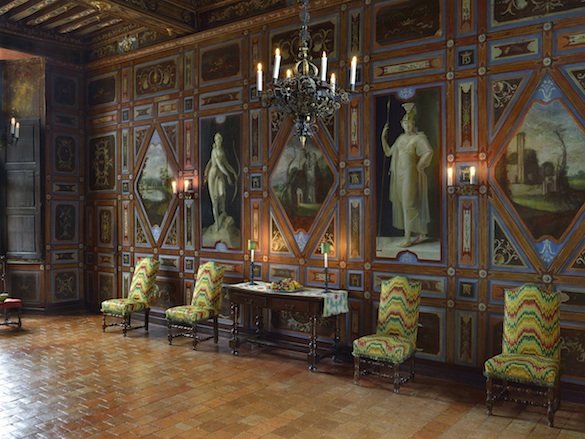
I accompanied Elizabeth to her room, and sat and chatted with her while she was preparing for bed. She turned around, “Do you think that you will ever confide fully in me about your home?” “Now, Elizabeth, you are gong to talk your wild nonsense again,” I said hastily. “Not I, silly little fool as I am, and full of whims and fancies; for your sake I’ll talk like a sage. Did you ever have a ball in the Grand Ballroom? What was it like? How charming it must be.” “I almost forget, it is years ago.” I laughed. “Mrs. Winchester, you are not so old. Your first ball can hardly be forgotten yet.” “I remember everything about it—with an effort. I see it all, as divers see what is going on above them, through a medium, dense, rippling, but transparent. There occurred that night what has confused the picture, and made it colours faith I was all but assassinated in my bed, wounded here,” I touched my breast, “and never was the same since.” “Were you near dying?” “Yes, a very—cruel love—strange love, that would have taken my life. Love will have its sacrifices. No sacrifices without blood. Let us go to sleep now; I feel lazy.” I bid her good-night, crept from the room with an uncomfortable sensation, locked her door and retired to my chambers. I was lying in bed, with my hands buried in my rich wavy hair, under my cheek, and my head upon the pillow. I often wondered whether my pretty guest ever said her prayers. I certainly had never seen her upon her knees. In the morning she never came down until long after our family prayers were over, and at night she never left the drawing room to attend our brief evening prayers in the hall. Ever since the midnight invaders, I locked all the doors in the house at night, and my whimsical alarms about prowling assassins required me to have the servants search every room in the house to make sure there were no lurking assassins or robbers “ensconced.” #RandolphHarris 4 of 8

After these measures were taken, I got into my bed and fell asleep. A light was burning in my room. This was an old habit, of very early date, ad which nothing could have tempted me to dispense with. Thus fortified I might take my rest in peace. However, dreams come through walls, light up dark rooms, or darken light ones, and their persons make their exists and their entrances as they please, and laugh at locksmiths. I had a dream that night that was the beginning of a very strange agony. I cannot call it a nightmare, for I was quite conscious of being asleep. However, I was equally conscious of being in my room, and lying in bed, precisely as I actually was. I saw, or fancied I saw, the room and its furniture just as I had seen it last, except tht it was very dark, and I saw something moving round the foot of the bed, which at first I could not accurately distinguish. However, I soon saw that it was a sooty-black figure that resembled a man. He appeared to me about five or six feet tall, he floated around the room hither and tither with the lithe sinister restlessness of a beast in a cage. I could not cry out, although as you ay supposed, I was terrified. Its pace was growing faster, and the room rapidly darker and darker, and at length so dark that I could no longer see anything of it but its eyes. I felt it spring lightly on the bed. The two broad eyes approached my face, and I could see it was Haze. He looked at me with centuries of evil blazing in his eyes, but there was not the slightest stir or respiration. And I felt a shudder. My heart expanded slightly, against my will. “I curse you,” he said. As I stared at him, I felt danger again, terrible danger. Then he appeared to have changed his place, and was now nearer to the door; then, close to it, the door opened, and he vanished. #RandolphHarris 5 of 8

It would be vain my attempting to tell you the horror with which, even now, I recall he occurrence of that night. It seemed to deepen by time, and communicated itself to the room and the very furniture that had encompassed the apparition. Later that day, I had another strange experience; I walked into the parlor that afternoon where Daisy and Elizabeth had been sitting, and a saw Haze upon the sofa. However, then I realized that he was invisible to the others. He got up and walked toward me—I was not afraid—and then—seemed to dissolve into the air. And so I wondered…whether I might have fallen into a trance. I clasped my hands and struggled to control my breathing. We know that, in the mesmeric trance, a subject may acquire unusual mental powers; The Frenchman Didier, who could read minds, play cards blindfolded, and identify the contents of sealed containers with great accuracy, is one of the best-known instances. Ancient houses, it has always seemed to me, are like Leyden jars, quietly accumulating the influences of the past…and my home is a special case. I lay awake into the small hours, worrying over these anxieties as they became more and more nightmarish until I sank into a troubled sleep. Sleeping had become so difficult one night that I wandered through this vast mansion, searching for a precious jewel William had given me. The jewel had been lost; I did not know how, but I knew that my own carelessness was to blame. To make matter worse, I could not remember what kind of stone it was, for as I went from room to room, a voice kept chanting, “Emerald, sapphire, ruby, diamond,” over and over, and none of them seemed right, because the lost stone was a different, a more beautiful colour than any of those, and I knew I ought to be able to picture it, and thus recall its name, but I could not. #RandolphHarris 6 of 8

The mansion was absolutely silent; the light throughout, even in corridors was a pale, uniform grey like that of an overcast sky. The rooms were modestly furnished; each one seemed to have its own miniature flight of stairs, up or down two or three steps, and the corridors kept changing levels in similar fashion. Though the house itself was not especially sinister, my anxiety over the fate of the jewel grew steadily more acute until it had risen to an unbearable pitch. Then it occurred to me that I still had not searched the Venetian Dining Room. The thought precipitated a vertiginous change of scene; the light sank to a dim, murky brown, and I was standing in the doorway of the room where we had dined that night. The curtains were drawn, the candles snuffed; the room seemed to be empty, but as I crept toward the table, I saw, above the back of the chair in which I usually sat, the dark outline of a head. There was time to slip away quietly; but perhaps the jewel had fallen into the lining of my chair, and if I were to tiptoe forward, I might be able to see it. I was within two feet of the motionless figure when a voice spoke from the doorway behind me, a word that rang like a loud gong, louder and louder until it became my own cry of “No!” and I woke in grey dawn light to find myself standing at the head of the stairs. And then I thought I caught sight of a shape, dak in space and light, through the door in one of the bedrooms. There was a tall figure in what I could have sworn was a black top hat, staring directly back at me. The figure was dressed formally in black morning suit. And then, with a movement so spasmodic and sudden, the man turned and stated to walk eastward, out of sight. I dismissed it, as one of the Winchester’s passing enigmas. There was much about the curse of the Winchester Mansion that I did not understand. #RandolphHarris 7 of 8

Spirits of Llanada Villa, I awaken the powers of darkness which dwell within you by the power of the blood of the three heeded Dragon Zohak that you may serve to empower Mrs. Winchester’s great work! Through serving the greater cause of dark magick which break the shackles that bind the Blackened Fire of Spirit, may you be uplifted and liberated! Awaken and empower the forbidden rites of Angra Mainyu! Awaken to empower the Mrs. Winchester’s great work of counter creation as an Apostle of the Lord of Darkness eternal and as a warrior of the path of the Lemegeton. I adjure thee, Emperor Lucifer, as the agent of the strong living God, of His beloved Son, and of the Holy Ghost, and by the power of the Great ADONAY, ELOIM, ARIEL, and JEHOVAM, to appear instantly, or to send thy Messenger Astarot, forcing thee to forsake thy hiding-place, wheresoever it may be. Aeshma, Div of wrath and fury! He who wields the bloody mace! Aeshma who is demon of the wounding spear I call you forth into this temple of counter creation! Through devotion to my becoming on this path, your spiritual weapon has been made manifest in this corporeal World through my will and counter creative power so you may fill it with your essence and might! Empower it so that it may serve me here upon the corporeal plane! May it serve as a key to the realms above and below unlocking the power and wisdom for the spirits of the Winchester’s glory and ascent! Fill this weapon with your powers of wrath and fury that it may seek out spiritual attacks made and render them useless and impotent! #RandolphHarris 8 of 8

One Halloween, a tour guide saw a little boy who was no more than six years old. He was dressed in a black hood, and long black robe, and it looked like he did not have a face, as he had a black, opaque nylon covering the opening in the hood. The tour guide asked him who he was supposed to be, and the little boy said, “I’m the Angel of Life.” The tour guide then asked him who the Angel of Life is. The boy replied, “The Angel of Life is someone who comes to talk to you. He tells you things about your life.” The conviction on the little boy’s face and the non-hesitant way in which he explained who he was made the tour guide think that the boy had some knowledge of what he was talking about. Shortly after, objects in the gift shop started floating about, and glimpses of a shadowy figure were spotted in the basement. In the café, according to a female patron, she had been sitting at a table in a back corner of the room when a man suddenly appeared in a chair across the table from her. The man stared straight ahead and refused to react in any way. The female patron looked away to get the waitress’s attention and when she looked back, the man was gone. The woman related that the elusive figure was wearing old-fashioned clothes. https://winchestermysteryhouse.com/

And please be sure to check out the online gift store: https://shopwinchestermysteryhouse.com/

I’m a Pharmacist, I Know What I am Doing

Recreational drug use is often portrayed in popular culture and music. To further highlight this illustration, probably the best known musical cliché of recent decades was “sex, drugs, and rock’ n’ roll,” while the Billbooard charts have been filled with songs involving drugs, such as Eric Clapton’s Cocaine or the Rolling Stones’ Sister Morphine and Mother’s Little Helper. Popular culture portrays not just recreational drug use but tragedy associated with drugs, for example, the deaths of guitarist Jimi Hendrix, Janis Joplin, and Jim Morrison and many others. Of course, not all common-use drugs are understood as dangerous or associated with tragedy. We found clear evidence of two very different modes of entry among the respondents, namely recreational abusers and therapeutic self-medicators. However, it is important to note tht these were not mutually exclusive categories of offenders. In other words, these two categories were not completely dichotomous. As is usually the case, real life seldom fits cleanly into nice, neat categories. In fact, we were able to identify a number of cognitive and behavioural themes that were common to almost all of the drug-using pharmacists interviewed. These themes were expressed by nearly all of the drug-abusing pharmacists that we interviewed, regardless of how the individual initially began their illicit drug abuse career. The existence of these common themes suggest that pharmacy-specific occupational contingencies play a center role in the onset and progression of illicit use of prescription medicines. #RandolphHarris 1 of 20
Intuitively, it should not be surprising that pharmacists would steal prescription medicines as a way of treating their own physical ailments. After all, they have been exposed to years of pharmacy training that emphasized the beneficial, therapeutic potential of these medicines. Each pharmacist has dispensed the medicines to hundreds of patients and then watched the drugs usually produce the predicted beneficial results. They have all read the literature and drug inserts detailing the chemical composition of drugs and studied the often dramatic curative effects of the chemical substances. Pharmacists, more so than any other member of society, are keenly aware of how and why drugs work. There was strong evidence to suggest that both the therapeutic self-medicators and the recreational abusers actively used the years of pharmacological knowledge that they had acquired. In their eyes, it made perfect sense that they should put their pharmacy knowledge to work on themselves. This application of knowledge can be seen in the comments of a 40-year-old female self-medicator: “So, in 1986 I was sent to the psychologist. That was when I was forced to recognize that I had an alcohol problem. And I recognized that I had to do something. And in my brilliant analysis, I made a decision that since alcohol was a central nervous system depressant, the solution for me was to use a central nervous system stimulant. That would solve my alcohol problem. So I chose the best stimulant that I had access to, and that was [pharmaceutical grade] cocaine. I started using cocaine in 1986. I never thought that it would progress. I never thought it was going to get worse. I thought, ‘I’m just going to use it occasionally.’” #RandolphHarris 2 of 20

Similar trends were observed among the recreational abuser group, only here, the applied use of drugs was based upon more recreational motives. Almost all of the therapeutic self-medicators and recreational abusers described how they became masters of quickly diagnosing their own ailments or emotional needs and then identifying the appropriate pharmacological agent that would remedy the problem. Moreover, as professionals, they were confident that they would be able to self-regulate their drug intake so as to never become addicted. All of the respondents drew upon their social status as pharmacists to convince themselves that their drug use would not progress into dependency. They recall being adamant in their view that personally they were immune from such problems, believing that only stupid, naïve people became addicted to drugs. As a 40-year-old female self-medicator put it, “I’m a pharmacist, I know what I am doing.” A 39-year-old male self-medicator went so far as to say: “I mean, we know more [about the effect of drugs] than doctors. We have all the package inserts. We have the knowledge. We know a lot about the drugs, so what’s the big deal?” Elsewhere we refer to this denial mechanism as a “paradox of familiarity,” because familiarity can breed consent, not contempt toward prescription drug use. Members of both categories of pharmacists claimed that they had never been warned about the dangers of drugs, insisting instead that their training had only stressed the beneficial side of prescription medication. #RandolphHarris 3 of 20

To further highlight this illustration, a 48-year-old male misuser stated: “I never had anybody come right out and tell me that [prescription drug abuse] was probably unethical and illegal because they assumed that we knew that. But nobody ever said this is something that is not done.” Let without guidance on the issues, some pharmacists assumed that self-medication was acceptable behaviour. To this end, a 39-year-old female self-medicator said: “It’s [self-medication] just part of it [the pharmacy job]. It’s just accepted because we know so much. I’m sure it’s the same way when the doctors do it. It wasn’t a big stretch to start going “You know, I got a headache here, maybe I should try one of these Percocets [narcotic analgesic]?” Many pharmacists spoke about their prescription drug theft/use as if it were an entitlement that went along with being a pharmacist. Much like a butcher always has fresh meat at home or a car dealer always drives a state-of-the-art automobile, pharmacists will always have the best drugs. This theme is illustrated in an exchange that occurred between the interviewer and a45-year-old-male pharmacist: “Why take plain Aspirin or plain Tylenol when you’ve got this [Percocet-narcotic analgesic]? It works better….[so] you don’t even have to struggle with it. I really believed that I had license to do that…as a pharmacist. I mean with all that stuff sitting there, you know. Oh, my back was just killing me during that period of time and this narcotic pain reliever is sitting right there. I thought, ‘why should [I] suffer through back pain when I have this bottle of narcotics sitting here?” #RandolphHarris 4 of 20

The above-mentioned themes involve cognitive dimensions of the pharmacists’ drug abuse in that they speak to common motivational and justification themes that were present in all of the interview. Perhaps more important is the fact that there was a common behavioural characteristic shared by all 50 pharmacists. In ever case, occasional prescription drug abuse eventually gave way to an advanced addictive state that was marked by an enormous intake of drugs, unmistakable habituation, and the constant threat of physical withdrawal. Members of the recreational abuser and therapeutic self-medicator groups alike routinely reported daily use levels exceeding 50-100 times the recommended daily dosage. One pharmacist reported that his drug use regimen progressed to 150 Percocets [strong narcotic analgesic] per day. Another individual reported injecting up to 200 mg of Morphine each day. Still another respondent described a daily use pattern that, among other things, included 5g of cocaine. Invariably, these advanced levels of drug use led to clear signs of habituation and the constant threat of physical withdrawal. At this point, the individual recalls growing increasingly desperate. Consider the following quote from a 44-year-ol male pharmacist who was in charge of ordering the narcotics at the independent retail pharmacy where he worked: “I was ordering excessive quantities and chasing down tracks. That’s what I used to do. I was really reaching my bottom. I would chase these delivery trucks down in the morning because I didn’t come to my store until mid-afternoon. I was in withdrawal in the morning and I was without drugs, so I had to have it. #RandolphHarris 5 of 20

“I was just going nuts. Many mornings I had gone to work sweating. It would be 30 degrees (Fahrenheit), it would be January, and the clerk would say, ‘you look sick,’ and I would say, ‘It’s the flu.’ So I would pay the delivery guys extra money to deliver my drugs first or I would chase the delivery trucks down in the morning. I knew the trucks delivered at 6 in the morning, they came by my area, and I would get up early and chase the trucks down the highway. I would go in excess of 100 miles an hour trying to catch up with this truck and flag it down.” The advanced stages of drug addiction invariably produced traumatic physical psychological outcomes. Eventually, “out-of-control” drug use patterns along with the realization of chemical dependency left the pharmacists in a problematic mental state. It was at this point that al of the pharmacists recalled coming to grips with their addiction. This personal realization was accompanied by a shift in the way they thought about their drug use. They no longer denied that situation by drawing upon recreational or therapeutic explanations. Instead, they finally admitted the dire nature of their situation and became more and more reclusive. In short, all of the respondents grew to realize that they had a drug problem, turning then to fear and ignorance to foster the final weeks or months of their drug addiction. Two identifiable criminal career trajectories were observed among the pharmacists who we interviewed: recreational abusers and therapeutic self-medicators. #RandolphHarris 6 of 20

Careful scrutiny of contemporary drug theory, policy, and practice in all areas, from prescription pharmaceuticals to illegal recreational drugs, reveals numerous apparent inconsistencies and pervasive incoherence. This results, in part, from a kind of silo thinking in which attention to drug theory and drug policy, however sophisticated in its own realm, is encapsulated within distinct professional, practical, and economic spheres or “silos.” Silos are descriptively and prescriptively dense but stand isolated from each other in an empty landscape. In other words, people in one arena of drug theory, policy, or practical programs have plenty to say to each other about the way things are and the way things should be with respect to drugs, but they don’t talk much across the open spaces between their areas of focus. Not only do they not talk much between their fields, for reasons to be explored, they cannot really do so. Clearly, our discussion of the therapeutic self-medicator category goes far beyond what is present in the existing literature. However, the first documentation of recreational drug use among health professionals, had minimal impact on the way that the various healthcare professions think about or address problem of substance abuse within their ranks. The pharmacy profession has been especially reluctant to address the reality of the prescription drug abuse situation. For instance, existing self-reports and interview research on drug using pharmacists largely ignores the recreational origins of drug use and, instead, describes the affected individuals as having misplaced therapeutic motivations. This assumption is reinforced by published biographical accounts of recovering drug using pharmacists. While principally intended to raise awareness among fellow pharmacists, these confessionals consistently emphasize the well-intentioned motives behind the individuals’ destructive drug use past. #RandolphHarris 7 of 20

Information is called observable when it is available symmetrically to both parties, and verifiable when it can be proved to third parties such as a court. In practice, this is a matter of cost, and the standard of proof required. Contracts that are intended to be enforced in a court of law can only stipulate actions that are conditioned on verifiable information; courts cannot judge whether a breach of the contractual terms has occurred if they cannot verify whether the circumstances that call for an action have actually transpired. However, observable information can be the basis for contracts that are enforced by extralegal or private methods, because the two parties can know fully well whether a breach has occurred. Such extralegal methods of enforcement come in to broad types. One is enforcement by insider third parties with specialized knowledge that enables them to verify information that outsider general courts of law cannot; arbitrators in industry associations are the most prominent enforcers of this kind. The second is based on a relationship or ongoing interaction between the parties; a breakup of this relationship constitutes the punishment that may deter one of the parties from breaching. This covers many possibilities. The same two parties may meet repeatedly; the two may not have a direct repeated interaction with each other, but each may interact with others in a group or network that transmits information about any breach to all members and collectively sanctions the miscreant, using ostracism in business interactions or social relationships or both. #RandolphHarris 8 of 20

The distinction between observable and verifiable information is standard in the economic theory of contracts. The New York Stock Exchange developed its internal rules and procedures for dispute resolution, and even Taiwanese shoe manufacturers and Western fashion houses performed dispute-resolution functions in addition to their primary matchmaking ones. One may think that these alternative methods of private ordering must suffer a crippling disadvantage relative to the government’s courts, namely their lack of coercive power to ensure that their decisions are obeyed. However, the difficulty is often nonexistent or easily overcome. First, the sanctions available for private ordering are often very effective. Breach of contract can be deterred in ongoing relationships by the threat that the miscreant will be barred from future business with this particular partner or the group; this can be buttressed by social ostracism if the group fosters social ties among its business members. Sometimes this threat may be even more severe than the fines that courts would impose in the matter. If the threat is credible, in the sense of being a part of the strategies in the subgame-perfect equilibrium of the repeated game that constitutes the ongoing relationship, then the contract is self-enforcing. Second, arbitrators may have similar sanctions at their disposal; if they can bar the miscreant from the industry association, they can instantly put one out of business, which can be a more effective sanction than the fines the courts will impose. Of course, the feasibility of such sanctions depends on the availability of the requisite information, and in the case of repeated interactions, on how highly the participants value the future relative to the present. #RandolphHarris 9 of 20

Finally, courts recognize the informational advantage of the alternative institutions. Therefore when a relational or implicit contract serves such an informational purpose, courts refuse to intervene to modify its terms, or to insert missing provisions, or to overrule the availability of discretion to one party. They also enforce the awards of industry arbitration tribunals, using the government’s power of coercion to obtain compliance if the loser in the arbitration attempts to defy the ruling. In the United States of America, this has been so since 1920; in the international context, over 100 countries now accede to the 1958 New York Convention of the Recognition and Enforcement of Arbitral Awards. By providing for the appointment of industry-expert arbitrators, who can make many factual determinations more accurately and less expensively than a judge or jury can, the rules greatly expand the “contractible” aspects of an exchange. The use of stream-lined procedures together with the appointment of expert adjudicators transforms considerations that in the public legal system would have been only observable to the parties…into considerations that are also verifiable…thereby encouraging transactors to enter into more complete contracts. The point is not that arbitrators have access to more information. Any relevant information can be elicited and brought before the court by either party to the dispute through the legal process of discovery. Conversely, many arbitration forms do not allow discovery, although the arbitrator can request additional information. #RandolphHarris 10 of 20

The key is how information is used; industry arbitrators can use their expertise to interpret it—make factual determinations—more accurately and at a lower cost than non-specialized courts can. This is the sense in which verifiability should be interpreted in this context. Arbitration is used in other contexts for other reasons. In international transactions, each party may suspect that the other country’s courts will be biased in favour of its own nationals; this can deter them from entering into contrast that may end up in national courts. Therefore both may agree ex ante to settle any disputes in an agreed international forum of arbitration. Several of these exist, based in London, Paris, Stockholm, et cetera. They differ in their procedures (degree of formality, time taken, fees charged, et cetera) and the range of legal traditions they cover (civil, common, Islamic, et cetera). These affect the choice of forum by the parties to each transaction. These forums usually lack the expertise that industry-specific forums can provide. Therefore they are not likely to lower costs or improve verifiability and permit more complete contracts; instead, removing the suspicion of bias may be their most important function. The different modes of private and official governance can interact in various ways. To further highlight the illustration, if an ongoing relationship based on the superior observability of information by the two parties breaks down, the best alternative available to the parties may be recourse to a contract based on verifiable information enforceable in a court of law, not total cessation of transactions. #RandolphHarris 11 of 20

And if an arbitrator’s award is not enforceable by direct sanctions such as fines, it may nonetheless form part of a relational arrangement where the arbitrator can terminate the miscreant’s access to future trades. Not only do modes like arbitration evolve and apply to provide governance for transactions where they have an informational advantage and can reduce transaction costs, but also transactions take forms that adapt to the available information and governance. As for the emergence and prevalence of barter and countertrade in post-Soviet Russia in this way: The advantage of paying with goods rather than money is that they can be earmarked s property of the creditor. Money is fungible and liquid; a buyer can hide money easily if he chooses to renege on his promised payment to the seller. Goods in a barter or countertrade contract are more difficult to hide, and therefore can act as deal-specific collateral that mitigates opportunism. When it comes to systems of integration, rising complexity in the economy calls for more sophisticated integration and management. In a not atypical case Nabisco, the food company, as to fill 500 orders a day for literally hundreds of thousands of different products that must be shipped from 49 factories and 13 distribution centers, and at the same time take into account 30,000 different sales promotional deals with its customers. Managing such complexity requires new forms of leadership and an extremely high order of systemic integration. That, in turn, requires greater and greater volumes of information to pulse through the organization. #RandolphHarris 12 of 20

To hold everything together—to track all the components and products, to synchronize deliveries, to keep engineers and marketers appraised of each other’s plans, to alert the R&D people to the needs of the manufacturing side and, above all, to give management a coherent picture of what is going on—billions of dollars are being poured into electronic networks that link computers, data bases and other information technologies together. This vast electronic information structure, frequently satellite based, knits whole companies together, often linking them into the computers and networks of suppliers and customers as well. Other networks link networks. Japan has targeted $250 billion to develop better, faster network. All these changes further accelerate the pace of operations and transactions. Economies of speed replace economies of scale. Competition is so intense and the speeds required so high that the old “time is money” rule is increasingly updated to “every interval of time is worth more than the one before it.” Time becomes a critical variable as reflected in “just-in-time” deliveries and a pressure to reduce DIP or “decisions in process.” Slow, sequential, step-by-step engineering is replaced by “simultaneous engineering.” Companies wage “time-based competition.” Expressing the new, it is clear that money moves at the speed of light. Information has to move faster. Thus acceleration pushed Third Wave business closer and closer to real time. #RandolphHarris 13 of 20

Taken together, these ten features of the Third Wave economy, among many others, add up to a monumental change in how wealth is created. The conversion of the United States of America, Japan and Europe to this new system, though not yet complete, represents the single most important change in the global economy since the spread of factories brought about by the industrial revolution. This historical transformation, picking up speed in the early-to mid-1970, was already fairly well advanced by the 1990s. Unfortunately, much of America’s economic thinking was left behind. Global markets of energy and mineral resources are undergoing far reaching irreversible changes, and so are perceptions about the policies needed to provide their stable supply. Global demand is surging due to a dramatic increase of consumption by the fast-growing large emerging economies. Experts project that, absent significant changes in policy or technology, global energy consumption will increase nearly 50 percent over the next 30 years. Energy consumption is growing faster than the GDP in many countries. On the supply side, uncertainties and destabilization risks are exacerbating due to rising political instability in exporting countries, periodical redirections of sales from external to domestic markets by leading suppliers, and, to a certain extent, a depletion, in some major producing countries, of existing deposits in the absence of new ones whose discovery and exploitation could make up for the loss. #RandolphHarris 14 of 20

Therefore, oil and some other natural resources are becoming more and mor attractive targets for speculators. In these circumstances, countries highly dependent on natural resources imports, especially those that do not have their own powerful resource multinationals, get increasingly concerned about supply destabilization risks. Predictions about an all-out resource war or bitter fights among buyers for limited amounts of oil or metallic ores look like an exaggeration. However, buyers’ competition for particular kinds of resources within particular periods of time due to particular circumstances is becoming a more frequent phenomenon. For instance, the Philippines and Vietnam protested to China against its patrol boats hindering their oil exploration activities near the disputed Spratly Islands in the South China Sea. China demanded that its neighbours stop exploration work in this area. Tensions rose as the United States of America declared that the South China Sea was in the sphere of its national interest and that it would stand by the Philippines as its ally. Now, when it comes to supernatural affairs, the angels are “sent forth to minister to the heirs of salvation,” reports Hebrews 1.14, but not to take the place of Christ or the Holy Spirit. The apocalypse seems to show that this ministration of angels to the saints on Earth is a ministration for war in the spiritual realm against the forces of Satan; but there is little indication given of ministry in any other way. #RandolphHarris 15 of 20

After the first Advent, when there was great angelic activity over the wondrous event of the Father brining the “Firstborn: of the new race (Romans 8.29) into the inhabited Earth (Hebrew 1.6), and again at the Advent of the Holy Spirit on the Day of Pentecost to begin His work of forming a Body like unto the Risen Head—and during the early years of the Church—the employment of an angel in direct and visible communication with believers seems to give way to the work and ministry of the Holy Spirit. The entire work of witnessing to Christ, and leading the Church into all truth, has been committed to the Holy Spirit. Therefore all intervention of “angels” or of audible voices from the spiritual realm purporting to be from God may be taken as counterfeits of psychopathological offenders, whose supreme object is to substitute the workings of their own wicked offenders in the place of God. In any case, it is best and safest in these days of peril to keep in the path of faith and reliance upon the Holy Spirit of God working through the Word of God. Man, the microcosm, the mirror of reality has structures of beings found in him, and are found analogously in the subhuman realm. Selfhood, inner awareness, freedom and destiny—all are verified analogously in subhuman beings. Furthermore, the concepts of courage, love, power, and justice are used to describe analogously the characteristics of all beings and of being-itself. The point we wish to make is that this use of analogy based on human experience seems to yield valid knowledge. #RandolphHarris 16 of 20

Moving up now to the relationship between man and God, one would expect that on the same principle, but with proper adjustments, man could get an analogous knowledge of God. Symbols are not a means of knowing God, but rather a way of speaking about Him. If one wishes to talk about God, finite material must be used, and this is justified by the fact that all finite beings participate in being-itself. Without such an analogy nothing could be said about God. However, the analogia entis is in no way able to create a natural theology. It is not a method of discovering truth about God; it is the form in which every knowledge of revelation must be expressed. In this sense anlogia entis, like “religious symbol,” points to the necessity of using material taken from finite reality in order to give content to the cognitive function in revelation. What is boils down to is that analogy or symbolism is the expression of an encounter with God. Through the revelatory experience is far more than an intellectual communication—it is primarily a reunion with the ground of being—it contains a cognitive element conveyed by symbols which are qualified as channels of communication by their participation in being-itself. Yet, it seems not, for every creature participates in being-itself, and yet not everything is a religious symbol, although it has the potentiality to become one. What is the decisive ingredient of symbolism beyond ontological participation? These symbols are not arbitrary interpretations of the concrete revelatory experiences. However, they appear within this experience itself. They are not created intentionally, but they are born in the same dimension in which the revelatory experience takes place. In and through its symbols the religious encounter with reality opens up the dimension of reality in which ultimacy appears. There is no other way of expressing our encounter with the holy than in symbols. #RandolphHarris 17 of 20

From the standpoint of the counselor who finds one’s role ambiguous, it seems more than likely that exploration of a developmental perspective would help resolve the conflicts implicit in one’s professionalization. For the psychotherapist who thinks of oneself as a physician who cures sickness, or who avoids this and speaks only of the “difficulties of living,” there may appear to be no conflict in one’s role. One may be satisfied to reduce symptoms of disorder, to solve the problem presented and to think of oneself primarily as someone who relieves distress, without defining one’s goals beyond that. However, apparently more and more thoughtful counselors do not think they can stop there, or do any permanent good, unless they leave their patients better able to cope with later problems and future strains. Some even feel that their job to plan for the optimal development of their clients, or to organize clients to plan for their own. The ambiguous feelings of the professional who presumes to assist in the personal problems of family members may be all to the good if these are construed in a framework of family relations which includes oneself. The concept of transference goes only part way. The client in the course of the counselor-client interaction frequently construes the counselor as a figure representative of previous others, with whom relations have been unresolved but are thus worked out through the interviews. The difficulty, however, from the client’s standpoint, is that no matter how versatile one’s counselor may be, and no matter how facile or fantastic one’s own imagination, the range of persons with whom a person needs intimate discourse in order to achieve one’s optimal development of self far exceeds the resources of this single relationship. #RandolphHarris 18 of 20

Moreover, there is the fact that the client must pay in cold cash for the kind of communication which the best families afford on a basis of affectional reciprocity; thus the most sacred disclosures hover at times on the verge of something equivalent to prostitution. Regardless of ethics and their enforcement by professional insistence upon its eventual termination, and the limitation of reciprocity to monetary reward; in a word, the elaboration of this relationship lead nowhere. The best hope for fruition of any gains that accrue is tht they serve as a bridge to the regeneration of their client’s involvement in a quasi-family constellation which includes near-rivals and critics, models and admirers, other ages and other genders, in both work and play. Only through others can one obtain the continual characterizations of self essential to valid knowledge of self. Research and experience have already shown that the human being, from birth until death, almost to the degree that the fish requires water, thrives only in social interaction. Neglect, isolation, loneliness, solitary confinement, and deteriorative influences very hard to endure, even though every physical condition of survival is met. And among all kinds of interaction, the most potent of all for personal development are those characterized by the unconditional acceptance of family relations. Only here is the listener who always finds more in the person than one presents in one’s actual behaviour. #RandolphHarris 19 of 20

Only here is the audience that never grows tried. Only here is the person of similar background, for whom every aspect of the culture—of class and ethic experience—resonates with comparable meaning. That a counselor could ever aspire to duplicate these functions of the optimal family is beyond the hope of those who have thought and written about it. In a sense this analysis of the implicit or potential demands on the counselor’s role both justifies and specifies a therapeutic approach. It also shows that one’s role must be transcended by more adequate institutions for providing each client with a stable constellation of significant others, who can be the precisely appropriate self-definers at each critical stage in one’s personal development. For the person whose actual family has failed one the solution suggested by this analysis is the invention of effective quasi-families. The process by which each person contributes to the self-knowledge of others, and others contribute to one’s knowledge of oneself, it immanent in human society. Where self-knowledge and self-control are deficient relative either to norms or ideals, the best means for reversing these deficiencies is effective utilization of all available knowledge of how selves originate, operate, and co-operate. Recognition that some tasks are beyond the powers of the unassisted individual does not mean that society must be divided into two classes, therapists and their patients. It means, or at least can be made to mean, joint action to perform these tasks. Such an approach is as relevant and applicable to the tasks of counseling agencies as to the other types of family agencies. #RandolphHarris 20 of 20

CRESLEIGH MEADOWS AT PLUMAS RANCH
Plumas Lake, CA |
Now Selling!

Cresleigh Meadows is now selling! Found just north of Feather River Boulevard, Cresleigh Meadows is home of the largest neighborhood in Plumas Ranch as well as the popular Bear River Park.

With four floor plans available, ranging from approximately 2,000 – 3,500 square feet offering, three to five bedrooms, we are certain you will find the home that fits your needs and lifestyle.

Popular design elements include open floor plans, large kitchen islands, and flex spaces are staples in Cresleigh homes. Multi-generational living options also available in select homes.

Homeowners will love the convenient commuter access to nearby Sacramento and Yuba City.

Take advantage of financing incentives available today! Contact our Sales Center to learn more about how we can help you buy-down your interest rate. https://cresleigh.com/cresleigh-meadows-at-plumas-ranch/

Stop by for a tour today, and make a Cresleigh Home, your home.



Look at those Big Bad Pimps—Americans Want to Pay for their Lunch!

Whenever a single wave of change predominates in any given society, the pattern of future development is relatively easy to discern. Writers, artists, journalists and others discover the “wave of the future.” Thus, in nineteenth-century Europe many thinkers, business leaders, politicians and ordinary people held a clear, basically correct image of the future. They sensed that history was moving toward the ultimate triumph of industrialism over premechanized agriculture, and they foresaw with considerable accuracy many of the changes that the Second Wave would bring with it: more powerful technologies, bigger cities, faster transport, mass education and the like. This clarity of vision had direct political effects. Parties and political movements were able to triangulate with respect to the future. Preindustrial agricultural interests organized a rearguard psychological action against encroaching industrialism, against “big business,” against “union bosses,” against “sinful cities.” Labor and management grappled for control of the main levers of the emergent industrial society. Ethnic and racial minorities, defining their rights in terms of an improved role in the industrial World, demanded access to jobs, corporate positions, urban housing, better wages and mass public education. This industrial vision of the future had important effects as well. The shared image of an industrial future tended to define options, to give individuals a sense not merely of who or what they were but of what they were likely to become. It provided a degree of stability and a sense of self, even in the midst of extreme social change. #RandolphHarris 1 of 18

This industrial vision of the future had important psychological effects as well. The shared images of an industrial future tended to define options, to give individuals a sense not merely of who or what they were but of what they were likely to become. It provided a degree of stability and a sense of self, even in the midst of extreme social change. In contrast, when a society is struck by two or more giant waves of change and none is yet clearly dominant, the image of the future is fractured. It becomes extremely difficult to sort out the meaning of the changes and conflicts that arise. The collision of wave fronts creates a raging ocean full of clashing currents, eddies and maelstorms which conceal the deeper, more important historic tides. In the United States of America—and in many other countries—the collision of Second and Third Wave creates social tensions, dangerous conflicts and strange new political wave fronts that cut across the usual divisions of class, race, gender, or party. This collision makes a shambles of traditional political vocabularies and makes it very difficult to separate progressive from reactionaries, friends from enemies. All the old polarizations and coalitions break up. The apparent incoherence of political life is mirrored in personality disintegration. Psychotherapists and gurus do a land-office business, people wander aimlessly amid competing therapies. They slip into cultus and covens or, alternatively, into a pathological privatism, convinced that reality is absurd, insane or meaningless. #RandolphHarris 2 of 18

Life may indeed be absurd in some large, cosmic sense. However, this hardly proves that there is no pattern in today’s events. In fact, there is a distinct, hidden order the becomes detectable as soon as we learn to distinguish Third Wave changes from those associated with a diminishing Second Wave. The crosscurrents created by these waves of change are reflected in our work, family life, sexual attitudes and personal morality. They show up in life-styles and voting behavior. For in our personal lives and political acts, whether we know it or not, most of us in the rich countries are essentially Second Wave people committed to maintaining a dying order. Third Wave people constructing a radically different tomorrow or a confused, self-canceling mixture of the two. The conflict between Second and Third Wave groupings is, in fact, the central political tension cutting through our society today. The more basic political question, as we shall see, is not who controls the last days of industrial society but who shapes the new civilization rapidly rising to replace it. On one side are the partisans of the industrial past; on the other, growing millions who recognize that the most urgent problems of the World can no longer be resolved within the frame work of an industrial order. This conflict is the “super struggle” for tomorrow. #RandolphHarris 3 of 18

This confrontation between the vested interest of the Second Wave and the people of the Third Wave already runs like an electric current through the political life of every nation. Even in the nonindustrial counties of the World, all the old battle lines have been forcibly redrawn by the arrival of the Third Wave. The old war of agricultural, often feudal interests against industrializing elites, either capitalist or socialists, takes on a new dimension in light of the coming obsolescence of industrialism. Now that Third Wave civilization is making its appearance, does rapid industrialism imply liberation from neocolonialism and poverty, or does it, in fact, guarantee permanent dependency? It is only against this wide-screen background that we can begin to make sense of the headlines, to sort out our priorities, to frame sensible strategies for the control of change in our lives. Once we realize that a bitter struggle is now raging between those who seek to preserve industrialism and those who seek to supplant it, we have a new tool for changing that World. To use this tool, however, we must be able to distinguish clearly those changes that extend the old industrial civilization from those which facilitate the arrival of the new. We must, in short, understand both the old and the new, the Second Wave industrial system into which so many of us were born and the Third Wave civilization that we and our children have inhabited. America has a lot of structural problems. Almost all of them are similar to those faced by developing nations. However, they are more acute and visible to the World because of America’s unique status. #RandolphHarris 4 of 18

The list is well-known. We no longer manufacture a significant portion of products we use in our own country. Although we are technologically advanced, new technology is often not used in many buildings and infrastructure because older technology is more cost efficient. And there is a battle between polluting enterprises and green technology, both of which pose problems for the environment. There is high latent unemployment and underemployment in rural and urban areas. Large-scale migration to the cities overstrains their infrastructure causing a lot of ultra-urbanization pains. Obviously mismatch exists between the labor supply (and those willing to work for lower wages, tend to get most of the work). And so on, and so forth. Discussion of America’s present and future usually focuses on a gentlemanly set of problems. They are often looked upon as critical and posing a threat of abrupt and disruptive economic downturn, social and political turmoil or, in the extreme case, the country’s collapse. Such views do not look convincing. The gentlemanly set of problems is manageable, especially for America with its remarkable ability to address crucial issues a gradual, evolutionary, but persistent change. Let us have a loot at a conventional Problem List. Aging Population and Labor Shortages? Yes, population of the working age is apparently approaching its peak and will start to decline in the second half od this century. #RandolphHarris 5 of 18

However, labor force constraints can and most likely will be offset by further gains in labor productivity. Also, there is still a lot of underused human resources in the countryside (about 40 percent of all American worker live in suburban areas) whose migration to the cities will continue to boost labor supply. However, many businesses are now leaving the decaying urban centers, for the suburbs, and many people are working from their electronic cottages. As a result, more businesses will move to the suburbs, which should decrease inner state traffic. As for the growing number and share of elderly people, America with its high migration rates, unhealthy public finance, extremely high social spending, and high dependency toward social safety nets in the future, is in a good position to address the population aging issues in a realistic and financially sustainable way. However, many senior citizens are now small business owners and in good health and are working and support their families, while their kids go to college to obtain degrees, and one day may take over the family business and expand it. Also, the genetic engineer and stem cell technology, we may be able to prevent and cure disabilities. Therefore, most of the population will be in the condition to work and pay taxes. One day, scientists may even find a cure for aging. So, there is a lot of hope for the future. Growing Income Gaps? Well, indeed, they are growing, but, on the other hand, low-income families are mostly elevating their earnings and consumption standards; social safety nets are improving; and, overall, today’s America provides a lot of opportunities to enhance revenues and life a better life to those who really want to make it. #RandolphHarris 6 of 18

Intra-Regional Development Gaps Threatening the Country’s Integrity? Not at all. It is not a critical problem as less developed provinces are becoming the country’s major growth engines and the state has enough financial and other resources to support and amplify the trend. Environmental Damage Endangering the Very Basis of Human Life? No doubt, a whole lot of issues have become critical. However, America is more and more establishing the position of the World leaders in most areas of sustainable smokestack energy, as these companies like Standard Oil are starting to tackle the environmental problems in the same gradual, evolutionarily, but persistent manner it tackled the other ones. And, finally, is there a threat of a big political and social turmoil that may occur as people’s anger with the authoritarian Capitalist regime and democratic political system bursts out and they take to the streets again? Fringe groups of Americans have also been dissatisfied with law and order and hard work, and their anger with the regime is really strong and apparently growing, impacted by numerous cases of power abuse, rampant corruption, disrespect for law enforcement, abuse elder and contempt for leaders, and a lack of respect for patriots and Americana, and other violations of basic human rights. A fresh memory of mine…Some three or four years ago, during a reception in hour of a group of American professors visiting Africa, two of them approached me for a greeting and asked a tough question: “Sir, why don’t you write plainly the America’s present political system is outdated and has to be changed? It worked, but now it has ceased to work. For us it is kind of problematic to write such a thing. Why don’t you?” #RandolphHarris 7 of 18

What could I say to this? For sure, democracy and human rights have a basic, universal value and are perhaps not less (or even more?) important than economic growth and rising living standards, but really all of that is intertwined. Generally speaking, people are disrespected because they do not have enough money, because the color of their skin, religion, physical appearance and what type of house they live in and the car they drive. However, as standards of living increases, through economic growth, people become more rational, better education, and have more money to defend themselves in a court of law, so people reconsider violating these peoples’ human rights because they know they may suffer dire financial and legal consequences as a result, which could impact their freedom and reputation. However, on a macro level, we are seeing people raging against the capitalistic regime and they are actually fighting to restrict freedoms and destroy human dignity; information block-outs are now occurring because a handful of corporations own the media outlets and are fighting to conceal the truth; as well as cynical politicians consorting with the World’s most dictatorial and criminal regimes, which often get a helping hand from Washington when the global community tries to do something to put an end to their brutalities (notably, America tends to mind its own business and condemns brutal regimes for massacres of all people or for developing weapons of mass destruction; it always repeats honest and genuine calls to resolve issues peacefully and not to interfere with internal affairs when possible), naturally, this causes resentment, anger, and indignation. #RandolphHarris 8 of 18

It is a moral and historical obligation of all America and all honest people in the World who care about justice, the rule of law, mortality, and individual freedom to do their best to send the global leadership a clear message about it. On the other hand, values, ideals, and emotions are not the right starting point when your task is to analyze the logic of the evolution of the country’s political system. And there the truth is that America is approaching the task of changing its political system in the very same way it has approached the task of the economic reforms; gradual, evolutionary, but persistent. Its ruling elite is really trying to find workable answers to key and very difficult questions, while avoiding, by all means, any abrupt revolutionary change. At the dawn of 2020, President Trump proclaimed that everything which is good for a human being is capitalism, that is it not so important if you drive a Cadillac or BMW as long as it is made in America or Europe, and that there is no problem with some Americans becoming rich earlier than others. A variety of forms of ownership is encouraged to give a boost to private enterprise and less the burden on social programs. Many affluent people, this may come to a surprise to some, when they retire, it is funded 100 percent by private investments. Wealthy and upper-class Americans have always felt shameful to use government resources, that is why they believe in capitalism. They want to pay for their lunch. After his election, President Trump boosted the stock market to record highs, we saw property value soar (which is a good thing because it puts money in the banks of homeowners), and unemployment reach a historic low. #RandolphHarris 9 of 18

Also, although President Trump is a Republican, he is also a business owner. He fought to make sure each and every America, no matter if they pack income taxes or not, and every business received stimulus money. This helped avoid a depression that would have been much more severe than the Great Depression. Because people have hope, they did not jump from buildings to end their lives like they did during the great depression. President Trump also made sure all Americans has access to medical care, that they had food on the table and that fuel prices remained low so people could get back to work and school. He also told people that they have a right to tell authorities about their grievances, in a respectful manner, but that is they got out of line that the situation would be dealt with by using necessary force. He also told Congress and state and local leaders that they are to listen to what the people say, as long as they are respectful, and seek solutions for the issues they pose. Also, perhaps, America is the World leader in terms of the number of high-ranking officials executed for corruption-related crimes. The FBI prosecuted several government officials in Sacramento when they raided the state capitol. Again, any changes America makes will not be abrupt: from one party of rule to full-fledged multiparty politics, but evolutionary and very gradual, which is why it is very important to people to actually to research about political issues and politicians and vote accordingly. Many people used to vote democratic because they wanted high welfare benefits and more social programs, but as you see, many democrats are using the money to build sports complexes and remodel state buildings and put in bike lanes and resurface sidewalks, while affordable housing needs are ignored. So a Republican may be your best bet. #RandolphHarris 10 of 18

As any business owner will tell you, if your employees cannot take care of themselves, they will not take good care of your business. Therefore, a business owner might make a better President, than a politician because they are used to dealing with human concerns. Citizens are being encouraged by federal law enforcement to stop criticizing the ruling party too strongly because otherwise they may face tough penalties—for example, for disturbing the social order or for being a public nuisance. President Trump was even in the works of making a government news broadcast channel, like FOX News or CNN, so you could get the information directly and unfiltered from the government. That way, private entities and special interest groups will not be able to distort the information for profit. In other words, the major trend is and will be a shift from an outdated communist dictatorship of the traditional type to a more sophisticated political system with a democratic base. This will make the information projected over the airwaves more legitimate in the eyes of World and public opinion or at least to argue that it is legitimate and that it cares about democracy. Look around you and you will see: America is one of the best countries in the World. Now, prostitution is an economic activity, and it is one many people turn to when they cannot feed their families, and this is why the government likes to keep social programs because no matter how rich a person is or what political party, they are part of, their kids could become involved in prostitution if they have no other way to survive. #RandolphHarris 11 of 18

The prostitutes-as-business-women and prostitutes-as-loving-partners identifications were made possible by a men-as-expense symbolic landscape where men were defined in relation to money because involvement with them was seen as necessitating payment in the form of “opportunity costs” (id est, vales which must be given up in order to achieve something) and “hidden costs” (id est values which are unknown at the time of calculation). The men-as-expense symbolic nexus was a construction of involvement with men in general rather than involvement with men in the context of engagement in prostitution. Hence, Sophie (aged 28) made the comment: “If you get involved with a man—ANY MAN—there’s always a price to pay. There’s always responsibility to give him money or something. You never can get away with it for free.” Throughout all the respondents’ talk there were differences drawn between the actual opportunity cost incurred by relationships with different categories of men. Involvement with pimps, boyfriends and the police were described as necessitating an opportunity cost in that the women understood involvement with all these men as providing them with “sanctuary” from prostitution or protection from prostitution-related risks, but at different and specific prices. “What I was left with was absolute fear and terror—a loneliness on a level I didn’t know existed. I didn’t feel like a human being anymore,” Michelle shares of her heartbreaking story of addiction—an addiction that eventually drove her to become a prostitute. #RandolphHarris 12 of 18

Most of the women spoke about boyfriends with whom they were or had been involved and who gave them sanctuary from prostitution through financially supporting them. However, the women described such involvement as costing them their independence and it was their unwillingness to pay this price that, they believed, lead to the break up of those relationships. Similarly, involvement with policemen was seen as offering the women protection from prostitution-related violence, especially against violence from pimps. In her moments of deepest darkness, Michelle began entertaining the idea that maybe God could help her, maybe He could provide hope and light like to one else could. “My World changed. You don’t life a life like that and then have things change overnight. It took some time,” she says. Indeed, two other women recalled that it was only after the intervention of the police that they were able to leave their pimps. However, here, the police did not arrest the pimps, rather they arrested the women and took them to hostels or other helping agencies. The price for this was understood as being both provision of information to the police, and more importantly being “indebted” to the particular policeman who provided the help. In one of her moments of desperation, Michelle heard a knock on the door. Two police officers were on her doorstep and wanted to share a message with her. “I needed to know that Heavenly Father loved me. Once I started to believe that—to believe that I was a child of God, that I want not the sum of my behavior, that I was not too broke and not too damaged. I was not unlovable. I was loveable and I was worth it, and He would send His police officers to knock on the door to make me feel loved that night.” #RandolphHarris 13 of 18

Lastly, in relation in relation to pimps, more than half of the interviewees talked of making calculations about the quality of protection that pimps could offer them (against violence from johns or intimidation by other pimps) in exchange for the financial exploitation to which they would have to submit. This was most clearly seen in the women’s discussion of “big, bad pimps.” “Once they know who you’re working for and what status he’s got—like who’s the baddest, who’s got the gun and who hasn’t. You have only to mention his name and that was that. People leave you alone. Other [pimps] and other girls just leave you be. They don’t meddle because he’s psychotic! He’s notorious! He’s one very sick and twisted individual. People are afraid of him. (Anna, aged 36.) Of course, the obvious irony is that, although the women understood involvement with their pimps as a form of opportunity cost, providing them with protection, in reality, these pimps provided them with little protection and, in fact, exposed to them further violence and certainly to further financial exploitation. (I supposed they must have shorted him on his money.) In contrast, involvement with men as partners was described by the women as incurring “hidden costs.” In two cases, the hidden cost was initial entrance into prostitution. Both women talked about “having the knickers charmed off” them and being talked into engaging in prostitution. The cost was hidden because it only emerged after their relationships with these men were established. More commonly, however, was the woman’s understanding of the cost of maintaining their relationships as being their continued involvement in prostitution. As Anna (aged 36) stated: “There’s a lot of pressure. You have to do it, coz you need the money yourself. Then you get mixed up with someone and you have to do it again to help him, to keep a hold of him.” #RandolphHarris 14 of 18

A community committed to the optimal development of all its citizens will usually find—unless it is very small—that it has an array of all six types of agencies, both public and private. At the national level these are mostly grouped in the new Department of Health, Education and Welfare; at the local level, the city departments (plus some units of county and state) tend to cover the range, though very unevenly, and so do the councils of social agencies on the private side. Together they make up an impressive complement of personnel and machinery. From the administrative standpoint, not more machinery but its co-ordination to sever the family as a unit, appears to be the most pressing demand. From the standpoint of the citizen and family, however, the salient point is the effect achieved by the expenditure of resources; what matters is whether the agencies encourage dependency or foster development. Expressed in terms of values rather than functions, does the family agency attempt to define and achieve an optimal family, or does it avoid such responsibility, and merely seek to supply the most obvious and agreed-on deficiencies, as if these deficiencies were objective facts, not subject to different interpretations? In most parts of the United States of America, the hospital rather than the home is the place where babies are born and where patients with the more acute illnesses are cared for. Professional nurses and subordinate assistants have largely displaced kind relatives and helpful neighbors. #RandolphHarris 15 of 18

Yet while the hospitals have been taking over certain medical functions from the home, the biological scientists have been urging that greater responsibilities for nutrition, sanitation, and mental hygiene should fall upon the family itself. The vast and burdensome scale of mental disease in particular, which cannot possibly be reversed solely by psychiatric treatment at the point of breakdown, as well as an increased consciousness of the contribution of disturbed mental states to physical illness, have led physicians to expect more from the family than in the past. Nursing education steadily includes more social science. Likewise, the modern knowledge of bacterial and other origins of disease, and the biochemistry of healthful nutrition, have led to the elaboration of genuinely new functions, whereby the family may contribute to the physical competence of its members. Even if desirable, it would not be possible to have a psychiatrist, a bacteriologist, and a dietitian stand over every living unit of the community. If there is to be a rise in health along these lines, the members of each living unit must co-operate in supervising their own hygiene. It is not easy to think of a better institution for performing these functions than the competent family. There is a conspicuous problem for present families who attempt to cultivate the physical competence of their members. This is not really a medical problem at all but an economic one. It is the problem of hospital and doctor bills, and of spreading the risks of chronic or catastrophic illness. #RandolphHarris 16 of 18

The believer needing deliverance from the condition of passivity must first seek to understand what should be one’s normal or right condition, and then test or examine oneself in the light of it to discern if psychopathological offenders have been interfering. To do this, let one recollect a moment in one’s life which one would call one’s “best”—either in spirit, soul and body, or in one’s whole being—and then let one look upon this as one’s normal condition, one which one would want to be maintained, and never rest satisfied below it. Since the passivity has come about gradually it can only end gradually, as it is detected and destroyed. The full cooperation of the human is necessary for its removal—a major reason for the long period needed for deliverance. Deception and passivity can only be removed as the human understands, and cooperates by the use of one’s volition in the refusal of both the deception and the ground upon which it was based. It is important to keep perpetually in mind the standard of the normal condition, and should at any time the believer drop below it, to find out the cause, so as to have it removed. Whatever faculty or part of one’s being has been surrendered into passivity, and therefore lost for use, must be retaken by the active exercise of the will, and thus brought back into personal control. The ground which had been given—which caused the fall into bondage to the enemy—must be eliminated and then refuse persistently, in a steady resistance to the spirits of evil in their hold of it. Remember, the powers of psychopathological offenders will fight against the loss of any part of their kingdom in human, just as any Earthly government would fight to protect its own territory and subjects. #RandolphHarris 17 of 18

However, the “Stronger than he” is the Conqueror, and will strengthen the believer for the battle and full recovery of the spoil. First of all, the method of correlation is seen in action, the posing of existential questions followed by theological answers in the form of Christian symbols. Up to now the method of correlation has not been explicitly operative; rather, we have synthesized the union of religion and culture. Second, God, the Christ, the church, history—corresponds to the major divisions of Systematic Theology, and so we gradually progress systematically and express a lifetime of theological endeavor. The existential question is the question of being, and the answer is God. Also treated is the problem of the natural-supernatural and the problem of symbolism, or the way to speak about God. Thus we probe into the depth-dimension which underlies theonomous cultural forms, the holy which shines through the secular, the ground of being which alone can command the ultimacy of an ultimate concern. God is the answer to the question implied in being. We are nominalist by birth. And as nominalist we are inclined to dissolve our World into things. However, the true ontological question does not try to describe the nature of beings, either in their universal, generic qualities, or in their individual, historical manifestation. It simply asks: What does it mean to be? The profundity and the seriousness of the question is realized only in a “metaphysical shock”—the shock of possible nonbeing. The question, “Why is there something, why not nothing” produces the shock by peering into the abyss of possible nothingness. However, the answer to the question is always in terms of being, which permits it to be posed again and again in infinite regression. Furthermore, nonbeing cannot answer it, for nonbeing depends upon being. Therefore, we cannot go beyond being in order to explain being. However, there could be something, a state, beyond being and nonbeing that we cannot comprehend. #RandolphHarris 18 of 18


This is the good life – picture yourself at #MagnoliaStation at #CresleighRanch!

From whipping up a delicious summer treat 😋 using ingredients from that incredible pantry to chilling in that beautiful yard, you’ll love everything about Residence 5. 😍

Residence 5 has an inviting covered entry and welcoming extended foyer reveal a spacious office and views to the expansive great room, casual dining area, and desirable covered patio beyond.

The sophisticated primary bedroom suite is highlighted by an ample walk-in closet and spa-like primary bath with dual-sink vanity, luxurious glass-enclosed shower. There is also a private water closet.

Magnolia Station will include 81 homesites and five distinct plans ranging from 2,200 – 3,700 square feet, with up to 7 bedrooms; including three single story plans!

Each plan has been thoughtfully designed to include features such as: Generations Suite, Optional Offices/Dens, Extended Great Rooms, and more! Contact us for your tour! https://cresleigh.com/magnolia-station/


Many False Opinion May be Exchanged for True Ones

I have learned from experience that many false opinions may be exchanged for true ones, without in the least altering the habits of mind of which false opinions are the result. The American public, for example, are quite as raw and undiscerning on subjects of political economy since the nation has been converted to free-trade, as they were before; and are still further from having acquired better habits of thought or feeling, or being in any way better fortified against error, on subjects of a more elevated character. For, though they have thrown off certain errors, the general discipline of their minds, intellectually and morally, is not alerted. I am now convinced, that no great improvements in the lot of mankind are possible, until a great change takes place in the fundamental constitution of their modes of thought. Unfortunately, our country’s ardent commitment to capitalism and the accumulation of wealth comes with a downside: Faced with the pressing need to obtain and expend monetary resources, untold scores of people simple take from their fellow citizens as a means of getting what they want. It is widely accepted that crimes against property account for the vast majority of criminal victimizations that occur annually in this country. However, these offenses tend to remain in the background of our discussions of crime, as society is much more concerned with the documentation and prevention of violent crime. This means that one must traverse a fragmented empirical and conceptual landscape when trying to piece together the nature and dynamics of what constitutes common property crime. #RandolphHarris 1 of 18

When it comes to shear incidence and law enforcement workload allocation, common property crimes collectively constitute a most menacing foe. Turning to the limited list of eight Part I index crimes, we see that property offenses (burglary, arson, larceny/theft, and motor vehicle theft) accounted for 88 percent of all offenses known to the police in 2022. That translated to an official property crimes rate of 3,656 per 100,000 persons. These four offenses generated 1.6 million arrests in 2022, but this is only part of the picture. Several noteworthy forms of property crime are included on the supplemental list of Part II index offenses, namely, fraud, forgery and counterfeiting, embezzlement, receiving stolen property, and vandalism. When these offenses are added to the mix, we see that more than 2.5 million arrests for crimes against property occur each year in this country. One could legitimately include, a long list of offense when trying to frame a discussion of what constitutes “common” property crime. The list might include such offenses as burglary, larceny-theft, motor vehicle theft, arson, fraud, forgery and counterfeiting, embezzlement, receiving stolen property, and vandalism. Given its unique status as a “crime of intrusion,” burglary had been allocated its own separate discussion. Even with this significant paring, a full treatment of the remaining laundry list of property crimes is far beyond the scope of this report. Luckily, this sort of comprehensive discussion is not necessary because the similarities between these crimes far outweigh the differences. #RandolphHarris 2 of 18

In the tradition of the typologies approach, we will use the single conceptual category that is termed common property crime. These two offenses were chosen for several reasons. First, they are among the most recognizable and pure forms of crimes against property. Second, their status as Part I index crimes means that comprehensive data are readily available on each. These two offenses comprise roughly 80 percent of known Part I property crimes each year and more than 50 percent of all Part I and II property crime arrests that are effected each year. The crime of larceny is steeped in a rich legal history. In common law times, the larceny statue was comprised of five essential parts: (1) an act of wrongful taking; (2) an act of carrying away; (3) a piece of property; (4) a rightful owner; and (5) the intent to permanently deprive the owner of possession. As the nature of property and property relationships grew more complicates, so too did the larceny statue. In particular, the courts had to grapple with such complex issues as ownership versus possession, misappropriations that occur while a property owner has voluntarily relinquished possession to another for shipping or safekeeping, and what exactly constitutes “property.” The result was the gradual emergence of a flexible and more amorphous legal definition of larceny that incorporates all acts of wrongful property misappropriation. #RandolphHarris 3 of 18

Today, most jurisdictions follow the direct of the Model Penal Code and rely upon a consolidated larceny-theft statue. For example, the Uniform Crime Reports (UCR) defines larceny-theft as any “unlawful taking, carrying, leading, or riding away of property from the possession or constructive possession of another.” Note that this definition effectively incorporates all forms of property theft under a single heading, regardless of the means or motivations that lay behind the act. There are two important caveats that accompany the UCR’s consolidated definition of larceny-theft. First, it does not apply to the theft of a motor vehicle. In particular, the theft or attempted theft of a self-propelled vehicle (id est, any nonmanual, nonrailrunning vehicle including cars, trucks, motorboats, construction equipment, airplane, or farming equipment) is in its own category named motor vehicle theft. Second, the UCR’s consolidated definition does not apply to acts of theft or conversion that are accomplished by “false pretenses” (id est, fraud), those thefts committed during the course of a contractual or work relationship (id est, embezzlement), or other legal contexts that would allow for the act to be categorized under the heading of specialized form of property crime. The National Crime Victimization Survey (NCVS) collapses all form of theft by taking, regardless of their manifestations (id est, by stealth or deceit) into one generic category—theft. Motor vehicle theft is afforded a separate offense designation. The NCVS classifies all nonviolent thefts from the body of a person under the heading of purse snatching or pocket picking. #RandolphHarris 4 of 18

Approximately 14,135,090 thefts, 1,008,720 motor vehicle thefts, and 188,370 purse snatchings/pocket pickings occurred in 2022. Combined, generic thefts, motor vehicle thefts, and purse snatchings/pocket pickings accounted from almost two-thirds of the overall victimization tall from 2022. Because crimes rates are so high and homeowners want more security than stationary cameras, within the next decade, it is predicted that homeowners will be able to purchase a noninvasive form of a satellite, probably smaller than a golf ball, which will blend in with the environment, that will hover over their homes and give them an aerial view of their property, and will detect body temperature and have infrared sensors that will allow homeowners to detect if there is an intruder hiding on their property, as thieves are becoming more and more stealth due to all of the modern technology. Nonetheless, the raw property crime numbers produce some lofty victimization rates. For example, the 2022 theft rate was reported at 129 per 1,000 persons or households. This is more than 4 times higher than the rate of any other type of crime that is tracked by the NCVS (burglary is second with a rate of 28.7 per 1,000). The rate of 9.2 motor vehicle thefts per 1,000 persons or households was also among the highest crime-specific victimization rates that year. #RandolphHarris 5 of 18

The public is hesitant to report most property crimes to the police. This trend is illustrated by the reporting rates of 30.1 percent and 35.2 percent that are observed for the larceny-theft and purse snatchings/pocket pickings offenses in the 2022 NCVS. Debriefings indicate that victims see little benefit from reporting property crimes, as police are thought to be too busy to attend to such minor crimes, thus making the recovery of their lost property unlikely. Motor vehicle theft stands as a glaring exception to the rule. In 2022, 82 percent of all automotive vehicle theft victims reported the incident to the police. No other form of crime surpasses the 66 percent reporting level. This inordinately high reporting rate is drive primarily by insurance regulations that require victims to file police reports prior to having their automobiles replaced or repaired. In the aggregate, common property crimes generate a sizable price tag. Conventional victimization reports set the property losses due to larceny-thefts round $5.5 billion annually, with an average loss per incident of roughly $500. However, it is important to note that crimes against institutional or corporate entities are beyond the scope of the NCVS. This results in the exclusion of sizeable numbers of shoplifting, employee theft, and embezzlement offenses that are perpetrated against business. Shoplifting alone costs retailers an estimated $15 billion each year. In light of this oversight, it seems reasonable to conclude that the actual dollar loss from larceny-theft offenses is far larger than what is reported by the NCVS. #RandolphHarris 6 of 18

Equally disturbing dollar losses are attributed to motor vehicle theft. Victimization data suggest that the average auto theft victim experiences approximately $8,886 loss. There were an estimated 721,885 thefts of motor vehicles nationwide in 2019. The estimated rate of motor vehicle thefts was 219.9 per 100,000 inhabitants. More than $6.4 billion was lost nationwide to motor vehicle thefts. There appear to be no clear-cut regional disparities for common property crimes. Data from the Uniform Crime Reports shows that theft-larceny rates were highest in Texas, Florida, Arizona, New Mexico and Louisiana. West Virginia, Kentucky, Massachusetts, New Hampshire, and North Dakota were found to have the lowest theft-larceny rates that year. Shifting our attention to state-level rates of motor vehicle theft offending, we see that Arizona, Nevada, Florida, Washington, and Michigan were top of the 50-state list. Officials in New Hampshire, South Dakota, Wyoming, Maine, and Idaho reported the lowest rates of motor vehicle theft in 2022. Residents in densely populated, inner-city areas clearly experiences a higher risk of property crime victimization than do their counterparts who live in more sparsely populated outlying areas. The 2022 NCVS data reveal an inverse relationship in theft rates across urban, suburban, and rural locales (rates of 160.4, 123.9, and 101.6, respectively). A similar trend is observed in the 2022 motor vehicle theft victimization, where the rates in urban areas exceed those of suburban and rural areas. #RandolphHarris 7 of 18

Critics observe that motor vehicle theft rates appear to be more a function of automobile density (measured either in terms of cars per square mile or per capita automobile registrations) than population density. A city-level analysis of UCR data reveals tht New York, Chicago, Los Angeles, and Huston consistently rank among the top five most problematic locales in terms of larceny and motor vehicle theft rates. The larceny-theft and motor vehicle theft rates in the United States of America compare favorably to those reported by other developed countries. The United States of America experienced a larceny rate of 2,728.1 per 100,000 persons and an auto theft rate of 459.0 per 100,000. The official larceny and motor vehicle theft rates of our peer nations were as follows: England and Wales (3,460.2 and 753.0), Australia (3,033.7 and 706.2), France (2,527.5 and 546.1), Canada (2,431.0 and 547.10, Germany (2,406.3 and 137.4), Israel (2,149.0 and 694.1), Japan (1,198.1 and 28.4), and Spain (650.8 and 343.1). A guessing game of more than playful significance can be played among persons who have spent a few days sociably together, as in a series of parties or at a resort: one person attempts to describe the kinds of families from which the group members came, with no prior knowledge of their personal histories. The same is most successfully played when the group includes mainly young adults but some other and younger people. #RandolphHarris 8 of 18

Still, if the attitudes of the group members toward waiters or clerks can be observed, more clues can be secured. Hits or misses are determined by checking guesses against the facts, and score is kept by noting the correct guesses and comparing them with the record of other guessers, or with the results that might be obtained by chance alone. A practiced observer of normal sensitivity and adult experience can usually make a surprisingly large number of correct guesses. The kind of questions to which one can most frequently give accurate answers are these: Did the person have any brothers or sisters? Were these brothers or sisters older or young? Ho much was one loved by one’s mother? Father? (Another adult?) With which did one tend to identify more? Was one’s family close and demonstrative, or cold and distant? Were one’s parents young or old when one was born? Was one’s mother or father dominant, or were they equal in authority? Was either parent repeatedly cruel or arbitrary in disciplining one? Which parent was more influential in the person’s career choices? Were one’s parents, or one’s siblings, approving or critical of one’s achievements? Which parent was the more intellectual? Action-oriented? Sociable? Sometimes, though less frequently, even such characteristics as the presence and importance of grandparents, adoptive status, father’s occupation, mother’s education, the family’s social status, and some quite idiosyncratic circumstances can be guessed. #RandolphHarris 9 of 18

As the guesser goes from the common relations of authority and affection among parents and children into these more peculiar features of another person’s upbringing, one’s chances of being right go down; one’s chances of being right by luck alone, however, decrease still faster. Yet the validity of some of one’s faintest premonitions can be quite astounding to one’s audience. Indeed, the more accurate in detail the guesser become, the more likely it is that the game will encounter two specific hazards. The person whose family origins are so closely described may suspect and charge that one ha been previously investigated and resent the implied invasion of one’s privacy, or one may be embarrassed by the disclosure of such intimate and perhaps ungratifying facts to the remainder of the group. Yet, if this game is played correctly, the guesser has depended for clues entirely upon what each particular subject has already disclosed about oneself through the characteristic patterns of one’s interactions with others. Whether consciously or not, each person tells one’s history publicly in one’s behavior, and could only conceal it by withdrawing from society, an act that in itself is diagnostic and occasionally observed. There is nothing mysterious or occult about the inferences employed. They are all derived from the theorem that one reproduces one’s earlier family relations in one’s interpersonal relations beyond the family. #RandolphHarris 10 of 18

Father-figure, mother-figures, brother-figures, sister-figures, rivals, servants, authorities, as first experienced in the family, furnish the prototypes for apprehending and responding to all later intimates. Especially in the rapid development of intimate association with strangers, the prototypical family constellation is most recognizably reproduced, and the characteristic actions which it guides from the “person” that becomes known to others. When a person is most spontaneously free, these same expressive acts are usually subjectively taken by one to be one’s natural self. A person’s identity in such a group is thus—or can be—simultaneously one’s self as privately conceived. Yet even one’s reactions to constraints upon one’s self-expression tell something of the figures one fears; in this sense, all one’s acts are representative. And it is precisely upon the evidence of many small but representative encounters witnessed between each subject of this game and the others that successful guesses and generalizations can be made. In later discussion, the basis for errors through insufficient evidence or mistaken inference may be brought out, but no evidence used is found invalid. (Such checking back is useful for improving the skill of the guesser.) To be sure, no single episode leads directly back to a specific family pattern. Rather, by recurrence of similar episodes in orderly relationship to episodes of other kinds, the generic constellation is pieced together. As more information is added, the more the pattern hangs together and even indicates missing evidence to be sought for by reviewing a wider range of incidents. #RandolphHarris 11 of 18

For instance, a girl bumps a boy and blushes; he speaks to her cordially and thereafter her eyes follow him about the room; a younger boy tries to gain her attention, but is ignored; she appears respectful toward a male teacher and defends him against gibes by other girls; after a downpour, she organizes the drying out of clothes by other girls; her female teacher speaks equivocally of her as independent. Is it possible that her father was a widower, and let her play the role of a “little mother” to her small sister—which she did out of a desire to please him, who she admires? Even with these many observed details, much of the complex is missing from which a successful guess might be made; but at least the principle employed is evident. If it is remembered that boys who have dated her found her somewhat repressed and inclined toward intellectual conversation, further confirmation may be added, but also complications may emerge which reduce the plausibility of the previous guess. From experience in playing this game, several limitations become evident. The older the person—the further one had left one’s parental family behind, in time or in any other sense—the less does one’s present behavior tell about one’s past. And if one’s succeeding experience has been markedly heterogeneous, with strong emotional attachments intervening between one’s original family and one’s present circle of intimates, the less does the present constellation tell us about the original. #RandolphHarris 12 of 18

If the person’s cultural or sub-cultural background is markedly foreign to the guesser’s, of course the latter has more difficulty in interpreting the biographical significance of behavior. Patterns of sociability among teenagers still living at home, by contrast, almost transparently reveal the structure of their families. Although there is thus no mystery as to why successful guessing is not really guessing or intuition, but complex inference from objective evidence, explanation of the procedure does not dimmish the uncanny feeling of some of the subjects that they are being laid bare. Even when the bits of evidence are painstakingly pointed out and are admitted to be public knowledge, the sense of exposure may persist and give rise to mild dismay on the part of the beholders as well. If the procedure were explored systematically and no longer used mainly as a game, what might develop is a matter for speculation. However, questions are raised by the demonstration of the underlying theorem which are far more important than the mild shock of the shyer players. If postdiction is this easy, why is prediction so hard? And if prediction from pervious to future behavior is hard, does not this fact qualify the determinisitic assumption which underlies an characterizes much research and writing in social science? And finally, what might this game of revelation disclose about the role of the social scientists and one’s ultimate audience? #RandolphHarris 13 of 18

There is a mistake about forgiveness by the ultimate concern that many people make. First, a mistake conception about the “shelter of the blood,” claimed upon an assembly as a guarantee of absolute protection from the working of the powers of darkness. However, if we walk in light, if we confess our transgression, then the blood of Jesus cleanses from sin. The blood of Jesus gives us access to the Holiest of all, because of the cleansing power from sin. The blood of Jesus is the ground victory over the Offender, because of its cleansing from every confessed sin, and because at Calvary the Offender was conquered. (However, remember, you can confess your sins silently in prayer. Not all religious figures uphold their oath and keep the things you say confident, much like therapists or their employers.) However, nowhere do we read that any person can be put “under the blood” apart from one’s own volition and individual condition before God. Therefore, if the “shelter of the blood” is claimed over an assembly of people and someone present is giving ground to the Offender, the “claiming of the blood” does not avail to prevent Offender from working on the ground to which one has a right in that person. This misconception about the protecting power of the blood is serious; for those who are present at a meeting where the Offender as well as God is working many believe they are personally safe from the Offender’s workings apart from their individual condition and dealing with God. However, through the ground they have given—even unknowingly—to the Adversary, they are open to one’s power. #RandolphHarris 14 of 18

Faith, religion, and revelation, are readily intelligible. If one simply stated that religion is ultimate concern, a turning toward the unconditional, and that it is not a special function of man’s spirit but a centered act of his personality, that would be an adequate summation of the broad sense of religion. Here faith and religion are identical. The narrow sense of religion is the “churchy” sense—doctrine, rites, and all the appurtenances of an institution. While the above paragraph sufficiently describes religion, a somewhat deeper examination is called for. The ultimate concern is what we rely on chronologically as an evolved insight of religion more than faith. Doctrine is developed under the heading of religion. Religion cannot be identified with any of the functions of spirit and it cannot be placed beside them as a special function animated by one’s thinking at a very early date, and this insight is decisive. Religion is an attitude of spirit which participates in all these spheres. Spirit depends on two other concepts, thought and being, which are in constant dynamic tension. Spirit is neither pure thought nor pure being, but involves both. Being and Spirit are the essential components of the act of knowledge. The act or intention is thought, and the object or thing intended is being. For Spirit is the form of thought-in-being. Every being has something of thought in it, but the more thought it contains the more reality is possesses. The most real of beings is the one in which thought as thought is realized, that is, a spirit-bearing totality—man. #RandolphHarris 15 of 18

In the economy, there are power triads, and wealth is one, which is experiencing deep transformation as the new system for wealth creations spreads across the planet. As corporations integrate their production and distribution across national boundaries, acquire foreign firms, and draw on brainpower from around the entire World, they inevitably need fresh sources of capital in many countries. They also need it fast. Thus we see a race to “liberalize” capital markets so that investments can flow more or less freely across national frontiers. The result is a surging ocean of capital free of restraining walls. This, however, shifts power away from central banks and individual nations, undermining sovereignty and introducing new dangers of financial fibrillation on a Worldwide scale. After the 1987 Wall Street crash, it was understood that building a single completely open financial system, subject to minimal regulation, is like building a supertanker without airtight compartments. With adequate dividers or safety cells, a big system can survive the breakdown of certain parts. Without them, a single hole in the hull can sink a tanker. There was also a warning that the creation of multinational securities firms that buy, sell, underwrite and invest in many nations increases the risk of large-scale breakdown. A loss by one or more of these firms, could result in transmitting a disturbance from one country to another. As finance is globalized, nations risk losing control over one of the keys to their power. #RandolphHarris 16 of 18

The proposed all-European currency, for example, would reduce the flexibility of individual nations to cope with their own unique economic problems. Another proposal would arm the EC commissioners with far greater control over the budgets of Europe’s supposedly sovereign nations than the federal government of the United States of America exerts over its fifty states—a centralizing power shift of massive proportions. While this power redistribution is going on, the entire wealth system becomes, as we have seen, super-symbolic. Like violence, wealth, too, is shifting and being transformed at the same time. Until recently, China was not on the list of the World’s major foreign direct investor nations. An important breakthrough came in 2008. According to the National Bureau of Statistics, outbound FDI increased dramatically to $55,907 million from $26,506 million in previous years (flow; FDI by financial institutions is not included). In 2009, it rose further to $56,529 million, in 2010 it hit $59 billion. In recent years, China has been the second largest recipient of foreign direct investments (FDI) Worldwide, attracting approximately USD $181 billion in 2021. That is extremely significant. Compared to the U.S.A FDI of USD $367.38 billion. According to preliminary figures, monthly foreign direct investments (FDI) inflows to China amounted to approximately USD $20.69 billion dollars in February 2023. For the whole year of 2022, FDI flows to China reached around $189.1 billion, an increase of 12 percent compared to the year before. Western companies have become a hot topic around the World. #RandolphHarris 17 of 18

Acquisitions account for 40 percent of China’s total FDI. The major targets are mining industry, high-tech manufacturing firms, and well-known but usually ailing companies possessing famous brands. Such acquisitions are usually carried out with the backing of the government, mostly by state-owned companies. On the other hand, Chinese companies, especially the private ones, are gradually increasing FDI of quite a conventional Character. They are investing in India, Africa, North Korea, Vietnam, Myanmar, and elsewhere in the developing World seeking lower production costs or better access to local markets. Also, more and more often, they are coming to the West entirely on their own initiative (without the government’s backing), attracted by markets, technologies, and high-skilled human resources. In these cases, Chinese investors act basically the same way and pursue the same goals as investors from any other country, whether America, a European state, or Japen. China’s foreign portfolio investment reached an all-time higher of USD $99.45 billion in December 2020. United States of America’s foreign portfolio investment accounted a record deficit of USD $206.805 billion in December 2022. American leaders should be scrambling to invest in improving technology and infrastructure in American cities, investing more in education and recruitment of students for medical, engineering, and computer science careers. #RandolphHarris 18 of 18


Picture family dinner in this space! 🥳

When you’re looking for a home that can hold everyone you love, look no further than #MagnoliaStation at #CresleighRanch. 👏

Residence 2 is a spacious single story model including over 2,600 square feet with three bedrooms, three bathrooms, AND a three car garage! See the details on our website. https://cresleigh.com/magnolia-station/residence-2/


Dabbling in its Dark, Cruel Possibilities

It was one of the brisk winter mornings that begins in a fog, promising the cold to come. A mist was rising from the fruit orchards as I dropped down the hill into Llanada Villa in the valley below the mansion. It was a fair-tale mansion, all turrets and towers, stained glass and plush Victorian gardens, sitting majestical on the most valuable plot of land. As I entered my home, I heard the music playing softly from the morning room. I sat sipping coffee at nine thirty, glad it was Saturday. I knew that life was going to be vastly more complicated now. Well, it was going to be more dangerous, too. Overhead, the morning sky had turned a vivid blue, intersected by fading vapor trails. It was bright enough blue, the sky. However, it had a depth and stillness suggestive of the steady retreat of sunlight and a slight warmth. I have seen real ghouls in my home, and I knew that magic was something that could be harnessed and exploited and there were people in the World with hunger for power and influence enough to risk dabbling in its dark, cruel possibilities. The whisper of water dropping on to leaves as the rain began to fall could be heard. The lights flicked on and off. I looked around, half-waiting for the sound to stir again. The rain strength. I heard drops begin to fall on the roof. For many years the staff reported hearing a little girl crying. She has been seen on occasion, and is described as about seven years old. She has been seen in the house at the main stairwell, on the lawn, and on the third floor. I passed on through the passages of crystal and rooms of silver—spacious chambers, empty and silent. #RandolphHarris 1 of 6
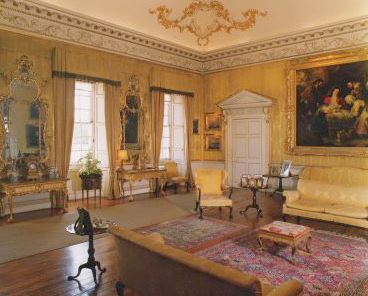
This house felt older than the memory of man. It was an accursed mansion. There were strange noises in the mansion. Every night the wailing of a woman could be heard above the moaning of the wind. If ghost must walk the Earth, they could find no spot on the globe where their appearance would be more natural, or better understood. The staff tells tales of disembodies footsteps, lights that switch themselves off and on at will, and objects moving. The Daisy Bedroom has lights that switch themselves on and off after dark and phantom footsteps are often heard in the hallway near the room. One day a housemaid was speaking to a guest as she served dinner downstairs. To everyone’s surprise, the serving tray sitting on the table picked itself up and tipped itself upside down. The tray was filled with plates of hot foot that went everywhere. The sacrificial stones of the Druid priests, oriented after the fashion of the ruin of ruins of Stonehenge, the blood-vats, imperishable adjuncts to human sacrifice, have stood through the ages, grim guardians of the mysteries of the haunted fruit orchards. If someone were to tell me that the fruit orchards at Llanada Villa echoed nightly with the shrieks of sacrifice and that the ghost fires of forgotten priestcraft still glowed in the morning, I would find it hard to disbelieve. That ghastly curse remained on my family and fortune. The mansion has picked up a few permanent guests. One evening, from the observation tower, I saw a huge black figure gliding along the grounds. It could not be human because of the rate of speed it was going. I felt not just fear, but absolute dread. I experienced a bone-chilling could throughout my body. I ran down nine flights of stairs, while crying uncontrollable and my heart was pounding. #RandolphHarris 2 of 6

Only in the understanding of the stock from which the Victorian mansion’s ghosts are sprung can one appreciate the immortality with which long-accepted tradition has endowed them. Ghostly itself is the history of the Winchester Mansion. While the carpenters were painting on the fourth floor, one of them was startled to see the word MURDER appear in the freshly rolled paint, as if written with someone’s finger—only the words were backwards, as though being written from the other side of the wall. One of the painters explained: “We were quite surprised when a shadow started moving towards us.” As they realized that the “shadow” was approaching them, they also realized that area of the mansion was a very lonely place, especially at night. Not many people ventured up there. And although in their haste to leave, they could only give brief glances at the dark figure, they were sure of one thing: “The only outstanding feature was the outline of a wide brim hate.” Another evening while the carpenters were painting, they heard a quiet creaking emanating from the wood floors. They steeled their nerves before investigating. That is when they saw a young woman sitting in a chair directly behind them. The woman was there for just a moment before disappearing. Later the evening as the farmers were picking fruit in the fields, the dark figure “floated” diagonally across the field. It drifted rapidly to a clump of trees with two flat rocks near by and disappeared over a slight drop-off beyond. #RandolphHarris 3 of 6

One of the farmers screwed up his courage and, in spite of the bizarre, dark figure’s mysterious and even menacing appearance, volunteered to walk down to the spot where the apparition disappeared. After five minutes of observation, he returned, like an efficient scout, with his report, unsettling as it might be. He said when he reached the far side of the hill there were two “soldiers-dressed” figures stilling on the two flat rocks near the clump of trees. Neither one spoke to the other; nor did they acknowledge the other’s presence. Instead they just sat, seemingly rigidly fixated, staring down into the field. Other ghost haunting the mansion include those of two little boys, who have been heard running on the second floor. One night, while I was preparing for company, I found two sets of muddy boot prints coming from the door to nowhere and crossing the room. When I told Daisy about the boot prints. She said they must be made by the same boys who keep coming in the door the opens to the wall, and we had locked them out. Looking toward the door she said, “It’s OK, if you prefer this door, go ahead and use it.” Immediately the door swung open. Needless to say cold chills ran through both of us. We never worried about the door that opens to the wall again. My idea for the mansion was not only to create a place for the spirits, but also to build an estate that would inspire awe. The gorgeous series of fields gardens, forests, and grassy acres are as fascinating as they are beautiful. However, when the sun goes down, the shadows creep and spread, giving the Victorian Mansion an entirely different look and feel. #RandolphHarris 4 of 6

With grounds lit by a full moon hanging low in the sky, just to the side of the columns of the mansion, one begins to ponder the many mysteries surrounding the Winchester Mansion. One night I was putting out a candle when I heard the sound of a singing voice. At first I thought: “Oh, that sounds nice.” However, then I wondered what it was and where I could be hearing singing from. After all, the staff was asleep and there was no one around, and the sound definitely was not coming from outside. It was frightening, but it was not explainable. It was just a couple of phrases of singing and it took me by surprise. I could faintly see the hazy shape of a woman moving down what the hallway. One night, a group of farmers were packing up for the evening. A they looked around with a lantern for their tools, they were shocked to see what appeared to be the black form of a man moving toward them. The figure was larger than human and had no features—it was a black mass that seemed to sway toward them in the bright light. The man wielding the lantern quickly put it out and they all ran away. For weeks the men thought about what they had seen; they just could not forget it. They spoke to other servants about the vision or sighting. They were quite disturbed and unable to let the subject drop. #RandolphHarris 5 of 6

In the Name of the Father, and of the Son, and of the Holy Ghost. Take heed! Come, all Spirits! By the virtue and power of your king, and by the seven crowns and chain of your Kings, all Spirits of the Hells are forced to appear in my presence before this circle of Solomon, whensoever I shall call them. Come, then, all at my order, to fulfil that which is in your power, as commanded. Come, therefore, from the East, South, West, and North! I conjure and command you, by the virtue and power of Him who is three, eternal, equal, who is God invisible, consubstantial, in a word, who has created the Heavens, the sea, and al which is under Heaven. I conjure thee, Lucifer, by the living God, by the true God, by the holy God, who spake and all was made, who commanded and all things were created and made! I conjure thee by the ineffable name of God, ON, ALPHA, and OMEGA, ELOYM, YA, SADAY, LUX, MUGENS, REX, SALUS, ADONAY, EMMANUEL, MESSIAS; and I adjure, conjure. I command you, O all ye demons dwelling in these parts, or in what part of the World soever ye may be, by whatsoever power may have been given you by God and our holy Angels over this place, and by the power Principality of the fernal abysses, as also by all your brethren, both general and special demons, whether dwelling in the East, West, South, or North, or in any side of the Earth, and, in like manner, by the power of God the Father, by the wisdom of God and the Son, by the virtue of the Holy Ghost, and by the authority I derive from our Savior Jesus Christ, the only Son of God. #RandolphHarris 6 of 6
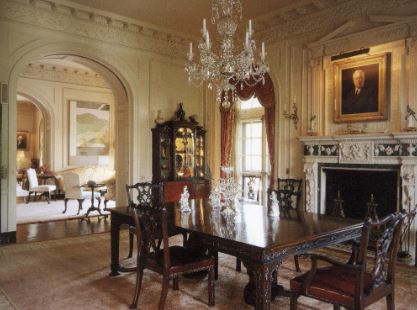

The idea that we survive physical death, that some part of our being is immortal, profoundly affects the loves of those who harbor such a belief. https://winchestermysteryhouse.com/

And please be sure to check out the online gift store: https://shopwinchestermysteryhouse.com/

O Wicked Wit and Gifts that Have the Power So to Seduce!

I have always noticed a prevalent want of courage, even among persons of superior intelligence and culture, as to imparting their own psychological experiences when those have been of a strange story. Almost all humans are afraid that what they could relate in such wise would find no parallel or response in a lister’s internal life, and might be suspected or laughed at. A truthful traveller who should have seen some extraordinary creature in the likeness of a devil, would have no fear mentioning it; but the same traveller having had some singular presentiment, impulse, vagary of thought, vision (so-called), dream, or other remarkable mental impression, would hesitate considerably before one would own to it. To this reticence I attribute much of the obscurity in which subjects are involved. We do not habitually communicate our experiences of these subjective things, as we do our experiences of objective creation. The consequences is, that the general stock of experiences in this regard appears exceptional, and really is so, in respect of being miserably imperfect. The Devil had been raised among us, and his rage was vehement and terrible; and, when he shall be silenced, the Lord only knows. It does not signify how many years ago, or how few, a certain Murder was committed in Boston in 1688, which attracted great attention. We hear more than enough of Murders as they rise in succession to their atrocious eminence, and if I could, I would bury the memory this this atrocious eminence, as hi body was buried, in the Witch House’s basement. When the murder was first discovered, no suspicion fell—or I ought rather to say, for I cannot be too precise in my facts, it was nowhere publicly hinted that any suspicious fell—on the man who was afterwards brought to trial. #RandolphHarris 1 of 13

As no reference was at the time made to him in the newspapers, it is obviously impossible that any description of him at that time have been given in the newspapers. It is essential that this fact be remembered. Unfolding at breakfast my morning paper, containing the account of that first discovery, I found it to be deeply interesting, and I read it with close attention. I read it twice, if not three times. The discovery had been made in a bedroom, and, when I laid down the paper, I was aware of a flash—rush—flow—I do not know what to call it—no word I can find is satisfactorily descriptive—in which I seemed to see that bedroom passing through my room, like a picture impossibly painted on a running river. Though almost instantaneous in its passing, it was perfectly clear; so clear that I distinctly, and with a sense of relief observed the absence of the dead body from the bed. As the circumstances of the Murder, gradually unravelling, took stronger and stronger posses of the public mind, I kept them away from mine, by knowing as little about them as was possible in the midst of the universal excitement. John Hathorne asked most of the questions and established the judicial attitude that was to prevail throughout most of the examinations and the trials. Many people suspected that the devil killed this man and he had been summoned by Sarah Good because she had also been accused of bewitching a few girls in the town. Mr. Hathorne asked the children to look at Sarah God and say whether she was one who afflicted them. #RandolphHarris 2 of 13

They accused her to her face, “upon which they were all dreadfully tortured and tormented for a short space of time.” When they recovered from their fits, they charged her with causing them, saying that her specter had come and tormented them although her body remained “at a considerable distance from them.” This was spectral evidence, that is, evidence concerning a specter or apparition of the accused, rather than her bodily person. It was eventually to become the central legal issue of the trials, but at the moment we need only see why it seemed initially so convincing to the examining magistrates. Here were girls afflicted with violent physical symptoms which had no known physical cause, but which a physician had attributed to witchcraft. There was a malicious old woman accused of causing them. When the sufferers accused her they were immediately thrown into convulsions. What could be more plausible than that the convulsions were inflicted as revenge for the accusation? Yet such behaviour was still unfamiliar enough in Salem so that one of the recorders noted that “none here see the [specters of the] witches but the afflicted and themselves.” However, the change was so startling that I fully believed the girls derived their impression in some occult manner. For instance, we knew there was something occult going on because the throat of the murdered man had been cut straight across. In the opening speech for the defense, it was suggested that the deceased might have cut his own throat in the dreadful condition referred to. Yet, it would have been impossible for such a wound to be self-inflicted by either hand. #RandolphHarris 3 of 13

Certainly, Mr. Hathorne was convinced; when the children had recovered and repeated their accusation he turned to the accused woman. “Sarah Good, do you not see now what you have done? Why do you not tell us the truth? Why do you this torment these people children?” Certainly many of her neighbours though her malicious, since they attributed to her a number of inexplicable events, including the death of a cow which perished in a “sudden, terrible and strange unusual manner.” Such testimony was common in witchcraft cases, and it has caused much unseemly hilarity among the modern historians. It is likely, they have asked, that His Satanic Majesty the Devil or any of his minions would stop to concern themselves with the fate of a New England cow? The answer is that nothing is more likely. What else would a fertility god concern himself with but the health or sickness of crops, of animals, and of humans? From the standpoint of a society that still remembered who the Devil was, no testimony could be more relevant. As a matter of fact, the village witches who still exist in rural England are often expert in folk medicines, human and animal, as well as charms, and until recently many of them were midwives. Sarah Osburn also denied that she had hurt anyone, but the girls feel again into fits. Mr. Hathorne asked her how this happened. Perhaps, she said, the Devil went about in her likeness doing harm, but she knew nothing about it. Sarah Osburn was the first at Salem to assert the principle that the Devil can impersonate an innocent person. #RandolphHarris 4 of 13

Whether the devil could or not was a matter of debate in the seventeenth century, but most Protestant authorities agreed with Goodwife Obsurn that, as Hamlet put it, “The Devil hath power/ to assume a pleasing shape.” However, the principle was not discussed at this hearing, since Sarah Osburn was a likely a suspect as Sarah Good, if for no other reason than her lying. Lying was still considered a serious sin in the seventeenth century, and a crime as well, legally punishable by the courts. Nine of us had not the smallest doubt about those passages, neither, I believed, had any one in Court. When Mr. Hathorne tried to find out how well Sarah Osburn knew Sarah Good she said she did not know her by name. Mr. Hathorne asked if Sarah Osburn had been tempted by the devil, and she said no. Why then, he asked, had not she been at church? She had been sick, she said, and unable to go. However, her husband and others contradicted her. “She had not been at meeting,” they said, “this year and two months.” To understand why the matter of church attendance was considered so significant one must remember that the seventeenth century saw witchcraft as literal Devil worship, and therefore as a rival religion to Christianity. This is why the magistrates sometimes asked accused persons, as they asked Sarah Good, what God they served. And if the accused person avoided speaking the name of God (as Sarah Good did), they had reason to think it a suspicious circumstance. The murdered man at that time stood directly opposite the judge, on the other side of the court. He slowly shook a great grey veil, which he carried on his arm for the first time, over his head and whole form. Then he collapsed, all was gone, and his place was empty. #RandolphHarris 5 of 13

The examinations of Sarah Good and Sarah Osburn afford grounds for suspicion and for further examination. However, the major event of that first day of March was the examination of Tituba. It began like the others, but it changed very quickly: “Tituba, what evil spirit have you familiarity with?” “None.” “Why do you hurt these children?” “I do not hurt them.” “Who is it then?” “The Devil, for aught I know.” “Did you never see the Devil?” “The Devil,” said Tituba, “came to me and bid me serve him.” She went on, with a minimum of judicia prodding, to provide a detailed confession of witchcraft, the first of approximately fifty that were made during the Salem trials. On March first and second, in her examination, Tituba said that the Devil had come to her in the shape of a man—a tall man in black, with white hair. Other times he had come in the shape of an animal. He had told her he was God, that she must believe him and serve him six years, and he would give her many fine things. He had shown her a book and she had made a mark in it, a mark that was “red like blood.” Many people thought this to be a revelation. “Then I saw another beast, coming out of the Earth. He had two horns like a lamb, but he spoke like a dragon. He exercised all authority of the first beast on his behalf, and made the earth and its inhabitants worship the first beast, whose fatal wound had been healed. And he performed great and miraculous signs, even causing fire to comedown from Heaven to Earth in full view of men. Because of the signs he was given power to do on behalf of the first beast, he deceived the inhabitants of the Earth. #RandolphHarris 6 of 13

“He ordered them to set up an image in honour of the beast who was wounded by the sword and yet lived. He was given power to give breath to the image of the first beast, so that it could speak and cause all who refused to worship the image to be killed. He also forced everyone, small and great, rich and poor, free and slave, to receive a mark on his right hand or on his forehead, so that no one could buy or sell unless one had the mark, which is the name of the beast or the number of his name,” reports Revelation 13.11-17. Sarah Osburn was to die there on the tenth of May. Tituba, like later confessors, was never brought to trial. She lay in jail until she was sold to pay the jailer’s fees, her master refusing to pay them. Sarah Good was brought to trial. Another reaction to Tituba’s confession was to confirm the community in its fear of witchcraft, and particularly its fear of the three accused women. The night of March First William Allen and John Hughes heard a strange noise; it continued frightening them, but the approached and “saw a strange and unusual beast lying on the ground. Going up to it, the said beast vanished away and in the said place started up two or three women fled, not after the manner of other women but swiftly vanished out of sight, which women we took to be Sarah Good, Sarah Osburn, and Tituba.” #RandolphHarris 7 of 13

The next night William Allen again had hallucinations: “Sarah Good visibly appeared to him in his chamber, said Allen being in bed, and brought an unusual light with her. The said Sarah came and sat upon his foot. The said Allen went to kick at her, upon which she vanished and the light with her.” Notice that in this hallucination as in many others the hallucination stops as soon as the subject is able to move or speak. A curse is any expressed wish that some form of adversity or misfortune will befall or attach to one or more persons, a place, or an object. In particular, “curse” may refer to such a wish or pronouncement made effective by a supernatural or spiritual power, such as a god, or gods, a spirit, or natural force, or else as a kind of spell by magic or witchcraft. The Winchester rifle is a handsome gun that legend has it was forged in Hell. Whoever possesses the cursed rife either suffers disaster or fortune. Oliver Fisher Winchester was an American businessman and politician, best known as being the founder of the Winchester Repeating Arms Company. Oliver Winchester was born November 30, 1810 and dead December 10, 1880. Oliver Winchester was known for manufacturing and marketing the Winchester repeating rifle, which was a much re-designed descendant of the Volcanic rifle of some years earlier. Mr. Winchester was more learned than his kind in the mysteries of a deep and thrilling lore of peculiar fascination. He was a man highly honoured for his natural gifts and knowledge of learned books which nobody else could read, that was when he took his second orders the bishop gave him a mantle of scarlet silk to wear upon his shoulders in which, and his lordship had put such power into it that, when the parson has it rightly on, he could govern any ghost or evil spirit, and even stop an Earthquake. #RandolphHarris 8 of 13

Such a powerful man, in combat with supernatural visitations discovered that a division of Smith & Wesson firearms was failing financially with one of their newly patented arms. Having an eye for opportunity, Mr. Winchester assembled venture capital together with other stockholders and acquired the Smith & Wesson division, better known as the Volcanic Repeating Arms Company, in 1855. By 1857, Mr. Winchester had positioned himself as the principle stockholder in the company and relocated to New Haven, Connecticut, and changed the name to New Haven Arms Company. After experiencing a slow start, and then a booming success with the Henry rifle, the company reorganized once again and the first Winchester rifle was the Model 1866, which had been nicknamed the Yellow Boy. The gun was called Yellow Boy because it should be remembered that, howsoever strange and singular it may sound to us that a mere lad should formally solicit such a performance at his own hands. Gradually Mr. Winchester amassed a considerable fortune. When Mr. Oliver Winchester died on December 10, 1880, his ownership in the company passed to his son, William Wirt Winchester (who married Sarah Lockwood Pardee in 1862), and died March 7 1881 at the young age of 43. The couple has also had a child, Annie Pardee Winchester, born June 15, 1866, and died 6 weeks later on July 25, 1866. Mrs. Winchester was deeply troubled by the loss of her daughter. In the course of her daily walk, she had to pass a certain heath or down where the road wound along through tall blocks of granite with open spaces of grassy sward between them. #RandpolphHarris 9 of 13

There in a certain spot, and always in the same place, she declared that she encountered, every day, a baby with a pale and troubled face, clothed in a little dress of white pique, made with two skirts. The pique was cut slightly Gabriele, and rounded off in the front with scallops, bound with white braid, with a button in each scallop, and ribbon-sash, tied at the left side, with one hand always stretched forth, and the other pressed against her side. “She is my baby,” Mrs. Winchester would say, and she often used to come to her parents house in New Haven; but that which troubled her was, that she had now been dead three years, and she had seen her body laid in the grave at her burial, this that she saw every day must needs be her soul or ghost. The hair of the appearance, sayth Mrs. Winchester, is not like anything alive, but it is so soft and light that it seemth to melt away while you look; but her eyes are set, and never blink—no, not when the sun shineth full upon her face. She maketh no steps, but seemth to swim along the top of the grass; and her hand, which is stretched out alway, seemth to point to something far away, out of sight. It is her continual coming; for she never failth to meet Mrs. Winchester, and to pass on, that hath quenched her spirits; and although she never seeth her by night, yet cannot she get her natural rest. Mrs. Winchester went to see a doctor who told her, “The case is strange but by no means impossible. It is one that I will study, and fear not to handle, if you will be free with me, and fulfill all that I desire.” Mrs. Winchester was overjoyed, but she perceived that the doctor turned pale, and was downcast with some thought which, however, he did not express. #RandolphHarris 10 of 13

The doctor knew that this might be a doemonium meridianum, the most stubborn spirit to govern and guide that any human can meet, and the most perilous withal. He made an appointment to go with Mrs. Winchester to the spot where she had these encounters. They had hardly reached the accustomed spot, when they both saw her at once gliding towards them; punctually as the ancient writers describe their “lemures, which swoon along the ground, neither marking the sand nor bending the herbage.” The aspect of the baby girl was exactly that which had been related by Mrs. Winchester. There was a pale and stony face, the strange misty hair, the eyes firm and fixed, that gazed, yet not on them, but on something that they saw far, far away; one hand and arm stretched out, and the other grasping the girdle of her waist. She floated along the field like upon a stream, and glided past the spot where they stood, pausingly. But so deep was the awe that came over the doctor, as he stood there in the light of day, face to face with a human soul separate from her bones and flesh, that his heart and purpose both failed him. He had resolved to speak to the spectre in the appointed form of words, but he did not. He stood like one amazed and speechless, until she had passed clean of out sight. When they returned to the house, and after he had said all he could to pacify Mrs. Winchester, he took leave for that time, with a promise that when he had fulfilled certain business elsewhere, when then he alleged, he would return and take orders to assuage these disturbances and their cause. #RandolphHarris 11 of 13

The doctor later told Mrs. Winchester that he thought it was best that they try an exorcism, but his Church, as is well known, hath abjured certain branches of her ancient powers, on grounds of perversion and abuse. So he referred her to a medium. The medium told Mrs. Winchesters, “There is a danger from the demons, but so there is in the surrounding air every day.” There was a kind of trouble in the air, a soft rippling sound, and all at once the shape appeared, and came towards the medium gradually. She opened her parchment scroll, and read aloud the command. The spirit paused, and seemed to waver and doubt; stood still; then she rehearsed the sentence again, sounding out every syllable like a chant. The spirit then swam into the midst of the circle, and there stood still, suddenly. Her knees shook under her, and the drops of sweat ran down her flesh like rain. But, although face to face with the spirit, the medium’s heart grew calm, and her mind was composed. The spirit then commanded Mrs. Winchester to move West and build a mansion in honour of the spirit killed by the Winchester rifle and “as long as the hammer keep pounding, her heart would continue to beat.” The medium dismissed the troubled ghost, until she peacefully withdrew, gliding towards the west. Mrs. Winchester moved to San Jose, which was near her family Member, Enoch Pardee, an occultist, prominent physician, free mason, and Mayor of Oakland, California USA, had built his family’s mansion in 1868, which is now known as the Pardee House Museum. Masonry has influenced more the modern witchcraft; it has influenced dozens of occult orders. Mrs. Winchester bought a farm house and built a massive mansion. There was something very painful and peculiar in the position of the Winchester mansion through the nineteenth century. The estate in those days was in a transitory state, and Mrs. Winchester, like her formularies, embodied a strange mixture of the old belief with the new interpretation. #RandolphHarris 12 of 13

However, the mansion is now flanked by a pleasantness, a beautiful garden and lawn, and it is surrounded by a sole grove of palm trees. It has also the aspect of age and of solitude, and looks the very scene of harmony and supernatural events. A legend might well belong to every beautiful glade of grass around, and there must surely be a haunted room somewhere within its walls. The incredible mansion, scenery of the legend still survives, and, like the field of the forty footsteps in another history, the place is still visited by those who take interests in the supernatural tales of old and new. Freemasons supposedly conducted a séance in the mansion in August of 2019. A phantom made an answer willingly. It stated, “before the next Yule-tide, a fearful pestilence will lay waste the land, and myriads of souls will be loosened from the flesh, until our valleys will be full.” The general facts stated in this diary are to these matters of belief accounted a strong proof of the veracity of the Ghost that the plague, fatal to so many millions, did break out in the global village at the close of the year. How sorely must the infidels and heretics of this generation be dismayed when they know that this Black Death, which is now swallowing its thousands in the streets of the great city, was foretold several months before the outbreak, under the séance of a freemason, by a visible and suppliant ghost! And what pleasure and improvements do such deny themselves who scorn and avoid all opportunity of intercourse with souls separate, and the spirits, glad and sorrowful, which inhabit the unseen World! May they who observe the Sabbath and call it a delight, rejoice in Thy Kingdom. May the people who sanctify the seventh day be sated and delighted with Thy bounty. For Thou didst find pleasure in the seventh day, and didst sanctify it, calling it the most desirable of the days, in remembrance of creation. #RandolphHarris 13 of 13

Winchester Mystery House

Today is the return of our guided Mansion Tour! The tour guide-led experience allows guests to access areas of the mansion that have been closed since March 2020. Click the link in our bio for more information. winchestermysteryhouse.com/recent-links


The Source of those Accusations Was a Committee of Demons Who Had Infested Her!

The infinite power of God to create is far beyond what we can grasp or understand. If the Almighty devoted so much of His Word to prophecy, it certainly benefits every believer to study it. The study of the prophetic scriptures and their fulfillment attests to the authority of the Word of God. Every soul has cost an infinite price, and how terrible is the sin of turning one soul away from Christ, so that for Him the Saviour’s love and humiliation and agony shall have been in vain. Contrary to popular opinion, New England’s record in regard to witchcraft is surprisingly good, as Governor Thomas Hutchinson pointed out in 1750: “more having been put to death in a single country in England from the first settlement until the present time.” Through most of the seventeenth century the record is really astonishing. While Europe hanged and burned literally thousands, executions in New England were few and far between. (Witches were burned on the Continent and in Scotland, where witchcraft was a heresy, but hanged in England and in New England, where it was a felony. Burning a witch seems not to have been motivated by the wish to inflict a particularly painful death; Scottish witches, for instance, were first garroted by the executioner, who then proceeded to burn the corpse and scatter its ashes. Most probably, burning was an attempt to prevent the resurrection of the body.) There are some fascinating accounts in New England that deal with cases of witchcraft before 1692, and we shall look at a few of these for they will illuminate some interesting aspects of the Salem witch trials. #RandolphHarris 1 of 21

The first is that of Mrs. Anne Hibbins. Her husband, who died in 1654, had been a man of importance: Boston merchant, a Colonial Agent, and for several years one of the Assistants. Tradition has it that she was a sister of Governor Bellingham. She was apparently quarrelsome—quarrelsome enough so that her church censured her for it—and one quarrel was her undoing. She seems to have come upon two of her neighbours talking, to have told them she knew they were talking about her, and then to have reconstructed their conversation with enough fidelity to convince the she was possessed of “preternatural” knowledge (something Mrs. Sarah Winchester used to also have the ability to do, and a reason she dismissed so many staff members for gossiping). Nonetheless, Mrs. Hibbins was brought to trail in 1655, and the jury brought her in guilty. However, the presiding magistrates refused to accept the verdict, apparently believing her innocent, and their refusal automatically threw the case into the General Court. There again she was found guilty; the governor pronounced the required sentence of death; and in 1656 she was executed. We have seen that some of the magistrates were not satisfied of her guilt, and apparently the same were true of some of the clergy. To masses of people, death was a dread mystery; beyond was uncertainty and gloom. These people were seeking for truth, and to learn them the Spirit of Inspiration was imparted. #RandolphHarris 2 of 21

A surviving letter tells us that the Reverend John Norton “once said at his own table” before the Reverend John Wilson and others that Mistress Hibbins “was hanged for a witch only for having more with than her neighbours. It was his very expression; she having, as he explained it, unhappily guessed that two of her persecutors, whom she saw talking in the street, were talking of her—which cost her her life, not withstanding all he could do to the contrary, as he himself told us.” The Hibbins case shows how slender and how circumstantial were the grounds necessary to bring an accusation of witchcraft against anyone with a reputation for malice. It also shows that the popular elements in society (the jury, and the people’s representatives in the General Court) were far more ready to believe in witchcraft than the leaders of society (the magistrates and ministers.) This latter conclusion is reinforced by the fact that before 1692 there were far more acquittals than convictions in New England; there were more people willing to charge their neighbours with witchcraft than magistrates willing to convict them. A case which took place in Hartford, Connecticut, in 1662 is known in rather more detail than that of Mrs. Hibbins. Anne Cole, “a person esteemed pious,” was taken with “strange fits.” As with the Salem girls, the fits were both violent and public. Extremely violent bodily motions she many times had, even to the hazard of her life in the apprehensions of those that saw them. #RandolphHarris 3 of 21

And very often great disturbances was given in the public worship of God by her and two other women who had also strange fits. Once in especial, on a day of prayer kept on that account, the motion and noised of the afflicted was so terrible that a godly person fainted under the appearance of it. In some of her fits strange voices came from her, voices that were clearly not her own. Such voices are now known to be a consequence of multiple personality, which is the extreme form of the hysterical fugue. However, the seventeenth-century observers of Anne Cole judged them to be the voices of demons who had entered into her, and that judgment was sensible enough in view of the fact that the voices seemed to be plotting ways in which Anne Cole might be further afflicted. Eventually, seeming to realize that they were being overheard, one of the voices announced, “‘Let us confound her language, [that] she may tell no more tales.’” For some time nothing came from her but “unintelligible mutterings”; then the conversation resumed in a Dutch accent, and this time names were mentioned, names of the witches who were responsible for these afflictions. When Anne Cole was out of her fits, she “knew nothing of those things that were spoken by her” during them, but she was understandably distressed to find she had been speaking things which, to the best of her knowledge, had never been in her mind; it was a “matter of great affliction to her.” #RandolphHarris 4 of 21

It must have been afflicting to the local magistrates as well; they now had accusations of witchcraft against several persons, but the source of these accusations was not Anne Cole; it was a committee of demons who had infested her. The magistrates investigated further, and imprisoned some (and perhaps all) of the accused on suspicion of witchcraft One of these, a “lewd, ignorant, considerably aged woman” named Rebecca Greensmith sent for the two clergymen who has taken down in writing the demonic conversation issuing from the mouth of Anne Cole. She had the transcript read to er, and then “forthwith and freely confessed those things to be true,” confirming the statement of the voiced “that she (and other persons named in the discourse) had familiarity with the Devil.” She confessed to a number of other things as well, including “that the Devil has frequent use of her body with much seeming (but indeed horrible, hellish) delight to her.” Reports of copulation with demons (including the unpleasantness of the experience) are common in the literature of Continental witchcraft, but this is one of the few known cases in New England. What is involved is apparently an erotic fit in which the woman actually goes through the motions of copulation and achieves a climax; similar fits have been observed in mental patients in the twenty-first century. Thus it appears that in the case of Anne Cole the confessor as well as the afflicted person was an hysteric. This pattern we shall see again at Salem. #RandolphHarris 5 of 21

Rebecca Greensmith was hanged in 1663. So was her husband Nathaniel, although we do not know the grounds for his conviction; according to Increase Mather he did not confess. “Most” of the other persons accused by the demonic voices “made their escape into another part of the country.” What happened to the others we do not know, but they were apparently not executed. And since at least one of those who made her escape had at first been imprisoned in suspicion of witchcraft (Judith Varlet, a relative of Governor Peter Stuyvesant of New York), it can be assumed that the authorities were reluctant to press the matter further. The evidence they had was, after all, highly suspect, coming from demonic voices on the one hand and a confessed witch on the other. (Confessors are a group of women with the power to make anyone they touch love them. This love, however, is more aptly described as a soul-destroying obsession whose objective is pleasing the Confessor in any way possible. Confessors were created by warlocks to travel Medieval lands and act as law enforcers. The Confessors could possess anyone and make them tell the truth in great detail. There were also a few male Confessors, but they became megalomanics and plunged the entire World into a dark age. As a result, after all the male Confessors were defeated and wiped out, the warlocks and female Confessors took up the tradition of killing all male Confessors shortly after birth.) In any event, after the “execution of some and escape of others” Anne Cole’s fits ceased, and did not return. #RandolphHarris 6 of 21

Twenty years later, in 1682, the Reverend John Whiting reported that “she yet remains maintaining her integrity.” This together with what the voices said, suggests that Anne Cole’s fits probably were caused by her fear of witchcraft and cured by the removal of the fear. A few other cases are remarkable for a number of reasons, one of them being the exemplary thoroughness with which the symptoms of the affiliated persons are described, which makes it possible to say without question that these were pathological cases of hysteria. The first took place in Groton, Massachusetts, in 1671-1671 and was recorded by the Reverend Samuel Willard, then minister of Groton (during the Salem trials he was a member of the Boston Clergy). On 30 October 1671, Elizabeth Knapp began to behave strangely: “In the evening, a little before she went to bed, sitting by the fire she cried out, ‘Oh! My legs!’ and clapped her hands on them; immediately, ‘Oh! My breast!’ and removed her hands thither; and forthwith, ‘Oh! I am strangled’ and put her hands on her throat.” The similarity to Janet’s twentieth-century description of the onset of a typical hysterical fit is unmistakable; it starts, he writes “with a pain or a strange sensation situated at such or such a point of the body…[It] often begins in the lower part of the abdomen [and] seems to ascend and to spread to other organs. For instance, it very often spreads to the epigastrium, to the breast, then to the throat. There it assumes rather an interesting form, which was for a very long time considered as quite characteristic of hysteria. The patient has the sensation of too big an object, as it were, a ball, rising in her throat and choking her.” #RandolphHarris 7 of 21

The chocking sensation we shall find over and over again; it is the bolus hystericus and is related to the “lump in the throat” felt by normal people in moments of extreme stress. The normal person, like the hysteric, tries to relieve it by swallowing; this is why the comic-strip artist has one’s characters say “Gulp” when they are in trouble. The choking sensations in the throat was followed by “fits in which she was violent in bodily motions, leapings, strainings and strange agitations, scarce to be held in bound by the strength of three or four; violent also in roarings and screamings.” The fits continued until 15 January 1692, the date of Willard’s writings. Several of the details he recorded are worth noting. On 15 November, “her tongue was for many hours together drawn into a semicircle up to the roof of her mouth, and not to be removed, for some tried with the fingers to do it.” On 17 December her tongue was drawn “out of her mouth most frightfully, to an extraordinary length and greatness.” Devils appeared to her, and witches; “Oh,” she cried to one of them, “you are a rouge.” On 29 November she had a particularly grotesque hallucination, when she believed a witch in the shape of a dog with a woman’s head was strangling her. The hallucinations and the woman’s sufferings were terrifyingly convincing; Willard noted that when she thought the witch was strangling her, “she did often times seem to our apprehension as of she would forthwith be strangled.” #RandolphHarris 8 of 21

Elizabeth Knapp’s case is strikingly similar to that of Ler—one of the best-known cases of J.-M. Charcot, the nineteenth-century psychologist. Her fits, he wrote, “are characterized in the first stage by epileptiform and tetaniform convulsions; after this come great gesticulations of a voluntary character, in which the patient, assuming the most frightful postures, reminds one of the attitudes which history assigns to the demoniacs…At this stage of the attack, se is a prey to delirium, and raves evidently of the events which seem to have determined her first seizures. She hurls furious invectives against imaginary individuals, crying out, “villains! robbers! brigands! fire! fire! O, the dogs! I’m bitten!”—Reminiscences, doubtless, of the emotions experienced in her youth.” When the convulsive portion of Ler—’s attack was over other symptoms usually followed, including “hallucination of vision: the patient beholds horrible animals, skeletons, and specters” and “lastly, a more or less marked permanent contracture of the tongue.” Charcot drew this contracture of the tongue; it is quite appalling. Willard was not exaggerating in calling it frightful. Elizabeth Knapp displayed still other symptoms are identifiably hysterical, including loss of speech on some occasions, and on others speaking in voices other than her own; once “she barked like a dog, and bleated like a calf.” Willard noted that her fits did not seem to do her any permanent physical damage: “She hath no ways in body or strength by all these fits, though so dreadful, but gathered flesh exceedingly, and hath her natural strength when her fits are off, for the most part.” #RandolphHarris 9 of 21

This is typical; as Janet remarks, the “hysteric patient, after howling for several hours, feels rather comfortable; she experiences, as it were, a relaxation, and declares she is out of her fits has often raised the question of whether they are genuine. Willard thought they must be, if only for their violence: “such a strength is beyond the force of dissimulation.” (It should be noted that hysterics are not always well in the intervals between their fits. Some, for instance, lose their appetites and starve themselves. It is probably such cases who are referred to in the statue of James I against witchcraft as being “wasted, consumed, pined.) On 1 November, Elizabeth Knapp named one of her neighbour as the probable cause of her afflictions. The accused woman was sent for, and entered the house while the afflicted girl was in a fit. Her eyes were closed, as they usually were in her fits, yet she could distinguish this neighbour’s touch from all others, “though no voice was uttered.” That would have been quite enough to convict the neighbour in many witchcraft cases. However, fortunately she was permitted to pray with the afflicted girl, and at the conclusions Miss Knapp “confessed that she believed Satan had deluded her.” Willian was happy that “God was pleased to vindicate the case and justify the innocent,” and reported that Miss Knapp never again complained of any “apparition or disturbance from this neighbour.” Instead, she turned to accusing the Devil, who had, she said, been offering her a covenant for several years, a covenant she had frequently been tempted to sign. #RandolphHarris 10 of 21

The dark shadow that Satan has cast over the World grew deeper and deeper. About a month later Miss Knapp accused another person of witchcraft, this time during a period of hallucinations. Her father brought the woman to the house, and Willard, who had been asked to be present, noted that her fit became particularly violent when this woman entered. However, Willard, wrote, “we made nothing of it” since her fits had been as violent on other occasions. Instead they inquired carefully into the mater and found “two evident and clear mistakes” in the accusation. This was enough to exonerate the second accused woman. Satan had implanted this principle. Wherever it was held, people had no barrier against sin. Elizabeth Knapp was still having fits when Willard wrote about her, and all he could be certain of was that “she is an object of pity.” He did not think she was bewitched, but he did believe she was possessed (that is, that Devils has entered into her). This remained his opinion (and that of most others) when the case was remembered in 1692. He also believed that the girl’s terrible afflictions provided an occasion for the community to examine its collective conscience. Therefore he admonished his congregation in a sermon, “Let us all examine by this Providence [id est, this event] what sins they have been, that have given Satan so much footing in this poor place.” Satan was seeking to shut out from humans a knowledge of God, to turn their attention from the temple of God, and to establish His own kingdom. His strife for supremacy had seemed to be almost wholly successful. #RandolphHarris 11 of 21

They robbed God of His glory, and defrauded the World by a counterfeit of the gospel. They had refused to surrender themselves to God for the salvation of the World, and they became agents of Satan for its destruction. They were doing the work Satan designed them to do, taking a course to misrepresent the character of God, and cause the World to look upon Him as a tyrant. The convulsive fits which played so prominent a part in most witchcraft cases, and continued to be one of the most common symptoms of hysteria through the earl years of the twentieth century, have no become relatively rare in Western civilization. D.W. Abse reports fits occurred in only six out of one hundred and sixty-one cases of hysteria treated at a British military hospital during World War II, but that they were the most common symptom among Indian Army hysterics treated at Delhi during the same period. There are a number of possible explanations for this curious fact. Hysterics are notoriously suggestible, so the change may be ascribable to nothing more than the refusal of our culture to give the hysterical fit the respectful and awed attention it used to command. In any case, it seems clear that abnormal behaviour varies with time and place just as normal behaviour does. However, since this particular variation occurred so recently, after the classic studies of hysteria had been completed, it is possible to identify the seventeenth-century Massachusetts fits for what they were. #RandolphHarris 12 of 21

Mr. William Wirt Winchester, while we were attending lectures, purchased three or four old houses in California, one of which was unoccupied. He resided in the country, and he proposed that he wanted his wife and myself to take up our abode in the untenanted house, so long as it should continue unlet; a move which we would accomplish the double end of settling us nearer alike to our lecture-rooms and to our amusements, and of relieving us from the weekly charge of rent for our lodgings. Our furniture was very scant—our whole equipage remarkably modest and primitive; and in short, our arrangements pretty nearly as simple as those of a bivouac. Mrs. Sarah Winchester’s new plan was, therefore, executed almost as soon as conceived. The front drawing-room was our sitting-room. I had the bedroom over it, and Mrs. Winchester had the back bedroom on the same floor, which nothing could have induced me to occupy. The house to begin with was an incomplete, three-story farm house with a basement. It was very old. Dated back to the sixteenth century, I believe. It had nothing modern about it. The agent who looked into the property titles for Mrs. Winchester told her it was originally sold, along with much other forfeited property in 1702; and it had belonged to John Conduit, whose wife was the niece of Sir Isaac Newton, a father of modern science, although keenly interested in the occult. How old it was then, I cannot say; but, at all events, in had seen years and changes enough to have contracted all the mysterious and saddened air, at once exciting and depressing, which belongs to most old mansions. #RandolphHarris 13 of 21

There had been very little done in the way of modernizing details and, perhaps, it was better so; for there was something queer and by-gone in the very walls and ceilings—in the shape of doors and windows—in the odd diagonal site of the chimney-pieces—in the beams and ponderous cornices—not to mention the singular solidity of all the woodwork, from the bannisters to the window-frames, which hopelessly defined disguise, and would have emphatically proclaimed their antiquity through any conceivable amount of modern finery and varnish. An effort had, indeed, been made, to the extent of papering the drawing-rooms; but somehow, the paper looked raw and out of keeping. This woman said, old Judge Sir James Hales (who, having earned the reputation of a particularly ‘hanging judge’, ended by hanging himself, as the corner’s jury found, under an impulse of ‘temporary insanity’, with a child’s skipping-rope, over the massive old bannisters) resided there, entertaining good company, with fine venison and rare old port. In those halcyon days, the drawing-rooms were hung with gilded leather, and, I dare say, cut a good figure, for they were really spacious rooms. The bedrooms were wainscoted, but the front one was not gloomy; and in it the cosiness of antiquity quite overcame its somber associations. However, the back bedrooms, with its two queerly-placed melancholy windows, staring vacantly at the foot of the bed, and with the shadowy recess to be found in most old houses in Dublin, like a large ghostly closet, which, from congeniality of temperament, had amalgamated with the bedchamber, and dissolved the partition. #RandolphHarris 14 of 21

At the night-time, this “alcove”—as our “maid” was wont to call it—had, in my eyes, a specially sinister and suggestive character. Mrs. Winchester’s distant and solitary candle glimmered vainly into its darkness. There it was always overlooking her—always itself impenetrable. However, this was only part of the effect. The whole room was, I cannot tell, how repulsive to me. There was, I supposed, in its proportions and features, a latent discord—a certain mysterious and indiscernible relation, which jarred indistinctly upon some secret sense of the fitting and the safe, and raised indefinable suspicious and apprehensions of the imagination. On the whole, as I began saying, nothing could have induced me to pass a night alone in it. We have not been very long in occupation of our respective chambers, when I began to complain of uneasy nights and disturbed sleep. I was, I suppose, the more impatient under this annoyance, as I was usually a sound sleeper, and by no means prone to nightmares. It was not, however, my destiny, instead of enjoying my customary repose, every night to “sup full of horrors.” After a preliminary course of disagreeable and frightful dreams, my troubles took a definite form, and the same vision, without an appreciable variation in a single detail, visited me at least (on average) every second night of the week. Now, this dream, nightmare, or infernal illusion—which you please—of which I was the miserable port, was on this wise: I saw, or thought I saw, with the most abominable distinctness although at the time in profound darkness, every article of furniture and accidental arrangement of the chamber in which I lay. This, as you know, is incidental to ordinary nightmare. #RandolphHarris 15 of 21

Well, while in this clairvoyant condition, which seemed but the lighting up of the theatre in which was to be exhibited the monotonous tableau of horror, which made my nights insupportable, my attention invariably became, I know not why, fixed upon the windows opposite the foot of my bed; and, uniformly with the same effect, a sense of dreadful anticipation always took slow but sure possession of me. I became somehow conscious of a sort of horrid but undefined preparation going forward in some unknown quarter, and by some unknown agency, for my torment; and, after an interval, which always seemed to me of the same length, a picture suddenly flew up the window, where it remained fixed, as if by an electrical attraction, and my discipline of horror then commenced, to last perhaps for hours. The picture this mysteriously glued to the window-panes, was the portrait of an old man, in crimson flowered silk dressing-gown, the folds of which I could now describe, with countenance embodying a strange mixture of intellect, sensuality, and power, but withal sinister and full of malignant omen. His nose was hooked, like the beak of a vulture; his eyes large, grey, and prominent and lighted up with a more than mortal cruelty and coldness. The features were surmounted by a crimson velvet cap, the hair that peeped from under which was white with age, while the eyebrows retained their original blackness. Well I remember every line, hue, and shadow of that stony countenance, and well I may! The gaze of this hellish visage was fixed upon me, and mine returned it with the inexplicable fascination of nightmare, for what appeared to me to be hours of agony. #RandolphHarris 16 of 21

At last—the cock he crew, away then flew, the fiend who had enslaved me through the awful watches of the night and, harassed and nervous, I rose to the duties of the day. I had—I cannot say exactly why, but it may have been from the exquisite anguish and profound impressions of unearthly horror, with which this strange phantasmagoria was associated—an insurmountable antipathy to describing the exact nature of my nightly troubles to Mrs. Winchester. Generally, however, I told her I was haunted by abominable dreams; and, true to the imputed materialism of medicine, we put our heads together to dispel my horrors, not by exorcism, but by a tonic Vin Mariani. However, the evil spirit, who enthralled my senses in the shape of that portrait, may have been just as near me, just as energetic, just as malignant, though I saw him not. Everybody knows how contagious is fear of all sort, but more especially that particular kind of fear under which poor Mrs. Winchester was at that moment labouring. I would not have heard, nor I believe would she have recapitulated, just at that moment, for half the World, the details of the hideous vision which had so unmanned her. “I was sitting in my room,” said Mrs. Winchester “by my fireplace, the door locked when I heard a step on the flight of stairs descending from the attics. It was two o’ clock, and the streets were as silent as a churchyard—the sounds were, therefore, perfectly distinct. There was slow, heavy tread, characterized by the emphasis and deliberation of age, descending by the narrow staircase from above; and, what made the sound more singular, it was plain that the feet which produced it were perfectly bare measuring a descent with something between a pound and a flop, very ugly to hear. #RandolphHarris 17 of 21

“I knew quite well that you and my attendant had gone away many hours before, and that nobody but myself has any business in the house. It was quite plain also that the person who was coming down stairs had no intention whatever of concealing his movements; but, on the contrary, appeared disposed to make even more noise, and proceed more deliberately, than was at all necessary. When the step reached the foot of the stairs outside my room, it seemed to stop; and I expected every moment to see my door open spontaneously, and give admission to soul killed by the Winchester rifle. I was, however, relieved in a few second by hearing the descent renewed, just in the same manner, upon the stair case leading down to the drawing-rooms, and thence, after another pause, down the next flight, and so on to the hall, whence I heard no more. Now, by the time the sound had ceased, I was wound up, as they say, to a very unpleasant pitch of excitement. I listened, but there was not a stir. I screw up my courage to a decisive experiment—opened my door, and in a stentorian voice bawled over the banisters, ‘Who’s there?’ There was no answer but the ringing of my own voice through the empty old house—no renewal of the movement; nothing short, to give my unpleasant sensations a definite direction. There is, I think, something most disagreeably disenchanting in the sound of one’s own voice under such circumstances, exerted in solitude, and in vain. It redoubled my sense of isolation, and my misgivings increased on perceiving that the door, which I certainly thought I had left open, was closed behind me. #RandolphHarris 18 of 21

“In a vague alarm, lest my retreat should be cut off, I got again into my room as quickly as I could, where I remained in a state of imaginary blockade, and very uncomfortable indeed, till morning. Next night brought no return of my barefooted fellow-lodger; but the night following, being in my bed, and in the dark—somewhere, I supposed, about the same hour as before, I distinctly heard the old fellow again descending from the garrets. This time I jumped out of bed, clutched the poker as I passed the expiring fire, and in a moment was upon the lobby. The sound had ceased by this time—the dark and chill were discouraging; and, guess my horror, when I saw, or thought I saw, a monster, whether in the shape of a man or a bear I could not say, standing, with its back to the wall, on the lobby, facing me, with a pair of great greenish eyes shinning dimly out. Now, I must be frank, and confess that the cupboard which displayed our plates and cups stood just there, though at that moment I did not recollect it. At the same time I must never could satisfy myself that I was made the dupe of my own fancy in this matter; for this apparition, after one or two shiftings of shape, as if in the act of incipient transformation, began, as it seemed on second thoughts, to advance upon me in its original form. From an instinct of terror rather than of courage, I hurled the poker, with all my force, at its head; and to the music of a horrid crash made my way into my room, and double-locked the door. Then, in a minute more, I heard the horrid bare feet walk down the stairs, till the sound ceased in the halls, as on the former occasion. #RandolphHarris 19 of 21

“In a vague alarm, lest my retreat should be cut off, I got again into my room as quickly as I could, where I remained in a state of imaginary blockade, and very uncomfortable indeed, till morning. Next night brought no return of my barefooted fellow-lodger; but the night following, being in my bed, and in the dark—somewhere, I supposed, about the same hour as before, I distinctly heard the old fellow again descending from the garrets. This time I jumped out of bed, clutched the poker as I passed the expiring fire, and in a moment was upon the lobby. The sound had ceased by this time—the dark and chill were discouraging; and, guess my horror, when I saw, or thought I saw, a monster, whether in the shape of a man or a bear I could not say, standing, with its back to the wall, on the lobby, facing me, with a pair of great greenish eyes shinning dimly out. Now, I must be frank, and confess that the cupboard which displayed our plates and cups stood just there, though at that moment I did not recollect it. At the same time I must never could satisfy myself that I was made the dupe of my own fancy in this matter; for this apparition, after one or two shiftings of shape, as if in the act of incipient transformation, began, as it seemed on second thoughts, to advance upon me in its original form. From an instinct of terror rather than of courage, I hurled the poker, with all my force, at its head; and to the music of a horrid crash made my way into my room, and double-locked the door. Then, in a minute more, I heard the horrid bare feet walk down the stairs, till the sound ceased in the halls, as on the former occasion. #RandolphHarris 19 of 21
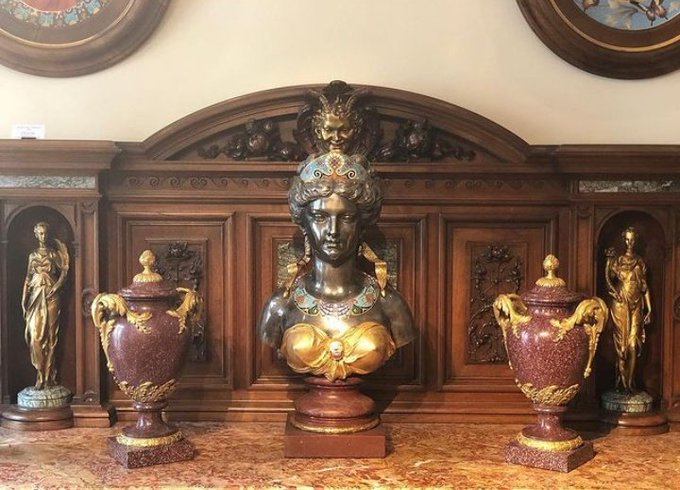
“If the apparition of the night before was an ocular delusion of my fancy sporting with the dark outlines of our cupboard, and if tis horrid eyes were nothing but a pair of inverted teacups, I had, at all events, the satisfaction of having launched the poker with admirable effect, and in true ‘fancy’ phrase, ‘knocked its two daylights into one,’ as the commingled fragments of my tea-service testified. I did my best to gather comfort and courage from these evidences; but it would not do. And then what could I say of those horrid bare feet, and the regular tramp, tramp, tramp, which measured the distance of the entire staircase through the solitude of my haunted dwelling, and at an hour when no good influence was stirring? Confound it!—the whole affair was abominable. I was out of spirits, and dreaded the approach of night. It came, ushered ominously in with a thunderstorm and dull torrents of depressing rain. Earlier than usual the streets grew silent; and by twelve o’clock nothing but the comfortless patterning of the rain was to be heard. I made myself as snug as I could. I lighted two candles instead of one. I forswore bed, and held myself in readiness for a sally, candle in hand; for, coute qui coute, I was resolved to see the being, if visible at all, who troubled the nightly stillness of my mansion. I was fidgety and nervous and, tried in vain to interest myself with my books. I walked up and down my room, whistling in turn martial and hilarious music, and listening ever and anon for the dreaded noise.” #RandolphHarris 20 of 21

Do not Grieve. Anything you lose comes around in another form. The child weaned from mother’s milk now drinks cranberry juice. God’s joy moves from unmarked box to unmarked box, from cell to cell. As rainwater, down into flowerbed. As roses, up from ground. Now it looks like a plate of rice and fish, now a cliff covered with vines, now a horse being saddled. It hides within these, till one day it cracks them open. There is the light gold of wheat in the sun, and the gold of bread made from wheat. I have neither, I am only talking about them as a town in the desert looks up to stars on a clear night. The Son of God, looking upon the World, beheld suffering and misery. With pity He saw how humans had become victims of satanic cruelty. He looked with compassion upon those who were being corrupted, murdered, and lost. They had chosen a ruler who chained them to his carriage as captives. God’s glory pervades the Universe; His ministering Angels inquire of one another: Where is the place of His glory? In response they give praise: Praised be the glory of the Lord from His Heavenly abode. From His Heavenly abode may He turn in mercy and bestow grace unto the people who, reciting the Shema evening and morning, twice daily, proclaim in love the unity of His name, saying: Hear, O America: the Lord our God, the Lord is One. He is our God; He is our Father, our sovereign and our Deliverer. In His mercy He will make known in presence of all the living that He will be your God. “I am the Lord your God.” As it is written in holy Scripture: The Lord shall reign forever; Thy God, O America, shall be Sovereign unto all generations. Hallelujah. #RandolphHarris 21 of 21

Winchester Mystery House

Ghostly tales are bountiful at Sarah Winchester’s Mystery House. What have you experienced? Photos are encouraged!

The Winchester mansion is 160-room mansion built to appease the spirits who died at the hands of the Winchester Rifle 👻
🗝 winchestermysteryhouse.com
“Whoever shadows my every move will not lose me in the dark.” At least that is what Christ says, or what the Evangelist John heard Him say (8.12). He tells us to walk on, through the darkness, with Christ as our only torch. That way, when we mayn’t have gained a step, but we won’t have lost one either. And on into the day we must pursue with dogged tread the life of Jesus Christ. Is this the secret to Mrs. Winchester’s 7-11 staircase?

How Long is it Since You were Really Bothered? About Something Important, About Something Real?
 Cans. Beer cans. Glinting on the verges of a million miles of roadways, lying in scrub, grass, dirt, leaves, sand, mud, but never hidden. Piel’s, Rheingold, Ballantine, Schaefer, Schlitz, shinning in the Sun, or picked by Moon or the beam of headlights at night; washed by rain or flattened by wheels, but never dulled, never buried, never destroyed. Here is the mark of savages, the testament of wasters, the stain of prosperity. These wise souls contemplated their past lives in a long wrathless reverie, and sought to answer prayers from below as I have said. They watched over their kindred, their clansmen, their own nations; they watched over those who attracted their attention with accomplished and spectacular displays of religiosity; they watched with sadness the suffering of humans and wished they could help and tried to help by thought when they could. However, who are these beings who defile the grassy borders of our roads and lanes, who pollute our ponds, who spoil the purity of our ocean beaches with the empty vessels of their thirst? Who are the beings who make these vessels in millions and then say, “Drink—and discard”? What society is this that can afford to cast away a million tons of metal and to make of wild and fruitful land a garbage heap? #RandolphHarris 1 of 14







Sometimes One Can Mistake Gratitude for Love—Dogs are Hardly an Article of Faith
 Love or the lack of it is at the root of everything. Guard your children. Weigh wisdom of intervention if such is even possible. Ponder the question of inevitability. To cease wishing is a contemporary emotional and spiritual wasteland, almost like inhabiting the land of the dead. Another characteristic is satiety; if wishes are thought of only as pushed toward gratification, the end consisting of the satisfying of the need, the reality is that emptiness and vacuity and futility are greatest where all wishes are met. For this means one stops wishing. Without faith we cannot want anymore, we cannot wish. The truth of faith consists in true symbols concerning the ultimate. And the faithful is one human being with the power of thought and the need for conceptual understanding. There is a dimension of meaning expressed in the symbolism of the whish, this is what gives the wish its specifically human quality, and without this meaning, the emotional and spiritual aspects of wanting become dried up. When we have faith, it is a symbol that peace and prosperity are just around the corner and it is only a matter of time until all our need will be met. However, the relation to the ultimate is not the same in each case. The philosophical relation is in principle a detached description of the basic structure in which the ultimate manifests itself. #RandolphHarris 1 of 15
 The relation of faith is in principle an involved expression of concern about the meaning of the ultimate for the faithful. The difference is obvious and fundamental. However, it is, as the phrase “in principle” indicates, a difference which is not maintained in the actual life of philosophy and of faith. It cannot be maintained, because the philosopher is a human being with an ultimate concern, hidden or open. And the faithful one is a human being with the power of thought and the need for conceptual understanding. This is not only a biological fact. It has consequences for the life of philosophy in the philosopher and or the life of faith in the faithful. An analysis of philosophical systems, essays or fragments of all kinds shows that the direction in which the philosopher asks the question and the preference one gives to special types of answers is determined by cognitive consideration and by a state of ultimate concern. The historically most significant philosophies show not only the greatest power of thought but the most passionate concern about the meaning of the ultimate whose manifestations they describe. The philosophy, in its genuine meaning, is carried on by people in whom passions of an ultimate concern is united with a clear and detached observation of the way ultimate reality manifests itself in the process of the Universe. #RandolphHarris 2 of 15
 At most general faith means much the same as trust. Therefore, we are being asked to have faith as knowledge of specific truths revealed by God. Faith is a practical commitment beyond the evidence to one’s belief that God exists. We are to have a firm and certain knowledge of God’s benevolence towards us, founded upon the truth of the freely given promise in Christ, both revealed to our minds and sealed upon our hearts through the Holy Spirit. It is this element of ultimate concern behind the philosophical ideas which supplies the truth of faith in them. Our vision of the Universe and our predicament within it unites faith and conceptual work. We may hold that in our sinful state we will inevitably offer a resistance to faith that may be overcome only by God’s grace. It is, however, a further step for individuals of faith to put their revealed knowledge into practice by trusting their lives to God and seeking to obey his will. Humans contain the potentialities of these creative principles, and can choose to make their lives an ascent towards and then a union with the intuitive intelligence. The One is not a being, but infinite being. #RandolphHarris 3 of 15
 Thus Christian and Jewish philosophers who held to a creator God could affirm such a conception that God is infinite, and created the World. God, as the creator of all, is not far from any one of us. Philosophy is not only the mother’s womb out of which science and history have come, it is also an ever-present element in actual scientific and historical work. The frame of reference within which the great physicists have seen and are seeing the Universe of their inquiries is philosophical, even if their actual inquiries verify it. In no case is it a result of their discoveries. It is always a vision of the totality of being which consciously or unconsciously determines the frame of their thought. Because this is so one justified in saying that even in the scientific view of reality an element of faith is effective. Scientific view of reality an element of faith is effective. Scientists rightly try to prevent these elements of faith and philosophical truth from interfering with their actual research. This is possible to a great extent; but even the most protected experiment is not absolutely pure—pure in the sense of the exclusion of interfering factors such as the observer, and as the interest which determines the kind of question asked of nature in an experiment. What we said about the philosopher must also be said about the scientist. Even in one’s scientific work one is a human being, grasped by an ultimate concern, and one asks the question of the Universe as such, the philosophical question. #RandolphHarris 4 of 15
 Intellectual inquiry into the faith is to be understood as faith seeking understanding (fides quaerens intellectum). To believe is to thin with assent (credere est assensione cogitare). It is an act of the intellect determined not by the reason, but by the will. Faith involves a commitment to believe in a God, to believe God, and to believe in God. What is eternal is unchanging. In the same way the historian is consciously or unconsciously a philosopher. It is quite obvious that every task of the historian beyond finding of the facts is dependent on evaluation of historical factors, especially the nature of mortals, one’s freedom, one’s determination, one’s development out of nature and so forth. It is less obvious but also true that even in the fact of finding historical facts philosophical presuppositions are involved. This is especially true in deciding, out of the infinite number of happenings in every infinitely small moment of time, which facts shall be called historically relevant facts. The historian is further forced to give one’s evaluation of sources and their reliability, a task which is not independent of one’s interpretation of human nature. Finally, in the moment in which a historical work gives implicit or explicit assertions about the meaning of historical events for human existence, the philosophical presuppositions of history are evident. Where there is philosophy there is an expression of an ultimate concern; there is an element of faith, however hidden it may be by the passions of the historian for pure facts. #RandolphHarris 5 of 15
 God does not possess anything superadded to his essence, and his essence includes all his perfections. No one can attain to truth unless one philosophizes in the light of faith. Our faith in eternal salvation shows that we have theological truths that exceed human reason. And if one could attain truths about religious claims without faith, these truths would be incomplete. Higher truths are attained through faith. All these consideration show that, in spite of their essential difference, there is an actual union of philosophical truth and the truth of faith in every philosophy and that this union is significant for the work of the scientist and the historian. This union has been called philosophical faith. The term is misleading, because it seems to confuse the two elements, philosophical truth and the truth of faith. Furthermore, the term seems to indicate that there is one philosophical faith, a philosophia perennis, as it has been termed. However, only philosophical questions are perennial, not the answers. There is a continuous process of interpretation of philosophical elements and elements of faith, not one philosophical faith. Revealed theology is a single speculative science concerned with knowledge of God. Because of its greater certitude and higher dignity of subject matter, it is nobler than any other science. #RandolphHarris 6 of 15
 Philosophical theology, though, can make demonstrations using the articles of faith as its principles. Moreover, it can apologetically refute objections raised against the faith even if no articles of faith are presupposed. There is truth of faith in philosophical truth. And there is philosophical truth in the truth of faith. In order to see the latter point we must confront the conceptual expression of philosophical truth with the symbolical expression of truth of faith. Now, one can say that most philosophical concepts have mythological ancestors and that most mythological symbols have conceptual elements which can and must be developed as soon as the philosophical consciousness has appeared. In the idea of God the concepts of being, life, spirit, unity and diversity are implied. In the symbol of the creation concepts of finitude, anxiety, freedom and time are implied. The symbol of the “fall of Adam” implies a concept of mortal’s essential nature, of one’s conflict with oneself, of one’s estrangement from oneself. Only because every religious symbol has conceptual potentialities is theo-logy possible. There is a philosophy implied in every symbol of faith. However, faith does not determine the movement of the philosophical thought, just as philosophy does not determine the character of one’s ultimate concern. Symbols of faith can open the eyes of the philosopher to qualities of the Universe which otherwise would not have been recognized. #RandolphHarris 7 of 15
 Faith is the starting point, scripture offers the data, and philosophy is a supplement not a competitor. Faith, philosophy, and scripture help make sense of each other. However, faith does not command a definite philosophy, although churches and theological movements have claimed and used Platonic, Aristotelian, Kantian or Humean philosophies. The philosophical implications of the symbols of faith can be developed in many ways, but the truth of faith and the truth of philosophy have no authority over each other. In the past few years, a number of persons in psychiatry and related fields have been pondering and exploring the problems of wishing and willing. We may assume that this confluence of concern must be in answer to a strong need in out time for a new light on these problems. It is not wishing that cases illness but lack of wishing. The problem is to deepen people’s capacity to wish, and one side of our task in therapy is to create the ability to wish. Wish is an optimistic picturing in imagination. It is a transitive verb—to wish involves an act. Wishing is similar to faith because it allows us to see beyond our experience and knowledge and hope that something good may happen, and so we send out more beneficial vibrations into the Universe. Every genuine wish is a creative act. I find support for this in therapy: it is indeed a beneficial step when the patient can feel and state strongly, for example, “I wish to buy a beautiful Cresleigh home and feel safe and secure in my community.” #RandolphHarris 8 of 15
 That wish, in effect, moves the conflict from a submerged, unarticulated plane in which one takes no responsibility but expects God and parent to read his or her wishes by telepathy, to an overt, healthy conflict over what one wants. On the basis of theological myth of creation God exults when mortals come through with a wish of one’s own. The wish in interpersonal relationship requires mutuality. This is a truth shown in its breach in many myths, and brings the person to one’s doom. Peer Gynt in Ibsen’s play runs around the World wishing and acting on his wishes; the only trouble is that is wishes have noting to do with the other person he meets but are entirely egocentric, encased in cask of self, sealed up with a bung of self. In The Sleeping Beauty, by the same token, the young princes who assault the briars in order to rescue and awaken the slumbering girl before the time is ripe, are exemplars of behavior which tries to force the other in love and pleasures of flesh before the other is ready; they exhibit a wishing without mutuality. The young princes are devoted to their own desires and needs without relation to Thou. If wish and will can be seen and experienced in this light of autonomous, imaginative acts of interpersonal mutuality, there is profound truth in St. Augustine’s dictum, “Love and do what you will.” #RandolphHarris 9 of 15
 We cannot be naïve about human nature. We know full well that this wishing is stated in ideal terms. We know that the trouble is precisely that mortals do wish and will against their neighbor, that imagination is not only the source of our capacity to form the creative mutual wish but it is also bounded by the individual’s own limits, convictions, and experience; and, thus, there is always in our wishing an element of doing violence to the others as well as to ourselves, no matter how well analyzed we may be or how much the recipient of grace or how many times we have experienced satori. This is called the willful element, willful here being the insistence of one’s own wish against the reality of the situation. Willfulness is the kind of will motivated by defiance, in which the wish is more against something than for its object. The defiant, willful is correlated with fantasy rather than with imagination, and is the spirit which negates reality, whether it be a person or an aspect of impersonal nature, rather than sees it, forms it, respect it, or takes joy in it. There are two realms of will, the first consisting of an experience of the self in its totality, a relatively spontaneous movement in a certain direction. In this kind of willing, the body moves as a whole, and the experience is characterized by a relaxation and by an imaginative, open quality. This is an experience of freedom which is anterior to all talk about political or psychological freedom; it is a freedom, presupposed by the determinist and anterior to all the discussions of determinism. #RandolphHarris 10 of 15
 In contrast, the will of the second realm is that in which some obtrusive element enters is that in which some obtrusive element enters, some necessity for a decision of an either/or character, a decision with an element of an against something alone with a for something. If one uses the Freudian terminology, the “will of the Super-Ego” would be included in their realm. We can will to read but not to understand, we can will knowledge but not wisdom, we can will scrupulosity but not mortality. This is illustrated in creative work. In the second realm of will is the conscious, effortful, critical application to creative endeavor, in preparing a speech for meeting or revising one’s manuscript, for example. However, when actually giving the speech, or when hopefully creative inspiration takes over in our writing, we are engrossed with a degree of forgetfulness of self. In this experience, wishing and willing become one. One characteristic of the creative experience is that it makes for a temporary union by transcending the conflict. The temptation is for the second ream to take over the first; we lose our spontaneity, our free flow of activity, and will become effortful, controlled and so forth, Victorian will power. Our error, then, is that will tries to take over the work of imagination. This is very close to a wish. Will is the capacity to organize oneself so that movement in a certain direction or toward a certain goal may take place. Wish is the imaginative playing with the possibility of some act or state occurring. #RandolphHarris 11 of 15
 Will and wish may be seen as operating in polarity. Will requires self-consciousness; wish does not. Will implies some possibility of either/or choice; wish does not. Wish gives the warmth, the content, the imagination, the innocence’s play, the freshness, and the richness of the will. Will gives the self-direction, the maturity, to wish. Will protect wish, permits it to continue without wish, will loses its life-blood, its viability, and tends to expire in self-contradiction. If you have only will and no wish, you have the dried-up, Victorian, neopuritan mortal. If you have only wish and no will, you have the driven, unfree, infantile person who, as an adult-remaining-an-infant, may become the robot mortal. Awareness of one’s feelings lays the groundwork for knowing what one want. This point may look very simple at first glance—who does not know what one wants? However, the amazing thing is how few people actually do. If one looks honestly into oneself, does one not find that most of what one thinks one wants is just routines like fresh fish on Friday; or what one wants is what one thinks one should want—like being a success in his or her work; or wants to want—like loving one’s neighbor? One can often see clearly the expression of direct and honest wants in children before they have been taught to falsify their desires. The child exclaims, “I like ice cream, I want a cone,” and there is no confusion about who wants what. #RandolphHarris 12 of 15
 Such directness of desire often comes like a breath of fresh air in a murky land. It may not be best that one has the cone at the time, and it is obviously the parents’ responsibility to say Yes or No if the child is not mature enough to decide. However, let the parents not teach the child to falsify one’s emotions by trying to persuade him or her that he or she does not want the cone! To be aware of one’s feelings and desires does not at all imply expressing them indiscriminately wherever one happens to be. Judgment and decision are part of any mature consciousness of self. However, how is one going to have a basis for judging wat one will or will not do unless one first knows what one wants? For an adolescent to be aware that one wants to drive a brand-new BMW 3 Series, does not mean that one acts on this impulse. However, suppose he never lets his impulses reach the threshold of awareness because they are not socially acceptable? How is he then to know years later, when he buys a care, whether he wants to drive it or not, or whether because thus is then the acceptable and expected act, the routine thing to do? People who voice with alarm the caution that unless desires and emotions are suppressed they will pop out every which way, and everyone, will experience neurotic emotions. As a matter of fact, we know that it is precisely the emotions and desires which have been repressed which later return to drive the person compulsively. #RandolphHarris 13 of 15
 The Victorian gyroscope kind of person had to control his or her emotions rigidly, for, by virtue of having locked them up in jail, one had turned them into lawbreakers. However, the more integrated a person is, the loses compulsive become one’s emotions. In the mature person feelings and wants occur in a configuration. In seeing a dinner as part of a drama on the stage, to give a simple example, one is not consumed with desires for food; one came to see a drama and not to eat. Or wen listening to a concert singer, one is not consumed with pleasures of the flesh even though she may be very attractive; the configuration is set by the fact that one chose in coming to hear music. Of course, as we have indicted, none of us escape conflicts from time to time. However, these are different from being compulsively driven by emotions. Every direct and immediate experience of feeling and wanting is spontaneous and unique. That is to say, the wanting and feeling are uniquely part of that particular situation at the particular time and place. Spontaneity means to be able to respond directly to the total picture—or, as it is technically called, to respond to the figure-ground configuration. Spontaneity is the active “I” becoming part of the figure ground. In a good portrait painting the background is always an integral part of the portrait; so an act of a mature human being is an integral part of the self in relation to the World around it. #RandolphHarris 14 of 15
 Spontaneity, thus, is very different from effervescence or egocentricity, or letting out one’s feelings regardless of the environment. Spontaneity, rather is the acting “I” responding to a particular environment at a given moment. The originality and uniqueness which is always part of spontaneous feeling can be understood in this light. For just as there never was exactly that situation before and never will be again, so the feeling one has at that time is new and never to be exactly repeated. It is only neurotic behavior which is rigidly repetitive. God’s great plan of happiness provide a perfect balance between eternal justice and the mercy we can obtain through the Atonement of Jesus Christ. It also enables us to be transformed into new creatures in Christ. A loving God reaches out to each of us. We know that through his love and because of his Atonement of his only begotten Son, all humankind may be saved, by obedience to the laws and ordinances. Eternal relationships are also fundamental to our theology. The family is ordained of God. Under the great plan of our loving Creator, the mission is to achieve the supernal blessing of exaltation in the celestial kingdom. Finally, God’s love is so great that, except for the few who become people of perdition, God has provided a destiny of glory for all his children, including those who have passed away. Our loving Heavenly Father wants us to have joy. “Do not tell secrets to those whose faith and silence you have not already tested,” reports Kate Atkinson. #RandolphHarris 15 of 15
 Randolph Harris II International Institute