
Home » behaviour (Page 60)
Category Archives: behaviour

Dare You See the Soul and When His Golden Walk is Done How Excellent the Heaven of Our Old Neighbor, God!
 Within my heart I feed a human flame that it may never completely go out, and it is the heat of this flame which distracts me now and renders me so powerless in your presence. The Lord uses symbols to teach eternal truths in the temple. God’s ways are ancient and rich with symbolism. We can learn much by pondering the reality for which each symbol stands. A gospel symbol can be an object, event, action, or teaching that represents a spiritual truth. The bread and water of the sacrament, for example, represent the body and blood od Jesus Christ. Symbolism as a mode of teaching is as ancient as Adam. “Behold, all things have their likeness, and all things are created and made to bear record of me, both things which are temporal, and things which are spiritual; things which are in the Heavens above, and things which are on the Earth,” Moses 6.63. Symbols are the universal tongue. Symbols bring color and strength to language, while deepening and enriching our understanding. Symbols enable us to give conceptual forms to ideas and emotions that may otherwise defy the power of words. They take us beyond words and grant us eloquence in the expression of feelings. Symbolic language conceals certain doctrinal truths from the wicked and thereby protects sacred things from possible ridicule. At the same time, symbols reveal truth to the spiritual alert. Symbols are the language in which all gospel covenants and all ordinances of salvation have been revealed. #RandolphHarris 1 of 19
 The symbols of faith do not appear in isolation. They appear in united stories of the gods, which is the meaning of the Greek word mythos—myth. The gods are individualized figures, analogous to human personalities, sexually differentiated, descending from each other, related to each other in love and struggle, producing World and mortal, acting in time and space. They participate in human greatness and misery, in creative and destructive works. They give mortals cultural and religious traditions, and defend these sacred rites. They help and threaten the human race, especially some families, tribes, or nations. They appear in epiphanies and incarnations, establish sacred places, rites and persons, and this create a cult. However, they themselves are under the command and threat of a fate which is beyond everything that is. This is mythology as developed most impressively in ancient Greece. However, many of these characteristics can be found in every mythology. Usually the mythological gods are not equals. There is a hierarchy, at the top of which is a ruling god, as in Greece; or a trinity of them, as in India; or a duality of them, as in Persia. There are savior-gods who mediate between the highest gods and mortals, sometimes sharing the suffering and death of mortals in spite of their essential immortality. This is the World of the myth, great and strange, ultimate concern symbolized in divine figures and actions. Myths are symbols of faith combined in stores about divine-human encounters. #RandolphHarris 2 of 19
 Myths are always present in every act of faith, because the language of faith is the symbol. They are also attacked, criticized and transcended in each of the great religions of humankind. The reason for this criticism is the very nature of the myth. It uses material from our ordinary experience. It puts the stories of the gods into the framework of time and space although it belongs to the nature of the ultimate to be beyond time and space. Above all, it divides the divine into several figures, removing ultimacy from each of them without removing their claim to ultimacy. This inescapably leads to conflicts of ultimate claims, able to destroy life, society, and consciousness. The criticisms of the myth first rejects the division of the divine and goes beyond it to one God, although in different ways according to the different types of religion. Even one God is an object of mythological language, and if spoken about is drawn into the framework of time and space. Even one loses one’s ultimacy if made to be the content of concrete concern. Consequently, the criticism of the myth does not end with the rejection of the polytheistic mythology. Monotheism also falls under the criticism of the myth. It needs, as one says today, “demythologization.” #RandolphHarris 3 of 19
 The word demythologization has been used in connection with the elaboration of the mythical elements in stories and symbols of the Bible, both of the Old and the New Testaments—stories like those of the Paradise, of the fall of Adam, of the great Flood, of the Exodus from Egypt, of the virgin birth of the Messiah, of one’s expected return as the judge of the Universe. In short, all the stores in which divine-human interactions are told are considered as mythological in character, and objects of demythologization. What does this negative and artificial term mean? It must be accepted and supported if it points to the necessity of recognizing a symbol as a symbol and a myth as a myth. It must be attacked and rejected if it means the removal of symbols and myths altogether. Such an attempt is another step in the criticism of the myth. It is an attempt which never can be successful, because symbol and myths are forms of the human consciousness which are always present. One can replace one myth by another, but one cannot remove the myth from mortal’s spiritual life. For the myth is the combination of symbols of our ultimate concern. #RandolphHarris 4 of 19
 A myth which is understood as a myth, but not removed or replaced, can be called a broken myth. Christianity denies by its nature any unbroken myth, because its presupposition is the first commandment: the affirmation of the ultimate as supreme and the rejection of any kind of idolatry. All mythological elements in the Bible, and doctrine and liturgy should be recognized as mythological, but they should be maintained in their symbolic form and not be replaced by scientific substitutes. For there is no substitute for the use of symbols and myths: they are the language of faith. The radical criticism of the myth is due to the fact that the primitive mythological consciousness resists the attempt to interpret the myth of myth. It is afraid of every act of demythologization. It believes that the broken myth is deprived of its truth and of its convincing power. Those who live in an unbroken mythological World feel safe and certain. They resist, often fanatically, any attempt to introduce an element of uncertainty by breaking the myth, namely, by making conscious its symbolic character. Such resistance is supported by authoritarian systems, religious or political, in order to give security to the people under their control and unchallenged power to those who exercise control. The resistance against demythologization expresses itself in literalism. #RandolphHarris 5 of 19
 The symbols and myths are understood in their immediate meaning. The material, taken from nature and history, is used in its proper sense. The character of the symbol to point beyond itself to something else is disregarded. Creation is taken as a magic act which happened once upon a time. The fall of Adam is localized on a special geographical point and attribute to a human individual. The virgin birth of the Messiah is understood in biological terms, resurrection and ascension as physical events, the second coming of the Christ as a telluric, or cosmic, catastrophe. The presupposition of such literalism is that God is a being, acting in time and space, dwelling in a special place, affecting the course of events and being affected by them like any other being in the Universe. Literalism deprives God of his ultimacy and, religiously speaking, of his majesty. It draws him down to the level of that which is not ultimate, the finite and conditional. In the last analysis it is not rational criticism of the myth which is decisive but the inner religious criticism. Faith, if it takes its symbols literally, becomes idolatrous! It calls something ultimate which is less than ultimate. Faith, conscious of the symbolic character of its symbols, gives God the honor which is due him. #RandolphHarris 6 of 19
 One should distinguish two stages of literalism, the natural and the reactive. The natural stage of literalism is that in which the mythical and the literal are indistinguishable. The primitive period of individuals and groups consists in the inability to separate the creations of symbolic imagination from the facts which can be verified through observation and experiment. This stage has a full right of its own and should not be disturbed, either in individuals or in groups, up to the moment when mortal’s questioning mind breaks the natural acceptance of the mythological visions as literal. If, however, this moment as come, two ways are possible. The one is to replace the unbroken by the broken myth. It is the objectively demanded way, although it is impossible for many people who prefer the repression of their questions to the uncertainty which appears with the breaking of the myth. They are forced into the second stage of literalism, the conscious one, which is aware of the questions but represses them, half consciously, half unconsciously. The tool of repressions is usually an acknowledge authority with sacred qualities like the Church or the Bible, to which one owes unconditional surrender. This stage is still justifiable, if the questioning power is weak and can easily be answered. It is unjustifiable if a mature mind is broken in its personal center by political or psychological methods, split in one’s unity, and hurt in one’s integrity. #RandolphHarris 7 of 19
 The enemy of a critical theology is not natural literalism but conscious literalism with repression of and aggression toward autonomous thought. Symbols of faith cannot be replaced by other symbols, such as artistic ones, and they cannot be removed by scientific criticism. They have a genuine standing in the human mind, just as science and art have. Their symbolic character is their truth and their power. Nothing less than symbols and myths can express our ultimate concern. One more question arises, namely, whether myths are able to express every kind of ultimate concern. For example, Christian theologians argue that the word myth should be reserved for natural myths in which repetitive natural processes, such as the seasons, are understood in their ultimate meaning. They believe that if the World is seen as a historical process with beginning, end and center as in Christianity and Judaism, the term myth should not be used. This would radically reduce the realm in which the term would be applicable. Myth could not be understood as the language of our ultimate concern, but only as a discarded idiom of this language. Yet history proves that there are not only natural myths but also historical myths. If the Earth is seen as the battleground of two divine powers, as in ancient Persia, this is an historical myth. If the God of creation selects and guides a nation through history toward an end which transcends all history, this is an historical myth. #RandolphHarris 8 of 19
 If the Christ—a transcendent, divine being—appears in the fullness of time, lives, dies and is resurrected, this is an historical myth. However, Christianity speaks the mythological language like every other religion. It is a broken myth, but it is a myth; otherwise Christianity would not be an expression of ultimate concern. God made from out of chaos and we have made chaos out of form, and it is a rare human being who is not, in some secret place in his or her heart, scared to death that we shall not be able to turn chaos into form again before it is too late. However, our anxiety can be easily enough hushed up by all the excitement and glamor of standing on the brink of a new age, a Garden of Eden in which there never will be any snakes. We are bombarded with advertising which tells us that a new World is possessed at the end of every plane ticket and every endowment policy. We are promised every hour on the hour (in the commercial spot) our daily blessing, told of the tremendous power available in the harnessing of our computers, in the techniques of mass communication, in the new electronic age which will re-form our brain waves and make us see and hear in new ways, and in cybernetics, in the guaranteed income, in art for everyone, in new and ever-more amazing forms of automatic education. #RandolphHarris 9 of 19
 There are now chemical techniques which remake personality and expand the mind and releases the tremendous potential that was once hoped for from psychoanalysis but now—thanks to an accidental discovery—can be achieved much more effortlessly and quickly in medication. We have developed plastic organs which replace worn-out hearts and kidneys, and now know how to prevent nerve fatigue so that one can live on almost indefinitely, and so on ad infinitum. And it is not surprising that the listener is confused at times as to whether he or she is the anointed one, the recipient of all the blessings from these genii—or just a dumb fall-guy or fall-girl? And of course he or she is both. In almost all of these promises of great power and freedom, a passive role is expected of the citizen who is to be recipient. Not only in the medium of advertising, but in matter of education, health, and medication, things are done to and for us by the new inventions; our role, however subtly put, is to submit, accept the blessing, and be thankful. This is obvious in the area of atomic power and in the vast space explorations which may unite new planets to ours: you and I as individual persons have nothing whatever to do with the achievements except pay our taxes through anonymous, labyrinthine channels and watch the space fights on TV. #RandolphHarris 10 of 19
 However, democracy cannot work in an alienated society, and the way our democracy is organized contributes to the general process of alienation, which is why President Trump has shut the government down. If democracy means that the individual expresses his or her conviction and asserts one’s will, the premise is that one has a conviction, and that one has a will. The facts, however, are that the modern, alienated individual has opinions and prejudices but no convictions, has likes and dislikes, but no will. One’s opinions and prejudices, likes and dislikes, are manipulated in the same way as one’s taste is, by powerful propaganda machines—which might not be effective were one not already conditioned to such influences by advertising and by one’s whole alienated way of life. The average voter is poorly informed too. While many read their newspaper and watch the over air TV news, the whole World is so alienated from one that noting makes real sense or carries real meaning. People read and hear that billions of dollars being spent, of millions of people being exterminated; figures, abstractions, which are in no way interpreted in a concrete, meaningful picture of the World. The science fiction one reads is little different from the science news. Everything is unreal, unlimited, impersonal. #RandolphHarris 11 of 19
 Facts are elements on which one’s life and that of one’s children depends. It is indeed a sign of resilience and basic sanity of the average human being, that in spire of these conditions, political choices today are not entirely irrational, but that to some extent sober judgement finds expression in the process of voting. In addition to all this, one must not forget that the very idea of majority vote lends itself to the process of abstractification and alienation. Originally, majority rule was an alternative to minority rule, the rule by the kind or feudal lords. It did not mean that the majority was right; it meant that it is better for the majority to be wrong than for a minority to impose its will on the majority. However, in our age of conformity the democratic method has more and more assumed the meaning that a majority decision is necessarily right, and morally superior to that of the minority, and hence has the moral right to impose its will on the minority. Just as a nationally advertised product claims, “Ten million Americans cannot be wrong,” so the majority decision is taken as an argument for its rightness. This is obviously an error; in fact, historically speaking, all right ideas in politics as well as in philosophy, religion or science, were originally the idea of minorities. If one had decided the value of an idea on the basis of numbers, we would still be dwelling in caves. #RandolphHarris 12 of 19
 The voter simply expresses preferences between two candidates competing for one’s vote. One is confronted with various political machines, with a political bureaucracy which is torn between good will for the best for the country, and the professional interest of keeping in office, or getting back into it. This political bureaucracy, needing votes is, of course, forced to pay attention to the will of the voter to some extent. Any signs of great dissatisfaction force the political parties to change their course of action will induce them to continue it. In this respect even the non-democratic authoritarian regime is to some extent dependent on the popular will, except that by its coercive methods it can afford for a much longer time to pursue an unpopular course. However, aside from the restricting or furthering influence which the electorate has on the decisions of the political bureaucracy, and which is more an indirect than a direct influence, there is little the individual citizen can do to participate in the decision making. Once one has cast one’s vote, one has abdicated one’s political will to one’s representative, whom exercises it according to the mixture of responsibility and professional interest which is characteristic of one, and the individual citizen can do little except vote at the next election, which gives one a chance to continue one’s representative in office or to throw the rascals out. #RandolphHarris 13 of 19
 The voting process in the great democracies has more and more the character of a plebiscite, in which the voter cannot do much more than register agreement or disagreement with powerful political machines, to one of which one surrenders one’s political will. The progress of the democratic process is one of the enlargement of franchise, which has by now led to the general acceptance of unrestricted universal suffrage. However, even the fullest franchise is not enough. The further progress of the democratic system must take a new step. In the first place, it must be recognized that true decision cannot be made in an atmosphere of mass voting, but only in the relatively small groups corresponding perhaps to the old Town Meeting, and comprising not more than let us say five hundred people. In such small groups the issues at stake can be discussed thoroughly, each member can express one’s ideas, can listen to, and discuss reasonably other arguments. People have personal contact with each other, which makes it more difficult for demagogic and irrational influences to work on their minds. Secondly, the individual citizen must be in the possession of vital facts which enable one to make a reasonable decision. Thirdly, whatever one, as a member of such a small and face-to-face group decides, must have a direct influence on the decision making exercised by a centrally elected parliamentary executive. If this were not so, the citizen would remain as politically unaware as some are today. #RandolphHarris 14 of 19
 The question arises whether such a system of combining a centralized form of democracy, as it exists today, with a high degree of decentralization is possible; whether we can reintroduce the principle of the Town Meeting into modern industrialized society. I do not see any insoluble difficulty in this. One possibility is to organize the whole population into small groups of say five hundred people, according to local residence, or place of work, and as far as possible these groups should have a certain diversification in their social composition. These groups would meet regularly, let us say once a month, and choose their officials and committees, which would have to change every year. Their program would be the discussion of the main political issues, both of local and of national concern. According to the principle mentioned above, any such discussion, if it is to be reasonable, will require a certain amount of factual information. How can this be given? It seems perfectly feasible that a cultural agency, which is politically independent, can exercise the function of preparing and publishing factual data to be used as material in these discussions. This is only what we do in our school system, where our children are given information which is relatively objective and free from the influence of fluctuating government. #RandolphHarris 15 of 19
 One could imagine arrangements, for instance, by which personalities from the fields of art, sciences, religion, business, politics, whose outstanding achievements and moral integrity are beyond doubt, could be chosen to form a non-political cultural agency. They would differ in their political views, but it can be assumed that they could agree reasonably on what is to be considered objective information about facts. In the case of disagreement, different sets of facts could be presented to the citizens, explaining the basis for the difference. After the small face-to-face groups have received information and have discussed matters, they will vote; with the help of the technical devices we have today, it would be very easy to register the over-all result of these votes in a short time, and the problem would be how decisions arrived at in this way could be channeled into the level of the central government and made effective in the field of decision making. There is no reason why forms for this process could not be found. In the parliamentary tradition we have usually two parliamentary houses, both participating in the decision making, but elected according to different principles. The decision of the face-to-face groups would constitute the true House of Commons, which would share power with the house of universally elected representatives and a universally elected executive. #RandolphHarris 16 of 19
 In this way, decision making would constantly flow, not only from above to below, but from below to above, and it would be based on an active and responsible thinking of the individual citizen. Through the discussion and voting in small face-to-face groups, a good deal of the irrational and abstract character of decision making would disappear, and political problems would become in reality a concern for the citizen. The process of alienation in which the individual citizen surrenders one’s political will by the ritual of voting to powers beyond one would be reversed, and each individual would take back into oneself one’s role as a participant in the life of the community. We need to channel the Victorianism that “I am the captain of my soul,” that nothing can occur unless I forced it to happen with my own efforts and muscles—a voluntaristic affirmation which, indeed, shrink because of our experience in modern times, which suffocates our feelings. We have to allow ourselves to be turned on to the greater reality, that means to open up to the spontaneity of letting ourselves be stimulated, be grasped, be receptive. However, it is no accident that it is also the phrase we use when we “turn on” our electricity, our motor cars, our TVs. #RandolphHarris 17 of 19
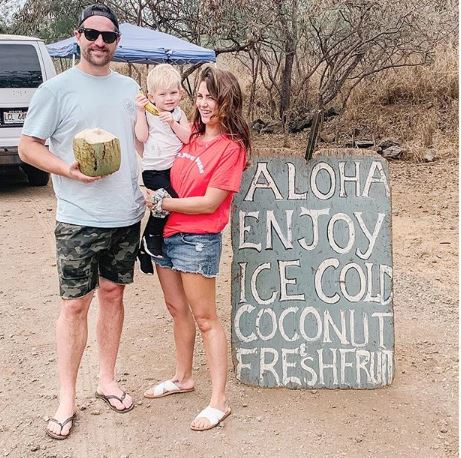 The contradiction in modern society is clear: we moved from the Victorian will power and rigid self-control that produced the prosperous industrial civilization and rules and regulations against which the many of the millennials and politicians are now revolting against in the age of information, to a freedom that may not be a new expansion of consciousness at all but a making ourselves over into the image of the machines in a more powerful and subtle forms. Are you making your decisions based solely on what you hear, on popular opinion, out of fear? Have you even taken the time to figure out what you want in terms of life and politics? For example, Leo, with his golden hair and beautiful gray eyes, is the age of two. He has been watching the toddler’s soap opera Paw Patrol for months and since seeing the show, he started marching around the house demanding, “I want a coconut, I want a coconut, I want a coconut.” So, his parents fly their beautiful baby to Hawaii so he could have his first coconut. When Leo got to Hawaii, he actually picked a petite banana over the coconut. Leo thought he wanted a coconut because the character on the show made it seem so appealing. Being able to think things through is the remedy for a stifling nonpersonal civilization of machines, news, and TV shows. #RandolphHarris 18 of 19
 It is just amazing that our curious predicament is that the same processes which makes modern mortals so powerful—the magnificent development of new sources of energy and other kinds of technical energy—are the very processes which render us powerless. Even though this is the age of social media, where we can choose what information we want to receive, many people are still be indoctrinated by the television, and this can render our wills to be undermined. We are told by many people the will is an illusion anyway, but that is not true. There are other mediums to get programming, but one of the all time favorite, and most powerful is that television. The dilemma is sharpened, furthermore, by the fact that just when we feel most powerless in the face of the juggernaut of impersonal power of society that surrounds of and molds us, we turn on the TV to get power. We want to find out What Would Dolly Do? or how AJ Cook saved a life on Criminal Minds or what is Paw Patrol enticing its audience to desire this week or what accent pieces did Todd Talbot and Jillian Harris on Love it or List it Vancouver select to go with the renovated Victorian and did they keep the wall or add more windows to give the house that ethereal feeling? We are called on to take responsibility for much vaster and more portentous choices. And considering the matter of increased leisure, choices will be necessary for the growing masses of people who will be working only four or six hours of the day. We have the gift of freedom, yes; but the dilemma placed on the individual is tremendous indeed. #RandolphHarris 19 of 19
To Venture in the Highest Sense is Precisely to Become Conscious of One’s Self
 Why give up an opportunity to see her again? There was not any harm in just seeing her. The more we come to terms with our soul tendencies, the more we find ourselves conceiving and living by a universal structure of reality. A friend of mine with whim I was having lunch seemed depressed. The lunch was not far along when he told me that he was preoccupied over some event of the weekend. His three children, aged twelve to twenty-three, had devoted several pithy hours to pointing out how he had been, if not responsible for, at least a prime contributor to, their problems. The upshot of their attack was that he had not made enough clear decisions in his relation to them, had not take a firm enough stand or set a strong enough structure. However, it is important that his children felt comfortable enough to communicate their issues with him, because some adult children stay respectful to their parents out of necessity and you never may know how they feel about the things you did and know you are responsible for doing that caused extreme hardship in their lives, when you know it is your fault, regardless of if you are in denial or not. Nonetheless, my friend, a sensitive, imaginative man who was a considerable success in his own life and work, had been brought up by strict inner-directed parents. However, he had known that he could never raise his children on that Victorian will-power pattern. #RandolphHarris 1 of 13
 At the same time, my friend and his wife had also never been devotees of the popular over permissiveness which filled the vacuum when Victorianism was routed. What struck me with poignancy as he talked was my awareness that almost every parent these days seems to express in some form the same pain and perplexity that infused his question, “How does a parent make decisions about his children? How should a father asset his will?” This crisis of will affects the neurotic and normal alike—the patient on the couch as well as the psychiatrist or psychologist in the chair listening to him. The man I referred to was not in treatment for neurosis; yet he was experiencing the same contradiction in will and decision that is an inescapable expression of the psychological upheaval of the transitional age in which we live. The inherited basis of our capacity for will and decision has been irrevocably destroyed. And, ironically if not tragically, it is exactly in this portentous age, when power has grown so tremendously and decisions are so necessary and so fateful, that we find ourselves lacking any new basis for will. That Victorian will power is a faculty by which people make resolutions and then direct their lives down the rational and moral road that the culture dictates. #RandolphHarris 2 of 13
 However, most of what motives us and our behaviors—whether in bringing up children or participating in pleasures of the flesh or running a business—are determined by unconscious urges, anxieties, fears, and the endless host of bodily drives and instinctual forces. The deeply rooted belief in psychic freedom and choice is quite unscientific and must be given ground before the claims of a determinism which governs mental life. Loss of individual will and responsibility is due to the fact the people no longer reflect on what is emerging from the depths of their soul or culture, and then they reflect and interpret and mold what they find without pondering why. In effect, this is a mutilation of one’s own consciousness, and it forfeits the chance to pus through the crisis to a new place of consciousness and integration. And in the process, one’s image of oneself will never be the same again; our only choice is to retreat before this destruction of our vaunted will power or to push on to the integration of consciousness on new levels. I do not wish or choose to do the former; but we have not yet achieved the latter; and our crisis of will is that we are now paralyzed between the two. #RandolphHarris 3 of 13
 The dilemma arising from the undermining of will has become a thorny problem. Among the sophisticated use of the term will power has become perhaps the most unambiguous badge of naivete. It has become unfashionable to try, by one’s unassisted efforts, to force one’s way our of a condition of neurotic misery; for the stronger the will the more likely it is to be labeled a counter-phobic maneuver. The unconscious is heir to the prestige of will. As one’s fate formerly was determined by will, now it is determined by the repressed mental life. Knowledgeable moderns put their backs to the couch and in so doing may fail to put their shoulders to the wheel. As will has been devalued, so had courage; for courage can exist only in the service of will, and can hardly be valued higher than that which it serves. In our understanding of human nature we have gained determinism, lost determination. The tendency to see ourselves as the spawns of determinism has spread, in late decades, to include contemporary mortal’s conviction that one is the helpless object of scientific forces in the form of atomic power. The helplessness is, of course, vividly represented by the nuclear bomb, about which the typical citizen feels powerless to do anything. Many intellectuals saw this coming and asked in their own terms whether modern mortals are obsolete. #RandolphHarris 4 of 13
 However, the important development in our present decade is that this is the common awareness of all who even watch TV or go to the movies, the modern era has destroyed mortal’s faith in one’s ability to influence what happens to him or her. Indeed, the central core of modern mortal’s neurosis, it may be fairly said, is the undermining of one’s experience of oneself as responsible, the sapping of one’s will and ability to make decisions. The lack of will is much more than merely an ethical problem: the modern individual so often has the conviction that even if one did exert one’s will—or whatever illusion passes for it—one’s actions would not do any good anyway. It is this inner experience of impotence, this contradiction in will, which constitutes our critical problem. Our ultimate concern must be expressed symbolically, because emblematic language alone is able to express our supreme concern. Symbols have one characteristic in common with signs; they point beyond themselves to something else. The red sign at the street corner points to the order to stop the movement of cars at certain intervals. A red light and the stopping of cars have essentially no relation to each other, but conventionally they are untied as long as the convention lasts. The same is true of letters and numbers and partly even words. They point beyond themselves to sounds and meanings. They are given this special function by convention within a nation or by international conventions, as mathematical signs. #RandolphHarris 5 of 13
 Sometimes such signs are called symbols; but this is unfortunate because it makes the distinction between signs and symbols more difficult. Decisive is the fact that signs do not participate in the reality of that to which they point, while symbols do. Therefore, signs can be replaced for reasons of expediency or convention, while symbols cannot. This leads to the symbol: It participates in that to which it points: the flag participates in the power and dignity of the nation for which it stands. Therefore, it cannot be replaced except after an historic catastrophe that changes the reality of the nation which it symbolizes. An attack on the flag is felt as an attack on the majesty of the group in which it is acknowledged. Such an attack is considered blasphemy. Another characteristic of a symbol is that it opens up levels of reality which otherwise are closed for us. All arts create symbols for a level of reality which cannot be reached in any other way. A picture and a poem reveal elements of reality which cannot be approached scientifically. In the creative work of art we encounter reality in a dimension which is closed for us without such works. The symbol’s characteristic not only opens up dimensions and elements of reality which otherwise would remain unapproachable but also unlocks dimensions and elements of our soul which correspond to the dimensions and elements of reality. #RandolphHarris 6 of 13
 We never know we go—when we are going. We jest and shut the door; fate following behind us bolts it, and we accost no more. A great play gives us not only a new vision of the human scene, but it opens up hidden depths of our own being. Thus we are able to receive what the play reveals to us in reality. There are within us dimensions of which we cannot become aware except through symbols, as melodies and rhythms in music. Symbols cannot be produced intentionally—this is further characteristic. They grow out of individual or collective unconscious and cannot function without being accepted by the unconscious dimension of our being. Symbols which we have an especially social function, as political and religious symbols, are created or at least accepted by the collective unconscious of the group in which they appear. Additionally, a consequence of the fact that symbols cannot be invited, like living beings, they grow and die. They grow when the situation is ripe for them, and they die when the situation changes. The symbol of the king grew in a special period of history, and it died in most parts of the World in our period. Symbols do not grow because people are longing for them, and they do not die because of scientific or practical criticism. The die because they can no longer produce response in the group where they originally found expression. #RandolphHarris 7 of 13
 These are the main characteristics of every symbol. Genuine symbols are created in several sphere of mortal’s cultural creativity. The built environment reflects the natural World and the conception of the people who inhabit it of their place within the natural scheme of things. A building’s form might echo the World around it, or might contrast with it—but, in each case, the choices builders make reveal their attitudes toward the World around them. The architecture of the vast majority of early civilizations was designed to imitate natural forms. The significance of the pyramids of Egypt is the subject of much debate, but their form may well derive from the image of the god Ra, who in ancient Egypt was symbolized by the rays of the Sun descending to Earth. A test in one pyramids reads: “I have trodden these rays as ramps under my feet.” I believe that inscription is in one of the Pyramids of Mycerinus (circa 2470 BCE). As one approached the mammoth pyramids, covered in limestone to reflect the light of the Sun, the eye was carried skyward to Ra, the Sun itself, who was in the desert the central fact of life. Human’s ultimate concern must be expressed symbolically! One may ask: Why can it not be expressed directly and properly? If money, success or the nation is someone’s ultimate concern, can this not be said in a direct way without symbolic language? It is not only those cases in which the content of the ultimate concern is called “God” that we are in the realm of symbols? #RandolphHarris 8 of 13
 The answer is that everything which is a matter of unconditional concern is made into a god. If the nation is someone’s ultimate concern, the name of the nation becomes a sacred name and the nation receives divine qualities which far surpass the reality of being and functioning of the nation. The nation then stands for and symbolizes the true ultimate, but in an idolatrous way. Success as ultimate concern is not the natural desires of actualizing potentialities, but is readiness to sacrifice all other values of life for the sake of a position of power and social predominance. The anxiety about not being a success is an idolatrous form of the anxiety about divine condemnation. Success is grace; lack of success, ultimate judgment. In this way concepts designating ordinary realities become idolatrous symbols of ultimate concern. The reason for this transformation of concepts into symbols is the character of ultimacy and the nature of faith. That which is the true ultimate transcends the realm of finite reality infinitely. Therefore, no finite reality can express it directly and properly. Religiously speaking, God transcends one’s own name. This is why the use of one’s name easily becomes an abuse or a blasphemy. Whatever we say about that which concerns us ultimately, whether or not we call it God, has a symbolic meaning. It points beyond itself while participating in that to which it points. In no other way can faith express itself adequately. #RandolphHarris 9 of 13
 The language of faith is the language of symbols. If faith were what we have shown that it is not, such an assertion could not be made. However, faith, understood as the state of being ultimately concerned, has no language other than symbols. When saying this I always expect the question: Only a symbol? One who asks this question shows that one has not understood the difference between signs and symbols nor the power of symbolic language, which surpasses in quality and strength the power of any nonsymbolic language. One should never say “only a symbol,” but one should say, “not less than a symbol.” With this in mind we can now describe the different kinds of symbols of faith. The fundamental symbol of our ultimate concern is God. In the 1432 portrait of God by Jan van Eyck, God is celebrated in a materialism that is the proper right of benevolent kings. Behind God’s head, across the top of the throne, are Latin words that, translated into English, read: “This is God, all power in his divine majesty; of all the best, by the gentleness of his goodness; the most liberal giver, because of his infinite generosity.” God’s mercy and love are indicated by the pelicans embroidered on the tapestry behind him, which is Christian tradition symbolize self-sacrificing love, since pelicans were believed to wound themselves in order to feed their young with their own blood if other food was unavailable. #RandolphHarris 10 of 13
 A symbol of God is always present in any act of faith, even if the act of faith includes the denial of God. Where there is ultimate concern, God can be denied only in the name of God. One God can deny the other one. Ultimate concern cannot deny its own character as supreme. Therefore, it affirms what is meant by the word “God.” Atheism, consequently, can only mean the attempt to remove any ultimate concern—to remain unconcerned about the meaning of one’s existence. Indifference toward the ultimate question is the only imaginable form of atheism. Whether it is possible is a problem which must remain unsolved at this point. In any case, one who denies God as a matter of ultimate concern affirms God, because one affirms ultimacy in one’s concern. God is the fundamental symbol for what concerns us ultimately. Again it would be completely wrong to ask: So God is nothing but a symbol? Because the next question has to be: A symbol for what? And then the answer would be: For God! God is a symbol for God. This means that in the notion of God we must distinguish two elements: the element of ultimacy, which is a matter of immediate experience and not symbolic in itself, and the element of concreteness, which is taken from our ordinary experience and symbolically applied to God. #RandolphHarris 11 of 13
 The mortal whose ultimate concern is a sacred tree has both the ultimacy of concern and the concreteness of the tree which symbolizes one’s relation to the ultimate. The person who adores Apollo is ultimately concerned, but not in an abstract way. One’s ultimate concern is symbolized in the divine figure of Apollo. The mortal who glorifies Jahweh, the God of the Old Testament, has both an ultimate concern and a concrete image of what concerns one ultimately. This is the meaning of the seemingly cryptic statement that God is the symbol of God. In this qualified sense God is the fundamental and universal content of faith. It is obvious that such an understanding of the meaning of God makes the discussion about the existence or non-existence of God meaningless. It is meaningless to question the ultimacy of a supreme concern. This element in the idea of God is in itself certain. The symbolic expression of this element varies endlessly through the whole history of humankind. Here again it would be meaningless to ask whether one or another of the figures in which an ultimate concern is symbolized does exist. If existence refers to something which can be found within the whole of reality, no divine being exists. The question is not this, but: which of the innumerable symbols of faith is most adequate to the meaning of faith? #RandolphHarris 12 of 13
 In other words, which symbol of ultimacy expresses the ultimacy without idolatrous elements? This is the problem, and not the so-called existence of God—which is in itself an impossible combination of words. God as the ultimate in mortal’s ultimate concern is more certain than any other certainty, even that of oneself. God as symbolized in a divine figure is a matter of daring faith, of courage and risk. God is the basic symbol of faith, but not the only one. All the qualities we attribute to him, power, love, justice, are taken from finite experiences and applied symbolically to that which is beyond finitude and infinite. If faith calls God “almighty,” it uses the human experience of power in order to symbolize the content of its infinite concern, but it does not describe a highest being who can do as one pleases. So it is with all the other qualities and with all the actions, past, present, and future, which mortals attribute to God. They are symbols taken from our daily experiences, and not information about what God did one upon a time or will do at sometime in the future. Faith is not the belief in such stories, but it is the acceptance of symbols that express our ultimate concern in terms of divine actions. Another group of symbols of faith are manifestations of the divine in things and events, in persons and communities, in words and documents. This whole realm of sacred objects is a treasure of symbols. Holy things are not holy in themselves, but they point beyond themselves to the source of all holiness, that which is of ultimate concern. #RandolphHarris 13 of 13
After Dinner Light for Flowers and Dukes for Setting Sun
 It was unspeakable to need someone in this way. I closed my eyes and listened to the night. Ravenous, repulsive creatures singing magnificently. If the workers and employees of an enterprise were exclusively concerned with their enterprise, the alienation between mortals and their social forces would remain unchanged. The narcissistic, alienated attitude would only have been extended from one individual to the team. It is therefore not an incidental but an essential part of workers’ participation that they looked beyond their own enterprise, that they be interested in and connected with consumers as well as with other workers in the same industry, and with the working population as a whole. The development of a kind of local patriotism for the firm, of an esprit de corps similar to that of college and university students, as recommended by British social psychologists, would only reinforce the asocial and egotistical attitude which is the essence of alienation. All such suggestions in favor of team enthusiasm ignore the fact that there is only one truly social orientation, namely the one of solidarity with humankind. Social cohesion within the group, combined with antagonism to the outsider, is not social feeling but extended egotism. #RandolphHarris 1 of 18
 All suggestions in the direction of the humanization of work do not have the aim of increasing economic output nor is their goal a greater satisfaction with work per se. They make sense only in a totally different social structure, in which economic activity is a part—and a subordinate part—of social life. One cannot separate work activity from political activity, from the use of leisure time and from personal life. If work were to become human, no real change would occur. In fact, it could not become interesting. It is the very evil of present-day culture that it separates and compartmentalizes the various spheres of living. The way to sanity is possessed in overcoming this split and in arriving at anew unification and integration within society and within the individual human being. The hostility in industry should give way to a feeling of participation in a joint endeavour. How is this to be achieved? The most direct and easily exploitable line of advance is in the direction of joint consultation. Much fruitful work has been done in this sphere, and it is now clear that something more is needed than joint production committees on the present model—some more radical effort to give the worker a sense of participation in the making of decisions. A few progressive firms have already made bold advances, and the results are encouraging. #RandolphHarris 2 of 18
 It could be advantageous to alter the legal structure of company ownership as to substitute for shareholders’ sole control a constitution which explicitly defines the responsibilities of the firm to worker, consumer and community; workers would become members of the company, and have their representatives on the board of directors. Ownership enterprises, when it passes from wealthy individuals, should go, not to the state, but to less remote public bodies, and should permit greater diffusion of power and encourage people of all sorts to play a more active part in the work and control of pubic and voluntary organizations. Consultation is less successful the further it recedes from face-to-face discussion on the job; and the size and structure of industrial units and the degree to which they can exercise independent initiative and therefore seen as matters of supreme importance. What is finally required for policy decisions and for an executive authority willingly accepted by all the members of an industry. There must be some exit process by which all those employed in an industry are enabled to participate in policy decisions; either through directly elected representative on the board or through a hierarchical system of joint consultation wit considerable powers. #RandolphHarris 3 of 18
 In either case there must also be an increasing participation in the process of interpreting policy and of making decisions at subordinate levels. The creation of a feeling of common purpose in the activities of industry still remains, therefore, one of the outstanding objectives of Capitalism. After all, what is the matter with joint stock company is the irresponsible dictatorship exercised over it, nominally by its shareholders, actually in many cases by one or two self-appointing and self-perpetuating directors. Make public companies directly responsible both to the community and to the whole body of those engaged in their activities, and they would become institutions of a very different kind. Also, it has been noted throughout history, in France and Germany, after the war that transferring of property rights from the private capitalist to society of the state has, in itself, only a negligible effect on the situation of the worker, and the central problem of why people cannot afford to rent and buy in the cities they live lies in the change of the work situation. Our whole industry is built upon the existence of an ever-widening inner market. Each enterprise wants to sell more and more in order to conquer an ever-widening share of the market. #RandolphHarris 4 of 18
 The result of this economic situation is that industry uses all means within its power to whet the buying appetite of the population, to create and reinforce the receptive orientation which is so detrimental too mental sanity. As we have seen, this means that there is a craving for new but unnecessary things, a constant wish to buy more, even though the standpoint of human, unalienated use, there is no need for the new product. (The automobile industry, for instance, spent some billion dollars on the changes for the new 2019 models, BMW alone some hundred million dollars to compete with Mercedes-Benz. Without doubt, the older BMW was an excellent car, and the fight between BMW and Mercedes-Bens has not primarily the effect of giving the public a better car, but of making them buy a new car when the old one would have done for another generation or so). Another aspect of the same phenomenon is the tendency to waste, which is furthered by the economic need for increasing mass production. Aside from the economic loss implied in this waste, it has also an important psychological effect: it makes the consumer lose respect for work and human effort; it makes the makes one forget the needs of the people within one’s own and in less affluent lands, for whom the product one wastes could be a most valuable possession; in short, our habits of waste show an immature disregard for the realities of human life, for the economic struggle for existence which nobody can evade. #RandolphHarris 5 of 18
 It is quite obvious that in the long run no amount of spiritual influence can be successful if our economic system is organized in such a way that a crisis threatens when people do not want to buy more and more newer and better things. Hence if our aim is to change alienated into human consumption, changes are necessary in those economic processes which produce alienated consumption. It is the task of economists to devise such measures. Generally speaking, it means to direct production into fields where existing real needs have not yet been satisfied, rather than where needs must be created artificially. This can be done by means of credits through state-owned banks, by the socialization of certain enterprises, and by drastic laws which accomplish a transformation of advertising. Closely related to this problem is that of economic help from the industrialized societies to the economically less developed part of the World. It is quite clear that the time of colonial exploitation is over, that the various parts of the World have been brought together as closely as one continent was a hundred years ago, and that peace for the wealthier part of the World is dependent on the economic advancement of the less affluent part. Peace and liberty in the Western World cannot, in the long run, coexist with hunger and sickness in African and China. #RandolphHarris 6 of 18
 Reduction of unnecessary consumption in the industrialized counties is a must if they want to help the nonindustrailized countries, and they must want to help them, if they want peace. A World development program covering fifty years would increase agricultural production to the point where all persons would receive adequate nutrition and would lead to an industrialization of the now undeveloped areas similar to the prewar level of Japan. The yearly outlay for the Untied States for such a program would be between four and five billion dollars each for the first thirty years, and afterward les. When we compare this to our national income, to our present federal budget, to the funds required for armament, and to the cost of waging war, the amount required does not appear to be excessive. When we compare it to the potential gains that can result from a successful program, it appears even smaller. And when we compare the cost with that of inaction and to the consequences of maintaining the status quo, it is indeed insignificant. The foregoing problems is only part of the more general problem as to what extent the interest of profitable capital investment may be permitted to manipulate the public needs in a detrimental and unhealthy way. The most obvious examples are our movie industry, the comic-book industry and the crime pages of our newspaper. #RandolphHarris 7 of 18
 In order to make the highest profit, the lowest instincts are artificially stimulated and the mind of the public is poisoned. The Food and Drug Act has regulated the unrestricted production and advertising of harmful food and drugs; the same can be done with regard to all other vital necessities. If such laws should prove to be ineffective, certain industries, such as the film industry, must be socialized, or at least competing industries must be created, financed with public funds. In a society in which the only aim is the development of mortals, and in which material needs are subordinated to spiritual needs, it will not be difficult to find legal and economic means to insure the necessary changes. As far as the economic situation of the individual citizen is concerned, the idea of equality of income has been the aim that the capitalistic society has tried to reach. What Americans need is an income which will be the basis for a dignified human existence. As far as inequalities of income are concerned, it seems that they must not transcend the point where differences in income lead to differences in the experience of life. The mortal without an income of millions, who can satisfy any whim without even thinking about it, experiences life in a different way from the mortal who to satisfy one costly wish has to sacrifice another. #RandolphHarris 8 of 18
 The mortal who can never travel beyond his town, who can never afford any luxury (that is to say, something that is not necessary), again has a different life experience from one’s neighbor who can do so. However, even within certain differences of income the basic experience of life can remain the same, provided the income differences does not exceed a certain margin. What matters is not so much the greater or lesser incomes as such, but the point where quantitative differences of income are transformed into a qualitative difference of life experience. Needless to say, the system of social security, as it exists now in Great Britain and the United States of America for instance, must be retained. However, this is not enough. The existing social-security system must be extended to a universal subsistence guarantee. Each individual can act as a free and responsible agent only if one of the main reasons for present-day un-freedom is abolished: the economic threat of starvation which forces people to accept working conditions which they would otherwise not accept. We are no longer at the point where we can live off the land. Therefore, the owners of capital can enforce their will on the mortal who owns only one’s life, because without capital, we have no work except what the capitalist offers us. #RandolphHarris 9 of 18
 One hundred and fifty years ago, it was a widely accepted belief that no one had the responsibility for one’s neighbor. It was assumed—and scientifically proved by economists—that the laws of society made it necessary to have a vast army of less affluent and jobless people in order to keep the economy going. Today, hardly anybody would dare to voice this principle any longer. It is generally accepted that nobody should be excluded from the wealth of the nation, either by laws of nature, or by those of society. The rationalizations which were current a hundred years ago, that the less affluent owed their condition to their ignorance, lack of responsibility—briefly, to their sins—are outdated. In all Western industrialized countries a system of insurance has been introduced which guarantees everyone a minimum for subsistence in case of unemployment, sickness and old age. It is only one step further to postulate that, even if these conditions are not present, everyone has a right to receive the means to subsist. Practically speaking, that would mean that every citizen can claim a sum, enough for the minimum of subsistence even though one is not unemployed, sick or aged. One can demand this sum if one has quit one’s job voluntarily, if one wants to prepare oneself for another type of work, or for any personal reason which prevents one from earning money, without falling under one of the categories of the existing insurance benefits; shortly, one can claim this subsistence minimum without having to have any reason. #RandolphHarris 10 of 18
 Some say it should be limited to two years, so as to avoid the fostering of a neurotic attitude which refuses any kind of social obligation. This may sound like a fantastic proposal, but so would our insurance system have sounded to people one hundred and fifty years ago. The main objection to such a scheme would be that if each person were entitled to receive minimum support, people would not work. This assumption rests upon the fallacy of the inherent laziness in human nature; actually, aside from neurotically lazy people, there would be very few who would not want to earn more than the minimum, and who would prefer to do nothing rather than work. However, the suspicious against a system of guaranteed subsistence minimum are not unfounded from the standpoint of those who want to use ownership of capital for the purpose of forcing others to accept the work conditions they offer. If nobody were forced any more to accept work in order not to starve, work would have to be sufficiently interesting and attractive to induce one to accept it. Freedom of contract is possibly only if both parties are free to accept and reject it; in the present capitalist system this is not the case. #RandolphHarris 11 of 18
 However, such a system would be not only the beginning of real freedom of contract between employers and employees; it would also enhance tremendously the sphere of freedom in interpersonal relationships between person and person in daily life. Let us look at some examples. A person who is employed today, and dislikes one’s job, is often forced to continue in it because one does not have the means to risk unemployment even for one or two months, and naturally if one quits the job, one has no right to unemployment benefits. However, actually the psychological effects of this situation go much deeper; the very fact that one cannot risk being fired, tends to make one afraid of one’s boss or whomever one is dependent on. One will be inhibited in answering back; one will try to please and to submit, because of the constantly present fear that the boss could fire one if one asserted oneself. Or let us take the mortal who at the age of forty decides the he or she wants an entirely different kind of job, for which it will take one or two years to prepare oneself. Since under the conditions of a guaranteed existence minimum this decision would imply having to live with a minimum of comfort, it would require great enthusiasm for and interest in one’s newly chosen field, and thus only those who were gifted and really interested would make the choice. #RandolphHarris 12 of 18
 Or let us take a woman living in an unhappy marriage, whose only reason for not leaving her husband is the inability to support herself for the time necessary to be trained for a job. Or let us think of an adolescent living in severe conflicts with a neurotic or destructive father, whose mental healthy would be saved if he were free to leave his family. Briefly, the most fundamental coercion on economic grounds in business and private relations would be removed and the freedom to act would be restored to everybody. What about costs? Since we already have adopted the principle for the unemployed, the sick and aged, there would only be a marginal group of additional people who would make use of this privilege, the ones who are particularly gifted, those who find themselves in a temporary conflict, and the neurotic ones who have no sense of responsibility, or interest in work. Considering all factors involved, it would seem that the number of people using this privilege would not be extraordinarily high, and by careful research an approximate estimate could even be made today. However, it must be emphasized that this proposal is to be taken together with the other social changes suggested here, and that in a society in which the individual citizen actively participates in one’s work, the number of people not interested in work would only be a fraction of what it is under present-day conditions. #RandolphHarris 13 of 18
 Whatever their number, it seems that the cost for such a scheme would hardly be more tan what big states have spent for the maintenance of armies in the last decades, not taking into consideration the cost of armaments. It should also not be forgotten that in a system which restores interest in life and in work to everybody, the productivity of the individual worker would be far above that reported today as a result of even a few favorable changes in the work situation; in addition, our expenses due to criminality, neurotic or psychosomatic illness would be considerably less. Less dramatic illustrations of the loss of the sense of power of the self are present all around us in contemporary society, and, indeed, are so common that we generally take them for granted. For example, there is the curious remark made regularly nowadays at the end of radio programs, “Thanks for listening.” When you come to think of it, this remark is quite amazing. Why should the person who is doing the entertaining, who is giving something ostensibly of value, thank the recipient for taking it? To acknowledge applause is one thing, but thanking the recipient for deigning to listen and be amused is a quite different thing. It betokens that the action is given its value, or lack of value, by the whim of the consumer, the receiver—in the case of our illustration the consumer being their majesties, the public. #RandolphHarris 14 of 18
 Imagine Kreisler, after playing a concerto, thanking the audience for listening! The parallel suggested by the radio announcer’s remark is the court jester, who not only had to perform but at the same time to beg the majesties who watched to deign to be amused—and proverbially the court jester was in as humiliating a position as a human being could occupy. Obviously we are not criticizing radio announcers as such. This remark merely illustrates an attitude which runs through our society: so many people judge the value of their actions not on the basis of the action itself, but on the basis of how the action is accepted. It is as though one has always to postpone one’s judgment until one looked at one’s audience. The person who is passive, to whom or for whom the act is done, as the power to make the act effective or ineffective, rather than the one who is doing it. Thus we tend to be performers in life rather than persons who live and act as selves. The alternative of having versus being does not appeal to common sense. To have, so it would seem, is a normal function of our life: in order to live we must have things. Moreover, we must have things in order to enjoy them. In a culture in which the supreme goal is to have—and to have more and more—and in which one can speak of someone as being worth a million dollars, how can there be any alternative between having and being? #RandolphHarris 15 of 18
 One the contrary, it would seem that the very essence of being is having; that if one has nothing, one is nothing. Yet the great Masters of Living have made the alternative between having and being a central issues of their respective systems. In order to arrive at the highest state of human development, we must not crave possession. “For whosoever will save one’s life shall lose it; but whosoever will lose one’s life for my sake, the same shall save it. For what is a mortal advantaged, if one gains the whole World, and loses oneself, or be cast away?” reports Luke 9.24-25. To have nothing and make oneself open and empty, not letting one’s selfishness get in one’s way, is the condition for achieving spiritual wealth and strength. Luxury can be as much as a nice as poverty, depending on what one does to obtain it. Having and being are two fundamental modes of experience, the respective strengths of which determine the differences between the character of individuals and various types of social character. The force of life is stronger than the force of mere intellectual curiosity. The difference between being and having is not essentially that between East and West. The difference is rather between a society centered around persons and one centered around things. The having orientation is characteristic of Western industrial society, in which greed for money, fame, and power has become the dominant theme of life. #RandolphHarris 16 of 18
 Many modern people cannot understand the spirit of a society that is not centered in property and prosperity. Love becomes a goddess, an idol into which the mortal projects one’s loving; in this process of alienation one ceases to experience love, but is in touch only with one’s capacity to love by one’s submission to the goddess of Love. One has ceased to be an active person who feels; instead one has become an alienated worshiper of an idol, and one is lost wen out of touch with one’s idol. I have transformed my feeling into something I possess: the problem. However, problem is an abstract expression for all kinds of difficulties. I cannot have a problem, because it is not a thing that can be owned; it, however, can have me. That is to say, I have transformed myself into a problem and am now owned by my creation. This way of speaking betrays a hidden, unconscious alienation. To say I have a great love for you is meaningless. Love is not a thing that one can have, but a process, an inner activity that one is the subject of. I can love, I can be in love, but in loving, I have nothing. In fact, the less I have, the more I can love. To have is a deceptively simple expression. Every human being has something: a body, clothes, shelter—on up to the modern man or woman who has a car, a television set, a washing machine, and so forth. #RandolphHarris 17 of 18
 Living without having something is virtually impossible. Why, then, should having be a problem? Yet the linguistic history of having indicates that the word is indeed a problem. To those who believe that to have is a most natural category of human existence it may come as a surprise to learn that many languages have no word for to have. It is clear that some people do not understand the word for to have as it developed in connection with the development of private property, while it is absent in societies with predominately functional property, that is, possession for the use. And that is why Eastern philosophies are hard to understand or may lead people in Western society astray. Traditionally, the way mortals have overcomes the daimonic is by naming it. In this way, the human being forms personal meaning out of what was previously a merely threatening impersonal chaos. We need only recall the crucial importance historically knowing the particular name of the demon in order to expell him. In the New Testament, Jesus calls out “Beelzebub!” or “Legion!” or some other presumably accurate name, and the devils or devils leave the possessed unfortunate immediately. The priests who were successful at casting out devils in the Middle Ages were those who could divine the name of the demon, the pronouncing of which was sufficient to conjure the evil spirit out and away. #RandolphHarris 18 of 18
God Keep You from the Knowledge of Who You Are–How Much Self-Knowledge Can a Human Being Bear?
 She was absolutely ablaze with an inner concentration power. Liberty, equality, fraternity—it should be acknowledged that, very often, those three words bring nothing to our mind except the picture on currency or the inscription on the front doors of public buildings. However, human beings are really free under three conditions: Economic freedom, intellectual freedom, and moral freedom. Economic freedom declares that mortals have an inalienable right to work. One has to have absolute right to the fruit of one’s work from which one should not part except freely. Work should also be understood as everything of value that one brings to society. Intellectual freedom dictates that a mortal cannot be really free if one has an ideal and philosophical attitude which makes it possible for one to have a coherent activity in life. One cannot, under pretext of hastening one’s economic or intellectual liberation, use means contrary to the ethics of the community. Last, moral freedom does not mean license. It would be easy to demonstrate that moral freedom is to be found only within strict observance of the group ethics freely accepted. Fraternity can blossom only in society. Selfishness is a dangerous and non-lasting way of helping oneself. Mortals cannot separate their true interest from those of society. One can help only by helping society. #RandolphHarris 1 of 20
 We should become conscious that our own inclinations make us find an increase of joy with others. Solidarity is not only a task, it is a satisfaction and the best guarantee of security. Fraternity leads to mutual tolerance and to the determination never to separate. This makes it possible to take all decisions unanimously on a common minimum. Equality-we condemn those who declare demagogically that all people are equal. We can see that people are not equal in their life situations, and sometimes under other circumstances. People are not even viewed as equal under the law. Some people are given more clot than others and preferential treatment. For us equality of rights means to put at the disposal of everyone the means to fulfill oneself completely. It is important to devise a scheme in which active participation of everyone does not contradict a sufficiently centralized leadership; irrational authority has to be replaced by rational authority. There is an emphasis on the practice of life as against ideological differences. This emphasis enables people of the most varied and contradictory convictions to live together in humanity and tolerance without any danger of having to follow the right opinion proclaimed by the community. #RandolphHarris 2 of 20
 Inasmuch as the work is not attractive technically, it is meaningful and attractive in its social aspect. Activity in the arts and science is an integral part of the total situation. Even during the Renaissance, the concept of imitations, or mimesis, involved the creation of representations that transcended mere appearance, that implied the sacred or spiritual essence of things. Various media develops a response to artists’ desire to imitate reality and express themselves more and more fluently. Some artists are interested in the ominous underside of contemporary culture that lurks as an ever present possibility in our lives. The goal is to portray psychological states that everyone experiences. Sometimes, like in Jane Dickson’s, Stairwell, 1984 one can almost feel the acid biting into the plate, as if the process itself is a metaphor for the pain and isolation of the figure learning forlornly over the bannister. Although it is printed in three colors, the roughness of the method’s surface serves to underscore the emotional turmoil and psychological isolation embodied in her subject matter. #RandolphHarris 3 of 20
 The situation of alienation is overcome, work has become a meaningful expression of human energy, human solidarity is established without restriction of freedom—or danger of conformity. While many of the arrangements and principles of the communities can be questioned and argued about, it seems nevertheless that we have here one of the most convincing empirical examples of a productive life, and of possibilities which are generally looked upon as fantastic from the standpoint of our present-day life in Capitalism. The communities descried so far are, of course, not the only examples for the possibility of Capitalistic lifestyles with a humanitarian focus. They do, however, contribute to our knowledge of the possibilities of a new style of life. They also show that most of these communities are executed by people with a shrewd intelligence, and immensely practical sense. Undoubtedly, there have been many shortcomings in the principles and practice of these experiments, which must be recognized in order to be avoided. Many times people fail and it is in several cases essentially a symptom of the laziness of the mind and the inherent conviction that what has not been cannot be and will not be. The aim is to create a work situation which gives one a lifetime and energy to something which has meaning for the individual, in which one knows what one is doing, has an influence on what is being done, and feel untied with, rather than separated from, one’s fellow beings. #RandolphHarris 4 of 20
 Another root of our malady is our loss of the sense of the worthy and dignity of the human being. When the individual is being swallowed up in the herd, and one is living by slave morality, it will de-humanize people and they will literally lose their identity as persons. However, this lose of the sense of self did not occur overnight. Many can recall the growing tendency to think of the self in superficial and oversimplified terms. Self-expression was supposed to be simply doing whatever popped into one’s head, as though the self were synonymous with any random impulse, and as though one’s decisions were to be made on the basis of a whom which might be a product of indigestion from a hurried lunch just as often as of one’s philosophy of life. To be yourself was then an excuse for relaxing into the lowest common denominator of inclination. To know one’s self was not thought to be especially difficult, and the problems of personality could be solved relatively easily by better adjustment. We were then congratulating ourselves that the child could be conditioned out of fear, superstition and other problem by techniques not essentially different from the way the dog’s saliva is conditioned to flow every time the dinner gong rings. These superficial views of the human situation were also furthered by the belief in automatic economic progress—we would all get richer and richer without too much struggles or suffering. #RandolphHarris 5 of 20
 Practically everyone who gets their information for the media alone, without doing further research, shares the same oversimplified view of the human being and society. Science is advancing so rapidly that soon we will give people whatever temperament one desires, choleric or timid, strong or weakly gendered, merely by chemical injections into the body. However true this kind of push-button psychology is becoming a reality, it was the basis for the satire which Aldous Huxley have it in his Brave New World. People have become too confident in techniques and gadgets, not in the human being. The oversimplified, mechanical view of the self really betokens an underlying lack of belief in the dignity, complexity and freedom of the person. It is clear that the disbelief in the power and dignity of the person is becoming more openly accepted, for there appears a good deal of concrete evidence that the individual self is insignificant and that one’s personal choices do not matter. In the face of totalitarian democratic movements and controlled economic earthquakes like the housing shortage, we tend to feel smaller and smaller as persons. The individual self is dwarfed into as ineffectual a position as the proverbial grain of sand pushed around by ocean breakers. We move on as the wheel wills; one revolution registers all things, the rise and fall in pay and prices. #RandolphHarris 6 of 20
 Most people now, therefore, are able to find good external reason for their belief that as selves they are insignificant and powerless. For how can one act, they well ask, in the face of the giant economic, political and social movements of the time? Authoritarianism in religion and science, let alone politics, is becoming increasingly accepted, not particularly because so many people explicitly believe in it but because they feel themselves individually powerless and anxious. So what else can one do, goes the reasoning, except follow the mass political leader (as happened in Europe) or follow the authority of customs, public opinion, and social expectations as is the tendency in this country? What is forgotten in such reasoning, is, of course, the fact that the loss of belief in the worth of the person is partly the cause of these mass social and political movements. Or, to put it more accurately, the loss of the self and the rise of collectivist movements, as we have pointed out, are both the result of the same underlying historical changes in our society. We need, therefore, to fight on both flanks—to oppose democratic totalitarianism and the other tendencies toward dehumanization of the person on one flank, and to recover our experience and belief in the worth and dignity of the person on the others. #RandolphHarris 7 of 20
 A startling picture of the loss of the sense of self in our society is given in a short novel, The Stranger, by the contemporary French author Albert Camus. It is the story of a Frenchman who is extraordinary in no respect—indeed, he might well be called an average modern man. He experiences the death of his mother, goes to work and about the ordinary things of life, has an affair and experiences pleasures of the flesh, all without any clear decision or awareness on his part. He later shoots a man, and it is vague even in his own mind whether he shot by accident or in self-defense. He goes through a murder trial and is executed, all with a horrible sense of unreality, as though everything happened to him: he never acted himself. The book is pervaded by a vagueness and haze which is frustrating and shocking, like the similar haze which is frustrating and shocking, like the similar haze of indecisiveness in Kafka’s stories. Everything seems to take place in a dream, with the man never really related to the World or anything he does or to himself. He is a man without courage or despair, despite the outwardly tragic events, because he has no awareness of himself. At the end when he is awaiting execution he almost gets a glimmer of the realization, as expressed, say in the words of George Herbert, “A sick toss’d vessel, dashing on each thing…My God, I mean myself.” Almost, but not quite; there is not enough sense of himself for even that to break through. #RandolphHarris 8 of 20
 The novel is haunting and subtly terrifying picture of the modern mortal who is truly a stranger to himself. Thus far the argument here has been that the character traits engendered by our socioeconomic system, for example, by our way of living, are pathogenic and eventually produce a sick person and, thus, a sick society. There is, however, a second argument from an entirely different viewpoint in favor of profound psychological changes in mortal as an alternative to economic and ecological catastrophe. It is raised in two reports that deal with the technological, economic, and population trends on a World scale. The only drastic economic and technological changes on a global level, according to a master plan, can avoid major and ultimately global catastrophe. Economic changes are possible only if fundamental changes in the values and attitude of mortals occur (in human character orientations), such as a new ethic and a new attitude toward nature. New society is possible only if, in the process of developing it, a new human being also develops, or in more modest terms, if a fundamental change occurs in contemporary mortal’s character structure. Our present social order makes us sick, and we are headed for an economic catastrophe unless we radically change our social system. #RandolphHarris 9 of 20
 The need for profound human changes emerges not only as an ethical or religious demand, not only as a psychological demand arising from the pathogenic nature of our present social character, but also as a condition for the sheer survival of the human race. Right living is not longer only the fulfillment of an ethical or religious demand. For the first time in history the physical survival of the human race depends on a radical change of human heart. However, a change of the human heart is possible only to the extent that drastic economic and social changes occur that give the human heart the change for change and the courage and the vision to achieve it. The almost unbelievable fact is that besides what President Trump is doing, no serious effort is made to avert what looks like a final decree of fate. While in our private life nobody except a mad person would remain passive in view of a threat to our total existence, those who are in charge of public affairs do practically nothing, and those who have entrusted their fate to them let them continue to do nothing. How is it possible that the strongest of all instincts, that for survival, seems to have ceased to motivate us? One of the most obvious explanations is that the leaders undertake any actions that make it possible for them to pretend they are doing something effective to avoid a catastrophe: endless conferences, resolutions, disarmament talks, all give the impression that the problems are recognized and something is being done to resolve them. #RandolphHarris 10 of 20
 Yet, while the appearance the people are listening, understanding and planning to take action to protect the citizens and their land, nothing of real importance happens; but both the leaders and the led anesthetize their consciences and their wish for survival by giving the appearance of knowing the road and marching in the right direction. Another explanation is that the selfishness the system generates makes leaders value personal success more highly than social responsibility. It is no longer shocking when political leaders and business executives make decisions that seem to be to their personal advantage, but at the same time are harmful and dangerous to the community. Indeed, if selfishness is one of the pillars of contemporary practical ethical, why should they act otherwise? They do not seem to know that greed (like submission) makes people stupid as far as the pursuit of even their own real interests is concerned, such as their interest in their own lives and the lives of their spouses and their children. At the same time, the general public is also selfishly concerned with their private affairs that they pay little attention to all that transcends the personal realm. #RandolphHarris 11 of 20
 Yet another explanation for the deadening of our survival instincts is that the changes in living that would be required are so drastic that people prefer the future catastrophe to the sacrifice they would have to make now. Arthur Koestler’s description of an experience he had during the Spanish Civil War is a telling example of this widespread attitude: Arthur Koestler sat in the comfortable villa of a friend while the advance of Franco’s troops was reported; there was no doubt that they would arrive during the night, and very likely he would be shot; he could save his life by feeling, but the night was cold and rainy, the house, warm and cozy; so he stayed, was taken prisoner, and only by almost a miracle was his life saved many weeks later by the efforts of friendly journalists. This is also the kind of behavior that occurs in people who will risk dying rather than undergo an examination that could lead to the diagnosis of a grave illness requiring major surgery. And many of us have been there, we will wait months and sometimes even years before we find out what is going on with us because will think it will heal on its own, and it actually ends up getting worse. Aside from these explanations for fatal human passivity in matters of life and death, there is another. #RandolphHarris 12 of 20
 Knowledge is another expression of the soul. The aura of mystical emanation which, in most people’s minds, surrounds the physicists or the psychiatrist or psychologist, is composed of both veneration and suspicion. It is a contemporary form of an age-old phenomenon believed in not only by primitive people but by all people down through history; that acquiring knowledge gives one a soul weapon over other people. If I have some special knowledge of you or your World which you do not know, I have power over you. This may be as simple as the fact that I know how something works and you do not; but basically, it is much more complex: it always skates on the edge of participation in the primitive belief that this knowledge gives me a special magical power. Some of the animosity against psychiatrists and psychologist and, specifically, against psychoanalysts (who have to challenge the demons, and it would be a wonder if they dd get off unscathed) arises from this deep-seated fear. Mortals in these professions, it is felt by many people, have a knowledge of life and death which others do not. Thus, there is a tendency to cling to them as gods one day and fight them as hated devils the next. #RandolphHarris 13 of 20
 Knowledge is also our source of freedom and security. The truth shall set you free. However, in our emphasis on the gaining of knowledge, we have assumed that it was a one-way street—the more knowledge, the better; and we have forgotten this ambivalent, double character of knowledge, that it is also dangerous. We hear so much these days about knowledge bringing power, security, financial success, and so on, that we overlook the fact that the very word which refers to the acquiring of knowledge, “apprehend,” is also the word which means dread, “apprehension.” Looking in Webster’s, we find the definitions of apprehend: to perceive, to recognize the meaning of, to lay hold of with understanding; and the very next meaning is to anticipate with anxiety, dread of fear. And the same with “apprehension”: the first meaning, a grasp of the mind, is followed by the second, a distrust of fear of future evil. It cannot be an accident that woven into the very fabric of our language is the relationship between knowledge and the soul. “How dangerous it is to know,” we can say with Oedipus, “But I must know, no less.” It is dangerous to know, but it is more dangerous not to know. #RandolphHarris 14 of 20
 It is the psychoanalyst who can afford to forget this least of all. Patients come for treatment ostensibly with open arms for revelations about themselves. However, woe to the therapist who takes this at face value! The whole meaning of resistance and repression testifies to the anxiety and pain accompanying these disclosures about one’s self. That is one reason why it is good that the patient pay for one’s sessions; is one will not take too much when one pays for it, one will take scarcely a thing given one gratis! This gives us a new approach to the concept of resistance and repression—they reveal in person an inescapable need to hide from the truth about oneself. It is perpetually a moot question: How much self-knowledge can a human being bear? Oedipus is the prototype of the person who gains knowledge about oneself and pays the ultimate price for it. He is well aware of the threatening quality of knowledge: “Oh, I am in dread to hear,” he cries, “but I must hear no less.” Tiresias tries to persuade him not to search: “How terrible it is to know when no good comes from knowing.” The issue in the drama is, Shall Oedipus know what he has done? Shall Oedipus know who he is and what his origins are? Everyone commits these acts, in fantasy if not in reality—and in reality by the vicarious means of war and organized violence which one’s nation gives one. #RandolphHarris 15 of 20
 In actual fact, the only difference between Oedipus and the rest of humankind is that Oedipus faced and admitted what he had done despite all attempted persuasions to the contrary. Even Oedipus’ wife, Jocasta, joins in the general consensus that it is best that he remain in darkness; to show that she means this as a general principle of life, she attacks all the soothsayers and those who deal in myths or take the mysteries of the soul seriously: “Have no part of this craft,” she adjures her husband; dreams are not to be taken seriously and it is best to “live unthinking as a man may.” When the truth finally dawns on her (and it is important to keep in mind that she did not know this when she advised Oedipus not to seek his origins), she cries out desperately to her husband, “God keep you from the know of who you are!” However, Oedipus is a hero precisely because he will not let Tiresias or his wife or God or anyone else stand in the way of his knowledge about himself. He is the hero because he is man facing his own reality. Not that he does not cry out with the pain of it—he does, time and again. However, he repeats, “I will not stop till I have known the whole.” He also knows there are no false heroics “Curse on the man who took the cruel bonds from off my legs, as I lay in the field.” #RandolphHarris 16 of 20
 Though he curses the childhood which brought him this fate, he confronts it directly, and destroys himself in the process: a relatively happy and successful king transformed into a blind, bad-tempered, old man exiled to Colonus. However, he knows. And this courage to know, be it noted, with all its destructive possibilities, is found in the same person who can answer the riddle of the sphinx, the one who knows what man is. Down through the ages, mortals have tried through their myths to tell each other of this connection between knowledge and the soul. In Goethe’s Faust, the hero has such an all-encompassing drive to possess knowledge that the sells his soul to Mephistopheles and counts the price light—which was Goethe’s, and the myth’s way of saying that to give in to such an infinite passion for knowledge is already to have become one of the devil’s World. Adam and Eve are thrown out of Eden because they, having eaten of the tree of good and evil, now have knowledge; and this makes them like the gods, immortal. The legend portrays the birth of human consciousness and states that consciousness carries the soul with it. #RandolphHarris 17 of 20
 The myth of Prometheus has a parallel meaning: the god’s disclosing of the cultural arts to mortals—central in which is language—amounts to the setting of oneself against the other gods and incurring everlasting torment. Therefore, the more the soul is recognized, the more we shall be able to use the knowledge we acquire or our benefit and humankind’s. “O how great the plan of our God! For on the other hand, the paradise of God must deliver up the spirits of the righteous, and the grave deliver up the body of the righteous; and the spirit and the body is restored to itself again, and all mortals become incorruptible, and immortal, and they are living souls, having a perfect knowledge like unto us in the flesh, save it be that our knowledge shall be perfect,” reports 2 Nephi 9.13. The difficulty of understanding faith either as a matter of the intellect or as a matter of will, or of both in mutual support, has led to the interpretation of faith as emotion. This solution was, and partly is, supported from both the religious and the secular side. For the defenders of religion it was a retreat to a seemingly safe position after the battle about faith as a matter of knowledge or will had been lost. Religion is the feeling of unconditional dependence. Of course, feeling so defined does not mean in religion what it means in popular psychology. #RandolphHarris 18 of 20
 Religion is not vague and changing, but as a definite content: unconditional dependence, a phrase related to what we have called ultimate concern. Nevertheless, the word feeling as induced many people to believe that faith is a matter of merely subjective emotions, without a content to be known and a demand to be obeyed. This interpretation of faith was readily accepted by representatives of science and ethics, because they took it as the best way to get rid of the interference from the side of religion in the process of scientific research and technical organization. If religion is mere feeling it is innocuous. The old conflicts between religion and culture are finished. Culture goes its way, directed by scientific knowledge, and religion is the private affair of every individual and a mere mirror of one’s emotional life. No claims for truth can be made by it. No competition wit science, history, psychology, politics is possible. Religion, put safely into the corner of subjective feelings, has lost its danger for mortal’s cultural activities. Neither of the two sides, the religious and the cultural, could keep this well-defined covenant of peace. Faith the state of ultimate concern claims the whole mortal and cannot be restricted to the subjectivity of mere feeling. It claims truth for its concern and commitment to it. It does not accept the situation in the corner of mere feeling. #RandolphHarris 19 of 20
 If the whole mortal is grasped, all one’s functions are grasped. If this claim of religion is denied, religion itself is denied. It was not only religion which could not accept the restriction of faith to feeling. It was also not accepted by those who were especially interested in pushing religion into the emotional corner. Scientists, artist, moralists showed clearly that they also were ultimately concerned. Their concern expressed itself even in those creations in which they wanted most radically to deny religion. A keen analysis of most philosophical, scientific and ethical systems shows how much ultimate concern in present in them, even if they are leading in the fight against what they call religion. This show the limits of the emotionalist definition of faith. Certainly faith as an act of the whole personality has strong emotional elements within it. Emotion always expresses the involvement of the whole personality in an act of life or spirit. However, emotion is not the source of faith. Faith is definite in its direction and concrete in its content. Therefore, it claims truth and commitment. It is directed toward the unconditional, and appears in a concrete reality that demands and justifies such commitment. #RandolphHarris 20 of 20
Softened by Time’s Consummate Plush and then We Knelt in Prayer
 Well, now that is fascinating! So this dapper dude with the easy smile on his lips, wonderfully sunburnt tan skin, large and almost Graeco-Roman features, wearing the de rigueur New Orleans white linen three-piece suit does not always know what he is doing. My thesis is correct! I tried desperately to read the thoughts behind Erich’s words, but I could not. These May’s were so casually and maddeningly gifted. Maybe the man was not defenseless. He was just so strong he did not bother to put up any defenses. Obsessional work alone would drive people just as crazy as would complete laziness. With the combination, they can live. Besides, both contradictory attitudes correspond to an economic necessity: twenty-first century capitalism is based on maximal consumption of the goods and services produced as well as on routinized teamwork. Theoretical considerations demonstrate that radical hedonism cannot lead to happiness as well as why it cannot do so, given human nature. However, even without theoretical analysis the observable data show most clearly that our kind of pursuit of happiness does not produce well-being. We are a society of notoriously unhappy people: lonely, anxious, depressed, destructive, dependent—people who are glad when we have killed the time we are trying so hard to save. #RandolphHarris 1 of 19
 Ours is the greatest social experiment ever made to solve the question whether pleasure (as passive affect in contrast to the active affect, well-being and joy) can be a satisfactory answer to the problem of human existence. For the first time in history the satisfaction of the pleasure drive is not only the privilege of a minority but is possible for more than half the population. The experiment has already answered the question in the negative. The second psychological premise of the information age, that the pursuit of individual narcissism leads to harmony and peace, growth in everyone’s welfare, is equally erroneous on theoretical grounds, and again its fallacy is proven by observable data. To be a narcissist not only refers to my behavior but to my character. It means: that I want everything for myself; that possessing, not sharing, gives me pleasure; that I must become greedy because if my aim is having, I am more the more I have; that I must feel antagonistic toward all others; my customers whom I want to deceive, my competitors whom I want to destroy, my workers whom I want to exploit. I can never be satisfied, because there is no end to my wishes; I must be envious of those who have more and afraid of those who have less. However, I have to repress all these feelings in order to represent myself (to others as well as to myself) as the smiling, rational, sincere, kind human being everybody pretends to be. #RandolphHarris 2 of 19
 The passion for having must lead to never-ending class war. The pretense of the socialists and communists that the communists that their system will end class struggle by abolishing classes is fiction, for their system is based on the principle of unlimited consumption as the goal of living. As long as everybody want to have more, there must be formations of classes, there must be class war, and in global terms, there must be international war. Greed and peace preclude each other. Radical hedonism and unlimited egotism could not have emerged as guiding principles of economic behavior had not a drastic change occurred in the eighteenth century. In medieval society, as in many other highly developed as well as primitive societies, economic behavior was determined by ethical principles. Thus, for the scholastic theologians, such as economic categories as price and private property were part of moral theology. Granted that the theologians found formulations to adapt their moral code to the new economic demands (for instance qualification to the concept of just price); nevertheless, economic behavior remained human behavior and, hence, was subjected to the values of humanistic ethics. #RandolphHarris 3 of 19
 Through a number of steps eighteenth century capitalism underwent a radical change: economic behavior became separate from ethics and human values. Indeed, the economic machine was supposed to be an autonomous entity, independent of human needs and human will. It was a system that ran by itself and according to its own laws. The suffering of the workers as well as the destruction of an ever-increasing number of smaller enterprises for the sake of the growth of ever larger corporations was an economic necessity that one might regret, but that one had to accept as if it were the outcome of a natural law. American people are all supposed to be happy and nice because American culture is all about the American Dream, where people get an education, buy a house work hard and their dreams come true. America is supposed to be the beacon of light for the World. The development of this economic system was no longer determined by the question: What is good for Mortals? but by the questions: What is good for the growth of the system? One tried to hide the sharpness of this conflict by making the assumption that what was good for the growth of the system (or even for a single big corporation) was also good for the people. #RandolphHarris 4 of 19
 This construction was bolstered by an auxiliary construction: that the very qualities that the system required of human beings—narcissism, selfishness, and greed—were innate in human nature; hence, not only the system but human nature itself fostered them. Societies in which narcissism, selfishness, and greed did not exist were supposed to be primitive, their inhabitants childlike. People refused to recognize that these traits were not natural drives that caused industrial society to exist, but that they were the products of social circumstances. Not least in importance is another factor: people’s relation to nature became deeply hostile. Being freaks of nature who by the very conditions of our existence are within nature and by the gift of our reason transcend it, we have tried to solve our existential problem by giving up the Messianic vision of harmony between humankind and nature by conquering nature, by transforming it to our own purposes until the conquest has become more and more equivalent to destruction. Our spirit of conquest and hostility has blinded us to the facts that natural resources have their limits and can eventually be exhausted, and that nature will fight back against human rapaciousness. The information age has contempt for nature—as well as for all things not machine-made and for all people who are not machine makers. #RandolphHarris 5 of 19
 People are attracted today to the mechanical, the powerful machine, the lifeless, and ever increasingly to destruction. However, the ideal of the brotherhood and sisterhood of mortals is to a considerable extent furthered by economic competition—the tremendous scientific gains, the new factories and the more rapid moving of the wheels of the industry increased mortal’s material weal and physical health immensely, and for the first time in history our factories and our science can now produce so much that it is possible to wipe starvation and material want from the face of the Earth. One could well have argued that science and competitive industry were bringing humankind ever closer to its ethical ideas of universal humanity. However, in the first few decades it has become clear that this marriage is fully of conflict, and is headed for drastic overhauling or for divorce. For now the great emphasis on one person getting ahead of the other, whether it being getting higher grades in school, or more stars after one’s name in Sunday school, or gaining proof of salvation by being economically successful greatly blocks the possibilities of loving one’s neighbor. And, it even blocks the love between brother and sister and husband and wife in the same family. #RandolphHarris 6 of 19
 Furthermore, since our World is now made literally one World by scientific and industrial advances, our inherited emphasis on individual competitiveness is as obsolete as though each mortal were to deliver one’s own letters by one’s own pony express. The final eruption which showed the underlying contradictions in our society was fascist totalitarianism, in which the humanist and Hebrew-Christian values, particularly the value of the person, were flouted in a mammoth upsurgence of barbarism. Some may be thinking that many of the above questions are stated wrongly—why does economic striving need to be against one’s fellow mortals, and why reason against emotion? True, but the characteristic of a period of change like the present is precisely that everyone does ask the wrong questions. The old goals, criteria, principles are still there in our minds and habits, but they do not fit, and hence most people are eternally frustrated by asking questions which never could lead to the right answer. Or they become lost in a potpourri of contradictory answers—reason operates while one goes to class, emotion when one visits one’s over, will power when one studies for an exam, and religious duty at funerals on Easter Sunday. This compartmentalization of values and goals leads very quickly to an undermining of the unity of the personality, and the person, in pieces within as well as without, does not know which way to go. #RandolphHarris 7 of 19
 As we see the splitting up of the personality, we must find a new unity in our lives. If the husband simply goes off to business, keeping one’s work and one’s family in different compartments like a good banker, and treats his wife as a doll, the house will collapse. As far as art goes, it must deal with the honest realities of life, and beauty has more to do with integrity than with prettiness. If people repress their emotions and try to act as unpleasant things do not exist, they end up neurotic. One must work out a technique for oneself to being out the deeper, unconscious, irrational levels in personality which have become suppressed, thus helping the person to become a thinking-feeling-willing unity. When done well, the benefits can be extraordinary. And as we learn to communicate, long-standing stereotypes can be dissolved, mistrust overcome, and visions shaped and grounded in a shared sense of purpose. People previously at odds with one another can come into alignment on objectives and strategies. New perspectives and insights can be gained, new levels of creativity stimulated, and bonds of community strengthened. Yes, we live in perilous times, but as we stay on the covenant path, we need not fear. I pray that the Holy Ghost will enlighten each of us as we consider how the principle of gathering together in one all things in Christ applies in practical ways to learning and living his restored gospel in our daily lives. #RandolphHarris 8 of 19
 People have seen the destruction of values which is occurring in our time, the loneliness, emptiness and anxiety which is engulfing some of us. We cannot ride on the goals of the past. Science is becoming a factory, and it is feared that mortal’s great advances in techniques without a parallel advance in ethics and self-understanding will lead to nihilism. There is a parable about the death of God. It is a haunting story of a madman who runs into the village square shouting, “Where is God?” It was written by Friedrich Nietzsche, and the people around did not believe in God; they laughed and said perhaps God had gone on a voyage or emigrated. The madman then shouted: “Whither is God? I shall tell you! We have killed him—you and I! Yet how have we done this? Who gave us the sponge to wipe away the whole horizon? What did we do when unchained this Earth from its Sun? Whither do we move now? Away from all Suns? Do we not fall incessantly? Backward, sideward, forward, in all directions? Is there yet any up and down? Do we not err as through an infinite naught? Do we not feel the breath of empty space? Has it not become colder? Is not night and more night coming on all the while? God is dead! God remains dead! And we have killed him!” #RandolphHarris 9 of 19
 Here the madman became silent and looked again at his listeners: They too remained silent and looked at him. “I come too early,” he said then. “This tremendous event is still on its way.” Friedrich Nietzsche is not calling for a return to the conventional belief in God, but he is pointing out what happens when a society loss its center of values. That his prophecy came true is sown in the waves of massacres, pogroms and democratic tyranny. This tremendous event did not descend on us out of nowhere; a frightful night of barbarism did not just suddenly hit like the flood of Noah’s Ark. We have not yet found the new center which will enable us to choose our goals constructively, and thus to overcome the painful bewilderment and anxiety of not knowing which way to move. There is another form of impersonal soul which is society’s normal expression for at least part of this need. This is the curious phenomenon of masquerades and masked balls. Here is the cultivation of the fascination of the soul in anonymity—we do not know whose eyes are those of the person who seizes us or whom we seize to dance. We are freed, for the moment, from the perpetual responsibility—often wearisome indeed—of controlling our personal conduct. The masquerade, carnival and Fasching are forms in which society permits us to temporarily go back to the freedom of the soul in anonymity. #RandolphHarris 10 of 19
 As I recall from my own experience while living in Mediterranean countries, the carnivals before Lent were a great and delightful relief in which one could let off steam; they performed a catharsis not unlike that which the Dionysian festivals must have provided for the ancient Athenians. This cultural form of the soul seems to draw off urges for violence. It is of the essence of the exciting pleasures of this abandon, however, that it is temporary, sanctioned by the community, and that everybody participates. Oases of free abandon to the soul, these masked balls can exist only in the larger context of community catharsis and social approval. The next stage after the impersonal, both in the development of the infant and in each immediate experience of the adult, is to make the soul personal. To be human means to exist on the boundary between the anonymous and the personal. If we can channel the soul, we can become more individualized; if we let it disperse, we become anonymous. Mortal’s task, by virtue of the deepening and widening of one’s consciousness, is to integrate the soul into oneself. Making the soul anonymous personal requires standing up against the tendency of the soul to drive one into anonymity. This means enlarging our ability to break the automatic chain of stimulus and response; we can then, to some extent, choose what and what not to respond to. #RandolphHarris 11 of 19
 If the family training is rigid, or if there are traumatic experiences associated with it, the whole soul may be blocked off. No pleasures of the flesh can be experienced, or in some homes, never is any anger to be shown; the stage is then set for later demonic possession—and ultimate explosion. For these urges do not sleep; and, if they cannot be expressed beneficially, they explode or are projected on whoever is the enemy of the person or the group. The trick here is that we learn not to let our wills be sicklied o’er with the pale cast of thought and lose the name of action, but rather that we integrate the soul power without destroying our spontaneity. This is possible in the new dimension of consciousness of which I speak. Thus, the soul becomes the personal power, the particular pattern of being which constitutes my own center, in this sense, individualizes. We can now understand how, in such a highly developed individual, the soul can be experienced as inner guidance: it is the voice in which one participates. However, having take cognizance of the fact that there are rational criteria for judging the soul, we must not forget the central and most perplexing issue, that it is impossible ever to make the soul fully rational. The soul will always be characterized by the paradox inhering in the fact that it is potentially creative and destructive at the same time. #RandolphHarris 12 of 19
 This is the most important question facing modern psychotherapy, and the most fateful also—for on it hinges the lasting success and the survival of therapy. If we try to avoid the dilemma of the soul, as many therapist wittingly or unwittingly do, by helping the patient adjust to the society, by offering one certain habits which we think are better for him or her, or by making one over to fit the culture, we are then inevitably engaged in manipulating the individual. If we surrender to our devils, we will lose our angels, too. The soul, which is part of knowledge and underlies love and will, acts as a gadfly to our consciousness by throwing us into continual dilemmas. The deepening and widening of consciousness we seek in psychotherapy consist not of the solution of these dilemmas—which is impossible anyway—but the confronting of them in such a way that we rise to a higher level of personal and interpersonal integration. In the classical Roman Catholic theology the will to believe is not an act which originates in mortal’s striving, but it is given by grace to one whose will is moved by God to accept the truth of what the Church teaches. Even so, it is not the intellect which is determined by its content to believe, but it is the will which performs what the intellect alone cannot do. This kind of interpretation agrees with the authoritarian attitude of the Roman Church. #RandolphHarris 13 of 19
 For it is the authority of the Church which gives the contents, to be affirmed by the intellect under the impact of the will. If the idea of grace mediated by the Church and motivating the will is rejected, as in pragmatism, the will to believe becomes willfulness. It becomes an arbitrary decision which may be supported by some insufficient arguments but which could have gone in other directions with equal justification. Such belief as the basis of the will to believe is certainly not faith. The will to believe demands the obedience of faith. It can also be the element of commitment which is implied in the state of ultimate concern. In the state of ultimate concern, all mental functions participate—which is certainly true. Obedience of faith can also mean subjection to the command to believe as it is given in prophetic and apostolic preaching. Certainly, if a prophetic word is accepted as prophetic, for instance, as coming from God, obedience of faith does not mean anything other than accepting a message as coming from God. However, if there is doubt whether a word is prophetic, then term obedience of faith loses its meaning. It becomes an arbitrary will to believe. The demand to be obedient is the demand to be what one already is. #RandolphHarris 14 of 19
 No command to believe and no will to believe can create faith. This is important for religious education, counseling and preaching. One should never convey the impression to those whom one wants to impress, that faith is a demand made upon them, the rejection of which is lack of good will. Finite mortals cannot produce the certainty which belongs to faith. This is in strict analogy to what we said about the impossibility of reaching the truth of faith by arguments and authorities, which in the best case give finite knowledge of a more or less probably character. Neither arguments for belief nor the will to believe can create faith. In a sense, the neighbor group is the most important unit in the community. It is a leaven and lever. It is required to meet at one of the families’ home and at no other place. There, while drinking coffee, all the issues are thrashed out together. Minutes of the meeting are taken down and sent to the Chief of Community, who sums up the minutes of all the neighbor groups. Answers to their questions are then given by those who are in charge of the different departments. In that way neighbor groups not only ask questions but voice discontent or make suggestions. It is also of course in the neighbor groups that people come to know each other best and help each other. #RandolphHarris 15 of 19
 Another feature of the community is the court. It is elected by the general assembly, and its function is to decide on conflicts which arise between two departments, or between a department and a member; if the Chief of the Community cannot iron it out, the eight members of the Court (unanimous votes, as usual), do so. There is no set of law, and the verdicts is based on, and directed by the constitution of the Community, the common ethic minimum and common sense. The social department deals with all activities other than technical ones. All members, including wives, are expected to carry on their spiritual, intellectual, artistic and physical development. Reading the Rocklin Trails Le Lien monthly report is enlightening. Reports and commentaries on everything: football matches (competing with outside teams), photographic displays, visits to art exhibits, cooking recipes, ecumenical gatherings, reviews of musical performances such as Loewenguth Quartet, appreciation of films, lectures on Marxism, basketball scores, discussion on conscientious objections, accounts of the day at the farm, reports on what America has to teach, passages from St. Thomas Aquinas regarding money, reviews of books such as Louis Bromfield’s Pleasant Valley and Sartre’s Dirty Hands, etcetera. A resilient spirit of good will permeates it all. Le Lien is a candid picture of people who have said “yes” to life, and this with a maximum of consciousness. #RandolphHarris 16 of 19
 Perhaps better than any definition, some statements of members of the Community can give an idea of the spirit and practice of the Community of work: “I consider that one of the most beautiful human values is tolerance and the respect of religious and philosophical opinions. For that reason I feel particularly at home in Rocklin Trails. Not only is my freedom of thought and expression left intact, but I find in the community the material means and the time necessary to a deeper study of my philosophical conviction.” Another person declares, “I have been in the community for a while. I belong to a Catholic group. Like all Christians I am trying to build a society in which liberty and the dignity of the human beings will be respected. I declare, in the came of the whole Catholic group, the community is the type of society that a Christian can wish for. There, every person is free, respected, and everything inclines one to do better and to search for the Truth. If outwardly that society cannot be called Christian, it is Christian in fact. Christ gave us the sign through which it is possible to reorganize one’s own: And we do love one another. The community is composed of people who love one another fulfills our wishes to see people living in harmony together and knowing why they want to live.” #RandolphHarris 17 of 19
 A Humanist writes: “I was 15 years old when I left school, I left the church at all, after my first communion. I had gone a little ahead in my schooling, but the spiritual problem was gone out of my mind. I was like the great majority: I did not give a d————–. At 22 I entered the community. At once I found there an atmosphere of study and work like in no other place. First I was attracted by the social side of the community, and it was only later that I understood what the human value could be. Then I rediscovered that spiritual and moral side which is in man and which I had lost at the age of 11. I belong to the humanist group, because I do not see the problem like the Christians or the materialists do. I love our community because through it all the deep aspirations which are in each of us can be awakened, met and developed, so that we may be transformed from individuals into men.” The community is not a new form of enterprise nor a reform in order to harmonize the relation capital-labor. It is a mode of living in which people find their fulfillment of life, equality, and fraternity. The real learning in this situation is that after a few trials, you begin to recognize certain patterns that do not work (call them blind alleys or errors), and so you eliminate then and concentrate only on those that give promise of working the two nails loose. Gradually, by eliminating more and more wrong twists and turns, you learn to solve the puzzle. #RandolphHarris 18 of 19
 Many life problems are solved by the trial-and-error-or trial-and-success—method. It is one of our most basic learning strategies. People often learn best this way. They perform an action over and over again, gradually eliminating errors, doing a better job each time, until the task is learned. The original source of morality is experience. The only source of reformation is new and better experience. Why are we all not thieves? We are not thieves only partly because we learned the difference between mine and thine and that what is thine should stay thine. The people who learned no more than that did not actually learn even that. What they learned was that to expropriate what is thine can have unpleasant consequences, if the theft is discovered. If they are clever, they learned devious ways to seize what is not theirs, like the use of union funds for personal profit, or rigging the bidding on government contracts or manufacturing questionable medicines for large profits, and so on, endlessly. “Beware of this troubled World, watch out for Earthquakes. Goodbye to open sores, to broken semaphore. You know we miss her. We miss her picture. Sometimes it is fated. Disintegrated it for fear of growing old. Sometimes it is fated. Assassinated it for fear of growing old. Hang on, through we try, it is gone. For fear of growing old, cannot stop growing old,” reports Emma Hewitt (This Picture). #RandolphHarris 19 of 19
But I Was the Best Liked—I Have a Good Dream and I Have to Come Out to be Number One!
 Walking. I spun around. He was there. Technicolor ghost, black tailcoat, walking as I had been, through the grass, tossing aside the champagne glass, coming on. Our absolute description of what faith is implies the rejection of interpretations that dangerously distort the meaning of faith. It is necessary to make these implicit rejections explicit, because the distortions exercise a tremendous power over popular thinking and have been largely responsible for alienating many from religion since the beginning of the scientific age. It is not only the popular mind which distorts all the meaning of faith. Behind it lie philosophical and theological thoughts which is a more refined way also miss the meaning of faith. The different distorted interpretations of the meaning of faith can be traced to one source. Faith as being ultimately concerned is a centered act of the whole personality. If one of the functions which constitute the totality of the personality is partly or completely identified with faith, the meaning of faith is distorted. Such interpretations are not altogether wrong because every function of the human mind participates in the act of faith. However, the element of truth in them is embedded in a whole of error. #RandolphHarris 1 of 24
 The most ordinary misinterpretation of faith is to consider it an act of knowledge that has a low degree of evidence. Something more or less probable or improbably is affirmed in spite of the insufficiency of its theoretical substantiation. This situation is very usual in daily life. If this is meant, one is speaking of belief rather than of faith. One believes that one’s information is correct. One believes that records of past events are useful for the reconstruction of facts. One believes that a scientific theory is adequate for the understanding of a series of facts. One believes that a person will act in a specific way or that a political situation will change in a certain direction. In all these cases the belief is based on evidence sufficient to make the event probable. Sometimes, however, one believes something which has low probability or is strictly improbable, though not impossible. The causes for all these theoretical and practical beliefs are rather varied. Some tings are believed because we have good though not complete evidence about them; many more things are believed because they are stated by good authorities. This is the case whenever we accept the evidence which others accepted as sufficient for belief, even if we cannot approach the evidence directly (for example, all events of the past). #RandolphHarris 2 of 24
 Here a new element comes into the picture, namely, the trust in the authority which makes a statement probable for us. Without such trust we could not believe anything expect the objects of our immediate experience. The consequence would be that our World would be infinitely smaller than it actually is. It is rational to trust in authorities which enlarge our consciousness without forcing us into submission. If we use the word faith for this kind of trust we can say that most of our knowledge is based on faith. However, it is not appropriate to do so. We believe the authorities, we trust their judgment, though never unconditionally, but we do not have faith in them. Faith is more than trust in authorities, although trust is an element of faith. This distinction is important in view of the fact that some earlier theologians tried to prove the unconditional authority of the Biblical writers by showing their trustworthiness as witnesses. The Christian may believe the Biblical writers, but not unconditionally. One does not have faith in them. One should not even have faith in the Bible. For faith is more than trust in even the most sacred authority. It is participation in the subject of one’s ultimate concern with one’s whole being. #RandolphHarris 3 of 24
 Therefore, the term “faith” should not be used in connection with theoretical knowledge, whether it is a knowledge on the basis of immediate, prescientific or scientific evidence, or whether it is on the basis of trust in authorities who themselves are dependent on direct or indirect evidence. The terminological inquiry has led us into the material problem itself. Faith does not affirm or deny what belongs to the prescientific or scientific knowledge of our World, whether we know it by direct experience or though the experience of others. The knowledge of our World (including ourselves as a part of the World) is a matter of inquiry by ourselves or by those in whom we trust. It is not a matter of faith. The dimension of faith is not the dimension of science, history or psychology. The acceptance of a probably hypothesis in these realms is not faith, but preliminary belief, to be tested by scholarly methods and to be changed by every new discover. Almost all the struggles between faith and knowledge are rooted in the wrong understanding of faith as a type of knowledge which has a low degree of evidence but is supported by religious authority. It is, however, not only confusion of faith with knowledge that is responsible for the World historical conflicts between them; it is also the fact that matters of faith in the sense of ultimate concern lie hidden behind an assumedly scientific method. Whenever this happens, faith stands against faith and not against knowledge. #RandolphHarris 4 of 24
 The difference between faith and knowledge is also visible in the kind of certitude each gives. There are two types of knowledge which are based on complete evidence and give complete certitude. The one is the immediate evidence and give complete certitude. The one is the immediate evidence of sense perception. One who sees a green color sees a green color and is certain about it. One cannot be certain whether the thing which seems to one green is really green. One may be under a deception. However, one cannot doubt that one sees green. The other complete evidence is that of the logical and mathematical rules which are presupposed even if their formulation admits different and sometimes conflicting methods. One cannot discuss logic without presupposing those implicit rules which make the discussion meaningful. Here we have absolute certitude; but we have no reality, just as in the case of mere sense perception. Nevertheless, this certitude is not without value. No truth is possible without the material given by sense perception and without the form given by the logical and mathematical rules which express the structure in which all reality stands. One of the worst errors of theology and popular religion is to make statements which intentionally or unintentionally contradict the structure of reality. Such an attitude is an expression not of faith but of the confusion of faith with belief. #RandolphHarris 5 of 24
 Knowledge of reality has never the certitude of complete evidence. The process of knowing is infinite. It never comes to an end expect in a state of knowledge of the whole. However, such knowledge transcends infinitely every finite mind and can be ascribed only to God. Every knowledge of reality by the human mind has the character of higher or lower probability. The certitude about a physical law, a historical fact, or a psychological structure can be so high that, for all practical purposes, it is certain. However, theoretically the incomplete certitude of belief remains and can be undercut at any moment by criticism and new experience. The certitude of faith has not this character. Neither has it the character of formal evidence. The certitude of faith is existential, meaning that the whole existence of mortals is involved. It has, as we indicated before, two elements: the one, which is not a risk but a certainty about one’s own being, namely, on being related to something ultimate of unconditional; the other, which is a risk and involves doubt and courage, namely, the surrender to a concern which is not really ultimate and may be destructive if taken as ultimate. This is not theoretical problem of the kind of higher or lower evidence, of probability or improbability, but it is an existential problem of to be or not to be. It belongs to a dimension other than any theoretical judgment. #RandolphHarris 6 of 24
 Faith is not belief and it is not knowledge with a low degree of probability. Its certitude is not uncertain certitude of a theoretical judgment. “Yea, and how is it that ye have forgotten that the Lord is able to do all things according to his will for the children of mortals, if it so be that they exercise faith in him? Wherefore, let us be faithful to him. And if it so be that we are faithful to him, we shall obtain the land of promise; and ye shall know at some future period that the word of the Lord shall be fulfilled,” reports 1 Nephi12-13. The individual’s striving for one’s own gain, in fine, without an equal emphasis on social welfare, no longer automatically brings good to the community. Furthermore, this type of individual competitiveness—in which for you to fail in a deal is as good as for me to succeed, since it pushes me ahead in the scramble up the ladder—raises many psychological problems. It makes every mortal the potential enemy of one’s neighbor, it generates much interpersonal hostility and resentment, and increases greatly our anxiety and isolation from each other. As this hostility has come closer to the surface in recent decades, we have tried to cover it up by various device—by becoming joiners of all sorts of service organizations, from Rotary to Optimist Clubs, by being good fellows, well liked by all, and so on. However, the conflict sober or later burst forth into the open. #RandolphHarris 7 of 24
 This is pictured beautifully and tragically in Willie Loman, the chief character in Arthur Miller’s Death of a Salesman. Willie had been taught, and in turn taught his sons, that to get ahead of the next fellow and to get rich were the goals, and this requires initiative. When the boys steal balls and lumber, though he pays lip-service to the idea that he should rebuke them, is pleased that they are fearless characters and remarks that the coach will probably congratulate them on their initiative. His friend reminds him that the jails are full of fearless characters, but Willie rejoins, “the stock exchange is too.” Willie tries to cover up this competitiveness, like most men of four or five decades ago, by being well liked. When as an old man he is cast into the ask can by virtue of the changing policies of his company, Willie is caught in great bewilderment, and keeps repeating to himself, “But I was the best-liked.” His confusion in this conflict of values—why does what he was taught not work?—mounts up until it culminates in his experiencing death by suicide. At the grave one son continues to insist, “He had a good dream, to come number one.” However, the other son accurately sees the contradictions which such an upheaval of values leads to, “He never knew who he was.” #RandolphHarris 8 of 24
 The second central belief in our modern age has been the faith in individual reason. This belief, ushered in at the Renaissance like the belief in the value of individual competitiveness which we have just been discussing, was magnificently fruitful for the philosophical quests of the enlightenment in the seventeenth century, and served as a noble character for the advances in science and for movements toward universal education. In thee first centuries of our period, individual reason also meant universal reason; it was a challenge to each intelligent person to discover the universal principles by which all mortals might live happily. Psychologically, reason become separated from emotion and will. The splitting up of the personality means that reason was supposed to give then answer to any problem, will power was supposed to put it into effect, and emotions—well, they generally got in the way, and could best be repressed. Lo and behold, we find reason (now transformed into intellectualistic rationalization) used in the service of compartmentalizing the personality, with the resulting repressions and conflict between instinct and id. Reason is supposed to be an attitude toward life in which the mind unites the emotions with ethical goals and other aspects of the whole more. #RandolphHarris 9 of 24
 When most people use the term reason, they almost always imply a splitting personality. They ask in one form or another: “Should I follow reason or give way to sensual passions and needs or be faithful to my ethical duty?” In our bourgeois, industrialized society, a mortal’s most effective way of evading the soul is by losing oneself in the herd. This is the particular reaction to the soul which disperses it. We look at the same programs of programs of unethical population control and deviance on television at the same time millions and billions of people all around the World do; or we join the army and defend our nation not for ourselves but for our homeland and for freedom. This conformism and anonymity relieve us of the burden of the responsibility for our soul urges while insuring their satisfaction. However, they also insure that the soul will remain impersonal. It makes the soul forces unavailable for individual integration; the price the person pays is the forfeiting of one’s chance to develop one’s own capacities in one’s own unique way. The dispersion of the soul by means of impersonality has serious and destructive effects. In New York City, it is not regarded as strange that the anonymous human beings secluded in single room occupancies are so often connected with violent crime and drug addiction. #RandolphHarris 10 of 24
 Not that the anonymous individual in New York is alone: one sees thousands of other people every day, and one knows all the famous personalities as they come, via TV, into one’s single room. One knows their names, their smiles, their idiosyncrasies; they bandy about in a “we are-all-friends-together” mood on the screen which invites one to join them and subtly assumes that one does join them. One knows them all. However, one oneself is never known. The individual’s smile is unseen; one’s idiosyncrasies are important to nobody; one’s name is unknown. One remains a foreigner pushed on and off the subway by tens of thousands of other anonymous foreigners. There is a deeply depersonalizing tragedy involved in this. The most severe punishment God could inflict on his people was to blot of their name. “Their names,” God proclaims, “shall be wiped out of the book of the living.” This anonymous mortal’s never being known, this aloneness, is transformed into loneliness, which may then become demonic possession. For one’s self-doubts—“I do not really exist since I cannot affect anyone” –eat away at one’s innards; one lives and breathes and walks in a loneliness which is subtle and insidious. It is not surprising that one gets a gun and trains it on some passer-by—also anonymous to him or her. #RandolphHarris 11 of 24
 And it is not surprising that the young people in the streets, who are only anonymous digits in their society, should gang together in violent attacks to make sure their assertion is felt (this is actually a tactic “reporters” from the fake news media use and get away with for disallowing certain stories to air). Loneliness and its stepchild, alienation, can become forms of demon possession. Surrendering ourselves to the impersonal soul pushes us into an anonymity which cause us to become grim soulless mortals; we serve nature’s gross purposes on the lowest common denominator, which means with violence. “I perceive that ye are weak, that ye cannot understand all my words which I am commanded of the Father to speak unto you at this time. Therefore, go ye unto your homes, and ponder upon the things which I have said, and ask of the Father, in my name, that ye may understand, and prepare your minds for the morrow, and I come unto you again,” reports 3 Nephi 17.2-3. The failure of the Great Promise, aside from industrialism’s essential economic contradictions, was built into the industrial system by its two man psychological premises: that the aim of life is happiness, that is, maximum pleasure, defined as the satisfaction of any desire or subjective need a person may feel (radical hedonism); and that the id, selfishness, and greed, as the system needs to generate then in order to function, lead to harmony and peace. #RandolphHarris 12 of 24
 It is well known that people are practicing radical hedonism, which is evident when the city of Sacramento builds a nearly $700 billion sports complex with mostly taxpayer’s money, without allowing the tax payers to vote on it. Subsequently, rents increase drastically and the homeless population increases by 50 percent, while 43 percent of home are experiencing food insecurity. The city leaders are acting like they are of unlimited means, such as the elite of Rome, of Italian cities of the Renaissance, and of England and France in the eighteenth and nineteenth centuries, as they try to find a meaning to life in unlimited pleasure. However, while maximum pleasure in the sense of radical hedonism is the practice of certain groups at certain times, it has never been the theory of well-being expressed by the great Masters of Living in China, Africa, India, Japan, the Neat East, and Europe. It is not about how much you make, but what you have left over after all the bills are paid. Pleasure as satisfaction of a desire cannot be the aim of life, because such pleasure is necessarily followed by unpleasure and thus keeps humanity away from its real goal of absence of pain. Factual existence of a desire constitutes an ethical norm. We are concerned with humankind’s optimal well-being (vivere bene). #RandolphHarris 13 of 24
 The essential element in our thinking is the distinction between those needs (desire) that are only subjectively felt and whose satisfaction leads to momentary pleasure, and those needs that are rooted in human nature and whose realization is conducive to human growth and produces eudaimonia, well-being. In other words, we are concerned with the distinction between purely subjectively felt needs and objectively valid needs—part of the former being harmful to human growth and the latter being in accordance with the requirements of human nature. The theory that the aim of life is the fulfillment of every human desire was clearly voided when profit ceased to mean profit for the soul (as it does in the Bible). It was never meant to mean material, monetary profit, in the period when the middle class and the President is throwing away not only its political shackles, in exchange for bonds of love and solidarity and believing that we are being for more than just ourselves. Happiness is not the continuous process from one greed to another, nor should people use drugs or medications to give the illusion of happiness. For that kind of satisfaction is of cruel impulses and is illegitimate, precisely because they exist and crave satisfaction. #RandolphHarris 14 of 24
 Turning now to studies in the field of industrial psychology, we find a good deal of evidence for the significance of the differentiation between the technical and social aspects of the work situation, and furthermore for the enlivening and stimulating effect of the active and responsible participation of the worker in one’s job. One of the most striking examples of the fact that technically monotonous work can be interesting, if the work situation as a whole permits of interest and active participation has been evaluated. The operation selected was that of assembling telephone coils, work which ranks as a repetitive performance. A standard assembly bench with the appropriate equipment, and with places for give workers was put into a room, which was separated by a partition from the main assembly room; altogether six operatives worked in this room, five working at the bench, and one distributing parts to those engaged in the assembly. All of the people were experienced workers. Two of them dropped out within the first year, and their places were taken by two other workers of equal skill. Altogether, the experiment lasted for five years, and was divided into various experimental periods, in which certain changes were made in the conditions of work. Without going into the details of these changes, it suffices to state that rest pauses were adopted in the morning and afternoon, refreshments offered during these rest pauses, and the hours of work cut by half an hour. #RandolphHarris 15 of 24
 Throughout these changes in making the work environment more pleasant, providing refreshments, give more breaks, and letting the employees go home earlier, the output of each worker rose considerably. So far, so good; noting was more plausible then the assumption that increased rest periods and some attempt to make the worker feel better were the causes for an increased efficiency. Then get this, a new arrangement with the workers took place and disappointed this expectation and showed rather dramatic results: by arrangement with the workers, the group returned to the conditions of work as they had existed in the beginning of the experiment. Rest periods, special refreshments, and other improvements were all abolished for approximately three months. To everybody’s amazement this did not result in a decrease of output but, on the contrary, the daily and weekly output rose to a higher point than at any time before. In the next period, the old concessions were introduced again, with the only exception that the people provided their own food, while the company continued to supply gourmet coffee for the morning lunch. The output still continued to rise. And not only the output. What is equally important is the fact that the rate of infirmary among the workers in this experiment fell by 80 percent in comparison with the general rate, and that a new social friendly intercourse developed among the working people. #RandolphHarris 16 of 24
 How can we explain the surprising result that the steady increase seemed to ignore the experimental changes in its upward development? If it was not the rest pauses, the tea and coffee, the shortened working time, what was it that made the workers produce more, be more healthy and more friendly among themselves? The answer is obvious: while the technical aspect of monotonous, uninteresting work remained the same, and while even certain improvements like rest pauses were not decisive, the social aspect of the total work situation had changed, and caused a change in the attitude of the workers. They were informed of the experiment, and of the several steps in it; their suggestions were listened to and often followed, and what is perhaps the most important point, they were aware of participating in a meaningful and interest experiment, which was important not only to themselves, but to the workers of the whole factory. While they were at first shy and uneasy, and silent and perhaps somewhat suspicious of the company’s intentions, later their attitude was marked by confidence and candour. The group developed a sense of participation in the work, because they knew what they were doing, they had an aim and purpose, and they could influence the whole procedure by their suggestions. #RandolphHarris 17 of 24
 God’s ways are not our ways. They are better than our ways. There will be times when we miss out on an opportunity and cannot understand why. We may be experiencing that right now. Here is the question: Will you stay in faith while you wait to see what God is up to? The startling results of the experiment show that sickness, fatigue and a resulting low output are not caused primarily by the monotonous technical aspect of the work, but by alienation of the worker from the total work situation in it social aspect. As soon as this alienation was decreased to a certain extent by having the worker participate in something that was meaningful to him or her, and in which one has a voice, one’s whole psychological reaction to the work changed, although technically he or she was still doing the same kind of work. Research proves that the social aspect of the work situation has a decisive influence on the attitude of the worker, even though the work process in its technical aspect remains the same. Also, here are some clues as to other characteristics of the work situation which will affect the will to work. A variation in the rate of work in different individuals is dependent upon the prevailing group or social atmosphere, on a collective influence which forms an intangible background and determines the general nature of the reactions to the condition of work. #RandolphHarris 18 of 24
 It is to the same point that in smaller-sized working groups, subjective satisfaction and output are higher than in larger working groups, although in the factories compared, the nature of the work process was almost identical, and physical conditions and welfare amenities were of a higher order and much alike. The relationship between group size and morale has also been noted. The nonsickness absence rate was found to be significantly greater among workers in large-sized rooms than among those in smaller rooms accommodating fewer employees. The psychological climate often develops among people working together, personal bonds and interest develop among the working team, and the work situation in its total aspect is much less monotonous than it would appear to the outsider wo takes into account only the technical aspect. However, telling each other off leads to discussions and a waste of time on the job. So it is best to unanimously set apart a time every week for an informal meetings to iron out differences and conflicts. However, the objective is not just better economic setup but a new way of living together, and discussion are bound to lead to the disclosure of basic attitudes. Very soon people will see the necessity of a common basis, or what we call, from then on, our common ethics. #RandolphHarris 19 of 24
 Unless there is a common ethical basis, there is no point to start from together and therefore no possibility of building anything. To find a common ethical basis is not easy, because the two dozen workers now engaged are all different: Catholics, Protestants, materialists, Humanists, atheists, Capitalists, and so on. They all examined their own individual ethics, that is, not what they had been taught by rote, or what was conventionally accepted, but what they, our of their own experiences and thoughts, found necessary. They discovered that their individual ethics has certain points in common. They took those point and made them the common minimum on which they agreed unanimously. It was not a theoretical, vague declaration. In their foreword they declared: “There is no danger that our common ethical minimum should be an arbitrary convention, for, in order to determine the points, we rely on life experiences. All our moral principles have been tried in real life, everyday life, everybody’s life.” What they had rediscovered was essentially part of the ten commandments: love thy neighbor, do not kill, do not steal anyone’s good, do not lie, be faithful to thy promise, earn what you desire by working for it, respect others and their property and their liberty, respect thyself. #RandolphHarris 20 of 24
 Thou shalt fight first against thyself, all vices which debase mortal, all the passions which hold mortals in slavery and are detrimental to social life: narcissism, avarice, lust, covetousness, gluttony, anger, laziness. Thou shalt also hold that there are goods higher than life itself: liberty, human dignity, truth, justice. It is best for people to pledge themselves to do their best to practice these common ethical minimums in their everyday life. Those who had more exacting private ethics pledged themselves to try to live what they believed, but recognized that they had absolutely no right to infringe on the liberties of others. In fact, they all agreed to respect fully the others’ convictions or absence of conviction to the extent of never laughing at them or making jokes about it. The second discovery the group made was that they craved to educate themselves. They figure out that the time they saved on production could be used for education. Within three months, the productivity of their work grew so much, that they could save nine hours on a forty-eight-how week. What did they do? They used these nine hours for education and were paid for it as for regular work hours. First they wanted to sing well together, then polish their French grammar, then to learn how to read business accounts. From there, other courses developed, all given at the factory by the best instructors they could find. #RandolphHarris 21 of 24
 The instructors were paid the regular rates. There were courses in engineering, physics, literature, Marxism, Christianity, dancing, singing, golf and basketball. Their principle is: “We do not start from the plant, from the technical activity of mortals, but from the mortal oneself. In a Community of Work accent is not an acquiring together, but on working together for a collective and personal fulfillment.” The aim is not increased productivity, or higher wages, but a new style of life which far from relinquishing the advantages of the economic revolution of the year 2020 and beyond. In order to live we have to enjoy the products of our labor. One has to be able to educate oneself. One has to pursue a common endeavor within a professional group proportioned to the stature of mortals. One has to be actively related to the whole World. When these requisites are examined one discovers that they amount to a shifting of the center of the problem of living—from making and acquiring things, to discovering, and fostering and developing human relationships. For a civilization of objects to a civilization of persons; better even a civilization of movement between persons. #RandolphHarris 22 of 24
 That is the symbol of something special—a free life, a lot of privileges, power, attractiveness. We thus imitate the behavior of others because we want to be like them, to take on their characteristics, and because we are rewarded for out imitation: it pleases us and it pleases them. It is important to remember, however, that a person must be at the right maturational level for a particular behavior if imitation—or any other learning strategy—is to work. It is also important to remember that children do in fact receive and record what goes on around them, and they learn. They learn by doing over and over again—by repetition—and this doing is often initiated by imitation. They also learn by identification with a parent or relative. They learn by experimenting and testing, that is, by doing and then observing parental response to their actions. Of course, this all applies to emotions and how the parents emote and respond to the child’s feelings, especially the feeling—and expression of anger. Children are extremely perceptive and absorb what goes on around them long before they can talk or even comprehend language. They are like finely tuned receivers that pick up much more than is merely said. They are receptive and attuned to every mood, feeling, and change that goes on in people around them. #RandolphHarris 23 of 24
 Children are particularly affected by the way their parents, sisters and brothers feel and act. You may go through some difficulties. You may have been praying, believing for your situation to change for a long time, but you do not see anything happening. God is working behind the scenes right now arranging things in your favor. The answer is already on the way. What is it that you need to keep believing God for? If you will just get your mind going in the right direction and believe you can rise higher, God will restore your family and allow you to do something greater and make your mark on this generation. “I have this faith, that I have shaven. Caught us on my mind, they calling waves to take me away, I will not be back tonight. When I breathe, goes sails we have left behind. My dream will always be mine. Now I feel as years haven not folded. Oh and we are still connected t those days when we were young. Oh, and you are my reflection,” reports Emma Hewitt and Andrew Rayel (My Reflection). Let this take root in your spirit. Because you are a believer, all will be well with you. The surpassing greatness of God’s power is at work in your life. All will be well in your health, career. Get ready because God’s promises are about to come to pass in your life. Keep believing. It your success will get bigger, better, and greater than you ever imagined. #RandolphHarris 24 of 24
Of All the Sounds Despatched Abroad there is Not a Change to Me
 And just what crazy half-illuminated Afterlife are you from! The Great Promise of Unlimited Progress—the promise of domination of nature, of material abundance, of the greatest happiness for the greatest number, and of unimpeded personal freedom—has sustained the hopes and faith of the generations since the beginning of the industrial age. To be sure, our civilization began when the human race started taking active control of nature; but that taking control remained until the advent of the industrial age. Within industrial progress, from the substitution of mechanical and then nuclear energy for animal and human energy to the substitution of the computer for the human mind, we could feel that we were on our way to unlimited production and, hence, unlimited consumption; that technique made us omnipotent; that science made us omniscient. We were on our way to becoming gods, supreme beings who could create a second World, using the natural World only as building blocks for our new creation. Men and women experienced a new sense of freedom; they became masters of their own lives: feudal chains had been broken and one could do what one wished, free of every shackle. Or so people felt. And even though this was true only for the upper and middle classes, their achievement could lead others to the faith that eventually the new freedom could be extended to all members of society, provided industrialization kept up its pace. #RandolphHarris 1 of 9
 The achievement of wealth and comfort for all was supposed to result in unrestricted happiness for all. The trinity of unlimited production, absolute freedom, and unrestricted happiness formed the nucleus of a new religion, Progress, and a new Earthly City of Progress was to replace the City of God. It is not at all astonishing that this new religion provided its believers with energy, vitality, and hope. The grandeur of the Great Promise, the marvelous material and intellectual achievement of the industrial age, must be visualized in order to understand the trauma that realization of its failure is producing today. For the industrial age has indeed failed to fulfill its Great Promise, and ever growing numbers of people are becoming aware that: unrestricted satisfaction of all desires is not conducive to well-being, nor is it the way to happiness or even maximum pleasure. The dream of being independent masters of our lives ended when we began awakening to the fat that we have all become cogs in the bureaucratic machine, with our thoughts, feelings, and tastes manipulated by government and industry and the mass communications that they control. Economic progress has remained restricted to the rich nations, and the gap between rich and poor nations has ever widened. Technical progress itself has created ecological dangers and the dangers of nuclear war, either or both of which may put an end to al civilization and possibly to all life. #RandolphHarris 2 of 9
 If we consider separately the technical and the social aspects of the work situation, we find that many types of work would be attractive as far as the technical aspect is concerned, provided the social aspects were satisfactory; on the other hand, there are types of work where the technical aspects can by its very nature not be interesting, and yet where the social aspect of the work situation could make it meaningful and attractive. Starting with the discussion of the first instance, we find that there are many people who would, for example, take keen pleasure in being a locomotive engineer. However, although railroad engineering is one of the highest paid and most respected positions in the working class, with the average salary of nearly $88,680.00, it is, nevertheless, not the fulfillment of the ambition of those who are looking for stability because of the increasing threat to fossil fuels. No doubt, many a business executive would find more pleasure in being a railroad engineer than in their own work if the social and political context of the career were different. Let us take another example: that of the waiter in a restaurant. This job could be an exceedingly attractive one for many people, provided in social and political prestige and political context were different. With mandatory pay increases and mandated healthy insurance, this could affect how much people eat out and tip, so it could decrease the amount people take home in tips. #RandolphHarris 3 of 9
 Being a waiter permits of constant interpersonal intercourse, and to people who like food, it gives pleasure to advise others about it, to serve it pleasantly, and so on. Many a person would find much more pleasure in working as a waiter than in sitting in one’s office over meaningless figures and scripts were it not for low appreciation socially of what services are being provided and the income insecurity of this job. Again, many others would love the job of a cab driver, as in New York City they can make $90,766.00 a year, were it not for its negative social and economic aspects now that ride sharing is more readily available and trendy. It is often said that there are certain types of work which nobody would want to perform unless it was part of their family heritage or unless they were forced to do so because of economic necessity due to the health and safety risks involved; the work of a miner is often given as an example. Generally, oil and gas and mining; construction; manufacturing; and wholesale trade, transportation, warehousing and waste handling are fairly high paid careers. Compensation in these sectors average $58,000.00 a year; in oil and gas, pay tops $100,000.00. However, considering the diversity of people, and of their conscious and unconscious fantasies, it seems that there would be a considerable number of people for whom working within the Earth, and extracting its riches would have a great attraction were it not for the social, political, and financial disadvantages of this work. #RandolphHarris 4 of 9
 When you take into consideration that you are risking your life and healthy and there is growing instability in the field, due to the political climate, one is being asked to potentially give up a lot. There is hardly any kind of work which would not attract certain types of personalities, provided it were freed from the negative aspects, socially, politically, and economically. However, even granted that the foregoing considerations are correct, it is undoubtedly true that much of the highly routinized work which is required by mechanized industry cannot in itself be a source of pleasure or satisfaction. Here again the differentiation between the technical and the social aspects of the work proves to be important. While the technical aspects may indeed by uninteresting, the total work situation may offer a good deal of satisfaction. Here is another example which serve to illustrate this point. Let us compare a housewife or househusband who takes care of the house and does the cooking, with a housekeeper who is paid for doing exactly the same work. Both for the housewife or househusband and the housekeeper, the work in its technical aspects is the same, and it is not particularly interesting. Yet it will have an entirely different meaning and satisfaction for the two, provided we think of a woman or a man with a happy relationship to their partner and children, and of an average housekeeper, who has no sentimental attachment to his or her employer. To the former, the work will not be drudgery, while to the latter it will be exactly that, and the only reason for doing it is that one needs the money paid for it. #RandolphHarris 5 of 9
 The reason for this difference is perception between the housekeeper and the housewife or househusband is obvious: while the work is the same in its technical aspects, the work situation is entirely different. For the housewife or househusband, it is part of one’s total relationship to one’s partner and children, and in this sense one’s work is meaningful. The housekeeper does not participate in the satisfaction of this social aspect of the work. An error does not become a mistake until you refuse to correct it. Clearly we can see that learning and comprehension is a process that can be accomplished through instruction, it can also be brought about through other methods. How important is learning? It occurs all the time, whether we are aware of it or not. In addition to physiological and maturational development, it is the process through which we change and become the people that we are. The first step in overcoming problems is to understand their causes. What has been happening in our Western World that individuals and nations should be buffeted about by so much confusion and bewilderment? To dare to face the situation, we have to become superhuman, but the superhuman with the superhuman power has not risen to the level of superhuman reason. To the degree which one’s power grows one becomes more and more a poor mortal. #RandolphHarris 6 of 9
 It must shake up our conscience that we become all the more inhuman the more we grow into superhumans. The values and goals of Western society are in a state of transition. What, specifically, are the values that we have lost? One of the two central beliefs in the modern period since the Renaissance has been in the value of individual competition. The conviction was that the more a mortal worked to further one’s own economic self-interest and to become wealthy, the more one would contribute to the material progress of the community. This famous laissez-faire theory in economics worked well for several centuries. It was true through the early and growing stages of modern industrialism and capitalism that for you or me to strive to become rich by increasing our trade or building a bigger factory would eventually mean the production of more material goods for the community. The pursuit of competitive enterprise was a magnificent and courageous idea in its heyday. However, in modern times considerable changes have occurred. In our preset day of giant business and monopoly capitalism how many people can become successful as individual competitors? There are very few groups left who, like doctors and psychotherapists and some farmers, still have the luxury of being their own economic bosses—and even they are subject to the rise and fall of prices and the fluctuating market like everyone else. #RandolphHarris 7 of 9
 The vast majority of working people and capitalists alike, professional people or business people, must fit into broad groups such as labor unions or big industries or university systems, or they would not survive economically at all. We have been taught to strive to get ahead of the next mortal, but actually today one’s success depends much more on how well one learns to work with one’s fellow workers. I have just read that even the individual crook cannot make out very well on one’s own these days: one has to join a racket! Looking at the fake news media and how they now collaborate with private and even government institutions, we can see it is true. We do not mean that something is wrong with individual effort and initiative as such. Indeed, the chief argument is that unique powers and initiative of each individual must be rediscovered, and used as a basis for work which contributes to the good of the community, rather than melted down in the collectivist pot of conformity. Scientific and other advances have made us much more closely interdependent in our nation as well as in our World, and individualism must become a different thing from each person for oneself and the devil take the hindmost. If you or I had a farm to carve out of the frontier forest two centuries ago, or possessed a little capital with which to start a new business last century, the philosophy of each person for oneself would have brought out the best in us and resulted in the best for the community. #RandolphHarris 8 of 9
 This brings us to the relation between the soul and the special problem of modern Western mortals, namely, the tendency to get absorbed in the herd, lost in das Mann. The soul is an anonymity. The impersonal soul makes us all anonymous—nature draws no distinction between me and any illiterate peasant who also is its tool in its relentless drive toward self-increase, who copulates and begets offspring to perpetuate the race, and who can experience rage to keep oneself alive long enough to serve as nature’s procreator. Speaking psychoanalytically, this is the soul in the form of the is. In our bourgeois, industrialized society, mortal’s most effective way of evading the soul is by losing oneself in the herd. Right now God is breathing on your dreams. He is going to multiply what you have. He will multiply your talent, your resources, and your creativity. This is not the time to shrink back in fear. This is the time to move forward in faith. Get up every morning knowing you are anointed. You are equipped. You are empowered. You have everything you need to fulfill your destiny. However many blessings we expect from God, his infinite liberality will always exceed all our wishes and our thoughts. God is always trying to give good things to us, but our hands are too full to receive them. I want to know God’s thoughts. The rest are details. #RandolphHarris 9 of 9
Our Common Concern is the Very Destiny of the Human Race and the Unshaken Heart of Well-Rounded Truth
 Our senses do not always play fair, or so it often seems. Sometimes the strangest phenomena occur which cause us to doubt our sanity or the effectiveness of our sensory apparatus. When we consider how intricate our nervous system is and how complex our sensory equipment, it is small wonder that there is not a lot more confusion than there actually is. We have you in our World now, and I must say you have a divine house here, and I so admire the paintings which have only just come from Paris, you and your friends are so very cleaver, and the furniture, there is so much of it, yes, it seems you have delicately places things in every nook and cranny, yet who could have asked for anything finer? Incoherence is the result of the present disintegrative processes in education. Thus, we must recognize that natural and humanmade ecological systems require as much study as isolated particles and elementary reactions. For there is a basic correlation of elements in nature as in mortals which cannot be separated, which compose each other and alter each other mutually. Thus we hope to widen appropriately our conceptual framework of reference. For our epistemological problem consists in finding the proper balance between our lack of an all-embracing principle relevant to our way of evaluating life and in our power to express ourselves in a logically consistent manner. All of this is sharply expressed in the relation of faith and doubt. #RandolphHarris 1 of 18
 If faith is understood as belief that something is true, doubt is incompatible with the act of faith. If faith is understood as being ultimately concerned, doubt is a necessary element in it. It is a consequence of the risk of faith. Our experience challenges us to recognize a totality richer and far more complex than the average observer could have suspected—a totality which compels one to think in ways which the logical dichotomies denies. We are summoned to revise fundamentally our ordinary ways of conceiving experience, and thus, by expanding our vision and by accepting these forms of thought which also include nonexclusive categories, then mind is then able to grasp what it was incapable of grasping or accepting before. The doubt which is implicit in faith is not a doubt about fact or conclusions. It is not the same doubt which is the lifeblood of scientific research. Even the most orthodox theologian does not deny the right methodological doubt in matter of empirical inquiry or logical deduction. A scientist who would say that a scientific theory is beyond doubt would at that moment cease to be scientific. One may believe that the theory can be trusted for all practical purposes. Without such belief no technical application of a theory would be possible. One could attribute to this a kind of belief pragmatic certainty sufficient for action. Doubt in this case points to the preliminary character of the underlying theory. #RandolphHarris 2 of 18
 We initially experience the soul as a blind push, driving us toward the assertion of ourselves. This blind push is original in two senses: first, it is the original way the infant experiences the soul, but it is also the way the soul instantaneously strikes each of us regardless of how old we are. Nature operates out of necessity; there is no alternative in nature, no will, no freedom, no choice as there is for mortals. Mortals must have convictions and values to live for, and this also is recognized and accepted by those scientists who are at the same time philosophers. For they then realize that duty and devotion to our task, be it a task of acting or of understanding, will become weaker and rarer unless guidance is sought in a metaphysics that transcends our historical and scientific views in a religion that transcends and yet pervades the work we are carrying on in the light of day. Our blind urges become more and more sieved through the context of what gets us what we wish; we begin the long process of learning the gradual acculturation of soul urges. We are born into a social group, and would not survive more than a few hours without this community—no longer than Oedipus would have lasted out on the hillside if he had not been found by the shepherd. #RandolphHarris 3 of 18
 The skeptical doubt is an attitude toward all the beliefs of mortals, from sense experiences to religious creeds. It is more an attitude than an assertion. For as an assertion it would conflict with itself. Even the assertion that there is no possible truth for mortals would be judged by the skeptical principle and could not stand as an assertion. Genuine skeptical doubt does not use the form of an assertion. It is an attitude of actually rejecting any certainty. Therefore, it cannot be refuted logically. It does not transform its attitude into a proposition. Such an attitude necessarily leads either to despair or cynicism, or both alternately. And often, if this alternative becomes intolerable, it leads to indifference and the attempt to develop an attitude of complete unconcern. However, since mortals are those beings who are essentially concerned about their being, such an escape finally breaks down. This is the dynamics of skeptical doubt. It has an awakening and liberating function, but it also can prevent the development of a centered personality. For personality is not possible without faith. The despair about truth by the skeptic shows that truth is still one’s infinite passion. The cynical superiority over every concrete truth shows that truth is still taken seriously and that the impact of the question of an ultimate concern is strongly felt. The skeptic, so long as one is a serious skeptic, is not without faith, even thought it has no concrete content. #RandolphHarris 4 of 18
 For the nature of knowledge, whether scientific or ontological, consists in reconciling meaning and being. And being signifies nothing other than the actualization of potentiality, self-realization which keeps in tune wit the transformation. This leads to experience in terms of the individual; and to organization and patterning in terms of the Universe. Thus organism and World actualize themselves simultaneously. And so we may understand that organism is being enduring in time, in fact in eternal time, nor with birth, nor does it end with death. Energy and matter in whatever form they may manifest themselves are transtemporal and transspatial and are therefore metaphysical. Mortals as mortal is summoned to know what is right and what is wrong, for emptied of such knowledge one is unable to decide what is better or what is worse. The doubt which is implicit in every act of faith is neither the methodological nor the skeptical doubt. It is the doubt which accompanies every risk. It is not the permanent doubt of the scientists, and it is not the transitory doubt of the skeptic, but it is the doubt of one who is ultimately concerned about a concrete content. One could call it the existential doubt, in contrast to the methodological and the skeptical doubt. It does not question whether a special proposition is true or false. It does not reject every concrete truth, but it is aware of the element of insecurity in every existential truth. #RandolphHarris 5 of 18
 At the same time, the doubt which is implied in faith accepts this insecurity and takes it into itself in an act of courage. Faith includes courage. Therefore, it can include the doubt about itself. Certainly faith and courage are not identical. Faith has other elements besides courage and courage has other function beyond affirming faith. This dynamic concept of faith seems to give no place to that restful affirmative confidence which we find in the documents of all great religions, including Christianity. However, this is not the case. The self-motivated perception of faith is the result of a conceptual analysis, both of the subjective and of the objective side of faith. It is by no means the description of an always actualized state of mind. An analysis of structure is not the description of a state of things. The confusion of these two is a source of many misunderstandings and errors in all realm of life. An example, taken from the current discussion of anxiety, is typical of confusion. The description of anxiety as the awareness of one’s finitude is sometimes criticized as untrue from the of view of the ordinary state of the mind. #RandolphHarris 6 of 18
 Anxiety, one says, appears under special conditions but it not an ever-present implication of mortal’s finitude. Certainly anxiety as an acute experience appears under definite conditions. However, the underlying structure of finite life is the universal condition which makes the appearance of anxiety under special conditions possible. In the same way doubt is not a permanent experience within the act of faith. However, it I always present as an element in the structure of faith. This is the difference between fait and immediate evidence either of perceptual or of logical character. There is no faith without an intrinsic “in spite of” and the courageous affirmation of oneself in the state of ultimate concern. This intrinsic element of doubt breaks into the open under special individual and social conditions. If doubt appears, it should not be considered as the negation of faith, but as an element which was always and will always be present in the act of faith. Existential doubt and faith are poles of the same reality, the state of ultimate concern. The insight into this structure of faith and doubt is of tremendous practical importance. Many Christians, as well as members of other religious groups, feel anxiety, guilt and despair about what they call loss of faith. However serious doubt is confirmation of faith, it indicates the seriousness of the concern its unconditional character. #RandolphHarris 7 of 18
 This also refers to those who as future or present ministers of a church experience not only scientific doubt about doctrinal statements—that is as necessary and perpetual as theology is a perpetual need—but also existential doubt about the message of their church, for instance, that Jesus can be called the Christ. The criterion according to which they should judge themselves is the seriousness and ultimacy of their concern about the content of both their fait and their doubt. So, it seems all people question their faith from time to time, and that is nature, and even people who do not have or are just establishing their faith have an inclination to believe in God and Christ, but the bottom line is that they know they should be good people, even if they do not recognize God. A belief in God or not believing in God is not a key to sin and think it is all good because you can see something much greater than humans created this World and at sometime, we are going to have to answer for the things we have done. Thus, mortals have discovered their own nature, and with this self-knowledge one has left the state of nonage and entered adulthood. For one is the only being who is able to say “no” to life but “yes” and to make for oneself a life that is human. In this decision lie our burden and our greatness. For the power of life or death lies not only in the tongue but in mortal’s recently acquired ability to destroy or to create life itself, and therefore one is faced with unlimited and unprecedented choices for good and evil that dominate out time. #RandolphHarris 8 of 18
 Our common concern is the very destiny of the human race. For mortals have now intervened in the process of evolution, a power not given to the pre-Socratics, nor to Aristotle, nor to the Prophets in the East or the West, nor to Copernicus, not to Luther, Descartes, or Machiavelli. Judgments of value must henceforth direct technological change, for without such values mortals are divested of one’s humanity and of one’s need to collaborate with the very fabric of the Universe in order to bestow meaning, purpose, and dignity upon one’s existence. No time must be lost since the wavelength of chance is now shorter than the life-span of mortals. In spite of the infinite obligation of mortals and in spite of their finite power, in spire of the intransigence of nationalisms, and in spite of the homelessness of moral passions rendered ineffectual by the technological outlook, beneath the apparent turmoil and upheaval of the present, and out of the transformations of this dynamic period with the unfolding of a World-consciousness, the purpose of humanity is to help quicken the unshaken heart of well-rounded truth and interpret the significant elements of the World Age now taking shape out of the core of that undimmed continuity of the creative process which restores mortals to humankind while deepening and enhancing one’s communion and one’s symbiotic relationship with the Universe. #RandolphHarris 9 of 18
 Regardless of how loud we protest, we need our communities around us. The soul occurs within the context of this social group. To what extent will it be used against them, to attack the, or force them to bend to our needs and desires; and to what extent and wen will it be used as a cooperative assertion? Adults retain the propensity to experience the soul as a blind push, as sheer self-assertion. In all sorts of demonstrations, it is necessary to stir the mob spirit before the act can be done. We experience security in the mob, a comfortable feeling of being completely protected. We surrender our individual consciousness to the group mind; we feel as thought we were in the ecstatic state of trance under hypnosis. No matter how civilized an individual may pride oneself on being, or how much one may deplore violence on the part of others, one must still admit that one is capable of this—or, if one is not, something important in one’s character has been suffocated. The attractiveness of giving one’s self over to the mob lies in the excitement without individual consciousness—no more alienation, no sense of isolation, and none of that fatiguing burden of personal responsibility. All of this is taken over by the group mind, a fictitious phrase which stands for the lowest common denominator. This is what constitutes the attraction—indeed, at times the horrendous joy—of war and of mass demonstrations. #RandolphHarris 10 of 18
 They assume from us in our individual personal responsibility for the soul; and the fact that my sentence begins with “they” indicates how much we must assign the action to anonymous figures. In society like our, which represses the soul, these states are welcomed for the primitive security they give. Prejudice is a result of disrespect for our fellow beings. We cannot participate in attitudes of prejudice without distancing ourselves from others. True respect, then, comes as we develop our ability to love our brothers and sisters as ourselves. Gossip, another everyday form of disrespect, is incompatible with love. What we say about people in their absence should be what we would say to them, with love, if they were present. Feeling empathy for others is a symptom of respectful behavior, while feeling unsympathetic is a symptom of disrespectful acts. Respect is also synonymous with care and concern. We respect those we care about. Sometimes we excuse our disrespect, even for people we care about, by holding against them their lack of caring or concern for us. “And ye will not have a mind to injure one another, but to live peaceably, and to render to every person according to that which one is due,” reports Mosiah 4.13. While there are many examples of disrespect in the media, there are so good example, like the teach who helped buy one of her students brand new car and get him a paid internship because he was working three job. #RandolphHarris 11 of 18
 Teach your children to respect their neighbors, church leaders, and teachers. The act of faith, like every act in a mortal’s spiritual life, is dependent on language and therefore on community. For only in the community of spiritual beings is language alive. Without language there is no act of faith, no religious experience! This refers to language generally and to the special language in every function of mortal’s spiritual life. The religious language, the language of symbol and myth, is created in the community of the believers and cannot be fully understood outside this community. However, within it, the religious language enables the act of faith to have a concrete content. Faith needs its language, as does every act of the personality; without language it would be blind, not directed toward a content, not conscious of itself. This is the reason for the predominant significance of the community of faith. Only as a member of such a community (even if in isolation or expulsion) can mortals have a content for one’s ultimate concern. Only in a community of language can mortals actualize their faith. If there is no faith without community of faith, is it not necessary that the community formulate the content of its faith in a definite way as a creedal statement and demand that every member of the community accept it? Certainly this is the way in which the creeds came into existence, and is the reason for the doctrines and legal fixation. #RandolphHarris 12 of 18
 However, we cannot force every member of the community to accept out beliefs. This would not explain the tremendous power of these expressions of the communal faith over groups and individual generation to generation. Nor does it explain the fanaticism with which doubts and deviations were suppressed, not only by external power but even more by the mechanism of inner suppression. These mechanisms had been planted into the individual mind and were most effective even without pressure from the outside. In order to understand these facts we must remember that faith as the state of ultimate concern includes total surrender to the content of this concern in a centered act of the personality. This means that the existence of the personality in the ultimate sense is at stake. Idolatrous concern and devotion may destroy the center of the personality. If, as in the Christian Church, in centuries of strife the content of the communal faith has been defended against such intrusions, it is understandable that every deviation from these formulations is considered destructive for the soul of the Christian. One is thought to have fallen under demonic influences. Ecclesiastical punishments are attempts to save one from demonic self-destruction. In these measures the concern which is the content of faith is take absolutely seriously. It is a matter of eternal life and death. #RandolphHarris 13 of 18
 However, it is not only the individual for who subjection to the established creed is of decisive importance. It is also the community of faith as such which must be protected against the distorting influences of individuals. The Church excludes from its community those who are though to have denied the foundations of the Church. This is the meaning of the concept of heresy. The heretic is not one who has erroneous beliefs (tis is a possible implication of heresy, but not its essence), but the heretic is one who has turned away from the true to a false, idolatrous concern. Therefore, one may influence others in the same direction, destroy them, and undermine the community. If the civil authorities consider the Church as the basis of the conformity and cultural substance without which a society cannot live, they persecute the heretic as a civil criminal and use means of indoctrination and external pressure by which they try to keep the unity of the religio-political realm. However, if this point is reached, the reaction of mortal’s spiritual autonomy begins to work and, if victorious, removes not only the political enforcement of a creedal system but the creedal system itself—and beyond this, often faith itself. However, this proves to be impossible. It can be and has always been done only through the power of another ultimate concern. #RandolphHarris 14 of 18
 Faith stands against faith in the World historical struggles between the Church and its liberal critics. Even the faith of the liberal needs expression and some communal formulations, and it needs to be defended against authoritarian attacks. Even more: the ultimate concern of the liberal needs concrete contents, as does every ultimate concern. One also lives in institutions of a definite historical character. One, too, has a special language and uses special symbols. One’s faith in freedom as an element in the concreteness of a total situation. If one undercuts this concreteness in the name of freedom, one produces a vacuum into which antiliberal forces easily enter. Only creative faith can resist the onslaught of destructive faith. Only the concern with what is truly ultimate can stand against idolatrous concerns. How is a community of faith possible without suppression of the autonomy of mortal’s spiritual life? That is based on the relation of the civil authorities to the communities of faith. Even if a society is practically identical with a community of faith and the actual life of the group is determined by the spiritual substance of a church, the civil authorities should as such remain neutral and risk the rise of dissident forms of faith. If they try to enforce spiritual conformity, and are successful, they have removed the risk of courage which belongs to the act of faith. #RandolphHarris 15 of 18
 They have transformed faith into a behavior pattern which does not admit alternatives, and which loses its character of ultimacy even if the fulfillment of the religious duties is done with supreme concern. However, such a situation has become rare in our period. In most societies the evil authorities have to deal with different communities of faith, unable to enforce the one or the other in all members of the society. In this case the spiritual substance of the social group is determined by the common denominator of the different groups and their common tradition. This denominator may be more secular or more religious. In any case it is an outgrowth of faith, and its expression—as in the American Constitution—is affirmed in an attitude which sometimes has the unconditional character of an ultimate concern, but more often the conditional character of a preliminary concern of highest degree. Just for this reason the civil authorities should not try to prohibit the expression of doubt about such a basic law, although they must enforce the legal consequences of it. People may have to struggle within themselves about their subjection; but after they have made the decision, no doubt can be admitted by them about the infallible statements of the authorities. #RandolphHarris 16 of 18
 This faith has become static, a nonquestioning surrender not only to the ultimate, which is affirmed in the act of faith, but also to its concrete elements as formulated by the religious authorities. In this way something preliminary and conditional—the human interpretation of the content of faith from the Biblical writers to the present—receives ultimacy and is elevated above the risk of doubt. The fight against the idolatrous implications of this kind of static faith was waged first by Protestantism and then, when Protestantism itself became static, by Enlightenment. This protect, however insufficient its expression, aimed originally at a dynamic faith and not at the negation of faith, not even at the negation of creedal formulations. So we stand again before the question: How can a faith which has doubt as an element within itself be untied with creedal statements of the community of faith? Creedal expressions of the ultimate concern of the community must include their own criticism. It must become obvious in all of them—by they liturgical, doctrinal or ethical expressions of the faith of the community—that they are not ultimate. Rather, their function is to point to the ultimate which is being all of them. This is what I call the “Protestant principle,” the critical element in the expression of the community of faith and consequently the element of doubt in the fact of faith. #RandolphHarris 17 of 18
 Neither the doubt nor the critical element is always actual, but both most always be possible within the circle of faith. From the Christian point of view, one would say that the Church with all its doctrines and institutions and authorities stands under the Cross, if the Cross is understood as the divine judgment over mortal’s religious life, and even over Christianity, though it has accepted the sign of the Cross. In this way the dynamic faith which we first have described in personal terms is applied to the community of faith. Certainly, the life of a community of faith is a continuous risk, if faith itself is understood as a risk. However, this is the character of dynamic faith, and the consequences of the Protestant principle. Faith is a principle of action and power. Whenever we work toward a worthy goal, we exercise faith. We show our hope for something that we cannot see. We can exercise faith in Christ when we have an assurance that he exists, a correct idea of the Lord’s character, and a knowledge that we are striving to live according to his will. Having faith in Jesus Christ means relying completely on him—trusting his infinite power, intelligence, and love. It includes believing his teaching. It means believing that even though we do not understand all things. Because the Lord has experienced all our pains, afflictions, and infirmaries, he knows how to help us rise above all our daily difficulties. Faith is much more than passive belief. We express our faith through action—by the way we live. Our faith an lead us to good works. #RandolphHarris 18 of 18
He Waited with an Empathetic Face with Patient Celibate Alertness—Parting is All We Know of Heaven
 Who missed the deep silence of so many past centuries? Who missed the deep darkness of the long ago pre-electric nights? Not me. We can no longer postpone the challenging question: How does one know that among that bedlam of voices which beset us all, one is really hearing one’s soul? Inner voices—experienced as actual or metaphorical ones—are notoriously untrustworthy; they can tell one anything. Many people hear voices, but there are few Joans Arc. The most important criterion which saves the soul from anarchy is dialogue. Almost every contemporary psychotherapist gains in importance and comes much more than a mere technique for dialogue implies that mortals exist in relationship. The fact that dialogue is possible at all—that it is possible, in favorable circumstances, for us to understand each other, stand where the other is standing—is, in itself, a remarkable point. Communication presupposes community which, in turn, means a communion between the consciousness of the persons in the community. This is a meaningful interchange which is not dependent upon the individual’s mere whim but is a built-in aspect of the structure of human intercourse. Human life is life in dialogue; we can know the self only in dialogue. As we move into times of accelerating change and deepening uncertainty, we need to get smart about how to talk to one another. #RandolphHarris 1 of 17
 We need to be able to overcome differences, find common ground, build meaning and purpose, be able to think together as groups, as teams, as committees, as communities and as citizens. Consensual validation shows the enteral importance of dialogue, and has the merit of emphasizing the experiential side rather than mere discourse. The word logos (meaningful structure of reality) is the anchor of this term, dia-logos. If we can talk about the soul meaningfully, we already are in the process of integrating it into the structure of our lives. We find through dialogue the structure of experience and then each mortal is not cast adrift on one’s own. Ideas and reminiscence has to only be awakened and brought out. Understanding is possible, specially by the structure of language, and more generally by the structure of human relationships. Truth exists in the individual as well as in universal structures, for we ourselves participate in these structures. Logos speaks not only in objective laws but subjectively, through the individual person. The integrated soul pushes the person toward some universal structure of meaning, as shown in dialogue. To be guided by your own soul requires a fundamental humility. Your own convictions will always have an element of blindness and self-distortion; the one ultimate illusion is to operate under the conceit that you are free from illusion. #RandolphHarris 2 of 17
 Indeed, some scholars believe the original Greek phrase “know thyself” means “Know that thou art only a mortal.” This implies that what as to be surrendered or worked through, as we say psychoanalytically, is the tendency arising in human infancy to play god and the omnipresent demand to be treated as through we were god. Dr. Freud’s concepts of resistance and repression are descriptions of the profound difficulty of knowing thyself. The concept of bad faith and good faith is also an illustration—the dilemma of honesty with one’s self lying in the fact that there is always some element of self-distortion in our acts and beliefs. The mortal who thinks one is in good faith is at that point in bad faith, and the only way to be in good faith is to know that you are in bad faith, for instance, to know that there is some element of distortion and illusion in your perception. The moral problem is not simply a matter of believing in one’s convictions and acting on them, for people’s convictions can be as dominating and destructive, if not more so, than mere pragmatic positions. The moral problem is the relentless endeavor to find one’s own convictions and at the same time to admit that there will always ben in them an element of self-aggrandizement and distortion. Here is where the principle of humility is essential, for psychotherapists and for any moral citizen. #RandolphHarris 3 of 17
 The shift from independents (people who own their own businesses) to employees is in itself conducive to decreasing work satisfaction for the reason. The employed person, more than the independent one, works in an alienated position. Whether one is paid a lower or a higher salary, one is an accessory to the organization rather than a human being doing something for one’s self. There is one factor, however, which could mitigate the alienation of work, and that is the skill required in its performance. However, here too, development moves in the direction of decreasing skill requirements, and hence increasing alienation. While the managerial or professional groups have at least considerable interest in achieving something more or less personal, the vast majority sell their physical, or an exceedingly small part their intellectual capacity to an employer to be used for purposes of profit in which they have no share, for things in which they have no interest, with the only purpose of making a living, and for some chance to satisfy their consumer’s greed. Dissatisfaction, apathy, boredom, lack of joy and happiness, a sense of futility and a vague feeling that life is meaningless, are the unavoidable results of this situation. This socially patterned syndrome of pathology may not be in the awareness of people; it may be covered by a frantic flight into escape activities, or by a craving for more money, power, prestige. #RandolphHarris 4 of 17
 However, the weight of the latter motivations is so great only because the alienated person cannot help seeking for such compensation for one’s inner vacuity, not because these desires are the natural or most important incentives for work. Is there any empirical evidence that most people today are not satisfied with their work? It is evident from psychoanalytic experience that the sense of unhappiness and dissatisfaction can be deeply repressed; a person may consciously feel satisfied and only one’s dreams, psychosomatic illness, insomnia, and many other symptoms may be expressive of the underlying happiness. The tendency to repress dissatisfaction and unhappiness is strongly supported by the widespread feeling that not to be satisfied means to be a failure, unsuccessful, etcetera. (Thus, for instance, the number of people who consciously think they are happily married, and express this belief sincerely in answer to a questionnaire is by far greater than the number of those who are really happy in their marriage.) However, even the data on conscious job satisfaction are rather telling. In a study about job satisfaction on a national scale, satisfaction with and employment of their job was expressed by 85 percent of the professionals and executives, by 64 percent of the white-collar people, by 41 percent of the factory workers. #RandolphHarris 5 of 17
 In another study, we find a similar picture: 86 percent of the professionals, 74 percent of the managerial, 42 percent of the commercial employees, 56 percent of the skilled, and 48 percent of the semi-skilled workers expressed satisfaction. We find in these figures a significant discrepancy between professionals and executives on the one hand, workers and clerks on the other. Among the former only a minority is dissatisfied—among the latter, more than half. Regarding the total population, this means, roughly, that over half of the total employed population is consciously dissatisfied with their work, and do not enjoy it. If we consider the unconscious dissatisfaction, the percentage would be considerably higher. Taking the 85 percent of satisfied professionals and executives, we would have to examine how many of them suffer from psychologically determined high blood pressure, ulcers, insomnia, nervous tension and fatigue. Although there are no exact data on this, there can be no doubt that, considering these symptoms, the number of really satisfied people who enjoy their work would be much smaller than the above figures indicate. As far as factory workers and office clerks are concerned, even the percentage of consciously dissatisfied people is remarkably high. Undoubtedly the number of unconsciously dissatisfied workers and clerks is much higher. #RandolphHarris 6 of 17
 This is indicated by several studies which show that neurosis and psychogenic illness are the main reasons for absenteeism (the estimates for the presence of neurotic symptoms among factory workers go up to about 50 percent). Fatigue and high labor turnover are other symptoms of dissatisfaction and resentment. The most important symptom from the economic standpoint, hence the best studied one, is the wide speared tendency of factory workers, not to give their best to the work, or work restriction as it is often called. In a recent poll conducted, 49 percent of all the manual workers questioned answered that when a person takes a job in a factory he or she should turn out as much as one can, but 41 percent answered that one should not do one’s best, but only turn out the average among. We see that there is a great deal of conscious, and even more unconscious dissatisfaction with the kind of work which our industrial society offers most of its members. One tries to counteract their dissatisfaction by a mixture of monetary and prestige incentives, and undoubtedly these incentives produce considerable eagerness to work, especially in the middle and higher echelons of the business hierarchy. However, it is one thing that these incentives make people work, and it is quite another thing whether the mode of this work is conducive to mental health and happiness. #RandolphHarris 7 of 17
 The discussion on motivation of work usually considers only the first problem, namely whether this or that incentive increases the economic productivity of the worker, but not the second, that of one’s human productivity. One ignores the fact that there are many incentives which can make a person do something, but which at the same time are detrimental to one’s personality. A person can work hard out of fear, or out of an inner sense of guilt; psychopathology gives us many examples of neurotic motives leading to overactivity as well as to inactivity. Most of us assume that the kind of work current in our society, namely, alienated work, is the only kind there is, hence that aversion to work is natural, hence that money and prestige and power are the only incentives for work. If we would use our imagination just a little bit, we could collect a good deal of evidence from our own lives, from observing children, from a number of situations which we can hardly fail to encounter, to convince us that we long to spend our energy on something meaningful, that we feel refreshed if we can do so, and that we are quite willing to accept rational authority if what we are doing makes sense. However, even if this is true, most people object, what help is truth to us? #RandolphHarris 8 of 17
 Industrial, mechanized work cannot, by its very nature, be meaningful; it cannot give any pleasure of satisfaction—there are no ways of changing these facts, unless we want to give up out technical achievements. Does the proposed way of acting make for the integration of the individual as a totality? Does it—at least potentially—make for the expansion of interpersonal meaning in one’s life? And in the lives of those persons significant to the individual? Would this way of acting, if adopted by other people (in principle, all of humankind), make for the increase of interpersonal meaning? It may help to see what happens when the soul is not experienced in dialogue. Examples of this can be seen in every nation at war. Unfaced within one’s self and one’s group, the soul is projected on the enemy. It is no longer seen as a nation which has its own security and power needs, but as the Evil One, the personification of the devil; one’s own soul tendencies are placed on it. The enemy becomes the carrier of the elements we repress in ourselves. We fight our adversaries little realizing that we are fighting our own selves, denied though it be. This projection requires assertion of self-righteousness on the part of the in group, which is what makes it almost impossible to negotiate: to negotiate with the devil is to admit him as an equal; you have, in principle then, already given in to him. This is exactly why the democrats do not want to negotiate with president Trump, but a nation divided amongst itself will fall. #RandolphHaris 9 of 17
 The next step in war psychology is that imagination and vision are blocked. There comes out of the capital—of whatever nation—cliché after cliché, each one thinner than its predecessor, which people do not believe on one level but join together in a conspiracy to believe one another. They become rigid in their soul obsession. It is impossible for them even to conceive of any solutions. This process makes the soul impersonal again. It removes the whole area from our having control over it; the soul regresses to what it originally was—a blind, unconscious push unintegrated with consciousness. We now become not only nature’s tools but her blind tools. This is abetted by the vicious-circle mechanism, presented in nations as well as neurotics. We do not learn from experience; we make decision patently against our own interest, and wen they do not work we self-destructively make them all over again. Shrunken in vision and sensitivity, we move monolithically, straight ahead, like the ancient dinosaur who could not learn, blond even to out own dinosaurian movements. Indeed, anxiety may take all forms and intensities, for it is the human being’s basic reaction to a danger to his or her existence, or to some value one identifies with one’s existence. Fear is a threat to one side of the self—if a child is in a fight, one may get hurt, but that hurt would not be a threat to one’s existence; or the university student may be somewhat scared by a midterm, but one knows that the sky will not fall in if one does not pass it. #RandolphHarris 10 of 17
 However, as soon as the threat becomes great enough to involve the total self, one then has the experience of anxiety. Anxiety strikes us at the very core of ourselves: it is what we feel when our existence as selves is threatened. It is the quality of an experience which makes it anxiety rather than the quantity. One may feel only a slight gnawing away in one’s stomach when a supposed friend passes one on the street and does not speak, but though the threat is not intense, the fact that the gnawing continues, and that one is confused and searches around for an explanation of why the friend snubbed one, shows the threat is to something basic in us. In its full-blown intensity, anxiety is the most painful emotion to which the human being is heir. Present dangers are less than future imaginings, and people have been known to leap out of a lifeboat and drown rather than face the greater agony of continual doubt and uncertainty, never knowing whether they will be rescued or not. The threat of death is the most common symbol for anxiety, but most of us in our civilized era do not find ourselves looking into the barrel of a crazed stalker’s gun nor in other ways specifically threatened with death very often. The great bulk of our anxiety comes when some value we hold essential to our existence as selves is threatened. #RandolphHarris 11 of 17
 Tom, the man who will go down in scientific history because he had a hole in his stomach through which the doctors at New York Hospital could observe his psychosomatic reactions in times of anxiety, fear and other stress, gave a beautiful illustration of this. In a period when Tom was anxious about whether he could keep his job at the hospital or would have to go one relief, he exclaimed, “If I could not support my family, I would as soon jump off the dock.” That is, if the value of being a self-respecting wage-earner were threatened, Tom, like the salesman Willie Loman and countless other people in our society, would feel one no longer existed as a self, and might as well be dead. However, when God put a dream in your heart, he also set a date for completion, so never give up. Nonetheless, this illustrates what is true in one way or another for practically all human beings. Certain values, be they success or the love of someone, or freedom to speak the truth, one’s inner voice is believed in as the core of the person’s reason for living, and if such a value is destroyed, the person feels one’s existence as a self might as well be destroyed likewise. “Give me liberty or give me death,” is not just rhetoric nor is it pathological. Since the dominant values for most people in our society are being liked, accepted and approved of, much anxiety in our day comes from the threat of not being liked, being isolated, lonely or cast off. #RandolphHarris 12 of 17
 Most examples of anxiety given above are normal anxiety, that is, anxiety which is proportionate to the real threat of the danger situation. In a fire, battle, or crucial examination in the university, for example, anyone would feel more or less anxiety—it would be unrealistic not to. Every human being experiences normal anxiety in many different ways as one develops and confronts the various crises of life. The more one is able to face and move through these normal crises—the weaning from mother, going off to school, independence from dad’s credit card, and sooner or later taking responsibility for his or her own vocation and marriage decisions—the less neurotic anxiety one will develop. Normal anxiety cannot be avoided; it should be frankly admitted to one’s self. However, most neurotic anxiety comes from such unconscious psychological conflicts. The person feels threatened, but it is as though by a ghost; one does not know where the enemy is, or ow to fight it or flee from it. These unconscious conflicts usually get started in some previous situation of threat which the person did not feel strong enough to face, such as a child’s having to deal with a dominating and possessive partner or having to face the fact that one’s family does not love him or her. The real problem is then repressed, and it returns later as an inner conflict bringing with it neurotic anxiety. #RandolphHarris 13 of 17
 The way to deal with neurotic anxiety is to bring out the original real experience one was afraid of, and ten to work the apprehension through as normal anxiety or fear. In dealing with any severe neurotic anxiety, the mature and wise step is to get professional psychotherapeutic help. However, our main concern is to understand how to use normal anxiety constructively. And to do that we need to make clearer one very important point, the relation between a person’s anxiety and one’s self-awareness. After a terrifying experience such as a battle or fire, people often remark, “I felt as though I were possessed.” This is because anxiety knocks out the props, so to speak, from our awareness of ourselves. Anxiety, like a torpedo, strikes underneath at the deepest level, or core, of ourselves, and it is on this level that we experience ourselves as persons, as subjects who can act in a World of objects. Thus anxiety in greater or lesser degree tends to destroy our consciousness of ourselves. When we are in a state of anxiety, or panic we become disoriented, and our clear knowledge of who we are and what is going on is temporarily wiped out, and it blurs our view of reality around us. This betwixting—this confusion as to who we are and what we should do—is the most painful thing about anxiety. #RandolphHarris 14 of 17
 However, the beneficial and hopeful side is that just as anxiety destroys our self-awareness, so awareness of ourselves can destroy anxiety. That is to say, the stronger our consciousness of ourselves, the more we can take a stand against and overcome anxiety. Anxiety, like fever, is a sign that an inner struggle is in progress. As fever is a symptom that the body is mobilizing its physical powers and giving battle to the infection, let us say the tuberculosis bacilli in the lungs, so anxiety is evidence that a psychological or spiritual battle is going on. We have noted above that neurotic anxiety is the sign of an unresolved conflict within us, and so long as the conflict is present, there is an open possibility that we can become aware of the causes of the conflict, and find a solution on a higher level of health. Neurotic anxiety is nature’s way, as it were, of indicating to us that we need to solve a problem. The same is true of normal anxiety—it is a signal for us to call up our reserves and do battle against a threat. As the fever in our example is a symptom of the battle between the bodily powers and the infecting germs, so anxiety is evidence of a battle between our strength as a self on one side and a danger which threatens to wipe out or existence as a self on the other. The more the threat wins, the more then our awareness of ourselves is surrendered, curtailed, hemmed in. #RandolphHarris 15 of 17
 However, the greater our self-strength—that is, the greater our capacity to preserve our awareness of ourselves and the objective World around us—the less we will be overcome by the threat. There is still hope for a tuberculous patient so long as he has a fever; but in the final stages of the infirmary, when the body has given up as it were, the fever leaves and soon the patient dies. However, they deserve the opportunity to pass naturally, because in the last few moments there could be a miracle and the patient could recover. Just so, the only thing which would signify the loss of hope for getting through our present difficulties as individuals and as a nation, would be a resigning into apathy, and a failure to feel and face our anxiety constructively. Our task, then, is to strengthen our consciousness of ourselves, to find centers of strength within ourselves which will enable us to stand despite the confusion and bewilderment around us. We must be committed to the recognition that all great changes are preceded by a vigorous intellectual reevaluation and reorganization. The sin of hubris may be avoided by showing that the creative process itself is not a free activity if by free we mean arbitrary, or unrelated to cosmic law. For the creative process in the human mind, the developmental process in organic nature and the basic laws of the inorganic realm may be but varied expressions of a universal formative process. #RandolphHarris 16 of 17
 The present period is one of exceptional tensions, but there is also at work an exceptional movement toward a compensating unity which refuses to violate the ultimate moral power at work in the Universe, that very power upon which all human effort must at last depend. In this way we may come to understand that there exists an inherent interdependence of spiritual and mental growth which, though conditioned by circumstances, is never determined by circumstances. In this way the great plethora of human knowledge may be correlated wit an insight into the nature of human nature by being attuned to the wide and deep range of human thought and human experience. It can be troublesome when we cannot filter out unwanted sensations. It is annoying to have static on your car radio or to walk into a building that smells like smoke or garlic. These sensations and perception can work against each other. Not only do we have competing sensations to wade through and sort out, we may also have to compete with our own expectations, assumptions, prejudices, or personal needs. “I am mindful of you always in my prayers, continually praying unto God the Father in the name of his Holy Child, Jesus, that he, through his infinite goodness and grace, will keep you through the endurance of faith on his name to the end,” reports Moroni 8.3. #RandolphHarris 17 of 17
For Heaven is a Different Thing–I Now Find Myself Approaching God on a Totally Undefined Path
 You hopeless, egregious Boy! You are patently unworthy of all the philosophical considerations I have lavished upon you! Political liberty by itself is, in fact, always illusory. A mortal who lies in economic subjection six days, if not seven, a week, does not become free merely by making a cross on a ballot-paper once in five years. If freedom is to mean anything to the average mortal it must include industrial freedom. Until mortals at their work can know themselves members of a self-governing community of workers, they will remain essentially servile, whatever the political system under which they live. It is not enough to sweep away the degrading relation in which the wage-slave stands to an individual employer. When workers are left in bondage to a tyranny that is galling because it is impersonal, work is not as active, responsible, attractive, partial, and meaningful as it could be. Mortals are in chains everywhere because the disease of civilization is not so much material poverty of many as the decay of the spirit of freedom and self-confidence. The revolt that will change the World will spring, not from the benevolence that breeds reform, but from the will to be free. Mortals will act together in the full consciousness of their mutual dependence; but they will act for themselves. Their liberty will not be given them from above; they will take it on their own behalf. #RandolphHarris 1 of 15
 Just voting for someone because they the first of their kind to make it in a field may not be freedom, it could be another form of bondage. What matters most is an individual’s mind set. We must put our appeal to the public not in the questions, “Is it not unpleasant to be poor, and will you not help to raise the poor?” but in this form: “Poverty is but a sign of mortal’s enslavement: to cure it you must cease to labour for others and must believe in yourself.” Wage-slavery will exit as long as there is a mortal or an institution that is the master of mortals: it will be ended when the works learn to set freedom before comfort. The average person will become one who seeks freedom not in order to secure a minimum standard of civilized life, but because they feel ashamed of the slavery that blinds them and their fellows, and because one is resolved to end the practices that make them slaves. We must find our soul and figure out what it wants to express and do things that we love to provide for ourselves and our families. And we must become the accredited agents of the community in the economic sphere. Recently, at 31 years of age, Andy Murray announced that he was in pain. His hip has been causing him profound physical discomfort for some time and it is no secret. He has been in a lot of pain for about two years, and has done everything he can do to feel better. #RandolphHarris 2 of 15
 Andy Murray is a very successful tennis player, and he has many great achievements such as winning the Grand Slam singles tournament at the 2012 US Open. On 7 July 2013, Andy Murray won the 2013 Wimbledon Championships. Andy Murray was also the only man in history to win an Olympic Gold and US Open in the same calendar year, as well as the third man to hold the Gold Medal and two majors on different surfaces. He is also the very first tennis player and only man in its history to have won two Olympics Gold Medals in the singles category and on two different surfaces (grass in 2012, and hard in 2016), making a consecutive Olympics singles Gold Medal final in Rio 2016 and defending his title by defeating Juan Martin del Potro in the Gold Medal singles final. Subsequent to his success at the Olympic and Wimbledon in 2013, Andy Murray was voted the 2013 BBC Sports Personality of the Year. In summary, he is a very successfully young man, loves what he does for a living and is highly decorated. However, Andy Murray has played through the pain much of his 14-year career. It is hard for him to remember a time when playing tennis had been pain free. He was born with bipartite patella, a split kneecap, that was first diagnosed at the age of 16. #RandolphHarris 3 of 15
 Andy Murray certainly pushed his body to the limit, as he had recurring problems whit his ankles and back. He tried various treatments, from strengthening the muscles around the joint to daily sessions with a portable ultrasound, but it was always containment not cure. The pain was part of his life. And trying so hard to thrive and continue doing what he loves, Andy Murray cried when he announced 11 January 2019 that he has to retire because he is in too much pain. However, it a great that Andy had a chance to live his dreams, make money, and get endorsements before he retires, so he has something to live off of. There are some people who get injured before they start their careers, and cannot work, but keep doing what they can, in hopes that someday they will find something they can do, make money and retired. Working everyday in extreme pain is not a good thing. This is why it is important for us to have faith. Faith is an act of human personality, as its centered and total act. An act of faith is an act of a finite being who is grasped by and turned to the infinite. It is a specific act with all the limitations of a mortal act, and it is an act in which the infinite participates beyond the limitations of calculable constrains. Faith is certain in so far as it is an experience of the holy. However, faith is uncertain in so far as the infinite to which it is related is received by a mortal. #RandolphHarris 4 of 15
 This element of uncertainty in faith cannot be removed, it must be accepted. And the element in faith which accepts this is courage. Faith includes an element of immediate awareness which gives certainty and an element of uncertainty. To accept this is courage. In the courageous standing of uncertainty, faith shows must visibly its dynamic character. We have to interpret present and past events impinging on human life in our growing World Age and World consciousness and envisage what mortals may yet attain when summoned by an unbending inner necessity to the quest of what is most exalted in one. The purpose of faith is to offer new vistas in terms of World and human development while refusing to betray the intimate correlation between universality and individuality, dynamics and form, freedom and destiny. We come to understand that spirit and nature are not separate and apart; intuition and reason must regain their convergence as the means of perceiving and fusing inner being with outer reality. Anxiety, the other characteristic of modern mortals, is even more basic than emptiness and loneliness. For being hollow and lonely would not bother us except that it makes us prey to that peculiar psychological pain and turmoil called anxiety. No one who reads the morning newspaper needs to be persuaded that we live in an age of anxiety. We have had two World wars in modern history, economic upheavals and depressions, and it shows that the foundations of our World are shaken. #RandolphHarris 5 of 15
 We have become so injured to living in a state of quasi-anxiety that our real danger is the temptation to hide our eyes in ostrich fashion. However, it is by imagination and understanding that we can face these upheavals openly, and see if, by courage and insight, we can use this anxiety constructively. It is a mistake to believe that the contemporary wars and depressions and government shutdowns and political threats are the total cause of our anxiety, for our anxiety also cases these catastrophes. The anxiety prevalent in our day and the succession of economic and political catastrophes our World has been going through are both symptoms of the same underlying cause, namely traumatic changes occurring in Western society. Fascist and Nazi totalitarianism, for example, do not occur because a Hitler or Mussolini decides to seize power. When a nation, rather, is prey to insupportable and economic want and is psychologically and spiritually empty, totalitarianism comes in to fill the vacuum: and the people sell their freedom as a necessity for getting rid of the anxiety which is too great for them to bear any longer. The confusion and bewilderment in our nation show this anxiety on a broad scale. In this period of wars and threats of wars, we know what we are against, namely, totalitarian encroachment of mortal’s freedom and dignity. #RandolphHarris 6 of 15
 We are confident enough of our military strength, but we fight defensively, but other nations believe we are not sure if we waiting for things to go wrong or looking for solutions. We are confused about constructive goals—what are we working for? America seems to have become betwixted about the gestures of new agendas which give magnificent promise for a New World. When an individual suffers anxiety continuously over a period of time, one lays one’s body open to psychosomatic illness. When a group suffers continuous anxiety, with no agreed-on constructive steps to take, its members sooner or later turn against each other. Just so, when our nation is in confusion and bewilderment, we lay ourselves open to such poison as witch hunts, and the ubiquitous pressures to make every person suspicious of one’s neighbor. Turning our glance from the society to the individual, we see the most obvious expressions of anxiety in the prevalence of neurosis and other emotional disturbances—which, as practically every from Dr. Freud onward has agreed, have their root cause in anxiety and guilt about the past. People feel guilty because of the ways that they have treated others, so they bend the rules and break laws for certain protected classes of people to amend for their sins, even though it may not be the most rational thing to do and could put innocent lives in danger. #RandolphHarris 7 of 15
 Anxiety likewise, is paranoia about the future, and the World might view others when they are perceived as being unjust for not allowing certain people to break the law in the name of humanity, but there is also a level of propaganda about why so many people are becoming so welcoming and humanistic all of the sudden. For some, it is about staying in power and totalitarianism. Some people think there is no point to negotiating, others think we need to hurry up and reach a resolution. Nevertheless, the impasse results in Anxiety. Anxiety is the common denominator psychologically of the psychosomatic disturbances—such as ulcers, many of the form of the great white plague—the greatest destroyer of human health and well-being. When we look below the surface of our individual anxiety, we find that it also comes from something more profound than the threat of war and economic uncertainty. We are anxious because we do not know what roles to pursue, what principles for action to believe in. Our individual anxiety, somewhat like that of the nation, is a basic confusion and bewilderment about where we are going. #RandolphHarris 8 of 15
 Shall a mortal strive competitively to become economically successful and wealthy, as we used to be taught, or a good fellow who is liked by everyone? One cannot be both. Shall one follow the supposed teaching of the society with regard to pleasures of the flesh and be monogamous, or should one follow the average of what is done. Some people in typical communities are caught in a chaos of conflicting patterns, none of them wholly condemned, but no one of them clearly approved and free from confusion. That confusion has now gone deeper to the levels of feelings and desires. In such a bewilderment many persons experience the inward gnawing apprehension of the young man in Auden’s poem, The Age of Anxiety: “It is getting late. Shall we ever be asked for? Are we simply not wanted at all?” If anyone believes there are simple answers to these questions, one has neither understood the questions nor the times in which we live. This is a time when a whole generation is caught between two ages, two modes of life, with the consequences that it loses all power to understand itself and has no standards, no security, no simple acquiescence. However, it is well to remind ourselves that anxiety signifies a conflict, and so long as a conflict is going on, a constructive solution is possible. Indeed, our present upsets are as much a proof of new possibilities for the future. #RandolphHarris 9 of 15
 What is necessary for the constructive use of anxiety is, first of all, that we frankly admit and face our perilous state, individually and socially. Both men and women need a self-assertion to bridge their separateness and to achieve union with each other and the World. Otherwise, the way we have amputated significant aspects of reality in overcultivation of power and control, we run the risk of losing exactly what we set out to gain. A curious thing which never fails to surprise persons in therapy is that after admitting their anger, animosity, and even hatred for society and berating people during the hour, they end up with feelings of love toward their peers and their community. A patient may have come in smoldering with negative feelings but resolved, partly unconsciously, to keep these, as a good gentleman or lady does, to oneself; but one finds that one represses the love for humanity at the same time as one suppresses their aggression. This is called the inclusion of the negative—which is essential if the beneficial is likewise to come out. What is occurring here is more than the fact that human consciousness works in polarity: the beneficial cannot come out until the negative does also. This is why in analysis, the negative is analyzed, with the hope—which becomes true often enough to justify the rule—that the beneficial will then able to come into its own. This is the constructive use value in facing and admitting of the World soul. #RandolphHarris 10 of 15
 We recall that within our soul, we have the ability not simply to love, but also to hate. It has to do with an energizing, a shocking of our normal existence—it is a gadfly that keeps us forever awake; the soul is the breathless peace. Hate and love are not polar opposites; they go together, particularly in transitional ages like ours. We often see the drama on the streets of people who are communicating and it is clear, even if they are peaceful, they are uncomfortable and it is obvious in their nervous laughter or their hesitancy; not-knowing-whether-to-laugh; but that they are deeply affected by communication with community members is more obvious. This power comes from the soul wishes, thoughts, and feelings which go on in every person but are almost always denied in our bourgeois society. What bewitches us is that people often do not truly express how they feel because they are worried about impression management. Most human beings have some level of love for each other beneath the emotional savagery, but they are afraid of it and afraid of their own tenderness. To be able to experience and live out capacities for tender love requires the confronting of the soul. It is our goal to will something with each other. We can will because in the process of the struggles we all face, we learn to end our illusions, and that really strikes a chord with people in civilized societies. #RandolphHarris 11 of 15
 It is clear that our soul lives in the subconscious and unconscious. One of the reasons that we have been able to rise to our unsurpassed height as a civilization is our courage and openness in facing the desires and dreams of our soul. We are glorified in passion and love. We have been able to achieve our belief that the essence of virtue for a mortal is that we responsibly choose our passions rather than being chosen by them. World perspectives endeavors to show that the conception of wholeness, unity, organism is a higher and more concrete conception that that of matter and energy. Thus an enlarged meaning of life, of biology, not as it is revealed in the test tube of a laboratory but as it is experienced within the organism of life itself, presents courage as an element of faith. This faith is the daring self-affirmation of one’s own being in spite of the powers of nonbeing which are the heritage of everything finite. Where there is daring and courage there is the possibility of failure. And in every act of faith this possibility is present. The risk must be taken. Whoever makes one’s nation one’s ultimate concern needs courage in order to maintain this concern. Only certain is the ultimacy as ultimacy, the infinite passion as infinite passion. This is a reality given to the self with one’s own nature. It is as immediate and as much beyond doubt as the self is to the self. It is the self in its self-transcending quality. #RandolphHarris 12 of 15
 The principle of life consists in the tension which connects spirit with the realm of matter, symbiotically joined. The element of life is dominant in the very texture of nature, thus rendering life, biology, a transempirical science. The laws of life have their origin beyond their mere physical manifestations and compel us to consider their spiritual source. In fact, the widening of the conceptual framework has not only served to restore order within the respective branches of knowledge, but has also disclosed analogies in mortal’s position regarding the analysis and synthesis of experience in apparently separated domains of knowledge, suggesting the possibility of an ever more embracing objective description of the meaning of life. The risk to faith in one’s ultimate concern is indeed the greatest risk mortals can run. For if it proves to be a failure, the meaning of one’s life breaks down; one surrenders oneself, including truth and justice, to something which is not worth it. And that is why young people cry when they are forced to retire early from injuries, or why people get upset when they are striving to be a success and working through tremendous pain and never seem to make it. One has given away one’s person center without having a chance to regain it. The reaction of despair in people who have experienced the breakdown of their national claims is irrefutable proof of the idolatrous character of their national concern. #RandolphHarris 13 of 15
 In the long run this is the inescapable result of an ultimate concern, the subject matter of which is not ultimate. And this is the risk faith must take; this is the risk which is unavoidable if a finite being affirms itself. However, it is risk and demands courage if it affirms a concrete concern. And every faith has a concrete element in itself. It is concerned about something or somebody. However, this something or this somebody may prove to be not ultimate at all. Then faith is a failure in its concrete expression, although it is not a failure in the experience of the unconditional itself. A god disappears; divinity remains. Faith risks the vanishing of the concrete god in whom it believes. It may well be that with the vanishing of the god the believer breaks down without being able to re-establish one centered self by a new content of one’s ultimate concern. This risk cannot be taken away from any act of faith. There is only one point which is a matter not of risk but of immediate certainty and herein lies the greatness and the pain of being human; namely, one’s standing between one’s finitude and one’s potential infinity. Knowledge no longer consist in a manipulation of mortals and nature as opposite forces, not in the reduction of data to mere statistical order, but is a means of liberating humankind from the destructive power of fear, pointing the way toward the goal of the rehabilitation of the human will and the rebirth of faith and confidence in the human person. #RandolphHarris 14 of 15
 The cry for patterns, systems and authorities is growing less insistent as the desire grows stronger in both East and West for the recovery of a dignity, integrity and self-realization which are the inalienable rights of mortals who may now guide change by means of conscious propose in the light of rational experience. May a loving Father in Heaven bless us tomorrow to remember how we felt today, and bless us to strive with patience and persistence toward the ideals we have heard proclaimed about his knowing and divine love and unfailing help to be with us even when we struggle—no, especially when we struggle. Ultimately, we know that every physical ailment, malady, or imperfection will be healed in the Resurrection. However, Jesus Christ can heal more than just our physical bodies. He can heal our spirits as well. Throughout scripture we learn how Christ helped those whose spirits were weak and made them whole. As we ponder these experiences, our hope and faith in the Savior’s power to bless our lives increase. Jesus Christ can change our hearts, heal us from the effects of injustice or abuse we may experience, and strengthen our capacity to bear loss and heartaches, bringing us peace to help us endure the trials of our lives, healing us emotionally. “And again I say unto you, is there one among you that doth make a mock of one’s brother, or that heaps upon one persecutions? Wo unto such an one, for one is not prepared, and the time is at hand that one must repent or one cannot be saved,” reports Alma 5.30-31. #RandolphHarris 15 of 15
 Randolph Harris II International Institute