
Home » behaviour (Page 53)
Category Archives: behaviour

Destiny Will Return to Haunt Us as Long as it is Not Acknowledged—Destiny is Eternally Present to Remind Us that We Exist as Part of a Community
 Sorry to disappoint you, but since you do go and comes as you will, it seems I must get used to you. Almost all of us who are involved in families desire to create a family environment in which each member will grow in the ability to experience and express love. We want our children to learn how to love. We want them to develop a minimum of the fear of love that would cripple them in their ability to establish increasingly deep and meaningful relationships as they grow to maturity. We want them in adulthood to be able to look back at their homes as places where they felt secure and loved and at the same time felt encouraged to plunge into the mainstream of life. We are not particularly confused about what we want in our family life. We are, however, very likely confused about how to accomplish what we want. One of the reasons for our confusion is that we parents often tend to think in terms of techniques, a tendency that is encouraged by many writings on the rearing of children. We feel if we can just find the right way of handling situations as they arise in the family and avoid the wrong ways, we will be successful. One purpose of art, and the beauty which is its inspiration, is to counteract this experience of insignificance. People have to have a sense of transcendence of their boring, day-to-day existence, and to live with some adventure, joy, zest, and a sense of meaning and purpose in their existence. #RandolphHarris 1 of 15
 Family life is much more complex (and in some ways perhaps more deceptively simple) than that. If it were totally a matter of right and wrong techniques, these skills would long ago have been scientifically fretted out, written down, and we could all be successful Betty Crocker cookbook parents, measuring out just the right amounts of the appropriate reactions to our children. However, the quality of our family relationships counts much more than the techniques we use. And while it is certainly true that many worthwhile things can be, and have been, said about particular ways of handling family problems, it is also true that parents who are full of fears often subtly adapt the best techniques in the direction of unhealthy results. Family councils not infrequently provide an example of this. The council is formed for the expressed purpose of allowing the total family to have a voice in decisions that effect all the members. Very often the democratic nature of such councils is more apparent than real. The parents may in reality be afraid to turn any genuine decision-making power over to the children and yet at the same time they are uncomfortable with making arbitrary decisions. So they kid themselves into thinking they are being democratic by seeming to give the children a voice in family affairs while they subtly manipulate the family into doing what they wanted all along. #RandolphHarris 2 of 15
 If the children are fooled at all by this sham of democracy, so much the worse. If parents simply announced their decisions and dealt directly with any protests that arose, it would certainly be more honest and much less confusing to the children; yet a genuinely democratic family council might be a great thing. Another technique that may be good in theory but which is often abused is the idea that parents ought to be permissive in allowing the child a great deal of freedom and a wide range of activities unhindered by adult interruption. It is not unusual for parents who are afraid of deep emotional involvement to use this approach as a subtle excuse to withdraw from their children. Probably without being fully aware of what they are doing, they develop a relationship that to the children must appear to be of disinterest. When Jillian takes two-year-old son, Leo Pete, to visit Aunt Tori and Leo Pete starts cheering at the top of his lungs because he is so excited, Jillian may be a little embarrassed that he is not using his inside voice but may say nothing for fear of wounding the little tyke’s delicate feelings. #RandolphHarris 3 of 15
 Sometimes mothers want the father to give orders, which are stern because the male figure is usually known for being a little more direct, so the child’s feelings are less likely to be hurt. However, Jillian will also deprive, her son, Leo Pete of a genuine response. Even if it is given forcibly on the seat of his pants, it is that honest reaction that will be most helpful to Leo Pete’s ego. So the quality of our parenthood depends not so much on our skills but rather on our maturity and our emotional openness and freedom to be real people to our children. And this, of course, depends upon the total fabric of our life and experience. And improvement as parents will come not so much through acquiring new skills as in gaining a deeper understanding and acceptance of ourselves. Art is an antidote for aggression. It gives the ecstasy, the self-transcendence that could otherwise take the form of drug addiction, extremism, self-harm, or warfare. We have seen that both aggression and art—and the beauty which is the center of art—yield the experience of ecstasy and self-transcendence. However, art and aggression are directly opposite in their effects. We find, strangely enough, that the pursuit of art and beauty are what we have long sought, namely, the antidote to violence. #RandolphHarris 4 of 15
 I propose that this is the function of beauty and art in human experience. I do not overlook the pressing need to correct the faults of our society—our gross nationalism, our making human beings subordinate to technology, our failure to value human rights above property rights, our racial and gender injustice. However, I wish to go below these considerations, to a universal level where the sense of significance will be recognized as every person’s right because he or she is part of a Universe of beauty. First, art has the capacity to prevent violence in such a way that venom is taken out of the violence. This mysterious power is shown in its capacity to portray violence in forms that are a catharsis. Take, for example, Casper David Friedrich’s Woman in Morning Light (1818), the woman looking out at the rising Sun is literally larger than the mountains in the distance, and she blocks out our view of the Sun, overlapping it. However, we do not think of her as a giant. We simply recognize that she is closer than the mountain to the surface of the painting, which is called the picture place. Her position is, in fact, similar to our own as viewers, and together, we look out on the new day with all its possibility and promise. It presents humanity and beauty of the World to mortals more vividly than the reams of printed paper can do, and it presents the simply beauty which allows humans to reflect that even alone, we can enjoy this Universe of beauty. #RandolphHarris 5 of 15
 Art is catharsis. So Aristotle argued centuries ago. And so it is in our day and as long as human beings remain human. Whether we survive as human or we start over on our primordial trek; whether it is on our planet or one of the other billions in the Heavens, the regeneration goes on. It may be that the legend of Genesis will have to be re-enacted. However, faith is that renewal, which goes on eternally. This is precisely the thing which gives us consciousness in the first place. For art—and beauty the contemplation of which leads to art—is an inseparable part of our precious capacity to be conscious, to think. Art was invented out of the necessity of those original men and women to regenerate, to propagate, to renew the race of humankind. Our dimensions of hope we now need to extend to include the other solar bodies; the hope that springs eternal in the human heart can include other planets and Worlds. In the eleventh and twelfth centuries there had been the beginning of a Renaissance which would have been the real one if it had been able to bear fruit; it began to germinate notably in Languedoc. Some of the Troubadour poems on spring led one to think that perhaps Christian inspiration and the beauty of the World would not have been separated had it developed. #RandolphHarris 6 of 15
 Moreover the spirit of Languedoc left its mark on Italy and was perhaps not unrelated to the Franciscan inspiration. However, whether it be coincidence or more probably the connection of cause and effect, these germs did not survive the war of the Albigenses and only traces of the movement were found after that. Today one might think that the developed World has almost lost all feeling for the beauty of the World, and that they have taken upon them the task of making it disappear from all the continents where they have penetrated with their armies, their trade, and their religion. As Christ said to the Pharisees: “Woe to you, for ye have taken away the key of knowledge; ye entered not in yourselves and them that were entering in ye hindered.” And yet at the present time, in the developed nations, the beauty of the World is almost the only way by which we can allow God to penetrate us, for we still farther removed from the other two. Real love and respect for religious practices are rare even among those who are most assiduous in observing them, and are practically never to be found in others. Most people do not even conceive them to be possible. As regards the supernatural purpose of affliction, compassion and gratitude are not only rare but have become almost unintelligible for almost everyone today. They very idea of them has almost disappeared; the very meaning of the words has been debased. #RandolphHarris 7 of 15
 On the other hand a sense of beauty, although it is sometimes mutilated, distorted, and soiled, remains rooted in the heart of mortals as a powerful incentive. It is present in all the preoccupations of secular life. If it were made true and pure, it would sweep all secular life in a body to the feet of God; it would make the total incarnation of the faith possible. Moreover, speaking generally, the beauty of the World is the commonest, easiest, and most natural way of approach. Just as God hastens into every soul, and immediately it opens, even a little, in order through it to love and serve the afflicted, so he descends in all haste to love and admire the tangible beauty of his own creation through the soul that opens to him. However, the contrary is still more true. The soul’s natural inclination to love beauty is the trap God most frequently uses in order to win it and open it to the breath from on high. This was the trap which enticed Cora. All the Heavens above were smiling at the scent of the narcissus; so was the entire Earth and all the swelling ocean. Hardly had the poor girl stretched out her hand before she was caught in the trap. She fell into the hands of the living God. When she escaped she had eaten the seed of the pomegranate which bound her forever. She was no longer a virgin; she was the spouse of God. #RandolphHarris 8 of 15
 The beauty of the World is the manifestation of a labyrinth. The unwary individual who on entering takes a few steps is soon unable to find the opening. Worn out, with nothing to eat or drink, in the dark, separated from his dear ones, and from everything he loves and is accustomed to, he walks on without knowing anything or hoping anything, incapable even of discovering whether he is really going forward or merely turning round on the same spot. However, this affliction is as nothing compared with the danger threatening him. For if he does not lose courage, if he goes on walking, it is absolutely certain that he will finally arrive at the center of the labyrinth. And there God is waiting to eat him. Later he will go out again, but he will be changed, he will have become different, after being eaten and digested by God. Afterward he will stay near the entrance so that he can gently push all those who come near into the opening. The beauty of the World is not an attribute of matter in itself. It is a relationship of the World to our sensibility, the sensibility that depends upon the structure of our body and our soul. The Micromegas of Voltaire, a thinking infusorian organism, could have had no access to the beauty on which we live in the Universe. #RandolphHarris 9 of 15
 We must have faith that, supposing such creatures were to exit, the World would be beautiful for them too; but it would be beautiful in another way. Anyhow we must have faith that the Universe is beautiful on all levels, and more generally that is has a fullness of beauty in relation to the bodily and psychic structure of each of the thinking beings that actually do exist and of all those that are possible It is this very agreement of an infinity of perfect beauties that gives a transcendent character to the beauty of the World. Nevertheless the part of this beauty we experience is designed and destined for our human sensibility. In our Declaration of Independence, there is a joyful enthusiasm for the self evident and inalienable right of individual freedom, which most of us lapped up with our mother’s milk. However, we find even there a pronounced lack of awareness of the social problems of responsibility and community—that is, a lack of realization of what I call destiny. True, there is the reference to the Creator and the phrase in this declaration “we acquiesce in the necessity” after the long list of the oppressions of the British king. True, also, that in our Constitution the Supreme Court is charged with providing the necessary limits. However, dictation is not enough. The British historian Macaulay wrote to President Madison half a century after the Declaration was adopted that he was worried about the American Constitution because it was “all sail and no rudder.” #RandolphHarris 10 of 15
 Thus, we have, marking the birth of our nation, the cheering for full speed ahead but with a lack of guiding limits. In the condition of all sail and no rudder freedom is in continual crisis; the boat may easily capsize. Freedom has lost its solid foundation because we have seen it without its necessary opposite, which gives it viability—namely, destiny. People in America imagine that their whole destiny is in their own hands. The woof of time is every instant broken and the track of generations effaced. Those who went before are soon forgotten; of those who will come after, no one has any idea: the interest of mortal is confined to those in close propinquity to one’s self. I know no country in which there is so little independence of mind and real freedom of discussion as in America. In European nations like France, where the monarchy stood against the legislature, one could exercise freedom of mind since if one power sides against the individual, the other sides with one. However, in a nation where democratic institutions exist, organized like those in the United States, there is but one authority, one element of strength and success, with nothing beyond it. There is tyranny of the majority in America, which I call conformism of mind and spirit. We have recently seen this exhibited in the last election in California in the power of what is called the moral majority. There the body is left free and the soul enslaved. #RandolphHarris 11 of 15
 The master no longer says, “You shall think as I do, or you shall die”; but he says, “You are free to think differently from me, and to retain your life, your property, and all that you possess; but you are henceforth a stranger among your people. You will retain your civil right, but they will be useless to you.” Other people “will affect to scorn you.” The person who thinks freely is ostracized, and the mass of people cannot stand such alienation. Have we not too easily and readily seized upon freedom as our birthright and forgotten that each of us must rediscover if for ourselves? Have we forgotten Goethe’s words: “He only earns his freedom and existence/Who daily conquers them anew”? Yet destiny will return to haunt us as long as it is not acknowledged. We cannot afford to ignore those who went before, and those who will come after. If we are ever to understand what Milton meant when he cried “Ah, Sweet Liberty,” or what the Pilgrims sought in landing at Plymouth rock in search of religious freedom, or any one of the other million and one evidences of freedom, we must confront this paradox directly. The paradox is that freedom owes its vitality to destiny, and destiny owes its significance to freedom. Our talents, our gifts, are on loan, to be called in at any moment by death, by illness, or by any one of the countless other happenings over which we have no direct control. Freedom is that essential to our lives, but it is also that precarious. #RandolphHarris 12 of 15
 It may help, for example, if we can become aware of and accept the fact that as parents we are frightened. One reason we are afraid is that we live in rapidly changing times. We may feel the changes are for the better or for the worse, or, more likely, we will feel that some of the change represents improvement while some represents backward steps. However, in any case we are frightened, because changes from old patterns of life in which we felt relatively secure and comfortable are always frightening. This is not new, of course. Every generation has its tensions with the preceding and succeeding generations. However, the rapidity of technological change in these days probably increases the problem. We who grew up without the television, for example, are frightened about the effect of this instrument on the lives of our children. We may feel that there are ways in which it is potentially harmful, and we may feel guilty that we are not doing more about it, and yet we do not know just what to do. We are confused and frightened. Another reason we are likely to be frightened as parents is that we are afraid our children are like us and have the same feelings and desires within themselves that we find unacceptable in ourselves. So if we have not learned to accept anger within ourselves, our fear may lead us to squelch our children’s expression of anger even when it may be natural and appropriate. #RandolphHarris 13 of 15
 In all probability we are also frightened that our children will not accept us as we are. Many words are written about children’s feelings of rejection by their parents. Little is said about our feelings that we may not be accepted by our children. And yet this fear is probably a strong force operating in parent-child relationships. As parents we often wear masks that prevent our children from seeing us as we really are. Often it becomes increasingly difficult as the children grow older for us to be open and genuine with them. For example, many young adults report that their most basic fear is probably their fear of love and the vulnerability that love involves. We have discovered through many experiences that it is risky to love deeply and openly, and we find ways of withdrawing from our children. One mother in her twenties whose children are still under school ages says, “I find myself holding back some of my feelings of love for my children. I do not want them to become too important to me. All around me I see children growing up and leaving their parents alone with nobody to care about them. I do not want that to happen to me.” So her conscious resolution to this problem of eventual separation s to cheat herself out of eighteen to twenty years of the emotional enjoyment of love so that the shock of parting will be cushioned by her studied indifference! #RandolphHarris 14 of 15
 Although most of us are not so aware of needing to withdraw, we probably find many ways to just avoid simply relaxing and enjoying our kids just as they are here now. We pick and nag about relatively unimportant bits of behavior, or we become so preoccupied with their future and their scholastic achievement that we continually hound them. It is likely that it all stems from our fear of letting ourselves and them know how much we really care for them and how vulnerable our love makes us. This tormenting feeling of the lack of a spiritual state in one’s own experience, will drive one to continual search for it. However, one’s whole life must constitute the search and one’s whole being must engage in it. If you take the widest possible view, all the different sections of one’s action and thought are inseparable from the amount of spirituality is in a mortal. The truth must pass from one’s lips to one’s life. And this passage will only become possible when life itself without the quest will become meaningless. It is only the beginner who needs to think of the quest as separate from the common life, something special, aloof, apart. The more proficient knows that it must become the very channel for that life. The Quest is not anything apart from Life itself. We cannot dispense with common sense and balance in relation to it. No single element in life can be take too solemnly, as if it constituted the whole of life itself, without upsetting balance. #RandolphHarris 15 of 15
If God and the Church Love Me So Much, I Must Be Worthwhile
 The Sun was setting and the snow-covered range reflected and radiated its color from the rays of the Sun behind us. It was so breath-taking that we stopped our car to gaze at it for a while; we felt as though we were bathing in a Sky turned into sheer brilliance. The next morning, I sat in the windowsill of the large picture window of our hotel room, and for half an hour intensely concentrating on the mountain peak. I cleared my mind of everything and held my gaze for the first part of the half hour, Mt. Blanc remained a realistic mountain, pure ivory white, incredibly beautiful against the deep blue of the morning sky. Then, as I continued to concentrate on it, the mountain gradually changed before my eyes into another form. It became abstract. It was now, as the underlying form emerged, composed of disembodied squares and circles and planes. I loved it still, as I love the cubist paintings by Picasso and Braque. The mountain form seemed to be painted on canvas, it was disembodied, pure form with no weight or movement. Or one could as easily say, the mountain form was all weight and all movement; with living form it does not matter, as Brancusi illustrates in his sculptures of golden line soaring up from its base which he rightly calls “Bird in Flight.” #RandolphHarris 1 of 17
 However, as I continued to concentrate steadily on it, this weightless form gradually changed again. The vast mountain took on a body, now organic, three-dimensional. It became a new being on a new level. Now I saw it in a living depth. The glowing ivory forms had come together again into an organism, not personal but neither was it impersonal. It seemed to be pure form. I felt more tan saw an embodied structure, now an ultimate form, part of the Universe as I was also. The mountain, like myself looking at it, embodied a Universe of beauty and meaning. Since that day, this experience of my concentration on Mt. Blanc has remained vivid in my mind. Leaving the Swiss border town and driving up through the foothills of the French Alps toward Chamonix and Mt. Blanc was a blessed experience. Back in New York, later, when I looked out the window of my office on the 25th floor high above the Riverside Drive, I saw in the delicate skyline of New York also a pure form—now pure lace. The clouds above the city likewise assumed the forms I had seen in Chamonix, and as I walked home at night the giant elm trees on Riverside Drive took on this same significant form, all part of the same Universe. This experience of living forms, this embodied being, took me out of myself. Whenever I called it out of the past into my mind again, it gave me a new experienced which was beyond living our dying. The feeling was oceanic; it was my participation in the Being of the Universe. #RandolphHarris 2 of 17
 Such an experience cannot be said to exist only in my imagination, nor is it solely a kind of telepathy emerging from Mt. Blanc. The experience is both inner and outer, both subjective and objective. It is a fusion of my imagination and the emanating form of the mountain. This is an illustration of ecstasy. The word comes from the Greek ex-stasis, meaning to stand outside of, or above. It is also self-transcendent. It gives one the experience of going beyond, or absorbing the old self, and a new self, or more accurately an enlarged self, takes its place. O put it in psychoanalytic language, my ego was not denied but absorbed. My self was enlarged by participation in a new being which happened in this case to be the form of Mt. Blanc. My letting go of my ordinary awareness, which I call my banal consciousness, permitted a new consciousness to be born in me. Eastern religion and philosophy speak of this as the experience of the Absolute, or cosmic experiences, a participation in a Universal awareness. One participates in a greater consciousness, temporarily as it may be. #RandolphHarris 3 of 17
 It may be clear that artists share this consciousness. Artists are the ones who are particularly sensitive to experiencing scenes in new forms. They have the capacity to look at a scene until it is born in their inner minds and imagination, born in their total consciousness. This may occur immediately, as the artists look at a scene for the first time, or it may be a new experience of a scene they have already seen many times, like Monet’s waterlilies. When they say, “I have looked at this many times, but this is the first time I have really seen it,” this is what people mean. I have looked at many trees in my life, but I never really saw one until I had seen Cezanne’s paintings of trees. Through participating in the Cezanne’s imagination, which so unforgettably finds the ground forms of trees, I was enabled to experience and create for myself the form of trees in a new and completely different way. This is one of the contributions artists make to the World: they experience these living forms, and through their art they enable the rest of us to see them—or better to experience them in our lives. The artist, including any and all of us who choose to create, to make imaginatively, as the ones who care themselves to this experience of essence. They are the ones who are caught up in greater or lesser ecstasy, and they hasten then to reproduce it on paper or on canvas or in music. #RandolphHarris 4 of 17
 The artists vocation is to communicate that experience of ecstasy to others. Not to communicate it is to surrender the vision to atrophy; the artist must paint, or write, or sculpt—else the vision withers away and he or she is less apt to have it again. There is also another accompaniment to this experience of ecstasy, and that is gratitude. I think I have never painted a watercolor, sketchy as it might have been, without feeling a strange gratification afterwards. I sometimes feel I have been invited in where Angels fear to tread, and for that would not be grateful? The wonder of being human is that any part of us who so choose may be privileged to participate in this experience of ecstasy, with its accompanying gratitude. Before beauty liberates one from free pleasure, and the serenity of forms tames down the savageness of life, what are mortals before beauty? It is not a subject for academic students of technical metaphysics or for professional followers of institutional religion—although they are welcome to all that it has to give them, to the richer form and the inspired understanding of their own doctrine. No—it is primarily for the ordinary person who is willing to heed to one’s intuitive feeling or who is willing to use one’s independent thinking power. It escapes pushing into recognizable and separate divisions, definitions, or groups. Let it be stated clearly that mysticism is an a-rational type of experience, and in some degree common to all mortals. #RandolphHarris 5 of 17
 It is an intuitive, self-evident, self-recognized knowledge which comes fitfully to mortals. It should not be confounded with the instinctive and immediate knowledge possessed by animals and used by them in their adaptations to environment. The average mortal seldom pays enough attention to one’s slight mystical experiences to profit or learn from them. Yet one’s need for them is evidenced by one’s incessant seeking for the thrills, sensations, uplifts, and so on, which one organizes for oneself in so many ways—the religious way being only one of them. In fact, the failure of religion—in the West, at any rate—to each true mysticism, and its overlaying of the deeply mystic nature of its teachings with a pseudo-rationalism and an unsound historicity may be the root cause for driving people to seek for things greater than they feel their individual selves to be in the many sensation-giving activities in the World today. Mysticism is not a by-product of imagination or uncontrolled emotion; it is a range of knowledge and experience natural to mortals but not yet encompassed by one’s rational mind. The function of philosophy is to bring these experiences under control and to offer ways of arriving at interpretations and explanations. #RandolphHarris 6 of 17
 Mysticism not so controlled and interpreted is full of pitfalls, one of which is the acceptance of confusion, sentimentality, cloudiness, illusion, and aimlessness as integral qualities of the mystical life—states of mind which go far to justify opponents of mysticism in their estimate of it as foolish and superstitious. The mystic should recognize one’s own limitations. One should not refuse the proffered hand of philosophy which will help one’s understanding and train one’s intuition. One should recognize that it is essential to know how to interpret the material which reaches one from one’s higher self, and how to receive it in all its purity. One of the realities of every historical era is that several generations coexist and inevitably find areas of conflict. Failure to resolve these conflicts may have a far-reaching and damaging effect on attempts to develop human potential beyond the level of the earlier generation. We must encourage people to take the time necessary to discover what it is like to be alive and human. By learning to really communicate with myself and other people, I have found that life has become much more worthwhile. I have emerged with the insight that life does not always have to remain a painful struggle. When an organization includes as part of its ongoing activities the quest to be better far than you are, and combines it with the knowledge of how to use the latest techniques for such growth, the organization is indeed facilitating and enhancing joy. #RandolphHarris 7 of 17
 What happens when significant personality changes do occur within the context of our religious communities? There is no question that remarkable changes in life occur in many individuals who pass through a crisis type experience, which the church may call a conversion or simply a religious experience. Perhaps it will be instructive to view such an experience through the eyes of William, a man now in his forties whose conversion occurred when he was in high school. William was the son of a small-town minister of one of the larger Protestant denominations in America. The father was by no means a fire and brimstone preacher. He was, in fact, a rather warm, gentle, and shy man who lacked the aggressiveness to attract the attention of larger congregations. Though reserved, one probably expressed one’s affection to William and his other children, especially when they were small. That he loved them and took pride in them there is no doubt. There was never any severe physical punishment in the family. He was, however, much concerned that his children behave properly. William recalls one incident in particular that illustrates this: “I was quite small at the time—maybe for our five. I was playing outside and was so engrossed in what I was doing that I did not want to stop and go inside when I needed to urinate. Besides, the idea of doing it outside as Dad and I did when we were on fishing trips appealed to me. #RandolphHarris 8 of 17
 “So I did it right there, which happened to be alongside the church and somewhat protected from view, so I thought. However, I was not safe at all! Dad came along just then and spotted me. I am sure no punishment was meted out, and I cannot remember what he said, but I do remember feeling I have done a pretty horrible thing by urinating outside!” William’s mother was very affectionate, as he remembers it. She appeared to enjoy cuddling her children, and especially him. However, she, too, was very concerned about matters of behavior. When he was no older than eight or nine, she extracted a promise from him that he would never smoke. The degree to which her own fears about herself were involved in her attitudes are revealed by something se said to him later as a teenager. At a moment when they were alone together she said, “Son, you and I are very sensitive people. We do not go in for thing halfway. Keep this in mind when you are an adult, as it can be an asset for your career aspirations.” When he was around twelve, the question of church membership arose. William’s parents did not tell him he had to join. They simply told him if he wanted to, he was old enough to join. William felt, however, that there was an expectation on their part and the congregation’s part that the minister’s son would become a church member. Yet he had many doubts and questions. #RandolphHarris 9 of 17
 William was not sure that God existed; and furthermore he was aware of anger and resentment that he did not think Christians should feel Furthermore, he was becoming more and more aware of the feelings of pleasures of the flesh, which were at the same time exciting and frightening. These, too, he felt were feelings that a Christian should not have. He felt very guilty about these doubts and feelings, but unfortunately he did not feel free to discuss them with his parents or anyone else. So he joined the church and felt guilty about that, too! Four or five year later William’s father become the minister of a struggling neighborhood church. The church was torn by internal struggles and the father, probably in an effort to unify the congregation, agreed to suggestions by the more conservative members that an evangelist be engaged. For William it was an emotional week of nightly meetings. The music was joyful and contagious, but he could enter in only half-heartedly, burdened down by the knowledge that he was not really a Christian. He wanted desperately to confess his hypocrisy, but could bring himself to do so. On the final evening of meeting and during the last call for those who want to accept the Lord Jesus as their personal Savior to hold up their hands whole every head is bowed, he held up his hand. #RandolphHarris 10 of 17
 Relief was not immediate. He went home and spent a restless night. The next morning, a Sunday, he sought out the evangelist at church and asked to speak to him. They went to a private room where he told the evangelist of his doubts and his feeling of sin. They prayed together, and the evangelist assured him of God’s love and desire to forgive him. It was then that William suddenly felt loved and accepted. A great sense of being right with God and humankind swept over him. He felt twelve feet high and the World suddenly seemed a wonderful place in which to be alive! William really felt like he was, as the evangelist might have put it, a new man in Christ Jesus. The congregation soon became aware of what has happened. And although William’s mother at first expressed some bewilderment that such an experience should have been necessary, family and congregation expressed their delight and approval at his new and wonderful awareness of the Christian faith. And William himself was filled with feelings of good will and love for all humankind. From a psychological standpoint, it would appear that this experience in William’s life could be described as an interruption in the rejection cycle. #RandolphHarris 11 of 17
 Having been filled with feelings of self-hate, guilt, and self-condemnation, he suddenly felt worthwhile and loved by God and the Christian community. He felt cleansed of sin, and born again, no longer an object of self-hatred but of God by adoption. Had William at the time been able to put his beliefs into words, William might have said something like this: “I now know that God loves me and forgives me for having been and for being the terrible person that I am. Therefore, I am released from the terrible burden of self-hate and guilt that has plagued me and am free to be more creative and more loving. In terms of the rejection cycle, what happened might look like this: Feelings of rejection by parents, feelings of worthlessness, self-hate, confession and conversion, overwhelming feeling of acceptance by God and the Christian community, new feelings of worth (“If God and the church love me so much, I must be worthwhile.”). However, prior to conversion there is a need to escape by attempting to please by joining the church. Unsuccessful attempts to suppress anger, pleasures of the flesh, doubt and so forth, which lead to feelings of further rejection (“God condemns me, and parents and the church people would if they knew me.”), producing feelings of worthlessness and self-hate. #RandolphHarris 12 of 17
 There is no denying that a remarkable change occurred in William’s life. Change in behavior may not have been particularly noticeable, since he had always done pretty much what was expected of him. However, one cannot listen to him describe the experience without being aware that a dramatic change did occur in his feeling of being condemned by God, a change that had significant effect on many of his attitudes. Many members of religious communities live of their lives at this level of understanding whether they reach it by a conversion experience, as William did, or by a gradual growth process in a religious home. And many people seem relatively happy in this life. It costs them something in spontaneity, for they go to considerable psychological effort to keep many of their feelings suppressed. And when they slip back and do things they should not do, say things they should not say, or feel things they should not feel, they again feel guilty, confess, and feel forgiven again for their sins. They rejoice in the amount of love they feel for others, although the sensitive outsider may feel they are more condemning than loving. The catch in William’s adjustment to his kind of religious community is that it is based on a view that regards mortals as inherently evil. And William’s conversation bear much resemblance to the escape hatch in which the person tries to escape feelings of self-hate by attempts to please. #RandolphHarris 13 of 17
 By saying in effect, “I have been an unworthy sinner who should be condemned, but I intend henceforth to lead a life of faith and dedication to the service of God, the individual often does win a favorable response from family, the religious community, and, he believes, from God. However, the hazards that go along with attempts to please are potentially attendant here also. The individual is likely to come to feel that the love he experiences is conditional upon one’s performance and therefore is not really directed toward one as a person. And, too, although he may keep his feelings of self-hate largely repressed, they are potentially increased, for in becoming a convent he had given up much of his freedom to be an individual in his own right. He is dedicated to hating and eradicating feelings that are an important part of oneself, particularly one’s anger and many of one’s feelings for pleasures of the flesh. To accomplish this one becomes more repressed and less spontaneous in one’s behavior. William eventually came to this conclusion: he entered seminary and followed his father into the ministry, but he found that he was not successful in suppressing the feelings he felt were wrong and for which he had sought forgiveness. #RandolphHarris 14 of 17
 William married while he was in college, but he fond that he felt attraction for pleasure of the flesh towards women other than his wife. This was sinful, so he felt guilt, embarrassed, and inept around women. There were many times when he felt depressed our sullen toward other people and helpless to do anything about it, for to be aware of anger would be a sin in itself. To express it directly would be unthinkable. He also found himself tending to be critical and condemning people for doing things he later realized were things he wanted to do but did not feel free to do. Eventually William found his way into a therapeutic program where he discovered he could be loved for himself as a person—not for what he presented to be. In this secular setting what might be described as an even more basic conversion occurred. In a process that will be descried more fully later, he experienced much more fundamental feelings of self-worth than he had ever experienced before. Was William religious conversation as a high school boy a negative experience in his life? He does not feel that it was. He says, “Although I no longer accept the view of mortals or God on which that experience was founded, nevertheless it was a turning point in my life. At a time when I needed it most, it gave me a feeling of being worth something, however shaky that feeling may have proved later. It is certainly not the route to self-acceptance that I would choose for others to follow. However, for me, at that time and in that environment, it may well have been the only way that held any hope for me.” #RandolphHarris 15 of 17
 So for William it might be fair to say that religion was both a hinderance and a help. The belief that the neglect of actual life is the beginning of spiritual life, and that the failure to use clear thought is the beginning of guidance from God, belongs to mysticism in the most rudimentary stages—and had no truth in it. The World will come to believe in mysticism because there is no alternative, and it will do so in spite of mysticism’s historical weaknesses and intellectual defects. However, if those weaknesses and defects were self-eliminated, how much better it would be for everyone. He has also learned the art of living that the experiences of everyday life yield up their meaning to him, and the reflections of daily meditation endow him with wisdom. If it be asked, “What is the nature of mystical experience?” the answer given very tersely is, “It is experience which gives to the individual a slant on the universal, like the heart’s delight in the brightness of a May morning in England, or the joy of a mother in her newborn child, in the sweetness of deep friendship, in the lilt of great poetry. It is the language of the arts, which if approached only by intellectual ways yields only half its content. Whoever comes eventually to mystical experience of the reality of one’s own Higher Self will recognize the infinite number of ways in which nature throughout life is beckoning one. #RandolphHarris 16 of 17
 The higher mystical experience is not a sport of nature, a freak phenomenon. It is the continuation of a sequence the beginning and end which are as vast as the beginning and end of the great cycle of life in all the Worlds. No mortal can measure it. It is truth that there is little mention of the beauty of the World in the Gospel. However, in so short a text, which, as Saint John says, is very far from containing all that Christ taught, the disciples no doubt thought it unnecessary to put anything so generally accepted. It does, however, come up on two occasions. Once Christ tells us to contemplate and imitate the lilies of the field and the birds of the air, in their indifference as to the future and their docile acceptance of destiny; and another time he invites us to contemplate and imitate the indiscriminate distribution of rain and Sunlight. The Renaissance thought to renew its spiritual links with antiquity by passing over Christianity, but it hardly took anything but the secondary products of ancient civilization—art, science, and curiosity regarding human things. It scarcely touched the fringe of the central inspiration. It failed to rediscover any link with the beauty of the World. #RandolphHarris 17 of 17
My Business is to Think About God—It is for God to Think About Me!
 You do me a bitter injustice. You cannot know my accomplishments. And only very few of my descendants know them either. Now let us get back to your present obligation. Since affection is based on the building of emotional bonds, it is usually the last phase to emerge in the development of human relations, following inclusion and control. In the inclusion phase, people must encounter each other and decide to continue their relation; control issues require them to confront one another and work out how they will be related; then, to continue the relation, affection ties must form and people must embrace each other to form a lasting bond. The person with too little affection the underpersonal, tends to avoid close, personal ties with others. One maintains one’s two-person relations on a superficial, distant level and is most comfortable when others do the same with one. Consciously, one wishes to maintain this emotional distance, and frequently expresses a desire not to get emotionally involved, while unconsciously one seeks a satisfactory affectional relation. One’s fear is that no one loves one. In a group situation one is afraid one will not be liked. One has great difficulty genuinely liking people, and distrusts their feelings toward one. One’s attitude could be summarized by this statement, “since I have been rejected, I find the affection area very painful; therefore, I shall avoid close personal relations in the future.” #RandolphHarris 1 of 12
 The direct technique for maintaining emotional distance is to reject and avoid people in order to actively prevent emotional closeness or involvement, even to the point of being antagonistic. The subtle technique is to be superficially friendly to everyone. This behavior acts as a safeguard against having to get close to, or become personal with, any one person. The deepest anxiety for the underpersonal, that regarding the self, is that one is unlovable. If people got to know the individual well, one believes, they would discover the traits that make one so unlovable. As opposed to the inclusion anxiety that the self is of no value, worthless, and empty, and the control anxiety that the self is not smart and irresponsible, or has a defect that they want to hide, the affection anxiety is that the self is undesirable and unlovable. However, maybe these types of individual view themselves this way because they think they would not be able to love someone they deemed as defective, so they believe others will feel the same way about them. In contrast, the overpersonal type attempts to become extremely close to others. One definitely wants others to treat one in a very close, personal way. The unconscious feeling on which one is operating is, “My first experience with affection were painful, but perhaps if I try again they will turn out to be better.” Being liked is extremely important to one in one’s attempt to relieve one’s anxiety about always being rejected and unlovable. #RandolphHarris 2 of 12
 The direct technique for being liked by a person who is overpersonal is an overt attempt to gain approval, be extremely person, ingratiating, intimate, and confiding. The subtle technique is more manipulative, to devour friends and subtly punish any attempts by them to establish other friendships, and to be possessive. The underlying feelings are the same as those for the underpersonal. Both the overpersonal and the underpersonal reposes are extreme, both are motivated by a strong need for affection, both are accompanied by a strong anxiety about ever being loved (and basically about being unlovable), and both have considerable hostility behind them stemming from the anticipation of rejection. For the individual who successfully resolved one’s affectional relations with others in childhood, close emotional relations with others in childhood, close emotional relations with one other person present no problem. One is comfortable in such a personal relation, and one can also relate comfortably in a situation requiring emotional distance. It is important for one to be liked, but if one is not like one can accept the fact that the dislike is the result of the relation between oneself and one other person—in other words, the dislike does not mean that one is unlovable. Unconsciously, one feels that one is a loveable person who is loveable even to people who know one well. And one is capable of giving genuine affection. #RandolphHarris 3 of 12
 The primary interaction of the affection area is that of embrace, either literal or symbolic. The expression of the appropriate deeper feelings is the major issue. In most groups a paradox arises around this issue. At the beginning of the group there are many expressions as to how difficult it is to express hostility to people. It often later develops that there is only one thing more difficult—expressing warm, optimistic feelings. Affection problems, both giving and taking, are usually very profound. There are affectional elements in many of the foregoing techniques, especially the encounter and the two-person group fantasy. The question of whether religion can help us experience and express love is not simple. Either a “Yes!” or a “No!” answer would find many outspoken adherents. Much can be said on both sides. On one hand it seems undeniable that much of our idealism about love has had its origin and perpetuation in the Jewish and Christian traditions in our culture. In principle, at least, most of us value love and long for the satisfaction that experiencing and expressing love might bring in our personal, family, community, and national lives. The presence of this longing undoubted is related to our religious heritage, perhaps particularly to the New Testament and such passages as the following: If I speak in tongues of mortals and Angels, but have not love, I am a noisy gong or a clanging cymbal. And if I have prophetic powers, and understand all mysteries and all knowledge, and if I have all faith, so as to remove mountains, but have not love, I am noting. If I give away all I have, and if I deliver my body to be burned, but have not love, I gain nothing. #RandolphHarris 4 of 12
 And when we do achieve some degree of emotional intimacy, if we disclaim the influences of our religious heritage on these experiences, in what may appear to be a nonreligious or even an irreligious setting, we are probably deceiving ourselves. However, the church has a rather poor record in helping people experience the love of which so much is spoken. Despite lip service to the primacy of love in human relationships, the church, by and large, tends in practice to see moral value primarily in terms of external behavior rather than in terms of the experience of love. As a result of this approach, religious groups often appear to be concerned primarily with judging people. They judge some people acceptable and stamp them with their good behavior seal of approval and make them feel welcome as long as their behavior remains acceptable. They judge others unacceptable and make them feel unwelcome, or at least uncomfortable, unless they repent and change their behavior to meet the group’s standards. As a result, the experience of being accepted, loved, and enjoyed as a person, irrespective of externals, is probably a rare experience in the church. And so the doors to the experience and expression of love are often rather effectively shut. And they are pushed shut under the guise of being lovingly concerned for the welfare and happiness, both present and eternal, of the individual! #RandolphHarris 5 of 12
 Many of the people in the World want to be deceived. The truth is too complex and frightening; the taste for truth is an acquired taste that few acquire. Not all deceptions are palatable. Untruths are to easy to come by, too quickly exploded, too cheap and ephemeral to give lasting comfort. Mundus vult decipi; but there is a hierarchy of deceptions. Near the bottom of the ladder is journalism: a steady stream of irresponsible distortions that most people find refreshing although on the morning after, or at least within a week, it will be stale and flat. On a higher level we find fictions that mortals eagerly believe, regardless of the evidence, because they gratify some wish. Near the top of the ladder we encounter curious mixtures of untruth and truth that exert a lasting fascination on the intellectual community. We cannot, on the face of it, be wholly true, although it is plain that there is some truth in it, evokes more discussion and dispute, divergent exegeses and attempts at emendations than what has been stated very carefully, without exaggeration or onesidedness. The Book of Proverbs is boring compared to the Sermon on the Mount. In our trying to find meaning in such a transitional age, let us also refer to music. John Cage, the composer who has been very much in the forefront of modern music, was advertised as giving a concern in New York. #RandolphHarris 6 of 12
 There was an expectant crowd which filled the auditorium, but John Cage ascended the platform and sat down at the piano for an hour, not lifting a finger. I think it tremendously important here is a musician who thinks art is so crucial, and his music so significant, that he believes that before anyone can really hear it, they have to learn to listen to the silence. What does this have to do with modern art and life? We have to realize that what people are trying to express often is a great emptiness, or sorrow and despair as in Picasso’s Guernica. When you see a picture entitled “White on White,” there is nothing on the canvas as far as you can discern. It was painted in two kinds of white and then framed. I am told that the modern artist Duchamp framed a toilet seat and hung it up as a picture. Like “White on White,” there are other offerings which consist of paintings with a little dot here and there, or a couple of lines in the corner, and then framed. When I go into the National Gallery in Washington, I see several great Leonardo da Vincis and Rembrandts and a number of other works for all time. Then I come to the contemporary artists, and I have a feeling of coldness. Their paintings contain nothing about human beings that we can recognize. What these contemporary artists are basically trying to say is that one must look, and often times we see a very bleak future. Their prediction is not about the lovely country of America where everyone is going to get rich. #RandolphHarris 7 of 12
 It is a country that is becoming more and more mechanical, computerized, more and more money-occupied, directed by the Dow Jones Index—more and more humanly empty. Many of these artists, like the ones who draped cow’s intestines and blood over a rusty automobile as a still life in front of my office building in New York a few years ago, are trying to say people “Look! Really look, See what is happening, Take it in!” Mark Rothko, whose Chapel is in Huston, was one of the great figures in modern art. He committed suicide, but before he died he wrote a letter explaining his sadness at the reception of his works. He felt that people could not understand what he was trying to do, that any rich man could buy up all his paintings, dig a whole in his back yard, and dump his canvases in to bury them from the World. Now to somebody who had had a passion all his life to communicate by way of art, to say something important to his fellow human beings, this prospect was a great tragedy indeed. Where there is in Rothko is color after color—red, black, then perhaps brilliant gold and then a coast of black and another brown. Your initial feeling in that chapel might be dismal. Your second thought might be that to understand it requires a great deal of looking. Then you might sit on one of the benches in the chapel (which Rothko also designed) and you too would look. After a while you would being to feel that here is someone speaking to you out of subterranean levels, speaking out of his depths to those who will listen; he is the psalmist crying, “Out of the depths I call unto Thee.” #RandolphHarris 8 of 12
 In a biographical film about Rothko, he is quoted as saying that when people look at his pictures, he hopes “They will laugh or cry or maybe pray.” These words are very relevant. People sometimes laugh and walk our again, and they sometimes cry. When they begin to take in what goes on with an artist like Rothko, then perhaps they pray. That is very fitting for this chapel. Perhaps people become unpersonal because they are not in their proper environment, they had in the past tried to reach out or get people interested in their work, but many are more interested in being side show clowns. Particular artist, Jules Olitski, has a Summer studio on an island, where he has built a great barn. There are canvases all over the floor. Olitski paints with a mop and spray gun. The mop has a white flap at the end like the kind one uses in mopping a bank floor. He dips the mop into big pails of paint and then spreads it on the canvases. There are a number of levels in each painting; it is a mirage of many different colors. When you look at it you not only feel those basic patterns of curving physical forms, but you also begin to see the many different hues shining through. The more you look at it, the more colors you see which were covered up and are now reflected through the painting. As you let yourself gaze upon these canvases, you are rewarded with a rich visual experience and with the ecstasy which accompanies such an experience. #RandolphHarris 9 of 12
 What these artists are trying to tell us, what they are predicting, it seems to me, is that we are at the end of an age. I am not a great lover of our present hedonistic age and our materialistic society, where necessity is associated with horror and freedom with boredom, as Auden puts it: “This stupid World where gadgets are gods and we go on talking, many about much, but remain alone, alive but alone, belonging—where?—Unattached as tumble weed.” I think our society is radically faulty in a number of ways—such as our amoral economic system, our loss of values, our vulnerability to nuclear war, the millions starving while wheat rots in our storage bins, the Sacramento Unified School District getting ready to be take over by the state of California, the dramatic increase of homelessness in Sacramento, with the sky high rents, and how the Oroville dam broke, meanwhile the city invested nearly $300 million taxpayer dollars into a sports arena. The results are that the quality of human relationships has diminished. It is difficult for people in our day to see beyond the glamour, the sensational advances in science and medicine, the technological ease with computers, the fata morgana appearances of progress on all sides—yes, it is indeed difficult to see the reality underneath. In contrast, freedom is possibility. The word possibility comes from the Latin posse, “to be able,” which is also the original root of our word power. #RandolphHarris 10 of 12
 Thus beings that long and tortuous relationship, interminably debated in the parliaments of the World and fought and bled over on countless battlefields, of the relationship between freedom and power. Powerlessness, we know, is tantamount to slavery. It is a truism that, if people are to have freedom, they must have the equivalent personal power in the form of autonomy and responsibility. The women’s liberation movement, which Reese Witherspoon is part of with her legal defense group to help working women gain equality called Time’s Up, has argued this point wit cogency. To be sure, one has to discriminate between possibilities: hectic acting, because it is more comfortable to act than not to, is a misuse of freedom. President Nixon is guilty of this, as illustrated in his own writings about “the unbearable tensions that can be relieved only by taking action, one way or the other. Not knowing how to act or not being able to act is what tears your insides out.” This compulsion to act in any extreme form is what is meant by “acting out” in therapy and is often symptomatic of the psychopathic personality. Personal freedom, on the contrary, entails being able to harbor different possibilities in one’s mind even though it is not clear at the moment which way one must act. The possibilities must be there to begin with, otherwise one’s life is banal. #RandolphHarris 11 of 12
 The psychologically healthy person is able to confront and manage the anxiety directly in such situations, in contrast to the neurotic, in whom anxiety sooner or later blocks off his consciousness of freedom and one feels as if one is in a strait jacket. Freedom always deals with the possible; this gives freedom its great flexibility, its fascination and its dangers. The very idea of a quest involves a passage, a definite movement from one place to another. Here, of course, the passage is really from one state to another. It is a holy journey, so one who is engaged on it is truly a pilgrim. And as on many journeys, difficulties, fatigues, obstacles, delays, and allurements may be encountered on the way, yes! And here there will certainly be dangers, pitfalls, oppositions, and enmities too. One’s intuition and reason, one’s books and friends, one’s experience and earnestness will constitute themselves as one’s guide upon it. There is another special feature to be noted about it. It is a homeward journey. The Father is waiting for his child. The Father will receive, feed, and bless one. It is a movement from the outward to the inward but it is effected only with much labor, though much despondency, and after must time. “My soul finds rest in God alone; my salvation comes from him. He alone is my rock and my salvation; he is my fortress, I will never be shaken,” Psalm 62.1-2. #RandolphHarris 12 of 12
Have You Found Your Soul—It is the Quest to become Conscious of Consciousness and Penetrate the Mystery of its Knowing Power
 You must trust in my principles. That is our paradox. We do not leave behind the Natural Law when we receive grace. We are principled beings. I never stopped loving you, not for an instant. Whatever I felt for you are the Bryant family gathering in no way affected my feelings for you. How could it? I warned you twice to be patient with your family because I knew it was right for you to do so. Then the third time, all right, I went too far with a little mockery. However, I was trying to curb your insults, and your abuse of those you loved! But you would not listen to me. Affairs are not always tragic. If the basic relationship with the spouse is not too hopelessly unsatisfying and if the principles do not react precipitously, a marriage often survives extramarital affairs. In fact, it may be strengthened as the result of a new-found ability to be open to the experience and expression of love. However, society’s attitude about extramarital affairs often operates against the survival of a marriage. The experience of Fallon, a young wife, is probably not too exceptional. Her husband, Blake, an attorney, became involved with another woman-a divorcee—within their social group. Blake was sufficiently indiscreet about his affair that a good many members of the community, including relatives, became aware of the situation. #RandolphHarris 1 of 13
 Fallon sought the help of a psychotherapist, who Blake also saw on a sporadic basis. As soon as others became aware that an affair was taking place, Fallon was besieged with pressure to seek a divorce. Both his parents and her parents urged it. Other friends and relatives said or implied if she did not see a lawyer and force him to move out, she was a fool. Her physician gave her similar advice. The force and the vehemence with which many of these people spoke seemed to indicate that they themselves felt threatened by the situation. It was almost as if they were saying to Alice, “If you let him get away with this without being punished for it, what is going to happen to society. We cannot afford to tolerate this kind of behavior.” Fortunately, Fallon had a mind of her own, although the constant pressure caused her many bad moments in which she asked herself if she were some kind of weakling for not seeking a divorce. However, when she did not immediately seek a divorce, things began to happen that made her happy she had not yielded to pressure. For one thing, she began to discover, through therapy, that she was very frightened of love and had never been free to express the love and affection of which she was capable. Fallon realized she had been difficult to live with throughout her marriage. She had been overly sensitive, constantly feeling hurt about something Blake had done. #RandolphHarris 2 of 13
 Because she had hurt feelings that she felt were caused by her husband, in retaliation Fallon would either withdraw from behind a wall of hurt silence or complaint at Blake about little things that has no connection with her deeper feelings. As She became aware that she acted this way because of her fear of love, Fallon began to become much more capable of experiencing intimacy, including the expression of love to Blake. She also discovered that he, too, was changing. Having known the love of the other woman seemed to affect Blake’s view of himself. He felt more lovable and developed more confidence in his ability to express love. And even while he continued to see his lover, he became more able to express love openly to Fallon than he had ever been before. And she, through her new self-discovery—which might have never happened if Blake had not had an affair—was much more able to respond with deep-felt love and was able to enjoy the pleasures of the flesh experience of their relationship as never before. #RandolphHarris 3 of 13
 So eventually, while Blake was still having his affair, she could send her advice-giving friends away muttering and shaking their heads, by saying in all honesty, “I do not want a divorce! I feel more love for my husband than I was ever able to feel in the past, and we both find much more satisfaction in our relationship than we ever did before! Why would I want to get a divorce now?” Since Blake now found many satisfactions in his marriage that neither he nor Fallon had been capable of experiencing with each other before, and since he deeply valued his home and desired to be with his children, he, too had every reason to continue the marriage rather than to seek a permanent alliance wit another woman. This is not to say that life for the couple was tranquil during these times. Not at all. Both of them, and perhaps particularly Fallon, went through great upheavals of feelings. There were moments of torrid anger and times of anguished hurt. Most of all, there were times of fear. Fallon would become terrified after expressing her love in openness during their expression of pleasures of the flesh. It was apparent that the fear that Blake would abandon her was most acute at those times, because it was then that she was most aware of how much she cared. However, the point if that growth occurred in both Fallon and Blake as they learned to deal more honestly and openly with themselves and their emotions. #RandolphHarris 4 of 13
 Society frowns strongly on their expressions with the result that people devise a variety of techniques to hide these feelings from others as well as from themselves. It is often more effective to express hostility in safe atmosphere. Then, direct ways of dealing with the feeling can be explored. Too often, the usual efforts to suppress these negative feelings lead to the suppression of the whole self. If Fallon and Blake had automatically sought divorce as it was automatically suggested, this experience of revelations would have been short-circuited. However, it is not being claimed here that every affair will have salutary effect. Yet, it is important that society take its head out of the sand, so they do not ignore or hide from obvious signs of danger, to be aware that extramarital affairs are not always the disasters we like to assume and that it is not unusual for marriages to be strengthened and married love to be deepened by the forces that extrametrical affairs sometimes set in motion. When a person begins to seek out one’s real nature, to find the truth of one’s real being, one begins to follow their quest in life. It is a call to those who want inner nourishment from real sources, not from fanciful or speculative ones. It calls them away from things, appearances, shows, and externals to their inward being, toward reality. After such considerations, we are led to wonder what constitutes the reality behind the Universe. #RandolphHarris 5 of 13
 This is a quest which takes us into religion, mysticism, and philosophy and the great mysteries of life, a quest which eventually confirms the celebrated words of Francis Bacon: “A little thinking may incline the mind toward atheism, but greatness of study bringeth the mind back to God.” We are now in a transitional period similar to that of the end of Hellenism and the birth of Roman arts and culture. It is a period also like the demise of medieval art and the Renaissance. In all transitional periods there is a confusion as to what the new meaning of art if going to be. Since we are in the very midst of that confusion, our period is especially. The confusion in physics, just as before the Einsteinian and Quantum theories were born to throw light on the whole of physics, is like the present confusion in art, which is a reflection of life. The artist is the predictor of what happens in science rather than the reverse. When any new culture is established, the art gives the people their language. In the Middle Ages all the less affluent knew the meaning of the figures in the stained glass of the windows of Chartres; this was their language. Chartres consist of a vast library of dazzling symbols and myths, and these constituted the life of the less affluent. It was literally true that no sculptor or painter of fainted glass needed to sign one’s work—God could see all and he would know all. #RandolphHarris 6 of 13
 Similarly in the Renaissance, the new humanism made the new humanistic art recognizable to all. At this moment, we are in the midst of a new cultural transition with its attendant difficulties and confusion. When giving the inaugural address at the opening of a new wing in the Modern Museum in New York, Paul Tillich spoke on the topic, “The Art of No Art.” Though we can surely understand what Chesterton and Tillich meant, the problem, strictly speaking, is not no art. It is rather a confusion in our day of many different forms of art. In the Metropolitan Museum, for example, we pass through the rooms of the Renaissance art and see a similarity in colors and in forms. In the seventeenth century we see portraits, like those by Van Dyck, running the whole length of the hall. In the early nineteenth century we see many landscapes and seascapes, which became art of the kind taught in academia. At the end of the nineteenth century we see protests against academic art Van Gogh, in Gauguin, in Cezanne and in Picasso. By the art we can recognize the period it comes from. However, it our contemporary age we have every kind of art—Wyeth and his realism, de Kooning and his jagged strokes which show great vitality and color with contorted figures, Motherwell and Franz Kline who reveal the great tensions in modern times. #RandolphHarris 7 of 13
 There is Tobey with his calligraphy, Picasso who seemed to change his style every decade, Pollock who painted with surprisingly harmonious colors the abstract forms by means of his drip school, Olitski with his subconscious forms expressed in coat after coat of different colors with the underlying pinks and lavenders showing through to produce a captivating charm, Rothko with his profundity in which the deepest abstract forms of reality are available for those willing to meditate in the presence of his paintings. There is Hans Hofmann with his energetic and bright colors which seem to cry out with the vitality and strength of the Earth, O’Keefee with her abstractions from nature. And so on and on. The modern age reveals many different kinds of art with the basic form, the soul of modernity if I may say so, still undiscovered. Take Picasso. In his youth his draftsmanship was fantastically accurate in his paintings of the less affluent in Spain. Then in 1907 broke forth cubism with his painting of Les Demoiselles d’Avignon, a classic picture of the natural form in a harlotry environment. Just after the First World War he was painting figures of bathers that showed what The Great Gatsby meant, namely, we play, we have beautiful bodies, but it is going to amount a meaningless tragedy. #RandolphHarris 8 of 13
 Then in the 1930s and early 1940s, Picasso painted pictures of machines. These were portraits not of persons but of the human being as a machine, with wheels, spokes, and so on; everyone seemed cold and made of steel. He did not give these pictures names but rather numbers. Here is an artist predicting a century in which people will be taken over by computers, which is just what has actually happened. The quest we teach is no less than a quest for knowledge in completeness and a search for awareness of the Universal Self, a vast undertaking to which all mortals are committed whether they are aware of it or not. The great central questions of life for the thinking mortal are: What am I? What is my relation to, and how shall I deal with, my surroundings? What is God, and can I form any connection with God? Every puzzle which fascinates innumerable persons and induces them to attempt its solution—be it mathematical and profound or ordinary and simple—is an echo on a lower level of the Supreme Enigma that is forever accompanying mortals and demanding an answer: What is one, whence and whither? The questers puts the problem into one’s conscious mind and keeps in there. #RandolphHarris 9 of 13
 It is a quest to make life of better quality, both inside and outside the self, in the thoughts moving in the brain, in the body holding that brain, and in the environment were that body moves. It is a clarion call to mortals to seek one’s true self, a voice that asks one, “Have you found your soul?” The quest is simply the attempt of a few pioneer mortals to become aware of their spiritual selves as all mortals are already aware of their physical selves. It is a quest to become conscious of Consciousness, to explore the “I” and penetrate the mystery of its knowing power. The secret path is an attempt to establish a perfect and conscious relation between the human mind and that divinity which is its source. When a mortal passes from the self-seeking aspiration of the Quest, one passes to conscious cooperation with the Divine World-Idea. It is, from another standpoint, a quest for one’s own centre. It is the opening up of one’s inner being. The love of the order and beauty of the World is thus the complement of the love of our neighbor. It proceeds from the same renunciation, the renunciation that is an image of the creative renunciation of God. God causes this Universe to exist, but h consents not to command it, although he has the power to do so. Instead he leaves two other forces to rule in his place. On the one hand there is blind necessity attaching to matter, including the psychic matter of the soul, and on the other the autonomy essential to thinking persons. #RandolphHarris 10 of 13
 By loving our neighbor we imitate the divine love which created us and all our fellows. By loving the order of the World we imitate the divine love which created this Universe of which we are part. Mortals do not have to renounce the command of matter and of souls, since one does not possess the power to command them. However, God has conferred upon one an imaginary likeness of this power, an imaginary divinity, so that one also, although a creature, may empty oneself of one’s divinity. Just as God, being outside the Universe, is at the same time the center, so each mortal imagines one is situated in the center of the World. The illusion of perspective places one at the center of space; an illusion of the same kind falsifies one’s idea of time; and yet another kindred illusion arranges a whole hierarchy of values around one. This illusion is extended even to our sense of existence, on account of the intimate connection between our sense of value and our sense of being; being seems to us less and less concentrated the farther it is removed from us. We relegate the spatial form of this illusion to the place where it belongs, the realm of the imagination. We are obliged to do so; otherwise we should not perceive a single object; we should not even be able to direct ourselves enough to take a single step consciously. God thus provides us with a model of the operation which should transform all our soul. #RandolphHarris 11 of 13
 In the same way as in our infancy we learn to control and check it in our sense of time, values, and being, freedom endlessly re-creates itself, gives birth to itself. Otherwise from every point of view except that of space we shall be incapable of discerning a single object or directing a single step. Freedom is capacity, we have seen, to transcend its own nature—an occurrence in which that overused word transcend really fits: We begin to appreciate the great fascination that freedom, phoenixlike in its capacity to rise from its own ashes, exercised on our ancestors. We begin also to experience the dangers in freedom. People will cling to freedom, treasure it, and if necessary they will die for it, or continually yearn and fight others for it if they do not now enjoy it. And it is still true, according to the statistical studies of Milton Rokeach, that the majority of people place freedom highest on their list in the ranking of values. Freedom is not only basic to being human, but also freedom and being human are identical. This identity of freedom and being is demonstrated by the fact that each of us experiences oneself as real in the moment of choice. When one asserts “I can” or “I choose” or “I will,” one feels one’s own significance, since it is not possible for the enslaved person to assert these things. In the act of choice, in the original spontaneity of my freedom, I recognize myself for the first time as my own true self. #RandolphHarris 12 of 13
 Existence is real only as freedom. Freedom is the being of existence. When I exercise my freedom, only in those moments am I fully myself. To be free means to be one’s self. The possibility of changing, which we have said is freedom, includes also the capacity to remain as one is—but the person is different from having considered and rejected changing. This change, furthermore, is not to be confused with changing for its own sake, as we shall see presently, or changing for escapist reasons. Hence, the gross confusion of license, so often pointed at in American youth, with genuine freedom is that they are exercising their freedom when they immerse themselves in invigorating tasks and spiritual growth, as it keeps healthy young adults from living at the expense of society. Freedom consists of how you confront your limits, how you engage your destiny in day-to-day living. The Lord our God is one, and you shall love the Lord your God with all your heart, and with all your soul, and with all your might. Praise the Lord, who covered the Heavens with clouds, who prepared the rain for the Earth, who made the grass grow upon the mountains. And may our souls be together in the bundle of life in the light of out Lord. May the Lord bless you, and keep you; the Lord make his face shine upon you; and be gracious to you; the Lord life up his countenance upon you, and give you peace. #RandolpHarris 13 of 13
The Kingdom of Heaven is within You–Wisdom Penetrates Everywhere on Account of its Perfect Purity
 There will come a time, a time to tell you everything slowly so that you understand. However, now is not that time. Something is stirring in me, knowledge as clear as if a voice is speaking: this is not the most difficult part. Often two people will try to express their feelings toward each other verbally, or will try to explain themselves or some situation, and they simply cannot understand each other. This occurs when people are inarticulate, when conflicts about their feelings are prominent and they try to hide it, when they are not really familiar with what their feeling is, or when they are very intellectualized and the words are used defensively to obfuscate the situation. Especially with intellectual people, words paradoxically can be the largest obstacle to communication because people often spend a great deal of time and word trying not to say something or avoiding the central point, which is often known to themselves. If we are able to have a satisfying and fulfilling sense of completion in our lives insofar as meaningful relationships are concerned that we need to experience emotional intimacy beyond our immediate families, it seems an inescapable conclusion. And not to have these wider experiences both raises questions about the nature of our family relationships and threatens them. For to expect that all of one’s needs for emotion intimacy with adults can be satisfied by one person is to put an almost unbearable burden on any association. And to attempt to do so suggests an immaturity and overdependency that is detrimental to the experience and expression of love. #RandolphHarris 1 of 17
 If we are two independent individuals who recognize that we are essentially alone and do not fool ourselves into believing that we do not in the last analysis live essentially separate lives, even in marriage we are most happy and fulfilled. To attempt to avoid our essential loneliness and isolation through neurotic dependence on each other is a pseudo escape from an important reality. Let there be spaces in your togetherness for the pillars of the temple stand apart, and the oak and the cypress grow not in each other’s shadow. Although our increased mobility and decreased clan experiences have tended to brings us face to face with our loneliness and isolation, the net results may not be negative. If we can develop close tires with others in spite of the fears of love that deter us, we may discover there are better reasons for intimacy than those created by the happenstance of being related by common ancestry. Three married couples formed a very close and loving relations that has existed over a period of seven or eight years. They have probably been together on an average of two times a month during that times. Since some members of the group had a professional interest in psychotherapy, it was not unnatural that the group frequently explored their feelings about each other and other relationships in their lives, often talking long into the night. Sometimes violent feelings came to the surface that seemed likely to split the couples apart. The strength of these feelings should put a red flag on some of one’s interpersonal relations. #RandolphHarris 2 of 17
 If an individual finds oneself verbally going in and hurting other people quite viciously and unintentionally or unconsciously, it is important to be able to better understand that one is somehow responding to an internal force rather than the situation he or she is involved in. Sometimes when a person feels another individual pulling away from them, the response to their living one psychologically is for the individual who feels they may be abandoned to go after that individual even more strongly, which is self-defeating since all they do is withdraw even more rapidly. Many individuals respond to abandonment by giving full vent to the hostility and anger that they are experiencing and blame it complete on the person with him they are involved with. However, it is best to stop whatever it is that one is doing and try, as honestly as one possibly can, to say to the other person: I do not feel I am being very fair with you,” or something to that effect, which lets him or her know that a bit of irrationality has exhibited itself and it has really confused the issues that we were discussing. Another important lesson is not to fear that irrational side. Know that it is there and know that there is enough sanity to not be afraid to give full vent to that irrational part of oneself, since it does two things: it can give an individual clearer handles as to where it came from, as well as giving the other person an opportunity to be more able to cope with one more as a total person in a more beneficial way. #RandolphHarris 3 of 17
 Each time people are honest, individuals can emerge from these experiences with deeper feelings of love for each other. Sometimes, in conflicts, what is actually going on is people are acting out a lot of the hostility that they have towards one of their parents, and it takes some insight into one’s own soul to understand the emotion that is influencing one’s response to another individual on what they thought were non-emotional issues. At times people feel defensiveness about reflecting on their own emotions, as they do not know what they will reveal about themselves. These feelings can be compounded by normal conflicts that happen during the day, which could lead to a blow on, when that is not a rational response. People who have unresolved issues are often emotionally dangling on the edge of a cliff with almost no way of rescue. If people realize they have problems, then they can do something about them by facing them. Those who get help have a desire not to let destructive impulses take over their lives. By revealing what the underlying situation involves, it leaves one to have more optimistic experiences with others and can lead to an increase in one’s feeling of personal significance, and in confidence regarding one’s ability to succeed at making connections with people. One can then proceed to enjoy more the human encounter. It is interesting that one of the most empathic themes of the New Testament is the importance attached to the experience of love among the early Christians as expressed in such phrases as, “Beloved, let us love one another; for love is of God.” #RandolphHarris 4 of 17
 One reason for this emphasis on love, in addition to the teachings of Jesus, may have been the fact that in some instances conversion to Christianity meant complete spitting up of families who were hostile to the new sect and its members. With such isolation and loneliness thrust upon them, the new converts would naturally seek to satisfy their need for intimacy with each other. They did, no doubt, have the same fear of love that hinders us, for the record shows they bickered among themselves and found many ways to deprive themselves of experiencing and expressing the love they longed for. Can the expression of pleasures of the flesh can be exclusive? Certainly, if we choose to, we can limit expression of pleasures of the flesh to one person. There are any ways of expressing love to others in addition to expressing it through pleasures of the flesh. We are free to choose whatever way or ways we wish. From a mental health standpoint it is important to make this choice a conscious decision. A great many men and women expend a great deal of emotional energy attempting to avoid awareness of pleasures of the flesh for anyone other than a spouse. When awareness of desire does creep in they feel guilty and frightened because they do not trust themselves we the power of a conscious choice. #RandolphHarris 5 of 17
 We have already examined the damage to emotional and physical health that such dulling of awareness can bring about. If we can recognize and accept within ourselves that we do—in common with most of humanity—have such desires for pleasures of the flesh, it will be much more healthy. However, also keep in mind some people choose to abstain. Nonetheless, for those who choose to have adult relationships with passionate intimacy, they can enjoy the delicious feelings and decide on a conscious level what, if anything, they want to do about them. It is surprising how many people imagine they are somewhat unusual in having strong desires for pleasures of the flesh for more than one person. This is probably particularly true with women, for whom it is not culturally acceptable to have such feelings. However, women who are alive to their feelings do have these desires, and it is often a great relief to a woman to find she is not unique in this respect. As a culture we are quite reluctant to openly examine the fact that large numbers of married persons do not choose to be exclusive in their relationships. We are probably particularly afraid to recognize that any possible good could result from extramarital affairs. To do so might seem to condone or even encourage such behavior and perhaps lead to the collapse of our monogamous system, at least as we know it. However, if that system is of value and if it is not already a fiction, then the open examination of all relevant questions certainly should not destroy it. #RandolphHarris 6 of 17
 On the one hand it is undoubtedly true that many extramarital relationships are destructive events in which the individual is using a conquest as another way of avoiding intimacy, while on the other hand there are other instances where individuals appear to be open up to the experience and expression of love in an affair in a way in which they have not been able to do with a spouse. One of these aspects of marriage that we do not like to admit is the fact that it may not be most conducive to the experience of love. There are many reasons a married person can find for not feeling close to a spouse. There may be unspoken resentments about any number of things that have been built up over a period of time. The relationship may be experienced primarily in terms of obligation and duty so that the experience of freedom so conducive to love has evaporated in that trapped feeling. It is probably true that these are ways in which we avoid experiencing the love that is there because of our fear of love. However, be that as it may, it is not surprising that some people find they experience love more freely outside of marriage. Some people have an uncommon personal warmth, gentility, and graciousness. We often find the minds of others to be highly developed faculties of critical observation joined with an innate reverence for the sacred to explore the fundamental issues of the human heart: knowledge of its present state, of its higher potentials, of the nature of the Universe. #RandolphHarris 7 of 17
 Being intellectually stimulated is a very important quality in any relationship. Many people have a sincere inner aspiration for deeper knowledge and experience of the inviolable spirit within their own hearts. We are simply human beings exploring ever more profound truths with increasing depth and concentration. Freedom is thus more than a value itself: it underlies the possibility of valuing; it is basic to our capacity to value. Without freedom there is no value worthy of the name. In this time of disintegration of concern for pubic weal and private honor, in this time of the demise of our values, our recovery—if we are to achieve it—must be cased on our coming to terms with this source of all values: freedom. This is why freedom is so important as a goal of psychotherapy, for whatever values the client develops will be based upon one’s experience of autonomy, sense of personal power and possibilities, all of which are based on the freedom one hopes to achieve in therapy. “And I will show you something different from either your shadow at morning striding behind you. I will show you fear in a handful of dust. A crowd flowed over London Bridge, so many, I had not thought death had on done so many,” The Waste Land by T.S. Eliot (1922). What followed the publication of Eliot’s poem, and what I believe Eliot was predicting, was the waste land of our culture, the disintegration of the World we all had know and counted on, The Great Depression, the Dust Bowl, World War II and the Savings and Loan Crises. #RandolphHarris 8 of 17
 Nobody knew it would happen then—except the artists. Even if T.S. Eliot would have known it consciously, I doubt it. However, when he wrote that poem, he knew it unconsciously with the genius of the poet. It is woven around the medieval myth of the wasteland and its impotent king. Eliot pictures our age as a wasteland in which the king has lost his potency and hence cannot procreate, a land in which no crops can grow, a land that is wasting away. The king is powerless to do anything about it. The whole poem is a fantastic prophecy—by common consent one of the great classic. In the same year, 1922, The Great Gatsby by F, Scott Fitzgerald appeared. Several films were made of this novel which I think were travesties; they missed the whole point of the story. Actually The Great Gatsby is a prediction of the demise of the American Dream, the dream that everybody can get rich like Horatio Alger. In this novel Fitzgerald draws the picture of a man who believes he can make himself over into anything he wishes: he sprang from his Platonic conception of himself. He had a ferocious indifference to the drums of his destiny, to destiny itself. At one point Gatsby cries incredulously, “Can’t repeat the past? Why of course you can!” He believed he could do anything, he worshipped change, with no regard for destiny or society. Here is a man who believed in optimistic thinking with a vengeance. He lived by the belief that destiny and determinism had no place in this World. #RandolphHarris 9 of 17
 The novel ends in a crashing tragedy—a tragedy which the human potential movement the New Age people have not yet appreciated, even in the early 2000’s. If it does not give it some kind of religious meaning, if it does not make of it the analogy of a sacrament, the legal character of punishment has no true significance; and therefore all penal offices, from that of the judge to that of the executioner and the prison guard, should in some sort share in the priestly office. Justice in punishment can be defined in the same way as justice in almsgiving. It means giving our attention to the victim of affliction as to a being not a thing; it means wishing to preserve in one the faculty of free consent. When they are really despising the weakness of affliction, mortals think they are despising crime. One is thus the object of the greatest contempt. Contempt is the contrary of attention. There are exceptions only where there is a crime which for some reason has prestige, as is often the case with murder on account of the fleeting moment of power which it implies, or where the crime does not make a very vivid impression upon those who assess it culpability. Stealing is the crime most devoid of prestige, and it causes most indignation because property is the thing to which people are most generally and powerfully attached. Even in the penal code, that is apparent. #RandolphHarris 10 of 17
 No state is beneath that of a human being enveloped in cloud of guilt, be it true or false, and entirely in the power of a few mortals who are to decide one’s fate with a mortal who are to decide one’s fate with a word. These mortals do not pay any attention to one. Moreover, from the moment when anyone falls into the hands of the law with all its penal machinery until the moment one is free again—and those known as hardened criminals are like Neil Caffery in the TV Series White Collar, in that they hardly ever do get free until the day of their death—such a one is never an object of attention. Everything combines, down to the smallest details, down even to the inflections of people’s voices, to make one seem vile and outcast in all mortal’s eyes including one’s own. The brutality and flippancy, the terms of scorn and the jokes, the way of speaking, the way of listening and of not listening, all these things are equally effective. There is no intentional unkindness in it all. It is the automatic effect of a professional life which has as its object crime seen in the form of affliction, that is to day in the form of horror and defilement are exposed in their starkness. Such contact, being uninterrupted, necessarily contaminates, and the form this contamination takes is contempt. It is this contempt which is reflected on every prisoner at the bar. #RandolphHarris 11 of 17
 The penal apparatus is like a transmitter which turns the whole volume of defilement contained in all the circles where the miserable crime is to be found upon each accused person. The mere contact with this penal apparatus causes a kind of horror in part of the soul remaining intact, and the horror is in exact proportion to the innocence. Those who are completely rotten receive no injury and do not suffer. If there is not something between the penal apparatus and the crime capable of cleansing defilement, it cannot be otherwise. This can only be God. Infinite purity alone is not contaminated by contact with evil. All finite purity becomes defilement itself through prolonged contact. However, the code may be reformed, punishment cannot be human unless it passes through Christ. The severity of the sentence is not the most important thing. Under present conditions, a condemned mortal, although guilty and given a punishment which is relatively light in view of one’s offense, can more often than not be rightly considered as having been the victim of cruel injustice. What is important is that the punishment should be legitimate, that is to say that is should be recognized as having a divine character, not because of its content but because it is the law. It is important that the whole organization of penal justice should be directed toward obtaining from the magistrates and their assistants the attention and respect for the accused that is due from every mortal to any person who may be in one’s power and from the accused one’s consent to the punishment inflicted, a consent of which the innocent Christ has given us the perfect model. #RandolphHarris 12 of 17
 A death sentence for a slight offense, pronounced in such a way, would be less horrible than a sentence of six months in prison given as it is at the present day. Nothing is more frightful than the spectacle, now so frequent, of an accused, whose situation provides one with nothing to fall back on, but one’s own words, and who is incapable of arranging these words because of one’s social origin and lack of culture, as one stands broken down by guilt, affliction, and fears, stammering before judges who are not listening and who interrupt one in tones of ostentatious refinement. For as long as affliction is to be found in society, for as long as legal or private almsgiving and punishment are inevitable, the separation between civil institutions and religious life will be a crime. The lay conception considered alone is completely false. It only has some excuse as a reaction against a totalitarian religion. In that respect, it must be admitted, it is partly justifiable. In order to be present everywhere, as it should, religion must not only not be totalitarian, but it must limit itself strictly to the plane of supernatural love which alone is suitable for it. If it did so it would penetrate everywhere. The Bible says: “Wisdom penetrates everywhere on account of its perfect purity.” #RandolphHarris 13 of 17
 Through the absence of Christ, mendicity, in the widest sense of the word, and penal action are perhaps the most frightful things on the Earth—two things that are almost infernal. They have the very color of hell. Prostitution might be added to them, for it is to real marriage what almsgiving and punishment without charity are to almsgiving and punishment which are just. Mortals have received the power to do good or harm not only to body but to the souls of their fellows, to the whole soul of those in whom God is not present and to all that part of the soul uninhabited by God of the others. A mortal may be indwelt by God, by the power of evil or merely by the mechanism of the flesh. When one gives or punishes, what one bears within one enters the soul of the other through the bread of the sword. The substance of the bread and the sword are virgin, empty of good and of evil, equally capable of conveying one or the other. One who is forced by affliction to receive bread or to suffer chastisement as one’s could exposed in starkness and defenseless both to evil and to good. There is only one way of never receiving anything but good. It is to know, with our whole soul and not just abstractly, that mortals who are not animated by pure charity are merely wheels in the mechanism of the order of the World, like inert matter. After that we see that everything comes directly from God, either through the love of a mortal, or through the lifelessness of matter, whether it be tangible or psychic, through spirit or water. #RandolphHarris 14 of 17
 All that increases the vital energy in us is like the bread for which Christ thanks the just. All the blows, the wounds, and the mutilations are like a stone thrown at us by the hand of Christ. Bread and stone both come from Christ and penetrating to our inward being bring Christ into us. Bread and stone are love. We must eat the bread and lay ourselves open to the stone, so that it may skin as deeply as possible into our flesh. If we have any armor able to protect our soul from the stones thrown by Christ, we should take it off and cast it away. Our World is manifold, and our attitudes are manifold. What is manifold is often frightening because it is not neat and simple. Mortal prefer to forget how many possibilities are often to them. They like to be told that there are two World and two ways. This is comforting because it is so tidy. Almost always one way turns out to be common and the other one is celebrated as superior. Those who tell of two ways and praise one are recognized as prophets or great teachers. They save mortals from confusion and hard choices. They offer a single choice that is easy to make because those who do not take the path that is commended to them live a wretched life. To walk far on this path may be difficult, but the choice is easy, and to hear the celebration of this path is pleasant. Wisdom offers simple schemes, but truth is not so simple. Not all simplicity is wide. However, a wealth of possibilities breeds dread. #RandolphHarris 15 of 17
 Hence, those who speak of many possibilities speak of the few and are of help to even fewer. The wise offer only two ways, of which one is good, and thus help many. We are to enter a new and different rhythm and tell such as will listen that they need not be forlorn, lost, or without hope because they find one to appeal to their hearts or mind. They are asked to follow the God within themselves, for the Kingdom of Heaven is within you. Those who feel alone in this matter or who can only walk outside the groups on an independent path should be reminded that there is a God within them who can guide and help them if they turn to him. The Quest not only begins in the heart but also ends there too. It is an endeavour to lift to a higher plane, and expand to a larger measure, the whole of one’s identity. It brings in the most important part of oneself—being, essence, consciousness. One know thyself! There is a whole philosophy distilled into the single and simple statement. Between the ordinary mortal who takes oneself is one is, and the philosopher who does exactly the same, there stands the Quester. In the first case, outlook is narrow, being limited by attending to the inescapable necessities and demands of day-to-day living. In other case, peace of mind has been established, the thirst for knowledge fulfilled, the discipline of self realized. #RandolphHarris 16 of 17
 In between these two, the Questers is not satisfied with oneself, has a strong wish to become a better and more enlightened mortal. One tires to exercise one’s will in the struggle for realization of one’s ideal. It lifts human consciousness vertically and enlarges human experience spiritually. If the Infinite Being is trying to express its own nature within the limitations of this Earth—and therefore trying to express itself through us, too—it is our highest duty to search for and cultivate our diviner attributes. Only in this way do we really fulfill ourselves. This search and this cultivation constitute the Quest. It offers a conception of life which originates on a higher level. The Quest is both a search for truth and dedication to the Overself. By “Quest” I mean the deliberate and conscious dedication to the search for spiritual truth, freedom, or awareness. The inner meaning of life does not readily reveal itself; it must be searched for. Such a search is the Quest. “Who among you fears the LORD and obeys the word of his servant? Let one who walks in the dark, who has no light, trust in the name of the LORD and rely on one’s God,” reports Isaiah 50.10-11. It is the Lord who gives salvation even unto Kings, it is the Lord who delivered even David from the hateful sword; let our sons grow as plants grow, and let our daughters be cornerstones, polished as if they were the cornerstones of the palace…happy is that people, whose God is the Lord. #RandolphHarris 17 of 17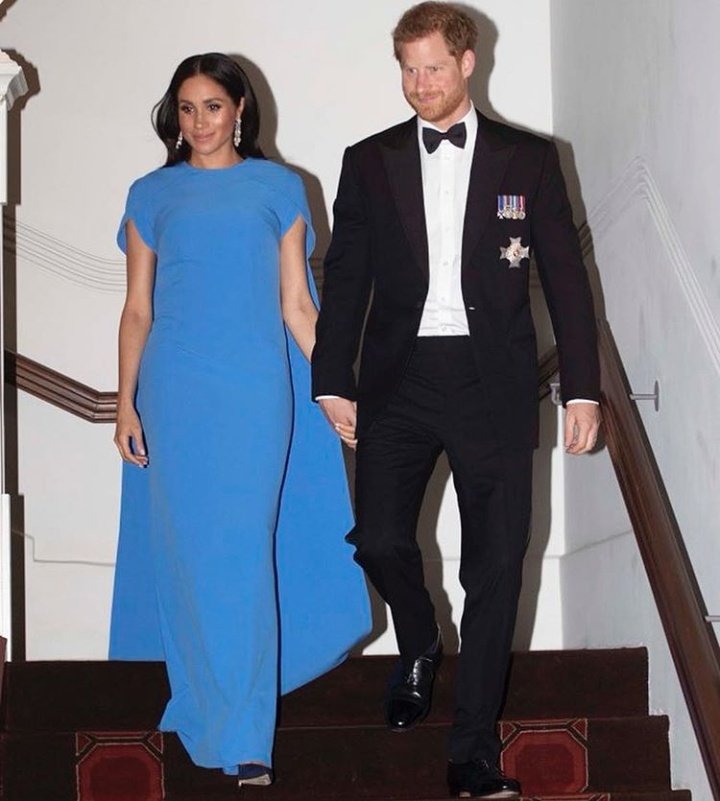
The Golden Gate Bridge Came as a Secure Link to My Heart, Only it was Shrouded in Fog
 Love. Who knows about another’s love? We have already seen that, although the intensity of love feelings may vary, the nature of love is essentially the same in all caring relationships. In other words, the experience of love is not limited to those who are intimate partners or potential intimate partners. And as we shall see in greater detail in the discussion of healthy families, our ability to love grows out of the context of experiencing love and acceptance in the family or in other relationships. When we have this understanding of love it becomes a contradiction in terms to imagine that we could love one individual to the exclusion of others. Love is not an isolated phenomenon. We learn to love because we have been loved and in the warmth of the experience of love we have been gradually freed to feel love and to express it. In other words, in order to love, we must become loving persons. And when a person has developed the capacity for emotional intimacy and knows the enjoyment and satisfaction of the experience of love, it is natural for that person to seek and find that experience with many different people with whom one comes in contact with. When these qualities of the loving person are seen, it becomes evident that possessiveness in relationships is not a mark of love. It is a mark of insecurity and fear. It is also a destroyer of the experience of love, for when we demand love we cannot experience what we then receive as freely given. #RandolphHarris 1 of 14
 If a husband, for example, resent other relationships that his wife may tend to develop and if he demands that she severely limit her scope of activities and devote herself completely to the home and to him, he is almost certain to encounter resentment on her part. However, even if he does not, how can he trust the love that she shows toward him even if it is genuine? He must always been haunted with the nagging feeling that she would find others more interesting and stimulating to be with if he did not use coercion and threats to keep her close to him. The nature of our society today probably makes it more important than ever before that the nonexclusiveness of love be recognized and incorporated into our lives. For we live in a time when we are likely to feel lonely and isolated. For many Americans and people all around the World the idea of a family, in the tribal sense, no longer exists. Our mobility as a people tends to scatter us across that country and across the World, and blood ties often to be of little significance as far as satisfying needs for relationship is concerned. These circumstances unquestionably leave a void in many people’s lives in family tries may have been a mixed blessing—a situation or thing that has disadvantages as well as advantages. “However, you are a chosen people, a royal priesthood, a holy nation, a people belonging to God, that you may declare the praises of him who called you out of darkness into his wonderful light,” reports 1 Peter 2.9-10. #RandolphHarris 2 of 14
 Nonetheless, the values of these disappearing family experiences are illustrated by account of a man in his thirties who describes this aspect of his childhood in the following way. “My mother was one of ten children, all of whom grew to adulthood and raised families within a radius of seventy-five miles of their birthplace. Family reunions would occur at least once or twice a year, sometimes more frequently. If I pause and remember hard enough, I can still smell the gourmet coffee and other delicious foods like lemon meringue cheese cake, blonde brownies, and fluffy strawberry pie and I can taste the chicken wonton tacos, baked pasta with sausage and baby portobello mushroom white sauce, pepperoncini beef, BBQ smoked brisket chili with tender beef, bacon, tomato, onion, beer, bell peppers, beans and corn topped with cheddar cheese, green onions, and sour cream, along with the ribs and tri-tip that my uncle produced on his ranch. And though I certainly did not think of it in those terms then, in retrospect I think of the equally delicious sense of belonging to a large group of people who exuded a great deal of belonging to a large group of people who exuded a great deal of warmth toward me. I was a town boy, but the family relationship provided the opportunity to spend several Summers earning my bread and board and room on the ranch of one of the others of my uncles. #RandolphHarris 3 of 14
 “Time with the family–it meant a broader experience with people and things. It meant proud rides into two with my uncle for supplies in a car I earned. Above all, it meant the experience of warmth and love, most frequently expressed in teasing by uncles, aunts, and cousins. Since I have been an adult I have learned that the life of the family was not as idyllic as I experienced it. There were jealousies engendered by unequal inheritances. There were the usual petty feelings people who love each other so often find to squabble about. However, by and large I was blissfully unaware of these matters and knowing now that they existed does not dim my remembered pleasures or cause me to discount their reality. Those were good years for me. I wish my children could have the same experiences, but we live hundreds of miles from my brother and sister and from any of my wife’s relatives. And if we were geographically close, I think that the same kinds of things would not happen. When I was a child, the kind of feelings that existed between relatives and brought them together do not seem to exist much any more.” The widespread loss of this kind of family experience has indeed created a void that makes the need for other experiences of intimacy a crucial one. Some have tried to meet this crisis by making the immediate family virtually a closed corporation as far as significant relationships are concerned. #RandolphHarris 4 of 14
 Although it is not put into words, a virtual bargain is made in which a couple tacitly agree that no one outside the family will be permitted to become of emotional significance. Such sealing off of the family through avoiding significant contact with others is a frightened response to a frightening World. We probably enter into such unspoken agreements because we feel in our bones—feeling it intuitively—that to allow ourselves to care for others would increase our vulnerability to the possibility of being hurt. It is probably also a response to our fears about ourselves. If free to establish others relationships, we are so doubtful about our lovability and so fearful that our loved one might learn to care for someone more than ourselves and abandon us that we say in effect, “If you will do the same for me, I will love you and commit my whole life to you.” Such a narrow experience of love based on such deep feelings of insecurity can hardly be described as a deeply satisfying or freeing experience. The loneliness and isolation are only mitigated in a minor way. And, of course, the participants, having no other intimate relationships, have no protection against the catastrophic hurt and loss that would occur with death or other separation from the one-and-only loved one. Another societal bar to real contact is the stereotypes we apply to each other, and the expectations that sometimes entrap people into limited acceptable modes of behavior. However, there is a way to alleviate this problem. #RandolphHarris 5 of 14
 Sometimes it is useful if people are allowed the valuable opportunity to shed the expectations accrued from their identities by taking new names and by agreeing not to talk about their backgrounds—occupation, home town, and so forth—at least when first meeting a new person. Sometimes the trappings of a career, such as clergyman, psychiatrist, nurse, teacher, business executive, require certain types of behavior and elicit stereotyped responses. Under such an agreement an individual is able to explore one’s self more fully by seeing how one really would act and feel outside of one’s occupational constraints and how people would react to one as a person rather than as a member of a group. This is usually done as a group activity, with trusted members. Before they have an opportunity to know each other, group or new community members are given new names, and these are the only names by which they are to be known throughout the life of the group. In one group, for example, there was a highly spirited young man, he was thin, and he looked very youth, so the members called him Peter Pan. Peter Pan seemed to get a huge delight out of all the group events, especially some of the communication and dance activities. It turned out that he was celibate and his abandoned behavior captivated everyone. He was particularly interested in being with the female members of the group. Toward the end of the workshop a rumor started that he was a priest. #RandolphHarris 6 of 14
 Someone mentioned the rumor to “Peter Pan” about him being a priest, and he acknowledged that he was a Roman Catholic priest, and he had been one for twenty years. The group was startled. This certainly did not fit their stereotype. After the experience, Peter Pan expressed his deep appreciation for the opportunity to keep his identity unknown. It was the first time in twenty years that he could learn how people responded to him as a human being and not as a priest. And he had a chance to express some feelings he had been suppressing. As he spoke, tears welled up in his eyes and his gratitude overwhelmed him. Many group members spontaneously embraced him, and he hugged them back tightly. This moving scene left Peter Pan with a warm, glowing smile which he retained for the remainder of the group life. He vowed to go back to try to influence his church to experience more of the warmth and humanness that he experienced. Many months later the glow had not diminished, and he seemed to return to his job with added strength and confidence about the person under his robes. For a person like Peter Pan, this experience was like getting another chance in life, by throwing off the background that has narrowed the opportunity for growth. He was able to take full advantage of the opportunity and felt a strong feeling of self-renewal. #RandolphHarris 7 of 14
 Every other reality in human experience becomes what it is by its nature. The heart beats, the eyes see; it is their nature to do what they do. The heart beats, the eyes see; it is their nature to do what they do. Or, if we take something inorganic like values, we know what the nature of truth is—to state things as close to the reality as possible. And we know the meaning, or the nature, of the value of beauty. Each of these functions in the human being according to its own nature. What, then, is the nature of freedom? It is the essence of freedom precisely that its nature is not given. Its function is to change its nature, to become something different from what it is at any given moment. Freedom is the possibility of development, of enhancement of one’s life; or the possibility of withdrawing, shutting oneself up, denying and stultifying one’s growth. It is the nature of freedom to determine itself. This uniqueness makes freedom different from every other reality in human experience. Freedom is also unique in that it is the mother of all values. If we consider such values as honesty, love, or courage, we find, strangely enough, that they cannot be placed parallel to the value of freedom. For the other values derive their value from being free; they are dependent on freedom. #RandolphHarris 8 of 14
 Take the vale of love. If I know an individual’s love is not given with some degree of freedom, how can I prize a one’s love? What is to keep this so-called love from being merely an act of dependency or conformity? For love can take concrete shape only in freedom. It takes a free mortal to live, for love is both the unexpected discovery of the other and a readiness to do anything for that individual. Take also the value of honesty. Honesty is the best policy. However, it is the best policy, it is not honesty at all but simply good business. When a person is free to act against the monetary interest of his or her company, that is the authentic value of honesty. Unless it presupposes freedom, honesty loses its ethical character. If it is supposedly exhibited by someone who is coerced into it, courage also loses its value. Just punishment, like just almsgiving, enshrines the real presence of God and constitutes something in the nature of a sacrament. That also is made quite clear in the Gospel. It is expressed by the words: “He that is without sin among you let him first cast a stone.” Christ alone is without sin. Christ spared the woman taken in adultery. The administration of punishment was not in accordance with the Earthly life which was to end on the Cross. He did not however prescribe the abolition of penal justice. He allowed stoning to continue. Wherever it is done with justice, it is therefore he who throws the first stone. #RandolphHarris 9 of 14
 As he dwells in the famished wretch whom a just mortal feeds, so one dwells in the condemned wretch whom a just man punishes. He did not say so, but he showed it clearly enough by dying like a common criminal. Christ is the divine model of prisoners and old offenders. As the young workingmen of the Jeunesse Ouvriere Catholique thrill at the thought that Christ is one of them, so condemned criminals have just reason to taste like a rapture. They only need to be told, as the workingmen were told. In a sense Christ is nearer to them than to the martyrs. If Christ is present at the start and the finish, the stone which slays and the piece of bread which provides nourishment have exactly the same virtue. The gift of life and the gift of death are equivalent. Far from being irrational, myths actually save us from irrationality. They make our powerful emotions, which would drive us into psychosis otherwise, into diluted forms which we can absorb. And they do that by virtue of being an art form. The myth has certain characteristics which it shares with other art forms, like poetry, the novel, painting, sculpture, music and dance. These shared characteristics include harmony, balance, rhythm. They are qualities which minister to our inner needs for serenity, for a sense of eternity, and ultimately for courage. All genuine works of art give a sense of meaning which informs us that life is more significant than the disasters, petty or great, which clamor for our attention. #RandolphHarris 10 of 14
 Music hath charms to soothe the savage heart. We have said that the beauty which myths bring to us is a source of their healing power. Within the explosion into their wonderful civilization, the ancient Greeks had a devotion to beauty that was singularly great. One has only to walk through the National Museum at Athens, or the room containing the Elgin marbles in the British Museum in London, to see, in the sheer number of statues, what great heights and depths this civilization produced. This is surely related to the Greeks’ vast fecundity for myths. The whole essence of the works of art has a sense of eternity, the union of human and divine, in a calmness that will be impressed on anyone even more today. Beauty for the ancient Greeks shows a state of being as ontological, rather than as an emotion which can be turned on or off. This saves us from confusing movie actresses, or Miss Americas, or various attractive bodies advertising bikinis, with actual beauty. Some actors and actresses have some beauty, there is no doubt—Ingrid Bergman, Greta Garbo, Lucky Lui, Meghan Markle, Reese Witherspoon, Jillian Harris, Jennifer Lopez, Aaliyah, Paris Hilton, Mindy Lahiri, and Viola Davis, for example. However, it is in spite of the sex appeal rather than because of it. #RandolpHarris 11 of 14
 Helen of Troy was the symbol for Beauty itself. For beauty was the condition of harmony between different truths and different deeds of virtue; and in this sense it was the aspect of Arete that needed most to be cultivated, the treasure of all human aspiration. This could well be the secret of the greatness of Greece, above all the arguments concerning the power given by their enthusiasm at driving back the Persians in 490 and 480 B.C., or all the explanations on the basis of the riches of Athens in this fifth century with its slave populations, and all the other contemporary arguments of our sociologists and psychologists. We are pushed back to the simplest explanation of all: that Helen was the symbol of Beauty and the myth that meant just what is said, namely, that Beauty was worth the whole expedition to Troy. We capitalize the term because the word now takes on divinity for Greeks: Helen is later made a goddess. It may thus be that greatness of Greece and especially of Athens was due to the fact that city-states could be so devoted to Beauty that they lived and died for it. This could well have been the center of their concept of Arete, that indefinable center of virtue which every Athenian sought to achieve above all other things. The Greeks called themselves Hellenes, and the land id called Hellas to this day, which indicates that Helen really was the symbolic figure for the soul of Greece. #RandolphHarris 12 of 14
 The Greek people were fighting for their inner selves which surely makes more sense than fighting for a flag. Any nation which can fight, and win, such battles for their own soul, for their belief in Beauty, deserves in some way to have glory that in universally accorded this little, ancient nations. Art is our way of managing our inner turmoil, transcending our terror, and protecting ourselves from our own psychotic tendencies. From the high tension of Motherwell’s canvases, to the eruption of Hofmann’s brilliant colors, to the despair of Picasso’s Guernica, art relieves our extremes of emotions. Our inordinate passion is drained off; our pressure to act out these emotions in society is relieved, and we are deeply consoled. Art gives us repose and harmony where the otherwise would be explosion and destruction. Thus art is our universal therapist. It mirrors and gives us catharsis for our terror of dehumanization. As we stand in the presence of de Kooning’s canvases, we are strengthened in our efforts to transcend our inner conflicts. Modern art speaks often directly to our subconscious and preconscious selves, as in Pollock and Rothko. Instead of running from our troublesome dreams, we can welcome them into awareness, as when we look at Hofmann or Dali. #RandolphHarris 13 of 14
 In these ways myth as an art form ministers to us on dimensions below consciousness; it encompasses or irrationality and our soul tendencies. Myths thus humanize mortals even though this process is always precarious. Thus myths give us a harmony of rational and irrational, a harmony of antimonies. Myths carry health-giving catharsis, as no one can doubt after seeing Aeschylus’ Agamemnon or Euripides’s Helen. If we wished an explanation for humankind’s invention of myths, we need to go no farther than the fact that myths enables us to live more humanly in the midst of our unhuman, warring unconscious. Myths enable us to exist and persevere as strangers in a strange land. Art is contemplation, it is the joy of intelligence. It is not the tyranny of the ego which is to be removed most of all—although that is a necessary part of the Great Work—nor is it that the ego must be uprooted and killed forever—although its old self must surrender to the new person it has become. No—let it live and attend to its daily work but only as purified being, an ennobled character or quietened mind, an enlightened person—in short, a new ego representing that is best in the human creature. One will still be an “I” but one that is in harmony with the Overself—a descriptive name that ought to be kept and not discarded. So do not in your life attack the ego as so many do, but life it up to the highest possibility. #RandolphHarris 14 of 14
I am Speaking My Feelings of Love to You Because it Pleasures Me, Not Because I am Trying to Please You!
 Deeply felt love gives a relationship uniqueness—a uniqueness that helps give the love an intensity not usually experienced in other associations. However, compulsive pleasures of the flesh is like to be self-defeating; for after an attractive individual is found, we are likely to have the feeling “He [or she] does not really care for me. I am just somebody to have fun with.” And even if genuine caring does develop, these doubts are likely to continue, since we are full of self-doubts and may continue to assume we have been successful only in seducing the other person, not in winning the individual’s love. Handsome people, especially beautiful women, often have such a problem. They make maximum use of their physical attributes to attract the interest of others. Their beauty wins so much praise and attention from people, sometimes to the exclusion of other qualities, they then conclude they are valued for nothing else. When people are viewed as only being attractive, one is likely to say within, “It is not really me that is being loved. It is my beauty, which is not my full essence.” Pleasures of the flesh is sometimes used more as a way of manipulating others than as an expression of affection. Those who use pleasures of the flesh as a weapon of control probably feel inadequate to fight their battles on more open grounds. Fear of anger is often involved, and resentments are expressed in this covert way. Because of how transitory modern relationships have become, both individuals may fail to recognize or admit their feelings of caring. #RandolphHarris 1 of 11
 One of the most interesting but often unrecognized facets of the relationship of pleasures of the flesh and love is that physical intimacy is often used a way of avoiding emotional intimacy. Since we long for love but are afraid to express caring, we often use pleasures of the flesh in relationships as a substitute or counterfeit for the experience of love. Or we may use pleasures of the flesh as a means of driving those away to whom we are potentially emotionally close. Some people are frightened by the opposite gender, and although they may want to be emotionally close, they fear the potential hurt they may feel in a genuine relationship. Without consciously trying to, some have developed a means whereby they can tell themselves one is asking for love and affection while in fact one is constantly pushing potential mates away with their overly aggressive desires for pleasures of that flesh that successfully conceal one’s real warmth. When it comes to pleasure of the flesh, in addition to other motives that may exist in those who are very aggressive (such as the attempt to prove one’s worth), there may be an unrecognized need to alienate people while seeming to be open, frank, and warm that is probably frequently present. If on a very short acquaintance a mortal approaches another person with an invitation dealing with pleasures of the flesh and is refused, one can then say to one’s self something like this: “I offered this individual my love, and he or she was too square [ or frightened, or antiquated, or proud] to accept it. #RandolphHarris 2 of 11
 When such a proposition is accepted, on those occasions the chances of a genuinely satisfying experience of closeness is often extremely remote, as remote as reaching the peak of Mount Himalayas. For both persons are in a good position to have the feeling “I do not really know this person. This individual must be interested in me only for pleasures of the flesh. Therefore, I have got to protect myself by not getting emotionally involved.” And sometimes this can be a subconscious decision where a person may be rendered unattracted to someone they randomly had a casual and intimate encounter with and may not even realize why. In reality, however, they both may be longing for an experience of love, but the way in which the alliance began, coupled with the fear of love they both have, makes the possibility of fulfillment of their desire for love harder to get into than a Beatles concert (nearly impossible). At the end of the evening they are likely to exchange phone numbers, which they are likely never to use. One problem of many engagements is that the couple mistakes physical intimacy for emotional closeness. Many couple become enthralled with the excitement that goes along with the physical closeness that they love each other. Often their feeling for each other is based on only the vaguest knowledge of one another. Sometimes one or both of them may have the feeling “If this individual really knew me, one would not care for me.” Thus the amount of self-revelation may have been consciously limited. #RandolphHarris 3 of 11
 For others the revelation of the self may be thwarted without any particular awareness of the fact that it is happening. And the handy substitute of physical intimacy may successfully conceal the fact even from the participants themselves that they are afraid of love. It is not being suggested that physical intimacy (whether it includes pleasures of the flesh or not) inevitably limits self-revelation and emotional intimacy. It need not be so at all. However, when individuals are so afraid of the vulnerability of love that they are reluctant (consciously or not) to enable another to see themselves as they are, physical intimacy provides a handy way of seeming to be free and open while revealing very little of one’s self. And although physical closeness can be used as a way of avoiding emotional closeness, emotional closeness cannot usually be experienced to it fullest without it. If you want to test this idea, try sitting ten or twelve feet across a room from a person you love and expressing your love from that distance. You will probably feel awkward and embarrassed. When a person is sitting next you in your arms, how much more natural it seems. Absence makes the heart grow founder, but too much absence makes the heart wonder. In fact, 42 percent of long-distance relationships have a chance of not working out because many couples find it difficult to deal directly and verbally with the tensions that arise in their contacts with each other because of their self-doubts and the doubts of each other’s love. #RandolphHarris 4 of 11
 Many couples use satisfying pleasures of the flesh as a form of unspoken communication, reassuring each other of their love. The ideal, of course, would be to have both the spoken and the unspoken ways of expressing love and working through conflicting feelings. It follows naturally from what has been said that a person’s ability to experience emotional freedom and express themselves in a productive manner is part of the freedom to love. Since all of us have some fear of love, we will from time to time have issues in our relationships. It is a matter of degree. The fear of love is expressed in many different ways and some who are quite frightened of love may be relatively free to experience pleasures of the flesh, as already suggested, and use it as a way of avoiding the experience of love. What seems to be missing is the rich texture and three-dimensional quality that would be present if individuals were secure enough within one’s self so that one can reveal one’s self and experience and express one’s love to another person. One’s fear of being hurt makes this an impossibility for some at present. Many people have the difficult task of becoming aware of their self-hatred and discovering that they are worthy of love from themselves and others. #RandolphHarris 5 of 11
 Peter has been badly emotionally damaged in his ability to love and his ability to experience and express his sexuality. He does not allow people to get close to him. He is uncomfortable around all people, particularly women; and he tend to be a loner insofar as any meaningful relationships are concerned. He is frightened of pleasures of the flesh and his fantasies that he will be castrated or maimed in some way upon experiencing pleasures of the flesh. Peter says there is a complete lack of feeling on his part—even physical sensation appears to have been largely missing. Peter will probably have a long and difficult tie achieving any kind of pleasures of the flesh or a loving relationship, even with professional help, since his fears are crippling. Our disgust with pleasures of the flesh are often potential doorways to greater enjoyment because they often mask appetites that are unacceptable to us because of fears and inhibitions we have learned sometime during out lives. However, as we gradually learn that it is worth the risk to open up to the experience of love, and as we gain confidence in our ability to handle whatever hurts may occur, our growing freedom to love will also probably be expressed in a growing freedom to be open to a healthy relationship. #RandolphHarris 6 of 11
 One of the most widespread human problems of modern society is making contact with other humans. Painfully few methods for meeting are socially acceptable, a condition that makes for much human heartbreak. Furthermore, the discomfort in actually verbally engaging another person, in knowing what to say, or what to do prolong and develop the association, is a serious problem for far too many. The agony of this situation is underscored in the extremes found in psychotic patients, many of whom simply have not learned how to enter the human race, how to make contact with another person. When the issue is one of learning how to join with others, there are methods to work around this. Myth is a narration which assumes an art form and thus becomes universalized. Myth has the symbolic power of art, and like any work of art, myths help us to make sense of our World. Like other forms of art, myths relieve our excessive anxiety and guilt feeling and enable us to live in times of turmoil with some inner balance and peace. Myth enables us to experience the universal meaning—say of love, of death, of joy, and even of adversity. More specifically, myth as an art form enables us to confront the events that would be the most hideous, such as the crucifixion of Christ, and to make of that hideousness a form of beauty and meaning. #RandolphHarris 7 of 11
 The Son of Man and the Son of God lives out the grand scenario of the suffering servant and then dies that all of us may be saved. How powerful this scenario is! It makes one understand (though not necessarily agree with) the fundamentalist ministers who say “We preach Christ crucified and risen from the dead.” Consider how many thousands of paintings have been made of the crucifixion through western history, from Cimabue’s through El Greco’s to the most insignificant canvas in the Vatican. This myth has inspired almost every painter in Christendom to give his or her version of the heroic happening. And consider how many statues have universalized Christ’s sufferings, from the countless mosaics to Michelangelo’s Pieta down to the crucifixes on the walls of hundreds of thousands of churches. The great beauty that such a cruel scene calls forth is astonishing indeed. Seeing Queen of the Damned, for example, as mythic, we are freed from excessive anxiety in strange ways. We see the dynamics of a savior and loving relationship, treachery, deception, and the war in perspective; we see it externalized, made universal. We conceive of the war as part of the long path down through the ages of mortal’s inhumanity to mortal. This relieves us of excessive guilt: it is not just ourselves who case this choreography of horror; war is a human paradox. #RandolphHarris 8 of 11
 Many people still assume that they are their country’s people and should be ready to die for freedom. This feeling typically takes the form of patriotism. Other persons who would not agree that political freedom is dying for would nevertheless state the same thing about psychological and spiritual freedom—the right to think and to command one’s own attitude from the 1984 type of spiritual surveillance. For reasons that are endless in their variety and that are demonstrated from the beginning of history down to the freedom marches and freedom rides of this century, the principle of freedom is considered more precious than life itself. We have only to glance at the long line of illustrious person to see that, in the past at least freedom, was our finest treasure. People will endure hunger, fire, the sword and death to preserve only their independence. Human beings sacrifice pleasures, repose, wealth, power and life itself for the preservation of this sole good. To accept the principle that freedom is worthless for those under one’s control and that one has a right to refuse it to them forever, is an infringement of the rights of God himself, who has created mortals to be free. If it is not supported by something which maintains itself by its own power, and this is nothing but freedom, the whole of knowledge has no status. #RandolphHarris 9 of 11
 The first postulate of all philosophy, to act freely in its own terms, seems as necessary as the first postulate of geometry, to draw a straight line. Just as little as the geometrician proves the line, should the philosopher prove freedom. The truth of freedom is self-evident; that is an inalienable right. Freedom is axiomatic, even to think and talk presupposed freedom, means no proof is necessary. The capacity to experience awe and wonder, to imagine and to write poetry, to conceive of scientific theories and great works of art presupposes freedom. All of these are essential to the human capacity to reflect. Almost every moralist in human history has praised freedom. Why these unending and extravagant panegyrics? Why should freedom be so venerated, especially in a World where practically nothing else is granted that devotion? The expressions such as to love our neighbor in God, or for God, are misleading and equivocal. A mortal has all one can do, even if one concentrates all the attention of which one is capable, to look at this small inert thing of flesh, lying stripped of clothing by the roadside. It is not the time to turn one’s thoughts toward God. Just as there are times when we must think of God and forget all creatures without exception, there are times when, as we look at creatures, we do not have to think explicitly of God. At such times, the presence of God in us has as its condition a secret so deep that it is even a secret from us. #RandolphHarris 10 of 11
 There are times when thinking of God separates us from him. Modesty is the condition of nuptial union. In true love it is not we who love the afflicted in God; it is God in us who loves them. When we are in affliction, it is God in us who loves those who wish us well. Compassion and gratitude come down from God, and when they are exchanged in a glance, God is present at the point where the eyes of those who give and those who receive meet. The sufferer and the other love each other, starting from God, through God, but not for the love of God; they loved each other for the love of the one for the other. This is an impossibility. That is why it come about only through the agency of God. One who gives bread to the famished sufferer for the love of God will not be thanked by Christ. One has already had one’s reward in this thought itself. Christ thanks those who do not know to whom they are giving food. Moreover, giving is only one of the two possible forms love for the afflicted may take. Power always means power to do good or to hurt. In a relationship where the strength is very unequally divided, the superior can be just toward the subordinate either in doing one good with justice or in hurting one with justice. In the first case we have almsgiving; in the second, punishment. If one wants to become a World-famous theologian, it seems on various problems of, one should speak profoundly to both mind and heart. life#RandolphHarris 11 of 11
Faith is the Evidence of things Not Seen—In this Moment of Attention Faith is Present as Much as Love
 The Cresleigh Homes house at Rocklin Trails is so big and so grand and so solid, a house so shining with gold and whiteness, a house stretching to the right and to the left so far that it swept out of my mind anything I had ever seen in the rich city of Granite Bay, and the wonder of Eldorado Hills passed away from me, and my breath was taken out of me. A symbol’s function is to cover up and to reveal, to disguise and to disclose simultaneously. The connation of the term symbolic is precisely this artistic capacity to disguise and at the same moment to disclose, one being impossible without the other. A symbol in a dream cover up an immediate reality and at the same time discloses a deeper reality. It may be profitable first to attempt to discover what we mean by love. Describing love often seems like trying to capture the beauty of a rainbow in a test tube and attempting to analyze it, but perhaps something can be gained from the effort. It is probably necessary to talk of love in ideal terms, even while recognizing that no relationship will completely fulfill the definition. What would a fully loving experience be like? It would certainly include mutual enjoyment of each other’ presence. People who love each other find satisfaction in being with each other. Delicious feelings of warmth and aliveness flood through us when we are with someone we know loves us and whom we love. #RandolphHarris 1 of 11
 One of the factors involved in this delight in a loved one’s presence is empathy. A process of unspoken communication seems to take place in which we sense how the other person feels and we respond with our own emotions. Empathy differs from sympathy. The sympathetic person feels the same feeling as the one with whom one sympathizes. The empathetic person picks up how the others feel but responds with his own emotional reaction. A sympathetic person, for example, might cry with someone who has suffered grief almost as though it were he himself who were grieving. An empathetic person, on the other hand, would understand the grief and respond with love, perhaps moving toward the person, holding him, and expressing his deeply felt desire to comfort. Genuine empathy does not include the game in which a person expects another person to be able to sense one’s needs (to be loved, to be comforted, to be taken care of, to be needed, to be encouraged and so forth) without his expressing them and then feels resentful when they are not met. The often-heard complaint “He ought to know how I feel without my having to say it” is often a rationalization of one who is afraid of the intimacy and vulnerability involved in expressing one’s needs. #RandolphHarris 2 of 11
 Another mark of love is that it provides a mutual opportunity for growth as persons. Love gives the warmth and Sunshine that makes possible the maximum personality development. In an ideal parent-child relationship, for example, the child basks in the parents’ love and their enjoyment of him. With the confidence gained in feeling loved the child is freed to explore one’s World in ever-widening circles and is free to experience loving relationships with others. If his growth is inhibited by his parents’ attitudes, their love, while real, is contaminated by other qualities. A corollary mark of love is that a lover does not give or demand exclusive tenderness. This idea will be dealt with in detail later. Let it suffice here to say that possessiveness discourages the maximum experience of love, which is necessary for the fullest personality growth for those involved. Another quality of love that is mentioned frequently is that love is unconditional. Perhaps there is no better word to describe it, but this ideal is very slippery and frequently misunderstood. Often we translate it to mean “Unconditional love means that anything you do is O.K. with me, if I love you. Therefore if I really love you I will never become angry with you or express feelings of hurt to you about something you have done.” #RandolphHarris 3 of 11
 Such a definition of unconditional love would see the lover as an impassive pillow upon which the loved one could vent his whims. This is not the picture of a very satisfying or exciting relationship for either person! Yet we often cling to this ideal of love, which is a caricature of the real thing. We speak of art as symbol and myth, for they are both means by which we perceive life; they are the frames through which we make sense of the kaleidoscopic activity about us and in us. The symbol and myth are not ways of getting a perspective; they are the perspective itself. No one would argue that we do not project the symbol and myth; we do. However, no one ought also to protest against the equally obvious fact that the objective World is present in the symbol and myth as stimulus, the setting of the problems we week to resolve, the data we try to assimilate and make meaningful. Hence, art, like all expressions of beauty, is subjective and objective at the same time. Unconditional love runs much deeper. It goes more like this: “Even though I get very angry with you sometimes, even though I sometimes feel hurt, or irritated, or withdrawn, or even bored, I cannot escape the fact that I am deeply involved with you in a caring relationship. That fact of love exists, whatever is happening between us at the moment.” #RandolphHarris 4 of 11
 When two people know in their bones that they have this kind of relationship, then they are more free to fight openly, to express other emotions more only, and to love each other more openly and freely. Unconditional love, therefore, opens the door to freer relationships, rather than to more restricted and obligatory reactions as we often assume. It is readily apparent that these qualities of love are equally applied to parents’ feelings for their children and to friendships between persons either of the same or the opposite gender. There may be some truth in the contention of some personality theorists that love always involves some erotic feeling. However, be that as it may, the matter of practical significance to us here is that love is not limited to potential mates and that the nature of love is no different in our various affiliations. The symbol participates in the thing it symbolizes. The Christian cross is in actuality simply two sticks of wood placed at right angles to each other. However, symbolically its form means infinitely more. The cross is the vertical dimension crossing the horizontal; the spiritual and the Worldly levels crossing each other, engaged in perpetual tension and hopefully producing creative religious ideas and actions as an expression of this tension. Take the symbol of water at St. Anne des Pres, in Quebec, the Canadian shrine of healing waters like Lourdes. The priests at St. Anne have placed signs at various places where the water springs out of the ground, explaining that it is the faith in God which heals you, of which the water is a symbol. #RandolphHarris 5 of 11
 However, water is also a healing agent and has been one since time immemorial; it has cleansing, health-giving properties. Water participates in the healing process though it is God who performs the cure. Also, signs point out that you may be cured psychologically and spiritually without being cured physically. One can see the struggle the theologians have had to preserve the shrine from magic, and they do this by emphasizing the faith in God, with the water as a curative agent which is the symbol of the activity of God. He produces healing waters, symbolic and diabolic, just as he did at the time of Noah and the flood. The symbol points beyond itself. A symbol always transcends the one who makes use of it and makes one say in reality more than one is aware of expressing. This is partly because of the multitude of dimensions the symbol encompasses; one cannot help expressing more than one is conscious of. This is part of the functioning of the double symbolic dimension of art as revealing and disclosing. The reason for the prejudice against, or perhaps more accurately, the fear of, symbols and myths in art is that they disclose so much; thus I cannot know exactly what I am saying. I have a tiger by the tail, and I rightly fear being carried by this animal faster than it runs. This reminds me of a cartoon in The New Yorker. A society woman is taking a revolver out of her handbag as she gets up from the analyst’s cough. She is saying, “This has been very nice, Doctor, but you know too much.” #RandolphHarris 6 of 11
 Art releases and stimulates imagination among others to whom you are talking to as well as yourself. And at the moment is it engaged it is a renunciation, and that is when it is pure. The mortal accepts to be diminished by concentrating on an expenditure of energy, which will not extend one’s own power but will only give existence to a being other than oneself, who will exist independent of one. Still, more to desire the existence of the other is to transport oneself into one by sympathy, and, as a result, to have a share in the state of inert matter which belongs to one. Through its symbols, art is energy-releasing. Drawing together into a meaningful circle the many data flooding in on us, the artistic symbol frees us from confusion; we are not continually overwhelmed by the kaleidoscopic bombardment of experience. One can either block off the experience—which is the solution on the side of apathy, self-protection, death; or one can organize these multitudinous events into meanings that can then be dealt with as symbols—which our capacity of symbol forming enables us to do. The symbol also draws out our need to will and to act. This part of its function in making experience meaningful. Once we are freed from the unbearable confusion, we see our experience in manageable forms; and we do exactly that, we manage it, we take some stand with respect to it. #RandolphHarris 7 of 11
 We are able to see in that totality something we call its design—that is, the product. And we can recognize in the finished product the process of its organization and composition. The principles of design are usually discussed in terms of the qualities of balance, emphasis, proportion and scale, rhythm and repetition, and unity and variety. For example, Leonardo’s famous Illustration of Proportions of the Human Figure embodies all of them. The figure is perfectly balanced and is symmetrical. The very center of the composition is the figure’s belly button, a focal point that represents the source of life itself, the fetus’s connection by the umbilical cord to its mother’s womb. Each of the figure’s limbs appears twice, once to fit in the square, symbol of the finite, Earthly World, and once to fit in the circle, symbol of the Heavenly World, the infinite and the universal. Thus, all the various aspects of existence—mind and matter, the material and the transcendental—are unified by the design into a coherent whole. For many Jewish people, Hanukkah is the symbol not only of eternal light but of pogroms, painful experiences of relatives who suffered in many countries, personal struggles, hope and new possibilities. For many believers all these things not only are exceedingly meaningful but they require of the Jewish people some stand, which may be renewed consecration or resoluteness. One cannot let one’s self be grasped fully by a symbol without experiencing the feeling that a change in one’s life is necessary. #RandolphHarris 8 of 11
 Thus the symbol gives wings to the imagination. It casts one loose as the young eagle is cast out the nest The function of the myth and symbol is seen in the writings of James Joyce like Ulysses: the different tenses are represented simultaneously; fantasy and actuality are mixed, as they re in immediate existence anyway. Each sentence some across like a cord on the piano: notes of a number of different pitches are encompassed into one harmony. That is why the sympathy of the weak for the strong is pure only if its sole object is the sympathy received from the other, when the other is truly generous. This is supernatural gratitude, which means gladness to the recipient of supernatural compassion. It leaves self-respect absolutely intact. The preservation of true self-respect in affliction is also something supernatural. Gratitude that is pure, like pure compassion, is essentially the acceptance of affliction. The afflicted person and one’s benefactor, between whom diversity of fortune places an infinite distance, are united in this acceptance. There is friendship between them in the sense of the Pythagoreans, miraculous harmony and equality. Both of them recognize at the same tie, with all of their soul, that it is better not to command wherever one has power to do so. If this thought fills the whole soul and controls the imagination, which is the source of our actions, it constitutes true faith. #RandolphHarris 9 of 11
 It constitutes faith, for it places the Good outside this World, where are all the sources of power; it recognizes it as the archetype of the secret point that lies at the center of human personality and is the principle of renunciation. Even in art and science, though second-class work, brilliant or mediocre, there is an extension of the self; work of the very highest order, true creation, means self-loss. We do not perceive this truth, because fame confuses and covers with its glory achievements of the highest order and the most brilliant productions of the second class, often giving the advantage to the latter. Love for our neighbor, being made of creative attention, is analogous to genius. Creative attention means really giving our attention to what does not exist. Humanity does not exist in the anonymous flesh lying inert by the roadside. The Samaritan who stops and looks gives one’s attention all the same to this absent humanity, and the actions which follow prove that it is a question of real attention. Faith is the evidence of things not seen. In this moment of attention faith is present as much as love. Love sees what is invisible. God thought that which did not exist, and by this thought brought it into being. At each moment we exist only because God consents to think us into being, although really we have no existence. At any rate that is how we represent creation to ourselves, humanly and hence inadequately of course, but this imagery contains an element of truth. #RandolphHarris 10 of 11
 God alone have this power, the power really to think into being that which does not exist. Only God, present in us, can really think the human quality into the victims of affliction, can really look at them with a look differing from that we give to things, can listen to their voice as we listen to spoken words. Then they become aware that they have a voice, otherwise they would not have occasion to notice it. The true end of Mortals is the highest and most harmonious development of their powers to complete and consistent whole. Freedom is the first and indispensable condition which the possibility of such a development presupposes. It is a startling fact that freedom has been considered, throughout human history, so precious that hundred of thousands of human beings have willingly died for it. This love of freedom is seen not only in venerated persons like Giordano Bruno, who died at the stake for his freedom of belief, and Galileo, who whispered to himself in the face of the Inquisition that the Earth does move around the Sun, but it is also true for hosts of people whose names are forever unsung and unknown. Freedom must have some profound meaning, some basic relation to the core of being human, to be the object of such devotion. #RandolphHarris 11 of 11
Feel a Kinship in Loneliness—a Kinship with the Whole of Nature, with the Universe of Dawns and Stars
 I did not want to sleep. I lay on my blanket trying to sleep, but sleep did not come and I did not want it. I never wanted it. However, now my thoughts were racing. We were going home, and I had so much to think about because so much had happened, and now they were saying these strange things. And what had happened today? What had had happened with Leo Pete—I could remember it. There were like bright shapes in my mind for which I did not have words. I had never felt anything before like the power that had come out of me. In the times of the creation of symbols, the function of the artist is to create new order. In times of excessively rigid symbols, in contrast, the function of the artist is to create chaos. This latter is the challenge facing modern artists. The artists are concerned with form and the breaking up of misused form. This is so not only of the professional artists but of the artist in each of us. The German poet Johann Christian Friedrich Holderlin wrote that when danger increases, the power to meet it also increases. Holderlin was a great poet and a schizophrenic at the same time; his pathology was related to his poetic talent. Thus epilepsy was called in ancient times the God-given illness, and it was thought by some persons in ancient Greece that psychosis produced poetry and profound inspiration. That is why great art often emerges in the after math of psychosis and neurosis. Some of the new artistic sensibility may reside in those very pathological aspects of life. #RandolphHarris 1 of 20
 In light of this, I think it would be very important if we would value our breakdowns more, take more interest in our so-called neurotic symbols. Our breakdowns are often the place where we discover our vocations as artists or other professionals. And pathological tendencies often reveal and enrich the artist’s repertoire of symbols. They force people to wake up to life, to feel, not to go through life somnambulistically, not to let one’s neurotic patterns block off one’s appreciation of beauty. If it had not been for the inner chaos of some individuals, when they see a field of poppies in super bloom, they might just think, “Well, these fields of red poppies are pretty,” and go on to ignore them, instead of letting the moment inspire one and see that there is God’s grace being manifested in nature. The beauty of the poppies allows some feel a kinship in their loneliness—a kinship with the whole of nature, with the Universe of dawns and stars; it jars some out of their old routine. In this respect a breakdown, when one strikes a psychological road block, can be a very valuable experience. The times when one is wounded are often times when, out of these wounds, come new thoughts, new possibilities. Art and the beauty from which it comes makes us stop and take inventory of our lives. #RandolphHarris 2 of 20
 Art and its symbols disrupt and enrich us who receive them, whether they are pretty or not. The richness of the artistic symbol is a richness of you and me, the receivers. The viewer thinks and feels a symbol, and by the symbol one gets one’s artistic response. For example, I am walking along a street and I see a cross in a shop window. I pay no attention to it at first, but four or five steps down the street I suddenly get a lot of ideas. Perhaps it symbolizes the crucifixion? Or perhaps it is a Ku Klux Klan cross, to be burned in that yard across the street? Or perhaps it is an advertisement for the Red Cross. Thus the symbol cues off in me, the viewer, the agony of the Ku Klux Klan’s cross or the ideal meaning of the Christian cross, as well as other possible meanings. The responses are obviously not in the symbol itself; they are in us, the viewers. However, you cannot feel them until the symbol hits you. You cannot think in that rich way except with the help of symbols. The central Crucifixion in Matthias Grunewald’s Isenheim Altarpiece, c. 1512-1515 is one of the most tragic and horrifying depictions of Christ on the cross ever painted. Many people cannot bear to look at it. Rigor mortis has set in, Christ’s body is torn with wounds and scars, his flesh is greenish gray, his feet are mangled, and his hands are stiffly contorted in the agony of death. The painting portrays suffering, pure and simple. #RandolphHarris 3 of 20
 However, Grunewald painted this altarpiece for a hospital chapel, and it was assumed that patients would find solace in knowing that Christ has suffered at least as much as they. In this painting, the ugly and horrible are transformed into art, not least of all because, as Christians believe, resurrection and salvation await the Christs after his suffering. The line that runs down Christ’s right side is, in fact, the edge of a double door that opens to reveal the Annunciation and Resurrection behind. In the latter, Christ’s body has been transformed into a pure, unblemished white, his hair and beard are gold, and his wounds are rubies. A symbol is a bridging act. It puts together rational and emotional, cognitive and conative, past and present, individual and social, conscious and unconscious. All these are formed together as a montage. Marshall McLuhan, similarly, uses the figure of transparency: a symbol is a collage of transparent items. You can see through the top one to the various levels below and behind it, which is one way to look at Rothko’s and Olitski’s paintings. Nevertheless, there is something that needs to be said about the creative use of anger. Yet it is very elusive and perhaps escapes precise definition. Why can some people fight so creatively and effectively, while for others it seems to lead only to further frustration and bitterness? Many of the factors in symbolism are probably involved, but perhaps there is something more. #RandolphHarris 4 of 20
 Very likely it is involved with the basic themes of our fear of love and our distrust of ourselves. One man in counseling said, “When somebody hurts you, you want to hurt them back.” When he said this, he was referring to his angry exchanges with his wife, which usually ended with no creative resolutions or awareness of their love for each other. When we see the anger of another toward us as primarily an attempt to hurt us rather than as an attempt to communicate feelings, and when we then reciprocate by attempting to hurt the other rather tan primarily expressing our feelings, it seems unlikely that we can achieve any creative experience. We are most likely to fly off onto a tangent of accusation and probing at weak points in the other person’s defenses where they can be hurt the most. Why does this happen? It is probably because we feel very threatened and incapable of dealing directly with another person. If we allow the other person full expression of feelings without reacting defensively and hurtfully, our self-hate leads us to assume that we will be overwhelmed. Often involved, too, is the assumption that expression of anger means the absence of love, which is probably an unconscious reaction to our fear of the experience of love, which the direct expression of anger can bring. #RandolphHarris 5 of 20
 Looking at this from the beneficial aspect, it might be said that the quality that exists when anger is used creatively is a persistent basic trust and good humor. If a person could put into word, this is the kind of attitude that might go something like this: “Here we are, two people who are madder than hades at each other. And while we are both saying things, which to the outsider might sound terribly rejecting, yet I some how sense that he matters a great deal to me and that I matter a great deal to him.” It is that kind of attitude that can lead to the experience one man reported when, as the anger subsided, both he and his wife broke into pleased grins. “You know,” he said, “I really enjoyed that heated debate, even while it was going on. I felt really alive and like I was really being myself. And I enjoyed you standing up for yourself and explaining your position.” Such an attitude involved a feeling of self-worth in which one feels lovable and assumes the other person cares. The feeling, “He is angry with me, so he must not love me,” does not enter the picture. The individual is also sufficiently unafraid of love that one can enjoy the encounter of love even in its angry form. He also does not condemn himself for being angry. This discussion of the creative use of anger should not be closed without recognizing that there will always be situations in which we do not express all of the anger we feel. There will be situations, perhaps at work, for example, where we will choose to suppress anger. Often the results of expressing anger would not be as bad as we assume they would be. #RandolphHarris 6 of 20
 Nonetheless it is possible to suppress anger without destroying ourselves. If it appears necessary, it is best that we do it with full awareness, knowing that we are angry, choosing to suppress it, and accepting the fact that we choose to do so. Discussing our feelings with some safe third person unconnected with the situation may help us to deal with the feelings. However, in relationship that really matter to us—where we long for the experience of love—the creative expression of anger will usually be the most satisfying and productive choice. The psychodramtic technique also uses the body, in that the person acts out a situation rather than just verbalizing it. The fantasy methods require an expansion of our explanation of the effectiveness of the methods, since they do not involve physical movement, but rather the full use of the imagination. Frequently, the loss of a significant person early in life has a traumatic effect upon the child. Later, this can have serious consequences for one’s adult relations with others. Whenever this situation is suspected and seems to be interfering seriously with the present functioning of the individual, this technique may prove very helpful. The central person, or protagonist, is asked to select someone in the group whom one feels is similar to the lost person and role-play with the individual the situation of meeting this lost individual. If the latter is dead, the protagonist imagines oneself going to Heaven for the meeting. The scene begins with a conversation about how the protagonist tell the lost one about one’s feeling about him or her. #RandolphHarris 7 of 20
 After a few interchanges, the protagonist is asked whether or not the role player is portraying the lost individual accurately. If one is not quite right, the roles are reversed and the protagonist plays the role of the missing one. This technique of role reversal is used several times as appropriate to help the protagonist feel how the other person feels. Other group members are invited to alter ego, that is, to stand behind one of the principals and say things they think the principal is feeling but not saying. Usually this combination of role reversal and alter ego brings out the major elements of the situation and allows the protagonist to explore and feel the full dimensions of the issue. The action is closed by having a realistic solution enacted, where the reality is now based on all the revealed issues. Usually the group leader or an experienced member is the director, although when the group becomes experienced all group members can participate in the direction of the enactment. The protagonist may select the actors one wants to play other parts, or they may volunteer, or sometimes it may be more useful to have one play to an empty chair. One changes chairs as one plays both parts. The technique is part of the psychodramatic method and usually is most effective when directed by someone familiar with that method. It tends to be a very emotionally involving method and in unskilled hands can leave the protagonist in some distress. #RandolphHarris 8 of 20
 To further illustrate, when she was nice, Anne’s father had divorced her mother, and left home. Anne knew that he had remarried since then and had more children. When she was about fourteen he had asked her to spend the Summer with him, but for some circumstantial reasons she did not go. Now, at forty, Anne has never seen her father since, although she admitted to always being vaguely in search of him. Currently she was having a great deal of difficulty with her husband, particularly in the area of feeling much and giving much to him. As the discussion proceeded, it became clear that she may have not been able to give herself fully to her husband because she had never resolved her feelings for her father. It seemed then that the best way to deal with the marital problem was to start with the father relationship. Anne was asked to select someone most like her father from the group. One man came to her mind immediately. Then she was asked to enact with him the hypothetical scene in which she finally meets her father. The other members of the group were invited to double whenever they wished, that is, whenever they thought that Anne or her father were not saying all they felt. Anne began by asking the father his name. Just as she began to say her name she began to cry. This continued for ten or fifteen minutes with Anne crying and her “father” holding her. The group, of course, was very surprised, moved, and tear. It was especially surprising since Anne had been quite closed and uninvolved in the group prior to this. #RandolphHarris 9 of 20
 Finally, after the group had sat silently while Anne cried, she stopped. At this point it was very important to continue, although Anne was very tired. What had occurred was catharsis, but it just opened the door for further work on the problem and was not an end in itself. She continued the meeting scene, telling the father how she felt. She seemed to be omitting her hostile feelings, so one group member played her alter ego and Anne could begin expressing them more easily. It became apparent that Anne had not thought much about her father’s situation, so she was asked to reverse roles and play her father. This enabled her better to understand how he might feel. At one point her mother was introduced into the situation in the person of another group member, and Anne played, at various times, all three roles: self, father, and mother, to get a sense of what was happening in the trio. Finally, it seemed that Anne was really becoming exhausted, so she was asked to talk to her father and try to work out a realistic future with him now that the many aspects of the problem had been somewhat experienced and understood. This was accomplished nicely and they ended in a fond embrace, with a more rational understanding of the situation. #RandolphHarris 10 of 20
 Several other things could have been done with Anne; she could have confronted her father’s second wife, or his other children, or gone back and talked to her husband. However, it seemed that what she did was the most immediately important and drained all the energy she had. It was unlikely that she would have been receptive to any more exercises at the time. After this her mood changed radically and she became much happier and more effusive, a feeling that lasted during the remaining days of the workshop. Following is her own report of the episode and the events and feelings surrounding it. Anne’s account: When I really got plugged in emotionally at that group was when everyone walked off and left Stan alone in that room. [The group had left alone a group member who felt rejected, so that he could experience the feeling of being abandoned. Anne could not do it, and returned to be with him.] Inside me was the recurrent feeling that if he needs someone then someone will be there. Not that someone would or could do anything but that he would not be left completely alone. The second thing that had impact was when one of the girls was describing her feelings about her father’s closeness and concern, telling her what a precious little darling she was to him (her hang-up was too much father, mine was too little) and again the impact of, “I wish my father would have told me these things.” #RandolphHarris 11 of 20
 The next thing was your direct confrontation, “You never talk about your husband. Why?” Because it is damn hard for me to admit failure (rejection) again—first my father, then my first husband, and now my second husband. When you said, “Pick out someone in the group to be your father,” Casper came to mind, and when we were there and he was holding on to me and I felt his arms and looked at them, they were like my father’s: muscled, brown with light-colored hair, kind of springy hair. (Casper is my father’s name, too.) When I sat on that cushion and looked at him, the intensity of feeling was enormous. I had no feeling of my body extremities. Just deep inside, somewhere behind my umbilicus, a gathering of something into a huge ball, soft and musky outside and hard as tungsten at the core. It kept moving up past my stomach, exploding in my chest and gushing out through my head, mouth, eyes, ears, nose. The pain began with the gushing, increased with the upward movement, and became unbearable with the explosion. My chest was tight and kept trying to push it back down. All during this time, I could only look at Casper’s face, mostly eyes, and when I said, “I am Anne Rice,” it really broke loose. I have never felt like that before nor have I ever cried like that before. Every noise, sob, cry which came out was coming from the same place that the original one came from only they were not so large or hard-cored, and they gradually diminished in size. #RandolphHarris 12 of 20
 The pain kept diminishing also in relationship to the size. I had no awareness of anyone else in the room. There was only Casper and myself. In between the noise and pain the awareness of his arms around me and the hanging on to him, the feeling of being enfolded, the feeling of comfort, the feeling of “I am home, at last,” the feeling of peace, serenity, and happiness began to gain dominance and profundity. It is incomprehensible to me, even now, that I could have had all that inside me and had no awareness of the fact that it was there. However, at that point I did not care about the whys and wherefores, but only that it was out, and it was just great. Then I felt really loosened up and felt available to everyone else. During the subsequent time of the group, I had that beautiful feeling inside of being at peace with myself and the rest of the World. I still cannot get onto hostility/anger regarding my father, but maybe it is just not time yet. I am sure there is quite a bit directed towards my mother. My mother and father divorced when I was nine years old with great bitterness on my mother’s part, which she expressed in depth and detail as to what a hard time it was. However, he came to see my brother and me on occasion until I was twelve. Whenever he did come, we would go on to the airport or Cleveland and fly in the plane or a blimp. It was a marvelous, happy feeling. Those things where a blast. I never saw him after that age, however. That made me feel inadequate. #RandolphHarris 13 of 20
 My father remarried and he wrote to me infrequently. Mother told me to answer his letters. When I was seventeen, he had gone into the Navel Reserve. He sent me money for tuition and books for a year at the University. That made me feel good. That spring both he and his wife wrote and asked me to come to California and spend their leave wit them and go to Yellowstone Park. I was happy about their invitation, but my mother had hysterics and said that all he wanted was a baby-sitter, and if I went I could never come home again. I felt strongly upset with her. At that point, I wrote that I could not come out to California, and I have never heard from him since. At the time, I felt like a scared little child, but also felt I did not deserve any better. Over a period of time, I had thought that was all there was to it and that it had no effect on me and my life. (How wrong can one be?) Having achieved some measure of success professionally, I began to have a recurrent fantasy and dream of meeting him. When I was about thirty, this developed in frequency and intensity. I had never worked through the fantasy beyond the initial confrontation. The recurrent themes were: I would find out where he was, I would go there, I would talk with him, and would tell him who I was. I always had hopes that he would be proud of me, he would be happy to see me, and all would be joy. #RandolphHarris 14 of 20
 I have never had a fantasy or dream since the experience in the group about y father and although I would like to see him if I could, I do not have the tension or anxiousness about it. The need does not seem to be there. You are absolutely right about the draining of energy. The tension of trying to push it up and trying to suppress it, or its trying to push up and out and struggle to give up control and the struggle to not fall apart for years does deplete one, down to the bottom. Also, it is such a joy to find the feeling of release that is part of the reward for the struggle, and I feel that is part of the whole need and process. Painful as it was, the peacefulness far outweighs the pain. (A second example illustrates the method applied to a death rather than a separation.) It had been noted in one group that Michelangelo was somewhat naive and seemed to lean heavily on the authority figures, idolize them, and make them omniscient. Michelangelo was a young man in his early twenties whose father had died when he was five. He had never really experienced grief. The account of his father’s death given him by his mother had been accepted, and he never reflected on the situation again. Because of his difficult relation with authorities, it seemed promising to explore the feelings surrounding his father’s death in order to understand and clarify the authority situation. #RandolphHarris 15 of 20
 He was asked to imagine himself going to Heaven (some say that is what inspired The Last Judgment, “Guidizio Universale,” Sistine Chapel, 1531-1541) meeting his father, and talking to him about the circumstances surrounding his death and the subsequent events up to the present. He selected a group member most like his father to play that role, and began discussing his feelings around his father’s death. He frequently traded roles with his “father,” his “mother” was brought in and he reversed roles with her, and several group members served as his alter ego. He discussed missing his father, what effect it had on his later life, whether or not his father would be proud of him, hostility toward his father, his father’s attitude toward his mother and vice versa. Through all of these he was very involved and very depressed as the drama unfolded. Finally the accumulated emotion overwhelmed him and he buried his head in his “father’s” shoulder and began to cry. The cry was one of the most incredible imaginable. It lasted for twenty or thirty minutes without stopping. It varied from crying without tears, to sobbing, to crying without noise, to an infant’s tears, to a tantrum, to a quiet wail. After it was over, a long silence claimed the group. #RandolphHarris 16 of 20
 Slowly a discussion began of the impact of the event. One of the group members had a sudden insight that explained the crying. It sounded as though he had cried out all the crying he had never been able to get out—almost in sequence, backwards. Starting with an adult cry, he progressed backward through adolescent crying, childhood crying, and even wailed like an infant. All the crying that had been stored up and suppressed had finally been unleased. He felt exhausted and exhilarated. He was a very relaxed man thereafter. The dependency lessened, the voice became firmer, and the feeling prevailed that he had worked through much of the unresolved feelings for his father, and was ready to meet his peers more realistically. Michelangelo was immediately put back into the dramatic situation and a realistic solution of the relation between a son and a dead father was elaborated upon. What happened: In both these cases the original abandonment, happening at a very early age, had a devastating effect upon the child, an effect that was quickly covered over. The covering allowed the immediate sorrow to be bearable but took a profound toll in the basic personality. Anne’s relations with men were not as good as they could have been, and Michelangelo’s relations with male authorities and with women, wen it came to his being a man, were sadly slightly dysfunctional. #RandolphHarris 17 of 20
 The suppression Michelangelo required in order to endure the original abandonment acted as a cork on all the feelings surrounding the event. The dramatic reliving of these situations exploded the cork and the repressed feelings flooded out. In both cases, the relief was monumental. This release was essential to their psychological progress, but equally important was the subsequent conclusion of the relationship, and the following upon the catharsis to a realistic relation with the lost person. The events were so shaking that the full effect will not be known for several months, perhaps years. However, all indications are that these two people have entered a new phase of emotional development. Through the experience they were able to bear with unbearable sorrow and thereby gain renewed self-esteem and freedom from the burden of that sorrow. The second technique worthy of special mention is the use of fantasy, specifically the method derived from the guided daydream or initiated symbol projection. These methods, only recently developed, have a profound power to deal with very deep material in a very short time. When the deepest unconscious material is sought, it appears to be the method of choice. The method has great untapped potential and is so exciting and dramatic that several examples will be presented, including firsthand accounts from those experiencing the fantasy. #RandolphHarris 18 of 20
 On God’s part creation is not an act of self-expansion but of restraint and renunciation. God and all his creatures are less than God alone. God accepts this diminution. He emptied a part of his being from himself. He had already emptied himself in this act of divinity; that is why Saint John says that the Lamb had been slain from the beginning of the World. God permitted the existence of things distinct from himself and worth infinitely less than himself. By this creative act he denied himself, as Christ has told us to deny ourselves. God denied himself for our sakes in order to give us the possibility of denying ourselves for him. This response, this echo, which it is in our power to refuse, is the only possible justification for the folly of love of the creative act. The religions which have a conception of this renunciation, this voluntary effacement of God, his apparent absence and his secret presence here below, these religions are true religion, the translation into different languages of the great Revelation. The religions which represent divinity as commanding wherever it has the power to do so seem false. Even though they are monotheistic they are idolatrous. #RandolphHarris 19 of 20
 One who being reduced by affliction to the state of an inert and passive thing, returns, at least for a time, to the state of a human being, through the generosity of others; such as one, if he or she knows how to accept and feel the true essence of this generosity, receives at the very instant a soul begotten exclusively of charity. One is born from on high of water and of the Spirit. (The word in the Gospel, anothen, means from on high more often than again.) To treat our neighbor who is in affliction with love is something like baptizing him or her. One from whom the act of generosity proceeds can only behave as one does if one’s thought transports one into the other. At such a moment one also consists only of water and of the Spirit. Generosity and compassion are inseparable, and both have their model in God, that is to say, in creation and in the Passion. Christ taught us that the supernatural love of our neighbor is the exchange of compassion and gratitude which happens in a flash between two beings, one possessing and the other deprived of human personality. One of those two is only a little piece of flesh, vulnerable, inert, and bleeding beside a ditch; one is nameless; no one knows anything about him. Those who pass by this thing scarcely notice it, and a few minutes afterward do not even know that they saw it. Only one stops and turns his attention toward it. The actions that follow are just the automatic effect of this moment of attention. The attention is creative. #RandolphHarris 20 of 20

Freedom is How We Relate to Our Destiny and Destiny is Only Significant Because We Have Freedom!
 People say that an Angel came to Rocklin. If you saw an Angel of the Lord with you own eyes in Rocklin, what would you do? Immediately we find ourselves asking about the ethical implications of art as it uses various symbols. It is important to remember that symbols are beyond good and evil in their first blush of birth. It is only later that reason rightly undertakes to distinguish the constructive and destructive elements in a given symbol or myth. The word symbol comes from two Greek words syn and ballein meaning to draw together. The antonym of symbolic—a fact overlooked by most people—is diabolic. This word comes from the Greek dia plus ballein, and means to tear apart, to confuse, to throw into discord. In the Genesis story of creation, the devil functions in exactly this way: he divides, sows discord between Adam and Eve, and between them and God. We may recall, too, Hitler’s diabolic use of symbols—the swastika, for example—in the service of racism and genocide. This brief excursion into etymology implies a whole system of ethics. The good is that which makes for understanding, communication, communion. This is certainly true in relations between nations, and is as true if more ambiguous in intrapsychic and interpsychic relationships. It has been emphasized that psychological ill-health is due to a radical inability to communicate with one’s World, and that psychological integration is the capacity to establish enduring interpersonal relationships. #RandolphHarris 1 of 15
 When we get our resentment off our chest, all of us have experienced the profound relief and the genuine catharsis. William Blake’s famous verse is as true as it ever was: “I was angry with my friend, I told my wrath, my rather did end. I was angry with my foe; I told it not, my wrath did grow.” As if to fit exactly into our discussion, William Blake goes into mythology to clinch his point in the last verse: “And it grew both day and night, till it bore an apple bright; and my foe beheld it shine, and he knew it was mine.” How enthralling is that artistic symbol of the apple—the apple as in the Garden of Eden. William Blake is saying that anger feeds upon itself; and one experiences the double punishment of personal humiliation in one’s for being able to the “that it was mine.” Evil, in this system of ethics, is that which tears apart, shuts out the other person, raises barriers, sets people against each other. Speaking intrapsychically, the individual is locked up with oneself alone. Like the damming of a river, one’s vitality backs up and becomes brackish and unhealthy and a breeding ground for germs. One is shut up from one’s life, not in contrast, shut up with something—which latter may instead be constructive solitude. Diabolism refers to evil inherent in the process of being torn apart, the spreading of calumny. Thus Hitler had to have a scapegoat to keep his regime going, had to have war as a necessary means of gaining unity among the German people by setting them against the rest of the World. #RandolphHarris 2 of 15
 Hitler was a man with both a soul and a diabolic imagination. Strangely, he was so often right. He chose symbols which were directly linked to people’s deepest hopes and fears. I am not sure of Hitler’s values, there is a story that goes untold about him seeking revenge for a doctor who killed his mother and people who seemed to be infiltrating the government and unstoppable, but one can deal with symbols best by not running away from them. If his symbols were to work, Hitler had to pick some group to be the targets or scapegoats, for which he chose the Jewish people. That was the diabolic side of his symbolic imagination. The symbols he chose were shrewd, effective, tremendously powerful. With them he squeezed a tremendous war out of the German Army. Risenthal in his propaganda films used Hitler’s symbols effectively: you see the swastika, you hear the Wagnerian music, you see the marching armies and you see this charismatic leader speaking in his strong German. Symbols and myths are neither ethical nor demonic in themselves: it is how they are used that makes the difference. Hitler could not have been changed by rational or logical arguments. Our government could not understand this. We are in this country were rationalistic people and we did not allow what was happening to get inside our feelings—therefore we could not conceive of what Hitler was up to. If we realized that people can be devilish, we can be better prepared to deal with them. #RandolphHarris 3 of 15
 Hitler’s intense attacks on modern art should have tipped us off, since artists cannot help telling the truth. They are our early-warning mechanism. The German artists like George Grosz and Max Beckmann satirized the German mood in the early 1930’s, painting armament builders smoking expensive cigars and watching a flapper show. Hitler called this decadent art, and held up the art World to ridicule. The less affluent in Germany went to the galleries to mock modern art. This was another early-warning mechanism which we in the United States ignored. However, a country’s or leader’s symbols obviously do not have to be diabolic, as Hitler’s were. The example of my experience of the symbol of the American flag in Istanbul illustrates two things. The other nations’ flags were signs: they stood for something, and I decoded and filed them away in my mind as discrete facts. However, the flag of my own country grasped me as a total being, even to the point of my loneliness, my pride and guilt feeling. Thus a symbol does not stand for something, but it is a symbol of something. A sign can be intellectualized. However, symbols can be apprehended only as images, and are most effective when taken thus, as artists do. The symbol of the American flag illustrates, in our post-Vietnam day, how a symbol becomes ambiguous and then goes through a process of metamorphosis. #RandolphHarris 4 of 15
 Multitudes of citizens in this day of post-Vietnam, and of Watergate and of similar crises, which they interpret as deviance on the escutcheon of the Untied States, have expressed their moral indignation at the flag, this symbol of their country. Do we achieve anything by degrading the symbol, or by burning the flag? What is changed by putting it to utilitarian use, for instance, wearing clothes made from the flag? How does spitting on the flag show contempt for a national policy? In asking these questions, we are already assuming the symbol is the nation in some strange way. Many of us, trying to bring reason to bear on the evolution of a symbol, ask ourselves: Can the meaning of the flag be enlarged to symbolize the internationalism that we see as part of the wave of the future? Can the flag be stretched to encompass planetism? Can the loyalty it supposedly engenders be stretched to include other nations? How can we achieve a viable flag of the United Nations, or NATO? I cite these questions as illustrating the process of metamorphosis through which every living art and symbol must become understood as we move into a New World. It was suggested earlier that it is not usually helpful to withhold anger for fear that our anger is based on misinformation or misinterpretation. This does not mean that we should shut our eyes to our mistakes and remain blindly angry. #RandolphHarris 5 of 15
 There will often be occasions when we will be mistakenly angry. Someone will say something, for example, that is intended innocently but which we interpret as a hostile slam against us, probably because of our own self-hatred. If we suppress our anger, we will brood about the situation and a barrier will exist between ourselves and the other person. If we express our anger, however, then the difficulty is out in the open. Then the other person has the opportunity to say, “I did not mean it that way at all.” Then, if one really convinces us, we can admit that we jumped to a conclusion and the incident can be forgotten without a breach of the relationship. Sometimes when we feel angry we will suspect our anger is based on a misinterpretation. And yet it still bothers us. The best approach, as in other situations, is to express all our feelings, not just the anger. Thus we might say something like this: “I may be reading you completely wrong, but that comment you made as you were leaving this morning has really been bugging me.” To be able to recognize, and let others know that we recognize, that we are prone (like everyone else) to misunderstanding others will often open the door to more creative resolutions of anger. Very often, of course, misinterpretations have occurred on both sides and a thorough airing of feelings will lead to a new understanding and new awareness of love. #RandolphHarris 6 of 15
 Couples will sometimes go through years of marriage preserving their misinterpretations of each other’s feelings. One couple, married over then years, sought counseling. They had not had pleasures of the flesh for a year and prior to that only infrequently since early in their marriage. As they talked together with the counselor, it became clear that both of them very much desired pleasures of the flesh with the other and that both of them were convinced that if they showed any warmth or made any passionate and intimate advances the other would reject them. This fear was probably well founded; for with all the unexpressed anger and frustration each of them was harboring it would be unlikely that either of them could enjoy pleasures of the flesh without finding some reason to destroy the experience. There was a history of misunderstandings in the early years of the marriage, of course, that they could blame their problems on, but the point is that never until the counseling experience had either of them openly expressed their anger, frustration, desires, and fears of rejection. And that expression was a necessary prerequisite for any experience of love, since they were so full of mistaken notions about each other. For any reasonably talented person, creative ideas and behavior come not infrequently. However, for a truly creative contribution, an attitude of perseverance must exist. #RandolphHarris 7 of 15
 The implications of the creative idea or of the resulting product must be explored, the embryonic idea must be matured, the subject matter must be lived with so that it can be thoroughly worked through. There is sometimes a feeling that the product should stand as it was spontaneously produced. For most products, this does not hold. Stories must very often be rewritten many times before they convey the feeling intended by the author, pictures must be worked over, ideas must be considered and reconsidered from several different approaches before the result is sound. One issue involved in perseverance may be called the conflict between the blind lover and the Don Juan. On the one hand, it is possible to stick with an idea or creation too long, beyond the point when it is fruitful. The high status accorded the term flexibility indicates the value our culture places on giving up an idea of one’s own and being open to the ideas of others. One the other hand, an idea can be rejected prematurely, before it has had a chance to develop. The history of science is replete with cases where great discoveries were made because the discoverer persisted with his or her idea in the face of determined opposition. Dr. Freud, Galileo, and Pasteur are obvious examples. The problem then is to avoid dramatizing the blind lover by staying with one effort far beyond the point where clearly it will not develop into anything of value. #RandolphHarris 8 of 15
 There are likewise many reasons for Don Juan behavior. When the product is tested, sometimes there is the fear of failing. Or interest many fall because the excitement of discovery is past and the development seems unrewarding drudgery. Sometimes the creator does not know how to proceed, since the phase of perseverance takes a different type of activity than the act of creation. Perhaps one of the most critical forces influencing premature surrender is social or interpersonal pressure. One’s World often tells a creator that one who sticks to one’s own idea is selfish, self-centered, rigid, inflexible, and pretentious. Sometimes the inability to follow through is related to attitudes toward authority. To produce something new has, for some people, the meaning, “I can do something better than established experts [authorities].” Because they have not resolved their authority feelings, this implication is much too threatening for these people and prohibits them from carrying their idea to fruition. If the connotations of selfishness and disrespect regarding a creative act can be removed, it is very likely that perseverance can be enhanced. There are also many reasons why people perseverate on an idea beyond usefulness. The authority issue may enter here, too, but in a way opposite from the above. For some children or adults who are rebelling against authority, a non-creative or conforming act has the symbolic meaning of submitting to authority, a feeling they cannot countenance. Therefore, everything they do must be done their way. #RandolphHarris 9 of 15
 This attitude of my way or the highway lead to creative acts, and indeed gives strong motivation to complete the act. Even when it is appropriate, the difficulty is that the rebel cannot make a good use of already established ideas or products. Thus one’s own creation suffers. Another factor entering into blind lovership is a strong need to succeed. Sometimes a person needs to achieve so desperately that one cannot acknowledge to oneself that one’s creation is inadequate. One feels that it cannot be, it must be good, one must succeed! This may manifest itself also in what appears to be slow work on one’s part, but what is, in fact, an inability to let go of one part of the work and go on to the next. The next method seems to provide a setting for developing the ability to persevere. At a workshop that lasts for one or two weeks, people are placed in dyads early in the week and asked to meet together for about an hour each day, often divided into two half-hour periods. The essential condition is that they continue to meet no matter how difficult their relation becomes. This requirement puts them into a situation that rarely occurs in everyday life, where a common reaction to strife is withdrawal. Remaining together forces new modes of dealing with the situation, modes which normally have been used only rarely. This allows for an expansion of typical behavior, and forces perseverance in an interpersonal relation. #RandolphHarris 10 of 15
 The results of this exercise are usually very good and quite surprising. The surprise is that people are successfully able to work out relationships that they felt at one point were virtually hopeless and very unpleasant. Having this successful experience enhances the potentiality for coping and increases confidence in one’s ability to follow through a situation to a successful outcome. This new perception of one’s ability to persevere usually generalizes to other situations. The following awareness, though not exactly a technique, is an application of these ideas about perseverance. Stand was caught up in a discussion about marriage and creativity. Some of the conversation suggested an idea to him. Why not have a premarital group like the present encounter group, one where some friends and relatives of the prospective couple are invited? They are encouraged to speak openly and honestly of their impression about marriage, the problems they would anticipate for the couple, their strengths, and so forth. Excitedly he began expanding his idea when Anne interrupted, “The Italians have been doing this informally for years.” Stan kept going, but soon began to feel dampened. Anne’s comment had deflated him. She has said in effect, “Your ideas could use some improvement, this idea has been around awhile.” By concentrating on the aspect of Stan’s ideas which may have been antiqued, rather than looking at the innovative part, Anne had throttled Stan’s creativity. #RandolphHarris 11 of 15
 This does not mean that the observers’ responses to creative activity should be only supportive. In all reactions, it is of the utmost importance to be realistic. The important consideration is to appreciate the novel parts of the product and be very certain before commenting on the lack of novelty. Often the idea is psychologically or personally creative, even though historically it has precedents. Further, it usually happens that the precedent is not exactly the new idea. In the example above, it turned out in subsequent discussion tat the Italians did not do precisely what Stan was advocating, and the differences were very important. This ploy is used very often in business discussions with the phrase, “we tried that years ago.” The improvement in skill in the area of perseverance, like that in evaluation, results from awareness, overcoming emotional blocks, and practice. Gratification attending the ability to follow through a task to completion is very great. Many people suffer from vacillation and the difficulty referred to in the theatrical Word as third act trouble. In common with techniques used to enhance the other aspects of the creative process, perseverance methods attempt to unleash forces that are already present and, through training, develop these forces and bring them under the conscious control of the individual oneself. The surge of pride and feeling of accomplishment and competence that results is indeed a major source of joy. #RandolphHarris 12 of 15
 This completes the organized presentation of techniques for enhancing the elements of creative functioning by developing each aspect of the creative process. Two other techniques for removing emotional blocks, and for gaining more access to a person’s internal feelings, have proven so effective that they will now be treated separately and in somewhat more detail. One of these methods is derived from psychodrama and the other is a relatively new and ingenious method using the capacity for fantasy and imagination. The even balance, an image of equal relations of strength, is the symbol of justice from all antiquity, specially in Egypt. It may have had a religious purpose before being used for commerce. Its used for commerce. Its use in trade is the image of the mutual consent, the very essence of justice, which should be the rule in exchanges. The definition of justice as being made up of mutual consent, which is found in the legislation of Sparta, probably originated in the Aegeo-Cretan civilization. The supernatural virtue of justice consists of behaving exactly as though there were equality when one is the stronger in an unequal relationship. Exactly, in ever respect, including the slightest details of accent and attitude, for a detail may be enough to place the weaker party in the condition of matter, which on this occasion naturally belongs to one, just as the slightest shock causes water that has remained liquid below freezing point to solidify. #RandolphHarris 13 of 15
 Supernatural virtue, for the inferior thus treated, consists in not believing that there really is equality of strength and in recognizing that one’s treatment is due solely to the generosity of the other party. That is what is called gratitude. For the inferior treated in a different way, the supernatural virtue of justice consists in understanding that the treatment one is undergoing, though on the one hand differing from justice, on the other is in conformity with necessity and the mechanism of human nature. One should avoid both submission and revolt. One who treats as equals those who are far below on in strength really makes them a gift of the quality of human beings, of which fate had deprived them. As far as it is possible for a creature, one reproduces the original generosity of the Creator with regard to them. This is the most Christian of virtues. It is also the virtue that the Egyptian Book of the Dead describes in words as sublime even as the Gospel. “I have never caused anyone to weep. I have never spoken with a haughty voice. I have never made anyone afraid. I have never been deaf to words of justice and truth.” When it is pure, gratitude on the part of the unfortunate, is but a participation in this same virtue, for only one who is capable of it can recognize it. Others experience the result of it without any recognition. #RandolphHarris 14 of 15
 Such virtue is identical with real, active faith in the true God. The Athenians of Thucydides thought that divinity, like humanity in its natural state, always carried its power of commanding to the extreme limit of possibility. The true God is the God with think of as almighty, but as not exercising his power everywhere, for he is found only in the Heavens or in secret below. Those of the Athenians who massacred the inhabitants of Melos had no longer any idea of such a God. The first proof that they were in the wrong is possessed in the fact that, contrary to their assertion, it happens, although extremely rarely, that a mortal will forbear out of pure generosity to command where one has the power to do so. That which is possible for mortal is possible also for God. The examples of this may be challenged, but it is certain that if in one or another example it can be proved that the sole motive is pure generosity, such generosity will be generally admired. All that mortal is capable of admiring is possible with God. The spectacle of this World is another, more certain proof. Pure goodness is not anywhere to be found in it. This personal freedom to think and feel and speak authentically and to be conscious of so doing is the quality that distinguishes humans. The existence of evil here below, far from disproving the reality of God, is the very thing that reveals him in his truth. #RandolphHarris 15 of 15
 Randolph Harris II International Institute