
Home » Beer (Page 4)
Category Archives: Beer
God is Looking for People Who Have Faith that is Demonstrated
 No one lives without accumulating stories. Many things in life offer useful guidance toward finding spiritual values in the World. The spirituality of a place might be marked with a well or drawing on the ground, or a monument, like a castle or mansion. When we place markers on historical battlefields or on houses where our ancestors were born, or where significant historical figures lives, we are performing a genuine spiritual act. We are honoring the special spirit that is attached to a particular place. Family is also a source and focus of spirituality. In many traditions a home shrine and special photographs honor family members. Rites of family gatherings, visits, storytelling, photographs albums, keepsakes, and even tapes of elderly relatives recording their recollections can be spiritual acts that nourish the soul. “The final state of the soul is to dwell with God or be cast out (1 Nephi 15.35).” The opportunity to voice memories to a person who both cares and understands is the most satisfying kind of completion. Story-telling is therefore far more valuable than it may seem. Realizing that such stories allow us to make an ending and find worth in the past elevates remembering and listening to their actual stature. We widen our solitudes by esteeming our memories and making use of them, instead of guarding them in a secret chess, disregarding them, or keeping them to ourselves. #RandolphHarris 1 of 7
 Action and speech are indeed the two activities whose end result will always be a story with enough coherence to be told. The most important and challenging way to honor our ancestors is to fulfill our personal and potential life’s purpose here on Earth. It can take a lifetime to know our parents in their full humanness. As we get older, our respect for our parents’ achievements increases, as does our sympathy for their disappointments and letdowns. The more our own lives twist in unexpected and humbling directions, the more we realize that our parents had been similarly buffeted. We become our parents’ retrospective peers, seeing more of them as we attain each decade. To be fully understood, vulnerability has to be lived rather than merely witnessed. It is not easy to imagine that one’s own body, which is so fresh and often so full of pleasant feelings could slow down, become tired, and may not be as agile as it once was. One cannot imagine it and, in the end, one does not want to. Many of the realizations that rush upon us as we mature are simply not attainable earlier in life. When our parents need our help prior to passing into Heaven, the period after they pass away, and the time of life when we ourselves are weak and near passing, changes our perspective on life and what we scrutinize. #RandolphHarris 2 of 7
 Indeed, it is this period of the relationship that is perhaps the most difficult and, at the same time, the most significant. However, knowing that there is a God who strongly protects against intrusion and violation might help nurture that spirit in our own lives and honor it in others. We may discover that there are ways to be spiritual that do not counter the soul’s needs for body, individuality, imagination, and exploration. Eventually, we might find that all emotions, all human activities, and all spheres of life have deep roots in the mysteries of the soul, and therefore are holy. As children, the chief illusion we project upon our parents are that they know what they are doing and that they have control over what happens. It does not occur to us that what appears to be inflexibility may actually be a cover for confusion, or what comes out of anger may stem from stress, or what seems to be neglect and a lack of concern may be the consequence of depression. If we allow them to account for themselves and to acknowledge the extent to which their actions stemmed from their own weaknesses, all of this can make sense later. The more hurtfully our parents treated us as children, the more crucial it is for us to try to ascertain the wounds of their upbringing. Otherwise, their weaknesses become holes into which we pointlessly pour or resentment. #RandolphHarris 3 of 7
 Everyone of their failures has a story behind it, a history which has been carried forward and re-expressed rising out of a collective need for stronger union between the human and the divine. Exploring the implications of the soul allows us to learn our parents’ history and to see them as people, rather than to react blindly against them and risk replicating their hurts in our own lives. Turing the furor of our reactions into a reasonable quest for understanding is made easier when we are granted full access to our parents’ histories. Formal teachings, rites, and stories of religions provide an inexhaustible source of reflection on the mysteries of the soul. While listening to our mother or father, we might find ourselves standing in the powerful, streaming currents of time and fate. This may represent the stream of events and persons in which the individual finds one’s place. No one lives without making mistakes and incurring regrets, yet we all hope to be worthy of regard in the end. We learn from these formal sources how to understand and deal with the soul in special circumstances, and also how to understand similar images when they appear in dreams. We all hope that our parents survive into extended old age. Many cultures maintain that we each have a unique destiny to fulfill. #RandolphHarris 4 of 7
 It is nice to have many generations in families being alive at the same time, leading to new opportunities for reworking and repairing relations between parents and children. This will also further the collective growth and maturation in the spirit realms. We are all children of parents, yet the ability to picture our parents as children can easily elude us. Like nothing else, such glimpses across generations permits us to comprehend those who shaped us and ultimately ourselves. We must find our soul’s purpose as an ethical and loving person. The ancestors are seen as allies in this process of remembering and a reservoir of power and backing to help us embody our potential in this lifetime. Conversely, when we have lost touch with a sense of greater purpose, if we are fortunate, the ancestors may bring about life changes aimed to guide us into greater contact with our soul’s longing and increased awareness of the agreements made before our birth. This may be an inspiring metaphor of the willingness to step courageously into the river of existence, instead of finding ways to remain safe, dry, and unaffected. The notion of reciprocity, of being helped and then helping in return, appeals to our basic requirement for balance and order. When children watch their parents take time out of their bust lives to help their parents, they learn that devotion can persist. #RandolphHarris 5 of 7
 Children should realize that if they regret the longevity of their parents, they will actually be regretting their own future longevity. As we get to know our parents better, we have new opportunities for correcting old misconceptions. One young man was shocked by something his father did. His father never let anyone near his checkbook. However, he got a really bad trimmer in his hand, but still insisted on paying all his bills himself. One day, out of the blue, he called his son up and asked him to come over to help him write out checks. The son could not believe it. He was incredibly nervous when he sat down next to him to do it. Although he handles million-dollar budgets for his company, his hand also started to shake because he was so honored to help his father with his precious checkbook, as it was a bonding experience. In a way, the father was allowing his son to participate in the ritual of becoming the man of the house. His father’s trust was sweeter to this son than his achievement in the corporate World. Also, the father had the opportunity to see how important he was in his son’s life, despite his son’s having garnered every external success. #RandolphHarris 6 of 7
 Extending leniency to our parents gives us hope that someone will do the same for us when we reach this position of physical need and spiritual reckoning. Even fumbled efforts at helpfulness and reconciliation are significant reckoning. Even fumbled efforts at helpfulness and reconciliation are significant for the hope that they instill and the example they set. People feel blessed to have their parents live so long and that hope is the essence of the commandment to honor our parents, making the prospect of living a long life less frightening. Whatever helps us to become more ethical, on even kilt, and open-hearted is one of the most powerful and sincere offerings we can make to our ancestors. An individual must take time every day to remind oneself that we are also spirits, that we are one with God, and to try to being about a deep realization that there is a power greater than oneself sustaining us; a wise counselor guiding us; a generous provider who is ready and willing to meet the needs of everyday life. We do not deny either the body or the mind, but we do affirm the spirit as the supreme presence and the superior principle of all life. We do come from this thing that we call life, or God, and we are fundamentally spiritual beings even while in the flesh. Therefore, in order to be whole, we must establish a right relationship within this trinity of our being, which is thought, feeling and action. #RandolphHarris 7 of 7
Have Faith in the Future
 Challenges are intended to be opportunities of growth. Developing a philosophy for motivation is a great way to learn to overcome hardships. One has to seek new interest within their remaining abilities. Living requires courage under all circumstances, but especially when old age or disability is something an individual is dealing with. We have to exert a deliberate effort daily to make life as good as the body allows. Our will to live a circumscribed life arises directly from our realizing the value of each ability we have retained and each new capacity we have required. It is like maintaining neatness in a household that is always on the verge of becoming unorganized: there can be no slackening of attention, or discouragement rushes in. People who find themselves in a state of decline feel like they are cut off from what was once a self. They face frustrating disruptions in their routines of writing, gardening, and seeing friends. Gradually, however, people start to look at things from another perspective. Ascension is possible when all that has to be given up can be gladly given up—because other things have become more important. Slowing down and watching the light changing on the porch, rather than hastening to get things done, accords both with the rhythms of exhaustion and the need for repose. #RandolphHarris 1 of 6
 Faith and character are intimately related. Being thankful for the things we are still able to do allows individual to awaken and feel overwhelmed by a sense of gratitude; it is like a sixth sense, like waking to the scent of fresh laundry or to the sounds of a baby singing as the sunrises in the sky. It is a humbling feeling. It is impossible to leave God out of anything, for do we not realize that God means the very intelligence by which we understand this law, the very consciousness by which we it? God is not left out. The very inspiration which cases us to inquire into this law is the ever-present spirit of God forever seeking self-expression through us. Unless our use of this law is impulse by love and unity, we shall be automatically shut out from the most effective use of it. Let us once more remind ourselves that the Universe is foolproof and that the Holy of Holies is entered only through the sanctuary of the heart, purified by love, directed by reason. The more feeling we put into our conviction, and the more faith we have in divine givingness, the more perfectly we shall be complying with the law; hence we shall have greater power over it. Historically, legends and ritual are in tandem. A people tells its stories of creation and of its deities, and then it worships these deities and celebrates its creation in rites. #RandolphHarris 2 of 6
 While legends are a way of telling stories about felt experience of faith and culture, rituals are actions that speak to the mind and the heart. We should return, then, to our central theme with renewed hope and increased vigor, and most certainly with an exuberant enthusiasm; with something of the spirit of an adventurer or explorer who goes out to discover new countries. The untold good which the creative spirit has placed at our disposal awaits the magic touch of our consciousness to spring into expression for us, filling the cup of our desire with its manifold of gifts. Who does not wish to be well, happy, and prosperous? Is there any normal person who desires to be inactive, impoverished, and in pain? Of course not! And there is not a voice within each of us forever proclaiming and insisting upon this divine potentiality? This urge to express is natural. Feeling unexpressed is frustration, but energy converted into action is accomplished, and we can be certain that the eternal is with us and never against us when we are never against anyone else. Moreover, we can be certain that the prayer of faith will lift up the chalice of expectancy for the outpouring of the spirit, that one may receiver from it all that one’s soul can contain. #RandolphHarris 3 of 6
 In many respects, however, adult dignity makes us lonely. Children express their hurts and readily seek comfort from others, while we guard ourselves against our sorrows and pass the years with our most vulnerable feelings shielded from view. People know us by our defenses, by the social masks we wear when we expect to be scrutinized. As we mature, we cry less. We learn better and better how to inhibit our feelings, show self-control, how not to weep. However, many of us cry inside. That makes it harder. Our tears are dry. Tears that are not shed go away slowly and return frequently. Such suffering, many of us cannot adequately describe. Therefore, it is reasonable to believe that many people in this World cry dry tears much of the time. Pain, psychological or physical, can pull us out of adult solitude, to our embarrassment and our relief. We each retain the sensitivity of a seasoned adult, but it takes a catastrophe—pain or sheer helplessness—for us to express ourselves directly as a youngster might. Many adults do not want the full extent of their suffering to be exposed. We eventually progress to a further kind of dignity, but not without first relinquishing several layers of privacy. Faith in the power of obedience to the commandments of God will forge strength of character available to us in times of urgent need. #RandolphHarris 4 of 6
 Vulnerability evokes powerful feelings in both the susceptible and the strong. We do not have to understand these feelings as much as we need to respond to them. Through our responses, we learn about the aspects of ourselves and our relationships that may have been concealed for years. We return to the yearnings of our youth. Ritual maintains the World’s holiness. Knowing that everything we do, no matter how simple, has a halo of imagination around it and can serve the soul enriches life and makes the things around us more precious, more worthy of our protection, and care. In a life that is animated with ritual, there are no insignificant things. When traditional cultures carve elaborate faces and figures on their structures, they are acknowledging the soul in ordinary things, as well as the fact that simple work is also ritual. Tradition is an important part of ritual because the soul is so much greater in scope than an individual’s consciousness. The body must be properly care for, and we should come to understand that body-mind relationships. We must also never forget that people are primarily spiritual beings with a mind and body. It is only wen these three are brought together that we can hope to have health, happiness, and success. Exercise in faith in true principles builds character; fortified character expands our capacity to exercise more faith. As a result, our capacity and confidence to conquer the trials of life is enhanced. #RandolphHarris 5 of 6
 Intellectual acknowledgment of one’s ultimate fragility is no match for the yield of lived experience. We are always aware that we are vulnerable to illness, but we do not quite believe in its likelihood until it actually happens to us. If many of our physical troubles come from an inward sense of uncertainty and insecurity, it follows that we must find a security greater than that insecurity which comes from a sense of being isolated from the Universe, separated from the cause of our being, or apart from God. A consistent, righteous life produces an inner power and strength that can be permanently resistant to the eroding influence of sin and transgression. When faith is properly understood and used, it has dramatically far-reaching effects. Such faith can transform an individual’s life from maudlin, common everyday activities to a symphony of joy and happiness. The exercise of faith is vital to Father in Heaven’s plan of happiness. We must have faith in the capacity to discover hidden characteristics and traits that can transform life. Truly, faith in the Savior is a principle of action and power. Faith is a foundation building block of creation. God created the most remote galaxies as well as composed quarks, and the smallest elements of matter we know today. #RandolphHarris 6 of 6

My Master, the Spy

Sometimes stereotypes are creations of an entire society or nation, and they perform the function of building up the national feeling through putting down another nation or group. Such behavior is not really intentional cruelty, ignorance, or hostility to the other groups or nations, though it certainly may be unenlightened or narrow-minded. What is your test now will become your testimony. Let go of the discouragement, self-pity and get ready for God to do something new. Those advisories, annoying and harassing you are about to meet their ends. However, in the process, they have thrusted you forward into the fullness of your destiny. Experiments have taught us if practical experience has not already done so, that the improbable does occur, and that our picture of the World only tallies with reality when the improbably has a place in it. What guarantee is there that the five senses, taken together, do cover the whole of possible experience? They cover simply our actual experience, our human knowledge of facts or events. There are gaps between the fingers; there are gaps between the sense. In these gaps is the darkness which hides the connection between things. This darkness is the source of our vague fears and anxieties, but also the home of the Gods. #RandolphHarris 1 of 6

The Gods alone see the connections, the total relevance of everything that happens; that which now comes to us in bits and pieces, the accidents which exist only in our heads, in our limited perceptions. In the political realm, a number of investigators, seeking to understand how personality factors might bear upon such behavior as political power-seeking among aspiring leaders, have turned their attention to the self-concept as an explanatory variable. Some of the more prominent explanations of the striving for political power can be traced to ideas on compensation for feelings of inferiority. An individual afflicted with organ inferiority may seek to compensate for his or her deficiencies in order to overcome one’s low feelings of self-worth. Demosthenes was a Greek statesman and orator of ancient Athens. As a boy, Demosthenes stuttered: in order to overcome this stuttering, he placed pebbles in his mouth and sought to shout down the waves. In another example, Napoleon’s drive for power was reported to stem from inferiority feelings about his diminutive stature. Power seekers pursue power as a means of compensation against low estimates of the self. However, low self-esteem may also be at the root of political apathy, since overwhelmingly low self-esteem might cause the individual to withdraw from the political arena entirely. #RandolphHarris 2 of 6

Similarly, political apathy might stem from the fact that the individual is so exhausted by one’s inner conflict that one has no interest or energy left for public affairs. Research findings are consistent in showing that people with low self-esteem are in general more likely to be politically apathetic. One large scale study of high school juniors and seniors showed that youngsters with low self-esteem were less likely to express interest in national or international affairs, to pay attention to political matters in the media, to have much political knowledge, and to be political opinion leaders. Furthermore, even those low self-esteem students who were politically interested were less likely to discuss politics, more likely to feel personally threatened by political discussion, less confident that other people would pay much attention to their political views, and more self-conscious about presenting their political ideas to other people. These low self-esteem youngsters were also more likely to report that they were distracted from public affairs by concern with their personal problems. However, keep in mind that there are no constraints on the human mind, no walls around the human spirit, no barriers to our progress except those we ourselves erect. Whether you believe you can do a thing or not, you are right. Courage is a door that can only be opened from the inside. #RandolphHarris 3 of 6

Personality will affect political attitudes of youngsters only if they are politically involved, the relationship of self-esteem to political attitudes controlling on political interest. In virtually every case, the relationship of self-esteem to political attitudes is stronger if political involvement is higher than if it is low. Furthermore, among those adolescents who were highly interested in political issues, those with high self-esteem are more likely to be knowledgeable about political figures, to have a better understanding of these essentials of democracy, to be less cynical about politics, and to feel more politically efficacious. These findings persisted when grade, gender, socioeconomic status, and intelligence were controlled. Those with low self-esteem, on the other hand, were more likely to support political protest activities. Qualitative research among adults has added to our understanding of how self-concepts—especially self-esteem—may influence political apathy or participation. One study showed that some adults were afraid to express political opinions for fear of making fools of themselves. Lacking confidence in their own knowledge and ability, these people retreated from political. However, low political participation also appeared to be fostered by a more fundamental and deep-rooted feeling of inefficacy and insignificance. #RandolphHarris 4 of 6
Some people feel that they do not matter, that they make little difference in the broader scheme of things. These people expressed the idea that they were politically unimportant—an ordinary person, an average individual, a little person. Nothing they can do will make much political difference because the forces that control the World, including the political forces, were outside their control; political impotence formed the basis of political apathy. Apathy, of course, is not the only possible outcome of such an attitude. One reason many Germans were attracted to Hitler was that (like the American subjects described above) they felt ineffectual, impotent, and insignificant in the broader scheme of things. For this reason they attached themselves to a powerful political leader, who not only promised them national glory and, thereby, personal self-esteem, but also preached a doctrine asserting their inherent superiority to all others peoples. There are many other ways in which the self-concept has been show to be related to political orientations. People with low self-esteem are more likely to be chauvinistic, ethnocentric, and politically cynical, and to be low on democratic commitment. #RandolphHarris 5 of 6

There is also evidence that (among isolationists), those with low self-esteem are more likely to oppose social change, to believe in tradition and social order, to support a position of elitism, and to hold extreme political beliefs. In general, people with low self-esteem tend to hold political solutions of any political persuasion that makes their confused environments intelligible, orderly, and purposive. Other studies have also examined self-esteem among elected officials. However, self-esteem is not the only self-concept motive implicated in political behavior; self-consistency also plays a role. The study of adults found that some people avoided political activity on grounds of role self-concept incongruence. The individual’s view of oneself did not match the individual’s view of the qualities of a political activist. The political activist was seen as energetic, forceful, and dynamic, whereas the individual saw oneself or herself as passive and receptive. This lack of role-person fit was a deterrent to political participation. It is plain that the way one thinks about the self influences the way one thinks about the World, including the World pf politics. The political institution, like any other, is a realm of action, and whenever people act, their self-concepts are implicated. #RandolphHarris 6 of 6

The Winchester Mystery House

Construction lasted for thirty-eight years on the Winchester Mystery House, one of North America’s most unusual and eccentric homes located in San Jose, California. Through the 160-room labyrinth-style mansion built by Sarah Pardee Winchester, there are many beautiful and extraordinary examples of the Queen-Anne Victorian Style architecture. https://winchestermysteryhouse.com/

True Learning Makes One Vulnerable to the Intoxication of Love
 Its home is located in the inner World of thought and experience. For its essence, nothing is more quintessentially psychological; an unequivocally subjective phenomenon is not present at birth, but arises out of social experience and interaction. The self-concept is formed within institutional systems, such as the family, school, economy, church, and is constructed from the materials of the culture; and it is affected by immediate social and environmental contexts. In other words, the self-concept achieves its particular shape and form in the matrix of a given culture, social structure, and institutional system. Although the individual’s view of oneself may be internal, what one sees and feels when one things of oneself is largely the product of social life. Therefore, choose to focus your time, energy and conversation around people who inspire, support, and help you to grow and become happy, strong, and wise. The self-concept exercises an important influence on behavior in various social realms. Since the self-concept is acted upon and, in turn, acts upon society, it is relevant to view it as a social product and a social force. #RandolphHarris 1 of 6
 Self-concept is an enduring feature of personality, or more precisely, a stable set of enduring features of personality and a meaning attached to the self as object. While the individual self-esteem may vary from situation to situation, nevertheless there is a certain average tone of self-feeling which each one of us carries about with one, and which is independent of the objective reasons we have for satisfaction or discontent. At the same time, the individual has as many different social selves as there are distinct groups or persons about whose opinion one cares. One generally shows a different side of oneself to each of these different groups. Many a youth who is demure enough before one’s parents and teachers, may swear and swagger like a pirate among one’s tough young friends. We do not show ourselves to our children as to our club companions, to our customers as to the laborers we employ, to our superiors and employers as to our intimate friends. Beliefs and attitudes about human relationships formulated in laboratories are the very same ones now commonly adopted in our society. #RandolphHarris 2 of 6
 The foundation of many modern beliefs about human emotions, human relationships, and aliments can be directly traced back to ideas formulated in animal laboratories at the beginning of the twentieth century. For example, a significant number of people now seem quite willing to accept the idea that there is a connection between stress, anxiety, and physical ailments. Mass media advertising, especially those commercials marketing a wide range of anti-anxiety or analgesic agents, are but one of many sources that serve to make everyone conscious of this idea. Growing numbers of people, for example, now accept the idea that emotional stress might predispose them to develop heart problems. Yet, at the same time, far fewer seem ready to accept the possibility that the lack of human companionship could do the same thing. In the context of human aliments, stress and anxiety are now generally accepted as bad for one’s health, while human companionship is still generally viewed as irrelevant. These are not distinctions that are consciously taught or even thought about a great deal; rather, they are attitudes deeply embedded in our society. #RandolphHarris 3 of 6
 Sole social reality is interaction. People’s behavior in such interaction is not the result of environmental pressures, stimuli, motives, attitudes, and ideas define the self, define the other, guide one’s own actions by taking the role of the other, and constantly adjust and align those actions with those of the other (as the other person does with regard to oneself). Actual interaction, then, requires an awareness and control of self, an adjustment to the self of the other, and a dynamic and shifting process that cannot be understood by reference to persistent and stable features of personality. Many people are also conditioned to think that sex, drugs, drinking alcoholic beverages, and saying curse words is part of normal development, but it is not necessarily. If one cannot explain social behavior by reference to the stable features of personality, no more can one explain it by reference to the stable features of society. Social system, social structure, culture, social function, and so forth cannot provide an explanation of human behavior. If we went back to teaching children virtue, as a society, then may the youth would not engage in these bad behaviors. #RandolphHarris 4 of 6
 Genuine understanding can only come from comprehending the individuals interpretation of objects, situations, or the actions of others. Does this mean that each interaction is unique and idiosyncratic, there by negating the possibility of generalization? By no means, since it may be possible to discover certain common or general processes that recur in diverse situations. A number of social psychologists have elucidated the nature of such processes. Contrary to implicit social structural assumptions, roles are made rather than played; the individual does not simply follow a role script, but instead, actively defines and interprets one’s situation in response to situational dynamics. Humans adopt rich, vivid, and implicit rules and strategies when interacting with others. Whenever one enters a situation, one takes a line, presenting oneself as a certain type of person. A convincing performance may require certain props, costumes, and setting; some involve solo performances, others term work; some actions go on front stage, others back stage; verbal, facial, and postural behavior are expressed or repressed; and so on. #RandolphHarris 5 of 6
 Social interaction is a matter of self-presentation or impression management. A number of other general social processes have also been shown to characterize interaction: altercasting, negotiation, and the application of various vocabularies of motive, including disclaimers, accounts, that is, excuses and justifications, and techniques of neutralization. True learning makes one vulnerable to the intoxication of love; when one is in love one is learning; the two conditions cannot be separated. The love between teacher and learner is directed not toward possessing each other, but toward caring for the World. It is precisely here that teaching becomes an art, the art of enlarging love to encompass the soul of the World. “We do not belong to the night, nor the darkness. We are children of the light. So then, let us not be like others, who are asleep, but let us be alert and self-controlled. For those who sleep, sleep at night, and those who get drunk, get drunk at night. However, since we belong to the day, let us be self-controlled, putting on faith and love as a shield, and the hope of salvation as a helmet. For God did not appoint us to suffer wrath but to receive salvation (1 Thessalonians 5.4-9).” #RandolphHarris 6 of 6
A Sigh for Lack of Heaven and Angels Know the Rest
 Doubt me, my dim companion! Why, God would be content with but a fraction of the love poured thee without a stint. The whole me, forever, what more can one—say, quick, that I may share a natural gift of endowment with thee! It cannot be my spirit, for that was thine before; I ceded all of dust I knew—what opulence the more had I, a humble soul, whose farthest of degree was that one might, some distant Heaven, dwell timidly with thee! Give up your abstraction and you will give up your question along with it. Do not think, do not question me. A vocabulary of sentiments is a linguistic expression of experiences shared by group members, and mirrors their interest and concerns. Each concept imposes meaning on experience as a way of preserving distinctions that are of importance in group life. Sentiment vocabularies differ among subcultures in a complex society such as social classes, men and women, and age cohorts. Modern women distinguish between liking and loving more clearly than men. The socioeconomic implications of mate selection pressure women to be more cautious and interpretive than men in their heterosexual relationships, in order to distinguish male friends from potential husbands. #RandolphHarris 1 of 7
 Philosophy is the love of knowledge or truth; its aim is personal salvation. It springs from the love of being; philosophy is humanities loving endeavor to perceive the order of being and attune oneself to it. Generally speaking, in comparison to the working class, middle-class language contains more words and makes finer, more complex differentiations of experience. This elaborated code permits the middle class to vernalize feelings and to react to them more precisely. A genuine statement must be capable of conclusive verification. If there is no possible way to determine whether a statement is true, then that statement has no meaning whatsoever. For the meaning of a statement is the method of its verification. Gnosis desires dominion over being; in order to seize control of beings, Gnosticism uses heresy which is made up of a diverse set of beliefs. Gnostics for political mass movements, and their theories and jargons have shaped the thinking of millions of people in the Western World, very often without their being aware of it. Gnostics believe that global warming is real, while others think it is an act of God. God has promised to “Turn desert into pools of water and the parched ground into flowing springs (Psalm 107.35).” Many fail to understand that the Earth is alive and will not always stay the same. #RandolphHarris 2 of 7
 Sentiments that are devalued or of little practical importance in a culture are poorly discriminated for lack of an expressive vocabulary. Because moral sanction in some cultures they operate mainly through teasing, ridicule, and other forms of shame, these feelings have undergone considerable cultural definition and elaborator in contrast, the feeling of guilt is culturally played down to the point of conceptual invisibility. Similarly, feelings that we term sadness or longing contradiction, these societies value and are not culturally organized as sentiments. The rule and prescription actually disturbs or even hinders the genuine illumination of life. It is an act of spiritual violence. Separation and isolation from others evoke sensations that these fake news practitioners describe in terms of nonspecific, troubled, or subdued bodily states, such as heaviness or weariness. Without meaningful concepts for designating a feeling to self and others, the person’s emotional response remains private and socially amorphous. Sensations are served from their external social cause, minimizing the social significance of the event. #RandolphHarris 3 of 7
 Power and status are the significant relational meanings to which people respond emotionally. Cultures and individuals vary in the specific stimuli and language that reflect power and status relationship, but power and status are the basic dimensions to which people are sensitized that underlie the differentiation of emotions. To use one’s influence usually implies actively and intentionally working through or on other people, and one who can do this recurrently has influence. Of course, people who have power (that is, who can do many things they want and induce many other people to accept their initiative) are likely on that account to influence (that is, to have effects on) other aspects of society in ways that neither they nor their social inferiors necessarily understand. Other classes, envying and admiring them, may imitate their tastes and practices, and in this sense, they may be influenced by them. However, this influence is not a manifestation of power; it is only one of its effects. Emotions result from real, imagined, or anticipated outcomes involving excess or deficit in power status. For example, power deficits produce fear or anxiety; status loss generates anger or depression. #RandolphHarris 4 of 7
 There is also accepted evidence that specific physiological states underlie different emotions to some degree, so that physiological, psychological, and sociological (power-status) levels of differentiation coincide. Experiences, thoughts and emotions are translated into chemical expressions or codes by our bodies. If you have an emotionally charged experience or memory, that experience activates the brain’s limbic system, where it gets filtered and associated with other information and catalyzes, a chain reaction release of ligands (peptides, hormones). The receptor, having received a message, transmits it from the surface of the cell deep into the cell’s interior, where the message can change the state of the cell dramatically. New proteins are manufactured and that is how the emotional life and stress levels can actually be hard on your body, and then cause a response. One sentiment may be defined as a precondition for another sentiment, so that grief is not regarded as credible or authentic unless the mourner is known to have loved the deceased. Alternatively, the consequent sentiment may be used as a criterion for inferring the precondition. “You must have loved him very much,” the mourner is told. #RandolphHarris 5 of 7
 One sentiment may be believed to transform into another sentiment consistently. We may believe that men and women cannot be friends without falling in love eventually. Sentiments may be seen as opposites (love and hatred), or as acceptable substitutes from another person (guilt and shame). A belief that humor when we are feeling awe. These beliefs provide ideological support for a sentiment’s social reality. Any doubt about one sentiment’s reality would have to challenge the whole system of interconnected meanings. Sentiment vocabularies change historically in content and appropriateness. A shift was detected in culturally approved sentiments toward children. A medieval pattern of harsh egalitarianism changed to a sentiment of tenderness, protection, coddling, and charm over childish antics. Historical forces promoting this change included the higher survival rate of infants, a shift from social life to home life for families, and the emergence of childhood as a distinctive life stage. #RandolphHarris 6 of 7
 Many new shades and varieties of sentiments are developing in modern times, but with less feeling. Refinement of feeling is diffusing from the higher classes to the common people, whose lives are becoming more varied and less crudely determined by primitive conditions. Although primitive societies made occasional but sever demands of feeling, with alternations of apathy and explosion, modern emotional life if made up of diverse but mostly mild excitements. However, those who imagine up some vain thing in their hearts, that is was wrought by people and by the power of the great deceiver, to lead away people and deceive the hearts of the people; and thus, did the adversary get possession of the hearts of the people, insomuch that he did blind their eyes and lead them away to believe that the doctrine of God was a foolish and a vain thing. And it came to pass the people began to wax strong in wickedness and abominations; and they dud not believe that there should be any more signs or wonders given; and the great adversary did go about, leading away the hearts of the people, tempting them and causing them that they should do great wickedness in the land (3 Nephi 2.3).” Grief, pain, and humiliation may be experienced at the loss of exclusive love and favors, but if the community does not sanction one’s feelings, they can hardly express themselves as jealousy. #RandolphHarris 7 of 7
Life is but a Walking Shadow
 Beauty is no quality in things themselves: It exists merely in the mind which contemplates them; and each mind perceives a different beauty. One person may even perceive deformity, where another is sensible of beauty; and every individual ought to acquiesce in one’s own sentiment, without pretending to regulate those of others. One will notice that the psychological state of a person in an attitude of reflection is entirely different from that of a person who is observing one’s psychic process. In reflection there is a greater play of psychic activity than in the most attentive self-observation; this is shown even by the tense attitude and the wrinkled brow of the person observing himself or herself. Facial, gestural, and postural expressions of certain emotions are universal and biologically determined, the product of human evolution. These expressive acts formerly had functional utility as internal adjustments needed in emergencies and as signals to one’s own species, enemies, and prey. For example, clenching one’s jaw in anger is a preparation for, and a warning of, biting. Emotional expressions are basically continuous between human beings and lower animals, but have lost their functional utility for humans and survive as remnants of evolution. #RandolphHarris 1 of 7
 An emotion is a sequence of cognitive appraisal, feeling, impulses to act, and overt behavior that has evolved to cope with the environmental stimulus that triggers the emotion. Destruction of barriers is enhanced by anger, for example, and the avoidance of harmful substances s promoted by disgust. All species have the same basic emotions behaviorally, but the subjective element increases in higher species. Basic emotions combine into mixed emotions. Thus, contempt is a mixture of anger and disgust. Embarrassment also protects social norms. Wen norms conflict, a person’s embarrassment draws blame onto oneself and away from the norms. This temporary sacrifice of identity shows that one is perturbed about one’s current performance, promises to improve, and recognizes the norms. Sentiments should be analyzed for the adaptive functions they serve for groups and for individuals within a group. An emotion is the outcome and not the cause of bodily reactions. Bodily changes directly follow the perception of the exciting fact, and our feeling of the same changes as they occur is the emotion. This is the spirit that beauty must every induce: wonderment and a delicious trouble, longing and love and a trembling that is all delight. #RandolphHarris 2 of 8
 Each emotion is distinguished in our awareness by its unique physiological correlate, a distinctive pattern of change in the heart, lungs, tear ducts, and other organs. We do not tremble because we are afraid; rather, we are afraid because we tremble. Visceral changes do contribute to emotional intensity. The face not only expresses emotion, but also stimulates a corresponding feeling. Unlike the viscera, facial expressions could therefore stimulate differentiated and immediate emotions. Evidence currently suggests that facial expression can influence emotional intensity, but, as with the viscera, discrete qualities of emotion are not produces. Facial expressions also have been studied for evidence of an innate, universal set of human emotions. In a typical study, photographs of posed facial expression representing selected emotions are shown to subjects in different cultures. Subjects agree substantially in matching each photograph with a label chosen from a short list of emotions. There are distinctive facial expressions for anger, disgust, fear, sadness, happiness, surprise, and possibly other emotions, researchers conclude, and each emotion is expressed the same universally. #RandolphHarris 3 of 8
 Is Heaven a physician? They say that God can heal; but medicine posthumous is unavailable. Is Heaven an exchequer? They speak of what we owe; but that negotiation I am not a party to. There is not one special kind of purposive activity in which we expect a person to engage just because the individual is overjoyed or embarrassed. There are typical overt expressions of these emotions such as broad expansive movements and squirming, respectively. However, it seems that American society is becoming to loose and relaxed, and even mature adults in some industries are not as professional as they used to be. With the globalization, it is important that we try to be more careful with the messages that we send out. We should encourage peace and dialogue. Also, the cartoon faces in electronic messages is concerning. Certain hand gestures or contorted faces might be offensive to some cultures, as they are not necessarily universal. Also, in kindergarten, it might have been normal to give a student a simile face sticker or a star sticker on an assignment they did well on, but that might be considered condescending to do the same thing when sending a message to an adult. When we doubt whether the intensity or quality of our emotion is situationally appropriate, we define it by comparing ourselves with how others in a similar situation are reacting. #RandolphHarris 4 of 8
 As often happens, it is small things—small yet significant—which enables us to grasp the reality of change. It is the minute points which fascinate us, for they enable us to realize profound differences in the attitude of other people compared with our own. When people lack an explanation for their sensations, these subjects tend to feel and behave emotionally according to emotional cues displayed by another person in the situation. We interpret our emotion reactions not only be seeing how other react, but also by observing our own behavior. However, with collective behavior, a group of people can come together, who are misfits because they have deviant behaviors, and become the norm, and the people who fit (with the national goal) end up becoming minorities because a counterculture has taken over. Competitive relationships, where each person or group poses an obstacle to others’ goal attainment, often generate disjunctive sentiments such as a strong dislike. Sometimes when people communicate and define social unrest, which develops over disturbances in their usual form of living or from events that cannot be explained by existing cultural definitions, sentiment take on greater significance in guiding behavior. When a family’s task bonds are ineffective, love rises into mutual awareness, often sustaining the relationship until other bonds can once again stabilize the attachment. #RandolphHarris 5 of 8
 Relationship beginnings are characterized by high levels of stimulation. We are highly conscious of the other person and the sentiment that is developing toward him or her. Beginnings of romances, for example, pose a choice among alternative love partners. Anxious tension accompanies each new romantic involvement, contributing to passion. In order to infer that I am jealous, I must perceive that I feel aroused, attribute this feeling to someone’s threat to my love relationship (and not to some internal cause or other external cause), and decide that a twinge of jealousy is normal and appropriate in this situation. All human activities lead to personal growth and creativity are accompanied by a type of tension or excitement. Physiological studies have revealed certain disturbances in normal bodily functioning as regular features of emotional states. These include increased adrenalin secretion, increased heartbeat, alteration of the distribution of blood to various parts of the body, changes in patters of respiration, suspension of digestive activities, and increases in red corpuscles in the blood. It is these changes which are manifested in the involuntary overt expressions of emotion which have long been noted—paling, blushings, panting, trembling, and so on. And it is the sensation of these changes or some of their results which constitutes the felt disturbance or perturbation characteristic of emotion. #RandolphHarris 6 of 8
 Because the ideology surrounding romance describes anxious tension as part of the experience, the sentiment is recognized when these sensations occur. Passionate feelings can be stimulated by sources other than direct attraction, such as guilt, loneliness, and sharply lowered self-esteem. These increase arousal which is attributed to the potential romantic partner in the same setting. Arousal may be interpreted as undeniable evidence for the continued vitality of a sentiment. We learn that romantic love requires frequent reiteration of its intensity to self and the partner. This testing for latent feeling may also occur in other passionate sentiments such as hatred, jealousy, and religious feeling. Heightened self-monitoring may itself generate or intensify arousal, as an anxious tension accompanying the repeated search for spontaneous feeling, but mainly when one expects to find heightened arousal. Love may be validated by shared excitement, quarrels and reconciliations, intimacy, and other episodes of intense feeling. Parental opposition to their college-age children’s love affairs was found to be associated with more intense attachment between the lovers. Emotional turmoil may have contributed to the lovers’ passion. Jealousy may be interpreted as evidence of a partner’s continued love. #RandolphHarris 7 of 8
 A study found that woman were told to avoid situations which might make her husband jealous, but to interpret his small expression of jealousy as evidence of his love. Arousal is not simply the source of a sentiment, then, but also a criterion by which its continuity can be validated. Dear Lord in Heaven, please wrap us in your love. Snuggle up tight, warm with forgiveness, safe in your light. Draw near to us and hold safe in your arms, melt any resentment, protect us from harm. Refining these impatient ores with hammer and with blaze, until the designated light repudiates the forge. How many Legions overcome? God, please completely take us under your wing, come and transform us and teach us unending love, pure truth, and sweet promise. Please heal all the hurt and pain until we become soft in your presence again so that we may give love and find love and freedom again. Dear God, loving essence of all there is. Please fill us with your sacred presence. Grant us your love and guidance and blessing as we explore the deep reaches of our hearts. We ask for your assistance in releasing that which stands in the way of true love. Our hearts our pure, our intentions are clear. Please bring us to our perfect partners. “And also, the Lord will remember the prayers of the righteous, which have been put up onto him for them (Mormon 5.21).” #RandolphHarris 8 of 8
The Culture of Poverty—It Tends to Perpetuate itself from Generation to Generation!
 Loneliness and the feeling of being unwanted is the most terrible poverty. The social structural conditions to which the poor are exposed (chronic unemployment and under-employment, low income, lack of property ownership, absence of saving and chronic shortage of food, money, medical care, and other necessities of life) give rise to distinctive patterns of community and family disorganization. These, in turn, produce a distinctive set of beliefs, attitudes, and values (that is, strong feelings of marginality, of helplessness, of dependence, and of inferiority, weak ego structure; confusion of sexual identification; lack of impulse control; strong present-time orientation, with relatively little ability to defer gratification and plan for the future. The cultural of poverty, however, is not only an adaptation to a set of objective conditions of the larger society. Once it comes into existence, it tends to perpetuate itself from generation to generation because of its effect on the children. By the time underprivileged children are age six or seven they have usually absorbed the basic values and attitudes of their subcultural and are not psychologically geared to take full advantage of the changing conditions or increased opportunities that may occur in their lifetimes. #RandolphHarris 1 of 6
 Where justice is denied, where poverty is enforced, where ignorance prevails, and where any one class is made to feel that society is an organized conspiracy to oppress, rob, and degrade them, neither persons nor property will be safe. Initially (time/generation I) structural conditions of poverty give rise to subcultural patterns (that is, family and community disorganization), and both of these create in children and adults the patterns of individual personality and behavior characteristic of the poor (for example, weak ego structure, inability to delay gratification). For persons who first become poor as adults (for example, as a result of migration, economic depression, drought, and so forth), this personality and behavior pattern is an adaptation to changed structural conditions. However, their children know nothing else and tend to recreate the same subcultural patterns and to pass on these same personality and behavior patterns to their children. And so on for succeeding generations—a shared set of individual beliefs, values, and attitudes (cultural of poverty) become self-perpetuating and may persist in spite of changes in the larger structural conditions. Saving our planet, lifting people out of poverty, advancing economic growth, these are one and the same challenge. #RandolphHarris 2 of 6
 New generations resemble preceding ones because they confront the same structural conditions and hardships. A housing crisis is increasing poverty levels in California. As of now, 51 percent of adults live in middle-income households, and 29 percent live in lower-income households, while only 20 percent live in upper-income households. The lack of affordable housing, and apartments for middle class, and lower-income families is the reason so many people are struggling to make it. The median cost of a house is now $500,000.00, which is twice the national cost, and homelessness is rapidly increasing across the state. While the region’s median household income is $61,320.00 and the nationwide median is $53,291.00. In contrast the poor are bring in between $14,000.00 to $24,000.00 a year, and there is no place less than $1,000.00 a year for rent. As long as poverty, injustice and gross inequality persist in our World, none of us can truly rest. Poverty, including rates of unemployment, crime, school dropout rates, and drug use, are assumed to be the result of behavior preferred by individuals living within conditions of poverty. The culture of poverty theory presumes the development of a set of deviant norms, whereby behaviors like drug use and gang participation are viewed as the standard (normative) and even desired behaviors of those living in low-income neighborhoods. #RandolphHarris 3 of 6
 Alternatively, individuals behave in ways that are nominally illegal, like participation in the underground economy or participation in gangs, not because they wish to do so or are following cultural norms, but because they have no choice, given the lack of educational and job opportunities available in their neighborhoods. In other words, individual living in poverty may see themselves as forced to turn to illegal methods of getting money, for example by selling drugs, simply to survive within the conditions of the hot economy. Poor children generally share the values, beliefs, and attitudes of the larger society, but as they experience the same lack of socioeconomic opportunity as their parents, they adopt the peculiar social and individual modes of response that characterize the culture of poverty. Also, some people who turn to selling drugs, for instance, to make a living, after they get started, they are not willing to turn to conventional means of earning a living because some of them can make $10,000.00 in a weekend, others have reported making $60,000.00 a month, and they are not willing to give that up to make $10 an hour, as they are making more than a lot of doctors. Hard core drug users spend approximately $60 billion a year on drugs. #RandolphHarris 4 of 6
 Although the dealers are putting their lives and freedom in danger with every transaction they make, and many do get shot and beat up, they feel it is worth it because the money gives them something to live for. They can buy brand new cars, houses, and where there is money, there are a lot of beautiful women. If the set of structural conditions persist, they will recreate the same sociocultural and personality patterns in the new generation. Living in poverty and being unable to participate in the economy is oppressive. People are walking on eggshells. If they are accepted for affordable housing, it is a blessing, because most of the waiting lists in most cities are 20,000 people long. Then affordable housing is no way to live. The people are usually the undesirable people like criminals, uneducated, prostitutes, and drug attics. Also, because most people in affordable housing are on government assistance, they do not work due to physical disability or serious mental problems and tend to be dirty, loud, rude, and violent. They also attract a lot of homeless people and that is why people do not want affordable housing in their communities. The solution would be to give people vouchers, like a supplement to their rent, so they could spread out the undesirables, and they are not segregated to one apartment building or neighborhood. #RandolphHarris 5 of 6
 When affordable housing is erected in high-income areas, the strong housing prices drop very locally and then it radiates outward over time. The new low-income building can lead to a loss of approximately $17 million, as the poverty values individual decrease by 15 percent. That is why education is to important. Education promotes equality and lifts people out of poverty. It teaches children how to become good citizens, how to work for a living, and the righteous values. Education is not just for the privileged few, it is for everyone. It is a fundamental human right. When people are educated it changes their culturally patterned ways of thinking, feeling, and behaving that will be passed on from one generation to the next. That is why a lot of people in the early 19th and 20th century enlisted in the armed services, it taught them discipline and provided education benefits, and helped them learn to deal with society. “The poor and the needy search for water, but there is none; their tongues are parched with thirst. However, if I the Lord will answer them; I, the God, will not forsake them. I will make rivers flow on barren heights, and springs within the valleys. I will turn the desert into pools of water, and the parched grounds into springs.” (Isaiah 41.17-18) #RandolpHarris 6 of 6
That was the Straw that Broke the Camel’s Neck!
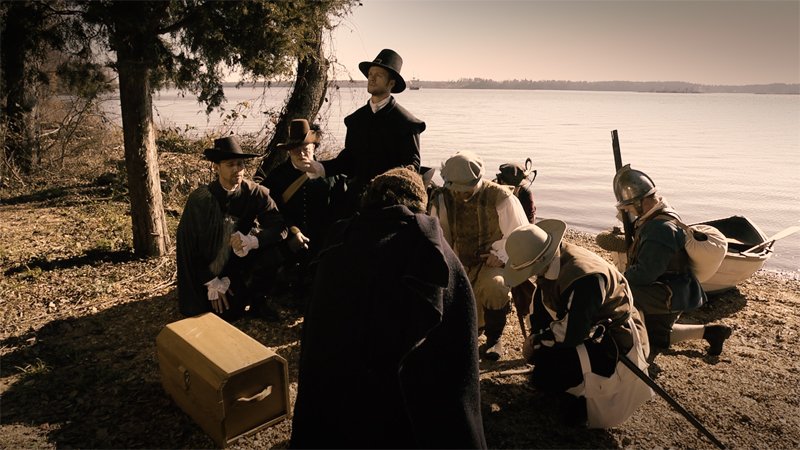 Newcomers may have been prodded by dreams of self-betterment. They did not always provide for others or for the justice necessary between persona and peoples. Social movements are organized collective manifestations of issues for which people have considerable concern. Movements deliberately attempt to promote or resist change in a group, society, or World order of which they are a part. They do so through a variety of means, not excluding violence, revolution, or withdrawal into Utopian communities. Depending upon the degree of correspondence between the goals of a movement and the value orientation of the observers, a movement can be heroic or despicable, on the side of the angels or in the league with the devil. Some movements are more dramatic than others; some are more successful than others; and some are more significant than others in terms of the range and depth of their consequences. However, seldom are they bland or without controversy. Rarely do they not reflect the ongoing dialectic between the individual and society. Hardly ever do they not demonstrate the relativity of belief systems and the importance of human agency or social action in the ebb and flow of social life. Social movements can function as an important bridge for understanding the relation between the individual and society, between structure and process, and between psychology and sociology. #RandolphHarris 1 of 7
 People power is one of the most important resources movements need in order to advance their interests. If a movement is to make headway in its goal attainment efforts, it must reach out, make contact with, and secure potential participants, and then transform at least some of the new recruits into committed members or devotees. Father gives meaning to the environment in which they (the participants) live. Complexity, confusion, hopelessness, and purposelessness are changed into simple understanding, peace, happiness, and a faith in the abstract principles embodied in the person of Father. (He thus) provides an escape from a tortuous mental confusion caused by complex, conflicting circumstances. He gives meaning to the individual life and to the World. However, Individuals who are seen as being especially susceptible to the appeals of movements on the radical right and left are usually dogmatic, highly prejudice, and insecure. The submission to an external cause or authority compensates for the feelings of self-inadequacy, and the desire to escape from an unwanted self. The permanent misfits can find salvation only in complete separation from the self; and they usually find it by losing themselves in the compact collectivity of a mass movement. #RandolphHarris 2 of 7
 By renouncing individual will, judgement, and ambition, and dedicating all their powers to the service of an external cause, people involved with movements are lifted off the restless treadmill which can never lead them to fulfillment. Their moral failing often stems from their own wounded vanity, and perhaps from their well-grounded fear that someone or something has indeed successfully unmasked their pretensions. The underlying participation in various contemporary movements is a collective search for identity. It is a search symptomatic of mass society’s failure to generate and sustain meaningful symbols and anchorages, which are seen as the functions of rituals. These people are demanding that society guarantee each individual a sense of personal worth and dignity. Movement participants are seen as those individuals who lack a series of institutional affiliations and group loyalties. In contrast, those people who are well integrated into kinship groups, cohesive local communities, and various intermediate associations are less susceptible to the appeals of social movements. Readiness to participate thus comes from an absence of those conditions that integrate people into the system and constrain them from involvement. Participants in such movements hypothetically meets the previously isolated participants’ needs for social affiliation, a sense of belongingness, and group identity. #RandolphHarris 3 of 7
 The belief that one’s life situation is largely a matter of fate or destiny has also been discussed in relation to movement participation. It is hypothesized that subjective powerlessness or little internal control renders the person susceptible to movement appeals and participation. It has also been hypothesized that a strong sense of personal control or system blame, is more likely to lead to movement participation, particularly when the movement is political in orientation. A riotous husband, or a loose wife, has an easy opportunity, assisted by means of the persecution, to rid themselves of one who is a check to their vices. When the inquisitors have taken umbrage against an innocent person, all expedients are used to facilitate one’s condemnation; false oaths and testimonies are employed to prove the accused to be worthy of torture and sacrificed to the bigoted revenge. When making a martyr, people involved in the movement pretend to wish the individual well and act like they are advising one well; and pretended kind hints. If the individual is mute, they will shut that individual up without light, or some other necessity to cause harm; and if that individual declares innocence, they torment one till one either dies with pain or confess oneself guilty. #RandolphHarris 4 of 7
 As an important determinant of movement susceptibility is the frustration or tension that supposedly results from status dissonance or inconsistency. The more frequently acute status inconsistencies occur within a population, the greater will be the proportion of that population willing to support programs of social change, even if it is harms innocent people. Some people are, as odd as this sounds, still seeking retribution for the Iberian Conquest of America. From 1492 to 1518, Spanish and Portuguese explores opened up vast parts of Asia and the Americas to European knowledge. In some of the bloodiest chapters in recorded history, the Spanish nearly exterminated the native peoples of the Caribbean islands, toppled and plundered the great inland empires of the Aztec and Incas in Mexico and Peru. Within a single generation of Christopher Columbus’s death in 1506, Spanish conquistadores explored, claimed, and conquered most of South America (except Brazil), Central America, and Southern parts of North America from Florida to California. Led by audacious explorers and military leaders, and usually accompanied by enslaved Africans, they established the authority of Spain and Catholicism over an area that dwarfed their homeland in size and population. #RandolphHarris 5 of 7
 They were motivated by religion, growing pride of nation, and dreams of personal enrichment. “We came here,” explained one Spanish foot soldier in Cortes’s legion, “to serve God and the king, and also to get rich.” In two bold and bloody strokes, the Spanish overwhelmed the ancient civilizations of the Aztec and Incas. In two bloody strokes, the Spanish overwhelmed the ancient civilizations of the Aztecs and Incas. In 1519, Hernando Cortes set out with 600 soldiers from coastal Veracruz and marched over rugged mountains to attack Tenochtitlan (modern-day Mexico City), the capital of Montezuma’s Aztec empire. At its height, centuries before, the ancient city in the Valley of Mexico had contained perhaps 200,000 people, but in 1521, following two years of tense relations between the Spanish and the Aztecs, it fell before Cortes’s assault. The Spanish use of horses and firearms provided an important advantage; so did a murderous smallpox epidemic in 1520 that felled thousands of Aztecs. Of course, Puritan Protestantism forcefully shaped much of early America and indirectly influences it still, but millions do not recognize the ethos and many reject it. God exists within and also beyond our World. #RandolphHarris 6 of 7
 The past is done. We are supposed to learn from it so not to repeat it. Trying to make one individual pay for the sins of many is insane. Also, if you do not like your own country, you are welcome to leave. “Bear with each other and forgive one another if any of you has a grievance against someone. Forgive as the Lord forgave you” (Colossians 3.13). Thanksgiving is a day that should be celebrated. It is a day of giving thanks to God for his goodness and his enduring love. It is also a day that we can take time from our busy lives to come together with our families and have a meal. The federal government gives people time off school, and sometimes work so they can go home, eat and bond with their families. Family, gratitude, and thankfulness are the true meaning of Thanksgiving. Put aside differences. Families can be wonderful and enjoyable, focus on the aspects of your family which you are grateful. Have some fun. Maybe you can start a new tradition like baking a cake together, or sharing happy stories. And eat some turkey, but “No legs for me, you can never tell where a bird’s been walkin’” says Archie Bunker. You are children of God, “I covenant with thee that thou shalt have eternal life; and thou shalt serve me and go forth in my name, and shalt gather together my people” (Mosiah 26.20). #RandolphHarris 7 of 7
That there is an Invasion of my Privates
 A new high in lowness. Prejudice is a social attitude propagated among the public by exploiting class for the purpose of stigmatizing some group as inferior so that the exploitation of either the group itself or its resources or both may be justified. People are generally exploited in hard economic times or competitive economic situations or in periods of major socioeconomic change—bringing special trouble; and corporations or individuals may have profited (commercially, agriculturally, economically, legally, and so on) at the expense of an underrepresented group or individual. The structure would produce the kind of alienation from human identity (alienation of human from human) that is expressed not only in economic terms and not only among the subjugated classes. The person is also estranged from the essential source of identity and if purpose for the human species by making one concerned for their safety and unable to trust former connections or new ones, as they tend to be frustrating and unsatisfying. Scapegoating (the practice of singling out any party for unmerited negative treatment or blame) is used to explain the flow of hostility toward the underrepresented individual under conditions of economic stress. #RandolphHarris 1 of 6
 A wishing of misfortune upon an individual, is one step short of hating them. Ill will can manifest emotions like contempt, jealousy, envy, and schadenfreude (the emotion of taking pleasure in others’ suffering). When one is carrying ill will toward another, they may not look aggressive, but feel it and emanate it (however subtly), reducing the target to something less than human. Relative deprivation is another oppressive method used by oppressors. They make sure the person has a lack of resources to sustain the diet, lifestyle, activities and amenities that the individual is accustomed to or that is widely encouraged or approved in the society to which they belong. That makes the person not only feel alienated, but as if they not worthy because no matter what they do the individual cannot seem to advance in life. So, an individual is not only enduring poverty, but also facing social exclusions. Relative deprivation has important consequences for both behavior and attitudes, including fear, stress, political attitudes, and participation in collective action. People generally operate so as to maximize their own self-esteem. The individual’s sense of personal mastery over life circumstances is one important ingredient for the achiever. #RandolphHarris 2 of 6
 The sense of low self-control is generated by extensive prejudice and discrimination and is a significant element in mobility behavior. One can have control over themselves and gain empowerment by having faith in God, and putting actions behind what one believes in. Demonstrate your faith by knowing that you are a child of God and no matter what circumstances you are facing, you are still worthy of life and worthy of achieving your dreams. God will open doors and create new opportunities and you will have the strength to do what you could not always do. God will show you his favor in unusual ways. Find the dreams in your heart, and keep them in mind every day knowing that they will become a reality. Know that God will comfort your souls, and give unto you success and also those who are with you will experience success. God will grant the strength to bear afflictions, whether they be internal or social. Our souls are precious to God and many people have things in common with us and we will eventually be encouraged and empowered in society. There is a natural power that comes from being a human being. Find your voice and authority to exercise the empowerment that you naturally have. #RandolphHarris 3 of 6
 Keep a healthy attitude about life so that you have the requisite competence and clarity to make successful decisions. As we exercise our faith in God, he will lift us up and carry us through all our trials and, ultimately, save us in the celestial kingdom. Do not be sidetracked from achieving your new goals. Harness your faith in God and adopt a healthy lifestyle. The human mind is an exception to otherwise Universal natural laws, as a thing that is conscious, that is capable of good and evil, or that can be an uncaused cause of action. Humans strive to experience their desires, human freedom, and the expressions of the power of God. Patience preserves pace of the mind in the face of injury, suffering, and sadness. It prevents us from being discouraged—from losing courage. The patient person, therefore, possess a great freedom. One is free to stay in course with one’s life and fulfill one’s responsibility, even when things are difficult. Courage enables us to persist firmly against difficulties. The power of the subconscious mind, when it becomes aware of one’s goal, it provides the means to reject a particular characteristic or adopt it, if it is consistent with our goal attainment. #RandolphHarris 4 of 6
 Our natural drive to achieve, along with our urge to move forward and be out front on the issues, tends to appeal to those who are leaders and bearing responsibility for their own visions, goals, objectives, and expected outcomes. Have a willing commitment, communicate with confidence, courage, and obvious intelligence characterized by determination and resilience. People are born with traits that can be cultivated in the direction of leadership. However, there is no doubt that leadership can be cultivated. The characteristics of leadership, necessarily has to have certain decisiveness and confidence comes from knowledge based on studies and training. The fundamental thing is your basic knowledge, the development of your mind, and your ability to apply this knowledge as you go along in life. There are no mistakes in life; there are only lessons. Great people are those who make others feel that they, too, can become great. With internal discipline there goes together a whole set of moral traits, among others perseverance, conscientiousness, and planning one’s actions. Perseverance enables one to reflect—at length strenuously, and patiently—on some selected issues. This reflection helps to overcome discouragement, apathy, self-indulgence, or laziness. #RandolphHarris 5 of 6
 Be mentally awake! Every work – and especially a scholarly one—calls for a rationally thought-out regularity, planned action, correctness, order and harmony, to avoid sliding into chaos. Exactness and conscientiousness is important so one can finish all details without leaving any gaps or bundling, and as such is the opposite of superficiality. Dear God, thank you for all of our blessings and help us to welcome challenges in our lives. Please give us the strength to persevere in them. When we are feeling weak, tired or discouraged, please help us to remember we depend on you, God. God, also please bless this great nation, for its people and government as well. Bless humanity and the beautiful creatures and environment you have created. May we take better care of ourselves and our planet. We ask for forgiveness for any disobedience, laziness of spirit and lack of faith. God remembers the dreams he placed in our heart. Get your passion back and know that things will work out to your favor. God is going to finish what he started. Forgiveness is the economy of the heart. Forgiveness saves the expense of anger, the cost of hatred, the waste of spirits. Bless it be. #RandolphHarris 6 of 6
The American Public have Become Increasingly Liberal
 The American family structure and the distribution of occupational roles has changed significantly since the 1950s. Specifically there has been changes as the increase of the number of women who combine paid employment with more traditional family roles, the increased divorce rates, the decline in fertility, the increase in the age at marriage, and the increase in female educational attainment. With the female employment rate increasing and education confers benefit in the labor market, then progressive families will invest more in girls’ education. However, the increase in female mobility in education and careers has been of such magnitude and importance that they have affected all groups of women irrespective of their experiences and characteristics. Women have an increased desire for the independence that working outside of the house affords. Attitudes towards women’s roles have become liberalized, but sexual harassment and equal pay have still been problems that women face in modern times. Still, because more women are going to work, their roles are changing and they may no longer stay in relationships that are pleasing and that may be why the divorce rate has increased. #RandolphHarris 1 of 5
 In general, attitudes of the American public have become increasingly liberal. The liberal shift has been a slow, but steady movement at least since 1942. Attitudes, institutional action, legal developments, and public behavior have moved in a consistent direction. Careful tracing of events will show that in government, in the armed forces, on television, on college campuses, and in most public spheres of life, people are more accepting of women and individuals of different ethnic backgrounds. The consistency between general attitudinal changes and macro-level social movement is seductive. However, the United States is also experiencing what is probably the most acute crises in race relations since the end of the Civil War. City after city has suffered racial violence. A spasm of riots has shaken the nation, Colin Kaepernick has decided to take a knee during the National Anthem. People have become more militant as they no longer have civilized leaders encouraging them to calm down, get an education, and respect people in positions of authority, and that even goes for people who are in positions of authority, as they no longer show respect others higher up in the hierarchy. #RandolphHarris 2 of 5
 Many have resorted to aiming themselves and the trade papers have carried accounts of guerrilla warfare. In several cities gunfights have broken out, and mass shootings in churches, nightclubs, concerts, and in schools has taken place. Concurrently with these dramatic events the attitudes of Americans toward integration and acceptances have continued to increase almost as though nothing was happening. Perhaps Americans, given their increasingly liberal attitudes, interpreted the violent acts as justified expressions of rage. This interpretation might then have led many Americans to the conclusion that, to prevent further disruption, a more integrated society was a social necessity. And that is why Barack Obama was elected president, it is why Jerry Brown has been Mayor of California four times, and the very reason Kevin Johnson, with his shady past, was elected the first Black mayor of Sacramento. Some of these positions may not have been earned by the people elected. However, with Americans becoming more liberal, so have the communities, like Sacramento, California building a $600 million sports complex with no parking, which 50 percent of the complex was paid for by tax payers, at a time when there is a housing crisis in California. People have also complained that the many reporters are acting unlawfully and as if they are on drugs and many of this would not have been tolerated in the past when people were more conservative. #RandolphHarris 3 of 5
 A Universe may form a scale for a population at a given time and may not at a later time. Such a change in time would tend to indicate that a change is one of kind, rather than degree. Still, a different issue is raised by the response pattern to the integration in neighborhoods. Large cities have become increasingly diverse, and there is a widespread of acceptance of residential integration. Nonetheless, neighborhoods that were once mostly populated by Whites are seeing White Flight. Whites are moving to more upscale communities. With the houses costing $350,000.00 to $500,000.00, White must be making a lot of money to afford to more to real suburban communities where the houses costing $600,000.00 to $1 million and more. Overall, the trends in general attitudes concerning gender roles and race relations apparently have moved in an egalitarian, liberal direction. Perhaps these shifts are but a part of a general societal trend toward greater tolerance. If you consider only the negatives, you will be discouraged and doubt will creep in, keeping you from God’s best. When you focus on God instead of your circumstances, doubt, fear, anxiety, and negativity do not have a change. #RandolphHarris 4 of 5
 Hostility is probably the most common expression of aggression, ranging from mildly edgy to snarling. Being on the receiving end of hostility can be not only very unpleasant but also sometimes scary, because we know that whoever is delivering it has us in their sights and out of their heart, with attack weaponry ready for the reloading. We need community leaders to be shinning stars and to promote that community members keep the peace, protect their communities, get their education, and act responsible. When we magnify God instead of magnifying your difficulties, faith rises in your hearts. That faith will keep your fully persuaded that God will make a way, even though you do not see a way. And the beauty is that God will show up and do amazing things! Is not a soul at this time as precious unto God as a soul will be at the time of his coming? Is it not as necessary that the plan of redemption should be made known unto this people as well as unto their children? Is it not as easy at this time for the Lord to send his angel to declare these glad tidings unto us as unto our children, or after the time of his coming? Lord, please forgive our unworthiness, and remember our families, friends, and community in your mercy. May the Lord bless your soul, and receive you at the last day into his kingdom, to sit down in peace. #RandolphHarris 5 of 5
 Randolph Harris II International Institute