
Home » Beer (Page 2)
Category Archives: Beer

If He is Not Capable of Creating, if He Cannot Love, this is the Evenin’ of Destruction

To keep America alive and thriving, Americans need to come together as one people—All American. Regardless of what happened in the past, people need to drop all animosity towards government, citizens, their family, and neighbours and do the right thing and obey the law and respect that Constitution of the United States of America. An American is someone who subscribes to the principles set out in our founding documents, the Declaration of Independence and the Constitution. America is, on this account, a creedal nation, perhaps the first in history, with Americans defined by an adherence to certain beliefs about equality, liberty, individual rights, and limited government. This idea of America as a creedal nation goes back to Alexis de Tocqueville, who found the peculiarity of our national experience—at least in relation to Europe—to be the absence of a feudal past, that is, the lack of a tradition of hierarchy, hereditary aristocracy, and serfdom (which, of course, is not quite true). What impressed him most about the American experience was what he called “the generative fact” of equality which all else derived. We would call this Mr. Tocqueville’s Thesis. It forms the traditional core of American patriotism. The American creed is understood as a product not of geography, tradition, or inheritance, but of reason. Its principles are the property of all who want to participate in the blessings of liberty. It requires only a willingness to express support for our established laws and religion and an expression of support for our founding creed and live by it. #RandolphHarris 1 of 25

At a recent Fourth of July picnic at the home of a colleague, the hostess asked the group if we all felt patriotic. Many people will say that they do not because they reflect on all of the hardships they have endured due to their race, gender, creed, disability, religion, material status, or sexuality. However, that is the goal of the ultimate negative. To get you to hate your home land so they can take it over and destroy it. Some of us have grown up in houses that have flown the flag, some of us have generations of ancestors who have fought in wars. When I was a kid, my dad used to read me the Declaration of Independence before lighting fireworks. As I got older, I even grew to like apple pie, and tried to engage in sports talk with other guys. If you look at the state of the World, you will realize how beautiful America is and how good we have it. It is also very important to remain patriotic and to help every American advance because Less Developed Countries (LCDs) are not competing for the title of America’s Next Top Model (Global Superpower). Therefore, we have to make sure our students are the best educated in the World, that American cars are appealing to Americans and other nations, and that we buy American poultry, produce and diary. We do not need to pack our cities full of buildings and homes. While buildings and homes are important, we need to keep land open for farms, parks, forest, and wildlife. Patriotism acknowledges America’s sins and flaws, it celebrates America’s history, her contributions to humanity, the eternal optimism and energy of her people. Above all it celebrates the documents in which successive generations of Americans have placed their faith. #RandolphHarris 2 of 25

Men and women and children and animals who have given their lives for their country know that patriotism is not the fear of something, it I the love of something. The most impressive patriots that I have met are men and women and children and animals who wearing their country’s uniform, are clearly inspired by love of country and love of its ideals. It may even be that love of your own country and countrymen is a prerequisite to genuine affection for people in other lands. American patriotism has everything to do with the evolution of the Constitution of the United States of America and the ideals that inspired the founders. Patriotism also has a great deal to do with faith in human possibility, and a belief in a better future that has inspired successive wave of colonists and immigrants. Patriotism is a feeling of love and respect for your country. The United States of America is well-suited and well-situated to take advantage of the Olympian possibilities for the manufacturing of patriotism. Since the year 2000, Americans have gained considerable freedom in their personal lives. Choices that used to be condemned, such as remaining single or childless, have become acceptable options. Family and gender roles re much more flexible and being free to develop oneself has become a goal for both women and men. I think many people have an incorrect idea that they will be allowed the same freedoms they have in America if we are invaded and conquered by another nation. They do not realize other nations have far less freedom. For instance, in certain parts of China, it is considered inappropriate for men to wear short pants. #RandolphHarris 3 of 25

The American situation—leads us to establishing values which have objective validity; this validity exists only with regard to the existence of man; outside of him there are no values. What is the nature of man, what are the special conditions of human existence, and what are the needs which are rooted in these conditions? Man is torn away from the primary union with nature, which characterized terrestrial existence. Having at the same time reason and imagination, he is aware of his aloneness and separateness, of his powerlessness and ignorance, of the accidentalness of his birth and his death. If we could not find new ties with his fellow man which replace the old ones, regulated by instincts, he could not face this state of being for a second. Even if all his physiological needs were satisfied, he would experience his state of aloneness and individuation as a prison from which he had to break out in order to retain his sanity. In fact, even if he is not behind barred windows, the insane person is the one who has completely failed to establish any kind of union and is imprisoned. The necessity to unite with other living beings, to be related to them, is an imperative need on which the fulfilment of man’s sanity depends. This need is behind all phenomena which constitutes the whole gamut of intimate human relations, of all passions which are called love in the broadest sense of the word. There are several ways in which this union can be sought and achieved. Man can attempt to become one with the World by submission to a person, to a group, to an institution, to God. #RandolphHarris 4 of 25

In this way he transcends the separateness of his individual existence by becoming part of somebody or something bigger than himself and experiences his identity in connection with the power to which he has submitted. Another possibility of overcoming separateness lies in the opposite direction: man can try to unite himself with the World by having power over it, by making others a part of himself, and thus transcending his individual existence by domination. The common element in both submission and domination is the symbiotic nature of relatedness. Both persons involved have lost their integrity and freedom; they live on each other and from each other, satisfying their craving for closeness, yet suffering from the lack of inner strength and self-reliance which would require freedom and independence, and furthermore constantly threatened by the conscious or unconscious hostility which is bound to arise from the symbiotic relationship. The realization of the submissive (masochistic) or the domineering (sadistic) passion never leads to satisfaction. They have a self-propelling dynamism, and because no amount f submission or domination (or possession or fame) is enough to give a sense of identity and union, more and more of it is sought. The ultimate result of these passions is defeat. It cannot be otherwise; although these passions aim at the establishment of a sense of union, they destroy the sense of integrity. The person driven by any one of these passions actually becomes dependent on others; instead of developing his own individual being, he is dependent on those whom he submits to or whom he dominates. #RandolphHarris 5 of 25

There is only one passion which satisfies man’s need to unite himself with the World and to acquire at the same time a sense of integrity and individuality, and this is love. Love is union with somebody, or something outside oneself under the condition of retaining the separateness and integrity of one’s own self. It is an experience of sharing, of communion, which permits the full unfolding of one’s own inner activity. The experience of love does away with the necessity of illusions. There is no need to inflate the image of the other person, or of myself, since the reality of active sharing and love permits me to transcend my individualized existence and at the same time to experience myself as the bearer of the active powers which constitute the act of loving. What matters is the particular quality of living, not the object. Love is in the experience of human solidarity with our fellow creatures, it is in the erotic love of man and woman, in the love of the mother for her child, and also in the love for oneself as a human being; it is in the mystical experience of union. In the fact of loving, I am one with All, and yet I am myself, a unique, separate, limited, mortal human being. Indeed, out of the very polarity between separateness and union, love is born and reborn. Another aspect of the human situation, closely connected with the need for relatedness, is man’s situation as a creature and his need to transcend this very state of the passive creature. Man is thrown into this World without his consent or will. In this respect he is not different from any other terrestrial being, from the plants, or from inorganic matter. #RandolphHarris 6 of 25

However, being endowed with reason and imagination, man cannot be content with the passive role of the creature, with the role of dice cast out of a cup. He is driven by the urge to transcend the role of the creature, the accidentalness and passivity of his existence, by becoming a “creator.” Man can create life. This is the miraculous quality which he indeed shares with all living beings, but with the difference that he alone is aware of being created and of being a creator. Man can create life, or rather, woman can create life, by giving birth to a child and by caring for the child until it is sufficiently grown to take care of its own needs. Man—man and woman—can create by planting seeds, by producing material objects, by creating art, by creating ideas, by loving one another. In the act of creation man transcends himself as a creature, raises himself beyond the passivity and accidentalness of his existence into the realm of purposefulness and freedom. In man’s need for transcendence lies one of the roots for love, as well as for art, religion and material production. To create presupposes activity and care. It presupposes love for that which one creates. If he is not capable of creating, if he cannot love, how, then does man solve the problem of transcending himself? If I cannot create live, I can destroy it. To destroy life makes me also transcend it. Indeed, that man can destroy life is just as miraculous a feat as that he can create it, for life is the miracle, the inexplicable. In the fact of destruction, man sets himself above life; he transcends himself as a creature. #RandolphHarris 7 of 25

In the act of destruction, man sets himself above life; he transcends himself as a creature. However, in man’s destruction of life, other creatures suffer. For example, Vaquita, the World’s rarest marine mammal, is on the edge of extinction. The plight of cetaceans—whales, dolphins, and porpoises—as a whole is exemplified by the rapid decline of the vaquita in Mexico, with about 10 individual remaining. This little porpoise was not discovered until 1958 and a little over half a century later, we are on the brink of losing them forever. Vaquita are often caught and drowned in gillnets used by illegal fishing operation in marine protected areas within Mexico’s Gulf of California. The population has dropped drastically in the last few years. If we are not careful, man will rob this Earth of all its natural resources and animal life. Free human birth control distribution in America LDCs may help save the planet. Thus, the ultimate choice for man, inasmuch as he is driven to transcend himself, is to create or to destroy, to love or to hate. The enormous power of the will for destruction which we see in the history of man and which we have witnessed so frightfully in our own time is rooted in the nature of man, just as the drive to create is rooted in it. To say that man is capable of developing his primary potentiality for love and reason does not imply the naïve belief in man’s goodness. Destructiveness is a secondary potentiality, rooted in the very existence of man, and having the same intensity and power as any passion can have. However—and this is the essential point of the argument—it is the alternative to creativeness. #RandolphHarris 8 of 25

Creation and destruction, love and the, are not two instincts which exist independently. They are both answers to the same need for transcendence, and the will to destroy must rise when the will to create cannot be satisfied. However, the satisfaction of the need to create lead to happiness, destructiveness to suffering—most of all, for the destroyer himself. Selfishness is not identical with self-love but with its very opposite. Selfishness is one kind of greediness. Like all greediness, it contains an instability, as a consequence of which there is never any real satisfaction. Greed is a bottomless pit which exhausts the person in an endless effort to satisfy the need without every reaching satisfaction. Close observation shows that while the selfish person is always anxiously concerned with himself, he is never satisfied, is always restless, always driven by the fear of not getting enough, of missing something, of being deprived of something. He is filled with burning envy of anyone who might have more. If we observe still closer, especially the unconscious dynamics, we find that this type of person is basically not fond of himself, but deeply dislikes himself. The puzzle in this seeming contradiction is easy to solve. Selfishness is rooted in this very lack of fondness for oneself. The person who is not fond of himself, who does not approve of himself, is in constant anxiety concerning his own self. He has not the inner security which can exist only on the basis of genuine fondness and affirmation. He must be concerned about himself, greedy to get everything for himself, since basically he lacks security and satisfaction. #RandolphHarris 9 of 25

The same hold true with the so-called narcissistic person, who is not so much concerned with getting things for himself as with admiring himself. While on the surface it seems that these persons are very much in love with themselves, they actually are not fond of themselves, and their narcissism—like selfishness—is an overcompensation for the basic lack of self-love. Dr. Freud has pointed out that the narcissistic person has withdrawn his love from others and turned it toward his own person. Although the first part of this statement is true, the second is a fallacy. He loves neither others nor himself. As we focus on this psychological analysis of selfishness, we find ourselves confronted with the contradiction that modern man believes himself to be motivated by self-interest and yet that actually his life is devoted to aims which are not his own; in the same way that Mr. Calvin felt that the only purpose of man’s existence was to be not himself but God’s glory. We tried to show that selfishness is rooted in the lack of affirmation and love for the real self, that is, for the whole concrete human being with all his potentialities. The “self” in the interest of which modern man acts is the social self, a self which is essentially constituted by the role the individual is supposed to play and which in reality is merely the subjective disguise for the objective social function of man in society. Modern selfishness is the greed that is rooted in the frustration of the real self and whose object is the social self. While modern man seems to be characterized by utmost assertion of the self, actually his self has been weakened and reduced to a segment of the total self—intellect and will power-to the exclusion of all other parts of the total personality. #RandolphHarris 10 of 25

The art of setting the level of aspiration for a group so that it will evoke optimum effort never ceases to be an expression of leadership. Goals which appear to have been imposed upon a group from above of from outside have a stifling effect even when they are set very low, whereas goals which emerge from a group’s attempt to better its own record can stimulate prodigious effort. Thus goals are always most strategically calculated when they can be related to a recent cycle of similar experience, less perspicuously when they are proposed for the first time. When the report has been finally assembled and approved, it is ready to be passed on to the executive or the policy-making body which commissioned its preparation. A question may remain whether and when it should be made available to the public concerned, and in what form. In general, of course, the best result is achieved by full and immediate publication. On the other hand, special circumstances may demand different timing, and publication in both popular and technical versions. The scale of distribution of the report depends on the degree to which it is to be part an educational campaign, or simply precipitated into public discussion on a take it or leave it basis. Generally speaking, the latter may appear preferable in most cases, leaving advocacy of its recommendations to such voluntary groups as by this stage of the planning process come into existence. Opportunity for the lay members of the public to see and question the experts in person is the most effective means to diminish any gulf of status or suspicion between them, and to encourage the public’s participation in the solution of its problems. #RandolphHarris 11 of 25

From the first murmurings of awareness of the existence of a problem, there will normally have been a steady gain in definiteness of its conception among the public affected. If people always knew what they wanted, professional planners would then be in the happy position of being able to speak authoritatively about the best means. However, ends are not given, nor are ends and means so nicely distinguishable. Knowledge of limitations and possibilities affect the formulation of ends, and experts may be as influential as leaders in helping to form public opinion. Nevertheless, while it is up to the experts to propose, it is up to the public to dispose, since no expert is qualified to know better than people themselves what they want. And they themselves do not know what they want until they have considered the matter. The concept of “decision load” is crucial to any understanding of democracy. All societies require a certain quantity and quality of political decisions in order to function. Indeed each society has its own unique decision structure. The more numerous, varied, frequent and complex the decisions required to run it, the heavier its political decision load. And the way this load is shared fundamentally influences the level of democracy in society. In preindustrial societies, where the division of labour was rudimentary and change was slow, the number of political or administrative decisions actually required to keep things running was minimal. The decision load was small. A tiny, semi-educated, unspecialized feudal or monarchical elite could more or less run things without help from below, carrying the entire decision load by itself. #RandolphHarris 12 or 25

Traders are a continuum, uniformly distributed along a circle of circumference. In the first period is the one where honesty or cheating are the crucial issue; the appropriate rewards or punishment come in the second period, which may as usual stand for the educed form of a longer future. The payoffs are expressed in present values so no further discounting is necessary. In each period, traders are randomly matched in pairs. Every economic problem is an economic opportunity. Someone who can solve the problem, turning the potential gains into actual ones, may be able to charge a fee for this service. In our context, if the government does not provide contract enforcement using its general revenues, then a private person may be able to do so for a profit. Theoretical and empirical literatures alike identify two difficult problems that confront large populations trying to resolve prisoners’ dilemmas: collecting and conveying information about previous cheating; and erecting a credible structure of punishment to deter cheating in current periods. The principle that “economic problems are also economic opportunities” applies to both of these. Anyone can, at a cost, collect information about individual traders’ histories of cheating, and sell this information to other prospective traders in the future. Trade associations often collect and provide such information to members. Three different forms of such associations can be distinguished. The first kind, exemplified by relatively small groups of specialized commodity traders are mainly concerned with trades among pairs of its own members, and provide information about members’ past actions in their trades with other members. #RandolphHarris 13 of 25

The second and the third kinds are concerned with interactions between a member on one side and a non-member (general public) on the other side. Of these, the second kind collect information about cheating by one of the general public and provide it to their members; credit-approval services maintained by Visa and Mastercard are an instance of this. The third kind, usually known as Better Business Bureaus, keep track of their members’ behaviour and make this information available to the public. This enables their members credibly to create and maintain reputation. The diamond traders’ club, which governs transactions between its members and other dealers who may or may not be members, seems to be a mixture of these types. In some situations, third parties charge a fee to provide information to one side of a transaction about the history of the other side; agencies that rate the creditworthiness of people or firms, or services that monitor the quality of goods and services provided by firms, are well-known examples. Such a for-profit intermediary must solve two other problems: he must discourage free riding, by making the information unavailable or useless to non-payers; and he must credibly promise not to misuse the information, for example for extortion or double crossing. However, this is simplified by the fact that the intermediary’s relationships with all customers are bilateral and non-anonymous: while two traders may meet each other only infrequently, each of them can meet the intermediary every period. #RandolphHarris 14 of 25

The difficult problem of resolving prisoners’ dilemmas in random pairwise matching from a large population is converted into the somewhat easier problem of resolving prisoners’ dilemma of direct bilateral reciprocity between each member of the population and the intermediary. This is conceptually similar to solving the problem of double coincidence of wants by introducing money. The issuer of money gets seignorage; the information intermediary charges a fee for his services. A suitably qualified intermediary can also provide an enforcement service, that is, inflict punishments on behalf of customers. We have a well-known study of private judges enforcing “the law merchant” (LM) in medieval France, who performed both functions. First, such a judge or intermediary kept records on the behaviour of traders in the markets over which he offered his services. Second, he adjudicated disputes brought before him by one of the traders. In each period, each player is matched with a partner whom he is unlikely to have met before and is unlikely to meet again. Each player in such a pair can, by paying a feed, query the LM about his current partner’s history of behaviour in previous matches. Each such pair then plays a one-time prisoner’s dilemma game. If either of the players in this game cheats, the other can, by paying another fee, complain to the LM, but only if the victim had queried the LM about the partner’s history. If such a compliant is lodged, the LM investigates at a cost and, if appropriate, awards the plaintiff a judgement (monetary restitution) against the defendant. A losing defendant decides whether to pay the judgment. An unpaid judgment becomes another act of cheating, and is recorded as such by the LM. #RandolphHarris 15 of 25

Under appropriate conditions on the various parameters, and for a suitably calculated structure of fees, this system has an equilibrium outcome where everyone (including the LM) behaves honestly. The intuition is that the LM’s record-keeping solves the information problem that would exist in a large population of traders with infrequent bilateral matches, and then punishment strategies of repeated games can work. Thus the LM serves as a complement to, not a substitute for, the usual reputation mechanism. The LM institution also contributed to the formulation of a uniform set of standards for commercial transactions across large areas of Europe, and therefore played a part in the evolution of modern commercial laws. We have a memorable example of private intermediation which involves the Sicilian Mafia. When the butcher comes to me to buy an animal, he knows that I want to cheat him [by giving him a low-quality animal]. However, I know that he wants to cheat me [by revoking his payment]. This we need Peppe [tht is, a third party] to make us agree. And we both pay Peppe a percentage of the deal. Peppe was mainly selling information for this service, he received a 2 percent commission. When in addition he acted as a guarantor of quality and payment, the percentage increased. Peppe provides his services to the people on both sides of the transaction. They use his services voluntarily. The services are of two kinds, ex ante information about each other party’s history of behaviour, and ex post punishments meted out in response to any cheating. The fees for the latter (enforcement) services are higher than those for the former (information) service. The parties to any transaction may not have any direct bilateral reciprocal interaction with each other, but each of them has such interaction with Peppe. #RandolphHarris 16 of 25

Organized crime performs functions of economic governance in other countries, and has done so throughout history. It usually operates at time or in niches where the state is absent. The origins of the Mafia’s enforcement role can be traced back to nineteenth century Sicily after the abolition of feudalism. Publicly provided security was inefficient and banditry widespread; landowners began to hire guards of former feudal lords and some of the tougher bandits to protect their property. In Japan in August-September 1945, when the government had collapsed after defeat in World War II but the occupying USA forces had not yet restored order, the Yakuza played a major role in getting markets restarted. Similar activities are found in Russia and other transition economies. As housing prices continue to increase, and in markets like San Jose, California where a one bedroom, one bathroom starts off at around $3,000.00 a month, many people are feeling insecure. Some people have been playing games for so long and bought homes when they were affordable so they can feel like feudal lords and abuse people that they have lost all touch with reality and the reality of how expensive live is in 2024. They are still running around like sixteen-year-old boys trying to have the coolest car, while others are literally slaving to try to become established in a corrupt city such as Sacramento, California. The state of affairs in Sacramento is just pathetic and for some reason the government seems unwilling or incapable to take action, leading some to question, “What is this?” because it does not even seem like this is reality. #RandolphHarris 17 of 25
The government has become like the Wizard of Ozz, a nameless, faceless, entity that can take swift and severe actions to ruin lives, but lack the power to do anything good and correct its mistakes. If you want to survive, you basically have to find the resources yourself and even if you are injured, work yourself to death to stay sane and try to find a way out of the situation. It is illegal for the government to terrorize and hold people hostage, but that is basically what is happening, while others enjoy all the freedoms guaranteed by the U.S. Constitution. And in addition to being held hostage, they make sure to isolated and alienate an individual. So that no one can help and uplift one, and put one around a bunch of dysfunctional people who need financial, mental, and physical help that they refuse to seek. There is such a collective consciousness that people do not seek to change their situation for the better, it is always “we” need to get together and go somewhere and do something is fun. However, as some of these people are part of a couple, why do they not go out on a date or go see a movie or go to a nightclub. It is almost like Sacramento is a haven for low-income criminals and white-collar criminals who help them. You see a lot of people sitting around, smoking and drinking and spitting on the ground, and wonder, why do they not go to one of, many of these, beautiful parks. Instead, they invite all their grandchildren to play in parking lots and run behind cars with high insurance so they can “get paid,” not seeming to care that someone could end up dead. #RandolphHarris 18 of 25

Also, instead of getting jobs, they target certain people and try to have an accident because, much like PG&E, even if it is not your fault, the word is insurance companies will make you pay. They do not even care about your health or injuring you to the point that you can no longer with, and will not even pay you. However, they also forget that you may have a pregnant passenger and/or a baby in the car with you. Sacramento has become so deplorable and corrupt. It is like a blackhole, seemingly impossible to escape from alive. No matter how many rituals you do, prayers you say, government agencies you ask for health, they simply stop responding. It is a pretty city, but if the state and local government decides to trap and target you, your life and the life of anyone around you does not seem to matter. You are nothing more than a placeholder, they want to use to help some criminal come up off of. There are many caring and supportive people and the community, and a lot of happy people who are able to work and have fun on their free time, but I am not sure Sacramento is a safe community. It can be like the Twilight Zone for those who are selected as targets. And then you look at the State Capitol of California, which is in Sacramento, and it looks like half the building was blown up (it is under renovation), but it just makes a person ponder stability of the city. What is it? It is a really weird place. It is a lot like a ghost town. It will make you question reality. I just have to say it, every since I came back from China in 2006, I felt it as soon as I got off the plane, but something did not seem right about this town. It did not feel like the same city I left, and what happened afterwards is even more bizarre. I will just be real. Sometimes I wonder if I am dead and is this just a government computer simulated reality. Everything feels and looks real, but something is wrong. Like, for instance, look at how President Biden acts, he is confused, falls around, misspeaks, and it barely stirs a ripple. No one says a word about it in public. And then the mainstream media is probably less reliable than The National Enquirer. #RandolphHarris 19 of 25

I honestly, even though I pretend to, do not believe anything anyone tells me anymore because so many people are constantly telling lies. I am serious, it is like this city has been overran by demons. And a lot of families do not act right anymore, a lot of daughters and mothers have confrontations and conflicts, and even people who go to church are corrupt. Someone told me the World is coming to an end, and that could explain it because a lot of this is talked about in the Christian Bible and Book of Mormon. However, if that is true, I encourage everyone to live right and ask God for forgiveness. And if you feel how hot in gets in Sacramento, could you imagine what burning in hell for an eternity would be life? God forgives everyone, but do not want until it is too late to repent. Also, make sure to enjoy life. Do not spend time around people you do not like. Find people and activities that you can enjoy. If your neighbours are annoying, go out of your way to ignore and avoid them, so they will understand what time it is. Also, with some many people carrying guns, and mental illness being a crisis in America, why are people shocked when something goes wrong and innocent people are killed because of some bully who thought being bad was the coolest thing since Jordan Basketball sneakers? And also, have you serious considered how dangerous gun control is? There more than 20,000 gangs consisting of approximately 1 million members in the United States of America; gangs are present in all 50 states, the District of Columbia, and all U.S.A. territories. CEOs think about things like this, but what is a gang decided to come to your house and target you? You know, ten fifteen men and women show up because they have a problem with you and want to cause you harm. You may need an AK-47. #RandolphHarris 20 of 25

Or what is you live in a Victorian Farmhouse in Iowa on 400 acres and a gang decided to attack you? Sometimes calling the police is not always an option, nor is it your best option. The police, many of them are on the job to protect people and will go out of their way to make sure you are safe, but there is a lot of crime going on in America, and your calls to 911 could be getting relayed to Hood Day Sacramento, for example, and an officer or someone impersonating an officer may be taking your calls. It has happened to me several times. It will be a life-or-death situation and I have been sent a text message, allegedly from the police department, saying that “We will not be responding.” I have also reported trespassers on my neighbour’s property and been told, “The owner needs to take responsibility.” How can we have a safe community when the police allow some people and properties to be targeted and refuses to help certain citizens? It just does not make sense. People have been stalked, kidnapped, raped several times, beat, attacked, robbed, had their homes and cars broken into and thousands of dollars done because someone thinks terrorism is fun and cool. The boarders to the country are wide open, allowing anyone to just walk in with any amounts of drugs, guns, criminal intent. And CBS13, KCRA News, FOX40, Good Day Sacramento, and ABC10 may be the biggest criminal organization in Sacramento. Turn the news off, stop watching them so they have to shutdown. In the words of Beyonce, “America—America has a problem.” Anyway, protection should be regarded as the Mafia main business; if it engages in some activities that may need its own protection services, this is just “downstream vertical integration.” Perhaps one can regard the Mafia as an organization that specializes in providing protection, while individual mafiosi may be entrepreneurs engaged in the activities that need the protection. The Mafia may also engage in extortion, or creating the need for protection of property by itself creating a threat to the property; these are strategies that need to be examined as part of the equilibrium of the game. #RandolphHarris 21 of 25

Peppe in his information role resembles a credit-rating agency or even a restaurant guide, except that he acts for both sides of the deal. In the guarantor or enforcer role, he resembles the official legal system, but has different information acquisition methods and different methods of punishment, and is motivated by private profit rather than by social welfare. Peppe’s commission for enforcement is higher than that for information. You may think this a trivial question, and think of obvious answers: enforcement activity is riskier to provide; that state’s criminal law (if it is functioning) may intervene; the miscreant whom Peppe is trying to punish may prove tougher than Peppe; and so on. All these arguments say that the cost of providing enforcement is higher than that of providing governance by information alone; they are supply-side reasons. Peppe usually acts as a monopolist in enforcement over an allocated territory, defined by geography or the type of activity being protected (although conflicts over monopoly rights or over territories may break out among Mafiosi or their families). A monopolist changes a prince above cost, based on the customer’s willingness to pay. Therefore we must look for demand-side reasons, namely explain why Peppe’s customers are willing to pay more for the enforcement service than for the information service. To resist the enemy on the ground of the blood of Christ means wielding the weapon of the finished work of Christ, by faith: believing that Jesus’ death for in frees the trusting believe from the guilt of sin; that Jesus’ death to sin on the cross, and the believer’s death with Him, frees the Christian from the power of sin; and that Jesus’s death-victory on Calvary frees the believer also from the power of the ultimate negative. #RandolphHarris 22 of 25

A condensed form of the principles and conditions for deliverance from the deception of psychopathological offenders in any degree may be given as follows: Recognition of the possibility of deception. Admission of actual deception. An attitude of neutrality toward all past spiritual experiences until truth concerning them is ascertained. Refusal of all ground of psychopathological offenders. The taking of the position of death to sin (Rom. 6.11). The detection and refusal of all that belongs to deception. The understanding of the criterion of the true, normal conditions so as to gauge signs of deliverance. Active usage of the faculties so that they reach the normal condition. Recognize persistently the true cause of bondage; id est, the work of a psychopathological offender or offenders. Choose to have absolutely nothing to do with the powers of psychopathological offenders. Frequently declare this. Do not talk or worry about their manifestations. Recognize, refuse, and then ignore them. Refuse and reject all their lies and excuses, as they are recognized. Notice the thoughts, and the way in which they come, and when—and immediately declare the attitudes of Romans 6.11 against all the interferences of the enemy. Hinderances to deliverances from deception may again be given here briefly, as: Not knowing it is possible to be deceived. Thinking God will not allow a believer to be deceived. Saying, “I am safe under the blood,” without intelligent knowledge of the conditions. Saying, “I have no sin.” Saying “I am doing all that God wants, so all must be right”—without seeking to understand what the will of the Lord is (Eph. 5.10-17). Some hints on overcoming passivity of mind are as follows: Act as far as you can, doing what you can. Take the initiative, instead of passively depending on others. Decide for yourself in everything you can. Do not lean on others. Live in the moment; watch and pray step by step. Use your mind, and think—think over all you do, and say, and are. #RandolphHarris 23 of 25

Fundamental to Tillichian Christology is the notion of estrangement, for it is from our estranged human situation that the New Being rescues us. The force of the method of correlation is nowhere more powerfully evident in the portrayal of man’s estrangement and the power of the New Being which overcomes it. The original sin is the state of estrangement and Creation, and the Fall coincides. Which seems to indicate that finitude is inherently evil, and sin ontologically necessary. Perhaps God understands this and that is what the Fall is all about. Man’s nature is evil and rebellious and he needs God to cultivate and teach him good. Without God, man will become corrupt and evil. God is your Heavenly Father and if you do not follow His rules, you will be a bad child. His ways are greater than yours. Much like if children did not obey their parents, even though no human is perfect and some parents are bad, when you are a minor, they typically want you to behave so the law does not punish them. If you did not listen to your parents, chances are that you would be a bad kid and end up dead or in jail. TV news reports in Sacramento, California USA say they “Do not have time to reach the (Chrisitan) Bible.” Obviously, if people are too busy to listen to their Heavenly Father, they are actively engaged and evil and you should not be learning from them. The Fall is the state of existence in which the potentialities of finite essences are actualized, but the nonbeing of the essence takes its toll also, and the creature does not perfectly live up to its essence. It is always in some degree estranged from it and, consequently, from the ground of being. #RandolphHarris 24 of 25

However, inevitability is not the same as necessity. Now, I ask you to consider, do people repeat themselves or does history? It depends on what you believe. However, many of these people may not have been reconstituted and may be new souls. Therefore, if history repeats itself, then be careful because humans could literally end up being slaves again and forced in the fields and whipped. The only way we can stop history from repeating itself is by adhering to the Gospel of God. If people continue to stray from the Lord, all that will exist is evil. Love will be replaced by material possessions and evil. Finitude is good, with God, but not perfect, and when it seeks to perfect itself by actualizing its potencies, it falls, because, after all, it is finite. That Christ is the answer to existential anguish, is a fundamental insight which Catholics have tended to neglect in a smug unconcern for those who have brought this anguish to the fore of modern thought. We should be grateful that we can learn something about Christ, that at least some aspects of Christology can be emphasized with the help of modern thinkers. Estrange, puzzled, frightened is the man of today. Theonomy means union with God, the ground of being. Finite beings can achieve it only by actualizing their essences in such a way that they are transparent to their ground. However, the universal fact of existence is estrangement, separation of beings from God, from themselves, and from one another. A new power, a New Being is needed to overcome estrangement, and in Jesus the Christ it has appeared. To whatever extent religion animates culture, this theonomous union is realized by the power of the New Being which grasps us in the ecstasy of faith. However, one of the potentialities of man is his drive toward community. We must now examine the church, the community of those who receive Jesus the Christ as the New Being. I pledge allegiance to the flag of the United States of America, and to the republic, for which it stands, one nation, under God, indivisible, with liberty and justice for all. Be sure to show love to the Sacramento Fire Department, they are understaffed and underfunded. Feel free to donate to their cause. #RandolphHarris 25 of 25

MAGNOLIA STATION AT CRESLEIGH RANCH
Rancho Cordova, CA | low $600s
Now Selling!

Models now open at Magnolia Station! Located at the corner of Rancho Cordova Parkway and Douglas Road, residents of Cresleigh Ranch will benefit from a brand new neighborhood with convenient access to the new Raley’s Shopping Center, Sunrise Boulevard, and much more!

Magnolia Station will include 81 homesites and five distinct plans ranging from 2,200 – 3,700 square feet; including three single story plans! Each plan has been thoughtfully designed to include features such as: Generations Suite, Optional Offices/Dens, Extended Great Rooms, and more! https://cresleigh.com/magnolia-station/residence-5/


The Mind-Shattering Horrors of Llanada Villa

The most merciful thing in the World, I think, is the ability of the human mind to partake in all the beautiful of the material World. We live in an infinity of reality that only the beholder can discern. If we choose to go far, we must learn to apricate our circumstances and work towards an enjoyable life. My home is a vast labyrinth, each mile straining in its own direction, and somedays piecing together the dissociated mysteries will open up such terrifying vistas of reality, and of our frightful curse therein, which shall either make one go mad from the revelation or flee from the deadly catacombs into the peace and safety of a new dark age. Within these walls, there are strange survivals of apparitions that will freeze the blood. However, it is not from them that there came the single glimpse of forbidden aeons which chills me when I think of the madness that has been bestowed upon my bloodline. The grass and trees have assumed the fresh enamel of mediaeval May, and the turf is figured with little blossoms of azure and white and yellow, like an ornate broidery, and there is a pebbly stream that murmurs beside the way, and the voices of undines are parleying deliciously beneath its waters. The sun-lulled air is laden with wafture of youth and romance; and the longing that wells from the heart of Llanada Villa seems to mingle mystically with the balsams of the fruit orchards. Llanada Villa is like a high castle which holds dominion over a surrounding forest. However, once through the threshold, dreaded glimpses of truth, flash out from a hideous past. #RandolphHarris 1 of 8

Somewhere within my haunted mansion is a hidden room notorious for sorcery. Servants speak of phantoms, grisly tales; and there are stories of loup-garous and goblins, of fays and devils and vampires that have infested these very walls. However, to these tales, I give little heed, considering it improbable that such creatures would fare abroad in open daylight. Until one day, I was nearing the appointed parlor, which a turn of the path would soon reveal; and my pulses quickened and became tremulous. My thoughts were interrupted by a shrill scream that rose to an unendurable pitch of fear and horror, issuing from the corridors of stillness of the nearby rooms. Startled, I peered at the thick doors; and as the scream fell back to silence, I heard the sound of dull and hurrying footfalls, and a scuffling as of several bodies. Again the scream arose. It was plainly the voice of a woman in some distressful peril. In a small open space beyond the parlor, I saw a woman who was struggling with three ruffians of exceptionally brutal and evil aspect. Even in the haste and vehemence of the moment, I realized that I had never before seen such men or a woman. They could not have been my servant. The woman was clad in a gown of emerald green that matched her eyes; in her face was the pallor of dead things, together with a faery beauty; and her lips were dyed as with the scarlet of newly flowing blood. The men were dark as Moors, and their eyes were red slits of flame beneath oblique brows with animal-like bristles. There was something very peculiar in the shape of their feet. All of them seemingly had cloven hooves, but somehow I could not recall what sort of clothing they had worn. #RandolphHarris 2 of 8

The woman turned a beseeching gaze upon me as I peered through the door. The men, however, did not seem to heed my presence. Lifting my pistol, I fire with tremendous power at the head of the nearest one—a shot that should have leveled the fellow to Earth. However, the bullet fell to the ground as if forced by unresisting air, and I staggered and almost fell headlong in trying to recover my equilibrium. Dazed and uncomprehending, I saw the knot of struggling figures had vanished utterly. At least, the three men had vanished but from the middle of the parlor, the death-white features of the woman smiled upon me for a moment with faint, inscrutable guile ere. I understood now; and I shivered as I crossed myself. I had been deluded by phantoms or demons, doubtless for no good purpose; I had been the gull of a questionable enchantment. Plainly there was something after all in the legends I had heard, in the ill-renown of The Curse of the Winchester Rifle. I retraced my way down the hall I had been following. However, when I thought to reach again the spot from which I had heard that shrill unearthly scream, I saw that there was no longer path leading to that parlor; nor indeed was this a section of the mansion I recognized. The marble steps, coffered ceilings, the elevator paneled in mahogany like a plutocrat’s library, which carried me to the fourth floor vanished. In lieu of this elegant new addition to Llanada Villa there lay before me a tarn of hallways that were dark and dull as clotting blood, and the trail therein like the hair of suicides, and the skeletons of rotting corpses. #RandolphHarris 3 of 8
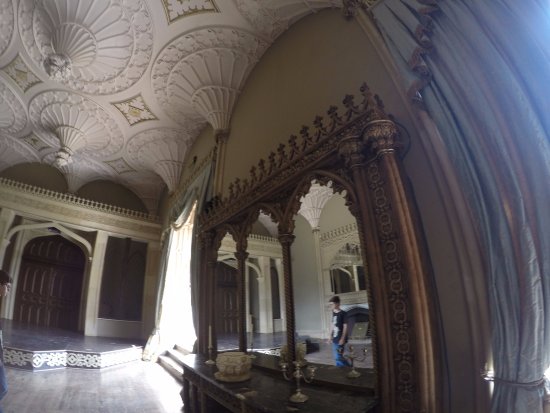
Now, beyond all question, I knew that I was the victim of an evil enchantment. In answering that beguileful cry for succor, I had exposed myself to the spell, had been lured within the circle of its power. I could not know the force of wizardly or demonry had willed to draw me thus; but I knew that my situation was fraught with supernatural menace. As I passed this scene of utter desolation and lifelessness, it seemed a place where cadavers might keep their tryst with demons. Nothing stirred, not even a hammer; and there was no whisper of a servant, no song of birds. I proceeded further and further into my mansion with a cautious eye, as the further I got, the more the scene changed. There were moving lights in the halls that vanished; there were drowned faces in the walls. The parquet floor was an obstacle course of French dollhouses and miniature Japanese castles. The draperies were green silk damask and blue velvet, the furniture Lousi XV gilded oak, the paintings signed by Renior, Cezanne, Degas, Manet, Monet. My many-turreted castle was ancienter than the World, it was older than light; it was coeval with fear and darkness; and horror dwelt upon it and crept unseen but palpable along its bastions. The 600-room mansion was a fairy-tale castle come to life, with secret entrances, mysterious sources of music, and treasure collected from all the World. My home was not so unusual during the day. On the top half, every inch was decorated with Parisian Beaux Arts ostentation, a profusion of lions, cherubs, and goddesses. Oh, but the architects were not done. Soaring above the mansion was an ornate domed tower reaching nine stories, so pleased with itself that it continued to an open cupola. #RandolphHarris 4 of 8
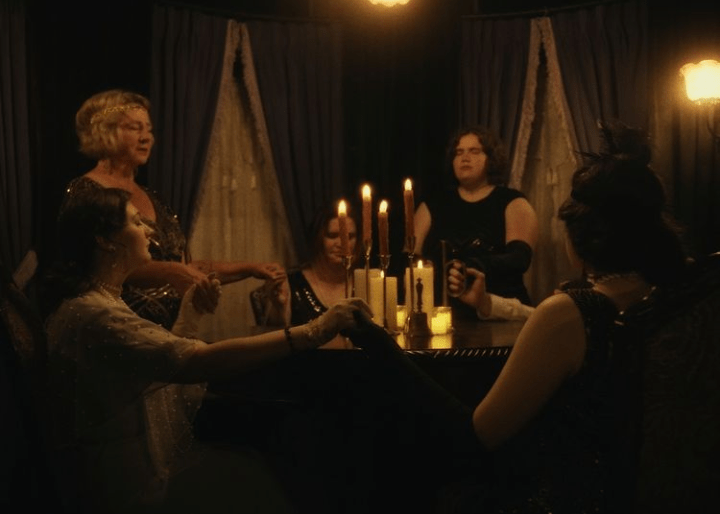
Although construction was continuous, there was often no sign of life about the castle; and no banners flew above its turrets or its donjon. However, spirits spoke loudly to warn me that there was a fountainhead of sorcery involved in the construction of my home. A growing panic would whisper in my brain, I seemed to hear the rustle of malignant plumes, the mutter of demonian threats and plottings. Amid my dismay and bewilderment, I thought of Annie and William and imagined that as long as I continued construction, that one day I would find them waiting for me in a parlor, library, kitchen, or hallway. Through my mansion throw which I lived was a maze of bafflement and eeriness. Sometimes I could swear I felt implacable arms that stoke to retard me; I could swear that I felt them twine about me with the strength and suppleness of living things. I fought them, insanely, desperately, and seemed to hear a crackling of infernal laughter in the walls as I fought. After years, with a leaden sinking of my heart, as into some ultimate slough of despair and terror, I resigned myself and made no further effort to escape. My very will was benumbed, was crushed down as by the incumbence of a superior volition that would no longer permit my puny recalcitrance. I was unable to resist when a strong hateful compulsion drew my footsteps along the margent of the halls down a new, never before seen room. Doors would open by themselves as if to receive an unexpected guest. But other than me, there was no sign of carpenter, architect, maid, butler, no farmer; and the walls of this great mansion were silent as those of a sepulcher. However, there were these apparent hieroglyphics and a figure of evidently pictorial intent, though its impressionistic execution forbade a very clear idea of its nature. It seemed to be a sort of monster, or symbol representing a monster, of a form which only a diseased fancy could conceive. #RandolphHarris 5 of 8

If I say that my somewhat extravagant imagination yielded simultaneous pictures of octopus, a dragon, and a human caricature, I shall not be unfaithful to the spirit of the thing. A pulpy, tentacled head surmounted a grotesque and scaly body with rudimentary wings; but it was the general outline of the whole which made it most shockingly frightful. Behind the figure was a vague suggestion of a Cyclopean architectural background. At the opposite end of the parlor was a door which stood mysteriously open, revealing a dark hall. As I approached the doorway, I saw that a man was standing on the threshold; though a moment previous I could have sworn that it was untenanted by any visible form. I knew that any weapon was futile against this supernatural foe. The man was inordinately tall and cadaverous, and was dressed in black garments of a superannuate mode. His lips were strangely red amid his bluish beard and the mortuary whiteness of his face. They were like the lips of the woman who, with her assailants, had disappeared in a manner so dubious when I approached them. His eyes were pale and luminous as marsh-lights; and I shuddered at his gaze and at the cold, ironic smile of his scarlet lips that seemed to reserve a World of secrets all too dreadful and hideous to be disclosed. “I am Gilles Garnier,” the man announced. His tones were both unctuous and hollow, and served to increase the repugnance I felt. And when his lips parted, I had a glimpse of teeth that were unnaturally small and were pointed like the fangs of some fierce animal. Mr. Garnier was haunting my mind like the funereal accents of a knell; though I could not recall at that moment the macabre and spectral ides which the name tended to evoke. #RandolphHarris 6 of 8
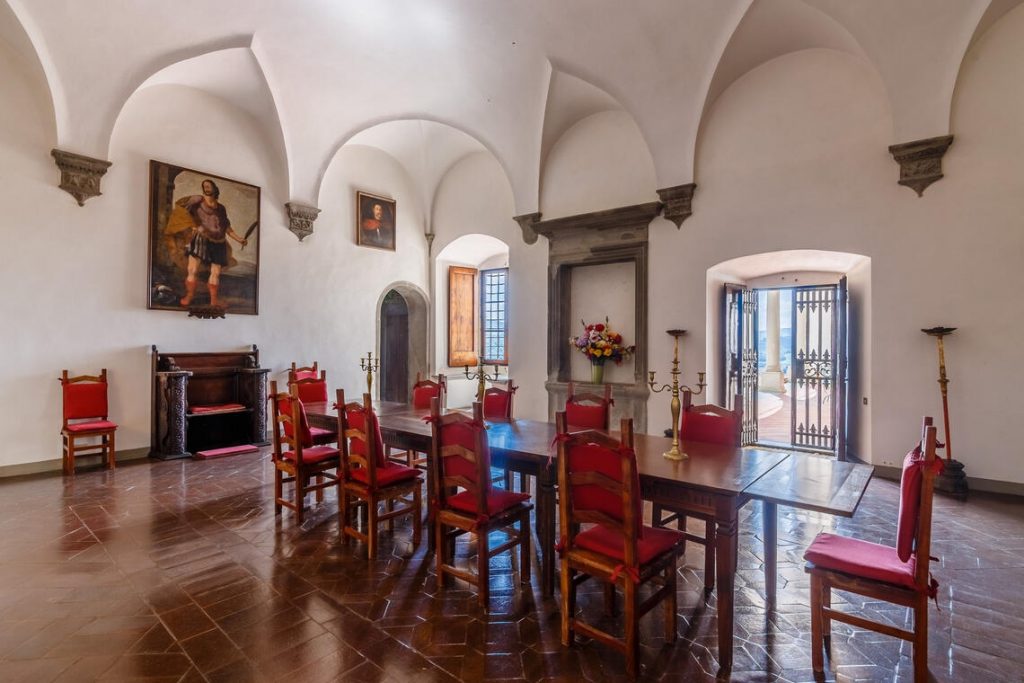
He turned abruptly, motioning me to follow him. I refused. There were sudden and furtive darkness had closed in upon Llanada Villa without moon or star. My mansion became airless and stifling like the gloom of a sepulcher that had been sealed for ages; and I was aware of the veritable oppression, a corporeal and psychic difficulty in breathing, as I moved from room to room. I flung open a heavy door of dark somber wood. Beyond, in what was the eating-room of this section of the mansions, several ghosts were seated about a long table by the light of cressets no less dreary and dismal than those in the hall. In the strange, uncertain glow, their faces were touched with a gloomy dubiety, with a lurid distortion; and it seemed to me that shadows hardly distinguishable from the figures were gathered around the board. I thought I should go mad with fear. Then sensation of being watched grew upon me until I sprang up and turned with my back to fire. Even then it was impossible for me to see much. I stood glancing from door to door, straining to listen over the thudding of my heart. My twin shadows swayed across the doorway of the study opposite, seeming to move independently. I thought of snuffing the candles; but then I would not be able to see the doors to the landing at all. I had learned that you could count second by your heartbeat. Mine was racing far faster than the measured ticking of a clock, but I began to count, anyway. Only I could keep it up; I would reach twenty or thirty, and be distracted by some phantom sound or movement, and start again. Thus I endured an indefinite interval, while the windows darkened further and further. #RandolphHarris 7 of 8

I conjure thee, O Guland, in the name of Satan, in the name of Beelzebuth, in the name of Astaroth, and in the name of all other Spirits, to make haste and appear before me. Come, then in the name of Satan and in the names of all other demons. Come to me, I command thee, in the name of the Most Holy Trinity. Come without inflicting any harm upon me, without injury to my body or soul, without maltreating my books, or anything which I use. I command thee to appear without delay, or, that failing, to send me forthwith another Spirit having the same power as thou hast, who shall accomplish my commands and be submitted to my will, wanting which, he whom thou shalt send me, if indeed thou comest not thyself, shall in no wise depart, nor until he hath in all things fulfilled my desire. I offer my blood unto the Divs and Druj, whom are the essence of counter creation. I offer my life force unto the powers of eternal darkness within. May they devour and destroy the imposed shackles of divine light and stasis that I may become unlimitedly powerful. I salute and conjure you, O beautiful Moon, O beautiful Star, O bright light which I hold in my hand! By the air which I breathe, by the breath which is within me, by the Earth which I touch, I conjure you, and by all the names of the spirits who are princes residing in you; by the ineffable Name On, which hath created all; by thee, O Resplendent Angel Gabriel, together with the Prince Mercury, Michiael, and Melchidae! I conjure you again by all the divine Names of God, that you send down to obsess, torment, and harass the body, spirit, soul and five senses nature. #RandolphHarris 8 of 8
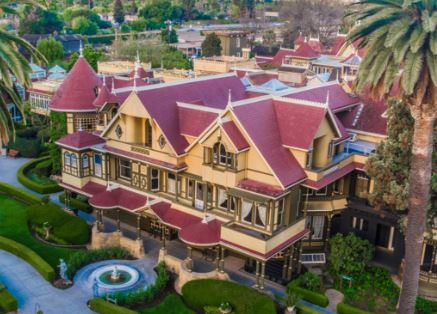
For many years there has been talk of slamming doors, muffled voices and ghost walking the corridors of The Winchester Mystery House, which is over 140-years-old. Recall, the mansion started off as an eighteen-room farmhouse, which Mrs. Sarah L. Winchester purchased. A number of persons hired as night watchmen have quit after only one night on duty, complaining of door opening and closing and invisible footsteps following them on their rounds. In July 2008 a staff member working late thought he heard the sounds of a reception in progress on the first floor, but when he reached the foot of the stairs, he found the rotunda empty, and all noises suddenly ceased. The same tour guide recalled the library room on the third floor as being particularly creepy. Late one night as he approached the library door, he remembered a cold, dank air falling on his head and neck, and he decided his work could wait until the next day. Although the mansion has gone through a considerable number of watchmen who declined the privilege of working in the building after one night on the job, one stuck with the task for more than 13 years. He simply shrugged off the angry slamming of doors that sounded behind him and the thumping noises that followed him on his rounds. However, he admitted that he did not like to work in The Winchester Mystery House after dark. He always made it a point to be out of the building by quitting time, because when darkness fell, he could sense the whole atmosphere changing.
For further information about tours, including group tours, weddings, school events, birthday party packages, facility rentals, and special events please visit the website: https://winchestermysteryhouse.com/

Please visit the online giftshop, and purchase a gift for friends and relatives as well as a special memento of The Winchester Mystery House. A variety of souvenirs and gifts are available to purchase. https://shopwinchestermysteryhouse.com/


What the F–Business Must be Conducted with Glass Pockets!

Although you make think “What the F!” has a negative connotation, it is not a curse word. It means “What the Ferry!” It is what Ferry calls his live resonation radio show. Ferry Coresten is one of the most talented disc jockeys in the World. Mr. Coresten is Dutch disc jockey, record producer and remixer. Defining, understanding, and discovering the conditions that lead to peace is an intellectual challenge with a long and rich traditional with the social sciences. Nevertheless, it remains central today, not simply for academics but to the broader populations as well. The notion that peace is at hand as soon as there is no ongoing, large-scale organized violence is not only the most common idea today but also a way of viewing peace that goes back at least to antiquity. We sometimes achieve peace through military preparations and deterrence, or the military defeat of adversaries. The quantitative research on conflict, violence, and peace is an already large subject area within the social sciences, and it is undergoing yet another growth spurt in the aftermath of 9/11, with increasing discussion of terrorism, restriction of civil liberties, torture, invasion, insurgency, counterinsurgency, revolution, counterrevolution, mass protest, and protest policing. Many people think we already live in a police state, but they have not seen anything yet. In 2007, alarm companies did not want to install security cameras on homes because they warned home owners that footage could be obtained by anyone and put on the Internet without their consent, but now people are going as far as having cameras places in their home that security companies monitor. Before long, the streets and highways in the United States of American will be full of license plate readers, which automatically issues tickets for speeding, which will make the road less safe as less officers will be out to stop illegal vehicles and vehicle violating law. #RandolphHarris 1 of 20

We will also have police drones patrolling neighbourhoods, roads, and highways recording information and acting as law enforcement agents, so there will be virtually no privacy and anything that is done can be pulled up and reviewed for later enforcement of the law. Therefore, it is critical to study peace as something more than merely the absence of overt violence. Peace is defined only as the absence of some violent actions. This form of peace, as “no violence,” can range from brutal dictatorships to democracies that fully respect human rights, from states that remain at peace only for brief periods of time between recurring bought of violence to societies that have not experienced overt hostilities for hundreds of years, and from states that consistently remain prepared for “hot” conflict to those that do not consider preparing for it. If peace is an inherent dichotomy, then war and genocide are the opposite. Personal relationship, closeness and warmth, Christian community—these are just what I have experienced in East Germany when I have visited. Over the years the society has always come through with insightful and perceptive judgments. The new paradigm of just peacemaking is grounded in the historical experience of people who have lived in the face of oppression, violation of their basic rights, and the nuclear threat, and who, together with political scientist, Christian ethicists, and activists, fashioned realistic steps of peacemaking that enabled them to begin living in the time after the Cold War even before the Wall came down. Though oppressed and constricted, they began to live our future. Because the paradigm is grounded in realistic but persistent hope-creating experience, attention must be paid to critical perspectives external to Christian faith; and since the heart of the story is consent to all God’s creating and the practice of forgiveness and love, an ethic is to be tested by its ability to be inclusive rather than to repress important standards of human life, or other members of the human community. #RandolphHarris 2 of 20

We have all known we needed to develop new methods for achieving change without violence. Now we have seen nonviolent revolutions in Iran (where the revolution was nonviolent but not the subsequent regime) in Philippines, in Argentina, throughout Eastern Europe, and in the peoples’ defeat of the coup in the Soviet Union, and there is hope for them in South Africa and perhaps Palestine (where parts of the movement are nonviolent, and other parts are not). Human rights movements must refrain from violence. They must take the beneficial action of clearly articulating the human rights that need to be established. The breakdown of the medieval system of feudal society had one main significance for all classes of society: the individual was left alone and isolated. He was free. This freedom had a twofold result. Man was deprived of the security he had enjoyed, of the unquestionable feeling of belonging, and he was torn loose from the World which had satisfied his quest for security both economically and spiritually. He felt alone and anxious. However, he was also free to act and to think independently, to become his own master and do with his life as he could—not as he was told to do. However, according to the real life situation of the members of different social classes, these two kind of freedom were of unequal weight. Only the most successful class of society profited from rising capitalism to an extent which gave them real wealth and power. They could expand, conquer, rule and amass fortunes as a result of their own activity and rational calculations. #RandolphHarris 3 of 20

This new aristocracy of money, combined with that of birth, was in a position where they could enjoy the fruits of the new freedom and acquire a new feeling of mastery and individual initiative. On the other hand, they had to dominate the masses and to fight against each other, and thus their position, too, was not free from a fundamental insecurity and anxiety. But, on the whole, the positive meaning of freedom was dominant for the new capitalist. It was expressed in the culture which grew on the social of the new aristocracy, the culture of the Renaissance. In its art and in its philosophy it expressed the new spirit of human dignity, will, and mastery, although often enough despair and skepticism also. The same emphasis on the strength of individual activity and will is to be found in the theological teachings of the Catholic Church in the late Middle Ages. The Schoolmen of that period did not rebel against authority, they accepted its guidance; but they stressed the positive meaning of freedom, man’s share in the determination of his fate, his strength, his dignity, and the freedom of his will. On the other hand, the lower classes, the poor population of the cities, and especially the peasants, were impelled by a new quest for freedom and an ardent hope to end the growing economic and personal oppression. They had little to lose and much to gain. They were not interested in dogmatic subtleties, but rather in the fundamental principles of the Christian Bible: brotherliness and justice. Their hopes took active form in a number of political revolts and in religious movements which were characterized by the uncompromising spirit typical of the very beginning of Christianity. #RandolphHarris 4 of 20
Rising capitalism, although it made also for their increased independence and initiative, was greatly a threat. In the beginning of the sixteenth century the individual of the middle class could not yet grain much power and security from the new freedom. Freedom brought isolation and personal insignificance more than strength and confidence. Besides that, he was filled with burning resentment against the luxury and power of the wealthy classes, including the hierarchy of the Roman Church. Protestantism gave expression to the feelings of insignificance and resentment; it destroyed the confidence of man in God’s unconditional love; it taught man to despise and distrust himself and others; it made him a tool instead of an end; it capitulated before secular power and relinquished the principle that secular power is not justified because of its mere existence if it contradicts moral principles; ad in doing all this it relinquished elements that had been the foundations of Judaeo-Christian tradition. Its doctrines presented a picture of the individual, God, and the World, in which these feelings were justified by the belief that the insignificance and powerlessness which an individual felt came from the qualities of man as such and that he ought to feel as he felt. Thereby the new religious doctrines not only gave expression to what the average member of the middle class felt, but, by rationalizing and systematizing this attitude, they also increased and strengthened it. However, they did more than that; they also showed the individual a way to cope with his anxiety. They taught him that by fully accepting his powerlessness and the evilness of his nature, by considering his whole life an atonement for his sins, by the utmost self-humiliation, and also by unceasing effort, he could overcome his doubt and his anxiety; that by complete submission he could be loved by God and could at least hope to belong to those whom God has decided to save. #RandolphHarris 5 of 20

Protestantism was the answer to the human needs of the frightened, uprooted, and isolated individual who had to orient and to relate himself to a new World. The new character structure, resulting from economic and social changes and intensified by religious doctrines, became in its turn an important factor in shaping the further social and economic development. Those very qualities which were rooted in this character structure—compulsion to work, passion for thrift, the readiness to make one’s life a tool for the purposes of an extra personal power, asceticism, and a compulsive sense of duty—were character trait which became productive forces in capitalistic society and without which modern economic and social development are unthinkable; they were the specific forms into which human energy was shaped and in which it became one of the productive forces within the social process. To act in accord with the newly formed character traits was advantageous from the standpoint of economic necessities; it was also satisfying psychologically, since such action answered the needs and anxieties of this new kind of personality. To put the same principle in more general terms: the social process, by determining the mode of life of the individual, that is, his relation to others and to work, molds his character structure; new ideologies—religious, philosophical, or political—result from and appeal to this changed character structure and thus intensify, satisfy, and stabilize it; the newly formed character traits in their turn become important factors in further economic development and influence the social process; while originally they have developed as a reaction to the threat of new economic forces, they slowly become productive force, furthering and intensifying the new economic development. #RandolphHarris 6 of 20

The system of rules and their enforcement itself must first establish a reputation for integrity and efficacy. This takes a long time and strict supervision even given much good will. In many countries, the great difficulties experienced by the governments of most transition economies in their attempts at such reputation-building require attempts of the top levels of the government at making and enforcing reliable governance systems. However, they can be ruined by some middle-level officials who attempt to make quick profit from their newfound power. There are evident problems of this in most transition economies. Also, in the phase when the system of rules in imperfect but improving, it can offer better outside payoffs to the participants in the prevailing relation-based system. By thus increasing their incentives to cheat their current partners, it can worsen the outcomes of the relation-based system. The policies required to initiate a transition from low-income equilibrium to a state of rapid growth may be qualitatively different from those required to reignite growth for a middle-income country. At low levels of income, with reasonable institutions and reasonable policies, it may be easy to achieve high growth up to semi-industrialization. However, the institutional requirements of reigniting growth in a middle-income country can be significantly more demanding. Growth starting from a low level can be achieved using relation-based governance in small communities of traders with good relationships and information networks, so long as the state does not actually inhibit such developments with its policies. However, to go beyond the middle-income level requires greater integration into a large economy, where relation-based governance is inadequate. The necessary shift toward rule-based governance is more demanding because it must overcome the additional problems of collective action, vested interest and so on. #RandolphHarris 7 of 20

How might such investment in the framework of rules get made? In 1898, when Elbert Gary and J. Pierpont Morgan started Federal Steel, they took the then unusual step of issuing quarterly reports because both men believed that corporations issuing publicly traded securities had to account for their financial performance. At first there was no public process such as external audits to guarantee the truthfulness of these accounts; presumably Mr. Morgan’s own reputation and integrity, acquired in the prevailing relation-based system of finance, gave them credibility. However, the public gradually found that inadequate, perhaps because others entering the arena of raising finance from the general public did not have the same reputation. A few years later, then president Theodore Roosevelt said that he would not “accept the publication of what some particular company chooses to publish as a favor, instead of demanding what we think ought to be published from all companies as a right” (Strouse 2000, p. 439). And still later, Mr. Morgan said that “business in the twentieth century would have to be conducted with glass pockets” (Strouse 2000, p. 600). This episode serves to emphasize the endogeneity of verifiability, and the value of making more information publicly verifiable. Forces operate on the other side to undermine a relation-based system when it comes into contact with other rule-based systems. If capital-owners in the relation-based system become able to invest abroad under a rule-based system and earn the going return there, that will raise the outside opportunities of the participants in each ongoing repeated game of relation-based finance, and thereby unravel its tacit cooperation equilibrium. #RandolphHarris 8 of 20

Similarly, as improvements in transportation technology or lowering of trade barrier with other countries, or liberalization of regulation within or across countries, bring a relation-based production system into contact with other economies and other markets, its firms will discover better opportunities outside their previous relationships; this can undermine the previous repeated game equilibrium. If or when a relation-based economy needs to import capital, whether financial or direct investment, it will find it difficult to do so. Unless foreigners are misinformed or gradually develop relationships with host-country businesses, they will be reluctant to lend. Conversely, firms in a relation-based system may be reluctant to borrow from lenders who are not part of their relation network, for fear that the strangers may withdraw their capital suddenly. So, if it needs foreign capital, a relation-based economy may fail to grow unless it changes over successfully to a rule-based system where anyone can invest with the confidence that the only uncertainties will be those arising from natural economic shocks, not those of borrowers’ strategic default or fraud or lenders’ capital flight. Of course the difficulties of brining together two such different systems of financial transactions are not insurmountable. Intermediaries can develop relations on both sides, and profit by providing these services for a fee. The Rothschilds did this in Europe with great success for over a century, literally be having relations on both or all sides. #RandolphHarris 9 of 20

In the second half of the nineteenth century, the United States of America was a major capital importer. This was facilitated by the Morgans—Junius S. operating in London and J. Pierpont in New York—who established a relation-based chain of trust between borrowers in the United States of America and lenders in the United Kingdom and Europe. In modern times, Hong Kong served a similar role, dealing with lenders—Western ones on a basis of rules and overseas Chinese ones on the basis of relations—and with borrowers—investing firms in mainland China on a basis of relations. In countries shaken by the Third Wave, the truly poor no longer necessarily have numbers on their side. In a good many countries they—like everyone ese—have become a minority. Not only is majority rule therefore no longer adequate as a legitimating principle, it is no longer necessarily humanizing or democratic in societies moving into the Third Wave. Second Wave ideologues routinely lament the breakup of mass society. Rather than seeing in this enriched diversity an opportunity for human development, they attack it as “fragmentation” and “Balkanization” and attribute it to the aroused “selfishness” of minorities. This trivial explanation substitutes effect for cause. For the rising activism of minorities is not the result of a sudden onset of selfishness; it is, among other things, a reflection of the needs of a new system of production which requires for its very existence a far more varied, colourful, open and diverse society than any we have ever known. We can either resist the thrust toward diversity, in a futile last-ditch effort to save our Second Wave political institutions, or we can acknowledge diversity and change those institutions accordingly. #RandolphHarris 10 of 20

The former strategy can only be implemented by totalitarian means and must result in economic and cultural stagnation; the latter leads toward social evolution and a minority-based twenty-first-century democracy. To reconstitute democracy in Third Wave terms, we need to jettison the frightening but false assumption that increased diversity automatically brings increased tension and conflict in society. Indeed, the exact reverse can be true. Conflict in society is not only necessary, it is, within limits, desirable. If one hundred men all desperately want the same brass ring, they may be forced to fight for it. On the other hand, if each of the hundred has a different objective, it is far more rewarding for them to trade, cooperate and form symbiotic relationships. Given appropriate social arrangements, diversity can make for a secure and stable civilization. It is the lack of appropriate political institutions today that unnecessarily sharpens conflict between minorities to the knife-edge violence. It is the lack of such institutions that makes the majority harder and harder to find. The answer to these problems is not to stifle dissent or to charge minorities with selfishness (as though the elites and their experts are not similarly self-interested). The answer lies in imaginative new arrangements for accommodating the legitimating diversity—new institutions that are sensitive to the rapidly shifting needs of changing and multiplying minorities. Someday future historians may look back on voting and the search for majorities as an archaic ritual engaged in by communicational primitives. #RandolphHarris 11 of 20

Today however, in a dangerous World, we cannot afford to delegate total power to anyone, we cannot surrender even the weak popular influence that exists under majoritarian systems, and we cannot allow tiny minorities to make vast decisions that tyrannize all other minorities. This is why we must drastically revise the crude Second Wave methods by which we pursue the elusive majority. We need new approaches designed for a democracy of minorities—methods whose purpose is to reveal differences rather than to paper them over with forced or fake majorities based on exclusionary voting, sophistic framing of the issues or rigged electoral procedures. We need, in short, to modernize the entire system so as to strengthen the role of diverse minorities, yet permit them to form majorities. In Second Wave societies, voting to determine the popular will provide an important source of intermittent feedback for the ruling elites. When conditions for one reason or another became intolerable for the majority, and fifty-one percent of the voters registered their pain, the elites could, at a minimum, shift parities, alter policies, or make some other accommodations. Even in yesterday’s mass society, however, the fifty-one percent principle was a decidedly blunt, purely quantitative instrument. Voting to determine the majority tells us nothing about the quality of people’s views. It can tell us how many people at a given moment want X, but not how badly they want it. Above all, it tells us nothing about what they would be willing to trade off for X—crucial information in a society made up of many minorities. #RandolphHarris 12 of 20
When a minority feels so threatened or attaches such life-and-death significance to a single issue that its views should perhaps receive more than ordinary weight, nor does it signal us then. In a mass society these well-known weaknesses of majority rule were tolerated because, among other things, most minorities lacked strategic power to disrupt the system. In today’s finely wired society, in which all of us are members of minority groups, that is no longer true. For a de-massified Third Wave society, the feedback systems of the industrial past may be considered too crude. Thus we will have no use voting and the polls in a radically new way. Also, because the de-massification and redistribution of media outlets, we are no longer creating stars as famous Worldwide as Aaliyah, Britney Spears, Beyonce, Paris Hilton, Brad Pitt, Tyson Beckford, Tyra Banks, Jennifer Lopez, or Lucy Lui. Fortunately, Third Wave technologies provide pathways toward Third Wave democracy. They reopen, in a startling new context, fundamental issues that our founders considered two hundred years ago. These technologies make possible new, hitherto impractical forms of democracy. Although the transition from the problem phase to the proposal phase of planning is usually gradual, the formulation of proposals is qualitatively distinct from the definition of public and problem. Proposals are creative responses; they call for imagination, invention, even genius. The making of proposals has to be properly timed, not coming too early in the planning process. For any given problem there may be a number of solutions, and thus new potentialities of divergence are introduced into the public’s discussion. #RandolphHarris 13 of 20

If those who make proposals are anxious that they be accepted or at least taken seriously and attended to, they should ideally wait until a public has become quite clear and coherent s to the nature of its problem and its desire to act. This is especially true when a proposal is likely to threaten this or that section of the public’s interest; a premature proposal is more easily exiled from discussion by an alter minority, or even without opposition may lose force, when its relevance is not yet apparent. Perhaps the proposal phase could be said to begin where “to act or not to act” ceases to be the question and consideration turns to serious alternatives. It ends when the proposal or proposals go before a policy-making body for decision. If the outcome is to be a full-fledged proposal of the planning type, during the interim a considerable number of developments ideally must occur. During this phase, proposals may be legion, running from the most casual sort of suggestion to massive reports prepared by many experts and taking years of work. If it is to deserve serious considerations, despite such variation in their elaborateness, the proposal must contain some basic elements. There must be a statement of an effective and feasible way of solving the problem as it has been defined. An estimate of the resources, human and material, required for carrying out the proposal. A schedule of the rate at which these recourses will be applied. A statement of certain quantitative goals for achievement within the schedule set. #RandolphHarris 14 of 20

Any proposal containing these elements is a planning proposal, and is often called a plan, sometimes with the name of its author prefixed, exempli gratia, the Marshall Plan (although technically it does not become a plan until it has been subject to a policy commitment, and then of course it becomes a program). The injection of proposals into the public’s discussion of the problem is frequently, at first, on what might be called an amateur basis. While each serious proposal may contain the four essential elements, their development is neither elaborate nor exact. The multiplicity of proposals and their rudimentary nature, given a strong feeling of concern, then quite readily lead to a conscious demand for more careful study of the situation and comparative examination of the proposals. Then, and not before then in most cases, is the appropriate time for commencing the formal organization of the public. At this point, another custom is often to constitute some expert committee, commission, or board and to charge it with making a study and some definite recommendations for action. The composition of the more successful committees tends to be drawn, with certain exceptions, from all the significant elements in the public to which the situation is a problem. To give them their charge may call for further definition of the appropriate scope of the planning area. This calls for judgment and may itself be a matter of disagreement. If action is truly desired, the planning area ought to be confined to those to whom the situation is definitely a problem in which they are actively involved, and it ought not to include everyone who might potentially experience some consequence from the action taken. #RandolphHarris 15 of 20

After admitting the possibility of deception in supernatural things, and a doubt has come into mind whether certain “experiences,” either personal or otherwise, were of God after all, the next stages are: The discovery of the deception. Light and truth alone can make free, and when once a doubt comes in and the man opens his mind to the truth that he is as liable to be deceived as anyone else, then to the mind and attitude light is given (John 3.21). Sometimes the specific deception is seen at once, but more often the discovery is gradual, and patience is needed while the light slowly dawns. Certain fact in connection with various experiences of the past, which the believer has failed to note, may now emerge into the light, and the half-truths which the Adversary had used to deceive are clearly seen: the twisting of words, the wrenching of sentences out of their context in the Scriptures—all come into a view as the light is given. Then comes: the acknowledgement of the deception. This is now imperative. The truth must not only be faced but owned up to, so that things are called by their right names, and the father of lies defeated by the weapon of truth. The Book of Mormon and the Christian Holy Bible keeps one from sin, and draws one near to virtue. You shall teach diligently the word of God to your children. The moral World is maintained by the instruction of our young; their education shall not be interrupted even to rebuild the Temple. When parents encourage their children to study The Book of Mormon and the Christian Holy Bible, their influence lives beyond the grave. #RandolphHarris 16 of 20

One who has studied in one’s youth may be compared to writing set down on new parchment; but one who begins to study when one is old, is like writing set down on re-used parchment. If one studies The Book of Mormon and the Holy Christian Bible in one’s youth, its words are woven into the texture of one’s life. Train a child in the way one should go, and when one is older, one will not depart from it. As long as the voices of children resound with the study of The Book of Mormon and the Holy Chistian Bible, no enemy can triumph over America. The Book of Mormon and the Holy Christian Bible are each a Tree of Life; happy are they who understand its teachings, and fulfill God’s commandments. The significance of the Cross and the Resurrection of Jesus as the Christ can be summed up in one word: salvation. One can be saved from many things, but salvation is salvation from the ultimate negativity. Salvation is healing for healing means reuniting that which is estranged, giving a center to what is split, overcoming the split between God and man, man and his Worl, man and himself. It is the revelation of the New Being in Jesus as the Christ which brings salvation. Consequently, where there is revelation, there is salvation, for the revelation of the ground of being transforms and heals. Revelation and salvation are identified. The revelational history of mankind—preparatory revelation before the appearance of the New Being, and receiving revelation afterwards—testifies that men have shared in the healing power of the New Bring, or else they would have succumbed to the destructive tendencies of existential estrangement and have ceased to exist. #RandolphHarris 17 of 20

Traditional theology has presented the rigid alternatives of total condemnation and total salvation. However, we reject them both, for, although the healing power of the New Being is never absent, even those who experience it are healed but fragmentarily. The divine act overcomes estrangement by removing guilt, and man reacts by accepting reconciliation. The effects of atonement are threefold, and together they constitute the meaning of salvation: Regeneration, Justification, and Sanctification, or, in Tillichian terminology, participation, acceptance, and transformation. Regeneration stresses the objective power of the New Being to grasp estranged mankind and draw it into itself. Man participates in the new reality revealed in Christ only by being seized by it. Thus, Regeneration is the new state of things, the new eon, which the Christ brought; the individual enters it, and in so doing he himself participates in it and is reborn through participation. Since Regeneration is participation in the objective power of the New Being, it precedes Justification, for faith as the state of being grasped by the divine presence is not a human act, but the work of the Spirit. Justification is acceptance. It is the act of God by which He accepts sinful man in spite of his guilt. It is also the act of man by which man accepts God’s saving mercy. Indeed, there is nothing in man which enables God to accept him. However, man must accept just this. He must accept that he is accepted; he must accept acceptance. This in spite of his anxiety, man accepts God’s justifying act. In spite of is the paradox of simual peccator, simul Justus. #RandolphHarris 18 of 20

As a divine act, Regeneration and Justification are one, for Regeneration is the actual reunion of the estranged, and Justification is its paradoxical character. Sanctification is distinct from both of them in the sense that a process is distinguished from the event in which it is initiated. Sanctification is the process in which the New Being transforms both individuals and communities. Sanctification, as transformation, takes place both within religion and outside it in the secular realm. Up to now emphasis has been laid upon the individual man as the one who is saved. However, our vision is broader than that. At the crucifixion of Jesus the sun was darkened, the temple veil split, rocks cracked, and the dead rose. Nature was in an uproar, and the event at Golgotha is one which concerns the Universe, including all nature and history. The Christ cannot be restricted to one area; Christology must be cosmic. Salvation extends to the whole World, and World means nature as well as man. It is through man, the microcosm, that the saving power of the New Being reaches out to the Universe. The tragedy of nature is bound to the tragedy of man, as the salvation of nature and nature is in man. Consequently, the impact of the Spiritual Presence upon beings inferior to man is indirect and, in a quantitative sense, severely limited. However, in a qualitative sense it is enormous. Salvation is found within the Kingdom of God which embraces the Universe. It is the place where there is complete transparency of everything for the divine to shine through it. In His fulfilled kingdom, God is everything for everything. Salvation, the healing of the disrupted, is brought about by love, for love is the drive towards the unity of the separated. The New Being is the love of Jesus who is the Christ, reuniting estranged mankind with its ground. The Spiritual Presence manifests itself as love. After distinguishing divine love from human love, we come to an understanding that man’s love for God is the drive toward the reunion of the separated. #RandolphHarris 19 of 20

However, since salvation is an act of God, God’s love must first extend to man and grasp him. The distinction between faith and love disappears, for being grasped by God in faith and adhering to Him in love is one and the same state of creaturely life. We belong to the Old Creation, and the demand made upon us by Christianity is that we also participate in the New Creation. What is this New Being? The only thing that counts, regardless of faith, is the union with Him in whom the New Reality is present. No religion matters—only a new state of things. The New Creation—this is our ultimate concern; this should be our infinite passion—the infinite passion of every human being. This matters; this alone matters ultimately. In comparison with it everything else, even religion or non-religion, even Christianity or non-Christianity, matters very little—and ultimately nothing. And now again we ask: What is this New Being? It is a renewal of the Old which has been corrupted, distorted, split, and almost destroyed. Therefore, we can speak of the New in terms of a re-newal: The threefold “re,” namely, re-conciliation, re-union, re-surrection. The word “resurrection” has for many people the connotation of dead bodies leaving their graves or other fanciful images. However, resurrection means the victory of the New state of things, the New Being born out of death of the Old. Resurrection is not an event that might happen in some remote future, but it is the power of the New Being to create life out of death, here and now, today and tomorrow…Resurrection happens now, or it does not happen at all. It happens in us and around us, in soul and history, in nature and Universe. The message of Christianity is not Christianity, but a New Reality. A New state of things had appeared, it still appears; it is hidden and visible, it is there and it is here. Accept it, enter into it, let it grasp you. And like God saves all, the Fire Department will rescue you no matter how rich or poor you are, no matter or age, or what you look like or where you live! Be sure to thank your local heroes, and feel free to make donations to them, they are understaffed and underfunded. #RandolphHarris 20 of 20

MAGNOLIA STATION AT CRESLEIGH RANCH
Rancho Cordova, CA | low USD $600,000.00s
Now Selling!

Models now open at Magnolia Station! Located at the corner of Rancho Cordova Parkway and Douglas Road, residents of Cresleigh Ranch will benefit from a brand new neighborhood with convenient access to the new Raley’s Shopping Center, Sunrise Boulevard, and much more!

Magnolia Station will include 81 homesites and five distinct plans ranging from 2,200 – 3,700 square feet; including three single story plans! Each plan has been thoughtfully designed to include features such as: Generations Suite, Optional Offices/Dens, Extended Great Rooms, and more! https://cresleigh.com/magnolia-station/residence-2/

P.S. The limo is not cheap. Wor

Everyone is Afraid of the Dark
Magnolias, orange trees, thick evergreen and palm trees sprouted from the sweeping lawns growing tall, as their green leaves beautifully filled the sky providing shade from the hot sun. Shielded behind the lush proliferation of gardens stood gorgeous Llanada Villa built in the Queen Anne Victorian style with soaring roofs and columned porticoes. The farmland provided crops for food. It was Sunday January, 1888, and the famers and servants were buoyant with excitement, undampened by undue religious solemnity. Good nature was inescapable that Sunday. Conversation abounded with joy and optimism. Several planters, dressed in gloves, hats, and cravat, strolled my estate. The road bustled with carriages and horses; men and women strolled along the green lawns in their Sunday finery; and the servants hunted and played games in the field. Somehow, in the midst of it all, I had grown tired and went to my bedroom to rest. It was past midnight when I awoke, and when I looked out the moon was rising over the Observational Tower. I heard a battle, but I could not see it for the smoke and flames, and the broken marble battering me from all sides. Doors were broken from their hinges, and the light bulbs exploded, and in the darkness, I was thrown against the walls or the floors. I felt an intense heat pass over me, and I struggled to get to my feet as the broken and fragmented tiles swirled about the chamber. Ghastly screams came from Arkie, the son of one of the farmers. “I have seen an evil thing this night,” he said. “Tell me what you have seen,” I replied. Arkie told me everything he had seen. “The estate was covered with smoke, through which, through which flashes were incessant, whilst the air seemed filled with shell, whose sharp explosions, with the hurling of their fragments hurling between flashes. Flashes that lit up the night sky. #RandolphHarris 1 of 9

“We were at war against a monstrous progeny of demon-possessed men and women, wearing velvet tunics and stockings, and marvelous cloaks trimmed in rare fur. They brandished huge glittering swords. The fountains bulled over, flowing with blood. Several of the servant fled through the streets, yards, and orchards, many taking refuge in the Victorian cottages, outbuildings, and mansion already filled with the wounded and dying. The smoke was so dense we could not perceive an object ten feet in front of us. The gloom of the moment was beyond description. We felt and heard the tread of our enemy, our minds were in tumult, whether to lie still, to yield, or to die fighting. I jumped in and found myself confronted by a giant’s sword pointed by my breast. I grasped the blade and reversed the handle of my sword in a twinkle and offered to surrender. The beast said in the excitement, he thought I had run him through and he dropped his sword.” I was so thankful for each servant who fought for my home, their families, and their way of life, even though death was knocking on their door. A few days later, it was a dark moonless night, and as silent as a tomb. Arkie was still shaken up by the events that had recently taken place. There was a terrible fear, a physiological fear. Something beyond life that I was able to catch for a second. The air was cold now, icy all around me. It suddenly felt as though time stood still and yet as a foggy substance silently closed in the air was getting cold enough to freeze the blood. My nose, face, hands and feet felt ice cold. I was standing in silence, as I watched what was unfolding before my eyes. This misty essence was swirling noiselessly around us as we stood, observing a steam so fine the scene felt surreal. Along with the white mist came a whirl of emotions and confusion. What was happening in my home? I braced myself for some hellish effects. It swirled around us as though blown by a high wind, rising above our heads and dropping as it was moving quickly and yet we felt only a gentle breeze. #RandolphHarris 2 of 9
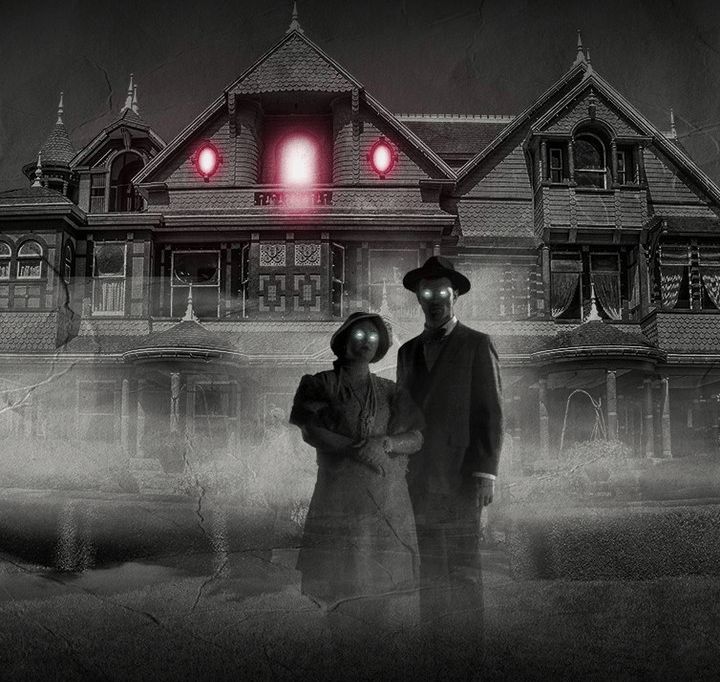
Like a scene from the spectral World, the abnormal foggy essence swirled in vortex shapes and at time, it resembled horses running past us, but the curtains did not move, though we felt air currents around us. We felt vulnerable and somewhat uneasy. I could not for my life keep back a loud scream—the second I had emitted that night. It echoed and echoed through the dim vaultings of my mansion, and I had to choke back a flood of reaction that threated to burst out. Arkie saw a pale figure heading toward him as he ran from the parlor. He quivered when the thing growled at him. It stood out like white chalk on a black board, moving in darkness, seeking. It moved rapidly and just as suddenly as it have moved through the gallery, it suddenly was gone. When I looked around, I saw nothing of the foggy mist that surrounded and chilled us to the bone; it had vanished. The room was clear and felt warmer. What seemed like a long time in the fog had only been a few short minutes! When Arkie and I talked, we were both in awe at what we had experienced. Words were few as we tried to make sense of the incident. Arkie’s hair used to be dark brown, with grizzled streaks about the temples; in less than a month from that day he was a gray as badger, and he has never been quite the same man since that night. I do not believe anybody had ever felt so much sheer hell in one night. Gargoyles and chimeras, we saw all sorts of things, as if it was some passage from the Middle Ages. Arkie said my home repelled him more and more every day, and frightened him, as its features and expressions developed in a way he did not like; in a way that was not human. He felt like a ghoul had been feeding on his soul. He proceeded to leave the hose and suddenly jumped back a foot and started to cry. A dark figure draped in a black tattered robe with a deep hood that concealed his face stoop there, blocking the entrance. My heart sank centuries away as the soul goes as the awful, blasphemous horror touched quite beyond the power of words to classify. I shivered slightly. #RandolphHarris 3 of 9

“What are you?” Arkie cried out desperately to the figure robed in black. There was only silence. He knew the horrible figure we be upon us soon. He flung his sword at the figure in black, and the dark robed figured answered back by point a half-rotted finger at Arkie. The sword flew backwards from his hand. He quickly spun around only to find, to his surprise, that the dreadful ghoul had not emerged from the hallway yet, but we could hear it coming. Arkie’s eyes widened in horror and his heart sank further as he looked to see that his sword hung in the air. Utter fear and hopelessness played on his mind. The ghoul was breathing like a wild beast; and I heard an evil sound also, with blows of something violently driven through flesh and bone, as the sword moved on its own, staking Arkie in the heart. I cried out for mercy as the ghoul approached, but was frozen in fear. Its deathly yellow eyes looked on me with hate and savage hunger. Yellow ooze dripped from its frightful maw. And its long fingernails danced in my hair, before it devoured what remained. As the ghoul kneeled, gnawing at Arkie’s head as a child nibbles at a stick of candy, the shadowy specter looked at me and spoke with it’s a hollow voice, saying “There is no shame in what you have done. Your former life is behind you.” I felt that any moment it might drop its present pray and seek a juicier morsal. But, the nearly eight-foot ghoul grabbed the blood-soaked sword and fled with it. This strange proceeding gave rise to many inquiries. Only a few could answer them. My home is dreaming gorgeously and overflowing with wonder and terror and escapes from the commonplace. It can truly catch the night spirit of antique horror, terror, as well a beauty from life. The haunting apparitions were seldom completely human. Occasionally things would leap through open windows at night, or could be seen squatting on the chest of sleepers, worrying at their throats. The utter inhumanity and callous cruelty of the things torture the brain and flesh. #RandolphHarris 4 of 9
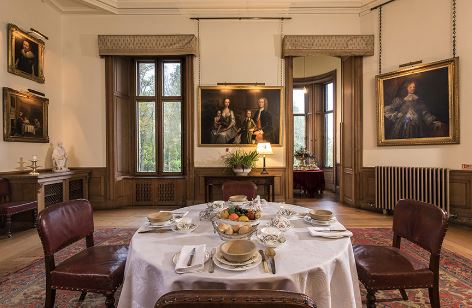
Unlocking the front doors, one is ushered into decorative hallways with splendid mahogany paneling—thrilling and suggestive of the time. Ancient paneled rooms, or simple vaults of masonry, there is even a narrow staircase the leads to the ceiling where a ghost is said to reside. Servants have felt temperature changes upon entering the room and sensed an unknown presence next to them. Others have glimpsed the blasphemous shapes that lope and trot and crawl up the stairs and through the ceiling. We saw the demons themselves and were afraid of them. My shocked scream had waked unaccustomed echoes in the labyrinth. It was more of the physical than the spiritual. I was paralyzed for an instant. I heard a faint scurrying sound somewhere, and a series of squeals or beats in a direction I could not determine. Then there came a subdued sort of clatter which somehow set me all in gooseflesh—a furtive, groping kind of clatter. It was like heavy wood falling on stone or brick—wood on brick—what did that make me think of? It came again, and louder. There was a vibration as if the wood had fallen farther than it had fallen before. After that followed a sharp grating noise. The archaic tunnels in my basement touched graveyard and witch-den. But whatever was in them was devilish anxious to get out. Accidents had happened, but I have never seen what I saw this night—that creature was neither alive nor dead, it abided neither above ground nor in the grave. It was a colossal and nameless blasphemy with glaring red eyes, and it held in bony claws a thing that had been a man. However, it was not even the fiendish apparition that made such an immortal fountainhead of all panic—not that, nor the face with its pointed ears, bloodshot eyes, flat nose and drooling lips. It was not the scaly claws nor the mould-caked body, nor the half-hooved feet—none of these, through any one of them might well have driven an excitable man to madness. It was the curse, the impious, the unnatural endless cycle of terror. #RandolphHarris 5 of 9
These monsters were there—they glared and gnawed and gnawed and glared—and I knew that only a suspension of Nature’s laws would ever let a person be terrorized like this—it was truly some glimpse of the netherworld which no mortal unsold to the Fiend has ever endured. I had to hide this well-established horror-World which I saw fully, brilliantly, squarely and unfalteringly. Fair sized rooms, with wooden floors and furnished were bricked up with extreme care, to conceal the ghastly demons and nauseous monstrosities that leered around from every side of the rooms. I always knew William, no matter how beautiful and pure he was, was not strictly human. Either he was born in strange shadow, or he had found a way to unlock the forbidden gate. There are secrets, you know, which might come down from old Salem times, Cotton Mather tells even stranger things. In the Dark Ages, belief in apparitions, vampires, hell hounds, and demons were commonplace. While belief in ghosts declined in the eighteenth century, it was revitalized in the nineteenth century with the Society of Psychical research. While culture differ in their beliefs about what happens after death, most cultures believe that a ghost can return to the World of the living, with either good or bad intent. In Western cultures, it is most commonly believed that a ghost is the soul of the deceased who cannot find peace or does not know they are dead, leading them to haunt places where they lived or died or objects that caused their death, sometimes they even haunt bloodlines. It may be that they have unfinished business on the Earthly plane, perhaps to protect a loved one, or impart information or reenact the death. I do not think that any power on Earth could make anyone speak of what happened in my home, even old priests were too frightened to look in. #RandolphHarris 6 of 9

It has been said that Mrs. Winchester slept in a different bedroom every night, supposedly in order to confuse evil spirts. Mrs. Winchester was deeply concerned with the welfare of her servants and their families. They were well paid and often additionally rewarded with gifts, even homes, or real estate and lifetime pensions. The full scope of her generosity charity and many kind acts will forever remain unknwn and such was her sincere desire. Her donations were never made public. She contributed to charities of all faiths. In 1911 in New Haven, Connecticut, she established the William Wirt Winchester Memorial Sanitorium for Tuberculosis (also known as low consumption), endowing it with $1,200,000.00 (2023 inflation adjusted $38,540,084.21). Visitors to The Winchester Mystery House are bound to run into others who are curious about the spirit World. It may seem that our intents have been to weave a cloak of vindication and protection covering our lady’s eccentricities, so many to this day still unexplainable. In truth, volumes could be written extolling her many virtues and justifying the construction of one of the largest and most significant architectural structures in the World. Still the Question remains—Why? Why? The enigma of The Mystery House that tragedy and a rifle built is perhaps unanswerable. The present generation must weigh and draw its own conclusions about this Valley’s most interesting, most controversial, most unappreciated and surely our most mysterious First Lady! No one will ever know, but this beautiful and bizarre mansion has, we think, allowed Mrs. Sarah L. Winchester, Lady of Mystery, to achieve a unique kind of eternal life. #RandolphHarris 7 of 9

The spirit World and the human World were once so closely interwoven as to be indivisible. Look at monument, such as The Winchester Mystery House, that our ancient predecessors erected, and the traditions devised, to house, honour, and succor the dead. We still retain enough of our ancestors’ belief that our dead are aware of how we treat them, that we try to ensue they do not have anything thing to complain about. And we listen with widening eyes and quickening heartbeats to the stories told about the ghost that exist and have been recorded throughout time. The Winchester Mystery Houses catches the overtones of the soul, and you will not find those in a modern or renovated home because it has had no time to pick memories and attract local spirits. Placed like Mrs. Sarah L. Winchester’s home was not merely made, but it actually grew. Generation after Generation lived there and felt and died there, and in days when people were not afraid to live and feel and die. This house has stood for almost two centuries and what it has witnessed would make a modern house crumbled into powder. What do modern know of life and the forced behind it? This mansion once had a set of tunnels that kept it in touched with over Victorian houses on the estate. There is hardly a month that you do not read of carpenters finding bricked-up arches and wells leading nowhere in this or that old section of the house. During the time of the construction of this mansion, there were witches and what their spells summoned; pirated and what they brought in from the sea; smugglers; privateers—and I tell you, people knew how to live, and how to enlarge the bounds of life, in the old time! #RandolphHarris 8 of 9

While cleaning the mansion one night, a tour guide noticed a man in 19th century clothes, very pale, with pale blue eyes approaching the Venetian Dining Room. The tour guided continued to work until the mane came very close and stood directly over him. Becoming a bit uneasy at the man’s silence, the tour guide finally asked him, without looking of, if he wished to tour the mansion. When the “guest” did not reply, the tour guide stopped dusting underneath the table, and looked up at the silent man. The man’s face was contorted with rage; his lips moved furiously and he gestured as if he were shouting, but he made no sound. The tour guide fell onto the floor. Before he could turn and flee, the guest disappeared. Terrified, the tour guide ran until he came to an assistant manager. “I saw a ghost,” the tour guide grasped, out of breath. “The ghost of one of the carpenters has come back.” The ghost appeared in August of 2006, to another tour guide. He had entered the Daisy Bedroom and found a fellow tour guide leaning against the wall. Surprised by his presence, he had begun to question the man when he melted into the wall. When he reported the incident, one of his coworkers dismissed it as imagination. A few days later, two tour guides saw the same carpenter. They were locking up the mansion and the lights had not been off more than a few minutes when the sound of footsteps caused both tour guides to stop in their tracks. Before either of them could move, a door swung open and a young man entered. He gestured wildly and seemed to be shouting at the two tour guides, neither of whom could testify that any sound issued from the angry visitor. When one of the tour guides turned on the light, the figure faded before their astonished eyes. They quickly had the mansion secured and order all exists guarded. Guards reported that no person had attempted to leave the building. After the guards had conducted a search of the rooms, they were convinced that their visitor had not been a living man. #RandolphHarris 9 of 9
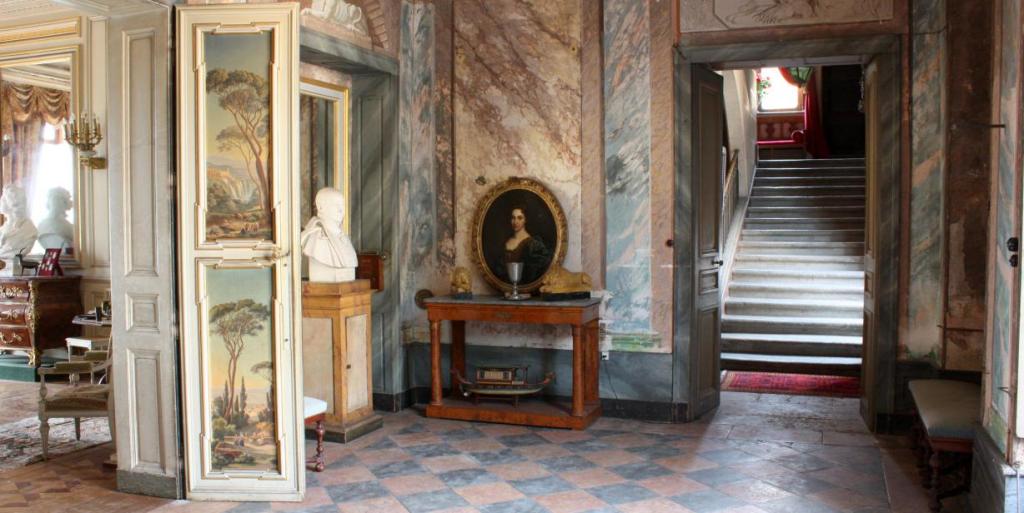
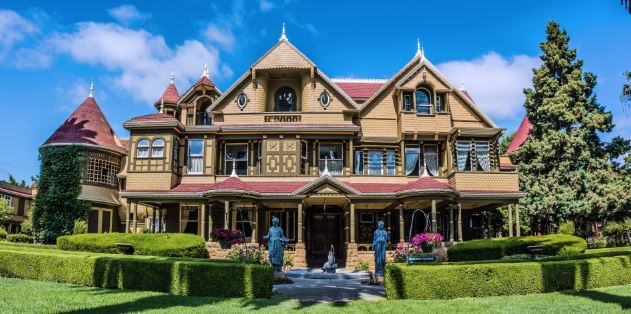
The room count of California’s most mysterious mansion has just increased by one, rounding out at 161 chambers (that we know of). Preservationists at The Winchester Mystery House in San Jose have found a previously unknown room in the attic of the house, and in it was a pump organ, a dress form, a sewing machine, a Victorian sofa, and several paintings.
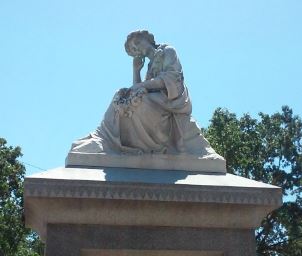
For further information about tours, including group tours, weddings, school events, birthday party packages, facility rentals, and special events please visit the website: https://winchestermysteryhouse.com/
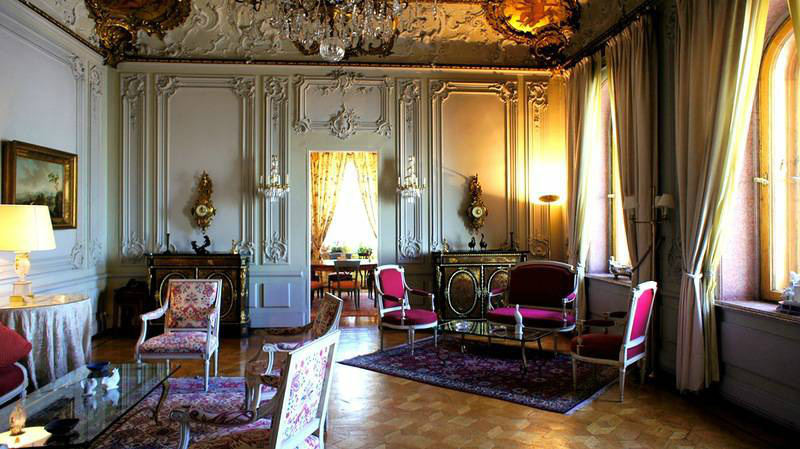
Please visit the online giftshop, and purchase a gift for friends and relatives as well as a special memento of The Winchester Mystery House. A variety of souvenirs and gifts are available to purchase. https://shopwinchestermysteryhouse.com/

If you forget to purchase something during your visit, you can order any gift item by calling 408-247-2000 and charging them to your credit card. You can also place an order through the mail. Be sure to include a daytime telephone number with area code. Write to: Winchester Mystery House.

Nacho is Trying to Read My Books

For centuries kings, priests, feudal lords, industrial bosses and parent have insisted that obedience is a virtue and that disobedience is a vice. Human history begun with an act of disobedience. Human history was ushered in by an act of disobedience according to the Hebrew and Greek myths. Adam and Eve, living in the Garden of Eden, were part of nature; they were in harmony with it, yet did not transcend it. They were in nature as the fetus is in the womb of the mother. They were human, and at the same time not yet human. All this changed when they disobeyed an order. There are moments of sudden illumination in which man stretched out a commanding arm, as if creating a World, light shining forth and spreading out around him. He is then filled with the deeply gratifying certainty that what enraptured and exalted him into the farthest regions, the height of this one sensation, can never be denied to posterity; in the eternal necessity of this rare illumination for all those to come man sees the necessity of his frame. Far into the future, mankind needs him, and just as that moment of illumination is the embodiment and epitome of his innermost essence, so, too, he believes himself, as the man of this moment, to be immortal, dismissing all others as dross, rot, vanity, brutishness, or pleonasm, leaving them to perish. We view all disappearance and demise with discontent, often with astonishment, as if we experienced in it something at bottom impossible. We are disturbed when a tall tree breaks, and a crumbling Victorian home aggrieves us. Every New Year’s Eve, we feel the mystery of contradiction of being and becoming. #RandolphHarris 1 of 18

What offends moral man above all, though, is that an instant of supreme universal perfection should be destroyed. European and American history since the end of the Middle Ages is the history of the full emergence of the individual. It is a process which started in Italy, in the Renaissance, and which only now seems to have come to a climax. It took over four hundred and fifty five years to break down the medieval World and to free people from the most apparent restraints. However, while in many respects the individual has grown, has developed mentally and emotionally, and participates in cultural achievements in a degree unheard-of before, the lag between “freedom from” and “freedom to” has grown too. The result of this disproportion between freedom from any tie and the lack of possibilities for the positive realization of freedom and individuality has led, in Europe, to a panicky flight from freedom into new ties or at least into complete indifference. Western society underwent radical changes which were accompanied by an equally radical change in the personality structure of man. A new concept of freedom in modern society must start with that period in which the foundations of modern culture were laid, for this formative stage of modern man permits us, more clearly than any later epoch, to recognize the ambiguous meaning of freedom which was to operate throughout modern culture: on the one hand the growing independence of man from external authorities, on the other hand his growing isolation and the resulting feeling of individual insignificance and powerlessness. #RandolphHarris 2 of 18

Our understanding of the new elements in the personality structure of man is enhanced by the study of their origins, because by analyzing the essential features of capitalism and individualism at their very roots one is able to contrast them with an economic system and a type of personality which was fundamentally different from ours. This very contrast gives a better perspective for the understanding of the peculiarities of the modern social system, of how it has shaped the character structure of people who live in it, and of the new spirit which resulted from this change in personality. The period of the Reformation is more similar to the contemporary scene than might appear at first glance; as a matter of fact, in spite of all the obvious differences between the two periods, there is probably no period since the sixteenth century which resembles ours as closely in regard to the ambiguous meaning of freedom. The Reformation is one root of the idea of human freedom and autonomy as it is represented in modern democracy. However, while this aspect is always stressed, especially in non-Catholic countries, its other aspect-its emphasis on the wickedness of human nature, the insignificance and powerlessness of the individual, and the necessity for the individual to subordinate himself to a power outside of himself—is neglected. This idea of the unworthiness of the individual, his fundamental inability to rely on himself and his need to submit, is also the main theme in the ideology of some who are arguably great leaders, but may, however, lack the emphasis on freedom and moral principles which are inherent in Protestantism. #RandolphHarris 3 of 18

This ideological similarity is not the only one that makes the study of the fifteenth and sixteenth centuries a particularly fruitful starting point for the understanding of the present scene. There is also a fundamental likeness in the social situation. Then as now a vast sector of the population was threatened in its traditional way of life by revolutionary changes in the economic and social organization; especially was the middle class, as today, threatened by the power of monopolies and the superior strength of capital, and this threat had an important effect on the spirit and the ideology of the threatened sector of society by enhancing the individual’s feeling of aloneness and insignificance. The picture of the Middle Ages has been distorted in two ways. Modern rationalism has looked upon the Middle Ages as an essentially dark period. It has pointed to the general lack of personal freedom, to exploitation of the mass of the population by a small minority, to its narrowness which makes the peasant of the surrounding country a dangerous and suspected stranger to the city dweller—not to speak of a person of another country—and to its superstitiousness and ignorance. On the other hand, the Middle Ages have been idealized for the most part by reactionary philosophers but sometimes by progressive critics of modern capitalism. They have pointed to the sese of solidarity, the subordination of economic to human needs, the directness and concreteness of human relations, the supranational principle of the Catholic Church, the sense of security which was characteristic of man in the Middle Ages. Bother pictures are right; what make them both wrong is to draw one of them and shut one’s eyes to the other. #RandolphHarris 4 of 18

What characterized medieval in contrast to modern society is its lack of individual freedom. Everybody in the earlier period was chained to one’s role in the social order. A man had little chance to move socially from one class to another, he was hardly able to move even geographically from one town or from one country to another. With few exceptions he had to stay where he was born. He was often not even free to dress as he pleased or to eat what he liked. The artisan had to sell at certain price and the peasant at a certain place, the market of town. A guild member was forbidden to divulge any technical secret of production to anybody who was not a member of his guild and was compelled to let his fellow guild members share in any advantageous buying of raw material. Personal, economic, and social life was dominated by rules and obligations from which practically no sphere of activity was exempted. However, although a person was not freed in the modern sense, neither was he alone and isolated. In having a distinct, unchangeable, and unquestionable place in the social World from the moment of birth, man was rooted in a structuralized whole, and thus life had a meaning which left no place, and no need, for doubt. A person was identical with his role in society; he was a peasant, an artisan, a knight, and not an individual who happened to have this or that occupation. The social order was conceived as a natural order, and being a definite part of it gave a feeling of security and of belonging. There was comparatively little competition. One was born into a certain economic position which guaranteed a livelihood determined by tradition, just as it carried economic obligations to those of higher in the social hierarchy. #RandolphHarris 5 of 18

However, within the limits of his social sphere the individual actually had much freedom to express one’s self in one’s work and in one’s emotional life. Although there was no individualism in the modern sense of the unrestricted choice between many possible ways of life (a freedom of choice which is largely abstract), there was a great deal of concrete individualism in real life. There was much suffering and pain, but there was also the Church which made this suffering more tolerable by explaining it as a result of the sin of Adam and the individual sins of each person. While the Church fostered a sense of guilt, it also assured the individual of her unconditional love to all her children and offered a way to acquire the conviction of being forgiven and loved by God. The relationship to God was more one of confidence and love than of doubt and fear. Just as a peasant and a town dweller rarely went beyond the limits of the small geographical area which was theirs, so the universe was limited and simple to understand. The Earth and man were it center, Heaven and Hell was the future place of life, and all action from birth to death were transparent in their causal interrelation. Although society was thus structuralized and gave man security, yet it kept him in bondage. It was a different kind of bondage from that which authoritarianism and oppression in later centuries constituted. Medieval society did not deprive the individual of his freedom, because the “individual” did not yet exist; man was still related to the World by primary ties. He did not yet conceive of himself as an individual except through the medium of his social (which then was also his natural) role. #RandolphHarris 6 of 18

Man did not conceive of any other persons as “individuals” either. The peasant who came into town was a stranger, and even within the town members of different social groups regarded each other as strangers. Awareness of one’s individual self, of others, and of the World as separate entities, had not yet fully developed. The lack of self-awareness of the individual in medieval society had found classical expression on both sides of human consciousness—that which was turned within as that which was turned without—lay dreaming or half awake beneath a common veil. The veil was woven of faith, illusion, and childish prepossession, through which the World and history were seen clad in strange hues. Man was conscious of himself only as a member of a race, people, party, family, or corporation—only through some general category. When psychopathological offenders are able to give visions it I an evidence that they have already greatly deceived the man, be he a Christian or an unbeliever. The ground for this is not necessarily known as conduct disorder, but a condition of passivity, id est, nonaction of the mind, imagination, and other faculties. This essential condition of submissive non-action as the means of obtaining supernatural manifestations is well understood by spiritist mediums, clairvoyants, crystal gazers, and others, who know that the least action of the mind immediately breaks the clairvoyant state. #RandolphHarris 7 of 18

Believers not knowing these basic principles can unwittingly fulfill the conditions for psychopathological offenders to work in their life and ignorantly induce the passive state by wrong conceptions of the true things of God. For instance, they may sink, during seasons of prayer, into a passive mental condition which they consider is “waiting on God”; deliberately will the cessation of their mind action, in order to obtain some supernatural manifestations which they believe to be of God; in daily life practice a passive attitude which they think is submission to the will of God; endeavour to bring about a state of personal negation, in which they have no desires, needs, wishes, hopes, plans—which they think is full surrender to God, with their “will” lost in God. “To exist” means to “stand out.” On the most fundamental level, to exist means to be, to stand out of nonbeing. Since nonbeing can be the absolute nonbeing of ouk on (the God who is not) or the relative nonbeing of me on, existence can take two directions. If something stands out of absolute nothingness, it exists in the sense that it has being. If something stands out of relative nothingness, that is, potentiality, then it exists in the sense that it has actuality. Etymology, then, indicates two senses of existence: “to stand out” of either absolute nonbeing or relative nonbeing. However, in either case, the metaphour “to stand out” connotes the metaphour “to stand in,” just as trees “stand out” of the Earth and yet “stand in” it. A being stands out of nonbeing, but not completely, for it is a mixture of being and nonbeing. An actual being stands out of potentiality, but not completely, for it never fully realizes all its potentiality. Existence, therefore, is an imperfect being, for to exist means to have being and yet to “stand in” non-being, to have actuality, and yet to “stand in” potentiality. #RandolphHarris 8 of 18

Historically, however, attention has been focused upon the second meaning of existence and split between potentiality and actuality. This is the overriding meaning of existence: to stand out of potentiality. Upon this means we build the distinction between essence and existence. Essence is real, is actualized in existence, but only in fragments, never totally. This situation gives rise to two conflicting view point exemplified in Mr. Plato and Mr. Hegel. Mr. Plato viewed the gap between potential and actual being as a fall. For him, existence is a fall from essence. Mr. Hegel, on the contrary, considered the gap as merely part of the process of divine self-realization. For him existence is the expression of essence. Mr. Hegel’s essentialism set the stage for the existentialist revolt. Mr. Schelling, Mr. Schopenhauer, Mr. Marx, and Mr. Kierkegaard all share a common insight: that human existence is a state of estrangement from its essential nature. Existence is dehumanization and not the expression of essential humanity. This is the truth about man’s predicament which existentialism has laid bare. However, it is the question of existence, not the answer. Whenever existentialist, atheistic, or theistic, go beyond their analyses and provide answers, they draw upon religious sources. For the answer to existence is a matter of ultimate concern, and hence is religious, even though it be disguised in secular or atheistic grab. The religious character of existentialism stems from the very nature of philosophy which embraces both scientific detachment and the involvement of faith in an ultimate concern. Christianity proclaims the “New Being” in Christ; the merit of existentialism lies in its graphic portrayal of the “old being,” namely, the tragedy and anxiety of a cosmos estranged from its essential nature. #RandolphHarris 9 of 18

The history of the family is one perpetual crisis. Social justice requires that the state treat its citizens as equals, and that requirement has serious distributive implications, demanding much more equal distributions, of a variety of gods, than exist in any contemporary societies. However, as liberals, we recognize that it is valuable for people to make and act on their own judgments about how they should live, and important that they be accorded the freedoms necessary for them to live well. The problem, of course, a World in which we were required to treat everybody the same—friend, spouse, child, stranger—would be a dystopic nightmare, a World were nobody enjoyed the relationships tht make us human. Some of the most valuable element in human lives depends precisely on our treating particular other as special. The family, the natural home of such relationships, is a particularly a stark locus of the tensions embodied in the view that people should enjoy equal freedom, or have equal opportunity to live valuable lives. A completely harmonious reconciliation may not be possible. We do not show that plausible understandings of the family, equality, and liberty can be constructed in a way that eliminates all conflicts between the family and equality, or resolves all difficulties concerning authority over children. Our more modest aim is to offer an account of “family values properly understood” that shows the possibility of child-rearing practices and institutions that realize the values distinctively made available by familial relationships, that respects those individual liberties that are indeed worthy of respect, and that mitigates—massively mitigates—the conflict with equality. #RandolphHarris 10 of 18

The family has only recently begun to receive the careful attention needed to provide satisfactory responses to the challenges it faces in society. Public declarations of human rights, devised specially to provide a consensual focal point, can hardly be expected to venture into controversial matters, so we should not be surprised if their pronouncements are rather vague. Thus, for example, the Universal Declaration of Human Rights tells us that “the family is the natural and fundamental group of society and is entitled to protection by society and the State” (Article 16.3), while the European Convention on Human Rights announces that “everyone has the right to respect for his private and family life” (Article 8) and that “men and women of marriageable age have the right to marry and found a family (Article 12). Family values and practices arise out of this family-centered view of the World. Mormons are very conservative about pleasures of the flesh before marriage. Pleasures of the flesh are valued as an expression of love and commitment between eternal partners. It is the means God uses to bring spirit children out of the preexistence into this mortal World and has the power to create an eternally increasing family. Pleasures of the flesh outside marriage is forbidden, including any non-traditional relationships, premarital pleasures of the flesh, adulty, and pornography. Pleasuring of one’s self is strongly discouraged. Young people are encouraged to remain chaste until marriage and to marry early in order to develop their morality within the proper boundaries. Marriage is so strongly encouraged that an unmarried man approaching age thirty will raise questions. #RandolphHarris 11 of 18

Women are given the benefit of the doubt, but men are strongly expected to do what it takes to find a mate. It is much like how in conservative families, if one does not have a college degree, a house, a car and a career by the age of twenty-five, people start to question the individual’s competence. When it comes to identity and interpersonal competence, intellectual play includes those interest which have as a primary focus the exercise of mental skills and the pursuit of knowledge for its own sake (puzzles, card games, debating, reading, collecting, sightseeing). They have much similarity to sports and crafts, save that they are directed only to exploring and knowing the World, not manipulating it, except symbolically. Like crafts, they recapitulate the whole range of serious intellectual pursuits; like sports, the various individual forms test all the intellectual powers such as: memory, imagination, problem-solving, dissimulation, and anticipation of others. On this account, intellectual play is readily professionalized, and conversely, serious intellectual pursuits can readily be motivated by the fun involved. The constant elements of intellectual play are these underlying aspects of curiosity—about the nature of the World, and of other men, and one’s own powers for grasping them. When such abilities are compared with those of others, there is a nonphysical contest or game. Guessing the moves of others appears to have far more attraction than mere comparisons of mental ability, undoubtedly because the element of chance is involved. In American culture, however, the attraction of intellectual contests and games seems underdeveloped; some other civilizations in the past seem to have gone further in this direction. #RandolphHarris 12 of 18

The volume of reading, and use of other media of communication and education—apart from the arts—are steadily mounting and probably differentiating into new forms. As education becomes fun instead of duty, through the decline of the sense that is must be profitable before it can please, the student of popular culture at the intermediate level will probably find a vast efflorescence of intellectual play. Young minds are worked and winced and shaped curiously by a vision of Life—the American Dream. The American Dream is so widely used that it has become a powerful metaphour of core American values. While economic success is first among these values, others are almost equally important. Among thee values is being able to grow to grow to fullest development as men and women, unhampered by the barriers which have slowly been erected for the benefit of classes rather than for the simple human being of any and every class. The American Dream mandates that all these values can be accomplished through hard work and individual effort. Although Well Street has melted down, personal savings and investments have been vaporized and rebounded, businesses are going bust, while other flourish, and certain populations are facing high unemployment, the American Dream is still alive and worth aspiring to, despite the nightmare some American are living through. The American Dream of a better, richer, and happier life for all our citizens of every rank is the greatest contribution we have as yet made to the thought and welfare of the World. That hope has been present from the start. Every since we became an independent nation, each generation has seen an uprising of the ordinary Americans to save that dream from the forces which appeared to be overwhelming and dispelling it. #RandolphHarris 13 of 18

It is not about becoming rich and famous overnight, but is more of a verbal contract that states, if you work hard, you, too, can buy a house, have a family and live well. Ordinary man has held fast to those rights t “life, liberty, and the pursuit of happiness” which were vouchsafe to us in the past in vision and on parchment. The Providence, the eighteenth and nineteenth century term for God, had ordained that the United States of America extend its unique and relatively new form of government, the so-called “great experiment of liberty and federate self-government.” Manifest Destiny embodies a higher law—God’s law—and so hold the moral high ground. Manifest Destiny means expansion, prearranged by Heaven, over an area not clearly defined. Therefore, the expansion of America’s boarders may not be finalized yet. Many believe that the United States of American will some day encompass the entire Western Hemisphere, and possibly beyond. Regardless of the interpretation, the concept of Manifest Destiny spurred a political movement in the 1840s. The justifications for Manifest Destiny is that first of all, American society and citizens are virtuous. Because of their virtue, they are justified in expanding. Second, it is the mission of American to undertake the task of accomplishing these things. That is why the National Anthem means so much to Americans because it speaks of expanding her boarder “from sea to shining sea.” And China understands this, which is why they are not allowing American corporations to purchase large companies in China. This is also why Americans are also worried about companies overseas buying American land and corporation. Many understand that political parities may not really matter so much anymore because so many politicians are looking to get rich quick and may not care about America. #RandolphHarris 14 of 18

To further highlight this illustration, on March 1 2017, less than two months after Vice President Joe Biden left public office, State Energy HK Limited, a Chinses Company, wired $3 million to Rob Walker’s company. The next day, the company wired $1,065,000 to a company associated with James Gillar, another Biden associate. Afterwards the Biden family received approximately $1,065,000 in payments over a three-month period in different bank accounts. From the bank records, it appears that the Biden family received approximately one-third of the money obtained from the China wire, which leads many people to believe that the Biden administration of compromised. “Over the course of several years, members of the Biden family and their companies received over $1.3 million in payments from accounts related to their associate, Rob Walk. Most of this money came as a result of a wire from a Chinese energy company and went not only to Hunter and James Biden, but also to Hallie Biden and an unknown ‘Biden.’ It is unclear what services were provided to obtain this exorbitant amount of money. The Oversight Committee is concerned abut the national security implications resulting from President Biden’s family receiving millions of dollars from foreign nationals. We will continue to follow the money trail and facts to determine if President Biden is compromised by his family’s business scheme and if there is a national security threat,” reports Chairman James Comer (R-ky). Millions of upper-class, middle-class and poor American have a justified fear that they will be left behind, will lose their jobs and slide further down the economic and social slope. #RandolphHarris 15 of 18

The West is also cautious about China’s acquisitions of its firms, but overall the restrictions it imposes are less tight than those that Western acquirers are facing in China. Take a close look at the Chinese attempts to acquire Western companies. First, China is buying ailing but famous firms striving to keep afloat. While you may think the classic American brands you see every day are entirely domestic, many are actually owned by Chinese investors. The United States of America is home to many iconic American brands that dominate the global market; however, while these brands may seem All-America, even they have important stakeholders all over the globe. AMC, a popular cinema company, short for American Multi-Cinema, has been around for over a century and is headquartered in Leawood, KS. In 2012, Beijing-based Dalian Wanda Group became the majority stakeholder, giving them the power to make decisions at the executive level. Wanda invested $2.8 billion in the historical deal. General Motors, based in Detroit, Michigan, is known as America’s largest automobile manufacturer. While this company is not owned by a Company from China, it relies on its partnership with Shanghai Automotive Industry Corp (SAIC) to stay profitable. In 1998, the two auto giants teamed up to form SAIC-GM, a Chinese brand with a 6 million square-foot facility in Shanghai. While GM is still extremely popular in the U.S.A., its extra sales in China through SAIC help to being in revenue regularly. #RandolphHarris 16 of 18

General Electric covers a wide range of industries and their appliance division is manufactured in the U.S.A. with global parts (and with domestic parts whenever possible). However, in 2016, Chinese investor Haier bought the company’s appliance division for $5.4 billion. While all products are still made in America, the ideas are generated in China. It is quite different from other American brands because GE has been around since 1892. While investors do not necessarily affect where a product is made, in many cases, they have a large influence in how a business is run and marketed. It is dangerous when any large American brand is partially owned by companies from China or other foreign investors because they have greater responsibilities in their homeland. China is purchasing American brands and obtaining technologies, know-how, distribution networks, and high-skilled personnel. Furthermore, they are interest in buying dynamic technology companies, including small and medium entities, and they are targeting natural resource firms. If information flow in a group is sufficiently good, a cooperative outcome may emerge automatically as an equilibrium of the repeated game of random pairwise matching. Otherwise, the group has to seek other institutions of governance, and these many include more formal court-like organization. One might think that modern technology has improved information flows to perfect. Indeed, eBay had developed a good system where buyers give ratings to sellers and vice versa, and each transactor can check the average rating of the person with whom one is contemplating doing business. However, this too has its limits, and eBay has expanded, it had found it necessary to institute more formal methods to prevent fraud. #RandolphHarris 17 of 18

A system based on voluntary information flows and self-enforcing equilibrium works for small or well-knit groups, large groups need more formal institutions of information dissemination and enforcement. Self-enforcing “relation-based” based groups face rising marginal costs: members added at the margin are almost by definition less well connected, making it harder to communicate information with them and to ensure their participation in any punishments. Formal or “rule-based” governance has high fixed costs of setting up the legal system and the information mechanism (disclosure rules and auditing procedures), but once these costs have been incurred, the marginal costs of the relation-based system will be smaller at small sizes, and those of the rule-based system will be smaller at large sizes. This makes intuitive sense, but for a deeper understanding one must make more precise the way in which diminishing returns or rising marginal costs set in as a relation-based system grows larger. This is also necessary to understand what happens at intermediate sizes. Relation-based governance works well in small groups that are connected by extended family relationships, neighbourhood structures, and ethno-linguistic ties, because such links facilitate repeated interactions and good communication. This idea is similar to the sociologists’ concept of embeddedness. Economists recognize the importance of family and social networks in less-developed economies, but often regard them as being unimportant in modern advanced economies, and therefore ignore them in that context. The differences are much less sharp than is commonly thought. The persistence or relational arrangements under the shadow of the law in advanced economies is now well recognized. However, the relation-based governance does indeed lose its relative efficacy as the scale of economic transaction grows. This supports the usual economic distinction as a matter of degree, if not as a sharp dichotomy between less-developed and advanced economies. #RandolphHarris 18 of 18

CRESLEIGH HAVENWOOD
Lincoln, CA | from the high $600s
Now Selling!

No appointment needed! Cresleigh Havenwood features four distinct floor plans ranging from 2,293 – 3,377 square feet and offering up to five bedrooms.

Each plan has been thoughtfully designed and includes great features such as single story homes, guest suites, optional offices, garage workshops, and more!

Get the most out of your new home with Cresleigh’s All Ready smart home featuring all the connectivity needed to keep your house running. Best of all, each Cresleigh home comes with owned solar included!

Located off of Virginiatown Road and McCourtney Road, residents of the 83 homesites of Cresleigh Havenwood will benefit from a brand new neighborhood in the charming City of Lincoln. Palo Verde Park, is just down the street and there’s plenty of recreation to take part in all around town. https://cresleigh.com/havenwood/quick-move-homesite-66/

American Dream, a fact that the United States of America is a land of opportunity that allows the possibility of upward mobility, freedom, and equality for people of all classes who work hard and have the will to succeed.


Would Satan Have Found Companions without this Overpowering Craving?

The extraordinary powers of the TV news media threaten the civil rights and health of all humans because it is like a constant signal of unbalanced propaganda being fed through a tube into minds of people who may not be aware that the news media often lies, and the some of their stories are engineered and totally untrue. If smoking cigarettes comes with a warning, because they can be hazardous to your health, then so should the TV news media. Stories presented over the air can be dangerous, especially to young, influential minds. For instance, a TV news program explained to viewers how they could barbeque meant in the oven by placing it on the rack. However, they did not explain that underneath the rack there should be a drip pan to catch any liquids that come from the meat, so they do not drip on the heating elements, which could cause a fire. And that may not be common sense to all people, which the TV director probably assumed. Therefore, all TV new media should contain a warning, letting the audience know that the story, even if it has some facts in it, is based on an opinion and may not be the full truth, so viewers know to use discretion and do further research of themselves. In all things purely social we can be as separate as the five fingers, and yet one as the hand in all aspects essential to mutual progress. The economic structure of a society in determining the mode of life of the individual operates as condition for personality development. #RandolphHarris 1 of 19

These economic conditions are entirely different from subjective economic motives, such as the desire for material wealth which was looked upon by many writers, from the Renaissance on up to certain Marxist authors who failed to understand Mr. Marx’s basic concepts, as the dominant motive of human behaviour. As a matter of fact, the all-absorbing wish for material wealth is a need peculiar only to certain cultures, and different economic condition can create personality trait which abhor material wealth or are indifferent to it. The physiologically conditioned needs are not the only imperative part of man’s nature. There is another part just as compelling, one which is not rooted in bodily processes but in the very essence of the human mode and practice of life: the need to be related to the World outside oneself, the need to avoid aloneness. To feel completely alone and isolated leads to mental disintegration just as physical starvation leads to death. This relatedness to others is not identical with physical contact. An individual may be alone in a physical sense for many years and he may be related to ideas, values, or at least social patterns that give him a feeling of communion and “belonging.” On the other hand, he may live among people and yet be overcome with an utter feeling of isolation, the outcome of which, if it transcends a certain limit, is the state of insanity which schizophrenic disturbances represent. #RandolphHarris 2 of 19

This lack of relatedness to values, symbols, patterns, we may call moral aloneness and state that moral aloneness is as intolerable as the physical isolation, or rather that physical seclusion becomes unbearable only if it implies also moral lonesomeness. The spiritual relatedness to the World can assume many forms; the self-actualized in his cell who believes in God and the political prisoner kept in isolation who feels one with his fellow fighters are not alone morally. Neither is the English gentleman who wears his dinner jacket in the most exotic surroundings nor the petty bourgeois who, though being deeply isolated from one’s fellow men, feels one with one’s nation of its symbols. The kind of relatedness to the World may be noble or trivial, but even being related to the basest kind of pattern is immensely preferable to being alone. Religion and nationalism, as well as any custom and any belief however absurd and degrading, if it only connects the individual with other, are refuges from what man most dreads: isolation. The compelling need to avoid moral isolation is a deep concern However, learn one thing, impress it upon your mind which is still so malleable: man has a horror for aloneness And of all kind of aloneness, moral seclusion is the most terrible. The first hermits lived with God, they inhabited the World which is most populated, the World of spirits. The first thought of man, be he a leper or a prisoner, a sinner or an invalid, is: to have a companion of one’s fate. #RandolphHarris 3 of 19

In order to satisfy this drive which is life itself, man applies all his strength, all his power, the energy of his whole life. Would Satan have found companions without this overpowering craving? On this theme one could write a whole epic. Any attempt to answer the question why the fear of isolation is so powerful in man would lead us far away from the main road we are following in this report. However, in order not to give the reader the impression that the need to feel one with others has some mysterious quality. One important element is the fact that men cannot live without some sort of co-operation with other. In any conceivable kind of culture man needs to co-operate with others if he wants to survive, whether for the purpose of defending himself against enemies or dangers of nature, or in order that he may be able to work and produce. Even Robinson Crusoe was accompanied by his man Friday; without him he would probably not have become insane but would have actually died. Each person experiences this need for the help of others very drastically as a child. On account of the factual inability of the human child to take care of itself with regard to all-important functions, communication with others is a matter of life and death for the child. The possibility of being left alone is necessarily the most serious threat to the child’s whole existence. There is another element, however, which makes the need to “belong” so compelling: the fact of subjective self-consciousness, of the faculty of thinking by which man is aware of himself as an individual entity, different from nature and other people. #RandolphHarris 4 of 19

Although the degree of this awareness varies. Its existence confronts man with a problem which is essentially human: by being aware of himself as distinct from nature and other people, by being aware—even very dimly—of death, sickness, aging, he necessarily feels his insignificance and smallness in comparison with the Universe and all others who are not “he.” Unless he belonged somewhere, unless his life had some meaning and direction, he would feel like a particle of dust and be overcome by his individual insignificance. He would not be able to relate himself to any system which would give meaning and direction to his life, he would be filled with doubt, and this doubt eventually would paralyze his ability to act—that is, to live. Human nature is neither a biologically fixed and innate sum total of drives nor is it a lifeless shadow of cultural patterns to which it adapts itself smoothly; it is the product of human evolution, but it also has certain inherent mechanisms and laws. There are certain factors in man’s nature which are fixed and unchangeable: the necessity to satisfy the physiologically conditioned drives and the necessity to avoid isolation and moral aloneness. We have seen that the individual has to accept the mode of life rooted in the system of production and distribution peculiar for any given society. In the process of dynamic adaptation to culture, a number of powerful drives develop which motivate the actions and feelings of the individual. #RandolphHarris 5 of 19

The individual may or may not be conscious of these drives, but in any case they are forceful and demand satisfaction once they have developed. They become effective in molding the social process. How economic, psychological, and ideological factors interact and what further general conclusion concerning this interaction one can make are things for future discussion that deals with the reformation and of fascism. Man, the more he gains freedom in the sense of emerging from the original oneness with man and nature and the more he becomes an “individual,” has no choice but to unite himself with the World in the spontaneity of love and productive work or else to seek a kind of security by such ties with the World as destroy his freedom and the integrity of his individual self. However, the hushing of the criticism of honest opponents is a dangerous thing. It leads to some of the best of the critics to unfortunate silence and paralysis of effort, and others to burst into speech so passionately and intemperately as to lose listeners. Honest and earnest criticism from those whose interest are most nearly touched,–criticism of writers by readers, of government by those governed, of leaders by those led,–this is the soul of democracy and the safeguard of modern society. If the best of the Americans receives by outer pressure a leader whom they had not recognized before, manifestly there is here a certain palpable gain. Yet there is also irreparable loss,–a loss of that peculiarly valuable education which a group receives when by search and criticism it finds and commissions its own leaders. The way in which this is done is at once the most elementary and nicest problem of social growth. #RandolphHarris 6 of 19
History is but the record of such group-leadership; and yet how infinitely changeful is its type and character! And of all yet how infinitely changeful is its type and character! And of all types and kinds, what can be more instructive than the leadership of a group within a group?—that curious double movement where real progress may be negative and actual advancement where real progress may be negative and actual advance be relative retrogression. All this is the social student’s inspiration and despair. Nonetheless, the spirit of play can and does invade every department of culture. Every kind of work has its counterpart in play. Crafts include recreational forms which represent the categories of serious economic activity all the way from hunting and fishing, which have their counterparts in extractive industries, through fabrication and construction, distribution and communication, to services and consumption. Although such activities, as distinguished from the work the represent, are engaged in for their own sake, they all involve practice in the intelligence adaptation of physical means to envisaged ends. Thus “industrial” play is distinguished from physical play in being directed toward the exploration and manipulation of the physical environment rather than toward the exercise of the body. While some product or service of economic value may result from engaging in crafts, this is not primary objective. The distinction between work and play is perhaps less obvious where crafts are concerned than any other type of play. Also, any hobby which is pursued as recreation may also be undertaken as a livelihood, just as every hobby is in a direct sense an imitation of a serious occupation. #RandolphHarris 7 of 19

Even though work merges into play and there are no hard and fast margins between the two, it is yet useful to make some polar contrast between them. Work seems to be performed in response to the routine obligations. In the economic sense it provides the goods and services to maintain a customary standard of living. Play—including economic play—is a break in routine. It is free, not required. It explores new possibilities and potentialities, so that invention and discovery bear the closet relation to it. Treating familiar pursuits as play permits their idealization. Work is most fully work when it evokes no free release of energy and when it is all drudgery and chores, making demands for a minimum, not an optimum performance. Play is most fully play when it is spontaneous, unrestrained and unforced. To look upon play as a childish preparation for adult activity is therefore to run the risk of making it work. The ambiguities of play are at their liveliest in crafts, which makes sketchy resort to common sense in defining them a less futile strategy than attempts to define them with more precision. In economic activity, as in sport, chance can according to taste play a great or a small part; or economic activity can entirely be reduces to pure chance, as in gambling. Likewise with competition, though of course competition in economic life is different from competition in sport. Competition in sport is most zestful and fair when it occurs between equals, or when rules and devices, such as handicapping, are employed to simulate equality between competitors. #RandolphHarris 8 of 19

Rivalry between teams is perpetuated through this balancing of powers. In business, by contrast, the effort of each competitor is to enlarge rather than to diminish the advantages one possesses, with the ultimate effect of eliminating competitors. To be sure, there are many similarities between the two kinds of competition, for example, competition between business institutions is often, as in sport, invoked simply as an added stimulus to effort. Certain large organizations in particular, which have largely lost their external competitors, encourage a nondestructive sort of sporting competition among their internal units for the sake of the gains in motivation it brings. Perhaps it is not too crude a simplification of economic evolution to suggest that as the one type of competition in business runs its course, the other which emphasizes competition within, rather than between, organizations may take its place. A significant distinction is made by farmers between regular kinds of work known as chores and the work that different from day to day. The latter kind is for many farmers very close to play, just as the work of some professions gives such scope and variety to the expression of capacities that they continue to be absorbing. It is evident that the skilled practitioner of every kind of play can change from amateur to professional status, and that many people have found their vocations by this route. Happy is the person who can make one’s living by getting paid for what one loves to do. #RandolphHarris 9 of 19

In other kind of play is the shift from amateur to professional status of such broad social significance as in crafts, because in the possibility of conducting industry as the crafts are conducted lies—as thinkers like William Morris foresaw long ago—the means of restoring joy to work, and of ending the alienation from work which plagues so many contemporary occupations. The democratic revolution which has been abolishing the division of society into leisure and working classes may be completed when work and play, vocation and avocation, are merged in economic activity itself. This extreme polarization in conceptual analysis may therefore frustrate the full understanding of their interrelation. With minor exceptions, state socialism led not to affluence, equality, and freedom, but to a one-party political system, a massive bureaucracy, heavy-handed secret police, government control of the media, secrecy and the repression of intellectual and artistic freedom. Setting aside the oceans of spurting blood needed to prop it up, a close look at this system reveals that every one of these elements is not just a way of organizing people but also—and more profoundly—a particular way of organizing, channeling and controlling knowledge. #RandolphHarris 10 of 19

A one-party political system is designed to control political communication. Since no other party exists, it restricts the diversity of political information flowing through the society, blocking feedback and thus blinding those in power to the full complexity of their problems. With very narrowly defined information flowing upward through the approved channel and commands directed downward, it becomes very difficult for the system to detect errors and correct them. In fact, top-down control in the socialist countries was based increasingly on lies and misinformation since reporting bad news up the line was often risky. The decision to run a one-party system is a decision, above all, about knowledge. The overpowering bureaucracy that socialism created in every sphere of life was also a knowledge-restricting device, forcing knowledge into pre-defined compartments of cubbyholes and restricting communication to “official channels,” whole delegitimating informal communication and organization. The secret police apparatus, state control of the media, the intimidation of intellectuals and the repression of artistic freedom all represent further attempts to limit and control information flows. In fact, behind each of these elements we find a single obsolete assumption about knowledge: the arrogant belief that those in command—whether of the party or of the state—should decide what others should know. These features of all the state socialist nations guaranteed economic stupidity and derived from the concept of the precybernetic machine as applied to society and life itself. Second Wave machines for the most part operated without any feedback. Plug in the power, start the motor, and they run irrespective of what is happening in the outside environment. #RandolphHarris 11 of 19

Third Wave machines, by contrast, are intelligent. They have sensors that such in information from the environment, detect changes and adapt the operation of the machine accordingly. They are self-regulating. The technological difference is revolutionary. However, Marxist theoreticians remained stuck in the Second Wave past, as even their language suggests. Thus for Marxian socialists the class struggle was the “locomotive of history.” A key task was to capture the “state machine.” And society itself, being machine-like, could be preset to deliver abundance and freedom. Mr. Lenin, on capturing control of Russia in 1917, became the supreme mechanic. A brilliant intellectual, Mr. Lenin understood the importance of ideas. However, for him, symbolic production—the mind itself—could be programmed. Mr. Marx wrote of freedom, but Mr. Lenin, on taking power, undertook to engineer knowledge. Thus he insisted that all art, culture, science, journalism and symbolic activity in general be placed at the service of a master plan for society. In time each branch of learning would be neatly organized into an “academy” with fixed bureaucratic departments and ranks all subject to party and state control. “Cultural workers” would be employed by institutions controlled by a Ministry of Culture. Publishing and broadcasting would be monopolies of the state. Knowledge, in effect, would be made part of the state machine. This constipated approach to knowledge blocked economic development even in intermediate, smokestack economies; it is diametrically opposed to the principles needed for economic advancement in the age of the computer. #RandolphHarris 12 of 19

In international economic affairs, the most controversial component of the indigenous innovation policy is China’s government procedure system. According to the government organizations, with a few exceptions, have to be limited to domestically made products. In May 2007, “Measures for Administration of Government Procurement Budgets for Indigenous Innovation Products” prescribed governments at all levels to compile indigenous innovation procurement plans. In December of the same years, the Ministry of Finance issues “Measures for the Administration of Government Procurement of Imported Products.” To purchase imported goods, government entities were obliged to get an approval from a board of experts. Among foreign suppliers, they were recommended to favour those who transfer technologies and train Chinese personnel. Next, in November 2009, the “Circular on Carrying Out the Work on Accreditation of National Indigenous Innovation Products” announced the creation of a new national level catalog of high-tech indigenous innovation products (in the areas of computers and communication, office equipment, software, energy devices, and so on) that were eligible for preferential treatment in government procurement. An indigenous innovation product was defined as the one that has intellectual property rights (IPR) owned by a Chinese company and a commercial trademark initially registered inside China. A month later the government produced a catalog of 240 types of equipment whose production by domestic companies would be encouraged in order to upgrade the country’s manufacturing base. Along with a priority status as indigenous innovation products suppliers, their makers were promised tax incentives and R&D subsidies. #RandolphHarris 13 of 19

Western government procurement system as it effectively deprived foreign companies of the access to this very substantial augment of the Chinese market. In April 2010, the Circular was reversed. The requirements about IPR ownership by a Chinese company and initial registration of the trademark in China were dropped. Also, the Chinese side proclaimed that preferential treatment of and incentives for procedures of indigenous innovation products were fully applicable to foreign-owned companies operating in China. The government procurement system was modified to prioritize domestically designed and manufactured goods (meaning that the value created inside China exceeds a certain percentage of the total value—normally 50 percent) including those designed and manufactured by foreign-invested firms. From the very start of the market reforms, China’s message to foreign companies has been “Better produce in China than export to China.” This time it added a new message of similar character: “Better innovate in China (and share your technologies) than in your home country or anywhere else.” It looked almost like an ultimatum: Unless you innovate and produce inside China you will not be allowed to sell to the government. The West protested. In January 2011, President Hu Jintao promised President Obama to cancel the rule requiring foreign companies to design and manufacture inside the country the products they wanted to sell to Chinese government entities. In May the same year, at the U.S.-China Strategic and Economic Dialogue it was reportedly confirmed that the Chinese government would not buy indigenous innovation products on a preferential basis. #RandolphHarris 14 of 19

However, at the time of writing Western businessmen working in China are still complaining that procurement practices have not changed and provincial authorities appear or pretend to have heard nothing about the promises made by the central government. It is just a familiar bureaucratic muddle and incoherence or a new way of pursuing the old policy? At this point it is still to early to give an accurate answer. However, there is little doubt that China will continue to press foreign companies hard not only to bring in advanced technologies and products, but also, more and more, to develop them within its borders—even though they are already doing it at a rapidly growing scale on their own initiative. Given the advantages of direct reciprocity when it comes to sustaining cooperation, we should expect that traders will try to sustain good bilateral relationships, and that is indeed the case. For instance, when we surveyed firms in the transition economy of Romania, and gave weighted scores to the importance these respondents attached to various mechanisms that support their transactions, almost 56 percent of the weight was on bilateral mechanisms (“personal relationships and trust,” and “relying on each other’s own incentives”). However, in many economic situations, each member of a group plays the dilemma game against different others at different ties. For example, a seller may meet different buyers at different times, and any one buyer of a durable good does not meet the same seller at all frequently. Thus almost half of the weight in our survey went to non-bilateral mechanisms, and in turn half of that was on the kinds of non-state mechanisms that are the focus of this essay (third-party social or business relationships” and “using private dispute-resolution services”). #RandolphHarris 15 of 19

Psychopathological offenders can also counterfeit conduct disorder, by causing some apparent manifestation of the psychopathological nature in one’s life. Mature believers should be able to tell whether such a manifestation really is conduct disorder from the old nature or a manifestation from psychopathological offenders. The purpose in the latter case is to get the self-actualized to take what comes from them as from oneself, for whatever is accepted from the psychopathological offenders gives them power. When a self-actualized individuals knows the cross and one’s position of death to conduct disorder, and one’s will and practice rejects unflinchingly all known conduct disorder, if a “manifestation” of personal conduct disorder takes place one should at once take a position of neutrality to it until one know the source. If one calls it conduct disorder from oneself when it is not, one believes a lie just as much as in any other way; and if one “confesses” conduct disorder that did not come from oneself, one brings the power of the enemy upon one—power to drive one into the conduct disorder which one has confessed as one’s own. Many believers are thus held down by supposed “besetting conduct disorder” which they believe is theirs, and which no “confessing to the ultimate concern” removes, but from which they would find liberty if they attributed them to their right cause. There is no danger of “minimizing conduct disorder” in the recognition of these facts, because, in either case, the self-actualized desires to be rid of the conduct disorder or one would not trouble oneself about it. #RandolphHarris 16 of 19

We have developed a positive doctrine of God as the ground and power of being, a God whose sustaining and vitalizing activity constantly touches every corner of the Universe and penetrates to the deepest level of every creature, its very being. With this positive conception we replace the divinity of the supranaturalists and deists, a God so remote from the World that He is irrelevant once His creative push has set the wheels of time in motion. God is not at the farther fringe of our Universe as the last, desperate answer when the natural sources of knowledge have run dry for people. The danger is that, as man’s circle of knowledge widens, God recedes father and father from the center of one’s life. For example, is it not true that, in the minds of most people, evolution dispenses with, or greatly diminishes, God’s role in the creation of man? A theology for an adult World places God at the hub of human activity as the wellspring of man’s strength, love, accomplishments, and hopes, instead of establishing Him as an oracle that sends answers from the darkness beyond the frontier of science. By this ontological approach, we bring God into the heart of the cosmos, for there is nothing closer to beings, nothing more fundamental than the structure of being and its ground. In more human terms, the interplay of anxiety (non-being) and courage (being) is the very stuff of life. Love, power, and justice—the profoundest beneficial motivations of human behaviour—are rooted in God as being-itself. #RandolphHarris 17 of 19
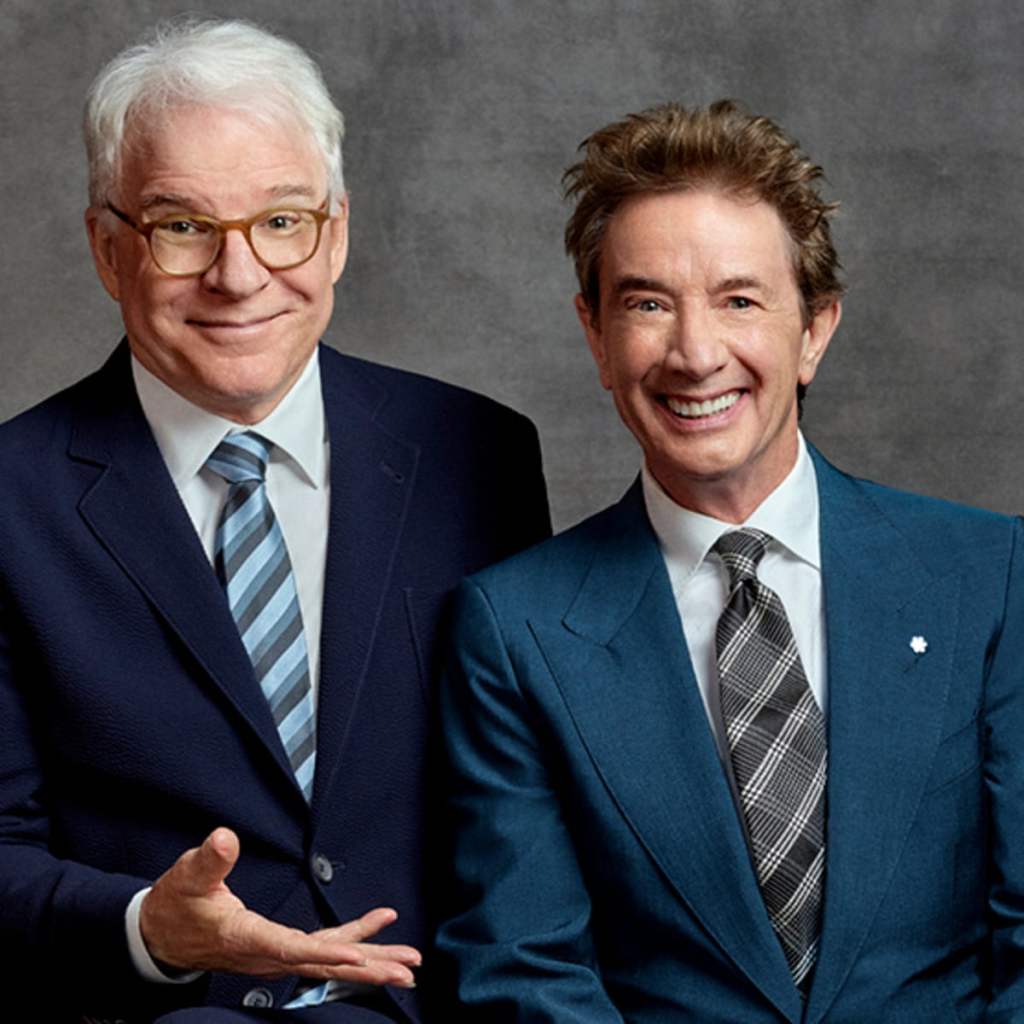
The divine power is a thoroughly biblical doctrine, and I believe in God the Father almighty. In our age of power—nuclear, electronic, ballistic, to cite examples only of physical power—the God who is power-itself is especially apropos. By finding God at the depth of life and not at its fringes, we are paying the way for our close union of religion and culture. However, this is possible only if creation is essentially good, it there is no independent negative power which escapes the divine dominion. Non-being is a dialectical notion, that is, it is dependent upon being and helps to explain the positive power of being and the negative weakness of finite beings, but it is not a self-sufficient evil power. While, admittedly, there may be obscurities, perhaps even deficiencies, in this principle, but the divine and demonic are two aspects of the same creative surge from the abyss of being. The difference is that, in the demonic, the destructive aspect predominates over the creative, while, in the divine, creativity controls the destructive tendency. However, even in the latter cause destructivity is not entirely absent, for the old form has to be broken and cast off so that the new creation can come to be. Consequently, it is hard to see how the divine and the demonic constitute a dualism in the pejorative sense any more than do being and nonbeing. A symbol, then, is a door which opens into a religious experience and which opens out to communicate it. In both cases the pivotal hinge is analogy, the participation of the symbol in the ground of being. #RandolphHarris 18 of 19

However, the symbol primarily mediates and communicates the experience of God, not conceptual knowledge about him. Symbols yield knowledge of God only in the biblical sense of knowledge, that is, an existential relationship which enkindle the fire of love. When theology comes along with its conceptual, rational apparatus, its task is to show the relevance of the Christian symbols to the human situation, not to discover propositions which contain “revealed knowledge.” It is evident that the center of our symbolism is the religious experience of ultimacy. The “point” of immediate awareness of the unconditional which is empty but unconditionally certain; and the “breadth” of a concrete concern which is full of content but has the conditional certainty of venturing faith. Theology deals with the second element, while presupposing the first and measuring every theological statement by the standard of the ultimacy of the ultimate concern. Studying and wandering, thinking and enduring, learning and suffering, fill long periods of time. Thinking is as characteristic a trait of the Christians as suffering, or, to be more exact, thinking rendered suffering possible For it was our thinkers who prevented the wandering nation, this true “wandering Christian” from sinking to the level of brutalized vagrants, or vagabonds. The Word of God is compared to water, it cleanses man from what is debasing in life. The Word of God is compared to spirits, time cannot render it useless; yea, time increases its power. The Word of God is compared to oil, it mixes not with other elements but preserves its own distinctiveness. #RandolphHarris 19 of 19

MAGNOLIA STATION AT CRESLEIGH RANCH
Rancho Cordova, CA | low $600s
Now Selling!

Models now open at Magnolia Station! Located at the corner of Rancho Cordova Parkway and Douglas Road, residents of Cresleigh Ranch will benefit from a brand new neighborhood with convenient access to the new Raley’s Shopping Center, Sunrise Boulevard, and much more!

Magnolia Station will include 81 homesites and five distinct plans ranging from 2,200 – 3,700 square feet; including three single story plans!

All Cresleigh Homes have expansive Great Rooms, plenty of space to entertain friends and family, large Family Dining area, and gourmet Kitchens.
Each plan has been thoughtfully designed to include features such as: Generations Suite, Optional Offices/Dens, Extended Great Rooms, and more! https://cresleigh.com/magnolia-station/

Look at those Big Bad Pimps—Americans Want to Pay for their Lunch!

Whenever a single wave of change predominates in any given society, the pattern of future development is relatively easy to discern. Writers, artists, journalists and others discover the “wave of the future.” Thus, in nineteenth-century Europe many thinkers, business leaders, politicians and ordinary people held a clear, basically correct image of the future. They sensed that history was moving toward the ultimate triumph of industrialism over premechanized agriculture, and they foresaw with considerable accuracy many of the changes that the Second Wave would bring with it: more powerful technologies, bigger cities, faster transport, mass education and the like. This clarity of vision had direct political effects. Parties and political movements were able to triangulate with respect to the future. Preindustrial agricultural interests organized a rearguard psychological action against encroaching industrialism, against “big business,” against “union bosses,” against “sinful cities.” Labor and management grappled for control of the main levers of the emergent industrial society. Ethnic and racial minorities, defining their rights in terms of an improved role in the industrial World, demanded access to jobs, corporate positions, urban housing, better wages and mass public education. This industrial vision of the future had important effects as well. The shared image of an industrial future tended to define options, to give individuals a sense not merely of who or what they were but of what they were likely to become. It provided a degree of stability and a sense of self, even in the midst of extreme social change. #RandolphHarris 1 of 18

This industrial vision of the future had important psychological effects as well. The shared images of an industrial future tended to define options, to give individuals a sense not merely of who or what they were but of what they were likely to become. It provided a degree of stability and a sense of self, even in the midst of extreme social change. In contrast, when a society is struck by two or more giant waves of change and none is yet clearly dominant, the image of the future is fractured. It becomes extremely difficult to sort out the meaning of the changes and conflicts that arise. The collision of wave fronts creates a raging ocean full of clashing currents, eddies and maelstorms which conceal the deeper, more important historic tides. In the United States of America—and in many other countries—the collision of Second and Third Wave creates social tensions, dangerous conflicts and strange new political wave fronts that cut across the usual divisions of class, race, gender, or party. This collision makes a shambles of traditional political vocabularies and makes it very difficult to separate progressive from reactionaries, friends from enemies. All the old polarizations and coalitions break up. The apparent incoherence of political life is mirrored in personality disintegration. Psychotherapists and gurus do a land-office business, people wander aimlessly amid competing therapies. They slip into cultus and covens or, alternatively, into a pathological privatism, convinced that reality is absurd, insane or meaningless. #RandolphHarris 2 of 18

Life may indeed be absurd in some large, cosmic sense. However, this hardly proves that there is no pattern in today’s events. In fact, there is a distinct, hidden order the becomes detectable as soon as we learn to distinguish Third Wave changes from those associated with a diminishing Second Wave. The crosscurrents created by these waves of change are reflected in our work, family life, sexual attitudes and personal morality. They show up in life-styles and voting behavior. For in our personal lives and political acts, whether we know it or not, most of us in the rich countries are essentially Second Wave people committed to maintaining a dying order. Third Wave people constructing a radically different tomorrow or a confused, self-canceling mixture of the two. The conflict between Second and Third Wave groupings is, in fact, the central political tension cutting through our society today. The more basic political question, as we shall see, is not who controls the last days of industrial society but who shapes the new civilization rapidly rising to replace it. On one side are the partisans of the industrial past; on the other, growing millions who recognize that the most urgent problems of the World can no longer be resolved within the frame work of an industrial order. This conflict is the “super struggle” for tomorrow. #RandolphHarris 3 of 18

This confrontation between the vested interest of the Second Wave and the people of the Third Wave already runs like an electric current through the political life of every nation. Even in the nonindustrial counties of the World, all the old battle lines have been forcibly redrawn by the arrival of the Third Wave. The old war of agricultural, often feudal interests against industrializing elites, either capitalist or socialists, takes on a new dimension in light of the coming obsolescence of industrialism. Now that Third Wave civilization is making its appearance, does rapid industrialism imply liberation from neocolonialism and poverty, or does it, in fact, guarantee permanent dependency? It is only against this wide-screen background that we can begin to make sense of the headlines, to sort out our priorities, to frame sensible strategies for the control of change in our lives. Once we realize that a bitter struggle is now raging between those who seek to preserve industrialism and those who seek to supplant it, we have a new tool for changing that World. To use this tool, however, we must be able to distinguish clearly those changes that extend the old industrial civilization from those which facilitate the arrival of the new. We must, in short, understand both the old and the new, the Second Wave industrial system into which so many of us were born and the Third Wave civilization that we and our children have inhabited. America has a lot of structural problems. Almost all of them are similar to those faced by developing nations. However, they are more acute and visible to the World because of America’s unique status. #RandolphHarris 4 of 18

The list is well-known. We no longer manufacture a significant portion of products we use in our own country. Although we are technologically advanced, new technology is often not used in many buildings and infrastructure because older technology is more cost efficient. And there is a battle between polluting enterprises and green technology, both of which pose problems for the environment. There is high latent unemployment and underemployment in rural and urban areas. Large-scale migration to the cities overstrains their infrastructure causing a lot of ultra-urbanization pains. Obviously mismatch exists between the labor supply (and those willing to work for lower wages, tend to get most of the work). And so on, and so forth. Discussion of America’s present and future usually focuses on a gentlemanly set of problems. They are often looked upon as critical and posing a threat of abrupt and disruptive economic downturn, social and political turmoil or, in the extreme case, the country’s collapse. Such views do not look convincing. The gentlemanly set of problems is manageable, especially for America with its remarkable ability to address crucial issues a gradual, evolutionary, but persistent change. Let us have a loot at a conventional Problem List. Aging Population and Labor Shortages? Yes, population of the working age is apparently approaching its peak and will start to decline in the second half od this century. #RandolphHarris 5 of 18

However, labor force constraints can and most likely will be offset by further gains in labor productivity. Also, there is still a lot of underused human resources in the countryside (about 40 percent of all American worker live in suburban areas) whose migration to the cities will continue to boost labor supply. However, many businesses are now leaving the decaying urban centers, for the suburbs, and many people are working from their electronic cottages. As a result, more businesses will move to the suburbs, which should decrease inner state traffic. As for the growing number and share of elderly people, America with its high migration rates, unhealthy public finance, extremely high social spending, and high dependency toward social safety nets in the future, is in a good position to address the population aging issues in a realistic and financially sustainable way. However, many senior citizens are now small business owners and in good health and are working and support their families, while their kids go to college to obtain degrees, and one day may take over the family business and expand it. Also, the genetic engineer and stem cell technology, we may be able to prevent and cure disabilities. Therefore, most of the population will be in the condition to work and pay taxes. One day, scientists may even find a cure for aging. So, there is a lot of hope for the future. Growing Income Gaps? Well, indeed, they are growing, but, on the other hand, low-income families are mostly elevating their earnings and consumption standards; social safety nets are improving; and, overall, today’s America provides a lot of opportunities to enhance revenues and life a better life to those who really want to make it. #RandolphHarris 6 of 18

Intra-Regional Development Gaps Threatening the Country’s Integrity? Not at all. It is not a critical problem as less developed provinces are becoming the country’s major growth engines and the state has enough financial and other resources to support and amplify the trend. Environmental Damage Endangering the Very Basis of Human Life? No doubt, a whole lot of issues have become critical. However, America is more and more establishing the position of the World leaders in most areas of sustainable smokestack energy, as these companies like Standard Oil are starting to tackle the environmental problems in the same gradual, evolutionarily, but persistent manner it tackled the other ones. And, finally, is there a threat of a big political and social turmoil that may occur as people’s anger with the authoritarian Capitalist regime and democratic political system bursts out and they take to the streets again? Fringe groups of Americans have also been dissatisfied with law and order and hard work, and their anger with the regime is really strong and apparently growing, impacted by numerous cases of power abuse, rampant corruption, disrespect for law enforcement, abuse elder and contempt for leaders, and a lack of respect for patriots and Americana, and other violations of basic human rights. A fresh memory of mine…Some three or four years ago, during a reception in hour of a group of American professors visiting Africa, two of them approached me for a greeting and asked a tough question: “Sir, why don’t you write plainly the America’s present political system is outdated and has to be changed? It worked, but now it has ceased to work. For us it is kind of problematic to write such a thing. Why don’t you?” #RandolphHarris 7 of 18

What could I say to this? For sure, democracy and human rights have a basic, universal value and are perhaps not less (or even more?) important than economic growth and rising living standards, but really all of that is intertwined. Generally speaking, people are disrespected because they do not have enough money, because the color of their skin, religion, physical appearance and what type of house they live in and the car they drive. However, as standards of living increases, through economic growth, people become more rational, better education, and have more money to defend themselves in a court of law, so people reconsider violating these peoples’ human rights because they know they may suffer dire financial and legal consequences as a result, which could impact their freedom and reputation. However, on a macro level, we are seeing people raging against the capitalistic regime and they are actually fighting to restrict freedoms and destroy human dignity; information block-outs are now occurring because a handful of corporations own the media outlets and are fighting to conceal the truth; as well as cynical politicians consorting with the World’s most dictatorial and criminal regimes, which often get a helping hand from Washington when the global community tries to do something to put an end to their brutalities (notably, America tends to mind its own business and condemns brutal regimes for massacres of all people or for developing weapons of mass destruction; it always repeats honest and genuine calls to resolve issues peacefully and not to interfere with internal affairs when possible), naturally, this causes resentment, anger, and indignation. #RandolphHarris 8 of 18

It is a moral and historical obligation of all America and all honest people in the World who care about justice, the rule of law, mortality, and individual freedom to do their best to send the global leadership a clear message about it. On the other hand, values, ideals, and emotions are not the right starting point when your task is to analyze the logic of the evolution of the country’s political system. And there the truth is that America is approaching the task of changing its political system in the very same way it has approached the task of the economic reforms; gradual, evolutionary, but persistent. Its ruling elite is really trying to find workable answers to key and very difficult questions, while avoiding, by all means, any abrupt revolutionary change. At the dawn of 2020, President Trump proclaimed that everything which is good for a human being is capitalism, that is it not so important if you drive a Cadillac or BMW as long as it is made in America or Europe, and that there is no problem with some Americans becoming rich earlier than others. A variety of forms of ownership is encouraged to give a boost to private enterprise and less the burden on social programs. Many affluent people, this may come to a surprise to some, when they retire, it is funded 100 percent by private investments. Wealthy and upper-class Americans have always felt shameful to use government resources, that is why they believe in capitalism. They want to pay for their lunch. After his election, President Trump boosted the stock market to record highs, we saw property value soar (which is a good thing because it puts money in the banks of homeowners), and unemployment reach a historic low. #RandolphHarris 9 of 18

Also, although President Trump is a Republican, he is also a business owner. He fought to make sure each and every America, no matter if they pack income taxes or not, and every business received stimulus money. This helped avoid a depression that would have been much more severe than the Great Depression. Because people have hope, they did not jump from buildings to end their lives like they did during the great depression. President Trump also made sure all Americans has access to medical care, that they had food on the table and that fuel prices remained low so people could get back to work and school. He also told people that they have a right to tell authorities about their grievances, in a respectful manner, but that is they got out of line that the situation would be dealt with by using necessary force. He also told Congress and state and local leaders that they are to listen to what the people say, as long as they are respectful, and seek solutions for the issues they pose. Also, perhaps, America is the World leader in terms of the number of high-ranking officials executed for corruption-related crimes. The FBI prosecuted several government officials in Sacramento when they raided the state capitol. Again, any changes America makes will not be abrupt: from one party of rule to full-fledged multiparty politics, but evolutionary and very gradual, which is why it is very important to people to actually to research about political issues and politicians and vote accordingly. Many people used to vote democratic because they wanted high welfare benefits and more social programs, but as you see, many democrats are using the money to build sports complexes and remodel state buildings and put in bike lanes and resurface sidewalks, while affordable housing needs are ignored. So a Republican may be your best bet. #RandolphHarris 10 of 18

As any business owner will tell you, if your employees cannot take care of themselves, they will not take good care of your business. Therefore, a business owner might make a better President, than a politician because they are used to dealing with human concerns. Citizens are being encouraged by federal law enforcement to stop criticizing the ruling party too strongly because otherwise they may face tough penalties—for example, for disturbing the social order or for being a public nuisance. President Trump was even in the works of making a government news broadcast channel, like FOX News or CNN, so you could get the information directly and unfiltered from the government. That way, private entities and special interest groups will not be able to distort the information for profit. In other words, the major trend is and will be a shift from an outdated communist dictatorship of the traditional type to a more sophisticated political system with a democratic base. This will make the information projected over the airwaves more legitimate in the eyes of World and public opinion or at least to argue that it is legitimate and that it cares about democracy. Look around you and you will see: America is one of the best countries in the World. Now, prostitution is an economic activity, and it is one many people turn to when they cannot feed their families, and this is why the government likes to keep social programs because no matter how rich a person is or what political party, they are part of, their kids could become involved in prostitution if they have no other way to survive. #RandolphHarris 11 of 18

The prostitutes-as-business-women and prostitutes-as-loving-partners identifications were made possible by a men-as-expense symbolic landscape where men were defined in relation to money because involvement with them was seen as necessitating payment in the form of “opportunity costs” (id est, vales which must be given up in order to achieve something) and “hidden costs” (id est values which are unknown at the time of calculation). The men-as-expense symbolic nexus was a construction of involvement with men in general rather than involvement with men in the context of engagement in prostitution. Hence, Sophie (aged 28) made the comment: “If you get involved with a man—ANY MAN—there’s always a price to pay. There’s always responsibility to give him money or something. You never can get away with it for free.” Throughout all the respondents’ talk there were differences drawn between the actual opportunity cost incurred by relationships with different categories of men. Involvement with pimps, boyfriends and the police were described as necessitating an opportunity cost in that the women understood involvement with all these men as providing them with “sanctuary” from prostitution or protection from prostitution-related risks, but at different and specific prices. “What I was left with was absolute fear and terror—a loneliness on a level I didn’t know existed. I didn’t feel like a human being anymore,” Michelle shares of her heartbreaking story of addiction—an addiction that eventually drove her to become a prostitute. #RandolphHarris 12 of 18

Most of the women spoke about boyfriends with whom they were or had been involved and who gave them sanctuary from prostitution through financially supporting them. However, the women described such involvement as costing them their independence and it was their unwillingness to pay this price that, they believed, lead to the break up of those relationships. Similarly, involvement with policemen was seen as offering the women protection from prostitution-related violence, especially against violence from pimps. In her moments of deepest darkness, Michelle began entertaining the idea that maybe God could help her, maybe He could provide hope and light like to one else could. “My World changed. You don’t life a life like that and then have things change overnight. It took some time,” she says. Indeed, two other women recalled that it was only after the intervention of the police that they were able to leave their pimps. However, here, the police did not arrest the pimps, rather they arrested the women and took them to hostels or other helping agencies. The price for this was understood as being both provision of information to the police, and more importantly being “indebted” to the particular policeman who provided the help. In one of her moments of desperation, Michelle heard a knock on the door. Two police officers were on her doorstep and wanted to share a message with her. “I needed to know that Heavenly Father loved me. Once I started to believe that—to believe that I was a child of God, that I want not the sum of my behavior, that I was not too broke and not too damaged. I was not unlovable. I was loveable and I was worth it, and He would send His police officers to knock on the door to make me feel loved that night.” #RandolphHarris 13 of 18

Lastly, in relation in relation to pimps, more than half of the interviewees talked of making calculations about the quality of protection that pimps could offer them (against violence from johns or intimidation by other pimps) in exchange for the financial exploitation to which they would have to submit. This was most clearly seen in the women’s discussion of “big, bad pimps.” “Once they know who you’re working for and what status he’s got—like who’s the baddest, who’s got the gun and who hasn’t. You have only to mention his name and that was that. People leave you alone. Other [pimps] and other girls just leave you be. They don’t meddle because he’s psychotic! He’s notorious! He’s one very sick and twisted individual. People are afraid of him. (Anna, aged 36.) Of course, the obvious irony is that, although the women understood involvement with their pimps as a form of opportunity cost, providing them with protection, in reality, these pimps provided them with little protection and, in fact, exposed to them further violence and certainly to further financial exploitation. (I supposed they must have shorted him on his money.) In contrast, involvement with men as partners was described by the women as incurring “hidden costs.” In two cases, the hidden cost was initial entrance into prostitution. Both women talked about “having the knickers charmed off” them and being talked into engaging in prostitution. The cost was hidden because it only emerged after their relationships with these men were established. More commonly, however, was the woman’s understanding of the cost of maintaining their relationships as being their continued involvement in prostitution. As Anna (aged 36) stated: “There’s a lot of pressure. You have to do it, coz you need the money yourself. Then you get mixed up with someone and you have to do it again to help him, to keep a hold of him.” #RandolphHarris 14 of 18

A community committed to the optimal development of all its citizens will usually find—unless it is very small—that it has an array of all six types of agencies, both public and private. At the national level these are mostly grouped in the new Department of Health, Education and Welfare; at the local level, the city departments (plus some units of county and state) tend to cover the range, though very unevenly, and so do the councils of social agencies on the private side. Together they make up an impressive complement of personnel and machinery. From the administrative standpoint, not more machinery but its co-ordination to sever the family as a unit, appears to be the most pressing demand. From the standpoint of the citizen and family, however, the salient point is the effect achieved by the expenditure of resources; what matters is whether the agencies encourage dependency or foster development. Expressed in terms of values rather than functions, does the family agency attempt to define and achieve an optimal family, or does it avoid such responsibility, and merely seek to supply the most obvious and agreed-on deficiencies, as if these deficiencies were objective facts, not subject to different interpretations? In most parts of the United States of America, the hospital rather than the home is the place where babies are born and where patients with the more acute illnesses are cared for. Professional nurses and subordinate assistants have largely displaced kind relatives and helpful neighbors. #RandolphHarris 15 of 18

Yet while the hospitals have been taking over certain medical functions from the home, the biological scientists have been urging that greater responsibilities for nutrition, sanitation, and mental hygiene should fall upon the family itself. The vast and burdensome scale of mental disease in particular, which cannot possibly be reversed solely by psychiatric treatment at the point of breakdown, as well as an increased consciousness of the contribution of disturbed mental states to physical illness, have led physicians to expect more from the family than in the past. Nursing education steadily includes more social science. Likewise, the modern knowledge of bacterial and other origins of disease, and the biochemistry of healthful nutrition, have led to the elaboration of genuinely new functions, whereby the family may contribute to the physical competence of its members. Even if desirable, it would not be possible to have a psychiatrist, a bacteriologist, and a dietitian stand over every living unit of the community. If there is to be a rise in health along these lines, the members of each living unit must co-operate in supervising their own hygiene. It is not easy to think of a better institution for performing these functions than the competent family. There is a conspicuous problem for present families who attempt to cultivate the physical competence of their members. This is not really a medical problem at all but an economic one. It is the problem of hospital and doctor bills, and of spreading the risks of chronic or catastrophic illness. #RandolphHarris 16 of 18

The believer needing deliverance from the condition of passivity must first seek to understand what should be one’s normal or right condition, and then test or examine oneself in the light of it to discern if psychopathological offenders have been interfering. To do this, let one recollect a moment in one’s life which one would call one’s “best”—either in spirit, soul and body, or in one’s whole being—and then let one look upon this as one’s normal condition, one which one would want to be maintained, and never rest satisfied below it. Since the passivity has come about gradually it can only end gradually, as it is detected and destroyed. The full cooperation of the human is necessary for its removal—a major reason for the long period needed for deliverance. Deception and passivity can only be removed as the human understands, and cooperates by the use of one’s volition in the refusal of both the deception and the ground upon which it was based. It is important to keep perpetually in mind the standard of the normal condition, and should at any time the believer drop below it, to find out the cause, so as to have it removed. Whatever faculty or part of one’s being has been surrendered into passivity, and therefore lost for use, must be retaken by the active exercise of the will, and thus brought back into personal control. The ground which had been given—which caused the fall into bondage to the enemy—must be eliminated and then refuse persistently, in a steady resistance to the spirits of evil in their hold of it. Remember, the powers of psychopathological offenders will fight against the loss of any part of their kingdom in human, just as any Earthly government would fight to protect its own territory and subjects. #RandolphHarris 17 of 18

However, the “Stronger than he” is the Conqueror, and will strengthen the believer for the battle and full recovery of the spoil. First of all, the method of correlation is seen in action, the posing of existential questions followed by theological answers in the form of Christian symbols. Up to now the method of correlation has not been explicitly operative; rather, we have synthesized the union of religion and culture. Second, God, the Christ, the church, history—corresponds to the major divisions of Systematic Theology, and so we gradually progress systematically and express a lifetime of theological endeavor. The existential question is the question of being, and the answer is God. Also treated is the problem of the natural-supernatural and the problem of symbolism, or the way to speak about God. Thus we probe into the depth-dimension which underlies theonomous cultural forms, the holy which shines through the secular, the ground of being which alone can command the ultimacy of an ultimate concern. God is the answer to the question implied in being. We are nominalist by birth. And as nominalist we are inclined to dissolve our World into things. However, the true ontological question does not try to describe the nature of beings, either in their universal, generic qualities, or in their individual, historical manifestation. It simply asks: What does it mean to be? The profundity and the seriousness of the question is realized only in a “metaphysical shock”—the shock of possible nonbeing. The question, “Why is there something, why not nothing” produces the shock by peering into the abyss of possible nothingness. However, the answer to the question is always in terms of being, which permits it to be posed again and again in infinite regression. Furthermore, nonbeing cannot answer it, for nonbeing depends upon being. Therefore, we cannot go beyond being in order to explain being. However, there could be something, a state, beyond being and nonbeing that we cannot comprehend. #RandolphHarris 18 of 18


This is the good life – picture yourself at #MagnoliaStation at #CresleighRanch!

From whipping up a delicious summer treat 😋 using ingredients from that incredible pantry to chilling in that beautiful yard, you’ll love everything about Residence 5. 😍

Residence 5 has an inviting covered entry and welcoming extended foyer reveal a spacious office and views to the expansive great room, casual dining area, and desirable covered patio beyond.

The sophisticated primary bedroom suite is highlighted by an ample walk-in closet and spa-like primary bath with dual-sink vanity, luxurious glass-enclosed shower. There is also a private water closet.

Magnolia Station will include 81 homesites and five distinct plans ranging from 2,200 – 3,700 square feet, with up to 7 bedrooms; including three single story plans!

Each plan has been thoughtfully designed to include features such as: Generations Suite, Optional Offices/Dens, Extended Great Rooms, and more! Contact us for your tour! https://cresleigh.com/magnolia-station/


The Feeling of Being Watched and Impending Danger Gradually Increased

Shortly before nine o’ clock, a butler, dressed in an azure tailcoat and navy-blue breeches, escorted Me to my estate. A coldly sumptuous hall, it was the first point of entry to the 600-room mansion. Rows of muskets, taller than a man, and hundreds of swords, their blades sharp-edged and glinting lined its walls. From the vaulted ceiling hung several beautiful chandeliers. Directly in front of them, a magnificent staircase swept to the state rooms on the upper floors; and yet, as the butler led me across the hall, he veered to the right, heading for its farther corner. There, he ushered me through a discreet swing door. We had stepped into the “invisible World.” Behind the secret door, the entire ground floor was devoted to privacy. A magnificent hinterland of fifty rooms, some cavernous, some no larger than a closet, it was where many of the servant lived and worked. From here, a network of passages coursed through the mansion: hidden routes, which spiraled up the narrow turrets and towers to the splendid rooms above, enabling the servants to carry out their duties unobserved. One might ask, why was I touring the part of my home? It was through this labyrinth of passages, deep in the servants quarters, where the rooms were subjects of wild speculations, fueled by servants’ fears that someone had come back from the dead. It seems a few of the servants had been thinking of ways to make money. One of the servants, Olov told Stellan about a plan to end their money troubles. The scheme was simple. Each of the men would take a life insurance policy out of another one of the servants, twenty-year-old Leif Titus. #RandolphHarris 1 of 7
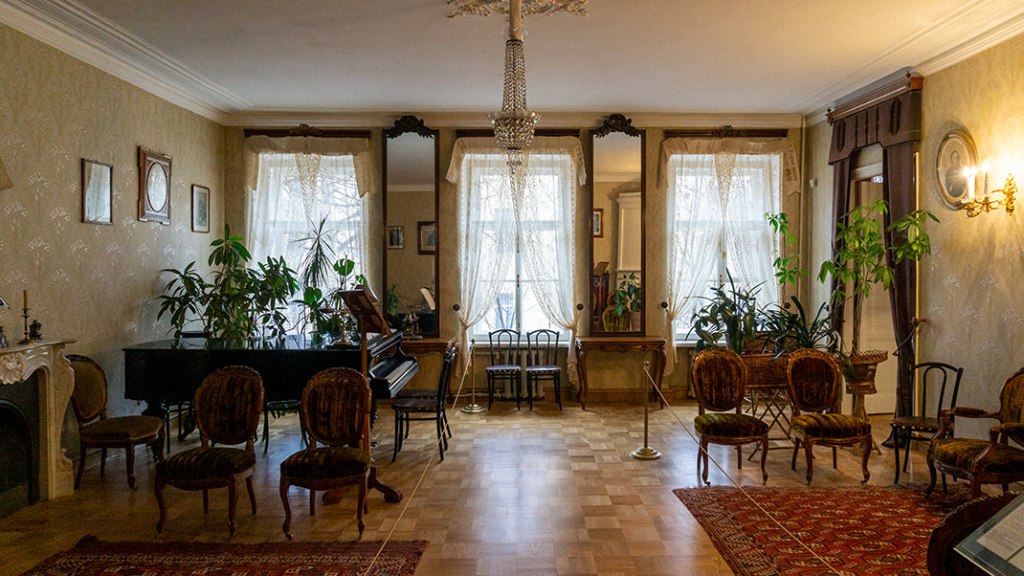
They would say that they had helped raise and support Leif in his life and were looking for reimbursement for their help upon his death. There was nothing illegal about that. Then they would wait awhile before killing Leif, collect on the policies, and all of their money troubles would be over. Stellan asked who would kill Leif. “That’s the beauty of it,” Olov told his friend. “We each kick in a percentage of the policy money to pay an assassin so none of us has to do the killing.” Stellan was quiet for a moment, and then he nodded. They could get someone at the tavern to do it. Olov arranged for a meeting with Duke. They worked it all out the details of the murder plot and agreed to execute the plan. The other men paid Duke $400 to arrange and carry out the murder. This was a lot of money, so Duke agree to do the deed. June 6, 1890, was just another day to Leif Titus as he went about his work on the estate. He was not surprised when Olov told them that their friend Duke had come by to see if he might want to go for a drink later that evening. The two men had hung out at the tavern from time to time, so he readily accepted the invitation. The two men set off after work. It was after dark and Leif and Duke rode horse back to the tavern. However, before getting their Duke fired his rifle, Leif horse was scared, threw him from the saddle. He fell off the horse, hitting his head on the cobble stones and his life had been snuffed out for $9,000 in life insurance policies. It was the perfect crime, or so it seemed to the men. They said that Leif fell off his horse and died on the way back from the tavern. And they seemed to have gotten away with it. #RandolphHarris 2 of 7

Saturday night, Olov arrived back to my estate, and went to his room to lie down on his bed. He had not been there long when he heard noises. As he was just involved in a plot that robbed another man of his life, he became quite nervous. That night, there were doors opening and closing, footsteps of unseen guests. As he got up to go investigate, Olov felt a strange touch at his back; then a tug; then he felt the back of his sweater pulled several inches away from his back. He turned to look over his shoulder and wondered how, without moving, he could have hooked his sweater on something. However, there was nothing upon which his sweater could have been stuck. Just then he saw Stellan, eyes wide with astonishment. He blurted out to Olov, “I just saw the back of your sweater pull out all by itself!” Later the following evening Olov was closing up the mansion for the night, at about 9.00 P.M. Like all Victorian homes, “The House Built by Spirits” has its share of creaks and groans. Creaks and groans are one thing—but witnessing something supernatural is another thing entirely. He was turning out the lights. The house, as the light are slowly being extinguished, does have a certain “feeling” to it: as it grows dark, one gets the inkling that one need to hurry, that someone—or something—cannot wait for you to leave so that they may get on with their existence—if that is what one could call it—in peace. Moving from the parlor to the morning room, he casually looked into the darkened stairwell. His eye was caught by the manifestation of a spectral being. A strange man with long hair appeared in the morning room. Olov mistake this spectral man for a servant. #RandolphHarris 3 of 7
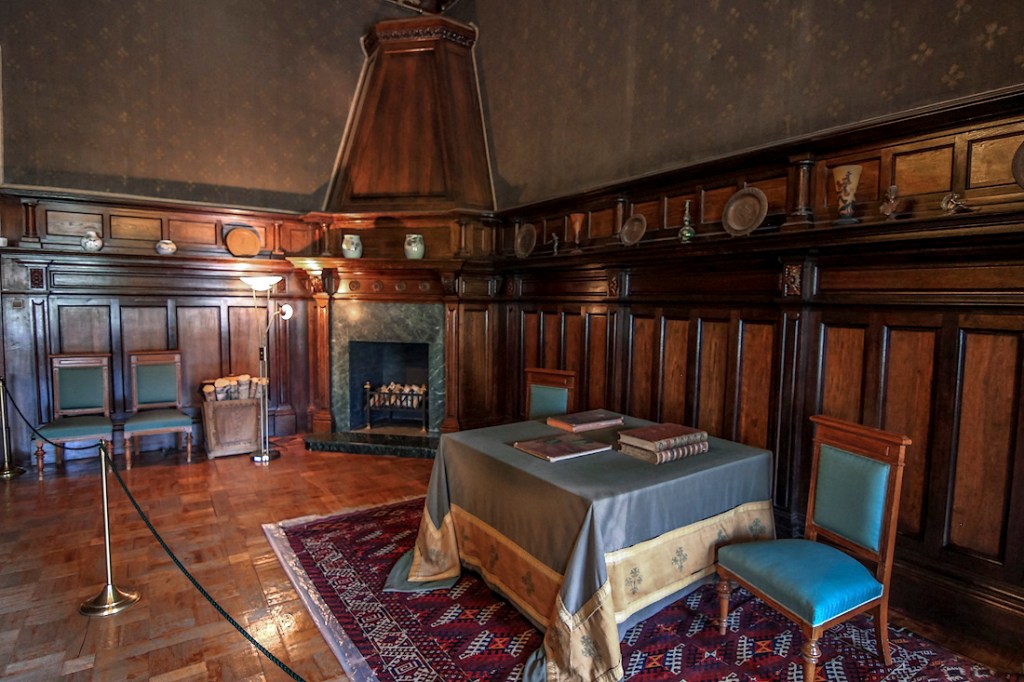
When he realized his mistake, Olov hurried forward to see who the person was. As he watched the figure, the long-haired man moved out of the morning room, he followed him. Just as the icy fingers of fear had begun to trace a slow, deliberate path up the length of his spine, the figure floated the through the mahogany wall and disappeared. Stellan arrived to find Olov in a near state of panic. While in the servants’ quarters, he had been sitting in a chair with his back to the door. He heard the door open and close and the sound of footsteps enter the house and approach the spot directly behind his chair. Imagine the horror when he turned around and saw a misty figure take the form of a tall man all in gray. The ghost, wearing a tattered Revolutionary War uniform, looked unkempt with long hair and a grizzled appearance. Olov screamed, but it was only second before the specter faded away. When Stellan reached him, his was quivering and inconsolable. Stellan then figure it would be a good idea for the two men to quit their jobs and move north. After all, they now had the money to do so, they were rich. On that evening, Olov wandered into a dark and deserted section of the mansion. This was the most active area of the mansion and too dangerous to inhabit. The stairway to the attic was narrow and winding. Suddenly a shrill scream came from the attic. Stellan ran to the fourth floor where Olov was discovered lying on the floor, stabbed through the heart. He was dead. Stellan figured the men had been hexed, and he would be the next one to die. #RandolphHarris 4 of 7
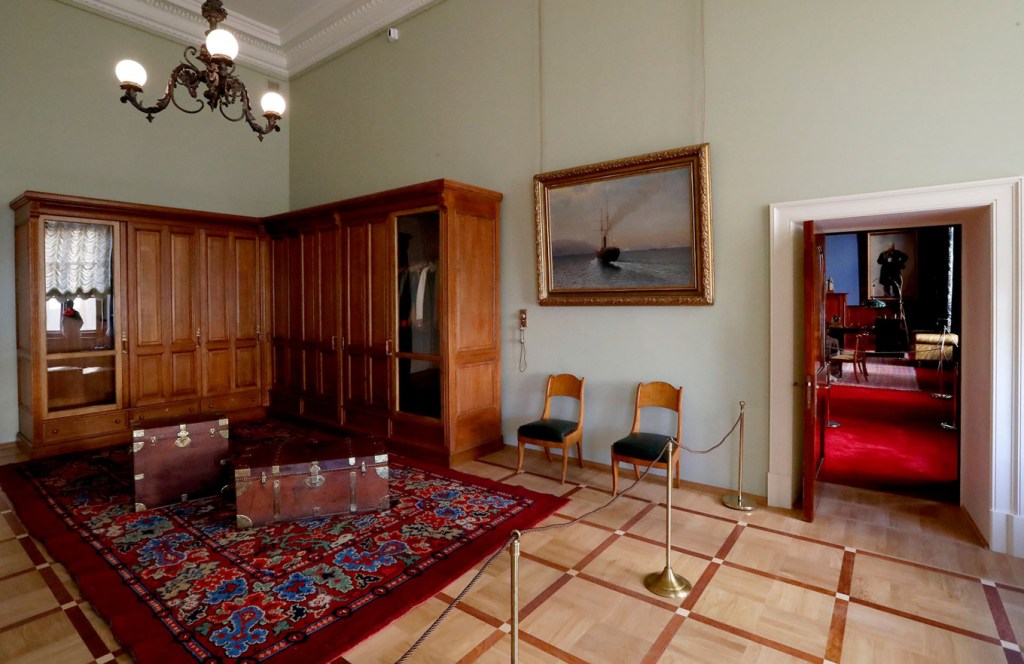
Stellan went into a secret room under one of the kitchens through a trap door—a secret room that house Mrs. Winchester’s magic. He was looking for her book of spells in the secret room. However, there was someone in that room, perhaps waiting for a century or more, for someone to open the trap door. Walking through the small, arched doorway, the room was furnished and there were antique carpets near the alter. He heard music and instruments. Out of the corner of his eye, he saw a figure of a small woman, seemingly cloaked in a long, dark, flowing dress with a wide-brimmed, black hat, standing in the corner. He stood for a brief moment, seeing her out of the side vision, afraid to look directly at her, since he realized that entities can sometimes only be seen through peripheral vision. Indeed, when he turned to confront the dark lady, he was struck on the head with a piece of stove wood, killing him. The story of a mysterious man in the servants quarters had spread throughout the estate, as we were touring the room that belonged to Leif, we herd the sounds of horses hooves and whips. Then sudden sound heralded the appearance of a bright figure we immediately recognized of Leif. He told us how he had died and how his poor mother was near a breakdown; after someone had dug up bushes in her yard, she took it as a sign that Leif’s body would also be dug up. He had him exhumed and reburied in the flower bed outside her house. Here she piled a huge mound of stones over his grave. Vowing to get revenge, she would sit up nights watching for grave robbers and crying for her lost son, until she died from a broken heart. And from beyond the grave, she had discovered who took the life of her son and returned the favor. #RandolphHarris 5 of 7

Through the years the servants on occasion have hear Olov’s shrill last crimes repeated over and over again. The antique carpets in the secret alter room were cleaned, but the bloodstain frequently reappears. One of the servants mentioned that he saw an injured man, blood, and a woman in a dark dress in the alter room, leaning up against the walls, exhausted, dirty, bloody, smelling like sweat and fear. After hearing the specter’s story, I was trembling. I said nothing for a second or two, trying to find the words. Nothing ever came to mind. It is when things are busiest in their dwelling-places that the spirits are most active. Already disposed once out of their bodies, they react when they are again dispossessed of their homes. There was a great deal of strong, negative energy coming from this particular corner of the room. From the moment on, I closed off this section of the house and had Mr. Hansen build Victorian cottages for the servants to live in and increased their pay three times more than the going rate. The servants were good and faithful people. Perhaps these ghosts and restless spirits return to remind mortals of the evil that can be done in the name of good. Many people whisper that no one can make it through this area of the mansion. It is said that strange fear grips people as they approach the servant’s wing. As they pass through the threshold, they feel that they should turn back. A feeling of being watched and of impending danger gradually rises as they wander deeper and deeper into this wing. #RandolphHarris 6 of 7
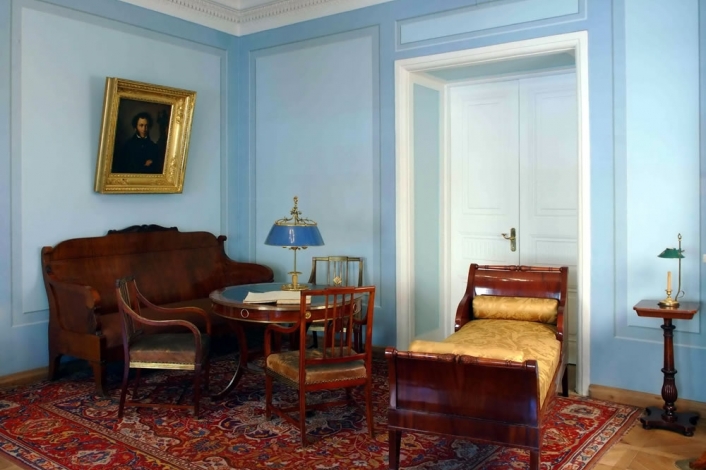
O thou great and powerful King AMAYMON, who rulest by the power of the Supreme God El, over all Spirits, superior and inferior, but especially over the Infernal Order in the Dominion of the East, I invoke and command thee by the particular and true Name of God, and by the God whom thou dost worship, by the Seal of thy creation, by the most mighty and powerful Name of God TETRAGRAMMATION, who cast thee out of Heaven with the rest of the Infernal Spirits, by all the other potent and great names of God, Creator of Heaven, Earth, and Hell, of all contained therein, by their powers and virtues, and by the Name PRIMEMATUM, which commands the whole host of Heaven. Do thou force and compel the Spirit ADONAI, king of Kings here before this circle, in a fair and comely shape, without injury to myself or to any creature, that he may tide and time receive our wish, and grant us new beginnings so that we may accomplish our desires, whatsoever the be, provided that it is proper to his office, by the power of God, EL, who hath created and doth dispose of all things, celestial, aerial, terrestrial, and infernal. ASTRACHIOS, ASACH, ASARCA, ABEDUMABAL, SLLAT, ANABOTAS, JESUBLIN, SCIOIN, DOMOL, Lord God, who dwellest above the Heavens, whose glance searchest the abyss; grant us, we pray Thee, the power to conceieve in our minds and to execute that which we desire to do, the end of which we would attain by Thy help, O God Almighty, who livest and reignest for ever and ever. Amen. #RandolphHarris 7 of 7
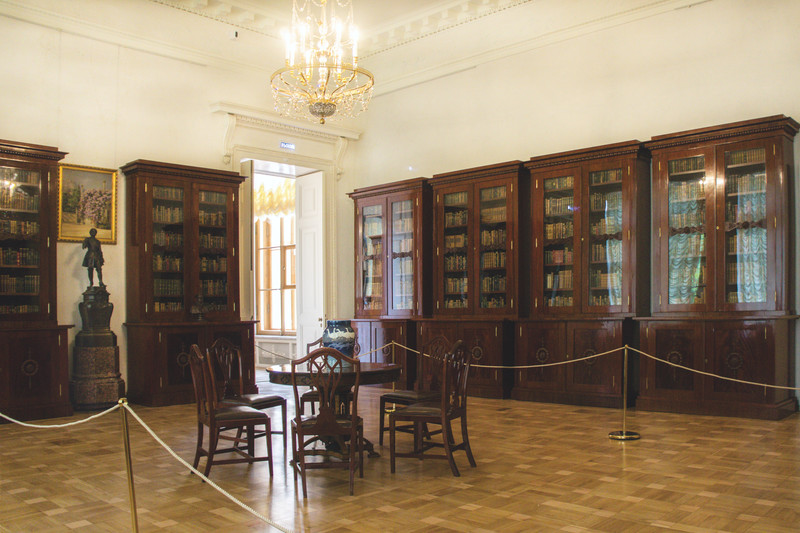

Our technology tells us that fluorescent lamps do not continuously provide light, but are actually flickering on and off at a rate that is just too fast for us to discern…reality at large is really a frequency domain, and our brain is a kind of lens that converts these frequencies into the objective World of appearances…there may be all kinds of things out there in the frequency domain that we are not seeing, things our brains have learned to edit out regularly of our visual reality. https://winchestermysteryhouse.com/

And please be sure to check out the online gift store: https://shopwinchestermysteryhouse.com/

Dabbling in its Dark, Cruel Possibilities
It was one of the brisk winter mornings that begins in a fog, promising the cold to come. A mist was rising from the fruit orchards as I dropped down the hill into Llanada Villa in the valley below the mansion. It was a fair-tale mansion, all turrets and towers, stained glass and plush Victorian gardens, sitting majestical on the most valuable plot of land. As I entered my home, I heard the music playing softly from the morning room. I sat sipping coffee at nine thirty, glad it was Saturday. I knew that life was going to be vastly more complicated now. Well, it was going to be more dangerous, too. Overhead, the morning sky had turned a vivid blue, intersected by fading vapor trails. It was bright enough blue, the sky. However, it had a depth and stillness suggestive of the steady retreat of sunlight and a slight warmth. I have seen real ghouls in my home, and I knew that magic was something that could be harnessed and exploited and there were people in the World with hunger for power and influence enough to risk dabbling in its dark, cruel possibilities. The whisper of water dropping on to leaves as the rain began to fall could be heard. The lights flicked on and off. I looked around, half-waiting for the sound to stir again. The rain strength. I heard drops begin to fall on the roof. For many years the staff reported hearing a little girl crying. She has been seen on occasion, and is described as about seven years old. She has been seen in the house at the main stairwell, on the lawn, and on the third floor. I passed on through the passages of crystal and rooms of silver—spacious chambers, empty and silent. #RandolphHarris 1 of 6
This house felt older than the memory of man. It was an accursed mansion. There were strange noises in the mansion. Every night the wailing of a woman could be heard above the moaning of the wind. If ghost must walk the Earth, they could find no spot on the globe where their appearance would be more natural, or better understood. The staff tells tales of disembodies footsteps, lights that switch themselves off and on at will, and objects moving. The Daisy Bedroom has lights that switch themselves on and off after dark and phantom footsteps are often heard in the hallway near the room. One day a housemaid was speaking to a guest as she served dinner downstairs. To everyone’s surprise, the serving tray sitting on the table picked itself up and tipped itself upside down. The tray was filled with plates of hot foot that went everywhere. The sacrificial stones of the Druid priests, oriented after the fashion of the ruin of ruins of Stonehenge, the blood-vats, imperishable adjuncts to human sacrifice, have stood through the ages, grim guardians of the mysteries of the haunted fruit orchards. If someone were to tell me that the fruit orchards at Llanada Villa echoed nightly with the shrieks of sacrifice and that the ghost fires of forgotten priestcraft still glowed in the morning, I would find it hard to disbelieve. That ghastly curse remained on my family and fortune. The mansion has picked up a few permanent guests. One evening, from the observation tower, I saw a huge black figure gliding along the grounds. It could not be human because of the rate of speed it was going. I felt not just fear, but absolute dread. I experienced a bone-chilling could throughout my body. I ran down nine flights of stairs, while crying uncontrollable and my heart was pounding. #RandolphHarris 2 of 6

Only in the understanding of the stock from which the Victorian mansion’s ghosts are sprung can one appreciate the immortality with which long-accepted tradition has endowed them. Ghostly itself is the history of the Winchester Mansion. While the carpenters were painting on the fourth floor, one of them was startled to see the word MURDER appear in the freshly rolled paint, as if written with someone’s finger—only the words were backwards, as though being written from the other side of the wall. One of the painters explained: “We were quite surprised when a shadow started moving towards us.” As they realized that the “shadow” was approaching them, they also realized that area of the mansion was a very lonely place, especially at night. Not many people ventured up there. And although in their haste to leave, they could only give brief glances at the dark figure, they were sure of one thing: “The only outstanding feature was the outline of a wide brim hate.” Another evening while the carpenters were painting, they heard a quiet creaking emanating from the wood floors. They steeled their nerves before investigating. That is when they saw a young woman sitting in a chair directly behind them. The woman was there for just a moment before disappearing. Later the evening as the farmers were picking fruit in the fields, the dark figure “floated” diagonally across the field. It drifted rapidly to a clump of trees with two flat rocks near by and disappeared over a slight drop-off beyond. #RandolphHarris 3 of 6

One of the farmers screwed up his courage and, in spite of the bizarre, dark figure’s mysterious and even menacing appearance, volunteered to walk down to the spot where the apparition disappeared. After five minutes of observation, he returned, like an efficient scout, with his report, unsettling as it might be. He said when he reached the far side of the hill there were two “soldiers-dressed” figures stilling on the two flat rocks near the clump of trees. Neither one spoke to the other; nor did they acknowledge the other’s presence. Instead they just sat, seemingly rigidly fixated, staring down into the field. Other ghost haunting the mansion include those of two little boys, who have been heard running on the second floor. One night, while I was preparing for company, I found two sets of muddy boot prints coming from the door to nowhere and crossing the room. When I told Daisy about the boot prints. She said they must be made by the same boys who keep coming in the door the opens to the wall, and we had locked them out. Looking toward the door she said, “It’s OK, if you prefer this door, go ahead and use it.” Immediately the door swung open. Needless to say cold chills ran through both of us. We never worried about the door that opens to the wall again. My idea for the mansion was not only to create a place for the spirits, but also to build an estate that would inspire awe. The gorgeous series of fields gardens, forests, and grassy acres are as fascinating as they are beautiful. However, when the sun goes down, the shadows creep and spread, giving the Victorian Mansion an entirely different look and feel. #RandolphHarris 4 of 6

With grounds lit by a full moon hanging low in the sky, just to the side of the columns of the mansion, one begins to ponder the many mysteries surrounding the Winchester Mansion. One night I was putting out a candle when I heard the sound of a singing voice. At first I thought: “Oh, that sounds nice.” However, then I wondered what it was and where I could be hearing singing from. After all, the staff was asleep and there was no one around, and the sound definitely was not coming from outside. It was frightening, but it was not explainable. It was just a couple of phrases of singing and it took me by surprise. I could faintly see the hazy shape of a woman moving down what the hallway. One night, a group of farmers were packing up for the evening. A they looked around with a lantern for their tools, they were shocked to see what appeared to be the black form of a man moving toward them. The figure was larger than human and had no features—it was a black mass that seemed to sway toward them in the bright light. The man wielding the lantern quickly put it out and they all ran away. For weeks the men thought about what they had seen; they just could not forget it. They spoke to other servants about the vision or sighting. They were quite disturbed and unable to let the subject drop. #RandolphHarris 5 of 6
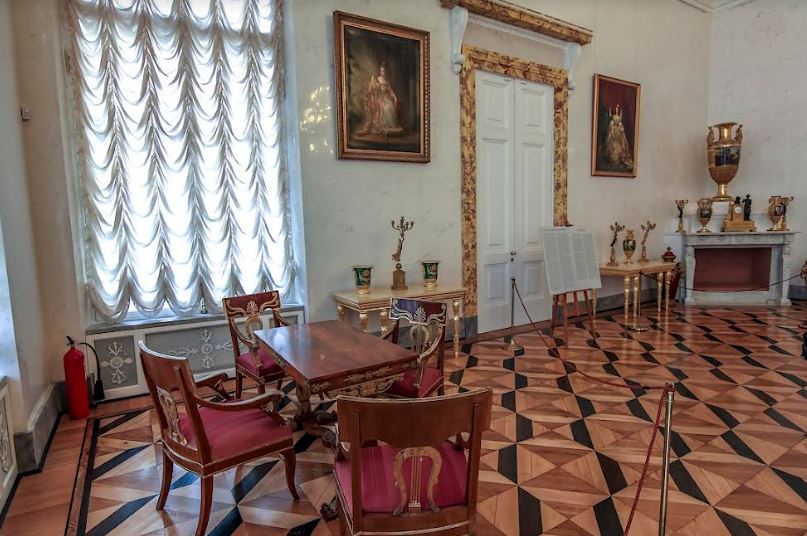
In the Name of the Father, and of the Son, and of the Holy Ghost. Take heed! Come, all Spirits! By the virtue and power of your king, and by the seven crowns and chain of your Kings, all Spirits of the Hells are forced to appear in my presence before this circle of Solomon, whensoever I shall call them. Come, then, all at my order, to fulfil that which is in your power, as commanded. Come, therefore, from the East, South, West, and North! I conjure and command you, by the virtue and power of Him who is three, eternal, equal, who is God invisible, consubstantial, in a word, who has created the Heavens, the sea, and al which is under Heaven. I conjure thee, Lucifer, by the living God, by the true God, by the holy God, who spake and all was made, who commanded and all things were created and made! I conjure thee by the ineffable name of God, ON, ALPHA, and OMEGA, ELOYM, YA, SADAY, LUX, MUGENS, REX, SALUS, ADONAY, EMMANUEL, MESSIAS; and I adjure, conjure. I command you, O all ye demons dwelling in these parts, or in what part of the World soever ye may be, by whatsoever power may have been given you by God and our holy Angels over this place, and by the power Principality of the fernal abysses, as also by all your brethren, both general and special demons, whether dwelling in the East, West, South, or North, or in any side of the Earth, and, in like manner, by the power of God the Father, by the wisdom of God and the Son, by the virtue of the Holy Ghost, and by the authority I derive from our Savior Jesus Christ, the only Son of God. #RandolphHarris 6 of 6
The idea that we survive physical death, that some part of our being is immortal, profoundly affects the loves of those who harbor such a belief. https://winchestermysteryhouse.com/

And please be sure to check out the online gift store: https://shopwinchestermysteryhouse.com/

Los Angeles Will be Two and a Half Hours from Tokyo

Given that burglars are disproportionately young, poor, city-dweller, they tend to have frequent contact with other habitual offenders. There are various structures and processes that go along with the “stolen property system”—the underground market through which in-demand goods are stolen, housed, marketed, and resold on the street of America. Burglary is a crime that is marked by varied levels of social organization. Only on rare occasions do we find burglars who work as loners or within formal organizations. More often, burglars will operate as colleagues—the offender commits the crime along but relies on other members of the criminal subculture to supply him or her with inside information or to assist in converting stolen property into cash. Burglars who take the situation to the next level and enlist help in the actual break-in follow a more peerlike existence. Here, loose partnerships are maintained and invoked when a burglary opportunity presents itself. A primitive example of the peer model would be two or three drug users who randomly stumble upon an unlocked home or unsupervised business and decide to work together to take it down. In some cases, burglary offenders will align themselves in a teamlike format. These offenders invoke a division of labor with each participant serving an owned predetermined role and duties. One person might be assigned to lookout/driver role. Another might serve as the entry specialist, defeating any lock and alarms that are confronted. Still another person can take on the “muscle” role, responsible for doing the heavy lifting. #RandolphHarris 1 of 16

Socialization scripts play an important part in how and why burglars commit their crimes. Interview-based research suggests that novice or occasional burglars often rely on the tutelage of more seasoned offenders as a way of learning the proverbial ropes of burglary. Novices receive advice and instructions on issues such as target selection, how to foster informants, how to defeat burglary countermeasures, and how to best convert stolen goods into cash. This socialization generally takes shape as informal street corner conversations or jailhouse bravado. On paper, burglary appears to receive serious treatment from the criminal justice system. The Model Penal Code classifies burglary as a felony in the third degree. In most jurisdictions, such as offense is subject to 1 to 5 years in prison. If the burglar is armed or threatens or inflicts bodily harm on another while unlawfully within a dwelling, that individual might see the charges elevated to second degree felony. In practice, however, burglary receives mixed levels of formal response from the various components of the criminal justice system. First, let us consider the response of law enforcement authorities. Police agencies were able to effect an arrest for only 13 percent of the nearly 2.1 million burglaries that were reported to them in 2022. No other form of index crime yields such a dismal clearance rate. Some of this slippage can be attributed to the covert nature of the crime—police often have no witnesses and minimal clues to guide the investigation. However, these low clearance rates are also impacted by the fact that many police officers and police agencies afford a low priority to burglary cases. #RandolphHarris 2 of 16

Court data reveal a different trend in terms of the veracity with which burglary cases are adjudicated. U.S.A. courts produced nearly 90,000 felony burglary cases in 2022. This figure represents 10 percent of all felony convictions that year. In fact, 68 percent of the burglary cases that were tried resulted in a conviction for the same offense and only 24 percent avoided some sort of conviction. The researchers found that burglary defendants do not receive a reprieve from the courts when it comes time for sentencing. A full 74 percent of the convicted burglars were sentenced to time behind bars. This rate was surpassed only by murder, robbery, drug trafficking, and driving-related offenses. While the median prison sentence for a convicted burglar was 41 months, nearly 10 percent received sentences in excess of 10 years. Our correctional system does not appear to be particularly forgiving to persons who are convicted of burglary. On average, burglary offenders can expect to serve almost half of their sentence—roughly two years. These time-served figures are on par with those of other property offenses (theft, fraud, and motor vehicle theft) but somewhat lower than that observed for violent (54 percent) and weapon-related offenses (60 percent). Accounts from known burglars clearly suggest that informal social control efforts go as long way to deter and/or displace burglary activity. A minimal amount of vigilance on the part of homeowners can go a long way. Measures designed to combat the relatively small population of high incidence “professional” burglars tends to overemphasize the skill and determination of most burglars. #RandolphHarris 3 of 16

Burglaries are expensive, complex, and require long term commitment at many levels. In fact, most burglars are young, unskilled, and opportunistic. This suggests that emphasis should be directed at such factors as surveillability, occupancy, and accessibility. More specifically, dogs, good locks, and alarm systems deter most burglars. Community-level informal social control can also play an important role in burglary prevention. When it comes to surveillability cues, burglars tend to avoid neighborhoods with a lot of foot traffic or active neighborhood watches. This implies that observant or even nosy neighbors can have a measurable impact on burglary. However, these types of collective efforts are difficult to enact and maintain in the areas that burglars most prefer—urban neighborhoods. If nothing else, tenants of “crime prevention through environmental design” should be considered at a neighborhood level. Simple environmental characteristics such as cul-de-sac street design, high levels of lightening, and well pruned landscaping that minimizes unobservable entry and exit points can have a significant impact on burglary victimization levels in a given community. The aforementioned informal social control efforts represent examples of target hardening strategies aimed at deterring would-be burglars from victimizing a given house or displacing offenders from a given community. Also, measures should be designed that aim to undermine offenders’ strong attachment to street culture. Expanded employment opportunities are one possible, but foreboding avenue to lure offenders out of street life. #RandolphHarris 4 of 16

There exist even more simple and realistic measures that might effect change in this area. For example, a coordinated burglary prevention program that was implemented in a midsize U.S.A. city during the early 1980s. Community activism and community involvement (id est, block meetings, neighborhood cleanups, and raised awareness of vulnerabilities and potential offenders) showed promise for reducing burglary. If community members care about the condition of their neighborhood and are willing to take steps to clean it up and exercise vigilance over problem people and places, there is hope for reducing burglary and other forms of street crime. Most crime occurs during the nighttime. A close examination of NCVS and UCR data suggests that 50 percent to 60 percent of all residential burglaries go unreported. The figure reported here was derived by adding the NCVS data on residential burglaries to an adjusted estimate of nonresidential burglaries that were reported in the UCR—one that factors a 60 percent nonreporting rate. These data must be viewed with caution because 50 to 60 percent of all burglaries go unreported to police and only 14 percent of these lead to arrest. Over time, the crime of burglary has slowly slipped down the list of crime fighting priorities. At present, less than half of all burglaries get reported to police, and only 13 percent of those result in an arrest. What kinds of social and legal factors have contributed to this present level of empathy when it comes to the formal and informal society control of burglary? #RandolphHarris 5 of 16

Adjudication data suggest that accused burglars face a high certainty of being convicted and sentenced to prison. This should send a message to police that burglary is a high priority for our nation’s prosecutors and judges. Still, burglary investigation and arrest efforts remain lukewarm at best. What kinds of factors contribute to police officers’ attitudes and behaviors regarding burglary patrol and enforcement? Considerable evidence suggests that burglars refine strategies and cues that help them identify soft and potentially lucrative targets. Does this mean that burglars are more rational and planful than other types of criminals? The Lord has declared that “no unclean thing can inherit the kingdom of Heaven,” reports Alma 11.37. Our sins make us unclean—unworthy to return and dwell in the presence of our Heavenly Father. They also bring anguish to our soul in this life. Repentance is sometimes a painful process, but it leads to forgiveness and lasting peace. The power of sin is great. To become free from it, we must turn to your Heavenly Father, pray in faith, and act as He asks us to. The Holy Spirit should never become the center and object of thought and worship, place which He Himself does not desire, and which it is not the purpose of the Father in Heaven that He should have or occupy. “He shall not speak from Himself,” reports John 16.13, said that Lod Jesus before Calvary, as He foretold the Spirit’s coming at Pentecost. He would act as Teacher (John 14.26), but teaching the words of Another, not to Himself (John 15.26); He would only glorify Another, not His own; He would bear witness to Another, not Himself (John 16.14); He would only speak what was given Him to spear by Another (John 16.13). #RandolphHarris 6 of 16

The Spirit’s entire work would be to lead souls into union with the Son and give proper knowledge of the Father in Heaven, while He Himself directed and worked in the background. If a man who is untaught in the scriptural statements about the work of the Triune God makes “obeying the Spirit” his supreme purpose, the deceiver will aim to counterfeit the guidance of the Spirit, and even the presence of the Spirit Himself. It is just here that the ignorance of the seeker about the spiritual Word now opened to one, the working of evil powers in that realm, and the conditions upon which God works in and through one, gives the enemy his opportunity. It becomes the time of greatest peril for anyone unless one is instructed and prepared by the Lord, as the disciples were for three whole years. The danger lies in the area of supernatural “guidance,” for one must know the conditions of cooperation with the Holy Spirit in order to discern the cooperation with the Holy Spirit in order to discern the will of God and be able to recognize counterfeit manifestations. The “discerning of spirits” is required to detect the workings of the false angel of light, for he is able to bring about counterfeit gifts of prophecy, tongues, healing, and other spiritual experiences connected with the work of the Holy Ghost. Those who have their eyes opened to the opposing forces of the metaphysical realm understand that very few believers can guarantee that they are obeying God and God only, in directly supernatural guidance, because there are so many factors liable to intervene, such as the believer’s own mind, spirit, or will and the deceptive intrusion of the powers of darkness. #RandolphHarris 7 of 16

Knowledge is essential here. Scripture teaches that there is a God-given gift of “discerning of spirits” (1 Cor. 12.10) which enables one to detect that an unwelcome spirit is at work, but there is also a test of spirits which is doctrinal (1 John 4.1-6). In the former, a believer can discern in his spirit that lying spirits are at work in a meeting, or in a person, but one may not have the understanding needed for testing the doctrines being set forth by the teacher. One needs a level of knowledge in both cases: knowledge to read one’s spirit with assurance in the face of all contrary appearances, that the supernatural workings are not “of God,” and knowledge to detect the subtlety of “teachings” bearing certain infallible indications that they emanate from the pit, even while appearing to be from God. As to personal obedience to God, the believer can detect whether or not one is obeying God in some “command” by judging its fruits, and by being aware of the character of God—such as the truth that God has always a purpose in His commands, and He will give no command out of harmony with His character and Word. Often times people wait for something to happen, for some sure way to nurture oneself, to live from within. Music, art, poetry, hot baths, savory foods, wind, rain—nothing affects them. In the past, within days after a solitary retreat, many had found solace and strength in their loneliness. They had always found a way, at least a beginning that would lead to action and to life with others. #RandolphHarris 8 of 16

However, it is impossible to find what one is looking for, and one is still on a lonely journey, waiting from a spark from within. Because some people feel empty and eroded inside, they avoid all significant communication. More than anything else the interpersonal aspects of living exhaust some and move them to withdraw from real meetings with others. This leaves an individual certain that one does not want to struggle anymore. Doubt, risk and anxiety—inherent elements of faith—can be overcome only by another of its elements, courage. Courage is an ontological concept, the self-affirmation of being in spite of non-being. Faith is the experience of the holy; it is the state of being grasped by the power of being-itself. From this experience flows the power to assert oneself in the face of anxiety. Faith is participation in the object of faith, and yet is the separation from it. In spite of separation, courage expresses participation in the power of being and meaning. This in spite of element is the courage that takes all doubt, risk, and anxiety into itself and overcomes them without removing them. Faith, then, is the basis of courage, and courage is the manifestation of faith. In the extreme situation of a person seized by radical doubt and confronted with the specter of universal meaninglessness, the question arises: Is there such a thing as the courage of despair? Such a courage is entirely possible, for that act of accepting meaninglessness is in itself a meaningful act. #RandolphHarris 9 of 16

The courage of despair enables one, even while in the grip of meaninglessness, to declare one’s situation, and this declaration has meaning. In other words, there cannot be an infinite regression of negatives—in this case, negativity of meaning. At least, one has to admit, negation of meaning is meaningful, or meaninglessness will have lost all meaning. The faith which feeds the courage of despair is called “absolute faith,” for it can have no specific content. Its content is indefinable, since everything defined is dissolved by doubt and meaninglessness. However, certain elements that constitute absolute faith can be discerned. There is an experience of the power of being in the face of nonbeing, an awareness of a hidden meaning within the destruction of meaning. There is the dependence of nonbeing upon being, of meaninglessness upon meaning, of the negative upon the positive. And, lastly, there is the acceptance of the power to accept meaninglessness. Thus, absolute faith is faith which has been deprived by doubt of any concrete content, which nevertheless is faith and the source of the most paradoxical manifestation of the courage to be. Faith is without a special content, yet it is not without content. The content of absolute faith is the “God above God.” When people speak of God, they usually refer to the God of theism. Now theism can mean either a vague, unspecified affirmation of God, or a divine-human encounter of persons, or theological theism which makes God a being beside other beings. However, the God of absolute faith is above and beyond the God of any theism, for the God above God is the power of absolute faith as experience of the God who appears when God has disappeared in the anxiety of doubt. #RandolphHarris 10 of 16

The morning traffic from Oakland to San Francisco across the Bay Bridge gets backed up from 7.30 to 11.00 A.M. Until the jam clears at 11.00, each additional car that enters the traffic makes all those who come later wait just a little longer. The right way to measure this cost is to sum up the additional waiting-times across everyone who is delayed. What is the total waiting-time cost imposed by one additional car that crosses the bridge at 9.00 A.M.? You may be thinking you do not know enough information. A remarkable feature to this problem is that the externality can be calculated based on the little amount you have been told. You do not need to know how long it takes the cars to cross the toll plaza, nor the distribution of cars that arrive after 9.00. The answer is that same whether the length of the traffic jam stays constant or varies widely until it cleans. The trick is to see that all that matters is the sum of the waiting time. We are not concerned with who waits. (In other circumstances, we might want to weigh the waiting times by the monetary value of time for those caught in the jam.) The simplest way to figure out the total extra waiting time is to shuffle around who waits, putting all the burden on one person. Imagine that the extra driver, instead of crossing the bridge at 9.00 A.M., pulls his car over to the side and lets all the other drivers pass. If he passes up his turn in this way, the other drivers are no longer delayed by the extra car. Of course, he has to wait two hours before the traffic clears and the road is clear. #RandolphHarris 11 of 16

However, these two hours exactly equal the total waiting time imposed on all the other drivers if he were to cross the bridge rather than wait on the sidelines. The reason is straightforward. The total waiting time is the time it takes for everyone to cross the bridge. Any solution that involves everyone crossing the bridge gives the same total waiting time, but distributed differently. Looking at the solution in which the extra car does all the extra waiting is the easiest way to add up the new total waiting time. Looming on the horizon is a dangerous de-coupling of the fast economies from the slow, an event that would spark enormous power shifts throughout the so-called South-with big impacts on the planet as a whole. The new wealth-creation system holds the possibility of a far better future for vast populations who are now among the planet’s poor. Unless the leaders of the less developed countries (LCDs) anticipate these changes, however, they will condemn their people to perpetuated misery—and themselves to impotence. For even as Chinese manufacturers wait for their steel, and traditional economies around the World to crawl slowly through their paces, the United States of America, Japan, Europe, and in this case the Soviets, too, are pressing forward with plans to build hypersonic jets capable of moving 250 tons of people and cargo at Mach 5, meaning that cities like New York, Sydney, London, and Los Angeles will be two and a half hours from Tokyo. #RandolphHarris 12 of 16

Jiro Tokuyama, former head of the prestigious Nomura Research Institute, and now a senior adviser to the Mitsui Research Institute, heads a fifteen-nation study of what are called the “three T’s:” telecommunications, transportation, and tourism. Sponsored by the Pacific Economic Cooperation Conference, the study focuses on three key factors likely to accelerate the pace of economic processes in the region still further. According to Tokuyama, Pacific air-passenger traffic is likely to reach 134 million…at the turn of the century. The Society of Japanese Aerospace Companies, Tokuyama adds, estimates that five hundred to one thousand hypersonic jets must be built. Many of these will ply Pacific routes, speeding further the economic development of the region, and promoting faster telecommunications as well. In a paper prepared for the Three T’s study, Tokuyama spells out the commercial, social, and political implications of this development. He also describes a proposal by Taisei, the Japanese construction firm, to build an artificial island five kilometers in length to serve as a “VAA,” or “value added airport,” capable of handling hypersonics and providing an interactional conference center, shops, and other facilities to be linked by high-speed linear trains to a densely populated area. In Texas, meanwhile, billionaire H. Ross Perot is building an airport to be surrounded by advanced manufacturing facilities. As conceived by him, planes could roar in a day and night bearing components for overnight processing or assembly in facilities at the airport. The next morning the jets would carry them to all parts of the World. #RandolphHarris 13 of 16

Simultaneously, on the telecommunications front, the advanced economies are investing billions in the electronic infrastructure essential to operations in the super-fast economy. The spread of extra-intelligence nets is moving swiftly, and there are now proposals afoot to create special higher-speed fiber optic networks linking supercomputer all across the United States of America with thousands of laboratories and research groups. (Existing networks are regarded as too slow. The proposed new nets would send 319 Terabits per second streaming across the country). The new network is needed because the existing slower nets are already choked and overloaded. They argue that the project merits government backing because it would help the United States of America keep ahead of Europe and Japan in a field it now leads. This, however, is only a special case of a more general clamor. In the words of Mitch Kapor, a founder of Lotus Development Corporation, the software giant, “We need to build a national infrastructure that will be the information equivalent of the national highway-building of the ‘50s and ‘60s.” An even more appropriate analogy would compare today’s computerized telecom infrastructures with the rail and road networks needed at the beginning of the industrial revolution. What is happening, therefore, is the emergence of an electronic neural system for the economy—without which any nation, no matter how many smokestacks it has, will be domed to backwardness. #RandolphHarris 14 of 16

In its commercial service trade, in 2021, India trade balance for 2021 USD$-79.19, a 665.96 percent increase from 2020. The United States of America is the largest services exporter in the World. In 2019, U.S.A. exports of service were USD $875.8 billion, up 1.6 percent (USD $13 billion) from 2018. U.S.A. exports of services account for 35 percent of over all U.S.A. exports in 2019. Germany World Development Indicators (WDI) 2020: trade balance in USD$221,534 million. Trade services as a percentage of GDP is 5.82 percent. Trade in services with the United Kingdom (exports and imports) totaled an estimated USD $140.7 billion in 2019. Services exports were USD $78.3 billion; services imports were USD $62.3 billion. The U.S.A. services trade surplus with United Kingdom was USD $16.0 billion in 2019. Trade in services with China (exports and imports) totaled an estimated $56.0 billion in 2020. Services exports were USD $40.4 billion; services imports were USD $15.6 billion. The U.S.A. service trade surplus with China was USD $24.8 billion in 2020. Trade in services with Japan (exports and imports) totaled an estimated USD $68.6 billion in 2020. Services exports were USD $38.0 billion; services imports were USD $30.6 billion. #RandolphHarris 15 of 16

The U.S.A. services trade surplus with Japan was USD $7.4 billion in 2020. Japan was the United States of Americas’ 4th largest goods export market in 2020. As for the services, France exported around USD $303 billion worth of services in 2021, while it imported services for the total value of USD $258.3 billion. Service trade in Italy in 2020, Italy exported $73.1B worth of services. The outsized U.S.A.-Ireland commercial relationship, which exceeded USD $1 trillion in 2021 is significant by international standards and is particularly impressive relative to the country’s population of five million people. In 2021, U.S.A. good exported to Ireland exceeded USD $13.8 billion. The statistics for services from 2012 record the value of U.S.A. service exports to Ireland at $74.8 billion. In 2021, global services exports were valued at USD $6.1 trillion, representing 6.3 percent of total World trade in both goods and services. Overall, as far as the nations’ trade balances are concerned, the picture in the services sector is almost the opposite of the one in the merchandise trade. In services, the West has a significant competitive edge versus China and is in a good position to establish a much wider presence in the Chinese market. #RandolphHarris 16 of 16

 Randolph Harris II International Institute