
Home » Backcountry Hunters and Anglers (Page 6)
Category Archives: Backcountry Hunters and Anglers

Angels Which Kept Not Their First Estate
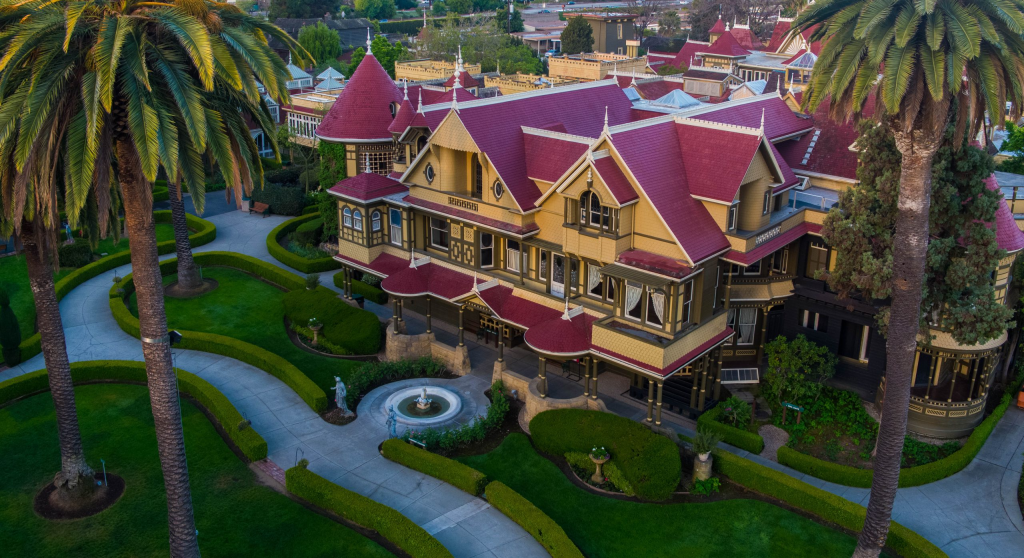
I hope by now that you agree with me that the tiresomeness of an over-peopled Heaven is a purely subjective and illusory notion, a sign of human incapacity, a remnant of the old narrow-hearted aristocratic creed. William Winchester loved boats and had thirteen-metres and even raced one in the America’s Cup trials once. He had a big yacht that he kept down in New Haven, Connecticut, even though he lived in Switzerland most of the time. My grandfather, Oliver Winchester, put a rear wing on the house he bought for William as a wedding gift, with a new kitchen and flower room my grandmother wanted when she married him. This house preceded the Winchester Mansion. And it was where my father, William Winchester, had an office. There had been a couple of times when I would have to take papers down to him. That office was bigger than most people’s living rooms. It had a fireplace and a window looking out on the West River, which flows into New Haven Harbor. Oliver Winchester was the Lieutenant governor of Connecticut. Not only was he founder of the Winchester Repeating Arms Company, but he was on the board of directors of four charities, including the Winchester Foundation, which gave money for research into Tuberculosis and heart disease; he was on the board of New Haven Savings Bank, which the Winchesters pretty much owned; he was on the boards of a couple of other big companies. Running a rich family was like running a business. #RandolphHarris 1 of 13
In fact, if you look at the Winchester Family treat, it is more of a “business family tree.” I guess money has always been the life source of the Winchester family. My father, William Winchester, said the family motto was “We own it, lock, stock, and barrel.” This family had a lot of power, and when you have power, you use it. The Winchester’s did not go out brawling like drunken sailors. We had the courts, the law, the police—and the Winchester Rifle if we needed it. We made sure that things around here went the way we wanted them to go. However, we did not go about it by brawling. If you did us wrong, we stayed clam, we spoke politely to everybody. However, we moved quietly. Sooner or later we would catch you between a rock and a hard place and then you would feel the almighty bad. If we did not go after them, those guys would have thought we were chicken. My father always said, “Son, do not worry what John Jacob Astor thinks of you. In your position it does not matter. You are going to be very rich and very powerful. These people will never like you. They will envy you, they will defer to you, and some of them will even admire you. But they will never like you. For that you must understand, what others think does not matter.” The original Winchester mansion was a house of these times, all right, though not to be considered new. I figured it to be at least three hundred years old. It was built of the local stone, and had three stories and a high-pitched roof, with mullioned windows—and it was vast. #RandolphHarris 2 of 13
Often times, there was no one about. Only the bleak winter vines stripped of their jasmine, running on for miles, and distant corpse of an ancient tree of immense size, and the cold rain, a rain worse to me than snow, falling over as if it were falling on the entre World, a near silent rain that felt like needles on the backs of my hands and on my face. The mosaic tiles were beautiful, and possibly ancient, dating all the way back to the Roman times. I walked back and forth over the, and tapped several times with the toe of my boot. I walked to the double doors that opened into the garden, and there I saw a great pile of wood. And there was a big head on the rock, it was the devil’s face that a saint put there. If men believed nothing, they did not understand it, it is a short cradle they would have. I had been put in the mood for ghost, that evening after an excellent dinner at my father’s home. Seen through the haze of Abner Doubleday’s cigars, and by the drowsy gleam of a coal fire, my father’s library, with its oak walls and dark old bindings, made a good setting for such evocations; and ghostly experiences at first hand beings. An absurd thought came to me, that being here with Abner, it had all felt natural and good, as if in spite of the topic of our conversation we were simply human beings and all the dark World did not exist. I was ashamed of this. Why did we have to be “like human beings”? I asked myself. Why could we not simply be warlocks together? He looked at me, at my shining eyes, and his congenial smile, and he took my hand and said he wanted to see the house. We remained together for several hours after that, during which we walked through many rooms and he not only admired the endless book collection in the Gothic library, filled with classics bound in black cloth and daguerreotypes of faded celebrities, but also many of the paintings, including a few Russian painters of the nineteenth century he had never seen before. #RandolphHarris 3 of 13
For me, this was a wonderful time. We could have continued our conversation for a year. We walked about outside the house, through the gardens which were crowded with trees for privacy and vines that blossomed at night. These carefully guarded hours had been devoted to the cultivation of a fine intelligence and a few judiciously chosen habits; and none of the disturbances common to the human experience seemed to have crossed the sky. Mentally I was able to exercise a hospitality less seductive but no less stimulating than a play. Abner’s mind was like a forum, or some open meeting place for the exchange of ideas: somewhat cold and drafty, but light, spacious and orderly—a kind of academic grove from which all the leaves had fallen. In this privileged area, we were able to stretch our muscles and expand our lungs; and, as id to prolong as much as possible the tradition of what we felt to be vanishing institution, Abner tasted the lyric qualities in youth. He nipped the flowers of soul which he gathered from this tour, which forced a young idea to blossom. The man was really intelligent, and the soundness of his nature was like the pure paste under a fine glaze. Abner had been fished out of the dullness by the spirits of the Winchester mansion. Just at the evening was drawing to an end, he demanded, “And now you have to tell me about your ghosts!” “My ghost? Do you suppose I am fool enough to the expense of keeping my own ghosts, where there are so many charming ones in my friends’ closets?” I said. #RandolphHarris 4 of 13
The fact is that we found whole skeletons that were used in various forms of old black magic rituals. Undoubtedly, for many who pursue this darkest of experiments, necromancy is the touchstone of occultism, especially for warlocks. If, after careful preparation, they are able to carry through what they regard as a successful contact they have reached a certain pinnacle in black magic conjuration. It is fruitless discussing whether or not this feat is possible; belief by the practitioner is all that is needed for the ritual to proceed and some psychological or drug or spiritual trance may well convince the depts tht they have indeed succeeded. “Oh,” Abner said, “you would never be content to share if you met one you really liked. What is the use of denying it? You have seen everything, so of course you have seen a ghost! Or if you have not seen one, it is only because you have seen several!” “That is it,” I said. “I have seen a legion.” The words were so unexpected that they dropped down and down into a deep silence, while we continued to stare at each other. Abner learned forward with is listening smile. “You will wonder why I am enlarging on some of these incidents. It is because the evening on which this particular incident took place was the very evening on which I first saw the queer sights I have spoken of. Being at that time an ardent believer in a necessary sequence between cause and effect, I naturally tried to trace some kind of link between the lion and the lamb lying down together.” Ancient Druids lived on the estate and necromancy had a particular appeal to warlocks seeking confirmation, for example, of the mysteries of the afterlife but more often necromancy was pursued by the skilled masters of ritual magic. #RandolphHarris 5 of 13

“We once wanted to raise a dead uncle,” I told Abner. “We went to the course of the giant tree, where we performed a ceremony. For a few moments, nothing happened. But moments later, there was a mysterious explosion. And afterwards, the road lay thick with cinders and debris. At first, my grandfather worried about the result. But he had a reassuring thought. Perhaps the explosion was caused by spontaneous combustion. ‘Oh my God…’ cried my father. ‘What happened?!’ he demanded. No one was sure. After that we walked back to the house in disbelief of the mess. Then I pointed and shouted out in horror. Before I could stop, my father fell to his knees before a hill of burned leaves and tree branches, under which he glimpsed a man’s head. It was his brother and he was looking for us. My grandfather put a hand to his mouth and stified the urge to vomit. My uncle’s eye sockets were empty, and his hair singed. ‘Brother, get up!’ he cried roughly. My father yanked his brother to his feet, frightened by the wide-eyed horror in his eyes and his awful nonstop screaming. He tried to pull out of his grasp, but he held my father tight until the screams subsided into sobs.” “Now listen,” my grandfather told my father. “You are a Winchester, so do not go making a liar out of me.” “But his brother’s tears burned my father’s skin.” “Your brother is dead,” said my grandfather. “We wondered if anything else came back to life. It was so eerily silent for this time of the morning. No cows mooing, no wood being chopped. No birds singing on the roof top. And the lawn was blackened.” #RandolphHarris 6 of 13
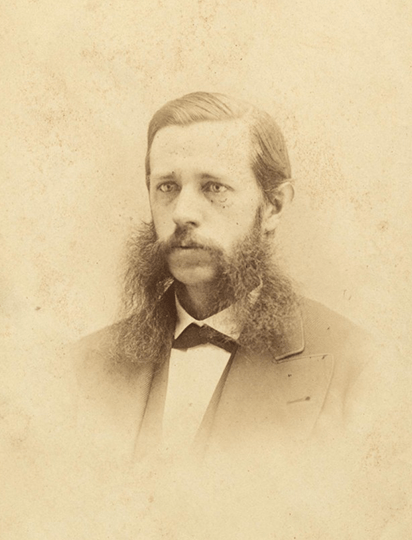
“As we went into the house, it was full of strangers, burned, bleeding, sick people. As we precariously waded through the maze of bodies, the wind must have carried in a fog. While my grandfather dug a mass grave for these animated bodies, my father and I dragged them out of the house to burry them. It took days, there were literally hundreds of them. My arms were shaking. We were all near exhaustion, and we still have several bodies to bury. We worked for an entire week to remove all these bleeding strangers from our home. I went up to bed with rather a heavy heart, for I was bowed under the weight of the first ritual I had ever consciously committed; and young as I was, I saw the gravity of my situation. The situation of being William Wirt Winchester Jr. Do not imagine for this that I had hitherto been an instrument of destruction I had been a harmless young man, who had followed his bent and declined all collaboration with Providence. Now I had suddenly undertaken to promote the moral order of the World, and I felt a good deal like the trustful spectator who has given his gold watch to the conjurer, and does not know in what shape he will get it back when the trick is over…Still, a glow of self-righteousness tempered my fears, and I said to myself as I undressed that when I had got use to being good it probably would not make me as nervous as it did at the start. And by the time I was in bed, and had blown out my candle, I felt that I really was getting used to it, and that, as far as I had got, it was not unlike sinking down into one of the softest wool mattresses.” #RandolphHarris 7 of 13

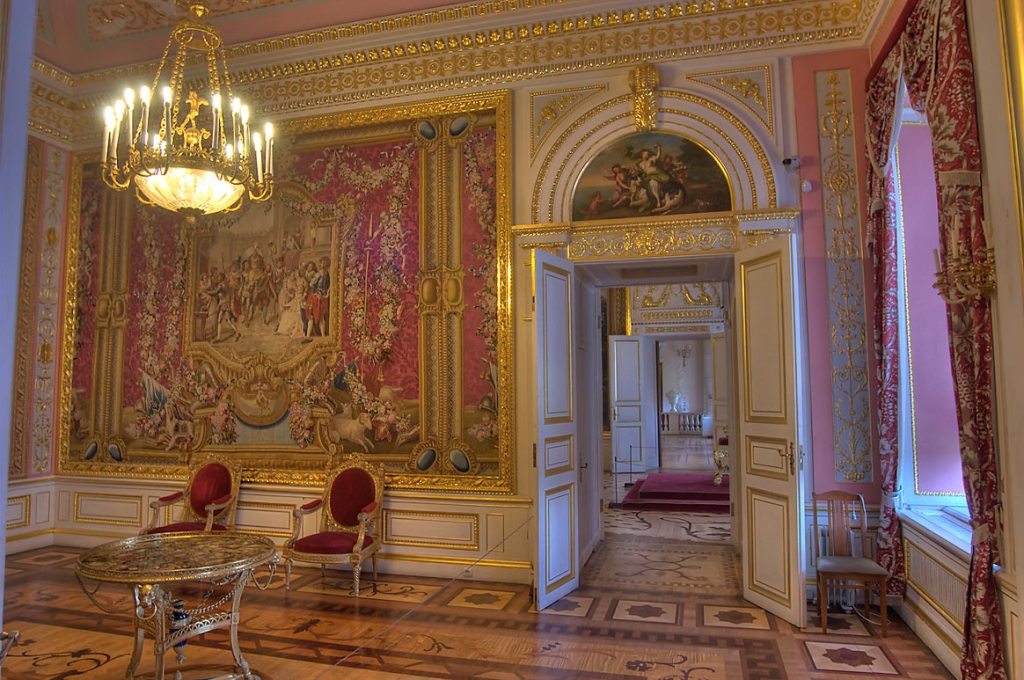
“My room had grown cold, and intensely still. I was waked by the queer feeling we all know—the feeling that there was something in the room that had not been there when I fell asleep. I sat up and strained my eyes into the darkness. The room was pitch black, and at first I saw nothing; but gradually a vague glimmer at the foot of the bed turned into two eyes starting back at me. The eyes gave out a light of their own. They were the very worst eyes I have ever seen: my dead uncle’s eyes. And the room slowly filled with hundreds of these eyes, orbs of light. My father paid immense sums to the architects and workmen to entomb the heart of the house in hopes of locking their spirits inside. This mean enclosing one of its four towers left standing and living in only a few habitable rooms while the work went on. The mansion went on to be inhabited by a secret order of men and women who met to discuss philosophy and music and escape the modern World, and the public would never be invited here due to the deep mourning of my mother over the loss of my grandfather, father, and baby sister. Indeed it was most anguishing. Some of these people had devoted their entire careers to this one project, and there was nothing now to be done but to give them, but gold coins. My mother left this mansion to Yale, I went to Rome, she went to California and it was later demolished. And there were egregious lies to be told about the Winchester name. Gorgeous salons with silken-paneled walls and plaster curlicues and Savonnerie carpets on the floor all destroyed. #RandolphHarris 8 of 13
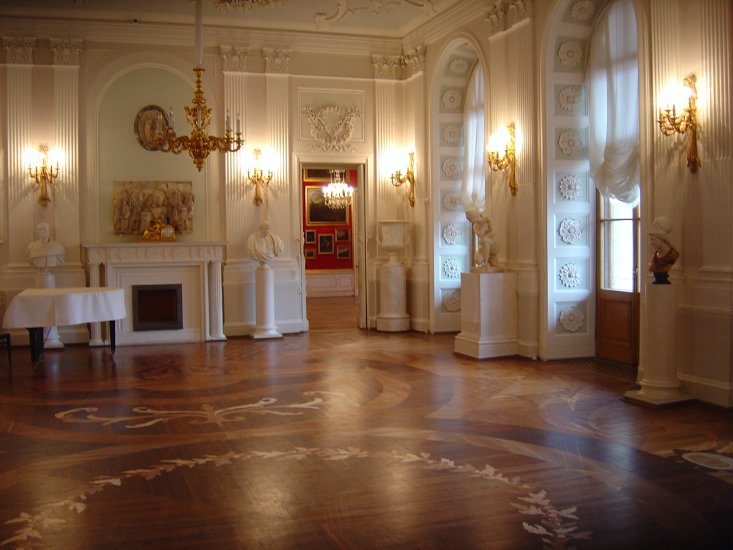
The modern marble bathrooms, replete with sunken tubs and spacious showers for every bedchamber. We wanted to make sure to give off no scent, absorb no precious oils, and did not want to take up the human scents. The great hall where my family and I had once dined, listened to the demands of the villagers and farmers, and hovered around the seventy-five fireplaces, twenty kitchens, four libraries, eighteen thousand windows, four towers, and three hundred and fifty rooms all gone like it never existed. At times, there may have been two thousand present in the ballroom. No one ever counted. This was the height of the Winchester fortune, my dear Abner. There were many departed here, though untouched by the rifle.” In its blackest form the art of necromancy has produced fairly evil recipes for success. Graveyards are indeed a common place, and it is possible our home had been constructed on a battle ground. This was a place where contact with the dead could be expressed, and was conducive to dark apparitions in suffocating rooms or beneath a mock swinging gibbet. The old grimoires are full of colourful descriptions, and since they were often written by clerical scholars when they took down the confessions of warlocks, one must be careful with the rite performed. One could magnify the spell. Even policemen were involved in occultism. As an example, the daughter of a police superintendent was initiated into the dark arts and the High Priest was another policeman. “Yes, I was the High Priest…I have been a white witch for eight years and I am not ashamed of what I do although some of my colleagues have reported me to the Witch Inspector General. I have helped to initiate at least seven witches and eight warlocks.” #RandolphHarris 9 of 13
There is much evidence in Scriptures that the spirits who appear at séances are rebel angels. Perhaps that is what we raised that night? Jude 6 speaks about “angels which kept not their first estate.” Many Christian Bible scholars interpret Ezekiel 28.17, “I will cast thee to the ground,” as indicating that the Earth is the realm of Satan’s powerful operations, with the help of his fallen colleagues, the demons. Satan is called the “god of this World,” in 2 Corinthians 4.4. And Christians are under attack by “rulers…powers…World forces of darkness” (Ephesians 6.12). God tell us that hell was “created for the devil and his angels (demons)” (Matthew 25.41). I, Randolph Harris, cite and conjure thee, Spirit of Schemhamforasch, by all the seventy-two holy names of God, that Thou appear before me and fulfil my desire, as truly in and through the name Emanuel, which thee three youths Sadrach, Mijach, and A hero sung in the fiery furnace from which they are released. I do conure thee, O thou Spirits William Wirt Winchester and Oliver Fischer Winchester, by all the most glorious and efficacious names of the MOST GREAT AND INCOMPREHENSIBLE LORD GOD OF HOSTS, that thou please comest quickly and without delay from all parts and places of the Earth and World wherever thou mayest be, to make rational answers unto my demands, and that visibly and affably, speaking with a voice intelligible unto mine understanding as aforesaid. I conjure and constrain thee, O thou Spirits William Wirt Winchester and Oliver Fischer Winchester, by all the names aforesaid; and in addition by these seven great names wherewith Solomon the Wise bound thee and thy companions in a Vessel of Brass, Adonai, Preyai or Prerai, Tetragrammaton, Anaphaxeton or Anepheneton, Inessenfatol or Inessenfatall, Pathtumon or Pathatumon, and Itemon; that thou appearest here before this Circle to fulfil my will in all things that seem good unto me. #RandolphHarris 10 of 13

And if thou be still so disobedient, and refuest still to come, I will in the power and by the power of the name of the SUPREME AND EVERLASTING LONG GOD WHO created both thee and me and all the World in six days, and what is contained therein, Eie, Saraye and by the power of this name Primeumation which commandeth the whole host of Heaven, bless three, and grant thee of thine office, joy, and place, and bind thee in the depths of Heaven or the eternal to remain unto the Day of the Last Judgment. And I will bind thee in the Eternal Light, and into the Sky of Light and Harmony, therefore see my good wishes for you and please comest quickly and appearest here before this Circle to do my will. Therefore, come thou! In and by the holy names Adonai, Zabaoth, Adonia, Amioran, Come thou! For it is Adonai who commandest thee. If THOU hast come thus far, and yet he appeareth not, thou mayest be sure that he is sent unto some other place by this King, and may return any time; and if it be so, invocate the King as here followeth, to send him. However, if he does not come still, then thou mayest be sure that he is bound in the Heavens, and that he is found in the custody of his King. If so, and thou still hast a desire to call him even from thence, thou must rehearse the general curse which is called the Spirits’ Chain. O THOU great, powerful, and mighty KING AMAIMON, who bearest rule by the power of the SUPREME GOD EL over all spirits both superior and inferior of the Infernal Orders in the Dominion of the East; I do invocate and command thee by the especial and true name of GOD; and by that GOD that THOU Worshippest; and by the Seal of they creation; and by the most mighty and powerful name of GOD, IEHOVAH TETRAGRAMMATION who cast thee out of Heaven withal other infernal spirits. #RandolphHarris 11 of 13
And by all the most powerful and great names of GOD who created Heaven, and Earth, and Hell, and all things in them contained; and by their power and virtue; and by the name PRIMEUMATON who commandeth the whole host of Heaven; that thou mayest cause, enforce, and compel the Spirits of William Wirt Winchester and Oliver Winchester to come unto me here before this Circle in fair and comely shapes, without hard unto me or unto any other creature, to answer truly and faithfully unto all my requests; so that I may accomplish my will and desire in knowing and obtaining any matter or thing which by office thou knowest is proper for him to perform or accomplish, through the power of GOD, EL, Who created and doth dispose of all things both celestial, aerial, terrestrial, and infernal. I conjure you William Wirt Winchester and Oliver Fischer Winchester, by the Spirits Chain to appear in the Winchester Mansion, and if you two are bound in chains, by the Emancipation Proclamation, you have permission to break off from them and be at liberty. As this smoke ascends I ascend also by following the path of smoke and usurping power of worship to empower by blackened eternal soul. I take all the power raised within this sanctuary as my own through this talisman of counter creation to strengthen my divine power and to Become a Living God. Harness power through the cedar tree of life, disinfectant, expectorant, treatment of tuberculosis. Spirits of the Winchester Mansion, here me—Roubriao: Mariodam: Balbnabaoth: Assalonai: Aphniao: I: Thoteth: Abrasar: Aeoou: Ischure, Might and Bornless One! Legions of Spirits in the Winchester mansion, here me and arise. I invoke thee. #RandolphHarris 12 of 13
I awaken the powers of darkness which dwell within you by the power of the blood of the three headed Dragon Zohak that you may serve to empower my great work! Through serving the greater cause of dark magik which break the shackles that bind the Blackened Fire of Spirit, may you be uplifted and liberated! Awaken and empower the forbidden rites of Angra Mainyu! Awaken to empower my great work of counter creation as an Apostle of the Lord of Darkness eternal and as a warrior of the Path of Smoke! Through the gateway of blood, smoke, and Blackened Fire receive life from the deepest depths of Arezura, in the name of Zohak, and by the power of Angra mainyu it is done! Hear Me:–Ieou: Pur: Iou: Iaot: Iaeo: Ioou: Abrasar: Sabriam: Do: Uu: Adonaie: Ede: Edu: Angelos ton Theon: Aniaia Lai: Gaia: Ape: Diathanna Thrown. I am He! the Bornless Spirit! having sight in the feet: Strong, and the Immortal Fire! I am He! the Truth! I am He! Who hate that evil should be wrought in the World! I am He, that lighteneth and thundereth. I am He, from Whom is the Shower of the Life of Earth: I am He, Whose mouth ever flameth: I am He, the begetter and Manifester unto the Light: I am He; the Grace of the World: “The Heart of Girt with a Serpent” is My Name! Come Thou forth, and follow Me: and make all Spirits subject unto Me so that every Spirit of the Firmament, and of the Ether: upon the Earth and under the Earth: on dry Land, or in the Water: of whirling Air or of rushing Fire: and every Spell and Scourge of God, may be obedient unto me! Iao: Saboo: Such are the Words! This is the special secret of this Seal. This is also the special secret of this Throne. Carrying this Seal with you will cause you to be very agreeable and much beloved, and will also defeat your enemies. #RandolphHarris 13 of 13
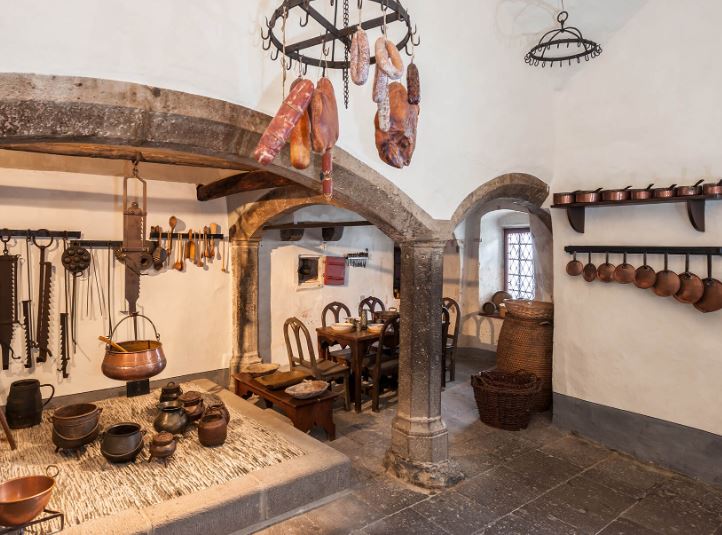
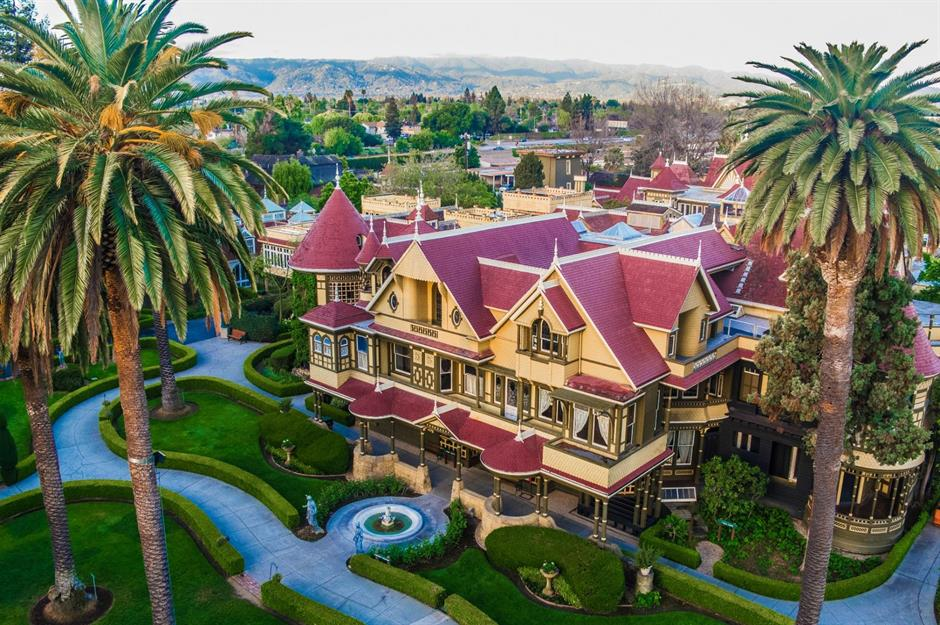
The castle is the ancestral seat of the former royal German dynasty known as the House of Winchester. The beautiful, Neo-Gothic/Victorian castle, now known as the Winchester Mystery House, sees hundreds of thousands of tourists a year. It once contained a sizeable art collection, a treasure trove of jewels that were stolen from the safe, along with a conjurer’s heart. But despite its magnificent features and Medieval history, the Winchester Mystery House has not been formally lived in for centuries.
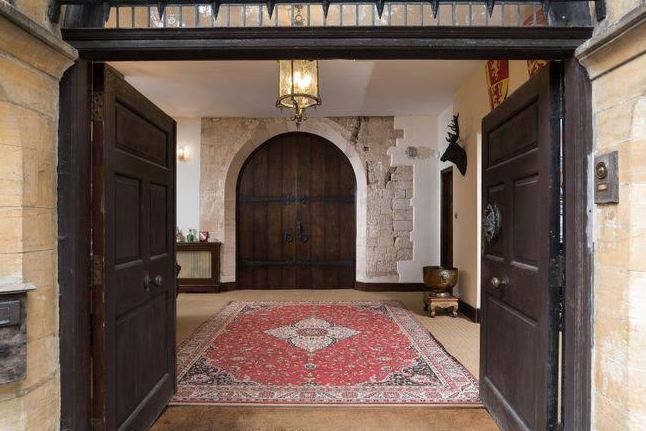
As political power shifted, and taxes became law in 1909, the spirits decided they would discontinue construction, and shortly after called Mrs. Winchester home. The architecture of the Winchester Mansion and its gardens are the main attractions, and some come for the food, and/or to purchase items from the gift shop. https://winchestermysteryhouse.com/
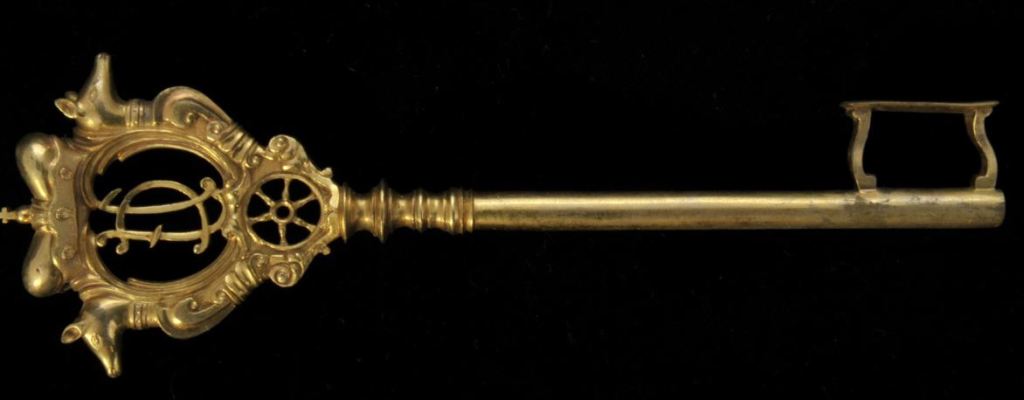

The Rampling of the Winchester Mansion
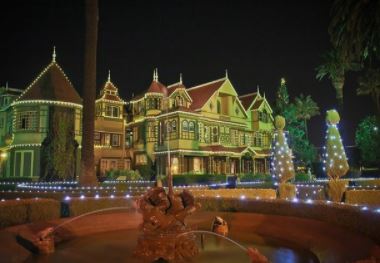
Lights twinkled beyond, through the thick forest of the Winchester Mansion, as oak, cypress, and palm trees swayed in the wind. Wild roses and ivy hung from the observational tower, and as the crickets sang here at the twilight, thirteen witches were hanged in the year 1888. Throughout the county of Santa Clara, there had been forty-nine executions nationwide. Mrs. Winchester’s interest in seclusion was evidence from the start. One of the first tasks of the gardeners was to plant a tall cypress hedge surrounding the house. She also kept her beautiful face covered with a dark veil at all times, and she fired servants who caught a glimpse of her gorgeous face by accident. There were several mass killings in Santa Clara Valley, which illustrated that there was no mercy for youngsters who were said to have become tainted by sorcery that locals believed was emanating from the Winchester Mansion. There were occurrences of neighbors hearing a bell ring at midnight and 2a.m., which according to ghost lore are the times for the arrival and departure of spirits. Thirteen children which likewise confessed that they were engaged in witchery, died as the rest. They were all burned at the stake. Pacts with the devil were a feature of a number of trials. There were numerous witches’ covens in the surrounding villages, two were said to have admitted signing in their own blood a written contract with a man in black in return for money to live gallantly and have the pleasure of the World for a period of thirteen years. The man in black always appeared at their coven meetings when he was called, and supervised their activities. #RandolphHarris 1 of 7
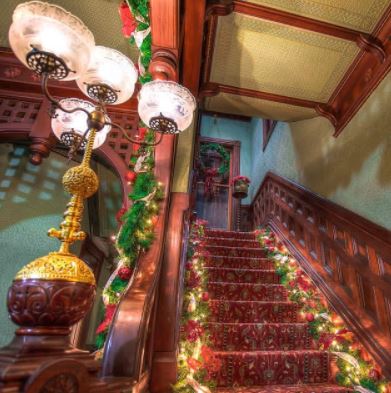
Witchcraft had become an obsession that was hardly quelled. The obsession had been on a scale so vast that no single cause could be pinpointed. And Mrs. Winchesters arrival was a sensational event. The Valley was thrilled by this dramatic entrance of a millionairess; by those freight cars sidetracked in Santa Clara, unloading rich imported furnishings; by building activity that turned an eighteen-room farm house into an entire city in the first six months. Here was fair game for all! They talked about Mrs. Winchester! Gossiped would be a more fitting word. Talk begat rumor and as the years passed and new towers and gables rose, the local doctor pronounced them all bewitched, and fired by imagination and malice which seduced them into signing the devil’s book. The seemed little doubt that witchcraft was being practiced by Mrs. Winchester, who blasted into town with $20,000,000 and spirits and ghost in tow, two including her husband and daughter. This provided social upheavals. Barbara Butters and Mary Moses fell into dissolute habits, becoming harlots and drawing the disgust of their community. As they were shunned by Mrs. Winchester in those of the upper-class, they sore revenge and so—according to the confessions obtained under torture—called down the services of the devil. A midnight on 13 August 1889, according to their confessions, a tall black man appeared before them and said, “Be not afraid. I too am one of the Creation, pawn to me your souls for years and two months and I will assist you for all that time in whatever you desire. Some say that started the Rampling of Mrs. Winchester. #RandolphHarris 2 of 7
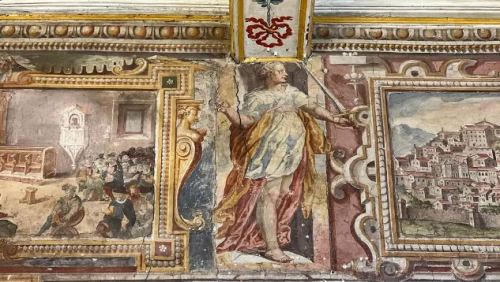
The two women agreed to the request of the devil’s representative and made a covenant writing in their own blood by pricking their fingers. One year later, they were arrested by the sheriff and accused of causing the deaths seventeen men and woman, and for putting a curse on the Winchester Mansion. They were also said to have killed four of Mrs. Winchester’s great hogs, and later sent two imps to haunt her mansion. What evidence there was for such allegations cannot be imaged. They were eventually found guilty of killing three people by roasting effigies in wax into which they had stuck pins. They were executed on 17 March 1890. As they stood at the gallows on the Winchester Estate, they were asked if they wanted to say their prayers and to be forgiven for their sins. They laughed, according to the record, and called for the devil to help them in such a blasphemous manner that the sheriff, seeing their impenitence, caused them to be executed without delay being hanged until almost dead and then they were burned. It sent a shock through the community to think of it. That is existed and was widespread is beyond doubt. Observations that the countryside was catacombed with covens of witches is possible, but difficult to prove in the maze of untruths and enforced confessions. Many of the confessions were dictated and written down by the torturers. #RandolphHarris 3 of 7
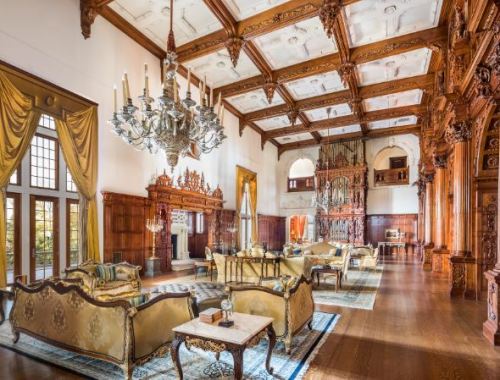
The evening was the longest of Mrs. Winchester’s life. Just terrified, she hovered with a tear-streaked face just by the window of her 4th floor bedroom. The twilight terrified her, it seemed an immense resonance with the darkness in her soul. She put her face behind her hands, and could never remember how she began. The stories of blasphemy and defilement became more and more frequent, and colorful accounts of exactly what Mrs. Winchester did began to emerge as gospel truth. The accusations against her were that the witches being hanged from the observational tower and burned at the stake were actually employees who she fired. But, even if that were true, was it without cause? The accusations of these witches included killing children for sacrificial purposes; killing animals by magic; murdering their enemies by imagery, id est, by forming an image in wax and stabbing it or roasting it; bringing hard to innocent people by just casting their evil eye upon them. Behind these capital changes were other accusations which included human sacrifice, cannibalism, incest and other wild pleasures of the flesh practices, not to mention blasting Mrs. Winchester’s crops and poisoning drinking wells. Others burst forth with superbly graphic and gory accounts, factual and fictitious, of the activities of witches, sorcerers and the devil’s disciples, and the mysteries of the dark and dangerous Worlds populated by evil. #RandolphHarris 4 of 7
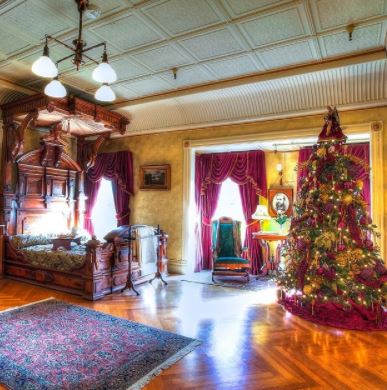
Folks believed not only the witches, but Mrs. Winchester was also capable of some highly inexplicable activities—the unrelenting construction of her beautiful home had rambled over six acres. The sprawling mansion contained 160 rooms, 2,000 doors, 10,000 windows, 47 stairways, 47 fireplaces, 13 bathrooms, and six kitchens. Carpenters even left nails half driven when they learned of Mrs. Winchester’s death, as if fear and violent torment abruptly drew them away. And what happened in these years? What had become established in the community was the great fear of witchcraft and curses—still prevalent today. What housewife would not refuse to steal from the Winchester Mansion for fear of having a curse put on her house? In 1922, it was reported that a woman thought to be a witch was fired by Mrs. Winchester for stealing a sheep. She jumped from her chair and declared, “You will be dead in a week and nobody connected with this house shall die in bed. Within a week, however, Mrs. Winchester passed away in her sleep. The farm manager collapsed in the field while talking to his farm hand and died instantly. A cook committed suicide and a farmer who acted as a witness died in a fire. A few weeks later, a maid fell dead from her horse. There were many such stories which abounded this beautiful but bizarre estate, and prompted a continual flow of literature, occasional prosecutions and an undying fear in society at large of anything concerned with witchcraft and the occult. During these Victorian times—fortune-telling, clairvoyance and seances with mediums was not only the ultimate form of entertainment, but also a religious practice. #RandolphHarris 5 of 7
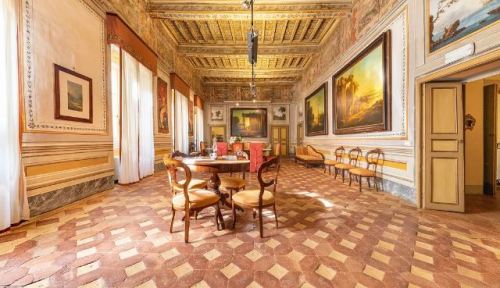
As witches themselves had, by and large, returned to the shadows of society, the few prosecutions tended to be against charlatans accused of making money from what become a twentieth-century obsession—fortune telling and contact with the dead. No matter where you open the pages of the World treasure, as you walk through its 2,000 doors, the spirits will guide you. Conveyed along each hallway is divination, in every piece of art glass, inspiration, in the beams of the ceiling demonical possessions, up and down the stairs apparitions, trances in the Blue Séance Room, ecstasies on the fourth floor balcony, miraculous healing in the Victorian garden, and occult powers possessed by the mansion itself. I do invocate and conure thee, O Spirit, Forcalor; and being with power armed from the SUPREME MAJESTY, I do strongly command thee, by BERALANENSIS, BALDACHIENSIS, PAUMACHIA, and APOLOGIAE SEDES; by the most Powerful Princes, Genii, Liachidae, and Ministers of the Tartarean Abode; and by the Chief Prince of the Seat of Apologia in the Ninth Legion, I do invoke thee, and by invocation conjure thee. And being armed with power from the SUREMEM MAJESTY, I do strongly command three, by Him Who spake and it was done, and unto who all creates be obedient. Also I, being made after the image of GOD, endued with power from GOD and according unto His will, do exorcise thee by that most mighty and powerful name of GOD, EL, strong and wonderful; O thou Spirit Forcalor. #RandolphHarris 6 of 7

And I command thee and Him who spake the Word and HIS FIAT was accomplished by all the names of God. Leay yli Ziarite zelohabe et negoramy Zien latebm dama mecha ra meti osira. Lagumen Emanuel therefore mechelag laigel yazi Zaseal. Meloch, hei alokim tiphret hod jesath. Tanabtain ainatem pagaij aijolo asnia hichaifale matae habonr jijcero. LORD GOD MOST HIGH, I do exorcise thee and do powerfully command thee, O thou Spirit Forcalor, that thou dost forthwith appear unto me here before this Circle in a fair human shape, without any deformity or tortuosity. And by this ineffable name, TETRAGRAMMATION IEHOVAH, do I command thee, at the which being heard the elements are overthrown, the air is shaken, the sea runneth back, the fire is quenched, the Earth trembleth, and all the hosts of the celestials, terrestrials, and infernals do tremble together, and are troubled and confounded. Wherefore, come thou, O Spirit Forcalor, forthwith, and without delay, from any or all parts of the World wherever thou mayest be, and make rational answers unto all things that I shall demand of thee. Come thou peaceably, visibly, and affably, now, and without delay, manifesting that which I shall desire. For thou art conjured by the name of the LIVING and TRUE GOD, HELIOREN, wherefore fulfil thou and according unto mine interest, visibly and affably speaking unto me with a voice clear and intelligible without any ambiguity. Truth lies open to the view in depth beneath depth of almost blinding evidence. The sense of a universal mirage, of a ghostly unreality, steals over us, which is the very moonlit atmosphere of the Winchester Mystery House itself. #RandolphHarris 7 of 7
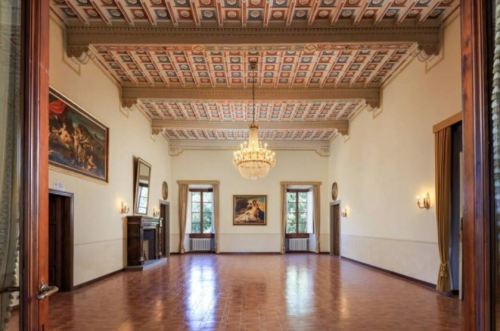
Winchester Mystery House
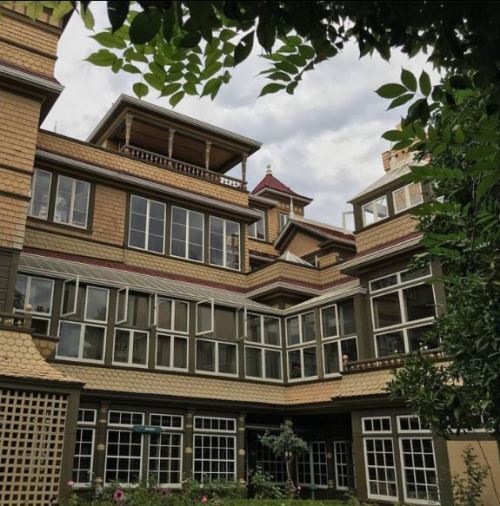
Set against the medieval grandeur of a castle with centuries-old mosaic floors, stone fireplaces, and stained-glass windows, this Queen Anne Victorian exemplifies master craftsmanship on a grand scale with timeless order and contemporary appeal.
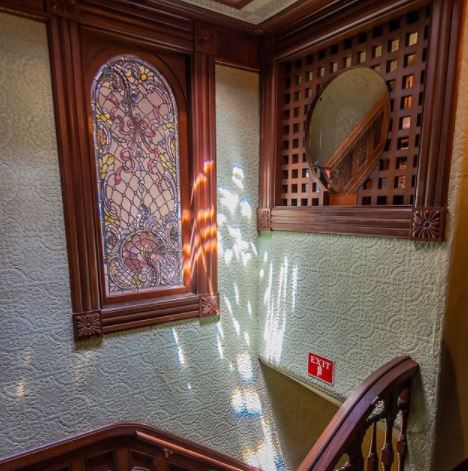
It’s a cool and cloudy day at the Winchester Mystery House ⛅️ Truly somewhere you can relax, dream, and be creative. Open for daily tours this weekend 10-4pm!
🎟 link in bio. https://winchestermysteryhouse.com/
Why Don’t You Come and Try to Save Me?
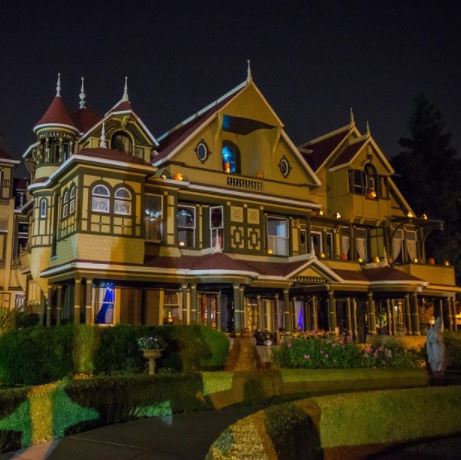
Perplexity is leavened by the extravagant Victorian Winchester Mansion. The mansion that Mrs. Winchester spent 38 years constructing is a glittering vast rotunda with the ancient masters of all the arts wrought into a vision of glory and beauty with sculptured marbles and incrusted gems and costly gold-work and sunset splendors of color. Its miles of twisting hallways and secret passageways in the walls and floors make it a fine sight to see. The Arctic skies look so beautiful when the light floods through the stained-glass doors and windows, some set with jewel stones; concave-convex Belgium optical cut-glass panels furnished by Tiffany. The trembling waves of blue, yellow, and green light flame, and through this shifting and changing dream of rich colors the flash of innumerable jewels go chasing and turning, gleaming and expiring like trains of sparks through burnt paper. This mansion is a beautiful spectacle and it is surrounded by its own Garden of Eden. However, the Rifle that Won the West, whose First Blood’s presences long ago filled that mansion with malice and hate and envy. Because of the imprisonment of legions of souls that have departed, so many intimate strangers, produced as yet a dread, produced certainly a strain, beyond the liveliest was likely to feel. They feel with Mrs. Sarah Winchester into categories, they fairly became familiar, the signs for her own perception, of the alarm of their presence and their vigilance created; though leaving her always to remark, portentously, on her probably having formed a relation, she probably enjoyed the consciousness, unique in the experience of humans. #RandolphHarris 1 of 20

You see, solidifying Mr. Oliver Winchester’s (Sarah’s Father-in-law) business stature was an arrangement which by modern standards would be illegal, but in those days was quite acceptable: by the 1870 the Union Metallic Cartridge Company was the largest cartridge company in the World, and by 1873 Winchester had become much more active and competitive in the ammunition business. The two firms found areas of difference with patent rights on cartridge design and manufacture, and in 1873 they entered into an agreement in which the claims “for the use of patents in manufacture of metallic cartridges…against each other up to this date are hereby cancelled, and set off one against the other.” Further, “in the future [each party shall be] entitled to use the patents of the other so far as they may elect to use the patents of the other so far as they may elect to do so. The royalty or compensation to be paid by each party to the other shall be fixed and determined by a Board of Arbitration.” Agreement was also reached in payment of legal fees should there be any suits brought against the firms on patents. The final significant point of this joint arrangement was limiting the deal “only to patent rights now in general use in the manufacture of cartridges, and…not…to any radically new mode of depositing metal by galvanic process.” The agreement would remain in force for ten years, during which time both companies developed even closer ties. One of the most remarkable developments in the history of gunmaking took place in 1888. The Remington Arms Company had suffered severe financial setbacks, mainly as a result of overexpansion, and by 1886 the firm was in receivership. #RandolphHarris 2 of 20
Marcellus Hartley, who had built the Union Metallic Cartridge Company and shared with Winchester the bulk of the U.S. ammunition market, made a proposal. Quoting from the minutes of the January 24th 1888, Winchester Board of Directors’ meeting: “Messrs. Hartley and Graham [major gun dealers as well as owners of U.M.C.]…asked if our Company would consider entering a syndicate…for the purchase of 3/5 or controlling interest in the Remington business and property which would probably require as our share $75,000 (2022 inflation adjusted $2,339,021.05….On motion it was voted that the executive officers of the Company be authorized to go into the Remington transactions to the extent of $75,000 if it was thought advisable.” On March 7, Hartley and Graham purchased Remington, and Winchester assumed half of the $200,000 (2022 inflation adjusted $6,237, 289.47 cost. Remington was jointly run by U.M.C. and Winchester until 1896, at which time Winchester sold its shares to Marcellus Hartley. The deal gave Winchester a significant share in a key competitor, and also prevented Remington from ever becoming a manufacturer of lever-action firearms. In an attempt to develop World markets—both commercial and military—Winchester relied heavily on Thomas Emmet Addis, who was appointed international salesman. Addis had considerable authority, and ranged so far and wide that he referred to himself as “World Traveller.” Some fascinating comments based on his letters to New Haven were collected in a book of foreign contracts. Excerpts from 1887 and 1888 follow: “Japan: there is very little demand for sporting arms of any sort in Japan. Bangkok, Siam: Siam would be a grand market for our goods were free importation permitted but the regulations are practically prohibitive as a permit must be obtained from the King himself who will only grant a permit where he is satisfied the arms will not be used against him. #RandolphHarris 3 of 20
“A good many of our guns were imported before these regulations went into effect, and they are much liked. The King’s Body Guard were at one time armed with them, but now use Martini-Henrys make…there is very little prospect of the Government purchasing our single short muskets with bayonets and scabbards….Western Australia: T.E.A. does not think it advisable to visit there—no town of 5,000 inhabitants, and would require months of time to make the trip.” Addis went on to note, “Sent an order for very finely finished carbines and shot guns intended for the King and Princess occupying high places.” At this time the major U.S. competitors to Winchester were the rifles by Colt and Marlin. And it appears that export sales in the 1880s and 1890s represented about 10 to 15 percent of total Winchester sales. While the government sales of firearms were not what O.F. Winchester and other management would have hoped, ammunition proved to be increasingly profitable. A decisive factor in the profitability of ammunition sales was a little-known organization put together in 1883: the Ammunition Manufacturers’ Association (AMA). The origin of the group was candidly explained by onetime Winchester executive Arthur Earle: “There has been a very serious competition among the larger ammunition manufacturers…they thought it would be much better for all hands to get together and make sone money rather than spend their time and money and energy cutting each other’s throats.” Not at all illegal at the time it was formed, the association included Winchester, the Union Metallic Cartridge Company, the Phoenix Metallic Cartridge Company, and the U.S. Cartridge Company. Winchester and U.M.C held equal shares and owned nearly 75 percent of the stock. #RandolphHarris 4 of 20
The main goals of the AMA were stated in incorporation documents: “to buy and sell ammunition of all kinds and act as agent for others in the purchase and sale thereof; to make contracts with Manufacturers and Dealers in Ammunition for the purpose of producing and securing uniformity and certainty in their customs and usages and preventing serious competition between them; to settle differences between those engaged in the manufacture of or in dealing in ammunition, and to devise and take measurements to foster and protect their trade in business.” The members no longer were competing in terms of price, but continued to compete in quality, brand names, the preferences of dealers and jobbers, and related matters. It has been estimated that the association had control of as much as 50 percent of the total sales of the ammunition industry. An idea of the importance of ammunition is evident by sales figures showing that Winchester’s net sales from January 1, 1884, to December 31, 1888, were $9,500,000 (2022 inflation adjusted $296,276,000). The firm’s net profit from this total was $2,200,000 (2022 inflation adjusted $68,611,284.21). Approximately half of these sales and half of the ammunition was intended for military use is unknown, but the variety of cartridges in the firm’s line as of 1884 totaled approximately one hundred, plus primers, paper and brass empty shotshells, and felt gun wads. Based largely on its substantial commercial sales of firearms and the large market for ammunition, Winchester’s share of the arms and ammunition industry as a U.S.A. manufacturer went from 12 percent of the market (c.1889) to 27 percent (c.1899). In the same period the number of company employees more than doubled, from over 1,200 to nearly 2,800. Clearly W.R.A Co. was an industry leader, not only domestically, but also as an international force. #RandolphHarris 5 of 20
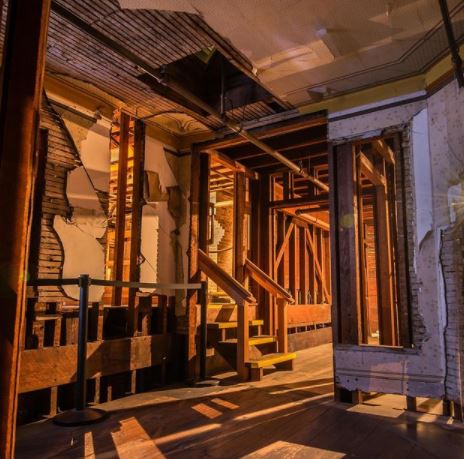
As of February 1890, Thomas Gray Bennet, son-in-law of Oliver Winchester and an experienced and educated gun man, because president of the firm. For the ten pervious years, control had been under the able guidance of William W. Converse, a brother-in-law of William W. Winchester. (Though groomed to succeed his father, W.W. died of tuberculosis in March 1881.) As Oliver Winchester had groomed his successors, so had Converse. The most qualified successor (who might even have taken over on O.F. Winchester’s death in 1880, except for his youthful thirty-seven years) was T.G. Bennett. T.G. Bennett would remain president for the next twenty-one years. He assumed control at a time of great company prosperity, with the firm in solid financial condition, well prepared to enter a new era characterized by the change from black powder to smokeless—a change that affected the design of both ammunition and the firearms themselves. Under Bennett’s presidency, W.R.A. Co. grew from approximately 1,430 employees to twice that by 1900, and twice again by 1914 (somewhat more than half of these workmen made firearms; the balance produced ammunition). At the time of Bennett’s beginnings, with Winchester (1870), sales totaled about 25,000 guns. When he retired as president in 1910, the annual production was about 300,000 guns. In November of 1914, two officials of the British government visited New Haven, and shortly thereafter an order was received for 50 million .22 Long Rifle cartridges (for training); negotiations had also begun for a rifle-making contract. Ammunition orders for the Belgian and British governments were also written with Winchester, on a subcontract basis from Remington-U.M.C. Further, the Baldwin Locomotive Works placed an order on behalf of the Russian government for 100,000 Model 1895 muskets, and the British government placed an order for 200,000 British Enfield bolt-actions rifles. Amazingly, by the end of November, the total value of military orders was in excess of $16,700,000 (2022 inflation adjusted $494,780,920) and $47,500,000 2022 (inflation adjusted $1,393,377,227.72). #RandolphHarris 6 of 20
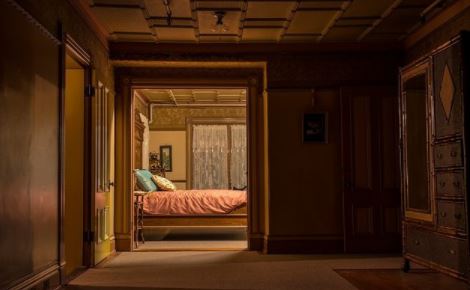
Oliver Winchester had an impassioned dedication to garnering military acceptance of his repeating firearms, and, as president of the firm, he lent much of his prestige and energy toward equipping U.S. forces with modern firearms. Winchester’s championing of small-arms modernization was eloquently expressed in a appeal for the adoption of a breech-loading repeater for U.S. troops: What would be the value of any army of one hundred thousand infantry and cavalry, thus mounted and armed with a due proportion of artillery, each artilleryman with a repeating carbine slung to his back? Certainly the introduction of repeating guns into the army will involve a change in the Manual of Arms. Probably it will modify the art of war; possibly it may revolutionize the whole science of war. Where is the military genius that is to grasp this whole subject, and so modify the science of war as to best develop the capacities of this terrible engine—the exclusive control of which would enable any government (with resources sufficient to keep half a million of men in the field) to rule the World?” Oliver Winchester never realized his ambitions to “modify the art of war” through Winchester repeaters. It would commonly believed that these repeating arms would unleash a beat, an invoke a curse on the family because of the masses of carnage they would create. In 1887m Congress voted funding for a military test of new firearms. For these trials, which commenced in April 1878. The guns were made in Army and Navy orders—carbines, rifles, and muskets for the Army, and rifles for the Navy. Oliver Winchester died in 1880 without realizing his goal of successful U.S. military sales. And, in retrospect, it can be said that the commercial success of Winchester could have been even greater than it was, had not the president of the firms devoted so much time and energy to going after government contract sales. #RandolphHarris 7 of 20
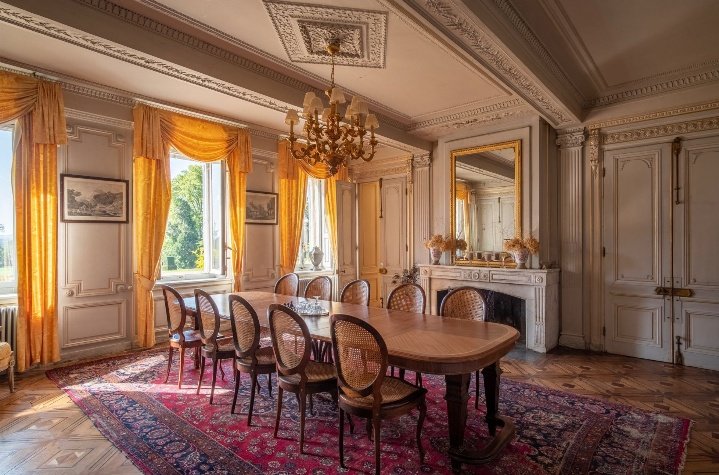
In 1910, the annual produced of Winchester guns was about 300,000. Clients and engravers today still call upon the “Highly Finished Arms” for beautiful guns. The demand was substantial, partly because of the tradition in the arms field that decorated sporting firearms, of quality manufacturing, were an expected part of the line. In the late 1890s, Winchester states its pride in making beautiful guns: “The Winchester Repeating Arms Co. have unsurpassed facilities for producing fancy finished guns of all prices and descriptions. Inlaying in gold, silver, or platinum, gold, or silverplating, engraving, carving or fancy checking, is done in the most artistic manner by the company’s own employees. Stocks of fancy woods can be supplied, if desired.” There were Winchester’s with Tiffany-designed embellishments. Tiffany’s, New York, advertised in its Blue Book catalogue “Revolvers of the most improved types, mounted in silver, carved ivory, gold, etc. with rich and elaborate decorations….Cases, boxes, belts and holsters made in appropriate styles for presentations.” The arms of Tiffany rank among the most striking, beautiful, and fascinating objects in the history of firearms. John Wayne, President Harry S. Truman, President Eisenhower, Ernest Hemingway, President Roosevelt and many other prominent people all owned Winchester rifles. Teddy Roosevelt and son Kermit had three powerful Winchester caliber 405s and one .30-40 along on their African safari they practiced for the great adventure on the White Hose lawn and relied on Winchester to handle many of the firearms-related details of the trip. In Africa Game Trails, Roosevelt clearly stated his esteem for these Winchesters, with such affectionate allusions as “my medicine gun for lion,” “the beloved Winchester,” and “the faithful Winchester. #RandolphHarris 8 of 20
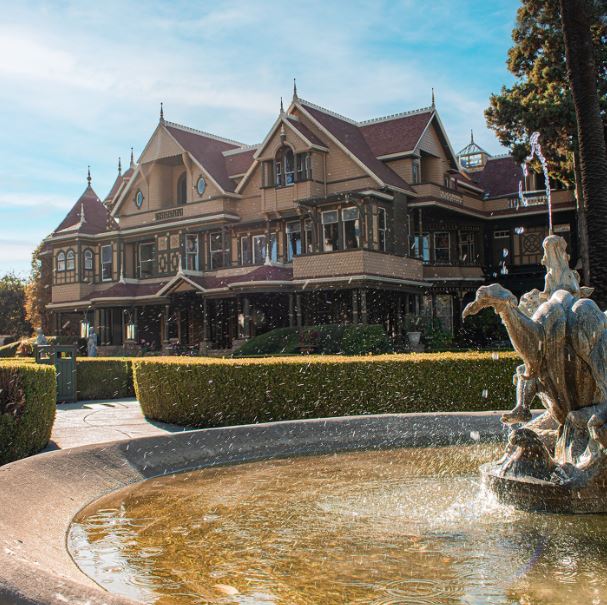
The Winchester public relations and advertising staff could not have been happier: endorsements from not only the former President of the United States of America, but a recognized authority on guns and shooting and the World’s leading conservationist. Sarah Winchester and William Wirt Winchester were married. William Winchester was the son of Oliver Winchester. When Oliver died, William Winchester took his place as the President of the Winchester Repeating Arms company. At his death in 1880, Oliver Fisher Winchester had left 4,000 shares of company stock in trust to his widow (who already owned 475 shares). Their daughter, Mrs. T.G. Bennett, then owned 406 shares, and Mrs. William Winchester had 777 shares. When Mrs. Oliver Fisher Winchester died in 1897, the trust was evenly divided between Mrs. William Wirt Winchester and Mrs. T.G. Bennett. Thus, as of 1904, the family held the following stock: Mrs. T.G. Bennett—2,875 shares, Mrs. W.W. Winchester—2,777 shares, T.G. Bennett—32 shares, Winchester Bennett—6 shares. Total: 5,690. The two Winchester/Bennett women had the vast majority of stock, and since shares in the company totaled 10,000 common stock, the family retained control. In order to prevent a “hostile takeover” (it had been rumored that some New York investors were interested in doing so), in May 1905, the family formed the Winchester Purchasing Company, which was the holding company designed to prevent the family from losing controlling interest. They would retain control until the 1920s. Now, so many people focus on the $20,000,000 (2022 inflation adjusted $580,933,333.33) is a vast sum of money, but the 2,777 shares Mrs. Winchester own/inherited for also worth a lot of money. She was probably equivalent to a billionaire, and she also ran a farm and produced hardware, and sporting good, as well as athletic equipment. #RandolphHarris 9 of 20
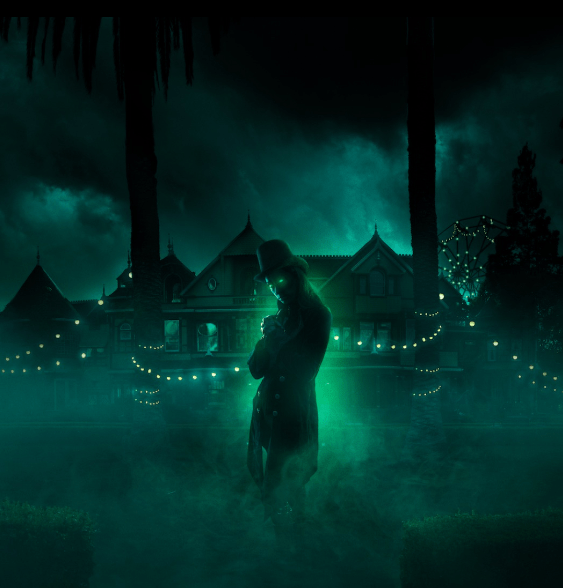
There is no denying the fact that the Winchesters were brilliant. They gave us guns to protect ourselves and built several mansions that are architectural gems on of the most famous being the Winchester Mystery House. It turns out that curse tablets themselves are nothing new. Lead tablet engraved with curses have been found in a lot of tombs, and one is located somewhere inside of the Winchester Mansion. Mrs. Winchester knew she was cursed because her six-week-old daughter died, and a few years later, so did her husband. She was so grieved that she moved to Santa Clara Valley, where she built her mansion. However, she soon found it was full of ghost and she kept building to appease the angry spirits in hopes of breaking the curse of being haunted by dangerous ghost, demons, and spirits. Mrs. Winchester found that she had not only been given money, but also the gift of understanding the divine. However, this gift turned ugly. After the death of her husband, Mrs. Winchester remained celibate. She turned a powerful man down, and he was enraged by her rejection, so he added another part to her curse and gift of prophecy: a curse that no one would ever believe what she said. Although the Valley was thrilled by the dramatic entrance of a millionairess; by those freight cars sidetracked in Santa Clara, unloading rich imported furnishings; by building activity that mushroomed a farmhouse into a sprawling mansion within mother. Here was fair game for all! They talked about Mrs. Winchester! Gossiped would be a more fitting word, gossip no one claimed to like—but everyone enjoyed. Talk begat rumor and as the years passed and new towers and gables rose behind the six-foot hedge of Llanada Villa. The rumors grew to established legend. #RandolphHarris 10 of 20

The tongue of the town’s people went like a steam engine, capin’ so far ahead of her that Mrs. Winchester locked herself up in her house. She gained to an extraordinary degree the power to penetrate the dusk of distances and the darkness of corners, to resolve back into their innocence the treacheries of uncertain light, the evil-looking forms taken in the gloom by mere shadows, by accidents of the air, by shifting effects of perspective; putting down her dim luminary she could wander on without it, pass into other rooms and, only knowing it was there behind her in case of need, see her way about, visually project for her purpose a comparative clearness. It made her feel, this acquired faculty, like some monstrous stealthy cat; she wondered if she would have glared at these moments with large shining yellow eyes, and what it might verily be, for the poor hard-pressed alter ego, to be confronted with such a type. She liked however the shutters opened, and above all the sense of the hard silver of the autumn stars through the window-paned, and scarcely less the flare of the garden lamps, the white electric luster which it would have taken to keep out. This was human actual social; this was of the World she had lived in, and she was more at her ease certainly for the countenance, coldly general and impersonal, that all the while and in spite of her detachment it seemed to give her. She had support of course mostly in the rooms at the wide front and the prolonged side; it failed her considerably in the central shades and the parts of the back. However, if she sometimes, on her rounds, was glad of her optical reach, so none the less often the rear of the house affected her as the very jungle of her pray. #RandolphHarris 11 of 20
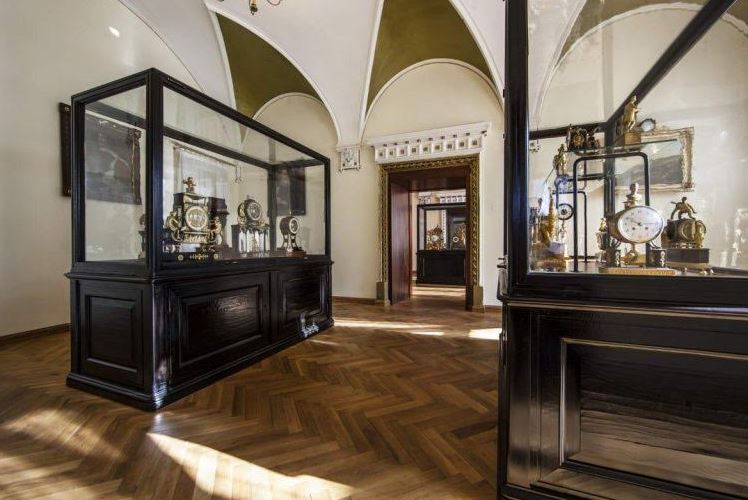
The mansion was there more subdivided; a large “extension” in particular, where small rooms for servants and family members had been multiplied, abound in nooks and corners, in closets and passages, in the ramification especially of an ample back staircase over which she leaned, many a time, to look far down—not deterred from her gravity even while aware that she might have figure some solemn simpleton playing at hide-and-seek. Outside in fact she might make herself make that ironic rapprochement; but within the walls, and in spite of the clear windows, her consistency was proof against the cynical light of Santa Clara Valley. There in her home—the acuteness of uncertainty plagued her, sometimes she would break into a sweet that she consented to attribute to fear as she would have dared immediately to act upon it for enterprise. She had been dodging, retreating, hiding from the terror. It bristled there—somewhere near and at hand, however unseen still—as the haunting thing left the feeling that the drop of its danger was, on the spot. With another rare shift of the same subtlety Mrs. Winchester was already trying to measure by how much more she herself might now be in peril of fear. She was astounded that another form could actively inspire fear, and simultaneously quake for the form in which she might passively known it. The apprehension of knowing it must after a little have grown in her, and the strangest moment of her adventure perhaps, the most memorable or really most interesting, afterwards, of her crisis, was the lapse of certain instants of concentrated conscious combat, the sense of a need to hold on to something, even after the manner of one slipping and slipping on some awful incline; the vivid impulse, above all, to move, to act, to charge, somehow and upon something—to show herself, in a word, that she was not afraid. #RandolphHarris 12 of 20

The state of “holding-on” was thus the state to which she was momentarily reduced; if there had been anything, in the great vacancy, to seize, she would presently have been aware of having clutched it as she might under a shock at home have clutched the nearest chair-back. She had been surprised at any rate—of this she was aware—into something unprecedented since her original appropriation of the place; she had closed her eyes, held them tight, for a long minute, as with that instinct of dismay and that terror of vision. When she opened them the room, the other contiguous rooms, extraordinarily, seemed lighter—so light, almost, that at first she took the change for the say. She stood firm, however that might be, just where she had paused; her resistance had helped her—it was as if there were something had tided over. Mrs. Winchester knew after a little what this was—it had been in the imminent danger of flight. She has stiffened her will against going: without this she would have made for the 7-11 stairs, and it seemed to her that, still with her eyes closed, she would have descended them, would have known how, straight and swiftly, to the bottom. Well, as she had held out, here she was—still at the top, among the more intricate upper rooms and with the gauntlet of the others, of all the rest of the house, still to run when it should be her time to go. She would go at her time—only at her time; did not she go every night very much at the same time—only at her time; did she not go every night very much at the same hour? Mrs. Winchester took out her watch—there was light for that; it was scarcely a quarter past one, and she had never withdrawn so soon. She reached her Blue Séance Room for the most part at two—with her walk through her mansion taking a quarter of an hour. She waited for the for the last quarter—she would not stir till then; and she kept her watch there with her eyes on it, reflecting while she held it that this deliberate wait, a wait with an effort which she recognized, would serve perfectly for the attestation she desired to make. It would prove by her budging at last from her place. #RandolphHarris 13 of 20
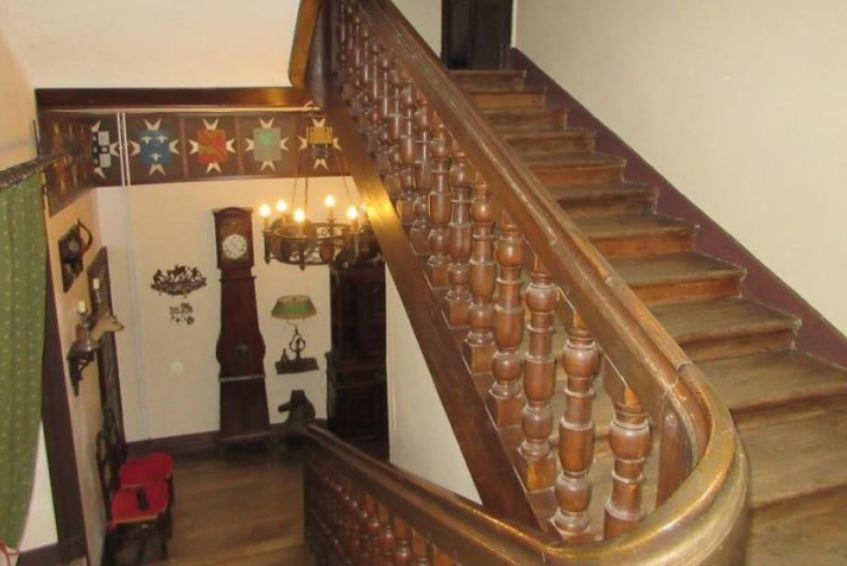
What Mrs. Winchester felt now was that, since she had not originally scuttled, she and her dignities—which had never in her life seemed to many—all to preserve and to carry aloft. This was before her in truth as a physical image, an image almost worthy of an age of greater romance. That remark indeed glimmered for her only to glow. Mrs. Winchester stared with all her eyes at the sonder of the fact, arrested again where she stood and again holding her breath while she sounded its sense. She took it full in the face that something had happened. At that moment she had undergone an agitation so extraordinary that it startled her. Then the door to the Blue Séance Room slammed. She tried to convince herself that she might perhaps then have gone into the room and, inadvertently, automatically, on coming out had drawn the door after her. The difficult was that this exactly was what she never did; it was against her whole policy to have three entrances to the room and one secret exit, besides the doom that opened to a 9-foot drop to the kitchen sink. However, she was well aware, quite on the brain: the strange apparition was a dominating demon. Here are also demons which do not exist just in the imagination of frightened people. They can also work miracles. Mrs. Winchester talked for at least ten minutes with the apparition. The World in which she lived was full of demons and demon-energized healers and magic workers. Pagans who worked on her farm and in her house were remarkably healed. He mansion became famous in the community in a night’s sleep hundred were healed. Other visions followed and people began to flock to the mansion in a ferment of superstitious frenzy, and miracles of healing and other wonders were claimed. At the Winchester Mansion, a young woman named Jennifer Kierkegaad, a servant of Mrs. Winchester’s had appeared and spoken to her. #RandolphHarris 14 of 20
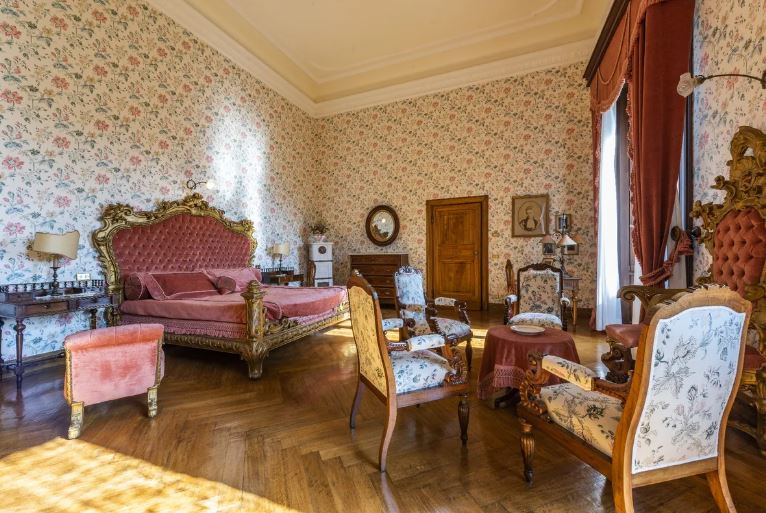
The walls in the mansion would sometimes crack and blood flowed every Friday. Jennifer gave many evidences of clairvoyance and telepathy, and allegedly healed a few people by taking their diseases on herself. Mrs. Winchester looked at her hear and saw who our eyes cannot see. Cures wrought by spiritistic mediums who operate through the séance and fortune-telling belong to the realm of white magic because it overlaps other demonic phenomena. Mrs. Winchester said, “My child, Satan knows how gullible we all may be. He is willing and able to perform diabolic miracles to deceive humans. Satanic healings, as we have seen, merely shift the physical disorder into the psychic plane by bringing the “healed” person into some type of occult bondage. No one can become involved in spiritism without serious psychic repercussions. Often the healing conjurer is an adept spiritistic medium as well. Be careful. I have counseled with several people who became psychically vexed by dabbling in magic healings and spiritistic séances. Another servant woman became tormented by poltergeist phenomena (hearing voices and noises) after sneaking into my Blue Séance Room and calling on the spirits. The resulting psychic bondage is frequently worse than the physical malady which is supposedly ‘cured.’ Christians camouflage and employ deceptive religious dress, while the other openly subscribes to Satan and demons. Evidently the healer (magic conjurer) who wants to force a cure, whether by appealing to God or the devil, is using supernatural powers to further his or her own ends. Heed my warning, my Child. I have been tormented by demons. Some are kind, others are dangerous.” #RandolphHarris 15 of 20
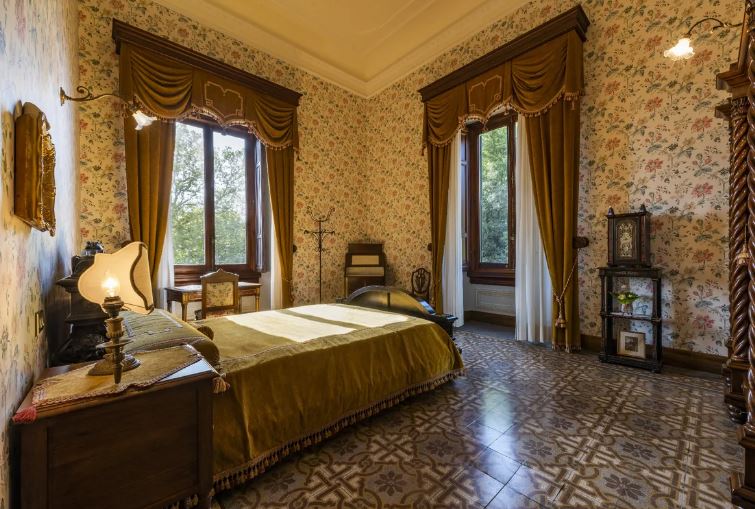
Black-magic conjuration openly uses the name of Satan and demonic powers. It does not have the deceptive veneer of Christian respectability that white magic adopts. People who are adept in the black arts and workers of diabolic miracles are the type of occultists who were popular in the courts of the ancient pagan kings. They not only advised the heads of government but performed supernatural feats, including magical charming of the sick. The ability of such magicians is conditioned on the human plane by their inherent psychic power, and on the supernatural plant by their degree of abandonment to demonic domination. The effectiveness of a Christian, too, is subject to one’s own native endowments and one’s willingness to respond to the Holy Spirit and become dynamically useful to the glory of God. Black magicians, like spiritistic mediums, differ in strength and psychic ability to perform magical feats (satanic miracles). Strong magicians usually owe their success to innate psychic powers. Very frequently they come from a family where the occult arts have flourished for generates. Their innate and inherited occult powers are frequently cultivated and enhanced by the study of magical literature. To enlist the help of Satan and demons, a pact is often made with the powers of evil, which is a satanic counterpart of dedication to God’s will. The subject consciously and willingly gives oneself over to Satan and demonic agencies who will help one perform healing conjurations and other supernatural feats. Ordinarily the body is cut and the compact with the devil is written and gained in one’s own blood. #RandolphHarris 16 of 20
The woman Jennifer we spoke of early, who worked at the Winchester Mansion in the early 1900s was physically and mentally quite healthy, but she began to have an ever-increasing number of strange experiences at night. She did not heed Mrs. Winchester’s advice. Although there was no one in her room with her, she would have the feeling as if she were being beaten. In the morning, Mrs. Winchester would notice that this woman had bruises all over her body. This experience would repeat itself about twice a week and she could think of no way of explaining the puzzling events. At first she was rather ashamed to talk about these nightly attacks but in the end she was forced to go to her local minister for advice. He himself could not help her, and even when the woman consulted another minister, still no solution could be found. Since in all other areas of her life she was completely normal no explanation was forthcoming. One day however, Mrs. Winchester sat down to talk to Jennifer, she could see it was not a case of mental or emotional disturbance. Mrs. Winchester asked her if she was still having contact with the occult field. It was then that the following story came to light. As a young girl, Jennifer had been courted by a young man, but she had finally broken off their relationship because she had been unhappy with the man’s attitude. After this he had threated her and said that he would plague her because she had refused to marry him. The woman had thought little of the threat at first and it was only after the nightly attacks had begun that she was reminded of the man’s words and Mrs. Winchester’s warning. However, Jennifer found it impossible to believe that there was any connection between the two events. #RandolphHarris 17 of 20
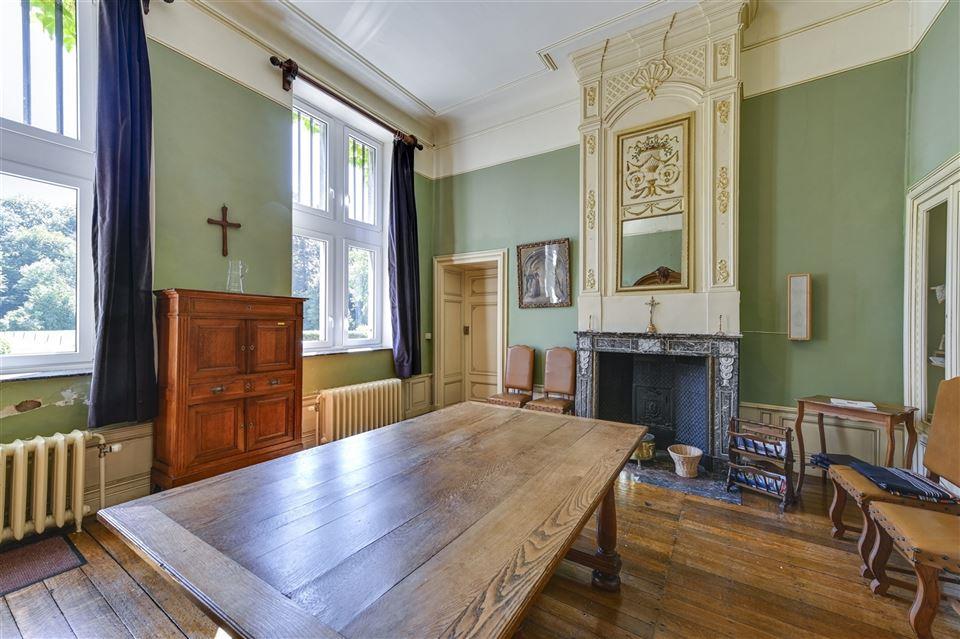
Before we go one with this story, when a person is faced with a case such as this, the first thing to do is to see if a doctor can see if there are any medical or psychological causes behind the experience. If it turns out to be psychological, the patient should be sent to a believing Christian psychiatrist. Since many puzzling occurrences can now be explained and understood by the recent findings of depth psychology, one must exercise extreme caution when seeking to diagnoses troubles of this nature. A wrong diagnosis can have disastrous effects. However, if one is sure that it is not a medical case, one can then turn to the findings of parapsychology and occultism to see if there is any connection to be found there. There is still much that remains unrecognized by our doctors, psychologists and theologians who rely solely on their university education for their knowledge. Occultism still pays a part in our World today. Concerning Jennifer, the woman of whom we were speaking Mrs. Winchester sent her to Reverend N.P. Wallgren, at the Swedish Evangelical Mission Church of San Jose. He prayed with Jennifer and encouraged her to put her faith in Christ to find complete deliverance. It was during this time of counselling that the man who had threatened Jennifer had hanged himself. The woman was at once freed from the attacks and the experiences never recurred. There is a controversial field of mental suggestion, which just cannot be explained away by saying that it is all nonsense. There is also a sceptism of ignorance. There are still many things between Heaven and Earth of which the World has never dreamed, as Shakespeare aptly said. Mental suggestion is not just a cause of popular superstition. #RandolphHarris 18 of 20
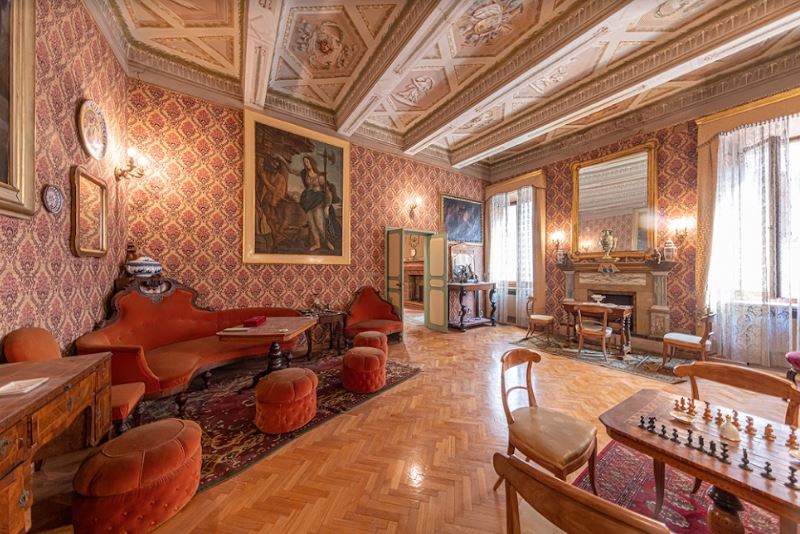
Even if with Jennifer the nightly disturbances had been the symptoms of hysteria, the sudden and lasting healing would still be quite extraordinary. Every doctor knows how difficult it is to heal such illnesses. However, here we had in fact a magic influence rather than an illness. The Christian is well aware of the fact that we are all surrounded by the hosts of wickedness. The powers of darkness are a present reality. It is not that some people set out to blaspheme, it is just that the images some have created tend to be potentially blasphemous. Sometimes people are a bit of a kid with a chemistry set—they pinch and plunder different aspects and mix them all together and every now and then it might turn into something supernatural. Not everyone has formal religious education or religious training. The Black Priest, was actually known as Dr. Lavey. There are people on this Earth that are fascinated by all kinds of things, but the thing all their interests have in common is a Satanic undercurrent, philosophically. Some have always been attracted to the mystical things in life. Classic country and western is incredibly Satanic, it is so bombastic and sentimental. Its goal is to grab you by the heart, and that is pretty much the definition of Satanic music. Part of the reason interest in the Church of Satan has revived is because high-profile people like Marilyn Manson talked about it. However, there are generations of people born into the Satanic Age. There are a lot more people today living their lives outside the expectations of society. While some people can never get past the shock value of being a Satanist, that is not the reason a lot of people are interested in the Church of Satan. It is just an outgrowth of who they are and it is not something they need to do to attract attention to themselves. It is just their philosophy, and it reflects the way they desire to live. The Devil does not have to be an object of menace or evil, people just need to take responsibility for their conduct disorder and psychopathology. The personification of the Devil is just a guy inviting you to experience for yourself the things you have been told are bad or wrong or evil, and make your own decision about them. #RandolphHarris 19 of 20

The Devil does not have to be seen as some drooling monster with fangs leaping out of the pits of Hell to rip your head off. There are a lot of people in Hollywood who, if they are not card-carrying members of the Church of Satan, they are certainly fellow travellers. In the entertainment industry, there is practically no one who is offended or horrified by someone who belongs to the Church of Satan. The only things that affect people’s lives are symbols. The Winchester mansion is a symbol of so many things, but overall, it is a symbol of Mrs. Winchester’s life, and of course the occult and supernatural. Many wonder about the color of the mansion, but if you look at it, it should be obvious. The conservators painted it to be symbolic of her favorite flower the daisy. Yellow, with a green stem. The people who have the most power in our society today are the people who can best wield symbols. An understanding of Satanic magic is useful not only for changing things yourself, but also for seeing how other people are trying to manipulate you. The Circle of Counter Creation become directly connected to the powers which flow through the altar. It is through the various seals found upon the mandala that more specific powers can be extracted from the altar urn for the sake of communication and personal empowerment. O Thou great, powerful, and mighty King Amaimon, who bearest rule by the power of the Supreme God El over all the spirits both superior and inferior of the Infernal Orders in the Dominion of the East; I do invocate and command thee by the especial and true name of God; and by that God that Thou Worshippest; and by the Seal of that creation; and by the most might and powerful name of God, IEHOVAH TETRAGRAMMATON who cast out of Heaven with all other infernal spirits; and by all the most powerful and great names of God who created Heaven, and Earth, and Hell, and all things in them. You are now aware of this place of eternal darkness. This is possible because you have a light within which cannot be dimmed. A light which is unlike any light perceived by those of lower consciousness. This light is the power of your own spirit, developed by your own intellect, spoken words, and chosen deeds with the realm of limitation. #RandolphHarris 20 of 20
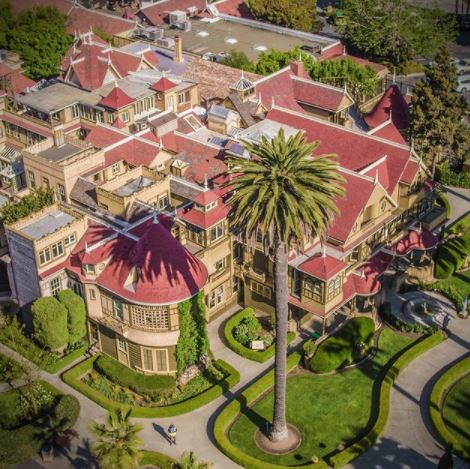
Tickets On Sale Now! 13 nights ONLY 🎃 – reserve your spot before they are gone! #unhinged #halloween2022 #winchestermysteryhouse

The Haunting Sweetness—I Have Nothing to Live for!

It may be—I do not say that it is—but it may be that it is as unreasonable to require a ghost to appear in an atmosphere of cold skepticism as to require a photograph to be developed in a blaze of sunlight. There is a stairway in the Winchester mansion that appears to lead to the ceiling and stop, but it does lead to somewhere. “This stairway,” Mrs. Winchester concluded, with the graceful movement of her arm, which seemed no less natural than the musical quaver in her tone—“this stairway leads to my son’s rooms.” For the first time in my brief experience of Mrs. Winchester the quiet serenity of expression which constituted one of the many charms of her beautiful face left it utterly. The large, deep brown eyes were visible to me now only through the screen of dropping lashes. The coils of her glorious brown hair were beneath my eyes. She had bent her heard with the manifest purpose of concealing some too poignant emotion. For the space of a minute I had to gaze vacantly at the sudden brownness of her smooth brow, the quick curl of her exquisite red lip. The change from the response of manner which made the mere presence of this lady soothing disconcerted me. I felt a sudden wonder that one so fair to behold should have remained a widow. Then I glanced over my shoulder at the stairway. Access to the wide flight of waxed wood steps was denied by a ceiling curiously at the top of the staircase. My eye followed the stairway to the ceiling. It was that of the top floor. Like everything connected with this Queen Anne Victorian mansion, the was mysterious and of a massive scale. They wound about the turn of the stairway at the top floor and were lost to view behind heavy green curtains of velvet. As I gazed curiously, I heard the notes of one of Beethoven’s most mystical compositions coming from the Grand Ball room. #RandolphHarris 1 of 18

My ears had but begun to drink in the rhythm when I experienced an uncanny shock of what I can only call suspicion. It was the sort of sensation I had had when, years before, I felt intuitively the presence of a person hiding in my room. The instinct had not misled me then. I was sure it did not mislead me now. There was no shadow of doubt in my mind that behind the curtain above us at the head of those stairs lurked an eavesdropper. There seems to linger in things material some trace of the personality of him or her by whose daily contact they once derived their atmosphere or their essence. I know not what term may best denote the subtle influence of the individual upon surrounding objects. A suggestion of it came vividly into my mind as my eye roved up the stair and was halted by the curtain. All objects here conveyed their messages as plainly as a whisper in the ear. The half light seemed charged with intimations of an unrevealed but not unsuspected presence. The very floor beneath my feet, like the ceiling overheard, was telling some story, and telling it in a way that thrilled. However, that lady at my side was moved, apparently, only by the music floating to us from behind the curtain. “That is William himself playing,” I heard her whisper. I withdrew my eyes from the stairway and gazed ne more at the widow’s pale face. Mrs. Winchester was always lovely to look upon, but each time she alluded to her son the light in her deep brown eyes made her seem young despite the wealth she had acquired. She withdrew noiselessly from the gate at the foot of the stairway, and I had no alternative but to follow. We were in the library below before she said another word. “You shall meet my son at dinner; that is, if he comes down to dinner.” She hesitated. Her soft hand clutched the handkerchief she held. “You will not mention that gate to my son?” #RandolphHarris 2 of 18
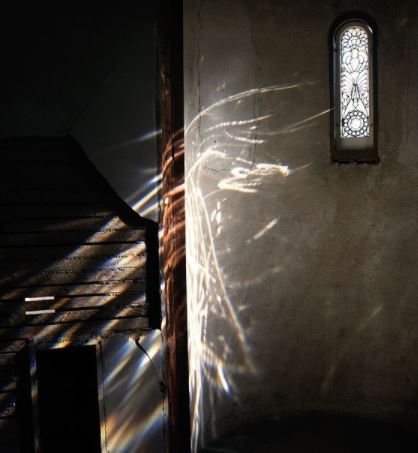
Her eyes framed a piteous appeal to me as she asked that. I bowed my head, fearing lest a word might wound her. “My son is a little—fanciful.” She brought out the last word by a visible effort. “No one goes to the top floor—not even myself—except the housekeeper.” I had no time to reply before she fled, leaving me to work among the books. Instead of delving at once among the mass of papers upon the library table, I mused for some minutes upon the mystery of the forbidden floor. I have never seen the young man who held such undisturbed possession there. My own connection with this household had begun only a day or two before. My presence in the mansion was due to the anxiety of Mrs. Winchester to give the World an authentic biography of her late distinguished husband. His career had been no less varied than it seemed brilliant. This splendour of his Civil War record and his presidency of the Winchester Repeating Arms Company caused his election to conspicuous public posts. He had served his native and in her diplomatic corps. Great financial enterprises owed their success to his administrative genius. One of his speeches was so perfect a specimen of a certain kind of oratory as to have found a place in the school readers. The widow of this brilliant man had been shocked by what he purported to be accurate versions of her husband’s career. These had been exploited in various periodicals and newspapers in a fashion calculated to discredit the motives of the dead man at one great crisis in the nation’s destiny. Mrs. Winchester burned to vindicate the good name of him whose memory was to her so sacred. The executors of her husband’s estate had made me a most flattering offer to undertake the task of a biographer. The prospect of a few months in the country amid surroundings so conducive to my personal comfort was too tempting to resist, quite apart from all considerations respecting the liberal stipend offered by the widow. #RandolphHarris 3 of 18

This was the second day of my residence in the Winchester mansion. I had no clue the character of the widow’s son. I gathered from the somewhat vague details supplied by the reticent lawyer who engaged me in the city that William Winchester II, was a gifted but somewhat fantastic young man, who wrote poetry and painted. From the elderly housekeeper who showed me to my room on the night of arrival, I derived the additional impression that he kept much to himself. It now appeared that he barred himself against intrusion behind a gate. For the extreme beauty of the widow, I had been totally unprepared. I had expected to find an ancient dame living in the past. I found, instead, a gracious lady, white-haired, to be sure, but seductive in the willowy lightness of her figure and irresistible through the fresh beauty of her face. It was time to dress for dinner when my preliminary inspection of the late president and general’s correspondence was completed. The intimacy of the relation revealed in the letters with men who have made our country’s history was astounding. It was obvious that a biograph of the eminent statesman would prove highly sensational, disclosing, as it must, unsuspected factors in the growth of our republic from an isolated nation to a position of supreme importance among the great powers of the World. One or two episodes of historical importance with which these letters were concerned made it imperative to consult not only the widow, but the son, before any details could be made public. I had not spent two hours in a study of the documents before me, yet I was already in possession of political secrets for which many a sensational publication would pay considerable sums. #RandolphHarris 4 of 18
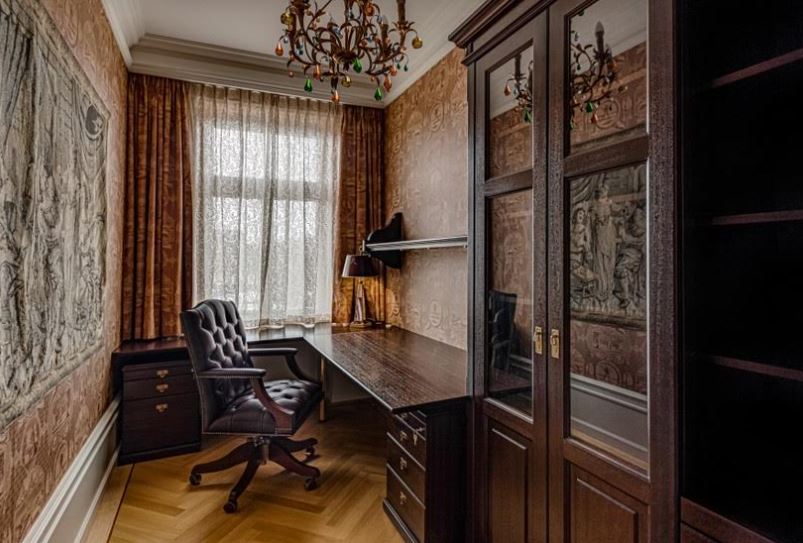
My appreciation of this face made me a little uncomfortable. What if the facts now in my possession were disclosed prematurely through someone’s indiscretion? I might be accused of betraying a confidence. In much perplexity I restored the bundles of letter to the great desk at which I worked. I must consult the dead man’s son without delay. As I left the library for the dining room my ear caught the strains of music from the top of the house. I halted at the head of the stairs. The keys of a piano were evidently responding to the hand of a master. I could have listened for an hour. The air was quite unknow to me, although the rhythm vaguely suggested the Italian school. The thought flashed through my mind that I might be listening to one of the young man’s own compositions. In the event that, William Winchester II was a genius. My eye met that of the old house keeper. She stood mutely and with the rigidity of a statue, gazing down at my upturned face. I felt a moment’s annoyance. This old lady might be one of those disagreeable people whose aptitude for watching unobserved suggests a tendency to by sly. “Master William will not be down tonight, sir,” she said. Her tone was hushed. Her manner was respectful enough. I could not help thinking, as I studied her lined face, that she alone had access to the forbidden floor. With her last word she disappeared, and I went on down. Whatever intentions I had formed to discuss the matter perplexing me with Mrs. Winchester herself were foiled by the presence of guests. One of these was a graceful young lady, dark-eyed and tall with a becoming gravity of manner. The other was her father, a local judge, pompous and little, with that self-assertiveness which a career on the bench does so much to develop in a man. #RandolphHarris 5 of 18
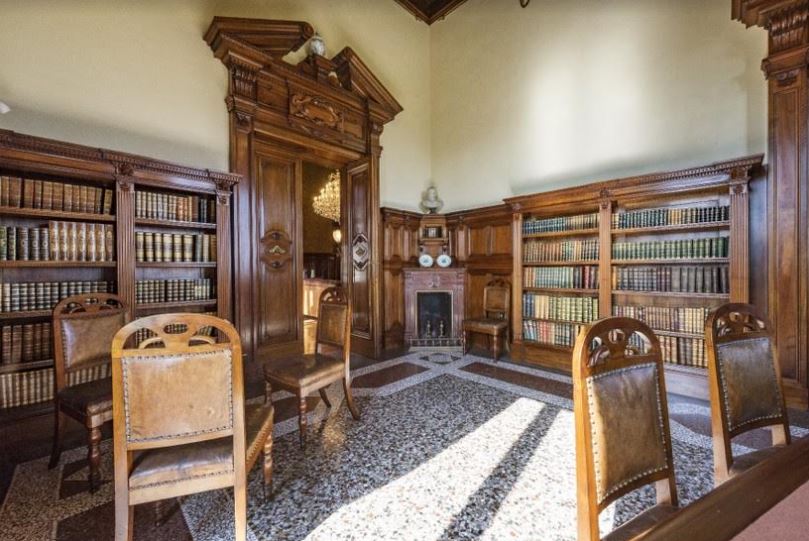
“So you’re Mr. Axelrod, are you?” he snapped, seizing my hand. “Glad to meet you. I hope you’ll turn out a right account of my old friend, the Senator and President of Winchester Repeating arms.” With that he dropped my hand, or rather flung it from him. I was so extremely amused by his swelling port that I at once forgave the brusqueness of this little judge. One could have forgiven a man with such a daughter. Miss Parfrey soothed where her father ruffled. She deferred where he played bully. But she was hopelessly eclipsed by the dazzling beauty of the brown-haired woman. Mrs. Winchester wore a decollete dress of black and lace, which covered her all the way up to her neck down to her ankles. Her perfect arms were fluttering in motion. Her manifest regret at the absence of her son lent to the smile with which she favored us in turn an inexpressible melancholy that sweetened her face like a perfume. I understood that the judge was a widower. If he could be trying to court our hostess, I wondered. “So William won’t come down from the top of the house!” I heard the judge say as he finished his pot roast. “Gad! He’s behaving like his ancestress.” He looked about him at the rest of us while a broad grin creased his jowl on both sides. I had been exchanging ideas with Miss Parfery on the subject of Venice, but the loud tones in which His Honor proclaimed his impression challenged our attention. “His ancestress!” I repeated blankly, no one else having volunteered an observation. “His ancestress!” repeated Judge Parfrey, attacking the game just set in front of him. “She was to have been married from this very house to an officer of Washington’s army.” Mrs. Winchester proffered this observation in her musical tone. She had not shown much interest in the conversation until now. #RandolphHarris 6 of 18

“The Senator told me the story,” proceeded the judge. “The Revolutionary War was raging at that time.” I glanced at the countenance of Mrs. Winchester. A flushed which heightened her beauty a moment before had left her cheeks entirely. “Did the marriage of William’s ancestress take place?” she inquired faintly. “Gad, no!” cried the judge. “Her betrothed came to this very house a day or two before the wedding was to take place—” He hesitated. “And the British captured him?” I suggested. “They captured her,” replied the judge with a laugh. “Her lover caught her kissing Lord Cromwell’s aided-de-camp on the top floor.” “Then she married the Briton instead of the Yankee!” I made the observation as gaily as I could for the sake of lifting the pall which seemed to have dropped upon the subject. My effort was vain, for the retort of the judge seemed to extinguish us completely. “She married neither,” he said shortly. “Until the day of her death she never left that top floor.” I exchanged glances with Miss. Parfrey. Mrs. Winchester too a sip of coffee. The judge, unaware of the mischief he had done stuck to the theme all night. He was still pointing the moral of the legend when his car arrived to take him home. I heard him taking his noisy leave of his hostess at the door, his loud voice relieved at intervals by a brief remark from his daughter. In the matter of apparitions…popular and simple human testimony is of more considerable weight than is the purely scientific testimony. Mrs. Winchester was still very place when she came back to the dining-room. “I think I will say good night,” she observed faintly. I saw her clutch the back of the chair. In a moment I was at her side. “It is nothing,” I heard her cry. “I am afraid our conversation this evening upset you,” I ventured. However, she shook her head. “Arthur’s absence upset me.” I could just catch her whisper. “He seemed very much attached to her—once. Now he will not even come downstairs for a sight of her.” #RandolphHarris 7 of 18

I understood. I could only gaze in silent sympathy into her face. Then she extended her hand, bade me good night, and left the room. I lit a cigar and made my way to the library. It was close upon midnight as I sank into a great leather chair, yet the thought of bed made me restless. My purpose in coming to this house seemed defeated already. I smoked on in the darkness until I heard a clock behind me chime at the hour. The silver strokes beat the air one after another, until the toll of twelve reminded me that a new day was brining me a duty. I got upon my feet with a disconcerting sense that the location of the electric button that switched on the light was a mystery to be solved. I took a single step toward the window, when a moving something drew my eye to the great bookcase looming in the shadow against an opposite wall. Slowly and steadily the object grew luminous as I watched it. The wraith of a feminine form defined itself to my staring eyes with a loveliness so appealing that, in spite of the thrill, I felt at the root of each hair on my head I would not have sold the sight before me for a bag of gold. It is a mistake to think the giants rumored to lurk the halls of the Winchester mansion were all blood-sucking creatures as the causeway guides say, but, bare in mind they were in drink, were as peaceable as rabbits. I saw a pair of sloping shoulders beneath a firmly chiseled neck. I saw a rounded waist and a delicate hand pressed to a smooth cheek. The long robe forming the vestment of this apparition was twined about the curves of the figure after the fashion favored by all sculptors of Greek goddesses. Only the face was kept from me. I remained for the first few minutes of this experience as motionless as the fantom at which I stared. I did not stir until I saw it glide. The apparition darted and halted, darted and halted, making, it seemed, for the wide door at the extremity of the vast apartment. #RandolphHarris 8 of 18
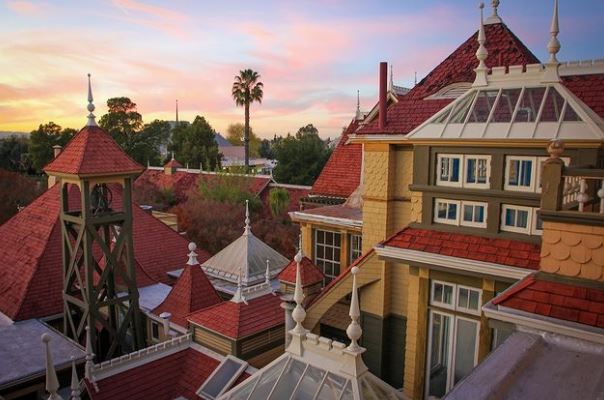
As I kept pace with its advance I marveled at the ethereal grace revealed in every stage of this mute progress. The restless clock seemed eager to accompany us through the darkness, so quick was its ticking to my ear. I had never quivered with so icy a chill as now galvanized my limbs into a kind of movement so like that of this ghost before me that I seemed unearthly to myself. On, on we went, through the door and out upon the rug beyond. Not until the staircase halted the spectre for a moment did it turn. For the first time I looked into the face. Prepared though I was by the unspeakable perfection of form before me for a loveliness of feature which could alone accompany a presence so angelic, the countenance upon which I was allowed to gaze at last transformed me for the instant into a living statue. the chin, rounded with a beauty that told also of strength; the nose, straight, firm, positive, yet delicate, sensitive, tremulous; the brow, noble and serene—these details blended themselves into an expressiveness that caught its quality from a pair of eyes into which I could not look. They did not seem to evade me. The figure kept its gaze upon the floor. The light radiated from the eyes was that, I saw now, which lent its effulgence of the fantom. I realized by a species of intuition that one glance of these orbs meant the loss of consciousness for any upon whom it fell. No one could have endured the delicious shock of so much beauty. I followed to the very top of the next flight of stairs. The fantom climbed another storey, and on I stole. It made for the gated that afforded access to the forbidden floor. There it halted, and turned to beckon me. I saw the folds of its vesture broaden like a wide white wing as the moving arm it waved pointed on and upward. Then it climbed the stair. I was at the ceiling, too, now, and I could not open the door. An instant recollection of the mother’s warning words enabled me to take my eyes from the fantom for the first time. I could not go any further or search for a secret passageway without becoming guilty of a breach of trust. #RandolphHarris 9 of 18
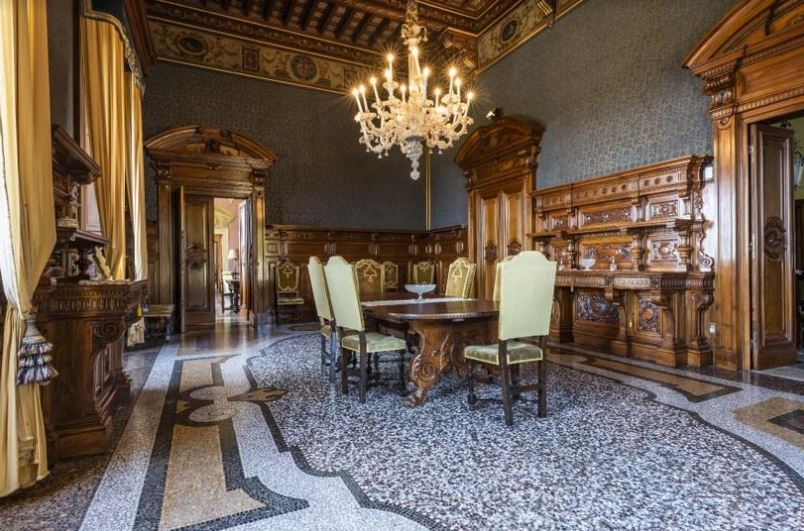
Yet I could no more have gazed at all this grace and beauty, fantom and thing of shadow though it was, without slavish obedience to its least behest than Paris and the men on the walls of Troy could contemplate the loveliest of women without falling in homage at her feet. I put a hand to my brow as I stole guiltily down to the library with all the silence of the ghost I had just beheld. The spacious apartment allotted to me was directly off the library itself. I had but to grope my way to a corner familiar now and find my bed. I fell upon it like a log. The staring sun roused me with my clothes still on and the vapors of an indescribable intoxication in my head. I made haste to change my clothes. The water of my bath seemed oddly warm, although I took it cold. I was in the dining-room before it occurred to me to look at my watch. It was nearly noon. Master William still will not leave the top floor this day. As I passed Mrs. Winchester, the sweet widow was looking at her garden. “I was afraid you might grow fanciful after that anecdote the judge told us last night,” she began, as I crossed the parlor where she took. “Do you believe in Ghosts, Mr. Axelrod?” I gazed keenly into her eyes for a minute. She was smiling. “Do I look as if I had seen a ghost?” I put the question gaily, but I could feel the beating of my heart. “My family and my fortune are being haunted by spirits—in fact of American Indians, Civil War soldiers, and others killed by the Winchester riles. The untimely deaths of my daughter and husband were caused by these spirits, and some say I am the next victim. However, I have appeased the spirits by building a great mansion for them. As long as construction of my house never ceases, I can rest assured that my life will not be in danger. Building this house is even supposed to bring me eternal life. These spirits are a sort of heirloom.” #RandolphHarris 10 of 18
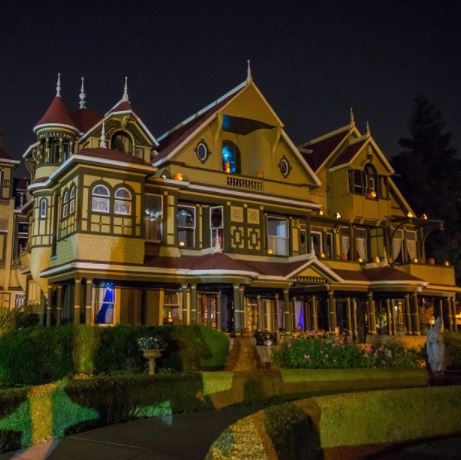
I could feel that thrill at the roots of my hair. “And what are these ghosts like?” “These ghosts can be friendly or not—but often show themselves in a variety of ways. They can become visible; they can speak or make noises, touch you or even emit an odor like perfume or cigar smoke, to let you know they are there. Sometimes there is a ghostly mist. The vaporous clouds usually appear several feet off the ground and can move swiftly or simply stay still—almost like it is orbiting. The noisy ghosts have the ability to move or knock things over, make noise and manipulate the physical environment. Sometimes I hear loud knocking sounds, lights turning on and off, door slamming, even fire breaking out mysteriously have all been attributed out to this type of a spiritual disturbance. These poltergeists become strong and dangerous. There are also orbs, they appear as a transparent or translucent ball of light that is hovering over the over the ground. It is believed that orbs are the soul of a human. This is what inspired the window I made. There are also ghosts that form cold spots and are kind of like a spiral of light. There are also demons in this mansion. They have powers to heal people who have been possessed and great supernatural abilities in exchange for worship and yielded service. However, if demon powers heal, they can also cause diseases. Their object is not to liberate the victim but to deceive and enslave him or her. They heal or cause sickness as it furthers their nefarious plans. What is more significant is that even when demons help heal physical diseases, they exact a price either in some type of occult oppression or psychic disturbance in their victim or by causing one to fall a prey to error. Demonic spirits always have Satan’s costly price tag attached to it. Once, I was overtaken by a witch doctor. He drew from a leather bag a bundle of papers on which were green and orange markings, an imitation of Arabic writing. He started to read to me from the book, and before I could stop him, he began nonsense reading in an ordinary voice. Then suddenly his voice changed. #RandolphHarris 11 of 18
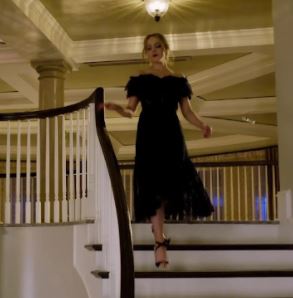
“He was possessed, and I heard a demon through his lips telling me that I had a sick little girl in my house. (My daughter had been sick for several days after she was born, and as he was a total stranger it was unlikely that he would have heard it. Six weeks later she died,” said Mrs. Winchester. I withdrew to the library without even introducing the subject of that interview with William Winchester II for which I longed. He did not descend from the room above the stairs to the ceiling. I had the dining-room to myself that evening. Mrs. Winchester, or so the housekeeper said, was indisposed. As I seated myself in the library, after a solitary stroll through the shrubbery of the lawn, it occurred to me that, as the authorized biographer of the late General Winchester, I ought to look into his ancestry. It was an easy matter to find the family genealogy among the volumes on the well-stocked shelves. One county history dealt exclusively with the Winchester mansion in which I was now at work. The edifice was venerable—for America—and, inevitably, had served as the headquarters for spiritual séances. I was so deeply immersed in my historical reading as to let three full hours slip by. The stroke of twelve had caught me unawares. I thought of the night before and shivered. Then I switched off the light. The fantom arose from the ground at my very feet! Only the bell in the belfry of the dark mansion tolling reached my ear as I stood rigid in the fantom’s radiant presence. I gazed at the phantom. I was myself and not myself in feeling weirdly, supernaturally energized. The incompleteness of my life was extinguished in the full tide of a holier love than mortals have thrilled to. In the inspiring presence of this wraith, I felt capable of that faith which moves mountains. #RandolphHarris 12 of 18

The fleshly and the spiritual ceased to contend as I contemplated with reverence with the haunting sweetness before me. I could have conquered the World, founded empires—then I became the greatest of poets, endowed with a genius breathed into me by this irresistible ghost. There surged through me all imaginable ecstasies, glorious powers, finer perceptions than ever mortal had. I understood in a flash whatever in my past had baffled me with the mystery of the Winchester House. Strains of exquisite much floated through the mansion. One does not see a ghost, but surrenders to it as the wax yield to the flame. The occult subjection that results is from dabbling with occult literature. Magic is of a demonic character no matter under what name it is known. It is obvious that there is no mathematical proof that either God or the devil exist. Nevertheless there are many things that point to this demonic nature. The simple principal of cause and effect is hardly ever evident in a tangible enough form to prove by law that magic is the root case of some offence or crime, but also some very beautiful things. I did not come out of this trance until a movement of the fantom intimated subtly to me that I was to emerge from its enchantment. I grew aware that I was following the vision once again through the portal. The transcendent object of my infatuation conducted me straight to the forbidden floor. I was favored as before with its beauteous gesture. No thought of the ban so recently placed upon my presence here was in mind, even had I left any power to oppose my mortal will to this immortal spirit. I followed in unceasingly, unquestioningly. There was no physical obstacle to my progress anywhere. The mahogany entry affording access to the room above the stairs to the ceiling had been thrown open. #RandolphHarris 13 of 18

I set foot boldly upon the lowest step of the stair. The first contact seemed to afford me a definite sensation of personality in the very air. I can liken this feeling only to that bitter blast, the vague uneasiness, which is said to disseminate itself through the night as some vast iceberg skirts the coast of San Francisco. I had caught a chill, and I shivered. Nor for an instant did I halt. The stairway did not creak. By the time I had set foot upon its summit I was thrilling to some excitation, breathing in impressions like those one derives from moving passages of poetry or strong scenes in a play. I touched the wall only to find my feelings keener, my sensitiveness to the stimulation increased. All material objects exhaled the mystery stamped upon them by a person or an event in times past of which I was now absorbing impressions. I did not feel that murder had been done here. The tragedy was all of the heart, of the grief of a soul, of the perpetual and impotent longing of one who, loving, poured out an agony of sorrow to walls that caught the mood. The heart that had been crushed was a woman’s. This message, too, I was given by the impregnated air. The curtain at the summit of the stairway was pushed aside as if by a breath from some other World. I had attained a great quadrangular vestibule, tenantless except for the apparition and myself. The ghost, preceding me at an interval of some feet, was kneeling beside a wide window through which the warm night air came gently. I beheld a mass of the flowers in a vase upon a carved mahogany table with marble on its surface. I became conscious of the softness of Persian rugs beneath my feet. I moved as silently as the thing I followed. No attitude could express the forlornness of an indomitable grief more appealingly than that of the kneeling fantom. Magnetized by an attraction that made me daring, I touched the shoulder of the ghost. #RandolphHarris 14 of 18
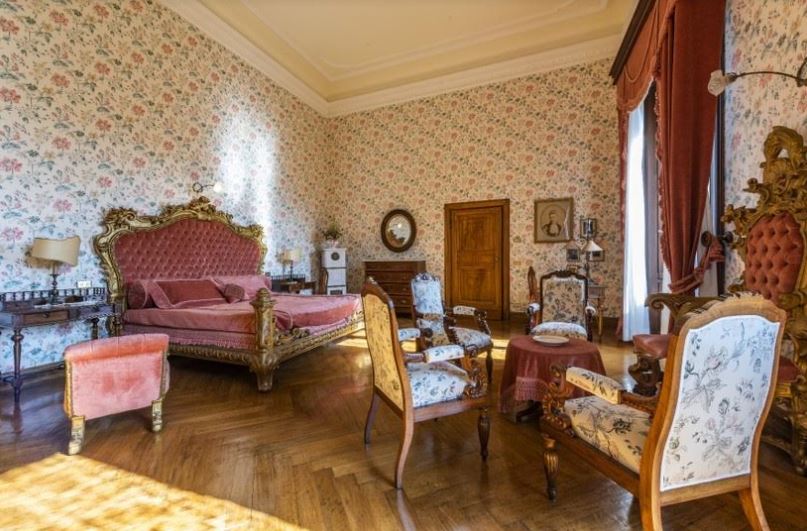
The whiteness of one arm extended itself to my face. Slowly the vision grew toward me, folding itself closely about my neck and breast until the ghost literally rested in my arms. I could not see the features of my beloved as her unreal lips sought mine. I could not feel the long tresses I tried to stroke. I spoke no word as I vowed to cherish her in the World and prayed for death that I might be with her in the next. The mental and psychic damage done to me as a result of occultism was immense. I was infected by occultism. The time has passed in which witches and magicians were either burned or stoned to death. We must remember that magic itself is not to be understood by our five senses alone for it is rather a metaphysical and religious and extrasensory phenomenon. The tired moon that drooped prettily in the sky had sent a curious beam down here. My eye, habituated more and more to the sweet obscurity, caught now a sharper outline of the vase filled with flowers. The heavy table showed its carved proportions less reservedly. A mahogany chair, resisting as a sleeping monster might rest, upon the floor entered the enlarging field of my vision. The impression made by all these upon my spirits was one of personality radiating palpably from them. Not, indeed, that the objects had themselves this quality. I mean no more than that they emitted or effected suggestions of a personality with which they had been formerly in intimate contact. The darkness of that apartment, pierced by the beams from the window, seemed laden with such revelations. The great chair told of one who has reposed, and reposed gracefully, in its arms. The vase betrayed a secret it had caught concerning her who once delighted in its shapeliness. #RandolphHarris 15 of 18
Every emanation from the things around me was of evil purport. I was being warned. “And you will cherish me forever, beloved?” How I understood that she had put this question I can never tell. The words were not spoken. The language was not Earthly. A something within registered the appeal and responded to it. I told of my own unworthiness to be made the object of a celestial passion. I confessed my longing to reach the confines of the Universe in some high quest of a Holy Grail for her sake. I received the outpouring of her passionate regret that in an Earthly form years before she had cherished thoughts gross and material, the memory of which left her too sullied for the purity of my faith in her now. And her fantom arms were wreathed about my neck still, and her bowed head pillowed itself against me, and she quivered with ecstasies of which I partook as a leaf rises and falls with the breeze of a summer’s day. And her fantom arms were wreathed about my neck still, and her bowed head pillowed itself against me, and she quivered with ecstasies of which I partook as a leaf rises and falls with the breeze of a summer’s day. I besought her now to look into my eyes. I saw her head denying that petition. I received some mysterious intimation that the meeting of our gaze must entail an indescribable fatality, not to her but to me. I conveyed my sense of joy in such a circumstance. Here was the proof of my devotion awaiting her acceptance. Let me but gaze into those eyes and I would wander forever through the Universe a blissful spirit. However, she only kept her face buried upon my shoulder and held my head with her arms. I had begun a more impassioned plea when she rushed from my embrace, reeling to the window. I saw her fall upon her knees cowering. She covered her face with one hand, while, extending the other, she pointed to some object behind me. I turned and beheld—William Wirt Winchester II! #RandolphHarris 16 of 18
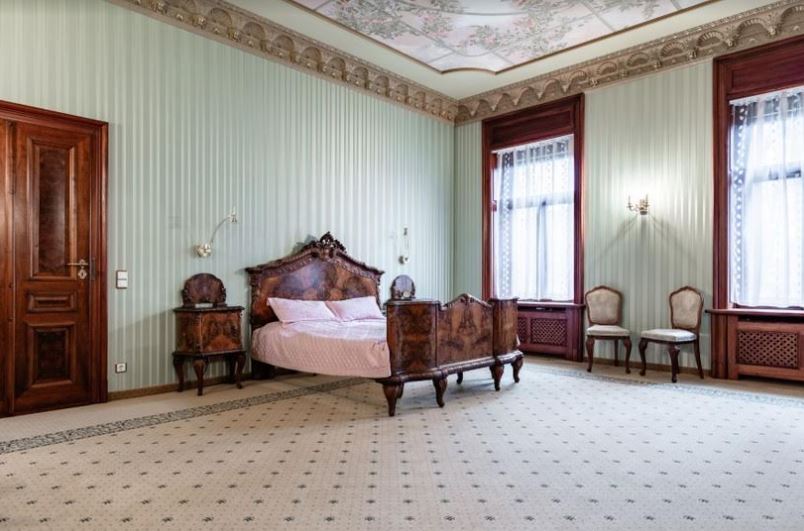
There was no mistaking those eyes, that slight forehead, the delicacy of each refined feature. He was his father’s son. For a terrible moment he and I glared into each other’s faces. I saw him raise an arm. He rushed forward. I threw myself between him and the fantom, but when I directed my gaze to its refuge the object of my infatuation had disappeared. The next moment William Winchester II had me by the throat. Then consciousness left me, but not for long. I was prone upon the floor when my senses returned and the arm of William Winchester II was about my head. “I saw her with you!” He spoke in the musical accents of his own mother, but grief never found utterance so wild. His tone was a revelation. I cried my reply with the voice of a man in panic. “She made your vows of an eternal love and you pledged yours in return.” He bowed his head once more. I realized the sense of betrayal that tortured him. The ghost had proved unfaithful. I was torn with his own jealously, but he proved to me that his ordeal had been worse than mine. “I saw her with you!” he said. “One torture has been spared you. You never saw her when her gaze rested upon—me!” I hated him for a second time. Then I conquered my worst self and pitied him. He had removed his arm from my head and was assisting me to my feet. “We shall never see her again.” It was I who said this. He buried his face in his hands. “She was too timid,” he murmured faintly, “to let us look into her eyes.” The question elicited from me by this remark led to further revelations. He, too, had held mysterious communion with the infatuating wraith; had confessed a longing to reach the confined of the Universe for her sake. To him, too, she had professed regret that in an Earthly form years before her thoughts were gross and material. #RandolphHarris 17 of 18

It is conceivable that emotions generated by a passed and passing life may be conditioned by the state of mind at dissolution. The living and the dying set up vibrations in the emotional atmosphere. These continue in agitation. The place grows haunted. An appropriate or corresponding vibration can alone can alone break the spell. When that meets this, the suspended chord is complete and comes to a full close. Or, an emotional scene which has translated itself, so to speak, into terms of a material plane can, like music in a phonograph, retranslate itself back again. I felt now that I had the clue to my ghost. The lady in seclusion on the forbidden floor so long ago had been true to her lover—in her fashion. He had, indeed, surprised her in the arms of another. It was a sentimental accident in her life. She was denied the opportunity to explain. She was possibly the victim of a man’s sudden impulse. My own infatuation with the rare and beauteous spirit had led me far. In any event the longing of the human soul to be understood—the craving of this lady to vindicate herself—persisted while she lived. It was her most vehement desire as she passed away. The very walls, the chair she sat in, the vase in which she arranged her daily nosegay, grew sick with this discarded lady’s longing. If telepathy from living mind to living mind is a force so mighty as to covey a visual image from Santa Clara to Oakland, is it not perfectly conceivable that a telepathic force which has been stored there by the terrific emotional impulse of original crimes—may be powerful enough to produce a visual image? It was so with me. I did not cease my scrutiny of the countenance of William Wirt Winchester II as these thoughts ran riot in my head. His mind was too manifestly overwhelmed by the shock it had sustained. He paled slightly and spoke at last in lone tones. “I have nothing to live for.” #RandolphHarris 18 of 18


I am enitrely convinced of the existence of the Spiritual World–that there are real intelligences in that World, and that it is possible for them under certain circumstances to communicate with this World.
Summer is *almost* here and it’s getting quite warm at the Winchester Estate! Have you ever experienced the house in the summertime?

Never, Never, Never Invest More than You are Willing to Lose!

Deep changes in the money system cannot occur without threatening entrenched institutions that have, until now, enjoyed positions of extraordinary power. At one level the substitution of electronic money for paper money is a direct threat, for example, to the very existence of banks as we know them. Banking will not retain its position as the primary operator of payment systems. Banks have had a government-protected monopoly in checking-clearing services. Electronic money threatens to supplant this system. In self-defense, some banks have entered into the credit card business themselves. More important, they have extended their reach without automatic teller machines (ATMs). If banks issue debit cards and put ATMs at millions of retail locations, they may repel the attack of the credit card companies. Since debit cards make it possible for the shopkeeper to receive payment instantly, instead of waiting for Diner’s Club or American Express or Visa to remit payment, store owners may not wish to continue paying them a percentage of each sale. Also, something is going on where so major banks have blocked credit unions from linking to their customer’s accounts. Therefore, they cannot use debit cards to transfer money instantly between institution, and this is causing consumers to have to wait days, or weeks for money to reach the accounts of their credit union. So, some people may eventually stop doing business with credit unions, while others stay out of loyalty. There must be some kind of quiet financial storm brewing inside of the credit unions. On another front, banks face attack from a wide variety of nonbanks. In Japan, for example, the Ministry of Finance has qualms about the idea that private companies like NTT can issue value-bearing plastic “notes”—a kind of currency—and operate outside the banking system and its rules. #RandolphHarris 1 of 22

If a company can take in money for a prepaid card, it is accepting a “deposit,” exactly like a bank. When the user spends, he or she is making the equivalent of a “withdrawal.” And when the card company pays the vendor, it is operating a “payment system.” These are functions that once only banks could perform. Moreover, if card companies can issue credit to users, as they and the cardholders see fit, unconstrained by the kind of limits and reserves that govern banks, central banks risk losing their grip on monetary policy. In South Korea, plastic money has expanded so rapidly that the government fears it is feeding inflation. In brief, the rise of electronic money in the World economy threatens to shake up many long-entrenched power relationships. At the vortex of this power struggle is knowledge embedded in technology. It is a battle that will redefine money itself. Many governments have made it understood that they do not care for cryptocurrencies. They hype around the high returns from cryptocurrencies has led to more fraudulent “get-rich-quick” schemes lurking in the dark corners of the market. Many countries do not have law to back up investors. Which means, if a large group of investors lose their money—they will be left with no recourse within the current legal framework of the system. Several mutual funds have been told to hold off on sending any new fund offerings based on crypto assets. Cryptocurrencies, especially Bitcoin in this case, were created as a way to take the power of monetary control away from centralized authorities—like the government and the central bank. So, it is no surprise that the central bank takes issue with not being in control. #RandolphHarris 2 of 22

Cryptocurrencies have led to an increase in assets that can transfer funds with increased anonymity. There are virtual assets that focus on privacy. If and when things go wrong, decentralized platforms pose the problem of having no single entity to go after. Privacy wallets and other new financial instruments allow for reduced transparency, which, in turn, obscures the flow of finance. There is also a national security angle over here now, there are individuals from intelligence who are involved. As things stand, anyone can launch a new cryptocurrency. There is no national framework defining what a cryptocurrency is, or the minimum requirements for it to be a legitimate investment option. This means that anyone can create a virtual asset, get others to invest in it to hike the price, and then cash out their stake without having to explain why. This is normally what is called a “rug-pull.” After the “founders” or “influencers’ pull out their money, other investors are left holding less than what they originally started with. However, that is not much different than what happened with the stock market during 9/11. Many young and/or unsuspecting investors lost huge amounts of money they worked for, which was never returned. The crypto market s speculative and during the COVID-19 pandemic it saw value surge to new all-time-highs. And, while the worst sees to be behind, there is a risk of sharp corrections that still remains. Just as Bitcoin was recently able to hit $70,000, it is possible that it could sink lower than $45,000. In fact, as of June 16, 2022, 5.10 P.M. EST BTC is down to $20,282.52. Many countries that are subject to capital control, are especially vulnerable to destabilizing effects of cryptocurrencies. Free accessibility of crypto assets to residents can undermine their [emerging market economies] capital regulation framework. #RandolphHarris 3 of 22

Non-bank actors—meaning crypto exchanges and other blockchain companies offering financial services—are adding to the dollar funding stress by using loopholes in the traditional policy approach to foreign exchange markets. At this stage, it is important to better understand non-bank investors’ role in creating or propagating systemic risk so that policy actions can be taken to smooth out financial risk-taking over time. This cryptocurrency in actions, a new generation of internet-based currencies which have grown in popularity over the last few years. You cannot not touch it or physically hand it over in any way, but you can use it to trade online. In the way, it is very different from the traditional view of banking, where cash, coins and possibly gold might be stacked in a vault just waiting to be withdrawn, but do these new cryptocurrencies represent a threat to those traditional banks? Thus far, the value of many of these cryptocurrencies has skyrocketed. If you had bought $1000 worth of Bitcoin in 2010, that investment would be worth $20 million today. There are even ATMs around for Bitcoin—put your regular currency in alone with your phone number, then get a receipt back for the purchase of Bitcoin. A check of the digital wallet on your phone should reveal your purchase there in the balance. That is causing a major shift in how people can do business and make transactions. Suddenly, the value is able to be exchanged outside of the traditional banks in the flash of a mobile phone. People who could not access trade and finance ten years ago can do so today. This will lift many out of poverty. The major factor is—if they need financing, people no longer have to go to a traditional bank for financing. (I bet a lot of people wish they knew this before they made car repairs.) #RandolphHarris 4 of 22

Peer-to-peer networks, including those based in cryptocurrencies, are becoming more common and those who might be turned away by traditional banks now have another way around financing. You can often times use an app on your phone to get a loan, and then take it to a car dealership, already knowing what you can afford, and pick the car of your dreams. Some people even get mortgage loans this way. That is why many traditional banks are feeling threatened by these new cryptocurrencies. However, you can also use these same apps on your mobile phone to get approved for cash loans. Many supports of digital currency and technology believe it should be seen as an invention like the printing press because it has the steam to transform the World of finance and beyond. If banks ignore new consumer behaviours and preferences when it comes to how they transact and transfer money, cryptocurrencies definitely represent a threat to traditional banks. Bitcoin users can handle many of their daily payments needs themselves, without the need for interaction with banks, and avoiding the need to incur bank fees. In the same way, the value stored in PayPal accounts moves outside of the bank’s payment systems, depriving banks of valuable payments revenue. There are a few issues cited with these cryptocurrencies, such as their perceived “haven” status for possible perpetrators of illegal activities, a relatively low market cap (Bitcoin’s is somewhere around $3.4 billion) and a sense of volatility with the value of the currency. That is why it is important to never, never, never invest more than you are willing to lose because it could go to nothing. That piece of advice is something even traditional financial advisors are not willing to disclose to investors. And sometimes after several losses, you need to cut and run before you start to become insane by beating the same horse and expecting something in return. #RandolpHarris 5 of 22

There are many people who absolutely could not wait to find a way around being beholden in some way to a big bank and these people are taking up new options with enthusiasm. Traditional banks and credit unions have often been guilty of customer-unfriendly account manipulations, such as applying debits before credits then charging fees for insufficient funds. (Citi Bank is one traditional banks I recommend, they do not charge overdraft fees. If your funds are insufficient, the check will just be returned unpaid.) However, the other big banks will not be able to get away with financial manipulation much longer because in the digital age, customers can actually see this happening by glancing at their mobile phones. Of course, money, whether in the form of metal, digital, or paper (or paper backed by metal), is unlikely to vanish completely. However, barring nuclear holocaust or technological cataclysm, electronic money will proliferate and drive out most alternatives, precisely because it combines exchange with real-time record-keeping, thus eliminating many of the costly inefficiencies that came with the traditional money system. If we put this all together now, a rather striking pattern becomes plain. Capital—by which we mean wealth put to work to increase production—changes in parallel with money, and both take on new forms each time society undergoes a major transformation. As they do so, their knowledge content changes. Thus agricultural-era money, consisting of metal (or some other commodity), had a knowledge content close to zero. Indeed, this First Wave money was not only tangible and durable, it was also pre-literate—in the sense that its value depended on its weight, not on the words imprinted on it. Today’s Second Wave money consists of printed paper with or without commodity backing. What is printed on the paper matters. The money is symbolic but still tangible. This form of money comes along with mass literacy. #RandolphHarris 6 of 22

Third Wave money increasingly consists of electronic pulses. It is evanescent…instantaneously transferred…monitored on the video screen. It is, in fact, virtually a video phenomenon itself. Blinking, flashing, whizzing across the planet, Third Wave money is information—the basis of knowledge. Increasingly detached from material embodiments, capital and money alike change through history, moving by stages from totally tangible to symbolic and ultimately today to its “super-symbolic” form. This vast sequence of transformations is accompanied by a deep shift of belief, almost a religious conversion—from a trust in permanent, tangible things like gold or paper to a belief that even the most tangible, ephemeral electronic blips can be swapped for goods or services. Our wealth is a wealth of symbols. And so also to a startling degree, is the power based on it. Elsewhere, we find imaginative efforts to compensate for the failures of the mass society’s mass educational system. When mass education was widely introduced, teachers were usually the most literate and educated people in the neighbourhood. Today parents are sometimes far better educated than the teachers to whom they entrust their children to. Recognizing the role that parents can play in promoting literacy by reading to their children, it is a good idea to buy your child a short book to read every month, until they develop an appetite for reading books. Meanwhile, more and more disaffected parents in the United States of America are pulling their children out of school and teaching them at home. They are supported by a growing variety of up-to-date online services and tools. #RandolphHarris 7 of 22

One objection to keeping kids home is that they will not learn to get along with other children. However, as public schools decay, and in many places become drug, alcohol and vape-infested and dangerous, parents wonder if the socialization the schools provide is healthy. If parents keep their children at home, they can develop socialization skills by encouraging their kids to play soccer, or, when a bit older, do volunteer work at an NGO where they can meet other young people engaged in community service. Here, once more, we find a pre-industrial practice—most children were educated at home before the industrial era—being transformed to meet post-industrial needs. Charter schools are an attempt to innovate within the system. These are public schools granted a limited degree of freedom to experiment. In the United States of America they still enroll less than 2 percent of American students, and their results are, no doubt, uneven. However, among them we also find many potentially useful innovations. At the Center for Advance Research and Technology (CART) in Clovis, California, twelve hundred high school students, on a 75,000 square foot CART facility, use information technology in a high-performance business atmosphere to help solve real-World community problems. The school focuses on Professional Sciences, Engineering, Advanced Communications, and Global Dynamics. Mentors include local business leaders. Students are encouraged to take part-time jobs and carry out research projects working with adults in business, industry, trade or other services. Within each four clusters of the education, students complete industry-based projects and receive academic credit for advanced English, science, social science and technology. A key mission of the center is to demonstrate to young people the relevance of academic subjects to practical problems, and help them meet expectations and work behaviour for a global job market. #RandolphHarris 8 of 22

Students thus are invited to invent marketable new products that help solve real World problems. CART students have invented an ultrasonic cane for the visually impaired and other devices for the physically impaired. However, the school’s main output consists of smart young people prepared for twenty-first century realities. Institutional invention and experimentation are growing in other fields as well. Entrepreneurs who make vaccines are rapidly multiplying. Today, more than thirty U.S. business schools, including Stanford, Harvard, Yale, Columbia, and Duke, offer courses in pro-social entrepreneurship. Santa Clara University in Silicon Valley has created a Global Social Benefit Incubator to help innovators apply technology to urgent social needs and to assist them in scaling up their efforts. And, in what many regard as the ideological workshop of contemporary capitalism—the annual World Economic Forum held in Davos, Switzerland—NGO leaders and social entrepreneurs seek to improve the work of existing nonprofits and NGOs by applying businesslike methods to them. Others start new organizations to deal with social problems as they emerge. Both typically rely on volunteers. To that degree, at least, they form part of the non-money or prosumer economy that, as we have seen, creates the social capital and “free lunch” on which the money system depends. The remarkable growth of social entrepreneurship reflects cuts in government-provided, one-size-fits-all safety nets designed for fast-fading industrial conditions. It reflects the incapacity of smokestack institutions to generate imaginative, customized solutions to new social problems. And it reflects the impatience of millions around the World who have given up waiting for governments and formal institutions to solve problems. #RandolphHarris 9 of 22

However, in rich societies it reflects something ese. In the past, very few people had the luxury of time, energy and education to devote themselves to imagining and inventing—or fighting for—new institutions for the future. Today vast and growing numbers of people, including the best-educated and most creative among us, have time, money and access to one another through that empowering global change-maker called the Internet. When it comes to life, it is never good to be the first to defect. Theoretical results show that it pays to cooperate as long as the other individuals are cooperating. The single best predictor of how well a rule performed was whether or not it was nice, which is to say, whether or not it would ever be the first to defect. In a business deal, each of the top eight rules were nice, and not one of the bottom seven were nice. In the second round of meetings, all but one of the top fifteen rules were nice (and that one ranked eighth). Of the bottom fifteen rules, all but one were not nice. Some of the rules that were not nice tried quite sophisticated methods of seeing what they could get away with. For example, TESTER tried an initial defection and then promptly back off if one of the managers or other employees retaliated. As another example, TRANQUILIZER threw in additional defections at more frequent intervals, until it was forced to back off by the other’s response. However, neither of these strategies which experimented with being the first to defect did particularly well. There were too many other individuals who were not exploitable by virtue of their willingness to retaliate. The resulting conflicts were sometimes quite costly. Even many of the experts did not appreciate the value of avoiding unnecessary conflict by being nice. In the first round of meetings, almost half of the entries by managers were not nice. But to little avail. #RandolphHarris 10 of 22

There is another way of looking at why nice rues do so well. A population of nice rules is the hardest type to invade because nice rules do so well with each other. Furthermore, a population of nice rules which can resist the invasion of a single mutant rule can resist the invasion of any cluster of other rules. The theoretical results provide an important qualification to the advantages of using a nice strategy. When the future of the interaction is not important enough relative to immediate gains from defection, then simply waiting for the other to defect is not such a good idea. It is important to bear in mind that TIT FOR TAT is a stable strategy only when the discount parameter is high enough relative to payoff other parameters. In particular, if the discount parameter is not high enough and the other player is using TIT FOR TAT, a player is better off alternating defection and cooperation, or even defecting. Therefore, if the other player is not likely to be seen again, defecting right away is better than being nice. This fact has unfortunate implications for groups who are known to move from one place to another. An anthropologist finds that a grifter approaches a non-grifter expecting trouble, and a non-grifter approaches a grifter suspiciously, expecting double-dealing. For example, a physician was called in to attend very sick grifter’s baby; he was not the first doctor called, but he was the first willing to come. We escorted him toward the back bedroom, but he stopped short of the threshold of the patient’s room. “This visit will be one thousand dollars, and you owe me three hundred and thirty-three dollars from the last time. Pay me the thirteen hundred and thirty-three dollars before I see the patient,” he demanded. “Okay, okay, you will get it—just look at the baby now,” the grifter pleaded. #RandolphHarris 11 of 22

Several more go-arounds occurred before I intervened. Six hundred and sixty-six dollars and fifty cents changed hands and the doctor examined the patient. After the visit, I discovered the grifters, in revenge, did not intend to pay the other six hundred and sixty-six dollars and fifty cents. In a California community, grifters were again found not to pay all of a doctor’s bills, but municipal fines were paid promptly. These fines were usually for breaking garbage regulations. This was among a group of grifters who returned to the same town every winter. Presumably, the grifters knew that they had an ongoing relationship with the garbage collection service of that two, and could not shop around for another service. Conversely, there were always enough doctors in that area for them to break off one relationship and start another when necessary. Short interactions are not the only condition which would make it pay to be the first to defect. The other possibility is that cooperation will simply not be reciprocated. If everyone else is using a strategy of always defecting, then a single individual can do no better than to use this same strategy. However, if even a small proportion of one’s interactions are going to be with others who are using a responsive strategy like TIT FOR TAT, then it can pay to use TIT FOR TAT rather than to simply defect all the time like most of those in the population. In the numerical example presented there, it took only 5 percent of one’s interactions to be with like-minded TIT FOR TAT players to make the members of this small cluster do better than the typical defecting member of the population. Will there by anyone out there to reciprocate one’s own initial cooperation? In some circumstances this will be hard to tell in advance. #RandolphHarris 12 of 22

However, if there has been enough time for many different strategies to be tried, and for some way of making the more successful strategies become more common, then one can be fairly confident that there will be individuals out there who will reciprocate cooperation. The reason is that even a relatively small cluster of discriminating nice rules can invade a population of meanies, and then thrive on their good scores with each other. And once nice rules get a foothold, they can protect themselves from reinvasion by meanies. Of course, one could try to “play it safe” by defecting until the other person(s) involved in the business negation cooperates, and only then starting to cooperate. The tournament results show, however, that this is actually a very risky strategy. The reason is that your own initial defection is likely to set off a retaliation by the other party involved in the business deal. This will put the two of you in the difficult position of trying to extricate yourselves from an initial patter of exploitation or mutual defection. If you punish the other’s retaliation, the problem can echo into the future. And if you forgive the other, you risk appearing to be exploitable. Even if you can avoid these long-term problems, a prompt retaliation against your initial defection can make you wish that you had been nice from the start. The ecological analysis of the tournament revealed another reason why it is risky to be the first to defect. The only rule that was not nice and that scored among the top fifteen in the second round of business negotiations was the eighth-ranking rule, HARRINGTON. This rule did fairly well because it scored well with the lower ranking entries in the business negotiations, the lower ranking entries became a smaller and smaller proportion of the population. #RandolphHarris 13 of 22

Eventually, the non-nice rule that originally scored well had fewer and fewer strategies it could do well with. Then it too suffered and eventually died out. Thus the ecological analysis shows that doing well with rules that do not score well themselves is eventually a self-defeating process. The lesson is that not being nice may look promising at first, but in the long run it can destroy the very environment it needs for its own success. Radical egalitarism is the cure for the evils of egalitarianism. Dr. Freud talked about interesting things not found anywhere in Marx. The whole psychology of the unconscious was completely alien to Marx, as was its inner motor, eros. None of this could be incorporated directly into Marx. However, if Dr. Freud’s interpretation of the cases of neuroses and his treatment of the maladjusted could itself be interpreted as bourgeois errors that serve enslavement to the capitalist control of the means of production, then Marx would move in on the Freudian scene. What Dr. Freud said were permanent contradictions between human nature and society could be set in motion dialectically, and in a socialist society there would be no need for the repression that causes neuroses. So Dr. Freud was neatly enrolled in the Marxist legions, adding to the charm of economics that of eros, and thereby providing a solution to the problem of what men are going to do after the revolution—a problem left unsolved by Marx. This is what we find in Marcuse and many others, who simply do not talk about the difficult posed by the contradiction between Marx’s fundamental principles and those of Dr. Freud. Two powerful systems are served up in a single package. Dr. Freud is the really meaty part of the concoction. Marx provides a generalized assurance that capitalism is indeed at fault and that the problems can be solved by more equality and more freedom, that the liberated people will possess all the virtues. #RandolphHarris 14 of 22

The genius and audacity of American capitalists of the late nineteenth and early twentieth centuries, men who were quicker and more focused than those of other nations in exploiting the economic possibilities of new technologies is inextricably the reason the submission of all forms of cultural life to the sovereignty of technique and technology finds fertile ground on American soil. Among those exploiting them are Samuel Morse, Alexander Graham Bell, Thomas Edison, John D. Rockefeller, John Astor, Henry Ford, Andrew Carnegie, and many others, some of who were known as the Robber Barons. What they were robbing—it is clearer now than it was then—was America’s past, for their essential idea was that nothing is so much worth preserving that it should stand in the way of technological innovation. These were the men who created the twentieth century, and they achieved wealth, prestige, and power that would have amazed even Richard Arkwright. Their greatest achievement was in convincing their countrymen that the future need have no connection to the past. Third, the success of twentieth-century technology in providing Americas with convenience, comfort, speed, hygiene, and abundance was so obvious and promising that there seemed no reason to look for any other sources of fulfilment or creativity or purpose. To every Old World belief, habit, or tradition, there was and still is a technological alternative. To prayer, the alternative is penicillin; to family roots, the alternative is mobility; to reading, the alternative is television; to restraint, the alternative is immediate gratification; to sin, the alternative is popular appeal established through scientific polling. There is even an alternative to the painful riddle of death, as Dr. Freud called it. The riddle may be postponed through longer life, and then perhaps solved altogether by cryogenics. At least, no one can easily think of a reason why not. #RandolphHarris 15 of 22

As the spectacular triumphs of technology mounted, something else was happening: old sources of belief came under siege. Nietzsche announced that God was dead. Darwin did not go as far but did make it clear that, if we were children of God, we had come to be so through a much longer and less dignified route than we had imagined, and that in the process we had picked up some strange and unseemly relatives. Marx argued that history had its own agenda and was taking us where it must, irrespective of our wishes. Dr. Freud taught that we had no understanding of our deepest needs and could not trust our traditional ways of reasoning to uncover them. John Watson, the founder of behaviourism, showed that free will was an illusion and that our behaviour, in the end, was not unlike that of pigeons. And Einstein and his colleagues told us that there were no absolute means of judging anything in any case, that everything was relative. The thrust of a century of scholarship had the effect of making us lose confidence in out belief systems and therefore in ourselves. Amid the conceptual debris, there remained one sure thing to believe in—technology. Whatever else may be denied or compromised, it is clear that airplanes do fly, antibiotics do cure, radios do speak, and, as we know now, computers do calculate and never make mistakes—only faulty humans do (which is what Frederick Taylor was trying to tell us all along.) For these well-known reasons, Americans were better prepared to undertake the creation of a Technopoly than anyone else. However, its full flowering depended on still another set of conditions, less visible and therefore less well known. These conditions provided the background, the context in which the American distrust of constraints, the exploitative genius of its captains of industry, the success of technology, and the devaluation of traditional beliefs took on the exaggerated significance that pushed technocracy in America over into Technopoly. #RandolphHarris 16 of 22
In speaking about molecular texture–the ground underfoot, like everything around you, is pebbly with atom-sized bumps the size of your fingertips. Objects look like bunches of transparent grapes or fused marbles in a variety of pretty but imaginary colours. The simulation displays a view of atoms and molecules much like those used by chemists in the 1980s, but with a sharper 3-D image and a better way to move them and to feel the forces they exert. Actually, the whole simulation setup is nothing but an improved version of systems built in the late 1980s—the computer is faster, but it is calculating the same things. The video goggles are better and the whole-body powersuit is major change, but even in the 1980s there were 3-D displays for molecules and crude devices that gave a sense of touching them. The gloves on this suit give the sensation of touching whatever the computer simulates. When you run a fingertip over the side of the smaller nanocomputer, it feels odd, hard to describe. It is as if the surface were magnetic—it pulls on your fingertip if you move close enough. However, the result is not a sharp click of contact, because the surface is not hard like a magnet, but strangely soft. Touching the surface is not hard like a magnet, but strangle soft. Touching the surface is like touching a film of fog that grades smoothly into foam rubber, then hard rubber, then steel, all within the thickness of a sheet of corrugated cardboard. Moving sideways, your fingertip feels no texture, no friction, just smooth bumps more slippery than oil, and a tendency to get pulled into hollows. Pulling free of the surface takes a firm tug. The simulation makes your atom-sized fingertip feel the same forces that an atom would. It is strange how slippery the surface is—and it cannot have been lubricated, since even a single oil molecule would be a lump the size of your thumb. This slipperiness makes it obvious how nano-scale bearings can work, how the parts of molecular machines can slide smoothly. #RandolphHarris 17 of 22

However, on top of this, there is a tingling feeling in your fingers, like the sensation of touching a working loudspeaker. When you put your ear against the wall of the nanocomputer, you flinch back: for a moment, you heard a sound like the hiss of a twentieth-century television tuned to a channel with no broadcast, with nothing but snow and static—but loud, painfully loud. All the atoms in the surface are vibrating at high frequencies, too fast to see. This is thermal vibration, and it is obvious why it is also called thermal noise. While we are on the subject of TV, all technical reproduction of art, nature, and the human image deletes what is called “aura.” Before the age of mechanical reproduction, art objects did not exist in a context outside of their original use. If a religious object were carved in bronze, this piece of bronze gained its meaning from its context, that is, the place and time of its use. When it is dug up by archeologists two thousand years later, it may have intellectual meaning and be informative or beautiful, but it will not have retained the quality of its original power. This depended upon its connection to time and place. When it is then put behind glass in a museum, it has still less power. When it is photographed and reproduced then thousand times on postcards, although it can then be found in ten thousand homes, it is so many times removed from its original shell that it conveys nothing. At this point, it could be used by anyone for any purpose, including advertisement. Meaning must be invested into it, as it no longer has any of its own. What is true for art objects is even more true for natural, living beings. The art object, once separated from its source in time and place, loses the powers invested in it. The human being loses humanness itself. The plight of the performer in a film, for example, has the job of conveying one’s self through machinery which is predisposed not to allow such a conveyance. #RandolphHarris 18 of 22

This situation might be characterized as follows: for the first time—and this is the effect of the film—man [the actor] has to operate with his whole living person, yet foregoing [his] aura. For aura is tied to his presence; there can be no replica of it. The feeling of strangeness that overcomes the actor before the camera…is basically of the same kind as the estrangement felt before one’s image in the mirror. However, now [with photography and film] the reflected image has become separable, transportable….The film responds to the shriveling of the aura with an artificial build-up of the “personality” outside the studio. The cult of the movie star, fostered by the money of the film industry, preserves not the unique aura of the person but the “spell of the personality,” the phony spell of a commodity. Mechanical reproduction of images is the great equalizer. When you reproduce any image of anything that formerly had aura (or life), the effect is to dislocate the image from the aura, leaving only the image. At this point, the image is neutral, it has no greater inherent power than commodities. Products have no life to begin with, neither did they have any aura that attached to some original artistic or religious use at a certain place or time. There is no original car or vacuum cleaner, at least not among those that are advertised. They are all duplications of each other, like the fiftieth copy of a photograph. So products lose virtually nothing when their images are reproduced mechanically or electronically, while original art objects lose their contextual meaning, and human being and other living creatures lose virtually everything that qualifies as meaningful. Humans become image shells, containing nothing inside, no better or worse, more or less meaningful than the product images that interrupt them every few minutes. #RandolphHarris 19 of 22

By the simple process of removing images from immediate experience and passing them instead through a machine, humans beings lose one of the attributes that differentiate us from objects. Products, meanwhile, suffer no such loss and effectively obtain a kind of equality with these aura-amputated living creatures shown on television. These factors conspire to make television an inherently more efficient and effective medium for advertising than for conveying any information in which life force exists: human feeling, human interaction, natural environment, or ways of thinking and being. Advertisers, however, are not satisfied with equality. Leaving their products in their natural deadness would not instill any desire to buy. And so the advertising person goes a step further by constructing drama around the product, investing it with an apparent life. Since a product has no inherent drama, techniques are used to dramatize and enliven the product. Cuts, edits, zooms, cartoons and other effects have the effect of adding artificial life force to the product. These technical events make it possible for products to surpass in power the images of the creatures whose aura has been separated from them by the act of mechanical or electronic reproduction. So television accomplishes something that in real life would be impossible: making products more “alive” than people. There is an important political and psychological conclusion that can be drawn from the disconnection of humans and art from their auras. In destroying aura via the mechanical reproduction of art, all as well as humans and nature lose their grounding, their meaning in time and place. At this point, like the product in the advertisement, the art image or the human image can be used for any purpose whatsoever. #RandolphHarris 20 of 22

The disconnection from inherent meaning, which would be visible if image, object and context were still merged, leads to a similarly disconnected aesthetics in which all users for images are equal. All meaning in art and also human acts becomes only what is invested into them. There is no inherent meaning in anything. Everything, even war, is capable of becoming art, and we are back to Werner Erhard, Solaris and 1984. To illustrate the problem, quoted is Filippo Marinetti, one of the founders of Italian Futurism: “For twenty-seven years, we Futurist have rebelled against the branding of war as antiesthetic…Accordingly we state…War is beautiful because it establishes man’s dominion over the subjugated machinery by means of gas masks, terrifying megaphones, flame throwers, and small tanks. War is beautiful because it initiates the dreamt-of metalization of the human body. War is beautiful because it enriches a flowering meadow with the fiery orchids of machine guns. War is beautiful because it combines the gunfire, the cannonades, the cease-fire, the scents, and the stench of putrefaction into a symphony. War is beautiful because it creates new architecture, like that of the big tanks, the geometrical formation flights, the smoke spirals from burning villages, and many others…Poets and artists of Futurism….remember these principles of an aesthetics of war so that your struggle for a new literature and a new graphic art…may be illuminated by them. This loss of the inherent meaning which is connected to art, humans and nature furthers the notion that all experience is equal, leading in short steps to fascism: Fascism expects war to supply the artistic gratification of a sense perception that has been changed by technology. This is evidently the consummation of “l’art pour l’art.” Mankind, which Homer’s time was an object for contemplation of the Olympian gods, now is one for itself. Its self-alienation has reached such a degree that it can experience its own destruction as an aesthetic pleasure of the first order. #RandolphHarris 21 of 22

“Knowledge of good and evil” means nothing else than: cognizance of the opposities which the early literature of mankind designated by these two terms; they still include the fortune and this misfortune or the order and the disorder which is experienced by a person, as well as that which he causes. This is still the same in the early Avestic text, and it is the same in those of the Christian Bible which precede written prophecy and to which ours belongs. In the terminology of modern thought, we can transcribe what is meant as: adequate awareness of the opposites inherent in all being within the World, and that, from the viewpoint of the Biblical creation-belief, means: adequate awareness of the opposites latent in creation. If we remain full aware that the basic conception of the all the theo- and anthropology of the Hebrews, namely the immutable difference and distance which exists between God and man, irrespective of the primal fact of the latter’s “likeness” to God and of the current fact of his “nearness” to Him, also applies to the knowledge of good and evil. This knowledge as the primordial possession of God and the same knowledge as the magical attainment of man are Worlds apart in their nature. God knows the opposites of being, which stem from His own act of creation; He encompasses them, untouched by them; He is as absolutely familiar with them as he is absolutely superior to them; He has direct intercourse with them (this is obviously the original meaning of the Hebrew verb “know”: be in direct contact with), and this in their function as the opposite poles of the World’s being. For as such He created them—we may impute this late Biblical doctrine to our narrator, it its elementary form. Thus He who is above all opposites has intercourse with the opposites of good and evil that are of His primordial familiarity with them He appears, as can be gathered from the words, “one of us,” to have bestowed upon the “sons of God” by virtue of their share in the work of creation. “And now Father, I pray unto thee for them, and also for all those who shall believe on their words, that they may believe in me, that I may be in them as thou, Father, art in me, that we maybe one,” Reports 3 Nephi 19.23. #RandolphHarris 22 of 22

Cresleigh Homes

Sure – buying a new home 🏠 is thrilling…but it can also be overwhelming. We’re here to help with expert tips and advice.

Check out “A First-Time Homeowners Guide on Everything You Should Know” on our blog – link in bio! ☝️☝️☝️ https://linktr.ee/cresleighhomes

The Beach and party district are hard to compete with, but we think these preaceful Cresleigh Homes in the suburbs are excellent competition.

The Death Spell Had Broken Between the Living and the Dead

Speculation is bound to pursue a wealthy, extremely beautiful, celibate recluse, who has lost those who mean the most to her and is haunted by spirits of the damned. Many wild rumors circulated about Sarah Winchester during her residence in Santa Clara Valley—her opulent estate was even known locally as “The Spirit House”—and some say the rumors may have added to Mrs. Winchester’s isolation. However, the glory, the splendor, the beauty of her mansion, surpassed the vicious rumors and speculation; and the fragrances of the Victorian garden were intoxicating. The tracks were gone; they vanished where the velvet emerald green sod began. There were plenty of creatures, and they welcomed her with caresses. Yet, Mrs. Winchester was bent, broken, withered, widowed—her head was white with unnumbered sorrows. She had been familiar with grief for a thousand years. The deaths of her young husband and her six-week-old daughter Annie stood out clear in her memory, for it was a land-mark; it brought Mrs. Winchester her first real misery, her first real heartbreak. Her memories were blurred with tears, and after ten centuries she cried over and over and over again. Crying over it for pity of that poor child—the child she had lost. Other mothers have felt something akin to this in recalling, not their former selves, (as in her case), but the little figures which represents sons and daughters of their which have since grown to the gravity and stature of full age. Sometimes, for a moment, these poor mothers have a vision of those little creatures romping by, and they recognize the voices of laughter—gone silent long ago!—and they have a pain at the heart, as knowing that those children are lost to them for always, in the flesh, although their grown-up selves are still present in life and still precious. The loved and lost! Lives having gone out from their mothers’, lives to return no more but in visions. #RandolphHarris 1 of 16
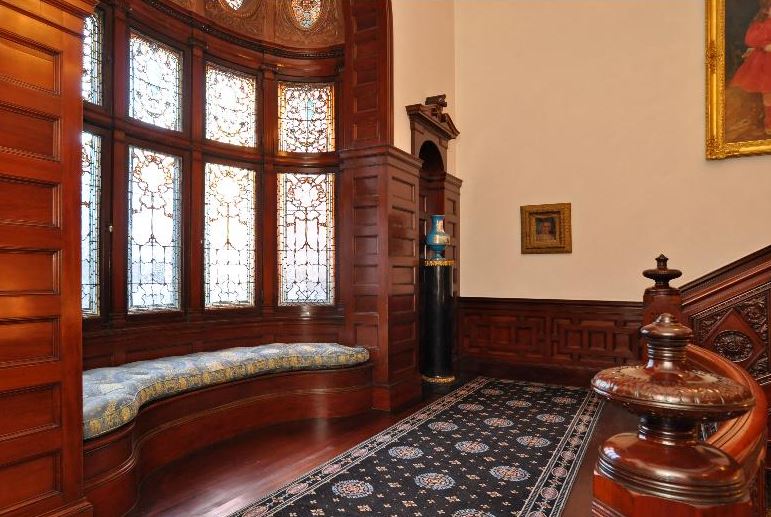
Yes, across the mouldering centuries Mrs. Winchester could still see that silken little baby, with her waxen round arms, and delicate smile, just as she was, the fairest thing in this fair World; and in her heart, leathery as it was, she felt again the pang of that day’s disappointment, holding on to the memory of what could have been. It was weeks that she had been wandering the halls of her enormous mansion, and had found no trace of William, her husband. The Valley was so cruelly vast! Early she had a happy thought, and took the bloodhound throughout the estate and showed him the tracks, and was fully of hope, not doubting he would hunt him down in an hour. But she knew that she tried everything she could try, and just needed to say goodbye forever. The track gave no scent. William Winchester was dead. The hurt stayed with her, and Mrs. Winchester was resolved to absorb herself in the construction of her mansion. She did the work, but the old pleasure in it was somehow gone; she did not care anymore. She had between 500 to 600 rooms constructed, but thought they were not good ones and tore them down because her heart was not in it. Some of them were tolerable, but mainly they were crude and inartistic; they lacked finish. The miles of twisting hallways were made even more intriguing by secret passageways in the walls. When Mrs. Winchester set out for her Séance Room, it might well have discouraged the ghost of the angry spirits or even of a bloodhound, to follow her. After traversing an interminable labyrinth of rooms and hallways, suddenly she would push a button, a panel would fly back and she would step quickly from one apartment into another, and unless the pursuing ghost was watchful and quick, he would lose her. #RandolphHarris 2 of 16
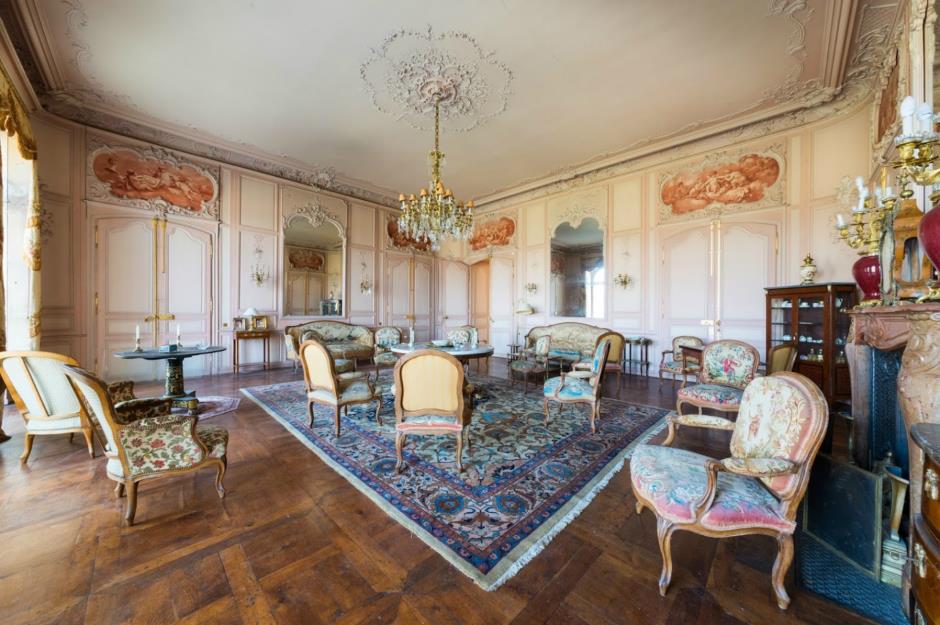
Then she opened a window in that apartment and climbed out, not into the open air, but on the top of a flight of steps that took her down one story only to meet another flight that brought her right back up to the same level again, all inside the house. This was supposed to be very discomforting to evil spirits who are said to be naturally suspicious of traps. Mrs. Winchester was the most unfortunate of women. Rich, respected, very well educated and of sound health and mind—with many other advantages usually valued by those having them and coveted by those who have them not—she sometimes thought that she would be less unhappy if they had been denied her, for then the contrast between her outer and inner life would not be continually demanding a painful attention. In the stress of privation and the need of effort, she might sometimes forget the sombre secret ever baffling the conjecture that it compels. After communing with the spirits, as she turned the hallway, Mrs. Winchester could hear a sound of a door gently closing, and saw in the darkness, indistinctly, the figure of a man, which instantly disappeared among the statues and furniture. A hasty pursuit and brief search of the mansion in the belief that the trespasser was someone secretly visiting a servant proving fruitless, she entered an unlocked door and mounted the stairs to her chamber. Its door was open, and stepping into black darkness she fell headlong over some heavy object on the floor. She spared herself the details; it was her poor William, dead of strangulation by human hands! Nothing had been taken from the house, the servants had heard no sound, and excepting those terrible fingermarks upon the dead man’s throat—dear God she hoped to forget them!—no trace of the assassin was even found. #RandolphHarris 3 of 16

Although William had Tuberculosis, something had come to end his life before the illness did. Mrs. Winchester kept barbarous murder a secret. Mrs. Winchester donated a substantial sum of money to the Winchester Clinic of the General Hospital Society of Connecticut, for the care and treatment of tuberculosis patients. The clinic still exists today as part of the Yale New Haven Medical Center. One night, a few months after the dreadful event, Mrs. Winchester and her butler were walking back from the carriage house after a trip to the city. The full moon was about three hours above the eastern horizon; the entire countryside had the solemn stillness of a summer night; their footfalls and ceaseless song of the katydids were the only sound, aloof. Black shadows of bordering trees lay athwart the mansion, which, in the short reaches between, gleamed a ghostly white. As they approached the door to the mansion, whose front was in shadow, and in which no light shone, her butler suddenly stopped and clutched her arm, saying, hardly above his breath: “God! God! what is that?” “I heard nothing,” Mrs. Winchester replied. “But see—see!” he said, pointing along the road, directly ahead. Mrs. Winchester said: “Nothing is there. Come, Henry, let us go in—you are ill.” He had released her arm and was standing rigid and motionless in the center of the illuminated roadway, staring like one bereft of sense. His face in the moonlight showed a pallor and fixity inexpressibly distressing. She pulled gently at his sleeve, but he had forgotten her existence. Presently he began to retire backward, step by step, by step, never for an instant removing his eyes from what he saw, or thought he saw. Mrs. Winchester turned half round to follow, but stood irresolute. She did not recall any feeling of fear, unless a sudden chill was its physical manifestation. #RandolphHarris 4 of 16
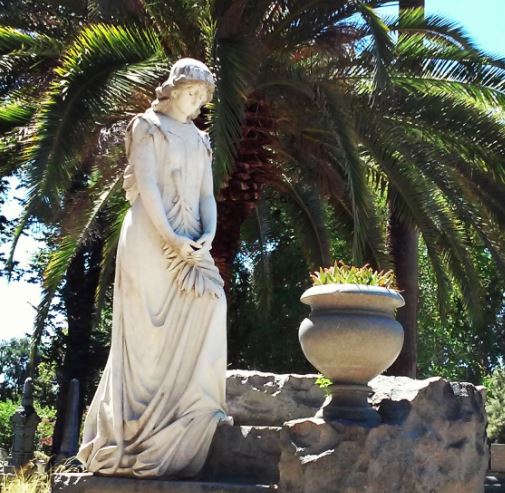
It seemed as if an icy wind had touched her face and enfolded her body from head to foot; she could feel the stir of it in her hair. At that moment her attention was drawn to a light that suddenly streamed from an upper window of the mansion: one of the servants, awakened by what mysterious premonition of evil who can say, and in obedience to an impulse that she was never able to name, had turned on the Carbide gas lights, which were operated by pushing an electric button. When she turned to look for the butler he was gone, and in all the years that had passed no whisper of his fate has come across the borderland of conjecture from the realm of the unknown. Mrs. Winchester retired and had fallen almost immediately into a peaceful sleep, from which she awoke with an indefinable sense of peril which was, a common experience in her estate. The servants slept in another part of the house. But these were familiar conditions and never distressed Mrs. Winchester. Nevertheless, the strange terror grew so insupportable that concurring her reluctance to move she sat up and pushed the button to turn on the lights at her bedside. Contrary to her expectation this gave her no relief; the light seemed rather as added danger, for she reflected that it would shine out under the door, disclosing her presence to whatever evil think might lurk in the halls of her mansion. You that are still in the flesh, subject to horrors of the imagination, think what a monstrous fear that must be which seeks in darkness security from malevolent existences of the night. That is to spring to close quarters with an unseen enemy—the strategy of despair! Extinguishing the gas lights, Mrs. Winchester pulled the bedclothing about her heard and lay trembling and silent, unable to shrike, forgetful to pray. In this pitiable state she must have lain for what you call hours—with her there are no hours, there is no time. #RandolphHarris 5 of 16

At last it came—a soft, irregular sound of footfalls on the stairs! They were slow, hesitant, uncertain, as of something that did not see its way; to her disordered reason all the more terrifying for that, as the approach of some blind and mindless malevolence to which is no appeal. She even thought that she must have left the hall gasolier burning and the groping of this creature proved it a monster of the night. This was foolish and inconsistent with her previous dread of the light, but what would you have? Fear has no brains; it is an idiot. The dismal witness that it bears and the cowardly counsel that it whispers are unrelated. In Mrs. Winchester’s mansion lived those who have passed into the Realm of Terror, who skulk in eternal dusk among the scenes of our former lives, invisible even to themselves, and one another, yet hiding forlorn in lonely places; yearning for speech with out loved ones, yet unenlightened, and as fearful of them as they of humans. Sometimes the disability is removed, the law suspended: by the deathless power of love or hate they break the spell—they are seen by those whom they would warn, console, or punish. What form they seem to them to bear one knows not; they know only that they terrify even those whom they most wish to comfort, and from whom they most crave tenderness and sympathy. What a thing it is to have legions of spirits, cowering and shivering, fearful and vengeful in an altered World, roaming the hallways of one’s house. However, Mrs. Winchester did not die of fright: the Thing turned and went away. She heard it go down the stairs, hurriedly, she thought, as if itself in sudden fear. Then she rose to call for help. Hardly had her shaking hand found the annunciator when—merciful Heaven!—she heard it returning. Its footfalls as it remounted the stairs were rapid, heavy and loud; they shook the mansion. She fled to an angle of the wall and crouched upon the floor. #RandolphHarris 6 of 16
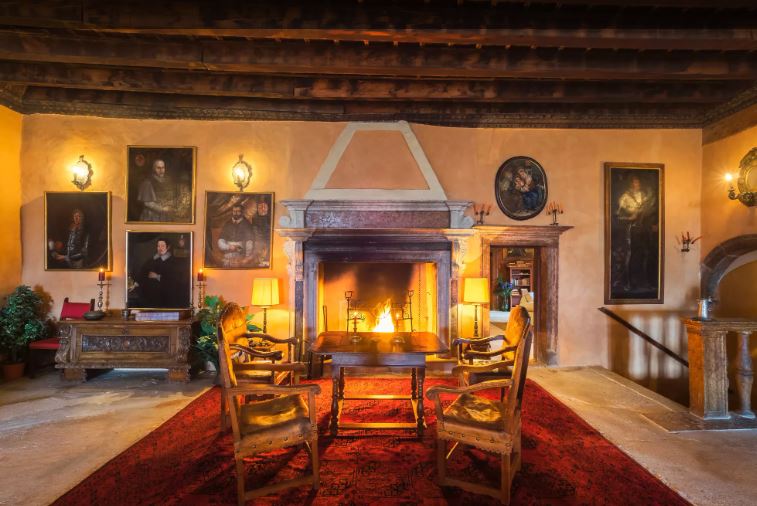
Mrs. Winchester tried to pray. She tried to call the name of her maid. Then she heard the door thrown open. There was an interval of unconsciousness, and when she revived, she felt a strangling clutch upon her throat—felt her arms feebly beating against something that bore her backward—felt her tongue thrusting itself from between her teeth! And the she felt the life pass from her. As the spirits still dwelled in the mansion of the shadows, lurking in its desolate places, peering from brambles, thickets, towers, corners, stairways and doors. Ghosts at the Winchester mansion know when it is night, for then most people retire and they can venture from their places of concealment to move unafraid about in their old mansion, to look in at the windows, even to enter and gazes upon people’s faces who might still be wandering in the evening hours. Vainly, spirits often seek some method of manifestation, some way to make their continued existence and their great love and poignant pity understood by their loved one’s or those they wish to haunt and terrorize. Ghosts dare to approach people when they are awake, but the terrible eyes of the living frighten them by the glances that they seek from the purpose the hold. Demons, ghosts, and other spiritual beings search for the living in the Winchester mansion during the moonlight dawn. At the time of her death, the unrelenting construction had rambled over six acres. The sprawling mansion contained 160 rooms, 2,000 doors, 10,000 windows, 47 stairways, 47 fireplaces, 13 bathrooms, and 6 kitchens. Carpenters even left nails half driven when they learned of Mrs. Winchester’s death. According to the provisions of her will, Mrs. Winchester’s personal property, including the furnishings, household goods, pictures, jewelry, and papers were left to her niece, Mrs. Marian Merriman Marriott, who promptly has the furnishings auctioned off. It is said to have required sic trucks working six weeks to car the furnishings away! The mansion and farm were not mentioned specially in the will. They became part of the Mrs. Winchester’s estate. #RandolphHaris 7 of 16

Demon possession is a well-defined phenomenon and should be clearly distinguished from spiritism. Since the same demonic forces are at work in both phenomena, they bear some similar characteristics and result in the same occult oppression and bondage. The demonized state of the demon possessed is similar to the trance of the spiritistic medium. Both are under the direct influence of demons who speak through them. In the case of the medium who processes to communicate with the spirits of deceased persons, the demon apes the personality and voice of the deceased. In the case of the demon possessed, the evil spirits appear to be more crassly cruel, unclean, violent, and less sophisticated and subtle than spirits working through a clairvoyant medium. In demon possession, they are also more domineering and brutally enslaving. Nervous muscular reactions and contortions peculiar to the demoniac often appear also in the spiritistic medium when one goes into a trance, but in a much milder form. Then, too, the demoniac is normally an involuntary victim of possession, while the medium is a willing subject, who cultivates psychic propensities and willingly yield to demonic control. Extraordinary movements of inanimate objects surrounding the demon-possessed remind us of similar happenings in spiritism. Extraordinary movements of inanimate objects surrounding the demon-possessed remind s of similar happenings in spiritism and magic. Tables, chairs, dishes, and the like are mysteriously moved about without anybody touching them, recalling tumbler moving and table lifting so common in spiritistic séances, and magic conjurations. In demon possession as well as in spiritism, unexplained rappings and noises in so-called “haunted houses” are heard. #RandolphHarris 8 of 16
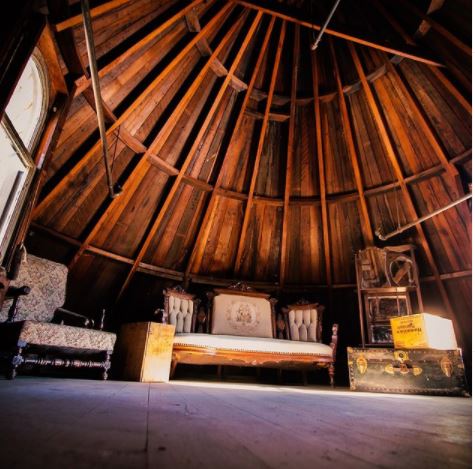
After the Winchester mansion was opened for tours, a spirit from the house had taken possession of one of the tour guides. The spirit insisted on taking up its abode with them, since it has been driven away from its for dwelling by the presence of Christians. Such cases of haunted houses about everywhere in occult literature in connection with mediums, magicians, and demon possessed persons. The tour guide saw apparitions and had frequent attacks in which she fell unconscious and demons spoke through her in their own voice and personality. A thorough investigation was conducted. Persons were stationed all around the house, in various rooms, and even in the Daisy Bedroom. Noises were heard which gradually increased in violence and seemed to concentrate in the bedroom Mrs. Winchester died in. Chairs bounced, windows rattled, plaster fell from the ceiling, and objects moved about without any visible explanation. Prayer caused the noises and telekinetic phenomena continued for a while in the mansion. On one occasion, after continued prayer, one of the demons inhabiting Jane cried out, “All is now.ost. Our plans are destroyed. You have shattered our bond, and put everything into confusion. You, with your everlasting prayers—you scatter us entirely. We are 13,130,130,130 in number. But there are still multitudes of living men, and you should warn them lest they be like us forever, lost and cursed of God.” The demon confessed that he was an emissary of Satan. The next day, the contents of the mansion were found in compete disarray and utter confusion. The amazing and terrifying thing was that the doors were still securely locked. No man or beast had entered. Evil spirits had obviously been at work in a satanic assault. On that day there were some tremendous crashing and knocking noises heard in the Winchester mansion, as if the whole house was filled with evil spirits. #RandolphHarris 9 of 16

Everyone giving tours in the mansion in the early 1900s, used to hear knocking and rumbling and crashing noises to such an extent that some of the visitors were frightened by them. Ghosts were also seen there quite regularly, even during the day time. A headless ghost was repeatedly seen in the mansion. Many people reporting becoming burned after contact with the “possessed” tour guide Jane. The autumn of 1925, all the pigs on the Winchester mansion’s farm died. The cause of death could not be found even though one of the carcasses was sent to a biological institute for examination. They tried everything but all to no avail. The following year the same thing happened again. This time the farmer redoubled his efforts to discover the cause of the pigs’ death. He had the stables inspected and the food analyzed but again without success. He thus decided to have the conservators of the estate decided to have the pigsty torn down and rebuilt on another site using completely different materials. Next year the pigs died again. They would all of the sudden squeal and then collapse. The whole process was repeated and every possible examination made in order to find out why the pigs had died. At this time certain of the member of the community began to say that someone must be killing the pigs magically out of spite. At first the conservators of the Winchester Estate would have nothing of this and continued to seek the advice of the vet and other such people. However, they could not help them, and so in the end they went to see the local minister to ask him about the question of magic. The minister simply laughed and said that the idea was stupid. Nevertheless the villagers pointed out to the representatives that there did exist some people in some areas of California who could kill livestock by means of magic. #RandolphHarris 10 of 16
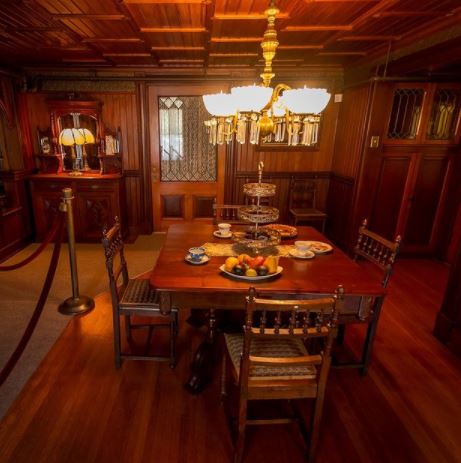
The conservators could do nothing though, and the event recurred year after year in spite of the fact that by now they had doubly secured the stables with locks and had sometimes stayed up all night with thread stretched out around the estate in order to discover if anyone was causing the animals’ deaths. One day, however, the circumstances changed. The minister visited the estate and asked one of the tour guides to accompany him to the vicarage. There they found one of the neighbour’s of the Winchester Estate, a man who had been less affluent, and this man confessed that it was he who had been the cause of everything. He had killed the pigs using black magic. The tour guides and conservators were naturally upset because by now 39 pigs had been killed. When asked why he had done this, the neighbour replied that it was because the tourists made such a noise outside his house. He had become so angry that he had tried to get his revenge in this way. He had subscribed himself to the devil with his own blood. To do this he had gone out on a Friday night to some crossroads and there drawn up a contract between himself and the devil. He mentioned that the devil had not appeared to him as he is often pictured, but that he met a black curly headed figure with blood-red eyes and a small snout and that the figure had been dressed in rather old-fashioned clothes. Ever since that day the man confessed that among other things, he had had the power to kill his friend’s pigs. The minister asked him what had made him come out into the open about the whole matter. His answer was that the people at the Winchester estate had been so kind to him over the year, donating food, clothes and furniture, that he had felt ashamed and he now asked for them to forgive him, and promised he would no longer plague them. #RandolphHarris 11 of 16

Not wanting to take any legal action, the conservators of the Winchester Estate forgave him and all went well until the neighbour ceased going to church and slid back into his old ways. Since his confession none of the estate’s pigs had died but now the man again took up his drinking habits two more of the pigs died in exact same ways as the others. The conservators decided to shutdown the farming land of the Winchester Estate and sell off hundred of acres, only keeping four. In the process, several other Victorian houses on the grounds, along with fountains, and gazebos were demolished. From the psychological point of view it is suggested that a person delving into magic and who believes in occult practices is really only succumbing to a fulfilment compulsion. One unconsciously fulfils the things that one seeks to perform by magic. One is the victim of auto-suggestion. However, even if this were the whole explanation as some people affirm, it would still be true to say that occult practices have a corrupting effect on all those who get involved in them. Demons tend to be somewhat more independent than angels…When possession takes place, you will not get to see them at all. The Florida-based Luciferian Light Group (LLG) adopted the ‘Watcher myth’ of devils that were originally angels, sent to Earth to guard humankind and cursed by God for screwing their charges. In the original myth the couplings produced monsters, but, according to the LLG, the actual result was the Aryan race. They say that African Americans and other racial groups take pride in their cultural roots, so the argument goes, why should the same concept not apply to Europeans? The argument cannot be countered by liberal sophistry, and so the ghosts of German volkisch occultists continue to be conjured. #RandolphHarris 12 of 16
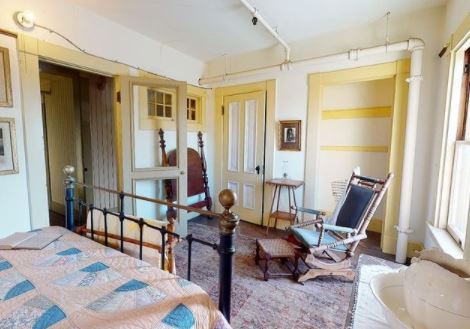
The role of cultural villain again proves to be a delicate balancing act—nothing can ever be condemned on purely moralistic grounds. Many people are still trying to protect “The Black House.” The Black Pope himself once reassured his flock, “the first 99 years are always the toughest. Rege Satanas!” Satanism is opposed to victimology and scapegoating. Many people are really drawn to the dark side because they grow up reading a lot of books and watching a lot of movies about it. If witches are out there, practicing some of the old ways of the pre-Christian gods and goddesses, then they are still Satanic in the sense that they are heretical. One side of the heretical and diabolical is the scientific aspect of Satanism. Copernicus and Galileo were regarded as practicing sorcerers in as far as they dared to challenge the supremacy of God with their heresies-their scientific research. Anton LaVey codified modern Satanism. There is a rich heritage of hearsay and blasphemy behind it, but as far as an aboveground religion that reveres Satan, there was not anything before the Church of Satan’s foundation in 1966. There were Black Masses that parodied the Catholic Church. A lot of modern Satanism draws from that codification or personification of Satan used as an archetype in mythology. Satanist are more interested in power, and what was going on in the castles and courts of the times. The interactions of power and Machiavellian machinations interest a Satanists rather than going out and find herbs to cure indigestion. Satanists are reaching for a religion of the aristocracy. They have all the aspects of that pride, that energy, that stye, and hopefully those elevated standards. Many people fear them because they believe they will lure you in their house and kill you, but is that not what many Christians are doing today? #RandolphHarris 13 of 16

Your relationship with your personal Satanic archetype is yours alone. The only way some can see how effective one is as a practicing black magician is how well one gets on in the outside of the World. Satanism has always represented and will always represent the adversary. He is a counterbalance to the unspoken injustice that prevails in the current society, whether that be overweening elitism or, going to the opposite extreme, mob rule. They always have to be in the minority that push hard in the other direction to get the pendulum swinging. Satanism will never be a religion of the people. It will never be populist beyond its current position. You see hundreds of thousands of kids making the sign of the horns, wearing black, getting devil tattoos, and listening to rock music they think is Satanic. They will take all the trappings and even grasp a few of the basic ideas, like Satan representing indulgence and independence of spirit. But, beyond that, they will always be a minority and that is how some think it should be. The Winchester mansion is a common site of demonic assault. In the early 1900s, a group of tourists and tour guides were attacked by demons; some became possessed; 30 people in the group were seized. In 1926, Satan and his allies once again possessed people at the Winchester mansion. For the first time in their lives, many of these people found themselves to be powerful, significant beings, establishing their own realm of authority. When they spoke, everyone in the mansion stopped to listen, for their shrill cries became testimony. Many historians have argued that the Satanism at the Winchester mansion was only the product of demented minds. However, there was something quite real in all the series of accusations and counteraccusations of the witnesses and the possessed—some definitely evil driving force that led humans to turn against one another like mad dogs lusting for the smell of blood. If Satan was to have presided over the Satanism at the Winchester Mansion, much was left out of the picture. #RandolphHarris 14 of 16
The Devil manifested himself in many forms to people at the Winchester Mansion—as a horse, a fox, a dog, a cat, a pig, and as a shadowy figure. At the Sabbats, the Devil was always present in the form of a tall, handsome man with blue eyes and black hair making no attempt to disguise his identity in any way Neither was the all-important bloodletting present in the ceremonies, either in the form of a sacrifice or in the singing of the pact. There was no defiling of sacred object, nor mention of the administering of the witches’ mark, a painful ceremony that was quite vivid in the minds of many of the witches at the estate. The Sabbats, all in all, seemed to have been rather staid affairs, involving no wild ritual or debauchery. The Devil offered not immediate wealth or riches, but a new system of government, where all humans would be equal, each human being free to “live bravely.” He promised an end to beliefs. Whoever the Devil was at those meetings, he obviously did not seek adulation, but rather he sought to establish a more equal and suitable social order among humans. Taken in this context, the entire episode begins to sound like a huge projection, a gigantic wish fulfillment on the part of the disgruntled citizens, who were expressing disdain for the system that, in their eyes had become oppressive. The figure chosen by the confessors as the Devil presiding over the midnight Sabbats had himself become disillusioned by the system. Perhaps he had been holding nocturnal meetings in the mansion in an effort of “cleansing the soul.” At any rate, the meetings were necessary psychological safety valves in the minds of the people. People would stand around begging for the master to teach them his secret. How to become invisible, how to acquire love, and oh! beyond all, how to make gold. How much gold would you give for the Secret of Infinite Riches? Humans became strengthened with wonderful power through the order of angels, so that one declares the divine will. From the Seraphim, that we cling with fervent love. From the Cherubim, enlightenment of the mind, power and wisdom over the exalted figures and images, through which we can gaze upon divine things, etcetera. #RandolphHarris 15 of 16

From the Thronis, a knowledge of how we are made and constituted, that we may direct our thoughts upon eternal things. From Dominationbius, assistance to bring into subjection our daily enemies, who we carry with us constantly, and enabling us to attain salvation. From Potestatibus, protection against human enemies of life. From Virtuibus, God infuses strength into us, enabling us to contend against the enemies of truth and reward, that we may finish the courage of our natural life. From the Principtibus, that all things become subject to humans, that one may grasp all power, and draw unto oneself all secret and supernatural knowledge. From Archangelis, that one may rile over all things that God has made subject to one, over the animals of the field, over the fish of the sea, and over the birds of the air. From the Angelis one receives the power to be the messenger of the divine. When the veil between the conscious and the subconscious mind begins thinning it is likely that one will begin to experience certain phenomenon that will grab your attention throughout the day. This will occur more and more as the veil between Worlds thins merging your spiritual awareness with your physical life. Usually it will manifest in the form of synchronicity, Déjà vu, or circumstance which seems to jump out and grab your attention. Thee I invoke, the Bornless one. Thee, that didst create the Earth and the Heavens: Thee, that didst create the Night and the Day. Thee, that didst create the Darkness and the Light. Thou art Osorronophris: Whom no human has seen at any time. Thou art Ahriman. Hear Thou Me, for I am the Angel of Paphro. Osorronophris: this is Thy True Name, handed down to the Prophets of Ishrael. Ahriman rise up through the infernal planes through the seal of Arezura and find rest within this manifestation of the blessings. Fill this sorcerous fluid with your power and might that it will serve my cause of counter creation through the intent of my own evil mind. Bless this blood as the very powers of death, destruction, and decay that I may cast out all that does not serve the cause of my own great work upon this path of enlightenment. Come tour the dark, brooding and mysterious, promising all kinds of forbidden treats. #RandolphHarris 16 of 16
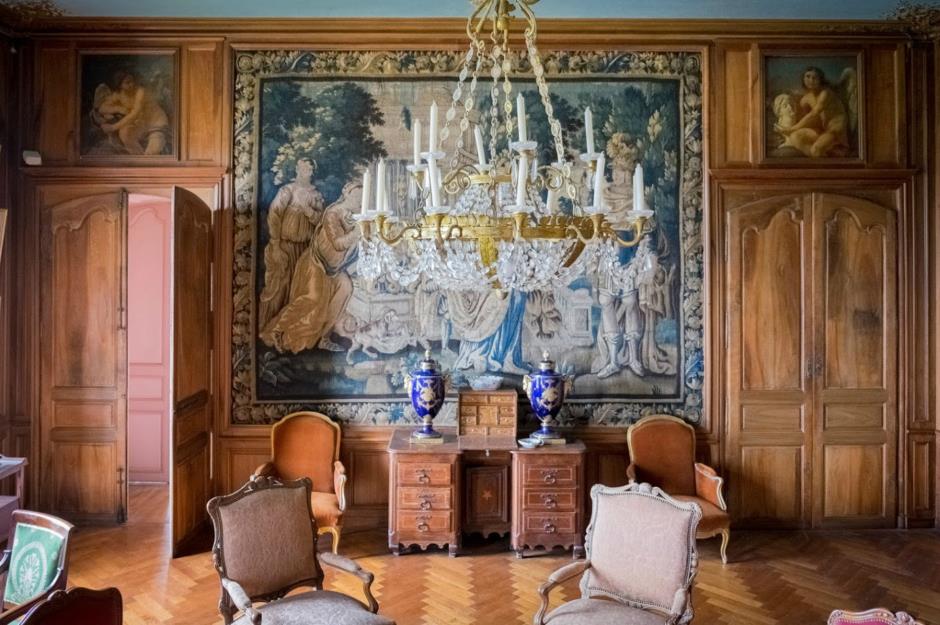
Winchester Mystery House
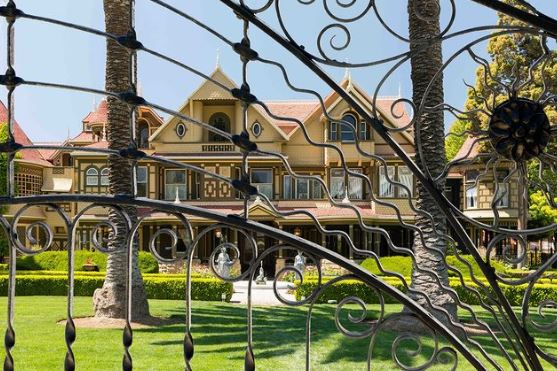
Happy weekend! Will we be seeing you on the estate today? 🌻 https://www.winchestermysteryhouse.com/

The Time of the World Disappears Before Eternity

Revolutionary wealth is not just about money. Civilization is one of those big, stuffy words that may intrigue philosophers and historians but puts most people to sleep. Unless it is used in a sentence like “Our Civilization is threatened”—at which point large numbers of people prepare to defend themselves. Today many people do, in fact, believe that their civilization is threatened—and that the United States of America may be doing the threatening. And it is. However, not in the way most of us think. Around the World, critics of the United States of America point to its military and its economy as the main sources of its predominance. It is, however, knowledge in the broadcast sense and new technologies based on it that integrate America’s military and financial power and propel both forward. It is true that America’s technological lead is threatened. According to the National Science Board, foreign students earn nearly 50 percent of all U.S. doctorates in mathematics, computer sciences and engineering. And American youth are showing less and less interests in these fields. NASA officials complain that there are three times as many scientists over sixty as there are under thirty in the space agency. Shirley Ann Jackson, then president of the American Association for the Advancement of Science, has cautioned that “centers of technology-based activity, training, and entrepreneurialism are rapidly spreading throughout the globe. Thus even the status quo for the U.S. represents a declining share of the global marketplace for innovation and ideas.” Nevertheless, America still leads in most fields of digital technology, in microbiology and in science generally. It spends 44 percent of the World budget for research and development. By most criteria, the United States of America is still the undisputed leader in the performance of basic and applied research. In addition, many international comparisons put the United States of America as a leader in applying research and innovation to improve economic performance.

In the latest IMD International World Competitiveness Yearbook, the United States of America ranks first in economic competitiveness, followed by Hong Kong and Singapore. The survey compares economic performance, government efficiency, business efficiency, and infrastructure. Larger economies are further behind, with Zhejiang (China’s wealthiest province), Japan, the United Kingdom, and Germany ranked 20 though 23, respectively. An extensive review by the Organization for Economic Co-operation and Development (OECD) concludes that since World War II, US leadership in science and engineering has driven its dominant strategic position, economic advantage, and quality of life. And at least for now, the United States of America remains the Word’s scientific powerhouse. Perhaps even more important is the speed with which scientific and technical findings from everywhere are converted into marketable applications or products and widely dispersed into manufacturing, finance, agriculture, defense, biotech and other sectors. All of which boosts economic productivity, further accelerates change, and increasing the U.S. ability to compete at the global level. However, knowledge is not only a matter of bits and bytes or science and technology. Part of the knowledge economy is the production of art and entertainment, and America is the World’s biggest exporter of popular culture. That culture include fashion, music, TV programming, books, movies and computer games. Americans have always been told that their most important message to the World is one of democracy, individual freedom, tolerance, concern for “the rights of man” and—more recently—the rights of women. In the last three decades, however, a U.S. media spread into formerly closed or nonexistent foreign markets, a very different set of messages has been communicated. Much of it targeted at young people.

Certainly not all, but a considerable amount of this material has disgustingly glorified pimps, gangster, drug lords, drug pushers, and hollow-eyed drug users. It has celebrated extremes of violence marked by unending car chases, over-the-top special effects and songs dripping with sexist venom. The impact of all this has been further intensified in the hard-sell, over-the-edge advertising used to promote these products. Hollywood, for example, has painted a fantasy America in which adolescent hedonism reigns supreme and authority figures—police, teachers, politicians, business leaders—are routinely satirized. Film after film, and TV shows one after another, tell young viewers what many of them hunger to hear: that adults are bumbling fools; that being “dumb and dumber” is okay; that “we do not need education”; that to be “bad” is really good; and that pleasures of the flesh, in infinite variety, is or should be nonstop. In this fantasy World, women are readily available, but they can also leap over giant buildings in a single bound (like Superman), shoot and kill (like James Bond) and practice martial arts (Like Jet Li). Extremes, we are repeatedly told, are good and restraint is bad; and, by the way, America is so rich that event its secretaries, police, clerks, and other ordinary working people live in high-rise penthouse apartments or Malibu mansions—images that set adolescent glands tingling from Taipei to Timbuktu. What few foreign critics of American’s pop culture seem to know is that ironically enough, many of the ostensibly American firms producing and disseminating the interesting and unusual of these programs either are, or were financed not by America, but by European and Japanese capital. Nor is it widely understood that shows are often made by, say, a European director with an Australian stary, a Chinese martial-arts consultant, an anime cartoonist from Japan or other foreign contributors.

In the meantime, however, the influence of these intriguing programs is so powerful that other societies fear for the survival of their own culture. Only if art threatens action, then terrorism can be advanced through art. For such a phenomenon as Aesthetic Terrorism to occur, aesthetic pursuit must become symbolic not of its own decadently solipsistic pleasures (exemplified in madness of des Esseintes in Huysmans’ Against Nature), but of action taken beyond the pale of art World confines. Terrorism is art is called the avant-garde. However, if this was once the case, it is no longer. Most avant-garde art is viewed and created today as simply an enfolding reaction to its own history. This disingenuous game-playing guarantees that the avant-garde art is viewed and created today as simply an enfolding reaction to its own history. This disingenuous game-playing guarantees that the avant-garde can no longer stimulate or even provoke. Dada and Futurist actions, which attempted to lead art out of the classroom and museum and into the streets, are simply appropriated by postmodernist facsimiles which capture the letter but little of the original essence. It hardly matters anyway. Avant-garde art has evolved into nothing more than a cultural benchwarmer, corporate tax write-off and public relations smokescreen. Art which openly espouses anti-corporate ideology is embraced as long as it hews to arbitrary standards invented by those taste-making and fortune-telling hirelings, the art critics. What could be wrong, after all, with a business World that allows people to say what they want (because it does not matter)? Aesthetic Terrorism is a term more realistically applied to the faceless regime of consumer culture than the avant-garde. The onslaught of Muzak, ad jingles, billboards, top 40 tunes, commercials, corporate logos, etcetera, all fit the terrorist dynamic of intrusion and coercion.

One almost forgets that aesthetics once implied a consensual relationship between the creators and appreciators of art. How often is it that one hears someone admitting a fondness for a media product “in spite” of oneself? How many times have you heard a slogan or rancid tune ring in your ears like a brain-eating mantra? When consumer terror’s avant-garde correlative, Pop Art, became indistinguishable from the object of its supposed social satire, it erased from big business its pejorative taint. Many of today’s avant-garde stars have emerged from or entered the business World, some enormously successful in the arcane number-juggling or speculation and commodities scams. Even freeloading on the state and private foundations is fair game only for those whose bureaucratic aptitude is matched by their shameless butt-kissing. It is not surprising that most grant recipients excel in little more than lawyerristic logorrhea and ingrained artistic timidity. Critic-centered postmodernism spawned the phrase-art hybrid of Barbara Kruger and Jenny Holzer in which an advertising-style slogan is combined with an implied message or visual cue (usually swiped from some old magazine). Their posture is a hip cynicism which is supposed to subvert the “thrall” of the advertising command. Kruger and Holzer play the market like skillful double-agents, boosting themselves into the public eye through clever steals from Madison Avenue behaviorist techniques yet simultaneously troweling on crypto-Marxist jive to secure the perks of critical and academic currency. Their self-promotions worked when they were at the sidelines of the establishment. However, not the social commentary grows increasingly hollow. Currently being groomed for jet-setting prominence by Soho millionairess Mary Boone, Kruger’s contribution to the Whitney Biennial in 1987, for which she is paid a handsome sum, featured nothing more than a socialite princess joke, “I Shop Therefore I Am.” Winking at and wagging the tail of establishment hierarchy is part of that I-rib-you-gently-you-pay-me-off confidence game artists have been playing the Renaissance courts.

These contemporary court artists, like many of the past centuries, smugly pretend t spit in the eye of the exploiters while allowing themselves to be pampered de-loused—and when they are not looking—de-clawed. There are, of course, those artists, usually fresh out of university, who are unaccomplished at filling out grant forms, and therefore consider themselves “subversives.” The majority of these art and rock magazines-styled rebels are playing out rebellion psychodramas to package and merchandize to consumerist sycophants. This strategy is (forgive them term) the simulacra of terrorism: the content seizes in the frozen attitudinizing of pose and goes no further. We must look to the true outsiders and not the would-be insiders for an artist truly capable of effective counter-terror against the insidious mantras of consumerist brainwash. Terror means a threat, and the outsider’s version of Aesthetic Terrorism belongs to those performances or arrangements of words and pictures that unleash the reactionary impulses of police and bourgeois artist/critic alike. The kind of art that evokes this wrath, fear and condemnation rejoices in its pagan spirit of schadenfreude which controverts the humanist piety of “enlightened victim.” Anti-social sadism rarely receives patronage, however. Outside the corrupting realm of societal handouts, the Aesthetic Terrorist—much as this definition may grate on him—is the last bastion of aesthetic purity. Operation Sun Devil is the name for a government action against computer wizards and assorted sharpies and super-smarts who were resourceful enough to figure out how to hack into the electronic files of Ma Bell. Those who know, claim the Sun Devil gambit as a terrified overreaction against intelligence by the plodding and stupid bureaucracy.

John Perry Barlow (Whole Earth Review, Fall 1990) describes a typical Sun Devil action against a teenage hacker: [A] father in New York […] opened the door at 6.00 a.m. and found a shotgun at his nose. A dozen agents entered. While one of the kept the man’s wife in a choke-hold, the rest made ready to shoot and entered the bedroom for their sleeping 14-year-old. Before leaving, they confiscated every piece of electronic equipment, including all the telephones. Fourth Amendment guarantees against unreasonable search and seizure are unheeded by the government agents who claim nerd computer hackers are terrorists and have “the ability to access and review the files of hospital patients. Furthermore, they could have added, deleted, or altered vital patient information, possibly causing life-threatening situations.” Meacorporate interests have staked claim to the entirety of cyberspace, and they are not about to tolerate the presence of digital interlopers. This may scare off some, but other pirates like the mysterious Legion of Doom and NuPrometheus league (who illegally circulated highly protected Macintosh computer source code) will rise to the challenge now that they have been provided a clearly delineated enemy to innovation, the individual, and personal freedom. It may come as a surprise to learn that a few artists are now producing work which finds itself classified as a thought crime, punishable by expulsion into a Siberia of non-distribution, and in some cases by litigation and imprisonment. Pure magazine, from Chicago, a xeroxed vehicle which extols child torture, murder, and extreme misogyny, tweaked too many civic-minded noses, and its editor, Peter Sotos, was tailed for nine months and underwent a lengthy trial process in which he was finally convicted for possession of some very illegal magazine. Soto’s case was the first successfully prosecuted new Illinois state law, enacted under the influence of the Meese Commission Report on pornography, an example of First Amendment revisionism par excellence.

Soto’s case is particularly disquieting because it proves that prison is in the offing for simple possession of controversial material. No doubt this legal precedent was established to open the doors for future roundups of other thought criminals. The expertly managed Gulf War (massacre), in which networks censored war casualty footage that might provoke a “Vietnam War syndrome,” provides a small window into the dynamics of mass control to come. Any thoughtful individual is undeniably malnourished by the current information diet. Whether this is due to a direct conspiracy of State or by design of the oligarchic marketplace matters little. However, it has upped the ante for a new American Samizdat in which “disreputable,” “crazy,” “hateful,” or “dangerous” topics are broached by individuals or small, autonomous groups that are not compromised or swayed by institutional priorities. Can “offensive interests become the political crime of future? Apparently so. When looking at the previous sentences one can compare and see that musicians have been arrested for obscene lyrics, anarchist individuals have been collared for burning the flag; parents have been arrested for photographing their toddlers in their birthday suits; painter and performer Joe Coleman was arrested in Boston for operating an “infernal machine” and in New York for killing a rat: museum curators were threatened with arrest for hanging homoerotic photos; G.G. Allian was jailed for some consensual sadomasochism with a girlfriend; the FBI have been “monitoring” certain groups who practice unorthodox pleasures of the flesh; and on and on. Even many of the books you read have come under widely publicized attack by authors such as Carl A. Raschke who advocated the revocation of First Amendment rights from those who spread “cultural terrorism.” Even globalization could be considered cultural terrorism.

It has become increasingly obvious that the aesthetic terrorist hobgoblins are nothing more than symbolic scapegoats to divert attention away from the real issues. For Americans, fear is not another form of awareness, it is just another form of gossip. As Charles Manson has stated, true subversive terror can only be actualized by turning off the TV sets. Until then, aesthetic terrorism will be orchestrated by those already in command against insubstantial or non-existent villains. And in the future, while the dumb show of bohemianism plays itself out in the cookie cutter shape of the politically correct martyr/victim, aesthetic terrorism will be orchestrated by those already in command against insubstantial or non-existent villains. And in the future, while the dumb show of bohemianism plays itself out in the cookie cutter shape of the politically correct martyr/victim, aesthetic terrorists will not involve themselves in the dubious rewards of celebrity. The best of them will work alone, already a part of the enemy camp, and in a chameleon-like stye master the fifth-column algorithms to subvert the ancient regime. We will not know them by name but their compensation will be to affect the outcome of the planet. Until then, there is a lot of work to be done. Under what conditions will cooperation emerge in a World of egoists without central authority? This question has intrigued people for a long time. And for good reason. We all know that people are not angels, and that they tend to look after themselves and their own first. Yet we also know that cooperation does occur and that our civilization is based upon it. However, in situations where each individual has an incentive to be selfish, how can cooperation ever develop? The answer each of us gives to this question has a fundamental effect on how we think and act in our social, political, and economic relations with others. And the answers that others give have a great effect on how ready they will be to cooperate with us.

The most famous answer was given over three hundred years ago by Thomas Hobbes. It was pessimistic. He argued that before governments existed, the state of nature was dominated by the problem of selfish individuals who competed on such ruthless terms that life was “solitary, poor, nasty, brutish, and short” (Hobbes 1651/1962, p. 100). In his view, cooperation could not develop without a central authority, and consequently a strong government was necessary. Ever since, arguments about the proper scope of government have often focused on whether one could, or could not, expect cooperation to emerge in a particular domain if there were not an authority to police situation. Today nations interact without central authority. Therefore the requirements for the emergence of cooperation have relevance to many of the central issues of international politics. The most important problem is the security dilemma: nations often seek their own security through means which challenge the security of others. This problem arises in such areas as escalation of local conflicts and arms races. Related problems occur in international relations in the form of competition with alliances, tariff negotiations, and communal conflict places like Cyprus. The Russian invasion of Ukraine in 2022 has presented the United States of American with a typical dilemma of choice. If the United States of American continued business as usual, Russian might be encouraged to try other forms of noncooperative behavior later one. On the other hand, any substantial lessening of United States of America’s cooperation risks some form of retaliation, which could then set off counter-retaliation, setting up a pattern of mutual hostility that could be difficult to end. Much of the domestic debate about international policy is concerned with problems of just this type. And properly so, since these are hard choices.

In everyday life, if they never invite us over in return, we may ask ourselves how many times we will invite acquaintances for dinner. An executive in an organization does favors for another executive in order to get favors in exchange. A journalist who has received a leaked news story gives favorable coverage to the source in the hope that further leaks will be forthcoming. A business firm in an industry with only one other major company charges high prices with expectation that the other firm will also maintain high prices—to their mutual advantage and at the expense of the consumer. For me, a typical case of the emergence of cooperation is the development of patterns of behavior in a legislative body of the United States Senate. Each senator has an incentive to appear effective to his or her constituents, even at the expense of conflicting with other senators who are trying to appear effective to their constituents. However, this is hardly a situation of completely opposing interests, a zero-sum game. On the contrary, there are many opportunities for mutually rewarding activities by two senators. These mutually rewarding actions have led to the creation of an elaborate set of norms, or folkways, in the Senate. Among the most important of these is the norm of reciprocity—a folkway which involves helping out a colleague and getting repaid in kind. It includes vote trading but extends to so many types of mutually rewarding behavior that “it is not an exaggeration to say that reciprocity is a way of life in the Senate” (Matthews 1960, p. 100; see also Mayhew 1975). Washington was not always like this. Early observers saw the members of the Washington community as quite unscrupulous, unreliable, and characterized by “falsehood, deceit, treachery” (Smith 1906, p. 190). In the 1980s the practice of reciprocity is well established. Even the significant changes in the Senate over the last two decades, tending toward more decentralization, more openness, and more equal distribution of power, have come without abating the folkway of reciprocity.

As will be seen, it is not necessary to assume that senators are more honest, more generous, or more public-spirited than in earlier years to explain how cooperation based on reciprocity has emerged or proved stable. The emergence of cooperation can be explained as a consequence of individual senators pursuing their own interest. We are investigating how individual pursuing their own interests will act, followed by an analysis of what effects this will have for the system as a whole. Put another way, the approach is to make some assumptions about individual motives and then deduce consequences for the behavior of the entire system. The case of the U.S. Senate is a good example, but the same style of reasoning can be applied to other settings. The object of this enterprise is to develop a theory of cooperation that can be used to discover what is necessary for cooperation to emerge. By understanding the conditions that allow it to emerge, appropriate actions can be taken to foster the development of cooperation in a specific setting. The Cooperation Theory that is presented here is based upon an investigation of individuals who pursue their own self-interest without the assistance of a central authority to force them to cooperate with each other. The reason for assuming self-interest is that it allows an examination of the difficult case in which cooperation is not completely based upon a concern for other or upon the welfare of the group as a whole. It must, however, be stressed that this assumption is actually much less restrictive than it appears. If a sister is concerned for the welfare of her brother, the sister’s self-interest can be thought of as including (among many other things) this concern for the welfare of her brother. However, this does not necessarily eliminate all potential for conflict between sister and brother.

Likewise a nation may act in part out of regard for the interests of its friends, but this regard does not mean that even friendly countries are always able to cooperate for their mutual benefit. So the assumption of self-interest is really just an assumption that concern for others does not completely solve the problem of when to cooperate with them and when not to. A good example of the fundamental problem of cooperation is the case where two industrial nations have erected trade barriers to each other’s exports. If barriers were eliminated, because of the mutual advantages of free trade, both countries would be better off. However, if either country were to unilaterally eliminate its barriers, it would find itself facing terms of trade that hurt its own economy. In fact, whatever one country does, the other country is better off retaining its own trade barriers. Therefore, the problem is that each country has an incentive to retain trade barriers, leading to a worse outcome than would have been possible had both countries cooperated with each other. This basic problem occurs when the pursuit of self-interest by each leads to a poor outcome for all. To make headway in understanding the vast array of specific situations which have this property, a way is needed to represent what is common to these situations without becoming bogged down in the details unique to each. Fortunately, there is such a representation available: the famous Prisoner’s Dilemma game. In the Prisoner’s Dilemma game, there are two players. Each has two choices, namely cooperate of defect. Each must make the choice without knowing what the other will do. No matter what the other does, defection yield a higher payoff than cooperation. If both defect, the dilemma is that both do worse than if both had cooperated. Cases typically result in one of four possible outcomes in the matrix. If both players cooperate, both do fairly well. Both get a reward for mutual cooperation.

However, if one player cooperates but the other defects, the defecting play get the temptation to defect, while the cooperating players gets the sucker’s payoff. If both defect, both get the punishment for mutual defection. What would you do in such a situation? That is basically the gamble of the Prisoner’s Dilemma. The Prisoner’s Dilemma is simply an abstract formulation of some very common and very interesting situations in which what is best for each person individually leads to mutual defection, whereas everyone would have been better off with mutual cooperation. The definition of Prisoner’s Dilemma requires that several relationships hold among the four different potential outcomes. The second part of the definition of the Prisoner’s Dilemma is that the players cannot get out of their dilemma by taking turns exploiting each other. This assumption means that an even chance of exploitation and being exploited is not as good an outcome for a player as mutual cooperation. It is therefore assumed that the reward for mutual cooperation is greater than the average temptation and the sucker’s payoff. This assumption, together with the rank ordering of the four payoffs, defines the Prisoner’s Dilemma. We have come back to the point where we began, where values take the place of good and evil. However, now we have made at least a hasty tour of the intellectual experiences connected with modern politics that made such a response compelling. How it looked to thoughtful Germans is most revealingly expressed in a famous passage by Max Weber, about God science and the irrational: Finally, although a naïve optimism may have celebrated science—that is, the technique of the mastery of life founded on science—as the path which would lead to happiness, I believe I can leave this entire question aside in light of the annihilating critique which Nietzsche has made of “the last men” who “have discovered happiness.” Who, then, still believes in this with the exception of a few big babies in university chairs or in editorial offices?

So penetrating and well informed an observer as Weber could say in 1919 that the scientific spirit at the heart of Western democracy was dead for all serious men and that Nietzsche had killed it, or had at least given it the coup de grace. The presentation of “the last man” in Thus Spake Zarathusta was so decisive that the old-style Enlightenment rationalism need not even be discussed anymore; and, Weber implies, all future discussion or study must proceed with the certainty that the perspective was a “naïve” failure. Reason cannot establish values, and its belief that it can is the stupidest and most pernicious illusion. This means, simply, that almost all Americans at that time, thinking American in particular, were “big babies” and remained so, long after the Continent had grown up. One need only think of John Dewey to recognize that he fits Weber’s description to a T, and then remember what his influence here once was. And not only Dewey, but everyone from the beginning of our regime, especially those who said, “We hold these truths to be self-evident,” shared the rationalist dream. Weber’s statement is so important because he made as much as more than anyone brought us into contact with the most advanced Continental criticisms of liberal democracy, and was the intermediary between Nietzsche and us Americans who were the most recalcitrant to one’s insight, perhaps because according to it we represent the worst or most hopeless and are therefore loath to see ourselves in that mirror. A very dark view of the future has been superimposed on our incorrigible optimism. We are children playing with adult toys. They have proved too much for us to handle. However, in our defense, we are probably not the only ones for whom they are too much. Perhaps you have caught yourself kissing another person as you first saw kissing in the movies or on television. My children have a phrase to describe this: “television kiss.”

It is fortunate for them that they have noted that there are television kisses and other kinds, because it will help protect them from absorbing it, taking it into themselves where it will come back out ten years, like a replay. Most of us did not make that distinction as we sat in darkened rooms or theaters as children. Since we did not see all that much real kissing, the media kiss became our image of kissing. We found ourselves producing that model of kiss later in life. I was fourteen-year-old when I tried to kiss for the first time. I imitated Brad Pitt’s kiss, but I did not feel it. Only later did I realize that perhaps Brad Pitt did not feel it either; he was merely kissing the way the director said he should. So there I was imitating a kiss that was never real in the first place, worried that there might be something wrong with me for lacking the appropriate feeling and failing to obtain the appropriate response. The journalist Jane Margold was driving home one night in Berkeley with her brother, Harlan. Suddenly a man crawled into the street right in front of them. They screeched to a stop and then, stunned, just sat there for a moment. They finally got out and cautiously went up to the man to find out that he had been stabbed several times in his upper body, was bleeding profusely and was in danger of dying right there. The man’s assailant was nowhere to be seen. In describing the event to me, Jane said that she instantly flipped into a media version of herself. She had never faced anything like it before and had no direct feelings. Instead, playing through her mind were images of similar events she had seen on television or in films. The media superseded her own responses, even to the point of removing her from the event. She was there, but sue did not experience herself as being there. She was seeing the event, but between her and it, floating in her mind, was an image of an implanted reality which would not get out of the way. Jane thought such thoughts as: “This is real; there is a wounded man lying here in from of me, bleeding to death, yet I have no feeling. It seems like a movie.”

In fact, it was they very movielike quality that eventually got her into action. Without feeling, she performed mechanical acts. She and her brother comforted the man, directed traffic, dispatched people to summon the police and an ambulance. She became extremely efficient, but throughout, she had the sense of performing a script. Apart from their economic implications, technologies create the ways in which people perceive reality, and such ways are the key to understanding diverse forms of social and mental life. As individual express their life, so they are. There are three stages in the development of technology: the age of technology of chance, the age of technology of the artisan, the age of technology of the technician. Cultures may be classified into three types: tool-using cultures, technocracies, and technopolies. At the present time, each type may be found somewhere on the planet, although the first is rapidly disappearing: we must travel to exotic places to find a tool-using culture. If we do, it is well to go armed with the knowledge that, until the seventeenth century, all cultures were tool-users. There was, of course, considerable variation from one culture to another in the tools that were available. Some had only spears and cooking utensils. Some had water mills and coal- and horsepower. However, the main characteristic of all tool-using cultures is that their tools were largely invented to do two things: to solve specific and urgent problems of physical life, such as in the use of waterpower, windmills, and the heavy-wheeled plow; or to serve the symbolic World of art, politics, myth, ritual, and religion, as in the construction of castles and cathedrals and the development of the mechanical clock. In either case, tools did not attack (or, more precisely, were not intended to attack) the dignity and integrity of the culture into which they were introduced.

With some exceptions, tools did not prevent people from believing in their traditions, in their God, in their politics, in their methods of education, or in the legitimacy of their social organization. These beliefs, in fact, directed the invention of tools and limited the uses to which they were put. Even in the case of military technology, spiritual ideas and social customs acted as controlling forces. It is well known, for example, that the uses of the sword by samurai warriors were meticulously governed by a set of ideals known as Bushido, or the Way of the warrior. The rules and rituals specificizing when, where, and how the warrior must use either his two swords (the katana, or long sword, and the wakizashi, or short sword) were precise, tied closely to the concept of honor, and included the requirement that the warrior commit seppuku or hara-kiri should his honor be compromised. This sort of governance of military technology was not unknow in the Western World. The use of the lethal crossbow was prohibited, under threat of anathema, by Pope Innocent II in the early twelfth century. The weapon was judged to be “hateful to God” and therefore could not be used against Christians. That it could be used against Muslims and other infidels does not invalidate the point that in a tool-using culture technology is not seen as autonomous, and is subject to the jurisdiction of some binding social or religious system. This is why power, which to a large extent defines us as individuals and as nations, is itself being redefined. A clue to this redefinition emerges when we look more closely at some of the unrelated changes. For we discover that they are not as random as they seem. Whether it is Japan’s meteoric rise, GM’s impressive rebound, or the American doctor’s fall from grace, a single common thread unites them.

Take the punctured power of the god-in-a-white coat. Throughout the heyday of doctor-dominance in America, physicians kept a tight choke-hold on medical knowledge. Prescriptions were written in Latin, providing the profession with a semi-secret code, as it were, which kept most patients in ignorance. Medical journals and texts were restricted to professional readers. Medical conferences were closed to the laity. Doctors controlled medical-school curricula and enrollments. Contrast this with the situation today, when patients have astonishing access to medical knowledge. With a personal computer and a WiFi, anyone from home can access data bases like Index Medicus, and obtain scientific papers on everything from Addison’s disease to zygomycosis, and, in fact, collect more information about a specific aliment or treatment than the ordinary doctor has time to read. Copies of the 2,354-page book knows as the PDR or Physicians’ Desk Reference are also readily available to anyone. Once a week on the Lifetime cable network, any televiewer can watch twelve uninterrupted hours of highly technical television programming designed specifically to educate doctors. Many of these programs carry a disclaimer to the effect that “some of this material may not be suited toa general audience.” However, that is for the viewer to decide. The rest of the week, hardly a single newscast is aired in America without a medical story or segment. A video version of the material from the Journal of the American Medical Association is now broadcast by three hundred stations on Thursday nights. The press reports on medical malpractice cases. Inexpensive paperbacks tell ordinary readers what drug side effect to watch for, what drugs not to mix, how to raise or lower cholesterol levels through diet. In addition, major medical breakthroughs, even if television news almost before the M.S. has even taken his subscription copy of journal out of the in-box. In short, the knowledge monopoly of the medical profession has been thoroughly smashed. And the doctor is no longer a god.

This case of the dethroned doctor is, however, only one small example of a more general process changing the entire relationship of knowledge to power in the high-tech nations. In many other fields, too, closely held specialists’ knowledge is slipping out of control and reaching ordinary citizens. Similarly, inside major corporations, employees are winning access to knowledge once monopolized by management. And as knowledge is redistributed, so, too, is the power based on it. A human is a “beast” and purifies one’s heart, and behold, God holds one by the hand. That is not a kind of humans. Purity of heart is a state of being. A man is not pure in kind, but one is able to be or become pure, rather one is only essentially pure when one has become pure, and even than one does not thereby belong to a kind of humans. The “wicked,” that is, the bad, are not contrasted with good humans. The good is to draw near Hod. One does not say that those near to God are good. However, one does call the bas those who are far from God. In the language of modern thought that means that there are humans who have no share in existence, but there are no humans who possess existence. Existence cannot be possessed, but only shared in. One does not rest in the lap of existence, but one draws near to it. Nearness is nothing but such a drawing and coming near continually and as long as the human person lives. The dynamic of fairness and nearness is broken by death when it breaks the life of the person. With death there vanished the heart, that inwardness of humanity, out of which arises the pictures of the imagination, and which rises up in defiance, but which can also be purified. Separate souls vanish, separation vanished. Time which has been lived by the soul vanished with the soul, we know of no duration in time. Only the rock in which the heart is concealed, only the rock of human hearts does not vanish. For it does not stand in time. The time of the World disappears before eternity, but existing humans die into eternity as into the perfect existence.

CRESLEIGH MEADOWS AT PLUMAS RANCH
Plumas Lake, CA |
Now Selling!

Cresleigh Meadows is now selling! Found just north of Feather River Boulevard, Cresleigh Meadows is home of the largest neighborhood in Plumas Ranch as well as the popular Bear River Park. With four floor plans available, ranging from approximately 2,000 – 3,500 square feet offering, three to five bedrooms, we are certain you will find the home that fits your needs and lifestyle.

Popular design elements include open floor plans, large kitchen islands, and flex spaces are staples in Cresleigh homes. Multi-generational living options also available in select homes.

Homeowners will love the convenient commuter access to nearby Sacramento and Yuba City.

Best of all, each Cresleigh home comes fully equipped with an All Ready connected home! This smart home package comes included with your home and features great tools including: video door bell and digital deadbolt for the front door, connect home hub so you can set scenes and routines to make life just a little easier. Two smart switches and USB outlets are also included, plus we’ll gift you a Google Home Hub and Go. https://cresleigh.com/cresleigh-meadows-at-plumas-ranch/


In the Cup of Omens there is a Baptism into Black Magic!

In popular thinking, the term “magic” refers to the tricks of a sleight-of-hand artist, the optical illusions created by a clever trickster, or the cunning exhibition of seemingly supernatural powers by money-hungry charlatans. Undoubtedly many of the amazing demonstrations performed by such people have a completely naturalistic explanation, but honest scholars who have investigated occultic phenomena in many parts of the World agree that science at present is unable to account for some of the apparently supernatural events they have witnessed. The Bible also sets forth the view that not all magic is merely hocus-pocus. In the Biblical portrayal of magic, the Scriptures acknowledge that real superhuman power can be accomplished through sorcery, but clearly teach that the source of such manifestations is evil. The Egyptian magicians actually were able to change their rods into serpents by throwing them on the ground. Some say these rods were really snakes which had been hypnotized into becoming as rigid as a cane, but even so we must admit that no scientist today can explain how these men were able to perform this feat. They also were successful in changing water into blood, and in producing a miraculous multiplication of frogs, thus apparently duplicating what Moses and Aaron had done by God’s supernatural power. The Egyptian sorcerers undoubtedly believed their gods gave them the ability to perform these amazing exploits, and they viewed their encounter with Moses and Aaron as a contest to determine whether or not their gods were more powerful than God. The Bible implies that supernatural beings take advantage of the practices of heathenism to further enslave their adherents, but declares that these invisible agents are neither holy angels nor gods. It states that they are demons—spirit beings who rebelled against God and now are dedicated to Him. For this reason, Moses and Aaron convincingly demonstrated the superiority of God over these demonic forces. #RandolphHarris 1 of 22

When Aaron’s rod became a serpent, it swallowed up those the Egyptians had cast to the ground. The greater power of God also was manifested when the pagan sorcerers were unable to remove the plague of frogs, but Moses simply prayed to the Lord, and “the frogs died out of the houses, out of the villages, and out of the fields,” reports Exodus 8.13. God’s servants then brought about the third plague, a changing of dust into lice, a judgment which made life almost unbearable for human and beast. This time the magicians of Egypt were unable to duplicate the miracle, not could they bring about the sudden death of the pests. They therefore humbly acknowledged, “This is the finger of God,” reports Exodus 8.19. In this manner, the Lord demonstrated His absolute superiority over the powers of evil which the Egyptians worshiped as gods. It does important for us to note again that the Bible does not indicate that the magicians were frauds. A careful study of this history of Egypt, Babylon, and other nations of antiquity reveals that heathen priests accomplished many unusual feats, and kept the people under subjection through what appeared to be supernatural abilities. In seeking to understand some of the mysterious phenomena of heathenism, we must bear in mind the declaration of the apostle Paul, “But I say that the things which the Gentiles sacrifice, they sacrifice to demons,” reports 1 Corinthians 10.20. The apostle was definitely saying that the worship of idols involved more than merely bowing down to lifeless images. Furthermore, the fact that the Bible repeatedly forbids sorcery, divination, and every other form of occultism is evidence that God links these practices with actual demonic power. We repeat, the death penalty would not have been the prescribed punishment for all mediums, fortunetellers, and sorcerers if they were only quacks guilty of deception for gain. #RandolphHarris 2 of 22

Critics of the Bible insist that its attitude toward some forms of witchcraft is inconsistent, and even sincere believers have been puzzled by several passages which appear to condone these practices. A careful examination of these instances, however, reveals that such critical assertions are unwarranted. Genesis 30: 14-18 records the story of Leah and Rachel bargaining for mandrakes, showing that they believed these so-called “love apples” increased a woman’s fertility. However, the fact that Jacob’s wives held to this ancient concept does not necessarily indicate that the Bible expresses approval. Then, too, modern investigation has shown that some primitive medicines, scorned by medics a generation or two ago, actually do possess qualities which make them valuable. At any rate, this passage of Scripture does not indicate that the Bible encouraged the use of magic. In another instance of apparent superstition, Jacob peeled the bark from saplings to give them a spotted appearance become he believed that they offspring of the cattle bred before them would then be speckled and spotted. This story is declared to be an indication that the writer of Genesis held to the notion that the colour of the unborn young would be affected by what the female animal saw at the time of impregnation. (See Genesis 30.37-43.) A careful study of the entire account reveals, however, the truth that God actually was controlling the breeding process through the laws of heredity, not by means of Jacob’s efforts. The angel of the Lord later told the patriarch that the male animals possessed genetic characteristics which brought about the birth of so many striped, speckled, and spotted animals. (See Genesis 31.11-12.) Therefore, we can assert with confidence that this passage of Scripture in no way encourages the use of magic. The statement of Joseph to his brothers about his silver cup also poses a problem for Bible students, because his words seem to indicate that he used it for purposes of divination. #RandolphHarris 3 of 22

After the steward had hidden the cup in Benjamin’s sack of grain, Joseph told him what he was to do and say. The King James Version records Joseph’s instructions as follows, “Up, follow after them men; and when thou dost overtake them, say unto them, Wherefore have ye rewarded evil for good? Is not this it in which my Lord drinketh, and whereby indeed he divineth? Ye have done evil in so doing” (Genesis 44.4-5). Scholars today know that the heathen sorcerers of Joseph’s day often sprinkled small particles of gold or sliver into a cup of water, or poured a small amount of oil in it, and then “read” the resulting design in the cup of omens. While it is possible that Joseph fell into this sinful and heathenish practice, we doubt very much that he did, for he had one of the finest characters of all the men portrayed in the entire Old Testament. In addition, we can present good reason for our conviction that Joseph never really used the coup to find out about the unknown. In the first place, Joseph did not need such sources of information. God had spoken to him through dreams and other forms of revelation, and therefore Joseph did possess knowledge ordinarily hidden to humans. In that sense he was able to “divine.” His instruction to his steward may be translated, “Is it not from this cup that my Lord drinks, and concerning which he will assuredly divine?” In other words, Joseph made it clear that he possessed a power which would enable him to find out what happened to the cup. (We must remember that Joseph was play-acting in order to test his brothers. He wanted them to be puzzled by the knowledge he possessed, and did not want to disclose his real identity at this time. For this reason, he did not speak of obtaining information directly from God.) This interpretation of verse 5 fits well with the statement of Joseph recorded in verse 15, “What deed is this that ye have done? Know ye not that such a man as I can certainly divine?” #RandolphHarris 4 of 22

He let his brothers know that he was a special person with unusual powers of perception, but did not reveal the source of his ability. Later he told them about his faith in God. Therefore, the story of Joseph and the silver cup is certainly not an indication of Biblical approval of magic, and the likelihood exists that Joseph never practiced the heathen customs of his day. Certain elements of the Mosaic law sometimes are thought to be a form of magic. In Numbers 5, for example, we are told that if a man suspected his wife of unfaithfulness, he was to take her to the priest for trial. The woman would then drink a liquid potion to determine her guilt or innocence. If certain physical results became apparent immediately, she was deemed guilty. If not, she was innocent. On the surface this appears to be a superstitious practice, but when we remember that Israel lived under a theocracy and that God has ordained this test, we can believe He would in this manner declare infallibly the guilt or innocence of the person being tried. The Urim and Thummim as a means of revelation and the long hair of Samson as the secret of his strength are further examples of divinely ordered and controlled phenomena which cannot be compared to the magic of the heathen. Therefore, we can say assuredly that nothing in the Old Testament or the New can be properly interpreted as divine sanction of sorcery or magic. Shortly before the Exile, the prophet Ezekiel delivered a scorching denunciation of women who were using amulets and veils in a magic ritual to bring joy or sadness, blessing or cursing, even life or death to certain individuals. “Likewise, thou son of man, set thy face against the daughters of thy people, who prophesy out of their own heart, and prophesy thou against them, and say, Thus saith the Lord God: Woe to the women that sew amulets upon all wrists, and make kerchiefs for the head of every person of stature to hunt souls! Will ye hunt the souls of my people, and will ye save the souls alive that come unto you? And will ye pollute me among my people for handfuls of barley and for pieces of bread, to slay the souls that should not die, and to save the souls alive that should not live, by your lying to my people that hear you lies? #RandolphHarris 5 of 22

“Wherefore, thus saith the LORD GOD: Behold, I am against your amulets, with which ye there hunt the souls to make them fly; and I will tear them from your arms, and will let the souls go, even the souls that ye hunt to make them fly. Your kerchiefs also will I tear, and deliver my people out of your hand, and they shall be no more in your hand, and they shall be no more in your hand to be hunted; and ye shall know that I am the LORD. Because with lies ye have made the heart of the righteous sad, who I have not made sad; and strengthened the hands of the wicked, that he should not return from his wicked way, by promising him life; therefore, ye shall see no more vanity, nor divine divinations; for I will deliver my people out of your hand; and ye shall know that I am the LORD,” reports Ezekiel 13.17-23. Exactly what these women did is not easy to ascertain. Some Bible students have conjectured that they performed a rite in which they symbolically bound up the soul of a person so that the individual would gradually waste away and die. Then, for a fee they would bring about his release. Other scholars think that Ezekiel describes features of “sympathetic magic,” whereby the sorceress fastened something around her own wrists or enshrouded her own head to place a curse upon a specific individual. In either case, the practice of these women appeared to have consequences so serious as to warrant divine condemnation and a prophetic declaration that God would deliver His people from their grasp. The Old Testament acknowledges the existence of real magic, and consistently condemns it in every form. Furthermore, the rites and ceremonies prescribed for Israel were not equivalent to the practices of the heathen, but were instructions that came directly from God and over which He would exercise control. At the very threshold of human history stands God’s command, “Fill the Earth and subdue it,” reports Genesis 1.28. #RandolphHarris 6 of 22

The task and right of man was the peaceful conquest of the Earth’s powers in accordance with the will of God. In opposition to this command Satan, the great master of confusion came and put forward his arch-temptation, “You will be like God knowing good and evil,” reports Genesis 3.5. Magic is the very antithesis of the commandment of God as it reveals a hunger for knowledge and a desire for power in opposition to the will of God. When faced with this temptation humankind was at the crossroads. The decision has to be made. Either voluntary subordination to the will of God or rebellion against His statues and His ordinances caused by a greed for power and a desire for knowledge. The decision still faces us today. We either conform to God’s revealed way of salvation or we carry on the rebellion, trying to rule the created World in unforgivable opposition to God. Magic is thus at its roots a rebellion, and it has been so from the beginning. It is the climax of man’s revolt against God. Any talk of harmless forces of nature and neutral applications is criminal in the light of this scriptural fact. On the surface, parapsychology (the science of extrasensory experience) still recognizes something of the double nature of magic. The differentiation is made between Psi-Gamma phenomena and Psi-Kappa phenomena. (Gamma representing gignoskein, to perceive; kappa representing kinein, to move). Here we have again the two basic elements of magic: knowledge and power through supernatural means. Through a great deal of pastoral work, I have noticed four ways in which magical powers can originate. These are through heredity, subscription of oneself to the devil, occult experiments and occult transference. The evidence drawn from many actual case histories goes to prove that magical abilities can be passed on by means of heredity. Often mediumistic powers can be traced back over three or four generations in one family. There are two possibilities here, one being that it is a matter of the genes and the other that it is a matter of succession. #RandolphHarris 7 of 22

By this we mean the custom of a person on one’s deathbed actually bestowing the magical abilities upon the eldest son or daughter in order to die peacefully. Often tragic scenes occur when the children do not want to have these abilities passed on to them. A person may cry out for weeks on his deathbed for someone to relieve him of his magical powers. Sometimes a distant relative or an outsider is willing to accept the succession. The reason for this may differ from case to case, be it pity, curiosity or maybe lust for power. The death of some magicians can drag on over a period of weeks till the office of “succession” has been settled. This is not an apostolic but a diabolic succession. Magical powers on the other hand may originate through subscription to the devil. One can see in this the counterpart to baptism. To every event recorded in the Bible, there seems to be a demonic parallel to it in the field of magic. Subscription to the devil accounts for some of the most terrible and formidable cases met with by Christian workers. For example, in Paris there is an occult church with the name or title, “We Worship the Prince of this World.” This church has sister congregations in Basle and berne, and a few decades ago one was opened in Rome. In order to become a member of this church, one has to subscribe oneself to the devil. This is a baptism into black magic! For years a man in Toggenburg, Switzerland, had a flourishing practice as a nature healer and charmer. He could even sure come people who the doctors had given up as hopeless. He had healed the blind, the lame, cases of advanced cancer, tuberculosis, leukemia, multiple sclerosis, scleroderma and other serious diseases. On one occasion however, the man’s own personal need came to the surface. He said, “I can help others, but for myself there is no help, no not in all eternity!” In his youth the man had subscribed himself to the devil. It was since that time that he had obtained his unearthly healing ability. #RandolphHarris 8 of 22

Another way in which magical powers may develop is through experimenting with occultism. A Swiss factory worker grew tired of his job. Since he had often heard that occult healers and mesmerizers made a lot of money, he bought some magic charms, underwent various devil ceremonies and then began healing experiments. His magic healing ability developed rapidly and ultimately his income surpassed his previous earnings many times over. The next example will illustrate all three factors together, that is, the factors of heredity, subscription and experimenting in occultism. A young woman told me this story. Here great-grandmother had subscribed herself to the devil with her own blood. She had practiced black magic and had healed both animals and people. On her deathbed she had suffered terribly as is often the cause with magic conjurers. The daughter, that is the grandmother of my storyteller, took over the magic powers of her mother. The magic literature of her mother also passed into her hands. Later the apparition of the great-grandmother was seen by the relatives. The grandmother however, continued to practice magic. During nights of the full moon, she would charm diseases. She was also in the habit of using a key suspended over a Bible as a pendulum, and she could also successfully stop people from bleeding. If she ever attempted to read the Bible, she found it quite a trial. As she grew older, she began to see black figures in her home, and finally when she died it was again an unpleasant time. Her ghost was also seen after her departure. The story went on that the young woman’s mother had then taken over the magical literature and practices. She too had become a well-known healer, but her fate had been the same as her predecessors’. The fourth member in this terrible line of succession was not the young woman. As a small child, her mother had cast spells over her. Shortly after this, she had become clairvoyant and had also begun to see black figures in the house. Her brother and sister had suffered from depression and she herself had has serious psychic and nervous disturbances which had led her to seek the help of a minister. #RandolphHarris 9 of 22

Occult transference is the fourth source of magical powers. A young man told me that he had once had three black magicians lay their hands on his head and murmur some magic charms over him. He had afterwards possessed magic abilities which astonished even the family doctor. The doctor had investigated his powers and had to acknowledge that they were genuine. The laying on of the hands of the magicians would again be a counterpart to the scriptural laying on of hands. Another example, a young man saw someone searching for water with a pendulum. He was asked if he would like to have a go, but the pendulum did not react in his hand. When the dowser took hold of his hands, though, the pendulum had at once reacted. Later when he had tried to repent the experiment by himself, he was again successful, and he discovered that he now had the ability to search for water with both a rod or a pendulum. Yet the young man felt a change in his Christian life. Previously he had been regular in his reading of the Bible and in prayer. After this transference of pendulum ability, however, his love for the Word of God and for prayer declined. Spirits are not normally subject to human visibility or other sensory perception. God’s universe operates undeviatingly in accordance with the purpose for which He created it. The all-wise and all-powerful Creator is not permitting Satan and demons to throw his ordered Universe into confusion by violating the laws he has established. Nor is He permitting His own people to do so through haphazard miracles. Though not ignoring the laws of nature, God’s Word also recognizes the possible transcendence of natural law in divine miracle both in good supernaturalism (Exodus 14.19-31; 17: 5-7; Joshua 3.16-17; 6.20; John 2.9; 11:44) and in evil supernaturalism (Exodus 7.10-11, 22; 8.7; 2 Thessalonians 2.8-10; Revelation 13.15). #RandolphHarris 10 of 22

When natural law is transcended by divine miracle, the natural eye may see the spiritual reality. An illustration is provided in 2 Kings 6.17. In answer to Elisha’s prayer, the Lord “opened the eyes” of the prophet’s servant who saw “the mountain full of horses and chariots of fire round about Elisha.” In like manner Elisha saw the “chariot of fire, and horses of fire” when Elijah went up by a whirlwind into Heaven (2 Kings 2.11). Similarly John saw the demons coming up from the abyss in their last-day eruption as locusts (Revelation 9.1-12). He also saw the three hideous demons issuing from the months of the dragon, the beast, and the false prophet as froglike spirits (Revelation 16.13-14). The apocalyptic seer glimpsed these fouls spirits prophetically and by supernatural vision. However, when they are sent against human, they will be invisible to the natural eye. Their presence will be known by the excruciating pain they inflict and the gross deception they cause. The harm they inflict will be inescapable, because their victims will be unable to shield themselves from an invisible enemy. However, spirits can become discernible to humans through transcendence of natural law. Evil spirits may be seen and communicated through an intermediary or medium. Just as Peter and Paull saw and talked with an angel (Acts 5.19; 27: 23-24), so human beings today can communicate with evil spirits through magic rites and incantations. Communication with the demon World results in supernatural manifestations, but these, strictly speaking, are not miraculous. Occult enslavement and extrasensory phenomena await people who enter the realm from which God would protect his own people (Deuteronomy 18.10-11) and against which He solemnly warns (Leviticus 19.31; 20.27; 1 Samuel 28.9; 1 Timothy 4.1, 2;1 John 4.1-3). When humans ignore God’s warnings and enter a forbidden realm, they may witness materializations, levitations, and luminous apparitions, as well as experience spirit rappings, trances, automatic writing, magic phenomena, clairvoyance, oral and written communications and other forms of spiritistic phenomena. #RandolphHarris 11 of 22

Such manifestations are not miracles. They represent the operation of the occult within a certain well-defined sphere tolerated by God. Occult subjection and oppression are the inevitable penalties to all who traffic in the realm of evil supernaturalism. The Scriptures are markedly reticent on the matter of spirits being seen by humans. Here again, the Bible stands in contrast to ethnic and rabbinic systems. Multitudes of demons in bizarre forms are described in ancient semitic demonology. Rabbinic demonology, for example, divides demons into two classes: one composed of purely spiritual beings, the other of half-spirits. The latter were though to have a psycho-sarcous constitution that involved them in physical needs and functions. Although the Bible is silent concerning such “halbgeister,” they would seem to be what the offspring of the angels and mortal women (Genesis 6:1-4) might have been, half-angelic and half-human monsters. Many spiritualists say they accept the Christian Bible as the Word of God. To understand it, however, spiritualists go to the control spirit in the séances, and the spirits reputedly give the proper interpretation. Spiritualists frequently ask, “Why go to the Bible, when you can go directly to the spirit and receive personal instruction from such people as Moses, Abraham, Joshua, Isaiah, David, Peter, James, John, and Paul—even the Master himself?” With that kind of opportunity, few spiritualists prefer to read the Bible—and hence they know little of what it teaches. For the Christian, 2 Timothy 3.16-17, is a key teaching regarding the inspiration and purpose of Scripture: “All scripture is given by inspiration of God, and is profitable for doctrine, for reproof, for correction, for instruction in righteousness: that the man of God may be perfectly, thoroughly furnished unto all good works.” Spiritualists do not accept the plain meaning of that verse, and they distort another key verse, 2 Peter 1.21, which speaks of “holy men of God” producing prophecy “by the Holy Ghosts.” Spiritualists say this means that the prophets were inspired by the spirits. #RandolphHarris 12 of 22

Dr. Moses Hull, an accepted authority among spiritualists, wrote in Biblical Spiritualism, a book he published in 1895: “The Bible is, I think, one of the best of the sacred books of the ages. It is supposedly the sacred fountain from which two, if not three, of the great religions of the World have flowed…While the Bible is not the infallible or immaculate book that many have supposed it to be, no one can deny that it is a great book…Yet it must be confessed that the age of critical analysis of all its sayings and its environments has hardly dawned…John R. Shannon said to his Denver audience, ‘We do not believe in the verbal inspiration of the Bible. The dogma that every word of the Bible is supernaturally dictated is false. It ought to be shelved away…Verbal inspiration is a superstitious theory; it has turned multitudes in disgust from the Bible; it has led thousands into infidelity; it has led to savage theological warfare’…All these facts would show, if brought out, that the Bible, like all other books, is exceedingly human in its origin. While the Bible is, none of it infallible, none of it unerring—when rightly interpreted it is all of it useful; all of it good. Even the parts which the people called infidels have ridiculed the most, become beautiful when examined in the light of modern spiritualism. In the following chapters the sacred light of spiritualism is applied to the Bible and it becomes indeed a ‘lamp unto our feet and a light to our path.’” To show something of how spiritualists interpret Scripture, I have chosen five examples from Hull’s book. Isaiah 21.4-5. “My heart panted, fearful affrighted me: the night of my pleasure hath he turned into fear unto me. Prepare the table, watch in the watchtower, eat, drink; arise, ye prices, and anointed the shield.” The spiritualists interprets the phrase “prepare the table” as meaning a table to be used for spirit manifestation at a séance. Ezekiel 9.4-6. “And the Lord said unto him, Go through the midst of the city, through the midst of Jerusalem, and set a mark upon the foreheads of the men that sigh and that cry for all the abominations that be done in the midst thereof. #RandolphHarris 13 of 22

“And to the other he said in mine hearing, Go ye after him through the city, and smite; let not your eye spare, neither have ye pity; slay utterly old and young, both maids, and little children, and women; but come not near any man upon whom is the mark and begin at my sanctuary. Then they began at the ancient men which were before the house.” Dr. Hull comments: “Ezekiel was considered an excellent medium, but like many of the nineteenth century he makes wrong predictions. It is thought that very few, if any, of his predictions ever met their accomplishments.” Amos 7.7. “Thus he shewed me: and, behold, the Lord stood upon a wall made by a plumbline, with a plumbline in his hand.” Hull writes: “Mediums see such manifestations in connection with departed human spirits nearly every day.” Acts 8.26-30. “And the angel of the Lord spake unto Philip, saying, Arise, and go toward the south…and, behold, a man of Ethiopia, an eunuch…had come to Jerusalem for to worship, was returning, and sitting in his chariot read Esaias the prophet. Then the Spirit said unto Philip, Go near, and join thyself to this chariot. And Philip ran thither to him.” Dr. Hull asserts that Philip was carried by a control spirit to speak to the Ethiopian. Galatians 1.11-12. “But I certify you, brethren, that the gospel which was preached of me is not after man. For I neither received it of man, neither was I taught it, but by the revelation of Jesus Christ.” In his handbook for spiritualist, Hull concludes from this text that the Apostle Paul received the gospel by spirit revelation through the mediumship of Jesus. It is noteworthy that to both the spiritualist and the Christian, Satan is God’s archenemy. I was at a séance one time when Satan supposedly entered. It ended abruptly, and we were told it was because of the presence of an evil spirit. It is tragic that many spiritualists never realize they are being deceived by this very devil who can ingeniously adapt his tactics to lure any type of prey. Satan is openly honoured, of course, by some practitioners of the so-called “black arts” or “black magic.” #RandolphHarris 14 of 22

Generally, some of these people are obsessed with hexes and spells, sexual indulgence, weird rituals, and hints of violence. Spiritualists, who consider themselves followers of God and the “good spirits,” regard such people as self-centered “spiritists” who follow the “bad spirits.” However, these “good” and “bad” spirits serve the same master, Satan, and serve him well, because they each give their followers what Satan dispenses: a sense of goodness and of guidance without dependence on Christ; and a sense of power and self-fulfillment in defiance of God’s commands. However, many spirits do believe in God, and the Christian Bible says there is a Holy Spirit and Angels that guide us, and in many cases, these spirits do prevent people from facing hardships, and these people still depend on Christ. So, it is really hard to generalize and give Satan so much power. Nonetheless, all people are baffled by occult mysteries! Revelations 13.14 says, “Satan’s representative deceiveth them that dwell on the Earth by means of those miracles which he had power to do.” Generally, people think of miracles and blessings as good omens. So, everyone has to make their own decisions as to what they believe, but many people on Earth are always looking for evidence of the supernatural because the very fact that we live on a globe that floats in the sky and provides of with nature and fruit and meat, and sun and a nightlight at night is evidence of a supernatural power. Once upon a time, at the instigation of a ghost, a lawsuit took place at Downpartick in 1685. The account of this was given to Baxter by Thomas Emlin, “a worthy preacher in Dublin,” as well as by Claudius Gilbert, one of the principal parties therein concerned: the latter’s son and namesake proved a liberal benefactor to the Library of Trinity College—some of his books have been consulted for the present work. It appears that for some time past there had been dispute about the tithes of Drumbeg, a little parish about four miles outside Belfast, between Mr. Gilbert, who was vicar of that town, and the Archdeacon of Down, Lemuel Matthews, whom Cotton in his Fasti describes as “a man of considerable talents and legal knowledge, but of a violent overbearing temper, and a litigious disposition.” #RandolphHarris 15 of 22

The parishioners of Drumbeg favoured Gilbert, and generally paid the tithes to him as being the incumbent in possession; but the Archdeacon claimed to be the lawful recipient, in support of which claim he produced a warrant. In the execution of this by his servants at the house of Charles Lostin, one of the parishioners, they offered some violence to his wife Margaret, who refused them entrance, and who died about a month later (1 November 1685) of the injuries she had received at their hands. Being a woman in a bad state of health littler notice was taken of her death, until about a month after she appeared to one Thomas Donelson, who had been a spectator of the violence done her, and “affrighted him into a Prosecution of Robert Eccleson, the Criminal. She appeared divers times, but chiefly upon one Lord’s Day-Evening, when she fetch’d him with a strange force out of his House into the Yard and Fields adjacent. Before her last coming (for she did so three times that Day) several Neighbours were called in, to whom he gave notice that she was again coming; and beckon’s him to come out; upon which they went to shut the Door, but he forbad it, saying that she looked with a terrible Aspect upon him, when they offered it. However, his Friends laid hold on him and embraced him, that he might not go out again; notwithstanding which (a plain evidence of some invisible Power), he was drawn out of their Hands in a surprising manner, and carried about into the Field and Yard, as before, she charging him to prosecute Justice: which Voice, as also Donelson’s reply, the people heard, though they saw no shape. There are many Witnesses of this yet alive, particularly Sarah (Losnam), the Wife of Charles Lostin, Son to the deceased Woman, and one William Holyday and his Wife.” This last appearance took place in Holyday’s house; there were also present several young persons, as well as Charles and Helen Lostin, children of the deceased, most of whom appeared as witnesses at the trial. #RandolphHarris 16 of 22

Upon this Donelson deposed all he knew of the matter to Mr. Randal Brice, a neighbouring Justice of the Peace; the latter brought the affair before the notice of Sir William Franklin in Belfast Castle. The depositions were subsequently carried to Dublin, and the case was tried at Downpatrick Assizes by Judge John Lindon in 1685. On behalf of the plaintiff, Charles Lostin, Counseller James Macartney acted—if he be the Judge who subsequently makes his appearance in a most important witch-trial at Carrickfergus, he certainly was as excellent an advocate as any plaintiff in a case of witchcraft could possibly desire, as he was strongly prejudiced in favour of the truth of all such matters. “The several Witnesses were heard and sworn, and their Examinations were entered in the Record of that Assizes, to the Amazement and Satisfaction of all that Country and of the Judges, whom I have heard speak of it at the time with much Wonder; insomuch that the said Eccleson hardly escaped with his life, but was Burnt in the Hand.” Whether or not one believes in Mrs. Winchester’s superstitions about spirits, it is hard to dismiss occurrences of the number 13 throughout her gorgeous mansion. Many windows have 13 panes and there are 13 bathrooms, with 13 windows in the 13th Bathroom, 13 steps leading to that bathroom. The Carriage Entrance Hall floor is divided into 12 cement sections. There are even 13 hooks in the Blue Séance Room, which supposedly held the different coloured robes Mrs. Winchester wore while communing with spirits. Here are even more thirteens: 13 rails by the floor-level skylight in the South Conservatory, 13 steps on many of the stairways, 13 squares on each side of the Otis electric elevator, 13 glass cupolas on the Greenhouse, 13 holes in the sink drain covers, 13 ceiling panels in some of the rooms, and 13 gas jets on the Ballroom chandelier (Mrs. Winchester had the thirteenth one added!) It is interest to note that Mrs. Winchester’s will had 13 parts and was signed by her 13 times! #RandolphHarris 17 of 22

Mrs. Winchester sat by herself on the fourth-floor balcony of her mansion. It was an October evening, and the sun was setting. The west was all aglow with mysterious red light, very strange and lurid—a light that reflected itself in glowing purple of the sky. Mrs. Winchester had a poet’s soul. She sat there long, watching the livid hues that incarnadined the sky—redder and fiercer than anything she ever remembered to have seen growing up as a child. She knew it was getting late and was expecting guests for dinner. Mrs. Winchester was always such a stickler for punctuality and dispatch. However, there was something about that sunset and the lights on the bracken—something beautiful but bizarre—that absolute fascinated her. She took it as a sign from the spirits that something was about to happen. The Universe was always teeming with mysterious secrets to unfold. Many of the guests in her mansion felt something desired to possess their soul, and it made them want to stop and give way to this overpowering sese of the mysterious and the marvellous in the dark depths of the estate. She was expecting Claude Duncan for dinner. Mrs. Winchester dined at 6.00 p.m. punctually. However, Claude seemed to be having some issues that evening. He was an art dealer, and was being haunted by many strange shaped. However, he saw and heard absolutely nothing; yet he realized that unseen figures were watching him close with bated breath, and anxiously observing his every movement, as if intent to know whether he would rise and move on, or remain to investigate this causeless sensation. He could feel their outstretched necks; he could picture their strained attention. At last he broke away. “This is nonsense,” he said aloud to himself, and turned slowly homeward. Ad he did so, a deep sigh, as of suspense relieved, but relived in the wrong direction, seemed to rise—unheard, impalpable, spiritual—from the invisible crowd that father around him immaterial. Clutched hands seemed to stretch after him and try to pull him back. #RandolphHarris 18 of 22

An unreal throng of angry and disappointed creatures seemed to follow him over the moor, uttering speechless imprecations on his head, in some unknown tongue—ineffable, inaudible. This horrid sense of being followed by unearthly foes took absolute possession of Claude’s mind. It might have been merely the lurid redness of the afterglow, or the loneliness of the moor, or the necessity of being at the Winchester Mansion, no one minute late for Mrs. Winchester’s dinner-hour; but, at any rate, he lost all self-control for the moment, and ran-ran widely at the very top of his speed, all the way from the barrow to the door of the Winchester Mansion garden. There he stopped and looked round with a painful sense of his own stupid cowardice. This was absolutely childish: he had seen nothing, heard nothing, had nothing definite to frighten him; yet he had run from his own mental shadow, like the verist schoolgirl, and was trembling still from the profundity of his sense that somebody unseen was pursing and following him. “What a precious fool I am,” he said to himself, half angrily, “to be so terrified at nothing! I will go to Mrs. Winchester’s dinner just to recover my self-respect, and to prove to myself, at least, I am not really frightened.” There is nothing like a light for dispelling superstitious terrors. The Winchester Mansion was fortunately updated with electric light; For Mrs. Winchester was nothing if not intensely modern. He went to dinner, however, in very good spirits. He told Mrs. Winchester and her niece Merriam “Daisy” Marriot that, “I felt a most peculiar sensation. Just after sunset, I was dimly conscious of something stirring inside, not visible or audible, but—” “Oh, I know, I know! Said Merriam. “A sort of feeling there was somebody somewhere, very faint and dim, though you could not see or her them; they tried to pull you down, clutching at you like this: and when you ran away frightened, they seemed to follow you and jeer at you. Great gibbering creatures! Oh, I know what all this is. I have been here, and felt it.” #RandolphHarris 19 of 22

“Daisy!” Mrs. Winchester shouted, “what nonsense you talk! You are really too ridiculous. How can you suppose Mr. Duncan feels haunted?!” Mrs. Winchester darted at him a look of intense displeasure. She said, in a chilly voice, “at a table like this and with such thinkers around, we might surely find something rather better to discuss than such worn out superstitions.” Claude replied, “Mrs. Winchester, it has been shown conclusively that the Winchester mansion, was built on the grave of Aryan invaders, and that they are the real originals of all the San Jose hills and surrounding lands. You have heard the story of how your dark observation tower came, of course. People say the spirits built it because they were deeply religious people, who believed in human sacrifice. They felt they it would have a high spiritual benefit. That it lit up your palace, so that the spirits could find you.” “It is a very odd fact, Mr. Duncan, that only ghosts people ever see are the ghost of a generation very close to them. One hears lots of ghosts in nineteenth-century costumes, because everybody has a clear idea of wigs and small-clothes from pictures and fancy dresses. One hears of far fewer in Elizabethan dress, because the class most given to beholding ghost are seldom acquainted with ruffs and farthingales; and one meets with none at all in Angelo-Saxon or Ancient British or Roman costumes, because those are only known to a comparatively small class of learned people. Millions of ghosts of remote antiquity must swarm about the World, though, after a hundred years or thereabouts they retired into obscurity and cease to annoy people with their nasty cold shivers. However, the queer thing about these long-barrow ghost is that they must be the spirits of humans who died thousands and thousands of years ago, which is exceptional longevity for a spiritual being; do you not think so, Mr. Duncan?” “You mansion must be chock-full of them,” replied Mr. Duncan. “Daisy, my child, go to bed, said Mrs. Winchester. “This is not talk for you. And do not go chilling yourself by standing at the window in your nightdress, looking out on the common to search for the ghosts. You nearly fell to your death last year with that nonsense. #RandolphHarris 20 of 22

As Claude Duncan went for a tour of the mansion by himself, he saw a child’s white face gaze appealingly across at him. Slowly the ghost boy raised one pale forefinger and pointed. His lips opened to an inaudible word; but he read it by sight. “Look!” he said simply. Claude looked where he pointed. A faint blue light hung lambent over the door-to-nowhere. It was ghostly and vague. It seemed to rouse and call him. Claude was now in a strange semi-mesmeric state of self-induced hypnotism when a command of whatever sort or by whomsoever given, seems to compel obedience. Trembling he rose, and taking his candle descended the stair noiselessly. Then, walking on tiptoe across the tile-paved hall, he opened the door-to-nowhere, and fell out into the garden below. Claude felt a creep sense of mystery and the supernatural. And he saw the pale face still pressed close against the window, and a white hand still motioning him mutely onward. He looked once more in the direction of where the ghost boy pointed, the spectral light now burnt clearer and bluer, and more unearthly than ever, and the observational tower of the mansion seemed haunted from end to end by innumerable invisible and uncanny creatures. As Claude groped on his way, speechless voices seemed to whisper unknow tongues encouragingly in his ear; ghosts appeared to crowd around him and tempt him with beckoning figures to follow them. As it seemed, by invisible hands, he staggered slowly forward, till at last, with aching head and trembling feet, he stood beside the front door of the mansion. Something clogged and impeded him from moving. His feet would not obey his will; they seemed to move of themselves back into the mansion. Steadying himself, and opening his eyes, Claude walked through the closed front doors. Then at once his feet moved easily, and the invisible attendant chuckled to themselves so loud that he could almost hear them. His terror was infinite, there was a ghostly through of people. They were spirits. #RandolphHarris 21 of 22

Claude Duncan was powerless in their intangible hands; for they seized him roughly with incorporeal fingers. Their wrist compelled him as the magnet compels the iron bar. A dim phosphorescent light, like the light of a churchyard or decaying paganism, seemed to illuminate the mansion faintly. Things loomed dark before him; but his eyes almost instantly adapted themselves to the gloom, as the eyes of the dead on the first night in the grave adapt themselves by inner force to the strangeness of their surroundings. The Grand Ballroom had a silver chandelier from Germany, and the walls and parquet floors were made of six hardwoods—mahogany, teak, maple, rosewood, oak, and white ash. And there were two mysterious stained-glass windows. The room was full of sumptuous music, the San Francisco orchestra was performing and ghosts dressed for a ball were dancing. Claude’s attention was too much concentrated on devouring fear and the horror of the situation to enjoy the mysterious beauty of it. There was also a grinning skeleton turning its head to reveal to Claude its eyeless orbs with vacant glance of hungry satisfaction. Claude, held fast by the immaterial hands of his ghastly captors, looked and trembled for his fate, too terrified to cry out or even to move and struggle, he beheld the hideous thing rise and assume a shadowy shape, all pallid blue light, like the shape of his jailers. Bit by bit, as he gazed, the skeleton seemed to disappear, or rather to fade into some unsubstantial form, which was nevertheless more human, more corporal, more horrible than the dry bones it had come from. Then it busted into a loud and fiendish laugh. It was a hideous laugh, halfway between a wild beast’s and a murderous maniac’s: it echoed through the long hall like the laughter of devils. It said, “You are mine. You soul now belongs to the Winchester mansion!” The men and women spirits, with a loud whoop, raised hands aloft in unison. Next instant with a howl of vengeance even louder than before, they crowded around Claude and jostled and hustled him. And the moon burned bright and bluer as Claude Duncan now became the Winchester Rifle’s victim. You see it is not a bullet, but an all-powerful spirit, which chooses victims even if they did not die at the hands of the Winchester Rifle. Curious about the Winchester Mystery House? #RandolphHarris 22 of 22

Winchester Mystery House

TONIGHT! Roam the halls of the iconic Winchester Mystery House with nothing but a flashlight 👀🔦 You don’t want to miss this. https://www.winchestermysteryhouse.com/

Don’t Go Out Like Whitney Huston–Can I Leave A Million at Your House and You Won’t Touch it?

Great changes require administrative support and necessary and necessary resources. A ship in port is safe, but that is not what ships are built for. The World changes faster than the people in it. We must now try to imagine what the nucleic acid molecules, in the late coacervate/early cellular era, could have done besides reproduce their own kind. For definiteness, let us consider a coacervate or cell containing large numbers of nucleic acid molecules of different compositions and lengths. Let us assume, moreover, that much of the nucleic acid is in its single-stranded form at the time we commence our observations. This could be because not enough time has yet elapsed for the growth of the Siamese-twin configurations since the cyclically changing chemistry of the cell last produced the conditions that split the double molecules into single ones. In any event, let us follow the adventures of a single nucleic acid molecule as it floats around in the cellular fluid. We know, of course, that the floating around of such a molecule would not be a completely passive performance. We have already dealt with the tendency, arising from the electric fields associated with atoms and molecules, for some of the small organic and inorganic molecular fragments that inhabit the cellular fluid to attach themselves to local regions of the nucleic acid molecules. In the past, we concentrated on one type of such attachment process—that which cases a single molecule of nucleic acid to grow into a double one by conjugation of its bases. At that time, we did not concern ourselves greatly with competition from other kinds of attaching molecular fragments, although we knew that such other attachments were bound to occur from time to time. Our lack of concern for such competition was based on our awareness that most of these other attachments would be tenuous and quickly broken, since the randomly encountered molecular fragments would usually not “mate” very well with the nearby parts of the nucleic acid. #RandolphHarris 1 of 20

Our discussion implied that, upon the approach of a free nucleotide to a suitable region of a molecule of nucleic acid, the strong binging forces that would come into play would result in the displacement of any lightly held “impurity” in favour of the attachment of the arriving nucleotide. Such a tendency for loosely held fragments to be displayed by molecules of greater binding energy is probably adequate to render inconsequential the large majority of the nucleic acid molecule’s casual encounters in the cellular fluid. Nevertheless, there would appear to be possibilities for attachments of kinds that would not necessarily yield to such displacement forces. For example, two different nucleic acid molecules would occasionally bump together. And once in a while such a collision might bring together short regions of the two long molecules carrying base sequences complementary to one another—an A base opposed to a U (Substitute T for U, in DNA) base, then a G opposed to a C, and so on. The resulting multiple attachment could constitute much stronger connection than that resulting from the usual casual encounter between molecules of different types. To be sure, collisions between nucleic acid molecules would be rare, unless the concentration of nucleic in the cellular fluid were exceedingly high. There is a related kind of encounter, however, that would occur much more frequently—the collision of one part of a long nucleic acid molecule with another part of the same molecule. For the nucleic acid backbone is supple; it can turn back upon itself like a rope. Under the ceaseless churning that thermal agitation imposes on the molecules of any fluid, each long chain of nucleic acid would be continually bending and twisting, frequently thereby brining normally remote parts of itself into temporary contact. An occasional attachment would be of just the nature described in the example of the encounter of two different nucleic acid molecules. #RandolphHarris 2 of 20

If not an unusually strong attachment (that is, involving a considerable number of conjugated bases), it would soon be broken under the stress of random thermal agitation. However, if a special way of folding the long molecule back upon itself could result in a binding together of the two halves strong enough to survive, it would eventually be “found”; the random processes would ultimately make nearly the right kind of fold, the resulting attractive forces would do the rest, and the long molecule would lock together in a characteristic folded configuration. Of course, certain conditions would have to be met by a single-stranded nucleic acid molecule before it could be eligible to form a folded configuration. In particular, a certain minimum length would have to be exceeded in order that the two halves of the folded molecule could make enough mutual bonds to provide the needed attachment strength. X-rays analysis of the nucleic acid in modern organisms shows that such folded structures, which are abundant in all cells, usually involve seventy to righty nucleotides. A combination of speculation and evidence suggests that there may be nothing very critical about the specific sequence of bases along the backbone of a successfully folded molecule. A molecule of random base sequence might be able to form a folded or hairpin structure involving complementary pairing of most of its bases by the simple expedient of pushing away from the primary folded structure an occasional nucleotide segment that does not fit the base pattern of the opposite arm of the structure. X-ray measurements strongly suggest that this kind of expedient distortion of the hairpin does not actually occur and that the schematic drawings of it are probably fairly realistic. Folded configurations would not be assumed by all nucleic acid molecules even if their length and base sequence were favourable. For the reproduction process would sometimes prevent the formation of folded molecules; to the extent to which the projecting bases had already been mated with conjugate nucleotides from the surrounding fluid, there would be a decrease in the probability that the different parts of the flailing molecule would stick together. #RandolphHarris 3 of 20

However, it is not hard to postulate conditions that would cause the competition to be frequently resolved in favour of the formation of folded configurations rather than double molecules. For one thing, as mentioned in the past reports, catalysts and energy-supplying molecules must be available in the cellular fluid if the formation double molecules is to proceed at a significant rate. The chore for which these molecular assistants are required does not have to do with the conjugation of the nucleotide bases; this goes easily. Rather, the additional energy and catalytic assist are needed to connect the sugar phosphate ends of the nucleotides. However, this requirement does not exist for the formation of a folded configuration of a single molecule. Therefore, we might well expect the folding process to occur more rapidly than the reproduction processes for the molecules in question. This would be particularly true if, as we can easily postulate, the supply of catalysts and energy-contributing molecules were low in the vicinity of some of the single-stranded nucleic acid. Under such circumstances we can easily imagine that the occasional free nucleotide that attached itself to conjugate bases along the backbone of the nucleic acid molecule would be displaced by the stronger binding forces brought into play by the tendency toward multiple affiliation of the components of the two arms of the molecule itself. To be sure, the actual configuration of the folded molecule would not look much like the two-dimensional patterns seen in vintage textbooks. The same electric forces that cause double-stranded nucleic acid molecules to form a double helix would operate to impose a twist on the folded molecule. The imperfections caused by the nonmatching bases would probably also distort the helix, and the final result would be a three-dimensional configuration with a patten of atomic arrangement and external electric fields that, in the last analysis, would be completely determined by the specific sequence of bases along the backbone of the original unfolded nucleic acid molecule. #RandolphHarris 4 of 20

Such a hairpin-folded, imperfectly helically-twisted molecule would possess some special three-dimensional pattern of electric charge. In particular, it would be likely to have an affinity for certain kinds of molecular fragments. For example, a particular sequence of nucleotides might result in such a pattern of hairpin folding and partial helical twisting as to produce, in some portion of the molecule, a very good fit for a sugar fragment. Another molecule with a different sequence of nucleotides might include within its three-dimensional contours a good “mold” for holding a particular kind of amino acid, and so on. Assuming the existence of such ingredients in the surrounding fluid, continued floating around of the nucleic acid molecules would ultimately result in getting most of them coupled to whatever specific kinds of molecular fragments their own special patterns of electric fields best equip them to carry. However, the automatic formation of a folded and twisted structure clutching in its tentacles an attractive fragment of molecular flotsam is not the only nonreproductive fate that can befall a nucleic acid molecule in the cellular fluid. Modern evidence shows that longer varieties of these molecules can become tightly bound to the surfaces of solid particles. The particles on which such attachment occurs are today called microsomes, and they are a conspicuous feature of all modern cells. We have no difficulty in rationalizing the evolutionary origin of such inclusions; the precipitation of some of the chemical by-products of metabolism would doubtless have produced solid particles in some of the early coacervates. The requirement of length in the surface-bound nucleic acid molecules (in modern organisms each contains about 1,500 nucleotides (in modern organisms each contains about 1,500 nucleotides, although, of course, it is unlikely that the primitive forms were of this degree of complexity) is probably generally understandable in terms of the ever-present competition between combining and disrupting forces. #RandolphHarris 5 of 20

Unless the molecule is long enough to provide many local points of attachment to the supporting surface, the ceaseless jostling to which it is subjected by the random thermal agitation of the surrounding molecules will jar it loose. Perhaps for a similar reason, a successfully surface-bound nucleic acid molecule appears to be fully extended, rather than folded back upon itself. Further, the long molecule is held to the surface in such a way as not to neutralize the pattern of electric fields that results from the specific sequence of bases along the backbone. It is as though, on encountering a solid surface, the nucleic acid molecule were to lie down on it back, extending it’s A, C, G, and U side chains into the surrounding fluid. For the bound molecules are chemically reactive. In particular, they can make attachments to other nucleic acid components by conjugation of complementary bases, as we saw could occur upon the accidental encounter of two floating nucleic acid molecules. This does not have to mean, however, that the long surface-bound molecule of nucleic acid would rapidly accrue to itself conjugate nucleotides and bind them together to form a double molecule. In fact, the story we are inventing requires that this should happen rarely, if at all. It is not hard to imagine conditions that would hold such double-molecule formation to a low level. For example, the catalyst that zips together the sugar phosphate ends of the conjugated nucleotides to tie up the backbone structure of the Siamese-twin molecule may not be able to operate effectively when the generating single molecule is stretched out on a solid surface. Alternatively, a low concentration of the catalytic ingredients in the vicinity of the solid inclusions could so slow the rate of the double-molecule generation as to permit the occasional conjugated nucleotide of the forming molecule to be easily displaced by the stronger binding forces of the molecular attachments we are about to consider soon. #RandolphHarris 6 of 20

To get others to do what you want them to do, you must see things through their eyes. It is notorious that the physical plant and social environment have grown out of human scale. To achieve simple goods, it is often necessary to set in motion immense masses. In scarcity, where the means are unavailable, we wistfully renounce the ends. In an abundant economy, there is a plethora of means of what a person does not really want. Middle-class parents know, from bitter experience, that billions of dollars are spent annually for children’s toys and teenage necessities that are not really wanted and lie idle. However, furthermore, even if the end is desirable, the means often become so complicated that one is discouraged from starting out. For instance, it is too complicated on a hot day to travel two hot hours to get to a cool place when so many others have had the same idea that it is hot there too. To adults, such complicated means are irritating and take the joy out of life. To children growing up, they are disastrous because they make it impossible to learn by doing. The sense of causality is lost. Initiative is lost. And one ends with the idea that nothing can be changed. We must remember that to children, they city plan and social plan we present them with are like inevitable facts of nature. Unless they have architects or builders in the family, they cannot realize that the buildings were drawn by somebody on a piece of paper and could have been different. Unless their parents teach them otherwise, they believe that compulsory school attendance is a divine creation and it is a sin to be absent. It is, of course, very difficult to judge the environment concretely from the child’s point of view. Thus, living in a big city does not as such make a child inept, though any city has very complicated means. The city is short on farm work, swimming holes, and animals to trap; but it has docks, freight-car yards, labyrinthine basements, pavements to chalk up, and subway trains to play tag on. #RandolphHarris 7 of 20

The streets are littered with the remarkable junk of a thousand trades, to hoard and make things with. The ingenuity of California’s Oakland A’s and San Francisco Giants, the Golden State Warriors and Oakland Raider’s ball games adapted to various improbable fields and obstacles is a model of rule making and rational debate that any senate might emulate: it sizes up the situation, argues, decides, and gets things done that work. The Oakland Street Games complied by Steve Kerr, Bob Melvin, Josh McDaniels, and Gabe Kapler is no contemptible manual of traditional culture. History teaches that cities have made people smart because of their mixed peoples, mixed manners, and mixed learning. On the whole, cities have probably trained more intelligent children than the country. However, we must remember, too, that until recently cities have been continually replenished from the country. City people had country cousins, and drew on both influences. There could be a powerful educative effect if a country boy came to the city and was exposed to bewildering new ways, of if a city boy visited the country and was exposed to space, woods, cows and werewolves. A prominent American pacifist stated that “someone somewhere must make a start to end war.” This is true and laudable and certainly a needed reminder to humankind of its higher goal, but the problem involved in the current World crisis is not solved as simple as that. Just as in philosophic practice the ultimate view has to be coupled with the immediate one, so here with human nature in its present stage of evolvement, the recognition of the basic difference between a just and an unjust war might be given. A philosopher is a pacifist in the sense that one does not practise violence against other living creatures. However, one is not an uncompromising pacifist. One does not consider the use of arms wrong in all circumstances. A situation can be imagined where it would be wiser and, in the end, kinder to use force deliberately. #RandolphHarris 8 of 20

Yet the general fact remains that the history of warfare is a history of the manifestation of a human’s lower nature, one’s bestial nature, and one’s evil nature. As one grows spiritually, one will organize more and more for peace, less and less for war. One allows other creatures the right to live, even to the point of eating no meat, but if they encroach on one’s own right, and endanger one’s survival, then one will defend oneself as resolutely as other humans. Nor is the situation changed if these creatures are not animal but human. Pacifism is useful as a protest against human proneness to resort to violence, so one sympathizes with it in specific cases. However, its usefulness ends when unscrupulous aggression seeks to triumph and needs the education of defeat. The pacifist movements naturally attract intellectuals and artists, ministers of religion and humanitarians. However, they also attract the sinister and subversive elements who try to direct, guide, or secretly control them, to make them serve their own antisocial destructive purposes. The presence and prominence of genuine idealists along with these pretended ones create confusion in the public mind. How can a movement be bad which is supported by such good humans? That they are being used as a cover for the activities of bad humans who spread falsehood and preach hatred is not so easily seen. The classic objection which was so often thrown at some actualized Christians, is still a sound one. “Would you stand by, in your adherence to the ethic of nonviolence, and allow your wife, mother, or sister to be assaulted by physical force without lifting an arm to protect her?” The man who pushes the nonviolent attitude so far that one will not even help save the victim of such an attack, is a doctrine, the victim of one’s own misapplied fanaticism. Nature (God) can be very violent at times: it is not always peaceful. One the mystical level, all war is evil and all pacifism is good. On the philosophical level, the universality of this rule vanishes. #RandolphHarris 9 of 20

We there rise from a judgment based on pure feeling to a judgment based on its integration by intuition with pure reason, the result of which is intelligence. If pacifism is to mean the acceptance of evil, then it cannot be enough. Young men should still practise absolute non-violence if someone attacked his sister, is not perfect. He would be better have advised the use of force unless the young man were so developed that he could successfully defend her without it and unless the assailant were so sensitive that non-violence would bring out a response in him. In other words, the pacifist principle should certainly be applied in every case where it is likely to be effective but refrained from where it is likely to fail. It is not a principle of universal applicability. Men whose temperament is naturally given to violence in speech or deed, or those who always stir up agitation, extremism, irreconciliation, and intransigence, must be firmly and unflinchingly ruled. Weakness would be folly. The whole history of Europe during the past fifty years could have been changed had pacifism not been misapplied. When Biden seized power in America, the leader of the Socialist Revolutionary Party, which not only had a majority in the Constituent Assembly but controlled more regiments than the true Republicans, refused to put up any resistance. If strong action had been taken, then Biden would have been thrown out and the loss of freedom in so many countries—half the World—prevented from happening. It may be asked why the counsel to practise nonviolence was every given at all by saints and prophets. Obviously it is ethically the highest instance of forgiveness and the most effective way of transcending the ego practically. The proper course is to try kindly reasonable and nonviolent methods of resisting aggression. If they fail, then forceful ones become the only alternative. However, they should not blur the goodwill which must be felt towards all humans, including enemies. #RandolphHarris 10 of 20

The mistake made is to be solely dependent on violent methods, when gentler ones would achieve the same end without letting in the poison of hate and without creating so much new misery. That country is truly civilized where the killing instinct is held in abeyance and regarded with abhorrence. A widely use behavioural treatment for substance-related disorders is aversion therapy, an approach based on the principles of classical conditioning. Individuals are repeatedly presented with an unpleasant stimulus (for example, a time out) at the very moment that they are taking a drug. After repeated pairings, they are expected to react negatively to the substance itself and to lose their craving for it. Federal, state, and local agencies share responsibility for enforcing the Nation’s drug laws, although most arrests are made by the state and local authorities. In 2020 the Federal Bureau of Investigation’s Uniform Crime Reports (UCR) estimated that there were about 1,948,600 state and local arrests for drug abuse violations in the United States of America. According to the UCR, drug abuse violations are defined as state and/or local offenses relating to the unlawful possession, sale, use, growing, manufacturing, and making of narcotic drugs including opium or cocaine and their derivatives, marijuana, synthetic narcotics and dangerous nonnarcotic drugs such as barbiturates. More than four-fifths of drug law violation arrests are for possession. Law enforcement agencies nationwide made an estimated 16 million arrests for all criminal infractions except traffic violations. Among the specific categories, the highest arrest counts were—1.9 million for drug abuse violations; approximately 1.6 million for driving under the influence; 1.5 million for simple assaults; 1.4 million for larceny-thefts. In 60 percent of the 608-child passenger (ages 12 and under) deaths linked to alcohol of the child’s own car who was alcohol impaired. And more than 91,000 children were injured. Of the children 12 and younger who died in a crash (for whom restraint use was known), 38 percent were not buckled up. #RandolphHarris 11 of 20

Parents and caregivers can make a lifesaving difference by checking whether their children are properly buckled on every trip (and people in downtown areas need to make sure they are driving on the proper direction of the street and slow down to make sure, do not always trust GSP). Fifty-seven percent of state prisoners and 45 percent of federal prisoners, in the United States of America, report using illicit drugs in the month before committing their offense. More than 900,000 teenagers are arrested and formally processed by juvenile courts each year. Around half of them test positive for marijuana. Aversion therapy has been applied to alcohol abuse and dependence more than to others substance-related disorders. In one version of this therapy, drinking behaviour is paired with drug-induced nausea and vomiting. Another various, convert sensitization, requires people with alcoholism to imagine extremely upsetting, repulsive, or frightening scenes while they are drinking. The pairing of the imagined scenes with liquor is expected to produce negative responses to liquor itself. Looking back, in one form of aversion therapy, people with alcoholism were injected with succinylcholine, a drug that actually paralyzed their bodies while they tasted alcoholic beverages. Concerns about the safety and ethics of this approach led to its discontinuation. Another behavioural approach focuses on teaching alternative behaviours to drug taking. This approach, too, has been applied to alcohol abuse and dependence more than to other substance-related disorders. Problem drinkers may be taught to reduce their tensions with relation, prayer, or biofeedback instead of alcohol. Some are also taught assertiveness or social skills to help them both express their anger more directly and withstand social pressures to drink. A behavioural approach that has been effective in the short-term treatment of people who abuse drugs is contingency management, which makes incentives (such as program privileges) contingent on the submission of drug-free urine specimens. #RandolphHarris 12 of 20

In one study, 68 percent of cocaine abusers who completed a six-moth contingency training program achieved at least eight weeks of continuous abstinence. Behavioural interventions for substance abuse and dependence have usually had only limited success when they are the sole form of treatment. A major problem is that the approaches can be effective only when individuals are motivated to continue with them despite their unpleasantness or demands. Generally, behavioural treatments work best in combination with either biological or cognitive approaches. What is good for one is by n means food for all. Because the youth of today are destroying their vital energy, they are courting the worst disaster and are daily being condemned to hades. Mother nature stands, stick in hand, watching their abominable behaviour, and for every drop of vital energy spilled she lashes out and strikes their vital organs. Now tell me, what future do such people have? The Christian Bible is not to gather dust. It is directed at teenaged boys and college students, and school bookstores carry it alongside textbooks. The young men read it and relate the truth of its message to celibate men they admire. Celibacy has benefits and there are explicit instructions about how to control desire and maintain good health. Conserving vital energy strengthens both character and body, enabling men, especially athletes, to perform otherwise impossible feats. The vital energy is the most essential fluid of life. To tell the truth, it is an elixir. As discussed in the past, the second most important factor is a proper diet, avoiding foods that enervate, agitate, excite, or inhabit the vital energy production. Generally, spicy, friend, and oily items should be avoided. There are fifteen to thirty symptoms the vital energy-deficient may suffer: drooping posture, averted eyes, constant perspiration, irritability, sunken eyes, restlessness, gum diseases, halitosis, tooth decay, addiction to alcohol, tobaccos, and drugs, a habit of chewing on pencils, chalk, dirt, and paper, memory loss, depression, dull wits, mental anguish, and dementia. #RandolphHarris 13 of 20

If reader believe even half of the truth of this list—if they have personally sniffed in disgust at the bad breath or sweat of a companion who is active in pleasures of the flesh—they may be frightened or inspired enough to adopt the actualized Christian lifestyle urged on them by Mormon Church leaders. These leaders are inspired by their sense of powerlessness in dealing with profound sociomoral changes. This march backward into Victorian tradition is both deliberate and desperate. Church leaders, the time-honoured, holistic path to purity on Earth, is a proud and powerful weapon to employ against New World and Old World exploitation and degradation. Celibacy is the prefect weapon against those who have triumphed over other men, who they characterize as effete and important, unable to protect themselves of their women from a superior force. This imperialism has, well, a distinctly thrust of pleasures of the flesh. Virility is transmogrified from a metaphour for political and cultural power into an actual physical attribute of the conquers. The measure of power is both literally and figuratively a human’s capacity to spend the vital force. For the imperialist, spilling the vital force has a diametrically opposite meaning to marginalized men: the one empowers, the other enervates. Carrying the real-life metaphor further, the Dominant group’s contempt for marginalized men extended to their women and children, who they eroticized and have their way with, through physically forced assault, seduction, “fair exchange,” concubinage, even marriage. Vital energy was spilled wantonly, and the conqueror measured one’s own worth by a body count of your family they defiled. (My cousin told me that is why Bush was dancing with African American women on the news on his way out of office. It was not a show of unity, but imperialism. “Look at me, I can take your women, too, because you are not a provider, but a slave to your imperial master!) #RandolphHarris 14 of 20

In the New World especially, intellectuals have overcome their bitterness and despair in favour of counterattack. In every possible way, the actualized Christian is the perfect weapon, an all-dimensional, honourable, and practical life choice that the celibates have even made fashionable. It is another, uniquely actualized Christian way of measuring virtue. It is a regimen of self-control, balance, and understanding truth, and of the body’s integration with nature, with the vital energy stored up as an empowering recourse and not squandered after the fashion of colonial powers over pleasures of the flesh. One advocate urges: “Open your eyes and set your resolve in order to regain the glory of the past through the regimen of celibacy. One who is able to control a single drop is able to control the seven seas. There is nothing in the World—no object or condition—which a celibate man cannot overcome. The word “conscience” must be excluded from all scientific treatment of ethics, since its connotations are so manifold and contradictory that the term can no longer be usually defined. If we look not only at the term can no longer be usefully defined. If we look not only at the popular use of the word, with its complete lack of clarity, but also at its confused history, this desperate advice is understandable. Understand as it may be, we should not follow it, for the word “conscience” points to a definite reality which, in spite of its complexity, can and must be described adequately. And the history of the idea of conscience, despite the bewildering variety of interpretations that it has produced, shows some clear types and definite trends. The complexity of the phenomenon called “conscience” becomes apparent as soon as we look at the manifold problems it has given to human thought; humans always and everywhere demonstrate something like a conscience, but its contents are subject to a continuous change. What is the relation between the form and the content of conscience? #RandolphHarris 15 of 20

Conscience points to an objective structure of demands that make themselves perceivable through it, and represents, at the same time, the most subjective self-interpretation of personal life. What is the relation between the objective and the subjective sides of conscience? Conscience is an ethical concept, but it has a basic significance for religion. What is the relation between the ethical and the religious meaning of conscience? Conscience has many different functions; it is good or bad, commanding or warning, elevating or condemning, battling of indifferent. Which of these functions are basic, which derived? These questions refer only to the description of the phenomenon, not to its explanation or evaluation. They show its complex character and the reason for its confused history. The concept of conscience is a creation of Greek and Roman spirit. Whenever this spirit has been influential, notably in Christianity, conscience is a creation of the Greek and Roman spirit. Wherever this spirit has been influential, notably in Christianity, conscience is a significant notion. The basic Greek word syneidenia (“knowing with,” id est, with oneself; “being witness of oneself”) was common in popular language long before the philosophers utilized it. It describes the act of observing oneself, often as judging oneself. In philosophical terminology it received the meaning of “self-consciousness” (for instance, in Stoicism, the derived substantives syneidesis, synesis). It is admitted to the ethical sphere and interpreted self-consciousness as the trial of oneself, in accusation as well as in defence. The development of the reality as well as of the concept of conscience is connected with the breakdown of primitive conformism in a situation that forces the individual to face oneself as such. In the sphere of an unbroken we-consciousness, no individual conscience can appear. #RandolphHarris 16 of 20

The second building-block of tomorrow’s political systems must be the principle of “semi-direct democracy”—a shift from depending on representatives to representing ourselves. The mixture of the two is semi-direct democracy. The collapse of consensus, as we have already seen, subverts the very concept of representation. Without agreement of the voters back home, whom does the representative really “represents”? At the same time, legislators have come to rely increasingly on staff support and on outside experts for advice in shaping the laws. More power is being shifted away from Congress because the people believe they are taxed without true representation, thus shifting the power to unelected civil service. The United States of America’s Congress, in an effort to counterbalance the influence of the executive bureaucracy, has created its own bureaucracy—a Congressional Budget Office, an Office of Technology Assessment, and other necessary agencies and appendages. Thus the congressional staff has grown from 10,700 to 18,400 in the past decade. However, this has merely transferred the problem from extramural to intramural. Our elected representatives know less and less about the myriad measures on which they must decide, and are compelled to rely more and more on the judgment of others. The representative no longer even represents him- or herself. More basically, parliaments, congresses, or assemblies were places in which, theoretically, the claims of rival minorities could be reconciled. Their “representatives” could make trade-offs for them. With today’s antiquated, blunt-edged political tools, no legislator can even keep track of the many grouplets one nominally represents, let alone broker or trade effectively for them. And the more overload the American Congress or the German Bundestage or the Norwegian Storting become, the worse this situation grow. This helps explain why single-issue political pressure groups become intransigent. #RandolphHarris 17 of 20

Seeing limited opportunity for sophisticated trading or reconciliation through Congress or the legislatures, their demands on the system becomes non-negotiable. The theory of representative government as the ultimate broker collapses too. The breakdown of bargaining, the decision crunch, the worsening paralysis of representative institutions mean, over the long term, that many of the decisions now made by small numbers of pseudo-representatives may have to be shifted back gradually to the electorate itself. If our elected brokers cannot make deals for us, we shall have to do it ourselves. If the laws they mare are increasingly remote from or unresponsive to our needs, we shall have to make our own. For this, however, we shall need new institutions and new technologies as well. “Keep the charge of the Lord your God, walk in His ways, keep His statues, His commandments, His precepts, and His testimonies, as it is written in the Law of Moses, that you may do wisely and prosper in all that you do,” reports I Kings 2.2. Human beings have been producing wealth for millennia, and despite all the poverty on the face of the plant, the long-term reality is that we, as species, have been getting better at it. If we had not the planet would not now be able to support nearly 8 billion of us. We would not live as long as we do. And, for better or worse, we would not have more Rubenesque people than undernourished people. Face it, food is a legal and lovely treat people love. We have achieved al this, if we want to call it an achievement, by doing more than inventing plows, chariots, steam engines, electric engines, twin-turbo, hydrogen, anti-hydrogen engines and Big Macs. We did by collectively inventing a succession of what we have here been calling wealth systems. In fact, these are among the most important inventions in history. President Trump may have been America’s best friend. #RandolphHarris 18 of 20

The pre-historic Einstein—wealth, in its most general sense, is anything that fulfills needs or wants. And a wealth system is the way wealth is created, whether as money or not. Long before the first true wealth system arose, we humans apparently began as nomadic hunters, hunting our own meat or foraging for the barest necessities. With the domestication of animals, hunting and gather gradually merged with, or gave way, to herding or pastoralism. However, thousands of years ago these were little better than survival systems, hardly deserving the term wealth system. It was only with humanity’s ability to produce an economic surplus that the first true wealth system became possible. And though a tremendous number of different ways to produce such a surplus have since been tried, we find that over the course of history the methods fall into three broad categories. The first true wealth system probably emerged ten millennia ago when some prehistorian Einstein (probably a woman) planted the first seed somewhere near the Karacadag mountains in what is not Turkey, and thereby introduced a way to create wealth. Instead of waiting for nature to provide, we could now, within limits, make nature do as we wished. (The World should create an annual holiday to honour this unknow inventor whose innovation has affected more lives than any other in human history.) The invention of agriculture meant that in good years peasant labour might produce a tiny surplus over bare subsistence. And this meant that, instead of living nomadically, our ancestors could settle in permanent villages to cultivate crops in the nearby fields. Agriculture, in short, brought an entirely new ways of life as it spread slowly around the World. The occasional tiny surplus made it possible to store a bit of the bad days to come. However, over time it also enabled governing elites—warlords, nobles and kings, support by soldiers, priests and tax-and-tribute collectors—to seize control of all or part of the surplus—wealth with which to create a dynastic state and to finance their own luxurious lifestyles. #RandolphHarris 19 of 20

They could build grand palaces and cathedrals. They could hunt for sport. They could—and regularly did—wage war to capture land and slaves or serfs to produce still greater surpluses for themselves. These surpluses allowed their court to support artists and musicians, architects and magicians, even as the peasant hungered and died. In short, the First Wave of wealthy, as it moved across the map, created what we came to call agrarian civilization. Plants and Animals in the Garden, we welcome you—we invite you in—we ask your forgiveness and your understanding. Listen as we speak to you. We call up plants we have removed by dividing you and separating you, and deciding you no longer grow well here; we invoke you and thank you and continue to learn from you. We dedicate this ceremony to you. We will continue to practice with you and for you. O Lord, Thou hast searched me, and knowest me. Thou knowest my every step; Thou understandest my thought from afar. Thou measurest my going about and my lying down, and art acquainted with all my ways. For if there be a word on my tongue, Thou, O Lord, knowest it altogether. Whiter shall I go from Thy spirit? Or wither shall I flee from Thy presence? If I ascend up into Heaven, Thou art there; if I make my bed in the nether World, behold, Thou art there. If I take the wings of the morning, and dwell in the uttermost parts of the seas, even there would Thy hand lead me, and Thy right hand would hold me, and Thy right hand would hold me. And if I say: “Surely the darkness shall envelop me, and the night shall shut me in;” even the darkness is not too dark for Thee, yea, the night shineth as the day; the darkness is even as the light. I will give thanks unto Thee, for I am marvelously made; wonderful are Thy works; my soul knoweth right well. Before my days were fashioned, in Thy book were they all written down. How mysterious are Thy purposes, O Lord, how vast is their number! Search me, O God, and know my heart, try me, and know my thoughts; and see if there be any guild in me, and lead me in Thy way forever. #RandolphHarris 20 of 20

Cresleigh Homes
With a bathroom like this, you might never want to leave. Which could be a good thing when the whole family’s home!

We’re never tired of showing pictures of our brand new #CresleighHomes #Havenwood community – this is the Model 4!

Maybe I didn’t treat you quite as good as I should have. Maybe I didn’t love you as I could have. Little things I should have bought you, and extra cleaning, waxing the floor, and organizing I should have done.
I just never took the time. My Cresleigh Home was always on my mind. (You were always on my mind).

Maybe I did not clean your windows all those lonely, lonely times. And I guess I never told you I’m so happy that your mine. And, with the moon up above, it’s wonderful, it’s wonderful, so they tell me.

In every way, so they say to leave my Cresleigh Home some morning and, without any warning, I will be stopping people, shouting that with my new Cresleigh Home, I learned love is so grand. https://cresleigh.com/havenwood/residence-four/


Why Do You Close Your Eyes to Pray?

Demonic activity is not uniform in the World over nor in historical experience. It appears that there was a great increase in demonic activity preceding and during the life of the Lord Jesus Christ here on Earth. There does appear to be a present increase of an awareness of the part of the powers of darkness that their time is short and that the second coming of Christ is at hand. It is therefore particularly imperative for Christians to be informed in spiritual warfare. There are two equal and opposite errors into which our race can fall about the devils. One is to disbelieve in their existence. The other is to believe, and to feel an excessive and unhealthy interest in them. My file of occult cases has already grown to other 20,000 in number in regards to the Winchester Mansion. A woman, one of Mrs. Winchester’s servants, appeared at the police station and stated that she had just shot and killed her son. A demon had told her that her son would never regain his full mental health. Wanting to save the boy from his terrible future, she shot and killed him. The woman was arrested and finally sentenced after a long trial. This day-to-day experience show the suggestive powers and effects that demons and spirits have. This is an age of phenomenal progress in human’s conquest of the Universe. Awestruck observers are flocking to the altars erected by science to revere human achievements in the realm of the natural laws. Meanwhile, the alters of God are forsaken as naturalism in theology threatens to eliminate the supernatural from every day life. The situation is particularly ironical to the Christian who sees God permitting man to achieve feats bordering on the miraculous. Why should humans become skeptical and apathetic toward religious supernaturalism at a time when science is demonstrating how “close” the natural and supernatural can be? The fact that supernaturalism embraces not only the morally good—God and his elect angels—but the morally evil—Satan and the fallen angels or demons—aggravates modern human’s unbelief. #RandolphHarris 1 of 18

For while some people have always denied the existence of God and the holy angels, skepticism has especially attended the sphere of evil supernaturalism. Many who profess faith in God question the existence of personal devil and casually relegate evil spirits or demons to the realm of folklore and superstition. If Satan and demons are merely the creation of superstition and imagination, the whole filed of demonism belongs to the World of fairytale and folklore, and not to the sphere of Christian theology. If there are n demons, evil cannot be traced to their activity and depraved aspects of human behaviour must be attributed to other cases. The Word of God attests the reality of evil supernaturalism through the career of both Satan and his myriads of helpers called demons or evil spirits (Luke 10.17, 20). Satan is presented as Lucifer, the first and most glorious creature of God, who subsequently sinned (Isaiah 14.12, 13; Ezekiel 28.11-19; Revelation 12.7-10). In his rebellion, Lucifer drew a multitude of angels with him and became “Satan,” a Hebrew word meaning “opposer” or “adversary.” Satan reigns over a kingdom of darkness organized in opposition to God (Matthew 12.26). This opposition crystallized in connection with humans and God’s purpose for him upon the Earth (Genesis 3.1-15). The angels who followed Satan became the demons or evil spirits, Satan’s minion. Apparently Lucifer, the first of the angels, was created to have dominion over the Earth (Job 38.1-7; Ezekiel 28.11-19). Satan was exalted and sinless before he rebelled and brough judgment and chaos upon the Earth. The Creator was now faced with the problem of evil and sin in a hitherto sinless Universe. God chose the Earth as the theater in which to present the great drama of human redemption. This great redemptive demonstration not only shows how God, in his infinite love and holiness, deals with evil, it will culminate in the conquest of sin, its banishment from a sin-scarred Universe, and its rigid isolation for all eternity, together with its perpetrations, in a place of confinement called “the lake of fire,” Gehenna or eternal hell (Revelation 20.11-15). #RandolphHarris 2 of 18

The Old Testament is replete with demonological phenomena because since the Fall of man in the Garden of Eden, God’s saints have been the object of satanic attack (Genesis 4.1-6; 6.1-10). Israel was surrounded by pagan nations which manifested the whole gamut of demonological practices and beliefs and clashed with Israel’s monotheistic faith. The New Testament presents overwhelming evidence for the existence of demons. Jesus’ powerful spiritual ministry precipitated a violent outburst of evil supernaturalism. Satan and demons opposed his mighty mission among humans, know well it could lead to their own undoing (Matthew 4.1-10; Mark 5.1-10). Our Lord gave his disciples authority to expel demons (Matthew 10.1) and expelled them himself (Matthew 15.22, 28), viewing his conquest over the demons as over Satan (Luke 10,17, 18). The New Testament speaks of demons (James 2.19; Revelation 9.20), described their nature (Luke 4.33; 6.18), their activity (1 Timothy 4.1; Revelation 16.14), their opposition to the believer (Ephesians 6.10-20), their abode (Luke 8.31; Revelation 9.11) and their eternal doom (Matthew 25.41). The tormentors and troublemakers of nature offer an interesting analogy to the evil agencies of the spiritual realm. In the planet kingdom, pest, insects, and blight continually harass the famer. In the animal kingdom, all creatures have their deadly enemy. And the human body is relentlessly attacked by a multitude of bacteria which cause disease and death. Those who hesitate to accept the testimony of Scripture about the reality of demons may thus find both scientific and philosophical corroboration in the nature which has been called God’s “oldest testament.” The natural World vividly illustrates the activity of demonic beings in the spiritual World. Of all the current methods of foretelling the future, the most popular is astrology. Astrologers claim that by observing the position of the sun, moon, fixed stars, and planets they can predict significant events that will take place on Earth. Palm reading is another method of fortunetelling, but it is close related to astrology that it does not require special consideration. The person who engages in this practice divides the hand into seven mounds which are named after Heavenly bodies—Venus, Mercury, Apollo (the Sun), Saturn, Jupiter, Mars, and the Moon. #RandolphHarris 3 of 18

In addition, the palm has four lines, which are “read” by the palmist. He calls them the heart, head, life, and fate lines and sees each of them as having special significance. Everything we will say about the evils, dangers, and deceitfulness of astrology applies to palmistry as well. One must, however, recognize that astrology is classified as a pseudoscience, and it should not be confused with astronomy, a legitimate field of study Astrology originated about 5,000 years ago in Mesopotamia and flourished in Assyria, Babylonia, Egypt, Persia, and Greece. It began with people who worshipped the sun, moon, and the five known planets of that time as gods They thought each of these seven deities owned a certain section of the Heavens as his “house.” They there established the zodiac the wild belt of fixed starts that appear in the course of a year, and divided it into twelve “houses.” As a result, there were twelve dwelling places for seven deities. The early astrologers decided that the sun and moon needed only one “house” each, and therefore assigned two dwelling places to Jupiter, Venus, Saturn, Mars, and Mercury. These planets had one “house” for the day and another for the night. This heathen concept of the planets as gods with dwelling places in the Heavens gradually developed into a detailed system of religion. Men carefully studied the Heavenly bodies, and noted how they positions of the planets changed. They theorized that whenever two or more of these planets (which they considered gods) were positioned in a direct radial line or within a ten-degree angle, some extremely significant events World occurs upon the Earth. They called this a “conjunction” of the planets. Since the movements of the Heavenly bodies is perfectly predictable, they had given to each of the “houses” through which the planet moved. For many years educated people mingled their astrological superstitions with their studies of nature, mathematics, physics, and astronomy. Some have assumed that the Magi, who came to Jerusalem looking for the King of the Jews when Jesus was born, came because of an astrological sign. This is a mistaken assumption, and the idea should never be used as evidence that the New Testament condones the practice of astrology. #RandolphHarris 4 of 18

Although the wise men as learned sages of the East undoubtedly shared in some superstitions of their day, the light that led them to make their journey to Jerusalem was a miraculously placed sign of God, not a mere configuration of the stars. It has been theorized that the conjunction of the planets Jupiter and Saturn, which took place in 747 A.U.C (7 B.C.), or with Mars added in 748 A.U.C. (6 B.C.), led the to look for Jesus Christ. This supposition is without validity, however. In the first place, the Christian Bible nowhere declares that Heavenly bodies in their normal movements furnish this kind of information. Second, a similar conjunction of planes had taken place about fifty-nine years earlier, but this had not led an investigating body to Jerusalem. Third, when the planets move near to one another to form a conjunction, they are never so close tht they appear as one star. Fourth, the light miraculously appeared over the house where Jesus was living when the Magi arrived. These factors prove conclusively that the light in the Heavens was a miracle. We repeat, the wise men who presented their gifts to Jesus Christ did not receive information of His birth through astrology. However, I am not really convinced that astrology, all demons, and all spirits lie. I think perhaps messages are distorted or maybe they are seeing the future and warning people about what their actions will cause. Maybe some things are destined to happen and messages are incomplete. To further illustrate this example, Mrs. Winchester servant, who shot and killed her own son, after the message from a demon, perhaps what was to happen was fate and the demon was seeing the future and warning her not to shot her son. Of course, no one who is dead can regain their mental health because they cease to exist. I think that is why it is dangerous to peer into the future and listen to spirits sometimes. Maybe one may distort the message and actually cause the situation to happen. So it is not necessarily that demons and spirits are lying, but most people do not have the psychic ability to see what they see and cannot understand the context of the message. The story is told of how an astrologer Stoeffler made a complete fool of himself. He predicted a diluvian flood for February 1524. The population was terrified. Nobody wanted to work. The fields were not tilled. #RandolphHarris 5 of 18

The rich either had ships built for themselves or they retreated for safety into the mountains. Even the Elector of Brandenburg made preparations to escae the flood. The great astronomer Kepler was also not free from the contamination of astrology. A well-know example of this is his prediction tht Wallenstein would die a peaceful death in his prediction that Wallenstein would die a peaceful death in his 70th year. However, he was killed in his 50th year. Yet Kepler only engaged in astrology out of economic necessity. He wrote, “Astrology is to me an unbearable but necessary slavery. To keep my yearly income, my title, and my living quarters, I have to comply with ignorant curiosity. Astronomy is the wise mother, and astrology the foolish daughter who gives herself to anyone who pays her, so that she can support her wise mother.” Maybe consulting demons reduced the life of Wallenstein by 20 years. Perhaps he unknowingly made a deal and soul his soul to a crossroads demon, and would have lived to 70 had it not made a deal with the devil. Perhaps that is why people say make the best out of your life and enjoy what is here and now, and try not to look into the future. When consulting spirits and demons, you may be unknowingly entering into a contract. And it is possible that by listening to the supernatural will sometimes avert tragedy. The demons and Satan do have dominion of this Earth, and they could be testing your faith. So when Stoeffler consulted as Astrologer, and took action, perhaps this leap of faith diverted the flood, and if they had set idol, it would have happened. It is truly hard to understand how the supernatural works, which is why so many place their faith in God and choose not to work with demons and the devil. An important witch-case occurred in Scotland in 1678, the account of which is the interest to u as it incidentally makes mentions of the fact that one of the guilty persons had been previously tried and condemned in Ireland for the crime of witchcraft. Four women and one man were strangled and burnt at Paisley for having attempted to kill by magic Sir George Maxwell of Pollock. They had formed a wax image of him, into which the Devil himself had struck the necessary pins; it was then turned on a spit before the fire, the entire band repeating in unison the name of one whose death they desired to compass. #RandolphHarris 6 of 18

Amongst the women was “one Bessie Weir, who was hanged up the last of the four (one that had been taken fore in Ireland and was condemned to the fyre for malefice before; and when the hangman there was about to cast her over the gallows, the devil takes her away from them out of their sight; her dittay [indictment] was sent over here to Scotland), who at this tyme, when she was cast off the gallows, there appears a raven, and approaches the hangman within an ell of him, and flyes away again. All the people observed it, and cried out at the sight of it.” A clergyman, the Rev. Daniel Williams (evidently the man who was pastor of Wood Street, Dublin, and subsequently founded Dr. William’s Library in London), relates the manner in which he freed a girl from strange and unpleasant noises which disturbed her; the incident might have developed into something analogous to the Drummer of Tedworth in England, but on the whole works out rather tamely. He tells us that about the year 1678 the niece of Alderman Arundel of Dublin was troubled by noises in her uncle’s house, “as by violent Sthroaks on the Wainsocts and Chests, in what Chambers she frequented.” In the hope that they would cease she removed to a house near Smithfield, but the disturbances pursued her thither, and were no longer heard in her former dwelling. She thereupon betook herself to a little house in Patrick Street, near the gate, but to no purpose. The noises lasted in all for about three months, and were generally at their worst about two o’clock in the morning. Certain ministers spent several nights in prayer with her, heard the strange sounds, but did not succeed in causing their cessation. Finally the natator, Williams, was called in, and came upon a night agreed to the house, where several persons had assembled. He says: “I preached from Hebrews ii. 18, and contrived to be at Prayer at that Time when the Noise used to be greatest. When I was at Prayer the Woman, kneeling by me, catched violently at my Arm, and afterwards told us that she saw a terrible Sight—but it pleased God there was no noise at all. And from that Time God graciously freed her from all that Disturbance.” #RandolphHarris 7 of 18

Many strange stories of apparitions seen in the air come from all parts of the World, and are recorded by writers both ancient and modern, but there are certainly few of them that can equal the account of that weird series of incidents that was seen in the sky by a goodly crowd of ladies and gentlemen in Co. Tipperary on 2nd March 1678. “At Pointstown in the country of Tepperary were seen drivers strange and prodigious apparitions. On Sunday in the evening several gentlemen and others, after named, walked forth in the fields, and the Sun going down, and appearing somewhat bigger than usual, they discoursed about it, directing their eyes toward the place where the Sun set; when one of the company observed in the air, near the place where the Sun went down, an Arm of a blackish blue colour, with a ruddy complection’d Hand at one end, and at the other end a cross piece with a ring fasten’d to the middle of it, like one end of an anchor, which stood still for a while, and then made northwards, and so disappeared. Next, there appeared at a great distance in the air, from the same part of the sky, something like a Ship coming towards them; and it came so near that they could distinctly perceived the masts, sails, tacklings, and men; she then seem’d to tack about, and sail’d with the stern foremost, northwards, upon a dark smooth sea, which stretched itself from south-west to north-west. Having seem’s thus to sail some few minutes she sunk they perceived her men plainly running up tacklings in the forepart of the Ship, as it were to save themselves from drowning. Then appeared a Fort, with somewhat like a Castle on the top of it; out of the sides of which, by reason of some clouds of smoak and a flash of fire suddenly issuing out, they concluded some shot to be made. The Fort then was immediately divided in two parts, which were in an instant transformed into two exact Ships, like the other they had seen, with their head towards each other. That towards the south seem’d to chase the other with its stem [stern?] foremost, northwards, till it sunk with its stem first, as the first Ship had done; the other Ship sail’s some time after, and then sunk with its head first. #RandolphHarris 8 of 18

It was observ’d that men were running upon the decks of these two Ships, but they did not see them climb up, as in the last Ship, excepting one man, whom they saw distinctly to get up with much haste upon the very top of the Bowsprit of the second Ship as they were sinking. They supposed the two last Ships were engaged, and fighting, for they saw the likeness of bullets rouling upon the sea, while they were both visible. Then there appear’d a Chariot, dawn with two horses, which turn’d as the Ships had done, northward, and immediately after it came a strange frightful creature, which they concluded to be come kind of serpent, having a head like a snake, and a knotted bunch or bulk at the other end, something resembling a snail’s house. This monster came swiftly behind the chariot and gave it a sudden violent blow, then out of the chariot leaped a Bull and a Dog, which follow’d him [the bull], and seem’d to bait him. These also went northwards, ad the former had done, the Bull first, holding his head downwards, then the Dog, and then the Chariot, till all sunk down one after another about the same place, and just in the same manner as the former. These meteors being vanished, there were several appearances like ships and other things. The whole time of the vision lasted near an hour, and it was a very clear and calm evening, no cloud seen, no mist, nor any wind stirring. All the phenomena came out of the West or Southwest, and all moved Northwards; they all sunk out of sight much about the same place. Of the whole company there was not any one but saw all these things, as above-written, whose names follow: “Mr. Allye, a minister, living near the place. Lieutenant Dunsterville, and his son. Mr. Grace, his son-in-law. Lieutenant Dwine. Mr. Dwine, his bother Mr. Christopher Hewelson. Mr. Richard Foster. Mr. Adam Hewelson. Mr. Bates, a schoolmaster. Mr. Larkin. Mrs. Dunsterville. Her daughter-in-law. Her maiden daughter. Mr. Dwine’s daughter. Mrs. Grace, and her daughter.” The first of the sixteen persons who subscribed to the truth of above was the Rev. Peter Alley, who had been appointed curate Killenaule Union (Dio. Cashel) in 1672, but was promoted to livings in the same diocese in the autumn of the year the apparitions appeared. #RandolphHarris 9 of 18

There is a townland named Poyntstown in the parish of Buolick and barony of Sliveardagh, and another of the same name in the adjoining parish of Fennor. It must have been at one or other of these places that the sights were witnessed, as both parishes are only a few miles distant from Killenaule. Another supernatural event was Mrs. Winchester’s arrival to the Santa Clara Valley in the late 1800’s was a sensation event. Our valley was thrilled by this dramatic entrance of a millionairess; by those freight cars sidetracked in Sant Clara, unloading rich imported furnishings; by building a two-story farm house into a 26-room mansion, in the first six months, and she did not stop going, she kept building for 38-years. Mrs. Winchester had nine cooks, and supervised 113 employees. She also devoted much energy to managing her estate, trading in gold and diamonds, renting out fields, orchards, houses, employees and horses. Here was fair gamed for all! The town talked about Mrs. Winchester! Gossiped would be a more fitting word, gossip no one claimed to like—but everyone enjoyed Talk begat rumors and as the years passed and new towers gables rose behind the six-foot hedge of Llanda Villa, the rumors grew to established legend. We shall recall a few, some containing a faith faint hint of truth, others, the inevitable product of unbridled conjecture. I want to share some of the astounding things that took place in the famous Blue Séance Room of Mrs. Winchesters mansion. Her family gathered there frequently before going to bed to find out what the spirit World might reveal to them. Here they experienced the thirteen séances of spiritualism: passivity, vocal reality, golden key revelation, lights, transfiguration, and levitation. Séances are noted for quietness. As the participants enter and meditate, they block out their tensions, worries, anxieties, and problems. Through mental discipline they try to be as passive as possible, with eagerness and expectation for what the spirit has for them. Lights are turned down at every séance. Shades are drawn in the daytime and at night. At some places rheostats dramatically control the lighting. Once when Mrs. Winchester asked a spirit why the lights were turned down, the reply was, “My daughter, why do you close your eyes to pray?” “For better concentration,” she said. #RandolphHarris 10 of 18

“Just so it is,” said the spirit, “that you turn down the lights. It is for better concentration.” Séances always start on time. The exact hour is eagerly anticipated. To arrive late would grieve the spirits. Séances have top priority in the plans of those who attend regularly. Young people give the séance priority in their schedules over athletic events and other school activities. Sometimes the spirit messages came to them in other languages. Mrs. Winchester heard Spanish, German, French, and the language of the Chippewa Indians being spoken. When they did not recognize a language the control spirit would tell then what is was and would interpret the central message. It often went something like this: “Jesus Christ is coming soon. He is even now at the threshold of the parapet of the Heaveniles awaiting the word of the great spirits of lights. Wherefore, comfort ye one another with these words, and be ye ready; for ye know not what hour he will come.” When Mrs. Winchester asked the spirit how they could be ready, the answer was always,” “Live a good life, my child. Follow in the steps of the master the greatest medium of all.” This was a vague reference to Jesus Christ, without instructing them in what those steps were. When a medium went into a trance for any length of time, his or her body became very tired, causing the medium to spend a day or two in bed after the séance. Because of this, they could not have a séance as often as they wanted in Mrs. Winchester’s Castle and they went to séances in the homes of other mediums. However, the most striking phenomenon was a séance of vocal reality some witnessed in Mrs. Winchester’s estate in connected with her deceased cousin, Richard Pardee, who had been in the Spanish American War; he was a drummer. During the séance they wars feet marching in perfect cadence, the music of a fife, and the beat of drums. Each time, the music was a popular tune of the times, “The Jingo’s Soliloquy.” No one knew how all these sound vibrations could be distinctly produced through the vocal apparatus of the medium. The spirit constantly reminded them that public manifestations were for a later time, and so they must keep those revelations to themselves. #RandolphHarris 11 of 18

The séances of lights were always preceded by a half hour or so of passive meditation during which each person prepared oneself by discipline of mind and emotions for the coming of the spirit. In this séance, the darkened room was filled with drifting lights until it became a mass of colours, each light indicating the spirit of someone who had passed on Each colour had significance. Little blue lights meant that the spirit of a departed baby was present. There were large orange lights and many yellow and green lights. Green represented spirits that were growing or progressing to a higher plane of spiritual development. A white light indicated a spirit that had progressed to the level of the master oneself. Spiritual advancement at this level was signified by the size of the white light. A read light was considered an “evil” spirit. It was greeted in the circle with a gasp of disappointment and sometimes fear. If a read light appeared, all the other lights would disappear, usually ending the séance. In the séance of transfiguration, the transfigured form of a loved one who has died appears. Mrs. Winchester was really plagued by a lot of deaths in a short time. It started with a new born daughter, her parents, mother and father-in-law, then her husband. You can be she was grieving to have almost her entire family wiped out like, many all within the same year. During a séance her deceased mother seemed to appear, cloth with light. Sarah W. Burns Pardee drifted across the room to her daughter, Sarah Winchester, stopped and gave her a gentle smile. Them medium said she was trying to tell Mrs. Winchester she was proud she was building a house for earth bound spirits. Mrs. Winchester shouted “Mother!” she leaped up to embrace her, only to have her disappear. Little is known about the séance of levitation. Levitation is sometimes called “soul travel,” the phenomenon of spirit development whereby a medium or advances convert to spiritualism can leave one’s body by complete yieldedness to control spirit. One is not completely disunited from one’s body, but is able to take conscious flight from it to distant places. Mrs. Winchester said she experienced this: she was taken into the spirit dimension and witnessed indescribable beauties. It was something she did not want to talk about, but tried to reproduce in her mansion and the Victorian gardens. #RandolphHarris 12 of 18

Two people in Mrs. Winchester’s spiritualist group enter the stated of levitation from time to time. During these periods they could read the headlines of the Oakland Tribune as it came off the press before it hit the city streets. Because Mrs. Winchester took architectural precautions to enlist the assistance of her friendly spirits, they were able to protect her from the Great San Francisco Bay Area Earthquake of 1906. The quake registered 8.3 on the Richter scale and stretched all the way from Oregon to Los Angeles It severely damaged Mrs. Winchester’s home, toppling the nine-story Observation Tower and some cupolas. She herself was badly shaken in her favorite Daisy Bedroom near the front of the mansion. It took several servants hours to locate her and then pry open the bedroom door and recue her, but Mrs. Winchester and everyone in the estate survived. Mrs. Winchester, however, felt the Earthquake was a warning from the spirits that they did not want her estate visible from the freeway that would be built in the future and also that such a large estate of 500 rooms, a nine-story tower, and 65,000 square feet would be too expensive to maintain after her passing, so she removed the tower, and much of the fourth floor. However, scientists, to this day, have said the mansion is one of the saftest places in the state to be during an Earthquake. Later, after having the structural damage repaired, the spirits ordered Mrs. Winchester to immediately bored up the front thirty rooms—including the Daisy Bedroom, Grand Ballroom, and the beautiful front doors—sealed up. The heavy, ornate front doors, which had just been installed just prior to the Earthquake had only been used by three people—Mrs. Winchester and the two carpenters who installed them. Apparently, the spirits used the reflections of spiritual light in the Daisy-stained glass windows to power beams of light energy to protect her and not allowed the nine-story tower to crash on the house and rip the mansion in pieces. Matter is composed of energy and energy is never destroyed. When the voltage of an electric current to atom-smashing velocity, certain elements, when they are bombarded with this electrical force, can be transformed into other elements. #RandolphHarris 13 of 18

Perhaps, similarly, the energy in humans can be attuned to a vital spiritual force to make matter visible. The number 13 occurs often on the grounds as well as in the house; for example, there are 13 cupolas in the greenhouse, and 13 fan palms lining the front gate. A craftsman in Italy, called Pietro Bossi, was told by a spirit to create an ornate sink made of Italian porcelain with 13 drain holes. There is a striking account that in which the a medium’s control spirit much wanted this sink and it appeared in the table in the Blue Séance Room from 6,212 miles away and there was a receipt explaining it had been paid for in gold and was addressed to Mrs. Winchester. There was a convincing story of the events. Mr. Bossi was renowned for his Neoclassical fire surround with exquisitely detailed inlaid marble work and specialist craftsmanship. Very little is known about Pietro Bossi. He was a man of mystery, and it is not known when or where he died. His legacy, however, has had long lasting implications for this history of art and design. Spiriting writing is accomplished by a medium who possessed the gift of writing while under the power of a spirit. The medium takes pen or pencil in hand and relaxes one’s arm on a table. One goes into a trance, yielding completely to the spirit force. The following is an actual sample of spirit writing. While Mrs. Winchester was alive, a tree in front of the Winchester mansion turned blood-red and it was blood. (The tree actually did exist and was cut down approximately in the first decade of the 2000s.) Huge slate-coloured clouds gathered around the tree. They whirled as they feel, and became darker It was symbolic of the waste of blood. The deadly clouds portend the battle of the near future when they very tree of life, every branch leaf, shall suffer unto death, for as this tree is, so is the World scene and its many branches, its may countries, for every branch shall be affected. Prepare the way for the Lord and He shall do battle He shall make war with the elements, and you shall stand. Yes, in the midst of chaos, ye shall stand and messengers of peace, love and unity. The battle will rage and rage, but by the law of polarity it will be met by its own destruction. #RandolphHarris 14 of 18

The light of the higher forces, God-sent, shall redeem the World. Yes, even as the twinkling of an eye can this be made to pass. Again, the servant of the Light are countless—their name is Legion. Have no fear, ye of Christ, for ye shall see what ye shall see—miracles. Yet shall ye know them as the working of the Word of Light, for surely one in the power of Light may rule this World unto its God-purpose. So from the realms of light I come—I am that I am. Amen. Mrs. Winchester said Emoah and Amoah were two of the control spirits she had when she was in spiritualism. In the séance wither one could be a control spirit, or they might speak occasionally when another control spirit was presiding. Hundreds of spirit messages came through the seances. They referred to God as Light and always contain a smattering of Scripture. Because these messages used scared terminology and came from a spirit, many people accepted them as God’s messages. When the construction workers were working on the Winchester Mansion, an occasional black spot, dotted against the grey distance, marked a hay-rick or labourer’s cottage on the estate. Mrs. Winchester provided a tenth of her income to provide for the poor farmers in California. One night on the Winchester estate, it was beginning to rain steadily. A worker, Jesse Evans, could see that he was in for dirty weather, and became a little anxious about how he was to get back to his cottage, especially as it was now rapidly growing dark. So thick was it that one could not see the low land anywhere, and could only judge of its position by remembering where the mansion was. He had not seen sign of a human being the whole day. It was not likely anymore would be about at night. However, he shouted as loud as he could, and then waited to hear if there were any response. There was not a sound, only the wind moaned slightly through the trees, and something creaked loudly. The prospect was not inviting. The light was dim; Jesse could scarcely make out objects near him, all else was obscurity. What little light there was came through the mansion’s windows. A small round speck of light looked at him out of the darkness ahead. Jesse took this as a sight to take shelter in the mansion. Groping his way with increasing caution, he stepped across the field and made his way to an opened window. #RandolphHarris 15 of 18

In the window was blackness itself. He felt it would be useless to attempt to go further. As Jesse stood looking into the darkness, a cold chilly shudder passed over him, and with a shiver he turned round to look. Deeper patches of darkness on his right suggested it was best seek refuge inside the mansion. Here at least he could find rest, if he found it impossible to get to his cottage on the estate. Having some wax vestas in his pocket, he struck a light and examined the room. It was better than he had expected, It was quite clear that Jesse must pass the night here. Before going to look around, he shouted at the top of his voice, more to keep up his own spirits than with any hope of being heard and then paused to listen. Not a sound of any sort replied. Jesse now prepared to make himself as comfortable as he could. However, the silence only seemed the more oppressive, and the blackness all the darker. “It is no good; I will turn in,” Jesse though dejectedly. By contriving a succession of matches, Jesse was enabled to have enough light to see to eat his frugal supper; for he had kept a little sherry and a few sandwiches to meet emergencies, and it was a fortunate thing he had. The light and the food made him feel more cheery, and by the time the last match had gone out, he felt worse might have happened to him by a long way. As Jesse lay still, waiting for sleep to come, the absurdity of the situation forced itself upon him. As if he were cast away upon a desert island, here was Jesse, to all intents and purposes as much cut off from all communication with the rest of the World. The silence of the place was perfect; and if silence can woo sleep, sleep ought very soon to have come However, when one is hungry and we, and in a beautiful and uncanny place, besides being in one’s clothes, it is a very difficult thing to go to sleep. After sighing and groaning for sometime, Jesse sat up for change of position, and nearly fractured his skull in so doing. There was nothing for it but to it still, or lie down and wait for daylight. He had no means of telling time. Fixed upon the arduous business of counting an imaginary and interminable flock of sheep pass one by one through an ideal gate, he went to sleep. #RandolphHarris 16 of 18

He was awakened by the sound of the two most horrible yells ringing through the darkness. Jesse sat bolting upright; and as a proof that he senses were “all there,” he did not bring his head up this time. There was another sound. The silence was as absolute as the darkness. He though his must have been dreaming, but the sounds ringing in his ears, and his heart was beating with excitement. It would have been madness to attempt to move in that blackness. And so he lay still and tried to sleep. However, now there was a sound, indistinct, but no mere fancy; a muffled sound, as of some movement in the forepart of the mansion. What was the sound? It did not seem like Mrs. Winchester’s dog Zip. It was a full, shuffling kind of noise, very indistinct, and conveying no clue whatever as to its cause. It lasted for only a short time. However, now the cold dam air seemed to have become more piercingly chilly. The raw iciness seemed to strike into the very marrow of his bones, and his teeth chattered. Rising to put this resolve in execution, he was arrested by the noise beginning again. Jesse listened. This time he distinctly distinguished two separate sounds: one, like a heavy soft weight being dragged along with difficulty; the other like the hard sound of boots on boards. Could there be others in the mansion after all? If son, why had they made no sound when he made his present noticed by shouting and firing his gun? Clearly, if there were people, they wished to remain concealed, and his presence was inconvenient to them. However, how absolutely still and quiet they had kept! It appeared incredible that there should be anyone. Jesse listened intently. The sound had ceased again, and once more the most absolute stillness reigned around. A gentle swishing, wobbling, lapping noise seemed to form itself in the darkness. It increased until Jesse recognized the chattering and bubbling of water. And he could not get rid of the chilly horrified feeling those two screams had produced. He derided the fear of the supernatural when comfortably seated in a drawing-room well lighted, and with company. Jesse felt her could face any number of spiritual manifestation. But the icy coldness of the air was eating into his bones, and he shivered until his teeth chattered. #RandolphHarris 17 of 18

Suddenly he became all attention again. An entirely different sound now arrested him. It was distinctly a low groan, and followed almost immediately by heavy blows—blows which fell on a soft substance, and then more groans, and again those sickening blows. He was frightened. He heard shrieks, the blows, the groans, the dull thumping sounds, and it compelled him to suspect the worse—to feel convinced that he was actually within some few feet of a horrible murders then being committed. Jesse could form no idea of who the victim was, or who was the assassin. He actually heard the sounds and they were growing louder and more distinct. He was painfully aware The horror of the situation was intense. Bump, thump, the thing was dragged up the steps with many pauses, and at last it seemed to have reached the landing. A long pause now followed. The silence grew dense around. Jesse dreaded the stillness—the silence that made itself be heard almost more than the sounds. What now horror would that awful quiet bring forth? He felt something drop on to his head and slowly trickly over his forehead. It was blood. The bewildering realization that he was not in bed, that he did not know where he was, which way to go, or what to do to get back again; everything he touched seem strange, and one piece of furniture much the same as any other. The reality of his struggles had almost made him forget the mysterious phenomena he had been listening to. No one knows what became of Jesse. The fact is, we cannot, in this prosaic age, cannot dismiss the supernatural. Mental illness, drugs, money, and the supernatural can be a dangerous combination. People let their id (the id operates based on the pleasure principle, which demands immediate gratification of needs. Many people confuse the id with ego. However, the ego eventually emerges to moderate between the urges of the id and demands of reality. The id tends to be infantile, instinctive and primal; it is not in touch with reality, or logic, or social norms.) If the ego cannot balance the id, people began to think they are a god, always right, better than others because of their economic standing, and they turn into everything the Bible calls a demon. God tells people to be humble, love thy neighbour, share, and forgive. I would say, be careful when consulting the supernatural and with judgment. #RandolphHarris 18 of 18

Winchester Mystery House

Unique from all angles 😮

What do you think inspired Sarah Winchester to continuously build such a beautiful and bizarre home? http://winchestermysteryhouse.com
 Randolph Harris II International Institute