
Home » baby (Page 5)
Category Archives: baby

The Cathedral of the Fallen Angel
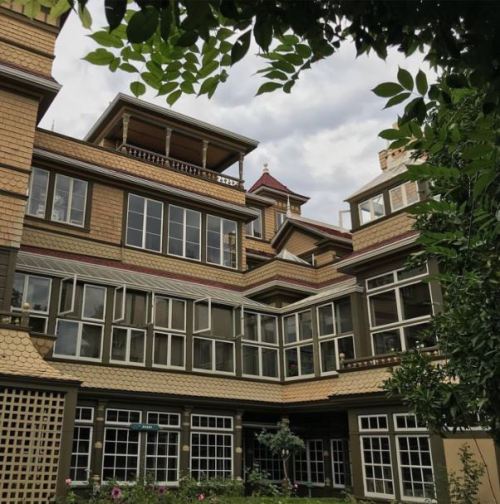
During a Connecticut thunderstorm, Mrs. Winchester’s husband and baby lost their lives in a tragic fire. The distracted widow turned to spiritualism and was advised to take a trip around the World. This she did, visiting mediums, spiritualists and wizards in Europe and India. Foretelling her future, one seer warned her of all the countless thousands of departed souls slain by her husband’s rifles; she was told to plan a castle and continue its building indefinitely because as long as it was under construction she would live; cessation would prove immediately fatal. In the afternoon of Tuesday, July 10, 1888, the inhabitants of Santa Clara Valley, were greatly excited by the sudden appearance, far out in the fields, of a mansion where none was known to exist. The people of the town were farmers and knew the area well. The day before, they had been out on their horses and rode over the spot where the unusual mansion appeared, and where certain that the locality was the best farmland in the valley. And still they gazed, and still the wonder grew, for the day was clear and the mansion could be seen as plainly as they saw the hills to the south. It was massive. The estate was surrounded by a six-foot hedge, densely wooded; here and there were deep shadows in its sides indicating glens heavily covered with undergrowth and grasses. At one end the mansion rose almost precipitously from the from the land; at the other, the declivity was gradual; the thick forest of the estate gave way to smaller trees, these to shrubs; these to green meadows that finally melted into the valley. It was patrolled by a pack of ferocious hellhounds, plus, of course, Mrs. Winchester’s staff of armed bodyguards. Hundreds of people from all over California came to investigate; when, as they neared the spot, the beautiful but bizarre mansion became dim in outline, less vivid in color, and at last vanished entirely, leaving the wonder-stricken farmers to return, fully convinced that for the first time in their lives they had really seen this enchanted mansion. #RandolphHarris 1 of 15

For once there was a topic of conversation that would outlast the day, and the enchanted Winchester mansion passed from lip to lip, both story and the mansion grew in size till the latter was little less than a continent, contain a labyrinth mansion with towers and steeples, stupendous mountain range views, fertile valleys, and wide spreading plains; while the former was limited only be the patience of the listener, and embraced the personal experience, conclusions, reflections, and observations of every woman, man, and child in the valley who had been fortunate enough to see the mansion, hear of it, or tell where it had been seen elsewhere. This is the invariable history of its appearance. No one had ever been able to come close to its grounds, but it had been so often seen on the west coast, that a doubt of its existence, if expressed in the company of farmers, will at once establish for the sceptic a reputation for balderdash of the common affairs of every-day life. In Santa Clara, for instance, the Winchester mansion had been seen by hundreds of people, while many more could testify to its appearance near San Francisco. In San Jose, all the population saw it a few years ago, and shortly before, the villagers of Oakland, saw it, if not by themselves, at least by some of their friends. The Enchanted Winchester mansion, it should be stated that its resemblance to a Victorian/Gothic castle is sometimes very close, and shows that the “enchanter” who has it under a spell knows her business, and is determined to keep her mansion for herself changes its appearance as well as its location in order that her property may not be recognized nor appropriated. At night, passers-by heard ghostly music wafting from the dark mansion. Mrs. Winchester’s arrival was a sensational event. They talked about Mrs. Winchester! Gossiped would be a more fitting word, gossip no one claimed to like-but everyone enjoyed. #RandolphHarris 2 of 15

Talk begat rumor and as the years passed and new towers and gables rose behind the six-foot hedge of Llanada Villa, the rumors grew to established legend. Populations said it just appeared out of nowhere two years ago. Sure two twins could not be like her, and when it appeared in Santa Clara, the mansion would move around to different locations. It had also appeared in San Francisco, Oakland, and Berkeley, but it went no further than the Bay Area. Concerning Mrs. Winchester’s mansion, legendary authorities differ on many material points. Some believed that its architecture was due to geometry or some other enchantment, while opponents of this materialistic view were inclined to the opinion that the mansion was not what it seemed to be, that was to say, not Earth, wood, and stones, like as those most people see, but only an illusion that evil spirits or the devil created to deceive the town. Public opinion on the west coast was therefore was strongly divided on the subject, unity of sentiment existing on two points only; that the island had been seen, and that there was something quite out of the ordinary in its appearance. People believe that it would come and go in the night like a light in a bog, and when you do see it, you can see through it. An old fisherman of San Francisco called Ebenezer Thornton knew all about the enchanted Winchester mansion, having not only seen it himself, but, when a boy, learned its history from a “fairy man,” who obtained his information from “the good people” themselves, the facts stated being therefore, of course, of indisputable authority, what the fairies did not know concerning the doings of supernatural and enchanted circles, being not worth knowing. He said that the Winchester mansion was full of temples and round towers all covered with gold and silver till they shone so one could not see it for the brightness. There was a great enchantress in the mansion, and she had all kinds of secrets, and knew where to dig for a pot of gold. She built the castle in one night, and could make herself disappeared when she wanted and could take any shape she pleased. #RandolphHarris 3 of 15

Ebenezer when on to say that Mrs. Winchester’s husband gave her a charm before he died to use when she was in mortal danger, he also left her a ton of diamonds and millions of dollars. She was a pretty smart woman. One night, Mrs. Winchester was awakened by a noise in one of the kitchens. She tole down, and found her old housekeeper, Madge, with half a dozen of her kidney, sitting by the fire drinking whisky. When the bottle was finished, one of them cried, “It’s time to be off,” and at the same moment she put on a peculiar red cap, and added:–“By yarrow and rue, and my red cap, too, hie over to England!” and seizing a twig she soared up the chimney. As the latter was making her preparations Mrs. Winchester rushed into the kitchen, snatched the cap from her, and placing herself astride of her twig uttered the magic formula. She speedily found herself high in the air over the Irish Sea, and swooping though the empyrean at a rate unequalled by the fastest airplane. They rapidly neared the Welsh coast, and espied a castle afar off, towards the door of which they rushed with a frightful velocity; Mrs. Winchester closed her eyes and awaited the shock, but found to her delight that she had slipped through the keyhole without hurt. The party made their way to the cellar, where they caroused heartily, but the spirits proved too heady, and somehow Mrs. Winchester was captured and dragged before the lord of the castle, who sentenced her to be hanged. On her way to the gallows an old woman in the crowd called out in Irish, “Ah, the enchantress herself, Sarah Winchester alanna! Is it going to die you are in a strange place without your magical charm?” She reached into her pocket and held it in her hand. On reaching the place of execution she was allowed to address the spectators, and did so in the usual ready-made speech, beginning, “Good people all, a warning take by me.” But when she reached the last line, “My parents reared me tenderly” instead of stopped she unexpected added, “By yarrow and rue, good-bye I love you,” with the result that she shot up through the air, to the great dismay of all beholders. #RandolphHarris 4 of 15

Magic persecution. Genuine magic is the art of bringing about results beyond human powers through the enlistment of supernatural agencies. Black magic deliberately involves the devil and demons, and the resulting enchantment is used for persecution and revenge. A spiritistic circle of twenty members furnishes a good example. Working with black magic, these spiritis experimented to see if they could cause psychic harm or even illness in people they disliked. A strong medium of this occult group chose a minister as a target and vowed to afflict and eliminate her. The minister suffered a nervous breakdown and was unable to work for several months. Some phenomena must be eliminated from the spiritistic magic field. In the psychiatric realm, for example, many schizophrenics claim to be magically persecuted. In reality this is only a symptom in the course of psychotic disease. Eliminating all such cases, there are still large-scale, genuine phenomena, especially in areas where occultism has flourished for many years. One common form of magic persecution is beatings by an invisible attacker. Parapsychology also sees magical persecution as a mediumistic problem in the sphere of materializations. Strong mediums (when under demon control) send out energy with which to build up human phantasms and are also able to transform this energy into animal forms, including dogs, cats, frogs, snakes, or human bodies with animal heads, etcetera. This explains the bizarre spiritistic persecution through phantoms in the form of various animals of human bodies with nonhuman heads. These animals bite, scratch, or otherwise torment their victims. Examples, of these occult phenomena abound in areas where the black arts are practiced. However, such occurrences are denied by many intellectuals. Often peasants and country people, especially in Europe, know more about magic than university graduates, who claim to swindle or hocus-pocus trickery are used instead of occult powers. #RandolphHarris 5 of 15
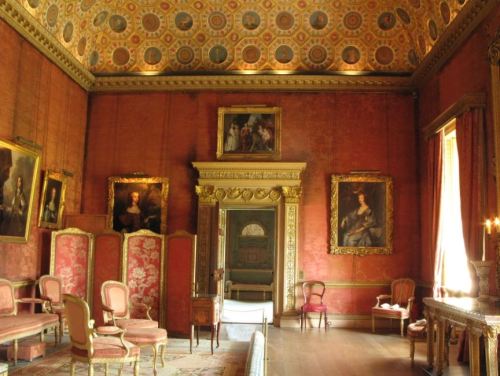
Magic defense. Magic defense enlists supernatural agencies to counteract or unto the mischief wrought by magic persecution. Various kinds of spells, charms, or incantations are employed. In spiritistic séances it is an established fact that injuries inflicted upon a phantasm are sustained by the medium, even in the case of animal phantasm. Many defensive customs develop to combat this threat since magical persecution involves materialization. If a victim can injure an aggressive phantasm one has won the struggle. Many in the West wanted to remove Satan from the equation of black magic and demonic aspects of life. However, more serious discontent came from Satanists whose concerns were completely the opposite. Anton LaVey did not believe in Satan as a literal entity—He was a name for the dark, brutal aspects of humans and nature, as well as a symbol for the potency of humans’ untrammeled will. The Church of Satan was not a religion, and did not worship deities. For many, however, this was not enough. They wanted a real Devil to worship—belonging to a dark, mysterious coven, in the traditional gothic style, seemed much more appealing than being part of some cultural and social elite. Some believed that Satan, although thrown out of Heaven, was reinstated as the son of God and is directly in contact with him. If any coven members offends, they are a bit evil now and again, given corporal punishment, or is expelled from one’s coven and cursed. However, this is said to be for the members own good. They really believe in love, the sanctity of woman as the child bearer and procreator of life, and in worshipping Satan their master. Aleister Crowley was grooming Kenneth as his successor. Mr. Grant’s work examined lost gods, strange spiritual traditions and forbidden symbols, often leading him to some disreputable spiritual neighborhood where devils and demons might be expected to reside, like the Winchester Mystery House. #RandolphHarris 6 of 15

If you have a lot of magic in you, you can be a Satanist and have no idea. As if they are the mafia or something, sometimes those who are suspected of being Satanists have their offices broken into like they are the Mafia or something. The Church of Satan, however, has saved lives because it has given them power, power to come out and be themselves when traditional churches would not accept these people. The Dark Lord, was said to be an anthropoid but faceless. Looking at the concept as a diamond, much like the ones left to Mrs. Winchester by her husband William Wirt Winchester, Satan or Lucifer was just other facets of that diamond, purely ways of achieving workings which encompassed the whole. So, if you are particularly drawn to the gothic Satanist current, fine, use rituals based around that. In the Temple of Darkness one could equally have Satanists, Setians, or followers of other paths, the principle being that the whole thing is a psychodrama anyway. Magic is basically the Western version of yoga. Everything that happens in magic happens first in your head. Set, the Egyptian god of evil, was an older deity than Satan. Satan derives from Set. Set, who is defined as the Prince of Darkness, is a force about which you could say, “As we are now, he once was.” When you die your force can survive. Magic is mind enhancing. When one perishes or passes, instead of going into the cosmic whole—becoming one with the goddess or whatever—by sheer force of the will the existence of that magician’s mind can be sustained. This is the whole idea of the Temple of Set, and they use the word “xeper,” meaning “to become,” to define this. Spiritistic cults. If you did not know, Mrs. Winchester was a spiritists. Spiritism is considered a form of Christianity, practically in all civilized countries. A typical meeting consists of hymns, prayer, and a sermon as in a Christian service. The sermon, however, is allegedly given by a spirit from the other World, through a medium. These cults are said to be affected by the “doctrines of demons” and press into the supernatural World. #RandolphHarris 7 of 15

However, even born-again Christians often cannot differentiate between the spiritual and the psychic-demonic when under the spell of doctrinal errors, particularly those concerning the work of the Holy Spirit. The result can sometimes be confusion, division, and promotion of certain spiritual gifts accredited to demons. We have sometimes seen people end up suffering from mediumistic psychosis. Quite a number of patients who have suffered serious psychic disturbances through the misuse of such practices have become split personalities. The spirits which they called, confused them. One who tries to discover the promises of the other side through superstition endangers oneself to fall a prey to the dark side of one’s psyche. However, many Christians say that spirits of loved ones cannot be brought back from the dead, and the it is just a demon impersonating them. Yet, consider the case of Saul’s visit to the spiritistic medium at Endor (1 Samuel 28.3-25). Samuel’s spirit was actually brought back from the spirit World when the medium Endor tried to contact him. Yet, God brought the spirit back. The Lord stepped. Still one must be careful because many become enslaved and oppressed by occult powers and become victims of various manifestations of spiritistic phenomena. While overwhelming evidence from Christian counseling confirms the fact that spiritistic complicity serious damages the believer’s spiritual life, adherents of Buddhism, Island, or even false cults of Christianity sense no ill effects. Spiritists claim that spiritism has strengthened their belief in life after death and deepened their religious devotion. Psychiatry, psychology, and medical treatment are not sufficient for the healing of the whole human. The gospel of Christ and the liberating power of the Word of God can fully heal body, soul, and spirit. #RandolphHarris 8 of 15

Mrs. Winchester had a pain in her right forearm. At first the pain was treated as rheumatism but one day the Mrs. Winchester made the interesting discovery that the pain would suddenly subside if she wrote a letter. Having discovered this, whenever the pain became unbearable, she would always take a pencil and begin to write in order to alleviate the pain. However, after a period of time the Mrs. Winchester when go into her Blue Séance Room, where she developed a writing compulsion. She would write things down that she could normally speaking never have written. Often times, this is where the blueprints from her mansion came from. Added to this the written material on each occasion turned out to be some form of religious treatise. Mrs. Winchester took the articles to her minister to let him examine them. He was surprised at their intellectual content. Mrs. Winchester had become a spiritistic writing medium. The parapsychologist would merely see in this example a psychic automation involving the expression of subconscious thoughts. It is true that we need not consider the Mrs. Winchester to be in direct contact with the dead, or putting it another way we need not assume that this is a case of direct demonization, but God could be speaking to her. This is why some believe Mrs. Winchester to be a prophetess. During one of her spiritistic seances, as it happened, a phantasm did in fact appear during a séance. However, it is still not necessary to believe that a spirit really did appear in this instance. Depth psychology suggest that a phantasm can be produced in the following way. The medium through emitting energy causes matter to form as a result of this. In nuclear physics we have the idea that matter is nothing more than concentrated energy. Einstein’s formula E=M.c^2 illustrates this relationship. A comparison can also be drawn from another branch of physics. It is found that both particles and anti-particles are formed at the cathode of an X-ray tube when a current is passed through it at a very high voltage. Energy in the form of electro-magnetic waves is in this way transformed into matter. #RandolphHarris 9 of 15

The next step in the mediumistic process involves the unconscious tapping of the information from some source or other, and then the newly formed matter is physically shaped according to this information. The final step is made when the phantasm is brought under the control of the medium. Looking at it from this point of view there is no necessity to believe that the dead person has in any way been disturbed. An animistic explanation based on the powers of the subconscious is thus sufficient to explain the phenomenon of materialization. Yet this is not to say that the rationalistic explanation does justice to the facts of the case. The problem is not as simple as that. However, we do not have the time to delve further into the scientific side of the issues. We have, on many occasions witnessed a disintegration of the personalities of both mediums and participants where materializations have taken place. In addition to this in every case where a person has frequently taken part in spiritistic séances, there is some kind of reaction, even if it is not immediately notice or if there is no manifestation—something happens. There are also people who are able to practise the excursion of the soul. Spiritists affirm that people can send out an astral body from their material body, and commission it to do whatever they ask. Perhaps that was the case when Mrs. Winchester appeared in another country? Spiritism haunts the dark jungle of human aberration. During a séance as the Winchester mansion, Mrs. Winchester noticed that time was passing somewhat wearily. She could hear an occasional thud, thud. Some time must have elapsed before she became, dimly at first, and then distinctly, aware of a bluish phosphorescent emanation from a skeleton. This seemed to rise above it like a faint smoke, which gradually gained consistency, took form, and became distinct; and she saw before her the misty, luminous form on an unclothed man, with wolfish countenance, prognathous jaws, glaring at her out of eyes deeply sunk under projecting brows. #RandolphHarris 10 of 15

Although she thus descried what she saw, it gave her no idea of substance; it was vaporous, and yet it was articulate. Indeed, she could not say for sure if she saw this apparition with her eyes, or whether it was a dream-like vision of the brain. Though luminous, it cast no light on the wall of the Blue Séance Room; if she raised her hand, it did not obscure any portion of the form presented to her. Then she heard: “I will tear you with the nails of my fingers and toes, and rip you with my teeth.” “What have I done to injure and incense you?” she asked. No word was uttered by either of them; no word could have been uttered by this vaporous form. It had no material lungs, nor throat, nor mouth to form vocal sounds. It had but the semblance of a man. It was a spook, not a human being. However, it proceeded through the walls, odylic force which smote on the tympanum of her mind or soul, and thereon registered the ideas formed by it. So in a like manner Mrs. Winchester thought her replies, and they were communicated back in the same manner. If vocal words had passed between them neither would have been intelligible to the other. No dictionary was ever compiled, or would be compiled, of the tongue or prehistoric man; moreover, the grammar of the speech of that race would be absolutely incomprehensible to humans now. However, thoughts can be interchanged without words. When we think we do not think in any language. It is only when we desire to communicate our thoughts to other humans that we shape them into words and express them vocally in structural grammatical sentences. The beasts have never attained to this, yet they can communicate with one another, not by language, but by thought vibrations. Mrs. Winchester knew as she conversed with him that she was not speaking to him in English, nor in French, nor in Latin, nor in any tongue whatever. Moreover, when she used the words “said” or “spoke,” she meant no more than that the impression was formed by her brain-pan or the receptive drum of her soul, was produced by the rhythmic, orderly sequence of thought-waves. #RandolphHarris 11 of 15

When, however, she expressed the words “screamed” or “shrieked,” she signified that those vibrations came sharp and swift; and when she said “laughed,” tht they came in a choppy, irregular fashion, conveying the idea, not the sound of laughter. “I will tear you! I will rend you to bits and throw you in pieces about this mansion!” shrieked this demon man. Mrs. Winchester remonstrated, and inquired how she had incensed him. However, yelling with rage, he threw himself upon her. In a moment she was enveloped in a luminous haze, strips of phosphorescent vapour laid themselves about her, but she received no injury whatever, only her spiritual nature was subjected to something like a magnetic storm. After a few moments the spook disengaged itself from Mrs. Winchester, and drew back to where it was before, screaming broken exclamations of meaningless rage, and jabbering savagely. It rapidly cooled down. “Why do you wish to ill me?” She asked again. “I cannot hurt you. I am spirit, you are matter, and spirit cannot injure matter; my nails are psychic phenomena. Your soul you can lacerate yourself, but I can effect nothing, nothing.” “Then why have you attacked me? What is the cause of your impotent recement?” “Because you are the heiress to the Winchester Rifle, and I lived eight thousand years ago. Why are you nursed in the lap of luxury? Why you enjoy your comforts, a civilization that we new nothing of? It is not just. It is cruel on us. We have nothing, nothing, literally nothing, not even lucifer matches!” Again he feel to screaming, as might a caged monkey rendered furious by failure to obtain an apple which he could not reach. “I am very sorry, but it is no fault of mine.” “Whether it be your fault or not does not matter to me. You have these things—we had not. Why, I saw you just now strike a light on the sole of your boot. It was done in a moment. We had only flint and ironstone, and it took half a day with us to kindle a fire, and then it flayed our knuckles with continuous knocking. No! we have nothing, nothing—no lucifer matches, no commercial travellers, no Benedictine, no pottery, no metal, no education, no elections, no chocolat menier.” #RandolphHarris 12 of 15

“How do you know about these products of the present age, here, buried one hundred feet of soil for eight thousand years?” “It is my spirit which speaks with your spirit. My spook does not always remain with my bones. I can go up; rocks and stones and earth and your labyrinth mansion heaped over me do not hold me down. I am often above. I am in the gasolier overhead. I have seen your servants plough the fields. I have seen a bottle of Benedictine. I have applied my physical lips to it, but I could taste, absorb nothing. I have seen commercial travellers there, cajoling the patron into buying things he did not want. They are mysterious, marvellous beings, their powers of persuasion are little short of miraculous. Why do you think of doing with me?” “Well, I propose first of all photographing you, then soaking you in gum Arabic, and finally transferring you to a museum.” He screamed as though with pain, and grasped: “Do not! do not do it. It will be torture insufferable.” “But why so? You will be under glass, in a polished oak or mahogany box.” “Do not! You cannot understand what it will be to me—a spirit more or less attached to my body, to spend ages upon ages in a museum with fibulae, triskelli, palstaves, celts, torques, scarabs. We cannot travel very far from our bones—our range is limited. And conceive of my feelings for centuries condemned to wander among glass cases containing prehistoric antiquities, and to hear the talk of scientific men alone. Now here, it is otherwise. Here I can pass up when I like into your mansion, and can see the maid and butlers cleaning, the roses and trees growing, the farmers working the field and the magnificent glow of your fine estate. Give me life. There is a sort of filmy attachment that connects our psychic nature with our mortal remains. It is like a spider and its web. #RandolphHarris 13 of 15

“Suppose the soul to be the spider and the skeleton to be the web. If you break the thread the spider will never find its way back to its home. So it is with us; there is an attachment, a faint thread of luminous spiritual matter that unites us to our Earthly husk. It is liable to accidents. It sometimes gets broken, sometimes dissolved by water. If a black beetle crawls across it it suffers a sort of paralysis. I have never been to the other side of the of your mansion, I feared to do so, though very anxious to see your architecture and furniture.” “This is news to me,” replied Mrs. Winchester. “Do you know of any case of rupture of connection?” Yes,” he replied. “My old father, after he was dead some years, got his link of attachment broke, and he wandered about disconsolate. He could not find his own body, but he lighted on that of a young female of seventeen, and he got into that. It happened most singularly that her spook, being frolicsome and inconsiderate, had got its bond also broken, and she, that is her spirit, straying about in quest of her body, lighted on that of my venerable parent, and for want of a better took possession of it. It so chanced that after a while they met and became chummy. In the World of spirits there is no marriage, but there grow up spiritual attachments, and these two got rather fond of each other, but never could puzzle it out which was which and what each was; for a female soul had entered into an old male body, and a male soul had taken up its residence in a female body. Neither could riddle out of which each gender was. You see they had no education. However, I know that my father’s soul became quite sportive in that young woman’s skeleton. Each generation makes some discovery that advances civilization a stage, the next enters on the discoveries of the preceding generations, and so culture advances stage by stage. Man is infinitely progressive; even the brute beast is.” #RandolphHarris 14 of 15

At that moment, Mrs. Winchester heard a shout—saw a flash of light. The construction workers had pierced the barrier. A rush of fresh air entered. She staggered to her feet. She felt dizzy. Kind hands grasped her. She was dragged forth. Brandy was poured down her throat. When she came to herself, she said, “Thank you. Talking with spirits can be terrible dreadful. When you are trying to summon one, souls get crossed and the one you are seeking may not cross through. They are so desperate to find a medium to communicate with.” As an ingredient of idol worship, magic goes back to antiquity. By virtue of their multiplicity and limited knowledge and power, the gods (demons) of paganism are incapable of establishing stability and security in society. This deficiency forced both gods and men to make use of magic—an inactive power independent of gods and men, but which could be activized by the assistance of incantations and rituals in order to accomplish supernatural deeds. Because of widespread denial of the reality of supernatural power—both divine and demonic, confusion abounds concerning the nature of magic. The history of magic is replete with extraordinary extrasensory phenomena that involve the spirit realm and every phase of the natural World as well, including human beings, animals, plants, and inorganic matter. Spirit-rapping, apparitions, ghosts, moving of furniture, and playing of musical instruments by invisible hands, stones falling from a ceiling, magical killing of cattle and blighting of crops, etcetera, are just a few of the weird occurrences that have happened at the Winchester Mystery House in its 134 years. However, there have also been beautiful supernatural events such as apparitions getting married, giant spirits of light in the shape of a man peering out guests, and on occasion, even rainbows and angels have appeared. Not all spirits or evil or angry, some or loving and welcoming. Few of thousands of annual transient guests are disappointed for here one finds visible truth even stranger than all the weird Mystery House features. #RandolphHarris 15 of 15

Winchester Mystery House

Beautiful weather calls for a walk around Sarah’s iconic gardens ⛲️🪴Open 10AM – 5PM this weekend!
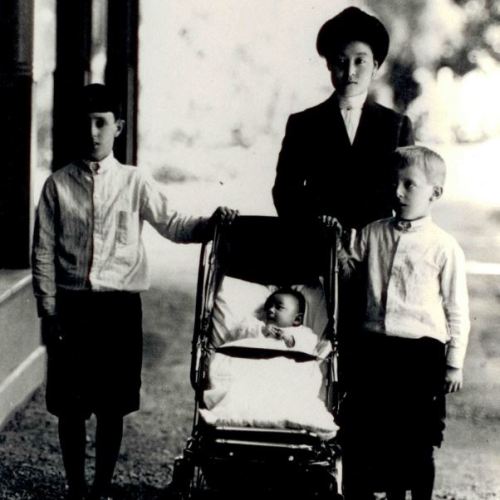
A 160-room mansion built to appease the spirits who died at the hands of the Winchester Rifle , or who were jealous of its wealth 👻
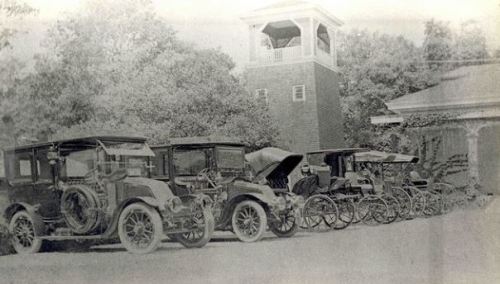

One Side’s Abundant Eden is the Other’s Vast Wasteland

The real community of humans, in the midst of all the self-contradictory simulacra of community, is the community of those who seek the truth, of the potential knowers of all humans to the extent they desire to know. The face of various claims to truth and various ways of life and kinds of human beings—is the great insight of our times. The true believer is the real danger. The study of history and of culture teaches that all the World was mad in the past; humans always though they were right, and that led to wars, persecutions, slavery, xenophobia, racism, and chauvinism. The point is not to correct the mistakes and really be right; rather it is not to think you are right at all. Many students, of course, cannot defend their opinion. It is something with which they have been indoctrinated. The best they can do is point out all the opinions and cultures there are and have been. What right, they ask, do I or anyone else have to say one is better than the others? Every educational system has a moral goal that it tries to attain and that informs its curriculum. It wants to produce a certain kind of human being. This intention is more of less explicit, more or less a result of reflection; but even the neutral subjects, like reading and writing and arithmetic, take their place in a vision of the educated person. In some nations the goal was the pious person, in others, the warlike, in others industrious. As a nation, we began with the model of the rational and industrious human, who was honest, respected the laws, and dedicated to the family. Above all one was to know the rights doctrine; the Constitution, which embodies it; and American history, which presented and celebrated the founding of a nation “conceived in liberty and dedicated to the proposition that all humans are created equal.” A powerful attachment to the letter and the spirit of the Declaration of Independence gently conveyed, appealing to each humans’ reason, was the goal of the education of democratic humans. This called for something very different from the kinds of attachment required for traditional communities where myth and passion as well as severe discipline, authority, and the extended family produced an instinctive, unqualified, even fanatic patriotism, unlike the reflected, rational, calm, even self-interested loyalty—not so much to the country but to the form of government and its rational principles—required in the United State of America. #RandolphHarris 1 of 20

There is no enemy other than the human who is not opened to everything. However, when there are no shared goals or visions of the public good, is the social contract any longer possible? Hobbes and Locke, and the American Founders following them, intended to palliate extreme beliefs, particularly religious beliefs, which lead to civil strife. The members of sects had to obey the laws and be loyal to the United States of America’s Constitution; if they did so, other had to leave them alone, however distasteful their beliefs might be. The insatiable appetite for freedom to live as one pleases thrives on this aspect of modern democratic thought. In the end it begins to appear that full freedom can be attained only when there is no such knowledge at all. The effective way to defang the oppressors is to persuade them they are ignorant of the good. History and social science are used in a variety of ways to overcome prejudice. We should not be ethnocentric, a term drawn from anthropology, which tells us more about the meaning of openness. We should not think our way is better than others. Then intention is not so much to teach the students about other times and places as to make them away of the fact that their preferences are only that—accidents of their time and place. Their beliefs do not entitle them as individuals, or collectively as a nation, to think they are superior to anyone else. Instinct and intellect must be suppressed by education. The natural soul is to be replaced with an artificial one. The dominant majority gave the country a dominant culture with its traditions, its literature, its tastes, its special claim to know and supervise the language, and its Protestant religions. The reactionaries did not like the suppression of class privilege and religious establishment. For a variety of reasons, they simply did not accept equality. Critics knew full well that the Constitution’s heart was a moral commitment to equality and hence condemned segregation. The Constitution was not just a set of rules of government but implied a moral order that was to be enforced throughout the entire country. #RandolphHarris 2 of 20

The Americans who were demanding civil rights, were the true Americans because they understood that equality belongs to them as human beings by natural and political right. It was a demand for American identity. However, with history, nothing has taken place except a smattering of facts learned about other nations or cultures and a few social science formulas. None of this means much, partly because little attention has been paid to what is required in order truly to convey the spirit of other places and other times to young people, or for that matter to anyone of other places and other times to young people, or for that matter to anyone, partly because the students see no relevance in any of it to the lives they are going to lead or to their prevailing passion. No longer is there a hope that there are great wise humans in other places and times who can reveal the truth about life—except for the few remaining young people who look for a quick fix from a guru. Gone is the real historical sense of a Machiavelli who wrested a few hour from each busy day in which “to don regal and courtly garments, enter the courts of the ancients and speak with them.” Some critics of the United States of America’s Constitution, which provided rights for all citizens, truly believed that some people were inferior to them, and they thought that Jim Crow was necessary, as it was part of their unique way of life. Different strokes for different folks. Like said before, the only way to defang them is not with hate, but to show them the beauty of equality. The point is to persuade students to recognize that there are other ways of thinking and that Western ways are not always better. It is again not the content that counts but the lesson to be drawn. Such requirements are part of the effort to establish a World community and train its members—the person devoid of prejudice. However, if the students were really to learn something of the minds of any of these non-Western cultures—which they do not—they would find that each and every one of these cultures is ethnocentric. All of them think their way is the best way, and all others are inferior. Western phenomenon, and in its origin is obviously connected with the search for new and better ways, or at least for validation of the hope that our own culture really is the better way, a validation for which there is no felt need in other cultures. #RandolphHarris 3 of 20

The reason for the non-Wester closedness, or ethnocentrism, is clear. Humans must love and be loyal to their families and their peoples in order to preserve them. Only if they think their own things are good can they rest content with them. A father must prefer his child to other children, a citizen his country to others. That is why there are myths—to justify these attachments. And a man needs a place and opinions by which to orient oneself. This is strongly asserted by those who talk about the importance of roots. The problems of getting along with outsiders is secondary to, and sometimes in conflict with, having an inside, a people, a culture, a way of life. A very great narrowness is not incompatible with the health of an individual or a people, whereas with great openness it is hard to avoid decomposition. When people take on the good from another culture, this may be considered a dangerous business because it tends to weaken wholehearted attachment to their own, hence to weaken their peoples as well as to expose themselves to the anger of the family, friends, and countrymen. Loyalty versus quest for the good introduced an unresolvable tension into life. However, the awareness of the good as such and the desire to possess it are priceless humanizing acquisitions. Openness used to be the virtue that permitted us to seek the good by using reason. It now means accepting everything and denying reason’s power. The unrestrained and thoughtless pursuit of openness, without recognizing the inherent political, social, or cultural problem of openness as the goal of nature, has rendered openness meaningless. Cultural relativism destroys both one’s own and the good. True openness is the accompaniment of the desire to know, hence of the awareness of ignorance. To deny the possibility of knowing good and bad is to suppress true openness. A proper historical attitude would lead one to doubt the truth of historicism (the view that all thought is essentially related to and cannot transcend its own time) and treat it as peculiarity of contemporary history. Historicism and cultural relativism actually are a means to avoid testing our own prejudices and asking, for example, whether humans are really equal or whether that opinion is merely a democratic prejudice. #RandolphHarris 4 of 20

One has to have the experience of really believing before one can have the thrill of liberation. Prejudices, strong prejudices, are visions about the way things are. They are divinations of the order of the whole of things, and hence the road to a knowledge of that whole is by way of erroneous opinions about it. Error is indeed our enemy, it alone points to the truth and therefore deserves our respectful treatment. The mind that has no prejudices at outset is empty. It can only have been constituted by a method that is unaware of how difficult it is to recognize that a prejudice is a prejudice. Without getting misty-eyed about it, I think we can fairly say that universities have a sacred responsibility to define for their society what is worthwhile knowledge. These definitions are most clearly visible in university catalogues, where you will find lists of courses, subjects, and “fields” of study. Taken together, they amount to a certified statement of what the university thinks a serious student ought to think about. In what is omitted from a catalogue, you may also learn what a serious student need not think about. However, these are bad times for scrupulous efforts at gatekeeping, and, happily, many universities are now busily engaged in rewriting their catalogues. Some tend to think that living in California; Florida, and other warm climates tends to shrivel the brain and makes people dumber than those living in colder climates, such as New York, Pennsylvania, Illinois, and Iowa. There was a study by two doctoral students at Texas Technical University who found that the ten states with the highest average SAT scores all had cold winters. Indeed, every state with an average of 540 or higher on both the verbal and quantitative parts of the SAT had an average higher temperature in January of less than 42 degrees Fahrenheit. At the other end, five of the ten states with the lowest SAT scores were warm-weather states. Moreover, temperature has a significant relationship to SAT scores even when the researchers took into account such factors as per-pupil expenditures on schooling. So there! Now, there is also an important reason to keep authority figures on the right side of the law. Not only will it accord them more respect, but also more compliance. In the face of what they construe to be legitimate authority, most people will do what they are told. Or, to put it in another way, the social context in which people find themselves will be a controlling factor in how they behave. #RandolphHarris 5 of 20

Many people who consider themselves scientists, are not. Dr. Freud’s work is exemplary—indeed, monumental—but scarcely anyone believes today that Dr. Freud was doing science, any more than educated people believe that Marx was doing science, or Max Webber or Lewis Mumford or Bruno Bettelheim or Carl Jung or Margret Mead or Arnold Toynbee. What these people were doing was weaving narratives about human behavior. Their work is a form of storytelling, not unlike conventional imaginative literature although different from it in several important ways. The work of these people is called storytelling because this suggest that an author has given a unique interpretation to a set of human events, that one has supported one’s interpretation with examples in various forms, and that one’s interpretation cannot be proved or disproved but draws its appeal from the power of its language, the depth of its explanations, the relevance of its examples, and the credibility of its theme. And all of this has an identifiable moral purpose. The words “true” and “false” do not apply here in the sense that they are used in mathematics or science. For there is nothing universally and irrevocably true or false about these interpretations. There are no critical tests to confirm or falsify them. There are no postulates in which they are embedded. They are bound by time, by situation, and above all by the cultural prejudices of the researchers. Quite like a piece of fiction. There is more hypocrisy in Heaven and Earth than is dreamt of in some of our philosophies. What we know about ourselves—can be more terrifying than what we do not know. Most of us generate piles of junk—unconvincing stores without credible documentation, sound logic, or persuasive argument. Books are, in many cases, written by men and women who are concerned not to improve scholarship but to improve social life. Thus, the purpose of doing this kind of work is essentially didactic and moralistic. The purpose of social research is to rediscover the truths of social life; to comment on and criticize the moral behavior of people; and finally, to put forward metaphors, images, and ideas that can help people live with some measure of understanding and dignity. Specifically, the purpose of media ecology is to tell stores about the consequences of technology; to tell how media environments create contexts that may change the way we think or organize our social life, or make us better or worse, or smarter or dumber, or freer or more enslaved. #RandolphHarris 6 of 20

Sometimes the stories media ecologists have to tell are rather more important than those of other academic storytellers—because the power of communication technology to give shape to people’s lives is not a matter that comes easily to the forefront of people’s consciousness, though we life in an age when our lives—whether we like it or not—have been submitted to the demanding sovereignty of new media. And so we are obligated, in the interest of humane survival, to tell tales about what sort of paradise may be gained, and what sort lost. We will not have been the first to tell such tales. However, unless our stories ring true, we may be the last. Now the TV tends to be a beast, too, as so many people know. The TV news media is usually there to frame certain stories they way they feel will be more entertaining, and they will also suppress or ignore others when they are involved in the corruption or paid to cover it up. To fight corruption, people need to learn the legal system, its tactics, and their means of manipulating media. To learn these, individuals have to restructure their mind and conceptions. And so to stand against the enemy, many engage of the process of self-destroying what remained of their own culture. When news television crews learn of a struggle they want to profit from, reporters are flown out from Hollywood and other areas to shoot images following the networks news guidelines for “good television” and “balanced reporting.” When it comes to the people, they often juxtapose with the people, others in suits and ties, who are responsible government officials concerned about jobs, and a lot of savage-looking types in funny clothes, speaking jive about their land, which does not seem credible because they way the people are dress and the emotions of their language. People are most likely to believe a professional in a suit, than someone who is wearing regular clothes and has been a victim of crime. After 40 million viewers see a Caucasian, modishly dressed TV newsman explain the crosscurrents in the struggle, and plaintively ask whether something of an earlier culture could not be permitted to remain, he finishes his report by saying, “From Sacramento, California, this is John Doe reporting.” This is followed by a commercial for the need to build affordable housing, how it creates jobs, and how green energy will be used to power the buildings during this energy crisis. The next is a story talking about gas prices and the need to suspend the gas tax. #RandolphHarris 7 of 20

Surely this story and the advertisements did not help the people concerned about their land. It was certain that they did not come through as well as the businessmen, the government officials and the reporter’s objective, practical analysis. They were attempting to convey something subtle, complex, foreign and ancient through a medium which did not seem able to handle any of that and which is better suited to objective data, conflict and fast, packaged information. When a struggle is revealed, usually the people become fixed into the model of artifact. The medium cannot be stretched to encompass their message. On the other hand, what if one had four minutes, or even one minute, to convey the essence of a product? A BMW? A stereo set? A toy? Could one accomplish that efficiently? One certainly could. It is obvious that a product is a lot easier to get across on television than a several acres of land or a cultural mind-set. Understanding cultural ways enough to care about them requires understanding a variety of dimensions of nuance and philosophy. You do not need any of that to understand a product, you do not have problems of subtlety, detail, time and space, historical context or organic form. Products are inherently communicable on television because of their static quality, sharp, clear, highly visible lines, and because they carry no informational meaning beyond what they themselves are. They contain no life at all and are therefore no capable of dimension. Nothing works better as telecommunication that images of products. Might television itself have no higher purpose? Most Americas, whether on the political left, center, or right, will argue that technology is neutral, that any technology is merely a benign instrument, a tool, and depending upon the hands into which it falls, it may be used one way or another. There is nothing that prevents a technology from being used well or badly; nothing intrinsic in the technology itself or the circumstances of its emergence which can predetermine its use, its control or its effects upon individual human lives of the social and political forms around us. The argument goes that television is merely a window or a conduit through which any perception, any argument or reality may pass. It therefore has the potential to be enlightening to people who watch it and is potentially useful to democratic process. #RandolphHarris 8 of 20

If you accept mass production, you accept that a small number of people will supervise the daily existence of a much larger number of people. You have to accept that human beings will spend long hours, every day, engaged in repetitive work, while suppressing any desires for experience or activity beyond this work. The workers’ behavior becomes subject to the machine. With mass production, you also accept that huge numbers of identical items will need to be efficiently distributed to huge numbers of people and that institutions such as advertising will arise to do this. Once technological process cannot exist without the other, creating symbolic relationships among technologies themselves. If you accept the existence of advertising, you accept a system designed to persuade and to dominate minds by interfering in people’s thinking patterns. You also accept that the system will be used by the sorts of people who like to influence people and are good at it. No person who did not wish to dominate others would choose to use advertising and all technologies created to serve it will be consistent with this purpose, will encourage this behavior in society, and will tend to push social evolution in this direction. In all of these instances, the basic form of the institution and the technology determines its interaction with the World, the way it will be used, the kind of people who use it, and to what ends. And so it is with television. Far from being “neutral,” television itself predetermines who shall use it, how they use it, what effects it will have on individual lives, and, if it continues to be widely used, what sorts of political forms will inevitably emerge. Television is not reformable. If our society is to return to something like sane and democratic functioning, it must be gotten rid of totally. This is not about the television itself. It is about a process, already long underway, which has successfully redirected and confined human experience and therefore knowledge and perceived reality. We have all been moved into such a narrow and deprived channel of experience that a dangerous instrument like television can come along and seem useful, interesting, sane and worthwhile at the same time it further boxes people into a physical and mental condition appropriate for the emergence of autocratic control. Television has been used and expanded by the present powers-that-be, and that was inevitable, and it should have been predictable at the outset. The technology permits of no other controllers. #RandolphHarris 9 of 20

One also has to worry about the effects of television upon individual human bodies and minds, the effects which fit the purposes of the people who control the medium. Furthermore, television has no democratic potential. The technology itself places absolute limits on what may pass through it. The medium, in effect, chooses its own content from a very narrow field of possibilities. The effect is to drastically confine all humans understanding within a rigid channel. And as mentioned before, these aspects of television are reformable. What is revealed, however, is that there is ideology in the technology itself. To speak of television as “neutral” and therefore subject to change is as absurd as speaking of the reform of a technology such as social media. The medium is the message. Many do not recognize the transformative power of new communication technologies. They need to come with a warning about the threat the power poses—and the risk of being oblivious to that threat. The electric technology is within the gates, and we are numb, deaf, blind, and mute about its encounter with on and through which the American way of life was formed and is changing. When people start debating (as they always do) whether the medium’s effects are good or bad, it is the content they wrestle over. Skeptics, with equally good reason, condemn the crassness of the content, viewing it as signaling a “dumb down” of culture. One side’s abundant Eden is the other’s vast wasteland. The Internet is the latest medium to spur this debate. In the long run a medium’s content matters less than the medium itself in influencing how we think and act. As our window onto the World, and onto ourselves, a popular medium molds what we see and how we see it—and eventually, if we us it enough, it changes who we are, as individuals and as a society. The effects of technology do not occur at the level of opinions or concepts. Rather, they alter patterns of perception steadily and without any resistance. Media work their magic, or their mischief, on the nervous system. #RandolphHarris 10 of 20

Our focus on a medium’s content can blind us to these deep effects. We are too busy being dazzled or distributed by the programming to notice what is going on inside our heads. In the end, we come to pretend that the technology itself does not matter. It is how we use it that matters, we tell ourselves. The technology is just a tool, inert until we pick it up and inert again once we set it aside. We are too prone to make technological instruments, like guns, scapegoats for the sin of those who wield them. The products of modern science are not in themselves good or bad; it is the way they are used that determines their value. However, it is also our conventional response to all media, namely that it is how they are used that count, which is the numb stance of the technological idiot. People have been replacing God with false idols and that is the problem. So many people say they believe in God, but so few read the Bible or pray daily. They are too busying watching TV and using the Internet to. Many people are essentially being sent to a deep-space death by the malfunctioning machine because is it calmly, coldly, discounting their memory circuits that control their brains. Many people can feel it, too. They have an uncomfortable sense that someone, or something, has been tinkering with their brains, remapping the neural circuitry, reprogramming the memory. Their minds are not going—so far as they can tell—but it is changing. They do not think the way they used to think, and it can be felt most strongly when they are reading. Several people are no longer able to immerse themselves into a book or a lengthy article. Their minds used to get caught up in the twists of the narrative or the turns of the argument, and they spend hours strolling through long stretches of prose. For many, that is rarely the case anymore. Now their concentration starts to drift after a page or two. They get fidgety, lose the thread, begin looking for something else to do. They feel like they are always dragging their wayward brains back to the text. The deep reading that used to come naturally has become a struggle. The Net has become the all-purpose medium, the conduit for most information that flows through one’s eyes and ears and into their mind. The advantages of having immediate access to such an incredibly rich and easily searched store of data are many, and they have widely described and duly applauded. #RandolphHarris 11 of 20

While the Inter is an astonishing boom to humanity, gathering up and concentrating information and idea that were once scattered so broadly around that World that anyone could profit from them, now all this information is at your fingertips. When one is writing a report for school and using mostly book sources, some of the information may be outdated, and now what they can do it go online, find a reputable site and supplement the new information. It is better than gathering all your information from the silicon memory system. The more people use the Web, the more they have to fight to stay focused on long pieces of writing. Some worry they will become chronic scatterbrains. Because of the Internet, some people have almost totally lost the ability to read and absorb a long article on the web or in print. Even electronic Web pages that are more than three or four paragraphs is too much for some to absorb. They just skim it. There are people that think the Internet is the most creative thing that was invented. One could hardly meet anyone who says it has not been helpful. Many individuals like to go online because they love the ability to review and scan tons of information on the web. It is believed that reading lots of short, linked snippets online is a more efficient way to expand one’s mind than reading a 250-page book. These technopagans also believe in superiority of the Internet and think others have not been able to recognize it yet because they are measuring it against our old linear thought process. In many ways, the Internet is making people less patient readers, but could possible be making them smarter. They have more connections to documents, artifacts, and people, which means more external influences on their thinking and thus on their writing. Regardless, more people know they have sacrificed something important, but they will not go back to the way things used to be. For some people, the very idea of reading a book has come to seem old-fashioned, maybe even a little silly—like driving your own car when you can just schedule a ride share service. This generation thinks thing sitting down and reading a book from cover to cover does not make sense. It is not a good use of their time, as they can get the information they need faster through the Internet. These skilled Internet hunters think books are superfluous. #RandolphHarris 12 of 20

The digital immersion has even affected the way people absorb information. They do not necessarily read from left to right and from top to bottom. They might instead skip around, scanning for pertinent information of interest. The Net has become essential to their work, school, or social lives, and often to all three. Some log on only a few times a day—to check their e-mail, follow a story in the news, research a topic of interest, or do some shopping. And there are, of course, many people who do not use the Internet at all, either because they cannot afford to or because they do not want to. What is clear, though, is that for society as a whole the Net has become, in just the thirty years since software programmer Tim Berners-Lee wrote the code for the World Wide Web, the communication and information medium of choice. The score of its use is unprecedented, even by the standards of the mass media of the twenty-first century. We seem to have arrived, at an important juncture in our intellectual and cultural history, a moment of transition between two very different types of thinking. What we are trading away for the riches of the Internet is our old linear thought process. Calm, focused, undistracted, the liner mind is being pushed aside by a new kind of mind that wants and needs to take in and dole our information in short, disjointed, often overlapping bursts—the faster, the better. When people go online, they feel their brains light up, and feel like they are getting smarter. The feelings are intoxicating—so much so that they can distract people from the Net’s deeper cognitive consequences. Many people miss the days of the old box TV with rabbit ears sitting on the floor, and the bulky avocado telephone fixed to the wall in the kitchen with its rotary dial and long, coiled cord. And the den filled with books on the bookshelves—lot of books—with their many-colored spines, each bearing a title and the name of a writer. There was something calming in the reticence of all those books, their willingness to wait, years, decades, our centuries even, for the right reader to come along and pull them from their appointed slots. Take your time, the books whisper. We are not going anywhere. #RandolphHarris 13 of 20

The computer, however, is more than just a simple tool that does what one tells it to do. It is a machine that, in subtle but unmistakable ways, exerts an influence over you. The more one uses it, the more it alters the way one works. Reading lone feels new and liberating because for many kids who did not like reading books because of the lack of pictures, not have hyperlinks and search engines which deliver an endless supply of words to their screen, alongside pictures, sounds, and videos. People have started letting their newspaper and magazine subscriptions lapse. Who needed them? By the time the print editions arrived, dew-dampened or otherwise, the felt like that have already seen all the stories. The Internet is exerting a much stronger and broader influence over any one than their old stand-alone personal computer ever could. Their way their very brains work is changing. And this when most start worrying about their inability to pay attention to one thing for more than a couple of minutes. It is not just a symptom of middle-age mind rot. One’s brain is not just drifting. It is hungry. It is demanding to be fed the way the Internet feeds it—and the more it is fed, the hungrier it becomes. Should I check another e-mail, clink another link, look at another web page. Cause I am falling on the floor. I am climbing up the walls and everytime I get a grip, I seem to lose myself just a little more. Cause I am here and it eats me up, but I love the way it feels. I really should not stay online, but I cannot give up. The more it hurts, the more I need it more. It is like an addiction. I want to be connected. Just as Microsoft Word had turned me into a flesh-and-blood word processor, the Internet, one may sense, is turning one into something like a high-speed data-processing machine. Maybe that is a good thing because today more than every we are governed, all over the World, by the students of economics professors. Presidents and politicians, treasury secretaries or ministers of finance and chancellors of the exchequer, central bankers, investment bankers and senior officials of the World’s biggest and more powerful corporations have all dutifully sat in their classrooms listening to them, pouring over their key ideas. #RandolphHarris 14 of 20

The same goes for brokers, financial advisers and newspaper and television pundits who take these ideas to the public. Unfortunately, many ideas remembered from college days belong in the “obsoledge attic,” or better yet, in the cemetery of ideas. The media is sometimes behind big bloopers. In February of 2004 U.S. president George W. Bush stiff-armed his own Council of Economic Advisers, refusing to publicly back its forecast that the economy would provide 2.6 million new jobs that year. But as The Washington Post reported, That forecast, derided as wildly optimistic, was one of the more modest predictions the administration has made about the economy over the past three years. Two years ago, the administration forecast that there would be 3.4 million more jobs in 2003 than there were in 2000. And it predicted a budget deficit for discal 2004 of $14 billion. The economy ended up losing 1.7 million jobs over that period, and the budget deficit [for 2004]…is on course to be $521 billion. No doubt, some of this is political exaggeration. Any statistic can be tortured into submission. Nor are the torturers jut Republicans. The discrepancies between the forecast and subsequent results began to widen under the previous Democratic administration. It was clear that, even allowing for political fact manipulation, something was seriously amiss. In the words of a Republican White House press spokesman, “The old theories…proved themselves wildly wrong…Nobody saw this happening—not on Wall Street, not Vegas, not Poor Richard, not Nostradamus.” Economists have failed to anticipate more than job numbers and deficits. They have contributed to some of the most publicized, embarrassing financial debacles in recent decades. In the last two months of 2022, inflation has averaged 0.85 percent. If these hikes continue over the next three months, the headline inflation rate would approach 9 percent by spring. If they persist for a year, it would surpass 10 percent—the first time the United States of America would have a double-digit inflation since the early 1980s. President Biden’s entire economic team has consistently played down inflation’s threat all year. They lied about helping the American people through the pandemic and ignored the warnings from former treasury secretary Lawrence H. Summers that the American Rescue Plans massive size would reduce inflation. Then said initial upticks in prices were simply statistical glitches caused by the dramatic price drops during the pandemic’s initial phase and would fade away once that glitch dropped out of the calculations. #RandolphHarris 15 of 20

When that did not happen, they started blaming supply chain woes for the problem, even though that cannot possible explain things such as the fast and steady rise in housing costs. When consumers are fast losing purchasing power during two-digit inflation, consumers’ goods industries suffer symptoms of contraction and recession, especially unemployment of capital labor. Two-digit inflation only comes to an end with the advent of three-digit inflation which signals the approaching demise of the paper currency. In the final convulsion of inflation fever, millions of men and women will be in a panic rush to exchange their rapidly depreciating money for real goods. When there are mistakes made during a financial crisis by macroeconomists of the International Monetary Fund—errors can trigger ethnic clashes. Experts also occasionally miss anticipating major changes like the industrial slowdown in 1995, as we have seen with the 2020 pandemic. Along with the hyperinflation of the late 1980s, which we are also starting to see happening now and more so in late 2022-2023. The Fed does not know if it wants to raise interest prices because that will hurt human capital and businesses, while this war is going on and gas prices are skyrocketing, as well as consumer goods and services, and home prices. So we turn to our crucial problem: What to do that is self-justifying when the great social World is pretty unavailable? The essential Hipster problem is: to heighten experience, and get out of one’s usual self. To heighten experience is a common principle of Hipster and Delinquent, but the difference are marked. Among the Hipsters, the craving for excitement and self-transcendence is darkly colored with violence and death wish, and they therefore dread flipping, which they interpret as weakness, castration, and death. Among the younger delinquents, we shall see, it is fatalism, the wish is to get caught and be brought back into society. However, for some others, it is a religious hope that something new will happen, a revival. Not everyone gets self-destructive. The risks of delinquency, criminality, and injury rouse some in a normal apprehension, and they express a human amazement at the brutality and cruelty of some with whom they keep company. #RandolphHarris 16 of 20

In taking drugs for the new experience, many largely steer clear of being hooked by an addiction. On the other hand, if the aim is to get out of the World, one can hardly play it safe. So if they push their stimulants, sleeplessness, and rhythmic and hallucinatory exercises to the point of having temporary psychotic fugues, or flipping, it is not surprising. For some people, going to the municipal psychiatric hospital is an expected and regular occurrence. The young actualized Christians seek enlightenment, and the city hospital succors them when they break down. Let us now go back to the jargon. The supreme words are “crazy,” “far out,” “gone,” ‘high,” “gas,” “sent.” These mean not in this World but somewhere, not rational but something. “Flip” is generally used with enthusiastic self-deprecation. When the crazy or far-out moment can be maintained for long enough to be considered a something and somewhere, it is “groovy,” that is, one is like somebody else’s phonograph record. One is “with it” or falls in.” The “it” or the understanding “where” is not, of course, definite, for the pure being has no genus and differentia. “Swinging with it” is the condition of passing from here and now to the heightened experience of “it.” Contrariwise, it is bad and painful to be “nowhere,” to “fall out” (take an overdose), or to be “drug” (dragging). The way of being-in-the-World, that is, is to be either cool and mask-faced, experiencing little; or to be sent far out, experiencing something. However, since the cool behavior of these usually gentle middle-class boy looks like adolescent embarrassment and awkwardness rather growth in experience would not be a more profitable enterprise and ultimately get them much further out. A possibility that has interestingly dropped from popular culture as the exploitation of shared athletic or wildly physical agitation, which belonged grandly to the old jazz-for-dancing and revival meetings. This is certainly an important truth that jive is energetic, in words like “go” and “dig.” (To the jazz-for-listening one is not supposed to respond overtly by more than a quietly tapped toe. It can be hypnotic and speak to the listener like a crustal ball or a foundation or a hearth fire. As it is remarkably thin gruel (no doubt I am tone deaf). For the performer, of course, it provides the deepening absorption of any simple improvised variations, plus the solidarity of the group.) #RandolphHarris 17 of 20

I can think of two reasons why the overtly shared crazy physical rhythms are spurned. First is that this motion is in fact too much in the extremities of the body rather than in the solar plexus, it is too superficial an excitement and more fit for teenagers. The difference is between the lostness in juvenile jitterbugging and the “central” experience of an Eastern Dance or Mary Wigman. Some young men have taken to the Eastern dance, but most who love popular culture do not practice physiological yoga either, just as their Zen is without breathing-exercises or correction of posture. So perhaps another reason for their dropping the old physical jazz and revival is just the opposite, that the display of energy would upset their coolness, it would be embarrassing and make them feel too young. I would wonder if this is not the simple explanation of their disdain social dancing as “dry” pleasures of the flesh; for certainly one of the reasonable uses of social dancing is body contact and sometimes foreplay involving pleasures of the flesh. However, these boys are embarrassed to get excited, to betray feeling, in public, though they are more than willing to get into their birthday suits and exhibit themselves, or to beat a drum wildly in public as an exhibition for others, but not as contact with them. Celibacy necessitated by castration—the excision of the private parts—sends shudders through our modern sensibilities. Yet for more than four thousand years, millions of males have endured this mutilation. The Persians were perhaps its first authors. As an eighteenth-century scholar noted, “The Latin word spade, which comprehended several sorts of eunuchs, was taken from a village of Persia called Spada, where…the first execution of this nature was made…The first eunuch mentioned in the holy scriptures was Patiphor…who brought Joseph from the Midianites…and it is observed…that Nebuchadnezzar caused all the Jewish people, and other prisoners of war, to be gelt or cut.” Throughout the centuries, a large percentage of eunuchs have been youngsters from families whose poverty precipitated the decision to castrate the child. In these cases, parents expected to advance their son’s career in areas closed to all but eunuchs: certain types of domestic service in aristocratic homes or royal courts, or as castrati opera singers. #RandolphHarris 18 of 20

Other boys were neutered after their enslavement by enemies victorious in wars: Nebuchadnezzar’s policy of castrating male prisoners of war that he might have none to attend him in his private service but eunuchs is a case in point. Sometimes older males voluntarily sought out the surgery, almost always as a means of earning a living as an entertainer or court functionary. Occasionally, men gelded themselves in full adulthood for religious reasons—the Church Father Origen; the obscure Valesii, a heretical Christian scet of the third century about whom little is known; and the nineteenth-century Russian Skopts are examples of these self-determined celibates. Much closer to home and closer in time is California’s Heaven’s Gate celibate computer cult, the members of which committed mass suicide in 1997 and whose leader, Marshall Applewhite, had turned to castration as a desperate measure to obliterate his uncertain sexuality. Hundreds of thousands of people have also been subjected to castration as punishment for imagined or real crimes ranging from “self-love” to nonconsensual pleasures of the flesh. The mentally or physically disabled have been neutered to prevent them from reproducing. African-American men have been brutally desexed by lynch mobs, which some say are starting to pop up again in a different form, terrified of their sexuality. We shudder at castration for a host of reasons. It assaults the private core of human existence. It has almost always been a butchery, performed inexpertly by unqualified quacks and costing the lives of a majority of its victims. Its consequences are lifelong, visible, and far-reaching, affecting appearance, stance, and above all, psychological development and adjustment. We know now how important, perhaps crucial, the male organ is to psychosexual development. However, some men are now choosing to castrate themselves and keep their manly appears, which creating another gender’s private part in its place. Lessons harshly learned from routine circumcisions gone wrong have hardly taught us that gender is not an amorphous variable physicians can successfully alter simply by radical surgery. When we read about eunuchs, whether in medieval China or the Ottoman empire, or as victims of Nazi eugenics, our growing knowledge of the effects of castration colors our perceptions. #RandolphHarris 19 of 20

The issues surrounding castration are complex and as fascinating as they are disturbing. Eunuchs who have left written records reported that they reflected deeply and incessantly on their mutilation. Though a dearth of such documents prevents a thorough study of eunuchs’ reactions, all anecdotal evidence suggests that most of them brooded bitterly about the physical effects of castration and about the contempt and ostracism that mainstream society directed at them, including the mightiest military commanders of the Byzantine empire. However, eunuchs often simultaneously understood and valued another dimension of their condition, seeing it as a means—their only means—of gaining access to certain positions. They or their parents neutralized poverty by trading their sexuality for opportunity, often nit not always realized. Afterwards, eunuchs had lifetimes of confronting the other, less desirable consequences of the procedure. In particular, they had to deal with incessant humiliation and enforced celibacy, though much evidence exists that they experienced longings for intimate passions their ravaged bodies could not satisfy. And these were the luckier men who could at least rationalize about their situation. Others, victims of brute force alone, had not even that consolation. “Search me [thoroughly], O God, and know my heart! Try me and know my thoughts! And see if there is any wicked or hurtful way in me, and lead me in the way everlasting,” Psalm 139.23-24. A light exists in Spring, not present in the Year at any other period when March is scarcely here. A color stands abroad on Solitary Fields that Science cannot overtake but human nature feels. When you pass through waters, God will be with you, and through the rivers, they shall not overflow you; when you walk through the fire, you shall not be burned, neither shall the flame kindle upon you. I shall strengthen you, yea, I shall help you, yea, I shall uphold you with the power of righteousness. Behold, all they that contend with you shall be ashamed and confounded; they say that strive with you shall be as naught and shall perish. In righteousness shall you be established; you shall not fear. You who have been forsaken, shunned and hated, now will I make you an eternal pride, a joy to all ages. Fear not, for I am with you; be not dismayed, for I am your God. Every weapon that is formed against you shall fail, and every tongue that shall rise against you, shall disprove. This is the inheritance of the Lord’s servants, and their salvation from Me, saith the Lord. #RandolphHarris 20 of 20

Cresleigh Homes
Custom light fixtures in the bedroom are one of our favorite parts of living at Meadows Residence One at #PlumasRanch.

Other highlights include the walk-in shower and large soaking tub in the owner’s suite. Who knew you could get luxury like this in a single story home?! We did. 😉

Cresleigh Homes make the most enchanting homes you’ll ever find.
#CresleighHomes

The Problem with America it is Submerged in Old Atlantis

The problem with America it is submerged in old Atlantis. It has become like a refugee camp where all the geniuses have been driven out of their jobs and country by unfriendly regimes that are idling. The World of streets are so seductive that a person can ask you where you are from, then tell you what you are and you will believe them. People are too dependent on history and culture. However, the World belongs to those who understand it. Still, countless individuals bring their broken hearts and shattered dreams to the altar and hope they will be accepted, and they pray that rejection will not throw them into a rage and turn them into a Cain. Perhaps a vast number of those in society naively produced their favorite treasures and piled them in an indiscriminate heap. Those who do not recognize their value now may do so later. However, while some may be flattered by being tested, others resent it. People reserve their best thinking for their professional specialties, and next in line, for serious matters confronting the alert citizen—economic, politics, the disposal of nuclear waste, etcetera. When the day’s work is done, they want to be entertained. They cannot see why their entertainment should not simply be entertaining. Yet, it is not amusing to send oneself back to high school. Higher education must offer the individual much more than it does. For in the end, several people realize that they have no education in the conduct of life, at the university who was there to teach the students that drinking is not fun, and how to deal with their erotic needs, with other genders, and with family matters, and one graduates to some primal point of balance. In this great confusion, there is still an open channel to the soul. In many be difficult to find because by midlife it is overgrown, and some of the wildest thickets that surround it grow out of what we describe as our education. However, the channel is always there, and it is our business to keep it open, to have access to the deepest part of ourselves—to that part of us which is conscious of a higher consciousness, by means of which we make final judgments and put everything together. #RandolphHarris 1 of 18

The independence of this consciousness, which has the strength to be immune to the noise of history and the distractions of our immediate surroundings, is what the struggle is all about. The soul has to hold its ground against hostile forces, sometimes embodied in ideas which frequently deny its very existence, and which indeed often seem to be trying to annual it altogether. What makes the journey through life singularly difficult is the disheartening expansion of trained ignorance and bad thought. For to put the matter at its baddest, we live in a thought-World, and the thinking has gone very bad. Thinking alone will never cure what ails humanity, and so many should be grateful for a naïve grace which puts them beyond the need to reason elaborately. It is time for people to shed superfluities so that their mental bodies can recover its ability to breathe, and protect the root-simplicities of being. The University has never been a sanctuary or shelter from “the outer World.” It can be the place where megalomaniacs, heretics, tyrants, and illiterate athletes get the training and documents they need to make the cities turbulent, and torment humanity. The odor of their egos now is no more pleasant than they were 400 years ago. The heat of the dispute between the Left and Right has grown so fierce in the last decade that the habits of civilized discourse have suffered a scorching. Antagonists seem no longer to listen to one another. The World is so ready for an anti-hero that almost anyone can get voted into office or steal an election. Even criminals are being voted in to run cities like Sacramento, California—one after the next. Preoccupied with quests of Health, Pleasures of the Flesh, Race, War, academics make their reputations and their fortunes and the university has become society’s conceptual warehouse of often harmful influences. It makes an important statement and deserves careful study. For instance, it is interesting how sweetheart Lori Loughlin was sentenced for what she allegedly did, but Kevin Johnson was allowed to become mayor of Sacramento, and displayed more criminal behavior, never was prosecuted for what he actually did and was even invited to the White House. I guess we have to keep the cook book witches in check, but let dangerous felons go free. #RandolphHarris 2 of 18

What each generation is can be best discovered in its relation to the permanent concerns of humankind. This in turn can best be discovered in each generation’s tastes, amusements, and especially angers (this is above al true in an age that prides itself on clam self-awareness). Particularly revealing are the various impostors whose business it is to appeal to the young. These culture peddlers have the strongest of motives for finding out the appetites of the young—so they are useful guides into the labyrinths of the spirit of the times. However, there is a human nature, it is guided by awareness. Humans are not just creatures of accident, chained to and formed by the particular cave in which they are born. One with a joy, and pleasure for life is far more effective in motivating others than anyone who is disinterested in what their moral duty is. The youth need to be helped to recognize and avoid deforming forces of convention and prejudice. The vision of what that nature is may be clouded by the fake news media. The soul may at the outset require extrinsic rewards and punishments to motivate its activity; but in the end that activity is its own reward and is self-sufficient. Fascinations with the youth leads to an awareness of the various kinds of soul and their various capacities for truth and error as well as learning. Every age has its problems, and things in the past may not have been wonderful. Society needs to be taught to be highly intelligent, materially, and spiritually free. So many are confused by the emerging perception of what needs to be done. Every time there is a disaster, people are told to “donate money,” so the youth are brought up in a consumer driven economy and taught that money can solve all problems. This makes it harder for people to learn what truly matters. Since in any specific struggle we might be outspent by several hundred times, we need to be more clever, more creative. The population is being inundated with conflicting versions of increasingly complex events. People are giving up on understanding anything. The glut of untreated sewage spewing from the TV news media is dulling awareness, not assisting it. Overload. It encourages passivity, not involvement. #RandolphHarris 3 of 18

Specific victories are possible, but overall understanding of the forces that are moving society seem to be diminishing. People’s minds seem to be running in dogged, one-dimensional channels which are reminiscent of the freeways during rush hour. As mass media has grown to become a kind of environment, it is not really contributing to any pool of useful knowledge. The real community of humans, in the midst of all the self-contradictory simulacra of community, is the community of those who seek the truth, of the potential knowers, of all humans to the extent they desire to know. Television has become the major mental and physical experiential field for most of the people in the country, and the confusion of television information with a wider, direct mode of experience is advancing rapidly. Become so many are confusing television experience with direct experience of the World, we are not noticing that the experience itself is being unified to the single behavior of watching television. Switching from channel to channel, believing that a sports program was a significantly different experience from a police program or news of a Russian war, all 121 million viewers are sitting separately in dark rooms engaged in exactly the same activity at the same time: watching television. It is as if the whole nation has gathered at a gigantic three-ring circus. It has become possible for a nation of 325 million people to be spoken to as individuals, one to one, the television set to the person or family, all at once. So many should be chilled at the thought, realizing that these conditions of television viewing—confusion, unification, isolation, especially when combined with passivity and the effects of implanted imagery—are ideal preconditions for the imposition of autocracy. President Trump have uncovered, through an exhaustive investigation by law enforcement agencies, that the TV news media is involved in a massive conspiracy to destroy our democracy, a conspiracy which enjoys at least the tacit support of thousands of students, journalist, attorneys and even certain judges and elected officials. #RandolphHarris 4 of 18

Television is the perfect instrument to help bring tyrannical control. We can all be spoken to at the same time, night or day, from a centralized information source. In fact, we are. Every day, a handful of people speak, the rest listen. In many ways, as we saw with the recent Presidential Election, television makes the military coup and mass arrests of the imagination unnecessary. People thought that these subtle coups would make brutal and heavy-handed means of confining awareness unnecessary, but it seems to be making it worse. The riots, violence, kidnappings, hijacking, bombings—the sole purpose of these actions is often no more than media exposure. Sensing that the television is now the country’s main transmitter or reality, individuals began to take person action to affect it. Something in the nature of television imagery allows form to supersede content. However, the gravest mistake that can be made by a media creature is to assault the machine. The machine does not care about its fantasies. A new one will do. Bringing down Trump was just as good for ratings as supporting him. Better. More action. The only goals of the machine are to contribute to be the real power behind the throne, no matter who is king, and to remain the primary factor in all public perception. Television has the power to create presidents, and it has the power to destroy them. Most people do not raise complaint against a machine doing what it is designed to do. After all, who expects a machine to notice its own side effects? To care about the social and psychic consequences of its own presence? Machines asks no questions, have no peripheral vision or depth perception. They see the future through the fixed eye of their technical possibilities. However, it is well said that in the country of the blind, the one-eyed man is kind. In America, and increasingly in the rest of the World, technology is a one-eyed king ruling unopposed amidst idiot cheering. Globally, there are 5.36 billion people Worldwide who are TV users, and that number is expected to reach 5.7 billion by 2026. Humans cannot live by electric wiring alone, and this obvious fact must be part of any plans we make for the future. #RandolphHarris 5 of 18

Power, utility, and prestige of the word have significantly diminished. All most all of the presidential candidates found their vote-getting power in their images and left content out as confusing and irrelevant. They were correct to do this. As we know, a campaign run on content could not possibly work on television. During the years that television was coming into its own as the central factor in American personal and political life, its basic nature and the effects it had on human beings and their institutions were rarely examined The problems that people did discuss were concentrated in three main areas: commercialism, access and programming. The speed, range, and impersonality of modern media undermine the oral tradition and therefore weaken the possibility of a nourishing community life. And in these days when lying is called misspeaking or disinformation, Newspeak becomes the normal mode of discourse. Psychologist, parents’ groups and educators lobbied against the dominance of sensational, superficial, irrelevant and violent programs. They sought programs with “prosocial values.” They especially wanted new emphasis on humanistic and educational shows for children. These groups saw no reason why such values as cooperation, loving and caring could not be as appropriate for television programming as violence and competition, but yet, no one still has censored the news nor warned readers that the informational may be fiction and not necessarily scholarly. Historians lobbied for more documentaries, believing that television has no greater inherent limits to its ability to present historical truth than the media that had preceded it. They succeeded in getting legislation requiring that TV networks permanently store their news and documentary footage. Now we can look to a future in which the present era will be understood in terms of the television treatment of it. Ecologist assumed television could be a potentially useful tool in expanding knowledge of how our species interacts with natural forces. #RandolphHarris 6 of 18

Political radicals believed television could stimulate deeper understanding of complex issues. Some groups believe there is a possibility to build sensitivity to their culture and philosophy through TV. Listen, everybody is watching TV. If we handle this the right way, we can reach everyone. Because of this, the decline of language may have proceeded so far that most people no longer perceive it as a problem. An analogy here might clarify this. It is said that the brain in the only organ of our body that feels no pain and therefore does not know when it is injured. The brain does not regard brain damage as a problem. If we think of language as the brain of a civilization, the it is possible that severe language-damage may not be perceived by the social body as a problem. It is possible that we have adapted ourselves to disinformation, to Newspeak, to public-relations hype, to imagery disguised as thought, to picture newspapers and magazines, to religion revealed in the form of entertainment, to politics in the form of a thirty-second television commercial. In adapting ourselves, we come to accept the present situation as the only available standard and conclude that this is the best of all possible Worlds. However, perhaps this is not the case. There does appear to be a national concern about illiteracy, aliteracy, and the persisting decline in our young people’s analytic ability. There is even a movement that wants to give the highest priority to teaching critical thinking in schools. Education, a subject never far from the issues raised by technology and language, attempts to understand and resolve new conditions of culture. Nonetheless, sometimes it is great fun to complain and, in America, it can even be profitable. However, unless one’s complaints are grounded in a sense of duty to one’s country or to a recognizable humane tradition, they are not worthy of serious attention. Everybody engages in creative arts and is likely to carry a sketchbook, proving when the psychologists and progressive educators have always claimed, that every child is creative if not blocked. Resigning from the rat race, they have removed the block. #RandolphHarris 7 of 18

They work at these arts honestly, with earnest absorption, and even if they do continually subject one another and passers-by to listening to readings, and encourage the community by exclaiming, “It is the greatest!” Such creative activity sharpens the perceptions, releases and refines feelings, and is a powerful community bond. In itself it has no relation to the production of art works or the miserable life of sacrifice that an artist leads. It is personal cultivation, not much different from finger paintings. Like the conversation just described, its aim is action and self-expression and not the creation of culture and value or making a difference in further World. There is, of course, no reason why it should be. All men are creative but few are artists. Art making requires a peculiar psychotic disposition. Let me formulate the artistic disposition as following: it is reacting with one’s ideal to the flaw in oneself and in the World, and somehow making that reaction formation solid enough in the medium so that it indeed becomes an improved bit of real World for others. This is an unusual combination of psychological machinery and talents, and those who, having it, go on to appoint themselves to such a thankless vocation, are rarer still. These few are not themselves Hipsters, for they have a vocation, they are not resigned. (My observation is that is artists are blocked in their vocation, they cannot resign themselves to seeking other experiences, and certainly they do not do finger painting, for if they can do finger painting they can make art.) Nevertheless, living among the Hipsters, there will be a disproportionate number of artists, for the same reason that artists gravitate to any bohemia. Also, some of these genuine undersigned artists will make works that speak for the Hipster community that they live among. That is, the “Hipster” artists are not themselves Hipsters, for they are artists; but their art work tell us about the Hipster. This situation rises interesting questions about the relation of an artist and his immediate audience, and it is worth exploring. #RandolphHarris 8 of 18

It is both an advantage and a disadvantage for an artist to have around him an intensely creative gang of friends who are not rival artists. They provide him an immediate audience that helps assuage the sufferings of art loneliness and art guilt. On the other hand, it is a somewhat sickening audience because it has no objective cultural standard, it is not in the stream of ancient and international tradition. So its exclamations, “It is the greatest!” or, “Go, man, go!” do not give much security. The artists finds that he is a parochial group hero, when the culture hero for the immortal World. Let me tell a few anecdotes to illustrate this fascinating dilemma of the relation of the “Hipster” artist both to the Hipster and the objective culture in which he must finally exist. An incident at a party for Patchen. Patchen is a poet of the “previous” generation, of long-proven integrity, with an immense body of work, some of which is obviously good, and the importance of the whole of it (may much still be added!) not yet clear. The point of our anecdote is that Patchen has the respect of writers but has received no public acclaim, no money, no easy publication. Now at this party, one of the best “Hipster” writers, a genuine young artist, came demanding that the older poet give some recognition to the tribe of Hipster poets, to “give them a chance.” This was ironical since, riding on the Madison Avenue notoriety that we have mentioned, they had all got far more public acclaim, invitations to universities, night-club readings, than all of us put together. However, Patchen asked for the names. The Hipster spokesman reeled off twenty, and Patchen unerringly pointed out the two who were worthwhile. This threw the younger poet into a passion, for he needed, evidently, to win artistic recognition also for his parochial audience, among who he was a hero, in order to reassure himself that he was a poet, which he was and as Patchen would at once have said. So he insulted the older man. Patchen rose to his height, called him a young punk, and left. The young man was crushed, burst into tears (he was drunk), and also left. At this, a young woman who often accompanied him, came up to me and clutched me by the knees, pleading with me to help him grow up, for nobody, she said paid him any attention. #RandolphHarris 9 of 18

That is, the Hipster audience, having resigned, is not in the World; yet being an eager creative audience, it wins the love and loyalty of its poet who becomes its hero and spokesman. However, he too, then, doubts that he is in the World and has a vocation. As a Hipster spokesman he receives notoriety and the chance of the wide public that every poet wants and needs; but he cannot help feeling that he is getting it as a pawn of the organized system. Here is a simpler illustration of the relation of the spokesman-artist to the objective culture. This fellow is a much weaker poet, more nearly Hipster himself, and quite conceited. At a reading of some other poet who is not a Hipster spokesman, he tries to stop the reading by shouting, “Do not listen to this crap! let us hear from X.” His maneuver is to make the parochial the only existing culture; then, by definition, he himself is an artist. And here is an illustration of the most elementary response. A Hipster spokesman, not ungifted but probably too immature to accomplish much, gives a reading in a theater. During the intermission, he asks a rather formidable and respected critic what he thinks of a particular poem, and the critic says frankly that it is childish. At this the outraged poet, very drunk, stands in the lobby screaming, “I hope you die! I hope art dies! I hope all artists die!” These illustrations and the analysis of the Hipster conversation brings out the same point: In a milieu of resignation, where the young men think of society as a closed room in which there are no values but the rejected rat race or what they can produce out of their own guts, it is extremely hard to aim at objective truth or World culture. One’s own products are likely to be personal or parochial. Shared creative expression has a therapeutic effect, and so results in transference, unconscious attachment. The striking, and often amusing, example of this is the young ladies who take modern dancing, with its beautiful exercises that release tense muscles; they are all head over ears in love with Paris and Beyonce, and fiercely loyal and sectarian. #RandolphHarris 10 of 18

The same occurs among the young Hipster, except that, since there is no “leader,” the emerging love attaches either to the community or to each one’s self-image narcissistically. This makes for a powerful warmth of life—“the warmth of assembled animal bodies,” as Kafka said—but it makes even harder to get into the World. It gives the young men a daily interpersonal excitement, more satisfactory than the empty belonging or conformity of the organization, and happier than the loneliness of art. However, it does not give them “something to do.” The wretchedness of a widow’s life was, however, perhaps not the worst consequence of her husband’s death. After all, she was still alive, in a manner of speaking. Many Hindus, mostly men, considered this intolerably lenient. They believed that if a woman’s husband was happy, so should she be. If he was said, so should she be. And if he was dead, so should she be. So even creeping miserably around a relative’s or spiteful in-law’s home was too soft an existence. Any good widow (a Hindu oxymoron) would know better than to impose her tainted self on this World. That was what suttee—immolation on the husband’s funeral pyre—was for. The “paramountcy of a woman’s chastity” was the most compelling reason for suttee, although financial and property considerations also cost many an inconvenient widow her life. One anti-suttee crusader explained that relatives and in-laws feared that “if there was no cremation, widows may go astray; if they burn, this fear is removed. Their family and relations are freed from apprehension.” From this perspective, suttee becomes “the ultimate chastity belt.” The widow who willingly clutches her husband’s sandals and climbs up unaided to lie beside his corpse as the fagots are fired is truly reverenced. Once they are safely crisped, such widows are lauded and mythologized much like Muslim suicide bombers who eagerly launch themselves as human explosives to ascend directly to paradise. The great difference is, huge numbers of suttees have not gone willingly to their incineration. #RandolphHarris 11 of 18

Those who did were driven either by religious conviction or, more probably, by despair at their lot. Though suttee was legally banned in 1829, it has flourished until well into the twentieth century—a mere three and a half decades ago—when teenaged Roop Kanwar shared her husband’s cremation in September 1987. For centuries, witnesses have reported force in supposedly voluntary suttees. In the seventeenth century at Lahore, Frenchman Francois Bernier watched as a few Brahmins and an old woman immobilized a shivering and sobering twelve-year-old widow with ropes, then forced her onto the pyre. He saw another suttee prevented from escaping the billowing flames by men carrying long poles. In the eighteenth century, a Western observer saw a widow tied down beside her dead husband on heaped logs that were then set ablaze. However, in the dark and rainy night, the widow managed to free herself from the scorching flames and hid nearby. Soon, however, her relatives noticed only one body on the pyre. They raised the alarm and quickly found the wretched woman cowering under some brushwood. Her son hauled her back and ordered her to either hurl herself back onto the funeral pyre or at least to drown or hang herself. If she refused, he warned, she would cause him to lose his caste. Such stories abound. Widows were drugged, beaten, bound, terrorized, and tied down beside their dead husbands. Often, they were bound with slow burning shots of green bamboo that would hold them until the died. In 1835, despite livid protests by the British agent, the fives queens of a deceased ruler were hauled, screaming and protecting, to their death of his pyre. In the 1950s, a suttee who escaped from the flames lay charred and dying for two days under a tree, and nobody offered her the slightest assistance. Roop Kanwar was eighteen when her husband of eight months died of gastroenteritis in Deorala, a village in Rajasthan. Hours later, still on September 4, 1987, stern men armed with waving swords escorted her to her husband’s hastily contrived funeral pyre. #RandolphHarris 12 of 18

Some eyewitnesses thought she walked unsteadily and foamed at the mouth, while to others she was cheerful and composed. (Statements were impossible to corroborate, with participants understandably reluctant to admit they had attended the illegal event.) “Mummy! Papa!” Roop cried, thrashing her hands as the flames, ignited by her conveniently unindictable, underage brother-in-law, licked at her body. Neither Mummy nor Papa were there, of course; the were informed of the daughter’s “courageous decision” only after the fact. Roop Kanwar was the (hopefully) las victim of centuries of tradition, her death facilitated by authorities who civic-mindedly seized upon this fortuitous opportunity to bring some pilgrimage business into their little village. As Roop’s in-laws swaggered about, proclaiming their honor, Deorala suddenly became a shiny new dot on the religious map. The heat of passion is ice-cold compared to the inferno of a suttee’s sad ending. Millions of suttees have undoubtedly quavered to their terrible deaths, secure in their righteousness and proud of, or at least grateful for, the honor the flames will soon reflect on their entire family. Millions more have been forced onto the flames by relatives and in-laws. These latter are determined to eliminate the unwanted presence of the widows, and above all, to guarantee they will never disgrace themselves or their loved (even if unloving) ones by an unchaste thought, much less a deed. Suttee is, after all, a preemptive stive against potential unchastity. Thinking matters. However, many of the facts we think about are false. And much of what we believe not always the most enlightened perspective. Despite the tidal waves of data, information and knowledge crashing over us today, a greater and greater percentage of what we know is, in fact, less and less true. Even if we could believe the media, even if every advertiser were truthful, every lawyer honest, every politician sealed one’s lips, every adulterer confessed and every fast-talking telemarketer went straight, much of the information we consume, as we will see, would still not be truth, the whole truth, and nothing but the truth. #RandolphHarris 13 of 18

If this is the case, how should individuals—or, for that matter, companies or countries—turn the deep fundamental of knowledge into wealth? Some knowledge has always been needed to produce wealth. Hunter-gatherers had to know the migratory patterns of the animals they pursued. Peasants came to know a lot about soil. Normally, however, once learned the same knowledge remained useful generation after generation. Factory workers had to know how to operate their machines quickly and safely for as long as they had the job. Today work-relevant knowledge changes so rapidly that more and more new knowledge has to be learned both on and off the job. Learning becomes a continuous-flow process. However, we cannot learn everything fast enough. And if some of what we think is stupid, that helps explain why there is no need to be embarrassed. We are not alone in believing stupidities. The reason is that every chunk of knowledge has a limited shelf life. At some point it becomes obsolete knowledge—what might more appropriately be called “obsoledge.” Does Plato’s Republic or Aristotle’s Poetics constitute “knowledge”? Or the ideas of Confucius or Kant? We can, of course, describe their ideas as wisdom. However, the wisdom of these authors or philosophers was based on what they knew—their own knowledge base—and much of what they knew was, in fact, false. Aristotle, whose views held sway across Europe for almost two thousand years, believed that eels were asexual and “originated in…the entrails of the Earth.” He also believed that the Indian Ocean was a landlocked sea—a geographical error that was still shared centuries later by Ptolemy and other European and Islamic scholars. In the third century AD, Porphyry, the biographer of Pythagoras, assured his readers that is you took park of a bean plant, put it into an earthenware pot, buried it for three months, then dug it up, you would surely find either the head of a child or female private parts. In the seventh century, Saint Isadore of Seville assured contemporaries that “bees are generated from decomposed veal.” Half a millennium later no less a genius than Leonardo da Vinci declared that beavers knew the private parts where being used by humans for medicinal purposes. When trapped, he asserted, a beaver bites them off “and leaves them to its enemies.” #RandolphHarris 14 of 18

When tomatoes, native to South America, first reached Europe in the sixteenth century, perfectly intelligent people knew that they were toxic to humans. It was two hundred years before Linnaeus declared otherwise. And as late as 1820 when he risked eating two tomatoes to prove Linnaeus was right, a particular daring fellow attracted a large crowed. However, obsoledge is not always assuming. As late as 1892 it was common knowledge—and scientifically accepted since the time of Galileo—that the planet Jupiter had four satellites. That knowledge became obsolete, however, on September 9 of that years, when astronomer E.E. Barnard of the Lick Observatory discovered a fifth moon. By 2003, astronomers had counted six. Similarly, scientists for decades had assumed that there were only nine planets in our solar system. However, in 2005, a California Institute of Technology astronomer discovered an object he named Xena, which he and other scientists believed may be a tenth planet orbiting our sun. Then there was London physiologist L. Erskine Hill, who reported in 1912 that experimental evidence showed the “purity of air is of no importance.” If, over the last few decades, we have not learned otherwise, how many more people around the World would have died of pollution related caused? And how many patients will die today because somewhere an otherwise intelligent doctor is manipulating information or relying on outdated “fact,” learned or manufactured years ago in medical school or by junk scientists? How many companies will go belly-up because of a marketing strategy based on yesterday’s fad? How many investments are doomed because of out-of-date financial data? What if your employer decided to manipulate your personal information so he could reinvest your earnings into his shell corporation? And what about tomorrow’s deaths or disaster just waiting to happen? #RandolphHarris 15 of 18

Look, for example, at the minutes of the September 2002 meeting of the Advisory Committee of CERN users. (CERN is the European Organization for Nuclear Research.) Tucked away among references to decisions about providing ashtrays “close to the outside doors of major buildings for smokers” and notifications of “changes in mail delivery service” is the following item: “The names of persons to be contacted in case of accidents should be restored in the Human Resource database.” Why on Earth, one might ask, should the list of persons to be contacted in case of a nuclear accident be missing? The answer: Because “for the majority of people the information became obsolete” and the administration “did not have the resources to ensure systematic updating.” It took the chairman of the users’ group to point out that “the potential human cost in case of a serious accident is immense, and a solution should be found.” What is clear is that wherever knowledge is stored, whether in digital databases or inside our brains, there is the equivalent of Aunt Emily’s attic overstuffed with obsoledge—facts, ideas, theories, image, and insights that have been outrun by change or replaced by later, presumably more accurate, truths. Obsoledge is a big part of the knowledge base of every person, business, institution and society. By accelerating change, we also speed up the rate at which knowledge becomes obsoledge. Unless constantly and ruthlessly updated, experience on the job becomes less valuable. Databases are out of date by the time they are published. With every passing semi-second, the accuracy of our knowledge about our investments, our markets, our competition, our technology and out customers’ needs diminishes. As a result, whether they are aware of it or not, companies, governments and individual today base more of their daily decisions on obsoledge—on ideas and assumptions that have been falsified by change—than ever before. #RandolphHarris 16 of 18

Occasionally, of course, some antique bit of obsoledge comes back to life, as it were, and proves useful today because the context around it has changed and given it powerful new meaning. However, more often than not, the reverse is true. Ironically, in advanced economies, companies brag about “knowledge management,” “knowledge assets” and “intellectual property.” Yet with all the numbers crunched by financial quants, economists, companies and governments, no one knows what obsoledge costs us in the form of degraded decision-making. What, one might ask, is the drag placed on individual investments, corporate profits, economic development, poverty-reduction programs and wealth creation in general? Beneath all of this, moreover, lies an even more important, hidden epistemological change. It affects not merely what we regard as knowledge but the tools we use to acquire it. Among these instruments of thought, few are remotely as important as analogy, in which we identify similarities in two or more phenomena and then draw conclusions from one to apply to the other. Humans can barely think or talk without making analogies. The Irish golfer Padraig Harrington tells a sports reports that “ A U.S. Open is one that really tests your ability to hit….you sort of want to be like a machine.” Which takes us back to the followers of Newton who said the entire cosmos was “like” a machine. Then there are all the people described has having “a mind like a computer,” or who “sleep like a baby,” or who are told to invest “like a pro” or think “like a genius.” Implicit analogies are built into language itself. Thus we still rate cars in terms of their “horsepower”—a leftover from the day when they were seen as analogs of horse-drawn coaches and were know as “horseless carriages.” However, the thought-tool we call analogy is growing harder to use. Analogies, always tricky, are growing trickier. For as the World changes, old similarities can turn into dissimilarities. Once-legitimate comparisons become strained. As parallels with the past break down, often unnoticed, conclusions based on them become misleading. And the faster the rate of change, the shorter the useful life span of analogies. #RandolphHarris 17 of 18

In this way, a change in one deep fundamental—time—affects a basic tool we use in the pursuit of another—knowledge. In sum, then, as we have seen, even among experts on the knowledge economy, few have thought much about what might be called the law of obsoledge: As change accelerates, so does the speed at which still more obsoledge accumulates. All of us carry with us a far bigger burden of obsolete knowledge than our ancestors did in the slower-moving societies of yesterday. And that is why so many of our most cherished ideas will set our descendants roaring with laughter. “For where your treasure is, there will your heart be also. Keep your loins girded and your lamps burning, and be like people who are waiting for their master to return home from the marriage feast, so that when one returns from the wedding and comes and knocks, they may open to one immediately,” reports Luke 12.34-36. Behold, my people, the spring has come; the Earth has received the embraces of the sun. And we shall soon see the results of that love. One may have never seen fiercer wonders—past the wit of any spirit to tell, but one of those who, when this planet’s sphering time doth close, will be its high remembrancers: who are they? The mighty ones have an eternal day. All souls are of equal importance before God. The soul, in the sense of the true self, is only spiritual. Of great importance are the evolutionary changes through which humankind in general has been passing during recent centuries. In the coming age, balance will be restored for people of both genders and all races, and everyone will take their rightful place alongside the dominant groups in the leadership of the whole race. Evolutionary trend of things are being the human race closer and closer to enlightenment and thus making it possible for everyone to claim and receive what is best for them in life. Fear not, neither be dismayed, O America; for lo, God will save you from afar, and your children from the lands of captivity. O America, you shall again be quiet and at ease, and none shall make you afraid. For a brief moment God has forsaken us, but with great compassion will He gather us. For even if the mountains depart and the hills move, God’s kindness will not depart from us. Nor His covenant of peace be removed. #RandolphHarris 18 of 18

Cresleigh Homes
Sometimes, driving up to our home at Brighton Station Residence 2 feels like coming up to a movie set.

That sunshine! That sky! Those clean lines! But it’s real, and it’s ours at #CresleighRanch. 😍
Convenient single-story living is just what you need in this beautiful 2,427 square foot home.

Brighton Station Residence 2 is certainly a thoughtfully designed living space, with three bedrooms, three bathrooms, a flex space, dining room, a highly sought after butler’s pantry, laundry room, private backyard, and a three car garage.
#CresleighHomes

Battle Against the Laws of Nature—With God Comes Worlds without End

This Earth will eventually pass away, but not to worry, through God we will have a new Earth and Eternal Life. We want to see humanity in pursuit of knowledge for the mind is fascinating, for it looks on things with the hidden generosity in the soul. Few words in recent years have fueled as much hatred and controversy around the World as globalization—and few have been used more hypocritically—and naively—by all sides. For many anti-globalists, the real target of their wrath is the United States of America, World headquarters of free-market economics. The U.S. drive over past decades to globalize (or, more accurately, to reglobalize) the World economy also flew a false flag. Successive administrations, especially that of former President Bill Clinton and currently President Joe Biden, have preached a mantra to the World. The so-called Washington Consensus held that globalization plus liberalization in the form of privatization, deregulation and free trade would alleviate poverty and create democracy and a batter World for all. Both pro- and anti-globalist ideologues typically lump globalization with liberalization, as though they were inseparable. Yet countries can integrate economics without liberalizing. Liberalizing countries, by contrast, can sell off their state enterprises, deregulate and privatize their economies, without necessarily globalizing. None of this guarantees that long-term benefits will flow from the macroeconomy to the microeconomy in which people actually live. And none of it guarantees democracy. It is now perfectly clear that both sides in the ideological war over reglobalization have been perfectly and deliberately unclear. Thus the Web site of a protest movement that has waged a ceaseless campaign against globalism listed “actions” in Hyderabad, India; Davos, Switzerland; Porto Alegre, Brazil; Buenos Aires, Argentina; Washington, D.C.; and Barcelona, Spain, as well as others in New Zealand, Greece, Mexico and France. Demonstrators surrounded World leaders in their luxury hotels at numerous international meetings from Seattle to Genoa or forced them to seek refuge in remote locations—and to call up security forces to maintain the peace. Now protestors are invited to meet these leaders and much of the fizz has gone out of the movement. #RandolphHarris 1 of 18

It hardly escapes notice, however, that much of this purportedly anti-globalist activity is coordinated by interlinked Web sites on the Internet, itself an inherently global technology. The political impact of the movements comes largely from television coverage delivered by global satellite systems. Many of the demands of these groups—for lower-cost medications, for example—can be met only by global corporations the protesters could not fly to their demonstrations without globally linked airlines dependent on global reservation systems. And the goal of many of the protesters is to create a movement with global impact. In fact, the movement has split into many different, often short-lived groups with dizzyingly diverse goals, from eliminating child labor to outlawing tobacco to protecting the rights of all inmates. A few are dewy-eyed anarcho-localists, glorifying the supposed authenticity of face-to-face life in pre-industrial villages—conveniently forgetting the lack of privacy, gender discrimination, and the narrow-minded local tyrants and bigots so often found in real villages. Others are back-to-nature romantics. Still others are United States—and European Union—hating supernationalists identified with neofascist anti-immigrant political movements. However, many others are, in fact, not “anti-global” at all but “counter-global.” These counter-globalists, for example, strongly support the United Nations and other international agencies. Many long to see something approximating a single World government, or at least better, stronger global governance financed, perhaps, by a global tax. What many of them do want, however, is a World crackdown on global corporations and global finance, which they blame for exploiting workers, damaging the environment, supporting undemocratic governments and an infinity of other ills. The antis make the most noise. However, even if all the chanting, marching anti- and counter-globalization protesters were to steal away in the night, the advance of economic re-globalization might still slow or stop in the years immediately ahead. #RandolphHarris 2 of 18

Powerful factors now loom before us that could halt the continued extension of spatial reach and make even the anti-globalists sorry to see that happen. The re-globalization period has seen the World economy suffer one devastating regional or national crisis after another—in Asia, in Russia, in Mexico, in Argentina. In each case, investors, business decision-makers and governments all over the World worried about financial “contagion.” Would Argentina’s collapse destroy the Brazilian economy? Could the COVID pandemic cause a Worldwide meltdown? (It is still coming close to.) Because economic integration today is far more dense, multilayered and complicated, linking so many diverse economies at so many different levels, it requires systemically designed fail-safes, redundancies and other safety devices. Unfortunately, overenthusiastic re-globalizers are constructing a gigantic financial cruise ship lacking the watertight compartments that even the Titanic had. U.S. stock markets have “circuit breakers” intended to stop a crash in its tracks. For example, if the Dow Jones index falls 10 percent before 2.00 p.m. on a trading day, the New York Stock Exchange will call a one-hour halt in trading. If prices move too far above or below a preset limit, so-called collars are imposed on certain trades. Similar measures are in place or under discussion in many countries from India to Taiwan. These may or may not be adequate locally or nationally. However, trade, currency and capital markets at the global level lack equivalents of even these cautionary measures, let alone a comprehensive system of firewalls, compartments, backups and the like. By integrating faster than we are inoculating ourselves against contagion, two processes are out of sync—setting us up for a global epidemic that could send individual nations rushing back, head over heels, into their protective financial shells. Their frenzied responses could include yanking foreign investments back home, restoring trade barriers, drastically reshuffling import-export patterns and relocating businesses, jobs and capital around the planet—in short, reversing the recent direction of change. #RandolphHarris 3 of 18

What other events or conditions could limit or reverse re-globalization? Plenty. If not the age, we have entered the age of export overload—or, at least the interval. Starting in the 1970s, Japan soared to prosperity by combining computerized design and manufacture, relatively closed domestic markets and aggressive exports. That strategy was soon emulated by South Korea, Taiwan, Hong Kong, Singapore and later by Malaysia and Indonesia. All pumped their products into American and European markets, and more “things” that ever in history moved across the Pacific by containership, tanker and cargo planes. Exports—a spatial phenomenon by definition—came to be regarded as the magic bullet for development. In all these Asian countries, exports grew faster than domestic demand—another example of large-scale de-synchronization. At that point, China roared into the fray, cramming even cheaper products into the crowded global market and especially into the United States of America. Suddenly America was awash with Chinese hair dryers, hoses, handbags, clocks and calculators, tools, and toys. Overcapacity and rapacity marched hand-in-hand. If the United States of America’s economy, which alone accounts for more than 30 percent of World demand, were at any time to lurch into a free fall, it hardly needs to be noted that the relocations of wealth in the World would be shattering for many other countries—including some of the poorest. Among those hardest hit would be countries whose governments are dangerously overdependent on a single export for their day-to-day revenue. This could be copper, as in Zambia. It could be bauxite, sugar, coffee, cocoa or cobalt. Or it could be oil. With crude-oil prices at record highs, it may seem unlikely. Yet the unlikely happens again and again, and a severe slowdown in the United States of America or a crash in China could, despite producers’ efforts to control supply, send oil prices plummeting again. Even if the decline is temporary, the results could shake many governments out of power. #RandolphHarris 4 of 18

Fully 80 percent of Nigeria’s government revenue comes from oil, as does 75 percent of Saudi Arabia’s. Much the same can be said of Kuwait, Oman, the United Arab Emirates and Angola. For Venezuela the number is 50 percent, for Russia close to 30 percent. Unstable or politically fragile at best, oil-funded governments could be forced to cut domestic subsidies and social benefits at the risk of triggering upheaval in their streets. More bad news for re-globalization. The war between Russia and Ukraine is increasing pressure on the global system and increasing oil prices higher than they have ever been. The cost of a barrel of oil is currently $115 and is expected to reach $150 a barrel. That could send gas prices from $6.00 a gallon to around $9.60 a gallon, which would cause a supply shock. The average American could end up paying $1250 a month for gas. Canceling the Key Stone Pipeline may have been Joe Biden’s biggest mistake. However, he says all Americans need to do is buy electric car. Yet let us forget that we are still in a pandemic and many people have been spending money just to get through it, and with inflation and rising gas prices, no one has money to go out and buy electric cars and a lot of people have already bought new vehicles. In fact, in 2021, sales of light trucks accounted for about 78 percent of the approximately 15 million light vehicles sold in the United States of America. So currently gas prices are really hurting Americans and if they continue to state at this rate and increase, that will be a significant bill. Therefore, people will spend less money dining out, shopping, and traveling. The decades ahead may also see a further formation of supranational blocs and trade groups following the wake of the European Union (EU). The is the World’s largest trading bloc, and second largest economy, after the United States of America. In 2014 the value of the EU’s output totaled $18.5 trillion. The five largest Economies, Germany, France, the United Kingdom, Italy and Spain, account for around 70 percent of the 28-country trading bloc. Ranging from Mercosur in South America to emergent groupings in Asia, these blocs, since they create larger-than-national markets, can be seen as half steps toward global integration and more open trade. That is how they are usually portrayed. #RandolphHarris 5 of 18

However, despite protestations to the contrary, they can also, under extreme pressures, flip the protectionist switch and become large-scale deterrents to further openness and globalization. With respect to global integration, area-wide supranational blocs could prove to be a double-edged switchblade. And so could the next explosion of scientific and technological breakthroughs. Propelled by the fusion of information and biological technologies, it could reduce the need for some previously imported raw materials and other goods. Radical miniaturization, customization and the partial substitution of knowledge content for raw material means that tomorrow’s economies may no longer need as many of the bulk commodities that now form so large a part of the global market. Teaspoons of a nanoproduct tomorrow could replace tons of material that today needs to be shipped across the World. This may be long in coming, but its impact will be felt in major port cities around the World, from Qingdao to Los Angeles to Rotterdam. Again, all this points to more do-it-at-home processes and less reliance on a globalized marketplace. Furthermore, we cannot rule out war and its partner, terror, the most obvious de-globalizers. Both, as we are currently seeing, can physically destroy energy and transportation infrastructures needed for the movement or relocation of oil, gas, raw materials, finished products and other goods. Both can also unleash capital flight and unstoppable tidal waves of cross-border refugees. Bother will target critical information infrastructures in knowledge-intensive economies. Unfortunately, the period ahead is likely to see high geopolitical instability and frequent outbreaks of military conflict—leaving not only dead and wounded on the field but, as in the past, the disintegration of what has already been integrated. Beyond these potential de-globalizers are what futurist call wild cards, scenarios that, though highly improbable, cannot be ruled out: strange new pandemics and quarantines, asteroid strikes and ecological catastrophes that could knock the entire economic firmament off its current course and reduce it to Mad Max conditions. #RandolphHarris 6 of 18

It is useful to reserve at least a speck of mind space for thinking the unthinkable, for history is little more than a sequence of high-impact events that began as utterly improbable and exploded into actuality. We cannot know with certainty which of these thrust-reversers might come into play, or how they might converge. However, any one of them could prove a far more potent force for turning back re-globalization than all the headline-grabbing protest movements put together. Moreover, it is easy to imagine two or more of these de-globalizing events coming into play simultaneously—and in the not-so-far-off future. It is a lot harder to imagine a future in which none of them occurs. The most likely scenario is a split—a possible slowdown in further economic integration as such, even as World pressures rise for globally coordinated action on such issues as terror, crime, environmental issues, human rights, slavery, and genocide. This should put to bed any dream of linear progress toward a fully integrated, truly global economy—and any illusions about a World government in the foreseeable decades. It points, instead, to more not fewer, faster not slower, bigger not smaller, spatial jolts to job markets, technologies, money and people around the planet. It points to an age of accelerating spatial turbulence. What we have seen so far, therefore, is not only a massive shift of wealth toward Asia, a growing importance of region-states and a change in spatial criteria in advanced economies, but a gigantic—though reversible—process of re-globalization. Any of these, by itself, represents an important change in the way revolutionary wealth is related to the deep fundamental of space. Yet, as we will soon see, one final spatial change may, some distant day, dwarf all these put together. Now, one striking characteristic of modern education is the unanimous disapproval of exploiting the powerful feeling of shame, the hot blush and wanting to sink into the ground out of sight. It is claimed that this injures personal dignity and either makes a child vengeful and not belonging, or breaks his spirit. #RandolphHarris 7 of 18

Youth workers with delinquents make a fetish of protecting self-esteem, as contrasted with the polices’ “You young Punk!” Yet in ancient education, exempli gratia, in the Socratic dialogues, this very arousal of shame is a chief device; the teacher greets the hot flush as a capital sign that the youth is educable, he has noble aims. Such a youth has dignity in his very shame. The difference seems to be that we cannot offer available opportunities of honor, we do not have them; and therefore we must protect what shreds of dignity the youth has. If we make him ashamed of his past, since he has no future, he is reduced to nothing. In other ages, the community had plenty of chances of honor, and to belong to the community itself was honor. (Let me make an analogy from psychotherapeutic practice: when a patient is schizoid, you give reassurance, protect the weak ego; when he is neurotic and can take care of himself, you attack the character resistances.) Now shame is the only direct attack on conceit, the defensive image of oneself. Conceit is the common denominator of the Organization Man, the hipster, and the juvenile delinquent—this is why I have been lumping them together. The conceited image of the self is usually not quite conscious, but it is instantly woundable; and people protect it with a conformity to their peers (oneself is superior). However, the conceited groups differ in their methods of confirming and enhancing conceit: the juvenile delinquent by surly and mischievous destructiveness of the insulting privileged outgroup; the hipster by making fools of them with token performances; the Organization Man by status and salary. To this inner idol, they sacrifice the ingenuous exhibition and self-expression that could make them great, effective, or loved in the World; but if it is mistaken, out of place, or disproportionate, that can also be shamed. Being ashamed ought to mean that a youth gives up some cherished error or conceited image of himself, and goes on, without loss of dignity, to achieve an ideal that is real; this is honor. Only the community can bestow honor, on those who enhance the community, who follow the useful callings, or bring new culture. #RandolphHarris 8 of 18

In New York, those who have kept out of jail for a generation are not made much of by a grateful and admiring citizenry. It is hard achievement but, like other public gods, it is not esteemed. Among cities, Venice had magnificence; but it is Florence that knew how to pay honor to her sons. She made it hard for them, with neglect and exile, to be themselves and serve her; but when nevertheless they achieved their ideals, her praise was loud. Boys today hardly aspire to immortal honor, the honor of self-fulfilling achievement. It is highly disapproved of in the code of the organized system. Instead, they devote themselves to protecting their “personal honor” against insults; and conversely they dream of the transient notoriety which will prove that they are “somebody,” which they doubt. The personal honor that they protect does not include truthfulness, honesty, public usefulness, integrity, independence, or virtues like that. A reputation for these things does not win respect, it has no publicity value; it is believed to be phony anyway, and if it is true, the person is hard to get along with. A British disaffected young man, an Angry Young Man, can make his protest by simply being a Cad, like Osborne’s George Dillion; but that would not much distinguish him on this side of the sea. A bad reputation naturally makes people prudent in their personal dealings, but it generally does not do much hard in the press or on TV, even to a public official, for the plugs is more important than the content of it. On the other hand, any official bad mark that gets on an IBM card, like being arrested and fingerprinted—and even if her was exonerated it–no matter what the charge, it can be disastrous to a young man, for his name can thereby drop out of the system. Nobody, but nobody, may disesteem a man for something, or he may even get wished for notoriety for something, that at the same time makes him unemployable. Just try to imagine nowadays the administrator of old-fashioned juvenile fiction who says, “You man, I do not care what Personnel reports, you have an honest face and we will give you a chance!” #RandolphHarris 9 of 18

Rather, a good man will be asked to resign for the sake of Public Relations. And correspondingly, suburban “good families” increasingly shun “bad families” that have had troubles, such as divorces or delinquency or even death of a parent (!), for that makes the family untypical. (A few years ago an editorial in Life complained that our novels always contain alcoholics, jailbirds, addicts, crazy people, perverts, etcetera, and do not portray average families who have none such. James Farrell, pointing out that the combined numbers of these deviants come to much more than the number of families, drily offered that the editor of Life probably did not have a material family, a very abnormal case.) There is an organized system of reputation that is calculated statistically to minimize risk and eliminate the unsafe; likely it succeeds in this. It may make the enterprise as a whole less efficient, for it guarantees excluding the best, but be that as it may; the important thing is that there has ceased to be any relation whatever between “personal honor” and community or vocational service. Conversely, the way in which our society does do honor to its indubitably great and serviceable men—say, Schweitzer, Einstein, Picasso, Buber—is a study in immunizing people against their virus; it would be a remarkable and melancholy subject for a sociologist. They are transformed into striking images and personalities, and we assign to them the Role of being great men. We pay respectful attention to their birthday sayings. They are the menagerie of Very Important People who exist only for ceremonial occasions and to sponsor funds and drives for enterprises in which they will have no further function. This effectually prevents the two practical uses that we could make of them. We neither take seriously the simple, direct, fearless souls that they invariably are, whether humble or arrogant, to model ourselves after them because they make more sense as human beings; nor do we have recourse to them please to help us when we have need of exceptional purity, magnanimity, profundity, or imagination, giving them a free hand on the assumption that their action is really better. Though we publicize the image, we do not behave as though we really believed that there were great men, a risky fact in the World. #RandolphHarris 10 of 18

They are likely to be and do the damnedest things: Picasso is a communist; Einstein sponsored the atom bomb; Bernard Shaw was arrogant and peculiarly celibate; Frank Lloyd Wright was wildly arrogant and immoral when it came to pleasures of the flesh; Bertrand Russell was a convicted pacifist and has practically advocated free love; etcetera. Few great men could pass Personnel. Or, as if we believed that the affairs of our World were alternatively significant enough for the intervention of great men. For instance, no one would think of looking for actualized Christians to intervene in our racial troubles—that is not their “field of competence” (though we did have the sense to get some good sociology on the subject from Gunner Myrdal). We would not officially ask a man of letters, as the British used Bernard Shaw, to criticize the penal system. When it comes to improving the high schools, we choose a well-licensed administrator, we do not try to persuade some extraordinary scholar or natural philosopher, a man who has actually learned something and therefore perhaps knows how it is done; naturally we come out with an excellent administrative report, but no ideas. John Dewey was called on, by passionately interested people, to make an impartial inquiry into the death of Trotsky; that seems a reasonable use of a judicious and incorruptible man; but we do not much imitate it. However, even when there is no doubt of the field of competence, when we choose a man to beautify our towns, we do not automatically call on the major artists of the World; for instance, we now lavishly praise Frank Lloyd Wright, but we never made any community use of him, though he longed for the chance and kept badgering the country with community projects. My belief is that one can easily put great men to work, even against their own freedom and advantage, for they allow themselves to be imposed on, noblesse oblige; but one must, of course, then take the consequences. As if they were a useful public resource, I understand that to consider powerful souls is quite foreign to our customs. #RandolphHarris 11 of 18

In a small sense it is undemocratic to consider powerful souls as a public resource, for it assumes that some people really know better in a way that must seem arbitrary to most. In a large sense it is certainly democratic, it that it makes the great man serve as a man. Either of these choices, to eschew them or to use them, however, is preferable to creating glamorous images with empty roles. Now, schoolteaching in Tsarist Russia was little different from anywhere else. The profession was undervalued, underpaid, and overworked, and subject to unutterably petty rules and regulations spewed forth by a strangulating educational bureaucracy. Russia’s legal code granted government officials the right to deny any soldier or civil servant permission to marry, but by the late nineteenth century, only schoolteachers who married lost their rent-free lodgings, seniority, even their jobs. In fact, women teachers were the real target and were routinely fired for marrying, while men seldom were. In 1897, the St. Petersburg Duma (the name for elective municipal councils) formalized this discrimination, passing a law that banned the hiring of married women teachers and terminated those who married after their appointment. The reasons? With fewer employment opportunities than men, single, well-educated young women were grateful for teaching positions. Since they needed less money to live (so the authorities reasoned), they demanded lower salaries. Teaching youngsters was natural for them and prepared them or marriage, at which time they would be dismissed. Off they went to their husbands, at a net saving to St. Petersburg because they were given no pension benefits and were replaced by another contingent of eager, hardworking, docile young spinsters. Why were women singled out for singleness? Married men, after all, were permitted to teach. The reasoning was that a man merely provided his family’s living, but a mother had much heavier responsibilities. She might, for example, have to nurse a baby during school hours or stay at home to nurse a sick child or husband. She might even transfer to her family some of the interminable hours previously dedicated to her teaching. #RandolphHarris 12 of 18

Elementary-school teaching in St. Petersburg paid better than elsewhere in Russian, and the city’s rich cultural life, with concerts, ballets, and lectures, was an additional lure for eager young minds. School conditions, on the other hand, were less delightful. Classes were held in the teachers’ rented apartment, dark and cramped, unequipped and noisy, and scattered throughout the city, preventing camaraderie with other teachers. Their often cold, hungry, desperately poor, and sometimes abused pupils were divided into three grades, for which one teacher alone was responsible. To ease the children’s suffering, teachers were supposed to dip into their own meager purses and provide after-hours food, clothing, and lodging. When teachers dared complain, it was of overwork and nervous exhaustion. This, however, was not the end of their employer’s demands. Teachers had to provide certificates of political reliability, and in some areas (but not St. Petersburg), the women had to submit medical proof of virginity. In Moscow, female but not male teachers had to abide by a strict 11 P.M. curfew and were monitored to ensure they did so. Clearly, women teachers were expected to be more than just unmarried. Virtue and virginity were of the highest importance. Frightened teachers dared protect only collectively, through the women’s movement and teachers’ mutual-aid societies. A 1903 survey revealed their conflicting views on the issue of celibacy as a prerequisite to teaching, which many abhorred but practiced for wants of alternatives. As one liberal legislator expressed it, “This situation weighs heavily upon city teachers and is tantamount to serfdom. Women teachers are primarily poor girls, needing a scrap of bread; the city administration gives them the chance to work and not die of hunger, but under conditions which cripple their natures, condemning them to eternal celibacy.” Thirty-five teachers reported financial insecurity as their motivation for remaining single and celibate; twenty-nine were afraid of losing their jobs; seven were too exhausted by their teaching responsibilities to lead a personal life; and seven worked too long hours to meet potential husbands. #RandolphHarris 13 of 18

A minority of women teachers readily accepted the celibacy imposed on them. Two did not want to marry anyway, one to avoid wedding an unsuitable man, as she noticed so often happened. A few believed teaching was emotional reward enough: “THEY DO NOT NEED A FAMILY. They have found their family among those whom the Lord called His pupils.” Others argued that teaching provided them with independence and a satisfying profession without the constraints of marriage or parental authority, and they defended both their celibacy and their right to reject marriage. The vast majority, however, would have loved to marry and raise families and believed married women were better teachers than spinsters. One anonymous writer agreed: “The Duma’s vestal virgins! How sad and pitiful that sounds…What intelligent woman would give up her right to be a mother? What educated young woman, having known the soul of a small child, would give up the right to bring up her own children and give the motherland useful citizens?!” Some blamed a host of physical and emotion problems on their legislated celibacy: “Celibacy has a harmful effect on everything—on health and on character: it causes selfishness, irritability, nervousness, and a formal relationship to the children,” one woman declared. To avoid all this, a tiny number of defiant women teachers simply had secret love affairs or married and hid the fact. If discovered, they were summarily fired. The simmering discontent boiled over late in 1905, when the Duma voted, by majority of one, to maintain the marriage ban. The authorities had won, just barely, their “battle against the laws of nature.” Eight years later, the “laws of nature” were reestablished, when in a nearly unanimous vote, the marriage ban was repealed. Celibacy was not longer a requirement for St. Petersburg’s women teachers. This episode, replanted in variations through the Western World, including Canada, was a telling indictment of coercive celibacy. Most teachers observed it, reluctantly and even bitterly, simply to keep their jobs. #RandolphHarris 14 of 18

The professional and economic risks were too great, and the news of cheaters caught and fired maintained the ambience of fear. Far from finding it rewarding, these unwilling teachers attributed a multitude of ailments to their unnatural celibacy. The few who embraced it voluntarily, on the other hand, respected it as a means to an independent and respected profession and adopted it as a desirable and fruitful way of life. Several revelations were given at Kirtland during the Winter months of 1831-1832. After Oliver Cowdery and John Whitmer left Kirtland for Independence with the revelations, Joseph Smith and Sidney Rigdon returned to their work on the Inspired Version of the Scriptures. While they were thus engaged, a revelation came to them in which the Lord gave them these instructions: “Open your mouth in proclaiming my gospel, the things of the kingdom, expounding the mysteries thereof out of the Scriptures. Call upon the inhabitants of the Earth, and bear record, and prepare the way for the commandments and revelations which are to come.” Newell K. Whitney was called to the office of bishop in Kirtland. He was to be an assistant to the bishop in America. It was his duty to receive the funds of the church in Kirtland, to keep that part of the Lord’s storehouse, and to administer to the wants of those who were in need. The Lord said: “It is required of the Lord, at the hand of every steward, to render an account of his stewardship, both in time and in eternity. For he who is faithful and wise in time is accounted worthy to inherit the mansions prepared for them of my Father.” After Joseph and Sidney Rigdon had preached about two months in Kirtland and in neighboring towns, God revealed that they should resume their work on the Scriptures. The Lord said: “It is expedient to translate again, and, inasmuch as it is practicable, to preach in the regions round about until Conference, and after that it is expedient to continue the work of translation until it be finished.” As Joseph and Sidney Rigdon read and studied the Bible, God helped them understand the Scriptures by His Holy Spirit. #RandolphHarris 15 of 18

Sometimes the Lord gave them direct revelations about things which puzzled them, as he did when He said: “And it came to pass that the children being brought up in subjection to the Law of Moses…believed not the gospel of Christ. Wherefore this cause the apostle wrote unto the church that a believer should not be united to an unbelieve, expect the Law of Moses should be done away among them. And that the tradition might be done away, which saith that little children are unholy. However, little children are holy, being sanctified through the atonement of Jesus Christ; and this is what the Scriptures mean.” The elders were instructed that it was their duty to provide for their own families, to find places for them to live, and then perform their work for the church. The Lord promised his elders: “Let my servants proclaim the things which I have commanded them: and inasmuch as they are faithful, lo, I will be with them even unto the end. Let every human be diligent in all things. And the idler shall not have place in the church, except one repents and mends one’s ways.” On February 10, 1832, Joseph and Sidney Rigdon received a vision in which they saw and talked with Jesus Christ. They saw Jesus Christ sitting at the right hand of God. They saw the holy angels and all those who were pure in heart bow, worshiping God and His Son. Because of this vision they were able to say concerning Jesus Christ: “And, now, after the many testimonies which have been given of him, that he lives; for we saw him, even on the right hand of God. And we heard the voice bearing record that He is the only Begotten of the Father; that by Him, and through Him, and of Him, the World are and were created; and the inhabitants thereof are begotten sons and daughters unto God.” In this vision they saw that before the World was created, one of the angels, Lucifer, was evil, having rebelled against the Son of God. As a result he was thrust from the presence of God and he fell from Heaven, and became Satan. Of this part of their vision, Joseph writes: “We beheld Satan, that old serpent, even the Devil, who rebelled against God, and sought to take the kingdom of our God and His Christ. Wherefore he maketh war with the saints of God…And we saw a vision of the sufferings of those with whom he made war and overcame, for thus came the voice of the Lord unto us.” #RandolphHarris 16 of 18

Then the Lord revealed to Joseph and Sidney Rigdon how men should live after death in places that are called “glories.” The glory of a human is to occupy depends upon one’s works while one lives on the Earth. In vision Joseph and Sidney Rigdon saw these three glories and they wrote of what they saw: First, the celestial glory, or the glory as of the sun. Those who will inherit the celestial glory: “They are they who received the testimony of Jesus, and believed on His name, and were baptized. And received the Holy Spirit by the laying on of the hands of one who is ordained and sealed unto this power. And who overcome by faith. They are they who are priests of the Most High after the order of Melchisedec. These shall dwell in the presence of God and His Christ for ever and ever: these are they whom He shall bring with Him, when He shall come in the clouds of Heaven, to reign on the Earth over His people. These are they who shall have part in the first resurrection who shall come forth in the resurrection of the just. Second, the terrestrial glory, or the glory as of the moon. Those who will inherit the terrestrial glory: These are they who died without law…who received not the testimony of Jesus in the flesh, but afterwards received it. These are they who are honorable humans of the Earther, who were blinded by the craftiness of humans. These are they who are not valiant in the testimony of Jesus. These are they who receive of His glory, but not of His fullness. These are they who receive of the presence of the Son, but not of the fullness of the Father. Third, the telestial glory, or the glory as of the stars. Of this glory, and those who would inherit this glory, Joseph wrote: These are they who received not the gospel of Christ, neither the testimony of Jesus Christ. These are they who deny not the Holy Spirit; these are they who are thrust down to hell. These are they who shall not be redeemed from the Devil, until the last resurrection, until the Lord, even Christ the Lamb, shall have finished His work. These are they who are liars, and whosever loves and makes a lie; these are they who suffer the wrath of God. These are they who receive not of his fullness in the eternal World, but of the Holy Spirit through the ministration of the terrestrial and also the telestial receive it of the administering of angels. As one star differs from another star in glory, even so differs one from another in glory in the telestial World. Last of all, these all are they who will not be gathered with the saints, to be caught up unto the church of the Firstborn, and received into the cloud. #RandolphHarris 17 of 18

God made it known that eventually all will acknowledge Him as the Lord, for Jesus Christ said of those who inherit telestial glory: These are all shall bow the knee, and every tongue shall confess to him who sits upon the throne for ever and ever; for they shall be judged according to their works; and every human shall receive according to one’s own works, but where God and Christ dwell they can not come, Worlds without end. Many wonderful things were shown to Joseph and Sidney Rigdon in this vision. Many of them were so glorious that God commanded they should not write about them. In March four revelations were given. One gave further information on the storehouse and how to care for the poor. In others some of the elders were sent to different parts of the country to preach the gospel. Good advice was given to Frederick G. Williams when the Lord said: Be faithful, stand in the office which I have appointed unto you, succor the weak, lift up the hands of which hang down, and strengthen the feeble knees. And if thou art faithful unto the end, thou shalt have a crown of immortality and eternal life in the mansions which I have prepared in the House of My Father. “Only fear the Lord and serve Him faithfully with all your heart; for consider how great are the things He has done for you,” I Samuel 12.24. An Angel inclines the will as something loveable, and as manifesting some created good ordered God’s goodness. And thus one can incline the will to the love of the creator of God, by way of persuasion. Everywhere is the green of new growth, the amazing sight of the renewal of the Earth. We watch the grass once again emerging from the ground. O Lord, may we today be touched by grace, fascinated and moved by this your creation, energized by the power of new growth at work in your World. Prayer is an invitation to God to intervene in our lives, to let His will prevail in our affairs; it is an effort to make Him the Lord of your soul. If it does not add to the glory of God, what is pride worth? We forfeit our dignity when we abandon loyalty to what is sacred; our existence dwindles to trifles. We barter life for oblivion, and pay the price of toil and pain in the pursuit of aimlessness. Through prayer we sanctify ourselves, our feelings, our ideas. In prayer we establish a living contact with God, between our concern and His will, between despair and promise, want and abundance. Life is fashioned by prayer, and prayer is the quintessence of life. #RandolphHarris 18 of 18

Cresleigh Homes

Love sharing just one of our three bedrooms at Brighton Station Residence 2 at #CresleighRanch!

Choosing a statement wall is a great way to customize your home and add some flair. ✨

When you tour this model, you’ll see how much space there can be in a single story home!
#CresleighHomes


Why Do You Close Your Eyes to Pray?

Demonic activity is not uniform in the World over nor in historical experience. It appears that there was a great increase in demonic activity preceding and during the life of the Lord Jesus Christ here on Earth. There does appear to be a present increase of an awareness of the part of the powers of darkness that their time is short and that the second coming of Christ is at hand. It is therefore particularly imperative for Christians to be informed in spiritual warfare. There are two equal and opposite errors into which our race can fall about the devils. One is to disbelieve in their existence. The other is to believe, and to feel an excessive and unhealthy interest in them. My file of occult cases has already grown to other 20,000 in number in regards to the Winchester Mansion. A woman, one of Mrs. Winchester’s servants, appeared at the police station and stated that she had just shot and killed her son. A demon had told her that her son would never regain his full mental health. Wanting to save the boy from his terrible future, she shot and killed him. The woman was arrested and finally sentenced after a long trial. This day-to-day experience show the suggestive powers and effects that demons and spirits have. This is an age of phenomenal progress in human’s conquest of the Universe. Awestruck observers are flocking to the altars erected by science to revere human achievements in the realm of the natural laws. Meanwhile, the alters of God are forsaken as naturalism in theology threatens to eliminate the supernatural from every day life. The situation is particularly ironical to the Christian who sees God permitting man to achieve feats bordering on the miraculous. Why should humans become skeptical and apathetic toward religious supernaturalism at a time when science is demonstrating how “close” the natural and supernatural can be? The fact that supernaturalism embraces not only the morally good—God and his elect angels—but the morally evil—Satan and the fallen angels or demons—aggravates modern human’s unbelief. #RandolphHarris 1 of 18

For while some people have always denied the existence of God and the holy angels, skepticism has especially attended the sphere of evil supernaturalism. Many who profess faith in God question the existence of personal devil and casually relegate evil spirits or demons to the realm of folklore and superstition. If Satan and demons are merely the creation of superstition and imagination, the whole filed of demonism belongs to the World of fairytale and folklore, and not to the sphere of Christian theology. If there are n demons, evil cannot be traced to their activity and depraved aspects of human behaviour must be attributed to other cases. The Word of God attests the reality of evil supernaturalism through the career of both Satan and his myriads of helpers called demons or evil spirits (Luke 10.17, 20). Satan is presented as Lucifer, the first and most glorious creature of God, who subsequently sinned (Isaiah 14.12, 13; Ezekiel 28.11-19; Revelation 12.7-10). In his rebellion, Lucifer drew a multitude of angels with him and became “Satan,” a Hebrew word meaning “opposer” or “adversary.” Satan reigns over a kingdom of darkness organized in opposition to God (Matthew 12.26). This opposition crystallized in connection with humans and God’s purpose for him upon the Earth (Genesis 3.1-15). The angels who followed Satan became the demons or evil spirits, Satan’s minion. Apparently Lucifer, the first of the angels, was created to have dominion over the Earth (Job 38.1-7; Ezekiel 28.11-19). Satan was exalted and sinless before he rebelled and brough judgment and chaos upon the Earth. The Creator was now faced with the problem of evil and sin in a hitherto sinless Universe. God chose the Earth as the theater in which to present the great drama of human redemption. This great redemptive demonstration not only shows how God, in his infinite love and holiness, deals with evil, it will culminate in the conquest of sin, its banishment from a sin-scarred Universe, and its rigid isolation for all eternity, together with its perpetrations, in a place of confinement called “the lake of fire,” Gehenna or eternal hell (Revelation 20.11-15). #RandolphHarris 2 of 18

The Old Testament is replete with demonological phenomena because since the Fall of man in the Garden of Eden, God’s saints have been the object of satanic attack (Genesis 4.1-6; 6.1-10). Israel was surrounded by pagan nations which manifested the whole gamut of demonological practices and beliefs and clashed with Israel’s monotheistic faith. The New Testament presents overwhelming evidence for the existence of demons. Jesus’ powerful spiritual ministry precipitated a violent outburst of evil supernaturalism. Satan and demons opposed his mighty mission among humans, know well it could lead to their own undoing (Matthew 4.1-10; Mark 5.1-10). Our Lord gave his disciples authority to expel demons (Matthew 10.1) and expelled them himself (Matthew 15.22, 28), viewing his conquest over the demons as over Satan (Luke 10,17, 18). The New Testament speaks of demons (James 2.19; Revelation 9.20), described their nature (Luke 4.33; 6.18), their activity (1 Timothy 4.1; Revelation 16.14), their opposition to the believer (Ephesians 6.10-20), their abode (Luke 8.31; Revelation 9.11) and their eternal doom (Matthew 25.41). The tormentors and troublemakers of nature offer an interesting analogy to the evil agencies of the spiritual realm. In the planet kingdom, pest, insects, and blight continually harass the famer. In the animal kingdom, all creatures have their deadly enemy. And the human body is relentlessly attacked by a multitude of bacteria which cause disease and death. Those who hesitate to accept the testimony of Scripture about the reality of demons may thus find both scientific and philosophical corroboration in the nature which has been called God’s “oldest testament.” The natural World vividly illustrates the activity of demonic beings in the spiritual World. Of all the current methods of foretelling the future, the most popular is astrology. Astrologers claim that by observing the position of the sun, moon, fixed stars, and planets they can predict significant events that will take place on Earth. Palm reading is another method of fortunetelling, but it is close related to astrology that it does not require special consideration. The person who engages in this practice divides the hand into seven mounds which are named after Heavenly bodies—Venus, Mercury, Apollo (the Sun), Saturn, Jupiter, Mars, and the Moon. #RandolphHarris 3 of 18

In addition, the palm has four lines, which are “read” by the palmist. He calls them the heart, head, life, and fate lines and sees each of them as having special significance. Everything we will say about the evils, dangers, and deceitfulness of astrology applies to palmistry as well. One must, however, recognize that astrology is classified as a pseudoscience, and it should not be confused with astronomy, a legitimate field of study Astrology originated about 5,000 years ago in Mesopotamia and flourished in Assyria, Babylonia, Egypt, Persia, and Greece. It began with people who worshipped the sun, moon, and the five known planets of that time as gods They thought each of these seven deities owned a certain section of the Heavens as his “house.” They there established the zodiac the wild belt of fixed starts that appear in the course of a year, and divided it into twelve “houses.” As a result, there were twelve dwelling places for seven deities. The early astrologers decided that the sun and moon needed only one “house” each, and therefore assigned two dwelling places to Jupiter, Venus, Saturn, Mars, and Mercury. These planets had one “house” for the day and another for the night. This heathen concept of the planets as gods with dwelling places in the Heavens gradually developed into a detailed system of religion. Men carefully studied the Heavenly bodies, and noted how they positions of the planets changed. They theorized that whenever two or more of these planets (which they considered gods) were positioned in a direct radial line or within a ten-degree angle, some extremely significant events World occurs upon the Earth. They called this a “conjunction” of the planets. Since the movements of the Heavenly bodies is perfectly predictable, they had given to each of the “houses” through which the planet moved. For many years educated people mingled their astrological superstitions with their studies of nature, mathematics, physics, and astronomy. Some have assumed that the Magi, who came to Jerusalem looking for the King of the Jews when Jesus was born, came because of an astrological sign. This is a mistaken assumption, and the idea should never be used as evidence that the New Testament condones the practice of astrology. #RandolphHarris 4 of 18

Although the wise men as learned sages of the East undoubtedly shared in some superstitions of their day, the light that led them to make their journey to Jerusalem was a miraculously placed sign of God, not a mere configuration of the stars. It has been theorized that the conjunction of the planets Jupiter and Saturn, which took place in 747 A.U.C (7 B.C.), or with Mars added in 748 A.U.C. (6 B.C.), led the to look for Jesus Christ. This supposition is without validity, however. In the first place, the Christian Bible nowhere declares that Heavenly bodies in their normal movements furnish this kind of information. Second, a similar conjunction of planes had taken place about fifty-nine years earlier, but this had not led an investigating body to Jerusalem. Third, when the planets move near to one another to form a conjunction, they are never so close tht they appear as one star. Fourth, the light miraculously appeared over the house where Jesus was living when the Magi arrived. These factors prove conclusively that the light in the Heavens was a miracle. We repeat, the wise men who presented their gifts to Jesus Christ did not receive information of His birth through astrology. However, I am not really convinced that astrology, all demons, and all spirits lie. I think perhaps messages are distorted or maybe they are seeing the future and warning people about what their actions will cause. Maybe some things are destined to happen and messages are incomplete. To further illustrate this example, Mrs. Winchester servant, who shot and killed her own son, after the message from a demon, perhaps what was to happen was fate and the demon was seeing the future and warning her not to shot her son. Of course, no one who is dead can regain their mental health because they cease to exist. I think that is why it is dangerous to peer into the future and listen to spirits sometimes. Maybe one may distort the message and actually cause the situation to happen. So it is not necessarily that demons and spirits are lying, but most people do not have the psychic ability to see what they see and cannot understand the context of the message. The story is told of how an astrologer Stoeffler made a complete fool of himself. He predicted a diluvian flood for February 1524. The population was terrified. Nobody wanted to work. The fields were not tilled. #RandolphHarris 5 of 18

The rich either had ships built for themselves or they retreated for safety into the mountains. Even the Elector of Brandenburg made preparations to escae the flood. The great astronomer Kepler was also not free from the contamination of astrology. A well-know example of this is his prediction tht Wallenstein would die a peaceful death in his prediction that Wallenstein would die a peaceful death in his 70th year. However, he was killed in his 50th year. Yet Kepler only engaged in astrology out of economic necessity. He wrote, “Astrology is to me an unbearable but necessary slavery. To keep my yearly income, my title, and my living quarters, I have to comply with ignorant curiosity. Astronomy is the wise mother, and astrology the foolish daughter who gives herself to anyone who pays her, so that she can support her wise mother.” Maybe consulting demons reduced the life of Wallenstein by 20 years. Perhaps he unknowingly made a deal and soul his soul to a crossroads demon, and would have lived to 70 had it not made a deal with the devil. Perhaps that is why people say make the best out of your life and enjoy what is here and now, and try not to look into the future. When consulting spirits and demons, you may be unknowingly entering into a contract. And it is possible that by listening to the supernatural will sometimes avert tragedy. The demons and Satan do have dominion of this Earth, and they could be testing your faith. So when Stoeffler consulted as Astrologer, and took action, perhaps this leap of faith diverted the flood, and if they had set idol, it would have happened. It is truly hard to understand how the supernatural works, which is why so many place their faith in God and choose not to work with demons and the devil. An important witch-case occurred in Scotland in 1678, the account of which is the interest to u as it incidentally makes mentions of the fact that one of the guilty persons had been previously tried and condemned in Ireland for the crime of witchcraft. Four women and one man were strangled and burnt at Paisley for having attempted to kill by magic Sir George Maxwell of Pollock. They had formed a wax image of him, into which the Devil himself had struck the necessary pins; it was then turned on a spit before the fire, the entire band repeating in unison the name of one whose death they desired to compass. #RandolphHarris 6 of 18

Amongst the women was “one Bessie Weir, who was hanged up the last of the four (one that had been taken fore in Ireland and was condemned to the fyre for malefice before; and when the hangman there was about to cast her over the gallows, the devil takes her away from them out of their sight; her dittay [indictment] was sent over here to Scotland), who at this tyme, when she was cast off the gallows, there appears a raven, and approaches the hangman within an ell of him, and flyes away again. All the people observed it, and cried out at the sight of it.” A clergyman, the Rev. Daniel Williams (evidently the man who was pastor of Wood Street, Dublin, and subsequently founded Dr. William’s Library in London), relates the manner in which he freed a girl from strange and unpleasant noises which disturbed her; the incident might have developed into something analogous to the Drummer of Tedworth in England, but on the whole works out rather tamely. He tells us that about the year 1678 the niece of Alderman Arundel of Dublin was troubled by noises in her uncle’s house, “as by violent Sthroaks on the Wainsocts and Chests, in what Chambers she frequented.” In the hope that they would cease she removed to a house near Smithfield, but the disturbances pursued her thither, and were no longer heard in her former dwelling. She thereupon betook herself to a little house in Patrick Street, near the gate, but to no purpose. The noises lasted in all for about three months, and were generally at their worst about two o’clock in the morning. Certain ministers spent several nights in prayer with her, heard the strange sounds, but did not succeed in causing their cessation. Finally the natator, Williams, was called in, and came upon a night agreed to the house, where several persons had assembled. He says: “I preached from Hebrews ii. 18, and contrived to be at Prayer at that Time when the Noise used to be greatest. When I was at Prayer the Woman, kneeling by me, catched violently at my Arm, and afterwards told us that she saw a terrible Sight—but it pleased God there was no noise at all. And from that Time God graciously freed her from all that Disturbance.” #RandolphHarris 7 of 18

Many strange stories of apparitions seen in the air come from all parts of the World, and are recorded by writers both ancient and modern, but there are certainly few of them that can equal the account of that weird series of incidents that was seen in the sky by a goodly crowd of ladies and gentlemen in Co. Tipperary on 2nd March 1678. “At Pointstown in the country of Tepperary were seen drivers strange and prodigious apparitions. On Sunday in the evening several gentlemen and others, after named, walked forth in the fields, and the Sun going down, and appearing somewhat bigger than usual, they discoursed about it, directing their eyes toward the place where the Sun set; when one of the company observed in the air, near the place where the Sun went down, an Arm of a blackish blue colour, with a ruddy complection’d Hand at one end, and at the other end a cross piece with a ring fasten’d to the middle of it, like one end of an anchor, which stood still for a while, and then made northwards, and so disappeared. Next, there appeared at a great distance in the air, from the same part of the sky, something like a Ship coming towards them; and it came so near that they could distinctly perceived the masts, sails, tacklings, and men; she then seem’d to tack about, and sail’d with the stern foremost, northwards, upon a dark smooth sea, which stretched itself from south-west to north-west. Having seem’s thus to sail some few minutes she sunk they perceived her men plainly running up tacklings in the forepart of the Ship, as it were to save themselves from drowning. Then appeared a Fort, with somewhat like a Castle on the top of it; out of the sides of which, by reason of some clouds of smoak and a flash of fire suddenly issuing out, they concluded some shot to be made. The Fort then was immediately divided in two parts, which were in an instant transformed into two exact Ships, like the other they had seen, with their head towards each other. That towards the south seem’d to chase the other with its stem [stern?] foremost, northwards, till it sunk with its stem first, as the first Ship had done; the other Ship sail’s some time after, and then sunk with its head first. #RandolphHarris 8 of 18

It was observ’d that men were running upon the decks of these two Ships, but they did not see them climb up, as in the last Ship, excepting one man, whom they saw distinctly to get up with much haste upon the very top of the Bowsprit of the second Ship as they were sinking. They supposed the two last Ships were engaged, and fighting, for they saw the likeness of bullets rouling upon the sea, while they were both visible. Then there appear’d a Chariot, dawn with two horses, which turn’d as the Ships had done, northward, and immediately after it came a strange frightful creature, which they concluded to be come kind of serpent, having a head like a snake, and a knotted bunch or bulk at the other end, something resembling a snail’s house. This monster came swiftly behind the chariot and gave it a sudden violent blow, then out of the chariot leaped a Bull and a Dog, which follow’d him [the bull], and seem’d to bait him. These also went northwards, ad the former had done, the Bull first, holding his head downwards, then the Dog, and then the Chariot, till all sunk down one after another about the same place, and just in the same manner as the former. These meteors being vanished, there were several appearances like ships and other things. The whole time of the vision lasted near an hour, and it was a very clear and calm evening, no cloud seen, no mist, nor any wind stirring. All the phenomena came out of the West or Southwest, and all moved Northwards; they all sunk out of sight much about the same place. Of the whole company there was not any one but saw all these things, as above-written, whose names follow: “Mr. Allye, a minister, living near the place. Lieutenant Dunsterville, and his son. Mr. Grace, his son-in-law. Lieutenant Dwine. Mr. Dwine, his bother Mr. Christopher Hewelson. Mr. Richard Foster. Mr. Adam Hewelson. Mr. Bates, a schoolmaster. Mr. Larkin. Mrs. Dunsterville. Her daughter-in-law. Her maiden daughter. Mr. Dwine’s daughter. Mrs. Grace, and her daughter.” The first of the sixteen persons who subscribed to the truth of above was the Rev. Peter Alley, who had been appointed curate Killenaule Union (Dio. Cashel) in 1672, but was promoted to livings in the same diocese in the autumn of the year the apparitions appeared. #RandolphHarris 9 of 18

There is a townland named Poyntstown in the parish of Buolick and barony of Sliveardagh, and another of the same name in the adjoining parish of Fennor. It must have been at one or other of these places that the sights were witnessed, as both parishes are only a few miles distant from Killenaule. Another supernatural event was Mrs. Winchester’s arrival to the Santa Clara Valley in the late 1800’s was a sensation event. Our valley was thrilled by this dramatic entrance of a millionairess; by those freight cars sidetracked in Sant Clara, unloading rich imported furnishings; by building a two-story farm house into a 26-room mansion, in the first six months, and she did not stop going, she kept building for 38-years. Mrs. Winchester had nine cooks, and supervised 113 employees. She also devoted much energy to managing her estate, trading in gold and diamonds, renting out fields, orchards, houses, employees and horses. Here was fair gamed for all! The town talked about Mrs. Winchester! Gossiped would be a more fitting word, gossip no one claimed to like—but everyone enjoyed Talk begat rumors and as the years passed and new towers gables rose behind the six-foot hedge of Llanda Villa, the rumors grew to established legend. We shall recall a few, some containing a faith faint hint of truth, others, the inevitable product of unbridled conjecture. I want to share some of the astounding things that took place in the famous Blue Séance Room of Mrs. Winchesters mansion. Her family gathered there frequently before going to bed to find out what the spirit World might reveal to them. Here they experienced the thirteen séances of spiritualism: passivity, vocal reality, golden key revelation, lights, transfiguration, and levitation. Séances are noted for quietness. As the participants enter and meditate, they block out their tensions, worries, anxieties, and problems. Through mental discipline they try to be as passive as possible, with eagerness and expectation for what the spirit has for them. Lights are turned down at every séance. Shades are drawn in the daytime and at night. At some places rheostats dramatically control the lighting. Once when Mrs. Winchester asked a spirit why the lights were turned down, the reply was, “My daughter, why do you close your eyes to pray?” “For better concentration,” she said. #RandolphHarris 10 of 18

“Just so it is,” said the spirit, “that you turn down the lights. It is for better concentration.” Séances always start on time. The exact hour is eagerly anticipated. To arrive late would grieve the spirits. Séances have top priority in the plans of those who attend regularly. Young people give the séance priority in their schedules over athletic events and other school activities. Sometimes the spirit messages came to them in other languages. Mrs. Winchester heard Spanish, German, French, and the language of the Chippewa Indians being spoken. When they did not recognize a language the control spirit would tell then what is was and would interpret the central message. It often went something like this: “Jesus Christ is coming soon. He is even now at the threshold of the parapet of the Heaveniles awaiting the word of the great spirits of lights. Wherefore, comfort ye one another with these words, and be ye ready; for ye know not what hour he will come.” When Mrs. Winchester asked the spirit how they could be ready, the answer was always,” “Live a good life, my child. Follow in the steps of the master the greatest medium of all.” This was a vague reference to Jesus Christ, without instructing them in what those steps were. When a medium went into a trance for any length of time, his or her body became very tired, causing the medium to spend a day or two in bed after the séance. Because of this, they could not have a séance as often as they wanted in Mrs. Winchester’s Castle and they went to séances in the homes of other mediums. However, the most striking phenomenon was a séance of vocal reality some witnessed in Mrs. Winchester’s estate in connected with her deceased cousin, Richard Pardee, who had been in the Spanish American War; he was a drummer. During the séance they wars feet marching in perfect cadence, the music of a fife, and the beat of drums. Each time, the music was a popular tune of the times, “The Jingo’s Soliloquy.” No one knew how all these sound vibrations could be distinctly produced through the vocal apparatus of the medium. The spirit constantly reminded them that public manifestations were for a later time, and so they must keep those revelations to themselves. #RandolphHarris 11 of 18

The séances of lights were always preceded by a half hour or so of passive meditation during which each person prepared oneself by discipline of mind and emotions for the coming of the spirit. In this séance, the darkened room was filled with drifting lights until it became a mass of colours, each light indicating the spirit of someone who had passed on Each colour had significance. Little blue lights meant that the spirit of a departed baby was present. There were large orange lights and many yellow and green lights. Green represented spirits that were growing or progressing to a higher plane of spiritual development. A white light indicated a spirit that had progressed to the level of the master oneself. Spiritual advancement at this level was signified by the size of the white light. A read light was considered an “evil” spirit. It was greeted in the circle with a gasp of disappointment and sometimes fear. If a read light appeared, all the other lights would disappear, usually ending the séance. In the séance of transfiguration, the transfigured form of a loved one who has died appears. Mrs. Winchester was really plagued by a lot of deaths in a short time. It started with a new born daughter, her parents, mother and father-in-law, then her husband. You can be she was grieving to have almost her entire family wiped out like, many all within the same year. During a séance her deceased mother seemed to appear, cloth with light. Sarah W. Burns Pardee drifted across the room to her daughter, Sarah Winchester, stopped and gave her a gentle smile. Them medium said she was trying to tell Mrs. Winchester she was proud she was building a house for earth bound spirits. Mrs. Winchester shouted “Mother!” she leaped up to embrace her, only to have her disappear. Little is known about the séance of levitation. Levitation is sometimes called “soul travel,” the phenomenon of spirit development whereby a medium or advances convert to spiritualism can leave one’s body by complete yieldedness to control spirit. One is not completely disunited from one’s body, but is able to take conscious flight from it to distant places. Mrs. Winchester said she experienced this: she was taken into the spirit dimension and witnessed indescribable beauties. It was something she did not want to talk about, but tried to reproduce in her mansion and the Victorian gardens. #RandolphHarris 12 of 18

Two people in Mrs. Winchester’s spiritualist group enter the stated of levitation from time to time. During these periods they could read the headlines of the Oakland Tribune as it came off the press before it hit the city streets. Because Mrs. Winchester took architectural precautions to enlist the assistance of her friendly spirits, they were able to protect her from the Great San Francisco Bay Area Earthquake of 1906. The quake registered 8.3 on the Richter scale and stretched all the way from Oregon to Los Angeles It severely damaged Mrs. Winchester’s home, toppling the nine-story Observation Tower and some cupolas. She herself was badly shaken in her favorite Daisy Bedroom near the front of the mansion. It took several servants hours to locate her and then pry open the bedroom door and recue her, but Mrs. Winchester and everyone in the estate survived. Mrs. Winchester, however, felt the Earthquake was a warning from the spirits that they did not want her estate visible from the freeway that would be built in the future and also that such a large estate of 500 rooms, a nine-story tower, and 65,000 square feet would be too expensive to maintain after her passing, so she removed the tower, and much of the fourth floor. However, scientists, to this day, have said the mansion is one of the saftest places in the state to be during an Earthquake. Later, after having the structural damage repaired, the spirits ordered Mrs. Winchester to immediately bored up the front thirty rooms—including the Daisy Bedroom, Grand Ballroom, and the beautiful front doors—sealed up. The heavy, ornate front doors, which had just been installed just prior to the Earthquake had only been used by three people—Mrs. Winchester and the two carpenters who installed them. Apparently, the spirits used the reflections of spiritual light in the Daisy-stained glass windows to power beams of light energy to protect her and not allowed the nine-story tower to crash on the house and rip the mansion in pieces. Matter is composed of energy and energy is never destroyed. When the voltage of an electric current to atom-smashing velocity, certain elements, when they are bombarded with this electrical force, can be transformed into other elements. #RandolphHarris 13 of 18

Perhaps, similarly, the energy in humans can be attuned to a vital spiritual force to make matter visible. The number 13 occurs often on the grounds as well as in the house; for example, there are 13 cupolas in the greenhouse, and 13 fan palms lining the front gate. A craftsman in Italy, called Pietro Bossi, was told by a spirit to create an ornate sink made of Italian porcelain with 13 drain holes. There is a striking account that in which the a medium’s control spirit much wanted this sink and it appeared in the table in the Blue Séance Room from 6,212 miles away and there was a receipt explaining it had been paid for in gold and was addressed to Mrs. Winchester. There was a convincing story of the events. Mr. Bossi was renowned for his Neoclassical fire surround with exquisitely detailed inlaid marble work and specialist craftsmanship. Very little is known about Pietro Bossi. He was a man of mystery, and it is not known when or where he died. His legacy, however, has had long lasting implications for this history of art and design. Spiriting writing is accomplished by a medium who possessed the gift of writing while under the power of a spirit. The medium takes pen or pencil in hand and relaxes one’s arm on a table. One goes into a trance, yielding completely to the spirit force. The following is an actual sample of spirit writing. While Mrs. Winchester was alive, a tree in front of the Winchester mansion turned blood-red and it was blood. (The tree actually did exist and was cut down approximately in the first decade of the 2000s.) Huge slate-coloured clouds gathered around the tree. They whirled as they feel, and became darker It was symbolic of the waste of blood. The deadly clouds portend the battle of the near future when they very tree of life, every branch leaf, shall suffer unto death, for as this tree is, so is the World scene and its many branches, its may countries, for every branch shall be affected. Prepare the way for the Lord and He shall do battle He shall make war with the elements, and you shall stand. Yes, in the midst of chaos, ye shall stand and messengers of peace, love and unity. The battle will rage and rage, but by the law of polarity it will be met by its own destruction. #RandolphHarris 14 of 18

The light of the higher forces, God-sent, shall redeem the World. Yes, even as the twinkling of an eye can this be made to pass. Again, the servant of the Light are countless—their name is Legion. Have no fear, ye of Christ, for ye shall see what ye shall see—miracles. Yet shall ye know them as the working of the Word of Light, for surely one in the power of Light may rule this World unto its God-purpose. So from the realms of light I come—I am that I am. Amen. Mrs. Winchester said Emoah and Amoah were two of the control spirits she had when she was in spiritualism. In the séance wither one could be a control spirit, or they might speak occasionally when another control spirit was presiding. Hundreds of spirit messages came through the seances. They referred to God as Light and always contain a smattering of Scripture. Because these messages used scared terminology and came from a spirit, many people accepted them as God’s messages. When the construction workers were working on the Winchester Mansion, an occasional black spot, dotted against the grey distance, marked a hay-rick or labourer’s cottage on the estate. Mrs. Winchester provided a tenth of her income to provide for the poor farmers in California. One night on the Winchester estate, it was beginning to rain steadily. A worker, Jesse Evans, could see that he was in for dirty weather, and became a little anxious about how he was to get back to his cottage, especially as it was now rapidly growing dark. So thick was it that one could not see the low land anywhere, and could only judge of its position by remembering where the mansion was. He had not seen sign of a human being the whole day. It was not likely anymore would be about at night. However, he shouted as loud as he could, and then waited to hear if there were any response. There was not a sound, only the wind moaned slightly through the trees, and something creaked loudly. The prospect was not inviting. The light was dim; Jesse could scarcely make out objects near him, all else was obscurity. What little light there was came through the mansion’s windows. A small round speck of light looked at him out of the darkness ahead. Jesse took this as a sight to take shelter in the mansion. Groping his way with increasing caution, he stepped across the field and made his way to an opened window. #RandolphHarris 15 of 18

In the window was blackness itself. He felt it would be useless to attempt to go further. As Jesse stood looking into the darkness, a cold chilly shudder passed over him, and with a shiver he turned round to look. Deeper patches of darkness on his right suggested it was best seek refuge inside the mansion. Here at least he could find rest, if he found it impossible to get to his cottage on the estate. Having some wax vestas in his pocket, he struck a light and examined the room. It was better than he had expected, It was quite clear that Jesse must pass the night here. Before going to look around, he shouted at the top of his voice, more to keep up his own spirits than with any hope of being heard and then paused to listen. Not a sound of any sort replied. Jesse now prepared to make himself as comfortable as he could. However, the silence only seemed the more oppressive, and the blackness all the darker. “It is no good; I will turn in,” Jesse though dejectedly. By contriving a succession of matches, Jesse was enabled to have enough light to see to eat his frugal supper; for he had kept a little sherry and a few sandwiches to meet emergencies, and it was a fortunate thing he had. The light and the food made him feel more cheery, and by the time the last match had gone out, he felt worse might have happened to him by a long way. As Jesse lay still, waiting for sleep to come, the absurdity of the situation forced itself upon him. As if he were cast away upon a desert island, here was Jesse, to all intents and purposes as much cut off from all communication with the rest of the World. The silence of the place was perfect; and if silence can woo sleep, sleep ought very soon to have come However, when one is hungry and we, and in a beautiful and uncanny place, besides being in one’s clothes, it is a very difficult thing to go to sleep. After sighing and groaning for sometime, Jesse sat up for change of position, and nearly fractured his skull in so doing. There was nothing for it but to it still, or lie down and wait for daylight. He had no means of telling time. Fixed upon the arduous business of counting an imaginary and interminable flock of sheep pass one by one through an ideal gate, he went to sleep. #RandolphHarris 16 of 18

He was awakened by the sound of the two most horrible yells ringing through the darkness. Jesse sat bolting upright; and as a proof that he senses were “all there,” he did not bring his head up this time. There was another sound. The silence was as absolute as the darkness. He though his must have been dreaming, but the sounds ringing in his ears, and his heart was beating with excitement. It would have been madness to attempt to move in that blackness. And so he lay still and tried to sleep. However, now there was a sound, indistinct, but no mere fancy; a muffled sound, as of some movement in the forepart of the mansion. What was the sound? It did not seem like Mrs. Winchester’s dog Zip. It was a full, shuffling kind of noise, very indistinct, and conveying no clue whatever as to its cause. It lasted for only a short time. However, now the cold dam air seemed to have become more piercingly chilly. The raw iciness seemed to strike into the very marrow of his bones, and his teeth chattered. Rising to put this resolve in execution, he was arrested by the noise beginning again. Jesse listened. This time he distinctly distinguished two separate sounds: one, like a heavy soft weight being dragged along with difficulty; the other like the hard sound of boots on boards. Could there be others in the mansion after all? If son, why had they made no sound when he made his present noticed by shouting and firing his gun? Clearly, if there were people, they wished to remain concealed, and his presence was inconvenient to them. However, how absolutely still and quiet they had kept! It appeared incredible that there should be anyone. Jesse listened intently. The sound had ceased again, and once more the most absolute stillness reigned around. A gentle swishing, wobbling, lapping noise seemed to form itself in the darkness. It increased until Jesse recognized the chattering and bubbling of water. And he could not get rid of the chilly horrified feeling those two screams had produced. He derided the fear of the supernatural when comfortably seated in a drawing-room well lighted, and with company. Jesse felt her could face any number of spiritual manifestation. But the icy coldness of the air was eating into his bones, and he shivered until his teeth chattered. #RandolphHarris 17 of 18

Suddenly he became all attention again. An entirely different sound now arrested him. It was distinctly a low groan, and followed almost immediately by heavy blows—blows which fell on a soft substance, and then more groans, and again those sickening blows. He was frightened. He heard shrieks, the blows, the groans, the dull thumping sounds, and it compelled him to suspect the worse—to feel convinced that he was actually within some few feet of a horrible murders then being committed. Jesse could form no idea of who the victim was, or who was the assassin. He actually heard the sounds and they were growing louder and more distinct. He was painfully aware The horror of the situation was intense. Bump, thump, the thing was dragged up the steps with many pauses, and at last it seemed to have reached the landing. A long pause now followed. The silence grew dense around. Jesse dreaded the stillness—the silence that made itself be heard almost more than the sounds. What now horror would that awful quiet bring forth? He felt something drop on to his head and slowly trickly over his forehead. It was blood. The bewildering realization that he was not in bed, that he did not know where he was, which way to go, or what to do to get back again; everything he touched seem strange, and one piece of furniture much the same as any other. The reality of his struggles had almost made him forget the mysterious phenomena he had been listening to. No one knows what became of Jesse. The fact is, we cannot, in this prosaic age, cannot dismiss the supernatural. Mental illness, drugs, money, and the supernatural can be a dangerous combination. People let their id (the id operates based on the pleasure principle, which demands immediate gratification of needs. Many people confuse the id with ego. However, the ego eventually emerges to moderate between the urges of the id and demands of reality. The id tends to be infantile, instinctive and primal; it is not in touch with reality, or logic, or social norms.) If the ego cannot balance the id, people began to think they are a god, always right, better than others because of their economic standing, and they turn into everything the Bible calls a demon. God tells people to be humble, love thy neighbour, share, and forgive. I would say, be careful when consulting the supernatural and with judgment. #RandolphHarris 18 of 18

Winchester Mystery House

Unique from all angles 😮

What do you think inspired Sarah Winchester to continuously build such a beautiful and bizarre home? http://winchestermysteryhouse.com

I Should Have the Right to this Possibility, and to Waste Myself!

The truth of the matter is tht you always know the right thing to do. What lies behind us and what lies before us are tiny matters compared to what lies within us. The development of science can be descried as the process of transferring one after another aspect of human experience from the supernatural category into the realm of natural law. The rain and wind, lightning and earthquake, the rising and setting of the sun and stars have long since been accepted as the manifestations of the workings of the laws of gravity, mechanics, thermodynamics, and electricity. In more modern times the aurora borealis, the Van Allen belt, the propagation of radio waves, the properties of chemical dyes and plastics, and the principles of rocket propulsion are all “understood” in terms of generally accepted natural laws. And there are surprising few of these laws. With a couple of dozen subnuclear particles and a similar number of fundamental physical laws we are today able to derive explanations for a tremendous variety of physical and chemical phenomena, and most of those we cannot explain appear to be beyond our reach because of their complexity, rather than because of any inadequacy in the fundamental laws. To be sure, the last word has not yet been said relative to the basic particles from which matter and energy are derived and we have good reason to believe that we have not yet precisely formulated the natural laws, since new discoveries require us to refine and restate them from time to time. We cannot even be sure that there do not still exist undiscovered phenomena whose explanation will require major additions to our present statement of the body of natural law. However, all this is beside the point. The fact that our knowledge of the laws and particles that govern and inhabit the Universe is less than perfect must not obscure the tremendous body of evidence attesting to the orderliness of all natural phenomena that are generally classified as “physical” or “chemical.” In this very broad area, the crutch of a supernatural explanation now has to be used almost not at all. #RandolphHarris 1 of 19

Almost, but not quite. The explanations of physical phenomena must always start with the fundamental particles and the natural laws. Assuming the laws always existed and the particles were somehow provided in suitable number and distribution, plausible theories can be devised for the formation of the stars, the planet, the galaxies, and even for the subsequent course of billions of years of geological development that have made the Earth what it is today. However, since science is by its very nature based upon the process of reasoning from cause to effect, or of deducing probable causes from known effects, it is intrinsically incapable of carrying us back behind first causes. No scientist can “explain” the natural laws on which one’s science is ultimately based. One may invent a term such as “gravitational attraction” to enable one to discuss a phenomenon one wishes to deal with, and one may agree with other scientists on techniques for measuring the gravitational attraction between material object. One may then perform experiments that ultimately permit one to deduce relations, or “laws,” connecting gravitational attraction between material objects. One may then perform experiments that ultimately permit one to deduce relations, or “laws,” connecting gravitational forced and the masses and positions of the bodies involved. Thus one can learn how to predict the gravitational effects that will be produced by a specified configuration of objects or, conversely, to arrive at valid configurational deductions in terms of measured gravitational forces. However, what is gravity, really? What causes it? Where des it come from? How did it get started? The scientist has no answers. One’s delineation of the relations between gravitational forces and other properties of matter and space, and one’s discovery that the relationships so delineated are immutable and unchanging, may cause one to develop such a sense of familiarity with gravity that one is no longer curious about it. #RandolphHarris 2 of 19

Nevertheless, in a fundamental sense, it is still as mysterious and inexplicable s it ever was, and it seems destined to remain so. Science can never tell us why the natural laws of physics exist or where the matter that started the Universe came from. It is good that our ancestors invented the concept of the supernatural, for if we are to answer such questions, we need it. We define ethic are the “science of the moral.” However, this is not a generally accepted definition, the chief reason being that the word “moral,” through historical accidents, has received several distorting connotations. Since the eighteenth century, at least in Europe, it has carried the implications of “moralism” in the sense of graceless legalistic ethics. And the United States of America, it has, under the influence of Puritanism, taken on a significance in pleasures of the flesh: to be “amoral” means to be lawless in the pleasures of the flesh, or at least to deny conventional pleasures of the flesh ethics. Because of these two connotations, one has tried to replace “moral,” and there would be no change. Therefore, I recommend that “ethical” be reserved for the theory of morals, and that the term “moral” and its derivatives be purged of those associations, and used to describe the moral act itself in its fundamental significance. We have discussed the nature of the moral act, its all-permeating character, and its immanence in the other two chief functions of man’s spirit—the cultural and the religious. We must now ask: what is the religious dimension of the moral imperative, and what is the relation of cultural creativity to morality? We can say: the religious dimension of the moral imperative is its unconditional character. This, of course, leads to a subsequent question: why is the moral imperative unconditional, and in which respects can one call it so, and in which not? In our daily life we used innumerable imperatives; but most of them are conditional: “if you want to catch your plane, you ought to leave now.” #RandolphHarris 3 of 19

However, perhaps you prefer to stay, even through you miss the plane. This is obviously a conditional imperative. However, if getting to the plane should be a matter of life and death, as, for example, in the case of a physician who must immediately operate upon a patient, the conditional imperative becomes unconditional. To miss the plane through negligence would than be an antimoral act, and would affect the person of the physician in a disintegrating manner. We might compare the disintegration effect that the failure to save a drowning woman has on the main character in Camus’ The Fall. There are many cases in which conditional imperatives have some bearing on an unconditional imperative. The missing plane might also arouse anxiety in those who expect the arrival of a friend. And there are cases in which several imperatives compete for supreme validity, and in which the decision is a moral risk. However, despite these “mixed” cases the moral imperative in itself is, as Immanuel Kant called it, “categorical” rather than “hypothetical,” or as I would say, unconditional as opposed to conditional. We may ask, however, if the decision is a moral risk—the “risk” implying that it might prove to be the wrong decision, whether a moral decision can stand under an unconditional imperative. The answer to this question is that the unconditional character does not refer to the content, but to the form of the moral decision. If it be a moral decision, it is dependent only on the pure “ought to be” of the moral imperative, whichever side of a moral alternative might be chosen, however great the risk in a bold decision may be. And should anyone be in doubt as to which of several possible acts conforms to the moral imperative, one should be reminded that each of them might be justified in a particular situation, but that whatever one chooses must be done with the consciousness of standing under an unconditional imperative. The doubt concerning the justice of a moral act does not contradict the certainty of its ultimate seriousness. #RandolphHarris 4 of 19

The assertion of the intrinsically religions character of the moral imperative can be criticized from different points of view. Theology can strongly affirm that unconditioned character of the moral imperative, but deny that this character makes it religious. Moral commands, one argues then, are religious because they are divine commandments. They are ultimately serious because they express the “Will of God.” This alone makes them unconditional. God could have willed differently, and we must open our eyes to His revelation in order to know what His Will actually is. Such an argument, of course, would exclude any kind of secular ethics. Not only the content but also the unconditional character of the moral imperative would have to be sanctioned by a divine command, and conserved in holy traditions or scared books. I maintain, however, that the term “Will of God” can and must be understood differently. It is not an external will imposed upon us, and arbitrary law laid down by a Heavenly tyrant, who is strange to our essential nature and therefore whom we resist justifiably from the point of view of our nature. The “Will of God” for us is precisely our essential being with all its potentialities, our created nature declare as “very good” by God, as, in terms of the Creation myth, He “saw everything that He made.” For us the “Will of God” is manifest in our essential being; and only because of this can we accept the moral imperative as valid. It is not a strange law that demands our obedience, but the “silent voice” of our own nature as man, and as man with an individual character. However, we must go a step further. We can say: to fulfill one’s own nature is certainly a moral demand intrinsic in one’s being. However, why is it an unconditional imperative? Do I not have the right to leave my potentialities unfulfilled, to remain less than a person, to contradict my essential goodness, and thus to destroy myself? As a being that has the freedom of self-contradiction, I should have the right to this possibility, and to waste myself! If I choose to affirm my own essential nature, and this is a condition, the moral imperative is unconditional! The experience that has been expressed in the doctrine of the infinite value of every human soul in the view of the Eternal. #RandolphHarris 5 of 19

It is not an external prohibition against self-destruction—bodily, psychologically, or morally—that we experience in states of despair, but the silent voice of our own being which denies us the right to self-destruction. It is the awareness of our belonging to a dimension that transcends our own finite freedom and our ability to affirm or to negate ourselves. So I maintain my basic assertion that the unconditional character of the moral imperative is its religious quality. If we maintain the immanence of religion in the moral command, no religious heteronomy, subjection to external commands is implied. The intrinsically religious character of the moral imperative is indirectly denied by the philosophy of values. Its representatives think in terms of a hierarchy of values, in which the value of the holy may or may not find a place; when it does, it is often on the top of this pyramid, above the moral, legal, social, political, and economic values. For our problem, this means first of all that values lie above and below each other and that there can be no immanence of one within another. The value of the holy, for example, cannot be immanent in the value of the good, and conversely. The relationship is external and may lead to the elimination of one or the other—most frequently, in this case, the value of the holy. In the World’s atavistic religions, where omnipresent gods reside in the trees, rocks, rivers, and Earth, and in animals, shamans or priests are charged with the delicate task of communicating across Earthly boundaries into the realm of the supernatural. Most come to the vocation at the invitation of divinities who appear to them in dreams. These men and women require a special sensitivity, and their training requires intense concentration, profound spirituality, and psychic and carnal purity achievable only through ritual purification. Usually this involves a retreat from daily life, dietary restrictions or fasting, and prayer and other devotions. #RandolphHarris 6 of 19

Almost always, a period of enforced celibacy is essential. Removed from intimate human relations, the shaman or priest experiences heightened spirituality, and can focus fully on the spirits and the work at hand. In the stake, late-nineteenth-century northern World, Heave had no snow, ice, or storms, and hell was a sunless darkness with raging snowstorms and massive ice blocks that kept it cold. Every object was governed by an invisible force, and spirits could be contacted by wise humans. Only when a hooded, well-mitted, surrendered to a trance religious human sat, and, being careful not to spit on the ground or to take off one’s mittens, surrendered to a trace, could this communication could take place. Often one would have visions or successfully summon one’s spirit helpers. Such an individual had undergone initiation rites so rigorous one risked dying at any moment from cold, hunger, drowning, or bullets. The two things most dangerous to humans are hunger and cold. One’s monthlong fast, doubly dangerous in the arctic chill, was broken only twice, by single mouthfuls of warm water. For the next year, this individual ate only certain foods. When one was exhibited to the spirits, one sat for a month, without daring to lie down, in an unprotected snow hunt on an exposed ledge, with no caribou cover and only a scrap of hide to sit on. As one’s novitiate took place in the dead of winter, this individual who never got anything to warm one, and must not move, was very cold, and it was so tiring having to sit without daring to lie down that sometimes it was as if the individual died a little. This torment continued for a month, after which this spiritual person no longer had the strength to stand. He was not very much alive anymore, and now so completely emaciated that the veins on his hands and body and feet had quite disappeared. For an entire year, this spiritual individual was forbidden to sleep with his wife. Even his food, which she cooked in a separate little pot, was segregated. No one else was permitted to share his meat. After he had recovered from his ordeal and maintained strict chastity, his reward was that his village approved him as the new religion leader of his community. #RandolphHarris 7 of 19

Such extended abstinence was exceedingly rare in his culture, though among ordinary folks it was fairly common in the short term—for example during mourning the whaling season, and the Bladder Festival, when the spirits were known to be deeply offended by any violation of the prohibition against pleasures of the flesh. The Bladder Festival lasted one month, during which the humans moved into the dance house and women visited them only to bring food. Even then, they had to bathe before their daily visit and swaddle themselves in waterproof raincoats. These precautions were crucial, for without the assistance of the spirit World, starvation was inevitable. When the spirits demanded that the mortals abstain from pleasures of the flesh, defiance would have been suicidal—there was simply too much at stake. Their rites of passage were, in their intensity, harshness, and celibate isolation, typical of truly religious beings everywhere. In many societies, actualized Christians are the only religious practitioners, and they hone their ability to communicate with the spirits through subjecting themselves, body and psyche, to grueling and terrifying experiences. The other denominator that cuts across cultures north to sound, east to west, is abstinence, which is always required at least for short periods and often extensively, even for years. Far away from the frozen north, actualized Christians exact similarly distinctive requirements, with strict observance of abstinence always a crucial factor in strengthening candidates for their roles as mediums between mortals and spirits. Their World was a treacherous quagmire of mystic forces, spirit helpers, cunning enemies, and vengeful clients. They believed that witchcraft caused most sickness and nonviolent deaths and that daily, waking life is mere illusion, “a lie.” Reality is supernatural, and they key to perceiving it was through prayer and fasting. #RandolphHarris 8 of 19

Only the most powerful in the church, however, can traverse the barriers between the human and the supernatural Worlds and interfere with the spirits sent to work there by rival church leaders. This form of Christianity has two dimensions: bewitching or cursing, and curing, the opposite sides of the same machine. Both kinds of Christians rely on blind faith, for the power to penetrate and interpret the supernatural World. In intercessional prayer, the trances that become bridges between the spirit and the real World and are so widely available that anyone can experience their wonders. As a result, about one in four actualized Christian’s humans are leaders in the church. These leaders work through spirit helpers. The learn and teach by apprenticeship. They accept novices, who pay them to reveal their skills and transmit their knowledge. To initiate a novice, the actualized Christian will spend ten days praying. To fortify oneself for upcoming battles with the otherworld, the novice must rest for three months and abstain from pleasures of the flesh. If one is too weak to observe this rule, one will be a feeble, unsuccessful actualized Christian. After one month, one will release one’s spirit helper. Now one faces a curious decision. One will long to send this spirit to someone else, or if one decides to hold on to it, it is believed that individual has healing powers. Celibacy and abstinence play a crucial role in the actualized Christian’s future. This prolong chastity is allows one to gain truly great power. However, celibacy is considered an ordeal that deters many men from pursuing a career as an actualized Christian. The period of abstinence is not wasted. The novice makes use of the energy he is conserving by learn how to heal others and speak the Lord’s Word. When this period of abstinence is over and one has amassed all the flora and fauna one intends to use, the new actualized Christian sets about invading one’s neighbor’s body, or alternately, setting spirit helpers to suck out evil another human has lodged inside the ailing person. About five years after one’s novitiate, when he swallowed the evil out of one individual, the actualized Christian subjects oneself to a sort of performance review. #RandolphHarris 9 of 19

More rest is expected to help the cycle of accumulating enough energizing celibacy. Finally, one is again ready to male a foray into the World of Heavenly spirits. People also turn to priests to guide them through their complicated and confusing World. However, as children, they do not choose their vocation, which is revealed at birth by divination. Infants born to hold these positions in the church, their callings are revealed at birth by divination. Infants born to be actualized Christians are removed from their parents and takes them high into the mountains for years of preparation. The priest and his wife raise the child in darkness, forbidden to look upon the sun or even the moon when it is full. The child sleeps by day and rises at night to eat and learn all the actualized Christian’s songs, dances, legends, divine secrets, the language known only to priests. This lasts nine years and is followed by deeper education in the mysteries of the Earth and the sky. During this time, the novice actualized Christian eats only simple, traditional food and must never taste salt. At puberty, one is first given men. After eighteen years of instruction, the young man is taken outside at dawn and for the first time permitted to see the World illuminated. One is ready to receive its knowledge, the next stage in his priesthood. Until then, the young man who has never seen sunlight had also been prevented from seeing a woman of reproductive age. During adolescence, when one is absorbing the accumulated wisdom of one’s priestly mentor, the experienced actualized Christian ensures one is never exposed to temptation. If one is to concentrate all one’s energy and force on assimilating the vast amount of material the experienced actualized Christian has spent so many years imparting, the strictest celibacy is necessary. One angel enlightens another. We must observe intellectual light is nothing else than a manifestation of truth, according to Ephesians 5.13: “All that is made manifest is light.” Hence to enlighten means nothing else but to communicate to others the manifestation of the known truth; according to the Apostle (Ephesians 3.8): “To me the least of all the saints is given this grace to enlighten all humans in God.” #RandolphHarris 10 of 19

Therefore one angels is said to enlighten another by manifesting the truth which one knows one self. Theologians plainly show that the orders of the Heavenly beings are taught Divine science by their minds. One angel can notify the known truth to another. First, by strengthening one’s intellectual power; for just as the power of an imperfect body is strengthened by the neighborhood of a more perfect body—for instance, the less hot is made hotter by the presence of what is hotter; so the intellectual power; for just as the power of an imperfect body is strengthened by the neighborhood of a more perfect body—for instance, the less hot is made hotter by the presence of what is hotter; so the intellectual power of an inferior angel is strengthened by the superior angel turning to one: since in spiritual things, for one thing to turn to another, corresponds to neighborhood in corporeal things. Secondly, one angel manifests the truth to another as regard the likeness of the thing understand. For the superior angel receives the knowledge of truth by a kind of universal conception, to receive which the inferior angel’s intellect is not sufficiently powerful, for it is natural to one to receive truth in a more particular manner. Therefore the superior angel distinguishes, in a way, the truth which one conceives universally, so that it can be grasped by the inferior angel; and this one proposes it to one’s knowledge. Thus it is with us that the teacher, in order to adapt oneself to others, divines into many points the knowledge which one possesses in the universal. This is the expressed by Dionysius (Coel. Hier. Vx): “Every intellectual substance with provident power divides and multiples the uniform knowledge bestowed on it by one nearer to God, so as to lead its inferiors upwards by analogy.” All the angels, both inferior and superior, see the Essence of God immediately, and in this respect one does not teach another. It is of this truth that the prophet speaks; wherefore he adds: “They shall teach no more every human one’s brothers, saying ‘Know the Lord’: for all shall know Me, from the least of them even to the greatest.” #RandolphHarris 11 of 19

However, all the types of the Divine works which are known in God as their cause, God knows in Himself, because He comprehends Himself; but of others who see God, each one knows the more types, the more perfectly one sees God. Hence a superior angel knows more about the types of the Divine works than an inferior angel, and concerning these the former enlightens the latter; that the angels are enlightened by types of existing things. An angel does not enlighten another by giving one the light of nature, grace, or glory; but by strengthening one’s natural light, and by manifesting to one the truth concerning the state of nature, of grace, and of glory, as explained above. The rational mind is formed immediately by God, either as the image from the exemplar, forasmuch as it made to the image of God alone; or as the subject by the ultimate perfecting form; for the created mind is always considered to be unformed, except it adhere to the first truth; while the other kinds of enlightenment that proceed from human or angel, are, as it were, dispositions to this ultimate form. The word-of-mouth publicity that attends suicides in a school, workplace, or small community may trigger suicide attempts. The suicide of a recruit at a U.S. Navy training school, for example, was followed within two weeks by another and also by an attempted suicide at the school. To head off what threatened to become a suicide epidemic, the school began a program of staff education on suicide and group therapy sessions for recruits who had been close to the suicide victims. Most people faced with difficult situations never try to kill themselves. In an effort to understand why some people are more prone to suicide than others, theorists have proposed more fundamental explanations for the self-destructive action than the immediate triggers considered in the past. The leading theories come from the psychodynamic, sociocultural, and biological perspectives. As a group, however, these hypotheses have received limited research support and fail to address the full range of suicidal acts. Thus the clinical field currently lacks a satisfactory understanding of suicide. 3.5 percent of suicides in which someone else—a spouse, intimate friend, relative—is murdered at the same time 5 percent of individual who make a suicide attempt soon after committing a homicide. 20 percent of persons who a suicide attempt soon after killing a child. #RandolphHarris 12 of 19

The simple job plight of these adolescents could not be remedied without a social revolution. Therefore, if the most well-intentioned public spokesmen do not mention it at all, it is not astonishing. However, it is hard to grow up in a society in which one’s important problems are treated as nonexistence. It is impossible to belong to it, it is hard to fight to change it. If one is smothered by well-meaning social workers and PaL’s who do not seem to understand the real irk, the effect must be rather to feel disaffected, and all the more restive. The boys cannot articulate the real irks themselves. For instance, what public spokesman could discuss the jobs? The ideal of having a real job that you risk your soul in and make good or be damned, belongs to the heroic age of capitalist enterprise, imbued with self-righteous beliefs about hard work, thrift, and public morals. Such an ideal might still have been mentioned in public ninety years ago; in our era of risk-insured semimonopolies and advertised vices it would be met with a ghastly stillness. Or alternately, to want a job that exercises a man’s capacities in an enterprise useful to society, is utopia anarcho-syndicalism; it is labour invading the domain of management. No labor leader has entertained such a though in our generation. Management has the “sole prerogative” to determine the products and the machines. Again, to speak of the likelihood or the desirability of unemployment, like Norbert Wiener of J.K. Galbraith, is to b politically nonprofessional. Yet every kid somehow knows that if he quits school he will not get ahead—and the majority quit. During, let us say, 1890-1936, on Marxist grounds, the fight for working conditions, for security, wages, hours, the union, the dignity of labour, was mentioned, and it gave the worker or the youth something worthwhile. However, because of their historical theory of the “alienation of labour” (that the worker must become less and less in control of the work of his hands) the Marxist parties never fought for the man-worthy job itself. If workmen accept their alienation, and are indifferent also to Marxist politics, it is not surprising now. #RandolphHarris 13 of 19

When humans live each other on one’s own, should ever this have been the case, morality does not exist. Such humans have freedom without limit, but the enjoyment of that freedom is slight; for each must be on guard against all others, and each must scrounge alone for food and shelter. If each surrenders a bit of freedom in exchange for group solidarity, it appears advantageous of all. So each gives up one’s right to murder, to steal, to deceive. Now all are less free but more safe. Without fear they live together, secure against predators, hunt more successfully in a group, build better shelters. The group comes into being by collecting the surrendered rights of its constituent individuals. The group itself surrenders nothing, is subject to no rules, is free to use its aggregate force for such acts of murder, of stealing, of deceiving, as it may see fit. And it does often so see fit. The members of the group is now the predator. The individual freedoms constitute the stuff of morality. The aggregate power of the surrendered rights is exercise not by all acting in concert but by rulers. We hope that the freedoms we have surrendered will be exercised by our rulers for the benefit of all. Such is rarely the case. The relationship of the individual to the state is not that of cell to multicellular organism. For the cell surrenders all autonomy to the organism, whereas the individual person withholds some initiative from the state. The state, in its will to power, would have it that individual become like cells; and occasionally, when the state is exceedingly powerful, it may bring this about. The autonomy we retain as individuals constitutes a limit to the degree to which the state may command our compliance. The extent to which the individual is committed to the shared beliefs of one’s community measures the extent to which one has been willing to give up individual power in the interest of community. When shared beliefs are firm, the collective wields great power, its constituents correspondingly less. When shared beliefs are destroyed, the collective loses power. #RandolphHarris 14 of 19

At the top of the hierarchy of social organization is the realm of sovereignty, where there is no effective constraint. Here the hypocrisy is extreme; for the security of the collective is dependent upon the confidence of its constituents that the government is itself bound by those principles which protect its constituents, as well as its neighbours, from the abuse of its power. So the spokesmen for the sovereign amoral nation are constantly proclaiming the nation’s morality, its commitment to justice, freedom, and peace, whereas in fact they are leading the nation in the pursuit of more power by whatever means promise success. Insofar as this pursuit is cured at all, it is curbed by fear of retaliation by other sovereign states and fear of insurrection at home. When seeking the ultimate sources of human error and human wrong-doing, the philosopher must look very far into human history and very deep into human nature. One must look farther than their social, economic, and political courses. This done, one will trace them to the animalistic instincts inherited from pre-human and primitive human incarnations. As long as these instincts remain undisciplined, and as long as the higher nature is not more eagerly cultivated, so long must we expect to witness the strife which produces war—whether between nations of inside them. It is quite proper to make the necessary remedial efforts through social, political, educational, organizational, and other means, but their benefits will disappear in the end if they are not made side by side with the effort to teach the necessity of liberation from these instincts by the appropriate mental and spiritual techniques. The more numerous the individuals who can find peace and joy inside their own hearts, the more will the dangers and horrors which threaten humankind be curbed. There is no perpetual peace anywhere on this planet, only perpetual strife. However, it is open to humans to take the violence, the murder, and the war out of this strife. One may purge it of its savage beast qualities. #RandolphHarris 15 of 19

The greatest spiritual needs of the modern World are more depth and more width. It needs to deepen its field of consciousness so as to include the true spiritual self and the divine laws governing life. It needs to widen out into loving thoughts and compassionate deeds. With right ethical ideals and sound nonmaterialistic ideas the external activities which will fill the postwar stage would then bring true progress to humankind. However, with unworthy ideals and false ideas humanity would only fall into greater disaster and eventual destruction. Without knowing the real and hidden causes of the malady of war, we cannot find the real and lasting cure of war. The reconstruction of community, however, must be seen as only a small part of a larger process. For the collapse of Third Wave institutions also break down structure and meaning in our lives. Individuals need life structure. A life lacking in comprehensible structure is an aimless wreck. The absence of structure breeds breakdown. Structure provides the relatively fixed points of reference we need. That is why, for many people, a job is crucial psychologically, over and above the paycheck. By making clear demands on their time and energy, it provides an element of structure around which the rest of the lives can be organized. The absolute demands imposed on a parent by an infant, the responsibility to care for an invalid, the tight discipline demanded by membership in a church or, in some countries, a political party—all these may also impose a simple structure on life. Faced with an absence of visible structure, some young people use drugs to create it. “Heroin addiction,” writes psychologist Rollo May, “gives a way of life to the young person. Having suffered under perpetual purposelessness, one’s structure now consists of how to escape law enforcement, how to get the money one needs, where to get one’s next fix—all these give one a new web of energy in place of one’s previous structure World.” The nuclear family, socially imposed schedules, well-defined roles, visible status distinctions, and comprehensible lines of authority—all these factors created adequate life structure for the majority of people during the Third Wave era. #RandolphHarris 16 of 19

Today the breakup of the Third Wave is dissolving the structure in many individual lives before the new structure-providing institutions of the Fourth Wave future are laid into place. This, not merely some personal failing, explains why for millions today daily life is experienced as lacking any semblance of recognizable order. To this loss of order, we must also add the loss of meaning. The feeling that our lives “count” comes from healthy relationships with the surrounding society—from family, corporation, church, or political movement. It also depends on being able to see ourselves as part of a larger, even cosmic, scheme of things. The sudden shirt of social ground rules today, the smudging of roles, status distinctions, and lines of authority, the immersion in blip culture and, above all, the breakup of the great thought-system, indust-reality, have shattered the World-image most of us carry around in our skulls. In consequence, most people surveying the World around them today only see chaos. They suffer a sense of personal powerlessness and pointlessness. It is only when we put all this together—the loneliness, the loss of structure, and the collapse of meaning attendant on the decline of industrial civilization—that we can begin to make sense of some of the most puzzling social phenomena of our time, not the least of which is the astonishing rise of the cult. Hear our humble prayer, O God, for our friends the animals, especially for animals who are suffering; for any that are hunted or lost, or deserted of frightened or hungry; for all that must be put to death. We entreat for them all thy mercy and pity and for those who deal with them we ask a heart of compassion and gentle hands and kindly words. Please make us, ourselves to be true friend to animals and so to share the blessings of the merciful. And God will love thee and bless thee and multiply thee; He will also bless the fruit of thy body and the fruit of thy land, thy corn and thy wine and thine oil, the increase of thy cattle and the young of thy flock, in the land which He promised unto thy fathers to give thee. Thou shalt be blessed above all peoples; there shall be n more barren or sterile ones among you or among your cattle. And the Lord will take away from thee all sickness; and He will put none of the evil diseases of sin, which thou knowest, upon thee; but will inflict them upon all them that hate thee. #RandolphHarris 17 of 19

When one prays the Word of God, you are praying the perfect will of God. It will tear down Satan’s strong hold. “For the word of God is quick, and powerful, and sharper than any twoedged sword, piercing even to the dividing asunder of soul and spirit, and the joints and marrow, and is a discerner of the thoughts and intents of the heart,” reports Hebrews 4.12. The Word of God is alive and powerful, more powerful than any tongue that could speak against you. That is the towedged sword He is talking about. One translation says, “The Word of God is a living thing.” Revelation 1.16 says, “And out of His (Jesus’) mouth went a sharp twoedged sword. The tongue will cut or heal. “There is that speaketh like the piercings of a sword: but the tongue of the wise is health,” reports Proverbs 4.22. Therefore we should proclaim it. You might pray this way: “I am redeemed from the curse of the Law; and in the name of Jesus Christ, I refuse to bow to sickness or disease. Every disease germ and every virus that touches this body dies instantly, in the name of Jesus. Then make that your confession everyday, not just when you feel like it. Your body is like a child, it will do anything you let it do, and sometimes it would rather be sick than have to go to work. “For the flesh lusteth against the Spirit, and the Spirit against the flesh: and these are contrary the one to the other: so that ye cannot do the things that ye would,” reports Galatians 5.17. If you give in to the flesh continually, your body will be sick. Galatians 5.19-21 lists the works of the flesh. Each one, or any combination of these, is very capable of producing sickness and disease in the body. Paul said, “If ye live after the flesh, ye shall die: but if ye through the Spirit do mortify the deeds of the body, ye shall live,” reports Romans 8.13. No, this is not the power of optimistic thinking. It is the power of God’s Word. It is creative power—the ability of God released when you pray the Word of God. Take the things God has said about your situation and put them in prayer from. Here is a simple way to pray the World of God: “Father, in the name of Jesus, I am the body of Christ. I overcome evil with good. Satan has no power over me for the Greater One dwells in me. Greater is He that is in me than he that is in the World. #RandolphHarris 18 of 19

“No evil will befall me; neither shall any plague come nigh my dwelling, for He has given His angels charge over me. They keep me in all my ways and in my pathway is life. I thank You, Father, that no weapon formed against me will prosper, but whatever I do will prosper. I am like a tree planted by the rivers of water. My God supplies all my need according to His riches in glory by Christ Jesus. I have all sufficiency in all things. I do abound to all good works for my God has made all grace around toward me. Every word is based on the Word of God. You are proclaiming the answer, not the problem. Someone says, “You do not understand. I do not have abundance.” No, if you continue to disagree with God, you never will. Learn to call those things that be not as though they were. It is when you continually agree with and proclaim boldly the things God has said about you that He will perform His Word. Most Christians have tried it for a day or two, then given up. For nearly two years I prayed the World of God before some things became a revelation in my spirit. Just because we have said it two or three times does not mean we believe it. Sometimes it is necessary to say it over and over to bring faith. The Bible says, “Faith cometh by hearing, and hearing by the Word of God. If we hear ourselves speaking what God said, it will get in our spirits more quickly than if we hear someone else say it. If we confess God’s Word audibly, faith will come more quickly. The angel who hath redeemed me from all evil, bless the lads; and let my name be named in them, and the name of my fathers, Abraham and Isaac; and let them grown into a multitude in the midst of the Earth. The Lord your God hath multiplied you, and behold ye are this says as the stars of Heaven for the multitude. May the Lord, the God of your fathers, multiply you a thousand-fold, and bless you, as He hath promised you. #RandolphHarris 19 of 19

Cresleigh Homes

We’re so excited about our newest community, #Havenwood, and we’d love for you to see it, too!

There are four spacious floorplans to choose from, and we know you’ll fall in love with at least one. 😍

Mr. Cresleigh, bring me a dream, make my Cresleigh Home the cutest thing that you ever have seen. Please turn on your beam and bring me the Cresleigh Home of my dreams. https://cresleigh.com/havenwood/


It Was the Control Spirit–Shall I Never be Delivered from this Mystery?

The Christian Bible tells us plainly there will be a great increase in demon activity as we approach the end of human history. The Apostle makes specific reference to this in 1 Timothy 4.1. The Book of Revelation, chapters 16 and 18, predicts almost universal demonic domination in the final days of God’s judgments on the Earth. This surge of demonism will be amazingly deceptive, luring the masses and even converting nominal Christians. Veneration for the evil spirits will lead to depraved conduct, and the pinnacle of demonic achievement will be their control of World leaders. As incredible as it may seem, this revelation from the Word of God assures us that dependence on these unseen spiritual forces will increase even as scientific knowledge increasing. There is a lot of reality and power that evil spirits possess. Many people have become involved in communication with evil spirits, these spirits—both appealing and loathsome—enslave them, but Jesus Christ can set them free. There are people in this World that have firsthand experience dealing with spirits. Spiritualism is very attractive because it promises knowledge of the future and communication with dead loved ones. Many people will be influenced by demonic spirits in this way without realizing it. However, the only sure guide into the shadowy spirit World is the Christian Bible, and we neglect it at the peril of our souls. The person who denies the phenomena of spiritism today is not entitled to be called a skeptic, one is simply ignorant. A finial, clinching reason for our refusal to consider any of today’s seers as divinely inspired is our conviction that the gift of prophecy ceased when the Scriptures were completed. Prophets uttered truths they had received directly from God, and the Lord used this means of revelation during the years from the creation of man until the time of Malachi. #RandolphHarris 1 of 18

From Malachi until John the Baptist can on the scene, Israel had not prophets. Then, in the brief period between Christ’s ascension and the completion of the gospels and epistles, the gift of prophecy was present in the Church. However, gradually the New Testament writings took the place of a prophetic ministry. The apostles were aware that God had given them special authority when they wrote, and that believers were to place greater value upon these gospels and epistles than so-called prophetic declarations. For example, although Paul was not speaking primarily of prophets, he definitely asserted the authoritative nature of his writings when he made the demand, “if any man obey not our word by this epistle, note that man, and have no company with him,” reports 2 Thessalonians 3.14. Again, writing to the Christians in Corinth, he said that his words were they very commandment of God, and that they constituted the standard by which God’s people could evaluate the declarations of men considered to be prophets. “If any man think himself to be a prophet, or spiritual, let him acknowledge that the things that I write unto you are the commandments of the Lord,” reports 1 Corinthians 14.37.” The priority of these apostolic writing over the declarations of other humans who claimed to be prophets is further indicated by the apostle John as he brought the book of Revelation to a close. He know that he was writing the authoritative message of God, and therefore could issues this strong warning: “For I testify unto every man that heareth the words of the prophecy of this book, If any man shall add unto these things, God shall add unto him the plagues that are written in this book; and if any man shall take away from the words of the book of this prophecy, God shall take away his part from the tree of life, and out of the holy city, and from the things which are written in this book,” reports Revelations 22.18, 19. #RandolphHarris 2 of 18

No one claiming a prophetic gift had any right to tamper with the written Word. It is obvious, therefore, that the inspired writing of the apostles gradually superseded prophetic utterances in the early church. Special gifts like prophecy, knowledge, wisdom, healings, and tongues were gradually withdrawn, and in 1 Corinthians 13 Paul declared that the quiet, unselfish pursuit of love is a far more excellent path than that of always desiring the more spectacular activities. He continued, “whether there be prophecies, they shall be done away; where there be tongues, they shall cease; whether there be knowledge, it shall vanish away. For we know in part, and we prophecy in part. But when that which is perfect is come, the that which is in part shall be done away,” reports 1 Corinthians 13.8-10. When Paul writes these words, the New Testament as a whole was not yet in existence, but he declared that special gifts of the Holy Spirit such as prophecy and tongues would become a thing of the past. They would merge into the complete revelation of the New Testament and no longer be needed. They belonged to the childhood state of the Church; therefore, we conclude that the gift of prophecy cannot be in existence today. God has spoken in the Scriptures, and it is to them that we must turn to find His message to us. No one today can rightly claim that he speaks a message by direct inspiration of the Holy Spirit. We do not believe that anyone today who claims to receive visions directly from the Lord should be acknowledged as a spiritual leader. None of these so-called prophets are correct in every single prediction they make, and therefore they do not meet the test the Lord prescribed in Deuteronomy 18. Most of them are also guilty of disobeying the Biblical warnings of Paul against occultism. In addition, they tend to speak ambiguously and manifest an ignorance of what the Bible really teaches. Finally, we believe that we have logical, historical, and Biblical grounds for affirming that the gift of prophecy was temporary, and that it gave way and disappeared from the Church when the New Testament was completed. #RandolphHarris 3 of 18

In the year, 1663, a quaintly humorous story of a most persistent and troublesome ghostly visitant comes from the Ireland, though in this particular instance its efforts to right the wrong did not produce a lawsuit: the narrator was Mr. Alcock, who appears in the preceding story. One David Hunter, who was neat-herd to the Bishop of Down (Jeremy Taylor) at his house near Portmore, saw one night, as he was carrying a log of wood into the dairy, an old woman who he did not recognize, but apparently some subtle intuition told him that she was not of mortal mould, for incontinent he flung away the log, and ran terrified into his house. She appeared again to him the next night, and from that on nearly every night for the next nine months. “Whenever she came he must go with her through the Woods at a good round rate; and the poor fellow look’d as if he was bewitch’d and travell’d off his legs.” Even if he were in bed he had to rise and follow her wherever she went, and because his wife could not restrain him she would rise and follow him till daybreak, although no apparition was visible to her. The only member of the family that took the matter philosophically was Hunter’s little dog, and he became so accustomed to the ghost that he would inevitably bring up the rear of the strange procession—if it be true that the lower classes dispensed with the use of night-garments when in bed, the sight must truly have been a most remarkable one. All this time the ghost afforded no indication as to the nature and object of her frequent appearances. “But one day the said David going over a Hedge into the Highway, she came just against him, and he cry’d out, ‘Lord bless me, I would I were dead; shall I never be delivered from this misery?’ At which, ‘And the Lord bless me too,’ says she. ‘It was very happy you spoke first, for till then I had no power to speak, though I have followed you so long. My name,’ says she, ‘is Margaret—-. I lived here before the Wat, and had one son by my Husband; when he died I married a soldier, by whom I had several children which the former Son maintained, else we must all have starved. He lives beyond the Ban-water; pray go to him and bid him dig under such a hearth, and there he shall find 28s. Let him pay what I owe in such place, and the rest to the charge unpay’d at my funeral, and go to my Son that lives here, which I had by my latter Husband, and tell him that he lives a very wicked and dissolute life, and is very unnatural ad ungrateful to his Brother that nurtured him, and if he does not mend his life God will destroy him.” #RandolphHarris 4 of 18

David Hunter told her he never knew her. “No,” says she, “I died seven years before you came into this Country”; but she promised that, if he would carry her message, she would never hurt him. However, he deferred doing what the apparition bade him, with the result that she appeared the night after, as he lay in bed, and struck him on the shoulder very hard; at which he cried out, and reminded her that she had promised to do him hurt. She replied that was if he did her message; if not, she would kill him. He told her he could not go now, because the waters were out. She said that she was content that he should wait until they were abated; but charged him afterwards not to fail her. Ultimately he did her errand, and afterwards she appeared and thanked him. “For now,” said he, “I shall be at rest, and therefore I pray you lift me up from the ground, and I will trouble you no more.” So Hunter lifted her up, and declared afterwards the she felt just like a bag of feathers in his arms; so she vanished, and he heard most delicate music as she went off over his head. In the late 19th century, Mrs. Winchester used to have séances in the Blue Séance Room in her mansion, which was constantly being expanded and remolded for 38 years. It once stood nine stories high, had 500 rooms, and was approximately 65,000 square feet. Here is the transcript from one of her sessions: “I could hardly wait for the next séance to take place so I could talk to my departed husband….six more days seemed like an eternity. I had not doubt that William would be present, though we had failed on the first attempt. I had talked with the spirit World many times in in my forty-four years, just as I talked with anyone else. I had listened to the spirits give lectures, sermons, exhortations, and counsel to the construction crew assembled at the seances in my mansion. However, I never tired to talk with a dead person. My family, especially my mother’s relatives, had been involved with spiritualism for several generations. They came to the United States of America on the Mayflower. My father was a very religious mand. He often remarked that if any of his children were to die, he would become a spiritualist. #RandolphHarris 5 of 18

“On March 7th 1881, my brave forty-four-year-old husband died, and soon afterward a family from New Haven, Connecticut, told me they had contacted the spirit of my dead husband and the he was eager to talk to me. I was very excited, and I agree to let the spiritus to come to my home at the appointed time for a séance in the Bule Séance Room. There were perhaps thirteen people gathered in my home for the séance. We sat quietly, meditatively, and expectantly. The medium sat at one end of our circle of chairs and led us in singing hymns and prayer. It did not seem strange to us to open the séance by saying the Lord’s Prayer. We even ended: ‘…in the name of the Father, Son, and Holy Spirit.’ A prayer for a séance went like this: ‘Eternal God and Father of Lights, we gather as thy expectant children. We are eager to communicate with the spirit World and the spirits of our departed friends and loved ones. We pray that you would look favorably upon us. Bless us this night with communications from our friends in the spirit World. In the name of the great Father of Lights. Amen.’ Then we sang familiar church hymns such as: ‘Face to Face,’ ‘In the Garden,’ ‘Beautiful Isle of Somewhere,’ and ‘Nearer My God to Thee.’ While we were singing, the medium slumped into unconsciousness, and before long a strange voice spoke through the medium’s lips; it was the control spirit. ‘Good evening, my children. There are many of the departed here, and all are eager to speak with you. The spirit World welcomes you to another opportunity to contact your departed loved one.’ We listened eagerly to the spirit as the medium sat limply, eyes closed, in her chair. The spirit said that a family was present whose departed loved one wanted very much to speak with them, but since he had been in the spirit World so short a time he was still adjusting to his new spiritual dimension and would have to communicate the following week. That was a terrible disappointment, and the whole family could hardly wait until the next séance when we could contact my beloved husband. #RandolphHarris 6 of 18

“At the second meeting we encountered another phase of spiritualism, the gold key séance (sometimes called a séance of vocal revelation). A metal key, made of solid gold, stood upright in a damp saucer on a table in the middle of the room. When the medium entered her trance, the solid gold key rose slowly from the table and dipped into a horizontal position. Eerily, it began spinning with a soft whir and moved around the room, stopping at intervals in midair. I sat rigid in amazement. I saw the floating key, but I could not believe it. The others in the séance seemed to accept the experience as a very common thing. The key went first to my father and then to other members of our family. And we heard a voice, supposedly my departed husband’s, but at first we could not distinguish the words. Then the key came to me. My first reaction was to grab it, and I snatched at the key, but it darted away with amazing swiftness. I tried again, but it moved faster than I did. The key finally settled directly in front of me, just out of my reach. Then the control spirit launched into a lecture about my unbelief, speaking through the unconscious medium. She said if I were to get anything for this meeting, I must conduct be patient. As my emotions subsided, the golden key hovered closer and closer to me until it was near my ear, the key was stroking my hair in the way my husband used to comb it. A voice flowed from the key saying, ‘I love you; I love you.’ It was supposed to be my husband’s voice, but it did not sound like him to me. Everyone else accepted it as William’s voice, but I was disappointed; it was not William. That was the first of many occasions when he supposedly spoke to the family, but I was never convinced. At later séances my niece and I were told we could become gifted spirit mediums. By following the instructions of the spirit voice in the séance of passivity we would in time be able to contact the spirits in our own home. My niece and I began to practice the séance of passivity for thirteen minutes each evening. During these periods we tried to blot out every conscious thought from our minds. Eventually we could sit for an hour and thirteen minutes without being distracted by a single conscious thought. #RandolphHarris 7 of 18

“In one of the longer periods, the phenomenon finally took place that we had been waiting for. I witnessed the spirit taking control of my niece as she lost consciousness and a voice completely foreign to her soft contralto boomed out: ‘My child, be not afraid. You have done well. If you only believe, greater things than these you will do. Continue in this way, and the marvels of the spirit World will be revealed to you.’ With that, the spirit departed and my niece regained consciousness. She asked what had happened, and I told her the words of the spirit. She was thrilled! She had arrived at a coveted place of spiritual development, and from that time on we held séances in my mansion in private, with my young niece as the gifted medium. Some people say this is all a hoax, that spirits do not talk with human beings and that floating objects are mere trickery. I would agree that a great many of the eerie demonstrations we hear about are clever illusions, but I believe on the basis of personal experience and the plain words of Scripture that spirits of the invisible World do communicate with humanity and do wield supernatural power in our visible World. And the ominous truth is that these spirits are not from God, but fallen angles controlled by Satan. Their unholy mission is to lead human beings—by refined or gross means—away from dependence on God, their Creator, and they are active in spiritualist churches, séances, psychic phenomena, witchcraft, and idol-worship. However, some of these spirits are good and convey helpful messages. Yet, individuals and nations who reject God, no matter how educated and prosperous they are, fall prey to the other god, Satan.” Believe it or not, the key to the massive front door was made of solid gold and the keys for the other 2,000 doors of this Eight Wonder of the World filled two water buckets. One day, Mrs. Winchester stood at the sitting-room window, after the butler left her, looking at the dull grey of the January sky and the yellowing pastures of the dairy county. There was no rain, but also no gleam of sunshine. I always wanted a private tour of her mansion. My father was on the construction crew and he promised one day when Mrs. Winchester was away, I would get my chance. #RandolphHarris 8 of 18

One morning Mrs. Winchester went off in her carriage for a trip to San Francisco, California. My father let me in the mansion and told me I could look around, but warned me not to touch anything and not to get lost. I walked through the beautiful jewel crested front doors, and they closed behind me. I did not think anything of it. However, suddenly, I stumbled, tripped over the carpet, and fell on my hands and knees, managing—and only just managing—to save the lantern which I carried from being extinguished in the fall. The floor of the mansion was very uneven in that part, and I had inadvertently walked into a sort of loose floor board, more or less I was pulverized. I rose and looked about me. evidently, I had strayed from the direct track, thanks to my old habit of indulging in reverie, and had mechanically taken a wrong turning among some of the many passages. The place where I now found myself was by no means similar to the part of the mansion that was in full yield, and from which I had wandered. Instead of being dry, airy, and full of life and bustle, the passage where I stood was damp, and quite silent, not a sound being audible except the drip, drip of blood that oozed through the roof in fifty places, and fell splashing into the little pools of bright red blood that lay among the bricks. The floor was of brick, not wood. It was plain that I was in some neglected corner of the mansion; it was plain, to, that I had lost my way. Now the warning my father gave me came back to me with unwelcome emphasis, and as I breathed with difficulty the clammy and heavy air of the mansion, a shudder ran through my whole frame. In the next instant, I rallied my courage, laughed contemptuously at my own fears, and stepped out manfully along the passage. I knew I must have entered the mansion from the right. But alas! On emerging from the hallway into a sort of square chamber, in which some rude benches, carved out of mahogany, were cut in the gleaming walls, I found that no less than thirteen openings gave access to different parts of the mansion, and I was fairly at fault. #RandolphHarris 9 of 18

How I had strayed so far without paying any attention to the bearings of my heedless course, is what, perhaps, none but an absent man can understand; and I, unluckily, was an absent man. It was strange to be lost, or to roam in circles among the great hallways of this estate, and to be lost in what seemed to be an underground tomb, which had dank air and darkness for miles to come. I remarked, too, that the candle in my lantern would not last very long—from one to two hours perhaps, but certainly not longer. It was annoying, very annoying, to be left thus alone. I did not like to own to myself that it was dangerous. How strange it was, I thought, that I did not hear the very faintest sound from the scene of all those busy construction workers working on the Winchester mansion. I listened—listened intently. Not a sound; not so much as the faint hammer; not the welcoming sound of a human voice; not the tramp of one of those shaggy ponies that drew the wood. I had never before realized what the weight of solitude—enforced solitude—could be. I listened; I waited. Not the faintest indication that any other mortal but myself was below ground, reached my ears. Angry with my own fears, vexed with my own carelessness, that had brought me to this pass, I selected at hazard one of the passages opening into the mansion, and entered it, walking fast, but holding the lantern well in front, to avoid any fresh trip falls which might lie in wait for the unwary foot. The hallway was but some thirteen yards long, and then into two narrower corridors, the widest of which led me to a narrow pathway of tiny stairs that seemed to zigzag up the mansion. I entered it stooping, but soon found it was so dizzying that I should be obliged to proceed on hands and knees, if at all, so I retraced my steps: and, tracing them to another stairwell, and found myself atop of the stairs, but unable to proceed any further for the top was cut off by the ceiling. I was wondering aimlessly, as in a labyrinth, unless my candle was spent, and then I should be indeed in sorry case. #RandolphHarris 10 of 18

Already my feet were cold and wet with the tenacious brine; the cold moist air had brought back my cough, and I shivered in the chill atmosphere of the vault where were I stood. Yet, perhaps there were people near me, within earshot all the time, for I could not believe that the mansion had been suddenly deserted. I shouted, and shouted again, the many hallways and rooms giving back the sound of my voice with strange and sullen dissonance. Presently, though no answering call was returned, I saw a light, far off and dim, but rapidly advancing towards me along the gallery that lay on my left, and which was one of the six I have mentioned. Nearer and nearer it came; no flare of torches, but the steady gleam of a small lamp; and then, to my surprise, I saw that the human figure that soon became visible was not that of a construction worker. The light of the lantern fell faintly on the pale face, colourless as marble, but delicate and pretty enough, of a young and slender girl—a lady, evidently, by her dress, and whom I instantly conjecture to have been one of the staff. However, how she came there, and alone? Was she lost, like me? or—“Did you not call a minute ago? I can show you the way, if you like.” Common-place words these; but they were spoken with a peculiar quiet intonation, that impressed me in spit of myself. The voice was sweet and low, but almost solemn in its calm. There was something strange, too, in the composure and the unsmiling gravity of one so young, while her very presence in the out-of-the-way part the mansion perplexed me. My first idea was, that the young lady, like myself, had lost her way in the intricacies of the mansion; but this supposition her confidence of bearing seemed to contradict. No doubt she knew the mansion well, or she would scarcely have offered to guide me to safety. This was an additional proof the she could not have been one of the merry, rosy-cheeked servants in the mansion. Most likely, some young lady had entered the mansion to see the mysteries inside, and she was some resident in the neighbourhood. #RandolphHarris 11 of 18

Nonetheless, the beauty in this place was in the infinite variety of fantastic columns, some of pure white marble, others of mahogany, and shimmering gold wallpaper, that composed the walls. As the feeble light of the lanterns flashed on the pellucid surfaces and frail, some more elaborate in the intricacies of their mouldings than the than the Corinthian or Byzantine, I could not restrain my exclamations of surprise and delight. For a moment I forgot the cold, the damp, the discomfort, and said, half to myself: “What a wonderful sight! If a human artist had carved those delicate capitals and rich decorations, what a rush would there be to see his handiwork! But I dare say even the county handbook does not condescend to describe this place, which is worthy to be the palace of the king of gnomes.” “Few know of this place,” said my conductress, in the same measured, passionless voice as before. She had stopped when I stopped, and she stood motionless as a statue, and as pale as if she had been a figure hewn out of alabaster, rather than a creature of flesh and blood. It was the first word of the nature of a remark which had fallen from her, and I tried to draw her into conversation by descanting on the beauty of the singular grotto, and the spaciousness of the mansion. She said very little, but her reticence sis not seem to be caused by any poverty of intellect. There was, however, a peculiar want of warmth or enthusiasm, whether the subject were are or nature, in what little my fair guide could be induced to say. Nor was she by any means communicative as to herself. My attempts to discover whether she really lived in the neighbourhood, were quietly baffled, and when I said that “doubtless her friends would begin to be alarmed at her long absence for which I feared that my own stupid blundering was to blame,” she was merely bowed, and led the way as before. On we went, through a network of hallways, that only seemed to grow more Daedalian every moment, but through which my companion glided along the as unswervingly as if she held in her hand an unfailing clue. #RandolphHarris 12 of 18

Many of these galleries were evidently the work of man. In all, however, the air was heavy, chill, and moist, and blood dripped from the walls, and fell gurgling down hidden fissures into some unseen depths below. I was confident that I had passed none of these places that day, and began to suspect that my guide was leading me a long round, so as to shew me all the lions of the mansion, instead of taking a short-cut to the workings. At another time, this desire to impress a stranger with a full notion of local marvels would have amused me; but my cough got worse; I shivered, and longed for the excursion to come to a close. Yet there was an awkwardness in suggesting this. I ventured on a safe remark. “It is bitterly cold,” said I, with a shudder, for the damp seemed to be piercing to the very marrow of my bones. “Do you not find it so?” “Very cold!” She said no more; but those two common-place words were spoken in a voice that awed me, somehow, in spite of myself, and seemed to freeze me into silence. On we went, and I trusted that we may be approaching the work-part of the mansion, for the candle in my lantern was reduced to a mere morsel, and must soon be burned out. However, ill as I felt, and hard as it was for my weak lungs to endure the unwholesome air, I almost forgot this in my perplexity as to my conductress. I could not make her out at all. I have met with romantic young ladies, silly young ladies, sensible young ladies, even haughty and vain young ladies, but never with anyone like my guide. Why was she leading me thus, what I felt must be a circuitous course through the mansion? Why—She came to a dead stop, slowly-turned, and confronted me. The hood of her grey cloak, an old-fashion article of attire, such as I had not seen for many years, was drawn over her head, and it threw her pretty face partly into shadow; but her eyes were bright and clear, though there was something in their cold steady look that made me shiver afresh, as if the air of the mansion had grown even more icy and oppressive than before. #RandolphHarris 13 of 18

“Tell me about yourself. Tell me what you are going to do. What are your plans, I mean,” she said in the same manner as before, like a sleepwalker unconsciously uttering words that volition does not prompt. I laughed, and blurted out some could-be witty rejoinder on my own good-fortune in having inspired so charming a person with sufficient interest in my fate to suggest the question; but the flippant words died away on my lips half spoken, as she waved her hand, not impatiently, not coquettishly, but with a calm dignity of bearing that matched well her bloodless cheek and the carriage of her proud head. “You are to sail in the Chester—is it not so?” said this singular girl, without a smile or a falter in her low but very distinctive voice. I owned the fact, in so slight surprise. I had not mentioned to no one at the Winchester Mansion the name of the ship in which my passage was taken. The idea of a mystification, of a trick, dawned upon me, but I was at a loss to guess how my beautiful nightmare of a guide could have obtained the information she evidently possessed. Did she know more of men than this? My name, for instance, my profession, and my reason for quitting the Bank of Italy? If so, at any rate she made no parade of her knowledge. She merely raised her hand for a moment—it was ungloved, and there were rings of price sparkling on the thin white fingers—and her eyes seemed to gather a new expression of sadness and warning as she said: “Beware of the Chester! If you love your life—and on, it is bitter to die young—do not sail in that ship.” Slowly the hand she had lifted in warning fell to her side, and holding up the lamp as before, she turned away, and preceded me along the galleries. I followed her, perplexed, half angry, half alarmed. I began to fear that I was the sport of a mad woman. And then a new fancy sized me. Perhaps I myself might be delirious, and the mansion, the endless galleries, and my beautiful nightmare guide, were visions of a disordered brain, a sweet dream or a frightful nightmare, from which I vainly strove to awake. Presently, it occurred to me for the first time that my new-found friend’s feet made no sound as they trod the wooden floor, and twisted stairways. #RandolphHarris 14 of 18

Certain it was that she moved firmly and swiftly on, without any sign of difficulty or fatigue, while I stumbled and slipped, slipped and stumbled, and at times found it hard to keep up with her. However, as regarded the noiselessness of her tread, I could not solve the doubt. If I stopped, she stopped too, not after a pause, but instantly. And I heard nothing but my own labouring breath and hacking cough, and the sound of my own weary feet. A little while, and even this was forgotten in a new source of apprehension. I had for some time vaguely conceived the idea that, as in labyrinth, we were walking in a circle; and gradually I began to fancy that I had seen this or that sofa and parlour table or that mahogany arch before, and that I had passed through some of the corridors at least once before. However, suspicion was changed to certainty when I suddenly espied, lying on the ground in one of the galleries, one of my own gloves. I had dropped this glove some time before, for I had missed it soon after the arrival of the Unknown. As I picked it up, I glanced keenly around me, and thought I recognized the opening that led into the hall of fires. I was right; in another moment I had followed my mysterious guide into the hall of fires itself. More than an hour’s weary toil, for my candle was all but spent, had brought us back to the point from which we had started. I was angry at last; all my involuntary awe for my strange conductress was lost, and I stamped my foot hard upon the floor as I asked if she had been amusing herself at my expense, or whether she, too, were unaware of the topography of the mansion, and had misled me by accident. I spoke in wrath, and almost in menace; but there was no reply, save one long moan, as from a child in pain, that rang sadly through the mansion. I turned my head, but I could see nothing; and when I again confronted what I now deemed my treacherous guide, a sort of mist seemed to dim my eyes, and I saw, or thought I saw, her form grow faint and indistinct, fading and fading like breath upon a mirror, but with still the same calm face, the same grave look of sorrow and warning, until that too faded, and nothing was left opposite to me—nothing but a masonry wall. #RandolphHarris 15 of 18

I sprang forward, incredulous, and touched the wall with my hand. As I did so, a repetition of the moaning cry made me start, and far down the passage where I had seen her first, I saw her again—the pure, pale outline of the young face, the tall slender form in the grey mantel, with the hood drawn over the head, the lamp shining in the outstretched hand. How came she there? “This is too much!” cried I passionately, and convinced that I was the victim of a trick, though how such a trick could have been effected, I did not care to consider. “I will not bear this juggling. I will not—” As I spoke, I darted forward to overtake the receding figure, and my foot tripping among the loose stones of the floor, as I ran, I fell heavily, crushing the lantern beneath me, and being instantly involved in the demonic darkness. Bruised and hurt, I have no heed to the pain of the fall from the door to nowhere, but sprang up, and strained my eyes in the direction where the lamp had been last seen. There was not a spark—not a sound. No light, no rustle of her dress, no faint sound of a distant footfall, nothing but darkness and silence. Eagerly I listened, eagerly I watched, but in vain. I tried to call aloud, but my tongues refused its office; and when I did raise a weak shout, I felt natural repugnance to the darkness deepen as no answer came. “She is doing this to frighten me,” I murmured; “she is hiding behind some bush. Whoever she is, she could be cruel enough to leave me here in the dark alone, to perish.” Silence, still silence. Any sound, even that moan, at which my very heartstrings had quivered, would have been better than that. Darkness, blank, blank darkness. I tried to shout, tried to group my way back in, but I was limp. I had not the strength to rise. Oh, it was very cold, cold and dark. This must be death. “A drop more brandy, Jim; the last did him good, I cannot feel any pulse yet, though. Do not crowd so about him, lads. Give him air! That is enough brandy, do not leave off the chafing the hands. He will come round!” #RandolphHarris 16 of 18

With my dulled ear, I heard these words, but scarcely understood them, and from between the half-closed lids my weak eyes could feebly distinguish a glare of torches, and several rough me in construction garb, and one in black with a kind, shrewd face—the doctor, no doubt. I saw all his, in a stupid sort of indifferent way, as if he had been a pageant, and then I seemed to sink down into a black sea of roaring water, and fainted for the second time. I was in bed at last. I had been in bed some days, very ill, and with a brain too deadened, and a frame too exhausted, to take note of time. When my senses returned, I asked what was the date, and hearing it, knew that the Chester had sailed without me, and that my passage-money was lost. It was not for weeks, and until my slow convalescence had ripened into recovery from the illness brought on by cold and the wetting I had experienced, that the doctor asked me how I came to separate myself from the construction crew, and to get lost in the Winchester Mansion. “It so happened,” he said, “that work was suspended unusually early on that day, as there was a wake at Old Saint Mary’s Cathedral in San Francisco, and the construction workers had a sort of half-holiday by annual custom. The mansion was therefore abandoned, and but for the lucky chance, that when you were missed at home, and inquiries were made, and intelligent boy, the son of another construction worker, declared that you have never left the estate at all, it is probable that no search would have taken place. As it was, long hours passed before a party started in quest for you; and it is fortunate they there were in time. The Winchester has witnessed more than one tragic incident, even in my day.” “To what do you allude, doctor?” asked I eagerly. “Three year ago, a young lady, a Miss Mary Seward, because separated from her friends, as you did, in that mansion,” answered the doctor. “I had not as yet settled in the district, and only know the details from report, and very imperfectly. I believe, however, that the poor girl, who had made one of a large family art, was bound on a visit to an aunt who lived in England; her own parents then residing at the Rengstoff House, near here. #RandolphHarris 17 of 18

“The day was a stormy one; the carriages drove off in a heavy fall of rain; and I believe the missing one was understood by her mother to be staying at her aunt’s, and vice versa, for there was no alarm till help was impossible. The poor girl’s body was found—for she perished of cold and hunger in that maze of galleries. Bless me, how pale you look, my dear sir. Take some cordial, and lie down, and no more talking—not a word more, I insist.” I have no explanation of the above facts to offer. I have endeavoured, far from San Jose, to set down every detail of the occurrence as simply and succinctly as possible. If I could disabuse my mind of the ghastly doubt and horror that cling to it, and which haunt me when I recall the events of that day in the Winchester Mansion, I should be very thankful. The good doctor, when he heard my statement, did his best to convince me that what I saw was a mere hallucination, due to my disordered health and excited nerves. I wish I could think so; but further inquiries, made before I left San Jose, served to assure me that I was not the only person who was supposed to have seen the presence that I had beheld in the disused portion of the mansion. One word more. The warning was no idle one, though I doubt whether I should have been ashamed to have heeded it, had not illness chained me to my sick-bed. Before I was able to quit the Winchester Mansion, news came that a dense fog enveloped the iron and wood steamship City of Chester and its 106 passengers as they began the slow journey north from San Francisco Bay to Eureka. It was 1888, and family members bid their loved one’s safe passage from the Broadway dock as the vessel disappeared into the pea soup fog. Moments later, the Chester was split in two by a ship more than twice its size, killing 16 people—13 passengers, including two children and three crew members—and becoming the bay’s second-worst maritime disaster. Some people may believe all spirituals are evil and trying to harms us or that they are demonic, but it seems some are good and really trying to save our lives. Perhaps some of these spirits are our guardian angels. #RandolphHarris 18 of 18

Winchester Mystery House

What a lovely weekend for a bit of mystery👻 winchestermysteryhouse.com

You Pay More Attention to Your Profits than to Your Liberty!

The problem is not that there are problems. The World changes faster than the people in it. Every since the late 1940’s a single dominant strategy has governed most efforts to reduce the gap between the World’s rich and poor. I call this the Second Wave strategy. This approach starts with the premise that Second Wave societies are the apex of evolutionary progress and that, to solve their problems, all societies must replay the industrial revolution essentially as it happened in the West, Russian, or Japan. Progress consists of moving millions of people out of agriculture and into mass production. It requires urbanization, standardization, and all the rest of the Second Wave package. Development, in brief, involves the faithful imitation of an already successful model. Scores of governments in country after country have, in fact, tried to carry out this game plan. A few, like South Korea or Taiwan, where special conditions prevail, appear to be succeeding in establishing a Second Wave society. However, most such efforts have met with disaster. These failures in one Impoverished country after another have been blamed on a mind-bending multiplicity of reasons. Neo-colonialism. Bad planning. Corruption. Backward religions. Tribalism. Transnational corporations. The CIA. Going to slowly. Going too fast. Yet, whatever the reasons, the grim fact remains that industrialization according to the Second Wave model has flopped far more frequently than it has succeeded. Iran offers the most dramatic case in point. As late as 1975 a tyrannical Shah boasted he would make Iran into the most advanced industrial state in the Middle East by pursuing the Second Wave strategy. “The Shah’s builders,” reported Newsweek, “toiled over a glorious array of mills, dams, railroads, highways, and all the other trimmings of a full-fledged industrial revolution.” #RandolphHarris 1 of 25

In June 1978 international bankers were still scrambling to lend billions at hair-thin interest rates to the Persian Gulf Shipbuilding Corporation, to the Mazadern Textile Company, to Tavanir, the state-owned power utility, to the steel complex at Isfahan and the Iran Aluminum Company, among others. While this buildup was supposedly turning Iran into a “modern” nation, however, corruption ruled Teheran. Conspicuous consumption aggravated the contrast between the rich and poor. Foreign interests—mainly, but not exclusively, American—had a field day. (A German manager in Teheran was paid a third more than he could have earned at home, but his employees worked for one tenth a German worker’s pay-packet.) The urban middle class existed as a tiny island within a sea of misery. Apart from oil, fully two thirds of all the goods produced from the market were consumed in Teheran by one tenth of the country’s population. In the countryside, where income was barely a fifth of that in the city, the rural masses continued to live under revolting and repressive conditions. Nurtured by the West, attempting to apply Second Wave strategy, the millionaires, generals, and hired technocrats who ran the Teheran government conceived of development as a basically economic process. If only the dollar signs were got right–religion, culture, family life, sexual roles—all these would take care of themselves. Cultural authenticity meant little because, steeped in indust-reality, they saw the World as increasingly standardized rather than moving toward diversity. Resistance to Western ideas was simply dismissed as “backward” by a cabinet 90 percent of whose members had been educated at Harvard, Berkeley, or European universities. #RandolphHarris 2 of 25

Despite certain unique circumstances—like the combustive mixture of oil and Islam—much of what happened in Iran was common to other countries pursuing the Second Wave strategy. With some variation, much the same might be said of dozens of other poverty-stricken societies from Asia and Africa to Latin America. The collapse of the Shah’s regime in Teheran has sparked a widespread debate in other capitals from Manila to Mexico City. One frequently asked question has to do with the pace of change. Was the pace too accelerated? Did the Iranians suffer from future shock? Even with oil revenues, can governments create a large enough middle class rapidly enough to avoid revolutionary upheaval? However, the Iranian tragedy and the substitution of an equally repressive theocracy for the Shah’s regime compel us to question the very root premises of the Second Wave strategy. Is classical industrialization the only path to progress? And when industrial civilization itself is caught in its terminal agonies, does it make any sense to imitate the industrial model at a time? So long as the Second Wave nations remained “successful”—stable, rich, and getting richer—it was easy to look upon them as a model for the rest of the World. By the late 1960’s, however, the general crisis of industrialism has exploded. Strikes, blackouts, breakdowns, crime, and psychological distress spread throughout the Second Wave World. Magazines did cover pieces on “why nothing works anymore.” Energy and family systems shook. Value systems and urban structures crumbled. Pollution, corruption, inflation, alienation, loneliness, racism, bureaucratism, divorce, mindless consumerism, all came under savage attack. Economists warned of the possibility of a total collapse of the financial system. #RandolphHarris 3 of 25

A global environmental movement, meanwhile, warned that pollution, energy, and resource limits might soon make it impossible for even the existing Second Wave nations to continue normal operations. Beyond this, it was pointed out, even if the Second Wave strategy did, miraculously, work in the poor nations, it would turn the entire planet into a single giant factory and wreak ecological havoc. Gloom descended on the richest nations as the general crisis of industrialism deepened. And if the Second Wave strategy could not work, suddenly millions around the World asked themselves why anyone would want to emulate a civilization that was itself in the throes of such violent disintegration. Another startling development also undermined the belief that the Second Wave strategy was the only path from rags to riches. Always implicit in this strategy was the assumption that “first you ‘develop,’ then you grow rich”—that affluence was the result of hard work, thrift, the Protestant Ethic, and a long process of economic and social transformation. However, the OPEC embargo and the sudden flood of petro-dollars into the Middle East stood this Calvinist notion on its pointed head. Within mere months unexpected billions spewed, splashed, and spumed into Iran, Saudi Arabia, Kuwait, Libya, and other Arab countries, and the World saw seemingly limitless wealth preceding, rather than following, transformation. In the Middle East, it was the money that produced the drive to “develop,” rather than “development” that produced the money. Nothing like that, on so vast a scale, had ever happened before. Meanwhile, competition among the rich nations themselves was heating up. #RandolphHarris 4 of 25

With South Korean steel being used at California construction sites, television sets from Taiwan being marketed in Europe, tractors from India being sold in the Middle East and China emerging dramatically as a major potential industrial force, concern is mounting over how far developing economies will undercut established industries in the advanced nations of Japan, the United States of America and Europe. Striking French steelworkers, as one might expect, put it more colourfully. They called for an end to “the massacre of industry” and protesters occupied the Eiffel Tower. In one after another of the older industrial nations, Second Wave industries and their political allies attacked the “export of jobs” and policies that spread industrialization to the poorer countries. In short, doubts mushroom on all sides as to whether the much-trumpeted Second Wave strategy could—or even should—work. Once public service ceases to be the chief business of the citizens, and they prefer to serve with their wallet rather than with their person, the state is already near its ruin. It is necessary to march off to battle? They pay mercenary troops and stay at home. Is it necessary to go to the council? They name deputies and stay at home. By dint of laziness and money, they finally have soldiers to enslave the country and representatives to sell it. The hustle and bustle of commerce and the arts, the avid interest in profits, softness and the love of amenities: these are what change personal services into money. A person gives up part of one’s profit in order to increase it at leisure. Give money and soon you will be in chains. The word finance is a slave word. It is unknown in the city. In a truly free state, the citizens do everything with their own hands and nothing with their money. Far from paying to be exempted from their duties, they would pay to fulfill them themselves. Far be it from me to be sharing commonly held ideas. I believe that forced labour is less opposed to liberty than taxes. #RandolphHarris 5 of 25

The better a state is constituted, the more public business takes precedence over private business in the minds of the citizens. There even is far less private business, since, with the sum of common happiness providing a more considerable portion of each individual’s happiness, less remains for one to look for through private efforts. In a well run city everyone flies to the assemblies; under a bad government no one wants to take a step to get to them, since no one takes an interest in what happens there, for it is predictable that the general will will not predominate, and in the end domestic concerns absorb everything. Good laws lead to making better laws; bad laws bring about worse ones. Once someone says what do I care? about the affairs of state, the state should be considered lost. The cooling off of patriotism, the activity of private interest, the largeness of states, conquests, the abuse of government: these have suggested the route of using deputies or representatives of the people in the nation’s assemblies. It is what in certain countries is called the third estate. Thus the private interest of two orders is given first and second place; the public interest is given merely third place. Sovereignty cannot be represented for the same reason that it cannot be alienated. It consists essentially in the general will, and the will does not allow of being represented. It is either itself or something else; there is nothing in between. The deputies of the people, therefore, neither are nor can be its representatives; they are merely its agents. They cannot conclude anything definitively. Any law that the populace has not ratified in person is null; it is not a law at all. The English people believes itself to be free. It is greatly mistake; it is free only during the election of the members of Parliament. Once they are elected, the populace is enslaved; it is nothing. The use the English people makes of that freedom in the brief moments of its liberty certainly warrants their losing it. #RandolphHarris 6 of 25

The idea of representatives is modern. It comes to us from feudal government, that iniquitous and absurd government in which the human race is degraded and the name of humans is in dishonour. In the ancient republics and even in monarchies, the people never had representatives. The word itself was unknown. It is quite remarkable that in Rome where the tribunes were so sacred, no one even imagined that they could usurp the functions of the people, and that in the midst of such a great multitude, they never tried to pass a single plebiscite on their own authority. However, we can size up the difficulties that were sometimes caused by the crowd by what took place in the time of the Gracchi, when part of the citizenry voted from the rooftops. Where right and liberty are everything, inconveniences are nothing. In the care of this wise people, everything was handled correctly. It allowed its lictors to do what its tribunes would not have dared to do. It has no fear that its lictors would want to represent it. However, to explain how the tribunes sometimes represented, it is enough to conceive how the government represents the sovereign. Since the law is merely the declaration of the general will, it is clear that the people cannot be represented in the legislative power. However, it can and should be represented in the executive power, which is merely force applied to the law. This demonstrates that, on close examination, very few nations would be found to have laws. Be that as it may, it is certain that, since they have no share in executive power, the tribunes could never represent the Roman people by the rights of their office, but only by usurping those of the senate. #RandolphHarris 7 of 25

Among the Greeks, whatever the populace had to do, it did by itself. It was constantly assembled at the public square. It inhabited a mild climate; it was not greedy; its slaves did the work; its chief item of business was its liberty. No longer having the same advantages, how are the same right to be preserved? Your harsher climates cause you to have more needs. (To adopt in cold countries the luxury and softness of the Eastern cultures is to desire to be given their chains; it is submitting to these with even greater necessity than they did.) Because of the climate, six months out of the year the public square is uninhabitable; your muted tongues cannot make themselves understood in the open air; you pay more attention to your profits than to your liberty; and you are less fearful of slavery than you are misery. What! can liberty be maintained only with the support of servitude? Perhaps. The two extremes meet. Everything that is not in nature has its drawbacks, and civil society more so than all the rest. There are some unfortunate circumstances where one’s liberty can be preserved only at the expense of someone else’s, and where the citizen can be perfectly free only if the slave is completely enslaved. Such was the situation in Sparta. As for you, modern peoples, you do not have slaves, but you yourselves are slaves. You pay for their liberty with your own. It is in vain that you crow about that preference. In find more cowardice in it than humanity. I do not mean by all this that having slaves is necessary, nor that the right of slavery is legitime, for I have proved the contrary. I am mere stating the reason why modern peoples who believe themselves to be free have representatives, and why ancient peoples did not have them. Be that as it may, the moment a people gives itself representatives, it is no longer free; it no longer exists. #RandolphHarris 8 of 25

With the Third Wave on its way out, the age of information, perhaps the Fourth Wave will be the age of slavery. The public started by destroying and removing their statues, which were part of history. They teach important lesson. Patriots are becoming rare and being shamed. The nation does not protect its boarders and disallows law enforcement to work together, which puts national security and public safety at risk. Tyrants locked you in your homes, make you wear pampers on your face and forced medication on you. Next, the American people will be so offended by knowledge that the most illegal of commodities, the printed book, along with the houses in which they are hidden will be confiscated and/or destroyed. And people with sit in their tiny, low budget, low-rise, mid-level rise, and high-rise apartments (which should be red tagged and condemned because of code violations such as leaking pipes, asbestos growing mold, roach, rat and demon infestations, thick foul stenches assaulting the hallways) because real estate has become so expensive. Instead of working, they will be eating government rationed food, spending all day watching television, or smoke dope and have seances. They will not be able to go outside without permission or a valid doctor’s note. All things considered, I do not see that it is possible henceforth for the sovereign to preserve among us the exercise of its rights, unless the city is very small. However, if it is very small, will it be subjugated? When it comes to “Youth Problems,” one can make little distinction in value between talking about middle-class youths being groomed for one to three hundred-thousand-dollar “slots” in business and Madison Avenue, or underprivileged hoodlums fatalistically hurrying to a reformatory; or between hard-working young fathers and Hipsters with beards, McMansions and chicken farms. For the salient things is the sameness among them, the waste of humanity. #RandolphHarris 9 of 25

In our society, bright lively children, with the potentiality for knowledge, noble ideals, honest effort, and some kind of worthwhile achievement, are transformed into useless and cynical bipeds, or decent young men trapped or early resigned, whether in or out of the organized system. It is desperately hard these days for an average child to grow up to be a man, for our present organized system of society does not want men. They are not safe. They do not suit. Our public officials are now much more concerned about the “waste of human resources.” One of my favourite professors and former President of Harvard, Dr. Conant taught me a lot about the Mayflower, which was a ship his maternal family came to America on. As his paternal family was involved in the founding of Salem, Massachusetts, which was home of the witch trials, we also spent countless hours discussing the subject. Anyway, Dr. Conant surveyed high schools. He was always looking for students who showed promise. The ones who were exposed to the more advanced texts and techniques. Those who stressed about college entrance exams. The students at the top of their class, the ones who were scholarship worthy, and participated in clubs. However, he could not find too many serious students, and some considered his reports superficial because they avoided “the real issues” on the part of our public officials, which many think is one of the big causes for failures in student success. It seems our leaders are setting our youth up to be slaves, which is why they do not care about their futures. However, our society cannot have it both ways: to maintain a conformist and ignoble system and to have skillful and spirited humans to man that system. A better World requires no deep wisdom or astonishing imagination to know what we need. #RandolphHarris 10 of 25

The prevalent sentiment that it is infinitely impractical to follow the suggestions of common reason, is not sound. If it is impractical, it is because some people do not want to, and the rest of us do not want to enough. For instance, there is a persistent presumption among our liberal statesmen that the old radical-liberal program has been importantly achieved, and that therefore there is no familiar major proposal practical to remedy admittedly crying ills. This is a false presumption. Throughout the nineteenth and twentieth centuries, the radical-liberal program was continually compromised, curtailed, sometimes realized in form without content, sometimes swept under the rug and heard of no more. This has occurred, and keeps occurring, by the mutual accommodation of both “liberals” and “conservatives” in the interests of creating our present coalition of semimonopolies, trade unions, government, Madison Avenue, et cetera (including a large bloc of outlaw gangsters); thriving on maximum profits and full employment; but without regard for utility, quality, rational productivity, personal freedom, independent enterprise, human scale, manly vocation, or genuine culture. It is in this accommodation that our politicians survive, but it does not make for statesmanship. We have only had three reputable statemen in ninety years, two of them died seventy years ago. Agree or disagree, we have been living in political limbo and with voodoo economics when it comes to the economy. Naturally this unnatural system has generated its own troubles, whether we think of the unlivable communities, the collapse of public ethics, or the problems of the youth. These ills are by no means inherent in modern technological or ecological condition, nor in the American Constitution as such. However, they have followed precisely from the betrayal and neglect of the old radical-liberal program and other changes proposed to keep up with the advancing technology, the growth of population, and the revolution in morals. #RandolphHarris 11 of 25

When they were ripe, important forms did not occur, and we have inherited the consequences: a wilderness of unfinished situations, unequal developments and inconsistent standards, as well as new business. And now, sometimes the remedy must be stoically to go back and carry through the old programs (as we are having to do with racial, gender, and immigration status integration), exempli gratia, finally to insist on stringent master-planning of cities and conserving of resources, or on really limiting monopolies. Sometimes we must make changes to catch up—exempli gratia, to make the laws more consistent with the cultural revolution, or to make the expenditure on public goods more commensurate with the geometrically increasing complications of a more crowded population. And sometimes, finally, we have to invent really new devices—exempli gratia, how to make the industrial technology humanly important for its workers, how to use leisure nobly, or even how, in a rich society, to be decently poor if one so chooses. For it is impossible for the average boy to grow up and use the remarkable capacities that are in every boy, unless the World is for him and makes sense. And when it understands that its chief wealth is these capacities, a society makes sense. Most people eventually detach themselves to some degree, both emotionally and physically, from their families of origin. In so doing, people shift their focus from relationships with parents and siblings to relationships with a partner and children. These relationships in the family of orientation consume substantial physical and mental energy. Furthermore, whereas in family-of-origin relations there is a natural progression toward some degree of independence, marriage and parenting are relationships that are pledged for life (at least in principle). Consequently, these relationships have a powerful impact on psychological well-being, and the psychological well-being or illness of an individual in such a family context has a powerful impact on these family relations. #RandolphHarris 12 of 25

There is an exceptionally robust relationship between mental health problems and marital distress. This interpersonal problem can be found among those with depression, bipolar disorder, eating disorders, alcoholism and other substance use disorders, and psychogenic sexual dysfunctions. It is extremely difficult to locate an individual whose spouse has major depression or alcoholism, but who otherwise feels that the two of them have a great marriage. Marital distress would presumably be problematic for many people with social anxiety disorders, schizophrenia, or personality disorders, were they actually able to initiate and maintain marriages. Scientists and philosophers alike might debate which is the more intimate human bond: parent and child, or husband and wife. A parent-child relationships is one of blood; yet a marriage is a relationship of sustained intimacy until death, at least in theory. When a marriage goes bad, mental health can suffer as a result. In this regard, marital distress may act as a stressor that triggers symptoms of psychopathology. A failing marriage can raise questions of blame, faltered responsibility, self-doubt, feelings of personal failure, and uncertainty about the present and future. The catastrophic and dysphoric feelings that accompany marital distress can exhaust the strongest of egos. In many such cases, psychopathology could be interpreted as a result of marital distress. An alternative account of the relationship between marital distress and psychopathology sees the deterioration of marriage as affected by symptoms of psychological disorder. To state the case plainly, how enjoyable is marriage to a depressed person? What marriage is strong enough to tolerate and absorb the radical shifts in mood and behaviour associated with bipolar disorder? How fulfilling can a marriage be to a wife who is starving herself to death and eschewing pleasures of the flesh, or to a husband drinking himself to death and generally incoherent or belligerent? These symptoms are a burden that even the best marriages often cannot bear. When the mental health of one member depreciates, a union between two people that is this close is inevitably upset. #RandolphHarris 13 of 25

Psychological disorders also appear to generate parenting problems. If any, there are few interpersonal tasks that require as much energy, effort, and skills as raising children. Effective parenting requires undivided attention and emotional resilience. When a parent’s mental balance is tipped by problems such as depression, bipolar disorder, or alcoholism, the possibility for effective parenting declines considerably. For this reason, people with mental health problems often raise children with behavioural or psychological problems of their own. Fortunately, many factors that moderate the relationship between parental mental health and child distress can render a child resilient to the ill effects of troubled parenting. Some consideration should be granted to the possibility (although it is somewhat speculative at this time) that children’s behavioural problems may trigger symptoms of psychopathology in parents. Mental health problems are sensitive to a variety of interpersonal contacts, including those with relative strangers. It is reasonable to assume that a child with conduct, attention, emotional, or behavioural problems may stress a parent, perhaps leading to depression when this “failure” at parenting is internalized, or to alcoholism as a means of coping and escape. Some interpersonal phenomena, such as conflict, EE (expressive emotions), negative AS (affective style), and the provision of a “solution” to a system problem, appear in both family-of-origin and family-of-orientation contexts. Though many scientists often conceptualize and test fairly linear cause—effect relations in these context (exempli gratia, family conflict leads to depression, bipolar disorder leads to marital distress), family systems theorists see cause and effect in all members of a system. For example, a key assumption is that regardless of how problems originate, they persist as aspects of current, ongoing interactions systems. #RandolphHarris 14 of 25

Cybernetic feedback processes provide a framework for understanding how systems are maintained, which is of greater interests than etiological hypotheses, or linear (historical) notions of cause and effect. It is further assumed that problems occur not so much within people are between them—that psychological “symptoms” and interaction systems are inextricably interwoven. Thus, from a systems perspective, neither the effect of psychopathology on the family nor the effect of the family on psychopathology is a primary focus. Rather, the concern is with the way in which all members of the system maintain the psychological problem. In many situations the psychological problem is functional in some way for the family. Families that structure their lives around alcoholism or eating disorders are collectively maintaining the psychological problem. Therefore, the problem is clearly not an individual problem, but a system problem. And sometimes maybe even your loud dog is having a psychological problem that needs to be addressed. The popularity of Prozac and related antidepressant drugs skyrocketed in the 1990s. Many clinicians believe that Prozac is being prescribed much too often. They worry in particular about its se with children, elderly people, and people whose psychological problems are relatively minor. However, I wonder if more people took Prozac, would they stop using marijuana because often times people “have to smoke marijuana to stay calm.” It is not just for pain and entertainment. Nonetheless, clinicians have been given something else to worry about when it comes to Prozac. Prozac is also being described to dogs with mood and behavioural problems. Dr. Peter Neville, an expert on animal behaviour, described dogs given Prozac. Jannie, a pointer with a shadow-chasing problem, was prescribed the drug for an obsessive-compulsive disorder. George, a Staffordshire bull terrier, was given it to combat “sustained rage assaults” on other dogs. And Henry, an English bull terrier, kept pinning his owner every time she tired to leave home. #RandolphHarris 15 of 25

At first glance, there may seem to be something odd or wrong about human beings serving as testing ground for medication that is later given to animals. However, the animal doctors who proscribe Prozac argue that it would be wrong to withhold a helpful treatment from pets simply because such applications initially make us uncomfortable. After all, they assert, if Prozac does help produce beneficial feelings and better behaviours in these troubled dogs, it can make an enormous difference for both the patients and their family members, just as it does in many cases of human depression. Should ever any scheme of things acquire absolute authority it would exclude from awareness anything beyond its limits. Nothing then could content with it and no change could occur. It and the society it organized would be static and immortal. Each individual by allegiance to that scheme would share in that immortality. The dread of death would be overcome. No scheme of things has ever achieved such authority, though some schemes have endured for millennia. Change is unstoppable; for no scheme of things has ever convinced everyone. All schemes involve limitation and denial. They are humanmade. They reach out into the way things are, the realm of the existing, and make order. Then claim to be eternal. A scheme of things is a plan for salvation. How well, it works will depend upon its scope and authority. If it is small, even great achievement in its service will do little to dispel death. We seek the largest possible scheme, not in hunger for truth, but in hunger for meaning. The more comprehensive the scheme, the greater its promise of banishing dread. If we can more our lives mean something in a cosmic scheme we will live in the certainty of immortality. The very great success of Christianity for a thousand years follows upon its having been of universal scope, including and accounting for everything, assigning to all things a proper place; offering to every human, whether prince or beggar, savant or fool, the privilege of working in the Lord’s vineyard; and upon its being accepted as true throughout the Western World. #RandolphHarris 16 of 25

Beguinage’s were groups of women who dedicated themselves to chastity and poverty, pooled their possession, and formed spiritual or residential communes. Often they lived together, but some continued to live at home with their families. Beguines chose to be eternally celibate rather than vow eternal celibacy. The Albigensians (Beguinage’s were suspected of having the same origin sometime in the twelfth century) taught that marriage and pleasures of the flesh prevented salvation and that parents, who had by definition already fornicated, were domed souls. Albigensianism must have influenced at least some women to look elsewhere than unlikely marriage for a satisfying life. In fact, many women needed no prodding to consider abstaining from marriage. Living, as most did, in cramped quarters with no privacy from their families, they observed their parents’ marriages firsthand and understood well what lay in store for them. Centuries earlier, Ambrose had discouraged women from abandoning their virginal state with his succinct reminder of what marriage would bring: “Pregnancy, the crying of infants, the torture caused by rival, the cares of household management.” Women who married were often the most melancholy mourners of the virginity they had surrendered and the most fervent advocates for the celibacy that would restore a modicum of serenity and control to their frenetic lives. Church officials could not believe such celibate free agents as the Beguines could manage to survive chastely in the wicked World and so they must be locked up. Furthermore, the private or informal vows of sexual purity they had previously sworn were now forbidden—they were directed to swear formal oaths. Then these formally avowed celibates had to be cloistered lest they face temptation, weaken, and default on their vows. In the tradition of the early Fathers, who wrote that “sin came from a woman, but salvation through a virgin,” these men revered virgins but hated women. #RandolphHarris 17 of 25

In the sixteenth century, Angela Merici established a noncloistered women’s order, the Company of St. Ursula, the legendary British saint martyred, with her eleven thousand virgin companions, as she rode to her wedding. Angela’s choice of St. Ursula was significant; virginity was the cornerstone of her Company, and social work, teaching, and nursing its mission. Novices required their parent’s permission and had to be at least twelve, the minimum legal age for women to marry. Angela directed novices to preserve their virginity, which she considered an angelic quality. The Company of St. Ursula survived until 1810, its sisters grateful that the Church granted them permission to maintain their chastity in the World of their blood relatives, neighbours, and the struggling poor they were dedicated to serving. However, in general, because of the way Mary Ward was treated, a lesson all devout and celibate woman learned that was that if they were also independent, strong-minded, ambitions, and visionary, their virtue was suspect. While some believe there is freedom in having the charism of virginity, we also need to say something about how one arrives at that freedom, and about the price to be paid. In fact, one of the greatest dangers to guard against in this whole area is precisely the danger of delusion. After sin, sexuality is no longer a neutral reality which we can easily dominate. It has become ambiguous. The Christian Bible is familiar with this ambivalent, dramatic character of sexuality. It knows that passion is capable of dragging a person to ruin: “For love is strong as death”—we read in the Song of Songs—“passion as relentless as Sheol,” reports SG 8.6. The Old Testament is full of dismal stories in which individuals or entire cities appear as victims of the devastating power of sexual disorder. It is true that Jesus came to redeem humanity therefore also human sexuality. It is also true that “condemnation will never come to those who are in Christ Jesus,” reports Romans 8.1. #RandolphHarris 18 of 25

However, redemption has not exempted human beings from concupiscence and the need for struggle. Certainly Jesus redeems and saves human sexuality, but He redeems and saves it as He does with everything else, through the cross, in other words, by calling us to share His struggle, so what we can later share His victory. When Israel entered into possession of the Promised Land, it is written that “the Lord allowed these nations to remain; He did not hurry to drive them out, and did not deliver them into the hands of Joshua,” reports Jg. 2.23. The Lord did subject to Israel the nations who occupied the land of Canaan, but not all of the, and not all at once. He allowed some to remain, in order to put Israel to the test by their means, and to teach Israel the art of war. He has done the same with us in Baptism. He has not taken away all our enemies, our temptations; some, our appetites, He has left with us, so that we would learn to fight and to hope in Him, and experience our weakness. Christ, then, did not eliminate the concupiscence of the flesh in us, but He has given us the means not to give in to it. The first and most common means available to us to preserve and increase virginity of the heart is mortification. St. Paul assures us: “If by the Spirit you put to death the deeds of the body, you will live,” reports Romans 8.13. This is spiritual mortification, where “spiritual” does not mean an internal type of mortification, as opposed to an external, bodily one, but mortification that is both external and internal, practiced with the help of the Holy Spirit. In short, a type of mortification that is not itself a work of the “flesh,” but of faith. For a soul tht wants to be the spouse of Christ, mortification is necessary, just as, in the case of a human love, it is necessary to learn the language of the beloved. “Consider,” writers the philosopher we have already mentioned, who remained celibate for love of the divine majesty, “a purely human situation. If a lover is unable to speak the language of the beloved, then he or she must learn the other’s language, however difficult it may be. Otherwise their relationship could never be a happy one; they would never be able to converse with each other. So it is with mortifying oneself in order to love God. God is spirit: only a mortified person can in some way speak His language. If you do not want to mortify yourself, then you cannot love God either. What you are speaking is something quite different.” #RandolphHarris 19 of 25

Some first-century Christians were struggling to survive in the Greek town of Corinth. The Bible says, “The people were in deep poverty and deep trouble,” reports 2 Corinthians 8.2. What did they do in their time of need? Did they complain and pout? Did they say, “God, why do we have so much trouble coming against us?” Not at all. The Scripture records, “In the midst of their great trouble, they stayed full of joy and they gave generously to others.” Notice they sowed a seed in their time of need. They knew if they would help to meet other people’s needs, God would meet theirs. In your times of difficulty, do just what they did. Number one, stay full of joy. Number two, go out and sow a seed. Help someone else, and you will be helped. The Bible says, “Give generously, for your gifts will return to you later. Divide your gifts among many, for in the days ahead you yourself may need much help,” reports Ecclesiastes 11.1-2. Notice, God is giving us a principle here that will cause us to have our needs supplied during those tough times that occasionally comes. Give generously right now, because in the future you may need some help. God is keeping a record of every good deed you have ever done. He is keeping a record of every seed you have ever sown. And in your time of need, He will make sure that somebody is there to help you. Your generous gifts will come back to you. God has seen every smile you have ever given to a hurting person. He has observed every time you went out of the way to lend a helping hand. God has witnessed when you have given sacrificially, giving even money that perhaps you needed desperately for yourself or your family. God is keeping those records. Some people will tell you that it does not make any different whether you gibe or not, or that it does not do any good. However, do not listen to those lies. God has promised that your generous gifts will come back to you. #RandolphHarris 20 of 25

Put some action behind your prayers. If you are believing for a promotion at work, do not just say, “God, I am counting on you.” Certainly, you should pray, but do more than pray. God out and help your family, or do something to get some seed in the ground that God can bless. Your gifts will go up as a memorial before God. Perhaps you are hoping to buy a new Cresleigh Home or get out of debt. So a special seed that relates to your specific need. We cannot buy God’s goodness, but we can exercise our faith through our giving. The Scripture says, “When we give, God is able to make it all up to us by giving us everything we need and more so there will be not only enough for our needs, but we will have plenty left over so that we can give to others,” reports 2 Corinthians 9.8. God has promised us that when we give, He will give back to us. Sow a special offering. So something out of the ordinary as an expression of your faith. If you will do that, God will pour out His favour in a new way. If you want to live a successful life now, do not hoard what God has given you. Learn to sow it in faith. Remember, when you give, you are preparing the way for God to meet your needs today and in the future. The luminous understand of cosmic truths given one by this experience has still to be connected to, and brought into relation with, one’s everyday human character. What one feels in these beautiful minutes is really a far-off echo from a higher, diviner World. The echo wanes and vanishes but its origin does not. One day, soon or late, one may pick it up again and this time learn of the greatness secreted within one. No glimpse is wasted, even if it does pass away. For not only does it leave a memory to stir comfort guide, inspire, or mediate upon, but it also leaves a beneficial advance forward. Each glimpse is to be regarded as a step taken in the direction of the goal, or as a stage in the process of work needed to be done on oneself, or as a further cleanings of the accretions impurities animalities and egoisms which hide the true Self. #RandolphHarris 21 of 25

If one’s own work is fully and faithfully done, the time comes when the power to prolong a glimpse is at the disciple’s command. One is then able not only to bring it on at will but also to extend its length at will. The higher awareness falls like pollen for a few short hours, perhaps, only to be blown away for long years. Yet this intervening period need not be wasted. It should be used to cut down the obstructions in one’s character and to fill up the deficiencies in one’s equipment. This done, one will grow more and more into one’s spiritual selfhood with every return to temporary awareness of it. When it comes to the faith of Sacrament, though, some are gravely tempted; at first blush, that would seem to be their fault, but act, at second blush, it is the Enemy’s. My suggestion? Do just the opposite of what the Devil suggests. That is to say, try to hold your water, but do not try to make sense out of commandments the Devil has turned into conundrums. Just believe in the words of God. Put your belief in His Saints and Prophets, and the Vociferous Enemy will throw up his hands in despair; the same sort of advice is found in the Letter of James (4.7). Often when one has to bear up under such affronts, there is some small consolations, perhaps even a compliment. That is to say, the Devil does not spend must of his precious time trying the virtue of Infidels and Sinners; these poor blokes he can have served up to him anytime he wants. It is always the Faithfull that are the delicacies at his dinners. Continue your intellectual journey, My Friend, with simple and undoubting faith, and receive the Sacrament with the reverence of a suppliant. When your intellectual capacity reaches its natural limits, remember God’s knowledge knows no bounds. When intellectual failure does happen—and it happens more frequently than Humankind likes to admit—know that God is not the cause. You are the cause because you put your faith in yourself. Which is a roundabout way of saying the person who believes in oneself has a fool for a god. #RandolphHarris 22 of 25

Release your faith in words. Even though God desires to answer the prayers and meet the needs of every individual, someone has to request it in this Earth either by saying it or praying it. He already knows the problem or the need before you ask, but it seems as though God cannot move until someone on Earth has requested it. He has given the authority of this Earth to humankind, and He cannot violate His Word. “The Heaven, even the Heavens, are the Lord’s: but the Earth hath He given to the children of men,” reports Psalms 115.16. This passage of scripture agrees with Jesus’ words in Matthew 16.19, “Whatsoever thou shalt bind on Earth shall be bound in Heaven,” and also in Mark 11.24, “What things soever ye desire, when ye pray, believe that ye receive them, and ye shall have them.” God cannot violate His Word. It seems as though He does not come in the Earth to destroy the works of the devil unless someone on the Earth uses their authority by requesting or demanding it in the name of Jesus. The authority of the Earth has been given to man. In Galatians 3.13 you can see that you are redeemed from the curse of the Law, which includes poverty, sickness, and spiritual death. Here again, someone must enforce it. You must demand your rights in Jesus’s name. You have legal authority in this Earth through that name. In Mark 16.17-18, Jesus said, “These signs shall follow them that believe; in my name shall they cast out devils; they shall speak with new tongues; They shall take up serpents; and if they drink any deadly thing, it shall not hurt them; they shall lay hands on the sick, and they shall recover. Jesus has given us the power of attorney to use His name and that name is above every name. (Phil. 2.9-10). To change fear into perfect loving requires a clear definition of grace. Perhaps the most profound type of core experience comes in what it means to be “struck by grace.” By grace we mean the gift of God that we are loved and accepted without effort on our part. #RandolphHarris 23 of 25

Grace is often referred to as unmerited love from God. Do we know what it means to be struck by grace? It happens; or it does not happen. Grace strikes us when we are in great pain and restlessness. It strikes us when we talk through the dark value of a meaningless and empty life. It strikes us when we feel our separation is deeper than usual. It strikes us when our disgust for our own being, our indifference, our weakness, or hostility, and our lack of direction and composure have become intolerable to us. It strikes us when, year after years, the longed-for perfection of life does not appear. At that moment it is as though a voice were saying: “You are accepted,” accepted by that which is greater than you. After such an experience we may not be better than before, and we may not believe more than before. However, everything is transformed. It is through grace, the in-flowing of God’s love, that we become able to love our neighbour from the great reservoir of God-given love within. Dear Lord in Heaven, I want to do something out of the ordinary in the realm of giving, something that will expand my faith, and cause me to know that when the answer comes, it is directly attributable to You and Your blessings on my willingness to give. God, you are all things graciously. You are the mystery unfolding cosmos and humanity. You are my homeland, my most original ground. Your Presence welds all things together. You are the caring love that carries me like Mother Earth does forest, flower, and tree. Your Presence alone is lasting home. Gratitude to Mother Earth, sailing though night and day—and to her soil: rich, rare, and sweet in our minds so be it. Gratitude to Plants, the sun-facing light-changing leaf and fine root-hairs; standing still through wind and rain; their dance is in the flowing spiral grain in our minds so be it. Gratitude to Air, bearing the soaring Swift and the silent Owl at dawn. Breath of our song clear spirit breeze in our minds so it be. Gratitude to Wild Beings, our brothers, teaching secrets, freedoms, and ways; who share with us their milk; self-complete, brave, and aware in our minds so be it. #RandolphHarris 24 of 25

Gratitude to Water: clouds, lakes, rivers, glaciers; holding or releasing; streaming through all our bodies salty seas in our minds so be it. Gratitude to the Sun: blinding pulsing light through trunks of trees, through mists, warming caves where bears and snakes sleep—one who wakes us—in our minds so be it. Gratitude to the Great Sky who holds billions of stars—and goes yet beyond that—beyond all powers, and thoughts and yet is within us—Grandfather Space. The Mind is his Wife so be it. As for slanderers, may their hopes come to naught, and may all wickedness perish. May all Thine enemies be destroyed. Do Thou uproot the dominion of arrogance; crush it and subdue it in our day. Blessed art Thou, O Lord, who breakest the power of the enemy and bringest low the arrogant. May Thy tender mercies, O Lord our God, be stirred towards the righteous and the pious, towards the leaders of Thy people America, towards all the scholars that have survived, toward the righteous proselytes and toward us. Grant Thy favour unto all who faithfully trust in Thee, and may our portion ever be with them. May we never suffer humiliation for in Thee do we put our trust. Blessed art Thou, O Lord, who are the staff and trust of the righteous. The throne and dynasty of David are historic symbols of righteous government and the restoration of American’s home land. Please return in mercy to America, Thy city, and dwell Thou therein as Thou hast promised. Please rebuild it in our own day as an enduring habitation, and speedily set up therein the throne of David. Blessed art Thou, O Lord, who rebuildest America. Cause the Dynast of American soon to flourish and may it be exalted through Thy saving power, for we daily await Thy deliverance. Blessed art Thou, O Lord, who causest salvation to come fourth. Please hear our voice, O Lord our God, have compassion upon us and receive our prayers in loving favour for Thou, O God, hearkenest unto prayers and supplications. Please turn us not from Thy presence without Thy blessing, O our King, for Thou hearest the prayers of Thy people America with compassion. Blessed art Thou, O Lord, who hearkenest unto prayer. #RandolphHarris 25 of 25

Cresleigh Homes

We’ll enjoy the outdoor dining experience as long as we can! 🌳 Celebrating a patio big enough for a crowd in our #MillsStation home.

And psst…the best kept secret of Mills Stations homes? Each home comes with owned solar included! 🌞

Somewhere over the rainbow, skies are blue, and dreams of the new Cresleigh Home you want, really do come true.

He is So Snobbish He Has an Unlisted Zip Code Number!

Around 95 percent of what is known about the brain has been learned in the past 30 years. How do biological theorists explain abnormal behaviour? Adopting a medical perspective, biological theorists view abnormal behaviour as an illness brought about by malfunctioning parts of the organism. Typically, they point to a malfunctioning brain as the cause of abnormal behaviour, focusing particularly on problems in brain anatomy or brain chemistry. The average brain weighs 3 pounds, and is 80 percent water. What is interesting is the liver weighs a pound more than the brain. While the brain accounts for only about 2 percent of the human weight, it requires about 25 percent of the oxygen intake. The brain is made up of approximately 100 billion nerve cells, called neurons, and thousands of billions of support cells, called glia (from the Greek meaning “glue”). Within the brain large groups of neurons form distinct areas, or brain regions. To identify the regions of the brain more easily, let us imagine them as continents, countries, and states. At the bottom of the brain is the “continent” knows as the hindbrain, which is in turn made up of countrylike regions called the medulla, pons, and cerebellum. In the middle of the brain is the “continent” called the midbrain. And at the top is the “continent” called the forebrain, which consists of countrylike regions called the cerebrum (the two cerebral hemispheres), the thalamus, and the hypothalamus, each in turn made up of statelike regions. The cerebrum, for instance, consists of the cortex, corpus callosum, basal ganglia, hippocampus, and amygdala. The neurons in each of these brain regions control important functions. The hippocampus helps control emotions and memory, for example. #RandolphHarris 1 of 20

Clinical researchers have discovered connections between certain psychological disorders and problems in specific areas of the brain. One such disorder is Huntington’s disease, a disorder marked by violent emotional outbursts, memory loss, suicidal thinking, involuntary body movements, and absurd beliefs. This disease has been traced to a loss of cells in the basal ganglia. Biological researchers have also learned that psychological disorders can be related to problems in the transmission of messages from neuron to neuron. Information spreads throughout the brain in the form of electrical impulses that travel from one neuron to one or more others. An impulse is first received by a neuron’s dendrites, antenna-like extensions located at one end of the neuron. From there it travels down the neuron’s axon, a long fiber extending from the neuron body. Finally, it is transmitted to other neurons through the nerve endings, at the far end of the neuron. However, how to messages get from the nerve endings of one neuron to the dendrites of another? After all, the neurons do not actually touch each other. A tiny space, called the synapse, separates one neuron from the next, and the message must somehow move across that space. When an electrical impulse reaches a neuron’s ending, the nerve ending is stimulated to release a chemical, called a neurotransmitter, that travels across the synaptic space to receptors on the dendrites of the adjacent neurons. Upon reception, some neurotransmitters tell the receiving neurons to “fire,’ that is, to trigger their own electrical impulse. #RandolphHarris 2 of 20

Other neurotransmitters carry an inhibitory message; they tell receiving neurons to stop all firing. Obviously, neurotransmitters play a key role in moving information through the brain. Researchers have identified dozens of neurotransmitters in the brain, and they have learned that each neuron uses only certain kinds. Studies indicate that abnormal activity by certain neurotransmitters can lead to specific mental disorders. Certain anxiety disorders, for example, have been linked to low activity of the neurotransmitter gamma-aminobutyric acid (GABA), schizophrenia has been linked to excessive activity of the neurotransmitter dopamine, and depression has been linked to low activity of the neurotransmitters serotonin and norepinephrine. Perhaps low serotonin activity is responsible for some people’s pattern of depression and rage. In addition to focusing on neurons and neurotransmitters, researchers have learned that mental disorders are sometimes related to abnormal chemical activity in the body’s endocrine system. Endocrine glands, located throughout the body, work along with neurons to control such vital activities as growth, reproduction, pleasures of the flesh, heart rate, body temperature, energy, and responses to stress. The glands release chemicals called hormones into the bloodstream, and these chemicals then propel body organs into action. During times of stress, for example, the adrenal glands, located on top of the kidneys, secrete the hormone cortisol. Abnormal secretions of this chemical have been tied to anxiety and mood disorders. Studies of twins suggest that some aspects of behaviour and personality are influenced by genetic factors. Many identical twins are found to have similar tastes, behave in similar ways, and make similar life choices. Some even develop similar abnormal behaviours. #RandolphHarris 3 of 20

People often associate eating disorders with adolescence. However, cases of anorexia nervosa and bulimia nervosa are easily found among those in their 20s and 30s. Somewhat surprisingly, many of these people are able to maintain at least the semblance of normal adult relations through marriage and child rearing. However, the marriages of people with eating disorders are sadly distressed. Physical intimacy is a problematic theme in the literature on marriage and eating disorders. For example, an examination of case records from a large sample of patients with anorexia nervosa showed that among those who were married, only 10 percent indicated some interest in matter dealing with pleasures of the flesh, and 72 percent indicated active avoidance of activities dealing with pleasures of the flesh. There was also a high degree of conflict surrounding pleasures of the flesh and conflict avoidance in these patients’ families of origin. Here again, there is reason to suspect that problems bred in earlier family-of-origin interactions were transported into the marital relationships of these women with anorexia nervosa. It is unfortunate that these problems with physical intimacy in the marital relationship persist several years after remission of an eating disorder. Approximately 40 percent of the women in this study sample had clinically significant disorder in pleasures of the flesh with their mates, despite being asymptomatic for 2 years on average. They also noted that diminished involvement in marital (or any romantic/pleasure of the flesh) relationship was more common among people who had anorexia nervosa than among those with bulimia nervosa or control subjects without eating disorders. #RandolphHarris 4 of 20

Marital problems have also been documented in the marriages of people with bulimia nervosa, however. Compared to healthy controls, people with bulimia nervosa report greater marital distress. In fact, the degree of distress in these marriages did not differ significantly from those of people seeking marital therapy. Assessments from these spouses during the investigation were also suggestive of marital distress. The women with bulimia nervosa in the study exhibited poor problem-solving skills and conflict avoidance, which may partially explain the state of their marriages. Taken as a whole, currently available evidence indicates that the other personal relationships of people with eating disorders are as disturbed as their family-of-origin relationships. They tend to hold dysfunctional attitudes toward love and romance, and, in the case of anorexia nervosa, avoidance of physical intimacy and involvement. The quest for self-verification may cause people with eating disorders to seek the very interpersonal responses that will worsen their condition. Among those who do get married, relational distress is still evident. It is impossible to overlook the potential connections between the distressed relationships in the families of origin and the adult romantic or marital relations of people with eating disorders. In many instances, people with anorexia nervosa or bulimia nervosa appear to be set up for interpersonal trouble by their experiences in their families of origin. As noted earlier, these family interactions are often marked by poor handling of conflict, excessive cohesion, and what are sometimes gross boundary violations. Not surprisingly, children from such households go on to develop possessive and dependent attitudes toward love, poor conflict resolution skills, and fearful avoidance of physical intimacy. #RandolphHarris 5 of 20

The implications for satisfaction with personal relationships are obvious. And if their own personal problems were not enough of a barrier to healthy relationships, other people appear reluctant and uncomfortable getting involved in a close relationship with those who have eating disorders. “Have you not known? Have you not heard? The everlasting God, the Lord, the Creator of the ends of the Earth, does not faint or grow weary; there is no searching of His understanding. He gives power to the faint and weary, and to one who has no might He increased strength [causing it to multiply and making it to abound]. Even youths shall faint and be weary, and [selected] young people shall feebly stumble and fall exhausted; but those who wait for the Lord [who expect, look for, and hope in Him] shall change and renew their strength and power; they shall lift their wings and mount up [close to God] as eagles [mount up to the sun]; they shall run and not be weary, they shall walk and not faint or become tired,” reports Isaiah 40.28-31. All of us face disappointments from time to time. No matter how much faith one has or how good a person one is, sooner or later, something (or somebody!) will shake your faith to its foundations. It may be something simple, such as not getting that promotion you really hoped for; not closing the big sale that you worked on so hard; not qualifying for a loan to buy that Cresleigh Home in Havenwood you really wanted. Or, it may be something more serious—a marriage relationship falling apart, the death of a loved one, or an incurable, debilitating illness. Whatever it is, that disappointment possesses the potential to derail you and destroy your faith. That is why it is vital that you recognize in advance that disappointments will come, and that you learn how to stay on track and deal with them when they do. #RandolphHarris 6 of 20

God has given us more gifts than we know what to do with, He is our Beneficent and Munificent Friend. And He has done the same to all others who have received Him in the Sacrament. It is no wonder, then, that we think up more names for Him, or God. Protector of Human Infirmities. Purveyor of Internal Consolations. As proof od His goodness, as if we needed yet another one, is His grafting of consolation onto tribulation. The resulting staff can then be used to ward off various harms. When my interior acropolis crumbled and I despaired in the rubble, God gave me hope. Using new grace, God restored the scaffolding and relit the sconces. Looking forward, before they receive Communion, some Devouts feel anxious; that is to say, their souls feel like stones, they have lost all their affections. Then comes the Communion. Looking back, after dining on the Heavenly Food and Drink, they find themselves changed for the better. Often, defeating disappointments and letting go of the past are flip sides of the same coin, especially when you are disappointed in yourself. When one does something wrong, it is important not to hold on to it and beat oneself up about it. Admit it, seek forgiveness, and move on. Be hasty to let go of one’s mistakes and failures, hurts, pains, and sins. The disappointments that disturb us the most, however, are usually those caused by other people. Many individuals who have been hurt by others are missing out on their new beginnings because they keep reopening old wounds. However, no matter what we have gone through, no matter how unfair it was, or how disappointed we were, we must release it and let it go. Someone may have walked out on you. Someone may have done you a great wrong. You may have prayed fervently for a loved one’s life to be saved, yet your loved one died. Leave that with God and go on with your life. The Christian Bible says, “The secret things belong to the LORD,” reports Deuteronomy 29.29. Leave them there. #RandolphHarris 7 of 20

God is far more accepting of our real weaknesses than more of us realize. As the Psalmist said: “As a father has compassion on His children, so has the Lord compassion on all who fear Him. For He knows our frame; He remembers that we are dust,” reports Psalm 103.13-14. It is in owning our weaknesses that we have access to the presence of God. He welcomes those who confess their need. And the greatest need is for communion with God. In the New Testament both James and Peter reiterate the Old Testament theme: “God is opposed to the proud, but gives grace to the humble,” (James 4.6; I Peter 5.5). If we desire to encounter and surrender to God, we must become aware of our helplessness. We must experience the reality that on our own part, if apart from God’s plan and resources, we will live a partial and fragmented life. This is why the Christian Bible, from Genesis through Revelation, emphasizes that God meets face to face with those of a humble heart, while resisting people who are rigid and controlling in their arrogance. However, here we must make a distinction between humbling ourselves, on the one hand, and becoming helpless, servile, and self-effacing on the other. While the Scriptures advocate a certain childlike openness and honesty in relating to God and others, they do not teach us to remain fixated at an immature level of development. This is what the Helpless Christian does not understand. So one gets stuck at the infantile stage of psychological and spiritual development. However, in order to restore the rhythm of growth, the manipulative tactics of withdrawing and avoiding need to be transformed into the actualizing qualities of feeling vulnerable and empathizing. #RandolphHarris 8 of 20

Getting in touch with one’s own helplessness, pain, and vulnerability is an excellent way to develop the quality of empathy toward others. This particular quality, expressed at its finest in Jesus Christ, made Him so approachable by the common people and by little children. Disappointments almost always accompany setbacks. When you suffer loss, nobody expects you to be an impenetrable rock or an inaccessible island in the sea. Not even God expects you to be so touch that you simply ignore the disappointments in life, shrugging them off as though you are impervious to pain. No, when we experience failure or loss, it is natural to feel remorse or sorrow. That is the way God made us. If you lose your job, most likely you are going to experience a strong sense of disappointment. If you go through a broken relationship, that is going to hurt. If you lose loved one, there is a time of grieving, a time of sorrow. That is normal and to be expected. However, if you are still grieving and feeling sorrow over a disappointment that took place a year or more ago, something is wrong! You re hindering your future. Your must make a decision that you are going to move one. It will not happen automatically. You will have to rise up and say, “I do not care how hard this is I am not going to let this get the best of me.” The enemy loved to deceive us into wallowing in self-pity, fretting, feeling sorry for ourselves, or having a chip on our shoulders. “Why did this happen to me?” “I got played.” “They took my money.” “God must not love me. He did not answer my prayers.” “Why did my marriage end in divorce?” “Why am I so evil and jealous?” “Why did not things work out in my life?” Such questions may be valid and may even be helpful to consider for a season, but after that, quit waiting your time trying to figure out something you cannot change. It is time to move on and start living a successful life now. #RandolphHarris 9 of 20

They are the true disciples of Christ, not who know must, but who love most. The love end of the anger/love polarity is expressed verbally with phrases such as “I am interested,” “I am attracted,” “I care,” and “I care tenderly.” The actualizing Christian has access to the experience and effective expression of these several intensities of love. Loving tenderness is a need all people have, and yet in American culture such expression is often discouraged. You must first receive before one has anything to give. If one has not received tender and affectionate feelings from parents, friends, or the Lord, then it is understandable that one may have difficulty dealing with these feeling. It is one thing to “know” in one’s head that one is loved; it is another thing to “feel” it in one’s heart. Most of us have been damaged to some extent by well-intentioned parents who firmly believed they loved us, yet did not know how to effectively communicate that love through cuddling, praise, and affirmation. If a child lives with encouragement, one learns confidence. If a child lives with praise, one learns to appreciate. If a child lives with fairness, one learns justice. If a child lives with fairness, one learns justice. If a child lives with security, one learns to have faith. If a child lives with approval, one learns to like oneself. If a child lives with acceptance and friendship, one learns to find love in the World. All of the foregoing lends credence to the idea that, in experiencing love developmentally, people also learn to love. It is in being loved that one learns to love. However, sometimes the very deprivation of love in growing up can become a strong motivator in learning how to go about giving and receiving love as an adult. #RandolphHarris 10 of 20

The person who has not been adequately loved can become especially sensitive to the need for love in the World. Not taking love for granted, this person may grow substantially in one’s lifetime in the ability to love self and others. It seems possible, then, that both satisfaction and deprivation of one’s needs to feel loved and apricated can become tutors in the art of learning to love. It is not simply what happens developmentally that determines one’s personhood, but rather what one does about it through awareness and choice. It is self-knowledge, facilitated by the presence of the Holy Spirit in one’s life, that enables one to discover needs and wants and to make them known in the loving relationships of later years. This provides a second chance to actualize oneself in becoming a sensitive and loving human being. Human beings really do want to love one another but just do not know how to go about it. The actualizing Christian learns to accept responsibility for finding out how to get the flow of love going in one’s life. Even though one’s need for feeling loved may never be fully met in this life, one can go a long way toward learning to love oneself, feeling God’s love, and daring to risk loving others. This is the meaning of “Underneath are the everlasting arms.” Dear Lord in Heaven, I know that I cannot change a single thing about the past, but I can choose how I will live in the future. Please help me to build my faith, Father, to believe that You will bring good even out of those circumstances I do not understand. I choose to trust You for good things in the days ahead. “Thou wilt keep one in perfect peace, whose mind is stayed on thee: because one trusteth in thee,” reports Isaiah 26.3 #RandolphHarris 11 of 20

The many changes in the present and in the future in our conception of time also blast holes in our theoretical understanding of space, since the two are tightly interwoven. However, we are altering our image of space in more immediate ways as well. We are changing the actual spaces in which all of us live, work, and play. How we get to work, how far and how frequently we travel, where we live—all these influence our experience of space. And all these are changing. In fact, as the Third Wave plays out, we have entered a new phase in humanity’s relationship to space. The First Wave, which spread agriculture around the World, brought with it, as we saw earlier, permanent farming settlements in which most people lived out their entire lives within a few miles of their birthplace. Agriculture introduced a stay-put, spatially intensive existence, and fostered intensely local feelings—the village mentality. Second Wave civilization, by contrast, concentrated huge populations in great cities and, because it needed to draw resources from afar and to distribute goods at a distance, it bred mobile people. The culture it produced was spatially extensive and city- or nation- rather than village-centered. The Third Wave alters our spatial experience by dispersing rather than concentrating population. While millions of people continue to pour into urban areas in the still-industrializing parts of the World, all the high-technology countries are already experiencing a reversal flow. Tokyo, London, Zurich, Glasgow, and dozens of major cities are all losing population while middle-sized or smaller cities are showing gains. #RandolphHarris 12 of 20

The American Council of Life Insurance declares: “Some urban experts believe that the major U.S. city is a thing of the past.” Fortune magazine reports that “transportation and communication technology has cut the cords that bound big corporations to the traditional headquarters cities.” And Business Week entitles an article “The Prospect of a Nation With No Important Cities.” This redistribution of and de-concentration of population will, in due time, alter our assumptions and expectations about personal as well as social space, about acceptable commuting distances, about housing density, and many other things. In addition to such changes, the Third Wave also appears to be generating a new outlook that is intensely local, yet global—even galactic. Everywhere we find a new concentration on “community” and “neighbourhood,” on local politics and local ties at the same time that large numbers of people—often the same ones who are most locally oriented—concern themselves with global issues and worry about famine not only 10,000 miles away, but also in the central cities. As advanced communications proliferate and we begin to shift work back into the electronic cottage, we will encourage this new dual focus, breeding large numbers of people who remain reasonably close to home, who migrate less often, who travel more perhaps for pleasure but far less often for business—while their minds and messages range across the entire planet and into outer space as well. The Third Wave mentality combines concern for near and far. #RandolphHarris 13 of 20

We are also rapidly adopting more dynamic and relativistic images of space. I have in my office several large blowups of satellite and U-2 photographs of New York City and the surrounding area. The satellite phots look like fantastical beautiful abstractions, the sea a deep green the coastline detailed against it. The U-2 photo shows that city infrared, and in such exquisite detail that the Metropolitan Museum and even individual planes parked on the ramps at La Guardia Airport are clearly visible. Referring to the planes at La Guardia, I asked a Nasa official if, by further enlarging the photos, one could actually see the stipes or symbols painted on the wings. He looked at me with amused tolerance and corrected me. “The rivets,” he replied. However, we are no longer limited to exquisitely refined still pictures. Satellites permits us to look at a living map—an animated display—of a city or a country and watch the activities on it as they are taking place. The map is no longer a static representation but a movie—indeed an X ray in motion, since it now shows not merely what is on the surface of the Earth but also reveals, layer by layer, what lies blow the surface and above it at each level of altitude. It also provides a sensitive, continually changing image of terrain and our relationships to it. At tone time, the most common map used by most of the World was based on Mercator’s projection. Now people use Google Maps, a digital form of a map, where one can zoom in on any community and look at it, or look at the comprehensive map. Scandinavia is no longer distorted to be larger than India. In the past, the distortions of the Mercator map fostered the arrogance of the industrial World in proper political, as well as cartographic perspective. Developing countries were once cheated with raged to their surface and their importance. #RandolphHarris 14 of 20

People were once shocked to see a map that showed the accurate sizes of Europe, Alaska, Canada, and Russia being much smaller than they were led to believe, and a much elongated South America, Africa, Arabia, and India. However, what this controversy underscores is the recognition that there is no single “right” map, but merely different images of space that serve different purposes. In the most literal sense, the Third Wave and technology had brought new ways of looking at the World. For a monarchial state to be capable of being well governed, its size or extent must be proportionate to the faculties of the one who governs. It is easier to conquer than to rule. With a long enough lever, it is possible for a single finger to make the World shake; but holding it in place requires the shoulders of Hercules. However small a state may be, the prince is nearly always too small for it. When, on the contrary, it happens that the state is too small for its leader, which is quite rare, it is still poorly governed, since the leaders, always pursuing one’s grand schemes, forgets the interests of the peoples, making them no less wretched through the abuse of talents one has too much of then does a leader who is limited for want of what one lacks. A kingdom must, so to speak, expand or contract with each reign, depending on the ability of the prince. On the other hand, since the talents of a senate have a greater degree of stability, the state can have permanent boundaries without the administration working any less well. The most obvious disadvantage of the government of just one human is the lack of that continuous line of succession which forms an unbroken bond of unity in the other two forms of government. #RandolphHarris 15 of 20

When one king dies, another is needed. Elections leave dangerous intervals and are stormy. And unless the citizens have a disinterested and integrity that seldom accompanies this form of government intrigue and corruption enter the picture. It is difficult for one to whom the state has sold itself not to sell it in turn, and reimburse oneself at the expense of the weak for the money extorted from one by the powerful. Sooner or later everything becomes venal under such an administration, and in these circumstances, the peace enjoyed under kinds is worse than the disorders of the interregna. What has been done to prevent these ills? In certain families, crowns have been made hereditary, and an order of succession has been established which prevents all dispute when kinds die. That is to say, by substituting the disadvantage of regencies for that of elections, an apparent tranquility has been preferred to a wise administration, the risk of having children, monsters, or imbeciles for leaders has been preferred to having to argue over the choice of good kings. No consideration has been given to the fact that in being thus exposed to the risk of the alternative, nearly all the odds are against them. There was a lot of sense in what Dionysius the Younger said in reply to his father, who, while reproaching his son for some shameful actions, said “Have I given you such an example?” “Ah,” replied the son, “But your father was not king.” When a human has been elevated to command others, everything conspires to deprive one of justice and reason. A great deal of effort is made, it is said, to tech young princes the art of ruling. It does not appear that this education does them any good. It would be better to begin by teaching them the art of obeying. #RandolphHarris 16 of 20

The greatest kings whom history celebrates were not brought up to reign. It is a science one is never less in possession of than after one has learned too much, and that one acquires it better in obeying than in commanding. For the most useful as well as the shortest method of finding out what is good and what is bad is to consider what you would have wished for not wished to have happened under another prince. One result of this lack of coherence is the instability of the royal form of government, which, now regulated by one plan now by another according to the character of the ruling prince or of those who rule for one, cannot have a fixed object for very long or a consistent policy. This variation always causes the state to drift from maxim to maxim, from project to project, and does not take place in the other forms of government, where the prince is always the same. It is also apparent that in general, if there is more cunning in a royal court, there is more wisdom in a senate; and that republics proceed toward their objectives by means of policies that are more consistent and better followed. On the other hand, each revolution in the ministry produces a revolution in the state, since the maxim common to all ministers and nearly all kinds is to do the reverse of their predecessor in everything. From this same incoherence we drive the solution to a sophism that is very familiar to royalist political theorists. Not only is civil government compared to domestic government and the prince to the father of the family (an error already refuted), but this magistrate is also liberally given all the virtues one might need, and it is always presupposed that the prince is what he ought to be. With the help of this presupposition, the royal form of government is obviously preferable to any other, since it is unquestionably the strongest; and it lack only a corporate will that is more in conformity with the general will in order to be the best as well. #RandolphHarris 17 of 20

However, if according to Plato, a king by nature is such a rare person, how many times will nature and fortune converge to crown one; and if a royal education necessarily corrupts those who receive it, what is to be hoped from a series of humans who have been brought up to reign? Surely then it is deliberate self-deception to confuse the royal form of government with that of a good king. To see what this form of government is in itself, we need to consider it under princes who are incompetent or wicked, for either they come to the throne wicked or incompetent, or else these thrones makes them so. These difficulties have not escaped the attention of anyone one, but some people are not troubled by them. They remedy, they say, is to obey without murmur. God in his anger gives us bad kinds, and they must be endured as punishments from Heaven. No doubt this sort of talk is edifying, however I do not know but that it belongs more in a pulpit than in a book on political theory. What is to be said of a physician who promises miracles, and whose art consists entirely of exhorting one’s sick patient to practice patience? It is quite obvious that we must put up with a bad government when that is what we have. The question is how to find a good one. God told Israel He had given them the land, but they were to go in and possess it. The land belonged to them, yet they did not possess it for forty years because they believed more in circumstances than in God’s Word. “So we see that they could not enter in because of unbelief,” reports Hebrews 3.19. The word of unbelief here literally means “disobedience.” God said to possess it, but they said, “We are not able.” So they did not obey God and they did not possess the land until all who doubted God had died. Out of the twelve spies, Joshua and Caleb were the only two that went in to possess the land. These two held fast to their confession: “We are well able to take the land.” For forty years, they held fast to that one confession and they got what they said. #RandolphHarris 18 of 20

Let us therefore hold fast to our confession of faith that we may possess those things that God says are ours. The promised land is not a type of Heaven, as some believe, but a type of success living on Earth. We are well able to enter in through faith. Hatred does not stop hatred. It ceases by compassion. If philosophy advocates the peaceful way of quickened evolution and dynamic progressivism as against the violent way of abrupt revolution, it is because it knows that the moral evils which are introduced by brutality—not to speak of the physical ones which inevitably follow from it—constitute too high a price for the benefits received. For if the latter tend to disappear, the former tend to become stabilized. A great social change which stimulated hatred, passion, selfishness, and materialism would negate the ultimate purpose which lies behind all social evolution—the spiritualization of human character. A better society, to be based on the goodwill and co-operation, cannot be reached by arousing hatred and selfishness. The defense that ends justify means is a self-deceptive one. It is for the votaries of philosophy to follow the right path and to abstain from brutal or bloody methods, especially as we know that whilst conditions create them, there will always be others who are naturally inclined towards the transplanted barbarism of Communism. Because their daily work keeps them in constant touch with nature, some people everywhere in the World have a more religious emotion and mystical feeling than the others. However, we must be careful of real evil. Brutal hatred and camouflaged materialism, as well as the selfish preservation of one’s own power can create a criminal leadership. And their years of sacrifice in blood and comfort will profit them nothing. They are sacrifices made in an evil cause. #RandolphHarris 19 of 20

Those whose whole attitude is quarrelsome and carping and hating and irresponsible can contribute only unscrupulous criticism and hysterical destruction towards life. They are eager to obstruct and even destroy, but never to create, to co-operate, or to build. The Communist leaders, as distinct from their blind dupes, are the poisonous scorpions of society. O God, creator of our land, our Earth, the trees, the animals and humans, all is for your honour. The drums beat it out, and people sing about it, and they dance with noisy joy that you are the Lord. You also have pulled the other continents out of the sea. What a wonderful World you have made out of wet mud, and what beautiful men and women! We thank you for all the beauty of this Earth. The grace of your creation is like a cool day between rainy seasons. We drink pure water in your creation with out eyes. We listen to the birds’ jubilee with our ears. How strong and good and sure your Earth smells, and everything that grows there. Please bless us. Please bless our land and people. Please bless our forests with mahogany, wawa, and cacao. Please bless our fields with cassava and peanuts. Please bless the waters that flow through out land. Please fill them with fish and drive great schools of fish to our seacoast, so that the fishermen and women in their unsteady boasts do not need to go out too far. Please be with us in our countries and in all Africa, and in the whole World. Please prepare us for the service that we should render. Blessed art Thou, O Lord, the King of judgment. As for slanderers, may their hopes come to naught, and may all wickedness perish. May all Thine enemies be destroyed. Do Thou uproot the dominion of arrogance; crush it and subdue it in our day. Blessed art Thou, O Lord, who breakest the power of the enemy and bringest low the arrogant. May Thy tender mercies, O Lord our God, be stirred towards the righteous and the pious, towards the leaders of Thy people America, towards all the scholars that have survived, towards the righteous proselytes and towards us. Please grant Thy favour unto all who faithfully trust in Thee, and may our portion ever be with them. May we never suffer humiliation for in Thee do we put our trust. Blessed art Thou, O Lord, who are the staff and trust of the righteous. #RandolphHarris 20 of 20

CRESLEIGH HAVENWOOD
Lincoln, CA | from the mid $600s
Now Selling!

No appointment needed! Cresleigh Havenwood features four distinct floor plans ranging from 2,293 – 3,489 square feet and offering up to five bedrooms.

Each plan has an articulated footprint that optimizes views, light gain and indoor/outdoor connectivity, experienced with arrival loggia, lounge and courtyard, and with the social core’s feature windows and sliding doors.

En suite design enhances the ground level bedroom/bath, and pantry, powder room and extra storage strengthen upscale quality.

Volume spaces visually open the home’s second level, adding light and interest to the turning stair, loft, and hall spaces. The loft and its spacious deck serve all retreat spaces, which include two secondary bedrooms and the owners’ suite, each designed to optimize privacy and natural light. https://cresleigh.com/havenwood/

When Asked His Name He Said “Legion” Because Many Demons Were Entered into Him!

It is easy to imagine how the combined grief of losing both a child and a spouse could be very crippling. However, if you have $20,000,000 (2021 inflation adjusted $347,910,691.82), and all the time in the World to help you cope, what would you do? Mrs. Sarah L. Winchester’s response to the deaths of her child and husband left a bizarre and impressive architectural reflection of her soul. After a series of violent confrontations, the Winchester Repeating Arms Company hires a private investigator to follow her. Mrs. Winchester ascends into mystery and it is soon clear that she is hiding a much bigger secret—one that is both inexplicable and shocking. A “possessed” person may have symptoms much like those that are apparent in the mentally ill. One may be deeply melancholic or depressed, appear to be withdrawn from reality, or may manifest emotions that range from ecstatic joy to violent screaming or wild ferocity. These various states may present themselves from time to time during “attacks.” Demon possession may be distinguished from insanity, however, by observing the manner in which the afflicted person speaks. An insane individual may have a mistaken concept of one’s own identity, wear clothing by which one attempts to look like the person one thinks oneself to be, but speak in one’s own voice, and in such a manner that one can tell one is doing only a superficial impersonation of the individual one thinks oneself to be. A demon-possessed person, on the other hand, is obviously controlled by the indwelling evil spirit. The wicked being may use a language or dialect the individual never knew, and sometimes will name oneself. Therefore, one should carefully note the symptoms of a disturbed person, never making the diagnosis of demon possession on the basis of a superficial judgment. #RandolphHarris 1 of 16

If a believer should meet a demon-possessed individual, one would be unwise to make a frontal attack upon the powers of darkness by immediately issuing a command in the name of the Lord Jesus Christ. Dr. Kurt Koch, an evangelical Christian who has made a lifetime study of Satan and occultic activities, declares that whenever Christians lightly engage in an effort to cast out demons, they run the risk of being attacked by evil spirits. Such people often suffer deep spiritual depression and find themselves in an attitude of complete hopelessness. Since this is true, a believer should band together with others in a time of prayer, and no efforts should be made to expel the evil spirits until the Holy Spirit prompts someone to issue the command. Unbelievers and adherents of the non-Christian religions apparently can command evil spirits without suffering bad consequences. Archeologists have found manuscripts containing incantations and magical formulas for the expulsion of demons; and today in the Philippines and other countries of the far East, as well as in some areas of South America and Africa, pagan religious leaders seriously perform rituals to ward off or cast out evil spirits. Sometimes they beat the person who is demon-possessed, prick one with needles, or even burn portions of one’s body, thinking that this pain will drive out the evil spirits. The Jewish people in Christ’s day also used spells, magical phrases, and religious rituals to expel demons. That they sometimes appeared to be successful is clear, for Jesus said, “if I, by Beelzebub, cast out demons, by whom do your sons cast them out? Therefore, they shall be your judges,” reports Matthew 12.27. #RandolphHarris 2 of 16

In this statement the Lord Jesus Christ acknowledged that evil spirits sometimes left the bodies of their victims when incantations, spells, or magical rites were used by Jewish religious leaders. However, Christ did not say these men accomplished their goal by the power of God, nor did He imply that they were actually doing damage to the cause of Satan. He was answering the charge that He was casting out demons in the power of Beelzebub, the prince of demons. He declared that is such were the case, the kingdom of Satan would be divided against itself. Actually, the exorcists, whether Jewish or pagan, did not really possess authority over the invisible World, but the evil spirits merely cooperated with them, leaving the bodies of some of their victims to give the appearance that they had been forced out. By working with these unbelieving sorcerers, the devil aided his own cause. The demons either temporarily left the person, only to return a short time later, or entered the body of some other victim. No one should attempt to deal with the forces of evil by using the name of Jesus unless one is a child of God. Luke, in Acts 19, graphically portrays the seriousness of hypocritically dealing with the powers of darkness. Seven sons of Sceva, a professional exorcist who had no personal faith in Christ, tried to combine the words “in the name of Jesus” with their magical formula. The evil spirits, recognizing that these impostors had no right to use Jesus’s name, reacted in a violent manner. The demon-possessed individual attacked these men with superhuman strengths, so that with torn clothing and bleeding bodies they fled from the Winchester mansion. The frequency of demon possession—the record of history establishes without a doubt that demon possession was known before the Lord Jesus Christ came to Earth, and the testimony of missionaries indicates that it has continued down through the centuries. #RandolphHarris 3 of 16

The public ministry of Christ, however, was accompanied by an outburst of demon possession unparalleled in history. It seems that Satan threw all his power into his battle with Jesus Christ. True, the devil is not omniscient, but he knew that Christ had come to earth to atone for sin, conquer death, and bring about the defeat of evil. John tells us that “the Son of God was manifested, that he might destroy the works of the devil,” reports 1 John 3.8. Satan used every device at his disposal to frustrate the purpose of God in Christ. Subtle temptations, the wrath and wickedness of men, and a rash of demonic activity were part of his vain effort to prevent Jesus from performing the work He had come to accomplish. Demon possession gradually subsided during the first century A.D., and usually is not conspicuous in areas where a fairly large percentage of people have placed their faith in Jesus Christ. It appears that demons are hesitant to enter the bodies of people when informed believers are likely to cast them out in the name of Christ. Luke is the same one that is translated “bottomless pit” seven times in the book of the Revelation. We read, “And Jesus asked him, saying, ‘What is thy name?’ And he said, ‘Legion’; because many demons were entered into him. And they besought him that he would not command them to go out into the deep. And there was there and herd of many swine, feeding on the mountain; and they besought him that he would allow them to enter into them. And he permitted them,” reports Luke 8.30-32. Revelation 9 tells us that at some future time the “bottomless pit” will be opened, and a great army of evil spirits will be set free to plague humankind. #RandolphHarris 4 of 16

It is at least a possibility that whenever demons are cast out of a human being in the name of Jesus Christ, they are sent to the bottomless pit, and will not be released until shortly before Christ returns to establish His kingdom. The realization that they will lose their freedom as members of the army of the “prince of the power of the air,” and be confined in the pit for an indefinite period of time, makes them hesitant to take possession of human beings. The risk is too great in an area where Christians exercise their authority in the name of Christ. People who live in civilized countries where the Gospel has been known for centuries should not rule out the possibility of demon possession, however, just because it has not been a common occurrence in these areas. Satan and his cohorts may conclude that most people, even professing Christians, will not recognize this phenomenon when they meet it. Therefore, as this age draws to a close, Satan may once again become very active in entering human bodies and controlling personalities. He will hope that the majority of humankind will either be deceived into following him or find a naturalistic explanation for the activities of the demons. This supernatural manifestation of the power of Satan and evil spirits is clearly predicted by the apostle Paul. In his second letter to the Thessalonian believers, he declares that just before Christ returns in glory, the devil will have his righthand mand upon the earth performing miracles which make him appear to be a god. Referring to the Antichrists, the apostle says, “Even him whose coming is after the working of Satan with all power and signs and lying wonders, and with all deceivableness of unrighteousness in them that perish, because they received not the love of the truth, that they might be saved,” reports 2 Thessalonian 2.9, 10. #RandolphHarris 5 of 16

Inasmuch as we can expect an increase of open opposition to God on the part of the Satanic hordes, we know Christ should humbly maintain fellowship with Him through full submission and ready obedience so that we may receive from Him the strength we need to overcome. James writes, “God resisteth the proud, but giveth grace unto the humble. Submit yourselves, therefore, to God. Resist the devil, and he will flee from you,” reports James 4.6-7. Peter declares, “Be sober, be vigilant, because your adversary the devil, like a roaring lion walketh about, seeking whom he may devour; whom resist steadfast in the faith, knowing that the same afflictions are accomplished in your brethren that are in the World,” reports 1 Peter 5.8-9. No, Satan is not dead. He is like a wounded animal and still has great power to harm those who care careless or proud. Therefore, keep awake, be on alert, read the Christian Bible and the Book of Mormon, and pray! If you do not, he may destroy your effectiveness as a Christian. For the next instance of witchcraft and the supernatural in connection with Ireland, we are compelled to go beyond the confines of our own country. Though in this connection with the Green Isle is slight, yet it is of interest as affording an example of that blending of fairy lore with sorcery which is not an uncommon feature of Scottish witchcraft-trials. In the year 1613 a woman named Margaret Barclay, of Irvine in Scotland, was accused of having her brother-in-law’s ship to be cast away by magical spell. A certain strolling vagabond and juggler, John Stewart, was apprehended as her accomplice; he admitted (probably under torture) that Margaret had applied to him to teach her some magic arts in others that “she might get gear, kye’s milk, love of man, her heart’s desire on such persons as had done her wrong.” #RandolphHarris 6 of 16

Through John Stewart does not appear to have granted Margaret’s request, yet he gave detailed information as to the manner in which he had gained the supernatural power and knowledge with which he was credited. “It being demanded of him by what means he profession himself to have knowledge of things to come, the said John confessed that the space of twenty-six years ago, he being travelling on All-Hallow Even night between the towns of Monygoif and Clary, in Galway, he met with the King of the Fairies and his company, and that the King gave him a stroke with a white rod over the forehead, which took from him the power of speech and the use of one eye, which he wanted for the space of three years. He declared that the use of speech and eyesight was restored to him by the King of Fairies and his company on a Hallowe’en night at the town of Dublin.” At his subsequent meeting with the fairy band, he was taught all his knowledge. The spot on which he was struck remained impervious to pain although a pin was thrust into it. The unfortunate wretch was cast into prison, and there committed suicide by hanging himself from the “cruik” of the door with his garter or bonnet-string, and so “ended his life miserably with the help of the devil his master.” A tale slightly resembling portion of the above comes from the north of Ireland a few years later. “It is storied, and the story is true,” says Robert Law in his Memorialls, “of a godly man in Ireland, who lying one day in the fields sleeping, he was struck with dumbness and deafness. The same man, during this condition he was in, could tell things, and had the knowledge of things in a strange way, which he had not before; and did, indeed, by signs make things known to others which they knew not. Afterwards he at length, prayer being made from him by others, came to the use of his tongue and ears; but when that knowledge of things he had in his deaf and dumb condition ceased, and when he was asked how he had the knowledge of these things he made signs of, he answered he had that knowledge when dumb, but how and after what manner he knew not, only he had the impression thereof in his spirit. This story was related by a godly minister, Mr. Robert Blair, to Mr. John Baird, who knew the truth of it.” #RandolphHarris 7 of 16

The Rev. Robert Blair, M.A., was a celebrated man, if for no other reason than on account of his disputes with Dr. Echlin, Bishop of Down, or for his description of Oliver Cromwell as a greeting (id est, weeping) devil. On the invitation of Lord Claneboy he arrived in Ireland in 1623, and in the same year was settled as (Presbyterian) parish minister at Bangor in Co. Down, with the consent of patron and people’ he remained there until 1631, when he was suspended by Dr. Echlin, and was deposed and excommunicated in November, 1634. He has left a few writings behind him, and was grandfather of the poet Robert Blair, author of The Grave. During the years of his ministry at Bangor the following incident occurred to him, which he of course attributes to demonic possession, through homicidal mania resulting from intemperate habits would be nearer the truth. One day a rich man, the constable of the perish, called upon him in company with one of his tenants concerning the baptizing of the latter’s child. “When I had spoken what I thought necessary, and was ready to turn into my house, the constable dismissing the other told me he had something to say to me in private. I looking upon him saw his eyes like the eyes of a cat in the night, did presently conceive that he had a mischief in his heart, yet I resolved not to refuse what he desired, but I keeped a watchful eye upon him, and stayed at some distance; and being near to the door of the church I went in, and invited him to follow me. As soon as he entered within the doors he fell atrembling, and I awondering. His trembling continuing and growing without any speech, I approached to him, and invited him to a seat, wherein he could hardly sit. The great trembling was like to throw him out of the seat. I laid my arm about him, and asked him what ailed him? But for a time, he could speak none. #RandolphHarris 8 of 16

“At last his shaking ceased, and he began to speak, telling me, that for a long time the Devil had appeared to him; first at Glasgow he bought a horse from him, receiving a sixpence in earnest, and that in the end he offered to him a great purse full of sylver to be his, making no mention of the horse; he said that he blessed himself, and so the buyer with the sylver and gold that was poured out upon the table vanished. But some days thereafter he appeared to him at his own house, naming him by his name, and said to him, Ye are mine, for I arled you with a sixpence, which yet ye have. Then said he, I asked his name, and he answered, they call me Nickel Downus (I suppose the he repeated evil, that he should have said Nihil Damus). Being thus molested with these and many other apparitions of the Devil, he left Scotland; but being come to Ireland he did often likewise appear to him, and now of late he still commands me to kill and slay; and oftentimes, says he, my whinger hath been drawn and kept under my cloak to obey his commands, but still something holds my hand that I cannot stroke. But then I asked him who he was bidden kill? He answered, any that comes in my way; but ‘The better they be the better service to me, or else I shall kill thee.’ When he uttered these words he fell again atrembling, and was stopped in his speaking, looking lamentably at me, designing me to be the person he aimed at; then he fell a crying and lamenting. I showed him the horribleness of his ignorance and drunkenness; he made many promises of reformation, which were not well keep’d; for within a fortnight he went to an alehouse to crave the price of his malt, and sitting there long at drink, as he was going homeward the Devil appeared to him, and challenged him for opening to me what had passed betwixt them secretly, and followed him to the house, pulling his cap off his head and his band from about his neck, saying to him, ‘On Hallow-night I shall have thee, soul and body, in despite of the minister and of all that he will do for thee.’” #RandolphHarris 9 of 16

In his choice of a date his Satanic Majesty showed his respect for popular superstitions. This attack of delirium tremens (though Mr. Blair would not have so explained it) had a most salutary effect; the constable was in such an abject state of terror lest the Devil should carry him off that he begged Mr. Blair to sit up with him all Hallow-night, which he did, spending the time very profitably in prayer and exhortation, which encouraged the man to defy Satan and all his works. The upshot of the matter was, that he became very charitable to the poor, and seems to have entirely renounced his intemperate habits. Rejecting the supernatural elements in the above as being merely the fruits of a diseased mind, there is no reason to doubt the truth of the story. Mr. Blair also met with some strange cases of religious hysteria, which became manifest in outbursts of weeping and bodily convulsions, but which he attributed to the Devil’s “playing the ape, and counterfeiting the works of the Lord.” He states that one Sunday, in the midst of public worship, “one of my charge, being a dull and ignorant person, made a noise and stretching of her body. Incontinent I was assisted to rebuke that lying spirit that disturbed the worship of God, charging the same not to disturb the congregation; and through God’s mercy we met with no more of that work.” Thus modestly our writer sets down what happened in his Autobiography; but the account of the incident spread far and wide, and at length came to the ears of Archbishop Usher, who, on his next meeting with Mr. Blair, warmly congratulated him on the successful exorcism he had practised.” Spirits of a diabolical and infernal nature, are not only ready upon all occasions to become subservient to exorcists and magicians, but are ever watching opportunities of exciting evil affections in the mind, and of stirring up the wickedly inclined to the commission of every species of iniquity and vice. #RandolphHarris 10 of 16

Thus by the instigation of infernal spirits, and their own promptitude, they often terrify humans with nocturnal visions; provoke melancholy people to suicide; tempt drunkards and incendiaries to set houses on fire, to burn those who are in them, and allure careless servants and others to sound and incautious sleep; that such unlucky accidents might happen besides innumerable other ways they have of executing the devices of iniquitous spirits through malicious instigations, or secret stratagems, projected for the overthrow and destruction of mortal men; especially when the work to be effected by the devil is too hard for his subtle and spiritual nature to effect, because the same belongs to the outward source or principle to which these dubious spirits more immediately belong. A few nights into Christmas, there was a festival for which the Winchester mansion was making extensive preparations. The narrow streets which had been thronged with people were now almost deserted. In the comfortable coffee-room of the Winchester mansion, Mrs. Winchester had half a dozen guests, principally commercial travellers, sat talking by light of the fire. The talk had drifted from trade to politics, from politics to religion, and so by easy stages to the supernatural. In the flicker of the light of the fire, as it shone on the glasses and danced with shadows on the walls, the conversation proved so enthralling that Henry, the waiter, whose presence had been forgotten, created a very disagreeable sensation by suddenly starting up from a dark corner and gliding silently from the room. Mrs. Winchester then said, “Of course, it is an old idea that spirits like to get into the company of human beings. A man told me once that he travelled down the Great Western with a ghost and had not the slightest suspicion of it until the inspector came for tickets. My friend said they way that ghost tried to keep up appearances by feeling for it in all its pockets and looking on the floor was quite touching. Ultimately it gave it up and with a faint groan vanished through the ventilator.” #RandolphHarris 11 of 16

“That’ll do, Mrs. Winchester,” said Ludwig Leichhardt. “It is not a subject for jesting,” said Adam Worth,” who had been an attentive listener. “I’ve never seen an apparition myself, but I know people who have, and I consider that they form a very interesting link between us and the after-life. There’s a ghost story connected with this mansion, you know.” “Never heard of it,” said Edward Agar, “and I have visiting this estate for some years now.” “It dates back a long time,” said Ludwig. “You’ve heard about John V. Creely also know as Jesus Procopio?” “Well, I’ve just ‘eard odds and ends, sir” said the Edward, “but I never put much count to ‘em. There was one chap ‘ere what said ‘e saw it, and the gov’ner sacked ‘im prompt.” “My father was a native of this town,” said Ludwig, “and knew the story well. He was a truthful man and a steady churchgoer, but I’ve heard him declare that once in his life he saw the appearance of Jesus Procopio in this mansion.” “And who was this Jesus?” enquired a voice. “His real name was Tomaso Rodendo, one of the most fearless and daring desperadoes that has ever figures in the criminal annals of our state. Anything he could turn his dishonest hand to,” replied Ludwig; “and he was run to Earth in this mansion one Christmas week some five years ago. He took his last supper in this very room, and after he had gone up to bed a couple of thief takers, who had followed him from San Francisco but lost the scent a bit, went upstairs with Mrs. Winchester and tried the door. It was stout oak, and fast, so one went into the yard, and by means of a short ladder got on the window-sill, while the other stayed outside the door. Those below in the yard saw the man crouching on the sill, and then there was a sudden smash of glass, and with a cry he fell in a heap on the stones at their feet. Then in the moonlight they saw the white face of the pickpocket peeping over the sill, and while some stayed in the yard, others ran into the mansion and helped the other man to break the door in. It was difficult to obtain an entrance even then, for it was barred with heavy furniture, but they got in at last, and the first thing that met their eyes was the body of Jesus dangling from the top of the bed by his own handkerchief.” #RandolphHarris 12 of 16

“Which bedroom was it?” asked two or three voices together. Ludwig shook his head. “That I can’t tell you; but the story goes that Jesus still haunts this mansion, and my father used to declare that the last time he had slept here that the ghost of Jesus Procopio lowered itself from the top of his bed and tried to strangle him.” “That will do” said John Creely. “I wish you’d thought to ask your father which bedroom it was.” “I believe it was my Blue Séance room said,” Mrs. Winchester. “Well, I should take care not to sleep in it, that’s all, said John shortly. “There’s nothing to fear,” said Ludwig. “I don’t believe for a moment that ghosts could really hurt one. In fact my father used to confess that it was only the unpleasantness of the thing that upset him, and that for all practical purposes Jesus’s figures might have been made of cotton-wool for all the hard they could do.” “That’s all very fine,” said John; “a ghost story is a ghost story, sir; but when a gentleman tells a tale of a ghost in the house in which one is going to sleep, I call it most ungentlemanly!” “Pooh! Nonsense!” said Ludwig, rising, “ghosts can’t hurt you. For my own part; I should rather like to see one. Good night.” “Good night,” said Mrs. Winchester and the others. “And I hope that Jesus will pay you a visit,” added John as the door closed.” “Shall I light the gas, Adam?” said Henry. “No; the fires very comfortable,” he said. “Now gentlemen, any of you know any more?” “I think we’ve had enough,” said John; “we shall be thinking we see spirits next, and we’re not all like Ludwig who’s just gone.” Old humbug!” said John. “I should like to put him to the test. Suppose I dress up as Jesus Procopio and go to give him a chance of displaying his courage?” “Bravo!” said Adam huskily, drowning one or two faint “Noes.” “No, drop it, John” said Edward. “Only for the joke,” said John, somewhat eagerly. “I’ve got some things upstairs in which I am going to play in the ‘Rivals’—knee-breeches, buckles, and all that sort of thing. It’s a rare chance. If you’ll wait a bit I’ll give you a full-dress rehearsal, entitled, ‘Jesus Procopio; or, The Nocturnal Strangler.’” #RandolphHarris 13 of 16

“You won’t frighten us,” said Adam, with a husky laugh. “I don’t know that,” said John sharply; “it’s a question of acting that’s all. I’m pretty good, ain’t I, Edward?” “Oh, you’re all right—for an amateur,” said Edward, with a laugh. “I’ll bet you level sov. You don’t frighten me,” said Adam. “Done! said John. I’ll take the bet to frighten you first and Ludwig afterwards. These gentlemen shall be the judges.” “You won’t frighten us, sir,” said Edward “because we’re prepared for you; but you’d better leave Ludwig alone. It’s dangerous play.” “Well, I’ try you first,” said John, springing up. “No gas, mind.” He ran lightly upstairs to his room, leaving the others, most of whom had been drinking somewhat freely, to wrangle about his proceedings. It ended with them going to bed. “He’s crazy on acting,” said Adam, lighting his pipe. “Thinks he’s the equal of anybody almost. It doesn’t matter with us, but I won’t let him go to Ludwig. And he won’t mind so long as he gets an opportunity of acting to us.” “Well, I hope he’ll hurry up,” said Edward, yawning; it’s after twelve now.” Nearly half an hour passed. Edward drew his watch from his pocket and was busy winding it, when Henry, the waiter, who had been sent on an errand, burst suddenly into the room and rushed towards them. “E’s comin’, gentlemen,” he said breathlessly. “Why, you’re frightened, Edward,” said Adam with a chuckle. “It was the suddenness of it,” said Edward sheepishly; “and besides, I didn’t look for seenin’ ‘im in the bar. There’s only a glimmer of light there, and ‘e was sitting on the floor behind the bar. I nearly trod on ‘im.” “He’s taking too long, I’ll go and fetch him,” said Adam. “You don’t know what this mansion is like at night, sir,” said Henry, catching him by the sleeve. “It ain’t fit to look at by yourself, it ain’t, indeed. It’s got the—what’s that?” #RandolphHarris 14 of 16

They all started at the sound of a smothered cry from the staircase and the sound of somebody running hurriedly along the passage. Before anybody could speak, the door flew open and a figure bursting into the room flung itself gasping and shivering upon them. “What is it? What’s the matter?” demanded Edward. “Why, it’s Mr. Creely.” He shook him roughly and then held some spirit to his lips. John Creely drank it greedily with a sharp intake of his breath gripped him by the arm. “Light the gas, Adam,” said Edward. Adam obeyed hastily, John Creely, a ludicrous but pitiable figure in knee-breeches and coat, a large wig all awry, and his face a mess of grease paint, clung to him, trembling. “Now what’s the matter?” asked Edward. “I’ve seen it,” said John, with a hysterical sob. “O Lord, I’ll never play the fool again, never!” “Seen what?” said the others. “Him—it—the ghost—anything!” said John wildly. “Rot!” said Adam uneasily. All distinctly heard a step in the passage outside. It stopped at the door, and as they watched with bated breath, the door creaked and slowly opened. Adam fell back opened-mouthed, as a white, leering face, with sunken eyeballs ad close-cropped bullet head, appeared at the opening. For a few second the creature stood regarding them, blinking in a strange fashion at the candle. Then with a sidling movement, it came a little way into the room and stood there as if bewildered. Not a man spoke or moved, but all watched with a horrible fascination as the creature removed its dirty neckcloth and its head rolled on its shoulder. For a minute it paused, and then holding the rag before it, moved towards Edward. The candle went out suddenly with a flash and a bang. These was a smell of powder, and something writhing in the darkness on the floor. A faint, choking cough, and then silence. #RandolphHarris 15 of 16

Edward was the first to speak. “Matches,” he said in a strange voice. Adam struck one. Then he leapt at the gas and a burner flamed from the match. Edward touched the thing on the floor with his foot and found it soft. He looked at his companions. They mouthed enquiries at him, but he shook his head. He lit the candle, and, kneeling down, examined the silent thing on the floor. Then he rose swiftly, and dipping his handkerchief in the water jug, bent down again and grimly wiped the white face. Then he sprang back with a cry of incredulous horror, pointing at it. Adam’s pistol fell to the floor and he shut out the sight with his hands, but the others, crowding forward, gazed spell-bound at the dead face of John V. Creely. Before a word was spoken the door opened and Ludwig hastily entered the room. His eyes fell on the floor. “Good God!” he cried. “You didn’t—” Nobody spoke. “I told him not to,” he said in a suffocating voice. “I told him not to. I told him—” He leaned against the wall, deathly sick, put his arms out feebly, and fell fainting into Ludwig’s arms. Many mysteries have taken place in the Winchester mansion over the years. It is an extravagant maze of Victorian craftmanship—marvelous, baffling, and eerily eccentric, to say the least. Tour guide must warn people not to stray from the group or they could be lost forever! Countless questions come to mind as you wander through the mansion—such as, what was Mrs. Winchester thinking when she had a staircase built that descends seven steps and then rises eleven? The Winchester Repeating Arms Company concluding their investigation by saying, “The mystery of the Winchester mansion is unquestionably great and infinite; perhaps spirits can take human shape, and disclose secrets and treasures guarded by this estate, but we must also be aware of skilled deceivers who will talk of Heaven and Hell and the Fall.” (WRA 1888.) After Mrs. Winchester’s death, crimes resulting in the theft of cash, jewels, historical European glass, furniture, and works of art worth over $10 million by Victorian standards (2021 inflation adjusted $291,146,315.79) went missing from the estate. Is the Winchester mansion haunted? Visits and find out for yourself. Their investigation sounds inconclusive. #RandolphHarris 16 of 16

Winchester Mystery House

“Though she be but little, she is fierce.” ~ William Shakespeare

Did you know Sarah Winchester only stood at 4’10”? Much of the house was built to her specific height measurement including a shower, some doors, and hallways. winchestermysteryhouse.com
 Randolph Harris II International Institute