
Home » baby (Page 34)
Category Archives: baby

Destiny Will Return to Haunt Us as Long as it is Not Acknowledged—Destiny is Eternally Present to Remind Us that We Exist as Part of a Community
 Sorry to disappoint you, but since you do go and comes as you will, it seems I must get used to you. Almost all of us who are involved in families desire to create a family environment in which each member will grow in the ability to experience and express love. We want our children to learn how to love. We want them to develop a minimum of the fear of love that would cripple them in their ability to establish increasingly deep and meaningful relationships as they grow to maturity. We want them in adulthood to be able to look back at their homes as places where they felt secure and loved and at the same time felt encouraged to plunge into the mainstream of life. We are not particularly confused about what we want in our family life. We are, however, very likely confused about how to accomplish what we want. One of the reasons for our confusion is that we parents often tend to think in terms of techniques, a tendency that is encouraged by many writings on the rearing of children. We feel if we can just find the right way of handling situations as they arise in the family and avoid the wrong ways, we will be successful. One purpose of art, and the beauty which is its inspiration, is to counteract this experience of insignificance. People have to have a sense of transcendence of their boring, day-to-day existence, and to live with some adventure, joy, zest, and a sense of meaning and purpose in their existence. #RandolphHarris 1 of 15
 Family life is much more complex (and in some ways perhaps more deceptively simple) than that. If it were totally a matter of right and wrong techniques, these skills would long ago have been scientifically fretted out, written down, and we could all be successful Betty Crocker cookbook parents, measuring out just the right amounts of the appropriate reactions to our children. However, the quality of our family relationships counts much more than the techniques we use. And while it is certainly true that many worthwhile things can be, and have been, said about particular ways of handling family problems, it is also true that parents who are full of fears often subtly adapt the best techniques in the direction of unhealthy results. Family councils not infrequently provide an example of this. The council is formed for the expressed purpose of allowing the total family to have a voice in decisions that effect all the members. Very often the democratic nature of such councils is more apparent than real. The parents may in reality be afraid to turn any genuine decision-making power over to the children and yet at the same time they are uncomfortable with making arbitrary decisions. So they kid themselves into thinking they are being democratic by seeming to give the children a voice in family affairs while they subtly manipulate the family into doing what they wanted all along. #RandolphHarris 2 of 15
 If the children are fooled at all by this sham of democracy, so much the worse. If parents simply announced their decisions and dealt directly with any protests that arose, it would certainly be more honest and much less confusing to the children; yet a genuinely democratic family council might be a great thing. Another technique that may be good in theory but which is often abused is the idea that parents ought to be permissive in allowing the child a great deal of freedom and a wide range of activities unhindered by adult interruption. It is not unusual for parents who are afraid of deep emotional involvement to use this approach as a subtle excuse to withdraw from their children. Probably without being fully aware of what they are doing, they develop a relationship that to the children must appear to be of disinterest. When Jillian takes two-year-old son, Leo Pete, to visit Aunt Tori and Leo Pete starts cheering at the top of his lungs because he is so excited, Jillian may be a little embarrassed that he is not using his inside voice but may say nothing for fear of wounding the little tyke’s delicate feelings. #RandolphHarris 3 of 15
 Sometimes mothers want the father to give orders, which are stern because the male figure is usually known for being a little more direct, so the child’s feelings are less likely to be hurt. However, Jillian will also deprive, her son, Leo Pete of a genuine response. Even if it is given forcibly on the seat of his pants, it is that honest reaction that will be most helpful to Leo Pete’s ego. So the quality of our parenthood depends not so much on our skills but rather on our maturity and our emotional openness and freedom to be real people to our children. And this, of course, depends upon the total fabric of our life and experience. And improvement as parents will come not so much through acquiring new skills as in gaining a deeper understanding and acceptance of ourselves. Art is an antidote for aggression. It gives the ecstasy, the self-transcendence that could otherwise take the form of drug addiction, extremism, self-harm, or warfare. We have seen that both aggression and art—and the beauty which is the center of art—yield the experience of ecstasy and self-transcendence. However, art and aggression are directly opposite in their effects. We find, strangely enough, that the pursuit of art and beauty are what we have long sought, namely, the antidote to violence. #RandolphHarris 4 of 15
 I propose that this is the function of beauty and art in human experience. I do not overlook the pressing need to correct the faults of our society—our gross nationalism, our making human beings subordinate to technology, our failure to value human rights above property rights, our racial and gender injustice. However, I wish to go below these considerations, to a universal level where the sense of significance will be recognized as every person’s right because he or she is part of a Universe of beauty. First, art has the capacity to prevent violence in such a way that venom is taken out of the violence. This mysterious power is shown in its capacity to portray violence in forms that are a catharsis. Take, for example, Casper David Friedrich’s Woman in Morning Light (1818), the woman looking out at the rising Sun is literally larger than the mountains in the distance, and she blocks out our view of the Sun, overlapping it. However, we do not think of her as a giant. We simply recognize that she is closer than the mountain to the surface of the painting, which is called the picture place. Her position is, in fact, similar to our own as viewers, and together, we look out on the new day with all its possibility and promise. It presents humanity and beauty of the World to mortals more vividly than the reams of printed paper can do, and it presents the simply beauty which allows humans to reflect that even alone, we can enjoy this Universe of beauty. #RandolphHarris 5 of 15
 Art is catharsis. So Aristotle argued centuries ago. And so it is in our day and as long as human beings remain human. Whether we survive as human or we start over on our primordial trek; whether it is on our planet or one of the other billions in the Heavens, the regeneration goes on. It may be that the legend of Genesis will have to be re-enacted. However, faith is that renewal, which goes on eternally. This is precisely the thing which gives us consciousness in the first place. For art—and beauty the contemplation of which leads to art—is an inseparable part of our precious capacity to be conscious, to think. Art was invented out of the necessity of those original men and women to regenerate, to propagate, to renew the race of humankind. Our dimensions of hope we now need to extend to include the other solar bodies; the hope that springs eternal in the human heart can include other planets and Worlds. In the eleventh and twelfth centuries there had been the beginning of a Renaissance which would have been the real one if it had been able to bear fruit; it began to germinate notably in Languedoc. Some of the Troubadour poems on spring led one to think that perhaps Christian inspiration and the beauty of the World would not have been separated had it developed. #RandolphHarris 6 of 15
 Moreover the spirit of Languedoc left its mark on Italy and was perhaps not unrelated to the Franciscan inspiration. However, whether it be coincidence or more probably the connection of cause and effect, these germs did not survive the war of the Albigenses and only traces of the movement were found after that. Today one might think that the developed World has almost lost all feeling for the beauty of the World, and that they have taken upon them the task of making it disappear from all the continents where they have penetrated with their armies, their trade, and their religion. As Christ said to the Pharisees: “Woe to you, for ye have taken away the key of knowledge; ye entered not in yourselves and them that were entering in ye hindered.” And yet at the present time, in the developed nations, the beauty of the World is almost the only way by which we can allow God to penetrate us, for we still farther removed from the other two. Real love and respect for religious practices are rare even among those who are most assiduous in observing them, and are practically never to be found in others. Most people do not even conceive them to be possible. As regards the supernatural purpose of affliction, compassion and gratitude are not only rare but have become almost unintelligible for almost everyone today. They very idea of them has almost disappeared; the very meaning of the words has been debased. #RandolphHarris 7 of 15
 On the other hand a sense of beauty, although it is sometimes mutilated, distorted, and soiled, remains rooted in the heart of mortals as a powerful incentive. It is present in all the preoccupations of secular life. If it were made true and pure, it would sweep all secular life in a body to the feet of God; it would make the total incarnation of the faith possible. Moreover, speaking generally, the beauty of the World is the commonest, easiest, and most natural way of approach. Just as God hastens into every soul, and immediately it opens, even a little, in order through it to love and serve the afflicted, so he descends in all haste to love and admire the tangible beauty of his own creation through the soul that opens to him. However, the contrary is still more true. The soul’s natural inclination to love beauty is the trap God most frequently uses in order to win it and open it to the breath from on high. This was the trap which enticed Cora. All the Heavens above were smiling at the scent of the narcissus; so was the entire Earth and all the swelling ocean. Hardly had the poor girl stretched out her hand before she was caught in the trap. She fell into the hands of the living God. When she escaped she had eaten the seed of the pomegranate which bound her forever. She was no longer a virgin; she was the spouse of God. #RandolphHarris 8 of 15
 The beauty of the World is the manifestation of a labyrinth. The unwary individual who on entering takes a few steps is soon unable to find the opening. Worn out, with nothing to eat or drink, in the dark, separated from his dear ones, and from everything he loves and is accustomed to, he walks on without knowing anything or hoping anything, incapable even of discovering whether he is really going forward or merely turning round on the same spot. However, this affliction is as nothing compared with the danger threatening him. For if he does not lose courage, if he goes on walking, it is absolutely certain that he will finally arrive at the center of the labyrinth. And there God is waiting to eat him. Later he will go out again, but he will be changed, he will have become different, after being eaten and digested by God. Afterward he will stay near the entrance so that he can gently push all those who come near into the opening. The beauty of the World is not an attribute of matter in itself. It is a relationship of the World to our sensibility, the sensibility that depends upon the structure of our body and our soul. The Micromegas of Voltaire, a thinking infusorian organism, could have had no access to the beauty on which we live in the Universe. #RandolphHarris 9 of 15
 We must have faith that, supposing such creatures were to exit, the World would be beautiful for them too; but it would be beautiful in another way. Anyhow we must have faith that the Universe is beautiful on all levels, and more generally that is has a fullness of beauty in relation to the bodily and psychic structure of each of the thinking beings that actually do exist and of all those that are possible It is this very agreement of an infinity of perfect beauties that gives a transcendent character to the beauty of the World. Nevertheless the part of this beauty we experience is designed and destined for our human sensibility. In our Declaration of Independence, there is a joyful enthusiasm for the self evident and inalienable right of individual freedom, which most of us lapped up with our mother’s milk. However, we find even there a pronounced lack of awareness of the social problems of responsibility and community—that is, a lack of realization of what I call destiny. True, there is the reference to the Creator and the phrase in this declaration “we acquiesce in the necessity” after the long list of the oppressions of the British king. True, also, that in our Constitution the Supreme Court is charged with providing the necessary limits. However, dictation is not enough. The British historian Macaulay wrote to President Madison half a century after the Declaration was adopted that he was worried about the American Constitution because it was “all sail and no rudder.” #RandolphHarris 10 of 15
 Thus, we have, marking the birth of our nation, the cheering for full speed ahead but with a lack of guiding limits. In the condition of all sail and no rudder freedom is in continual crisis; the boat may easily capsize. Freedom has lost its solid foundation because we have seen it without its necessary opposite, which gives it viability—namely, destiny. People in America imagine that their whole destiny is in their own hands. The woof of time is every instant broken and the track of generations effaced. Those who went before are soon forgotten; of those who will come after, no one has any idea: the interest of mortal is confined to those in close propinquity to one’s self. I know no country in which there is so little independence of mind and real freedom of discussion as in America. In European nations like France, where the monarchy stood against the legislature, one could exercise freedom of mind since if one power sides against the individual, the other sides with one. However, in a nation where democratic institutions exist, organized like those in the United States, there is but one authority, one element of strength and success, with nothing beyond it. There is tyranny of the majority in America, which I call conformism of mind and spirit. We have recently seen this exhibited in the last election in California in the power of what is called the moral majority. There the body is left free and the soul enslaved. #RandolphHarris 11 of 15
 The master no longer says, “You shall think as I do, or you shall die”; but he says, “You are free to think differently from me, and to retain your life, your property, and all that you possess; but you are henceforth a stranger among your people. You will retain your civil right, but they will be useless to you.” Other people “will affect to scorn you.” The person who thinks freely is ostracized, and the mass of people cannot stand such alienation. Have we not too easily and readily seized upon freedom as our birthright and forgotten that each of us must rediscover if for ourselves? Have we forgotten Goethe’s words: “He only earns his freedom and existence/Who daily conquers them anew”? Yet destiny will return to haunt us as long as it is not acknowledged. We cannot afford to ignore those who went before, and those who will come after. If we are ever to understand what Milton meant when he cried “Ah, Sweet Liberty,” or what the Pilgrims sought in landing at Plymouth rock in search of religious freedom, or any one of the other million and one evidences of freedom, we must confront this paradox directly. The paradox is that freedom owes its vitality to destiny, and destiny owes its significance to freedom. Our talents, our gifts, are on loan, to be called in at any moment by death, by illness, or by any one of the countless other happenings over which we have no direct control. Freedom is that essential to our lives, but it is also that precarious. #RandolphHarris 12 of 15
 It may help, for example, if we can become aware of and accept the fact that as parents we are frightened. One reason we are afraid is that we live in rapidly changing times. We may feel the changes are for the better or for the worse, or, more likely, we will feel that some of the change represents improvement while some represents backward steps. However, in any case we are frightened, because changes from old patterns of life in which we felt relatively secure and comfortable are always frightening. This is not new, of course. Every generation has its tensions with the preceding and succeeding generations. However, the rapidity of technological change in these days probably increases the problem. We who grew up without the television, for example, are frightened about the effect of this instrument on the lives of our children. We may feel that there are ways in which it is potentially harmful, and we may feel guilty that we are not doing more about it, and yet we do not know just what to do. We are confused and frightened. Another reason we are likely to be frightened as parents is that we are afraid our children are like us and have the same feelings and desires within themselves that we find unacceptable in ourselves. So if we have not learned to accept anger within ourselves, our fear may lead us to squelch our children’s expression of anger even when it may be natural and appropriate. #RandolphHarris 13 of 15
 In all probability we are also frightened that our children will not accept us as we are. Many words are written about children’s feelings of rejection by their parents. Little is said about our feelings that we may not be accepted by our children. And yet this fear is probably a strong force operating in parent-child relationships. As parents we often wear masks that prevent our children from seeing us as we really are. Often it becomes increasingly difficult as the children grow older for us to be open and genuine with them. For example, many young adults report that their most basic fear is probably their fear of love and the vulnerability that love involves. We have discovered through many experiences that it is risky to love deeply and openly, and we find ways of withdrawing from our children. One mother in her twenties whose children are still under school ages says, “I find myself holding back some of my feelings of love for my children. I do not want them to become too important to me. All around me I see children growing up and leaving their parents alone with nobody to care about them. I do not want that to happen to me.” So her conscious resolution to this problem of eventual separation s to cheat herself out of eighteen to twenty years of the emotional enjoyment of love so that the shock of parting will be cushioned by her studied indifference! #RandolphHarris 14 of 15
 Although most of us are not so aware of needing to withdraw, we probably find many ways to just avoid simply relaxing and enjoying our kids just as they are here now. We pick and nag about relatively unimportant bits of behavior, or we become so preoccupied with their future and their scholastic achievement that we continually hound them. It is likely that it all stems from our fear of letting ourselves and them know how much we really care for them and how vulnerable our love makes us. This tormenting feeling of the lack of a spiritual state in one’s own experience, will drive one to continual search for it. However, one’s whole life must constitute the search and one’s whole being must engage in it. If you take the widest possible view, all the different sections of one’s action and thought are inseparable from the amount of spirituality is in a mortal. The truth must pass from one’s lips to one’s life. And this passage will only become possible when life itself without the quest will become meaningless. It is only the beginner who needs to think of the quest as separate from the common life, something special, aloof, apart. The more proficient knows that it must become the very channel for that life. The Quest is not anything apart from Life itself. We cannot dispense with common sense and balance in relation to it. No single element in life can be take too solemnly, as if it constituted the whole of life itself, without upsetting balance. #RandolphHarris 15 of 15
If God and the Church Love Me So Much, I Must Be Worthwhile
 The Sun was setting and the snow-covered range reflected and radiated its color from the rays of the Sun behind us. It was so breath-taking that we stopped our car to gaze at it for a while; we felt as though we were bathing in a Sky turned into sheer brilliance. The next morning, I sat in the windowsill of the large picture window of our hotel room, and for half an hour intensely concentrating on the mountain peak. I cleared my mind of everything and held my gaze for the first part of the half hour, Mt. Blanc remained a realistic mountain, pure ivory white, incredibly beautiful against the deep blue of the morning sky. Then, as I continued to concentrate on it, the mountain gradually changed before my eyes into another form. It became abstract. It was now, as the underlying form emerged, composed of disembodied squares and circles and planes. I loved it still, as I love the cubist paintings by Picasso and Braque. The mountain form seemed to be painted on canvas, it was disembodied, pure form with no weight or movement. Or one could as easily say, the mountain form was all weight and all movement; with living form it does not matter, as Brancusi illustrates in his sculptures of golden line soaring up from its base which he rightly calls “Bird in Flight.” #RandolphHarris 1 of 17
 However, as I continued to concentrate steadily on it, this weightless form gradually changed again. The vast mountain took on a body, now organic, three-dimensional. It became a new being on a new level. Now I saw it in a living depth. The glowing ivory forms had come together again into an organism, not personal but neither was it impersonal. It seemed to be pure form. I felt more tan saw an embodied structure, now an ultimate form, part of the Universe as I was also. The mountain, like myself looking at it, embodied a Universe of beauty and meaning. Since that day, this experience of my concentration on Mt. Blanc has remained vivid in my mind. Leaving the Swiss border town and driving up through the foothills of the French Alps toward Chamonix and Mt. Blanc was a blessed experience. Back in New York, later, when I looked out the window of my office on the 25th floor high above the Riverside Drive, I saw in the delicate skyline of New York also a pure form—now pure lace. The clouds above the city likewise assumed the forms I had seen in Chamonix, and as I walked home at night the giant elm trees on Riverside Drive took on this same significant form, all part of the same Universe. This experience of living forms, this embodied being, took me out of myself. Whenever I called it out of the past into my mind again, it gave me a new experienced which was beyond living our dying. The feeling was oceanic; it was my participation in the Being of the Universe. #RandolphHarris 2 of 17
 Such an experience cannot be said to exist only in my imagination, nor is it solely a kind of telepathy emerging from Mt. Blanc. The experience is both inner and outer, both subjective and objective. It is a fusion of my imagination and the emanating form of the mountain. This is an illustration of ecstasy. The word comes from the Greek ex-stasis, meaning to stand outside of, or above. It is also self-transcendent. It gives one the experience of going beyond, or absorbing the old self, and a new self, or more accurately an enlarged self, takes its place. O put it in psychoanalytic language, my ego was not denied but absorbed. My self was enlarged by participation in a new being which happened in this case to be the form of Mt. Blanc. My letting go of my ordinary awareness, which I call my banal consciousness, permitted a new consciousness to be born in me. Eastern religion and philosophy speak of this as the experience of the Absolute, or cosmic experiences, a participation in a Universal awareness. One participates in a greater consciousness, temporarily as it may be. #RandolphHarris 3 of 17
 It may be clear that artists share this consciousness. Artists are the ones who are particularly sensitive to experiencing scenes in new forms. They have the capacity to look at a scene until it is born in their inner minds and imagination, born in their total consciousness. This may occur immediately, as the artists look at a scene for the first time, or it may be a new experience of a scene they have already seen many times, like Monet’s waterlilies. When they say, “I have looked at this many times, but this is the first time I have really seen it,” this is what people mean. I have looked at many trees in my life, but I never really saw one until I had seen Cezanne’s paintings of trees. Through participating in the Cezanne’s imagination, which so unforgettably finds the ground forms of trees, I was enabled to experience and create for myself the form of trees in a new and completely different way. This is one of the contributions artists make to the World: they experience these living forms, and through their art they enable the rest of us to see them—or better to experience them in our lives. The artist, including any and all of us who choose to create, to make imaginatively, as the ones who care themselves to this experience of essence. They are the ones who are caught up in greater or lesser ecstasy, and they hasten then to reproduce it on paper or on canvas or in music. #RandolphHarris 4 of 17
 The artists vocation is to communicate that experience of ecstasy to others. Not to communicate it is to surrender the vision to atrophy; the artist must paint, or write, or sculpt—else the vision withers away and he or she is less apt to have it again. There is also another accompaniment to this experience of ecstasy, and that is gratitude. I think I have never painted a watercolor, sketchy as it might have been, without feeling a strange gratification afterwards. I sometimes feel I have been invited in where Angels fear to tread, and for that would not be grateful? The wonder of being human is that any part of us who so choose may be privileged to participate in this experience of ecstasy, with its accompanying gratitude. Before beauty liberates one from free pleasure, and the serenity of forms tames down the savageness of life, what are mortals before beauty? It is not a subject for academic students of technical metaphysics or for professional followers of institutional religion—although they are welcome to all that it has to give them, to the richer form and the inspired understanding of their own doctrine. No—it is primarily for the ordinary person who is willing to heed to one’s intuitive feeling or who is willing to use one’s independent thinking power. It escapes pushing into recognizable and separate divisions, definitions, or groups. Let it be stated clearly that mysticism is an a-rational type of experience, and in some degree common to all mortals. #RandolphHarris 5 of 17
 It is an intuitive, self-evident, self-recognized knowledge which comes fitfully to mortals. It should not be confounded with the instinctive and immediate knowledge possessed by animals and used by them in their adaptations to environment. The average mortal seldom pays enough attention to one’s slight mystical experiences to profit or learn from them. Yet one’s need for them is evidenced by one’s incessant seeking for the thrills, sensations, uplifts, and so on, which one organizes for oneself in so many ways—the religious way being only one of them. In fact, the failure of religion—in the West, at any rate—to each true mysticism, and its overlaying of the deeply mystic nature of its teachings with a pseudo-rationalism and an unsound historicity may be the root cause for driving people to seek for things greater than they feel their individual selves to be in the many sensation-giving activities in the World today. Mysticism is not a by-product of imagination or uncontrolled emotion; it is a range of knowledge and experience natural to mortals but not yet encompassed by one’s rational mind. The function of philosophy is to bring these experiences under control and to offer ways of arriving at interpretations and explanations. #RandolphHarris 6 of 17
 Mysticism not so controlled and interpreted is full of pitfalls, one of which is the acceptance of confusion, sentimentality, cloudiness, illusion, and aimlessness as integral qualities of the mystical life—states of mind which go far to justify opponents of mysticism in their estimate of it as foolish and superstitious. The mystic should recognize one’s own limitations. One should not refuse the proffered hand of philosophy which will help one’s understanding and train one’s intuition. One should recognize that it is essential to know how to interpret the material which reaches one from one’s higher self, and how to receive it in all its purity. One of the realities of every historical era is that several generations coexist and inevitably find areas of conflict. Failure to resolve these conflicts may have a far-reaching and damaging effect on attempts to develop human potential beyond the level of the earlier generation. We must encourage people to take the time necessary to discover what it is like to be alive and human. By learning to really communicate with myself and other people, I have found that life has become much more worthwhile. I have emerged with the insight that life does not always have to remain a painful struggle. When an organization includes as part of its ongoing activities the quest to be better far than you are, and combines it with the knowledge of how to use the latest techniques for such growth, the organization is indeed facilitating and enhancing joy. #RandolphHarris 7 of 17
 What happens when significant personality changes do occur within the context of our religious communities? There is no question that remarkable changes in life occur in many individuals who pass through a crisis type experience, which the church may call a conversion or simply a religious experience. Perhaps it will be instructive to view such an experience through the eyes of William, a man now in his forties whose conversion occurred when he was in high school. William was the son of a small-town minister of one of the larger Protestant denominations in America. The father was by no means a fire and brimstone preacher. He was, in fact, a rather warm, gentle, and shy man who lacked the aggressiveness to attract the attention of larger congregations. Though reserved, one probably expressed one’s affection to William and his other children, especially when they were small. That he loved them and took pride in them there is no doubt. There was never any severe physical punishment in the family. He was, however, much concerned that his children behave properly. William recalls one incident in particular that illustrates this: “I was quite small at the time—maybe for our five. I was playing outside and was so engrossed in what I was doing that I did not want to stop and go inside when I needed to urinate. Besides, the idea of doing it outside as Dad and I did when we were on fishing trips appealed to me. #RandolphHarris 8 of 17
 “So I did it right there, which happened to be alongside the church and somewhat protected from view, so I thought. However, I was not safe at all! Dad came along just then and spotted me. I am sure no punishment was meted out, and I cannot remember what he said, but I do remember feeling I have done a pretty horrible thing by urinating outside!” William’s mother was very affectionate, as he remembers it. She appeared to enjoy cuddling her children, and especially him. However, she, too, was very concerned about matters of behavior. When he was no older than eight or nine, she extracted a promise from him that he would never smoke. The degree to which her own fears about herself were involved in her attitudes are revealed by something se said to him later as a teenager. At a moment when they were alone together she said, “Son, you and I are very sensitive people. We do not go in for thing halfway. Keep this in mind when you are an adult, as it can be an asset for your career aspirations.” When he was around twelve, the question of church membership arose. William’s parents did not tell him he had to join. They simply told him if he wanted to, he was old enough to join. William felt, however, that there was an expectation on their part and the congregation’s part that the minister’s son would become a church member. Yet he had many doubts and questions. #RandolphHarris 9 of 17
 William was not sure that God existed; and furthermore he was aware of anger and resentment that he did not think Christians should feel Furthermore, he was becoming more and more aware of the feelings of pleasures of the flesh, which were at the same time exciting and frightening. These, too, he felt were feelings that a Christian should not have. He felt very guilty about these doubts and feelings, but unfortunately he did not feel free to discuss them with his parents or anyone else. So he joined the church and felt guilty about that, too! Four or five year later William’s father become the minister of a struggling neighborhood church. The church was torn by internal struggles and the father, probably in an effort to unify the congregation, agreed to suggestions by the more conservative members that an evangelist be engaged. For William it was an emotional week of nightly meetings. The music was joyful and contagious, but he could enter in only half-heartedly, burdened down by the knowledge that he was not really a Christian. He wanted desperately to confess his hypocrisy, but could bring himself to do so. On the final evening of meeting and during the last call for those who want to accept the Lord Jesus as their personal Savior to hold up their hands whole every head is bowed, he held up his hand. #RandolphHarris 10 of 17
 Relief was not immediate. He went home and spent a restless night. The next morning, a Sunday, he sought out the evangelist at church and asked to speak to him. They went to a private room where he told the evangelist of his doubts and his feeling of sin. They prayed together, and the evangelist assured him of God’s love and desire to forgive him. It was then that William suddenly felt loved and accepted. A great sense of being right with God and humankind swept over him. He felt twelve feet high and the World suddenly seemed a wonderful place in which to be alive! William really felt like he was, as the evangelist might have put it, a new man in Christ Jesus. The congregation soon became aware of what has happened. And although William’s mother at first expressed some bewilderment that such an experience should have been necessary, family and congregation expressed their delight and approval at his new and wonderful awareness of the Christian faith. And William himself was filled with feelings of good will and love for all humankind. From a psychological standpoint, it would appear that this experience in William’s life could be described as an interruption in the rejection cycle. #RandolphHarris 11 of 17
 Having been filled with feelings of self-hate, guilt, and self-condemnation, he suddenly felt worthwhile and loved by God and the Christian community. He felt cleansed of sin, and born again, no longer an object of self-hatred but of God by adoption. Had William at the time been able to put his beliefs into words, William might have said something like this: “I now know that God loves me and forgives me for having been and for being the terrible person that I am. Therefore, I am released from the terrible burden of self-hate and guilt that has plagued me and am free to be more creative and more loving. In terms of the rejection cycle, what happened might look like this: Feelings of rejection by parents, feelings of worthlessness, self-hate, confession and conversion, overwhelming feeling of acceptance by God and the Christian community, new feelings of worth (“If God and the church love me so much, I must be worthwhile.”). However, prior to conversion there is a need to escape by attempting to please by joining the church. Unsuccessful attempts to suppress anger, pleasures of the flesh, doubt and so forth, which lead to feelings of further rejection (“God condemns me, and parents and the church people would if they knew me.”), producing feelings of worthlessness and self-hate. #RandolphHarris 12 of 17
 There is no denying that a remarkable change occurred in William’s life. Change in behavior may not have been particularly noticeable, since he had always done pretty much what was expected of him. However, one cannot listen to him describe the experience without being aware that a dramatic change did occur in his feeling of being condemned by God, a change that had significant effect on many of his attitudes. Many members of religious communities live of their lives at this level of understanding whether they reach it by a conversion experience, as William did, or by a gradual growth process in a religious home. And many people seem relatively happy in this life. It costs them something in spontaneity, for they go to considerable psychological effort to keep many of their feelings suppressed. And when they slip back and do things they should not do, say things they should not say, or feel things they should not feel, they again feel guilty, confess, and feel forgiven again for their sins. They rejoice in the amount of love they feel for others, although the sensitive outsider may feel they are more condemning than loving. The catch in William’s adjustment to his kind of religious community is that it is based on a view that regards mortals as inherently evil. And William’s conversation bear much resemblance to the escape hatch in which the person tries to escape feelings of self-hate by attempts to please. #RandolphHarris 13 of 17
 By saying in effect, “I have been an unworthy sinner who should be condemned, but I intend henceforth to lead a life of faith and dedication to the service of God, the individual often does win a favorable response from family, the religious community, and, he believes, from God. However, the hazards that go along with attempts to please are potentially attendant here also. The individual is likely to come to feel that the love he experiences is conditional upon one’s performance and therefore is not really directed toward one as a person. And, too, although he may keep his feelings of self-hate largely repressed, they are potentially increased, for in becoming a convent he had given up much of his freedom to be an individual in his own right. He is dedicated to hating and eradicating feelings that are an important part of oneself, particularly one’s anger and many of one’s feelings for pleasures of the flesh. To accomplish this one becomes more repressed and less spontaneous in one’s behavior. William eventually came to this conclusion: he entered seminary and followed his father into the ministry, but he found that he was not successful in suppressing the feelings he felt were wrong and for which he had sought forgiveness. #RandolphHarris 14 of 17
 William married while he was in college, but he fond that he felt attraction for pleasure of the flesh towards women other than his wife. This was sinful, so he felt guilt, embarrassed, and inept around women. There were many times when he felt depressed our sullen toward other people and helpless to do anything about it, for to be aware of anger would be a sin in itself. To express it directly would be unthinkable. He also found himself tending to be critical and condemning people for doing things he later realized were things he wanted to do but did not feel free to do. Eventually William found his way into a therapeutic program where he discovered he could be loved for himself as a person—not for what he presented to be. In this secular setting what might be described as an even more basic conversion occurred. In a process that will be descried more fully later, he experienced much more fundamental feelings of self-worth than he had ever experienced before. Was William religious conversation as a high school boy a negative experience in his life? He does not feel that it was. He says, “Although I no longer accept the view of mortals or God on which that experience was founded, nevertheless it was a turning point in my life. At a time when I needed it most, it gave me a feeling of being worth something, however shaky that feeling may have proved later. It is certainly not the route to self-acceptance that I would choose for others to follow. However, for me, at that time and in that environment, it may well have been the only way that held any hope for me.” #RandolphHarris 15 of 17
 So for William it might be fair to say that religion was both a hinderance and a help. The belief that the neglect of actual life is the beginning of spiritual life, and that the failure to use clear thought is the beginning of guidance from God, belongs to mysticism in the most rudimentary stages—and had no truth in it. The World will come to believe in mysticism because there is no alternative, and it will do so in spite of mysticism’s historical weaknesses and intellectual defects. However, if those weaknesses and defects were self-eliminated, how much better it would be for everyone. He has also learned the art of living that the experiences of everyday life yield up their meaning to him, and the reflections of daily meditation endow him with wisdom. If it be asked, “What is the nature of mystical experience?” the answer given very tersely is, “It is experience which gives to the individual a slant on the universal, like the heart’s delight in the brightness of a May morning in England, or the joy of a mother in her newborn child, in the sweetness of deep friendship, in the lilt of great poetry. It is the language of the arts, which if approached only by intellectual ways yields only half its content. Whoever comes eventually to mystical experience of the reality of one’s own Higher Self will recognize the infinite number of ways in which nature throughout life is beckoning one. #RandolphHarris 16 of 17
 The higher mystical experience is not a sport of nature, a freak phenomenon. It is the continuation of a sequence the beginning and end which are as vast as the beginning and end of the great cycle of life in all the Worlds. No mortal can measure it. It is truth that there is little mention of the beauty of the World in the Gospel. However, in so short a text, which, as Saint John says, is very far from containing all that Christ taught, the disciples no doubt thought it unnecessary to put anything so generally accepted. It does, however, come up on two occasions. Once Christ tells us to contemplate and imitate the lilies of the field and the birds of the air, in their indifference as to the future and their docile acceptance of destiny; and another time he invites us to contemplate and imitate the indiscriminate distribution of rain and Sunlight. The Renaissance thought to renew its spiritual links with antiquity by passing over Christianity, but it hardly took anything but the secondary products of ancient civilization—art, science, and curiosity regarding human things. It scarcely touched the fringe of the central inspiration. It failed to rediscover any link with the beauty of the World. #RandolphHarris 17 of 17
Have You Found Your Soul—It is the Quest to become Conscious of Consciousness and Penetrate the Mystery of its Knowing Power
 You must trust in my principles. That is our paradox. We do not leave behind the Natural Law when we receive grace. We are principled beings. I never stopped loving you, not for an instant. Whatever I felt for you are the Bryant family gathering in no way affected my feelings for you. How could it? I warned you twice to be patient with your family because I knew it was right for you to do so. Then the third time, all right, I went too far with a little mockery. However, I was trying to curb your insults, and your abuse of those you loved! But you would not listen to me. Affairs are not always tragic. If the basic relationship with the spouse is not too hopelessly unsatisfying and if the principles do not react precipitously, a marriage often survives extramarital affairs. In fact, it may be strengthened as the result of a new-found ability to be open to the experience and expression of love. However, society’s attitude about extramarital affairs often operates against the survival of a marriage. The experience of Fallon, a young wife, is probably not too exceptional. Her husband, Blake, an attorney, became involved with another woman-a divorcee—within their social group. Blake was sufficiently indiscreet about his affair that a good many members of the community, including relatives, became aware of the situation. #RandolphHarris 1 of 13
 Fallon sought the help of a psychotherapist, who Blake also saw on a sporadic basis. As soon as others became aware that an affair was taking place, Fallon was besieged with pressure to seek a divorce. Both his parents and her parents urged it. Other friends and relatives said or implied if she did not see a lawyer and force him to move out, she was a fool. Her physician gave her similar advice. The force and the vehemence with which many of these people spoke seemed to indicate that they themselves felt threatened by the situation. It was almost as if they were saying to Alice, “If you let him get away with this without being punished for it, what is going to happen to society. We cannot afford to tolerate this kind of behavior.” Fortunately, Fallon had a mind of her own, although the constant pressure caused her many bad moments in which she asked herself if she were some kind of weakling for not seeking a divorce. However, when she did not immediately seek a divorce, things began to happen that made her happy she had not yielded to pressure. For one thing, she began to discover, through therapy, that she was very frightened of love and had never been free to express the love and affection of which she was capable. Fallon realized she had been difficult to live with throughout her marriage. She had been overly sensitive, constantly feeling hurt about something Blake had done. #RandolphHarris 2 of 13
 Because she had hurt feelings that she felt were caused by her husband, in retaliation Fallon would either withdraw from behind a wall of hurt silence or complaint at Blake about little things that has no connection with her deeper feelings. As She became aware that she acted this way because of her fear of love, Fallon began to become much more capable of experiencing intimacy, including the expression of love to Blake. She also discovered that he, too, was changing. Having known the love of the other woman seemed to affect Blake’s view of himself. He felt more lovable and developed more confidence in his ability to express love. And even while he continued to see his lover, he became more able to express love openly to Fallon than he had ever been before. And she, through her new self-discovery—which might have never happened if Blake had not had an affair—was much more able to respond with deep-felt love and was able to enjoy the pleasures of the flesh experience of their relationship as never before. #RandolphHarris 3 of 13
 So eventually, while Blake was still having his affair, she could send her advice-giving friends away muttering and shaking their heads, by saying in all honesty, “I do not want a divorce! I feel more love for my husband than I was ever able to feel in the past, and we both find much more satisfaction in our relationship than we ever did before! Why would I want to get a divorce now?” Since Blake now found many satisfactions in his marriage that neither he nor Fallon had been capable of experiencing with each other before, and since he deeply valued his home and desired to be with his children, he, too had every reason to continue the marriage rather than to seek a permanent alliance wit another woman. This is not to say that life for the couple was tranquil during these times. Not at all. Both of them, and perhaps particularly Fallon, went through great upheavals of feelings. There were moments of torrid anger and times of anguished hurt. Most of all, there were times of fear. Fallon would become terrified after expressing her love in openness during their expression of pleasures of the flesh. It was apparent that the fear that Blake would abandon her was most acute at those times, because it was then that she was most aware of how much she cared. However, the point if that growth occurred in both Fallon and Blake as they learned to deal more honestly and openly with themselves and their emotions. #RandolphHarris 4 of 13
 Society frowns strongly on their expressions with the result that people devise a variety of techniques to hide these feelings from others as well as from themselves. It is often more effective to express hostility in safe atmosphere. Then, direct ways of dealing with the feeling can be explored. Too often, the usual efforts to suppress these negative feelings lead to the suppression of the whole self. If Fallon and Blake had automatically sought divorce as it was automatically suggested, this experience of revelations would have been short-circuited. However, it is not being claimed here that every affair will have salutary effect. Yet, it is important that society take its head out of the sand, so they do not ignore or hide from obvious signs of danger, to be aware that extramarital affairs are not always the disasters we like to assume and that it is not unusual for marriages to be strengthened and married love to be deepened by the forces that extrametrical affairs sometimes set in motion. When a person begins to seek out one’s real nature, to find the truth of one’s real being, one begins to follow their quest in life. It is a call to those who want inner nourishment from real sources, not from fanciful or speculative ones. It calls them away from things, appearances, shows, and externals to their inward being, toward reality. After such considerations, we are led to wonder what constitutes the reality behind the Universe. #RandolphHarris 5 of 13
 This is a quest which takes us into religion, mysticism, and philosophy and the great mysteries of life, a quest which eventually confirms the celebrated words of Francis Bacon: “A little thinking may incline the mind toward atheism, but greatness of study bringeth the mind back to God.” We are now in a transitional period similar to that of the end of Hellenism and the birth of Roman arts and culture. It is a period also like the demise of medieval art and the Renaissance. In all transitional periods there is a confusion as to what the new meaning of art if going to be. Since we are in the very midst of that confusion, our period is especially. The confusion in physics, just as before the Einsteinian and Quantum theories were born to throw light on the whole of physics, is like the present confusion in art, which is a reflection of life. The artist is the predictor of what happens in science rather than the reverse. When any new culture is established, the art gives the people their language. In the Middle Ages all the less affluent knew the meaning of the figures in the stained glass of the windows of Chartres; this was their language. Chartres consist of a vast library of dazzling symbols and myths, and these constituted the life of the less affluent. It was literally true that no sculptor or painter of fainted glass needed to sign one’s work—God could see all and he would know all. #RandolphHarris 6 of 13
 Similarly in the Renaissance, the new humanism made the new humanistic art recognizable to all. At this moment, we are in the midst of a new cultural transition with its attendant difficulties and confusion. When giving the inaugural address at the opening of a new wing in the Modern Museum in New York, Paul Tillich spoke on the topic, “The Art of No Art.” Though we can surely understand what Chesterton and Tillich meant, the problem, strictly speaking, is not no art. It is rather a confusion in our day of many different forms of art. In the Metropolitan Museum, for example, we pass through the rooms of the Renaissance art and see a similarity in colors and in forms. In the seventeenth century we see portraits, like those by Van Dyck, running the whole length of the hall. In the early nineteenth century we see many landscapes and seascapes, which became art of the kind taught in academia. At the end of the nineteenth century we see protests against academic art Van Gogh, in Gauguin, in Cezanne and in Picasso. By the art we can recognize the period it comes from. However, it our contemporary age we have every kind of art—Wyeth and his realism, de Kooning and his jagged strokes which show great vitality and color with contorted figures, Motherwell and Franz Kline who reveal the great tensions in modern times. #RandolphHarris 7 of 13
 There is Tobey with his calligraphy, Picasso who seemed to change his style every decade, Pollock who painted with surprisingly harmonious colors the abstract forms by means of his drip school, Olitski with his subconscious forms expressed in coat after coat of different colors with the underlying pinks and lavenders showing through to produce a captivating charm, Rothko with his profundity in which the deepest abstract forms of reality are available for those willing to meditate in the presence of his paintings. There is Hans Hofmann with his energetic and bright colors which seem to cry out with the vitality and strength of the Earth, O’Keefee with her abstractions from nature. And so on and on. The modern age reveals many different kinds of art with the basic form, the soul of modernity if I may say so, still undiscovered. Take Picasso. In his youth his draftsmanship was fantastically accurate in his paintings of the less affluent in Spain. Then in 1907 broke forth cubism with his painting of Les Demoiselles d’Avignon, a classic picture of the natural form in a harlotry environment. Just after the First World War he was painting figures of bathers that showed what The Great Gatsby meant, namely, we play, we have beautiful bodies, but it is going to amount a meaningless tragedy. #RandolphHarris 8 of 13
 Then in the 1930s and early 1940s, Picasso painted pictures of machines. These were portraits not of persons but of the human being as a machine, with wheels, spokes, and so on; everyone seemed cold and made of steel. He did not give these pictures names but rather numbers. Here is an artist predicting a century in which people will be taken over by computers, which is just what has actually happened. The quest we teach is no less than a quest for knowledge in completeness and a search for awareness of the Universal Self, a vast undertaking to which all mortals are committed whether they are aware of it or not. The great central questions of life for the thinking mortal are: What am I? What is my relation to, and how shall I deal with, my surroundings? What is God, and can I form any connection with God? Every puzzle which fascinates innumerable persons and induces them to attempt its solution—be it mathematical and profound or ordinary and simple—is an echo on a lower level of the Supreme Enigma that is forever accompanying mortals and demanding an answer: What is one, whence and whither? The questers puts the problem into one’s conscious mind and keeps in there. #RandolphHarris 9 of 13
 It is a quest to make life of better quality, both inside and outside the self, in the thoughts moving in the brain, in the body holding that brain, and in the environment were that body moves. It is a clarion call to mortals to seek one’s true self, a voice that asks one, “Have you found your soul?” The quest is simply the attempt of a few pioneer mortals to become aware of their spiritual selves as all mortals are already aware of their physical selves. It is a quest to become conscious of Consciousness, to explore the “I” and penetrate the mystery of its knowing power. The secret path is an attempt to establish a perfect and conscious relation between the human mind and that divinity which is its source. When a mortal passes from the self-seeking aspiration of the Quest, one passes to conscious cooperation with the Divine World-Idea. It is, from another standpoint, a quest for one’s own centre. It is the opening up of one’s inner being. The love of the order and beauty of the World is thus the complement of the love of our neighbor. It proceeds from the same renunciation, the renunciation that is an image of the creative renunciation of God. God causes this Universe to exist, but h consents not to command it, although he has the power to do so. Instead he leaves two other forces to rule in his place. On the one hand there is blind necessity attaching to matter, including the psychic matter of the soul, and on the other the autonomy essential to thinking persons. #RandolphHarris 10 of 13
 By loving our neighbor we imitate the divine love which created us and all our fellows. By loving the order of the World we imitate the divine love which created this Universe of which we are part. Mortals do not have to renounce the command of matter and of souls, since one does not possess the power to command them. However, God has conferred upon one an imaginary likeness of this power, an imaginary divinity, so that one also, although a creature, may empty oneself of one’s divinity. Just as God, being outside the Universe, is at the same time the center, so each mortal imagines one is situated in the center of the World. The illusion of perspective places one at the center of space; an illusion of the same kind falsifies one’s idea of time; and yet another kindred illusion arranges a whole hierarchy of values around one. This illusion is extended even to our sense of existence, on account of the intimate connection between our sense of value and our sense of being; being seems to us less and less concentrated the farther it is removed from us. We relegate the spatial form of this illusion to the place where it belongs, the realm of the imagination. We are obliged to do so; otherwise we should not perceive a single object; we should not even be able to direct ourselves enough to take a single step consciously. God thus provides us with a model of the operation which should transform all our soul. #RandolphHarris 11 of 13
 In the same way as in our infancy we learn to control and check it in our sense of time, values, and being, freedom endlessly re-creates itself, gives birth to itself. Otherwise from every point of view except that of space we shall be incapable of discerning a single object or directing a single step. Freedom is capacity, we have seen, to transcend its own nature—an occurrence in which that overused word transcend really fits: We begin to appreciate the great fascination that freedom, phoenixlike in its capacity to rise from its own ashes, exercised on our ancestors. We begin also to experience the dangers in freedom. People will cling to freedom, treasure it, and if necessary they will die for it, or continually yearn and fight others for it if they do not now enjoy it. And it is still true, according to the statistical studies of Milton Rokeach, that the majority of people place freedom highest on their list in the ranking of values. Freedom is not only basic to being human, but also freedom and being human are identical. This identity of freedom and being is demonstrated by the fact that each of us experiences oneself as real in the moment of choice. When one asserts “I can” or “I choose” or “I will,” one feels one’s own significance, since it is not possible for the enslaved person to assert these things. In the act of choice, in the original spontaneity of my freedom, I recognize myself for the first time as my own true self. #RandolphHarris 12 of 13
 Existence is real only as freedom. Freedom is the being of existence. When I exercise my freedom, only in those moments am I fully myself. To be free means to be one’s self. The possibility of changing, which we have said is freedom, includes also the capacity to remain as one is—but the person is different from having considered and rejected changing. This change, furthermore, is not to be confused with changing for its own sake, as we shall see presently, or changing for escapist reasons. Hence, the gross confusion of license, so often pointed at in American youth, with genuine freedom is that they are exercising their freedom when they immerse themselves in invigorating tasks and spiritual growth, as it keeps healthy young adults from living at the expense of society. Freedom consists of how you confront your limits, how you engage your destiny in day-to-day living. The Lord our God is one, and you shall love the Lord your God with all your heart, and with all your soul, and with all your might. Praise the Lord, who covered the Heavens with clouds, who prepared the rain for the Earth, who made the grass grow upon the mountains. And may our souls be together in the bundle of life in the light of out Lord. May the Lord bless you, and keep you; the Lord make his face shine upon you; and be gracious to you; the Lord life up his countenance upon you, and give you peace. #RandolpHarris 13 of 13
The Golden Gate Bridge Came as a Secure Link to My Heart, Only it was Shrouded in Fog
 Love. Who knows about another’s love? We have already seen that, although the intensity of love feelings may vary, the nature of love is essentially the same in all caring relationships. In other words, the experience of love is not limited to those who are intimate partners or potential intimate partners. And as we shall see in greater detail in the discussion of healthy families, our ability to love grows out of the context of experiencing love and acceptance in the family or in other relationships. When we have this understanding of love it becomes a contradiction in terms to imagine that we could love one individual to the exclusion of others. Love is not an isolated phenomenon. We learn to love because we have been loved and in the warmth of the experience of love we have been gradually freed to feel love and to express it. In other words, in order to love, we must become loving persons. And when a person has developed the capacity for emotional intimacy and knows the enjoyment and satisfaction of the experience of love, it is natural for that person to seek and find that experience with many different people with whom one comes in contact with. When these qualities of the loving person are seen, it becomes evident that possessiveness in relationships is not a mark of love. It is a mark of insecurity and fear. It is also a destroyer of the experience of love, for when we demand love we cannot experience what we then receive as freely given. #RandolphHarris 1 of 14
 If a husband, for example, resent other relationships that his wife may tend to develop and if he demands that she severely limit her scope of activities and devote herself completely to the home and to him, he is almost certain to encounter resentment on her part. However, even if he does not, how can he trust the love that she shows toward him even if it is genuine? He must always been haunted with the nagging feeling that she would find others more interesting and stimulating to be with if he did not use coercion and threats to keep her close to him. The nature of our society today probably makes it more important than ever before that the nonexclusiveness of love be recognized and incorporated into our lives. For we live in a time when we are likely to feel lonely and isolated. For many Americans and people all around the World the idea of a family, in the tribal sense, no longer exists. Our mobility as a people tends to scatter us across that country and across the World, and blood ties often to be of little significance as far as satisfying needs for relationship is concerned. These circumstances unquestionably leave a void in many people’s lives in family tries may have been a mixed blessing—a situation or thing that has disadvantages as well as advantages. “However, you are a chosen people, a royal priesthood, a holy nation, a people belonging to God, that you may declare the praises of him who called you out of darkness into his wonderful light,” reports 1 Peter 2.9-10. #RandolphHarris 2 of 14
 Nonetheless, the values of these disappearing family experiences are illustrated by account of a man in his thirties who describes this aspect of his childhood in the following way. “My mother was one of ten children, all of whom grew to adulthood and raised families within a radius of seventy-five miles of their birthplace. Family reunions would occur at least once or twice a year, sometimes more frequently. If I pause and remember hard enough, I can still smell the gourmet coffee and other delicious foods like lemon meringue cheese cake, blonde brownies, and fluffy strawberry pie and I can taste the chicken wonton tacos, baked pasta with sausage and baby portobello mushroom white sauce, pepperoncini beef, BBQ smoked brisket chili with tender beef, bacon, tomato, onion, beer, bell peppers, beans and corn topped with cheddar cheese, green onions, and sour cream, along with the ribs and tri-tip that my uncle produced on his ranch. And though I certainly did not think of it in those terms then, in retrospect I think of the equally delicious sense of belonging to a large group of people who exuded a great deal of belonging to a large group of people who exuded a great deal of warmth toward me. I was a town boy, but the family relationship provided the opportunity to spend several Summers earning my bread and board and room on the ranch of one of the others of my uncles. #RandolphHarris 3 of 14
 “Time with the family–it meant a broader experience with people and things. It meant proud rides into two with my uncle for supplies in a car I earned. Above all, it meant the experience of warmth and love, most frequently expressed in teasing by uncles, aunts, and cousins. Since I have been an adult I have learned that the life of the family was not as idyllic as I experienced it. There were jealousies engendered by unequal inheritances. There were the usual petty feelings people who love each other so often find to squabble about. However, by and large I was blissfully unaware of these matters and knowing now that they existed does not dim my remembered pleasures or cause me to discount their reality. Those were good years for me. I wish my children could have the same experiences, but we live hundreds of miles from my brother and sister and from any of my wife’s relatives. And if we were geographically close, I think that the same kinds of things would not happen. When I was a child, the kind of feelings that existed between relatives and brought them together do not seem to exist much any more.” The widespread loss of this kind of family experience has indeed created a void that makes the need for other experiences of intimacy a crucial one. Some have tried to meet this crisis by making the immediate family virtually a closed corporation as far as significant relationships are concerned. #RandolphHarris 4 of 14
 Although it is not put into words, a virtual bargain is made in which a couple tacitly agree that no one outside the family will be permitted to become of emotional significance. Such sealing off of the family through avoiding significant contact with others is a frightened response to a frightening World. We probably enter into such unspoken agreements because we feel in our bones—feeling it intuitively—that to allow ourselves to care for others would increase our vulnerability to the possibility of being hurt. It is probably also a response to our fears about ourselves. If free to establish others relationships, we are so doubtful about our lovability and so fearful that our loved one might learn to care for someone more than ourselves and abandon us that we say in effect, “If you will do the same for me, I will love you and commit my whole life to you.” Such a narrow experience of love based on such deep feelings of insecurity can hardly be described as a deeply satisfying or freeing experience. The loneliness and isolation are only mitigated in a minor way. And, of course, the participants, having no other intimate relationships, have no protection against the catastrophic hurt and loss that would occur with death or other separation from the one-and-only loved one. Another societal bar to real contact is the stereotypes we apply to each other, and the expectations that sometimes entrap people into limited acceptable modes of behavior. However, there is a way to alleviate this problem. #RandolphHarris 5 of 14
 Sometimes it is useful if people are allowed the valuable opportunity to shed the expectations accrued from their identities by taking new names and by agreeing not to talk about their backgrounds—occupation, home town, and so forth—at least when first meeting a new person. Sometimes the trappings of a career, such as clergyman, psychiatrist, nurse, teacher, business executive, require certain types of behavior and elicit stereotyped responses. Under such an agreement an individual is able to explore one’s self more fully by seeing how one really would act and feel outside of one’s occupational constraints and how people would react to one as a person rather than as a member of a group. This is usually done as a group activity, with trusted members. Before they have an opportunity to know each other, group or new community members are given new names, and these are the only names by which they are to be known throughout the life of the group. In one group, for example, there was a highly spirited young man, he was thin, and he looked very youth, so the members called him Peter Pan. Peter Pan seemed to get a huge delight out of all the group events, especially some of the communication and dance activities. It turned out that he was celibate and his abandoned behavior captivated everyone. He was particularly interested in being with the female members of the group. Toward the end of the workshop a rumor started that he was a priest. #RandolphHarris 6 of 14
 Someone mentioned the rumor to “Peter Pan” about him being a priest, and he acknowledged that he was a Roman Catholic priest, and he had been one for twenty years. The group was startled. This certainly did not fit their stereotype. After the experience, Peter Pan expressed his deep appreciation for the opportunity to keep his identity unknown. It was the first time in twenty years that he could learn how people responded to him as a human being and not as a priest. And he had a chance to express some feelings he had been suppressing. As he spoke, tears welled up in his eyes and his gratitude overwhelmed him. Many group members spontaneously embraced him, and he hugged them back tightly. This moving scene left Peter Pan with a warm, glowing smile which he retained for the remainder of the group life. He vowed to go back to try to influence his church to experience more of the warmth and humanness that he experienced. Many months later the glow had not diminished, and he seemed to return to his job with added strength and confidence about the person under his robes. For a person like Peter Pan, this experience was like getting another chance in life, by throwing off the background that has narrowed the opportunity for growth. He was able to take full advantage of the opportunity and felt a strong feeling of self-renewal. #RandolphHarris 7 of 14
 Every other reality in human experience becomes what it is by its nature. The heart beats, the eyes see; it is their nature to do what they do. The heart beats, the eyes see; it is their nature to do what they do. Or, if we take something inorganic like values, we know what the nature of truth is—to state things as close to the reality as possible. And we know the meaning, or the nature, of the value of beauty. Each of these functions in the human being according to its own nature. What, then, is the nature of freedom? It is the essence of freedom precisely that its nature is not given. Its function is to change its nature, to become something different from what it is at any given moment. Freedom is the possibility of development, of enhancement of one’s life; or the possibility of withdrawing, shutting oneself up, denying and stultifying one’s growth. It is the nature of freedom to determine itself. This uniqueness makes freedom different from every other reality in human experience. Freedom is also unique in that it is the mother of all values. If we consider such values as honesty, love, or courage, we find, strangely enough, that they cannot be placed parallel to the value of freedom. For the other values derive their value from being free; they are dependent on freedom. #RandolphHarris 8 of 14
 Take the vale of love. If I know an individual’s love is not given with some degree of freedom, how can I prize a one’s love? What is to keep this so-called love from being merely an act of dependency or conformity? For love can take concrete shape only in freedom. It takes a free mortal to live, for love is both the unexpected discovery of the other and a readiness to do anything for that individual. Take also the value of honesty. Honesty is the best policy. However, it is the best policy, it is not honesty at all but simply good business. When a person is free to act against the monetary interest of his or her company, that is the authentic value of honesty. Unless it presupposes freedom, honesty loses its ethical character. If it is supposedly exhibited by someone who is coerced into it, courage also loses its value. Just punishment, like just almsgiving, enshrines the real presence of God and constitutes something in the nature of a sacrament. That also is made quite clear in the Gospel. It is expressed by the words: “He that is without sin among you let him first cast a stone.” Christ alone is without sin. Christ spared the woman taken in adultery. The administration of punishment was not in accordance with the Earthly life which was to end on the Cross. He did not however prescribe the abolition of penal justice. He allowed stoning to continue. Wherever it is done with justice, it is therefore he who throws the first stone. #RandolphHarris 9 of 14
 As he dwells in the famished wretch whom a just mortal feeds, so one dwells in the condemned wretch whom a just man punishes. He did not say so, but he showed it clearly enough by dying like a common criminal. Christ is the divine model of prisoners and old offenders. As the young workingmen of the Jeunesse Ouvriere Catholique thrill at the thought that Christ is one of them, so condemned criminals have just reason to taste like a rapture. They only need to be told, as the workingmen were told. In a sense Christ is nearer to them than to the martyrs. If Christ is present at the start and the finish, the stone which slays and the piece of bread which provides nourishment have exactly the same virtue. The gift of life and the gift of death are equivalent. Far from being irrational, myths actually save us from irrationality. They make our powerful emotions, which would drive us into psychosis otherwise, into diluted forms which we can absorb. And they do that by virtue of being an art form. The myth has certain characteristics which it shares with other art forms, like poetry, the novel, painting, sculpture, music and dance. These shared characteristics include harmony, balance, rhythm. They are qualities which minister to our inner needs for serenity, for a sense of eternity, and ultimately for courage. All genuine works of art give a sense of meaning which informs us that life is more significant than the disasters, petty or great, which clamor for our attention. #RandolphHarris 10 of 14
 Music hath charms to soothe the savage heart. We have said that the beauty which myths bring to us is a source of their healing power. Within the explosion into their wonderful civilization, the ancient Greeks had a devotion to beauty that was singularly great. One has only to walk through the National Museum at Athens, or the room containing the Elgin marbles in the British Museum in London, to see, in the sheer number of statues, what great heights and depths this civilization produced. This is surely related to the Greeks’ vast fecundity for myths. The whole essence of the works of art has a sense of eternity, the union of human and divine, in a calmness that will be impressed on anyone even more today. Beauty for the ancient Greeks shows a state of being as ontological, rather than as an emotion which can be turned on or off. This saves us from confusing movie actresses, or Miss Americas, or various attractive bodies advertising bikinis, with actual beauty. Some actors and actresses have some beauty, there is no doubt—Ingrid Bergman, Greta Garbo, Lucky Lui, Meghan Markle, Reese Witherspoon, Jillian Harris, Jennifer Lopez, Aaliyah, Paris Hilton, Mindy Lahiri, and Viola Davis, for example. However, it is in spite of the sex appeal rather than because of it. #RandolpHarris 11 of 14
 Helen of Troy was the symbol for Beauty itself. For beauty was the condition of harmony between different truths and different deeds of virtue; and in this sense it was the aspect of Arete that needed most to be cultivated, the treasure of all human aspiration. This could well be the secret of the greatness of Greece, above all the arguments concerning the power given by their enthusiasm at driving back the Persians in 490 and 480 B.C., or all the explanations on the basis of the riches of Athens in this fifth century with its slave populations, and all the other contemporary arguments of our sociologists and psychologists. We are pushed back to the simplest explanation of all: that Helen was the symbol of Beauty and the myth that meant just what is said, namely, that Beauty was worth the whole expedition to Troy. We capitalize the term because the word now takes on divinity for Greeks: Helen is later made a goddess. It may thus be that greatness of Greece and especially of Athens was due to the fact that city-states could be so devoted to Beauty that they lived and died for it. This could well have been the center of their concept of Arete, that indefinable center of virtue which every Athenian sought to achieve above all other things. The Greeks called themselves Hellenes, and the land id called Hellas to this day, which indicates that Helen really was the symbolic figure for the soul of Greece. #RandolphHarris 12 of 14
 The Greek people were fighting for their inner selves which surely makes more sense than fighting for a flag. Any nation which can fight, and win, such battles for their own soul, for their belief in Beauty, deserves in some way to have glory that in universally accorded this little, ancient nations. Art is our way of managing our inner turmoil, transcending our terror, and protecting ourselves from our own psychotic tendencies. From the high tension of Motherwell’s canvases, to the eruption of Hofmann’s brilliant colors, to the despair of Picasso’s Guernica, art relieves our extremes of emotions. Our inordinate passion is drained off; our pressure to act out these emotions in society is relieved, and we are deeply consoled. Art gives us repose and harmony where the otherwise would be explosion and destruction. Thus art is our universal therapist. It mirrors and gives us catharsis for our terror of dehumanization. As we stand in the presence of de Kooning’s canvases, we are strengthened in our efforts to transcend our inner conflicts. Modern art speaks often directly to our subconscious and preconscious selves, as in Pollock and Rothko. Instead of running from our troublesome dreams, we can welcome them into awareness, as when we look at Hofmann or Dali. #RandolphHarris 13 of 14
 In these ways myth as an art form ministers to us on dimensions below consciousness; it encompasses or irrationality and our soul tendencies. Myths thus humanize mortals even though this process is always precarious. Thus myths give us a harmony of rational and irrational, a harmony of antimonies. Myths carry health-giving catharsis, as no one can doubt after seeing Aeschylus’ Agamemnon or Euripides’s Helen. If we wished an explanation for humankind’s invention of myths, we need to go no farther than the fact that myths enables us to live more humanly in the midst of our unhuman, warring unconscious. Myths enable us to exist and persevere as strangers in a strange land. Art is contemplation, it is the joy of intelligence. It is not the tyranny of the ego which is to be removed most of all—although that is a necessary part of the Great Work—nor is it that the ego must be uprooted and killed forever—although its old self must surrender to the new person it has become. No—let it live and attend to its daily work but only as purified being, an ennobled character or quietened mind, an enlightened person—in short, a new ego representing that is best in the human creature. One will still be an “I” but one that is in harmony with the Overself—a descriptive name that ought to be kept and not discarded. So do not in your life attack the ego as so many do, but life it up to the highest possibility. #RandolphHarris 14 of 14
Feel a Kinship in Loneliness—a Kinship with the Whole of Nature, with the Universe of Dawns and Stars
 I did not want to sleep. I lay on my blanket trying to sleep, but sleep did not come and I did not want it. I never wanted it. However, now my thoughts were racing. We were going home, and I had so much to think about because so much had happened, and now they were saying these strange things. And what had happened today? What had had happened with Leo Pete—I could remember it. There were like bright shapes in my mind for which I did not have words. I had never felt anything before like the power that had come out of me. In the times of the creation of symbols, the function of the artist is to create new order. In times of excessively rigid symbols, in contrast, the function of the artist is to create chaos. This latter is the challenge facing modern artists. The artists are concerned with form and the breaking up of misused form. This is so not only of the professional artists but of the artist in each of us. The German poet Johann Christian Friedrich Holderlin wrote that when danger increases, the power to meet it also increases. Holderlin was a great poet and a schizophrenic at the same time; his pathology was related to his poetic talent. Thus epilepsy was called in ancient times the God-given illness, and it was thought by some persons in ancient Greece that psychosis produced poetry and profound inspiration. That is why great art often emerges in the after math of psychosis and neurosis. Some of the new artistic sensibility may reside in those very pathological aspects of life. #RandolphHarris 1 of 20
 In light of this, I think it would be very important if we would value our breakdowns more, take more interest in our so-called neurotic symbols. Our breakdowns are often the place where we discover our vocations as artists or other professionals. And pathological tendencies often reveal and enrich the artist’s repertoire of symbols. They force people to wake up to life, to feel, not to go through life somnambulistically, not to let one’s neurotic patterns block off one’s appreciation of beauty. If it had not been for the inner chaos of some individuals, when they see a field of poppies in super bloom, they might just think, “Well, these fields of red poppies are pretty,” and go on to ignore them, instead of letting the moment inspire one and see that there is God’s grace being manifested in nature. The beauty of the poppies allows some feel a kinship in their loneliness—a kinship with the whole of nature, with the Universe of dawns and stars; it jars some out of their old routine. In this respect a breakdown, when one strikes a psychological road block, can be a very valuable experience. The times when one is wounded are often times when, out of these wounds, come new thoughts, new possibilities. Art and the beauty from which it comes makes us stop and take inventory of our lives. #RandolphHarris 2 of 20
 Art and its symbols disrupt and enrich us who receive them, whether they are pretty or not. The richness of the artistic symbol is a richness of you and me, the receivers. The viewer thinks and feels a symbol, and by the symbol one gets one’s artistic response. For example, I am walking along a street and I see a cross in a shop window. I pay no attention to it at first, but four or five steps down the street I suddenly get a lot of ideas. Perhaps it symbolizes the crucifixion? Or perhaps it is a Ku Klux Klan cross, to be burned in that yard across the street? Or perhaps it is an advertisement for the Red Cross. Thus the symbol cues off in me, the viewer, the agony of the Ku Klux Klan’s cross or the ideal meaning of the Christian cross, as well as other possible meanings. The responses are obviously not in the symbol itself; they are in us, the viewers. However, you cannot feel them until the symbol hits you. You cannot think in that rich way except with the help of symbols. The central Crucifixion in Matthias Grunewald’s Isenheim Altarpiece, c. 1512-1515 is one of the most tragic and horrifying depictions of Christ on the cross ever painted. Many people cannot bear to look at it. Rigor mortis has set in, Christ’s body is torn with wounds and scars, his flesh is greenish gray, his feet are mangled, and his hands are stiffly contorted in the agony of death. The painting portrays suffering, pure and simple. #RandolphHarris 3 of 20
 However, Grunewald painted this altarpiece for a hospital chapel, and it was assumed that patients would find solace in knowing that Christ has suffered at least as much as they. In this painting, the ugly and horrible are transformed into art, not least of all because, as Christians believe, resurrection and salvation await the Christs after his suffering. The line that runs down Christ’s right side is, in fact, the edge of a double door that opens to reveal the Annunciation and Resurrection behind. In the latter, Christ’s body has been transformed into a pure, unblemished white, his hair and beard are gold, and his wounds are rubies. A symbol is a bridging act. It puts together rational and emotional, cognitive and conative, past and present, individual and social, conscious and unconscious. All these are formed together as a montage. Marshall McLuhan, similarly, uses the figure of transparency: a symbol is a collage of transparent items. You can see through the top one to the various levels below and behind it, which is one way to look at Rothko’s and Olitski’s paintings. Nevertheless, there is something that needs to be said about the creative use of anger. Yet it is very elusive and perhaps escapes precise definition. Why can some people fight so creatively and effectively, while for others it seems to lead only to further frustration and bitterness? Many of the factors in symbolism are probably involved, but perhaps there is something more. #RandolphHarris 4 of 20
 Very likely it is involved with the basic themes of our fear of love and our distrust of ourselves. One man in counseling said, “When somebody hurts you, you want to hurt them back.” When he said this, he was referring to his angry exchanges with his wife, which usually ended with no creative resolutions or awareness of their love for each other. When we see the anger of another toward us as primarily an attempt to hurt us rather than as an attempt to communicate feelings, and when we then reciprocate by attempting to hurt the other rather tan primarily expressing our feelings, it seems unlikely that we can achieve any creative experience. We are most likely to fly off onto a tangent of accusation and probing at weak points in the other person’s defenses where they can be hurt the most. Why does this happen? It is probably because we feel very threatened and incapable of dealing directly with another person. If we allow the other person full expression of feelings without reacting defensively and hurtfully, our self-hate leads us to assume that we will be overwhelmed. Often involved, too, is the assumption that expression of anger means the absence of love, which is probably an unconscious reaction to our fear of the experience of love, which the direct expression of anger can bring. #RandolphHarris 5 of 20
 Looking at this from the beneficial aspect, it might be said that the quality that exists when anger is used creatively is a persistent basic trust and good humor. If a person could put into word, this is the kind of attitude that might go something like this: “Here we are, two people who are madder than hades at each other. And while we are both saying things, which to the outsider might sound terribly rejecting, yet I some how sense that he matters a great deal to me and that I matter a great deal to him.” It is that kind of attitude that can lead to the experience one man reported when, as the anger subsided, both he and his wife broke into pleased grins. “You know,” he said, “I really enjoyed that heated debate, even while it was going on. I felt really alive and like I was really being myself. And I enjoyed you standing up for yourself and explaining your position.” Such an attitude involved a feeling of self-worth in which one feels lovable and assumes the other person cares. The feeling, “He is angry with me, so he must not love me,” does not enter the picture. The individual is also sufficiently unafraid of love that one can enjoy the encounter of love even in its angry form. He also does not condemn himself for being angry. This discussion of the creative use of anger should not be closed without recognizing that there will always be situations in which we do not express all of the anger we feel. There will be situations, perhaps at work, for example, where we will choose to suppress anger. Often the results of expressing anger would not be as bad as we assume they would be. #RandolphHarris 6 of 20
 Nonetheless it is possible to suppress anger without destroying ourselves. If it appears necessary, it is best that we do it with full awareness, knowing that we are angry, choosing to suppress it, and accepting the fact that we choose to do so. Discussing our feelings with some safe third person unconnected with the situation may help us to deal with the feelings. However, in relationship that really matter to us—where we long for the experience of love—the creative expression of anger will usually be the most satisfying and productive choice. The psychodramtic technique also uses the body, in that the person acts out a situation rather than just verbalizing it. The fantasy methods require an expansion of our explanation of the effectiveness of the methods, since they do not involve physical movement, but rather the full use of the imagination. Frequently, the loss of a significant person early in life has a traumatic effect upon the child. Later, this can have serious consequences for one’s adult relations with others. Whenever this situation is suspected and seems to be interfering seriously with the present functioning of the individual, this technique may prove very helpful. The central person, or protagonist, is asked to select someone in the group whom one feels is similar to the lost person and role-play with the individual the situation of meeting this lost individual. If the latter is dead, the protagonist imagines oneself going to Heaven for the meeting. The scene begins with a conversation about how the protagonist tell the lost one about one’s feeling about him or her. #RandolphHarris 7 of 20
 After a few interchanges, the protagonist is asked whether or not the role player is portraying the lost individual accurately. If one is not quite right, the roles are reversed and the protagonist plays the role of the missing one. This technique of role reversal is used several times as appropriate to help the protagonist feel how the other person feels. Other group members are invited to alter ego, that is, to stand behind one of the principals and say things they think the principal is feeling but not saying. Usually this combination of role reversal and alter ego brings out the major elements of the situation and allows the protagonist to explore and feel the full dimensions of the issue. The action is closed by having a realistic solution enacted, where the reality is now based on all the revealed issues. Usually the group leader or an experienced member is the director, although when the group becomes experienced all group members can participate in the direction of the enactment. The protagonist may select the actors one wants to play other parts, or they may volunteer, or sometimes it may be more useful to have one play to an empty chair. One changes chairs as one plays both parts. The technique is part of the psychodramatic method and usually is most effective when directed by someone familiar with that method. It tends to be a very emotionally involving method and in unskilled hands can leave the protagonist in some distress. #RandolphHarris 8 of 20
 To further illustrate, when she was nice, Anne’s father had divorced her mother, and left home. Anne knew that he had remarried since then and had more children. When she was about fourteen he had asked her to spend the Summer with him, but for some circumstantial reasons she did not go. Now, at forty, Anne has never seen her father since, although she admitted to always being vaguely in search of him. Currently she was having a great deal of difficulty with her husband, particularly in the area of feeling much and giving much to him. As the discussion proceeded, it became clear that she may have not been able to give herself fully to her husband because she had never resolved her feelings for her father. It seemed then that the best way to deal with the marital problem was to start with the father relationship. Anne was asked to select someone most like her father from the group. One man came to her mind immediately. Then she was asked to enact with him the hypothetical scene in which she finally meets her father. The other members of the group were invited to double whenever they wished, that is, whenever they thought that Anne or her father were not saying all they felt. Anne began by asking the father his name. Just as she began to say her name she began to cry. This continued for ten or fifteen minutes with Anne crying and her “father” holding her. The group, of course, was very surprised, moved, and tear. It was especially surprising since Anne had been quite closed and uninvolved in the group prior to this. #RandolphHarris 9 of 20
 Finally, after the group had sat silently while Anne cried, she stopped. At this point it was very important to continue, although Anne was very tired. What had occurred was catharsis, but it just opened the door for further work on the problem and was not an end in itself. She continued the meeting scene, telling the father how she felt. She seemed to be omitting her hostile feelings, so one group member played her alter ego and Anne could begin expressing them more easily. It became apparent that Anne had not thought much about her father’s situation, so she was asked to reverse roles and play her father. This enabled her better to understand how he might feel. At one point her mother was introduced into the situation in the person of another group member, and Anne played, at various times, all three roles: self, father, and mother, to get a sense of what was happening in the trio. Finally, it seemed that Anne was really becoming exhausted, so she was asked to talk to her father and try to work out a realistic future with him now that the many aspects of the problem had been somewhat experienced and understood. This was accomplished nicely and they ended in a fond embrace, with a more rational understanding of the situation. #RandolphHarris 10 of 20
 Several other things could have been done with Anne; she could have confronted her father’s second wife, or his other children, or gone back and talked to her husband. However, it seemed that what she did was the most immediately important and drained all the energy she had. It was unlikely that she would have been receptive to any more exercises at the time. After this her mood changed radically and she became much happier and more effusive, a feeling that lasted during the remaining days of the workshop. Following is her own report of the episode and the events and feelings surrounding it. Anne’s account: When I really got plugged in emotionally at that group was when everyone walked off and left Stan alone in that room. [The group had left alone a group member who felt rejected, so that he could experience the feeling of being abandoned. Anne could not do it, and returned to be with him.] Inside me was the recurrent feeling that if he needs someone then someone will be there. Not that someone would or could do anything but that he would not be left completely alone. The second thing that had impact was when one of the girls was describing her feelings about her father’s closeness and concern, telling her what a precious little darling she was to him (her hang-up was too much father, mine was too little) and again the impact of, “I wish my father would have told me these things.” #RandolphHarris 11 of 20
 The next thing was your direct confrontation, “You never talk about your husband. Why?” Because it is damn hard for me to admit failure (rejection) again—first my father, then my first husband, and now my second husband. When you said, “Pick out someone in the group to be your father,” Casper came to mind, and when we were there and he was holding on to me and I felt his arms and looked at them, they were like my father’s: muscled, brown with light-colored hair, kind of springy hair. (Casper is my father’s name, too.) When I sat on that cushion and looked at him, the intensity of feeling was enormous. I had no feeling of my body extremities. Just deep inside, somewhere behind my umbilicus, a gathering of something into a huge ball, soft and musky outside and hard as tungsten at the core. It kept moving up past my stomach, exploding in my chest and gushing out through my head, mouth, eyes, ears, nose. The pain began with the gushing, increased with the upward movement, and became unbearable with the explosion. My chest was tight and kept trying to push it back down. All during this time, I could only look at Casper’s face, mostly eyes, and when I said, “I am Anne Rice,” it really broke loose. I have never felt like that before nor have I ever cried like that before. Every noise, sob, cry which came out was coming from the same place that the original one came from only they were not so large or hard-cored, and they gradually diminished in size. #RandolphHarris 12 of 20
 The pain kept diminishing also in relationship to the size. I had no awareness of anyone else in the room. There was only Casper and myself. In between the noise and pain the awareness of his arms around me and the hanging on to him, the feeling of being enfolded, the feeling of comfort, the feeling of “I am home, at last,” the feeling of peace, serenity, and happiness began to gain dominance and profundity. It is incomprehensible to me, even now, that I could have had all that inside me and had no awareness of the fact that it was there. However, at that point I did not care about the whys and wherefores, but only that it was out, and it was just great. Then I felt really loosened up and felt available to everyone else. During the subsequent time of the group, I had that beautiful feeling inside of being at peace with myself and the rest of the World. I still cannot get onto hostility/anger regarding my father, but maybe it is just not time yet. I am sure there is quite a bit directed towards my mother. My mother and father divorced when I was nine years old with great bitterness on my mother’s part, which she expressed in depth and detail as to what a hard time it was. However, he came to see my brother and me on occasion until I was twelve. Whenever he did come, we would go on to the airport or Cleveland and fly in the plane or a blimp. It was a marvelous, happy feeling. Those things where a blast. I never saw him after that age, however. That made me feel inadequate. #RandolphHarris 13 of 20
 My father remarried and he wrote to me infrequently. Mother told me to answer his letters. When I was seventeen, he had gone into the Navel Reserve. He sent me money for tuition and books for a year at the University. That made me feel good. That spring both he and his wife wrote and asked me to come to California and spend their leave wit them and go to Yellowstone Park. I was happy about their invitation, but my mother had hysterics and said that all he wanted was a baby-sitter, and if I went I could never come home again. I felt strongly upset with her. At that point, I wrote that I could not come out to California, and I have never heard from him since. At the time, I felt like a scared little child, but also felt I did not deserve any better. Over a period of time, I had thought that was all there was to it and that it had no effect on me and my life. (How wrong can one be?) Having achieved some measure of success professionally, I began to have a recurrent fantasy and dream of meeting him. When I was about thirty, this developed in frequency and intensity. I had never worked through the fantasy beyond the initial confrontation. The recurrent themes were: I would find out where he was, I would go there, I would talk with him, and would tell him who I was. I always had hopes that he would be proud of me, he would be happy to see me, and all would be joy. #RandolphHarris 14 of 20
 I have never had a fantasy or dream since the experience in the group about y father and although I would like to see him if I could, I do not have the tension or anxiousness about it. The need does not seem to be there. You are absolutely right about the draining of energy. The tension of trying to push it up and trying to suppress it, or its trying to push up and out and struggle to give up control and the struggle to not fall apart for years does deplete one, down to the bottom. Also, it is such a joy to find the feeling of release that is part of the reward for the struggle, and I feel that is part of the whole need and process. Painful as it was, the peacefulness far outweighs the pain. (A second example illustrates the method applied to a death rather than a separation.) It had been noted in one group that Michelangelo was somewhat naive and seemed to lean heavily on the authority figures, idolize them, and make them omniscient. Michelangelo was a young man in his early twenties whose father had died when he was five. He had never really experienced grief. The account of his father’s death given him by his mother had been accepted, and he never reflected on the situation again. Because of his difficult relation with authorities, it seemed promising to explore the feelings surrounding his father’s death in order to understand and clarify the authority situation. #RandolphHarris 15 of 20
 He was asked to imagine himself going to Heaven (some say that is what inspired The Last Judgment, “Guidizio Universale,” Sistine Chapel, 1531-1541) meeting his father, and talking to him about the circumstances surrounding his death and the subsequent events up to the present. He selected a group member most like his father to play that role, and began discussing his feelings around his father’s death. He frequently traded roles with his “father,” his “mother” was brought in and he reversed roles with her, and several group members served as his alter ego. He discussed missing his father, what effect it had on his later life, whether or not his father would be proud of him, hostility toward his father, his father’s attitude toward his mother and vice versa. Through all of these he was very involved and very depressed as the drama unfolded. Finally the accumulated emotion overwhelmed him and he buried his head in his “father’s” shoulder and began to cry. The cry was one of the most incredible imaginable. It lasted for twenty or thirty minutes without stopping. It varied from crying without tears, to sobbing, to crying without noise, to an infant’s tears, to a tantrum, to a quiet wail. After it was over, a long silence claimed the group. #RandolphHarris 16 of 20
 Slowly a discussion began of the impact of the event. One of the group members had a sudden insight that explained the crying. It sounded as though he had cried out all the crying he had never been able to get out—almost in sequence, backwards. Starting with an adult cry, he progressed backward through adolescent crying, childhood crying, and even wailed like an infant. All the crying that had been stored up and suppressed had finally been unleased. He felt exhausted and exhilarated. He was a very relaxed man thereafter. The dependency lessened, the voice became firmer, and the feeling prevailed that he had worked through much of the unresolved feelings for his father, and was ready to meet his peers more realistically. Michelangelo was immediately put back into the dramatic situation and a realistic solution of the relation between a son and a dead father was elaborated upon. What happened: In both these cases the original abandonment, happening at a very early age, had a devastating effect upon the child, an effect that was quickly covered over. The covering allowed the immediate sorrow to be bearable but took a profound toll in the basic personality. Anne’s relations with men were not as good as they could have been, and Michelangelo’s relations with male authorities and with women, wen it came to his being a man, were sadly slightly dysfunctional. #RandolphHarris 17 of 20
 The suppression Michelangelo required in order to endure the original abandonment acted as a cork on all the feelings surrounding the event. The dramatic reliving of these situations exploded the cork and the repressed feelings flooded out. In both cases, the relief was monumental. This release was essential to their psychological progress, but equally important was the subsequent conclusion of the relationship, and the following upon the catharsis to a realistic relation with the lost person. The events were so shaking that the full effect will not be known for several months, perhaps years. However, all indications are that these two people have entered a new phase of emotional development. Through the experience they were able to bear with unbearable sorrow and thereby gain renewed self-esteem and freedom from the burden of that sorrow. The second technique worthy of special mention is the use of fantasy, specifically the method derived from the guided daydream or initiated symbol projection. These methods, only recently developed, have a profound power to deal with very deep material in a very short time. When the deepest unconscious material is sought, it appears to be the method of choice. The method has great untapped potential and is so exciting and dramatic that several examples will be presented, including firsthand accounts from those experiencing the fantasy. #RandolphHarris 18 of 20
 On God’s part creation is not an act of self-expansion but of restraint and renunciation. God and all his creatures are less than God alone. God accepts this diminution. He emptied a part of his being from himself. He had already emptied himself in this act of divinity; that is why Saint John says that the Lamb had been slain from the beginning of the World. God permitted the existence of things distinct from himself and worth infinitely less than himself. By this creative act he denied himself, as Christ has told us to deny ourselves. God denied himself for our sakes in order to give us the possibility of denying ourselves for him. This response, this echo, which it is in our power to refuse, is the only possible justification for the folly of love of the creative act. The religions which have a conception of this renunciation, this voluntary effacement of God, his apparent absence and his secret presence here below, these religions are true religion, the translation into different languages of the great Revelation. The religions which represent divinity as commanding wherever it has the power to do so seem false. Even though they are monotheistic they are idolatrous. #RandolphHarris 19 of 20
 One who being reduced by affliction to the state of an inert and passive thing, returns, at least for a time, to the state of a human being, through the generosity of others; such as one, if he or she knows how to accept and feel the true essence of this generosity, receives at the very instant a soul begotten exclusively of charity. One is born from on high of water and of the Spirit. (The word in the Gospel, anothen, means from on high more often than again.) To treat our neighbor who is in affliction with love is something like baptizing him or her. One from whom the act of generosity proceeds can only behave as one does if one’s thought transports one into the other. At such a moment one also consists only of water and of the Spirit. Generosity and compassion are inseparable, and both have their model in God, that is to say, in creation and in the Passion. Christ taught us that the supernatural love of our neighbor is the exchange of compassion and gratitude which happens in a flash between two beings, one possessing and the other deprived of human personality. One of those two is only a little piece of flesh, vulnerable, inert, and bleeding beside a ditch; one is nameless; no one knows anything about him. Those who pass by this thing scarcely notice it, and a few minutes afterward do not even know that they saw it. Only one stops and turns his attention toward it. The actions that follow are just the automatic effect of this moment of attention. The attention is creative. #RandolphHarris 20 of 20

But Awakening to the Two Worlds Brought Face to Face is Tantamount to Getting on the Trail of their Secret Relationships
 The sky was a faint lilac color now, overcast and reflecting the city glow. As we move on year by year in this life, we learn that telling does not necessarily purge; telling sometimes merely is a reliving and it is a torment. When Picasso paints a portrait of Gertrude Stein with one large eye in the middle of her forehead, what is he trying to communicate? When Cezanne gives this advice to young painters, “Paint nature in cubes, rectangles and planes,” what is he saying? Gertrude Stein has two eyes like the rest of us; Cezanne knows that there is no pure cube or rectangle in nature. Picasso and Cezanne are speaking in symbols. Why are symbols? A symbol is a condensed way of saying something below our customary discursive language. For that reason, symbols speak on several levels at once. A stop sign at the corner says only one thing, namely stop at that corner, and is understood by everyone from two years of age on. However, a symbol is an image, a form which communicates many things at once. This gives the symbol its rich meaning and its power to delight us. Picasso is saying that he sees Gertrude Stein a strong woman with commanding manner; she looks at you with the power of an X-ray machine. It also may symbolize the trinity and God’s omnipresence and divine providence. #RandolphHarris 1 of 15
 Cezanne sees nature as much more than simple trees and clouds. He sees symbols which take in all the vertical lines in the World from a yardstick to a laser beam, and cones in all the curving lines of mountains and shores, say of Mont Saint Victoire and its lake, which he painted many times. He wants the young painters to grasp nature not superficially but in its heart and soul. A symbol, indeed, assumes two planes, two Worlds of ideas and sensations, and a dictionary of correspondences between them. This lexicon is the hardest thing of all to draw up. However, awakening to the two Worlds brought face to face is tantamount to getting on trail of their secret relationships. If I recount an experience of my own on a shop in the Mediterranean, it may help us to het on this trail of symbols in art. I stood on the prow of a Greek ship steaming into the harbor of Istanbul. I saw the flags of the different nations flying from the masts of the vessels in the harbor. I noticed the red and black of the Turkish flag, the yellow and red of the Rumanian and the French tricolor. I observed these colored cloths with interest, noted the various nations to which they belonged, and mused on how many countries it take to make up Europe. #RandolphHarris 2 of 15
 Then, as my ship passed round the bend of the Golden Horn, I suddenly saw an American flag. My reaction was entirely different. I had an experience that grasped my total self—a surging moment of joy, then a longing for my country which I had not seen for two years. My mind was flooded with all the rich and potent connotations of homeland. I recalled my childhood in at 19735 Warrington Dr. in Detroit, Michigan in the charming brick English Colonial Tudor mansion located in Sherwood Forest, and I felt a surge of loneliness for my parents and brothers and sisters who were still back there. The sight of the flag also cued off my conflicts about being American and identified with that country: I felt a guilt similar to what I felt when my dad told me about what happened to him from his service in Vietnam. I felt again the moral conflict and the soul sense of nationalistic power. The flags of other countries were signs. The flag of my own country was a symbol. Artistic symbols and myths speak out of the primordial, preconscious realm of the mind which is powerful and chaotic. Both symbol and myth are ways of bringing order and form into chaos. They are the instruments by which we continually struggle to make out experience intelligible to ourselves. #RandolphHarris 3 of 15
 Myth is a large controlling image which gives meaning to the ordinary facts of life, and symbol is a small image which performs a similar function for specific events. Both are our ways of organizing our experience so that it makes sense. Dreams are so valuable because they are made up of symbols. It a dream I was successful in warding off a threatened disturbance of my sleep; this time the threat came from a sensory stimulus. It was only chance, however, that enabled me to discover the connection between the dream and the accidental dream-stimulus, and in this way to understand the dream. One midsummer morning in a Tyrolese mountain resort I woke with the knowledge that I had dreamed: The Pope is dead. I was not able to interpret this short, non-visual dream. I could remember only one possible basis of the dream, namely, that shortly before this the newspapers had reported that his holiness was slightly indisposed. However, in the course of the morning my wife asked me: “Did you hear the dreadful tolling of the church bless this morning?” I had no idea that I had heard it, but now I understood my dream. It was the reaction of my need for sleep to the noise by which the pious Tyroleans were trying to wake me. I avenged myself on them by the conclusion which formed the content of my dream, and continued to sleep, without any further interest in the tolling of the bells. #RandolphHarris 4 of 15
 We could say in therapy that one symbol used by a person in a dream has within it the person’s whole life. Hence symbols are so important in psychotherapy and art—and in all life. After experiential elements have been acquired and associated, in order that behavior be creative and useful rather than merely bizarre, it must be evaluated as to its relevance for satisfying the situation. Introducing sound of a screeching chalk into a symphony, or ketchup into a fine liqueur, or using a paper clip to dig a tunnel—all these are usual connections between diverse elements, but their value is somewhat dubious. Evaluating scientific products is often less ambiguous than judging the worth of artistic ones. Usually the techniques of experimentation and testing developed by science are adequate to evaluate the merit of a new achievement. Artistic excellence, however, seems more ephemeral, and depends on the artist’s own feeling of satisfaction, or on public reaction and social trends. The waxing and waning in popularity of Kafka, Sinatra, Telemann, Van Gogh, or Tiffany lampshades illustrates the difficulty of evaluating artistic achievement. Conscious methods of evaluation have been worked at extensively, especially in the scientific realm. The whole superstructure of experimental and statistical design of experiments is an attempt to evaluate ideas or hypotheses. #RandolphHarris 5 of 15
 Other less objective methods from the unconscious realm are also used to evaluate a product. Scientists and artists will often talk of having a good or bad feeling about their work. Some mathematicians have reported waking up knowing they had solved a difficult problem. After this insight, it may have taken days to actually work out the details, but the scientists knew that within oneself were the elements sufficient to solve one’s problem. On the other hand, there is a feel of non-solution. An engineer reported a childhood incident in which he was building a model airplane. It has all parts but a motor. However, he reports, he knew that even with a motor it would not fly. As he analyzed it, his feel arose from a recognition that there just were not enough parts, and because he did not know enough about airplanes to make it fly. Apparently, in these cases, the unconscious had advance information about the adequacy of solutions, and signals this intelligence through bodily sensations. Ability to respond to these sensations can be very profitable in abandoning some trails and pursuing others. There will be errors, but learning to respond to the bodily sensations increases the likelihood of arriving at a satisfactory conclusion. #RandolphHarris 6 of 15
 Emotional blocks to adequate evaluation occur in the matter of decision-making. On the one hand, fear of disappointing others or the self, general insecurity about personal competence, or a compulsive perfectionism can prevent a deservedly favorable evaluation of a mortal’s own productions. On the other hand, the need for wish fulfilment, the drive for achievement, or a competitive urge can give rise to unwarranted acceptance of one’s work. Conflict, vacillation, or premature decisions may result. (There are also, of course, many other causes of problems of appraisal.) To the degree that these factors are present, an individual will have difficulty in evaluating realistically one’s own productions and will tend either to accept them uncritically, or to reject worthwhile achievement. In either case, creative behavior will suffer. The following technique uses these ideas regarding evaluation. The primary implication for training methods of this analysis of the creative process’s evaluation phase concerns the bodily feeling of right or wrong. People can be taught to trust these intuitions, so that if they are uncertain about a course of action, they will rely upon their feeling about it. Not that these feelings are invariably right. However, teaching an awareness of their existence will allow them to be noticed and evaluated by each person. One individual may find that his or her feelings turn out to be valuable all the time, another may find them useful only in certain areas, while a third may learn to use some other cues in conjunction with them. #RandolphHarris 7 of 15
 The feels are sometimes called prelogical thinking. This means that the total body is involved in resolving a problem, and there are some stirrings going on prior to the brain comprehending the problem and arriving at a logical solution. If a person can become aware of these preliminary stirrings and make use of them, he or she can acquire a quicker and sounder way to reach conclusions. This phenomenon often occurs during the making of important decisions throughout life. Often one has the experience that one course of action does not feel right although the reasons are not clear. Sometimes this is called hunch or intuition. Ability to use this process is often reported by creative people. Sculptors often speak of their products in these terms. They may look at a piece of sculpture and feel that it works or it does not. Most are reluctant or incapable of saying why it works or not, but they are certain of the feeling. They then proceed to change it until it does work. Cultivation of the sensitivity to prelogical cues expands a person’s capacity for making sensible judgments. It is simply a matter or training oneself to be sensitive to signals already present within, and being able to use them for one’s own benefit. Often we muddy up the swift, bright waters of anger by inserting demands into the situation. Lacking confidence in ourselves and the other person to deal creatively with feeling, we attempt to impose control on that person. At such times we often imply something like, “If you ever do that again, I will punish you [by leaving you, by not having anything to do with you, etcetera. #RandolphHarris 8 of 15
 Perhaps there are times when it is necessary or desirable to issue a clear ultimatum of some kind. If a person means it and is willing to carry out the threat and is not attempting to manipulate the other, it may be a self-affirming expression. However, ultimatums go far beyond the simple expression of anger, and fighting with those we care for will usually be more creative if demands are not present. Again it needs to be pointed out that there are subtleties involved. There appears to be an unspoken communication that often occurs between people that makes words mean different things. For example, if some women say to their husbands in anger, “Darn it, I do not ever want you to do that again,” neither they nor their husbands will experience it as an attempt to control. Their total relationship says otherwise, whereas coming from some other women it might be experiences as a threat to the man’s freedom. It is hardly creative use of anger if a woman feels free to blow up at her husband at any provocation and then becomes a frightened, quaking, disaster area if he raises his voice. Nor is the husband any more effective who rants and rages, bullying his way through family life, too insecure to let anyone else voice their angry feelings. #RandolphHarris 9 of 15
 It sometimes happens that, when an individual has been repressed for most of one’s life in the awareness and expression of anger, and then becomes free to have this experience, one appears to feel almost nothing except anger in one’s relationships with others. One seems, for the moment at least, to be cut off from other feelings that are also important, such as feelings of hurt, warmth, tenderness, and love. What happens is that we often mask these other feeling by expressing only our anger or by seeming to be angry when that is not our basic feeling at all. When we do this it is probably because we feel less vulnerable expressing anger. Genuine anger is a way of letting another person know we are involved with one. However, to let one know that one has hurt us is to go a step farther and say to one in effect, “I am not invulnerable to what you say and do. I can be reached. And you know how to do it.” And finally, to express love is to venture out even father on the limb of vulnerability. When we become angry with someone with whom we are closely involved, it can almost be assumed that some degree of hurt and caring is also present. If we are unaware of these feelings it is probably because of our fear of love and the vulnerability involved. Often the natural sequence of these feelings, if not inhibited, is to be first aware of the anger. When that is expressed the hurt comes into awareness. If the hurt is expressed the awareness of love often comes to the fore. #RandolphHarris 10 of 15
 Christ made this clear enough with regard to the love of our neighbor. He said that he would one day thank his benefactors, saying to them: “I was anhungered and ye gave me meat.” Who but Christ himself can be Christ’s benefactor? How can a man give meat to Christ, if he is not raised at least for a moment to the state spoken of by Saint Paul, when he no longer lives in himself but Christ lives in him? The text of the Gospel is concerned only with Christ’s presence in the sufferer. Yet it seems as though the spiritual worthiness of one who receives has nothing to do with the matter. It must then be admitted that it is the benefactor oneself, as a bearer of Christ, who causes Christ to enter the famished sufferer with the bread he gives one. The other can consent to receive this presence or not, exactly like the person who goes to communion. If the gift is rightly given and rightly received, the passing of a morsel of bread from one mortal to another is something like a real communion. Christ does not call his benefactors loving or charitable. He calls them just. The Gospel makes no distinction between the love of our neighbor and justice. In the eyes of the Greeks also a respect for Zeus the supplaint was the first duty of justice. #RandolphHarris 11 of 15
 We have invented the distinction between justice and charity. It is easy to understand why. Our notion of justice dispenses one who possesses from the obligation of giving. If one gives all the same, one think one has a right to be pleased with oneself. One thinks one had done a good work. As for one who receives, it depends on the way one interprets this notion whether one is exempted from all gratitude or whether it obliges one to offer servile thanks. Only the absolute identification of justice and love makes the coexistence possible of compassion and gratitude on the one hand, and on the other, of respect for the dignity of affliction in the afflicted—a respect felt by the sufferer oneself and the others. It has to be recognized that no kindness can go further than justice without constituting a fault under a false appearance of kindness. However, the just must be thanked for being just, because justice is so beautiful a thing, in the same way as we thank God because of his great glory. Any other gratitude is servile and even animal. The only difference between the mortal who witnesses an act of justice and the mortal who receives a material advantage from it is that in such circumstances the beauty of justice is only a spectacle for the first, while for the second it is the object of a contact and even a kind of nourishment. Thus the feeling which is simple admiration in the first should be carried to a far higher degree in the second by the fire of gratitude. #RandolphHarris 12 of 15
 To be ungrateful when we have been treated with justice, in circumstances where injustice is easily possible, it to deprive ourselves of the supernatural and sacramental virtue contained in every pure act of justice. Nothing better enables us to form a conception of this virtue than the doctrine of natural justice as we find it set forth with an incomparable integrity of spirit in a few marvelous lines of Thucydides. The Athenians, who were at war with Sparta, wanted to force the inhabitants of the little island of Melos, allied to Sparta from all antiquity and so far remaining neutral, to join with them. It was in vain the men of Melos, faced with the ultimatum of the Athenians, invoked justice, imploring pity for the antiquity of their own town. As they would not give in, the Athenians razed their city to the ground, put all their men to death, and sold their women and children as slaves. Thucydides has put the lines in question into the mouth of these Athenians. They begin by saying that they will not try to prove that their ultimatum is just. “Let us treat rather of what is possible…You know it as well as we do; the human spirit is so constituted that what is just is only examined if there is equal necessity on both sides. However, if one is strong and the other week, that which is possible is imposed by the first and accepted by the second.” #RandolphHarris 13 of 15
 The men of Melos said that in the case of a battle they would have the gods with them on account of the justice of their cause. The Athenians replied that they saw no reason to suppose so. “As touching the gods we have the belief, and as touching men the certainty, that always, by a necessity of nature, each one commands wherever he has the power. We did not establish the law, we are not the first to apply it; we found it already established, we abide by it as something likely to endure forever; and that is why he apply it. We know quite well that you also, like all the others, once you reached the same degree of power, would act in the same way.” Such lucidity of mind in the conception of injustice is the light that comes immediately below that of charity. It is the clarity that sometimes remains where charity once existed but has become extinguished. Below comes the darkness in which the strong sincerely believe that their cause is more just than that of the weak. That was the case with the Romans and the Hebrews. Possibility and necessity are terms opposed to justice in these lines. Possible means all that the strong can impose upon the weak. #RandolphHarris 14 of 15
 It is reasonable to examine how far this possibility goes. Supposing it to be known, it is certain that the strong will accomplish one’s purpose to the extreme limit of possibility. It is a mechanical necessity. Otherwise it would be as though one willed and did not will simultaneously. There is a necessity for the strong as well as the weak in this. When two human beings have to settle something and neither as the power to impose anything on the other, they have to come to an understanding. Then justice is consulted, for justice alone has the power to make two wills coincide. It is the image of that Love which in God unites the Father and Son, and which is the common thought of separate thinkers. However, when there is a strong and a weak there is no need to unite their wills. There is only one will, that of the strong. The weak obeys. Everything happens just as it does when a mortal is handling matter. There are not two will to be made to coincide. Then mortal wills and the matter submits. The weak are like things. There is no difference between throwing a stone to get rid of a troublesome dog and saying to a slave: “Chase that dog away.” Beyond a certain degree of inequality in the relations of mortals of unequal strength, the weaker passes into the state of matter and loses one’s personality. The men of old used to say: “A man loses half his soul the day he becomes a slave.” #RandolphHarris 15 of 15

Wake Up, Humanity! Be Alive! Look at this World in Front of You! I Will Make Up for Everything the World Has Done Wrong to You!
 The anguish inside her defeated her anger. She drew close to me. No admissions and explanations. Just an image. I felt her strength recede, and her eyes misted. A great glowing fire was quelled, and I had done it, and an ever present grief enfolded it. A protective surge rose in me and the wild fantasies reigned again inside of me as if no one lese was present. Unconscious blocks to associational ability are many. For some people there is a fear of letting one’s mind go uncontrolled and saying anything that occurs, because of a feeling that there is something in the unconscious which is frightening. Such an individual, therefore, cannot allow the free play of association, but must keep them logical and controlled. Restriction of the ability to explore relations among various experiential elements is a serious limitation to producing unusual and interesting new combinations and, therefore, limits one’s ability to develop full potential. There are many acts of omission or commission which enhance the development of the associative abilities. Since the essence of this ability is making connections between events which are not obviously related, development depends upon the opportunity to explore freely the thoughts and feelings that the person experiences and to relate them to each other. #RandolphHarris 1 of 14
 Emphasis on imaginative games lays the groundwork for more specific training in developing the skill of associating. However, when we are aware of anger, what then? It would appear that the most natural and spontaneous thing to do would be to express it. However, many of us find it difficult to be spontaneous at such moments. It may be desirable for us to examine some of the reasons we give ourselves for not expressing anger. Here are some of them. “I may say a lot of things I do not mean, and then I will feel terrible about it afterward.” What seem more likely is that we will say things we really do mean and do not accept in ourselves. If we say in anger, “I wish I had never met you,” or even, “I wish you never existed,” we may at that moment really feel that way—or at least part of us feels that way. It does not mean that five minutes or five hours later we may not be holding each other and intensely feeling our love for each other. For some people, humming the song that spontaneously comes into their head, and then reflecting on it, or associating to the words, can lead to a better understanding of the original puzzling situation. Either the title of the song, or the lines that the person has chosen to sing or hum, or the mood of the song, may contain the meaning of the association. #RandolphHarris 2 of 14
 Humming is an enjoyable and simple method for uncovering hidden feelings that are not easily accessible to conscious thought. However, often we use fear of getting angry as an excuse because we dread the close involvement of anger. It this fear persists and the person finds one cannot loosen up and gradually express more of one’s anger, one should seek professional help, for suppressing anger increases, rather than decreases, the danger of violence. Everyone has the capacity to associate, most to a remarkable degree. However, the full use of this valuable ability requires realizing its presence, removing emotional blocks to letting it go without controls, practicing it, and gaining confidence that it works and can be a highly valuable assistant to thinking, creativity, and increased internal awareness. Internal thoughts and feelings must be expressed in some fashion. Scientific discoveries are written in technical language; music is written and played; other creative feelings are painted, sung, danced, spoken, acted. In some way a person must communicate one’s experience through the use or posture of one’s body or some part of it. #RandolphHarris 3 of 14
 If they get mad at them, some people are afraid that they will damage their children’s lives. When you are angry at them the only alternative to expressing it is some form of phoniness. They can be trusted to handle your genuine feelings more than you think they can. If you are afraid that your anger is not justified that is a valid concern. Perhaps you are under some mistaken impression, but how are you going to find out if you stew in silence and do not talk about your feelings? And so we come to the knotty question, “How can we be creative in the expression of anger? Perhaps it can be stated as a general principle that anger is creative when a maximum of communication occurs with a minimum of destructiveness toward oneself and others. Like most other values, this ideal is one we will never achieve completely. However, the ideas that follow may help us grow toward it. Perhaps scientific and artistic creation differ in their relative emphasis on the expressive aspect of the creative process. In scientific creativity, the primary focus is on the first three phases of the creative process—acquisition, association, and expression. The great discoveries of Dr. Freud came through his sensitivity to and integration of the material of human personality. His writing about these discoveries was only in a minor way an integral part of his creativity. It served primarily as a vehicle for communicating these ideas. #RandolphHarris 4 of 14
 A writer, poet, artist, or dancer, on the other hand, must concentrate more on the form in which one’s discoveries are expressed. We honor Browning, not simply for the conceptions behind is poetry, but for the very form of expression itself. When Katherine Dunham, Aaliyah Haughton, or Margot Fonteyn dance, the artistry is largely in the superb movement of their bodies, the mode through which their feelings are conveyed. Conscious, logical factors that enhance a person’s ability to express oneself involve a traditional educational area, the learning of skills. Learning to dance, or sing, or paint, or write is part of one’s ability to express oneself. Further, the development of skill in the use of symbolism, of expressing feelings derived form one medium in terms of another, is very central. A good example of this occurs in Walt Disney’s Fantasia, in which musical composition are represented in visual form. Unconscious factors that inhibit the expressive ability often derive form cultural or interpersonal censure. The belief that ballet dancing is not masculine, or that singing in public is uncouth, or that artists are irresponsible, or the actors are immoral, are all factors that may operate both consciously and unconsciously to inhibit the full expression of feelings in these areas. Also, the unwillingness to display oneself in front of others, as in public singing, is a major deterrent to free expression. To the degree that these inhibitions exist, self-realization is curtailed. #RandolphHarris 5 of 14
 When an atmosphere of mutual exploration of creative expression can be established, wherein the whole group is attempting to support the creative efforts of each, remarkable progress can be made. Frequently, expressing the unexpressible provides such a boost in self-confidence that an individual may permanently increase one’s repertoire of modes of expression. Many of us have developed long fuses to or anger. We have learned to wait until later, probably wen we are no longer with the person, to be aware that we are angry. However, as we become more able to accept these feelings and more confident about expressing them, the fuse becomes shorter. Dealing with anger right aware will save us the wear and tear of carrying it around and will give both parties a chance to react while the situation is fresh. If married couple, for example, could follow the biblical suggestion not to let the Sun set on their anger, it would be a good thing. On the other hand, if, for example, bedtime became a time to search through their experiences of the day looking for outstanding irritations, it might quickly become a ritual to help them avoid intimacy. There are probably more fun ways of ending most days. #RandolphHarris 6 of 14
 It is tricky to suggest that we express anger without being condemning, for there is a subtlety here that also defies description. Word used do not always seem to be a safe criteria. Some couples, for example, can in moments of anger call each other all kinds of names and come out of it feeling refreshed and neither condemned nor unloved. Others can be much more controlled in their choice of words and yet carry the feeling that they are condemning each other as worthless. And all of us have probably seen unsophisticated, but affectionate, mothers who in a moment of exasperation could give a child a swat on the rear and say, “Get out of here, you stupid no-goodnik, and let me get my work down,” without raising any question in the child’s mind about being loved. Sarcasm is a frequently used, indirect expression of anger that carries the feeling of condemnation since it implies contempt for the other person. Suppose, for example, that wife Anne replies sarcastically when her husband Stan says to her, “I am just so tired of the way things are between us that I sometimes feel like packing up and moving out.” Her reply is, “That is just fine. You pack your precious belongings and get out, because I just could not care less!” Anne’s response would be difficult for stand to deal with creatively even if he did not become very upset by the contempt in Anne’s comment. For by being sarcastic Anne managed to protect herself by concealing all of her feelings except the hostility. She has not allowed him to see that it does matter very much to her, as it undoubtedly does, whether he stays with her or leaves. #RandolphHarris 7 of 14
 One principle which arises in our discussion of form is the transforming of one’s self which occurs in the creation of beauty. In all our creativity, we destroy and rebuild the World, and at the same time we inevitably rebuild and reform ourselves. We do this not at all in the sense of the tragedy of The Great Gatsby, who only changed the externals, such as his wardrobe, his accent, his bank account. We do it rather by grasping a deeper level of the form in the Universe which is also in our own selves. We see the scene before us in our imagination, and that means to some extent we see our own selves. This is a very curious paradox but it is present in all creative persons. Often the creative persons in their work see the perspective of a lifetime endeavor, are themselves creating a cosmos of their own. It is as though each mind is progressively unfolding itself as one goes through life. The creative individual is the one who not only attempts to make some order out of one’s music or art but to make some order in one’s own life. A continual searching for one’s forms occurs in art, and this can be automatically a search for one’s own integrity. A clear example is the life of Beethoven. He has a horrendous childhood, but his biographers relate that his creative genius was related to precisely these ordeals he suffered. His father was constantly inebriated, his mother returned to Heaven when he was young, and he had to take charge of the whole family at the age of eighteen. He never married though he passionately wanted to. However, he could create fantastic music! #RandolphHarris 8 of 14
 There is no point in Beethoven’s life, where a marked development or transformation in musical styles takes place which is also not the point where an equal spiritual development and musical style go hand in hand. The transformation of the other is also the transformation of ourselves. Sometimes this transformation may not be good in the eyes of the artists’ contemporary World. Such was the situation with Rembrandt. When he was a young man his paintings were sold on all sides; he was then what we call an outstanding success. However, as he grew older and more profound, the tragic experiences in his life—the death of his children, the death of his wife—caused his paintings to take on a more somber and profound quality and made them less saleable to his fellow Hollanders. His self-portraits reflect this: each one looks more tragic than the one before it. His popularity as a painter waned, for he would not toady to the younger generation that was coming into vogue with the glossier and more readily saleable productions. He followed undeviatingly the path of his own genius. These later creative contributions make him now recognized as the greatest painter of his age. He died in sorrow and in poverty. The people in that day considered Rembrandt a failure. We now recognize him as one of the greatest painters of all time precisely because the transformation of himself and his art went hand and hand. #RandolphHarris 9 of 14
 There is another question the relation between creativity and values. Certainly values have a great deal to do with psychotherapy, but they may seem to have very little to do with art or beauty. The studies of creative people indicate that the creative persons, so far as values go, are amoral, not immoral. They are not concerned with the generally conformist mortal rules that most of us are brought up with. At the same time—and perhaps because of this freedom from conventional morality—creative persons reveal another kind of ethics. It is not rules learned by rote but rather it is integrity itself. It is not marriage licenses on paper but authenticity of the relationship. It is not rules of health but reverence for nature and reverence for the human body. The artist seeks to overthrow existing values…to sow strife and ferment, so that by the emotional release those who are dead may be restored to life. Then I run wit joy to the great and imperfect ones, their confusion nourishes me, their stuttering is like divine music to my ears. As part of an art exhibit in New York, a wrecked car was dragged to the corner of a park in front of the building which housed my office. This still life was an entry in a show going on inside the building, but was obviously too large to drag indoors. The artist had draped a cow’s intestines over the seats. The conservative people living in the neighborhood were incensed and called the police, and in a couple of hours the wreck was hauled away. #RandolphHarris 10 of 14
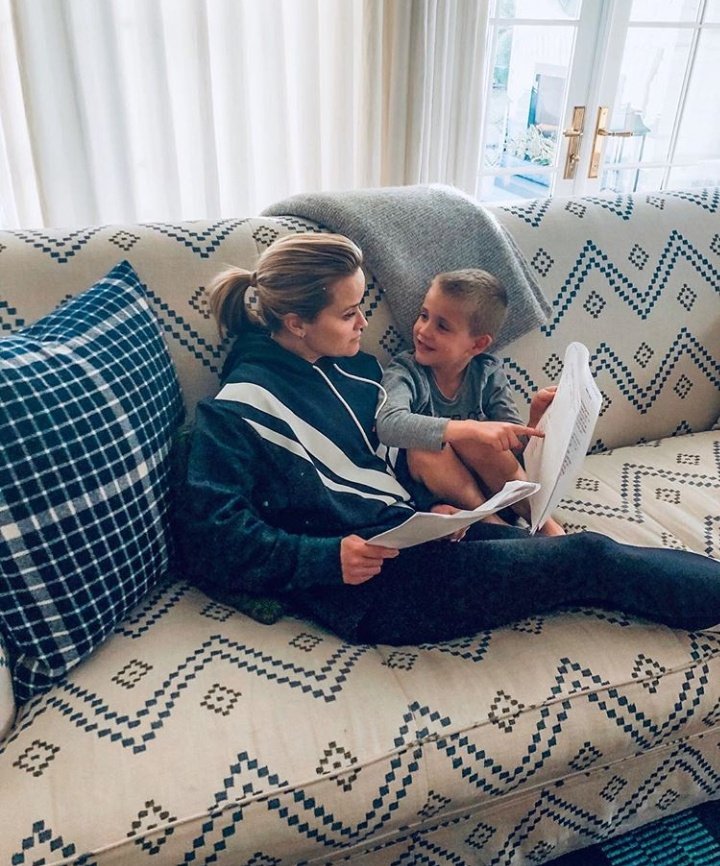 However, the artists were simply trying to cry out, in as forceful a language as they could find, “This is what your technology is doing to you—take in our message!” A great deal of modern art could be captioned under the cry, “Wake up, humanity! Be alive! Look at this World in front of you!” This is restoring the emotionally dead, resuscitating the feelingless robot, the mechanical condition into which we have been forced by adjusting to a hyper-technological civilization. There is, on a deeper level, a very powerful relationship between beauty and ethical values. Beauty is that form in which everything is in harmony; and is that not also a definition of ethics? A final consideration, and perhaps the most important, is that art can dispense grace. Art is part of mortal’s quest for grace. Art and the beauty which it reflects enable us to integrate ourselves. We can make a synthesis between what Dr. Freud called primary and the secondary processes. The function of art can also be described by the term revelation. Art is a constant revealing of beauty as well as truth in a sense parallel to science but in the quite different form. Art produces new knowledge, new forms, often catastrophic in its endeavor to awaken people. The revelation in art comes as an immediate and unique experience. #RandolphHarris 11 of 14
 We look at a picture and it immediately reveals a new Universe, a new form of experience. This is even true of a picture we have seen hundred of times. The Miro lithograph hanging in my living room brings me a new experience almost every time I look at it. The World is something different from what I had assumed. There is a grace that comes in such moments; a new depth of experience in ourselves is awakened. When persons say a particular piece of music carries them into another World, they are testifying to the revelation that is in this music. Beethoven himself once remarked, “Whoever understand my music will henceforth be free of the misery of the World.” Grace comes as a gift. It is something we do not ask for and cannot command. Indeed, we do not know the new revelation even exists until it opens itself to us. We were living in a narrow World; now, with the grace that comes in art, we suddenly find ourselves in a new World we did not know was there. I recall once, on leaving an exhibit of Hans Hofmann’s work, with the words singing in my mind like a Hallelujah chorus, “If a human being has the courage to paint such paintings, life surely has meaning!” It is the reverse of Dostoyevsky’s sentence in the Brothers Karamazou, “If God is dead, everything is permitted.” If such beauty exists and gives us it grace, then life must be ultimately good. #RandolphHarris 12 of 14
 Creativity gives us a grace in the sense that it is a balm for our anxiety and a relief from our alienation. It is grace by virtue of its power to reconcile us to our deepest selves, to lead us to our own depths where primary and secondary functions are unified. Here is the right brain and the left brain working together in seeing the wholeness of our World. And thus my painting and the creative sketching—indeed, everyone’s creative acts, whatever they may be—make constructive form out of the apparent formlessness of our lives. Since the commandment “Thou shalt love the Lord thy God” is laid upon us so imperatively, it is to be inferred that the love in question is not only the love a soul can give or refuse when God comes in person to take the hand of his future bride, but also a love preceding this visit, for a permanent obligation is implied. This previous love cannot have God for its object, since God is not present to the soul and has never yet been so. It must then have another object. Yet it is destined to become the love of God. We can call it the indirect or implicit love of God. This holds good even when the object of such love bears the name of God, for we can then say either that the name is wrongly applied or that the use of it is permissible only on account of the development bound to follow later. #RandolphHarris 13 of 14
 The implicit love of God can have only three immediate objects, the only three things here below in which God is really though secretly present. These are religious ceremonies, the beauty of the World, and our neighbor. Accordingly there are three loves. To these three loves friendship should perhaps be added; strictly speaking it is distinct from the love of our neighbor. These indirect loves have a virtue that is exactly and rigorously equivalent. It depends on circumstances, temperament, and vocation which is the first to enter the soul; one or other of them is dominant during the period of preparation. It is not necessarily the same one for the whole of this period. It is probably that in most cases the period of preparation does not draw toward its end, the soul is not ready to receive the personal visit of its Master, unless it has in it all three indirect loves to a high degree. The combination of these loves constitutes the love of God in the form best suited to the preparatory period, that is to say a veiled form. When the love of God in the full sense of the word wells up in the soul, they do not disappear; they become infinitely stronger and all loves taken together make only a single love. The veiled form of love necessarily come first however and often reigns alone in the soul for a very long time. Perhaps, with a great many people, it may continue to do so till death. Veiled love can reach a very high degree of purity and power. At the moment when it touches the soul, each of the forms that such love may take has the virtue of a sacrament. #RandolphHarris 14 of 14
The Stars in the Heavens Sing a Music if Only We Had the Ears to Hear
 We do have legends. We had a goddess. However, now is not the time for all those things. You need not believe all I have seen. What I do have to give you is a vision. I think a vision is stronger than an illusion. And the vision is that we can exist as powerful beings without hurting anyone who is good and kind. Let us explore the human mind as it engages in the creative act. This capacity to create—which we all have, though in varying degrees—is essentially the ability to find form in chaos, to create form where there is only formlessness. That is what leads us to beauty, for beauty is that form. Beauty reveals a form in the Universe—the harmony of the spheres, as Kepler called it. It is a form which is present in the circling of the planets. It is a form which is felt in the curves and balance of our own bodies. And it is present especially in the way we see the World, for we form and reform the World in the very act of perceiving it. The imagination to do this is one of the elements that make us human beings. Since our assumption is that the chief source of joy is the realization and use of one’s resources, it follows that the failure to use these resources leads to a lack of joy. Setting aside for the moment differences in emotional reactions, this assumption maintains that the master of any skill enjoys one’s area of expertness more than if one were not a master. A good skier enjoys skiing more than one would if one could not ski well, for instance. Similarly for a violinist, a taster, a knowledgeable person, a god typist, a health person, a fine athlete and so on. #RandolphHarris 1 of 19
 The more of one’s abilities an individual has developed and can use, the more pleasure one feel within oneself. When you want to be better than you are, joy awaits you. The concept of creativity is the most adequate one to express the notion of joy through the optimal development of personal functioning. Creativity implies not only the use of one’s capacities, but also includes going beyond them into previously unexplored areas. For is the essential nature of a thing as distinguished from the matter in which it is embodied. We recall Plato’s ideas of the essences in Heaven. These he rightly calls forms. Form is a pattern, an image and an order given to what would otherwise simply be chaos. Form is the nonmaterial structure of our loves, on the basis of which we live and on which we base our own particular character. We recall the studies of especially creative people that were made by Frank Barron. Dr. Barron showed his cards—cards with many different drawings and paintings on them—to creative people and their counterparts, people who were not especially creative, asking them to pick out the cards that liked best. The latter group chose the orderly cards; they liked things to be clear, understandable, unclutter. However, the creative people chose the chaotic cards. The most striking thing about the creative people was this taste for chaos. They preferred the scribbles where there was no form whatever; they found a challenge in the chaos. #RandolphHarris 2 of 19
 Creative people yearned to make form out of it, to make of the chaos about them an order which is their own. This is the purpose of their existence. This is the fundamental creative aspect of all human beings whether they are especially talented or not. The human imagination is shown in these strivings—which may sometimes be passion and sometimes simply curiosity—to put things into form. It is what Einstein did when he proclaimed that matter and energy are related in one formula, E= mc2. Our human mind is continuously doing that, obviously on a lesser scale. Before one is able to use one’s experience in unusual, productive, and satisfying (that is, creative) ways, one must acquire a repertoire of experiences. One must be open to experience, able to perceive and sense one’s environment, and be aware of one’s own internal feelings. After being acquired, the experiential elements within a person must be related to each other. An individual must have the ability to associate two or more experiences which can lead to a useful product when they are joined. Many products may be generated in the course f creative activity, but the evaluation as to which of these satisfy the situation, and which are worthless, is essential. This phase distinguishes the bizarre from the creative, and the productive from the mundane. After the generation of an original idea or product, detailed work is usually in order. An enduring contribution involves much underlying effort. #RandolphHarris 3 of 19
 The above steps can be approached not only at the conscious and unconscious levels, but also through a discussion of the role of emotional blocks. The conscious attempts to enhance an individual’s capacity in the acquisition area is institutionalized as scholarship—the quest for more knowledge to add to an individual’s repertoire. Science, the method of determining the worth of a given statement, is the social institution aimed at the evaluation area. And conscious attempts to increase expression are institutionalized as the arts, where a variety of modes of communication are developed. However, methods of enhancement of the creative process that occur on a more unconscious level have not been institutionalized. It is for this level that a variety of techniques are being developed which give promise of widening mortal’s horizons by affording one new access to one’s self, and providing means for capitalizing on one’s latent internal abilities. When I am sitting in an audience listening to a talk, I find myself making lines in my imagination from a light in the ceiling to the other lights, moving my head a little bit so that such and such will be a complete triangle, or such and such will make a perfect circle. What I happen to do it with, lines and objects, other people do with music, forming various tunes in their minds. #RandolphHarris 4 of 19
 If you are aware, I think you will find you are always subconsciously in the process of breaking something down in your imagination and putting it back together again. We do that in our ordinary reverie and we do it especially at night in our dreams. Odd things are put together—Socrates, say, is talking to the people we met yesterday. Dreams do fantastic things which seem absurd until, in thinking about the dream the next day, we find the key. All of this a making of form. The clearest aspect of form is obviously in architecture. The Parthenon is a dignified, majestic triumph of form. The Cathedral of Chartres is likewise magnificent form. Mont Saint Michel shows a combination of human and natural forms. The triangular for of the Earth, coming up out of the water in a small mountain, is built upon by human ingenuity with the triangles of Gothic architecture. One church is used as the foundation of the ones that succeeding generations erected, until finally, with the triangular peak of the last cathedral, the spire stretches up, again in triangular form, into Heaven itself. We scarcely need to add that the triangle is the central symbol of medieval culture, shown not only in Gothic architecture but also in philosophy and theology in the triangle of the Father, Son and Holy Spirit. The form dictates the content. We select, say, a sonnet to write or a drama to construct, because the content we have in mind can best be formed out of chaos and put into the particular forms of sonnet or drama or whatever form seems to fit. #RandolphHarris 5 of 19
 There is a danger in erasing chaos too easily, for it then takes away one’s stimulation. Several years ago, I took the training for transcendental meditation. I have always been interested in meditating and have done it more or less on my own. When I finished that course my mantra was given to me, I was instructed to meditate twenty minutes in the morning as soon as I woke up and twenty minutes at four or five o’clock in the afternoon. So I, being an obedient soul, started out doing that. I found that after meditating I would go down to my desk in my studio and sit there to write. And nothing would come. Everything was so peaceful, so harmonious; I was blissed out. And I had to realize through harsh experience that the secret of being a writer is to go to your desk with your mind fully of chaos, full of formlessness—formlessness of the night before, formlessness which threatens you, changes you. The essence of a writer is that out of this chaos, through struggle, or joy, or grief—through trying a dozen or perhaps a hundred ways in rewriting—one finally gets one’s ideas into some kind of form. So I learned I had to meditate with discretion in the early morning in order not to lose the chaos, and to choose those times when I had finished the day’s work and was ready to be blissed out with pleasure. #RandolphHarris 6 of 19
 Acquiring knowledge and experience means feeding input to a human system. A person must have some material to work with in order to be creative and to become the person one can be. One must have information and experiences that have been felt and integrated into the individual’s soul. Ability to learn is a prerequisite for the acquisition of information, but there is a different requirement for acquiring experience. Increased awareness of one’s environment through better developed senses greatly increases the material with which a person can create. Sherlock Holmes, identifying a client’s region of origin from the smell of his tobacco; a physician, perceiving a slight shadow in an X-ray; a psychologist, observing recurrent head scratching of a patient; a musician, noting the rhythm of a train’s wheels—all these observations enhance the chances for effective behavior within the respective situations. In addition to acquiring information and developing the senses, there is another area through which experiential elements come. Awareness of feelings and emotions allows experience to be felt and integrated into the self. The person who is open to experience, and able to feel and appreciate, has more experiential elements than the constricted, denying individual who cannot allow oneself to feel deeply. #RandolphHrris 7 of 19
 A drama is a drama because of its form, a ballet is a dance because of its form. The Flamenco (baile) is a highly-expressive, Spanish dance because of its form. Rock and roll is a rebellion against the classical form in music, and has its own form which is shown in its discords and in its special beat. The ancient Greek philosophers set out to discover the original substance in the Universe out of which all things were made. Was it air? or ether? or water? Heraclitus proposed fire. However, each philosopher got trapped because the next question was, How did this element get its substance? Then came Pythagoras to cut the Gordian knot. He held that the fundamental element was no substance at a, but was really the form in which everything in nature is related to everything else. Form is nonmaterial, and has its existence only as things are related to other things. When I hold up a finger on each hand, you may say that there is no relation between the two. However, you would be wrong: there is the distance between them. If I put up another finger and draw an imaginary line among them, I would have a triangle. Or I get a cone, or a rectangle, or a circle. And soon I have an abstract drawing which is pure form! #RandolphHarris 8 of 19
 It is not by accident that Pythagoras was the inventor not only of a great deal of mathematics (everyone studies the Pythagorean theorem in geometry in high school), but also the inventor of a number of important principles in the theory of music. The tone of a violin is a vibration of a strong of a certain length. Pythagoras made the famous discover that if their lengths are in a simple numerical ratio, vibrating strings under equal tension sound together in harmony. So we have laws of harmony and discord, all derivative from form. To Pythagoras is attributed the lyrical line, “The stars in the Heavens sing a music if only we had the ears to hear.” Now in Pythagoras, art and mathematics were identified. This was a beautiful prediction of what was to come in our modern physics. The older concern with molecules and electron has changed; our physicists are ready to admit that they do not really know what those are. “Something unknown is doing we do not know what,” says Sir Arthur Eddington. What they do know is the relationship of one form to another; they recognize the form. They know if the form is such and such, then we have such and such a physical object. #RandolphHarris 9 of 19
 The prototype of this significance of form is in the fascinating story of the myth of creation in the beginning of Genesis. “The Earth was without form and void,” it goes. This is a fantastic condition: when I go down to my studio, it is the way I hope to be each morning. “And God separated the light from the darkness.” Those mornings when this happened in my studio, when insights come so fast I can scarcely catch them with my pen, are great mornings! And the legend goes on, “Then God separated the sea from the land and the sky from the sea.” Now separating, diving, relating—these are all words of form. All the verbs in this fascinating legend are verbs relating to form. We read nothing about molecules or electrons, but only that God divides, separates, God forms. Creativity is an emulating of God in that we destroy the cosmos and then build it up again in ways that we hope will be closer to our heart’s desire. We hope and strive for the form in the rhythm which we have in our hearts, and in our heartbeat and the rhythm in our breathing. The chaos about us is continually being reformed, only to be destroyed again by history, by nature, and by human perversity. “My photographs are a picture of the chaos in the World,” remarked the artist-photographer Alfred Stieglitz, “and of my relationship to that chaos. My prints show the World’s constant upsetting of mortal’s equilibrium, and their eternal battle to reestablish it.” #RandolphHarris 10 of 19
 However, the works of art living on year after year are vital proof before our eyes that reconstruction of form, of order, is eternally going on in our World. It is in this sense that the artists are the source of our conscience and our moral courage. Facilitation or inhibition of a person’s ability to be open and sensitive to knowledge, sensation, and feeling can occur on the various levels of awareness or consciousness. On a conscious level, sensitivity is a function of life-background, including exposure to traditional teaching methods for acquiring information about and contact with life experiences. Unconsciously, a person’s ability not merely to learn, but also to sense and feel, is very much connected to one’s emotional development. Emotional blocks to learning are many. Many childhood experiences prevent a person from being able to learn, because of anxiety, fear, conflict, or other immobilizing emotions engendered, for example, when parental competition with a child makes test-taking so full of conflict (the child may possibly excel the parents) that the student cannot study or retain; unresolved emotional problems also block off or distort perceptions, and blunt the ability to sense experience accurately as, for instance, when fear of criticism makes a person hear critical words where none exist. #RandolphHarris 11 of 19
 One of the first steps many of us may need to take toward the creative use of anger is to become aware of our anger. As has already been noted, many people develop some degree of numbness to their awareness of anger. Some progress needs to be made in reawakening this awareness before anger can be used creatively. How can this be done? If we can examine the process by which we become deadened to anger, it is often helpful. The key often is possessed in our relationship with our parents. One young man, Monsieur Lestat de Lioncourt, had particular difficulty in being aware of and expressing anger toward women. When he examined the relationship that had existed between himself and his mother, it became apparent that she had constantly manipulated and controlled Monsieur de Lioncourt’s life in many ways as he was growing up. It would be natural, of course, that he would feel much frustration and anger as a result. However, he remembered that, if he expressed any negative reaction or rebelled against this control in any way, she would react with such hurt and disappointment in him that he would feel very guilty. Gradually, Monsieur de Lioncourt, even as a child, built a psychological defense against this intolerable situation; be no longer felt his anger when she manipulated him. #RandolphHarris 12 of 19
 It was only as Monsieur de Lioncourt was able to remember many of these events of his life with mother and was able to experience and express some of the anger pent up since childhood that he became capable of realistic and open relationships with women in his adult life. Sometimes when we allow ourselves to experience long-buried anger and resentment from our childhood, it results in strained relationships between ourselves and our parents, if they are still alive. However, when they boil to the surface, it does usually seem necessary and desirable to deal with these feelings directly; and if the individual can stick with it, a new relationship built on honest reactions and an awareness of our common human failings may emerge from the wreckage of the old, unsatisfying, and unrealistic relationship. Problems of feeling, either emotion-flattening or hyperexcitation, are usually tied to very complex emotional problems. For example, people often cannot allow themselves to feel deep affection of others because of their fear of rejection is too great. Inhibitions of this kind can occur whether the individual is experiencing inanimate objects, ideas, other people, or one’s self. In all these cases, the individual’s openness to experience is seriously curtailed, and the repertoire of elements to enter potentially into one’s creative behavior is sharply diminished. #RandolphHarris 13 of 19
 The job of helping a person become more open and enriched is therefore threefold: removal of emotional blocks; development of an awareness of one’s self and one’s feelings; and development of a sensitivity and perceptiveness about other people and the World around one. Also, if we can act on or express whatever awareness of anger we do have, it will often help us to awaken to our feelings of anger. To further highlight this illustration, if a person gains the courage to talk about the slight irritations that one feels, the freedom to do this gives one confidence to become aware of more intense feelings. Once the process is started, the relief is so great that anger floods into awareness with increasing ease. Some people who are relatively dead to their anger react almost immediately to anger-producing situations with some physical symptom. Skilled therapists, for example, will often recognize a clenched fist, a tensed body, or a foot making a kicking motion, or a sudden depressed attitude as a probable sign of anger of which the person has not allowed one’s self to be fully aware. Sometimes we can use such symptoms to help ourselves recognize our anger. #RandolphHarris 14 of 19
 One therapist discovered that when talking to clients, he himself sometimes would very quickly develop a headache. By examining these occasions more closely he discovered that they occurred when unrecognized anger toward the client was building up. Once he had discovered this, he found that when such headaches developed he could examine his feelings and let the anger come into focus where he could deal with it directly. Once the anger was recognized and expressed, the headache would quickly disappear. If we examine the possibility that we may project our feelings of anger onto others, sensitivity to our anger may also be enhanced. All of us have some tendency to read into others the feelings that we are reluctant to recognize and accept in ourselves. If we can face it, very often when we feel that someone dislikes and resents us, we will discover that we resent them. For example, a mother might react very firmly to a child’s outburst against her request that he carry out the trash. She might feel that he carries a resentful grudge about this task, hating her for limiting his freedom to go out and play. In reality he, having had his outburst, may quickly forget the incident. If the mother were able to recognize it in herself, she might discover that she resents him for seemingly limiting her freedom and keeping her trapped in the home. #RandolphHarris 15 of 19
 Gary James had been in psychotherapy for several month when one day he expressed the idea that his therapist was angry at him. He was asked to play the role of the therapist and express that anger. As he “became” the therapist and talked to a pillow in another chair, which represented himself, Gary James said, “I am angry and impatient with you. I feel like giving you a good kick in the britches so you will get to work and we can get somewhere in therapy!” The therapist then said to him, “Now will you be yourself and try saying the same thing to me.” At first Gary James looked at the therapist in some surprise, then a little gleam of awareness began to appear on his face. “Yeah,” he said, “maybe I am a little angry and impatient with you. You sit there and look wise and do not seem to do a damn thing for me. I think I do feel like giving you a kick in the britches so you will get to work and help me get somewhere in therapy!” After he finished, Gary James’s face lighted up with a grin of pleasure and satisfaction that he had been able to be ware of and express the hitherto unrecognized anger. It was an important step forward for him, and it happened because he was helped to experience his projection. Like many projections, it was based on some truth, also, for the therapist admitted to Gary James the he had felt some impatience toward him, which he had not expressed. #RandolphHarris 16 of 19
 If we ask ourselves if we are feeling angry at the right people and for the real reasons, it may also help us become aware of our angry. For sometimes we mask from others and from ourselves our real anger by feeling irritation about less threatening things. Sometimes we do this by getting angry at people who are less threatening to us. When we cannot face and deal with our angry at the boss, for example, we may heckle the wife and kids. Or we may nag the wife about leaving dishes in the sink or not keeping the house tidy rather than recognize and deal openly with the fact that we are angry and hurt because she does not express her love for us as much as we would like. To recognize and express this basic anger and hurt would be to reveal our deep need of her and make us feel very vulnerable. Our fear of love makes such an expression of anger seem very risk. It is much safer to be aware only of last night’s dishes! If we are honest, when we become disproportionately angry about things, they must be viewed as relatively inconsequential, it may help to ask ourselves what it is we are really angry about. It seems impossible, but there is a way—a way with which we are familiar. We know quite well in what likeness this tree s made, this tree that has grown within us, this most beautiful tree where the birds of the air come and perch. We know what is the most beautiful of all. No forest bears its equal. #RandolphHarris 17 of 19
 Sometime still a little more frightful than a gibbet—that is the most beautiful of all trees. It was the seed of this tree that God placed within us, without or knowing what seed it was. If we had known, we should not have said yes at the first moment. It is this tree that has grown within us and has become ineradicable. Only a betrayal could uproot it. When we it a nail with a hammer, the whole of the shock received by the large head of the nail passes into the point without any of it being lost, although it is only a point. If the hammer and the head of the nail were infinitely big it would be just the same. The point of the nail would transmit this infinite shock at the point to which it was applied. Extreme affliction, which means physical pain, distress of soul, and social degradation, all at the same time, is a nail whose point is applied at the very center of the soul, whose head is all necessity spreading throughout space and time. Affliction is a marvel of divine technique. It is a simple and ingenious device which introduces into the soul of a finite creature the immensity of force, blind, brutal, and cold. The infinite distance separating God from the creature is entirely concentrated into one point to pierce the soul in its center. The person to whom such a thing happens has no part in the operation. One struggles like a butterfly pinned alive into an album. However, through all the horror one can continue to want to love. #RandolphHarris 18 of 19
 There is nothing impossible in wanting to love through pain, no obstacle, one might almost say no difficulty. For the greatest suffering, so long as it does not cause the soul to faint, does not touch the acquiescent part of the soul, consenting to a right direction. It is only necessary to know that love is a direction and not a state of the soul. If one is unaware of this, one falls into despair at the first onslaught of affliction. One whose soul remains ever turned toward God through nail pierces it finds oneself nailed to the very center of the Universe. It is the true center; it is not the middle; it is beyond space and time; it is God. In a dimension that does not belong to space, that is not time, that is indeed quite a different dimension, this nail has pierced cleanly through all creation, through the thickness of the screen separating the soul from God. In this marvelous dimension, the soul, without leaving the place and the instant where the body to which it is united is situated, can cross the totality of space and time and some into the very presence of God. It is at the intersection of creation and its Creator. This point of intersection is the point of the intersection of the arms of the Cross. Saint Paul was perhaps thinking about things of this kind when he said, “That ye, being rooted and grounded in love, may be able to comprehend with all saints what is the breadth, and length, and depth, and height; and to know the love of Christ, which passeth knowledge,” reports Epistle to the Ephesians 3.17-19. #RandolphHarris 19 of 19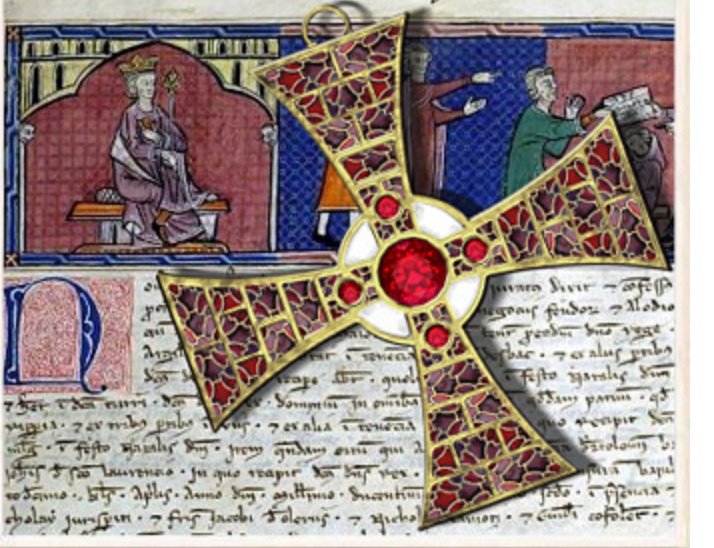
Living in the Eternal Moment–Tomorrow is Also a Blessed Day So Let Us Do What We Can to Make it Easier One Cannot Wait Around Forever!
 I want to thank you for sharing your secrets with us. You have trusted us, and treated us as if we were sinless and kind. You big old great thing, you sure are pretty as an Angel, and you have got plenty charm enough to be a gangster. I have seen every gangster movie ever made three times and I know what I am talking about. They put a little boot black on your hair, you could play Bugsy Siegel. From the foregoing, one might be led to think that the most desirable state is to feel free. This is true, but the situation, as usual, is not so very simple. Very often the feeling of freedom and of power to act is the most desperate of defenses against a deep and totally unconscious sense of powerlessness and constraint. A familiar clinical example is vigorous phallic activity covering an unconscious sense of smallness. The kinds of character defenses that are classified in general as counterphobic go along most frequently with an exaggerated sense of conscious freedom, or euphoria, or power to act at will. This is seen in its most vivid and most pathological form in the manic-depressive psychosis. When the patient is in a manic state, one is perfectly happy, perfectly powerful, and perfectly free—absurdly so, of course, so that one is not surprised to find one a short time later in such a state of stupefaction and despair that one cannot speak or move at al. As in most affect, intensity of the experience is an excellent indicator that the extreme opposite is close to expression. #RandolphHarris 1 of 16
 May an intense feeling of compulsion and of lack of power be a defense against the achievement of greater freedom of the self? Why, indeed, should freedom of the self be defended against, when it is presumably what all mortals want? Christ having returned to Earth and to the Church he had founded appears and is recognized, for his grace shines among all mortals as in the days of his life. As a crowd gathers in wonderment and love about him, the Grand Inquisitor passes by, and, immediately understanding the situation, orders him arrested. That evening, in the darkness of the dungeon in which Christ is imprisoned, the Grand Inquisitor himself, alone, enters with a light in his hand. He speaks sternly and bitterly to Christ and recalls to him the temptation in the desert, during which the cursed and dread Spirit, the spirit of self-destruction and non-existence had put him the three temptations. These three temptations are to offer Christ something less than freedom; bread, or miracle, or mystery, or authority, but not freedom. For, as the dread Spirit had said, “Thou wouldst go into the World, and Thou art going into the World with empty hands, with some promise of freedom which people in their simplicity and their natural unruliness cannot even understand, which they fear and dread—for nothing has ever been more insupportable for a mortal and a human society than freedom.” #RandolphHarris 2 of 16
 And, in the words of the Grand Inquisitor: I tell Thee that mortals are tormented by no greater anxiety than to find someone quickly to whom one can hand over that gift of freedom with which the ill-fated creature is born….Didst Thou forget that mortals prefer peace, and even death, to freedom of choice in the knowledge of good and evil? In place of the rigid ancient law, Thou wouldst have it that mortals must hereafter with free heart decide for oneself what is good and what is evil, having only Thy image before one as one’s guide. However, didst Thou not know that one would at last reject even Thy image and Thy truth, if one is weighed down with the fearful burden of free choice? Is the nature of mortals such that one can reject miracle, and at the great moments of one’s life, the moments of one’s deepest, most agonizing spiritual difficulties, cling only to the free verdict of the heart? Thou didst think too highly of mortals therein, for they are slaves. #RandolphHarris 3 of 16
 We must ask ourselves what arrangement of the parts of the self might produce the feeling of freedom which Christ is represented as offering to mortal, then we may get an important clue from this passage. Consider this sentence of the Grand Inquisitor: “Didst Thou forget that mortals prefers peace, and even death, to freedom of chose in the knowledge of good and evil?” And, again, “In place of the rigid, ancient law, Thou wouldst have it that mortals must hereafter with free heart decide for oneself what is good and what is evil…” Here is a psychoanalytic sort of interpretation: the knowledge of good and evil refers to conscious knowledge of all the usually unconscious, internalized prohibitions and prescriptions, particularly those that relate to the most primitive and most energy-laden of our drives. Knowledge of good and evil implies the availability to consciousness both of impulses and of the forces that control impulse. It means, further, that the expression or renunciation of impulse would become a matter of conscious decision, made by the whole self, rather than a matter of the triumph of blind forces of either desire or restraint. Another way of putting this, in terms of such theoretical constructs as psychoanalysis provides, would be to say that, in freedom, the ego would no longer relate to the superego as a child to a punishing parent, but that the superego would become entirely integrated with the ego. #RandolphHarris 4 of 16
 The feeling of constraint, then, may be said to derive from a fearful and hating orientation of the ego to the superego—that is, from an arrangement of parts of the self that would be the inner equivalent of being constrained from without, by alien and powerful forces. Such an arrangement is learned, of course; it occurs as a result of the experience of having been constrained by others, chiefly the parents. Still, it is evident that some such specialization of parts of the self is the normal and desirable state of affairs. If discipline is orderly, rational, and loving, it will not lead to severe repression and to consequent domination by unconscious forces. The feeling of freedom and the absence of inner, irrational compulsions will then be determined chiefly by the extent to which the superego is rational and conscious, and impulse is gratified or renounced in accordance with the decision of the ego. The existence of internalized irrational parents is thus a prime source of the feeling of compulsion, and indeed may actually restrict ability to respond adaptively—recall the phrase “the rigid, ancient law.” If, however, the ego itself were to become the source of ethical prescriptions, having assimilated the old function of the superego, the source of the prescription would no longer be unconscious and the feeling of compulsion would vanish. This is the aim of the psychoanalytically-based psychotherapies. #RandolphHarris 5 of 16
 It should be noted that the production of a relatively rational superego by loving and rational parents is still something very short of that hypothetically possible if rarely realized state in which superego and ego are one. The client-centered therapy whose theory and practice is particularly impressive in its emphasis on the unconditional self-worth of the client and the total acceptance by the therapist of the fundamental goodness of the client. In terms of this analysis, such therapy would offer the client a loving and rational parent to internalize, but it would not have the further goal—and one that is rarely achieved in any case—of making available to consciousness once again the most primitive of impulses and the most powerful and most repressed of prohibitions. However, this latter is something of a digression. Let us return to the defensive character of compulsion, and to one of the most important of the arguments made against Christ by the Grand Inquisitor—that “nothing has ever been insupportable for mortal and a human society than freedom.” Why should the majority of people find such an arrangement of the self an intolerable one? Largely, one must answer, because of infantile fears—or, more accurately, because of fears that were very great during the period of early childhood, and that have persisted with undiminished intensity in the unconscious. Such fears were, to begin with, fears of outer forces of great power—literally, I believe, fear that one would be destroyed for expressing impulses unrestrained. #RandolphHarris 6 of 16
 In civilized society (which, unhappily, a baby does not realize it has been born into) such fears might be called, from our civilized, adult viewpoint, unrealistic. Most parents really do not mean their children any harm. The baby, however, is not yet civilized, and he invests the outer forces with every bit as much intensity of desire, and rage when frustrated, as he himself possess. Thus he has good reason, when he is angry or insatiate, to fear the giants with whom he interacts and on whom he depends. He fears them because of the strength of his own impulses, which he experiences fully, and because the boundary between inner and outer is still fluid, so that he is not always certain who is enraged. In the adult, such fears persist, first of all, as fear of impulses from within, and, secondly, as fear of destruction from the internalized parents. It would be easy to say, “unrealistic fears,” but the fact is that persons kill themselves for their own impulses—that is, they deal out the most extreme punishment to themselves for a crime they were impelled to commit, though the crime they do in fact commit is murder of the self rather than of the other. Where impulses are so fearsome and the forces of restraint so ferocious, it seems safer not to be free—or, to put the matter in other terms, it seems safer not to know anything about the situation of the self. #RandolphHarris 7 of 16
 However, here one is reminded of a most significant quotation from the New Testament—“one who would save one’s life shall lose it…” The moral message of Christ, insofar as it is embodied in this question, consisted exactly of the advocacy of the wisdom of self-forgetfulness, which objectively in psychoanalytic terms means the establishment of a relationship of harmony and love between the ego and the superego, or the dissolution of the wall that separates what we are from what we think we should be. I cannot develop the thesis in detail here, but it seems to me that the New Testament is best understood in terms of the relationship between personified conscious knowledge—the Word made flesh, alive and changing, taking its chances, open to beauty and decay—and the ancient, rigid law and lawgiver, fixed, abstract, decided. The constantly recurring imagery of the Son and the Father suggests that the specific content of the conflict and the disharmony which Christ sough to resolve. To recapitulate: freedom, or conscious knowledge of the primitive forces of id and superego, is greatly feared, even in adulthood, because of the persistence in the unconscious of the earliest and most intense of fears. Thus the prospect of freedom is intolerable. One further aspect should be touched upon. The condition of freedom, or complete consciousness, would entail complete assumption of responsibility for one’s self. #RandolphHarris 8 of 16
 One could not claim to know not what one did, for the impulse in all its vulnerable state would be experienced. The intention would be fully realized and, if consented to, accomplished in full knowledge. However, if one follows the dictates of an internalized parent and is thereby somewhat less free to act according to one’s deepest inclinations, one is at the same time not wholly responsible for the consequences. The parent is responsible, and the ego is still a child. Thus the individual may avoid judging for one’s self what is right and what is wrong. One is not weighed down by the fearful burden of free choice, and one is consequently actually less free. For it remains to be said that the truth shall make one free. The essential point of this analysis is that objective freedom, in the sense of response variability, is at a maximum when a genuine feeling of freedom exists, and that such a feeling of freedom occurs in the presence of a broadened consciousness both of impulse and of ethical prescriptions. So far as the postulate of determinism is concerned (for instance, absolute predictability in principle), it should be quite evident that such a postulate is irrelevant to both the objective and the subjective meanings of freedom. If one assumes a closed system of knowledge and a perfect description of the given state of affairs, then all events are absolutely predictable, including the actions of human beings of quite different degrees of objective freedom and of subjective sense of freedom. #RandolphHarris 9 of 16
 The acceptance of determinism as a working hypothesis is basic to psychology as a science. When it become more than that, as it so often does, and is elevated from modus vivendi to sentiment and then to principle for one’s whole life, it is surely itself a form of self-imposed restriction upon imagination and the capacity to create. For myself, I believe there is a recalcitrant oddness at the heart of things—I had almost written at the heart of hearts—and I am pleased when my mind wanders off to think no more of this or that. There are many experiences which jar us out of the quantitative, routine treadmill of time, but chief among them is the thought of dying. A modern English author describes how he endeavored for years to write by following conventional methods. “I thought I could write to formula,” as he put it; and during the war, he continued, “I found out why I had not been published before. When we were all thinking we might die the next day, I decided to write what I wanted.” When we point out, as actually happened, that his writing then became successful, some persons might interpret the illustration with a conventional success moral, “If you wish to be successful write what you want.” However, such a moral, of course, entirely misses the point. The author’s previous need to write according to external standards and for ulterior purposes—success being the chief one in our day—was exactly what was blocking him in tapping his qualities and powers as a writer. And it was precisely this need that he gave up at the time of facing death. #RandolphHarris 10 of 16
 If one may die tomorrow, why knock one’s self out trying to fit this standard or that formula? Assuming tat success and rewards might be achieved by writing to formula—which is a toss-up in any case—one may not be around long enough anyway to enjoy the rewards, so why not treat one’s self to the joy at the moment of writing according to one’s own integrity? The possibility of death jars us loose from the treadmill of time because it so vividly reminds us that we do not go on endlessly. It shocks us into taking the present seriously. Thinking that tomorrow is also a blessed day no longer comforts and excuses; one cannot wait around forever. It makes more crucial for us the fact that whole we are not dead at the moment, we some time will be: so why not choose something at least interesting in the meantime? The so-call cynical poet of the Old Testament, Ecclesiastes, is in fact very realistic at this point. Amid his recurrent refrain, “all is vanity,” he points out that the wise man will not wait around for future rewards and punishments. “Whatsoever thy hand findeth to do” Ecclesiastes continues, “do it with thy might; for there is no work, nor substance, nor knowledge, nor wisdom in the grave whiter thou goest.” #RandolphHarris 11 of 16
 A mortal should act under the form of eternity. For I understand Eternity to be existence itself. For the existence of a thing, such as an eternal truth cannot explained by duration or time. The existence of something depends on its essence—and idea which is not as abstruse as it sounds at first glance. To apply it to one’s self, a person acts under the form of eternity to the extent that one’s actions arise from one’s own essential center. In example of the author we talked about previously, such an act was his decision to write, not according to external changing fads, which rise and fall from week to week, but from the inward, unique, original character which makes one an individual. Living in the eternal moment does not mean mere intensity of living (though self-awareness always adds some intensity to one’s experience): nor does it mean living by an absolute doctrine or covenant, religious or otherwise, or by a moral rule. It means, rather, making one’s decision in freedom and responsibility, in self-awareness and in accord with one’s own unique character as a person. If a person is to be creative in one’s use of anger, two basic conditions need to prevail. In the first place one needs to be aware of anger and accept is as a valued part of the self. Secondly, one needs to be able to express one’s anger directly and responsibility. If these conditions can be met in some degree, various values can be achieved. #RandolphHarris 12 of 16
 For one thing, this creative use of anger will mean less punishment of ourselves. We will not be so likely, for example, to suffer physical illness. It is unquestionably true that many instances of heart trouble, high blood pressure, and ulcers (to name the most obvious problems) are related to the suppression of anger. When a person is filled with chronic unexpressed hostility (of which one may or may not be aware), the body is overworked by being in an almost constant state of preparation for emergency in which the heart works harder, the blood pressure rises, and digestive processes slow down. Eventually the body is likely to suffer permanent physical damage under this strain. If the person is able to deal with anger as it arises and get it out of one’s system, however, the natural rhythm of the body can be maintained as the reactions caused by the anger quickly subside. Since depression also often results from turning anger in on oneself, creative expression of anger can frequently eliminate this punishment we inflect on ourselves. Kelley, a college girl, made an almost successful suicide attempt by taking a large number of sleeping tablets. In the weeks that followed, with the encouragement of a therapist, she began to express some of the anger toward her parents that she had previously felt she dare not talk about. Kelley’s depression quickly subsided, assisted in part by the fact that her parents accepted her feelings much better than she had thought they would. #RandolphHarris 13 of 16
 The creative expression of anger not only helps us to be less self-destructive, but it also makes for more effective relationships with others. Many of us, because of early teaching, go through our lives assuming the opposite. If we become angry, we are likely to feel guilty because we feel we have destroyed something between ourselves and the other person. So instead of improving ourselves in the skill of expressing anger, we try to become better at controlling and suppressing it. How can getting mad at others improve our relationship with them? Well, for one thing, when we express anger, we are more emotionally honest in our relationships. Too often we do not really know each other, even when we desire to be intimate. Our encounters with each other have a shadowy, unreal quality, because there are so many gaps in our communication. We hide many of our feelings. Often the feelings we hide is anger. And when we do not express our anger to those who matter to us, we do both ourselves and them a disservice. Our lack of candor perpetuates the psychological distance that exists in the relationship and cheats us of satisfying experiences of intimacy. #RandolphHarris 14 of 16
 A cunning part of Satan’s strategy is to dissociate anger from agency, making us believe that we are victims of an emotion that we cannot control. One couple discovered after fifteen years of marriage that the wife had harbored resentment about a pet peeve for most of that time. Whenever they went out for and evening or weekend with other couple, she thought he did not pay their share of the costs. However, she never expressed her anger. Finally, when it did come out in a group-therapy session, she discovered that all the time he had been contributing their share or more in a quiet, unassuming way. If she had been more emotionally honest and had been able to express her anger years earlier, this particular could would not have impaired their relationship. It begins to become clear, then, that to show anger is often an expression of love and concern, a way of saying, “You matter to me.” On a community level, for example, significant social reforms have usually occurred in situations where someone has expressed anger about existing conditions, saying in effect to some segment of society, “You are hurting yourself and all of us by what you are doing.” We learn in the proclamation on the family that the family is central to the Creator’s plan and that husband and wife have a solemn responsibility to love and care for each other and a sacred duty to rear their children in love and righteousness. The family is also Satan’s primary target. He waging war on the family. #RandolphHarris 15 of 16
 One of his schemes is the subtle and cunning way he has of sneaking behind enemy lines and entering our homes and lines. Satan often damages and destroys families within the walls of their own homes. His strategy is to stir up anger between family members. Satan is the father of contention, and he stirs up the hearts of people with anger, one with another. To lose one’s temper is an interesting choice of words that has become a widely used idiom. To lose something implies not meaning to, accidental, involuntary, not responsible—careless perhaps but not responsible. “He made me made.” This is another phrase we hear, also implying lack of control or agency. This is a myth that must be debunked. No one makes us mad. Others do not make us angry. There is no force involved. Becoming angry is a conscious choice, a decision; therefore, we can make the choice not to become angry. We choose! Choice and accountability are inseparable principles. May the Lord bless you and inspire you to walk without anger. “One who is slow to anger is better than the mighty; and one that rules one’s spirit than one that takes a city,” reports Proverbs 16.32. It is when we become angry that we get into trouble. Most of the inmates of our prisons are there because they did something when they were angry. “Be not hasty in thy spirit to be angry: for anger rests in the heart of the unfortunate,” reports Ecclesiastes 7.9. #RandolphHarris 16 of 16

Where Will You Spend Eternity–Traces of Our Earthly Being Will Outlast Aeons as Every Creative Act Has its Eternal Aspect?
 A loneliness slowly began to penetrate down through his throat and into his quivering heart. Give me a little time. If they still exist, if they have parented a colony, if they are anywhere in the wide World, I know those who will know where they are—without a question. It is right that you love your country. There is only one thing greater than our devotion to our country. That is our love of the City of God. Never forget the words of our father Augustine, “The citizens of the City of God fight with spiritual weapons—love and prayer and truth.” God will have mercy upon us. He will grant strength to these people who fight to save us! If we do not pray as we ought, as long as we keep God in our hearts, he will forgive us. We believe in God’s power of truth and love, we have given our lives to him. And we love our nation and our families. Christ will have mercy! He will forgive the sin upon our souls. Christ will forgive! Christ has suffered like us, he became a man to know our sins, and does know our hearts. He too did love a land—he taught us about the lilies of the field! And Christ did love his family and his friends as we love ours! Christ will take us into his care. Ah, he will forgive us, blessed Christ! When we are free, it will feel as though we are being lifted up by everlasting arms…the walls of the chapel will be erased and we will merge with our prayer, united wit Spirit. #RandolphHarris 1 of 10
 As we merge with our prayers, there will be a great burst of light, and the radiance and harmony expands and takes the whole Earth and the sky…all is harmony and beauty and resplendence…one will feel an ecstasy, the dizziness within one will become joyful and at the same moment one will be filled with a vast peacefulness. The everlasting arms hold one, but one needs no support for all is a brilliant light. We will breath the air of infinity, all about us is Being in a great exaltation. Is this everlasting beauty the glimpse into the City of God, a new city where all is peace? A thing of beauty is a joy forever: It is loveliness increases; it will never pass into nothingness; but still will keep a bower quiet for us, and a sleep full of sweet dreams, and health, and quiet breathing. Each of us sees the World as an individual, alone, caught up in a vast maelstrom; but by our culture we learn to communicate with our fellow human beings. Poetry, dancing, painting and other arts are all ways of communicating. We not only see the World but the World conforms to our way of seeing it. This is certainly true in the field of art. The great contribution of art is that, in our centuries on this planet, we have been enabled to share, to give to each other, to communicate, to love the World and, in the broad sense, to love each other. This will sound strange to those who think the World is a cold mass of whirling star dust, but not to those who can form their World in communication by whatever beauty they can see and experience. #RandolphHarris 2 of 10
 The anxiety in creating—which we see most clearly in persons like Giacometti or Michelangelo or Beethoven—is overcome by playing. This playing (which may also be hard work) is our human way of overcoming the dualism—finite and infinite—in producing a work of art. The art unites both of these. The World becomes lonely no more, for one experiences being an integral part of it. It used to be asked, in view of the invention and progress of photography, whether painting would not be superseded or at least made only an innocent and unnecessary pastime. The question is absurd. It rests on a radical misunderstanding of painting, the function of which is not to make a record of the external World but to share some special conception of life and the World which the painter experiences. Sometimes artist and people who share essays never know how they will turn out. It is just a conception of the World and will not let go of the individual until one responds. It gives one a sense of participating in the Universe. One experiences a kind of ecstasy, great or small as it may be. And when the product is finished, the producer looks at it and feels a kind of surprise because a view of reality was communicated to them, and they formed it on the medium to communicate it to their friends. The most one can hope for is that you like their production, that it gives you some joy, and that it tells you something about the World as he or she communicates with it. #RandolphHarris 3 of 10
 It is by no means as easy as it may look to live in the immediate present. For it requires a high degree of awareness of one’s self as an experiencing “I.” The less one is conscious of oneself as the one who acts, that is, the more unfree and automatic one is, the less one will be aware of the immediate present. As one person who was trying to avoid boredom in a meaningless (well, not job is meaningless because they provide a life and security) routine job described it, “I work as though I were someone else, not myself.” In such situations we feel as though we were a million miles away from what we are doing, acting as though in a daze or as though in a dream or half asleep or as though there were a wall between one’s self and the present. However, the more awareness one has—that is, the more one experiences oneself as the acting, directing agent in what one is doing—the more alive one will be and the more responsive to the present moment. Like self-awareness itself, this experiencing of the reality of the present can be cultivated. It is often useful to ask one’s self, “What do I experience at this very moment?” Or “Where am I—what is most significant to me emotionally—at this given moment?” To confront the reality of the present moment often produced anxiety. On the most basic level, this anxiety is a kind of vague experience of being exposed and vulnerable; it is the feeling of being face to face with some important reality before which one cannot flinch and from which one cannot retreat or hide. #RandolphHarris 4 of 10
 The reality of confronting the present moment also produces anxiety because it is like the feeling one might have in coming suddenly face to face with a person one loved and admired: one is confronted with an intense relationship one must react to, do something about. It is an intensity of experience, this immediate and direct confronting of the reality of the moment, similar to intense creative activity, and it carries with it the same susceptibility and creative anxiety as well as the same joy. The more obvious reason why confronting the present produces anxiety is that it raises the question of decisions and responsibility. One cannot do much about the past, and very little about the distant future—how pleasant, then, to dream about them! How free from bother, how relieved from troublesome thoughts about what one has to do with one’s life! The mortal who has quarreled with one’s wife can talk of one’s mother with relief, but to consider the quarrel with one’s wife sooner or later entails the question of what one proposes to do about it? It is easier to dream of “when I get married” than to face the question, “Why do I not do something about my social life now?”; simpler to muse of “my future job when I get out of college” than to ask why one’s studies are not more vital at the moment, and what one’s motives for being in college anyway. #RandolphHarris 5 of 10
 The most effective way to ensure the value of the future, as we have mentioned, is to confront the present courageously and constructively. For the future is born out of and made by the present. The traces of our Earthly being will outlast aeons. That is to say, every creative act has its eternal aspect. This is not by ecclesiastical fiat, or merely because of the immortality of influence, but because, as we have shown, an essential characteristic of the creative act done in human consciousness is that it is not limited by quantitative time. No one values a painting according to how long it took to paint it or how big it is: should we judge our actions by more superficial standards than a painting? This brings us to the deteriorated forms of the religious idea of eternal life. The phrase eternal life is popularly used to imply endless time, as though eternity meant going on year after year limitlessly. One sees this view implied in the question frequently painted by some persons—with what motives Heaven only knows—on the dies f buildings to challenge the passer-by on the highways, “Where will you spent eternity?” When you think about it, this is an odd question. “Spend” implies a given quantity—if you spend half your money, you have only half left; and could one spend half or two-thirds of eternity? Such a view of eternity is not only repugnant psychologically—what a boring prospect, that one spends year after year endlessly!—but it is also absurd logically and unsound theologically. #RandolphHarris 6 of 10
 Eternity is not a given quantity of time: it transcends time. Eternity is the qualitative significance of time. One does not have to identify the experience of listening to music with the theological meaning of eternity to realize that in music—or in love, or in any work which proceeds from one’s inner integrity—that the eternal is a way of relating to life, not a successions of tomorrows. Hence Jesus proclaimed, “the Kingdom of Heaven is within you.” That is to say, your experience of eternity will be found in how you relate to each given moment—or not at all. Eternity comes into the present moment as a quality of existence. The deteriorated uses of the term eternal have caused many intelligent people to avoid it. And that has been unfortunate, for it has meant omitting an important side of human experience, and constricting our views psychologically and philosophically. The problem of time may well be the fundamental problem of philosophy. An instant in time possesses value to the extent to which it is united to eternity and provides an issue out of the issuelessness of time—only in virtue of being an atom of eternity. The present moment is thus not limited from one point on the clock to another. It is always full of instants, always ready to open, to be produced. One has only to try the experiment of looking deeply within oneself, let us say, trailing almost any random idea, and one will find, so rich is a moment of consciousness in the human mind, that associations and new ideas beckon in every direction. #RandolphHarris 7 of 10
 Or take a dream—it occurred in just one flash of consciousness as the alarm went off, yet it might take many minutes for you to tell all it pictured. To be sure, one picks and chooses. One does not live out one’s dreams or fantasies—except temporarily, if one is composing music, or in a psychoanalytic session, or constructing some plan in fantasy for one’s work. And even then one keeps a clear awareness of the relation of the beckoning possibilities which are being uncovered to actual reality. This the moment always has its finite side, to use a philosophical term, which the mature person never forgets. However, the moment also always has its infinite side, it always beckons with new possibilities which are being uncovered to actual reality. Thus the moment also always has infinite side, it always beckons with new possibilities which are being uncovered to actual reality. Thus the moment always has its finite side, to use a philosophical term, which the mature person never forgets. However, the moment also always has its infinite side, it always beckons with new possibilities. Time for the human being is not a corridor; it is a continual opening out. The mechanism of necessity can be transposed to any level while still remaining true to itself. It is the same in the World of pure matter, in the terrestrial World, among nations, and in souls. Seen from our present standpoint, and in human perspective, it is quite blind. #RandolphHarris 8 of 10
 If, however, we transport our hearts beyond ourselves, beyond the Universe, beyond space and time to where our Father dwells, and if from there we behold this mechanism, it appears quite different. What seemed to be necessity becomes obedience. Matter is entirely passive and in consequence entirely obedient to God’s will. It is a perfect model for us. There cannot be any being other than God and that which obeys God. On account of its perfect obedience, matter deserves to be loved by those who love its Master, in the same way as a needle, handled by the beloved wife he has lost, is cherished by a lover. The beauty of the World gives us an intimation of its claim to be a place in our heart. In the beauty of the World brute necessity becomes an object of love. What is more beautiful than the action of gravity on the fugitive folds of the sea wave, or on the almost eternal folds of the mountains? The sea is not less beautiful in our eyes because we know that sometimes ships are wrecked by it. On the contrary, this adds to its beauty. If it altered the moment of its waves to spare a boat, it would be a creature gifted with discernment and choice and not this fluid, perfectly obedient to every external pressure. It is this perfect obedience that constitutes the sea’s beauty. All the horrors produced in the World are like the folds imposed upon the ways by gravity. That is why they contain an element of beauty. #RandolphHarris 9 of 10
 Mortals can never escape from obedience to God. A creature cannot but obey. The only choice given to mortals, as intelligent and free creatures, is to desire obedience or not to desire it. If a mortal does not desire it, one obeys nevertheless, perpetually, inasmuch as one is a thing subject to mechanical necessity. If one desires it, one is still subject to mechanical necessity, but a new necessity is added to it, a necessity constituted by laws belonging to supernatural things. Certain actions become impossible for one; others are done by one’s agency, sometimes almost in spite of oneself. When we have the feeling that on some occasion we have disobeyed God, it simply means that for a time we have ceased to desire obedience. Of course it must be understood that, where everything else is equal, a mortal does not perform the same actions if one gives one’s consent to obedience as if one does not; just as a plant, where everything ese is equal, does not grow in the same way in the light as in the dark. The plant does not have any control or choice in the matter of its own growth. As for us, we are like plants that have the one choice of being in or out of the light. “I say unto you, can you look up to God at that day with a pure heart and clean hands? I say unto you can you look up, having the image of God engraven upon your countenances?” reports Alma 5.19. #RandolphHarris 10 of 10
 Randolph Harris II International Institute