
Home » Antiques (Page 37)
Category Archives: Antiques

Wake Up, Humanity! Be Alive! Look at this World in Front of You! I Will Make Up for Everything the World Has Done Wrong to You!
 The anguish inside her defeated her anger. She drew close to me. No admissions and explanations. Just an image. I felt her strength recede, and her eyes misted. A great glowing fire was quelled, and I had done it, and an ever present grief enfolded it. A protective surge rose in me and the wild fantasies reigned again inside of me as if no one lese was present. Unconscious blocks to associational ability are many. For some people there is a fear of letting one’s mind go uncontrolled and saying anything that occurs, because of a feeling that there is something in the unconscious which is frightening. Such an individual, therefore, cannot allow the free play of association, but must keep them logical and controlled. Restriction of the ability to explore relations among various experiential elements is a serious limitation to producing unusual and interesting new combinations and, therefore, limits one’s ability to develop full potential. There are many acts of omission or commission which enhance the development of the associative abilities. Since the essence of this ability is making connections between events which are not obviously related, development depends upon the opportunity to explore freely the thoughts and feelings that the person experiences and to relate them to each other. #RandolphHarris 1 of 14
 Emphasis on imaginative games lays the groundwork for more specific training in developing the skill of associating. However, when we are aware of anger, what then? It would appear that the most natural and spontaneous thing to do would be to express it. However, many of us find it difficult to be spontaneous at such moments. It may be desirable for us to examine some of the reasons we give ourselves for not expressing anger. Here are some of them. “I may say a lot of things I do not mean, and then I will feel terrible about it afterward.” What seem more likely is that we will say things we really do mean and do not accept in ourselves. If we say in anger, “I wish I had never met you,” or even, “I wish you never existed,” we may at that moment really feel that way—or at least part of us feels that way. It does not mean that five minutes or five hours later we may not be holding each other and intensely feeling our love for each other. For some people, humming the song that spontaneously comes into their head, and then reflecting on it, or associating to the words, can lead to a better understanding of the original puzzling situation. Either the title of the song, or the lines that the person has chosen to sing or hum, or the mood of the song, may contain the meaning of the association. #RandolphHarris 2 of 14
 Humming is an enjoyable and simple method for uncovering hidden feelings that are not easily accessible to conscious thought. However, often we use fear of getting angry as an excuse because we dread the close involvement of anger. It this fear persists and the person finds one cannot loosen up and gradually express more of one’s anger, one should seek professional help, for suppressing anger increases, rather than decreases, the danger of violence. Everyone has the capacity to associate, most to a remarkable degree. However, the full use of this valuable ability requires realizing its presence, removing emotional blocks to letting it go without controls, practicing it, and gaining confidence that it works and can be a highly valuable assistant to thinking, creativity, and increased internal awareness. Internal thoughts and feelings must be expressed in some fashion. Scientific discoveries are written in technical language; music is written and played; other creative feelings are painted, sung, danced, spoken, acted. In some way a person must communicate one’s experience through the use or posture of one’s body or some part of it. #RandolphHarris 3 of 14
 If they get mad at them, some people are afraid that they will damage their children’s lives. When you are angry at them the only alternative to expressing it is some form of phoniness. They can be trusted to handle your genuine feelings more than you think they can. If you are afraid that your anger is not justified that is a valid concern. Perhaps you are under some mistaken impression, but how are you going to find out if you stew in silence and do not talk about your feelings? And so we come to the knotty question, “How can we be creative in the expression of anger? Perhaps it can be stated as a general principle that anger is creative when a maximum of communication occurs with a minimum of destructiveness toward oneself and others. Like most other values, this ideal is one we will never achieve completely. However, the ideas that follow may help us grow toward it. Perhaps scientific and artistic creation differ in their relative emphasis on the expressive aspect of the creative process. In scientific creativity, the primary focus is on the first three phases of the creative process—acquisition, association, and expression. The great discoveries of Dr. Freud came through his sensitivity to and integration of the material of human personality. His writing about these discoveries was only in a minor way an integral part of his creativity. It served primarily as a vehicle for communicating these ideas. #RandolphHarris 4 of 14
 A writer, poet, artist, or dancer, on the other hand, must concentrate more on the form in which one’s discoveries are expressed. We honor Browning, not simply for the conceptions behind is poetry, but for the very form of expression itself. When Katherine Dunham, Aaliyah Haughton, or Margot Fonteyn dance, the artistry is largely in the superb movement of their bodies, the mode through which their feelings are conveyed. Conscious, logical factors that enhance a person’s ability to express oneself involve a traditional educational area, the learning of skills. Learning to dance, or sing, or paint, or write is part of one’s ability to express oneself. Further, the development of skill in the use of symbolism, of expressing feelings derived form one medium in terms of another, is very central. A good example of this occurs in Walt Disney’s Fantasia, in which musical composition are represented in visual form. Unconscious factors that inhibit the expressive ability often derive form cultural or interpersonal censure. The belief that ballet dancing is not masculine, or that singing in public is uncouth, or that artists are irresponsible, or the actors are immoral, are all factors that may operate both consciously and unconsciously to inhibit the full expression of feelings in these areas. Also, the unwillingness to display oneself in front of others, as in public singing, is a major deterrent to free expression. To the degree that these inhibitions exist, self-realization is curtailed. #RandolphHarris 5 of 14
 When an atmosphere of mutual exploration of creative expression can be established, wherein the whole group is attempting to support the creative efforts of each, remarkable progress can be made. Frequently, expressing the unexpressible provides such a boost in self-confidence that an individual may permanently increase one’s repertoire of modes of expression. Many of us have developed long fuses to or anger. We have learned to wait until later, probably wen we are no longer with the person, to be aware that we are angry. However, as we become more able to accept these feelings and more confident about expressing them, the fuse becomes shorter. Dealing with anger right aware will save us the wear and tear of carrying it around and will give both parties a chance to react while the situation is fresh. If married couple, for example, could follow the biblical suggestion not to let the Sun set on their anger, it would be a good thing. On the other hand, if, for example, bedtime became a time to search through their experiences of the day looking for outstanding irritations, it might quickly become a ritual to help them avoid intimacy. There are probably more fun ways of ending most days. #RandolphHarris 6 of 14
 It is tricky to suggest that we express anger without being condemning, for there is a subtlety here that also defies description. Word used do not always seem to be a safe criteria. Some couples, for example, can in moments of anger call each other all kinds of names and come out of it feeling refreshed and neither condemned nor unloved. Others can be much more controlled in their choice of words and yet carry the feeling that they are condemning each other as worthless. And all of us have probably seen unsophisticated, but affectionate, mothers who in a moment of exasperation could give a child a swat on the rear and say, “Get out of here, you stupid no-goodnik, and let me get my work down,” without raising any question in the child’s mind about being loved. Sarcasm is a frequently used, indirect expression of anger that carries the feeling of condemnation since it implies contempt for the other person. Suppose, for example, that wife Anne replies sarcastically when her husband Stan says to her, “I am just so tired of the way things are between us that I sometimes feel like packing up and moving out.” Her reply is, “That is just fine. You pack your precious belongings and get out, because I just could not care less!” Anne’s response would be difficult for stand to deal with creatively even if he did not become very upset by the contempt in Anne’s comment. For by being sarcastic Anne managed to protect herself by concealing all of her feelings except the hostility. She has not allowed him to see that it does matter very much to her, as it undoubtedly does, whether he stays with her or leaves. #RandolphHarris 7 of 14
 One principle which arises in our discussion of form is the transforming of one’s self which occurs in the creation of beauty. In all our creativity, we destroy and rebuild the World, and at the same time we inevitably rebuild and reform ourselves. We do this not at all in the sense of the tragedy of The Great Gatsby, who only changed the externals, such as his wardrobe, his accent, his bank account. We do it rather by grasping a deeper level of the form in the Universe which is also in our own selves. We see the scene before us in our imagination, and that means to some extent we see our own selves. This is a very curious paradox but it is present in all creative persons. Often the creative persons in their work see the perspective of a lifetime endeavor, are themselves creating a cosmos of their own. It is as though each mind is progressively unfolding itself as one goes through life. The creative individual is the one who not only attempts to make some order out of one’s music or art but to make some order in one’s own life. A continual searching for one’s forms occurs in art, and this can be automatically a search for one’s own integrity. A clear example is the life of Beethoven. He has a horrendous childhood, but his biographers relate that his creative genius was related to precisely these ordeals he suffered. His father was constantly inebriated, his mother returned to Heaven when he was young, and he had to take charge of the whole family at the age of eighteen. He never married though he passionately wanted to. However, he could create fantastic music! #RandolphHarris 8 of 14
 There is no point in Beethoven’s life, where a marked development or transformation in musical styles takes place which is also not the point where an equal spiritual development and musical style go hand in hand. The transformation of the other is also the transformation of ourselves. Sometimes this transformation may not be good in the eyes of the artists’ contemporary World. Such was the situation with Rembrandt. When he was a young man his paintings were sold on all sides; he was then what we call an outstanding success. However, as he grew older and more profound, the tragic experiences in his life—the death of his children, the death of his wife—caused his paintings to take on a more somber and profound quality and made them less saleable to his fellow Hollanders. His self-portraits reflect this: each one looks more tragic than the one before it. His popularity as a painter waned, for he would not toady to the younger generation that was coming into vogue with the glossier and more readily saleable productions. He followed undeviatingly the path of his own genius. These later creative contributions make him now recognized as the greatest painter of his age. He died in sorrow and in poverty. The people in that day considered Rembrandt a failure. We now recognize him as one of the greatest painters of all time precisely because the transformation of himself and his art went hand and hand. #RandolphHarris 9 of 14
 There is another question the relation between creativity and values. Certainly values have a great deal to do with psychotherapy, but they may seem to have very little to do with art or beauty. The studies of creative people indicate that the creative persons, so far as values go, are amoral, not immoral. They are not concerned with the generally conformist mortal rules that most of us are brought up with. At the same time—and perhaps because of this freedom from conventional morality—creative persons reveal another kind of ethics. It is not rules learned by rote but rather it is integrity itself. It is not marriage licenses on paper but authenticity of the relationship. It is not rules of health but reverence for nature and reverence for the human body. The artist seeks to overthrow existing values…to sow strife and ferment, so that by the emotional release those who are dead may be restored to life. Then I run wit joy to the great and imperfect ones, their confusion nourishes me, their stuttering is like divine music to my ears. As part of an art exhibit in New York, a wrecked car was dragged to the corner of a park in front of the building which housed my office. This still life was an entry in a show going on inside the building, but was obviously too large to drag indoors. The artist had draped a cow’s intestines over the seats. The conservative people living in the neighborhood were incensed and called the police, and in a couple of hours the wreck was hauled away. #RandolphHarris 10 of 14
 However, the artists were simply trying to cry out, in as forceful a language as they could find, “This is what your technology is doing to you—take in our message!” A great deal of modern art could be captioned under the cry, “Wake up, humanity! Be alive! Look at this World in front of you!” This is restoring the emotionally dead, resuscitating the feelingless robot, the mechanical condition into which we have been forced by adjusting to a hyper-technological civilization. There is, on a deeper level, a very powerful relationship between beauty and ethical values. Beauty is that form in which everything is in harmony; and is that not also a definition of ethics? A final consideration, and perhaps the most important, is that art can dispense grace. Art is part of mortal’s quest for grace. Art and the beauty which it reflects enable us to integrate ourselves. We can make a synthesis between what Dr. Freud called primary and the secondary processes. The function of art can also be described by the term revelation. Art is a constant revealing of beauty as well as truth in a sense parallel to science but in the quite different form. Art produces new knowledge, new forms, often catastrophic in its endeavor to awaken people. The revelation in art comes as an immediate and unique experience. #RandolphHarris 11 of 14
 We look at a picture and it immediately reveals a new Universe, a new form of experience. This is even true of a picture we have seen hundred of times. The Miro lithograph hanging in my living room brings me a new experience almost every time I look at it. The World is something different from what I had assumed. There is a grace that comes in such moments; a new depth of experience in ourselves is awakened. When persons say a particular piece of music carries them into another World, they are testifying to the revelation that is in this music. Beethoven himself once remarked, “Whoever understand my music will henceforth be free of the misery of the World.” Grace comes as a gift. It is something we do not ask for and cannot command. Indeed, we do not know the new revelation even exists until it opens itself to us. We were living in a narrow World; now, with the grace that comes in art, we suddenly find ourselves in a new World we did not know was there. I recall once, on leaving an exhibit of Hans Hofmann’s work, with the words singing in my mind like a Hallelujah chorus, “If a human being has the courage to paint such paintings, life surely has meaning!” It is the reverse of Dostoyevsky’s sentence in the Brothers Karamazou, “If God is dead, everything is permitted.” If such beauty exists and gives us it grace, then life must be ultimately good. #RandolphHarris 12 of 14
 Creativity gives us a grace in the sense that it is a balm for our anxiety and a relief from our alienation. It is grace by virtue of its power to reconcile us to our deepest selves, to lead us to our own depths where primary and secondary functions are unified. Here is the right brain and the left brain working together in seeing the wholeness of our World. And thus my painting and the creative sketching—indeed, everyone’s creative acts, whatever they may be—make constructive form out of the apparent formlessness of our lives. Since the commandment “Thou shalt love the Lord thy God” is laid upon us so imperatively, it is to be inferred that the love in question is not only the love a soul can give or refuse when God comes in person to take the hand of his future bride, but also a love preceding this visit, for a permanent obligation is implied. This previous love cannot have God for its object, since God is not present to the soul and has never yet been so. It must then have another object. Yet it is destined to become the love of God. We can call it the indirect or implicit love of God. This holds good even when the object of such love bears the name of God, for we can then say either that the name is wrongly applied or that the use of it is permissible only on account of the development bound to follow later. #RandolphHarris 13 of 14
 The implicit love of God can have only three immediate objects, the only three things here below in which God is really though secretly present. These are religious ceremonies, the beauty of the World, and our neighbor. Accordingly there are three loves. To these three loves friendship should perhaps be added; strictly speaking it is distinct from the love of our neighbor. These indirect loves have a virtue that is exactly and rigorously equivalent. It depends on circumstances, temperament, and vocation which is the first to enter the soul; one or other of them is dominant during the period of preparation. It is not necessarily the same one for the whole of this period. It is probably that in most cases the period of preparation does not draw toward its end, the soul is not ready to receive the personal visit of its Master, unless it has in it all three indirect loves to a high degree. The combination of these loves constitutes the love of God in the form best suited to the preparatory period, that is to say a veiled form. When the love of God in the full sense of the word wells up in the soul, they do not disappear; they become infinitely stronger and all loves taken together make only a single love. The veiled form of love necessarily come first however and often reigns alone in the soul for a very long time. Perhaps, with a great many people, it may continue to do so till death. Veiled love can reach a very high degree of purity and power. At the moment when it touches the soul, each of the forms that such love may take has the virtue of a sacrament. #RandolphHarris 14 of 14
I Cannot Live Because I Have Lost My Youth—Could One Ever Be Certain that He Could Live Out the Week or Month?
 There is something wrong with the way ghost act. And the same holds true for Angels. I am not saying there is not an afterlife. I am only maintaining that those entities who come down here so beneficently to meddle with us are more than a little cracked. Violence and vitality share a common root—the root of both is force (etymologically, in its Latin form vis). The various plays of force and the radical nature of the encounters of its two forms in essay. Let us first consider in general terms the expression of force in primal instinct and the ways in which it becomes modified as a consequence of the process of socialization, adopting a coldly rational view. The first instinct is to take in enough material from the outside World so that one may be sustained; that is, so that one’s system may replenish itself. The system puts out energy constantly, both to maintain its individual boundaries and to perpetuate its kind; it must take in some source of energy that it does not presently contain. This source is food, which includes air, Sunshine, and other organic matter. For life as a whole, then, death must be constant and almost equal in quantity to life; organisms must die so that other organisms may live. Life therefore depends upon a quantitative superiority of the mechanisms for reproduction. In the average, each organism must reproduce itself and a surplus besides; hence if life is to continue, the pleasures of the flesh must be most powerfully motivated. #RandolphHarris 1 of 21
 It is of equal rank, so far as motives are concerned, as the drive to ingest. The latter is most necessary to the prolongation of individual life, and through individual forms to life itself; the latter is necessary because of the principle that life feeds upon life. It is a requirement of life that it should expand, that individual forms of it should multiply. A stasis seems theoretically conceivable; it is, in fact, the basic tendency of the supreme being. The strongest organism will seek to limit its own reproduction out of an apparent or misguided self-interest. Because it temporarily has ascendancy and an assurance of sustenance, it finds no need for reproduction more than one of its own kind per unit already existing. It loses supremacy, then, purely as a function of probability arising out of life’s tendency toward diversity. Profile life produces many new forms, in such great numbers that finally there occurs some form that is better suited to be supreme. Thus are old rulers deposed; the rules of life make it certain that supremacy cannot be maintained. Death is simply a rule of life. Dr. Freud was wrong in claiming that Eros and Thanatos are equally strong forces. Life is infinitely stronger than Death, for from the beginning Death is merely a by product of life. He tendency of matter is toward life, and the present tendency of life is toward consciousness. Consciousness itself arises in the interest of the expansion of life; the competition among organisms for food is decided ultimately by such things as attention and memory and logic. #RandolphHarris 2 of 21
 Eventually organisms must be born incapable of an unconscious; all the power of symbolism for the imaginative construction of experience must finally become conscious, together with all motives. It may be asked, however, is not symbolism itself a diversion on the road to complete consciousness? Wat is symbolism but a disguised mode of representing motives that were once completely unconscious? It not symbolism simply a step toward conscious representation of the motives of all life? Does it not decrease in the individual as motives become conscious? It may be replied that symbols are possible because of a tremendous differentiation of matter (the structure of the human brain) and that this differentiation of structure and direction of development will not be reserved. Hence symbolic forms should continue indefinitely, though functionally they may become less important for life. It remains a question, however, whether completely conscious motives would require the complexity of determination and differentiation that symbols now have. The motives themselves might, of course, change beyond recognition, into something we cannot now conceive, into a form requiring for their representation the very mechanics that the development of symbolization has made a permanent possession of human intelligence. #RandolphHarris 3 of 21
 The tendency of life, then, is toward the expansion of consciousness. In a sense, a description of means for the expansion of consciousness has been the central theme; it is in this evolutionary tendency that such diverse phenomena as psychotherapy, surprising or unexpected self-renewal, the personally evolved and deepened forms of religious belief, creative imagination, mysticism, and deliberately induced changes in consciousness through the use of chemicals find a common bond. Engagement as an individual in these efforts to expand consciousness is therefore, in various measure, participation in the job that life in general is now facing. It is itself a mark of vitality. What then of violence? Analyzed coldly in terms of instinctual force, it seems evident that violence itself should provide the primal basis for all relations among individual living systems. One seeks to eat the other, and the superior force succeeds. Communities then develop from mutual recognition that selfish ends will be best served by cooperation—that two can eat better than one, or that the alien aggressor may be more effectively repulsed by a defense in common. The idea of justice, according to this conception, arises from a recognition that communities cannot be maintained unless all members hold it a superior form of interest to desist from eating one another and to cooperate in seizing the enemy and resisting one’s attacks. #RandolphHarris 4 of 21
 Thus slaying is sanctioned only when committed against an outsider. Otherwise it would lead to disruption of the community pact and eventually to the inferior form of social organization in which everyone is the unqualified enemy of everyone else. Societies may thus be defined as a form of carefully qualified enmity. In the interest of community organization, however, illusions (which are usually a form of self-deception in the interest of survival) must arise. The most important illusions take the form of identifications, which essentially are a claim that another individual is actually oneself, to be treated by one as one would treat oneself. Such identification in their most extreme form are extended to the entire community. In their more restricted form they pertain especially to parents, mates, and offspring, or substitutes for these (for instance, symbolic equivalents of these). Identifications arise for the same basic reason as community itself—for the more efficient securing of sustenance and for the purpose of warding off aggression, not only from outsiders, but from the very person with whom the community is made. One purpose of a pact is to reduce the number of one’s enemies by, at a minimum, the number of one’s allies—by those allies themselves, in fact. Community uses symbolization for this purpose. Sympathy then is based upon the complex perception of community interest, or at least a capacity for justifying complexly one’s friendships or communities. #RandolphHarris 5 of 21
 This repelling way of putting the matter leaves quite out of account the strange force of love and the impulse to create. The analysis nevertheless has value within the framework of a purely rational psychology, if for no other reason than it forces us to consider carefully how far objective self-interest can take us. There is a real question as to whether through simply this process of symbolization and sympathy, and eventually through attainment of the Ultima Thule of fully conscious rationality, aggression can be mitigated for life as a whole. Even if a species should succeed in including its entire self in a single community (as none has done yet), the reduced motive for reproduction might eventually produce a static state in the species which would ensure the succession of some other species to supremacy. The unknow quantity in all of this, as we have been arguing directly or by implication throughout, is the power of creative imagination, the main instrument of freedom. At this writing, so far as mortals are concerned, it appears possible, even though the problems are extraordinarily complex and difficult, that one will extend community to include all other mortals. The idea is verbalized and current, and it has many advocates. All other living beings, however, have entertained to the death the notion that some infraspecies organization will attain supremacy, so that combat is entered upon even when the strength of the combatants and their equality makes it seem probable that one will die and the other nearly die, or that both will die. #RandolphHarris 6 of 21
 And life as a whole is indifferent to the success of single species, as much as to the success of single individuals. The one thing of which we can be certain is that life is inextinguishable. One mark of the breadth of the community that mortals have established is that we are able now to contemplate the idea that the very species Humankind—surely an extremely special vehicle for the expansion of consciousness—may be the final supreme form of life. This local interest raised to the highest form it has yet attained, and it would mean the passing of violence as a form of adaptation and the total institutionalization of the remaining energy of the instinct in World law. Religious revelation tells us much the same story as does this sort of analysis, though the terms are different. Consider the chapters of Genesis and the account it gives of the first murder: In the relative innocence of a World but lately paradise, Cain slays Abel. The murderer, confronted by God, denies knowledge of his brother’s whereabouts, for, he says, he is not his brother’s keeper. When the accusation is pressed against him, however, he admits the deed. God condemns him to a life of wandering on the face of the Earth, but mercifully places upon his forehead a distinguishing mark, that mortals may not kill him. Thus is mortal’s violence confessed in this early Biblical story, and its fearfulness acknowledged. The mark of Cain is a sign of human murderousness, but it carries immunity with it. The murderer within us is to be exiled, yet he is awesome because he is a murderous man. #RandolphHarris 7 of 21
 The scene is placed in the Bible immediately after what theologians call the Fall; as we have argued earlier, biologists might well call it the Accession. Our first parents had just eaten the fruit of the Tree of Knowledge of Good and Evil, which is to say they became ethical beings, and for the first time in Nature a natural creature passed judgment. Thus, close upon passing of innocence came murder itself, and the first ethical judgment is that murder is a crime against human nature. An exception came quickly to be recognized. The exception is war—a large exception indeed. Its basis is the family. One may not kill one’s blood relatives, but one may kill those outside the family, who are the enemies of the family. Loyalty to the family will sanction the deed. Finally, family need not be defined by blood. Geography will suffice, or race, or economic interdependence, or religious belief. Thus the wars of families become wars of nations, and murder is countenanced once again. Mortals seem in war thus to triumph over their accession to conscience, and the eating of the apple was not so fateful a deed as it had at first appeared. #RandolphHarris 8 of 21
 However, in the course of the centuries fallen mortals have come more and more to control the World. Control is based in large part on knowledge of the workings of a machine-like Universe, and the creation of new machines. Among the machines are those used for murder, private and public. Among the knowledge is knowledge of the basic structure of matter, and finally of the atom itself. New force has been released, and its release adapted to an ancient and sanctioned end: the killing of an entire family. The new force, however, is gigantic; its murderous power is beyond anything previously dreamt of. So great is this power that one family might destroy al others on Earth, provided there could be no retaliation in kind. Retaliation in kind, however, has come to be a certainty. This is the setting of the modern dilemma of a creature who has nibbled at the fruit of the Tree of Knowledge of Good and Evil, but who is loath to assume the responsibility given with freedom or to accept the grace of redemption. Unless human consciousness can take another giant step and root out murder from the heart of mortals, or develop the control of violence through law to a new and extraordinary level, some other form of consciousness must become the carrier of vitality. “The devil is source of secret combinations of murder,” reports 2 Nephi 9.9. #RandolphHarris 9 of 21
 Whether we live in the Renaissance, or in the thirteenth-century France, or at the time of the fall of Rome, we are part-and-parcel of our age in every respect—its wars, its economic conflicts, its anxiety, its achievement. However, no well-integrated society can perform for the individual, or relieve one from, one’s task of achieving self-consciousness and the capacity for making one’s own choices responsibly. And no traumatic World situation can rob the individual of the privilege of making the final decision with regard to oneself, even if it is only to affirm one’s own fate. It may have been superficially easier for a person to be adjusted in another age—those golden ages of Greece or the Renaissance that one might look back to longingly. However, the wish that one lived in those times, expect as an exercise in fantasy, is based on a false understanding of mortal’s relation to tie. In those days it might actually not have been any easier for the individual to find and choose to be one’s self. In our day there is greater need for one to come to terms with one’s self; we are less able to rest in the mothering arms of our historical period. So could one not argue, if it were a matter for drawing room argument, that it is better for a person’s learning to find oneself to live in our day? On the superficial level there are assets or debits to living in any period. On the more profound level, each individual must come to one’s own consciousness of oneself, and one does this on a level which transcends the particular age one lives in. #RandolphHarris 10 of 21
 The same holds true for one’s chronological age. The important issue is not whether a person is twenty or forty or one hundred: it rather is whether one fulfills one’s own capacity of self-conscious choice at one’s particular level of development. This is why a healthy child at eight—as everyone has observed—can be more of a person than a neurotic adult of thirty. The child is not more mature in a chronological sense, nor can one do as much as the adult, not take care of one’s self as well, but one is more mature wen we judge maturity by honesty of emotion, originality, and capacity to make choices on matters adequate to one’s stage of development. The statement of the person of twenty who says, “When I am thirty-five, I will begin to live” is as falsely based as the one who, at forty or fifty, laments, “I cannot live because I have lost my youth.” Interestingly enough, one generally finds on closer inspection that this is the same person, that the one who makes that lament at fifty was postponing living also at twenty—which demonstrates our point ever more incisively. One has to some extent overcome the tendency to see one’s self only in others’ eyes, and thus see truth to some degree objectively and love outwardly. These are all ways of living sub specie aeternitatis; they show the human being’s capacity to transcend the given situation of the moment. #RandolphHarris 11 of 21
 The task and possibility of the human being is to move from one’s original situation as an unthinking and unfree part of the mass, whether this mass is one’s actual early existence as a foetus or one’s being symbolically a part of the mass in a conformist, automaton society—to move from the womb, that is, through the incestuous circle, which is but one step removed from the womb, through the experience of the birth of self-awareness, the crises of growth, the struggle, choices and advances from the familiar to the unfamiliar, to ever-widening consciousness of one’s self and thus broadening freedom and responsibility, to higher levels of differentiation in which one progressively integrates one’s self with others in freely chosen love and creative work. Each step in this journey means that one lives less as a servant of automatic time and more as one who transcends time, that is, one who lives by meaning which one chooses. Thus the person who can die courageously at thirty—who has attained a degree of freedom and differentiation that one can face courageously the necessity of giving up one’s life—is more mature than the person who is on one’s deathbed at ninety cringes and begs still to be shielded from reality. The practical implication is that one’s goal is to live each moment with freedom, honesty, and responsibility. One is then in each moment fulfilling so far as one can one’s own nature and one’s evolutionary task. #RandolphHarris 12 of 21
 When we are living our lives with honesty, freedom, and responsibility, now only are we fulfilling our evolutionary task, but this is also the way one experiences the joy and gratification that accompany fulfilling one’s own nature. Whether the young instructor eventually completes one’s book or not is a secondary question: the primary issue is whether he, or anyone else, writes and thinks in the given sentence or paragraph what he believes will gain the praise of another, or what he himself believes is true and honest according to his lights at the moment. The young husband, to be sure, cannot be certain of his relation with his wife five years hence: but in the best of historical periods, could one ever have been certain that he would live out the week or month? Does not the uncertainty of our time teach us the most important lesion of all—that the ultimate criteria are the honesty, integrity, courage and love of a given moment or relatedness? If we do not have that, we are not building for the future anyway; if we do have it, we can trust the future to itself. The qualities of freedom, responsibility, courage, love and inner integrity are ideal qualities, never perfectly realized by anyone, but they are the psychological goals which give meaning to our movement toward integration. When Socrates was describing the ideal way of life and the ideal society, Glaucon countered: “Socrates, I do not believe that there is such a City of God anywhere on Earth.” #RandolphHarris 13 of 21
 In regard to the question about the City of God being on Earth or not, Socrates answered, “Whether such a city exists in Heaven or ever will exist on Earth, the wise mortal will live after the manner of that city, having nothing to do with any other, and in so looking upon it, will set one’s own house in order.” When he told us to consider the lilies of the field that neither toil nor spin, Christ proposed the docility of matter to us as a model. This means that they have not set out to clothe themselves in this or that color; they have not exercised their will or made arrangements to bring about their object; they have received all that natural necessity brought them. If they appear to be more beautiful than the richest stuffs, it is not because they are richer but a result of their obedience. Materials are docile too, but docile to mortals, not to God. When it obeys mortals, matter is not beautiful, but only when it obeys God. If sometimes a work of art seems almost beautiful as the sea, the mountains, or flowers, it is because the light of God has filled the artist. When manufactured by mortals uninspired by God, in order to find things beautiful, it would be necessary for us to have understood with our whole soul that these mortals themselves are only matter, capable of obedience without knowledge. For anyone who has arrived at this point, absolutely everything here below is perfectly beautiful. #RandolphHarris 14 of 21
 In everything that exists, in everything that comes about, one discerns the mechanism of necessity, and one appreciates in necessity the infinite sweetness of obedience. For us, this obedience of things in relation to God is what the transparency of a window pane is in relation to light. As soon as we feel this obedience with our whole being, we see God. And if you do not find yourself beautiful yet, act as the creator of a statue that is to be made beautiful: one cuts away here, one smooths there, one makes this line lighter, the other purer, until a lovely face has grown upon one’s work. So do you also: cut away all that is excessive, straighten all the is crooked, bring light to all that is overcast, labour to make all one glow of beauty and never cease chiseling your statue, until there shall shine out on your from it the Godlike splendor of virtue, until you shall see the perfect goodness surely established in the stainless shrine. When we hold a newspaper upside down, we see the strange shapes of the printed characters. When we turn it the right way up, we no longer see the characters, we see words. The passenger on board a boat caught in a storm feels each jolt as an inward upheaval. The captain is only aware of the complex combination of the wind, the current, and the swell, with the position of the boat, its shape, its sails, its rudder. #RandolphHarris 15 of 21
 As one has to learn to read or to practice a trade, so one must learn to feel in all things, first and almost solely, the obedience of the Universe to God. It is really an apprenticeship. Like every education, it requires time and effort. One who has reached the end of one’s training realizes that the differences between things or between events are no more important than those recognized by someone who knows how to read, when one has before one the same sentences reproduced several times, written in red ink and blue, and printed in this, that, or the other kind of lettering. One who does not know how to read only sees differences. For one who is literate, it all comes to the same thing, since the sentence is identical. Whoever has finished one’s apprenticeship recognizes things and events, everywhere and always, as vibrations of the same divine and infinitely sweet word. This does not mean that one will not suffer. Pain is the color of certain events. When a mortal who can and a mortal who cannot read look at a sentence written in red ink, they both see the same red color, but this color is not so important for the one as for the other. When an apprentice gets hurt, or complains of being tired, the working person and less affluent have this fine expression: “It is the trade entering one’s body.” #RandolphHarris 16 of 21
 Each time that we have some pain to go through, we can say to ourselves quite truly that it is the Universe, the order and beauty of the World, and the obedience of creation to God that are entering our body. After that how can we fail to bless with tenderest gratitude the Love that sends of this gift? Joy and suffering are two equally precious gifts both of which must be savored to full, each one in its purity, without trying to mix them. Through joy, the beauty of the World penetrates our soul. Through suffering it penetrates our body. We could no more become friends of God through joy alone than one becomes a ship’s captain by studying books on navigation. The body plays a part in all apprenticeships. On the place of physical sensibility, suffering alone gives us contact with that necessity which constitutes the order of the World, for pleasure does not involve an impression of necessity in joy, and that only indirectly through a sense of beauty. In order that our being should one day become wholly sensitive in every part to this obedience that is the substance of matter, in order that a new sense should be formed in us to enable us to hear the Universe as the vibration of the word of God, the transforming power of suffering and of joy are equally indispensable. When either of them comes to us we have to open the very center or soul to it, just as a person opens one’s door to messengers from one’s loved one. If the messenger be polite or rough, what does it matter to a love, so long as one delivers the message? #RandolphHarris 17 of 21
 The creative relationship of anger and love is even more evident in our dealings with those we care for. Anger and love are not opposites, as we often assume. Anger says you care enough to become emotionally involved. And when we suppress anger, we often give the other person the feeling that we do not really care. Expression of anger is also creative because it often clears the way for us to become aware of other feelings, especially hurt and love. There is an interesting sequence of paragraphs in the section of the New Testament that was used earlier to illustrate the anger of Jesus. The angry words go on, and on, and on: “You…play actors…you blind leaders…you blind fools…you utter frauds…you serpents, you viper’s brood…” However, when the anger is spent, the hurt and love flood into awareness. You can almost see Jesus’ features soften and hear the tears in his voice as he says, “Oh, Jerusalem, Jerusalem! You murder your prophets and stone the messengers that are sent to you. How often have I longed to gather your children round me like a bird gathering her brood together under her winds and you would never have it.” Whether or not this sequence of Jesus’ words is historically accurate, it is psychologically true to life. For when we can express anger we become freer to discover our deeper feelings. #RandolphHarris 18 of 21
 Some of the most dramatic events which occur in group therapy follow this pattern. Participants in mist such groups are encouraged to be aware of their emotional reactions to each other. Often there are feelings of anger, and if this anger is expressed directly, sometime even shouted, a sequence of feelings frequently follows. When the anger has been expressed, the person often becomes aware of feelings of hurt which underlie most anger. Perhaps tears flow. And finally, after the anger and hurt, awareness comes that feelings of love are also present. Thus the expression of anger often opens the door to the experience of love. This sequence of feelings provides an explanation for the not uncommon experience of couples who report that some o their most intense feelings of love and intimacy occur after their disputes when they make up. So we see that the creative expression of anger often leads to more satisfying love relationships. When we conceal our anger from others and from ourselves, we limit our capacity to love, for we are denying one facet of love. When we express our anger in honest directness, on the other hand, we are permitting ourselves to be seen as we really are at that moment. Sometimes others will not be able to respond as freely with their feelings and the experience of love will be limited as a result. However, at least we will have opened a door in the wall that separates us, which will provide the opportunity for a more emotionally intimate relationship. #RandolphHarris 19 of 21
 Here, as elsewhere, of course, we are afraid of the experience of love. To express anger, and then to be aware of our hurt and our love, increases our vulnerability. So to express anger creatively inevitably means a lowering of our defenses against being hurt. And that is frightening. So despite our hunger for the love that might well be experienced through revealing our anger, it may well be that our fear of love is the most basic reason why we shy away from expressing anger. Affliction is not suffering. Affliction is something quite distinct from a method of God’s teaching. The infinity of space and time separates us from God. How are we to seek for him? How are we to go toward him? Even if we were to walk for hundreds of years, we should do no more than go round and rough the World. Even in an airplane we could not do anything else. We are incapable of progressing vertically. We cannot take a step toward the Heavens. God crosses the Universe and comes to us. Over the infinite of space and time, the infinitely more infinite love of God comes to possess us. He comes at his own time. We have the power to consent to receive him or to refuse. If we remain unaware, he comes back again and again like a boomerang, one day he stops coming. If we consent, God puts a little seed in us and he goes away again. From that moment God has no more to do; neither have we, except wait. #RandolphHarris 20 of 21
 We only have not to regret the consent we gave God, the nuptial yes. It is not as easy as it seems, for the growth of seed within us is painful. Moreover, from the very fact that we accept this growth, we cannot avoid destroying whatever gets in its way, pulling up the weeds, cutting the good grass, and unfortunately the good grass is part of our very flesh, so that this gardening amounts to a violent operation. On the whole, however, the seed grows of itself. A day comes when the soul belongs to God, when it is not only consents to love but when truly and effectively it loves. Then in its turn it must cross the Universe to go to God. The soul does not love like a creature with created love. The love within it is divine, uncreated; for it is the love of God for God that is passing though it. God alone is capable of loving God. We can only consent to give up our own feelings so as to allow free passage in our soul for this love. That is the meaning of denying oneself. We are created for this consent, and for this alone. Divine Love crossed the infinite of space and time to come from God to us. However, how can it repeat the journey in the opposite direction, starting from a finite creature? When the seed of Divine Love placed in us has grown and become a tree, how can we, we who bear it, take it back to its origin? How can we repeat the journey made by God when he came to us, in the opposite direction? How can we cross infinite distance? It seems impossible, but there is a way—a way with which we are familiar. #RandolphHarris 21 of 21
Who Has Not Found Heaven for Where Your Treasure is Will be Your Heart?
 And then the room was empty. Perfectly empty. I turned, disconsolate and shuddering, and put my head down on my arm, as if I could go to sleep on my desk. I was considering William James, that psychologist-philosopher American-man-of-genius, who struggled all his life with the problem of his will. One of my esteemed colleagues, writing of James’s severe depression and the fact that for a number of years he was on the verge of suicide, asks us not to judge him harshly for those aspects of maladjustment. I take a different view. I believe that understanding the depressions James suffered and the way he dealt with them increases our appreciation and admiration for him. True, all his life he was plagued by vacillation and an inability to make up his mind. In his last years, when he was struggling to give up his lecturing at Harvard, he would write in his diary one day, “Resign,” the next day, “Don’t resign,” and the third day, “Resign” again. James’s difficulty in making up his mind was connected with his inner richness and the myriad of possibilities for him in every decision. However, it was precisely James’s depressions—in which he would often write of his yearning for “a reason for wishing to live four hours longer”—which forced him to be so concerned with will, and precisely in the struggle against these depressions that he learned so much about human will. #RandolphHarris 1 of 17
 William James believed—and, as a therapist, I believe that his judgment here is clinically sound—that it was own discovery of the capacity to will which enabled him to live a tremendously fruitful life up to his death at sixty-eight, despite his depressions and hos continual affliction with insomnia, eye troubles, back disorders, and so on. In our own “age of this disordered will,” as it has been termed, we turn to William James with eagerness to find whatever help he can give us with our own problem of will. He begins his famous chapter on will, published in 1890, by summarily dismissing wish as what we do when we desire something which is not possible for achievement, and contrast it with will, which exists when the end is within our power. If with the desire there is a sense that attainment is not possible, we simply wish. I believe that this definition is one of the places where James’s Victorianism shows through; wishes are treated as unreal and immature. Obviously, no wish is possible when we first wish it. It becomes possible only as we wish it in many different ways, and through considering it from this side and that, possibly over a great period of time, we generate the power and take the risk to make it happen. #RandolphHarris 2 of 17
 However, then James launches into what turns out to be one of the most thrilling treatises on will in literature, which I can only touch on. There is, first, the primary type, which is distinguished by the fact it does not require a whole series of decisions. We desire to change our shirt or begin to write on paper, and once we start, a whole series of movements is set going by itself; it is ideomotor. This primary will requires absence of conflict. James is here trying to preserve spontaneity. He is taking his stand against Victorian Will power, the exercise of the separate faculty called will power which must have failed him dismally in his own life and led him into the paralysis which expressed itself in his depressions. Now we know in our day a lot more about this so-called absence of conflict, thanks chiefly to psychoanalysis, and that infinitely more is going on in states which seem without conflict. He then touches on the healthy will which he defines as action following vision. The vision requires a clear concept and consists of motives in their right ratio to each other—which is a fairly rationalistic picture. Discussing unhealth will, he rightly focuses on the obstructed will. #RandolphHarris 3 of 17
 Obstructed will, one illustration of this that James cites is the state that exists when our eyes lose focus and we are unable to rally our attention. We sit blankly staring and do nothing. The objects of consciousness fail to touch the quick or break the skin. Great fatigue or exhaustion marks this condition; and an apathy resembling that then brought about is recognized in asylums under the name of abulia as a symptom of mental disease. It is interesting that he relates this apathy only to mental disease. I, for one, believe this is the chronic, endemic, psychic state of our society in our day—the neurotic personality of our time. The question then boils down to: Why does not something interest me, reach out to me, grasp me? And James then comes to the central problem of will, namely attention. I do not know whether he realized what a stroke of genius this was. When we analyze will with all the tools modern psychoanalysis brings us, we shall find ourselves pushed back to the level of attention or intention as the seat of will. The effort which goes into the exercise of the will is really effort to attention; the strain in the willing is the effort to keep the consciousness clear, for instance, the strain of keeping the attention focused. The once-born type of well-adjusted person does not a lot. This leads one to a surprising, though very keen, statement of an identity between belief, attention, and will. #RandolphHarris 4 of 17
 Will and belief, in short, meaning a certain relation between objects and the Self, are two names for one and the same psychological phenomenon. The most compendious possible formula perhaps would be that our belief and attention are the same fact. James then beguiles us with one of his completely human and Earthly illustrations. I cite it in detail because I wish to come back to it in discussing the unfinished aspects of James’ concept of will: We know what it is to get out of bed on a freezing morning in a room without a fire, and how they very vital principle within us protests against the ordeal. [The scene is New England before the advent of central heating.] Probably most persons have lain on certain mornings for an hour at a time unable to brace themselves to the resolve. We think how late we shall be, how the duties of the day will suffer; we say, “I must get up, this ignominious,” and so on. However, still the warm couch feels too delicious, and the cold outside too cruel, and resolution faints away and postpones itself again and again just as it seemed on the verge of the decisive act. Now how do we get up under such circumstances? If I may generalize from my own experience, we more often than not get up without any struggle or decision at all. #RandolphHarris 5 of 17
 We suddenly find that we have got up. A fortunate lapse of consciousness occurs; we forget both the warmth and the cold; we fall into some revery connected with the day’s life, in the course of which the idea flashes across us, “Hollo! I must lie here no longer” and idea which at that lucky instant awakens no contradictory or paralyzing suggestions, and consequently produces immediately its appropriate motor effects. It was our acute consciousness of both the warmth and the col during the period of struggle which paralyzed our activity. James concludes that the moment the inhibition ceases, the original idea exerts its effect, and up we get. He adds, with typical Jamesian confidence, that “This case seems to me to contain in miniature form the data for an entire psychology of volition.” Let us now take, for our special examination, James’s own example. We note that then he gets to the heart of the problem of will in this illustration there comes a remarkable statement. He writes, “We suddenly find that we have got up.” That is to say, he jumps over the whole problem. No decision at all occurs, but only a fortunate lapse of consciousness. #RandolphHarris 6 of 17
 However, I ask, what went on in that fortunate lapse of consciousness? True, the paralyzing bind of his ambivalence was released. However, that is a negative statement and does not tell us why anything else happened. Surely we cannot call this just a lucky instant, as James does, or a happenstance! If our basis for will rests on the mere luck or happenstance, our house is built upon the sands indeed, and we have no basis for with at all. Now I do not mean to imply that so far James, in this example, has not said something. He has, and it is very important: the whole incident shows the bankruptcy of Victorian will power, will consisting of a faculty which is based upon our capacity to force our bodies to act against their desires. Victorian will power turned everything into a rationalistic, moralistic issue, for instance, the attraction of the warmth of the bed, the giving in to of which is ignominious, as opposed to the so-called supergo pressure to be upright, that is, up and working. Dr. Freud described at length the self-deceit and rationalization involved in Victorian will power and I believe, dethroned it once and for all. The example shows James’s own struggle against the paralyzing effects of Victorianism, in which the goal becomes twisted into a self-centered demonstration of one’s own character and the real moral issue get entirely lost in the shuffle. #RandolphHarris 7 of 17
 So we return to our crucial question. What went on in that fortunate lapse of consciousness? James only tells us that we fall into some revery connected with the day’s life. Ah, here lies our secret! Psychotherapy has brought us a good deal of data about that revery which James did not have—and I do not believe that we fall into it at all. For purposes of clarity, I shall state here my own argument concerning unfinished business in James’s concept of will. I as it is also omitted by us in contemporary psychology. The answer does not lie in James’s conscious analysis or in Dr. Freud’s analysis of the unconscious, but in a dimension which cuts across and includes both conscious and unconscious, and both cognition and conation. Along with rediscovering our feelings and wants, we also should recover our relation with the subconscious aspects of ourselves. As modern mortals have given up sovereignty over their bodies, so also have they surrendered the unconscious side of their personality, and it has become almost alien to them. When we cut off an exceedingly great and significant portion of the self, we are then no longer able to use much of the wisdom and power of the unconscious. It puts us in the position of trying to drive a BMW 5 series with the reins attached to only one wheel. Though the tendencies and intuitions in the unconscious are blocked off from our conscious awareness, they are still part of the self and accessible in various degrees to being made conscious. The sooner we recover sovereignty in that portion of the kingdom the better. #RandolphHarris 8 of 17
 Understanding dreams is of course a subtle and complex matter—though it is not so complex as one would think when one reads about the esoteric symbols in much modern dream interpretation. These esoteric symbols put the whole problem back into a foreign language again—and that is another way, perhaps the typically modern way, of surrendering our sovereignty over the unconscious aspects of ourselves. As though we were saying the authorities and those who know the magic answers can understand our dreams, but we cannot ourselves! Dr. Erich Froom’s book, The Forgotten Language, points out that dreams, like myths and fairy tales, are not all a foreign language, but are in reality part of the one universal language shared my all humankind. Dr. Fromm’s book is to be recommended to the nontechnical reader who wishes to relearn something about this subconscious language of his fatherland. Dreams are expressions not only of conflicts and repressed desires, but also of previous knowledge that one has learned, possibly many years before, and thinks one has forgotten. Even the unskilled person, if one takes the attitude that what one’s dreams tell one is not simply to be rejected as silly, may get occasional useful guidance from one’s dreams. #RandolphHarris 9 of 17
 And the person who has become skillful in the understand of what one is saying to oneself in one’s dreams can get from them, from time to time, marvelously valuable hints and insights into solutions to problems. The more self-awareness a person has, the more alive one is. The more consciousness, the more self. Becoming a person means this heightened awareness, this heightened experiences of “I-ness,” this experience that it is I, the acting one, who is the subject of what is occurring. This view of what it means to become a person, in conclusion, saves us from two errors. The first is passivism—letting the deterministic forces in one’s experience take the place of self-awareness. It must be admitted that some tendencies in the older forms of psychoanalysis can be used to rationalize passivism. It was the epoch-making discovery of Dr. Freud to show how much every person is pushed by unconscious fears, desires and tendencies of all sorts, and that mortal is really much less a master in the household of one’s own mind than in the Victorian mortal of will power fondly believed. However, a harmful implication was carried along with this emphasis on the determinism of unconscious forces, which Dr. Freud himself partly succumbed to. The early psychotherapist Dr. Grodeck, for example, wrote, “We are lived by our unconscious,” and Dr, Freud in a letter commended him for his emphasis on the passivity of the ego. #RandolphHarris 10 of 17
 However, we must underline to correct a partial misunderstanding, that the over-all purpose of Dr. Freud’s exploration of the unconscious forces was to help people bring these forces into consciousness. The goal of psychoanalysis, as he said time and again, was to make the unconscious conscious: to enlarge the scope of awareness; to help the individual become aware of the unconscious tendencies which have tended to push the self around like mutinous sailors who have seized power below the deck of the ship; and this to help the person consciously direct one’s own ship. Hence the emphasis on the heightened awareness of one’s self, and the warning against passivism, have much in common with the over-all purpose of Dr. Freud’s thought. The other error of this view of the person enables us to avoid is activism—that is, using activity as a substitute for awareness. By activism we mean the tendency, so common in this country, to assume that the more one is acting, the more one is alive. It should be clear that when we have used the term “the active I,” we have not meant busyness or merely doing things. Many people keep busy all the time as a way of covering up their anxiety; their activism is a way of running from themselves. #RandolphHarris 11 of 17
 People who are busy so they have something to focus on and as a result are distracted from their problems get a pseudo and temporary sense of aliveness by being in a hurry, as though something is going on if they are but moving, and as though being busy is a proof of one’s importance. Chaucer has a sly and astute comment about this type, represented in the merchant in Canterbury Tales, “Methinks he seemed busier than he was.” It is true, however, when life is not going the way you like it and you have a lot of problems that you cannot resolve on your own, being busy gives you a sense of purpose, it makes life worth living and it makes the days rip by life a vampire speed reading a novel. You wake up, stay busy, and before you know it is bed time, you are one day closer to being free. Keeping busy is the only reason some people are still alive. Our emphasis on self-awareness certainly includes actin as an expression of the alive, integrated self, but it is the opposite to activism—the opposite, that is, to acting as an escape from self-awareness. Aliveness often means the capacity not to act, to be creatively idle—which may be more difficult for most modern people than to do something. To be idle requires a strong sense of personal identity. #RandolphHarris 12 of 17
 Self-awareness, as we have proposed it, brings back into the picture the quieter kinds of aliveness—the arts of contemplation and meditation for example, which the Western World, to its peril, has all but lost. It brings a new appreciation for being something rather than merely doing something. With such a relation to oneself, work for us modern mortals—who are the great toilers and producers—will not be an escape from ourselves or a way of trying to prove our worth, but a creative expression of the spontaneous powers of person who has consciously affirmed one’s relatedness to one’s World and one’s fellow mortals. The nature of faith justifies the history of religion and makes it understandable as a history of mortal’s ultimate concern, of one’s response to the manifestation of the holy in many places in many ways. A divine figure ceases to create reply, it ceases to be a common symbol and loses its power to move for action. Symbols which for a certain period, or in a certain place, expressed truth of faith for a certain group now only remind of the faith of the past. They have lost their truth, and it is an open question whether dead symbols can be revived. Probably not for those to whom they have died! A symbol of faith is infinite because it is not idolatrous. However, the human mind is a continuously working factory of idols. #RandolphHarris 13 of 17
 Everything said about faith is derived from the experience of actual faith, of faith as a living reality, or in a metaphoric abbreviation, of the life of faith. Without the manifestation of God in mortals the question of God and faith in God are not possible. There is no faith without participation. Since the life of faith is life in the state of ultimate concern and no human being can exist completely without such a concern, we say: Neither faith nor doubt can be eliminate from mortals as mortals. Faith and doubt have been contrasted in such a way that the quiet certainty of faith has been praised as the complete removal of doubt. There is, indeed, a serenity of the life in faith beyond the disturbing struggles between faith and doubt. To attain such a state is a natural and justified desire of every human being. Doubt is not overcome by repression, but by courage. Courage does not deny that there is doubt, but it takes the doubt into itself as an expression of its own finitude and affirms the content of an ultimate concern. Courage does not need the safety of an unquestionable conviction. It includes the risk without which no creative life is possible. All this is declared about living faith, of faith as actual concern, and not of faith as a traditional attitude without tensions, without doubt and without courage. Faith in this sense, which is the attitude of many members of the churches as well as of society at large. #RandolphHarris 14 of 17
 In mystical literature the vision of God is described as the stage which transcends the state of faith either after the Earthly life or in rare moments within it. In the complete reunion with the divine ground of being, the element of distance is overcome and with it uncertainty, doubt, courage and risk. The finite is taken into the infinite; it is not extinguished, but it is not separated either. This is not the ordinary human situation. To the state of separated finitude belong faith and the courage to risk. The risk of faith is the concrete content of one’s ultimate concern. Jesus and Satan appear as representative of two opposite principles. Satan is the representative of material consumption and of power over nature and mortals. Jesus is the representative being, and his manifestation is a symbol of the Savior of humanity. The World has followed Satan’s principles, since the time of the gospels. Yet even the victory of these principles could not destroy the longing for the realization of full being, expressed by Jesus as well as by many other great Masters who lived before him and after him. When you use things with a hardened heart, you use what is alien to you, and that indulgent, selfish use is avarice, which is the root of all evil. Some people hold to their selfish nature, and they may have the name of being saintly on the basis of the external appearances, but inside they are asses, because they do not grasp the meaning of divine truth. #RandolphHarris 15 of 17
 However, this does not mean that we should not have anything, it just means that we should not be bound by anything. God wants to act in the soul, and he himself must be in the place in which he acts—and that he would like to do. Everything and anything can become an object of craving: things we use in daily life, property, rituals, good deeds, knowledge, and thoughts. While they are not in themselves bad, they become bad; that is, when we hold onto them, when they become chains that interfere with our freedom, they block our self-realization. People need to uncover their most hidden secrete ties of selfishness, of intentions, and opinions. However, the fact of the matter is most people will not analyze their behavior nor recognize their own errors until they are faced with extreme hardship. It is not a character building exercise, but it reveals your truth self. Some people walk away from their trials and tribulations a much better person, others walk away from their trials and tribulations with a spirit of lack and limitation and will do whatever they can to prosper, even if it means hurting their own family to get ahead in the World. Therefore, people should not consider so much what they are to do as what they are. Thus take care that your emphasis is laid on being good and not on the number or kind of things to be done. Emphasize rather the fundamentals on which your work rests. #RandolphHarris 16 of 17
 Our being is the reality, the spirit that moves us, the character that impels our behavior; in contrast, the deeds or opinions that are separated from our dynamic core have no reality. We are to be active in the classic sense of the productive expression of one’s human powers, not in the modern sense of being busy. Activity means to go out of oneself. Run into peace. The person who is in the state of running, of continuous running into peace is a Heavenly person. One continually runs and moves and seeks peace in running. The active vessel is alive and it grows and it is filled and never will be full. Out of this criterion comes the message which is the very heart of Christianity and makes possible the courage to affirm faith in the Christ, namely, that in spite of all forces of separation between God and mortals this is overcome from the side of God. One of the forces of separation is a doubt which tries to prevent the courage to affirm one’s faith. Although we are never able to bride the infinite distance between the infinite and the finite from the side of faith, this alone makes the courage of faith possible. The risk of failure, of error and of idolatrous distortion can be taken, because the failure cannot separate us from what is our ultimate concern. #RandolphHarris 17 of 17
Sometimes One Can Mistake Gratitude for Love—Dogs are Hardly an Article of Faith
 Love or the lack of it is at the root of everything. Guard your children. Weigh wisdom of intervention if such is even possible. Ponder the question of inevitability. To cease wishing is a contemporary emotional and spiritual wasteland, almost like inhabiting the land of the dead. Another characteristic is satiety; if wishes are thought of only as pushed toward gratification, the end consisting of the satisfying of the need, the reality is that emptiness and vacuity and futility are greatest where all wishes are met. For this means one stops wishing. Without faith we cannot want anymore, we cannot wish. The truth of faith consists in true symbols concerning the ultimate. And the faithful is one human being with the power of thought and the need for conceptual understanding. There is a dimension of meaning expressed in the symbolism of the whish, this is what gives the wish its specifically human quality, and without this meaning, the emotional and spiritual aspects of wanting become dried up. When we have faith, it is a symbol that peace and prosperity are just around the corner and it is only a matter of time until all our need will be met. However, the relation to the ultimate is not the same in each case. The philosophical relation is in principle a detached description of the basic structure in which the ultimate manifests itself. #RandolphHarris 1 of 15
 The relation of faith is in principle an involved expression of concern about the meaning of the ultimate for the faithful. The difference is obvious and fundamental. However, it is, as the phrase “in principle” indicates, a difference which is not maintained in the actual life of philosophy and of faith. It cannot be maintained, because the philosopher is a human being with an ultimate concern, hidden or open. And the faithful one is a human being with the power of thought and the need for conceptual understanding. This is not only a biological fact. It has consequences for the life of philosophy in the philosopher and or the life of faith in the faithful. An analysis of philosophical systems, essays or fragments of all kinds shows that the direction in which the philosopher asks the question and the preference one gives to special types of answers is determined by cognitive consideration and by a state of ultimate concern. The historically most significant philosophies show not only the greatest power of thought but the most passionate concern about the meaning of the ultimate whose manifestations they describe. The philosophy, in its genuine meaning, is carried on by people in whom passions of an ultimate concern is united with a clear and detached observation of the way ultimate reality manifests itself in the process of the Universe. #RandolphHarris 2 of 15
 At most general faith means much the same as trust. Therefore, we are being asked to have faith as knowledge of specific truths revealed by God. Faith is a practical commitment beyond the evidence to one’s belief that God exists. We are to have a firm and certain knowledge of God’s benevolence towards us, founded upon the truth of the freely given promise in Christ, both revealed to our minds and sealed upon our hearts through the Holy Spirit. It is this element of ultimate concern behind the philosophical ideas which supplies the truth of faith in them. Our vision of the Universe and our predicament within it unites faith and conceptual work. We may hold that in our sinful state we will inevitably offer a resistance to faith that may be overcome only by God’s grace. It is, however, a further step for individuals of faith to put their revealed knowledge into practice by trusting their lives to God and seeking to obey his will. Humans contain the potentialities of these creative principles, and can choose to make their lives an ascent towards and then a union with the intuitive intelligence. The One is not a being, but infinite being. #RandolphHarris 3 of 15
 Thus Christian and Jewish philosophers who held to a creator God could affirm such a conception that God is infinite, and created the World. God, as the creator of all, is not far from any one of us. Philosophy is not only the mother’s womb out of which science and history have come, it is also an ever-present element in actual scientific and historical work. The frame of reference within which the great physicists have seen and are seeing the Universe of their inquiries is philosophical, even if their actual inquiries verify it. In no case is it a result of their discoveries. It is always a vision of the totality of being which consciously or unconsciously determines the frame of their thought. Because this is so one justified in saying that even in the scientific view of reality an element of faith is effective. Scientific view of reality an element of faith is effective. Scientists rightly try to prevent these elements of faith and philosophical truth from interfering with their actual research. This is possible to a great extent; but even the most protected experiment is not absolutely pure—pure in the sense of the exclusion of interfering factors such as the observer, and as the interest which determines the kind of question asked of nature in an experiment. What we said about the philosopher must also be said about the scientist. Even in one’s scientific work one is a human being, grasped by an ultimate concern, and one asks the question of the Universe as such, the philosophical question. #RandolphHarris 4 of 15
 Intellectual inquiry into the faith is to be understood as faith seeking understanding (fides quaerens intellectum). To believe is to thin with assent (credere est assensione cogitare). It is an act of the intellect determined not by the reason, but by the will. Faith involves a commitment to believe in a God, to believe God, and to believe in God. What is eternal is unchanging. In the same way the historian is consciously or unconsciously a philosopher. It is quite obvious that every task of the historian beyond finding of the facts is dependent on evaluation of historical factors, especially the nature of mortals, one’s freedom, one’s determination, one’s development out of nature and so forth. It is less obvious but also true that even in the fact of finding historical facts philosophical presuppositions are involved. This is especially true in deciding, out of the infinite number of happenings in every infinitely small moment of time, which facts shall be called historically relevant facts. The historian is further forced to give one’s evaluation of sources and their reliability, a task which is not independent of one’s interpretation of human nature. Finally, in the moment in which a historical work gives implicit or explicit assertions about the meaning of historical events for human existence, the philosophical presuppositions of history are evident. Where there is philosophy there is an expression of an ultimate concern; there is an element of faith, however hidden it may be by the passions of the historian for pure facts. #RandolphHarris 5 of 15
 God does not possess anything superadded to his essence, and his essence includes all his perfections. No one can attain to truth unless one philosophizes in the light of faith. Our faith in eternal salvation shows that we have theological truths that exceed human reason. And if one could attain truths about religious claims without faith, these truths would be incomplete. Higher truths are attained through faith. All these consideration show that, in spite of their essential difference, there is an actual union of philosophical truth and the truth of faith in every philosophy and that this union is significant for the work of the scientist and the historian. This union has been called philosophical faith. The term is misleading, because it seems to confuse the two elements, philosophical truth and the truth of faith. Furthermore, the term seems to indicate that there is one philosophical faith, a philosophia perennis, as it has been termed. However, only philosophical questions are perennial, not the answers. There is a continuous process of interpretation of philosophical elements and elements of faith, not one philosophical faith. Revealed theology is a single speculative science concerned with knowledge of God. Because of its greater certitude and higher dignity of subject matter, it is nobler than any other science. #RandolphHarris 6 of 15
 Philosophical theology, though, can make demonstrations using the articles of faith as its principles. Moreover, it can apologetically refute objections raised against the faith even if no articles of faith are presupposed. There is truth of faith in philosophical truth. And there is philosophical truth in the truth of faith. In order to see the latter point we must confront the conceptual expression of philosophical truth with the symbolical expression of truth of faith. Now, one can say that most philosophical concepts have mythological ancestors and that most mythological symbols have conceptual elements which can and must be developed as soon as the philosophical consciousness has appeared. In the idea of God the concepts of being, life, spirit, unity and diversity are implied. In the symbol of the creation concepts of finitude, anxiety, freedom and time are implied. The symbol of the “fall of Adam” implies a concept of mortal’s essential nature, of one’s conflict with oneself, of one’s estrangement from oneself. Only because every religious symbol has conceptual potentialities is theo-logy possible. There is a philosophy implied in every symbol of faith. However, faith does not determine the movement of the philosophical thought, just as philosophy does not determine the character of one’s ultimate concern. Symbols of faith can open the eyes of the philosopher to qualities of the Universe which otherwise would not have been recognized. #RandolphHarris 7 of 15
 Faith is the starting point, scripture offers the data, and philosophy is a supplement not a competitor. Faith, philosophy, and scripture help make sense of each other. However, faith does not command a definite philosophy, although churches and theological movements have claimed and used Platonic, Aristotelian, Kantian or Humean philosophies. The philosophical implications of the symbols of faith can be developed in many ways, but the truth of faith and the truth of philosophy have no authority over each other. In the past few years, a number of persons in psychiatry and related fields have been pondering and exploring the problems of wishing and willing. We may assume that this confluence of concern must be in answer to a strong need in out time for a new light on these problems. It is not wishing that cases illness but lack of wishing. The problem is to deepen people’s capacity to wish, and one side of our task in therapy is to create the ability to wish. Wish is an optimistic picturing in imagination. It is a transitive verb—to wish involves an act. Wishing is similar to faith because it allows us to see beyond our experience and knowledge and hope that something good may happen, and so we send out more beneficial vibrations into the Universe. Every genuine wish is a creative act. I find support for this in therapy: it is indeed a beneficial step when the patient can feel and state strongly, for example, “I wish to buy a beautiful Cresleigh home and feel safe and secure in my community.” #RandolphHarris 8 of 15
 That wish, in effect, moves the conflict from a submerged, unarticulated plane in which one takes no responsibility but expects God and parent to read his or her wishes by telepathy, to an overt, healthy conflict over what one wants. On the basis of theological myth of creation God exults when mortals come through with a wish of one’s own. The wish in interpersonal relationship requires mutuality. This is a truth shown in its breach in many myths, and brings the person to one’s doom. Peer Gynt in Ibsen’s play runs around the World wishing and acting on his wishes; the only trouble is that is wishes have noting to do with the other person he meets but are entirely egocentric, encased in cask of self, sealed up with a bung of self. In The Sleeping Beauty, by the same token, the young princes who assault the briars in order to rescue and awaken the slumbering girl before the time is ripe, are exemplars of behavior which tries to force the other in love and pleasures of flesh before the other is ready; they exhibit a wishing without mutuality. The young princes are devoted to their own desires and needs without relation to Thou. If wish and will can be seen and experienced in this light of autonomous, imaginative acts of interpersonal mutuality, there is profound truth in St. Augustine’s dictum, “Love and do what you will.” #RandolphHarris 9 of 15
 We cannot be naïve about human nature. We know full well that this wishing is stated in ideal terms. We know that the trouble is precisely that mortals do wish and will against their neighbor, that imagination is not only the source of our capacity to form the creative mutual wish but it is also bounded by the individual’s own limits, convictions, and experience; and, thus, there is always in our wishing an element of doing violence to the others as well as to ourselves, no matter how well analyzed we may be or how much the recipient of grace or how many times we have experienced satori. This is called the willful element, willful here being the insistence of one’s own wish against the reality of the situation. Willfulness is the kind of will motivated by defiance, in which the wish is more against something than for its object. The defiant, willful is correlated with fantasy rather than with imagination, and is the spirit which negates reality, whether it be a person or an aspect of impersonal nature, rather than sees it, forms it, respect it, or takes joy in it. There are two realms of will, the first consisting of an experience of the self in its totality, a relatively spontaneous movement in a certain direction. In this kind of willing, the body moves as a whole, and the experience is characterized by a relaxation and by an imaginative, open quality. This is an experience of freedom which is anterior to all talk about political or psychological freedom; it is a freedom, presupposed by the determinist and anterior to all the discussions of determinism. #RandolphHarris 10 of 15
 In contrast, the will of the second realm is that in which some obtrusive element enters is that in which some obtrusive element enters, some necessity for a decision of an either/or character, a decision with an element of an against something alone with a for something. If one uses the Freudian terminology, the “will of the Super-Ego” would be included in their realm. We can will to read but not to understand, we can will knowledge but not wisdom, we can will scrupulosity but not mortality. This is illustrated in creative work. In the second realm of will is the conscious, effortful, critical application to creative endeavor, in preparing a speech for meeting or revising one’s manuscript, for example. However, when actually giving the speech, or when hopefully creative inspiration takes over in our writing, we are engrossed with a degree of forgetfulness of self. In this experience, wishing and willing become one. One characteristic of the creative experience is that it makes for a temporary union by transcending the conflict. The temptation is for the second ream to take over the first; we lose our spontaneity, our free flow of activity, and will become effortful, controlled and so forth, Victorian will power. Our error, then, is that will tries to take over the work of imagination. This is very close to a wish. Will is the capacity to organize oneself so that movement in a certain direction or toward a certain goal may take place. Wish is the imaginative playing with the possibility of some act or state occurring. #RandolphHarris 11 of 15
 Will and wish may be seen as operating in polarity. Will requires self-consciousness; wish does not. Will implies some possibility of either/or choice; wish does not. Wish gives the warmth, the content, the imagination, the innocence’s play, the freshness, and the richness of the will. Will gives the self-direction, the maturity, to wish. Will protect wish, permits it to continue without wish, will loses its life-blood, its viability, and tends to expire in self-contradiction. If you have only will and no wish, you have the dried-up, Victorian, neopuritan mortal. If you have only wish and no will, you have the driven, unfree, infantile person who, as an adult-remaining-an-infant, may become the robot mortal. Awareness of one’s feelings lays the groundwork for knowing what one want. This point may look very simple at first glance—who does not know what one wants? However, the amazing thing is how few people actually do. If one looks honestly into oneself, does one not find that most of what one thinks one wants is just routines like fresh fish on Friday; or what one wants is what one thinks one should want—like being a success in his or her work; or wants to want—like loving one’s neighbor? One can often see clearly the expression of direct and honest wants in children before they have been taught to falsify their desires. The child exclaims, “I like ice cream, I want a cone,” and there is no confusion about who wants what. #RandolphHarris 12 of 15
 Such directness of desire often comes like a breath of fresh air in a murky land. It may not be best that one has the cone at the time, and it is obviously the parents’ responsibility to say Yes or No if the child is not mature enough to decide. However, let the parents not teach the child to falsify one’s emotions by trying to persuade him or her that he or she does not want the cone! To be aware of one’s feelings and desires does not at all imply expressing them indiscriminately wherever one happens to be. Judgment and decision are part of any mature consciousness of self. However, how is one going to have a basis for judging wat one will or will not do unless one first knows what one wants? For an adolescent to be aware that one wants to drive a brand-new BMW 3 Series, does not mean that one acts on this impulse. However, suppose he never lets his impulses reach the threshold of awareness because they are not socially acceptable? How is he then to know years later, when he buys a care, whether he wants to drive it or not, or whether because thus is then the acceptable and expected act, the routine thing to do? People who voice with alarm the caution that unless desires and emotions are suppressed they will pop out every which way, and everyone, will experience neurotic emotions. As a matter of fact, we know that it is precisely the emotions and desires which have been repressed which later return to drive the person compulsively. #RandolphHarris 13 of 15
 The Victorian gyroscope kind of person had to control his or her emotions rigidly, for, by virtue of having locked them up in jail, one had turned them into lawbreakers. However, the more integrated a person is, the loses compulsive become one’s emotions. In the mature person feelings and wants occur in a configuration. In seeing a dinner as part of a drama on the stage, to give a simple example, one is not consumed with desires for food; one came to see a drama and not to eat. Or wen listening to a concert singer, one is not consumed with pleasures of the flesh even though she may be very attractive; the configuration is set by the fact that one chose in coming to hear music. Of course, as we have indicted, none of us escape conflicts from time to time. However, these are different from being compulsively driven by emotions. Every direct and immediate experience of feeling and wanting is spontaneous and unique. That is to say, the wanting and feeling are uniquely part of that particular situation at the particular time and place. Spontaneity means to be able to respond directly to the total picture—or, as it is technically called, to respond to the figure-ground configuration. Spontaneity is the active “I” becoming part of the figure ground. In a good portrait painting the background is always an integral part of the portrait; so an act of a mature human being is an integral part of the self in relation to the World around it. #RandolphHarris 14 of 15
 Spontaneity, thus, is very different from effervescence or egocentricity, or letting out one’s feelings regardless of the environment. Spontaneity, rather is the acting “I” responding to a particular environment at a given moment. The originality and uniqueness which is always part of spontaneous feeling can be understood in this light. For just as there never was exactly that situation before and never will be again, so the feeling one has at that time is new and never to be exactly repeated. It is only neurotic behavior which is rigidly repetitive. God’s great plan of happiness provide a perfect balance between eternal justice and the mercy we can obtain through the Atonement of Jesus Christ. It also enables us to be transformed into new creatures in Christ. A loving God reaches out to each of us. We know that through his love and because of his Atonement of his only begotten Son, all humankind may be saved, by obedience to the laws and ordinances. Eternal relationships are also fundamental to our theology. The family is ordained of God. Under the great plan of our loving Creator, the mission is to achieve the supernal blessing of exaltation in the celestial kingdom. Finally, God’s love is so great that, except for the few who become people of perdition, God has provided a destiny of glory for all his children, including those who have passed away. Our loving Heavenly Father wants us to have joy. “Do not tell secrets to those whose faith and silence you have not already tested,” reports Kate Atkinson. #RandolphHarris 15 of 15
We Start to Learn that We Believe–We Shall Have Shunned Until Ashamed to Own the Miracle
 I showered you with abuse. I was so very wrong. I was wrong to speak of your other fledglings the way I did, to speak of your long-ago tragedies with such coarsens and attempted cruelty. I should have never spoken to anyone with such callousness, let alone to you. It was spiritually and morally crude. And it was not my nature. When I say that, please trust me. It was not my nature. It was downright hateful. On the very day I was writing these words, a young intern reported in his psychoanalytic session a dream which is essentially parallel to the dreams of almost everyone who is in a crisis in one’s growth. This young man had originally come for psychoanalytic help as a medical student because of attacks of anxiety so severe and prolonged that he was on the verge of dropping out of medical school. His problems were chiefly due to his close tie to a female guardian, a very unstable but strong and dominating woman. Having by now completed his medical studies, he was a successful inter and had applied for the most responsible residency in the hospital for the next year. The day preceding the night on which he had this dream, he had received a letter from the hospital directors warding him the residency and paying him compliments on his excellent work as an intern. However, instead of being pleased, he had been suddenly seized with an attack of anxiety. #RandolphHarris 1 of 14
 The dream follows in his own words: I was bicycling to my childhood home where my father and mother were. The place seemed beautiful. When I went in, I felt free and powerful, as I am in my real life as a doctor now, not as I was as a boy. However, my mother and father would not recognize me. I was afraid to express my independence for fear I would be kicked out. I felt as lonely and separate as though I were at the North Pole and there were no people around but only snow and ice for thousands of miles. I waked through the house, and in the different rooms were signs tacked up, “Wipe your feet,” and “Clean your hands.” The anxiety after his being offered the desired position indicates that something in it, or in the responsibility it entailed, very much frightened him. And the dream tells us why. If he is a responsible, independent person in his own right—in contrast to the boy tired to his mother’s apron strings—he will be ejected from his family, and will be isolated and alone. The fascinating vignettes in the form of the “wipe-your-feet” sign add a footnote which says the house is like a military camp and not a loving home at all. The real question facing this young man, of course, was why he dreamed of going home at all—what need was there within himself to go back to mother and father and the house he pictured as externally beautiful in the dream, when he is confronted with responsibility? #RandolphHarris 2 of 14
 Becoming a person, an identity in one’s own right, is the original development which begins in infancy and carries over into adulthood no matter how old one may be; and the crises it involves may cause tremendous anxiety. No wonder many persons repress the conflict and try all their lives to run from the anxiety! What does it mean to experience one’s self as a self? The experience of our own identity is the basic conviction that we all start with as psychological beings. It can never be proven in a logical sense, for consciousness of one’s self is the presupposition of any discussion about it. There will always be an element of mystery in one’s awareness of one’s own being—mystery here meaning a problem the data of which encroach on the problem. For such awareness is a presupposition of inquiry into one’s self. For such awareness is a presupposition inquiry into one’s self. That is to say, even to meditate on one’s own identity as a self means that one is already engaging in self-consciousness. #RandolphHarris 3 of 14
 Some psychologist and philosophers are distrustful of the concept of self. They argue against it because they do not like separating mortals from the continuum with animals, and they believe the concept of the self gets in the way of scientific experimentation. However, rejecting the concept of self as unscientific because it cannot be reduced to mathematical equations is roughly the same as the argument nearly over a century ago that Dr. Freud’s theories and the concept of unconscious motivation were unscientific. It is a defensive and inflexible science—and therefore not true science—which uses a particular scientific method as a Procrustean bed and reject all forms of human experience which do not fit. To be sure, the continuum between mortals and animals should be seen clearly and realistically; but one need not jump to the unwarranted conclusion that therefore there is no distinction between mortals and animals. We do not need to prove the self as an object. It is only necessary that we show people have the capacity for self-relatedness. The self is the organizing function within the individual and the function by means of which one human being can relate to another. It is prior to, not an object of, our science; it is presupposed in the fact that one can be a scientist. #RandolphHarris 4 of 14
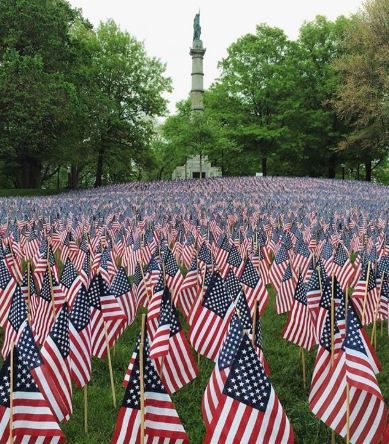 Human experience always goes beyond our particular methods of understanding it at any given moment, and the best way to understand one’s identity as a self is to look into one’s own experience. Imagine being able to lay in bed all day, watching TV, have three meals provided to you in bed, and treatments brought to you to make you feel comfortable. Well, that is what happens to people in the hospital and they do not seem to enjoy it all that much. In fact, they cannot wait to go home and get back to work. The consciousness of one’s identity as a self certainly is not an intellectual idea. Many people spend all their lives trying to find the basic principle for human existence, some spend a life time trying to forget or recover. Our clinical work gives some analogies to the crisis of will and throws light on our general problem. In life, people can get caught in deadlocks as we are in our World of reality. The catatonic’s problem hinges on values and will, and one’s immobility is one expression of the contradiction one experiences. A patient, John, Catholic, and intelligent professional in his thirties, was referred because of his repeatedly increasing anxiety. This anxiety reminded John of the time ten years previously when he had developed a full catatonic episode. Wanting to prevent a recurrence of the event, he sought treatment. I shall give some excerpts from this case report, particularly with respect to the original catatonic episode. #RandolphHarris 5 of 14
 John, one of four children, recollected attacks of anxiety going back to his early childhood. He remembered how much he needed to cling to his aunt who brought him up. The aunt had the habit of undressing in his presence, causing him mixed feelings of excitement and guilt. Between nine and ten there was an attempted homosexual relation with his friend, and fleeting homosexual desires thereafter, and also the customary masturbation. He did well in school, and after puberty became very interested in religion, considered becoming a monk especially in order to control his pleasures of the flesh. This control was in a certain way opposite to that of one of his sisters who was leading a very promiscuous life. After college he decided to make a complete attempt to remove pleasures of the flesh from his life. He also decided to go for a rest and vacation at a farm for young men where he could cut trees. On this farm, however, he became anxious and depressed. He resented the other fellows increasingly, who he felt were rough and profane. He felt that he was going to pieces. He remembered one night saying to himself, “I cannot stand it any more. Why am I in this way, so anxious for no reason? I have done no wrong in my whole life.” However, he would control himself by thinking perhaps he was experiencing was in accordance with the will of God. #RandolphHarris 6 of 14
 Obsessions and compulsions acquired more and more prominence. He found himself “doubting and doubting his doubt, and doubting the doubting of his doubts,” and possessed by intense terror. One day in the terror he observed a discrepancy between what he wanted to perform and the action that he really carried out. For instance, when he was undressing and wanted to drop a shoe, he instead would drop a log. He was mentally lucid and perceived what was happening, but he realized he had no control over his actions. He though he could commit crimes, even kill somebody. He said to himself, “I don’t want to be damned in this World as well as in the other. I am trying to be good and I can’t. It is not fair. I may kill somebody when I want a piece of bread.” Then he felt as if some movement or action he would make could produce disaster not only to himself but to the whole camp. By not acting or moving he was protecting the whole group. He felt that he had become his brothers’ keeper. The fear became so intense as actually to inhibit any movement. Petrified, in his own words, he “saw himself solidifying, assuming statuesque positions.” He was aware of one purpose—to kill himself—better to die than to commit crimes. He climbed a big tree and jumped down, but was taken to the hospital with minor contusions. #RandolphHarris 7 of 14
 In the hospital John would not move at all. He was like a statue of stone. During his hospitalization John made 71 suicide attempts. Although he generally was in state of catatonia he would occasionally makes impulsive acts such as tearing the strait jacket to pieces and making a rope to hang himself. When the doctor asked him why he had to repeat these suicidal attempts, he gave two reasons—the first was to relieve the feeling of guilt and present himself from committing crimes. However, the second reason was even more atypical—to commit suicide was the only act which would go beyond the barrier of immobility. This, to commit suicide was to live; the only act of life left to him. One day John’s doctor said to him, “You want to kill yourself. Isn’t there anything at all in life that you want?” With great effort John mumbled, “Eat, to eat.” The doctor took him to the patients’ cafeteria and told him, “You may eat anything you want.” John immediately grabbed a large quantity of food and ate in a ravenous manner like he was at Golden Corral. Without going to the rest of the details of John’s catatonia and his overcoming of it, let us note several things. First, the homosexual stimulation he was exposed to at the camp. Second, the refuge he sought in religious feeling. Third, the obsessive-compulsive mechanism and the fact that the anxiety which was first connected with any action that had to do with sexual feelings became extended to practically every action. #RandolphHarris 8 of 14
 Every action became loaded with a sense of responsibility, a moral issue. Every motion was not considered as a fact but as a value. The doctor noted that John’s “feelings were reminiscent of the feelings of cosmic power or negative omnipotence experienced by other catatonics who believe that by acting they may cause the destruction of the Universe.” We see in John a radical conflict in will, tied up with the values he held. To me, the doctor’s questions, “Don’t you want something?” is very significant, since it shows the importance of getting at the simple wish, the point where every act of will starts. The doctor points out that when one bears a tremendous responsibility as John did, his passivity is entirely understandable. It is not transference or conformism in the hypnotic sense. “The patient follows orders because these orders are willed by others, and therefore he does not have the responsibility of them.” This is parallel, in extreme form, to the fact that in our confused age people go apathetic comparable to John’s stupor, and unconsciously yearn for someone to take responsibility for them. Such a patient is in a “state where volition is connected with a pathologically intensified sense of value, so that torturing responsibility reaches the acme of intensity when a little movement of the patient is considered capable of destroying the World. Alas, this conception of the psychotic mind reminds us of its possible actuality today, when the pushing of a button may have such cosmic effects! Only the oceanic responsibility of the catatonic could include this up-to-now unconceived possibility.” #RandolphHarris 9 of 14
 In relatively normal persons, in contrast to John, the beleaguered will takes refuge in half-measures that temporarily promise it some viability. When the will is gradually emptied of content, one is always the shadow of their adversary, waiting for him or her to move so that you can move yourself. Sooner or later, your will becomes hollow, and may then be forced back to the next line of defense. This next defense is projection of blame. The self righteous security that is achieved by means of blaming the other gives one a temporary satisfaction. However, beyond this gross oversimplification, we pay a more serious price for such security. We have tacitly given the power of decision over to our adversary. Blaming the enemy implies that the enemy has the freedom to choose and act, not ourselves, and we can only react to him or her. This assumption, in turn, destroys our own security. For in the long run, we have, against our intention, given him or her all the power. Will is this further undermined. We see here an example of the self-contradictory effect of al psychological defensiveness: it automatically hands the power over to the adversary. In these unsatisfactory measures, the activity of will becomes more and more tautological and repetitive, and finally tends toward apathy. And if apathy cannot be transmuted into an impetus to move to a higher state of consciousness in order to embrace the problem at hand, the person or group tends to surrender the capacity for willing itself. #RandolphHarris 10 of 14
 If apathy is to be avoided in such paralysis of will, the individual needs to ask sooner or later: Is there possibly something going on in myself that is a cause of, or contributes to, my paralysis? The machine society, especially through its exploding mass media, has confused people’s sense of reality and personal identity. There is a confused blur between mass media, news, drama, and live experience. Existence has increasingly become a spectator sport. If this is to be the pattern of the future, we need to ensure that humanistic personas are among those selected to set society’s goals, to establish its norms, to program the activities, and to produce the learning. Totalitarian government is a very real possibility for any society that gives up its human responsibilities and forgets the essential lessons of Christ and ecology: that we are all part of each other, and what affects one of us affects us all. We are in the midst of a rapid and revolutionary period. We are experiencing changes of so many kinds and so rapidly that many of us are not able to keep up with them. Stress occurs not only because of inner conflicts, but also simply because of change. If we do not prepare for change or develop some system of adaptation, we will drown under the tidal wave of change that hits us today. #RandolphHarris 11 of 14
 How to we prepare for change? Parents can first of all keep their child’s environment relatively free from dramatic changes and help their children experience consistency in their daily lives. The World is not always consistent, but this early stable environment will help the child later when he or she must cope with rapid and sometimes bewildering change. We can also inform the child, at an age when their consciousness is beginning to unfold, that there are many inconsistencies and illogical experience to living. Fairy tales generally portray the World in two stark contrast: good guys and bad guys, princesses and bad witches, helpful animals and ferocious beast. Children learn early what is reality and what is fantasy. Fairy tales can help prepare the child for both the good and bad events they will face in their lifetimes. Of course, the World is not always absolute. A true picture of the World is made up of shifting patterns. If we want to prepare for the future, we have to realize that it is here already. The seeds of tomorrow were planted yesterday. All we do today is water and nurture them in out daily acts of living. We can catch glimpses of what is going to be happening in the future, however, flashing on the scree of our minds and the media and in the conversations we have with others. The future may loom large and exciting to some, but to others it represents threats of all sorts. #RandolphHarris 12 of 14
 To some, the future means maturity, freedom, enjoyment, and things to be planned for now. For others, it means getting older, losing hair and vitality, facing unknowns that have only shown themselves in nightmares. For still others, it is a combination of both. Whatever the future brings, we need to prepare for it now. We need to recognize that change is one of the immutable laws of the Universe, and if we want to live in that Universe, we must keep up. It can be fun and very challenging. It can also knock us down. It is up to each of us to make the future what we want it to be. To believe in the human condition might be regarded as the attitude of a fool, but to despair of it is the act of a coward. Are we heading for a society of oppression and control, where individual rights and life-styles will be sacrificed for the sake of the state? Of course we hope it will not. We believe people with intelligence and concern and respect for humanity will summon all their humanistic skills to keep it from happening. Also, mental healthy is not a game to rob someone of their credibility or a tool to tease people and prevent then from getting the help they need. Mental illness goes much deeper than these terms you hear and people throw around like biscuits at tea time. It is not funny, it is not a game. People who are depressed, for instance, feel dead, as if they are not even living. It is much more than being sad. Some people who truly suffer from anxiety are scared about what they might do, if they will commit crimes or even stop the World from spinning. Such concerns caused a young man to try to kill himself over 71 times. #RandolphHarris 13 of 14
 What is learned about human behavior and aggression and mental and physical health needs to be effectively shared with those who shape the international policies of nations. In the past, psychologist have often been drafted into devising new and more effective ways of demoralizing and punishing other humans. However, the seldom been asked to help nations promote peace and understanding instead. And that, in fact, could be their most effective use. Political corruption sometimes seems too big a problem for any individual or group to tackle. Graft, dirty politics, and dog-eat-dog business practices have been around for a long time. Fear of using our rights, as well as ignorance of the channels open to us, still keeps most ordinary citizens from acting to solve such problems. Each of us has a definite stake in ensuring that freedom of individual and social existence will spread and become the norm everywhere. However, it will not happen automatically. “learn wisdom in thy youth; yea, learn in thy youth to keep the commandments of God. Yea, and cry unto God for all thy support; yes, let all thy doings be unto the Lord, and whithersoever thou goest let it be in the Lord; yea, let all thy thoughts be directed unto the Lord; yea, let the affections of thy heart be placed upon the Lord forever. Counsel with the Lord in all thy doings, and he will direct thee for good; yea, when thou sliest down at night lie down unto the Lord, that he may watch over you in your sleep; and when thou risest in the morning let they have be full of thanks unto God; and if ye do these things, ye shall be lifted up at the last day, reports Alma 37.35-37. #RandolphHarris 14 of 14
Past the Houses, Past the Headlands, into Deep Eternity– Look Back on Time with Kindly Eyes!
 A tyrant will always find a pretext for his or her tyranny. Europe, the youngest child of humanity, culturally speaking, developed such wealth and such weapons that it became the master of the rest of the World for several hundred years. However, again, in the middle of the twentieth century, a drastic change is occurring, a change as great as ever occurred in the past. The new techniques replace the use of the physical energy of animals and mortals by that of steam, oil and electricity; they create means of communication which transform the Earth into the size of one continent, and the human race into one society where the fate of one group is the fate of all; they create marvels of devices which permit the best of art, literature and music to be brought to every member of society; they create productive forces which will permit everybody to have a dignified material existence, and reduces work to such dimension that it will fill only a fraction of the day. Yet today, when mortals seem to have reached the beginning of a new, richer, happier human era, their existence and that of the generations to follow is more threatened then ever. How is this possible? “Our government teaches the whole people by its example. If the government becomes a lawbreaker, it breeds contempt for the law; it invites every mortal to become a law unto oneself; it invites anarchy,” reports Justice Louis D. Brandeis. #RandolphHarris 1 of 18
 Mortals had won their freedom from clerical and secular authorities, they stood alone with their reason and their conscience as one’s only judges, but they were afraid of the newly won freedom; mortals had achieved freedom to—to be oneself, to be productive, to be fully awake. Thus they tried to escape from freedom. One’s very achievement, the mastery over nature, opened up the avenues for one’s escape. “Most things worth doing in the World had been declared impossible before they were done,” reports Justice Louis D. Brandies. However, in building the new industrial machine, mortals become so absorbed in the new task that it became the paramount goal of one’s life. One’s energies, which once were devoted to the search for God and salvation, were now directed toward the domination of nature and ever-increasing material comfort. People ceased to use production as a means for a better life, but hypostatized it instead to an end in itself, and end to which life was subordinated. In this process of an ever-increasing division of labor, ever-increasing mechanization of work, and an ever-increasing size of social agglomerations, mortals themselves became part of the machines, rather than its master. People experiences themselves as a commodity, as an investment; their aim became to be a success, that is, to sell oneself as profitably as possible on the market. #RandolphHarris 2 of 18
 The valued of a mortal became possessed in one’s stability, not in human qualities of love, reason, or in one’s artistic capacities. Happiness became identical with consumption of newer and better commodities, the drinking in of music, screen plays, fun, pleasures of the flesh, cranberry juice, and medications of various kinds. Not having a sense of self expect the one which conformity with the majority can give, one is insecure, anxious, depending on approval. One is alienated from oneself, worships the product of one’s own hands, the leaders of one’s own making, as if they were above him or her, rather than made by the individual. People are in a sense back where they were before the great human evolution began in the second millennium B.C. Society is incapable to love and to use their reason, to make decisions, in fact incapable to appreciate life and thus ready and even willing to destroy everything. “Fear of serious injury alone cannot justify oppression of free speech and assembly. People feared witches and burnt women. It is the function of speech to free people from the bondage of irrational fears,” reports Justice Louis D. Brandeis. #RandolphHarris 3 of 18
 Modern society started out with the vision as its ideal the harmony between the individual and social needs, the end of the conflict between human nature and the social order. One believed one would arrive at this goal in two ways; by the increased productive techniques which permitted feeding everybody satisfactorily, and by a rational, objective picture of mortals and of their real needs. Putting it differently, the aim of the efforts of modern mortals is to create a sane society. More specifically, this means a society whose members have developed their reason to that point of objectivity which permits them to see themselves, others, nature, in their true reality, and not distorted by infantile omniscience or paranoid hate. It means a society, whose members have developed to a point of independence where they know the differences between good and evil, where they make their own choices, where they have convictions rather than opinions, faith rather than superstitions or nebulous hopes. It means a society whose members have developed the capacity to love their children, their neighbors, all mortal, themselves, all of nature; who can feel one with all, yet retain their sense of individuality and integrity; who transcend nature by creating, not by destroying. “The most important political office is that of the private citizen,” reports Justice Louis D. Brandeis #RandolphHarris 4 of 18
 Will the majority be converted to sanity—or will it use the greatest discoveries of human reason for its own purposes of unreason and insanity? Will we be able to create a vision of the good, sane life, which will stir the life forces of those afraid of marching forward? This time, humankind is at one crossroad where the wrong step could be the last step. The United States of America and her allies are wealthier; their standard of living is higher, their interest in comfort and pleasure is greater than that of their rivals. The Western World is free to express ideas critical of the existing system. Hence, the Western World carries within itself the possibility for peaceful progressive transformation, and the life of the individual is free from the terror of imprisonment, torture or death. Indeed, life in the Western World has been, and is even now sometimes as rich and joyous as it has ever been anywhere in human history. However, we still need to acknowledge these blessings are part of our free Capitalistic system. Our system is based on industrialization, technology, and information, our goal is ever-increasing economic efficient and wealth. The system is ran by a managerial class, and by professional politicians. Our society is thoroughly materialistic in its outlook with an essence of Christian ideology. We are all organized in a centralized system, large factories and corporations, political mass parties. #RandolphHarris 5 of 18
 Everybody is a cog in the machine, and has to function smoothly. This is achieved by a method of psychological conditioning, mass suggestion, monetary rewards. However, as Justice Louis D. Brandies and Samuel D. Warren wrote in one of the most famous articles in American History The Right to Privacy, published in December 1980 in the Harvard Law Review, which was later echoed in the Supreme Court case of Olmstead v. United States (1928), in which he argued that the creators of the United States Constitution, as evidence of their effort “to protect Americans in their beliefs, their thoughts, their emotions and sensation conferred, as against the Government, the right to be let alone—the most comprehensive of rights and the right most values by civilized mortals.” A statute of limitations is a law which forbids prosecutors from charging someone with a crime that was committed more than a specified number of years ago. One of the main reasons why states have criminal statutes of limitation is to prevent delays in the filing of charges and to ensure that convictions are based on evidence (physical or eyewitness) that has not deteriorated with time. Another reason is so the government cannot act as a bounty hunter and track its citizens indefinitely. It is also illegal to does not keep a citizen under surveillance and try to entrap them indefinitely. In fact, the police can only keep someone under surveillance for three years, without court proceedings have been started, and that can only be extended an additional two years by the orders of a judge. #RandolphHarris 6 of 18
 These laws are to protect citizens and to keep the system from trying to manufacture criminals and make sure that tax dollars are best used to protect our country. “The greatest dangers to liberty lurk inside the insidious encroachment by people of zeal. If we desire respect for the law, we must first make the law respectful,” reports Justice Louis D. Brandeis. Although our inhabitants are well fed, well clad, having their wishes satisfied, and not having wishes which cannot be satisfied; automatons, who follow without force, who are guided without leaders, who make machines which act like mortals and produce mortals who act like machines; mortals, whose reason deteriorates while their intelligence rises, thus creating the dangerous situation of equipping mortals with the greatest material power without the wisdom to use it. This alienation and automatization leads to an ever-increasing insanity. Life has no meaning, there is no joy, no faith, no reality. Everybody is happy—except that one does not feel, foes not reason, does not love. The danger of the past was that mortals became slaves. The danger of the future is that mortals may become robots. True enough, robots do not rebel. However, given mortal’s nature, robots cannot live and remain sane, they become Golems, they will destroy their World and themselves because they cannot stand any longer the boredom of a meaningless life. #RandolphHarris 7 of 18
 Our danger are war and robotism. What is the alternative? To get out of the rut in which we are moving, and to take the next step in the birth and self-realization of humanity. The first condition is the abolishment of the war threat hanging over all of us now and paralyzing faith and initiative. We must take the responsibility for the life of all mortals, and develop on an international scale what all great countries have developed internally, a relative sharing of wealth and a new and more just division of economic resources. This must lead eventually to forms of international economic cooperation and planning, to forms of World government. In the economic sphere we need co-management of all who work in an enterprise, to permit their active and responsible participation. A cultural renaissance must also combine work education for the young, adult education and a new system of poplar art and secular ritual throughout the whole nation. Income must also be increased so that everybody has the material basis for a dignified life, even though we will still have economic differences and various social classes. Mortals must be restored to their supreme place in society, never a means, never a thing to be used by others or by oneself. Mortal’s used by mortal must end, and economy must become the servant for the development of mortals. Capital must serve labor, things must serve life. #RandolphHarris 8 of 18
 No change must be brought about by force, it must be a simultaneous one in the economic, political and cultural sphere. Changes restricted to one sphere are destructive of every change. Primitive mortals were helpless before natural forces. They saw a large, bright object move across the sky. It has a profound effect upon their bodies. While it was there, they felt warm, and they could see. In its absence, the World became dark and cold. As time passed, those first human beings saw trees drop their leaves and die. Then, magically, the trees came back to life in brilliant colors and alluring smells. Finally, those trees produced an object that was good to eat. Then the trees appeared to die, only to return to give birth again and again. Try to imagine how awed early people must have been by these simple events. The first humans were becoming aware. However, they had no word-symbols to express that awareness in thought or speech. In most primitive cultures even today, people assume that they have little choice in their own destiny, because it is controlled by good and evil spirits of fate. Therefore, some modern mortals remain helpless before the social and economic forces created by oneself. Many worship the works of their own hands, bowing to the new idols, yet swearing by the name of the God who commanded them to destroy all idols. #RandolphHarris 9 of 18
 Mortals can protect themselves from the consequences of their own madness only by creating a sane society which conforms with the needs of mortals, needs which are rooted in the very conditions of their existence. A society in which mortals relate to people lovingly, in which one is rotted in bonds of humanness and solidarity, rather than the ties of blood and soil; a society which gives people the possibility of transcending nature by creating rather than by conformity, in which a system of orientation and devotion exists without mortal’s needing to distort reality and who worship idols. Building such a society means taking it to the next level; it is the next step which means the end of humanoid history, the phase in which mortals had not become fully human. It does not mean the end of days, the completion, the state of perfect harmony in which no conflicts or problems confront mortals. On the contrary, it means mortal’s fate that one’s existence is beset by contradictions, which one has to solve without ever solving them. When one has overcome the primitive state of human sacrifice, be in it in the ritualistic form in the Aztecs, Hollywood, the fake news media, or in the secular form of way, when one has been able to regulate their relationship with nature reasonably instead of blindly, when things have truly become their servants rather than their idols, mortals will be confronted with the truly human conflicts and problems. #RandolphHarris 10 of 18
 People will have to become adventuresome, courageous, imaginative, capable of suffering and of joy, but their powers will be in the service of life, and not in the service of death. If it comes to pass, the new phase of human history will be a new beginning, not and end. Mortals today are confronted with the most fundamental choice; not that between Capitalism or Communism, but the between robotism (of both the capitalistic and the communist variety), or Humanistic Capitalism. Most facts seem to indicate that one is choosing robotism, and that means, in the long run, insanity and destruction. However, all these facts are not strong enough to destroy faith in mortal’s reason, good will and sanity. As long as we can think of other alternatives, we are not lost; as long as we can consult together and plan together, we can hope. However, indeed, the shadows are lengthening; the voices of insanity are becoming louder. We are in reach of achieving a state of humanity which corresponds to the vision of our great teachers; yet we are in danger of the destruction of all civilization, or of robotization. A small tribe was told thousands of years ago: “I put before you life and death, blessing and curse—and you chose life.” This is our choice too. #RandolphHarris 11 of 18
 However many blessings we expect from God, his infinite liberality will always exceed all our wishes and our thoughts. In the correlation between the subject and the object of faith, God can do exceedingly great things. There is no criterion by which faith can be judged from outside the correlation of faith. However, something else can happen: The faithful can ask oneself or be asked by someone else whether the medium through which one experiences ultimate concern expresses real ultimacy. This question is the dynamic force in the history of religion, revolutionizing the sacramental type of faith and driving faith beyond in different directions. As followers of Christ, we often suffer not because we are out of God’s will but because we are in it, not because we lack faith but because we have faith. We suffer not because we need to be filled with the Spirit but because we already are. Stronger faith does not mean less suffering, but more suffering means stronger faith. Far from calling our faith into question, our afflictions result in our becoming more and more like Christ himself. Nothing is sacred except in the correlation of faith. Even the saints are saints only because the source of all holiness is transparent through. The interest of mystical faith is not to reject the concrete, sacramental ways of faith, but to go beyond them. #RandolphHarris 12 of 18
 Mystical faith is the end of a long way from the most concrete forms of faith to the point in which all concreteness disappears in the abyss of pure divinity. Mysticism is not irrational. Some of the greatest mystics in Europe and Asia were, at the same time, some of the great philosophers, outstanding in clarity, consistency, and rationality. However, they realized that the true content of faith in an ultimate concern can neither be identified with a piece of reality, as sacramental faith desire, nor be expressed in terms of a rational system. It is a matter of ecstatic experience, and one can only speak of the ultimate in a language which as the same times denies the possibility of speaking about it. This is the only way in which mystical faith can express itself. Moral conscience, the heritage of the Juaeo-Christian tradition, and intellectual conscience, the heritage of the Greek tradition, fused and brought about a flowering of human creation as mortals have hardly ever known it before. There is a place where the ultimate is present within the finite World, namely, the depth of the human soul. This depth is the point of contact between the finite and the and the infinite. In order to go into it, mortals must empty oneself of all the finite contents of one’s ordinary life; one must surrender all preliminary concerns for the sake of the ultimate concern. #RandolphHarris 13 of 18
 In adversity we usually want God to do a removing job when he wants to do an improving job. One must go beyond the pieces of reality in which sacramental faith experiences the ultimate. The ultimate is beyond this division, and one who wants to reach the ultimate must overcome this division for oneself by mediation, contemplation, and ecstasy. Faith, within this movement of the soul, is in a state of oscillation between having and not having the content of ultimate concern. It moves in degrees of approximation, in relapses and sudden fulfillment. The mystical faith does not despise or reject the sacramental faith. It goes beyond it to that which is present in every act of sacramental faith, yet hidden under the concrete objects in which it is embodies. Theologians sometimes have contrasted faith and mystical experience. They say the distance between faith and the ultimate can never be bridged. Mysticism tries to merge the mind with the content of its unconditional concern, with the ground of being and meaning. However, this contrast has only limited validity. #RandolphHarris 14 of 18
 The mystic is aware of the infinite distance between the infinite and the finite, and accepts a life of preliminary stages of union with the infinite, interrupted only rarely, and perhaps never, in this life by the final ecstasy. And the faithful can have faith only if one is grasped by the content of one’s ultimate concern. Like sacramentalism, mysticism is a type of faith; and there is a mystical as well as a sacramental element in every type of faith. This is true even of the humanist kind of the ontological type of faith. A consideration of this kind of faith is especially important, because humanism is often identified with unbelief and contrasted with faith. This is possible only if faith is defined as belief in the existence and actions of divine beings. However, if faith is understood as the state of being ultimately concerned about the ultimate, humanism implies faith. Humanism is the attitude which makes mortals the measure of one’s own spiritual life, in art and philosophy, in science and politics, in social relations and personal ethics. For humanism the divine is manifest in the human; the ultimate concern of mortal is mortal. All this, of course, refers to mortal in their essence: the true mortal, the mortal of the idea, not the actual mortal, nor the mortal in estrangement from one’s true nature. #RandolphHarris 15 of 18
 If, in this sense, the humanist declares the one’s ultimate concern is mortals, one sees mortal as the ultimate in a piece of reality or as mystical faith finds in the depth of mortal the place of the infinite. For those who seek, allow, and live for it, the dawn of faith, sometimes gradually, will come or can return. The difference is that the sacramental and mystical types transcend the limits of humanity and try to reach the ultimate itself beyond mortal and one’s World, while the humanists remains within these limits. For this reason the humanist faith is called secular, in contrast to the two types of faith which are called religious. Secular means, belonging to the ordinary process of events, not going beside it or beyond it into a sanctuary. In Latin and some derived languages one speaks of profanity in the sense of being before the doors of the temple. Profane in this sense is the same as secular. Often people say that they are secular, that they live outside the doors of the temple, and consequently that they are without faith! However, if one asks them whether they are without an ultimate concern, without something which they take as unconditionally serious, they would strongly deny this. And in denying that they are without an ultimate concern, they affirm that they are in a state of faith. They represent the humanist type of faith which itself is full of varieties; the fact that they are secular does not exclude them from the community of faith. #RandolphHarris 16 of 18
 Attempt to be creative, even if the results are modest. Creativity can engender a spirit of gratitude for life and for what the Lord has woven into your being. If you choose wisely, it does not have to absorb a lot of time. It is an almost infinite task to describe the manifold forms in which the humanist type of faith has expressed itself and is alive in large sections of the Western World and in the Asiatic cultures. If we apply to it the distinction we have applied to the religious types of faith, the distinction between the ontological and the mortal type, we can say that the ontological type of secular faith is romantic-conservative, the moral type is progressive-utopian. The word “romantic,” in this context, points to the experience of the infinite in the finite, as it is given in nature and history. The word “conservative” in connection with romantic emphasizes the experience of the presence of the ultimate in the existing forms of nature and history. If a mortal sees the holy in the flower as it grows, in the animal as it moves, in mortals as one represents a unique individuality, in a special nation, a special culture, a special social system, one is romantic-conservative. For one the given is holy and is the content of one’s ultimate concern. The analogy of this kind of faith to the sacramental faith is obvious. #RandolphHarris 17 of 18
 The romantic-conservative type of humanist faith is secularized sacramental faith: the divine is given here and now. All cultural and political conservatism is derived from this type of secular faith. It is faith, but it hides the dimension of the ultimate which it presupposes. Its weakness and its danger is that it may become empty. History has shown this weakness and final emptiness of all merely secular cultures. It has turned them back again and again to the religious forms of faith from which they came. All things denote there is a God. When we desire and seek it, the light will come. Being patient and obedient to God’s commandment and being open to God’s grace and healing and covenants is a faith that is demonstrated, and which God can see. Although we cannot love ourselves enough to say ourselves, Heavenly Father loves us more and know us better than we love or know ourselves. We can trust the Lord and lean not unto our own understanding. “People long for an afterlife in which there is nothing to do but delight in Heaven’s pleasures,” reports Justice Louis D. Brandeis. Can God see your faith? Are you doing anything to demonstrate your trust? The action you take does not have to be something big. It could be just a small step that activates God’s favor. However, when you take time to honor God, he is moved by your faith. Your faith is opening the door for the extraordinary. #RandolphHarris 18 of 18
Celibacy, Chasity, and Monogamy—The American Way of Life in to the Concepts of Cultural Anthropology
 Heaven and Earth had been moved. It was sweeter than any rose in the Winter. The clothes and shoes make her very happy. She looked like Miss America. Most likely she had not been feeling well for so long that all her own clothes are gone. Who knows? If we want to define happiness by its opposite, we must define it not in contrast to sadness, but in contrast to depression. What is depression? It is the inability to feel, it is the sense of being dead, while our body is alive. It is the inability to experience joy, as well as the inability to experience sadness. A depressed person would be greatly relieved if one could feel sad. A state of depression is so unbearable because one is incapable of feeling anything, either joy or sadness. If we try to define happiness try to define happiness in contrast to depression, we have to define joy and happiness as that state of intensified vitality that fuses into one whole our effort both to understand our fellow mortals and be one with them. Happiness consists in our touching the rock bottom of reality, in the discovery of our self and our oneness with others as well as our differences from them. Happiness is a state of intense inner activity and the experience of the increasing vital energy which occurs in productive relatedness to the World and to ourselves. #RandolphHarris 1 of 19
 A woman in late twenties had come for treatment because of sever lack of feeling, blockage in spontaneity—both of which made intimate relations a difficult problem for her husband and herself and a self-consciousness which at times paralyzed her. She was the daughter of one of the antiquated aristocratic American families of considerable stature, a family in which her masochistic mother and prestigious father and three senior brothers constituted a rigid structure in which she had to grow up. She had been forbidden to explore, to think or to wonder about pleasures of the flesh, and this crippled her capacity for passionate intimacy. Some will say that we are making too much of pleasures of the flesh, overlooking, platonic love relationships—the profound love mortals have expressed for ideals, country, race, humankind, God, and altruistic, self-sacrificing love. We are not intentionally overlooking any form of love except insofar as our emphasis is on the total expression of self. Many forms of love, beautiful as they may be, deny pleasures of the flesh—or try to. Between two people, an enormous amount of communication goes on. There are contact, moments of closeness, gestures, glances, intimations. True love is honestly and beautifully expressed through open communication. Love can be so deeply fulfilling and so beautiful that we wonder why anyone would want or need to minimize it, cheapen it, deny it. #RandolpHarris 2 of 19
 In therapy, the young lady learned—with her rational treatment—to inquire of herself the reason why she was emotionally paralyzed in this or that situation, what was occurring when she felt to passion for romantic intimacy, and she became able to experience and express her anger, passion for romantic intimacy, and other feelings with considerable freedom. This was assisted by a good deal of useful inquiry into her childhood, where Dr. Freud believes is where most problems stem from, and the difficult traumas she had sustained in this overtly-structured family, and it was accompanied by a beneficial effect on her practical living. However, at a certain stage, we hit a stalemate. She kept asking the reason why, but it no longer made any change in her; her emotions seemed to be their own reason for being. The session to which I shall now refer came during a period when she was working on the possibilities of a genuine love with her husband. She reported that the previous night she had felt flirtations with her husband and in that mood had asked him to reach down the back of her dress and take out a sales tag that was still there. Later in the evening when she was drafting checks at her desk, he unexpectedly threw his arms around her. She, furious at being interrupted, scratched a line across his face with her pen. In telling me about this, she tossed off some ready-at-hand explanations of her anger as due to her brothers’ having taken advantage of her as a child no matter what she was doing. #RandolphHarris 3 of 19
 When I questioned this by asking what she was using her feelings for in the incident, she flared up in anger: I was taking away her “free spontaneity.” Did I not see she must “trust her instincts?” Had we not spent a good deal of time helping her learn to feel, and so what did I mean by asking her what she was doing with her feelings? And what is more, the question sounded just like her family’s telling her to be responsible. She finished the attack with the expostulation, “Feelings are feelings!” We can readily see the contradiction she is caught in. She had effectively ruined the evening with her husband. Ostensibly seeking the possibilities of a genuine love between them, she had accomplished exactly the opposite. She pulls her husband toward her with one had and quickly draws him away with the other. She justifies this contradictory behavior by an assumption which is very common in our day, namely, that feeling is a subjective push from inside you, emotions (the term coming from e-movere, to move out) are forces which put you into motion, and so are to be emoted in whatever way you happen to feel at the moment. This is probably the most prevalent unanalyzed assumption about emotions in our society. #RandolphHarris 4 of 19
 The assumption that we all have built up emotions ready to explode at any moment takes it model from a kind of glandular hydraulics—we have an inner secretion of adrenalin and need to let off our angry, or gonadal excitement and must find an object to express our pleasures of the flesh. It fits the popularly accepted mechanical model of the body as well as the more sophisticated deterministic models that many of us were exposed to in our first courses in psychology and physiology. What we are not told—because practically nobody saw it—is that this is a radically solipsistic, schizoid system. It leaves us separated like monads, alienated, with no bridge to any persons around us. We can emote and have pleasures of the flesh from now until doomsday and never experience any real relationship with another person, only literally a doomsday. It does not decrease the horror of the situation to realize that a great many people, if not most in our society, experience their emotions in just this lonely way. To feel, then, makes their loneliness more painful rather than decreasing it, so they stop feeling. What is omitted in my patient’s (and our society’s) view is that emotions are not just a push from the rear but a pointing toward something, an impetus for forming something, a call to mold the situation. Feelings are not just a chance state of the moment, but a pointing toward the future, a way I want something to be. #RandolphHarris 5 of 19
 Except in the most severe pathology, feelings always occur in a personal field, an experience of one’s self as personal and an imagining of others even if no one else is literally present. Feelings are rightfully a way of communicating with the significant people in our World, a reaching out to mold the relationship with them; they are a language by which we interpersonally construct and build. That is to say, feelings are intentional. The first aspect of emotions, as forces which push, has to do with the past and is correlated with causality and the determinism of one’s past experience, including the infantile and archaic. This is the regressive side of emotions about which Dr. Freud has taught us so much of lasting importance. In this respect, the investigation of the childhood of the patient, and the re-experiencing of it, as a sound and essential role in enduring psychotherapy. The second view, in contrast, starts in the present and points toward the future. It is the progressive aspect of emotions. Our feelings, like the artist’s paints and brush, are ways of communicating and sharing something meaningful from us to the Word. Our feelings not only take into consideration the other person but are in a real sense partially formed by the feelings of the other persons present. We feel in a magnetic field. #RandolphHarris 6 of 19
 A sensitive person learns, often without being conscious of doing so, to pick up the feelings of other persons around one, as a violin string resonates to the vibration of every other musical string in the room, although in such infinitesimally small degrees that it may not be detectable to the ear. Every successful lover knows this by instinct. It is an essential—if not the essential—quality of the good therapist. In dealing with the first aspect of emotions it is entirely sound and accurate to ask the reason why. However, the second aspect requires asking the purpose for. Dr. Freud’s approach is roughly correlated with the former, and he would, no doubt, have denied my use of purpose here. Plato’s and the Greek concept of eros is correlated with the second: emotion is attraction, a pulling toward; my feelings are aroused by virtue of goals, ideals, possibilities in the future which grasp me. The distinction is also made in modern logic; the reason is the consideration in the past which explains why you are doing this or that, and purpose, in contrast, is what you want to get out of doing it. The first concept is correlated with determinism. The second refers to your opening up to new possibilities. It is thus correlated with freedom. #RandolphHarris 7 of 19
 We participate in the forming of the future by virtue of our capacity to conceive of and respond to new possibilities, and to bring them out of imagination and try them in actuality. This is the process of active loving. It is the eros in us responding to the eros in others and in the World of nature. To return to my patient: She experienced a hopelessness in the above session, arising out of her dim awareness of the trap she was caught in. Two sessions later she was to say, “I have always looked for reasons I feel such and such towards Harry. I believed that was what was important—that process would lead to a nirvana. Now I have run out of reasons. Maybe there are not any.” It is interesting that her last phrase is more brilliant than she realized. For it is true, both in therapy and in life, when we get to the stage where our essential needs are mostly met and we are not need-drive, that “there are not any reasons” in the sense that reasons lose their relevancy. The conflict becomes stalemate and boredom on one hand, or on the other, the opening of one’s self to new possibilities, the deepening of consciousness, the choosing and committing of one’s self to new ways of life. The distinction between reason why and purpose clicked strongly with my patient and released in her several important insights. To her considerable surprise, one of these was a radical shift in the meaning she gave to responsibility. #RandolphHarris 8 of 19
 Now she saw it not as merely the external and passively-received expectations from family, but as an active responsibility to herself in being aware of the power she was exerting that evening with her husband. Responsibility now consisted of her choosing what she wanted of her life with him and elsewhere. It is no doubt safe to say—again excepting severely pathological individuals—that all emotions, no matter how contradictory they appear on the surface, have some kind of unity in the Gestalt which constitutes the self. The clinical problem—as in the case of the anxious child who is forced to act lovingly toward parents who are actually hostile and destructive toward him—is that the person cannot or will not let himself be aware of what he feels or is doing with his feelings. When my patient was able to analyze her two contradictory acts that evening toward her husband, it turned out that both were motivated by anger toward him and men in general, she setting up the situation to prove the man is the villain. Both actions presuppose the man as the authority figure (which she was doing with me in the nirvana process of therapy). And, in the meantime, she remains the whim-directed, willful child. She could cope with men on the basis of the childhood pattern, but—as came out in pronounced anxiety in subsequent sessions—could she cope with them as an adult? #RandolphHarris 9 of 19
 We have arrived in the Airbus A380 of eros, if I may put it so, at a new concept of causality. No longer are we forced to understand the human being in terms of a billiard-ball cause-and-effect, based solely on the explanations of reason why and susceptible to rigid prediction. Indeed, Aristotle believed that the motivation of eros was so different from the determinism of the past that he would not even call it causality. In Aristotle we find the doctrine of the universal eros, which drives everything towards the highest form, the pure actuality which moves the World not as a cause (kinoumenon) but as the object of love (eromenon). And the movement he describes is a movement from the potential to the actual, from dynamis to energeia. I am proposing a description of human beings as given motivation by the new possibilities, the goals and ideals, which attract and pull them toward the future. This does not omit the fact that we are all partially pushed from behind and determined by the past, but it unites this force with its other half. Eros gives us a causality in which reason why and purpose are united. The former is part of all human experience since we all participate in the finite, natural World; in this respect, each of us, in making any important decision, needs to find out as much as one can about the objective facts of the situation. #RandolphHarris 10 of 19
 This realm is particularly relevant in problems of neurosis in which past events do exercise a compulsive, repetitive, chainlike, predictable effect upon the person’s actions. Dr. Freud was right in the respect that rigid, deterministic causality does work in neurosis and sickness. However, he was wrong in trying to carry this over to apply to all human experience The aspect of purpose, which comes into the process when the individual can become conscious of what he or she is doing, opens one to a new and different possibilities in the future, and introduces the elements of personal responsibility and freedom. It follows that happiness cannot be found in the state of inner passivity, and in the consumer attitude which pervades the life of the alienated mortal. Happiness is to experience fullness, not emptiness which needs to be filled. The average mortal today may have a good deal of fun and pleasure, but in spite of this, one is fundamentally depressed. Perhaps it clarifies the issues if instead of using the word depressed we use the word bored. Actually there is very little difference between the two, expect a difference in degree, because boredom is nothing but the experience of a paralysis of our productive powers and the sense of un-aliveness. Among the evils of life, there are few which are as painful as boredom, and consequently every attempt is made to avoid it. #RandolphHarris 11 of 19
 It can be avoided in two ways; either fundamentally, by being productive, and in this manner experiencing happiness, or by trying to avoid its manifestations. The latter attempts seems to characterize the chasing after fun and pleasure in the average person today. One senses one’s depression and boredom, which becomes manifest when one is alone with oneself or with those closet to him or she. All our amusements serve the purpose of making it easy for one to run away from oneself and from the threatening boredom by taking refuge in the many ways of escape which our culture offers one; yet covering up a symptom does not do away with the conditions which produce it. Aside from the fear of physical infirmary, or of being humiliated by the loss of status and prestige, the fear of boredom plays a paramount role among the fears of modern mortals. In a World of fun and amusement, one is afraid of boredom, and glad when another day has passed without mishap, another hour has been killed without one having become aware of the lurking boredom. From the standpoint of normative humanism we must arrive at a different concept of mental health; the very person who is considered healthy in the categories of an alienated World, from the humanistic standpoint appears as the sickest one—although not in terms of individual sickness, but of the socially patterned defect. #RandolphHarris 12 of 19
 Mental health, in the humanistic sense, is characterized by the ability to love and to create, by the emergence from the incestuous bonds to family and nature, by a sense of identity based on one’s experience of self as the subject and agent of one’s powers, by the grasp of reality inside and outside of ourselves, that is, by the development of objectivity and reason. The aim of life is to live it intensely, to be fully born, to be fully awakre. To emerge from the ideas of infantile grandiosity into the conviction of one’s real though limited strength; to be able to accept the paradox that every one of us is the most important thing there is in the Universe—and at the same time not more important than a bird or a leaf falling from a tree. To be able to love life, and yet to accept death without terror; to tolerate uncertainty about the most important questions with which life confronts us—and yet to have faith in our thought and feeling, in as much as they are truly ours. To be able to be alone, and at the same time one with a loved person, with every person on this Earth, with all that is alive; to follow the voice of our conscience, the voice that calls us to ourselves, yet not to indulge in self hate when the voice of conscience was not loud enough to be hear and followed. The mentally healthy person is the person who lives by love, reason and faith, who respects life, one’s own and that of one’s fellow mortals, animals, and other living an inanimate objects. #RandolphHarris 13 of 19
 The alienated person, as we have tried to describe, cannot be healthy. Since one experiences oneself as a thing, an investment, to be manipulated by oneself and by others, one is lacking a sense of self. This lack of self creates deep anxiety. The anxiety engendered by confronting one with the abyss of nothingness is more terrifying than even the tortures of Hell. In the vision of Hell, I am punished and tortured—in the vision of nothingness I am driven to the border of madness—because I cannot say I am any more. If the modern age has been rightly called the age of anxiety, it is primarily because of this anxiety engendered by the lack of self. Inasmuch as I am as you desire me—I am not; I am anxious, dependent on approval of others, constantly trying to please. The alienated person feels inferior whenever he or she suspected oneself of not being in line. Since one’s sense of worth is based on approval as the reward for conformity, one feels naturally threatened in one’s sense of self and in one’s self-esteem by any feeling, thought or action which could be suspected of being a deviation. Yet, inasmuch as one is human and not an automaton, one cannot help deviating, hence one must feel afraid of disapproval all the time. As a result one has to try all the harder to conform, to be approved of, to be successful. Not the voice of one’s conscience gives one strength and security but the feeling of not having lost the close touch with the herd. #RandolphHarris 14 of 19
 Another result of alienation is the prevalence of a feeling of guilt. It is, indeed, amazing that in as fundamentally irreligious a culture as our, the sense of guilt should be so widespread and deep-rooted as it is. The main difference from, let us say, a Calvinistic community, is the fact that the feeling of guilt is neither very conscious, nor does it refer to a religiously patterned concept of sin. However, if we scratch the surface, we find that people feel guilty about hundreds of things; for not having worked hard enough, for having been too protective—or not protective enough for Mother, or for having been too kindhearted to a debtor; people feel guilty for having done good things, as well as for having done bad things; it is almost as if they had to find something to feel guilty about. What could be the cause of so much guilt feeling? It seems that there are two main sources which, though entirely different in themselves, lead to the same result. The one source is the same as that from which the feelings of inferiority spring. Not to be like the rest, not to be totally adjusted, makes one feel guilty toward the commands of the great It. The special private happiness of the free person comes from one’s ways that help one be present in what one is doing. When I feel most pressured, most unfree, it is usually because I am not there as me. I do not mean that I am not in what I am doing, necessarily. I mean that I am driving myself, treating myself as an object, a tool, an instrument. #RandolphHarris 15 of 19
 The other source of guilt feeling is mortal’s own conscience, one senses one’s gifts or talents, one’s ability to love, to think, to laugh, to cry, to wonder and to create, one senses that one’s life is the once chance one is given, and that if one loses this chance one has lost everything. One lives in a World with more comfort and ease than one’s ancestors ever knew—yet one senses that, chasing after more comfort, one’s life runs through one’s fingers like sand. One cannot help feeling guilty for the waste, for the lost chance. This feeling of guilt is much less conscious than the first one, but one reinforces the other. Thus, alienated mortals feel guilt for being themselves, and for not being oneself, for being alive and for being an automaton, for being a person and for being a thing. Alienated mortals are unhappy. Consumption of fun serves to repress the awareness of one’s unhappiness. One tries to save time, and yet one is eager to kill the time one has saved. One is glad to have finished another day without failure or humiliation, rather than to greet the new day with the enthusiasm which only the “I am I” experience can give. One is lacking the constant flow of energy which stems from productive relatedness to the World. Having no faith, being impaired from hearing the voice of conscience, and having a manipulating intelligence but little reason, one is bewildered, disquieted and willing to appoint to the position of a leader anyone who offers one a total solution. #RandolphHarris 16 of 19
 Can the picture of alienation be connected with any of the established pictures of mental illness? In answering this question we must remember that the mortal has two ways of relating oneself to the World. One in which one sees the World as one needs to see it in order to manipulate it or use it. Essentially this is sense experience and common-sense experience. Our eye sees that which we have to see, our ear hears what we have to hear in order to live; our common sense perceives things in a manner which enables us to act; both senses and common sense work in the service of survival. In the matter of sense and common sense and for the logic built upon them, things are the same for all people because the laws of their use are the same. The other faculty of mortals is to see things from within, as it were; subjectively, formed by my inner experience, feeling, mood. Ten painters paint the same tree in one sense, yet they paint ten different trees in another. Each tree is an expression of their individuality while also being the same tree. In the dream we see the World entirely from within; it loses its objective meaning and is transformed into a symbol of our own purely individual experience. The person who dreams while awake, that is, the person who is in touch only with one’s inner World and who is incapable of perceiving the outer World in its objective-action context, is insane. #RandolphHarris 17 of 19
 The person who can only experience the outer World photographically, but is out of touch with one’s inner World, with oneself, is the alienated person. Schizophrenia and alienation are complementary. In both forms of sickness one pole of human experience is lacking. If both poles are present, we can speak of the productive person, whose very productiveness results from the polarity between an inner and an outer form of perception. Our description of the alienated character of contemporary mortals is somewhat one-sided; there are a number of beneficial factors which I have failed to mention. There is in the first place still a humanistic tradition alive, which has not been destroyed by the in-human process of alienation. However, beyond that, there are signs that people are increasingly dissatisfied and disappointed with their way of life and trying to regain some of their lost selfhood and productivity. Millions of people listen to good music in concert halls or over the radio, an ever-increasing number of people paint, do gardening, build their own boast or houses, indulge in any number of do it yourself activities. Adult education is spreading, and even in business the awareness is growing that an executive should have reason and not only intelligence. #RandolphHarris 18 of 19
 However promising and real as all these trends are, they are not enough to justify an attitude which is to be found among a number of very sophisticated writers who claim that criticisms of our society, such as the one which has been offered ere, are dated and archaic; that we have already passed the peak of alienation and are now on our way to a better World. Appealing as this type of optimism is, it is nevertheless only a more sophisticated for of the defense of the status quo, a translation of the praise of the American Way of Life into the concepts of a cultural anthropology which, has been enriched and goes beyond to assure mortals that there is no reason for serious worry. “It’s raining, it’s pouring, a black sky is falling. It’s cold tonight. You gave me your answer. Goodbye. Now I am all on my own tonight. And when the big wheel starts to spin, you can never know the odds if you do not play to win. We were in Heaven you and I, when I lay with you and close my eyes, our fingers touch the sky. I’m sorry, baby. You were the Sun and Moon to me. I will never get over you, you will never get over me,” reports Sun and Moon by Above and Beyond. As self-acutalizers grow older, they tend to be more and more interested in cognitive (thinking/learning) and esthetic (art, music, literature, philosophy) activities. #RandolphHarris 19 of 19
Enlightened to a Larger Pain by the Contrast with the love–Was there Ever a Society where this Miracle Happened?
 I went down to meet him. The evening was all aglow and full of the scent of the kitchens of the Quarter. I motioned for the guards to let him come back. He was in a frantic state. He was wearing the same three-piece white suit as yesterday, short now open, tie gone, and he was all rumpled and smudged with dirt and his hair was mussed. Drastic changes in industrial technique, economy, and social structures have occurred in Capitalism between the nineteenth and twenty first centuries. The changes in the character of mortals are no less drastic and fundamental. Capitalism in the United States of America is not only more powerful and more advanced than in Europe, it is also the model toward which European Capitalism is developing. It is such a model not because Europe is trying to imitate it, but because it is the most progressive form of Capitalism, freed from feudal remnants and shackles. The feudal heritage has, aside from its obvious negative qualities, many human traits which, compared with the attitude produced by pure Capitalism, are exceedingly attractive. European criticism of the United States of America is based essentially on the older human values of feudalism, inasmuch as they are alive in Europe. It is a criticism of the present in the name of a past which is rapidly disappearing in Europe itself. The difference between Europe and the United States of America in this respect is only the difference between an older and a newer phase of Capitalism, between Capitalism stilled blended with feudal remnants and a pure form of it. #RandolphHarris 1 of 15
 The most obvious change from the nineteenth to the twenty first century is the increased use of steam engine, of the combustion motor, of electricity, the use of atomic energy, ethanol, and solar power. The development is characterized by the increasing replacement of manual work by machine work, and beyond that, of human intelligence by machine intelligence. While in 1850 mortals supplied 15 percent of the energy for work, animals 79 percent, and machines 6 percent, the ratio in 2019 is 3 percent, 1 percent and 96 percent respectively. In the twenty first century we find an increasing tendency to employ automatically regulated machines which have their own brains, and which bring about a fundamental change in the whole process of production. The technical change in the mode of production is caused by, and in its turn necessitates, an increasing concentration of capital. The decrease in number and importance of smaller firms is in direct proportion to the increase of big economic colossi. Currently, of the 2,400 independent American corporations covering most stock traded on the New York Stock Exchange, 30 companies control 47 percent of the assets of all the companies represented. Many of the largest nonbanking corporations control a vast majority of all the nonbanking corporate wealth. For instance, respectively 200 companies could control 300,000 smaller companies. #RandolphHarris 2 of 15
 It must further be remembered that the influence of one of these huge companies extends far beyond the assets under its direct control. Smaller companies which sell to or buy from the larger companies are likely to be influenced by them to a vastly greater extent than by other smaller companies with which they might deal. In many cases the continued prosperity of the smaller company depends on the favor of the larger and almost inevitably the interests of the latter become the interests of the former. The influence of the larger company on prices is often greatly increased by its mere size, even though it does not begin to approach a monopoly. Its political influence may be tremendous. Therefore, if roughly half of the corporations and smaller companies it is fair to assume that very much more than half of industry is dominated by these great units. This concentration is made even more significant when it is recalled that a result of it, approximately 3,250 individuals out of a population of three hundred and twenty-five million are in a position to control and direct most of the American wealth and industry. This concentration of power has been growing since 1933, and has yet to stop. #RandolphHarris 3 of 15
 The number of self-employed entrepreneurs has decreased considerably. While in the beginning of the nineteenth century approximately 80 percent of the occupied population were self-employed entrepreneurs, around 42 percent are now incorporated in this category. The eleven largest companies in America employ 20.18 million people. As these figure already indicate, with the concentration of enterprises goes an enormous increase of employees in these big enterprises. Altogether, nearly 50 percent of the United States of America’s population is middle class, 25 percent of American household are considered low income. With the increase in the importance of the giant enterprises, another development of utmost importance has occurred: the increasing separation of management from ownership. Another fundamental change from the nineteenth-century to contemporary Capitalism is the increase in significance of the domestic market. Our whole economic machines rests upon the principle of mass production and mass consumption. While in the nineteenth century the general tendency was to save, and not to indulge in expenses which could not be paid for immediately, the contemporary system is exactly the opposite. Everybody is coaxed into buying as much as one can, and before one has saved enough to pay for one’s purchases. #RandolphHarris 4 of 15
 The need for more consumption is strongly stimulated by advertising and all other methods of psychological pressure. This development does hand in hand with the rise of the economic and social status of the working class. Especially in the United States of America, but all over Europe, the working class has participated in the increased production of the whole economic system. The salary of the worker, and one’s social benefits, permit one a level of consumption which would have seemed fantastic one hundred and fifty-six years ago. One’s social and economic power has increased to the same degree and this not only with regard to salary and social benefits, but also to one’s human and social role in the factory. The disappearance of feudal factors means the disappearance of irrational authority. Nobody is supposed to be higher than one’s neighbor by birth, God’s will, natural law. Everybody is equal and free. Nobody may be exploited or commanded by virtue of a natural right. If one person is commanded by another, it is because the commanding one bought the labor or the services of the commanded one, on the labor market; one commands because they are both free and equal and thus could enter into a contractual relationship. However, with irrational authority—rational authority became obsolete, too. #RandolphHarris 5 of 15
 If the market and the contract regulates relationships, there is no need to know what is right and what is wrong and good and evil. All that is necessary is to known that things are fair—that the exchange is fair, and that things work—that they function. Another decisive fact which the twenty first century mortal experiences is the miracle of production. One commands forces thousands of times stronger than the ones nature ad given them before; steam, oil, electricity, have become their servants and beasts of burden. One crosses the oceans, the continents—first in weeks, then in days, now in hours and even minutes. One seemingly overcomes the law of gravity, and files through the air one converts deserts into fertile land, makes rain instead of praying for it. The miracle of production leads to the miracle of consumption. No more traditional barriers keep anyone from buying anything one takes a fancy to. One only needs to have the money. However, more and more people have the money—not for genuine pearls perhaps, but for the synthetic ones; there are even ethically sourced diamonds created in laboratories; people buy Fords that look like Cadillacs, for the affordable dress which look like the expensive ones, for cigarettes which are the same for millionaires and for the working person. #RandolphHarris 6 of 15
 Everything is within reach, can be bought, can be consumed. Where was there ever a society where this miracle happened? Mortals work together. Millions stream into the industrial plants and the offices—they come in cars, airplanes, helicopters, in subways, in buses, in trains—they work together, according to a rhythm measured by the experts, with methods worked out by the experts, not too fast, not too slow, but together; each a part of the whole. The evening stream flows back: they read the same newspaper, they listen to the radio, they see the movies, the same for those on the top and for those at the bottom of the ladder, for the intelligent and the less advances, for the educated and those still learning. Produce, consume, enjoy together, in step, without asking questions. That is the rhythm of their lives. What kind of mortal, then does our society need? Wat is the social character suited to twenty-first-century Capitalism? It needs mortals who co-operate smoothly in large groups; who want to consume more and more, and whose tastes are standardized and can be easily influenced and anticipated. It needs mortals who feel free and independent, not subject to any authority, or principle, or conscience—yet willing to be commanded, to do what is expected, to fit into the social machine without friction. #RandolphHarris 7 of 15
 How can mortals be guided without force, led without leaders, be prompted without any aim—expect the one to be on the move, to function, to go ahead? Let us approach this from the point of what we do when we live our lives. Each of us is born to certain situations or statuses in one’s life. Attached to each of these, whether we are born to them or whether we acquire them as we grow, is a set of behaviors that go with the statuses. People expect certain things, say, from a teacher, a carpenter, a doctor, a welder. Those things we expect from them makes up the roles of social interaction. Among the many things we do, then, is to perform certain expected behaviors. The authentic, fully functioning, self-actualizing person is one who plays those roles to the best of one’s ability and gets personal satisfaction from doing it. One tires to concentrate on playing only the roles that are consistent with who one is. That is, the healthy person is one who is able to sort out the various roles one may play, select for concentrating on those that are personally meaningful to one and expressive of one’s selfhood, and act out the role behavior well and satisfyingly. However, what about those roles this healthy person gets stuck with? What happens, for example, when such a guy—call him Justin—discovers that he has gotten this girl—Jill—pregnant? What about the situation if they decide to marry? #RandolphHarris 8 of 15
 Already there are two new positions being forced on them, spouse and parent, and the roles will be forced on them, too. Our answers may seem callous, but let us explore this situation. Justin and Jill are human beings. As such, they have certain potential and actual skills. Thinking, reasoning, logic, and prediction are some of these skills, as well as loving, kissing and passion of physical intimacy. In many cases spontaneous pregnancies are more conscious than either party is willing to admit. Psychologists know, for instance, that many times young ladies will forget to take their birth patrol pills or other precautions before the physical intimacy. Some are unconsciously motivated to force a married or to get back at parents. Some are indulging in self-defeating behavior. However, mature, self-actualizing people like Justin and Jill are aware of the outcomes of their behavior and able to involve themselves with these outcomes to follow through pretty healthily with their involvements. Sometimes there is an understandable amount of disappointment or self-criticism, but the decision to accept the role they now find facing them is usually taken with a healthy degree of good humor. The decision the couple makes may be not to marry or to seek some other solution. However, the important thing is the decisions involve the fullest, most authentic engagement of the persons and their experiences. #RandolphHarris 9 of 15
 Another way of saying this is that self-actualizing people enjoy the novelty and challenge of different situations. Even critical situations like surprises bundles of joy can be opportunities for growth and chances to display fullest selfhood. After all, life is much more than play-acting. It involves a constant round of choice-making experiences. The self-actualizing person tries to live an authentic, fully aware life, by dealing realistically and honestly with oneself, others, and the decisions one makes. How can this be done? How can a person be authentic, real and unpretentious when for much of one’s childhood one is taught to be otherwise? In the absence of a wholesale change of social attitudes to encourage authenticity, the only hope at present apparently is possessed n the freedom of the person to become more fully what one is. Suppose a person does not know he or she is free? Most of us do not. We get caught up in the bag of thinking of ourselves as determined by something—biology, destiny, God, culture—and one of the most difficult things to do is to convince someone that one is a free, moral agent, that one can live one’s life in one’s own terms, that one has choices which may be hidden but which are nonetheless freely his or hers. If a person will conscientiously study one’s own life, one’s choices, one’s preferences, one will find, we believe, that a startling amount of what one has done is one’s own thing. #RandolphHarris 10 of 15
 Most of one’s preferences, one will find, are products of one’s value systems; thus preferences are automatic choices as unique to an individual as one’s value system are. To believe otherwise is to deny the richness and variability of life and to limit one’s freedom to make choices based on one’s individual character. The trick is, of course, to enable a person to develop and operate on the basis of one’s own value system. The existential attitude is one of involvement in contrast to a merely theoretical or detached attitude. Existential in this sense can be defined as participating in a situation, especially a cognitive situation, with the whole of one’s existence. This includes temporal, spatial, historical, psychological, sociological, biological conditions. And it includes the finite freedom which reacts to these conditions and changes them. An existential knowledge is a knowledge in which these elements, and therefore the whole existence of one who knows, participate. This seems to contradict the necessary objectivity of the cognitive act and the demand for detachment. However, knowledge depends on its object. #RandolphHarris 11 of 15
 There are realms of reality or—more exactly—of abstraction from reality in which the most complete detachment is the adequate cognitive approach. Everything which can be expressed in terms of quantitative measurement has this character. However, it is most inadequate to apply the same approach to reality in its infinite concreteness. A self which has become a matter of calculation and management has ceased to be a self. It has become a thing. You must participate in a self in order to know what it is. However, by participating you change it. In all existential knowledge both subject and object are transformed by the very act of knowing existential knowledge is based on an encounter in which a new meaning is created and recognized. The knowledge of another person, the knowledge of history, the knowledge of a spiritual creation, religious knowledge—all have existential character. This does not exclude theoretical objectivity on the basis of detachment. However, it restricts detachment to one element within the embracing act of cognitive participation. You may have a precise detached knowledge of another person, one’s psychological type and one’s calculable reactions, but in knowing this you do not know the person, one’s centered self, one’s knowledge of oneself. #RandolphHarris 12 of 15
 Only in participating in oneself, in performing an existential break-through into the center of one’s being, will you know one in the situation of your break-through to one. This is the first meaning of existential, namely existential as the attitude of participating with one’s own existence in some other existence. The other meaning of existential designates a content and not an attitude. It points to a special form of philosophy: to Existentialism. We have to deal with it because it is the expression of the most radical form of the courage to be as oneself. However, before going into it we must show why both an attitude and a content are described with words which are derived from the same word, “existence.” The existential attitude and the Existentialist content have in common an interpretation of the human situation which conflicts with a nonexistential interpretation. The latter assets that mortals are able to transcend, in knowledge and life, the finitude, the estrangement, and the ambiguities of human existence. The right thing to do with Godly habits is to immerse them in the life of the Lord until they become such a spontaneous expression of our lives that we are no longer aware of them. Love means that there are no visible habits—that your habits are so immersed in the Lord that you practice them without realizing it. “You will be made rich in every way so that you can be generous on every occasion and through us your generosity will result in thanksgiving to God,” reports 2 Corinthians 9.11. #RandolphHarris 13 of 15
 An existential attitude instigates a philosophy of existence. The knowledge of that which concerns us infinitely is possible only in an attitude of infinite concern, in an existential attitude. At the same time there is a doctrine of mortals which describes the estrangement of mortals from their essential nature in terms of anxiety and despair. Mortals in the existential situation of finitude and estrangement can reach truth only in an existential attitude. Mortals have no place of pure objectivity above finitude and estrangement. One’s cognitive function is as existentially conditioned as one’s whole being. This is the connection of the two meanings of existential. Sometimes it is also important for us to understand that dream figures are like Angels. They look human, but their World is the realm of imagination, where the natural and moral laws of actual life are suspended. “Now if a mortal desired to serve God, it is one’s privilege; or rather, if one believes in God it is one’s privilege to serve him; but if one does not believe in God there was no law to punish one,” reports Alma 30.7. However, God will lead you directly through every barrier and right into the chamber of the knowledge of himself. The proof that our relationship is right with God is that we do our best whether we feel inspired or not. #RandolphHarris 14 of 15
 No matter how difficult something you or a loved one faces, is should not take over your life and be the center of all your interest. Challenges are growth experiences, temporary scenes to be played out on the background of a pleasant life. Do not become so absorbed in a single event that you cannot think of anything else or care for yourself or for those who depend on your. Remember, much like the mending of the body, the healing of some spiritual and emotional challenges takes time. The Lord wants us to be patient in afflictions, for we shall have many; but endure them for he is with us until the end. As we are patient, we will come to understand what the statement, “I am with thee” thee means. God’s love brings joy and peace. “Cannot take a step, then take my hand. If you love me, you will wait. Something up ahead, just do not be scared. If you love me, stay with me. More than a life of this panic. If you love me, you will wait for me. Our dream will not surely be forgotten. If you love me, just stay with me. If you need another love song just tell me, I can write it. If you need another spaceship, just tell me, I can find it,” reports Steve Brain (Wait for Me). It is love that finds the body and in human relationship a route toward eternity. May every blessing find you. #RandolphHarris 15 of 15
Not with a Club the Heart is Broken, Nor with a Stone—I think that Earth Seems so to those in Heaven!

Oh, and it is the same old beat with you, Erich, you Devil, you want to do it, you want to, you want to see it, you greedy little beast, you cannot give her over to the Angels and you know they are waiting! You know the God who can sanctify her suffering has purified her an will forgive her last cries. Mental health is to be determined objectively and society has both a furthering and a distorting influence on mortals, contradicts not only the relativistic view, discussed in the past, but two other views which I want to discuss now. One, decidedly the most popular one today, wants to make us believe that contemporary Western society and more especially, the American way of life corresponds to the deepest needs of human nature and that adjustments to this way of life means mental health and maturity. Social psychology, instead of being a tool for the criticism of society, thus becomes the apologist for the status quo. The concept of maturity and mental health in this view, corresponds to the desirable attitude of a worker or employee in industry or business. Maturity is the ability to stick to a job, the capacity to give more on any job than is asked for, reliability, persistence to carry out a plan regardless of the difficulties, the ability to work with other people under organization and authority, the ability to make decisions, a will to life, flexibility, independence, and tolerance. #RandolphHarris 1 of 12

Maturity is the virtues of a good worker, employee or soldier in the big social organizations of our time; they are the qualities which are usually mentioned in advertisements for a junior executive. To one, and many others who think like one, maturity is the same as adjustment to our society, without ever raising the question whether this adjustment is to a healthy or a pathological way of conducting one’s life. “And now my beloved beings, I had said these things unto you that I might awaken you to a sense of your duty to God, that ye may walk blameless before him, that ye may walk after the holy order of God, after which you have been received,” reports Alma 7.22. If you remain true, you will get the sign that God is with you. When you come to your wits’ end and feel inclined to panic—do not! Stand true to God, and he will bring out his truth in a way that will make your life an expression of worship. Put into practice what you have learned. Make a determination to trust in God. “The house of the LORD God is to be here,” reports 1 Chronicles 22.1. If you have always prided yourself on your sensitivity to the needs of others, you may find resistance when you adopt toughness. Sometimes when people look at it, it is like someone turned on the Christmas lights, it makes them giddy and full of joy. Will you be accepted? #RandolphHarris 2 of 12
Maturity is the same as adjustment to our society, without ever raising the question whether this adjustment is to a healthy or a pathological way of conducting one’s life. However, in contrast to this view is the one which runs from Dr. Freud, and which assumes a basic and unalterable contradiction between human nature and society, a contradiction between human nature and society, a contradiction which follows from the alleged asocial nature of mortals. For Dr. Freud, mortals are driven by two biologically rooted impulses: the craving for sexual pleasure, and for destruction. The aim of one’s sexual desire is complete sexual freedom, that is, unlimited access to all women and men one might find desirable. Some mortals discovered by experience that sexual (genital) love affords them their greatest gratification, so that it becomes in affect the prototype of all happiness to him or her. These types of people must have been impelled to seek their happiness further along the path of sexual relations, to make genital erotism the central point of one’s life. Primitive humans have yet to cope with no, or exceedingly few restrictions to the satisfaction of those basic desires. #RandolphHarris 3 of 12

Primitive mortals can give vent to their aggression, and there are few limitations to the satisfaction of one’s sexual impulses. In actual fact, most primitive mortals knew nothing of any restrictions on their instincts, some do not even “feel” that they have instincts. Civilized humans have exchanged some part of their changes of happiness for a measure of security. The happy savage’s aggressiveness has two sources: one, the innate striving for destruction (death instinct) and the other the frustration of one’s instinctual desires, imposed upon him or her by society. While mortals may channel part of one’s aggression against oneself, through the Super-Ego, and while a minority can sublimate their sexual desire into love of humanity, aggressiveness remains ineradicable. Mortals will always compete with, and attack each other, if not for material things, then for the prerogatives in sexual relationships, which must arouse the strongest rancor and most violent enmity among men and women who are otherwise equal. Let us suppose this were also to be removed by instituting complete liberty in sexual life, so that the family, the germ-cell of culture, ceased to exist; one could not, it is true, foresee the new paths on which cultural development might then proceed, but one thing one would be bound to expect and that the ineffable feature of human nature would follow wherever it led. #RandolphHarris 4 of 12

Since for Dr. Freud love is in its essence sexual desire, he is compelled to assume a contradiction between love and social cohesion. Love, according to him, is by its very nature egotistical and antisocial, and the sense of solidarity and humanly love are not primary feelings rooted in mortal’s nature, but aim-inhibited sexual desires. One the basis of his concept of mortals, that of their inherent wish for unlimited sexual satisfaction, and of his destructiveness, Dr. Freud must arrive at a picture of the necessary conflict between civilization and mental health and happiness. Primitive mortals are healthy and happy because one is not frustrated in one’s basic instincts, but one lacks the blessings of culture. Civilized humans are more secure, enjoy art and science, but they are bound to be neurotic because of the continued frustration of one’s instincts, enforced by civilization. For Dr. Freud, social life and civilization are essentially in contrast to the needs of human nature as he sees it, and mortals are confronted with the tragic alternative between happiness based on the unrestricted satisfaction of one’s instincts, and security and cultural achievements based on instinctual frustration, hence conducive to neurosis and all other forms of mental sickness. Civilization, to Dr. Freud, is the product of instinctual frustration and thus the cause of mental illness. #RandolphHarris 5 of 12

Dr. Freud’s concept of human nature as being essentially competitive (and asocial) is the same as we find it in most authors who believe that the characteristics. Dr. Freud’s theory of the competitive struggles for survival. It can also be translated into the sphere of economy. There are basically two types of people, the homo sexual is and the homo economicus. One is after sex, the other is after money. Both the economic mortal and the sexual mortal are convenient fabrications whose alleged nature—isolated, asocial, greedy and competitive—makes Capitalism appear as the system which corresponds perfectly to human nature, and places it beyond the reach of criticism. The necessary conflict between human nature and society, imply the defense of contemporary society and they both are one-sided distortions. Furthermore, most ignore the fact that society is only in conflict with the asocial aspects of mortals, partly produced by itself, but often also with one’s most valuable human qualities, which is suppresses rather than furthers. #RandolphHarris 6 of 12

An objective examination of the relation between society and human nature must consider both the furthering and the inhibiting impact of society on humans, taking into account the nature of mortals and the needs stemming from it. The neglected pathogenic function of modern society needs to be highlighted. Many of the self-defeating behaviors are motivated by conscious needs. For instance, there appear to be people all around us who have a strong dislike for themselves. In each of us there may be a tinge of dislike for some aspect of our self: freckles, hair, teeth, vocabulary, color, accent. However,most of us manage to combine our dislike of parts of ourselves with very good feelings about the rest of the package. A few people, though, manage to reach a point where they entertain active hatred for their entire beings. They manage to pull off some of the greatest self-defeating stunts since the six hundred marched into the Valley of Death in the Crimean War! Some of these people do it with alcohol, using it precisely because they know it will put them into a state in which they will commit self-defeating or losing behavior. They drink to get courage or strength enough to hurt themselves. There are many who do the same with drugs of various kinds. Again, this is not to dispute the physiological factors of addiction or habituation. It is simply to emphasize that even before the physiological hook gets into some people, they hook themselves onto a drug or habit that will inevitably bring them down. #RandolphHarris 7 of 12

An example of the conscious needs that motivate self-defeating behavior is dependency. Some people refuse to take their medicine because they like or need to be dependent on their doctors or they need their family’s concerns. Others get themselves in trouble with authorities because they need to keep themselves tied to their parents or spouses; they build a bond of trouble-rescue-restriction-release-trouble, a cycle that repeats itself week after month after year in some cases. Why? It is a bit too simple to say that the needs are always entirely conscious or even always entirely unconscious.Just as our physiques are three-dimensional, our complexities encompass behaviors that have horizontal, vertical, and depth dimensions as well. Add to this the dimensions that we call time and space and you have a model of human behavior that cannot be sketched on a flat piece of paper. Therefore, we must keep in mind the person, who will play more roles in one’s life, but—like an actor—the mortal is one person and all one’s roles are the individual, too. This multi-dimensioned person is each of us. Mixed in with all the motivations we have described as being universal are the ones that are unique to each of us. There is, therefore, no one answer to the “why?” of the behavior, whether it is the behavior of one or many. It may be instructive, but only instructive, to see what may cause actions in particular cases. #RandolphHarris 8 of 12

If a mortal has a strong need to enter into complicated situations from which one cannot extricate oneself, we may uncover some of the reasons why, but only some of them. If you do something, even after an authority figure has told you to stop, changes are that among your individually unique needs is the need to engage in whatever destructive behavior you have been warned to stop, apparently this need is stronger than your need to stay out of danger. Some people engage in bad behavior because they feel a strong need to be punished. They feel that they can only be satisfied or happy when they are being pushed out or put into a situation where they are in some sort of danger of losing out. When these types of people win or achieve something, they feel and empty, hollow sort of triumph. Only when these individuals have guilt so ingrained in their being are punishing themselves or being punished can they admit to feelings of satisfaction. It is hard for guilt given people to admit this to friends. Not even their wives or husbands have ever heard them say these things, but their spouses notice over the years that they only seem completely happy and at ease when they are being pressured, when they are driving themselves to take on unnecessary extra work. It seemed to one woman that her husband was “trying to kill himself,” with his overly emotional and wild criminal behaviors. #RandolphHarris 9 of 12

Dr. Freud thought we each have an instinctive death wish. We do not find the evidence for this to be either conclusive or impressive. However, we know that many people learn to deal with their guilt feelings or their negative self-concepts by punishing themselves or by being punished. Without using the term as a diagnosis, this behavior is often called masochism. A person who is still doing something dangerous, even after being warned not to, is a symbol of all the things one does that one has been told one should not do. One is almost totally absorbed by and concerned with guilt. The diagnosis of potential death and danger us almost like a priestly issue of penance: this is what one must undergo to purge oneself of one’s guilt. Some people are begging to be punished because they want to get their just desserts, which could even be death, for being the bad person they are. “No, I insist on paying the full price. I will not take for the LORD what is yours, or sacrifice a burnt offering that costs me nothing,” reports 1 Chronicles 21.24. This long example, we repeat, deals only with one person. It is not meant to explain all people who engage in risky behaviors or careers, all compulsive people, or to condemn all teachings about guilt. It is, however, instructive. Guilt, as experienced by most of us, is the feeling we have when we have let ourselves down, when we have not lived up to our own expectations. #RandolphHarris 10 of 12

As such, it is a good motivator: guilt enables us to shift our gears and try a different speed or direction in our behavior. We should feel guilt for committing certain social indiscretions or violations of necessary and expected behaviors. If I step on the foot a woman by accident, both my love for people and my social responsibility will produce guilt feelings. Hopefully, I will be a more careful walker in the future. However, if I tore up my feet, sold my shoes, and swore never to go near people again, I would probably be labeled neurotic—given to extreme guilt reactions. When anxiety and other strong emotions produce fears or self-defeating responses in us, we are experiencing a form of neurosis. This particular problem in living is quite common in the lives of most of us. Each of us at times, precisely because we view our many facets as separate, lets this imagined separateness become virtually real. As the gaps in our thinking about our selves grow, so the gaps and distortions really grow in our everyday behavior. It we imagine that we have a good self and a bad self, any attempt to emphasize the one we want or need to emphasize exaggerates our behaviors in that direction, almost as if we were to say: “See? That other part of me does not even exist!” #RandolphHarris 11 of 12

Of course it exists, It is just as real and as important apart of your total self as any other part. However, it is only a part. However,it is only a part. It is so interwoven and inextricably tied in with all the other facets that often you do not know which one is which. That in itself is not bad, either. Rather than trying to single out which part is which, one would be much better off simply accepting and living with the entire package. However, this is so simple to say and so difficult to do. We are encouraged by our society’s values, by its mores, by so many things, to live only partially. Some of the negative consequences of such splitting up are separateness, marginality, and alienation. “There is a God, and he created all things, both the Heavens and the Earth, and all things that in them are, both things to act and things to be acted upon,” reports 2 Nephi 2.14. As children of our Heavenly Father, we have been blessed with the gift of moral agency, the capacity and power of independent action. Endowed with agency, we are agents, and we primarily are to act and not merely be acted upon—especially as we seek learning by study and also by faith. As gospel learners, we should be doers of the word, and not just hearers only. Our hearts are open to the influence of the Holy Ghost as we properly exercise agency and act in accordance with correct principles—and we thereby invite God’s teachings and testifying power. #RandolphHarris 12 of 12


A Precious Mouldering Pleasure it is to for the Soul to Select its Own Society

If they take you into their trust, tell you things that even most people do not know, there will be a bond, and maybe a bond that can somehow save us all. Many of us do not wish to settle for knowing just a little bit of other people, especially those we care about. So, we must find ways of opening up avenues of approach. By experimenting, we can invite these people to come out into the Sunlight and experience as much of life as possible. Why should we? If a person is happy being a Bluffer or an Expert or a Life of the Party, is it our business to take on the role of disturbing that individual? A fair question. First of all, it is not for anybody to say whether a person is truly happy or not. However, it is a peculiar and interesting fact that a self-actualizing person often attracts people who are only living partially. They may see the individual as a happy, effective, comfortable human being and come to that individual, associate with the person, in an effort to discover one’s secrets. Without ever admitting they want to be more than they are, they may show it or hint at it through their valuing or seeking after associations with certain people. Complementary and supplementary relationships are as common as male-female liaisons. #RandolphHarris 1 of 17

Often the more fully functioning partner blazes the trail.They shy and fumbling English person was often invited by the confident Zorbato jump in and play, or dance, or go after the woman: “Boss,” he said, “this is where I count on you. Now, don’t dishonor the male species! The god-devil sends you this choice morsel [a beautiful widow]. You’ve got teeth. All right, get ‘em into it. Stretch out your arm and take her! What did the Creator give us hands for?” “I don’t want any trouble!” I replied angrily. It is clear to see that the actualizer suggests, not to taunt or torment but to dare the other person to become more fully what he or she is. Often the half-person will come out and ask about oneself. Then the actualizer has some decisions to make. Will what he or she says make the person feel better or worse? If what must be said is hurtful, can the person take it? Will this interchange drastically affect the kind of relationship they have? Does one really want reality of is one asking for reassurance that one is likeable? If a person with insights into happier more effective living can communicate, the other person may be able to get the factual information one needs to begin working on oneself. #RandolphHarris 2 of 17

However, some people may not want to hear the truth about themselves, especially if it is painful. Anybody who has ever been asked to judge a friend’s work knows well the implication of that statement: If friendship or business relations are important to you, do not be negative. It is the rare individual who can objectively take criticism without some twinge of self-righteousness or resentment. Even well-meant, constructive criticism will wound creative people, who live with it and often because of it all their productive lives. A self-actualizing person generally has the peculiar knack of presenting criticism indirectly and one’s suggestions take on the nature of gifts, which tot he partially functioning individual they are. Some people like their coworkers,in the work place, to loosen up and play around sometimes to show that they are fully human. Yet, there are people who want to go to work, excel at their jobs and keep their person lives and business to themselves. It can make people uncomfortable when one of their employees or coworkers seems like a well adjusted superhuman. “I am not shrink, but I get the feeling you are embarrassed to let people see the…oh, the human side of you. Everybody sees Bud Jones, the super-efficient worker. No mistakes, no sloppiness, no margin for error.” #RandolphHarris 3 of 17

Some people keep their human side to themselves because they have been taught people knowing too much about you and your family life can get you into trouble. “Bud, you are a guy who only let us see the perfect side. We are all human, Bud. It would make some of the newer people feel better about their chances if they could see that you really are flesh and blood. You are a nice and friendly guy, but it does not always show in public. More important than what it did for them, it would do them a lot of good. You do not always need to be person. Nobody expects as much as you do out of yourself. I would like to have you find out that being a human being can be enjoyable, too!” Some self-actualizing people have a trait called the older brother attitude. That is a healthy personality, which includes a high social interest. The older brother type cares about other people and want them to be fully human and to enjoy living rather than merely existing. Self-actualizing people are not running about with signs proclaiming their “Care for Sale,” but they are usually concerned about people and situations. They have enough good will in their beings to let it spill over and help people who really need it. And there are a lot more people living blindly, ignoring human needs, than there are those who care and can share that concern meaningfully and helpfully. #RandolphHarris 4 of 17

Though it is idealistic, one of the goals we have is the people,though discovering their own person significance, may want to help others discover theirs. Should this happen, a chain-reaction of fuller and more effective humanness might happen, too. If people got more out of living and took an interest in seeing to it that others got a chance to live more fully as well, we cannot help but feel that things might be a lot easier. The forward-going life instinct is stronger and increases in relative strength the more it grows. As it stands, human’s life is determined by the inescapable alternative between regression and progression, between return to a primal existence and arrival at human existence. Any attempt to return is painful, it inevitably leads to suffering and mental sickness, to death either physiologically or mentally (insanity). Every step forward is frightening and painful too, until a certain point has been reaches where fear and doubt have only minor proportions. Aside from the physiological nourished cravings (hunger, thirst, intimacy), all essential human cravings are determined by this polarity of the forward-going and the retrogressive impulse, which do not have the same biological strength. Humans have to solve a problem, one can never rest in the given situation of a passive adaption to nature. #RandolphHarris 5 of 17

Even the most complete satisfaction of all one’s instinctive needs does not solve one’s human problem; one’s most intensive passions and needs are not those rooted in one’s body, but those rooted in the very peculiarity of one’s existence. There lies also the key to humanistic psychoanalysis. As it turns out, the basic force which motivates human passions and desires are not the libido. As powerful as the sexual drive and all its derivations are, they are by no means the most powerful forces within humans and their frustration is not the cause of mental disturbance. The most powerful forces motivating human’s behavior stem from the condition of one’s existence, the human situation. Human cannot like statically because of their inner contradictions drive them to seek for an equilibrium, for a new harmony instead of the lost soul harmony with nature. After one has satisfied their basic needs, one is drive by the human needs. Human behavior is governed by a large number of types of motives, some that are physiological, but many more that are acquired and learned through social interaction, personal experience, and growth experiences. #RandolphHarris 6 of 17

While our bodies tell humans what to eat and what to avoid—one conscious ought to tell one which needs to cultivate and satisfy, and which needs to let wither and starve out. However, hunger and appetite are functions of the body with which people are born—conscience, while potentially present,requires the guidance of people and principles which develop only during the growth of culture. All passions and strivings of humans are attempts to find an answer to one’s existence or, as we may also say, they are an attempt to avoid insanity. (It may be said in passing that the real problem of mental life is not why some people become insane, but rather why most avoid insanity.) Both the mentally healthy and the neurotic are driven by the need to find an answer, the only difference being that one answer corresponds more to the total needs of humans, and hence is more conducive to the unfolding of one’s powers and to one’s happiness than the other. All cultures provide for a patterned system in which certain solutions are predominant, hence certain strivings and satisfactions. Whether we deal with primitive religions, with theistic or non-theistic religions, they are all attempts to give an answer to human’s existential problem. #RandolphHarris 7 of 17

The finest, as well as the most barbaric cultures have the same function and that is to answer the human existential problem—the difference is only whether the answer given is better or worse. The deviate from the cultural pattern is just as much in search of an answer as one’s more well-adjusted brother. One’s answer may be better or worse than the one given by one’s culture—it is always another answer to the same fundamental question raised by human existence. In this sense all cultures are religious and every neurosis is a private form of religion, provided we mean religion an attempt to answer the problem of human existence. Indeed, the tremendous energy in the forces producing mental illness, as well as those behind art and religion, could never be understood as an outcome of frustrated or sublimated physiological needs; they are attempts to solve the problem of being born human. All people are idealist and cannot help being idealists, provided we mean by idealism the striving for the satisfaction of needs which are specifically human and transcend the physiological needs of the organism. The difference is only that one idealism is a good and adequate solution, the other a bad and destructive one. The decision as to what is good and bad has to be made on the basis of our knowledge of human’s nature and the laws which govern its growth. #RandolphHarris 8 of 17

The distinction of the three types of anxiety is supported by the history of Western civilization. We find that at the end of ancient civilization ontic anxiety is predominant, at the end of the Middle Ages moral anxiety, and at the end of the modern period spiritual anxiety. However, in spite of the predominance of one type the others are also present and effective. Enough has been said about the end of the ancient period and its anxiety of fate and death in connection with an analysis of Stoic courage. As Stoics, we learn to focus on what is in our power. We ask ourselves what can we do to create a good life,no matter the circumstances we find ourselves in and what is required of us as human beings and what prevents us from living out to our full potential? Consistent stoic practice increasing our resilience, contentment, joy, and gives us the boldness necessary to tackle the tasks presented to us in life. We believe that we all have the ability to live artfully, and that requires effort. Living naturally means to take actions that we allow us to flourish. We are looking for our best possible selves. Humans are rational, social being. Therefore, there nature is to use their rational mind for the benefit of oneself and their society. Virtuous life is fully sufficient for happiness. #RandolphHarris 9 of 17

The sociological background is well known: the conflict of the imperial powers, Alexander’s conquest of the East, the war between his follower, the conquest of West and East by republic Rome, the transformation of republican into imperial Rome through Caesar and Augusts, the tyranny of the post-Augustan emperors, the destruction of the independent city and nation states,the eradication of the former bearers of the aristocratic-democratic structure of society, the individual’s feeling of being in the hands of powers, natural as well as political, which are completely beyond his control and calculation—all this produced a tremendous anxiety and the quest for courage to meet the threat of fate and death. At the same time the anxiety of emptiness and meaninglessness made it impossible for many people, especially of the educated classes, to find a basis for such courage. Ancient Skepticism from its very beginning in the Sophists united scholarly and existential elements. Skepticism in its late ancient form was despair about the possibility of right acting as well as right thinking. It drove people into the desert where the necessity for decisions, theoretical and practical, is reduced to a minimum. #RandolphHarris 10 of 17

However, most of those who experienced the anxiety of emptiness and the despair of meaninglessness tried to meet them with a cynical contempt of spiritual self-affirmation. Yet they could not hide the anxiety under skeptical arrogance. The anxiety of guilt and condemnation was effective in the groups who gathered in the mystery of cult with their rites of expiation and purification. Sociologically these circles of the initiated were rather indefinite. In most of them even slaves were admitted.In them, however, as in the whole non-Jewish ancient World more the tragic than the personal guilt was experiences. Guilt is the pollution of the soul by the material realm or by demonic powers. Therefore the anxiety of emptiness, within the dominating anxiety of fate and death. Only the impact of the Jewish-Christian message changed this situation, and so radically that toward the end of the Middle Ages the anxiety of guilt and condemnation was decisive.If one period deserves the name of the age of anxiety it is the pre-Reformation and Reformation. The anxiety of condemnation symbolized as the wrath of God and intensified by the imagery of hell and purgatory drove people of the late Middle Ages to try various means of assuaging their anxiety. #RandolphHarris 11 of 17
To escape anxiety, people took pilgrimages to holy places,of possible to Rome; ascetic exercises, sometimes of an extreme character; devotion to relics, often brought together in mass collections; acceptance of ecclesiastical punishments and the desire for indulgences; exaggerated participation in masses and penance, increase in prayers and alms. In short they asked ceaselessly: How can I appease the wrath of God, how can I attain divine mercy, the forgives of sin? This predominant form of anxiety embraces the other two forms. The personified figure of death appeared in painting, poetry, and preaching. However, it was death and guilt together. Death and the devil were allied in the anxious imagination of the period. The anxiety of fate returned with the invasion of late antiquity. Fortuna became a preferred symbol in the art of the Renaissance, and even the Reformers were not free from astrological beliefs and fears. And the anxiety of fate was intensified by fear of demonic powers acting directly or through other human beings to cause illness, death, and all kinds of destruction. At the same time, fate was extended beyond death into the pre-ultimate state of purgatory and the ultimate state of Hell of Heaven. #RandolphHarris 12 of 17

The darkness of destiny could not be removed; not even the Reformers were able to remove it, as their doctrine of predestination shows. In all these expressions the anxiety of fate appears as an element within the all-embracing anxiety of guilt and in the permanent awareness of the threat of condemnation. The late Middle Ages was not a period of doubt; and the anxiety of emptiness and loss of meaning appeared only twice, both remarkable occasions,however, and important for the future. One was the Renaissance, when theoretical skepticism was renewed and the question of meaning haunted some of the most sensitive minds. In Michelangelo’s prophets and sibyls and in Shakespeare’s Hamlet there are indications of a potential anxiety of meaninglessness. The other was in the demonic assaults that Martin Luther experienced, which were neither temptations in the moral sense nor moments of despair about threatening condemnation, but moments when belief in his work and message disappeared and no meaning remained. Similar experiences of the desert or the night of the soul are frequent among mystics. It must be emphasized however that in all these cases the anxiety of guilt remained predominant, and that only after the victory of humanism and Enlightenment as the religious foundation of Western society could anxiety about spiritual nonbeing become dominant. #RandolphHarris 13 of 17

The sociological cause of the anxiety of guilt and condemnation that arose at the end of the Middle Ages is not difficult to identify. In general one can say it was the dissolution of the protective unit of the religiously guided medieval culture. More specifically there must be emphasized the rise of an educated middle class in the larger cities, people who tried to have as their own experience what had been merely an objective, hierarchically controlled system of doctrines and sacraments. In this attempt, however, they were driven to hidden or open conflict with the Church, whose authority they still acknowledged. There must be emphasized the concentration of political power in the princes and their bureaucratic-military administration, which eliminated the independence of those lower in the feudal system. There must be emphasized the state absolutism which transformed the masses in city and country into subjects whose only duty was to work and obey, without any power to resist the arbitrariness of the absolute rulers. There must be emphasized the economic catastrophes connected with early capitalism, such as the importation of gold from the New World, expropriation of the less affluent and so on. #RandolphHarris 14 of 17

In all these often described changes it is the conflict between the appearance of independent tendencies in all groups of society, on the one and,and the rise of an absolutist concentration of power on the other that is largely responsible for the predominance of the anxiety of guilt. Their rational, commanding, absolute God of nominalism and the Reformation is partly shaped by the social, political, and spiritual absolutism of the period;and the anxiety created in turn by one’s image is partly an expression of the anxiety produced by the basic social conflict of the disintegrating Middle Ages. The breakdown of absolutism, the development of liberalism and democracy, the rise of a technical civilization with its victory over all enemies and its own beginning disintegration—these are the sociological presupposition for the third main period of anxiety. In this anxiety of emptiness and meaninglessness is dominant. We are under the threat of spiritual nonbeing. The threats of moral and ontic nonbeing are, of course, present, but they are not independent and not controlling. This situation is so fundamental to the question raised in this book that it requires fuller analysis than the two earlier periods, and the analysis must be correlated with the constructive solution. #RandolphHarris 15 of 17

It is significant that the three main periods of anxiety appear at the end of an era. The anxiety which, in its different forms, is potentially present in every individual becomes general if the accustomed structures of meaning, power, belief, and order disintegrate. These structures, as long as they are in force, keep anxiety bound within a protective system of courage by participation. The individual who participates in the institutions and ways of life of such a system is not liberated from one’s personal anxieties but one has means of overcoming them with well known methods no longer work. Conflict between the old, which tries to maintain itself, often with new means, and the new, which deprives the old, which tries to maintain itself, often with new means, and the new, which deprives the old of its intrinsic power, produce anxiety in all directions. Nonbeing, in such a situation, has a double face, resembling two types of nightmare (which are perhaps, expressions of an awareness of these two faces). The one type is the anxiety of annihilating narrowness, of the impossibility of escape and the horror of being trapped. The other is the anxiety of annihilating openness, of infinite, formless space into which one falls without a place to fall upon. #RandolphHarris 16 of 17

Social situation like those described have the character both of a trap without exist and of an empty, dark, and unknown void. Both faces of the same reality arouse the latent anxiety of every individual who looks at them. Today most of us do not look at them. “And they all cried with one voice, saying: Yea, we believe all the words which thou hast spoken unto us; and also, we know of their surety and truth, because of the Spirit of the Lord Omnipotent, which has wrought a mighty change in us, or in our hearts, that we have no more disposition to do evil, but to do good continually. And we, ourselves, also, though the infinite goodness of God, and the manifestations of his Spirit, have great views of that which is to come; and were it expedient, we could prophesy of all things. And it is the faith which we have had on the things which our king has spoken unto us that has brought us to this great knowledge, whereby we do rejoice with such exceedingly great joy,” Mosiah 5.2-4. Keep your eyes on God, not on people. “It is not for you to know the times or dates the Father has set by his own authority. But you will receive power when the Holy Spirit comes on you,” reports Acts 1.7. Spiritual programs are filled with concerns for individual progress, acceptance by authorities, and the wish for sainthood or some other high position. #RandolphHarris 17 of 17

 Randolph Harris II International Institute