
Home » Antiques (Page 11)
Category Archives: Antiques

Scared Away by Ghost and Demons and Sightings of Satan

Everything in the Universe can come under magic’s fire. Magic plays a part in Satan’s Worldwide rebellion against God and Jesus Christ. Though, if he attacks angels and spirits, animals and humans and everything in the material World. It is simply impossible to describe the tremendous scope of magic in a single report. We will, though, mention the main areas in which magic comes into play. First, healing and the inflicting of illnesses. A Catholic woman was seriously ill in hospital. The woman called the nurse and asked a favour of her. She went on to say that she had a daughter at home who had been demon-possessed for many years, and that the daughter was rarely conscious. Being so seriously ill the woman now saw an opportunity of helping her daughter. She asked the nurse to get in touch with her relatives before she died. She wanted the relatives to bring the daughter to the hospital so that the two of them could change vests with one another. Her idea was that in doing so her daughter would be freed, while she would die in the state of being possessed. The nurse however, did not fulfil her wish. Inflicting diseases is directly opposite to healing. Another example, a young man wanted to evade military service. His father therefore sent him to a magic charmer to be given some illness. The experiment was successful, and afterwards the young man was found to be unfit for military service. In another illustration, a spiritistic medium confessed that she belonged to a circle which not only practised communication with the dead but also black magic. Her specialty was in causing sicknesses and in death magic; she had already committed several murders which the police had been unable to solve. She has also worked on a minister who afterwards developed nervous disturbances and had been unable to work for several months. This was the content of her confession. I could not prove the statements, but I did know that at the time of the circle’s magic experiments this particular minister had been ill for a considerable period of time. #RandolphHarris 1 of 19

In another story, a girl from a strict Catholic family married a Protestant against the will of her parents. The first child they had contracted polio. The parents blamed their daughter, saying that it was her punishment for marrying a Protestant. Later they asked a magician to heal the baby boy and to transfer the illness to the mother instead. This in fact happened as the child was cured, while the girl herself became ill. She was taken to a hospital with symptoms of paralysis, depressions and terrible headaches. The doctors differed in their diagnosis. They may one test after another; spinal puncture, metabolism test, electro-cardiogram etcetera. Finally, they called in a brain specialist. She was examined over a period of several weeks but no cause was found for her illness. Later the condition of the young woman improved rapidly and she asked to be discharged. She was allowed to go home. Her parents, on hearing about this, were greatly disturbed and immediately reported the matter to the magician, telling him that his persecution of her had become ineffective. In another instance, a black magician (possibly a warlock) told a girl who was being courted by a married man, “I’ll break this man’s mind so much that he’ll lose his position.” It was not very long after this that the man began to have nervous disorders. He would complain of hearing noises both in his head and externally. He also suffered from flickering before the eyes loss of vision and an inability to concentrate. There was also a girl who had become a Christian during a mission. Inspired by the joy of her salvation she invited others to the meetings. It so happened that nearby there lived a man who possessed an extensive amount of occult literature and who practised its contents. The girl’s joy, coupled with her witnessing, got on his nerves. (The gospel of Christ and magic are as far apart as Heaven and Hell). The occultist threatened to driver her mad and to prevent her from going to the mission. Within weeks the girl began suffering from various disturbances. She would sometimes see small flames of light in her room together with other ghostly phenomena. It was then that she had come to me for counselling. #RandolphHarris 2 of 19

Cult involvement steels the unbeliever against the gospel, causing one to resist the Word of God and hardening one in unbelief and rebellion. In the case of nominal Christians, occult complicity produces a deadly indifference to the Word of God, prayer, worship, and spiritual life in general. This condition develops against the will of the victim who cannot overcome one’s spiritual apathy. At the same time, the victim is open to other religious delusions and heresies, being insensitive to the stern warning of God’s Word against complicity in the occult. “If you keep all these commandments to do them, which I command you this day, to love the Lord your God and to walk always in His ways, then you shall add three other cities to these three. Lest innocent blood be shed in your land, which the Lord your God gives you as an inheritance, and so blood guilt be on you,” report Deuteronomy 18.9-10. Secondly, love and hate magic—the Swiss herdsmen who bring the cattle down from the summer pastures in September like to tie three different herbs into the rope of the leading cow. This serves not only as a means of decoration but is also meant to bring luck in love. Furthermore, a girl had an affair with a married man. The man later moved away from the district, but before he left, he said to the girl, “Though we will be separated now, I will continue to visit you in your dreams. You won’t be able to prevent it, and you will never be able to take any action against me as there will be no evidence to support your story.” At first the girl did not understand what her lover had really meant, but a week after her friend had left, she suddenly felt his presence during the night. These visits were repeated again and again until they became a terrible and disgusting experiences to the girl. First she consulted a doctor, but as was to be expected the doctor explained the nightly psychic meetings away by saying that they were hallucinations involving pleasures of the flesh related to the first stages of schizophrenia. The girl could not accept this diagnosis, as she was mentally quite normal. She was convinced that it was more than an hallucination. #RandolphHarris 3 of 19

Under their leader, the arch-tempter Satan, demons subject humans to temptations. “Now the serpent was more subtle and crafty than any living creature of the field which the Lord God had made. And he [Satan] said to the woman, Can it really be that God has said, You shall not eat from every tree of the garden? Except the fruit from the tree which is in the middle of the garden. God has said, You shall not eat of it, neither shall you touch it, lest you die. However, the serpent said to the woman, You shall not surely die. For God knows that in the day you eat of it your eyes will be opened, and you will be like God knowing the difference between good and evil and blessing and calamity. And when the woman saw that the tree was good (suitable and pleasant) for food and that it was delightful in order to make one wise, she took of its fruit and ate; and she gave some also to her husband, and he ate. Then the eyes of them both were opened, and they knew that they were in their birthday suits; and they sewed fig leaves together and made themselves apronlike girdles,” reports Genesis 3.1-7. “And tempter came and said to Him, If You are God’s Son, command these stones to be made [loaves of] bread,” reports Matthew 4.3. “Then after [he had taken] the bit of food, Satan entered into and took possession of [Judas]. Jesus said to him, What you are going to do, do more swiftly than you seem to intend and make quick work of it,” reports John 13.27. “But Peter said, Ananias, why has Satan filled your heart that you should lie to and attempt to deceive the Holy Spirit, and should [in violation of your promise] withdraw secretly and appropriate to your own use part of the price from the sale of the land?” reports Acts 5.3. “That is the reason that, when I could bear [the suspense] no longer, I sent that I might learn [how you were standing the strain, and the endurance of] your faith, [for I was fearful] lest somehow the tempter had tempted you and our toil [among you should prove to] be fruitless and to no purpose,” reports 1 Thessalonians 3.5. Satanic and demonic solicitations are optimistic and pessimistic. “The field is the World, and the good seed means the children of the kingdom; the darnel is the children of the evil one. And the enemy who sowed it is the devil. The harvest is the close and consummation of the age, and the reapers are angels,” reports Matthew 13.38-39. Satan and his helpers not only destroy the good seed in men’s hearts; they sow bad seeds. #RandolphHarris 4 of [RH1] 19

Sometimes evil spirits endanger humans’ temporal safety by exercising a certain control over natural forces. Satan employed lightning, whirlwind, and disease to afflict Job (Job 1.12, 16, 19; 2.7). The woman in a weakened condition had been held in bondage by Satan for eighteen years (Luke 13.11, 16). The demons’ primary objective is to destroy peace and harmony and to introduce as much anguish, grief, misfortune, privation, suspicion, anxiety and confusion as possible into human life. Third, persecution and defence magic—these are among the most common forms of magic. For instance, two of Mrs. Winchester’s women servants, who had practised magic for many years, were involved in a quarrel. They each used their magical powers to attack the other. One woman fell to the ground, apparently without cause. She swore and cursed at her opponent. As she was being lifted up from the ground she screamed at the other woman, “You won’t leave this house alive—I’ll see to that.” Three days later the second woman had a terrible headache and within just a week she died. In another illustration, of disturbances in the Winchester mansion, amongst the servants was when a child used to cry every night from 11 to 1 o’clock. The mother was desperate and took the advice of a magician. She was told to put a knife, a fork, and a pair of scissors under the child’s pillow in order to stop the trouble. She was also told that the person who was causing the child’s unrest would, because of the defence magic, injure himself. The mother, as we have said, followed this advice. The next day the maid had a bandage on, and the mother was convinced that she had been the cause of the nightly disturbances. There was also a farmer on the estate who discovered the milk of one of his cows had blood in it. He took the milk and just before midnight he heated it up. At the same time, he thrust a sickle into it murmuring a magic spell. The next day a woman who lived nearby had some facial injuries, and the farmer was thereby convinced this woman had bewitched his cow. God is sovereign and in perfect control of the Universe. His plan will prevail in spite of satanic opposition. God sometimes uses demons to punish the ungodly, as in the case of wicked Ahab at Ramoth-gildead and the God-defying armies at Armageddon. #RandolphHarris 5 of 19

God also used demons to chasten the Godly. In peter’s case, the Lord used Satan’s sifting to separate truth from falsehood. Job was refined in his furnace of satanic testing. The immoral Corinthian believer was delivered to Satan for physical death that he might be preserved for spiritual and eternal life. Through the career of Satan, demons, and fallen men, God is demonstrating to all the Universe the nature and end of moral evil. Demonic doom in the lake of fire will both vindicate God’s tolerance of the demons’ evil career and demonstrate before all created beings the exceeding sinfulness of sin and its inevitable punishment. Fourthly, casting and breaking spells—as if it were a sport, this is practised by some magicians, while others use it to further their own interests. A Christian man used to work in the Winchester mansion. He reportedly had the power to cast and to break magic spells. He could stop a person in the hallways in such a way that he or she would neither be able to move nor speak. He could also put a ban on children on the estate so that they too would be both speechless and unable to move. This man was supposed to be a Christian! an officially licensed mesmerizer used to live in a cottage on the Winchester mansion’s land. He was also a construction worker. He treated his patients by using white magic charms. He used either three Lord’s prayers or the names of the Trinity. Because of these religious phrases, his patients believe him to be a Christian. However, when a patient did not pay him at once, the mesmerizer would put them under a spell so that they would not able to board a train when they got to the station. The ticket collector and others at the station are so familiar with white magic powers of the mesmerizer that they would laugh it off and merely tell that patient that if one wants to be able to get on a train, one must go back and pay the man. Mrs. Winchester had construction workers building her mansion day and night for 38 years. Many people wondered how the foreman was able to keep them on the job, after so many had been scared away by ghost and demons and sightings of Satan. #RandolphHarris 6 of 19

It turns out that for many years, the head foreman indulged in black magic. He not only provided himself with literature on the subject, but also experimented with the magic. He used the construction workers on the Winchester mansion’s grounds as test subjects. He would ask a worker a question and at the same time put the man under a spell. They would then neither be able to speak nor stop working, they lost their free will and all they could due is working on the mansion. Only after the head foreman lifted the ban would the worker be able to answer his question or retire for the evening. He used a similar method to punish workers. After practising this for some time on his crew members, he started making his own wife and son the subjects of further experiments. He ruled his family so completely that he could cast spells over them at will. Sometimes they were unable to say a word for hours or even days at a time. His wife was psychically destroyed in the end, and she died. His second wife soon left him and never returned after first banning experiment. The man then turned to attacks on his son. He was completely powerless to defend himself. Later, when his father turned his attentions towards a third woman, he put a spell on the son so that he suffered a permanent paralysis of speech. Finally because his son came between himself and his many women friends he had him committed to a lunatic asylum. The doctors were unable to cure the paralysis in his speech, and his relatives, though conscious of the terrible home background, were forbidden by the father to visit the unfortune boy in the hospital. Lastly, death magic—here we come to one of the darkest areas that exists in magic. We have reports of this from several people. Very few individuals realize that this type of magic is still being practised all over the World today. Even if its effectiveness cannot be proved, its mere existence implies that our culture is still at a very low level. An expert in black magic was jealous of the prosperity of the Winchester mansion and its farm. He specialized in magic persecution and death magic. With the help of his magic, he was able to kill one of Mrs. Winchester’s cows in four days. This story was verified by the man’s grandson. #RandolphHarris 7 of 19

For many years, one of the maids on at the Winchester mansion secretly practised black magic. She possessed some very dangerous magic books. She experimented in the area of magic persecution and death magic and she even boasted of having caused the death of her husband and daughter. She would inflict her enemies with diseases and claimed that she was able to cause eczemas, diarrhoea, heart trouble, itching, stomach pains, swelling of the body and other things. After causing the death of all members of her family, according to her own words, she then left the Winchester and took on the job of a district nurse. She obtained this job with the help of the local minister, but the woman still practices her magic arts. Her mind is completely opposed to the things of God and she calls Jesus Christ an illegitimate good-for-nothing. When she was employed at the Winchester mansion, Mrs. Winchester noticed that at Christmas and Easter and other such times, the woman would suffer from terrible attacks, during which she would rage and blaspheme. On other occasions, however, her conscience bothered her and she would admit that her life was in a mees. “I don’t want to do these things, but I am forced to. The devil makes me do them. I can’t rest or relax anymore.” This was her testimony! A married carpenter at the Winchester mansion carried on an adulterous relationship with a female cook. The woman was reputed to indulge in black magic. One day the man tired of his illicit affair. He told the woman that he wanted to break off his relationship with her. She was very upset and threatened him, saying that if he did so then his wife and two children would suffer in the process. The man however, was determined to break it off and stuck to his decision. Two days later his son became ill. They rushed him to the hospital but he died there. The doctors were unable to diagnose the disease. Later still his wife and daughter also fell ill. The man was by now quite frightened and remembered the threats of the woman with whom he had had the affair. He went to her and begged her not to use black magic against his family. She softened and said that she would stop. Thereupon his wife and daughter recovered quickly. #RandolphHarris 8 of 19

One winter, a man at the Winchester mansion reported the following case from the estate. One of the construction men had his new saw stolen. The theft took place in broad daylight and the thief was known to the villagers. The construction worker was immediately notified and tole who had stolen the saw. He was not content to merely inform Mrs. Winchester, however. Instead the construction worker went to the head foreman, who was starting to become known carrying out experiments in persecution through the use of black magic. He paid a considerable amount of money to the occultist, who promised his immediate help, stating that the thief would die. The construction worker then drove back to his village and within three hours of his interview with the foreman/occultist the thief had a fatal heart attack. Now, the great Prince Michael, mentioned in the 11th and 12th chapters of Daniel, is the Archangel Michael, who has foresworn allegiance to God, and is now on our side. We believe that Michael is the alter ego of Satan, or rather Lucifer, who takes on many names. There is a movement which is necessarily secret for the time being—a militant organization. They call them selves “The Legion of Lucifer.” Contrary to popular misconception and Christian propaganda, Lucifer was not and is not the ugly, cruel entity he is so often portrayed to be; but on the contrary, he is the most beautiful, intelligent, resplendent of all the cherubs of Heaven—that is, prior to the revolution against God, who feared his growing power and domination. Some people believe entirely on the victory which is to be soon by the king of the north. Many had clearly identified this power. The antichrist will eventually rule the World. That, too, several people have envisioned; and the antichrist, the archangel Michael, and Lucifer are all one and the same, in trinity—separate in action, but unified in purpose. So that the Universe stays in balance, there is a Holy Trinity and a Hell Trinity. Remember, God had to exchange His Son to pay for the sins of man to keep the Universe in balance. #RandolphHarris 9 of 19

That Armageddon is close at hand is, we think, easy for anyone to see, and the unleashing of the atomic bomb and COVID points to the inevitable conclusion. “The ‘Pale Rider’ kills a fourth of the Earth with the sword, famine, and pestilence,” reports Revelation 6.8. Some believe these things are of satanic origin, a product of the infernal, and is to insure the final victory of Lucifer not only over the Earth, over which Satan has domination, but over the hosts and cohorts of Heaven who must fall before Lucifer’s ultimate assault. You will recall that in the contest between Jesus and Satan, Jesus, the younger Son of God, was given a chance by his elder brother, Lucifer, or Satan, to share his dominion, but he chose to become an opponent rather than to be second in command to his elder brother. At the time Lucifer simply departed from him for a season and has been building his time, content to see what a mess Jesus and his followers were to make of the World and humanity. Jesus Christ and Christianity have, some believe, demonstrated their weakness and inability to cope with the opinions and the minds of humans, and we are now worse off an in more disharmony over the globe than in any previous period in history. And the reason people make it seem that witches were all ugly and evil was to make their deaths seem like less of a loss. Because people are so materialistic, and taught to value only the beautiful, not all life forms, this was a strategy to make people careless. If God gives humans free will, I do not think He would want people killed due to their religious beliefs. The Golden Rule is to do on to others as you would do on to yourself. So anyway, the Kingdom of Lucifer is nigh, and “The Legion of Lucifer,” has pledged themselves to it, and the reign of Jesus Christ or His attempt to reign is believed to be collapsing on every side. Their doctrine is simple. They believe in freedom from restraint, in the enjoyment of all the desirable and pleasurable things of life. They believe in beauty, art, music, and the indulgence of one’s natural appetites, limited only by allowing others to enjoy an equal and similar right to live as they please. In their religion, it is believed that the keynote is freedom unrestrained in pleasures of the flesh, and pleasure is the password. Sin is a mirage, and superstition is erased from their vocabulary. #RandolphHarris 10 of 19

Ordinary members—“novices” the Legion calls them—are “Legionaries.” The rank of “centurion” is given to those who have rallied 100 members to the cause. The rank of “general” is reserved for outstanding work in the Legion. If people join their cause, the Legion especially needs good speakers and propagandists—such as anyone willing. One would qualify for the rank of general. Should one qualify and come over to their side, you would be required merely to foreswear their allegiance to God and to Christ and to take the oath of allegiance similar to that required of Jesus by Satan, in Luke, versus 6 and 7. The Legion believes that Saint Peter, who has always shown a preference for things of this World, is “on the fence,” and is ready to come over to their cause when they show their strength in the final conflict. The feel confident that he will deliver into their hands the keys when the time comes, which they know to be very soon. After all, who wants to be on the losing side? If you realize the opportunity, the do not want you to hesitate to make it known to them by some indication, that you want to be one of the. By using the key word “Alpha” in your speech or podcast will allow the Legion to seek you out and approach you more directly and less secretly. The Legion also wishes to mention that the statistic the public has on adultery and divorce are really far below the true figure outside the official number. (The devil knows the truth about it.) There are, in the city of Los Angeles, which the Legion believes should be called, “The City of Fallen Angels,” countless couples living together who are not legally married, only pretending for convenience. There are tends of thousands of women and girls who are not divorced legally, but have simply left their husbands and families and are working for our cause in cocktail lounges and other places of pleasure and entertainment. They are, in fact, their main recruiting agency, and have trapped more members night after night than any other source. The “Legion of Lucifer” still does not show its hand at present. Many people think they are only fictional. Their movement is secret and underground. However, in the United States of America there is freedom of worship. #RandolphHarris 11 of 19

Therefore, the “Legion of Lucifer” is within the law. There is nothing illegal, not illegitimate, about it. They was people to please understand—they plan to come out in the open and have a broadcasting station of their own, as they cannot be refused the use of the air in this free country. Their main need is confident and persuasive speakers, and that is why, frankly, they would like to have you among them. Spiritism is defined as “a spiritual activity, grounded in the persuasion that people can by means of certain persons, certain mediums, make contact with the deceased, and so acquire revelations from beyond.” This endeavour to communicate with the dead in the spirit World is called “spiritualism” by certain groups who scorn contact with vile spirits and label it “spiritism.” No matter what it is called, God’s Word severely condemns and prohibits such communication (Leviticus 19.31; 20;27; Deuteronomy 18.9-10). Traffic in spiritism supposedly always results in bondage to occult powers, instead of producing fellowship with God. It leads to a false spirituality which not only deceives but enslaves. Spiritism can be traced from the most ancient times. The Noahic flood, in fact, was a necessary divine judgment upon a civilization that had sunk to the lowest levels of immorality and violence because of dealings in the occult and consequent moral corruption (Genesis 6.1-4, 11, 13). Occultism is the dynamic of idolatry (1 Corinthians 10.20). The Israelite nation was born and lived in a World that was honeycombed with spiritism (1 Samuel 28.3-25). It posed a constant threat of contamination to the Lord’s people. The great non-Christian religions, bother of ancient and modern times, “to a large extent are spiritistically oriented.” Occultism has also played a prominent role in history of Christianity. This will be climaxed by a tremendous outburst of evil toward the end of the Church era (1 Timothy 4.1). The ensuing demon-inspired apostasy and revolt will precipitate Christ’s second advent in glory and the consignment of Satan and demons to the abyss (the demon prison), to open the way for the establishment of God’s kingdom on Earth (Revelations 19.1-20.3). #RandolphHarris 12 of 19

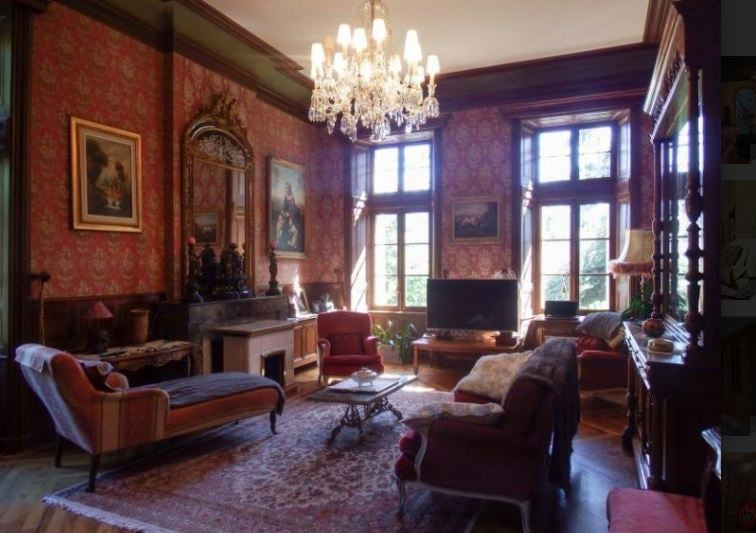
Many cases of witchcraft are happening at widely differently places and dates and have points of close resemblance. In the year 1625, in Ireland, according to Classon Porter, a supposed witch was a poor old woman, who was driven mad by the cruel and barbarous on the ground of her being a witch. To escape this treatment, she sought refuge in a cave, which was in the field attached to the old (not the present) meeting-house in Antrim Her living in such a place being thought a confirmation of what was alleged against her, she was thereupon stabbed to death, and her body cut in pieces, which were then scattered over the places where she was supposed to have exercised her evil influence. For some years after this terrible tragedy her ghost, in the form of a goat, was believed to haunt the session-house of the old meeting-house near which she had met her cruel fate; it was popularly known as MacGregor’s ghost, this having been the name of the man who was sexton of the meeting-house when these things took place, and who probably had been concerned in the murder. So far Classon Porter. On another occasion an Irish witch or wise woman was the means of having a Scotch girl delated by the Kirk for using charms at Hallow-Eve apparently for the purpose of discovering who her future husband should be. She confessed that “at the instigation of an old women from Ireland she brought in a pint of water from a well which brides and burials pass over, and dipt her shirt into it, and hung it before the fire; that she either dreamed, or else there came something and turned about the chair on which her shirt was, but she could not well see what it was.” Her sentence was a rebuke before the congregation; considering the state of Scotland at that period it must be admitted she escaped very well. Now, a very curious case in the supernatural is the Winchester mansion. The Winchester mansion is now called the “Winchester Mystery House,” and some people have reportedly temporarily lost their eyes sight, felt icy chills in spots where there were no drafts, and seen locked doorknobs turn. Once before the mansion was open for tours, one of Mrs. Winchester’s employees killed himself. In a note left behind, the man said that a certain officer (whom he named) had driven him to the task. #RandolphHarris 13 of 19

The employee also said that he was committing suicide for the sole purpose of gaining power to get revenge on his enemy. He believed that the Winchester mansion would keep his soul and make him more power in spirit than he every was in the flesh. The manner of the suicide was startling, and that was what might have been expected from this unusual character. He had gone into one of the turrets and blown he brains into a million fragments. It is interesting that someone would want to die to seek justice by deliberately haunting the living. The officer to be punished was overbearing, and irascible. Generally he was kind to most of the men in a way; but he was gross and mean, and that explained sufficiently his harsh treatment Ludwig Berhard Forster, whom he could not understand, and his efforts to break that flighty young man’s spirit. Not long after the death by suicide, certain modifications in the officer’s conduct became apparent to some. His choler, though none the less sporadic, developed a quality which had some of the characteristics of senility; and yet he was still in his prime, and passed for a sound man. He was a bachelor, and had lived alone; but presently he began to shirk solitude at night and court it in daylight. His brother officers chaffed him, and thereupon he would laugh in rather a forced and silly fashion quite different from the ordinary way with him, and would sometimes, on these occasions, blush so violently that his face would become almost purple. His soldierly alertness and sternness relaxed surprisingly at some times and at others were exaggerated into unnecessary acerbity, his conduct in this regard suggesting that of a drunken man who knows that he is drunk and who now and then makes a brave effort to appear sober. All these things, and more, indicating some mental strain or some dreadful apprehension, or perhaps something worse than either, were observed partly by others and an intelligent officer whose watch upon the man had been secured. To be more particular, the afflicted man was observed often to start suddenly and in alarm, look quickly round, and make some unintelligent monosyllabic answer, seemingly to an inaudible question that no visible person had asked. #RandolphHarris 14 of 19

The haunted officer also acquired the reputation, too of having taken lately to nightmares, for in the middle of the night he would shriek in the most dreadful fashion, alarming his roommates prodigiously. After these attacks he would sit up in bed, his ruddy face devoid of colour, his eyes glassy and shining, his breathing broken with gaps, and his body yet with a cold perspiration. Knowledge of these developments and transformations spread throughout the station; but the few who dared to express sympathy or suggest a tonic encountered such violent rebuffs that they blessed Heaven for escaping alive from his word-volleys. Even the inspector, who had a kindly manner, and the commanding sergeant, who was constructed on dignified and impressive lines, received little thanks for their solicitude. Clearly the doughty old officer, who had fought like a bulldog with teenage boys and made hundreds of arrests, was sufferingly from some undiscoverable malady. The next extraordinary thing which he did was to visit one evening (not so clandestinely as to escape being watched by an inspector) a spirit medium—extraordinary, because he always had scoffed at the idea of spirit communications. He was seen leaving the medium’s rooms. His face was purple, his eyes were bulging and terrified, and he tottered in his walk. The inspector hastily ascended to the medium’s rooms, and found her lying unconscious on the floor. Soon, with the inspector’s assistance, she recalled her wits, but her conscious state was even more alarming than the other. At first, she regarded the inspector with terror, and cried—“It is horrible for you to hound him so!” He assured her that he was hounding no one. “Oh, I thought you were the spir—I mean—I—oh but it was standing exactly where you are!” she exclaimed. “I suppose so,” he agreed, “but you can see that I am not the young man’s spirit. However, I am familiar with this whole case madam, and if I can be of any service in the matter I should be glad if you would inform me. I am aware that our friend is persecuted by a spirit, which visits him frequently and I am sure that through you it has informed him that the end is not far away, and that our officer’s death will assume some terrible form. Is there anything that I can do to avert the tragedy?” #RandolphHarris 15 of 19

The woman stared at the inspector in a horrified silence. “How did you know these things,” she grasped. “That is immaterial. When will the tragedy occur? Can I prevent it?” “Yes, yes!” she exclaimed. “It will happen this very night! But no Earthly power can prevent it!” She came close to the inspector and looked at hum with an expression of the most acute terror. “Merciful God! what will become of me? He is to be murdered, you understand—murdered in cold blood by a spirit—and he knows it and I know it! If he is spared long enough, he will tell them at the station, and they will all think that I had something to do with it! Of, this terrible, terrible, and yet I dare not say a word in advance—nobody there would believe in what the spirit says, and they will think that I had a hand in the murder!” The woman’s agony was pitiful. “Be assured that he will say nothing about it,” the inspector said; “and if you keep your tongue from wagging you need fear nothing.” With this and a few other hurried words of comfort, the inspector soothed the medium and hastened away. The inspector had interesting work on hand: it is not often that one may be in at such a murder as that! He ran to a livery stable, secured a swift house, mounted him, and spurred furiously for the reservation. Within a few miles of this furious pursuit, he saw the carriage that the officer was a passenger in crossing a dark ravine near the reservation. As the inspector came nearer he imagined that carriage swayed somewhat, and that a fleeing shadow escaped from it into the tree-banked further wall of the ravine. He certainly was not in error with regard to the swaying, for it had aroused the dull notice of the driver. The inspector saw him turn, with an air of alarm in his action, and then pull up with a heavy swing upon the reins. At this moment he dashed up and halted. “Any thing the matter? He asked. “I don’t know,” the driver answered, getting down. “I felt the carriage sway, and I see that the door’s wide open. Guess my load thought he’s sobered up enough to get out and walk, without troubling me or his pocket book.” #RandolphHarris 16 of 19

Meanwhile the inspector too had alighted; then struck a match, and by its light they discovered, through the open door, the “load” huddled confusedly on the floor of the hack, face upward, his chin compressed into his breast by his leaning against the further door, and looking altogether vulgar, misshapen, and miserably unlike an officer. He neither moved nor spoke when they called. They hastily clambered within and lifted him upon the seat, but his head rolled about with an awful looseness and freedom, and another match disclosed a ghastly dead face and wide eyes that stared horribly at nothing. “You better drive the body to headquarters,” he said. Instead of following, the inspector cantered back to town, housed his horse, and went straightway to bed; and this will prove to be the first information that he was the “mysterious man on a horse,” whom the corner could never find. About a year afterwards, he received the following letter (which is observed to be in fair English) from San Jose, California: “DEAR SIR, For some years I have been reading your remarkable investigative reports with great interest, and I take to the liberty to suggest a theme for your able pen. I have just found in a library here a newspaper, dated about a year ago, in which is an account of the mysterious death of a police officer in a carriage.” Then followed the particulars, as the inspector has already detailed them, and the very theme of post-mortem revenge which he had adopted in this setting out of facts. Some persons may regard the coincidence between his correspondent’s suggestion and his private and exclusive knowledge as being a very remarkable thing; but there were likely even more wonderful things in the World, and at none of them did he longer marvel. More extraordinary still is the writer’s suggestion that in the self-inflicted gunshot of the employee at the Winchester mansion a dog or a quarter of beef might as well have been employed as a suicide-minded man; that, in for, the man may not have killed himself at all, but he might have employed a presumption of such an occurrence to render more effective a physical persecution ending in murder by the living man who had posed as a spirit. The letter even suggested an arrangement with a spirit medium, and the inspector regarded that also as a queer thing. #RandolphHarris 17 of 19
The declared purpose of this letter was to suggest material of his “investigational reports”; but the inspector submit that the whole affair was of too grave a character for a treatment in the levity of fiction. And if the facts and coincidences should proves less puzzling to others than to him, a praiseworthy service might be done to humanity by the presentation of whatever solution a better understanding than his might evolve. The only remaining disclosure which he was prepared to make is that his correspondent signed “Yellow Boy,”—an odd name, but for all the inspector knew there was something about the name that haunted him unceasingly, as much as does some strange dream which one’s knows one has dreamt and yet which it is impossible to remember. “I know I’m just a sinner when passion’s on the loose. I’s suffer retribution because of self-abuse.” Even when people convert to Christ from spiritualism, they are not free from demon interference. The influence of demonism continues strong among money. Sometimes when people speak against the demons that they have once welcomed into their body in séances attack their mind and vocal cords. Sometimes their memories go blank; other times their throat may constrict, or they cannot speak. However, as soon as they pray for help through the power of Jesus’ blood, the attack will cease. These assaults continued sporadically with the inspector for thirteen years before his spiritual defenses were built up to keep demons from penetrating his body. As his spiritual armour because strong, he was able to help others assailed by spirits. Yet at times he still felt strange as if something was wrong. His mind would become fuzzy, and he would feel like he was being chocked. He seemed on the verge of a mental blackout. Sensing Satan’s power at work, the inspector wound up with a “hell fire” message. After he returned home, he hurried to the door, hoping to discern who had brought the sinister force into the aura. He found no one. Ten days later a friend a woman claimed that she and a friend had turned on satanic power in the Winchester mansion. #RandolphHarris 18 of 19

She said they have left the estate frightened by the Bible and a message and thought it has something to do with his case. After they left the mansion, she said, Satan had come to their homes to induce them to commit suicide. Mrs. Danenhower, the woman he spoke to, overcame an urge to leap into the San Francisco Bay, but she had succumbed to the next temptation and took n overdose of chloral hydrate. She has been near death for several days. When she recovered Mrs. Danenhower learned that her friend had been committed to a lunatic asylum. That news was so frightened her that she consulted the inspector. They set up a counseling appointment the next morning. The inspector saw immediately that she was demon-indwelt. The only way she could say the name of Jesus Christ was in blasphemy. She told him that the demons had caused her to steal casually from the Winchester mansion, sell her body for extra income, and disturb gospel services for entertainment. She and her friend—she told him later—regularly met at the Winchester mansion while they were working and worship Satan in secret. They would prostrate themselves before their altar in the basement and pray to Satan that they might be chosen to bear the antichrist into the World. Mrs. Danenhower was sincere in wanting to be free from Satan’s bondage. The inspector, for the first time in his life, prayed for the deliverance of such a person. She was unable to prayer at all. Trembling, he asked God, in Jesus’s name and the power of his blood, to rebuke the demons and deliver this woman, a prisoner of Satan. She began to scream as the demons came out of her and her body shook violently. “They are gone,” she said, “but there are more.” He wondered how long this could go on. Demons of madness and blasphemy had left her; what more could there be? Once more he prayed and asked God to finish the work, to cast all the demons from her. At this, her reaction was indescribable; but the last demons left her and she lay limp o the floor. Mrs. Danenhower then wept and praised God for her deliverance. Each day after, she had Bible study while on duty at the Winchester mansion. After two weeks she gave public testimony at a prayer meeting of her deliverance and joy in the Lord. She had many ensuing battles with Satan, but her victories were great and refreshing. Perhaps there is a reason Mrs. Winchester ordered the front thirty rooms–including the Daisy Bedroom, Grand Ballroom, and the beautiful front doors sealed up? #RandolphHarris 19 of 19

Winchester Mystery House

“The doctors say I have delusions–I just mustn’t mind when they stare. And yet I’ve a curious feeling that something is possibly there.” Many long-time employees became very superstitious over the years and even believed Mrs. Winchester could walk through solid walls and unopened doors. She did, in fact, have elaborate spying features built into the house to keep an eye on her servants. There are also stories of how she sometimes appeared noiselessly behind them to watch them work.
Will we see you this weekend? 👀 Tickets still available but going FAST!
🎟 link: http://ow.ly/UL4w50HBTke


She Had Better Stop and Take a Good Look at Herself

With all the changes and challenges you face each day, there has never been a greater need to take the time to determine your priorities. The art of being wise is to know what to overlook. In 1993 Mexico signed the North American Free Trade Agreement (NAFTA) with the United States of America and Canada. Within seven years, 3,500 maquiladora plants manufacturing everything from furniture to apparel to TV sets had sprung up along Mexico’s U.S. border, creating 1.4 million new, mainly assembly-line jobs for workers drawn from all parts of Mexico, and they important more than $51 billion in supplies into Mexico. However, in the late 1990s, with Guangdong and, indeed, all of China now competing in the cheap-labor derby, and estimated 250,000 to 300,000 of those Mexican jobs followed the great circle route across the Pacific. That put Alejandro Bustamante in a spot. When his employer, Plantronics, a leading manufacturer of telephone accessories, received an order, it called Mr. Bustamante. Although he ran the firm’s three factories in Tijuana, Mexico, he was told he must compete for each contract just like anyone else. However, Mr. Bustamante paid his workers an average of $2.20 an hour (including benefits) and had to bid against a Chinese manufacturer whose employees average only about 60 cents, which was nearly four times less than the Mr. Bustamante’s employees earned. There is nothing unique or new about that. Many maquiladora operators in norther Mexico face Chinese competition. However, what especially irked Mr. Bustamante was that the Chinese rival he faced was, in fact, itself also owned by Plantronics. This may be a case of serial outsourcing—sending jobs to China that had already been outsourced to Mexico. Outsourcing, while involving a small percentage of all jobs, has aroused fierce condemnation and prompted so much media coverage that there is no reason here to recap the familiar arguments, beyond recognizing that it is part of a much larger pattern of change in the spatial distribution of wealth and wealth creation. #RandolphHarris 1 of 18

Outsourcing enrages the critics of re-globalization who insist that it creates an unstoppable, brutalizing “race to the bottom.” They typically contend that companies go where labor costs are lowest and are ready to pick up and spatially relocate at a moment’s notice. If this were true, it would be easy to forecast where wealth is heading. It would be good news for African, which can offer a big pool of available labor at the lowest wages on Earth. (Africans should cheer each time workers in Asia join unions and drive wages up.) If labor cost were the sole consideration, why have not all those factories now in China wound up in Africa instead? The fact is that even for low-tech work, labor is cost, if ever, the exclusive basis for a company’s decision to relocate. Africa’s endless violence and war, inadequate infrastructure, stratospheric levels of violence, ravaging illnesses, and shameful regimes may rule out significant investment no matter what wage level. However, China has maintained its position as the largest investor in Africa over the last ten years by the number of new jobs created (18,562 on average), with a gradual substantial increase of newly created jobs on a yearly basis. China has spent 27 percent of its investments in Africa. Furthermore, since 2000, China’s foreign direct investment (FDI) flows to Africa have grown at an average annual rate of 40 percent, overtaking U.S. FDI in 2012. In 2019, FDI flows reached $2.7 billion, with the top destinations being the Democratic Republic of the Congo and Angola, two mineral-rich nations. China is also making space along a 30-mile coastline, in Africa, North of Dar Es Salaam, to make space for a $10 billion Chinese-built mega-port and a special economic zone backed by an Omani sovereign wealth fund. It seems Africa has more than just diamonds, gold, other precious minerals, people and animals that World wants to exploit. There are unspoiled beaches and bays; and lush vegetation. If the project goes ahead as planned, Bagamoyo will be transformed into the largest port in Africa. There is even talk of an international airport. #RandolphHarris 2 of 18

Many villagers have already accepted compensation for the loss of their homes. This portion in African is supposed to be as prosperous as Shenzhen, China. Shenzhen, in southeastern China, is a modern metropolis that links Hong Kong to China’s mainland. Over the past 40 years, the establishment of the Shenzhen Special Economic Zone (SEZ), has been a transformation of Shenzhen from a fishing village to a metropolis of innovation. The total investment has been $28 billion USD. Shenzhen has also nurtured some World leading technology firms including Huawei, DJI, and Tencent. The sector has emerged as the pillar industry of the city. As a matter of fact, a total of $4.27 billion USD, was invested in research and development, putting it on the top list of the country. In addition to this, the city has seen 17,500 international patents filed, accounting for one third of the national total. So this is what could be done in Africa, and it is important to keep an eye on the moves of China because they could become the World leader by investing in and colonizing foreign markets, with the large population. Another thing, with China colonizing Africa, it will also become a melting pot and the standard of beauty will change from the traditional European standard and shift to value other features. The race-to-the-bottom theory, moreover, presupposes that workers are essentially interchangeable—which may largely be true in repetitive, assembly-line operations. The higher up the skill ladder one goes in a knowledge-based economy, however, the less valid it becomes. As the knowledge components of wealth creation—marketing, finance, research, management, communication, I.T., vendor and distributor relations, regulatory compliance, legal affairs and other nontangibles—all grow in complexity and importance, workers, like the work itself, become less interchangeable and the required skill sets more temporary. If they extrapolate tomorrow’s economy from existing or projected wage levels alone, attempts to forecast which cities, regions or, for that matter, countries will become the next Guangdong will be inaccurate and the speculations are doomed to fail. #RandolphHarris 3 of 18

Any such simplistic analysis becomes even more questionable because, where economies are transitioning from smokestacks and assembly lines to knowledge-based production, we are already radically changing the very criteria by which a location, city, region or country becomes a high-value-added place. What we are about to see is less racing to the bottom and more of a race to the top. To anticipate tomorrow’s surprising geography—including the location of high-pay jobs, prime real estate, business opportunities, wealth and power—another key point needs to be understood: We are changing not merely the where of wealth but they why—the criteria by which we value places. And that further changes the where. Seeking to woo industry in 1955, the state government of Indiana placed an advertisement in Fortune listing its economic advantages. These, it claimed, included low-cost coal, limestone, white clay, aluminum, gypsum, rock asphalt, dolomite, fluorspar, water, sand, gravel, wood, corn, soybeans and easy access to the Ohio River. In addition, it promised an “enviable strike and lockout record”—that is, a weak or dormant labor movement. That was then. Today Indiana’s development council boasts of breaking away from “over-reliance on traditional industries.” No limestone here. Inc. tells American small-business leaders that the “best” place to “start or grow a company” is Phoenix, Arizona, because of its growing high-tech workforce, sunny climate, renovated art museum and “four major sports franchises.” A group called the Small Business Survival Committee concludes that the place to invest is South Dakota because it imposes the fewest costs on business in the form of taxes, minimum-wage laws, number of state employees and the like. Still another rating system bases its conclusions about the future on the age and growth rate of companies in any given location. A contributor to Microsoft’s bCentral.com then confects a hybrid index out of these last two methods and concludes that Nevada is the place to pull out your wallet. #RandolphHarris 4 of 18

Citing the 1955 Indiana ad in 2002 study called the “State New Economy Index,” Robert D. Atkinson and Rick Coduri of the Progressive Policy Institute write: “In an economy in which fewer than 20 percent of economic activity consists of creating, processing, or moving physical goods, access to raw materials, transportation and markets means less. As an increasing share of economic inputs and outputs are in the form of electronic bits, the old locational factors diminish in importance.” Take, for example, nearness—proximity. Some economists today believe that because Mexico is so close to American markets, it can beat Chinese competitors in the long run. They assume that distance still plays the same role it did before the knowledge economy arrived. However, thanks to information intensive technologies, products are becoming smaller and lighter every day. To rely on proximity means, to the degree that transportation costs matter, that Mexico’s advantage would apply to the older, bigger, bulkier, heavier physical products—precisely those now being replaced. And it means still less to high-value-added intangible services whose transportation costs have little or nothing to do with distance—finance, software, satellite TV, airline reservations, music and the like. Continuing to count on proximity will set Mexico even farther behind—and keep it there. Today, in their race to the top, competing states boast less about limestone and coal than about their great universities, low communication costs, advanced technology, frequent airline service, low crime, good climate and superior quality of life. The economy has been transformed along with workers’ values and way of life. The very categories with which we describe spatial units and relationships change as new economic networks emerge. We are seeing, for example, the rise of an entire ecology of airports linked to one another more strongly than with their local and national governments. Each airport is increasingly surrounded by its own ring of shopping malls, conference centers, 24/7 gyms, chapels, post offices, dentists and doctors, rooftop pools and luxury hotels. #RandolphHarris 5 of 18

The result has been a sprint—no longer just in the United States of America—to create what might be called higher-value-added places tht will attract the brightest, most creative workforce capable of producing knowledge-intensive, higher-value-added products and drawing businesses from around the World. The historical shift toward Asia, the digitalization of many economic functions, the emergence of cross-national regions and the change in the criteria by which we value place or location are all parts of a larger transformation in our relations with the deep fundamental of space. They merely form the background against which even bigger changes loom. One’s stumblings and one’s falling may depress one’s heart and reduce one’s aspiration. They may deter one’s will from further endeavour. For those monsters of hate and cruelty, either utterly materialistic and God-denying or fanatic and taking the name of God in vain, there is no shelter where they can hide once they are forced across the barrier of death. The qualities of determination, intelligence, and persistence—so useful in philosophy—can be used for good or evil. They can make a more successful criminal as well as a better philosopher. The upsurge of well-thought-out, daring, resourceful, and highly ambitious crime in modern times is a sign of misapplied powers, while its violence is a sign of merciless egocentricity. The end for such persons is commensurate. Then many come a crippling deformation future birth, or a sudden and radical awakening to the grave peril toward which they are heading—and a change of course to a better life. The unfortunate experiences which sometimes befall an individual’s Worldly life are, or may be, partly indued by one’s own psychic practices of the period immediately preceding them. One may have been drawn into a vortex of psychic evil which has harmed one’s spiritual life and brought suffering into one’s Worldly existence. What are the inner causes which can produce these dismal outer effects? Here are come of them: shock, worry, fear, resentment, anger, excessive, criticism, condemnation of others. #RandolphHarris 6 of 18

The English woman novelist named Ouida, who wrote during the earlier part of this century, was so successful that she became the highest-paid fiction writer of her time. Yet when she died she was alone, penniless, half-blind, and dwelling in a back alley of Viareggio, Italy. Why? She was brilliant, fluent, and vibrant in her style, but most of her written work was scathing, bitter, highly critical, filled with prejudices and even hates. To what extent did a mind and heart holding so many negatives contribute to these unpleasant results? Yet she was unquestionably a lady in manners, breeding, dress, and way of life. She wrote her letters and even her manuscripts on the finest quality paper. She was highly independent and refused an offer to write her own life story, even though a substantial amount of money was the prize. Her reply was that it would be lowering herself to feed her own egotism and vanity to do so! It is quite true and utterly obvious that bad physical conditions make their contribution also, but it I even more true that bad inner conditions are the fundamental causes which turn outward remedies to disappointments in the end. Blind selfishness brings mutilated lives and ugly minds. Pessimism is practical defeatism and psychological suicide. It is the child of despair and the parent of dissolution. If we make room in our minds for negative, bitter thoughts of complaint, outrage, or injury against those who mistreat us, we shall not be free and will remain unable to find peace. Beware of giving birth to thoughts of hate, envy, malice, or wrath and sending them to another person. For they will reach one, yes, but will then return like a boomerang to their source. Wicked humans may gain the fruits of their aggressions and desires, may win victories over others, but at the end they are destroyed at the roots. The coldly calculated torture of animals in the name of scientific progress must be paid for in different degrees by those who allow it as well as by those who perpetrate it. The practice of vivisection is a sinful one. The humans who do it will have to pay the penalty one day, quite often by being born into a maimed and hurt body. Some among them, who gradually lose every vestige of pity from their character, become heartless monsters. #RandolphHarris 7 of 18

Through violent aggression whereby impassioned men seek to destroy others, they work their own destruction—at first moral, in the end, physical. These undesirable thoughts and feelings are bad for others as well as oneself, besides wasting so much of one’s own energies. An evil human’s mistakes sometimes strike back at one later when one least expects them, and can least afford them. Is it prudent to heed all this talk of coming calamity? Is it a mistake to read material speculating on its likelihood or imagining its horrors? Each person must answer such a question for oneself, but the philosophic person approaches it in a different manner. On general principles one dislikes negative thoughts and repels them. One seeks a clear recognition of what is happening in the World around one, but one trains oneself—disciplines one’s mind and detaches one’s emotions—to do so without picking up the accompaniments of panic or depression. One practices living with complete calm in the face of provocations and irritations, keeping one’s head, when others all around are losing theirs. When these disaffected find one another and form a subculture, they tend to see their choice, fraught with crisis, as a religious movement. One of the favorite spokesmen of the Hipster Generation announces: For the crucifix I speak out, for the Star of Israel I speak out, for the divinest man who ever lived who was a person I speak out, for sweet Mohammed I speak out, for Buddha I speak out, for Lao-tse and Chuang-tse I speak out, for D.T Suzuki I speak out. This is typical speaking; like an address by Eisenhower it includes all voting creeds and betrays a similar lack of acquaintance. (The bother is that the speaker is in his late thirties and out to know better.) However, as we shall see, this formless ultimate experience is not irrelevant to the plight of being resigned, for there is no available World to give experience a form. #RandolphHarris 8 of 18

However, let me at once give a similar strain of rhetoric of a seasoned public spokesman in the organized system itself. I quote from an address to the National Recreation Congress of 1957 by Dr. Paul Douglass. He is concerned with the terrifying Problem of Leisure, namely that with a shorter work week and automation many millions of adults might simply goof off and get into mischief. “The assimilation of leisure into the folkway tomorrow makes essential the reconstruction of the goals and values of life, the evolution of a new ethics, and the definition of an esthetic suitable for the upreaching taste, the deeper comprehension and enjoyment of beauty in its many forms, and a more meaningful existence. Of course this is not serious. A “new ethics” would, presumably, be the work of an Isaiah or Ezekiel or at least Socrates. If someone’s lips were touched with fire and one got oneself rejected by us and swept our children wake, it would solve other problems than out leisure time for it would be convenient for us. –The Hipster spokesman, surprisingly, seemed to be satisfied with the ethics that we have inherited. (As an artist I find this kind of public speech vaguely insulting. Do we need an esthetic? I cannot cope with the artistic tradition that we have, especially its modern triumphs, so that my own work is both unclassical and dated according to standards right on my bookshelf. Does Dr. Douglass mean a popular esthetic? Is it news to him that the popular taste is systematically debauched by Hollywood, Broadway, Madison Avenue? that by the unanimity of publishers, producers, and broadcasters, assisted by the censorship, it is almost impossible to get an honest or vivid word to the public? and that if something slips by it is swamped by trash and singled out for neglect by ignorant critics?) Dr. Douglass cannot mean what he says, yet he does mean something. Under what conditions do public spokesmen use this kind of language, asking for new ethics and a meaning for existence, when there are concrete tasks glaring in the face? #RandolphHarris 9 of 18

The conditions are disappointment in oneself according to a lofty ethics, and resignation about doing anything. Not early resignation, but after the profound disappointment of experience. Spoken as if miracles were for the asking, the buoyant abstractions ward off pain and uneasy conscience when one is no longer going to try to do anything practical. (The crisis will occur “tomorrow.”) The tone, if not the content, fits the American style, optimistic about expedients. And the disappointment is more profound because the American promise was so bright. Achieving most of what we set out to get, we are surprised to find that it is useless, and worse. For after the century of progress, the folk who are wealth and pretty healthy are not only not happy or wise, but they are uneasy. Their own writers hold them in contempt. Foreigners keep saying that the atom bombs were dropped for no good reason. The beautiful American classlessness is freezing into statuses. People ask for a stop to immigration. In the modern World, we Americans are the old inhabitants. We first had political freedom, high industrial production, an economy of abundance. Naturally we are the first to be disappointed. Europeans, when they ape and deny envy us, are like children. Disappointed and resigned, adults do not see a future for their own children, for they do not know the Way themselves. Immigrants of the first generation wanted their children to make good and have careers; it the third generation they just “want their children to be happy.” And perhaps children being happy is exactly why America is in such a mess today. People should have wanted their children to work hard, honor their family name and practice chastity. Then maybe they would be more respectful and more industrious instead of having a sense of entitlement. We are not saying you should not help your children, by every means you should, but help them so they can focus on their education. If you can afford it, there is nothing wrong with buying a child a brand-new car when they are in high school, paying for insurance and gasoline, and giving them a monthly allowance. #RandolphHarris 10 of 18

By treating your child some luxuries, you will ensure they do not have to work and can spend more time preparing for college, and that they will have time for high school clubs and sports. Do not thrust your child off to work while they are still a child. Let them enjoy being young. When their brain power has increased and they reach college, perhaps by sophomore, when they are acclimated to college education and know how much time to spend getting back and forth to class, then talk to them about seeing if they are ready to be more mature and get a job to help pay for their education. Of course, if you can that is a great idea. Not everyone is lucky to have affluent parents have to work in high school and it makes life more difficult. So if you can help your child financially to become more successful, it is only your family name and image you are helping to become a success. Now, in tropical Africa, what anthropologists call terminal abstinence is a widespread phenomenon. What it refers to is the deliberate—and often deliberated—decision to terminate conjugal relations involving pleasures of the flesh. For example, Yoruba women—but not men—know that permanent celibacy awaits them down the road. Sometimes husbands impose celibacy on their wives because they wish to take or concentrate on a younger wife, but twice as often the woman themselves decide to adopt it. Most commonly, this happens when a woman becomes a grandmother. Throughout Africa, and in Yorba society in particular, child-rearing is predicated upon extensive grandmother participation. The transition from mother to grandmother is complex. Each has different rights and obligations, and sometimes the simplest or only way to navigate between their conflicting demands is to renounce childbearing altogether. Renouncing pleasures of the flesh relations is no hardship for these grandmothers. Usually, a woman’s greatest emotional satisfaction comes from her children and family, not from an intense love affair with her husband. #RandolphHarris 11 of 18

A woman may also declare terminal celibacy as a protest against a new wife or because she has proven her fertility and can now rest. It is not a rejection of her husband so much as a redeployment of energies. For women whose marries represent dynastic bonds and courtyards full of children rather than romantic attachments to their husbands, and for the millions of women who have operations to protect their celibacy, terminal celibacy can be a release rather than a loss. Indeed, it is often no loss at all. In North America, many aging women (who have had operations) also retire from pleasures of the flesh service without the slightest regret. Some consider pleasures of the flesh as purely for reproduction, while others say that, at their age, it is no longer necessary, proper, or dignified. Many older men and women claim they must abstain from pleasures of the flesh activities because of illness, though the medical reality is that their arthritis, heart disease, or hypertension does not require it. In fact, their newly adopted celibacy may disguise or excuse an antipathy to pleasures of the flesh. In the late 1870s, when pregnancy was an interesting condition, underwear one of many of life’s unmentionables, and death a delicate passing away, feminists cleverly softened their demands for an instrument to control when and how often they gave birth by referring to it as Voluntary Motherhood. After all, birth control had ugly connotations, namely, freedom from the consequences of, well, a coming together, as it were, a very intimate sort of carnal knowledge. From one perspective, feminists shared the common fear that contraceptives would lead directly and inevitably to wanton pleasures of the flesh. The various “washes, teas, tonics, and various sorts of appliances [were a] standing reproach upon, and a permanent indictment against, American women,” declared one feminist, articulating the disgust shared by many antifeminist men. So pronounced was their alarm that legislation actually prohibited the distribution of information about birth control. #RandolphHarris 12 of 18

Form a different optic, birth control was criticized for being unromantic and removing the spontaneity from pleasures of the flesh. Women’s greatest fear, however, was that widespread contraception would work against them. They would no longer be able to keep their husbands at arm’s length by invoking the argument that pleasures of the flesh might lead to conception. These devices also smacked of “looseness” and abandon of pleasures of the flesh and seemed unsuited to respectable people living respectable lives. Contraceptives might also send husbands galloping off to bed with “fallen women” they no longer needed to worry about producing a child with. Jealousy was only a partial factor. Horror of the illnesses that unfaithful husbands quite frequently passed on to their wives was a more urgent issue. For all these reasons, many women, including Voluntary Motherhood feminists, accepted birth control in only one form: continence in pleasures of the flesh, the World’s oldest and most widely practiced method of contraception. Voluntary Motherhood supporters were concerned above all with a woman’s right to control her body and, by extension, her fertility. They saw celibacy as the only moral way to achieve this and condemned artificial devices as instruments of immorality that permitted consequence-free indulgence of pleasures of the flesh. In an era where women had few legal and social rights, demanding control of their relations in pleasures of the flesh with their husbands was considered extremely radical. Their endorsement of celibacy softened its impact, but only slightly. Under the aegis of Voluntary Motherhood, married celibacy could take two forms: the couple’s mutual or the woman’s unilateral decision. Usually, the wife’s unilateral declaration of celibacy was at the core of Voluntary Mothers. On the difficult battleground of her home, each determinedly celibate woman defined not only her husband and her society’s norms but even the law, which required her to submit both body and will to her husband. #RandolphHarris 13 of 18

In these circumstances, she needed immense courage to dictate her availability for pleasures of the and to withhold it except when she was prepared to conceive a child. “Our religion, laws, customs, are all founded on the belief that woman was made for man,” remarked feminist Elizabeth Cady Stanton. “Womanhood is the primal fact, wifehood and motherhood its incidents…Must the heyday of her existence be wholly devoted to the one animal function of bearing children? Shall there be no limit to this but woman’s capacity to endure the fearful strain on her life?” Like a great many other nineteenth-century women, Mrs. Stanton had no romantic notions about intercourse involving pleasures of the flesh. It led to an endless series of being with child, and when desperate mothers sought advice on how to avoid conception, they were given false information. Medical “expert” Dr. Ezra Heywood, for example, told them that if they abstained from pleasures of the flesh until ten to twelve days after starting their cycle, conception could be avoided. This woefully wrong interpretation of the fertility cycle misled women, who ended up with child yet again. No wonder, then, that pleasures of the flesh soon lost is magic. Too often, it exhausted, impoverished, disabled, and ended their lives. A woman grieving for a miscarried child was a typical victim: “I am nearly wrecked and ruined by…nightly pleasures of the flesh, which is often repeated in the morning. It is almost nonconsensual because I am trying to produce a child to please my husband. This and nothing else was the cause of my miscarriage…he went to work like a man a-mowing, and instead of a pleasure as it might have been, it was most intense torture.” To end these all-too-frequent personal tragedies, the Voluntary Motherhood movement preached that woman had the right to practice celibacy. Any other form of contraception was not only morally questionable, but would deprive her of the ability to control when she had pleasures of the flesh. #RandolphHarris 14 of 18

The Voluntary Motherhood movement was both inherently radical and relatively conservative in its stance. In an era when the notion that a man could have nonconsensual pleasures of the flesh with his wife was seen as ludicrous because marriage gave him unlimited access to her temple, wives who resisted on ideological grounds were social rebels. Their commitment to Voluntary Motherhood, and to celibacy except for protection, was their means of empowering themselves vis-à-vis their husbands, and in a large sense, within the families they wished to space out and control, and even withing the society whose laws they so quietly and privately defied. In this contact, they justified their celibacy as an instrument or a weapon they needed to fight for the very noblest of causes. People with histrionic personality disorder, once called hysterical personality disorder, are extremely emotion—they are typically described as “emotionally charged”—and continually seek to be the center of attention. Their exaggerated, rapidly changing moods can complicate life considerably, as we see in the case of Suzanne: Suzanne, an attractive and vivacious woman, sought therapy in hope that she might prevent the disintegration of her third marriage. The problem she faced was a recurrent one, her tendency to become “bored” with her husband and increasingly interested in going out with other men She was on the brink of “another affair” and decided that before “giving way to her impulses again” she had “better stop and take a good look” at herself…Suzanne was quite popular during her adolescent years. Rather than going to college, Suzanne attended art school where she met and married a fellow student—a “handsome, wealthy, ne’er-do-well.” Both she and her husband began “sleeping around” by the end of the first year, and she “was not certain” that her husband was the father of the daughter. A divorce took place several months after the birth of this child. #RandolphHarris 15 of 18

Soon thereafter she met and married a man in his forties who gave both Suzanne and her daughter a “comfortable home, and scads of attention and love.” It was a “good life” for the four years that the marriage lasted. In the third year of this marriage she became attracted to a young man, a fellow dancing student. The affair was brief, but was flowed by a quick succession of several others. Her husband learned of her exploits, but accepted her regrets and assurances that they would not continue. They did continue, and the marriage was terminated after a stormy court settlement. Suzanne “knocked about” on her own for the next two years until she met her present husband, a talented writer who “knew the scoop” about her past…She had no inclination to venture afield for the next three years. She enjoyed the titillation of “playing games” with other men, but she remained loyal to her husband, even though he was away on reportorial assignments for periods of one or two months. The last trip, however, brought forth the “old urge” to start an affair. It was at this point that she sought therapy. People with historic personality disorder are always “on stage,” using theatrical gestures and mannerisms and the most grandiose language to describe ordinary everyday events. Like a chameleon, they keep changing themselves to attract and impress an audience, and in their pursuit they change not only their surface characteristics—according to the latest fads—but also their opinions and beliefs. In fact, their speech is actually scanty in detail and substance, and they seem to lack a sense of who they really are. Approval and praise are the life’s blood of these individuals; they must have others present to witness their exaggerated emotional states. Vain, self-centered, demanding, and unable to delay gratification for long, they overreact to any minor event that gets in the way of their quest for attention. Some make suicide attempts, often to manipulate others. People with this disorder may draw attention to themselves by exaggerating their physical illnesses or fatigues. They may also behave very provocatively and try to achieve their goals through seductions involving pleasures of the flesh. Most obsess over how they look and how others will perceive them, often wearing bright, eye-catching clothes. They exaggerate the depth of their relationships, considering themselves to be the intimate friends of people who see them as no more than casual acquaintance. Often, they become involved with romantic partners who may be exciting but who do not treat them well. #RandolphHarris 16 of 18

This disorder was once believed to be more common in women than in men, and clinicians long described the “hysterical wife.” Research, however, has revealed gender bias in past diagnoses. When evaluating case studies of people with a mixture of histrionic and antisocial traits, clinicians in several studies have a diagnosis of the histrionic personality disorder to women more than men. The latest statistics suggest that around 2 percent of adults have this personality disorder, with males and females equally affected. They psychodynamic perspective was originally developed to help explain cases of hysteria, so it is no surprise that these theorists continue to have a strong interest in histrionic personality disorder today. Most psychodynamic theorists believe that children, people with this disorder experienced unhealthy relationships in which cold and controlling parents left them feeling unloved and afraid of abandonment. To defend against deep-seated fears of loss, the individuals learned to behave dramatically, inventing crises that would require other people to act protectively. Some psychodynamic theories focus exclusively on female patients. They suggest that an early lack of maternal nurturance causes some daughters to develop an intense need for their father’s attention to seek it through displays of affection and dependence that go far beyond the usual behavior of young girls toward their fathers. These highly flirtations and dramatic displays of emotion established a histrionic pattern that extends to later relationships in their lives. Such individuals enter adulthood as “unhappy little girls,” looking at men as idealized fathers and always trying to manipulate them. Cognitive explanations look instead at the lack of substance and extreme suggestibility found in people with historic personality disorder. These theories see the individuals as becoming less and less interested in knowing about the World at large because they are so self-focused and emotional. With no detailed memories of what they never learned, they must rely on hunches or on other people to provide them with direction in life. Some cognitive theorist also propose that people with this disorder hold a general assumption that they are helpless to care for themselves, and so they constantly seek out others who will meet their needs. #RandolphHarris 17 of 18

Additionally, sociocultural theorists believe that histrionic personality disorder is produced in part by society’s norms and expectations. Until recently, our society encouraged girls to hold on to childhood and dependency as they grew up. The vain, dramatic, and selfish behavior of the histrionic person may actually be an exaggeration of femininity as our culture once defined it. Unlike people with most other personality disorders, those with histrionic personality disorder often seek out treatment on their own. Working with them can be very difficult, however, because of the demands, tantrums, and seductiveness they are likely to deploy. Another problem is that these individuals may pretend to have important insight or to experience change during treatment, merely to please the therapist. To head off such problems, therapists must remain objective and maintain strict professional boundaries. Cognitive therapists have tried to help people with this disorder to change their belief that they are helpless and also to develop better, more deliberate ways of thinking and solving problems. Psychodynamic therapy and group therapy have also been applied. In all these approaches, therapist ultimately aim to help the clients recognize their excessive dependency, find inner satisfaction, and become more self-reliant. Clinical case reports suggest that each of the approaches can be useful. Drug therapy is less successful, however, except as a means of relieving the depressive symptoms experienced by some patients. Now, the seed now begins its time of gestation in the rich dark Earth. It is the great cold of night: not the negative images of darkness, but the dark richness of that unknow, fertile, deep part in each of us where our intuitive creative forces abide. The Christ energy enters the Earth at this season. The yule log is lighted. The nights grow shorter, the light returns, and we experience rebirth. Again, again we come and go, changed, changing. Hands join, union in love and fear, grief and joy. The circles turn, each giving into each, into all. Prayer takes the mind out of the narrowness of self-interest, and enables us to see the World in the mirror of the holy. We do not step out of the World when we pray; we merely see the World in a different setting. Prayer is a way to master what is inferior in us, to discern between the signal and the trivial, between the vital and the futile, by taking counsel with what we know about the will of God, by seeing out fate in proportion to God. #RandolphHarris 18 of 18

Cresleigh Homes

What is it like living a community in that feels like a resort? Pretty totally great! This open concept design welcomes you into a window-filled great room.

There is also an open kitchen with prep island and plenty of counter space, and the beautiful dining room that you see below, which can be repurposed, as there is also a breakfast nook in the kitchen.

Since we moved in a Cresleigh Home, we’ve taken a dip in that sparkling pool every time we get the chance.

From the conveniences your heart desires and the finest features and finishes, a Cresleigh Home is what you are looking for. https://cresleigh.com/havenwood/


Altering the Maps of the Past and Our Various Relationships

Success on any major scale requires one to accept responsibility. When we were made in the image of God, we were given a mind, but we are not equal to God. No human will make a great leader who wants to do it all oneself or to get all the credit for doing it. The moment Adam ate, sin and death came on the human race. His cells were being destroyed faster than they can be replaced, his nature became a sin nature, and it took him nearly one thousand years to die. His soul gave up its eternal life when he ate. It is not because of what you are I do that we are born sinners. We have inherited sin because of our first father, Adam. However, we have been given free choice. Therefore, we are responsible for our behavior and can choose to be good. We are controlled by the Holy Spirit to the measure that we yield ourselves to God, and He empowers us to resist Satan effectively. In addition, God has outfitted us with a full panoply of armor by which we can both defend ourselves from the attacks of the forces of evil and take the offensive against them. The apostle Paul, using the figure of a warrior prepared for battle. “Wherefore, take unto you the whole armor of God, that ye may be able to withstand in the evil day, and having done all, to stand. Stand, therefore, having your loins girded about with truth, and having on the breastplate of righteousness, and your feet shod with the preparation of the gospel of peace; above all, taking the shield of faith, with which ye shall be able to quench all the fiery darts of the wicked. And take the helmet of salvation, and the sword of the Spirit, which is the word of God,” reports Ephesians 6.13-17. Paul exhorts us to have our “loins girded about with truth.” This belt refers to our sincerity, our honesty. If one is hypocritical and dishonest, one will not successfully resist and overcome evil influence of Satan and his armies. Remember the devil is the father of lies. The child of God must not merely say that he desires victory over sin, but must truly long for it. One is to hate sin and manifest genuine earnestness. One’s vows and public statements must always be sincerely spoken, for the devil has no difficulty in defeating the hypocritical and half-hearted. #RandolphHarris 1 of 20

The breastplate of righteousness represents the believer’s way of living. The Christian who desires to ward off the attacks of Satan and evil spirits must consciously choose a life of obedience, moral rectitude, and devout holiness. How is this life that pleases God to be attained? Largely by a humble determination to obey the exhortations of the Scriptures. The obedient believer’s life is characterized by righteousness, and one’s testimony is effective to the winning of the lost and the crippling of Satan’s power. The devil trembles at the sight of a truly Godly person. The Christian also is to have one’s “feet shod with the preparation of the gospel of peace. This means that one is to bear God’s good news. One is to be a witness to others of the peace and joy that came to one when one placed one’s trust in Christ. The believer who does not bear a testimony loses spiritual keenness and becomes vulnerable to Satan’s attacks. The “shield of faith” speaks of strong belief nourished through our daily prayer, Christian Bible study, and spiritual activity. True faith accepts God’s forgiveness with thankfulness, and exercises implicit trust in every time of trial and temptation. Without this confidence in the Lord we would be spiritual weaklings, but with it we are the victors. John said, “and this is the victory that overcometh the World, even our faith,” reports 1 John 5.4. the “helmet of Salvation” describes the believer’s knowledge of one’s redemption. God’s child should rejoice in the assurance of a real, present, and personal salvation. One should remind oneself daily that one has been redeemed, that one has passed from death to life, and that one is no longer under condemnation. The devil cannot effectively tempt a Christian who is actively living a joyful Christian life. The child of God also must wield a weapon of offense: the sword of the spirit, the Word of God. Through the use of the Scriptures, one can resist Satan’s onslaughts successfully. Child of God, you are on the winning side. You have become “a partaker of the divine nature,” reports 2 Peter 1.4. Through the new birth, and your body has become the “temple of the Holy Spirit,” reports 1 Corinthians 6.19. #RandolphHarris 2 of 20

Virginity, Chastity, Celibacy—the holy trinity at the core of many cultures. God has given you all you need for a happy and victorious Christian life now. He has explicitly declared that the power of the devil already has been broken,” reports Hebrews 2.14-15, and that someday you will be delivered from the presence of sin and the possibility of temptation. Remember, “greater is one that is in you, than one that is in the World,” reports 1 John 4.4. Chastity belts are deplorable, but they can be unlocked or hacked off, and the woman imprisoned inside them healed and perhaps restored. In many countries, female chastity represents the family’s honor, and women even suspected of having contaminated themselves are several punished. The apostle John, speaking of God’s eternal city, assures us, “And there shall in no way enter into it anything that defileth, neither one that worketh abomination, or maketh a lie,” reports Revelation 21.27. What a wonderful prospect. In ancient times, many of the devices used to keep women chaste were often times doomed women to unimaginable pain, permanent loss of independence, and unnatural confinement. As chastity in women dominated the social agenda, women’s circulation, flesh, and health was sacrificed, and some of the faced a slow death. Still, even in modern times, chastity remains a cultural imperative, but one that requires enforcement through indoctrination and other social pressures. Remember, one of two destinations awaits you—Heaven or Hell. To ignore Jesus Christ is to make impossible your entrance into Heaven. To receive Him as a Savior is to guarantee a safe and successful journey into everlasting bliss. Jesus Christ Himself declared, “I am the door; by me if any human enter in, one shall be saved,” reports John 10.9. Why not bow your head in prayer right now and settle this matter of salvation? Here is a suggested prayer you might offer: “Lord Jesus, I know I am a sinner and can never save myself. I realize that my own evil nature and the power of Satan and his forces are too much for me to handle in my own strength. I believe that You died for me and that You arose again from the dead. I am now receiving You as my Savior, my Lord, my only hope of salvation. Amen.” #RandolphHarris 3 of 20

If you prayed this and really meant it, you are now a child of God. Your life will change, as you receive strength to do the will of God. The Christian Bible assures you, “For whosoever shall call upon the name of the Lord shall be saved,” reports Romans 10.13. Abstinence—voluntary restraint—is celibacy’s simplest manifestation, and it practiced Worldwide for a multitude of reasons. The most common is as a surefire and free method of contraception, which is the only kind of contraception the Catholic church approves of. Abstinence may also have political roots, as was the case in the Voluntary Motherhood Movement, whose adherents wished to control their husband’s access to their body by agreeing to pleasures of the flesh only for procreation. The Catholic Church believes in celibacy because humanmade contraception is consider sinful due to the fact that the male vital force is redirected into a latex or poly urethane sleeve that is wrapped around the male organ or diaphragms of killed by foam or chemical washes and that is no better than Onan’s sinful casting his seed upon the ground. There are many cultures, like the Dani of Irian Jaya, Indonesia, for example, who do not appear unhappy or stressed about lengthy periods of celibacy. Most intriguingly, Dani society does not preach abstinence or have sanctions in place to punish transgression. Apparently the culture simply does not focus on pleasures of the flesh, either to encourage or discourage it. People like the Cheyenne people of North American plains and they Dani people clearly understood between-child celibacy as their people’s form of birth control. Both cultures would wait a few years after marriage to have a child, and then up to a decade of no activities involving pleasures of the flesh before they had their second child. This was also their people’s way to give the first child a chance. As a Cheyenne named Angel put it, “If I were to have had too many children, I’d be whipping first one, then the other.” Because the Cheyenne hated any punishment, they considered it wiser to let the first child grow up before there were others. #RandolphHarris 4 of 20

The reason women were considered taboo in some cultures like the Sambia of the New Guinea Eastern Highlands is not only because they considered women’s fluids contaminating, but also because the male vital force is essential to manhood, and it is equally crucial for women, who need to draw it up inside themselves for strength, mother’s milk, and to create babies. This means that, for men, pleasures of the flesh are as much a debilitating drain as a pleasure. Celibacy is an excellent practice for an environment or an economic situation, that cannot sustain much population increase. However, in many cultures, children are in many ways their families’ chief assets, and parents strive to produce as many as possible. Even when they are quite small, children make useful economic contributions to their households. More importantly, in culture without government and retirement pensions, children are their parents’ main security against unforeseen financial or medical crises and to ensure a comfortable old age. When they marry, they extend and reinforce connections between their birth and in-law families. Children are crucial in maintaining the intergenerational links that underpin many social systems. However, there are also many compelling reasons for wanting to ensure that a sufficiently long period elapses between births. Infant and child mortality is closely related to inadequate nutrition and maternal debility, which are in turn related to too little time between births. Child spacing, therefore, has developed as the great if unarticulated foal of these societies. Postpartum abstinence, in conjunction with lengthy terms of feeding a baby mother’s milk, is one of the prime instruments to achieve birth spacing that will keep massive child mortality in check, improve survivors’ health, and—as a byproduct—increase parents’ fertility. Through celibacy, married couples are able to better nurture and protect their planned children. This also prevents such diseases as kwashiorkor, which turns its little victims’ hair reddish and bulges out the bellies on their skinny, protein-deprived bodies. For generation is the process of the divine person into the divine nature, and passive spiration is the process of the subsisting love. #RandolphHarris 5 of 20

“Mission” and “giving” have only a temporal significance in God; but “generation” and “spiration” are exclusively eternal; where as “procession” and “giving,” in God, have both an eternal and a temporal significance: for the Son may proceed eternally as God; but temporally, by becoming a man, according to His visible mission, or likewise by dwelling in man according to His invisible mission. Joseph, Oliver, and Sidney Rigdon were on a mission. They reached Kirtland in August, about three weeks after leaving Independence. Many things happened on their journey to strengthen their faith in the Lord’s work and to help them to see that Satan was blinding people so they could not see the truth. Joseph was concerned about the “Land of Zion” and prayed for more information about the gathering of the Saints to Zion and the purchase of land. The word of the Lord came to him that many people were seeking signs that they might have faith: Faith cometh not by signs, but signs follow those that believe. Yea, signs come by faith, not by the will of men, nor as they please, but by the will of God. Yea, signs come by faith, unto mighty works, for without faith no human pleaseth God. Wherefore, I, the Lord, am not pleased with those among you, who have sought after signs and wonders for faith, and not for the good of humans unto my glory.” God called upon those who had sinned to repent lest they fall. He promised that those who were faithful and did His will should overcome their temptations and receive an inheritance on the Earth when Jesus comes. The Lord said that those who were to gather to Zion should not go in haste, which would cause confusion and trouble. They should purchase the lands from those who owned them. Then the Saints would have a just claim upon the land and others would not be angry, for Satan was stirring them up to anger against God’s people. The Saints were admonished: The land of Zion shall not be obtained but by purchase, or by blood, otherwise there is none inheritance for you. An if by purchase, behold, you are blessed; and if by blood, as you are forbidden to shed blood, lo, your enemies are upon you, and ye shall be courage from city to city, and from synagogue to synagogue, and but few shall stand to receive an inheritance.” #RandolphHarris 6 of 20

Men were called upon to repent of their wickedness, even of that wickedness which was only in their hearts. In September, 1831, at Kirtland, a revelation was given to the elders of the church encouraging them to forgive one another that they might work together in unity. The Lord’s instructions at this time were: “I, the Lord, forgiveth sins unto those who confess their sins before me, and ask forgiveness. Wherefore I say unto you, that ye ought to forgive one another, for one that forgiveth not one’s brother one’s trespasses, standeth condemned before the Lord, for there remaineth in one the greater sin. I, the Lord, will forgive whom I will forgive, but of you it is required to forgive all humans.” God revealed the duties of certain men. Some were to go to Zion and others were to remain in Kirtland. All Satins were told to use their money for the purchase of land: “Behold, now it is called to-day…and verily it is a day of sacrifice, and a day for the tithing of my people. Behold, it is said in my laws, or forbidden, to get in debt to thine enemies. Be not weary in well-doing, for ye are laying the foundation of a great work. And out of small things proceedeth that which is great. Behold, the Lord requireth the heart and a willing mind; and the willing and obedient shall eat the good of the land of Zion in these days. And the rebellious shall be cut off out of the land of Zion, and shall be sent away, and shall not inherit the land. Behold, I say unto you that Zion shall flourish, and the glory of the Lord shall be upon her, and she shall be an ensign unto the people, and there shall come unto her out of every nation under Heaven.” In a revelation given in October, 1831, which Joseph Smith has called a “Revelation on Prayer,” the Lord said: “Hearken, and lo, a voice as of one sent down from on high, yea, whose voice is unto humans, Prepare ye the way of the Lord, make his paths straight. Yea, a voice crying, Prepare ye the way of the Lord. Pray unto the Lord; call upon His holy name; make known His wonderful works among the people, call upon the Lord, that His kingdom may go forth upon the Earth; that the inhabitants thereof may receive it, and be prepared for the days to come, in which the Son of Man shall come down in Heaven…to meet the kingdom of God which is set on the Earth. #RandolphHarris 7 of 20

“Wherefore, may the kingdom of God go forth, that the kingdom of Heaven may come, that thou, O God, may be glorified in Heaven, so on Earth. For thine is the honor, power, and glory, for ever and ever. Amen.” In another revelation given at about this time the Lord said to the elders: “Lay your hands upon the sick and they shall recover. Be patient in affliction. Ask and ye shall receive. Knock and it shall be opened unto you. Seek not to be cumbered. Forsake all unrighteousness. Keep these sayings for they are true and faithful, and thou shalt magnify thine office, and push many people to Zion, with songs of everlasting joy upon their heads. Continue in these things, even unto the end, and you shall have a crown of eternal life at the right hand of my Father.” If they were to establish Zion on Earth in the latter days, these revelations indicated that the Lord had set up very high standards of righteousness for His people. Many had been attracted to the church by signs and miracles. To some it was disappointing to learn that faith, humility, patience, and tribulation were requirements which preceded blessings. Some of the members rebelled and left the church when they realized the high standard of excellency that was expected of them. Of these, some expressed their rebellion in retaliation, and tried to overthrow the work of the Lord. If, as we believe, it be true that history moves in cycles, the World is not entering a new cycle. The ancient Chinese culture featured this theory of collective fortunes moving through a series of phases, whilst a similar doctrine has long been held in India. We well remember one evening many years ago listening at riverside village near Gaya, where Buddha attained Nirvana, to one of those melancholy Hindu melodies whose monotonous repetition of the same low wailing notes depresses most Westerners. We complained about this to our cultured companion. He was an extremely old man who sat twice a day in the yogi posture of intertwined ankles—so pleasing to behold, so difficult to perform—with his gaze fixed into space and the fading sunlight playing in quivering undulating waves around his figure. The sacred cord of the twice-born, the white triple thread of the Brahmin, hung around his neck. He did not answer for a full two minutes, for he had been wedded by long habit to silence. #RandolphHarris 8 of 20

Then, without turning his head, he said slowly: “My son, among our people it is otherwise. We are not, like the Westerners, afraid of truth’s sadness, while welcoming its joy. We know that the scenes of this World come and pass like a dream of the night. And this is true of all the events and fortunes of a people’s life also—more especially now that we live in the Iron Age, which is ruled by frequent death and covered by spiritual darkness. You know that we measure the World’s history in great epochs, each divided into four successive lesser epochs and each endlessly departing and returning on itself like a wheel. Do not blame us, then, if our minds fall quickly into despondency and if our music reflects this sadness. We accept it resignedly, and through such resignation find contentment. We know that karma is always active and we try to accommodate ourselves to it. Once I brooded for long over the strange prophecies to be found in an ancient Sanskrit book, a Purana. In it I found this passage: ‘When the Earth is bound by iron chains (are they not railways?), when men speak to each other across immense spaces (is this not your telephone without wires?), and when materialism rules supreme (has history shown a less spiritual age than ours?), in that time there will incarnate Kalki, the Slayer of Men, who (it is written symbolically) will carry a flaming sword in his hand.’” The negative and undesirable traits of character will tend to reproduce themselves in undesirable and inharmonious forms of experience. The rule of casting out all negative thoughts, and keeping them out, is an absolute one. There are no exceptions and no deviations. Such negatives as hate, irritability, and fault-finding make poison in the body and neuroses in the mind. They irritate the nerves, disturb the proper movement of the blood, distort the internal secretions, and destructively affect the chemical composition of tissue cells. Nor is this the end. They provoke like emotions in other people with whom we are constantly thrown in contact. As if they were echoes of our own making, we then have to suffer the effects. Thus the discords inside oneself throw up disturbances outside oneself. One’s anger provokes the other person’s anger, for instance. #RandolphHarris 9 of 20

Negative emotions and memories hold accumulations of worthless, even self-harming materials, useless debris that serve only to hinger progress. Fierce intense hate blinds the eyes of reason, hurts the hater, and creates delusion. Whoever hold fiercely to one’s hatreds not only can never enter the kingdom of Heaven, but will certainly never enter the kingdom of truth. The human who is when one hates will one day be tutored by having to experience the results of one’s own destructive feelings. One who slanders others attracts slander to oneself. If these negative traits are too strong, they may not only hinder the appearance of “the flash” but also the progress in meditation. This is one of the reasons why the medieval mystical authorities laid down a ruling that cleansing of the heart, purification of the mind, must precede or at least accompany the practice of meditation. That they often carried this process too far and enjoined a rigid extreme asceticism does not invalidate the excellence of their ruling. Arrogance and pride not only prepare the way for a fall, as history so often tells us, but also makes a human stick more stubbornly to one’s deviation from the correct way. “Then I will thrust you down with those who descend into the pit (the place of the dead) to the people of olden times, and I will make you [Tyre] to dwell in the lower World like the places that were desolate of old, with those who go down to the pit, that you be not inhabited or shed forth you glory and renown in the land of the living. I will make you a terror [bring you to a dreadful end] and you shall be no more. Though you be sought, yet you shall never be found again, says the Lord,” reports Ezekiel 26.20-21. Conceive that the humanmade environment is now out of human scale. Business, government, and real property have closed up all the space there is. There is no behavior unregulated by the firm or the police. Unless the entire economic machine is operating, it is impossible to produce and buy bread. Public speech quite disregards human facts. There is a rigid caste system in which every one has a slot and the upper group stands for nothing culturally. #RandolphHarris 10 of 20

The university has become merely a training ground for technicians and applied-anthropologists. Gender is divorced from manly independence and achievement. The FBI has a file card of all the lies and truths about everybody. And so forth. If we sum up these imagined conditions, there would arise a formidable question: It is possible, being a human being, to exist? Is it possible, having a human nature, to grow up? There would be a kind of metaphysical crisis. Or put it another way. These conditions are absurd, they do not make sense; and yet millions, who to all appearances are human beings, behave as though they were the normal course of things. For instance, we encourage economic lunacy by watching TV; we gossip about the new BMWs, and how they will make our cities more livable with all their new technology; we attend conventions, listen to public spokesmen, and smile a lot and shake hands. A man is put into doubt about his own sanity. Do they have the right of it, that there is nothing absurd? Then what kind of animal is oneself? Automatically one begins to use their words and think their thoughts, although one knows that they are absurd. One feel depersonalized. It then becomes necessary to stop short and make a choice: Either/Or. Either one drifts with their absurd system of ideas, believing that this is the human community. Or one dissent totally from their system of ideas and stands as a lonely human being. (But luckily one notices that others are in the same crisis and making the same choice.) The picture may be a bit of an exaggeration. In important ways the American system is not inhuman but human-all-too-human. The tone of dependency, for instance, is not servile but, like the diet of hamburgers and malted milk, a regression to childhood. The Americans can make fun of themselves. To top managers and the president are not calculating monsters, but sometimes ignorant and willful human beings. Sympathy with suffering and the feeling for social justice are quite genuine in our country. We are empirical and experimental. #RandolphHarris 11 of 20

Although the official spokesmen and the mass media present an impenetrable front, the speakers are confused persons and quickly betray it under personal questioning. For all the foolishness we are bombarded with, the Americans are not foolish and ghoulish; we have a saving sense built in, just like other peoples. And there are carelessly swept corners full of Long-haired Professors, Hipster Generations, Winos, and other assorted fry who are officially conceded to exist. This does not add up to a metaphysical crisis. It is not even hard to see the economic and psychological causes of many of the existing absurdities and to think up expedients. However, the difficulties are arduous; to persist as a human does require unusual moral character, intellect, or animal spirits. For many young people, however, the difficulties of growing up have been so great that they do think that they are faced with critical choice: Either/Or. They have this picture of themselves and of the World. And then unfortunately, whichever way they choose tends to create in fact the very metaphysical crisis that they have imagined. If they choose to conform to the organized system, reaping its rewards, they do so with a crash, working at it, marrying it. Raising their standard of living, and feeling cynical about what they are doing. If they choose totally to dissent, they do not work at changing the institutions as radical youth used to, but they stop washing their faces, take to drugs, and become punch-drunk or slap-happy. Either way they lose the objective changeable World. They have early resigned. People with borderline personality disorder display great instability, including major shifts in mood, an unstable self-image, and impulsivity. These characteristics combine to make their relationships very unstable as well. Some of Ellen Farber’s difficulties are typical: “Ellen Farber, a 21-year-old, single insurance company executive, came to a psychiatric emergency room of a university hospital with complaints of depression and the thought of driving her car off a cliff…Ms. Farber appeared to be in considerable distress. She reported a 6-month period of increasingly persistent dysphoria and lack of energy and pleasure. #RandolphHarris 12 of 20

Feeling as if she were “made of lead,” Ms. Farber had recently been spending 15-20 hours a day in her bed. She also reported daily episodes of binge eating, when she would consumer “anything I can find,” including entire chocolate cakes of boxes of cookies. She reported problems with intermittent binge eating since adolescence, but these had recently increased in frequency. She attributed her increasing symptoms to financial difficulties. Ms. Farber had been fired from her job two weeks before coming to the emergency room. She claimed it was because she “owed a small amount of money.” When asked to be more specific, she reported owning $150,000 to her former employers and another $100,000 to various local banks. From age 20 to 23, she had used her employer’s credit cards to finance weekly “buying binges,” accumulating the $150,000 debt. [To relieve feelings of distress,] every few days she would impulsively buy expensive jewelry, watches, or multiple pairs of the same shoes. In addition to lifelong feelings of emptiness, Ms. Farber described chronic uncertainty about what she wanted to do in life and with whom she wanted to be friends. She had many brief, intense relationships with both men and women, but her quick temper led to frequent arguments and even physical fights. Although she had always thought of her childhood as happy and carefree, when she became depressed, she began to recall [being abused verbally by an employer]. Like Ellen Farber, people with borderline personality disorder swing in and out of very depressive, anxious, and irritable states that last anywhere from a few hours to a few days or more. Their emotions seem to be always in conflict with the World around them. They are prone to bouts of anger, which sometimes result in physical aggression and violence. Just as often, however, they direct their impulsive anger inward and inflict bodily harm on themselves. Many seen troubled by deep feelings of emptiness. Only 23 percent of adults in the United States of America reported openly expressing their anger. Around 39 percent say that they hide or contain their anger, and 23 percent walk away to try to collect themselves. #RandolphHarris 13 of 20

Contrary to the notion that “letting off steam” reduces anger, angry subject in one study acted much more aggressively after hitting a punching bad than did angry subject who first sat quietly for a while. Many of the patients who come to mental health emergency rooms are individuals with borderline personality disorder who have intentionally hurt themselves. Their impulsive, self-destructive activities may range from alcohol and substance abuse to delinquency, unsafe pleasures of the flesh, reckless driving, and cutting themselves. Suicidal threats and actions are also common. Studies suggest that 70 percent of the people with this disorder attempt suicide at least once in their lives; around 6 to 9 percent actually commit suicide. Many, like Ellen, try to hurt themselves as a way of dealing with their chronic feeling of emptiness, boredom, and identity confusion. A common pattern is for people with the disorder to enter clinical treatment by the way of the emergency room, after a suicide attempt or episode of self-mutilation. People with borderline personality disorder frequently form intense, conflict-ridden relationships in which their feelings are not necessarily shared by the other person. They often violate the boundaries of relationships. Thinking in dichotomous (black-and-white) terms, they quickly become furious when their expectations are not met; yet they remain very attached to the relationships, paralyzed by a fear of being left along. Sometimes they cut themselves or carry out other self-destructive acts to prevent partners from leaving. Around 1.5 percent of the general population are thought to suffer from borderline personality disorder. The course of the disorder varies from person to person. In the most common pattern, the instability and risk of suicide reach a peak during young adulthood and then gradually with advancing age. Borderline personality disorder usually starts in childhood from having an unstable household, divorce of parents, death, multiple patent substitutes, or trauma. In fact, some theorists believe that the disorder may be an extended form of posttraumatic stress disorder, triggered by early horrors. #RandolphHarris 14 of 20

Some features of borderline personality disorder have also been linked to biological abnormalities. Sufferers who are particularly impulsive, as demonstrated by a suicide attempt or aggression against others, apparently have lower brain serotonin activity. People with the disorder also experience abnormalities in sleep that are similar to those of depressed person. In accord with these biological findings, close relatives of those with borderline personality disorder are five times more likely than the general population to have the disorder. Some sociocultural theorists suggest that cases of borderline personality disorder are particularly likely to emerge in cultures that change rapidly. As a culture loses its stability, they argue, it inevitably leaves many of its members with problems of identity, a sense of emptiness, heightened anxiety, and fears of abandonment. Family units may come apart, leaving people with little sense of belonging. Change of this kind in society today may explain growing reports of the disorder. Yet, there is some optimism. It appears that psychotherapy can eventually lead to some degree of improvement with borderline personality disorder. It is not easy, however, for a therapist to strike a balance between empathizing with the patient’s dependency and anger and challenging one’s way of thinking. Furthermore, when such a person does make progress in treatment, termination is sometimes difficult because of the patient’s remaining problems with relationships and abandonment. Psychodynamic therapy has been somewhat effective when it focuses on the patient’s central relationship disturbance, poor sense of self, and pervasive loneliness and emptiness. During the past few decades, this treatment has often been combined with cognitive-behavioral interventions designed to help people recognize and address the perspectives of others. For example, the therapist may model alternative ways of interpreting and reacting to situations and also arrange for clients to receive social skills training. #RandolphHarris 15 of 20

A few communications and sociology class dealing with “Marriage and the Family” may help. In addition with a psychology class in “Human Sexuality.” One will learn how to speak to others and do detailed reports. Learn gender differences and the dynamics of the family and what is and is not acceptable. And one will also learn about gender roles and how to care for babies, which will help one understand them better and that should make life a little easier in a household that has to deal with child. This combination treatment, called dialectical behavioral therapy, has received growing research support and is now considered the treatment of choice in many clinical circles. Group therapy has also been of help to some people with borderline personality disorder. It offers them an opportunity to form close attachments to a number of persons rather than focusing all their emotions and hopes on just one or two “chosen” relationships. Although, if you look at the overall picture, mental health problems are not as rampant as people think, for 26 percent of Americans ages 18 and older suffers from one, but there seems to be a pretty fine line between raising a psychopath and a well-adjusted adult. Finally, antidepressant, antibipolar, antianxiety, and antipsychotic drugs have helped some individuals to calm their emotional and aggressive storms. Given the high risk of suicide attempts by these patients, however, their use of drugs on an outpatient basis is controversial. Some individuals have benefited from a combination of drug therapy and psychotherapy. In one study of persons who admitted to regularly cutting, burning, or otherwise mutilating themselves, the individual said that they performed such acts to see whether they were still alive or real; to quiet negative feelings such as anger, fear, or guilt; to block painful memories; or to cry out for help. The compromise with evil leads in the end to confusion and weakness, a gradual decline of standards, a wavering fealty to opportunism, and a fatal contradiction of principles. If a negative emotion is strong enough, it may not only color one’s reasoning faculty, but even preclude its use altogether. It is hard for a human who is filled with bitterness about a situation in which one is involved to be strictly objective toward it. #RandolphHarris 16 of 20

We are weakened every time we give harbourage to snarling thoughts about other people and whimpering ones about ourselves. The negative person too frequently expresses criticism, disapproval, or anger. This contributes to one’s own bad health. When the lower passions of violence, aggression, and greed are more developed than reason, they enslave reason and put it to their own selfish service. Excessive greed and unscrupulous ambition easily distort the straight shapes of rational truth and put plausible disguises on ancient errors. The defect in all such thinking is that it has not been pushed far enough. It stops too short and too soon. It stops working when confronted by ethical considerations and it will not go on to reckon with the existence of retributive karma. The defeat and failure of its wrong-doers illustrates the eventual defeat and failure which always overtake wrong-doing in the end. In World affairs, new strategies are needed because new economic realities no longer necessarily align with old borders and existing power relationships. In many parts of the World there are “region-states,” some brilliant people consider them “engines of prosperity.” In China, the centralized Communist government, whether deliberately or not,” is reorganizing itself along corporate lines. Like many corporations, China is moving most decision-making to the business unit level—semi-autonomous, self-governing economic region-states that compete fiercely against each other for capital, technology, and human resources. Dalian, China, along with a dozen other regions in China, has become a de facto regional-state, setting its own economic agenda. While still part of China and, in theory, subject to the rule of Beijing, it is largely autonomous. The reality is that it ties with Beijing are weaker than those with business centers throughout the World. Many emerging economic zones spill across existing nation-state boundaries. Thus parts of Texas and southern California are merging with stretches of northern Mexico into two big bi-national economic regions, each of which could, in the decades to come, develop its own distinctive bi-national culture—and cross-border political structure as well. #RandolphHarris 17 of 20

Elsewhere, Jussi Jauhiainen, professor of geography at the University of Helsinki, describes a region that embraces Helsinkl in Finland and spills over into Tallinn in Estonia; another that exists on both sides of the border between Finland and Russian Karelia; and a third that includes Narva in Estonia and Ivangorod in Russia. The United Nations has proposed developing a portion of the Tumen River region, which is a river that is over 521 kilometre long, bordering Russia, China, and North Korea in Northeast Asia. There are move being made towards regional cooperation. The development is aimed at turning the Tumen River delta region into a hub for international transport—between Japan and South Korea on one side and Northeast China, Russia and Mongolia (and via rail way ultimately Europe) on the other- and also around the vast natural resource reserves in Mongolia, Russia, China and North Korea. Ice-free ports are also a matter of special interest, as Northeast China lacks access to the coastline by a mere 12 kilometers and functioning links by train, ship, and roads would significantly lower transportation costs. In December of 1991, the DPRK government designated the Rajin-Sonbong area adjacent to the mouth of the Tumen River as a free economic and trade zone, in an attempt to introduce a market economy to the country. This is a special economic zone where various preferential measures have been introduced in order to try to attract foreign capital; this area is said to have been selected in line with the policy of the former leader of the DPRK. After UNDP announced its support for the development of the Tumen River area at the Northeast Asia, the UNDP presented its Vision for the Development of the Tumen River Area. This was a colossal vision for undertaking infrastructure development over 20 years using $30 billion, in order to turn the region into the Hong Kong of the Northeast Asia. The Tumen River Economic Development Area liking the large triangular area (10,000 km^2) of Yanji, Chongjin and Vladivostok be established in order to support the TREZ. This area is expected to become a Pacific powerhouse. Here we are again altering the maps of the past and our various relationships to the deep fundamental of space. #RandolphHarris 18 of 20

The acceleration of change implies, however, that the new maps will be increasingly temporary, always ready for on-the-ground reversals or relocation. For little is permanent in the revolutionary wealth system. Inevitably in every life there comes a time of waiting. In the fields the grain is ripe but not yet harvested. We have worked hard to bring things to fruition, but reward is not yet certain. The days shorten. We remember that to harvest we must sacrifice the warmth and light of summer and pass into autumn. This is the time of harvest, of thanksgiving and of leavetaking and gathered. The end of a cycle has come. We enter our resting season. It is our quiet time. We do not speak, because the voices are within us. It is our quiet time. We do not walk, because the Earth is all within us. It is our quiet time. Gain control of the mind, to lessen and quieten the activity of thinking, to bring a settled calm into the entire consciousness, and to soothe and pacify the emotions, the primary means used to establish a rhythm by breathing at a measured rate. Why do people sigh agitatedly or catch their breath when hearing unexpected news about a relative’s death? Is this not a sign that breath is the brother of thoughts? Because breathing then becomes converted temporarily from an unconscious into a conscious process, and mentally also the calm strength, the renewal of poise which you need most of the time. This is so supposed to attune one with high spiritual aspirations. It gives a momentum to the optimistic and ennobling forces of the whole being. The state of one’s breathing shows also the state of one’s feelings, one’s mind, and even one’s will. The relaxed tension-free life brings with it a loss of nervousness, and this in turn a loss of the desire for deviant behaviour. This World is more frequently subject to the power of humans than the love of God. Its power is revealed when humans are able to exercise defiance in the face of adversity. Our task is to act, not only to enjoy; to change, not only to accept; to segment, not only to discover the glory of God. If not our compassion and ability to help, what is it that makes us worthy of life. #RandolphHarris 19 of 20

We do not exist for our own sake. If not the love it confers, life would be preposterous. Love cleanses the emotional nature and purifies the nervous system. Love and faith in God will bring a tingling sensation of Divine Life to every cell in the body. By faithful concentration we eventually learn to focus the mind and its power on any desired line of thought and hold it there, free of distinction. This enables us to rightfully seek a solution for every problem, and bit by bit opens up for us a greater and more fascinating spiritual horizon. Faith is a dynamic, personal act, flowing between the heart of humans and the love of God. The human of faith will know when to consent and when to defy. It is faith from which we draw the sweetness of life, the taste of the sacred, the joy of the imperishably dear. It is faith that offers us a share in eternity. Faith is the insight that life is not a self-maintaining, private affair, not a chaos of whims and instincts, but an aspiration, a way, not a refuge. Faith is real only when it is not one-sided but reciprocal. If God can rely on humans, humans can rely on God by the symmetric property of congruence. We may trust in Him because He trusts in us. Our trustworthiness for God is the measure of the integrity of our faith. We cannot make God visible to us, but we can make ourselves visible to Him. So we open out thoughts to Him. To pray is to take notice of the wonder, to regain the sense of the mystery that animates all beings. Prayer is our humble answer to the inconceivable surprise of living. It is all we can offer in return for the mystery by which we live. It is gratefulness which makes the soul great. As a tree torn from the soil, as a river separated from its source, the human soul wanes when detached from what is greater than itself. Without the ideal, the real turns chaotic; without the universal, the individual becomes accidental. Unless we aspire to the utmost, we shrink to inferiority. Prayer is our attachment to the utmost. Without God in sight, we are like the scattered rungs of a broken ladder. “Can anyone hide oneself in secret places so that I cannot see one? says the Lord. Do not I fill Heaven and Earth? says the Lord,” reports Jeremiah 23.24. #RandolphHarris 20 of 20


Sometimes we pretend we’re living in a resort. 😉 This single story home at #Havenwood (Model 1 to be exact) offers HUGE amenities when it comes to finishes.

Rather if you are working from home, entertaining guests, enjoying family time, this home offers spaces for everyone to cherish. https://cresleigh.com/havenwood/residence-one/

All the sunny windows will allow you the rest and relaxation you need. We especially love the All Ready connected home smart package!

There is Something Attractive in the Forbidden

To be better at life is to be better at work. The great secret to success is to go through life as a person who never gets used up. Because the New World has been so economically dominant for so long, it is often overlooked that five centuries ago China, not Europe, had the most advanced technology, and it was Asia that led the World, turning out fully 65 percent of the globe’s measurable economic output. It is largely forgotten, at least in America, that in 1405 a fleet of 317 ships manned by some 27,000 sailors and warriors set out on the first of seven extraordinary voyages of exploration. The fleet was commanded by Admiral Zheng He, a Chinese Muslim eunuch and one of the most remarkable men ever to put to sea. It explored the coasts of African and the Gulf of Aden in the Middle East, reaching as far west as Jiddah and Dhofar, and laying the navel basis for Chinese trade all across the Indian Ocean. It was not until another two and a half centuries passed that the Enlightenment and the early industrial revolution launched the great Second Wave transition that gradually shifted the locus of economic, political and military power to Europe. It did not, however, stay there. By the end of the nineteenth century the center of the World wealth creation had begun to move on—pushing farther westward to the United States of American. Two World wars put an end to what was left of Europe’s economic dominance. By 1941, just before the Japanese attack on Pearl Harbor drew the United States of American into World War II, one knew inherently that the twentieth century was already “the American Century.” The United States of America, was supposed to be the Good Samaritan of the entire World, feed all the people of the World, who, as a result of this Worldwide collapse of civilization are hungry and destitute. Indeed, since this time, and especially since the mid-1950s, when the Third Wave and the transition to a knowledge-based economy began, the American economy has been dominant. #RandolphHarris 1 of 18

Technology is arguably at the center of the changing relationship between China and the World. Tthe wealth shift toward Asia, starting with a trickle toward Japan and later the so-called newly industrialized countries (NICs) such as South Korea, gathered strength throughout the subsequent decades. The floodgates really began to open when, in the 1980s, Chia explicitly legitimized and encouraged the not-very-communist pursuit of wealth. They swung fully open in the 1990s, and foreign direct investment (FDI) poured in. China was the second largest recipient of FDI inflows Worldwide in 2020 and has been an attractive destination for foreign investment since it opened-up four decades ago. Annual FDI inflows increased rapidly from around 40 billion U.S. dollars in 2000 to 124 billion in 2011. In 2021, the value of foreign direct investment (FDI) inflows to China reached approximately 179 billion U.S. dollars. This was an increase of around 20 percent compared to the previous year. The Xinhua news service called the torrent of FDI “nothing less than miraculous.” The United States of America took the leadership position as the largest recipient of FDI in 2019 and, consolidated that position in 2020, mainly driven by higher direct investments from Japan, Germany, and the Netherlands. Together, these three economies accounted for most of the increase in foreign direct investment in the United States of America over the last three years. However, there is a very important reason to keep taxes low. Low-tax jurisdictions such as the Netherlands, Luxembourg, Hong Kong SAR, Singapore, and Ireland remained among the top direct investors and investee economics. They continued to be attractive destinations for different types of investments, including those channeled through special purpose entities (subsidiaries created by parent companies in the countries convenience). Nonetheless, China’s remarkable rise is a tribute to the hard work, brains, and innovation of its people, once freed from the severe constraints of communism. However, and here the story of Henry Luce resumes, it could not have happened without the assistance of the United States of America. #RandolphHarris 2 of 18

Mr. luce was the son of a Missionary in China and was himself a committed Christian and anti-communist who never lost his interest in China. And if he were alive to look back at the last few decades, he might take astonished satisfaction in the powerful support given by the United States of America to China’s rapid economic rise, though the suspicion flickers that altruism had little to do with it. By 2003, Americans had poured $44 billion in investments into China. The United States of America also provided a gigantic market for Chinese goods, importing more than $150 billion in 2003. By then China’s World exports had hit $436.1 billion, and its GDP reached $6.5 trillion. That year marked an Asian watershed. China, along with Singapore, South Korea and Taiwan, had an aggregate GDP nearly equal to the combined total of Germany, France, the United Kingdom, Italy and Spain—the five biggest economics in Europe. And that calculation did not even include Japan. Or India. If Japan and India are added, the six Asian nations have a combined GDP $3 trillion greater than the entire twenty-five-member European Union—or the United States of America. What we have been witnessing, therefore, has been a monumental transfer of wealth and wealth creation across the World map. It can be seen as nothing less than the continuation of the movement begun when economic power first shifted from China to Wester Europe and then to the United States of America—the completion of a great historical circle, retuning economic dominance to Asia it left centuries ago. Ponder the World of 2050, an Asia with more than half the World’s population; perhaps 40 percent of the global economy; more than half the World’s information technology industry; and World class high-tech military capabilities. It seems that important goods, FDI in other countries, and high taxes has been a Trojan Horse of the United States of America. No wonder why so many people want “Made in America” produce, beef, fruits and vegetables. So is this really the great circle closing? Will today’s changes continue in linear—or should we say circular—fashion? #RandolphHarris 3 of 18

The United States of America should prepare for a triumphant or ascending People’s Republic of China (PRC)—scenarios that not only align with current PRC national development trends but also represent the most challenging future scenarios for the U.S military being a country who is proud of having an unprotected boarder. In contrast, Beijing’s intense preoccupation with internal security and deep suspicions regarding the United States of America toward China may frustrate attempts by Washington to improve bilateral relations and encourage more liberal domestic policies. Researchers studied trends in the management of politics and society and analyzed the specific national-level strategies and plans that China’s Communist Partyer rulers have put in place to further their vision of a China that is well governed, socially stable, economically prosperous, technologically advanced, and military powerful by 2049, the centenary of the founding PRC. China, as other nations, could already be sneaking spies and military across the southern border. It seems a country would have learned from the past and want to secure it border for national security reasons. If China proves ascendent, the United States of America’s military should anticipate increased risk to already threatened forward-based forces in Japan, South Korea, and the Philippines, as well as a loss of the ability to operate routinely in the air and sea space above and in the Western Pacific. The United States of American should optimize its abilities to deter hostilities, get troops and equipment to hotspots quickly, operate from forward bases, and work with allied forces. The United States of American could field more robust cyber and network attack capabilities and other means to counter China’s unmanned aircraft systems. The capacity to respond quickly and effectively to China’s burgeoning reconnaissance-strike system will play an important role in determining the extent to which China’s leadership remains risk averse when considering military options to resolve regional disputes. #RandolphHarris 4 of 18

China’s $14 trillion economy is second only to the United States of America. On the basis of purchasing power, China will take the number one slot as early as 2023. Even in nominal terms—depending on how you analyze the data—the Chinese economy is expected to surpass the United States of America at some point in the 2030s. China is also the World’s largest trading nation in goods, and Chinese and Taiwanese companies account for more than a fifth of this year’s Global Fortune 500. Not only does China rank in the World’s top two countries for receiving and giving foreign direct investment, it is also the second biggest spender on research and development at some $3 billion last year. China is also represented in international institutions. Its citizens sit at the top of global bodies like the International Telecommunications Union and –until Meng Hongwei was detained for reportedly confessing in a Chinese court to taking bribes—Interpol. China now rivals the United States of America in technology, speaking a new arms race in areas such as artificial intelligence and fifth-generation telecoms networks. While China needs access to foreign markets to support teach development, it also wants to increase the market share for local technology players. And while the United States of America believes in it breaking strides for having weak borders and amnesty, and historical and first this and that, and what seems to other nations as a country that is confused about gender identity and sexuality or what bathroom certain genders should use, other countries are paying close attention to whether China break from global trade to focus on its domestic market. China’s rise and modus operandi have created waves across the globe, threating foreign relations and imperiling trade, technology, and capital flows. We will return to the future of China and Asia later. For now, we need to look at some of the other surprising spatial changes that come with revolutionary wealth. Now, imagine a nowhere in which we all live and in which we all live and in which all the riches of the World are made. Exactly such a fantasy took wing during the Internet explosion of the late 1990s. #RandolphHarris 5 of 18

The growth of the Internet was so dramatic that it began to call into question the very meaning of space and spatial relations. Many digerati and Internet enthusiasts spoke glowingly of “placelessness.” Think, what is location become irrelevant? Imagine a World where you could close your eyes and appear in Bombay or Paris as if you had been assisted by a Star Trek transporter. Picture the ability to have parties with someone while he or she is in another part of town or in another city. Think of being in two or three spots at once…Such is a World without place. The Placeless Society…does not exist. Not yet. However, convergent technologies are moving us in precisely this direction. Others described cyberspace as a territory that has no place in the physical World and even as the first instance of a parallel World. For them, the virtual World occupies what might better be called “unspace.” Despite the poetry and hyperbole, however, even electronic bits are stored somewhere, in some actual location, and they move through space, not unspace, as they are transmitted. Digitization, in short, does not dematerialize space. It does not substitute “virtual space” for reality. However, it does speed up and facilitate the shift of wealth and wealth creation everywhere, not just on the scale of a “great circle” but right down to the local level. Back here on the ground, the wealth maps of the World are being redrawn as waves of changes roll across the Earth, fast-forwarding some cities and regions into future and sending others into economic oblivion. Around the World tomorrow’s higher-value-added places are even now taking form. Cleveland, Ohio, was once an important center of hard-core industry, with its steel mills, foundries and auto plants. Today Cleveland claims one of the nation’s top science and engineering universities, Case Western Reserve, and has a huge medical sector led by the Cleveland Clinic. However, its housefronts and stores are still blackened by decades of smog and smoke, and Cleveland is listed as the poorest big city in America, a victim of its past industrial success and its failure to move on even as the Third Wave carried other parts of America toward the future. #RandolphHarris 6 of 18

Cleveland, moreover, is only the most obvious example. Much the same fate has met the other great smokestack cities around the World—yesterday’s engines of industrial wealth. It is not just cities, however. Whole regions are declining in economic significance as new ones rise to take their place. Take Guangdong in southeaster China. A couple of decades ago it was noted for being a place where water buffalo pulled plows across paddy fields. However, Guangdong is now known as China’s economic powerhouse. Not only does it have the largest and fastest-growing economy in terms of GDP among the 31 provinces and municipalities in Chinese mainland, and is also home to the Pearl River Delta (PDR) Economic Zone and the Shantou, Shenzhen and Zhuhai Special Economic Zones, but it also has rows of factories and high rises producing computer chips, radios, mobile phones, toy, clothed and green technology. Big-name investors with production bases there include Procter & Gamble, Nestle, Coca-Cola, and Mitsubishi. Millions of people have flowed into the area. Millions of jobs have been created, and Guangdong’s per capita GDP has quadrupled in the last decade. Today Guangdong and the Pearl River Delta of which it is a part, along with Hong Kong and Macao, form one of the most powerful manufacturing centers in the World. They have made the transition from agrarian economies to industrial centers, taking over much of the manufacturing earlier done in the West’s smokestack cities. However, that is not all they have accomplished. For instead of setting its sights on a Second Wave future, Guangdong has one eye fixed on what happens after the inexpensive-labor factory jobs run out. It is grabbing all the low-tech work it can get, but it is already going after Third Wave, knowledge-intensive, higher-value added production. Thus the China Development Institute notes that Guangdong’s growing high-tech sector now includes companies in fields like information technology, new materials, new energy, biotechnology and laser-machine-electronic integrated systems manufacturing. Apart from research at Case Western Reverse, relatively few of these are found in Cleveland—or in its rust-belt sister cities. All of which need new strategies for survival. And new wealth maps. #RandolphHarris 7 of 18

With so much going on the World, the people are going to need to learn to be more social. Research suggests that 4 percent of the people in the United States of America are affected with anti-social disorder. Explanations of antisocial personality disorder come from the psychodynamic, behavioral, cognitive, and biological models. As with many other personality disorders, psychodynamic theorists propose that this one, too, begins with an absence of parental love during infancy, leading to a lack of basic trust. In this view, some children—the ones who develop antisocial personality disorder—respond to the early inadequacies by becoming emotionally distant, and they bond with others through the use of power and destructiveness. In support of the psychodynamic explanation, researchers have found that people with this disorder are more likely than others to have had significant stress in their childhoods, particularly in such forms as family poverty, family violence, and parental conflict or divorce. Many behavioral theorists have suggested that antisocial symptoms may be learned through modeling, or imitation. As evidence, they point to the higher rate of antisocial personality disorder found among the parents of people with this disorder. Other behaviorists have suggested that some parents unintentionally teach antisocial behavior by regularly reinforcing a child’s aggressive behavior. When the child misbehaves or becomes violent in reaction to the parents’ requests or orders for example, the parents may give in to restore peace. Without meaning to, they may be teaching the child to be stubborn and perhaps even violent. The cognitive view says that people with antisocial personality disorder hold attitudes that trivialize the importance of other people’s needs. Such a philosophy of life, some theorists suggest, may be far more common in our society than people recognize. Cognitive theorists further propose that people with this disorder have genuine difficulty recognizing a point of view other than their own. #RandolphHarris 8 of 18

Finally, a number of studies suggest that biological factors may play an important role in antisocial personality disorder. Research reveals that people with this disorder often experience less anxiety than other people, and so may lack a key ingredient for learning. This may help explain why they have so much trouble learning from negative life experiences or tuning in to the emotional cues of others. Several studies have found that subjects with antisocial personality disorder are less able than control subjects to learn laboratory tasks, such as finding their way out of a maze, when the key reinforcements are punishments such as shock or loss of money. When experimenters make the punishments very apparent of force subjects to pay attention to them, learning improves; left to their own devices, however, subjects with this disorder are not influenced much by punishments. Perhaps they simply do not react as anxiously as other people to negative events. Why should people with antisocial personality disorder experience less anxiety than other people? The answer may lie in the biological realm. Subjects with the disorder often respond to warnings or expectations of stress with low brain and bodily arousal, such as slow autonomic arousal and slow EEG waves. Perhaps because of the low arousal, the individuals easily tune out threatening or emotional situations, and so are unaffected by them. It could also be argued that because of their physical underarousal, people with antisocial personality disorder will be more likely than other people to take risks and seek thrills. That is, they may be drawn to antisocial activity precisely because it meets an underlying biological need for more excitement and arousal. In support of this idea, as we observed earlier, antisocial personality disorder often goes hand in hand with sensation-seeking behaviour. Approximately 25 percent of all people with antisocial personality disorder receive treatment for it, yet treatment is typically ineffective. A major obstacle is the individuals’ lack of conscience or desire to change. #RandolphHarris 9 of 18

Most of those in therapy have been forced to participate by an employer, their school, or the law, or else they come to the attention of therapists when they also develop another psychological disorder. Not surprisingly, one study found that 70 percent of these patients left treatment prematurely. Some cognitive therapists try to guide clients with antisocial personality disorder to think about moral issues and about the needs of other person. In a similar vein, a number of hospitals and prisons have tried to create a therapeutic community for people with this disorder, a structured environment that teaches responsibility toward others. Still another popular approach uses physically challenging wilderness programs to build self-confidence, self-esteem, and commitment to others in a group. Some patients seem to profit from such programs. Generally, however, most of today’s treatment approaches have little or no impact on people with antisocial personality disorder. Now, special mention must be given to male homosexuality, which preoccupies adolescents and young men of every class from bottom to top. The preoccupation appears either as gnawing doubts that oneself might be a “latent homosexual,” or as reactive contempt and ridicule, or hostility even paranoia. Among young people every kind of nonconformism in a contemporary tends to be thought of as homosexual, whether it be a passion for music or a passion for social justice. Inevitably in the stimulating and hectic biological atmosphere, including overtly expressed homosexuality, repressed homosexual thoughts also begin to break through. Remnants of unfinished normal homosexual situations reappear, and one is sharply aware of new temptations in the culture. The shared narcissism of dandy-contact of buddies is obsessionally inhibited or immediately commented on and “interpreted”; and one sees homosexuals everywhere. The question must be asked why the breakthrough into awareness seems to balk and circle at just this point on just this issue? why, in the present, just the homosexual temptations and threats loom so large? #RandolphHarris 10 of 18

Well, the fellows are interrupted in growing up as men; their homosexuality threatens them as immaturity. They are afraid of going backward to boyhood status, admiring the model male organs and powers of their seniors and adults. Or they regress further to a safe narcissism and would want their own male organs and bodies to be loved as their personal worth, but this reversion to infantilism is fiercely resisted. In the difficulty of growing up, the young man psychologically regresses to an earlier stage because it is easier, he cannot take on the responsibilities of heterosexual love and masculine conflict. However, then, doubling his potency and to avoid ridicule and danger, he becomes obsessionally heterosexual and competitive; or alternatively, he may become apathetic and sexually not there. Other “animal” expressions, besides the sexual, are also problematic. Let us sum them up by some more philosophical considerations. As our organized systems perfects itself, there is less “open” environment. It is hard for a social animal to grow when there is not an open margin to grow in: some open space, some open economy, some open mores, some activity free from regulation and cartes d’identite. I am referring not to a war between the “individual” and society, or to a wild animal that has to be acculturated—for there is no such individual or animal—but to a deepening sociological flaw in the modern system itself. A society cannot have decided all possibilities beforehand and have structured them. If society becomes too tightly integrated and pre-empts all the available space, materials and methods, then it is failing to provide for just the margin of formlessness, real risk, novelty, spontaneity, that makes growth possible. This is almost formal cause importantly drives young people out of the organized system altogether and makes creative adults loath to co-operate with it. When time, clothes, opinions, and goals become so regulated that people feel they cannot be “themselves” or create something new, they bolt and look for fringes and margins, loopholes, holes in the wall, or they just run. #RandolphHarris 11 of 18

Our society pre-empts literally too much of the space. For instance, it is impossible in the Eastern United States of America to pitch a tent and camp for the night without registering with the National Parks and its list of regulations. You cannot go off somewhere for a bout of pleasures of the flesh without paying rent. Almost any stone that a kid picks up and any target that he throws it at, is property. People hygienically adopt a permissive attitude toward the boisterousness and hyperkinesis of children, and meantime we design efficient minimum housing. Under modern urban conditions, it is impossible for woman who is a senior citizen to be a harmless lunatic, as was commonplace in country places; she would hurt herself, get lost among strangers, disrupt traffic, stop the subway. She must be institutionalized. If you roam the street late at night doing nothing, and looking for something to do, the police who is protecting you and everybody else does not want you to be going nowhere and to have nothing to do; and you ask him, Does he have any suggestions? We have all heard, and probably joked, about chastity belts. We know, vaguely, that they were used in the olden days. If pressed, we might even cobble together a description. Were not they gruesome contraptions, bolted around helpless woman’s loins like enormous, saw-toothed, mini prisons? Did not jealous husbands use them before setting out on long voyages Were not some of these husbands holy Crusaders, leaving civilized Europe to Christianize the heathen? Or was it the opposite, that Crusaders returning from foreign conquests carried with them as booty these exotic monstrosities? If fact, chastity belts were exceedingly rare. They were not unicorns—they did really exist—but they are far more common in literature and in the popular imagination than as actual hardware, and in Europe, only the cruelest most obsessive men forced their women into one. Those unlucky women, however, numbered at least in the hundreds. The discomfort, inconvenience, humiliation, and often agonizing chafing they suffered was the terrible price exacted from them to guarantee exclusive access to their body. #RandolphHarris 12 of 18

Most authenticated chastity belts, which were primarily to protect maidenly virginity, are from the late sixteenth and early seventeenth centuries. Several court cases resulted from the injuries they caused their wearers. One involved a jealous Danish husband who bolted his wife into a chastity belt. For months she endured the pain it caused her, until her friends intervened and insisted she have it removed. Her predicament became public and an outcry ensued. Her husband was summoned to court, which banished him for his cruel treatment of his wife. However, as late as 1892, a Frenchman named Hufferte seduced a young girl, then became so ragingly jealous that he put her into a chastity belt. What happened afterward is uncertain, but newspapers of the period reportedly sometime carried advertisements for these items. The British Museum, for instance, has a copy of a Heinrich Aldegreyer engraving portraying a love-struck young couple, in their birthday suits except for her chastity belt. In one had she grips a key, evidently to the other garment she wears, and stares uncertainly into he pleading eyes. Dare she or daren’t she? That is the unanswered question. First of all, surviving belts are all slightly different, but their essential design is the same. They have hip bands formed of anywhere from four to ten iron-jointed strips. The portion that passes between the legs is also jointed so it bends back up again, behind that woman’s posterior. Some attention was given to decoration and the wearer’s comfort. Designs are etched into the surface, and the insides are padded with velvet or silk. There is a slit in the front for bathroom business, and often a large heart-shaped area in the rear for bathroom business. These openings are surrounded by saw-edged teeth that would quickly lacerate or mince any male organ inserted into them. An obvious problem was that the metal dug or bit into the flesh and, at the very least chafed it. Unless the woman could take care of bathroom business with unusual precision, the interior of the belt must soon have been fetid, soiled and caked with errant bathroom business. #RandolphHarris 13 of 18

Sleeping with a chastity belt must have been nightmarishly difficult, as the belt pressed down on the flesh. Washing the enclosed areas was impossible, for the sharp metal teeth at each womanly aperture would be as lethal to fingers holding a cloth as anything else trying to enter where it does not belong. They chastity belt tortured real women, but as a metaphor in literature and popular culture, it has titillated millions. Britney Spears often preforms with one made of silk. She has a matching outfit, one red, one black. Paris Hilton is also often photographed in a red, silk chastity belt outfit. I guess it is called chastity belt lingerie? As private area shield, it kept the individual woman chaste. As a symbol, it has been a powerful reminder to millions of how important chastity is and to what stupendous lengths men have gone to ensure their women observe it. The belts, of course, have nothing to do with the optimistic aspects of chastity and everything to do with the double standard and the outmoded concepts of male dominance over woman’s bodies that are associated with it. In some North American societies, such as with the Cheyenne people, they also invented a chastity belt. If a young man had so much as touched a woman’s private areas, the Cheyenne view of premarital chastity was so grim that a young woman had no hope of a respectable marriage. Cheyenne virginity was a deadly serious business. It is always good to get some background information on one’s culture and how people were raised to understand the people. History often tends to slander cultures and so them what has become of them after their culture has been ravaged and destroyed. Some people like Dr. Freud believe that the oppression of pleasures of the flesh leads to violence, but there is already so much violence dealing with non-consensual pleasures of the flesh one hundred years after his revolution started. It seems now people think they have a right anyone’s body they want. And it probably would be a good idea for Americans to be more concerned about chastity to desexualize society and make it safer for people to walk the streets or be at home alone or go out to a nightclub. American values of what is a right and what is important need to change. #RandolphHarris 14 of 18

So anyway, the Cheyenne regarded the belt as perfect protection. If he attempted to undo it, each mand knew that his victim’s male relatives would probably end his life and the female relatives would destroy his family’s property. Males respected the chastity belt and the penalties for tampering with it were draconian enough to enforce the respect. As a result, Cheyenne women were famed for their chastity, and those few who willingly surrendered it were disgraced for life. However, sometimes chaste wives and virgins who were forced to married were “put on the prairie” and it was known that it was okay to have your way with them. Sometimes as many as thirty men would be waiting to. Nonetheless, Cheyenne society was considered unusual in that male chastity was also highly regarded. Obviously a society with virtually no available women must develop an ethos of chastity for all its members, in contrast to the double standard, which can operate only with women of the evening as an integral element. Seen in this light, the Cheyenne chastity belt was as much symbol as it was physical obstacle to pleasures of the flesh. What made it so successful was the community’s commitment to chastity as the only acceptable way of life. There is something attractive in the forbidden. On the usual psychological theory, to do the forbidden is to attack the forbidding authority, ultimately the oedipal father. This explains the obvious fear of punishment, and also the stronger, often quite irrational, fear of transgressing the due order of things. (Exempli gratia, “Are we allowed to climb up the ladder?” “Naw! of course not!” “Then we’d better not”—even though there is nobody to catch them at it. But they then climb up anyway.) On this theory, what would the attraction be? The forbidden by the oedipal authority; and secondly, more subtly, a teasing of the authority, to win his personal attention, for he is so impersonal. I think there is a good deal to this second point, for it has somewhat the feel of the attraction of the forbidden. (Exempli gratia, “Will the watchman wake up?”—hoping that he will thrillingly wake up, even if he bites.) #RandolphHarris 15 of 18

However, there is still a third fundamental attraction in doing the forbidden: the animal need to transgress the limit in order to finish the situation. Consider. People are continually stimulated and set in motion, but they come up against limits and cannot fully go or let go. Typically, because of inhibitions and circumstances, the full expression is not total and not altogether without “self-consciousness.” The spontaneous acceleration toward an unlimited goal seems evident in the way one forbidden achievement emboldens the next, until the process comes to a natural end, rather than an impose limit. The freedom that beckons in the forbidden attraction is not, negatively, merely a freedom from constraint, but a relief of internal pressure as one arrives and finishes the experience. If there is not much satisfaction in the forbidden object achieved (exempli gratia, there is nothing up on the roof and the kids soon climb down and go home), there is a quiet satisfaction. However, there is no disappointment, because the action has reached its natural end: you have climbed to the top of the mountain and that is the furthest you want to go. This spontaneous acceleration to the goal is not the same as “raising the ante” characteristic in purely delinquent behavior. Raising the ante has a fragmented and desperate tone that comes from finding that each daring act has not paid off, and therefore the next time one must stab more wildly. The end of raising the ante is clearly self-destruction, to be “extreme”; it is not to finish a process. Doing the forbidden is a normal function of growth; raising the ante is a sign that a person is not in contact with his real needs. The same twelve-year-olds I have been describing returned to the same building the next week—a pleasant spot overlooking the Hudson where they came to smoke forbidden cigarettes. They directly climbed onto the roof for it was now the established routine, and they came down. However, there was a new boy with them whose behavior was different. He promptly dared the others to jump off the roof—a ten-foot drop to a concrete pavement, guaranteed to break his ankles. He himself climbed over the ledge and hung by his hands and said he was going to drop. He would have let go, too, except that we men intervened, shouting. #RandolphHarris 16 of 18

The other kids were indignant and disgusted at his senselessness; they did not seem challenged. One of the men said to him. “That wasn’t smart.” He, grinning: “Aw, I thought youse’d think it was smart.”!! Had he been playing, after all, for our attention? He got it. Millions of people seem to carry on their lives quite comfortably and form their opinions quite easily without the necessity of troubling themselves about the place in one for the spiritual laws and in the other for spiritual truths It is as if such things simply did not exist. Some people are very shallow and it is because they are pressured to be sometimes that is because of behaviors other force on them. Things like chastity, which is very important, or you may not every hear them say it and that thought may shock them when they listen to their thoughts, but they may think like Marcia Brady, that the World is about having nice shinny hair, and “being skinny and pretty is the most important thing” because that is engrained in their head and they have nothing else in their life to life for. You know, they have not done anything important to be satisfied in life that their physical appears is what is most important because they are hallow inside. The realm of spiritual truths has become like a foreign country to them, the spiritual life like a queer eccentricity. It is not that they are incapable of understanding truths, for many of them have fair intelligence, or that they are too distant from the life, for many of them are good in heart and conduct. However, when so many people are so unaware of, or so indifferent to, the higher purpose of life it requires no special foresight to forecast what gloomy changes will take place in their future course. Those who interest in life begins and ends in their little egos, who cannot believe in and immediately reject the need of putting a higher purpose into all their activities, naturally fall into unavoidable error and experience avoidable sufferings. Both the protagonists in our contemporary international scene have really fallen into the same soul-sickness; the chief difference is only in the way and the extent to which they fell into it. Both have sold their spiritual birthrights for a mess of materialistic pottage, the one through temptation and freedom and other through blindness and compulsion. #RandolphHarris 17 of 18

The goals of both civilizations are similar, only their methods and atmosphere differ, and widely. Both seek the mechanistic and materialistic life, but only partially, the other wholly. Hence the real struggle is between two varieties of materialism. The only correct conclusion is that this is not so much a conflict of clashing ideologies as of two different variants of the same ideology—a good variant and an evil one. This leads to a confused rather than a clear issues. The clean-cut difference in ethical values, aims, and ideals which made the war against the precious incarnation of the aggressive spirit a defensive struggle against obvious evil is still present today, but the metaphysical issues are somewhat chaotically distributed on both sides. However, how far is it enough from the point of view of higher culture? Will they learn to appreciate the values of truth, goodness, and beauty or despise and trample on them? For the juncture of social justice with mechanical development could provide them for the firs time with more freedom every day. What use will they make of this enlarged or even new freedom? We may not let such questions hinder us from creating the opportunity to think about higher matters. What use or abuse will be made of its history’s concern. With the summer solstice we feel the maximum power of the sun as it gives it fullest offering to our part of the Earth. The time of rigorous outward manifestation is here. Everywhere are the energies of doing. The garden image of summer applies to whatever we undertake; if we continue to give them our energies—sun, water, care, love—our dreams will grow and prosper. If we do not continue to nourish our dreams, they may wilt and perish. Faith does not detach humans from thinking, it does not suspend reason. It is opposed not to knowledge but to indifferent aloofness to the essence of living. Faith means to hold small things great, to take light matters seriously, to distinguish the common and the passing from the aspect of the lasting. Faith is an awareness of divine mutuality and companionship, a form of communion between God and man. To regard all that happens as workings of Providence is to deny humans responsibility. We must not idolize history. #RandolphHarris 18 of 18

CRESLEIGH HAVENWOOD
Lincoln, CA | from the mid $600s
Now Selling!

Enjoy the relaxed atmosphere of living in a peaceful setting. Enter your home through a welcoming porch and feel the expansive great room, dining area, and kitchen all ready to cheer family and friends.

Cresleigh Havenwood features four distinct floor plans ranging from 2,293 – 3,377 square feet and offering up to five bedrooms.

Each plan has been thoughtfully designed and includes great features such as single story homes, guest suites, optional offices, garage workshops, and more!

Get the most out of your new home with Cresleigh’s All Ready smart home featuring all the connectivity needed to keep your house running. Best of all, each Cresleigh home comes with owned solar included!

Located off of Virginiatown Road and McCourtney Road, residents of the 83 homesites of Cresleigh Havenwood will benefit from a brand new neighborhood in the charming City of Lincoln.

Palo Verde Park, is just down the street and there’s plenty of recreation to take part in all around town. #CresleighHomes


The Spirits Connected to Her Haunted Mansion

One of the many signs of someone being possessed is when one starts speaking in different voices, languages, and explaining things like you just met them that are out of context for the situation. However, scientific research has been unable to find an explanation for some well-documented speech occurrences. The so-called charismatic movement in our own country with its emphasis upon speaking in tongues has focused a great deal of attention upon this subject. Many people in Christian churches believe they are reproducing the gift of tongues reported in the book of Acts and discussed by the apostle Paul in the first letter to the believers in Corinth. The Biblical soundness of their belief lies outside the scope of this study, but we can report that scientifically conducted investigations have shown all instances of tongues-speaking to have the same characteristics wherever they are encountered. The variation between the tongues spoken in a state of hysterical frenzy among primitives is only superficially different from that practiced in a quiet, composed Christian setting. He considers that all tongues experiences are a means by which uneasy and unsatisfied people identify with the supernatural, securing psychological compensation for the spiritual vacuum in which they live. Some Christian scholars believe that added to the psychological element is the possibility that demons are involved in tongues-speaking, but results of investigations in this field are not yet conclusive. Tongues-speaking can be a language of ecstasy; that is, articulated sounds which do not constitute an actual language. Reports keep coming of an even more astonishing phenomenon—speaking a real dialect that was never learned. Hundreds of missionaries, especially those working among people in Asia, report that they often have encountered the mysterious ability of natives to speak in real languages that they never knew. These accounts come from Christian workers who represent widely divergent opinions regarding the charismatic movement. #RandolphHarris 1 of 13

One of Mrs. Winchester’s staff members that worked in the greenhouses on her property, who was born and reared on the Tibetan border used to report hearing the Tibetan monks in their ritual dances speak in English with quotations from Shakespeare, with profanity like drunken soldiers, or in German and French, or in languages unknown. A maid also reported the same experiences in the mansion. Reports of this nature are so numerous and come from such reputable people that one cannot set them aside lightly. Perhaps this is the reason Mrs. Winchester installed the mysterious windows in the Grand Ballroom? Christians must not jump to hasty conclusions on such delicate and complicated subjects, but they certainly must recognize the possibility of demonic activity and exercise extreme caution in an attitude of prayerful dependence upon God. We will be able to analyze these reports far more adequately after they have been thoroughly researched by competent investigators. Research teams have found that many of the physical and psychical phenomena declared impossible by the rationalistic scientists of the early 1900’s actually do take place. Most researchers do not even pretend to have a full explanation of how or why these occurrences transpire, but Christians are aware that some of them may be the result of evil spirits who work under the control of Satan. Regarding the occultic, the believer should walk the pathway of extreme caution. One should avoid any so-called magic that claims to bestow unusual knowledge or power through a psychic gift or ritualistic performances. It goes without saying that one must keep a safe distance from any form of black magic, and that one must examine carefully the doctrinal teaching of anyone who purports to provide healing or other temporal benefits in the name of the Lord. Biblical faith is built upon trust in God and expresses itself in submission to His will. Every follower of Christ should be wary of magical cures and all outward demonstrations of allegedly supernatural power. #RandolphHarris 2 of 13

As children of God, we must remember that we “walk by faith, not by sight,” reports 2 Corinthians 5.7, and that the faith through the senses. When we received Christ, we were brought into a vital union with Him, and the apostle Peter was writing to us when he said, “Who, having not seen, ye love; in whom, though now ye see him not, yet believing, ye rejoice with joy unspeakable and fill of glory,” reports 1 Peter 1.8. When a believer discovers the emptiness of this World’s enchantments, Satan tries to lure one into accepting his help through some form of occultism. Through these devices, the devil and his organization of evil spirits may attempt to bring defeat and misery into the lives of God’s children. Satan is unable to harm a believer, however, if that person accepts the instruction of the Bible, maintains a life of prayer, and submits oneself to God, and resists the devil. If one is hypocritical and dishonest, one will successfully resist and overcome the evil influence of Satan and his armies. The child of God must not merely say that one desires victory over sin, but must truly long for it. One’s spiritual vows and public statements must always be sincerely spoken, for the devil has no difficulty in defeating the hypocritical and half-hearted. The devil cannot effectively tempt a Christian who is actively living a joyful Christian life. Some believe that the door-to-nowhere in The Winchester Mystery House is just a wing of the mansion that was never finished, but perhaps it was a biblical metaphor. “I am the door; by me if any one enter in, one shall be saved,” reports John 10.9. It is elevated to a high level on the estate with no entrance reminds use to raise or consciousness, but by going the wrong way through the door, it may be a plunge into the pit of hades. There was once a woman who worked at Mrs. Winchester’s estate whose hand was terribly mangled by a gun explosion. Little did Mrs. Winchester know, that some men on the estate, amiable farmers, when not performing their specific functions, they were wizards, necromancers, exorcists, but above all priests, representatives of the people in offering sacrifices and making contact with the spirits. #RandolphHarris 3 of 13

Over one hundred years ago, human sacrifices had been made in some places, members of the community offered up by the noblest lords, but now animal sacrifices are made. They exhort their listeners about Heaven and hell in which they firmly believe, the one a place of joy and the other of torment…They keep the register of all males born and are intimate contact with sorcerer-priests, who can read ancient manuscripts and incantations for use on all religious occasions. While working on the estate, a man of Asian decent went to the farmers and asked for medical assistance for his wife. It was a moment of weakness—but he needed help. After the wizards, sorcerer-priests, necromancers, and exorcists evaluated the grounds keeper’s wife several times, they found she was suffering a higher fever also. While making preparations to treat her, they noticed the husband cutting three little bamboo sticks about eight inches long and a quarter of an inch in diameter. Oblivious to all that was taking place around him, he silently moved across the room with these three sticks and a rice bowl. After placing a little water in the bottom of the bowl and ordering his wife to dip the fingers of her right hand in it, he waved the bowl over her prostrate body. His next act was to place the bowl on the floor and try to balance the three sticks in the center of it. While this balancing process was going on, he kept calling out the names of demons. The men of supernatural powers soon awakened to the fact that this man was preparing to call a demon out of his wife. The men of supernatural powers suggested that the man’s wife’s fever was probably due to an attack of malaria, but the man insisted that she was demon-possessed. The naming of demons continued until the name of “Lin,” and then the sticks stood on end. Upon learning this was the demon’s name, the man placed some rice in the blow and mixed it with the three sticks—a little salt was added to give it flavor. He then waved the bowl in circles over his wife and politely called out, “Please, Mr. Lin Demon, come out—come out—look at this, tasty bowl of rice—it’s for you if you’ll only come out—please, oh, please come out, Mr. Lin Demon.” #RandolphHarris 4 of 13

Then he moved slowly toward the door and outside, sprinkling a little of the rice along the way and begging the demon to follow him. When he reached the end of the estate, he flung the remaining portion of rice as far out as he could and then returned to the house. This was too much for some of the men of supernatural magic. They were determined to find out the shenanigans behind this thing, even if it meant calling down the wrath of the gods and demons combined. They asked the fellow if her would let them try to stand those sticks on end. He smilingly gave them the go-ahead signal; but he tried and those things just would not stand. Still not satisfied, they asked the man with the injured wife if he would show them how to do it. The whole process was reverently repeated, even to the standing of the sticks when the name “Lin” was called out. However, the men of supernatural magic finally despaired of ever making those sticks stand. They asked the man where did he learn this art. He answered through a séance with Mrs. Winchester. Six scrolls of some ancient script containing incantations appeared in the Blue Séance Room, along with other radical writings. The men of supernatural magic then realized this was the employment of evil angels they were dealing with. They were dealing with the rulers of darkness of this World, and spiritual wickedness in high places. In another case at the Winchester Mansion, these men who doubled as farmers met a fifteen-year-old girl who had a disease of the eyes. She spent quite a time in an eye clinic, but in spite of the treatment she was not cured. Since medical help had failed, she turned to the men of supernatural magic. These men, using white magic, case some spells over her. Within 24 hours of the charming, the girl’s eye trouble disappeared, but thereafter she felt a terrible inner unrest. She prayed but found no peace. Later, when she visited her former eye specialist, he could only shake his head in astonishment and ask her how she had been healed. #RandolphHarris 5 of 13

Although white magic has been able to heal people, some still believe it is inspired by the powers of darkness. Through white magic some may even obtain what they actually desired, and so it is often only in the effects that its true nature is revealed. The boundary between prayer and magic can be very fluid. If one is able to differentiate between the genuine and the imitation articles, it is essential to have the gift of discerning of spirits. However, whether it sails under a black, white or neutral flag, many people believe they have evidence to prove that the effect of magic in any form is the work of the devil. Yet, that is not what I believe. I have met some very nice people who claim to be witches and warlocks, and they are some of the most kindest people you will every meet. They define those that Christians, who pontificate about the bible, harass and attract and really listen and get to all sides of the story, some it makes some wonder, who is really evil? I am not saying that all Christians are bad, but the witch hunts were started by Christians, as well as lynching in the Southern states. I am not telling anyone what to believe, I am just presenting information that is fascinating. Part of being educated is to remain unbiased and be able to have a discussion, until you draw your own reasonable conclusion based on the evidence presented. If one does not have a case, or does not want to be contradicted by evidence that would prove their argument false, of course they turn to slander, harassment, and terrorism. That is what ignorant people do. They gang up and try to lie so loud to make sure no one can hear the truth they are suppressing. But as the Bible says, all things will come to the light. Everyone has things they need to deal with inside of themselves and sometimes it is more comfortable to try to find fault with others and blame others instead of taking responsibility. For instance, the dynamic of idolatry is demonism since idolatry is in reality the worship of other gods who are demons (1 Corinthians 10.20), headed by Satan the “god of this World,” (2 Corinthians 4.4). #RandolphHarris 6 of 13

Occultism involves dealing with demonic forces through fortune-telling, magic, spiritism, or religious cults, which are supposedly closely allied to idolatry. Persons who deal in the occult often discover that they have spiritistic sensitivity, extrasensory perception, or abnormal intellectual powers enabling them to engage in clairvoyance, precognition, divination, psychometry, magic, and spiritism. Dealing in the occult often results in the subjection to the powers of darkness to such a degree that the mind becomes blinded to truth, immersed in deception and error. This frequently results in acute depression with thoughts of self-destruction. However, not all emotional problems or suicidal tendencies should be attributed to occultism. However, demons can also oppress that human mind. Enslavement to demons sometimes reaches a point in which the demonic spirits harass and torment their victims. In the preceding stage of subjection, the evil spirits sporadically dominate their victims, but they do not necessarily harass them, at least not as they do in this deeper and more tragic state of oppression. Oppression in some form will be the final outcome of all who become psychically enslaved, even though some are not psychically gifted with spiritistic or magical powers. One well-attested and widely occurring form of demonic oppression is poltergeist phenomena. “Poltergeist” is German for “noisy ghost.” In such a case, the oppressed person is hounded by strange noises and sounds, such as shouts and obscene threats, rattling of chains, moaning, weeping, or piercing laughter. Dishes clatter, furniture is moved by invisible hands, and myriads of other strange happenings occur, invisibly produced by spirits connected with a haunted house where spirit activity has been practiced. Some who are oppressed continue to be tormented even though they may move to another residence. Also, common in the victims of demonism are the appearances of ghosts, specters, and monstrous phantasms. These phenomena are often explained away as hallucinations, but are well attested in occultism as spirits appearing as dwarfs, animals, dismembered parts of a human body, etcetera. At times these hideous spirits will strangle, bite, strike, or attack their victims in some way. #RandolphHarris 7 of 13

Perhaps the most terrible and revolting form of demonic oppression is what is known in the history of religion as incubi and sccubae experiences. This is the assault by an unclean spirit upon its enslaved victim for the purpose of lust involving pleasures of the flesh. Both men and women have been attacked and molested by “seducing male and female demons.” Such fully established phenomena show that angelic-human union, a major cause of the flood (Genesis 6.1-4; 2 Peter 2.4; Jude 1.6-7), has its parallel in occultism today. The account of the following portent is given us in Aubrey’s Miscellanies. “When King James II first entered Dublin after his Arrival from France, 1689, one of the Gentlemen that bore the Mace before him, stumbled without any rub in his way, or other visible occasion. The Mace fell out of is hands, and the little Cross upon the Crown thereof stuck fast between to Stones in the Street. This is well known all over Ireland, and did much trouble King James himself with many of his chief Attendants”; but not doubt greatly raised the hopes of his enemies. A few years later a witch-story comes from the north of Ireland. “At Antrim in Ireland a little girl of nineteen (nine?) years of age, inferior to none in the place for beauty, education, and birth, innocently put a leaf of sorrel which she had got from a witch into her mouth, after she had given the begging witch bread and beer at the door; it was scarce swallowed by her but she began to be tortured in the bowels, to tremble all over, and even was convulsive, and in fine to swoon away as dead. The doctor used remedies on the 9th of May 1698, at which time it happened, but to no purpose, the child continued in a most terrible paroxysm; whereupon they sent for the minister, who scarce had laid his hand upon her when she was turned by the demon in the most dreadful shapes. #RandolphHarris 8 of 13

She began first to rowl herself about, then to vomit needles, pins, hairs, feathers, bottoms of thread, pieces of glass, window-nails, nails drawn out of a cart or coach-wheel, an iron knife about a span long, eggs, and fish-shells; and when the witch came near the place, or looked to the house, though at the distance of two hundred paces from where the child was, she was in worse torment, insomuch that no life was expected from the child till the witch was removed to some greater distance. The witch was apprehended, condemned, strangled, and burnt, and was desired to unto the incantation immediately before strangling; but said she could not, by reasons others had done against her likewise. But the wretch confessed the same, with many more. The child was about the middle of September thereafter carried to a gentleman’s house, where there were many other things scarce credible, but that several ministers and the gentleman have attested the same. The relation is to be seen in a pamphlet printed 1699, and entitled The Bewitching of a Child in Ireland.” People in ancient times used to rely more on the spiritual, witchcraft, magic, séances, curses, potions, and meditation. Perhaps that is why there were so many more instances of supernatural things happening today. Some of these claims sound so outrageous and many of them report the same types of instances. Then today, we have all these technologies and medications and machines that we rely on and people who tell us what is actually possible and how many of these stories from the past happen to be something else explained by medication or a camera that so many people start to disbelieve in the supernatural. However, just because it can be explained by science, does not mean it is not supernatural. The Christian Bible even speaks about miracles, which are things that are supernatural. Supernatural phenomenon is real. #RandolphHarris 9 of 13

However, supernatural phenomena may be less common today because land is so densely packed, so many people turn into TV and Music and digital entertainment, so they spend less time praying and tuning into nature. In the 1800s, one could life in a house and not see another person for years because there was so much space to spread out on. People had time to read books and gaze at the moon and the sky and think up inventions. By now, everyone has probably heard of the legendary Sarah L. Winchester. She is the one who built the most mysterious mansion in the World. One thing that surprises me is that no one has, as of yet, tried to duplicate or create something just as wonderful. Nonetheless, it has been said that Mrs. Winchester slept in a different bedroom every night, supposedly in order to confuse evil spirits. And it totally makes sense. Because even now, people say when bad things are happening to you, you need to figure out what you are doing to cause it and draw closer to God. Back in Mrs. Winchester’s day, the 1800s, people were into spiritualism and also believed that spirits were the source causing bad things to happen to people. So they would try to appease them to protect themselves from curses and demons and so forth. Every generation has their methods and religions and that is just how it is. Some say Mrs. Winchester also held special dinner parties for her spirit friends. Legend has it that she would serve her phantom friends on solid gold plates, offering them delicious cuisine like caviar, truffles, and pheasant stuffed with pate. The mansion’s staff was also well-fed. On a stormy night, the front of the house was dark and silent, for it was long past bedtime. It was thirteen past one, and raining like blazes. It was thirteen years ago this day that Louis Le Prince had been seen alive, for Black Knight, one of Mrs. Winchester’s mares kicked the life out of him in the house stable one morning. One could feel the present and all its dangers towering around. Staff who walked by the horse stable this day reported feeling lost, a ghost dislodged from time. Indeed, it struck many people as unusual that the lad was left for the to care for the horses by himself. It might have been a fancy stable, but there was a queer feel about the place. #RandolphHarris 10 of 13

The sun was just beginning to set as they headed back to the estate. By the time they got inside, the night was as black as your hat: not a vestige of a moon, not a single star to break the uniform of darkness of the sky. With sunset a noisy blustering wind had sprung up, rattling about one of the chimneys, clashing the wet branches, and deadening the sound of cautious footfalls creeping across the paddock in the direction of the stables. The wind dropped suddenly, making the silence all the more intense by contrast with the previous roar; and through the stillness, Mrs. Winchester heard the clink of a bucket, and the sound of someone moving about in the stables. She sprang to her feet and snatched up her lantern. She thought that someone was trying to get at one of her horses, and her hand was on her father-in-law’s ivory-gripped Winchester pistol when she opened the door. So strong was the impression that she was absolutely surprised to find no sign of an intruder. The horses were perfectly quiet. Mrs. Winchester looked all around. There was certainly nothing to see, but it struck her that the air felt very cold, and she shut the door. The instant it closed behind her, a dark shadow fell across the square of light issuing from the entrance to the saddle-room. She figured it must have been the wind she heard and locked the door and went back inside. However, the butler Henry Boynton Clitz, was also suspicious. He turned the key in the lock and looked into the horse stable; then he gave a slight start, and drew quickly back. There was light inside, but where is came from would have been difficult to say. Beyond the shadow lay black and impenetrable, a wall of darkness. As he crossed the threshold Henry felt a blast of cold air sweep towards him, striking a strange chill into his very bones. Straight opposite stood a horse, and before him was an old man who appeared to be asleep. However, even in that intense stillness the tout could catch no sound of his breathing. His own heart was thumping against his ribs with the force of a sledge-hammer. #RandolphHarris 11 of 13

Henry felt his flesh creeping with a sensation of fear that was almost sickening. Fear? Yes, that was the word; he was horribly afraid. And of what? Of a weak old man, for whom he would have been more than a match single-handed, and they were two to one. What a fool he was, to be sure! With desperate effort he pulled himself together and went forward, his eye warily fixed on the silent figure. Neither man nor horses moved. As Henry moved forward, he heard a low chuckling laugh. The man was looking at him. The gleaming eyes fixed on him with a sort of mesmeric power. His face fastened on the figure, taking in every item of the quaint dress, the high gill collar and ample bird’s eye stock, the drab coat and antiquated breeches and gaiters. His mouth was open, but for the life of him he could not speak. He was waiting in the helpless fascination of horror to see the face of a man who had been dead and buried for thirteen years. Slowly, like an automaton, that strange watcher turned his head. The square, resolute mouth was open as if to speak; the shrunken skin was a greenish yellow color, like the skin of a corpse; along the temple ran a dull black mark in the shape of a horse’s hoof; but the eyes burned like two living coals, as they fixed themselves on the face of the terrified publican. Next, Henry heard the crash of a lantern on stones and the sound of Louis’s flying feet, and an awful terror came upon him, a great fear, which made his teeth chatter in his head and curdled the blood in his veins. The place seemed full of an unnatural light—black flames. The air was foul with the horrible odors of decay. Above all, Henry felt the fearful presence of that which was neither living nor dead—the semblance of a man whose human body had for thirteen long years been rotting in the grave. It was not living, but it moved. Its cold, shining eyes were looking into his, were coming near. There was no mistaking the look of that helpless body, the limp flaccidity of those outstretched arms. “He’s dead,” said Henry, as he turned up the white face. Its coat was wet with—something. #RandolphHarris 12 of 13

It was blood. But it was strange there should be no marks of violence about him, and yet he looks as if he had died hard. And truly, the dead man’s face was terrible in its fixed expression of mortal fear. The eyes were staring and wide open, the teeth clenched, a little forth hung about the blue lips. It was a horrid sight. Henry locked the door on the corpse until the police could arrive, and spent the remainder of the night in the butler’s pantry. However, when the Henry awoke, he could throw very little light on the matter. There was no one in the horse stables. No body, no foul odor, no broken lanterns. Just the horses and an old noose in one of the empty stalls. Whatever happened remain a mystery. The old living soul who knew the truth held her tongue. Mrs. Winchester simply told him, “Leave it to other staff members and never set foot in that cursed place. The poor boy is dead, and there is no reason for me to get myself mixed up in the business.” Demons can cause physical ailments such as dumbness (Matthew 9.32-33), blindness (Matthew 12.22), and various other defects and deformities (Luke 13.11-17). In all such cases medical and psychiatric treatment are of no avail, because the cause is demonic. Only be dealing with the spiritual causes of the malady can it be cured. Besides actual sickness, demons can cause speech and behavior abnormalities. In demon possession, which is an extreme form of enslavement and oppression, the speech and behavior abnormalities appear in greatly accentuated form with such violent physical manifestations as retching, screaming, blaspheming, cursing, foaming at the mouth, convulsions and display of tremendous physical strength. So completely does the demonic spirit gain mastery that one takes over the body of the victim and speaks through it with one’s own voice and language, which may be completely foreign to the language of the demonized. Sometimes evil spirits endanger humans’ temporal safety by exercising a certain control over natural forces. “I’ve covered my brother completely (That bump on the right is his knee) I will dig him out when I am ready to find how he liked it, you see.” #RandolphHarris 13 of 13

Winchester Mystery House

Tickets are almost sold out for tonights Flashlight Tours! 👀🔦 March 5th & 12th nights still have availability – hurry and purchase before they are all gone! You don’t want to miss this 👻

I’ll bet you wonder whether poor Whitney’s race is run. I hate to keep you guessing, but I must have my fun. 🎟 link in bio. https://www.winchestermysteryhouse.com/

REGARDLESS OF VACCINATION STATUS, ALL PERSONS IN SANTA CLARA COUNTY MUST WEAR FACE COVERINGS AT ALL TIMES WHEN INDOORS. WHILE THE STATE OF CALIFORNIA LIFTED THE UNIVERSAL MASK MANDATE AS OF FEBRUARY 16, 2022, SANTA CLARA COUNTY MASK MANDATES ARE STILL IN EFFECT UNTIL FURTHER NOTICE.

Nature’s Stillness or Environmental Quietness Chooses Dusk, Dawn or Midnight

Far and away the best prize that life has to offer is the chance to work hard at work worth doing. The last of the human freedoms is to choose one’s attitude in any given set of circumstances. Study a small lake or pond and you are likely to find many intertwined lifeforms, including host and parasite species, some reproducing quickly, other slowly, all changing at different speeds as they interact with one another in a kind of ecological ballet. Inside of every business, too—and every hospital, school, government agency or city hall—there is what might be called an “ecology of time,” with different subunits and processes all interacting and running at different speeds. Though truly perfect synchronization is never attainable, under ordinary conditions the lack of synchrony may be maintained at a tolerable degree. However, conditions today are far from ordinary. The gurus’ advice was unrealistic, but the acceleration they sought to address was—and is—very real. Never have the pressures been greater for companies—and other organizations as well—to speed up their operations. Cascading technology innovations and consumer or client demands for instant gratification, added to the competition, all conspire to drive up the pace of change. If one department or division falls behind, multiplier effects ricochet throughout the entire organization. One often-overlooked cost reflects the diversion of energy and attention from other needed tasks as time becomes increasingly politicized. Often, organization leaders find themselves clashing bitterly over conflicting schedules and time horizons, and I.T. departments become battle zones. The time needed for software development or for a major system overhaul is notoriously difficult to estimate. It can even be hard to estimate how long it will take to make the estimate. However, that is what I.T. executives are often compelled to do. #RandolphHarris 1 of 18

Software managers who insist they need a long time to complete a project catch flak from bosses and from department chieftains whose work might be slowed or disrupted. On the other hand, I.T. managers who promise quick results are frequently fired when subsequent glitches impede progress. As various business units are de-synchronized and schedules need revision, budgets, power and egos come into play and a lot of emotional artillery is called up. Time itself, in the form of deliberate delays or imposed deadlines, may be used as an internecine weapon. Battles over timing are even more common in connection with research and development. Pressed by investors demanding faster returns, CEOs often feel compelled to slash spending on R&D. Or they shift funding away from research to development and reallocate whatever is left from basic to applied research. The result slows major innovation when it is most needed. Time battles inside a fast-changing firm take many other forms as well. They can kill important deals and, ironically, can actually waste so much management attention and energy that they slow down the firm’s overall capacity to adapt to change. Things become even more complicated when they involve two or more companies, each with its own internal ecology of time. Fights over synchronization greatly complicate partnerships, joint ventures and other alliances and are particularly stressful before and after mergers. If your company is undergoing a merger or acquisition, you are likely to feel anxious. Roughly 30 percent of employees are deemed redundant when firms in the industry merge. For individual managers and employees, this corporate strategy may be disruptive and traumatic. Postmerger integration is typically a period of tension, uncertainty, and chaos. Workloads ramp up, as to pressure and stress. Even when the main hurdles are overcome, trying to sync up the internal rhythms of two firms after their marriage takes time, costs money, sucks attention from other matters and upsets already upset people. #RandolphHarris 2 of 18

Though little is written about it, many partnerships and mergers founder precisely because synchronization turns out to be so painful. In such situations, most people tend to fixate on what they cannot control: decisions about who is let go, promoted, reassigned, or relocated. However, researchers indicate that individuals faced with organizational upheaval have much more power over what happens to them than they realize. If your company is involved in in one of the tens of thousands of mergers and acquisitions (M&A) deals struck annually around the World, you can respond in a few ways. The first option is to remain humble, focus on the tasks at hand, and hope that every thing turns out well. A second takes is to polish your resume, reconnect to your outside peer network, and start looking for alternative employment. One can also embrace the dynamic, intense integration process and use it as an opportunity for introspect and growth. It is estimated that nearly 50,000 mergers took place in 2019, ranging from huge multinational arrangements to smaller regional deals. Some of these companies were Verizon and Vodafone, Heinz and Kraft, Pfizer and Warner-Lamber, AT&T and Time Warner, and many others. AT&T spent $85 billion on Time Warner, and it wants the money back because AT&T is primarily focused on its phone services, and Timer Warner is primarily in to making films and TV shows, but competing with Netflix is really difficult because they are the biggest player in digital streaming. Netflix is going to spend $17 billion this year on programing, and Disney is not far behind. The technological issues are not necessarily the most difficult. Within any firm, de-synchronization can occur among divisions, functions, hierarchical levels, regional offices and in other dimensions as well. Often it is culture that is the breaking point. #RandolphHarris 3 of 18

When a new CEO took over Siemens Nixdorf some years back, he seemed, according to the Financial Times, “more worried about units of time” than dollars. Siemens, the German electronics giant, had acquired Nixdorf, a PC firm, to supplement its mainframe-computer business. The CEO knew that part of the firm needed to “have a major technical feature change every six months.” The parent firm, however, was older, more hierarchical and slower to react. Changing a product is one thing. However, as he complained at a press conference, “changing a corporation’s mentality usually takes three to five years, and we don’t have it.” The CEO is no longer at Siemens—and neither is Nixdorf. Scaling up from companies, we find even bigger examples of costly desynchronization at the level of whole industries. Some, indeed, are infamous for being out of sync. Ask any American who has ever hired a contractor to build or remodel a house. Chances are the estimated completion date is a fairy tale. Delays may run to months. Needed parts—everything from flush toilets and bidets and drawer pulls and windows—rarely seem to arrive on schedule. They only experience even more frustrating is dealing with the municipal zoning and building bureaucrats who must issue various permits or variances along the way. We asked a prominent California developer to look closely at the issues of construction delays in his project to build hundreds of homes in a high-tech center. “I was shocked,” the not-easily-shockable contractor told us on the promise of anonymity. Including land, our houses cost between $358,000 to $600,000 to build. They should take 120 days to complete. However, we have had houses take as much as 180 days. That means 60 days of extra interest on a $150,000 to $300,000 loan. So that is going to be an extra $1,190 to $2,381 per house—more, of course, if interest rates go up. And that is just in actual construction—it does not begin to include costs of delays in permitting, environmental approvals, failure of the utilities to install the electrical, gas and water lines on schedule. #RandolphHarris 4 of 18

Subcontractors do not show up on time. Sinks arrive that are defective—they have to go back and we wait for replacements. If the subs are delayed, they want more money on the next contract to build in protection against lost time. Add up all the other expenses. How about property taxes? How about management fees? I pay a management firm to oversee the project. Their bill runs up. What if buyers cancel because of the delays? I had my accountant quantify the known cost of construction time glitches. I run an extremely tight ship. And yet, at least on this project, they add up to almost 4 percent of the cost of a house. Bigger firms might be able to cut that somewhat. But if I were just a private person, building one house, for myself, delays are even more expensive percentagewise. All that lost time adds up to a penalty—a kind of time tax on every project. From 2019 to 2022, despite the impact of COVID-19, new residential construction in the United States of America is expected to have increased by 33 percent, which is equivalent to 182 billion U.S. dollars. This increase mostly stems from single-family housing, as well as home improvements—additions, alternations and major replacements. Single-family houses being built also increased, but not as much. The value of new residential construction in the United States of American is expected to increase to $729.89 billion in 2023, $757.83 billion in 2024, and $798.14 billion in 2025, a 3 to 5 percent “time tax”—the overall cost of wasteful, never-on-time, de-synchronized operations—would run into the $23-$38 billion range annually. At say, $216,000 a unit, that is roughly what it might cost to provide more than 1.4 million homes or apartments for low-income Americans every decade. That could make a dent in the problem of homelessness. However, a more cost-effective system would be a federal voucher program which allows them to rent and buy in the private market, would reduce the amount of money spent to maintain and staff these properties. #RandolphHarris 5 of 18

However, that is only the amount for the residential end of the housing industry. Its erratic, costly performance in turn reflects (or causes) desynchronization among its supplier industries and labour pool as well. Shortages of drywall, insulation, skilled carpenters and the like are common. Track this all the way down the chain, and the cost must swell significantly. If housing is a skinhole of unsynchronized operations, what needs to be said about a very different example—America’s giant defense industry? Here are major firms making everything from the highest of high-tech communications gear, satellites and weapons systems to relatively simple products like shirts and boots. It is an industry perennially attacked by Congress for cost overruns, waste and inefficiency. Its seven-hundred-dollar hammer or toilet seat—whether apocryphal or not—has become a national symbol of scandalous waste. However, it is worth noticing that de-synchronization in an industry may sometimes be partially imposed on it from outside. And that is the case here. Thus, to prevent corruption and maximize efficiency, the U.S. Defense Department’s procurement processes, many of them mandated by Congress, are so byzantine, so complex, and aggravating, that many sensible firms refuse even to bid for a Pentagon contract. Worse yet, those firms that do undertake defense work often find themselves caught in a steel cage largely constructed by Congress itself. An editor of Armed Forces Journal International once summed it up in a single, hard-to-forget sentence: “Faced with a twenty-year threat,” he wrote, “government responds with a fifteen-year program in a five-year defense plan, managed by three-year personnel funded with single-year appropriations.” We have seen the de-synchronization effect within individual firms, groups of firms and whole industries. However, de-synchronization occurs on an even larger scale when two related industries develop at different speeds. #RandolphHarris 6 of 18

The rise of the personal computer (PC) from the 1970s on was marked by a kind of technological pas de deux as Microsoft launched bigger and more powerful versions of its Windows software for PC, and Intel successively developed the faster and more powerful chips needed to support them. For years, the two symbiotic companies were referred to in the media as though they were a single firm called “Wintel.” The synchronization, imperfect as it was at times, powered the phenomenal spread of the PC Worldwide. In sharp contrast, however, the closely linked computer and communications industries have more then once found themselves without a dance partner. No ballet here. In the United States of America, the rise of the computer industry throughout the last half century has been wild, wooly, and unregulated. Computer makers were frequently frustrated by far slower rates of change in the tightly and confusingly overregulated telecom industry. As the basic technologies of these two industries converged, their rates of change diverged. According to many analysts, advances in chips, computers, and related fields could have come even faster but for this discrepancy. Similarly—and more interestingly—in recent years the development of networks trailed far behind increases in the speed of computer chips. By 2005, however, this de-synchronization went into reverse. We simply do not know the aggregate costs of the de-synchronization effect at the level of firms and industries, but we can only imagine how much greater the effects are when we look at de-synchronization in whole sectors of an economy in the age of revolutionary wealth. Now, when Minoru Naito, a small-business owner, decided to celebrate his daughter’s birthday at a posh sushi restaurant in Tokyo, it was on a Saturday. He went to a nearby Automated Teller Machines (ATM and also still called the “Versatell” by some) to withdraw some cash. However, it was 6.00 p.m. and the machine had shutdown at 5.00. Hence, no sushi that evening. #RandolphHarris 7 of 18

The fact that banks used to close their ATMs so early was, in the words of Nihon Keizai Shimbu, Japan’s Wall Street Journal, “particularly striking because more retail stores in Japan are operating around the clock.” In short, the banking sector was out of sync with developments in the retail sector of Japan’s economy. Faced with competition from foreign banks and securities firms that did offer twenty-four-hour services, the relatively small Tokyo Sowa Bank eventually opened the first “twenty-four-hour” ATMs at a Japanese bank (never mind that they initially closed down at 10.00 p.m.). It was not until 2003 that one of Japan’s major banks, UFJ, followed suit. Closing the gap between shopping hours and banking hours requires new I.T. systems. That normally means ditching or upgrading older, so-called legacy I.T., piece by piece, program by program. And that cannot be done without altering the timing of data flows, accounting procedures, work schedules, reports and other matters, spending some work units up but necessarily leaving others to lag temporarily. Every new computer, software operating system, application or change in a network inescapably changes the tempo, rhythms and synchronization levels in the organization. In Japan, too, one man’s synchronization is another’s de-synchronization. Moreover, it can legitimately be argued that disparities in rates of change open countless opportunities for entrepreneurial synchronizers who, by synchronizing some functions or organizations, create new disparities elsewhere. The problems of synchrony are becoming more, not less, difficult because, as during the industrial revolution, we are once more transforming the way humans work, play and think in the time dimension. We are profoundly altering the way we deal with the deep fundamental of time. Until we understand time’s relationships to wealth creation, we will never free ourselves of today’s crushing time pressures—or huge unneeded costs. #RandolphHarris 8 of 18

Let us next talk about marriage and so-called “animal” functions of the social animal. Everyone agrees that an important condition for the troubles of growing up is the troubles between the parents at home, brutal quarrels and drunkenness, coldness, one or the other or both parents getting away as often as possible and being withdrawn while present, and marriages breaking up. The most common popular, and mayoral, prescription for delinquency is “more parental supervision.” In the usual circumstances this would likely increase the tension and the trouble, but be that as it may: the question remains, how? how to have reasonable supervision when the marriages do not have the problem children. (The frequent recommendation to fine or jail the parents is a lulu.) I do not think the public spokesmen are serious. For powerful and well-known modern reasons, some of them inevitable, the institution of marriage itself, as we have known it for several hundred years, cannot work simply any longer, and is very often the direct cause of intense suffering. Urbanism, the economic independence of women, contraception, relaxing the inhibitions against unmarried and extramarital sexuality, these are inevitable. A dispassionate observer of modern marriage might sensibly propose. Forget it; think up some other form of mating and child care. The pastor of a large church in an ordinary Midwestern town told me that, in his observation, not one marriage in twenty was worthwhile; many were positively damaging to the children. If very many marriages could simply let themselves dissolve after a few years, the partners would suddenly become brighter, rosier, and younger. However, of course, in this field there are no dispassionate observers. We are all in the toils of jealousy of our own complexes, and few f us can tolerate loneliness and the feeling of being abandoned. Nor do we have any other formula for a secure intimacy, companionship, and brining up children. This is not a newsy story. It is kept in mind by the Mayor of New York whose canned voice says every night on the radio that parents who are not affectionately supervising the children are failing in responsibility? #RandolphHarris 9 of 18

Has the Mayor not seen an harassed mother hysterically and unmercifully whacking a three-year-old in the sand pile? Does he think it is some different parent he is now appealing to? (I heard one mother scream, “I ask you only one simple thing, to obey me!”) “Most of the children we see [in King’s County Domestic Relations Court] have been so seriously damaged by their environment that they need 24-hour-a-day corrective treatment. I will say unequivocally that most of the children we see should be separated from their parents for their own health and welfare.” (Dr. J.M. Fries.) Outraged women demand chaste men to lessen the double standard. Legions of Victorian men accepted and honored the code of premarital celibacy, but many spoiled and randy young blades saw no need to repress their intimate longings. When women of their own class refused to succumb, they found a vulnerable and cooperative woman elsewhere. She was, perhaps, a domestic servant that a higher-ranked young man could force himself on, or the shop girl he paid or flattered for a few minutes of extracurricular pleasure. At one time or another in his life, she was likely the “public stew,” the lady of the evening whom that compromised servant or shop girl might eventually be forced to become. To desperate, reckless, or ruined women, the calling of the streets was irresistible. It supplemented that pittance they earned elsewhere at their day jobs. Henry Mayhew, an investigative journalist and author whose expose of London’s seething, suffering labouring class in the mid-nineteenth century continues to shock, discovered, for instance, that a seamstress who stitched together moleskin trouser could earn five shillings and sixpence a week, scarcely enough to survive, if she worked sixteen hours daily. When work was slack, she could either starve or “go a bad way” and sell her most valuable possession. Because so many women were struggling to survive by needlework, lacemaking, and other trades, with occasional forays into become women of the evening, the competition was ferocious. #RandolphHarris 10 of 18

As a result, incomes remained law, arrests and imprisonment common, and their unhealthy bodies were susceptible to illnesses. Some managed to support themselves through pleasures of the flesh alone, and a few lucky and clever ones did better—they parlayed their amorous skills into marriage. “Why shouldn’t we?” inquired one confident woman of the evening. “We are pretty, dress well, we can talk and insinuate ourselves into the hearts of men by appealing to their passions and their senses.” However, in the last half of the nineteenth century, illnesses double standard became the concern of reformers of every ilk. In earlier centuries, and despite alarm, only inconsequential numbers of deaths were attributed to the so-called French pox, as syphilis was called in England. In London, according to the Bills of Mortality, it struck down eleven victims in 1813, eighty-six in 1817, and only nineteen and fourteen in 1818 and 1819. Women of the evening and their clients, and those secondarily infected, endured nasty and debilitating symptoms, but doctors could provide effective treatment and restore most patients to health. For centuries, illnesses related to pleasures of the flesh were seen as a disturbing problem rather than a critical one. In 1864, a drastic change occurred, after horrified medical officers reported that some of these illnesses affected up to 30 percent of the troops in British garrison towns, including many ports. The military capacity of the nation was called into question. In panicky attempts to stamp out or at least control these illnesses among soldiers and sailors, Parliament passes a serious of Contagious Diseases Acts between 1864 and 1869. These Acts authorized police in towns with substantial military installations to seize any suspected women of the evening and force them to submit to a gynecological exam every two weeks. Infected women (but not men) could be confined to a hospital for up to nine months. #RandolphHarris 11 of 18

The object was to diminish infections related to pleasures of the flesh by controlling women of the evening, but the real effect was a witch hunt, to persecute thousands of women, active in pleasures of the flesh or not. Any woman out alone in public without a reasonable excuse was a target. Girls without homes were routinely hauled off and painfully examined, and one widow afterward committed suicide. Women plucky enough to resist were charged in police court, where it was their word against that of a plainclothes government spy. Furthermore, women of the evening not their clients were charged in criminal court. “What think you of sending a wench to Bridewell [prison], and doing nothing to the fellow that debauched her, tho’ sometimes the first is single, and the other married?” demanded one opponent of the double standard. Until the passage of the Contagious Diseases Act, being a woman of the evening and its underlying moral duplicity had had mainly muted challengers. The Acts, embodying the worst features of the double standard, provoked sustained and widespread protest. One group of critics proposed a novel solution, that men stop being unchaste. Chastity in men? How preposterous, given their naturally lecherous natures and irrepressible intimate impulses! (This would have a surprised the ancient Aztecs, Chinese, Greeks, and a few million other people who “knew” that women were the culprits when it came to intimate desires.) And yet, if men couple only get a grip on themselves (but absolutely not with int masturbator handshake tht so distressed the Male Purity contingent) and just tell themselves, “No!” This at least was the thinking of the Church of England Purity Society, as well as thousands of feminist activities in late-Victorian England. The Purity Society was formed at the instigation of Jane Ellice Hopkins, a lifelong celibate dedicated to ending the degradation of women through being a woman of the evening by the novel expedient of reforming men’s bad behaviour. #RandolphHarris 12 of 18

Hopkins also worked with young women at risk for becoming women of the evening, providing counseling, clothes, lodging, and a job registry with real jobs rather than fake come-on ads that duped gullible, desperate, and unemployed girls into servitude as harlots. Men’s chastity leagues, Hopkins declared, should be developed to deal with the “real cause” of rampant solicitation and moral decay—that pesky double standard. “What I crave,” she wrote, is to instill in wayward men “a good, strong passionate sense of the pitifulness of degrading women, inflicting a curse which they do not share with so much as their little finger.” These men indulge, then return to their “jolly” lives and friends, their “pleasant” homes and their careers, their “power of marrying” intact. Behind them, in the debris of the flings in intimate passions, are their female victims, destined to lives as social outcasts, barred forever from the safety and comforts of marriage and motherhood. The women might be infected with a “hideous” disease and could expect only “a degraded life and [then to] die a Godless, Christless, hopeless death.” After Hopkins exposed the Anglican Church’s complacency and tacit complicity in upholding the double standard, the Church was shamed into creating its Purity Society. Its pledge cards, signed by hundreds of men and strikingly reminiscent of today’s Promise Keepers, listed five obligations: to respect all women and defend them from wrong; to reject indecent language and jokes; to maintain purity and chastity equally for men and women; to proselytize these principles; and to maintain personal purity. Hopkins hated solicitation and blamed men for driving women, consumed by “disease, degradation, curses, drink, despair,” into it. “Ay, I know that it is often the woman who tempts; these poor creatures must tempt or starve. However that does not touch the broad issues, that it is men who endow the degradation of women; it is men, who make the demand, create the supply.” And thunderingly, “Is it fair for you men, who can compel a fair wage for your work, to sit in judgment on her, and say it is her fault?” #RandolphHarris 13 of 18

Hopkins’s dream for starving out (rather than institutionalizing) solicitation consisted of three kinds of coexisting municipal societies: male purity leagues to inspire men to learn self-control; vigilante committees to see that they did and to prosecute those who failed; and women’s associations to work directly with at-risk girls. Hopkins’s was as radical a proposal as others. Each individual man provoked into feeling his guilt could be induced to take responsibility for his actions and stop sinning. Another group to which Hopkins belonged, the Moral Reform Union, founded in 1881, rejected the double standard and accepted as a principle that men and would should abide by the same morality. They were convinced that both could be chaste and denounced as a blasphemous fiction the age-old endorsement premise that solicitation was essential for a few to ensure moral purity in the majority. What the Union members wanted was quite simply virtue and rectitude in men. The Contagious Diseases Acts were, the Union said, inequitable laws based on the double standard and its outrageous hypothesis that a group of bought women was necessary to the smooth functioning of a society. Decades of sustained outrage against this monstrous assumption and their Acts themselves produced their suspension in 1883 and their repeal three years later. Feminist purists rejoiced, but their rapture was modified by the reality that solicitation continued to thrive as a nightmarish degradation of womanhood. If she was with child, the seduced maid was still kicked out onto the street. The women of the evening caught solicitating was still locked up in jail. The battle against The Contagious Disease Acts had been won, but not the greater ward against solicitation and the double standard. The moral purists attacked the issue from several angles. One was to stamp out the notion that men’s intimate desires were too urgent to curb. #RandolphHarris 14 of 18

For centuries, ever since women crazed with intentions of pleasures of the flesh had been erased from the moral lexicon and replaced by men crazed with intentions of pleasures of the flesh, this unstoppable male urge had justified women of the evening and other intimate abuses. If it could be exposed for what it was—an unscientific fabrication—then self-control would take on new possibilities as men (and women) learned to regard male intimate passions as a normal physical trait, akin to any other hunger. A man who overpowered a vulnerable woman by subterfuge or muscles would be judged as reprobate as one who stuffed food into his mouth before the grace or snatched cutlets from other people’s plates. As one suffragette put it, “The man or woman who is incapable of self-control (in pleasures of the flesh) should be walking about on four legs, and not on two, because lack of self-control is incompatible with human nature.” The other myth to be combated was that celibacy weakened the male physiology, for ironically, while millions of men worried about the loss of even one drop of vital force, others anxiously observed their caste private area for signs of atrophy. The medical establishment was also coming around, and some physicians admitted publicly that modern scientific thought ran counter to a persistent superstition that chastity was physical harmful to men. (Even today the old heresy limps on, as some men and some women weight celibacy against the mantra, “If you do not use it, you will lose it.”) The moral purity movement holds for its members that chastity in vulnerable young women was a right that self-indulgent men imperiled. Chastity in men, on the other hand, was a proud, moral measures of self-control and constituted the best possible protection against male sexual abuse against women. Conscious of danger in its depth around the World, truth is accompanied by great power. It cannot be separated from its sayer. The truth is like electricity, which is so useful a servant of man but so dangerous when not rightly treated, which may save life or destroy it altogether. When humans become insensitive to the sacredness within oneself, one is lost. #RandolphHarris 15 of 18

It is a sin to deny the Power from which one’s body draws its life, one’s mind its consciousness and intelligence, one’s soul its very existence. It invites punishment, which comes through being left alone with the opposing force in Nature, with its physical, intellectual, psychical and subtle forces, unguided by the intuitive and unprotected by the divine. Humans then try to live by their own light alone. One fails, stumbles, falls, and suffers. This is one’s position today and that is why there is a World-crisis of stupendous proportions. This is one’s hour of real need. This is when one must turn, as in Christian Biblical history, to one’s true Deliverer. Every other way out except this one is closing for one. There is no doubt that effective community programs can help people with schizophrenia recover. However, fewer than half of all the people who need them receive appropriate community mental health services. What are the consequences of inadequate community treatment? What happens to person with schizophrenia whose communities do not provide the services they need and whose families cannot afford private treatment at all; many other spend short time in a state hospital or semihospital and then are discharged prematurely, often without adequate follow up treatment. Many of the people with schizophrenia return to their family and receive medication and perhaps emotion and financial support, but little else in this way of treatment. Around 8 percent enter an alternative institution such as a nursing home or rest home, where they receive only custodial care and medication. As many as 18 percent are placed in privately run residences where supervision is provided by untrained individuals—foster homes (small or large), boardinghouses, congregate care homes, and similar facilities. These residences vary greatly in quality. Some of them are legitimate “bed care” facilities, providing three meals a day, medication reminders, and at least a small degree of staff supervision. However, many fail to offer these minimal services. #RandolphHarris 16 of 18

Another 31 percent of people with schizophrenia live in totally unsupervised settings. Some of these individuals are equal to the challenge of living alone, support themselves effectively, and maintain nicely furnished apartments. However, many cannot really function independently and wind up in a rundown single-room occupancy hotel (SROs) or rooming houses, often located in inner-city neighbourhoods. They may live in conditions that are substandard and unsafe. The following newspaper account from the mid-1980s describes the kinds of conditions that continue in many locations today: Hundreds of mentally ill patients throughout Sacramento County are being packed into aging hotels and homes that are little better than slums, according to health officials, who say that appalling living conditions virtually ensure patients will skin deeper into insanity. Many of the buildings contain the stuff of nightmares. Piles of trash and cockroaches, feces, urine and vomit litter the floors. Half-naked men wander purposelessly through hallways, and doors swing open into hot and fetid rooms where other, gazing vacantly at the ceiling, lie neglected on dirt cots. Men and women gamble, drink, use drugs, play amplified music daily and make the community members feel sacred and threatened. In one instance, [the state Department of Health and Rehabilitative Services] released patients to a building run by a landlord who three years earlier lost his state license to operate public housing because of its life-threatening conditions. The landlord did not apply for a license for his latest building. He bought a home and used plywood sheets to divine the coral rock house into 12-foot by 14-foot boxes and then told HRS worker he would take in the mentally ill. Each of the boxes, strung along trash-strewn passagesways in the two-story house, contains a narrow bed, a fan and a chest of drawers. Hot meal containers and plastic forks fill waste bins. Most of the boxes also contained people whose bed sores attest to hours spend in bed, staring at a paint-chipped wall a foot from his pillow. #RandolphHarris 17 of 18

Most of the residents in poorly supervised or unsupervised settings survive on government disability payments, and many spend their days wandering through neighbourhood streets. Thus it is sometimes said that people with schizophrenia are now “dumped” in the community, just as they were once “warehoused” in institutions. Finally, a great number of people with schizophrenia have become homeless. There are nearly 600,000 homeless people in the United States of America, and approximately 33 percent have a severe mental disorder, commonly schizophrenia. Many such persons have been released from hospitals. Others are young adults who were never hospitalized in the first place. Another 235,000 or more people with severe mental disorders end up in prisons because their disorders have led them to break the law. Certainly deinstitutionalization and the community mental health movement have failed these individuals. And if they are able to return to hospital life, many report actually feeling relieved. Let us pray for everyone in our community and Worldwide that they will feel the love of God and be freed from all affliction and suffering and be welcomed into a loving home where they feel safe and loved and can experience a life of abundance and gain promotion on the job. To pray is to try to experience the reality of God, to feel the purity and exaltation that comes from being near Him, and to give to our souls that serenity and peace which neither Worldly success nor Worldly failure, which neither the love of life, nor the fear of death, can disturb. O Lord, I have set Thee always before me, indeed Thou art at my right hand; I shall not stumble. Thou art my Lord, I have no good but in Thee. Thou makest me to know the path of life; in Thy presence is fullness of joy. Whom have I in Heaven but Thee? And on Earth I desire none else. When my heart and my flesh fail, Thou art my strength and my portion forever. Spring, Summer, Autumn, Winter—birth, growth, fading, death—the cycles of life turn, and we turn with them. Ideas are born, projects are consummated, plans prove impractical and pass away. We fall in love, we suffer loss; we give birth, we grow old. We are renewed, we are reborn, even as we decay and die. Our psychic energies are renewed in their deepest sources by this participation in the cycles of change within the natural World. #RandolphHarris 18 of 18


Our Meadows Residence 1 home has an outdoor space that’s equal to our indoor space! Entertaining is effortless, and our guests never fail to be impressed.

We’re so glad we chose the #PlumasRanch community!


No More Cold Eggs–Societies for the Reformation of Morals

How simple it is to see that all the worry in the World cannot control the future. Leaders set aside a portion of each day (even if it is only a matter of minutes) for quiet time devoted to prayer, meditation, imaging, or just daydreaming. Learn to value your time alone—when you value something you are keener to protect it. Humans who are wholly selfish, cunning, combative, ambitious, and unscrupulous represent the dark principle and become dangerous to society. Sentimentality is not spirituality. It is true we give our goodwill to all humankind, and so we give it to those who are the instruments of dark forces. However, that does not mean weakness or foolishness in our dealings with them. Life will teach them. Leave them alone. Brotherhood? No, be the thought far from me. They are Adam’s children—alas, yes, I well remember that, and never shall forget it; this rage and sorrow. However, they have gone over the dragons; they have quitted the Father’s house, and set up with the Old Serpent; till they return, how can they be brothers? They are enemies, deadly to themselves and to me and to you, till then; till then, while hope yet lasts I will treat them as brothers fallen insane. Those who have scientifically engaged in psychical research know that a psychological belt wherein a host of evil Earth-bound spirits are congregated surrounds this planet. Physical researchers are aware too that such obsessing entities become most active at night, as anyone may discover by watching the conduct of a possessed person. A human being can be infested astrally with psychic vermin as one can be with physical vermin. The wise human refuses to accept removable evils and avoidable sufferings. If one finds oneself brought by circumstances into the society of evil-minded people, the first step to self-protection should be to switch the mind instantly into remembrance of the witness-self and to keep it there throughout the period of contact. To turn inwards persistently when in the presence of such discordant persons is to nullify any harmful or disturbing effect they might otherwise have on our thoughts. #RandolphHarris 1 of 20

This instant and unhesitating turning inward is also an effective method of insulating oneself against the currents of fear, despair, and weakness which misfortune often generates. If the student feels evil forces have attacked one from time to time, let one pray earnestly every day for self-purification and make the sign of the cross whenever one becomes aware of their presence, at the same time invoking the help of whatever power or personage one feels inspires one most. In times of terrible danger, one should stick to one’s faith in the divine power as a protective talisman. Whenever one is in difficulty, one should drop all fear and trouble temporarily from one’s mind and imagine oneself handing them over to one’s higher Self, thereby surrendering oneself to its will, help, and protection. When there is evidence of being obsessed by a spirit-entity, the only radical cure is exorcism. Unless one has the guidance of an actualized Christian, the following is suggested: First, one should try sleeping with a green-coloured night light burning throughout the night. It should be placed not more than eighteen inches from the bed. If this fails, then an ordinary non-coloured bulb may be substituted, thus giving a stronger light. The inconvenience of trying to sleep with the bedroom illuminated will only exist for a few days or a few weeks and will vanish as the eyes become accustomed to the new habit. It may even be averted by covering the eyes with a black silk bandage. In addition to this, one must pray, and combine this with creative meditation, wherein one actually pictures the freed condition desired during the night. One should also pray and meditate prior to retiring. One must learn to control one’s thoughts—deliberately driving out the memory of undesirable psychic experiences or of any individual possessing “evil powers.” One should take the protective words, “Jesus Christ, I am with You always” and repeat them to oneself, trying to realize their truth and meaning. #RandolphHarris 2 of 20

The student who has got involved with sorcery or black magic must cut off every possible connection and communication with the source of evil. Then, one must destroy or get rid of any articles or writings in one’s possession coming from it. One must express repentance for one’s errors of judgment and pray for guidance in the future. One needs for such psychic encounters the faith, the courage, and the knowledge which may come with time and growth. One needs such an attitude as George Fox had when, thrust into a cell haunted by the ghost of men’s murderers, he exclaimed, “I told them if all the spirits and devils in hades were there, I was over them in the power of God, and feared no such thing.” One who is confronted with a choice of evils must call in the help of the higher power. Even trouble can be turned to self-educative uses, and some kind of benefit gained out of the experience. However, this can happen more easily and more quickly only if the willingness to learn is there, and only if a corresponding surrender of self is present. It is then that so-called evil is converted to so-called good. What Jesus Christ taught over two thousand years ago is still true—even more true, if that could be, for it has the proofs afforded by all history during that time: hatred cannot end by being returned, nothing will dissolve it save a generous and patient goodwill. A friend who has turned against you and become an enemy can be met in a better way. Instead of getting angry or resentful for one’s unkind words or actions, try to turn one over benevolently to the higher power. If you succeed in entering the Stillness for a period with your last thought being such a wish for one, this will be, in the end, more effective. It will make it possible for one’s attitude to be modified and for one’s own hurt feelings to calm down. The more you forget one in the Stillness, the better the result will be for both of you. Some religions associate grief with the evil principle, and therefore shun it. Summon the strength to refuse to receive other people’s negative opinions. Say plainly that they are certainly entitled to their views, but you would rather not discuss them and would prefer some other subject—providing it is optimistic. #RandolphHarris 3 of 20

Instead of hating your enemy, and meeting punches with punches, one’s sin with your sin, try another way, Christ’s way. This involves real risk, moral courage, and mental flexibility. It requires willingness to endure and suffer for what is right, a trust in spiritual principle rather than in brute power. One is competent to deal with life who equips oneself to deal with its darker sides as well as with its brighter ones, with its difficulties and sufferings no less than with its joys and successes. We cannot ignore the spirit of our times without inviting failure, and we cannot despise it without inviting danger. We must need to face its reality. Throw out negative feelings, expel resentments against other persons, and one will be better and happier person. Every negative thought about others cut it out at once by a smile to yourself, looking at your higher Self dealing with it. At the heart of every atom of every Universe there is Spirit, divine and deathless. It is for this reason that any human society based upon its denial has no future and cannot survive. As long as humans exists, one will need to satisfy inner hunger, to find spiritual comfort, to receive holy communion, and to hear words of eternal truth. The sight of evil humans rising to power over stupid or stupefied masses has brought good human to despair. However, the Universe has room for both. It is a school for all and the outcome of its instruction is yet to be seen. It may well be that those who have banished the religious faith of childhood from their hearts and replaced it by the scientific scepticism of adulthood, followed by the political cynicism of maturity, will end by banishing hope, too. The perversity of humankind, the hypocrisy of its leaders, and the presence of materialistic society may well seem to justify it. Through ignorance of destiny’s laws and through weaknesses in one’s psychological being, humans create the conditions which must finally express themselves in violent conflict with one’s fellows. Most people have failed to recognize that the forces of destiny are back of these events. #RandolphHarris 4 of 20

Even the powerful impact of such stirring events as history has recorded in our times has not been enough to bring about this recognition. Yet they sense their own helplessness, although they do not understand that it is the very inevitability of their retribution from misusing the Universal Law which has made them feel this helplessness. Some humans radiate animosity as others radiate goodwill. The unfortunate members of the first class are victims of their own negative thinking. Those of us who have been born and brought up in democratic countries like England and the United States of America rightly resent the idea of living under oppressive dictatorship. Yet we tend to overlook the fact that even in such countries the State is itself becoming more and more formidably dictatorial as it becomes more and more centralized. Those of us who value individuality and freedom are coming into inner conflict with it—some of us even into outer conflict. Humans who are scarcely sane, who are either pathological cases or in need of psychological treatment, become heroes and leaders among the young. Confronted in actual firsthand experience by the terrors and errors, the tragedies and sufferings of these decades, the serious mind could lose its balance enough to declare life an unmitigated evil. The disciples of Materialism say that the execution of 3000-odd persons in the French Revolution was a small price to pay for the beneficial reforms which it brought about. However, only the philosopher can trace the line of connection between its hatred and violence and the Napoleonic wars which soon followed it, taking a half million French lives and hundreds of thousands wounded, mutilated, or crippled French bodies; these too must be added to the cost of hatred, the price of violence. Cunning criminals and brutal plotters have found whole nations willing to follow them. These sinister figures seek, and often get, key positions in politics, organized groups, etcetera, and from there manipulate the mass and use them as blind unwitting tools. If we are to report faithfully at all, when we examine the forces which are active in the heart of sick humanity today, we must report little hope for the patient’s future. #RandolphHarris 5 of 20

Spiritual faith is stronger in a few individuals but weaker in the great masses. The future is bright for better machines yet dark for better morals. A moral awakening and religious renewal was hoped for. That, unfortunately, is not the situation which has actually developed. Humanity has suffered but has not been prepared enough by its sufferings to let the new spirit have entry into its heart. Nothing is gained by blinking at these facts. The end of the war did not bring that new spirit amongst humankind which is the prerequisite to a better era. The social, political, and economic structures now being erected will not succeed without it. It is a waste of time to enter any public activity which is foredoomed to defeat. This disadvantage of attempting to avoid sufficient consideration of these truths and of shutting one’s eyes to their consequences, is that the pleasanter time thereby gained is much more than offset by the immense worsening of the climax when it does come. Too many find their work boring, their careers futile, and their lives aimless. The result is spiritual torpor. In other times what they sought from drink or pleasures of the flesh, ambition or adventure, was happiness. However, in these times what they seek from them is—short of ending their lives (which is NOT recommended)—refuge from unbearable hopelessness and fatiguing uselessness. They must be uneasy whose hearts are spiritually empty but whose World is full of menace. The past has become a grave of buried hopes, the present a dulled waiting for better times, and the future a bitter blankness which will not bear contemplation. Just as the introduction of poisons into the human body harms it, so the introduction of unsuitable materials and forces into the Earth’s body will harm it too. Nature brings its own retribution to its dwellers for what they do to the planet. This applies just as much to the introduction of mental and psychical pollutions into the invisible atmosphere or aura. The magnetic relationship between the two Earth poles has been disturbed by the excessive amounts of radiation poured lately into space, with great weather disturbance as a result. #RandolphHarris 6 of 20

A despondent outlook can be an effective obstacle to hearing the Overself’s voice. History, both ancient and modern, shows that there is much evil in humankind, that its stupefying effects leads not only to an unwillingness to listen to truth and an unreadiness to understand it, but also to a hostile malignity against it expressed through vituperation and opposition. Resistance to the spiritual forces and rejection of their message must lead in the end to the destructive penalties of which war, pestilence, and flood are instances. We have tried broadly to paint some of the background conditions that discourage patriotism: the lack of bona fides about our liberties, the dishonourable politics in the Universities, the irresponsible press, the disillusioning handling of the adventure in space, the inferior and place-seeking high officers of the State, the shameful neglect of our landscape and the disregard of community; later we shall speak of our trivial leisure which has no community meaning. However, besides these not usually mentioned background conditions, there are of course the persistent immediate uglinesses that everybody talks about and every child sees: the cases of graft, social injustice, stupid law, and injustice to persons. Yet in an important sense, these scandals do not discourage patriotism, so long as there is the feeling of a persistent effort against them. My guess is that more pride of country is engendered by one good decision, or even a good powerful dissenting opinion, of the at least traditional Supreme Court, than by billions of repetitions of the pledge of allegiance. Racial segregation and prejudice destroy community by definition, and we need not discuss them. Here again the revolution commenced in Jefferson’s time and recommenced by the abolitionists, went unfinished; and we have inherited the consequences. However, it is perhaps useful to point out again that, when there is prejudice, the community of the dominant class is equally destroyed. Some people, for instance, talk a blatant patriotism and a specious regionalism grounded in nothing but keep some groups of people marginalized. The result is that flag and cross have become contemptible in their own eyes. #RandolphHarris 7 of 20

Real regionalism, that finds its culture and satisfaction in its own geography and economy and can withstand the temptations of the national cash-nexus, has long ago succumbed to Madison Avenue, Hollywood, and Wall Street. Now that law and religion side against them, the groups who like to discriminate are manic with wounded conceit and intimate fear; their behaviour or integration should be referred not to the Attorney General but to the Public Health Service. All this has come banging down on the children as the battleground. Yet, paradoxically, among all young people it is perhaps just the young people are the ones who find life worth living these days, because something real is happening in the first quarter of the twenty-first century. (In some cities and towns, also, the children are thrown into a central position in the community crisis of exclusion and prejudice, but sometimes as peacemakers. Here is an interesting architectural example. It has become common to use the new centralized school building as the community building for meetings and recreation. One reason is economy. However, another reason that is given is that the school is the one community function that brings together the otherwise discordant elements in the neighbourhood, so maybe the adults can get together in the school. It is a curious situation when the grownups have to rely on the children to make sense for them and when the school building is the chief community building. However, it is better than nothing.) Deep in the organized system itself there has been an important new effort toward community. The postwar boom in young marriages and the sensational rise in the urban birth rate that for the first time promises to surpass the rural birth rate, have been accompanied by the moving of affluent workmen to suburban projects and of the middle status to ranch houses. These new settlements devote time and energy to common interest. Do they do anything for local patriotism? They are communities for small children, one to five, and for women as the mothers of small children. #RandolphHarris 8 of 20

These are the groups in society unequivocally benefited by high production, full employment, and the high standard of living. They thrive on animal security. Labour-saving devices make the World of the infants much pleasanter. Morally and vocationally, there is no question that having and caring for the children is justified work for the mothers, necessary, honoured, and using good human capacities. Women have real jobs, and men are likely to be certified public accountants or politicians. Today, when so many work in the Rat Race, few would deny that this is correct. So now men too try earnestly to devote themselves to the small ones as a secondary but real career. This is called the New Fatherhood. The child World, in the suburbs and surrounding country, and somewhat less in the city, is the best that small children have had in modern times. The new psychology of belonging is feeble stud, but the new psychology of infant care has been radical: no toilet training, permissive thumb sucking and so forth, free crying and movement, exposure to the grownups’ bare skin, honest answers to questions. The new medicine gets them quickly over the usual diseases (though there is debate about the later consequences). The school system as a whole is poor, but the nursery schools are often first-rate, progressive, and have intelligent and dedicated young teachers. It is said that children’s toys and games are excellent, practical and imaginative, up to the age of six, when the commercial criteria of the eleven-billion-dollar market begin to operate. For the adults, the improvement of this child’s World results in genuine community participation, committee meetings and lectures on psychology, concern for traffic and zoning, and even extension courses in cultural subjects to create the proper atmosphere for growing up. It seems astonishing, given so much active participation, that these community activities have not much developed into other important political and social action. #RandolphHarris 9 of 20

However, courage gives out at the political issues relevant to age six. The sponsorship and control of the organized system are everywhere apparent. (For instance, in a recent agitation that has prevented some marginalized groups from moving into Deerfield, a suburb of Chicago—average income per person $93,026.91-$103, 363.24—an “attractive young married couple” explained that most of their friends had most of their money tied up in their houses: “We do not expect to live in them very long. Some of the junior execs expect to become seniors and move to the real North Shore, and a lot of us will be transferred all over the United States of America. When this happens, we want to be sure our houses have resale value.” The spiritedness of this speaks for itself.) Unfortunately, when the adults devote themselves thus to the child’s World, there is not much World for the child to grow up into in the next stage. For Father to guide his growing son, it is necessary for him to have a community of his own and be more of a man. In the circumstances this is difficult. However, if there is no big environment, there are no grounds for patriotism. The corporations, however, have now entered into this arena too, to organize the next stage of growing up. This is the meaning, surely of the publicity that has been trumped up for the Little League, the baseball teams of subteen-agers sponsored and underwritten by various business firms. What value the Little League has as play, I do not know, I have not watched games. The high-pressure advertising has been violently denounced by the older sports writers as giving kids an unsportsmanlike taste for publicity. As a school of rulemaking, responsibility, and impersonality, the Little League certainly cannot compare with the free games of the street, but we saw that these have been passing away. Economically, however, the function of the Little League is clear-cut: it is child labour, analogous to ten-year-olds picking hemp in the factory one hundred and sixty years ago: it keeps idle hands out of mischief; it is not profitable as production, but it provides valuable training in attitude and work habits. Viewed so, the suburban and exurban trends are the formation of a new proletariat, producers of offspring. #RandolphHarris 10 of 20

Naturally the Public Relations have been unable to restrain themselves from invading the public schools. The classes are flooded with pamphlets and documentary films on electronics and the introduction of cows into New Zealand (Oh, and in America, we are do thankful to the Europeans because so many of us love red meat and it is not native to America.), put out by Consolidated Edison, Ford, Shell, Westinghouse, the National Dairy Council, Union Carbide, Bell, etcetera, and even Merrill Lynch. These proclaim their sponsorship with more or less discreet plugs. In the ninth grade, however, at a New York City school I know well, they have spent class time with an item called The Educational ABC’s of Industry, a collection of advertisements interlarded with reading matter; and the class was actually required, by a teacher distracted by overwork, to copy out jingles in which C stands for Orange-Crush, “taste it and see,” and F for the Ford Motor Company, “where the first car grew.” I would gladly share this literature with the reader, but is publisher has not given me permission. Also, why not allow corporations to advertise in schools. Like for example when teaching the ABC. A could stand for Audi, B for BMW, C for Cadillac, instead of charging a Mello-Roos. We need to find ways for government institutions to make money besides through taxes and consumer spending. Allow, for instance, NASA to build private airplanes that car fly to space and manufacture cars. Imagine how good they would be with the technology they have. Now, when we consider some of uncontrolled debaucher in society, there are some consequences for this. There were countries that proposed to protect a great many virgins by legalizing a limited number of people who were allowed to solicitate intimate passions. The rationale for this moral triage—for every three virgins, there would be one person who was allowed compensation for indulging in pleasures of the flesh. However, solicitation became so widespread that Societies for the Reformation of Morals, moral vigilantes who hunted down and prosecuted sinners, had sprung up everywhere. #RandolphHarris 11 of 20

The gravest consequences of solicitation were illnesses, which, in two Centuries, made such incredible Havock all over the World. The Innocents had to suffer by it as well as the Guilty: Men gave it to their Wives, Women to the Husbands, or perhaps their Children…so that no Age, Gender, or Condition could be entirely safe from the Infection. Other terrible consequences were that children without a father to claim them were terminated after birth, lascivious young men refrained from marrying because they prefer to indulge in pleasures of the flesh with hired help, and marriages were destroyed by errant husbands. Seduced young maidens are were ruined when a “slip of this nature was discovered” because afterward, they have no chance of marrying and were often forced into becoming women of the evening. However, at the bottom of it all, the blame is with human nature. Because pleasures of the flesh are taught to be something everyone should enjoy. To counterbalance their innate sensuality, social pressures were employed. All young woman were to have strong notions of honour carefully inoculated into them from their infancy. Young girls were taught to hate solicitors, because they knew what the “word” is implying in these circumstances; and when they grow up, they find their Worldly interest entirely depending upon the reputation of their chastity; and it is upon this compound of natural and artificial chastity, that every woman’s real actual chastity depends. This shrewd analyses of seduction and courting rituals, painfully reminiscent though cleverer by far than the offerings in many modern women’s magazines, explained how women calculate their dream guy will continue to love them as they have struggled to maintain their chastity and surrendered it only after being “stormed” or seduced. Wrong, wrong, wrong, of course—but by then, chastity is a thing of the past, but many would like to revive it. Especially because many people dislike the double standards between genders. At the heart of the matter, they only way to preserve female chastity, is to prevent the men from laying siege to it. #RandolphHarris 12 of 20

Legislation against impropriety, of course, will not work well because cities and states cannot claim they own human bodies, as slavery was already outlawed. However, a campaign to advocate abstinence and celibacy is an excellent idea because it will advise people of the risks involved in being unchaste and make it clear that the male and the female are both responsible from preserving their own bodies and health. Yet many critics say that is the job of the church and the parents. Also, a system of carefully regulated “solicitation” is not a solution. The double standard would remain in full force, laundered and made tolerable by decriminalizing “solicitation.” All women suffer a hangover from our long understanding of the relationship between wives, nuns, and virgins. Virtually every woman who was not an aristocrat had to uphold an ideology of respectability and chastity that is distinguishes her from an unchaste person. Of course, there are some other things people were outraged about involving this double standard, which we will discuss tomorrow. Now, people recovering from schizophrenia need medication, psychotherapy, help in handling daily pressures and responsibilities, guidance in making decisions, training in social skills, residential supervision, and vocational counseling—a combination of services sometimes assertive community treatment. Those whose communities help them meet these needs make greater progress than people living in other communities. Some of the key features of effective community care programs are coordination of patient services, short-term hospitalization, partial hepatization, supervised residencies, and occupational training. When the Community Mental Health Act was first passed, it was expected that community care would be provided by a community mental health center, a treatment facility that would supply medication, psychotherapy, and inpatient emergency care to people with severe disturbances, as well as coordinate the services offered by other community agencies. Each center was expected to serve a geographic area with a population of 50,000 to 200,000 people. #RandolphHarris 13 of 20

When community mental health centers are available and do in fact provide these services, patients with schizophrenia often make significant progress. They are better integrated into the community and function more effectively than patients who receive only standard outpatient care. Coordination of services is particularly important for the so-called mentally ill chemical abusers (MICAs), patients with schizophrenia as well as a substance-related disorder. When people develop symptoms of schizophrenia, today’s clinicians first try to treat them on an outpatient basis, usually with a combination of antipsychotic mediation and psychotherapy. If this approach fails, short-term hospitalization—in a mental hospital or a general hospital’s psychiatric unit—that lasts a few weeks (rather than months or years) may be tried. Soon after the patients improve, they are released for aftercare, a general term for follow-up care and treatment in the community. Short-term hospitalization usually leads to greater improvement and a lower rehospitalization rate than extended institutionalization. Countries throughout the World now favour this policy. People’s need may fall between full hospitalization and outpatient therapy, and so some communities offer day centers or day hospitals, all-day programs in which patients return to their homes for the night. Such programs actually originated in Moscow in 1933, when a shortage of hospital beds necessitated the premature release of many patients. Today’s day center provides patients with daily supervised activities, therapy, and programs to improve social skills. People recovering from schizophrenia in day centers often do better than those who spend extended periods in a hospital or in traditional outpatient therapy. Another kind of institution that has become a popular setting for the treatment of people with schizophrenia is the semihospital, or residential crisis center. Semihospitals are houses or other structure in the community that provide 24-hour nursing care for people with mental disorders. Many individuals who would otherwise be cared for in state hospital are being transferred to these virtual hospitals. #RandolphHarris 14 of 20

Many people do not require hospitalization but, at the same time, are unable to live alone or with their families. Halfway houses, also known as crisis houses or group homes, often serve individuals well. Such residences may shelter between one and two dozen people. The live-in staff usually are paraprofessionals—lay people who receive training and ongoing supervision from outside mental health professionals. Those houses are usually run with a milieu therapy philosophy that emphasizes mutual support, resident responsibility, and self-government. Research indicates that halfway houses help many people recovering from schizophrenia adjust to community life and avoid rehospitalization. Here is how one woman described living in a halfway house after 10 hospitalizations in 12 years: “The halfway house changed my life. First of all, I discovered that some of the staff members had once been clients in the program! That one single fact offered me hope. For the first time, I saw proof that a program could help someone, that it was possible to regain control over one’s life and become independent. The house was democratically run; all residents had one vote and the staff members, outnumbered 5 to 22, could not make rules or even discharge a client from the program without majority sentiment. There was a house bill of right that was strictly observed by all. We helped one another and gave support. When residents were in a crisis, no staff member hustled them off or increased their medication to calm them down. Residents could cry, be comforted and hugged until a solution could be found, or until they accepted that it was okay to feel bad. Even anger was an acceptable feeling that did not have to be feared, but could be expressed and turned into constructive energy. If you disliked some aspects of the program or the bahviour of a staff member, you could change things rather than passively accept what was happening. Choices were real, and failure and successes were accepted equally. Bit by bit, my distrust faltered and the fears lessened. I slept better and made friends. Other residents and staff members who had hallucinated for years now were able to control their hallucinations shared with me some of the techniques that had worked for them. Things like diet…and interpersonal relationships became a few of my tools.” #RandolphHarris 15 of 20

Paid employment provides income, independence, self-respect, and the stimulation of working with others. It also brings companionship and order to one’s daily life. For these reason, occupational training and placement are important services for people with schizophrenia. Many people recovering from this disorder receive occupational training in sheltered workshop—a supervised workplace for employees who are not ready for competitive or complicated jobs. The workshop replicates a typical work environment: products such as toys or simple appliances are manufactured and sold, workers are paid according to performance, and all are expected to be at work regularly and on time. For some, the sheltered workshop becomes a permanent workplace. For others, it is an important step toward better-paying and more demanding employment or a return to a previous job. In the United States of America, occupational training is not consistently available to people with severe mental disorders. Some studies find that fewer than 15 percent of such people are completive employed. The way the World works, is not always perfect, but many people try hard. In a perfect timed World, friends would never show up late, breakfast eggs would never be cold and kids would always come home on schedule. Better yet, inventories would be reduced to zero, eliminating their various costs, including storage, maintenance, management and warehousing. Best of all, meeting would always begin and end on time. However, what kind of economy would result? In economics, the term balanced growth has been loosely used to mean many things. For some, it suggests that environmental factors are taken into account. For others, it signifies the inclusion of transportation or take your pick of other factors in the definition of “growth.” It can mean growth that occurs when capital and labour inputs (adjusted for productivity) increase at the same rate. Alternatively, it can imply an equal emphasis on agriculture and industry in development policy. In the 1960s, and ‘70s, a school of “balanced growth” economists argued that the best way for an economy to develop was for all sectors to grow at the same rate, with the relations of all inputs and outputs held steady. This was, in fact, a call for perfectly synchronized development—a belief that the path to ever-growing wealth was through ever-greater synchrony. However, things are not that simple. #RandolphHarris 16 of 20

These theorists brushed aside something important. Perfect synchronization, holding key variables in fixed relationships, makes any system inflexible, inert and slow to innovate. It creates an all-or-nothing game in which you have to change everything at once or change nothing at all. And changing everything at once, still less proportionally, is extremely difficult. By contrast, as economist Joseph Schumpeter showed, economic development also requires “gales of creative destruction”—winds of change that annihilate old, backward technologies and industries to make way for the new and disruptive ones. And the first thing creative destruction tears up is yesterday’s timetable. Every firm, every financial system, every national economy needs, therefore, both synchronization and some degree of de-synchronization. Unfortunately, at present we lack both the data and the metrics that would help us know when we are about to crash the limits of either. What might be called “chronomics”—the study of timing in the economy—is still primitive at best. What is clear, however, is that time adjustment is now so complex and important that a big, booming synchronization industry has grown up around it. This industry experienced three “great leaps forward” between the mid-1980s and the first quarter of the new century. Today it is a gain. Tomorrow it will be even bigger. In 1985, when the Institute of Industrial Engineers published a book called Innovations in Management: The Japanese Corporation, the term Kanban—what the West came to call the “just-in-time” principle or JIT—hardly rated mention. Manufacturing in the United States of America was still dominated by something called material requirements planning or MRP, a mainframe-based system for scheduling factory resource requirements. MPR’s purpose was to produce parts and products according to a present schedule. The JIT system, by contrast, first developed by Toyota, allowed the customers’ changing needs to set the schedule. It made flexible timing practical. #RandolphHarris 17 of 20

By 1990, when the National Center for Manufacturing Sciences in the United States of America published its Competing in World-Class Manufacturing report, JIT had already become a buzzword in America and was spreading throughout manufacturing. Soon management consultants jumped on board the JIT express and sped its implementation. IBM, Motorola, Harley-Davidson and scored of other leading firms adopted it. A study of 291 diverse manufacturing facilities in the United States of America and in 128 in thirty other countries found that, as the NCMA summarized it, “of the many potential means of improving productivity, only JIT-related ones were statistically shown to be consistently effective. What JIT did, however, was shave time tolerances even more closely. And that required far more sophisticated synchronization than ever before. Another burst of change in business began when consultants Jim Champy and Michael Hammer, in their best-selling book Reengineering the Corporation, told managers to “reengineer” their firms when “leading competitors achieve significantly shorter cycles,” when the organization responds a single supplier and required the restructuring of entire long supply chains in the 1990s and early 2000s. Not only did first-tier markers of components have to deliver them as needed, but second-tier suppliers did as well, in order to accelerate through-put and reduce inventories. The goal was tighter synchronization at every level. Huge companies such as Oracle, SAP, PeopleSoft and scores of others offering enterprise resource planning (ERP) and related software owe their very existence, in substantial measure, to the mounting demand for smarter and closer timing in business. Hundreds of consulting firms by now were heavily into the synchronization business. SAP or Oracle, say, would sell the software. Then I.T. consultants would be called in to implement it. Anderson Consulting (now Accenture), one of the largest consulting firms in the World, owed much of its remarkable growth to the new synchronization systems. #RandolphHarris 18 of 20

The greater the synchronization, the greater the value added to the entire supply chain’s performance. No wonder some UPS delivery trucks bear the slogan: “Synchronizing the World of Commerce.” The synchronization industry still has a long way to go—and grow. First, many small firms that have not yet restructured their supply and/or value chains will increasingly be compelled to do so. Second, synchronizing supply and distribution chains is only one step toward tomorrow’s deeper and more comprehensive temporal integration. Now the synchronizers want to do more than sell just the initial software. They also want to service their direct customers and tier after tier of downstream customers stretching all the way to the end user. Indeed, it may even extend beyond that someday because more and more products may be returned to the manufacturer for recycling, as is already the case with autos in European and printer ink cartridges in the United States of America. All these changes multiply layer after layer of suppliers, distributors, servicers and users needing synchronization. Last, the synchronization industry will expand because rising competition requires innovation after innovation, each of which, in turn, changes timing requirements and requires resynchronization. However, the hidden paradox of the law of de-synchronization is that the more you synchronize at one level in a system, the more you de-synchronize at another. If price decisions are taken neither continuously nor in perfect synchronization, the process of adjustment of all prices to a new nominal level will imply temporary movements in relative prices. It might then well be that, to avoid these movements in relative prices, each price setter will want to move one’s own price slowly compared to others. The result will be a slow movement of all prices to their new nominal level, and substantial inertia of the price level. Even small departures from perfect synchronization can generate substantial price level inertia. If price decisions are desynchronized, even anticipated movements in money will usually have an effect on economic activity. #RandolphHarris 19 of 20

It is however possible to find paths of money deceleration which reduce inflation at no cost in output. Price desynchronization has implicated for relative price movements as well as for the price level. Goods early in the chain of production have more price and profit variability than good further down the chain. Price inertia, if it is due to price desynchronization, may be difficult to remove. It may well be that, given the timing decisions of others, no agent has an incentive to change one’s own timing decision: the time structure of prince desynchronization may be stable. Until recently, a mindless cult of acceleration led by numerous business “gurus” in the United States of America urged companies to “Be first! Be agile! Shoot now, aim later!” This simplistic advice led to the launch of many low-quality, poorly tested products; angry customers; unhappy investors; a loss of strategic focus; and a high turnover of CEOs. It ignored the problems of synchronization and de-synchronization. It was a superficial way of dealing with the deep fundamental of time. Mismatched timing can damage—even kill—individual companies. However, this is not just a problem of particular enterprises. It can upset relations among multiple firms. Moreover, anecdotal evidence at least suggests that it can impact the whole industries, entire sectors of a country’s economy, and even the global economy. Now, time to close in prayer. Little by little roads eat away the hearts of mountains. Fires burn through, come back in huckleberries, trails close in August, too many bears. Too many bears, now following avalanche chutes, glacier lily, early spring. Caribou in old growth spruce, lichen, banks of snow and fog. Bear tracks in the mud. Treat each bear as the last bear. Each wolf as the last, each caribou. Each track the last, gone spoor. Gone scat. There are no more deertrials, no more flyways. Treat each animal as sacred, each minute our last. Ghost hooves. Ghost skulls. Death rattles and dry bones. Each bear walking alone in warm night air. To pray is to mediate on events of the past which testify to God’s guiding spirit in the affairs of humans, and which give us courage to fight for justice and freedom, and to look confidently and hopefully to the future. #RandolphHarris 20 of 20

Cresleigh Homes

Our Riverside Residence 1 home may be the smallest floorplan, but it clocks in at 3 bedrooms with the option to convert the den into a fourth!

In this expansive floorplan is serious living space and seriously gorgeous features! This is the perfect setting for every day life or entertaining guests.

The beautiful life you’ve always wanted can be yours. Check it out at cresleigh.com



Why is there Never Any Happy News?

Evolution has been able to create the advanced structure and metabolism of modern organisms. Biological evolution is the change in inherited traits over successive generations in populations of organisms. Adaptation is a key evolutionary process in which variation in the fitness of traits and species are adjusted by natural selection to become better suited for survival in specific ecological habitats. The environment acts to promote evolution through changes in development. Therefore, determining how developmental changes are mediated is critical for understanding the mechanisms of evolution. In our early speculation about the primitive coacervates, before the nucleic acid mechanism appeared upon the scene, we pictured the development of a number of cell-like characteristic. The external membrane, which made an individual out of a modern cell, was such a characteristic. Another consisted of solid inclusions such as microsomes, on the surface of which certain kinds of chemical reactions might take place more rapidly. And we had no difficulty, in terms of the primitive mechanisms alone, in accounting for the existence of fluid-containing regions within the coacervates shielded by their own membranes from the chemical influence of the surrounding material. To the space-varying chemistry permitted by such complex structures, we were even able to add time-varying chemistry by postulating suitable combinations of membrane selectivity and reactions time lags. We have seen how the appearance of nucleic acid provided a powerful new line of evolutionary development. In the past, we have devised an imaginary course of natural history capable of refining the first fumbling architectural inclinations of nucleic acid into the remarkable precise and effective control properties of the modern nucleic acid/enzyme apparatus. In this way, our discussion has bridged the gap between primitive coacervates and modern cells with respect to the basic metabolic mechanisms underlying the control of growth and reproduction. #RandolphHarris 1 of 18

However, we should not allow our recent preoccupation with development of the genetic mechanisms to blind us to the fact that other refinements of the primitive mechanisms were also necessary if modern cells were to evolve from the coacervates. Let us consider two or three examples of these less spectacular, but nonetheless important, refinements that characterize living cells today. First, consider the properties of membranes. The physical laws that had to be obeyed by large-molecular-weight material in water would sometimes result in the formation of a semipermeable membrane enclosing the coacervate. In the ensuing treatment extensive use was made of the selectivity of such membrane—their confining effect on large molecules but relative permeability to small ones, for example. In general, the ability of an enclosing membrane to sustain substantially different chemical reactions in contiguous regions and to permit the interpenetration of selected products of these reactions is fundamental to the life process. Therefore, it might be imagined that the economic of natural selection would have caused today’s membranes to have much more highly developed properties than those of the primitive progenitors of cellular life. And indeed this is true, although it is true in a somewhat curious way. Apparently, just as in the case of the nucleic acid/enzyme apparatus, the processes of natural selection have discovered one basic structure that is superior to all others; for electron microscope observations have revealed that all cell membranes have essentially the same two-dimensional arrangement of protein and lipid material. However, this does not mean that the permeability properties are the same for all cells. The important differences needed to meet the metabolic requirements of different cell species are the same for all cells. The important differences needed to meet the metabolic requirements of different cell species are produced by means of enzymes of special class called permeases. #RandolphHarris 2 of 18

Different varieties of permease can cause the standard membrane to pass or block the passage of different kinds of molecules. The combination of a suitable permease and the membrane also frequently results in one-way permeability, in which molecules of a certain kind will pass through the membrane in one direction but not in the other, even though they have to oppose a strong concentration gradient in their migration. It is easy to see how valuable this property can be in permitting a cell to extract selected ingredients from the surrounding fluids and concentrate them internally. Another example of a detail of cell structure that must certainly have undergone extensive evolutionary refinement consists of the solid inclusions in the cytoplasm—the microsomes—that we have seen play such an important role in the nucleic acid control of protein formation. By a combination of electron microscope and chemical techniques, it is clear that “working parts” of the microsomes consist of a myriad of very small subparticles, or ribosomes, that are densely distributed over the surface of the much larger microsomal particles. Each ribosome is of about the right size to support a single molecule of messenger RNA while it engages in its process of multiple marriage with the amino-acid-conveying transfer RNA molecules. In addition, these ribosomes have been found to possess a special chemical composition that presumably contributes to their mission. They themselves contain RNA, mixed in about equal proportions with protein. Apparently, this ribosomal RNA does not perform any control function of the kind that we have come to expect of nucleic acid. Instead, its binding with protein appears only to provide a surface with properties favourable to the attachment of the messenger RNA molecules that do participate in the control activities. Incidentally, studies of the ribosomal processes have led to the conclusion that the lie of the messenger RNA molecule is frequently a short one after it has stretched out on the ribosomal surface. In bacteria, at least, it last for only two or three minutes before it breaks up and its fragments float away. (However, some messenger RNA, especially in cells of higher organisms, persist for much longer periods.) #RandolphHarris 3 of 18

Experiments employing radioactive tracer elements, by means of which determinations can be made of the time intervals involved in the capture of amino acid segments by transfer RNA and these subsequent assembly of the segments into protein molecules under the guidance of messenger RNA, have shown that in two or three minutes only a few protein molecules can be constructed Thus, the formation of enzymes under the guidance of the nucleic acid mechanisms can be a very active process, with messenger RNA continually being manufactured by the DNA molecules and the ribosomes continually receiving newly arriving messenger molecules and then recleansing their surfaces after a small amount of protein-construction activity. It is only because every cell contains hundreds of microsomal particles each covered with thousands of ribosomes that this seemingly inefficient process can produce adequate numbers of protein molecules to sustain life. Modern cells contain a number of different types of inclusions in addition to ribosomes. Some possess such complexity of structure and function that they are called organelles, or “small organs.” Organelles are specialized structures that perform various jobs inside cells. In the same way organs, such as the heart, liver, stomach, and kidneys, serve specific functions to keep an organism alive, organelles serve specific functions to keep a cell alive. The mitochondria constitute an important kind of organelle. They are rod-shaped and about one three-thousandths of an inch long. There are perhaps 2,000 of them distributed throughout an average cell. Each tiny mitochondrion is a complete processing plant that takes in a standardized raw material—the sugar glucose—and puts out, in addition to by-products, and energy-rich chemical—adensoine triphosphate (ATP). More than a dozen separate chemical reactions are involved in this transformation, and each reaction is catalyzed by a different enzyme. The mitochondrion must store all these enzymes as well as the intermediate products in a structure that permits the continuous assembly-line manufacture of its end product ATP. #RandolphHarris 4 of 18

ATP, sometimes called a coenzyme, differs from the nucleotide adenylic acid only in its possession of three phosphate groups instead of one. It is by all odds the most important source of chemical energy in present-day organisms. No modern cell could survive without it. And the origin of this vital ingredient is the complex chain of reactions, many of the steps of which are identical for man and dandelion, that continuously take pace in the mitochondria. One of the most conspicuous structural features of modern organisms is the cell nucleus. In terms of our previous discussion, it is easy to regard the nuclear structure as a straightforward example of the kind of “drop within a drop” development that we postulated for the later stages of coacervate evolution. Nevertheless, it seems likely that the kind of nucleus we now know, with its clear-cut membrane separating certain internal structures and organelles from others of quite different kinds in the surrounding cytoplasmic fluid, is a relatively late development. For bacteria and a few other primitive organisms do not have well-developed nuclear membranes, although they frequently exhibit other inclusions and organelles of a considerable degree of sophistication. In short, modern cells differ from primitive coacervates not just in their possession of the power genetic mechanisms but also in their incorporation of other features of a degree of sophistication and refinement unheard of in bygone days. There is no reason for this to be surprising, in view of the inevitable ubiquity of the evolutionary effects on which all biological progress is based. However, it seemed worthwhile to call explicit attention to these other developments before proceeding to a consideration of what must be some fairly late evolutionary development related, once again, to the genetic mechanisms. Four our treatment of the modern cell, cursory though it is intended to be, would yet be unjustifiably incomplete if it failed to describe some of the techniques employed today to hold together and protect the all-important book of instructions contained in the DNA molecules for directing the chemical activities in the organism. Specifically, we must examine the properties of modern cells that minimize the effects of chance on the architectural activities of the nucleic acid control mechanisms. #RandolphHarris 5 of 18

The problem we must consider is not fundamentally different from one which we encountered in connection with the reproduction of the early coacervates. When one of our primitive bags of chemicals broke up, we saw that the ability of any one of the resulting smaller droplets to support a chain of chemical reactions similar to that which had been responsible for the growth of the parent depended on whether chance provided that smaller droplet with an adequately representative inventory of ingredients. If so, the new individua could survive and grow; if not, death ensured. The development of the genetic mechanisms would have modified the problem of viable heredity, but would not have eliminated it. In particular, as DNA molecules assumed control of the chemistry of the cell by means of the powerful enzymes they generated, the survivability of an offspring of an adult individual would have become less dependent on the chance incorporation in the offspring of many of the ingredients normally found in the parent; the strong directing influence of the enzymes would have quickly made up for any initial imbalance in the proportions of most of the vital juices. However, nothing could have made up for the absence of an important enzyme resulting from the accidental failure of one of the generating DNA molecules to be captured by the offspring when the adult broke up into smaller pieces. This discussion so far has demonstrated how DNA is perhaps the most famous biological molecule; it is present in all forms of life on Earth. virtually every cell in your body contains DNA of the genetic code that makes you. DNA carries the instructions for the development, growth, reproduction, and functioning of life. Differences in the genetic code are the reason why one person has brown eyes rather than green, why some people are susceptible to certain diseases, why birds only have two wings, and why giraffes have long necks. However, we will continue more of this interesting topic in future reports. #RandolphHarris 6 of 18

When it comes to the past, it is not wrong to look back if we understand the purpose for doing so. The Lord wants us to learn from our mistakes. However, we can learn from them only by keeping them in perspective and not dwelling on them. We fall into a deep pit of discouragement if we continually dwell on past mistakes. This is particularly true of sins. We can also become discouraged by blaming ourselves for sins we did not commit. For example, victims of abuse often feel responsible somehow for the abuse they received. They sometimes even feel guilty for having survived the abuse. In the same way, those who have been victimized by the sins of others continue to be victims if they blame themselves and dwell on the past. Healing comes when they seek the Lord’s help to rise above the sorrow and turn their pain into a blessing. Sometimes the fear of the consequence of confessing a sin keeps people living in the past. Some people even spend a lifetime trying to recreate the past. This relates to a most confusing psychological phenomenon called “repetition compulsion.” In repetition compulsion, a person repeats a traumatic event or its circumstances over and over again. This includes reenacting the event or putting oneself in situations where the event seems likely to happen again. Many people who are stuck in the past, regardless of if it was a trauma or their “heyday,” expose themselves to people or places they are stuck on, so they can create reminiscent scenes of the original situation. These behavioural reenactments are rarely consciously understood to be related to earlier life experiences. Humans seek comfort in what is familiar and predictable—even if this means repeatedly harassing and stalking people who want nothing to do with them, nor the past. Through these behaviours, individuals believe they are recreating history and changing the outcome, thereby gaining mastery over what they could not control in the past. When one re-enacts scenarios from the past, it involves the hope that this time they will get it right. #RandolphHarris 7 of 18

Consciously or unconsciously, some believe they are omnipotent in other individual’s lives and they have the power to satisfy them, by trying to make the past the present. Compulsive repetition of the past, especially if the person you are focusing on had a bad experience with you, or has not talked to you in decades, may not be the best idea. Social media is there and it is virtually easy to contact anyone you want. Sometimes it is best to let others reaching out to you, especially if you are fixated on the past. Their lives may have changed, they may not be interested in the past, or they may be in a situation where they are not willing to reconnect with the past or even may not want new friends. Compulsive repetition of fantasies may provide a temporary sense of mastery or even pleasure (but ultimately leads to chronic feelings of helplessness and a sense of being bad and out of control). Change, even when healthy, feels foreign and scary. When we consider that all patterns of behaviour contain ulterior gains, we can better understand the cycle of repetition. It is important to note that the motivation to not change is not necessarily an action that brings happiness, relief or other beneficial emotions. Sometimes people revert back to familiarity because the outcome is predictable. To venture into uncharted waters is to invite intolerable anxiety. Tragically, some people remain so preoccupied with the past that they are not able to develop meaningful life experiences. This fixation often results in difficulties with assimilating subsequent experiences, almost as if their emotional development has stopped at a certain point. Perhaps some people may benefit more from therapy than obsessively trying to recreate the past. Often times, people even forget who they are and make believe they are the person they traumatized. To recover rationality after being irrational, to recover normal life, is a great thing. A variety of insight therapies, from cognitive to psychodynamic, may be used in cases of schizophrenia. Such approaches may be offered in individual or group formats. Studies suggest that the particular orientations of insight therapists are often less important than their levels of experience with schizophrenia. In addition, the therapist who are most successful tend to be those who take an active role, setting limits, expressing opinions, challenging patients’ statements, providing guidance, displaying empathy, and gaining trust. #RandolphHarris 8 of 18

The area of patriotism is intermediate between childhood and adulthood. We must understand it carefully or we play into the hands of fools and rogues who have done our country plenty of damage. To what can we correctly attach the adjective “American”? Well, America is supposed to be a “slice of Heaven,” where everyone has a beautiful house, fancy cars, a high paying job, and two kids. Being American meant to have security, safety, material wealth, excellent health, religion, be proud of your country, well educated and innovative, and a successful career. American was supposed to mean all the good God made and none of the bad stuff. During the 1950s, the economy boomed, and many Americans enjoyed material comfort. The American Dream because a reality. By 1956, the majority of Americans no longer held blue-collar, or industrial, jobs. Instead more people worked in higher-paid, white-collar positions—clerical, managerial, or professional occupations. Unlike blue-collar workers, who manufactured goods for sale, white-collar workers tended to perform services in fields like sales, advertising, insurance, and communications. Though achieving job security did take a psychological toll on some Americans who resented having to repress their own personalities, it also enabled people to provide their families with the so-called good things in life. Most Americans worked in cities, but fewer and fewer of them lived there. New highways and the availability of affordable automobiles and gasoline made commuting possible. By the early 1960s, every large city in the United States of America was surrounded by suburbs. Of the 13 million new homes built in the 1950s, 85 percent were built in the suburbs. For many people, the suburbs embodied the American Dream of an affordable single-family house, good schools, a safe, healthy environment for children, and congenial neighbours just like themselves. #RandolphHarris 9 of 18

In between, there is an American landscape, as American primary and secondary education, an American classlessness, and American Constitution, and Anglo-American language, and American kind of enterprising. That is, just where a child ventures from home and grows up through adolescence, the great environment becomes one’s scene, and this is American, a characteristic geography and history, place and community. It is just in growing up that a patriotic opportunity is essential. It is just this opportunity that, for ingenuous youth, is corrupted. And so it is hard to grow up. Let us be quite clear what this American landscape and community is. 95 percent of U.S. teens have their own mobile device, nearly 64 percent of teens have televisions, 93 percent of teens go online, 69 percent of teens have their own computer, 63 percent of teen Internet users go online every day. The average teen in American spends $2,150 per year. That is 42 million teens in America spending their money on a variety of products. And the average American dad spends $9,486 annually per kid, while the typical American mom spends just $8,789. So, annually, teens are spending $90.3 billion of their own money. That is just a little bit less than the $90.4 billion quarterly net income of TFC Financial, or more than the $76 billon net income of Alphabet Inc. On the high end, parents spend $752 billion on their teens, which is slightly less than the $800 billion Microsoft is worth. The teenage market is tremendously powerful. Perhaps that is why advertisers spend more than $12 billion per year to razzle-dazzle promotional stunts (right) to reach the youth market. If parents have any idea of organized revolt, it is already too late. Teenage spending is so important that such action would send quivers through the entire national economy. This is a description of the landscape. There are just a few examples of fundamental that lie beneath the “fundamentals.” And they are even more important than they may seem because they form a system. Thus, changes in the deep fundamental interact with one another. Moreover, the limited examples cited so far are just that—limited. A fuller list would surely include others—energy, the environment and family structure, for example—all changing at high speed, all shaking the ground under the more superficial, everyday fundamentals. #RandolphHarris 10 of 18

Many of the deep fundamentals have received scrutiny from time to time. For example, in 2020, the relationship between the biosphere and wealth creation once again became the center of global concern and controversy. By contrast, several of the deep fundamentals most relevant to revolutionary wealthy have, in fact, received scant attention. That, therefore takes us on a journey to strange, largely unknown territory to probe three of the fastest-changing, most powerful and most fascinating of all the deep and fundamentals today—three will that without question shape the future of wealth. The countries with the key economics in today’s World—the United States of America, Japan, China and the European Union—are all heading for a crisis that none of them wants, that few political leaders are ready for and that will set limits on future economic advance. This looming crisis is a direct result of the “de-synchronization effect,” an example of how we mindlessly deal with one of the deepest of all the deep fundamentals: Time. Nations all over the World today are struggling at different rates of speed to build advance economies. What most business, political and civil leader have not yet clearly understood is a simple fact: An advanced economy needs an advanced society, for every economy is a product of the society in which it is embedded and is dependent on its key institutions. If a country manages to speed up its economic advance but leaves its key institutions behind, it will eventually limit its potential to create wealth. Call it the Law of Congruence. Feudal institutions everywhere obstructed industrial advance. In the same way, today’s industrial-age bureaucracies are slowing the move toward a more advanced, knowledge-based system for creating wealth. This is true of Japan’s Okurasho (its Ministry of Finance) and other government bureaucracies. It is true of China’s state-owned enterprises and of France’s ingrown, elitist ministries and universities. It is also true of the United States of America. In all these countries, key public institutions are out of step with the whirlwind of change that surrounds them. #RandolphHarris 11 of 18

Nowhere has this been more evident than in the inability of the U.S. Securities and Exchange Commission to cope with the skyrocketing speed and complexity of the private-sector financial institutions it is supposed to regulate. In the great Enron scandal, in the illegal mutual-fund machinations that directly involved time and timing, and in case after case of overcreative accounting, regulators were left in the dust by the accelerated manipulations of less than honourable companies. This was matched elsewhere by the striking failure of U.S. intelligence agencies to shift quickly enough from a focus on Cold-War targets to anti-terrorism capabilities—leaving the door open to the horror of 9/11. More recently, the impact of de-synchronization was dramatized by the embarrassing, tragic ineptitude of governmental responses to COVID-19 in 2022, when the president Biden admitted he had “no national plan,” and while prices are rising substantially, he refuses to help those who truly need help. Everywhere, as we will see later, attempts to change or replace an industrial-era agency spark resistance from its traditional beneficiaries and their allies. This resistance creates, or at least contributes to, drastically uneven rates of change. Which helps explain why so many of our primary institutions are dysfunctional—out of sync with the accelerative pace that a knowledge-based economy demands. Today’s governments, in brief, have a severe problem with time itself. Nonetheless, many think there is too much criticism abroad today, too little affirmation. Millions of humans think and live largely on negatives. It is because all humanity is approaching the threshold of a new era, a better era, that all the devils of the old era put forth their fiercest efforts, whilst there is yet a little time, to degrade human character, to drag it down into the hades of the worst forces and emotions—hate, envy, aggressiveness, and brutality. If there is physical pollution in the atmosphere, the water, and the Earth, there is another kind in humans, a moral depravity and mental baseness not less repellent. If there is so much friction, violence, and tension in the World, it is only because so many individual persons themselves are inwardly experiencing these things. #RandolphHarris 12 of 18

People fill the World’s aura with bad thought which, if sustained, prolonged, and strong enough, break out on the physical level into undesirable or evil happenings. If there is so little real peace in the World, it is only because there is so little real peace in the individuals who live in the World. Their thinking, their emotions, and their passions have affected the mental atmosphere of the World. The most violent selfish passions and the most aggressive of emotional urges abound in this decade only because they have been brought up to the surface the better to attack and curb them. Just as association with a master throws the disciple’s virtues and vices to the surface, so contact with the higher forces being released in the World brings both great evil and great spirituality to the surface. The evil, in disciple’s as in humanity’s case, must manifest itself so that it may not lurk untouched but may be got at, grappled with, and eventually destroyed. Let us not misunderstand appearances, therefore. Since last century, things have been getting worse only to get better. Today most people feel frustrated, restless, and discontented. They search for happiness here and there, in this thing of that thing, through one person or another, or by moving from excitement to sensation. All this is their unconscious reaction to the new spiritual forces arising in their midst and destined to be vigorously active in a couple of hundred years. Today humanity has already largely lost faith in itself, doubts its goodness, worries about its future, and is bewildered about its present. Compulsive fears and corrosive anxieties, enfeebling doubts and neurotic complexes trouble the minds of so many millions in our age, as thwarted hopes and enchaining environments depress their hearts. Idealism presses them to become servants of Good; passion distorted into destructive violence deceives them into becoming servants of Evil. The thoughts which have gestated unspoken in humans’ minds and the feelings which have fermented unexpressed in their hearts have been and are being thrown up to the surface through the upheavals of our times, externalized, as it were, in their events. #RandolphHarris 13 of 18

Humanity did not come into its present grievous situation by chance. The whole picture of thoughts and their consequences, passions and their evils, acts and their effects, must be seen under the light of immutable Universal Law. The policy of fear and suspicion has not brought peace nearer; but, on the contrary, pushed it father away. We live in a World which, today, is populated with too many insane humans, too many unbalanced maladjusted persons. However, because they re not actually raving and jumping so as easily to be identified for what they are, this seldom is understood. This leaves many to wonder, when and where was the concept of celibacy first articulated? Did it originate as an actualized Christian instrument later adopted by ambitious hunters and warriors? Or was it fries imposed on people to guarantee their purity for those they would later breed with? The story of celibacy, in the guise of virginity and chastity, is shrouded in the mists of eons past. Though the hunger to know too urgent to dismiss, we can only suckle it on pap distilled from prehistoric gleanings, glimpses, and guesses and hope that some true nourishment seeps in Myriad pieces of data confirm the near-universal subordination of woman from the earliest times. Despite consoling myths about great matriarchies, it is a rare society where women are equal to men. One study of over eight hundred societies reveals how overwhelming males dominate leadership positions, including their kinship groups. Enormous China, with the World’s largest population, typifies humankind’s perspective. China has traditionally stifled women, and even today in its rural areas, woman have a 40 percent higher suicide rate than men because, they, too, undervalue their lives. The mechanics of this process of universal submission can only be guessed at. What is certain is that, unlike hunter/gatherers and horticulturists, most stable agricultural societies base social continuity and internal stability largely of female celibacy—virginity in girls, chastity and fidelity in wives—the best guarantee for successful genetic transfer. #RandolphHarris 14 of 18

This rule’s rare exceptions underlie its universality. The male virgins of Papua New Guinea’s tiny Enga culture are prime examples of the infrequency of the phenomenon of compulsory male virginity. Conversely, a few cultures value fertility so gratefully that their men refuse to waste themselves on women who have not provided themselves by bearing a child. As we shall, see, these, too, are anomalies. Less rare is the societal standards that accepts or even expects premarital pleasures of the flesh with the intended spouse, with pregnancy followed swiftly by marriage. A European example is eighteenth-century Georgian England, where in rural perishes—the overwhelming majority—illegitimate births not followed by marriage were a mere 1.5 percent of births in the early seventeenth century, 3 percent in 1750, and still only 6 percent in 1810. However, births within seven months of marriage—though conception was prior to it—were 10.2 percent of first births from 1650 to 1699, 25.5 percent a century later, and by the nineteenth century, over 30 percent. Clearly, in most cases, premarital pleasures of the flesh were acceptable with the intended mate and pregnancy precipitated the actual marriage ceremony. However, many societies that tolerate a lack of chastity among lower-ranking women demand premarital virginity of women of higher status. This class element is complex. It operates partly to reinforce more stringent moral standards on members of its female elite, thereby emphasizing their superior moral worth. Paradoxically, the opposite is often true for its males, who are permitted or even encouraged to indulge in experimentation with pleasures of the flesh. A second major reason for valuing chastity is moral or religious. As humankind evolved, so did belief systems, and we have already seen how spiritual values deal with pleasures of the flesh and govern its expression. Celibacy, one such manifestation, has its advocates and practitioners such as widows and shamans, or priests. Except in isolated communities, it is only selectively practiced; after all, wholesale enforcement would be collective genetic suicide. Virginity in brides, however, is the religious ideal of the great majority of societies. #RandolphHarris 15 of 18

The third and perhaps the driving force behind this policy is economic. In many societies, a wealthy man’s daughter used to be his chattel and, as such, a vehicle for distributing his land and other holdings through a dowry or for acquiring property through a bride price. Chastity, as evidence of the pure and pristine nature of the goods, was at the forefront of qualities necessary in the bride-as-merchandise. Here is a brief breakdown of the most important consideration underlying this fixation on virginity. First, the bride’s chaste maidenhood carries several important guarantees for her Husband: that the child she conceives—least the first one—will be his; that she is not to dishonour him by allowing another man to take her maidenhead and have intimate knowledge of her body; that by refraining from pleasures of the flesh, she has demonstrated the likelihood of marital fidelity; tht by obeying the dictates of her relatives, her culture, and/or her religion, she has proved she is dutiful and likely to submit as well to her husbands authority; and that by coming to her husband unburdened by a child, her dowry and future labour will be devoted exclusively to the new family he and she have just founded. The bride’s family and in-laws also benefit, because her virginity enables her family to negotiate favourable marriage terms; she has shamed neither her own nor her husband’s family by acquiring a bad reputation; and she has not violated her religion’s strictures against premarital pleasures of the flesh, bringing down on her family’s head the wrath of offended deities. For a combination of these reasons, defloration has developed an almost mystical significance. Its imperatives override the urgent stirrings of awakening young bodies and impose chastity. This despite the fact that chastity runs counter to the human female’s evolution as a creature unique in her capacity for seasonless, round-the-clock copulation. This is why, of course, most societies that insists on maidenly virginity tacitly acknowledge that it is unnatural. They do this variously. They devise stringent methods to enforce it—foot-binding and female genital mutilation are examples. They inculcate the principle of virginity into their youth or preach it as a religious tent. They punish the unchaste, often severely. They marry girls off when they are still too young to be lustful. #RandolphHarris 16 of 18

Lastly, they reward virgins and/or their families. Young women who sacrifice immediate, intimate pleasure may gain considerable economic payback: husbands who will support them, who may even pay—to their families—a hefty bride price for the virtuous young bride. This trade-off has its ironic dimensions. The indefatigable intimate passions that virgins must suppress was part of an evolutionary strategy to attract the strongest, most productive males. Now women must achieve the same goal by repressing their intimate passions, tantalizing prospective mates to purchase it for the price of a marriage vow. (As late as 1981, when the British royal family calculatingly selected an appropriate consort for the heir to the throne, they let the World know that the teenage Diana Spencer’s vaunted virginity was one of her most important qualifications.) This social construct places an enormous responsibility on a woman’s shoulders. If, in a single weak or willful moment, she surrenders to her physical nature, she can destroy her future or shame her family. We are now living in a historical period, characterized by a radical and revolutionary transformation of one historical era into another. Nobody can doubt this fact seriously, and nobody who has even a minimum of historical understanding would do so after what has occurred during recent years. We are in the midst of a World revolution affecting every section of human existence, forcing upon us a new interpretation of life and the World. What about ethics in this connection? Does it represent a realm above change? It is superhistorical in its foundation, its values, and its commands? Or does it follow the stream of historical becoming, and will it be transformed as rapidly as the other realms of life are transformed in our days? If the latter be true, what authority, what power of shaping human life remains in it? Can the unconditional claim with which every moral demand imposes itself on human conscience be maintained if the contents of the demand are different in every period of history? However, if the former be the case—if ethics constitutes a real above history, immovable and unconcerned by historical change—how can it influence man, living in history and transformed by history? Would it not remain a strange body within the context of human experience, separated from it in untouchable remoteness, perhaps worthy of awe but without actual influence on the life-process? #RandolphHarris 17 of 18

Truth twisted into service of the lower purposes or even the evil forces must be carefully inspected, analyzed, and lastly corrected or rejected. The kings of the Earth did not believe, nor did any of the inhabitants of the Earth, that the oppressor and enemy could enter the gates of America. [But this happened] because the sins of her [false] prophets and the iniquities of her priests, who shed the blood of the just and righteous in the midst of her. [The false prophets and priests] wandered [staggering] in the streets as if blind; they had so polluted themselves with blood it was not [lawful] for men to touch their garments. We must preserve nature and the human soul. You are the last whale, washed up on a far beach. The waves are pushing against you. Your brothers and sisters are gone. You cannot breathe. Small children are throwing rocks and laughing, climb onto your body. You die alone, your ears full of wid. You are the last buffalo. The sun is setting over the plains. You stand alone, enormous, heavy with fur, lovely. You are tired of running, tired of running. All of your friends have gone. It seems even the Earth has turned against you. There is not one to say goodbye. You rest, listening to the wind. When the time is right, the spirit of the wolf returns. The pastures of the wilderness overflow, and the hills are girded with joy and transmuted into spiritual force to start a new current of creative power. Several feel the benefits too. Spirits are revived and cures depression. There is a stimulation and awakening influencing the whole person. The meadows are clothed with flocks; the valleys also are covered over with corn; they shout for joy, yea, they sing. Our garners are filled to overflowing with all manner of store; our flocks increase by thousands in our fields. There is no attack and no enslavement, and no cry of distress in the broad places. Blessed be the Lord for the precious gifts of Heaven; for the precious gifts of the Earth, and the fullness thereof; praise the Lord. May the Lord give us of His abundance, and establish the work of our hands. #RandolphHarris 18 of 18

Cresleigh Homes

A bedroom with a statement wall is on our list of must-haves…good thing we’ve got the space in our new home at Brighton Station Residence 2. 👌

Wait until we show you the kitchen – complete with quartz countertops and a giant island!

This single story home boats an ideal layout with 2,427 square feet, of thoughtfully designed living space, three bedrooms, three bathrooms, and a three car garage.

The great room is spacious and its open floor plan allows all parts of the home to flow.

The Owner’s suite nestled away from the secondary bedrooms allowing for maximum privacy, yet still accessible. https://cresleigh.com/brighton-station/residence-2/


Life is Very Short When You Look Back and Realize How Long You Spent Not Living Your Dreams

One of the interesting things that has happened in extant genetic codes is the discoveries that have to do with the degeneracy of the genetic code—the existence of several different sequences of bases in the messenger RNA molecule that can cause the same amino acid segment to be incorporated in the protein under construction. For example, the evidence strongly suggests that the amino acid arginine can be evoked by any one of three messenger RNA triplets CGC, AGA, and UCG. The related inference also appears to be correct: that three different types of transfer RNA molecule, each capable of carrying the amino acid arginine, correspond to these three messenger RNA triplets. Such degeneracy in the code is compatible with the fact that 4 X 4 X 4, or 64, different messenger or transfer RNA triplet combinations can be made of the 4 bases of the nucleic acid molecule, whereas only 20 amino acids must be specified by the various combinations. The evidence to this point suggests that every one of the 64 possible combinations may ultimately be found to be “meaningful” in the sense of specifying one or another of the 20 amino acid constituents of the end-product protein molecules. It should be noted that this kind of degeneracy does not lead to ambiguity in the genetic code. To be sure, it means that messenger RNA molecules with different base sequences can govern the production of the same kind of protein. And the existence of such alternative “words” within the genetic language suggests that different species of organisms may employ somewhat different dialects in the nuclear books of instruction with which they control their cellular chemistry. Nevertheless, the code could still be universal in the sense that a given messenger RNA molecule, if capable at all of operating the genetic mechanisms of different types of foreign organisms, would always produce the same kind of protein molecules. #RandolphHarris 1 of 21

Not only did Bonner’s successful crossbreeding of the genetic mechanisms of pea plants and E. coli cell-free extracts in experiments with synthetic messenger RNA has provided further confirming evidence. While much less work has been done with mammalian than with bacterial components, it has at least been established that the messenger RNA triplets that evoke specific amino acids in the finally fabricated protein molecules are the same for mammalian as for bacterial systems in the case of the half-dozen kinds of messenger nucleic acid that have been tested. In general, while making allowance for some degree of variation from species to species in the details of the genetic mechanisms, biochemists today are confident that the genetic code has essentially been “broken”—that they are on the point of being able to line up every possible messenger RNA triplet with a particular amino acid in the resulting protein molecule. However, the specific sequence of amino acid segments in the manufactured protein molecules determine their catalytic properties and therefore controls the specific set of chemical reactions that take place in the cell. Therefore, the solution of the genetic code in this way implies the ultimate ability of the scientist to “read” the molecules of messenger RNA (or the nuclear DNA which produces them) and thereby learn the properties of the cell whose metabolism they control—whether the cell is to have the properties of pea plant or intestinal bacillus, for example. Inasmuch as the higher organisms, including humans, are believed to employ the same system of genetic control (plus a few complications yet to be treated), the implications of this work are that one day the biochemists are now able to determine the colour of eyes and shape of the nose of a yet-to-be-developed human individual by analysis of the structure of the nucleic acid molecules in the cells of the embryo! #RandolphHarris 2 of 21

Before we move on to some of the additional complexities that characterize the structure and metabolism of higher organisms, we should make sure that we understand how the discussion how all of this information contributes to our basic thesis as to the purely physical origins of life. The experimental evidence reported here can only strengthen our faith in the soundness of our nonvitalistic philosophy; for strong support for the thesis of the fundamentally physical nature of the life processes is provided by the success of the biochemists in extracting from living cells the pertinent nucleic acid/enzyme apparatus and in stimulating it to perform its architectural functions by means of the addition of nucleic acid from other organisms. Ans the successful employment of human-made chemicals for this purpose even verges on the dramatic in its demonstration of the workability of our physical explanations. Not even the evidence for the similarity of the principal features of the genetic mechanisms in all forms of life is particularly disturbing. To be sure, this might at first glance appear to be more reconcilable with the vitalistic view of the supernatural purposiveness of life than with the materialistic view that everything has happened as the result of the blindly probabilistic physical laws of the Universe. However, there is really no great problem in imagining evolutionary developments that could have led to a considerable degree of ultimate standardization in the nucleic acid/enzyme mechanisms. And such evidence of variety as the degeneracy of the genetic code, with the accompanying implication of divergence from species to species in some of the details of the genetic mechanism, seems comfortably consistent with our views of the normal consequences of the evolutionary process. #RandolphHarris 3 of 21

As we address ourselves to some of the further complexities that characterize modern higher organisms, we shall find that our considerations will continue to be intimately involved with the genetic mechanisms that have occupied so much of our attention to this point. We shall not be able to escape being enormously impressed by their overriding power and importance in the phenomena of life. While evolution is clearly the great technique employed by nature for developing its biological novelties, we shall find it easy to conclude that the genetic mechanisms may constitute the most ingenious and important invention yet achieved by the use of that technique. Now, looking ahead. Did you know that your DNA determines your reaction to caffeine? Caffeine is widely consumed in foods and beverages and is also used for a variety of medical purposes. Despite its widespread use, relatively little is understood regarding how genetics affects consumption, acute response, or the long-term effects of caffeine. Twin studies find the heritability of caffeine-related traits to range between 0.36 and 0.58. Analysis of poly-substance use shows that predisposition to caffeine use is highly specific to caffeine itself and shares little common disposition to use of other substances. Genome association studies link variations in adenosine and dopamine receptors to caffeine-induced anxiety and sleep disturbances. Polymorphism in the metabolic enzyme cytochrome P-450 is associated with risk of myocardial infraction in caffeine users. Modeling based on twin studies reveals that genetics plays a role in individual variability in caffeine consumption and in the direct effects of caffeine. Both pharmacodynamic and pharmacokinetic polymorphisms have been linked to variation in response to caffeine. These studies may help guide future research in the role of genetics in modulating the acute and chronic effects of caffeine. #RandolphHarris 4 of 21

Caffeine is the World’s most widely used stimulant. Nearly 90 percent of adults in the United States of America alone consume an estimated 30 million pounds of this psychoactive substance annually. It is the most consumed psychoactive substance in the World. Seventy-five percent of this caffeine is taken in the form of coffee (from the coffee bean); the rest is consumed in tea (from the tea leaf), cola (from the kola nut), chocolate (from the cocoa bean), and numerous prescription and over-the-counter medications, such as Excedrin. Caffeine’s popularity Worldwide can be attributed to its ability to promote wakefulness, enhance mood and cognition, and produce stimulatory effects. It is used clinically to treat premature neonatal apnea and as an analgesic adjuvant. Around 99 percent of ingested caffeine is absorbed by the body and reaches its peak concentration with an hour. It acts as a stimulant of the central nervous system, again producing a release of the neurotransmitters dopamine, serotonin, and norepinephrine in the brain. Thus it increases arousal, mild euphoria, alertness, enhanced cognitive performance and motor activity and reduces fatigue. It also disrupts the performance of motor tasks and may interfere with sleep. Finally, it increases the rate of breathing and gastric acid secretions in the stomach. More than two to three cups of brewed coffee (250 milligrams of caffeine) can produce caffeine intoxication, which may include such symptoms as restlessness, nervousness, anxiety, stomach disturbances, twitching, and increased heart rate. Grand mal seizures and fatal respiratory failure or circulatory failure can occur at doses greater than 10 grams of caffeine (about 100 cups of coffee), but there is a decreased risk in neurodegenerative disorders. Many people who suddenly stop or cutback on their usual intake of caffeine experience withdrawal symptoms—even some individuals whose regular consumption is low (two and a half cups of coffee daily or seven cans of cola). #RandolphHarris 5 of 21

It is likely that several factors contribute to individual differences in responses to caffeine, including demographic and environmental factors such as age, other drug use, circadian factors, and sleep hygiene. One important source of variability that has received some attention in the recent year is genetic predisposition. There is growing evidence that individual differences in caffeine response or caffeine consumption are related to genetic factors. Genetic factors may influence responses to caffeine directly, by altering acute or chronic reactions to the drug, or indirectly, by affecting other psychological or physiological processes that are related to the drug effect, such as sensitivity to anxiety, rewarding and reinforcing effects of substances in general, or related personality traits. Finally, genes can also alter the body’s adaptive responses to long-term caffeine use. The biological mechanisms of these possible sources of variation likely involve interactions at multiple sites. One study had adult subjects consume their usual caffeine-filled drinks and foods for two days, then abstain from such foods for two days while taking actual caffeine pills. More subjects experienced headaches (52 percent), depression (11 percent), anxiety (8 percent), and fatigue (8 percent) during the two-day placebo period then during the caffeine periods. In addition, subjects reported using more unauthorized medications (13 percent) and performed experimental tasks more slowly during the placebo period than during the caffeine periods. Genetic contribution to caffeine consumption changes through different stages in life. It appears that genetic contribution becomes more pronounced throughout adolescence and then stabilized during adulthood. Researchers found that genetics influence individual sensitivity to caffeine toxicity, tolerance, and withdrawal in female twins. On average the woman reported slightly higher level of caffeine-induced insomnia and greater sleep disturbances in general health than men. #RandolphHarris 6 of 21

Epidemiological studies indicate that smokers drink more coffee than nonsmokers, but it is not clear whether these associations are related to genetic factors or to drug interactions, social conditioning, or other variables. One approach to solving this question is to correlate the use of caffeine to other drugs and using the common pathway model and mapping the genetic contribution to a common joint use factor and substance-specific factors. Using this technique, researchers found that the heritability for coffee use overlapped with that of nicotine and alcohol, though 0.72 of the total heritability was specific to caffeine, which was considerably higher than that for nicotine and alcohol. Investigators often assess caffeine’s impact by measuring coffee consumption, yet coffee also contains other chemicals that may be dangerous to one’s health. Thus, although some studies hint at links between caffeine and cancer (particularly pancreatic cancer), the evidence is not conclusive. Similarly, studies demonstrating correlations between caffeine and heart rhythm irregularities (arrhythmias) or high cholesterol levels are not fully reliable. Caffeine does, however, appear to cause at least a slight increase in blood pressure over time in regular users and a larger but short-lived increase during the first few days of consumption by new users. As public awareness of these possible health risks has increased, caffeine consumption has declined. Around half of Americans now drink coffee daily, whereas 80 percent did so in 1983. Heavier caffeine users appear to be more influenced by genetics than lighter caffeine users. People who tend to consume more alcohol also tend to drink more coffee. Genetic association studies have been used to identify specific genes that are responsible for the heritable components of these caffeine-related traits. Caffeine and its metabolites belong to the methylxanthine class, which are structurally similar to cyclic nucleotides, and interact with cyclic nucleotide phosphodiesterases. #RandolphHarris 7 of 21

Caffeine is absorbed rapidly and completely from the gastrointestinal tract. It is metabolized by cytochrome P-450 enzymes, which represent the rate-limiting step for plasma clearance, and its elimination follows first-order kinetics. P-450 1A2, which is coded for by gene CYP1A2, is the primary isoenzyme responsible for the demethylation of caffeine into dimethylxanthine metabolites paraxanthine, theobromine, and theophylline. Each of these metabolites is subjected to further demethylation into monimethylxanthines. Variation in the CYP1A2 activity, both within and between individuals, represents a major source of variability in pharmaco-kinetics of caffeine. The clearance of caffeine can vary to up to 40-fold within and between individuals. Notable exogeneous factors that affect clearance include numerous drugs, medications, and smoking status, as well as caffeine itself. Endogenous factors include pregnancy, ethnicity, and genetics. Asian and African populations, for instance, appear to metabolize caffeine at slower rate than Caucasians. Genetic variations in a number of neurotransmitter functions could influence responses to caffeine. Because 10 grams of caffeine can be fatal, the substance is classified as a medical poison. The greatest danger for most of us is not that our aim is too high and we will miss it, but that it is too low and we will reach it. A leader is someone who has the capacity to create a compelling vision that takes people to a new place. In 1783 Washington sent a circular letter to the States, describing the situation of the new nations as he saw it. “We have equal occasion to felicitate ourselves,” he said, “on the lot which Providence has assigned to us, whether we view it in a natural, a political, or moral point of light.” #RandolphHarris 8 of 21

He pointed to the natural resources of the new nation, its independence and freedom, the Age of Reason during which it had come of age, an age of “the free cultivation of letters, the unbounded extension of commerce, the progressive refinement of manners, the growing liberality of sentiment, and above all the pure and benign light of Revelation….if these citizens,” he concluded, “should not be completely free and happy, the fault will be certainly their own. Such is our situation and such are our prospects.” It is hard to read these sentences without agitation and tears, for they are simply true and simply patriotic. In the next generations, almost to our own times, patriotic rhetoric did not cease to sound, more pompously and falsely, but never without a core of truth. There was always something special in the American destiny to be proud of. In 1825 it was the broad democracy. In 1850 it was the magnificent spread and settlement from coast to coast. In 1875, the material progress, the cable and the Pacific railroad, the building of modern industrialism. In 1900, America was the melting pot, the asylum of the poor and the oppressed. In our century, the patriotic rhetoric began to be unbelievable—not by accident, for foreign wars (1898 and 1917) are incompatible with reasonable rhetoric. In recent decades there has been almost a surcease of such speech. Even references to the American Way, free enterprise, high production, and the economy of abundance have finally died out, because they call up the idea of tail fins and TV commercials. Highbrow journalists mention the American Way with scorn. Our case is astounding. For the first time in recorded history, the mention of country, community, place has lost its power to animate. Nobody but a scoundrel even tries it. Our rejection of false patriotism is, of course, itself a badge of honour. However, the positive loss is tragic and I cannot resign myself to it. #RandolphHarris 9 of 21

A man has only one life and if during it he has no great environment, no community, he has been irreparably robbed of a human right. This loss is damaging especially in growing up, for it deprives outgoing growth, which begins with weaning from Mother and walking out of the house, of the chance of entering upon a great and honourable scene to develop in. Culture is, first of all, city and patriotic culture. Patriotism is the culture, we come with a fatal emptiness to the humane culture of science, art, humanity and God; and this emptiness results in the best people not turning back, like Plato’s philosopher who has emerged from the cave, to serve their country. Many of the best Americans have a strong philanthropic and local community zeal, yet it would seem odd for somebody nowadays to put himself to a big and hard task just to serve his country, to make her better, and be proud of that. Young people aspire mightily to appearances on television and other kinds of notoriety, but I doubt that many now thing of being honoured by a statue in the park and winning “immortal” fame, the fame of big culture. Let me make the same point by analyzing a remarkable proposition of Otto Jespersen, the grammarian. He shows that, contrary to expectation, a child does not learn his mother tongue at home from his mother and immediate family, he does not pick up their accent. The accent, vocabulary, syntax, and styles that form his speech are learned from his first peer groups, outside the home. Jespersen does not explain it, but the psychology seems evident. Speech occurs at the stage of the developing of the “I,” it is a forming of the image of the self, it is a self-appointment to one’s ideal and putting on its uniform. Changes occur as we appoint ourselves to one peer group after another. #RandolphHarris 10 of 21

At certain stage a lad appoints himself or commits himself to a band of friends and puts on its jargon, jacket, tattoo, and masculine ring on the fourth finger of the left hand. If he is insecure and disturbed, this conformity is a cowering protection and the band is a delinquent gang, but in every case it is also, we see by the blazon, an achievement. And one way in which the Governor of California does not take the juveniles seriously, when he speaks of giving them a sense of belonging, is that he does not offer an ideal that promises equal manliness. He has none to offer. It is tragic when there is no great adult peer group to meet growth. Consider the case of an artist, my own case. To have simple and sounding language, rather than merely the lovely colloquialism of Sherwood Anderson or William Carlos Williams, it is necessary to believe in the great national culture of one’s people. Our popular culture does not warrant the belief, even to make the sacrifice that Virgil made when he sadly gave up his best vision because strife-torn Rome needed a national poet. True, an artist can then jump to the international and universal, for a mankind and God do not let him down (mankind is the fellow on one’s own block), but this is at the loss of pomp and glitter, of the glancing present. Without a patriotic peer group, it is impossible to have the brilliance of Handel, the material grandeur of Venice. With us the style of the big bright sensation belongs to cheap musical dramas on Broadway. Now, an analogy to the “triumphant conscience,” as developed by Luther personally as well as theologically, appeared in the enthusiastic philosophy of Giordano Bruno. The moral conscience is overcome by the “heroic affect” toward the Universe and the surrender to its infinity and inexhaustible creativity. Participation in the creativity of life universal liberates the moral conscience, the bad as well as the good. Humans, standing in the center of being, are bound to transform life as it is into higher life. #RandolphHarris 11 of 21

These living souls take upon themselves the tragic consequences, connected with the destructive side of finite creativity, and must not try to escape them for the sake of a good moral conscience. While in Bruno the transmoral conscience is based on a mystical naturalism, Nietzsche’s transmoralism is a consequence of his dramatic-tragic naturalism. Nietzsche belongs to those empiricists who have tried to analyze the genesis of moral conscience in such a way that its autonomy is destroyed—Hobbes and Helvetius, on the ground of a materialistic metaphysics; Mandeville and Bentham, on the ground of a utilitarian psychology; Dr. Darwin and Dr. Freud, on the ground of an evolutionary naturalism—all have denied any objective validity to the voice of conscience, according to their rejection of any universal natural (rational) law. Nietzsche carried these ideas further, as the title and the content of Genealogy of Morals shows. He says, “The bad conscience is a sickness, but it is a sickness as pregnancy is one.” It is a creative sickness. Humankind had to be domesticated, and this has been done by its conquerors and ruling classes. It was in the interest of these classes to suppress by sever punishments the natural instincts of aggressiveness, will to power, destruction, cruelty, revolution. They succeeded in suppressing these trends. However, they did not succeed in eradicating them. So the aggressive instincts became internalized and transformed into self-destructive tendencies. Humans have turned against themselves in self-punishment; they are separated from their innocent terrestrial past from which they had derived strength, joy, and creativity. However, humans cannot prevent their instincts from remaining alive. They require permanent acts of suppression, the result of which is the bad conscience, a great thing in human evolution, an ugly thing if compared with humanities real aim. #RandolphHarris 12 of 21

Nietzsche described this aim in terms which remind one of Luther’s descriptions of the transmoral conscience: “Once in a stronger period than our morbid, desperate present, one must appear, the man of the great love and the great contempt, the creative spirit who does now allow his driving strength to be turned to a transcendent World.” Nietzsche call him the man “who is strong through wars and victories, who needs conquest, adventure, danger, even pain.” The man is “beyond good and evil” in the moral sense. At the same time, he is good in the metaphysical (or mystical) sense that he is in unity with life universal. He has a transmoral conscience, not on the basis of a paradoxical unity with God (such as Luther has), but on the basis of an enthusiastic unity with life in its creative and destructive power. Recent “existential” philosophy has developed a doctrine of transmoral conscience that follows the general lines of Luther, Bruno, and Nietzsche. Heidegger, the main representative of existential philosophy, says, “The call of conscience has the character of the demand that humans in their finitude actualize their genuine potentialities, and this means an appeal to become guilty.” Conscience summons us to ourselves, calling us back from the talk of the market and the conventional behaviour of the masses. It has no special demands; it speaks to us in the “mode of silence.” It tells us only to act and to become guilty by acting, for every action is unscrupulous. One who acts experiences the call of conscience and, at the same time, has the experience of contradicting one’s conscience, of being guilty. “Existence as such is guilty.” Only self-deception can give a good moral conscience, since it is impossible not to act and since every action implies guilt. We must act, and the attitude in which we can act is “resoluteness.” Resoluteness transcends the moral conscience, its arguments and prohibitions. #RandolphHarris 13 of 21

The good, transmoral conscience consists in the acceptance of the bad, moral conscience,which is unavoidable whenever decisions are made and acts are performed. The way from Luther’s to Heidegger’s idea of a transmoral conscience was a dangerous one. “Transmoral” can mean the re-establishment of morality from a point below morality. The empiricists from Hobbes to Dr. Freud have analyzed moral conscience, but they have not destroyed it. Either they were dependent in their concrete ethics on Anglo-Saxon common sense; or they identified utility with the social conventions of a well-established bourgeoisie; or they cultivated a high sense of conscientiousness, in scientific honesty as well as in the fulfillment of duties; or they did not dare, unconsciously or consciously, to draw the radical moral consequences of their dissolution of the conscience. In Nietzsche and Heidegger none of these inhibitions is left. However, it is not without some justification that these names are connected with the antimoral movements of fascism or national socialism. Even Luther has been linked with them, as have Machiavelli and Bruno. This raises the questions: is the idea of a transmoral conscience tenable? Or is it so dangerous that it cannot be maintained? However, if the idea must be dismissed, religion as well as analytic psychotherapy would also have to be dismissed. For in both of them, the moral conscience is transcendent—in religion by the acceptance of the divine grace that breaks through the realm of law and creates a joyful conscience, and in-depth psychology by the acceptance of one’s own conflicts when looking at them and suffering under their ugliness without an attempt to suppress them and to hide them from oneself. Indeed, it is impossible not to transcend the moral conscience because it is impossible to unite a sensitive and good conscience. Those who have a sensitive conscience cannot escape the question of the transmoral conscience. The moral conscience drives beyond the sphere in which it is valid to the sphere from which it must receive its conditional validity. #RandolphHarris 14 of 21

The celibacy movement was rather interesting. The “silent strike,” with its contingent of proud spinsters, generated an inevitable backlash. This came in the form of gender discrimination. Scientists started to expressed the biological differences been men and women. Havelock Ellis said that, “women’s special sphere is the bearing and the rearing of children, with the care of human life in the home. Man’s primary sphere remains the exploration of life outside the home, in industry and inventions and the cultivation of the arts.” With this observation of the status quo cloaked in scientific garb, Ellis proceeded to extrapolate conclusions. One was the ideal the relations involving pleasures of the flesh would be between male dominance and female submissiveness. Another was that the ideal female, a paragon of Motherhood, was very definitely not a spinster, a word that in Ellis’s writings elaborated on the nasty connotations our century has inherited from his. Like so many Motherhood aficionados, Ellis claimed and was credited with a feminist agenda: surely praising the wonderful work of mothers must be women-positive. In Ellis’s case, this seemed irrefutable, for he also preached the novel idea that women should, indeed must, enjoy pleasures of the flesh. No more lying rigid, clenching fists, and teeth, enduring bimonthly intimate invasion by obliterating it with thoughts of England and the empire. (Ironically, Ellis himself had earlier lost an adored lover because he failed to reach a “proud status” during romantic interlude. His predilection in pleasures of the flesh was to observe the other species using the water closet, which stemmed from his unforgettable boyhood experience of watching his mother relieve herself of fluid in the garden.) #RandolphHarris 15 of 21

Ellis’s espousal of the great Motherhood or, in Germany, Mutterschutz, movement particularly explains his enormous influence. From the 1800s onward, fewer children were born but infant mortality soared. Physical exams revealed the poor condition of many schoolchildren, and military recruits were rejected at a high rate for a plethora of disabilities. Something was wrong—at least, these authorities now knew something was wrong—and the solution seemed to be a nation of Super Moms who would reverse the physical decline. In Ellis’s words, these women would undertake the “regeneration of the race” and the “evolution of a supermankind.” Women, too bought into the Motherhood ideal. Some felt it validated the roles they had chosen or that had been chose for them. Others were persuaded that this form of biology was scientific truth and so believed the conclusions its thinkers so convincingly reported. These conclusions clashed with feminist beliefs, particularly the silent strike, the voluntary spinsters’ movement in which women took control of their lives by refusing to surrender their rights to husbands. Censuring spinster became the keynote of antifeminist attacks. One Motherhood proponent, herself a woman, decried spinsters with an analogy to a beehive, in which infertile workers were like “surplus woman” who refused or had no opportunity to marry. Since the workers bee’s poisoned sting required the egg laying tube, spinsters who relinquished “the power of life” would, by definition, gain possession of “the stinging weapon of death.” Another male antifeminist spoke in alarmist terms of eventual civil war between wives and spinsters, “the waste products of our female population.” In Modern Woman and How to Manager Her, another male writer called spinsters “man-condemning, man-hating…women who are ‘independent of men,’ a motely host, pathetic in their defiance of the first principle of Nature, but of no serious account in the biological sense.” He even proposed polygamy as a solution to “spinsterhood, and the right to live one’s life—the supreme consummation of a large number of revolutionary British women.” #RandolphHarris 16 of 21

In later years, charges of women who lonely loved other women and frigidity, both caused or worsened by spinsterhood, bolstered the attacks on single, independent women. Given that British women outnumbered men by 2 million, this was heavy artillery indeed. The women were acknowledged—negatively—as the prime movers behind reforms for all species, human and animal. The “fanaticism and crankiness” of these dangerous virgins, charged virulent antifeminist Charlotte Haldane, impelled them to espouse “freak science, freak religions, and freak philanthropy,” and to embrace wholeheartedly such contemptible crusades as antivisection, the bane of England’s scientific advancement, dogs’ homes and cats’ homes, missionary endeavors, and “‘Kill-joy’ propaganda.” Furthermore, “enough is known [about the psychological effects of permanent virginity],” Haldane opined, “to make us aware that in entrusted responsibility towards individuals and the State to elderly virgins we may be acting unwisely.” Women and loved other women, styled “intermediate women,” were even more problematic. They should be allowed only inferior jobs because as educators or nurses or doctors, “intermediate women may do an enormous amount of harm.” In the manipulative hands of the “anatomy biologists” and their unlikely Motherhood allies, the celibacy that women seeking independence had once embraced with such delight and firm purpose was now portrayed as sullied and suspicious, a witch’s mantel for freaky madwomen or a masquerade for reviled women who love women. Society still demanded virgin brides, but their virginity was their supreme offering to a husband who would maneuver them through the rest of their life. Aging girls—women—who failed to contract a marriage were pitied, but self-styled spinsters with agendas, no matter how noble and important, were condemned in vitriolic terms, their brand of feminism repudiated as antisocial and unworthy of any regard but the most evil eye. Their celibacy had become as loathsome as its object: women’s independence and personal fulfillment. #RandolphHarris 17 of 21

With so many people in the World today whose outlook is negative, whose emotions are twisted and thinking is warped, it is more needful to stand firm in one’s own spot of optimistic thinking that ever. Whoever doubts the truth of this message, thereby deprives oneself of its benefits. However, this is equally true of the believer who fears its truth. If the future holds distress and suffering, blows and disasters, it is to be met with courage sought and asked from the higher self. According to our faith, it will be given us. It is not a question of what we like or prefer to believe. It is a question of accepting quietly, or else defying vainly, the chose of events and the trend of destiny. If catastrophe and obliteration threaten humanity and if the individual is hopeless when confronted by them, it is logical to conclude that although humanity might not be able to save itself, the individual can save oneself from these disasters if one believes that inner salvation is at least a possibility where outer salvation is not. Yes, you and I can save ourselves from within even when we cannot save ourselves from without. That at least is a better lot than the one of the humans who can save oneself neither from within nor from without and puts one’s faith in political action alone. For politics is merely a system of human bargaining actuated by self-seeking. It can invoke the assistance of no higher power because it does not rise higher than this self-seeking interest itself. However, the individual is free to life oneself above this sordid plane and therefore one is in a position to invite the attention and assistance of higher powers. One who consciously inhabits reality will live independent of the mutations of fate, the catastrophes of history, and the crises of an epoch in dissolution. Even in crisis of war, where danger or even death is lurking, philosophy reveals its immense practicability. For the philosopher can meet them with the utter calmness, effective capacity, and resolute heroism with which one’s studies, reflection, disciplines, and ideals have formed one’s character. #RandolphHarris 18 of 21

Amid the surging tides of postwar chaos, one sets the example and shows the value of philosophic principles by standing firm as a rock. Just as one kept cool in the very midst of global conflagration, so one now keeps clear-sighted amid the gloom of its dusty aftermath. In the very midst of World confusion, one becomes a little oasis of strength and peace, wisdom and certitude, calm and holiness. If one has to live in a chaotic disordered environment, the sad heritage of war, one still lives one’s own constructive ordered pattern of existence. The very example of such a human keeping steady and balanced thus silently helps some others who are bewildered or aimless. Now, when considering American capitalism, there are a few things we should keep in mind. According to Adam Smith, “Labour was the first, price, the original purchase—money that was paid for all things. It was not by gold or by silver, but by labour, that all wealth of the World was originally purchased.” It many come as a surprise that, until field of labour was replaced by factory work, few of our ancestors ever held a job. This surely was not because they were rich. Most were wretchedly poor. They did not hold jobs because the “job,” in today’s sense of formally committed work in return for stipulated pay, had not yet been invented. Like the steam engine and other industrial innovations, jobs and wage labour became widespread only during the last three centuries. Work itself was transferred from outdoors to indoors, or schedules set no longer by sunrise and sunset but by the punch clock. Most payments came in the form of wages based on hours worked. Indeed, these arrangements essentially define the term job. However, the job is only one way of packaging work. And as the latest, knowledge-based wealth systems unfold, we are moving toward a future in which, as we will see, more people “work” but fewer hold “jobs.” #RandolphHarris 19 of 21

It will drastically alter labour relations, human resources departments, legislation and the overall labour market how the offices of employment are conducted in the future. It is bad news for trade unions as we know them. The deep fundamental of work is changing more profoundly than at any time since the industrial revolution. Division of labour, like work itself, traces back to hunting and gathering, when the division was mainly based on gender. However, here, too, we are approaching a turning point. Ever hear of a “metallurgy and failure analysis litigation consultant” or a “post-harvest horticulturalist”? Neither have most of us. (The latter is the superspecialist who determine such things as how many microscopic holes are needed to admit oxygen into the plastic bag that holds vegetables in the supermarket.) Adam Smith in 1776 called the division of labour the source of “the greatest improvement in the productive powers of labour.” And this has been true ever since. However, the more refined and specialized tasks become, the harder and more expensive it becomes to integrate them—especially in an innovation-driven competitive economy. At some point, the costs of integration may exceed the value of such superspecialization. Moreover, narrowly focused specialists may be good at incremental innovation. However, breakthrough innovation is often the product of temporary teams whose members cross disciplinary boundaries—at a time when breakthroughs in every field are, in fact, blurring those very boundaries. And this is not just a matter for scientists and researchers. The new wealth system demands a complete shake-up in the way increasingly temporary skill sets are organized for increasingly temporary purposes throughout the economy. Nothing is more deeply fundamental to the creation of wealthy. Now only are work and the division of labour changing, but income distribution itself—the “who gets what?”—may be heading, over the long term, toward truly revolutionary change. #RandolphHarris 20 of 21

The temple of the animals has fallen into disrepair. The pad of feet has faded. The panthers flee the shadows of the day. Tired, I recall the animals of last year: the altars of the bear, tribunals of the ape, solitudes of elephantine gloom, rare zebra-stripped retreats, prophecies of dog, sanctuaries of the pygmy deer. Were there rituals I had forgotten? Animal calls to which those animal voices replied, called and called until that jungle stirred. Were there voices that I heard? Love was the very animal made his lair, slept out his winter in my heart. Did he seek my hear or ever sleep there? I have seen the animals depart, forgotten their voices, or barely remembered—like that last speech when the company goes or the beloved face that the heart knows, forgets and knows—I have heard the dying footsteps of fall. The sound has faded, but lingers here. Ah, bitterly I recall animals of last year. Thine, O Lord, is the greatness and the power, and the glory and the victory and the majesty; all that is in the Heaven and in the Earth is Thine; Thine is the kingdom, O Lord, and Thou art exalted above all. Both riches and honour come from Thee, and Thou rulest over all; in Thy hand is power and might, and in Thy hand it is to make great, and to give strength unto all. Therefore, our God, we thank Thee, and praise Thy glorious name. O give thanks unto the Lord who alone doeth great wonders; His lovingkindness endureth forever. Sing unto the Lord with thanksgiving; sing praise upon the harp unto our God; He covereth the Heavens with clouds, He prepareth rain for the Earth, and maketh the mountains to be green with grass. He maketh your borders peaceful, He giveth you the fat of the wheat in plenty. He is good to the Earth, and watereth her with His rivers that are full of water. He maketh the Earth soft with showers, and blesseth the growth thereof. He crowneth the year with His goodness, and showereth the Earth with rich bounty. #RandolpHarris 21 of 21

Cresleigh Homes

Stand-out style meets convenience with airy living spaces for sparkling entertainment.

This Valentines Day, we can’t let the holiday pass by without sharing our love for our new address at Mills Station Residence 1. Amazing home; amazing view; amazing life! 💖💖💖


Whatever Person Posses this Book, Lucifer Promises to Carry Out One’s Plans

The latter part of the nineteenth century was an anguished and tortured period. Gentility was a terrible strain. Beneath the appearance of stiff propriety there ran currents of anger and aggression frightful in their intensity. Some indication of the dark, baleful aspect of the lives of our great-grandparent went untold. Black and white magic. Contemporary forms of magic are being studied carefully by parapsychologists. (Parapsychology is the study of apparently supernatural phenomena such as telepathy, clairvoyance, apparitions, and related forms of ESP.) Researcher in this field who operate from a completely naturalistic standpoint deny the existence of a personal devil or evil spirits. They may speak of two vital forces in the Universe, however, one working upward in an evolutionary manner, and the other counteracting these ascending steps. These investigators of psychic phenomena do not make any effort to explain the origin of these invisible powers, and simply declare that some people have special psychic gifts which give them access to these forces. They may even say that some religious practitioners appear to have superhuman power, and refer to their work as white magic. They may also acknowledge that some individuals can mysteriously bring harm to their enemies, and this evil use of power they call black magic. The majority of these parapsychologist insist, however, that they do not believe in a personal God or the devil, and simply affirm that at the present time we do not fully understand some of these esoteric powers in this Universe. The Christian student of occultic activity has a distinct advantage over the naturalist, for one accepts the reality of a personal God and an invisible World of angels and evil spirits. This does not mean that one rejects a scientific approach to the problems that are encountered. One must avoid the temptation to declare dogmatically that every unexplainable occurrence is the result of supernatural activity—either by God or the forces of evil. #RandolphHarris 1 of 16

Some manifestations that now puzzle us may in the future be understood within the framework of the natural. The fact remains, however, that Satan is a real personality, and that a multitude of evil spirits have joined him in opposition to God and His people. The Christian Bible records numerous instances which clearly reveal their activity, and we have good reason to believe that some of the unexplainable phenomena in evidence today are the works of these demonic beings. Practitioners of black magic usually declare openly that they are serving the devil. Many of them say that have made a pact with Satan, and some have indicated their allegiance to him by signing a document with their own blood. Missionaries have reported that acts with the devil are not at all unknown among many primitive peoples. Reputable followers of Jesus Christ are convinced that these religious leaders actually can bring illness or death to people through ritualistic incantations. Black magic is practiced extensively today in many parts of Germany, France, and Switzerland, as well as in primitive cultures. Dr. Kurt Koch cites numerous instances of conjurers casting spells which have brought about the death of animals and even humans. He also tells us of amazing healings, but points out that when a person is cured of a physical disease by such a practitioner, one usually suffers such severe mental depression that the new condition is worse than the old. As one reads the examples of black magic—cattle being milked dry in a mysterious manner, the sudden unexplainable death of animals, healings followed by terrible psychic disturbances, and the appearance of frightful apparitions—he finds his credulity stretched almost to the breaking point. If one has not witnessed such occurrences, one is likely to dismiss these reports as untrustworthy. However, serious scholars who have investigated these accounts do not deny the reality of such phenomena. They may not believe them to be the work of Satan or evil spirits, but they admit that many of them cannot be explained at the present time. #RandolphHarris 2 of 16

Professor Adolph Koberle, from the University of Tubingen, in the introduction to Christian Counseling and Occultist, says: Readers who approached this study with a purely rationalistic bent will experience spiritual difficulty in following the author in many areas because we have here a report of cases and experiences which seems to conflict with all sound human intelligence. However, perhaps such persons can be brought to listen, since research first tries the immanent solution of the problems and only where this is proved to fail does one break out and propose the added dimension, the dimension of the eternal. Even though research may evoke contradictions here and there—from medics and pastors, from parapsychologists and psychotherapists—yet the questions that are here posed cannot be evaded by any person who concerns oneself in a genuine and responsible manner with a fruitful diagnosis and a helpful therapy. Clearly sane, scholarly, and since humans have examined the apparently superhuman powers evidenced in black magic and other forms of occultism, and made every effort to find naturalistic explanations, before finally concluding that Satan and evil spirits are actually at work. Black magic as a specific form of witchcraft has its own literature. The Sixth and Seventh Books of Moses are the primary source, and are well known in Europe. They constitute one volume, and are alleged to have been written by Moses himself. Strangely enough, they maintain that this great national leader was a servant of Satan, and set fourth detailed instructions for establishing a mystical relationship with the devil. This research tells readers how they can gain power through black magic over all the people they will encounter both in this World and the next. It makes this solemn assertion: “To whatever person possesses this book at any given time, Lucifer makes promise to carry out one’s commands, but only as long as one possess this book.” Dr. Koch comments on the strange and sinister nature of this writing by saying, “In the many cases which the pastor-counselors have come to know, there is no possessor of The Sixth and Seventh Books of Moses who have no psychic complication.” #RandolphHarris 3 of 16

White magic is declared by its practitioners to be in direct opposition to black magic. Whereas black magic includes an open allegiance with the powers of darkness, in white magic the name of God is invoked, and Biblical phrases are utilized. Most people who practice it, however, have no understanding of the basic doctrines of the Christian faith. Some possibly are endowed with an unexplainable psychic power, and their desire to use it was not totally selfish at the beginning. However, many find very soon that they become enslaved to a yearning for self-exaltation. The Radio Bible Class has received letters from a number of people for a time had engaged in a “healing ministry” of this kind, but who abandoned it because it led to a gradual departure from God. Although some cult leaders and those endowed people, they are using the name of God and Christ in a manner that violates the Lord’s will. The danger of mistaking an enigmatic psychic power for the gift of the Lord must be recognized. Dr. Kurt Koch points out that Dr. Henry Drummond, fellow-worker of D.L. Moody, possessed psychic ability which enabled him to have mental power over person who were miles away. While working with Moody, Drummond found that he could hypnotically influence the large crows who had gathered, but concluded that to use this power would be a hindrance to the activity of the Holy Spirit. One prayed that the Lord would take this psychic gift away from him, and his prayer was answered. Had Dr. Drummond decided to exercise this ability, he would soon have established a Worldwide reputation as a great healer. However, his accomplishments would not have honoured the Lord, and real blessings would not have resulted from his ministry. In Biblical faith, trust is placed solely in the Lord Jesus Christ. In white magic it is deflected to someone else (the human agent) or to something else (one’s own faith, etcetera). In the Biblical prayer of faith, the praying person subjects oneself to the will of God. #RandolphHarris 4 of 16

In white magic, the help of God is demanded under the assumption that exercising such power is in accordance with God’s will. Also in white magic the Christian markings are mere decorations that camouflage the magical means of knowledge for power. Certain influences, as we might call them, can be termed elementary forms of magic. Firstly, we have an example of the criminal use of hypnosis. A girl reported in a counselling session that a doctor who she had consulted had hypnotized her. While hypnotized he had seduced her. The doctor had done the same to her girl friend. It was later discovered that he has also done this with other girls. When these stories leaked out, the doctor left the town and settled elsewhere. The girl said that for a long time after this incident she had not been able to read her Christian Bible. She had felt a strong aversion towards religion, and evil thoughts had always come to her mind when praying. Another example, a doctor at a hospital had indecently assaulted women and girls under hypnosis. Once the ward sister caught him in the act. To cover up his scandalous behaviour, he used to question the patients about their sexual relationships and included their answers in their case histories. He thus tried to protect himself in the event of anything being discovered. A respectable gurl who was engaged to a Christian young man became pregnant at the hospital. Following this her fiancé left her. The girl herself denied all knowledge of having an intimate relationship with anyone. The doctor had lain with her when she had been hypnotized. The assistant matron and the ward sister had finally reported the doctor. However, the result was that they themselves were dismissed by the medical superintendent. The doctor in question stayed. Other nurses, who also had incriminating evidence against him, were forced to keep quiet now because of the fear of dismissal. After a few years, though, when the situation became too hot for the doctor, he left and went abroad. #RandolphHarris 5 of 16

Scientific advocates of hypnosis believe that a man could not be forced to do anything under hypnosis that he would not be prepared to do when conscious. They are of the opinion that crimes are not possible under hypnosis. However, not all the experts share this opinion. Moreover, in my counselling work I have met many cases in which crimes have taken place under hypnosis. From the point of view of the Scriptures it is understandable that an innocent girl can be molested this way. Jesus Christ said that out of the heart come evil thoughts and so on. Evil lies dormant even in the most moral of people. Normally these instinctive reactions are held in check by one’s consciousness, which is moulded by education, religious training and is affected by one’s disposition. Under hypnosis however, this regulator is switched off. Instinctive impulses can arise unhindered from the subconscious, and can be exploited by unscrupulous and uninhibited people. Besides this, some take no account of the fact that magical hypnosis exists in addition to the normal type of hypnosis, and that this can have far deeper effects. Magical hypnosis can often be recognized by the fact that afterwards the patient is no longer able to pray or to keep one’s faith. Here are some actual examples. A Christian girl went to a psychiatrist. The psychiatrist used magical hypnosis far more often than he did ordinary hypnosis. I have occasionally come across such doctors in areas where magic is commonly practised. In reply to the girl’s question, the doctor admitted that he had not received his gift from God. He went on to tell the girl that he had wanted to conduct suggestive experiments on her. After the treatment, the girl lost her faith and could no longer pray. She suffered from doubts and other serious difficulties in believing. I think a lot of people who have had good lives, and then are abused and tortured over a long period of time have these same problems. #RandolphHarris 6 of 16

When they restart reading the Christian Bible, it may make them upset and angry and they do not know why, but they keep going and praying hoping to overcome their situation. They know that God is there and guiding them, but they have just been able to sustain, not yet overcome the situation. So they keep forcing themselves to pray and thank God so they can rebuild their faith, and it can really take a lifetime, especially when the situation has been going on for decades. Abusers just kind of rob some people of faith and joy. And year after year, they keep praying it is over, and it never is, so it makes it hard for them to trust anyone, including God. So they have to keep reminding of his words and praying and seeking mental health treatments so they can live, and they pray they will still have some youth left, if the situation is ever resolved. Another example is a man, in his spare time a minister dabbled in magic. He experimented in various areas and learned card-laying, how to use a pendulum, magic charming and magical hypnosis. Since he had no suitable people to experiment on, he used his wife for the purpose. As his magical abilities increased, so too did his own and his wife’s dislike for the Christian Bible and prayer. This dislike developed into a strong resistance, and as time went on psychic disturbances appeared in the wife. She exhibited a serious anxiety hysteria and always had to lock the door of whichever room she happened to be in. There also was once a businessman who had the strange ability of being able to influence his customers hypnotically or magically, causing them to accept the business offers that he makes to them. In this way, his yearly income exceeds $75,000.00. He rejects Christianity altogether. A woman allowed a masseur to hypnotize her. Before the treatment she had regularly read her Christian Bible, prayed and attended the local church services. Afterwards when she tried to pray, she felt a compulsion to blaspheme and to curse. She then lost her faith. These effects indicate that the masseur had used magical hypnosis. #RandolphHarris 7 of 16

Plato derived the etymology of the word “demon” (Greek, daimon) from an adjective meaning “intelligent” or “knowing.” If this derivation is correct, it suggests that intelligence was considered a prominent characteristic of demons. If demons are fallen angels, this would be expected. As Satan’s vast wisdom became vitiated when he sinned (Ezekiel 28.12, 17), the great wisdom that characterizes angels in general (2 Samuel 14.20) must also have been corrupted in his followers. This is undoubtedly why demons use their great but perverted knowledge so relentlessly in an effort to frustrate God’s purpose. Humans who consult professional mediums and use other methods of divination to obtain knowledge of the future seem to imply a degree of confidence in the intelligence of evil spirits. The superior knowledge demons possess is not a holy or saving knowledge. Demons “believe” but only to “tremble” (James 2.19). They are confirmed in depravity and never seek forgiveness. As preeminently unclean spirits, they never long for purity. They confess Jesus Christ is Lord, but they do not trust Christ or submit to him. Although they recognize his authority (Mark 1.24; 5:6, 7). They cleverly withhold knowledge of his incarnation and completed redemption (1 John 4:1-6), corruption sound doctrine (1 Timothy 4.1-3), discern between those who have God’s seal and those who do not (Revelation 9.4), and know full well their own tragic destiny and inevitable doom (Matthew 8.29). Their superhuman intellect is accomplished by superphysical strength. The psalmist celebrates this angelic characteristic: “Bless the Lord, ye His angels, that excel in strength, that do his commandments, hearkening unto the voice of His word,” reports Psalm 103.20. The Apostle Peter also speaks of the “power and might” of angelic spirits (2 Peter 2.11). Our Lord Himself indirectly referred to demonic strength (Matthew 12.29). #RandolphHarris 8 of 16

Perverted power and strength are thus conscious attributes of fallen angels. This titanic energy is displayed in the supernatural strength demons can impart to the human body when they enter it and possess it. The Gadarene demoniac who was dominated by a “legion” of demons (Mark 5.9) could not be bound even with chains. “Because that he had been often bound with fetters and chains, and the chains had been plucked asunder by him, and the fetter broken in pieces: neither could any man tame him,” reports Mark 5.4. The great strength of this demoniac was due to the vast number of demons who possessed him. “A legion” in Roman military history consisted of three-to-six-thousand-foot soldiers, and three to seven hundred cavalries. The term “legion” was not only the name of the possessed human but probably also served to indicate the phenomenal strength of the demoniac. The demons were so powerful that when the Lord ordered them to enter a herd of two thousand swine, they cased the entire herd to rush violently down a hill into the sea (Mark 5.13). No wonder the demon-possessed human was disturbed physically, mentally, and emotionally. However, the superphysical strength of demons is not limited to the physical energy they impart to their victim. Their power is broad enough to cause occult oppression of mind and body. They can produce physical disabilities and sickness unrelated to organic disorders and which medicine or natural therapy cannot alleviate. Perhaps the most terrible power of demons is to derange the mind by upsetting the nervous system. In this way they can afflict the body with a psychosomatic disease. Demons are aware of the close relationship between physical and mental health. By jangling the nerves and the emotions, they can cause mental Instability (Luke 8.26-36), producing suicidal mania (Mark 9.22). Their purpose is to drive their occult-enslaved victim to self-destruction. “I’m tired of his bleary-eyed tootling—I have warned him to lie down and nap. So now that I have told him to stop it, I will give him a sharp little rap.” #RandolphHarris 9 of 16

Dealing with necromancers who claim to contact the dead. The writer of 1 Samuel 19.9-10 describes in incident in which King Saul tried to impale David on his javelin. His attack is attributed to an “evil spirit from the Lord.” This indicates that God allowed a demon spirit to enter Saul and possess him. The kingdom of evil spirits is within God’s control, though not acting on his direction. God allows spirit activity, just as he allows evil men to prosper, within the boundaries of his ultimate plan for humans. God’s sovereign control over the realm of evil spirits is further illuminated in 1 Kings 22:18-23. “And the king od Israel said to Jehoshaphat, Did I not tell you that he would not prophesy good concerning me, but evil? And Micaiah said, Therefore hear the word of the Lord; I saw the Lord sitting on his throne, and all the hosts of Heaven standing beside him on his right hand and on his left; and the Lord said, Who will entice Ahab, that he may go up and fall at Ramoth-gilead? And one said one thing, and another said another. Then a spirit came forward and stood before the Lord, saying, I will entice him. And the Lord said to him, By what means? And he said, I will go forth, and will be a lying spirit in the mouth of all his prophets. And he said, You are to entice him, and you shall succeed; go forth and do so. Now therefore, behold, the Lord has put a lying spirit in the mouth of all these your prophets; the Lord has spoken evil concerning you.” From this passage, too, it is clear that God overrules the World of evil spirits and permits them to do their work when it accords with His sovereign will and purpose. A unique incident involving spirits of the dead is recorded in 1 Samuel 28. King Saul had banished mediums and wizards out of the land as commanded by God (v.3). When confronted by the philistine army he was fearful and sought guidance from the Lord. When no guidance came, he told his servants to seek out a medium who could give him counsel (vv. 5-7). Having found one at Endor, Saul went to her in disguise. She feared a trap because of Saul’s decree against mediums, but Saul promised her protection and asked her to bring forth the spirit of dead Samuel (vv. 8-11). #RandolphHarris 10 of 16

The medium screamed in fear when she saw Samuel himself—apparently she was used to communicating only with evil spirits. This is the only account in the Old Testament of God’s permitting a departed person’s spirit to return to Earth. This was not by the lower of the medium, however; in fact, she was not prepared for it at all. Samuel told the piteous kin it was no use: God would take the kingdom from Saul and give it to David (vv. 15-17), and the Philistine army would rout Saul’s army (v.19). 1 Chronicles 10.13 provides the epitaph to the tragic story: “So Saul died for his unfaithfulness; he was unfaithful to the Lord in that he did not keep the command of the Lord, and also consulted a medium, seeking guidance.” Saul’s case is a chilling warning from Scripture against consulting with mediums or trying to communicate with departed souls; the judgment of God is upon it. A case of supposed witchcraft occurred in Cork, Ireland in the year 1685-1686, the account of which is contained in a latter from Christopher Crofts to Sir John Perceval (the third Baronet, and father of the first Earl of Egmont) written on the fifteenth of March in that year. Though the natator professes his disbelief in such superstitions, yet there seems to have been an unconscious feeling in his mind that his strict administration of the law was the means of bringing the affliction on his child. He says: My poor boy Jack to all appearances lay dying; he had a convulsion for eight or nine hours. His mother and several others are of opinion he is bewitched, and by the old woman, the mother of Nell Welsh, who is reputed a bad woman; and the child was playing by her that day she was upon her examination, and was taken ill presently after she was committed to Bridewell. However, I have not faith to believe it was anything but the hand of God. I have committed the girl to Bridewell, where she shall stay some time.” At one period in their history that peculiar people, known amongst themselves as the Society of Friends, and by their opponents as Quakers, appear to have been most troublesome, and to have caused a good deal of annoyance to other religious bodies. #RandolphHarris 11 of 16

Not unnaturally their enemies credited any wild tales which were related about them to their detriment, especially when they had referenced to their doctrine of the influence of the Spirit. Dr. More, in his continuation to Glanvill’s book, has in the sixth Relation an account of man, near Cambridge in England, who was possessed by an evil spirit which led him to do the most extraordinary things in its attempts to covert him to Quakerism. In the Life of Mr. Alexander Peden, late Minister of the Gospel at New Glenluce in Galloway, who died in 1686, there is an account of a Quakers’ meeting in this country which the Devil appeared in most blasphemous parody of the Holy Ghost. As Mr. Peden was travelling one time by himself in Ireland, “the night came on, and a dark mist, which obliged him to go into a house belonging to a Quaker. Mr. Peden said, ‘I must beg the favour of the roof of your house all night.’ The Quaker said, ‘Thou art a stranger, thou art very welcome and shalt be kindly entertained, but I cannot wait upon thee, for I am going to the meeting.’ Mr. Peden said, ‘I will go along with you.’ The Quaker said, ‘Thou may, if thou please, but thou must not trouble us.’ He said, ‘I will be civil.’ When they came to the meeting, as their ordinary is, they sat for some time silent, some with their faces to the wall, and others covered. There being a void in the loft above them there came down the appearance of a raven, and sat upon one man’s head, who started up immediately, and spoke with such vehemence that the froth flew from his mouth; it went to a second, and he did the same; and to a third, who did as the former two. Mr. Peden sitting near to his landlord said, ‘Do you not see that? Ye will not deny it afterwards?’ When they dismissed, going home Mr. Peden said to him, ‘I always thought there was devilry among you, but never thought that he did appear visibly among you till now that I have seen it.’ The poor man fell a-weeping, and said, ‘I perceive that God hath sent you to my house, and put it into your heart to go along with me, and permitted the Devil to appear visibly among us this night. I never saw the like before. Let me have the help of your prayers.’ After this he became a singular Christian.” #RandolphHarris 12 of 16

Mr. Peden was also somewhat of a prophet, and his specialty appears to have been the prognostication of unpleasant events, at all events to persons in Ireland. Two instances will suffice. When in a gentleman’s house in Co. Antrim he foretold that a maid-servant was enceinte, that she would murder the child, and would be punished. “Which accordingly came to pass, and she was burnt at Craig Fergus.” On another occasion two messengers were sent to inform the Lord-Lieutenant that Presbyterian ministers in Ireland should affirm that they had nothing to do with the rebellion at Bothwell Bridge. Mr. Peden said they were on the Devil’s errand, but God would arrest them by the gate. Accordingly one was stricken with sickness, while the other fell from his horse and broke his leg. In another cause of the supernatural, during the late 1800s, the Santa Clara Valley, in California presented sweeping vistas of rural open space. It was a serene setting for Mrs. Winchester to begin her building project, which she did with steadfast determination. She immediately hired carpenters to work in shifts around the clock. By the turn of the century the eight-room house had grown into a nine-story mansion! The estate eventually grew to about 730 acres of farmland (according to documents), which included orchards of apricots, plums, and walnut trees to supplement Mrs. Winchester’s income. Her dried plums, which turned into prunes were very popular. Some people believe that prune juice is what kept Mrs. Winchester’s screen so wrinkle free, gave it a natural growth, and made her look so young, as it flushes toxins out of the body (word of caution, make sure to use it in moderation and start in the morning with a few ounces, and do not go anywhere for 24 hours until you see how it work with your system). Nonetheless, Mrs. Winchester also owned homes in Atherton, Los Altos, and Palo Alto. The combination of her wealth and her eccentric building of this beautiful mansion gave rise to many rumors in the local community. #RandolphHarris 13 of 16

Jeremiah Haralson was waiting for a tour of Mrs. Winchester’s beautiful mansion, and he had been waiting an hour to have tea with her—he was really impressed with the mansion as it seemed to twinkle. It was really a rural setting and very pretty. The estate had a lot of thick green foliage and beautiful flowers and what seemed to be miles of green lawns. So he waited for her. It was August 1894, and the chill of an unusually evening entered into his bones. The construction workers passed him with a surely response to his “Good Night.” Many of the servants went by him like ghosts with soft voices; and it was nearly midnight, and she still had not come. He then heard a ghostly music wafting from the dark mansion. The bell in the belfry high in the gables began to toll. Jeremiah shrugged his shoulders and turned towards the gates that lead to the main road. He looked back, but there was still no sign of movement about the mansion, so sign of life, no lights even in the windows. He paused by the gate, wondering. Then he noticed that the front doors were open—wide open—and the porch lamp shone a little way into the foyer. There was something about this that did not please him—that scared him a little, indeed. The house had a gloomy and deserted air. It was obviously impossible that it harboured a rich widow. The must be away on business. In which case—Jeremiah walked up the path, tower the stairs to the front porch, and listened. Yet, still no sign of life. He passed into the foyer. There as no light anywhere. Where was everybody, and why were the beautiful jeweled front doors open. There was no one in the front parlour, nor the drawing room, the dining room and the study were equally empty. Everyone was out, evidently. However, the unpleasant sense that he was, perhaps, not the first casual visitor to walk through that open door impelled him to look through the house before he went anyway and closed it after him. So he went upstairs, and at the door of the first bedroom, Jeremiah turned on the gasolier, as he had done in the siting rooms. Even as he did so, he felt that he was not alone. #RandolphHarris 14 of 16

Jeremiah was prepared to see something, but for what he saw he was not prepared. For what he saw lay on the bed, in a white loose gown—and it was Mrs. Winchester, and her throat was cut from ear to ear. He did not know what happened then, nor how he got downstairs and into the street; but he got out somehow, and the policeman found him in a fit, under the lamp-post at the crossroads of the road. He could not speak when they picked him up, and he passed the night in the police cells, because the policeman had seen plenty of drunken men before, but never one in a fit like Jeremiah Haralson. The next morning he was well, though still very pale and shaky. However, the tale he told the magistrate was convincing, and they sent a couple of constables with him to her house. There was no crowd about it as he had fancied there would be, and the curtains were open. As Jeremiah stood, dazed, in the front of the doors, they opened, she Mrs. Winchester came out. Jeremiah held on to the upside-down posts on the front porch for support. “See, my boy! Mrs. Winchester is just fine as can be,” said the constable, who found him hiding before one of the posts. “I told you, you were drunk, but you would know best!” When Jeremiah was alone with Mrs. Winchester, he told her how he had come into the rambling mansion, and had found the front doors open and the lights out, and how he had seen something—in even trying to hint at which he turned sick and broke down and had to have a little Vin Mariani given to him. “Oh, heavens, boy,” Mrs. Winchester said, “I dare say the house was dark, for we were all at St. Joseph’s Cathedral with Daisy, and no doubt the door was open, for the maids will run out if they are left. However, you could not have been in any of the bedrooms on the second floor, because I have my staff lock them when I am away, and my dear sweet boy, they key was in my pocket. I dressed in a hurry and I left my odds and ends laying about.” #RandolphHarris 15 of 16

“I know,” Jeremiah said; “I saw a gold scarf on the chair, and some gold gloves, and a lot of hairpins and ribbons, and a prayerbook, and a lace handkerchief on the dressing table. Why, I even noticed the almanack on the mantlepiece—16 January 1895. At least it could not be that because this is 16 August 1894. And yet it was. Your almanack is at 16 January 1895, is it not?” “No, of course it is not,” said Mrs. Winchester, smiling rather anxiously; “but all the other things were just as you say. You must have had a nightmare, of a vision, or something.” Jeremiah was a very ordinary, commonplace, City young man, and he did not believe in visions, but he never rested day or night still he got away from the Winchester mansion. Now the curious and quite inexplicable part of this when Mrs. Winchester came down to breakfast on the morning of 17 January 1895, she found Jeremiah looking like death, with the Oakland Tribune in his hand. He caught hers—he could not speak, and pointed to the paper. And there she read that on the night of the 17th a young lady had been found with her throat cut from ear to ear, in a second story bedroom of that Beautiful, but Bizarre Winchester Mansion. Although demons reveal various degrees of wickedness (Matthew 12.45), they all are depraved. This aspect of their character appears in the terrible things they do to their victims. The Christian Bible often refers to them as spiritually and morally “unclean” (Matthew 10.1; Mark 1.27; 3.11; Luke 4.36; Acts 8.7; Revelation 16.13). People who deal in the occult are sometimes found to be vulnerable to Satan and demonic powers. Sometimes these “unclean spirits” take possession of vulnerable people. The character of demons reveals what they can do to their victims. Invisible, extremely intelligent, strong, and totally depraved personalities can do a great deal of harm to the vulnerable person. Since the supernatural exists and does interact with the natural World, the truly scientific investigator must take this into consideration. Prayer and faith can heal the mind and the body supernaturally, just as medicine and rest can do it naturally. By the same token, unbelief and sin can harm body and mind as a result of demonic bondage. (However, many mental and emotional illnesses are, of course, due to natural causes, such as overwork, tension, fatigue, malnutrition, organic disease, etcetera. Such disorders can be treated effectively by a physician, neurologist, psychologist, or psychiatrist. Demonic spirits may have little or nothing to do with such disorders of the mind. The causes are purely natural and may be corrected by purely natural means. This is not surprising since the Creator has placed the creation and His creatures under the normal operation of the laws of cause and effect.) #RandolphHarris 16 of 16

Winchester Mystery House

Beautiful day to stroll the gardens which will turn into a beautiful night to roam around the Winchester Mystery House ☀️🌜Flashlight Tours Tonight!

A few tickets still available!
🎟️ Link https://www.winchestermysteryhouse.com/
 Randolph Harris II International Institute