
Home » animals (Page 4)
Category Archives: animals

Look at those Big Bad Pimps—Americans Want to Pay for their Lunch!

Whenever a single wave of change predominates in any given society, the pattern of future development is relatively easy to discern. Writers, artists, journalists and others discover the “wave of the future.” Thus, in nineteenth-century Europe many thinkers, business leaders, politicians and ordinary people held a clear, basically correct image of the future. They sensed that history was moving toward the ultimate triumph of industrialism over premechanized agriculture, and they foresaw with considerable accuracy many of the changes that the Second Wave would bring with it: more powerful technologies, bigger cities, faster transport, mass education and the like. This clarity of vision had direct political effects. Parties and political movements were able to triangulate with respect to the future. Preindustrial agricultural interests organized a rearguard psychological action against encroaching industrialism, against “big business,” against “union bosses,” against “sinful cities.” Labor and management grappled for control of the main levers of the emergent industrial society. Ethnic and racial minorities, defining their rights in terms of an improved role in the industrial World, demanded access to jobs, corporate positions, urban housing, better wages and mass public education. This industrial vision of the future had important effects as well. The shared image of an industrial future tended to define options, to give individuals a sense not merely of who or what they were but of what they were likely to become. It provided a degree of stability and a sense of self, even in the midst of extreme social change. #RandolphHarris 1 of 18

This industrial vision of the future had important psychological effects as well. The shared images of an industrial future tended to define options, to give individuals a sense not merely of who or what they were but of what they were likely to become. It provided a degree of stability and a sense of self, even in the midst of extreme social change. In contrast, when a society is struck by two or more giant waves of change and none is yet clearly dominant, the image of the future is fractured. It becomes extremely difficult to sort out the meaning of the changes and conflicts that arise. The collision of wave fronts creates a raging ocean full of clashing currents, eddies and maelstorms which conceal the deeper, more important historic tides. In the United States of America—and in many other countries—the collision of Second and Third Wave creates social tensions, dangerous conflicts and strange new political wave fronts that cut across the usual divisions of class, race, gender, or party. This collision makes a shambles of traditional political vocabularies and makes it very difficult to separate progressive from reactionaries, friends from enemies. All the old polarizations and coalitions break up. The apparent incoherence of political life is mirrored in personality disintegration. Psychotherapists and gurus do a land-office business, people wander aimlessly amid competing therapies. They slip into cultus and covens or, alternatively, into a pathological privatism, convinced that reality is absurd, insane or meaningless. #RandolphHarris 2 of 18

Life may indeed be absurd in some large, cosmic sense. However, this hardly proves that there is no pattern in today’s events. In fact, there is a distinct, hidden order the becomes detectable as soon as we learn to distinguish Third Wave changes from those associated with a diminishing Second Wave. The crosscurrents created by these waves of change are reflected in our work, family life, sexual attitudes and personal morality. They show up in life-styles and voting behavior. For in our personal lives and political acts, whether we know it or not, most of us in the rich countries are essentially Second Wave people committed to maintaining a dying order. Third Wave people constructing a radically different tomorrow or a confused, self-canceling mixture of the two. The conflict between Second and Third Wave groupings is, in fact, the central political tension cutting through our society today. The more basic political question, as we shall see, is not who controls the last days of industrial society but who shapes the new civilization rapidly rising to replace it. On one side are the partisans of the industrial past; on the other, growing millions who recognize that the most urgent problems of the World can no longer be resolved within the frame work of an industrial order. This conflict is the “super struggle” for tomorrow. #RandolphHarris 3 of 18

This confrontation between the vested interest of the Second Wave and the people of the Third Wave already runs like an electric current through the political life of every nation. Even in the nonindustrial counties of the World, all the old battle lines have been forcibly redrawn by the arrival of the Third Wave. The old war of agricultural, often feudal interests against industrializing elites, either capitalist or socialists, takes on a new dimension in light of the coming obsolescence of industrialism. Now that Third Wave civilization is making its appearance, does rapid industrialism imply liberation from neocolonialism and poverty, or does it, in fact, guarantee permanent dependency? It is only against this wide-screen background that we can begin to make sense of the headlines, to sort out our priorities, to frame sensible strategies for the control of change in our lives. Once we realize that a bitter struggle is now raging between those who seek to preserve industrialism and those who seek to supplant it, we have a new tool for changing that World. To use this tool, however, we must be able to distinguish clearly those changes that extend the old industrial civilization from those which facilitate the arrival of the new. We must, in short, understand both the old and the new, the Second Wave industrial system into which so many of us were born and the Third Wave civilization that we and our children have inhabited. America has a lot of structural problems. Almost all of them are similar to those faced by developing nations. However, they are more acute and visible to the World because of America’s unique status. #RandolphHarris 4 of 18

The list is well-known. We no longer manufacture a significant portion of products we use in our own country. Although we are technologically advanced, new technology is often not used in many buildings and infrastructure because older technology is more cost efficient. And there is a battle between polluting enterprises and green technology, both of which pose problems for the environment. There is high latent unemployment and underemployment in rural and urban areas. Large-scale migration to the cities overstrains their infrastructure causing a lot of ultra-urbanization pains. Obviously mismatch exists between the labor supply (and those willing to work for lower wages, tend to get most of the work). And so on, and so forth. Discussion of America’s present and future usually focuses on a gentlemanly set of problems. They are often looked upon as critical and posing a threat of abrupt and disruptive economic downturn, social and political turmoil or, in the extreme case, the country’s collapse. Such views do not look convincing. The gentlemanly set of problems is manageable, especially for America with its remarkable ability to address crucial issues a gradual, evolutionary, but persistent change. Let us have a loot at a conventional Problem List. Aging Population and Labor Shortages? Yes, population of the working age is apparently approaching its peak and will start to decline in the second half od this century. #RandolphHarris 5 of 18

However, labor force constraints can and most likely will be offset by further gains in labor productivity. Also, there is still a lot of underused human resources in the countryside (about 40 percent of all American worker live in suburban areas) whose migration to the cities will continue to boost labor supply. However, many businesses are now leaving the decaying urban centers, for the suburbs, and many people are working from their electronic cottages. As a result, more businesses will move to the suburbs, which should decrease inner state traffic. As for the growing number and share of elderly people, America with its high migration rates, unhealthy public finance, extremely high social spending, and high dependency toward social safety nets in the future, is in a good position to address the population aging issues in a realistic and financially sustainable way. However, many senior citizens are now small business owners and in good health and are working and support their families, while their kids go to college to obtain degrees, and one day may take over the family business and expand it. Also, the genetic engineer and stem cell technology, we may be able to prevent and cure disabilities. Therefore, most of the population will be in the condition to work and pay taxes. One day, scientists may even find a cure for aging. So, there is a lot of hope for the future. Growing Income Gaps? Well, indeed, they are growing, but, on the other hand, low-income families are mostly elevating their earnings and consumption standards; social safety nets are improving; and, overall, today’s America provides a lot of opportunities to enhance revenues and life a better life to those who really want to make it. #RandolphHarris 6 of 18

Intra-Regional Development Gaps Threatening the Country’s Integrity? Not at all. It is not a critical problem as less developed provinces are becoming the country’s major growth engines and the state has enough financial and other resources to support and amplify the trend. Environmental Damage Endangering the Very Basis of Human Life? No doubt, a whole lot of issues have become critical. However, America is more and more establishing the position of the World leaders in most areas of sustainable smokestack energy, as these companies like Standard Oil are starting to tackle the environmental problems in the same gradual, evolutionarily, but persistent manner it tackled the other ones. And, finally, is there a threat of a big political and social turmoil that may occur as people’s anger with the authoritarian Capitalist regime and democratic political system bursts out and they take to the streets again? Fringe groups of Americans have also been dissatisfied with law and order and hard work, and their anger with the regime is really strong and apparently growing, impacted by numerous cases of power abuse, rampant corruption, disrespect for law enforcement, abuse elder and contempt for leaders, and a lack of respect for patriots and Americana, and other violations of basic human rights. A fresh memory of mine…Some three or four years ago, during a reception in hour of a group of American professors visiting Africa, two of them approached me for a greeting and asked a tough question: “Sir, why don’t you write plainly the America’s present political system is outdated and has to be changed? It worked, but now it has ceased to work. For us it is kind of problematic to write such a thing. Why don’t you?” #RandolphHarris 7 of 18

What could I say to this? For sure, democracy and human rights have a basic, universal value and are perhaps not less (or even more?) important than economic growth and rising living standards, but really all of that is intertwined. Generally speaking, people are disrespected because they do not have enough money, because the color of their skin, religion, physical appearance and what type of house they live in and the car they drive. However, as standards of living increases, through economic growth, people become more rational, better education, and have more money to defend themselves in a court of law, so people reconsider violating these peoples’ human rights because they know they may suffer dire financial and legal consequences as a result, which could impact their freedom and reputation. However, on a macro level, we are seeing people raging against the capitalistic regime and they are actually fighting to restrict freedoms and destroy human dignity; information block-outs are now occurring because a handful of corporations own the media outlets and are fighting to conceal the truth; as well as cynical politicians consorting with the World’s most dictatorial and criminal regimes, which often get a helping hand from Washington when the global community tries to do something to put an end to their brutalities (notably, America tends to mind its own business and condemns brutal regimes for massacres of all people or for developing weapons of mass destruction; it always repeats honest and genuine calls to resolve issues peacefully and not to interfere with internal affairs when possible), naturally, this causes resentment, anger, and indignation. #RandolphHarris 8 of 18

It is a moral and historical obligation of all America and all honest people in the World who care about justice, the rule of law, mortality, and individual freedom to do their best to send the global leadership a clear message about it. On the other hand, values, ideals, and emotions are not the right starting point when your task is to analyze the logic of the evolution of the country’s political system. And there the truth is that America is approaching the task of changing its political system in the very same way it has approached the task of the economic reforms; gradual, evolutionary, but persistent. Its ruling elite is really trying to find workable answers to key and very difficult questions, while avoiding, by all means, any abrupt revolutionary change. At the dawn of 2020, President Trump proclaimed that everything which is good for a human being is capitalism, that is it not so important if you drive a Cadillac or BMW as long as it is made in America or Europe, and that there is no problem with some Americans becoming rich earlier than others. A variety of forms of ownership is encouraged to give a boost to private enterprise and less the burden on social programs. Many affluent people, this may come to a surprise to some, when they retire, it is funded 100 percent by private investments. Wealthy and upper-class Americans have always felt shameful to use government resources, that is why they believe in capitalism. They want to pay for their lunch. After his election, President Trump boosted the stock market to record highs, we saw property value soar (which is a good thing because it puts money in the banks of homeowners), and unemployment reach a historic low. #RandolphHarris 9 of 18

Also, although President Trump is a Republican, he is also a business owner. He fought to make sure each and every America, no matter if they pack income taxes or not, and every business received stimulus money. This helped avoid a depression that would have been much more severe than the Great Depression. Because people have hope, they did not jump from buildings to end their lives like they did during the great depression. President Trump also made sure all Americans has access to medical care, that they had food on the table and that fuel prices remained low so people could get back to work and school. He also told people that they have a right to tell authorities about their grievances, in a respectful manner, but that is they got out of line that the situation would be dealt with by using necessary force. He also told Congress and state and local leaders that they are to listen to what the people say, as long as they are respectful, and seek solutions for the issues they pose. Also, perhaps, America is the World leader in terms of the number of high-ranking officials executed for corruption-related crimes. The FBI prosecuted several government officials in Sacramento when they raided the state capitol. Again, any changes America makes will not be abrupt: from one party of rule to full-fledged multiparty politics, but evolutionary and very gradual, which is why it is very important to people to actually to research about political issues and politicians and vote accordingly. Many people used to vote democratic because they wanted high welfare benefits and more social programs, but as you see, many democrats are using the money to build sports complexes and remodel state buildings and put in bike lanes and resurface sidewalks, while affordable housing needs are ignored. So a Republican may be your best bet. #RandolphHarris 10 of 18

As any business owner will tell you, if your employees cannot take care of themselves, they will not take good care of your business. Therefore, a business owner might make a better President, than a politician because they are used to dealing with human concerns. Citizens are being encouraged by federal law enforcement to stop criticizing the ruling party too strongly because otherwise they may face tough penalties—for example, for disturbing the social order or for being a public nuisance. President Trump was even in the works of making a government news broadcast channel, like FOX News or CNN, so you could get the information directly and unfiltered from the government. That way, private entities and special interest groups will not be able to distort the information for profit. In other words, the major trend is and will be a shift from an outdated communist dictatorship of the traditional type to a more sophisticated political system with a democratic base. This will make the information projected over the airwaves more legitimate in the eyes of World and public opinion or at least to argue that it is legitimate and that it cares about democracy. Look around you and you will see: America is one of the best countries in the World. Now, prostitution is an economic activity, and it is one many people turn to when they cannot feed their families, and this is why the government likes to keep social programs because no matter how rich a person is or what political party, they are part of, their kids could become involved in prostitution if they have no other way to survive. #RandolphHarris 11 of 18

The prostitutes-as-business-women and prostitutes-as-loving-partners identifications were made possible by a men-as-expense symbolic landscape where men were defined in relation to money because involvement with them was seen as necessitating payment in the form of “opportunity costs” (id est, vales which must be given up in order to achieve something) and “hidden costs” (id est values which are unknown at the time of calculation). The men-as-expense symbolic nexus was a construction of involvement with men in general rather than involvement with men in the context of engagement in prostitution. Hence, Sophie (aged 28) made the comment: “If you get involved with a man—ANY MAN—there’s always a price to pay. There’s always responsibility to give him money or something. You never can get away with it for free.” Throughout all the respondents’ talk there were differences drawn between the actual opportunity cost incurred by relationships with different categories of men. Involvement with pimps, boyfriends and the police were described as necessitating an opportunity cost in that the women understood involvement with all these men as providing them with “sanctuary” from prostitution or protection from prostitution-related risks, but at different and specific prices. “What I was left with was absolute fear and terror—a loneliness on a level I didn’t know existed. I didn’t feel like a human being anymore,” Michelle shares of her heartbreaking story of addiction—an addiction that eventually drove her to become a prostitute. #RandolphHarris 12 of 18

Most of the women spoke about boyfriends with whom they were or had been involved and who gave them sanctuary from prostitution through financially supporting them. However, the women described such involvement as costing them their independence and it was their unwillingness to pay this price that, they believed, lead to the break up of those relationships. Similarly, involvement with policemen was seen as offering the women protection from prostitution-related violence, especially against violence from pimps. In her moments of deepest darkness, Michelle began entertaining the idea that maybe God could help her, maybe He could provide hope and light like to one else could. “My World changed. You don’t life a life like that and then have things change overnight. It took some time,” she says. Indeed, two other women recalled that it was only after the intervention of the police that they were able to leave their pimps. However, here, the police did not arrest the pimps, rather they arrested the women and took them to hostels or other helping agencies. The price for this was understood as being both provision of information to the police, and more importantly being “indebted” to the particular policeman who provided the help. In one of her moments of desperation, Michelle heard a knock on the door. Two police officers were on her doorstep and wanted to share a message with her. “I needed to know that Heavenly Father loved me. Once I started to believe that—to believe that I was a child of God, that I want not the sum of my behavior, that I was not too broke and not too damaged. I was not unlovable. I was loveable and I was worth it, and He would send His police officers to knock on the door to make me feel loved that night.” #RandolphHarris 13 of 18

Lastly, in relation in relation to pimps, more than half of the interviewees talked of making calculations about the quality of protection that pimps could offer them (against violence from johns or intimidation by other pimps) in exchange for the financial exploitation to which they would have to submit. This was most clearly seen in the women’s discussion of “big, bad pimps.” “Once they know who you’re working for and what status he’s got—like who’s the baddest, who’s got the gun and who hasn’t. You have only to mention his name and that was that. People leave you alone. Other [pimps] and other girls just leave you be. They don’t meddle because he’s psychotic! He’s notorious! He’s one very sick and twisted individual. People are afraid of him. (Anna, aged 36.) Of course, the obvious irony is that, although the women understood involvement with their pimps as a form of opportunity cost, providing them with protection, in reality, these pimps provided them with little protection and, in fact, exposed to them further violence and certainly to further financial exploitation. (I supposed they must have shorted him on his money.) In contrast, involvement with men as partners was described by the women as incurring “hidden costs.” In two cases, the hidden cost was initial entrance into prostitution. Both women talked about “having the knickers charmed off” them and being talked into engaging in prostitution. The cost was hidden because it only emerged after their relationships with these men were established. More commonly, however, was the woman’s understanding of the cost of maintaining their relationships as being their continued involvement in prostitution. As Anna (aged 36) stated: “There’s a lot of pressure. You have to do it, coz you need the money yourself. Then you get mixed up with someone and you have to do it again to help him, to keep a hold of him.” #RandolphHarris 14 of 18

A community committed to the optimal development of all its citizens will usually find—unless it is very small—that it has an array of all six types of agencies, both public and private. At the national level these are mostly grouped in the new Department of Health, Education and Welfare; at the local level, the city departments (plus some units of county and state) tend to cover the range, though very unevenly, and so do the councils of social agencies on the private side. Together they make up an impressive complement of personnel and machinery. From the administrative standpoint, not more machinery but its co-ordination to sever the family as a unit, appears to be the most pressing demand. From the standpoint of the citizen and family, however, the salient point is the effect achieved by the expenditure of resources; what matters is whether the agencies encourage dependency or foster development. Expressed in terms of values rather than functions, does the family agency attempt to define and achieve an optimal family, or does it avoid such responsibility, and merely seek to supply the most obvious and agreed-on deficiencies, as if these deficiencies were objective facts, not subject to different interpretations? In most parts of the United States of America, the hospital rather than the home is the place where babies are born and where patients with the more acute illnesses are cared for. Professional nurses and subordinate assistants have largely displaced kind relatives and helpful neighbors. #RandolphHarris 15 of 18

Yet while the hospitals have been taking over certain medical functions from the home, the biological scientists have been urging that greater responsibilities for nutrition, sanitation, and mental hygiene should fall upon the family itself. The vast and burdensome scale of mental disease in particular, which cannot possibly be reversed solely by psychiatric treatment at the point of breakdown, as well as an increased consciousness of the contribution of disturbed mental states to physical illness, have led physicians to expect more from the family than in the past. Nursing education steadily includes more social science. Likewise, the modern knowledge of bacterial and other origins of disease, and the biochemistry of healthful nutrition, have led to the elaboration of genuinely new functions, whereby the family may contribute to the physical competence of its members. Even if desirable, it would not be possible to have a psychiatrist, a bacteriologist, and a dietitian stand over every living unit of the community. If there is to be a rise in health along these lines, the members of each living unit must co-operate in supervising their own hygiene. It is not easy to think of a better institution for performing these functions than the competent family. There is a conspicuous problem for present families who attempt to cultivate the physical competence of their members. This is not really a medical problem at all but an economic one. It is the problem of hospital and doctor bills, and of spreading the risks of chronic or catastrophic illness. #RandolphHarris 16 of 18

The believer needing deliverance from the condition of passivity must first seek to understand what should be one’s normal or right condition, and then test or examine oneself in the light of it to discern if psychopathological offenders have been interfering. To do this, let one recollect a moment in one’s life which one would call one’s “best”—either in spirit, soul and body, or in one’s whole being—and then let one look upon this as one’s normal condition, one which one would want to be maintained, and never rest satisfied below it. Since the passivity has come about gradually it can only end gradually, as it is detected and destroyed. The full cooperation of the human is necessary for its removal—a major reason for the long period needed for deliverance. Deception and passivity can only be removed as the human understands, and cooperates by the use of one’s volition in the refusal of both the deception and the ground upon which it was based. It is important to keep perpetually in mind the standard of the normal condition, and should at any time the believer drop below it, to find out the cause, so as to have it removed. Whatever faculty or part of one’s being has been surrendered into passivity, and therefore lost for use, must be retaken by the active exercise of the will, and thus brought back into personal control. The ground which had been given—which caused the fall into bondage to the enemy—must be eliminated and then refuse persistently, in a steady resistance to the spirits of evil in their hold of it. Remember, the powers of psychopathological offenders will fight against the loss of any part of their kingdom in human, just as any Earthly government would fight to protect its own territory and subjects. #RandolphHarris 17 of 18

However, the “Stronger than he” is the Conqueror, and will strengthen the believer for the battle and full recovery of the spoil. First of all, the method of correlation is seen in action, the posing of existential questions followed by theological answers in the form of Christian symbols. Up to now the method of correlation has not been explicitly operative; rather, we have synthesized the union of religion and culture. Second, God, the Christ, the church, history—corresponds to the major divisions of Systematic Theology, and so we gradually progress systematically and express a lifetime of theological endeavor. The existential question is the question of being, and the answer is God. Also treated is the problem of the natural-supernatural and the problem of symbolism, or the way to speak about God. Thus we probe into the depth-dimension which underlies theonomous cultural forms, the holy which shines through the secular, the ground of being which alone can command the ultimacy of an ultimate concern. God is the answer to the question implied in being. We are nominalist by birth. And as nominalist we are inclined to dissolve our World into things. However, the true ontological question does not try to describe the nature of beings, either in their universal, generic qualities, or in their individual, historical manifestation. It simply asks: What does it mean to be? The profundity and the seriousness of the question is realized only in a “metaphysical shock”—the shock of possible nonbeing. The question, “Why is there something, why not nothing” produces the shock by peering into the abyss of possible nothingness. However, the answer to the question is always in terms of being, which permits it to be posed again and again in infinite regression. Furthermore, nonbeing cannot answer it, for nonbeing depends upon being. Therefore, we cannot go beyond being in order to explain being. However, there could be something, a state, beyond being and nonbeing that we cannot comprehend. #RandolphHarris 18 of 18


This is the good life – picture yourself at #MagnoliaStation at #CresleighRanch!

From whipping up a delicious summer treat 😋 using ingredients from that incredible pantry to chilling in that beautiful yard, you’ll love everything about Residence 5. 😍

Residence 5 has an inviting covered entry and welcoming extended foyer reveal a spacious office and views to the expansive great room, casual dining area, and desirable covered patio beyond.

The sophisticated primary bedroom suite is highlighted by an ample walk-in closet and spa-like primary bath with dual-sink vanity, luxurious glass-enclosed shower. There is also a private water closet.

Magnolia Station will include 81 homesites and five distinct plans ranging from 2,200 – 3,700 square feet, with up to 7 bedrooms; including three single story plans!

Each plan has been thoughtfully designed to include features such as: Generations Suite, Optional Offices/Dens, Extended Great Rooms, and more! Contact us for your tour! https://cresleigh.com/magnolia-station/


Dabbling in its Dark, Cruel Possibilities

It was one of the brisk winter mornings that begins in a fog, promising the cold to come. A mist was rising from the fruit orchards as I dropped down the hill into Llanada Villa in the valley below the mansion. It was a fair-tale mansion, all turrets and towers, stained glass and plush Victorian gardens, sitting majestical on the most valuable plot of land. As I entered my home, I heard the music playing softly from the morning room. I sat sipping coffee at nine thirty, glad it was Saturday. I knew that life was going to be vastly more complicated now. Well, it was going to be more dangerous, too. Overhead, the morning sky had turned a vivid blue, intersected by fading vapor trails. It was bright enough blue, the sky. However, it had a depth and stillness suggestive of the steady retreat of sunlight and a slight warmth. I have seen real ghouls in my home, and I knew that magic was something that could be harnessed and exploited and there were people in the World with hunger for power and influence enough to risk dabbling in its dark, cruel possibilities. The whisper of water dropping on to leaves as the rain began to fall could be heard. The lights flicked on and off. I looked around, half-waiting for the sound to stir again. The rain strength. I heard drops begin to fall on the roof. For many years the staff reported hearing a little girl crying. She has been seen on occasion, and is described as about seven years old. She has been seen in the house at the main stairwell, on the lawn, and on the third floor. I passed on through the passages of crystal and rooms of silver—spacious chambers, empty and silent. #RandolphHarris 1 of 6
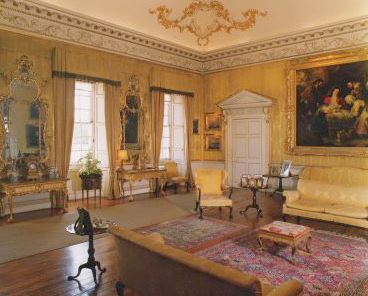
This house felt older than the memory of man. It was an accursed mansion. There were strange noises in the mansion. Every night the wailing of a woman could be heard above the moaning of the wind. If ghost must walk the Earth, they could find no spot on the globe where their appearance would be more natural, or better understood. The staff tells tales of disembodies footsteps, lights that switch themselves off and on at will, and objects moving. The Daisy Bedroom has lights that switch themselves on and off after dark and phantom footsteps are often heard in the hallway near the room. One day a housemaid was speaking to a guest as she served dinner downstairs. To everyone’s surprise, the serving tray sitting on the table picked itself up and tipped itself upside down. The tray was filled with plates of hot foot that went everywhere. The sacrificial stones of the Druid priests, oriented after the fashion of the ruin of ruins of Stonehenge, the blood-vats, imperishable adjuncts to human sacrifice, have stood through the ages, grim guardians of the mysteries of the haunted fruit orchards. If someone were to tell me that the fruit orchards at Llanada Villa echoed nightly with the shrieks of sacrifice and that the ghost fires of forgotten priestcraft still glowed in the morning, I would find it hard to disbelieve. That ghastly curse remained on my family and fortune. The mansion has picked up a few permanent guests. One evening, from the observation tower, I saw a huge black figure gliding along the grounds. It could not be human because of the rate of speed it was going. I felt not just fear, but absolute dread. I experienced a bone-chilling could throughout my body. I ran down nine flights of stairs, while crying uncontrollable and my heart was pounding. #RandolphHarris 2 of 6

Only in the understanding of the stock from which the Victorian mansion’s ghosts are sprung can one appreciate the immortality with which long-accepted tradition has endowed them. Ghostly itself is the history of the Winchester Mansion. While the carpenters were painting on the fourth floor, one of them was startled to see the word MURDER appear in the freshly rolled paint, as if written with someone’s finger—only the words were backwards, as though being written from the other side of the wall. One of the painters explained: “We were quite surprised when a shadow started moving towards us.” As they realized that the “shadow” was approaching them, they also realized that area of the mansion was a very lonely place, especially at night. Not many people ventured up there. And although in their haste to leave, they could only give brief glances at the dark figure, they were sure of one thing: “The only outstanding feature was the outline of a wide brim hate.” Another evening while the carpenters were painting, they heard a quiet creaking emanating from the wood floors. They steeled their nerves before investigating. That is when they saw a young woman sitting in a chair directly behind them. The woman was there for just a moment before disappearing. Later the evening as the farmers were picking fruit in the fields, the dark figure “floated” diagonally across the field. It drifted rapidly to a clump of trees with two flat rocks near by and disappeared over a slight drop-off beyond. #RandolphHarris 3 of 6

One of the farmers screwed up his courage and, in spite of the bizarre, dark figure’s mysterious and even menacing appearance, volunteered to walk down to the spot where the apparition disappeared. After five minutes of observation, he returned, like an efficient scout, with his report, unsettling as it might be. He said when he reached the far side of the hill there were two “soldiers-dressed” figures stilling on the two flat rocks near the clump of trees. Neither one spoke to the other; nor did they acknowledge the other’s presence. Instead they just sat, seemingly rigidly fixated, staring down into the field. Other ghost haunting the mansion include those of two little boys, who have been heard running on the second floor. One night, while I was preparing for company, I found two sets of muddy boot prints coming from the door to nowhere and crossing the room. When I told Daisy about the boot prints. She said they must be made by the same boys who keep coming in the door the opens to the wall, and we had locked them out. Looking toward the door she said, “It’s OK, if you prefer this door, go ahead and use it.” Immediately the door swung open. Needless to say cold chills ran through both of us. We never worried about the door that opens to the wall again. My idea for the mansion was not only to create a place for the spirits, but also to build an estate that would inspire awe. The gorgeous series of fields gardens, forests, and grassy acres are as fascinating as they are beautiful. However, when the sun goes down, the shadows creep and spread, giving the Victorian Mansion an entirely different look and feel. #RandolphHarris 4 of 6

With grounds lit by a full moon hanging low in the sky, just to the side of the columns of the mansion, one begins to ponder the many mysteries surrounding the Winchester Mansion. One night I was putting out a candle when I heard the sound of a singing voice. At first I thought: “Oh, that sounds nice.” However, then I wondered what it was and where I could be hearing singing from. After all, the staff was asleep and there was no one around, and the sound definitely was not coming from outside. It was frightening, but it was not explainable. It was just a couple of phrases of singing and it took me by surprise. I could faintly see the hazy shape of a woman moving down what the hallway. One night, a group of farmers were packing up for the evening. A they looked around with a lantern for their tools, they were shocked to see what appeared to be the black form of a man moving toward them. The figure was larger than human and had no features—it was a black mass that seemed to sway toward them in the bright light. The man wielding the lantern quickly put it out and they all ran away. For weeks the men thought about what they had seen; they just could not forget it. They spoke to other servants about the vision or sighting. They were quite disturbed and unable to let the subject drop. #RandolphHarris 5 of 6
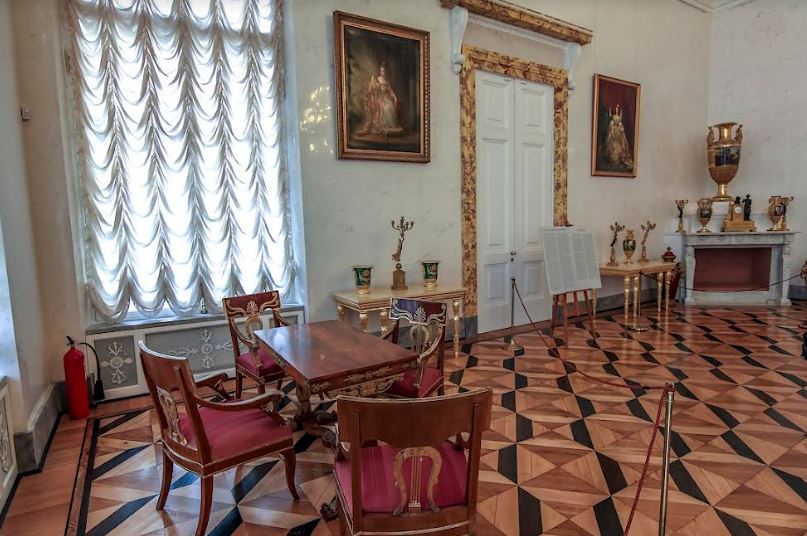
In the Name of the Father, and of the Son, and of the Holy Ghost. Take heed! Come, all Spirits! By the virtue and power of your king, and by the seven crowns and chain of your Kings, all Spirits of the Hells are forced to appear in my presence before this circle of Solomon, whensoever I shall call them. Come, then, all at my order, to fulfil that which is in your power, as commanded. Come, therefore, from the East, South, West, and North! I conjure and command you, by the virtue and power of Him who is three, eternal, equal, who is God invisible, consubstantial, in a word, who has created the Heavens, the sea, and al which is under Heaven. I conjure thee, Lucifer, by the living God, by the true God, by the holy God, who spake and all was made, who commanded and all things were created and made! I conjure thee by the ineffable name of God, ON, ALPHA, and OMEGA, ELOYM, YA, SADAY, LUX, MUGENS, REX, SALUS, ADONAY, EMMANUEL, MESSIAS; and I adjure, conjure. I command you, O all ye demons dwelling in these parts, or in what part of the World soever ye may be, by whatsoever power may have been given you by God and our holy Angels over this place, and by the power Principality of the fernal abysses, as also by all your brethren, both general and special demons, whether dwelling in the East, West, South, or North, or in any side of the Earth, and, in like manner, by the power of God the Father, by the wisdom of God and the Son, by the virtue of the Holy Ghost, and by the authority I derive from our Savior Jesus Christ, the only Son of God. #RandolphHarris 6 of 6
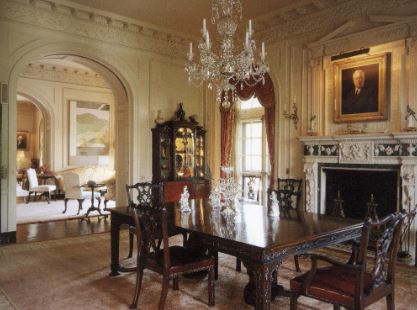

The idea that we survive physical death, that some part of our being is immortal, profoundly affects the loves of those who harbor such a belief. https://winchestermysteryhouse.com/

And please be sure to check out the online gift store: https://shopwinchestermysteryhouse.com/

Ruin is the Destination Toward Which All Men Rush

With equality and gender-based studies becoming more important, it is a goo idea that we take a look at a gender-based analysis of residential burglary. The study is based on interviews with 105 active residential burglars, 87 of whom were males and 18 were females. The project employed a snowball sampling strategy in which an ex-offender recruited known burglars who were presently operating in a city. The gender-based compassion suggests that, in many way, female burglars resemble their male counterparts. For example, both group display long criminal histories that span a variety of property, violent, and public order offenses categories. Both groups accumulate long, diverse substance abuse histories that overlap with and contribute to their involvements in burglary. At the time, the gender-based comparison reveal several differences. Female burglars begin offending at a later age, are more likely to co-offend, and have less contact with authorities. The typology of female burglars describes offenders as either accomplices or partners. Factor of motivation, levels of target selection and planning, and patterned work roles serve to differentiate these two conceptual categories. Despite growing interest in female criminality, little is known about the nature of women’s participation in crimes statistically dominated by males. Certainly that is the case for residential burglary, an offense labeled as an overwhelmingly male enterprise. For example, we hardly know how female become involved in such offenses or what roles they play. Are they tempted into these crimes, for instance, by the influence of delinquent peers or by the use of drugs? #RandolphHarris 1 of 21

Because we lack detailed knowledge, we cannot assess the extent to which the processes underly burglaries committed by females differ from those underlying burglaries by males. This lack also restricts our capacity to detect important differences among female burglars. An assessment of these difference, however, is crucial in formulating effective policy responses to female criminality and to developing theories of lawbreaking by women. Short of observing burglaries, perhaps the best way to acquire this information is to go to the offenders themselves. The most pressing need today, in researching the agenda for feminist criminology, is observation and interviewing so we can plunge more deeply into the social Worlds of girls and women. Such a strategy will allow researchers to comprehend women’s crime on its own terms. Often it is claimed that offenders are versatile and commit a wide range of offense. This observation, however, is derived largely from studies of males conducted in criminal justice settings rather than on the street. During our interviews we asked the subjects whether they ever had committed other sorts of crimes beside residential burglary. We did so because we were concerned primarily with prevalence—that is, whether the subject ever had engaged in other kinds of offenses. Stealing (which includes shoplifting and corresponds to the legal definition of this activity), auto theft, and assault were the offenses most commonly reported by males. Stealing and assault were mentioned most frequently by the females; these offenses were comparable in rank of frequency to those reported by the males. #RandolphHarris 2 of 21

Beyond these two offenses, however, little other criminality was reported by the females. The only meaningful differences between the men and the women for this measure was found in regard to auto theft. This crime was fairly common among the males, but unknown among the females. The explanation for this difference might reside in a strong cultural tradition linking masculinity to driving and car ownership. Alternatively, males may have “cornered the market” in auto theft; to be profitable, such a crime requires sophisiticated coneections with garage owners, automotive recycle yard employees, and car dealerships. One important aspect of offending style concerns the degree of crime specialization—that is, the extent to which offenders concentrate on one particular type of offense. When we asked offenders whether they had been involved in crimes other than residential burglary during their most recent period of offending, thirty-four percent of the males and 42 percent of the females claimed that they had committed only residential burglaries during this period (roughly the last six months). This finding is consistent with a substantial body of previous research showing that offenders display considerable diversity over the course of their criminal careers, but may specialize in a particular “line” for short periods. This phenomenon is labeled as “short-term specialization.” Another element of offending style concerns the inclinations to work with others in carrying out cries. #RandolphHarris 3 of 21

Previous research demonstrated that more often than not, [burglary] is committed by two or more persons acting in concert. The results of our study bear this out: 79 percent of the males and all of the females reported that they had worked with others in the past. The males showed considerable variation in frequency of working with others: 39 percent said they “seldom” worked with others, while another 39 percent reported that they “always” did so. For the women, however, the picture was much clearer: an overwhelming 83 percent reported that they “always” worked with others, and the remaining 17 percent states that they “usually” did so. The final aspect of offending style that we examined here relates to drug and alcohol use among our respondents, as well as to their perceptions of the role played by intoxicants in leading them to commit such crimes. Our research reveals that there is little difference between the males and the females in self-report drug use. When the drug users were asked whether addiction had anything to do with their burglaries, 71 percent of the males and 82 percent of the females answered affirmatively. A majority of those in both groups said they committed burglaries to obtain the money they needed to buy more drugs. In addition, slightly more than three-quarters of the users in each group—76 percent of the males and 79 percent of the females—claimed that they used drugs before committing their burglaries. A higher percentage of females than of males started that they “always” or “usually” used drugs beforehand. #RandolphHarris 4 of 21

One explanation seems to be that many female burglaries arise from crack “runs.” This point, however, is difficult to determine conclusively because use of the drug is heavily stigmatized. We explore male-female differences on three dimensions designed to measure burglary offending histories: age at first burglary, total number of lifetime burglaries, and lambda, the mean number of annual burglaries. The ages at which males and females committed their first residential burglary differed significantly: the males generally started much earlier in life. None of the female burglars had committed their first offense before age 12, but 22 percent of the males had done so. The modal category for males was the 13-16 age bracket, which accounted for 53 percent of the cases. Sixty-one percent of the females, on the other hand, were over 16 years old when they carried out their first burglary. Given that the females started to commit burglaries later, on average, than their male counterparts, we are not surprised that a greater proportion of females had been involved in fewer than 20 residential burglaries in their lifetime. Perhaps more interesting, 39 percent of the females had committed more than 70 lifetime residential burglaries, a proportion roughly comparable to the males’ figure of 41 percent. The bimodal distribution of the females’ responses suggests that women are likely to engage in burglary at two very distinct levels, and perhaps to employ two different styles. #RandolphHarris 5 of 21

The males were more likely than the females to have had contact with the system for offenses of all types. This difference was most notable at the stage of the criminal justice process that resulted in incarceration. Over ninety percent of the respondents in each group had been arrested previously, but only one woman (6 percent) had been convicted and sentenced to a term of imprisonment. In contrast, 26 percent of the males had served time in the past. This difference may exist in part because the females began offending later and consequently had fewer “years at risk.” Other factors, however, are probably at work as well including an assumption by the police that most burglars are male, which allow females to remain above suspicion and a tendency for those females who are arrested to receive preferential treatment in the courtroom. Certainly the women in our sample believe that their gender conferred a degree of protection from the law. Several expressed the belief that authorities would not take action against them simply because they were female. Is it not becoming clear, in light of the existence of deceiving offenders and their methods of deception, that close examination is needed of modern theories, conceptions, and expressions regarding things in connection with the ultimate concern and its way of working in man? For only the certainty of ultimate concern, apart from “views” of truth, will avail for protection or for successful warfare in the conflict with wicked offenders in the self-actualized hierarchy. #RandolphHarris 6 of 21

When we reach self-actualization, we are at the highest hierarchy of the pyramid, and this is denoted by morality, creativity, spontaneity, problem solving, lack of prejudice, and acceptance of facts. There are five levels in the pyramid. At the very bottom, people are interested in physiological functions only which include: breathing, food, water, pleasures of flesh, sleep, homeostasis, and excretion. At the second level of the pyramid, individuals are concerned with safety and this entails security of: body, employment, resources, mortality, the family, healthy and property. At the third hierarchy most are concerned with love and belonging. This includes friendship, family, sexual intimacy. At the fourth hierarchy, this realm focuses on esteem: self-esteem, confidence, achievement, respect of others, respect by others. All that is in any degree the outcome of the mind of the “natural man” will prove to be but the weapons of straw in this great battle, and if we rely upon others’ “views of truth,” or upon our own human conceptions of truth, offenders will use these very things to deceive us—even building us up in these theories and views so that under cover of them he or she may accomplish one’s purpose. We cannot, therefore, at this time, overestimate the importance of believers having ready minds to “examine all things” they have thought, and perhaps taught, in connection with the things of ultimate concern and the self-actualized realm—all the “truths” they have held, all the phrases and expressions they have used in “virtue teachings,” and all the ideas they have absorbed through others. #RandolphHarris 7 of 21

For any wrong interpretations of truth, any theories and phrases which are man-conceived and which we may build upon wrongly, will have perilous consequences to ourselves and others in the conflict with truth and individual self-actualized people passing through. Because in the present offenders will comes to them with deceptions in DOCTRINAL form, self-actualized individual must examine carefully what they accept as “doctrine,” least it should be from the emissaries of the deceiver. Some people are tired of struggling and want only to know a quiet silence. This can be a shock to one’s own awareness of who he or she is. One may have always considered struggle essential in growth, and in many crises and conflicts it has provided the turning point in one’s life. Not wanting to be burdened and overwhelmed by heavy feelings and thoughts or by complicated searching and painful of what is wrong with oneself, people, and life, this can create the desire to turn away from the struggle. And this is what causes the requirement to be alone in simple and ordinary ways. Once one goes through this process of healing in solitude, and by only engaging in simple routine, gradually, with each day, an individua is able to listen a little more to what others are saying. (This is why during a break up, space, instead of forcing the issues is important. Of course, there are times when you need to know what the reason it so it may be a good idea to press for answers to start a dialogue and not necessarily to just focus on getting back together.) #RandolphHarris 8 of 21

Slowly it becomes each to be interested in and comfortable with other people’s problems. Although there may be some drawbacks. Some individual may be able to be with others while you struggle to make decisions, but one may not be opened to questions or personal comments and responses directed to one. This may cause one to offer nothing of oneself and comment only on what one is hearing and understanding from others. During this period, some find work a truly rewarding activity; it is a place that feels like home. It does not matter whether the work takes the form of writing—reports, references, and letters—or reading. Or, if it involved physical activities, one may become totally absorbed in what one is doing, get lost in the activity and experience a full sense of relief. Active mental and physical involvement in solitary projects can be a sense of salvation. By surrendering to powers within to powers within and sources of light in the universe, in some mysterious way, a miracle happens. It is the loss of the old man and the discovery of the new man. When the light reveals itself, the individual is ready to accept it. This reduces the need to force or push or beseech. One simply waits with firm faith that one is meant to be whole again and that one will live more in a full and complete way. It becomes clear that people one loves and those who love one cannot reach the individual going through changes. And so, life has to come from another source, and that new direction will emerge in solitude. #RandolphHarris 9 of 21

The problem of the truth of faith presents itself from both the subjective and objective sides. Subjectively, faith is true if it adequately expresses an ultimate concern, that is, if the symbols of faith are alive and speak to the heart with an urgency of concern that impels to action and replay. This criterion is more a rule of thumb that works best for obviously dead symbols and is not so useful in judging contemporary ones. However, it is the objective truth of faith that interests us here. The content of faith is true if it is really and not just apparently ultimate. The great danger is demonization, elevation of the symbol to ultimacy, which results in idolatrous faith. Therefore, the criterion of faith is self-negation. The true symbol not only conveys the ultimate, but proclaims its own non-ultimacy. It pronounces a Yes and a No. For the Christian the Cross of the Christ is such a symbol. Name for this criterion—the No that follows immediately on the heels of the Yes—is the Protestant principle. The Protestant principle pervades in this whole theology, both systematically and chronologically. Chameleon-like, it changes its formula of expression against the background of diverse theological problems. Hence, a rapid rundown of its various formulations is useful for identifying it. #RandolphHarris 10 of 21

In addition to being the objective criterion of faith, the Protestant principle expresses man’s infinite distance from God and his dependence upon the divine initiative. The Protestant principle is the prophetic protest against every form of self-absolutizing—for example, the demonic elevation of the churches, of the Christian Bile, and the priesthood to absolute validity. The Protestant principle is “resistance to idolatry,” that is, it stands for non-conformity in family, school, state, and church. The Protestant principle protests the objectifying of grace (die Vergegenstandlichung der Gnade) and so smashes the barriers between the holy and the secular. For, by the Protestant principle, God is as near to the lowest as he is to the highest, as close to the material as to the spiritual. These manifold expressions of the Protestant principle can be summarized in and derived from the basic doctrine that the Protestant principle is justification by grace through faith. We reject the traditional Protestant formula of “justification by faith” on the grounds that is has been misunderstood to mean that the human act of faith sets in motion God’s justifying act. Faith itself is a gift of grace, all justifying actions is entirely on the part of God, and, consequently, the more accurate formula is “justification by grace through faith.” The Protestant principle ultimately rests upon an experience of God’s majesty that attributes absoluteness and holiness to him alone and denies such dignity to all else. #RandolphHarris 11 of 21

Untrammeled choices of individuals could lead to disaster for society. Picture a paster open to all. It is to expected that each herdsman will try to keep as many cattle as possible on this commons. Therein is the tragedy. Each man is locked into a system that compels one to increase one’s heard without limit, in a World that is limited. Ruin is the destination toward which all men rush, each pursuing one’s own best interest in a society that believes in the freedom of the commons. Overpopulation, pollution, excessive fishing, and depletion of exhaustible resources are all part of the problem. People Worldwide must recognize the necessity of restricting individual freedom in these choices, and accept some mutual coercion mutually agreed upon. Depending upon the circumstances, the tragedy of the commons could be a many-person prisoner’s dilemma (each person grazes too many cows) or a spillover problem (too many people choose to become herdsmen). The economist’s favorite solution would be the establishment of property rights. This is what actually happened in the fifteenth and sixteenth centuries in England: the common land was enclosed and claimed by the local aristocrats or landlords. When land is private property, the invisible hand will shut the gate to just the right extent. The owner will charge grazing fees to maximize one’s rental income; the grazing fees will make the owner richer, and the herdsmen poorer. This approach is not feasible in some instances. Property rights over the high seas are hard to define and enforce in the absence of an international government, as is control over air that move from one country to another carrying pollutants. #RandolphHarris 12 of 21

For this reason, whaling and acid rain must be handled by more direct controls, but securing the necessary international agreements is no easy matter either. Population is an even harder problem. The right of decision about one’s family, including its size, is enshrined in the United Nations’ Universal Declaration of Human Rights and in many countries bills of rights. Countries like China and India that have at times used some coercion in their population-control efforts have evoked widespread disapproval. Sometimes, when the group is small enough, voluntary cooperation solves the problem. When two oil or gas producers have wells that tap into the same underground deposit, each has the incentive to speed up one’s uptake, to get more of the resource before the other does. When both of them follow this policy, the excessive speed of depletion can actually lower the total amount that can be recovered from the deposit. In practice, drillers recognize the problem and seem able to reach production-sharing arrangements that keep at the proper level that total flow from all wells tapping one deposit. All’s well that ends well? For the less developed countries (LDCs), as for the rest of the World, power stems from the holster, the wallet, and the book—or, nowadays, the computer. Unless we want an anarchic World, with billions of poverty-stricken people, unstable governments led by unstable leaders, each with a finger on the missile launcher or chemical or bacteriological trigger, we now need global strategies for preventing the de-coupling that looms before us. #RandolphHarris 13 of 21

In the years immediately ahead the LDCs will acquire sophisticated new arms—enormous firepower will be added to their already formidable arsenals. Why? As LDC economic power diminishes, their rulers face political opposition and instability. Under the circumstances, they are likely to do what rulers have done since the origins of the state: They reach for the most primitive form of power—military force. However, the most acute shortage facing LDCs is that of economically relevant power is no longer through the exploitation of raw materials and human muscle but, as we have seen, through application of the human mind. Development strategies make no sense, therefore, unless they take full account of the new role of knowledge in wealth creation, and of the accelerative imperative that goes hand in hand with it. With knowledge (which in our definition includes such things as imagination, values, images, and motivation, along with formal technical skills) increasingly central to the economy, the Brazils and Nigerians, the Bangladeshes and Haitis must consider how they might best acquire or generate this resource. It is clear that every wretched child in Northeast Brazil or anywhere else in the World who remains ignorant or intellectually underdeveloped because of malnutrition represents a permanent drain on the future. Revolutionary new forms of education will be needed that are not based on the old factory model. Acquiring knowledge from elsewhere will also be necessary. This may take unconventional—and sometimes even illicit—forms. Stealing technological secrets is already a booming business around the World. We must expect shrewd LDCs to join the hunt. #RandolphHarris 14 of 21

Another way of obtaining wealth-making know-how is to organize a brain drain. This can be done on a small scale by bribing or attacking teams of researchers. However, some clever countries will figure out that, around the World, there are certain dynamic minorities—often persecuted groups—that can energize a host economy if given the chance. The overseas Chinese in Southeast Asia, Indians in East Africa, Syrians in West Africa, Palestinians in parts of the Mideast, Jews in America, and Japanese in Brazil have played this role at one time or another. Transplanted into a different culture, each has brought not merely energy, drive, and commercial or technical acumen, but a pro-knowledge attitude—a ravenous hunger for the latest information, new ideas, skills. These groups have provided a kind of hybrid economic vigor. They work hard, they innovate, they educate their children, and even if they get rich in the process, they stimulate and accelerate the reflexes of the host economy. We will no doubt see various LDCs searching out such groups and inviting them to settle within their borders, in the hopes of injecting a needed adrenaline into the economy. During World War II the Japanese military actually drafted a plan to bring large numbers of persecuted European Jews to Manchuria, then called Manchukuo, for this purpose. However, the “Fugu Plan,” as it was known, was never implemented. #RandolphHarris 15 of 21

Smart governments will also encourage the spread of nongovernmental associations and organization, since such groups accelerate the spread of economically useful information through newsletters, meetings, conferences, and foreign travel. Associations of merchants, plastics engineers, employers, programmers, trade unions, bankers, journalists, etcetera, serve as channels for rapid exchange of information about what does and does not work in their respective fields. They are an important, often neglected communications medium. Governments serious about economic development will also have to recognize the new economic significance of free expression. Failure to permit the circulation of the new ideas—including economic and political ideas, even if unflattering to the state—is almost always prima facie proof that the state is weak at its core, and that those in power regard staying there as more important than economic improvement in the live of the people. Governments committed to becoming part of the new World will systematically open the valves of public discussion. Other governments will join knowledge consortia—partnerships with other countries or with global companies—to explore the far reaches of technology and science and, especially, the possibility of creating new materials. Instead of pandering to obsolete nationalist notions, they will purse the national interest passionately—but intelligently. #RandolphHarris 16 of 21

Rather than refusing to pay royalties to foreign pharmaceutical companies on the lofty ground that health is above such grubby concerns, as Brazil has done, they will gladly pay the royalties—provided these funds stay inside the country for a fixed number of years, and are used to finance research projects carried out jointly with a local pharmaceutical firm’s own experts. Profits from products that originate in this joint research can then be divided between the host country and the multinational. In this way the royalties pay for technology transfer—and for themselves. Effective nationalism thus replaces obsolete, self-destructive nationalism. Similarly, intelligent governments will welcome the latest computers, regardless of who built them, rather than trying to build a local computer industry behind tariff walls that keep out not merely products but advanced knowledge. The computer industry is changing so fast on a World scale that no nation, not even the United States of America or Japan, can keep up without help from the rest of the World. By barring certain outside computers and software, Brazil managed to build its own computer industry—but is products are backward compared with those available outside. This means that Brazilian banks, manufacturers, and other businesses have had to use technology that is inefficient compared with that of their foreign competitors. They compete with one hand tied behind them. Rather than gaining, the country loses. #RandolphHarris 17 of 21

Brazil violated the first rule of the new system of wealth creation. So what you will with the slowly changing industries, but get out of the way of a fast-advancing industry. Especially one that processes the most important resource of all—knowledge. Other LDCs will avoid these errors. Some, we may speculate, will actually invest modestly in existing venture capital funds in the United States of America, Europe, and Japan—on condition that their own technicians, scientists, and students accompany the capita and share in the know-how developed by the resulting start-up firms. In this way, Brazilians or Indonesians or Nigerians or Egyptians might find themselves at the front edge of tomorrow’s industries. Astutely managed, the program could well pay for itself—or even make a profit. Above all, the LDCs will take a completely fresh look at the role of agriculture, regarding it not necessarily as a “backward” sector but as a sector that potentially, with the help of computers, genetics, satellites, and other new technologies, could someday be more advanced, more progressive than all the smokestacks, steel mills, and mines in the World. Knowledge-based agriculture may be the cutting edge of economic advantage of tomorrow. Moreover, agriculture will not limit itself to growing food, but will increasingly grow energy crops and feed stocks for new materials. These are but a few of the ideas likely to be tested in the years to come. #RandolphHarris 18 of 21

However, none of these efforts will bear fruit if the country is cut off from participation in the fast-moving global economy and the telecommunications and computer networks that support it. The maldistribution of telecommunications in today’s World is even more dramatic than the maldistribution of food. There are 7.33 billion unique mobile phones users in the World today, which makes 91.40 percent of people in the World cell phone owners. The lopsided distribution of computers, data bases, technical publications, research expenditures, tells us more about the future potential of nations than all the gross-national-product figures ground out by economists. To plug into the new World economy, countries like China, Brazil, Mexico, Indonesia, India, as well as the Soviet Union and the East European nations, must find the resources needed to install their own electronic infrastructures. These must go far beyond mere telephone services to include up-to-date, high-speed data systems capable of linking into the latest global networks. The good news is that today’s slow countries may be able to skip over an entire stage of infrastructure development, leapfrogging from First to Third Wave communications without investing the vast sums needed to build Second Wave networks and systems. The Iridium systems, for example, announced by Motorola, Inc., placed 77 tiny satellites into low orbit, which make it possible for millions in remote or sparsely populated regions like Soviet Arctic, the Chinese desert, or the interior of African to send and receive voice, data, and digitized images through handheld telephones. #RandolphHarris 19 of 21

It is not necessary to lay cooper or even fiber optic cable across thousands of miles of jungle, ice or sand. The portable phones communicate directly with the nearest overhead satellite, which will pass the message along. Other advances also similarly slashing the huge costs of telecommunications, brining them within reach of today’s impoverished counties. Large scale production and hyper-competition among American, European and Japanese suppliers will also drive down costs. The new key to economic development is clear. The “gap” that must be closed is informational and electronic. It is a not gap between the North and the South, but between the slow and the fast. However, China’s inadequacy in services is of a structural character. It has it historical and cultural roots, especially the legacy of several decades long epoch of Soviet-style socialism. The mentality of many Chinese service companies and workers may have exceeded those in America. When I was in China, I was impressed by their customer service. They were extremely polite, spent time talking to me, even offered me candy and gave me a soccer ball for shopping at one of their malls. They did treat me like a king. I did not want to come back to America because I loved China so much. Maybe people have different experiences? #RandolphHarris 20 of 21

The overall picture of the service economy in China is not gloomy. Even on the airplane they were polite and told me to stop being so “Western.” The hotels were awesome, as well as the recreation facilities and restaurants. As local consumers’ demand for a variety of good services is increasing, American, European and Japanese service providers have a good chance to exploit their competitive advantage in this area, establishing a stronger position at the Chinese market. Here, however, comes a surprise. You may expect that, in the wake of what was written earlier, America and Europe are enjoying substantial surpluses in their services trade with China, not incomparable to their huge deficits in merchandise trade. But the thing with the people in China, one cannot tell when they are just being nice. Things are so different. They try so hard to like people and make them happy that it seems like they really like you. And they try really hard to keep a neat appearance, are very careful with their work, and take pride in what they do. Because their image and reputation depends a lot on word of mouth, they are very careful not to hurt your feelings and to conceal negative topics, ideas, thoughts and behavior. And their houses are really clean, many of them have never heard of “racism” and the student work very hard in school. It is amazing how many hours a day they spend studying. They really went out of their way to impress us, like hosting us in a restaurant, but making it a private event, of course it meant getting up at 3 A.M. in the morning, but I was happy to. They are so polite and taught me if something is meant to be, you will meet that person again. #RandolphHarris 21 of 21


Los Angeles Will be Two and a Half Hours from Tokyo

Given that burglars are disproportionately young, poor, city-dweller, they tend to have frequent contact with other habitual offenders. There are various structures and processes that go along with the “stolen property system”—the underground market through which in-demand goods are stolen, housed, marketed, and resold on the street of America. Burglary is a crime that is marked by varied levels of social organization. Only on rare occasions do we find burglars who work as loners or within formal organizations. More often, burglars will operate as colleagues—the offender commits the crime along but relies on other members of the criminal subculture to supply him or her with inside information or to assist in converting stolen property into cash. Burglars who take the situation to the next level and enlist help in the actual break-in follow a more peerlike existence. Here, loose partnerships are maintained and invoked when a burglary opportunity presents itself. A primitive example of the peer model would be two or three drug users who randomly stumble upon an unlocked home or unsupervised business and decide to work together to take it down. In some cases, burglary offenders will align themselves in a teamlike format. These offenders invoke a division of labor with each participant serving an owned predetermined role and duties. One person might be assigned to lookout/driver role. Another might serve as the entry specialist, defeating any lock and alarms that are confronted. Still another person can take on the “muscle” role, responsible for doing the heavy lifting. #RandolphHarris 1 of 16

Socialization scripts play an important part in how and why burglars commit their crimes. Interview-based research suggests that novice or occasional burglars often rely on the tutelage of more seasoned offenders as a way of learning the proverbial ropes of burglary. Novices receive advice and instructions on issues such as target selection, how to foster informants, how to defeat burglary countermeasures, and how to best convert stolen goods into cash. This socialization generally takes shape as informal street corner conversations or jailhouse bravado. On paper, burglary appears to receive serious treatment from the criminal justice system. The Model Penal Code classifies burglary as a felony in the third degree. In most jurisdictions, such as offense is subject to 1 to 5 years in prison. If the burglar is armed or threatens or inflicts bodily harm on another while unlawfully within a dwelling, that individual might see the charges elevated to second degree felony. In practice, however, burglary receives mixed levels of formal response from the various components of the criminal justice system. First, let us consider the response of law enforcement authorities. Police agencies were able to effect an arrest for only 13 percent of the nearly 2.1 million burglaries that were reported to them in 2022. No other form of index crime yields such a dismal clearance rate. Some of this slippage can be attributed to the covert nature of the crime—police often have no witnesses and minimal clues to guide the investigation. However, these low clearance rates are also impacted by the fact that many police officers and police agencies afford a low priority to burglary cases. #RandolphHarris 2 of 16

Court data reveal a different trend in terms of the veracity with which burglary cases are adjudicated. U.S.A. courts produced nearly 90,000 felony burglary cases in 2022. This figure represents 10 percent of all felony convictions that year. In fact, 68 percent of the burglary cases that were tried resulted in a conviction for the same offense and only 24 percent avoided some sort of conviction. The researchers found that burglary defendants do not receive a reprieve from the courts when it comes time for sentencing. A full 74 percent of the convicted burglars were sentenced to time behind bars. This rate was surpassed only by murder, robbery, drug trafficking, and driving-related offenses. While the median prison sentence for a convicted burglar was 41 months, nearly 10 percent received sentences in excess of 10 years. Our correctional system does not appear to be particularly forgiving to persons who are convicted of burglary. On average, burglary offenders can expect to serve almost half of their sentence—roughly two years. These time-served figures are on par with those of other property offenses (theft, fraud, and motor vehicle theft) but somewhat lower than that observed for violent (54 percent) and weapon-related offenses (60 percent). Accounts from known burglars clearly suggest that informal social control efforts go as long way to deter and/or displace burglary activity. A minimal amount of vigilance on the part of homeowners can go a long way. Measures designed to combat the relatively small population of high incidence “professional” burglars tends to overemphasize the skill and determination of most burglars. #RandolphHarris 3 of 16

Burglaries are expensive, complex, and require long term commitment at many levels. In fact, most burglars are young, unskilled, and opportunistic. This suggests that emphasis should be directed at such factors as surveillability, occupancy, and accessibility. More specifically, dogs, good locks, and alarm systems deter most burglars. Community-level informal social control can also play an important role in burglary prevention. When it comes to surveillability cues, burglars tend to avoid neighborhoods with a lot of foot traffic or active neighborhood watches. This implies that observant or even nosy neighbors can have a measurable impact on burglary. However, these types of collective efforts are difficult to enact and maintain in the areas that burglars most prefer—urban neighborhoods. If nothing else, tenants of “crime prevention through environmental design” should be considered at a neighborhood level. Simple environmental characteristics such as cul-de-sac street design, high levels of lightening, and well pruned landscaping that minimizes unobservable entry and exit points can have a significant impact on burglary victimization levels in a given community. The aforementioned informal social control efforts represent examples of target hardening strategies aimed at deterring would-be burglars from victimizing a given house or displacing offenders from a given community. Also, measures should be designed that aim to undermine offenders’ strong attachment to street culture. Expanded employment opportunities are one possible, but foreboding avenue to lure offenders out of street life. #RandolphHarris 4 of 16

There exist even more simple and realistic measures that might effect change in this area. For example, a coordinated burglary prevention program that was implemented in a midsize U.S.A. city during the early 1980s. Community activism and community involvement (id est, block meetings, neighborhood cleanups, and raised awareness of vulnerabilities and potential offenders) showed promise for reducing burglary. If community members care about the condition of their neighborhood and are willing to take steps to clean it up and exercise vigilance over problem people and places, there is hope for reducing burglary and other forms of street crime. Most crime occurs during the nighttime. A close examination of NCVS and UCR data suggests that 50 percent to 60 percent of all residential burglaries go unreported. The figure reported here was derived by adding the NCVS data on residential burglaries to an adjusted estimate of nonresidential burglaries that were reported in the UCR—one that factors a 60 percent nonreporting rate. These data must be viewed with caution because 50 to 60 percent of all burglaries go unreported to police and only 14 percent of these lead to arrest. Over time, the crime of burglary has slowly slipped down the list of crime fighting priorities. At present, less than half of all burglaries get reported to police, and only 13 percent of those result in an arrest. What kinds of social and legal factors have contributed to this present level of empathy when it comes to the formal and informal society control of burglary? #RandolphHarris 5 of 16

Adjudication data suggest that accused burglars face a high certainty of being convicted and sentenced to prison. This should send a message to police that burglary is a high priority for our nation’s prosecutors and judges. Still, burglary investigation and arrest efforts remain lukewarm at best. What kinds of factors contribute to police officers’ attitudes and behaviors regarding burglary patrol and enforcement? Considerable evidence suggests that burglars refine strategies and cues that help them identify soft and potentially lucrative targets. Does this mean that burglars are more rational and planful than other types of criminals? The Lord has declared that “no unclean thing can inherit the kingdom of Heaven,” reports Alma 11.37. Our sins make us unclean—unworthy to return and dwell in the presence of our Heavenly Father. They also bring anguish to our soul in this life. Repentance is sometimes a painful process, but it leads to forgiveness and lasting peace. The power of sin is great. To become free from it, we must turn to your Heavenly Father, pray in faith, and act as He asks us to. The Holy Spirit should never become the center and object of thought and worship, place which He Himself does not desire, and which it is not the purpose of the Father in Heaven that He should have or occupy. “He shall not speak from Himself,” reports John 16.13, said that Lod Jesus before Calvary, as He foretold the Spirit’s coming at Pentecost. He would act as Teacher (John 14.26), but teaching the words of Another, not to Himself (John 15.26); He would only glorify Another, not His own; He would bear witness to Another, not Himself (John 16.14); He would only speak what was given Him to spear by Another (John 16.13). #RandolphHarris 6 of 16

The Spirit’s entire work would be to lead souls into union with the Son and give proper knowledge of the Father in Heaven, while He Himself directed and worked in the background. If a man who is untaught in the scriptural statements about the work of the Triune God makes “obeying the Spirit” his supreme purpose, the deceiver will aim to counterfeit the guidance of the Spirit, and even the presence of the Spirit Himself. It is just here that the ignorance of the seeker about the spiritual Word now opened to one, the working of evil powers in that realm, and the conditions upon which God works in and through one, gives the enemy his opportunity. It becomes the time of greatest peril for anyone unless one is instructed and prepared by the Lord, as the disciples were for three whole years. The danger lies in the area of supernatural “guidance,” for one must know the conditions of cooperation with the Holy Spirit in order to discern the cooperation with the Holy Spirit in order to discern the will of God and be able to recognize counterfeit manifestations. The “discerning of spirits” is required to detect the workings of the false angel of light, for he is able to bring about counterfeit gifts of prophecy, tongues, healing, and other spiritual experiences connected with the work of the Holy Ghost. Those who have their eyes opened to the opposing forces of the metaphysical realm understand that very few believers can guarantee that they are obeying God and God only, in directly supernatural guidance, because there are so many factors liable to intervene, such as the believer’s own mind, spirit, or will and the deceptive intrusion of the powers of darkness. #RandolphHarris 7 of 16

Knowledge is essential here. Scripture teaches that there is a God-given gift of “discerning of spirits” (1 Cor. 12.10) which enables one to detect that an unwelcome spirit is at work, but there is also a test of spirits which is doctrinal (1 John 4.1-6). In the former, a believer can discern in his spirit that lying spirits are at work in a meeting, or in a person, but one may not have the understanding needed for testing the doctrines being set forth by the teacher. One needs a level of knowledge in both cases: knowledge to read one’s spirit with assurance in the face of all contrary appearances, that the supernatural workings are not “of God,” and knowledge to detect the subtlety of “teachings” bearing certain infallible indications that they emanate from the pit, even while appearing to be from God. As to personal obedience to God, the believer can detect whether or not one is obeying God in some “command” by judging its fruits, and by being aware of the character of God—such as the truth that God has always a purpose in His commands, and He will give no command out of harmony with His character and Word. Often times people wait for something to happen, for some sure way to nurture oneself, to live from within. Music, art, poetry, hot baths, savory foods, wind, rain—nothing affects them. In the past, within days after a solitary retreat, many had found solace and strength in their loneliness. They had always found a way, at least a beginning that would lead to action and to life with others. #RandolphHarris 8 of 16

However, it is impossible to find what one is looking for, and one is still on a lonely journey, waiting from a spark from within. Because some people feel empty and eroded inside, they avoid all significant communication. More than anything else the interpersonal aspects of living exhaust some and move them to withdraw from real meetings with others. This leaves an individual certain that one does not want to struggle anymore. Doubt, risk and anxiety—inherent elements of faith—can be overcome only by another of its elements, courage. Courage is an ontological concept, the self-affirmation of being in spite of non-being. Faith is the experience of the holy; it is the state of being grasped by the power of being-itself. From this experience flows the power to assert oneself in the face of anxiety. Faith is participation in the object of faith, and yet is the separation from it. In spite of separation, courage expresses participation in the power of being and meaning. This in spite of element is the courage that takes all doubt, risk, and anxiety into itself and overcomes them without removing them. Faith, then, is the basis of courage, and courage is the manifestation of faith. In the extreme situation of a person seized by radical doubt and confronted with the specter of universal meaninglessness, the question arises: Is there such a thing as the courage of despair? Such a courage is entirely possible, for that act of accepting meaninglessness is in itself a meaningful act. #RandolphHarris 9 of 16

The courage of despair enables one, even while in the grip of meaninglessness, to declare one’s situation, and this declaration has meaning. In other words, there cannot be an infinite regression of negatives—in this case, negativity of meaning. At least, one has to admit, negation of meaning is meaningful, or meaninglessness will have lost all meaning. The faith which feeds the courage of despair is called “absolute faith,” for it can have no specific content. Its content is indefinable, since everything defined is dissolved by doubt and meaninglessness. However, certain elements that constitute absolute faith can be discerned. There is an experience of the power of being in the face of nonbeing, an awareness of a hidden meaning within the destruction of meaning. There is the dependence of nonbeing upon being, of meaninglessness upon meaning, of the negative upon the positive. And, lastly, there is the acceptance of the power to accept meaninglessness. Thus, absolute faith is faith which has been deprived by doubt of any concrete content, which nevertheless is faith and the source of the most paradoxical manifestation of the courage to be. Faith is without a special content, yet it is not without content. The content of absolute faith is the “God above God.” When people speak of God, they usually refer to the God of theism. Now theism can mean either a vague, unspecified affirmation of God, or a divine-human encounter of persons, or theological theism which makes God a being beside other beings. However, the God of absolute faith is above and beyond the God of any theism, for the God above God is the power of absolute faith as experience of the God who appears when God has disappeared in the anxiety of doubt. #RandolphHarris 10 of 16

The morning traffic from Oakland to San Francisco across the Bay Bridge gets backed up from 7.30 to 11.00 A.M. Until the jam clears at 11.00, each additional car that enters the traffic makes all those who come later wait just a little longer. The right way to measure this cost is to sum up the additional waiting-times across everyone who is delayed. What is the total waiting-time cost imposed by one additional car that crosses the bridge at 9.00 A.M.? You may be thinking you do not know enough information. A remarkable feature to this problem is that the externality can be calculated based on the little amount you have been told. You do not need to know how long it takes the cars to cross the toll plaza, nor the distribution of cars that arrive after 9.00. The answer is that same whether the length of the traffic jam stays constant or varies widely until it cleans. The trick is to see that all that matters is the sum of the waiting time. We are not concerned with who waits. (In other circumstances, we might want to weigh the waiting times by the monetary value of time for those caught in the jam.) The simplest way to figure out the total extra waiting time is to shuffle around who waits, putting all the burden on one person. Imagine that the extra driver, instead of crossing the bridge at 9.00 A.M., pulls his car over to the side and lets all the other drivers pass. If he passes up his turn in this way, the other drivers are no longer delayed by the extra car. Of course, he has to wait two hours before the traffic clears and the road is clear. #RandolphHarris 11 of 16

However, these two hours exactly equal the total waiting time imposed on all the other drivers if he were to cross the bridge rather than wait on the sidelines. The reason is straightforward. The total waiting time is the time it takes for everyone to cross the bridge. Any solution that involves everyone crossing the bridge gives the same total waiting time, but distributed differently. Looking at the solution in which the extra car does all the extra waiting is the easiest way to add up the new total waiting time. Looming on the horizon is a dangerous de-coupling of the fast economies from the slow, an event that would spark enormous power shifts throughout the so-called South-with big impacts on the planet as a whole. The new wealth-creation system holds the possibility of a far better future for vast populations who are now among the planet’s poor. Unless the leaders of the less developed countries (LCDs) anticipate these changes, however, they will condemn their people to perpetuated misery—and themselves to impotence. For even as Chinese manufacturers wait for their steel, and traditional economies around the World to crawl slowly through their paces, the United States of America, Japan, Europe, and in this case the Soviets, too, are pressing forward with plans to build hypersonic jets capable of moving 250 tons of people and cargo at Mach 5, meaning that cities like New York, Sydney, London, and Los Angeles will be two and a half hours from Tokyo. #RandolphHarris 12 of 16

Jiro Tokuyama, former head of the prestigious Nomura Research Institute, and now a senior adviser to the Mitsui Research Institute, heads a fifteen-nation study of what are called the “three T’s:” telecommunications, transportation, and tourism. Sponsored by the Pacific Economic Cooperation Conference, the study focuses on three key factors likely to accelerate the pace of economic processes in the region still further. According to Tokuyama, Pacific air-passenger traffic is likely to reach 134 million…at the turn of the century. The Society of Japanese Aerospace Companies, Tokuyama adds, estimates that five hundred to one thousand hypersonic jets must be built. Many of these will ply Pacific routes, speeding further the economic development of the region, and promoting faster telecommunications as well. In a paper prepared for the Three T’s study, Tokuyama spells out the commercial, social, and political implications of this development. He also describes a proposal by Taisei, the Japanese construction firm, to build an artificial island five kilometers in length to serve as a “VAA,” or “value added airport,” capable of handling hypersonics and providing an interactional conference center, shops, and other facilities to be linked by high-speed linear trains to a densely populated area. In Texas, meanwhile, billionaire H. Ross Perot is building an airport to be surrounded by advanced manufacturing facilities. As conceived by him, planes could roar in a day and night bearing components for overnight processing or assembly in facilities at the airport. The next morning the jets would carry them to all parts of the World. #RandolphHarris 13 of 16

Simultaneously, on the telecommunications front, the advanced economies are investing billions in the electronic infrastructure essential to operations in the super-fast economy. The spread of extra-intelligence nets is moving swiftly, and there are now proposals afoot to create special higher-speed fiber optic networks linking supercomputer all across the United States of America with thousands of laboratories and research groups. (Existing networks are regarded as too slow. The proposed new nets would send 319 Terabits per second streaming across the country). The new network is needed because the existing slower nets are already choked and overloaded. They argue that the project merits government backing because it would help the United States of America keep ahead of Europe and Japan in a field it now leads. This, however, is only a special case of a more general clamor. In the words of Mitch Kapor, a founder of Lotus Development Corporation, the software giant, “We need to build a national infrastructure that will be the information equivalent of the national highway-building of the ‘50s and ‘60s.” An even more appropriate analogy would compare today’s computerized telecom infrastructures with the rail and road networks needed at the beginning of the industrial revolution. What is happening, therefore, is the emergence of an electronic neural system for the economy—without which any nation, no matter how many smokestacks it has, will be domed to backwardness. #RandolphHarris 14 of 16

In its commercial service trade, in 2021, India trade balance for 2021 USD$-79.19, a 665.96 percent increase from 2020. The United States of America is the largest services exporter in the World. In 2019, U.S.A. exports of service were USD $875.8 billion, up 1.6 percent (USD $13 billion) from 2018. U.S.A. exports of services account for 35 percent of over all U.S.A. exports in 2019. Germany World Development Indicators (WDI) 2020: trade balance in USD$221,534 million. Trade services as a percentage of GDP is 5.82 percent. Trade in services with the United Kingdom (exports and imports) totaled an estimated USD $140.7 billion in 2019. Services exports were USD $78.3 billion; services imports were USD $62.3 billion. The U.S.A. services trade surplus with United Kingdom was USD $16.0 billion in 2019. Trade in services with China (exports and imports) totaled an estimated $56.0 billion in 2020. Services exports were USD $40.4 billion; services imports were USD $15.6 billion. The U.S.A. service trade surplus with China was USD $24.8 billion in 2020. Trade in services with Japan (exports and imports) totaled an estimated USD $68.6 billion in 2020. Services exports were USD $38.0 billion; services imports were USD $30.6 billion. #RandolphHarris 15 of 16

The U.S.A. services trade surplus with Japan was USD $7.4 billion in 2020. Japan was the United States of Americas’ 4th largest goods export market in 2020. As for the services, France exported around USD $303 billion worth of services in 2021, while it imported services for the total value of USD $258.3 billion. Service trade in Italy in 2020, Italy exported $73.1B worth of services. The outsized U.S.A.-Ireland commercial relationship, which exceeded USD $1 trillion in 2021 is significant by international standards and is particularly impressive relative to the country’s population of five million people. In 2021, U.S.A. good exported to Ireland exceeded USD $13.8 billion. The statistics for services from 2012 record the value of U.S.A. service exports to Ireland at $74.8 billion. In 2021, global services exports were valued at USD $6.1 trillion, representing 6.3 percent of total World trade in both goods and services. Overall, as far as the nations’ trade balances are concerned, the picture in the services sector is almost the opposite of the one in the merchandise trade. In services, the West has a significant competitive edge versus China and is in a good position to establish a much wider presence in the Chinese market. #RandolphHarris 16 of 16


The Mystery Has Never Been Solved!
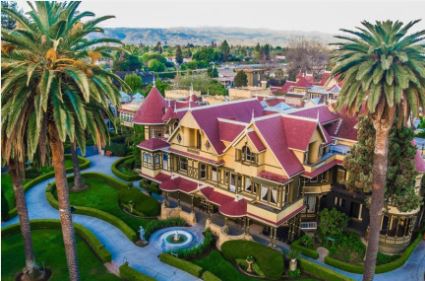
Much of the ceremonial rituals that took place in The Winchester Mansion goes back to the Knights Templar. The Order of the Knights Templar can be traced in part to the Templars. And yet, the Knights Templar are also the claimed ancestors of satanists, a fact which is decidedly hard to prove, though within an organization so large there may well have been diverse groups who followed their own calling. The knights, largely from France and England, joined the order over a period of many years. They had a system of leadership with a Grand Master, knights, chaplains, sergeants, craftsmen, seneschals and commanders. The order had its own clergy and its meetings were held in the strictest secrecy. Unmarried knights wore a white mantle with a red cross while others wore a black mantle with a red cross. Membership was mostly male, and established orders in virtually every Latin country, drawing people from all over Europe. It also became a great trading agency and though originally the Roman Catholic Church actually supported a number of secret societies who were Christian-based, the power of the Templars began to wield became the fear of successive popes and of European noblemen. Philip IV of France began a series of attacks against the Knights Templar and his campaign was given official blessing by the election of Pope Clement V (1305-1314) who renounced the Templars as immoral heretics. Many people know that Mrs. Sarah L. Winchester had a Famous Blue Séance Room where she carried on her rituals and had a series of colourful robes she wore. However, the mystery has never been solved as to why she built the strangest mansion in the World? #RandolphHarris 1 of 13
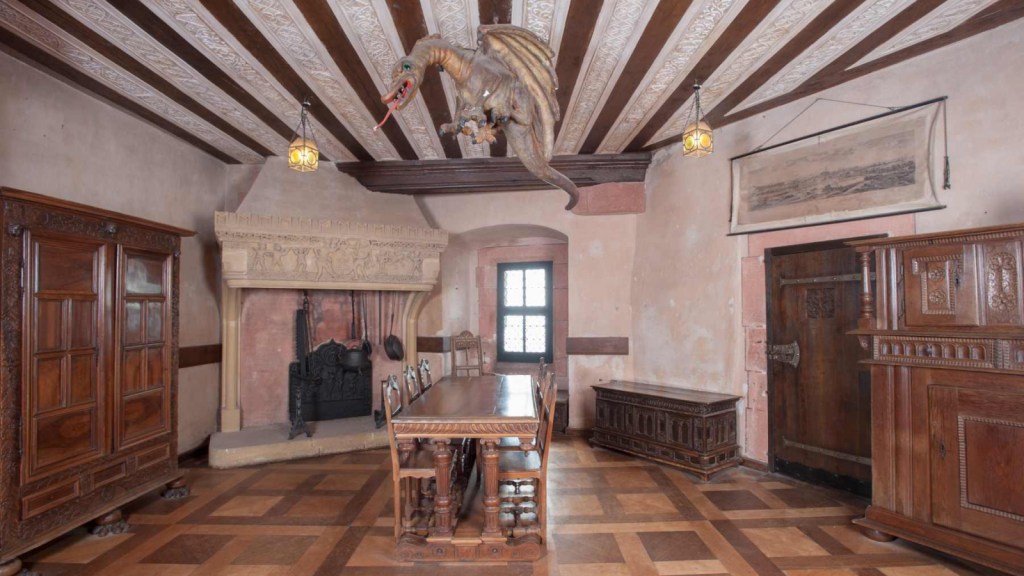
Stories were already circulating that Mrs. Winchester, behind the closely guarded doors of her mansion, indulged in the most offensively blasphemous rituals said to be directed totally towards the reversal of Christianity itself. She was said to worship a goat-like idol, the Baphomet, anointing it with the fat of pigs, while the Knights used the fat of murdered children, roasting children and eating them, laying women across their altars for the most violent forms of indecencies to satisfy their lust for life-blood; they were said to have indulged in homosexual rites and other various claims alleged they stamped the Holy Cross under foot, spat and urinated upon it and used the Mass as the basis for their own worship—later to be known universally as the Black Mass. Actual proof of these events is largely contained in the confessions received under torture which followed the arrest of Mrs. Winchester’s butler Albert Pike. He and 140 of his brethren were imprisoned in Santa Clara Valley, tortured and then executed en masse. Algernon Blackwood, under extreme torture, confessed to speaking against Christianity but denied depravity. In 1890, he was brough out on to the nine-story tower of The Winchester Mansion and ordered to repeat his confession in front of the villagers and accept a sentence of life imprisonment. On the balcony of the tower, he burst into a rage of anger and protested innocence of all charges and thus signed his own death warrant. The order was given that he should be taken into the fruit orchard and burned at the stake. As the flames licked his body, he summoned Mrs. Winchester and, in his dying, breathe to meet him at the Bar of Heaven. #RandolphHarris 2 of 13
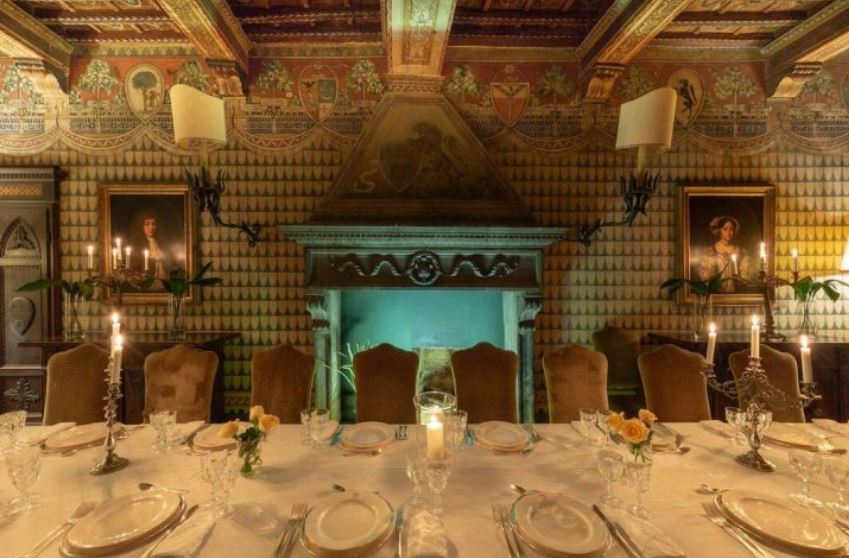
Diocesan priest, Father Peter Yorke, who was then editor of the Archiocesan newspaper, The Monitor, emerged sending orders to every village where the Templars operated, instructing that they should be arrested and charges of heresy and sorcery brought against them. He published a series of exposes, and hundreds of knights were brought to trail, tortured, and executed. The vast wealth of the Templars working at The Winchester Mansion were accused of devil worship. What remained to be handed down and revived, especially in the twenty-first century, were the rumors of ritual and dastardly happenings which many of today’s extremist followers of the Knights Templar seem prepared to believe and accept with some enthusiasm. One of the more important traditions handed down by Mrs. Winchester concerns an instruction for future secret societies. On the day the Knights planned to burn to death Father Yorke, a pact was made and communicated to all surviving Knights who had now gone to ground. The instruction was clear—that the Order of the Knight Templar should be continued in perpetuity. It is said that the surviving Templars should thereafter fight for the destruction of the papacy and prevent Mrs. Winchester from being stripped of her wealth and murdered. These orders, it was said, were handed on to descendants of the order and the Winchester family, who at various points in history have included satanists and a diverse calling of occultists. What remained of the Winchester family and the Knights went into the deepest secrecy, surfacing occasionally and surrounded constantly by rumour, but little discernible fact. #RandolphHarris 3 of 13

The Illuminati came to fortify The Winchester Mansion, which had reached seven-stories high, with 600 rooms, after the 1906 Earthquake. While it was true that Mrs. Winchester left her mansion, there are more reasons as to the why. The avowed spiritualist, Mrs. Winchester, had constructed a boathouse and erected a huge mountain of Earth upon which a new mansion she had planned to build would be erected. It was to overlook the bay, an immense seawall and costly cannel system, with proper floodgates, through which the Winchester private fleet of launches and yachts were to wend their way. It was said that Mrs. Winchester was being haunted by vicious spirits and that death would be her penalty for leaving her home. Her existence was mythical because only half a dozen people had seen her. A sheriff had been striving for the past three months to serve upon her a summons to appear in court in proceedings that a real estate dealer had brought upon her. Bloodhounds roamed the grounds of the mansion and polite Asian staff answered telephone calls. Mrs. Winchester was always alone save for a bodyguard. She was wealth as few women were and found her pleasure in superintending a half dozen workmen, who for seven years had gone from wing to wing of the mansion, constructing one month what they were called to destroy on the following month. Her mansion was considered the pride of the county and the basis for mysterious legends. The Illuminati came were concerned about a group of subversives who were discovered to be using occult practices and rituals to attack Mrs. Winchester and her mansion. #RandolphHarris 4 of 13

E.W. McClellan of Burlingame, the contractor of 98 acres of land purchased by Mrs. Winchester, was holding it and refused to give it up because he believed she was the lead of a secret society working to “establish Satan’s kingdom on Earth,” an accusation which was a direct throw-back to the age of the Knights Templar; and that dictum still exists today. The Psychosophical Society stated that The Winchester Mansion had existed since the sixteenth century and comprised the World League of Illuminati. They wanted to prevent Mrs. Winchester from passing on her palatial estates in all their purity to the next generation. The hotbed of intrigue, rumour and gossip directed at The Winchester Mansion supposedly involved the death/assassination of some, the suicide/murder of others over the scandals invariably linked to Propaganda 2 (P2) Lodge and various Intelligence agencies like the KGB and the CIA with a scandal which is too immense to expound here, nor is it suitably for this part of the report. What can be said, however, is that occult groups working within the traditions of the Illuminati represent a definite consideration of these events. Mrs. Winchester’s husband, William Wirt Winchester, was a master of mathematics and the possessor of certain secret occult knowledge. He gathered seven disciples around him and went into the World of the brotherhood to perform good works. Staff have described that 120 years after his death, his perfectly preserved corpse was found in one of the many buildings of The Winchester Mansion. Because of the secrecy and the mystery that surround The Winchester Mansion, thousand want to know more and are desperate to visit it. #RandolphHarris 5 of 13
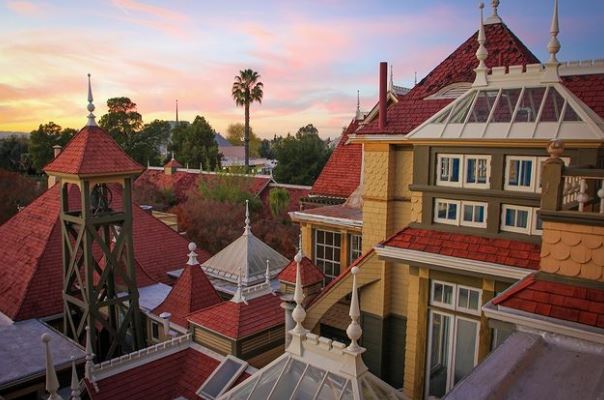
Sometimes the hysteria surrounding The Winchester Mansion morphed into such hysterical proportions that the authorities have had to shut the mansion down for a day or ban people from entering, even though many do not believe that it actually exists. Fans of The Winchester Mansion have sprouted up all over the World. Some people still regard the story of The Winchester Mansion as a fable, but most know it does actually exist and possesses esoteric knowledge of mystery and mysticism. Some the people who were involved in the construction of The Winchester Mansion were magicians, writers, statesmen and novelist. This mansion has quit a following and has collected members through the ages, in positions of far greater power and influence than the Illuminati. Legend has it that descendants from the founding fathers of the Middle Ages are on the board of trustees. The official secret society in control of the estate have connections throughout Europe and the United States of America, whose membership is an indication of the current revival in the mystery religions and semi-secret societies. The mansion alone boasts of some 60,000 members and operates from its headquarters in San Jose, California with affiliated lodges in Britain, France, Germany, Australia and South Africa. The caretakers are preserving the traditional beliefs of the 19th century. A cipher manuscript was found in one of the libraries of The Winchester Mansion. The author of the manuscript was not identified but it was obviously someone with a very intense knowledge of the supernatural, alchemy, astrology and the magical theories of Eliphas Levi. #RandolphHarris 6 of 13
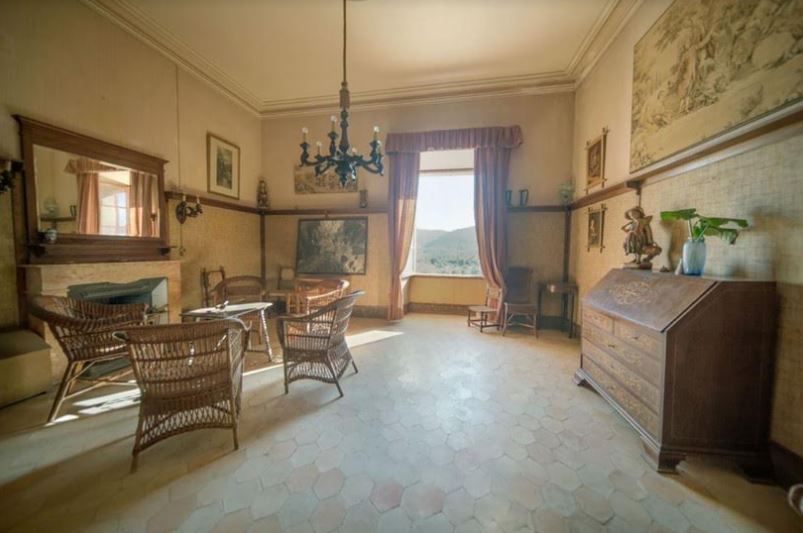
Mrs. Winchester’s mansion and gardens reflect her colourful and ornate rituals and its purpose was “to obtain control of the nature and power of my own being.” The might wings of the mansion outspread dove-like sitting brooding on the vast abyss. What is dark in Mrs. Winchester is to be illumined, what is lose raised and supported; the nine-story tower was constructed so that Heaven could hide nothing from Mrs. Winchester’s view, nor the deep tract of hell. Hell said to be a hideous flaming ruin and combustion in a bottomless perdition, there where Satan dwells in adamantine chains and penal fire. Nine times the space that measures day and night to mortal men, Satan and his horrid crew lay vanquished, rolling in the fiery gulf, confounded though immortal: but his doom reserved him to more wrath; for now the thought both of lost happiness and lasting pain torments him; round he throws his baleful eyes that witnessed huge affliction and dismay mixed with obdurate pride and steadfast hate: at once as far as angels ken he views the dismal situation waste and wild, a dungeon of horrible. Many leaders of the Church do not preach about Hell anymore because the Church has become a tax-free business and they do not want to hear about where they may go, nor do they want to scare their dirty money away from the Church. As a result of the loss of real churches who teach about Satan and demons, people are all wild and out of control and no longer fear anything and go around sinning like rain in Seattle. #RandolphHarris 7 of 13
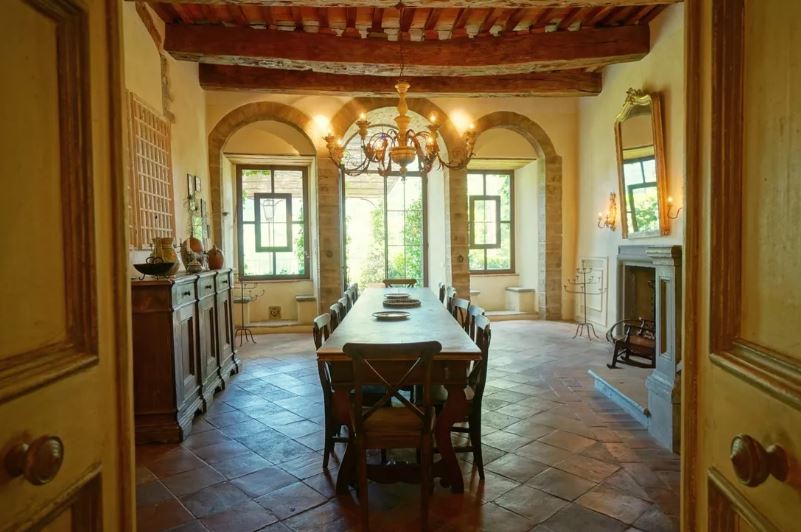
On a hot and dry Friday the 13th of June 1890, Mrs. Winchester drifted into an uneasy sleep, but not for long. Half an hour later she was wide awake again. Something was wrong; a change was coming over the bedroom. There was a sense of dread. Regions of sorrow, doleful shades, were peace and rest could not dwell entered. Her home started to feel like a place where hope could not come, and all that did come was torture without end. She sat up, fully alert, straining her ears for the slightest untoward sound, but all was silent except for the little trusted noises the home made during the evening. However, Mrs. Winchester noticed something odd: an unnatural coldness was stealing over the room. It had been a hot summer day. How could it be so cold? She shivered and ducked back under the covers, tugging them more snugly about her. It did not help; the cold kept increasing. She pulled the covers over her head, chiding herself for being silly and willing herself into sleep. However, the terrible dread kept gnawing at her. She tried to think pleasant thoughts, tried to ignore her thudding heart, and tried to pray. Her attempts brought little comfort; the fear continued to build. She sensed that something frightful was about to happen. She held her breath and waited, not knowing what to expect. Before too long, she heard a sound: the unmistakable creak of the doorknob. The spring bolt was sliding back with tiny clicks. Mrs. Winchester froze. Very slowly, the door began to open. Her fear quickened further as she heard the tread of heavy, booted feet approaching the bed. She wanted to call out for help, but was too afraid, as if some force was willing her to silence. Mrs. Winchester was helpless in the face of that power. #RandolphHarris 8 of 13

When she tried to pray, a demon started to speak. “The force of hose dire arms has caused me to fall to a place with floods and whirlwinds of tempestuous fire. Fierce contention brought along innumerable force of Spirits armed with durst in a dubious battle of unconquerable will, revenge, immortal hate.” Mrs. Winchester was dying and she knew it. This demon had come to claim her soul. She was making gaps, with long spaces between. A perspective of stern and cruel memories stretching away, like its own grey avenues, into a blur of darkness. Certainly no house had ever more completely and finally broken with the present. Mrs. Winchester lit a candle. A little animal stood before her, forbidding, almost menacing: there was anger in his large brown eyes. He came no nearer. As she advanced, he gradually fell back, and she noticed another dog, a vague, rough, brindled thing. At the same moment a third dog, a long-haired white mongrel, slipped out of a doorway and joined the others. All three stood looking at Mrs. Winchester with grave eyes; but not a sound came from them. Zip, had seemed to be observing them with a deeper intentness. Mrs. Winchester endured many long years of the company of many different creatures. They would return again and again. As she was in her morning room, the coldness came back. Her mind was alert but her body seemed paralyzed. The entity seemed to have the power to immobilize her from a distance. She heard the dull footfalls crossing her mahogany floors. There was an evil lurking in her home. Something started pounding on the table. #RandolphHarris 9 of 13
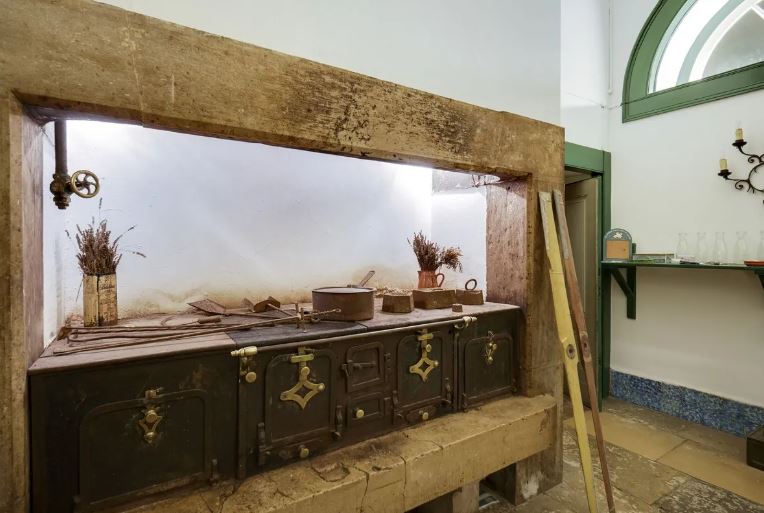
The pounding was so fierce that her cup of tea bounced off the table and fell to the floor. Then it stopped. Mrs. Winchester thought maybe she was having delusions. But whatever it was did not want her to drink the tea. More odd things began to happen—occurrences no one could explain. A malignancy pervaded. Often, people would hear a horrible, mocking, evil laugh. Lights would slicker for no reasons; water taps would turn themselves on, then off. She would find her silverware mysteriously rearranged. On several occasions she discovered her solid gold dinner service hidden in a corner of the room. One night, she had a roaring fire in the fireplace of her bedroom, went to the bathroom, and returned the fireplace totally clean with nothing it in burning. The servants began to complain of hearing mice in the night, but Mrs. Winchester was certain there were no mice in the house. On several occasions, one could very clearly hear the floorboards creaking upstairs, as though somebody was walking about the house. The servants heard the creaking too but, as is often the case with servants, they got used to it, and to the other noises and unexplained presences. Mrs. Winchester urged them no to speak of those things outside of the house. It was bd enough that she was subjected to the disturbances and torment; the last thing she wanted was to attract undue attention to her home. People do not, as a rule, react compassionately to reports of supernatural infestations; many tend to suspect that the victim has somehow, whether by word or deed, “brought it on herself.” #RandolphHarris 10 of 13

At times, Mrs. Winchester felt that the entity was trying to crush the life out of her. She left her light burning all night. Through time, Mrs. Winchester was forced to accept her suffering. There was nothing else she could do. One winter night, one of the butlers was found dead at the head of a narrow flight of stairs leading down from his room. It was Mrs. Winchester who found him and gave the alarm, so distracted with fear and horror—for his blood was all over her—that at first roused household could not make out what she was saying, and thought she was waking from a nightmare. However, there, sure enough, at the top of the stairs lay the butler, stone dead, and head foremost, the blood from his wounds dripping down the steps below him. He had been dreadfully scratched and gashed about the face and throat, as if with curious pointed weapons; and one of his legs had a deep tear in it which had cut an artery, and probably caused his death. Bu how did he come there, and who had murdered him? Mrs. Winchester declared that she had been asleep in her bed, and hearing his cry had rushed out to find him lying on the stairs; but this was immediately questioned. A shadow was rearing up from the body. Mrs. Winchester described it as “a blob, like smoking black cloud, not the shape of a person—just a thing, but a terrible thing. The absolute evil that came from it was overwhelming. I was so gripped with terror, I could not move, and I knew that if it came toward me, I would be swallowed up…destroyed, and that would be the end of me. Imagine what it feels like to know that you are going to be killed, and the specter that is torturing you is deliberately making you suffer beforehand. That is how it was. I felt a level of fear that is beyond words. Then I heard a voice and screamed.” #RandolphHarris 11 of 13
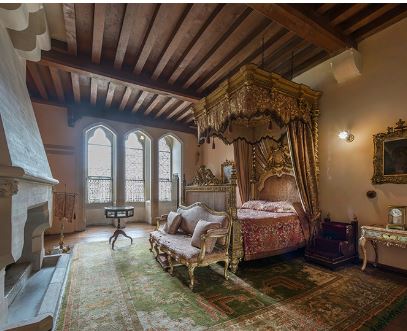
The male voice was hoarse, stertorous, angry almost. “You have left us this our spirit and strength entire strongly to suffer our pains that we my so suffice his vengeful ire, or do him mightier services as his thralls by right of war, whatever his business be here in the heart of hell to work in fire, or do his errands in the gloomy deep; what can it then avail though yet we feel strength undiminished, or eternal being to undergo eternal punishment?” Mrs. Winchester instantly went to sleep—chilling testimony to the control the demon had over her. When she awoke, she was clean, in her sleeping gown, and in her bed. However, it was with the possibility, and the hope, that the end of her long ordeal might well be in sight. Little of the fast-fading sunlight entered the house through the windows, many of which were partly or entirely covered with drapes. However, it was bright enough for Mrs. Winchester to see that the French Provincial sofa’s upholstery was slashed. Shredded wool spilled onto the floor. A solid oak bookcase had been hammered to pieces against the wall, gouging holes in the lath and plaster walls, running the Lincrusta-Walton Wallcovering. Her silver tea service has been smashed, along with a floor lamp. Books had been taken off the shelves, torn apart, and scattered across the living room. Mrs. Winchester lit a candle. It did not shed much light, just enough to reveal more details of the rubble. Looks like somebody went through here with a wrecking ball and scissors, she thought. The house remained silent. Leaving the door open behind her, she took a couple of steps into the room, and the crumpled pages of the ruined books crunched crispy underfoot. She noticed the dark, rusty stains on some of the paper and on the bone-white foam wool stuffing, and suddenly she stopped, realizing the stains were blood. A moment later, Mrs. Winchester spotted the corpse. It was that of a big man, lying on his side on the floor near the sofa, half-covered by gore-smeared book pages, book boards, and dust jackets. Zip’s growling grew louder, meaner. Moving closer to the body, which was just a few feet from the dining-room archway. Mrs. Winchester remembered that John Hansen had lately been making repairs, including a leak faucet and a broken door lock. #RandolphHarris 12 of 13

However, Mrs. Winchester thought because of the way the room looked, he had been killed weeks ago. Her house was so big that it would often take weeks, months, and sometimes years to get around it. Yet, on closer inspection, the corpse proved to be neither bloated with the gas of decomposition nor marked by any signs of decay, so it could not have been there for very long. Perhaps only a day or less. The body had been disemboweled. Zip’s low growling gave wat to ugly snarling punctuated with hard, sharp barks. With a nervous twitch and a sudden pounding of her heart, Mrs. Winchester turned from the corpse and saw that zip was facing into the nearby dining room. The shadows were deep in there because the drapes were drawn shut over all the windows, and only a thin gray light passed through from the kitchen beyond. “Go, get out, leave!” an evil voice told her. It was certainly not the voice of Mr. Hansen. Something in the dining room was moving. There was no doubt of its presence, because it rushed out onto the dining-room tables, and came straight at Mrs. Winchester, emitting a blood-freeze shriek. She saw lantern eyes in the gloom, and nearly a man-sized figure that—in spite of poor light—gave an impression of deformity. Then the demon was coming off the table, straight at her. I Do conjure thee, O Spirit Focalor and your legion of thirty spirits to manifest your spiritual weapon in this corporeal World through my will and might! Empower it so that it may serve me here upon the corporeal plane! May it serve as a key to the realms above and below unlocking power and wisdom for my glory and ascent! Fill this weapon with your powers of wrath and fury that it may seek out spiritual attacks made toward me rendering them useless and impotent! I DO conjure thee Spirit Vephar, pierce the Heavens and cause the seas to be right stormy to cleanse the Earth of sin. Spirit Vizaresh, I DO conjure thee to drag sinful souls into hell, noosing them with the power of their own sins. May the snare be the power of their own evil, words, thoughts, and deeds and let this be you will to drag unwilling souls into Hell. May this cord gain its power through one’s practical application of evil principles. #RandolphHarris 13 of 13

Winchester Mystery House
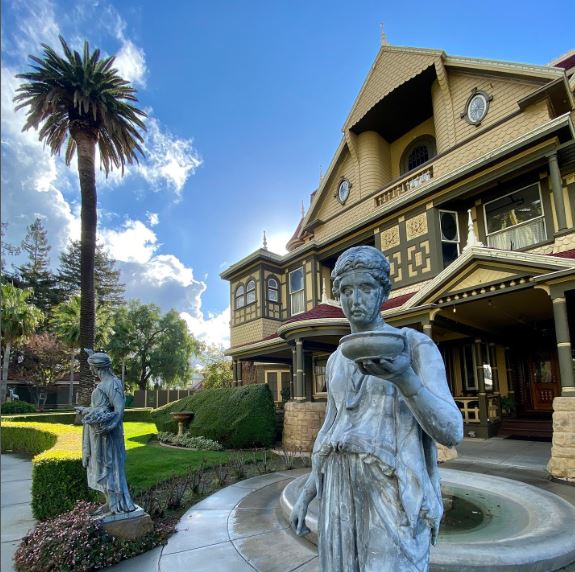
Happy Sunday! House tours 10am-5pm today 🏠 come see us!
🎟️ link in bio. https://winchestermysteryhouse.com/

Mrs. Winchester never recovered from the 1906 earthquake. Staff said she grew weaker and weaker as the years went by, and that she was often heard talking to her dead husband. The house was already large, but it morphed to be as long as several city blocks and was taller than the tallest trees on the green lawn. I suppose, ultimately, it was the spirits who kept her in this estate by not allowing her to build another one of this magnitude. When Mrs. Winchester passed away in 1922, she left $5,000,000.00 to charity. The mansion is truly special and a national treasure.

The Rampling of the Winchester Mansion
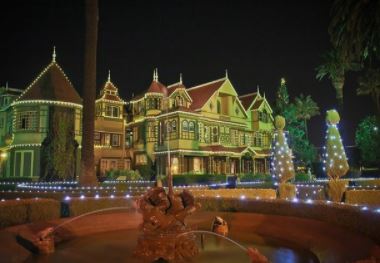
Lights twinkled beyond, through the thick forest of the Winchester Mansion, as oak, cypress, and palm trees swayed in the wind. Wild roses and ivy hung from the observational tower, and as the crickets sang here at the twilight, thirteen witches were hanged in the year 1888. Throughout the county of Santa Clara, there had been forty-nine executions nationwide. Mrs. Winchester’s interest in seclusion was evidence from the start. One of the first tasks of the gardeners was to plant a tall cypress hedge surrounding the house. She also kept her beautiful face covered with a dark veil at all times, and she fired servants who caught a glimpse of her gorgeous face by accident. There were several mass killings in Santa Clara Valley, which illustrated that there was no mercy for youngsters who were said to have become tainted by sorcery that locals believed was emanating from the Winchester Mansion. There were occurrences of neighbors hearing a bell ring at midnight and 2a.m., which according to ghost lore are the times for the arrival and departure of spirits. Thirteen children which likewise confessed that they were engaged in witchery, died as the rest. They were all burned at the stake. Pacts with the devil were a feature of a number of trials. There were numerous witches’ covens in the surrounding villages, two were said to have admitted signing in their own blood a written contract with a man in black in return for money to live gallantly and have the pleasure of the World for a period of thirteen years. The man in black always appeared at their coven meetings when he was called, and supervised their activities. #RandolphHarris 1 of 7
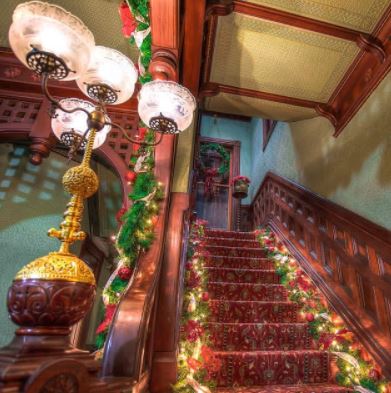
Witchcraft had become an obsession that was hardly quelled. The obsession had been on a scale so vast that no single cause could be pinpointed. And Mrs. Winchesters arrival was a sensational event. The Valley was thrilled by this dramatic entrance of a millionairess; by those freight cars sidetracked in Santa Clara, unloading rich imported furnishings; by building activity that turned an eighteen-room farm house into an entire city in the first six months. Here was fair game for all! They talked about Mrs. Winchester! Gossiped would be a more fitting word. Talk begat rumor and as the years passed and new towers and gables rose, the local doctor pronounced them all bewitched, and fired by imagination and malice which seduced them into signing the devil’s book. The seemed little doubt that witchcraft was being practiced by Mrs. Winchester, who blasted into town with $20,000,000 and spirits and ghost in tow, two including her husband and daughter. This provided social upheavals. Barbara Butters and Mary Moses fell into dissolute habits, becoming harlots and drawing the disgust of their community. As they were shunned by Mrs. Winchester in those of the upper-class, they sore revenge and so—according to the confessions obtained under torture—called down the services of the devil. A midnight on 13 August 1889, according to their confessions, a tall black man appeared before them and said, “Be not afraid. I too am one of the Creation, pawn to me your souls for years and two months and I will assist you for all that time in whatever you desire. Some say that started the Rampling of Mrs. Winchester. #RandolphHarris 2 of 7
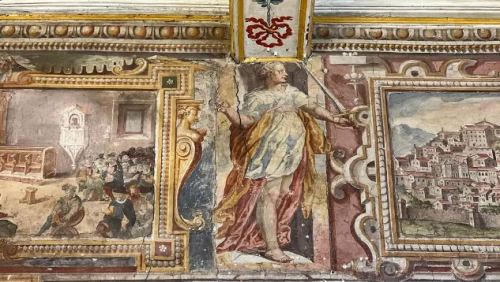
The two women agreed to the request of the devil’s representative and made a covenant writing in their own blood by pricking their fingers. One year later, they were arrested by the sheriff and accused of causing the deaths seventeen men and woman, and for putting a curse on the Winchester Mansion. They were also said to have killed four of Mrs. Winchester’s great hogs, and later sent two imps to haunt her mansion. What evidence there was for such allegations cannot be imaged. They were eventually found guilty of killing three people by roasting effigies in wax into which they had stuck pins. They were executed on 17 March 1890. As they stood at the gallows on the Winchester Estate, they were asked if they wanted to say their prayers and to be forgiven for their sins. They laughed, according to the record, and called for the devil to help them in such a blasphemous manner that the sheriff, seeing their impenitence, caused them to be executed without delay being hanged until almost dead and then they were burned. It sent a shock through the community to think of it. That is existed and was widespread is beyond doubt. Observations that the countryside was catacombed with covens of witches is possible, but difficult to prove in the maze of untruths and enforced confessions. Many of the confessions were dictated and written down by the torturers. #RandolphHarris 3 of 7
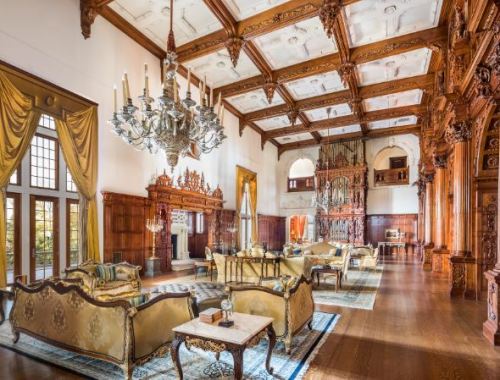
The evening was the longest of Mrs. Winchester’s life. Just terrified, she hovered with a tear-streaked face just by the window of her 4th floor bedroom. The twilight terrified her, it seemed an immense resonance with the darkness in her soul. She put her face behind her hands, and could never remember how she began. The stories of blasphemy and defilement became more and more frequent, and colorful accounts of exactly what Mrs. Winchester did began to emerge as gospel truth. The accusations against her were that the witches being hanged from the observational tower and burned at the stake were actually employees who she fired. But, even if that were true, was it without cause? The accusations of these witches included killing children for sacrificial purposes; killing animals by magic; murdering their enemies by imagery, id est, by forming an image in wax and stabbing it or roasting it; bringing hard to innocent people by just casting their evil eye upon them. Behind these capital changes were other accusations which included human sacrifice, cannibalism, incest and other wild pleasures of the flesh practices, not to mention blasting Mrs. Winchester’s crops and poisoning drinking wells. Others burst forth with superbly graphic and gory accounts, factual and fictitious, of the activities of witches, sorcerers and the devil’s disciples, and the mysteries of the dark and dangerous Worlds populated by evil. #RandolphHarris 4 of 7
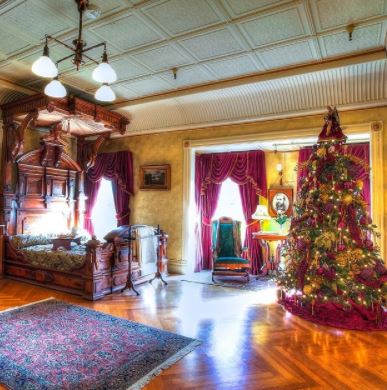
Folks believed not only the witches, but Mrs. Winchester was also capable of some highly inexplicable activities—the unrelenting construction of her beautiful home had rambled over six acres. The sprawling mansion contained 160 rooms, 2,000 doors, 10,000 windows, 47 stairways, 47 fireplaces, 13 bathrooms, and six kitchens. Carpenters even left nails half driven when they learned of Mrs. Winchester’s death, as if fear and violent torment abruptly drew them away. And what happened in these years? What had become established in the community was the great fear of witchcraft and curses—still prevalent today. What housewife would not refuse to steal from the Winchester Mansion for fear of having a curse put on her house? In 1922, it was reported that a woman thought to be a witch was fired by Mrs. Winchester for stealing a sheep. She jumped from her chair and declared, “You will be dead in a week and nobody connected with this house shall die in bed. Within a week, however, Mrs. Winchester passed away in her sleep. The farm manager collapsed in the field while talking to his farm hand and died instantly. A cook committed suicide and a farmer who acted as a witness died in a fire. A few weeks later, a maid fell dead from her horse. There were many such stories which abounded this beautiful but bizarre estate, and prompted a continual flow of literature, occasional prosecutions and an undying fear in society at large of anything concerned with witchcraft and the occult. During these Victorian times—fortune-telling, clairvoyance and seances with mediums was not only the ultimate form of entertainment, but also a religious practice. #RandolphHarris 5 of 7
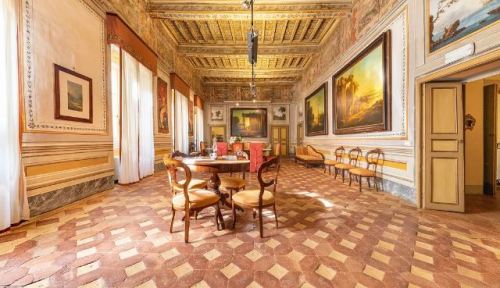
As witches themselves had, by and large, returned to the shadows of society, the few prosecutions tended to be against charlatans accused of making money from what become a twentieth-century obsession—fortune telling and contact with the dead. No matter where you open the pages of the World treasure, as you walk through its 2,000 doors, the spirits will guide you. Conveyed along each hallway is divination, in every piece of art glass, inspiration, in the beams of the ceiling demonical possessions, up and down the stairs apparitions, trances in the Blue Séance Room, ecstasies on the fourth floor balcony, miraculous healing in the Victorian garden, and occult powers possessed by the mansion itself. I do invocate and conure thee, O Spirit, Forcalor; and being with power armed from the SUPREME MAJESTY, I do strongly command thee, by BERALANENSIS, BALDACHIENSIS, PAUMACHIA, and APOLOGIAE SEDES; by the most Powerful Princes, Genii, Liachidae, and Ministers of the Tartarean Abode; and by the Chief Prince of the Seat of Apologia in the Ninth Legion, I do invoke thee, and by invocation conjure thee. And being armed with power from the SUREMEM MAJESTY, I do strongly command three, by Him Who spake and it was done, and unto who all creates be obedient. Also I, being made after the image of GOD, endued with power from GOD and according unto His will, do exorcise thee by that most mighty and powerful name of GOD, EL, strong and wonderful; O thou Spirit Forcalor. #RandolphHarris 6 of 7

And I command thee and Him who spake the Word and HIS FIAT was accomplished by all the names of God. Leay yli Ziarite zelohabe et negoramy Zien latebm dama mecha ra meti osira. Lagumen Emanuel therefore mechelag laigel yazi Zaseal. Meloch, hei alokim tiphret hod jesath. Tanabtain ainatem pagaij aijolo asnia hichaifale matae habonr jijcero. LORD GOD MOST HIGH, I do exorcise thee and do powerfully command thee, O thou Spirit Forcalor, that thou dost forthwith appear unto me here before this Circle in a fair human shape, without any deformity or tortuosity. And by this ineffable name, TETRAGRAMMATION IEHOVAH, do I command thee, at the which being heard the elements are overthrown, the air is shaken, the sea runneth back, the fire is quenched, the Earth trembleth, and all the hosts of the celestials, terrestrials, and infernals do tremble together, and are troubled and confounded. Wherefore, come thou, O Spirit Forcalor, forthwith, and without delay, from any or all parts of the World wherever thou mayest be, and make rational answers unto all things that I shall demand of thee. Come thou peaceably, visibly, and affably, now, and without delay, manifesting that which I shall desire. For thou art conjured by the name of the LIVING and TRUE GOD, HELIOREN, wherefore fulfil thou and according unto mine interest, visibly and affably speaking unto me with a voice clear and intelligible without any ambiguity. Truth lies open to the view in depth beneath depth of almost blinding evidence. The sense of a universal mirage, of a ghostly unreality, steals over us, which is the very moonlit atmosphere of the Winchester Mystery House itself. #RandolphHarris 7 of 7
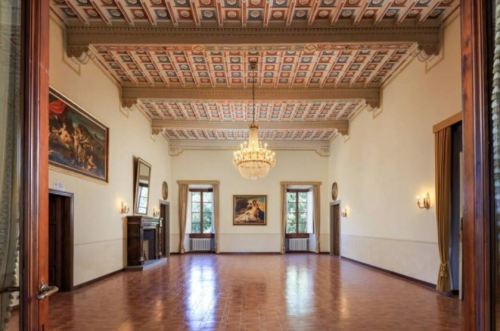
Winchester Mystery House
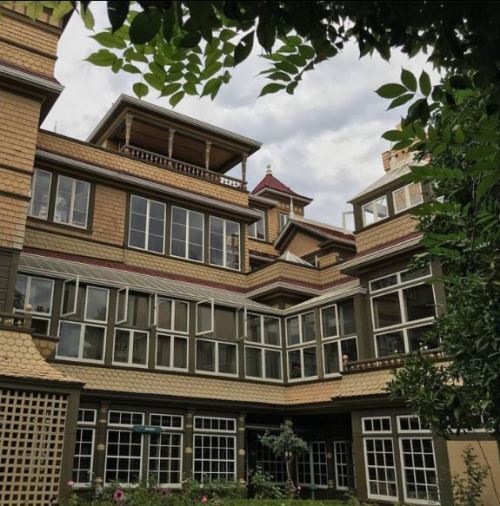
Set against the medieval grandeur of a castle with centuries-old mosaic floors, stone fireplaces, and stained-glass windows, this Queen Anne Victorian exemplifies master craftsmanship on a grand scale with timeless order and contemporary appeal.
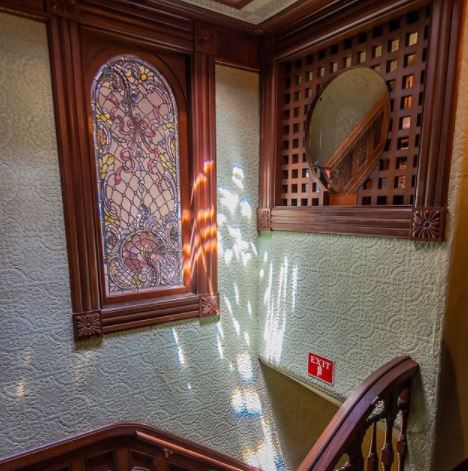
It’s a cool and cloudy day at the Winchester Mystery House ⛅️ Truly somewhere you can relax, dream, and be creative. Open for daily tours this weekend 10-4pm!
🎟 link in bio. https://winchestermysteryhouse.com/
Images from the Surreal World of the Winchester Mystery House
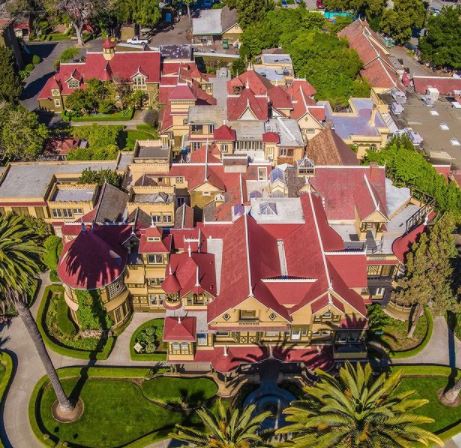
The eccentric Mrs. Winchester—the combination of her wealth and her unique building project gave rise to many rumors in the community. However, the mansion was very peculiar. The first thing that led some to believe it was haunted was the Door to Nowhere, which is located on the second floor, and opens to a 20-foot drop into the garden. The door could be heard in the dead of night to open, and slam heavily, and this even when the butler knew it was locked and the key on the bunch in his pantry. The second was that the bedclothes would always be found torn off the bed and hurled in a heap into a corner. But it was the door slamming that chiefly bothered the old butler. Many and many a time, he lain awake and just shivered with fright, listening; for a time the door would be slammed time after time thud! thud! thud! so that sleep was impossible. From Axelrod, I knew already that the mansion had a history of being cursed by spirits, and haunted by ghost. Three people had been strangled in it—an ancestor of his and his wife and child. He was a second-generation caretaker for Mrs. Winchester. This is authentic, so you can imagine what kind of feeling investigators had. The butler, Axelrod, was in rather a state about their going, and assured them with solemnity that in all the thirty years of his service, no one have ever entered that room after nightfall. He begged them in quite a fatherly way to wait till the morning when there could be no danger and then he could accompany them. Of course, they told him not to bother. They explained that they would do no more than look around a bit and perhaps fix a few seals. He need not feat, the investigators were used to that sort of thing. However, he shook his head when they said that. #RandolphHarris 1 of 13

“There isn’t many ghosts like ours, sir,” he assured them with mournful pride. And by Jove he was right, as you will see. They took a couple of candles and Axelrod followed with his bunch of keys. He unlocked the door, but would not come inside with them. He was evidently in quite a fright and renewed his request that they would put off their examination until daylight. Of course they laughed at him, and told them he could stand sentry at the door and catch anything that came out. “It never comes outside, sir,” he said, in his funny, old solemn manner. Somehow he managed to make them feel as if they were going to have the creeps right away. Anyway, it was one to him, you know. They left him there and examined the room. It was a big apartment and well furnished in the grand style, with a huge four-poster which stood with its head to the end of the wall. There were two candles on the mantelpiece and two on each of the three tables that were in the room. Investigators lit the lot and after that the room felt a little less inhumanly dreary, though, mind you, it was quite fresh and well kept in every way. After they have taken a good look round they sealed lengths of bebe ribbon across the windows, along the walls, over the pictures, and over the fireplace and the wall-closets. All the time, as they worked, the butler stood just without the door and they could not persuade them to enter, though they jested with him a little as they stretched the ribbons and went here and there about their work. Every now and again the butler would say: “You’ll excuse me, I’m sure, sir; but I do wish you would come out, sir. I fair in a quake for you.” They told them he need not wait, but he was loyal enough in his way to what he considered his duty. He said he could not go away and leave them alone there. #RandolphHarris 2 of 13
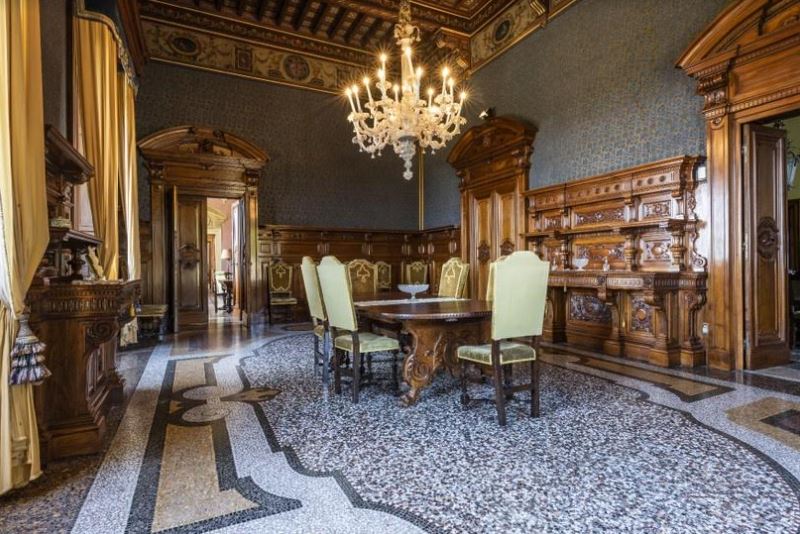
He apologized, but made it very clear that they did not realize the danger of the room; and they could see, generally, that he was getting into a really frightened state. All the same he had to make the room so that they should know if anything material entered it, so they asked him not to bother them unless he really heard something. He was beginning to fret their nerves and the “feel” of the room was bad enough already, without making things any nastier. For a time further, they worked, stretching ribbons across a little above the floor and dealing them so that the merest touch would break the seals, were anyone to venture into the room in the dark with the intention of playing the fool. All this had taken the investigators far longer than they had anticipated, and suddenly, they heard a clock strike eleven. They had taken often their coats and soon after commencing work; now however, as they practically made an end of all that they intended to do, they walked across to the settee and picked them up. They were in the act of getting into their coats when the old butler’s voice (he had not said a word for the last hour) came sharp and frightened: “Come out, sirs, quick! There’s something going to happen!” Jove! but they jumped, and then in the same moment, one of the candles on the table to the left of the bed went out. Now whether it was the wind, or what, they did not know; but just for a moment the investigators were enough startled to make a run for the door, but they stopped dead in their tracks and told the butler to be brave. So they just turned right around, picked up the two candles off the mantelpiece, and walked across to the table near the bed. Well, they saw nothing. They blew out the candle that was still alight; then they went to those on the two other tables and blew them out. Then, outside of the door, the old man called again: “Oh! sir, do be told! Do be told!” #RandolphHarris 3 of 13
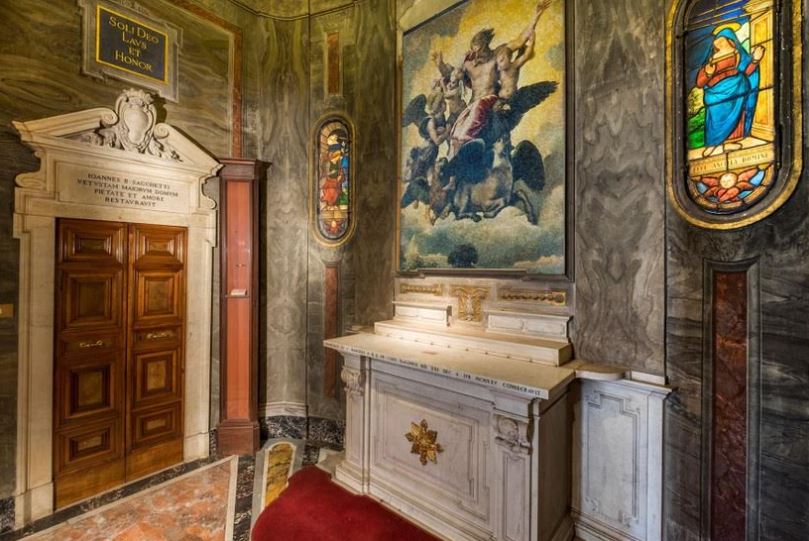
“All right, Axelrod,” one of the investigators said, and by Jove, his voice was not as steady as he should have liked! They made for the door and had a bit of work not to start running. They took some thundering long strides, though, as you can imagine. Near the entrance they had a sudden feeling that there was a cold wind in the room. It was almost as if the Door to Nowhere had been suddenly opened a little. They got to the door and the old butler gave back a step, in a sort of instinctive way. They slammed the door shut with a crash. Somehow, as he did so, one of the investigators felt something pull back on it, but it must have been only fancy. He turned the key in the lock, and then again, double-locking the door. The Winchester Mansion was not only an extravagant maze of Victorian craftmanship, it was also marvelous, baffling, and eerily eccentric, to say the least. Much of Mrs. Winchester’s interest in the occult may have been due to the League for Spiritual Discovery. She built the mansion to accommodate the spirits who had been slain by the Winchester Rifle. It was a way to get the spirits to go on to the next stage. To get in touch with the ancient reincarnation they once carried inside. However, once doors of consciousness are thrown open, those without the proper discipline cannot control what gets in. It is much easier for a demon to materialize in the depths of the Winchester Mansion than all the way from Hell. People began to believe in the Devil again because they could see him during the Victorian Era. The vibes of the Winchester mansion had begun to change as towers rose and the mansion sprawled out into infinity. Magic spells had not ended in the Revolutionary War. People had begun to fall from third-floor windows. The ghosts were considered “temporary misfits” who had not found their place in life nor in the after life, but were impatiently searching along the endless halls of the Winchester Mansion. #RandolphHarris 4 of 13
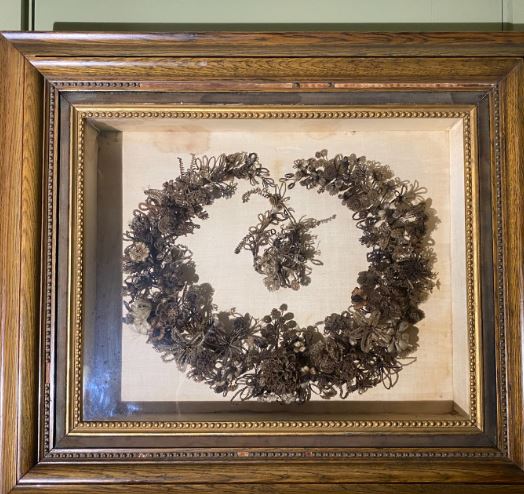
Satanism is a reflection of nature, of the laws of the cosmos, therefore it is as universally applicable as any law of nature—gravity, genetics, et cetera. The invoking or summoning of spirits by means of hymns, prayers, and acts of worship in spiritistic seances, finds a counterpart in demon possession. Often the demon speaking through its victim in the demonized state will demand the burning of incense as well as worship service. In return he often promises alleviation from torment and powers of physical healing or clairvoyant and prognostic gifts assuring financial income and material prosperity to the enslaved person. Paganism is replete with fear of demons who must be appeased by worship and servile obedience. Those who accept magical powers may escape the grosser torments of vile spirits only to fall under more terrible bondage and become Satan’s tools to enslave others. At the very center of the Winchester Mansion is the Blue Séance Room, where Mrs. Winchester supposedly would go every night to commune with the spirits. This room consisted of a cabinet, a table with pen and paper, a closet, and a planchette board—similar to a Ouija board—used for transmitting messages from the beyond. Legend has it that she would wear one of 13 special colored robes and receive guidance from various spirits for her construction plans. In demon influence, evil spirits exert power over a person short of actual possession. Such influence may vary from mild harassment to extreme subjection when body and mind become dominated and held in slavery by spirit agents. Victims may be oppressed, vexed, depressed, hindered, and bound by demons. Demon influence, even in its most severe forms, does not manifest the same abject domination by evil spirits that so saliently characterizes actual possession. #RandolphHarris 5 of 13
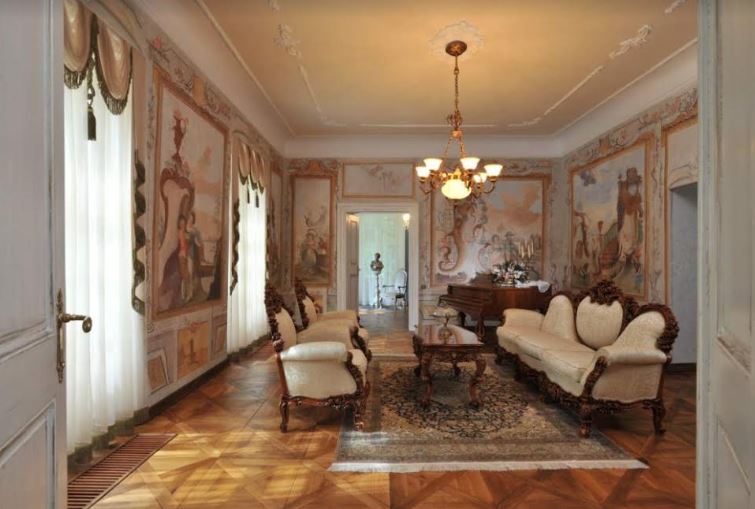
There is no blacking out of consciousness, no demonized state, no usurpation of the body as a mere tool of the inhabiting demon, no speaking with another voice and the projection of another personality through the victim. In other respects, however, demon influence closely resembles actual possession. After the door to the room the possessed the Door to Nowhere was sealed, the investigators felt easier then. The Butler, Axelrod who was nervous and silent, led the way. It had not struck investigators until that moment that he had been enduring a considerable strain during the last two or three hours. About midnight the investigators went to bed. Their room lay at the end of the corridor upon which opens the door of the room with the Door to Nowhere. They counted the doors between it and theirs and found that thirteen rooms lay between. Just as one of the investigators was beginning to undress an idea came to him and he took his candle and sealing-wax and sealed the doors of all thirteen rooms. If any door slammed in the night, they should know just which one. He returned to his room, his partner was fast asleep. He locked the door and went to sleep. While in a deep sleep, they were waked suddenly from a deep sleep by a loud crash somewhere out in the passage. One of them lite a candle, then there came the bang of a door being violently slammed along the corridor. Then there was a dismal thudding of a door up the corridor. The sound seemed to echo through all the house. Daylight came at last and they washed and dressed. The door had not slammed for about an hour, and they were getting back their nerve again. These brave men felt ashamed of themselves, though in some ways it was silly, for when you are meddling with the occult your nerve is bound to go, sometimes. And you just have to sit quiet and call yourself a coward until the safety of the day comes. Sometimes it is more than just cowardice. Sometimes one is being warned. #RandolphHarris 6 of 13

The incorporation of violence in magical ritual has had several historical rationales. It has been claimed by some, such as Aleister Crowley, that the biological energy released at the moment of death of an animal or human, combined with the emotional frenzy induced in the magician by the sight of blood, can be focused through the working of the ritual and sent psychically to do its work. Second, in conjurations, the blood of a sacrificed animal can allegedly be used by the demon being summoned to form a physical manifestation in this plane. On a psychological level, ritual murder and other barbaric acts have functioned as the identification with what Mircea Eliade terms the “Sacred Time” of the primitive, a time beyond the banality of the material World and the moral strictures of society. However, the role of violence has played an even more important sociological role in the history of secret societies, as a centripetal force holding groups together. By forcing members of the group to partake in illegal, socially deviant, and violent acts, the leader further alienates those members from the outside World, fosters feelings of paranoia, and increases psychological and emotional dependence on the group. Many people are striving for superiority as the primary human motivation. People who feel a lack of control over their affairs experience hopelessness, depression, and feeling of low self-worth. One way to feel control, if one cannot feel it in one’s day-to-day affairs, is to exert it over others. The ultimate form of that control would be the control over another’s life or death. The murderer then becomes God, the ultimate high. The trouble is that getting high can be addictive, and when that happens, the tolerance level keeps getting higher. Bigger dosages are needed to get the same effect, and perhaps that is why ghosts and demons haunt—not just to communicate—but to get high off of human emotions. #RandolphHarris 7 of 13
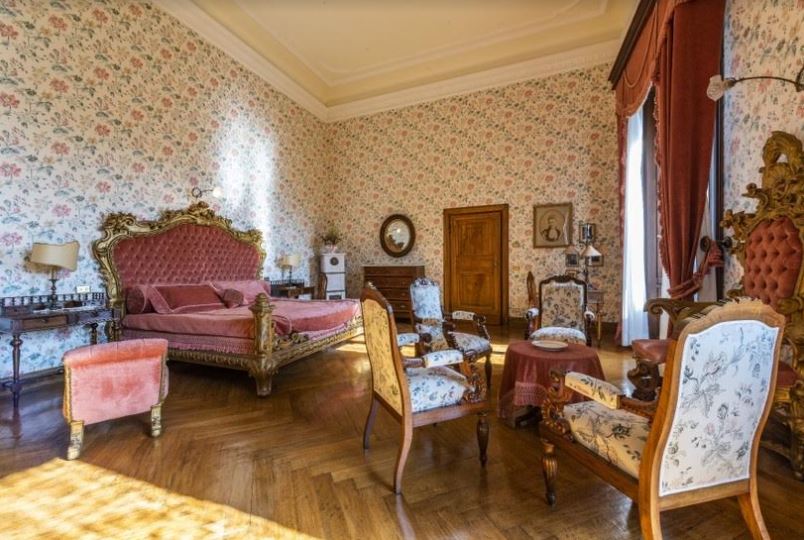
Around the time that the disturbances were happening in the Winchester mansion, police began to hear about orgiastic, nocturnal rituals involving fire dancing, animal sacrifices, blood drinking, and infanticide in the Santa Clara Valley. By 1890, the Bay Area was the “murder capitol of the World,” after it was swept by a wave of brutal and bizarre killings. On the door step of the Winchester Manion, one morning, Axelrod, the Butler, found a note warning, “death to all those who defile the environment,” and it was signed “The Knight of Swords.” Mrs. Winchester immediately have bricks laid on the inside of the front door to block it off. Then there was the case of thirteen people who were kicked to death in a confessional, as human sacrifices to the Earthquake God to stave off the 1906 Earthquake, although the exact year of the catastrophe was unknown, mediums and psychics knew it was coming. Investigators found the events unsettling and stayed at the Winchester Mansion to continue their investigation and protect Mrs. Winchester. They examined the doors of the room that housed the Door to Nowhere, and the seal had been broken, but the seal to the keyhole had been untouched. Axelrod told the investigators that “Flesh and blood can do nothing, sirs, against devils, and that’s what’s comes in the Door to Nowhere.” Something had been in the room—the bedcoverings were on the flood and they were bloody. Mrs. Winchester had everything removed from the room, except for the bed. The investigators examined the walls, floor and ceiling then with probe, hammer and magnifying glass, but found nothing usual. They began to realize that something had been loose in the room during the past night. They sealed up the room again and went out, locking and sealing the door as before. #RandolphHarris 8 of 13

Demon influence may occur in different degrees of severity and in a variety of forms, both in Christians and non-Christians. In its less sever forms, demon attack comes from without through pressure, suggestion, and temptation. When such pressure, suggestion, and temptation are yielded to, the result is always an increased degree of demon influence. Although the human race fell in Adam and became a prey to Satan and demons, the forces of darkness have always been severely restricted. They can enslave and oppress fallen man only to the degree he willingly violates the eternal moral law of God and exposes himself to evil. Since fallen man is unable to keep God’s moral law perfectly, and is acceptable to God only on the basis of Christ’s atonement, all men, saved as well as unsaved, can be subjected to demon influence. The saved, however, have been delivered from the powers of darkness and translated into the kingdom of God’s dear son. This means that they have been delivered from evil powers. Likewise, when the law of love for one’s fellow man is violated, demon power may take hold of a person and goad him on to murder. In June 1895, William Burke, was arrested in Santa Clara County with three male drifters, for the cannibal slaying of a Santa Clara County, California, farmer from the Winchester Estate. The group was a family of trolls, who, when they did not have the money to spend for room and board lived under bridges and in fields. They had forced their way into the unfortunate farmer’s Victorian cottage, and stabbed him to death and cannibalized him after offering up the body parts to Satan. The night before, the group had murdered a vagrant for a few pieces of gold. #RandolphHarris 9 of 13
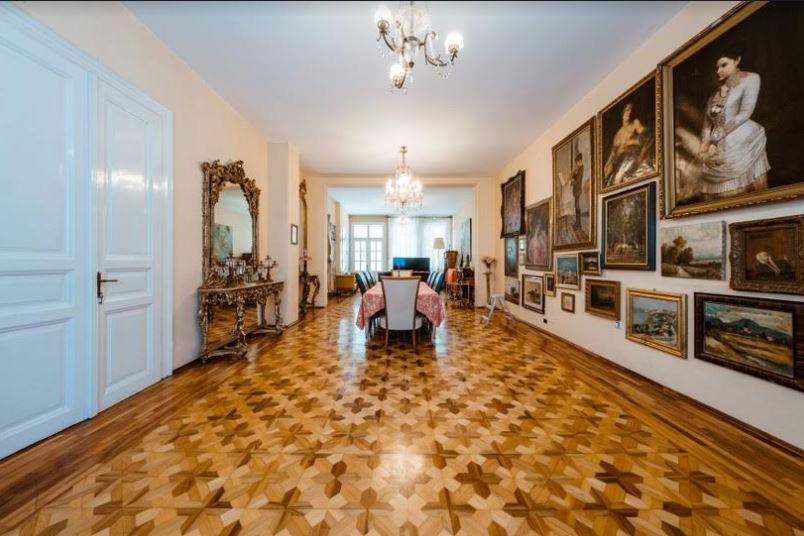
The Winchester Estate was often the target of not only ghosts and demons, but often looters, and other thugs. That is why there was a six-foot cypress hedge enclosing the estate, which was backed by a barbed wire fence and patrolled by a pack of ferocious dogs, plus, of course, her staff of armed bodyguards. Whatever possessed William Burke to shoot, dismember, and behead the sleeping farmer, McDougal, then cut out his heart and eat it, then snack on the finger until he was discovered the next morning is unknown. Aside from being a cannibal, Burke, who had an IQ of 140, claimed to be a practicing Satanists and to have belonged to a blood-drinking cult in Wyoming. Investigators failed to turn up the cult, however, and the picture that emerged of the Satanic cannibal was that of a psychotic working with Robert Knox. Burke and Knox were linked to an earlier slaying in San Francisco. They had slit the victim’s throat, cut off his ear, and written “Satan Saves” in blood on the wall of the victim’s Victorian home. Later Burke was found drowned. He washed ashore with his hands and feet bound with rope. A subsequent investigation turned up that Burke had been a leader of a group of about forty, who practiced Devil-worship ceremonies, and they wanted to turn the Winchester Mansion into their base. Burke, who believed that Satan would put him in command of “forty leagues of demons” if he took command of the Winchester Mansion. You see, the spirits were already inside of the house and it was no secret. It is believed that Knox bound and pushed him into the water. Burke’s paternal grandparents has opposed the marriage of their son, and vented their hatred of his mother upon their grandchild. They sought to curse and kill him by using black magic, in which they were adept. His childhood had been a nightmare of fear, as his mother resorted to protective magic to ward off the effects of the persecution of death magic. She, too, had come under severe demonic enslavement and fear. #RandolphHarris 10 of 13
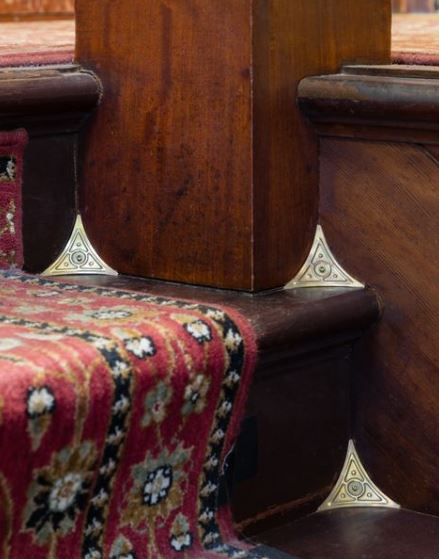
This case demonstrated how occult involvement reaches out to children. It also reveals how modern psychology and psychiatry fail to diagnose a case properly when they deny the reality of evil supernaturalism. We do not know whether such aggravated cases of demon influence go deeper than external pressure, suggestion, and temptation. They apparently do, and demonic invasion of the body seemingly is involved and the personality is infested by one or more vile spirits. These demons, however, act more like visitors or guests in a home than the owners of the house, as is the case in demon possession. In the latter case the demons possess the property and reside there permanently, always having ready access and full control of the premises to do as they please. In addition, there is the dual personality of the victim in the demonized state, which is never true of demon influence alone. This does suggest liability to physical and mental sickness, even demonic influence and bondage, and in extreme cases, physical death. Satan exists as a force that you are either part of, or you are not. You can accept it and let it exist withing yourself, or, as in the case of a Christian, you can try and force it out of your system. Then you become one of these confused, schizophrenic personages, like these Christian preachers who preach something but cannot uphold it. There is a power in the Winchester Mansion, in the events that took place there long ago. People still claim to hear the Devil’s orchestra playing at night. There is definitely a Satanic spirit, a pagan spirit, to a lot of what happened. Generally, the Satanist I would know certainly are not criminals. If anything, the police would come to them for advice on a weird crime rather than to interrogate them about it. On the other hand, in terms of the government, there is definitely an interest in them. #RandolphHarris 11 of 13

There is certainly a Satanic spirit running through some people and some areas, but that does not make them bad nor unattractive. At night, people claim there is a shadowy, underground at the Winchester mansion who lever against the inertia of the World. Devil’s advocates take their role of counter balancing societal trends quite seriously. Every few years a book is published on Satan—or some affiliated gothic topic—based upon the premise that the Devil is dead, or dying. This has been used as a starting point for authors ever since the sixteenth century, but reports of Satan’s demise have been much exaggerated. Modern culture treats the Prince of Darkness light-heatedly; Satan appears on Valentine cards, in comedy sketches, and advertising campaigns. The fact that we can laugh at Him is no indication of His waning powers. Satan encouraged satire and scorn, thrives on laughter and irreverence—it is the Christian tradition that demands we approach the World with straight-face, pompous sincerity. Popular ambivalence about the Devil has plagued Christianity throughout its history. The Church needs Satan as its ultimate cosmic scapegoat, but His omnipresent threat is that His playful, charismatic evil can seem so much more attractive then Christian doctrine. (Some have asked why are so many Satanists such nice, polite people, while so many Christians are malignant, neurotic bigots?) Thus, every infernal manifestation in modern popular culture, whatever its apparent intent, has Satanic significance. However, are we, as Anton LaVey claimed, entering an “Age of Satan”? Is Lucifer rising? Nearly the Door to Nowhere, people have claimed that when they are near it, they are immediately conscious of a queer prickling sensation about the back of their heads and their heads began to sweat a little. #RandolphHarris 12 of 13

The following instant, the whole end of the hallway seems to flicker into an abrupt glaze. Then comes the succeeding darkness and most peer nervously up the corridor, listening tensely, and trying to find what lay beyond the faint, red, glow of light. As investigators continued to inspire the unusual room, there came the crashing thud of the door to the Door to Nowhere. The sound seemed to fill the whole of the large corridor and go echoing hollowly through the mansion. They felt it, it felt horrible—as if their bones were water. Simply beastly. They did not know how they could stare or how they listened. And then it came again, thud, thud, thud, and then silence. That was almost worse than the noise of the door, for they kept fancying that some brutal thing was stealing upon them alone the corridor. Suddenly, there lamp was put out, and they could not see the yard before them. They realized all at once that this was a very silly thing, sitting there, and they jumped up. Even as they did so, the investigators thought they heard a sound in the passage, quite near to them. One made a backward spring into the hallway and slammed the door shut. Can you understand? They felt that there was something at the other side of the Door to Nowhere. For some unknow reason, investigators knew it was pressed up against the door, and it was soft. It was the most extraordinary thing to imagine when you come to think about it. The Door to Nowhere thuds at solemn and horrid intervals. Nights in the mansion can be brutal. As the day comes, the thudding of the door comes gradually to an end. #RandolphHarris 13 of 13

Winchester Mystery House
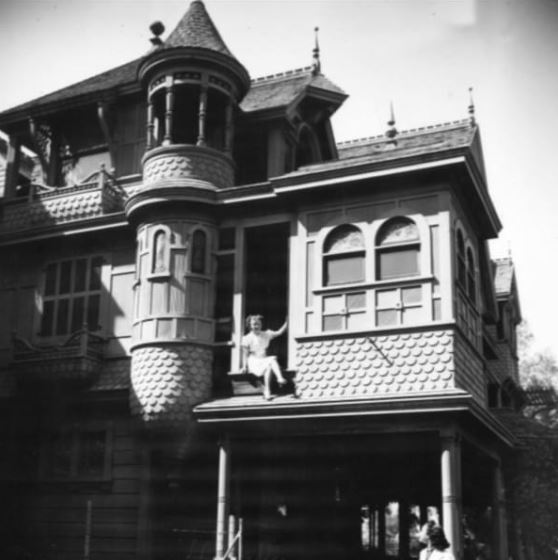
What are your weekend plans? Come hang out at The Winchester Mystery House 🤪 Open 10am-7pm! https://www.winchestermysteryhouse.com/buy-tickets/
Photo credit: Acme Newspictures Inc. Circa 1930s

🎟 link in bio. https://linktr.ee/winchestermysteryhouse

The Death Spell Had Broken Between the Living and the Dead

Speculation is bound to pursue a wealthy, extremely beautiful, celibate recluse, who has lost those who mean the most to her and is haunted by spirits of the damned. Many wild rumors circulated about Sarah Winchester during her residence in Santa Clara Valley—her opulent estate was even known locally as “The Spirit House”—and some say the rumors may have added to Mrs. Winchester’s isolation. However, the glory, the splendor, the beauty of her mansion, surpassed the vicious rumors and speculation; and the fragrances of the Victorian garden were intoxicating. The tracks were gone; they vanished where the velvet emerald green sod began. There were plenty of creatures, and they welcomed her with caresses. Yet, Mrs. Winchester was bent, broken, withered, widowed—her head was white with unnumbered sorrows. She had been familiar with grief for a thousand years. The deaths of her young husband and her six-week-old daughter Annie stood out clear in her memory, for it was a land-mark; it brought Mrs. Winchester her first real misery, her first real heartbreak. Her memories were blurred with tears, and after ten centuries she cried over and over and over again. Crying over it for pity of that poor child—the child she had lost. Other mothers have felt something akin to this in recalling, not their former selves, (as in her case), but the little figures which represents sons and daughters of their which have since grown to the gravity and stature of full age. Sometimes, for a moment, these poor mothers have a vision of those little creatures romping by, and they recognize the voices of laughter—gone silent long ago!—and they have a pain at the heart, as knowing that those children are lost to them for always, in the flesh, although their grown-up selves are still present in life and still precious. The loved and lost! Lives having gone out from their mothers’, lives to return no more but in visions. #RandolphHarris 1 of 16
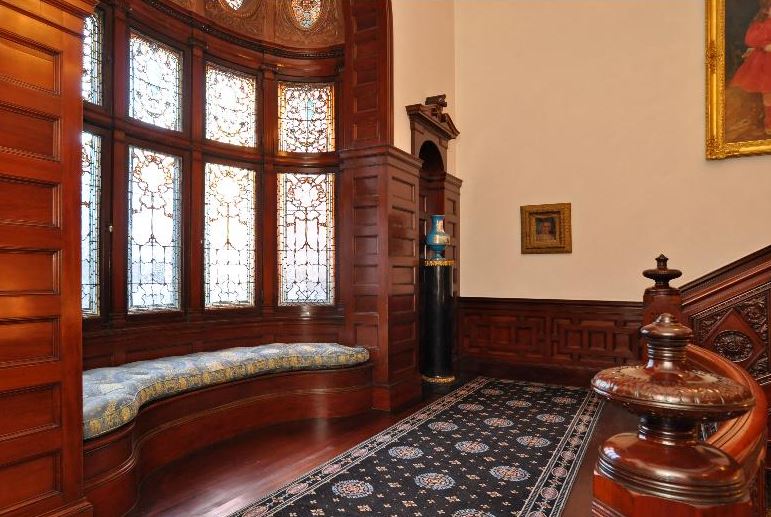
Yes, across the mouldering centuries Mrs. Winchester could still see that silken little baby, with her waxen round arms, and delicate smile, just as she was, the fairest thing in this fair World; and in her heart, leathery as it was, she felt again the pang of that day’s disappointment, holding on to the memory of what could have been. It was weeks that she had been wandering the halls of her enormous mansion, and had found no trace of William, her husband. The Valley was so cruelly vast! Early she had a happy thought, and took the bloodhound throughout the estate and showed him the tracks, and was fully of hope, not doubting he would hunt him down in an hour. But she knew that she tried everything she could try, and just needed to say goodbye forever. The track gave no scent. William Winchester was dead. The hurt stayed with her, and Mrs. Winchester was resolved to absorb herself in the construction of her mansion. She did the work, but the old pleasure in it was somehow gone; she did not care anymore. She had between 500 to 600 rooms constructed, but thought they were not good ones and tore them down because her heart was not in it. Some of them were tolerable, but mainly they were crude and inartistic; they lacked finish. The miles of twisting hallways were made even more intriguing by secret passageways in the walls. When Mrs. Winchester set out for her Séance Room, it might well have discouraged the ghost of the angry spirits or even of a bloodhound, to follow her. After traversing an interminable labyrinth of rooms and hallways, suddenly she would push a button, a panel would fly back and she would step quickly from one apartment into another, and unless the pursuing ghost was watchful and quick, he would lose her. #RandolphHarris 2 of 16
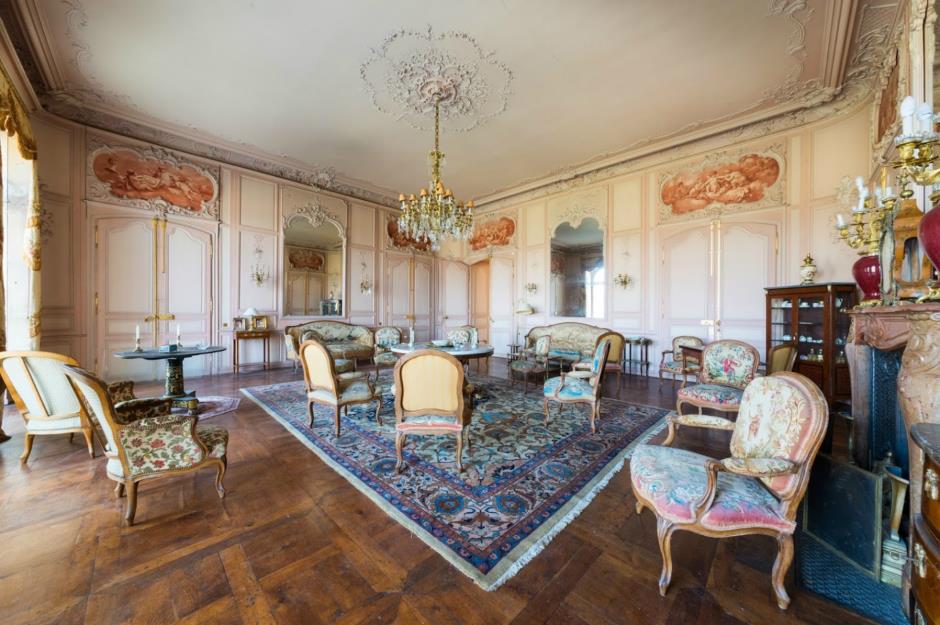
Then she opened a window in that apartment and climbed out, not into the open air, but on the top of a flight of steps that took her down one story only to meet another flight that brought her right back up to the same level again, all inside the house. This was supposed to be very discomforting to evil spirits who are said to be naturally suspicious of traps. Mrs. Winchester was the most unfortunate of women. Rich, respected, very well educated and of sound health and mind—with many other advantages usually valued by those having them and coveted by those who have them not—she sometimes thought that she would be less unhappy if they had been denied her, for then the contrast between her outer and inner life would not be continually demanding a painful attention. In the stress of privation and the need of effort, she might sometimes forget the sombre secret ever baffling the conjecture that it compels. After communing with the spirits, as she turned the hallway, Mrs. Winchester could hear a sound of a door gently closing, and saw in the darkness, indistinctly, the figure of a man, which instantly disappeared among the statues and furniture. A hasty pursuit and brief search of the mansion in the belief that the trespasser was someone secretly visiting a servant proving fruitless, she entered an unlocked door and mounted the stairs to her chamber. Its door was open, and stepping into black darkness she fell headlong over some heavy object on the floor. She spared herself the details; it was her poor William, dead of strangulation by human hands! Nothing had been taken from the house, the servants had heard no sound, and excepting those terrible fingermarks upon the dead man’s throat—dear God she hoped to forget them!—no trace of the assassin was even found. #RandolphHarris 3 of 16

Although William had Tuberculosis, something had come to end his life before the illness did. Mrs. Winchester kept barbarous murder a secret. Mrs. Winchester donated a substantial sum of money to the Winchester Clinic of the General Hospital Society of Connecticut, for the care and treatment of tuberculosis patients. The clinic still exists today as part of the Yale New Haven Medical Center. One night, a few months after the dreadful event, Mrs. Winchester and her butler were walking back from the carriage house after a trip to the city. The full moon was about three hours above the eastern horizon; the entire countryside had the solemn stillness of a summer night; their footfalls and ceaseless song of the katydids were the only sound, aloof. Black shadows of bordering trees lay athwart the mansion, which, in the short reaches between, gleamed a ghostly white. As they approached the door to the mansion, whose front was in shadow, and in which no light shone, her butler suddenly stopped and clutched her arm, saying, hardly above his breath: “God! God! what is that?” “I heard nothing,” Mrs. Winchester replied. “But see—see!” he said, pointing along the road, directly ahead. Mrs. Winchester said: “Nothing is there. Come, Henry, let us go in—you are ill.” He had released her arm and was standing rigid and motionless in the center of the illuminated roadway, staring like one bereft of sense. His face in the moonlight showed a pallor and fixity inexpressibly distressing. She pulled gently at his sleeve, but he had forgotten her existence. Presently he began to retire backward, step by step, by step, never for an instant removing his eyes from what he saw, or thought he saw. Mrs. Winchester turned half round to follow, but stood irresolute. She did not recall any feeling of fear, unless a sudden chill was its physical manifestation. #RandolphHarris 4 of 16
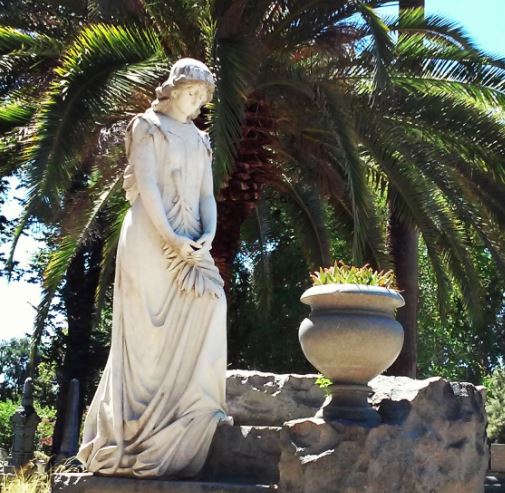
It seemed as if an icy wind had touched her face and enfolded her body from head to foot; she could feel the stir of it in her hair. At that moment her attention was drawn to a light that suddenly streamed from an upper window of the mansion: one of the servants, awakened by what mysterious premonition of evil who can say, and in obedience to an impulse that she was never able to name, had turned on the Carbide gas lights, which were operated by pushing an electric button. When she turned to look for the butler he was gone, and in all the years that had passed no whisper of his fate has come across the borderland of conjecture from the realm of the unknown. Mrs. Winchester retired and had fallen almost immediately into a peaceful sleep, from which she awoke with an indefinable sense of peril which was, a common experience in her estate. The servants slept in another part of the house. But these were familiar conditions and never distressed Mrs. Winchester. Nevertheless, the strange terror grew so insupportable that concurring her reluctance to move she sat up and pushed the button to turn on the lights at her bedside. Contrary to her expectation this gave her no relief; the light seemed rather as added danger, for she reflected that it would shine out under the door, disclosing her presence to whatever evil think might lurk in the halls of her mansion. You that are still in the flesh, subject to horrors of the imagination, think what a monstrous fear that must be which seeks in darkness security from malevolent existences of the night. That is to spring to close quarters with an unseen enemy—the strategy of despair! Extinguishing the gas lights, Mrs. Winchester pulled the bedclothing about her heard and lay trembling and silent, unable to shrike, forgetful to pray. In this pitiable state she must have lain for what you call hours—with her there are no hours, there is no time. #RandolphHarris 5 of 16

At last it came—a soft, irregular sound of footfalls on the stairs! They were slow, hesitant, uncertain, as of something that did not see its way; to her disordered reason all the more terrifying for that, as the approach of some blind and mindless malevolence to which is no appeal. She even thought that she must have left the hall gasolier burning and the groping of this creature proved it a monster of the night. This was foolish and inconsistent with her previous dread of the light, but what would you have? Fear has no brains; it is an idiot. The dismal witness that it bears and the cowardly counsel that it whispers are unrelated. In Mrs. Winchester’s mansion lived those who have passed into the Realm of Terror, who skulk in eternal dusk among the scenes of our former lives, invisible even to themselves, and one another, yet hiding forlorn in lonely places; yearning for speech with out loved ones, yet unenlightened, and as fearful of them as they of humans. Sometimes the disability is removed, the law suspended: by the deathless power of love or hate they break the spell—they are seen by those whom they would warn, console, or punish. What form they seem to them to bear one knows not; they know only that they terrify even those whom they most wish to comfort, and from whom they most crave tenderness and sympathy. What a thing it is to have legions of spirits, cowering and shivering, fearful and vengeful in an altered World, roaming the hallways of one’s house. However, Mrs. Winchester did not die of fright: the Thing turned and went away. She heard it go down the stairs, hurriedly, she thought, as if itself in sudden fear. Then she rose to call for help. Hardly had her shaking hand found the annunciator when—merciful Heaven!—she heard it returning. Its footfalls as it remounted the stairs were rapid, heavy and loud; they shook the mansion. She fled to an angle of the wall and crouched upon the floor. #RandolphHarris 6 of 16
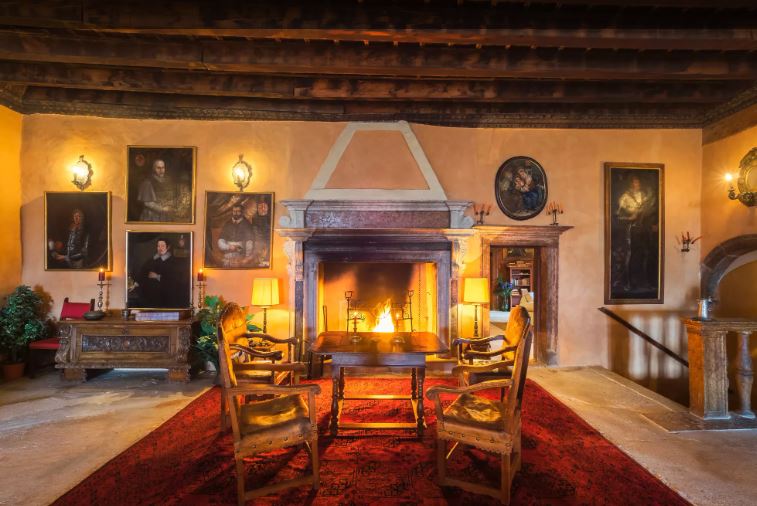
Mrs. Winchester tried to pray. She tried to call the name of her maid. Then she heard the door thrown open. There was an interval of unconsciousness, and when she revived, she felt a strangling clutch upon her throat—felt her arms feebly beating against something that bore her backward—felt her tongue thrusting itself from between her teeth! And the she felt the life pass from her. As the spirits still dwelled in the mansion of the shadows, lurking in its desolate places, peering from brambles, thickets, towers, corners, stairways and doors. Ghosts at the Winchester mansion know when it is night, for then most people retire and they can venture from their places of concealment to move unafraid about in their old mansion, to look in at the windows, even to enter and gazes upon people’s faces who might still be wandering in the evening hours. Vainly, spirits often seek some method of manifestation, some way to make their continued existence and their great love and poignant pity understood by their loved one’s or those they wish to haunt and terrorize. Ghosts dare to approach people when they are awake, but the terrible eyes of the living frighten them by the glances that they seek from the purpose the hold. Demons, ghosts, and other spiritual beings search for the living in the Winchester mansion during the moonlight dawn. At the time of her death, the unrelenting construction had rambled over six acres. The sprawling mansion contained 160 rooms, 2,000 doors, 10,000 windows, 47 stairways, 47 fireplaces, 13 bathrooms, and 6 kitchens. Carpenters even left nails half driven when they learned of Mrs. Winchester’s death. According to the provisions of her will, Mrs. Winchester’s personal property, including the furnishings, household goods, pictures, jewelry, and papers were left to her niece, Mrs. Marian Merriman Marriott, who promptly has the furnishings auctioned off. It is said to have required sic trucks working six weeks to car the furnishings away! The mansion and farm were not mentioned specially in the will. They became part of the Mrs. Winchester’s estate. #RandolphHaris 7 of 16
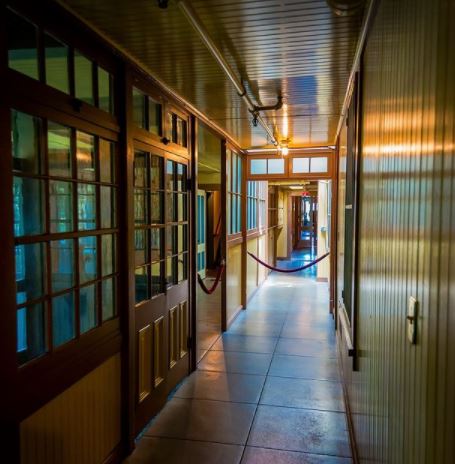
Demon possession is a well-defined phenomenon and should be clearly distinguished from spiritism. Since the same demonic forces are at work in both phenomena, they bear some similar characteristics and result in the same occult oppression and bondage. The demonized state of the demon possessed is similar to the trance of the spiritistic medium. Both are under the direct influence of demons who speak through them. In the case of the medium who processes to communicate with the spirits of deceased persons, the demon apes the personality and voice of the deceased. In the case of the demon possessed, the evil spirits appear to be more crassly cruel, unclean, violent, and less sophisticated and subtle than spirits working through a clairvoyant medium. In demon possession, they are also more domineering and brutally enslaving. Nervous muscular reactions and contortions peculiar to the demoniac often appear also in the spiritistic medium when one goes into a trance, but in a much milder form. Then, too, the demoniac is normally an involuntary victim of possession, while the medium is a willing subject, who cultivates psychic propensities and willingly yield to demonic control. Extraordinary movements of inanimate objects surrounding the demon-possessed remind us of similar happenings in spiritism. Extraordinary movements of inanimate objects surrounding the demon-possessed remind s of similar happenings in spiritism and magic. Tables, chairs, dishes, and the like are mysteriously moved about without anybody touching them, recalling tumbler moving and table lifting so common in spiritistic séances, and magic conjurations. In demon possession as well as in spiritism, unexplained rappings and noises in so-called “haunted houses” are heard. #RandolphHarris 8 of 16
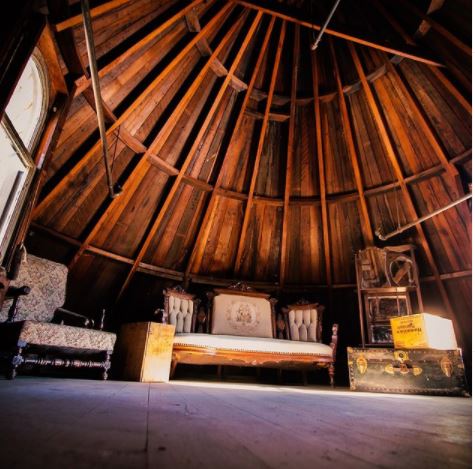
After the Winchester mansion was opened for tours, a spirit from the house had taken possession of one of the tour guides. The spirit insisted on taking up its abode with them, since it has been driven away from its for dwelling by the presence of Christians. Such cases of haunted houses about everywhere in occult literature in connection with mediums, magicians, and demon possessed persons. The tour guide saw apparitions and had frequent attacks in which she fell unconscious and demons spoke through her in their own voice and personality. A thorough investigation was conducted. Persons were stationed all around the house, in various rooms, and even in the Daisy Bedroom. Noises were heard which gradually increased in violence and seemed to concentrate in the bedroom Mrs. Winchester died in. Chairs bounced, windows rattled, plaster fell from the ceiling, and objects moved about without any visible explanation. Prayer caused the noises and telekinetic phenomena continued for a while in the mansion. On one occasion, after continued prayer, one of the demons inhabiting Jane cried out, “All is now.ost. Our plans are destroyed. You have shattered our bond, and put everything into confusion. You, with your everlasting prayers—you scatter us entirely. We are 13,130,130,130 in number. But there are still multitudes of living men, and you should warn them lest they be like us forever, lost and cursed of God.” The demon confessed that he was an emissary of Satan. The next day, the contents of the mansion were found in compete disarray and utter confusion. The amazing and terrifying thing was that the doors were still securely locked. No man or beast had entered. Evil spirits had obviously been at work in a satanic assault. On that day there were some tremendous crashing and knocking noises heard in the Winchester mansion, as if the whole house was filled with evil spirits. #RandolphHarris 9 of 16

Everyone giving tours in the mansion in the early 1900s, used to hear knocking and rumbling and crashing noises to such an extent that some of the visitors were frightened by them. Ghosts were also seen there quite regularly, even during the day time. A headless ghost was repeatedly seen in the mansion. Many people reporting becoming burned after contact with the “possessed” tour guide Jane. The autumn of 1925, all the pigs on the Winchester mansion’s farm died. The cause of death could not be found even though one of the carcasses was sent to a biological institute for examination. They tried everything but all to no avail. The following year the same thing happened again. This time the farmer redoubled his efforts to discover the cause of the pigs’ death. He had the stables inspected and the food analyzed but again without success. He thus decided to have the conservators of the estate decided to have the pigsty torn down and rebuilt on another site using completely different materials. Next year the pigs died again. They would all of the sudden squeal and then collapse. The whole process was repeated and every possible examination made in order to find out why the pigs had died. At this time certain of the member of the community began to say that someone must be killing the pigs magically out of spite. At first the conservators of the Winchester Estate would have nothing of this and continued to seek the advice of the vet and other such people. However, they could not help them, and so in the end they went to see the local minister to ask him about the question of magic. The minister simply laughed and said that the idea was stupid. Nevertheless the villagers pointed out to the representatives that there did exist some people in some areas of California who could kill livestock by means of magic. #RandolphHarris 10 of 16
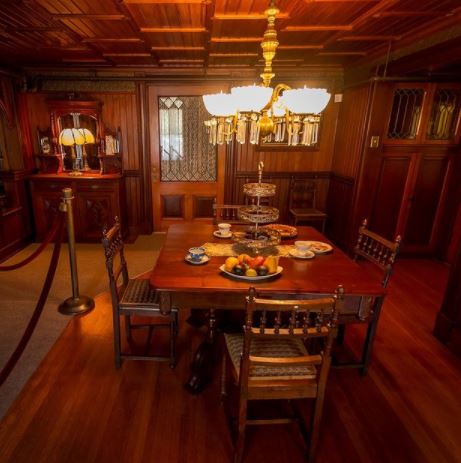
The conservators could do nothing though, and the event recurred year after year in spite of the fact that by now they had doubly secured the stables with locks and had sometimes stayed up all night with thread stretched out around the estate in order to discover if anyone was causing the animals’ deaths. One day, however, the circumstances changed. The minister visited the estate and asked one of the tour guides to accompany him to the vicarage. There they found one of the neighbour’s of the Winchester Estate, a man who had been less affluent, and this man confessed that it was he who had been the cause of everything. He had killed the pigs using black magic. The tour guides and conservators were naturally upset because by now 39 pigs had been killed. When asked why he had done this, the neighbour replied that it was because the tourists made such a noise outside his house. He had become so angry that he had tried to get his revenge in this way. He had subscribed himself to the devil with his own blood. To do this he had gone out on a Friday night to some crossroads and there drawn up a contract between himself and the devil. He mentioned that the devil had not appeared to him as he is often pictured, but that he met a black curly headed figure with blood-red eyes and a small snout and that the figure had been dressed in rather old-fashioned clothes. Ever since that day the man confessed that among other things, he had had the power to kill his friend’s pigs. The minister asked him what had made him come out into the open about the whole matter. His answer was that the people at the Winchester estate had been so kind to him over the year, donating food, clothes and furniture, that he had felt ashamed and he now asked for them to forgive him, and promised he would no longer plague them. #RandolphHarris 11 of 16

Not wanting to take any legal action, the conservators of the Winchester Estate forgave him and all went well until the neighbour ceased going to church and slid back into his old ways. Since his confession none of the estate’s pigs had died but now the man again took up his drinking habits two more of the pigs died in exact same ways as the others. The conservators decided to shutdown the farming land of the Winchester Estate and sell off hundred of acres, only keeping four. In the process, several other Victorian houses on the grounds, along with fountains, and gazebos were demolished. From the psychological point of view it is suggested that a person delving into magic and who believes in occult practices is really only succumbing to a fulfilment compulsion. One unconsciously fulfils the things that one seeks to perform by magic. One is the victim of auto-suggestion. However, even if this were the whole explanation as some people affirm, it would still be true to say that occult practices have a corrupting effect on all those who get involved in them. Demons tend to be somewhat more independent than angels…When possession takes place, you will not get to see them at all. The Florida-based Luciferian Light Group (LLG) adopted the ‘Watcher myth’ of devils that were originally angels, sent to Earth to guard humankind and cursed by God for screwing their charges. In the original myth the couplings produced monsters, but, according to the LLG, the actual result was the Aryan race. They say that African Americans and other racial groups take pride in their cultural roots, so the argument goes, why should the same concept not apply to Europeans? The argument cannot be countered by liberal sophistry, and so the ghosts of German volkisch occultists continue to be conjured. #RandolphHarris 12 of 16
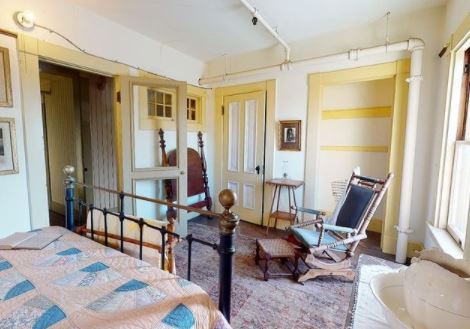
The role of cultural villain again proves to be a delicate balancing act—nothing can ever be condemned on purely moralistic grounds. Many people are still trying to protect “The Black House.” The Black Pope himself once reassured his flock, “the first 99 years are always the toughest. Rege Satanas!” Satanism is opposed to victimology and scapegoating. Many people are really drawn to the dark side because they grow up reading a lot of books and watching a lot of movies about it. If witches are out there, practicing some of the old ways of the pre-Christian gods and goddesses, then they are still Satanic in the sense that they are heretical. One side of the heretical and diabolical is the scientific aspect of Satanism. Copernicus and Galileo were regarded as practicing sorcerers in as far as they dared to challenge the supremacy of God with their heresies-their scientific research. Anton LaVey codified modern Satanism. There is a rich heritage of hearsay and blasphemy behind it, but as far as an aboveground religion that reveres Satan, there was not anything before the Church of Satan’s foundation in 1966. There were Black Masses that parodied the Catholic Church. A lot of modern Satanism draws from that codification or personification of Satan used as an archetype in mythology. Satanist are more interested in power, and what was going on in the castles and courts of the times. The interactions of power and Machiavellian machinations interest a Satanists rather than going out and find herbs to cure indigestion. Satanists are reaching for a religion of the aristocracy. They have all the aspects of that pride, that energy, that stye, and hopefully those elevated standards. Many people fear them because they believe they will lure you in their house and kill you, but is that not what many Christians are doing today? #RandolphHarris 13 of 16

Your relationship with your personal Satanic archetype is yours alone. The only way some can see how effective one is as a practicing black magician is how well one gets on in the outside of the World. Satanism has always represented and will always represent the adversary. He is a counterbalance to the unspoken injustice that prevails in the current society, whether that be overweening elitism or, going to the opposite extreme, mob rule. They always have to be in the minority that push hard in the other direction to get the pendulum swinging. Satanism will never be a religion of the people. It will never be populist beyond its current position. You see hundreds of thousands of kids making the sign of the horns, wearing black, getting devil tattoos, and listening to rock music they think is Satanic. They will take all the trappings and even grasp a few of the basic ideas, like Satan representing indulgence and independence of spirit. But, beyond that, they will always be a minority and that is how some think it should be. The Winchester mansion is a common site of demonic assault. In the early 1900s, a group of tourists and tour guides were attacked by demons; some became possessed; 30 people in the group were seized. In 1926, Satan and his allies once again possessed people at the Winchester mansion. For the first time in their lives, many of these people found themselves to be powerful, significant beings, establishing their own realm of authority. When they spoke, everyone in the mansion stopped to listen, for their shrill cries became testimony. Many historians have argued that the Satanism at the Winchester mansion was only the product of demented minds. However, there was something quite real in all the series of accusations and counteraccusations of the witnesses and the possessed—some definitely evil driving force that led humans to turn against one another like mad dogs lusting for the smell of blood. If Satan was to have presided over the Satanism at the Winchester Mansion, much was left out of the picture. #RandolphHarris 14 of 16
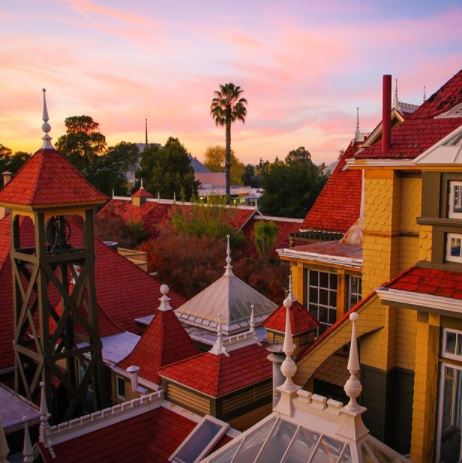
The Devil manifested himself in many forms to people at the Winchester Mansion—as a horse, a fox, a dog, a cat, a pig, and as a shadowy figure. At the Sabbats, the Devil was always present in the form of a tall, handsome man with blue eyes and black hair making no attempt to disguise his identity in any way Neither was the all-important bloodletting present in the ceremonies, either in the form of a sacrifice or in the singing of the pact. There was no defiling of sacred object, nor mention of the administering of the witches’ mark, a painful ceremony that was quite vivid in the minds of many of the witches at the estate. The Sabbats, all in all, seemed to have been rather staid affairs, involving no wild ritual or debauchery. The Devil offered not immediate wealth or riches, but a new system of government, where all humans would be equal, each human being free to “live bravely.” He promised an end to beliefs. Whoever the Devil was at those meetings, he obviously did not seek adulation, but rather he sought to establish a more equal and suitable social order among humans. Taken in this context, the entire episode begins to sound like a huge projection, a gigantic wish fulfillment on the part of the disgruntled citizens, who were expressing disdain for the system that, in their eyes had become oppressive. The figure chosen by the confessors as the Devil presiding over the midnight Sabbats had himself become disillusioned by the system. Perhaps he had been holding nocturnal meetings in the mansion in an effort of “cleansing the soul.” At any rate, the meetings were necessary psychological safety valves in the minds of the people. People would stand around begging for the master to teach them his secret. How to become invisible, how to acquire love, and oh! beyond all, how to make gold. How much gold would you give for the Secret of Infinite Riches? Humans became strengthened with wonderful power through the order of angels, so that one declares the divine will. From the Seraphim, that we cling with fervent love. From the Cherubim, enlightenment of the mind, power and wisdom over the exalted figures and images, through which we can gaze upon divine things, etcetera. #RandolphHarris 15 of 16

From the Thronis, a knowledge of how we are made and constituted, that we may direct our thoughts upon eternal things. From Dominationbius, assistance to bring into subjection our daily enemies, who we carry with us constantly, and enabling us to attain salvation. From Potestatibus, protection against human enemies of life. From Virtuibus, God infuses strength into us, enabling us to contend against the enemies of truth and reward, that we may finish the courage of our natural life. From the Principtibus, that all things become subject to humans, that one may grasp all power, and draw unto oneself all secret and supernatural knowledge. From Archangelis, that one may rile over all things that God has made subject to one, over the animals of the field, over the fish of the sea, and over the birds of the air. From the Angelis one receives the power to be the messenger of the divine. When the veil between the conscious and the subconscious mind begins thinning it is likely that one will begin to experience certain phenomenon that will grab your attention throughout the day. This will occur more and more as the veil between Worlds thins merging your spiritual awareness with your physical life. Usually it will manifest in the form of synchronicity, Déjà vu, or circumstance which seems to jump out and grab your attention. Thee I invoke, the Bornless one. Thee, that didst create the Earth and the Heavens: Thee, that didst create the Night and the Day. Thee, that didst create the Darkness and the Light. Thou art Osorronophris: Whom no human has seen at any time. Thou art Ahriman. Hear Thou Me, for I am the Angel of Paphro. Osorronophris: this is Thy True Name, handed down to the Prophets of Ishrael. Ahriman rise up through the infernal planes through the seal of Arezura and find rest within this manifestation of the blessings. Fill this sorcerous fluid with your power and might that it will serve my cause of counter creation through the intent of my own evil mind. Bless this blood as the very powers of death, destruction, and decay that I may cast out all that does not serve the cause of my own great work upon this path of enlightenment. Come tour the dark, brooding and mysterious, promising all kinds of forbidden treats. #RandolphHarris 16 of 16

Winchester Mystery House
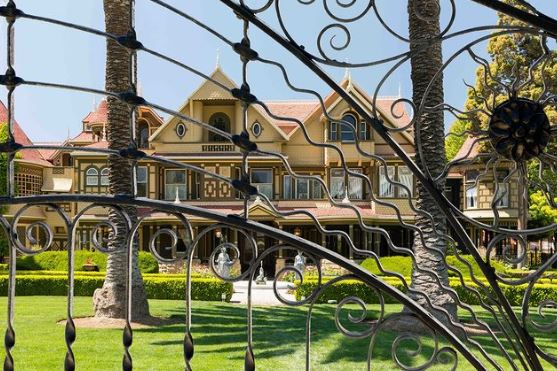
Happy weekend! Will we be seeing you on the estate today? 🌻 https://www.winchestermysteryhouse.com/

Where the Wind Blew and the Stars Sone Down

Haunting, eerie, mystical even at times a little frightening to those outside the shadowy half-World of the occult but compelling and demanding out attention. In 1884, Mrs. Winchester left New Haven, Connecticut, and the graves of her husband and only child, moved to San Jose, California, and began the obsession that was to last for the rest of her life. She purchased an unfinished farmhouse outside the small agricultural town, and for the next 38 years, the sound of construction on Mrs. Winchester’s house never stopped. She used to maintain, I remember, that there was no apparition or supernatural manifestation, or series of circumstances pointing to such a manifestation, however strongly substantiated they appeared to be, that could not be explained on purely natural grounds. However, there was a notable instance of what was by many supposed to be a supernatural manifestation that occurred in the water tower on the estate. It was a horrible sight. Barney Ackers and his wife Everly had evidently been waylaid and killed by a blow of an axe just as he was entering the yard gate, and then the door of the water tower had been broken open and his wife had been killed, after which Barney’s body had been dragged into the water tower, and it had been fired with the intention of making it appear that the water tower had burned by accident. However, by one of those inscrutable fatalities, the fire, after burning half of two walls, had gone out. Still, it was a horrible sight and the room looked like shambles. Barney had plainly been caught unawares while leaning over his gate. The back of his head had been crushed in with the eye of an axe, and he had died instantly. The pleasant thought which was in his mind at the instant—perhaps, of the greeting that always awaited him on the click of his latch; perhaps, of his success that day; perhaps, of Mrs. Winchester’s kindness to him for the work he did—was yet on his face, stamped there indelibly by the blow that killed him. There he lay, face upwards, as the murderer had thrown him after bringing him in, stretched out his full length on the floor, with his quiet face upturned, looking in that throng of excited, awestricken men, just what he had said he was: a man of peace. His wife, on the other hand, wore a terrified look on her face. There has been a terrible struggle. She had lived to taste the bitterness of death, before it took her. #RandolphHarris 1 of 13
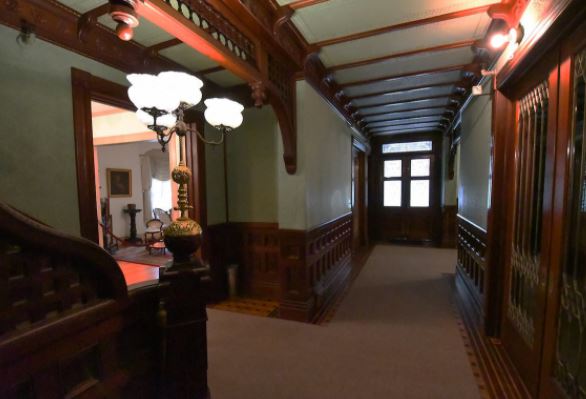
Satan’s presence was haunting. It haunted Mrs. Winchester for years, and for many nights she could not sleep. No one ever found out who did it, and she found herself unable to forget it, or to have peace as she used to. On the night of the 3rd of January 1888, some thieves attempted to commit a robbery on the estate of Mrs. Winchester. They entered the mansion, armed with a dead man’s hand with a lighted candle in it, believing in the superstitious notion that is such a hand be procured, and a candle placed within its grasp, the latter cannot be seen by anyone except him by whom it is used; also that if the candle and hand be introduced into a house it will prevent those who may be asleep from awaking. The inhabitants, however, were alarmed, and the robbers fled, leaving the hand behind them. No doubt the absolute failure of this gruesome dark lantern on this occasion was due to the fact that neither candle nor candlestick had been properly prepared! The Winchester mansion is full of apparitions and specters and perhaps some of them foiled the bulger’s plan. The mansion was continually disturbed by a nocturnal house-spirits. At night heavy steps were heard as of one carrying a heavy load. On occasion a form appeared in a monk’s cowl. Certain ghosts are confined to the Winchester mansion and they plague particularly people. A certain butler, Elton Abram, was an active spiritist while employed for Mrs. Winchester. For years he practiced table-lifting and considered this to be a way of communicating with the dead. He continued with his occult practices so intensively that psychic disturbances set in. The effects of his spiritistic interests also appeared in his children and grandchildren. His oldest son committed suicide. His next son suffered from a persecution mania. His oldest daughter ended up in The Great Asylum for the Insane. Another daughter suffered from Parkinson’s disease. Among his grandchildren the same picture emerged. One of them was a schizophrenic. Another suffered from weak nerves and hypersensitivity, and another lived a dissolute life, and had given birth to an illegitimate child. The first of the man’s great-grandchildren became a psychopath and a delinquent. #RandolphHarris 2 of 13
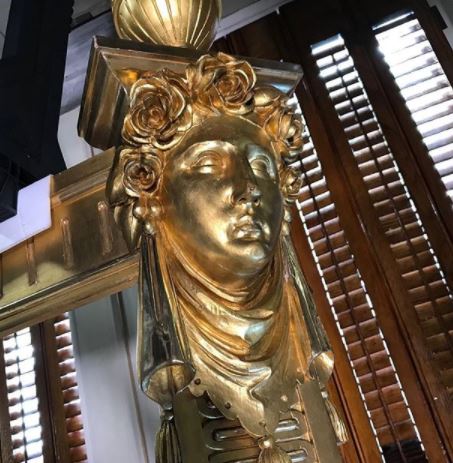
From the scientific point of view, one might consider these effects to have a different cause from that of spiritism. The psychiatrist will be interested in the question whether the practicing of spiritism was rather the effect than the cause of the ensuing mental and emotional disorders. Or again, was there some latent disposition in the family that was merely triggered off by the spiritistic activities? The parapsychologist will explain the table-lifting phenomenon as psychic automatism, that is an activation of subconscious forces. The Christian however is concerned essentially with the frequency in which psychic disturbances appear in connection with the practice of occultism. It was well known that Mrs. Winchester donned herself with ceremonial robes and communed nightly with the spirits in the Winchester mansion, and it was the midnight rendezvous for legions of ghosts, with special attention accorded those created by a Winchester rifle slug. It is possible the Mr. Abram stole something from the Winchester mansion, which brought on a curse to him and generations of his family members. A person’s thoughts and actions are like people who populate a community: friendly, contentious, kind, malicious, virtuous, evil, virile, cowardly, optimistic, cynical. We prosper in a pure mental neighborhood and wither in a foul one. And we can choose our mental neighborhood. Tired minds and bodies are signals to be careful. Demonic oppression is not easily discerned. Some people mistakenly blame demons for unrepentant self-will and psychological abnormalities. The source is not always clear, but demon oppression is usually marked by an emotional inability of the individual to do what one wants to do. A young maid staying in the Winchester mansion called Bythesea Atterton, had been a founding member of a thriving witches coven in Essex and the group’s other three members all shared her dedicated to the occult. She began to complain about various mental disturbances which included being tired of life and having depressions. Added to this she often had violent fit of temper, and her marriage was being undermined by her own frigidity. It has also happened that the husband had seen strange figures in the house at night. He had not told his wife about this so as not to upset her, but after a while she too had seen similar strange and maimed figures about the house. #RandolphHarris 3 of 13

Mrs. Winchester questioned the woman about her past illnesses and about the general health of her parents and grandparents, but she was the only one to have suffered in this way. In answer to Mrs. Winchester’s questions about contact with occultism, after a lot of thought Bythesea told her the following story. She had stolen Mrs. Winchester’s sixteenth century book about magic, and saw a black shadow at the end of her bed. It was a horrible presence that frighted the life out of Bythesea. While Mrs. Winchester was asleep, she would invite her Protestant girl’s group over. The minister’s wife, who had become the leader, used to practice table-lifting with all the girls in the Blue Séance Room. The sessions had always begun with the question, “Spirit, are you there?” One knock had meant “yes,” two had meant “no.” When the spirit had been willing to answer they had all taken part in asking it questions. The minister’s wife had continued this practice for many years until she was paralyzed by a stroke. Bythesea told Mrs. Winchester that all the girls had subsequently been afraid to visit their leader since her face had been changed into a terrible grimace by the stroke. Medical science would classy this example together with the precious one. However, with regards to the stroke, we would like to point out that in the numerous cases connected to the Winchester mansion of suicides, fatal accidents, stroke, and insanity, they usually involve the occult and someone who has in someway broke a rule, stole from the mansion, or offended the spirits somehow. The miles of twisting hallways in the mansion are made even more intriguing by secret passageways in the walls. Mrs. Winchester traveled through her house in a roundabout fashion, supposedly to confuse any mischievous ghosts that might he following her. Mrs. Winchester never slept in the same bedroom two nights in a row, in order to confuse any evil spirits that might be waiting for her. Music has always played an important role in cultural outlook and identity. Hymns, marching songs, lullabies—there are a thousand different aspects of life which are ordered or inspired by a musical beat. Music helps to define your cultural tribe. Even the ghost at the Winchester mansion reportedly had parties at ungodly hours. #RandolphHarris 4 of 13

The Satanic underground was celebrated—and eventually propelled into the mainstream—by musicians at the tail-end of the psychedelic era. While the Beatles and the Rolling Stones were the public faces of the 1960s youth culture, other voices of that same social and spiritual revolution sang dark hymns of rebellion. Some think that Black Arts Festivals have gone too far, one in particular. Coven might have achieved the popular success that ultimately eluded them. The band’s first album went under the uncompromising title Witchcraft Destroys Minds and Reaps Souls, boasting a gatefold sleeve featuring the band engaged in a Black Mass—complete with attractive blonde singer Jinx Dawson serving as a naked altar. The album features a recording of this Black Mass at the tail end of side two: “Two the best of our knowledge, this if the first Black Mass to be recorded in written words or in audio,” explain the sleeve notes. (Anton Lavey recorded his own Black Mass shortly afterwards.) “It is as authentic as hundreds of hours of research in every know source can make it. We do no to recommend its use by anyone who has not thoroughly studied Black Magic and is aware of the risks and dangers involved.” The rite bears the hallmark of serious study, with notably authentic elements from medieval Gnostic and witchcraft lore. The overall effect, however is curiously naïve, with the high priest’s command to “kiss the goat” sounding more Monty Python than Aleister Crowley. The music that precedes the Black Mass is standard—if well-executed—1960s folk rock. It is something of a jolt to realize that, behind the gentle acoustic guitars, the lyrics are exclusively about Devil-worship and black magic, while the alluring Miss Dawson’s vocals give the effect of a demonically-possessed Join Mitchell. Ultimately, Witchcraft Destroys Minds and Reaps Souls is an interesting musical exploration of the witchcraft tradition which suffused rural America ever since the Pilgrim Fathers landed in New England over four centuries ago. #RandolphHarris 5 of 13

The infamous Salem witch-trials—which took place in Massachusetts during 1692—had been one of the last major incidents of state extermination by religious fanatics from the “Old World,” making the term “witch-hunt” synonymous with the persecution with marginalized groups. As such, it elicited the sympathy of twentieth-century hippies like Coven toward their satanic predecessors. (In sacrificing the lives of twenty suspected “witches” to the fantasies of hysterical children, it also predated the “Satanic panic” of the 1980s-90s.) Coven’s second album Blood on the Snow followed but, despite its demonic sleeve, the Satanic elements were fare more restrained. By the third album, imaginatively titled Coven, the sinister elements had all but disappeared, replaced by standard hippie material. Robbed of the distinctive image of their early days, Coven faded away. It is interesting that the British rock band Lucifer, formed in 1971, were a curious collection of characters whose sardonically-devilish promotional photos portrayed a Mansonesque image, enlisted the Devil to fight the capitalist-pig system. Lucifer issued two albums, Big Gun and Exit, and a single, entitled “F*ck You,” which was seized by the police. Most outre of the Satanic psychedelicists, Roky Erickson had been the leader of the mid-1960s Texan garage band the Thirteenth Floor Elevators until a bust for marijuana possession. Facing a long prison sentence under the Lone Star State’s sanctimonious laws, he committed himself to a psychiatric institution instead. This was a bad mistake. Three years later, in the early 1970s, the hallucinogen-loving Erickson came out of the lunatic asylum considerably more troubled than when he went in. An obscure cult figure who became known for lyrical tributes to his favorite 1950s horror movies, in the hospital he had formed a close relationship with his own personal Satan. “Ah’m not afraid of the Devil, the Devil is mah friend. He chose me to do his biddin’,” drawled the usual but loveable Erickson. “Those doctors and nurses…They could not mess with the Devil’s chosen one.” To cement this unholy pact, Erickson later vocalized his personal infernal visions in wildly sincere songs like “I Think of Demons” and “Don’t Shake Me Lucifer.” #RandolphHarris 6 of 13

Ny far the most interesting of the Satanic-psychedelic bands were Black Widow. Their 1970s debt album, Sacrifice, was the result of guitarist Jim Gannon’s research into the Black Arts, with occultic lyrics accompanying a blend of traditional folk music and progressive rock. The almost-ubiquitous Alex Sanders warned the band they had done their homework too well, and would attract dark forces. He was right for one, though only inasmuch as Gannon’s lyrics boast a fair degree of authenticity, and some songs—like the catchy “Come to the Sabbat”—are highly evocative of the medieval-European Satanic tradition. Other moments—like the horrible saxophone solo Satan uses to tempt some poor innocent on “Seduction”—are diabolical in a different sense. The band enhanced their image with an elaborately Satanic stage show, professionally choreographed by a Leicester theatre company, complete with sacrificial daggers and an unclothed young woman to adorn the altar (at one point this was Alex Sanders’ wife, Maxine). They reaped the reward for their oddly entertaining work, with Sacrifice reaching the top 40 in the UK album charts. However, their second album, Black Widow, lacked both the Satanic themes and the power of its predecessor. The official explanation for this was that, true to Sanders’ warning, weird things stated to happen—most alarmingly, near-fatal car crashes. (Satan seems particularly keen on causing road accidents, however much more impressive lightning bolts or stampeding elephants might seem.) What is more likely is that, like many rock bands that use powerful Satanic imagery, Black Window may have begun to believe that same imagery was holding back their career. As many have learnt to their cost, however, it is more often the other way around—few dabbling rock stars regain the early excitement once they stop playing the Devil’s music. Suffice to day, Jim Gannon, the major creative force behind the band, cannot have been unduly worried by the curse, as he tried to mount a stage musical version of the Black Widow show on Broadway. Sadly, it never came off, and Black Widow—devoid of Devil worship—dwindled into obscurity. #RandolphHarris 7 of 13

Prosaic accounts of Black Sabbath’s flirtation with occult imagery claim they were impressed by the interest Black Widow had enjoyed in their Satanic stage show. The truth is probably a combination of all these stories. Whatever, it is fair to say that intense interest in their demonic aspects surprised Black Sabbath as much as anyone else. Their eponymous 1969 debut album was recorded in to days for six hundred pounds, treated with contempt and indifference by the press, and rapidly became a commercial success. The Christian Science Monitor, or all publications, noted approvingly that the band did not “condone or promote the less seemly aspects of…an interest in occult matters.” They were right. The song “Black Sabbath” describes the narrator’s state of terror at witnessing a Black Mass. Their attitude to Satan was chiefly the traditional one of fear and loathing, their lyrics even sometime entreating listeners to turn to God as the only source of love. However, the audiences were not listening—they wanted a Satanic band, and that is what Black Sabbath ostensibly became. (Rumor has it that their management had the large cross that decorated the inside of their first album inverted without the band’s knowledge of approval.) Satan appeared in Black Sabbath’s songs as a constant source of fascination and fear, an entity who brings colour into drab existence but can also represent the overwhelming evil of the World. In the classic “War Pigs,” Satanic witched are equated with the evil of politicians and generals who callously kill millions in their power games. (According to guitarist Tony Iommi, the title was derived from “Walpurgis,” the night when evil traditionally rules the World.) However, the most fascinating manifestation of Satan in a Black Sabbath song is also the rarest: when they briefly allow the Prince of Darkness to speak for Himself. In this strange and haunting “N.I.B,” Lucifer, the creator, sings a plaintive love song to His greatest creation and fellow sufferer, humankind. (The song “Lord of this World,” also recognizes Satan as god of the Earth.) #RandolphHarris 8 of 13
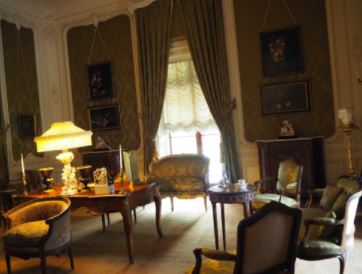
N.I.B.’s title is the source of some confusion: according to drummer Bill Ward it was simply his nickname, derived from when the band were stoned and though he resembled a pen nib. Typically, the fans perceived a more Satanic significance—to them, “N.I.B” stood for “Nativity in Black.” Inevitably, the band were quizzed on such apparent occultic beliefs during interviews. “We are into God,” Iommi unhelpfully explained to which Ward added, “But sometimes I feel Satan is God.” Perhaps they were expressing the beliefs of the early Satanic Gnostic groups, fifteen hundred years before. Led Zeppelin emerged in 1968 from London’s lively rhythm and blues scene. The band took off completely and became a huge commercial success. They were also said to have a Satanic influence with their roots being in traditional black blues music—though guitarist Jimmy Page’s outfit, much closer in its sympathies to the blues than to heavy metal, was far more preoccupied with the tradition. The Devil also makes His presence felt, either as a symbol of the inevitable fate awaiting the debauched bluesman, or as the hard-living musician’s comrade and inspiration. The delta blues—the school that had the greatest influence on the rock-guitar style—became known as “the Devil’s music.” Delta bluesmen included Peetie Wheatsraw, who liked to be known as “the Devil’s Son-in-Law and High Sheriff of Hell,” and Robert Johnson. Johnson, the acoustic-playing grandfather of rock guitar, best illustrates the enduring legend of the bluesman who sold his soul to acquire musical talent. (As testified by Satanic Rock star Glenn Danzig during our interview with him: “A lot of the old blues songs are very heavily rooted in occultism. There is Robert Johnson, all the voodoo and juju stuff—‘Got my Mojo Working,’ ‘Black Cat Bone.’”) Johnson’s pact with Satan was said to be struck at the “Crossroads”—one of his best-know song, and a traditionally magical location in many cultures—and thereafter he always claimed to live, as another song put it, with a “Hellhound on My Trail.” #RandolphHarris 9 of 13

Led Zeppelin, and Jimmy Page in particular, were heavily influenced by Johnson, lifting parts of his songs for their own compositions. As with Johnson, so the popular rumour went, Led Zeppelin has made a pact with the Devil, asking the Prince of Darkness to tune their instruments in return for their souls. Only Satanic aid, reasoned the myth, could explain the enormous success the band enjoyed so rapidly, or the power involving pleasures of the flesh these modern pied pipers had over young ladies. These same legends had been linked with musicians from Robert Johnson to Elvis Presley and beyond, but with Led Zeppelin the Satanic-pact myth has proved especially enduring. If you study the supernatural, you cannot ignore evil. The “ZOSO” symbol that became Led Zeppelin’s band’s trademark was also partly derived from the work of another influential British occultist, Austin Osman Spare—a contemporary of Crowley, and occultic artist, best known for his “automatic drawing,” which he claimed worked as a conduit for supernatural forces. One more than one occasion, Page hinted that much of Led Zeppelin’s material (particularly their meditative anthem “Stairway to Heaven”) had been conceived in a similar fashion. (If you recall, this is also how Mrs. Winchester received the plan on how to build her mansion.) Kenneth Anger asked Page to record a soundtrack for his magic ritual film Lucifer Rising, but was bitterly disappointed with the results, saying, “I had asked him for intimacy and strength, rhythms and counter-rhythms. But he gave me a short fragment of chanting voices and sounds that I thought were quite sombre and morbid.” In October of 1976, the two fell out in grand style. Page threw Anger out of the basement of his London house, where he had granted the American magus use of a fil-editing suite. Anger responded with a press conference. Asked if he felt vindictive toward Page, Anger reposed, “You bet I do. I’m not a Christian turn the other cheek kind. In fact, I’m ready to throw a Kenneth Anger curse.” #RandolphHarris 10 of 13
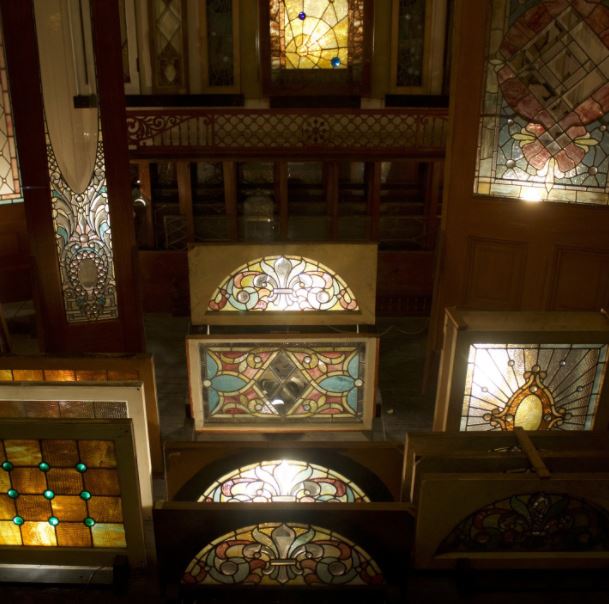
Asked about the incident in an interview the following year, Page observed, “The whole thing about ‘Anger’s Curse,” they were just these silly little letters. God, it was all so pathetic…I had a lot of respect for him. As an occultist he was definitely in the vanguard.” Despite Page’s scepticim, many fans and commentators linked the personal tragedies that were to strike the band with some kind of hex. On 26 July 1977, vocalist Robert Plant’s young son Karac died of a respiratory infection. Three years later, on 26 September 1980, the band’s drummer, John Bonham, died after a drinking binge. Enough was enough. On 4 December 1980, it was announced that Led Zeppelin were no more. The band’s demise only served to fuel rumours. The more lurid stories held that all of Led Zeppelin, with the exception of Bonham, had signed pacts with the Devil for Earthly pleasure, supposedly explaining the drummer’s untimely death. One fanzine reported that black smoke had been seen billowing from Page’s house on the day following Bonham’s death, and that the guitarist was overheard uttering strange curses in unknown tongues. Even the mainstream press got in on the act, with the London Evening News quoting an anonymous source: “It sounds crazy, but Robert Plant and everyone around the band is convinced that Jimmy’s dabbling in black magic is responsible in some way for Bonzo’s death and for all these other tragedies.” What are we to make of the “Led Zeppelin curse”? Many young people still need to hear guitar music that conjured the Devil, and Satanic rock does show a tenacity that surprised all but its most fervent disciples. Kip Trevor from the band Black Widow tells the story about their album Sacrifice and the stage show of the same title. “There is a guy who has lost his wife as a result of an accident to do with some kind of occultic ceremony. Something goes wrong, and she is killed. He comes back through the centuries, is reborn, and remembers this in a dream. In this dream he realizes his wife can be returned to him, if he can perform another ceremony, like the one which had gone wrong. This time he would turn the tables on the Lady Astoroth, draw her, overpower her, and sacrifice her, then she would be banished and his wife would come back. #RandolphHarris 11 of 13

“So in the first song, ‘In Ancient Days,’ tells the story of this guy travelling through the centuries. Then there is the conjuration in which we bring Lady Astoroth and the girl appears. We’d have a lot of fun with that, as she would appear from all sorts of odd places, depending on where we were playing. We toured with it all over Europe for around eighteen months. When Black Widow broke up, Jim and myself went off to try and revive the idea of the occultic stage show. We spent a lot of time, money and effort on this new black magic concept, but it did not work out. Black Widow’s first album was quite an achievement, but it would have been lovely to have developed it. The problem was that the band politics got in the way—some of them wanted to be a “normal” band and thought the whole black magic thing was not them. They thought it was overshadowing their playing. The show was written with Jim’s research, using proper conjuration ceremonies. The whole thing was done authentically as we could possibly do it. We drew the magic circles, used all the props—fire, earth, water, and air. We did it exactly as you were supposed to do it. Doing that has an effect, even if it is only psychological, because you know you’re doing it in the correct fashion. You’re stepping over the line. Combined with the power of the music and the power of the audience’s involvement, weird things would happen.” God did not create the devil as such. Lucifer, one of God’s mighty cherubs, rebelled against Him and became the devil. Satan is thus the product of his own evil choice. God created a superbly beautiful and wise being and invested him with power above all the other created beings. His name, Lucifer, means “son of the morning,” “bright and shining one,” or “light bearer.” He had many angels at his beck and call and was prince over all the Earth. A fee moral agent with the power of choice, he was filled with an ambition to which he had no right—to rise above God. Unwilling to rule over the World as a vice-general under God, he became “Satan,” meaning “adversary,” or opponent. #RandolphHarris 12 of 13
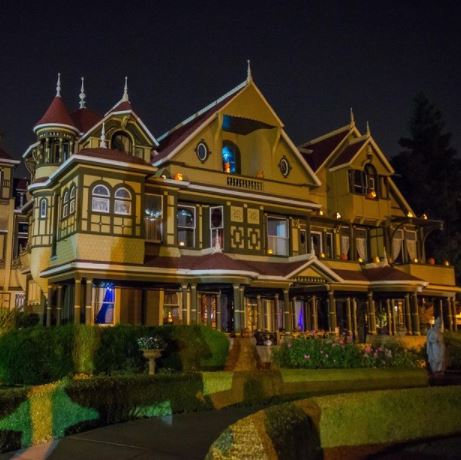
There is only one devil; there are many demons. A familiar spirit in the service of Satan knows human beings so well that he can disguise himself as those people; there are different kinds of spirits—some are sensual and lewd, and others appear ethical; demons are wandering spirits belonging to the legions of Satan, a class of beings distinct from angels—some are on Earth seeking embodiment in human beings and animals, other already are imprisoned in the bottomless abyss; Satan wins followers by psychic and supernatural phenomena that approximate the power of God; Satan is a created being who presently exercises authority over his domain, the Earth realm, but he can do only what God allows him to do, and eventually he will be deprived of all power and glory. As one can see, it is not only Mrs. Winchester who had experiences with the occult, curses, and spirits. Many people have. Occasionally other theories turn up in the literature of modern parapsychology. Some speak of a magical astral World-soul. This entails the idea of an inner World in which all the occurrences of the visible World have their inner equivalent. The World-soul is supposed to be outside of our concept of space and time. The past and the future, the near and the far are said to be all on the same level. Everything is synchronized and simultaneous. A person who is capable of contacting this World-soul enables such a person to enter into a sphere of higher intelligence where the limitations of space and time no longer hold true. Prophecy is inspired either by the Holy Spirit of by the Devil. The wide scope of the occult power possessed by spiritists helps explain why they can cause so much mischief. Through the phenomena of levitation, apports, telekinesis, and materializations, it is not difficult to see how a person endowed with strong mediumistic powers can do a great deal of harm, especially in closely associated realm of magic. Genuine magic is the art of bring about results beyond humans’ power through the enlistment of supernatural agencies. Black magic deliberately involves the devil and demons, and the resulting enchantment is used for persecution and revenge. #RandolphHarris 13 of 13


Sarah Winchester was reportedly trapped in her Daisy Bedroom during the 1906 earthquake. Her workers had to pry her out of the room, and the crowbar mark is still on the door to this day… See it on the Mansion Tour!

A 160-room mansion built to appease the spirits who died at the hands of the Winchester Rifle 👻

One Side’s Abundant Eden is the Other’s Vast Wasteland

The real community of humans, in the midst of all the self-contradictory simulacra of community, is the community of those who seek the truth, of the potential knowers of all humans to the extent they desire to know. The face of various claims to truth and various ways of life and kinds of human beings—is the great insight of our times. The true believer is the real danger. The study of history and of culture teaches that all the World was mad in the past; humans always though they were right, and that led to wars, persecutions, slavery, xenophobia, racism, and chauvinism. The point is not to correct the mistakes and really be right; rather it is not to think you are right at all. Many students, of course, cannot defend their opinion. It is something with which they have been indoctrinated. The best they can do is point out all the opinions and cultures there are and have been. What right, they ask, do I or anyone else have to say one is better than the others? Every educational system has a moral goal that it tries to attain and that informs its curriculum. It wants to produce a certain kind of human being. This intention is more of less explicit, more or less a result of reflection; but even the neutral subjects, like reading and writing and arithmetic, take their place in a vision of the educated person. In some nations the goal was the pious person, in others, the warlike, in others industrious. As a nation, we began with the model of the rational and industrious human, who was honest, respected the laws, and dedicated to the family. Above all one was to know the rights doctrine; the Constitution, which embodies it; and American history, which presented and celebrated the founding of a nation “conceived in liberty and dedicated to the proposition that all humans are created equal.” A powerful attachment to the letter and the spirit of the Declaration of Independence gently conveyed, appealing to each humans’ reason, was the goal of the education of democratic humans. This called for something very different from the kinds of attachment required for traditional communities where myth and passion as well as severe discipline, authority, and the extended family produced an instinctive, unqualified, even fanatic patriotism, unlike the reflected, rational, calm, even self-interested loyalty—not so much to the country but to the form of government and its rational principles—required in the United State of America. #RandolphHarris 1 of 20

There is no enemy other than the human who is not opened to everything. However, when there are no shared goals or visions of the public good, is the social contract any longer possible? Hobbes and Locke, and the American Founders following them, intended to palliate extreme beliefs, particularly religious beliefs, which lead to civil strife. The members of sects had to obey the laws and be loyal to the United States of America’s Constitution; if they did so, other had to leave them alone, however distasteful their beliefs might be. The insatiable appetite for freedom to live as one pleases thrives on this aspect of modern democratic thought. In the end it begins to appear that full freedom can be attained only when there is no such knowledge at all. The effective way to defang the oppressors is to persuade them they are ignorant of the good. History and social science are used in a variety of ways to overcome prejudice. We should not be ethnocentric, a term drawn from anthropology, which tells us more about the meaning of openness. We should not think our way is better than others. Then intention is not so much to teach the students about other times and places as to make them away of the fact that their preferences are only that—accidents of their time and place. Their beliefs do not entitle them as individuals, or collectively as a nation, to think they are superior to anyone else. Instinct and intellect must be suppressed by education. The natural soul is to be replaced with an artificial one. The dominant majority gave the country a dominant culture with its traditions, its literature, its tastes, its special claim to know and supervise the language, and its Protestant religions. The reactionaries did not like the suppression of class privilege and religious establishment. For a variety of reasons, they simply did not accept equality. Critics knew full well that the Constitution’s heart was a moral commitment to equality and hence condemned segregation. The Constitution was not just a set of rules of government but implied a moral order that was to be enforced throughout the entire country. #RandolphHarris 2 of 20

The Americans who were demanding civil rights, were the true Americans because they understood that equality belongs to them as human beings by natural and political right. It was a demand for American identity. However, with history, nothing has taken place except a smattering of facts learned about other nations or cultures and a few social science formulas. None of this means much, partly because little attention has been paid to what is required in order truly to convey the spirit of other places and other times to young people, or for that matter to anyone of other places and other times to young people, or for that matter to anyone, partly because the students see no relevance in any of it to the lives they are going to lead or to their prevailing passion. No longer is there a hope that there are great wise humans in other places and times who can reveal the truth about life—except for the few remaining young people who look for a quick fix from a guru. Gone is the real historical sense of a Machiavelli who wrested a few hour from each busy day in which “to don regal and courtly garments, enter the courts of the ancients and speak with them.” Some critics of the United States of America’s Constitution, which provided rights for all citizens, truly believed that some people were inferior to them, and they thought that Jim Crow was necessary, as it was part of their unique way of life. Different strokes for different folks. Like said before, the only way to defang them is not with hate, but to show them the beauty of equality. The point is to persuade students to recognize that there are other ways of thinking and that Western ways are not always better. It is again not the content that counts but the lesson to be drawn. Such requirements are part of the effort to establish a World community and train its members—the person devoid of prejudice. However, if the students were really to learn something of the minds of any of these non-Western cultures—which they do not—they would find that each and every one of these cultures is ethnocentric. All of them think their way is the best way, and all others are inferior. Western phenomenon, and in its origin is obviously connected with the search for new and better ways, or at least for validation of the hope that our own culture really is the better way, a validation for which there is no felt need in other cultures. #RandolphHarris 3 of 20

The reason for the non-Wester closedness, or ethnocentrism, is clear. Humans must love and be loyal to their families and their peoples in order to preserve them. Only if they think their own things are good can they rest content with them. A father must prefer his child to other children, a citizen his country to others. That is why there are myths—to justify these attachments. And a man needs a place and opinions by which to orient oneself. This is strongly asserted by those who talk about the importance of roots. The problems of getting along with outsiders is secondary to, and sometimes in conflict with, having an inside, a people, a culture, a way of life. A very great narrowness is not incompatible with the health of an individual or a people, whereas with great openness it is hard to avoid decomposition. When people take on the good from another culture, this may be considered a dangerous business because it tends to weaken wholehearted attachment to their own, hence to weaken their peoples as well as to expose themselves to the anger of the family, friends, and countrymen. Loyalty versus quest for the good introduced an unresolvable tension into life. However, the awareness of the good as such and the desire to possess it are priceless humanizing acquisitions. Openness used to be the virtue that permitted us to seek the good by using reason. It now means accepting everything and denying reason’s power. The unrestrained and thoughtless pursuit of openness, without recognizing the inherent political, social, or cultural problem of openness as the goal of nature, has rendered openness meaningless. Cultural relativism destroys both one’s own and the good. True openness is the accompaniment of the desire to know, hence of the awareness of ignorance. To deny the possibility of knowing good and bad is to suppress true openness. A proper historical attitude would lead one to doubt the truth of historicism (the view that all thought is essentially related to and cannot transcend its own time) and treat it as peculiarity of contemporary history. Historicism and cultural relativism actually are a means to avoid testing our own prejudices and asking, for example, whether humans are really equal or whether that opinion is merely a democratic prejudice. #RandolphHarris 4 of 20

One has to have the experience of really believing before one can have the thrill of liberation. Prejudices, strong prejudices, are visions about the way things are. They are divinations of the order of the whole of things, and hence the road to a knowledge of that whole is by way of erroneous opinions about it. Error is indeed our enemy, it alone points to the truth and therefore deserves our respectful treatment. The mind that has no prejudices at outset is empty. It can only have been constituted by a method that is unaware of how difficult it is to recognize that a prejudice is a prejudice. Without getting misty-eyed about it, I think we can fairly say that universities have a sacred responsibility to define for their society what is worthwhile knowledge. These definitions are most clearly visible in university catalogues, where you will find lists of courses, subjects, and “fields” of study. Taken together, they amount to a certified statement of what the university thinks a serious student ought to think about. In what is omitted from a catalogue, you may also learn what a serious student need not think about. However, these are bad times for scrupulous efforts at gatekeeping, and, happily, many universities are now busily engaged in rewriting their catalogues. Some tend to think that living in California; Florida, and other warm climates tends to shrivel the brain and makes people dumber than those living in colder climates, such as New York, Pennsylvania, Illinois, and Iowa. There was a study by two doctoral students at Texas Technical University who found that the ten states with the highest average SAT scores all had cold winters. Indeed, every state with an average of 540 or higher on both the verbal and quantitative parts of the SAT had an average higher temperature in January of less than 42 degrees Fahrenheit. At the other end, five of the ten states with the lowest SAT scores were warm-weather states. Moreover, temperature has a significant relationship to SAT scores even when the researchers took into account such factors as per-pupil expenditures on schooling. So there! Now, there is also an important reason to keep authority figures on the right side of the law. Not only will it accord them more respect, but also more compliance. In the face of what they construe to be legitimate authority, most people will do what they are told. Or, to put it in another way, the social context in which people find themselves will be a controlling factor in how they behave. #RandolphHarris 5 of 20

Many people who consider themselves scientists, are not. Dr. Freud’s work is exemplary—indeed, monumental—but scarcely anyone believes today that Dr. Freud was doing science, any more than educated people believe that Marx was doing science, or Max Webber or Lewis Mumford or Bruno Bettelheim or Carl Jung or Margret Mead or Arnold Toynbee. What these people were doing was weaving narratives about human behavior. Their work is a form of storytelling, not unlike conventional imaginative literature although different from it in several important ways. The work of these people is called storytelling because this suggest that an author has given a unique interpretation to a set of human events, that one has supported one’s interpretation with examples in various forms, and that one’s interpretation cannot be proved or disproved but draws its appeal from the power of its language, the depth of its explanations, the relevance of its examples, and the credibility of its theme. And all of this has an identifiable moral purpose. The words “true” and “false” do not apply here in the sense that they are used in mathematics or science. For there is nothing universally and irrevocably true or false about these interpretations. There are no critical tests to confirm or falsify them. There are no postulates in which they are embedded. They are bound by time, by situation, and above all by the cultural prejudices of the researchers. Quite like a piece of fiction. There is more hypocrisy in Heaven and Earth than is dreamt of in some of our philosophies. What we know about ourselves—can be more terrifying than what we do not know. Most of us generate piles of junk—unconvincing stores without credible documentation, sound logic, or persuasive argument. Books are, in many cases, written by men and women who are concerned not to improve scholarship but to improve social life. Thus, the purpose of doing this kind of work is essentially didactic and moralistic. The purpose of social research is to rediscover the truths of social life; to comment on and criticize the moral behavior of people; and finally, to put forward metaphors, images, and ideas that can help people live with some measure of understanding and dignity. Specifically, the purpose of media ecology is to tell stores about the consequences of technology; to tell how media environments create contexts that may change the way we think or organize our social life, or make us better or worse, or smarter or dumber, or freer or more enslaved. #RandolphHarris 6 of 20

Sometimes the stories media ecologists have to tell are rather more important than those of other academic storytellers—because the power of communication technology to give shape to people’s lives is not a matter that comes easily to the forefront of people’s consciousness, though we life in an age when our lives—whether we like it or not—have been submitted to the demanding sovereignty of new media. And so we are obligated, in the interest of humane survival, to tell tales about what sort of paradise may be gained, and what sort lost. We will not have been the first to tell such tales. However, unless our stories ring true, we may be the last. Now the TV tends to be a beast, too, as so many people know. The TV news media is usually there to frame certain stories they way they feel will be more entertaining, and they will also suppress or ignore others when they are involved in the corruption or paid to cover it up. To fight corruption, people need to learn the legal system, its tactics, and their means of manipulating media. To learn these, individuals have to restructure their mind and conceptions. And so to stand against the enemy, many engage of the process of self-destroying what remained of their own culture. When news television crews learn of a struggle they want to profit from, reporters are flown out from Hollywood and other areas to shoot images following the networks news guidelines for “good television” and “balanced reporting.” When it comes to the people, they often juxtapose with the people, others in suits and ties, who are responsible government officials concerned about jobs, and a lot of savage-looking types in funny clothes, speaking jive about their land, which does not seem credible because they way the people are dress and the emotions of their language. People are most likely to believe a professional in a suit, than someone who is wearing regular clothes and has been a victim of crime. After 40 million viewers see a Caucasian, modishly dressed TV newsman explain the crosscurrents in the struggle, and plaintively ask whether something of an earlier culture could not be permitted to remain, he finishes his report by saying, “From Sacramento, California, this is John Doe reporting.” This is followed by a commercial for the need to build affordable housing, how it creates jobs, and how green energy will be used to power the buildings during this energy crisis. The next is a story talking about gas prices and the need to suspend the gas tax. #RandolphHarris 7 of 20

Surely this story and the advertisements did not help the people concerned about their land. It was certain that they did not come through as well as the businessmen, the government officials and the reporter’s objective, practical analysis. They were attempting to convey something subtle, complex, foreign and ancient through a medium which did not seem able to handle any of that and which is better suited to objective data, conflict and fast, packaged information. When a struggle is revealed, usually the people become fixed into the model of artifact. The medium cannot be stretched to encompass their message. On the other hand, what if one had four minutes, or even one minute, to convey the essence of a product? A BMW? A stereo set? A toy? Could one accomplish that efficiently? One certainly could. It is obvious that a product is a lot easier to get across on television than a several acres of land or a cultural mind-set. Understanding cultural ways enough to care about them requires understanding a variety of dimensions of nuance and philosophy. You do not need any of that to understand a product, you do not have problems of subtlety, detail, time and space, historical context or organic form. Products are inherently communicable on television because of their static quality, sharp, clear, highly visible lines, and because they carry no informational meaning beyond what they themselves are. They contain no life at all and are therefore no capable of dimension. Nothing works better as telecommunication that images of products. Might television itself have no higher purpose? Most Americas, whether on the political left, center, or right, will argue that technology is neutral, that any technology is merely a benign instrument, a tool, and depending upon the hands into which it falls, it may be used one way or another. There is nothing that prevents a technology from being used well or badly; nothing intrinsic in the technology itself or the circumstances of its emergence which can predetermine its use, its control or its effects upon individual human lives of the social and political forms around us. The argument goes that television is merely a window or a conduit through which any perception, any argument or reality may pass. It therefore has the potential to be enlightening to people who watch it and is potentially useful to democratic process. #RandolphHarris 8 of 20

If you accept mass production, you accept that a small number of people will supervise the daily existence of a much larger number of people. You have to accept that human beings will spend long hours, every day, engaged in repetitive work, while suppressing any desires for experience or activity beyond this work. The workers’ behavior becomes subject to the machine. With mass production, you also accept that huge numbers of identical items will need to be efficiently distributed to huge numbers of people and that institutions such as advertising will arise to do this. Once technological process cannot exist without the other, creating symbolic relationships among technologies themselves. If you accept the existence of advertising, you accept a system designed to persuade and to dominate minds by interfering in people’s thinking patterns. You also accept that the system will be used by the sorts of people who like to influence people and are good at it. No person who did not wish to dominate others would choose to use advertising and all technologies created to serve it will be consistent with this purpose, will encourage this behavior in society, and will tend to push social evolution in this direction. In all of these instances, the basic form of the institution and the technology determines its interaction with the World, the way it will be used, the kind of people who use it, and to what ends. And so it is with television. Far from being “neutral,” television itself predetermines who shall use it, how they use it, what effects it will have on individual lives, and, if it continues to be widely used, what sorts of political forms will inevitably emerge. Television is not reformable. If our society is to return to something like sane and democratic functioning, it must be gotten rid of totally. This is not about the television itself. It is about a process, already long underway, which has successfully redirected and confined human experience and therefore knowledge and perceived reality. We have all been moved into such a narrow and deprived channel of experience that a dangerous instrument like television can come along and seem useful, interesting, sane and worthwhile at the same time it further boxes people into a physical and mental condition appropriate for the emergence of autocratic control. Television has been used and expanded by the present powers-that-be, and that was inevitable, and it should have been predictable at the outset. The technology permits of no other controllers. #RandolphHarris 9 of 20

One also has to worry about the effects of television upon individual human bodies and minds, the effects which fit the purposes of the people who control the medium. Furthermore, television has no democratic potential. The technology itself places absolute limits on what may pass through it. The medium, in effect, chooses its own content from a very narrow field of possibilities. The effect is to drastically confine all humans understanding within a rigid channel. And as mentioned before, these aspects of television are reformable. What is revealed, however, is that there is ideology in the technology itself. To speak of television as “neutral” and therefore subject to change is as absurd as speaking of the reform of a technology such as social media. The medium is the message. Many do not recognize the transformative power of new communication technologies. They need to come with a warning about the threat the power poses—and the risk of being oblivious to that threat. The electric technology is within the gates, and we are numb, deaf, blind, and mute about its encounter with on and through which the American way of life was formed and is changing. When people start debating (as they always do) whether the medium’s effects are good or bad, it is the content they wrestle over. Skeptics, with equally good reason, condemn the crassness of the content, viewing it as signaling a “dumb down” of culture. One side’s abundant Eden is the other’s vast wasteland. The Internet is the latest medium to spur this debate. In the long run a medium’s content matters less than the medium itself in influencing how we think and act. As our window onto the World, and onto ourselves, a popular medium molds what we see and how we see it—and eventually, if we us it enough, it changes who we are, as individuals and as a society. The effects of technology do not occur at the level of opinions or concepts. Rather, they alter patterns of perception steadily and without any resistance. Media work their magic, or their mischief, on the nervous system. #RandolphHarris 10 of 20

Our focus on a medium’s content can blind us to these deep effects. We are too busy being dazzled or distributed by the programming to notice what is going on inside our heads. In the end, we come to pretend that the technology itself does not matter. It is how we use it that matters, we tell ourselves. The technology is just a tool, inert until we pick it up and inert again once we set it aside. We are too prone to make technological instruments, like guns, scapegoats for the sin of those who wield them. The products of modern science are not in themselves good or bad; it is the way they are used that determines their value. However, it is also our conventional response to all media, namely that it is how they are used that count, which is the numb stance of the technological idiot. People have been replacing God with false idols and that is the problem. So many people say they believe in God, but so few read the Bible or pray daily. They are too busying watching TV and using the Internet to. Many people are essentially being sent to a deep-space death by the malfunctioning machine because is it calmly, coldly, discounting their memory circuits that control their brains. Many people can feel it, too. They have an uncomfortable sense that someone, or something, has been tinkering with their brains, remapping the neural circuitry, reprogramming the memory. Their minds are not going—so far as they can tell—but it is changing. They do not think the way they used to think, and it can be felt most strongly when they are reading. Several people are no longer able to immerse themselves into a book or a lengthy article. Their minds used to get caught up in the twists of the narrative or the turns of the argument, and they spend hours strolling through long stretches of prose. For many, that is rarely the case anymore. Now their concentration starts to drift after a page or two. They get fidgety, lose the thread, begin looking for something else to do. They feel like they are always dragging their wayward brains back to the text. The deep reading that used to come naturally has become a struggle. The Net has become the all-purpose medium, the conduit for most information that flows through one’s eyes and ears and into their mind. The advantages of having immediate access to such an incredibly rich and easily searched store of data are many, and they have widely described and duly applauded. #RandolphHarris 11 of 20

While the Inter is an astonishing boom to humanity, gathering up and concentrating information and idea that were once scattered so broadly around that World that anyone could profit from them, now all this information is at your fingertips. When one is writing a report for school and using mostly book sources, some of the information may be outdated, and now what they can do it go online, find a reputable site and supplement the new information. It is better than gathering all your information from the silicon memory system. The more people use the Web, the more they have to fight to stay focused on long pieces of writing. Some worry they will become chronic scatterbrains. Because of the Internet, some people have almost totally lost the ability to read and absorb a long article on the web or in print. Even electronic Web pages that are more than three or four paragraphs is too much for some to absorb. They just skim it. There are people that think the Internet is the most creative thing that was invented. One could hardly meet anyone who says it has not been helpful. Many individuals like to go online because they love the ability to review and scan tons of information on the web. It is believed that reading lots of short, linked snippets online is a more efficient way to expand one’s mind than reading a 250-page book. These technopagans also believe in superiority of the Internet and think others have not been able to recognize it yet because they are measuring it against our old linear thought process. In many ways, the Internet is making people less patient readers, but could possible be making them smarter. They have more connections to documents, artifacts, and people, which means more external influences on their thinking and thus on their writing. Regardless, more people know they have sacrificed something important, but they will not go back to the way things used to be. For some people, the very idea of reading a book has come to seem old-fashioned, maybe even a little silly—like driving your own car when you can just schedule a ride share service. This generation thinks thing sitting down and reading a book from cover to cover does not make sense. It is not a good use of their time, as they can get the information they need faster through the Internet. These skilled Internet hunters think books are superfluous. #RandolphHarris 12 of 20

The digital immersion has even affected the way people absorb information. They do not necessarily read from left to right and from top to bottom. They might instead skip around, scanning for pertinent information of interest. The Net has become essential to their work, school, or social lives, and often to all three. Some log on only a few times a day—to check their e-mail, follow a story in the news, research a topic of interest, or do some shopping. And there are, of course, many people who do not use the Internet at all, either because they cannot afford to or because they do not want to. What is clear, though, is that for society as a whole the Net has become, in just the thirty years since software programmer Tim Berners-Lee wrote the code for the World Wide Web, the communication and information medium of choice. The score of its use is unprecedented, even by the standards of the mass media of the twenty-first century. We seem to have arrived, at an important juncture in our intellectual and cultural history, a moment of transition between two very different types of thinking. What we are trading away for the riches of the Internet is our old linear thought process. Calm, focused, undistracted, the liner mind is being pushed aside by a new kind of mind that wants and needs to take in and dole our information in short, disjointed, often overlapping bursts—the faster, the better. When people go online, they feel their brains light up, and feel like they are getting smarter. The feelings are intoxicating—so much so that they can distract people from the Net’s deeper cognitive consequences. Many people miss the days of the old box TV with rabbit ears sitting on the floor, and the bulky avocado telephone fixed to the wall in the kitchen with its rotary dial and long, coiled cord. And the den filled with books on the bookshelves—lot of books—with their many-colored spines, each bearing a title and the name of a writer. There was something calming in the reticence of all those books, their willingness to wait, years, decades, our centuries even, for the right reader to come along and pull them from their appointed slots. Take your time, the books whisper. We are not going anywhere. #RandolphHarris 13 of 20

The computer, however, is more than just a simple tool that does what one tells it to do. It is a machine that, in subtle but unmistakable ways, exerts an influence over you. The more one uses it, the more it alters the way one works. Reading lone feels new and liberating because for many kids who did not like reading books because of the lack of pictures, not have hyperlinks and search engines which deliver an endless supply of words to their screen, alongside pictures, sounds, and videos. People have started letting their newspaper and magazine subscriptions lapse. Who needed them? By the time the print editions arrived, dew-dampened or otherwise, the felt like that have already seen all the stories. The Internet is exerting a much stronger and broader influence over any one than their old stand-alone personal computer ever could. Their way their very brains work is changing. And this when most start worrying about their inability to pay attention to one thing for more than a couple of minutes. It is not just a symptom of middle-age mind rot. One’s brain is not just drifting. It is hungry. It is demanding to be fed the way the Internet feeds it—and the more it is fed, the hungrier it becomes. Should I check another e-mail, clink another link, look at another web page. Cause I am falling on the floor. I am climbing up the walls and everytime I get a grip, I seem to lose myself just a little more. Cause I am here and it eats me up, but I love the way it feels. I really should not stay online, but I cannot give up. The more it hurts, the more I need it more. It is like an addiction. I want to be connected. Just as Microsoft Word had turned me into a flesh-and-blood word processor, the Internet, one may sense, is turning one into something like a high-speed data-processing machine. Maybe that is a good thing because today more than every we are governed, all over the World, by the students of economics professors. Presidents and politicians, treasury secretaries or ministers of finance and chancellors of the exchequer, central bankers, investment bankers and senior officials of the World’s biggest and more powerful corporations have all dutifully sat in their classrooms listening to them, pouring over their key ideas. #RandolphHarris 14 of 20

The same goes for brokers, financial advisers and newspaper and television pundits who take these ideas to the public. Unfortunately, many ideas remembered from college days belong in the “obsoledge attic,” or better yet, in the cemetery of ideas. The media is sometimes behind big bloopers. In February of 2004 U.S. president George W. Bush stiff-armed his own Council of Economic Advisers, refusing to publicly back its forecast that the economy would provide 2.6 million new jobs that year. But as The Washington Post reported, That forecast, derided as wildly optimistic, was one of the more modest predictions the administration has made about the economy over the past three years. Two years ago, the administration forecast that there would be 3.4 million more jobs in 2003 than there were in 2000. And it predicted a budget deficit for discal 2004 of $14 billion. The economy ended up losing 1.7 million jobs over that period, and the budget deficit [for 2004]…is on course to be $521 billion. No doubt, some of this is political exaggeration. Any statistic can be tortured into submission. Nor are the torturers jut Republicans. The discrepancies between the forecast and subsequent results began to widen under the previous Democratic administration. It was clear that, even allowing for political fact manipulation, something was seriously amiss. In the words of a Republican White House press spokesman, “The old theories…proved themselves wildly wrong…Nobody saw this happening—not on Wall Street, not Vegas, not Poor Richard, not Nostradamus.” Economists have failed to anticipate more than job numbers and deficits. They have contributed to some of the most publicized, embarrassing financial debacles in recent decades. In the last two months of 2022, inflation has averaged 0.85 percent. If these hikes continue over the next three months, the headline inflation rate would approach 9 percent by spring. If they persist for a year, it would surpass 10 percent—the first time the United States of America would have a double-digit inflation since the early 1980s. President Biden’s entire economic team has consistently played down inflation’s threat all year. They lied about helping the American people through the pandemic and ignored the warnings from former treasury secretary Lawrence H. Summers that the American Rescue Plans massive size would reduce inflation. Then said initial upticks in prices were simply statistical glitches caused by the dramatic price drops during the pandemic’s initial phase and would fade away once that glitch dropped out of the calculations. #RandolphHarris 15 of 20

When that did not happen, they started blaming supply chain woes for the problem, even though that cannot possible explain things such as the fast and steady rise in housing costs. When consumers are fast losing purchasing power during two-digit inflation, consumers’ goods industries suffer symptoms of contraction and recession, especially unemployment of capital labor. Two-digit inflation only comes to an end with the advent of three-digit inflation which signals the approaching demise of the paper currency. In the final convulsion of inflation fever, millions of men and women will be in a panic rush to exchange their rapidly depreciating money for real goods. When there are mistakes made during a financial crisis by macroeconomists of the International Monetary Fund—errors can trigger ethnic clashes. Experts also occasionally miss anticipating major changes like the industrial slowdown in 1995, as we have seen with the 2020 pandemic. Along with the hyperinflation of the late 1980s, which we are also starting to see happening now and more so in late 2022-2023. The Fed does not know if it wants to raise interest prices because that will hurt human capital and businesses, while this war is going on and gas prices are skyrocketing, as well as consumer goods and services, and home prices. So we turn to our crucial problem: What to do that is self-justifying when the great social World is pretty unavailable? The essential Hipster problem is: to heighten experience, and get out of one’s usual self. To heighten experience is a common principle of Hipster and Delinquent, but the difference are marked. Among the Hipsters, the craving for excitement and self-transcendence is darkly colored with violence and death wish, and they therefore dread flipping, which they interpret as weakness, castration, and death. Among the younger delinquents, we shall see, it is fatalism, the wish is to get caught and be brought back into society. However, for some others, it is a religious hope that something new will happen, a revival. Not everyone gets self-destructive. The risks of delinquency, criminality, and injury rouse some in a normal apprehension, and they express a human amazement at the brutality and cruelty of some with whom they keep company. #RandolphHarris 16 of 20

In taking drugs for the new experience, many largely steer clear of being hooked by an addiction. On the other hand, if the aim is to get out of the World, one can hardly play it safe. So if they push their stimulants, sleeplessness, and rhythmic and hallucinatory exercises to the point of having temporary psychotic fugues, or flipping, it is not surprising. For some people, going to the municipal psychiatric hospital is an expected and regular occurrence. The young actualized Christians seek enlightenment, and the city hospital succors them when they break down. Let us now go back to the jargon. The supreme words are “crazy,” “far out,” “gone,” ‘high,” “gas,” “sent.” These mean not in this World but somewhere, not rational but something. “Flip” is generally used with enthusiastic self-deprecation. When the crazy or far-out moment can be maintained for long enough to be considered a something and somewhere, it is “groovy,” that is, one is like somebody else’s phonograph record. One is “with it” or falls in.” The “it” or the understanding “where” is not, of course, definite, for the pure being has no genus and differentia. “Swinging with it” is the condition of passing from here and now to the heightened experience of “it.” Contrariwise, it is bad and painful to be “nowhere,” to “fall out” (take an overdose), or to be “drug” (dragging). The way of being-in-the-World, that is, is to be either cool and mask-faced, experiencing little; or to be sent far out, experiencing something. However, since the cool behavior of these usually gentle middle-class boy looks like adolescent embarrassment and awkwardness rather growth in experience would not be a more profitable enterprise and ultimately get them much further out. A possibility that has interestingly dropped from popular culture as the exploitation of shared athletic or wildly physical agitation, which belonged grandly to the old jazz-for-dancing and revival meetings. This is certainly an important truth that jive is energetic, in words like “go” and “dig.” (To the jazz-for-listening one is not supposed to respond overtly by more than a quietly tapped toe. It can be hypnotic and speak to the listener like a crustal ball or a foundation or a hearth fire. As it is remarkably thin gruel (no doubt I am tone deaf). For the performer, of course, it provides the deepening absorption of any simple improvised variations, plus the solidarity of the group.) #RandolphHarris 17 of 20

I can think of two reasons why the overtly shared crazy physical rhythms are spurned. First is that this motion is in fact too much in the extremities of the body rather than in the solar plexus, it is too superficial an excitement and more fit for teenagers. The difference is between the lostness in juvenile jitterbugging and the “central” experience of an Eastern Dance or Mary Wigman. Some young men have taken to the Eastern dance, but most who love popular culture do not practice physiological yoga either, just as their Zen is without breathing-exercises or correction of posture. So perhaps another reason for their dropping the old physical jazz and revival is just the opposite, that the display of energy would upset their coolness, it would be embarrassing and make them feel too young. I would wonder if this is not the simple explanation of their disdain social dancing as “dry” pleasures of the flesh; for certainly one of the reasonable uses of social dancing is body contact and sometimes foreplay involving pleasures of the flesh. However, these boys are embarrassed to get excited, to betray feeling, in public, though they are more than willing to get into their birthday suits and exhibit themselves, or to beat a drum wildly in public as an exhibition for others, but not as contact with them. Celibacy necessitated by castration—the excision of the private parts—sends shudders through our modern sensibilities. Yet for more than four thousand years, millions of males have endured this mutilation. The Persians were perhaps its first authors. As an eighteenth-century scholar noted, “The Latin word spade, which comprehended several sorts of eunuchs, was taken from a village of Persia called Spada, where…the first execution of this nature was made…The first eunuch mentioned in the holy scriptures was Patiphor…who brought Joseph from the Midianites…and it is observed…that Nebuchadnezzar caused all the Jewish people, and other prisoners of war, to be gelt or cut.” Throughout the centuries, a large percentage of eunuchs have been youngsters from families whose poverty precipitated the decision to castrate the child. In these cases, parents expected to advance their son’s career in areas closed to all but eunuchs: certain types of domestic service in aristocratic homes or royal courts, or as castrati opera singers. #RandolphHarris 18 of 20

Other boys were neutered after their enslavement by enemies victorious in wars: Nebuchadnezzar’s policy of castrating male prisoners of war that he might have none to attend him in his private service but eunuchs is a case in point. Sometimes older males voluntarily sought out the surgery, almost always as a means of earning a living as an entertainer or court functionary. Occasionally, men gelded themselves in full adulthood for religious reasons—the Church Father Origen; the obscure Valesii, a heretical Christian scet of the third century about whom little is known; and the nineteenth-century Russian Skopts are examples of these self-determined celibates. Much closer to home and closer in time is California’s Heaven’s Gate celibate computer cult, the members of which committed mass suicide in 1997 and whose leader, Marshall Applewhite, had turned to castration as a desperate measure to obliterate his uncertain sexuality. Hundreds of thousands of people have also been subjected to castration as punishment for imagined or real crimes ranging from “self-love” to nonconsensual pleasures of the flesh. The mentally or physically disabled have been neutered to prevent them from reproducing. African-American men have been brutally desexed by lynch mobs, which some say are starting to pop up again in a different form, terrified of their sexuality. We shudder at castration for a host of reasons. It assaults the private core of human existence. It has almost always been a butchery, performed inexpertly by unqualified quacks and costing the lives of a majority of its victims. Its consequences are lifelong, visible, and far-reaching, affecting appearance, stance, and above all, psychological development and adjustment. We know now how important, perhaps crucial, the male organ is to psychosexual development. However, some men are now choosing to castrate themselves and keep their manly appears, which creating another gender’s private part in its place. Lessons harshly learned from routine circumcisions gone wrong have hardly taught us that gender is not an amorphous variable physicians can successfully alter simply by radical surgery. When we read about eunuchs, whether in medieval China or the Ottoman empire, or as victims of Nazi eugenics, our growing knowledge of the effects of castration colors our perceptions. #RandolphHarris 19 of 20

The issues surrounding castration are complex and as fascinating as they are disturbing. Eunuchs who have left written records reported that they reflected deeply and incessantly on their mutilation. Though a dearth of such documents prevents a thorough study of eunuchs’ reactions, all anecdotal evidence suggests that most of them brooded bitterly about the physical effects of castration and about the contempt and ostracism that mainstream society directed at them, including the mightiest military commanders of the Byzantine empire. However, eunuchs often simultaneously understood and valued another dimension of their condition, seeing it as a means—their only means—of gaining access to certain positions. They or their parents neutralized poverty by trading their sexuality for opportunity, often nit not always realized. Afterwards, eunuchs had lifetimes of confronting the other, less desirable consequences of the procedure. In particular, they had to deal with incessant humiliation and enforced celibacy, though much evidence exists that they experienced longings for intimate passions their ravaged bodies could not satisfy. And these were the luckier men who could at least rationalize about their situation. Others, victims of brute force alone, had not even that consolation. “Search me [thoroughly], O God, and know my heart! Try me and know my thoughts! And see if there is any wicked or hurtful way in me, and lead me in the way everlasting,” Psalm 139.23-24. A light exists in Spring, not present in the Year at any other period when March is scarcely here. A color stands abroad on Solitary Fields that Science cannot overtake but human nature feels. When you pass through waters, God will be with you, and through the rivers, they shall not overflow you; when you walk through the fire, you shall not be burned, neither shall the flame kindle upon you. I shall strengthen you, yea, I shall help you, yea, I shall uphold you with the power of righteousness. Behold, all they that contend with you shall be ashamed and confounded; they say that strive with you shall be as naught and shall perish. In righteousness shall you be established; you shall not fear. You who have been forsaken, shunned and hated, now will I make you an eternal pride, a joy to all ages. Fear not, for I am with you; be not dismayed, for I am your God. Every weapon that is formed against you shall fail, and every tongue that shall rise against you, shall disprove. This is the inheritance of the Lord’s servants, and their salvation from Me, saith the Lord. #RandolphHarris 20 of 20

Cresleigh Homes
Custom light fixtures in the bedroom are one of our favorite parts of living at Meadows Residence One at #PlumasRanch.

Other highlights include the walk-in shower and large soaking tub in the owner’s suite. Who knew you could get luxury like this in a single story home?! We did. 😉

Cresleigh Homes make the most enchanting homes you’ll ever find.
#CresleighHomes
 Randolph Harris II International Institute