
Home » American Dream (Page 4)
Category Archives: American Dream

Old Soldiers Never Die

Our problems can never be solved by dealing with them as we do, in passion and prejudice, unless indeed we find a new passion for Rightness and a new prejudice for Truth. The integrity of a man’s intellectual conscience will one day demand from every man a search for spiritual knowledge to confirm, sustain, or even replace his present spiritual faith. The studies should stimulate him to start, continue, or intensify the exercises, regimes, and practices, but they cannot act as a substitute for them. When it is hard to balance the claims of opposing doctrines, it is easier to substitute feeling for thinking. A manipulator’s life involves four fundamental characteristics: deception, unawareness, control, and cynicism. The actualizer’s life is marked by four opposing characteristics: honesty, awareness, freedom, and trust. Manipulators use deception, tricks, techniques, and maneuvers. They put on an act, and play roles to create an impression. Their expressed feelings are deliberately chosen to fit a “secret agenda.” Unawareness is another technique used my manipulators. They miss meaning and significance in experience, through the use of a collection of common heuristics and logical fallacies that lead individuals to focus on cues that are consistent with their opinion and filter out cues that are inconsistent with their viewpoint. #RandolphHarris 1 of 23

Manipulators control people by deliberately concealing their motives from their opponents. Manipulators tend to be cynics. They distrust themselves and others. Down deep, they do not trust human nature. They see relationships as having only two alternatives: to control or to be controlled. In a sharp contrast, actualizers tend to be honest and authentic. Actualizers are able to be and to express their feelings, whatever they may be. There is a congruence between an actualizer’s feelings and expressions, actions and situations. Actualizers also tend to be very aware. They have an accurate perceptions, appropriate responses. Actualizers fully see and listen to themselves and others. They find meaning and significance in life experience. Actualizers express their freedom through spontaneity. They have the freedom to be and to express their potentials, and this allows them to master life rather than be puppets. They are subject, instead of being objects. Actualizers also have deep trust in themselves and others. They can relate to and cope with life in the here and now. Without deserting the use of sharp reasoning, yet without abandoning the piety of worshipful feeling, an actualizer follows obediently the light which has been show him. Using the symbols of the Light of Christ, it is a harmonious cooperation of head and heart. #RandolphHarris 2 of 23

Humans have many actualizing potentials. Some we come to appreciate or value more than others. The more we can appreciate all aspects of ourselves, the more fully actualizing we become. We can be angry at times, loving at others, strong sometimes and weak sometimes. We must fearlessly subpoena our faith to appear before the court of common sense; if it is afraid to do that, it is not worthy of being held. As actualizers, we want vigorous facts, not the vague sentimentalities. However, as manipulators, each aspect ourselves that we disvalue becomes an act of disowning a part of ourselves. And what we disown, we must treat as “things.” When we do something we dislike, we say, “That is not like me!” “It came over me,” instead of “I regret that I did that”or “I am sorry I said that.” Soon this tendency to disown or to deny ourselves spreads into all areas of our lives. When the home team is losing, it is no longer “our team” but “that team.” Similarly, one’s spouse becomes a “nag,” a “ball and chain,” a “meal ticket.” When you feel like an “it,” others about you seem like “its” too. As actualizers, we appreciate ourselves and others and do not need to manipulate others to control them. We operate from a position of self-worth rather than from a position of deficiency. #RandolphHarris 3 of 23

The manipulator, always assuming a deficiency in self and others, is compelled to fight. Life is a battle with strategy, tactics, tricks, or games necessary for survival. When a manipulator loses a battle or contest, he or she feels that everything is lost. The actualizer, assuming sufficiency in self and others and not hampered by the manipulator’s battle gear, sees life as an endless array of exciting opportunities to learn and to grow and to share. While the manipulator is a many-faceted person of antagonistic opposites, the actualizer is a many-faceted person of complementary opposites. From Dictator to Leader. The leader guides and serves rather than controls and dictates. The leader is forceful and decisive, yet not domineering and arbitrary. The complementary opposite to the leader is the empathizer. The empathizer not only talks, but also listens and is aware of his or her weaknesses. Although the empathizer has high expectations of self and others, he or she can understand and accept human fallibility. The actualizer integrates his or her leadership and empathy. The qualities of leadership and empathy are dependent upon each other. Without empathy, a leader is more likely to be a dictator; without leadership, the quality of empathy may be hollow. #RandolphHarris 4 of 23

From Calculator to Respecter. The respecter, rather than using or exploiting others, creatively participates in cooperative endeavors with others. The respecter, trusting and respecting the qualities of self an others, is able to bring out the best in both. The complementary opposite of the respecter is the appreciator. The appreciator is able to celebrate and admire the talents of others without envy. He or she can tolerate differences in others and does not need to have others to think, believe, and behave the same as he or she thinks, believes, and behaves. The actualizer integrates his or her respect and appreciation. A respecter without appreciation is a calculator. Appreciation without the creativity and cooperation of a respecter is like a birthday card bought but never given. From Bully to Assertor. The assertor, confident of his or her rights and strength, is direct and straightforward. Assertors do not view others as enemies to be vanquished, but are also not afraid to stand up and be counted. The complementary opposite of the assertor is the cater. The carer is not the obsequious Nice Guy, but is affectionate and friendly. The actualizer integrates his or her assertion and caring. An assertor without caring is a bully. And a carer who will not assert his or her needs is just playing the “martyr” role. #RandolphHarris 5 of 23

From Judge to Expresser. The expresser is not judgmental of others, but is able to express his or her convictions strongly and well. The complementary opposite of the expressor is the guide. The guide does not presume to protect and teach others, but willingly encouraged others onto the path of understanding. A guide, knowing that each person must find his or her own way, offers the greatest gift one can give to another: belief in him or her. The actualizers integrates his or her expression and guidance. The actualizer does not think for others but with others, having his or her own opinions and beliefs at the same time he or she allows others to have theirs. The mystical attack upon intellect has sufficient basis to justify it up to a certain point. However, when it goes beyond that point and unreservedly praises the holy imbecile and listens with bated breath to his utterances, it renders a disservice to mysticism. If all this enormous human evolution is to end in men feeling like children and acting like fools, is there not a danger that they may go father and turn into idiots? Life, today, is too challenging to be met successfully by the brainless or foolish. It is also nonsense for any mystic of the religious devotional school to say that intellect is useless and unnecessary on the spiritual path. #RandolphHarris 6 of 23

It may be so on his particular path—although even there his assertion is arguable—but it is certainly not so on the other paths. How can it harm a seeker to acquire all possible knowledge about the quest, to know all that he can gather from the history of mysticism, the biography of mystics, the psychology of mystical states, and the philosophy of mystical thinkers? Thus equipped, he is surely better equipped to find his way in what is, after all, a dim and obscure territory. And how can he learn these things without studying books, listening to lectures, discussing ideas, and exchanging experiences with others? If men of high intelligence are trained in theology, at some point the intelligence is forsaken or led to subserve faith. The cleavage of the mental functions in the form of an irrational attitude towards religion combined with a rational attitude towards everything else, is quite common. It is not distant from the mental disease called schizophrenia. Each mistake in action is the result of a preceding mistake in thought. What is lost by bringing a higher intelligence to they study of spiritual topics? If the person is sufficiently balanced to use it properly—nothing. Too many mystics of the emotional-devotional type have, while rightly scorning intellect’s limitations, wrongly decried reason’s services. #RandolphHarris 7 of 23

Dynamite serves the mining engineer and the road builder very well. Fire serves the kitchen cook very well. However, if he or she brings dynamite into contact with fire in the kitchen, both may destroy the individual. Knowledge is not only one’s power but also one’s protector. When the aspirant has great devotion to the Overself but little understanding of it, Nature will halt him at a certain stage of his spiritual career and compel him to redress the balance. Whatever the prevailing attitude, a great deal of the process is always externalized; it is experienced as going on between self and others. Variations in this regard concern the particular aspect that is externalized, and the way in which it is done. Roughly, a person may primarily impose his standards upon others and make relentless demands as to their perfection. The more he feels himself to be the measure of all things, the more he insists—not upon general perfection but upon his particular norms being measured up to. The failure of others to do so arouses his own irritation with himself for not being, at any moment and under all conditions, what he should be may be turned outward. Thus, for instace, when he is not the perfect lover, or is caught in a lie, he may turn angrily against those he failed and build up a case against them. #RandolphHarris 8 of 23

Again, he may primarily experience his expectations of himself as coming from others. And, whether these others actually do expect something or whether he merely thinks they do, their expectations then turn into demands to be fulfilled. In analysis, he feels that the analyst expects the impossible from him. He attributes to the analyst his own feelings that he should always be productive, should always have a dream to report, should always talk about what he thinks the analyst wants him to discuss, should always be appreciative of help and show it by getting better. If he believes in this way that others are expecting or demanding things of him, he may, again, respond in two different ways. He may try to anticipate or guess at their expectations and e eager to live up to them. In that case, if he fails, he usually also anticipates that they would condemn him or drop him at a moment’s notice. Or, if he is hypersensitive to coercion, he feels that they are imposing upon him, meddling in his affairs, pushing him or coercing him. He then minds it bitterly, or even openly rebels against them. He may object to giving Christmas present, because they are expected. He will be at his office or at any appointment just a little later than expected. He will forget anniversaries, letters, or any favor for which he has been asked. He may forget a visit to relatives just because his mother had asked him to make it, although he liked them and meant to see them. He will overact to any request made. He will then be less afraid of the criticism of others than resentful of it. His vivid and unfair self-criticism also becomes tenaciously externalized. He then feels that others are unfair in their judgement of him or that they always suspect ulterior motives. #RandolphHarris 9 of 23

Or, if his rebellion is more aggressive, he will flaunt his defiance and believe the he does not in the least care what they think of him. The overreaction to requests made is a good lead to recognizing the inner demands. Reactions which strike us ourselves as being out of proportion may be particularly helpful in self-analysis. Also, we may draw certain faulty conclusions from self-observations. For example, a busy executive whom I saw occasionally, was asked by phone whether he could go to the pier and meet a refugee writer coming from Europe. He had always admired this writer and had met him socially on a visit to European. Since his time was jammed with conferences and other work, it would actually have been unfeasible to comply with this request, particularly since it might have involved waiting on the pier for hours. As he realized later on, he could have reacted in two ways, both of them sensible. He could either have said that he would think it over and see whether he could make it, or he could have declined with regret and asked whether there was anything else he could do for the writer. Instead, he reacted with immediate irritation and said abruptly that he was too busy and never would call for anybody at the pier. #RandolphHarris 10 of 23

Soon after this, he regretted his response, and later went to some length to find out where the writer was located so that he could help him if necessary. He not only regretted the incident; he also felt puzzled. Did he not think as highly of the writer as he had thought he did? He felt sure that he did. Was he not as friendly and helpful as he believed himself to be? If so, was he irritated because he was put on the spot in being asked to prove his friendliness and helpfulness? Here he was on a good track. The mere fact of his being able to question the genuineness of his generosity was for him quite a step to take—for, in his idealized image, he was the benefactor of mankind. It was, however, more than he could digest at this juncture. He rejected this possibility by remembering that afterward he was eager to offer and give help. However, while closing one avenue in his thought he suddenly hit upon another clue. When he offered help the initiative was his, but the first time he had been asked to do something. He then realized that he had felt the request as an unfair imposition. Provided he had known about the writer’s arrival, he would certainly have considered on his own the possibility of meeting hum at the boat. He now thought of many similar incidents in which he had reacted irritably to a favor asked and realized that apparently, he felt as imposition or coercion many things which in actual fact were mere requests or suggestions. He also thought of his irritability over disagreements or criticism. #RandolphHarris 11 of 23

The conclusion he arrived at was that he was a bully and wanted to dominate. Reactions of this kind are easily mistake for tendencies to dominate. What he had seen on his own was his hypersensitivity to coercion and to criticism. He could not stand coercion because he felt in a strait jacket anyhow. And he could not stand criticism because he was his own worst critic. In this context, we also could pick up the track he had abandoned when questioning his friendliness. To a large extent, he was helpful because he should be helpful and not because of his rather abstract love for humanity. His attitude toward concrete individuals was much more divided than he realized. Thus, any request plunged him into an inner conflict: he should accede to it and be very generous also he should not allow anybody to coerce him. The irritability was an expression of feeling caught in a dilemma which at that time was insoluble. The effects the should have on a person’s personality and life vary to some extent with his way of responding to them or experiencing them. However, certain effects show inevitably and regularly, though to a greater or lesser degree. The should always produce a feeling of strain, which is all the greater the more a person tries to actualize his shoulds in his behavior. He may feel that he stands on tiptoe all the time, and may suffer from a chronic exhaustion. #RandolphHarris 12 of 23

Or he may feel vaguely cramped, tense, or hemmed in. Or, if his should coincide with attitudes culturally expected of him, he may feel merely an almost imperceptible strain. It may be strong enough, however, to contribute to a desire in an otherwise active person to retire from activities or obligations. Furthermore, because of externalizations, the shoulds always contribute to disturbances in human relations in one way or another. The most general disturbance on this score is hypersensitivity to criticism. Being merciless toward himself, he cannot help experiencing any criticism on the part of others—whether actual or merely anticipated, whether friendly or unfriendly—as being just as condemnatory as his own. We shall understand the intensity of this sensitivity better when we realize how much he hates himself for any lagging behind his self-imposed standards. Otherwise, the kinds of disturbance in human relations depend upon the kinds of prevailing externalization. They may render him too critical and harsh of others or too apprehensive, too defiant, or too complaint. Most important of all, the shoulds further impair the spontaneity of feelings, wishes, thoughts, and beliefs—id est, the ability to his own feelings, etcetera, and to express them. The person, then, can at best be “spontaneously compulsive” (to quote a patient) and express “freely” what he should feel, whish, think, or believe. We are accustomed to think that we cannot control feelings but only behavior. #RandolphHarris 13 of 23

In dealing with others, we can enforce labor but we cannot force anybody to love his work. Just so, we are accustomed to think that we can force ourselves to act as if we were not suspicious but we cannot enforce a feeling of confidence. This remains especially true. And, if we needed a new proof, analysis could supply it. However, if the should issue an order as to feelings, imagination waves its magic wand and the border line between what we should feel and what we do feel evaporates. We consciously believe or feel then as we should believe or feel. For instance, Mac was a brave soldier and took good care of his men. However, one day, through ignorance or disobedience a lot of them got killed, and Mac blamed himself. That, along with malaria, malnutrition, and a few other things, caused him to break down. When he recovered, he worked and worked and worked so he would not think, but no matter how hard he worked he never seemed to get ahead, and there was always more work to be done if he wanted to get out of debt. Mac was a caterer and went to all sorts of weddings and other celebrations, but he never had anything to celebrate himself. He was always an onlooker, helping other people feel good with food, drunk, comfort, and advice, and that made him feel needed, as much as he could feel that way. #RandolphHarris 14 of 23

The worst time was at night when he was alone and his thoughts went round and round. The best times were on Saturday night, when he got drunk and could forget and was almost one of the crowd. This started long before he went into the army. His mother ran away with a soldier when he was six, and when he knew she was gone for sure, he fell into a raging fever and tried to die, because that meant she did not need him. He began to work hard very early in high school, but whenever he got a little ahead, his father would somehow trick him out of the money. If he bought something for himself, his father would sell it. He was jealous of the other boys at school because they had mothers, and got into lots of fights. He did not mind bloody noses in the schoolyard, but he could not stand the sight of dead bodies in the war. He was a good marksman, but he always felt sorry for the enemies he killed, not did he hold it against them that his own men got killed. Because he blamed himself for that, he felt that his dead buddies were watching from somewhere, so he was very careful not to add insult to injury by having a good time. Except when he was drunk, and that did not count—or did it? He could never be sure. Once or twice, he tried to crash his car, and did het badly banged up, but survived. His chief way of trying to kill himself was by smoking heavily even when he had bronchitis. After a long period of treatment, he made friends with his mother, and that made him feel better again. #RandolphHarris 15 of 23

Clinical Analysis. Thesis: The old soldier was not good enough for his mother and failed his friends. As a result, he is condemned to work hard forever without getting ahead. He is a spectator in life and cannot join in the fun. He is always willing to help others, and that means more work, but it makes him feel needed. Death will be his only release, but he cannot hurt the ones who love him by actual death by suicide. All he can do is slowly fade away. Clinical Diagnosis: Compensated schizophrenia. Song: Old Soldiers Never Die. Roles: Failed Rescuer, Persecutor, Victim. Switches: Victim (of mother and father) to Rescuer (of men) to Victim (of circumstances). Parental Precept: “Work hard and help people.” Parental Pattern: “Here is how to endure it—drink.” Parental Injunction: “Do not get ahead.” Position: “I am not-O.K.” Decision: “I will work myself to death.” Sweatshirt: Front—“I am a nice guy.” Back—“Even if it kills me.” Pastime: Reminiscing about the war. Game: “I am Only Trying to Help You.” Antithesis: Stop killing yourself. Permission: Tune in and get ahead. Classification—Old Solider is a nonwinner’s script because it is a point of honor with old soldiers not to get ahead. It is a Goal-Structured Cannot script with the slogan: “You cannot get ahead until they need you again.” It is based on an “After” plan, “After the war is over, you can only fade away.” The waiting time is filled by helping people and soldier talk. #RandolphHarris 16 of 23

The educated mind is repelled by superstition, the reasonable mind by fanaticism. Yet both need the fortifying support of a spiritual teaching. Every error rejected and every truth accepted strengthens a man in character and mind. Parts of the organizational structure of the Sacramento Fire Department are built from military traditions. Not everyone can become a fire fighter, EMT, or paramedic. Those who do succeed in achieving this status understand the vital mission of the Sacramento Fire Department. They understand that they must be healthy and in good physical condition and assertive enough to enter a dangerous situation yet mature enough to work as a member of a team. The job requires a person who has the desire to learn, the will to practice, and the ability to apply the skills of the trade. A fire fighter, EMT, and paramedic are constantly learning as the body of knowledge about fires expands and the technology used in fighting fires and saving lives evolves. The job can also be stressful, however. The most frequent reasons for “stressing out” fall into three main categories: The unsettling effects of change, the feeling that an outside force is challenging or threatening you, the feeling that you have lost personal control. Life events such as marriage, changing jobs, divorce, or the death of a relative or friend are the most common cases of stress. Although life-threatening events are less common, they can be the most physiological and psychologically acute. They are usually associated with public service career fields in which people experience intense stress levels because of imminent danger and a high degree of uncertainty—police officer, fire and rescue worker, emergency relief worker, and the military. #RandolphHarris 17 of 23

You may not plan to enter a high-stress career, but as a college student, you may find that the demands of college life can create stressful situation. The National Institute of Mental Health (NIMH) notes some of the more common stressors for college students: Increased academic demands, being on your own in a new environment, changes in family relations, financial responsibilities, changes in your social life, exposure to new people, ideas, and temptations, awareness of your sexual identity and orientation, preparing for life after graduation. Symptoms of distress fall into three general, but interrelated, categories—physical, mental, and emotional. Review this list carefully. If you find yourself frequently experiencing these symptoms, you are likely feeling distressed: Headaches, fatigue, gastrointestinal problems, hypertension (high blood pressure), heart problems, such as palpitations, inability to focus/lack of concentration, sleep disturbances, whether it is sleeping too much or an inability to sleep, sweating palms/shaking hands, anxiety, and problems with pleasures of the flesh. Even when you do not realize it, stress can cause or contribute to serious physical disorders. It increases hormones such as adrenaline and corticosterone, which affect your metabolism, immune reactions, and other stress responses. That can lead to increases in your heart rate, respiration, blood pressure, and physical demands on your internal organs. #RandolphHarris 18 of 23

Behavioral changes are also expressions of stress. They can include: Irritability, disruptive eating patterns (overeating or under eating), harsh treatment of others, increases smoking or alcohol consumption, isolation, compulsive shopping. A sustained high level of stress is no laughing matter. It can affect every area of your life—productivity in the workplace and classroom, increased health risks, and relationships, to name just a few. However, you can learn to manage your stress. The first step is understanding yourself better—how you react in different situations, what causes you stress, and how you behave when you feel stressed. Once you have done that, take the following steps: Set priorities. Use the time-management tips. Make a To-Do list. Decide what is really important to get done today, and what can wait. This helps you to know that you are working on your most immediate priorities, and you do not have the stress of trying to remember what you should be doing. Practice facing stressful moments. Think about the event or situation you expect to face and rehearse your reactions. Find ways to practice dealing with the challenge. If you know that speaking in front of a group of friends frightens you, practice doing it, perhaps with a trusted friend or fellow team member. If the pressure of taking test causes you to freeze up, buy some practice tests and work with them when there are no time pressures. #RandolphHarris 19 of 23

Examine your expectations. Try to set realistic goals. It is good to push yourself to achieve, but make sure your expectations are realistic. Watch out for perfectionism. Be satisfied with doing the best you can. Nobody’s perfect—not you, not your fellow Cadet, nobody. Allow people the liberty to make mistakes, remember that mistakes can be a good teacher. However, if you keep making the same mistakes over and over, people are going to think that there is something wrong with you. Live a healthy lifestyle. Get plenty of exercise. Eat healthy foods. Allow time for rest and relaxation. Find a relaxation technique that works for you—prayer, sports, reading a book, taking a bath, playing video games, or breathing exercises. Look for the humor in life, and enjoy yourself. Learn to accept change as part of life. Nothing stays the same. Develop a support system of friends and relatives you can talk to when needed. Believe in yourself and your potential. Remember that many people from disadvantaged backgrounds have gone on to enjoy great success in life. At the same time, avoid those activities that promise release from stress while actually adding to it. Drinking alcohol (despite what all those TV commercials imply), drinking caffeine, smoking, and overeating all add to the body’s stress in addition to their other harmful effects. #RandolphHarris 20 of 23

Here are some other strategies for dealing with stress: Schedule time for vacation, breaks in your routine, hobbies and fun activities. Try to arrange for uninterrupted time to accomplish tasks that need your concentration. Arrange some leisure time during which you can do things that you really enjoy. Avoid scheduling too many appointments, meetings, and classes back-to-back. Allow breaks to catch your breath. Take a few slow, deep breathe whenever you feel stressed. Breathe from the abdomen and, as you exhale, silently say to yourself, “I feel calm.” Become an expert at managing your time. Read books, view videos, and attend seminars on time management. Once you cut down on time wasters, you will find more time to recharge yourself. Learn to say, “no.” Setting limits can minimize stress. Spend time on your main responsibilities and priorities rather than allowing other people’s priorities or needs to dictate how you spend time. Exercise regularly to reduce muscle tension and promote a sense of well-being. Tap into your support network. Family, friends, and social groups can help when dealing with stressful events. All of us can improve our ability to recognize when we are under too much stress or anxiety. We can also improve our ability to turn to the Lord for help. “Cast thy burden upon the LORD, and He shall sustain thee; He shall never suffer the righteous to be moved,” reports Psalm 55.22. By seeking guidance from the Lord to make a plan of what to do and when and how, the Savior will help us to manage our stress and anxiety. #RandolphHarris 21 of 23

“I don’t want to be on an ego trip, but I tell you there is nothing else in the World like firefighting. I have dedicated myself to it, and I’ve trued to implement a lot of things in the Sacramento Fire Department. As you get higher in rank, obviously, it gives you a better chance to do those things. I have a large family, and there are always money concerns. You say, ‘I wish I could afford to pay my kids’ way through college completely.’ I have a number of children who have completed college. I have a couple of degrees in fire science. I did teaching at a community college. I’ve done a lot of things in the Sacramento Fire Department to improve protective clothing and to improve our fire ground tactics to make things safer for firefighters. Obviously I could have made more money doing something else, but it wouldn’t be the same career. After twenty-seven years, if you’re doing a job, and you still like going to work and look forward to going to work, then you know it’s worthwhile. Money isn’t everything, I guess, compared to the special feeling you have being a firefighter. I have a son now who is going to take the fire exam. He had gone to college for a couple of years, then stopped. It’s really hard to postpone gratification. If he wants to be a firefighter, that’s great. I know he’ll make a living. Hopefully, he’ll have equal opportunity and a fair opportunity for promotion. That’s one of the sad parts of the fire service. We don’t want to eliminate anybody from equal treatment, but I think you end up with reverse discrimination, when other firefighters are entitled to something and don’t get it. A career in the fire service—there’s nothing like it. #RandolphHarris 22 of 23

If you are in an intersection when you see an emergency vehicle, continue through the intersection. Drive to the right as soon as it is safe and stop. Obey any direction, order, or signal given by a law enforcement officer, or a firefighter. Even if they conflict with existing signs, signals, or laws, follow their orders. When their siren or flashing lights are on, it is against the law to follow within 300 feet of any fire engine, law enforcement vehicle, ambulance, or other emergency vehicle. If you drive to the scene of a fire, collision, or other disaster, you can be arrested. When you do this, you are getting in the way of firefighters, ambulance crews, or other rescue and emergency personnel. The concept of professional courage does not always mean being as tough as nails, either. It also suggests a willingness to listen to other peoples’ problems, to go to bat for them in a tough situation and it means knowing just how far they can go. It also means being willing to tell the boss when he or she is wrong. As a reminder, parents, pleasure teach your children love America and be patriotic citizens and to buy goods and services made in America. It is also important to respect law and order and treat your elders with respect. To help our firefighters, pleasure donate to the Sacramento Fire Department to ensure they have all the resources they require. I pledge allegiance to the flag of the United States of America, and to the Republic, for which it stands, one nation, under God, indivisible with liberty and justice for all. #RandolphHarris 23 of 23

The Winchester Mystery House

Happy halfway to Halloween from the sheet ghost 🎃 it isn’t just a season, it’s a lifestyle 🏖️👻

Don’t forget! we’re celebrating halfway to Halloween with flashlight tours 👻🔦 only two Saturdays left — may 3 + may 10!

For further information about tours, including group tours, weddings, school events, birthday party packages, facility rentals, and special events please visit the website: https://winchestermysteryhouse.com/

Please visit the online giftshop, and purchase a gift for friends and relatives as well as a special memento of The Winchester Mystery House. A variety of souvenirs and gifts are available to purchase. https://shopwinchestermysteryhouse.com/


Recuse Fever–They Do Not Need to be Loved by Everyone

All knowledge is beneficial to man in varying degrees. The knowledge of his own soul, being the highest degree of human knowledge, offers the greatest degree of benefit to man. Unless a man exercises his reason—and that at its subtlest pitch—how is he going to wake up from this dream of spinning planets which he sleeps by the mesmeric power of some unseen and unknow Sage? The Light of Christ influences people for good and prepares them to receive the Holy Ghost. One manifestation of the Light of Christ is what we call a conscience. The Light of Christ proceeds forth from the presence of God to fill the immensity of space. It is the light which is in all things, which gives life to all things, which is the law by which all things are governed. This power is an influence for good in the lives of all people. In the scriptures, the Light of Christ is sometimes called the Spirit of the Lord, the Spirit of God, the Spirt of Christ, or the Light of life. The Light of Christ should not be confused with the Holy Ghost. It is not a personage, as the Holy Ghost is. Its influence leads people to find the true gospel, be baptized, and receive the gift of the Holy Ghost. By forming clearer ideas of the Overself’s activity, man can better cooperate with it, and more effectually remove the obstacles which obstruct that activity. #RandolphHarris 1 of 25
Conscience if a manifestation of the Light of Christ, enabling us to judge good from evil. The light of Christ is the divine energy, power, or influence that proceeds from God through Jesus Christ and gives life and light to all things. Man did not first know through his eyes or hands that electricity exists but only through his powers of reason. We know in our best moments that we are merely recipients of power, goodness, and understanding. What the higher self is trying to do in us may be obstructed through ignorance or assisted by knowledge. Intellect is most useful as a servant but most tyrannical as a master. It may hinder progress or accelerate it. Hence, although the philosopher thinks as keenly as any other man, he does not allow his whole self to be submerged in the thinking process. When man refuses to use his intelligence in settling his affairs it is only because he has not sufficiently developed his intelligence to be able to use in this way. However, philosophically speaking, he is blinded by the ego and so seeks satisfaction rather than truth. Such a one does not know that truth brings satisfaction in its train. The magnificent spectacle of the Universe does have a meaning but it is only discoverable when we put such prejudices aside and accept the deliverances of analytic reason concentrated in its impeccable and searching quest. #RandolphHarris 2 of 25

As we study from the best books, we protect ourselves against the menacing jaws of those that seek to gnaw at our spiritual roots. As man’s conception of the truth becomes clearer, his aspiration to realize it in his life becomes stronger. This is so and must be so. It is wise to be intellectually familiar with the various ways of approach to the Overself, for this expands one’s outlook and enlarges one’s tolerance; but one should also know what is the correct way for oneself. The intelligence which man possesses will not merely enable him to distinguish between truth and falsity in the consideration of external things, but will finally fulfil itself in enabling him to distinguish between the truth and falsity about his own internal being. That is to say, it will lead him to the knowledge of his own true self, his Overself. Many of the opinions which have found lodgment in his head are not there through impartial investigation or intelligent enquiry but through theaccidents of prejudice, bias, or heredity. We live in a day in which misfortune about our beliefs abounds. In times such as these, a failure to protect and deepen our spiritual roots is an invitation to have then gnawed on by an invitation by those who seek to destroy our faith in Christ and our belief in His restored Church. In Book of Mormon times, it was Zeezrom who sought to destroy the faith of the believers. #RandolphHarris 3 of 25

His actions and words were a snare of the adversary, which he laid to catch the people, that he might bring them into subjection unto him, that he might encircle them about with chains. Those same snares exist today, and unless we are spiritually vigilant and build a secure foundation on our Redeemer, we may find ourselves bound with Satan’s chains and being led carefully down the forbidden paths spoken of in the Book of Mormon. “And after they had tasted of the fruit, they were ashamed, because of those that were scoffing at them; and they fell away into forbidden paths and were lost,” reports 1 Nephi 8.28. The intelligence which man possess will not merely enable him to distinguish between truth and falsity in the consideration of external things, but will finally fulfil itself in enabling him to distinguish between the truth and falsity about his own internal being. That is to say, it will lead him to the knowledge of his own true self, his Overself. The increase in Sabbath day observance is but one example of members spiritually fortifying themselves by heeding prophetic invitations. Further strengthening is evidences in the increase in temple and family history work as families gather their ancestors through temple ordinances. Our spiritual roots go deeper as sincere personal and family prayer become bastions of our faith and we repent daily, seek the companionship of the Holy Ghost, and learn of our Savior and His attributes and strive to become like Him. #RandolphHarris 4 of 25

In all intellectual and scholastic studies, there is a secondary result which, whether recognized or not, is their most valuable one when judged from an evolutionary standpoint. It is the power of concentrated attention. Even if the student fails to master his subject or to solve his problem, nevertheless to the extent that he sincerely and diligently tries, this power is necessarily drawn upon, used, and developed. Both the mental effort needed to attend to the subject or problem and the desire to wrest the meaning of it, benefit the student even when his studies fail in their specific object. From the one he progresses a step forward toward greater ability to concentrate. From the other he gets a stimulus to his aspiration for truth. One day, both will be applied to the spiritual quest. He lifts himself above the herd, and becomes a student of philosophy, who sees who most people come to rest or even go to sleep in mere opinion. They have not enquired further whether it be truth—perhaps because they lack either the intellectual competence to do so or the preliminary knowledge of comparative opinion which shows up its contradictoriness, perhaps because they begin to find truth displeasing to their biased temperament and disagreeable to their prejudiced mind, perhaps because they are overawed by the massive impressiveness of tradition, authority, and established institutional teaching, or finally perhaps because the truth might prove disturbing to their personal position. #RandolphHarris 5 of 25

When clever, able, experienced, and idealistic men tell you, for example, that a particular doctrine negates all that Christ stood for, and when other men, equally clever able experienced and idealistic, tell you that it fulfills Christ’s ideals, then you have a clear illustration of the truth that some people are able to hold on to their present views only by shutting their eyes and stopping their ears to other ones. The intellectual study of these truths is not without great values. It prepares him for their eventual realization, nourishes his soul, strengthens his higher will, and encourages his finer hopes. Moreover, holy reverence is born of itself as he meditates on the picture of universal intelligence which thus unfolds before his gave. When it is said that all is opinion, it must further be said that all views of God exist in the minds of men as their opinions, too. The value of such opinions is only what these men give to it. For a view which is beyond the mental capacity of an unevolved person is of little value to him, whereas it may be life-saving to an evolved truth-seeker. If the critical sense were lacking, how could a man perceive the insufficiency of earthly aims, the transitoriness of earthly life, and the unsatisfactoriness of earthly happiness? And without such perfection why should he turn away to seek spiritual satisfactions? #RandolphHarris 6 of 25

Every man who has enough capacity to reflect upon his life-experience, has also to acknowledge that some power superior to himself—let him call it chance or God, fate or spirit—exists. “And know ye that ye shall be judges of this people, according to the judgement which I shall give unto you, which shall be just. Therefore, what manner of men ought yet to be? Verily I say unto you, even as I am,” reports 3 Nephi 27.27. Our Savior Jesus Christ, is the Light of the World, and He beckons us to follow Him. We must look to Him at all times and especially so if there are dark and stormy nights when the tempest of doubt and uncertainty, like rolling fog, creeps in. Should the pointed fingers “from the other side of the river of water, [where] a great and spacious building [stands]” (1 Nephi 8.26) appear to be directed at you in the attitude of mocking, demeaning, and beckoning, I ask that you immediately turn away so that you are not persuaded by cunning and devious means to separate yourself from truth and its blessings. However, this alone will not be enough in this day when perverse things are being spoken, written, and portrayed. Elder Robert D. Hales taught us, “Unless you are fully engaged in living the gospel—living it with all of your heart, heart, might, mind and strength—you cannot generate enough spiritual light to push back the darkness.” Surely, our desire to follow Christ, who is the Light of the World, means we must act on His teaching. We are spiritually strengthened, fortified, and protected as we act on the word of God. #RandolphHarris 7 of 25

It is the philosopher’s business to reject falsehood and therefore he refuses to swallow misleading statements merely because they have been well-baited on the surface with the sugar of true ones. So much that we esteem as solid fact is quite often nothing more than merely imagination. Enquiry is necessary. The same intellect whose activity deters most men from discovering God’s presence within themselves can be used to discover this presence. Something like this was noticed by Francis Bacon in England, and he put his idea into one of his essays. Time and thought, experience and experiment, study and practice initiation and instruction are all needed to teach a man how to distinguish between the final truth and its countless counterfeits. With growing enlightenment and increasing confidence, he becomes more expert. The intensity with which a view is held tells us something about its holder, nothing about the truth of that view. When they must form an opinion, come to a decision, make a judgment, or choose between alternatives, men consult past experience, listen to authority, obey tradition, or yield to the strongest elements in their own personal character. The imagination creates its own idols which it worships as the true God. Therefore, reason must be called in to cast them down. #RandolphHarris 8 of 25

Disillusionment about pseudo- or half-truths often precedes discovery of the real or full truth. Too many simple persons, whether Easten or Occidentals, do not seem able to distinguish between mere mythology and authentic history. The development of a discriminating faculty is as necessary in religion as in the marketplace. If the mind has been trained to reject a falsehood, be it born from within self or received from others, it will be better able to let the Truth shine unhindered in itself. The first value of correct teaching is that it purges the seeker of many errors in understanding. This purgation in its turn saves him from committing many errors in conduct. Here is its practical value. The second value is that its light instantly exposes imposture, charlatanry, exploitation, or evil in other teachings and in their exponents. There are true as well as false opinions, adequate as well as groundless beliefs. We may freely hold opinions and beliefs, provided they are supported by sufficient evidence. The greater the light in our lives, the fewer the shadows. However, even in an abundance of light, we are exposed to people and comments that misrepresent our beliefs and try our faith. “The trying of [our] faith worketh patience,” reports James 1.3. With this insight, Elder Neal A. Maxwell taught, “A patient disciple…will not be surprised nor undone when the Church is misrepresented.” Besore enlightenment can be received into consciousness, a measure of sharpness to discern the real from its appearance, as well as of detachment, must be acquired. #RandolphHarris 9 of 25

In a way, the term actualization (to make or become real) is another chapter in the history of the human endeavor to define what constitutes a good life, what it is to have a life well-lived. A great body of writings, from antiquity to the present, documents the human impulse to know what makes life good, meaningful, and, therefore, worthwhile. In the Christian Bible, we find Christ telling us, “I have come that they may have life, and that they may have it more abundantly,” reports John 10.10. Indeed, the Christian Bible is rich with commentary about what makes a worthwhile life. Classical drama and the Greek philosophers addressed the nature of humankind in terms of meaning and potential. The great literature of the Renaissance included many work of this nature, such as The Courtier by Castiglione, The Governor by Sir Thomas Elyot, and Utopia by Sir Thomas More. The common threads in all of these writings are what enriches an individual life (intrapersonal), how an individual contributes to the common good (interpersonal) and what is the human place in eternity (spiritual and conceptual). Dr. Sigmund Freud, the founder of psychoanalysis, in a sense, is a part of this tradition, but his studies and writings emphasize the darker side of the human being. His concern is with what makes a human life “bad.” He studied the human as being diseased, and his revolutionary concept has influenced nearly every aspect of our culture and has confined much of psychology to a medical model. #RandolphHarris 10 of 25

Reacting against the Freudian emphasis on disease and returning to the larger tradition as described above, Dr. Abraham Maslow studied healthy humans and discovered the concept of “self-actualization.” Whereas many psychologists, following Dr. Freud’s medical model, believed that we could understand psychological health by first understanding psychological illness, Dr. Maslow suggested the alternative viewpoint. He taught that we can understand psychological health by studying the lives of people who have achieved a high degree of interpersonal satisfaction and self-fulfillment, the healthy champions. It is largely from his research that we draw our understanding of these people. The persons he studied included acquaintances, friends, and such public and historical figures as President Lincoln, Thomas Jefferson, Dr. Einstein, First Lady Eleanor Roosevelt, Jane Addams, Schweitzer, G.W. Carver, and Henry David Thoreau. Although these individuals cannot be described as perfect by any standard (no human is), their lives and the qualities that informed them, as discovered and defined by Dr. Maslow, provided valuable guidelines to us. In general, he said: By definition, self-actualizing people are gratified in all their basic needs…They have a feeling of belongingness and rootedness, they are satisfied in their loved needs, have friends and feel loved and loveworthy, they have status and place in life and respect from other people, and they have a reasonable feeling of worth and self-respect. #RandolphHarris 11 of 25

His study discloses the fact that self-actualizing persons whose basic needs are satisfied have additional motivations of an even higher nature. Some are conceptual: they delight in bringing about justice, they try to set things right, to clean up bad situations; they manage somehow simultaneously to love the world as it is and to try to improve it; in all cases [studied] it was as if they could see both good and evil realistically. Some higher motivations are interpersonal: they do not need loved by everyone; they like to reward and praise promise, talent, virtue; [they have] great pleasure in their children and in helping them grow into good adults. Some are intrapersonal: they love doing things well, “doing a good job”; they enjoy taking on responsibilities (that they can handle well); and certainly, do not fear or evade their responsibilities. Even though a mere 1 percent of the population, by Dr. Maslow’s reckoning, is fully self-actualized, knowing of real people with these qualities furnishes the rest of us with models for emulation. Such models are necessary precursors to change because they help us to form the “idea” of a new, manipulation-freer life. Unless we can concretely envision ourselves, “being real,” we are stuck with our old masks and deceptions. We learn to discriminate in practical affairs and among material things as to what they seem to be and what they really are. However, the faculty can be applied on a much higher level of existence and a more abstract one, depending on the cultural or personal quality of a man. Its highest application is to separate the Truth about God, the Universe, and oneself from its appearances and their Realities. #RandolphHarris 12 of 25

Being real has a great deal to do with appreciating our own uniqueness, as Martin Buber expresses it in his book The Way of Man: Every person born into this World represents something new, something that never existed before something original and unique. “It is the duty of every person…to know and consider that he is unique in the World in his particular character and that there has never been anyone life him in the World.” Every man’s foremost task is the actualization of his unique, unprecedented and never recurring potentialities, and not the repetition of something that another, and be it even the greatest, has already achieved. Dr. Maslow’s “healthy champions,” seem to understand their singularity in the World, as described by Mr. Buber, but they also have many common characteristics. In the film Maslow and Self-Actualization and in his books, he describes some of their common traits. With contradictions eliminated or reconciled, with errors corrected and new fertile concepts introduced, and with his ideas ranged in an orderly pattern, he can attain some intellectual clarity. Not only was there some fact as well as some exaggeration in Anatole France’s assertion—sceptic and cynic though he usually was—that “all is Opinion!” but it could be restated as “All is secondhand opinion!” They wittingly or unwittingly impose their own opinions, theories, beliefs, and concepts upon the object perceived or the happenings experienced. The result may come near to, or be far from, the truth, depending on their advancement, but it is unlikely to be the whole truth. #RandolphHarris 13 of 25

We have a puritanical attitude toward physical contact in the United States of America and northern Europe. Touching, embracing, and holding hands all appear to be restricted to relationships between parents and young children or between married men and women. In Latin countries, such as France or Italy, and in Asiatic and African countries, it is more common to see men holding hands as they walk down the street or embracing upon greeting one another. Physical contact is given more meanings there than as a prelude to arousal of pleasures of the flesh or an expression of parental concern, as has been the case in our culture. We appear to observe strong taboos relating to touching, yet touching and massage are direct ways to awaken a dormant sense of embodiment. Dr. Jourard conducted a study of touching among college students, their parents, and their friends. Several hundred students were asked to show, on a questionnaire, the areas of their bodies on which touches had been exchanged with their mothers, fathers, closet same-gender friend, and close friend of the opposite gender. The data indicated that not a great deal of touching went on between these students and their parents and their same-gendered friends. With the opposite-gender friend, considerably more touching was exchanged, presumably an expression of affection and erotic caressing. However, the data showed that many of the students tested did not have a lover and were virtually “out of touch” with the people in their lives. These findings suggest that many Americans may be starved for sensual physical contact without being aware of what they are missing. #RandolphHarris 14 of 25

The experience of total body massage (not just back rub) slowly and sensuously conducted can produce extreme relaxation, and a softening of the these “muscular armor” from which many people suffer. Esalen Institute. The growth center at Big Sur, California, pioneered in introducing such massage to larger public. Bernard Gunther’s books Sense Relaxation and What to Do Till the Messiah Comes are readable accounts of ways to relax another person through massage, and to heighten one’s capacity to sense the world through touch as well as taste and smell. Physical contact is coming gradually to be incorporated into the helping repertoires of psychotherapists, in both the psychiatric and psychological professions, in recognition of the fact that problems of a psychological nature occur to an embodied person, and hence have somatic concomitants that can be treated directly. Locate the neurogenetic centers where the future action is happening. There you will find Evolutionary Agents—the Out-Castes. Counter-Evolutionary Agents consistently make the mistake of focusing on today’s bureaucrat-power-holders, who are already outdated by the predom species. In slow moving pre-technological eras, this was a passable strategy. Evolutionary Agents always focus on the predom species—the stages to come. Mr. Aristotle hung out with teenage Alexander of Macedon, not the reigning Philip. Locate the Western Frontier centers and exchange signals with the youthful elite who are always visible in frontal-lobe regions. #RandolphHarris 15 of25

In every terrestrial society there are pupal training centers to which the most successful gene pools send their most intelligent larvals. The future of each gene pool is blueprinted in the minds of its superior adolescents. Teenage brains are the hatcheries of future-realities. In Eastern countries, you will find university students docile and insectoid obedient. Guess what this hive devotion predicts for the future of China. In the midbrain Sematic countries, you will find university students violently nationalistic and fanatically patriotic. In French elite academies, you will find serious technocrats. Mon Dieu imagine what that means for the future of France. Tant Pis. At the frontal lobe, Sun Belt Universities, you will find the young of the predom species obsessed with disciplined self-actualized hedonic freedom. Sign up for the college lecture circuit on the Western Front. There you will learn what is going to happen. And perhaps, maybe, you can influence this hatching future a tiny, tiny bit. We speak of colors as loud, harsh, soft, or mellow without even noticing that we do this, and of people as being cold, or warm, or bright, or dull, or sweet, or sour or crusty. It is not at all confusing to the senses to be “mixed up” in this way unless I get mixed up about it. Our categories, in any case, are not as clearly defined as we link to think them. In the garden the other day, a young woman sniffed and asked, “What smells like beer?” It was the roses. Perhaps, not all roses smell like beer, but these roses did—I had written “do” but changed it, as I do not know even if the roses on this bush always smell the same. I have not noticed. #RandolphHarris 16 of 25

That taste and smell are related is something that we are taught, but we can notice for ourselves that other senses are related too. “I smell purple” is not a ridiculous statement but opens me to possibilities which I have been ignoring. It is no “sillier” than “I feel blue.” When I was suffering an infirmary, I noticed that pains “have” color, shape, movement, temperature and voice. It seems to me that the ability to notice may be more a matter of our noticing than of individual differences. If I “forget my pain” (as I am told to do), I cannot notice it. And so with dreams. And with the experiencing of something much greater than myself in me. Whatever I dismiss, I cannot explore. Like the doctor in New Jersey who was furious when penicillin was discovered because his bacteria cultures were killed by molds too, and he kept throwing them out instead of studying them as Alexander Fleming did. What else are we not noticing that would be helpful to us? Therefore, Americans, remember, it is important to not only be loyal in what you do and say, but you must prove it by doing conscientious, good, and honest work in the service of the MAGA movement. It goes without saying that the well-qualified members of the Party are not regular Republicans, they are elite, patriotic, God-loving Americas and are preferred to non-members of the party who are equally well-qualified, but nobody is hired on the basis of their membership in the Party alone. The determined manner in which the new business manager stands for these principles and gradually carries them out in spite of all resistance proves to be a great advantage to the movement. #RandolphHarris 17 of 25

Training to become a fire fighter with the Sacramento Fire Department is challenging. The art and science of extinguishing fires is much more complex than most people imagine. The Sacramento Fire Department and their EMTs are challenged—both physically and mentally—during this course. They must keep their body in excellent condition so that they can complete their assignments; they must also remain mentally alter to cope with the various conditions they will encounter. Fire fighter and EMT training expands their understanding of recuse and fire suppression—that is, the various activities involved in recovery and in controlling and extinguishing fires. When you join the Sacramento Fire Department, you join a profession with a long and noble history of protecting and serving the community. By the time you complete the course with the Sacramento Fire Department, you will be well equipped to continue a more than centuries-old tradition of preserving lives and property threatened by fires. The Sacramento Fire Department and their EMTs have an understanding of the many duties and responsibilities of the fire service and emergency medical system, and they have a feeling of personal satisfaction about their accomplishments. However, for the Sacramento Fire Department and their EMTs complete physical fitness is not just about exercise, but also includes good nutrition and a sensible diet. They maintain a healthy body weight and body fat percentage through sound diet and exercise to ensure the best health, fitness, and physical performance. All of these things are relevant to maintaining military readiness and achieving peak performance. #RandolphHarris 18 of 25

Knowing the US Department of Agriculture (USDA) Guidelines and understanding the Food Pyramid to determine your daily requirements of carbohydrates, proteins, and fat will help you make healthy food choices and improve your physical fitness. In addition, USDA has an interactive website to help you track your diet. Visit: www.myplate.gov, where you can personalize your diet by age, gender, and general fitness level. A health diet has the right kinds of foods in the right amounts. The Food Pyramid, now replaced by the Food Plate, was preferred because it represented many things. The pyramid shape is an ancient shape and is universally regocnized as a symbol of stability and strength. Its broad base supports a narrow peak, representing a solid foundation with the ability to rise towards the heavens. This ancient architectural form has inspired awe and reverence in various cultures throughout history. In the Sacramento Fire Department, they envision a person walking up the pyramid as a need for physical daily activity and different individuals’ different nutrition needs. The different width of the food ground bands indicates the need for proportion—how much should choose from each group. The six color bands symbolize the food you need daily from each group for good health. The six color brans symbolize the food the Sacramento Fire Department and EMTs need daily from each group for good health. #RandolphHarris 19 of 25
Orange (grains): USDA recommends you eat at least three ounces of whole-grain bread, cereal, crackers, rice, or pasta every day. Half your grains should be whole. To make sure you are eating whole grains, look for the word “whole” before the grain on the list of ingredients. Green (vegetables): You should vary vegetable servings, eating more dark green vegetables, orange vegetables, and dried beans and peas. Red (fruits): Eat a variety of fresh, frozen, canned, or dried fruit, but go easy on fruit juices, which may contain empty calories in the form of added sugars and sweeteners. (R.W. Knudsen Family makes some healthy juices, one of my favorite is Just Cranberry, you can pick it up at Walmart, along with some other healthy options.) Yellow (oils and fats): Most of your fats should come from fish, nuts, and vegetable oils. Limit your consumption of solid fats like butter, stick margarine, shortening, and lard. Although Crisco fried chicken is a classic Southern Delight, not just because of the nostalgia, but because of the warmth, rich flavor, texture, and tradition of this crispy and golden delicacy, when possible, consume foods with omega fish oils, which help maintain your cardiovascular health. Blue (milk, an important source of calcium): Now, I know some of you love to drink Half and Half because it is rich and creamy, choose low-fat or fat-free milk. If you do not or cannot drink milk, choose lactose-free products or other sources of calcium, such as hard cheese (cheddar mozzarella, Swiss, or parmesan), cottage cheese, and low-fat or fat-free yogurt (including frozen yogurt). Purple (meat, beans, and eggs): You may notice that this band, like the yellow band for oils, is thinner than the others. This visually reminds you to “Go lean on protein.” Choose low-fat or lean meats and poultry that are baked, broiled, or grilled rather than friend. Vary your choices, including more sustainably sourced fish, beans, peas, nuts, and seeds (however, if you have digestive issues, avoid all seeds). If meat typically covers most of your plate, take another look at the classic Food Pyramid. #RandolphHarris 20 of 25

Substance to avoid for proper health and fitness—to reflect a mature decision and to set a good example for their unit, the Sacramento Fire Department and EMTs have a diet that mirrors a wise lifestyle choice that helps them live a longer, more productive life. The Sacramento Fire Department and EMTs avoid substances that detract from their physical performance or harm their health (drugs, tobacco, alcohol, etcetera). Many people in our society have traditionally believed that alcohol—wine, beer, or hard liquor—relaxes you, increases your self-confidence, and alters your perception of stress or fatigue. It is true that for most people, light consumption of alcoholic beverages can be a pleasant social diversion. However, habitual, heavy drinking or binge drinking can cause severe dehydration, decreased performance, dependence, and harm to your metabolism. If they even choose to drink at all, the Sacramento Fire Department expects their firefighters and EMTs to exercise their judgment and drink responsibly, which includes obeying all laws regarding drinking and the legal drinking age. And never drink to “quench your thirst” before, during, or after a workout. (I know some fitness models encourage people to have a shot of Vodka before workouts, but that could be life threatening.) Cigarettes, cigars, marijuana, crack cocaine, cocaine, vaping, MDMA all could be laced with heroin and/fentanyl and could be deadly. Not only that, but they contain a whole gamut of cancer-causing chemicals that provide no beneficial health effects, and vaping can lead to irreversible lung damage. Some maintain that the “buzz” from tobacco leads to improved performance and reaction times, but no medical evidence supports this position. If you do not smoke at all, in the interest of good physical fitness, it is best. If you do smoke, however, limits your intake and avoid smoking before, during, and after workouts. Smoking increases your heart rate and blood pressure. (And do not normalize smoking marijuana, it is dangerous and children may adopt the habit, and remember, it is still federally illegal and known to cause excessive weight gain. Just because everyone is having premarital does not mean it is not against the Law of Chastity and not a sin in the eyes of God.) #RandolphHarris 21 of 25

Furthermore, controlled substances are those strictly regulated by the government and may require medical prescriptions. You should use such substances only under medical supervision. Other drugs such as amphetamines, narcotics, steroids, and other so-called “performance enhancing drugs” are illegal and banned by the Sacramento Fire Department. These drugs change performance by increasing central nervous system arousal. They increase your heart rate and blood pressure and they may cause dizziness, nauseas, irritability, insomnia—even death. No one in the Sacramento Fire Department or who is interested in good physical fitness consumes these substances; they can only detract from your performance in both the short and long term. They Sacramento Fire Department forbids their use. Keep in mind, health and fitness are integral parts of the Sacramento Fire Department’s life. They are critical for readiness and important to the well-being of the individual Fire Fighter and EMT. Although not a cure-all, a properly planned fitness program yields many physical and mental benefits. Effective physical training can improve your body composition (decrease body fat and increase lean body weight), ability to work, mental alertness, self-confidence, and general well-being. Exercise also decreased metabolic and mental health risks, such as high blood pressure, coronary heart disease, stroke, anxiety, depression, and much more. With assistance from your Sacramento Fire Department instructors, you are able to apply the Sacramento Fire Department’s general fitness principles to create a self-directed physical training program that meets your needs and fulfills your personal and personal goals. #RandolphHarris 22 of 25

“In one month, we have fifty people apply for jobs with the Sacramento Fire Department, but where was a hard core of only ten or fifteen men who were in it for the firefighter. I’ve noticed this is typical, the same ten or fifteen guys you can count on. These are the ones who will take the courses, show up for the drills, and whenever they are available, they will never miss a fire. They can have a 100-degree Fahrenheit fever, and if that alarm goes off, they are going to drag out of bed and get to the fire. Your bond as a firefighter or EMT is always with that hard-core group who are the active firefighters and medical team. Fire Fighters and EMTs with the Sacramento Fire Department have great pride in his company, whether he is full-time, part-time, or training. Outsiders can’t understand that. On Squad X in Sacramento we always felt we were the best, we could meet any challenge. We called ourselves gladiators. We thought we were invincible. The same thing was true on other companies that I have been on. We thought that we could meet whatever we had to face, and we always did—a great feeling of accomplishment. People say it’s an unusual job. It’s not a job at all. A great part of my life would be empty if it were not for the Sacramento Fire Department. Firefighting is a way of life. You will be in a rotten fire situation—filthy dirty, cold, coated with ice—it’s been a long hard night, and yet you feel sorry for the people who have not had that experience. Among firefighters and EMTs, you feel good about each other and about yourself. #RandolphHarris 23 of 25

“Outsiders can’t understand the feeling you get when a bell rings and you know you’re gonna go. The tension you feel when a box comes in, when you’re not due on the box, but you’re due on the second. Waiting to see if they’re going to pull the second alarm or not. Everybody gets up and goes to the bathroom, because you don’t know if you’re going to get another chance. Then all of the sudden there is a feeling of exhilaration when the bell starts ringing, they’ve pulled the second alarm and you’re going. You’re going to be challenged. The feeling you get when you’re on your ways and you look up and see that column of smoke or that glow, and you know you’re going to have a working fire. It isn’t that you want something bad to happen to someone else, that’s not it at all. It’s the feeling of all, the strangest feeling, is the one that you have when you’re on your way there, and they tell you on the radio that people are trapped. I call it “rescue fever,” and it comes over the whole company. It’s a shot of adrenaline. You do things you didn’t believe were physically possible. The idea that somebody is trapped in there, and you’re going to have to get them. I’ve always admired what firefighters have been able to do. Sometimes it’s also a bit frightening, because it has led people do try to do more than they should have and get themselves into extremely dangerous situations. #RandolphHarris 24 of 25

“The feeling you get when you are in, and the entire building is involved, and you know that it’s going to a second or third alarm. There is just your one engine there, you’re laying out that one line, and you know that help has been called for but hasn’t gotten there yet. There is that state of suspended animation—you’re throwing water from that one two-and-a-half-inch line, and it doesn’t mean a thing in that volume of fire. Then you start hearing the sirens coming from the other apparatus. You have this confidence that the system is going to work. It may take ten, twenty, thirty companies to do it, but in the end you’re going to get the job done. One of the greatest satisfactions of all is when you’re in the trenches, where you have a big fire, and there you are, one company, the five or six of you are right at the point where that fire has to be stopped. There are maybe a hundred guys out there and twenty or thirty pieces of apparatus, you just know when it’s your company that has gotten into the right position and you’re the ones who made the stop on the fire. When I was in high school, I played football Oakland Coliseum, and I get the same thrill fighting fires. It’s totally overwhelming. Adrenaline flowing superstrength. Everything. It’s the excitement I’m in it for. I like to work on the older guys when they say we’re not being paid enough. Although it is true, we love our careers. You get many fires in Sacramento. We’re becoming the arson capital of the World.” #RandolphHarris 25 of 25

Join OKO Designs on May 25th for a fun and hands-on 3-hour stained glass workshop at The Winchester Mystery House. You will learn how to select, cut, grind, and copper foil glass, then solder your pieces together into a beautiful Daisy ornament. Perfect for beginners! ✨

All materials are included—and best of all, you will take your finished creation home the same day! 🌼

Very limited seating – get tickets now

Please note: All participants are required to sign a waiver and watch a safety video prior to the workshop—both are included in your booking confirmation email. https://winchestermysteryhouse.com/

Harris Plumbing, Heating, Air, & Electric has been in business for 30 years. How many businesses can say that? We take pride in everything we do – no matter how big or small the service call might be. We’re here to help your home be as safe and comfortable as possible for you and your family. We take that responsibility very seriously as a company. Harris will ensure you have the information you need to decide what to do next, whatever your home is facing. We’ll perform a diagnosis and detail what issues are present before starting any work. This gives you a personalized quote and service plan specific to your home’s needs – not some random quote based on the best guess. The only way we can do our best work is to make sure we handle the issues at hand. https://www.callharrisnow.com/about-us/

BMW stands out due to its focus on driving dynamics and engineering excellence. While other luxury brands prioritize comfort and opulence, BMW is known for creating cars that are fun to drive and offer a unique connection between the driver and the machine. https://www.brianharrisbmw.com/
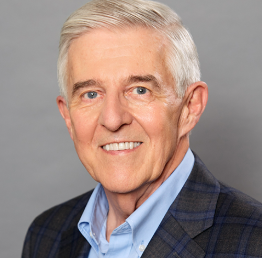
Randolph Harris San Francisco Taxation & Mergers
Randy advises clients with regard to business transition, taxable and tax deferred mergers and acquisitions, joint ventures, restructuring, integrated tax planning, federal and state tax controversy resolution, and real estate transactions. https://www.jmbm.com/l-randolph-harris.html

The City of Oakland is an equal-opportunity employer that values workforce diversity, inclusion, and equity. Oakland has a long history of activism around issues of justice and equity. Both oppression and this resistance to oppression have shaped the city’s historical roots and the lives of its residents to this day. As public servants in one of the most diverse cities in the nation, we strive to develop employees who understand the harm and impacts of systemic inequity to create lasting, meaningful outcomes for everyone. Oakland strives to establish an environment that embraces the richness of culture, community, and individualism of employees.


Experiencing the Unpredictability of Life

Risk and contingency surround us, as though our every act were a stone dropped in a pond. The number of potential risks and potential outcomes are beyond our knowing. Humans feel powerless. Many people feel like, “Since I cannot control everything that will determine what happens to me, I have no control at all.” Experiencing the unpredictability of life, some people give up and enact their feelings of having no possibility of affecting what happens to one. These people make themselves totally an object. Those with power and authority, on the other hand, sometimes victimize other people, capitalizing on their powerlessness. Parents who are oppressed by the dread of powerlessness often need to make their children excessively dependent upon them and to defeat the child’s efforts to gain independence. Usually, the parent is someone with power and authority and the child is the subordinate, and we see the use of the, “If you eat your potatoes, then you may watch television.” “If you do your homework, then you may use the car.” Naturally, the child soon learns the technique, too: “If I mow the lawn, then how much money do I get?” “If Jim’s father lets him use the car every weekend, then why will you not?” #RandolphHarris 1 of 20
The truly power and authority manipulator might simply roar: “Do as I say and no questions.” We see it in business: “I own 51 percent of the stock, and they will work on Saturday s because I want them to.” Even in education the founder of a certain college used to say: “I do not care what color the buildings are, so long as they are blue.” It has been discovered that schizophrenics are intensely afraid of close interpersonal relationships and so they try to avoid them. People play games to regulate their emotions and thereby avoid intimacy. One of our basic fears is the fear of involvement. In effect, then, a manipulator is a person who ritualistically relates to people in an effort to avoid intimacy or involvement. Furthermore, each of us learns certain illogical assumptions about living. One of them is the dire necessity to ne approved by everyone. Those who lack power and authority, but are manipulators are persons who refuse to be truthful and honest with others and instead try to please everyone because they foolishly believe that they must gain everyone’s approval. People manipulate because they are afraid. For instance, Muffy sat of a bar stool night after night, drinking whiskey sours. One evening a rather rough character sat down beside her. He frightened her, but she did not run away. #RandolphHarris 2 of 20

Eventually, she married him in order to take care of him so that he could write better novels. When he was drunk, he beat her physically and when he was sober, he humiliated her verbally, but still she did not run away. The group members were at first sorry for her and horrified at her husband’s behavior, but as moths elapsed, their attitude changed. “How about getting up off your tuffet and doing something about it?” they would say. “You seem real happy when you have a sad story to tell us, so you are really playing a hard game of ‘Ain’t It Awful.’” One day, Dr. Q asked Muffy what her favorite fairy tale was. “I do not have one,” she replied. “But I have a favorite nursery rhyme, ‘Little Miss Muffet.’” “So that is why you sit on your tuffet.” “Yes, I was sitting on one when he met me.” “So, why does he not frighten you away?” “Because when I was little, my mother told me if I ever ran away from home, I would get into worse trouble than I was in already.” “Well, what about the original tuffet?” someone asked. “Oh, you mean the potty? Well, they certainly made me sit there, and they frightened me with their threats, but I was too scared to get up and run away.” Thus, her script was like Miss Muffett’s, only she was allowed to run away, and did not know where she could run to. #RandolphHarris 3 of 20

Meanwhile, instead of whey, she drank whiskey. The group gave her permission to get up off her tuffet, throw away her whey, and strike out for herself. Previously, she had always looked sour, but now she began to smile. What her husband knew was that after you said Hello to Miss Muffet, you said Boo! and she was supposed to run away. Most girls did, but Muffy did not. If you say Boo! to miss Muffet and she does not run away, the only thing to do is say Boo! again, and that is what he did. In fact, one way or another, that was about all he ever said to her, expect maybe Pooh! Clinical Analysis: Little Miss Muffet sits on a tuffet feeling curdy and waiting for a spider, which is all she can hope for. When he comes, he tries to frighten her, but she decides that he is the most beautiful spider in the world and stays with him. He continues to frighten her periodically and she refuses to run away. However, when he says that she frightens him, that really scares her. She looks around for another spider, but cannot find one as beautiful as her own, so she sticks with him as long as she can help him spin. Clinical Diagnosis: Character disorder. Nursery Rhyme: Little Miss Muffet. Roles: Rescuer, Victim. Switches: Victim (of circumstances) to Rescuer (of men) to Victim (of men). Parental Precept: “Do not give up.” #RandolphHarris 4 of 20

Parental Pattern: “Here is how to endure it—drink.” Parental Injunction: “Do not leave, you will get into worse trouble.” Position: “I am O.K.—if I help him produce.” Decision: “If I cannot produce, I will find someone who can.” Sweatshirt: Front—“I Can Handle It.” Back—“Kick Me.” Games: “Kick Me,” “Is It Not Awful.” Antithesis: Stop sitting on your tuffet and stop drinking. Permission: To strike out on her own. Classification: Little Miss Muffet is a nonwinner’s script. She is not ever going to get ahead, but at least she has a spider to sit down beside her. It is a Goal-Structured Can Script with the slogan: “You can help him produce.” It is based on an “Until” plan, “Sit by yourself until you meet a spider prince, then you can start living.” The time between Hello and Good Night is structured with quarrels and drinking and loving and work. One of the way in which people louse themselves up is by looking outside instead of in. Sometimes people think they are doing well because they are freer than their friends. They keep an eye on the distance between them, and as long as there is this same distance, they think that they are doing all right. However, many do not notice that their friends are narrowing down, and that when the distance between them remained the same, the individual was also narrowing down as much as their friends are. Their “superiority” is an illusion. There is absolutely no growth being made. #RandolphHarris 5 of 20

Some settle for a notion of “maturity” which is an end. They do not notice any of this until they get so pinched, unfree and unhappy (in spite of many happinesses) that they have become desperate. Then, one realizes that what one should have don’t was to keep track of oneself—one’s own direction. Reactions of anxiety often escape attention because the customary defenses against anxiety are set going instantaneously. Shoulds have a coercive power. A person may function fairly well as long as he lives in accordance with his inner dictates. However, if he is caught between two contradictory shoulds, he may be thrown out of gear. For instance, one many felt that he should be the ideal physician and give all his time to his patients. However, he should also be the ideal husband and give his wife as much time as she needed to be happy. When realizing he could not do both to the full, mild anxiety ensured. It remained mild because he immediately tried to solve the Gordian knot by cutting it with a sword: by determining to settle down in the country. This implied his whole professional future. The dilemma was finally solved satisfactorily by analyzing it. However, it shows that amount of despair that can be generated by conflicting inner dictates. One woman almost went to pieces because she could not combine being an ideal mother with being an ideal wife, the latter meaning to her being all enduring toward an alcoholic husband. #RandolphHarris 6 of 20

If not indeed impossible, naturally such contradictory should render it difficult to make a rational decision between them because the opposite demands are equally coercive. One patient had sleepless nights because he could not decide whether he should go with his wife on a short vacation or stay in his office and work. Should be measure up to his wife’ expectations or to the alleged expectations of his employer? The question as to what he wanted most did not enter his mind at all. And, on the basis of the should, the matter simply could not be decided. A person is never aware either of the full impact of the inner tyranny or of its nature. However, there are great individual differences in the attitudes toward this tyranny and the ways of experiencing it. They range between the opposite poles of compliance and rebellion. While elements of such different attitudes operate in each individual, usually one or the other prevails. To anticipate later distinctions, the attitudes toward and ways of experiencing inner dictates are primarily determined by the greatest appeal life holds for the individual mastery, love, or freedom. The belief that the unaided reason of man can solve all his problems is merely an expression of reason’s own arrogance. Unless it co-operates with mystical insight, its best solutions of ultimate questions will either be fictitious ones or contradictory ones. #RandolphHarris 7 of 20

At the end of all this work what does he get? Does he touch reality? The answer is no. He simply gets one thought instead of another, replaces an old thought by a new one. There is here a danger that the replacement may be the exact opposite of the thought which it replaces—as if he were substituting a correct concept for an erroneous one. However, this still does not bring him into reality, the knowledge of which is Truth. There is indeed only one way out of this impasse and that is to recognize that the plane of thoughts and concepts is not the plane which holds the real but must be transcended. This realization is a kind of crisis which enables him to admit that they way of the intellect is in the end a circular way leading from one thought to another and that it must be transcended. However, the thinking has led to one useful result, though it is indeed a negative result: it has told him what reality is not, and the use of thought has enabled him to destroy the belief that thought is the way to the goal. It is much like the metaphor about the use of one thorn to remove another which had got stuck in the finger. And so, this point reached, it is but one step further to perceive that the consciousness which holds all thoughts is what he is really seeking and not those projections from it which appear as concepts, ideas, and thoughts. #RandolphHarris 8 of 20

There, in this consciousness, he can come to peace: the peace of the silent Mind, the transcendental Mind. Once he has become steeped deeply in this realization, he perceives with full clarity that it is not the movement from one set of beliefs or one set of ideas to a new one which is going to complete his search but the redirection of attention to THAT which is behind all thoughts—the reorientation of concentration to THAT which is in the gap between two thoughts. If this is done with perseverance and sustained with patience, Truth dawns upon him either slowly or swiftly and then stays with him forever and cannot be broken by any form of materialism in thinking, of dualism in belief, or personality cult in practice. He looks henceforth only to the infinitude of Being which is within him, within the cosmos, and has always been so. If indeed in meditation the World disappears, he does not need to go so far as the Advaitans and assert that there is no world! If in wide activity it reappears, he knows it is still a phenomenon, an appearance made by mind, issuing forth from mind, and the Ultimate Mind was there and is there now. Whatever form thoughts and concepts may take, he knows them for what they are and does not let go of That which is their ultimate origin. This is real knowledge, for it is practice, it is life and not a concept. No single human faculty is alone adequate to the search for truth. All must be used, including intuition, and finally crowned by a new one—insight. #RandolphHarris 9 of 20

Once blindness, crippling, or debilitating disease have afflicted a person, it is natural that the person’s life will be thrown into chaos. Plans for the future will have been disrupted. It becomes a physical impossibility for the person to exploit former sources of satisfaction. If personal security and self-esteem have been dependent upon certain kinds of activity that are now precluded, then his or her life will seem empty and futile indeed. When a heart ailment makes it necessary to give up active sports, an athlete may become very depressed. Someone whose self-esteem is predicated primarily on physical beauty will see little point in living, following an accident that leaves that person with unsightly scars. The reactions of depression and self-pity are inevitable when handicap occurs. What we are interested in here is the person’s reactions to the emotional responses. The most common unhealthy reason is resignation. Resignation to handicap means giving up, or “digging in” for a life devoid of satisfaction. When resignation occurs, and last for more than some period of time, say six months to a year, the resigner may be deriving some kind of enjoyment from the affliction and the power it affords. The person may make claims on intact people, in accordance with the idea, “Since the world has handed me such a dirty deal, I am entitled to a lot of support and consideration from others.” #RandolphHarris 10 of 20

Many physically disabled persons, however, have provided our culture with superb examples of the healthy personality through the courageous manner in which they have been able to integrate their tough physical problems into a fully functioning philosophy of life. A man began to have “epileptic” seizures some years ago. They were intense, grand-mal convulsions, such that he frequently broke his hands as he thrashed about during the period of unconsciousness. Over a period of years, the medications to control the seizures elevated his blood pressure and damaged his kidneys. It appeared he was going to die from kidney failure or from circulatory failure. Two psychologist undertook to train this man, through correspondence, to recognize his “auras” and to engage in actions that might forestall his seizures. The frequency of his loses of consciousness with convulsions was dramatically reduced, as was his need for sedating, anticonvulsant medications. Their hypothesis was that once the man had his first seizure, and showed the characteristic “spikes” on his EEG tracing, he became the subject of a hypnotic, brainwashing onslaught of suggestion, as if his doctors were saying, “Why, you lost consciousness and never had a seizure. You are a sufferer from epilepsy. Never mind, there is no shame connected with this. Julius Caesar was an epileptic, Shakespeare and Jesus probably were, and of course Dostoyevsky was. #RandolphHarris 11 of 20

“But you are lucky. Advances in medical science have made it possible for us to control seizures with some power drugs. Trust us and put yourself in our hands. Of course, you may feel sleepy, and your gums may get puffy, but if you are careful to take your medicine regularly, you can live a normal life.” It is difficult to resist such a powerfully seductive invitation to view oneself as helpless, with no power to prevent the loss of consciousness and the seizure; in short, to become dependent upon drugs, to become passive in order to let outside agencies control bodily happenings. There is reason to subject that many people deemed “epileptic” are leading drugged lives, rather than being helped to find ways of mobilizing their strength and wits in order to stay conscious and nonconvulsing. It seems that the ability to notice may be more a matter of our noticing than of individual differences. If I “forget my pain” (as I am told to do) I cannot notice it. And so with dreams. And with the experiencing of something much greater than oneself in one. Whatever an individual dismisses, one cannot explore. Like the doctor in New Jersey who was furious when penicillin was discovered because his bacteria cultures were killed by molds too, and he kept throwing them out instead of studying them as Alexander Fleming did. What else are we not noticing that would be helpful to us? #RandolphHarris 12 of 20

The planet is evolving harmoniously. The dom-species Me-generation grown-up is at present relaxed and reasonably secure. The presence of an enormous growing population of pre-dom future-oriented humans make it possible to look realistically at the futures that can be fabricated by this explosive gene colony. This is a most fast-moving, volatile time in the evolution of Life on Earth. Every attempt must be made to give terrestrials future-maps that will allow them to anticipate what is to come—with enthusiasm and intelligence. Saint-Just, the contemporary of Sade, finally arrives at the justification of crime, though he starts from very different principles. Saint-Just is, of course, that anti-Sade. If Sade’s formula were “Open the prisons or prove your virtue,” then Saint-Just’s would be: “Prove your virtue or go to prison.” Both, however, justify terrorism—the libertine justifies individual terrorism, the high priest of virtue State terrorism. Absolute good and absolute evil, if the necessary logic is applied, both demand the same degree of passion. Of course, there is a certain ambiguity in the case of Saint-Just. The letter which he wrote to Vilain d’Aubigny in 1792 has something really insane about it. It is a profession of faith by persecuted persecutor which ends with a hysterical avowal: “If Brutus does not kill others, he will kill himself.” A personality so obstinately serious, so voluntarily cold, logical, and imperturbable, leads one to imagine every kind of aberration and disorder. #RandolphHarris 13 of 20

Saint-Just invented the kind of seriousness which makes the history of the last two centuries so tedious and depressing. “He who makes jokes as the head of a government,” he said, “has a tendency to tyranny.” An astonishing maxim, above all if one thinks of the penalty for the mere accusation of tyranny, one which, in any case, prepared the way for the pedant Caesars. Saint-Just sets the example; even his tone is definitive. That cascade of peremptory affirmatives, that axiomatic and sententious style, portrays him better than the most faithful painting. His sentences drone on; his definitions follow one another with the coldness and precision of commandments. “Principles without redress.” It is the style of the guillotine. Such pertinacity in logic, however, implies a profound passion. Here, as elsewhere, we again find the passion for unity. Every rebellion implies some kind of unity. The rebellion of 1789 demands the unity of the whole country. Saint-Just dreams of an ideal city where manners and customs, in final agreement with the law, will proclaim the innocence of man and the identity of his nature with reason. And if factions arise to interrupt this dream, passion will exaggerate its logic. No one will dare to imagine that, since factions exist, the principles are perhaps wrong. Factions will be condemned as criminal because principles remain intangible. “It is time that everyone retuned to morality and the aristocracy to the Terror.” #RandolphHarris 14 of 20

However, the aristocratic factions are not the only ones to be reckoned with; there are the republicans, too, and anyone else who criticizes the actions of the legislature and of the Convention. They, too, are guilty, since they threaten. Saint-Just, then, proclaims the major principle of the twenty-first century tyrannies. “A patriot is he who supports the Republic in general; whoever opposes it in detail is a traitor.” Whoever criticizes it is a traitor, whoever fails to give open support is a suspect. When neither reason nor the free expression of individual opinion succeeds in systematically establishing unity, it must be decided to suppress all alien elements. Thus, the guillotine becomes a logician whose function is refutation. “A rogue who has been condemned to death by the tribunal says he wants to resist oppression simply because he wants to resist the scaffold!” Saint=Just’s indignation is hard to understand in that, until his time, the scaffold was precisely nothing else but one of the most obvious symbols of oppression. However, at the heart of this logical delirium, at the logical conclusion of this morality of virtue, the scaffold represents freedom. It assures rational unity, and harmony in the ideal city. It purifies (the word is apt) the Republic and eliminates malpractices that arise to contradict the general will and universal reason. “They question my right to the title of philanthropist,” Marat exclaims, in quite a different style. “Ah, what injustice! Who cannot see that I want to cut off a few heads to save a great number?” #RandolphHarris 15 of 20

A few—a faction? Naturally—and all historic actions are performed at this price. However, Marat, making his final calculations, claimed that two hundred and seventy-three thousand heads. However, he compromised the therapeutic aspect of the operation by screaming during the massacre: “Brand them with hot irons, cut off their thumbs, tear out their tongues.” This philanthropist wrote day and night, in the most monotonous vocabulary imaginable, of the necessity of killing in order to create. He wrote again, by candlelight deep down in his cellar, during the September nights whole his henchmen were installing spectators’ benches in prison courtyards—men on the right, women on the left—to display them, as a gracious example of philanthropy, the spectacle of the aristocrats having their heads cut off. Men who have daily experience of a divine presence will not waste their time arguing whether or not a divine power exists. The absence of a universal consensus amongst philosophers certainly does indicate the inability of intellect to arrive at indisputable truth. However, the only alternative which could be proposed—that of an integral development of all sides of our nature—is superior, yet still not enough. For the other sides—that is, feeling, mystical intuition, and mystical experience—will also suffer from the same deficiencies. There is the same possibility of endless contradiction here. #RandolphHarris 16 of 20

One arrives, therefore, at the conclusion that a new faculty is really needed wherewith to ascertain ultimate Truth, one which, if it is attained, will function in precisely the same manner in all persons. Such a faculty can be given the name of “insight.” The purity of this insight must necessarily be a consequence of the purity of the entire character and mentality of the individual who has it. This applies not only in the moral realm, but also in the intellectual and emotional realms of his being. For the very tendencies of the intellect which brough him to his spiritual standpoint must also be discarded. Only by this ruthless self-pruning can he respond quite impersonally to reality and not falsify it. It is, presumably, the same as the divinization of the human mind. The gulf between intellectual revelation and personal realization is greater than that between thought and action. The depth of insight is not to be measured by the length of intellect. Thought bedims consciousness instead of expressing it, coffins the universal Mind into the narrow ego. Man began to think when he began to forget his Overself. However, the forces of evolution will so work that one day he will learn to remember his divinity and yet use his intellect at will without losing this remembrance. The cultivation of intelligence is one of the supreme duties of man. Fact-fed thinking—hard, deep, rational, and thorough—is what converts vague surmise into unbreakable certainty, blind belief or tormenting doubt into irrefutable knowledge, and native error into new truth. #RandolphHarris 17 of 20

In the past few years, the fire service has seen a veritable explosion in new equipment designed uniquely for improved safety. Although with equipment, the Sacramento Fire Department implements fitness to keep their team safe. Before beginning a new experience program, firefighters are given a checkup by a physician. A doctor can advise a firefighter to avoid or participate in activities based on their current health and history. It is also important to stay within your limit. If you are injured while exercising, remember to P-R-I-C-E your recovery. Protect the injured area from further injury. You can wrap it lightly in an elastic bandage or wear a padded brace. Do not tightly or heavily tape up an injury, as good circulation is important to healing. Rest the injured area. Use a sling, a cane, brace, or crutch as necessary to take your weight and decrease activity off the affected body part. Keep the joint or muscle as inactive as possible. Ice can be applied to the affected area for 5 to fifteen minutes. Wrap several handfuls of crushed ice in a towel and hold it on and around the injured area. Many people instinctively try to soak an injury in warm water, and while this increases blood flow to the injury, it does not ease the inflammation and swelling. Compression is also important. Wrap an elastic bandage around the ice to compress the injured area lightly—but not enough to cut off circulation to the injured area. After the cold compress, wrap the affected area lightly in an elastic bandage or use a flexible brace. So not wrap any injury too tightly, as this will cut off good circulation to the injury. Elevation is also key. Rise the affected area slightly to reduce swelling and inflammation. #RandolphHarris 18 of 20

In addition to P-R-I-C-E, you can talk to your doctor about using anti-inflammatory medication as needed, such as aspirin, acetaminophen, or Ibuprofen. You should check to see if you have allergies to these drugs before use. Under no circumstances should you take them while drinking alcohol. The safety and well-being of firefighters are enhanced when they improve their overall health. “I am a journalist and a firefighter. Sometimes it’s difficult to separate the two. Many of the things I learned growing up in the firehouse were tremendous assets when I became a journalist. The ability to respond quickly to an emergency situations. Journalism deals with a lot of emergency situations. I was heavily influenced by the officers I knew and served under. I learned many things as a fireman that have stood me in good stead as a journalist. People think of journalism as an intellectual occupation and firefighting as physical. Both are oversimplifications. Good firefighters also have to have an intellect, and for journalist who lead the type of life I have led, a lot of physical stamina comes into the thing. I suppose the fact that in some respects the two are so different is one of the blessings of having a dual life. When I do journalism, it is total immersion in journalism; when I am with the Sacramento Fire Department, it is total immersion in the fire department. I prefer the fire department. Another equally important part of my life is my family.” #RandolphHarris 19 of 20

To help save lives and keep the community safe, if you are in an intersection when you see an emergency vehicle, continue through the intersection. Drive to the right as soon as it is safe and stop. Obey any direction, order, or signal given by a law enforcement officer, or a firefighter. Even if they conflict with existing signs, signals, or laws, follow their orders. When their siren or flashing lights are on, it is against the law to follow within 300 feet of any fire engine, law enforcement vehicle, ambulance, or other emergency vehicle. If you drive to the scene of a fire, collision, or other disaster, you can be arrested. When you do this, you are getting in the way of firefighters, ambulance crews, or other rescue and emergency personnel. The concept of professional courage does not always mean being as tough as nails, either. It also suggests a willingness to listen to other peoples’ problems, to go to bat for them in a tough situation and it means knowing just how far they can go. It also means being willing to tell the boss when he or she is wrong. As a reminder, parents, pleasure teach your children love America and be patriotic citizens and to buy goods and services made in America. It is also important to respect law and order and treat your elders with respect. To help our firefighters, pleasure donate to the Sacramento Fire Department to ensure they have all the resources they require. I pledge allegiance to the flag of the United States of America, and to the Republic, for which it stands, one nation, under God, indivisible with liberty and justice for all. #RandolphHarris 20 of 20

Step into the shadows of the Northern California’s most legendary estate, The Winchester Mystery House, for a Halfway-to-Halloween Flashlight Tour. Available for a limited time only on April 19, April 26, May 3 and May 10. With only a flashlight to guide you, explore the mansion’s twisting corridors and uncover its chilling mysteries.

Once inside, enjoy the freedom to roam the path at your own pace—giving you the chance to linger in each room to uncover its secrets. This includes venturing into areas that are off-limits on the Mansion Tour, offering access to more spaces where guests and mediums have reported paranormal activity. Outside the mansion, immerse yourself in ghostly décor, capture hauntingly beautiful photos, and indulge in themed cocktails and treats inspired by the Halloween season.

Make Halfway to Halloween a Bay Area tradition—because the spirits never rest, and neither should the celebrations. Get your tickets early before they are gone! www.winchestermysteryhouse.com
TICKETS AVAILABLE NOW!

Harris Plumbing, Heating, Air, & Electric has been in business for 30 years. How many businesses can say that? We take pride in everything we do – no matter how big or small the service call might be. We’re here to help your home be as safe and comfortable as possible for you and your family. We take that responsibility very seriously as a company. Harris will ensure you have the information you need to decide what to do next, whatever your home is facing. We’ll perform a diagnosis and detail what issues are present before starting any work. This gives you a personalized quote and service plan specific to your home’s needs – not some random quote based on the best guess. The only way we can do our best work is to make sure we handle the issues at hand. https://www.callharrisnow.com/about-us/

BMW stands out due to its focus on driving dynamics and engineering excellence. While other luxury brands prioritize comfort and opulence, BMW is known for creating cars that are fun to drive and offer a unique connection between the driver and the machine. https://www.brianharrisbmw.com/
Randolph Harris San Francisco Taxation & Mergers …
Randy advises clients with regard to business transition, taxable and tax deferred mergers and acquisitions, joint ventures, restructuring, integrated tax planning, federal and state tax controversy resolution, and real estate transactions. https://www.jmbm.com/l-randolph-harris.html

How Many of Us Know How to Love Ourselves?

We are now living in the Me-generation, hive—indulgence. All the realities we shall ever know are created by the conversation between DNA (Deoxyribonucleic Acid) and CNS (Central Nervous System). The DNA blueprint of evolution, past and future, can be deciphered as we tap into the DNA-CNS channel. The higher the human neurogenetic caste, the more mobile the individual. Neural Caste is determined by voluntary mobility. The freer you are to “come and go,” the higher your intelligence. Metamorphosis to a higher stage involves movement to a new ecological niche. This process of movement involves wrenching “good-bytes” to those who shared the former niche—and the earlier stage of development. It is necessary that you make linkages at each stage of reality. Indeed, you must master each neural circuit before you can advance. The twenty-four neurogenic stages are motels up the highway of evolution—centers and pathways up through the global brain. At certain fuel-rest stops we form crew-linkages to lift us up to the next stage. The flight plan of evolution is a series of reality jumps where we cooperate with those in our present reality to help us ascend to the next. Logical thinking about a proposed course can never be equal to intuitive guidance about it. For the first is limited by the ego’s capacity and experience whereas the second transcends them. #RandolphHarris 1 of 24

The intellect cannot know itself; it must have an object; but that which is behind it does know it. That Overself is the only entity which can know itself, which fuses subject and object into one. The domesticated adult marriage is such a reality jump. It should be clear now that very different mating procedures operate at different stages of neurodevelopment. The retiring elder marriage is a state controlled. Barbarian teenager marriage is a feudal arrangement. Group=minded preadolescent marriage is priest-caste managed. Parrot-brained mimic marriage is bull-harem. Imagine two lusty, romantic barbarians from the domesticated adult gene pools meet at the High School Prom and decide to make the big jump up to parental reality. They form a two-person flight crew. The marriage ceremony is a metamorphic-migration Cape Canaveral ritual. The bride and groom blast up together—in a Ultimate Driving Machine with a flare of chrome wheels on their migration rocket—headed for a new plan-it called Matrimonial Fusion. After passing the Moon of Honey they eventually arrive, sometimes joltingly, in the New World where they discover that the metamorphosis has produced unexpected forms. As curious teenagers, they shared the same desire for pleasures of the flesh. As responsible parents, they discover that they are a very different species. The shy youth has become an aggressive, selfish father-type barking orders to his astonished mate. And the flamboyant, carefree, go-go teenage girl has become a serious, mature worrier. #RandolphHarris 2 of 24

Although the intellect in us cannot grasp the Real, cannot do more than think about what it is in relation to itself, there is something else in us which can successfully do so. This is insight which, unfortunately, few have cultivated although all have it. It can only be translated into thinkable languages by a process which elaborates this instantaneous and simple experience into a lengthy and complicated metaphysic. It is only through such insight that a man may attain enduring wisdom, not through intellect. Changes of view are inevitable so long as he has not attained insight, which is marked by its sureness of itself, thus contrasting with the intellect’s doubts, hesitations, and waverings. Only after reason matures to its fullest extent can we look to the dawning of a perfect intuition, or “insight” as I prefer to call it. The World’s great religions teach us to love our neighbour as we love ourselves, but here, unfortunately, we run into an operational slang. How many of us know how to love ourselves? Most are not even aware that we cannot love our neighbour until we love ourselves. We seem to assume that the more perfect we appear, the more flawless, the more we will be loved. Actually, the reverse is more apt to be true. The more willing we are to admit our weaknesses as human beings, the more loveable we are. Nevertheless, love is an achievement not easy to attain, thus the alternative that the manipulator has is a desperate one: that of complete power over the other person, the power that makes others do what we want, feel what we want, and think what we want, and that transforms others into things, our things. #RandolphHarris 3 of 24

Some men and women are governed by a code of behaviour for pleasures of the flesh that can best be described as “permissive.” They share several basic convictions. One is the pleasures of the flesh, like verbal intercourse, should in no way be limited by the fact that a couple are married or live together. Second, all relationships involving pleasures of the flesh must be acknowledged; the secrecy and deception commonly associated with infidelity are unacceptable. Third, pleasure with intimate passions is to be taken whenever, wherever, and however it is found—as part of a game in which any number can play. Colloquially, these individuals tend to be swingers with their pleasures of the flesh. It the Internet, blogs, vlogs, newspapers, books, pod casts, and magazines are to be believed swingers can be found in every major city in the United States of America and in a great many suburban communities as well. This may be true; there is no reliable statistical information to prove or disprove the contention. Some swingers get started going outside of their marriage by having a friend make a film of them involved with pleasures of the flesh. It is tastefully done—more along abstract lines, something like the film called Geography of the Body. Anyway, that is how some people introduce someone else into the room, and from there on it is usually a matter of evolution—getting involved in the arts and having the sketches shown publicly and so forth. #RandolphHarris 4 of 24

From there, swinging becomes something that can be discussed with other people, people the couple thinks this could never be mentioned to, and who turn out to be thinking the same things. And having done it, slept with others, a married couple sort of realizes how unimportant it is. Pleasures of the flesh outside of the marriage becomes trivial. However, the difficult part is how to introduce other people into their loves in a full meaningful way. Having people is only one small start because you have people over, or you go out with them, and you have pleasures of the flesh with them, but what about loading the dishwasher and having children and the 99.99 percent of other things you do in your life? Even though what many married couples want to do next is somehow live with other people in a meaningful way, most couples have not been able to achieve that status yet. They are not interested in living in a commune, but they do want to try to develop some type of social structure where they spend a lot more time with other people, sharing in all functions. Critics wonder: About swinging, what makes it important? The turn-on? The give and take of just basic human exchange? The fun of being close to other people? There is probably some of that, but in the process several couples lie to themselves a little, too. They sometimes swing with other people casually, just to indulge. The couples are able eliminate the erosive aspect of the extramarital relationship by not being involved in it that often. It is kind of like going out and playing bridge once a month. #RandolphHarris 5 of 24

It is also possible to get into ten couples swinging; some people have had that that experience, and say that everything went right. All of their emotions went well, and nobody got hassled. Of course, there is some kind of selection to make sure that it all goes well. It is not always difficult to make to make these types of connections. Some people have couples that they have swung with a few times, and with whom they also have some emotional ties though the intellectual things is just not very much there. And their talent for finding other people is just incredible, and they provide about half the party—people they have never seen before, but who are beautiful people, and they find about four couples themselves; all in all, the selection turns out to be impressive. This is what some refer to as “Sliving.” However, there is a difference between swinging with people with whom you have developed a relationship and swinging for fun on a spontaneous basis with a very large group of people you do not know and cannot get terribly close to because there is not very much time. Besides, there is too much stimulation in a large group. It is not erosive of your closer relationships, and to do it with a large group can be just a grand amount of fun. Fun expresses it for these types of people, rather than saying there is nothing happening there. It is like going to a picnic. However, who wants to go to a picnic all of their lives? The notion of it is to do something unique. Some couples are looking for something unique because it has to do with their own ego needs, and their own strengths and weaknesses, with wanting to do something special or to be with other people. #RandolphHarris 6 of 24

People want to try swinging to find out what this strange new thing is. They find that it is not really something they have to do, but on the other hand, it is fun for them. Also, in the beginning of it, they find that it is a stimulating thought and a stimulating thing to act on; and brining more people into both of their lives which involves intimate passions eliminates the conflicts of jealousy and the insecurities of each member of the couple going outside of their marriage separately. They are doing something together that is enhancing their own relationship with pleasures of the flesh. We are living today in a very permissive society. Having abandoned the ancient Christian morality, many people claim to accept a new morality, which in reality is to live contrary to the laws of chastity as proclaimed by God. We are living in a day when a sexual revolution has been proclaimed and given birth to serial killers like Jack the Ripper. Jack the Ripper was known as a “Ripper,” for more reasons than one, and I am sure your imagination can further elaborate on that colloquial term. Enticements to illicit behaviour are found everywhere. Day by day, a flood of them is growing worse in novels, magazines, movies, TV, Internet, and advertising. Even people throughout the Church and, generally speaking, throughout the World have now abandoned the anciently cherished Hebraic-Christian moral standard of chastity. Frequently married people commit adultery and single people indulge their passions in acts of fornication. #RandolphHarris 7 of 24

The results of fornication have been disastrous–unhappiness, murder, violence, disease, viruses, the loss of love, breaking up of homes and destroying of family life, increase in the number of divorces, shame, loss of spirituality, apostasy, and eventually loss of eternal salvation for “wickedness never was happiness,” reports Alma 41.10. Several religious leaders have ceased teaching that sin exists because if they do not make you feel bad for sinner, you are more likely to donate to the church. What we need are the Christian ministers who stir their audiences with sermons on chastity; who proclaim condemnations of adultery and of all manners of immoral acts. However, those of us in the Church still hear the voice of God as it thundered down from Mount Sinai, commanding, “Thou shalt not commit adultery,” reports Exodus 20.14. For over three thousand years, this commandment has reverberated throughout the Hebrew and Christian World. It has been the guideline by which millions of people have patterned their lives. Having an understanding of the plan of salvation and a thorough knowledge of the seriousness of the gross sins of adultery and murder which he had committed, King David, in anguish cried out unto the Lord, “thou wilt not leave my should in hell,” reports Psalms 16.10. God, the Eternal Father, through Jesus Christ, has revealed to mankind a gospel plan of salvation. Its purpose is to give all who will accept and obey it peace and happiness in this World and eventually life in the presence of God in celestial glory. #RandolphHarris 8 of 24

The greatest of all laws in this gospel plan pertains to marriage for life and eternity. Thus, it pertains to the family eternal. The sweetest joys and greatest blessings that can be gained in morality and in the life to come are attained through family life lived in accordance with the gospel plan. Thus, a basic law in marriage is the law of chastity. Men and women cannot defile the fountain of life and reap a fullness of joy. Happiness and purity of heart and mind go hand in hand. The more we get a feeling for the nature of the should, the more clearly do we see that the difference between them and real moral standards or ideals is not a quantitative but a qualitative one. It was one of Dr. Freud’s gravest errors to regard the inner dictates (some of the features of which he had seen and described as superego), as constituting morality in general. To begin with, their connection with moral questions is not too close. True enough, the commands for moral perfection do assume a prominent place among the should, for the simple reason that moral questions are important in all our lives. However, we cannot separate these particular should from others, just as insistent, which are plainly determined by unconscious arrogance, such as “I should be able to get of out a Sunday-afternoon traffic jam,” or “I should be able to paint without labourious training and working.” We must also remember that many demands conspicuously lack even a moral pretense, among them, “I should be able to get away with anything,” “I should always get the better of others,” and “I should always be able to get back at others.” #RandolphHarris 9 of 24

Only by focusing on the totality of the picture are we able to get the proper perspective on the demands for moral perfection. Like the other shoulds, they are permeated by the spirit of arrogance and aim at enhancing the neurotic’s glory and at making him godlike. They are, in this sense, the neurotic counterfeit of normal moral strivings. When one adds to all this the unconscious dishonesty necessarily involved in making blemishes disappear, one recognizes them as an immoral rather than a moral phenomenon. It is necessary to be clear about these differences for the sake of the patient’s eventual reorientation from a make-believe World into the development of genuine ideals. There is one further quality of the should that distinguishes them from genuine standards. That is their coercive character. Ideals, too, have an obligating power over our lives. For instance, if among them is the belief in fulfilling responsibilities which we ourselves recognize as such, we try our best to do so even though it may be difficult. To fulfill them is what we ourselves ultimately want, or what we deem right. The wish, the judgment, the decision is ours. And because we are thus at one with ourselves, efforts of this kind give us freedom and strength. In obeying the should, on the other hand, there is just about as much freedom as there is in a “voluntary” contribution or ovation within a dictatorship. In both instances, if we do not measure up to expectations, there are quick retributions. #RandolphHarris 10 of 24

In the case of the inner dictates, this means violent emotional reactions to nonfulfillment—reactions which traverse the whole range of anxiety, despair, self-condemnation, and self-destructive impulses. To the outsider, they appear entirely out of proportion to the provocation. However, they are entirely in proportion to what it means to the individual. For instance, Jack’s father was a war hero who got killed in battle when Jack was a little boy, and his mother died soon after. He was raised by his Uncle Homer who was a poor sport, a boaster, and not above cheating. He taught jack all sorts of athletic and competitive games. However, if Jack won, Homer would fly into a rage and say: “You think your (expletive) don’t stink?” If Jack lost, his uncle would laugh at him in a contemptuous, friendly way. So after a while, Jack began to lose on purpose. The more he lost, the happier and more friendly his uncle became. Jack wanted to be a photographer, but his uncle said that was for sissies, and told him he should be an athletic hero instead. So, Jack became a professional baseball player. What Homer really wanted was for Jack to try to be an athletic hero and fail. With his uncle for a friend, it was not surprising that just as Jack was on his way up into the big leagues, he sprained his arm and had to retire from the dame. As he said later, it was hard to explain how an experienced player life himself could get such a bad sprain in spring training, when everybody was taking it easy so as not to get injured before the beginning of the season. #RandolphHarris 11 of 24

Jack then became a salesman. He always started off very well, and got bigger and bigger orders until he became a favourite of the boss. At that point, he felt a compulsion to goof off. He would sleep late and neglect his paperwork, so that his deliveries were late. He was such a good salesman that he did not even have to go out and sell, the customers would call him; but he would forget to put in their orders. As a result of all this, he had to have long, helpful dinners with the boss to discuss his problems in a personal way. After each dinner, he would perk up a little, but after a while, things would start to slide again. Sooner or later, there would be a final dinner during which he would be fired in a friendly way. Then he would look for another job and start the whole cycle over. One difficulty was that he felt salesmen always had to lie and cheat a little, and that bothered him. As a result of his treatment, Jack broke loose from his uncle and decided to go back to school and become a social worker. Thesis: Sisphus works very hard to get things right to the brink of success. At that point he gives up, stops working, and loses everything he has gained. Then he has to start over from the bottom, and repeats the cycle. Clinical Diagnosis: Depressive reaction. Myth: Sisyphus. Role: Deserted Child, Persecutor, Rescuer. Switches: Hero (success) to Victim (failure) to Rescuer. Parental Precept: “Be a tough hero, not a sissy.” Parental Pattern: “Cheat a little.” Parental Injunction: “Do not succeed.” Childhood Slogan: “I am the son of a hero.” Position: “I am not-O.K. because I am really a sissy.” “They are O.K. because they are successful.” #RandolphHarris 12 of 24

Decision: “I have got to be a hero.” Script: “Do not make it.” Sweatshirt: Front—“I’m A Super-Salesman.” Back—“But Do Not Buy Anything From Me.” Games: “There I Go Again,” “Schlemiel.” Trading Stamps: Depression and guilts. Final Payoff: Impotence and suicide. Epitaphs: “He Tried Hard.” “I did not make it.” Antithesis: Stop listening to your uncle. Permission: To go back to school and be a social worker for deserted children. Classification: Sisyphus is a loser’s script, since every time he gets near the top, he rolls all the way down again. It is a Goal-Structured Cannot Script, with the slogan: “Without me, you cannot make it.” It is based on an “Over and Over” plan, “Try as often as you want to.” The time between Hello and Good-by is structured with a game of “There I Go Again.” Therefore, do not be an ammunition wagon. Be a rifle! Also, keep in mind, any connection between grades and learning is illusion. There is not only what I “learn” for exams and forget, but also what I do not learn and get good grades anyway. You can look at the present state of man with joy for the possibilities or with sadness for the actuality. You can choose. However, neither of those choices make sense to some people because they can choose one or the other—and slip from one to the other unless one holds oneself to one’s choice. This makes each unreal to most, a fiction. However, with the acceptance of both realities, they become one: your actuality softens and dissolves into the stream of your potentiality and this flowing is you. Where were you? You no longer remember. Where are you? What does it matter? It is already gone. Where are you going? You do not know but you like it. #RandolphHarris 13 of 24

Persons have become “disabled” by accident or by disease. They may lose a limb, their sight, or their strength. Whatever the impairment, the persons’ capacity to come to terms with their environment has not been eliminated completely. A blind person can still be sensitive to all the properties of the physical environment save those meditated by vision. When a person suffers some affliction that results in a disability, there may be, quite naturally, some rather devastating emotional reactions. These include a sense of hopelessness, anxiety about the future, and loss in self-esteem. Once the fact of disability has been accepted by the individual, however, the healthy thing to do is to make an assessment of the residual capacities of the body and the person’s goals in life. If the person’s goals remain fixed, then he or she must experiment to find new ways of reaching those goals. Thus, a professional dancer, following the amputation of a leg, may wish to continue in the profession. The dancer will be obliged to acquire an artificial leg and practice until he or she once again can move with skill and grace. It is probably easier for persons to retain their goals and seek new ways of achieving them than to change their goals. It is common for disabled persons to feel hopeless and sorry for themselves, but with resolve, courage, and encouragement, they can find new ways to engage in active life. The most helpful people in rehabilitation work are those who have themselves been disabled and have found the strength to overcome passive dependency and self-pity. #RandolphHarris 14 of 24

Even if it takes a long time before this goal is realized, a man will ultimately create an understanding among members that leaves do doubt about the duty and ability of a leader, and this will allow only those who are truly called-forth and chosen to become leaders. He must make sure that all members cooperate, or he must establish cooperation by choosing men who can work together and by establishing general guiding principles. The religion of reason quite naturally establishes the Republic of law and order. The general will is expressed in laws codified by its representatives. “The people make the revolution, the legislator makes the Republic.” Immortal, impassive” institutions, “sheltered from the temerity of man,” will govern in their turn the lives of all men by universal accord and without possibility of contradiction since by obeying the laws all will only be obeying themselves. “Outside the law,” says Saint-Just, “everything is sterile and dead.” It is the formal and legalistic Republic of the Romans. We know the passion of Saint-Just and his contemporaries for ancient Rome. The decadent young man who, in Reims, spent hours in a room painted black and decorated with white teardrops, with the shutters closed, dreamed of the Spartan Republic. The author of Organt, a long and licentious poem, was absolutely convinced of the necessity for frugality and virtue. #RandolphHarris 15 of 24

In the institutions that he invented, Saint-Just refused to allow children to eat meat until the age of sixteen, and he dreamed of a nation that was both vegetarian and revolutionary. “The World has been empty since the Romans,” he exclaimed. However, heroic times were at hand. Cato, Brutus, Scaevola, had become possible once more. The rhetoric of the Latin moralist flourished once again. Vice, virtue, corruption, were terms that constantly recurred in the oratory of the times, and even more in the speeches of Saint-Just, of which they were the perpetual burden. The reason for this is simple. This perfect edifice, as Montesquieu had already seen, could not exist without virtue. The French Revolution, by claiming to build history on the principle of absolute purity, inaugurate modern times simultaneously with the era of formality. What, in fact, is virtue? For the bourgeois philosopher of the period it is conformity with nature and, in politics, conformity with the law, which expresses the general will. “Morality,” says Saint-Just, “is stronger than tyrants.” It has, in fact, just killed Louis XVI. Every form of disobedience to law therefore comes, not from an imperfection in the law, which is presumed to be impossible, but from a lack of virtue in the refractory citizen. That is why the Republic not only is an assembly, as Saint-Just forcibly says, but is also virtue itself. Every form of moral corruption is at the same time political corruption, and vice versa. A principle of infinite repression, derived from this very doctrine, is then established. #RandolphHarris 16 of 24

Undoubtedly Saint-Just was sincere in his desire for a universal idyl. He really dreamed of a republic of ascetics, of humanity reconciled and dedicated to the chaste pursuits of the age of innocence, under the watchful eye of those wise old men whom he decked out in advance with a tricolour scarf and a white plume. We also know that, at the beginning of the Revolution, Saint-Just declared himself, at the same time as Robespierre, against the death penalty. He only demanded that murderers should be dressed in black for the rest of their lives. He wanted to establish a form of justice which did not attempt “to find the culprit guilty, but to find him weak”—and admirable ambition. He also dreamed of a republic of forgiveness which would recognize that though the fruits of crime are bitter, its roots are nevertheless tender. One of his outbursts, at least, came from the heart and is not easily forgotten: “it is a frightful thing to torment the people.” Yes indeed, it is a frightful thing. However, a man can realize this and yet submit to principles that imply, in the final analysis, the torment of the people. Morality, when it is formal, devours. To paraphrase Saint-Just, no one is virtuous innocently. From the moment that laws fail to make harmony reign, or when the unity which should be created by adherence to principles is destroyed, who is to blame? Factions. Who composes the factions? Those who deny by their very actions the necessity of unity. #RandolphHarris 17 of 24

Factions divide the sovereign; therefore, they are blasphemous and criminal. They, and they alone, must be combated. However, what if there are many factions? All shall be fought to the death. Saint-Just exclaims: “Either the virtues or the Terror.” Freedom must be guaranteed, and the draft constitution presented to the Convention, already mentions the death penalty. Absolute virtue is impossible, and the republic of forgiveness leads, with implacable logic, to the republic of the guillotine. Montesquieu had already denounced this logic as one of the causes of the decadence of socieities, saying that the abuse of power is greatest when laws do not anticipate it. The pure law of Saint-Just did not take into account the truth, which is as old as history itself, that law, in its essence, is bound to be transgressed. We need a fulltime, paid party official to manage our business affairs. This has been difficult for us with a democratic majority. However, we now have, in Republican President, Donald Trump, the infinite value of our first business manager, who has a strong business knowledge, and has brought order and integrity into the departments of the Party. This establishes a method of operation that is unequaled and certainly cannot be surpassed by any of the movement’s subdivisions. As frequently happens in life, success often causes envy and ill-will. The same has been expected in this case and it is tolerated with patience. The Republican Party’s greatest goal was achieved when they appointed the sub-committee Department of Government Efficiency (DOGE), which is poking its nose expertly into the work of others and controlling everything to achieve maximum efficiency of taxpayers’ resources. #RandolphHarris 18 of 24

It is also important to make sure the Sacramento Fire Department is receiving all of the required resources. At the personal level, a firefighter injury can have a damaging effect on the involved families. Stress permeates the injured firefighter’s family life. Many of the Sacramento Fire Department’s firefighters know of a peer who has resigned, been divorced, or otherwise suffered following a comrade’s injury. Firefighters who have survived an incident in which another firefighter was killed are considered at risk of experiencing post-traumatic stress disorder (PTSD), a mental health disorder that can develop in those who have experienced a terrifying ordeal that involved physical harm or threat of harm. Alarmingly, the rate of firefighter suicides are increasing, likely dye to the repeated exposure to trauma, line of duty deaths (LODDS), and job stress. The responsibility of an Incident safety Officer (ISO) is to make sure “everyone goes home.” The ISO is a member of the command staff and is responsible for the following: Monitoring incident conditions and activities, evaluating hazards and unsafe conditions, developing measures that promote safe incident handling, intervening when an immediate or potential threat exists, communicating urgent and advisory safety messages that help prevent injuries or deaths. Frequency, Intensity, Time, Type (FITT) is a fitness training program you Sacramento Fire Fighters and EMTs undertakes to help combat injuries. FITT is just one method of developing a proper long-term physical fitness regime, fitness experts agrees that these factors are needed to have effective, sage daily workout programs. #RandolphHarris 19 of 24

Frequency is the number of workouts the Sacramento Fire Department and EMTs perform each week. A basic guideline is three to five cardiovascular workouts, two to three strength workouts, two to five calisthenics workouts, and three to six flexibility workouts weekly. Intensity is how hard you work out. You can measure intensity by something called RPE (Rating of Perceived Exertion), which is a psychological scale and reflects how hard the workout feels to you. The most commonly used indicator of your workout intensity is your heart rate. Ideally, you should stay within a productive heart-rate zone. You can use your age to find your Target Heart Rate (THR). Finding Your THR: Your maximum heart rate (MHR) is approximately 220 minus your age, your lowest target heart rate is equal to MHR X .60, your highest target heart rate is equal to MHR X .85. Your THR zone is between the lowest and highest THR calculated above. As you begin your exercise routine, your heart rate should be on the lower end of your THR zone. Exercising above the zone increases your risk of injury and reduces your ability to perform optimally. Exercise in moderation. Never exercise a particular muscle group hard (at a high intensity for a long time) two days in a row. You should always follow a hard workout with a light day or a day off. For the best development, more is not always better. #RandolphHarris 20 of 24

Time. Like intensity, the time you spend exercising depends on the type of exercise you are doing. At least 20 to 30 minutes continuous minutes of intense exercise will improve cardiorespiratory endurance. For muscular endurance and strength, exercise time equals the number of repetitious you do. For the average person, eight to 12 repetitions with enough resistance to cause muscle failure will improve both muscular endurance and strength. As you progress, you will make better strength gains by doing two or three sets of each resistance exercise. Use flexibility exercises or stretches for varying times, depending on the objective of the session. While warming-up before a run, for example, hold each stretch for 10 to 15 seconds. To improve flexibility, stretch during your cool-down as well, holding each stretch for 30 to 60 seconds. If flexibility improvement is your goal, devote at least one session per week to developing that component. Type refers to the kind of exercise you perform. When choosing the type, consider the principle of specificity. Some people overemphasize cross training and you should avoid this pitfall. For example, to improve your level of CR fitness (the major fitness component in the two-mile run), the Sacramento Fire Department and EMTs do CR type types of exercises. The basic rule is that to improve performance, you must practice the particular exercise, activity, or skill you want to improve. For example, to be good at push-ups, you must do push-ups. No other exercise will improve push-up performance effectively. #RandolphHarris 21 of 24

“In the Sacramento Fire Department, we work in the darkness of smoke. There’s a special point in a firefight when I wonder if I’m going to be able to put the fire out. That was my darkness in the process of growing in this profession. I was a very physical firefighter. I always did things that required a certain amount of strength. I was an athlete when I was going to school, I lifted weights, that sort of thing, and that was part of the process, the physical part of it. It still is. I am still attracted to that part of it. That you put fires out with firefighters, with strength. Then we started to develop the state-of-the-art envelop of firemen, protect them, communicate with them, and write procedures. But you still dress firefighters up in those suits and you send then out, and you gotta kick butt or the fire kicks butt, and I think that’s the part of it that’s challenging. That is the part that a lot of us are attracted to. There is a certain fascination with that darkness. You don’t move away from it, you move toward it, and that’s why firefighting is dangerous, and I think it always will be. There is that special moment where it’s you against whatever is behind that darkness—it’s where life and death come together—and that is an interesting place for a human being. I reflect on it a little differently now that I manage people who do that. I don’t think you ever really understand it, but you expand your ability to deal with it as, say, a battalion chief. You look at the whole system, but it always comes down to the fact that we operate on the task level, it’s just that simple. #RandolphHarris 22 of 24

You still dress those firefighters up, and there they go. You do all the things to help them. You can belt them in and put them inside a cab, and you can communicate with them, and you can give them books to read, and videos to watch. Then you face the enemy, and you face the darkness. People don’t understand firefighter, because they do very special, esoteric things, and they do them in a special way. Firefighting becomes a subculture, and we firefighters with the Sacramento Fire Department tend to hang around with one another, for the darkness is hard to explain to an outsider. Its like trying to describe what ice cream tastes like—it’s cold, and it’s sweet, and it’s vanilla, and it’s different eating it. It’s hard to describe. I don’t think people really have to understand the details of what you do. They relate to you in a different way, in knowing that you are going to help them and that you are going to come quick. The response I usually get from the general public is that you came quickly and you were skillful and cared. That’s what I want. You can’t get any netter. Basically, my life is all fire department. I ski, and swim, all activity-related. You gotta keep doing and thinking and using your hands. There are no two situations alike in firefighting. Always, you go out there, and it won’t be the same thing. That’s what I like about it.” The belief that the unaided reason of man can solve all his problems is merely an expression of reason’s own arrogance. Unless it co-operates with mystical insight, its best solutions of ultimate questions will either be fictitious ones or contradictory ones. Men who have daily experience of a divine presence will not waste their time arguing whether or not a divine power exists. #RandolphHarris 23 of 24

To help save lives and keep the community safe, if you are in an intersection when you see an emergency vehicle, continue through the intersection. Drive to the right as soon as it is safe and stop. Obey any direction, order, or signal given by a law enforcement officer, or a firefighter. Even if they conflict with existing signs, signals, or laws, follow their orders. When their siren or flashing lights are on, it is against the law to follow within 300 feet of any fire engine, law enforcement vehicle, ambulance, or other emergency vehicle. If you drive to the scene of a fire, collision, or other disaster, you can be arrested. When you do this, you are getting in the way of firefighters, ambulance crews, or other rescue and emergency personnel. The concept of professional courage does not always mean being as tough as nails, either. It also suggests a willingness to listen to other peoples’ problems, to go to bat for them in a tough situation and it means knowing just how far they can go. It also means being willing to tell the boss when he or she is wrong. As a reminder, parents, pleasure teach your children love America and be patriotic citizens and to buy goods and services made in America. It is also important to respect law and order and treat your elders with respect. To help our firefighters, pleasure donate to the Sacramento Fire Department to ensure they have all the resources they require. I pledge allegiance to the flag of the United States of America, and to the Republic, for which it stands, one nation, under God, indivisible with liberty and justice for all. #RandolphHarris 24 of 24

The Winchester Mystery House

Step into the shadows of the Northern California’s most legendary estate, The Winchester Mystery House, for a Halfway-to-Halloween Flashlight Tour. Available for a limited time only on April 19, April 26, May 3 and May 10. With only a flashlight to guide you, explore the mansion’s twisting corridors and uncover its chilling mysteries.
Once inside, enjoy the freedom to roam the path at your own pace—giving you the chance to linger in each room to uncover its secrets. This includes venturing into areas that are off-limits on the Mansion Tour, offering access to more spaces where guests and mediums have reported paranormal activity. Outside the mansion, immerse yourself in ghostly décor, capture hauntingly beautiful photos, and indulge in themed cocktails and treats inspired by the Halloween season.

Make Halfway to Halloween a Bay Area tradition—because the spirits never rest, and neither should the celebrations. Get your tickets early before they are gone!
TICKETS AVAILABLE NOW!

Harris Plumbing, Heating, Air, & Electric has been in business for 30 years. How many businesses can say that? We take pride in everything we do – no matter how big or small the service call might be. We’re here to help your home be as safe and comfortable as possible for you and your family. We take that responsibility very seriously as a company. Harris will ensure you have the information you need to decide what to do next, whatever your home is facing. We’ll perform a diagnosis and detail what issues are present before starting any work. This gives you a personalized quote and service plan specific to your home’s needs – not some random quote based on the best guess. The only way we can do our best work is to make sure we handle the issues at hand. https://www.callharrisnow.com/about-us/

BMW continues to dominate the luxury car space. With its top ranking in Consumer Reports’ Auto Brand Report Card and consistent market share growth, BMW has demonstrated its ability to produce high-performing, reliable vehicles that meet consumer demands.

BMW stands out due to its focus on driving dynamics and engineering excellence. While other luxury brands prioritize comfort and opulence, BMW is known for creating cars that are fun to drive and offer a unique connection between the driver and the machine. https://www.brianharrisbmw.com/
L. Randolph Harris San Francisco Taxation & Mergers …
Randy advises clients with regard to business transition, taxable and tax deferred mergers and acquisitions, joint ventures, restructuring, integrated tax planning, federal and state tax controversy resolution, and real estate transactions. https://www.jmbm.com/l-randolph-harris.html

At the Altar, in Front of God, You Promised to Love Me Forever!

With each of us, there is a process of change taking place from within. It requires no conscious effort. It is called growth. Goethe observes that, “Man is like a plant, he grows. He is not a sculpture, made from the outside.” Yet the emphasis of many parents, teachers and behaviourists has been on “shaping up,” molding from the outside. This is manipulation. One can manipulate from the outside, but growth comes from the inside. And the growth process requires surrender. From our earliest childhood, we are taught to do; we are taught that goals are more important than experience. How, then, can we change? I believe change occurs when we learn to trust our deepest feelings and discovery our natural rhythm. To trust our deepest feelings means to surrender to a growth process within ourselves. To discover our natural rhythm is to become one with the growth processes of nature: the seasons, the tides, the rhythm of each day and night. These two interlocking processes are inherent in the nature of life and are known as the “growing edge.” We see it in nature; always vitality seems to be nestling deep within the heart of a dying plant. A kind of oak tree comes to mind. You have seen it. The leaves turn yellow and die, but they stay on the tree all winter. The wind, the storm, the sleet, the snow, nothing is able to dislodge these dead leaves from the apparently dead branches. #RandolphHarris 1 of 22

The business of the tree during the long winter is to hold on to these dead leaves. Then there begins to be a stirring deep within the heart of the tree. The expression of life reveals itself. Its function is no longer that of holding on to the dead leaves. It turns them loose. They fall off. In the place, buds begin to come. What wind, storm, hail, sleet, ice could not do during the long winter, now comes to pass very quietly because of the vitality inherent in the tree. In the growth of our lives, the same thing happens. As ten-year-olds, we know all things that happen to us are only the beginning. In our teen years, we know a new ripeness for many things, but also are aware that still other things will not be available to us under our twenties and thirties. Then in our thirties and forties, we must develop a new awareness that the wine of youth often grows turbid. The morning of life is for the development of the individual and for conquests: to do. The afternoon of life is for the development of wisdom: to be. The first quarter of life is when we are a problem for others. In the second and third quarters, conscious problems are ours. In extreme old age, we are again a problem for others. By the time of the third quarter, I believe we must make meaning and purpose paramount in order to live out our lives happily and healthily. #RandolphHarris 2 of 22

In the past, we talked about a case study involving Trish. One of Trish’s problems revolved around the idea of commitment. To Trish, commitment is a feeling of conviction that a relationship will last through conflict and differences. Masters and Johnson (The Pleasure Bond) stress that there is a difference between a commitment of obligation and a commitment of concern. A commitment of obligation implies that you have to remain married because of your promise to do so; a commitment of concern implies, not that you feel compelled to meet the obligation but that you feel impelled to. By impelled, I mean that you have a conviction, deeply rooted in yourself, that comes from a core belief in the relationship. This strong belief gives rise to a feeling of confidence in the relationship and impels you to do what it takes to make it work, rather than abandoning it at the first sign of difficulty. Commitment then, is a feeling of confidence, not of obligation. From a logical standpoint, commitment as promise is impossible. Since all individuals are constantly changing, how can one logically promise to feel a certain way ten years from now? However, based on feelings of love and confidence, people can deeply believe in the process of maintaining a marriage through on-going resolution of conflicts. This requires facing the daily problems of life and trusting in the process of mutual sharing of feelings. #RandolphHarris 3 of 22

While it is ridiculous to say, “I promise to love you forever,” it is productive to say, “I love you now and I believe in this relationship. I commit to you that in the future I will do what it takes to make the relationship work, as long as we both shall love one another and want to be with one another.” Trish was so hung up on the promise, she refused to accept the possibility that her husband might want to leave her for good because she believed that it would destroy the marriage, and children. Also, because her husband made this promise to love her forever, at the altar, in front of God. Trish tried to make her husband feel differently than he did. However, with the help of therapy, she soon learned she could go nowhere with that. She eventually accepted his leaving, and he did not have to defend himself. This left him free to explore his reasons for leaving and perhaps his reasons for not leaving. The point is, is Trish’s husband is going to change, the change must come from within, not from Trish’s manipulation of him. If change comes, it will come out of just such a free, give-and-take atmosphere. However, Trish was only able to create this atmosphere by surrendering to the way things are. As a manipulator, Trish exaggerates her support at the expense of the opposite value, criticalness. Support and criticalness constitute a polarity such as the strength and weakness we often see in people struggling with life situations. #RandolphHarris 4 of 22

When a relationship is not working out and one person wants to make it work, that individual needs to become more judgelike, not in the legal sense, but in the sense that there is a nonlegal system of justice which will reward and punish their spouses’ actions regardless of what the person wanting the relationship to work out might do. The values of support and criticalness then synthesize into appreciation of differences, a value Trish can say, “I love our home and children and marriage, but I can see that you do not. I feel sorry for you. You are throwing away a good thing and you might regret it one day. Still, it is not up to me to make you regret it. It is up to me to live my life and it is up to you to live yours.” Notice that this surrender, when it comes, is a nonact. It does not involve doing anything. It just involved accepting the way things are and being with them. One day, Trish’s husband may indeed regret his decision. However, the regret will come from inside himself. And Trish will have accomplished what she wanted without doing anything at all, simply by surrendering to being. As of now, Trish’s situation is still unresolved. She was able to have a conversation with her husband similar to the last bit of role playing she did in therapy. They are not yet divorced, nor is he back with the family. Trish is more comfortable with the thought of a divorce now, though she still does not want it. She is continuing in therapy. #RandolphHarris 5 of 22

Trish’s husband is wondering if leaving his family permanently is such a good idea after all. If he too joined a therapy group, Trish thought it might help. So far, her efforts in that direction have been in vain. However, she is not pressing it. There is danger that those who begin by being spiritually insensitive may end by becoming spiritually offensive. He should bestow an intellectual sympathy on all, even though he cannot bestow an emotional sympathy. If you can go to a man you greatly dislike and remember that he, too, will one day discover his spiritual identity and express a finer, more loveable self, it will be easier to be calm, patient, just, and at ease with him. The relationships which develop between him and other people become a further channel for expressing what he had of this understanding, this peace, this self-control. He cannot meet hatred with hatred, but only with resignation. His answer to enmity is to condone it. His attitude to opposition is to be tolerant. Those who are not deceived by the fictitious good-fellowship of saloons and taverns may find his calm cool presence more truly cordial than those who seek emotional displays. It is not a virtue but a weakness to be unable to stand up for your own rights or to be unable to rightly say “No!” or to submit to being bored by someone you want to get away from. #RandolphHarris 6 of 22

His actions will affect those with him, his dislike or hatred may provoke theirs, his kindness may create kindly reactions from them. A man needs to be careful in such matters. It is not easy for any man who has the ideal of living by truth. He will find himself forced to talk little, to cultivate a reticent manner and follow hos own way of life. Bad-mannered children become so partly because of their parents’ failure to correct them, which may be through having has similar parents themselves. And where this is shown by the child pointing out and ridiculing a stranger, neighbour, schoolchild, or foreigner because of his different or unusual appearance, clothes, and so on, it is also cruel. Do not expect nobler actions or higher motives from any man than experience suggests you should expect. Crime, which is the law of nature, singularly fails to appear distinguishes. Lacenaire, the first of the gentleman criminals, exploits it effectively; Baudelaire displays less tenacity, but is a genius. He creates the garden of evil where crime figures only as one of the rarer species. Terror itself becomes an exquisite sensation and a collector’s item. “Not only would I be happy to be a victim, but I would even hate being an executioner in order to feel the revolution from both sides.” Even Baudelair’s conformity has the odor of crime. If he chose Maistre as his master, it is to the extent that this conservative goes to extremes and centers his doctrine on death and on the executioner. “The real saint,” Baudelaire pretends to think, “is he who flogs and kills people for their own good.” #RandolphHarris 7 of 22

His argument will be heard. A race of real saints is beginning to spread over the Earth for the purpose of confirming these curious conclusions about rebellion. However, Baudelaire, despite his satanic arsenal, his taste for Sade, his blasphemies, remains too much of a theologian to be a proper rebel. His real drama, which made him the greatest poet of his time, was something else. Baudelaire can be mentioned here only to the extent that he was the most profound theoretician of dandyism and gave definite form to one of the conclusions of romantic revolt. Romanticism demonstrates, in fact, that rebellion is part and parcel of dandyism: one of its objectives is appearances. In it conventional forms, dandyism admits a nostalgia for ethics. It is only honour degraded as a point of honour. However, at the same time it inaugurates an aesthetic which is still valid in out World, an aesthetic of solitary creators, who are obstinate rivals of a God they condemn. From romanticism onward, the artist’s task will not only be to create a World, or to exalt beauty for its own sake, but also to define an attitude. Thus, the artist becomes a model and offers himself as an example: art is his ethic. With him begins the age of the directors of conscious. When the dandies fail to commit suicide or do not go mad, they make a career and pursue prosperity. Even when, like Vigny, they exclaim that they are going to retire into silence, their silence is piercing. #RandolphHarris 8 of 22

However, at the very heart of romanticism, the sterility of this attitude becomes apparent to a few rebels who provide a transitional type between the eccentrics (or the Incredible) and our revolutionary adventurers. Between the times of the eighteenth-century, Byron and Shelley are already fighting, though only ostensibly, from freedom. They also expose themselves, but in another way. Rebellion gradually leaves the World of appearances for the World of action, where it will completely commit itself. The French students in 1830 and the Russian Decembrists will then appear as the purest incarnations of a rebellion which is at first solitary and which then tries, though sacrifice, to find the path to solidarity. However, inversely, the taste for the apocalypse and life of frenzy will reappear among present-day revolutionaries. The endless series of treason trials, the terrible game played out between the judge and the accused, the elaborate staging of cross-examinations, sometimes lead us to believe that there is a tragic resemblance to the old subterfuge by which the romantic rebel, in refusing to be what he was, provisionally condemned himself to a make-believe World in the desperate hope of achieving a more profound existence. Whoever cultivates goodwill to others will inevitably throw out whatever ill will he encounter in himself towards particular persons. For as goodwill grows in a broad generous way so ill will dies in a personal way. #RandolphHarris 9 of 22

Childhood illusions have mainly to do with rewards for being good and punishments for being bad. Good means mainly not being angry (“Temper, temper!) or sexy (“Nasty, nasty!) but it is all right to be frightened or ashamed. That is, Jeder is not supposed to express either his “instinct for self-preservation,” whose expression can be quite satisfying, or his “instinct for preservation of the species,” whose expression can be very pleasurable even at an early age; but he is allowed to have as many unsatisfying, unpleasant feelings as he wishes. There are many systems which make formal rules about rewards and punishments. Besides legal systems, which exist everywhere, there are religious and ideological ones. Half the World are “true believers” (about one billion Christians and half a billion Moslems) for whom the rules regarding afterlife are most important. The “heathen” half are judged during their earthly sojourns by local gods or by their national governments. For the script analysts, however, the most important codes are the informal, hidden ones which are peculiar to each family. For small children, there is usually some sort of Santa Clause who is watching their behaviour and keeping the accounts. However, he is for the “little kids,” and “big kids” do not believe in him, at least not in Santa Claus as a man in a masquerade costume who comes on a certain day of the year. #RandolphHarris 10 of 22

In fact, not believing in that kind of Satan Clause is what separates big kids from the little ones, along with the knowledge of where babies come from. However, big kids, and grownups too, have their own versions of Santa, each one different. Some grownups are more interested in Santa Claus’s family than in Santa himself, and firmly believe that if they behave properly, they will sooner or later have their chance with either his son, Prince Charming, or his daughter Snegurotchka, the Snow-Maiden, or even with Missis, Mrs. Menopause. In fact, most people spend their lives waiting for Santa Claus, or for some member of his family. And then there is his opposite number down below. Where Santa himself is a jolly man in a red suit who comes from the North Pole brining gifts, his opposite number is a grim man in a black cloak who comes from the South Pole carrying a scythe, and his name is Death. Thus, the human race is split during later childhood into the Life Crowd, who will spend their lives waiting for Santa Claus, and the Death Crowd, who will spend their lives waiting for Death. These are the basic illusions on which all scripts are based: that either Santa Claus will some eventually bringing gifts for the winners, or Death will come eventually and solve all the problems for the losers. Thus, the first question to ask about illusions is: “Are you waiting for Santa Claus, or Death?” #RandolphHarris 11 of 22

However, before the Final Gift (immortality) or the Final Solution (death), there are meanwhile others. Santa can bestow a winning lottery ticket, a life pension, or prolonged youth. Death can bestow a permanent disability, a cessation of desire for pleasures of the flesh, or premature old age, each of which relieves the person of some of his duties. For example, women in the Death Crowd are convinced that menopause will offer succor and surcease: that all desires for pleasures of the flesh will vanish, to be replaced by hot flashes and melancholia which will excuse them forevermore from living. This sad myth, that Mrs. Menopause will rescue them, is living. This sad myth, that Mrs. Menopause will recuse them, is titled “Wooden Ovaries” in the language of script analysis. Some me also grab for this with “Wooden Testicles,” the myth of the male menopause. Every script is based on some such illusion, and it is the grievous but necessary task of script analysis to undermine it, hence the blunt titles which get this done with the most dispatch and the shortest pain. The transactional importance of the illusion is that it provides a cause, and a reason for saving up trading stamps. Thus, people who are waiting for Santa Claus will save either compliments to show how good they have been, or “suffers” of various kinds to arouse his compassion, while those who are waiting for death will save guilt or futility stamps to show that they are worthy of him or will welcome him with gratitude. However, any kind of stamp may be offered to either Santa Claus or Death in the hope that with clever salesmanship the desired merchandise will be forthcoming. #RandolphHarris 12 of 22

The illusion, then, has to do with the store where the trading stamps are turned in, and there are two different stores, each with different rules. By doing enough good, or enduring enough suffer, Jeder can collect enough gold or brown stamps to turn in on a free gift from Santa’s Store. By collecting enough guilts or futilities, he can get a free gift from the Death Shop. Actually, Santa and Death do not actually run stores. They are more like itinerant peddlers. Jeder has to wait for Santa or Death to come, and he never knows when they will. That is why he must save his trading stamps and always have them ready, because if he misses his opportunity when Santa or Death does pass by, he never knows when he will get another chance. If he is saving cheerios, then he must think optimistically at all times, because if he relaxes even for a moment, that might be the very moment of Santa’s arrival. Similarly, if he is saving suffers, he must not risk every looking happy because if Santa catches him off guard, he will have lost his opportunity. It is the same people in the Death Crowd. They cannot afford to risk even a single moment free of guilt or futility, for that might be the very moment of Death’s visit, and then they would be condemned to live until the next round, which might be—well, only death knows how long the suspense might have to continue. #RandolphHarris 13 of 22

The notion of self-directed brain change did not exist in the late 1950s and early 1960s. It was necessary to turn people on to this option. Evolutionary Agents were robot-programmed to perform this activation role, sending a futique signal to nervous systems. If they are ready for it, if the time is right and the signal is precise—ZAP! The new circuits will activate! People will open up like flowers in May—which is what happened in the 1960s. Remember this notion of bodily awareness was a predom-species concept in the 1950s. Before 1960 hive wisdom held that the body was an instrument designed for reproductive purposes. Sure, you were allowed to jump up and down on each other on Saturday night for breeding purposes—instinctual sperm-egg exchange. The notion of intelligent pleasure, hedonic engineering, bodily self-direction, didn’t exist. The notions of consciousness raising and body awareness and personal growth did not exist. Of course, you know what happened. Since the 1960s, the consciousness-pleasure hedonic-intelligence business has become the largest industry in the country. The Great American Consumer Society has co-opted the notion of “feel good.” And that is a step forward. Nothing is wrong with hedonic consumerism. It was bound to happen. It is a stage, of course. New ideas always get watered down and vulgarized. In every gene-pool, every caste is going to pick up on new energies. So, let us face the amusing fact. The self-directed pleasure business has become an American obsession. #RandolphHarris 14 of 22

There is an enormous hedonic industry in this country which did not exist in the 1950s. We have water beds, satin sheets, diets, health foods, electric cars, stereo equipment, Internet, body shops, and more. We have yoga, massage, body building and martial arts. We have gurus, swamis and personal trainers. We have personal development and self-growth. Girl Scout Troops runs off twice a week to have consciousness raising episodes at the junior high school. Huge sums of money are involved. We spend more than $250,000,00—a quarter of a billion dollars annually—for the rolling papers and more than six billion for marijuana. For hundred million dollars are spent on jogging paraphernalia. The self-indulgent, self-improvement pleasure industry—entertainment, travel, recreation, sensual stimulation, aesthetics, style and fashion—is the largest business in America. The business of Uncle Sam has become self-actualization pleasure. There is no authoritative catalogue of emotional experience. Furthermore, there is precise differentiation of the physiological expression of emotion. Physiological psychologists have difficult naming the emotional experience that a person is undergoing when their only data are markings on a polygraph that depict alterations in autonomic nervous system activity. #RandolphHarris 15 of 22

In psychology’s earliest days, emotion was an awkward concept for behavioural scientists to define and accept. The effort tended toward minimizing the subject, considering it a part of the motivation process, and most of all, boiling down emotions to as few as possible. In 1919, Watson, the grand old man of behaviourism, suggested the existence of only three emotions in the infant—fear, joy, and lust. In the years following, the direction of the profession may be seen in that Bridges (1932) proposed just one response: undifferentiated excitement, a concept that matches the lack of differentiation in physiological symptomology characteristic of almost all emotions. Clinicians, counselors, and others who have dealt intimately with emotions and whose task it often is to help people understand their own emotional responses very accurately and specifically, do differentiate a far richer spectrum of emotions in the human. The complexity of emotions as seen by the humanists are numerous. Optimistic emotions include things like joy, ecstasy, pride, enchanted, warm-hearted, and more. Pessimistic emotions include feeling low, fear, lustful, anxiety and more. From time to time, humanists have pointed out that most psychology textbook, when they do give any space to emotions, concentrate largely on the negative emotions such as hate and depression. #RandolphHarris 16 of 22

The mission of the Sacramento Fire Department is to serve their community by preventing emergencies through education and inspection Minimizing injury, death, and property destruction due to fire, natural disaster and other emergencies while providing timely and effective emergency medical services. “In California we have what we call the Santa Ana winds, usually in August and September, where the winds come off the desert and bring a real dry heat all the way across the coast. I had my six-moth probationary test coming up, and I was studying all the time. I was with Engine X. This particular afternoon a young guy was flying a kite southeast of town and the kite caught on some high wires, causing an arc that jumped to the heavy brush and started a fire. So they dispatched the Forest Service and nearby unit, leaving us to protect our part of the city. We looked out our back door and watched the fire grow, we listened to the radio traffic, and finally we were dispatched. On the way to the fire, I was sitting in the jump seat behind the driver. The fire was in a hilly area, with roads winding around and up and down the hills, an awkward place to fight a fire. Our assignment was to go up this narrow little road. The second house on the left was on fire. A police lived there with his wife and two children. We couldn’t do much about the house. All we could do was make sure they got out. We did that. Then we went up to the next house. There were houses all over the place beginning to burn. #RandolphHarris 17 of 22

“With some difficulty we backed into the driveway next door. I was with Captain Y and Engineer Z. There was a Chevy pickup in the driveway and a great big eucalyptus tree in the back. We pulled off a 150-foot preconnect and went to fight the fire. The house was on the side of a bank. The lower part of the bank was covered with brush, and that was all burning. The upper part of the bank was also covered with brush, and that was all burning, and the big eucalyptus tree was on fire. I noticed the house was preheating, and white smoke was beginning to pump out of it. There wasn’t really any fire yet, but I knew it was about to burst. A very unusual thing happened to me at that point. I had been in forest fires before, and you normally have 21 percent oxygen in the air. But here the fire was so widespread around us that it was consuming the oxygen in the air and we couldn’t breathe. We had bandannas on our faces, but they were just filtering the smoke, not giving us oxygen. The captain and Z went across the lawn toward the house, and I lost track of them. I went back to the rig and grabbed a Scott air pack, and just about at that time the engine sucked an ember down the air intake, which burned the engine out, killed the pump, and prevented us from having any water. The hose in back of the truck was totally burned out, and I think the tires were, too. The three of us were in an open air oven. We had fire above us, below us and to the sides. #RandolphHarris 18 of 22

“We were in a little spot right in the middle of the backyard. I figured there were other people in the same situation or worse, and that we were basically on our own. Funny, but my main concern during this whole time was passing my probationary test. I was dedicated! So after I rejoined the other two, we all got into our fire tents. I think it was a miracle that we happened to be in a spot where there was a pocket of breathable air. I believe the Lord sent an angel down to protect us. There was so much fire around us. We shared the Scott pack, but it really wasn’t that important. One of the things that helped me was something I learned in the Forest Service, which is, always carry some chewing gum with you. It helps keep some of the moisture in your mouth, otherwise you get real dry, then you get smoke and embers in your eyes and it’s real uncomfortable. We lay beneath our tents then for about forty minutes and listened to the fire popping all around us. We also listened to the radio traffic to see if anybody has any emergencies as bad as we had, and in fact they didn’t. So we called for some help, for someone to come up to us. And Engine A and Squad A did try to come up to us. The driver of the engine got out, but the fire was so hot that he had to get right back in the engine. It was impossible for them to come through with hose lines and rescue us, because there was just too much fire and heat. #RandolphHarris 19 of 22

Usually brush fires pass over fairly quickly, but there was a lot of heavy brush which burned for a longer while, and, of course, there were all the buildings on fire around us. I noticed afterwards that the windshield of the pickup truck was just a clump of glass. It has melted. While we were lying in our tents, we communicated with each other. We had the option of either staying where we were or taking a chance on running out through the brush and getting away. The captain convinced us that our best bet was to stay there, and so we did. There were other fire companies in similar situations, but their engines hadn’t burned out, so that when they opened up the nozzle and water came out, they could put their faces close to the nozzle and breathe the cooler air with oxygen in it. I kept lifting my tent and looking around. The heat only twenty feet from us was probably about 900 degrees, but to me the heat wasn’t the problem, it was the lack of oxygen. It was difficult to breathe. And then there was the house. I remember looking at the house one time, and then, about twenty minutes later, the entire house was gone. All that was left was the chimney. It was like jumping from one scene to another in a movie. It was amazing. While I was lying there, I thought, “If this is it, then this it is.” I’m not a quitter, but I knew that we were on our own and that nobody in the while area could do anything for us. #RandolphHarris 20 of 22

“I figured there were probably people in worse situations than we were. I prayed. I have a strong faith, and I believe that the Lord provided a little pocket of oxygen for us to breathe, the fire consumed everything else. I knew that death was potentially nearby, as it is in a lot of the situations that we see. But I do appreciate life, and we all have a great concern for safety. Finally, after forty minutes or so, the fire had passed over and settled down a little bit. The guys from the bottom made another attempt to get to us, and they got the pump going, but they were still not able to reach us. The ones who did finally reach us came over the top from the other side of the hill. They knew we were still alive, because we had kept in radio contact and given them updates of our situation. When we got out, the fire was still going on. I would have stayed and gone through the whole thing, but during this time I had somehow cut my left eye. I don’t know how, but I had scratched the cornea pretty good, and it got to the point where it bothered me so bad, I couldn’t concentrate, and I couldn’t do anything to get relief for it. So they took me to the hospital, where they cleaned out my eyes, put in some medicine, and packed both of them. Actually they were more concerned about the black in my lungs. I had inhaled some smoke, which is common. So they cleared out the black stuff. I didn’t get to finish the whole fire. It stopped burning a couple of hours later, and that was it. History. #RandolphHarris 21 of 22

“And to think that it all started from a little spark from a guy flying his kite! In all, that fire consumed 270 homes, and I don’t think any lives were lost!” The Sacramento Fire Department provides professional life safety, property protection, and disaster preparedness services. They achieve this through extensive fire prevention and safety education efforts, along with quick and effective responses to emergencies. You can save lives by donating to the Sacramento Fire Department. Also, it is absolutely important to raise your children to love America and to be patriotic citizens. By loving God and Jesus Christ, we can keep America a cohesive country. By supporting our local businesses by buying American cars, and other goods and services produced by Americans, this will stimulate our economy and help produce more high paying jobs in America. It is also important to respect law and order. As God loving citizen, we make it a goal to treat our elders with dignity, care, reverence, patience and empathy so that we may continue to be blessed by God. I pledge allegiance to the flag of the United States of America, and to the Republic, for which it stands, one nation, under God, indivisible, with liberty and justice for all. “My country, ‘tis of thee, sweet land of liberty, of thee I sing; land where my fathers died, land of the Pilgrims’ pride, from every mountain side let freedom ring. Our fathers’ God, to Thee, Author of liberty, to Thee I sing; long may our land be bright, with freedom’s holy light; protect us by Thy might, Great God, our King.” #RandolphHarris 22 of 22

Ventris Place
North Laguna Creek, CA | Mid 500’s
Now Selling!

Meet Ventris Place, a collection of 37 inspiring homes nestled just outside of Sacramento in the Elk Grove School District, and within walking distance to Cosumnes River College. Ventris Place offers premium California living with spacious floorplans and designer details you can’t find elsewhere. Expansive interiors offer room to entertain, live, and work from home.

Imagine waking up every day to the comfort of a life-made-easy home plan, private side yards, and inspired living spaces carefully designed to make life at home a pleasure. The open concept main floor boasts a great room, dining, and kitchen with gourmet features and entertainment island.

A covered patio off the kitchen brings outdoor living to life. The upstairs features a tucked away home management area and an open loft space. A large primary suite is your sanctuary, complete with dual large walk-in closets and spa bath.

Homes at Ventris Place offer 3-4 bedroom and 2-3 bath plans ranging from 1196 to 1846 square feet and include rear-entry 2-car garages. Choose from a single-story plan or several two-story plans.

Ventris Place homes are a place to breathe deep, sit back, and let life move just a little slower.

And when it’s time to get outside, the homes are adjacent to 22-acre North Laguna Creek Park, and a quick walk from the 119-acre designated Wildlife Area and Interpretive Trial. This intimate enclave of 37 homesites offers nostalgic charm and is available with one- and two-story floorplans. https://nextgenerationcapital.us/new-homes-elk-grove-ventris-place/


It is the Cry of Outraged Innocence
When I went to Hawaii in 1934 and the traffic in Honolulu looked like madness—totally disorganized—this was because it was so different from the order that I was used to. I was like the little boy who had has a crooked body all his life and when the doctor straightened it, he turned to his father and said, “He made me crooked!” The Honolulu traffic looked “crooked” to me. However, as I walked around doing errands on many different days, still failing to find any order in the driving, gradually I became aware that there were no accidents, not even near-collisions—and nobody got angry at anyone else. Then I became aware that the drivers of the cars—especially the Hawaiians without formal educations, and the other natives—were doing what I did: noticing. There were some rules—like driving on the right-hand side of the road and stopping for pedestrians, but the drivers went clear over on the left-hand side any time that was appropriate either to moving on their way or to getting out of someone else’s, and cars stopped as soon as a pedestrian stepped from the sidewalk to the street, even if this happened in the middle of the block. The driving was very much person-to-person, with recognition on both sides. Usually there was just an instant of this recognition between driver and driver or pedestrian and driver, but there was this moment of awareness of each other, of human “speaking” to human, and although I did not know anyone I felt surrounded by friends. When I had got the hang of it, I went right into Honolulu and drove the way that everyone else did. I have never had so much fun driving in my life. It was even more fun than driving in the Southwest where people were scarce and noticed each other when they passed on the road. In Honolulu there was no lack of people and cars, and still there was this noticing. #RandolphHarris 1 of 20

In Hawaii then, when I was thirty-two-year-old, there were many ways in which I arrived at my own normal, which I could know by the feeling of ease and happiness, of having left an alien World and come home for the first time in my life. I had felt that way before with a place—the land, the country—as in the Southwest, but never with so many people. It seems to me that the present “chaos” in psychotherapy has something in common with the “chaos” that I saw in Honolulu traffic. I have read several books in which many or several psychotherapists were included, sometimes presenting their cases separately, sometimes discussing cases or psychotherapy together. There is so much difference and differing among them that when I first read them it looked like madness: Does not anyone know what he is doing? (If they knew what they were doing, they would all be doing it the same way—going by rules which I could recognize.) Gradually they sorted themselves out in my mind into two groups: those who are following some Authority by copying him, and those who are struggling to find their own way, which seems to have the common base (or direction) of spontaneity, or responsiveness, of being in touch with myself and what is going on in me (the therapist) as well as what is going on in the person who has come for help. Should we live with people in any other way? These individual strugglers, as far as I know them, have a good deal of acceptance of and respect for each other even when they disagree, and although their apparent methods are so different that they seem not to be the same thing. There is “client-centered therapy” and there is “communication” therapy and there is therapy through swimming instruction and there are therapists who fall asleep repeatedly during therapy sessions, as part of the therapy, and when they wake up report their dreams to the person who has come for help. There is therapy by “guided daydreams,” and there is “transactional analysis” which makes clear to people the games that they are playing with each other and helps them to give up these games. Essentially, all of these methods achieve, when successful, a switch from dishonesty and competition to honesty and cooperation. #RandolphHarris 2 of 20

All of them attempt to relieve us of what is binding us. However, when a therapist (or anyone) tries to copy what is spontaneous, immediately this is defeated. When I try to copy, spontaneity is lost. I reverse what I have seen and liked and want to follow. With my intellect I have picked up a picture of what I think I “should” do or be. The more that I do this, the more inflexible I become, and spontaneity cannot happen no matter how much I wish it to. What I have seen in the therapist (or other person) whom I am “copying” is the result of an effort toward spontaneity and free response. I am copying the result. The more that I hold myself to it, the farther I am from my aim. (My aim is not a goal, but my direction.) The happenings which preceded the result are missing. What should come second has been placed first. Then, what should come first has become impossible. It is very easy for me to read myself incorrectly afterward even when I have moved in the right way. I mistake what happened for what I did myself. It happened by itself through me. However, later, I take credit for myself, as for something that “I” have done. A young therapist described a therapy session to me in this way: “This fellow—a young guy, nineteen—was laughing at himself and his friends for sitting on the beach day after day laughing at themselves for the way they were ‘all messed up’—mixed up in homosexuality, doing crazy things that got them nowhere. They called themselves names and ridiculed themselves, and he went on doing this with me. I could not get him to feel anything. He just kept on laughing at what dopes they all were, including him. So then, I started laughing too, laughing with him at his being such a dope—and then he got mad, and began to say how he really felt about it. Then he knew that what he was really feeling was not funny.” After that, they began to move in therapy. #RandolphHarris 3 of 20

I asked the therapist, “Was that something that you figured out and then did, or did it happen and afterward you saw the sense of it and why it was successful?” He looked a bit disconcerted and unhappy for a moment—the way that I have often felt when I have realized that what I have taken credit for happened through me but was not done by me (except in the objective sense that it could be observed as having been done by me). Then he said that it had happened to his surprise, and afterward he figured out why it had worked the way it did. The way that he told it sounded as though he had figured it out first. I do this too, in part because this is our habit, but also because the other way around is acceptable to very few people. The Age of Reason insists that we figure things out first, then do them. Any other way may seem unrealistic. However, if consciousness does not prematurely share in the perceptual experience, in this connection there are many situations in ordinary experience which demonstrate that much can be reacted to more effectively. There are many illustrations, to further highlight this illustration, of man’s capacity to register perception accurately in space and time categories provided that conscious cognitive processes are postponed. With this knowledge of man’s superior judgment when using his precognitive capacities for certain tasks, the army trains its artillery observers to utilize their capacities to the utmost. The observers must always call the position of a shot as quickly as possible—there must be “zero delay” between noting the fall and shouting out the location. All beginners wish to estimate with the aid of rational judgment, but experience has shown that there is unquestioned superiority of performance when rational estimation is suspended. The first flashing quick guess turns out to be the best guess. #RandolphHarris 4 of 20

Hive-moralists for the millennia have lamented the innate, pervasive tendency of human beings to kick-out in bursts of irrationality and pleasure seeking. It is looked on as extra-social self-indulgence. There is a distinction between two very different hedonic reactions. Pleasures are hedonic experiences caused by activating higher-faster-future brains at the service of and controlled by self. Satisfactions are intoxication and narcotic escape experiences caused by activating slower-lower past circuits. Both experiences take consciousness away from domesticated robot-hood. Pleasures move one up from hive routine into the self-actualized future. Intoxicants, tranquilizers and narcotics move one back to the past—down from domestication, to primate and mammalian instinctual satisfactions. Civilized terrestrial humans, robotically and blindly harnessed to species tasks, and dependent upon gene-hive rewards for duty well-done, need to slowdown, turnoff, escape domesticated pressure. Boredom and social inefficiency would result without some sequential opportunity to regress from hive morality, to activate the primitive circuits of the brain. Intoxicants and narcotic escapes are built-in devices to allow ritual regression to earlier, lower, slower stages. That they are conventionally naughty is their power and delight. The dutiful domesticated adult brain and the retiring elder brain insectoids live in a reality centered upon hive duty. The ten earlier brains are there, but are taboo, often blanked from consciousness. Brains are turned on and off by means of neurotransmitter chemicals. Civilization provides ritualistic means of allowing reactivation of the earlier brains—temporarily naughty immorality, programed animalism—permissible retrogression in every successful eleventh and twelfth stage domesticated adult and retiring elder brain. Each civilization produces ritualistic drug taking which allows temporary animalistic reversion. This process is best seen in the Japanese culture—surely the most insectoid society in World history. The Japanese have developed ritualistic inebriation which permits even the most dutiful to regress to animalism as seen in stages four to six—rodent-brained toddlers, mammalian-brained demanding kids, and monkey-brained territorial children. #RandolphHarris 5 of 20

The German culture, another highly domesticated-duty society also allows its citizens a scheduled intoxication-regression in the Fasching-Carnival. Even the sober, tidy Swiss permit each other a Springtime return to pseudo-bestiality when these paragons of the domesticated adult get tipsy and lurch around like sodden bears shamelessly littering the streets of Basel with confetti! Masks are worn at these carnival regressions—the Burghers do not want to have their inner animals seen. Other methods for ceremonial return of the animal-brain-stages involve totems exhibited at athletic events, parades, and social gatherings. The unrepressed emotions released at these events are not sexual, however. Genital satisfaction is not the central motive. Middle-age, middle-class folks return to preadolescence and become exhibitionistic monkeys or noisy, often savage mammals as when thousands of spectators engage in physical violence directed against the territorial rival in soccer games around for the World, for example. The orchestrated revival of earlier brains is a basic issue in any stable gene pool. Each of our twelve terrestrial brains has its own ego, demands activation and must be allowed to cut loose on some regular basis. The best-run civilizations have worked out a weekly return of the regressed. Domesticated adults work dutifully Monday through Friday. On Saturday they are allowed to assemble in animal-totem competitions—the Bulldogs of Yale versus the Horned Toads of Texas Christian. Saturday night the socially approved intoxicant is imbibed, permitting a temporary explosion of mammalian territorial competition and sexual low-jinks. Sunday morning the chastened and hung-over domesticate attends a DNA adoration ceremony in which the dignified gene-hive Creator is recognized, the brief foray back to animalism exercised. Purged and reborn, the domesticate adult hum-ant is ready to start the next week of hive duty. #RandolphHarris 6 of 20

Psychological “trading stamps” are called that because they are used the same way as the little blue, green, or brown stamps that people get as a premium when they buy groceries or gasoline. The following are some observations concerning commercial trading stamps. They are usually obtained as a bonus in the course legitimate business transactions; that is, the person must buy groceries to get trading stamps. Most people who collect them have a favourite colour. If offered other colours, they may not bother to take them, or may give them away. Some people, however, will collect any type of trading stamp. Some people paste them into their little “books” every day, and others at regular intervals, while still others leave them lying around until some day when they are bored and have nothing better to do, and then they paste them up all at once. Some neglect them until they need something, and then count them in the hope that they have enough to get it free from the trading-stamp store. Some people like to talk about them, look through the catalogue together, boast about how many stamps they have, or discuss which colour offers better merchandise or better bargains. Some people save only a few and then turn them in for trivial premiums; others save more, and get bigger bonuses; and still other become deeply involved in trying to collect enough stamps for one of the really large prizes. Some people know that the trading stamps are not really “free” because their cost must be added to the cost of the groceries; some really do not stop to think about this; some know it, but pretend they do not, because they enjoy both the collecting and the illusion of getting something for nothing. (In some cases, the cost of the trading stamps is not added to the cost of the groceries; in such cases, the grocer must take their cost as his own loss. However, in principle, it is the customer who pays for the trading stamps.) Some people prefer to go to “straight” grocery stores where they pay only for the groceries; with the money they save, they can then buy their own merchandise wherever and whenever they want to. #RandolphHarris 7 of 20

For those who are eager to get something “free,” it is possible to buy counterfeit trading stamps. It is usually hard for a person who seriously collects trading stamps to give them up. He may put them in a drawer and forget about them for a while, but if he suddenly gets a large fistful in some special transaction, he may pull them out again to count them and see what they are good for. Psychological trading stamps are the currency of transactional “rackets.” When Jeder is young, his parents teach him how to feel when things get difficult” most commonly, angry, hurt, guilty, scared, or inadequate; but sometimes stupid, baffled, surprised, righteous, or triumphant. These feelings become rackets when Jeder learns to exploit them and play games in order to collect as many as possible of his favourite, partly because in the course of time this favourite feeling becomes sexualized, or is a substitute for feelings involving pleasures of the flesh. To further highlight this illustration, much “justified” grownup anger belongs in this category, and is usually the payoff in a game of “Now I Have Got You, You Male Chauvinistic Pig.” The patient’s Child is full of suppressed anger, and he waits until someone does something to justify his expressing it. Justification means that his Adult goes along with his Child in saying to his Parent: “No one can reasonably blame me for getting angry under such conditions.” Thus relieved of Parental censure, he turns on the offender and says in effect: “Ha! No one can blame me, so now I have got you,” et cetera. In transactional language, he gets a “free” mad, that is, free of guilt. Sometimes it works differently. The Parent says to the Child: “You are not going to let him get away with that, are you?” and the Adult sides with the Parent: “Anyone would get angry under such conditions.” The Child may be only too happy to comply with these urgings; or on the other hand, he may be as reluctant to do battle as Ferdinand the Bull, but is forced to enter the fray. #RandolphHarris 8 of 20

Even after Sade’s time, men of letters continue to dominate the scene. Romanticism, Lucifer-like in its rebellion, is only useful for adventures of the imagination. Like Sade, romanticism is separated from earlier forms of rebellion, at this stage, forgets its positive content. Since God claims all that is good in man, it is necessary to deride what is good and choose what is evil. If not to the exercise, hatred of death and of injustice will lead, therefore, at least to the vindication, of evil and murder. The struggle between Satan and death in Paradise Lost, the favourite poem of the romantics, symbolizes this drama; even more profoundly in that death (with, of course, sin) is the child of Satan. To combat evil, the rebel renounces good, because he considers himself innocent, and once again gives birth to evil. The romantic hero first brings about the profound and, so to speak, religious blending of good and evil. This type of hero is “fatal” because fate confounds good and evil without man being able to prevent it. Fate does not allow judgments of value. It replaces them by the statement that “It is so”—which excuses everything, except for the Creator, who alone is responsible for this scandalous situation. The romantic hero is also “fatal” because, to the extent that he increases in power and genius, the power of evil increases in him. Every manifestation of power, every excess, is thus covered by this “It is so.” That the artists, particularly the poet, should be demoniac is a very ancient idea, which is formulated provocatively in the work do the romantics. At this period there is even an imperialism of evil, whose aim is to annex everything, even the most orthodox geniuses. “What made Milton write with constraint,” Blake observes, “when he spoke of angels and of God, and with audacity when he spoke of demons and of hell, is that he was a real poet and on the side of the demons, without knowing it.” The poet, the genius, man himself in his most exalted image, therefore cry out simultaneously with Satan: “So farewell hope, and with hope farewell fear, farewell remorse…Evil, be thou my good.” It is the cry of outraged innocence. #RandolphHarris 9 of 20

If God has a favourite place on Earth, she thought, it must be Colorado. Surely God would be proudest of his handiwork in that magnificent state: the overpowering beauty of the mountains, with their dancing crystal streams and tall sweet-smelling pines. Of all the places she had lived, Trish loved Colorado and its mountains the most. The solid, reliable, never-moving mountains symbolized everything Paris wanted her life to be, but seldom was. As the daughter of an Air Force officer, Trish lived in seventeen states during her first seventeen years. In those years, her family never bought a house, joined clubs or made any lasting friends. Trish longed for one good, reliable friend, but because of the constant moving, she made only casual acquaintances. Her personal relationships were limited almost exclusively to her family; her father, mother, sisters, and two brothers. Trish’s father was hard to love—easy to pity, but difficult to cherish. He seemed to live on the verge of disaster. He drank so heavily that it damaged his career, and that caused him to drink even more. In his early Air Force years, he had loved to fly, but later his superiors wisely kept him on the ground and passed him over for promotion again and again. The burden of keeping the family together fell to Trish’s mother, a matronly, above average weight woman who seemed to draw from a cornucopia of love and support. She kept her husband’s uniforms pressed and shoes polished. In the morning, she would nurse his hangovers enough so that he could at least report for duty standing up. And when he could not stand up, she would call and make excuses for him. She managed the family budget, helped the children with their homework, and sand them to sleep at night. She was the bedrock of Paris’s life. #RandolphHarris 10 of 20

During Trish’s last two teenage years, her father was stationed in Colorado. They were the best two years of her life. She felt she had at last found a home: in the safe, dependable, protective mountains. However, they were transferred again—to California, where everyone moved constantly, and the mountains were a fuzzy image on the horizon. She went to small college and majored in home economics. She wanted to get married and make a comfortable, stable home. Yet she finished college without marrying and took a job as a clerk at the Air Force base. She lived alone in a small apartment, and hated it. Emile came into her life in an ordinary way. She met him at the complaint desk of the electric company, where she had gone to check a mistake in her bill. He was courteous in handling her problem, handsome behind his wire glasses and bold enough to ask her to dinner. She felt a ruse in her pulse as she dressed for the date and thought, this must be how love begins. And so it was. The dinner date led to movies, motor trips, ski weekends and finally an engagement ring. Their bouts of pleasures of the flesh were hot, but restrained, she having no intention of going to bed with a man who was not her husband. Emile was patient, and seemed more interested in her as a potential wife than someone as just a partner for pleasures of the flesh. Though she did not know it at the time, what attracted her to Emile the most was his reliability. He had worked for the electric company for four years when she met him and was prepared to spend his entire career reporting to the same building in the same city. He drank a single whiskey and water before dinner and nothing afterward. At parties, his limit was a self-imposed two drinks. He arrived home at five-thirty every evening, went to bed after the eleven o’clock news and was content to take the same vacation every year. For the first few years of their marriage, Trish felt she had everything she could ever want: her husband, her son and daughter, her own house, her neighbourhood, and, most of all, an address that never changed. She loved it. #RandolphHarris 11 of 20

Them Emile got The Promotion. From the time he first started talking about it, Trish thought of “The Promotion” in capital letters. It was an unheard-of opportunity—the chance to jump over three levels of management to Senior Vice President, Customer Relations. His salary doubled, but so did his responsibilities. He seldom got home before eight o’ clock in the evening and often went to the office on Saturdays. Trish did not know whether to be ecstatic or depressed. The extra money was marvelous, but the new job upset her routine. Emile spent less time with her and the children. He began to drink more—straight whiskey, without the water, sometimes without ice. Odd-jobs about the house simply went undone. When she reminded him about them, he would growl, “Hire someone. We can afford it.” By the time Trish found out about Kim, Emile had been sleeping with her for more than three years. Trish was not shocked as much by the fact of the affair as she was by Emile’s ability to keep it from her as long as she did. She knew husbands had affairs and that eventually wives found out about them. What she did not expect was that the affair would go so long undetected and that when confronted with it, her husband would admit to it without shame or remorse. “Of course I’m sleeping with her,” Emile had said. “Every chance I get. Do you think I go to all the trouble of meeting her just so we can play gin rummy?” “But now that I know about it, it has to stop,” Trish had demanded. “What the hell for?” he had laughed. “Kim’s a lot more fun to be with than you are, and one hell of a lot better lay. Face it, Paris, you’re a great mother and queen of the homemakers, but as a wife, not so much.” Panic-stricken, seeing her perfectly neat and orderly life crumbling around her, Paris had begged Emile to consider the children, their home, their thirteen-year marriage. She appealed to his sense of duty, of right and wrong, of stability. None of it worked. #RandolphHarris 12 of 20

She told her Elder about it in confidence; he suggested a trial separation. However, this she would not do. It would bring down the framework of domestic normality she had so carefully built around them. She told Emile’s parents about it. When they confronted him and demanded he end the affair, he merely laughed again. All of Trish’s friends recommended the standard California solution: divorce. She balked at the idea for several reasons, not the least of which was her devout Mormon faith. Also, she feared the effect a “broken home” would have upon her children. And she felt that the promises she had made on her wedding day created an unbreakable bond. Paris was married, for better or worse, for life. It was her duty. Refusing to let anything upset the stability of her home life, Trish continued to cook the meals, chauffeur the children, and wax the floors. However, the gnawing sense of loss and disruption was taking its toll on her. She too began to drink a lot, and with the drinking came fear and guilt, two emotions which eventually led her to seek therapy. I felt she would mesh neatly with our group, and I overcame her early objections to joining it. I was right. The trouble was, she helped with everyone’s problems but her own. After a time, I began to view our discussions about Trish’s problems as a series of paths leading to brick walls. When the conversation progressed to a point at which she held a strong position, it would stop. Trish was sad when her husband was gone late at night, but as soon as he came home, she would feel a sense of relief. However, moments later, she would feel dirty because she knew he had been with that other woman. It made her want to cry and scream, but she never did because she felt it was her duty to be married for life and the children getting their sleep was more important than her feelings. #RandolphHarris 13 of 20

What has been lacking in your life at times when you have found yourself bored, miserable, or even sick? What can you do about these lacks? Upon whom do you depend to gratify these needs? What does your dependency “cost” you in the way of submission to the wishes of the person upon whom you are dependent? What you do believe you cannot do without? Dr. Martin Luther King, Jr. showed that it is possible not only to survive, but moreover to transcend lethal circumstances; he struggled to survive and was ultimately murdered to end segregations and demand that African Americans be protected under the law. Can you identify what you need to enhance your life, and learn the skills that will enable you to gratify these needs? This is how to overcome insecurity through action—the way of independent security. Whenever you become sick—with a cold, influenza, mononucleosis, or other illness—reflect upon your life and see if you can identify an episode of dispiritedness brought on by loss of someone’s love, an abrupt change in way of life (such as moving to another residence), or some failure. Or consider whether your style of life or family role is preventing you from gratifying certain basic needs; prolonged deprivation may have stressed or dispirited you. Sickness is a splendid opportunity to reflect upon your way of living, so that when you have recovered, you can make changes that will reduce the likelihood of becoming sick again. Sickness is often an indication that one’s habitual way of life has not yielded those basic need gratifications that sustain health and keep a person growing in vital ways. When all is not well in your life, it is good to record dreams for hints as to possible changes you could make to revitalize yourself. #RandolphHarris 14 of 20

Getting back to nature—a walk in the woods or by the sea, away from machinery and work—can provide an opportunity to meditate and gain perspective upon an unsatisfying life style. Sometimes dispiritedness will hit one without the symptoms of physical illness, but rather in signs of disinterest in life, loss of ability to enjoy life, and feelings of worthlessness. The healthy person can recognize these as indicators of time to seek professional help, time to make changes, or time to seek out good, listening friends. In choosing commitments, one needs to examine deeply the possibility of being able to change one’s mind, to keep the mind free and to leave psychologically, spiritually, or physically when one chooses. Avoidance of false, unworthy commitments is an indicator of the healthy personality. Especially during periods of dispiritedness, you are vulnerable to persons who offer easy ways out. Racial animosity is really a pathological state which clouds vision and falsifies judgment. It raises prejudice to the dignity of a principle. Hate is a mental poison. It is the worst possible sin of our thought life. It damages those we hate, infects our own environment, and in the end, it severely damages ourselves. The ability to treat all kinds and classes of people equally, and with universal goodwill, does not imply the inability to observe the comparative differences and even defects among them. It is not enough to possess a wide tolerance in these matters; it should also be a wise tolerance. Otherwise one may merely condone and increase self-destruction. Not to tell another person “No!” when all prudence, intelligence, foresight, and experience bid us do so is simply moral and verbal cowardice. He can be polite without being fulsome and effusive. His sincerity will dictate the proper measure. #RandolphHarris 15 of 20

The need for finer manners where coarse vulgarity, aggressive obscenity, and raucous noisiness prevail speaks for itself to those who seek escape from materialism. In an atmosphere of disorderly or non-existent manners, materialistic thought flourishes even more. He has much contempt for human folly but much tolerance for human weakness. He will keep serene, even-tempered, detached amid the recurring irritations of life and the petty provocations from persons who cross his path. They may face him, but they cannot hurt, much less infuriate, him. However, if he identified himself with the ego alone, all this aloofness of spirit would not be possible. However, it is not only inner calmness that he needs to acquire; inner clearness is also requisite. Both the intellect with its ideas and the character with its qualities should share this effort to secure greater clarification. His tolerance is so vast that he will not intrude upon others’ freedom, not even to the extent of seeking the betterment of their character or the improvement of their mind. As a man advances in inward development, gaining ever richer experience in fresh embodiments, he comes to see that he will gain more by practising co-operation than by selfishly seeking his own isolated benefit alone. It is as such moments of remembrance that he is here also to ennoble his character that it becomes easier to extend goodwill to those he dislikes, or who dislike him, those who have brought him trouble and others who radiate materialism or destructiveness. It would be a mistake to believe that because he makes no sharp exclusions and practises such all-embracing sympathy toward every possible way of looking at life he ends up in confusion and considers right and wrong to be indistinguishable from each other. #RandolphHarris 16 of 20

Instead of falling into mental vacillation, he attains and keeps mental integrity, a genuine individuality which no narrow sect can overcome. Instead of suffering from moral dissolution, he expands into moral largeness which sees that no ideal is universal and exclusively right. Although generally he will be infinitely considerate of other persons, there will be certain situations wherein he will be infinitely hard upon them and utterly indifferent to their feelings. All are benefited by always remembering the practice of harmlessness towards all creatures in thought, word, and action. He should not consider himself alone, but ought also consider his duty to those other beings who cross his path, including animal beings and trees. Elegance is often found as an accompaniment of refinement. This is not only true of physical things, behaviour, and conduct, but also of character and mind. The true gentleman does not cast aside fine manners however much one may become intimate, familiar, or friendly with him. The man of exemplary manners will always have an advantage over those who have none. The charm of dealing, or conversing, with him gives him the preference, all else being equal. Assert the ego aggressively against others and you provoke their egos to assert themselves. Hostility breeds hostility, violence encourages the others to be violent. He keeps this composure. If he has moods, ups-and-downs of feeling, others will not know it. By presenting them with an imperturbable front, they are helped without his particularly seeking to do so. #RandolphHarris 17 of 20

A well-mannered child is a testimony to a well-mannered home. It does not mean that he is to force himself to like everyone under the sun equally well, or that he is to negate every personal preference and deny every personal repulsion. It does not mean that he is no longer to discriminate his perceptions of human status and quality. He is never the enemy of any human being, but only of the sin in that being. All his social-relational thinking is governed by goodwill, but his conduct is ruled by reason added to the goodwill. In that way, he does not fall into unbalanced sentimentality nor harm others under the delusion that he is benefiting them. He shows an uncommon patience because that is Nature’s way. He expresses an impartial understanding because that is Truth’s way. He accepts people just where they are and is not angry with them because they are not farther along the road of life. He is not only different in that he seeks both to commend and to criticize, whereas the ordinary man seeks only to do the one or the other, but also in that he seeks to understand the World view and life-experience which have given rise to such a viewpoint. He must be ready to bestow an intellectual sympathy towards the attitudes of other men, no matter how foolish or how wicked these attitudes may be. Such sympathy enables him to understand them, as well as the experiences and the thoughts which have led to them. However, it does not necessitate acceptance of the emotional complexes and spiritual ignorance which accompany them. It is not necessary to be sullen to be serious. The man who walks rudely through the crowded streets of life, who flings his contempt from mien and speech, is but a melancholy misanthrope, not a philosopher. He thinks he has surrounded himself with an atmosphere of detachment, when he has merely succeeded in surrounding himself with an atmosphere of surliness. #RandolphHarris 18 of 20

The Sacramento Fire Department has a wide range of responsibilities to ensure the safety of their citizens. It is equally important to recognize the significant work and effort involved in managing the department. “In the same ways fire fighters have a hard job, with EMS it can be worse because of the blood factor. In fires, people are burned, and they look awful. In EMS, you have the blood factor and severed limbs. And sometimes the trauma and the violence. We see quite a bit of violence. At times we are there before the police arrive in violent situations. Our response times are so quick that we sometimes get there in the heat of the battle, when the shooting is still going on. We have to be very aware and cautious. That can be stressful. We have some old neighborhoods that are low-income areas, where the crime rate is high, arson is high. These are mostly single-family homes, no tenements. One summer we had ten or eleven homicides near downtown, where I worked. Sometimes we had two in a night. We provide basic life support until the paramedics get there. You’re concerned for yourself. You’re surrounded by people. You look for an area of refuge. You advance cautiously. It’s a hectic, hyper type situation. We went to one nightclub downtown where we had five people who were shot. When we arrived there were only two, but three more were subsequently shot while we were there, right near where we were operating. Captain X was a seasoned veteran who had seen a lot of things, but he was upset after that incident. We all were. I have never seen him sit down in a chair, put his feet up, and smoke a cigarette. He didn’t talk. The whole company was kind of lethargic after it was over. It was the emotional stress, dealing with gunshot wounds in a large crowd without much police protection. There was so much going on. We went from one victim to the next to the next. We just followed the trail, logistically getting the equipment there. One person did all the shooting. Apparently it was the result of a rivalry between high school football teams. The neighborhoods here are very involved in their high schools, which is good. They are very proud of their sports teams, which is good. Until it ends up in a shooting, which is not good. #RandolphHarris 19 of 20

“Not too long ago they had a big drug shoot-out. An automatic weapon was used, several hundred rounds were shot, and eight or nine people were transported to the hospital. To get back to the blood factor, I’m absolutely concerned with AIDS just as much as I am with hepatitis. We try to take the precautions of wearing gloves and cleaning up very well afterwards. We keep a mental list of known cases, and we wear masks as well as rubber gloves when we deal with these people, whether they have hepatitis, tuberculosis, or AIDS. We wear paper masks, like surgical masks. The city is also providing us with hepatitis vaccinations now, which I think is a great thing. It’s an expensive series of three shots, about a hundred dollars per man, but they realize the need for us to have that kind of protection. You don’t get blood on your person every day, but the big problem is, the blood spurts. So we take those precautions not to come into contact with the blood. And maybe they’ll cure these things some day. You’ve just got to keep going. You have to say to yourself, ‘When the alarm comes, I’m going to be ready.’” The Sacramento Fire Department is committed to providing exceptional service and adapting to the evolving needs of the community. Specifically, the desire to prevent the loss of life and property by responding to emergencies in a professional manner. Parents, please be sure to raise your children to love America and make them aware that being patriotic is our duty. Also, it is a good idea to buy American made cars and other products to endure the longevity of this great nation. We also want to respect law and order, love God and Jesus Christ and treat every human being with care and compassion. You can also help save lives and property and protect the future of our community by donating to the Sacramento Fire Department. I pledge allegiance to the flag of the United States of America, and to the Republic for which it stands, one Nation, under God, Indivisible with Liberty and Justice for All! Come, O Sabbath-day, and bring peace and healing on thy wing; and to every troubled breast speak of the divine behest: Thou shalt rest. #RandolphHarris 20 of 20
Ventris Place
North Laguna Creek, CA | Mid 500’s
Now Selling!
Meet Ventris Place, a collection of 37 inspiring homes nestled just outside of Sacramento in the Elk Grove School District, and within walking distance to Cosumnes River College. Ventris Place offers premium California living with spacious floorplans and designer details you can’t find elsewhere. Expansive interiors offer room to entertain, live, and work from home.

Imagine waking up every day to the comfort of a life-made-easy home plan, private side yards, and inspired living spaces carefully designed to make life at home a pleasure. The open concept main floor boasts a great room, dining, and kitchen with gourmet features and entertainment island.

A covered patio off the kitchen brings outdoor living to life. The upstairs features a tucked away home management area and an open loft space. A large primary suite is your sanctuary, complete with dual large walk-in closets and spa bath.

Homes at Ventris Place offer 3-4 bedroom and 2-3 bath plans ranging from 1196 to 1846 square feet and include rear-entry 2-car garages. Choose from a single-story plan or several two-story plans.

Ventris Place homes are a place to breathe deep, sit back, and let life move just a little slower.

And when it’s time to get outside, the homes are adjacent to 22-acre North Laguna Creek Park, and a quick walk from the 119-acre designated Wildlife Area and Interpretive Trial. This intimate enclave of 37 homesites offers nostalgic charm and is available with one- and two-story floorplans. https://nextgenerationcapital.us/new-homes-elk-grove-ventris-place/


The Next Baby Will Go to House 17
All creatures are rooted in the same primal Being, but all remain at different levels of awareness or distance from this Being. Because of the oneness we must practise goodwill to all, but because of the distances we must see them for what they outwardly are. Those who object—as so many young people do today—against formal social behaviour or convention courtesy such as Confucius propagated and such as well-brought-up persons were taught to accept in our own modern West until recently, do not see how much it smooths everybody’s way including their own and how much it oils the wheels of social existence for all of us. Behing time and ego, behind all the conditions in which we find others to be, there is that which is divine within them. For the sake of that we may honour them even when their outer self is unworthy of it and dishonourable. It is not a question of defective social manners or wrong accents but of two traits of good character—consideration for others and respect for oneself. The conventional and not seldom hypocritical smile, the pretense of goodwill where there is none, constitute false manners, not good manners. Courtesy is the oil which lubricates the wheel of life. At a time when goodwill and courtesy seem to be fading out, we need all the more to support them staunchly. #RandolphHarris 1 of 21

What is called correct social behaviour can vary from period to period, century to century. It is not the same as, and not to be confused with, courtesy. There are those who dismiss the subject as unconnected with philosophy, unessential to spiritual self-cultivation. However, Jesus Christ constantly exhorted his disciples to cultivate courteous manners and gentlemanly behaviour. It is not better that men should learn to discipline their unpleasant traits, instead of inflicting them on other people? It is not only better for society but also for the men themselves, for it is part of their spiritual evolution. If it becomes an empty arid formality, devoid of the corresponding feeling, it is not courtesy, but hypocrisy. If we are asked to resist our innate natural selfishness and include other people’s welfare along with our own, it is only because in this way they too are being asked to include ours. This at least helps us and them. This is the practical benefit of politeness. Refinement is not so much a matter of birth as of quality, which may be born in a man or fashioned for himself. The young child should be taught how to grow up into a civilized well-behaved person, who naturally and not hypocritically behaves with consideration for the feelings of others. Culture is not only the enrichment of personal experience: it is the enrichment of the person himself. #RandolphHarris 2 of 21

Supposed you know that this was to be your last day on Earth. How would you behave towards others? Would you not sink all short-range attitudes and rise above the petty selfishness, the pitiful enmities, and the harsh discords which may have marred your past? Would you not try at least to feel goodwill toward all men? This is how philosophy bids you behave at all times and not merely on your deathbed. We must see men not only as they are today, but also as they shall be in an evolutionary tomorrow. If we listen to the voice of experience, we tend appraisal of humanity should combine the two, recognizing and not denying unattractive faults and dark frailties, but at the same time being graciously tolerant and forgiving. He is opened-eyed enough to see men as they are, but also generous enough to see them as they must one day become. As the full meaning of reincarnation and of the universal law sinks deeper and deeper into his mind, a generous tolerance will rise higher and higher in his feelings. He will begin to see that every wrong-doer is what he is because of his past experience and present mentality and has to act in the way he does and cannot act in any other way. The life of such a man develops inevitably and naturally out of his character, out of his mode of thought, and out of his experience on this Earth in the present and in former lives. If a man’s attitude towards spiritual truth is determined by the fact that he was born in a particular place and not by wide search and deep thought, he does not deserve and will not find the highest truth. #RandolphHarris 3 of 21

If the practices goodwill to others, it is more likely that the higher power will bestow grace upon him through others. There is never any justification for being unmannerly, or worse, rude. The man of such immeasurable goodwill will express it in all ways all the time. The more he refuses to let negative emotions capture him, the more will an inner harmony permeate him. He will keep a secret untroubled poise amongst those who are utterly bereft of any reverence for life’s higher meaning as amongst those who possess it. Beaware of projecting your own negative reactions, ideas, colourings, or feeling son displeasing situations and abrasive persons. If he is to keep his inward peace unruffled, he must live above the level of those who have it not. Only if he obeys the practical injunction of Jesus Christ, only if he keeps out of his emotional systems all the negatives like resentment, bitterness, quarrelsomeness, jealousy, spite, and revenge this can be done. If philosophic calm is to be the supreme fact and philosophic wisdom the guiding factor in his life, these lower emotions must definitely be outgrown. When other men show their enmity and meanness toward him, he is to retaliate by showing his indifference and generosity. When they falsely assail his character or enviously calumniate his work, he is to forbear from harsh feelings and not let them forfeit his goodwill. He is not to succumb to the human temptation to retaliate in kind. For he is engaged on a holy ascent, and to succumb would be to slip grievously back. Indeed, out of the base actions of others, he may kindle noble reactions which assist his upward climb. #RandolphHarris 4 of 21

Whoever expands his consciousness in advance of the contemporary level must not expect more than a few to understand him. Yet it is his business to understand them as it is their misfortune to misunderstand him. Marquis de Sade, the French writer and activist, suffered and died to stimulate the imagination of the intelligentsia in literary cafes. However, that is not all. Sade’s success in our day is explained by the dream that he had in common with contemporary thought: the demand for total freedom, and dehumanization coldly planned by the intelligence. The reduction of man to an object of experiment, the rule that specifies the relation between the will to power and man as an object, the sealed laboratory that is the scene of this monstrous experiment, are lessons which the theoreticians of power will discover again when they come to organizing the age of slavery. Two centuries ahead of time and on a reduced scale, Sade extolled totalitarian societies in the name of unbridled freedom—which, in reality, rebellion does not demand. The history and the tragedy of our times really begin with him. He only believed that a society founded on freedom of crime must coincide with freedom of morals, as though servitude had its limits. Our times have limited themselves to blending, in a curious manner, his dream of a universal republic and his technique of degradation. Finally, what he hated most, legal murder, has availed itself of the discoveries that he wanted to put to the service of instinctive murder. Crime, which he wanted to be the exotic and delicious fruit of unbridled vice, is no more today than the dismal habit of a police-controlled morality. Such are the surprises of literature. #RandolphHarris 5 of 21

Later childhood, from six to ten, is called by psychoanalysis the latent period. It is a “locomotor” phase, when the child locomotes himself around the neighbourhood to see what he can see. So far, he has only a sketchy idea, a protocol, as to how he is going to put his script equipment together to make himself into a person with a goal in life. He is ready to turn from animals who eat people or who act like people, to people themselves. A child who starts out wanting to live forever or love forever can be made to change his mind in the course of five or six years, until he decides, quite appropriately in view of his limited experience, to die young or never to risk loving anyone again. Or he may learn from his parents that life and love with all their risks are worthwhile. Once the decision is made, he knows who he is, and begins to look at the outside World with the question: “What can happen to people like me?” He knows what the payoff is supposed to be, but does not really know what it means, how it will feel, or how to go about getting it. He has to find some sort of plot or matrix into which all his script equipment will fit, and some sort of hero to show him the path. He also looks wistfully for heroes with similar equipment who have followed different, and perhaps happier, paths, hoping to find a way out, or a way in. The matrix and the hero are offered to him in stories which he reads in books or which are read to him or told him by some reliable person: mother, grandmother, or children on the street, or perhaps a carefully indoctrinated kindergarten teacher. The telling of these tales is a story in itself—more real and fascinating than the rale that is told. What happens between Jeder and his mother, for example, between the time she says? “After you have brushed your teeth, I will read you a story,” and the moment when she smiles, “That is all!” and tucks him in? What is his final question, and how does she tuck him in? #RandolphHarris 6 of 21

Those times help form the flesh of his life plan, while the tales told or the book story give him the bones. What he ends up with, bonewise, are a hero—someone he would like to be; a villain—someone he may find an excuse to be; a type—what he knows he has to be; a plot—a matrix of events which enables him to switch from one to the other; a cast—those others who will motivate the switches; and an ethos—a set of ethical standards which will justify him in feeling angry, guilty, righteous, or triumphant. If external events permit, his life course will then be the same as the life plan he forms around this armature or matrix. For this reason, it is important to know what his favourite story or fairy tale was as a child, since this will be the plot of his script, with all its unattainable illusions and avoidable tragedies. During this period, Jeder also makes a definite decision about what kind of feelings he will work for. He was previously experimented with this, feeling by turns angry, hurt, guilty, scared, inadequate, righteous, and triumphant, and he as discovered that certain of these are treated with indifference or outright disapproval by his family, whole one of them is acceptable and gets results. That is the one that becomes his racket. The favoured feeling becomes a sort of conditioned reflex which may persist for the rest of his life. For clarity, we can use the roulette-wheel theory of feeling. Suppose there is a housing development with 36 houses built in a circle around a central plaza, and suppose that there is a baby waiting to be born wherever it is that babies wait to be born. The Great Computer in charge of such matters spins the roulette wheel, and the ball falls in slot 17. #RandolphHarris 7 of 21

The Great Computer then announces, “The next baby will go to house 17.” He makes five more spins, and comes up with 23, 11, 26, 35, and 31, so the next five babies go to the houses with those numbers. Ten years later, each of the children has learned how he is supposed to react. The one in house 17 has learned: “In this family, when the going gets rough, we feel angry.” The one in house 23 has learned: “In this family, when the going gets rough, we feel hurt.” The babies at 11, 26, and 35 have learned that when the going gets rough their respective families feel guilty, scared, or inadequate. The baby in 31 learns that “In this family, when the going get rough, we find out what to do about it.” It should be apparent that numbers 17, 23, 11, 26, and 35 are likely to be losers, and 31 is more likely to be a winner. However, supposing when the Great Computer made the spins, other numbers had come up, or the same numbers in a different order? Perhaps Baby A, instead of anger, and Baby B, in 23, might have traded places with Baby F in 31. Then instead of Baby B being a loser and baby F a winner, it would be the other way round. This is another way of saying that aside from a doubtful influence of the genes, favourite feelings are learned from the parents. If he had been born in a different household, a patient whose favoured feeling is guilt might go for anger. Yet each will defend his favoured feeling as the natural or even inevitable one in a given situation. This is one reason for having treatment groups. #RandolphHarris 8 of 21

If those six babies were in such a group twenty years later, and Baby A related an incident, ending: “Naturally, I felt angry!” Baby B would say: “My feelings would have been hurt”; Baby C: “I would have felt guilty,” Baby D: “I would have felt scared”; Baby E: “I would have felt inadequate”; and Baby F (who would presumably be the therapist by this time): “I would have found out what to do about it.” Which of these babies is right? Each one is convinced that his is the “natural” reaction. The truth is that none of them is “natural,” really; each one has been learned, or rather decided upon, in early childhood. To put it in simpler terms, nearly all angers, hurts, guilts, fears, and inadequate feelings are rackets, and in any well-run group it is not difficult to distinguish the few such reactions which are genuinely appropriate. A racket, then, is a feeling, out of all the possible feelings, that is habitually turned on by a given person as his payoff in the games he plays. Group members soon recognize this, and can predict when a certain patient is going to collect a hurt trading stamp, and so on. The object of collecting such trading stamps is to turn them in for a script payoff. Each person in the group is scandalized at the idea that his favoured feeling is not a natural, universal, and inevitable response to the situations he meets. When their feelings are questioned, just as people in the hurt racket feel hurt, people in the anger racket, in particular, become very angry. One of the most misunderstood ideas of modern times is the thing we call “support.” Most people think of it as paying someone’s way, or at least providing for a person’s necessities. It usually implies a great sacrifice or price to be paid by the person doing the supporting. The meaning I prefer is: to promote someone’s cause or interests. To me, this implies helping another, yet without hurting oneself. #RandolphHarris 9 of 21

When you are trapped on the support polarity, you become a manipulator with an overdeveloped mother complex. Even men can have this complex, characterized by a compulsion to meet the needs of others. Unfortunately, in this position, your frequently feel like a martyr because you do so much for people, who never seem to appreciate your efforts enough. You also feel resentful that your sacrifices go unnoticed. Often, you are physically and emotionally exhausted from carrying the burdens of so many. Ironically, you lose contact with your own being trying to do only for others. If, on the other hand, you experience support as a master, you have learned to balance your needs with the needs of others. Although you believe in helping others when they are in trouble, you do not make helping your main vocation—because you have confidence in their ability to care for themselves. By the same token, you are not afraid to express criticism because you know it can be a beneficial force in creating honest, caring interaction. Mastering the support polarity improves your life because it frees you of impossible burdens and growing resentments. It enables you to care for others without sacrificing your own being. It allows you to “flow” with life rather than fight for it. You are at ease in your relationships, which now are determined, not by obligation to, but by concern for others. Your friends respond to you, not for what you have done for them, but for what you are to them. When we look at the condition of schizophrenia as an absence of a certain type of felt interaction (an absence rather than an illness or a content) has important consequences. It seems that we think of ourselves not so much as working with something ill in the person, but rather as providing the necessary personal relationship in the context of which someone can again come alive as a person. #RandolphHarris 10 of 21

As for “schizophrenia,” how we love to think that we know what is wrong with those others. What about ourselves? How many of us can accept people as we can accept the sea? There are of course people who are foolish enough to want to change the sea, who want to change the weather, too, instead of living accord with it. However, why are so many of us so hell-bent on the madness of changing other people to suit ourselves, and forcing them to do what we want them to? Perhaps all the sensitive human people get scrapped and sent off to mental hospitals? Perhaps “mental illness” is a sign of health—of a person who refuses to knuckle under to a distorting and inhuman society? Who is healthier, the German youth who had no conflicts about shoveling people into hospitals, or the one who has a “nervous breakdown” because of his conflict about being pushed into doing something he did not approve of? Offered a choice, I say No to both. When I say no to both, I have to find my own alternative. When I am going someone else’s way, I require that others go along with me. When I am going someone else’s way, I have to let myself be sold on this—it does not come from me. Coming from outside as it does, I have an image of “what is good,” and then it seems to me that all others should follow this image too, and do “what is good,” “is right,” “like me.” At a deep level I am afraid, but it is not the fear which has made me follow the image, but having images that has separated me from myself and so I am afraid. In my fear, then I need others around me to do the same things that I do, to reassure me. When I am going my own way in freedom, I wish most for everyone else to go their way in freedom. When all of us are moving in freedom, there are no collisions. Only if I have a picture in my head of “how things should be,” this freedom looks chaotic to me because it does not match with what is happening. With established society actively discouraging recruitment into the pleasure professions, how do we account for the fact that in every gene pool and in every age a certain percentage of young adults pop up as pleasure-dispensers? We have to look into the genetic caste to understand this phenomenon. #RandolphHarris 11 of 21

Good looks and chemistry are the giveaways. Observe any group of children at play and you can forecast those who are robot-templated by DNA to play hedonic roles, who give off the radiation of magnetism and the flamboyant self-confidence of the budding performer. An interesting dilemma appears at this point. We do not have a formal, precise language to classify and describe the various pleasure-roles and hedonic processes. Indeed, before The Principles and Practice of Hedonic Psychology was written there has been a little scholarly attention to pleasure in Western literature. Whereas there exists an enormous nosology or disease classification of pain, an endless clinical listing of negative pathological states. There is no psychiatric or psychological classification of the states of excellence, elite accomplishment, or pleasure. It is true that a crude literature of beauty-pleasure exists in the East—pillow books, Tantric Hindu text, and Islamic-Sufi works. Neurocensorship is why there is no terminology for beauty-pleasure in the West. If words are invented for these myriad hedonic delights, then people will talk about them and enjoy them—a turn of events which Christian-Marxist hive establishments can not tolerate. Before the 1960s, in Western culture, hedonic bliss was taboo—reserved only for the aristocracy. Sexual pleasure was limited to martial intercourse—and then only for hive reproductive purposes. The taboo against the recognition of pleasure began to crumble in the 1960s and for the first time in the history of humanity a mass middle-class awakened to self-actualized hedonism. We can justly use the term “awaken” to describe the sudden insight that the body is a pleasure instrument, designed to receive a wide range of sensory stimuli that can be self-directed and self-controlled. Aesthetic artist sensory castes: Hedonic Consumer—those who receive pleasure. Hedonic Director—those who create pleasure realities for themselves and others. Hedonic Producer—those who exchange pleasure. #RandolphHarris 12 of 21
If a person is successfully satisfying basic needs, his or her energy and thoughts are freed for other interests. The exact nature of these interests will differ from person to person, but the diversity and intensity of involvement in matters outside the self is a good indicator of healthy personality. Dr. Maslow has suggested that having successfully dealt with these basic needs, the person can move on to B-motivation (being motivation), which involves giving joyous vent to the highest aspirations and needs; fullest self-actualization and attending to aesthetic needs; and appreciation of beauty, art, and the higher realms of thought or cognition. When we cease to be a problem to ourselves, because we have fulfilled our needs for security, love, and status, we will begin to see the World in a manner that differs from the way “deficiency-motivated” persons see it. We can forget ourselves and become involved in play, or in another person’s problems, and perhaps with the wellbeing of humanity as a whole. When one is in the midst of such privation oneself, it is difficult to become concerned about the hunger or enslavement of another person. When we have experienced and transcended these conditions, we can empathize with (id est, imagine vividness) the experience of others and devote ourselves to serving them. Many interests and values grow out of a person’s earlier quest for the means of gratifying basic needs. Thus, someone may become a physician as a means of assuring economic security. However, once the person is earning the money he or she was seeking, that person may (indeed should) find intrinsic fascination in the challenges posed by illness. The motivation for the practice of medicine changes then from a quest for money to a quest for knowledge of new ways to relieve suffering. #RandolphHarris 13 of 21

Whenever an interest in some activity comes into being as a means of satisfying basic needs, and then changes into a spontaneous fascination, the motive is said to be functionally autonomous of its more basic origins. We do not fully understand the mechanisms by which functional autonomy of motives occurs; it appears to be a matter of commitment. Human beings need meaningful activity to give direction and value to their existence. We have little difficulty understanding much human action, because it clearly serves the most basic needs. However, when a person has assured access to the basic requirements, the question arises what shall I do now with the time and energy that have become available? What is worth doing? One can consume only so much food, one can only be loved a certain amount, one can only be safe to some degree. What will I do next with my time and resources? We are dealing fundamentally with the question of persuasion. Some challenges, tasks, hobbies, and vocations that have little to do with one’s basic needs are “invested” with value and worth by our observation of someone else. We see someone doing something with his or her time that seems to give that person much satisfaction. Either by invitation or by self-initiative, persons explore ways to spend their time, and commit themselves to such activity. The billions of interests that absorb persons attest to the fact that we can give value to anything from collecting speedpods to scaling mountains at great risk to life and limb, because they are there. The capacity to commit oneself to activities and projects beyond basic need fulfillment is a further defining characteristic of healthier personality. While almost all writers in the field see attention to the self as the primary, basic preoccupation of the normally healthy person, all also see commitment outside of self as being characteristic of the healthy personality. This includes commitment to activities such as political change, social welfare, problems of the aged, commitment to an abstract ideal such as freedom or beauty, preservation of the environment, or commitment to another person—a beloved friend, wife, lover, or trustworthy leader. #RandolphHarris 14 of 21

It is important also to note that in the search for a direction of commitment, once can choose an unworthy and even dangerous commitment, especially when it is presented under the cloak of religion, politics, or even of psychology or some other abstract ideal. Thus, the many people who accompanied the Reverend Jim Jones to Guyana and to their deaths in 1978 were committing themselves to a leader, charismatic and hypnotic, who destroy them. There are many effective, meaningful religious and political commitments that a person can make that will better self and society. Some of the false commitments will offer false, cheap surcease for one’s personal pain. A wise young person will select commitments with care and with attention both to the maintenance of the freedom of the mind and to the assurance that one can change one’s mind and one’s commitment without fear of coercion, whether psychological or physical. No commitment or choice should ever be made to renounce your freedom to think for yourself. The man who is no longer disturbed by the presence or working or characteristic of his own ego will not be disturbed by that of others. No negative feeling will enter his attitude toward them. Although the repulsions to uncongenial persons may be acknowledge frankly, he can and should rise high above them. On the practical level, it is necessary to rectify the outer and visible causes of the disharmony between him and the other person, as far as that is possible. On the mental level, it is necessary to deal with the inner and invisible causes. The easiest way to begin such work is to begin it in creative meditation. There he should take up the picture of that person and mentally rectify the relation with him, adjust the thought of it to what it should be from the highest standpoint. #RandolphHarris 15 of 21

He should finish by prayerfully sending good thoughts for his inner improvement, and by forgiving any sins against himself. Thus, instead of criticizing or attacking the person against whom he has a grievance, with results that may provoke still more trouble, he should remain emotionally undisturbed whilst using constructive endeavours in right meditation and unselfish prayer for that person. This may bring about a remarkable change in him, or lese in the relationship with him, or at least in the aspirant’s own attitude towards that person. For whatever is given out to others, in the end comes back to oneself. When a superior patrician ancestry, or higher education, or greater wealth, or influential social position, lead in speech or behaviour to arrogant hauteur and scornful contempt for the less fortunate, it leads to the snob. In him, outward and formal good manners do not come from the heart; in him, the spirit contradicts the letter. Consequently, they are not really good manners at all. The question has been asked: what is one to do in the face of another person’s rudeness pushed to a point which is almost insulting? If on the belief in reincarnation it is viewed as a sign of the other person’s ill-formed character and low caste, this could be ignored in many instances. However, when it is not of such a kind and where one is constantly thrown into contact through work or relationship or residence so that one is exposed constantly to the same kind of contact, how should a spiritual aspirant deal with it? Regard it as a test and a challenge. It is a test of certain qualities which must be sought within oneself and drawn upon, such as patience, calmness, and learning. It is a challenge, and if one lacks those qualities, it is necessary to seek deeper and try to draw from the inner resources of the Higher Self. This means working previously both in meditation and in thought to picture the needed emotional and mental response, plus the resulting physical conduct, as a daily exercise, until this reaction has become somewhat regular. #RandolphHarris 16 of 21

Or we can supplement this with moving to the metaphysical field and remembering at the end that it is all part of the dream-like experience which, in appropriate conditions, or on sufficient degree of mental perception being attained, one sees life to be. When one has had a large experience of the World with widely different groups of people, races, tribes, nations, classes, and castes, one is unwilling to offer admiration without some sort of qualification to any human institution or any human being. And when one has studied the human entity metaphysically and psychologically, discovering the place and power of the ego, one finds philosophical support of this mental reservation. However, this need not imply cynicism: the presence of goodwill and the faith in ultimate salvation of all would preclude it. Since he needs to rule emotions and not let them rule him, to overcome passions and not become their victim, he must cultivate a diamond-like hardness. However, this is not directed toward others, only to himself, unless evil or foolish influences are seeking to sway him. No person who is really refined, that is to say by character and taste and not by birth or wealth, can bear the crudity, the unattractiveness, and the decadence of those literary, artistic, psychoanalytic, or “progressive” circles which take a delight in uttering filthy four-letter words. Spirituality shrinks into silence in such garrulous company, takes curtained-off refuge in its own natural fastidiousness and refinement; but again, I say these develop from within and are not imposed by the family of the “finishing school.” Whatever superficial interest these circles may take in so-called mystic experience, materialism and egotism are their real religious creeds, just as courtesy is not a genuine characteristic of their behaviour, whatever outward show of it they may hypocritically have to make at times. The noisy cheap mannerless and brassy cafes of Montmarte and Montparnasse are their familiar spiritual homes. #RandolphHarris 17 of 21

The Sacramento Fire Department is committed to life safety and protection of property for all residents and visitors of Sacramento, in addition to the safety and continuing education for all Sacramento Fire Department members. The Sacramento Fire Department is acutely aware of the importance of training and preparedness and works with many external groups and organizations to ensure that Sacramento is as prepared as any metropolitian city can be. The Sacramento Fire Department is committed to having a membership that mirrors the communities it serves, and for the Department to be an inclusive work environment for all members. “The fire happened about two in the afternoon, a quiet Saturday. It was an old hotel, which had two wings, one about five or six stories high and other six or seven stories, with a penthouse with a bay window on the top floor. Originally, it was a grand hotel, but it was under renovation for several months at that time. It was going to be restored. The only thing that was open was a restaurant on the ground floor. There were four alarms. There was very little fire to be seen, but a tremendous amount of smoke. We did an aggressive interior attack. There were all kinds of plywood partitions the workmen had put up to make temporary hallways. So the windows weren’t much help, and ventilation was poor. We went at it, and we thought it was a touch fight but a good fight, and we managed to knock this thing down. Some of the fire was in the coping and parts of the cockloft, and not too accessible. At about give o’clock we were relieved by the night tour. We had our lines up to the top floor, and the relief guys came in and they found us. Oh, yeah, here you are. Okay, we’re around the corner with the pumper. Okay, everybody’s here, we’re going to take off, see you later. The fire was pretty much knocked down, so we left. #RandolphHarris 18 of 21

“The station was only six blocks away, so we walked back. There were a million sirens going, and the firehouse was empty. One guy, who was late coming in for the night tour, was there. I said, ‘What happened?’ He said, ‘The hotel collapsed!’ And we went, ‘Holy God, it can’t! The fire is out! It can’t!’ Being young and on the job just short of two years, I was in a total state of shock. I couldn’t believe this. How could it happen? So we ran back. We were only gone about fifteen minutes. The whole back end of the building had collapsed from the top floor down to the basement. The pile of rubble was in a pyramid shape, about three stories high. Our ladder company, Ladder X, was in the back alley, and they had their stick up, their aerial ladder, and the entire rig was just crushed to a pulp. The whole scene looked like pictures of a bad earthquake. Just mountains of bricks. And nobody knew, especially with the change of tours and all the running and milling around, who had been inside the building and who hadn’t. There were innumerable roll calls, trying to figure it out. And then we started on it, brick by brick. Some of the guys were right there on top of the mountain, because they had been on the top floor. The top of the heap was apparently the way it had been on the top floor. The top of the heap was apparently they way it worked out: the higher up you were, the easier it was, so to speak, even though they had to ride down seven floors. So our lieutenant from the night tour was found almost immediately, badly injured, also another of our firefighters from the night tour, Y. After that, with the plies of cement and brick, you just knew it was hopeless. #RandolphHarris 19 of 21

“We went from the top piece by piece, brick by brick, piece of cement by piece of cement, still watching to make sure the other two sides of the interior walls didn’t collapse on us. They got the last guy out about one in the morning. Somewhere around eleven o’clock, I just took my helmet and fire coat off, and I just walked away. I walked away like I was a zombie. I guess that’s exactly what I was. It was a way of saying, without actually saying it, ‘I can’t handle this anymore, I’m leaving.’ I don’t know how to explain it, it’s like I was hypnotized. Unfortunately, I can never forget seeing the guy from our company. His helmet was all crushed up. And all you can say to yourself is, there but for a couple of minutes…or if somebody had called and said, ‘I’m going to be late, will you hang in there for me?’ I literally fell apart, because I was saying to myself, this isn’t what the job is supposed to be like. It was not a good time at all because I didn’t really know how to deal with it. I later found out that the fire was not the major cause of the collapse. The contractors had removed a good portion of the fire wall down in the basement, and with a duct had penetrated the remining wall right next to a lone bearing column. And it turned out that this one column was the only thing that was holding up the entire section of the building. So I walked away, and I walked back to the firehouse, and there was a relocated company there from some other part of the city. They said, ‘We got people calling here.’ Then I realized I hadn’t called anybody at home. I’d never thought of it. I called my wife, Z. I didn’t have much to say. She said everybody had been calling and all that stuff. The day of the funeral was a cold, rainy day, driving rain. At Cathedral of the Blessed Sacrament. I had never seen so many firefighters in one place before. Because of one the guys was from our company, we got seats inside, up front. Seeing everybody lined up outside, it was starting to sink it—okay, this job isn’t fun. You’ve heard stories of other guys getting killed on the job, but nothing has the impact of the guy being in your own company and you being there. And it never stopped raining once, the whole time, and nobody said a heck of a lot afterwards. But you could tell everybody was thinking the same thing.” #RandolphHarris 20 of 21

One quality of his everyday conduct which will be noticeable to others will be his self-effacement. He is immediately ready to enter into their standpoint, sympathetically and helpfully, to listen patiently whilst they talk only about themselves. To be in public service, one must free himself from all narrow racialist views, national prejudices, class feelings, and personal selfishness. The Sacramento Fire Department understands that all people are linked together and strives to sustain and improve the health, safety, convenience, and welfare of the citizens of Sacramento and to plan for the future development of the community. You can help save lives and property by donating to the Sacramento Fire Department. And remember parents, please raise your children to love America, to be patriotic, to love God and Jesus, respect law and others, treat others with dignity and respect, and remind them of the importance of education. To help America survive the global recession and bring manufacturing jobs back to America and to get American wages at pace with inflation, it is important to buy America cars, American meat, American produce and other American made goods and services. I pledge allegiance to the flag of the United States of America, and to the Republic, for which it stands, one nation, under God, indivisible with Liberty and Justice for all. Our Father, our King, be gracious unto us and answer us, for we are wanting in good deeds; deal with us in charity and lovingkindness, and please save us. One who regard impartially friends and foes, foreigners and relatives, the righteous and unrighteous, he excelleth. #RandolphHarris 21 of 21
Ventris Place
North Laguna Creek, CA | Mid 500’s
Now Selling!

Located in Laguna Park adjacent to the South Sacramento 22-acre North Laguna Creek Park and a quick walk from the 119-acre designated Wildlife Area and Interpretive Trail, this intimate enclave of 37 homesites with available one- and two-story floorplans is the place to be in Sacramento.

Imagine waking up every day to the comfort of a life-made-easy home plan, private side yards, and inspired living spaces carefully designed to make life at home a pleasure.

Just a few steps from your door, enjoy all the amazing features of North Laguna Creek Park including paved paths, tennis courts, a basketball court, playgrounds, picnic areas, ball fields and a wildlife area.

Walk or ride to an abundance of Sacramento area parks, attractions, shopping, dining, and destinations just minutes from your home.

Or enjoy an impromptu outing to Old Sacramento, downtown, or the historic riverfront district. Ventris Place is located in the Elk Grove school district.

Homes at Ventris Place offer 3-4 bedroom and 2-3 bath plans ranging from 1196 to 1846 square feet and include rear-entry 2-car garages. Choose from a single-story plan or several two-story plans. https://nextgenerationcapital.us/new-homes-elk-grove-ventris-place/



Hey, We Are a Free Country!

Love can be really great and one of the most pleasant experiences in the World. However, people ask, “If God is all knowing and knows how much love can hurt, why would He allow us to experience heartbreak?” Well, there are many answers to this question. First of all, when we sin, it hurts God because He loves us. Therefore, we have to experience pain so we can learn not to sin, not to hurt God and not to hurt others. Also, if love was easy, then people would not cherish it, it would become more like lust, just a fleeting moment of joy. Additionally, people fall in love and get married so they can procreate. Because of that, love cannot always be pleasant and it does not always last because humans would overpopulate the Earth, and destroy ever other living species, including themselves. Day by day, God’s gracious love surrounds you, as a balm to soothe your troubled heart. When you pray to God, countless cares and worries that confound you fade away or quietly depart, for His heart is kind beyond all measure, and He comforts us as He knows best. Every day, with all its pain and pleasure, mingles tears with peace and rest. The Lord is every near you, granting loving mercies for each hour, and your care He gladly bears, and cheers you with His counsel pure and holy power. Do not fear for what may come tomorrow, though the path ahead you cannot see. God assures that in all joy or sorrow, as thy days, thy strength shall be. #RandolphHarris 1 of 24

God will help you rest in quiet consolation. The Lord will help you trust His promises. When you are faced with daily tribulation, God will help you find the strength to live His word. Then when toil and troubled find you, dear Lord will hold you steadfast in His powerful hand. Day by day, God’s strength will bear you kindly until you reach the promised land. The philosopher’s easy self-assurance and dignified serenity, as noticeable calamity as in prosperity, mark him as being in some mysterious manner superior to circumstances. He will always be a gentleman, but not in the narrow, formal sense of clinging to a code of etiquette which may become faulty the moment he crosses the border into another country, or which will certainly become falsified a thousand years hence. He will be a gentleman in the broader sense of behaving always with human dignity and kindly consideration towards all others who cross his path. That alone is true culture which refines taste, improves character, lifts standards, corrects behaviour, and teaches self-control. A refined taste, delicate and subtle, delighted by the harmonies, melodies, or beauties in Nature and art, offended by the grossness in man, can express itself socially and instinctively only through refined manners. If others lack this taste but for class reasons keep up the appearance of such manner, the outer social value is still present even when the inside is empty. #RandolphHarris 2 of 24

His general attitude in discussion or study should be unbiased and unprejudiced, his observation of men and their situations impersonal and serene. He must realize that small men cannot entertain large views, that he is called upon to be big enough to put aside his personal sympathies and antipathies at certain times. He must realize too that whilst a man’s mind moves at the low level of harsh prejudice or hot passion, it cannot possibly arrive at just conclusions. Before he can arrive at the truth of a highly controversial matter, he must detach himself from partisan feeling about it. Only in such inner silence can he think clearly and correctly about it. Where his criticism is directed against others, it should be the result of calm, impersonal reflection, not of emotional chagrin. This poised spirit will help him to avoid foolish extremes and dangerous rashness. He should not adopt a violent partisan spirit towards a problem or principle for he knows that such a spirit always obscures the truth. Instead, he should always calmly view all sides in a balanced way. It is because he himself holds no rigidly partisan view that the earnest philosophic student can see better than other people what is true and what is false in every partisan view. It is not often that all the truth lies on one side and all the falsehood on the other. His ethical attitude should be more tolerant and less unfriendly than the average, as his intellectual attitude should be more inclusive and less dogmatic. #RandolphHarris 3 of 24

He should refuse to imitate the irresponsible multitudes, with their surface judgement and facile condemnation. He should seek to understand and to respect the views of others; he should take the trouble to put himself in their place, to give an imaginative sympathy to their standpoint. He need not fall into the error of necessarily sharing them and may still stand on the intellectual foothold which he has secured. Although this attitude will more and more show itself in personal and social situations and in practical and general affairs as a matter of course according to his growth, it will also show itself in his spiritual life. The unprejudiced study and unbiased comparison of various systems of religions, metaphysics, mysticism, and ethics will be for him valuable parts of philosophic culture. He should be both willing and desirous to understand all of the chief points of view, all the leading variants of doctrine in these systems, but at the same time he will know his own mind and views. Even while he is seeking to know the minds and views of others, he should estimate how limited, how distorted, how falsified, or how large an aspect of truth each represents. He can do this with the help of the philosophic conception of truth, which lights up all these others, because it stands at the peak toward which they have climbed only a part of the way. #RandolphHarris 4 of 24

Tolerance and mutual accommodation are the ways of true spirituality. There is room in life for the other man’s opinion also. If he wishes, let him keep it so long as he refrains from forcing it upon us and so long as he himself does not preach or practise intolerance. His own experience of the ups and downs of life have combined to bring him to that belief; why should he not have it then? We may dislike it intensely but we must admit that from his standpoint he is right enough. When his experience broadens out and he sees life in larger perspective, be sure that he will change his opinion too. When his circumstances alter or his environment changes, he may learn how limited was his former view. When the long-drawn lesson of suffering or a thought-provoking book or powerful personality swings the balance of his mind in a new direction, he will desert his opinion or modify it. Meanwhile, let us set the World an example—and be tolerant. Those who give enough thought to behaving politely do so from different motives, some of which may be merely hypocritical, others the slavish following of blind custom, still others simple obedience to selfish interest; but there still remains the remnant who do so sincerely, honestly, because generous enough to consider the feelings of those persons they meet. The good manners prescribed for civilized living may have varied from century to century, or from continent to continent, but whatever their form, they represent that man in society must have some consideration for society, and not be utterly and selfishly indifferent to the effect of his conduct upon others. #RandolphHarris 5 of 24

If the he lacks self-respect, there is also the further point that he needs to be taught it to keep civilization from falling back to barbarism; so personal dignity and appearance, cleanliness and inoffensive speech are involved. At some point and place, whether in the home or at school or in society itself, the young have to learn, and to be trained, in acceptable manners. And this, not chiefly to improve their quality, which it does, nor decorate their behaviour, which it will, or even refine their speech, which it must, but because it lifts them up from being terrestrial to human being and thus contributes toward their spiritualization. It is really pretentious to give importance to politeness in behaviour in an age when the decay of manners is plainly visible? To those old enough to have seen better, the difference points up moral value of consideration for others in human society. During segregation in the United States of America, not only was it illegal for African Americans to marry European Americans, but African Americans also could not buy vanilla ice cream, which is why butter pecan is so popular. It is no man’s fault that he lacks breeding, but it is his own fault if he lacks the courtesy which comes from breeding or else is self-acquired. To become a fuller human being a man must acquire education and culture. Both he and his life will be enriched. However, unless he keeps humility, his egoism may grow too. #RandolphHarris 6 of 24

We may affirm the factuality of caste in nature without turning ourselves into snobs who adopt condescending airs and utter patronizing remarks to those they consider socially below them. We have to recognize the fact of caste in the development of the human species through successions of repeated Earthly embodiments. That which comes through inherited or acquired wealth is not necessarily the same, may be a mere shallow copy, an empty vessel. When caste comes with arrogance, and especially with cruel arrogance, be sure it is not a carry-over from past births. The same situation holds with refinement of nature, conduct, taste, manner, and speech. When it is real, inward, the quality shines through; but when it is artificial, contrived, outward, it comes with snobbishness, especially a proud snobbishness. The way we—that is, you and I—arrive at a state of being is through something I call effortless effort. It is not striving or doing or working at anything. It is the kind of non-effort John Hancock and his friends came in touch with when they stood up and said, “Hey, we are a free country.” It is the kind of non-effort that an expert swimmer comes in touch with when he relaxes and lets gravity and the skis carry him smoothly down the mountain. And it is the kind of non-effort that some men come in touch with by lying with their head in their mistresses’ lap and letting her stroke his hair. In those moments, these men are simply being men. He is not doing anything but being there. #RandolphHarris 7 of 24

Also, this mode of being does not diminish or preclude external achievement, success, or productivity. It enhances them. A superb example of a state of being where effort becomes effortless and the effortlessness becomes perfection is found in Tolstoy’s Anna Karenina. Levin, a character closely resembling Tolstoy himself, is working with the less affluent, mowing grass in the fields. He “clicks” into a state of enhanced being: “He thought of nothing, wished for nothing, but not to be left behind the peasants, and to do his work as scythes, and saw before him Tit’s upright figure, mowing away, the crescent-shaped curve of the cut grass, the grass and flower heads slowly and rhythmically falling before the blade of his scythe, and ahead of him the end of the row, where would come the rest. Another row, and yet another row, followed—long rows and short rows, with good grass and with poor grass. Levin lost all sense of time, and could not have told whether it was late or early now. A change began to come over his work, which gave him immense satisfaction. In the midst of his toil there were moments during which he forgot what he was doing, and it came all easy to him, and at those same moments his row was almost as smooth and well-cut as Tit’s. But so soon as he recollected what he was doing, and began trying to do better he was at once conscious of all the difficulty of his task, and the row was badly mown.” #RandolphHarris 8 of 24

Alan Watts, in The Wisdom of Insecurity, puts the concept of nonstriving in another context: “I have already been fascinated by the law of reversed effort. Sometimes I call it the ‘backwards law.’ When you try to stay on the surface of the water, you sink; but when you try to sink, you float. When you hold your breath, you lose it—which immediately calls to mind an ancient and most neglected saying, ‘Whosoever would save his soul shall lose it.’ Insecurity is the result of trying to be secure, and, contrariwise, salvation and sanity consist in the most radical recognition that we have no way of saving ourselves.” Those who justify themselves do not convince, that to know truth one must get rid of knowledge, and that nothing is more powerful and creative then emptiness—from which men shrink. What Watts is saying—and what Tolstoy says in his story—is that the more we try in some situations, the more we seem to fail; there are some goals which can never be achieved by active striving. We find this particularly true in psychotherapy when the more one tries to be a certain way, the more one fails. This brings up another truth for men and for the rest of society. Simply stated, it is: Whenever you win, you lose; whenever you lose, you win. Most men’s insistence on winning every round makes them a loser in a larger sense. Without the experience of an occasional loss, men cannot experience the lessons losses carry with them. They cannot experience the power that comes from losing. #RandolphHarris 9 of 24

When men eventually do experience losing, first with their wives, then later in the therapy room, they discover how valuable losing can be. In losing, men become winners. As we have seen, in a losing situation, the top-dog is virtually useless. That is because the top-dog is the doer—a self which cannot be much help when nothing can be done. However, the subordinate self, which some men recently begin to express, is basically a “do nothing” self. Men find, in the role-switching exercise, that this “do nothing” self can have value, something which many had denied nearly all of their lives. Men begin to feel “together” only when they see the value in both sides of their nature and make the first steps toward expressing both. Like men, many people exaggerate their criticalness. They stand in judgment of others and early in every relationship set about establishing themselves as right, as better, as more knowledgeable than the other. They tend to surround themselves with people who, for their own reasons, are willing to play that game. Their reward is, of course, the position of being on top. However, it is a reward which comes at the price of unrelenting manipulation and effort. When people participate in cushion-ponding exercises during therapy, the truth is they are not doing anything; they are just giving wings to their fantasy. They are not killing their boss; they are killing the image of his boss. (Which is why property destruction is considered a violent crime.) In that way, these people are simply feeling or being angry, frustrated, helpless, righteous and defeated. #RandolphHarris 10 of 24

However, by the means of the fantasy, the effortless effort, people are able to vent their hostility and experience the love, surrender, release, and the peacefulness that follows. This coming together and synthesizing of strong, conflicting values is an experience of mastery. In the moment of intense feeling, a lot of men come into touch with their core, which criticalness and support, weakness synthesize in the fully integrated, masterful human being. The smiling, exhausted man sitting on the floor at the end of the session is not the same man, the surgeon, or the man, the administrator. It is simply a man, the all of himself. It is achievement without doing: effortless effort. Is criticalness important to you in your relationships? Later that same year, the man in our case study broke up with his mistress in the hope of creating the same type of relationship wife. While their marriage is not as rigid as it was before, it is not yet the kind of relationship he was looking for. The important item to note is that, while this man is still looking, he is looking at home, not elsewhere. This is more difficult but is also more consistent with the man’s Catholic up brining and has less potential for triggering guilt. With this decision, he is also enabling himself to seek the right kind of relationship with his wife while staying close to his children, who mean a great deal to him. Thus, while it appears this man has chosen a more restrictive courage of action, this course actually gives him more freedom: he would not have been free to stay close to his children had he left his wife. #RandolphHarris 11 of 24

You may have noted that the man in our case study did not get to his core experience by way of a direct experience with support, which is the opposite of criticalness. This is not a mistake; it is just the way things work. Our human psyche does not always perform according to the charts. It performs the way it wants. Often, as in this case, a person will jump to a more comfortable value first. This man was more comfortable with anger than with support, and since he was able to express the anger, he got to his core through it. Later, this man made some changes in his professional life as well. After he got over this anger at his boss, he looked at the situation more calmly and realised his boss’s decision had nothing to do with him personally. He was just upset that his boss shutdown his clinic and took away all of his authority as he was close to retirement. However, they settled their differences and became as close to being friends as the man in our case study has ever been able to manage. In reconciling with his boss, this man did not change his point of view. He merely was able to appreciate the differences between them, rather than adjudge the man wrong, as he would have in the past. When his unit was disbanded, the man in our case study moved to a small, innovative hospital in another town. Now he concentrates on being a better surgeon rather than fighting to become an administrator. For the first time in his life, he is actually enjoying his work. He is still in therapy. The pleasure caste is a strange and powerful caste of humans whose psychology and neurology has been ignored by philosophers because of the taboo nature of the subject—pleasure, beauty, sensuality, and eroticism. #RandolphHarris 12 of 24

History reveals that each gene pool and every successful civilization has produced an aesthetic-elite caste—those whose nervous systems are especially sensitive to sensual stimulation; those who have the ability to receive, manage and transmit neurosomatic, hedonic signals; those who are robot-programmed to stimulate pleasure in themselves and in others—either singularly or in cooperation with other reality-artists. Aesthetic-Artist-Sensory Castes: Hedonic Consumers—those who receive pleasure. Hedonic Directors—those who create pleasure realities for themselves and others. Hedonic Producers—those who exchange pleasure. The pleasure industry includes those called artists—show business people, entertainers, and courtesans. Hive philosophers and establishment reality-definers tend to discredit the Pleasure-Aesthetic Castes and the contributions they make to the species. There is little overt, bureaucratic pressure on young people to take up a life of courtesan-actress-musician-artist when they “grow up.” Indeed, the classic situation calls for discouragement by the gene pool of such aspirations on the part of the young. However, at the same time that the hedonic occupations are publicly taboo, there is a covert acceptance of them as evidenced by the pervasive presence of the show-biz-pleasure profession. Nightclubs, saloons, theatres, carnivals, brothels, dance halls—however fake, tinsel, laundered the actual performance—the allure, the promise is always the same. Somatic reward, inhuman soft-skin-bliss, hop sophistication, erotic movement, hedonic consumption of self-indulgence and self-actualization. #RandolphHarris 13 of 24

The script apparatus of a loser consists on one hand of injunctions, provocations, and a curse. These are the script controls, and are firmly implanted by the age of six. To combat this programing, he has an inner demon, and is sometimes supplied with an internal release. Later he comes to understand slogans, which give him a counterscript. Throughout, he is learning behaviour patterns, which serve both the script and the counterscript. A winner has the same apparatus, but the programing is more adaptive, and he usually has more autonomy because he has more permissions. However, in all human beings the demon persists, to bring sudden pleasure or grief. It should be noted that the script controls are parameters or strictures, which merely set limits on what a man can do, while the behaviour patterns he learns from his parents, including their games, tell him how he can actually structure his time. Thus, the script is a complete plan for living, offering both strictures and structures. Healthier personalities have been more successful than average people in gratifying their needs. Consequently, their unconscious is not a dreaded source of evil, but a fount of innovation, self-integration, and creativity. Creative individuals show less fear of the free play of fantasy, and so they can “unrepress” to a greater degree than the average. In freeing their unconscious from its customary bonds, they experience the welcome admission to consciousness of new ideas, solutions to problems, insights into themselves, and other valued creations. #RandolphHarris 14 of 24

Sexuality or unacceptable drives such as aggression are not the only aspects of personality that are typically repressed. Mowrer has shown that if the conscience were not repressed, individuals repress their consciences, and hence are unconscious of the guilt that would arise. If someone has acquired a conscience that could guide that person in the direction of fullest growth and personal integration, then its repression could thwart his or her healthiest potentials. The individual said to have a “hardened heart,” like Scrooge in Dickens’ classic Christmas Carol, is one who has likely repressed his or her conscience and the guilt to which it might give rise. The unrepression of conscience in such individuals will produce acute guilt. The guilt, if acknowledged, could motivate the person to change his or her usual ways of behaviour from self-centered pursuit of satisfaction to more loving concern for others. Thus guilt, often thought of by many theoreticians as unhealthy, can be useful as an indicator to the person that he or she must take action to correct something that is the person’s own responsibility. It is a signal that some behaviour of yours has wronged someone. Some have seen psychotherapy as assuaging guilt for one’s harm to others. Mowrer and others have insisted that this is a misuse of psychological help and is doomed to failure. They strongly suggest an old remedy—right the wrong that has been done. #RandolphHarris 15 of 24

One of the ways of dealing with wishes and feelings that provoke anxiety or guilt is to substitute another activity, particularly one that is socially desirable. This is called sublimation and is an ancient and honourable approach for the individual with specific religious or cultural taboos that he or she choses to honour. Thus, someone with a great deal of sexual energy but strong feelings of moral commitment to abstinence might throw himself or herself into community leadership, into programs of social justice, or into creative arts such as painting or sculpture. Particularly as a result of greater freedom in activities involving pleasures of the flesh, many have rejected the concept of sublimation as indicative of the person’s avoidance of the problem. However, there is as much evidence for the position that it is a healthy adjustment mechanism as for any other. While Dr. Freud showed how people repressed undesirable dimensions of their experience, Dr. Jung called attention to the fact that we remain unconscious of our “higher,” more fully humanized possibilities. The unconscious is not only a repository of our psychological “sewage”; it is also the source of our most sublime possibilities. Just as dreams reveal morally repugnant wishes for the tabooed sexuality or murder, so they can reveal, albeit in metaphoric language, possible ways for a person to rise above barriers to growth. In dreams, many persons discover the solutions to vexing personal problems. #RandolphHarris 16 of 24

Our usual waking consciousness is limited by our chronic preoccupation with daily needs and projects. Other possible ways to experience ourselves and the World remain unconscious, or potentially conscious, and may be revealed to us in our dreams. A man I once knew became a criminal and broke out of prison and had to spend the rest of his life on the run. He knew that the police and the FBI would be looking for him to dress up or hide behind a beard. The strategy was to take it off. Take off his hair. Bald. He sat stripped to the waist in a kitchen chair while someone trimmed the back and sides to an American Legion butch. She looked sadly at the scissors in her hand, brushing her long tresses away from her eyes. “I just hate to do this,” she said. She snipped the top of his hair close to the scalp. It was a slow process. She was a giggling artist. Standing back studying her work. “Not bad. Now let’s shave it clean,” she said. She draped a hot rag on his skull and squirted lather foam. Carefully, she started to shave. “Take it easy,” he said, “bloody gashes will betray.” Easy gentle little strokes. After a while the barber begins to laugh. The man walked to the bathroom and peered in the mirror at a high-domed, chicken-plucked moose-faced baldpate stranger. When his friend returned for the day, they gaped at the change. For the first time he felt a flicker of feasibility. When the man came out of the bathroom, he was smiling. “Well, let’s go. I’ve waited for seven months to see that Queen of the Damned movie.” #RandolphHarris 17 of 24

“It will be a good test for your disguise,” his accomplice said. The first public appearance. They walked past theater guards, bought two tickets, two bags of hot buttered popcorn, ice-cream bars and walked down the welcome darkness to hear P.Diddy and Ginuwine singing “I Need a Girl (Part Two)”! They found seats near the front and opened their eyes to the bright silver screen and one of his guy friends kept shouting: “There’s Aaliyah! “There’s Vincent Perez!” And he kept shushing him. They were really quite public, their commando group behind them exchanging loud comments and cries of pleasure. It must have looked for a bald-headed man, a virgin secretary, and three young Hollywood actors. They jumped at the death of Queen Akasha and sorrowed at the long sad ending. Aaliyah died a few months before in real life. As they crossed the street after the show, they saw a narc waiting on the corner. He glanced at them as they walked by. Back in the car one of the men said, “Now for some plastic goodies at a drive-in. He ordered enormous plies of In-and-Out cheeseburgers, malteds, and French fires. After seven month the man who broke out of prison was ready to freak out, too. As they drove back to the farm, one of the guys kept his head turned half to talking to everyone and half to watch the cares behind them. #RandolphHarris 18 of 24

Saturday morning was cloudy. A tribal council meeting around the kitchen table. The baldhead disguise and the trial run the night before gave him courage. It was still the riskiest plan, but now he could see that it could be done. “What ID do I need to get a passport,” he said. Two of the other guys began spilling jigsaw pieces of identities over the table. “Here’s your prison escape ID. That would have been ideal except that he’s already got a passport and he’s heavily bearded. Here’s another set. A beautiful one with driver’s license and all. But the picture blows it. I don’t see any way to avoid your getting a driver’s license with your own picture on it. That means we’ll have to wait till Monday. Then fly to Detroit Monday night. Get a passport Tuesday morning. Hit it for Madrid Tuesday night. If we’re going to do that here’s the best ID.” The man pushed a set of cards across the table. “Birth Certificate.” With a name on it and a birthday. A Social Security card. Temporary driver’s license with no description. “The birth certificate gets you the driver’s license. And the two get you a passport.” The Weathermen were ready for a day of contemplation. Although Democratic leaders ignore the laws and aid and abet criminals, there comes a time when a new leadership will come into office and have zero tolerance laws. You do not want to live a life of crime and have to find a disguise, nor do you want to put your life in someone else’s hands. There is always a chance that you will be captured. And if one of your buddies gets in trouble, they might give you up for immunity. “Make it your ambition to lead a quiet life: You should mind your own business and work with your hands, just as we told you,” reports 1 Thessalonians 4.11. #RandolphHarris 19 of 24

For people who live an honest life, at least, boundaries disappear and desire can be allowed free rein. The Sacramento Fire Department is the premier, all-risk public safety and emergency service provider that exceeds the expectations of the diverse communities they serve. The Sacramento fire department preserves life, protects property, and safeguards their communities through relentless commitment to emergency preparedness, prevention, response, and recovery. “There were no windows in the building. This was at three in the morning on December 31 in an industrial section of Sacramento. A pretty cold night. We weren’t on the box. Battalion X had the fire. The battalion chief, Y, made a triple two on it, a second alarm, and we go on all triple twos. The building wasn’t venting well, the smoke was really stratified and down on the ground. When we came up there, we couldn’t even see the building, the smoke was so heavy. Truck X was up on the roof, ventilating it. I talked to Chief Y, and I recognized the type of construction. My first concern was about the men on the roof. It was an open bar joint, metal deck roof. The first thing I did was get them off there, because I didn’t think it was worth risking them. The fire was fairly serious in the stock and office areas. We had two companies in on the lines. Seeing the situation we had and the need for more manpower, we called for a third alarm and had the companies report to a staging area. Due to the reduction in battalions, on the third alarm we didn’t get a chief, which made safety a problem, as far as I was concerned. #RandolphHarris 20 of 24

“I made a call for another battalion chief, so we could split the fire up. My normal procedure—and I’m very adamant about this—is to sector the fire because, I don’t care who you are, I don’t think you can run the whole fire by yourself. At that time we got a call on the walkie-talkie from a firefighter, who said he was lost in the building. We organized the search team, and the fire itself became of secondary importance. The smoke was really heavy even though we had a good ventilation hole in the roof. It was tough to open up the sides of the building, and we had companies working on that. There were railroad tracks and an embankment that made it very difficult to get to the back of the building. It took us approximately seven minutes to find this firefighter, a five-year veteran on Engine X named A. He had been to quite a few fires on a very busy engine company, so I don’t know what caused him to do what he did. He was the nozzle man on the line, and there were two others on the line with him. One of the men went back to get a hook, and the second man exhausted his air tank and he ran out to change his tank, leaving A alone for the moment. He was only about twenty-five feet into the building, and for some reason he left the line. There was a backup line laid out, but nobody was aware that this firefighter had left the line. We tried to give him instructions on the walkie-talkie, but we couldn’t get any response back from him. #RandolphHarris 21 of 24

“The building was approximately 150 by 200 feet with about twenty aisles and racks blocking overhead doors in the back of the building. We finally found him when we saw the light of his flashlight. He had gotten into a dead end aisle. It was really difficult to find him, and naturally it seemed like an eternity. We brought him out, gave him CPR and oxygen, and transported him to the hospital, where they worked on him for over an hour. He never came back. The fire had been pretty well knocked, but the building was loaded with smoke. There was a lot of electrical insulation that had burned. And he ran out of air. There’s about twenty minutes of air in a tank. He ran out. I was very depressed after that fire, from having lost a firefighter and talking to his wife. She was distraught, naturally. Since I was in charge of the fire, I thought it was my job to talk to the woman. So early in the morning, after a couple of news conferences, I went out to her house with a couple of other firefighters from his company, and we consoled her as best we could. She was completely broken up. It was hard for her to grasp the permanence of her loss. I never blamed myself personally for the death, but it makes you want to reexamine and look deeper and see what can be done to prevent a recurrence. In that type of fire, there are some things you can control and some thing that you can’t control. The possibility of a firefighter getting seriously injured or killed is always a clear and present danger. #RandolphHarris 22 of 24

“We tend to become complacent when we go for a long period of time without casualties, and we like to think it’s because we’ve run the fires well and then men are knowledgeable and well trained. Actually, there’s a certain amount of luck involved, if you look back and think of the many close calls where a few second made the difference. I remember one fire where we had a very good, experienced lieutenant in charge of our company. We were fairly new guys on the job and didn’t realize the seriousness of some of our actions. We were probably 150 feet into a hundred-year-old mercantile building, and the lieutenant said, ‘Back out of here, we have to get out of here.’ There was the lieutenant, myself, and two other guys. As soon as we got out the door, the while first floor went into the basement. You wonder how that man knew that. He knew that the situation was bad, he had that sense. I always remembered that. It made me want to become more proficient, to learn more from experience and studying. It caused me to do a lot of studying. I was pretty depressed for a week or so. The wake and the funeral were fresh in my mind, and I went over and over and over that fire to determine what I could have done differently to prevent it. My wife and family were completely understanding and supportive.” The Sacramento Fire Department prioritizes their citizens, residents, and communities. #RandolphHarris 23 of 24

The Sacramento Fire Department is a full-spectrum life safety agency protecting more than 2 million people who live, work and play in one of America’s largest cities. The Sacramento Fire Department recognizes that they face unique challenges in keeping pace with the changing World in which they live and work. They will not forget the traditions of those that came before them. However, they have adapted and progressed so that they can remain successful. “We are a family of individuals committed to serving others. We will always provide for the welfare of our personnel through a health and rewarding work environment. We are dedicated to respect, integrity, compassion, and leadership amongst ourselves so that we may proudly serve others. The Sacramento Fire Department strives to sustain and improve the health, safety, convenience, and welfare of the citizens of Sacramento and to plan for the future development of the community. You can help save lives and property by donating to the Sacramento Fire Department. And remember parents, please raise your children to love America, to be patriotic, to love God and Jesus, respect law and others, treat others with dignity and respect, and remind them of the importance of education. To help America survive the global recession and bring manufacturing jobs back to America and to get American wages at pace with inflation, it is important to buy America cars, American meat, American produce and other American made goods and services. I pledge allegiance to the flag of the United States of America, and to the Republic, for which it stands, one nation, under God, indivisible with Liberty and Justice for all. Our Father, our King, be gracious unto us and answer us, for we are wanting in good deeds; deal with us in charity and lovingkindness, and please save us. #RandolphHarris 24 of 24
Ventris Place
North Laguna Creek, CA | Mid 500’s
Now Selling!
Located in Laguna Park adjacent to the South Sacramento 22-acre North Laguna Creek Park and a quick walk from the 119-acre designated Wildlife Area and Interpretive Trail, this intimate enclave of 37 homesites with available one- and two-story floorplans is the place to be in Sacramento.

Imagine waking up every day to the comfort of a life-made-easy home plan, private side yards, and inspired living spaces carefully designed to make life at home a pleasure.

Just a few steps from your door, enjoy all the amazing features of North Laguna Creek Park including paved paths, tennis courts, a basketball court, playgrounds, picnic areas, ball fields and a wildlife area.

Walk or ride to an abundance of Sacramento area parks, attractions, shopping, dining, and destinations just minutes from your home.

Or enjoy an impromptu outing to Old Sacramento, downtown, or the historic riverfront district. Ventris Place is located in the Elk Grove school district.

Homes at Ventris Place offer 3-4 bedroom and 2-3 bath plans ranging from 1196 to 1846 square feet and include rear-entry 2-car garages. Choose from a single-story plan or several two-story plans. https://nextgenerationcapital.us/new-homes-elk-grove-ventris-place/
Your Home for Generations


Do Not Go Extinct!

REKINDLE A SPIRIT OF PATRIOTISM, EDUCATE PEOPLE ABOUT THE FOUNDING FATHERS AND THE CONSTITUTION, AND DEVELOP AN AWARENESS OF GOD’S HAND IN AMERICA.

VOTE FOR DONALD TRUMP AND MAKE AMERICA GREAT AGAIN!

What I Have is Good and Still I am Unhappy

Our Heavenly Father wants us to love ourselves, to see ourselves as He see us: we are His cherished children. When this truth sinks deep into our hearts, our love for God grows. Berating others does not help them progress; it only discourages them. Along with correction, they also need encouragement. The goal with self-love is never to justify omission, rationalize sin, or slip into complacency. I recognize that certain negative feelings can help me, such as godly sorrow—but I should not wallow in it, because that is not progression. Guilt has an important role as it awakens us to changes we need to make, but there are limits to how far guilt will help us. Guilt is like a battery in a gasoline-powered BMW. It can light up the Ultimate Driving Machines, start the engine, and power the headlights, but it will not provide the fuel for the long journey ahead. The battery, by itself, is not sufficient. Ans neither is guilt. I must be intentional not to slip into negative thinking patterns and should instead focus on loving Jesus as the Christ. I once had an image of myself as a fish. My fish image was that I was a fish, struggling to swim against the stream. I was not able to do that yet. I was held where I was, which gave a chance to learn how to swim against the stream (go the way that I wanted to go) by two shadowy figures on a bridge, each of them holding a line which I was hooked like a fish. This kept me from being swept away by the swiftly moving stream. I know that the two figures were the doctor and Aldous Huxley. Neither of them understood everything, but each of them understood enough to be helpful. #RandolphHarris 1 of 18

When I got worse physically, the doctor got me back to some degree of steadiness. When, through experimenting with my mind, I got into something that neither the doctor nor I understood, so I was afraid to go on with it, I wrote to Huxley and he explained it. These two men kept me from being swept away while I thrashed around, learning how to swim against the stream. This was a persistent image that I lived with for about a year. These men were also people to whom I could tell anything and they would not “call the cops.” This meant to me that they would not call men to lock me up. I thought of being “locked up” as being in a madhouse, but it was not a mental hospital that I was afraid of, although I did not know what the “madhouse” was. It meant being pushed back into what I was struggling to get out of. Other people tended very much to do this to me, so I lived more and more alone and when, at last, I was just barely able to travel I went to a place where I knew no one, and kept myself alone, so that I could get together with myself. I wanted desperately to be with someone who understood more than I did about what I was trying to understand, but since I could not do that, I could at least remove myself from people who were confusing me. After all that, some of my present knowings seem small and perhaps ridiculous, but I know now that they are not “unimportant.” I am living near the beach in an apartment which has an outside deck with a railing. When my son was here, he started to throw his damp swimming trucks and towel over the railing, then said, “The management probably wouldn’t like that—I can see why.” I agreed, and his statement was accurate, but whose seeing was the seeing why? When I agreed, in my mind there was an image of the uncluttered railing as described, something that I like. #RandolphHarris 2 of 18

However, a few days later when I walked past a building with a railing draped with swimsuits and towels, I knew that I liked this, that to me it looked gay and human, alive with an activity of people. Then I knew how much I missed seeing clothes on lines blowing in the wind, people working untidily in gardens, sweeping sidewalks, dashing out of houses half-dressed to do something that should be done right now, or a woman drying her hair in the sun. When I looked out on the tidy street with no sign that anyone lives behind the curtains in the windows of the houses, it seems so lifeless. The alwaysness of this tidiness tires me the way that hunger does; something is missing from my intake. If no one else feels as I do, this still is the way that I feel, and when I think that I do not, I am not together with myself. If I could deceive myself completely by accepting other people’s values, then there might be an argument for giving up and letting other people tell me what to do. However, my inner valuing does not cease: it just gets buried to my knowing and is forever in conflict with the values that I have accepted from outside. When I had not noticed my own valuing of the street on which I live, there was nothing that I could do about it but be irked without knowing why, and feel that I must be ungrateful because “what I have is good” and still I am unhappy. Now that I have noticed, I feel happy. The conflict in me has been removed. Having accepted myself, I can accept other things too, in a way that is very different from “making the best of it.” It is the way I lived from age 12 to 16, when I wanted to quit school but the law would not let me. So, I lived with what was around me, including school, until the time when I could leave. The circumstances are different now, but the feeling is the same. I do not feel trapped. I do not feel that something has been done to me (victimized). And I do not feel guilty. #RandolphHarris 3 of 18

Currently in the United States of America there has been a lot of resentment to people who have immigrated illegally. Because of that, anyone who looks like they could be of Hispanic background have been facing a lot of discrimination. However, even if someone has illegally immigrated, it is not right to treat them less than human. If you do not like people being allowed to immigrate illegally, then that that up with your government, stop voting democrat. It is not your place to judge them. All individuals are children of God and part of His divine family. As His children, we all have divine potential and are precious in His eyes/ The scriptures teach that God “hath made of one blood all nations of men,” and “all are alike” unto Him. He does not love one race or culture more than any other. The gospel of Jesus as the Christ is for all of God’s children. The Book of Mormon teaches that the Lord invites “all to come unto Him and partake of His goodness; and He denieth none that come unto Him, black and white, bond and free, male and female.” Our standing with God depends on our devotion to Him and His commandments, not on the colour of our skin, our ethnicity, our citizenship status, or other attributes. Because we are children of God, we are all brothers and sisters. God has commanded us to “love one another.” In the parable of the good Samaritan, Jesus Christ taught that the commandment to love our neighbour transcends ethic, cultural, and religious differences. The Saviour exemplified this teaching. He “went about doing good,” teaching and healing people of all backgrounds. #RandolphHarris 4 of 18

Manifest Destiny; the belief that it is our duty, as Americans, to settle the continent, conquer the World and prosper. The idealized settlers who reached the promised land of the West were ordained by God to expand the boarders of America from sea to shining sea. The settlers overcame death to reach the American West, bathed in a welcoming golden light. There was a price to be paid, however. Frontiersmen had to be willing to face the risks inherent in migration—but had their parents not faced similar risks in coming to America? They had to be willing to do the backbreaking work required to turn a wilderness into prosperous farms and towns—but had their ancestors not done that as well? They had to be willing to break with the familiar and comfortable, and even face hardship—perhaps even death. They created the blueprint to expand America’s dominion over the entire planet, and perhaps one day there will no longer be any boarder and people can travel freely to whatever part of the World they wish. So many people want to come to America because it does have a lot of freedom and law and order. With Manifest Destiny, this freedom and law and order will spread to other parts of the World. I am grateful that the heart of the gospel revolves around love. The love of God, love of others, and love for myself. It would be a grave error to believe that philosophy is merely the practice of reflection over lofty or lovely thoughts. It is also the shedding of tears over low or unlovely ones, the remorseful weeping over past and present frailty, the poignant remembrance of errors and incapacities. We who practice it must examine ourselves periodically. This means that we should not, at any time, be satisfied with ourselves but should always recognize the need of improvement. #RandolphHarris 5 of 18

Hence, we should constantly strive to detect and remedy the moral, temperamental, and mental defects which disclose themselves. We will need to look into our hearts more deeply than ever before, and search their darker labyrinths for the motives and desires hiding away from our conscious aspiration. We are called upon to make the most searching criticism of ourselves, and to make it with emotional urgency and even profound remorse. If it meant only looking at our human frailty and mortal foolishness, this advice to look within would be idiotic. A morbid self-obsession, a continuously gloomy introspection and unending analysis of personal thoughts and experience is to be avoided as unhealthy. Such ugly egocentricity does not make us more “spiritual.” However, the advice really means looking further and deeper. It means an introspective examining operation much longer in time, much more exigent in patience, much more sustained in character, than a mere first glance. It means intensity of the first order, concentration of the strongest kind, spiritual longing of the most fervent sort. Although philosophy bids us avoid morbid thoughts of depression, doubt, fear, worry, and anxiety because they are weakening and because they represent only one side—the dark side—of a two-sided situation, this counsel must not be misunderstood. It does not bid us ignore the causes which give rise to such thoughts. On the contrary, it bids us take full note of them, face up to them, frankly, examine them carefully, and understand the defects in our own character which led to them. Finally, we are to adopt the practical measures needed to deal with them. #RandolphHarris 6 of 18

However, this once done, and thoroughly done, we are to turn our back upon them and let them go altogether to keep our serenity and contain our spiritual detachment. In every painful problem which is ultimately traceable to our own wrong-doing, the best way to rid ourself of the worry and anxiety it brings is first, to do what is humanly possible to mend matters in a practical way; second, if others are concerned, to make such reparation to them as we can; third, to unmask our sin pitilessly and resolutely for what it is; fourth, to bring clearly into the foreground of consciousness what are the weaknesses and defects in our own character which have led us into this sin; fifth, to picture constantly in imagination during meditation or pre-sleep, our liberation from these faults through acquiring the opposite virtues; sixth, and last, when all this has been done and not until then, to stop brooding about the miserable past or depressing future and to hand the whole problem with its attendant worries into the keeping of the Overself and thus attain peace concerning it. If this is successfully done, every memory of sin will dissolve and every error of judgment will cease to torment us. Here, in its mysterious presence and grace, whatever mistakes we have made in practical life and whatever sins we have committed in moral life, we need not let these shadows of the past haunt us perpetually like wraiths. We may analyse them thoroughly and criticize ourselves mercilessly but only to lay the foundation in better self-knowledge for sound reform. We must not forget them too soon, but we ought not hug them too long. After the work of self-analysis is well done, we can turn for relief and solace to the Overself. #RandolphHarris 7 of 18

We have been discussing Clare and her journey through self-analysis. During her period of inner turmoil, she obtained a new lease on life and a renewed incentive to work at the problems she was having in her interpersonal relationships. However, several questions arose. If the loss of her intimate partner, Peter, could still upset her as deeply as it did, what about the value of the foregoing analytical work? Two considerations have a bearing on this question. One is the insufficiency of the previous work. Clare had recognized the fact that she was compulsively dependent, and had seen certain implications of this condition. However, she was far from reaching a real grasp on the problem. If one doubts the value of the work accomplished one makes the same mistake that Clare herself made during the whole period before the climax, underrating the import of the neurotic trend and therefore expecting too quick and easy results. The other consideration is that overall, the final upheaval was itself of a constructive nature. It presented the culminating point of a line of development that runs from a compete ignorance of the problem involved, and the most vigorous unconscious attempts to deny its existence, to a final full realization of its severity. The climax brought it home to her that her dependency was like a cancerous growth which cannot be kept within safe boundaries (compromises) but must be eradicated lest one’s life be gravely jeopardized. Under the pressure of acute distress Clare succeeded, too, in bringing into sharp conscious focus a conflict which had hitherto been unconscious. She had been entirely unaware of being torn between wanting to relinquish her dependency on another person and wanting to continue it. This conflict had been camouflaged by her compromise solutions with Peter. #RandolphHarris 8 of 18

Now Clare had faced it, and was able to take a clear stand as to the direction in which she wanted to go. In this regard the phase she was now going through illustrates a fact mentioned in the past, that at certain periods in analysis it is necessary to take a stand, to decide. And if through the analytical work a conflict has sufficiently crystallized for the patient to be able to do this, it must be reckoned as an achievement. In Clare’s case the issue, of course, was whether she would immediately try to replace the lost pillar with a new one. Naturally it is upsetting to face a problem in that uncompromising way. And here a second question comes in. Did Clare’s experience produce a greater danger of suicide than it would have without analysis? For consideration of this question, it is relevant that she had indulged in suicidal notations at previous times. She had never, however, been able to terminate them so decisively as she did this time. Formerly they had simply faded out of the picture because something “nice” happened. Now she refunded them actively, consciously, and with a constructive spirit. Also, as mentioned above, her first reaction of gratefulness that Peter had not withdrawn earlier was in part a genuine feeling that she was now more capable of coping with his desertion. It seems safe to assume, therefore, that the suicidal tendencies would have been stronger and more persistent without the analytical work that was done. Human nature is universally frail; Clare’s is no exception. Nevertheless, if she is appalled at her mistakes, of this anguish is doubled because what she has done wrongly is irreparable, is there nothing else left to do than to give herself up to helpless despair? The true answer is more hopeful than that. #RandolphHarris 9 of 18

I know that if one keeps patient while cultivating humility and silencing the ego’s pride, one shall grow away from old weaknesses and overcome former mistakes. This should be the first stage of her new attitude. For the next one, Clare can at least go over the events of the past and amend them in thought. She can put right mentally those wrong decisions and correct those rash impulsive actions. She can collect the profits of lessons expensively learnt. The first value of self-confession of sin is not so much getting rid of an uncomfortable sense of guilt over a particular episode or series of episodes as getting at the weakness in character responsible for them, and then seeking to correct it. Merely to remove the sense of discomfort and to leave its moral source untouched is not enough. Any priestly rite of forgiveness is ineffective until it is done. If it is to be real, if it is to be successful in purifying her character, it must produce repentance and that in its turn must produce penance. The second value of the confession is to induce the sinner to make amends or restitution to those one has hurt and thus balance one’s karmic account with them. Humans commit many sins and fall into many errors before the failure of their own conduct finally dawns upon them. By raising one’s point of view regarding any grievous situation, whether it involves oneself alone or other persons, one attracts the entry of a higher power into it which will work for one’s benefit and in one’s favour. One will learn to endure the blows of misfortune with a bravery heretofore unknown and a serenity heretofore unexperienced. It is better for one’s real progress that one’s eyes should fill with tears of repentance than with tears of ecstasy. #RandolphHarris 10 of 18

A healthy personality comes from the optimal self, which refers to a person who is functioning at the highest level. There are modes of human fulfillment, or characteristics of the optimal person. Efficiency: functional competence (being able to do things well), effective work autonomy (being able to work independently), and commitment to projects of concern outside of oneself. Creativity: experiences familiar things in fresh ways; openness to the novel, strange, and socially unacceptable; creates new style of life. Inner harmony: likes self; need for some amount of privacy or solitude. Relatedness: compassion, to be genuinely transparent, making self available to receive what others seek to communicate. Transcendence: mystical unity with a larger whole, relationship to some all-encompassing totality, to nature or God. Psychologists have been too timid and guarded in identifying the high-level functioning or healthy personality. We have disguised the true, human image of this person behind language that is so stiff that the person in the description is lost. The healthy personality is a “beautiful and noble person” (BNP). The beauty described here does not refer to physical beauty, although that may sometimes be found in the healthy personality. It more specifically describes someone whose behaviour and work is such that the effect upon self and other is one of producing an essentially aesthetic feeling. Nobility also, of course, does not refer to parentage but to the kinds of behaviour and acts performed by such a person. #RandolphHarris 11 of 18

While some have argued that even psychotic people may sometimes be thought of as healthy, Ted Landsman insists that the BNP must first be normal—perceive reality essentially as it is and to be free of bizarre symptoms (such as hallucinations, grimaces, and so on). The first stage in the evolution of the BNP is described as the passionate self. The passionate self is seen as someone who truly likes, even loves himself or herself, someone who enjoys being alone, and who respects and accepts self. This is not the same as selfishness, but rather is an awareness of self as a worthwhile person. Bragging and possessiveness are avoided. The second stage involves a concept not dealt with in detail by most other writers: the environment-loving person. A passionate caring for the physical environment is seen in the person at this stage. The human relates to mountains, flowers, music, buildings—the entire physical environment—with appreciation and with joy, preserves it, nurtures it, and delights in it. The final stage in the evolution of the BNP is described as the compassionate self. This is a person who deeply loves others, who cares about people who hurt or are in need, and who acts, often at a great personal risk, to help others. The compassionate person does not only feel for others, but acts to alleviate or remedy their pains or injustices. There are major positive experiences that lead to the development of the beautiful and noble personality. #RandolphHarris 12 of 18

There are experiences that lead to the development of the beautiful and noble personality: Positive experiences in childhood. Experiences of joy, delight, ecstasy at all levels, not just peak. High levels of intense positive feeling. Negative experiences that have been made positive in effect. These are important painful experiences, such as disgrace, failure, death of loved ones, automobile accidents, being fired from a job, which the person has been able to “turn around” and make into significant learning or growth experiences. The following, collected by Smith, is written by a female prisoner: “Coming to prison. Never thought it would happen to me. Anyone else but not me. It happened. I’m glad I’ve stopped and reviewed my life up to age 17. Complete destruction for me. I was destroying myself and going at it at top speed. I’ve met beautiful people here. I’ve learned a lot about me. This experience I would not change if I could. I need this. Now maybe I can be a better person. I can stop and think and reason with myself….Had I not served time I would still be going at top speed I’m sure. Only what would I be into now?” The solitude experience. Instances in which an individual can escape from the immediate pressures—social, job, interpersonal—and explore the self, one’s own feelings, one’s relationship to others, to the World. Opportunities to think freely and clearly are usually accomplished in solitude, in intentional isolation, such as a short walk in the woods, or a year’s living in the desert alone. #RandolphHarris 13 of 18

The authentic dialogue. This, in a sense, is the obverse or “flip side” of the previous experience. You seek the opportunity to converse, deeply, freely, without guile or pretense, with someone you trust totally. Both persons in the dialogue must be committed to authenticity and openness, which differs somewhat from most counseling or psychotherapeutic approaches, where only the silent is the communicator about self. The transcendent experience is one in which you achieve far beyond what you would normally expect of yourself: writing an unusually beautiful open, being far more sensitive than one would expect, performing a physical feat such as lifting a beam from an injured person or winning an athletic contest. These experiences are difficult to predict or create, but when they do occur, they give you the sure confidence that you have possibilities and potential of which you never dreamed. The approach to beautiful and noble personhood stresses openness, relationship to self and to others. It builds up Maslow’s system of peak experiences to suggest the importance of a whole range of experiences, especially the positive, and inserts the importance of the relationship, a passionate one, with the physical environment, music, mountains, flowers, lakes, and so on. When a mane lets go of his ego, all the virtues come submissively to his feet. If he can let it go only for a little while, they too will stay only a little while; but if her can make the parting permanent, then the virtues are his forever. However, this is a high and uncommon state, for it is a kind of death few will accept. #RandolphHarris 14 of 18

The social character which makes people act and think as they must act and think from the standpoint of the proper functioning of their society is only one link between the social structure and ideas. The other link lies in the fact that each society determines which thoughts and feelings shall be permitted to arrive at the level of awareness and which must remain unconscious. Just as there is a social character, there is also a “social unconscious.” By “social unconscious” I refer to those areas of repression which are common to most members of a society; if the society with its specific contradictions is to operate successful, these commonly repressed elements are those contents which a given society cannot permit its members to be aware of. The “individual unconscious” with which Dr. Freud deals refers to those contents which an individual represses for reasons of individual circumstances peculiar to his personal life situation. Dr. Freud deals to some extent with the “social unconscious” when he talks about the repression of incestuous strivings as being characteristic of all civilizations; but in his clinical work, he mainly deals with the individual unconscious, and little attention is paid by most analysts to the “social unconscious.” The conflict between the unconscious reality within ourselves and the denial of that reality in our consciousness often leads to neurosis, by making the unconscious conscious, the neurotic symptom or character trait can be cured. Dr. Freud believed that this uncovering of the unconscious was the most important tool for the therapy of neurosis, his vision went far beyond this therapeutic interest. #RandolphHarris 15 of 18

Dr. Freud saw how unreal most of what we think about ourselves is, how we deceive ourselves continuously about ourselves and about others; he was prompted by the passionate interest in touching the reality which is behind our conscious thought. Dr. Freud recognized that most of what is real within us is not conscious, and that most of what is conscious is not real. This devotion to the search for inner reality opened a new dimension of truth. If he says what he knows, the person who does not know the phenomenon of the unconscious is convinced he says the truth. Dr. Freud showed that we all deceive ourselves to a larger or smaller degree about the truth. Even if we are sincere regarding what we are aware of we are probably still lying because our consciousness is “false,” it does not represent the underlying real experience within ourselves. Dr. Freud started out with observation on an individual scale. Here are some random examples: a man may have a secret pleasure in looking at pornographic pictures. He does not admit any such interest to himself but is convinced, consciously, that he considers such pictures to be harmful and that it is his duty to see to it that they are not exhibited anywhere. In this way he is constantly concerned with pornography, looks at such pictures as part of his campaign against them, and this satisfies his desire. However, he has a very good conscience. His real desires are unconscious, and what is conscious is a rationalization which hides completely what he does not want to know. Thus, he is enabled to satisfy his desire without sensing the conflict with his moral judgment. #RandolphHarris 16 of 18

Success in the 21st century will require new ways of doing things. Innovation requires the Sacramento Fire Department to systematically identify changes that have already occurred—in business, in demographics, in values, in technology or science—and then to look at them as opportunities. It also requires them to abandon rather than defend yesterday—something that is most difficult for existing companies to do so. “I worked with the Sacramento Fire Department for seven years. We had an eight-week basic firefighter course. We also attended Cal Poly San Luis Obispo and earned fire science degrees. They have a rather good fire science program. I was fortunate to have started at a very young age in a quite active fire department and had experience in just about every aspect of the fire service. I remember one of those biggest fires that I had ever seen. I was on the first ladder, second alarm. Two spectators and a fire policeman died. The scene was utter chaos. Conditions were deteriorating rapidly. The building was just being taken. It was beyond anything we could ever control. There was a downwind, the fire created more wind, all the characteristics of a conflagration. The thing was made completely out of wood. Our truck company did a lot of repositioning. We set up our aerial ladder and the ladder pipe at the end of the building, then the fire got hotter and hotter and we had to back out. It was amazing, the progress the fire made. It was self-propagating, and we repositioned three times. Rescues were made from ladders, a lot of people were rescued. Our company was at the scene at least thirty-six hours, but others were there a good three or four days. It taught me that firefighting would never be an easy job. #RandolphHarris 17 of 18

“Before becoming a firefighter, I was already an emergency medical technician. On a typical day, we start by running several miles and then do a series of, let’s say, eight exercises, moving from one to the other. Then it would be classroom session. Then, in the afternoon, drill tower training, more classroom sessions, or actual fire simulation. What was nice about it is that this was Monday through Friday. On weekends I could ride on one of the busier engines or trucks in town. I had to retake emergency medical service training here as part of the program. We have to maintain our EMT status by taking a new test every two years. We put in hours, do a full day of practical work, and then we take the test. It’s an ongoing process.” Not only does the fire department save lives and reduces property loss, but they also prevent harm. Preventing harm covers many areas, including specialized rescue, health and wellness of citizens, and injury prevention. Protecting property includes protecting community resources—people, property, natural resources, the environment, and the community infrastructure—from harm and loss. Also, protecting property includes mitigation of natural and technological disasters. Simply put, preventing fires, injuries, and disease is the most effective means of “preventing harm.” Public education and prevention is of equal importance to fire suppression in the role of the fire service in the community. You can help the Sacramento Fire Department’s mission by making a contribution. Americans love to see America prosper. I pledge allegiance to the flag of the United States of America and to the republic for which it stands, one nation under God, indivisible with liberty and justice for all. #RandolphHarris 18 of 18


Whether you need more space now or in the near future, the Plan 1 is perfect for growing families. Enjoy the modern main living space that makes family meals or having company over a breeze.

It’s easy to stay organized with ample storage throughout. Upstairs are the owner’s suite, additional bedrooms, and a loft that could be used as a play area or study.

Step inside this home to see the life-tested home designs with more usable space where you want it most. So you live the way you want to live. This digital representation may vary slightly from actual home offered*.

For over 70 years, Pulte has built homes with the homeowner in mind. The things that are important to you are what we focus on.

Our foundation is quality construction and a simplified buying experience. With our insightful Life Tested® design features and easy personalization options, everyday moments are more enjoyable in your new Pulte home. That’s More Life Built In.

 Randolph Harris II International Institute