
Home » America (Page 98)
Category Archives: America
Is Heaven a Physician?
 You are not going to walk away from here with any answers. Get angry at me. Go ahead. Some night, many years from now, maybe someone will choose to explain what happened, but for now you have to accept what you have seen. You no longer need to worry. The diamonic is any natural function which has the power to take over the power to take over the whole person. Pleasures of the flesh and eros, anger and rage, and the craving for power are examples. The diamonic can be either creative or destructive and is normally both. When this power goes awry and one element usurps control over the total personality, we have daimon possession, the traditional name through history for psychosis. The daimonic is obviously not an entity but refers to a fundamental, archetypal function of human experience—an existential reality in modern mortals and, so far as we know, in all mortals. The diamonic is the urge in every being to affirm itself, assert itself, perpetuate and increase itself. The diamonic becomes evil when it usurps the total self without regard to the integration of that self, or to the unique forms and desires of others and their need for integration. It then appears as excessive aggression, hostility, cruelty—the things about ourselves which horrify us most, and which we repress whenever we can or, more likely, project on others. #RandolphHarris 1 of 6
 However, these are the reverse side of the same assertion which empowers our creativity. All life is a flux between these two aspects of the daimonic. We can repress the daimonic, but we cannot avoid the toll of apathy and the tendency toward later explosion which such repression brings in its wake. If we do not acknowledge our emotional side, learn how to cultivate and appreciate it, then we lose out on an important part of life. Human beings are not mechanical or machinelike. They have a full range of emotional responses. If we are honest, most of us probably would admit that we would prefer a bit more feeling in the people around us. There must be a reason why emotions are part of human nature, though we cannot fully explain it. Probably there are survival values attached to certain strongly felt emotions such as fear, anger, surprise, and sorrow. However, even beyond this, a human being meeting the variety of experiences life presents cannot help but realize that a great part of really experiencing life is emotional and sensate and intuitive, as we well as merely cognitive. The Greek concept of daimon—the origin of our modern concept—included the creativity of the poet and artist as well as that of the ethical and religious leader, and is the contagious power which the lover has. Ecstasy, a divine madness, seizes the creative person. This is an early form of the puzzling and never-solved problem of the intimate relationship between the genius and mad person. #RandolphHarris 2 of 6
 Some people believe their daimon is a kind of guardian. The daimonic is not conscience; for conscience is largely a social product, related to the cultural mores and, in psychoanalytic terms, to the power of the superego. The daimonic refers to the power of nature rather than the superego, and is beyond good and evil. Nor is it mortal’s recall to oneself, for its source lies in those realms where the self is rooted in natural forces which go beyond the self and are felt as the grasp of fate upon us. The daimonic arises from the ground of being rather than the self as such. It is shown particularly in creativity. Speaking of the tremendous power emanating from daimonic persons, all untied moral powers do not prevail against them. And they cannot be overcome expect by the Universe itself which they have challenged to combat. Happiness—or eudaimonism—in the Greek language was the result of being blesses with a good genius. Happiness is to live in harmony with one’s daimon. Nowadays, we would relate eudaimonism to the state of integration of potentialities and other aspects of one’s being, with behavior. #RandolphHarris 3 of 6
 The daimon gives individual guidance in particular situations. The daimonic was translated into Latin as genii (or jinni). This is a concept in Roman religion from which our word genius comes and which originally meant a tutelar deity, a sprit presiding over the destiny of a person, and later became a particular mental endowment or talent. As genius (its root being the Latin genere) means to generate, to beget, so the daimonic voice of the generative process within the individual. The daimonic is the unique pattern of sensibilities and powers which constitutes the individual as a self in relation to one’s World. It can speak in dreams and to the sensitive person in conscious meditation and self-questioning. The deteriorated form of this concept, consisting of the belief that we are taken over by little demons flying around equipped with horns, is a projection of inner experience outward, reified into an objective reality. It was entirely right that the Enlightenment and Age of Reason, in the flush of their success in making all life reasonable, should have thrown this out, and have regarded it as a deteriorated and unproductive approach to mental illness. However, only during the last couple of decades has it been clearly impressed upon us that in discarding the false demonology, we accepted, against out intention, a banality and a shallowness in our whole approach to mental disease. #RandolphHarris 4 of 6
 This banality was specifically damaging to our experience of love and will. For the destructive activities of the daimonic are only the reverse side of its constructive motivation. If we throw out our devils, we had better be prepared to bid goodbye to our angels as well. In the daimonic lies our vitality, our capacity to open ourselves to the power of eros. We must rediscover the daimonic in a new form which will be adequate to our own predicament and fructifying for our own day. And this will not be a rediscovery alone but a recreation of the reality of the daimonic. The daimonic needs to be directed and channeled. Here is where human consciousness becomes so important. We initially experience the daimoinc as a blind push. It is impersonal in the sense that it makes us nature’s tool. It pushes us toward the blind assertion of ourselves, as in rage, or toward the triumph of the species. When I am in a rage, it could not matter to me less who I am or who you are; I want only to strike out and destroy you. However, consciousness can integrate the daimonic, make it personal. This is the purpose of psychotherapy. The daimonic fights against death, fights always to assert its own vitality, accepts no three-score and ten or other timetable of life. It is this daimonic which is referred to when we adjure someone who is seriously ill not to give up the fight. The daimonic will never take a rational no for an answer. #RandolphHarris 5 of 6
 The daimonic will never take a rational no for an answer. In this respect the daimonic is the enemy of technology. It will accept no clock time or nine-to-five schedules or assembly lines to which we surrender ourselves as robots. If the daimonic is shown particularly in creativity, we should find the clearest testimonies to its presence in poets and artists. Poets often have a conscious awareness that they are struggling with the daimonic, and that the issue is their working something through the depts which push the self to a new place. Every poet is the Devil’s party. To live is to war with trolls in the heart and soul. To write is to sit in judgment on oneself. And in my heart the daemons and the gods wage an eternal battle. The daimonic is basically the other Will, which is believed to be both a force outside the being which is at the same time oriented into one’s personal being. These theories, of course, came about in a chaotic time of psychological and spiritual upheaval when the medieval period was dying and the modern not yet born. It was a time of actual fear among people of witchcraft, sorcerers, and others who claimed to know how to consort with the demons. #RandolphHarris 6 of 6
If I Love You, I Invite You to Come Out and Play, to Experience Me and the Rest of What is Happening!
 They knew. It was like going to Confession for them. They have the solidity and the eternal self-confidence of the Roman Church. If the answers were so easily available, so many busy and important people would not have searched during the last 5,000 years for the answers. Love is a possible answer to some of the questions. It is probably our last, best hope for anything like meaningful, significant living. So, part of the struggle is done. However, only part. The beginning of wisdom is this: The only Absolute is that there are no Absolutes; the only generalization is that one cannot generalize. Generalizing statements apply only to some people though the wording might sound as though they applied to every one of us. Each of us seems to need significance, a feeling of personal worth. Love is not an emotion, commonly defined. It is a deep and dynamic relationship including attitudes and emotions. The soul is involved in the perception of an intimacy between human personality and the World’s communicating body. The person struggling to actualize one’s own significant self will know love. One should glory in it, whenever it is offered, and should participate in it. The ensouled body is in communion wit the body of the World and finds its health in intimacy. #RandolphHarris 1 of 13
 Love involves growth, from smalless and fear into fullness and courage to be what you are. Many early psychiatrists were convinced that a whole host of human behaviors were instinctive. Most of these have since been shown to be learned, though often at such a low level of consciousness that individuals do not realize that they are not inborn. One of these behaviors is called instinctive and it is the need to gather together, to be with one’s fellow creatures—what we call herd instinct. We are not going to reopen the debate on this one. What we what we want to do is show that, whatever it originates, most of us are strongly motivated by the psychosocial need for affiliation. Just as some people are highly motivated to achieve in their own terms, many others are strongly driven to group together with other people. There is, of course, some physiological basis for this, though this does not prove that it is instinctive. Anthropologist feel that our communal practices –paring, grouping, family formation, and so forth—may have some neurophysiological basis. This can be seen, perhaps, in the fact that we humans are the most dependent of all species. #RandolphHarris 2 of 13
 Important in the love-relationship is empathy, the ability to feel into the other person’s life. We cannot survive birth unassisted: there must be at least on other person present to provide the nurturing we need to survive. Our almost total helplessness literally drives us toward another person and brings out—or creates—our social nature. Only as we grow in autonomy does sociability become a matter of choice, and even then we wonder just how much of a choice we really have. Some have higher needs for affiliation than others, though the reasons for such differences are not easily described. What is important here is what we can find many examples of need for affiliation as a strong motive or is only developed through learning experience. Millions of miserable human beings could become un-miserable, even happy and creative, actualizing people if real love could enter their lives. There is more than just clever rhetoric in the phrase “behind every successful man is a woman.” We would like to run the risk of not-very-scientific generalizing by saying that behind every effective human being is some loving person or experience. “Give thanks to the Lord. Keep the commandments of God, that one may rejoice and be filled with love towards God and all mortals,” reports Mosiah 2.4. #RandolphHarris 3 of 13
 I recall a discussion with a highly-respected psychotherapist colleague and friend on the significance of the tragedy of Romeo and Juliet. My friend stated that the trouble with Romeo and Juliet was that they had not had adequate counseling. If they had, they would not have experienced death by suicide. Taken aback, I protested that I did not think that was Shakespeare’s point at all, and that Shakespeare, as well as other classical writers who have created and molded the literature which speaks to us age after age, is in this drama picturing how love can grasp a man and a woman and hurl them into heights and depths—the simultaneous presence of which we call tragic. However, my friend insisted that tragedy was a negative state and we, with our scientific enlightenment, had superseded it—or at least ought to at the earliest possible moment. I argued with him, as I do here, that to see the tragic in merely negative terms is a profound misunderstanding. Far from being a negation of life and love, the tragic is ennobling and deepening aspect of the pleasures of the flesh and love. An appreciation of the tragic not only can help us avoid some egregious oversimplification in life, but it can specifically protect us against the danger that pleasures of the flesh and love will be banalized also in psychotherapy. #RandolphHarris 4 of 13
 I am, of course, not using tragedy in its popular sense of catastrophe, but as the self-conscious, personal realization that love brings both joy and destruction. I mean in this context a fact which has been known all through mortal’s history but which our own age has accomplished the remarkable feat of forgetting, namely, that pleasures of the flesh has the power to propel human beings into situations which can destroy not only themselves but many other people at the same time. We have only to call to mind Helen and Paris, or Tristan and Iseult, Akasha and Lestat, which are mythic presentations, whether based on historical personages or not, of the power of pleasures of the flesh to seize man and woman and lift them up into a whirlwind which defies and destroys rational control. It is not by accident that these myths are presented over and over again in Western classic literature and passed down from generation to generation. For the stories come from a mythic depth of human experience in pleasures of the flesh that is to be neglected only at the price of the impoverishment of our talk about writing about passionate intimacy and love. Love has an openness and vulnerability, the willingness to experience, even though riskily, the other person and life together. #RandolphHarris 5 of 13
 The tragic is an expression of a dimension of consciousness which gives richness, value, and dignity to human life. Thus the tragic not only makes possible the most humane emotions—like pity in the ancient Greek sense, sympathy for one’s fellow mortals, and understanding—but without it, love becomes saccharine and insipid and eros sickens into the child who never grows up. However, the reader may raise an objection. Whatever the classical meaning of tragedy may be, are not the so-called tragic presentations in today’s art, on the stage or in the pages of the novel, a portrayal of meaninglessness? It not what we see in O’Neilll’s The Iceman Cometh the lack of the greatness and dignity in mortals, and is not Waiting for Godot a presentation of emptiness? To this, I would like to make a double response. First, in presenting the ostensible lack of the greatness in mortals and their actions, or the lack of meaning, these works are doing infinitely more. They are confronting exactly what is tragic in our day, namely the complete confusion, banality, ambiguity, and vacuum of ethical standards and the consequent inability to act or, in Who’s Afraid of Virginia Woolf?, the paralyzing fears of one’s own tenderness. #RandolphHarris 6 of 13
 True, what we see in The Iceman Cometh is that greatness has fled from mortals, but this already presupposes a greatness, a dignity, a meaning. No one would ever think of reminding a Greek audience that it means something when Orestes kills his mother. However, when Willy Loman’s wife in Death of a Salesman pleads, “Attention must be paid,” and she was entirely right. It does mean something if a man is destroyed even if he is only a traveling salesman. (Nowadays, we would perhaps have to explain to an audience why Orestes’ killing his mother is so meaningful: for we are the generation which has learned that such killing is not at all a problem requiring a terrible struggle with the Furies and later a trial concerning guilt, responsibility, and forgiveness, but an acted-out, psychological, counter-Oedipal mechanism which temporarily got out of hand!) In my judgement, the best of the novels and dramas painting in our day are those which present to us the tremendous meaning in the fact of meaninglessness. The most tragic thing of all, in the long run, is the ultimate attitude, “It does not matter.” The ultimately tragic condition in a negative sense is the apathy, the adamant, rigid “cool,” which refuses to admit the genuinely tragic. #RandolphHarris 7 of 13
 However, I would also ask, in rebuttal: Do not these works we are citing profoundly reveal what is wrong with love and will in our day? Take the contradiction in acting so vividly portrayed in Waiting for Godot. Didi says, “Let us go,” and the stage direction in the play states, “They do not move.” There could be no more telling vignette of modern mortal’s problems with will, one’s inability to make significant acts. They wait for Godot: but in this waiting there is expectations: the waiting itself implies hope and belief. And they wait together. Or take the rabid denial of love in the savage in-fighting of the married couples in Who’s Afraid of Virginia Woolf?. Or the act of betrayal in Queen of the Damned. These presentations of the inability to some to terms with identity crisis and whatever love and tenderness they do have shows more vividly and convincingly than reams of research what modern mortal’s problem in love is. There is another source of the tragic aspect of love. This is the fact that we are created as male and female, which leads to perpetual yearning for each other, a thirst for completion which is doomed to be temporary. This is another source of joy and disappointment, ecstasy and despair. #RandolphHarris 8 of 13
 Love, real and meaningful love, is a form of therapy. We spoke about murder in context to the plays listed above, but I want to make it a point that we are supposed to love others and show them the respect we would like to see. “For behold, if you deny the Holy Ghost when it once has had a place in you, and you know that you deny it, behold, this is a sin which is unpardonable; yea, and whosoever murdereth against the light and knowledge of God, it is not easy for one to obtain forgiveness,” reports Alma 39.6. We have seen violent patients turned into contended and responsive persons by simple acts of lovingkindness. When they know they are loved and respected, we have seen fearful creatures become courageous humans. When a loving person intervenes, we have seen hostile rage reactions turned into quiet, creative dialog. These are not fictions; they are realities. “Humble yourselves before the Lord, and call on his holy name, and watch and pray continually, that ye may be not tempted above that which ye can bear, and thus be led by the Holy Ghost, becoming patient, full of love,” reports Alma 13.28. Love is not by itself a therapy, not in the strictest clinical sense. However, love is therapeutic: it is enabling, releasing, quieting, uncovering, growth-producing, insight-giving, stimulating, enlivening, inspiring. #RandolphHarris 9 of 13
 People who discover that they are loved, even by one person, even when they themselves do not love anyone, often find new reasons to live. More importantly, they often find new reasons to be, to grow, to struggle to be more significant human beings. The therapeutic aspects of real love are that the person is loved, not the mortal, the object, the member of Homo sapiens. It takes interacting human beings for love to take place. Your feelings about chocolate ice cream, Aaliyah, Britney Spears, Reese Witherspoon, Drake, Orlando Bloom, Mick Jagger, or Raquel Welch are feelings of affection or admiration or pleasure, not love. To love, the other person must be a person whom you know, care for, respect and respond to. If you show a person your love feelings, it communicates to one that one must, after all, be a person: something one may never have know or felt before. Another therapeutic aspect of love is that it gets you out of yourself. Many people are sick because they are lost inside of their own heads or inside of their skin. They have not ever come outside to see whether or not it is rain, pouring, or if the old man is snoring. To love someone is to bid one to live and invite one to grow. If I love you, I invite you to come out and play, to experience me and the rest of what is happening. This ability to experience a larger situation is a vital part of self-actualization. #RandolphHarris 10 of 13
 Still another therapeutic function love performs is to open up communications. You must communicate it; it cannot be experienced and then hidden away like a coconut cream pie. If it is good, it will be demonstrated, shared, given away. The person who is loved sooner or later knows it. One is given clues and if one is still too blind (or troubled or frightened) to pick up on these, then the lover will try another track. Eventually, “love will out.” It is beautiful to see. “Having faith on the Lord; having a hope that ye shall receive eternal life; having the love of God always in your hearts, that ye may be lifted up at the last day and enter into his rest,” reports Alma 13.29. There is a lingering or sticking-with-it aspect of love that is very therapeutic. The loved person takes this warm glow with one wherever one goes, like a hot coal carried in one’s pocket to keep one’s hands warm. One knows, even wen alone, that one is loved. This shores one up, tides one over, carries one through many cold and lonely, frightening and defeating times. No professional advice or counsel ever has quite this potent as ability to hang on. Being in a love relationship gives one the knowledge that one is appreciated, respected. One is, at least to one other human being, a significant and unique human being. #RandolphHarris 11 of 13
 We cannot quantitatively describe that feeling of what it is like to be loved. If you know it, then it does not need description. If you do not, we cannot create it for you by words. Also, there is therapy in the fact that the loving person knows you. You may have shut out the entire World, kept in the dark about you. However, somebody, one lone person, found his or her way inside the central portion of your being and knows you and…lo, and behold! it did not destroy you. You suddenly discover that being known is not quite the totally devastating thing you though it was. This often gives you incentive to expand this circle of awareness, to let others in on the secret, to invite other people into intimate nexus wit you. This can be tremendous. When we respect others and have a feeling of being real and important inside of ourselves, it means we are real important. At that point, other people’s opinions of us do not matter because we do not need them to validate what we already feel deep inside. Love comes from growth, encourages and fosters, and is a growth experience. The person struggling to actualize one’s own significant self will know love. One should glory in it, whatever it is offered, and should participate in it. We truly believe that what the World needs now is love! #RandolphHarris 12 of 13
 You have just one life. Live it! Try to cram as much living into your existence as possible. You may not reach the ultimate height in every case, but we guarantee that you will enjoy yourself a lot more. It is true that human beings strive perpetually toward ultimate humanness, which itself may be anyway a different kind of Becoming and growing. It is as if we were doomed forever to try to arrive at a state to which we could never attain. Fortunately we now know this not to be true, or at least it is not the only truth. There is another true which integrates with it. We are again and again rewarded for good Becoming by transient states of absolute Being, by peak-experiences. This is like rejecting the notion that a Heaven lies someplace beyond the end of the path of life. Heaven, so to speak, lies waiting for us through life, ready to step into for a time and to enjoy before we have to come back to our ordinary life of striving. And once we have been in it, we can remember it forever, and feed ourselves in this memory and be sustained in time of stress. We have found that hard as life is, there are a multitude of benefits, enjoyment, wonderful people, and fun involved, as well. Peace and Love. #RandolphHarris 13 of 13
I Read My Sentence Steadily and Reviewed it with My Eyes to See that I Had Made No Mistake
 Now I found myself instantly fascinated, which was not too comfortable since it was my role to fascinate as our conversation went on. She had fully expected to read my thoughts and she could not. And she was blocked from knowing what was going on upstairs. She did not like it. However, to put it more Biblically, she was deeply grieved. And being shut out, she tried to make sense of my appearance, not at all concerned with the superficial eccentricity of my frock coat and my messy hair, but the subtle sheen of my skin and the electric blue of my eyes. There are forces within us that refuse to be so simply categorized. They overlap too much, and they are not yet fully enough understood. As we try to understand the role of emotion in our lives, we know that feelings and moods often act as motivational factors. Our feelings and moods cause us to want or need certain things; they cause us to do certain things in order to bring about what we desire. Our age is by no means the first to experience the banalization of love, and to find that without passion, love sickness. Love cannot grow without passion. Two people find fulfillment in love, and especially the sexual expressions of love. They must recognize the other self as similar to one’s own, and live with the concept of resonance. When you strike a chord on a piano which is perfectly attuned to another in the same room, the second piano echoes the chord. #RandolphHarris 1 of 8
 In interpersonal resonance, the mutual echoing of two natures depends upon the recognition of similarities, and takes place through sympathetic imagination—the process of taking the role of the other, and imagining not only how they other feels, but why one feels as one does. This is what we are after: a way of looking at the deepest, most total expression of love. If two people feel their kinship as human beings, as actualized selves, then in their expressions of relatedness they will tune themselves in. Love (or affection) is expressed by the physical, mental, emotional, and spiritual coming-together of two healthy, happy, total, and confident human beings. Love is the center of the vitality of a culture—its heart and soul. Love can pierce brutal as well as gentle hearts, to their death or to their healing delight, anguish and joy, anxiety—these are the warp and woof of which the fabric of the human soul. To love means to open ourselves to the negative as well as the beneficial—to grief, sorrow, and disappointment as well as to joy, fulfillment, and an intensity of consciousness we did not know was possible before. When we fall in love, as the expressive verb puts it, the World shakes and changes around us, not only in the way it looks but in our whole experience of what we are doing in the World. #RandolphHarris 2 of 8
 Generally, the shaking is consciously felt in its beneficial aspects—as the wonderful new Heaven and Earth which love with its miracle and mystery has suddenly produced. Love is the answer, we sing. Aside from the banality of such reassurances, our Western culture seems to be engaged in a romantic—albeit desperate—conspiracy to enforce the illusion that that is all there is to love. The very strength of the effort to support that illusion betrays the presence of the repressed, opposing pole. This opposing element is the consciousness of death. For death is always in the shadow of the delight of love. In faint adumbration there is present the dread, haunting question: Will this new relationship destroy us? When we love, we give up the center of ourselves. We are thrown from our previous state of existence into a void; and though we hope to attain a New World, a new existence, we can never be sure. Nothing looks the same, and may well never look the same again. The World is annihilated; how can we know whether it will ever be built up again? We give, and give up, our own center; how shall we know that we will get it back? We wake up to find the whole World shaking: where or when will it come to rest? #RandolphHarris 3 of 8
 The most excruciating joy is accompanied by the consciousness of the imminence of death—and with the same intensity. And it seems that one is not possible without the other. This experience of annihilation is an inward one and, as the myth rightly puts it, is essentially wat love does to us. It is not simply what the other person does to us. To love completely carries with it the treat of the annihilation of everything. This intensity of consciousness has something in common wit the ecstasy of the mystic in one’s union with God: just as one can never be sure God is there, so love carries us to that intensity of consciousness in which we no longer have any guarantee of security. This razor’s edge, this dizzy balance of anxiety and joy, has much to do with the exciting quality of love. The dread joy is not just the question of whether the love will be returned in kind. Indeed, the real dialectic is within the person oneself and the anxiety is not essentially quieted if the love one does respond. Paradoxically, the object of our affection is sometimes more anxious when the love is returned than when not. For is one loves unrequitedly, which is even an aim in some love writing, or from a safe distance, like Dante and the whole Stylist movement in Italian literature, one can at least go on about one’s customary daily tasks, writing one’s Divine Comedy or one’s sonnets or novels. #RandolphHarris 4 of 8
 It is when the love is realized that it may literally break the limb’s strength, as with Anthony and Cleopatra, or Paris and Helen, or Queen Akasha and Lord de Lioncourt, or Heloise and Abelard. Hence, human beings are afraid of love. And, all the saccharine books to the contrary, there is reason to be afraid. In common human experience, this relationship between death and love is perhaps most clear to people wen they have children. A mortal may have thought very little about death—and prided oneself on one’s bravery—until one becomes a parent. Then one find in one’s love for one’s child an experience of vulnerability to death: the Cruel Imposter can at any time take away the child, the object of one’s love. In this sense love is an experience of greater vulnerability. Love is also a reminder of our own mortality. When a friend or member of our family ides, we are vividly impressed by the fact that life is evanescent and irretrievable. However, there is also a deeper sense of its meaningful possibilities and an impetus to risk ourselves in taking the leap. Some—perhaps most—human beings never know deep love until they experience, at someone’s death, the preciousness of friendship, devotion, loyalty. If we never died, could we love passionately? #RandolphHarris 5 of 8
 This is one of the reason, mythologically speaking, why the love affairs among the immortal gods on Mt. Olympus are so insipid and boring. The loves of Zeus and Juno are completely uninteresting until they involve a mortal. Love has the power to change the course of history only wen Zeus comes down to Leda or Io and falls in love with this mortal woman who can years to have a child because she knows she will not live forever. Love is not only enriched by our sense of mortality but constituted by it. Love is the cross-fertilization of mortality and immortality. This is why the daimon Eros is described as midway between gods and men and partakes of the nature of both. I have been speaking, to some degree, in ideal terms. I am fully aware that this degree of involvement will be called neurotic by many of my colleagues. This is the day of cool relationships—one should never become involved to a degree which prevents one’s moving out at any moment! However, I submit that this involvement is neurotic only if frozen, or fixated; only if the partners demand that they live always on this level. While none of us lives on the level I am describing for very long, it remains a kind of backdrop, an ideal situation which out to be somewhere in the relation lending meaning to the drab and dull days which also come. #RandolphHarris 6 of 8
 There is a virginal quality of every genuine love experience. It seems that each time is new; we feel convinced that nobody every experienced this before, though in our conceit we are sure that we shall remember it forever. When I was lecturing on this theme at a university, two different young men came up to tell me privately that they understood me because they were in love, but the expressed genuine concern that the other students would not understand. Such presumption—that nobody as ever been in love but me and I never before!—is, I fear, par for the course. There are so many lights that can be cast on love, and it throws on the human problems in love than all our glib talk about the art of loving, about love as the answer to all our needs, love as instant self-actualization, love as contentment, or love as a mail-order technique! There is an aura of over-seriousness in the above paragraphs that indicated our deep concern for the preservation and respect of really human love. Loves most beautiful moments come when neither partner is involved in the mundane, everyday workaday affairs of life, when they forget everything, including themselves, and are concerned only with the pleasure and greater joy of the other person. Wholesome love is spontaneous, unrehearsed, and certainly unself-conscious celebration of one’s chemistry and commitment to another person. #RandolphHarris 7 of 8
 We know that human beings who experience their love in satisfying and growth-producing means are happier, healthier, and more loving people generally. This should continue. It is important that our society examine its own attitudes toward the important area of love. Are they reasonable in the light of modern scientific findings? Are they in keeping with what we understand about human selfhood? A loving relationship, as with any intimate shared experience, needs and deserves privacy, uninterrupted opportunity. It is a challenge to consider the fact that enlightening our children produces adults who respect knowledge and truth; keeping then in the dark usually produces adults who gear the light and truth. It is part of the normative behavior of our people to find someone with whom we believe we can share a happy and productive life and make this decision public. Achievement motivation is a is a powerful force in many societies of the World, especially those with high levels of technological development, affluence, and success orientation. Heavenly Father provides us with the conditions we need to progress within his plan. If we keep his commandments, the Heavenly Father will help each of us. Our lives are in God’s hands and our days are known and shall not be numbered less. God ensures that eventually all things work for the good of those who loves him. #RandolphHarris 8 of 8
Celibacy, Chasity, and Monogamy—The American Way of Life in to the Concepts of Cultural Anthropology
 Heaven and Earth had been moved. It was sweeter than any rose in the Winter. The clothes and shoes make her very happy. She looked like Miss America. Most likely she had not been feeling well for so long that all her own clothes are gone. Who knows? If we want to define happiness by its opposite, we must define it not in contrast to sadness, but in contrast to depression. What is depression? It is the inability to feel, it is the sense of being dead, while our body is alive. It is the inability to experience joy, as well as the inability to experience sadness. A depressed person would be greatly relieved if one could feel sad. A state of depression is so unbearable because one is incapable of feeling anything, either joy or sadness. If we try to define happiness try to define happiness in contrast to depression, we have to define joy and happiness as that state of intensified vitality that fuses into one whole our effort both to understand our fellow mortals and be one with them. Happiness consists in our touching the rock bottom of reality, in the discovery of our self and our oneness with others as well as our differences from them. Happiness is a state of intense inner activity and the experience of the increasing vital energy which occurs in productive relatedness to the World and to ourselves. #RandolphHarris 1 of 19
 A woman in late twenties had come for treatment because of sever lack of feeling, blockage in spontaneity—both of which made intimate relations a difficult problem for her husband and herself and a self-consciousness which at times paralyzed her. She was the daughter of one of the antiquated aristocratic American families of considerable stature, a family in which her masochistic mother and prestigious father and three senior brothers constituted a rigid structure in which she had to grow up. She had been forbidden to explore, to think or to wonder about pleasures of the flesh, and this crippled her capacity for passionate intimacy. Some will say that we are making too much of pleasures of the flesh, overlooking, platonic love relationships—the profound love mortals have expressed for ideals, country, race, humankind, God, and altruistic, self-sacrificing love. We are not intentionally overlooking any form of love except insofar as our emphasis is on the total expression of self. Many forms of love, beautiful as they may be, deny pleasures of the flesh—or try to. Between two people, an enormous amount of communication goes on. There are contact, moments of closeness, gestures, glances, intimations. True love is honestly and beautifully expressed through open communication. Love can be so deeply fulfilling and so beautiful that we wonder why anyone would want or need to minimize it, cheapen it, deny it. #RandolpHarris 2 of 19
 In therapy, the young lady learned—with her rational treatment—to inquire of herself the reason why she was emotionally paralyzed in this or that situation, what was occurring when she felt to passion for romantic intimacy, and she became able to experience and express her anger, passion for romantic intimacy, and other feelings with considerable freedom. This was assisted by a good deal of useful inquiry into her childhood, where Dr. Freud believes is where most problems stem from, and the difficult traumas she had sustained in this overtly-structured family, and it was accompanied by a beneficial effect on her practical living. However, at a certain stage, we hit a stalemate. She kept asking the reason why, but it no longer made any change in her; her emotions seemed to be their own reason for being. The session to which I shall now refer came during a period when she was working on the possibilities of a genuine love with her husband. She reported that the previous night she had felt flirtations with her husband and in that mood had asked him to reach down the back of her dress and take out a sales tag that was still there. Later in the evening when she was drafting checks at her desk, he unexpectedly threw his arms around her. She, furious at being interrupted, scratched a line across his face with her pen. In telling me about this, she tossed off some ready-at-hand explanations of her anger as due to her brothers’ having taken advantage of her as a child no matter what she was doing. #RandolphHarris 3 of 19
 When I questioned this by asking what she was using her feelings for in the incident, she flared up in anger: I was taking away her “free spontaneity.” Did I not see she must “trust her instincts?” Had we not spent a good deal of time helping her learn to feel, and so what did I mean by asking her what she was doing with her feelings? And what is more, the question sounded just like her family’s telling her to be responsible. She finished the attack with the expostulation, “Feelings are feelings!” We can readily see the contradiction she is caught in. She had effectively ruined the evening with her husband. Ostensibly seeking the possibilities of a genuine love between them, she had accomplished exactly the opposite. She pulls her husband toward her with one had and quickly draws him away with the other. She justifies this contradictory behavior by an assumption which is very common in our day, namely, that feeling is a subjective push from inside you, emotions (the term coming from e-movere, to move out) are forces which put you into motion, and so are to be emoted in whatever way you happen to feel at the moment. This is probably the most prevalent unanalyzed assumption about emotions in our society. #RandolphHarris 4 of 19
 The assumption that we all have built up emotions ready to explode at any moment takes it model from a kind of glandular hydraulics—we have an inner secretion of adrenalin and need to let off our angry, or gonadal excitement and must find an object to express our pleasures of the flesh. It fits the popularly accepted mechanical model of the body as well as the more sophisticated deterministic models that many of us were exposed to in our first courses in psychology and physiology. What we are not told—because practically nobody saw it—is that this is a radically solipsistic, schizoid system. It leaves us separated like monads, alienated, with no bridge to any persons around us. We can emote and have pleasures of the flesh from now until doomsday and never experience any real relationship with another person, only literally a doomsday. It does not decrease the horror of the situation to realize that a great many people, if not most in our society, experience their emotions in just this lonely way. To feel, then, makes their loneliness more painful rather than decreasing it, so they stop feeling. What is omitted in my patient’s (and our society’s) view is that emotions are not just a push from the rear but a pointing toward something, an impetus for forming something, a call to mold the situation. Feelings are not just a chance state of the moment, but a pointing toward the future, a way I want something to be. #RandolphHarris 5 of 19
 Except in the most severe pathology, feelings always occur in a personal field, an experience of one’s self as personal and an imagining of others even if no one else is literally present. Feelings are rightfully a way of communicating with the significant people in our World, a reaching out to mold the relationship with them; they are a language by which we interpersonally construct and build. That is to say, feelings are intentional. The first aspect of emotions, as forces which push, has to do with the past and is correlated with causality and the determinism of one’s past experience, including the infantile and archaic. This is the regressive side of emotions about which Dr. Freud has taught us so much of lasting importance. In this respect, the investigation of the childhood of the patient, and the re-experiencing of it, as a sound and essential role in enduring psychotherapy. The second view, in contrast, starts in the present and points toward the future. It is the progressive aspect of emotions. Our feelings, like the artist’s paints and brush, are ways of communicating and sharing something meaningful from us to the Word. Our feelings not only take into consideration the other person but are in a real sense partially formed by the feelings of the other persons present. We feel in a magnetic field. #RandolphHarris 6 of 19
 A sensitive person learns, often without being conscious of doing so, to pick up the feelings of other persons around one, as a violin string resonates to the vibration of every other musical string in the room, although in such infinitesimally small degrees that it may not be detectable to the ear. Every successful lover knows this by instinct. It is an essential—if not the essential—quality of the good therapist. In dealing with the first aspect of emotions it is entirely sound and accurate to ask the reason why. However, the second aspect requires asking the purpose for. Dr. Freud’s approach is roughly correlated with the former, and he would, no doubt, have denied my use of purpose here. Plato’s and the Greek concept of eros is correlated with the second: emotion is attraction, a pulling toward; my feelings are aroused by virtue of goals, ideals, possibilities in the future which grasp me. The distinction is also made in modern logic; the reason is the consideration in the past which explains why you are doing this or that, and purpose, in contrast, is what you want to get out of doing it. The first concept is correlated with determinism. The second refers to your opening up to new possibilities. It is thus correlated with freedom. #RandolphHarris 7 of 19
 We participate in the forming of the future by virtue of our capacity to conceive of and respond to new possibilities, and to bring them out of imagination and try them in actuality. This is the process of active loving. It is the eros in us responding to the eros in others and in the World of nature. To return to my patient: She experienced a hopelessness in the above session, arising out of her dim awareness of the trap she was caught in. Two sessions later she was to say, “I have always looked for reasons I feel such and such towards Harry. I believed that was what was important—that process would lead to a nirvana. Now I have run out of reasons. Maybe there are not any.” It is interesting that her last phrase is more brilliant than she realized. For it is true, both in therapy and in life, when we get to the stage where our essential needs are mostly met and we are not need-drive, that “there are not any reasons” in the sense that reasons lose their relevancy. The conflict becomes stalemate and boredom on one hand, or on the other, the opening of one’s self to new possibilities, the deepening of consciousness, the choosing and committing of one’s self to new ways of life. The distinction between reason why and purpose clicked strongly with my patient and released in her several important insights. To her considerable surprise, one of these was a radical shift in the meaning she gave to responsibility. #RandolphHarris 8 of 19
 Now she saw it not as merely the external and passively-received expectations from family, but as an active responsibility to herself in being aware of the power she was exerting that evening with her husband. Responsibility now consisted of her choosing what she wanted of her life with him and elsewhere. It is no doubt safe to say—again excepting severely pathological individuals—that all emotions, no matter how contradictory they appear on the surface, have some kind of unity in the Gestalt which constitutes the self. The clinical problem—as in the case of the anxious child who is forced to act lovingly toward parents who are actually hostile and destructive toward him—is that the person cannot or will not let himself be aware of what he feels or is doing with his feelings. When my patient was able to analyze her two contradictory acts that evening toward her husband, it turned out that both were motivated by anger toward him and men in general, she setting up the situation to prove the man is the villain. Both actions presuppose the man as the authority figure (which she was doing with me in the nirvana process of therapy). And, in the meantime, she remains the whim-directed, willful child. She could cope with men on the basis of the childhood pattern, but—as came out in pronounced anxiety in subsequent sessions—could she cope with them as an adult? #RandolphHarris 9 of 19
 We have arrived in the Airbus A380 of eros, if I may put it so, at a new concept of causality. No longer are we forced to understand the human being in terms of a billiard-ball cause-and-effect, based solely on the explanations of reason why and susceptible to rigid prediction. Indeed, Aristotle believed that the motivation of eros was so different from the determinism of the past that he would not even call it causality. In Aristotle we find the doctrine of the universal eros, which drives everything towards the highest form, the pure actuality which moves the World not as a cause (kinoumenon) but as the object of love (eromenon). And the movement he describes is a movement from the potential to the actual, from dynamis to energeia. I am proposing a description of human beings as given motivation by the new possibilities, the goals and ideals, which attract and pull them toward the future. This does not omit the fact that we are all partially pushed from behind and determined by the past, but it unites this force with its other half. Eros gives us a causality in which reason why and purpose are united. The former is part of all human experience since we all participate in the finite, natural World; in this respect, each of us, in making any important decision, needs to find out as much as one can about the objective facts of the situation. #RandolphHarris 10 of 19
 This realm is particularly relevant in problems of neurosis in which past events do exercise a compulsive, repetitive, chainlike, predictable effect upon the person’s actions. Dr. Freud was right in the respect that rigid, deterministic causality does work in neurosis and sickness. However, he was wrong in trying to carry this over to apply to all human experience The aspect of purpose, which comes into the process when the individual can become conscious of what he or she is doing, opens one to a new and different possibilities in the future, and introduces the elements of personal responsibility and freedom. It follows that happiness cannot be found in the state of inner passivity, and in the consumer attitude which pervades the life of the alienated mortal. Happiness is to experience fullness, not emptiness which needs to be filled. The average mortal today may have a good deal of fun and pleasure, but in spite of this, one is fundamentally depressed. Perhaps it clarifies the issues if instead of using the word depressed we use the word bored. Actually there is very little difference between the two, expect a difference in degree, because boredom is nothing but the experience of a paralysis of our productive powers and the sense of un-aliveness. Among the evils of life, there are few which are as painful as boredom, and consequently every attempt is made to avoid it. #RandolphHarris 11 of 19
 It can be avoided in two ways; either fundamentally, by being productive, and in this manner experiencing happiness, or by trying to avoid its manifestations. The latter attempts seems to characterize the chasing after fun and pleasure in the average person today. One senses one’s depression and boredom, which becomes manifest when one is alone with oneself or with those closet to him or she. All our amusements serve the purpose of making it easy for one to run away from oneself and from the threatening boredom by taking refuge in the many ways of escape which our culture offers one; yet covering up a symptom does not do away with the conditions which produce it. Aside from the fear of physical infirmary, or of being humiliated by the loss of status and prestige, the fear of boredom plays a paramount role among the fears of modern mortals. In a World of fun and amusement, one is afraid of boredom, and glad when another day has passed without mishap, another hour has been killed without one having become aware of the lurking boredom. From the standpoint of normative humanism we must arrive at a different concept of mental health; the very person who is considered healthy in the categories of an alienated World, from the humanistic standpoint appears as the sickest one—although not in terms of individual sickness, but of the socially patterned defect. #RandolphHarris 12 of 19
 Mental health, in the humanistic sense, is characterized by the ability to love and to create, by the emergence from the incestuous bonds to family and nature, by a sense of identity based on one’s experience of self as the subject and agent of one’s powers, by the grasp of reality inside and outside of ourselves, that is, by the development of objectivity and reason. The aim of life is to live it intensely, to be fully born, to be fully awakre. To emerge from the ideas of infantile grandiosity into the conviction of one’s real though limited strength; to be able to accept the paradox that every one of us is the most important thing there is in the Universe—and at the same time not more important than a bird or a leaf falling from a tree. To be able to love life, and yet to accept death without terror; to tolerate uncertainty about the most important questions with which life confronts us—and yet to have faith in our thought and feeling, in as much as they are truly ours. To be able to be alone, and at the same time one with a loved person, with every person on this Earth, with all that is alive; to follow the voice of our conscience, the voice that calls us to ourselves, yet not to indulge in self hate when the voice of conscience was not loud enough to be hear and followed. The mentally healthy person is the person who lives by love, reason and faith, who respects life, one’s own and that of one’s fellow mortals, animals, and other living an inanimate objects. #RandolphHarris 13 of 19
 The alienated person, as we have tried to describe, cannot be healthy. Since one experiences oneself as a thing, an investment, to be manipulated by oneself and by others, one is lacking a sense of self. This lack of self creates deep anxiety. The anxiety engendered by confronting one with the abyss of nothingness is more terrifying than even the tortures of Hell. In the vision of Hell, I am punished and tortured—in the vision of nothingness I am driven to the border of madness—because I cannot say I am any more. If the modern age has been rightly called the age of anxiety, it is primarily because of this anxiety engendered by the lack of self. Inasmuch as I am as you desire me—I am not; I am anxious, dependent on approval of others, constantly trying to please. The alienated person feels inferior whenever he or she suspected oneself of not being in line. Since one’s sense of worth is based on approval as the reward for conformity, one feels naturally threatened in one’s sense of self and in one’s self-esteem by any feeling, thought or action which could be suspected of being a deviation. Yet, inasmuch as one is human and not an automaton, one cannot help deviating, hence one must feel afraid of disapproval all the time. As a result one has to try all the harder to conform, to be approved of, to be successful. Not the voice of one’s conscience gives one strength and security but the feeling of not having lost the close touch with the herd. #RandolphHarris 14 of 19
 Another result of alienation is the prevalence of a feeling of guilt. It is, indeed, amazing that in as fundamentally irreligious a culture as our, the sense of guilt should be so widespread and deep-rooted as it is. The main difference from, let us say, a Calvinistic community, is the fact that the feeling of guilt is neither very conscious, nor does it refer to a religiously patterned concept of sin. However, if we scratch the surface, we find that people feel guilty about hundreds of things; for not having worked hard enough, for having been too protective—or not protective enough for Mother, or for having been too kindhearted to a debtor; people feel guilty for having done good things, as well as for having done bad things; it is almost as if they had to find something to feel guilty about. What could be the cause of so much guilt feeling? It seems that there are two main sources which, though entirely different in themselves, lead to the same result. The one source is the same as that from which the feelings of inferiority spring. Not to be like the rest, not to be totally adjusted, makes one feel guilty toward the commands of the great It. The special private happiness of the free person comes from one’s ways that help one be present in what one is doing. When I feel most pressured, most unfree, it is usually because I am not there as me. I do not mean that I am not in what I am doing, necessarily. I mean that I am driving myself, treating myself as an object, a tool, an instrument. #RandolphHarris 15 of 19
 The other source of guilt feeling is mortal’s own conscience, one senses one’s gifts or talents, one’s ability to love, to think, to laugh, to cry, to wonder and to create, one senses that one’s life is the once chance one is given, and that if one loses this chance one has lost everything. One lives in a World with more comfort and ease than one’s ancestors ever knew—yet one senses that, chasing after more comfort, one’s life runs through one’s fingers like sand. One cannot help feeling guilty for the waste, for the lost chance. This feeling of guilt is much less conscious than the first one, but one reinforces the other. Thus, alienated mortals feel guilt for being themselves, and for not being oneself, for being alive and for being an automaton, for being a person and for being a thing. Alienated mortals are unhappy. Consumption of fun serves to repress the awareness of one’s unhappiness. One tries to save time, and yet one is eager to kill the time one has saved. One is glad to have finished another day without failure or humiliation, rather than to greet the new day with the enthusiasm which only the “I am I” experience can give. One is lacking the constant flow of energy which stems from productive relatedness to the World. Having no faith, being impaired from hearing the voice of conscience, and having a manipulating intelligence but little reason, one is bewildered, disquieted and willing to appoint to the position of a leader anyone who offers one a total solution. #RandolphHarris 16 of 19
 Can the picture of alienation be connected with any of the established pictures of mental illness? In answering this question we must remember that the mortal has two ways of relating oneself to the World. One in which one sees the World as one needs to see it in order to manipulate it or use it. Essentially this is sense experience and common-sense experience. Our eye sees that which we have to see, our ear hears what we have to hear in order to live; our common sense perceives things in a manner which enables us to act; both senses and common sense work in the service of survival. In the matter of sense and common sense and for the logic built upon them, things are the same for all people because the laws of their use are the same. The other faculty of mortals is to see things from within, as it were; subjectively, formed by my inner experience, feeling, mood. Ten painters paint the same tree in one sense, yet they paint ten different trees in another. Each tree is an expression of their individuality while also being the same tree. In the dream we see the World entirely from within; it loses its objective meaning and is transformed into a symbol of our own purely individual experience. The person who dreams while awake, that is, the person who is in touch only with one’s inner World and who is incapable of perceiving the outer World in its objective-action context, is insane. #RandolphHarris 17 of 19
 The person who can only experience the outer World photographically, but is out of touch with one’s inner World, with oneself, is the alienated person. Schizophrenia and alienation are complementary. In both forms of sickness one pole of human experience is lacking. If both poles are present, we can speak of the productive person, whose very productiveness results from the polarity between an inner and an outer form of perception. Our description of the alienated character of contemporary mortals is somewhat one-sided; there are a number of beneficial factors which I have failed to mention. There is in the first place still a humanistic tradition alive, which has not been destroyed by the in-human process of alienation. However, beyond that, there are signs that people are increasingly dissatisfied and disappointed with their way of life and trying to regain some of their lost selfhood and productivity. Millions of people listen to good music in concert halls or over the radio, an ever-increasing number of people paint, do gardening, build their own boast or houses, indulge in any number of do it yourself activities. Adult education is spreading, and even in business the awareness is growing that an executive should have reason and not only intelligence. #RandolphHarris 18 of 19
 However promising and real as all these trends are, they are not enough to justify an attitude which is to be found among a number of very sophisticated writers who claim that criticisms of our society, such as the one which has been offered ere, are dated and archaic; that we have already passed the peak of alienation and are now on our way to a better World. Appealing as this type of optimism is, it is nevertheless only a more sophisticated for of the defense of the status quo, a translation of the praise of the American Way of Life into the concepts of a cultural anthropology which, has been enriched and goes beyond to assure mortals that there is no reason for serious worry. “It’s raining, it’s pouring, a black sky is falling. It’s cold tonight. You gave me your answer. Goodbye. Now I am all on my own tonight. And when the big wheel starts to spin, you can never know the odds if you do not play to win. We were in Heaven you and I, when I lay with you and close my eyes, our fingers touch the sky. I’m sorry, baby. You were the Sun and Moon to me. I will never get over you, you will never get over me,” reports Sun and Moon by Above and Beyond. As self-acutalizers grow older, they tend to be more and more interested in cognitive (thinking/learning) and esthetic (art, music, literature, philosophy) activities. #RandolphHarris 19 of 19
Great Streets of Silence Led Away to Neighborhoods of Pause
 My holy of holies is the human body, health, intelligence, talent, inspiration, love and the most absolute freedom imaginable, freedom from violence and lies, no matter what form the latter two take. The phrase essential need is meaningless, because in practice people need what they want. Needs are determined less by the biological requirements of Homo sapiens than by the social environment in which a person lives and especially that in which one has been brought up. The members of a given social group generally come to desire, and consequently develop a need for, whatever is necessary for acceptance in the group. The good life is identified with the satisfaction of these needs, whatever their biological relevance. The difficulties of a love relationship stem largely from too little experience with loving, starting within the family. A growth in the ability to love comes from more experience with loving. When an individual has achieved some freedom, has begun to recognize the self one wants to become, and is able to influence one’s growth toward that self, one also has begun to understand the nature of love better, if only because one’s relationship with one’s self has become warmer and more accepting. One thus is better able to experience love. Owning our uncertainty makes us kinder, more creative, and more alive. #RandolphHarris 1 of 5
 Love for humanity still carries with it the characteristics and prerequisites of love in general, but its participants and expressions are specialized. A love for humanity occurs between equals, peers, or those who can give and take in somewhat the same way and in about equal shares. The child learns much about living life as one interacts with one’s own siblings. From older brothers, both boys and girls learn much of what it means to be male, just as sisters indirectly teach younger children about femaleness. Because a child may be scaled down more to one’s size or level, one may learn more naturally from a brother or sister than from a parent or teacher. Certainly the skills of communication and play are learned in this kind of interchange. Although the only child is not automatically doomed to a tragic life because one does not have such built-in playmate-teachers, one does seem to have more difficulty acquiring some of the social skills. Many people report that what goes on between or among their children scarcely resembles loving behavior. They see mostly good communication, cheerfulness, encouragement, sharing, understanding, and some uplifting advice. Therefore, there are benefits to have a close family bond. The ordinary play in children and young adults involves the testing and trying out of the self that will enable the self to grow and mature. #RandolphHarris 2 of 5
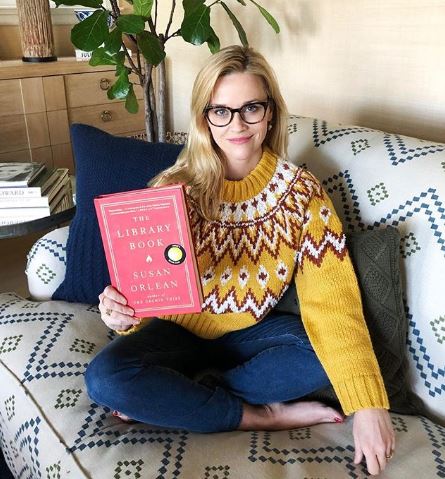 Youth is a good laboratory in which the individual can get some idea of what it is like to be a fully functioning adult, especially a social adult. Even when there is disagreement and on rare occasions some quarreling, it can prepare an individual for some of the hostile and competitive interaction that our particular society seems to prize, or at least need. One of the fortunate by-produce of family living and the love it shares is a sense of kindship, of fellow-feeling. This feeling is one of the important attributes of the self-actualizing person. Developed by experiencing it with the ones around us, kinship gradually becomes a broader, more inclusive experience of identification and empathy with others. The love God speaks of is the kind that enter our hearts when we awake in the morning, stays with us throughout the day, and swells in our hearts as we give voice to our prayers of gratitude at evening’s end. This is the inexpressible love Heavenly Father has for us. It is this endless compassion that allows us to more clearly see others for who they are. Through the lens of pure love, we see immortal beings of infinite potential and worth and beloved sons and daughters of Almighty God. #RandolphHarris 3 of 5
 Not all of our motives are inborn physiological needs, or even physiological/social needs, however. Many of our motives are based on social-personal-situational learning experiences, especially needs for affection and achievement. If there is one characteristic that seems to distinguish humans from other organisms, it is the way in which the human brain is organized. We see that the higher up the evolutionary ladder we go, the less concentration there is on antiquated brain functions (instincts, drives, reflexes—though we cannot live without these!). What augments or replaces these more primitive functions are the functions of the new brain, the cortex: learning, memory, imagination, abstract reasoning, and the other cognitive skills. Therefore, we must find other explanations for why people do what they do. Youth is a time when people need more love and appreciation than ever before, and they may not always seem very lovable. Praise is necessary, though, and so are material rewards—medals, trophies, rings, pins, gold stars, cash bonuses, and so forth. However, more important tan any of these are the approval, support, and encouragement of the people the youth considers important. Some of us are intensely sensitive to the people around us, constantly checking out just how much influence they have on other people and situations. What may appear to be a strong need for dominance, risk-taking, leadership is actually a need to test out the emerging and growing sense of self. #RandolphHarris 4 of 5
 People who fail to experience enough success and whose self-concept fails to develop may grow into adulthood with gaps in their personality. However, for those who seek, allow, and live for it, the dawn of faith, sometimes gradually will come or can return and overpower deficiency-motivated behavior. Have you ever had opportunity to do something for which you felt unprepared or inadequate but that you were blessed for trying? In healthy people, adulthood is characterized by a variety of new challenges. All tings denote there is a God. There is joy in imagining, learning, doing worthwhile new things. This is especially true as we deepen faith and trust in Heavenly Father and his Son, Jesus Christ. We cannot love ourselves enough to save ourselves. However, the Heavenly Father loves us more and knows us better than we love or know ourselves. We can trust the Lord and lean not unto our own understanding. Self-actualizers tend to be impatient with trivial and nonsensical rules. They will be bound by a rule if it makes sense to them. They seek novelty, stimulation, challenge, rather than safety. In their job, they will not be so much tempted by a larger salary as by a chance to do something wee, to experiment. We rejoice in the invitation to devote our whole souls to seeking higher and holier ways to love God and those around us. It is important not to seek perfection but to discover the joy that comes from integration of both strength and weaknesses—to freely skate between all potentials. #RandolphHarris 5 of 5

As the Formula Runs in the Brave New World: Everybody is Happy Nowadays!
 The problem with you is you think you are still human. I came quite close to losing my mind. Did anyone have a clue as to the crash and thunder inside me? I locked the casket of my heart. I punished it. I endured it. Motivation researchers are those harlot social scientists who, in impressive psychoanalytic and/or sociological jargon, tell their clients what their clients want to hear, namely, that appeals to human irrationality are likely to be far more profitable than appeals to rationality. There is a myth of inborn behaviors based on race, nationality, ethnic group, or gender and it is one of the stubornest fantasies around. It has become so much a part of our thinking and is partially validated just often enough that we sometimes wonder if we will ever rid ourselves of it. Currently, a number of psychologists are engaged in research to discover what, if any, motivations are inborn in human beings. For instance, several are interested in the question of whether violent, aggressive behaviors are inborn or acquired. The arguments rage as both sides pile up mountains of evidence. For instance, if a man is born with an extra Y chromosome, does this cause him to be more aggressive, more hostile, to get into difficulty more often with society? Some of the evidence says yes. For instance, a startling number of convicted violent criminals have been found to have this extra chromosome. #RandolphHarris 1 of 17
 Other psychologists think the evidence is still much too sketchy to justify a scientific conclusion. Adam fell that mortals might be; and mortals are, that they might have joy. Who put it together with love and purpose? Pleasing work of God heals wounded souls. We all have the ability to choose eternal life according to will of the Holy Spirit. It is possible that existentialism will not only enrich psychology. It may also be an additional push toward the establishment of another branch of psychology, the psychology of the fully evolved and authentic Self and its ways of being. Someone better than us, has to be—somebody better than every creature who walks the Earth, somebody who shows compassion. Human beings can sometimes transcend their physical needs. “Behold, the Lord hath redeemed my soul from hell; I have beheld his glory, and I am encircled about eternally in the arms of his love,” 2 Nephi 1:15. Although the satisfaction of the physical needs is indeed the indispensable precondition of a satisfactory existence, in itself it is not enough. In order to be content, mortals must also have the possibility of developing their intellectual and artistic powers to whatever extent accords with their personal characteristics and abilities. Human behavior is governed by many types of motives. Some of these are physiological, but many more are acquired and learned through social interaction, personal experiences, and growth experiences. #RandolphHarris 2 of 17
 Those human impulses which have seemed throughout history to be deepest, to be most instinctive and unchangeable, to be most widely spread throughout humankind, i.e., the impulse to hate, to be jealous, to be hostile, to be greedy, to be egoistic and selfish are now being discovered more and more clearly to be acquired and not instinctive. They are almost certainly neurotic and sick reactions to bad situations, more specifically to frustrations of our truly basic and instinctlike needs and impulses. Some individuals seem to bypass or ignore their physiological needs and do things that actually indicate they are operating at higher levels of motivation. For example, some parents give up their own food for the sake of their children; many individuals sacrifice their lives for friends or for causes; and there are less affluent people in every part of the World who have been able to actualize their potentials, even though lower needs to not seem to be met. The apparent paradox leads to the conclusion that some people are more evolved than others. Transcendence is the father reaches of human nature and it deserves far more attention and study than psychologists have heretofore given them. #RandolphHarris 3 of 17
 Tension, whether large or small, is painful. It causes discomfort. We want to stop it. So, to reduce the tension, we search out a goal, an incentive. The goal must have two qualities: it must actually satisfy the need, and it must be something the individual recognizes as being able to meet that need. The achievement of the goal result in satisfaction and a return to homeostasis (a state of balance or equilibrium among the various bodily processes). So tell yourself, you need to make at least $9,000.00 a month, save up $120,000.00 and have good credit to buy a $500,000.00 house, so do not take out student loans. “And not choose eternal death, according to the will of the flesh and the evil which is therein, which giveth the spirit of the devil power to captivate, to bring you down to hell, that he may reign over you in his own kingdom,” 2 Nephi 2.29. Many of our strongest motivations can be traced back to one or more of the physiological needs. For example, being deprived of food and shelter in childhood can set a lifetime pattern for individual: they are always trying to get enough food, money, or clothing, no matter what their income, and they may even hoard food or money in the attempt. Their reasoning—strange to those of us who have never felt this deprived—is that they must always keep on hand a sufficient supply of food, clothing, or money—just in case. This is called the functional autonomy of motives—when a motive ends up as a goal in and of itself, long after the basic need has been satisfied. #RandolphHarris 4 of 17
 Physiological needs persist throughout our lives, but for most of us the first two or three years of life are the only period when satisfying them seems more important to our existence than anything else. This is not true for the 40 percent of the World’s people who go to be (if they have a bed) with their stomachs empty. They may live to be adults, but as long as they are so poor, most of them will find it hard to pay much attention to anything else except getting enough food to stay alive. The most basic physiological motives are those that keep the body going. They work to regulate the body’s homeostatic processes. They arise out of such basic needs as the needs for food, liquid, and air. The need for nutriments to supply energy and to build and rebuild body cells activates the drive we call hunger. Other needs may become more pressing and may overrule the need for food. On the other hand, being deprived of food for a long period of time may make the hunger drive so strong that other drives are not even felt. In studies of semi-starvation conducted during the Second World War, volunteers were kept for six months on a bare subsistence diet that resulted in an average weight loss of 25 percent. I mean, if the old resignation of the Savage Garden was wrong, what has replaced it? #RandolphHarris 5 of 17
 Well, the subjects showed marked personality changes, such as increased irritability, extreme fascination with food, cookbooks, recipes, and each other’s mail (in hopes of receiving a package containing somebody’s mother’s homemade cake or cookies or some cold hard cash); and loss of interest in health, exercise, reading, pleasures of the flesh, love, and family. In addition to a general need for food, the hunger drive can result in a specific hunger for a particular food. This may be the result of learned preferences. There is some evidence, however, that these specific hungers may be as important physiologically as they are psychologically. They may be based upon the body’s particular needs, such as for sugar during a sugar-free diet, or for salt during a salt-free diet. Studies that show naïve or very young subjects, given a wide choice of many food, often choose those that their bodies most need. In addition to deficiencies or blood-sugar imbalances, we can also be stimulated to feel hunger by thinking about food, smelling food, or seeing others eating. Many people are above average weight because they use food as a substitute to meet other needs. Statistics very as to how long the average adult can go without any form of food. They ran from a few days to over a month (the latter depending upon some regular intake of water). #RandolphHarris 6 of 17
 The cells of our body require a specific fluid level, just as does the battery of your car. Without the optimum amount of water, dehydration results. Dehydration is the loss of water or other moisture by an organism. The need for liquid results in the drive called thirst. The goal of this drive is the intake of fluid (water, cranberry juice, soda pop, milk—any of them will do; our preferences are learned). Like hunger, the thirst drive is largely triggered by the chemical balance of body tissues. Any imbalance is relayed to the hypothalamus, which sets off the drive. The maximum amount of time the average adult can go without fluids is a week or less, a much shorter time than people can go without food. Lack of air flow results in strangulation. The need for air differs from some other physiological needs in that breathing is an automatic response, controlled by the autonomic nervous system. It is estimated that the brain cannot survive more than three minutes without oxygen in the blood steam. You secret is utterly safe. It will be exactly the way you want it. Wait a safe period of time. “May the Lord bless thee forever, for they seed shall not utterly be destroyed,” reports 2 Nephi 3.3. The use and fatigue of the physical body and the brain creates a need for a period of rest, recuperation, and restoration of energies. This need is met by sleep. #RandolphHarris 7 of 17
 During this period of sleep, stress on muscle cells is reduced and gross neural activity is reduced. Of course, the nervous system is never completely shut down at any time during life. The brain, for instance, continues to function and is stimulated by dreaming. Studies of people deprived of sleep sow that subjects experience increased irritability, reduction of cognitive function (measured by before-and-after intelligence tests), restlessness, and a tendency to hallucinate. Although defunct Governor of California, Jerry Brown, thinks it is funny to experiment on people and not allow some to use the restroom until it causes internal damage, elimination of body wastes—urination and defecation—is a response to tensions in inner organs and is essential to good health. It is not known how long a person can go without elimination before harm or death occurs. If we lived alone, perhaps all our needs would be basic physiological needs. However, because we live in groups, many of our needs—even our physiological needs—require other people for their fulfillment. Some physiological motives are affected by learning, and by the needs, wishes, or demands of others. For instance, elimination of bodily wastes is done (after the first few months) according to certain social and cultural formulas: we are told how, when, and where to urinate and defecate. #RandolphHarris 8 of 17
 We learn which of all the possible foods available are properly called “food” by the people with whom we live. However, these are still basically purely physiological motives. Some motives, on the other hand, can only be correctly identified as physiological/social in nature, so much do they depend upon social factors. Let us considered as primarily physiological/social needs and to some degree, those called love and belongingness needs. I cannot live in a shadow World. I have to be there for all the ordinary people, signing contracts, rolling out blue prints, calling doctors all over the country, flying to Switzerland and Vienna to interview physicians who want to work in the ideal medical center, the medical center that surpasses every other in its equipment, its laboratories, its staff, its comforts, it protocols and projects. It is to rivet me to the sane World, it is to push my own medical visions to the very limits. Now remember we were talking about men with an extra Y chromosome? Well, Electrical Brain Stimulation (Abbreviated EBS or ESB) are microelectrodes, or tiny electrical receptors, they can be inserted into various portions of the brain. The brain can then be stimulated with low-voltage electricity. This activates the brain externally, without the controls of the nervous system. #RandolphHarris 9 of 17
 EBS has been instrumental in providing a whole new range of insights into brain processes and behavior. For example, electrical stimulation of certain portions of the limbic system produces all the symptoms of certain emotions, such as fear, anger, anxiety; certain drives, such as hunger, thirst, excitation, and pain; and certain reasons, such as intense pleasure. What began as research into motivation, learning, and emotion has now evolved into a technique to simulate internal processes. EBS helps neurologists assist people with such problem behaviors as unmanageable rage or anxiety. Stimulation of the pleasure centers of the brain produces feelings so intense that this stimulation can be used as a reward in conditioning and it has been determined that anti-depressants can curb harsh behavior in some people because they produce serotonin, which will make them feel more at ease. The brain is so powerful, so energetic is the brain that it utilizes about 75 percent of the body’s blood sugar and oxygen. (You can take advantage of this fact the next time you take an examination or do other brain work by increasing your intake of glucose—especially in the form of honey, as many athletes do—and take several deep breaths just beforehand). #RandolphHarris 10 of 17
 Individuals who have suffered brain injuries can be observed. If such a person cannot move a portion of his or her body, for instance, or cannot speak, and no other explanation fits, the assumption may be made that the damaged portion of the brain is related to the damaged or missing function. The nervous system is actually made up of several systems, each responsible for specialized functions. The central nervous system is the center for operations of the nervous system as a whole. It is made up of the brain and the spinal cord. The spinal cord is a bundle of nerves, about the diameter of a pencil in size, running from the center of the brain down to the tip of the spinal column (or backbone). The spinal cord is vitally important to most bodily movement. Damage to it can result in paralysis of part of the body. It helps all manner of human beings, it embraces them, it is real to them, real, that is what is important. I could not let go, I could not ever retreat into nightmares or scribblings in my room, I could not ever fail my interns and residents, my laboratory assistants, my research teams, and you know, with my background, the neurosurgeon, the scientist at heart, I brought to every aspect of this giant organism a personal approach; I could not run away, I could not fail, I cannot fail now, I cannot be absent, I cannot. #RandolphHarris 11 of 17
 The concept of self-love seems at first to be a contradiction in terms. If love involves giving and getting, how can one person do both? And how can one do both within one person? The ability to love means to break down any divisions between the subject and the object; as in the concept of the Earth and Sky, mutually complementary halves become one whole with no real or important line between them. This is done, paradoxically, without either half (or either partner) losing its identity. The Earth does not become the Sky, nor does the Sky become the Earth: they only complete each other. There is unity without sameness. In the attitude a person has toward oneself, the distinction between I, the subject, and Me, the object, is only an academic exercise. “I” describes the active, knowing part of self; “Me” describes the known part of self. Both terms are fictions created for purposes of discourse. I can love myself, and indeed, I must love myself if I am to talk about any meaningful complementary relationship with another person. If I do not know, care about, respect, and respond to my needs, then I do not love myself and certainly cannot love someone whom I experience less intimately. Furthermore, an unloved package is more likely to be a burden than a gift. #RandolphHarris 12 of 17
 So, in spite of the seeming paradox, the person who loves others loves oneself. One loves others because one loves oneself. To become familiar with the fullest meanings of love, you must begin at home. The child who knows the affection, the caring, the respecting, the involving of loving parents begins to gain emotional as well as rational understanding of the love process, even though one may never be able to articulate or explain it, either to oneself or to others. But, one knows in the intuitive sense that one is loved and one becomes to value what is one’s parents value—in this case, oneself. However, the Canadian rapper Drake, in his song God’s Plan declares, “I only love my bed and my mom,” such a combination would lead one to believe he is suffering from an Oedipus complex. The fixation to the mother was recognized by Dr. Freud as the crucial problem of human development, both of the race and of the individual. The intensity of the fixation to the mother is derived from the little boy’s sexual attraction to her, as the expression of the incestuous striving inherent in his nature. People with an Oedipus complex usually have a hostile relationship to the father as a result of sexual rivalry with him. This is why in romantic situations, women will be turned off if you tell them they remind them of your mother. #RandolphHarris 13 of 17
 The ultimate aim of the socialization process, as it relates to dependency, is for the child to be fond of the mother rather than passionately attached to her, to be pleased by her attention and interest but not incessantly to demand it. It is possible that Drake’s father projected into the boy the sexual feeling of the adult man; the little boy having sexual desires, was supposed to be sexually attracted to the woman closet to him, and only by the superior power of the rival, in this case his father, in the triangle, is he forced to give up his desire, without ever recovering fully from this frustration. The depth and intensity of the irrational affective tie to the mother, the wish to return into her orbit to remain a part of her, the fear of emerging fully from her. The Oedipus complex is the acknowledgment and the denial of the crucial phenomenon of man’s longing for mother’s love. However, another problem is when someone has their eyes on a young man, and ruins all his relationships and friendships, to where he only has contact with his mother. This usually happens when an obsessive man has a fix on a young man, who is not interested in him, at all. So, he tries to keep the young man in an adolescent state in hopes that an unlikely dependence will form. An individual who is neurotic has an emotional condition characterized by much anxiety and conflicting motives; this condition is often stimulated by choices that all seem bad. #RandolphHarris 14 of 17
 Incest or trying to force relationships in American society is not healthy, and is actually illegal. When a young man is not allowed to grow and develop and form relationships, friendships, and a career of his choice he will never truly be happy. There will always be some anger or bitterness about being stuck in a place with no one he can actually relate to. Humans are in need of the kind of love that makes them feel comfortable, not like they are being held hostage or in enemy hands. When people can develop relationships they want, this kind of experience builds in them the first pleasurable sensations and satisfactions that are part of an emerging concept of self. When this develops in the normal, ordinary way, the child comes to know and accept and love himself. Happiness is another, and one of the more popular concepts by which mental health is defined today. As the formula runs in the Brave New World: “Everybody is happy nowadays.” What is meant by happiness? Most people today would probably answer the question by saying that to be happy is to have fun or to have a good time. The answer to the question is, “What is fun?” depends somewhat on the economic situation of the individual, and more, on one’s education and personality structure. Economic differences, however, are not as important as they may seem. #RandolphHarris 15 of 17
 The good time of society’s upper strata is the fun model for those not yet able to pay for it while earnestly hoping for that happy eventuality—and the good time of society’s lower strata is increasingly a less affluent imitation of the upper strata’s, differing in cost, but not so much in quality. What does this fun consist in? Going to the movies, parties, ball games, listening to a state of trance (ASOT 811) and watching television, taking a rise in the car on Sundays, dining out, sleeping late on Sunday mornings (but we know many of you have church on Saturday and/or Sunday mornings), and traveling for those who can afford it. If we use a more respectable term, instead of the word fun, and having a good time, we might say that the concept of happiness is, at best, identified with that of pleasure. Taking into consideration our discussion of the problem of consumption, we can define the concept somewhat more accurately as the pleasure of unrestricted consumption, and push-button power and laziness. From this standpoint, happiness could be defined as the opposite of sadness or sorrow, and indeed, the average person defines happiness as a state of mind which is free from sadness or sorrow. This definition, however, shows that there is something profoundly wrong in this concept of happiness. #RandolphHarris 16 of 17
 A person who is alive and sensitive cannot fail to be sad, and to feel sorrow many times in one’s life. This is so, not only because of the amount of unnecessary suffering produced by the imperfection of our social arrangements, but because of the nature of human existence, which makes it impossible not to react to life with a good deal of pain and sorrow. Since we are living beings, we must be sadly aware of the necessary gap between out aspirations and what can be achieved in our short and troubled life. Since death confronts us with the inevitable fact that either we shall die before our loved ones of they before us—since we see suffering, the unavoidable as well as the unnecessary and wasteful, around us every day, how can we avoid the experience of pain and sorrow? The effort to avoid it is only possible if we reduce our sensitivity, responsiveness and love, if we harden our hearts and withdraw our attention and our feeling from others, as well as form ourselves. “And out of weakness one shall be made strong, in that day when my work shall commence among all my people,” reports 2 Nephi 3.13. #RandolphHarris 17 of 17

We Play According to the Rules of the Game to Preserve Our Prestige and Feeling of Superiority and Merit
 My mind was clouded and it was almost a nice feeling, a delicious blurring of the light and warmth in the room, and I had a swift, profound sense of love. Human beings are vastly more complex than most of us realize. The world in which all of us, including scientists, are born, work, love, hate and return to Heaven, is the primary phenomenal World as it is and always has been presented to us through our senses, a World in which the Sun moves across the Sky from east to west, the stars are hung in the vault of Heaven, the measure of magnitude is the human body, and objects are either in motion or at rest. The stomach is the only part of mortals which can be fully satisfied. The yearning of mortal’s brain for new knowledge and experience and for more pleasant and comfortable surroundings never can be fully met. It is an appetite which cannot be appeased. Our ancestors, sensing their own insignificance when compared to these mighty forces, became convinced that all that happened—including their own behavior—was the result of the will and caprice of the gods and spirits. Every society and almost every individual learns that responding as a total person in one’s encounters with life requires an intensity and disciplined openness of consciousness which is not easy to sustain. #RandolphHarris 1 of 15
 What is the effect of alienation on mental health? The answer depends of course on what is meant health; if it means that mortals can fulfill one’s social function, carry on with production, and reproduce oneself, alienated mortals can quite obviously be healthy. After all, we have created the most powerful production machine which has existed so far on Earth—even though we have also created the most powerful destruction machine, accessible to the grasp of the mad person. If we look into the current psychiatric definition of mental health, then one should think that too we are healthy. Quite naturally the concepts of health and illness are the products of those people who formulate them—hence of the could in which these mortals live. Alienated psychiatrists will define mental health in terms of alienated personality, and therefore consider healthy what might be considered sick from the standpoint of normative humanism. Country of the veiled also holds true for many psychiatrists in our culture. Our current psychiatric definitions of mental health stress those qualities which are part of the alienated social character of our time: adjustment, cooperativeness, aggressiveness, tolerance, ambition, etc. #RandolphHarris 2 of 15
 Alienated persons lack a feeling of selfhood and experiences oneself in terms of a response to the expectation of others, as part of human nature, just as Dr. Freud had taken the competitiveness characteristic of the beginning of the century as a natural phenomenon. There exists a unique individual self the delusion of unique individuality. Equally clear is the influence of alienated thinking on one’s formulation of the basic needs of mortals. They are the need for personal security—that is for freedom from anxiety; the need for intimacy—that is, for collaboration with at least one other person; and the need for satisfaction. A first glance, nobody will have any quarrel with the idea that love, security, and intimacy are perfectly normal goals for mental health. A critical examination of these concepts, however, shows that they mean something different in an alienated World than what they might have meant in other cultures. Perhaps the most popular modern concept in the arsenal of psychiatric formulae is that of security. There is good basis in mortal’s ancient wisdom for the urge we all feel in eros to unite with the beloved, to prolong the delight, to deepen the meaning and treasure it. #RandolphHarris 3 of 15
 In recent years there is an increasing emphasis on the concept of security as the paramount aim of life, and as the essence of mental health. One reason for this attitude lies, perhaps, in the fact that the threat of war hanging over the World for many years has increased this longing for security. This hold in our relationships not only with persons but with objects, like a machine we are making or a house we are building or a vocation to which we are devoted. Another, more important reason for the need for security, lies in the fact that people feel increasingly more insecure as the result of an increasing automatization and over conformity. The problem becomes more complicated by the confusion between psychic and economic security. It is one of the fundamental changes of the last seventy years that all Western countries the principle has been adopted that every citizen must have a minimum material security in case of unexpected unemployment, infirmary, and retirement. Yet, while this principle has been adopted, there is still, among many business people intense hostility against it, and especially its widening application; they speak contemptuously of the welfare state as killing private initiative and the spirit of adventure, and in fight social security measures, they pretend to fight for the freedom and initiative of the worker. That these arguments are sheer rationalizations is evidence by the fact that the same people have no qualms about praising economic security as one of the chief aims of life. #RandolphHarris 4 of 15
 One needs only to read the advertisements of insurance companies, with their promises to free their customers from insecurity which could be caused by accidents, death, infirmary, and senior years, etc., to be aware of the important role which the ideal of economic security plays for the moneyed class, and what else is the idea of saving, but practicing the aim of economic security? This contradiction between the denunciation of the striving for security among the working class, and the praise of the same aim for those in the higher income brackets is another example of mortal’s unlimited capacity for thinking contradictory thoughts, without even making a feeble attempt to become aware of the contradiction. Yet the propaganda against the welfare state and the principle of economic security is more effective than it would otherwise be, because of the widespread confusion between economic and emotional security. Increasingly, people believe that they should have no doubts, no problems, that they should have to take no risks, and that they should always feel secure. Psychiatry and psychoanalysis have lent considerable support to this aim. Many writers in the field postulate security as the main aim of psychic development and consider a sense of security more or less equivalent with mental health. #RandolphHarris 5 of 15
 Thus, parents, especially those who follow this literature, get worried that their little son or daughter may, at an early age, acquire a sense of insecurity. They try to help them avoid conflicts, to make everything east, to do away with as many obstacles as they can, in order to make the child feel secure. Just as they try to inoculate the child against all illnesses, and to prevent it from getting in touch with any germ, they think they can banish insecurity by preventing any contact wit it. The result is often unfortunate as exaggerated hygiene sometimes is: once an infection occurs, the person becomes more vulnerable and helpless before it. How can a sensitive and alive person ever feel secure? Because of the very conditions of our existence, we cannot feel secure about anything. Our thoughts and insights are at best partial truths, mixed with a great deal of error, not to speak of the unnecessary misinformation about life and society to which we are exposed almost from the day of birth. Our life and health are subject to accidents beyond our control. It we make a decision, we can never be certain of the outcome; any decision implies a risk of failure, and if it does not imply it, it as not been a decision in the true sense of the word. #RandolphHarris 6 of 15
 We can never be certain of the outcome of our best efforts. The result always depends on many factors which transcend our capacity of control. Just as a sensitive and alive person cannot avoid being sad, one cannot avoid feeling insecure. The psychic task which a person can and must set for oneself, is not to feel secure, but to be able to tolerate insecurity, without panic and undue fears. Life, in its mental and spiritual aspects, is by necessity insecure and uncertain. There is certainty only about that fact that we are born and that we shall pass into Heaven; there is complete security only in an equally complete submission to powers which are supposed to be strong and enduring, and which relieve mortals from the necessity of making decisions, taking risks, and having responsibilities. Free mortals are by necessity insecure; thinking mortal by necessity uncertain. How, then, can mortals tolerate this insecurity inherent in human existence? One way is to be rooted in the group in such a way that the feeling of identity is guaranteed by the membership to the group, be it family, clan, nation, class. As long as the process of individualism has not reached a stage where the individual emerges from these primary bonds, one is still we, and as long as the group functions one is certain of one’s own identity by one’s membership in it. #RandolphHarris 7 of 15
 The development of modern society has led to the dissolution of these primary bonds. Modern mortals are essentially alone, one is put on one’s own feet, expected to stand all by oneself. One can achieve a sense of identity only by developing the unique and particular entity which is one to a point where one can truly sense I am I. This accomplishment is possible only if one develops one’s active powers to such an extent tat one can be related to the World without having to submerge in it; if one can achieve a productive orientation. The alienated person, however, tries to solve a problem in a different way, namely by conforming. One feels secure in being as similar as possible to one’s fellow mortals. One’s paramount aim is to be approved of by others’ one’s central fear, that one may not be approved of. To be different, to find oneself in a marginalized situation, are the dangers which threaten one’s sense of security; hence a craving for conformity produces in turn a continuously operating, though hidden, sense of insecurity. Any deviation from the pattern, any criticism, arouse fear and insecurity; one is always dependent on the approval of others, just as a person addicted to medication is dependent on one’s medication, and similarly, one’s own sense of self and self-reliance becomes ever increasingly weaker. #RandolphHarris 8 of 15
 The sense of guilt, which some generation ago pervaded the life of mortals with reference to sin, has been replaced by a sense of uneasiness and inadequacy with regard to being different. Another goal of mental health, love, like that of security, has assumed a new meaning in the alienated situation. For some people, according to the spirit of time, love is basically a passion of the flesh. Mortals having found by experience that lust, which is mistaken for love, afforded them the greatest gratification, so that it became in fact a prototype of all happiness to him or her, and they thereby are impelled to seek their happiness further along the path of sexual relations, to make lust the central point of their lives. In doing so one becomes to a very dangerous degree dependent on a part of the outer World, namely, on one’s chosen love object, and this exposes an individual to most painful suffering if he or she is rejected by it, or loses it by death or defection. In order to protect oneself from the danger of suffering by love, mortals but only a small minority, can transform the pleasures of the flesh, which they mistake for love, by transferring the main value from the fact of being loved to their own act of loving, and by attaching their love not to individual objects, but all mortal equally. #RandolphHarris 9 of 15
 Thus, by transferring these emotions, they avoid the uncertainties and disappointment of lust, for they realize it is not love, and turn away from the pleasures of the flesh and modify the instinct into an impulse with an inhibited aim…Love with an inhibited aim is indeed originally full of sensual love, and in mortal’s unconscious minds is so still. The feeling of oneness and fusion with the World (the oceanic feeling) which is the essence of religious experience and specifically of mystical experience, and the experience of oneness and union with the beloved person is interpreted as a regression to a state of an early limitless narcissism. In accordance with one’s basic concepts, mental health is full achievement of the capacity for love, which is attained if one is mature to see beyond pleasures of the flesh. Intimacy is that type of situation involving two people which permits validation of all components of personal worth. Validation of personal worth requires a type of relationship which I call collaboration, by which I mean clearly formulated adjustments to one’s behavior to the expressed needs of the person in the pursuit of increasingly identical—that is, more and more nearly mutual satisfactions, and the maintenance of increasingly similar security operations. #RandolphHarris 10 of 15
 The essence of love as a situation of collaboration, in which two people feel: to preserve our prestige and feeling of superiority and merit, we play according to the rules of the game. The materialism turns the experience of love of the alienated, into a marketing personality. It is an example of an egotisme a deux, of two people pooling their common interest, and standing together against a hostile and alienated World. Actually, intimacy is in principle valid for the feeling of any cooperating team, in which everybody adjusts one’s behavior to the expressed needs of the other person in the pursuit of common aims. (It is remarkable to think about love as expressed needs, when some might say about love that in implies a reaction to unexpressed needs between two people. In more popular terms one can discover the marketing connotation of love in discussions on material love and on the need of children for love and affection. In numerous articles, in counseling, in lectures, material love is described as a state of mutual fairness and mutual manipulation, called understanding each other. The wife is supposed to consider the needs and sensibilities of the husband, and vice versa. If he comes home tired and disgruntled, she should not ask him questions—or should ask him questions—according to what the authors think is best for oiling him. #RandolphHarris 11 of 15
 And the husband should say appreciative words about the wife’s cooking or her new dress—and all this in the name of love. Every day now one can hear that a child must get affection in order to feel secure, or that another child did not get enough love from his or her parents, and that is why he or she became a criminal or schizophrenic. Love and affection have assumed the same meaning as that of the formula for the baby, or the college education one should get, or the latest film one should take in. You feed love, as you feed security, knowledge and everything else—and you have a happy person. Sometimes you might meet a person and things are going exceedingly well, and you have not indulged in the pleasure of the flesh, but there is a very strong chemical bond between the two of you, but the other person is not willing to commit, nor let go and it leaves you wondering why. Well, some people believe that we are only are given a quantity of love and they feel that when they love someone else there is a depletion of the love he or she has for oneself. The state of being in love make the person think he or she is giving up one’s own personality in favor of an objective cathexis (a concentration of mental energy on one particular person, idea, or object). This is called the fear of the loss of one’s own being in falling in love. #RandolphHarris 12 of 15
 The threat of the loss of one’s own being in falling in love comes from the dizziness and shock of being hurled into a new continent of experience. The World is suddenly vastly widened and confronts us with new regions we never dreamed existed. Are we capable of giving ourselves to our beloved and still preserving what center of autonomy we have? Understandably, this experience scares us; but anxiety about the vastness and dangers of the new continent—accompanied by delight and anxiety simultaneously—should not be confused with loss of self-esteem. However, some people have just the opposite experience. When some people fall in love, they feel more valuable and treat themselves with more care. We have all observed the hesitant adolescent, uncertain of oneself, who, when he or she falls in love, suddenly walks with a certain inner assuredness and confidence, a mien which seems to say, “You are looking at somebody now.” And we cannot subsume this under the rubric of pleasures of the flesh from the loved one; for this inner sense of worth that comes with being in love does not seem to depend essentially on whether the love is returned or not. We love others to the extent that we are able to love ourselves, and if we cannot esteem ourselves, we cannot esteem or love others. #RandolphHarris 13 of 15
 If we understand that to be open to life, to love, to love another human being, is to trust that whatever else may come to you, mostly you will encounter good, we can cut through the confusion of love. To be open is to remove or discard defenses so that another person can have authentic access to your fullest self. And that means you allow yourself to be vulnerable: you may be hurt, but you also may be loved. You make yourself susceptible to whatever life might offer: joy and pain, love and hatred, acceptance and rejection, pleasure and agony. The reward comes not in finding balance between the agony and the ecstasy, but in knowing yourself to be a courageous, vital, person. Being a significant human being means that there is the plus of being one who dares, one who risks, one who experiments, one who invites life in. One who not only passively says “Yes” to life, but one who goes out—wide open and vulnerable—and challenges life to be interesting, to be worthwhile, to be stimulating. This is the excitement that significant selfhood brings. This is the very active element that loving can mean. We think love and live have more in common than a few similar letters and sounds. Our experience has been that loving people are living people. Thus, love is our capacity to participate in constant dialogue with our environment, the World of nature as well as persons. #RandolphHarris 14 of 15
 Love means entering through a cosmic gate and forming a covenant with God. It means the giving that actually replenishes. People who live life in this way also live well, for out of basic, comfortable trust in themselves and their ability to handle life they communicate a trusting of others. Their attitude says in effect, “I believe in myself and Myself says that you are a person as worthwhile as I am. Let us exchange the gift of friendship and see what we can add to each other.” Love is fundamental in human experience, love pervades all actions, and is a deep, broad, motivating force. “Behold, I am the law, and the light. Look unto me, and endure to the end, and ye shall live; for unto one that endureth to the end will I give eternal life,” reports 3 Nephi 15.8. Overall love is the joyous, unpremeditated experience of giving and taking that means knowing, caring, respecting, and responding. “Does your life fall away from view? As the time runs away, whatever will you do? Do you want me again, my dear? I will wait for you. If your thoughts turn to prey on you, I will keep them away, so far away. Through the dark night, I will stay with you. I will comfort you. Oh, I will. Calm down your nervous state. I will sing you a lullaby. Calm down. There is no mistake to keep you up all night. Fall down here with me. Baby, we will be alright, reports Emma Hewitt and Cosmic Gate (Calm Down). #RandolphHarris 15 of 15
Every Citizen is Equally Responsible for and Influential in Making Decisions
 In the twilight between mortality and spirituality, I breathe deeply and slowly. Every day I ask myself why I am not the person I would like to me. Think of the promises that are made to you in the beautiful and glorious years of childhood and adolescence. There is a right way to live and be happy. The deepest hunger in the American soul today is for something truly useful to do with one’s life. There is a mass confusion in the minds of my generation in trying to find a solution for ourselves and the World around us. What values does work really have if, as is so often the case in America now, the end result is human exploitation, environmental destruction, or debasement of values? Young people need to arrive at a synthesis whereby both self-identity and social relations are affirmed for a more self-actualizing life. Moral development is not limited to adolescence. We live in a World so full of choices. Happiness is the object of the design of our existence; and will be the end thereof, if we pursue the path that leads to it; and this path is virtue, uprightness, faithfulness, holiness, and keeping all the commandments of God. #RandolphHarris 1 of 16
 Physical consequences determine whether an action is good or bad. Avoidance of punishment and unquestioning deference to power are values. We must develop discipline of self so that, more and more, we do not have to decide and redecide what we will do when we are confronted with the same temptation time and time again. A right action is one that results in something good for oneself and sometimes for others. We need only to decide some things once. Good behavior is that which pleases others. How great of a blessing it is to be free of agonizing over and over again regarding a temptation. To do such is time-consuming and very risky. Conformity to societal images of nice or good behavior is important. Right and wrong behavior is based on external authority, fixed rules, and the social order. The sooner we take a stand, the taller we will be. Law and order is important for its own sake. The Lord has blessed us with symbols of purity to keep us on the right course to choose the right. Right action is based on social contract—the greatest good for the greatest number. #RandolphHarris 2 of 16
 Mortality is based on individual rights and standards which have been critically examined and agreed upon by the whole society. We need to have the conviction deep down in our hearts to live the kind of life that will cause us to make the right choices, not only for peace and happiness in the World right now, but also for peace and happiness eternally. Right is defined by the individual conscience in agreement with a Universal morality. The Universal principles (such as justice and equality) are higher than any law or social control. This is what they great religious and philosophical system of the World are based on. “As for me and my house, we will serve the Lord,” reports Joshua 24.15. What does it mean to be an adult? We have promised our Father in Heaven that we will serve him and others with love and do his will in all things. This means that to be an adult, there are certain rights and privileges that do not belong to children and adolescent, for one thing. However, for such fringe benefits, there are dues to pay. These dues come in the form of responsibilities, obligations, and expectations of other individuals and society. When we reach a certain age, we undergo a change-of-life experience. #RandolphHarris 3 of 16
 Many of the adult’s life goals in middle adulthood become achieved. This can result in a sense of loss or letdown and a force a confrontation of values and goals. The adult may ask now: Is this what I am? Is this what I want the rest of my life to be like? What about all my dreams, my plans, my expectations? Is this what life is really all about, after all? The disillusionment that often accompanies these questions may create conflict between husband and wife, parents and children, and even among friends and co-workers. Divorce figures are high for this age group. Experiencing death by suicide also rises during middle adulthood, and both physical and mental health complaints increase. Clearly, important changes are taking place during this period. When we better understand the nature of these changes, we will be better able to meet our needs and the needs of others as middle adults. However, there are also many people who remain fully functioning human beings, and who no more deserve to be called old (meaning outworn, useless, and unimportant) than does an aged bottle of fine wine. With a holistic approach to human psychology, we insist that life is viewed as a continuous, integrated fabric, with earlier stages leading naturally and beneficially into later stages. #RandolphHarris 4 of 16
 Human beings are a whole entity—a fusion of many parts and pieces. These fragments work together; they can never be completely separated. Therefore, we believe it is not possible to look at mind or body; it is only possible to look at the person. We achieve the abundant life by becoming true disciples of Jesus Christ—by following in his ways and engaging in his work. Believing in Go leads to faith him and developing trust in his word. Faith causes our hearts to grow in our love for God and others. As that love grows, we are inspired to emulate the Savior as we continue our own great journey on the path of discipleship. Just as work has become alienated, the expression of the will of the voter in modern democracy is an alienated expression. The principle of democracy is the idea that not a ruler or a small group, but the people as a whole, determine their own fate and make their decisions pertaining to matters of common concern. By electing one’s own representatives, who in a parliament decide on the law of the land, each citizen is supposed to exercise the function of responsible participation in the affairs of the community. However, by principle of the division of powers, an ingenious system was created that served to retain the integrity and independence of the judiciary system, and to balance the respective functions of the legislature and executive. Ideally, every citizen is equally responsible for and influential in making decisions. #RandolphHarris 5 of 16
 In reality, the emerging democratic system was best by one important contradiction. Operating in states with tremendous inequalities of opportunity and income, the privileged classes naturally did not want to lose the privileges which the status quo gave them, and which they could easily have lost if the will of the majority, who were without property, had found its full expression. To avoid such a danger, many among the property-less population were excluded from the franchise, and only very slowly was the principle accepted that every citizen, without restrictions and qualifications, had the right to vote. In the nineteenth century it seemed as if universal franchise would solve all problems of democracy. Feargus Edward ’Conner, one of the Chartist leaders, declared in 1838: “Universal suffrage would at once change the whole character of society from a state of watchfulness, doubt and suspicion to that of brotherly love, reciprocal interest and universal confidence,” and in 1842 he declared, “Six moths after the Charter is passed, every man, woman and child in the country will be well fed, well houses and well clothed.” Since then, all great mocracies have established general suffrage for men and women and children, but in in the richest country of the World nearly 30 percent of the population is still ill fed, ill housed, and ill clothed. #RandolphHarris 6 of 16
 It is not the aphorism that cures. It is the love of God that rescues, restores, and revives. God knows you. You are his child. He loves you. Even when you think that you are not lovable, God reaches out to you. The introduction of universal suffrage not only disappointed the hoes of the Chartists, it disappointed all those who believed that universal suffrage would help transform the citizenry into responsible, active, independent personalities. It became clear that the problem of democracy today is not any more the restriction of franchise but the manner in which the franchise is exercised. How can people express their will if they do not have any will of conviction of their own, if they are alienated automatons, whose tastes, opinions and preferences are manipulated by big conditioning machines. Under these circumstances universal suffrage becomes a fetish. If a government that can prove that everybody has a right to vote, and that votes are counted honestly, it is democratic. If everybody votes, but the votes are counted honestly, it is democratic. If everybody votes, but the votes are not counted honestly, or if the voter is afraid of voting against the governing party, the country is undemocratic. #RandolphHarris 7 of 16
 It is true indeed that there is considerable and important differences between free and manipulated elections, but noting this difference must not lead us to forget that even free elections do not necessarily express the will of the people. If a highly advertised brand of toothpaste is used by the majority of the people because of some fantastic claims it makes in its propaganda, nobody with any sense would say that people have made the right decision in favor of the toothpaste. All that could be claimed is that the propaganda was sufficiently effective to coax millions of people into believing its claims. In an alienated society the mode in which people express their will is not very different from that of their choice of buying commodities. They are listening to the drums of propaganda and fact mean little in comparison with the suggestive noise which hammers at them. In recent years we see more and more how the wisdom of public relations’ counsels determines political propaganda. Accustomed to make the public buy anything for the build-up of which there is enough money, they think of political ideas and political leaders in the same terms. They use television and the news media to build up political personalities as they use it to build up a soap; what matter is the effect, in sales or votes, not the rationality or usefulness of what is presented. #RandolphHarris 8 of 16
 This phenomenon found a remarkably frank expression in the recent statements about the future of the Republican Party, one must find a personality who wants to represent the Party—then he or she will get the votes. In principle this is not different from the endorsement of a new application on a mobile phone by a famous athlete or movie actor. Actually, the functioning of the political machinery in a democratic country is no essentially different from the procedure on the commodity market. The political parties are not too different from big commercial enterprises, and the professional politician try to sell their wares to the public. Their method is more and more like that of high pressure advertising. A particularly clear formulation of this process has been given by a keen observer of the political and economic scene, J.A. Schumpeter. He starts out with the formulation of the classical eighteenth-century concept of democracy. The democratic method is that institutional arrangement for arriving at political decisions which realizes the common good by making the people itself decide issues through the election of individuals who are to assemble in order to carry out its will. #RandolpHarris 9 of 16
 Schumpeter then analyzes modern mortal’s attitudes toward the problem of public welfare, and arrives at a result not too different from the ones outlined above. However, when we move still farther away from the private concerns of the family and the business office into those regions of national and international affairs that lack a direct and unmistakable link with those private concerns, individual volition, command facts and method of inference soon cease to fulfill the requirements of the classical doctrine. What strikes me most of all and seems to me to be the core of the trouble is the fact that the sense of reality is so completely lost. Normally, the great political questions take their place in the psychic economy of the typical citizen with those leisure-hour interests that have not attained the rank of hobbies, and with the subjects of irresponsible conversation. These things seem so far off; they are not at all like a business proposition; dangers may not materialize at all and if they should they may not prove so very serious; one feels oneself to be moving a fictitious World. This reduced sense of reality accounts not only for a reduced sense of responsibility but also for the absence of effective volition. #RandolphHarris 10 of 16
 One has one’s phrases, of course, and one’s wishes and daydreams and grumbles; especially, one has one’s like and dislikes. However, ordinarily they do not amount to what we call a will—the psychic counterpart of purposeful responsible action. In fact, for the private citizen musing over national affairs there is no scope for such a will and no task at which it could develop. One is a member of an unworkable committee, the committee of the whole nation, and that is why one expends less disciplined effort on mastering a political problem than one expends on a game of bridge. The reduced sense of responsibility and the absence of effective volition in turn explain the ordinary citizen’s ignorance and lack of judgment in matter of domestic and foreign policy which are if anything more shocking in the case of educated people and people who are successfully active in non-political walks of life than it is with uneducated people in humble situations. Information is plentiful and readily available. However, this does not seem to make any difference. Nor should we wonder at it. We need only compare a lawyer’s attitude to his or her brief and the same lawyer’s attitude to the statements of political fact presented in one’s newspaper in order to see what is the matter. #RandolphHarris 11 of 16
 In the one cause the lawyer has qualified for appreciating the relevance of one’s facts by years of purposeful labor done under the definite stimulus that is no less power one then bends one’s acquirements, one’s intellect, one’s will to the contents of the brief. In the other case, one has not taken the trouble to qualify; one does not care to absorb the information or to apply to it the canons of criticism one knows so well how to handle; and one is impatient of long or complicated argument. All of this goes to show that without the initiative that comes from immediate responsibility, ignorance will persist in the face of masses of information however complete and correct. It persists even in the face of the meritorious efforts that are being made to go beyond presenting information and to teach the use of it by means of lectures, classes, discussion groups. Results are not zero. However, they are small. People cannot be carried up the ladder. #RandolphHarris 12 of 16
 Thus the typical citizen drops down to a lower level of mental performance as soon as one enters the political field. One argues and analyzes in a way which one would readily recognize as infantile within the sphere of one’s real interests. One becomes a primitive again. There is also a similarity between the manufacturing of the popular will in political issues by using the TV news media as a commercial advertising. The ways in which issues and the popular will on any issues are being manufactures is exactly analogous to the ways of commercial advertising. We find the same attempts to contact the subconscious. We find the same technique of creating favorable and unfavorable associations which are the more effective the less rational they are. We find the same evasions and reticences and the same trick of producing opinion by reiterated assertion that is successful precisely to the extent to which it avoids rational argument and the danger of awakening the critical faculties of the people. And so on. Only, all these arts have infinitely more scope in the same sphere of public affairs than they have in the sphere of private and professional life. The picture of the prettiest girl that ever lived will in the long run prove powerless to maintain the sales of a bad mobile phone. There is no equally effective safeguard in the case of political decisions. #RandolphHarris 13 of 16
 Many decisions of fateful importance experiment with them at its leisure and at moderate cost. Even if that is possible, however, judgment is as a rule not so easy to arrive at as it is in the case of the mobile phone, because effects are less easy to interpret. One the basis this analysis, we arrive at a definition of democracy which, while less lofty than the first one, is undoubtedly more realistic. The democratic method is that institutional arrangement for arriving at political decisions in which individuals acquire the power to decide by means of a competitive struggle for the people’s vote. The comparison between the process of opinion formation in politics with that in the commodity market can be supplemented with another one dealing not so much wit the formation of opinion, but rather with its expression. I am referring to the role of the stockholder in America’s big corporations, and of the influence of one’s will on the management. As has been pointed out above, ownership in the big corporations rests today in the hands of hundreds of thousands of individuals, each of whom owns an exceedingly small fraction of the total stocks. Legally speaking, the stockholders own the enterprise and hence have the right to determine its policy and to appoint the management. Practically speaking, they feel little responsibility for their ownership, and acquiesce in with what the management does, satisfied to have a regular income. #RandolphHarris 14 of 16
 The vast majority of the stockholders do not bother to go to the meetings and are willing to send the required proxies to the management. As has been pointed out above, only 6 percent of the big corporations is control exercised by total or majority ownership. The situation of control in a modern democracy is not too different from the control in a big corporation. It is true, over 50 percent of the voters cast their votes personally. They make the decision between two party machines competing for their votes. Once one of the machines is voted into office, the relationship to the voter becomes remote. The real decisions often do not lie any more with the individual members of the parliament, representing the interests and wises of their constituency, but with the part. However, even there decisions are made by influential key personalities, often little known to the public. The fact is that while the individual citizen believes that he or she direct the decisions of his or her country, one does it only a little more than the average stockholder participates in controlling of one’s company. Between the act of voting and the most momentous high-level political decisions is connection which is mysterious. #RandolphHarris 15 of 16
 One cannot say that there is no control at all, nor can one say that the final decision is an outcome of the voter’s will. This is exactly the situation of an alienated expression of the citizen’s will. One does something, voting, and is under the illusion that one is the creator of decisions which one accepts as if they were one’s own, while in reality they are largely determined by forces beyond one’s control and knowledge. No wonder this situation gives the average citizen a deep sense of powerlessness in political matters (though not necessarily consciously so) and hence that one’s political intelligence is reduced more and more. For while it is true that one must think before one acts, it is also true that is one has no chance to act, the thinking become impoverished; in other words, if one cannot act effectively—one cannot think productively either. Emotions function as responses to many of our motives, and they also may themselves motivate us, may set up wants and needs. This very day—every day—God reaches out to you, desiring to heal you, to lift you up, and to replace the emptiness in your heart with an abiding joy. God desires to sweep away any darkness that clouds your life and fill it with the sacred and brilliant light of his unending glory. Our personal relationship with God is something we have explicit control over. Without faith it is impossible to please God. #RandolphHarris 16 of 16
Royalty is Not Enough for Me–Shall Not Loveliness be Loved Forever?
 A soul unlike any other, tutored in courage, never looking back, lifted from misery, and seeking to marvel at all things without malice or lamenting. I saw a graduate of the school of suffering. Allport’s theory declares that people are busy living their lives forward; they are oriented toward the future, and therefore, the psychologist cannot be correct if one is totally oriented entirely in the past. Yet, there is a sense of uniqueness at every stage of being. Allport’s theory stresses the importance of forward-learning orientation in life, which he called proactivity. People are not simply made up, like block towers, out of their past experiences. They have intentions, plans, goals, dreams, visions, faith, and hopes. In addition, because people are present or future oriented, their needs and motives change throughout their lives. Many motivations that were once important purely for survival may later still serve as motivators, but for different reasons. These motives that are not strictly for survival may later still serve as motivators, but for different reasons. Thee motives that are not strictly for survival become part of the individual’s self-concept and take on meaning through personal experiences and strivings. Such needs are reported to have a functional autonomy—an independent reason for being. #RandolphHarris 1 of 11
 Allport also talks about the mature personality as it must be an extension of self. It is evidenced by an ability to experience, enjoy, appreciate, and participate in a wide variety of activities and by a continual sense of planning and hoping. The individual with mature personality is comfortable with other people, emotionally secure, and self-accepting. He or she is reality oriented and has some sort of unifying philosophy of life. Basic to all else, the mature personality finds these experiences and feelings to be personally meaningful. It is very characteristic of seniors to seek a fourth stage of life which is called meaning, or liberation. The ultimate source of the courage to be is the God above God; this is the result of our demand to transcend theism. Only if the God of theism is transcended can the anxiety of doubt and meaninglessness be taken into the courage to be. The God above God is the object of all mystical longing, but mysticism also must be transcended in order to reach him. Mysticism does not take seriously the concrete and the doubt concerning the concrete. It plunges directly into the ground of being and meaning, and leaves the concrete, the World of finite values and meanings, behind. Therefore, it does not solve the problem of meaningslessness. In terms of the present religious situation this means that Eastern mysticism is not the solution of the problems of Western Existentialism, although many people attempt this solution. #RandolphHarris 2 of 11
 The God above the God of theism is not the devaluation of the meanings which doubt has thrown into the abyss of meaninglessness; he is their potential restitution. Nevertheless, absolute faith agrees with the faith implied in mysticism in that both transcend the theistic objectivation of a God who is a being. For mysticism such a God is not more real than any finite being, for the courage to be such a God has disappeared in the abyss of meaninglessness with every other value. The God above the God of theism is present, although hidden, in every divine-human encounter. Biblical religion as well as Protestant theology are aware of the paradoxical character of this encounter. They are aware that if God encounters mortals, God is neither object nor subject and is therefore above the scheme into which theism has forced him. They are aware that personalism with respect to God is balanced by a transpersonal presence of the divine. They are aware that forgiveness can be accepted only if the power of acceptance is effective in mortals—biblically speaking, if the power of grace is effective in mortals. #RandolphHarris 3 of 11
 They are aware of the paradoxical character of every prayer, of speaking to somebody to whom you cannot speak because he is not “somebody,” of asking somebody of whom you cannot ask anything because he gives not before you ask, of saying “thou” to somebody who is nearer to the I than the I is to self. Each of these paradoxes drives the religious consciousness toward a God above the God of theism. The courage to be which is rooted in the experience of the God above the God of theism unites and transcends the courage to be as a part and the courage to be as oneself. It avoids both the loss of oneself by participation and the loss of one’s World by individualization. The acceptance of the God above the God of theism makes us a part of that which is not also a part but is the ground of the whole. Therefore, our self is not lost in the larger whole, which submerges it in the life of a limited group. If the self participates in the power of being-itself it receives itself back. For the power of being acts through the power of the individual selves. It does not swallow them as every limited whole, every collectivism, and every conformism does. This is why the Church, which stands for the power of being-itself or for the God who transcends the God of the religious, claims to be the mediator of the courage to be. A church which is based on the authority of the God of theism cannot make such a claim. It inescapably develops into a collectivist or semicollectivist system itself. #RandolphHarris 4 of 11
 However, a church which raises itself in its message and its devotion to the God above the God of theism without sacrificing its concrete symbols can mediate a courage which takes doubt and meaninglessness into itself. It is the Church under the Cross which alone can do this, the Church which preaches the Crucified who cried to God who remained one’s God after the God of confidence had left one in the darkness of doubt and meaninglessness. To be as a part in such a church is to receive a courage to be in which once cannot lose one’s self and in which one receives one’s World. Absolute faith, or the state of being grasped by the God beyond God, is not a state which appears beside other states of the mine. It never is something separated and definite, an event which could be isolated and described. It is always a movement in, with, and under other states of mine. It is the situation on the boundary of mortal’s possibilities. It is this boundary. Therefore, it is bot the courage of despair and the courage in and above every courage. It is not a place where one can live, it is without the safety of words and concepts, it is without a name, a church, a cult, a theology. However, it is moving in the depths of all of them. It is the power of being, in which they participate and of which they are fragmentary expressions. #RandolphHarris 5 of 11
 One can become aware of it in the anxiety of fate and death when the traditional symbols, which enable mortals have lost their power. When providence has become a superstition and immortality something imaginary that which once was the power in these symbols can still be present and create the courage to be in spire of the experience of a chaotic World and a finite existence. The stoic courage returns but not as the faith in universal reason. It returns as the absolute faith which says Yes to being without seeing anything concrete which could conquer the nonbeing in fate and death. And one can become aware of the God above the God of theism in the anxiety of guilt and condemnation when the traditional symbols that enable mortals to withstand the anxiety of guilt and condemnation have lost their power. When divine judgment is interpreted as a psychological complex and forgiveness as a remnant of the father image, what once was the power in those symbols can still be present and create the courage to be in spite of the experience of an infinite gap between what we are and what we ought to be. #RandolphHarris 6 of 11
 The Lutheran courage returns but not supported by the faith in a judging and forgiving God. It returns in terms of the absolute faith in which says Yes although there is no special power that conquers guilt. The courage to take the anxiety of meaninglessness upon oneself is the boundary line up to which the courage to be can go. Beyond its mere non-being. Within it all forms of courage are re-established in the power of the God above the God of theism. The courage to be is rooted in the God who appears when God has disappeared in the anxiety of doubt. “And what is it that ye shall hope for? Behold I say unto you that ye shall have hope through the atonement of Christ and the power of his resurrection, to be raised unto life eternal, and this because of your faith in him according to the promise. Wherefore, if a person has faith one must need have hope; for without faith there cannot be any hope,” reports Moroni 7.41-42. Basic to love relationship and life is trust. Fromm’s four-fold test of love assumes it: you must trust someone to know him or her and let that individual know you, to care and be cared for, to respect and be respected. And trust determines the quality of the responses made to another person. Yet trust is difficult to come by. We acquire it in varying degrees throughout our growth cycles. A reliance on some sort of order helps one to learn trust. The most important aspect is what is internalized. #RandolphHarris 7 of 11
 Those who experience reliability, dependability, constancy in the people and objects around them tend to perceive reality in those terms, and the perception generalizes to include personal behavior—they gradually come to trust themselves. Trust is a basic prerequisite for healthy, satisfying interpersonal relations. The truster is one who continues to believe in other people in general, even when individual people let one down, do one dirty, or even try to do one harm. One maintains a generalized good feeling about people, though one often develops a cautious attitude toward particular persons. One of the key concepts in the trust necessary for love relationships is openness. Love is the binding element par excellence. It is the bridge between being and becoming, and it binds fact and value together. Love, in short, is the original creative force now transmuted into power which is both inside and outside the person. We see that love have much in common with the concept of intentionality for it presupposes that mortals yearn toward uniting oneself with the object not only of one’s desires but one’s knowledge as well. And this very process implies that a mortal already participates to some extent in the knowledge one seeks and the person one loves. Love is also seen as the power which draws one towards God. #RandolphHarris 8 of 11
 Love is the yearning for the mystic union which comes out in the religious experience of union with God, or in Dr. Freud’s oceanic experience. There is also an element in life which binds one to the love of one’s fate—amor fati. By fate I do not mean the specific or accidental misfortunes which befall us, but rather fate as the acceptance and affirmation of the finite state of mortals, limited as we are in intelligence and strength, faced everlasting with weakness and death. The myth of Sisyphus presents a man’s fate in as stark a form as could be imagined; yet Camus finds in that fate, for the mortal who has courage to accept the consciousness of it, something which call forth his eros, something to love: I leave Sisyphus at the foot of the mountain! This Universe without a master seems to him neither sterile nr futile. Each atom of that stone, each mineral flake of that night-filled mountain, in itself forms a World. The struggle itself toward the heights is enough to fill a person heart. One must imagine Sisyphus happy. Eros pushes toward self-fulfillment, but it is not all the ego-centric assertion of one’s subjective whims and wises on a passive World. #RandolphHarris 9 of 11
 The idea of mastering nature of reality would have horrified the Greeks and would promptly have been labelled hubris, or inordinate pride which is an affront to the gods and a sure invitation of a mortal’s doom. The Greeks always showed a respect which amounted to a reverence for the objective, given World. They delighted in their World—its beauty, it is from, its endless challenges to their curiosity, it is mysteries to be explored; and they were everlastingly attracted by this World. Not that they would have had any truck with the modern sentimental belief that life by itself is good or bad; it all depends on what mortals dedicate themselves to. Their tragic view itself enabled them to delight in life. One cannot outwit death anyway by progress or accumulating wealth; so why not accept your fate, choose values which are authentic, and let yourself delight and believe in the being you are and the Being you are part of? “Shall not loveliness be loved forever?” sings Euripides. The question is rhetorical, but the answer is not. Loveliness shall be loved because of infantile needs, or because it stands for the heart, or because it is intimacy, or because it assists adjustment or because it will make us happy—but simply because it is lovely. Loveliness exercises a pull on us; we are drawn to life by love. #RandolphHarris 10 of 11
 What does all this have to do with psychotherapy? I believe a great deal. When Socrates remarks, with a deceptive simplicity, “Human nature will not easily find a helper better than eros,” we can take his words as applying to the process of psychotherapy as well as the drive within a person toward psychic healthy. Socrates himself, as we see and listen to him in the Dialogues, is perhaps history’s greatest model of the psychotherapist. His prayer at the end of Phaedo could well be inscribed on the wall of every therapist’s office: Beloved Pan, and all ye other gods who haunt this place, give me beauty in the inward soul; and may the outward and inward mortal be at one. May I reckon the wise to be the wealthy, and may I have such a quantity of gold as none but the temperate can carry. Heavenly Father guides us and gives us the experiences we need based on our strengths, weaknesses, and choices so that we might bear good products. The Father chastens us when necessary because he loves us. It is Heavenly Father who sends both the influence and the gift of the Holy Ghost into our lives. Through the gift of the Holy Ghost, the glory-or intelligence, light, and power of the Father can dwell in us. If we will strive to increase in light and truth until our eyes become single to God’s glory, Heavenly Father will send us up unto eternal life and reveal His face unto us—either in this life or the next. #RandolphHarris 11 of 11

Effortless Learning and No More of the Old Drudgery—I have the Power to Command the World to Appear Right Before My Eyes!
 I was under some sort of spell myself, looking into her eyes. Her conception of eternity was to feel whole for one blessed hour, to breathe for one blessed hour without pain. How could she make this choice? Unless mortals exploit others, they have to work to in order to live. However primitive and simple one’s method of work may be, by the very fact of production, one has risen above the animal kingdom; rightly has one been defined as the being that produces. However, work is not only an inescapable necessity for mortals. Work is also our liberator from nature, our creator as a social and independent being. In the process of work, this is, the molding and changing of nature outside of oneself, mortals mold and changes oneself. One emerges from nature by mastering her; one develops one’s powers of co-operation, of reason, one’s sense of beauty. One separates oneself from nature, from the original unity with her, but at the same times unites oneself with her again as her master and builder. The more one’s work develops, the more one’s individuality develops. In molding nature and re-creating her, one learns to make use of one’s powers, increasing one’s skill and creativeness. “There were many, exceedingly great many, who were made pure and entered into the rest of the Lord their God,” reports Alma 19.12. #RandolphHarris 1 of 19
 Whether we think of the beautiful paintings in the caves of Southern France, the ornaments on weapons among primitive people, the statues and temples of Greece, the pyramids in Egypt, the cathedrals of the Middle Ages, the chairs and tables made by skilled crafts people, delicious Dutch Waffles, or the cultivation of flowers, trees or corn by farmers—all are expressions of the creative transformation of nature by mortal’s reason and skill. In Western history, expertise, especially as it developed in the thirteenth and fourteenth centuries, constitutes one of the peaks in the evolution of creative work. Work was not only a useful activity, but one which carried with it a profound satisfaction. The main features of artistry is very lucidly expressed by acknowledging there is no ulterior motive in work other than the product being made and the process of its creation. The details of daily work are meaningful because they are not detached in the worker’s mind from the product of the work. The worker is free to control his own working action. The crafter is thus able to learn from one’s work; and to use and develop one’s capacities and skills in its prosecution. There is no split of work and play, or work and culture. The craft person’s way of livelihood determines and infuses one’s entire mode of living. #RandolphHarris 2 of 19
 With the collapse of the medieval structure, and the beginning of the modern mode of production, the meaning and function of work changed fundamentally, especially in the Protestant countries. Mortals, being afraid of their newly won freedom, were obsessed by the need to subdue one’s doubts and fears by developing a feverish activity. The outcome of this activity, success or failure, decided one’s salvation, indicating whether one was among the saved or the lost souls. Work, instead of being an activity satisfying in itself and pleasurable, became a duty and an obsession. The more it was possible to gain riches by work, the more it became a pure means to the aim of wealth and success. Work became the chief factor in a system of inner-Worldly asceticism, and answer to mortal’s sense of aloneness and isolation. However, work in this sense existed only for the upper and middle classes, those who could amass some capital and employ the work of others. For the vast majority of those who has only their physical energy to sell, work became nothing but forced labor. #RandolphHarris 3 of 19
 The worker in the eighteenth or nineteenth century who had to work sixteen hours if one did not want to starve was not doing it because one served the Lord in this way, nor because one’s success would show that one was among the chosen ones, but because one was forced to sell one’s energy to those who had the means of exploiting it. The first centuries of the modern era find the meaning of work divided into that of duty among the middle classes, and that of forced labor among those without property. The religious attitude toward work as a duty, which was still so prevalent in the nineteenth century, has been changing considerably in the last decades. Modern mortals do not know what to do with themselves, how to spend their lifetime meaningfully, and some are driven to work in order to avoid an unbearable boredom. However, work has ceased to be a moral and religious obligation in the sense of the middle-class attitude of the eighteenth and nineteenth centuries. Something new has emerged. Ever-increasing production, the drive to make bigger and better things, have become aims in themselves, new ideas. Work has become alienated from the working person. #RandolphHarris 4 of 19
 What happens to the industrial worker? One spends one’s best energy for seven to sixteen hours a day producing something. One needs one’s work in order to make a living, but one’s role is essentially a passive one. One fulfills a small isolated function in a complicated and highly organized process of production, and is never confronted with one’s product as a whole, at least not as a producer, but only as a consumer, provided one has the money to buy one’s product in a store. One is put in a certain place, has to carry out certain task, but does not participate in the organization or management of the work. One is not interested, nor does one know why one produces this, instead of another commodity—what relation it has to the needs of society as a whole. The shoes, the BMW and Buicks and Corvettes, the electric bulbs, are produced by the enterprise, using the machines. One is a part of the machine, rather than its master as an active agent. The machines, instead of being in one’s service to do work for one which once had to be performed by sheer physical energy, has become one’s master. Instead of the machine being the substitute for human energy, mortals have become a substitute for the machine. One’s work can be defined as the performance of acts which cannot yet be performed by machines. #RandolphHarris 5 of 19
 Work is a means of getting money and is in itself a meaningful human activity. For the great majority of automobile workers, the meaning of the job is in the pride of the object they are producing, it is not just about the pay check. Manufactures want you to feel proud of the vehicle you are driving and feel safe in it. Work appears as something natural to people who love what they are doing, it is meaningful and a wonderful condition for a person with an abled body and mind to get a pay check, which allows them to purchase the things they need and want. Work provides a sense of dignity, as well as importance. No wonder there is a premium on work. Americans have always been known as a hardworking bunch and women seem to love a “working man.” No wonder this results in a happy and connected worker—because a pay check allows one to feel fully human. This relationship of the worker to one’s work is an outcome of the whole social organization of which one is a part. Being employed, one is an active agent, has responsibility, and proper performance insures that one will bring home enough money to support oneself and family. #RandolphHarris 6 of 19
 Of course more is expected and wanted of a person who is employed than just money, people expect love, care, trust, devotion and happiness. We must experience responsibility with each other. The ability and the readiness to respond to the other person. It means to be ready, and able to meet another’s needs—not to lead one’s life for the other person, or to promise to take care of all wants and needs, but to meet most of the important emotional needs. Obviously, love as so defined is not a simple or even simply a complex emotion. It is a qualitative relationship, involving stimuli and responses, giving and taking. It also involves mutuality and reciprocity: there has to be some sort of two-way street involved. The tales told of the lovesick young man wo loves a girl from afar are very good literature sometimes. They are very poor self-actualizing experiencing! We are not just part of the equipment hired by capital, our role and function are determined by more than just our quality of being a piece of equipment. He must know her, respect her, be concerned for her, and respond to her. Then, she must go through the same things with him. If she does not know he exists, has never even seen him, how can she love him? How can he love her if whatever he is feeling is all going nowhere? More properly, he should call it fantasy, admiration, or something else. Love must be shared and returned. #RandolphHarris 7 of 19
 In recent decades, increasing attention has been paid to the psychology of the worker, and to one’s attitude toward one’s work, to the human problem of industry; but this very formulation is indicative of the underlying attitude: there is a human being spending most of one’s lifetime at work, and what should be discussed is the industrial problem of human beings, rather than the human problem of industry. Most investigations in the field of industrial psychology are concerned with the question of how the productivity of the individual worker can be increased, and how one can be made to work with less friction; psychology has lent its services to human engineering, an attempt to treat the worker and employee like a machine which runs better when it is well oiled. While *Taylor was primarily concerned with a better organization of the technical use of the worker’s physical powers, most industrial psychologists are mainly concerned with the manipulation of the worker’s psyche. The underlying idea can be formulated like this: if one works better when he or she is happy, then let us make the individual happy, secure, satisfied, or anything else, provided it raises one’s output and diminishes friction. In the name of human relations, the worker is treated with all devices which suit a completely alienated person; even happiness and human values are recommended in the interest of better relations with the public. #RandolphHarris 8 of 19
 Thus, for instance, according to Time magazine, one of the best-known American psychiatrists said to a group of fifteen hundred supermarket executives: “It is going to be an increased satisfaction to our customers if we are happy….It is going to pay off in cold dollars and cents to management, if we would put some of these general principles of values, human relationships, really into practice.” One speaks of human relations and one means the most in-human relations, those between alienated automations; one speaks of happiness and means the perfect routinization which has driven out the last doubt and all spontaneity. The alienated and profoundly unsatisfactory character of work results in two reactions: one, the ideal of complete laziness; the other a deep-seated, though often unconscious hostility toward work and everything and everybody connected with it. It is not difficult to recognize the widespread longing for the state of complete laziness and passivity. Our advertising appeals to it even more than to close human intimacy. There are, of course, many useful and labor saving gadgets. However, this usefulness often serves only as a rationalization for the appeal to complete passivity and receptivity. #RandolphHarris 9 of 19
 A package of breakfast cereal is being advertised as “new—easier to eat.” An electric toaster is advertised with these words “the most distinctly different toaster in the World! Everything is done for you with this new toaster. You need not even bother to lower the bread. Power-action, though a unique electric motor, gently takes the bread right out of your fingers!” How many courses in languages, or other subjects, are announced with the slogan “effortless learning, no more of the old drudgery.” Everybody knows the picture of the senior couple in the advertisement of a life-insurance company, who have retired in their golden years, and spend their life in the complete bliss of having nothing to do expect just travel. Radio and television exhibit another element of this yearning for laziness: the idea of push-button power; by pushing a button, or turning a knob of my machine, I have the power to produce music, speeches, ball games, and command the World to appear right before my eyes. The pleasure of driving cars certainly rests partly upon this same satisfaction of the wish for push-button power. By the effortless pushing of a button, a powerful ultimate driving machine is set in motion; little skill and effort is needed to make the driver feel that he or she is the rulers of space. #RandolphHarris 10 of 19
 However, there is far more serious and deep-seated reaction to the meaninglessness and boredom of work. It is a hostility toward work which is much less conscious than our craving for laziness and inactivity. Many a business person feels oneself the prisoner of one’s business and the commodities one sells; he or she has a feeling of fraudulency about one’s product and a secret contempt for it. One hates their customers, who forces one to put up a show in order to sell. One hates one’s competitors because they are a treat; one’s employees as well as one’s superiors, because one is in a constant competitive fight with them. Most of all, one hates oneself, because one sees one’s life passing by, without making any sense beyond the momentary intoxication of success. Of course, this hate and contempt for others and for oneself, and for the very things one produces, is mainly unconscious, and only occasionally comes up to awareness in a fleeting thought, which is sufficiently disturbing to be set aside as quickly as possible. And it generally means, it is time to move on so not to hurt yourself or others and find something you love to do. The World is a land of opportunities and no one is forcing you to stay in one place at one job for the rest of your live. You can move to another city, state, country or tribal land and do something that suits your fancy. #RandolphHarris 11 of 19
 The courage to take meaninglessness into itself presupposes a relation to the ground of being which we have called absolute faith. It is without a special content, yet it is not without content. The content of absolute faith is not without content. The content of absolute faith is the God above God. Absolute faith and its consequence, the courage that takes the radical doubt, the doubt about God, into itself, transcends the theistic idea of Go. Theism can mean the unspecified affirmation of God. Theism in this sense does not say what it means if it uses the name of God. Because of the traditional and psychological connotations of the word God such an empty theism can produce a reverent mood if it speaks of God. Politicians, dictators, and other people who wish to use rhetoric to make an impression on their audience like to use the word God in this sense. It produces the feeling in their listeners that the speaker is serious and morally trustworthy. This is especially successful if they can brand their foes as atheistic. #RandolphHarris 12 of 19
 On a higher level people without a definite religious commitment like to call themselves theistic, not for special purposes but because they cannot stand a World without God, whatever this God may be. They need some connotations of the word God and they are afraid of what they call atheism. On the highest level of this kind of theism the name of God is used as a poetic or practical symbol, expressing a profound emotional state or highest ethical idea. It is a theism which stand on the boundary line between the second type of theism and what we call theism transcended. However, it is still too indefinite to cross this boundary line. The atheistic negation of this whole type of theism is as vague as the theism itself. It may produce an irreverent mood and angry reaction of those who take their theistic affirmation seriously. It may even be felt as justified against the rhetorical-political abuse of the name God, but it is ultimately as irrelevant as the theism which it negates. It cannot reach the state of despair any more than the theism against which it fights can reach the state of faith. Theism can have another meaning, quite contrary to the first one: it can be the name of what we have called divine-human encounter. In this case it point to those elements in the Jewish-Christian tradition which emphasize the person-to-person relationship with God. #RandolphHarris 13 of 19
 Theism in this sense emphasizes the personalistic passages in the Bible and the Protestant creeds, the personalistic image of God, the word as the tool of creation and revelation, the ethical and social character of the kingdom of God, the personal nature of human faith and divine forgiveness, the historical vision of the Universe, the idea of a divine purpose, the infinite distance between creator and creature, the absolute separation between God and the World, the conflict between holy God and sinful mortals, the person-to-person character of prayer and practical devotion. Theism in this sense is the nonmystical side of biblical religion and historical Christianity. Atheism from the point of view of this theism is the human attempt to escape the divine-human encounter. It is an existential—not a theoretical—problem. Theism has a third meaning, a strictly theological one. Theological theism is, like every theology, dependent on the religious substance which it conceptualizes. It is dependent on theism in the first sense insofar as it tries to prove the necessity of affirming God in some way; it usually develops the so-called arguments for the existence of God. However, it is more dependent on theism in the second sense insofar as it tries to establish a doctrine of God which transforms the person-to-person encounter with God into a doctrine about two person who many or may not meet but who have a reality independent of each other. #RandolphHarris 14 of 19
 Now theism in the first sense must be transcended because it is irrelevant, and theism in the second sense must be transcended because it is one-sided. However, theism in the third sense must be transcended because it is wrong. It is bad theology. This can be shown by a more penetrating analysis. The God of theological theism is being beside others as such a part of the whole of reality. He certainly is considered its most important part, but as a part and therefore as subjected to the structure of the whole. He is supposed to be beyond the ontological elements and categories which constitute reality. However, every statement subjects him to them. He is seen as a self which has a World, as an ego which is related to a thou, as a cause which is separated from its effect, as having a definite space and an endless time. He is a being, not being-itself. As such he is bound to the subject-object structure of reality, he is an object for us subjects. At the same time we are objects for him as a subject. And this is decisive for the necessity of transcending theological theism. For God as a subject makes me into an object which is nothing more than an object. #RandolphHarris 15 of 19
 God deprives me of my subjectivity because he is all-powerful and all-knowing. I revolt and try to make him into an object, but the revolt fails and becomes desperate. God appears as the invincible tyrant, the being in contrast with whom all other beings are without freedom and subjectivity. He is equated with the recent tyrants who with the help of terror try to transform everything into a mere object, a thing among things, a cog in the machines they control. He becomes the model of everything against which Existentialism revolted. This is the God Nietzsche said to had to be eliminated because nobody can tolerate being made into a mere object of absolute knowledge and absolute control. This is the deepest root of atheism. It is an atheism which is justified as the reaction against theological theism and its disturbing implications. It is also the deepest root of the Existentialist despair and the widespread anxiety of meaninglessness in our period. Theism in all its forms is transcended in the experience we have called absolute faith. It is the accepting of the acceptance without somebody or something that accepts it. It is the power of being-itself that accepts and gives the courage to be. This is the highest point to which our analysis as brought us. It cannot be described in the way God of all forms of theism can be descried. #RandolphHarris 16 of 19
 Absolute faith cannot be described in mystical terms either. It transcends both mysticism and personal encounter, as it transcends both the courage to be as a part and the courage to be as oneself. One of the most important things about authentic love is that it feels good. It is a form of absolute faith. Love is something for you, not to you. When you love and are loved, you are added to, not taken away from; you are made better, you feel more whole, you are more complete. This is what God wants us to experience. If love is real, deep and mature, both people in a relationship experience all these good things. So often people tell us that loving someone takes everything out of them. This may not be authentic loving. When you love, you give without giving up. You give without losing. You gain from the giving. It is a shared experience, and it does not take anything away from you. Self-actualizing people report loving others makes them always feel rejuvenated, strengthened, replenished, and it is a beneficial experience. A loving person enjoys loving. One like it, and it pleasures him or her, it makes one feel good, it enlarges and broadens an individual, it creates something, and makes a person want to repeat those feelings. #RandolphHarris 17 of 19
 Hair, flesh, bones, and the whole body are always changing. Which is true not only of the body, but also of the soul, whose habits, tempers, opinions, desires, pleasures, pain, fears, never remain the same in anyone of us, but are always coming and going; and equally true of knowledge, and what is still more surprising to mortals, not only do the sciences in general spring up and decay, so in that respect we are never the same. Now in all this change, what binds the diversity together? It is eros, the power in us yearning for wholeness, the drive to give meaning and pattern to our variegation, form to our otherwise impoverishing formlessness, integration to counter our disintegrative trends. Here we must have a dimension of experience which is psychological and emotional as well as biological. This is eros. It is eros which impels people toward health in psychotherapy. In contrast to our contemporary doctrines of adjustment or homeostasis or release of tension, there is in eros an eternal reaching out, a stretching of the self, a continuously replenished urge which impels the individual to dedicate oneself to seek forever higher forms of truth, beauty, and goodness. The Greeks believed that this continuous regeneration of the self is inherent in eros. Those who are with a pearl in the body only, betake themselves to women and beget children—this is the character of their love; their offspring, as they hope, will preserve their memory and give them the blessedness and immortality which they desire in the future. #RandolphHarris 18 of 19
 However, souls which are full—for there certainly are women and men who are more creative in their souls than in their bodies—conceive that which is proper for the soul than in their bodies—conceive that which is proper for the soul to conceive or contain. And what are these conceptions?—wisdom and virtue in general. And such creators are poets and all artist who are deserving of the name inventor. Eros allow us to open our energies and participate, via imagination and emotional and spiritual sensitivity, in forms and meanings beyond ourselves in the interpersonal World and the World of nature around us. “Down, the water holds me down. It is like I have no weight and now, I am floating with the tide. The Sun is on my face. And I hear you talking, I hear you speak. Someone is talking, saying something, but I am on my own. There is nothing left to say, it carries me away. And you call out, I cannot hear you. No, I cannot hear nothing. And you all look the same now. You all look the same now. Now, there is nothing that I want to take me from this place. I am drifting further with the tide that carries me away. And I call out. I cannot hear you, I cannot feel you. No, I cannot feel nothing. And you call out, I cannot hear you. I know you are trying hard to reach me. You will always feel cold without me. I know you are trying hard,” reports Emma Hewitt (Carry Me Away). RandolphHarris 19 of 19
 Randolph Harris II International Institute