
Home » Africa (Page 85)
Category Archives: Africa
I Fed My Heart Some Jello and Birdseed with a Little Silver Spoon and it Became a Little Yellow Canary which Sang and was Happy!
 All beauty is contained in the ever-changing waves of the sea. It is a beautiful carving, harmoniously bringing forms and sounds together, which are part of totality, and woven together with the serenity we expect from the divine. But oh, the great World is such a wilderness of marvels. I am very happy. It is the joy that goes with the serenity of beauty. The genius of the films as an art form is that they can re-enact myth and symbol. In films we can combine fantasy and actuality, unite past and present and future; and what the beholder sees is not merely a spectacle. One experiences in one’s own emotions what the character on the screen is experiencing. As was demonstrated so well in the film Romeo Must Die, one is able to experience this Hero, Han (Jet Li) through his fantasies, his daydreams, his anxieties and hopes and fears, his plans and his memories. In this sense movies have claim to being the unique art form for our day. They can move instantaneously from childhood, to the present, to an imagined future, and can move from action to fantasy at will. Their genius is in encompassing and stimulating the imagination of the viewer. For many—perhaps most—people, the primary source of joy is other people. However, joy implies the possibility of misery; where there is ecstasy, so is there agony; if hell is other people, so is the divine. The theory pinpoints the arenas of joy and misery as the interpersonal-need areas called inclusion, control, and affection. #RandolphHarris 1 of 16
 The fear of time—the inexorable rolling on of fate, of entropy in our Universe which continues even though we may blot out our awareness of it can be a source of our most severe anxiety. The experience of time hanging over our heads like a sword of Damocles in a subjective phenomenon, private and personal. The symbol and the legends are our ways of holding its threats at bay. The many legends of the afterlife—Heaven, reincarnation, the final conflict—are examples. The legend of progress and the legend of symbolic immortality are all parts of our struggle to make time meaningful. Inclusion behavior refers to association between people, being excluded or included, belonging, togetherness. The need to be included manifests itself as wanting to be attended to, and to attract attention and interest. The classroom hellion who throws erasers is often objecting mostly to the lack of attention paid to him or her. Even if the individual is given negative affection one is partially satisfied, because at least someone is paying attention to him or her. Symbols are our source of freedom and civilization. That is, from our capacity to form into symbols the mass of experiences which impinge upon us as infants, we are able to establish some distance from the World in which we can infuse meaning into our experience. #RandolphHarris 2 of 16
 The symbol-forming process is not born with the birth of the infant but begins to emerge after ten or twelve months. It is one aspect of the development of the infant’s capacity for self-consciousness. This growth is required before the infant is mature enough to abstract itself from the situation and to embrace itself and the World in the same concept. Between these two opposite things—self on the one hand and World on the other—there is a greater or lesser tension. We call this tension awakeness, alertness. It is out of this tension that symbols are born. Symbols, and symbolic thinking, are one aspect of consciousness and self-awareness. The capacity to be aware that I am telling the truth emerges simultaneously with my capacity for telling a lie. The lie is a behavior of transcendence. Being a distinct person, that is, having an identity, is an essential aspect of inclusion. An integral part of being recognized and paid attention to is that the individual be distinguishable from other people. One must be known as a specific individual; one must have a particular identity. The extreme of this identification is that one be understood. #RandolphHarris 3 of 16
 To be understood implies that someone is interested enough on one to find out one’s characteristics. When, say, from the first to the third year, the symbols the infant picks up are doctrines and covenants that are too rigid, made so by too much anxiety on the infant’s part arising from over-permissiveness or over-rigidity on the part of the parents, the infant’s capacity to develop symbols is partially block. A rigidity is begun which limits not only the child’s symbol-forming from then on, but also the child’s openness to the countless symbols that are available in our culture. Then we have a rigid, unfree, drive person, who in later life may well be termed neurotic. This is the curtailing and destruction in the person of the capacity to grow, to change, to create. It may set an almost insurmountable barrier for the creativity of art later on, or the child, when he or she gets to be adults, may well revolt against the whole society and become an artist! An issue that arises frequently at the outset of interpersonal relation is that of commitment, the decision to become involved in a given relation or activity. Usually, in the initial testing of a relationship, individuals try to present themselves to one another, partly to find out in which facet of themselves others will be interested. Frequently, a member is initially silent because he or she is not sure that people are interested in one, a concern about inclusion. #RandolphHarris 4 of 16
 The flavor of inclusion is conveyed through such concepts as interacting with people, with attention, acknowledgement, prominence, recognition, and prestige; with identity, individuality, and interest. It is unlike affection in that it does not involve strong emotional attachments to individual persons. It is unlike control in that the preoccupation is with prominence, not dominance. Just as the symbol-forming power may be arrested in individuals, so also it may be altered, for good or ill, in whole populations. For civilizations are themselves dependent precisely on symbolism. By superseding instinct, the symbol makes civilization possible. Symbolism is so woven into our civilization that our language depends on it. The World is a symbol, and its meaning is constituted by the ideas, images and emotions, which it raises in the mind of the hearer. Language, art and symbolism on the deeper level are identical. Control behavior refers to the decision-making process between people, and the areas of power, influence, and authority. The need for control varies along a continuum from the desire for power, authority, and control over others (and therefore over one’s future), to the need to be controlled, and have responsibility lifted from oneself. An argument provides the setting for distinguishing the inclusion-seeker from the control-seeker. The one seeking inclusion or prominence wants very much to be one of the participants in the argument, while the control-seeker wants to be the winner or, if not the winner, on the same side of the winner. #RandolphHarris 5 of 16
 The prominence-seeker would prefer to be the losing participant; the dominance-seeker would prefer to be a winning nonparticipant. For symbolism is our stand against the rule of sheer instinct. It is the bulwark by which civilization and art tame sheer instinct. In place of the force of instinct which suppresses individuality, society has gained the efficacy of symbols, at once preservative of the commonweal and the individual standpoint. The function of reason is not at all to compete with symbols or to try to suppress all symbols and legends. It is to judge between them. Reason should rightly operate to purify and clarify symbols; it is detrimental to the soul to try by reason to destroy them. Control is also manifested in behavior directed toward people who try to control others. Expressions of independence and rebellion exemplify lack of willingness to be controlled, while compliance, submission, and taking orders indicate various degrees of accepting the control of others. There is no necessary relation between an individual’s behavior toward controlling others and one’s behavior toward being controlled. Two persons who control others may differ in the degree to which they allow others to control them. The domineering sergeant, for example, may accept orders from one’s lieutenant with pleasure and gratefulness, while the neighborhood bully may also rebel against his or her parents. #RandolphHarris 6 of 16
 Advances in civilization threaten the very society which discovers them. The art of free society consists first in the maintenance of a symbolic code; and secondly in the fearlessness of revision, to secure that the code serves those purposes which satisfy an enlightened reason. Those societies which cannot combine reverence to their symbols with freedom of revision, must ultimately decay either from anarchy, or from the slow atrophy of life stifled by useless shadows. Control behavior differs from inclusion behavior in that it does not require prominence. The power behind the throne is an excellent example of a role that would fill a high control-need and a low need for inclusion. The joker exemplifies a high inclusion-need and a low need for control. Control behavior differs from affection behavior in that it has to do with power relations rather than emotional closeness. The frequent difficulties between those who want to get down to business and those who want to get to know one another illustrate a situation in which control behavior is more important for some and affection behavior for others. Affection behavior refers to close personal emotional feelings between two people, especially love and hate in their various degrees. Affection is a dyadic relation; it can occur only between pairs of people at any one time, whereas both inclusions and control relations may occur either in dyads or between one person and a group of persons. #RandolphHarris 7 of 16
 Artists know this intuitively. With fearless energy, poets, painters, architects, musicians, and sculptors expose us to the contents of the symbols. Often the results of such creative action disconcert us. However, the artist’s job is not to comfort—nor even to inform and instruct. The artist’s purpose is to liberate, to cleanse the creative process of those rationalized accretions which we invent in order to shield ourselves from the powerful truth of authentic symbols. Good art wounds as well as delights. It must, because our defenses against the truth are wound so tightly around us. However, as art chips away at our defenses, it also opens us to healing potentialities that transcend intellectual games and ego-preserving strategies. The future of our civilization, its survival and health, is inseparable from the future of its art. Modern art is thus neither a luxury nor a decorative excrescence hanging on the edges of culture. Art is central to any civilization which hopes to remain vital and healthy. In groups, affection behavior is characterized by overtures of friendship and differentiation between members. A common method of avoiding a close tie with any one member is to be equally friendly to all members. Thus, popularity may not involve affection at all; it may be inclusion behavior, as contrasted with going steady, which is usually primarily affection. #RandolphHarris 8 of 16
 A discussion of the nature of love cannot, perhaps, be had without talking about what might be called unequal love relationships. Between a parent and a small child, for example, there is a natural inequality. The parent (hopefully!) is capable of a more mature love than the child and will find satisfaction in expressing love and meeting needs of the child that arise from the natural dependency of the child. The child, on the other hand, no matter how responsive, cuddling, and love one is, remains a child and cannot meet the same needs in the parent that a mature adult could. If the parent has been and is so lacking in other satisfying love experiences that one demands satisfaction of needs that are beyond the capabilities and maturity of the child, the adult is bound to feel frustrated; for the inequality in the relationship is the natural order of things. When a markedly unequal relationship exists between two adults, questions arise about the nature of the feelings involved. For example, a woman may live with a husband she had slowly fallen out of love with. He may contribute little or nothing to her support; indeed she may support him. When he is not feeling well, he may sometimes be physically cruel to her. An outsider looking at the relationship can see a dozen ways in which she would be better off if she locked him out of home and heart. #RandolphHarris 9 of 16
 If she is asked why she continues the relationship she may say, “Well, I feel sorry for him and just cannot bring myself to divorce him. I keep hoping he will get better, but I guess I really know that is unlikely to happen. And in spite of it all, I love him. I really do!” Is this love? Who can judge? Who can dispute the woman’s word that she has a deep caring for her husband? However, when the relationship is examined, serious questions arise. The desirable thing that happen in a loving relationship are not occurring here. The mutual enjoyment that marks a relationship of love can only be said to exist, if at all, on a very minimal level. It would appear that she, by staying with him, is stifling many of her opportunities for growth. One might be easily fooled by appearances into believing that she loves her husband unconditionally, for she makes few apparent demands upon him. However, it would seem impossible that she does not have a great deal of hostility toward him, though she may not recognize it, which she does not express directly. And perhaps her undemanding stance is the expression of her hostility, for in so doing she encourages him to play indefinitely the role of a dependent individual who does not need to take responsibility for one’s own life. It might well be a more honest expression of her feelings and potentially better for both of them if she kicked him out. #RandolphHarris 10 of 16
 What prompts her to continue the relationship? There are probably several reasons. She may be so filled with self-hate that she would not be comfortable if she were not in a marriage where she is constantly hurt. Every counselor has witnessed situations in which a relationship such as the one described has terminated for some reason and the woman has almost immediately entered into a new alliance that is equally hurtful (and predictably so), suggesting that she has a deep-seated need to be punished. Then again she may be so insecure about herself and her worth that she feels that even so hurtful a marriage is better than none. Feeling it unlikely that anyone more satisfying would have anything to do with her, she avoids the potential loneliness and isolation she pictures herself as experiencing without her husband. Fear of love may also be a potent factor in perpetuating the marriage. Without being aware of it, she may feel safer in an alliance where the experience of love is minimal at best. As we have already seen, a relationship in which we are free to express and receive love, free to express our anger, and free to do what we want to do is frightening. #RandolphHarris 11 of 16
 Even a hurtful association may somehow represent safety to us if it helps us to feel that we are not free to experience these freedoms. So when we find ourselves in a relationship in which there is almost constant hurt and we are continually frustrated in our growth and other satisfactions, we may need to ask ourselves why we continue it. Even though we may be quite correct when we say we love the person, this is likely not the real reason we continue a course of action so damaging to us. It will be helpful at this point to recognize again that love never exists in an unalloyed form. Each of us brings our existing self to any relationship—our fear, our past experiences of hurt our self-hate, and our feelings that we are unlovable. All of these factors enter in to contaminate any experience of intimacy into which we may enter. So it will be always true that we are only partially able to enjoy each other’s presence, be empathetic, provide maximum opportunity for each other’s growth, and love each other unconditionally. However, for must of us even the partial experience of love will seem worth the effort. Having examined some of the qualities of love, it becomes apparent that a great deal of pleasures of the flesh has little, if anything, to do with the expression of affection, despite our professed ideals to the contrary. #RandolphHarris 12 of 16
 A difference between inclusion behavior, control behavior, and affection behavior is illustrated by the different feelings a mortal has in being turned down by a fraternity, failed in a course by a professor, and rejected by his young lady. The fraternity excludes him, telling him that they as a group do not have sufficient interest in him. The professor fails him and says, in effect, that he finds him incompetent in his field. His young lady rejects him, implying that she does not find him lovable. With respect to an interpersonal relation, inclusion is concerned primarily with the formation of a relation, whereas control and affection are concerned with relations already formed. Within existent relations, control is the area concerned with who gives orders and makes decisions for whom, whereas affection is concerned with how emotionally close or distant the relation becomes. Inclusion is concerned with the problem in or out, control is concerned with top or bottom, and affection with close or far. The specific difficulties that arise in each area, and that must be overcome in order to realize the full potential of human relationships. Since the inclusion area involves the process of formation, it usually occurs first in the life of a group. People must decide whether they do or do not want to form a group. The issues of interaction are those of making contact, or encounter. #RandolphHarris 13 of 16
 A person who has too little inclusion, who will be called undersocial, tends to be introverted and withdrawn. Consciously, one wants to maintain this distance between himself and others, and insists that he does not want to get emmeshed with people and lose his privacy. However, unconsciously, he definitely wants others to pay attention to him. His biggest fears are that people will ignore him, generally have no interest in him, and would just as soon leave him behind. His unconscious attitude may be summarized by, “No one is interested in me, so I am not going to risk being ignored. I will stay away from people and get along by myself.” There is a strong drive toward self-sufficiency as a technique for existence without others. Behind his withdrawal is the private feeling that others do not understand him. His deepest anxiety, that referring to the self concept, is that he is worthless. He thinks that if no one ever considered him important enough to receive attention, he must be of no value whatsoever. It is likely that this basic fear of abandonment or isolation is the most potent of all interpersonal fears. #RandolphHarris 14 of 16
 The oversocial person tends toward extraversion. He seeks people incessantly and wants them to seek him out. He is also afraid they will ignore him. His unconscious feelings are the same as those of the withdrawn person, but his overt behavior is the opposite. His unconscious attitude is summarized by, “Although no one is interested in me, I will make people pay attention to me in anyway I can.” His inclination is always to seek companionship. He is the type who “cannot stand alone.” All of his activities will be designed to be done “together.” The interpersonal behavior of the oversocial type of person is designed to focus attention on himself, to make people notice him, to be prominent. The direct method is to be an intensive, exhibitionistic participator. By simply forcing himself on the group he forces the group to focus attention on him. The more subtle technique is to try to acquire power (control) or try to be well liked (affection), but for the primary purpose of gaining attention. To the individual for whom the resolution of inclusion relations was successful in childhood, interaction with people present no problem. He is comfortable with people and comfortable being alone. He can be a high or low participator in a group, or can take a moderate role equally well, without anxiety. He is capable of strong commitment to and involvement with certain groups and also can withhold commitment if he feels it is appropriate. Unconsciously, he feels that he is a worthwhile, significant person. #RandolphHarris 15 of 16
 Several methods help to being out inclusion feelings. They focus on the issues involving contact and human encounter, and help to clarify the feelings and lead to some effective coping methods. Difficult as it is really to listen to someone in affliction, it is just as difficult for one to know that compassion is listening to one. The love of our neighbor is the love which comes down from God to mortals It precedes that which rises from mortals to God. God is longing to come down to those in affliction. As soon as a soul is disposed to consent, though it were the last, the most miserable, the most deformed of souls, God will precipitate himself into it to order, through it to look at and listen to the afflicted. Only as time passes does the soul become aware that God is there. However, though it finds no name for him, wherever the afflicted are loved for themselves along, it is God who is present. God is not present, even if we invoke him, where the afflicted are merely regarded as an occasion for doing. They may even be loved on this account, but then they are in their natural role, the role of matter and of things. We have to being to them in their inert, anonymous condition a personal love. Care of the soul requires our appreciation of these ways it presents itself. It is important, then, to revere the spirit and to let the soul burst into life—in creativity, individuality, and imagination. #RandolpHarris 16 of 16

Faith is the Evidence of things Not Seen—In this Moment of Attention Faith is Present as Much as Love
 The Cresleigh Homes house at Rocklin Trails is so big and so grand and so solid, a house so shining with gold and whiteness, a house stretching to the right and to the left so far that it swept out of my mind anything I had ever seen in the rich city of Granite Bay, and the wonder of Eldorado Hills passed away from me, and my breath was taken out of me. A symbol’s function is to cover up and to reveal, to disguise and to disclose simultaneously. The connation of the term symbolic is precisely this artistic capacity to disguise and at the same moment to disclose, one being impossible without the other. A symbol in a dream cover up an immediate reality and at the same time discloses a deeper reality. It may be profitable first to attempt to discover what we mean by love. Describing love often seems like trying to capture the beauty of a rainbow in a test tube and attempting to analyze it, but perhaps something can be gained from the effort. It is probably necessary to talk of love in ideal terms, even while recognizing that no relationship will completely fulfill the definition. What would a fully loving experience be like? It would certainly include mutual enjoyment of each other’ presence. People who love each other find satisfaction in being with each other. Delicious feelings of warmth and aliveness flood through us when we are with someone we know loves us and whom we love. #RandolphHarris 1 of 11
 One of the factors involved in this delight in a loved one’s presence is empathy. A process of unspoken communication seems to take place in which we sense how the other person feels and we respond with our own emotions. Empathy differs from sympathy. The sympathetic person feels the same feeling as the one with whom one sympathizes. The empathetic person picks up how the others feel but responds with his own emotional reaction. A sympathetic person, for example, might cry with someone who has suffered grief almost as though it were he himself who were grieving. An empathetic person, on the other hand, would understand the grief and respond with love, perhaps moving toward the person, holding him, and expressing his deeply felt desire to comfort. Genuine empathy does not include the game in which a person expects another person to be able to sense one’s needs (to be loved, to be comforted, to be taken care of, to be needed, to be encouraged and so forth) without his expressing them and then feels resentful when they are not met. The often-heard complaint “He ought to know how I feel without my having to say it” is often a rationalization of one who is afraid of the intimacy and vulnerability involved in expressing one’s needs. #RandolphHarris 2 of 11
 Another mark of love is that it provides a mutual opportunity for growth as persons. Love gives the warmth and Sunshine that makes possible the maximum personality development. In an ideal parent-child relationship, for example, the child basks in the parents’ love and their enjoyment of him. With the confidence gained in feeling loved the child is freed to explore one’s World in ever-widening circles and is free to experience loving relationships with others. If his growth is inhibited by his parents’ attitudes, their love, while real, is contaminated by other qualities. A corollary mark of love is that a lover does not give or demand exclusive tenderness. This idea will be dealt with in detail later. Let it suffice here to say that possessiveness discourages the maximum experience of love, which is necessary for the fullest personality growth for those involved. Another quality of love that is mentioned frequently is that love is unconditional. Perhaps there is no better word to describe it, but this ideal is very slippery and frequently misunderstood. Often we translate it to mean “Unconditional love means that anything you do is O.K. with me, if I love you. Therefore if I really love you I will never become angry with you or express feelings of hurt to you about something you have done.” #RandolphHarris 3 of 11
 Such a definition of unconditional love would see the lover as an impassive pillow upon which the loved one could vent his whims. This is not the picture of a very satisfying or exciting relationship for either person! Yet we often cling to this ideal of love, which is a caricature of the real thing. We speak of art as symbol and myth, for they are both means by which we perceive life; they are the frames through which we make sense of the kaleidoscopic activity about us and in us. The symbol and myth are not ways of getting a perspective; they are the perspective itself. No one would argue that we do not project the symbol and myth; we do. However, no one ought also to protest against the equally obvious fact that the objective World is present in the symbol and myth as stimulus, the setting of the problems we week to resolve, the data we try to assimilate and make meaningful. Hence, art, like all expressions of beauty, is subjective and objective at the same time. Unconditional love runs much deeper. It goes more like this: “Even though I get very angry with you sometimes, even though I sometimes feel hurt, or irritated, or withdrawn, or even bored, I cannot escape the fact that I am deeply involved with you in a caring relationship. That fact of love exists, whatever is happening between us at the moment.” #RandolphHarris 4 of 11
 When two people know in their bones that they have this kind of relationship, then they are more free to fight openly, to express other emotions more only, and to love each other more openly and freely. Unconditional love, therefore, opens the door to freer relationships, rather than to more restricted and obligatory reactions as we often assume. It is readily apparent that these qualities of love are equally applied to parents’ feelings for their children and to friendships between persons either of the same or the opposite gender. There may be some truth in the contention of some personality theorists that love always involves some erotic feeling. However, be that as it may, the matter of practical significance to us here is that love is not limited to potential mates and that the nature of love is no different in our various affiliations. The symbol participates in the thing it symbolizes. The Christian cross is in actuality simply two sticks of wood placed at right angles to each other. However, symbolically its form means infinitely more. The cross is the vertical dimension crossing the horizontal; the spiritual and the Worldly levels crossing each other, engaged in perpetual tension and hopefully producing creative religious ideas and actions as an expression of this tension. Take the symbol of water at St. Anne des Pres, in Quebec, the Canadian shrine of healing waters like Lourdes. The priests at St. Anne have placed signs at various places where the water springs out of the ground, explaining that it is the faith in God which heals you, of which the water is a symbol. #RandolphHarris 5 of 11
 However, water is also a healing agent and has been one since time immemorial; it has cleansing, health-giving properties. Water participates in the healing process though it is God who performs the cure. Also, signs point out that you may be cured psychologically and spiritually without being cured physically. One can see the struggle the theologians have had to preserve the shrine from magic, and they do this by emphasizing the faith in God, with the water as a curative agent which is the symbol of the activity of God. He produces healing waters, symbolic and diabolic, just as he did at the time of Noah and the flood. The symbol points beyond itself. A symbol always transcends the one who makes use of it and makes one say in reality more than one is aware of expressing. This is partly because of the multitude of dimensions the symbol encompasses; one cannot help expressing more than one is conscious of. This is part of the functioning of the double symbolic dimension of art as revealing and disclosing. The reason for the prejudice against, or perhaps more accurately, the fear of, symbols and myths in art is that they disclose so much; thus I cannot know exactly what I am saying. I have a tiger by the tail, and I rightly fear being carried by this animal faster than it runs. This reminds me of a cartoon in The New Yorker. A society woman is taking a revolver out of her handbag as she gets up from the analyst’s cough. She is saying, “This has been very nice, Doctor, but you know too much.” #RandolphHarris 6 of 11
 Art releases and stimulates imagination among others to whom you are talking to as well as yourself. And at the moment is it engaged it is a renunciation, and that is when it is pure. The mortal accepts to be diminished by concentrating on an expenditure of energy, which will not extend one’s own power but will only give existence to a being other than oneself, who will exist independent of one. Still, more to desire the existence of the other is to transport oneself into one by sympathy, and, as a result, to have a share in the state of inert matter which belongs to one. Through its symbols, art is energy-releasing. Drawing together into a meaningful circle the many data flooding in on us, the artistic symbol frees us from confusion; we are not continually overwhelmed by the kaleidoscopic bombardment of experience. One can either block off the experience—which is the solution on the side of apathy, self-protection, death; or one can organize these multitudinous events into meanings that can then be dealt with as symbols—which our capacity of symbol forming enables us to do. The symbol also draws out our need to will and to act. This part of its function in making experience meaningful. Once we are freed from the unbearable confusion, we see our experience in manageable forms; and we do exactly that, we manage it, we take some stand with respect to it. #RandolphHarris 7 of 11
 We are able to see in that totality something we call its design—that is, the product. And we can recognize in the finished product the process of its organization and composition. The principles of design are usually discussed in terms of the qualities of balance, emphasis, proportion and scale, rhythm and repetition, and unity and variety. For example, Leonardo’s famous Illustration of Proportions of the Human Figure embodies all of them. The figure is perfectly balanced and is symmetrical. The very center of the composition is the figure’s belly button, a focal point that represents the source of life itself, the fetus’s connection by the umbilical cord to its mother’s womb. Each of the figure’s limbs appears twice, once to fit in the square, symbol of the finite, Earthly World, and once to fit in the circle, symbol of the Heavenly World, the infinite and the universal. Thus, all the various aspects of existence—mind and matter, the material and the transcendental—are unified by the design into a coherent whole. For many Jewish people, Hanukkah is the symbol not only of eternal light but of pogroms, painful experiences of relatives who suffered in many countries, personal struggles, hope and new possibilities. For many believers all these things not only are exceedingly meaningful but they require of the Jewish people some stand, which may be renewed consecration or resoluteness. One cannot let one’s self be grasped fully by a symbol without experiencing the feeling that a change in one’s life is necessary. #RandolphHarris 8 of 11
 Thus the symbol gives wings to the imagination. It casts one loose as the young eagle is cast out the nest The function of the myth and symbol is seen in the writings of James Joyce like Ulysses: the different tenses are represented simultaneously; fantasy and actuality are mixed, as they re in immediate existence anyway. Each sentence some across like a cord on the piano: notes of a number of different pitches are encompassed into one harmony. That is why the sympathy of the weak for the strong is pure only if its sole object is the sympathy received from the other, when the other is truly generous. This is supernatural gratitude, which means gladness to the recipient of supernatural compassion. It leaves self-respect absolutely intact. The preservation of true self-respect in affliction is also something supernatural. Gratitude that is pure, like pure compassion, is essentially the acceptance of affliction. The afflicted person and one’s benefactor, between whom diversity of fortune places an infinite distance, are united in this acceptance. There is friendship between them in the sense of the Pythagoreans, miraculous harmony and equality. Both of them recognize at the same tie, with all of their soul, that it is better not to command wherever one has power to do so. If this thought fills the whole soul and controls the imagination, which is the source of our actions, it constitutes true faith. #RandolphHarris 9 of 11
 It constitutes faith, for it places the Good outside this World, where are all the sources of power; it recognizes it as the archetype of the secret point that lies at the center of human personality and is the principle of renunciation. Even in art and science, though second-class work, brilliant or mediocre, there is an extension of the self; work of the very highest order, true creation, means self-loss. We do not perceive this truth, because fame confuses and covers with its glory achievements of the highest order and the most brilliant productions of the second class, often giving the advantage to the latter. Love for our neighbor, being made of creative attention, is analogous to genius. Creative attention means really giving our attention to what does not exist. Humanity does not exist in the anonymous flesh lying inert by the roadside. The Samaritan who stops and looks gives one’s attention all the same to this absent humanity, and the actions which follow prove that it is a question of real attention. Faith is the evidence of things not seen. In this moment of attention faith is present as much as love. Love sees what is invisible. God thought that which did not exist, and by this thought brought it into being. At each moment we exist only because God consents to think us into being, although really we have no existence. At any rate that is how we represent creation to ourselves, humanly and hence inadequately of course, but this imagery contains an element of truth. #RandolphHarris 10 of 11
 God alone have this power, the power really to think into being that which does not exist. Only God, present in us, can really think the human quality into the victims of affliction, can really look at them with a look differing from that we give to things, can listen to their voice as we listen to spoken words. Then they become aware that they have a voice, otherwise they would not have occasion to notice it. The true end of Mortals is the highest and most harmonious development of their powers to complete and consistent whole. Freedom is the first and indispensable condition which the possibility of such a development presupposes. It is a startling fact that freedom has been considered, throughout human history, so precious that hundred of thousands of human beings have willingly died for it. This love of freedom is seen not only in venerated persons like Giordano Bruno, who died at the stake for his freedom of belief, and Galileo, who whispered to himself in the face of the Inquisition that the Earth does move around the Sun, but it is also true for hosts of people whose names are forever unsung and unknown. Freedom must have some profound meaning, some basic relation to the core of being human, to be the object of such devotion. #RandolphHarris 11 of 11
Feel a Kinship in Loneliness—a Kinship with the Whole of Nature, with the Universe of Dawns and Stars
 I did not want to sleep. I lay on my blanket trying to sleep, but sleep did not come and I did not want it. I never wanted it. However, now my thoughts were racing. We were going home, and I had so much to think about because so much had happened, and now they were saying these strange things. And what had happened today? What had had happened with Leo Pete—I could remember it. There were like bright shapes in my mind for which I did not have words. I had never felt anything before like the power that had come out of me. In the times of the creation of symbols, the function of the artist is to create new order. In times of excessively rigid symbols, in contrast, the function of the artist is to create chaos. This latter is the challenge facing modern artists. The artists are concerned with form and the breaking up of misused form. This is so not only of the professional artists but of the artist in each of us. The German poet Johann Christian Friedrich Holderlin wrote that when danger increases, the power to meet it also increases. Holderlin was a great poet and a schizophrenic at the same time; his pathology was related to his poetic talent. Thus epilepsy was called in ancient times the God-given illness, and it was thought by some persons in ancient Greece that psychosis produced poetry and profound inspiration. That is why great art often emerges in the after math of psychosis and neurosis. Some of the new artistic sensibility may reside in those very pathological aspects of life. #RandolphHarris 1 of 20
 In light of this, I think it would be very important if we would value our breakdowns more, take more interest in our so-called neurotic symbols. Our breakdowns are often the place where we discover our vocations as artists or other professionals. And pathological tendencies often reveal and enrich the artist’s repertoire of symbols. They force people to wake up to life, to feel, not to go through life somnambulistically, not to let one’s neurotic patterns block off one’s appreciation of beauty. If it had not been for the inner chaos of some individuals, when they see a field of poppies in super bloom, they might just think, “Well, these fields of red poppies are pretty,” and go on to ignore them, instead of letting the moment inspire one and see that there is God’s grace being manifested in nature. The beauty of the poppies allows some feel a kinship in their loneliness—a kinship with the whole of nature, with the Universe of dawns and stars; it jars some out of their old routine. In this respect a breakdown, when one strikes a psychological road block, can be a very valuable experience. The times when one is wounded are often times when, out of these wounds, come new thoughts, new possibilities. Art and the beauty from which it comes makes us stop and take inventory of our lives. #RandolphHarris 2 of 20
 Art and its symbols disrupt and enrich us who receive them, whether they are pretty or not. The richness of the artistic symbol is a richness of you and me, the receivers. The viewer thinks and feels a symbol, and by the symbol one gets one’s artistic response. For example, I am walking along a street and I see a cross in a shop window. I pay no attention to it at first, but four or five steps down the street I suddenly get a lot of ideas. Perhaps it symbolizes the crucifixion? Or perhaps it is a Ku Klux Klan cross, to be burned in that yard across the street? Or perhaps it is an advertisement for the Red Cross. Thus the symbol cues off in me, the viewer, the agony of the Ku Klux Klan’s cross or the ideal meaning of the Christian cross, as well as other possible meanings. The responses are obviously not in the symbol itself; they are in us, the viewers. However, you cannot feel them until the symbol hits you. You cannot think in that rich way except with the help of symbols. The central Crucifixion in Matthias Grunewald’s Isenheim Altarpiece, c. 1512-1515 is one of the most tragic and horrifying depictions of Christ on the cross ever painted. Many people cannot bear to look at it. Rigor mortis has set in, Christ’s body is torn with wounds and scars, his flesh is greenish gray, his feet are mangled, and his hands are stiffly contorted in the agony of death. The painting portrays suffering, pure and simple. #RandolphHarris 3 of 20
 However, Grunewald painted this altarpiece for a hospital chapel, and it was assumed that patients would find solace in knowing that Christ has suffered at least as much as they. In this painting, the ugly and horrible are transformed into art, not least of all because, as Christians believe, resurrection and salvation await the Christs after his suffering. The line that runs down Christ’s right side is, in fact, the edge of a double door that opens to reveal the Annunciation and Resurrection behind. In the latter, Christ’s body has been transformed into a pure, unblemished white, his hair and beard are gold, and his wounds are rubies. A symbol is a bridging act. It puts together rational and emotional, cognitive and conative, past and present, individual and social, conscious and unconscious. All these are formed together as a montage. Marshall McLuhan, similarly, uses the figure of transparency: a symbol is a collage of transparent items. You can see through the top one to the various levels below and behind it, which is one way to look at Rothko’s and Olitski’s paintings. Nevertheless, there is something that needs to be said about the creative use of anger. Yet it is very elusive and perhaps escapes precise definition. Why can some people fight so creatively and effectively, while for others it seems to lead only to further frustration and bitterness? Many of the factors in symbolism are probably involved, but perhaps there is something more. #RandolphHarris 4 of 20
 Very likely it is involved with the basic themes of our fear of love and our distrust of ourselves. One man in counseling said, “When somebody hurts you, you want to hurt them back.” When he said this, he was referring to his angry exchanges with his wife, which usually ended with no creative resolutions or awareness of their love for each other. When we see the anger of another toward us as primarily an attempt to hurt us rather than as an attempt to communicate feelings, and when we then reciprocate by attempting to hurt the other rather tan primarily expressing our feelings, it seems unlikely that we can achieve any creative experience. We are most likely to fly off onto a tangent of accusation and probing at weak points in the other person’s defenses where they can be hurt the most. Why does this happen? It is probably because we feel very threatened and incapable of dealing directly with another person. If we allow the other person full expression of feelings without reacting defensively and hurtfully, our self-hate leads us to assume that we will be overwhelmed. Often involved, too, is the assumption that expression of anger means the absence of love, which is probably an unconscious reaction to our fear of the experience of love, which the direct expression of anger can bring. #RandolphHarris 5 of 20
 Looking at this from the beneficial aspect, it might be said that the quality that exists when anger is used creatively is a persistent basic trust and good humor. If a person could put into word, this is the kind of attitude that might go something like this: “Here we are, two people who are madder than hades at each other. And while we are both saying things, which to the outsider might sound terribly rejecting, yet I some how sense that he matters a great deal to me and that I matter a great deal to him.” It is that kind of attitude that can lead to the experience one man reported when, as the anger subsided, both he and his wife broke into pleased grins. “You know,” he said, “I really enjoyed that heated debate, even while it was going on. I felt really alive and like I was really being myself. And I enjoyed you standing up for yourself and explaining your position.” Such an attitude involved a feeling of self-worth in which one feels lovable and assumes the other person cares. The feeling, “He is angry with me, so he must not love me,” does not enter the picture. The individual is also sufficiently unafraid of love that one can enjoy the encounter of love even in its angry form. He also does not condemn himself for being angry. This discussion of the creative use of anger should not be closed without recognizing that there will always be situations in which we do not express all of the anger we feel. There will be situations, perhaps at work, for example, where we will choose to suppress anger. Often the results of expressing anger would not be as bad as we assume they would be. #RandolphHarris 6 of 20
 Nonetheless it is possible to suppress anger without destroying ourselves. If it appears necessary, it is best that we do it with full awareness, knowing that we are angry, choosing to suppress it, and accepting the fact that we choose to do so. Discussing our feelings with some safe third person unconnected with the situation may help us to deal with the feelings. However, in relationship that really matter to us—where we long for the experience of love—the creative expression of anger will usually be the most satisfying and productive choice. The psychodramtic technique also uses the body, in that the person acts out a situation rather than just verbalizing it. The fantasy methods require an expansion of our explanation of the effectiveness of the methods, since they do not involve physical movement, but rather the full use of the imagination. Frequently, the loss of a significant person early in life has a traumatic effect upon the child. Later, this can have serious consequences for one’s adult relations with others. Whenever this situation is suspected and seems to be interfering seriously with the present functioning of the individual, this technique may prove very helpful. The central person, or protagonist, is asked to select someone in the group whom one feels is similar to the lost person and role-play with the individual the situation of meeting this lost individual. If the latter is dead, the protagonist imagines oneself going to Heaven for the meeting. The scene begins with a conversation about how the protagonist tell the lost one about one’s feeling about him or her. #RandolphHarris 7 of 20
 After a few interchanges, the protagonist is asked whether or not the role player is portraying the lost individual accurately. If one is not quite right, the roles are reversed and the protagonist plays the role of the missing one. This technique of role reversal is used several times as appropriate to help the protagonist feel how the other person feels. Other group members are invited to alter ego, that is, to stand behind one of the principals and say things they think the principal is feeling but not saying. Usually this combination of role reversal and alter ego brings out the major elements of the situation and allows the protagonist to explore and feel the full dimensions of the issue. The action is closed by having a realistic solution enacted, where the reality is now based on all the revealed issues. Usually the group leader or an experienced member is the director, although when the group becomes experienced all group members can participate in the direction of the enactment. The protagonist may select the actors one wants to play other parts, or they may volunteer, or sometimes it may be more useful to have one play to an empty chair. One changes chairs as one plays both parts. The technique is part of the psychodramatic method and usually is most effective when directed by someone familiar with that method. It tends to be a very emotionally involving method and in unskilled hands can leave the protagonist in some distress. #RandolphHarris 8 of 20
 To further illustrate, when she was nice, Anne’s father had divorced her mother, and left home. Anne knew that he had remarried since then and had more children. When she was about fourteen he had asked her to spend the Summer with him, but for some circumstantial reasons she did not go. Now, at forty, Anne has never seen her father since, although she admitted to always being vaguely in search of him. Currently she was having a great deal of difficulty with her husband, particularly in the area of feeling much and giving much to him. As the discussion proceeded, it became clear that she may have not been able to give herself fully to her husband because she had never resolved her feelings for her father. It seemed then that the best way to deal with the marital problem was to start with the father relationship. Anne was asked to select someone most like her father from the group. One man came to her mind immediately. Then she was asked to enact with him the hypothetical scene in which she finally meets her father. The other members of the group were invited to double whenever they wished, that is, whenever they thought that Anne or her father were not saying all they felt. Anne began by asking the father his name. Just as she began to say her name she began to cry. This continued for ten or fifteen minutes with Anne crying and her “father” holding her. The group, of course, was very surprised, moved, and tear. It was especially surprising since Anne had been quite closed and uninvolved in the group prior to this. #RandolphHarris 9 of 20
 Finally, after the group had sat silently while Anne cried, she stopped. At this point it was very important to continue, although Anne was very tired. What had occurred was catharsis, but it just opened the door for further work on the problem and was not an end in itself. She continued the meeting scene, telling the father how she felt. She seemed to be omitting her hostile feelings, so one group member played her alter ego and Anne could begin expressing them more easily. It became apparent that Anne had not thought much about her father’s situation, so she was asked to reverse roles and play her father. This enabled her better to understand how he might feel. At one point her mother was introduced into the situation in the person of another group member, and Anne played, at various times, all three roles: self, father, and mother, to get a sense of what was happening in the trio. Finally, it seemed that Anne was really becoming exhausted, so she was asked to talk to her father and try to work out a realistic future with him now that the many aspects of the problem had been somewhat experienced and understood. This was accomplished nicely and they ended in a fond embrace, with a more rational understanding of the situation. #RandolphHarris 10 of 20
 Several other things could have been done with Anne; she could have confronted her father’s second wife, or his other children, or gone back and talked to her husband. However, it seemed that what she did was the most immediately important and drained all the energy she had. It was unlikely that she would have been receptive to any more exercises at the time. After this her mood changed radically and she became much happier and more effusive, a feeling that lasted during the remaining days of the workshop. Following is her own report of the episode and the events and feelings surrounding it. Anne’s account: When I really got plugged in emotionally at that group was when everyone walked off and left Stan alone in that room. [The group had left alone a group member who felt rejected, so that he could experience the feeling of being abandoned. Anne could not do it, and returned to be with him.] Inside me was the recurrent feeling that if he needs someone then someone will be there. Not that someone would or could do anything but that he would not be left completely alone. The second thing that had impact was when one of the girls was describing her feelings about her father’s closeness and concern, telling her what a precious little darling she was to him (her hang-up was too much father, mine was too little) and again the impact of, “I wish my father would have told me these things.” #RandolphHarris 11 of 20
 The next thing was your direct confrontation, “You never talk about your husband. Why?” Because it is damn hard for me to admit failure (rejection) again—first my father, then my first husband, and now my second husband. When you said, “Pick out someone in the group to be your father,” Casper came to mind, and when we were there and he was holding on to me and I felt his arms and looked at them, they were like my father’s: muscled, brown with light-colored hair, kind of springy hair. (Casper is my father’s name, too.) When I sat on that cushion and looked at him, the intensity of feeling was enormous. I had no feeling of my body extremities. Just deep inside, somewhere behind my umbilicus, a gathering of something into a huge ball, soft and musky outside and hard as tungsten at the core. It kept moving up past my stomach, exploding in my chest and gushing out through my head, mouth, eyes, ears, nose. The pain began with the gushing, increased with the upward movement, and became unbearable with the explosion. My chest was tight and kept trying to push it back down. All during this time, I could only look at Casper’s face, mostly eyes, and when I said, “I am Anne Rice,” it really broke loose. I have never felt like that before nor have I ever cried like that before. Every noise, sob, cry which came out was coming from the same place that the original one came from only they were not so large or hard-cored, and they gradually diminished in size. #RandolphHarris 12 of 20
 The pain kept diminishing also in relationship to the size. I had no awareness of anyone else in the room. There was only Casper and myself. In between the noise and pain the awareness of his arms around me and the hanging on to him, the feeling of being enfolded, the feeling of comfort, the feeling of “I am home, at last,” the feeling of peace, serenity, and happiness began to gain dominance and profundity. It is incomprehensible to me, even now, that I could have had all that inside me and had no awareness of the fact that it was there. However, at that point I did not care about the whys and wherefores, but only that it was out, and it was just great. Then I felt really loosened up and felt available to everyone else. During the subsequent time of the group, I had that beautiful feeling inside of being at peace with myself and the rest of the World. I still cannot get onto hostility/anger regarding my father, but maybe it is just not time yet. I am sure there is quite a bit directed towards my mother. My mother and father divorced when I was nine years old with great bitterness on my mother’s part, which she expressed in depth and detail as to what a hard time it was. However, he came to see my brother and me on occasion until I was twelve. Whenever he did come, we would go on to the airport or Cleveland and fly in the plane or a blimp. It was a marvelous, happy feeling. Those things where a blast. I never saw him after that age, however. That made me feel inadequate. #RandolphHarris 13 of 20
 My father remarried and he wrote to me infrequently. Mother told me to answer his letters. When I was seventeen, he had gone into the Navel Reserve. He sent me money for tuition and books for a year at the University. That made me feel good. That spring both he and his wife wrote and asked me to come to California and spend their leave wit them and go to Yellowstone Park. I was happy about their invitation, but my mother had hysterics and said that all he wanted was a baby-sitter, and if I went I could never come home again. I felt strongly upset with her. At that point, I wrote that I could not come out to California, and I have never heard from him since. At the time, I felt like a scared little child, but also felt I did not deserve any better. Over a period of time, I had thought that was all there was to it and that it had no effect on me and my life. (How wrong can one be?) Having achieved some measure of success professionally, I began to have a recurrent fantasy and dream of meeting him. When I was about thirty, this developed in frequency and intensity. I had never worked through the fantasy beyond the initial confrontation. The recurrent themes were: I would find out where he was, I would go there, I would talk with him, and would tell him who I was. I always had hopes that he would be proud of me, he would be happy to see me, and all would be joy. #RandolphHarris 14 of 20
 I have never had a fantasy or dream since the experience in the group about y father and although I would like to see him if I could, I do not have the tension or anxiousness about it. The need does not seem to be there. You are absolutely right about the draining of energy. The tension of trying to push it up and trying to suppress it, or its trying to push up and out and struggle to give up control and the struggle to not fall apart for years does deplete one, down to the bottom. Also, it is such a joy to find the feeling of release that is part of the reward for the struggle, and I feel that is part of the whole need and process. Painful as it was, the peacefulness far outweighs the pain. (A second example illustrates the method applied to a death rather than a separation.) It had been noted in one group that Michelangelo was somewhat naive and seemed to lean heavily on the authority figures, idolize them, and make them omniscient. Michelangelo was a young man in his early twenties whose father had died when he was five. He had never really experienced grief. The account of his father’s death given him by his mother had been accepted, and he never reflected on the situation again. Because of his difficult relation with authorities, it seemed promising to explore the feelings surrounding his father’s death in order to understand and clarify the authority situation. #RandolphHarris 15 of 20
 He was asked to imagine himself going to Heaven (some say that is what inspired The Last Judgment, “Guidizio Universale,” Sistine Chapel, 1531-1541) meeting his father, and talking to him about the circumstances surrounding his death and the subsequent events up to the present. He selected a group member most like his father to play that role, and began discussing his feelings around his father’s death. He frequently traded roles with his “father,” his “mother” was brought in and he reversed roles with her, and several group members served as his alter ego. He discussed missing his father, what effect it had on his later life, whether or not his father would be proud of him, hostility toward his father, his father’s attitude toward his mother and vice versa. Through all of these he was very involved and very depressed as the drama unfolded. Finally the accumulated emotion overwhelmed him and he buried his head in his “father’s” shoulder and began to cry. The cry was one of the most incredible imaginable. It lasted for twenty or thirty minutes without stopping. It varied from crying without tears, to sobbing, to crying without noise, to an infant’s tears, to a tantrum, to a quiet wail. After it was over, a long silence claimed the group. #RandolphHarris 16 of 20
 Slowly a discussion began of the impact of the event. One of the group members had a sudden insight that explained the crying. It sounded as though he had cried out all the crying he had never been able to get out—almost in sequence, backwards. Starting with an adult cry, he progressed backward through adolescent crying, childhood crying, and even wailed like an infant. All the crying that had been stored up and suppressed had finally been unleased. He felt exhausted and exhilarated. He was a very relaxed man thereafter. The dependency lessened, the voice became firmer, and the feeling prevailed that he had worked through much of the unresolved feelings for his father, and was ready to meet his peers more realistically. Michelangelo was immediately put back into the dramatic situation and a realistic solution of the relation between a son and a dead father was elaborated upon. What happened: In both these cases the original abandonment, happening at a very early age, had a devastating effect upon the child, an effect that was quickly covered over. The covering allowed the immediate sorrow to be bearable but took a profound toll in the basic personality. Anne’s relations with men were not as good as they could have been, and Michelangelo’s relations with male authorities and with women, wen it came to his being a man, were sadly slightly dysfunctional. #RandolphHarris 17 of 20
 The suppression Michelangelo required in order to endure the original abandonment acted as a cork on all the feelings surrounding the event. The dramatic reliving of these situations exploded the cork and the repressed feelings flooded out. In both cases, the relief was monumental. This release was essential to their psychological progress, but equally important was the subsequent conclusion of the relationship, and the following upon the catharsis to a realistic relation with the lost person. The events were so shaking that the full effect will not be known for several months, perhaps years. However, all indications are that these two people have entered a new phase of emotional development. Through the experience they were able to bear with unbearable sorrow and thereby gain renewed self-esteem and freedom from the burden of that sorrow. The second technique worthy of special mention is the use of fantasy, specifically the method derived from the guided daydream or initiated symbol projection. These methods, only recently developed, have a profound power to deal with very deep material in a very short time. When the deepest unconscious material is sought, it appears to be the method of choice. The method has great untapped potential and is so exciting and dramatic that several examples will be presented, including firsthand accounts from those experiencing the fantasy. #RandolphHarris 18 of 20
 On God’s part creation is not an act of self-expansion but of restraint and renunciation. God and all his creatures are less than God alone. God accepts this diminution. He emptied a part of his being from himself. He had already emptied himself in this act of divinity; that is why Saint John says that the Lamb had been slain from the beginning of the World. God permitted the existence of things distinct from himself and worth infinitely less than himself. By this creative act he denied himself, as Christ has told us to deny ourselves. God denied himself for our sakes in order to give us the possibility of denying ourselves for him. This response, this echo, which it is in our power to refuse, is the only possible justification for the folly of love of the creative act. The religions which have a conception of this renunciation, this voluntary effacement of God, his apparent absence and his secret presence here below, these religions are true religion, the translation into different languages of the great Revelation. The religions which represent divinity as commanding wherever it has the power to do so seem false. Even though they are monotheistic they are idolatrous. #RandolphHarris 19 of 20
 One who being reduced by affliction to the state of an inert and passive thing, returns, at least for a time, to the state of a human being, through the generosity of others; such as one, if he or she knows how to accept and feel the true essence of this generosity, receives at the very instant a soul begotten exclusively of charity. One is born from on high of water and of the Spirit. (The word in the Gospel, anothen, means from on high more often than again.) To treat our neighbor who is in affliction with love is something like baptizing him or her. One from whom the act of generosity proceeds can only behave as one does if one’s thought transports one into the other. At such a moment one also consists only of water and of the Spirit. Generosity and compassion are inseparable, and both have their model in God, that is to say, in creation and in the Passion. Christ taught us that the supernatural love of our neighbor is the exchange of compassion and gratitude which happens in a flash between two beings, one possessing and the other deprived of human personality. One of those two is only a little piece of flesh, vulnerable, inert, and bleeding beside a ditch; one is nameless; no one knows anything about him. Those who pass by this thing scarcely notice it, and a few minutes afterward do not even know that they saw it. Only one stops and turns his attention toward it. The actions that follow are just the automatic effect of this moment of attention. The attention is creative. #RandolphHarris 20 of 20

Freedom is How We Relate to Our Destiny and Destiny is Only Significant Because We Have Freedom!
 People say that an Angel came to Rocklin. If you saw an Angel of the Lord with you own eyes in Rocklin, what would you do? Immediately we find ourselves asking about the ethical implications of art as it uses various symbols. It is important to remember that symbols are beyond good and evil in their first blush of birth. It is only later that reason rightly undertakes to distinguish the constructive and destructive elements in a given symbol or myth. The word symbol comes from two Greek words syn and ballein meaning to draw together. The antonym of symbolic—a fact overlooked by most people—is diabolic. This word comes from the Greek dia plus ballein, and means to tear apart, to confuse, to throw into discord. In the Genesis story of creation, the devil functions in exactly this way: he divides, sows discord between Adam and Eve, and between them and God. We may recall, too, Hitler’s diabolic use of symbols—the swastika, for example—in the service of racism and genocide. This brief excursion into etymology implies a whole system of ethics. The good is that which makes for understanding, communication, communion. This is certainly true in relations between nations, and is as true if more ambiguous in intrapsychic and interpsychic relationships. It has been emphasized that psychological ill-health is due to a radical inability to communicate with one’s World, and that psychological integration is the capacity to establish enduring interpersonal relationships. #RandolphHarris 1 of 15
 When we get our resentment off our chest, all of us have experienced the profound relief and the genuine catharsis. William Blake’s famous verse is as true as it ever was: “I was angry with my friend, I told my wrath, my rather did end. I was angry with my foe; I told it not, my wrath did grow.” As if to fit exactly into our discussion, William Blake goes into mythology to clinch his point in the last verse: “And it grew both day and night, till it bore an apple bright; and my foe beheld it shine, and he knew it was mine.” How enthralling is that artistic symbol of the apple—the apple as in the Garden of Eden. William Blake is saying that anger feeds upon itself; and one experiences the double punishment of personal humiliation in one’s for being able to the “that it was mine.” Evil, in this system of ethics, is that which tears apart, shuts out the other person, raises barriers, sets people against each other. Speaking intrapsychically, the individual is locked up with oneself alone. Like the damming of a river, one’s vitality backs up and becomes brackish and unhealthy and a breeding ground for germs. One is shut up from one’s life, not in contrast, shut up with something—which latter may instead be constructive solitude. Diabolism refers to evil inherent in the process of being torn apart, the spreading of calumny. Thus Hitler had to have a scapegoat to keep his regime going, had to have war as a necessary means of gaining unity among the German people by setting them against the rest of the World. #RandolphHarris 2 of 15
 Hitler was a man with both a soul and a diabolic imagination. Strangely, he was so often right. He chose symbols which were directly linked to people’s deepest hopes and fears. I am not sure of Hitler’s values, there is a story that goes untold about him seeking revenge for a doctor who killed his mother and people who seemed to be infiltrating the government and unstoppable, but one can deal with symbols best by not running away from them. If his symbols were to work, Hitler had to pick some group to be the targets or scapegoats, for which he chose the Jewish people. That was the diabolic side of his symbolic imagination. The symbols he chose were shrewd, effective, tremendously powerful. With them he squeezed a tremendous war out of the German Army. Risenthal in his propaganda films used Hitler’s symbols effectively: you see the swastika, you hear the Wagnerian music, you see the marching armies and you see this charismatic leader speaking in his strong German. Symbols and myths are neither ethical nor demonic in themselves: it is how they are used that makes the difference. Hitler could not have been changed by rational or logical arguments. Our government could not understand this. We are in this country were rationalistic people and we did not allow what was happening to get inside our feelings—therefore we could not conceive of what Hitler was up to. If we realized that people can be devilish, we can be better prepared to deal with them. #RandolphHarris 3 of 15
 Hitler’s intense attacks on modern art should have tipped us off, since artists cannot help telling the truth. They are our early-warning mechanism. The German artists like George Grosz and Max Beckmann satirized the German mood in the early 1930’s, painting armament builders smoking expensive cigars and watching a flapper show. Hitler called this decadent art, and held up the art World to ridicule. The less affluent in Germany went to the galleries to mock modern art. This was another early-warning mechanism which we in the United States ignored. However, a country’s or leader’s symbols obviously do not have to be diabolic, as Hitler’s were. The example of my experience of the symbol of the American flag in Istanbul illustrates two things. The other nations’ flags were signs: they stood for something, and I decoded and filed them away in my mind as discrete facts. However, the flag of my own country grasped me as a total being, even to the point of my loneliness, my pride and guilt feeling. Thus a symbol does not stand for something, but it is a symbol of something. A sign can be intellectualized. However, symbols can be apprehended only as images, and are most effective when taken thus, as artists do. The symbol of the American flag illustrates, in our post-Vietnam day, how a symbol becomes ambiguous and then goes through a process of metamorphosis. #RandolphHarris 4 of 15
 Multitudes of citizens in this day of post-Vietnam, and of Watergate and of similar crises, which they interpret as deviance on the escutcheon of the Untied States, have expressed their moral indignation at the flag, this symbol of their country. Do we achieve anything by degrading the symbol, or by burning the flag? What is changed by putting it to utilitarian use, for instance, wearing clothes made from the flag? How does spitting on the flag show contempt for a national policy? In asking these questions, we are already assuming the symbol is the nation in some strange way. Many of us, trying to bring reason to bear on the evolution of a symbol, ask ourselves: Can the meaning of the flag be enlarged to symbolize the internationalism that we see as part of the wave of the future? Can the flag be stretched to encompass planetism? Can the loyalty it supposedly engenders be stretched to include other nations? How can we achieve a viable flag of the United Nations, or NATO? I cite these questions as illustrating the process of metamorphosis through which every living art and symbol must become understood as we move into a New World. It was suggested earlier that it is not usually helpful to withhold anger for fear that our anger is based on misinformation or misinterpretation. This does not mean that we should shut our eyes to our mistakes and remain blindly angry. #RandolphHarris 5 of 15
 There will often be occasions when we will be mistakenly angry. Someone will say something, for example, that is intended innocently but which we interpret as a hostile slam against us, probably because of our own self-hatred. If we suppress our anger, we will brood about the situation and a barrier will exist between ourselves and the other person. If we express our anger, however, then the difficulty is out in the open. Then the other person has the opportunity to say, “I did not mean it that way at all.” Then, if one really convinces us, we can admit that we jumped to a conclusion and the incident can be forgotten without a breach of the relationship. Sometimes when we feel angry we will suspect our anger is based on a misinterpretation. And yet it still bothers us. The best approach, as in other situations, is to express all our feelings, not just the anger. Thus we might say something like this: “I may be reading you completely wrong, but that comment you made as you were leaving this morning has really been bugging me.” To be able to recognize, and let others know that we recognize, that we are prone (like everyone else) to misunderstanding others will often open the door to more creative resolutions of anger. Very often, of course, misinterpretations have occurred on both sides and a thorough airing of feelings will lead to a new understanding and new awareness of love. #RandolphHarris 6 of 15
 Couples will sometimes go through years of marriage preserving their misinterpretations of each other’s feelings. One couple, married over then years, sought counseling. They had not had pleasures of the flesh for a year and prior to that only infrequently since early in their marriage. As they talked together with the counselor, it became clear that both of them very much desired pleasures of the flesh with the other and that both of them were convinced that if they showed any warmth or made any passionate and intimate advances the other would reject them. This fear was probably well founded; for with all the unexpressed anger and frustration each of them was harboring it would be unlikely that either of them could enjoy pleasures of the flesh without finding some reason to destroy the experience. There was a history of misunderstandings in the early years of the marriage, of course, that they could blame their problems on, but the point is that never until the counseling experience had either of them openly expressed their anger, frustration, desires, and fears of rejection. And that expression was a necessary prerequisite for any experience of love, since they were so full of mistaken notions about each other. For any reasonably talented person, creative ideas and behavior come not infrequently. However, for a truly creative contribution, an attitude of perseverance must exist. #RandolphHarris 7 of 15
 The implications of the creative idea or of the resulting product must be explored, the embryonic idea must be matured, the subject matter must be lived with so that it can be thoroughly worked through. There is sometimes a feeling that the product should stand as it was spontaneously produced. For most products, this does not hold. Stories must very often be rewritten many times before they convey the feeling intended by the author, pictures must be worked over, ideas must be considered and reconsidered from several different approaches before the result is sound. One issue involved in perseverance may be called the conflict between the blind lover and the Don Juan. On the one hand, it is possible to stick with an idea or creation too long, beyond the point when it is fruitful. The high status accorded the term flexibility indicates the value our culture places on giving up an idea of one’s own and being open to the ideas of others. One the other hand, an idea can be rejected prematurely, before it has had a chance to develop. The history of science is replete with cases where great discoveries were made because the discoverer persisted with his or her idea in the face of determined opposition. Dr. Freud, Galileo, and Pasteur are obvious examples. The problem then is to avoid dramatizing the blind lover by staying with one effort far beyond the point where clearly it will not develop into anything of value. #RandolphHarris 8 of 15
 There are likewise many reasons for Don Juan behavior. When the product is tested, sometimes there is the fear of failing. Or interest many fall because the excitement of discovery is past and the development seems unrewarding drudgery. Sometimes the creator does not know how to proceed, since the phase of perseverance takes a different type of activity than the act of creation. Perhaps one of the most critical forces influencing premature surrender is social or interpersonal pressure. One’s World often tells a creator that one who sticks to one’s own idea is selfish, self-centered, rigid, inflexible, and pretentious. Sometimes the inability to follow through is related to attitudes toward authority. To produce something new has, for some people, the meaning, “I can do something better than established experts [authorities].” Because they have not resolved their authority feelings, this implication is much too threatening for these people and prohibits them from carrying their idea to fruition. If the connotations of selfishness and disrespect regarding a creative act can be removed, it is very likely that perseverance can be enhanced. There are also many reasons why people perseverate on an idea beyond usefulness. The authority issue may enter here, too, but in a way opposite from the above. For some children or adults who are rebelling against authority, a non-creative or conforming act has the symbolic meaning of submitting to authority, a feeling they cannot countenance. Therefore, everything they do must be done their way. #RandolphHarris 9 of 15
 This attitude of my way or the highway lead to creative acts, and indeed gives strong motivation to complete the act. Even when it is appropriate, the difficulty is that the rebel cannot make a good use of already established ideas or products. Thus one’s own creation suffers. Another factor entering into blind lovership is a strong need to succeed. Sometimes a person needs to achieve so desperately that one cannot acknowledge to oneself that one’s creation is inadequate. One feels that it cannot be, it must be good, one must succeed! This may manifest itself also in what appears to be slow work on one’s part, but what is, in fact, an inability to let go of one part of the work and go on to the next. The next method seems to provide a setting for developing the ability to persevere. At a workshop that lasts for one or two weeks, people are placed in dyads early in the week and asked to meet together for about an hour each day, often divided into two half-hour periods. The essential condition is that they continue to meet no matter how difficult their relation becomes. This requirement puts them into a situation that rarely occurs in everyday life, where a common reaction to strife is withdrawal. Remaining together forces new modes of dealing with the situation, modes which normally have been used only rarely. This allows for an expansion of typical behavior, and forces perseverance in an interpersonal relation. #RandolphHarris 10 of 15
 The results of this exercise are usually very good and quite surprising. The surprise is that people are successfully able to work out relationships that they felt at one point were virtually hopeless and very unpleasant. Having this successful experience enhances the potentiality for coping and increases confidence in one’s ability to follow through a situation to a successful outcome. This new perception of one’s ability to persevere usually generalizes to other situations. The following awareness, though not exactly a technique, is an application of these ideas about perseverance. Stand was caught up in a discussion about marriage and creativity. Some of the conversation suggested an idea to him. Why not have a premarital group like the present encounter group, one where some friends and relatives of the prospective couple are invited? They are encouraged to speak openly and honestly of their impression about marriage, the problems they would anticipate for the couple, their strengths, and so forth. Excitedly he began expanding his idea when Anne interrupted, “The Italians have been doing this informally for years.” Stan kept going, but soon began to feel dampened. Anne’s comment had deflated him. She has said in effect, “Your ideas could use some improvement, this idea has been around awhile.” By concentrating on the aspect of Stan’s ideas which may have been antiqued, rather than looking at the innovative part, Anne had throttled Stan’s creativity. #RandolphHarris 11 of 15
 This does not mean that the observers’ responses to creative activity should be only supportive. In all reactions, it is of the utmost importance to be realistic. The important consideration is to appreciate the novel parts of the product and be very certain before commenting on the lack of novelty. Often the idea is psychologically or personally creative, even though historically it has precedents. Further, it usually happens that the precedent is not exactly the new idea. In the example above, it turned out in subsequent discussion tat the Italians did not do precisely what Stan was advocating, and the differences were very important. This ploy is used very often in business discussions with the phrase, “we tried that years ago.” The improvement in skill in the area of perseverance, like that in evaluation, results from awareness, overcoming emotional blocks, and practice. Gratification attending the ability to follow through a task to completion is very great. Many people suffer from vacillation and the difficulty referred to in the theatrical Word as third act trouble. In common with techniques used to enhance the other aspects of the creative process, perseverance methods attempt to unleash forces that are already present and, through training, develop these forces and bring them under the conscious control of the individual oneself. The surge of pride and feeling of accomplishment and competence that results is indeed a major source of joy. #RandolphHarris 12 of 15
 This completes the organized presentation of techniques for enhancing the elements of creative functioning by developing each aspect of the creative process. Two other techniques for removing emotional blocks, and for gaining more access to a person’s internal feelings, have proven so effective that they will now be treated separately and in somewhat more detail. One of these methods is derived from psychodrama and the other is a relatively new and ingenious method using the capacity for fantasy and imagination. The even balance, an image of equal relations of strength, is the symbol of justice from all antiquity, specially in Egypt. It may have had a religious purpose before being used for commerce. Its used for commerce. Its use in trade is the image of the mutual consent, the very essence of justice, which should be the rule in exchanges. The definition of justice as being made up of mutual consent, which is found in the legislation of Sparta, probably originated in the Aegeo-Cretan civilization. The supernatural virtue of justice consists of behaving exactly as though there were equality when one is the stronger in an unequal relationship. Exactly, in ever respect, including the slightest details of accent and attitude, for a detail may be enough to place the weaker party in the condition of matter, which on this occasion naturally belongs to one, just as the slightest shock causes water that has remained liquid below freezing point to solidify. #RandolphHarris 13 of 15
 Supernatural virtue, for the inferior thus treated, consists in not believing that there really is equality of strength and in recognizing that one’s treatment is due solely to the generosity of the other party. That is what is called gratitude. For the inferior treated in a different way, the supernatural virtue of justice consists in understanding that the treatment one is undergoing, though on the one hand differing from justice, on the other is in conformity with necessity and the mechanism of human nature. One should avoid both submission and revolt. One who treats as equals those who are far below on in strength really makes them a gift of the quality of human beings, of which fate had deprived them. As far as it is possible for a creature, one reproduces the original generosity of the Creator with regard to them. This is the most Christian of virtues. It is also the virtue that the Egyptian Book of the Dead describes in words as sublime even as the Gospel. “I have never caused anyone to weep. I have never spoken with a haughty voice. I have never made anyone afraid. I have never been deaf to words of justice and truth.” When it is pure, gratitude on the part of the unfortunate, is but a participation in this same virtue, for only one who is capable of it can recognize it. Others experience the result of it without any recognition. #RandolphHarris 14 of 15
 Such virtue is identical with real, active faith in the true God. The Athenians of Thucydides thought that divinity, like humanity in its natural state, always carried its power of commanding to the extreme limit of possibility. The true God is the God with think of as almighty, but as not exercising his power everywhere, for he is found only in the Heavens or in secret below. Those of the Athenians who massacred the inhabitants of Melos had no longer any idea of such a God. The first proof that they were in the wrong is possessed in the fact that, contrary to their assertion, it happens, although extremely rarely, that a mortal will forbear out of pure generosity to command where one has the power to do so. That which is possible for mortal is possible also for God. The examples of this may be challenged, but it is certain that if in one or another example it can be proved that the sole motive is pure generosity, such generosity will be generally admired. All that mortal is capable of admiring is possible with God. The spectacle of this World is another, more certain proof. Pure goodness is not anywhere to be found in it. This personal freedom to think and feel and speak authentically and to be conscious of so doing is the quality that distinguishes humans. The existence of evil here below, far from disproving the reality of God, is the very thing that reveals him in his truth. #RandolphHarris 15 of 15

But Awakening to the Two Worlds Brought Face to Face is Tantamount to Getting on the Trail of their Secret Relationships
 The sky was a faint lilac color now, overcast and reflecting the city glow. As we move on year by year in this life, we learn that telling does not necessarily purge; telling sometimes merely is a reliving and it is a torment. When Picasso paints a portrait of Gertrude Stein with one large eye in the middle of her forehead, what is he trying to communicate? When Cezanne gives this advice to young painters, “Paint nature in cubes, rectangles and planes,” what is he saying? Gertrude Stein has two eyes like the rest of us; Cezanne knows that there is no pure cube or rectangle in nature. Picasso and Cezanne are speaking in symbols. Why are symbols? A symbol is a condensed way of saying something below our customary discursive language. For that reason, symbols speak on several levels at once. A stop sign at the corner says only one thing, namely stop at that corner, and is understood by everyone from two years of age on. However, a symbol is an image, a form which communicates many things at once. This gives the symbol its rich meaning and its power to delight us. Picasso is saying that he sees Gertrude Stein a strong woman with commanding manner; she looks at you with the power of an X-ray machine. It also may symbolize the trinity and God’s omnipresence and divine providence. #RandolphHarris 1 of 15
 Cezanne sees nature as much more than simple trees and clouds. He sees symbols which take in all the vertical lines in the World from a yardstick to a laser beam, and cones in all the curving lines of mountains and shores, say of Mont Saint Victoire and its lake, which he painted many times. He wants the young painters to grasp nature not superficially but in its heart and soul. A symbol, indeed, assumes two planes, two Worlds of ideas and sensations, and a dictionary of correspondences between them. This lexicon is the hardest thing of all to draw up. However, awakening to the two Worlds brought face to face is tantamount to getting on trail of their secret relationships. If I recount an experience of my own on a shop in the Mediterranean, it may help us to het on this trail of symbols in art. I stood on the prow of a Greek ship steaming into the harbor of Istanbul. I saw the flags of the different nations flying from the masts of the vessels in the harbor. I noticed the red and black of the Turkish flag, the yellow and red of the Rumanian and the French tricolor. I observed these colored cloths with interest, noted the various nations to which they belonged, and mused on how many countries it take to make up Europe. #RandolphHarris 2 of 15
 Then, as my ship passed round the bend of the Golden Horn, I suddenly saw an American flag. My reaction was entirely different. I had an experience that grasped my total self—a surging moment of joy, then a longing for my country which I had not seen for two years. My mind was flooded with all the rich and potent connotations of homeland. I recalled my childhood in at 19735 Warrington Dr. in Detroit, Michigan in the charming brick English Colonial Tudor mansion located in Sherwood Forest, and I felt a surge of loneliness for my parents and brothers and sisters who were still back there. The sight of the flag also cued off my conflicts about being American and identified with that country: I felt a guilt similar to what I felt when my dad told me about what happened to him from his service in Vietnam. I felt again the moral conflict and the soul sense of nationalistic power. The flags of other countries were signs. The flag of my own country was a symbol. Artistic symbols and myths speak out of the primordial, preconscious realm of the mind which is powerful and chaotic. Both symbol and myth are ways of bringing order and form into chaos. They are the instruments by which we continually struggle to make out experience intelligible to ourselves. #RandolphHarris 3 of 15
 Myth is a large controlling image which gives meaning to the ordinary facts of life, and symbol is a small image which performs a similar function for specific events. Both are our ways of organizing our experience so that it makes sense. Dreams are so valuable because they are made up of symbols. It a dream I was successful in warding off a threatened disturbance of my sleep; this time the threat came from a sensory stimulus. It was only chance, however, that enabled me to discover the connection between the dream and the accidental dream-stimulus, and in this way to understand the dream. One midsummer morning in a Tyrolese mountain resort I woke with the knowledge that I had dreamed: The Pope is dead. I was not able to interpret this short, non-visual dream. I could remember only one possible basis of the dream, namely, that shortly before this the newspapers had reported that his holiness was slightly indisposed. However, in the course of the morning my wife asked me: “Did you hear the dreadful tolling of the church bless this morning?” I had no idea that I had heard it, but now I understood my dream. It was the reaction of my need for sleep to the noise by which the pious Tyroleans were trying to wake me. I avenged myself on them by the conclusion which formed the content of my dream, and continued to sleep, without any further interest in the tolling of the bells. #RandolphHarris 4 of 15
 We could say in therapy that one symbol used by a person in a dream has within it the person’s whole life. Hence symbols are so important in psychotherapy and art—and in all life. After experiential elements have been acquired and associated, in order that behavior be creative and useful rather than merely bizarre, it must be evaluated as to its relevance for satisfying the situation. Introducing sound of a screeching chalk into a symphony, or ketchup into a fine liqueur, or using a paper clip to dig a tunnel—all these are usual connections between diverse elements, but their value is somewhat dubious. Evaluating scientific products is often less ambiguous than judging the worth of artistic ones. Usually the techniques of experimentation and testing developed by science are adequate to evaluate the merit of a new achievement. Artistic excellence, however, seems more ephemeral, and depends on the artist’s own feeling of satisfaction, or on public reaction and social trends. The waxing and waning in popularity of Kafka, Sinatra, Telemann, Van Gogh, or Tiffany lampshades illustrates the difficulty of evaluating artistic achievement. Conscious methods of evaluation have been worked at extensively, especially in the scientific realm. The whole superstructure of experimental and statistical design of experiments is an attempt to evaluate ideas or hypotheses. #RandolphHarris 5 of 15
 Other less objective methods from the unconscious realm are also used to evaluate a product. Scientists and artists will often talk of having a good or bad feeling about their work. Some mathematicians have reported waking up knowing they had solved a difficult problem. After this insight, it may have taken days to actually work out the details, but the scientists knew that within oneself were the elements sufficient to solve one’s problem. On the other hand, there is a feel of non-solution. An engineer reported a childhood incident in which he was building a model airplane. It has all parts but a motor. However, he reports, he knew that even with a motor it would not fly. As he analyzed it, his feel arose from a recognition that there just were not enough parts, and because he did not know enough about airplanes to make it fly. Apparently, in these cases, the unconscious had advance information about the adequacy of solutions, and signals this intelligence through bodily sensations. Ability to respond to these sensations can be very profitable in abandoning some trails and pursuing others. There will be errors, but learning to respond to the bodily sensations increases the likelihood of arriving at a satisfactory conclusion. #RandolphHarris 6 of 15
 Emotional blocks to adequate evaluation occur in the matter of decision-making. On the one hand, fear of disappointing others or the self, general insecurity about personal competence, or a compulsive perfectionism can prevent a deservedly favorable evaluation of a mortal’s own productions. On the other hand, the need for wish fulfilment, the drive for achievement, or a competitive urge can give rise to unwarranted acceptance of one’s work. Conflict, vacillation, or premature decisions may result. (There are also, of course, many other causes of problems of appraisal.) To the degree that these factors are present, an individual will have difficulty in evaluating realistically one’s own productions and will tend either to accept them uncritically, or to reject worthwhile achievement. In either case, creative behavior will suffer. The following technique uses these ideas regarding evaluation. The primary implication for training methods of this analysis of the creative process’s evaluation phase concerns the bodily feeling of right or wrong. People can be taught to trust these intuitions, so that if they are uncertain about a course of action, they will rely upon their feeling about it. Not that these feelings are invariably right. However, teaching an awareness of their existence will allow them to be noticed and evaluated by each person. One individual may find that his or her feelings turn out to be valuable all the time, another may find them useful only in certain areas, while a third may learn to use some other cues in conjunction with them. #RandolphHarris 7 of 15
 The feels are sometimes called prelogical thinking. This means that the total body is involved in resolving a problem, and there are some stirrings going on prior to the brain comprehending the problem and arriving at a logical solution. If a person can become aware of these preliminary stirrings and make use of them, he or she can acquire a quicker and sounder way to reach conclusions. This phenomenon often occurs during the making of important decisions throughout life. Often one has the experience that one course of action does not feel right although the reasons are not clear. Sometimes this is called hunch or intuition. Ability to use this process is often reported by creative people. Sculptors often speak of their products in these terms. They may look at a piece of sculpture and feel that it works or it does not. Most are reluctant or incapable of saying why it works or not, but they are certain of the feeling. They then proceed to change it until it does work. Cultivation of the sensitivity to prelogical cues expands a person’s capacity for making sensible judgments. It is simply a matter or training oneself to be sensitive to signals already present within, and being able to use them for one’s own benefit. Often we muddy up the swift, bright waters of anger by inserting demands into the situation. Lacking confidence in ourselves and the other person to deal creatively with feeling, we attempt to impose control on that person. At such times we often imply something like, “If you ever do that again, I will punish you [by leaving you, by not having anything to do with you, etcetera. #RandolphHarris 8 of 15
 Perhaps there are times when it is necessary or desirable to issue a clear ultimatum of some kind. If a person means it and is willing to carry out the threat and is not attempting to manipulate the other, it may be a self-affirming expression. However, ultimatums go far beyond the simple expression of anger, and fighting with those we care for will usually be more creative if demands are not present. Again it needs to be pointed out that there are subtleties involved. There appears to be an unspoken communication that often occurs between people that makes words mean different things. For example, if some women say to their husbands in anger, “Darn it, I do not ever want you to do that again,” neither they nor their husbands will experience it as an attempt to control. Their total relationship says otherwise, whereas coming from some other women it might be experiences as a threat to the man’s freedom. It is hardly creative use of anger if a woman feels free to blow up at her husband at any provocation and then becomes a frightened, quaking, disaster area if he raises his voice. Nor is the husband any more effective who rants and rages, bullying his way through family life, too insecure to let anyone else voice their angry feelings. #RandolphHarris 9 of 15
 It sometimes happens that, when an individual has been repressed for most of one’s life in the awareness and expression of anger, and then becomes free to have this experience, one appears to feel almost nothing except anger in one’s relationships with others. One seems, for the moment at least, to be cut off from other feelings that are also important, such as feelings of hurt, warmth, tenderness, and love. What happens is that we often mask these other feeling by expressing only our anger or by seeming to be angry when that is not our basic feeling at all. When we do this it is probably because we feel less vulnerable expressing anger. Genuine anger is a way of letting another person know we are involved with one. However, to let one know that one has hurt us is to go a step farther and say to one in effect, “I am not invulnerable to what you say and do. I can be reached. And you know how to do it.” And finally, to express love is to venture out even father on the limb of vulnerability. When we become angry with someone with whom we are closely involved, it can almost be assumed that some degree of hurt and caring is also present. If we are unaware of these feelings it is probably because of our fear of love and the vulnerability involved. Often the natural sequence of these feelings, if not inhibited, is to be first aware of the anger. When that is expressed the hurt comes into awareness. If the hurt is expressed the awareness of love often comes to the fore. #RandolphHarris 10 of 15
 Christ made this clear enough with regard to the love of our neighbor. He said that he would one day thank his benefactors, saying to them: “I was anhungered and ye gave me meat.” Who but Christ himself can be Christ’s benefactor? How can a man give meat to Christ, if he is not raised at least for a moment to the state spoken of by Saint Paul, when he no longer lives in himself but Christ lives in him? The text of the Gospel is concerned only with Christ’s presence in the sufferer. Yet it seems as though the spiritual worthiness of one who receives has nothing to do with the matter. It must then be admitted that it is the benefactor oneself, as a bearer of Christ, who causes Christ to enter the famished sufferer with the bread he gives one. The other can consent to receive this presence or not, exactly like the person who goes to communion. If the gift is rightly given and rightly received, the passing of a morsel of bread from one mortal to another is something like a real communion. Christ does not call his benefactors loving or charitable. He calls them just. The Gospel makes no distinction between the love of our neighbor and justice. In the eyes of the Greeks also a respect for Zeus the supplaint was the first duty of justice. #RandolphHarris 11 of 15
 We have invented the distinction between justice and charity. It is easy to understand why. Our notion of justice dispenses one who possesses from the obligation of giving. If one gives all the same, one think one has a right to be pleased with oneself. One thinks one had done a good work. As for one who receives, it depends on the way one interprets this notion whether one is exempted from all gratitude or whether it obliges one to offer servile thanks. Only the absolute identification of justice and love makes the coexistence possible of compassion and gratitude on the one hand, and on the other, of respect for the dignity of affliction in the afflicted—a respect felt by the sufferer oneself and the others. It has to be recognized that no kindness can go further than justice without constituting a fault under a false appearance of kindness. However, the just must be thanked for being just, because justice is so beautiful a thing, in the same way as we thank God because of his great glory. Any other gratitude is servile and even animal. The only difference between the mortal who witnesses an act of justice and the mortal who receives a material advantage from it is that in such circumstances the beauty of justice is only a spectacle for the first, while for the second it is the object of a contact and even a kind of nourishment. Thus the feeling which is simple admiration in the first should be carried to a far higher degree in the second by the fire of gratitude. #RandolphHarris 12 of 15
 To be ungrateful when we have been treated with justice, in circumstances where injustice is easily possible, it to deprive ourselves of the supernatural and sacramental virtue contained in every pure act of justice. Nothing better enables us to form a conception of this virtue than the doctrine of natural justice as we find it set forth with an incomparable integrity of spirit in a few marvelous lines of Thucydides. The Athenians, who were at war with Sparta, wanted to force the inhabitants of the little island of Melos, allied to Sparta from all antiquity and so far remaining neutral, to join with them. It was in vain the men of Melos, faced with the ultimatum of the Athenians, invoked justice, imploring pity for the antiquity of their own town. As they would not give in, the Athenians razed their city to the ground, put all their men to death, and sold their women and children as slaves. Thucydides has put the lines in question into the mouth of these Athenians. They begin by saying that they will not try to prove that their ultimatum is just. “Let us treat rather of what is possible…You know it as well as we do; the human spirit is so constituted that what is just is only examined if there is equal necessity on both sides. However, if one is strong and the other week, that which is possible is imposed by the first and accepted by the second.” #RandolphHarris 13 of 15
 The men of Melos said that in the case of a battle they would have the gods with them on account of the justice of their cause. The Athenians replied that they saw no reason to suppose so. “As touching the gods we have the belief, and as touching men the certainty, that always, by a necessity of nature, each one commands wherever he has the power. We did not establish the law, we are not the first to apply it; we found it already established, we abide by it as something likely to endure forever; and that is why he apply it. We know quite well that you also, like all the others, once you reached the same degree of power, would act in the same way.” Such lucidity of mind in the conception of injustice is the light that comes immediately below that of charity. It is the clarity that sometimes remains where charity once existed but has become extinguished. Below comes the darkness in which the strong sincerely believe that their cause is more just than that of the weak. That was the case with the Romans and the Hebrews. Possibility and necessity are terms opposed to justice in these lines. Possible means all that the strong can impose upon the weak. #RandolphHarris 14 of 15
 It is reasonable to examine how far this possibility goes. Supposing it to be known, it is certain that the strong will accomplish one’s purpose to the extreme limit of possibility. It is a mechanical necessity. Otherwise it would be as though one willed and did not will simultaneously. There is a necessity for the strong as well as the weak in this. When two human beings have to settle something and neither as the power to impose anything on the other, they have to come to an understanding. Then justice is consulted, for justice alone has the power to make two wills coincide. It is the image of that Love which in God unites the Father and Son, and which is the common thought of separate thinkers. However, when there is a strong and a weak there is no need to unite their wills. There is only one will, that of the strong. The weak obeys. Everything happens just as it does when a mortal is handling matter. There are not two will to be made to coincide. Then mortal wills and the matter submits. The weak are like things. There is no difference between throwing a stone to get rid of a troublesome dog and saying to a slave: “Chase that dog away.” Beyond a certain degree of inequality in the relations of mortals of unequal strength, the weaker passes into the state of matter and loses one’s personality. The men of old used to say: “A man loses half his soul the day he becomes a slave.” #RandolphHarris 15 of 15

Wake Up, Humanity! Be Alive! Look at this World in Front of You! I Will Make Up for Everything the World Has Done Wrong to You!
 The anguish inside her defeated her anger. She drew close to me. No admissions and explanations. Just an image. I felt her strength recede, and her eyes misted. A great glowing fire was quelled, and I had done it, and an ever present grief enfolded it. A protective surge rose in me and the wild fantasies reigned again inside of me as if no one lese was present. Unconscious blocks to associational ability are many. For some people there is a fear of letting one’s mind go uncontrolled and saying anything that occurs, because of a feeling that there is something in the unconscious which is frightening. Such an individual, therefore, cannot allow the free play of association, but must keep them logical and controlled. Restriction of the ability to explore relations among various experiential elements is a serious limitation to producing unusual and interesting new combinations and, therefore, limits one’s ability to develop full potential. There are many acts of omission or commission which enhance the development of the associative abilities. Since the essence of this ability is making connections between events which are not obviously related, development depends upon the opportunity to explore freely the thoughts and feelings that the person experiences and to relate them to each other. #RandolphHarris 1 of 14
 Emphasis on imaginative games lays the groundwork for more specific training in developing the skill of associating. However, when we are aware of anger, what then? It would appear that the most natural and spontaneous thing to do would be to express it. However, many of us find it difficult to be spontaneous at such moments. It may be desirable for us to examine some of the reasons we give ourselves for not expressing anger. Here are some of them. “I may say a lot of things I do not mean, and then I will feel terrible about it afterward.” What seem more likely is that we will say things we really do mean and do not accept in ourselves. If we say in anger, “I wish I had never met you,” or even, “I wish you never existed,” we may at that moment really feel that way—or at least part of us feels that way. It does not mean that five minutes or five hours later we may not be holding each other and intensely feeling our love for each other. For some people, humming the song that spontaneously comes into their head, and then reflecting on it, or associating to the words, can lead to a better understanding of the original puzzling situation. Either the title of the song, or the lines that the person has chosen to sing or hum, or the mood of the song, may contain the meaning of the association. #RandolphHarris 2 of 14
 Humming is an enjoyable and simple method for uncovering hidden feelings that are not easily accessible to conscious thought. However, often we use fear of getting angry as an excuse because we dread the close involvement of anger. It this fear persists and the person finds one cannot loosen up and gradually express more of one’s anger, one should seek professional help, for suppressing anger increases, rather than decreases, the danger of violence. Everyone has the capacity to associate, most to a remarkable degree. However, the full use of this valuable ability requires realizing its presence, removing emotional blocks to letting it go without controls, practicing it, and gaining confidence that it works and can be a highly valuable assistant to thinking, creativity, and increased internal awareness. Internal thoughts and feelings must be expressed in some fashion. Scientific discoveries are written in technical language; music is written and played; other creative feelings are painted, sung, danced, spoken, acted. In some way a person must communicate one’s experience through the use or posture of one’s body or some part of it. #RandolphHarris 3 of 14
 If they get mad at them, some people are afraid that they will damage their children’s lives. When you are angry at them the only alternative to expressing it is some form of phoniness. They can be trusted to handle your genuine feelings more than you think they can. If you are afraid that your anger is not justified that is a valid concern. Perhaps you are under some mistaken impression, but how are you going to find out if you stew in silence and do not talk about your feelings? And so we come to the knotty question, “How can we be creative in the expression of anger? Perhaps it can be stated as a general principle that anger is creative when a maximum of communication occurs with a minimum of destructiveness toward oneself and others. Like most other values, this ideal is one we will never achieve completely. However, the ideas that follow may help us grow toward it. Perhaps scientific and artistic creation differ in their relative emphasis on the expressive aspect of the creative process. In scientific creativity, the primary focus is on the first three phases of the creative process—acquisition, association, and expression. The great discoveries of Dr. Freud came through his sensitivity to and integration of the material of human personality. His writing about these discoveries was only in a minor way an integral part of his creativity. It served primarily as a vehicle for communicating these ideas. #RandolphHarris 4 of 14
 A writer, poet, artist, or dancer, on the other hand, must concentrate more on the form in which one’s discoveries are expressed. We honor Browning, not simply for the conceptions behind is poetry, but for the very form of expression itself. When Katherine Dunham, Aaliyah Haughton, or Margot Fonteyn dance, the artistry is largely in the superb movement of their bodies, the mode through which their feelings are conveyed. Conscious, logical factors that enhance a person’s ability to express oneself involve a traditional educational area, the learning of skills. Learning to dance, or sing, or paint, or write is part of one’s ability to express oneself. Further, the development of skill in the use of symbolism, of expressing feelings derived form one medium in terms of another, is very central. A good example of this occurs in Walt Disney’s Fantasia, in which musical composition are represented in visual form. Unconscious factors that inhibit the expressive ability often derive form cultural or interpersonal censure. The belief that ballet dancing is not masculine, or that singing in public is uncouth, or that artists are irresponsible, or the actors are immoral, are all factors that may operate both consciously and unconsciously to inhibit the full expression of feelings in these areas. Also, the unwillingness to display oneself in front of others, as in public singing, is a major deterrent to free expression. To the degree that these inhibitions exist, self-realization is curtailed. #RandolphHarris 5 of 14
 When an atmosphere of mutual exploration of creative expression can be established, wherein the whole group is attempting to support the creative efforts of each, remarkable progress can be made. Frequently, expressing the unexpressible provides such a boost in self-confidence that an individual may permanently increase one’s repertoire of modes of expression. Many of us have developed long fuses to or anger. We have learned to wait until later, probably wen we are no longer with the person, to be aware that we are angry. However, as we become more able to accept these feelings and more confident about expressing them, the fuse becomes shorter. Dealing with anger right aware will save us the wear and tear of carrying it around and will give both parties a chance to react while the situation is fresh. If married couple, for example, could follow the biblical suggestion not to let the Sun set on their anger, it would be a good thing. On the other hand, if, for example, bedtime became a time to search through their experiences of the day looking for outstanding irritations, it might quickly become a ritual to help them avoid intimacy. There are probably more fun ways of ending most days. #RandolphHarris 6 of 14
 It is tricky to suggest that we express anger without being condemning, for there is a subtlety here that also defies description. Word used do not always seem to be a safe criteria. Some couples, for example, can in moments of anger call each other all kinds of names and come out of it feeling refreshed and neither condemned nor unloved. Others can be much more controlled in their choice of words and yet carry the feeling that they are condemning each other as worthless. And all of us have probably seen unsophisticated, but affectionate, mothers who in a moment of exasperation could give a child a swat on the rear and say, “Get out of here, you stupid no-goodnik, and let me get my work down,” without raising any question in the child’s mind about being loved. Sarcasm is a frequently used, indirect expression of anger that carries the feeling of condemnation since it implies contempt for the other person. Suppose, for example, that wife Anne replies sarcastically when her husband Stan says to her, “I am just so tired of the way things are between us that I sometimes feel like packing up and moving out.” Her reply is, “That is just fine. You pack your precious belongings and get out, because I just could not care less!” Anne’s response would be difficult for stand to deal with creatively even if he did not become very upset by the contempt in Anne’s comment. For by being sarcastic Anne managed to protect herself by concealing all of her feelings except the hostility. She has not allowed him to see that it does matter very much to her, as it undoubtedly does, whether he stays with her or leaves. #RandolphHarris 7 of 14
 One principle which arises in our discussion of form is the transforming of one’s self which occurs in the creation of beauty. In all our creativity, we destroy and rebuild the World, and at the same time we inevitably rebuild and reform ourselves. We do this not at all in the sense of the tragedy of The Great Gatsby, who only changed the externals, such as his wardrobe, his accent, his bank account. We do it rather by grasping a deeper level of the form in the Universe which is also in our own selves. We see the scene before us in our imagination, and that means to some extent we see our own selves. This is a very curious paradox but it is present in all creative persons. Often the creative persons in their work see the perspective of a lifetime endeavor, are themselves creating a cosmos of their own. It is as though each mind is progressively unfolding itself as one goes through life. The creative individual is the one who not only attempts to make some order out of one’s music or art but to make some order in one’s own life. A continual searching for one’s forms occurs in art, and this can be automatically a search for one’s own integrity. A clear example is the life of Beethoven. He has a horrendous childhood, but his biographers relate that his creative genius was related to precisely these ordeals he suffered. His father was constantly inebriated, his mother returned to Heaven when he was young, and he had to take charge of the whole family at the age of eighteen. He never married though he passionately wanted to. However, he could create fantastic music! #RandolphHarris 8 of 14
 There is no point in Beethoven’s life, where a marked development or transformation in musical styles takes place which is also not the point where an equal spiritual development and musical style go hand in hand. The transformation of the other is also the transformation of ourselves. Sometimes this transformation may not be good in the eyes of the artists’ contemporary World. Such was the situation with Rembrandt. When he was a young man his paintings were sold on all sides; he was then what we call an outstanding success. However, as he grew older and more profound, the tragic experiences in his life—the death of his children, the death of his wife—caused his paintings to take on a more somber and profound quality and made them less saleable to his fellow Hollanders. His self-portraits reflect this: each one looks more tragic than the one before it. His popularity as a painter waned, for he would not toady to the younger generation that was coming into vogue with the glossier and more readily saleable productions. He followed undeviatingly the path of his own genius. These later creative contributions make him now recognized as the greatest painter of his age. He died in sorrow and in poverty. The people in that day considered Rembrandt a failure. We now recognize him as one of the greatest painters of all time precisely because the transformation of himself and his art went hand and hand. #RandolphHarris 9 of 14
 There is another question the relation between creativity and values. Certainly values have a great deal to do with psychotherapy, but they may seem to have very little to do with art or beauty. The studies of creative people indicate that the creative persons, so far as values go, are amoral, not immoral. They are not concerned with the generally conformist mortal rules that most of us are brought up with. At the same time—and perhaps because of this freedom from conventional morality—creative persons reveal another kind of ethics. It is not rules learned by rote but rather it is integrity itself. It is not marriage licenses on paper but authenticity of the relationship. It is not rules of health but reverence for nature and reverence for the human body. The artist seeks to overthrow existing values…to sow strife and ferment, so that by the emotional release those who are dead may be restored to life. Then I run wit joy to the great and imperfect ones, their confusion nourishes me, their stuttering is like divine music to my ears. As part of an art exhibit in New York, a wrecked car was dragged to the corner of a park in front of the building which housed my office. This still life was an entry in a show going on inside the building, but was obviously too large to drag indoors. The artist had draped a cow’s intestines over the seats. The conservative people living in the neighborhood were incensed and called the police, and in a couple of hours the wreck was hauled away. #RandolphHarris 10 of 14
 However, the artists were simply trying to cry out, in as forceful a language as they could find, “This is what your technology is doing to you—take in our message!” A great deal of modern art could be captioned under the cry, “Wake up, humanity! Be alive! Look at this World in front of you!” This is restoring the emotionally dead, resuscitating the feelingless robot, the mechanical condition into which we have been forced by adjusting to a hyper-technological civilization. There is, on a deeper level, a very powerful relationship between beauty and ethical values. Beauty is that form in which everything is in harmony; and is that not also a definition of ethics? A final consideration, and perhaps the most important, is that art can dispense grace. Art is part of mortal’s quest for grace. Art and the beauty which it reflects enable us to integrate ourselves. We can make a synthesis between what Dr. Freud called primary and the secondary processes. The function of art can also be described by the term revelation. Art is a constant revealing of beauty as well as truth in a sense parallel to science but in the quite different form. Art produces new knowledge, new forms, often catastrophic in its endeavor to awaken people. The revelation in art comes as an immediate and unique experience. #RandolphHarris 11 of 14
 We look at a picture and it immediately reveals a new Universe, a new form of experience. This is even true of a picture we have seen hundred of times. The Miro lithograph hanging in my living room brings me a new experience almost every time I look at it. The World is something different from what I had assumed. There is a grace that comes in such moments; a new depth of experience in ourselves is awakened. When persons say a particular piece of music carries them into another World, they are testifying to the revelation that is in this music. Beethoven himself once remarked, “Whoever understand my music will henceforth be free of the misery of the World.” Grace comes as a gift. It is something we do not ask for and cannot command. Indeed, we do not know the new revelation even exists until it opens itself to us. We were living in a narrow World; now, with the grace that comes in art, we suddenly find ourselves in a new World we did not know was there. I recall once, on leaving an exhibit of Hans Hofmann’s work, with the words singing in my mind like a Hallelujah chorus, “If a human being has the courage to paint such paintings, life surely has meaning!” It is the reverse of Dostoyevsky’s sentence in the Brothers Karamazou, “If God is dead, everything is permitted.” If such beauty exists and gives us it grace, then life must be ultimately good. #RandolphHarris 12 of 14
 Creativity gives us a grace in the sense that it is a balm for our anxiety and a relief from our alienation. It is grace by virtue of its power to reconcile us to our deepest selves, to lead us to our own depths where primary and secondary functions are unified. Here is the right brain and the left brain working together in seeing the wholeness of our World. And thus my painting and the creative sketching—indeed, everyone’s creative acts, whatever they may be—make constructive form out of the apparent formlessness of our lives. Since the commandment “Thou shalt love the Lord thy God” is laid upon us so imperatively, it is to be inferred that the love in question is not only the love a soul can give or refuse when God comes in person to take the hand of his future bride, but also a love preceding this visit, for a permanent obligation is implied. This previous love cannot have God for its object, since God is not present to the soul and has never yet been so. It must then have another object. Yet it is destined to become the love of God. We can call it the indirect or implicit love of God. This holds good even when the object of such love bears the name of God, for we can then say either that the name is wrongly applied or that the use of it is permissible only on account of the development bound to follow later. #RandolphHarris 13 of 14
 The implicit love of God can have only three immediate objects, the only three things here below in which God is really though secretly present. These are religious ceremonies, the beauty of the World, and our neighbor. Accordingly there are three loves. To these three loves friendship should perhaps be added; strictly speaking it is distinct from the love of our neighbor. These indirect loves have a virtue that is exactly and rigorously equivalent. It depends on circumstances, temperament, and vocation which is the first to enter the soul; one or other of them is dominant during the period of preparation. It is not necessarily the same one for the whole of this period. It is probably that in most cases the period of preparation does not draw toward its end, the soul is not ready to receive the personal visit of its Master, unless it has in it all three indirect loves to a high degree. The combination of these loves constitutes the love of God in the form best suited to the preparatory period, that is to say a veiled form. When the love of God in the full sense of the word wells up in the soul, they do not disappear; they become infinitely stronger and all loves taken together make only a single love. The veiled form of love necessarily come first however and often reigns alone in the soul for a very long time. Perhaps, with a great many people, it may continue to do so till death. Veiled love can reach a very high degree of purity and power. At the moment when it touches the soul, each of the forms that such love may take has the virtue of a sacrament. #RandolphHarris 14 of 14
The Stars in the Heavens Sing a Music if Only We Had the Ears to Hear
 We do have legends. We had a goddess. However, now is not the time for all those things. You need not believe all I have seen. What I do have to give you is a vision. I think a vision is stronger than an illusion. And the vision is that we can exist as powerful beings without hurting anyone who is good and kind. Let us explore the human mind as it engages in the creative act. This capacity to create—which we all have, though in varying degrees—is essentially the ability to find form in chaos, to create form where there is only formlessness. That is what leads us to beauty, for beauty is that form. Beauty reveals a form in the Universe—the harmony of the spheres, as Kepler called it. It is a form which is present in the circling of the planets. It is a form which is felt in the curves and balance of our own bodies. And it is present especially in the way we see the World, for we form and reform the World in the very act of perceiving it. The imagination to do this is one of the elements that make us human beings. Since our assumption is that the chief source of joy is the realization and use of one’s resources, it follows that the failure to use these resources leads to a lack of joy. Setting aside for the moment differences in emotional reactions, this assumption maintains that the master of any skill enjoys one’s area of expertness more than if one were not a master. A good skier enjoys skiing more than one would if one could not ski well, for instance. Similarly for a violinist, a taster, a knowledgeable person, a god typist, a health person, a fine athlete and so on. #RandolphHarris 1 of 19
 The more of one’s abilities an individual has developed and can use, the more pleasure one feel within oneself. When you want to be better than you are, joy awaits you. The concept of creativity is the most adequate one to express the notion of joy through the optimal development of personal functioning. Creativity implies not only the use of one’s capacities, but also includes going beyond them into previously unexplored areas. For is the essential nature of a thing as distinguished from the matter in which it is embodied. We recall Plato’s ideas of the essences in Heaven. These he rightly calls forms. Form is a pattern, an image and an order given to what would otherwise simply be chaos. Form is the nonmaterial structure of our loves, on the basis of which we live and on which we base our own particular character. We recall the studies of especially creative people that were made by Frank Barron. Dr. Barron showed his cards—cards with many different drawings and paintings on them—to creative people and their counterparts, people who were not especially creative, asking them to pick out the cards that liked best. The latter group chose the orderly cards; they liked things to be clear, understandable, unclutter. However, the creative people chose the chaotic cards. The most striking thing about the creative people was this taste for chaos. They preferred the scribbles where there was no form whatever; they found a challenge in the chaos. #RandolphHarris 2 of 19
 Creative people yearned to make form out of it, to make of the chaos about them an order which is their own. This is the purpose of their existence. This is the fundamental creative aspect of all human beings whether they are especially talented or not. The human imagination is shown in these strivings—which may sometimes be passion and sometimes simply curiosity—to put things into form. It is what Einstein did when he proclaimed that matter and energy are related in one formula, E= mc2. Our human mind is continuously doing that, obviously on a lesser scale. Before one is able to use one’s experience in unusual, productive, and satisfying (that is, creative) ways, one must acquire a repertoire of experiences. One must be open to experience, able to perceive and sense one’s environment, and be aware of one’s own internal feelings. After being acquired, the experiential elements within a person must be related to each other. An individual must have the ability to associate two or more experiences which can lead to a useful product when they are joined. Many products may be generated in the course f creative activity, but the evaluation as to which of these satisfy the situation, and which are worthless, is essential. This phase distinguishes the bizarre from the creative, and the productive from the mundane. After the generation of an original idea or product, detailed work is usually in order. An enduring contribution involves much underlying effort. #RandolphHarris 3 of 19
 The above steps can be approached not only at the conscious and unconscious levels, but also through a discussion of the role of emotional blocks. The conscious attempts to enhance an individual’s capacity in the acquisition area is institutionalized as scholarship—the quest for more knowledge to add to an individual’s repertoire. Science, the method of determining the worth of a given statement, is the social institution aimed at the evaluation area. And conscious attempts to increase expression are institutionalized as the arts, where a variety of modes of communication are developed. However, methods of enhancement of the creative process that occur on a more unconscious level have not been institutionalized. It is for this level that a variety of techniques are being developed which give promise of widening mortal’s horizons by affording one new access to one’s self, and providing means for capitalizing on one’s latent internal abilities. When I am sitting in an audience listening to a talk, I find myself making lines in my imagination from a light in the ceiling to the other lights, moving my head a little bit so that such and such will be a complete triangle, or such and such will make a perfect circle. What I happen to do it with, lines and objects, other people do with music, forming various tunes in their minds. #RandolphHarris 4 of 19
 If you are aware, I think you will find you are always subconsciously in the process of breaking something down in your imagination and putting it back together again. We do that in our ordinary reverie and we do it especially at night in our dreams. Odd things are put together—Socrates, say, is talking to the people we met yesterday. Dreams do fantastic things which seem absurd until, in thinking about the dream the next day, we find the key. All of this a making of form. The clearest aspect of form is obviously in architecture. The Parthenon is a dignified, majestic triumph of form. The Cathedral of Chartres is likewise magnificent form. Mont Saint Michel shows a combination of human and natural forms. The triangular for of the Earth, coming up out of the water in a small mountain, is built upon by human ingenuity with the triangles of Gothic architecture. One church is used as the foundation of the ones that succeeding generations erected, until finally, with the triangular peak of the last cathedral, the spire stretches up, again in triangular form, into Heaven itself. We scarcely need to add that the triangle is the central symbol of medieval culture, shown not only in Gothic architecture but also in philosophy and theology in the triangle of the Father, Son and Holy Spirit. The form dictates the content. We select, say, a sonnet to write or a drama to construct, because the content we have in mind can best be formed out of chaos and put into the particular forms of sonnet or drama or whatever form seems to fit. #RandolphHarris 5 of 19
 There is a danger in erasing chaos too easily, for it then takes away one’s stimulation. Several years ago, I took the training for transcendental meditation. I have always been interested in meditating and have done it more or less on my own. When I finished that course my mantra was given to me, I was instructed to meditate twenty minutes in the morning as soon as I woke up and twenty minutes at four or five o’clock in the afternoon. So I, being an obedient soul, started out doing that. I found that after meditating I would go down to my desk in my studio and sit there to write. And nothing would come. Everything was so peaceful, so harmonious; I was blissed out. And I had to realize through harsh experience that the secret of being a writer is to go to your desk with your mind fully of chaos, full of formlessness—formlessness of the night before, formlessness which threatens you, changes you. The essence of a writer is that out of this chaos, through struggle, or joy, or grief—through trying a dozen or perhaps a hundred ways in rewriting—one finally gets one’s ideas into some kind of form. So I learned I had to meditate with discretion in the early morning in order not to lose the chaos, and to choose those times when I had finished the day’s work and was ready to be blissed out with pleasure. #RandolphHarris 6 of 19
 Acquiring knowledge and experience means feeding input to a human system. A person must have some material to work with in order to be creative and to become the person one can be. One must have information and experiences that have been felt and integrated into the individual’s soul. Ability to learn is a prerequisite for the acquisition of information, but there is a different requirement for acquiring experience. Increased awareness of one’s environment through better developed senses greatly increases the material with which a person can create. Sherlock Holmes, identifying a client’s region of origin from the smell of his tobacco; a physician, perceiving a slight shadow in an X-ray; a psychologist, observing recurrent head scratching of a patient; a musician, noting the rhythm of a train’s wheels—all these observations enhance the chances for effective behavior within the respective situations. In addition to acquiring information and developing the senses, there is another area through which experiential elements come. Awareness of feelings and emotions allows experience to be felt and integrated into the self. The person who is open to experience, and able to feel and appreciate, has more experiential elements than the constricted, denying individual who cannot allow oneself to feel deeply. #RandolphHrris 7 of 19
 A drama is a drama because of its form, a ballet is a dance because of its form. The Flamenco (baile) is a highly-expressive, Spanish dance because of its form. Rock and roll is a rebellion against the classical form in music, and has its own form which is shown in its discords and in its special beat. The ancient Greek philosophers set out to discover the original substance in the Universe out of which all things were made. Was it air? or ether? or water? Heraclitus proposed fire. However, each philosopher got trapped because the next question was, How did this element get its substance? Then came Pythagoras to cut the Gordian knot. He held that the fundamental element was no substance at a, but was really the form in which everything in nature is related to everything else. Form is nonmaterial, and has its existence only as things are related to other things. When I hold up a finger on each hand, you may say that there is no relation between the two. However, you would be wrong: there is the distance between them. If I put up another finger and draw an imaginary line among them, I would have a triangle. Or I get a cone, or a rectangle, or a circle. And soon I have an abstract drawing which is pure form! #RandolphHarris 8 of 19
 It is not by accident that Pythagoras was the inventor not only of a great deal of mathematics (everyone studies the Pythagorean theorem in geometry in high school), but also the inventor of a number of important principles in the theory of music. The tone of a violin is a vibration of a strong of a certain length. Pythagoras made the famous discover that if their lengths are in a simple numerical ratio, vibrating strings under equal tension sound together in harmony. So we have laws of harmony and discord, all derivative from form. To Pythagoras is attributed the lyrical line, “The stars in the Heavens sing a music if only we had the ears to hear.” Now in Pythagoras, art and mathematics were identified. This was a beautiful prediction of what was to come in our modern physics. The older concern with molecules and electron has changed; our physicists are ready to admit that they do not really know what those are. “Something unknown is doing we do not know what,” says Sir Arthur Eddington. What they do know is the relationship of one form to another; they recognize the form. They know if the form is such and such, then we have such and such a physical object. #RandolphHarris 9 of 19
 The prototype of this significance of form is in the fascinating story of the myth of creation in the beginning of Genesis. “The Earth was without form and void,” it goes. This is a fantastic condition: when I go down to my studio, it is the way I hope to be each morning. “And God separated the light from the darkness.” Those mornings when this happened in my studio, when insights come so fast I can scarcely catch them with my pen, are great mornings! And the legend goes on, “Then God separated the sea from the land and the sky from the sea.” Now separating, diving, relating—these are all words of form. All the verbs in this fascinating legend are verbs relating to form. We read nothing about molecules or electrons, but only that God divides, separates, God forms. Creativity is an emulating of God in that we destroy the cosmos and then build it up again in ways that we hope will be closer to our heart’s desire. We hope and strive for the form in the rhythm which we have in our hearts, and in our heartbeat and the rhythm in our breathing. The chaos about us is continually being reformed, only to be destroyed again by history, by nature, and by human perversity. “My photographs are a picture of the chaos in the World,” remarked the artist-photographer Alfred Stieglitz, “and of my relationship to that chaos. My prints show the World’s constant upsetting of mortal’s equilibrium, and their eternal battle to reestablish it.” #RandolphHarris 10 of 19
 However, the works of art living on year after year are vital proof before our eyes that reconstruction of form, of order, is eternally going on in our World. It is in this sense that the artists are the source of our conscience and our moral courage. Facilitation or inhibition of a person’s ability to be open and sensitive to knowledge, sensation, and feeling can occur on the various levels of awareness or consciousness. On a conscious level, sensitivity is a function of life-background, including exposure to traditional teaching methods for acquiring information about and contact with life experiences. Unconsciously, a person’s ability not merely to learn, but also to sense and feel, is very much connected to one’s emotional development. Emotional blocks to learning are many. Many childhood experiences prevent a person from being able to learn, because of anxiety, fear, conflict, or other immobilizing emotions engendered, for example, when parental competition with a child makes test-taking so full of conflict (the child may possibly excel the parents) that the student cannot study or retain; unresolved emotional problems also block off or distort perceptions, and blunt the ability to sense experience accurately as, for instance, when fear of criticism makes a person hear critical words where none exist. #RandolphHarris 11 of 19
 One of the first steps many of us may need to take toward the creative use of anger is to become aware of our anger. As has already been noted, many people develop some degree of numbness to their awareness of anger. Some progress needs to be made in reawakening this awareness before anger can be used creatively. How can this be done? If we can examine the process by which we become deadened to anger, it is often helpful. The key often is possessed in our relationship with our parents. One young man, Monsieur Lestat de Lioncourt, had particular difficulty in being aware of and expressing anger toward women. When he examined the relationship that had existed between himself and his mother, it became apparent that she had constantly manipulated and controlled Monsieur de Lioncourt’s life in many ways as he was growing up. It would be natural, of course, that he would feel much frustration and anger as a result. However, he remembered that, if he expressed any negative reaction or rebelled against this control in any way, she would react with such hurt and disappointment in him that he would feel very guilty. Gradually, Monsieur de Lioncourt, even as a child, built a psychological defense against this intolerable situation; be no longer felt his anger when she manipulated him. #RandolphHarris 12 of 19
 It was only as Monsieur de Lioncourt was able to remember many of these events of his life with mother and was able to experience and express some of the anger pent up since childhood that he became capable of realistic and open relationships with women in his adult life. Sometimes when we allow ourselves to experience long-buried anger and resentment from our childhood, it results in strained relationships between ourselves and our parents, if they are still alive. However, when they boil to the surface, it does usually seem necessary and desirable to deal with these feelings directly; and if the individual can stick with it, a new relationship built on honest reactions and an awareness of our common human failings may emerge from the wreckage of the old, unsatisfying, and unrealistic relationship. Problems of feeling, either emotion-flattening or hyperexcitation, are usually tied to very complex emotional problems. For example, people often cannot allow themselves to feel deep affection of others because of their fear of rejection is too great. Inhibitions of this kind can occur whether the individual is experiencing inanimate objects, ideas, other people, or one’s self. In all these cases, the individual’s openness to experience is seriously curtailed, and the repertoire of elements to enter potentially into one’s creative behavior is sharply diminished. #RandolphHarris 13 of 19
 The job of helping a person become more open and enriched is therefore threefold: removal of emotional blocks; development of an awareness of one’s self and one’s feelings; and development of a sensitivity and perceptiveness about other people and the World around one. Also, if we can act on or express whatever awareness of anger we do have, it will often help us to awaken to our feelings of anger. To further highlight this illustration, if a person gains the courage to talk about the slight irritations that one feels, the freedom to do this gives one confidence to become aware of more intense feelings. Once the process is started, the relief is so great that anger floods into awareness with increasing ease. Some people who are relatively dead to their anger react almost immediately to anger-producing situations with some physical symptom. Skilled therapists, for example, will often recognize a clenched fist, a tensed body, or a foot making a kicking motion, or a sudden depressed attitude as a probable sign of anger of which the person has not allowed one’s self to be fully aware. Sometimes we can use such symptoms to help ourselves recognize our anger. #RandolphHarris 14 of 19
 One therapist discovered that when talking to clients, he himself sometimes would very quickly develop a headache. By examining these occasions more closely he discovered that they occurred when unrecognized anger toward the client was building up. Once he had discovered this, he found that when such headaches developed he could examine his feelings and let the anger come into focus where he could deal with it directly. Once the anger was recognized and expressed, the headache would quickly disappear. If we examine the possibility that we may project our feelings of anger onto others, sensitivity to our anger may also be enhanced. All of us have some tendency to read into others the feelings that we are reluctant to recognize and accept in ourselves. If we can face it, very often when we feel that someone dislikes and resents us, we will discover that we resent them. For example, a mother might react very firmly to a child’s outburst against her request that he carry out the trash. She might feel that he carries a resentful grudge about this task, hating her for limiting his freedom to go out and play. In reality he, having had his outburst, may quickly forget the incident. If the mother were able to recognize it in herself, she might discover that she resents him for seemingly limiting her freedom and keeping her trapped in the home. #RandolphHarris 15 of 19
 Gary James had been in psychotherapy for several month when one day he expressed the idea that his therapist was angry at him. He was asked to play the role of the therapist and express that anger. As he “became” the therapist and talked to a pillow in another chair, which represented himself, Gary James said, “I am angry and impatient with you. I feel like giving you a good kick in the britches so you will get to work and we can get somewhere in therapy!” The therapist then said to him, “Now will you be yourself and try saying the same thing to me.” At first Gary James looked at the therapist in some surprise, then a little gleam of awareness began to appear on his face. “Yeah,” he said, “maybe I am a little angry and impatient with you. You sit there and look wise and do not seem to do a damn thing for me. I think I do feel like giving you a kick in the britches so you will get to work and help me get somewhere in therapy!” After he finished, Gary James’s face lighted up with a grin of pleasure and satisfaction that he had been able to be ware of and express the hitherto unrecognized anger. It was an important step forward for him, and it happened because he was helped to experience his projection. Like many projections, it was based on some truth, also, for the therapist admitted to Gary James the he had felt some impatience toward him, which he had not expressed. #RandolphHarris 16 of 19
 If we ask ourselves if we are feeling angry at the right people and for the real reasons, it may also help us become aware of our angry. For sometimes we mask from others and from ourselves our real anger by feeling irritation about less threatening things. Sometimes we do this by getting angry at people who are less threatening to us. When we cannot face and deal with our angry at the boss, for example, we may heckle the wife and kids. Or we may nag the wife about leaving dishes in the sink or not keeping the house tidy rather than recognize and deal openly with the fact that we are angry and hurt because she does not express her love for us as much as we would like. To recognize and express this basic anger and hurt would be to reveal our deep need of her and make us feel very vulnerable. Our fear of love makes such an expression of anger seem very risk. It is much safer to be aware only of last night’s dishes! If we are honest, when we become disproportionately angry about things, they must be viewed as relatively inconsequential, it may help to ask ourselves what it is we are really angry about. It seems impossible, but there is a way—a way with which we are familiar. We know quite well in what likeness this tree s made, this tree that has grown within us, this most beautiful tree where the birds of the air come and perch. We know what is the most beautiful of all. No forest bears its equal. #RandolphHarris 17 of 19
 Sometime still a little more frightful than a gibbet—that is the most beautiful of all trees. It was the seed of this tree that God placed within us, without or knowing what seed it was. If we had known, we should not have said yes at the first moment. It is this tree that has grown within us and has become ineradicable. Only a betrayal could uproot it. When we it a nail with a hammer, the whole of the shock received by the large head of the nail passes into the point without any of it being lost, although it is only a point. If the hammer and the head of the nail were infinitely big it would be just the same. The point of the nail would transmit this infinite shock at the point to which it was applied. Extreme affliction, which means physical pain, distress of soul, and social degradation, all at the same time, is a nail whose point is applied at the very center of the soul, whose head is all necessity spreading throughout space and time. Affliction is a marvel of divine technique. It is a simple and ingenious device which introduces into the soul of a finite creature the immensity of force, blind, brutal, and cold. The infinite distance separating God from the creature is entirely concentrated into one point to pierce the soul in its center. The person to whom such a thing happens has no part in the operation. One struggles like a butterfly pinned alive into an album. However, through all the horror one can continue to want to love. #RandolphHarris 18 of 19
 There is nothing impossible in wanting to love through pain, no obstacle, one might almost say no difficulty. For the greatest suffering, so long as it does not cause the soul to faint, does not touch the acquiescent part of the soul, consenting to a right direction. It is only necessary to know that love is a direction and not a state of the soul. If one is unaware of this, one falls into despair at the first onslaught of affliction. One whose soul remains ever turned toward God through nail pierces it finds oneself nailed to the very center of the Universe. It is the true center; it is not the middle; it is beyond space and time; it is God. In a dimension that does not belong to space, that is not time, that is indeed quite a different dimension, this nail has pierced cleanly through all creation, through the thickness of the screen separating the soul from God. In this marvelous dimension, the soul, without leaving the place and the instant where the body to which it is united is situated, can cross the totality of space and time and some into the very presence of God. It is at the intersection of creation and its Creator. This point of intersection is the point of the intersection of the arms of the Cross. Saint Paul was perhaps thinking about things of this kind when he said, “That ye, being rooted and grounded in love, may be able to comprehend with all saints what is the breadth, and length, and depth, and height; and to know the love of Christ, which passeth knowledge,” reports Epistle to the Ephesians 3.17-19. #RandolphHarris 19 of 19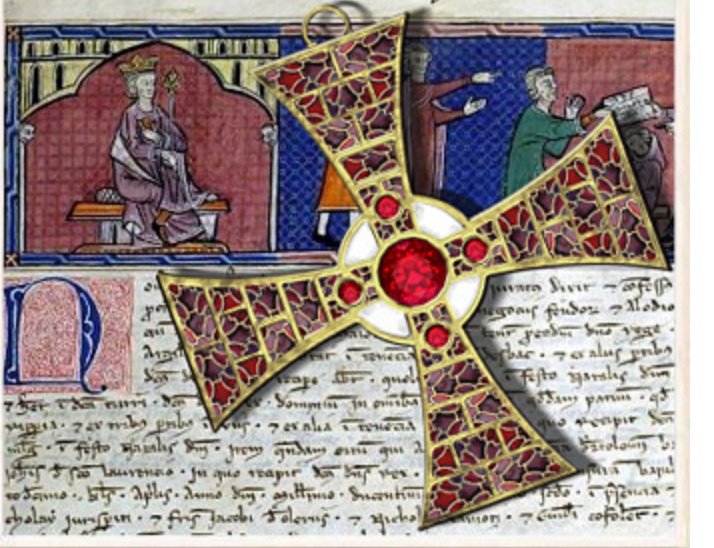
I Cannot Live Because I Have Lost My Youth—Could One Ever Be Certain that He Could Live Out the Week or Month?
 There is something wrong with the way ghost act. And the same holds true for Angels. I am not saying there is not an afterlife. I am only maintaining that those entities who come down here so beneficently to meddle with us are more than a little cracked. Violence and vitality share a common root—the root of both is force (etymologically, in its Latin form vis). The various plays of force and the radical nature of the encounters of its two forms in essay. Let us first consider in general terms the expression of force in primal instinct and the ways in which it becomes modified as a consequence of the process of socialization, adopting a coldly rational view. The first instinct is to take in enough material from the outside World so that one may be sustained; that is, so that one’s system may replenish itself. The system puts out energy constantly, both to maintain its individual boundaries and to perpetuate its kind; it must take in some source of energy that it does not presently contain. This source is food, which includes air, Sunshine, and other organic matter. For life as a whole, then, death must be constant and almost equal in quantity to life; organisms must die so that other organisms may live. Life therefore depends upon a quantitative superiority of the mechanisms for reproduction. In the average, each organism must reproduce itself and a surplus besides; hence if life is to continue, the pleasures of the flesh must be most powerfully motivated. #RandolphHarris 1 of 21
 It is of equal rank, so far as motives are concerned, as the drive to ingest. The latter is most necessary to the prolongation of individual life, and through individual forms to life itself; the latter is necessary because of the principle that life feeds upon life. It is a requirement of life that it should expand, that individual forms of it should multiply. A stasis seems theoretically conceivable; it is, in fact, the basic tendency of the supreme being. The strongest organism will seek to limit its own reproduction out of an apparent or misguided self-interest. Because it temporarily has ascendancy and an assurance of sustenance, it finds no need for reproduction more than one of its own kind per unit already existing. It loses supremacy, then, purely as a function of probability arising out of life’s tendency toward diversity. Profile life produces many new forms, in such great numbers that finally there occurs some form that is better suited to be supreme. Thus are old rulers deposed; the rules of life make it certain that supremacy cannot be maintained. Death is simply a rule of life. Dr. Freud was wrong in claiming that Eros and Thanatos are equally strong forces. Life is infinitely stronger than Death, for from the beginning Death is merely a by product of life. He tendency of matter is toward life, and the present tendency of life is toward consciousness. Consciousness itself arises in the interest of the expansion of life; the competition among organisms for food is decided ultimately by such things as attention and memory and logic. #RandolphHarris 2 of 21
 Eventually organisms must be born incapable of an unconscious; all the power of symbolism for the imaginative construction of experience must finally become conscious, together with all motives. It may be asked, however, is not symbolism itself a diversion on the road to complete consciousness? Wat is symbolism but a disguised mode of representing motives that were once completely unconscious? It not symbolism simply a step toward conscious representation of the motives of all life? Does it not decrease in the individual as motives become conscious? It may be replied that symbols are possible because of a tremendous differentiation of matter (the structure of the human brain) and that this differentiation of structure and direction of development will not be reserved. Hence symbolic forms should continue indefinitely, though functionally they may become less important for life. It remains a question, however, whether completely conscious motives would require the complexity of determination and differentiation that symbols now have. The motives themselves might, of course, change beyond recognition, into something we cannot now conceive, into a form requiring for their representation the very mechanics that the development of symbolization has made a permanent possession of human intelligence. #RandolphHarris 3 of 21
 The tendency of life, then, is toward the expansion of consciousness. In a sense, a description of means for the expansion of consciousness has been the central theme; it is in this evolutionary tendency that such diverse phenomena as psychotherapy, surprising or unexpected self-renewal, the personally evolved and deepened forms of religious belief, creative imagination, mysticism, and deliberately induced changes in consciousness through the use of chemicals find a common bond. Engagement as an individual in these efforts to expand consciousness is therefore, in various measure, participation in the job that life in general is now facing. It is itself a mark of vitality. What then of violence? Analyzed coldly in terms of instinctual force, it seems evident that violence itself should provide the primal basis for all relations among individual living systems. One seeks to eat the other, and the superior force succeeds. Communities then develop from mutual recognition that selfish ends will be best served by cooperation—that two can eat better than one, or that the alien aggressor may be more effectively repulsed by a defense in common. The idea of justice, according to this conception, arises from a recognition that communities cannot be maintained unless all members hold it a superior form of interest to desist from eating one another and to cooperate in seizing the enemy and resisting one’s attacks. #RandolphHarris 4 of 21
 Thus slaying is sanctioned only when committed against an outsider. Otherwise it would lead to disruption of the community pact and eventually to the inferior form of social organization in which everyone is the unqualified enemy of everyone else. Societies may thus be defined as a form of carefully qualified enmity. In the interest of community organization, however, illusions (which are usually a form of self-deception in the interest of survival) must arise. The most important illusions take the form of identifications, which essentially are a claim that another individual is actually oneself, to be treated by one as one would treat oneself. Such identification in their most extreme form are extended to the entire community. In their more restricted form they pertain especially to parents, mates, and offspring, or substitutes for these (for instance, symbolic equivalents of these). Identifications arise for the same basic reason as community itself—for the more efficient securing of sustenance and for the purpose of warding off aggression, not only from outsiders, but from the very person with whom the community is made. One purpose of a pact is to reduce the number of one’s enemies by, at a minimum, the number of one’s allies—by those allies themselves, in fact. Community uses symbolization for this purpose. Sympathy then is based upon the complex perception of community interest, or at least a capacity for justifying complexly one’s friendships or communities. #RandolphHarris 5 of 21
 This repelling way of putting the matter leaves quite out of account the strange force of love and the impulse to create. The analysis nevertheless has value within the framework of a purely rational psychology, if for no other reason than it forces us to consider carefully how far objective self-interest can take us. There is a real question as to whether through simply this process of symbolization and sympathy, and eventually through attainment of the Ultima Thule of fully conscious rationality, aggression can be mitigated for life as a whole. Even if a species should succeed in including its entire self in a single community (as none has done yet), the reduced motive for reproduction might eventually produce a static state in the species which would ensure the succession of some other species to supremacy. The unknow quantity in all of this, as we have been arguing directly or by implication throughout, is the power of creative imagination, the main instrument of freedom. At this writing, so far as mortals are concerned, it appears possible, even though the problems are extraordinarily complex and difficult, that one will extend community to include all other mortals. The idea is verbalized and current, and it has many advocates. All other living beings, however, have entertained to the death the notion that some infraspecies organization will attain supremacy, so that combat is entered upon even when the strength of the combatants and their equality makes it seem probable that one will die and the other nearly die, or that both will die. #RandolphHarris 6 of 21
 And life as a whole is indifferent to the success of single species, as much as to the success of single individuals. The one thing of which we can be certain is that life is inextinguishable. One mark of the breadth of the community that mortals have established is that we are able now to contemplate the idea that the very species Humankind—surely an extremely special vehicle for the expansion of consciousness—may be the final supreme form of life. This local interest raised to the highest form it has yet attained, and it would mean the passing of violence as a form of adaptation and the total institutionalization of the remaining energy of the instinct in World law. Religious revelation tells us much the same story as does this sort of analysis, though the terms are different. Consider the chapters of Genesis and the account it gives of the first murder: In the relative innocence of a World but lately paradise, Cain slays Abel. The murderer, confronted by God, denies knowledge of his brother’s whereabouts, for, he says, he is not his brother’s keeper. When the accusation is pressed against him, however, he admits the deed. God condemns him to a life of wandering on the face of the Earth, but mercifully places upon his forehead a distinguishing mark, that mortals may not kill him. Thus is mortal’s violence confessed in this early Biblical story, and its fearfulness acknowledged. The mark of Cain is a sign of human murderousness, but it carries immunity with it. The murderer within us is to be exiled, yet he is awesome because he is a murderous man. #RandolphHarris 7 of 21
 The scene is placed in the Bible immediately after what theologians call the Fall; as we have argued earlier, biologists might well call it the Accession. Our first parents had just eaten the fruit of the Tree of Knowledge of Good and Evil, which is to say they became ethical beings, and for the first time in Nature a natural creature passed judgment. Thus, close upon passing of innocence came murder itself, and the first ethical judgment is that murder is a crime against human nature. An exception came quickly to be recognized. The exception is war—a large exception indeed. Its basis is the family. One may not kill one’s blood relatives, but one may kill those outside the family, who are the enemies of the family. Loyalty to the family will sanction the deed. Finally, family need not be defined by blood. Geography will suffice, or race, or economic interdependence, or religious belief. Thus the wars of families become wars of nations, and murder is countenanced once again. Mortals seem in war thus to triumph over their accession to conscience, and the eating of the apple was not so fateful a deed as it had at first appeared. #RandolphHarris 8 of 21
 However, in the course of the centuries fallen mortals have come more and more to control the World. Control is based in large part on knowledge of the workings of a machine-like Universe, and the creation of new machines. Among the machines are those used for murder, private and public. Among the knowledge is knowledge of the basic structure of matter, and finally of the atom itself. New force has been released, and its release adapted to an ancient and sanctioned end: the killing of an entire family. The new force, however, is gigantic; its murderous power is beyond anything previously dreamt of. So great is this power that one family might destroy al others on Earth, provided there could be no retaliation in kind. Retaliation in kind, however, has come to be a certainty. This is the setting of the modern dilemma of a creature who has nibbled at the fruit of the Tree of Knowledge of Good and Evil, but who is loath to assume the responsibility given with freedom or to accept the grace of redemption. Unless human consciousness can take another giant step and root out murder from the heart of mortals, or develop the control of violence through law to a new and extraordinary level, some other form of consciousness must become the carrier of vitality. “The devil is source of secret combinations of murder,” reports 2 Nephi 9.9. #RandolphHarris 9 of 21
 Whether we live in the Renaissance, or in the thirteenth-century France, or at the time of the fall of Rome, we are part-and-parcel of our age in every respect—its wars, its economic conflicts, its anxiety, its achievement. However, no well-integrated society can perform for the individual, or relieve one from, one’s task of achieving self-consciousness and the capacity for making one’s own choices responsibly. And no traumatic World situation can rob the individual of the privilege of making the final decision with regard to oneself, even if it is only to affirm one’s own fate. It may have been superficially easier for a person to be adjusted in another age—those golden ages of Greece or the Renaissance that one might look back to longingly. However, the wish that one lived in those times, expect as an exercise in fantasy, is based on a false understanding of mortal’s relation to tie. In those days it might actually not have been any easier for the individual to find and choose to be one’s self. In our day there is greater need for one to come to terms with one’s self; we are less able to rest in the mothering arms of our historical period. So could one not argue, if it were a matter for drawing room argument, that it is better for a person’s learning to find oneself to live in our day? On the superficial level there are assets or debits to living in any period. On the more profound level, each individual must come to one’s own consciousness of oneself, and one does this on a level which transcends the particular age one lives in. #RandolphHarris 10 of 21
 The same holds true for one’s chronological age. The important issue is not whether a person is twenty or forty or one hundred: it rather is whether one fulfills one’s own capacity of self-conscious choice at one’s particular level of development. This is why a healthy child at eight—as everyone has observed—can be more of a person than a neurotic adult of thirty. The child is not more mature in a chronological sense, nor can one do as much as the adult, not take care of one’s self as well, but one is more mature wen we judge maturity by honesty of emotion, originality, and capacity to make choices on matters adequate to one’s stage of development. The statement of the person of twenty who says, “When I am thirty-five, I will begin to live” is as falsely based as the one who, at forty or fifty, laments, “I cannot live because I have lost my youth.” Interestingly enough, one generally finds on closer inspection that this is the same person, that the one who makes that lament at fifty was postponing living also at twenty—which demonstrates our point ever more incisively. One has to some extent overcome the tendency to see one’s self only in others’ eyes, and thus see truth to some degree objectively and love outwardly. These are all ways of living sub specie aeternitatis; they show the human being’s capacity to transcend the given situation of the moment. #RandolphHarris 11 of 21
 The task and possibility of the human being is to move from one’s original situation as an unthinking and unfree part of the mass, whether this mass is one’s actual early existence as a foetus or one’s being symbolically a part of the mass in a conformist, automaton society—to move from the womb, that is, through the incestuous circle, which is but one step removed from the womb, through the experience of the birth of self-awareness, the crises of growth, the struggle, choices and advances from the familiar to the unfamiliar, to ever-widening consciousness of one’s self and thus broadening freedom and responsibility, to higher levels of differentiation in which one progressively integrates one’s self with others in freely chosen love and creative work. Each step in this journey means that one lives less as a servant of automatic time and more as one who transcends time, that is, one who lives by meaning which one chooses. Thus the person who can die courageously at thirty—who has attained a degree of freedom and differentiation that one can face courageously the necessity of giving up one’s life—is more mature than the person who is on one’s deathbed at ninety cringes and begs still to be shielded from reality. The practical implication is that one’s goal is to live each moment with freedom, honesty, and responsibility. One is then in each moment fulfilling so far as one can one’s own nature and one’s evolutionary task. #RandolphHarris 12 of 21
 When we are living our lives with honesty, freedom, and responsibility, now only are we fulfilling our evolutionary task, but this is also the way one experiences the joy and gratification that accompany fulfilling one’s own nature. Whether the young instructor eventually completes one’s book or not is a secondary question: the primary issue is whether he, or anyone else, writes and thinks in the given sentence or paragraph what he believes will gain the praise of another, or what he himself believes is true and honest according to his lights at the moment. The young husband, to be sure, cannot be certain of his relation with his wife five years hence: but in the best of historical periods, could one ever have been certain that he would live out the week or month? Does not the uncertainty of our time teach us the most important lesion of all—that the ultimate criteria are the honesty, integrity, courage and love of a given moment or relatedness? If we do not have that, we are not building for the future anyway; if we do have it, we can trust the future to itself. The qualities of freedom, responsibility, courage, love and inner integrity are ideal qualities, never perfectly realized by anyone, but they are the psychological goals which give meaning to our movement toward integration. When Socrates was describing the ideal way of life and the ideal society, Glaucon countered: “Socrates, I do not believe that there is such a City of God anywhere on Earth.” #RandolphHarris 13 of 21
 In regard to the question about the City of God being on Earth or not, Socrates answered, “Whether such a city exists in Heaven or ever will exist on Earth, the wise mortal will live after the manner of that city, having nothing to do with any other, and in so looking upon it, will set one’s own house in order.” When he told us to consider the lilies of the field that neither toil nor spin, Christ proposed the docility of matter to us as a model. This means that they have not set out to clothe themselves in this or that color; they have not exercised their will or made arrangements to bring about their object; they have received all that natural necessity brought them. If they appear to be more beautiful than the richest stuffs, it is not because they are richer but a result of their obedience. Materials are docile too, but docile to mortals, not to God. When it obeys mortals, matter is not beautiful, but only when it obeys God. If sometimes a work of art seems almost beautiful as the sea, the mountains, or flowers, it is because the light of God has filled the artist. When manufactured by mortals uninspired by God, in order to find things beautiful, it would be necessary for us to have understood with our whole soul that these mortals themselves are only matter, capable of obedience without knowledge. For anyone who has arrived at this point, absolutely everything here below is perfectly beautiful. #RandolphHarris 14 of 21
 In everything that exists, in everything that comes about, one discerns the mechanism of necessity, and one appreciates in necessity the infinite sweetness of obedience. For us, this obedience of things in relation to God is what the transparency of a window pane is in relation to light. As soon as we feel this obedience with our whole being, we see God. And if you do not find yourself beautiful yet, act as the creator of a statue that is to be made beautiful: one cuts away here, one smooths there, one makes this line lighter, the other purer, until a lovely face has grown upon one’s work. So do you also: cut away all that is excessive, straighten all the is crooked, bring light to all that is overcast, labour to make all one glow of beauty and never cease chiseling your statue, until there shall shine out on your from it the Godlike splendor of virtue, until you shall see the perfect goodness surely established in the stainless shrine. When we hold a newspaper upside down, we see the strange shapes of the printed characters. When we turn it the right way up, we no longer see the characters, we see words. The passenger on board a boat caught in a storm feels each jolt as an inward upheaval. The captain is only aware of the complex combination of the wind, the current, and the swell, with the position of the boat, its shape, its sails, its rudder. #RandolphHarris 15 of 21
 As one has to learn to read or to practice a trade, so one must learn to feel in all things, first and almost solely, the obedience of the Universe to God. It is really an apprenticeship. Like every education, it requires time and effort. One who has reached the end of one’s training realizes that the differences between things or between events are no more important than those recognized by someone who knows how to read, when one has before one the same sentences reproduced several times, written in red ink and blue, and printed in this, that, or the other kind of lettering. One who does not know how to read only sees differences. For one who is literate, it all comes to the same thing, since the sentence is identical. Whoever has finished one’s apprenticeship recognizes things and events, everywhere and always, as vibrations of the same divine and infinitely sweet word. This does not mean that one will not suffer. Pain is the color of certain events. When a mortal who can and a mortal who cannot read look at a sentence written in red ink, they both see the same red color, but this color is not so important for the one as for the other. When an apprentice gets hurt, or complains of being tired, the working person and less affluent have this fine expression: “It is the trade entering one’s body.” #RandolphHarris 16 of 21
 Each time that we have some pain to go through, we can say to ourselves quite truly that it is the Universe, the order and beauty of the World, and the obedience of creation to God that are entering our body. After that how can we fail to bless with tenderest gratitude the Love that sends of this gift? Joy and suffering are two equally precious gifts both of which must be savored to full, each one in its purity, without trying to mix them. Through joy, the beauty of the World penetrates our soul. Through suffering it penetrates our body. We could no more become friends of God through joy alone than one becomes a ship’s captain by studying books on navigation. The body plays a part in all apprenticeships. On the place of physical sensibility, suffering alone gives us contact with that necessity which constitutes the order of the World, for pleasure does not involve an impression of necessity in joy, and that only indirectly through a sense of beauty. In order that our being should one day become wholly sensitive in every part to this obedience that is the substance of matter, in order that a new sense should be formed in us to enable us to hear the Universe as the vibration of the word of God, the transforming power of suffering and of joy are equally indispensable. When either of them comes to us we have to open the very center or soul to it, just as a person opens one’s door to messengers from one’s loved one. If the messenger be polite or rough, what does it matter to a love, so long as one delivers the message? #RandolphHarris 17 of 21
 The creative relationship of anger and love is even more evident in our dealings with those we care for. Anger and love are not opposites, as we often assume. Anger says you care enough to become emotionally involved. And when we suppress anger, we often give the other person the feeling that we do not really care. Expression of anger is also creative because it often clears the way for us to become aware of other feelings, especially hurt and love. There is an interesting sequence of paragraphs in the section of the New Testament that was used earlier to illustrate the anger of Jesus. The angry words go on, and on, and on: “You…play actors…you blind leaders…you blind fools…you utter frauds…you serpents, you viper’s brood…” However, when the anger is spent, the hurt and love flood into awareness. You can almost see Jesus’ features soften and hear the tears in his voice as he says, “Oh, Jerusalem, Jerusalem! You murder your prophets and stone the messengers that are sent to you. How often have I longed to gather your children round me like a bird gathering her brood together under her winds and you would never have it.” Whether or not this sequence of Jesus’ words is historically accurate, it is psychologically true to life. For when we can express anger we become freer to discover our deeper feelings. #RandolphHarris 18 of 21
 Some of the most dramatic events which occur in group therapy follow this pattern. Participants in mist such groups are encouraged to be aware of their emotional reactions to each other. Often there are feelings of anger, and if this anger is expressed directly, sometime even shouted, a sequence of feelings frequently follows. When the anger has been expressed, the person often becomes aware of feelings of hurt which underlie most anger. Perhaps tears flow. And finally, after the anger and hurt, awareness comes that feelings of love are also present. Thus the expression of anger often opens the door to the experience of love. This sequence of feelings provides an explanation for the not uncommon experience of couples who report that some o their most intense feelings of love and intimacy occur after their disputes when they make up. So we see that the creative expression of anger often leads to more satisfying love relationships. When we conceal our anger from others and from ourselves, we limit our capacity to love, for we are denying one facet of love. When we express our anger in honest directness, on the other hand, we are permitting ourselves to be seen as we really are at that moment. Sometimes others will not be able to respond as freely with their feelings and the experience of love will be limited as a result. However, at least we will have opened a door in the wall that separates us, which will provide the opportunity for a more emotionally intimate relationship. #RandolphHarris 19 of 21
 Here, as elsewhere, of course, we are afraid of the experience of love. To express anger, and then to be aware of our hurt and our love, increases our vulnerability. So to express anger creatively inevitably means a lowering of our defenses against being hurt. And that is frightening. So despite our hunger for the love that might well be experienced through revealing our anger, it may well be that our fear of love is the most basic reason why we shy away from expressing anger. Affliction is not suffering. Affliction is something quite distinct from a method of God’s teaching. The infinity of space and time separates us from God. How are we to seek for him? How are we to go toward him? Even if we were to walk for hundreds of years, we should do no more than go round and rough the World. Even in an airplane we could not do anything else. We are incapable of progressing vertically. We cannot take a step toward the Heavens. God crosses the Universe and comes to us. Over the infinite of space and time, the infinitely more infinite love of God comes to possess us. He comes at his own time. We have the power to consent to receive him or to refuse. If we remain unaware, he comes back again and again like a boomerang, one day he stops coming. If we consent, God puts a little seed in us and he goes away again. From that moment God has no more to do; neither have we, except wait. #RandolphHarris 20 of 21
 We only have not to regret the consent we gave God, the nuptial yes. It is not as easy as it seems, for the growth of seed within us is painful. Moreover, from the very fact that we accept this growth, we cannot avoid destroying whatever gets in its way, pulling up the weeds, cutting the good grass, and unfortunately the good grass is part of our very flesh, so that this gardening amounts to a violent operation. On the whole, however, the seed grows of itself. A day comes when the soul belongs to God, when it is not only consents to love but when truly and effectively it loves. Then in its turn it must cross the Universe to go to God. The soul does not love like a creature with created love. The love within it is divine, uncreated; for it is the love of God for God that is passing though it. God alone is capable of loving God. We can only consent to give up our own feelings so as to allow free passage in our soul for this love. That is the meaning of denying oneself. We are created for this consent, and for this alone. Divine Love crossed the infinite of space and time to come from God to us. However, how can it repeat the journey in the opposite direction, starting from a finite creature? When the seed of Divine Love placed in us has grown and become a tree, how can we, we who bear it, take it back to its origin? How can we repeat the journey made by God when he came to us, in the opposite direction? How can we cross infinite distance? It seems impossible, but there is a way—a way with which we are familiar. #RandolphHarris 21 of 21
Living in the Eternal Moment–Tomorrow is Also a Blessed Day So Let Us Do What We Can to Make it Easier One Cannot Wait Around Forever!
 I want to thank you for sharing your secrets with us. You have trusted us, and treated us as if we were sinless and kind. You big old great thing, you sure are pretty as an Angel, and you have got plenty charm enough to be a gangster. I have seen every gangster movie ever made three times and I know what I am talking about. They put a little boot black on your hair, you could play Bugsy Siegel. From the foregoing, one might be led to think that the most desirable state is to feel free. This is true, but the situation, as usual, is not so very simple. Very often the feeling of freedom and of power to act is the most desperate of defenses against a deep and totally unconscious sense of powerlessness and constraint. A familiar clinical example is vigorous phallic activity covering an unconscious sense of smallness. The kinds of character defenses that are classified in general as counterphobic go along most frequently with an exaggerated sense of conscious freedom, or euphoria, or power to act at will. This is seen in its most vivid and most pathological form in the manic-depressive psychosis. When the patient is in a manic state, one is perfectly happy, perfectly powerful, and perfectly free—absurdly so, of course, so that one is not surprised to find one a short time later in such a state of stupefaction and despair that one cannot speak or move at al. As in most affect, intensity of the experience is an excellent indicator that the extreme opposite is close to expression. #RandolphHarris 1 of 16
 May an intense feeling of compulsion and of lack of power be a defense against the achievement of greater freedom of the self? Why, indeed, should freedom of the self be defended against, when it is presumably what all mortals want? Christ having returned to Earth and to the Church he had founded appears and is recognized, for his grace shines among all mortals as in the days of his life. As a crowd gathers in wonderment and love about him, the Grand Inquisitor passes by, and, immediately understanding the situation, orders him arrested. That evening, in the darkness of the dungeon in which Christ is imprisoned, the Grand Inquisitor himself, alone, enters with a light in his hand. He speaks sternly and bitterly to Christ and recalls to him the temptation in the desert, during which the cursed and dread Spirit, the spirit of self-destruction and non-existence had put him the three temptations. These three temptations are to offer Christ something less than freedom; bread, or miracle, or mystery, or authority, but not freedom. For, as the dread Spirit had said, “Thou wouldst go into the World, and Thou art going into the World with empty hands, with some promise of freedom which people in their simplicity and their natural unruliness cannot even understand, which they fear and dread—for nothing has ever been more insupportable for a mortal and a human society than freedom.” #RandolphHarris 2 of 16
 And, in the words of the Grand Inquisitor: I tell Thee that mortals are tormented by no greater anxiety than to find someone quickly to whom one can hand over that gift of freedom with which the ill-fated creature is born….Didst Thou forget that mortals prefer peace, and even death, to freedom of choice in the knowledge of good and evil? In place of the rigid ancient law, Thou wouldst have it that mortals must hereafter with free heart decide for oneself what is good and what is evil, having only Thy image before one as one’s guide. However, didst Thou not know that one would at last reject even Thy image and Thy truth, if one is weighed down with the fearful burden of free choice? Is the nature of mortals such that one can reject miracle, and at the great moments of one’s life, the moments of one’s deepest, most agonizing spiritual difficulties, cling only to the free verdict of the heart? Thou didst think too highly of mortals therein, for they are slaves. #RandolphHarris 3 of 16
 We must ask ourselves what arrangement of the parts of the self might produce the feeling of freedom which Christ is represented as offering to mortal, then we may get an important clue from this passage. Consider this sentence of the Grand Inquisitor: “Didst Thou forget that mortals prefers peace, and even death, to freedom of chose in the knowledge of good and evil?” And, again, “In place of the rigid, ancient law, Thou wouldst have it that mortals must hereafter with free heart decide for oneself what is good and what is evil…” Here is a psychoanalytic sort of interpretation: the knowledge of good and evil refers to conscious knowledge of all the usually unconscious, internalized prohibitions and prescriptions, particularly those that relate to the most primitive and most energy-laden of our drives. Knowledge of good and evil implies the availability to consciousness both of impulses and of the forces that control impulse. It means, further, that the expression or renunciation of impulse would become a matter of conscious decision, made by the whole self, rather than a matter of the triumph of blind forces of either desire or restraint. Another way of putting this, in terms of such theoretical constructs as psychoanalysis provides, would be to say that, in freedom, the ego would no longer relate to the superego as a child to a punishing parent, but that the superego would become entirely integrated with the ego. #RandolphHarris 4 of 16
 The feeling of constraint, then, may be said to derive from a fearful and hating orientation of the ego to the superego—that is, from an arrangement of parts of the self that would be the inner equivalent of being constrained from without, by alien and powerful forces. Such an arrangement is learned, of course; it occurs as a result of the experience of having been constrained by others, chiefly the parents. Still, it is evident that some such specialization of parts of the self is the normal and desirable state of affairs. If discipline is orderly, rational, and loving, it will not lead to severe repression and to consequent domination by unconscious forces. The feeling of freedom and the absence of inner, irrational compulsions will then be determined chiefly by the extent to which the superego is rational and conscious, and impulse is gratified or renounced in accordance with the decision of the ego. The existence of internalized irrational parents is thus a prime source of the feeling of compulsion, and indeed may actually restrict ability to respond adaptively—recall the phrase “the rigid, ancient law.” If, however, the ego itself were to become the source of ethical prescriptions, having assimilated the old function of the superego, the source of the prescription would no longer be unconscious and the feeling of compulsion would vanish. This is the aim of the psychoanalytically-based psychotherapies. #RandolphHarris 5 of 16
 It should be noted that the production of a relatively rational superego by loving and rational parents is still something very short of that hypothetically possible if rarely realized state in which superego and ego are one. The client-centered therapy whose theory and practice is particularly impressive in its emphasis on the unconditional self-worth of the client and the total acceptance by the therapist of the fundamental goodness of the client. In terms of this analysis, such therapy would offer the client a loving and rational parent to internalize, but it would not have the further goal—and one that is rarely achieved in any case—of making available to consciousness once again the most primitive of impulses and the most powerful and most repressed of prohibitions. However, this latter is something of a digression. Let us return to the defensive character of compulsion, and to one of the most important of the arguments made against Christ by the Grand Inquisitor—that “nothing has ever been insupportable for mortal and a human society than freedom.” Why should the majority of people find such an arrangement of the self an intolerable one? Largely, one must answer, because of infantile fears—or, more accurately, because of fears that were very great during the period of early childhood, and that have persisted with undiminished intensity in the unconscious. Such fears were, to begin with, fears of outer forces of great power—literally, I believe, fear that one would be destroyed for expressing impulses unrestrained. #RandolphHarris 6 of 16
 In civilized society (which, unhappily, a baby does not realize it has been born into) such fears might be called, from our civilized, adult viewpoint, unrealistic. Most parents really do not mean their children any harm. The baby, however, is not yet civilized, and he invests the outer forces with every bit as much intensity of desire, and rage when frustrated, as he himself possess. Thus he has good reason, when he is angry or insatiate, to fear the giants with whom he interacts and on whom he depends. He fears them because of the strength of his own impulses, which he experiences fully, and because the boundary between inner and outer is still fluid, so that he is not always certain who is enraged. In the adult, such fears persist, first of all, as fear of impulses from within, and, secondly, as fear of destruction from the internalized parents. It would be easy to say, “unrealistic fears,” but the fact is that persons kill themselves for their own impulses—that is, they deal out the most extreme punishment to themselves for a crime they were impelled to commit, though the crime they do in fact commit is murder of the self rather than of the other. Where impulses are so fearsome and the forces of restraint so ferocious, it seems safer not to be free—or, to put the matter in other terms, it seems safer not to know anything about the situation of the self. #RandolphHarris 7 of 16
 However, here one is reminded of a most significant quotation from the New Testament—“one who would save one’s life shall lose it…” The moral message of Christ, insofar as it is embodied in this question, consisted exactly of the advocacy of the wisdom of self-forgetfulness, which objectively in psychoanalytic terms means the establishment of a relationship of harmony and love between the ego and the superego, or the dissolution of the wall that separates what we are from what we think we should be. I cannot develop the thesis in detail here, but it seems to me that the New Testament is best understood in terms of the relationship between personified conscious knowledge—the Word made flesh, alive and changing, taking its chances, open to beauty and decay—and the ancient, rigid law and lawgiver, fixed, abstract, decided. The constantly recurring imagery of the Son and the Father suggests that the specific content of the conflict and the disharmony which Christ sough to resolve. To recapitulate: freedom, or conscious knowledge of the primitive forces of id and superego, is greatly feared, even in adulthood, because of the persistence in the unconscious of the earliest and most intense of fears. Thus the prospect of freedom is intolerable. One further aspect should be touched upon. The condition of freedom, or complete consciousness, would entail complete assumption of responsibility for one’s self. #RandolphHarris 8 of 16
 One could not claim to know not what one did, for the impulse in all its vulnerable state would be experienced. The intention would be fully realized and, if consented to, accomplished in full knowledge. However, if one follows the dictates of an internalized parent and is thereby somewhat less free to act according to one’s deepest inclinations, one is at the same time not wholly responsible for the consequences. The parent is responsible, and the ego is still a child. Thus the individual may avoid judging for one’s self what is right and what is wrong. One is not weighed down by the fearful burden of free choice, and one is consequently actually less free. For it remains to be said that the truth shall make one free. The essential point of this analysis is that objective freedom, in the sense of response variability, is at a maximum when a genuine feeling of freedom exists, and that such a feeling of freedom occurs in the presence of a broadened consciousness both of impulse and of ethical prescriptions. So far as the postulate of determinism is concerned (for instance, absolute predictability in principle), it should be quite evident that such a postulate is irrelevant to both the objective and the subjective meanings of freedom. If one assumes a closed system of knowledge and a perfect description of the given state of affairs, then all events are absolutely predictable, including the actions of human beings of quite different degrees of objective freedom and of subjective sense of freedom. #RandolphHarris 9 of 16
 The acceptance of determinism as a working hypothesis is basic to psychology as a science. When it become more than that, as it so often does, and is elevated from modus vivendi to sentiment and then to principle for one’s whole life, it is surely itself a form of self-imposed restriction upon imagination and the capacity to create. For myself, I believe there is a recalcitrant oddness at the heart of things—I had almost written at the heart of hearts—and I am pleased when my mind wanders off to think no more of this or that. There are many experiences which jar us out of the quantitative, routine treadmill of time, but chief among them is the thought of dying. A modern English author describes how he endeavored for years to write by following conventional methods. “I thought I could write to formula,” as he put it; and during the war, he continued, “I found out why I had not been published before. When we were all thinking we might die the next day, I decided to write what I wanted.” When we point out, as actually happened, that his writing then became successful, some persons might interpret the illustration with a conventional success moral, “If you wish to be successful write what you want.” However, such a moral, of course, entirely misses the point. The author’s previous need to write according to external standards and for ulterior purposes—success being the chief one in our day—was exactly what was blocking him in tapping his qualities and powers as a writer. And it was precisely this need that he gave up at the time of facing death. #RandolphHarris 10 of 16
 If one may die tomorrow, why knock one’s self out trying to fit this standard or that formula? Assuming tat success and rewards might be achieved by writing to formula—which is a toss-up in any case—one may not be around long enough anyway to enjoy the rewards, so why not treat one’s self to the joy at the moment of writing according to one’s own integrity? The possibility of death jars us loose from the treadmill of time because it so vividly reminds us that we do not go on endlessly. It shocks us into taking the present seriously. Thinking that tomorrow is also a blessed day no longer comforts and excuses; one cannot wait around forever. It makes more crucial for us the fact that whole we are not dead at the moment, we some time will be: so why not choose something at least interesting in the meantime? The so-call cynical poet of the Old Testament, Ecclesiastes, is in fact very realistic at this point. Amid his recurrent refrain, “all is vanity,” he points out that the wise man will not wait around for future rewards and punishments. “Whatsoever thy hand findeth to do” Ecclesiastes continues, “do it with thy might; for there is no work, nor substance, nor knowledge, nor wisdom in the grave whiter thou goest.” #RandolphHarris 11 of 16
 A mortal should act under the form of eternity. For I understand Eternity to be existence itself. For the existence of a thing, such as an eternal truth cannot explained by duration or time. The existence of something depends on its essence—and idea which is not as abstruse as it sounds at first glance. To apply it to one’s self, a person acts under the form of eternity to the extent that one’s actions arise from one’s own essential center. In example of the author we talked about previously, such an act was his decision to write, not according to external changing fads, which rise and fall from week to week, but from the inward, unique, original character which makes one an individual. Living in the eternal moment does not mean mere intensity of living (though self-awareness always adds some intensity to one’s experience): nor does it mean living by an absolute doctrine or covenant, religious or otherwise, or by a moral rule. It means, rather, making one’s decision in freedom and responsibility, in self-awareness and in accord with one’s own unique character as a person. If a person is to be creative in one’s use of anger, two basic conditions need to prevail. In the first place one needs to be aware of anger and accept is as a valued part of the self. Secondly, one needs to be able to express one’s anger directly and responsibility. If these conditions can be met in some degree, various values can be achieved. #RandolphHarris 12 of 16
 For one thing, this creative use of anger will mean less punishment of ourselves. We will not be so likely, for example, to suffer physical illness. It is unquestionably true that many instances of heart trouble, high blood pressure, and ulcers (to name the most obvious problems) are related to the suppression of anger. When a person is filled with chronic unexpressed hostility (of which one may or may not be aware), the body is overworked by being in an almost constant state of preparation for emergency in which the heart works harder, the blood pressure rises, and digestive processes slow down. Eventually the body is likely to suffer permanent physical damage under this strain. If the person is able to deal with anger as it arises and get it out of one’s system, however, the natural rhythm of the body can be maintained as the reactions caused by the anger quickly subside. Since depression also often results from turning anger in on oneself, creative expression of anger can frequently eliminate this punishment we inflect on ourselves. Kelley, a college girl, made an almost successful suicide attempt by taking a large number of sleeping tablets. In the weeks that followed, with the encouragement of a therapist, she began to express some of the anger toward her parents that she had previously felt she dare not talk about. Kelley’s depression quickly subsided, assisted in part by the fact that her parents accepted her feelings much better than she had thought they would. #RandolphHarris 13 of 16
 The creative expression of anger not only helps us to be less self-destructive, but it also makes for more effective relationships with others. Many of us, because of early teaching, go through our lives assuming the opposite. If we become angry, we are likely to feel guilty because we feel we have destroyed something between ourselves and the other person. So instead of improving ourselves in the skill of expressing anger, we try to become better at controlling and suppressing it. How can getting mad at others improve our relationship with them? Well, for one thing, when we express anger, we are more emotionally honest in our relationships. Too often we do not really know each other, even when we desire to be intimate. Our encounters with each other have a shadowy, unreal quality, because there are so many gaps in our communication. We hide many of our feelings. Often the feelings we hide is anger. And when we do not express our anger to those who matter to us, we do both ourselves and them a disservice. Our lack of candor perpetuates the psychological distance that exists in the relationship and cheats us of satisfying experiences of intimacy. #RandolphHarris 14 of 16
 A cunning part of Satan’s strategy is to dissociate anger from agency, making us believe that we are victims of an emotion that we cannot control. One couple discovered after fifteen years of marriage that the wife had harbored resentment about a pet peeve for most of that time. Whenever they went out for and evening or weekend with other couple, she thought he did not pay their share of the costs. However, she never expressed her anger. Finally, when it did come out in a group-therapy session, she discovered that all the time he had been contributing their share or more in a quiet, unassuming way. If she had been more emotionally honest and had been able to express her anger years earlier, this particular could would not have impaired their relationship. It begins to become clear, then, that to show anger is often an expression of love and concern, a way of saying, “You matter to me.” On a community level, for example, significant social reforms have usually occurred in situations where someone has expressed anger about existing conditions, saying in effect to some segment of society, “You are hurting yourself and all of us by what you are doing.” We learn in the proclamation on the family that the family is central to the Creator’s plan and that husband and wife have a solemn responsibility to love and care for each other and a sacred duty to rear their children in love and righteousness. The family is also Satan’s primary target. He waging war on the family. #RandolphHarris 15 of 16
 One of his schemes is the subtle and cunning way he has of sneaking behind enemy lines and entering our homes and lines. Satan often damages and destroys families within the walls of their own homes. His strategy is to stir up anger between family members. Satan is the father of contention, and he stirs up the hearts of people with anger, one with another. To lose one’s temper is an interesting choice of words that has become a widely used idiom. To lose something implies not meaning to, accidental, involuntary, not responsible—careless perhaps but not responsible. “He made me made.” This is another phrase we hear, also implying lack of control or agency. This is a myth that must be debunked. No one makes us mad. Others do not make us angry. There is no force involved. Becoming angry is a conscious choice, a decision; therefore, we can make the choice not to become angry. We choose! Choice and accountability are inseparable principles. May the Lord bless you and inspire you to walk without anger. “One who is slow to anger is better than the mighty; and one that rules one’s spirit than one that takes a city,” reports Proverbs 16.32. It is when we become angry that we get into trouble. Most of the inmates of our prisons are there because they did something when they were angry. “Be not hasty in thy spirit to be angry: for anger rests in the heart of the unfortunate,” reports Ecclesiastes 7.9. #RandolphHarris 16 of 16
God Created through Love and for Love—God Did Not Create Anything Except Love itself, and the Means to Love
 The Sun was setting behind us, and the grass at our feet glowed alight with the reflection from the orange sky. There was a faint tinkle of bells echoing up this ridge. The evening breeze which touched my skin with coolness brought the perfume of wisteria. The is Heavenly peace. How abundantly God has spread his beauty here! The trivial operations of the heart are burnt away in quietude. Burnt away in humility that I could feel this, know this, and contain it within my prudent soul. How you could stay innocent so long is a miracle to me. No doubt tat is what the love of books does for you. Some of us are made to marry a faith—just as the colonel here has married a flag. Spiritual forces are stronger than firearms. The citizens of the City of God use spiritual weapons—prayer and love and truth. The City of God is Heaven, but its splendor comes into the City of the World in the truth and love which finally will conquer even the sword. It is a greater joy to aspire to the City of God, to live in the beauty which is greater than words can describe, and to converse with the eternal spirits of our Fathers and to love the truth of God. There is not real affliction unless the event that has seized and uprooted a life attacks it, directly or indirectly, in all its parts, social, psychological, and physical. The social factor is essential. There is not really affliction unless there is social degradation or the fear of it in some form or another. #RandolphHarris 1 of 18
 The great enigma of human life is not suffering but affliction. However, it is surprising that God should have given affliction the power to seize the very souls of the innocent and to take possession of them as their sovereign Lord. At the very best, one who is branded by affliction will keep only half of one’s soul. Affliction makes God appear to be absent for a time, more absent than light in the utter darkness of a cell. What is terrible is that if, in this darkness where there is nothing to love, the soul ceases to love, God’s absence becomes final. The soul has to go on loving in the emptiness, or at least to go on wanting to love, though it may only be with an infinitesimal part of itself. Then, one day, God will come to show himself to this soul and to reveal the beauty of the World to it, as in the case of Job. However, if the soul stops loving it falls, even in this life, into something almost equivalent to Hell. That is why those who plunge mortals into affliction before they are prepared to receive it kill their souls. On the other hand, in a time such as ours, where affliction is hanging over us all, help given to souls is effective only if it goes far enough really to prepare them for affliction. That is no small thing. Affliction hardens and discourages us because, like a red hot iron, it stamps the soul to its very depths with the scorn, the disgust, and even the self-hatred and sense of guilt and defilement that crime logically should produce but does not. Evil dwells in the hear of the criminal without being felt there. #RandolphHarris 2 of 18
 Evil is felt in the heart of the mortal who is afflicted and innocent. Everything happens as though the state of soul suitable for criminals had been separated from crime and attached to affliction; and it even seems to be in proportion to the innocence of those who are afflicted. If Job cries out that he is innocent in such despairing accents, it is because he himself is beginning not to believe in it; it is because his soul within him is taking the side of his friends. He implores God himself to bear witness, because he no longer hears the testimony of his own conscience; it is no longer anything but an abstract, lifeless memory for him. Our senses attach all the scorn, all the revulsion, all the hatred that our reason attaches to crime, to affliction. Expect for those whose whole soul is inhabited by Christ, everybody despises the afflicted to some extent, although practically no one is conscious of it. This law of sensibility also holds good with regard to ourselves. In the case of someone in affliction, all the scorn, revulsion, and hatred are turned inward. They penetrate to the center of the soul and from there color the whole Universe with their poisoned light. Supernatural love, if it has survived, can prevent this second result from coming about, but not the first. The first is of the very essence of affliction; there is no affliction without it. #RandolphHarris 3 of 18
 All neurotic problems are manifested in the structure and functioning of the body. This thesis implies that by proper training in what to observe, a great deal about a person may be discerned merely from looking at the individual. There is no neurotic problem which does not manifest itself in ever aspect of the individual’s function. Because we express our personalities or character in every action and in every attitude it becomes possible to determine character traits from such diverse expressions as handwriting, the walk of the person and so forth. Most important, however, is the physical appearance at rest in movement. No words are so clear as the language of body expression once one has learned to read it. [Each part of the body is the repository of some difficulties.] The legs and feet are the foundation and support of the ego structure. However, they have other functions. It is through our legs and our feet that we keep contact with one invariable reality in our lives, the Earth or the ground. We speak of a people as being Earthy to mean that they have a good sense of reality. The contrary, to be up in the air, denotes a lack of contact with reality. The lack of contact with the feet and the ground is related to another common symptom, falling anxiety. This symptom is manifested in dreams of falling, in fear of heights, and in the fear of falling in love. #RandolphHarris 4 of 18
 Where there is a basic insecurity in the lower half of the body, the individual compensates by holding on with arms and eyes to objective reality. One may question why I include fear of falling in love with symptoms of basic insecurity. Of course the very expression to fall in love relates this phenomena to the others, but we also know that to fall in love is a form of ego surrender. All forms of falling anxiety translate the fear of loss of ego control. It is a drenching storm inside. Another effect of affliction is, little by little, to make the soul its accomplice, by injecting a poison of inertia into it. In anyone who has suffered affliction for a long enough time there is a complicity with regard to one’s own affliction. This complicity impedes all the efforts one might make to improve one’s lot; it goes so far as to prevent one from seeking a way of deliverance, sometimes even to the point of preventing one from wishing for deliverance. Then one is established in affliction, and people might think one was satisfied. Further, this complicity may even induce one to shun the means of deliverance. In such cases it veils itself with excuses which are often ridiculous. Even a person who has come through one’s affliction will still have something left in one compelling one to plunge into it again, if it has bitten deeply and forever into the substance of one’s soul. It is as though affliction had established itself in one like a parasite and were directing one to suit its own purposes. #RandolphHarris 5 of 18
 When we study the expression of the face as a measure of the character and of the personality we are on more familiar ground. Our attention should be directed first to the eyes. It must be with some reason that the eyes are regarded as the mirrors of the soul. Some eyes are bright and sparkle, some shine like stars, others are dull and many are vacant. Of course, the expression changes. We seek, therefore, for the typical look. Some eyes are sad, others are angry; some are cold and hard, others are soft and appealing. Of greater significance are those unconscious expressions which are frozen into the countenance, so much so that we take them for granted as part of the personality. Sometimes these impulses triumph over all the movements of the soul toward happiness. If the affliction has been ended as a result of some kindness, it may take the form of hatred for the benefactor; such is the cause of certain apparently inexplicable acts of savage ingratitude. It is sometimes easy to deliver an unhappy person from one’s present distress, but it is difficult to set one free from one’s part affliction. Only God can do it. And even the grace of God itself cannot cure irremediably wounded nature here below. One can only accept the existence of affliction by considering it at a distance. God created through love and for love. God did not create anything except love itself, and the means to love. God created love in all its forms. #RandolphHarris 6 of 18
 God created beings capable of love from all possible distance, the infinite distance. This infinite distance between God and God, this supreme tearing apart, this agony beyond all others, this marvel of love is life. Noting can be further from God than that which has been made accursed. This tearing apart, over which supreme love places the bond of supreme union, echoes perpetually across the Universe in the midst of the silence, like two notes, separate yet melting into one, like pure and heart-rending harmony. This is the Word of God. The whole creation is nothing but its vibration. When human music in its greatest purity pierces our soul, this is what we hear through it. When we have learned to hear the silence, this is what we grasp more distinctly through it. Those who preserve in love hear this note from the very lowest depths into which affliction has thrust them. From that moment they can no longer have any doubt. Sin is not a distance, it is a turning of our gaze in the wrong direction. It is true that there is a mysterious connection between this distance and an original disobedience. From the beginning, we are told, humanity turned its gaze away from God and walked in the wrong direction for as far as it could go. That was because it could walk them. As for us, we are nailed down to the spot, only free to choose which way we look, ruled by necessity. #RandolphHarris 7 of 18
 A blind mechanism, headless of degrees of spiritual perfection, continually tosses people about and throws some of them at the very foot of the Cross. It rests with them to keep or not to keep their eyes turned toward God through all the jolting. It does not mean that God’s Providence is lacking. It is in his Providence that God has willed that necessity should be like a blind mechanism. If the mechanism were not blind there would not be any affliction. Affliction is anonymous before all things; it deprives its victims of their personality and makes them into things. It is indifferent; and it is the coldness of this indifference—a metallic coldness—that freezes all those it touches right to the depths of their souls. They will never find warmth again. They will never believe any more that they are anyone. Have you not seen people who show a perpetual expression of pain on their face? Are these people in pain? Certainly! Depth analysis of the unconscious would reveal that these expressions portray repressed feelings—surprise, disgust or pain. Affliction would not have this power without the element of chance contained by it. Those who are persecuted for their faith and are aware of the fact are not afflicted, although they have to suffer. #RandolphHarris 8 of 18
 People only fall into a state of affliction if suffering or fear fills the soul to the point of making it forget the cause of the persecution. The martyrs who entered the arena, singing as they went face wild beasts, were not afflicted. Christ was afflicted. He did not die like a martyr. He died more like a common criminal, confused with thieves, only a little more ridiculous. For affliction is ridiculous. Only blind necessity can throw mortals to the extreme point of distance, right next to the Cross. Human crime, which is the cause of most affliction, is part blind necessity, because criminals do not know what they are doing. We have already seen that we are frightened of the anger within us, because we have been taught to fear it and to consider its direct expression to be evil and dangerous. We have also seen that chronic suppression of anger does damage to ourselves and to our relationships with others. It is time now to look at the beneficial side in order to see that anger is a natural and legitimate part of our lives and that it has creative uses in our relationships with others. Perhaps the naturalness of anger can best be observed in people who have not yet learned to suppress their feelings. In its most pure form, anger is a reaction to frustration of desire. Anger is often coupled with other emotions. #RandolphHarris 9 of 18
 If a person is threatened by a bully one will feel frightened, but one is also likely to feel angry, too. If the fear is strong enough to keep person from attacking, one may feel a helpless rage. One’s fear tells the individual to run and one’s anger says to attack. Momentarily, at least, one is immobilized. Although adult situations are usually more subtle and sophisticated than this, similar feelings are more common. Hurt, too, is often accompanied by anger. If the bully attacks and bloodies someone’s nose, there will be anger as well as pain. If the threat is not removed the person will also fear further hurt. Most often the pain that is experienced will have been inflicted psychologically rather than by physical injury. Certain automatic bodily reactions are the natural accompaniment of the emotion of anger. These probably differ very little from those that occur when we become frightened. These changes in the body serve the practical purpose of preparing the individual to meet the emergency situation at hand. What happens to Barron Schutz when he becomes angry? If Barron’s stomach is at work, that digestive process slows to a virtual halt. The blood supply in those regions and in the skin is sharply reduced and this supply rushes to the muscles and to the brain, where the body assumes it will be needed. His heart beats faster and blood pressure rises. #RandolphHarris 10 of 18
 Meanwhile, the adrenal glands have pumped adrenaline into the blood stream, which causes certain chemical changes to take place. Sugar is released into the blood stream, and more oxygen becomes available, increasing potential output energy. Changes also occur to provide for more rapid clotting of the blood than usual if a physical wound is suffered. In a dramatic way the body has prepared itself for action. If Barron decides to fight, his body is ready. If he decided to run away, his body is ready for that, too! And so Barron probably really can run faster if he is being chased across a meadow by rampaging bull than he could if his emotions, fear in this case, were not creating changes in the body. So it is natural that on occasion we become angry and our bodies react with natural and automatic changes. It is in relation to people we care for, however, that we often find it most difficult to accept our anger as natural and legitimate. Granted, we say to ourselves, “that it is acceptable for me to get mad at people I may not care for or do not know, but surely it is not right for me to get angry with someone I love.” However, this reasoning we use on ourselves does not hold up under close examination. It persists only because we have been infected with the teaching the love and anger cannot coexist. It rests on the assumption: “If you are angry at me, you must not love me.” #RandolphHarris 11 of 18
 In reality the opposite is probably more nearly correct; “If you are never angry at me, you must not live me.” For anger is inevitable in relationships that matter to us. If someone whom we care for is sarcastic to us, the sarcasm cuts deeper. If one we love hurts us, the pain is more acute. And if we are frustrated in our desires by a person we love, the loss is more deeply felt. The likelihood of an angry reaction is therefore increased. Furthermore, the more emotionally intimate we are with a person the more certain it is that anger producing situations will arise. Intimacy includes the expression of needs and desires, and these are never completely parallel for any two people. So our desires will often clash with those of a person we love, and one or both of us will be frustrated. Some anger is bound to occur as a result of frustration. If, as sometimes happens, a man and wife claim never to have had an argument or a dispute during their marriage, they must be: newly married; concealing their issues; very insensitive to their feelings; or very emotionally distant from each other. The first thing necessary for a constructive dealing with time is to earn to live in the reality of the present moment. For psychologically speaking, this present moment is all we have. The past and future have meaning because they are part of the present: a past event has existence now because you are thinking of it at this present moment, or because it influences you so that you, as a living being in the present, are that much different. #RandolphHarris 12 of 18
 The future has reality because one can bring it into one’s mind in the present. Past was the present at one time, and the future will be the present at some coming moment. To try to live in the when of the future or the then of the past always involves an artificiality, a separating one’s self from reality; for in actuality, one exists in the present. The past has meaning as it lights up the present, and the future as it makes the present richer. When a person looks directly into oneself, all one is aware of is one’s instant of consciousness at that particular moment of the present. It is this instant of consciousness which is most real, and must not be fled from. God produces himself and knows himself perfectly, just as we in our miserable fashion make and know objects outside ourselves. However, before all things, God is love. Before all things God loves himself. This love, this friendship of God, is the Trinity. Between the terms united by this relation of divine love there is more than nearness; there is infinite nearness of identity. However, resulting from the Creation, the Incarnation, and the Passion, there is also infinite distance. The totality of space and the totality of time, interposing their immensity, put an infinite distance between God and God. “God knows all these things; and it suffice me to know that this is the case—that there is a time appointed that all shall raise from the dead. Now there must needs be a space betwixt the time of death and the time of resurrection,” reports Alma 40.5-6. #RandolphHarris 13 of 18
 Lovers or friends desire two things. The one is to love each other so much that they enter into each other and only make one being. The other is to love each other so much that, with half the globe between them, their union will not be diminished in the slightest degree. All that mortals vainly desire here below is perfectly realized in God. We have all those impossible desires within us a mark of our destination, and they are good for us when we no longer hope to accomplish them. The love between God and God, which in itself is God, is this bond of double virtue: the bond that unites two beings so closely that they are no longer distinguishable and really form a single unity and the bond that stretches across distance and triumphs over infinite separation. The unity of God, wherein all plurality disappears, and the abandonment, wherein Christ believes he is left while never ceasing to love his Father perfectly, these are two forms expressing the divine virtue of the same Love, the Love that is God himself. God is so essentially love that the unity, which in a sense is his actual definition, is pure effect of love. Moreover, corresponding to the infinite virtue of unification belonging to this love, there is the infinite separation over which it triumphs, which is the whole creation spread throughout the totality of space and time, made of mechanically harsh matter and interposes between Christ and his Father. #RandolphHarris 14 of 18
 As for us mortals, our misery gives us the infinitely precious privilege of sharing in this distance placed between the Son and his Father. This distance is only separation, however, for those who love. For those who love, separation, although painful, is a good, because it is love. Even the distress of the abandoned Christ is good. There cannot be a greater good for us on Earth than to share in it. God can never be perfectly present to us here below on account of our flesh. However, he can be almost perfectly absent from us in extreme affliction. This is the only possibility of perfection for us on Earth. That is why the Cross is our only hope. “No forest bears such a tree, with such blossoms, such foliage, and such fruit.” This Universe where we are living, and of which we form a tiny particle, is the distance put by Love between God and God. We are a point in this distance. Space, time, and the mechanism that governs matter are the distance. Everything we call evil is only this mechanism. God has provided that when his grace penetrates to the very center of a mortal and from there illuminates all his being, he is able to walk on the water without violating any of the laws of nature. When, however, a mortal turns away from God, one simply gives oneself up to the law of gravity. Then one thinks that one can decide and choose, but one is only a thing, a stone that falls. #RandolphHarris 15 of 18
 If we examine human society and souls closely and with real attention, we see that wherever the virtue of supernatural light is absent, everything is obedient to mechanical laws as blind and as exact as the laws of gravitation. To know this is profitable and necessary. Those whom we call criminals are only tiles blown off a roof by the wind and falling at random. Their only fault is the initial choice by which they became such tiles. In most relatively efficient neuroses, the feeling of lack of freedom is suppressed almost all the time, just as the feeling of unhappiness and the sense of loneliness is suppressed. It is commonly true that patients who seek psychotherapy do so at just that moment not because of their neurosis, but because of a temporary breakdown of their usual defenses. Thus the psychoneurotic patient at the beginning of therapy is depressed, anxious, and confused, overwhelmed by feelings that may be characterized in general as psychic impotence. The inability to act is usually caused by a conflict of forces of almost equal strength, a conflict which cannot be dealt with by whatever defenses the patient had previously been wont to employ. The very urgency of the conflict most powerfully brings into consciousness the feeling of inability to act. This painful feeling brings home to the patient one’s need for help, and thus it is usually the initial motivating force in psychotherapy. #RandolphHarris 16 of 18
 Psychoanalysis proper cannot begin until the crisis that brought the patient to analysis has subsided. In brief psychotherapy, only too often the patient is discharged as improved at the point where the crisis is successfully passed, and where if the relationship were to continue the neurosis itself would have to be analyzed (which would require above all an analysis of the transference and the countertransference). The aim of the superficial therapies, whether explicitly recognized or not, is to re-establish, on a somewhat more efficient basis, the same response patterns that have been the patient’s chief life achievement in relation to one’s self. Improvement in this sort of psychotherapy may therefore at times be a sad thing, for the patent’s initial agitated state might have served as the lever to life one out of one’s neurotic pattern. Such agitation is often the first stirring of a desire for a feeling of freedom after years of unconscious bondage. It should be said here that the feeling of lack of freedom, when it comes to consciousness under such circumstances, may be taken as a genuine expression, or a correct perception, of real lack of freedom in the objective sense of the term. In the individual’s situation—and it must be remembered that the structure of one’s self is part of one’s situation—in that situation, one’s response repertoire is indeed exceedingly limited, so that one is actually not very free. #RandolphHarris 17 of 18
 The important point is that the feeling of being compelled arises from within, and that it is not proportionate to what we have called potential freedom; rather, it is a function of what we have defined above as actual freedom. To recall those definitions: potential freedom is the total repertoire of responses available to the individual in the whole range of situations in which one might be placed; actual freedom is given by the response repertoire in a particular situation. One of the most poignant aspects of neurotic suffering is the realization by the frustrated individual that objectively it is perfectly within one’s capacities for one to bring about the conditions for which one yearns. One is potentially free—but actually not, because of the structure of the self, and because one one’s self is one’s situation. It is, of course, not freedom of will that one lacks, objectively, one no longer experiences a sense of inner constraint. The increasing demand for psychotherapy is, I believe, due to the fact that it offers, or is seen as offering, greater freedom for the self. It is because of the nature of this inducement, so dear to humankind, that psychotherapy may be, at its worst, one of the baser forms of commerce, and at its best, one of the most heartening of human relationships. “Now, concerning the state of the soul between death and the resurrection—Behold, it has been made known unto me by an Angel, that the spirits of all mortals, as soon as they are departed from this mortal body, yea, the spirits of all mortals, whether they be good or evil, are taken home to that God who gave them life,” reports Alma 40.11. #RandolphHarris 18 of 18
 Randolph Harris II International Institute