
Home » Africa (Page 104)
Category Archives: Africa
Their Beautiful Show Will Entertain the Centuries When I am Long Ago
 I do not know how to bless you with my expecting heart. May we meet occasionally in the voyage of life and have a warm smile at the moment you suddenly glance back at me. I went out shopping today. While walking, I turned a corner and was confronted with a street packed fully of bookshops. It was a cultural haven with a series of new independent bookstores. You may laugh, but even if I were to have let my imagination run loose, I never would have conjured up an image of an entire block filled with nothing but books. It was an iconic street corner in an iconic neighbourhood that was bustling with pedestrian traffic. I knew that I was treading on hallowed ground, so to speak. This had to be the community’s nucleus. The neighbourhood is so deeply rooted in literary traditions and what is happening in the World. Brick and mortar bookstores hold the possibility of the unexpected. It is so much different than ordering books online because you have to already know what you are looking for and what you want, but when you walk into an independent book store, there seems to be miles and miles of different books, some new, some used, some rare. There are so many rows and subject to walk through. One can pick up a book, get a feel for it, and then buy it. It is so much more pleasant to have that hands-on experience. I was little shy when I first started going to the bookstore because I probably do not look like their typical reader, and would go there often, buying three books a month, which might be considered an unusual amount of material to consume each month. #RandolphHarris 1 of 10
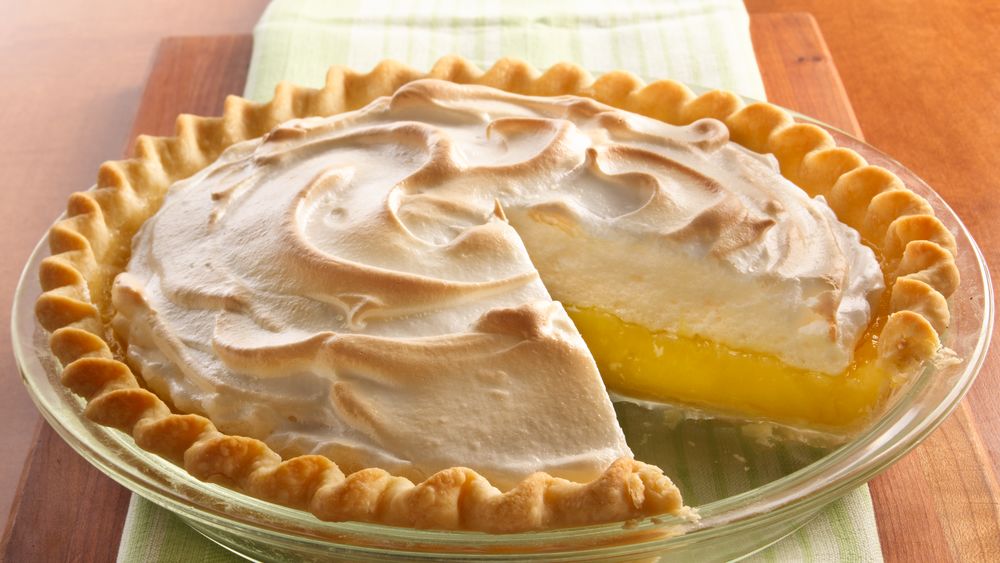 However, I love books because they open the mind and teach people things and have idea that many have never heard of before. You would love the sense of superstitions and mystery in the independent bookstores, I felt like I was stepping into a Harry Potter movie, or meeting with Buffy and Giles in the library. Even the corporate bookstores have a cool vibe. They remind me of stepping into a movie theater or a laboratory. And people who frequently these places are typically polite. Books are amazing, after all, words are but pictures of our thoughts. “The Great British Baking Show” influenced. me to cheat on y diet and eat an entire lemon meringue pie all by myself over two days, it was delicious. I saw it at Safeway for $5.99 and wanted to judge it for myself. Life inevitably tends to organize into systems of life that are organic or Institutional. Philosophy helps to transform existing life systems. People assess these explications practically, in terms of their productiveness for life or for a particular life system. Each person chooses a life system, but one does not choose one simply for oneself. Every act of such choosing inevitably involves other people. There is so escape for any person from this social involvement. However, it leaves one to wonder, does the personality change across the entire life course, and are those changes due to intrinsic maturation or major life experiences? Personality traits may be characterized as internal dispositions and tendencies to behave, think, and feel in consistent ways. #RandolphHarris 2 of 10
 Moreover, personality traits are conceptualized by many to represent stable and enduring patterns of thinking, feeling, and behaving that become increasingly solidified throughout adulthood. There is usually a mean-level of changes for several personality traits during key developmental persons. Thus, personality may be aptly described as a dynamic individual difference variable that exhibits both stability and change over the life course. Genes and environments also contribute to rank-order stability and change in personality from late adolescence to early adulthood. Life is a process, an evolution; it cannot be contained within the boundaries of any philosophy or life system. The strains and the stresses created when life breaks its established boundaries raises the deep need for a new philosophy or new philosophies, and inevitably people develop them. Every significant new philosophy is more comprehensive and clearly defined than any past philosophy. The elaboration of new philosophies comes only through action (i.e., activism), through which a person’s relentless affirmation of life—and affirmation which recognizes both the good and evil inherent in life. Adulthood represents a turbulent period of adjustment marked by a host of significant life changes. Demographically, individuals undergo a series of closely spaced and formative life events (e.g. leaving home, matriculating into colleges, starting careers and families. #RandolphHarris 3 of 10
 Psychologically, the significance of these adjustments may run deeper as individuals begin to define their identities and make commitments to various paths and roles in life. Significant psychological upheaval during this period is usually due to the fact that no significant philosophy is ever purely intellectualistic, for life is more than an idea or a theory. At its best, life is creative energy bursting into expression and molding past and present experience into a higher, more spiritual unity and order. Life is neither noological nor psychological nor cosmological; its basis and meaning are to be found in humans. One developmental construct that has been linked to these phenomena, and therefore may broaden our knowledge of their underlying mechanisms, is personality traits. Patterns of stability and change can be operationalized in multiple ways with each index of change revealing a unique perspective on personality development during emerging adulthood. Rebelliousness declines from adolescence to adulthood, while mean-level increases in law abidance, congeniality, diligence, generosity, orderliness, and leadership over this person. There are also an observed mean-level increases in agreeableness and conscientiousness and mean-level declines in neuroticism in a sample of students assessed at the beginning and end of college. #RandolphHarris 4 of 10
 Life in humans is self-conscious; as such, it goes beyond the subjective individual to bind together all conscious beings. Through this transcendence, it becomes the independent spiritual life, or human beings reaching through action toward the absolute truth, beauty, and goodness. This independent spiritual life is attained only as personality is developed, but it is never a final achievement, since it is always a process that evolves as history. It is not rooted in the external World but in the soul, and it manifests itself more and more completely as the soul becomes independent of this World, self-willed yet subordinate to the ultimate trinity of truth, beauty, and goodness. These ultimates are not theoretical abstractions; they are concrete human experiences that push humans beyond cosmic nature to something transcendentally spiritual. Humans have their beginning in nature, but through their soul evolve beyond it. One’s soul raises questions such as “Why?” and “Whence?” and opposes nature at all points. One’s soul seeks to become timeless and above nature, even as it feels helpless in the grasp of nature. In spite of this feeling of helplessness, it continues to seek freedom—a freedom realized through the creation of a consistent philosophy that makes possible human’s physical and spiritual survival. This is not something intrinsic to itself but a means, or organ, of life itself. #RandolphHarris 5 of 10
 The need for a new philosophy arises from two social conditions—modern human’s drive for a broader, freer, cleaner life, a life of greater independence and spiritual spontaneity and one’s drive for a naturalistic culture, which limits all its activity to the World around us. There is a normative trend toward growth and maturity during the transition into adulthood. Moreover, there is a mean-level increase in conscientiousness, emotional stability, and (to a lesser extent) agreeableness beginning in young adulthood. Maturity in the context of personality development, may be broadly defined as successful adjustment and adaptation to the demands of one’s life, as well as the capacity to form healthy interpersonal relationships. This is denoted by high self-control and responsibility, high agency and social efficacy, and low neuroticism, aggression, and other aversive emotional states. Furthermore, we expect a similar pattern of increasing maturity in personality from late adolescence to early adulthood. Also, the eternal contribution of Christianity offers a religious affirmation of universal redemption. However, redemption must be combined with new elements of faith if Christianity is to help give birth to the new spiritual philosophy needed by humans. #RandolphHarris 6 of 10
 Individuals who are most mature in late adolescence change the least over time, whereas those exhibiting the inverse profile change the most in a direction towards growth and maturity. Genes and environment contribute to stability and change during the transition from late adolescence into early adulthood. Given that individuals are continuing to develop psychologically and neurobiologically during this period, it is conceivable that genetic factors may also contribute to change during emerging adulthood. Such findings suggest that personality, like other developmental processes, is partly regulated by the unfolding of genetic processes over time, which become expressed during key developmental periods. There is also a pattern of normative chance when we look at assessment of stability for the personality of late adolescence to early adulthood. There are major declines in aggression, alienation, stress reaction, and there are a mean-level increases in control, harm avoidance, achievement, social potency. Most profiles were of individuals at age 17, grouped due to the fact this is when they begin to exhibit reliable change, until age 24 to examine the extent to which heritability is consistent over time, and assess the extent to which genetic and environmental variance in personality plays a factor. #RandolphHarris 7 of 10
 It has been seen that a naturalistic culture imposes false limitations upon human’s essential spirituality. When profiling youth, most scientists do not consider their comprehensive background, and they group people based on the likely hood of traits people with certain dispositions may display, but single parent household, ethnic background, and level of education are not always good indicators because we have people who are of mixed background, and although they come from a single parent house hold, their father and/or a father figure may be in the picture. Not all single parent households are struggling financially, and children may pursue higher education to raise their incomes levels. Also, spirituality plays a huge role in the lives of many. God has a higher standard of laws than man, which many religious people adhere to and science does not use religion as a factor because its impact is not always something they can measure. The conception of a naturalistic culture is a result of the impact of science upon human’s life—an impact that is essentially good, but dangerous if it leads to the restrictions of a person’s potentialities to the realm of nature only. The naturalistic approach opens the door to individual freedom, but it is unable to guide humans in the proper use of his or her freedom, since it lacks an overreaching conception of unity. It fails to understand the necessity of social cooperation and social cohesion. #RandolphHarris 8 of 10
 Intellectualistic idealism understands the necessity for cooperation, cohesion, and unity, but fails to understand the need for individual freedom. The only proper answer is spiritual autonomy. Autonomy gives primacy to the whole of which the individual is a part, but it never reduces him or her to a state of utter subordination to that whole. The individual realizes his or her own unique freedom through this whole. Socialism cannot give unity to the life process it fails to understand human’s need for an inner life; it makes the present the only significant moment in human’s life and thus cuts one off from the past and the future; by reducing people to mathematical equality, it fails to appreciate genuine cultural and spiritual differences among people; espousing no higher faith than naturalism, it reduces social life to a struggle of person against person; any by considering humans in purely economic terms, it stunts and aborts their nature. Attainment of freedom should be in terms of religion, science, and the peaceful society. In science the primary objective is to give people control over their nature, but this task can be accomplished only when scientists cooperate by working together. Science, in other words, is essentially social, but it accomplished its task through the freedom to investigate that is given to scientists. The peaceful society, although not yet attained, plainly depends upon human cooperation, upon no man raising his or her hand against another. #RandolphHarris 9 of 10
 However, spiritual autonomy is not possible in a naturalistic culture. It rests upon a faith that goes beyond naturalism—the spiritual belief that humans can produce a better and a freer World for all of humanity. Such a belief cannot find support in external circumstances alone. It requires the presence in each person of an inner life, a life constantly struggling to attain the good. The only duration of family life that satisfies the loftiest longings of the human soul is forever. No sacrifice is too great to have the blessings of an eternal marriage. To qualify, one needs only to deny oneself of ungodliness and honour the ordinances of the temple. By making and keeping sacred temple covenants, we evidence our love for God, for our companion, and our real regard for our posterity—even those yet unborn. Our family is the focus of our greatest work and joy in this life; so will it be throughout all eternity, when we can inherit thrones, kingdoms, principalities, powers, dominions, exaltations and glory. If we set our houses in order now and faithfully cling to the gospel, these priceless blessings can be ours. God lives. When we talk about covenant keeping, we are talking about the heart and soul of our purpose in mortality. There is unusual power in making and keeping covenants with our Heavenly Father. Helping children understand, make, and keep sacred covenants is another key in creating a sin-resistant generation. #RandolphHarris 10 of 10
He Fumbles at Your Spirit as Players at the Keys Before they Drop Full Music on
 Our soul is the greatest love of all, and we must Believe in our life and our dreams to get what we want in everyday life. Building self-esteem is about learning to recognize what is unique, special, and good about us. It is also important that we learn to develop self-compassion, and treat ourselves with the same love and kindness that we readily give to others. Kindness is not jut about how we treat others; it is rooted in how we treat ourselves. The reason that so many people never fulfill their potential is not a lack of intelligence, opportunity or resources, but a lack of belief in themselves. Confidence is the product of the thoughts we think and the actions we take. It is not based on what actual ability is, but the foundation to succeed is discovered in our ability to succeed. We have to believe that we know what we are talking about in order to educate an audience. If an individual wants to learn new technology skills, there must be a passion in the heart and desire in our minds to absorb the information. God created us to be natural born leaders and our ability to lead is based on our faith that we are competent beings. As peaceful beings, we must also have the ability to handle confrontation and manage conflict, as people are better able to flourish in peaceful environments. If we believe that we will be successful in our relationships, then that will manifest and become a reality. #RandolphHarris 1 of 9
 Law of Nature is the cornerstone of utilitarian ethics, namely, the law that all actions should promote the common good. The beliefs that we hold true direct our actions and shape our lives. Research into neural plasticity reveals that we can literally reprogram our brains in ways that affect our thoughts and behaviour at any point in our mortal journey. Therefore, building self-confidence is vastly defined as being volitional; by choice. With consistent effort, and the courage to take risk, we can gradually expand our confidence, and with it, our capacity to build more of it. Understanding ourselves is key to improving our situation in life and our outlook—often referred to as our happiness quotient. As we learn new business skills and gain an education, we also need to learn about the inner workings of our own souls. We are here on Earth to learn and grow. Rather than praying for problems to be fixed or asking for help in overcoming obstacles, we should pray that we have a better understanding of ourselves and learn more about what we need to overcome. God is the sole power to translate knowledge of ethical truth into action. We are children of God and he put us here to be successful. Although we may not be perfect, we are on the right path. It is important to know that whatever comes our way, with the help of God, we will be able to persevere. #RandolphHarris 2 of 9
 To restrain the natural human tendencies to envy, mistrust, self-aggrandizement, and aggression, the virtues of accommodation, gratitude, clemency, obedience to authority, and respect for equal rights of others are recommended by laws of nature as means of ensuring social harmony. Also, not all jealousy is bad. Sometimes jealousy can encourage people to act. For example, if you are jealous of someone’s relationship and how happy they are, this envy can encourage you to find ways to improve your own relationship. Or if someone is jealous of someone else’s house, this envy may make them take action, work more hours and build the house of their dreams. Sometimes, in new relationships, people tend to get sad often for no reason and that is because things are just developing and have not reached the stage of full disclosure. People may act nonchalant because there is a time and a place for everything and they may not want everyone all up in their business. This moral sensibility turns us from the pursuit of pleasure toward the performance of duties toward others and explains our admiration of self-sacrifice independently of external reward or punishment. However, it is important to keep in mind that pleasure is the goal of all human action and consequently is the fundamental standard of evaluation. #RandolphHarris 3 of 9
 Good is the object of desire, assuming that the only property of things which provokes desire is their tendency to produce pleasure or reduce pain. Good is also defined as what has an aptness to produce pleasure in us. “Let virtue garnish thy thoughts unceasingly; then shall thy confidence wax strong in the presence of God; and the doctrine of the priesthood shall distill upon thy soul as the dews from Heaven,” reports Doctrine and Covenants 121.45. We call things good for the same reason that we call them beautiful: because we find them agreeable. An object is good if it is immediately pleasant, or if it is a useful means for attaining something else that is pleasant. Virtues are qualities that render a person agreeable or useful to oneself or to others, whether they are natural virtues such as talent, wit, and benevolence or artificial virtues like honesty and justice. Our spiritual confidence is largely determined by our prior spiritual success and, unfortunately, by our prior spiritual mishaps. Our prior choices will greatly influence how our spiritual basket will look, large or small, the next time we are at the line. Every act, good or bad, has a consequence. Every good act improves our ability to do good and more firmly stand against sin or failure. Every transgression, regardless of how minor, makes us more susceptible to the adversary’s influence next time he or she tempts us. #RandolphHarris 4 of 9
 The adversary takes an inch at a time, deceiving us as to the consequences of so-called minors sins until he or she captures us in a web of sins filled with major transgressions. “And behold, others the adversary flatters away, and telling them there is no hell; and he says unto them: I am not the adversary, for there is no such thing—and this he whispers in their ears, until he grasps them with his or her awful chains, from when there is no deliverance.” Reports 2 Nephi 28.22. Thus arises the sense of moral duty. Of course, confidence can wax and wane throughout our lives. It is boosted when we experience a win or receptive praise. When our efforts fall short of our goal, we are criticized, rejected or simply feel a lack of external recognition, it may reflect on us by depressing out confidence. It is therefore vital not to become overly reliant on external affirmation to prop up our self-worth, but to take ownership for taking the worthwhile actions needed to sustain it. “It is better to trust in the Lord than to put confidence in humans,” reports Psalms 118.8. How do we build the confidence required to overcome our challenges and achieve our goals, particularly when we do not first succeed? The single most powerful way to build confidence is to act with the respect we aspire to have. We must act as if we already possess the confidence we aspire to have by speaking up, reaching out, and getting out of our comfort zone. #RandolphHarris 5 of 9
 Despite our fear of failure, the only way to build self-confidence is to take a risk and take action. If things do not work out, we now know that we can handle more than we thought we could. Either way, we are better off because the motivating processes that cause us to approve of moral virtue as an answer to the question of what criteria we use to judge person and actions to be worthy of moral approval eliminate the belief that we cannot do anything else and are stuck in the same roles of unfulfilled desires. When we stop reaching, we stop learning and when we stop learning, we stop growing. Freedom is not a quality of the will but a relation between desire, action, and environment, such that a person is free when his or her actions are caused by our own desires and unimpeded by external restraints. The more we use our soft determinism, it will allow our value, competence, resilience, influence, self-efficacy and confidence in our ability to make things happen grow! The moral sense, or conscience, that enables people to distinguish right from wrong as combination of benevolent emotion and rational intuition strengthens our confidence. Freedom of the will is the ground moral responsibility, as we are introspectively aware of our ability to choose between good and evil independently of our desires. #RandolphHarris 6 of 9
 Think of something you have always wanted to do but have avoided because you fear it cloud be embarrassing. Now clear your mind and give it a go. It is not only vital to our future success, but failing to take a risk and have a go can ultimately put the confidence we have now at risk. That is, if we do not use it, we lose it. According to the laws of freedom, a rational being imposes his or her own actions and expects other rational beings to recognize and obey. The justification for these rules lies in the logical fact that to be rational means to act in accordance with general rules and moral rules are those which can be followed consistently by all rational beings. Thus, insofar that one is moral, one is rational and, in this sense, free; insofar as one is immoral, one is an irrational slave to one’s natural inclinations. The reward of virtue is not happiness but dignity and freedom. When we shift our physical state, it shifts our mental and emotional state. Putting ourselves in a power pose literally changes our physiology releasing a hearty dose of testosterone to fuel our bravery. What we think about and focus on everyday will manifest in our lives. So may want to know, why is it everyday you have an article prepared? Well, it is part of mental mastery, to flood the brain with knowledge and information in an effort to manage the mind and soul. Some people are going through hell everyday and in pain, but they are always happy when you see them because they are practicing mental mastery. #RandolphHarris 7 of 9
 Also, it is important to appear happy in public and treat people with respect because reputation does matter and we should treat people with the kind of respect that we want. This is our duty. Duty is distinct from pleasure and utility, and moral virtue or good will is the supreme good to which all other values are subordinate, and moral worth is not measures either by the consequence of a person’s actions or by one’s natural benevolence, but by the agent’s intention to obey moral laws. Think of someone you greatly admire wo radiates a quiet sense of confidence, and think about what they would do or say if they were facing your current challenges and opportunities. Channel their self-confidence, certitude, and bravery. Do not make false promises. What we put our attention on amplifies in our reality. Focus on things that make one anxious, and one will become more anxious. Focus on things that inspire one, and one will feel more powerful. Like all emotions, confidence breeds confidence. Make the conscious and courageous decision not to give self-doubt the power to keep one from pursuing a bold ambition, have a tough conversation, or lay one’s pride on the line. #RandolphHarris 8 of 9
 It is not in virtue what satisfied human needs, but in virtue of the demand of reason that action be in accordance with universal law, that we feel obligated to obey moral principles. With God, families are essential. He created the Earth that we could gain physical bodies and form families. To set our house in an order pleasing to the Lord, we need to do it his way. We are to employ his attribute of righteousness, Godliness, faith, love, and patience. We are supposed to be living examples of kindness, and pure knowledge, which greatly enlarge the soul. The moral duty and self-interest coincide because God, as the paramount authority, commands us through the Scriptures and the promptings of the conscience to seek the general good as well as our own happiness. Moral obligation is supported both by natural pleasure in the well-being of others and by the fear of divine punishments which provides the selfish, but rational person with a good reason to sacrifice one’s pleasure for the common good. There is an ideal way for us live with impressive purity and faith in the quest for human perfectibility. Human beings are rational agents and members of a kingdom of ends in which we are both subject and sovereign, legislating for ourselves and others. The highest goal of human life is to realize this ideal kingdom in individual and social practice. Anchored in truth, that iron rod is immovable and immutable. #RandolphHarris 9 of 9
A Marvelous Array of Birds and Cupid’s Arrows
 Nature, as God’s creation, must be unqualifiedly good. To the obvious question of how God can know in advance what has not been destined or causally necessitated, it by means of God’s subtle analysis of time. God has knowledge, not of what we are compelled to do but of what we freely choose to do, because his knowledge is not the kind of advance knowledge that is based on causal processes but is due to the fact that, in the mind of God, we have already made our decisions. All of past future time is spread out in the specious present of the divine mind, so that what, from our limited standpoint, would be prediction of the future is, for God, simply direct awareness of contemporaneous events. Moral concepts of rightness and virtue in terms of individual and social well-being and interpreted moral right and virtue consists of being obedient to divine authority. No mater what the natural consequences of our actions, we are held to account for the state of our soul. It is our motives and not necessarily our actions that count in assessment of our moral responsibility, and the primary motive is our desire for, or our turning away from, God. “No one is like you, O LORD; you are great, and your name is mighty in power. Who should not revere you, O King of nations? This is your due. Among all the wise people of the nations and in all their kingdoms, there is no one like you,” Jeremiah 10.6-7. #RandolphHarris 1 of 7
 Responsibility is thus transferred from the consequences of a person’s actions to the state of our soul. The quality of life depends on what we do in the years we are allotted, and on what passes in consciousness during that time. Different activities typically affect the quality of experience in rather predictable ways. If all through life we only do depressing things, it is unlikely that we will end up having lives a very happy life. Usually each activity has both beneficial and negative qualities. When we eat, for instance, we tend to feel a more optimistic affect than usual; a graph of a person’s level of happiness during the day resembles the profile of the Golden Gate Bridge across San Francisco Bay, with the high points corresponding to meal times. At the same time, mental concentration tends to be rather low when a person eats, and one rarely experiences flow. The tendency to self-preservation expresses itself in the quest for social harmony through peace-keeping institutions and practices or, alternatively, in the aggressive drive toward power over one’s fellow people. Every person ought to endeavour to peace as far as one has hope of obtaining it, and the right of nature when one cannot obtain it, one may seek and use all the helps and advantages power. #RandolphHarris 2 of 7
 Still, no child is born hostile or aggressive. It becomes so only when he or she desires to be loved and to love are frustrated, that is, when the child’s expected satisfactions are thwarted—and the thwarting of an expected satisfaction is the definition of frustration. When children are young, that is when they need more love and appreciation than ever before, and sometimes they are hard to love because they are not fully developed and do not know how to express themselves nor properly communicate. Childhood is a time of learning, developing, words and music, dancing, expression, dreams, and friends. Praise is necessary, though, and so are material rewards—medals, toys, trophies, and so forth. However, more important than any of these are the approval, support, and encouragement of the people the child considers important. This may be the hardest need for parents to understand and meet. Adults, caught up in their own needs and projects, may often disregard or minimize the seemingly selfish or frivolous activities of their children. #RandolphHarris 3 of 7
 Children are intensely sensitive to the people around them, constantly checking out just how much influence or effect they have on people and situations. What may appear to be a strong need for dominance, risk-taking, leadership is actually a need to test out the emerging and growing sense of self. It is impossible to emphasize too strongly the importance of childhood. If the child does not experience enough success and one’s self-concept fails to develop, one may grow into adulthood with gaps in his or her personality. This is called deficiency-motivated, and adults who have this condition are so strongly motivated to fill in the holes, plug up the gaps, that very little time or energy is left over to meet other, ore advanced needs. For example, suppose that, despite all his best efforts, a young man is never able to get any girl to go out with him more than once—let alone date him long enough to develop a close loving relationship. He may grow into adulthood trying so desperately to attract any female that he cannot even see his own good qualities, cannot relax enough to develop into the kind of man who is attractive to girls—not to mention more attractive to himself! #RandolphHarris 4 of 7
 Robots are machine-made simulations of people. Robopath describes people whose pathology infirmary entails mechanical-like behaviour and existence. A robopath is a human who has become socially self-contained. Robopaths are people who function in terms of a pseudo-image. They are automatons who may appear turned-on to other people, but who are, in fact, without true compassion. In contrast, a person who has had a healthy childhood, known as a self-actualized person, would have the inner-direction and sense of self to resist a human robopathic action. The ability to love in the true sense would equip this person with a compassion for other people that would deter the kind of atrocious robpathic behaviour discussed. A self-actualizer will ordinarily have been given enough support and love by his parents while he was young so that he is secure, not afraid to try new things. He will have developed a strong sense of autonomy, and he will feel secure enough about his own personality—strengths, weaknesses, and uniqueness—to expand his horizons. In other words, in the main, he will not be burdened by the deficiency-motivation we discussed earlier. #RandolphHarris 5 of 7
 Does this mean that every self-actualizing person must have had a perfect childhood? No, not at all, but he must have found ways to overcome deficiencies so that they do not prevent him from concentrating on expanding his abilities, enjoying his life—not always hung-up at some lower level. How? Perhaps through therapy, perhaps through association with other people. What motivates a self-actualizing person? Well, although a we have been describing a male, the same theories apply to women and girls, too. Usually, they know what does not control their behaviour. They are not governed by tradition or by other people’s wishes. This is not to day that he or she scorns tradition and cares nothing about other people’s requirements. It is to say that he or she is not controlled by these things, when one wants to do something different. A self-actualizer tends to be impatient with trivial and nonsensical rules. One will be bound by a rule if it makes sense to him or her. These individuals seek novelty, stimulation, challenge, rather than safety. In their careers, they will not be so much tempted by a larger salary as by a chance to do something well, to experiment. As the self-actualizer get older, they tend to be more and more interested in cognitive (thinking/learning) and esthetic (art, music, literature, philosophy) activities. #RandolphHarris 6 of 7
 The mistake more people make is to think that the self-actualized person is a superhuman person with no weaknesses. The truth is that he or she very often is silly, can be extravagant, and is still learning. They can also be determined and sometimes not charming. What we should make clear is that the self-actualized person is an exciting person and not frigidity nor joyless, as many might want to make the individual. This type of person has virtues that are extraordinary, but also has limitations. So as one becomes one’s actualizing potentials, it is important not to seek perfection, but to discover the joy that comes from integration of both strength and weaknesses—to freely skate between all potentials. Most self-actualizers do not tend to be highly competitive. Does that seem like a contradiction for such a competent individual? Meeting their own standards is what counts. (This is called being-motivation or growth-motivation, in contrast to deficiency-motivation.) The self-actualizing person is comfortable with other people—probably in part because one feels no need to compete with or judge them and is not worried about their competing or judging him or her. These individuals realize that human beings come in all varieties—some cruel, hostile, selfish; some victims, sufferers, or outcasts; and still others loving, cooperative, able to see the larger vision. #RandolphHarris 7 of 7

Loving Relationships Will Enhance Our Growths as Individuals
 We sought to find a tribe of tall beings, tender bone, ancient, simple, tangled with my fledgling, unknown to the World of records, history and location essential to the those we love. Supreme good is defined with happiness which is the exercise of natural human faculties in accordance with virtue. To enjoy good health, to bring true happiness to one’s family, to bring peace to all, one must first discipline and control one’s own mind. Give us to your wisdom, your keen hearing, your vision. Where are the tall creatures? More or less, we send our love. This desire for interpersonal fusion is the most powerful striving in a mortal. It is the most fundamental passion, it is the force which keeps the human race together, the clan, the family, society. The failure to achieve it means insanity or destruction—self-destruction or destruction of others. Without love, humanity could not exist for a day. If an individual can control his or her cognitive functioning, that person can find the way to Enlightenment, and all wisdom and virtue will naturally come. There is an intellectual and moral virtue. Intellectual virtues are the deep personal qualities or character strengths required for good thinking and learning. Moral virtues lead a person to a life characterized by self-control, altruism and good acts. Love is union under the condition of preserving one’s integrity, one’s individuality. #RandolphHarris 1 of 7
 Love is an active power in a person; a power which breaks through the walls which separate people from their fellow beings, which unites people with others; love makes one overcome the sense of isolation and separateness, yet it permits one to be oneself, to retain one’s integrity. In love the paradox occurs that two beings become one and yet remain two. If we say love is an activity, we face a difficulty which rests in the ambiguous meaning of the word activity. Activity, in the modern usage of the word, is usually meant an action which brings about a change in an existing situation by means of an expenditure of energy. Investigations of the definition of happiness or the good life is activity in accordance with virtue, and thus as the harmonious fulfillment of human’s natural tendency. Right action, just laws, and virtuous character are the means of achieving individual and social well-being. The will is rationally guided desire, formed by moral education and training. Vulnerability evokes powerful feelings in people. We do not have to understand these feelings as much as we need to respond to them. Through our relationships that may have been concealed for years, we learn about the aspects of ourselves. Love is an activity, not a passive affect; it is standing in, not falling for. In the most general way, the active character of love can be described by stating that love is primarily giving, not receiving. #RandolphHarris 2 of 7
 The most important sphere of giving rests not that of material things, but in the specifically human realm. What does one person give to another? One gives oneself, of the most precious one has, one’s gift of life. This does not necessarily mean that an individual sacrifices one’s life for the other—but that one gives the quality of character of virtue and concern which is alive in our hearts; we give our joy, interest, understanding, knowledge, humour, and sadness—of all expressions and manifestations of that which is alive in our soul. In thus giving our or core being, we enrich other people, enhancing our loved one’s sense of aliveness by reflecting the purity of our moral and intellectual virtue. If nothing comes of the call, we can try again. And again. And if their silence continues, we can call to others. Night after night, sometimes our souls wander the Earth with the basic need to fuse with another person so as to transcend the chambers of one’s separateness. We cannot help desiring to share the secrets of our souls, into the innermost nucleus of a loving person so we can grow and unfold. Sometimes all we have to bring is this heart, as this land of the Sunset washes these banks of blue sea. These are the western mystery! As short as some meetings may be, they shape our lives, and missing becomes an endless river, a tender soft cloud, a fragrant flower and a music of bamboo flute. #RandolphHarris 3 of 7
 Human behaviour flows from three main sources: desire, emotion, and knowledge. In responding to human pain, we risk what is known for what is yet to be known. We give up safety for searching. The risk means trusting God! In that trust we respond. Many a rainy or shiny day may pass amidst drifting leave, but sometimes the melodious song of passion still lingers in the woods in the memory, as enchanting figures flies from time to time into our dreams that arouse the recollection of the past days with sweet gentle breezes, murmuring brooks, white clouds and Sunlight. Even if we knew a thousand times more of ourselves, we would never reach bottom. We would still remain an enigma to us. The only way of fully knowledge rests in the act of love: this act transcends thought, it surpasses words. We have to know the other person and ourselves objectively, in order to be able to see their reality, or rather, to overcome the illusions, the irrationally distorted photograph we have of them. Only if we know a human being objectively, can we know that person in an ultimate essence. Music is the movement of sound to reach the soul for the education of its virtue. Throughout the centuries, poems have been written, ballots have been sung, mountains have been climbed, and battles have been fought because of love. It is the daring plunge into the experience of union. #RandolphHarris 4 of 7
 However, care, responsibility, living, respect, and knowledge are mutually interdependent. They are a syndrome of attitude which are to be found in the mature person; that is, in the person who develops one’s own powers productively. Still, we do not always think in an accurate way about love. One of the incorrect and irrational attitudes we tend to have is that love is merely a mystical feeling, a mysterious power that takes over; and when it comes, we fall into it, helpless to control it. We are prone to think that it can vanish as mysteriously as it came and that we are helpless to prevent its leaving. We need to stop thinking of love as a mysterious power that has control over us. We need to think of love as a way to treat other people, rather than something that happens to us; then we will begin to have power over our loving. Those who think of love as it really is can define it, explain it, and understand it. If we think of a person as being loving, or having the ability to express love, or lacking this ability, it helps. One of the most important things to look for in a marriage partner is the extent to which that person is able to express love. And in preparing ourselves for marriage, one of the most essential characteristics to incorporate within ourselves is the ability to give love as well as to receive it. The light of love shines on our daily life as the lightning turns the mediocre gullies and lush forests into legendary mirages. Thinking of our beloved should fill us wit energy. #RandolphHarris 5 of 7
 Many persons have not grown up in loving families; they still can learn to love, however, by learning what a loving person does and making an effort to do those things. A loving person cares about the loved one. Parents who really love their children take good care of them. A person who says, “I love trees,” but who does not water and cultivate his or her trees, really is not loving their own trees. A person who says, “I love my birds,” but who does not feed his or her birds’ is not giving love to that bird. Loving is caring. A loving person respects other persons. A part of respecting people is not to force them. It may be necessary at times for an adult to force a child to do their homework or eat at times; but when two grown folks are relating to each other, if there is love between them, there is no force. We may try to persuade a person to see our point of view, or we may try to convince him or her to do something we would like that individual to do, but if we really love that person, we do not force that individual. A loving person responds to others. We can also learn to improve our responses. Love is empathizing, trying to understand how the other person feels and letting him or her know that we understand. A loving person cares for the welfare, progress, and happiness of the loved one. We not only care, but we make our resources available to them. #RandolphHarris 6 of 7
 When the love of God waxes in thy heart, beyond any doubt God has love for thee. Divine Wisdom is destiny and decree made us lovers of one another. The builder who gives extra time and effort to build an excellent house gains satisfaction from the contentment of the family that lives in it. The actor on the stage who gives extra preparation and exertion to one’s performance receives from the audience their approval and applause. An important dimension of loving is that loving a person also makes a conscious effort to receive. One is willing to receive not only physically, but also suggestions, advice, and acts of kindness. Do not treat vulnerability as a weakness. Practice being vulnerable (transparent and undefended and significantly softened) in safe circumstances, where the only danger is getting embarrassed by such overt self-unmasking. As we drop our guard, it can be a source of strength because we soften, making our connection with our partner more important than being right. This is vulnerability. Not so easy perhaps, but so potent in getting our relationships back on track. Loving is sharing. Have you ever seen a beautiful Sunset when you were alone and thought, “This would be lovely to share with someone?” Loving is forgiving. A loving person forgives one who has wronged him or her, and also forgives oneself for mistakes made. Guilty feelings can have some value in motivating a person to stop whatever it is that is causing him or her to feel guilty. Loving requires action. #RandolphHarris 7 of 7
Leading the Procession to the House of God with Shouts of Joy and Thanksgiving
 Time was created with the Heaven, and it seems to hold that it is identical with the movements of the Heavenly bodies, which measure its passage. Let us link the past and the future with our present paces, and turn life into a dream of science and then turn the dream into reality. Only when we turn our complaints of environments into the strength to strive for success can seize the opportunities. God has an ever present eternity, and all years stand at once (omnes simul stant). Eternity is the complete possession of eternal life all at once—a notion that becomes clearer from comparison with things temporal. For whatever lives in time moves as something present from the past to the future, and there is nothing placed in time that can embrace the whole extent of its life at once. It does not yet grasp tomorrow, and it has already lost yesterday. And even in the life of today you do not live longer than in the transitory moment. That, then, which is subject to the condition of time, even if (as Aristotle thought of the World) it has no beginning or end and its life extends through endless time, is still not such as may be rightly judged eternal. For though its life be endless, it does not grasp and embrace the extent of it all at once [totum simul] but has some parts still to come. And so, if, following Plato, we wish to give things their right names, let us say that God is eternal, but the World is everlasting. Time is to the perceptual World of becoming what eternity is to the intelligible World of being. #RandolphHarris 1 of 9
 God has the power to restore any past motion, and therefore a corresponding past interval of time, since there is no difference between motion and time. “And they are one God, yea, the very Eternal Father of Heaven and Earth,” reports Mosiah 15.4. Eternal Return is the doctrine that every event in the Universe, in all its details and in its whole cosmic context, will recur an infinite number of times in exactly the same way that it has already occurred an infinite number of times in the past. This doctrine must be distinguished from the belief in the general periodicity of nature, according to which the main features—but not the specific details—of human and cosmic history recur. “Everything will eventually return in the self-same numerical order, and I shall converse with you staff in hand, and you will sit as you are sitting now, and so it will be in everything else, and it is reasonable to assume that time too will be the same,” reports Pythagoreans. “For behold, the time cometh, and is not far distant, that with power, the Lord Omnipotent who reigneth, who was, and is from all eternity to all eternity, shall come down from Heaven among the children of humans, and shall dwell in a tabernacle of clay, and shall go forth among people, working mighty miracles, such as healing those with infirmaries, resurrection, causing those without the ability to walk to have full control over their bodies, the vision impaired will be cause to see again, and those with hearing impairment will be able to have full use of their audio equipment, and curing all infirmaries,” reports Mosiah 3.5. #RandolphHarris 2 of 9
 That is the great plan of the Eternal God. God wants to make us all perfect and timeless. Therefore, the Spirit of revelation must be in each and every individual, to know the plan of salvation and keep in the path that leads them to the presence of God. According to the moral-sense theories, one perceives the difference between right and wrong much as one perceives the difference between a red thing and a blue one. Just as I know that the letter box is red because I see it is, so I know what Reese is doing is right because I perceive that it is. According to theological theories, there is an objective criterion of what is right or wrong which is provided by what God wishes us to do, approves our doing, commands us to do, and so on. If the criterion of right is provided by God’s commands or wishes, then it is not possible for two people, one whom says that an action is right and the other of whom says that the same action is wrong, both to be correct; for if the one is right in thinking that God wishes us to act in a certain way, then the other must be wrong in thinking that one does not. So vital is this frame work that is one strays or strays outside it, one risks provinciality and misery. In fact, most human misery represents ignorance of or noncompliance with the plan. A cessation of such mortal suffering will not come without compliance to it. #RandolphHarris 3 of 9
 Hence, the Lord, who has freely shared this vital knowledge of salvation with us, has urged us to teach the fundamentals of this plan freely. There are three ways in which God’s commands could be relevant to human’s duties. The fact that God commands us to perform a certain kind of action might be what makes this kind of action right. On the other hand, it might be the fact an action is right that causes God to command us to perform it. Finally, it might be the case that the fact that an action is right and the fact that God commands it are one and the same fact; it might be all we meant when we said that an action was right was that it was commanded by God. The very word plan confirms God’s paternal purpose, a realization so desperately needed by the confused and despairing on the World’s stage. The plan of happiness not only ensures the immortalization of our individual identities, but can yield bettered and reborn individuals. “How great the plan of our God! For on the other hand, the paradise of God must deliver up the spirits of the righteous, and the grave deliver up the body of the righteous; and the spirit and the body is restored to itself again, and all people become incorruptible, and immortal, and they are living souls, having a perfect knowledge like unto us in the flesh, save it be that our knowledge shall be perfect,” 2 Nephi 9.13. Good will supply people with the proper axioms from which to deduce rules of conduct. #RandolphHarris 4 of 9
 We are living in what may be termed one of the most important periods in the history of the Word. This is the dispensation of the fullness of times, a time when the keys of all former dispensation have been given to the prophets of the restoration; a time when God has spoken from the Heavens, Angels have appeared to people; a time when men and women have the Holy Ghost conferred upon them. By the power of the Holy Ghost we may know the truth of all things. There is need for this great power in the Earth today—this steering power. It is our duty and responsibility to live worthy of the blessings that we enjoy. Where much is given, much is required. We are required to live exemplary lives, to keep the commandments of the Lord, and it is also our responsibility to carry the true gospel message to all humankind. “Our Father in Heaven, hallowed be your name, your kingdom come, your will be done on Earth as it is in Heaven. Give us our daily bread. Forgive us our debts, as we also have forgiven our debtors. And lead of not into temptation, but deliver us from the evil one. For if you forgive people when they sin against you, your Heavenly Father will also forgive you,” reports Matthew 6.9-14. We can begin with facing our aggressiveness; then unearth the anger that underlies it, developing more and more intimacy with that anger, eventually feeling deeply empowered, simultaneously vulnerable and filled with healing courage. #RandolphHarris 5 of 9
 There is undeniable growth in such work of forgiving those who sin against us because if we do not, our Father in Heaven will not forgive us. This forgiveness, requires both a keenly discerning awareness and a full commitment to bringing together heart, guts, and the mental mastery in ways that serve our heights good. “Then the eyes of those who see will no longer be closed, and the ears of those who hear will listen. The mind of the rash will know and understand, and the stammering tongue will be fluent and clear. No longer will the fool be called noble nor the scoundrel be highly respected,” reports Isaiah 32.3-5. It is now clear that we must take into account what the environment does to an organism not only before but after it responds. Behaviour is shaped and maintained by its consequences. “And they did pray unto the Lord their God continually, insomuch that the Lord did bless them, according to his word, so that they did wax strong and prosper in the land,” reports Alma 62.51. The doctrine that maintains that what I cannot have I must teach myself not to desire; that a desire eliminated or successfully resisted, is as good as a desire satisfied, seems to me a sublime form of the doctrine of sour grapes: What I cannot be sure of, I cannot truly want. “Blessed are the peacemakers. Blessed are those who are persecuted because of righteousness, for theirs is the kingdom of Heaven,” reports Matthew 5.9-10. #RandolphHarris 6 of 9
 Physiological psychologists have greatly influenced today’s theories of motivation. Chief among their contributions is an idea often called Drive Reduction Theory. This is not the only way to look at what makes people behave as they do, but it does answer many questions. According to this theory, all motivation begins with a need that must be satisfied. In its simplest form, a need is a lack, a depletion, something missing. (When I have not eaten, the cells of my body experience a need for nourishment to energize them or to provide building blocks for repair or replacement.) A signal is relayed along the nervous system and bloodstream to the brain, and we experience a tension-force called a drive. This activates the entire body and changes the person’s consciousness. One might say it shakes a person up so that one is now thinking about looking for something to meet that need and reduce the tension of the drive (“I am hungry!”) Tension, whether large or small, is painful. It causes discomfort. We want to stop it. So, to reduce the tension, we search out a goal, an incentive. (“I want food! I want Harris Beef!) The goal or incentive must have two qualities: it must actually satisfy the need, and it must be something that the individual recognizes as being able to meet that need. (If I ate grubs or grasshoppers, my hunger might be satisfied, but I might not classify those objects as food in my search.) When we reach the goal r incentive, this results in a return to homeostasis or satisfaction “Ahhhh. I am not hungry anymore. I got a Harris Steak.”) “Put your hope in God, for I will praise him, my Savior and my God,” reports Psalm 42.5. #RandolphHarris 7 of 9
 We must pay a price for everything we get, whether of a temporal or spiritual nature, and we generally get about what we pay for. If, for instance, I should purchase a suit of clothes, in order to get the best material, the best style, and the proper fit, I must pay a higher price. Every man knows that a good suit can make him look great, whether he is going to work, a night out on the town, or even out on a date. Even if you do not have to wear a suit every single day, nobody ever looks down on the guy that is always dressed well. When it is time to hand out promotions, it might even give you an edge over your fellow employees. Some suits are so nice because every single detail is controlled by the manufacturer and the sheep that provide the wool for the suits are even kept in a beautiful environment that is set to the right temperature during sheering season. Of course, the wool is only part of the charm. The classic Italian craftsmandship and cut is another huge factor. While suits like Brioni are certainly at the top of the price range, they are a lifetime investment that any guy can wear with pride. And you pair that Brioni suit with a Brioni shirt and you really have a classic, timeless wardrobe that cannot be beat in terms of quality. Likewise, if I desire to purchase a Cresleigh home that elicits excitement, joy, and pleasure, a BMW, which is the ultimate diving machine, or whatever it may be, it is going to cost. Similarly, if I seek intellectual values, I must pay the price by study, research, by devoted effort and oftentimes of sacrifice. #RandolphHarris 8 of 9
 The same is true of spiritual values. Once cannot expect to inherit eternal life if one is not willing to pay the price and to do the things required for such salvation and exaltation. “There is a law, irrevocably decreed in Heaven before the foundations of this World, upon which all blessings are predicated—And when we obtain any blessing from God, it is by obedience to that law upon which it is predicated,” reports Doctrine and Covenants 130.20-21. Our goal is salvation in the celestial kingdom of our Heavenly Father and to receive the glory that awaits the faithful there. Surly one cannot expect to receive the greatest blessings that the Heavenly Father has in store for his faithful children by paying bargain prices. The satisfaction of physical needs is indeed the indispensable precondition of a satisfactory existence, but in itself it is not enough. In order to be content, people must also have the possibility of developing their intellectual and artistic powers to whatever extent accords with their personal characteristics and abilities. We must also keep in mind that showing others more concern and kindness is more effective and brings more practical profit than giving them any gift. Life is to meet challenges. An attempt is a good beginning. Without attempts, how can we find new opportunities? “You are the most excellent of people, and your lips have been anointed with grace, since God has blessed you forever,” reports Psalm 45.2. #RandolphHarris 9 of 9

This is God’s Largest Master Plan and they Just Did Not Want to Hear it!
 We have well-developed wings under your care, roaming in the blue sky of homeland. No matter how far and high we fly, there is an echo of your instructions. “If we keep commandments, we shall prosper,” reports Alma 37.13 When we engage in discursive thought and declarative speech, we may attain various forms of success: intelligibility, precision, correctness, and so on. These felicities are best explained by contrast with the corresponding mishaps that threaten our beliefs, assertations, and especially our claims to know something. A person’s thinking may be inadequate he or she is ignorant, and what that individual says may be deficient because it is incoherent, rough, or, perhaps most important of all, downright false. Many philosophers have been troubled in attempting to account for the occurrence of falsity in people’s assertions and opinions, that is, in trying to understand how there could be such a thing as error at all. In examining these difficulties, we shall assume human’s statement are erroneous in case it is false and reflects his or her belief. Thus, if a person lies, he or she may speak falsely, but not erroneously We shall assume that a person holds a false belief when he or she is inclined to express it n a statement that would be false. The statement would be erroneous; consequently we can say the belief it mirrors are erroneous as well. #RandolphHarris 1 of 9
 Our inquiry will focus on a pair of famous knots. When our beliefs are false, do we believe anything? If a surgeon is convinced his patient will die, a he is correct, he is mistaken, there is no such event as the patient’s death. Did the surgeon then expect nothing? Depicted thus, erroneous thinking seems impossible. Granting that error can occur, is it ever voluntary? Clearly we are to blame for some of our mistakes, yet who knowingly and willingly goes for false beliefs? A lie is a statement made by one who does not believe it with the intention that someone else shall be led to believe it. It is possible for a person to make a statement using American Sign Language, smoke signals, Morse code semaphore flags, and so forth, as well as by making specific bodily gestures whose meanings have been established by convention (e.g. nodding one’s head in response to a question). Hence, it is possible to lie by these means. If it is granted that a person is not making a statement when he wears a wig, gives a fake smile, affects a limp, and so forth, it follows that a person cannot be lying by doing these things. If it is granted that a person is not making a statement when, for example, she wears a wedding ring when she is not married, or wears a police uniform when she is not a police officer, it follows that she cannot be lying by doing these things. #RandolphHarris 2 of 9
 We form belief in a haphazard way, believing all sorts of things based just on what we hear out in the World, but have not researched for ourselves. People are credulous creatures who find it very easy to believe and very difficult to doubt. In fact, believing is so easy, and perhaps so inevitable, that it may be more like involuntary comprehension than it is like rational assessment. By analogy, why disqualify my utterance simply because I fail to refer to existing things? A correspondence theory still explains why it is false to state, “There are flying saucers”: nothing corresponds to what is stated; that is, noting corresponds to the existence of flying saucers, because none exist. However, the correspondence theory needs elaboration before it will transform into a general account of correct and incorrect assertions. What things that are would I depict if I conceded “Flying saucers do not exist”? Does the nonexistence of flying saucers correspond to what I state? How can there be such a thing? Again, what things that are differentiate a true subjunctive conditional, for example, “If I had watered the lawn, it would not have died, from its false contrary, “Even if I had watered the lawn, it would have died”? Does the same withered grass make one statement true and the other false? #RandolphHarris 3 of 9
 We can prove a few things for certain, including God’s existence. The deity cannot have given us a faculty [of thinking] whose right employment could ever lead us astray; however, it seems to follow that therefore we can never go wrong. People have false beliefs, but through their own doing, not God’s. People are endowed by God with such power of will that they can assent to proposition they do not know to be true—that is, to ideas that are not clear and distinct. Is God to blame for this disharmony between our limited capacity for knowledge and our unlimited power for assenting? No, will is just a single thing; it is incompatible with its nature that anything should be subtracted from it. Besides, although we are free to, we do not have to believe propositions for which we lack conclusive proof. In order to avoid unsuspected error, we must restrain our desire for truth and withhold assent until we know for certain. Clearly, people may decide to make statements. Some criminals voluntarily confess their misdeeds, and others are forced, against their will, to admit guilt. How about belief? Can we choose to reject a proposition that seems most likely, according to available evidence, and believe another that seems less plausible? Perhaps not. However, we often make decisions as we form our opinions, as we collect or neglect data and seek or ignore expert testimony. #RandolphHarris 4 of 9
 People who undergo brainwashing are deprived of this control over the formation of their beliefs. The same holds, incidentally, for knowledge. It is absurd to say the investigator decided to know but not absurd to say he or she resolved to find out for certain who robbed the grocer. Moreover, children are compelled to learn things. In acquiring knowledge and forming opinions, we pursue rather obvious goals: conclusive proof and correct information. Even so, is it intelligible to suppose that people act deliberately and knowingly when they settle for false beliefs? Maybe it is not their goal to be wrong, but it is certainly within the general scope of their intention. Anyone who aims at truth is prepared for falsity, just as a marksman is prepared to miss the bull’s-eye. Can we say they erred knowingly? A person who punches another is hardly ever certain that his or her victim will be injured. However, if one has reason to think injury might result from the blow, from a legal standpoint the individual knowingly inflects harm. There remains another type of error, fortunately quite infrequent, where such awareness is impossible. This is the unusual situation where you are convinced you know something, banish doubt from your mind, and still turn out to be wrong. Perhaps you acted deliberately and followed your inclinations in pushing your investigation until you believe you cloud not be wrong. #RandolphHarris 5 of 9
 However, with this degree of conviction, you cannot have the least awareness that you are not mistaken. Your error, then, is not fully voluntary. “Walk upright before God,” reports Helaman 6.34. How people form beliefs, in many cases, for some cultures, was shaped by the evolutionary push toward efficiency rather than accuracy. Abstract belief formation (that is, beliefs outside one’s direct experience, conveyed through language) is likely among the few things that are uniquely human, making it relatively new in the scope of evolutionary time. Before language, most human ancestors could form beliefs only through what they directly experienced of the physical World around them. For perceptual beliefs from direct sensory experience, it is reasonable to presume our sense are not lying. Seeing is, after all, believing. In fact, questioning what you see or hear can get you eaten. For our evolutionary ancestors, it was better to be safe than sorry, especially when considering whether to believe that rustling in the grass is a lion. However, as a result, most people did not develop a high degree of skepticism when their beliefs were about things they directly experienced, especially when their lives were at stake. #RandolphHarris 6 of 9
 As complex language evolved, people gained the ability to form beliefs about things they had not actually experienced for themselves—and tended to believe them just as strong. Yet, a false statement or action made with intent to deceive is a lie. Nothing else is quite so despicable and cowardly as a lie. “Embracing the law of the Church, thou shalt not lie; one that lieth and will not be repent shall be cast out,” reports Doctrine and Covenants 42.21. This means excommunicated from the Church. Unfortunately, lying is currently a widespread practice. It is one of the most disturbing and peace-destroying practices in out society. The sad fact is that there is a growing trend to regard getting caught as worse than lying. There are many individua among us who, as a consequence of lying, are bereft of composure and happiness. Society generally is suffering for the same reason. Lying is one of the cardinal evils of our day. A cardinal sin is a very bad or serious sin. Giving false information is a cardinal sin in news reporting. No one is justified in lying because someone else has lied. The Lord have the Prophet Joseph a lesion on this point at the time the 100-page manuscript copy of the Book of Mormon translation was lost. Education is a crutch with which the foolish attack the wise to prove that they are not idiots. #RandolphHarris 7 of 9
 Only one is an artist who can see the mysterious in what is ordinary, and can thus transform a solution into a problem. Knowing that the lost manuscript was in the hands of enemies and that they had altered it, the Lord told Joseph not to translate the same material again. “The adversary stirreth them up, that he or she may lead their souls to destruction. And thus he or she flattereth them, and leadeth them along until he or she draggeth their souls down to hell; and thus the adversary causeth them to catch themselves in a snare. And the adversary goeth up and down, to and fro in the Earth, seeking to destroy the souls of humans,” reports the Lord in Doctrine and Covenants 10.22, 25-28. The fake person and the fake news media can do anything: they can sin, and they can atone for it. However, sinning makes them no worse, and atoning no better. A political system which seeks freedom through force can easily get stuck halfway; whereas that which seeks license through liberty always attains its goal. The prostitute resembles the journalist in that neither is expected to experience any feeling; but he or she differs from him in being able to experience feelings. God reveals your true potential in scripture. “For behold, this is my work and my glory—to bring to pass the immortality and eternal life of human beings,” reports Moses 1.39. Eternal life, or exaltation, means receiving everything God has to give us. #RandolphHarris 8 of 9
 No matter how bright you imagine your future to be, it is indescribably brighter than that. And that is exactly why a certain lying, scheming wretch of a bad person is jealous of you! The adversary knows he or she cannot improve, he or she cannot progress, that Worlds without end he or she will never have a bright tomorrow. The adversary is a miserable individual, bound by eternal limitations, and he or she wants you to be miserable, too. We, do not fall for that. The adversary will do all he or she can to thwart you along your way back to our Father in Heaven, which includes whispering (or in some cases, shouting) every lie under the Sun in an attempt to harvest your soul and dam you to hell. However, God always wants to hear from you, even if it has been a while. God hears our prayers and is sensitive to us and our needs. God will see us with eyes of love and mercy—love and mercy that we cannot fully understand. Fear seems to be one of the adversary’s favourite tools int these latter days. However, do not give in to that nonsense. Even when things are hard, even when they are extremely hard, God’s plan provides hope and joy! The long story is a memory in our hearts; happiness in the past years is still in our hearts and will pass into the future. #RandolphHarris 9 of 9

May Peace and Love Fill Your Hearts and Beauty Fill Your World
 Given the human condition, it is very important to retain the way that Christ’s message has been institutionalized; at the same time we should urge a revival of concern for the substance of this message and a revitalization of the church through the correction of as many abuses as possible and the encouragement of scholarly and moral efforts to recapture the original Christian Spirit. Otherwise, we fear that the frail human World might be torn entirely asunder. God is indescribably more than our creaturely concepts can represent. The origin of things in a process is an emanation from God, in whose essence creates participate insofar as they truly are. Nature is the unifying notion of systems. The term stands for the totality (universitas) of reality, comprising both God and the World of creatures in which he manifested. God is one comprehensive reality in which all limited and transitory realities participate. Nature which creates and is not created is God on his eternal reality, the primary principle of all things. God is self-existent and unchanging, the uncaused Cause of the World. God aloe truly is, and all other beings exist only as dependent upon participating in him. Nature which is both created and creative consists on archetypes of exemplary causes of creation existing in the divine mind. God is the end goal of the creative process, God with his creatures perfectly reunited to him, God becomes all. #RandolphHarris 1 of 8
 God is the ultimate source of all things concrete, individual things and events. Therefore, God is concrete, and individual in the highest degree. The demand for a thing-in-itself is the basis of all our ideas and it is inescapable. The nature of the thing-in-itself in the will. A thing as it is in itself, is not perceived or interpreted, incapable of being known, but only inferred from the nature of experience. There are a multiplicity of possible conceptions and consequent perceptions (and vice versa) of a thing, not just one. And therefore, we cannot speak of the reality of a thing unless we contrast reality with illusion—rather than contrast a conception of the thing with the thing as it is in itself, independent of humans. Just because you turn out the light does not mean that whatever the light shone on is no longer there. We also know with certainty that we are immersed in God and that is he actively present in our lives, and God is actively engaged in the lives of everyone around us. Coming to know this deeply is a personal journey that we arrive at and sometimes with different understandings. Reality consists of the manifestations of one force, the will, which uses consciousness as an instrument like freedom from it, for only there does the mind achieve a state akin to permanency which is foreign to the general manifestation of the will. #RandolphHarris 2 of 8
 The space and time of which we are conscious are continuous; the division of it into things and processes is due to the intellect, which carries out the division according to our biological needs. We have expectations which take us beyond the immediate sensations because of the associations built up in experience between our immediate sensations and ideas of permanent possibilities of sensation. These analytical distinctions are of considerable importance in dealing with equality as a moral and social ideal. Thomas Jefferson’s claim that all humans are created equal cannot be rebutted by pointing to the obvious fact that some are taller, stronger, or more clever than others. The claim is intelligible only as a prescription, as saying that there is some respect, at least, in which no difference ought to be made in the treatment or consideration given to all people, whatever differences there might be in their qualities and circumstances. Virtue closes the door to no one; it is open to all, the freeborn, the people, people who ignore the law, and the king, neither family nor fortune determines its choice—it is satisfied with the genuine human being. All souls have equality in the sight of God. If we cannot end our differences, at least we can help make the World safe for diversity. #RandolphHarris 3 of 8
 Despite the fact that we have inequality in society, all people are alike in possessing reason, or a soul, or some other essentially human characteristic or nature, by virtue of which they can equal. The difficulty, however, is to find an important characteristic that all people possess in precisely the same degree, so that whatever differences their other inequalities might justify, this fundamental equality would wake them equal qua human. And if one could identify such a characteristic, what would follow from it? If all people are alike in having souls, in what respect should they therefore be treated alike? After all, God is widely believed to punish wicked souls and reward virtuous ones. The universal equality can often be reduced to the principle that all people ought to be equally considered. This does not mean that there is any respect in which they are all alike and by virtue of which they should all be treated alike; it is rather a principle of procedure: that all people are to be treated equally, despite all of their differences, until a case has been made for saying that some particular difference between them is relevant to the matter at hand. The onus proof rests on whoever wants to make distinctions. And up to a point this might be said to be implicit in the notion of rational decision, because it would be irrational, within a given class of cases, to treat some differently from others if no relevant grounds could be found for distinction between them. #RandolphHarris 4 of 8
 The boundaries of moral consideration are enlarged in practice by awakening sympathy and imagination; moral reasons presuppose an initial more concern. However, the notion of acting with good reason does not in itself rule out any inequality of treatment, for it may always be possible to argue that there is some relevant differences between members of a given class. The purpose of this equality of rights is to ensure equality of freedom and opportunity: the equal right od all people to live the kind of life that seems good to them. Equality of opportunity to be oneself, to live as one pleases. This is attractive, but it hardly touches the problem of what s to be done wen what pleases on person interferes or competes with what pleases another. Nor does it cope with the diversity of inclinations—can one be said to have, on a given income, and equal opportunity to become a collector of Picassos’ or seashells? Sometimes one must pummel humankind with paradoxes; then, perhaps, it will notice some truths. We also wonder if equality of opportunity requires differential provisions, so that the chance of fulfillment matches the aspiration? Does it envisage open competition or a disability? Every individual’s view of where his or her own interests lie should be given equal consideration. #RandolphHarris 5 of 8
 The ideal or universal equality requires that the inequalities of nature be mitigated or rectified. By this view, precisely because people are born with superior talents or social advantages can claim no merit on that account, it should be the aim of social policy to compensate for such advantages by differentiating between people to redress the balance. It is of course true that modern states concerned with equality commonly do provide special amenities, such as wheel chairs for the crippled or hearing devices for those who need assistance hearing, to bring naturally disabled people up to some minimum standard of well-being. However, an account in terms of meeting needs or deficiencies is more accurate than one in terms of rectifying inequalities, for the policy is not so much to remedy a disability that one person suffers in comparison with another (wheel chairs are not mean to enable people who cannot walk to compete in races wit runners) as to provide necessary to one’s well-being, understood in the light of some presupposed standard of what a good life requires. This standard will no doubt be governed by the advantages commonly enjoyed by most people in the community, so that in an affluent society a person will be take to have more needs than in a less affluent one; however, the claim will still be grounded on one’s own needs and interests, not on the greater advantage enjoyed by the more fortunate. #RandolphHarris 6 of 8
 Even though the eternal roles of people differ, we do not want people to be silent partners or limited partners in that eternal assignment. A system is said to be unequal only if the differences in privileges are considered unjustifiable because they are irrelevantly grounded or because the qualifications for assuming a rule are unduly restrictive (for instance, if being from a certain country is necessary for avoiding obeying all the laws). These ideals change their focus over time. Equality before the law in eighteenth century France meant ending the disabilities of the members of the third estate as compared with the privileges of the nobles and clergy. Today it may mean abolishing racial disabilities, such as exist in South African law, or seeing that prejudice does not interfere with the administration of the law (the problem of some cities in California and across the United States of America). It may also mean eliminating the advantages of wealthy litigants over less affluent ones, by public legal assistance schemes, or making certain that on one is prevented by poverty from getting a fair trial. Equality very rarely means treating everyone alike; usually it means getting rid of one system of distinctions and replacing it with another. Thus, equality of opportunity in education hardly ever means giving everyone exactly the same education; rather, it means eliminating some hitherto determining factor such as ability to pay school or university fees and substituting a test of proficiency. #RandolphHarris 7 of 8
 More ambitiously, it might aim at a system with various arrangements, each meant for an appropriate grade of intelligence or type of aptitude. Those who call this equality do so on the grounds that the treatment accorded to each is equally appropriate to one’s requirements. The more anxiously a society endeavours to secure equality of consideration for all its members, the greater will be the differentiation of treatment which, when once the common human needs have been met, it accords to the special needs of different groups and individuals among them. The greater the equality of consideration, the greater the differentiation in treatment. If the latter is not called inequality in treatment it is because the word inequality has acquired, in this sort of context, a pejorative force; inequalities have come to mean indefensible differences in treatment. Where spiritual things are concerned, a pertaining to all of the gifts of the Spirit, with reference to the receipt of revelation, the gaining of testimonies, and the seeing of visions, in all matters that pertain to Godliness and holiness and which are brought to pass as a result of personal righteousness—in all these things all people stand in a position of absolute equality before the Lord. In the end, the whole World of creatures—including fallen humans, redeemed through the incarnation of the Word—is to achieve fulfillment in union with God. In that union creatures are not to be simply reabsorbed into God, but will be transmuted and spiritualized. #RandolphHarris 8 of 8

To be Spiritually Reminded is to be Reminded of Life Eternal
 Before we can master ourselves, we need to know who we are. We consist of two parts—our physical body, and our spirit which lives within our bodies. There is a correspondence between the human soul and everything that exists in the World, and since a person contains all that is needful to one’s government within oneself, it must be that nothing can be given to an individual or take away, but always there is a compensation. We are embodied spirits and inspired bodies, (of, if you will, embodied minds and minded bodies). The mind has been variously defined as that which is responsible for one’s thoughts and feelings, the seat of the faculty of reason or the aspect of intellect and consciousness experienced as combinations of thought, perception, memory, emotion, will and imagination, including all unconscious cognitive processes. People ought to know that from the brain, and from the brain alone, arise our pleasures, joys, laughter and jests, as well as our sorrows, pains, griefs and tears. Through it, in particular, we think, see, hear and distinguish the dreadful from the beautiful, the bad from the good, the pleasant from the unpleasant. Therefore, the brain is the most powerful organ of the human body. Wherefore, the brain is the interpreter of consciousness. Bodies are modifications of God qua extended, and minds are modifications of God qua thinking. They are not distinct things; they are merely parallel aspects of the one true substance. #RandolphHarris 1 of 8
 Mental Mastery empowers us with insight into the unconscious patterns that silently drive our behaviours and outcomes in life. The mind, without direction and vision, cannot support us to create a new experience beyond us to create a new experience beyond what we have already known. Free judgments depend on will, but natural ones do not; they are a kind of complex sensation in that they do not depend on us. They are made by God in us, in consequence of the laws of union between soul and body. As judgements they can be true or false, but as sensations they may occur against our will and are certainly not due to our will. Sentimentality is a sensation by which we can be affected, even against our will, by sympathy for others’ condition who, so to speak, can play at will on the organ of the sentimentalist. Sensitivity is meanly; for the man who wants to spare his family and friends difficulties or pain must possess such delicate feeling as is necessary in order to judge their sensations not by one’s own strength, but rather by the meekness, and delicacy of one’s sensation is necessary for generosity. On the other hand, the ineffectual sharing of one’s feelings in order to appear sympathetically in tune with the feelings of others, thus allowing oneself to be affected in a merely passive way, is silly and immature. When we become aware of our mental patterns and learn to direct our thoughts to places that serve us and our vision for the future, we begin to step out of the past and into new possibilities, which we create for ourselves. #RandolphHarris 2 of 8
 For full truth an idea must be seen to be true, and this is possible only insofar as it is seen to follow from the nature of things. In Mental Mastery, we begin to define a vision for life, and understand how the inner workings of the mind determine our daily experience. The essence of consciousness is the state of becoming conscious and it is a special psychic act, different from and independent of the process of becoming fixed or represented, and consciousness appears to us as a sensory organ which perceives a content proceeding from another source. Knowledge must ultimately be reflexive. Anyone who really knows something is necessarily so, one must know that one knows this, since the truth of what one knows must be manifest. The doctrine of truth is also commonly referred to as the coherence theory of truth, and it is normally associated with the doctrine of degrees of truth, knowledge, and reality. The distinctions between grades of reality which exist between the one true substance and its various modifications are paralleled by distinction between two kinds of knowledge. True knowledge, the having of adequate ideas, entails seeing things as following from the essence of God. Knowledge can be more or less inadequate or confused to the extent that a thing is not seen as following necessarily from that essence. #RandolphHarris 3 of 8
 Absolute truth consists in having adequate ideas, although every idea has some degree of truth since it must have a counterpart in the order of things. In other words, an idea, although necessarily true in some respect, has greater truth to the degree that it is adequate and to the degree that its object is seen as fitting in with the other of things. When we say that the human mind perceives this or that, we say nothing else than that God, not is so far as he is infinite, but in so far as he is explained through the nature of the human mind, has this or that idea. God is that one spiritual and infinitely perfect essence, whose being is of himself eternally. As we stand as a witness, obey the commandments, and press forward with a steadfastness in God, we will never be alone. Emotional serenity comes from letting our emotions run their course, flow naturally until they come to an end, because one they do and we respond to them mindfully, peace and clarity will naturally result. Nonetheless, sometimes in life it just seems like we cannot find what we are looking for, whether it be material information, new opportunities, or for God to answers our prayers. Life can seem like an endless day with people doing the same things over and over and us unable to escape from these patterns, no matter how hard we try. Other people may enjoy life as a repetitive drama, constantly talking about and bothering the same people, but others want to transcend the situation, elevate their status in life and move on. #RandolphHarris 4 of 8
 The ability to manage our emotions and remain calm under pressure has a direct link to our performance. Out of more than one million people, 90 percent of top performers were skilled at managing their emotions in times of stress in order to remain calm and in control. However, as you know, stress can wreak havoc on one’s physical and mental health. However, our brains are wired such that it is difficult to take action until we feel at least some level of stress that is unbearable. In fact, performance peaks under the heightened activation that comes with moderate levels of stress. As long as that stress is not prolonged, it is harmless. On set levels of stress actually entices the brain into growing new cells responsible for improved memory. However, this effect is only seen when stress is intermittent. As soon as the stress continues beyond a few moments into a prolonged state, it suppresses the brain’s ability to develop new cells. Intermittent stressful events are probably what keeps the brain more alert, and one performs better when one is alert. The opportunity to live on Earth, though a blessing, can be hard on the human spirit. Sometimes it may feel like we cannot sense the love of God. However, after we realize that we are not alone and witness the truth of that fact that God is omnipresent, the love of God will begin to filter into the dark places in our lives. #RandolphHarris 5 of 8
 The important thing is not to harden our hears, and ask God in faith, believing that we shall receive, and with diligence, keep the commandments of God, and surely what we are seeking will be made known to us. Sometimes the environment around us can reflect darkness, wilderness, blindness, and hardened hearts. However, we must focus on the light, safety, peace, hope, strength, and permanence. Let God melt your heart like April’s snow. Allow the scriptures and your prayers to open your hearts and mind to the reality of peace. Sometimes in life, we deal with the same trials and they have the exact same outcome, but we must use these situations to grow in strength as we contend with the same trial over and over. Though we repeat some experiences in life, we learn that we can count upon the Lord to deliver us, even from the direst situations. Continually struggling with adversity will teach us that we can do anything the Lord commands us to do. We have to let our confidence shine as a bright lantern amid the darkness. Taking time to contemplate what we are grateful for is not mere the right thing to do. It also improves one’s mood, because it reduces the stress hormone cortisol by 23 percent. People who work daily to cultivate an attitude of gratitude experience improved mood, energy, and physical well-being. It is likely that lower levels of cortisol plays a major role in this. Smile though your heart is aching, smile even through it is breaking. When there are clouds in the sky, you will get by if you smile through your fear and sorrow. Smile and maybe tomorrow you will see the Sun shining through for you. #RandolphHarris 6 of 8
 Aspects of life can go in a million different direction, and the more time we spend worrying about the possibilities, the less time we will spend focusing on taking action that will calm us down and keep our stress under control. Calm people know that thing about past possibilities will only take them to places they do not want to experience. By keeping optimistic thoughts, this allows stress to only be an intermittent focus of our brain’s attention because we are giving our attention to something that is completely stress-free. We have to give our brain a little help by consciously selecting something we love to think about. We are in full control of our choices and our reactions. Our destiny is not something we can sit by and let happen to us. We need to take action on the opportunities we are presented with. The only person we are destined to become is the person we decide to be. Sense perception gives us complete knowledge of reality, and we have in addition notions of spirits, including God. Indeed, we could regard our ideas as a sort of divine language by means of which God speaks to us, so that our senses, if viewed correctly, continually reveal the glories of God. It is great asset and advantage to be able to silence the mind. A person who can silence the inner chatter of the mind is free from worries, anxieties, and fears. Light up your face with gladness, hide every trace of sadness. Although a tear may be ever so near, that is the time you must keep on trying. Smile, what is the use of crying? You will find that life is still worthwhile if you just smile. #RandolphHarris 7 of 8
 Sometimes we may feel as helpless as a kitten up a tree and feel like we are clinging to a cloud. However, we must feel the glow of God’s unspoken love and understand the treasure that we hold. We must want God with us all the time. Sunrise and Sunset. True control of the mind is not just the ability to concentrate on one thought and disregard other thoughts. It is the ability to cleanse the mind completely and make it silent. This silence brings peace, contentment, happiness, and bliss. This silence is not the silence of sleep. It is the silence of power, happiness, and enhanced awareness. This is the concept of spirit over body. That is self-mastery. The spirit and the body are the soul of humans. Our physical body is a magnificent creation of God. It is his temple as well as ours, and we must treat it with reverence. Our spirit acquired a body at birth and became a soul to live in mortality through periods of trial and testing. Part of each test is to determine if our body can become mastered by the spirit that dwells in it. Since thoughts precede deeds, we must first learn to control our thoughts. “As a person thinks in one’s hearts, so is that person,” reports Proverbs 23.7. Physical conditioning through regular exercise requires self-mastery, too. “Those faithful in magnifying their calling, are sanctified by the Spirit unto the renewing of their bodies. They become the elect of God,” reports Doctrine and Covenants 84.33-34. Courageous accountability for our own actions becomes a cherished price. #RandolphHarris 8 of 8
Good Life Consists of Learning Answers and Following them to the Letter
 A hallmark of totalitarian societies is that the people are apprehensive about being overheard or spied upon. The person who lives by oneself and for oneself is apt to be corrupted by the company he or she keeps. Humans are limited by society, economic conditions, laws, history, the church, and especially by God. Human beings are classified, defined, and fixed by a hundred institutions and a thousand conditions. Humans, however, do not want to be defined and limited; they want to be free and want to be totally free. Humans are right in wanting to be free, for freedom is the essential attribute of their identity. Human beings have to refuse to be what society and economic conditions have made of them: stuck in a certain rank of a job, which is not paying well, living on the street with a servant; someone not poor and not rich; something of a bootlicker, a bit of a hypocrite, and a social bore. By letting go of all of our undesirable traits, we are able to make in our mind a new identity: good, brave, intelligent, and heroic. In our own minds we can define who we are. When our ideas of who we are and what others see come into conflict, we can defend our freedom by rejecting what the past conditions have made of us, and we have a right to create our own identity. If individuality has no play, society does not advance; if individuality breaks out of all bounds, society perishes. “People are instructed sufficiently that they know good from evil. And the law is given unto people,” reports 2 Nephi 5. #RandolphHarris 1 of 7
 Finding one’s own, intimate identity can be a great blessing in the life of every human being. Everyone can obtain it if he or she realizes it comes only through the light of truth or, the light of life. “I am the light of the World: one that follows me shall not walk in darkness, but shall have the light of life,” reports John 8.12. As we endeavour to understand what it means to have the light of life, which is a most important tool to discovering our identity, we have to figure out if we are some infinite calculus, or if we are free to follow the sweet curve of our foolish will. In the scriptures human beings find that we belong to a whole, of which God is a part. Belonging to such a whole gives one a sense of the value of one’s own soul, but seen in relation to God reveals one’s dependence and hence one’s subordination. Thus, a devout use of the scriptures nourishes the spiritual life with a calm that displaces the doubts and anxieties which paralyze human kind. This statement leads some to believe humans are not really free. For this freedom implies an implacable and terrible truth about the actions of humans and their treatment of others. If there are no law to one’s nature—and there cannot be if one is to be free—then humans alone are their own law. And if one is one’s own end, one will make everything else serve that end, including other people. Even more, every a priori truth becomes illusion. Otherwise, the truth would be a prior to our choices, and our choices would be determined by it. #RandolphHarris 2 of 7
 Truth as something absolute, timeless, and pre-existent to our choices would be impossible in this concept of freedom. Truth, like everything else in this kind of World depends on our wills. The implication of the are terrifying: every action of principle, every act of unselfishness, every good, beautiful, virtuous, reasonable act is only an appearance. No matter how much naïve and tender romantic souls may want to believe in them, they are really deceptions, for the reality is human’s free will and one’s deadly duel with others free wills. The total freedom brings us to the total terror of a Universe without truth or principle, good or evil, virtue or vice. This nihilistic version of the Universe sends some philosophers into dark ecstasy over the naked power of the will, and it creates an irresolvable dilemma: Freedom is the supreme good because humans are not humans unless they are free, but freedom is also a supreme evil because humans are free to do anything, including illimitable destruction. People think that God threatens to restrain the destructive aspect of free will by destroying freedom. That is probably because some people only explore, with incredible creative skill and dramatic power, the destructive implications of free will. Total freedom does not lead to destruction because human nature is thought to be good by law. The freedom that kills life is not the only possibility, for there is a freedom that gives life. God has made humans a little lower than Angels, and has crowed them with glory and honour. #RandolphHarris 3 of 7
 In this capacity humans have been given characteristics which are unique to the human race. We have an awareness of our own personality and the ability to strive for self-realization. We have the ability to extend our knowledge, to become aware of the nature of humanity and the nature of things about us. We have the power of abstract reasoning by which we compare facts and determine the relationship between them and their relevance in our lives. We have the ability and the right to make choices. This is one of the greatest gifts of God to us. We have a will to master. By this power, we can control thoughts, emotions, appetites, and passions. We have a right to worship God and can seek power from him to fulfill our destiny. With this unique capability and emphasis on the worth of souls in sight of God also comes the opportunity for confusion. We live in a materialistic World. Some become confused and seek identity through riches or the accolades of humans. The Saviour makes it very clear in his teachings that it is not possible to realize our divine identity through such means. To inherit eternal life, we must not commit adultery, do not kill, do not steal, do not bear false witness, honour they father and thy mother. Superhumans are shaken to their roots when involved in graft, intrigue, and scandal. “While you have light, believe in the light, that you may be the children of light,” reports John 12.35-36. #RandolphHarris 4 of 7
 When people experience life as meaningful, they tend to express that meaning. We must be familiar with the mental process through which meaning is experienced and conveyed. If we did not know what it was to love or abhor something, to have an intention, or to express something, we could not begin to understand anything; of course we need not abhor spiders to understand Miss Muffet’s abhorrence of them. Because we are human beings and because all expression ultimate derive from the activity of individual human beings, this requisite of familiarity with mental processes is always at least partially fulfilled. Understanding expressions is knowledge of the particular concrete context in which they occur. A word is better understood, sometimes only understood, in its verbal setting; and action, in the situation that gave rise to it. To understand an expression, we must systematically explore the context in which it stands. For example, to understand a religious movement or a philosophic doctrine better, we must relate it to the climate of opinion and the social conditions of the time. To further highlight this illustration, the philosophy of Spinoza can be better understood against the background of the rise of science and the conflict between different religious sects in the sixteenth and seventeenth century. Much like some of the stuff we read on social media might not seem like things the people we know would say, and does not reflect their real personality, unless what understand what it is they are responding to. #RandolphHarris 5 of 7
 Knowledge of the social and cultural systems determine the nature of most expressions. To understand a sentence we must know the language; to understand a chess move, the rules of the game. Two problems arise about the way we understand such systems. First, we are theoretically involved in a circle. To understand a word we must understand the language, yet to understand a language we must have come to understand the words that constitute it. In practice we solve this problem by a kind of shuttlecock movement. From approximate knowledge of individual words an understanding of the language grows; this, in turn, make sour understanding of individual words more precise; and so on. Tis procedure is characteristic of the human studies. The second problem in understanding cultural systems is more general; understanding a legal code is different from and more complex than understanding what Aunt Tori feels. Legal systems or works of literature are, of course, the products of individual minds, empirically given in physical signs (such as marks on paper) and in the psychological experiences that they precipitate. Yet it is methodologically convenient, as well as in conformity with common usage, to treat them as independent entities belonging to a sphere of their own and confronting the individual: Brown’s life, we say, has been affected by Milton’s poetry. #RandolphHarris 6 of 7
 Philosophy assists the human studies in the achievement of methodological clarity and receives from the, in return, the factual insights into life which are grist to its mill. Some ideas are mental, meaning that they cannot be derived from experience and must be synthesized operationally from a few unequivocal ideas used as building stones. We satisfy the desire for our own happiness in part, but only in part, by seeking the happiness of others. A person who inhibits these desires of their own which find their satisfaction in achieving the happiness of others will not in fact make oneself happy. By refusing to be benevolent, one damages one’s own self-interest and disobeys the call of self-love. Cool and reasonable self-love consists in guiding our actions by reference to a hierarchy of principles; supreme among these is moral reflection or conscience, by means of which human nature is defined and the good that will satisfy it discerned. Thus, self-love itself refers us to the arbitration of conscience, which in turn prescribes that extent and degree of benevolence which will satisfy the needs of self-love. If there were in the World today any large number of people who desired their own happiness more than they desired the unhappiness of others, we could have a paradise in a few years. Superiority to fate is difficult to learn. It is not conferred by any, but possible to earn. A pittance at a time, until, to one’s surprise, the soul with strict economy subsists till Paradise. The words you left behind have rippled the serenity and brought about some mysterious dream to my heart. #RandolphHarris 7 of 7
Intelligence Means Applying the Knowledge We Obtain for Righteous Purposes
 The real value of learning is that it enables an individual in any situation to be resourceful—to figure out what to do when we have no idea. Life should elicit excitement, joy, and pleasure as we come into our journey and experience the World. The approach to living should be based firmly on our intrinsic nature to listen and observe from the foundation of our soul as we pressure inspiring and purposeful works of spirituality through the refinement of ideas which respond to specific factors we endeavour to reflect in the personality and lifestyle we desire. Personal identity, the unified self is thus assured by the nervous system, and the brain plays the role of both organ and organist. Self-awareness, however, depends entirely on the remembering function of the human brain. Memory furnishes the continuity in time, the imaginative combination of artistic integrity, and graceful elegance. The personal history that is created through this craft is fundamental to self-consciousness and personal identity. We are inclined to believe that all we have seen, known, perceived, or heard—even the trees of a great forest, all the concerts we have ever heard—exists within us unknown to us. They are stored by neural mechanisms as vibrating string and harmonic intervals, which possess the association of images and memory, the passage from sense perceptions to comparisons, reflection, judgment, and thought. #RandolphHarris 1 of 7
 In sleep, control is relaxed and make dream-formation possible by reducing the endopsychic censorship. While many dreams are simply the results of the brain processing information, others send messages directly to the soul. A random recall in the central organ may then be referred to the subordinate organ, or the procedure may be reversed, from organ to brain. In dreams, random combinations may be formed and dragons created. Only personal past experience is available, however, for such imaginings. God uses dreams to communicate—and he may do so for anyone who is paying attention. The impressions can be so strong that the some realize these are important spiritual messages. “God says, I will pour out my Spirit on all people. Your sons and daughters will prophesy, you young men will see visions, your antiquate men will dream dreams,” reports Daniel 1.17. Jacob’s Ladder is the connection between the Earth and Heaven that the Biblical Patriarch Jacob dreams about during his flight from his brother Esau, as described in the Book of Genesis. This portal symbolizes prayer traveling across dimensions between God and people. When Jacob was dreaming about Angels going back and forth between Heaven and Earth, that beautiful image was a message of encouragement to Jacob, a man who was seriously discouraged. The spiritual dream was from some dense part of entanglement of the intellectual World. It arose from some dense part of fabric in the form of a dream-wish, like a mushroom from its mycelium. #RandolphHarris 2 of 7
 We never know when God may reach out to us through a dream; it could happen anytime. If we believe it is possible, and if we are seeking God, we are in the best position to notice divine dream messages when they do grace our sleeping state. God or one of his Angels may send us an innovative idea or inspiration through a dream. Dreams have been responsible for some major creative and scientific discoveries in the course of human history. The father of quantum mechanics, Niels Bohr, often spoke of the inspirational dream that led to his discovery of the structure of the atom. One night when he was dreaming about atoms, Niels saw the nucleus of the atom, with electrons spinning around it, much as planets spin around their Sun. After reflection and allowing the involuntary ideas to come to the surface, Niels vision of the atomic structure, upon investigation, so perfectly covered an explained the directing ideas that it turned out to be one of the greatest breakthroughs of his day. He was later awarded a Noble Prize for Physics as a result of this leap in creative thinking while asleep. “Draw near to God and he will draw near to you. Cleanse your hands, and purify your hearts,” reports James 4.8. If we teach and learn in the manner the Lord has prescribed, he will spend his Spirit to edify and enlighten us as we do so. #RandolphHarris 3 of 7
 In life, we often meet people who have studied engineering, computer science information, health, medicine, religion, philosophy and metaphysics, World history and languages, science and arts. Some of these people are better educated than we are. In view of that, if we do not have the Spirit of the Lord how can we expect the direction of the Spirit to help us effectively socialize and communicate. We cannot always compete with the World on its terms. If we are to fulfill our calling, we must teach the Lord’s way. God is always communicating—and we may hear from him while we are awake, as well. During our dreams we surrender ourselves entirely to the involuntary phantasy, yet always other leading interests, dominant feelings and moods prevail at one time rather than another, and these will always exert an influence on the association of ideas. In semi-conscious dreams there always appear only such ideas as correspond to the (unconscious) momentary main interest. The unconscious mind is open to all information, so we are constantly open to learning something new. If we have the Spirit of the Lord to guide us, we can tech any person, no matter how well educated, any place in the World. The Lord knows more than any of us, and if we are his children, acting under his Spirit, he can deliver his message of salvation to each and every soul. #RandolphHarris 4 of 7
 The Spirit of God speaking to the spirit of human beings has the power to impart truth with greater effect and understanding than the truth can be imparted by personal contact even with Heavenly beings. Through the Holy Ghost, the truth is woven into the very fiber and sinew of the of the body so it cannot be forgotten. The strong emotions are the chief source of the good, the true, and the beautiful. Life is not merely the biological fact that humans share with other beings on this Earth, but human life, experienced by us in all its distinctive complexity. It is the agglomeration of innumerable individual lives, which constitute the social and historical reality of the life of humankind. The hopes and fears, the thoughts and acts of individuals, the institutions which people have created, the laws by which they guide their conduct, the religions they believe in, all art, all literature, and all philosophy are part of that life. So is all science, because although it considers inanimate nature, it is still a human activity. All reflections on life, all valuations and moral principles, are the product of a pure knowing mind, and particular individuals who are living at particular times in a particular place, are all influenced by these circumstances and ideas around the, by the horizons of the age. All such reflections and valuations are, therefore, tinged with the Spirit of God. “Glory of God is intelligence,” reports Doctrine and Covenants 88.41. #RandolphHarris 5 of 7
 We actually experience life in its whole wealthy and variety. We see things and people, listen to music and poetry, observe the workings of the law, experience religious awe, patriotic enthusiasm, or aesthetic satisfaction. All these, not merely the sensation of blobs of colour or twinges of pain, are part of the experience from which the true empiricists must start—although we may later analyze it into its components. Life is not a mass of disconnected facts; it is encountered everywhere as already organized, interpreted, and therefore meaningful. The philosopher starts from the meanings that human beings have given to their World. The philosopher is part of human life, a human being affected by the circumstances of one’s age like our fellows, and becomes an asset. The processes by means of which life becomes organized and meaningful are familiar to us from our own experiences. We are aware of the working of our mind, of how ideas give rise to feelings and feelings turn into intentions; we are familiar with the temporal quality of our lives, with the succession of moments in which the present is filled with experience and coloured by recollection of the past as well as with anticipation of the future. In common with our fellow people, the philosopher also uses principles for the organization of our experience. These are called the categories of life. #RandolphHarris 6 of 7
 What we call experience is already intellectualized, that is, thought processes have gone into the organization of raw material. Intelligence has several meanings. It is the light of truth that gives life and light to all things in the Universe. It has always existed. The word intelligences also refers to the spirit children of God. “All intelligence is independent in that sphere in which God has placed in,” reports Doctrine and Covenants 93.29. We organize and interpret life consciously and deliberately. It is not that we see the rose, the frown, or the wall and then infer the rose is beautiful, the man angry, or the wall an obstruction. We see the beautiful rose, the angry man, or the obstacle. However, we do not stop there; impelled to make experience meaningful, and using the categories by which this can be accomplished. “If a person gains more knowledge and intelligence in this life through one’s diligence and obedience, one will have so much the advantage in the World to come,” reports Doctrine and Covenants 130.19. There is in humankind a persistent tendency to achieve a comprehensive interpretation, or a philosophy, in which a picture of reality is combined with a sense of meaning and value and with principles of action. Knowledge, both temporal and spiritual, comes in steps. This awareness, combined with the consciousness of the relativity of all interpretations and valuations, liberates the spirit for open-minded acceptance of reality and creative endeavour. #RandolphHarris 7 of 7

 Randolph Harris II International Institute