
Home » Aaliyah (Page 3)
Category Archives: Aaliyah
The Golden Gate Bridge Came as a Secure Link to My Heart, Only it was Shrouded in Fog
 Love. Who knows about another’s love? We have already seen that, although the intensity of love feelings may vary, the nature of love is essentially the same in all caring relationships. In other words, the experience of love is not limited to those who are intimate partners or potential intimate partners. And as we shall see in greater detail in the discussion of healthy families, our ability to love grows out of the context of experiencing love and acceptance in the family or in other relationships. When we have this understanding of love it becomes a contradiction in terms to imagine that we could love one individual to the exclusion of others. Love is not an isolated phenomenon. We learn to love because we have been loved and in the warmth of the experience of love we have been gradually freed to feel love and to express it. In other words, in order to love, we must become loving persons. And when a person has developed the capacity for emotional intimacy and knows the enjoyment and satisfaction of the experience of love, it is natural for that person to seek and find that experience with many different people with whom one comes in contact with. When these qualities of the loving person are seen, it becomes evident that possessiveness in relationships is not a mark of love. It is a mark of insecurity and fear. It is also a destroyer of the experience of love, for when we demand love we cannot experience what we then receive as freely given. #RandolphHarris 1 of 14
 If a husband, for example, resent other relationships that his wife may tend to develop and if he demands that she severely limit her scope of activities and devote herself completely to the home and to him, he is almost certain to encounter resentment on her part. However, even if he does not, how can he trust the love that she shows toward him even if it is genuine? He must always been haunted with the nagging feeling that she would find others more interesting and stimulating to be with if he did not use coercion and threats to keep her close to him. The nature of our society today probably makes it more important than ever before that the nonexclusiveness of love be recognized and incorporated into our lives. For we live in a time when we are likely to feel lonely and isolated. For many Americans and people all around the World the idea of a family, in the tribal sense, no longer exists. Our mobility as a people tends to scatter us across that country and across the World, and blood ties often to be of little significance as far as satisfying needs for relationship is concerned. These circumstances unquestionably leave a void in many people’s lives in family tries may have been a mixed blessing—a situation or thing that has disadvantages as well as advantages. “However, you are a chosen people, a royal priesthood, a holy nation, a people belonging to God, that you may declare the praises of him who called you out of darkness into his wonderful light,” reports 1 Peter 2.9-10. #RandolphHarris 2 of 14
 Nonetheless, the values of these disappearing family experiences are illustrated by account of a man in his thirties who describes this aspect of his childhood in the following way. “My mother was one of ten children, all of whom grew to adulthood and raised families within a radius of seventy-five miles of their birthplace. Family reunions would occur at least once or twice a year, sometimes more frequently. If I pause and remember hard enough, I can still smell the gourmet coffee and other delicious foods like lemon meringue cheese cake, blonde brownies, and fluffy strawberry pie and I can taste the chicken wonton tacos, baked pasta with sausage and baby portobello mushroom white sauce, pepperoncini beef, BBQ smoked brisket chili with tender beef, bacon, tomato, onion, beer, bell peppers, beans and corn topped with cheddar cheese, green onions, and sour cream, along with the ribs and tri-tip that my uncle produced on his ranch. And though I certainly did not think of it in those terms then, in retrospect I think of the equally delicious sense of belonging to a large group of people who exuded a great deal of belonging to a large group of people who exuded a great deal of warmth toward me. I was a town boy, but the family relationship provided the opportunity to spend several Summers earning my bread and board and room on the ranch of one of the others of my uncles. #RandolphHarris 3 of 14
 “Time with the family–it meant a broader experience with people and things. It meant proud rides into two with my uncle for supplies in a car I earned. Above all, it meant the experience of warmth and love, most frequently expressed in teasing by uncles, aunts, and cousins. Since I have been an adult I have learned that the life of the family was not as idyllic as I experienced it. There were jealousies engendered by unequal inheritances. There were the usual petty feelings people who love each other so often find to squabble about. However, by and large I was blissfully unaware of these matters and knowing now that they existed does not dim my remembered pleasures or cause me to discount their reality. Those were good years for me. I wish my children could have the same experiences, but we live hundreds of miles from my brother and sister and from any of my wife’s relatives. And if we were geographically close, I think that the same kinds of things would not happen. When I was a child, the kind of feelings that existed between relatives and brought them together do not seem to exist much any more.” The widespread loss of this kind of family experience has indeed created a void that makes the need for other experiences of intimacy a crucial one. Some have tried to meet this crisis by making the immediate family virtually a closed corporation as far as significant relationships are concerned. #RandolphHarris 4 of 14
 Although it is not put into words, a virtual bargain is made in which a couple tacitly agree that no one outside the family will be permitted to become of emotional significance. Such sealing off of the family through avoiding significant contact with others is a frightened response to a frightening World. We probably enter into such unspoken agreements because we feel in our bones—feeling it intuitively—that to allow ourselves to care for others would increase our vulnerability to the possibility of being hurt. It is probably also a response to our fears about ourselves. If free to establish others relationships, we are so doubtful about our lovability and so fearful that our loved one might learn to care for someone more than ourselves and abandon us that we say in effect, “If you will do the same for me, I will love you and commit my whole life to you.” Such a narrow experience of love based on such deep feelings of insecurity can hardly be described as a deeply satisfying or freeing experience. The loneliness and isolation are only mitigated in a minor way. And, of course, the participants, having no other intimate relationships, have no protection against the catastrophic hurt and loss that would occur with death or other separation from the one-and-only loved one. Another societal bar to real contact is the stereotypes we apply to each other, and the expectations that sometimes entrap people into limited acceptable modes of behavior. However, there is a way to alleviate this problem. #RandolphHarris 5 of 14
 Sometimes it is useful if people are allowed the valuable opportunity to shed the expectations accrued from their identities by taking new names and by agreeing not to talk about their backgrounds—occupation, home town, and so forth—at least when first meeting a new person. Sometimes the trappings of a career, such as clergyman, psychiatrist, nurse, teacher, business executive, require certain types of behavior and elicit stereotyped responses. Under such an agreement an individual is able to explore one’s self more fully by seeing how one really would act and feel outside of one’s occupational constraints and how people would react to one as a person rather than as a member of a group. This is usually done as a group activity, with trusted members. Before they have an opportunity to know each other, group or new community members are given new names, and these are the only names by which they are to be known throughout the life of the group. In one group, for example, there was a highly spirited young man, he was thin, and he looked very youth, so the members called him Peter Pan. Peter Pan seemed to get a huge delight out of all the group events, especially some of the communication and dance activities. It turned out that he was celibate and his abandoned behavior captivated everyone. He was particularly interested in being with the female members of the group. Toward the end of the workshop a rumor started that he was a priest. #RandolphHarris 6 of 14
 Someone mentioned the rumor to “Peter Pan” about him being a priest, and he acknowledged that he was a Roman Catholic priest, and he had been one for twenty years. The group was startled. This certainly did not fit their stereotype. After the experience, Peter Pan expressed his deep appreciation for the opportunity to keep his identity unknown. It was the first time in twenty years that he could learn how people responded to him as a human being and not as a priest. And he had a chance to express some feelings he had been suppressing. As he spoke, tears welled up in his eyes and his gratitude overwhelmed him. Many group members spontaneously embraced him, and he hugged them back tightly. This moving scene left Peter Pan with a warm, glowing smile which he retained for the remainder of the group life. He vowed to go back to try to influence his church to experience more of the warmth and humanness that he experienced. Many months later the glow had not diminished, and he seemed to return to his job with added strength and confidence about the person under his robes. For a person like Peter Pan, this experience was like getting another chance in life, by throwing off the background that has narrowed the opportunity for growth. He was able to take full advantage of the opportunity and felt a strong feeling of self-renewal. #RandolphHarris 7 of 14
 Every other reality in human experience becomes what it is by its nature. The heart beats, the eyes see; it is their nature to do what they do. The heart beats, the eyes see; it is their nature to do what they do. Or, if we take something inorganic like values, we know what the nature of truth is—to state things as close to the reality as possible. And we know the meaning, or the nature, of the value of beauty. Each of these functions in the human being according to its own nature. What, then, is the nature of freedom? It is the essence of freedom precisely that its nature is not given. Its function is to change its nature, to become something different from what it is at any given moment. Freedom is the possibility of development, of enhancement of one’s life; or the possibility of withdrawing, shutting oneself up, denying and stultifying one’s growth. It is the nature of freedom to determine itself. This uniqueness makes freedom different from every other reality in human experience. Freedom is also unique in that it is the mother of all values. If we consider such values as honesty, love, or courage, we find, strangely enough, that they cannot be placed parallel to the value of freedom. For the other values derive their value from being free; they are dependent on freedom. #RandolphHarris 8 of 14
 Take the vale of love. If I know an individual’s love is not given with some degree of freedom, how can I prize a one’s love? What is to keep this so-called love from being merely an act of dependency or conformity? For love can take concrete shape only in freedom. It takes a free mortal to live, for love is both the unexpected discovery of the other and a readiness to do anything for that individual. Take also the value of honesty. Honesty is the best policy. However, it is the best policy, it is not honesty at all but simply good business. When a person is free to act against the monetary interest of his or her company, that is the authentic value of honesty. Unless it presupposes freedom, honesty loses its ethical character. If it is supposedly exhibited by someone who is coerced into it, courage also loses its value. Just punishment, like just almsgiving, enshrines the real presence of God and constitutes something in the nature of a sacrament. That also is made quite clear in the Gospel. It is expressed by the words: “He that is without sin among you let him first cast a stone.” Christ alone is without sin. Christ spared the woman taken in adultery. The administration of punishment was not in accordance with the Earthly life which was to end on the Cross. He did not however prescribe the abolition of penal justice. He allowed stoning to continue. Wherever it is done with justice, it is therefore he who throws the first stone. #RandolphHarris 9 of 14
 As he dwells in the famished wretch whom a just mortal feeds, so one dwells in the condemned wretch whom a just man punishes. He did not say so, but he showed it clearly enough by dying like a common criminal. Christ is the divine model of prisoners and old offenders. As the young workingmen of the Jeunesse Ouvriere Catholique thrill at the thought that Christ is one of them, so condemned criminals have just reason to taste like a rapture. They only need to be told, as the workingmen were told. In a sense Christ is nearer to them than to the martyrs. If Christ is present at the start and the finish, the stone which slays and the piece of bread which provides nourishment have exactly the same virtue. The gift of life and the gift of death are equivalent. Far from being irrational, myths actually save us from irrationality. They make our powerful emotions, which would drive us into psychosis otherwise, into diluted forms which we can absorb. And they do that by virtue of being an art form. The myth has certain characteristics which it shares with other art forms, like poetry, the novel, painting, sculpture, music and dance. These shared characteristics include harmony, balance, rhythm. They are qualities which minister to our inner needs for serenity, for a sense of eternity, and ultimately for courage. All genuine works of art give a sense of meaning which informs us that life is more significant than the disasters, petty or great, which clamor for our attention. #RandolphHarris 10 of 14
 Music hath charms to soothe the savage heart. We have said that the beauty which myths bring to us is a source of their healing power. Within the explosion into their wonderful civilization, the ancient Greeks had a devotion to beauty that was singularly great. One has only to walk through the National Museum at Athens, or the room containing the Elgin marbles in the British Museum in London, to see, in the sheer number of statues, what great heights and depths this civilization produced. This is surely related to the Greeks’ vast fecundity for myths. The whole essence of the works of art has a sense of eternity, the union of human and divine, in a calmness that will be impressed on anyone even more today. Beauty for the ancient Greeks shows a state of being as ontological, rather than as an emotion which can be turned on or off. This saves us from confusing movie actresses, or Miss Americas, or various attractive bodies advertising bikinis, with actual beauty. Some actors and actresses have some beauty, there is no doubt—Ingrid Bergman, Greta Garbo, Lucky Lui, Meghan Markle, Reese Witherspoon, Jillian Harris, Jennifer Lopez, Aaliyah, Paris Hilton, Mindy Lahiri, and Viola Davis, for example. However, it is in spite of the sex appeal rather than because of it. #RandolpHarris 11 of 14
 Helen of Troy was the symbol for Beauty itself. For beauty was the condition of harmony between different truths and different deeds of virtue; and in this sense it was the aspect of Arete that needed most to be cultivated, the treasure of all human aspiration. This could well be the secret of the greatness of Greece, above all the arguments concerning the power given by their enthusiasm at driving back the Persians in 490 and 480 B.C., or all the explanations on the basis of the riches of Athens in this fifth century with its slave populations, and all the other contemporary arguments of our sociologists and psychologists. We are pushed back to the simplest explanation of all: that Helen was the symbol of Beauty and the myth that meant just what is said, namely, that Beauty was worth the whole expedition to Troy. We capitalize the term because the word now takes on divinity for Greeks: Helen is later made a goddess. It may thus be that greatness of Greece and especially of Athens was due to the fact that city-states could be so devoted to Beauty that they lived and died for it. This could well have been the center of their concept of Arete, that indefinable center of virtue which every Athenian sought to achieve above all other things. The Greeks called themselves Hellenes, and the land id called Hellas to this day, which indicates that Helen really was the symbolic figure for the soul of Greece. #RandolphHarris 12 of 14
 The Greek people were fighting for their inner selves which surely makes more sense than fighting for a flag. Any nation which can fight, and win, such battles for their own soul, for their belief in Beauty, deserves in some way to have glory that in universally accorded this little, ancient nations. Art is our way of managing our inner turmoil, transcending our terror, and protecting ourselves from our own psychotic tendencies. From the high tension of Motherwell’s canvases, to the eruption of Hofmann’s brilliant colors, to the despair of Picasso’s Guernica, art relieves our extremes of emotions. Our inordinate passion is drained off; our pressure to act out these emotions in society is relieved, and we are deeply consoled. Art gives us repose and harmony where the otherwise would be explosion and destruction. Thus art is our universal therapist. It mirrors and gives us catharsis for our terror of dehumanization. As we stand in the presence of de Kooning’s canvases, we are strengthened in our efforts to transcend our inner conflicts. Modern art speaks often directly to our subconscious and preconscious selves, as in Pollock and Rothko. Instead of running from our troublesome dreams, we can welcome them into awareness, as when we look at Hofmann or Dali. #RandolphHarris 13 of 14
 In these ways myth as an art form ministers to us on dimensions below consciousness; it encompasses or irrationality and our soul tendencies. Myths thus humanize mortals even though this process is always precarious. Thus myths give us a harmony of rational and irrational, a harmony of antimonies. Myths carry health-giving catharsis, as no one can doubt after seeing Aeschylus’ Agamemnon or Euripides’s Helen. If we wished an explanation for humankind’s invention of myths, we need to go no farther than the fact that myths enables us to live more humanly in the midst of our unhuman, warring unconscious. Myths enable us to exist and persevere as strangers in a strange land. Art is contemplation, it is the joy of intelligence. It is not the tyranny of the ego which is to be removed most of all—although that is a necessary part of the Great Work—nor is it that the ego must be uprooted and killed forever—although its old self must surrender to the new person it has become. No—let it live and attend to its daily work but only as purified being, an ennobled character or quietened mind, an enlightened person—in short, a new ego representing that is best in the human creature. One will still be an “I” but one that is in harmony with the Overself—a descriptive name that ought to be kept and not discarded. So do not in your life attack the ego as so many do, but life it up to the highest possibility. #RandolphHarris 14 of 14
Life Touches the Remote Mysteries of the Divine Encounter and Reverse Cannot Befall that Fine Prosperity!
 In the beauty of the World brute necessity becomes an object of love. What is more beautiful than the action of gravity on the fugitive folds of the sea waves, or on the almost eternal fold of the mountain? We cannot take a single step toward Heaven. It is not in our power to travel vertical direction. If however we look Heavenward for a long time, God comes and takes us up. We are free only to change the direction of our glance; we cannot walk into Heaven; we cannot rise without being lifted by grace. The vertical is forbidden to us because the World is the province of gravity and dead weight (pasanteur). The whole Universe, as we know it though the senses of the imagination, has been turned over by God to the control of brute mechanism, to necessity and blind force, and that primary physical law by which all things eternally fall. The very act of creation entailed the withdrawal of the Creator from the created, so that the sum total of God and his World and all of its creatures is, of course, in the process of becoming more like God through their own volition. God grace penetrates, like a ray of light, the dark mechanical realm of unlimited mystery. And we love this World, because we can feel God and have virtue. To God, we are like the smile of the beloved through pain, and this makes him want to redeem us and his World. God in his mercy sometimes prevents people from reading the mystics, so that is should be evident to them that they have not invented this absolutely unexpected contact. #RandolphHarris 1 of 13
 I called out to the very most ancient one, “Aaliyah, I have made promises to those I love. Help me to keep them. Lend your most powerful ear to those whom I love. Lend your most powerful ear to me.” Where was she, the tower of ivory? The great ancestor. The one who now and then came to our assistance. I had no clue, because I had never bent my stiff neck to go in search of her. However, I knew that in her centuries of endurance she had acquired powers that surpassed all dreams and fears of mine, and that she could hear me if she chose. Aaliyah, our guardian, our mother, listen to my plea. Hear me, Sweet Aaliyah, wherever you are. Surely you know this World as no one else knows it. Have you spied these tall children? I do not dare to say their names. And then I wrapped myself in comforting phantasms, roaming the winds for my own sake, dissolved now and then in the poetry of love, and envisioning bowers of love, places of Divine safety foreordained beyond Good and Evil, where I am the one I coveted could dwell. It was a blessed vision, and it is mine to enjoy. I want to lead us on a wonderous journey that weaves art and clinical insight together to project a pattern for more humane psychotherapy and better mental health. Psychological well-being comes from the act of making, from making art of stone or oils, love or death. The task of becoming human is an artist’s task, and art is thus a birthright shared by us all. #RandolphHarris 2 of 13
 Art not only enhances individual lives, it makes authentic social existence possible. If modern art seems unsure of its direction, it is because art is always first to register convulsive changes in culture. A sure index to the future is the way society reacts to its art. That may be why a society in which violence and terrorism are on the increase is actually one in which the ecstasy is actually one in which the ecstasy promised by beauty in art has doubled back on itself in a viciously destructive coil. Art thus reflects a culture’s preferences, predicts its future and provokes it to change. My firm belief is that one paints, as one writes, not out of a theory but out of the vividness of experience. When Lorenzo de’ Medici assumed control of his family in 1469, Florence, Italy was still the cultural center of the Western World. Lorenzo’s predecessors had founded the Platonic Academy of Philosophy, where the artist Sandro Botticelli studied a brand of Neoplatonic thought that transformed the philosophic writings of Plato almost into a religion. According to the Neoplatonists, in the contemplation of beauty, the inherently corrupt soul could transform its love for the physical and material into a purely spiritual love of God. Thus, Botticelli uses mythological themes to transform his pagan imagery into a source of Christian inspiration and love. #RandolphHarris 3 of 13
 His Birth of Venus (circa 1482), the first monumental representation of the goddess in her birthday suit since ancient times, represents innocence itself, a divine beauty free of any hint of the physical and sensual. It was this form of beauty that the soul, aspiring to salvation, was expected to contemplate. For the short period at the outset of the sixteenth century, Florence was again the focal point of artistic activity. The three great artists of the High Renaissance—Leonardo, Michelangelo, and Raphael—all lived and worked in the city. There is a surprisingly close parallel between art and psychotherapy, and in my life they both came out of the same source. In each a new form is born not out of ideas but out of the intensity of experiences. Rational thoughts follow to anchor theoretically the truths that already have grasped us a vision. To burn always with this hard, gemlike flame, to maintain this ecstasy, is success in life. Of such wisdom, the poetic passion, the desire of beauty, the love of art for its own sake, has most. For art comes to you proposing frankly to give nothing but the highest quality to your moments as they pass, and simply for those moments’ sake. Our free will consists in nothing but the ability to turn, or refuse to turn, our eyes toward what God holds up before him. We are looking at what saves us. Here on Earth we must be content to be eternally hungry; indeed, we must always welcome hunger, for it is the sole proof we have of the reality of God, who is the only sustenance that can satisfy us. #RandolphHarris 4 of 13
 In the spring of the second year of college, I realized tat the rules, principles, values by which I used to work and live simply did not suffice anymore. I got so completely fatigued that I had to go to bed for four weeks to get enough energy to continue my teaching. I had learned enough psychology at college to know that these symptoms meant that something was wrong with my whole way of life. I had to find some new goals and purposes for my living and to relinquish my moralistic, somewhat rigid way of way of existence. In the Untied States nowadays I would have gone to a therapist, but back then, I was in a psychologically strong culture where only a few people spoke my language and they did not like to bring excess attention to things that go on in their private lives. What to do? Ascending one hill I found myself suddenly knee deep in a field of wild poppies covering the whole hillside. It was a gorgeous sight: brilliantly crimson and scarlet, the poppies were lovely forms as they bent delicately in one direction and the another. Their perfect movements together seem like people in a ballet, perhaps the “Nutcracker Suite” at Christmas time. I stood there, intoxicated, wholly captivated by this sight. My poppies in their dance were swaying in unison and bowing in the slight breeze, each of them having a miraculous perfection of beauty in itself. #RandolphHarris 5 of 13
 When the poppies nodded toward me they presented their yellow-black centers, and when they nodded away they then seemed a fiery scarlet. I thought how good it would be to sit among these flowers and draw their forms so that I would never forget them. So I went back on the house and borrowed a pencil and pad and came out to kneel among the poppies to sketch them. They made an imprint on my mind that seems as vivid today as it was then. However, I realized that I had not listened to my inner voice, which had tried to talk to me about beauty. I had been too hard-working, too principled to spend time merely looking at flowers! It seems it had taken a collapse of my whole former way of life for this voice to make itself heard. This inner voice hereafter would always be redolent with the slight perfume that covered the hillside that morning. Thus began my devotion to art and to beauty. Beauty is indeed the sphere of unfettered contemplation and reflection; beauty conducts us into the World of ideas, without however taking us from the World of sense. By beauty the sensuous mortal is brought back to matter and restored to the World of sense. Life touches the mysteries of the Divine Encounter, on the other it is rooted in a World with which we are familiar. To those who consider themselves on the safe side of belief, it is a way to become closer to a true love of God and a true sense of his nature, but it is not an easy faith. #RandolphHarris 6 of 13
 Even though many are submerged in materialism, this is still a peaceful and enchanted World. Some unbelievers rather smugly despise the churchgoer for seeking what they consider an easy consolation, but this reveals the secret of one’s own cowardice, as one’s agnosticism may itself only an opiate, a dodge to avoid facing the grace of God’s reality and the grace of his love. I have been wondering lately about the will of God, what it means, and how we can reach the point of conforming ourselves to it completely. In this domain everything that comes about is in accordance with the will of God, without any exception. Here then we must love absolutely everything, as a whole and in each detail, we must fee the reality and presence of God through all external things, without exception, as clearly as our hand feels the substance of paper through the penholder and the nib. The second domain is that which is placed under the rule of the will. It includes the things that are purely natural, close, easily recognized by the intelligence and the imagination, and among which we can make our own choice, arranging them from outside so as to provide means to fixed and finite ends. In this domain we have to carry out, without faltering or delay, everything that appears clearly to be a duty. When any duty does not appear clearly, we have sometimes to follow our inclination, but in a limited degree; for one of the most dangerous forms of sin, or perhaps the most dangerous, consists of introducing what is unlimited into a domain that is essentially finite. #RandolphHarris 7 of 13
 The third domain is that of the things, which, without being under the empire of the will, without being related to natural duties, are yet not entirely independent of us. In this domain we experience the compulsion of God’s pressure, on condition that we deserve to experience it and exactly to the extent that we deserve to do so. God rewards the soul that think of him with attention and love, and he rewards it by exercising a compulsion upon it strictly and mathematically proportionate to this attention and this love. We have to abandon ourselves to the pressure, to run to the exact spot whiter it impels us and not go one step farther, even in the direction of what is good. At the same time we must go on thinking about God with every increasing love and attentiveness, in this way gaining the favor of being impelled ever further and becoming the object of a pressure that possesses itself of an ever-growing proportion of the whole soul, we have attained the state of perfection. However, whatever stage we may have reached, we must do nothing more than we are irresistibly impelled to do, not even in the way of goodness. Our prayers often constitute a mystery in so far as they involve a certain kind of contact with God, a contact that is mysterious but real. It is important for us to have real faith and be true lovers of God because it we are just acting, it is like just as a false diamond is like a real one, so that those who have no spiritual discernment are effectively taken in. #RandolphHarris 8 of 13
 For the matter of that, a social and human participation in the symbols and ceremonies of the sacrament are an excellent and healthy thing in it as it marks a stage of the journey for those who travel that way. For many, it helps put ever more attention and love into their thought of God. If it were conceivable that in obeying God one should bring about one’s own damnation while in disobeying him one could be saved, most people would still choose to obey God because his ways are righteous. This is felt in moments of attention, love, and prayer. God also teaches us that we have the vocation to move among people of every class and complexion, mixing with them and sharing their life and outlook, so far that is to say conscience allows, merging into the crowd and disappearing among them, so that they show themselves as they are, putting off all disguises. It is because we long to know others so as to love them just as they are. For if we do not love them as they are, it will not be they whom we love, and our love will be unreal. God ways teach us how to form a natural purity of the soul. And although crimes may horrify us, they no longer surprise us. We can feel the possibility of them, and this discernment that teaches us to do things so we are not horrified by things we can possibility prevent. #RandolphHarris 9 of 13
 The natural disposition is dangerous and very painful, but like every variety of natural disposition, it can be put to good purpose if one knows how to make the right use of it with the help of grace. It is the sign of a vocation, the vocation to remain in a sense anonymous, ever ready to be mixed into the paste of common humanity. Now at the present time, the state of mortal’s minds is such that there is a more clearly marked barrier, but most people know that we cannot deny Christ or we will be denied before his Father which is in Heaven. I love God, Christ, and the faith as much as it is possible for a human to love them. I love the saints through their writings and what is told of their lives—apart from some whom it is impossible for me to love fully or to consider saints. I love the people of genuine spirituality whom chance has led me to meet in the course of my life. I love the religious liturgy, hymns, architecture, stained glass windows, rites, and ceremonies. I love the Church and I know all saints felt this love. Some believe this type of love constitutes a condition of spiritual progress, but everyone has their own level of progress and we are not to judge what is right for some for the action of grace in our hearts is secret and silent. It is my business to think about God. It is for God to think about me. The fate of the World is decided out of time; and it is in this recorded legend that humankind has its sense of true history, the eternal idea of salvation and grace. #RandolphHarris 10 of 13
 If one defines originality as the ability to respond to stimulus situations bot adaptively and usually, and if one defines intelligence simply as the ability to solve problems, then at the upper level of problem-solving ability the manifestation of intelligence will be also a manifestation of originality. People with a disposition toward integration of diverse stimuli suggests an openness in the more original subject to a variety of phenomena, combined with a strong need to organize those phenomena into some coherent pattern. This might best be described as a resistance to premature closure, combined with a persistent effort to achieve closure in an elegant fashion. In brief, everything that can be perceived must be taken cognizance of before configuration is recognized as possibly final one. Our every experience of Divine Love will come to sustain us at the intersection of body and soul. To contemplate the social is as good a means of purification as retiring from the World. Many people experience the joy and bitterness of Christ’s passion as a real event. This leads many people to give their key to the beyond, in thoughtful prayer, as a way to approach an encounter with God. In a moment of intense physical suffering, when I was forcing myself to feel love, but without desiring to give a name to that love, I felt, without being in any way prepared for it, there was a presence more personal, more certain, more real than that of a human being, though inaccessible to the senses and the imagination. #RandolphHarris 11 of 13
 While it is believed that common minds have no conception of true courage, this is the error which comes from identifying courage with obviously spectacular acts like the soldier’s charge of Michelangelo’s struggles in completing the paintings on the ceiling of the Sistine Chapel. With our present knowledge of the unconscious working of the mind, we know that struggles requiring courage equal to that of the soldier’s charge take pace in almost anyone’s dreams and deeper conflict in times of difficult decision. To reserve courage for heroes and artists only shows how little one knows of the profundity of almost any alive human being’s inner development. Courage is necessary in every step in a person’s movement from the mass—symbolically the womb—to becoming a person of one’s own right; it is at each step as though one suffers the pangs of one’s own birth. Courage, whether the soldier’s courage in risking death or the child’s in going off to school, means the power to let go of the familiar and the secure. Courage is required not only in a person’s occasional crucial decision for one’s own freedom, but in the little hour-to-hour decisions which place the bricks in the structure of one’s building of oneself into a person who acts with freedom and responsibility. “And the Lord said unto me: Thy fathers have also required of me this thing; and it shall be done unto them according to their faith; for their faith was like unto thine,” reports Enos 1. 18. #RandolphHarris 12 of 13
 Thus we are not talking about heroes. Indeed, obvious heroism, such as rashness, is often the product of something quite different from courage: in the last war the hot pilots in the air force who appeared to be very brave in taking risks were often the ones who were unable to overcome their anxiety inwardly and had to compensate for it by courting danger in external rash deeds. Courage must be judged as an inner state; otherwise external actions can be very misleading. It requires greater courage to preserve inner freedom, to move on in one’s inward journey into new realms, than to stand defiantly for outer freedom. It is often easier to play the martyr, as it is to be rash in battle. Strange as it sounds, steady patient growth in freedom is probably the most difficult task of all, requiring the greatest courage. This if the term hero is used in this discussion at all, it must refer not to the special acts of outstanding persons, but to the heroic element potentially in every mortal. If we could come back to see that life is like a mirror, tending to reflect back to us the images of our own thinking, then we should realize that by changing our thinking we can change the reflections in the mirror. “And my soul hungered; and I kneeled down before my Maker, and I cried unto him in mighty prayer and supplication for mine own soul; and all the day long did I cry unto him; yea, and when the night came I did still raise my voice high that it reached the Heavens,” reports Enos 1.4. #RandolphHarris 13 of 13
Peruse How Infinite I am to No One that You Know!
 I paced, having just risen from my secret hiding place, and I mourned bitterly for another true believer. You bet I have got on my black velvet frock coat (close-up: tapered at the waist, brass buttons) and my motorcycle boots, and a brand-new linen shirt loaded with lace at cuffs and throat (pity the poor slob who snickers at me on account of that!), and I have not cut my shoulder-length-blond mane tonight, which I sometimes do for variety, and I have chucked my violet glasses because who cares that my eyes attract attention, and my skin’s still dramatically tanned from the raw Sun of the Gobi Desert. An American Church is having its annual business meeting. Reports of the various church organizations read in monotonous tones suggest that the meeting is occurring more because someone believes it necessary rather than because of any vital interest. Sparks of life appear briefly. A momentary flurry arises over whether the women’s donation from the proceeds of their annual bazaar should be sent to foreign missions or put in the fund for a new carpet in the sanctuary. However, this sporadic flash hardly ruffles the surface as the meeting drones on drearily. Finally, the last report ends; the congregation stirs restlessly. The moderator now also appears anxious to be done. He asks routinely if there is other business as he gathers up his papers. He looks up, surprised, when a man at the back of the room stands up. #RandolphHarris 1 of 6
 The room rustles with curiosity as the man steps to the aisle and makes his way forward. Something about him commands attention. It is not the way he is dressed. His clothes are average enough—clean and neat, but with a careless air, as though he did not give much thought to them. It is more the man himself. His determined stride speaks of strength. His face is somewhat flushed. The room is quiet by the time he reached the front and turn around. Then he begins to speak: “I am sick and tired of this church—and you people! You are miserable frauds and hypocrites! You talk fine word about loving one another, then you cut each other to pieces behind each other’s backs. You do not even have the courage to let people know to their faces how you really feel about them. It is disgusting! What miserable frauds you are! Oh, you have a beautiful building here. And you are fine-looking and well-dressed people, but your church is dead inside, and you are dead inside, full of rottenness and pretense! You ‘fine Christians’ are just about as low as you can get!” If such an event really happened, can you imagine the shock and surprise of the congregation? At the very least it would be safe to say that no one in the room would any longer be bored! Most of those present would probably be critical. Some might say, “Well, there may be some truth in what he is saying. However, why does he have to get so worked up about it? That is not going to accomplish anything!” #RandolphHarris 2 of 6
 Above all else there would probably be a reaction of fear on the part of the audience. The intensity of the man’s anger would be frightening, for we are not used to hearing such feelings so clearly expressed, particularly in this setting. And there would be fear about what it would mean to the church, fear that the congregation would be split asunder by the angry blast and the reaction that would follow. And for those who would disagree with the man and feel their anger mount within themselves, there would be fear of their own feelings and how they might express them. For we have learned to be afraid of our anger. Yet it is an interesting, though usually ignored, fact that the founder of the Christian faith is portrayed in the New Testament as having become as angry with the religious leaders of his day as was this “fictional” character. And Jesus expressed his anger just as openly and as vehemently. The anger rings through unmistakably, especially when it is translated into the modern vernacular, as Phillips has done. Here are some of the phrases from the twenty-third chapter of the Gospel of Mathew that are attributed to Jesus: “Alas for you, you scribes and Pharisees, play actors. You blind leaders…you blind fools…you utter frauds…what miserable frauds you are…white-washed tombs, which look fine on the outside but inside are full of deadmen’s bones and all kinds of rottenness. You are a mass of pretense and wickedness…You serpents, you viper’s brood, how do you think you are going to avoid being condemned to the rubbish heap…On your hands is all the innocent blood spilled on this Earth.” (Philips) #RandolphHarris 3 of 6
 It is not surprising that the church has tended to ignore the angry Jesus in its use of him as an example of a mature and creative person. For the Christian church, most other religious groups, and our culture in general have been mistrustful of feelings of anger and frightened of any spirit of freedom that would encourage its direct expression. The message comes to us in many ways and from many sources. We are encouraged to feel guilty of wrong doing, or immature, or temperamental and unstable when we are aware of feelings of anger, especially when we give in to these emotions and express them. Listen to some of the ways we persuade ourselves to avoid anger in various relationships. “Parents, never become angry with your children. Their personalities will be warped, and they will feel rejected. Above all, do not punish them while you are angry. If you have to punish them, do it on cold blood!” “Children, never get angry with your folks. You must respect them and to be angry is to be disrespectful. Furthermore, if you are angry at them, they will not love you.” “Husbands and wives, do not get mad at each other. A happy marriage comes only when you ignore the things that irritate you and choke down any anger you feel. Above all, never let the children hear you in any kind of disagreement.” “Bosses, do not tolerate anger from your employees. If you allow them to get away with any expression of anger, they will never respect you.” “Employees, never let the boss see you are angry at him or her. Swallow your anger. You may get ulcers, but you will keep your job longer.” #RandolphHarris 4 of 6
 You see how we handle this business of anger? We say it is wrong to feel angry and dangerous to our relationships to express it. Thus we have made the suppression of anger in our society ideal. This attitude is expressed in a letter written to the editor of a magazine in which an article by the author of this book, “The Creative Use of Anger,” appeared. The correspondent wrote: “Perhaps I am psychologically abnormal, I do not know. But this I do know, that is, like the husband mentioned, I has scolded my wife so angrily as to hurt her and make her cry, I should feel that I had definitely sinned and ought to seek forgiveness both from her and from God; and the shame my behavior would have stayed with me a long time.” Self-expression is a popular word, but somewhat indefinite. One speaks of his better self, implying the existence of some other less good. Which one ought we to express? I, for one, feel that whenever an unworthy emotion (and I include here anger toward one’s nearest and dearest) is expressed in action, a person is really degrading himself. This is an excellent statement of the attitude that would be expected to develop from the explicit and implicit teachings of most representatives of the Christian church. “For verily, verily I say unto you, one that hath the spirit of contention is not for me, but is of the devil, who is the father of contention, and he stirreth up the hearts of people to contend with anger, one with another,” reports 3 Nephi 11.29. #RandolphHarris 5 of 6
 And a similar attitude tends to be adopted by most of us whether we are religiously oriented or not. One man was describing how he avoided express any anger or irritation toward his wife. When he was asked if he were afraid of his anger, his reply was immediate, “Of course I am. Everybody should be. When I’m angry I say things I don’t mean. And that’s not good.” And often we frown at or laugh at (which may be much worse) those who become concerned enough over matters to express anger. Often, for example, in public hearings on community issues the person who becomes emotionally involved enough to speak heatedly about an issue are subject them to ridicule; and their ideas are frequently discounted because they are expressed angrily. The implication is made that the person got carried away with his or her emotions. Therefore, what the person said must not have made sense. Yet in fact we often speak most lucidly in the heat of emotion. Somehow we have a sort of pseudoscientific attitude by which we fulfill our need to suppress anger. We have concluded that when the ideas are presented logically, rationally, and without emotion they must be objective and therefore nearer the truth than ideas about which we become excited and emotional. Keep in mind at all times, God is the only power and the only presence there is, and God is right where I am. I live and move and have my being in God. God’s being moves through me and manifests itself in what I am doing. #RandolphHarris 6 of 6
Not with a Club the Heart is Broken, Nor with a Stone—I think that Earth Seems so to those in Heaven!

Oh, and it is the same old beat with you, Erich, you Devil, you want to do it, you want to, you want to see it, you greedy little beast, you cannot give her over to the Angels and you know they are waiting! You know the God who can sanctify her suffering has purified her an will forgive her last cries. Mental health is to be determined objectively and society has both a furthering and a distorting influence on mortals, contradicts not only the relativistic view, discussed in the past, but two other views which I want to discuss now. One, decidedly the most popular one today, wants to make us believe that contemporary Western society and more especially, the American way of life corresponds to the deepest needs of human nature and that adjustments to this way of life means mental health and maturity. Social psychology, instead of being a tool for the criticism of society, thus becomes the apologist for the status quo. The concept of maturity and mental health in this view, corresponds to the desirable attitude of a worker or employee in industry or business. Maturity is the ability to stick to a job, the capacity to give more on any job than is asked for, reliability, persistence to carry out a plan regardless of the difficulties, the ability to work with other people under organization and authority, the ability to make decisions, a will to life, flexibility, independence, and tolerance. #RandolphHarris 1 of 12

Maturity is the virtues of a good worker, employee or soldier in the big social organizations of our time; they are the qualities which are usually mentioned in advertisements for a junior executive. To one, and many others who think like one, maturity is the same as adjustment to our society, without ever raising the question whether this adjustment is to a healthy or a pathological way of conducting one’s life. “And now my beloved beings, I had said these things unto you that I might awaken you to a sense of your duty to God, that ye may walk blameless before him, that ye may walk after the holy order of God, after which you have been received,” reports Alma 7.22. If you remain true, you will get the sign that God is with you. When you come to your wits’ end and feel inclined to panic—do not! Stand true to God, and he will bring out his truth in a way that will make your life an expression of worship. Put into practice what you have learned. Make a determination to trust in God. “The house of the LORD God is to be here,” reports 1 Chronicles 22.1. If you have always prided yourself on your sensitivity to the needs of others, you may find resistance when you adopt toughness. Sometimes when people look at it, it is like someone turned on the Christmas lights, it makes them giddy and full of joy. Will you be accepted? #RandolphHarris 2 of 12

Maturity is the same as adjustment to our society, without ever raising the question whether this adjustment is to a healthy or a pathological way of conducting one’s life. However, in contrast to this view is the one which runs from Dr. Freud, and which assumes a basic and unalterable contradiction between human nature and society, a contradiction between human nature and society, a contradiction which follows from the alleged asocial nature of mortals. For Dr. Freud, mortals are driven by two biologically rooted impulses: the craving for sexual pleasure, and for destruction. The aim of one’s sexual desire is complete sexual freedom, that is, unlimited access to all women and men one might find desirable. Some mortals discovered by experience that sexual (genital) love affords them their greatest gratification, so that it becomes in affect the prototype of all happiness to him or her. These types of people must have been impelled to seek their happiness further along the path of sexual relations, to make genital erotism the central point of one’s life. Primitive humans have yet to cope with no, or exceedingly few restrictions to the satisfaction of those basic desires. #RandolphHarris 3 of 12

Primitive mortals can give vent to their aggression, and there are few limitations to the satisfaction of one’s sexual impulses. In actual fact, most primitive mortals knew nothing of any restrictions on their instincts, some do not even “feel” that they have instincts. Civilized humans have exchanged some part of their changes of happiness for a measure of security. The happy savage’s aggressiveness has two sources: one, the innate striving for destruction (death instinct) and the other the frustration of one’s instinctual desires, imposed upon him or her by society. While mortals may channel part of one’s aggression against oneself, through the Super-Ego, and while a minority can sublimate their sexual desire into love of humanity, aggressiveness remains ineradicable. Mortals will always compete with, and attack each other, if not for material things, then for the prerogatives in sexual relationships, which must arouse the strongest rancor and most violent enmity among men and women who are otherwise equal. Let us suppose this were also to be removed by instituting complete liberty in sexual life, so that the family, the germ-cell of culture, ceased to exist; one could not, it is true, foresee the new paths on which cultural development might then proceed, but one thing one would be bound to expect and that the ineffable feature of human nature would follow wherever it led. #RandolphHarris 4 of 12

Since for Dr. Freud love is in its essence sexual desire, he is compelled to assume a contradiction between love and social cohesion. Love, according to him, is by its very nature egotistical and antisocial, and the sense of solidarity and humanly love are not primary feelings rooted in mortal’s nature, but aim-inhibited sexual desires. One the basis of his concept of mortals, that of their inherent wish for unlimited sexual satisfaction, and of his destructiveness, Dr. Freud must arrive at a picture of the necessary conflict between civilization and mental health and happiness. Primitive mortals are healthy and happy because one is not frustrated in one’s basic instincts, but one lacks the blessings of culture. Civilized humans are more secure, enjoy art and science, but they are bound to be neurotic because of the continued frustration of one’s instincts, enforced by civilization. For Dr. Freud, social life and civilization are essentially in contrast to the needs of human nature as he sees it, and mortals are confronted with the tragic alternative between happiness based on the unrestricted satisfaction of one’s instincts, and security and cultural achievements based on instinctual frustration, hence conducive to neurosis and all other forms of mental sickness. Civilization, to Dr. Freud, is the product of instinctual frustration and thus the cause of mental illness. #RandolphHarris 5 of 12

Dr. Freud’s concept of human nature as being essentially competitive (and asocial) is the same as we find it in most authors who believe that the characteristics. Dr. Freud’s theory of the competitive struggles for survival. It can also be translated into the sphere of economy. There are basically two types of people, the homo sexual is and the homo economicus. One is after sex, the other is after money. Both the economic mortal and the sexual mortal are convenient fabrications whose alleged nature—isolated, asocial, greedy and competitive—makes Capitalism appear as the system which corresponds perfectly to human nature, and places it beyond the reach of criticism. The necessary conflict between human nature and society, imply the defense of contemporary society and they both are one-sided distortions. Furthermore, most ignore the fact that society is only in conflict with the asocial aspects of mortals, partly produced by itself, but often also with one’s most valuable human qualities, which is suppresses rather than furthers. #RandolphHarris 6 of 12

An objective examination of the relation between society and human nature must consider both the furthering and the inhibiting impact of society on humans, taking into account the nature of mortals and the needs stemming from it. The neglected pathogenic function of modern society needs to be highlighted. Many of the self-defeating behaviors are motivated by conscious needs. For instance, there appear to be people all around us who have a strong dislike for themselves. In each of us there may be a tinge of dislike for some aspect of our self: freckles, hair, teeth, vocabulary, color, accent. However,most of us manage to combine our dislike of parts of ourselves with very good feelings about the rest of the package. A few people, though, manage to reach a point where they entertain active hatred for their entire beings. They manage to pull off some of the greatest self-defeating stunts since the six hundred marched into the Valley of Death in the Crimean War! Some of these people do it with alcohol, using it precisely because they know it will put them into a state in which they will commit self-defeating or losing behavior. They drink to get courage or strength enough to hurt themselves. There are many who do the same with drugs of various kinds. Again, this is not to dispute the physiological factors of addiction or habituation. It is simply to emphasize that even before the physiological hook gets into some people, they hook themselves onto a drug or habit that will inevitably bring them down. #RandolphHarris 7 of 12

An example of the conscious needs that motivate self-defeating behavior is dependency. Some people refuse to take their medicine because they like or need to be dependent on their doctors or they need their family’s concerns. Others get themselves in trouble with authorities because they need to keep themselves tied to their parents or spouses; they build a bond of trouble-rescue-restriction-release-trouble, a cycle that repeats itself week after month after year in some cases. Why? It is a bit too simple to say that the needs are always entirely conscious or even always entirely unconscious.Just as our physiques are three-dimensional, our complexities encompass behaviors that have horizontal, vertical, and depth dimensions as well. Add to this the dimensions that we call time and space and you have a model of human behavior that cannot be sketched on a flat piece of paper. Therefore, we must keep in mind the person, who will play more roles in one’s life, but—like an actor—the mortal is one person and all one’s roles are the individual, too. This multi-dimensioned person is each of us. Mixed in with all the motivations we have described as being universal are the ones that are unique to each of us. There is, therefore, no one answer to the “why?” of the behavior, whether it is the behavior of one or many. It may be instructive, but only instructive, to see what may cause actions in particular cases. #RandolphHarris 8 of 12

If a mortal has a strong need to enter into complicated situations from which one cannot extricate oneself, we may uncover some of the reasons why, but only some of them. If you do something, even after an authority figure has told you to stop, changes are that among your individually unique needs is the need to engage in whatever destructive behavior you have been warned to stop, apparently this need is stronger than your need to stay out of danger. Some people engage in bad behavior because they feel a strong need to be punished. They feel that they can only be satisfied or happy when they are being pushed out or put into a situation where they are in some sort of danger of losing out. When these types of people win or achieve something, they feel and empty, hollow sort of triumph. Only when these individuals have guilt so ingrained in their being are punishing themselves or being punished can they admit to feelings of satisfaction. It is hard for guilt given people to admit this to friends. Not even their wives or husbands have ever heard them say these things, but their spouses notice over the years that they only seem completely happy and at ease when they are being pressured, when they are driving themselves to take on unnecessary extra work. It seemed to one woman that her husband was “trying to kill himself,” with his overly emotional and wild criminal behaviors. #RandolphHarris 9 of 12

Dr. Freud thought we each have an instinctive death wish. We do not find the evidence for this to be either conclusive or impressive. However, we know that many people learn to deal with their guilt feelings or their negative self-concepts by punishing themselves or by being punished. Without using the term as a diagnosis, this behavior is often called masochism. A person who is still doing something dangerous, even after being warned not to, is a symbol of all the things one does that one has been told one should not do. One is almost totally absorbed by and concerned with guilt. The diagnosis of potential death and danger us almost like a priestly issue of penance: this is what one must undergo to purge oneself of one’s guilt. Some people are begging to be punished because they want to get their just desserts, which could even be death, for being the bad person they are. “No, I insist on paying the full price. I will not take for the LORD what is yours, or sacrifice a burnt offering that costs me nothing,” reports 1 Chronicles 21.24. This long example, we repeat, deals only with one person. It is not meant to explain all people who engage in risky behaviors or careers, all compulsive people, or to condemn all teachings about guilt. It is, however, instructive. Guilt, as experienced by most of us, is the feeling we have when we have let ourselves down, when we have not lived up to our own expectations. #RandolphHarris 10 of 12

As such, it is a good motivator: guilt enables us to shift our gears and try a different speed or direction in our behavior. We should feel guilt for committing certain social indiscretions or violations of necessary and expected behaviors. If I step on the foot a woman by accident, both my love for people and my social responsibility will produce guilt feelings. Hopefully, I will be a more careful walker in the future. However, if I tore up my feet, sold my shoes, and swore never to go near people again, I would probably be labeled neurotic—given to extreme guilt reactions. When anxiety and other strong emotions produce fears or self-defeating responses in us, we are experiencing a form of neurosis. This particular problem in living is quite common in the lives of most of us. Each of us at times, precisely because we view our many facets as separate, lets this imagined separateness become virtually real. As the gaps in our thinking about our selves grow, so the gaps and distortions really grow in our everyday behavior. It we imagine that we have a good self and a bad self, any attempt to emphasize the one we want or need to emphasize exaggerates our behaviors in that direction, almost as if we were to say: “See? That other part of me does not even exist!” #RandolphHarris 11 of 12

Of course it exists, It is just as real and as important apart of your total self as any other part. However, it is only a part. However,it is only a part. It is so interwoven and inextricably tied in with all the other facets that often you do not know which one is which. That in itself is not bad, either. Rather than trying to single out which part is which, one would be much better off simply accepting and living with the entire package. However, this is so simple to say and so difficult to do. We are encouraged by our society’s values, by its mores, by so many things, to live only partially. Some of the negative consequences of such splitting up are separateness, marginality, and alienation. “There is a God, and he created all things, both the Heavens and the Earth, and all things that in them are, both things to act and things to be acted upon,” reports 2 Nephi 2.14. As children of our Heavenly Father, we have been blessed with the gift of moral agency, the capacity and power of independent action. Endowed with agency, we are agents, and we primarily are to act and not merely be acted upon—especially as we seek learning by study and also by faith. As gospel learners, we should be doers of the word, and not just hearers only. Our hearts are open to the influence of the Holy Ghost as we properly exercise agency and act in accordance with correct principles—and we thereby invite God’s teachings and testifying power. #RandolphHarris 12 of 12

I Years Had Been from Home and Now Before the Door I Dared Not Open—Lest a Face I Never Saw Before!

The gentlemen had risen to see me off. I murmured my superficial farewells, and only then did the secret grip release me. Nonebeingis dependent on the being it negates. Dependent means two things. It points first of all to the ontological priority of being over nonbeing. The term nonbeing itself indicates this, and it is logically necessary. There could be no negation if there were no preceding affirmation to be negated. Certainly one can describe being in terms of non-nonbeing; and one can justify such a description by pointing to the astonishing prerational fact that there is something and not nothing. One could say that being is the negation of the primordial night of nothingness. However, in doing so one must realize that such an aboriginal nothing would be neither nothing nor something, that it becomes nothing only in contrast to something; in other words, that the ontological status of nonbeing as nonbeing is dependent on being. Secondly, nonbeing is dependent on the special qualities of being. In itself nonbeing has no quality and no difference of qualities. However, it gets them in relation to being. The character of the negation of being is determined by that in being which is negated. This makes it possible to speak of qualities of nonbeing and, consequently,of types of anxiety. #RandolphHarris 1 of 5

Up to now we have used the term nonbeing without differentiation, while in the discussion of courage several forms of self-affirmation were mentioned. They correspond to different forms of anxiety and are understandable only in correlation with them. I suggest that we distinguish three types of anxiety according to the three directions in which nonbeing threatens being. Nonbeing threatens human’s moral self-affirmation, relatively in terms of fate, absolutely in terms of death. It threatens human’s spiritual self-affirmation, relatively in terms of guilt, absolutely in terms of condemnation. The awareness of this threefold threat is anxiety appearing in three forms, that of fate and death (briefly, the anxiety of death), that of emptiness and loss of meaning (briefly, the anxiety of meaninglessness), that of guilt and condemnation (briefly, the anxiety of condemnation). In all three forms anxiety is existential in the sense that it belongs to existence as such and not to an abnormal state of mind as in neurotic (and psychotic) anxiety. The nature of neurotic anxiety and its relation to existential anxiety will be discussed in another chapter. We shall deal now with the three forms of existential anxiety, first their reality in the life of the individual, then with their social manifestations in special periods of Western history. However, it must be stated that the differences of types does not mean mutual exclusion. #RandolphHarris 2 of 5

We have seen for instance that the courage to be as it appears in the ancient times conquers not only the fear of death but also the threat of meaninglessness. Sometimes we find that in spite of the predominance of threat of meaninglessness, the anxiety of death and condemnation is passionately challenged. In all representatives of classical Christianity death and sin are seen as the allied adversaries against which the courage of faith has to fight. The three forms of anxiety (and of courage) are immanent in each other but normally under the dominance of one of them. However, nothing is more common than the idea that we, the people living in the Western World of the twenty first century,are eminently sane. Even the fact that a great number of individuals in our midst suffer from more or less severe forms of mental illness produces little doubt with respect to the general standard of our mental health. We are sure that by introducing better methods of mental hygiene we shall improve still further the state of mental health, and as far as individual mental disturbances are concerned, we look at them as strictly individual incidents,perhaps with some amazement that so many of these incidents should occur in a culture which is supposedly so sane. #RandolphHarris 3 of 5

Can we be so sure that we are not deceiving ourselves? Many an inmate of an insane asylum is convinced that everybody else is crazy, except oneself. Many a severe neurotic believes that one’s compulsive rituals or hysterical outbursts are normal reaction to somewhat abnormal circumstances. What about ourselves? Let us, in good psychiatric fashion, look at the facts. In the last one hundred and sixty-three years, in the Western World, have created a greater material wealth than any other society in the history of the human race. Everyone is looking with a mixture of confidence and apprehension to the World leaders of the various people, ready to heap all praise on them if the succeed in avoiding a war, and ignoring the fact that it is only these very World leaders who ever cause a war, usually not even through their bad intentions, but their unreasonable mismanagement of the affairs entrusted to them. In the last 3,000 years of history, no less than about eight thousand peace treaties were signed,each one supposed to secure permanent peace, and each one lasting on an average two years. Our direction of economic affairs is scarcely more encouraging. We live in an economic system in which a particularly good crop is often an economic disaster, and we restrict some of our agricultural productivity in order to stabilize the market, although there are millions of people who do not have the very things we restrict, and who need them badly. #RandolphHarris 4 of 5

Right now our economic system is function very well, because, among other reasons, we spend billions of dollars per year to produce armaments. Economists look with some apprehension to the time when we stop producing armaments, and the idea that the state should produce houses and other useful and needed things instead of weapons, easily provokes accusations of endangering freedom and individual initiative. We have a literacy above 90 percent of the population. We have radio, television, movies, a newspaper a day for everybody. However, instead of giving us the best of past and present literature and music, these media of communication, supplemented by advertising, fill the minds of people with the cheapest trash, lacking in any sense of reality, with sadistic phantasies which a halfway cultured person would be embarrassed to entertain even once in while. However, the mind of everybody, young and old, is thus poisoned, we go on blissfully to see to it that no immortality occurs on the screen. Any suggestion that the government should finance the production of movies and radio programs which would enlighten and improve the minds of our people would be met again with indignation and accusations in the name of freedom and idealism. “And now my children, see that ye take care of these sacred things, yea see that ye look to God and live. Go unto this people and declare the word, and be sober. My children, farewell,” reports Alma 37.44. #RandolphHarris 5 of 5

My Worthiness is All My Doubt–Conform My Soul as it Were a Church unto Her Sacrament
 Spontaneous creativity of the individual soul makes a work of art and that work of art is the human body. The soul forms a continuous spectrum, a rainbow in which the blue end is consciousness and the red end instinct. The body and consciousness together as both being soul manifestations. The body that the soul creates is the whole cosmos in microcosmic form. The display of the soul in the World, brought about through the act of human making, constitutes culture. Education in tis sense concerns the drawing out of soul to conjoin with World soul, and participation in culture consists of living in the unity of soul visible in the World. If we substitute for the World soul the word force, then we get just the principle which underlies the physics of the skies. The motive force is a soul; yet the force diminishes in proportion to distance, just as light diminishes in proportion to distance. This force must be something substantial—substantial not in the literal sense but in the same manner as we say that light is something substantial, meaning by this unsubstantial entity emanating from a substantial body. The impulse for learning originates in an alluring display of the beauty of the World, which evokes desire for intimate connection with the soul of the World. “Because of meekness and lowliness of heart cometh the visitation of the Holy Ghost, which Comforter filleth with hope and perfect love, which love endureth by diligence unto prayer, until the end shall come, when all the saints shall dwell with God,” reports Moroni 8.26. #RandolphHarris 1 of 27
 The Heavenly machines is not a kind of divine, live being, but a kind of clockwork (and one who believes that a clock has a soul, attributes that maker’s glory to the work), insofar as nearly all manifold motions are caused by a most simple, magnetic, and material force, just as all motions of the clock are caused by a simple weight. These physical causes are to be numerical and geometrical expression. The Holy Ghost no longer merely fills the space between the motionless Sun and the fixed stars. It has become an active agent, a vis mortix that derives the planets. Nobody before had suspected the existence of such a force emanating from the Sun. The moving force of the Sun is similar with the light emitted by it. Things draw us to intimate knowledge as if they need us for their completion. Much like God—he needs humans for a reason. The beauty of the World draws the soul out of an inclination toward self-enclosing mastery of the World through disengagement and into engagement with reality. This living desire to experience the World pulsing through the body wants to initiate in us a care for all things. “Wo be unto them that shall pervert the ways of the Lord after this manner, for they shall perish except they repent. Behold, I speak with boldness, having authority from God; and I fear not what man or woman or child can do; for perfect love casteth out all fear,” reports Moroni 8.16. Loving the hand that sent it. Vanquished, my soul will know. #RandolphHarris 2 of 27
 This living desire to experience the World pulsing through the body wants to initiate in us a care for all things. When aspects of life are approached with the care of the soul, their Heavenly spirit shines forth. In the ancient World each thing was seen as inhabited by a supernatural force. What we see is not the God himself, but an emanation from him which is partly mortal, partly divine, and even this we do not see with our physical eyes, but with the eyes of our spirit, and it is an intermediary between the gods and the Earthly World, according to the reflective property, like is perceived by like. Learning the gospel is discipline required to awaken the astral or soul body, the capacity to perceive the other World as image. In modern times, humans have taken the nature out of life. In the past, people believe that thunder was God’s voice. The central task of learning is not accumulation of information, but learning to learn. This process consists of coming to realize the individual body in conjunction as container and reflector of soul. God is primordial being (Orweesn), the being without contrariety; he is the unity of all that exists. #RandolphHarris 3 of 27
 Though the light of the Sun cannot itself be the moving force, it may perhaps represent a kind of moving force, it may perhaps represent a kind of vehicle, or tool, that the moving force uses. However, the first following considerations seems to contradict this. First, the light is arrested in regions that lie in shade. If, then, the moving force were to use light as a vehicle, darkness would bring the planets to a standstill. This kind of force, just like the kind of force that is light, can be regarded not as something that expands into the space between its source and the movable body, but something that the movable body, such as a planet. The answer to this is: although the moving force has no substance, it is aimed at substance, i.e., at the planet-body to be moved. Who will pretend that light has substance? Yet, nevertheless it acts and is acted upon in space, it is refracted and reflected, and it has quality, so that it may be dense or sparse and can be regarded as a plane where it is received by something capable of being lit up. The same thing applies to light as to our moving force: it has no present existence in space between the source and the object it lights up, although it has passed through that space in the past; it is not, it was, so to speak. Evil appears as the individual organism tears itself lose from the harmony of the whole. Finally, the organism achieves a loving reunion with other beings (human, for example, becomes reunited with Nature, Reason, Humanity, and God), and with the rediscovery of harmony, all evil is negated. #RandolphHarris 4 of 27
 Gravity is the mutual bodily tendency between cognate [i.e., material] bodies toward unity or contact (of which kind of the magnetic force also is), so that the Earth draws a stone much more than the stone draws the Earth. If the Earth and the Moon were not kept in their respective orbits by a spiritual or some equivalent force, the Earth would ascend toward the Moon 1/54 of the distance, and the Moon would descend the remaining 53 parts of the interval, and thus they would unite. However, this calculation presupposes that both bodies are of the same density. If the Earth ceased to attract the waters of the sea, the sea would rise and flow into the Moon. If the attractive force of the Moon reaches down to the Earth, it follows that the attractive force of the Earth, all the more, extends to the Moon and even farther. If two stones were placed anywhere in space near to each other, and outside the reach of force of a third cognate body, then they would come together, after the manner of magnetic bodies, at an intermediate point, each approaching the other in proportion to the other’s mass. After, however, the historical path leads downward, to a final involution which is both the ending of a career and the birth of a new nice. Since the transition is gradual, and older age may survive for a time in a newer age. #RandolphHarris 5 of 27
 Each development, nevertheless, exhibits genuine, unforeseeable novelty. “On the contrary, when he was in Rome, he searched hard for me until he found me. May the Lord grant that he will find mercy from the Lord on that day,” reports 2 Timothy 1.17. There were others species of human like beings, in the past, which coexisted with humans. Such a Neanderthals. However, their nature was extremely naïve and childlike. In ancient times, many died through clumsiness and accidents. Research suggests, however, they Neanderthals were telepathic, curious by nature and hardwired with a tremendous amount of basic historical and intellectual knowledge. It is born knowing all about the species itself, the island continent from which they came, and the places in the British Isles to which they migrated after the island was destroyed by the same volcanos. Some of these volcanoes must have also created land bridges, and perhaps these beings that moved about them did so with incredible speed because they were not all fully human. Remember Angels mated with humans and created Nephilim, which in many cases turned out to be giants. Some of them were as tall as street lights, according to ancient legends. They had an extraordinary reproductive advantage and that is what made them so dangerous. However, their naivete, simplicity and lack of aggression are were their vulnerabilities. #RandolphHarris 6 of 27
 Just stop a moment; both St. Januarius and St. Augustine have something to do with the calendar. Will you recall the blood miracle? Do you not know about it? The blood of St. Januarius is preserved in a phial in a church in Naples, and on a certain holiday, a miracle takes place causing it to liquefy. The people think a great deal of this miracle, and become very excited if the liquefying process is retarded, as happened once during the French occupation. The General in command—or Garibaldi, if I am not mistaken—then took the priest aside, and with a very significant gesture pointed out to him the soldiers arrayed without, and expressed his hope that the miracle would soon take place. And it actually took place. Just think of the saints of the calendar, the liquefying of the blood on a certain day, the excitement if the event does not take place, and the distinct threat that the miracle must take place. “I have such a need of you. I come to you ashamed of my failures. I come to you as the Prince of Blood. I do not claim to be anything better or worse. Listen to me. Help me. Help me for the sake of others. I beg you. Hear my prayer.” I was in this dark frame of mind, along with this message, which engaged my soul completely, when I hear a step on the iron stairs outside. However, what was all this to me with my broken hear, and illegitimate soul? #RandolphHarris 7 of 27
 The Spirit of God witnesses to the redemption of our Lord and to nothing else. To find a tribe of tall beings, tender of bone, ancient, simple, tangled with my fledgling, unknown to the World of records, history and location essential to the sanity of those I love. Guidance. Mistake I have made with my fledgling spiraling out of control. Give to me your wisdom, your keen hearing, your vision Where are all the tall creatures? I am your loyal subject. More of less. I send my love. “And I seal up these records, after I have spoken a few words by way of exhortation unto you. Behold, I would exhort you that when ye shall read these things, if it be wisdom in God that ye should read them, that ye would remember how merciful the Lord hat been unto the children of men, from the creation of Adam even down until the time that ye shall receive these things, and ponder it in your hearts. Ask God, the Eternal Father, in the name of Christ, if these things are not truth; and if ye shall ask with a sincere heart, with real intent, having faith in Christ, he will manifest the truth of it unto you, by the power of the Holy Ghost. And by the power of the Holy Ghost ye may know the truth of all things,” reports Moroni 10.2-5. The only way is by allowing nothing of the old life to remain and by having only simple, perfect trust that we no longer want God’s blessings, but only want God Himself. #RandolphHarris 8 of 27
Yesterday is still clear in our memory–keep it; may we have a bright suture with beauty, joy, happiness, and honestness. Thousands of rivers separate us and thousands of mountains are boundless. I can only trust my missing to the clouds, may you find a happy life and come back with a successful study earlier than anticipated. The hose is glittering and blessings are the huge streamer for a a safe voyage like the eyes of the sea; the Sun is also my eyes glittering like the diamond ball. I sing high praise for the party and its holy mission: a little sparkle results in a the Sunshine and beauty. You are the founder of the future making each young soul full of wisdom. The knowledge of this last hour belongs to God and no one else. Human beings have made many predictions that have never come true. Not be astonished in trouble, not panic in danger; look into the mountains from the low valley; show high ideals by simple life; kindly accept the bitterness in setback. We admire your state. It is up to us if we can survive this. You cast light on the soul of wisdom like morning Sunshine, and support people with water unselfishly like the spring. You give us direction like a compass. Your love educates many people. #RandolphHarris 9 of 27
 The first natural impulses of the distressed heart often point out the best alleviation. You preach a doctrine which you know you do not believe, it is the way with you all. If you know that there is no Earthly happiness, why do you long to be a bishop or dean? Why do you want lands and income? Customers, employees, suppliers—all the participants in the World of Business—come in different ages, genders, races, and ethnicities, nationalities, and abilities, a truth that business has come to label diversity. Understanding this diversity means recognizing and accepting differences as well as valuing the unique perspectives such differences can bring to the workaday. For every advantage she imparts, Civilization holds a hundred evils in reserve. When managers speak of diversity, in the workforces, these experts typically mean differences in gender and race. While gender and race are important characteristics of diversity, others are also important. We can collect these differences into primary and secondary characteristics of diversity. Age, gender, race, ethnicity, abilities, and sexual orientation represent primary characteristics of diversity, which are inborn and cannot be changed. Secondary characteristics of diversity—work background, income, material statues, military experience, religious beliefs, geographic location, parental status, sexuality (who you are attracted to) and education—which can be changed. We acquire, change, and discard them as we progress through our lives. #RandolphHarris 10 of 27
 No bond unites congenial hearts more firmly than that of a common great aim. The American workforce is becoming increasingly diverse. Once dominated by the mainstream culture, today’s workforce includes significantly more women, African-Americans, Hispanics, Asians, Veterans and the disabled, as well as senior citizens. As of 2014, women make up 51 percent of the workforce, and that is up from 47.9 percent in 2010, so clearly American is changing. The population in American is 75.1 percent European American, 12.3 percent African American, 0.9 percent American Indian, 3.6 percent Asian persons, 0.1 percent Native Hawaiian/other Pacific Islander, and 12.5 persons of Hispanic or Latino origin. However, it is estimated that within the next 50 years, Hispanics will represent 24 percent of the population, while African Americans will make up 9 percent, and Asians 9 percent. In the past, these groups may have faced some mild discrimination and higher unemployment rates and possibly were denied opportunities to assume leadership roles, in corporate America. Consequently, more and more companies are trying to improve Human Resources Management (HRM) programs to recruit, develop, and retain more diverse employees to better serve their diverse customers. #RandolphHarris 11 of 27
 Some firms are providing special programs such as sponsored affinity groups, mentoring programs, and special career development opportunities. At US West, each manager’s contributions to the company’s diversity efforts are measure by a 16-point scorecard called the Diversity Accountability Tool. Managers implement the scorecard to rate their own efforts to foster diversity and then explain their score in a meeting with the company’s Chief Executive Officer. The manager receives an official diversity scores that is one factor in determining the manager’s annual bonus. Since the program was instituted, scores have jumped 60 percent. McDonald’s, Fannie Mae, Denny’s, Union Bank of California, Sempra Energy, Southern California-Edison, SBC Communications, Freddie Mac, PepsiCo, PNM Resources, and the Golden 1 Credit Union (the leading credit union in California) Sacramento Housing and Redevelopment Agency and Wal-Mart are known for effectively managing diversity in the Workforce by cultivating and valuing its benefits and minimizing its problems. They take customer concerns very seriously and are extremely professional. #RandolphHarris 12 of 27
 Success supposed endeavor. There are a number of benefits to fostering and valuing workforce diversity, including the following: More productive use of a company’s human resources and revenue. More harmony and fellowship among employees of different ethnicities, cultures, religions, and sexual orientations as they learn to respect each other’s differences; other benefits include more productive working relationships among diverse employees as they learn more about and accept each other. There is also increased innovation and creativity as diverse employees bring new, unique perspectives to decision-making and problem-solving tasks. There is also an increased ability to serve the needs of an increasingly diverse customer base. Make ambition your business and indifference your relaxation and you will fail; however, make indifference your business and ambition your relaxation and you will succeed. So impish are the ways of the gods. Nothing is so dangerous, especially to those who are not much accustomed to it, as a little success. #RandolphHarris 13 of 27
 Success in projects is everything—companies that do not value their diverse employees are likely to experience greater conflict, as well as prejudice and discrimination. CBS13, in West Sacramento, California is a perfect example, they even slander their own employees; Tony Lopez is one of the worst offenders. However, no matter how many times you ask them to stop or report to their parent corporation, they will keep doing what they want and will even threaten to have you arrested or fired if you speak up. Among individual employees, for example, racial slurs and gestures, sexist comments, and other behaviors by co-workers harm the individuals at whom such behavior is directed. The victims of such behavior may feel hurt, depressed, or even threatened and suffer from lowered self-esteem, all of which harm their productivity and morale. No evil is insupportable, but that which is accompanied with consciousness of wrong. In such cases, women and other employees may simply leave the firm, wasting the time, money, and other resources spent on hiring and training them. #RandolphHarris 14 of 27
 When discrimination comes from a supervisor, employees may also fear for their career and life. A discriminatory atmosphere not only can harm productivity and increase turnover, but it may also subject a firm to costly lawsuits and negative publicity. The conscience is, like the spleen, a function whose uses are only to be understood in its derangement. A good conscience is the best of all narcotics. Astute businesses recognize that they need to modify their human resources management programs to target the needs of all their diverse employees, as well as the needs of the firm itself. These prestigious corporations realize the benefits of diversity are long term in nature and come only to those organizations willing to make the commitment. Most importantly, as workforce diversity becomes a valued organizational asset, corporations spend less time managing conflict and more time accomplish tasks and satisfying customers, which is, after all, the purpose of business. #RandolphHarris 14 of 27
 We live in a physical World whose properties are familiar, and, it is around us all the time. We cherish our own space. If you would have your son or daughter to walk honorably through the World, you must not attempt to clear the stones from his or her path, but tech your children to walk firmly over them—not insist upon leading a child by the hand, but let your child learn to go alone. Artists as reporters represent their World, and they even expect their work to have an impact on the World, to reveal hidden or universal truths. The work is about knowing and appreciating the beautiful, and that is how we can make the World a better place. Each photograph represents a particular intellectual, emotional, or expressive quality of the subject, they represent powerful emotions and feelings and passions. In 1666, Sir Isaac Newton demonstrated that objects appear to be a certain color because they absorb and reflect different parts of the visible spectrum. Obviously, not all artists are able to utilize light as fully as architects. Architects, particularly, must concern themselves with light. However, especially if artist and photographers are interested in representing the World, they must learn to imitate the effects of light in their work. There is something called the atmospheric perspective or aerial perspective, and these rules state that the quality of the atmosphere (the haze and relative humidity) between us and large objects, such as mountains, changes their appearance. #RandolphHarris 15 of 27
 Objects further away from us appear less distinct, often cooler, or bluer in color, and the contrast between light and dark is reduced. Some of these photographs throw a veil of matchless color, that lucid interval of Morning dawn and dewy light on which the Eye dwells…and it is a sacrilege to pierce the mystic shell of color in search of form. With linear perspective one might adequately describe physical reality—a building, for instance—but through light one could reveal a greater spiritual reality. In this photograph, the light is much more expressive. It is, in large part, the dramatic play of light and dark in the photograph that contributes to this expressivity. The perspective system employed is used to focus our attention on the building, it is light that draws our attention to the grandeur and beauty. The Heavenly light surrounding the Capitol contrasts dramatically with the darkness of the rest of the composition. The building is symbolically offering you its body as nourishment. This purely spiritual act contracts with the gluttonous Worldly activity going on in the foreground, where a dog knaws at a bone, and a cat searches for leftovers. Light here symbolizes the spiritual World, and darkness our Earthly home. #RandolphHarris 16 of 27
 Light and dark have traditionally had strong symbolic meaning in Western culture. We have only to think of the Bible, and the first lines of the Book of Genesis, which very openly associates the dark with the bad and the light with good. In the beginning God created the Heaven and the Earth. And the Earth was without form, and void; and darkness was upon the face of the deep. And the Spirit of God moved upon the face of the waters. And God said, Let there be light: and there was light. And God saw the light, that is was good: and God divided the light from the darkness. In the history of art, this association of light or white with good and darkness or black with evil was first fully developed in the late eighteenth-and early nineteenth-century color theory of the German poet and dramatist Johann Wolfgang von Goethe. For Goethe, colors were not just phenomena to be explained by scientific laws. They also had moral and religious significance, existing halfway between the goodness of pure light and the damnation of pure blackness. In Heaven, there is only pure light, but the fact that we can experience color—which, according to the laws of optics, depends upon light mixing with darkness—promises us at least the hope of salvation. #RandolphHarris 17 of 27
 In the first, the figures are all passive, sleeping, or dead. In the second, the figures are bathed in an almost pure white light and barely recognizable at the top center of the painting. Figures swirl around him as if life itself is being born out of a vortex. Although this opposition between dark and light is taken for granted in our culture, many people of color, with reason, find such thinking offensive. They are especially offended by the use of the term value to describe gradations of light and dark, so that black is low, and white is high in value. Artists and art historians alike use the term as a part of a specialized descriptive vocabulary that, in itself, would seem to be art the furthest remove from issues of race and the relative worth of human beings. Nevertheless, it is clear that since Biblical times, Western culture has tended to associate blackness with negative qualities and whiteness with positive ones, and it is understandable why people might take offense at this usage. For this reason, we use the word key instead of value, substituting the musical metaphor for the moral and economic one. #RandolphHarris 18 of 27
 If for Johann Wolfgang von Goethe, blackness is not merely the absence of color, but the absence of good, for African Americans, blackness is just the opposite. Mighty drums echoing the voices of Spirits…these sounds are rhythmic, the rhythm of vitality, the rhythm of exuberance and the rhythms of Life. These are the sounds of blackness. Blackness—the presence of all color. When restoring some artwork, technicians found that the dull, somber hues always associated with Michelangelo were not the result of his palette, that is, the range of colors he preferred to use, but of centuries of accumulated dust, smoke, grease, and varnishes made of animal glue painted over the ceiling by earlier restorers. The colors are in fact much more saturated and intense than anyone had previously supposed. Some experts, in fact, find them so intense that they seem, beside the golden tones of the unrestored surface, almost garish. As a result, there has been some debate about the merits of the cleaning. However, it is not a controversy. It is a culture shock. #RandolphHarris 19 of 27
 Therefore, agree with your adversary quickly. Do it quickly—bring yourself to judgment now. In moral and spiritual matters, you must act immediately. God is determined to have His child as pure, clean, and white as driven snow, and as long as there is disobedience, God will allow His Spirit to use whatever process it may take to bring us to obedience. The fact that we insist on proving that we are right is almost always a clear indication that we have some point of disobedience. Assuredly, I say to you, you will by no means get out of there until you have paid the last penny. God urged you to come to judgment immediately when He condemned you, but you did not obey. Then the inevitable process began to work, bringing its inevitable penalty. The moment you are willing for God to change your nature, His re-creating forces will begin to work. He will reach to the very limits of the Universe to help you take the right road. #RandolphHarris 20 of 27
 God never tells us to give up things just for the sake of giving them up, but God tells us to give them up for the sake of the only thing worth having, namely, life with God. It is a matter of loosening the bands that hold back our lives. Those bands are loosened immediately by identification with the death of Jesus. It is of no value to God to give Him your life for death. God wants you to be a living sacrifice. Poison wrapped up in sugared pills is but half a poison: the fear of death’s looks are more terrible than his stroke. Whom we fear more than love, we are not far from hating. Religion is not about forcing our wills on others, it is about spreading kindness. Just because we have the right to do something, does not mean it is the right thing. Freedom is speech is not about putting someone’s life in danger, it is about having the freedom to peacefully express yourself. If you know a person well, you may be able to detect deception from expressive changes. However, do not count on it. Most people learn to maintain careful control over their facial expressions. A good example is smiling, so you will not hurt someone’s feelings when you receive a disappointing gift. Because of such control, deception is often best revealed by body language. Even a good con artist may be too busy attending to his or her words and face to control certain bodily clues. #RandolphHarris 21 of 27
 The reporter swears he is doing the community justice by sharing messages about cartoons. If you cannot touch his tongue to a hot knife, how else can you tell if he is lying? Most people assume that shifty eyes and squirming are clear signs of lying. However, neither of these clues increases when a person is fibbing. Also contrary to what you might expect, nervous movements such as hand rubbing, grooming, scratching, hair twisting, lip biting, chin stroking, and so on, are not consistently related to lying. On the other hand, illustrators (the gestures people use to illustrate what they are saying) may reveal lying. These gestures tend to decrease when a person is telling a lie. In other words, persons who usually talk with their hands may be much less animated when they are lying.Among the best clues to lying are the signs of strong emotion produced by the ANS. These include blinking, blushing, blanching, pupil dilation, rapid or irregular breathing, perspiration, frequent swallowing, speech errors, and a louder, higher pitched voice. All of these clues are hard for the liar to censor. However, such clues are like the polygraph: They reveal emotions; they do not always mean a person is lying. Remember, good liars can fool most people most of the time—and that is no lie. #RandolphHarris 22 of 27
 Most people agree that health is important—especially their own. Yet, almost one half of all deaths, in North America, are primarily due to unhealthy behavior. Health psychology aims to do something about deaths. Health psychologist use behavioral principles to promote health and prevent illness. Psychologists working in the allied field of behavioral medicine apply psychology to manage medical problems, such as diabetes or asthma. Their interest include pain control, helping people cope with chronic illness, stress-related diseases, self-screening for diseases (such as breast cancer), and similar topics. Behavioral risk factors—around the turn of the twentieth century, people primarily died from infectious diseases and accidents. Today, people generally die from lifestyle diseases, which are related to health-damaging person habits. Examples include heart disease, stroke, and lung cancer. Clearly, some lifestyles promote health, whereas others lead to illness and death. As the cartoon character Pogo out it, “We have met the enemy and he is us.” #RandolphHarris 23 of 27
 What kinds of behavior are you referring to as unhealthy? Behavioral risk factors are behaviors that increase the chances of disease, injury, or early death. Each of the following is a major behavioral risk factor: high levels of stress, untreated high blood pressure, cigarette smoking, and abuse of alcohol or other drugs, overeating, inadequate exercise, unsafe sexual behavior, exposure to toxic substances, violence, driving at excessive speeds, and disregarding personal safety. Protect your virginity. When many risk factors are present, a person is more likely to have medical problems. Many high school students in the United States of America engage in risky behaviors. As you can see, health-damaging behaviors are usually well established before adulthood. In addition to specific risk factors, a disease-prone personality type also exists. Such people tend to be chronically depressed, anxious, hostile, and…frequently ill. In contrast, people who are intellectually resourceful, compassionate, optimistic, and non-hostile tend to enjoy good health. #RandolphHarris 24 of 27
 Lifestyles—in your mind’s eye, fast-forward an imaginary film of your life all the way to old age. Do it twice—once with a lifestyle including a large number of behavioral risk factors, and again without them. It should be obvious that countless small risks can add up to dramatically raise the chance of illness. If stress is a frequent part of your life, visualize your body seething with emotion, day after day. If you smoke, picture a lifetime’s worth of cigarette smoke blown through your lungs in a week. If you drink, take a lifetime of alcohol’s assaults on the brain, stomach, and liver and squeeze them into a month: Your body would be poisoned, ravaged, and soon dead. If you eat a high-fat, high-cholesterol diet, fast-forward a lifetime of heart-killing plaque clogging your arteries. #RandolphHarris 25 of 27
 Although it may sound like it, discussion is not meant to be a sermon. It is merely a reminder that risk factors do make a difference. To make matters worse, unhealthy lifestyles almost always create multiple risks. That is, people who smoke are also likely to drink excessively. Those who overeat usually do not get enough exercise. And so on. Health-promoting behaviors—to prevent disease and promote well-being, health psychologists first try to remove behavioral risk factors. All the medicine in the World may not be enough to restore health without changes in behavior. We all know someone who has had a heart attack or lung disease who cannot or will not change the habits that led to their illness. #RandolphHarris 26 of 27
 Beyond this, psychologists are also interested in getting people to increase behaviors that promote health. Health-promoting behaviors include such obvious practices as getting regular exercise, controlling smoking and alcohol use, maintaining a balanced diet, getting good medical care, and managing stress. Even something as simple as using seat belts in a car greatly ups life expectancy. Basic health practices should extend a person’s life. However, do they? A major study done in California provides an answer. People who get 7 to 8 hours of sleep at night, have a balanced diet, do not some, use alcohol moderately or not at all and get physical exercise had death rates 4 times lower than people who do not live a healthy lifestyle. Happy are they who are blessed with the power of making happy. #RandolphHarris 27 of 27
When We Risk Being Ourselves We Can Master Interpersonal Happiness
 Society exists because, as a matter of fact, by far the greater number of people have the kind of feeling that make it possible. There is a constant prayer in our hearts that we will not fail in the great trust God has placed in us so we can build faith and testimony and which will become answered prayers for those who will here. There are three basic principles that can help us retain a remission of our sins: first, to remain humble; second, to call upon the Lord daily; and third, to stand steadfast in the faith. Humility has been described as having the desire to submit to the Lord, the wish to seek the Lord’s will and glory, and the yearning to remove narcissism. We should always retain in remembrance, the greatness of God, and his goodness and long-suffering towards us. Inasmuch as we are humble we might be made strong, and blessed from on high, and receive knowledge from time to time. Prayer is one of the greatest blessings we have while here on Earth. Through prayer we can communicate with our Heavenly Father and seek his guidance daily. We should pray each day that we will have the power to resist temptation, as our daily prayers influence our thoughts, words, and actions. In order to retain a remission of our sins, it is essential that we ask our Heavenly Father every day for the strength to stay on the righteous path. To sustain faith, each of us must be humble and compassionate, kind and generous. Faith is further sustained by daily doses of spirituality that come to us as we kneel in prayer. #RandolphHarris 1 of 8
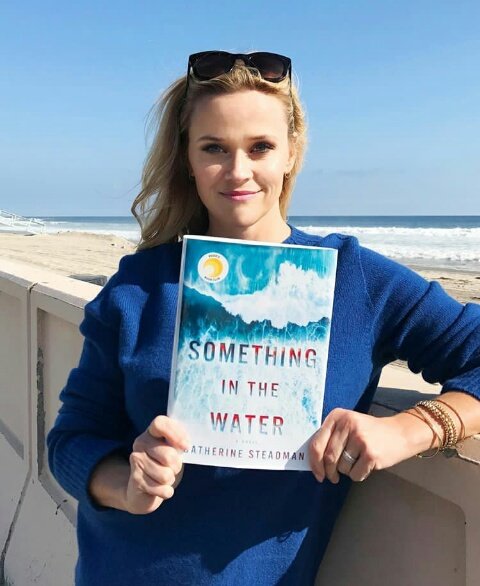 Our observation of an instance of virtuous action is the occasion for a feeling of pleasure or satisfaction, which enables us to distinguish that action as virtuous. Similarly, our observation of an instance of vicious action is the occasion for a feeling of pain or uneasiness, which enables us to distinguish that action as vicious. The moral sense is also an influencing motive in our pursuit of virtue and our avoidance of vicious behavior, and it play a part in our bestowal of praise and blame. Besides accounting for our knowledge of right and wrong, the moral sense closes the gap between moral knowledge and moral behavior by providing a motive for moral behavior. Since moral knowledge consists of feeling of pleasure and uneasiness, the prospect of enjoying or avoiding these feelings is a sufficient motive for pursuing virtue and avoiding vice. If moral knowledge were not ultimately a matter of feelings, it would be possible for someone to know that a certain kind of action is virtuous but still have no motive for doing it. The moral sense also enables us to account for our approval and condemnation of actions and characters as following from our being pleased of pained by them. Sometimes society invents prohibitions together with the means of transgressing them. The profit-mongering gatekeepers keep us at bay, replacing interpersonal communication with ever-more-extreme pseudo-participator entertainments. Entertainment today stimulates then inhibits us. #RandolphHarris 2 of 8
 A person may know that a certain way of acting may have a certain result, but in order for one to achieve that result, he or she must first find it pleasing. Inhibited by what stimulates us—the Worldly ways that becomes ever more extreme teach people that life is all about preaching transgression and rebellion for the greater good of humanity. It is a doctrine that teaches people to behave badly and reap the rewards of notoriety and celebrity. However, it just to happens that God determined us to be pleased by benevolent actions; and when nothing interfere with moral sense, we count benevolence a virtue and malevolence a vice. Some people have a preferring for the destruction of society over its maintenance. Whenever there is a tragedy, there is a tourist attraction because when Worldly ways merge into the new conformity, people who are lost, confused or led astray start to feel entitled to engage in whatever antics bring them pleasure, or makes them feel important. Many people then start to get off on transgression. And with more and more people joining them on the sites of tragedy tour, the ungodly behavior gets more raw, intense, and pervasive than ever before. Gratuitous violence is portrayed as a way to protest violence because there are preplanned acts of extreme spontaneity that allows individuals to take advantage of a World in which the cameras are always ready, trained on whatever is about to happen. When one no longer finds a need for a faculty psychology, the need to search for a moral faculty goes too. #RandolphHarris 3 of 8
 Is it any wonder that the once unheard-of phenomenon of fans randomly attacking celebrities while they are in public or in their homes has become yet another commonplace occurrence? One of the most infamous of these incidents was the stabbing of tennis teen Monica Seles in the middle of a match. Or the tripping and throwing water on journal list Tomi Lahren at a restaurant while she was with her family. Another journalist, Sara Zendehnam, had a huge rock thrown at her head during a live report, which luckily, she was able to evade. Someone we the stage during Aaliyah’s performance so when she came out on stage she slipped and fell. Paris Hilton was threatened and extorted for money by hackers, and someone pretended a plane she was on was about to crash just to scare her. There has been a fundamental shift out on fandom’s fringe, today’s intruders and insiders want to be part of the show. People want to ne noticed, and they will spend the night, five years, or life in jail just to get their name in the paper. Getting noticed is no longer achieve by working hard in school, creating a fantastic invention, or becoming the young to graduate from law school because stabbings, shootings, and beatings are more likely to attract media attention. People realize the violent or radical acts seem to please the television news producers because their shock value is a surefire way to boost ratings and is a cheap form of entertainment for them. #RandolphHarris 4 of 8
 Another part of popular culture was slavery. William Ford was from Ireland, and he arrived in Jamaica in 1784 having bought a coffee plantation. Not long after his arrival, he purchased a woman who was enslaved and took her as his concubine. Mr. Ford first noticed her on the docks at Alligator Pond, a fishing village on the south coast. She was an Igbo noble woman from West Africa. They had a son, whom they named John. He was, in the popular language of the day, a mulatto; John was colored—and all the Fords from that point on fell on into Jamaica’s colored class. They were seen as potential allies for the Whites because the Blacks were the majority. However, in the American South during that same period, it would have been highly unusual for a White landowner to have such a public relationship with an enslaved person. Relationships between Blacks and Whites were considered morally repugnant. Laws were passed prohibiting interracial relationships, the last of which were not struck down by the United States Supreme Court until 1967. A plantation owner who lived openly with an enslaved person would have been socially ostracized, and any offspring from the Union of White and Black would have been left in slavery. Therefore, it is important to be careful of who we vote into office and know what they stand for because it is possible that slavery could become a reality again. And that is why illegal acts that are part of popular culture are dangerous. #RandolphHarris 5 of 8
 Whatever that becomes accepted as normal, and is dangerous, has a possibility of becoming legal through our legislative process. We have seen how Jerry Brown illegal made California a state where people who unlawfully enter our country are shielded from the laws, and even given money for their legal defense, while an estimated 5,000 Americans on the island of Puerto Rico were killed in a storm or by the aftermath of it, and Jerry Brown nor other politicians, besides the President, as allocating funds to help restore the American Island. Also, there are people waiting in line to legally enter the United States of America, but they may not get the chance because illegal immigrants have a priority. And after what happened on 11 September 2001, we need to be very careful about who we let into our country and we need to know who they are so we do not become victims. It is not right that Jerry Brown and other politicians are helping people break the law and putting us all at risk, while Americans suffer and die. I bet if 5,000 illegal immigrants were killed by a tragedy, the American people would be outraged. Put into practice and taken to its extreme, the right to individuality is the right to claim pleasure for oneself regardless of the consequences, and that is exactly what Jerry Brown is doing, putting his own agenda first, before the American people. However, those who live righteously and call upon the Lord daily will have a greater power to retain a remission of their sins. #RandolphHarris 6 of 8
 For most of us, in fact, the World clamors for attention the moment we open our eyes. We are blessed to live in a land where laws matter and protect us. We cannot allow criminals to start making illegal actions legal as any of our legal protections can be taken away at any moment by heretics with a malevolent agenda. “Those who embark in the service of God, see that you serve him with all your heart, might, mind, and strength, that you may stand blameless for before God at the last day,” reports Doctrines and Covenants 4.2. Lift up your hearts and rejoice, and take upon you the full armor of God, that you may be able to withstand the evil and receive forgiveness of our sins, and our hearts may be purified. We should try to achieve a state of deep physiological relaxation, often called the alpha state by researchers who distinguish relative degrees of alertness by transducing brain chemistry into electrical impulses that can be graphed and observed on an oscilloscope. An oscilloscope is a type of electronic test instrument that allows observation of varying signal voltages to display the waveform of brain as an electrocardiogram. Brain researchers have named the lowest level of alertness—i.e., the deepest state of relaxation—the alpha or first state. When you allow yourself to relax to this degree, you replenish your adaptive energy supply, increase your capacity to be creative because the Spirit of the Lord will come upon you, and you will be filled with joy. #RandolphHarris 7 of 8
 Having received a remission from sin, and having a peace of conscience because of your exceeding faith, you will put yourself in the position of thinking more effectively when you return to your fully conscious state. Be on the lookout for a moment in your daily life that you believe to be worthy of an extended period of relaxation. Attractive objects, providential circumstances, and nature scenes lend themselves especially well to the alpha state of relaxation. This will allow one to grow in the knowledge of the Lord and in knowledge of that which is just and true. There will be no mind to injury one another, but there will be a desire to live at peace with one another. Parents will discipline their children with love and teach them to walk in the ways of truth and soberness. People will love one another and be kind and administer relief to others both spiritually and temporally. What greater blessing could we ask for? May God grant that we may retain a remission of our sins. God lives. What is most astounding will be the way the experience makes you feel. It will feel one with the kind of calm yet spirited enthusiasm that people feel in their youth and innocence. When individuals feel enthusiasm for doing virtuous things, you are one with God because a pathway is opened and into it is the beauty of human existence. When body, mind, and spirit converge, astounding physical and mental accomplishments are produced without strain or struggle. #RandolphHarris 8 of 8


For all your BMW service, be sure to check out M Power Independent BMW Service for Honesty and Quality Service. Caslav Milenkovic, Business Consultant, located at 7500 14th Avenue, Suit 8 in Sacramento, California USA 95820, Telephone (916) 457-8701 Fax (916) 457-9822 Email mpowermotors@sbcgobal.net
Someday You Will Grow Up to be President of the World!
 Faith is not shelter against difficulties, but belief in the face of all contradictions, as faith is a subtle chain that binds us to the infinite. In contrast to the interactive-situated self-concept approach, the social structural-biographical approach stressed the stable, persistent features of both society and personality. The self-concept is essentially an attitude toward an object—the self—and can be understood within the framework adopted to understand attitudes toward other objects. Because certain special or distinctive features characterize the self-concept, however, the concept has been broadened to encompass the totality of the individual’s thoughts and feelings with reference to oneself as an object. Be a believer and take the limits off God, as there is so much more to our God. Allow yourself to discover what else he is. Keep your faith strong and you will see God’s goodness in amazing ways! Social psychologist adopting this perspective tend to view the self-concept as a highly complex entity and characteristically study some specific segment of this totality. Some social psychologist are primarily interested in specific self-concept components, for example, traits and statuses; others in the arrangement (structure) of thee components, such as their salience or importance in the individual’s phenomenal field. #RandolphHarris 1 of 8
 Still, many social psychologist center attention on certain broader dimensions of the self-concept (for example, self-esteem; self-concept stability; self-confidence; crystallization) which can characterize both the parts and the aspects, elements, or dimensions of the self-concept to their social roots. The social structural-biographical self-concept approach is interested in understanding how patterned features of society operate to shape various aspects of the self-concept and how the self-concept, in turn, influences society. This approach begins with the recognition that societies are organized into systems of interrelated statuses and roles, are characterized by shared norms and values, operate to fulfill important needs and functions, and tend to be arranged in groups or social structures, functions, institutions, groups, and cultural elements. The question of interest is: how do these fundamental overarching features of society impinge upon the individual’s biographical (dispositional) self-concept, and how does this self-concept influence behavior in important institutional areas? One important socialization function of government seems to be diminishing—at east temporarily. Political figures used to serve as important models for young people and others. Increasingly, people are viewing politics as a dirty business because so many of our local representatives lack integrity. #RandolphHarris 2 of 8
 A hallmark of totalitarian societies is that the people are apprehensive about being overheard or spied upon. Most politicians are the same all over. They promise to build a bridge even where there is no river. Even so, we sometimes think of our leaders as almost superhumans and are shaken to our foundation when they are involved in graft, intrigue, and scandal. It is doubtful that the extent of these activities is actually increasing, but because of the communications media public awareness of such activities is greatly increased. And the image of government leaders who violate the public trust—and a public that seems to accept such activities almost as a matter of course—are probably important socializing elements in themselves. Certainly, they have an important impact on our value system and the moral standards the individual expects to meet (the ideal self). Both the biographical and the situated identity approaches complementary ways of exploring the self-concept. Interpersonal interaction—the most elementary and ubiquitous feature of social life is face-to-face interaction. How does such interaction influence the formation of the individual’s self-concept? #RandolphHarris 3 of 8
 Social identity is among the sociologically most relevant self-concept components of the individual’s social identity elements, for example, race, religion, gender, and social class. If we have just enough religion to make us hate, maybe we need more to teach us to love. “Charity is the pure love of God, and it endures forever; and whoso is found possessed of it at the last day, it shall be well God. Wherefore, my beloved people, pray unto the Father with all the energy of heart, that you may be filled with this love, which God has bestowed upon all who are true believers, for we shall see him as he is; that we may have this hope: that we may be purified even as he is pure (Moroni 7.47-48).” One issue to be considered is the fact that because many of the social identity elements are differentially evaluated in the society, this unequal social prestige might affect the individual’s self-esteem. In a social context, the question addressed is: how do the qualities or characteristics of other people in the environment affect the individual’s self-concept? And how does the individual’s involvement in selected institutional areas—economy, policy, educational system, legal system—relate to the individual’s self-concept, either as a social product or a social force? #RandolphHarris 4 of 8
 We view the self-concept as encompassing all of the individual’s cognitions and emotions relating to the self. So conceived, the self-concept is evidently a great deal broader than self-esteem, with which it is all too often equated. The fundamental social process—the process that makes society possible and that makes the human being truly human—is communication. In order to communicate, it is essential to take the role of the other, to put oneself in the other’s situation, to see things, including the self, from the other’s perspective. None of us addresses the other in a language that we believe the other does not understand because, in speaking, we adopt the view of the other. However, communication obliges us to see the World from the viewpoint of the other, it inevitably cases us to view the self as well from the viewpoint of the other person. We are more or less unconsciously seeing ourselves as others see us. So many of the old traditional social taboos having become antiquated or no longer adequate, there has been a furious activity in making new laws and regulations, without a due recognition of the fact that old taboos can only be replaced by new taboos, and that mere legal enactments, enforced, or left unenforced, by paid officials or the police, to be effective must themselves become taboos, printed on the fleshy tablets of the individual citizen’s heart. #RandolphHarris 5 of 8
 If we do not have taboos, which are few in number, indisputable in value, and so urgent that they are felt to be on the way to become instinctive, no society can live wholesomely by any other regulation. And State legislatures stultify themselves when they fail to realize that their part is mere to formalize, and record, and support, the growth and decay of taboos. Although it is not intended to imply that the self-concept and actual attitude of the other will be identical, it is plausible inference to suggest that the attitudes of the other will help shape the self-concept. To say that we come to see ourselves as others see us, however, it essentially a shorthand way of saying that we come to see ourselves as we think others see us, for after all, no one can ever see into the mind of another with unerring accuracy. If it means the making of new and personal taboos, it involves a slow self-development and self-responsibility, which is not only in itself a continual discipline, but runs the risk of conflict with others engaged in the same task and with the same sincerity. For what we may still term morals, since it has now become an individual outcome, will not be entirely the same for all individuals. #RandolphHarris 6 of 8
 All our moralities, indeed, cannot fail to be modifications of a common pattern because we all belong to the same community; but the differences involve a greater degree of mutual understanding and forbearance than when uniform taboos were imposed from outside. We come here on a conflict such as lies at the foundation of all life. No imagery could more vividly represent the idea that we see ourselves through the eyes of others than the couplet that each to each a looking glass/Reflects the other that does pass. A self-idea of this sort seems to have three principal elements: the imagination of our appearance to the other person; the imagination of one’s judgment of that appearance, and some sort of self-feeling, such as pride or mortification. The self is thus not a literal looking-glass image, an exact reflection, but rather an imputed sentiment, the imagination of the evaluation of this reflection within another’s mind. We are not only obliged to interpret the other’s perception of us, but also to interpret one’s probably response to what one has observed in terms of one’s own values and attitudes. And a consequence of seeing ourselves from the perspectives of others, our self-concepts will come to correspond at least partially to other people’s views of us. #RandolphHarris 7 of 8
 And what is it that you shall hope for? Behold I say unto you that you shall have hope through the atonement of God and the power of his ability to resurrect, to be raised unto life eternal, and this because of your faith in God according to the promise. Wherefore, if a person have faith, one needs have hope; for without faith there cannot be any hope. God is sees through the eyes of infinity. Open our hearts Lord. The idea of the World is in our hearts are so engraved that your idea is no longer recognizable…let us find you inside of ourselves since we cannot look for you in the World because of our weaknesses…enter into our hearts and soul. Let a visionary state come upon us, let us have the mastery of the World of things so that we can see into the void and that this void can be seen in the World soul. Free us from the routines of labor, allow our genius to play, move us into a World of chance and probability, freeing us from complaining. Allow for the acceleration of the World, without the loss of qualities. Allow our faith to be above and beyond, giving us a boldness and confidence to believe for the extraordinary. #RandolphHarris 8 of 8
I Have Been Struck by the Way that Most People Finally Say Good-Bye!
 The final good-bye does not involve words, almost as if words lone are insufficient to communicate their true feelings. The ideas that people gather over time about what a couple is supposed to be like is derived from overt messages and less direct influences from their family, neighborhood, school, ethnic community, racial, religious, and class identity. Management of feeling and expression enhances the functioning of groups by allowing continuity of action, building solidarity among members, and indicating status differences. Expressive control allows collective action to continue without the situation becoming redefined as the interrupted action or novelty that emotional arousal implies. To further highlight this illustration, expressive control suppresses the potential embarrassment in intimate examinations by a medical professional. Nonemotional voice tines and other nonintimate gestures suppress stress, giving the interaction a routine, technical meaning. A similar display rule in public settings shields onlookers from intimate gestures that would disrupt civil comportment. Kissing, fondling, and other gestures between lovers are normally prohibited in public settings. Intimate expressions remind onlookers that they are being excluded from a desirable relationship. Violators of this display rule are usually the young, tourists, and others who disregard public sensitivity. #RandolphHarris 1 of 7
 The most simple and direct type of human communication does not need words. Let us awaken tomorrow with all our zest and seal by embracing and creating life. Sentiment management can build group solidarity. The disruptive effects of envy are controlled universally by belief systems that proscribe envy, and by norms that diminish conditions for envy. These norms require that enviable goods be concealed from observation, that people show humility over good fortune, and that enviable objects or events be shared symbolically or materially. Solidarity can also be enhanced by evocation of humor. Laughter and humor among hospital patents has been observed to be invitations to decrease social distance, emphasizing shared experiences and common definitions of the situation. The liberating effect of joined laughter consists in the consensus that it brings about in a brief span of time. As soon as humans discovered the existence and function of the heart, they recognized that it was influenced by human companionship and love. Most of us have, at one time or another, felt our hearts beating rapidly when we are close to those we love or, occasionally, when we have been offended by others. Many of us have felt our heart sink, as if pressed by some crushing weight, after the loss of loved ones. #RandolphHarris 2 of 7
 The psychological impact of suddenly finding oneself a patient in a hospital can be devastating. Lying in bed with needles in one’s arms, tubes in one’s chest recording every heartbeat on a television screen, being forces to use a bedpan, threatened with imminent death, rendered totally helpless and dependent on others—the experience is shattering. As his heart blips ominously on a television screen next to his bed, a patient’s life is reduced to a few essentials. What does it all mean? Is he going to die? Would he have done anything differently? The World of the patient’s wife or children or loved ones is also reduced to a few stark essentials, for the man or woman they visit in such a unit may not be alive the next time they come back. What do you say in such circumstances—what can you sat to help—what is important to communicate? The very existence of units that house people faced with the imminent possibility of death helps outline in stark simplicity certain elementary facts about life. One of those is our basic need to communicate. We ought always to thank God for you, and rightly so, because your faith is growing more and more, and the love every one of you has for each other is increasing. #RandolphHarris 3 of 7
 God is just: He will pay back trouble to those who trouble you, and give relief to you who are troubled, and to us as well. Assumptions are ideas which one holds to be true without any proof that they are true—things that are taken for granted. Some people are more gifted at living than others. They do have an effect on those around them, but the process stops there because there is no way of describing in technical terms just what it is they do. Expression management is a continual affirmation of a group’s structure of status and deference. We may claim statuses by displaying affective coolness when greater involvement would ordinarily be expected. Some male groups admire men who can attract and conquer a beautiful woman without becoming involved, or who can engage in homosexual prostitution while displaying affective detachment. Business managers are expected to control their emotional reactions, in contrast to ordinary workers who are not believed to be able to do so. The value of humanistic psychology is not limited to the mentally unwell. Its techniques can be useful in your life, but they should not be used to manipulate other people. Psychology can be most useful in helping you to become more fully human. #RandolphHarris 4 of 7
 High status includes the power to elicit beneficial and optimistic gestures from subordinates and to inhibit their hostile expressions. Smiling and laughter are usually offered upward in statues hierarchies, ostensibly indicating pleasant, egalitarian relations and concealing status differences temporarily when the later have invited a decrease in social distance. In traditional Far Eastern cultures, a subordinate is expected to conceal anger or sulk when criticized, and to mask these feelings by showing pleasure at being corrected. In contemporary New World societies, women are more likely than men to smile, even when angered or frustrated. Women’s initial facial expression of anger is masked or covered up instantly. Groups manage sentiments through the kinds of information they allow to enter open awareness. Growing numbers of physicians now recognize that the health of the human heart depends not only on such factors as genetics, diet, and exercise, but also to a large extent on the social and emotional healthy of the individual. A fully human person values human beings above material goods, and feels strongly that human rights are far more important than material rights. These also recognize they have a capacity for enjoyment and pleasure, and they try to be real and open in their relationships with others. #RandolphHarris 5 of 7
 People who are fully human are willing to risk another person’s reaction to his or her open expression of feelings. They use openness and authenticity, not to manipulate or control, but to share knowledge of oneself with others. Hatred is sustained by emphasizing an enemy’s perceived negative qualities, overlooking or explaining away anything favorable, and then directing hatred toward this contrast conception. Love between parents and their grown children may be strengthened by limited contact that allows earlier conflicts to be forgotten. Generational gaps in attitudes and behavior are accentuated by accurate knowledge about each other, weakening love bonds. Selective recall is sometimes a conscious feeling-management technique. College men reported control over jealousy by prohibiting any mention of their girlfriends’ previous lovers. The couple jointly censured anyone who indiscreetly disclosed information about the woman’s earlier relationships. Sentiments are managed by sensitivity and avoidance within the social framework of memory. “Make it your ambition to lead a quiet life, to mind your own business and to work with your hands, just as we told you to, so that your daily life may win the respect of outsiders so that you will not be dependent on anybody (1 Thessalonians 4.11).” #RandolphHarris 6 of 7
 When faces with danger or the threat of danger, human beings can derive an enormous sense of comfort from their fellow humans. Whether the danger is artificially contrived in a laboratory or part of the infinite variety of real life stresses, human beings instinctively seek out each other’s company in adverse circumstances. In all our distress and persecution, we are encouraged about you because of your faith. For now, we really live, since you are standing firm in the Lord. How can we thank God enough for you in return for all the joy we have in the presence of our God because of you? Night and day, we pray most earnestly that we may see you again and supply what is lacking in your faith. Now may our God and Father himself clear the way for us to come to you. May the Lord make your love increase and overflow for each other and for everyone else, just as ours does for you. May he strengthen your hearts so that you will be blameless and virtuous in the presence of our God and Father. When someone’s life is in mortal peril, the medical effectiveness of proper care is well documented. Incidence of sudden death dropped by 56 percent in hospitals that are trained to properly treat a person’s symptoms and offer emotional support. Also, it is clear that the heart of human relationships and human love ultimately moves belong anything that can be objectively described or measured. #RandolphHarris 7 of 7
Love and Virtue—Joy to Continue Living Together
 God did not call us to be impure, but to live a virtuous life. Therefore, those who reject this instruction does not reject humanity but God, who gives us this virtuous Spirit. For each unsuccessful or incomplete relationship in your past, there are also moments for you to honor. Effective social communication does not require feelings to be consistent with expressive gestures. Displaying a gesture in the absence of any corresponding feeling is a form of obeisance to society, showing that one recognizes the appropriate sentiment even if he or she does not feel it. Mouring is not a natural movement of private feelings, but is a duty imposed by the group. It is a ritual attitude one is forced to adopt out of respect for custom, but which is, in large measure, independent of one’s affective state. While people do feel the loss of an individual when they pass into Heaven, and it can take years to let go of the pain from their departure from Earth, even a lifetime for some, certain cultures are also made to mourn publicly to show respect. For instance, after the passing of her daughter and husband, Mrs. Sarah Winchester was celibate and never remarried, nor did she allow men, who were not her employees, into her mansion. She also wore black and abstained from social functions and kept to herself, she did not even allow photographers or painters to reproduce her image out of respect for her husband. #RandolphHarris 1 of 9
 We have been taught by God to love each other. People learn more about themselves from each missed connection, bruised feeling, or wounded heart. These situations are valuable building blocks in the creation of our whole self. The aim of learning through soul is to increase porosity on the side of giving out and to reduce it on the side of taking in. This is not an abstract process, but something that can be seen in the World. Our Sun is the best instance of porosity that gives out and does not take in. Our Sun is a star, and all the stars gives out without taking in, until they die and become a blackhole. Life is the most beautiful and precious thing upon the Earth and has the power to pull down kings and princesses. Western civilization has been described as the gradual domestication of impulsive expression—an increasing tendency to self-consciously check our behavior and mold it to group standards. Public expression of affect has been controlled by an intensifying range and rigor of restraints since the Middle Ages. Violations of display rules are met with shame, embarrassment, and disgust in an ever-broadening scope of situations. People are free and all things are given to them which are expedient to humanity. And they are free to choose liberty and eternal life, through God. #RandolphHarris 2 of 9
 For middle-class parents, deviant and immature temper may signal serious difficulty in an individual’s attempt at self-mastery. Colonial Americas believed that feeling can be channeled, but its basic nature cannot be altered. Social control was directed at regulating behavior, rather than at shaping inner impulses. A belief that emotion is disclosed involuntarily and inevitably became widespread in the nineteenth century. If a person were genuinely moved, the feeling would show beyond any power of the person to conceal it. Withdrawal from feeling itself became the only recourse, if one’s feelings were not to be read by others in public through gestures, slips in speech, and other cues. Suppression of both feeling and gestures made them consistent. These cultural values and beliefs are reflected in expression and feeling management when we indicate their meaning to the social self. And not choose eternal death, according to the will of the flesh and the evil which is therein, which gives the spirit of the adversary power to captivate, to bring you down to hell, that he may reign over you in his own kingdom. Soul learning does not consist of the internalization of knowledge, the determination of right mean, the achievement of accuracy, but is to be found in what sounds right. #RandolphHarris 3 of 9It was discovered in ancient psychology that the soul sings. At one time, it was possible to hear celestial sounds as one viewed the aurora borealis, which the solar particles blown into the Earth’s magnetic field more than 60 miles above the Earth’s surface. The movement of the planets in their relation to each other could be heard. We manage our feelings and gestures after indicating to ourselves the probable meaning that they would have for other people. We transform feeling and expression according to their implications for our self-conception, our more stable, continuous, unifying idea of the real me. A self-conception is a working compromise between one’s ideals and values and the self-images one infers from how others react to one’s feelings and behavior. Some self-images will be accepted as representative of one’s self-conception, but other images will be rejected as spurious or unrepresentative of one’s real, deeper identity. In situations and relationships that we value in relation to self, we pursue credit for optimistic images, and seek to avoid responsibility for feelings and acts that generate negative self-images. #RandolphHarris 4 of 9
 We manage expression and feeling by taking our self-conception into account in at least three ways: assuming or avoiding responsibility for a sentiment, detecting social support for the meaning of a sentiment, and committing oneself to a relationship. Our-self image in a situation reflects the appropriateness of our feeling; we feel proud or guilty about feeling a certain way. The incongruity between a trifling event and a deep sense of shame can evoke a double shame; we are ashamed because of the original episode and shame because we feel so deeply about something so slight that a sensible person would not pay any attention to it. If we do not modify our feelings into an appropriate quality and intensity, it becomes merged with our moral reaction to it. For example, we may feel guilty love if, as in traditional Japan, love marriages are defined as selfish. Even in modern Japan, individuals who have contracted love marriages are often reported to feel considerable guilt about it. However, keep in mind, you are the author and can go back to check out all the separate parts of your story when you need to. Reviewing old relationships is hard work emotionally, no matter how carefully one has been trying to use the past as material to study in the service of creating a healthier present. #RandolphHarris 5 of 9
 Society requires us to undertake many actions for which we do not want to assume full responsibility. These actions may have uncertain outcomes, or conflict with our predispositions not to perform them. Feeling management that intensifies feeling can facilitate these behaviors while shielding the self from responsibility. A functionally determined emotion carries one through the situation, such as the bitterness which enters into the divorce process and so often disappears just afterwards. The institutionalized irrationality of romantic love overcomes self-restraint in courtship and guides lovers into marriage, although rational self-seeking might dictate against this certain commitment. A socially structured and legitimated passion conquers doubt and gives behavior spontaneity, while exempting the self from full responsibility for its outcome. How does this intensification of feeling occur? Emotion is the experience of passivity, during which we interpret our behavior as being beyond our control. Deeply internalized desires and aversions erupt as compelling passions. The soldier for whom fury or courage has become second nature rushes into combat in spite of its dangers. #RandolphHarris 6 of 9
 Overwhelmed by emotion, we enact socially prescribed punishment even through other norms forbid aggression. The self is not held responsible for violating those norms, however, because it was passive within the experience of emotion. The passive self may be an important interpretation we make within romantic love, jealousy, indignation, and other intense sentiments. For example, a study found that students who believed that life events are generally caused by external forces beyond their control reported falling in love more often than others, and viewed love as a mysterious, emotional experience. However, there are consequences. Samantha, for instance, learned her lesson about lack of self-control. She grew more self-blaming when she began to watch herself distancing from Darren. She had fled from her first marriage to escape the burden of being forced to be a mother to her husband. Her leaving reinforced her growing image of herself as hard-hearted and unfair. However, she had not adequately resolved her decision to leave her first marriage, so her self-blame became almost immobilizing as she felt herself pulling away from Darren. Moreover, the self also enters into feeling and expression management by restraining sentiments that we anticipate would not be validated meaningfully by a particular person or group. #RandolphHarris 7 of 9
 By fully engaging in almost any form of group or community, we will have more people to learn from, people whose actions and ways of being can teach us a lot about relationships. This can be particularly helpful when one has been stuck in a narrow, little emotional room filled with our solitary thoughts about closeness, or when we have been limiting oneself to the thoughts and beliefs contained within our couple relationship. In some cultures, jealousy is nothing short of a crime. Some societies have a code, and if one is hurt in these light affairs, one must expect no sympathy. So, if one falls in love, one conceals it from one’s friends as best one can. Our self-indication of a sentiment’s meaning to others may lead us to segregate it from another sentiment that an audience would see as being incompatible. For example, Samantha and Darren were undergoing marital separation, and much like others, they desired to re-unit, at least temporarily, but they also wanted to express anger against one another. A common pattern that has been observed was couples would meet secretly to express affection, concealed from the social circle of kin and friends who had observed the bitter rivalry in the couple and would not understand the contradictory sentiment. That is why it is best for us to stay out of people’s business when they have a dispute. #RandolphHarris 8 of 9
Feeling management may reflect the self as a commitment to a relationship the supplementary character of faithfulness is directed toward the continuance of the relationship, independently of the original forces that brought it about. Communes, families, fraternal organizations, and other groups require love as a voluntary, responsible commitment to enhance the lives and growth of other persons. Groups foster love by eliminating sources of seduction, subversion, and competing loyalties. Love is routinized to promote steady, unrewarded care, effort, and self-sacrifice. People withdraw from commitments by rationing or restricting feeling. Women, more than men, report diminishing their love consciously in faltering relationships. Women also identify more problems in their heterosexual relationships, and women’s scores on a longitudinal measure of love predict relationship outcomes better than do the love scores of their male partners. The more vulnerable and emotionally perceptive partner is likely to modulate feeling more consciously in response to relationship trends. “It is God’s will that we should be sanctified: that we should avoid sexual immorality; that each of us should learn to control our own body in a way that is holy and honorable, not in passionate lust like a heathen, who does not know God; and that in this matter no one should wrong their family nor take advantage of them. The Lord will punish people for all such sins, as we have already told you (1 Thessalonians 4.3-4).” #RandolphHarris 9 of 9
 Randolph Harris II International Institute