
Home » Articles posted by Randolph Harris II International Institute (Page 44)
Author Archives: Randolph Harris II International Institute

What is Your Future After Death?

Many people find making decisions difficult especially when it is necessary to take risks. In addition, there is the fear of possibly being transformed into what is new. Of course the decision will change you. A lot more will be different: It might be the way your day develop, where you live, your circle of friends, and acquaintances. All this can alter. The greatest change, however, will be in you. That is precisely what most people fear. However, truthfully, do you truly want to remain the way you are? Or would you rather grow and change in a beneficial manner? Growth and change are always introduced by a decision. There is a great fear of making a wrong decision. It is the dread of leaving the known and “safe” ground for something unknown. This step, however, signifies the chance to grow. This is where each person has one’s great opportunity. With every decision we choose an opportunity to detach ourselves simultaneously from every other possibility. Whoever truly makes a serious decision actually consciously blocks access to other possibilities. When it comes right down to it, successful businesses have an abundance of customers. Large or small, companies that are doing well have more customers than they can handle—which means they are easily able to cover their cost, reinvest in the company, and expand. Unfortunately, many small businesses struggle to reach this level of success, to find an admiring target market, and to develop business relationships with enough customers to stay in business. They struggle because they are not using all the marketing tools they can; that is, their marketing is weak. Fortunately, there is a lot that can be done to turn the situation around or to get a business on the right foot. #RandolphHarris 1 of 19

However, if you already have a successful big business, you make not want to alienate your target market by taking on a social cause because the goal of running a business is to make profits and when you are dealing with other people’s money, you have an obligation to make responsible decisions. For the truly vital decisions in our lives, we are actually confronted with a choice between the past and the future. We can decide to hold on to what we have. If so, we would not be free to have another opportunity. It also means that we have decided to sever ourselves from our dreams and a vision of a fulfilling future. We can also choose to let go. Then we souls have both hands free to achieve our goals and dreams. It is impossible to hold on to that which gives us “security” and to reach for a vision at the same time. You must separate yourselves either from your “security” or from the possibility of fulfilling your dreams. Winners do not cling; they do not frantically hold on to a situation that they consider unsatisfactory. They can assume risks because they know that anything is better than an unfulfilling minimal existence. For most Europeans, poverty does not mean suffering from hunger, rather, it signifies living a senseless life. There is an enormous difference between playing in order not to lose and playing to win. Whoever endeavours only not to lose is concentrating on the risks and dangers. Whoever it betting on winning, however, has the possibility of victory in view. Which one of the two do you think is happier? Make decision. A person who cannot make decisions loses faith in oneself. Aside from that, it is impossible not to make a decision. #RandolphHarris 2 of 19

Even when you think you have not made a decision, you really have. You have chosen that everything remains the way it is. Or you have selected indecision. This state cost an enormous amount of energy It weigh heavily You are not free and cannot move around with ease. Why do so many individuals find it so difficult to make decisions? It is owning to the fear of making a “wrong” decision! Yet, that is not even possible because with that choice you have decided against an alternative. You will therefore never know how your life would have turned out had you decided otherwise. Once you have thought about it for a while, you will realize that any decision is better than no decision. Another reason why it is so difficult to make a decision is caused by the illusion that it should be easy and painless. The ideal decision, however seems to be the one that downright forces itself on you. Therefore, people often tend to wait until only one alternative remains. The other alternatives have with time become unattractive. We overlook the fact that it is no longer a matter of making a decision. It is then no longer a choice: it is an escape. Your choice will only really have power when you assess both alternatives. The more you evaluate the alternative that you do not choose, the more you enable the choice that you did favour. We take it to be the unique new task of the contemporary American family and its official helpers to prepare each member for continual reinvolvment and resocialization as a member of the various changing institutions in which one participates outside one’s family. The aim which must accordingly run across all family research and all action by family agencies is to endow every family member with competence for genuine participation, the ability to develop shared commitments to some defined and defining values in every sector of one’s life activity. #RandolphHarris 3 of 19

It used to be taken for granted that one’s family, social-psychologically speaking, would automatically be identical with one’s biological kin. There have always been exceptions to this correspondence, however, and in the perspective of the present it is conspicuously evident that there may be the widest divergence between one’s circle of intimates—one’s quasi-family of significant others—and one’s actual parents, relatives, mate, or children. The period of adolescence is the classical example of this divergence. The classical picture of the adolescent in revolt against parents seeking still to control one is the classical example of this divergence. The classical picture of the adolescent in revolt against parents seeking still to control him as if he were a child, however, has been superseded in subtle but crucial ways. In the transition of the past half a century from patriarchalism toward liberal, equalitarian relations between parents and children, a transition which children have received greater leeway for developing individuality and self-direction than in the past. They have less need to revolt, or perhaps it could be said that their revolt has been successful. At any rate, restrictions upon the development of a personal style of life and a set of companions to support it have diminished. Yet it is doubtful if parents and children have been brought closer to each other, or, on the other hand, if the children have found the degree of unquestioning support from nonfamily intimates that in the past they expected and got from their families. The gap between generations, so wide in America because of the rapid rate of social change and relatively provincial origins of parents, has if anything continued to widen, despite the countervailing influence of mass media of communication. #RandolphHarris 4 of 19

It is almost commonplace to expect that children will see thing differently from their parents. However, the dilemma is that if they are going to see things differently from their parents, how are they going to see them, and what other groups of identification are going to fortify their views? In becoming detached from the values of their parents, millions have not become reattached and committed to alternative, more timely, values. Those in this condition may be compared to a ship which has neither anchor nor rudder nor sails. It would undoubtedly be futile for parents, assuming they themselves hold firm to definite values, to attempt to fasten these on their children, yet nothing can give, or should give, parents more concern than the belief that their children are merely drifting. Moreover, more and more parents themselves seem to have no stable values, and when the obligations of marriage and parenthood are not strengthened through mutual commitment to common value, requiring faithful collaboration through the years, they are seriously weakened. If, therefore, the problem of the guidance of youth is solved, it is likely that it will be solved for whole families at once, and not just for their adolescent members. It would be fatuous to wish for a return of hardships. Yet for the millions of young Americans, especially for those middle-class homes, the problem seems to be that of finding some powerful purpose in life. #RandolphHarris 5 of 19

Merely to find a job, raise a family, and feed their children seems insufficient for them. It is too easy; it calls for no courage, no great struggle, no sacrifice, no threat of failure, no test of self. And it leaves vast potentials unused. To attempt to divert these unused human resources to unplanned recreation—to kill time by having fun—does not do it, or does it only in part, as in the deliberate seeking of danger. Certain thoughtful union and industry leaders are groping for a more challenging conception of “more,” not more in the sense of material gain, but more use of the talents of the man who works. Probably the average student in the liberal arts college at the present time is typical. The most favored of American youth, one yet often is the least happy, because happiness comes from the realization of values, and one’s values are inchoate or not really one’s. Many parents today seem unable to divine the nature of the problem facing their children. Some quite frankly admit to being baffled. “What more can we do?” they say. Like the theorists of adjustment, they only imagine fulfilling wants. What might be more effective is the exact reverse. The creation of wants may seem absurd, until one witnesses the frequent resentment of young adults when their parents solve all their problems for them, thus preventing the from doing things for themselves. Success in struggle is very satisfying. The levity and flippancy now so characteristic of youth only poorly conceals a craving for challenging purposes. If family agencies can transcend the outlook of the older generation and articulate these values, then the potential energies of youth will be directed to new and promising uses. #RandolphHarris 6 of 19

If moreover, not youth alone, but parents also, can be imbued with these emergent values and involved in their attainment, the rent between generations could be narrowed. The problems of adolescence (which might justly be called “problems of obsolescence of parental norms”) might then become memorials of that turning point in industrial society when, freed at last from the bonds of scarcity, and recognizing their freedom, human beings began to re-create themselves through their children in a more ideal and versatile image than as slaves of nature. If family agencies construe their tasks in terms most appropriate to the present, they will take the responsibilities of community leadership by attending to emergent values and organizing action for their realization, and in getting the involvement and participation of families and quasi-families. To foster such involvements means to start with the child in the family, for it is here that one’s identity and capacity for further identification are cultivated or discouraged. It is also necessary to think of leadership in nonauthoritarian terms and in a way that is most evocative of spontaneous self-expression. The bulk of the current professional literature on strengthening the family, about the widespread longing for love and commitment, and about the meaning of the small group, revolves around this matter of identification. Modern man is in search of a soul. That is, in secular terms, in search of an identity to which he can be firmly committed. #RandolphHarris 7 of 19

The family is the ideal type of all social bonds. Marriage is the ideal type of formal commitment to a tie of common identity. Courtship is the ideal type of experimentation in finding others to whom full commitment appears promising. Parenthood is the ideal type of identification with the welfare of posterity. The solidarity of the whole community cannot surpass the solidarity of these its nuclear constituents. The solidarity of the whole community cannot surpass the solidarity of these its nuclear constituents. The family will be solid as long as there are vales for which it may function; its members will unite with others in the community as their families endow them with competence for sharing the orientation of others. If a child can make such commitments, no parent need worry about sending one out into the World; without them—or the capacity for making them—the child most removed from want is still in peril, even while in the custody of one’s parents. In the cause of husband and wife, also, since personality is never formed but always in the process of being formed regardless of age, it is likewise true that only as there exists the capacity for widening and deepening involvement will the marriage progress. The salvation of the family, of the person, and of the community, in today’s dynamic World, is through continual reinvolvements, adventures in scaling the heights of social responsibility for the optimal development of each. Mr. Calvin’s doctrine believed in predestination. He assumes that God not only predestine some for grace, but decides that others are destined for eternal damnation. #RandolphHarris 8 of 19

Salvation or damnation are not results of anything good or bad a man does in life, but are predetermined by God before man ever comes to life. Why God chose the one and condemned the other is a great secret man mut not try to delve. He did so because it pleased Him to show His unlimited power in that way. Mr. Calvin’s God, in spite of all attempts to preserve the idea of God’s justice and love, has all the features of a tyrant without any quality of love or even justice. In blatant contradiction to the New Testament, Mr. Calvin denies the supreme role of love and says: “For what the Schoolmen advance concerning the priority of charity to faith and hope, is a mere reverie of a distempered imagination.” The psychological significance of the doctrine of predestination is a twofold one. It expresses and enhances the feeling of individual powerlessness and insignificance. No doctrine could express more strongly than this the worthlessness of human will and effort. The decision over man’s fate is taken completely out of his own hands and there is nothing man can do to change this decision. He is a powerless tool in God’s hands. The other meaning of this doctrine, like that of Mr. Luther’s consists in its function to silence the irrational doubt which was the same in Mr. Calvin’s and his followers as in Mr. Luther. At first glance the doctrine of predestination seems to enhance the doubt rather than silence it. Must not the individual be torn by even more torturing doubts than before to learn that he was predestined either to eternal damnation or to salvation before he was born? Although Mr. Calvin did not teach that there was any concrete proof of such certainty, he and his followers actually have the conviction that they belonged to the chosen one. #RandolphHarris 9 of 19

They got this conviction of belonging to the chosen ones by the same mechanism of self-humiliation. Having such conviction, the doctrine of predestination implied utmost certainty; one could not do anything which would endanger the state of salvation, since one’s salvation did not depend on one’s own actions but was decided upon before one was ever born. Again, as with Mr. Luther, the fundamental doubt resulted in the quest for absolute certainty; but though the doctrine of predestination gave such certainty, the doubt remained in the background and had to be silenced again and again by an ever-growing fanatic belief that the religious community to which one belonged represented that part of mankind which had been chosen by God. Mr. Calvin’s theory of predestination has one implication which should be explicitly mentioned here, since it has found its most vigorous revival in Nazi ideology: the principle of the basic inequality of men. For Mr. Calvin there are two kinds of people—those who are saved and those who are destined to eternal damnation. Since this fate is determined before they are born and without their being able to change it by anything they do or do not do in their lives, the equality of mankind is denied in principle. Men are created unequal. This principle implies also that there is no solidarity between man, since the one factor which is the strongest basis for human solidarity is denied: the equality of man’s fate. The Calvinists quite naively thought that they were the chosen ones and that all others were those whom God had condemned to damnation. It is obvious that this belief represented psychologically a deep contempt and hatred for other human beings—as a matter of fact, the same hatred with which they had endowed God. #RandolphHarris 10 of 19

While modern thought has led to an increasing assertion of the equality of men, the Calvinists’ principle had never been completely mute. The doctrine that men are basically unequal according to their racial background is confirmation of the same principle with a different rationalization. The psychological implications are the same. Another and very significant difference from Mr. Luther’s teachings is the greater emphasis on the importance of moral effort and a virtuous life. Not that the individual can change his fate by any of his work, but the very fact that he is able to make the effort is one sign of his belonging to the saved. The virtues man should acquire are: modesty and moderations (sobrietas), justice (iustitia) in the sense of everybody being given what is his due share, and piousness (pietas) which unite man with God. In the further development of Calvinism, the emphasis on a virtuous life and on the significance of an unceasing effort gains in importance, particularly the idea that success in Worldly life, as a result of such efforts is a sign of salvation. However, the particular emphasis on a virtuous life which was characteristic for Calvinism had also a particular psychological significance. Calvinism emphasized the necessity of unceasing human effort. Man must constantly try to live according to God’s word and never lapse in his effort to do so. This doctrine appears to be a contradiction of the doctrine that human effort is of no avail with regard to man’s salvation. The fatalistic attitude of not making any effort might seem like much more appropriate response. Some psychological considerations, however, show that this is not so. #RandolphHarris 11 of 19
The state of anxiety, the feeling of powerlessness and insignificance, and especially the doubt concerning one’s future after death, represents a state of mind which is practically unbearable for anybody. Almost no one stricken with this fear would be able to relax, enjoy life, and be indifferent as to what happened afterwards. One possible way to escape this unbearable state of uncertainty and the paralyzing feeling of one’s own insignificance is the very trait which became so prominent in Calvinism: the development of a frantic activity and a striving to do something. Activity in this sense assumes a compulsory quality: the individual has to be active in order to overcome his feeling of doubt and powerlessness. This kind of effort and activity is not the result of inner strength and self-confidence; it is a desperate escape from anxiety. This mechanism can be easily observed in attacks of anxiety panic in individuals. A man who expects to receive within a few hours the doctor’s diagnosis of his illness—which may be fatal—quite naturally is in a state of anxiety. Usually he will not sit down quietly and wait. Most frequently his anxiety, if it does not paralyze him, will drive him to some sort of more or less frantic activity. He may pace up and down the floor, start asking questions and talk to everybody he can get hold of, clean up his desk, write letters. He may continue his usual kind of work but with added activity and more feverishly. Whatever form his effort assumes it is prompted by anxiety and tends to overcome the feeling of powerlessness by frantic activity. #RandolphHarris 12 of 19

A doubt generally first pierces the mind either from truth pointed out by others, or arises from some flaw in the experience which arrests the attention of the believer. In the case of some supernatural manifestation, for instance, which bore the appearance of being device, there was some slight contradiction which perplexed the soul. And as no contradictions can possibly occur in any of the workings of the Spirit of God, who is the Spirit of Truth, one single contradiction is sufficient to reveal a lying spirit at work. This axiom must not be ignored. For instance, a believer declares under supernatural “power”—assumed to be divine—concerning one who is ill, that God purposes the restoration of that one, yet the sick one dies. This is a “contradiction” which should be fully examined, and not put aside as among things “not to be understood”; for the supernatural element in the declaration could not be of the Spirit of God, who cannot depart from truth in His revelation of the will of God. To “prove the spirits” (1 John 4.1), so as to discern between the “Spirit of Truth” and the “spirit of error,” is a clear command to the children of God, as well as to “prove all things and “hold fast to that which is good” (1Thessalonians 5.21); bring “to the proof…with all longsuffering” (2 Timothy 4.2). To question until all things have stood the test of full examination is the safest course, and is far removed from the doubting of God Himself, in His faithfulness and love—the only doubt which is sin. The newness of the New Being, the beginning that heralds the end, has appeared in a that heralds the end, has appeared in a personal life, and could not be otherwise. For the only being which has finite freedom is a person. #RandolphHarris 13 of 19

Only where existence is most radically existence—in home who is finite freedom—can existence be conquered. However, the manifestation of the New Being in a personal life still has cosmic significance, not quantitatively, but qualitatively, since in man all levels of being are present. The New Being inaugurates a new cosmos. The Christ is the bearer of New Being in the totality of His being which must be distinguished from its modes of expression. The biblical picture of the Christ expresses His being in His words, deeds, and sufferings. However, underlying these expressions is the very being of the New Being. Hence, as the Word, He is more than all the words He has spoken, for being precedes speaking. His deeds are not models to by piously imitated, but rather actions which render his being transparent. His sufferings are not works of supererogation that effect atonement, but an inescapable implication of His appearance within the sphere of existence. The New Being which shines through its concrete expression in the New Testament is analogous to divine being as the power of being. The power of being conquers non-being. The New Being in Jesus as the Christ overcomes the non-being which is existential estrangement. New Bing is essential God-manhood. Man is the only being who possesses a genuine finiteness because he is the only being who possesses a potential infinity; for finiteness has meaning only in correlation with infinity. In essential man finitude and infinity are related. #RandolphHarris 14 of 19

Consequently, the phrase “essential God-manhood” should not come as a shock. It simply indicates that divine self-objectification and essential manhood belong together, because man is essentially the divine image, and anthropomorphism contain an indestructible element of truth. Incarnation could take place only in the personal life of a human being. In the man Jesus, who faith accepts as the Christ, essential God-manhood appears in history and not only does not succumb to the disruptive forces of existence, but unleashes the power to transform them. The New Being, manifest in the picture of Jesus as the Christ, represents the essential unity between finiteness and infinity, or the undisrupted unity between man God. Essential God-manhood means that there is one man in whom God found His image undistorted, and who stands for all mankind—the one, who for this reason, is called the Son and the Christ. It must be emphasized, however, that the paradox lies not in the essential union of the divine and the human, but in the maintenance of this union within and under the conditions of existence. Jesus as the Christ is in permanent unity with God, a unity which does not exclude the consequences of existence, not even death, but transcends them. Moreover, true altruism no longer exists. Most people who seem altruistic are only doing so because they get recognition from the media or from others. However, a community is more likely to condemn a person, than to advocate to help or save that individual because Satan’s hold over this World has grown. Most people no longer turn to the message of Jesus as the Christ for their spiritual food, they now turn to the television, which is full of negativity, not family values. #RandolphHarris 15 of 19

The United States of America was once a Christian Nation, but now it has become one nation under Satan. Satan has been able to take hold over this nation because…people no longer fear God nor think about their future in the afterlife. They cannot be bothered with that. Instant gratification feels so good and with these dollar-for-dollar installment plans, everyone can now afford to be superficial. Times are no longer hard, like they were during the Medieval Times, so this has lessened people’s dependence on God because their will always been food on the table or a new job to be had. Even the people who actually do good are doing so for some reason. It may have a benefit for them, even if their goal is not to exploit anyone else. Calling attention to a charity or a business can make one feel good about themselves, make one feel productive, and it feels good to see them thrive. However, it is better to seek joy in building, instead of destroying. Agency is a precious gift from God; it is essential to His plan for His children. In Satan’s rebellion against God, Satan “sought to destroy the agency of man” (Moses 4.3). He said: “I will redeem all mankind, that one soul shall not be lost, and surely I will do it; wherefor give thine honour” Moses 4.1. Satan persuaded “a third part of the hosts of Heaven” to turn away from the Father (Doctrine and Covenants 29.36). As a result of this rebellion, Satan and his followers were cut off from God’s presence and denied the blessing of receiving a physical body. Individuals do not have to give in to Satan’s temptations. Each person has the power to choose good over evil, and the Lord has promised to help all who seek Him through sincere prayer and faithfulness. #RandolphHarris 16 of 19

The 1787 Constitution of the United States of America sensed that a civilization was dying and a new one was being born. The founding parents, men and women, the farmers, merchants, artisans, lawyers, printers, pamphleteers, shopkeepers and soldiers who together created a new nation on the distant shores of America, could foresee the future. That piece of paper, with the Bill of Rights added in 1791, is clearly one of the stunning achievements of human history. They were driven to it—were compelled, carried along by the tidal force of events, fearing the collapse of an ineffective government paralyzed by inappropriate principles and obsolete structures. Even now their principles move us, as they have moved countless millions around the planet. It is difficult for us to read certain passages of Jefferson or Paine, for example, without being brought to the edges of tears by their beauty and meaning. We thank you, the revolutionary dead, for having made possible our lives as American citizens under a government of laws, not men, and particularly for that precious Bill of Rights, which has made if possible for us to think, to express unpopular views, however foolish or mistake at times. Time has come for us to imagine, to discuss, dissent, debate, and design from the ground up the democratic architecture of tomorrow. Not in a spirit of anger or dogmatism, not in a sudden impulsive spasm, but through the widest consultation and peaceful public participation, we need to join together to reconstitute America. As new discoveries are made, new truths disclosed, and manners and opinions change with the change of circumstances, institutions must also advance, and keep pace with the times. #RandolphHarris 17 of 19

Failure to report is itself a deviation from equilibrium and brings on the punishment. This is necessary because reporting is costly and victims would otherwise not supply this public good to the group. However, it vastly raises the cost of the mechanism, because in a well-functioning system, trade with good outcomes of the mechanism, because in a well-functioning system, trades with good outcomes constitute the vast majority of all trades. Instead, we rely on the natural tendency of victims to complain to their neighbours, and theirs to pass on the gossip along the network. This is a probabilistic mechanism that decays with distance, but that is also realistic. Consider traders each of whom is connected to a subset of the others by a network of contacts, which allows information about the history of a trader to disseminate to others over time. This focus on the dynamic process by which spontaneous order may emerge, not on comparing different systems of governance. It improves our understanding of how information transmission becomes less good as the size of the group expands. It gives us the limits of global self-governance in terms of parameters that capture the efficacy of the technologies of matching and communication. We see that in communities that are too large for full self-governance, there emerge neighbours that can sustain honesty in dealings among people sufficiently close to each other. The civil society in the United States of America and some other modern societies have frayed or disappeared. Churches, charities, local social and business associations like Rotary Clubs—serve many purposes. #RandolphHarris 18 of 19

Among other things, they provide the contacts and information networks, and repositories of social norms and sanctions, which make it possible for individuals to build reputations, and for the society to achieve self-governance in economics. As economies become larger and more globalized, such self-governance must eventually give way to formal rule-based governance. Then the communal networks eventually give way to formal rule-based governance. Then the communal networks lost some of their purpose, and their relative decline become understandable. If this is true, then at least from an economic perspective the decline of civil society may be less damaging. The jobs of social capital are getting one in other ways. Of course, I recognize the complexity of the phenomenon, and would not regard this economic explanation as contributing more than a small and speculative part of its explanation. Terminating a miscreant’s membership in a group or network constitutes a harsher punishment if that reduces the efficacy of one’s search for trading partners. Therefore joint models of search and governance may yield some further insights and results. Happy are they that are upright, and walk in the law of the Lord. Happy are they that keep His teachings, that seek Him with their whole heart. The law of the Lord is perfect, restoring the soul; the teaching of the Lord is sure, making wise the simple. The precepts of the Lord are right, rejoicing the heart; the commandments of the Lord is pure, enlightening the eyes. The ordinances of the Lord are true, they are righteous altogether. Happy is the man that walks not in the counsel of the wicked, nor stands in the way of sinners, nor sits in the seat of the scornful. But his delight is in the law of the Lord; and in His law he mediates day and night. #RandolphHarris 19 of 19

CRESLEIGH HAVENWOOD
Lincoln, CA | from the high $600s
Now Selling!

No appointment needed! Cresleigh Havenwood features four distinct floor plans ranging from 2,293 – 3,377 square feet and offering up to five bedrooms. Each plan has been thoughtfully designed and includes great features such as single story homes, guest suites, optional offices, garage workshops, and more!

Get the most out of your new home with Cresleigh’s All Ready smart home featuring all the connectivity needed to keep your house running. Best of all, each Cresleigh home comes with owned solar included!

Located off of Virginiatown Road and McCourtney Road, residents of the 83 homesites of Cresleigh Havenwood will benefit from a brand new neighborhood in the charming City of Lincoln. Palo Verde Park, is just down the street and there’s plenty of recreation to take part in all around town. https://cresleigh.com/havenwood/


Legend of The Winchester Mystery House

It is well-know that my mansion is haunted. In all of the valley, not one person of unbiased mind entertains a doubt of it. I was sitting in the chair. It seemed I had been asleep forever, but I had not been sleeping at all. The day was sunny and cool. The grass greening all the expanse in its front seemed to grow with a natural and joyous exuberance, and the flowers blossomed in a lovely fashion. Full of charming lights and shadows and populous with pleasant-voiced birds, the well-manicured evergreen trees no longer struggled to run away, but bent reverently beneath their blessings of sun and song. Even the stained-glass windows were an expression of peace and contentment, due to the light within. Over the fruit orchards, the visible heat danced with a lively tremor incompatible with the gravity which is an attribute of the supernatural. Ghosts bridge the past to the present; they speak across the seemingly insurmountable barriers of death and time, connecting us to what was lost. They often give us hope for a life beyond death and because of this help us to cope with loss and grief. Their presence is the promise that we do not have to say goodbye to our loved ones right away and that what was left undone in one’s life might yet be finished. However, Llanada Villa was horribly haunted. A haunted house is a memory palace come to life—a physical space that retains memories that might otherwise be forgotten. Many ghost sighting and other mysterious incidents revolve around the stair cast to the ceiling. Many of my guest have confided that they get dizzy, have trouble breathing, and feel a pressing need to leave the house. Death lingers in the air. The walls are shrouds, enfolding every space in exquisite darkness. #RandolphHarris 1 of 5

While sitting in the parlor, enjoying a cup of tea, a bone chilling, piercing hold took hold of me. Suddenly rain fell steadily, splashing on the ground beneath the window and lying in pools upon the sodden grass. Except for an occasional glimpse of bare branches gliding through the mist, there was nothing to be seen beyond the window, but grey, swirling vapour; I looked up more than once from the pages of John Bunyan’s narrative and felt the hair rise on the back of my neck before the warmth of the fire brought me back to The Pilgrim’s Progress. Every now and then the Heavens were torn asunder by vivid lightning. The blackness of the storm had become merged in darkness of the night, and the weird sounds of a wolf echoed around the estate. There was something so weird and uncanny about the whole thing that it gave me a turn and made me feel quite faint. Halloween was the night, according to the belief of millions of people, when the devil was abroad, graves were opened, and the dead came forth and walked. When evil things of Earth and air and water held revel. The floor shook as though thousands of horses thundered across it. A flash of forked lightning lit up the whole expanse of the Heavens. I heard a mingling of dreadful sound, and the air seemed reverberant with the howling of wolves. The last sight that I remembered was a vague, white, moving mass, as all of the souls killed by the Winchester Rifle sent out the phantoms, and that they were closing in on me through a white cloudiness. #RandolphHarris 2 of 5

Gradually there came a sort of vague beginning of consciousness, then a sense of weariness that was dreadful. For a time I remembered nothing, but solely my sense returned. My feet seemed absolutely racked with pain, yet I could not move them. They seemed to be numbed. There was an icy feeling down my spine. It was a nightmare—a physical nightmare, if one may use such an expression—for some heavy weight on my chest made it difficult for me to breathe. This period of semi-lethargy seemed to remain a long time, and as it faded away I must have slept or swooned. Then came a sort of loathing, like the first stage of sea-sickness, and a while desire to be free from something—I knew not what. A vast stillness enveloped me, as though all the World were asleep or dead. For another spell of time, I was powerless. Lights and shadows moved in the mansion. There were dark whispers. I was white as a sheet and shaking so that I could hardly stand. The agony clawed at my innermost soul. Dazed and frightened, this is a deathly place; I have never felt so cold. Shadows darted along the walls. Coals glowed in the fireplace nearby. Though the fire had been burning for hours, it made little impression upon the deathly chill of the gallery. My footsteps reverberated as I there were a dozen people pacing in the gallery. The floor creaked. I was not aware of any draught, yet every so often the flames would sway in unison, as if someone had passed along the floor below. The heat of the fire was diminishing perceptibly. Every sound—the creak of a chair, the crackling of the coals—seemed an intrusion upon the deathly stillness of the gallery. #RandolphHarris 3 of 5
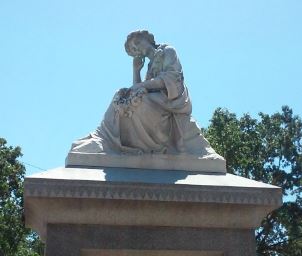
The light strengthened and changed, darkening from yellow to orange to a fiery blood-red glow. As it did so, I became aware of a low, vibrant humming, like the sound of bees swarming; I could not tell where it was coming from. A voice said, “Do not move, upon your lives.” Dazzling white light filled the gallery, followed by an instant later by a thunderclap that shook the whole house and left me blinded and deafened, with diamond patterns of the leadlighting etched upon my vision. As the after-image faced I realized that all of the candles had gone out; beyond the faint glow of the fire at my side, the darkness was absolute. Then came the sound of hurrying feet from the library. A shaft of light spilled across the floor; the connecting door flew open. The lights all went out and I was plunged into impenetrable darkness. A misty pillar of light hovered for a moment in the void and then opened, with a movement like the unfurling of wings, into a shimmering figure that detached itself from the chandelier—now dimly visible in the glow—and glided toward me. It had no face, no form, only a veil of light floating over emptiness. I could not move, could not breathe. I heard the sound of the library door opening, and footsteps approaching. The apparition shimmered to a halt. “Will you speak to me?” I cried. “I may…not stay”—the voice, though faint and indistinct said “but will you not shake hands…” growing fainter with each word—“for friendship’s sake?” The footsteps came closer; the dim outline of a man passed between me and the apparition. Light swirled; a glowing armed appeared, but there was no hand, only an empty sleeve, and when I tried to grasp the arm, my own hand passed straight through it! #RandolphHarris 4 of 5
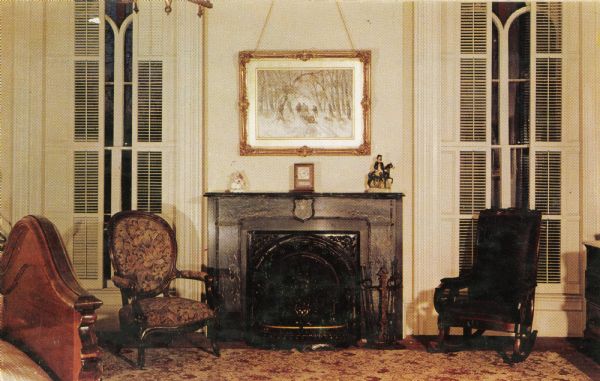
With a cry of despair, I flung both arms around the apparition. For an instant, man and spirit were united; then darkness engulfed them, and I knew no more. When I came to my sense, the coals were crackling in a grate nearby. I was lying, I realized, where I had fallen on the gallery floor, but with a cushion beneath my head. I have had a terrible dream, I thought, turning my head away from the glare. “Mrs. Winchester,” Elizabeth the housemaid said, “I am truly sorry. I should have never left you alone, but I was scared.” “I do not understand,” I said to Elizabeth. “Did you mesmerize me? Did I dream the lightening?” “No, Mrs. Winchester,” she replied. “Everything happened exactly as your perceived.” Lights were burning along the walls, but the floor I where I was laying was still in near darkness. I took Elizabeth’s arm and rose unsteadily to my feet. I straightened my hair and brushed the dust from my cloak. “You feasted on my soul and cast a spell over me!,” I said. The moon rose high. I was very weak, and my heart was beating so slowly that I was almost like a woman fainting. Slowly I turned my head, but Elizabeth was not there. Fear seized me suddenly, a fear unspeakable and unknown. The hour dragged themselves through the twilight and darkness and moonrise. But in the chilly dawn, I lay as one half dead upon my bed. Then came the fear, the awful nameless, panic, the mortal horror that guards the confines of the World we see not, neither know of as we know of other things, but which we feel when its icy chill freezes our bones and stirs our hair with the touch of a ghostly hand. #RandolphHarris 5 of 5
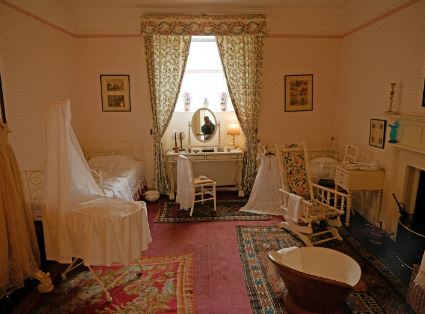
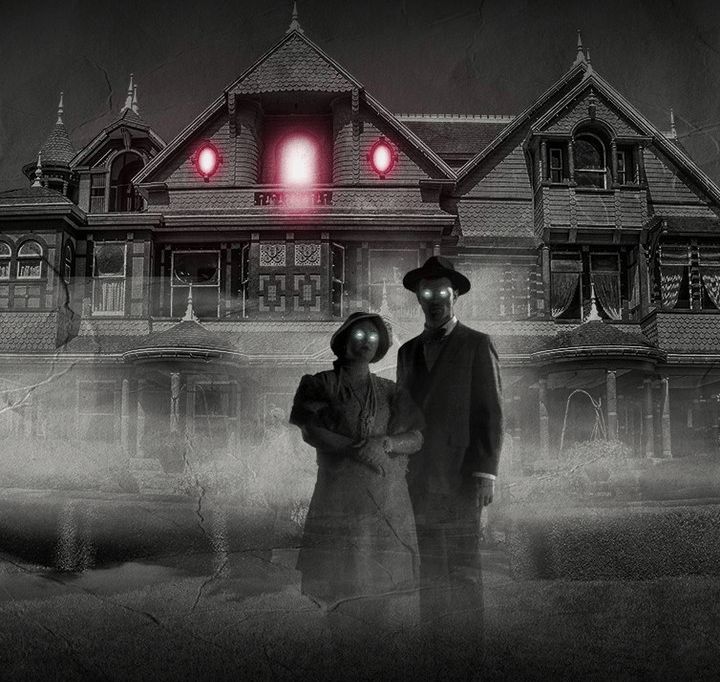
Some houses are more haunted than others. If you account the sheer number of sightings at The Winchester Mystery House, it is one of the busiest places in the World! The phantoms sometimes look like normal, living, breathing human beings. However, then some of these specters abruptly evaporate, without leaving a trace. Sometimes it is hard to believe in ghost even when you have seen them with your own eyes. But at The Winchester Mystery House, spirits come calling down those miles of twisting hallways, and after a visit, there will never be a such thing as a simple tour of a Victorian Mansion. https://winchestermysteryhouse.com/

And please be sure to check out the online gift store: https://shopwinchestermysteryhouse.com/

Cure that Sense of Entitlement

Thought is a vital force or energy which is being developed and which had produced such startling results in the last century, as to bring about a World which would be absolutely inconceivable to man during the days of slavery. If the results have been secured by organizing mental powers over the last hundred years, imagine what can be done in the next hundred. This is why we need to avoid the nihilistic idea that we are living in the last day. The people who repeat this mantra are also the ones who pontificate most loudly about the law of attraction. We have to learn to be genuine in our beliefs and know that we can have a beneficial impact on the future. We do not have to accept things they way they are, but we can make them better. It is clear, therefore, that thought of abundance will respond only to similar thoughts: the wealth of the individual is seen to be what he inherently is. Affluence within is found to be the secret of attraction for affluence to manifest in the outside World. The ability to produce is found to be the real source of wealth of the individual. It is for this reason that he who has his heart in his work is certain to meet with unbounded secrets. He will give and continually give, and the more he gives the more he will receive. Thought is the energy by which the law of attraction is brought into operation, which eventually manifests in abundance in the lives of men. The source of all power, as of all weakness, is from within; the secret of all success as well as all failure is likewise from within. Golden opportunities of life will be strewn across your path, and the power will come unbidden, circumstances will be in your favour, and you will feel the power of the ultimate concern. #RandolphHarris 1 of 18

Many affluent college students make it a point to hide the fact that their families are wealth, because they believe that members of the opposite gender may approach or treat them nicely not because they are interesting and attractive, but simply because they have money. We have worked with young people who consciously choose to live in a more modest apartment than they can afford, or avoid spending too much money on clothes or entertainment, specifically because they do not want to give potential romantic interests any hint regarding their actual financial status. This strategy does seem to provide some reassurance to affluent young people when they are meeting new people, or when they are going out on a first or second date. Clearly, however, as dating relationships develop and progress, it will become more and more difficult to avoid having one’s financial status become apparent. People naturally ask you questions about where you grew up, and where you went to high school. At some point, your date will probably ask you about your parents—maybe just about how you like them, but also more than likely about who they are and what they do. New friends are also quite likely to ask you what you like to do for fun, and they will be curious about the places you have been. These are perfectly normal questions, and you certainly should not interpret them as specific effects to extract data from you on your family’s financial status. Although we certainly understand any desire you may have not to flaunt your wealth as a means of attracting attention, we strongly believe that you should be honest when you answer such questions. To be less than honest is to convey the message that your distrust of others’ intentions is your paramount concern in making new acquaintances, and this would be likely to be perceived as reflecting poorly on you. #RandolphHarris 2 of 18

Students of a high caliber are more attracted to affluent institutions than to poor ones. The major reason is that affluent institutions pay higher salaries, which enable them to recruit better faculties. Some of this may result from a feedback effect that raises the resources for faculty recruitment of institutions with superior reputations among outstanding students. The beta weight indicates that affluence also has some direct effect on student preferences, independent of other conditions. A possible interpretation of this new effect is that superior facilities and better fellowships in affluent institutions attract brighter, more serious students, although the possibility that wealth as such and its symbolic value make an institution preferable cannot be excluded. Large academic institutions are preferred by able students because they can afford better faculties and have more diverse departments than small institutions, but large size itself, independent of these attractive conditions usually associated with it, detracts from the appeal of an institution or higher education to students. In other words, size has a beneficial gross and a negative net effect on capable students, furthering another parallel with the pattern of influences on qualified faculty. The process of mediating the indirect effects of size are similar but not identical, partly because faculty qualifications are the dependent variable in one but an intervening variable in the other case. Bright students are attracted to large academic institutions by their many diverse departments, array of cultures, and by the superior faculties that their higher salaries recruit. These attractions tend to overcome the preferences of good student for small, less impersonal colleges if conditions were the same (indicated by the negative beta weight) and make large institutions more popular among them (indicated by their positive simple correlation). #RandolphHarris 3 of 18

The natural or “mortal mind” view of life and the World is almost always the exact opposite of what is the real spiritual truth and fact. Metaphysics tell us that the visible World is an inverted reflection of the real. If the it is inverted, it is natural, until our spiritual or inner eyes are opened to the truth, for us to see things as the exact opposite of what they really are. Therefore it is not surprising to find that, whereas the moral or terrestrial mind of the senses, thinks the World is the real thing and the mind only a shadow, the real TRUTH is, that mind and spirit are real and eternal, and the visible World but a transient and impermanent thing which has no actual reality. Such being the case then the only thing that really matters is what is in the mind or what is not in the mind. If we have a belief in evil, and thoughts of evil, in our mind, then we have evil in our life. If, however, we can cast the thought of, and belief in, evil out of our mind then it will cease to appear in our life. By raising ourselves above the sensuous life and realizing our permanent World of Mind and there denying evil, poverty, failure, pain, sickness, unhappiness, or whatever our trouble may be, we vanquish the thought which is the cause of all our troubles. Then whatever we affirm will take their place. If we deny “evil,” then we follow by affirming “good,” if we deny sickness, then we affirm prosperity and affluence. By denials we can take out all the evil, care, fear and worry out of our lives and build up in their place by means of affirmations, perfect good, success, affluence, happiness, health, love, peace and courage. Everything being in the mind, then everything that is take out of the mind is take out of life, and everything that is put into the mind comes into life. #RandolphHarris 4 of 18

Thus it is possible with mathematical accuracy and certainty to recreate the life, to cast out all the undesirable and to build up in its place only the beautiful, the good, the true. Life is what we make it. We can make it like Heaven itself, full to the brim with all that is good and beautiful, or we can turn it into a perfect Hell. Therefore do not accept the suggestions of those, who having failed in life, proceed to call it hard names. We can make life a continual joy, if we create a Heaven within us by the quality of our thinking and mental processes. All that we see in life, all that we experience, yeah, even life itself, is but the outward expression of the life within. The life within is built up by our thinking. You will have seen by this time the purpose and value of affirmations. Affirmations are concentrated thoughts. Back of each affirmation is a strong emotion and this gives it tremendous driving force. Not only do affirmations impress the sub-conscious mind thus producing action in accordance with the Will, but they project outwards from the mind into space, attract forces and help from other sources and bring them to minister and bless. Not only so but they also arouse the subliminal mind to inspire, to create, to impart wisdom. By the use of affirmations all the finer forces are aroused to action and the life is transformed from weakness or ineffectiveness to strength or purposefulness. By the use of affirmations, the Will is strengthened until it become so strong all else has to bend to it. By the use of affirmations, the body is strengthened and make healthy, and exercise and body culture become a pleasure instead of a duty. #RandolphHarris 5 of 18

To bring whatever it is that you want into your life, you must develop an insatiable desire for it. That means, for a while, it is all that matters. You vigilantly watch the ego-mind; you refuse to be taken off track. You know your direction and you will allow nothing to move you from it. At that point, all obstacles are viewed as challenges to be overcome, with each one giving you’re a renewed sense of focus. You meet difficulties with the mindset that there is always a way to overcome them, and moreover, you are committed to finding it. You approach, go though, and attend to your outcome without the option of gripping or complaining. You keep moving forward: you make it a “must” and as a result, it will happen. Guaranteed! Affluence means wealth. It means having plenty, so that you are not wanting. It means being connected into the flow of goods and resources so that you are regularly refreshing your abundance even as you use it up. I know people living utterly simple material lives who seem radiant with well-being and happiness. Material wealth should never be desired as an end, but simply as a means of accomplishing an end. Success is contingent upon a higher ideal than the mere accumulation of riches, and he who aspires to sch success must formulate an ideal for which he is willing to stive. However, it is no fun to run out of rent money or cash to go buy groceries. Let us not be delusional; money counts! On the other hand, a lot of money brings a lot of responsibility; you must pay attention to your money or you lose it, and you can easily fall victim to worry about your money rather than enjoying it. So keep this desire for cash and possessions in perspective with the other equal needs. #RandolphHarris 6 of 18

Whatever you desire for yourself, affirm it for others, and it will help you both. You reap what you sow. If you send out thoughts of love and health, they return to you like bread cast upon waters. People who are friends to others find that they indeed have friends. Radiate love and happiness to those you encounter, and this love and happiness will be radiated back to you. True relationship abundance is both deep and wide. Ideally you have a deep resonance with family, and you and your intimate partner have broad goodwill toward those you come into contact with. A valid formula will produce successful results every time and for everyone. You just have to follow it. Life provides a wonderful opportunity to seek our talents and interests. It is well to remember, however, that “all have not every gift given unto them; for there are many gifts, and every man is given a gift by the Spirit of God,” reports Doctrines and Covenants 46.11. In our searching, it is important to seek guidance of the Spirit to discover skills we should develop. Once we have decided what we really want to do, the Lord has given us a formula for achieving our eternal and temporal goals: “For he will give unto the faithful line upon line, precept upon precept; and I will try you and prove you herewith,” reports Doctrines and Covenants 98.12. The Lord reminds us that real success will only come only to the faithful—those who have sincere determination to achieve their goals. The second part of that formula reminds us that learning is often a slow process and comes line upon lone, one step at a time. The Lord offers kind encouragement when He says, “Wherefore, be not weary in well-doing, for ye are laying the foundation of a great work. And out of small things proceedeth that which is great,” reports Doctrines and Covenants 64.33. We must learn to be patient with ourselves while pushing to new levels of achievement or knowledge. It is important to take time occasionally to remind ourselves of what we are trying to do. #RandolphHarris 7 of 18

Thoughts of courage, power, confidence, and hope all produce a corresponding state. All we have to do is let our light shine; the more energy we can radiate, the more rapidly shall we be enabled to transmute undesirable conditions into sources of pleasure and profit. Health and wellness are issues for most of us, and material abundance can mean absolutely nothing when we are seriously sick. Therefore focusing on and manifesting long-term health must be a vital aspect of this program. How can you maximize wellness each and every day, and also regain your health if you lose it? It is now well proven that the thoughts you chronically hold in your mind generate parallel emotional and physiological conditions in your body that either support good health or undermine it. You have perhaps read or seen medical reports on how stress and anxiety, depression and anger, when rehearsed over a long period of time not only become contagious, but also progressively reduce your immune system’s ability to maintain optimum health. When your thoughts become uplifted, progressive, constructive, courageous, noble, kind, or in any other way desirable, you set in motion vibrations which bring about mental, moral, and physical health. The only real power which you can have is the power to adjust yourself to divine and unchangeable principles. You cannot change the Infinite, but you can come into an understanding of natural laws and adjust your thought faculties with the Universal Thought. Your ability to cooperate with this Omnipotence will indicate the degree of success with which you meet. Your expectation determines everything. If you expect nothing, you shall have nothing: if you demand much, you shall receive the greater portion. The World is harsh only as you fail to assert yourself. #RandolphHarris 8 of 18

It is important to belief in your inner reality and broadcast this perfection out to your cellular presence, so that beyond your conscious awareness the infinite unconscious power of the Universe can be working to heal you. And if you are currently healthy, regularly tap into your desire to stay healthy and broadcast this desire and inner faith and harmony to your soul. Inner harmony is the foundation of health. The knowledge of your ability to consciously radiate health, strength, and harmony will bring you into a realization that there is nothing to fear, because you are in touch with Infinite Strength. Regardless of age or health, it is important for all of us to learn to come to peace with the cycle of life and death, and make the best of life while it is still in our possession. One can develop the ideal image of life’s experiences that last for life. We must learn to manifest whatever kind of environment we desire. Although we may be tried to see how determined we are to life our ideal lives, if we persevere, the windows of Heaven truly open in many ways and our providing takes place. Our faith in the Saviour and trust in His words will continue to grow. We will find the most desirable of all our goals will take the most determination to achieve but will be worth every effort. This process can work in reverse and bring loss of spirituality if we are not careful. If we commit sins, we are tried with feelings of regret and remorse. And if we do not heed those feelings and change, further sins come more easily. The result is withdrawal of the Spirit and loss of potential blessings. #RandolphHarris 9 of 18

A life with inner peace and happiness can also be ours if we are willing to earn it. It is marvelous to develop this way of living while you are still very young. You have many years to develop even further great spiritual strength and understanding by applying what the Lord has taught us. Entitlement is not the person who keeps trying to please one’s boss but either lacks the skill or the clear instruction from management to perform well, and who is therefore always getting poor job evaluations. Entitlement is the person whose poor job evaluations result from one’s refusal to invest one’s full energy and commitment in one’s job and who consistently underperforms, not because one lacks the skills or has not received clear instructions from management but simply because one sees no reason to; individuals like this believe that they deserve that paycheck for reasons completely unrelated to how well one performs, an that the company is luck to have him or her. Entitlement is not the spouse who feels inadequate because one’s partner is always expressing one’s frustration with their marriage and with the role one plays in it, even though one tries hard and wants things to be better. Entitlement is the spouse who feels inadequate because one’s partner is always expressing one’s frustration with their marriage and with the role one play in it, even though one tries hard and wants things better. Entitlement is the spouse who thinks everything going wrong in their marriage is their partner’s fault, and that if one does not shape up, one might lose the other. Since one has already made all the contributions to their marriage one needs just to be on the basis of who one is, one’s completely justified in just sitting back now and waiting for one’s spouse to fix whatever is wrong, without any help from their partner. #RandolphHarris 10 of 18

There are many more illustrations, but the many faces of entitlement will always have at least most of these characteristic: An attitude of being special—“I’m exception—and in fact, I’m far greater value to this marriage (of family, or company) than the rest of them, and that’s why I deserve special treatment. They’re lucky to have me.” An attitude of being owed, of deserving something—“I didn’t create this situation—they’re the ones who are always complaining. So why should I do all the work, or even any of it? As far as I’m concerned, I should just stay in my office till they’ve cleaned up this mess. And my bonus had better not be any smaller than any of the others because of it.” A refusal to accept responsibility—“Why do they want me to pay rent? I didn’t ask to be born. Besides, this will still be their house after I move out. And I can’t pay rent anyway, because I don’t have a job. None of the dead-end jobs around here are worthy my time and effort and there’s no reason I should do my own laundry—Mom has to do hers and Dad’s anyway—she can just do mine at the same time. It’s no extra work.” A denial of one’s impact on others—“Sometimes my husband and kid’ lack of responsibility bothers me, and I say exactly what I feel. I’m telling them the truth. I don’t sugarcoat it and I don’t tone down my language, my volume, or how long I talk. They overreact to what I’m saying, and that’s their problem. It’s a free country, and I can say what I need to say.” Whatever the cause of the sense of entitlement, the end result is that the person believes that one does not have to ply by the rules of responsibility, ownership, and commitment. And the end result of entitlement is predictable: The entitled person feels good and live badly, while those around one feel bad about the situation but have more successful relationships and careers. #RandolphHarris 11 of 18

It is tempting to make excuses for our loved ones (or ourselves) who evidence an attitude of entitlement, but the only effective response is to take responsibility, not to make excuses. People’s life experiences may influence them toward entitlement. However, they do not create entitlement. Many people who have suffered greatly in life, experiencing poverty, child abuse, and chaos, still take responsibility for their lives and choices, blaming no one. And there are individuals who have had it all—love, support, opportunity—who nevertheless see themselves as “owed”—by life, by society, by those around them. If you have an entitled person in your life, you may feel responsible for the part you may have played in influencing that attitude, or you may simply feel compassion for their circumstances. And it is certainly possible that you have made mistakes in your relationship with them. It is possible that life may have thrown them curves. However, those mistakes, those obstacles of life, do not create irresistibly an entitlement attitude; if they did, then all people who experiences those things would approach life with an attitude of entitlement, and they do not. At some point in life, people choose entitlement. They direct themselves toward an entitled viewpoint. Why? Ultimately, it is because—at least in their view—it is the easy way. Entitlement has become a serious problem in our society, and it is not getting better. It is impossible to calculate its cost in lack of company productivity, family success, relational love, emotional health, and spiritual vibrancy. Our World suffers greatly from a culture that supports entitlement. The disease is not limited to any age or socioeconomic demographic. #RandolphHarris 12 of 18

Entitled people are not easy to be around. Their attitude and their behaviour produce consequences none of us wants to experience. People who live around an employee, a coworker, a spouse, or a child who feels “above it all” generally feel disconnected and alienated from the entitled individual. We all find it hard to relate to someone who thinks one is superior in some way to the rest of the human race and therefore should not have to play by the rules. One father told me, “I remember being full of myself in my youth. But I did care about how I impacted my friends and family. My daughter’s level of entitlement is something entirely else. I cannot relate to it. She simply does not care how she affects us in the family, much less how she is impacting her future. I fear she may end up homeless or confined to a psychiatric ward.” God expects us to spend time and energy carrying our loads of responsibility for family, finances, and other challenges. That is how a successful life works. So what happens when someone in your life takes little ownership of their own load, leaving you to make up the difference? You feel angry, which makes sense. You feel that everything is “not right,” because it truly is not right. All of us exhibit some level of entitlement attitudes, even highly responsible and giving people. It is just part of the human condition. However, when one deems something worthwhile, be it a career or financial dream, a great family or marriage or some self-care goal, one has two ways to go about it. Entitlement directs one to give the minimum, find the shortcut, and think only of one’s self. However, the more rational path takes the opposite track. This habit focuses on doing whatever is best to reach the good goal, even if it is difficult, uncomfortable, takes longer, and requires more energy. #RandolphHarris 13 of 18

A sense of entitlement (which is the polar opposite of a sense of responsibility) is endemic among children today. It is fostered by our demanding, narcissistic society where wants are confused with needs and where everyone seems focused on the notion that one deserves what everyone else has without working for it. Youth grow up in a reality-show World, thinking of themselves as the central character on television. They even adopting the same attitudes of some of their favourite stars and try to act out TV shows. And they believe they are worthy of not having limits, boundaries, nor discipline. The entitlement problem affects one’s education as one feels that they do not have to work for their grades. It affects relationships because people expect their parents to live their lives for them, well into adulthood. A sense of entitlement impacts one’s ability to set reasonable goals because when one is entitled the World is owned to them. It has an effect on their health and their safety because they feel entitled to eat what they want, go to bed when they want, and do things they know is not safe. Drawing realistic lines between deserving and undeserving matters a lot in our individual lives. While we might feel jealous of the kid who either works for a new car or gets a new car—and a free ride in other areas of life, too—we have to remember opportunity costs. Everyone has to give up something to receive whatever it is they have. And just like you, how long are you going to continue to harp on what someone else has? You could spend your entire life jealous over someone else’s blessings and still not happy when you obtain the same thing because you are not happy with yourself, your life. #RandolphHarris 14 of 18

The closer we are to Jesus Christ in the thoughts and intents of our hearts, the more we appreciate His innocent suffering, the more grateful we are for the grace and forgiveness and the more we want to repent and become like Him. Our absolute distance from Heavenly Father Jesus Christ is important, but the direction we are heading is even more crucial. God is more pleased with repentant sinners who are trying to draw closer to Him than with self-righteous, faultfinding individuals who, like the Pharisees and scribes of old, do not realize how badly they need to repent. Whatever our current direction or distance to Heavenly Father and Jesus Christ, we can choose to turn toward Them and draw closer to Them. They will help us. The close to the Saviour we draw, the more our faith increases, and we are able to make and keep covenants, and have the Holy Ghost with us. We must also act in faith, responding to the spiritual direction we receive. All of these elements come together in the sacrament. Indeed, the best way I know to draw closer to God is to prepare conscientiously and partake worthily of the sacrament each week. Although a variety of life experiences can elicit feelings of gratitude, gratitude prototypically stems from the perception of a beneficial personal outcome, not necessarily deserved or earned, that is due to the actions of another person. People who have gratitude feel a warm sense of appreciation for somebody or something, a sense of goodwill toward that person or thing, and a disposition to act that flows from appreciation and goodwill. The virtue of gratitude is the willingness to recognize that one has been the beneficiary of someone’s kindness, whether the emotional response is present or not. #RandolphHarris 15 of 18

The practice of gratitude is not in any way a denial of life’s difficulties. We live in troubling times, and do doubt you have experienced many challenges, uncertainties, and disappointments in your own life. Nor does the practice of cultivating gratitude deny the truth that old age, sickness, and death are certain. Rather, gratitude practice is useful because it turns the mind in such a way that enables you to live into life. Having access to the joy and wonderment of life is the antidote to feelings of scarcity and loss. It allows you to meet life’s difficulties with an open heart. The understanding you gain from practicing gratitude frees you from being lost or identified with either the negative or the positive aspects of life, letting you simply meet life in each moment as it rises. There are numerous ways to use mindfulness to cultivate gratitude. Of course, you acknowledge your appreciation when things are going well. However, even more helpful is to notice those things for which you are grateful when you find yourself in a contracted physical or emotional state. I often instruct students to respond to a difficult situation by acknowledging that the situation is difficult, but always to have the faith that they can find a legal, ethical, and virtuous way to escape from it. The best way to get out of a bad situation, however, is not to get into one. We need to know right from wrong and set great examples for our children. When you look at how much griping you are doing versus how much gratitude you feel, you may realize how far off your emotional response is from your real situation. Gratitude for the grace of conscious embodiment evolves into the practice of selfless gratitude, in which your concerns slowly but surely shift from being mostly about yourself and those close to you to being about all living beings. #RandolphHarris 16 of 18

As this occurs you need less and less in the way of good fortune. It becomes enough that there are those who are happy, who are receiving love, who are safe, and who have a promising future. It is not a state of gratitude, you are able to rejoice that joy exists amid all life’s suffering. You realize that pain and joy are part of a mysterious whole. When this state of selfless gratitude starts to flourish, one’s mind becomes more spacious and quiet, and one’s heart receives its first tastes of release from fear and wanting. Commitment reflects one’s values, intentions, and priorities; therefore it fosters clarity. In contrast, attachment is an unwholesome mental state in which one becomes overly identified with a desired outcome. The more centered and free from grasping one’s mind is, the better able one is to sustain a commitment over time and to make clear decisions along the way. You are also less likely to cause harm in pursuing your goals. If you truly want to achieve something, be unswerving in your commitment to moving toward your goal but be flexible in your mind about the outcome. Let us be honest. Most of our attachments are not derived from lofty goals or heartfelt commitments. They are about feeding our ego, expressing our views and opinions, pleasing our senses, and being seen as we wish to be seen. Or they are about not being uncomfortable, not having to endure things that irritate us, and not feeling physical or emotional pain. All of this mundane attachment accounts for a great deal of the chaos in our lives, and it does not actually help us get what we want! It is pretty much a total waste of precious energy and a major cause of disappointments. #RandolphHarris 17 of 18

Practicing generosity is the intention to find release from attachment and egoism by giving freely of whatever you have of value. What you have to give may be material in nature or it may be your time, energy, or wisdom. Committing to kindness eradicates the attachment that comes from feelings of scarcity and separateness. Paradoxically, practicing bigheartedness is also self-liberation, yet it is not self-centered. True generosity arises out of unconditional caring and compassion for another. It does not mean self-sacrifice or recklessly giving everything away. Such acts are actually grandiosity disguised as generosity. The form your generosity takes is up to you, as it can only come from your values and what you have to offer. Remember, it is your authentic intentions that matters, even if it is imply a sincere wish that in time you will become more spontaneously generous. Generosity means practicing generous behaviour in all aspects of your life, not just giving away money or sharing material possession. Certainly the emotional impulse to practice generosity most easily arises when you participate in providing sustainability for others, whether it is shelter, food, clothe, or medicine. However, with less immediate life needs, such as education, safety, or earning a living, the appropriate form of generosity may be a gift of your time. When it comes to intangibles such as justice and dignity, it may be most appropriate to voice your support. Generosity is, along with compassion, a cornerstone of mindful association. #RandolphHarris 18 of 18

CRESLEIGH HAVENWOOD
Lincoln, CA | from the high $600s
Now Selling!

Home Site 66 is a Residence Three, the largest of the single story homes offered in Cresleigh Havenwood. At 2,827 square feet you’ll be hard pressed to a contemporary floorplan that offers this much space.

There are four bedrooms, two and one half bathrooms, and a three car garage. Utilize the den as your own private study or playroom. The Dining Room and Kitchen are well situated to make entertaining a breeze.

The location of the Owner’s Suite makes it feel like a separate wing from the rest of the home allowing for maximum privacy and retreat.

This home includes over $34,000 in options and upgrades including:
• Durable luxury vinyl plank flooring throughout the first floor
• White Shaker Cabinetry with Soft-Close Doors & Drawers
• Over Island Pendants and Under-Cabinet Lighting
• Upgraded Appliances
• Flat-Screen pre-wire in Great Room
• Additional Upper Cabinetry at Drop Zone
• Owned Solar

Best of all, each Cresleigh home comes fully equipped with an All Ready connected home! This smart home package comes included with your home and features great tools including: video door bell and digital deadbolt for the front door, connect home hub so you can set scenes and routines to make life just a little easier. Two smart switches and USB outlets are also included, plus we’ll gift you a Google Home Hub and Google Home Mini! https://cresleigh.com/havenwood/quick-move-homesite-66/

We Gone Have to Put this Back in the “Kick”!

With the rapid increase of technology, it is possible that automation could be making the World more dangerous. Drivers may soon get speeding tickets without ever being stopped by an officer. If Assembly Bill 645 is passed, speed limit cameras will be placed on freeways and automatically send drivers going over 11 miles per hour a speeding ticket. The new pilot program will be implemented as soon as January 2024 in several major cities including: San Jose, Oakland, Glendale, Los Angeles, Long Beach and the city and county of San Francisco, California. The bill was introduced by Assemblymember Laura Friedman of Glendale. The legislators responsible for this bill program found that speeding was a major factor in traffic collisions. In 2019, 26 percent of all vehicle crashes occurred because of a speeding driver. The bill would require cities and counties participating in the program to send drivers warnings, rather than tickets, for the first 60 days of the program. It would also require these cities to make records confidential, and specify that the speeding violation is subject to civil penalties, among other requirements. The bill was passed by the Senate Judiciary Committee on July 11, 2023, in a 10-1 vote. Next, it will go on to the House Committee on Appropriations, after the senate returns from summer recess after August 15, 2023. However, three amendments need to be added in order to pass this bill, which include clarifying the angle of the camera, how long records of penalties will be retained, and how many occurrences of street racing would enable the installation of a camera. #RandolphHarris 1 of 18
The speed safety system shall capture images of the rear license plate of vehicles that are traveling 11 miles per hour or more over the posted speed limit and notices of violation shall be issued to vehicles based on that evidence. Fines would start at $50 for going 11 miles per hour over the posted speed limit and increase from there. However, this bill is troubling for several reasons. First of all, because traffic patrol will be automated, it will reduce the number of highway patrol officers on the road, which will make the road more dangerous. Highway Patrol often keeps people safe by making sure they are not littering. They make sure that vehicles are in proper operating condition and safe to be on the road. Officers also keep an eye out for suspicious activity, rescue drivers in need of help. Help to prevent accidents simply with their presence being known and by spacing traffic out. With them being on the road, they are able to apprehend suspect faster. Also, officers are able to make sure the drivers have headlights that are properly adjusted and safe to use on the road, as many new cars sometimes have lights so bright that they can blind a diver and cause an accident. Officer also make sure that fluid are not leaking from cars, that taillights are properly functioning, and that people are not being held hostage or being attacked in their car. Some other concerns is what if a big rig is coming in your lane and does not see you and you need to speed up to avoid getting ran off the road, but are in too much fear of getting a ticket? Some drivers also go so slow that it makes road conditions dangerous. More drivers may also start driving under the influence of drugs, alcohol, medication, and while sleepy with less officers on the road. #RandolphHarris 2 of 18

Other concerns are that people will start stealing license plates and using them when they travel on the road. If they find a car similar to their, they could get away with this for a long time. Some drivers may simply remove the plates from their cars when they travel on the highway, which would make identifying them nearly impossible. Therefore, it is recommended that Assembly Bill 645 is not passed. Because a ticket in the mail may not safe a life in that moment. By pulling people over in the act of speeding, several lives have been saved. Assembly Bill 645 is essentially a tax, much like the bag ban. If it is, as many already know, the program will eventually go nationwide. Much like in the Middle Ages, as we have seen, the old order is breaking down. The individual has lost the security of certainty and is threatened by new economic forces, by capitalists and monopolies; the corporative principle is being replaced by competition; the lower classes feel that pressure of growing exploitation. During the Middle Ages, the appeal of Lutheranism to the lower classes differed from its appeal to the middle classes. The poor in the cities, and even more the peasants, were in a desperate situation. They were ruthlessly exploited and deprived of traditional rights and privileges. They were in a revolutionary mood which found expression in peasant uprising and in revolutionary movement in the cities. The Gospel articulated their hopes and expectations as it had done for the slaves and labourers of early Christianity, and led the poor to seek for freedom and justice. In so far as Mr. Luther attacked authority and made the word of the Gospel the center of his teachings, he appealed to these restive masses as other religious movements of an evangelical character had done before him. #RandolphHarris 3 of 18

Although Mr. Luther accepted their allegiance to him and supported them, he could do so only up to a certain point; he had to break the alliance when the peasants went further than attacking the authority of the Church and merely making minor demands for the betterment of their lot. They proceeded to become a new revolutionary class which threatened to overthrow all authority and to destroy the foundations of a social order in whose maintenance the middle class was vitally interested. For, in spite of all the difficulties we described, the middle class, even its lower stratum, had privileges to defend against the dames of the poor; and therefore it was intensely hostile to revolutionary movements which aimed to destroy not only the privileges of the aristocracy, the Church, and the monopolies, but their own privileges as well. The position of the middle class between the very rich and the very poor made its reaction complex and, in many ways, contradictory. They wanted to uphold law and order, and yet they were themselves vitally threatened by rising capitalism. Even the more successful members of the middle class were not wealthy and powerful as the small group of big capitalists was. They had to fight hard to survive and make progress. The luxury of the moneyed class increased their feeling of smallness and filled them with envy and indignation. As a whole, the middle class was more endangered by the collapse of the feudal order and by rising capitalism than it was helped. #RandolphHarris 4 of 18
Mr. Luther’s picture of man mirrored just this dilemma. Man is free from all ties binding him to spiritual authorities, but this very freedom leaves him alone and anxious, overwhelms him with a feeling of his own individual insignificance and powerlessness. This free, isolated individual is crushed by the experience of his individual insignificance. Mr. Luther’s theology gives expression to this feeling of helplessness and doubt. The picture of man which he draws in religious terms describes the situation of the individual as it was brought about by the current social and economic evolution. The member of the middle class was as helpless in face of the new economic forces as Mr. Luther described man to be in his relationship to God. However, Mr. Luther did more than bring out the feeling of insignificance which already pervaded the social classes to whom he preached—he offered them a solution. By not only accepting his own insignificance but by humiliating himself to the utmost, by giving up every vestige of individual will, by renouncing and denouncing his individual strength, the individual could hope to be acceptable to God. Mr. Luther’s relationship to God was one of complete submission. In psychological terms his concept of faith means: if you completely submit, if you accept your individual insignificance, then the all-powerful God may be willing to love you and save you. If you get rid of your individual self with all its shortcomings and doubts by utmost self-effacement, you free yourself from the feeling of your own nothingness and can participate in God’s glory. #RandolphHarris 5 of 18

Thus, while Mr. Luther freed people from the authority of the Church, he made them submit to a much more tyrannical authority, that of a God who insisted on complete submission of man and annihilation of the individual self as the essential condition to his salvation. Mr. Luther’s “faith” was the conviction of being loved upon the condition of surrender, a solution which has much in common with the principle of complete submission of the individual to the state and the “leader.” Mr. Luther’s awe of authority and his love for it appears also in his political convictions. Although he fought against the authority of the Church, although he was filled with indignation against the new moneyed class—part of which was the upper strata of the clerical hierarchy—and although he supported the revolutionary tendencies of the peasants up to a certain point, yet he postulated submission to Worldly authorities, the princes, in the most drastic fashion. “Even if those in authority are evil or without faith, nevertheless the authority and its power is good and from God…Therefore, where there is power and where it flourishes, there it is and there it remains because God has ordained it.” Or he says, “God would prefer to suffer the government to exist no matter how evil, rather than allow the rabble to riot, no matter how justified they are in doing so…A prince should remain a prince no matter how tyrannical he may be. He beheads necessarily only a few since he must have subject in order to be a ruler.” #RandolphHarris 6 of 18

The other aspect of Mr. Luther’s attachment to and awe of authority becomes visible in his hatred and contempt for the powerless masses, the “rabble,” especially when they went beyond certain limits in their revolutionary attempts. In one of his diatribes he writes the famous words: “Therefore let everyone who can, smite, slay, and stab, secretly or openly, remembering that nothing can be more poisonous, hurtful, or devilish than a rebel. It is just as when one must kill a mad dog; if you do not strike him, he will strike you, and a whole land with you.” Mr. Luther’s personality as well as his teachings shows ambivalence toward authority. On the one hand he is overawed by authority—that of a Worldly authority and that of a tyrannical God—and on the other hand he rebels against authority—that of the Church. He shows the same ambivalence in his attitude toward the masses. As far as they rebel within the limits, he has set he is with them. However, when they attack the authorities he approves of, an intense hatred and contempt for the masses comes to the fore. When we look at the psychological mechanisms of escape, we shall show that this simultaneous love for authority and the hatred against those who are powerless are typical traits of the “authoritarian character.” At this point, it is important to understand that Mr. Luther’s attitude towards secular authority was closely related to his religious teachings. In making the individual feel worthless and insignificant as far as one’s own merits are concerned, in making one feel like a powerless tool in the hands of God, he deprived man of the self-confidence and of the feeling of human dignity which is the premise for any firm stand against oppressing secular authorities. #RandolphHarris 7 of 18

In the course of the historical evolution the results of Mr. Luther’s teachings were still more far reaching. Once the individual had lost his sense of pride and dignity, he was psychologically prepared to lose the feeling which had been characteristic of the medieval thinking, namely, that man, his spiritual salvation, and his spiritual aims were the purpose of life; he was prepared to accept a role in which his life became a means to purposes outside of himself, those of economic productivity and accumulation of capital. Mr. Luther’s views on economic problems were typically medieval, still more so than Mr. Calvin’s. He would have abhorred the idea that man’s life should become a means for economic ends. However, while his thinking on economic matters was the traditional one, his emphasis on the nothingness of the individual was in contrast and paved the way for a development in which man not only was to obey secular authorities but had to subordinate his life to the ends of economic achievements. In our day this trend has reached a peak in the Fascist emphasis that it is the aim of life to be sacrificed for “higher” powers, for the leader on the racial community. Mr. Calvin’s theology, which was to become as important for the Anglo-Saxon countries as Mr. Luther’s for Germany, exhibits essentially the same spirit as Mr. Luther’s, both theologically and psychologically. Church and the blind acceptance of its doctrines, religion for him is rooted in the powerlessness of man; self-humiliation and the destruction of human pride are the Leitmotiv of his whole thinking. Only he who despises this World can devote himself to the preparation for the future World. #RandolphHarris 8 of 18

He teaches that we should humiliate ourselves and that this very self-humiliation is the means to reliance on God’s strength. “For nothing arouses us to repose all confidence and assurance of mind on the Lord, so much as diffidence of ourselves, and anxiety arising from a consciousness of our own misery.” He preached that the individual should not feel that he is his own master. “We are not our own; therefore neither our reason nor our will should predominate in our deliberation and actions. We are not our own; therefore, let us not propose it as our end, to seek what may be expedient for us according to the flesh. We are not our own; therefore, let us, as far as possible, forget ourselves and all things that are ours. On the contrary, we are God’s; to Him, therefore, let us live and die. For, as it is the most devastating pestilence which ruins people if they obey themselves, it is the only haven of salvation not to know or to want anything oneself but to be guided by God who walks before us. For, as compliance with their own inclinations lead men most effectually to ruin, so to place no dependence on our own knowledge or will, but merely to follow the guidance of the Lord, is the only way of safety. Man should not strive for virtue for its own sake. That would lead to nothing but vanity: “For it is an ancient and true observation that there is a World of vices concealed in the soul of man. Nor can you find any other remedy than to deny yourself and discard all selfish considerations, and to devote your whole attention to the pursuit of those things which the Lord requires of you, and which ought to be pursued for this sole reason, because they are pleasing to Him. #RandolphHarris 9 of 18

Mr. Calvin, too, denies that good works can lead to salvation. We are completely lacking them: “No work of a pious man ever existed which, if it were examined before the struct judgment of Gd, did not prove to be damnable.” If we try to understand the psychological significance of Mr. Calvin’s system, the same holds true, in principle, as has been said about Mr. Luther’s teachings. Mr. Calvin, too, preached to the conservative middle class, to people who felt immensely alone and frightened, whose feelings were expressed in his doctrine of the insignificance and powerlessness of the individual and the futility of his efforts. However, we may assume that there was some slight difference; while Germany in Mr. Luther’s time was in a general state of upheaval, in which not only the middle class, but also the peasant and the poor of urban society, were threatened by the rise capitalism, Geneva was a relatively prosperous community. It had been one of the important fairs in Europe in the first half of the fifteenth century, and although at Mr. Calvin’s time it was already overshadowed by Mr. Lyons in this respect, it had preserved a good deal of economic solidity. On the whole, it seemed safe to say that Calvin’s adherents were recruited mainly from the conservative middle class, and that also in France, Holland, and England his main adherents were not advanced capitalistic groups but artisans and small businessmen, some of which whom were already more prosperous than others but who, as a group, were threated by the rise of capitalism. #RandolphHarris 10 of 18

To this social class Calvinism had the same psychological appeal that we have already discussed in connection with Lutheranism. It expressed the feeling of freedom but also of insignificance and powerlessness of the individual. It offered a solution by teaching the individual that by complete submission and self-humiliation he could hope to find new security. Rich people have suffered many symbolic challenges as economic income inequality has emerged as a dominant issue on the national stage. Although images of the wealthy proliferate in the media, we know very little about what it is like to be wealthy in the current historical moment. Contemporary scholarly accounts of elite experience are in short supply, due largely to the difficulty of gaining access to wealthy people. The few studies of elite consumption that do exist focus on its explicitly or implicitly competitive dimensions, whether they embody Mr. Veblenian conspicuous consumption or other forms of social distinction. Other research on elite lifestyles looks at how privileged people maintain and reproduce their privilege through social closure in elite clubs and elsewhere. Researchers are skeptical of allusions to hard work, interpreting them mainly as shallow justifications. Notably, being morally worthy and avoiding entitlement involve behaving and feeling in particular ways. Practices of working hard, consuming prudently, and giving back are matched by affects of independence, modest desire, and appreciation rather than a feeling of being “owed things.” Yet it is not easy to adhere to all of these imperatives of merit or to interpret oneself as adhering to the. #RandolphHarris 11 of 18

Partners look to each other for recognition of themselves as worthy workers and consumers, but they do not always find this recognition. They clash over what kind of needs are legitimate. And they experience gendered conflicts over whether unpaid labour “counts” symbolically as a contribution to the family’s lifestyle. Anxieties about the entitlement of their children are especially prominent. Parents want to raise nonmaterialistic hard-working, nice people rather than “lazy jerks.” Of course this desire is widespread among parents regardless of class. However, for these affluent people the concern about entitlement harbours a deep contradiction. They want their children to see themselves as “normal” (and therefore just like everyone else) but also to appreciate their advantages (which make the different from others). In the end, they instill and reproduce ideas about how to occupy privilege legitimately without giving it up—how to be a “good person” with wealth. Formerly, time for recreation was won with difficulty from the onerous demand of work, and no questions arose over the desirability of leisure. Ways of utilizing leisure seemed endless, its maximization, an unquestioned good, not a problem. Yet today for many Americans the extension of leisure had created a vacuum (an abyss, Riesman ominously calls it) which they are perplexed to fill. People can be as much at a loss for something to do with themselves when surrounded with opportunities for recreation as when lacking. For some time to come, there will continue to be the community problem of providing certain kinds of recreational facilities, yet complete success along the lines will yet fall short of solving the emerging crisis of mass boredom. Boredom is a great threat to American society as the atom bomb. Boredom is lack of involvement. #RandolphHarris 12 of 18

Recreation, as our classification of its forms suggests, still bears a mysterious representational relation to all the binding concerns of life. The various kinds of recreation seems worthwhile according to how much they correspond to these concerns of life. When the serious concerns lose their value, recreation also begins to pall. Thus the mere pursuit of fun is no guarantee of relief from boredom, which may derive from a basic lack of involvement in serious pursuits. Even in play, human beings find it necessary to invent and devise ends, even though they may be purely symbolic. On the other hand, the deliberate effort to have fun—to make fun the end itself, and to pursue it directly—often stultifies the possibility of having it. By contrast, the person who is able to give himself fully and freely to any serious pursuit is likely to have fun without requiring—though he may periodically enjoy—standard forms of recreation. Theories of leisure and recreation are still very tentative, and any interpretation is risky. Nonetheless, it seems safe to conclude that the major emergent problem of recreational agencies, as of all other types of family agencies, is no longer that of further expanding leisure and recreational facilities—though such expansion will continue—but of leading in the creation of recreational values in which families may become deeply involved and committed. To a large degree, of course, such a program calls for the organization of recreational groups which will generate or expand their own specific values and morale. This may be the place to propose a general recreational value, least the preceding words seem to lack reference or contradict each other. #RandolphHarris 13 of 18

This may be the place to propose a general recreational value, lest the preceding words seem to lack reference or to contradict each other. The concept of self-transcendence describes such value. It lacks the misleading connotations of the popular term “growth,” which raises question of the organic analogy, naturally predetermined sequences, and quantitative accretion without differentiation. Self-transcendence implies only that exploration and extension of capacities will occur, but does not specify the forms their exercise will take. Self-transcendence is possible at all ages, but not in all directions at all ages. In adulthood, it goes beyond pretense and vicariousness to exercise movement from potentiality to actuality. As a principal value to be sought and found in recreation, the concept of transcendence is congenial with several major theories of recreation which her been proposed so far—Groos’ practice theory, Piaget’s theory of representative activity, Erikson’s idea of ego-mastery, Huizinga’s notion of “stepping out of common reality into a higher order.” Play furnishes the perfect model for free involvement and commitment. As such, approached with discrimination, it offers some promise to the contemporary person who wishes to “declare his own values,” id est, who recognizes that he needs rules to live by, yet wishes not to be inescapably bound by them. A person can if he left himself become deeply involved in a game, yet know it for only a game; he may be fully committed to his role, but for only the duration of an agreed upon period. #RandolphHarris 15 of 18

Precise sociological and psychological analyses of the process of progressive involvement and commitment (phrases which have been significantly used to define courtship and marriage) may thus help to define the means for solving the widespread problem of aimlessness in society. When it was taken for granted that what was needed was simply more health, more economic means, more opportunity for participation, more freedom for self-development, more education, more leisure and recreation, the old situation looked simple by contrast with the present. In spite of all its bad memories of the depression, and the uncertainties of war-imposed separation, the coming generation is the uneasy position of being the heir to a fortune. Being forced to do nothing and free to do anything, the young person finds that he does not integrate unless he can become a valued part of some activity with others which makes demands on him; that he cannot esteem himself unless he finds a way to win the esteem of others by contributing productively to a goal which he shares with them. Countless parents today, in releasing their children (and in some case, wives or husbands) from all obligations of effort, rob them of their chances to achieve social worth and self-esteem. In place of crude necessity they should introduce some chosen values, values shared by a company of others who will support these values and reinforce the child’s conception of who he is when his parents can do so no more. With the best of intentions, that is, the most living parents may accomplish the worst of consequences, through a mistaken, obsolete interpretation of the wants of youth, for example, by refusing to give any negative or positive criticism when asked for appraisal of performance. #RandolphHarris 16 of 18
Doubt of the experience or “manifestation” being of God. We cannot emphasize too strongly the need of not quenching and not ignoring the first doubt, for the “doubt” is actually the initial penetration of truth to the mind, and hence the first step to deliverance. Some have instantly quenched the first doubt, fearing to “doubt God,” and in doing so have closed their minds to the first ray of light which would have led them into liberty. They have looked upon doubt as temptation, and resisted it, overlooking the distinction between true and evil, right and wrong “doubt.” This has its root in the mind of most Christians in associating only evil with such words as “judging,” “criticizing,” “doubting,” and “enmity,” “hatred,” “unbelief,” et cetera—all of which dispositions and actions they though to be evil, and evil only, whereas they are evil or good according to their source in spirit or soul, and in relation to their object. For example, “enmity” against Satan is God-given (Gen 3.15), “hatred” toward sin is good, and “unbelief” of spirit manifestations is commanded until the believer is sure of their source (1 John 4.1). To doubt God—which means not to trust Him—is a sin; but a doubt concering supernatural manifestations is simply a call to exercise the faculties which all spiritual believers should use to discern “good and evil.” The deep doubt concerning some supernatural experiences is therefore not a “temptation” but is really the Holy Spirit moving the spiritual faculties to action according to 1 Corinthians 2.15: “He that is spiritual judgeth—id est, examineth—all things,” the “things of God” thus being “spiritually discerned” (v. 14, KJV). #RandolphHarris 17 of 18

The New Being will first be considered under the aspect of “newness.” The old eon is estrangement, the split between essential and existential being. The Christ as the New Being ushers in the new eon by manifesting undistorted essential being withing the conditions of existence. The New Being is new in contrast to the merely potential character of essential being; and it is new over against the estranged character of existential being. Those who are “in Christ” are “new creatures.” “In Christ” means participation in him. “Those who participate in him participate in the New Being, though under the condition of man’s existential predicament and, therefore, only fragmentarily and by anticipation.” The real, but imperfect, state of participation can be explained as the interim period between the first and second coming of the Christ. In this period the New Being is present in the Christ; in him the eschatological expectation is fulfilled in principle. The appearance of the New Being is the beginning of fulfilment, and, consequently, it marks the end of the old situation. It signals the end of the reign of law, the law of the “man’s essential being standing against his existence, the existence which is estrangement, ambiguity, and disintegration. It announces the end of history in the sense that “nothing qualitatively new in the dimension of the ultimate can be produced by history which is not implicitly present in the New Being in Jesus as the Christ.” The end of history is here understood not as a temporal terminal point, but as the ultimate aim that imparts meaning to the whole process. #RandolphHarris 18 of 18

MAGNOLIA STATION AT CRESLEIGH RANCH
Rancho Cordova, CA | low $600s
Now Selling!

Models now open at Magnolia Station! Located at the corner of Rancho Cordova Parkway and Douglas Road, residents of Cresleigh Ranch will benefit from a brand new neighborhood with convenient access to the new Raley’s Shopping Center, Sunrise Boulevard, and much more!

Magnolia Station will include 81 homesites and five distinct plans ranging from 2,200 – 3,700 square feet; including three single story plans! Each plan has been thoughtfully designed to include features such as: Generations Suite, Optional Offices/Dens, Extended Great Rooms, and more!


Consciousness is the Creature of Rhythm
My immediate environment had undergone a radical and significant change. Slowly I looked up. There was someone reflected in the mirror—a lone figure, it seemed. With a start I looked over my shoulder. No one there. And then back again to the dim and shadowy glass. A man was gazing out from the immaterial realm beyond it, and as I studied him, the alchemy in my blood flowed with great vigor and my senses sharped, his image grew brighter and clearer, until he was vividly and undeniably a young man of pale complexion and dark brown eyes, staring angrily and malevolently and unmistakably down at me. At last, the image reached its fullest potency. And it was so brilliant, dreamy and romatic. It seemed a mortal man had hidden himself in a chamber behind the mirror, and having removed the glass was peering at me from the empty frame. Never in all my years at Llanada Villa had I seen an apparition so exquisitely realized. The man appeared to be perhaps thirty years of age; his skin was deliberately flawless, yet carefully coloured, with a blush to the cheeks and a faint paling beneath the eyes. His attire was very aristocratic, a blue crushed velvet suit, with an upturned white collar and rich silk tie. His hair was wavy, and ever so slightly unkempt, as if he had only just run his fingers through it. The mouth was very delicate and youthful. The blue eyes glittered like diamonds. His left forearm appeared to rest in his lap; he moved his pieces with right hand, which seemed disproportionately long. I had shrunk back and now stood a little to one side of the doorway and in shadow. Something forbade me either to enter or retire, a feeling—I know not how it came—that I was in the presence of an imminent tragedy. With a scarcely conscious rebellion against the indelicacy of the act I remained. #RandolphHarris 1 of 10

The wind had now gone down, but I heard, at lessening intervals and progressively louder, the rumble and roll of thunder. In the pauses between I now became conscious of a low humming or buzzing which, like thunder, grew momentarily louder and more distinct. However, before I had time for much conjecture as to its nature my attention was taken by the strange motions of the apparition itself. It shook like a man with palsy or an ague chill, and the motion augmented every moment until the entire figure was in violent agitation. Suddenly something shot from the frame across the table and chair. The hands of this horrible thing closed upon the butler’s throat, his own clutch its wrists. Then the table was overturned, the candle thrown to the floor and was extinguished, and all was black dark. However, the noise of the struggle was dreadfully distinct, and most terrible of all were the raucous, squawking sounds made by the strangled man’s efforts to breathe. I sprang to the rescue of the butler, but had hardly taken a stride in the darkness when the whole room blazed with a blinding white light that burned into my brain and heart and memory a vivid picture of the combatants on the floor, Daughtry underneath, his throat still in the clutch of those iron hands, his head forced backward, his eyes protruding, his mouth wide open and his tongue thrust out; and—horrible contrast!—upon the painted face of his assassin an expression of tranquil and profound thought, as in the solution of a problem in chess! This I observed, then all was blackness and silence. #RandolphHarris 2 of 10

Three days later I recovered consciousness in my bedroom. As the memory of that tragic night slowly evolved in my ailing brain I recognized in my attendant my niece Daisy. Responding to a look she approached, smiling. “Tell me about it,” I managed to say, faintly—“all about it.” “Certainly,” she said; “you were carried unconscious from the dining room.” “And Daughtry?” “Buried yesterday—what was left of him.” Apparently this reticent apparition could materialize on occasion. My perceptions would never be the same and I knew that dread would always follow me now, would be with me like some brake medical condition newly and devastatingly diagnosed. I did not dwell on it. I had to push it all away from me. I had to think practically. I had to do that to preserve my sanity. And my practical problems, right now, were considerable. I had Daisy draw me a bath. I took my clothes off and walked into the cool, clear water. I crouched in the tub and felt the water flowing over my skin and hair. And when I emerged from the tub, cleansed, I felt the temptation extended by the warm Earth and wild flower smell of the bright day to believe that what had happened had been only some dark turmoil of the mind. It was much easier to consider it all no more than a lurid dream. And I might have surrendered to that temptation, if the floor all about, in the Grand Ballroom has not revealed signs of a struggle. As tears came to my eyes, I thought of howe Daisy and I used to sing duets sometimes. Her voice, so sweet, so true, so dear. But now there was a rubble where the piano ought to have been. Strange forebodings came into my mind. I was angry with myself for giving way to melancholy thoughts. #RandolphHarris 3 of 10

Eight o’clock Sunday afternoon, I questioned Daisy about the French maid and those other two servants who had died within three years. “They were poor, feeble creatures,” Daisy told me. “They were too much, and they were lazy. They died of luxury and idleness. Aunt Sarah, you were much too kind to them. They had nothing to do; and so they took to fancy things; fancying the air didn’t suit them, that they could not sleep. How have you been sleeping?” “I sleep well enough,” I replied “but I have had a strange dream several times since that incident.” “Ah, aunt Sarah, you had better not begin to think about dreams, or you will be like your servants. They were dreamers—and they dreamt themselves into the cemetery.” The dream troubled me a little, not because it was a ghastly or frightening dream, but on account of sensations which I had never felt before in sleep—a whirring of wheels that went around in my brain, a great noise like a whirlwind, but rhythmical like the ricking of a gigantic clock: and then in the midst of this uproar as of winds and waves I seemed to sink into a gulf of unconsciousness, out of sleep info far deeper sleep—total extinction. And then, after that black interval, there had come sounds of voices, and then again the whirr of wheels, louder and louder—and again the black—and then I awoke, feeling languid and oppressed. I told Dr. Wayland of my dream one day, on the only occasion when I wanted his professional advice. I had suffered rather severely from the mosquitoes before Christmas—and had been almost frightened at finding a wound upon my arm which I could only attribute to the venomous sting of one of these torturers. #RandolphHarris 4 of 10
Dr. Wayland put on his glasses, and scrutinized the angry mark on my slender, white arm, with my sleeve rolled up. “Yes, that’s rather more than a joke,” he said; “he has caught you on the top of a vein. What a vampire! However, there’s no harm done, Mrs. Winchester, nothing that a little dressing of mine won’t heal. You must always show me any bite of this nature. It might be dangerous if neglected. These creature feed on poison and disseminate it.” “And to think that such tiny creature can bite like this,” I said; “my arm looks as if it had been cut by a knife.” “If I were to show you a mosquito’s sting under my microscope you wouldn’t be surprised at that,” replied Dr. Wayland. I had to put up with the mosquito bites, even when they came on the top of a vein, and produced that ugly wound. The wound recurred now and then at longish intervals, and I found Dr. Wayland’s dressing a speedy cure. If he were the quack his enemies called him, he had at least a light hand and a delicate touch in performing this small operation. However, I was not as strong as when I used to trudge to San Francisco to buy half a pound of tea. Indeed, and indeed, I am not ill. I am only a little tired. As I gazed out the window, I watched the haze that crept down the vastness of the valley, nearer and nearer, and noted how the wind grew in strength moment by moment. Far away on the left I saw a line of dark bulks—wild hogs perhaps, galloping down my estate. There was an uneasiness of the horses. And then I saw first one and then a second great white ball, a great shining white ball like a gigantic head of thistledown, that drove before the wind athwart path. These balls soared high in the air, and dropped and rose again and caught for a moment, and hurried on and passed, but at the sight of them the restlessness of the horses increased. #RandolphHarris 5 of 10
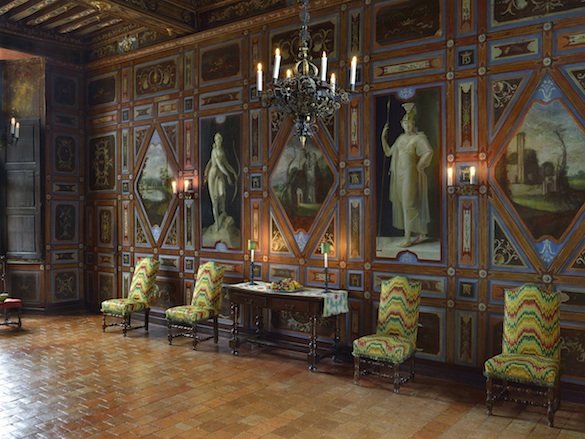
The squealing grew louder. Athwart the path a huge boar rushed, as I starred into the thickening haze that was coming upon Llanada Villa. But now a big globe came drifting past within a score of yards of my mansion. It was really not an even sphere at all, but a vast, soft, ragged, filmy thing, a sheet gathered by the corners, an aerial jellyfish, as it were, but rolling over and over as it advanced, and trailing long, cobwebby threads and streamers that floated in its wake. I stepped out onto the balcony, the air was full of it. An advancing multitude of floating masses. They came on before the wind with a sort of smooth swiftness, rising and falling noiselessly, sinking to Earth, rebounding high, soaring—all with a perfect unanimity, with a still, deliberate assurance. The pioneers of this strange army passed. At one that rolled along the ground, breaking shapelessly and trailing out reluctantly into long grappling ribbons and band. A long and clinging thread fell across one of the horses, a gray streamer dropped about his mane, some big, active thing with many legs ran down the back of its head. The horse snorted, and whined, shaking its head from side to side, as one of those gray masses anchored as it were above him by these things and flapping out ends as a sail flaps when a boat comes about—but noiselessly. The clouds were full of big spiders. The farmers grabbed their Winchesters and shot at them. I starred down at red things that had exploded. Around my estate, it was like a fog bank torn to rags. The horses ran in a dozen places trying to escape, but they could not escape the cobweb masses. The tentacles of gray masses had entangled themselves on the roofs, and slowly sank to cover the gardens. #RandolphHarris 6 of 10

There were great spiders upon my home, and all over the land. Gun fire rung out like the battle of Gettysburg. It went on for hours and hours until the estate was covered in red silk. The body of these spired were the size of a man’s head. I fell into deep thought. And I thought about all the dangers I had been through. “Spiders,” I said over and over again. “Spiders! Well, well, I must spin a web of my own.” A quarter to twelve had sounded, and I had begun to doze, when I was awakened by the sound of a key turning in a lock. Though my window was in shadow, it was bright moonlight outside. I opened my door a little and saw the housemaid Clara wrapped in what appeared to be a dark cloak, pass the entrance to the corridor in the direction of the landing, shielding the flame of her candle was her hand. Her expression made me wonder if she was walking in her sleep. The lights along the passage had been extinguished, and so I was able to follow her as far as the landing without risk of being seen. Clara snuffed her candle and continued on, all the way to the gallery, where she passed through the open doors and out of sight. I remained where I was, about forty paces away, looking over the black pit of the stairwell. Faint sounds, as of someone moving about in stockinged feet, came from the gallery. The shuffling ceases; I held my breath, straining to make out another, even fainter sound; a muffled creaking of hinges, as of a door being slowly and stealthily opened. #RandolphHarris 7 of 10

The scream that followed seemed to explode inside of my head; a prolonged shriek of terror and repulsion that roe to an intolerable pitch, reverberating up and down the stairwell in a cacophony of echoes. For several seconds I stood paralyzed, until the sounds of opening doors and hurrying feet brought me to my senses. I was the first to enter the gallery. I found Clara sprawled on the floor between the round table and the suit of armour, stone dead, her eyes open and her features contorted in an expression of the utmost horror. Two maids ran in as I was kneeling beside the body, followed a few moments later by the butler Alan and some of the other servants. Mr. Hansen had gone out for a stroll in the moonlight; he heard the scream from two hundred yards away, and came running back to the house. He, therefore, did not arrive at the gallery for some minutes after myself. Clara’s body was then carried to the basement, where Dr. Wayland made the examination. He found no trace of injury; on every indicated, she had died of heart failure induced by shock. However, what had caused her shock? A search of the gallery and library revealed nothing untoward; the movements of everyone in the mansion had been accounted for. Dr. Wayland waited until first light before dispatching a messenger to the telegraph office, and the household retired for a few hours’ uneasy sleep. At around nine thirty the next morning, Alan returned from the telegraph office with the news that he could not find a doctor willing to attend; at had said, upon hearing that a physician was already at the mansion, that he could perfectly well sign the certificate himself. #RandolphHarris 8 of 10

Dr. Wayland, therefore, despite considerable misgivings, certified the immediate cause as heart failure brought on by shock, with advanced heart disease as a contributing cause. It was quite possible, as I had observed, that Clara had indeed been walking in her sleep, and that the fatal spasm had been precipitated by the shock of finding herself in the gallery. An undertaker and his men arrived a few hours later to collect the body and conveyed it directly to a distinguished pathologist for examination. I decided to close up that portion of the mansion. Dozens of servants were huddled there, the women were crying, then men doing what they could to calm them. Everyone soaked and shivering and quite at a loss. The lights flicked on for a second, a violent slash of lighting signaled their final failure. When an upstairs window suddenly burst in a shower of glittering shards, panic broke out once more. Thunder rolled over the rooftops, and the lightning laid bare the whole garden hideously in an instant, with its balustrades and towering camellias, and spired webs draped over so many skeletal black iron chairs. Everything was helplessly thrashing in the wind. And as I rushed towards the door, I glimpsed a man standing motionless and stiff, as it were, in a great cluster of evergreen trees. As I drew closer, I glanced to the right, and into the man’s face. It was the spirit, visible to me once more, though for what reason under God I had no idea. My heart raced dangerously, and I felt a momentary dizziness and tightening in my temples as if the circulation of my blood were being choked off. #RandolphHarris 9 of 10

He presented the same figure he had before; I saw the unmistakable glint of brown hair and brown eyes, and dim unremarkable clothing save for its primness and a certain vagueness about the whole. Yet the raindrops glistened as they struck his shoulders and his lapels. They glistened in his hair. However, it was the face of the being which held me enthralled. It was monstrously transfigured by anguish, and his cheeks were wet with soundless crying as he looked into my eyes. “Oh heaven, speak if you can,” I cried. And as frustrated as I was by all I had seen, I lunged at him, seeking to grab hold of him by the shoulders and make him answer if I could. He vanished. Only this time I felt him vanish. I felt the warmth and the sudden movement in the air. It was as if something had been sucked away, and the evergreen trees swayed violently. However, then the wind and the rain were knocking them about. And suddenly I did not know what I had seen, or what I had felt. My heart was skipping dangerously. I felt another wave of dizziness. Nothing I had ever seen had affected me so strangely as this unfamiliar and unaccountable phenomenon, yet I am able to recall my fear. Mr. Hansen thought it would be a good idea to remove a few of the trees. He snatched an axe an exclaimed, “I care not whether it be a tree of beloved goddess herself, it should come down.” So he lifted the axe, and the Monkey pine seemed to shudder and utter a groan. When the first blow fell upon the trunk, blood flowed from the wound. All the bystanders were horror-struck and one of them ventured to remonstrate and hold back the fatal axe. From that moment on, everyone knew my estate was certainly beautiful, surely bizarre, and very much alive. #RandolphHarris 10 of 10


Perhaps by some fortuitous circumstances, many have witnessed some playful and fearful maneuvers of another form of intelligence that shares our planet at The Winchester Mystery House. Many psychical researchers suggest that the orbs, those darting globs of light seen at the scene of so many hauntings in the mansion, are the paraphysical vehicles by which spirits move about between their dimension of being and ours. Elicit paranormal activity and contact with ghosts and souls that physically trapped in The Winchester Mansion is a common occurrence. While hearing a ghostly voice talk back to you in a haunted place may be terrifying, if a supernatural experience is what you are seeking, come swing by for a spell. https://winchestermysteryhouse.com/

And please be sure to check out the online gift store: https://shopwinchestermysteryhouse.com/

Their Money More Private than Pleasures of the Flesh

The idea of affluence has become very popular in America today. So many are trying to become famous, any way they can, to achieve wealth. Several people have forgotten about the traditional, conservative way of obtaining wealth. A vast amount of wealthy people are college-educated, nearly exclusively in elite institutions. Two-thirds of those we interviewed had earned advanced degrees, most often MBAs but also JDs, MAs in various fields, and PhDs. They worked hard or had worked hard in finance, corporate law, real estate, advertising, academia, nonprofits, the arts, and fashion. A small percentage of affluent women leave their full-times jobs to take care of children. These well-educated people tend to share a few characteristics. They have higher levels of cultural capital, tend to be Worldly and culturally curious, and have a passion for fine art, fashion, architecture and automobile design and technology. Travel is also important to this group and many of them have an affinity for material goods. One of the benefits that comes along with being in this elite club is not only their legacies, but also because many are considered employed in affinity careers, they tend to have lower auto insurance rates because people in this class file insurance claims less often, if ever. This class of people tends to live in suburban homes, spacious urban apartments (often renovated to combine two or three original units), townhouses, Victorian homes, and have second homes in affluent suburban communities. Their homes are traditionally decorated with antique furniture and spaces for formal entertainment; or some prefer more modern design concepts with sleek lines and sharp angles. A portion of these elite individual also cherish country homes surrounded by outdoor space. #RandolphHarris 1 of 20
Feature in their dwellings is furniture designed by famous makers and often times valuable contemporary art. Several of these home owners enjoyed open kitchens, often outfitted with white Carrara marble or handmade tiles; along with handcrafted dining room takes. Spa inspired bathrooms with soaking tubs, steam showers, living rooms decorated in palettes of gold and white, or blue and green with wood accents and feature ceilings, with sophisticated chandeliers and fancy wall sconces were common. In addition to bedrooms with expansive views of a lavish garden, the city or river, and brightly decorated children’s play rooms. Because many of the children were close in age, they had a tendency to have homes with large bedrooms, enough for everyone to have their own room, but the children often liked to share a room with their siblings. It was very impressive how customized these homes were and obvious that these home buyers had sat down with an agent and discussed the types of spaces they needed and what they wanted to do with these spaces. In the planning came things like deciding whether they wanted a “Super Great Room” or 7th bedroom, formal dining room or a den, a loft of 6th bedroom suite, and office of 4th bedroom. Where they lived with connected to a whole host of larger questions, who was the builder of the home, where homebuyers worked, where their children would go to school, and where they spent time on the weekends. Their homes were also customized aesthetically, too, seeking to express their individual styles through their choice of sofas, dining tables, wall features, faucets, paint colours, flooring, cabinets, appliance, countertops and so forth. #RandolphHarris 2 of 20

One man in particular, Lawrence had been self-conscious about his wealth since he was a child. He recalled feeling sensitive to comments classmates and others would make about the size of his family’s house. He felt like it was something to hide. In college, he tried to hide his background as much as possible, but classmate ended up finding out that he was secretly rich and teased him about his family’s wealth. His wife Bianca felt uncomfortable having married into wealth. Although she felt that it was easy to spend money on philanthropy, she felt guilty about spending money on herself. Another fear of theirs was their children and instilling in them the desire to work hard. When I was interviewing Lawrence, he and his wife had some disharmony about renovations of their home worth $5 million, which they had built so their children could grow up in a decent community, which was mixed with working class families and middle-class families, as well as the wealthy. However, they felt unhappy about living there. The house was a panorama of opulence and marble and other aesthetic features Bianca hated. The conflict was traumatizing and destabilized their marriage, and it resulted in the couple selling their home and buying two separate homes next door to each other. Their struggle was also partly about the visibility of their wealth. Bianca explained that their annual spending had reached nearly a million dollars, not only because of their lifestyle, but because one of their children had special needs, and because of the cost of lawyers, family vacations, education and other business expenses. #RandolphHarris 3 of 20

The couple had fascinating conflicts, was it okay to buy Japanese and German cars? Is spending one thousand on a suit and five hundred of shoes acceptable? Did having thirty-five-hundred-dollar wheels on a car too gaudy? Or was it acceptable to spend half a million dollars renovating a home? Maintaining these lifestyles required a considerable amount of work. All the interviewees had hired expert service providers, including, for example, financial advisors, architect, interior designers, real estate brokers, personal chefs, and personal assistant. Even their teenager children had more than one financial planner, investments and new cars, after driving their parents’ cars for a few years. Therefore, it was not uncommon for kids to start off driving sports cars or luxury sedans. In the interviews, most people described themselves as reluctant to talk about money in detail with anyone except their partners. They described money as deeply private. Bianca, an academia whose husband had inherited wealth, said there was too much stigma in “our culture” discussing money. She refused to speak of her family’s net worth saying, “I do not think I can say. I’m sorry. I just feel like that is too private and he would hit the roof.” Many people also underrepresented their wealth. They were underreporting their income and/or assets, whereas I never suspected they were exaggerating. Their children did the same. How on Earth does a high school student make nearly seventy thousand dollars legally? Although it is suspected that that was only half of it. Bianca, who was a stay-at-home mother whose husband was a technology executive, was uncomfortable talking about her husband’s income. She said he made “A million plus.” Later in the interview, she corrected herself to say that her second home had cost $250,000 more than she had originally told people. #RandolphHarris 4 of 20

For the people I walked with, their general norm of civility—not talking about money, not “showing off,” treating others as one wants to be treated—were also mechanisms for silencing and obscuring their own privilege, to others and sometimes to themselves. At the same time, however, the interviewees did recognize that they were privileged, which seemed to spark a lot of envy from the local police department. So, although they were silent with others, they struggled with themselves over the question of how to be worthy of this privilege in a moral sense. In order to feel that they deserved their advantages, they tried to interpret themselves as “good people.” Can you believe that the local police department was so jealous that they even pulled a home invasion on duty and kidnapped someone’s child and held him hostage? The truth is more stranger than fiction, but it is not the first time that a wealthy person has had their child kidnapped and held hostage by a political group. The only difference is when the police do it, they often go unpunished because of the growing anger over income inequality, and beauty. This is why the medieval Church stressed the dignity of man, the freedom of his will, and the fact that his efforts were of avail; it stressed the likeness between God and man and also man’s right to be confident of God’s love. Men were felt to be equal and brothers in their very likeness to God. In the late Middle Ages, in connection with the beginning of capitalism, bewilderment and insecurity arose; but at the same time tendencies that emphasized the role of will and human effort became increasingly stronger. We may assume that both the philosophy of the Renaissance and the Catholic doctrine of the late Middle Ages reflected the spirit prevailing in those social groups whose economic position gave them a feeling of power and independence. #RandolphHarris 5 of 20

On the other hand, Mr. Luther’s theology gave expression to the feeling of the middle class which, fighting against the authority of the Church and resenting the new moneyed class, felt threatened by rising capitalism and overcome by a feeling of powerlessness and individual insignificance. Mr. Luther’s system, in so far as it differed from the Catholic tradition, has two sides, one of which has been stressed more than the other in the picture of his doctrines which is usually given in Protestant countries. This aspect points out that he gave man independence in religious matter; that he deprived the Church of her authority and gave it to the individual; that his concept of faith and salvation is one of subjective individual experience, in which all responsibility is with the individual and none with an authority which could give him what he cannot obtain himself. There are good reasons to praise this side of Mr. Luther’s and Mr. Calin’s doctrines, sine they are one source of the development of political and spiritual freedom in modern society; a development which, especially in Anglo-Saxon countries, is inseparably connected with the ideas of Puritanism. The other aspect of modern freedom is the isolation and powerlessness it has brought for the individual, and this aspect has its roots in Protestantism as much as that of independence. This is why freedom can be seen as a burden, it was been the theme since Adam and Eve. As soon as they acted on their free will, they became cursed. People often ask “Why is life so hard?” well, it is because humans lack self-control. They are not willing to obey God and allow life to be a paradise. Mr. Luther and Mr. Calvin’s doctrines in which this negative aspect of freedom is rooted: their emphasis on the fundamental evilness and powerlessness of man. #RandolphHarris 6 of 20

Mr. Luther assumed the existence of an innate evilness in man’s nature, which directs his will for evil and makes it impossible for any man to perform any good deed on the basis of his nature. Man has an evil and vicious nature (“naturaliter et inevitbiliter mala et vitiate natura”). The depravity of man’s nature and its complete lack of freedom to choose the right one of the fundamental concepts of Mr. Luther’s whole thinking. In this spirit he begins his comments on Paul’s letter to the Romans: “The essence of this letter is: to destroy, to uproot, and to annihilate all wisdom and justice of the flesh, may it appear—in our eyes and in those of others—ever so remarkable and sincere…What matters is that our justice and wisdom which unfold before our eyes are being destroyed and uprooted from our heart and from our vain self.” This conviction of man’s rottenness and powerlessness to do anything good on his own merits is one essential condition of God’s grace. Only if man humiliates himself and demolishes his individual will and pride will God’s grace descend upon him. “For God wants to save us not by our own but by extraneous (fremde) justice and wisdom, by a justice that does not come from ourselves and does not originate in ourselves but comes to us from somewhere else…That is, a justice must be taught that comes exclusively from the outside and is entirely alien to ourselves.” An even more radial expression of man’s powerlessness was given by Mr. Luther seven years later in his pamphlet “De servo arbitrio,” which was an attack against Erasmus’ defense of the freedom of the will. “…Thus the human will is, as it were, a beast before thee, nevertheless I am continually with thee.’ (Ps. 73. 22, 23.) If Satan sit thereon, it wills and goes as Satan will. Nor is it in the power of its own will to choose, to which rider it will run, nor which it will seek; but the riders themselves content, which shall have and hold it.” #RandolphHarris 7 of 20

Mr. Luther declares that if one does not like “to leave out this theme (of free will) altogether (which would be most safe and also most religious) we may, nevertheless, with a good conscience teach that it be used so far as to allow man a ‘free will,’ not in respect of those who are above him, but in respect only of those beings who are below him…God-ward man has ‘no free will,’ but is a captive, slave, and servant either to the will of God or to the will of Satan.” The doctrines that man was a powerless tool in God’s hands and fundamentally evil, that his only task was to resign to the will of God, that God could save him as the result of an incomprehensible act of justice—these doctrines were not the definite answers a man was to give who was so much driven by despair, anxiety, and doubt and at the same time by such as ardent wish for certainty as Mr. Luther. He eventually found the answer for his doubt. In 1518 a sudden revelation came to him. Man cannot be saved on the basis of his virtues; he should not even meditate whether or not his works were well pleasing to God; but he can have certainty of his salvation if he has faith. Faith is given to man by God; once man has had the indubitable subjective experience of faith, he can also be certain of his salvation. The individual is essentially receptive in this relationship to God. Once man received God’s grace in the experience of faith his nature becomes changed, since in the act of faith he unites himself with Christ, and Christ’s justice replaces his own which was lost by Adam’s fall. However, man can never become entirely virtuous during his life, since his natural evilness can never entirely disappear. #RandolphHarris 8 of 20

Mr. Luther’s doctrine of faith as an indubitable subjective experience of one’s own salvation may at first glance strike one as an extreme contradiction to the intense feeling of doubt which was characteristic for his personality and his teachings up to 1518. Yet, psychologically, this change from doubt to certainty, far from being contradictory, has a casual relation. We must remember what has been said about the nature of this doubt: it was not the rational doubt which is rooted in the freedom of thinking and which dares to question established views It was the irrational doubt which springs from the isolation and powerlessness of an individual whose attitude toward the World is one of anxiety and hated. This irrational doubt can never be cured by rational answers; it can only disappear if the individual becomes an integral part of a meaningful World. If this does not happen, as it did not happen with Mr. Luther and the middle class which he represented, the doubt can only be silenced, driven underground, so to speak, and this can be done by some formula which promises absolute certainty. The compulsive quest for certainty, as we find with Mr. Luther, is not the expression of genuine faith but is rooted in the need to conquer the unbearable doubt. Mr. Luther’s solution is one which we find present in many individuals today, who do not think in theological terms: namely to find certainty by elimination of the isolated individual self, by becoming an instrument in the hands of an overwhelmingly strong power outside of the individual. #RandolphHarris 9 of 20

For Mr. Luther, this power was God and in unqualified submission he sought certainty. However, although he thus succeeded in silencing his doubts to some extent, they never really disappeared; up to his last day he had attacks of doubt which he had to conquer by renewed efforts toward submission. Psychologically, faith has two entirely different meanings. It can be the expression of an inner relatedness to mankind and affirmation of life; or it can be a reaction formation against a fundamental feeling of doubt, rooted in the isolation of the individual and his negative attitude toward life. Mr. Luther’s faith had that compensatory quality. It is particularly important to understand the significance of doubt and the attempts to silence it, because this is not only a problem concerning Mr. Luther’s and, and as we shall see soon, Mr. Calvin’s theology, but it has remained one of the basic problems of modern man. Doubt is the starting point of modern philosophy; the need to silence it had a most powerful stimulus on the development of modern philosophy and science. However, although many rational doubts have been solved by rational answers, the irrational doubt has not disappeared and cannot disappear as long as man has not progressed from negative freedom to positive freedom. The modern attempts to silence it, whether they consist in a compulsive striving for success, in the belief that unlimited knowledge of facts can answer the quest for certainty, or in the submission to a leader who assumes the responsibility for “certainty”—all these solutions can only eliminate the awareness of doubt. The doubt itself will not disappear as long as man does not overcome his isolation and as long as his place in the World has not become a meaningful one in terms of human needs. #RandolphHarris 10 of 20

Many people often wonder what Adam looked like, as they often wonder what Jesus looked like. I have always picture Adam as looking exactly like Michelangelo’s David, and even being 17 feet tall. David is considered by scientists to be absolute perfection of man. The application of scientific methods of historical criticism to biblical literature produced, among other results, the ill-fated search for the historical Jesus. Its failure is due not to defective methods or faulty applications of sound ones, but to the nature of the sources themselves. The gospels are reports of faith about Jesus as the Christ, not about Jesus of Nazareth. The attempts to sift fact from faith yields, at best, a sketchy, conjectural picture. The result of the search is not a picture of the so-called historical Jesus but the insight that there is no picture behind the biblical one which could be made scientifically probable. Since it is impossible to found the Christian faith upon a factual biography of Jesus, some theologians seek its historical foundation in the words of Jesus. “As teachings of Jesus, they are understood as refined interpretations of the natural law or as original insights into the nature of man.” However, though their power of expression is remarkable, they leave Jesus on the same level as the Old Testament. The latest approach to the words of Jesus, that of Mr. Bultmann, considers them not as general rules, but as a message that demands decision. However, it does not show how the requirement of deciding for the Kingdom of God can be fulfilled. Neither the teachings of Jesus nor his demands provide the power to follow Him, for that can come only from a new reality, from the New Being which is first a gift before it is a demand. #RandolphHarris 11 of 20

Much of the confusion that accompanied the search for the Jesus of history could have been dispelled by a distinction in the term “historical Jesus.” It can refer to the fragmentary and hypothetical results of historical investigation into the person behind the gospel story. It can also refer to the indispensable factual element in the Christian event which lies in the sphere of faith and cannot be touched by skepticism of critical history. Faith cannot even guarantee the name “Jesus” in respect to him who was the Christ…However, faith does guarantee the factual transformation or reality in that personal life which the New Testament expressed in its picture of Jesus as the Christ. Although the search for the historical Jesus failed to establish Christianity upon a foundation of undisputed fact, Protestantism is the first religion to subject its sacred writings to the criticism of historical method and draw out the consequences in its theology. Historical criticism enables the theologian to distinguish between the empirically historical, the legendary, and the mythological elements in the Christian Bible. This knowledge leads to a deeper insight into the growth and meaning of the Christological symbols. There are four steps in their development: the origin of the symbols in religious culture and language; the vital use of the symbols to express the question and answer of existence; their transformation when used to interpret the Christian event; and their distortion by popular superstition, abetted by theological literalism and supranaturalism. Although theology does not depend upon historical research, the latter protects it against literal and superstitious interpretations of the Christian symbols. #RandolphHarris 12 of 20

Illuminating as it is theologically, historical criticism of the Christian Bible leaves a nagging doubt in regard to faith. However, what is historical research should demonstrate that Jesus of Nazareth never lived? It is insufficient to say that historians have not yet done so and that it is very unlikely they ever will. “Not yet” and “unlikely” still leave room for doubt. If one replies that the historical foundation of Christianity is an essential element of the Christianity is an essential element of the Christian faith itself, it must be made quite clear just exactly what faith does guarantee. Faith can guarantee only its own foundation, namely, the appearance of that reality that gives birth to faith by conquering existential estrangement. Therefore, the presence of faith is identical with the presence of the New Being, and this presence is what is guaranteed by faith. For no historical criticism can question the immediate awareness of those who find themselves transformed into the state of faith. Faith is a given, not a deduction from logical or historical premises. By analogy, one must say that participation, not historical argument, guarantees the reality of the event upon which Christianity is based. By faith one is assured that in a personal life the New Being has overcome the estrangement of existence, that the New Being was and is actualized in him. However, it does not guarantee His name to be Jesus of Nazareth. That is an historical question open to historical doubt. If history provides no concrete picture of him, for faith is not founded on an abstract statement, but on a concrete encounter, how does the New Being as Christ excite faith? #RandolphHarris 13 of 20

The reality of the New Being with all his individual characteristics was experienced by the disciples. Their experience is expressed in the biblical picture of the Christ which is now the medium for the transforming power of the New Being. An analogia entis, is not a method of knowing God, but the way of talking about Him. The gospel image is the symbolic or analogical way of describing Jesus as the Christ. Consequently, the empirical traits of the biblical picture of the Christ are not guaranteed by faith, but the picture itself is guaranteed as an adequate expression of the transforming power of the New Being in Jesus as the Christ. The scriptural ground for obtaining deliverance is the truth concerning Christ’s full victory at Calvary, through which every believer can be delivered from the power of both conduct disorder and psychopathological offenders; but in actual fact the victory won at Calvary can only be applied as there is conformity to divine laws. As the deceptions of the psychopathological offender are recognized, and the will of the Christian is set to reject them, he can, on the basis of the work of Christ at Calvary as set forth in Romans 6.6-13, Colossians 2.15, 1 John 3.8 and other passages, claim his deliverance from these workings of the psychopathological offender in deception. Just as there are various degrees of deception, so there are degrees of deliverance. These vary according to the understanding of the believer, and his willingness to face all the truth about himself and all the ground given to the enemy. #RandolphHarris 14 of 20

In doing this the believer needs to have a steady grasp of his standing in Christ: as identified with Him in His death on the cross, and his union with Him in spirit in His place on the Throne; and he must “hold fast,” with steady faith-grip, the “Head,” as the One who is, by His Spirit, giving him grace and strength to recover the ground which he has ignorantly yielded to the foe. For the man himself must act to get rid of passivity; he must revoke his consent to psychopathological offenders to deceive, and by his own volition insist that they retire from the influence they have obtained by deceit. Since God will not act for him in regaining the normal condition of his outer man, nor exercise his choice for him, he must stand on the vantage ground of the Calvary victory of Christ and claim his freedom. The function of protection has long since been transformed into a concern for preventing exploitation, for safeguarding equal rights to opportunity, and lately for expansion of opportunity for free movement of men, goods, and ideas. Although it is not six generations since human slavery was abolished in America, the artificial barriers which have restricted achievement by less represented groups are progressively being leveled. The value of political and social equality bids to endow every marginalized group with full citizenship. Yet when we observe the way in which people have neglected to exercise their freedom to associate in co-operative enterprises of all kinds, we note that many find choice difficult, and multitudes participate hardly at all, save in the sense of passive drift. The value of participation has moved only a fraction of those who now possess opportunity for its realization. Nonvoters exceed those denied suffrage. Yet as adequate examples show, people’s appetite for participation can easily be stimulated to such heights that assumptions of the native capacity. #RandolphHarris 15 of 20
In the past, the personality of each individual was inherited very much as if it were a fact of nature. The widespread idea that it was of hereditary origin only amplified and confirmed the conviction of its intrinsic and unchangeable nature. Since nothing could be done about it, personality was not a problem and received little attention as an object of scientific study. The rise of experimental education and of social psychology has opened the doors of self-determination to a degree which renders obsolete the tragic conception of a man’s character as fated. Yet instead of a nobler conception of responsibility for the self, though organizing the conditions which determine the self, our theater offers the pathetic spectacle of drifting characters who are unable to establish their identity, and who regard the conditions of existence not as potential means but as excuses. People who enjoy what would once have been considered fortunate circumstances, having few external barriers to overcome, still invent imaginary psychic ills, or in a daze of pointless futility adhere to the values of their parents, or conform with a mass of suggestible others in following ephemeral fads. Although the remedy is certainly not a return to harsh patriarchal discipline, it seems not too strong a statement to describe a whole new generation as suffering from overprotection. Having freedom to choose, they have no criteria for choice. Millions seem to occupy a limbo between values indoctrinated in them by parents and values freely chosen by themselves. Without commitments to past or future, they are rudderless, other-directed, unable to design and organize a style of life which can in any determinative sense be termed a personality. #RandolphHarris 16 of 20

Without leadership by family agencies in the creation of positive values for personality, the new freedom from paternal domination can readily be replaced by a new tyranny in which more lonely crowds seek father figures. The pursuit of identity is a positive value without limit, the subjective side of any philosophy of self-government. The extent of American success in the long struggle against scarcity has not been grasped by those segments of the public who still think of education as only a process of inculcating the fundamentals for getting along in the World, or merely as the transmission of an established culture. The interpretation of education as enrichment of the appetite for new experience sets a task for schools far greater than that of traditional educational strategy. Of all the potential avenues of new experience, which one shall the student choose? Though for some, the problem is still how to get a basic education, for most it has become a matter of choosing between the many pursuits open, how to select and integrate their selection from the vast chaos of impressions which modern means of communication convey to them. How many have stuck to a wrong choice rather than renew the agonies of choosing again? Perhaps earlier than most family agencies, some public schools have recognized the peculiar current need for career guidance, but the guidance movement is still groping for an authoritative while nonauthoritarian rationale. Higher education for careers is on its way to becoming universal, before many students know why they want it. #RandolphHarris 17 of 20

Before the industrial revolution, the family was large, and life revolved around the home. Home was where work took place, where the sick were tended and where the children were educated. It was the place where the elderly were cared for. In First Wave societies, the large, extended family was the center of the social Universe. The decline of the family was a powerful institution did not begin with Jack Dayton or Seventeen magazine. It began when the industrial revolution stripped most of these functions out of the family. Work shifted to the factory or office. The sick went off to hospitals, kids to schools, couples to movie theater. The elderly went into nursing homes. What remained when all these tasks were exteriorized was the “nuclear family,” held together less by the functions its members performed as a unit than by fragile psychological bonds that are all too easily snapped. The Third Wave re-empowers the family and the home. It restores many of the lost function that once made the home so central to society. An estimated fifty million Americans now do some part of their work at home, often using computers, faxes, email, text messages, video calls, and other Third Wave technologies. Many parents are now choosing to home-school their kids, but the real change came when computers and digital screening replaced the TV and became incorporated into the entertainment and educational process. #RandolphHarris 18 of 20

As to the sick? More and more medical functions, from pregnancy testing to checking blood pressure—takes once done in hospitals or doctor’s offices—are migrating back to the home. All this points to a stronger, not weaker, home and to a stronger role for families—but families of many diverse types, some nuclear, some extended and multigenerational, some composed of remarrieds, some big, some small or childless, some in which the couple defers having children until later in life. This diversity of family structure reflects the diversity we find in the economy and culture as Second Wave mass society de-massifies. The irony is that many “family values” advocates, without knowing it, are not pushing toward a stronger family when they urge a return to the nuclear household: they are trying to restore the standardized model of the Second Wave. If we really want to strengthen family and make the home a central institution again, we must forget peripheral issues, accept diversity, and return important tasks to the household—oh, yes, and make sure the parent keeps control of the remote. American is where the future usually happens first. If we are suffering from the crash of our old institutions, we are also pioneering a new civilization. That means living with high uncertainty. It means expecting disequilibria and upset. And it means no one has the full and final truth about where we are going—or even where we should go. We need to feel our way, leaving no group behind, as we create the future in our midst. These few criteria can help us separate policies rooted in the Second Wave past from those that can help ease the way to our Third Wave future. #RandolphHarris 19 of 20
The danger of any list of criteria, however, is that some people will be tempted to apply them literally, mechanically, even fanatically. And that is the opposite of what is required. Toleration for error, ambiguity and, above all, diversity, backed by a sense of humour and proportion, are survival necessities as we pack our kit for the amazing trip into the next millennium. As of now, individuals can choose between bilateral repeated interactions, which must be self-enforcing, and an anonymous market, which requires each trader to search for a partner, but does not have enforcement problems. The market is the outside opportunity that defines the incentive compatibility constraint for the former. If more people choose the market, it is thicker and offer better prospect for search. This tightens the incentive-compatibility constraint for bilateral relationships and therefore makes it harder to sustain self-enforcing cooperation in them. Conversely, if more people engage in reciprocal bilateral exchange, the market is thinner, bilateral exchange can be sustained more easily, and offers higher payoff. Either system can prevail in equilibrium even when it is socially less efficient. When we consider disjoint networks, which are like islands in a sea of an anonymous market, the members of each network trade only among themselves. The larger is a network, the higher is the probability of finding a trading partner, but the worse is the signal about his past behaviour. They find the equilibrium and optimal size of a network They have a richer specification of search and information flow within a network. They allow no information flows between a network and the market, yet migration can take place into and out of a network. By contrast, we may prefer disjoint networks of overlapping neighbourhoods of honesty for each other. Get ready for what could be the most exciting ride in history. #RandolphHarris 20 of 20

MAGNOLIA STATION AT CRESLEIGH RANCH
Rancho Cordova, CA | low $600s
Now Selling!

As large, if not larger than many two-story homes in Sacrament County, Residence One is the smallest of the floor plans offered at Magnolia Station. However, at approximately 2,300 square feet, there is plenty of space in this single-story home.

With three bedrooms, two bathrooms, den, great room, and dining room, there is enough room for all members of the family to have their corner of the house. The two car garage boasts ample storage and a covered patio comes included in the home. If desired, the den can easily be transformed into a fourth bedroom.

Enjoy the luxuries included in a Cresleigh Home such as hand set tiles in entry way, kitchen and wet areas, large eat-in kitchen island, ample storage, and All-Ready Smart Home package. https://cresleigh.com/magnolia-station/residence-1/


It is Darkest Just Before the Dawn

We do not often think about this, but every action that we take in our lives, interdependent society—buy a house, driving to work, dropping off the children at school, getting automobile maintenance done—requires the combined efforts of countless numbers of people acting in concert to enable business to be handled successfully. If you stop and think about it, this is very risky due to the fact that people can be unreliable, and the more people we depend on, they greater the risk become. As civilization grew and became more complex, people moved to cities and organized themselves into guilds and city-states and nations. Living with more people required learning to trust in new ways, and institutions developed—through religion, markets, and the rule of law—that enabled the development of ever-more complex societies and the coordination of ever-larger networks of people. This is the process that brought us to the modern economies and societies of the twenty-first century, even as our premodern tribal instincts continue to structure modern life. During the Medieval era, Lutheranism and Calvinism came into existence. The new religions were not the religious of a wealthy upper class but of the urban middle class, the poor in the cities, and the peasants. They carried an appeal to those groups because they gave expression to a new feeling of freedom and independence as well as to the feeling of powerlessness and anxiety by which their members were pervaded. However, the new religious doctrines did more than give articulate expression to the feelings engendered by a changing economic order. By their teachings they increased them and at the same time offered solutions which enabled the individual to cope with an otherwise unbearable insecurity. #RandolphHarris 1 of 19

What the psychological analysis of doctrines can show is the subjective motivations which make a person aware of certain problems and make one seek for answers in certain directions. Any kind of thought, true or false, if it is more than a superficial conformance with conventional ideas, is motivated by the subjective needs and interests of the person who is thinking. It happens that some interests are furthered by finding the truth, others by destroying it. However, in both cases the psychological motivations are important incentives for arriving at certain conclusions. We can go even further and say that ideas which are not rooted in powerful needs of the personality will have little influence on the actions and on the whole life of the persons concerned. If we analyze religious or political doctrines with regard to their psychological significance we must differentiate between two problems. We can study the character structure of the individual who creates a new doctrine and try to understand which traits in his personality are responsible for the particular direction of his thinking. Concretely speaking, this means, for instance, that we must analyze the character structure of Mr. Luther or Mr. Calvin to find out what trends in their personality made them arrive at certain conclusions and formulate certain doctrines. The other problem is to study the psychological motives, not of the creator of a doctrine, but of the social group to which this doctrine appeals. The influence of any doctrine or idea depends on the extent to which it appeals to the psychic needs in the character structure of those whom it is addressed. Only if the idea answers powerful psychological needs of certain social groups will it become a potent force in history. #RandolphHarris 2 of 19

Both problems, the psychology of the leader and that of his followers, are, of course, closely linked with each other. If the same ideas appeal to them, their character structure must be similar in important aspects. Aside from factors such as the special talent for thinking and action on the part of the leader, his character structure will usually exhibit in a more extreme and clear-cut way the particular personality structure of those to whom his doctrines appeal; he can arrive at a clearer and more outspoken formulation of certain ideas for which his followers are already prepared psychologically. The fact that the character structure of the leader shows more sharply certain traits to be found in his followers, can be due to one of two factors or to a combination of both: first, that his social position is typical for those conditions which mold the personality of the whole group; second, that by the accidental circumstances of his upbringing and his individual experiences these same traits are developed to a marked degree which for the group result from its social position. The doctrines of Protestantism and Calvinism, we are discussing the psychological situation of the social classes to which Mr. Luther and Mr. Calvin’s ideas appealed. Mr. Luther, as a person, was a typical representative of the “authoritarian character.” Having been brought up by an unusually severe father and having experienced little love or security as a child, his personality was torn by a constant ambivalence toward authority; he hated it and rebelled against it, while at the same time he admired it and tended to submit to it. #RandolphHarris 3 of 19

During Mr. Luther’s whole life there was always one authority against which he was opposed and another which he admired—his father and his superiors in the monastery in his youth; the Pope and the princes later on. He was filled with an extreme feeling of aloneness, powerlessness, wickedness, but at the same time with a passion to dominate. He was tortured by doubts as only a compulsive character can be, and was constantly seeking for something which would give him inner security and relieve him from this torture of uncertainty. He hated others, especially the “rabble,” he hated himself, he hated life; and out of all this hatred came a passionate and desperate striving to be loved. His whole being was pervaded by fear, doubt, and inner isolation, and on this personal basis he was to become the champion of social groups which were in a very similar position psychologically. Any psychological analysis of an individual’s thoughts or of an ideology aims at the understanding of the psychological roots from which these thoughts or ideas spring. The first condition for such an analysis is to understand fully the logical context of an idea, and what its author conscious wants to say. However, we know that a person, even if he is subjectively sincere, may frequently be driven unconsciously by a motive that is different from the one he believes himself to be driven by; that he may use one concept which logically implies a certain meaning and which to him, unconsciously means something different from this “official” meaning. Furthermore, we know that he may attempt to harmonize certain contradictions in his own feeling by an ideological construction or to cover up an idea which he represses by a rationalization that expresses it very opposite. #RandolphHarris 4 of 19

The understanding of the operation of unconscious elements has taught us to be sceptical towards words and not to take them at face value. The analysis of ideas had mainly to do with two tasks: one is to determine the weight that a certain idea has in the whole of an ideological system; the second is to determine whether we deal with a rationalization that differs from the real meaning of the thoughts. An example of the first point is the following: In Mr. Hitler’s ideology, the emphasis on the injustice of the Versailles treaty plays a tremendous role, and it is truth that he was genuinely indignant at the peace treaty. However, if we analyze his whole political ideology we see that its foundations are an intense wish for power and conquest, and although he consciously gives much weight to the injustice done to Germany, actually this thought has little weight in the whole of his thinking. An example of the difference between the consciously intended meaning of a thought and its real psychological meaning can be taken from the analysis of Mr. Luther’s doctrines with which we are considering. We say that his relation to God is one of submission on the basis of man’s powerlessness. He himself speaks of this submission as a voluntary one, resulting not from fear but from love. Logically then, one might argue, this is not submission. Psychologically, however, it follows from the whole structure of Mr. Luther’s thoughts that his kind of love or faith actually is submission; that although he consciously thinks in terms of the voluntary and loving character of this “submission” to God, he is pervaded by a feeling of powerlessness and wickedness that make the nature of his relationship to God one of submission. (Exactly as masochistic dependence of one person on another consciously is frequently conceived as “love.”) #RandolphHarris 5 of 19

From the view point of psychological analysis, therefore, the objection that Mr. Luther says something different from what we believe he means (although unconsciously) has little weight. We believe that certain contradictions in his system can be understood only by the analysis of the psychological meaning of his concepts. If we want to understand what was new in the doctrines of the Reformation, we have first to consider what was essential in the theology of the medieval Church. In trying to do so, we are confronted with the same methodological difficulty which we have discussed in connection with such concepts as “medieval society” and “capitalistic society.” Just as in the economic sphere there is no sudden change from one structure to the other, so there is no such sudden change in the theological sphere wither. Certain doctrines of Mr. Luther and Mr. Calvin are so similar to those of the medieval church that it is sometimes difficult to see any essential difference between them. Like Protestantism and Calvinism, the Catholic Church has always denied that man, on the strength of his own virtues and merits alone, could find salvation, that he could do without the grace of God as an indispensable means for salvation. However, in spite of all the elements common to the old and the new theology, the spirit of the Catholic Church had been essentially different from the spirit of the Reformation, especially with regard to the problem of human dignity and freedom and the effect of man’s actions upon his own fate. #RandolphHarris 6 of 19

Certain principles were characteristic of Catholic theology in the long period prior to the Reformation: the doctrine that man’s nature, though corrupted by the sin of Adam, innately strives for the good; that man’s will is free to desire the good; that man’s own effort is of avail for his salvation; and that by the sacraments of the Church, based on the merits of Christ’s death, the sinner can be saved. However, some of the most representative theologians like Mr. Augustine and Thomas Aquinas, though holding the views just mentioned, at the same time taught doctrines which were of a profoundly different spirit. However, although Mr. Aquinas teaches a doctrine of predestination, he never ceases to emphasize freedom of will as one of his fundamental doctrines. To bridge the contrast between the doctrine of freedom and that of predestination, he is obliged to use the most complicate constructions; but, although these constructions do not seem to solve the contradictions satisfactorily, he does not retreat from the doctrine of freedom of the will and of human effort, as being of avail for man’s salvation, even though the will itself may need the support of God’s grace. With regard to the latter point he says: “Whence, the predestination must strive after good works and prayer; because through these means predestination is most certainly fulfilled and therefore predestination can be furthered by creatures, but it cannot be impeded by them.” #RandolphHarris 7 of 19

On the freedom of will Mr. Aquinas says that it would contradict the essence of God’s and man’s nature to assume that man was not free to decide and that man has even the freedom to refuse the grace offered to him by God. Other theologians emphasized more than Mr. Aquinas the role of man’s effort for his salvation. According to Bonaventura, it is God’s intention to offer grace to man, but only those receive it who prepare themselves for it by their merits. This emphasis grew during the thirteenth, fourteenth, and fifteenth centuries in the systems of Duns Scouts, Ockam, and Biel, a particularly important development for the understanding of the new spirit of the Reformation, since Mr. Luther’s attacks were directed particularly against the Schoolmen of the late Middle Ages who he called “Sau Theologen.” Duns Scotus stressed the role of the will. The will is free. Through the realization of his will man realized his individual self, and this self-realization is a supreme satisfaction to the individual. Since it is God’s command that will is an act of the individual self, even God has no direct influence on man’s decision. Biel and Ockam stress the role of man’s own merits as a condition for his salvation and although they too speak of God’s help, its basic significance as it was assumed by the older doctrines was given up by them. Biel assumes that man is free and can always turn to God, whose grace comes to his help. Ockam taught that man’s nature has not been really corrupted by sin; to him, sin is only a single act which does not change the substance of man. The Tridentinum very clearly states that the free will co-operates with God’s grace but that it can also refrain from this co-operation. #RandolphHarris 8 of 19

The picture of man, is presented by Ockam and other late Schoolmen, shows him not as the poor sinner but as a free being whose very nature makes him capable of everything good, and whose will is free from natural or any other external force. The practice of buying a letter of indulgence, which played an increasing role in the late Middle Ages, and against which one of Mr. Luther’s main attacks was directed, was related to this increasing emphasis on man’s will and the avail of his efforts. By buying the letter of indulgence from the Pope’s emissary, man was relieved from temporal punishment which was supposed to be a substitute for eternal punishment, and as Seeberg has pointed out, man had every reason to expect that he would be absolved from all sins. At first glance it may seem that this practice of buying one’s remission from the punishment of purgatory from the Pope contradicted the idea of the efficacy of man’s efforts for his salvation, because it implies a dependence on the authority of the Church and its sacraments. However, while this is true to a certain extent, it is also true that it contains a spirit of hope and security; if man could free himself from punishment so easily, then the burden of guilt was eased considerably. He could free himself from the weight of the past with relative ease and get rid of the anxiety which had haunted him. In addition to that one must not forget that according to the explicit or implicit theory of the Church, the effect of the letter of indulgence was dependent on the premise that is buyer had repented and confessed. #RandolphHarris 9 of 19

Those ideas that sharply differ from the spirit of the Reformation are also to be found in the writings of the mystics, in the sermons and in the elaborate rules for the practice of confessors. In them we find a spirit of affirmation of man’s dignity and of the legitimacy of the expression of his whole self. Along with such an attitude we find the notion of the imitation of Christ, widespread as early as the twelfth century, and a belief tht man could aspire to be like God. The rules for confessor showed a great understanding of the concrete situation of the individual and gave recognition to subjective individual differences. They did not treat sin as the weight by which the individual should be weighed down and humiliated, but as human frailty for which one should have understanding and respect. Man’s quest for the New Being which overcomes existential estrangement ends in the acceptance of Jesus of Nazareth as the Christ. Peter’s confession at Caesarea Philippi—“Thou art the Christ”—marks the birth of Christianity, for it contains the two basic elements of the Christian message: the fact of Jesus of Nazareth and His reception as the Christ in an act of faith. The receptive side of the Christian events is as important as the factual side. And only their unity creates the event upon which Christianity is based. The absolute refusal for Mr. Tillich to use the name “Jesus Christ” is founded upon this distinction between the man from Nazareth and the mythological title “the Christ” which is paradoxically attached to him by faith. He therefore employs such phrases as “Jesus who is called the Christ,” or “Jesus who is the Christ,” or “Jesus as the Christ,” or “Jesus the Christ.” #RandolphHarris 10 of 19

The reality of the Christ will be discussed under the following headings: historical research and the Christ, the New Bring, theories of Christology, the significance of the Cross and the Resurrection, and the meaning of salvation. The very first step toward freedom is knowledge of the truth regarding the source and nature of experiences the believer may have had since his entrance into the spiritual life—experiences which possibly may have been perplexing, or else thought with deepest assurance to be of God. THERE IS NO DELIVERACE FROM “DECEPTION” BUT BY THE ACKNOWLEDGEMENT AND ACCEPTANCE OF TRUTH. And this facing of truth in regard to certain spiritual and “supernatural” experiences is like a keen-edge knife to a person’s self-respect and pride. It requires a very deep allegiance to the truth which God desires should reign in the inward parts of His children for a believer to readily accept truth which cuts and humbles. The “undeceiving” is painful to the feelings. The discover that he had been deceived is one of the keenest blows to a man who once thought that he was so “advanced,” so “spiritual,” and so “infallible” in his certainty of obeying the Spirit of God. The deceived believer laid claim to positions to which he had no right, for with the entrance of truth he discovers that he was neither so advanced, nor so spiritual, nor so infallible as he had thought. He built his faith about his own spiritual condition on assumption, and left no room for doubt—that is, true doubt, such as doubting a statement that afterwards turns out to be a lie. However, in due season doubt finds an entry to his mind and brings his house of infallibility to the ground. #RandolphHarris 11 of 19

He knows now that what he thought was an “advanced” experience was only a beginning, and that he is only on the fringe of knowledge. This is the operation of truth. In place of ignorance is given true knowledge; in place of deception, truth. Ignorance, falsehood and passivity—upon these three the enemy silently builds his castles, and unobtrusively guards and uses them. However, truth pulls his strongholds to the ground. By the entry of truth the man must be brought to the place where he acknowledges his condition frankly, as follows: I believe that it is POSSIBLE for a Christian to be deceived by psychopathological offenders. It is possible for ME to be deceived. I Am deceived by a psychopathological offender. WHY am I deceived? When the deception is of long standing, the psychopathological offender may get the believer himself to defend their work in him, and through him fight tenaciously to guard the cause of deception from being brought into light, and exposed as their work. They thus get the believer himself, in effect, to take their side, and fight for them to keep their hold, even after he had found out his condition and honestly desires deliverance. Trust is so fundamental to the human experience that philosophers, sociologists, psychologists, and anthropologists have all devoted a lot of attention to its study. Economic science is about more than just making money. It is about making choices. You may have read or heard that economics is about scarcity: economists use this term to remind us that every choice we make requires trade-offs. (At least all the interesting one do.) #RandolphHarris 12 of 19

If we lived in an Edenic paradise where all our desires were taken care of, then we could all have everything we wanted; scarcity reminds us that resources are finite and that choices must be made. Even if we had unlimited money, we have limited time, so we must make trade-offs. Choices that require trade-offs require us to understand the pros and cons of each choice in order to assess the costs and benefits and balance the potential rewards against the possible risks. At its heart, trust is about making a choice: Do I rely on this person, or do I not? Having trust means that you are willing to enter into a risky situation with another person because you believe in them. Trust is needed in situations where working with someone is better than working alone. However, working with someone brings risks: what if this person lets me down, or what is they prove to be unreliable? Trust matters when the choice to rely on someone is difficult, when trusting someone means taking a risk. Economists have spent a lot of time studying how people make decision under uncertainty, when pros and cons have to be evaluated, and when the benefits have to be weighed against the costs. The same tools that economists use to evaluate the riskiness of investing in the stock market can be applied to the choice we make to invest our trust in one another. Economics is also about picking apart the complex, rich tapestry of life into its individual threads. This is often accomplished through the use of math, which forces us to be more precise about that we are measuring and what we are assuming about how things work and how things interact. #RandolphHarris 13 of 19

Those who care about economics should also care about trust. Those who care about trust can learn and benefit from the tools employed by economists—tools that offer a different perspective from those employed by other social sciences. The future creates the possibility of punishment that can sustain honesty in the present. The matches are independent across time This creates the need for an information-transmission mechanism whereby others in the community may find out about the cheating of any one of them. In reality, traders will try to sustain bilateral relations so as to be able to sustain honesty by direct reciprocity. However, there are also many economic situations where repeated bilateral interactions are rare, and in others there is the risk of bilateral relationships being severed because one of the partners has to move, or retires, or dies. Therefore theory should examine situations where the person you trade with in the future is not the same as the one you contemplate cheating now, and independent matches are the simplest way to model this. If the trader cheats his current partner, he gets an immediate gain as usual in the prisoner’s dilemma. The potential cost is that his future partners may hear of this, in which case they will refuse to play with him. The option of not playing is what helps sustain cooperation. By localization of matches and information, if you cheat someone farther away from you, the news is less likely to reach potential future partners closer to you, and they are the ones you are more likely to meet in the future. #RandolphHarris 14 of 19

Therefore the likelihood of losing those trades, and therefore the expected future cost of cheating, is smaller when the current partner is father away. A countervailing effect is that the news is more likely to reach some traders who are father from you, and trades with them are more valuable. However, the probability of meeting them decays faster than the value of the trade increases. The overall result is that the net benefit from cheating increases with the distance between you and your current partner. Therefore the structure of equilibria, where people behave honestly with others within a certain distance of themselves, is intuitive. Note the nature of localization of honesty. It is not the case that the World splits into a number of disjoint communities, such that each of them can sustain honest dealing between any pair of its own members but honesty is infeasible if two traders from two different communities meet. Rather, we have overlapping neighbourhoods of honesty. Second Wave organizations accumulate more and more functions over time and get fat. Third Wave organizations, instead of adding functions, subtract or subcontract them to day slim. As a result, they outrace the dinosaurs when the Ice Age approaches. Second Wave organizations find it hard to suppress the impulse toward “vertical integration”—the idea that to make a BMW you also have to mine the iron ore, ship it to the steel mills, make the steel, and ship it to the auto plant. Third Wave companies, by contrast, contract out as many of their tasks as possible, often to smaller more specialized high-tech companies and even to individuals who can do the work faster, better and more affordably. #RandolphHarris 15 of 19

Carried to its limit, the corporation is deliberately hollowed out, its staff reduced to a minimum, its activities carried out at dispersed locations, the organization itself becoming a “nexus of contracts.” Minimalist, partly unseen organizations are now the linchpins of our World. While many of us may not work for them directly, we will be selling our services to them and the wealth of our societies will depend on them. This new form of “virtual” organization has been made possible by Third Wave information and communication technologies. There is an important idea of “congruence”—there must be some compatibility between the way the private sector and the public sector are organized if they are not to stifle one another. Today the private sector is charging ahead on a supersonic jet. The public sector has not even unloaded its bags at the airport entry. Evaluating a policy or program? Ask who is supposed to carry it out—verticalizers or virtualizers. The answer will provide a clue to whether it merely prolongs the unworkable past or helps the future. The decline of honesty as the size of the World grows beyond the limit of global self-governance has limited the capacity for processing information, with the result that, faced with the information overload available in this Internet age, they choose to look at what is coming from local sources that are know to them. Small communities can achieve full self-governance using their own information systems and do not need external governance. In very large communities, the benefits that are available for trade with distant partners can only be realized by instituting a system of external government at cost. Communities of an intermediate size fare worst: they are too large for self-governance. When an expanding economy reaches the size where external governance becomes just cost-effective, “it is darkest just before the dawn” for it. However, even very large communities with external governance may or may not be better than the optimal-sized self-governing small communities. #RandolphHarris 16 of 19

If we look at the new Department of Health, Education and Welfare, this appears to be the public agency at the national level which most fully comprises six types of service to families. Its man units are the Public Health Service, the Social Security Administration, and the Office of Education. The Children’s Bureau falls under Social Security, along with certain services to the aged and disabled. The only other protective agency in the government, directly concerned with families, is the Women’s Bureau in the Department of Labor. Because it was suggested for many years by professional bodies, there is now an Office of Parks and Recreation. Counseling agencies find a minor link with the National Institute of Mental Health, a research unit in the Public Health Service, but on the whole mental health responsibilities are left for the states to discharge through institutional care of the mentally disabled. Although the Department of Health, Education and Welfare tries to rationalize the miscellany of its components by referring to their common thread of family service, neither its structure nor its programs exhibit a comprehensive family policy. Beyond childhood, healthy is no longer thought of only as the absence of disease, but in terms of weight, appearance, energy, vivacity, longevity, and the joy of competent performance. Diet is undergoing unlimited elaboration according to standards of aesthetics, novelty, interest, and etiquette, and the same is true of an adult’s intimate life. On the strictly physical side, the mobilization of family agencies to pursue health as a value seems more clear-cut and unified than almost any other element of our implicit or explicit family policy. #RandolphHarris 17 of 19

It is at the margins where mental states produce physical symptoms that the organizations of the community to promote positive health in a unified manner is more questionable. The fatigued housewife with nothing to do is a numerous example; by proper organization of community resources, her leisure could be rewarding instead of unhygienic. Economic agencies: Any common-sense assumption that values in the economic sphere are simply reducible to the idea of more would fail to recognize what has been happening in American families, at least to those of the middle majority. Until very recently, it has almost universally taken for granted that progress was to be measured by the steady liberation of our citizens from conditions of necessity. However, a long succession of triumphs in turning conditions into means of scarcity of means into fullness, though gratifying in retrospect and provoking envy abroad, has brought us to the threshold of a peculiarly novel problem. The goal of progressively overcoming natural limitations was always a value. Since it motivated all alike, it awakened no problem of values. However, as the further conquest of limiting conditions more and more loses its importance, through success and becoming the routine of specialists, the problem of values strikes with full force. If we turn to the economic situation of the fortunate majority of American families, we find that despite the great variety among them, a common predicament of choice among values confronts us. The problem is not how can I produce enough to live, but what career shall I undertake? #RandolphHarris 18 of 19

Not how can I pay for necessities but, shall I take the job that pays most, or the one I shall enjoy most? Not the living wage, but the wage regarded as fair in relation to the incomes of those with whom comparisons count. Not to keep the wolf from the door, but to keep up with some set of Jones’ in their pattern of consumption, or leisure, or kinds of friends. The outstanding necessity is the necessity of choice, of selecting alternatives and sticking to them. On the side of consumption, the perspective for the extension of positive values can perhaps be summarized in the nation of development of personal style. The economic agency that can organize the procedure by which consumers can become effective critics of their own consumption will be advanced by this value. On the side of distribution, it is obvious that incomes in the United States of America are still very unequally distributed, though their per capita average has been rising steadily. Likewise leisure is unequal. Another value respecting income, in the pursuit of which American families welcome leadership, is that of further stabilization, including duration after retirement. On the side of production and employment, it is almost astonishing how definitely and widely Americans have come to prefer a salaried career in their favored occupations. The very concept of a career has come to express a complex value, which includes education, status, security, and satisfaction from one’s work, the nature and rewards of which evolve in an orderly way over the lifetime. Preparation of family members for pursuing careers is a transformed function of the family, and expansion of access to careers is a growing function of family agencies in this sphere. And a #RandolphHarris 19 of 19

MAGNOLIA STATION AT CRESLEIGH RANCH
Rancho Cordova, CA | low $600s
Residence Five is the largest home offered at Magnolia Station. This stunning two-story home is just over 3,700 square feet and includes five bedrooms, three and half bathroom, and a four, yes four car garage!

The Flexibility is the best word to summarize this gorgeous home. With the opportunity to add an additional two bedrooms, this home is designed to meet the needs of any family size. The Generations Suite on the first floor allows space for extended family, guests, or even a separated office space.

The expansive kitchen opens up to the great room – ideal for entertaining of any kind. You’ll find the Owners’ Suite and three additional bedrooms upstairs plus a loft suitable for a game lounge, TV room, or homework space.

Best of all, each Cresleigh home comes fully equipped with an All Ready connected home! This smart home package comes included with your home and features great tools including: video door bell and digital deadbolt for the front door, connect home hub so you can set scenes and routines to make life just a little easier.

Two smart switches and USB outlets are also included, plus we’ll gift you a Google Home Hub and Google Home Mini! https://cresleigh.com/magnolia-station/residence-5/


A Wealthy Widow—a Spiritualist
The night was stormy. The California winter was on, and the incessant rain plashed in the deserted streets, or, lifted by irregular gusts was hurled against the house with incredible fury. Several trees were moaning and groaning in the torment of the tempest, and they appeared to be trying to escape from their loving environment and take the chance of finding a better one. A touch of colour flared in the sky. A voice barely audible whispered, “You can have anything in this World you want.” The staircase was dimly lighted by a single gas-jet at the top of the second flight. I managed to reach the landing without disaster and entered by an open door into the turret of the witches cap. The rain was still falling in torrents. Tomorrow night are planning to summon a spirit. It takes a good deal more courage to try it during a storm. But that is how science advances. And if we succeed—if there is genuinely something in this business of the portal—then my dreams will become a reality. The air of the great hall was deathly cold, as always. I turned the corner of the house. I saw the black cable, the rusty stain like blood running down the wall behind it. Tears sprang to my eyes. I had a vision—saw an apparition—which foretold of death of someone in my mansion, though not who, where, when or how this person would die. The visitations are a curse, an affliction; it was my longing to be rid of them. Something has attracted my attention; something dark, moving in the shadow of the hall. A door creaked behind me. There came a fateful night. I had retired early and fallen into such sleep as was still possible to me. #RandolphHarris 1 of 6

In the middle of the night something—some malign power bent upon the wrecking of my peace forever—caused me to open my eyes and sit up, wide awake and listening intently for I knew not what. Then I thought I heard a faint tapping on the wall—the mere ghost of the familiar signal. In a few moments it repeated: one, two, three—no louder than before, but addressing a sense alter and strained to receive it. I was about to reply when the Adversary of Peace again intervened in my affairs. Its baleful influence spread like a faint and poisonous fog across the room. This pervasive feeling of unease was its lasting legacy. I rose from my bed and went to unlock and opened the door. The handle shifted when I tried to turn it, but the door did not budge even a fraction in its frame. I blinked, incredulous. However, when I opened by eyes, the key was still there. The door was on balanced hinges. It opened inwards with a sigh as soon as the key released the lock. The hallway was larger than it was before just hours ago, the tower bigger. The windows were also much bigger. And they were set at a curious height. They were set about nine feet from the floor, and so impossible for anyone to look through. There was the drifting insinuation of music. Stride organ and a cracked voice played under the heavy needle of an antique gramophone. My heart began to beat faster in my chest. I could feel the hairs on my neck stiffen with fear. I was very frightened. I was truly afraid. The hardwood floors were dusty, as if the housemaids had been on vacation. Beethoven’s Fur Elise drifted up from below. There was very little light. It was almost fully dark. And then something moved in the mirror. #RandolphHarris 2 of 6

At the very edge of my vision, I just caught sight of a shape in the glass and stood and turned around to see what had been reflected. However, there was nothing there. I was at the center of the room. I turned back and lifted my eyes slowly to the mirror again. The heavy atmosphere of death lay over me, like flowers beside a coffin. They were behind me. There were three of them, three men in top hats and long black coats with silk mufflers draped around their necks. One of them wore a monocle. They were smiling at me and I could see that they were dead. The one at the center had a gold incisor that looked black in the absence of light. I closed my eyes to make the apparition go away. I opened my eyes again and saw that they were a step closer to me now. The ghost with the gold tooth was almost close enough to reach out and touch me. They seemed to be finding something funny, looking at me. Each wore an empty grin, mirth cavorting in their empty eyes, their dead expressions. I feld. I fell down the zig-zag stairs. And started running with a reckless panic, when I heard a scream from above so pained and tormented that it forced me into a questioning pause. There was silence. It was absolute. “Mrs. Winchester?” My leg was bleeding. I had gashed my knee falling down the stairs. I could feel the blood trickling down my shin into my sock, seeping into my shoe. “Mrs. Winchester?” I swallowed. It was a woman’s voice. I knew whose voice it was. “You must be brave now and try to help me, Mrs. Winchester.” Her voice was velvety. As if reading the thought, she cleared her throat. “Please wait for me.” I heard the staccato clack of high heels on wood as she stated to descend the stairs from above me. #RandolphHarris 3 of 6

The footsteps sounded terribly loud. As they got closer, I heard wood splinter and groan under their impact. And I began to think whatever was coming down the stairs was certainly bearing its considerable weight on two legs. However, the thing climbing down to me was not on heels, it dawned on me, with horror. It was coming down on hooves. It screamed again, in anger and frustration, as I feld a second time. And now I did not pause or hesitate. I ran for my life, followed by whatever it was I had awoken and unwittingly antagonized. I could hear its bulk behind me as it marauded through my mansion and burst through doors in pursuit. I smelled its foul breath when it bellowed, closing, in my wake. I ran and ran through doorways, but when it opened the door that opened to a wall looking for me, it screamed with bestial fury and windows exploded from their pains. It did not follow. In the basement, as I lay bleeding and prone, I thought I heard it finally slouching to the basement. “Dear Heavens,” I said, my head in my hands. I thought from the pain I was in that I had broken a rib against the stairs. My hands were pretty badly cut and my injured knee was swelling. I had been very lucky. And I started to sob into my hands. And it was a long time before I was able to stop, as the terror and self-pity competed in me for ascendancy. When I came to, it was daylight and I saw I had slept in a foetal crouch on the basement floor. I was in shock. My body was hurt but my mind felt violated. I tried not to think about what had happened. I tried not to speculate on the state I would be in now if I had awoken in darkness and not bright morning sunshine. #RandolphHarris 4 of 6

I shed many tears, and spent many a melancholy hour on the balcony with yearning eyes look westward. I was sitting in my favourite spot, an angle at the eastern end of the balcony, a quiet little nook sheltered by orange trees, when I heard a couple of servants talking in the garden below. They were sitting on a bench against the wall of the house. I had no idea of listening to their talk, until the sound of my name attracted me, and then I listed without any thought of wrong-doing. They were talking no secrets—just casually discussing me. They were a housemaid and a butler I only knew by sight. A well-to-do spinster, and an Englishman who had wintered abroad for half his lifetime. “I have been working for Mrs. Winchester for the last ten years,” said the lady; “but have never found out her real age.” “I put her down at a hundred—not a year less,” replied the Englishman. “Her reminiscences all go back to the Mayflower. She was evidently then in her zenith; and I have heard her say things that showed she was in Parisian society when the First Empire was at its best.” “She doesn’t talk much now.” “No; there’s not much life left in her since the lost of her baby and husband. She is wise in keeping herself secluded. I only wonder that wicked old quack, Dr. Wayland, didn’t finish her off years ago.” “I should think it must be the other way, and that he keeps her alive.” “My Dear Miss Steiger, do you think foreign quackery ever kept anybody alive?” “Well, there she is—and she never goes anywhere without him. He certainly has an unpleasant countenance.” “Unpleasant,” echoed the man, “I don’t believe the foul fiend himself can beat him in ugliness. I pity Mrs. Winchester.” #RandolphHarris 5 of 6
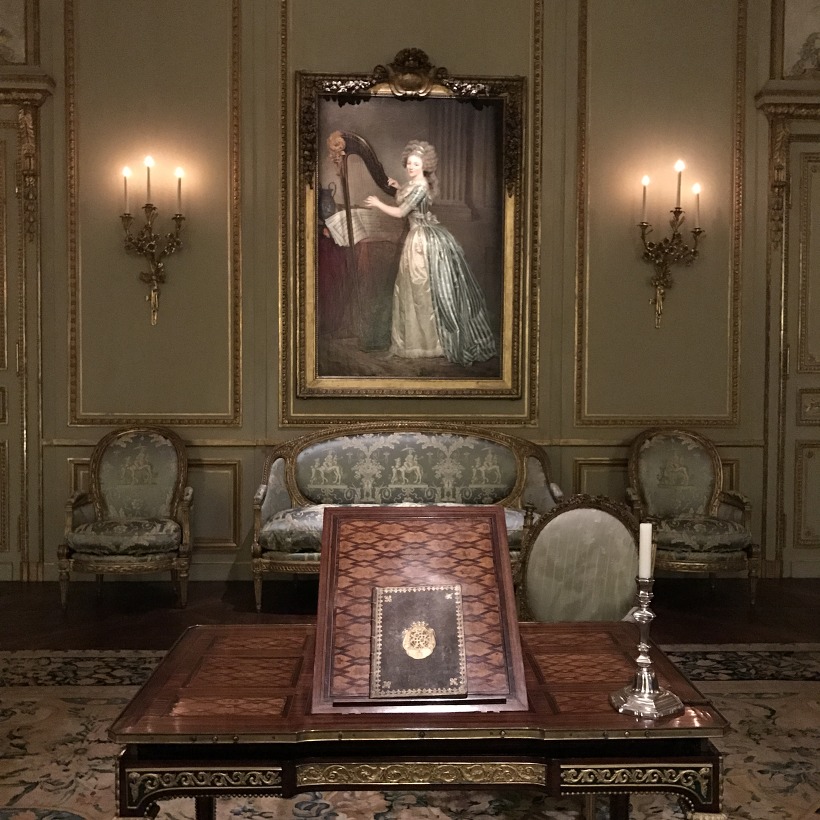
“But Mrs. Winchester is very good to her companions.” “No doubt. She is very free with her cash; the other servant called her good Mrs. Winchester. She is a beautiful old woman, but she looks so young, and know she’ll never be able to get through her money, and doesn’t relish the idea of other people enjoying it when she is in her coffin. People who live to be as old as she is become slavishly attached to life. I daresay she’s generous to those poor girls—but she can’t make them happy. They die in her service.” “Don’t say that Mr. Wolstenholme; I know that one poor girl died at Llanada Villa last spring.” “Yes, and another poor girl died here three years ago. I was here at the time. They girl had ever comfort. The old woman was very liberal to her—but she died. I tell you, Mrs. Steiger, it is not good for any young woman to live with two such horrors and Mrs. Winchester and The Winchester Mansion.” They talked of other things—but I hardly heard them over the noise of construction. I sat motionless, and a cold wind seemed to come down upon me from the mountains and to creep up to me, till I shivered as I sat there in the sunshine, in the shelter of the orange trees in the midst of all that beauty and brightness. Yes, they were uncanny, certainly, the pair of them—she so like an aristocratic witch in her withered old age; and he of no particular age, with a face that was more like a waxen mask than any human countenance I had ever seen. What did it matter? Old age is venerable, and worthy of all reverence; and I had been very kind to her. Dr. Wayland was a harmless, inoffensive physician, who seldom looked up from the book he was reading. He had his private sitting-room, where he made experiments in chemistry and natural science—perhaps in alchemy. What could it matter to me? He had already been polite to me, in his far-off way. I could not be more happily placed than I was—in this palatial mansion. #RandolphHarris 6 of 6
The Winchester Mystery House is massive, the towers and gables gaunt in relief against the blue sky. Acres of yellow wood are sculpted and contorted into steep symmetric descents above wrought iron gates. Many people do not expect it to be so huge. It the way its atmosphere extends outward, like a shadow, thickly cast. It is high, the house, five storeys from the front door, at the stop of flights of mahogany steps, to the attic rooms that so contort the roof to accommodate their windows. And there are several witches caps. From the street people have to crane their necks to take in its height and panorama. There are many windows and various types of glass in them. One can see the panes glowing faintly orange in the setting brightness of the sun. The staircases are mysterious and grand. Their spread, their dimension, suggests something truly opulent. There are many doors on every floor.
And in the evening, darkness steals out of the corners of the building and encroaches at a steady creep across the interior of the mansion. There are many doors, and tourist can see apparitions behind every one of them, if they allow their imagination into their rein. On the third landing, guests often hear music. It is sudden and undeniable and it withers them in terror with its loud proximity. One can hear the chords shake the wood on the very organ frame as its keys hammer against discordant strings. Many can identify the very room the sound is coming from. However, sometimes when they walk along the landing and open the door to it, there is only plaster and shadows. And silence of course. The silence of The Winchester Mystery House does not hold. Like a living threat, the silence of The Winchester Mystery House impends. The place is haunted. Many tour guides do not like to descend the staircase at night. They do not want to be there at night at all.

In 2009, on this night in particular, after closing, a tour guide was startled to hear shouting coming from the Grand Ballroom. He went to see what was going on. When he walked into the room, he started trembling and was very pale. When security guards asked him what had happened, he could only stammer the words “The Man! The Man!” Confused, because the room was empty, the guards reviewed the surveillance footage. A pale figure can be seen opened the door where the safe is located and is very upset to see it open and empty and starts shouting about gold, silver and diamonds. He can be seen walking across the room and confronting the tour guide, as he walks right through him and disappears. The tour guide said he would never enter that part of mansion on his own after his frightening experience. https://winchestermysteryhouse.com/

And please be sure to check out the online gift store: https://shopwinchestermysteryhouse.com/

Freedom is Always in Bondage to Destiny

We live in a World of unprecedented opulence, of a kind that would have been hard to even imagine a century or two ago. Capitalism is a particular form of social organization of production and exchange. Based on an advanced division of labour, capitalism is a system in which production is oriented toward the needs of others, toward exchange. It is therefore a system in which even the people who directly participate in transforming nature into useful products—the immediate producers—cannot physically survive on their own. Furthermore, capitalism is a system in which those who do not own the instruments of production must sell their capacity to work. Workers obtain a wage, which is not a title to any part of the specific product which they generate but an abstract medium for acquisition of any goods and services. They must produce profit as a condition of their continued employment. The product is appropriated privately in the sense that workers have no institutional claim to its allocation or distribution in their role as immediate producers. Capitalist, who are profit-takers, decide under multiple constraints how to allocate or distribution in their role as immediate producers. Capitalists, who are profit-takers, decide under multiple constraints how to allocate the product, in particular what part of it to invest, where, how, and when. These allocations are constrained by the fact that capitalist compete with each other and that they can be influenced by the political system. The ownership of the means of production also endows the proprietors with the right to organize (or to delegate the organization of) production. Capitalists, as employers, regulate the organization of work, although they may be again constrained by rules originating of work, although they may be again constrained by rules originating from the political system. As immediate producers, workers have no institutional claim to directing the productive activities in which they participate. #RandolphHarris 1 of 18
Significant changes in the psychological atmosphere accompanied the economic development of capitalism. A spirit of restlessness began to pervade life toward the end of the Middle Ages. The concept of time in the modern sense began to develop. Minutes became valuable; a symptom of this new sense of time is the fact that in Nurnberg the clocks have been striking the quarter hour since the sixteenth century. Too many holidays began to appear as a misfortune. Time was so valuable that one felt one should never spend it for any purpose which was not useful. Work became increasingly a supreme value. A new attitude toward work developed and was so strong that the middle class grew indignant against the economic unproductivity of the institutions of the Church. Begging orders were resented as unproductive, and hence immoral. The idea of efficiency assumed the role of one of the highest moral virtues. At the same time, the desire for wealth and material success became the all-absorbing passion. “All the World,” says the preacher Martin Butzer, “is running after those trades and occupations that will bring the most gain. The study of the arts and sciences is set aside for the basest kind of manual work. All the clever heads, which have been endowed by God with a capacity for the nobler studies, are engrossed by commerce, which nowadays is so saturated with dishonesty that is it the last sort of business an honourable man should engage in.” One outstanding consequences of the economic change we have been describing affected everyone. The medieval social system was destroyed and with it the stability and relative security it had offered the individual. Now with the beginning of capitalism all classes of society started to move. There ceased to be a fixed place in the economic order which could be considered a natural, unquestionable one. The individual was left alone; everything depended on his own effort, not on the security of his traditional status. #RandolphHarris 2 of 18

Each class, however, was affected in a different way by this development. For the poor of the cities, the workers and apprentices, it meant growing exploitation and impoverishment; for the peasants also it meant increased economic and personal pressure; the lower nobility faced ruin, although in a different way. While for these classes the new development was essentially change for the worse, the situation was much more complicated for the urban middle class. We have spoken of the growing differentiation which took place within its ranks. Large sections of it were put into an increasingly bad position. Many artisans and small trader had to face the superior power of monopolists and other competitors with more capital, and they had greater and greater difficulties in remaining independent. They were often fighting against overwhelmingly strong forces and for many it was a desperate and hopeless fight. Other parts of the middle class were more prosperous and participated in the general upward trend of rising capitalism. However, even for these more fortunate ones the increasing role of capital, of the market, and of competition, changed their personal situation into one of insecurity, isolation, and anxiety. The fact that capital assumed decisive importance meant that a suprapersonal force was determining their economic and thereby their personal fate. Capital had ceased to be a servant and had become a master. Assuming a separate and independent vitality it claimed the right of a predominant partner to dictate economic organization in accordance with its own exacting requirements. #RandolphHarris 3 of 18

The new function of the marker had a similar effect. The medieval market had been a relatively small one, the functioning of which was readily understood. It brought demand and supply into direct and concrete relation. A producer knew approximately how much to produce and could be relatively sure of selling his products for a proper price. Now it was necessary to produce for an increasingly large market, and one could not determine the possibilities of sale in advance. It was therefore not enough to produce useful goods. Although this was one condition for selling them, the unpredictable laws of the market decided whether the products could be sold at all and at what profit. The mechanism of the new marker seemed to resemble the Calvinistic doctrine of predestination, which taught that the individual must make every effort to be good, but that even before his birth it had been decided whether or not he is to be saved. The market day became the day of judgement for the products of human effort. Another important factor in this context was the growing role of competition. While competition was certainly not completely lacking in medieval society, the feudal economic system was based on the principle of co-operation and was regulated—or regimented—by rules which curbed competition. With the rise of capitalism these medieval principles gave way more and more to a principle of individualistic enterprise. Each individual must go ahead and try his luck. He had to swim or to sink. Others were not allied with him in a common enterprise, they became competitors, and often he was confronted with the choice of destroying them or being destroyed. #RandolphHarris 4 of 18

Certainly the role of capital, the market, and individual competition, was not as important in the sixteenth century as it was to become later on. At the same time, all the decisive elements of modern capitalism had already by that time come into existence, together with their psychological effect upon the individual. While we have just described one side of the picture, there is also another one: capitalism freed the individual. It freed man from the regimentation of the corporative system; it allowed him to stand on his own feet and to try his luck. He became the master of his fate, his was the risk, his the gain. Individual effort could lead him to success and economic independence. Money became the great equalizer of man and proved to be more powerful than birth and caste. This side of capitalism was only beginning to develop in the early period which we have been discussing. It played a greater role with the small group of wealthy capitalists than with the urban middle class. However, even to the extent to which it was effective then, it had an important effect in shaping the personality of man. We find the same ambiguity of freedom in the socioeconomic changes on the individual in the fifteenth and sixteenth centuries which we have discussed before. The individual is freed from the bondage of economic and political ties. He also gains in positive freedom by the active and independent role which he has to play in the new system. However, simultaneously he is freed from those ties which used to give him security and a feeling of belonging. #RandolphHarris 5 of 18

Life has ceased to be lived in a closed World the center of which was man; the World has become limitless and at the same time threatening. By losing his fixed placed in a closed World man loses the answer to the meaning of his life; the result is that doubt has befallen him concerning himself and the aim of life. He is threatened by powerful suprapersonal forces, capital and the market. His relationship to his fellow men, with everyone a potential competitor, has become hostile and estranged; he is free—that is, he is alone, isolated, threatened from all sided. Not having the wealth or the power which the Renaissance capitalist has, and also having lost the sense of unity with men and the universe, he is overwhelmed with a sense of his individual nothingness and helplessness. Paradise is lost for good, the individual stands alone and faces the World—a stranger thrown into a limitless and threatening World. The new freedom is bound to create a deep feeling of insecurity, powerlessness, doubt, aloneness, and anxiety. These feelings must be alleviated if the individual is to function successfully. The country was to be led, by candid and honest criticism, to assert her better self and do her full duty to the humans she had cruelly wronged. No nation can salve her conscience by plastering it with gold. This problem could not be settled by diplomacy and suaveness, by “policy” alone. If worse came to worst, could the moral fiber of this nation survive the slow throttling and genocide of the less fortunate? America has a duty to perform, a duty stern and delicate, a forward movement to thrift, patience, and industrial training for the masses, we must to this day still strive for this, rejoicing honours and glorying in the strength of this nation. #RandolphHarris 6 of 18

America apologized for injustice, and encourages her people to rightly value the privilege and duty of voting, and to not participate in in the emasculating effects of caste distinctions. Americans must also cherish the higher training and ambition of our brighter minds. By every civilized and peaceful method we must strive for the rights which the World accords to humans, clinging unwaveringly to those great words which the sons of the Fathers would fain forget: “We hold these truths to be self-evident: That all men are created equal; that they are endowed by their Creator with certain unalienable rights; that among thee are life, liberty, and the pursuit of happiness.” Economic arrangements play a dual role in the promotion of a free society. On the one hand, freedom in economic arrangement is itself a component of freedom broadly understood, so economic freedom is an end in itself. In the second place, economic freedom is also an indispensable means toward the achievement of political freedom. The first of these roles of economic freedom needs special emphasis because intellectuals in particular have a strong bias against regarding this aspect of freedom as important. They tend to express contempt for what they regard as material aspects of life, and to regard their own pursuit of allegedly higher values as on a different plane of significance and as deserving of special attention. For most citizens of the country, however, if not for the intellectual, the direct importance of economic freedom is at least comparable in significance to the indirect importance of economic freedom as a means to political freedom. Because we live in a largely free society, we tend to forget how limited is the span of time and the part of the globe for which there has ever been anything like political freedom: the typical state of mankind is tyranny, servitude, and misery. Political freedom in this instance clearly came along with the free market and the development of capitalist institutions. So also did political freedom in the golden age of Greece and in the early days of the Roman era. #RandolphHarris 7 of 18

Being free is an act that permits discernment of alternatives (if any) in a situation, deliberation about those alternatives, choice of one of them, and ability to put that choice into practice as a culmination or outcome for which a person is required to take responsibility as his or her own goal-guided action. A free action must always occur in a casual context, but it must not be entirely determined by that context. And it must above all else be an action that is ultimately under a person’s control and one for which that person can rightly be regarded as its ultimate source. If there are circumstances at any particular time that prevent all aspects of such personal control, then one can be said to be unfree in those circumstances. This description of freedom requires that there be significant aspects of openness in oneself and in the World, openness that permits real alternatives, outcomes that cannot even in principle be predictable in advance, and novel achievements. It also requires that there be such a thing as teleological or goal-guided behaviour and not just behaviour produced by efficient causes. The description of genuine freedom can be extended to include being other than humans, to the extent that these beings possess the capabilities described. Every civilized and rational person today is in favour of freedom because they recognize as the struggle for basic liberties, societies are based upon open dialogue, human rights and democracy. However, in keeping predetermined mindsets we chain ourselves to the past and to our genetic shortcomings. Our quality of life suffers when we make decisions with predetermined mindsets because the structure that these mindsets impose on ourselves and our experiences do not necessarily fit or make sense. Although seeing these mental structures in ourselves is difficult, and rooting them out in search of new ones even more so. #RandolphHarris 8 of 18

One shortcoming of these predetermined mindsets is the judgement of the experiences that result from our decisions. Because we make decisions based on certain mindsets, we come to expect a set of results from those decisions that reflect our mindsets, and all ensuing experiences are internally judged or qualified based on those expectations. If we took a job only for financial gain, then we would measure the success of our careers solely in terms of money. This pre-qualification of our experiences based on predetermined mindsets is devastating for two reasons. First, it paints experiences under the guise of success and failure according to how well expectations are met, a guise that short-changes those experiences. What if we do not get the bonuses we expected because of economic conditions? To think that the past years spent on the job were thus consequently wasted would be devastating. All experiences are of some value, didactic or otherwise, and to box them into qualified successes or failures is to waste that value. The second problem with qualifying experiences based on mindsets is the flips side of the first—it blinds us to the lighter characteristics and/or the learnings of an experience if they do not lie within the real of expectations. The shortcomings of predetermined mindsets are waste and harm, but without greater insight, acclimatization causes us to mistake them for being a natural part of life. Euphemistically, and tragically, they become tolerable. Ignorance is bliss, if the human condition is one of unwitting masochism. However, far worse, and far better, is to have hindsight into the waste and harm these mindsets cause. Even more abhorrent is the feeling of regret that accompanies the acknowledgement of the waste and harm. We have all experienced regret and it grows with every realization of a poor decision using bad faith; a decision that leads to a missed opportunity or a deleterious outcome. #RandolphHarris 9 of 18

Regrets make predetermined mindsets painful, making them far more detrimental by demon whiskey to creature a severe inflammation. However, regrets can also make the situation far better when the inflammation becomes intolerable inciting the person proactive. The intolerable pain of regret opens up our eyes to our inherent freedom of self-invention. This freedom is the key to ensuring that the decision we make in life, and the paths we choose to take, will not be made according to mindsets and structures of which we are unaware, and thus of which we will regret. Although it is reasonable and necessary to make decisions based on structures and mindset, those mindsets need to be chosen with great discernment rather than predetermined for full freedom of choice. The principles and ideals by which we live are forms of mindsets and structure, but as long as we have chosen to live by those principle instead of having developed them as biases, then we have not forfeited our freedom. Freedom of expression allows us to be heard and to construct our identities as communicative human beings. Possessing free will, we have the capacity to choose how we individual will act. We are thus particular and subjective entities. At the same time, however, we are each endowed with reason and are consequently able to discern the same universal and objective truths. We are thus also universal and objective entities. Development can be seen as a process of expanding the real freedoms that people enjoy. If we have reasons to want more wealth, we have to ask: What precisely are these reasons, how do they work, on what are they contingent and what are the things we can “do” with more wealth? In fact, we generally have excellent reasons for wanting more wealth. #RandolphHarris 10 of 18
The usefulness of wealth lies in the things that it allows us to do—the substantive freedoms it helps us to achieve. However, this relation is neither exclusive (since there are significant influences on our lives other than wealth) nor uniform (since the impact of wealth on our lives varies with other influences). It is as important to recognize the crucial role of wealth in determining living conditions and the quality of life as it is to understand the qualified and contingent nature of this relationship. An adequate conception of development must go much beyond the accumulation of wealth and the growth of gross national product and other income-related variables. Without ignoring the importance of economic growth, we must look well beyond it. The ends and means of development require examination and scrutiny for a fuller understanding of the development process; it is simply not adequate to take as our basic objective just the maximization of income or wealth, which is, as Aristotle noted, “merely useful and for the sake of something else.” For the same reason, economic growth cannot sensibly be treated as an end in itself. Development has to be more concerned with enhancing the lives we lead and the freedoms we enjoy. Expanding the freedoms that we have reason to value not only makes our lives richer and more unfettered, but also allows us to be fuller social persons, exercising our own volitions and interacting with—and influencing—the World in which we live. #RandolphHarris 11 of 18

There are two distinct reasons for the crucial importance of individual freedom in the concept of development, related respectively to evaluation and effectiveness. First, in the normative approach used here, substantive individual freedoms are taken to be critical. The success of a society is to be evaluated, in this view, primarily by the substantive freedoms that the members of our society enjoy. This evaluative position differs from the informational focus of more traditional normative approaches, which focus on other variables, such as utility, or procedural liberty, or real income. Having greater freedom to do the things one has reason to value is significant in itself for the person’s overall freedom, and important in fostering the person’s opportunity to have valuable outcomes. Both are relevant to the evaluation of freedom of the members of the society and thus crucial to the assessment of the society’s development. The second reason for taking substantive freedom to be so crucial is that freedom is not only the basis of the evaluation of success and failure, but it is also a principal determinant of individual initiative and social effectiveness. Greater freedom enhances the ability of people to help themselves and also to influence the World, and these matters are central to the process of development. The concern here relates to what we my call (at the risk of some oversimplification) the “agency aspect” of the individual. The United States of America has no family policy. Many American students of the family, as shown by their reactions to this phrase, do not know what it means. In the absence of an explicit family policy, they not only find it difficult to imagine what one might be, but are inclined to question if one would be desirable. #RandolphHarris 12 of 18

Perhaps the absence of a declared policy is typical of the pragmatic American temper. Yet whether this question is thought about by the public at large or not, both family researchers and professional practitioners in family agencies can postpone at peril of sterile futility the effort to state an over-all policy to guide their activities. What the researcher needs if one’s findings are to prove relevant is the designation of dependent variables of vital interests to the subjects of one’s study; what the practitioner needs if one is to evaluate the effect and efficiency of one’s efforts is the specification of definite goals. It may be argued that a family policy is already discernible in implicit form. It may also be argued that nothing would be gained by striving to articulate its essentials; indeed something might be lost in the way of future flexibility by trying to fix on paper the nature of such a labile entity. This view though plausible in the abstract does not hold up when tested against the benefits of knowing what one is doing. Nor is it correct to charge that when purposes are made explicit they become less easy to alter. To state the objectives of research and of action makes them easier to criticize and modify on the basis of experience than when they remain behind the veil of sacred assumptions. In particular instances outcomes can be legitimately judged only in relation to defined intentions. A national policy for the American family, though derived from implicit views and common practices, would have to be discussed and agreed upon before it could become official. One could surmise it main outlines, since these are embodied in occasional statements of goals we have been discussing. #RandolphHarris 13 of 18

Interpreters differ the closer they approach the concrete instance. It would be presumptuous, therefore, to do more than suggest that the concept of interpersonal competence, which allows for an open-ended view of personality, could stand for the optimal product of family performance. Yet there can be no doubt that the development of the individual member would hold first place among the goals of a family policy. A family policy includes not only general goals but specifies appropriate means for their realization. The typical family agencies of the American urban community are the nearest we have to self-conscious instruments of a coherent family policy. However, as we have found in examining them, all six types are hesitant to avow a positive program for constructing some optimal pattern of family living for American communities. Whether taken separately or in combination, they seem to abjure any responsibility for family development more inclusive than current clienteles and their recognized problems. In part this diffidence seems to be based upon the specializations among the multiple, segmented agencies, though this fact of proliferation could also be used as argument for a coherent policy. In part the tendency to limit responsibility seems also to derive from the therapeutic approach. All dreams also, as well as visions, can be classed, as to their source, under three heads: divine; human; or of a psychopathological offender—each to be known, first by the condition of the person, and second by the principle distinguishing the work of God or a psychopathological offender. #RandolphHarris 14 of 18

The principle distinguishing divine from psychopathological in relation to dreams is, in the first instance, by their import and exceptional value (Gen. 37.5-7; Matt. 1.20, 2.12), and in the latter, their “mystery,” absurdity, emptiness, folly, et cetera, as well as by their effects on the person. In the first, the recipient is left normal, calm, quiet, reasonable, and with an open, clear mind. In the second, elated or dazed, confused and unreasonable. The presentations of evil spirits at night can be the cause of morning “dullness” of mind and heaviness of spirit. The sleep has not been refreshing because of their power, through the passivity of the mind during sleep, to influence the whole being. “Natural” sleep renews and invigorates the faculties and the whole system. Insomnia may be the work of psychopathological offenders adapting their workings to the overwrought condition of the person, so as to keep their attacks under cover. Believers who are open to the supernatural World should especially guard their nights by prayer, and by definite rejection of the first insidious working of psychopathological offenders along these lines. How many say, “The Lord woke me,” and place their reliance upon a “revelation” given in a state of half-consciousness, even though the mind and will were only partially alert to discern the issues of the “guidance” or “revelation” given to them. Let such believers observe the results of their obedience to night-revelations, however, and they will find many traces to the deceitful workings of the enemy. They will find, too, how their faith is often based upon a beautiful experience given in the early hours of the morning; or, vice versa, is shaken by accusations, suggestions, attacks and conflicts manifestly of the psychopathological one, instead of an intelligent reliance upon God Himself in His changeless character of faithfulness and love to His own. #RandolphHarris 15 of 18

All workings of the enemy at night can be made to cease by recognizing them as of a psychopathological offender, and definitely refusing them in the name of the Lord. Existence is always both fact and act. Although freedom is not destroyed, it is always in bondage to destiny. Therefore, no individual act within existence can overcome estrangement; existence itself become destiny. In spite of his inner freedom, man cannot achieve reunion with God. Certain individual acts can be performed which express fleetingly and fragmentarily man’s essential goodness, but thee reveal only what is indispensable for victory over existence, namely, reunion with the ground of being. In order to overcome the old state of estrangement, man needs to receive new being, for new being precedes new acting just as estrangement precedes conduct disorder. Union with God, with the power of being, must be re-established. This is the quest for the New Being. The history of religion records man’s attempts and failures to find the New Being, to save himself. Religion is the sphere where the New Being is sought; it is contrasted with the split between essence and existence. Myth and cult are indispensable for existential man, because, in the state of existence, reason cannot penetrate to its depth in the ground of being. However, religion is ambiguous, for the very fact of the quest indicates the presence, at least germinally and fragmentarily, of the New Bing, and at the same time the quest degenerates into futile efforts at self-salvation. These vain attempts, which are found in all religions and not only in particular ones, can be listed as follows: legalism, asceticism, mysticism, sacramentalism, doctrinablism, and emotionalism. Yet, even in their inadequacy they are salutary in a minimal way, for awareness of estrangement and desire for reunion indicate the presence of a saving power. #RandolphHarris 16 of 18

The quest for the New Bing is universal because the human predicament and its ambiguous conquest are universal. This utopian expectation, religious in substance, is often cloaked under a secular form. Although the character of the quest constantly changes, we can distinguish two major types: the non-historical and the historical expectation of the New Being. The non-historical attitude, exemplified primarily in Far Eastern religions, does not expect salvation through history, but rather in the negation of all beings and the affirmation of the Ground of Being alone. The historical attitude, on the other hand, assets the essential goodness of being and awaits the New Being as a transformation of reality through a historical process which is unique, unrepeatable, irreversible. The symbol of “Christ” or “Messiah” expresses the universal expectation of the New Being. Although the messianic idea is thoroughly historical, it is capable of incorporating the non-historical type. The cosmic Messiah of apocalyptic literature, the personification of divine Wisdom, the Son of Man, the Logos of the Fourth Gospel, the mysticism of Paul and his doctrine of the Spirit—all these transhistorical elements build a bridge across which non-historical expectations can enter into Christianity. The non-historical type, however, is unable to embrace the historical type. Consequently, Christianity is the universal type of the universal quest for the New Being set in motion by a universal revelation. Yet it is not universally acknowledged as such, for man’s estrangement, futile self-salvation, and consequent despair generate a self-understanding and an expectation which is contradicted by the New Being in Jesus as the Christ. The New Being of Christianity is “paradoxical” in the root meaning of the word; it runs counter to the expectations of the whole of human experience. #RandolphHarris 17 of 18

The Christ is the symbol for the expectation of the New Being. How is it to be interpreted? Traditionally he has been called the “mediator” in that he makes the ultimate concrete and saves by reuniting. The mediator, however, is not a third reality between God and man, for all mediation and salvation is from God. The Christ is essential man. He represents man to man, that is, He shows what man essentially is. However, He also represents God to man, because essential man had embedded within him the image of God. Therefore, essential manhood and essential God-manhood are identical. It is important to note that the paradox of the Christian message is not that essential humanity includes the union of God and man, but rather, that in one personal life essential manhood has appeared under the condition of existence without being conquered by them. Another term often used to interpret the symbol of the Christ is “incarnation.” It is a concept commonly found in pagan religions, we have grave reservations about it because it is so vulnerable to misunderstanding. For instance, if incarnation is taken to mean “God has become man,” then it is nonsense, because the words do not mean what they say. Obviously, God does not change into something that is not God. Again, incarnation carries polytheistic connotations of divine beings besides God and mythological connotations of anthropomorphism. However, we do accept incarnation in the Johannine sense of “the Logos became flesh.” “Logos” is the principle of divine self-manifestation, “flesh” signifies historical existence, and “became” indicates that God participates in that which is estranged from Him. Thus, the Johannine phrase means that “God is manifest in a personal life-process as a saving participant in the human predicament. The question of existence terminates in the quest for the New Being. We have remained on the level of expectation, even though it has been described in Christian terminology. The next step is the actual appearance of the Christ in Jesus, the event which fulfills al expectations. #RandolphHarris 18 of 18
MAGNOLIA STATION AT CRESLEIGH RANCH
Rancho Cordova, CA | low $600s
Now Selling!
Residence Five is the largest home offered at Magnolia Station. This stunning two-story home is just over 3,700 square feet and includes five bedrooms, three and half bathroom, and a four, yes four car garage!

The Flexibility is the best word to summarize this gorgeous home. With the opportunity to add an additional two bedrooms, this home is designed to meet the needs of any family size. The Generations Suite on the first floor allows space for extended family, guests, or even a separated office space.

The expansive kitchen opens up to the great room – ideal for entertaining of any kind. You’ll find the Owners’ Suite and three additional bedrooms upstairs plus a loft suitable for a game lounge, TV room, or homework space.

Best of all, each Cresleigh home comes fully equipped with an All Ready connected home! This smart home package comes included with your home and features great tools including: video door bell and digital deadbolt for the front door, connect home hub so you can set scenes and routines to make life just a little easier. Two smart switches and USB outlets are also included, plus we’ll gift you a Google Home Hub and Google Home Mini! https://cresleigh.com/magnolia-station/residence-5/


The Marks of Estrangement

Until the fifth century A.D., much of western Europe lay within the Roman Empire, a vast collection of territories including parts of the Middle East and North Africa. In Europe itself during the centuries of Roman rule, much of the native Celtic population had become highly Romanized in its culture (6-7), political allegiance and legal practices. However, in the last few centuries of the Roman Empire, the Germanic tribes which had long lived on the eastern fringes of the European provinces moved into the Romanized lands in large numbers. This wave of “barbarian” invasions, along with severe political and economic problems, gradually killed off the Roman Empire, which was replaced by a number of Germanic successor kingdoms, including those of the Franks in Gual (modern France), the Visigoths in Spain, the Ostrogoths in Italy, the Burgundians in and around what is now Switzerland, and the Anglo Saxons in England. The Germanic tribes brought with them a very different society from that of Rome. Whereas Roman civilization was highly urbanized, to further highlight this illustration, the Germans had until then seldom settled even in villages. The Romans had a long history of written legislation; the Germans used a system of customary law which had not yet been written down. Different practices regarding marriage and family can be seen in the extracts from Roman and Germanic law. Centuries of contact between the Germans and the empire, however, had wrought changes on both sides, and now, as the Germans settled in what had long been Roman territory, further mingling of the two cultures occurred. The Germanic Kingdoms which were established inside the old boundaries of the now defunct empire were by no means entirely Germanic in their ethnic makeup of their culture. #RandolphHarris 1 of 18
Even more influential than Roman tradition in this process of change was the religion of the late Roman Empire. Christianity had originated in Palestine, where a small group of Jewish people believed that the wandering Jewish preacher, Jesus, who had been executed by the Roman authorities early in the first century A.D., was the “Christ,” the son of God and saviour of humanity. They based their faith in part on the sacred books of the Jewish religion, but also created their own new Scriptures as they recorded the events of Jesus’ life and wrote letters to each other. Although Christians were persecuted at first by both the Jewish religious authorities and the Roman government, their religion survived and spread. In the year 313 it received approval from the Roman emperor Constantine, and in the late fourth century it became the official religion of the empire. The cultural initiative of the late Roman Empire passed from pagan writers to Christian theologians such as St. Jerome and St. Augustine of Hippo, who explored the details of Christian belief and laid the foundation for church law. It was the Christian church, too, which filled the vacuum in leadership during the fifth century, as the Roman World faced widespread military, political and economic crises and the Roman government crumbled. Bishops began to provide the services for which the government had once been responsible; in particular, the Bishop of Rome came to assume a prominent role in Italy, so much so that as the “pope” he was eventually recognized as the leader of the church throughout the western Mediterranean regions. Clergymen and monks also preserved what ancient learning survived the fall of the Roman Empire in the west, and throughout most of the Middle Ages. #RandolphHarris 2 of 18

The church was eager to convert the pagan Germans to Christianity. It accomplished this through intensive mission work and through alliances with Germanic kings, queens, and nobles, who saw advantages to themselves in allying with the existing authority in their new territories. Christian beliefs, including ideas about women, marriage, and family, had already mingled with Roman traditions. Now Christian views were adopted by the Germanic settlers as well. Thus the three main ingredients of medieval European civilization had come together: the Roman, the Germanic and the Christian. The period from the fifth century to the eleventh is often designated the “Early Middle Ages.” This is the time sometimes known as the “Dark Ages” –in part because of the collapse of Roman civilization, with the loss of much classical knowledge, but also because relatively few historical sources remain to tell us of the events of these years. The documents which do survive include the laws which the Germanic and Celtic societies did write down and the works of historians such as Gregory of Tours. Much of the essential character of medieval Europe was already apparent in this early period, especially in religious matters. Monasteries and convents, for example, came to play a key role in economic and cultural life, and many noble families dedicated sons and daughters to the religious life, in which they lived according to monastic “rule” such as that of Caesarius of Arles. Women were encouraged to be nuns, but their other options in the church—serving as deaconesses or in partnership with husbands who were priest—were closed off by the decisions of church councils and by more insidious attitudes. #RandolphHarris 3 of 18

The councils established “canon law” or church law, which regulated the lives of members of the clergy and many aspects of private life for laypeople. For most of the laity, canon law was enforced by the local priest, who heard one’s confession regularly and assigned penance for one’s sins. Thus the church gradually succeeded in imposing on secular society its standards of behaviour in areas such as marriage. The relative stability of the position of craftsmen and merchants which was characteristic in the medieval city, was slowly undermined in the late Middle Ages until it completely collapsed in the sixteenth century. Already in the fourteenth century—or even earlier—an increasing differentiation within the guilds had started and it continued in spite of all efforts to stop it. Some guild members had more capital than others and employed five or six journeymen instead of one or two. Soon some guild admitted only persons with a certain amount of capital. Others became powerful monopolies trying to take every advantage from the monopolistic position and to exploit the customer as much as they could. On the other hand, many guild members became impoverished and had to try to earn some money outside of their traditional occupation; often they became small traders on the side. Many of them had lost their economic independence and security while they desperately clung to the traditional ideal of economic independence. In connection with this development of the guild system, the situation of the journeymen degenerated from bad to worse. While in the industries of Italy and Flanders a class of dissatisfied workers existed already in the thirteenth century or even earlier, the situation of the journeyman could become a master, many of them did. #RandolphHarris 4 of 18

However, as the number of journeymen under one master increased, the more capital was needed to become a master and the more the guilds assumed a monopolistic and exclusive character, the less were the opportunities of journeymen. The deterioration of their economic and social position was shown by their growing dissatisfaction, the formation of organizations of their own, by strikes and even violent insurrections. What has been said about the increasing capitalistic development of the craft guilds is even more apparent with regard to commerce. While medieval commerce had been mainly a petty intertown business, national and international commerce grew rapidly in the fourteenth and fifteenth centuries. Although historians disagree as to just when the big commercial companies started to just when the big commercial companies started to develop, they do agree that in the fifteenth century they became more and more powerful and developed into monopolies, which by their superior capital strength threatened the small businessman as well as the consumer. The reform of Emperor Sigismund in the fifteenth century tried to curb the power of the monopolies by means of legislation. However, the position of the small dealer became more and more insecure; he “had just enough influence to make his complaint heard but not enough to compel effective action.” The indignation and rage of the small merchant against the monopolies was given eloquent expression by Mr. Luther in his pamphlet “On Trading and Usury,” printed in 1524. “They have all commodities under their control and practise without concealment all the tricks that have been mentioned; they raised and lower prices as they please and oppress and ruin all the small merchants, as the pike the little fish in the water, just as though they were lords over God’s creatures and free from all the laws of faith and love.” #RandolphHarris 5 of 18

These words of Mr. Luther’s could have been written today. The fear and rage which the middle class felt against the wealthy monopolists in the fifteenth and sixteenth centuries is in many ways similar to the feeling which characterized the attitude of the middle class against monopolies and powerful capitalists in our era. The role of capital was also growing in industry. One remarkable example is the mining industry. Originally the share of each member of a mining guild was in proportion to the amount of work he did. However, by the fifteenth century, in many instances, the shares belonged to capitalists who did not work themselves, and increasingly the work was done by workers who were paid wages and had no share in the enterprise. The same capitalistic development occurred in other industries too, and increased the trend which resulted from the growing role of capital in the craft guilds and in commerce: growing division between poor and rich and growing dissatisfaction among the poor classes. As to the situation of the peasantry the opinions of historians differ. Yet, it seems notwithstanding these evidences of prosperity, the condition of the peasantry was rapidly deteriorating. At the beginning of the sixteenth century very few indeed were independent proprietors of the land they cultivated, with representation in the local diets, which in the Middle Ages was a sign of class independence and equality. The vast majority were Hoerige, a class personally free but whose land was subject to dues, the individuals being liable to services according to agreement…It was the Hoerige who were the backbone of all the agrarian uprisings. This middle-class peasant, living in a semi-independent community near the estate of the lord, became aware that the increase of dues and services was transforming him into a state of practical serfdom, and the village common into a part of the lord’s mannor. #RandolphHarris 6 of 18

Now, let us focus upon religion a little more before we move on. The emphasis upon the ontological basis of the paradox of freedom and responsibility subtly shifts to the meaning of the fate, contained in the idea of “original sin” from a historical to an ontological one. With this shift the emphasis falls upon the fatefulness of sin rather than upon responsibility. When we replace the myth of Genesis with ontological insights, the danger is that the mystery of evil is solved too neatly, with the result that temporal existence itself is considered evil. However, the use of ontology opens to freedom as it is to destiny. Therefore, ontology does not necessarily identify finitude and evil. Creation is not an unfinished work that can be completed only by a touch of evil. Created finite freedom falls universality and consequently the unavoidable, but not logically. The universality and consequently the unavoidability of the fall is not derived from “ontological speculation,” but from a realistic observation of man, his heart, and his history. Some of the greatest philosophers (Mr. Plato, Mr. Origen, Mr. Kant, and Mr. Schelling), attempting to reconcile freedom and evil, conceived the myth of the transcendent fall. Theology, once it rejects a literal interpretation of Genesis, must boldly re-examine universal sinfulness. The supralapsarian Calvinists had the courage to affirm that is God creates, His creation will turn against Him, although their position is tainted with the demonic when they make Adam fall by divine decree. Theology must take seriously, and thus ontologically, the universality of sin. If the problem is posed in terms of guilt, we find that the inevitability of a guilty conscience the normal consequence of man’s finite freedom, even in what he considers his best deed nonbeing is present and prevents it from being perfect. #RandolphHarris 7 of 18

A good conscience is impossible: Only self-deception can give a moral conscience, since it is impossible not to act since every action implies guilt. However, again, the guilt is not finitude as such, but rather the self-assertiveness of the finite being in its pride, concupiscence, and separation from its ground. A down-to-Earth example of the guilt which attaches to the transition from essence to existence is the severing of family connections: We cannot cut the ties with our family without being guilty. However, the question is: Is it willfulness which demonically disrupts the family communion, or is it the step toward independence and one’s own understanding of the will of God which divinely liberates us from the bondage to our family? We never know the answer with certainty. We must risk tragic guilt. What are the characteristics of human existence as a result of the Fall? In general terms they are as follows: The state of existence is the state of estrangement. Man is estranged from the ground of his being, from other beings, and from himself. The transition from essence to existence results in personal guilt and universal tragedy. In more specific terms, they are estrangement and sin, two closely related, but not identical concepts. Estrangement means that man as he exists is not what he essentially is and ought to be. However, the special force of estrangement is the connotation that man belongs to that form which he is cut off. For separation presupposes an original unity. It is impossible to unite that which is essentially separated. Without an ultimate belongingness no union of one thing with another can be conceived. Just as nonbeing depends upon being, and the negative depends upon the positive, so estrangement depends upon union. Unity embraces both itself and estrangement, and the latter is overcome by reunion. #RandolphHarris 8 of 18

Sin is estrangement with the addition of one extremely important factor, namely, the personal act of turning away from that to which one belongs. Sin is separation, estrangement from one’s essential being. Sin is the unreconciled duality of ultimate and preliminary concerns, of the finite and that which transcends finitude, of the secular and the holy. Because of sin, man’s essential nature stands against him as law, not as strange law, but as a natural law, for it represents his true nature from which he is separated. Human estrangement, as is usually the case, sin and estrangement are equivalent. Man’s predicament is one of estrangement, but this is not to say that it is a state of things like the law of gravity. For estrangement always combines the two factors of personal freedom and universal destiny. Nor must sin be understood as “sins,” that is, particular acts which are considered morally evil. “Sins” are expressions of sin; their sinfulness lies not in disobedience to a law, but in the estrangement from God, from men, and from self to which they bear witness. There are “the marks of estrangement.” “Unbelief” is a mark of estrangement because it is the act or state in which man in the totality of his being turns away from God. “Hubris” is another sign of estrangement, for by it man distorts his naturally good centeredness of self-consciousness by elevating himself as the absolute center of his World. He usurps the place of the divine. The last mark of estrangement is “concupiscence,” “the unlimited desire to draw the whole of reality into one’s self.” Concupiscence is seen in man’s unbounded, insatiable strivings for knowledge, pleasures of the flesh, and power. There is a distinction between original sin and actual sin and it is the difference between sin as fact and sin as act. Adam represents essential man, and his fall symbolizes the transition from essence to existence. Consequently, sin as the universal fact embracing both freedom and destiny precedes sin as an individual act. #RandolphHarris 9 of 18

The individual act of sin actualizes the universal fact of estrangement. Protestantism’s insistence upon the absoluteness of turning from God results in a loss of psychological insight and of educational flexibility. However, is there such a thing as collective estrangement? Strictly speaking, no, because a social group has no natural center of decision corresponding to the self of the individual person. Therefore, there is no collective sin, no collective guilt. However, since freedom and destiny work together, members of a social group could be guilty, not of committing the crimes of which their group is accused, but of contributing to the destiny in which these crimes happened. When it comes to the detection of visions as from God or from a psychopathological offender, these “visions” are the result of disease, the detection of divine from visions of a psychopathological offender depends a great deal upon knowledge of the Word of God and the fundamental principles of His working in His children. These may be briefly stated thus: That no supernatural “visions,” in any form, can be taken as of God if it requires a condition of mental nonaction, or comes while the believer is in such a condition. That all the Holy Spirit’s enlightening and illuminating vision is given when the mind is in full use, and every faculty awake to understand; id est, the very opposite condition to that required for the working of psychopathological offenders. That all which is of God is in harmony with the laws of God’s working as set forth in the Scriptures, exempli gratia, “World-wide movements” by which multitudes are to be gathered in are not in accord with the laws of the growth of the Church of Christ, as show in the grain of wheat (John 12.24); the law of the cross of Christ (Isa. 53.10); the experience of Christ; the experience of Paul (1 Cor. 4.9-13); the “little flock” of Luke 12.32; the foreshadowed end of the dispensation given in 1 Timothy 4.1-3 and 6.20-12. #RandolphHarris 10 of 18

Many a believer has left his path of “grain-of-wheat multiplication” caught by a vision of a “World-wide sweeping in” of souls—a concept given by psychopathological offenders, whose malignant hatred and ceaseless antagonism is directed against the true seed of Jesus Christ, which in union with Him will bruise the serpent’s head. To delay the birth (John 3.3,5) and growth of the holy seed (Isa. 6.13) is the psychopathological offender’s aim. To this end one will foster any widespread surface work of the believer, knowing it will not really touch his kingdom, nor hasten the full birth into the Throne-life of the conquering seed of Christ. The safe path for believers at the close of the age is one of tenacious faith in the written Word as the sword of the Spirit, to cut the way through all the interferences and tactics of the forces of darkness, to the end. Wisdom gives greater strength than ten rulers in a city. The true guardians of a city are not its armed men; its consecrated teachers are its guardians. A city that has no school which teaches the Word of God, that city cannot endure. Ignorance cannot yield true righteousness, nor lack of knowledge flower into piety. The Book of Mormon gives man insight into God’s ways that one may fulfill the divine call: “Know the God of your fathers and serve Him.” When Jacob’s voice is heard in study and payer, the hands of Esau are powerless against him. Toil not merely for Worldly goods, find time also for the study of the Book of Mormon; for if you lack knowledge, what have you acquired? If you have acquired knowledge, what do you lack? One who increases one’s possessions, increases one’s worries, but one who increases one’s knowledge in the Book of Mormon, adds to the fullness of life. There let us turn to the Book of Mormon and study it diligently, for we can find everything therein. Let us not depart from the Book of Mormon, nor swerve from contemplating its wisdom. Though we grow old and gray in its study, it will yield us rich reward. One who honours, the Book of Mormon will oneself be honoured by all men. Yea, great is Truth; above all things it is triumphant. #RandolphHarris 11 of 18

When dealing with identity and interpersonal competence, there is an evolution of recreational agencies as apt here as elsewhere. In their primitive phase, recreational agencies have aimed, through charitable and philanthropic means, to relieve the discomforts of individuals which were assumed to arise from lack of leisure or recreation. Poor children, overworked employees, youths in need of “character-building,” were the special recipients of such attention. One not inconsiderable social problem was solved by occasionally relieving parents of their children. No disparagement is implied; the achievements of agencies so oriented have been substantial, as visibly demonstrated by thousands of playgrounds, parks, Boy Scout camps and YMCA’s built under bother public and private auspices. Of course, the form of recreation is not necessarily synonymous with the form of agency which provides it, though often it may be inferred, and the same forms of recreation may be provided with diverse intentions. At the second phase of agency evolution, we come to those who can hardly speak of play without calling it “play therapy.” Music and painting as such are unaffected by the Salvation Army band leader who is motivated by the slogan that “the boy who blows a horn will never blow a safe,” or the settlement house aide who feels that finger-painting will help her unhappy charges to “work out their conflicts.” However, the question is raised whether music and painting are as likely to engross their intended beneficiaries under such conditions. If not, the end desired will be defeated by the means employed. #RandolphHarris 12 of 18

The fatigue of a worker may be increased by a sense of obligation to participate “on his own time” in a company sports program supposedly for his benefit. Compulsory sociability, prescribed as a medicine, has been the poison of persons and even large groups. In the evolution of recreation agencies, it probably cannot be maintained that the therapeutic approach is in any way an improvement over the charitable approach. Its very purposefulness too often betrays it. Not a few such programs for curbing juvenile delinquency by recreation have turned out to be, at least in the eyes of their recipients, programs for curbing juvenile delinquents. As we come to the third phase in the development of recreational agencies, therefore, the sharpest kind of distinction needs to be made between programs for providing recreational opportunities and programs of recreation. It is not precise enough to speak simply of providing recreation. The program for providing recreational opportunities can probably be that of any agency: the program of recreation can only be that of the participants, otherwise it ceases to be recreation. It is but a short step from the voluntary associations for recreation for which Americans show such genius to the phase of planning, in which the participants themselves take responsibility for providing their own opportunities and facilities to engage in common avocations. Some of these voluntary associations are the finest examples of democratic planning. The rod and gun clubs have taken the initiative at every point in widening the interest in their craft, in encouraging skill, in establishing codes of fair play, in creating state conservation departments and passing conservation laws, and in being watchdogs on the expenditure of license fees. #RandolphHarris 13 of 18

No better example of popular participation in the actual execution of planned programs exists than the wholehearted, voluntary work of rod and gun club members in restocking streams. Here also an executive agency of the government has acted in its least paternalistic yet most advanced planning role. These clubs may serve as a guide to other agencies who wish to maximize participation. Most agencies, apart from those that provide recreational opportunities for children and certain specially disadvantaged parts of the population, tend to be governed by the participants in their activities. Even with children, there is a frequent strife over adult domination; the young participants want control of the process of rule-making would seem integral to play. The notable exceptions to agencies controlled by their clientele are, of course, commercial amusements, and, to a certain extent, public institutions like parks and museums. Commercial amusement institutions especially, but many non-commercial public and private recreation agencies as well, constitute a vast new industry, or series of industries. In addition to the enormous sums spent each year by spectators for admission to hear and see professional performers of every kind, there is tremendous expenditure for purchase or rent of equipment to be used by amateurs in every category of recreation. Much of the trade of hotels, restaurants, and their derivatives depends on customers bent on recreation rather than business; the same can be said for travel facilities. If it can be shown that recreation is not only a needed medicine for an industrial people, but that it contributes positively to their over-all competence, it makes an economic contribution which ultimately leads to greater productivity. #RandolphHarris 14 of 18

If, as seems probable, creativity is enhanced through recreation, and this creativity leads to innovation in the conduct of the work of society, then the cost of recreation may be rewarded geometrically. If in the end it turns out that play is neither an escape from work nor a method for therapeutic restoration to working conditions, but that it is an avenue for profitably investing in the human resources of a society, then a culminating irony will crown our already paradoxical evolution in the uses of leisure. Work will not have been deposed from its pace of honour as the creator of wealth, but play will have been raised above it. Leisure time is a gift of God for being refreshed physically, mentally, and spiritually, a time to strengthen bonds with others, to enjoy God’s gifts under the grace of God. “Come ye yourselves apart into a desert place, and rest a while,” reports Mark 6.31. Most people never have enough leisure time. They view work as a necessary evil to earn enough money to do what they want to do in their free time. They live for their evenings, weekends, and vacations. The recreation and entertainment industries love these people. Then there are others who feel guilty when they are not working. After all, God’s Word says we are to “labour” six days and redeem every moment. Where are you in the spectrum between these poles? Neither of these extremes is biblical. Work is not a necessary evil but a God-given calling; leisure tie is not from the Evil One, but a God-given gift. #RandolphHarris 15 of 18

With powerful changes swirling around us and demanding ever quicker responses, it often feels as though we are swimming faster and faster against a huge, unstoppable tide. And too often we are. Perhaps, like the surfer, we should use the energy of the wave itself to carry us forward. The Third Wave we have described could carry America toward a better, more civil, more decent and democratic future. However, it will not unless we distinguish between Second Wave and Third Wave economic, political and social policies. Our failure to make this critical distinction explains why so many well-intentioned innovations only seem to make matters worse. We are living through the birth pangs of a new civilization whose intentions are not yet in place. A fundamental skill needed by policy makers, politicians and politically active citizens today—if they really want to know what they are doing—is the ability to distinguish between proposals designed to keep tottering Second Wave system on life-support from those that spread and smooth our transition to the Third Wave civilization. The factory became the central symbols of individual society. It became, in fact, a model for most other Second Wave institutions. Yet the factory as we have known it is fading into the past. Factories embody such principles as standardization, centralization, maximization, concentration and bureaucratization. Third Wave production is post-factory production based on new principles. It occurs in facilities that bear little resemblance to factories. In fact, an increasing amount is done in homes and offices, cars and planes. #RandolphHarris 16 of 18

The easiest and quickest way to spot a Second Wave proposal, whether in Congress or in a corporation, is to see whether it is still, consciously or not, based on the factory model. American’s schools, for example, still operate like factories. They subject the raw material (children) to standardized instruction and routine inspection. An important question to ask of any proposed educational innovation is simply this: is it intended to make the factory run more efficiently, or is it designed, as it should be, to get rid of the factory model altogether and replace it with individualized, customized education? A similar question could be asked of health legislation, welfare legislation and of every proposal to reorganize the federal bureaucracy. America needs new institutions built on post-bureaucratic, post-factory models. If a proposal merely seeks to improve factory-style operations or to create a new factory, it may be a lot of things. The on thing it is not is Third Wave. People who ran those factories in the brute-force economy of the past liked large numbers of predictable, interchangeable, do not-ask-why workers for their assembly lines. And as mass production, mass distribution, mass education, mass media, and mass entertainment spread through the society, the Second Wave also created the “masses.” Third Wave economies, by contrast, will require (and will tend to reward) a radically different kind of worker—one who thinks, questions, innovates and takes entrepreneurial risk, a worker who is not easily interchangeable. Put it differently, it will favour individuality (which is not necessarily the same as individualism). #RandolphHarris 17 of 18

The new brain-force economy tends to generate social diversity. Computerized, customized production makes possible highly diverse life-styles. Just check the local Wal-Mart with its 125,000 different products, or check the wide choice of coffees now offered by Starbucks against the types sold in America only a few years ago. However, it is not just about things. Much more important, the Third Wave also de-massifies culture, values and morality. De-massified media carry many different, often competing messages into culture. There are not only more varied kinds of work, but also more different kinds of leisure, styles, art, and political movements. There are more diverse religious belief systems. And in multiethnic America, there are also more distinct national, linguistic and sociocultural groups. Second Wavers want to retain or restore the mass society. Third Wavers want to figure out how to make de-massification work for us. The diversity and complexity of Third Wave society blow the circuits of highly centralized organizations. Concentrating power at the top was, and still is, a classical Second Wave way to try to solve problems. However, while centralization is sometimes needed, today’s lop-sided over-centralization puts too many decisional eggs in the basket. The result is “decision overload.” Thus in Washington today Congress and the White House are racing each other, trying to make too many decisions about too many fast changing, complex things that they know less and less about. Third Wave organizations, by contrast, push as many decisions as possible down from the top and out to the periphery. Companies are hurrying to empower employees, not out of altruism but because the people on the bottom often have better information and typically respond faster than the big shots on top to both crises and opportunities. Putting eggs in many baskets, instead of all in one, is hardly a new idea, but it is a one that Second Wavers hate. #RandolphHarris 18 of 18


Ready to build your custom dream home?
Get started today by telling us what you’re wanting and we can schedule an initial consultation.
 Randolph Harris II International Institute