Home » Articles posted by Randolph Harris II International Institute (Page 294)
Author Archives: Randolph Harris II International Institute

Fall from Grace—No Mind without Mindfulness

We face certain problems by trying to develop exclusively along the path of transcendence. What a man has ever felt that all his thinking powers were absorbed, even by the most poignant mental misery that could occupy them? In moments of imminent danger, the mind can still travel of its own accord over the past in spite of the present—in moments of bitter affliction, it can still recur to everyday trifles in spite of ourselves. We might believe that if we awaken to God or the Self, our personal difficulties will magically disappear. Work and relationship problems, conflicts concerning self-esteem, anxiety, and depression will automatically take care of themselves if we mediate, pray, and transcend our ego-personalities. Although it is possible to have many meaningful spiritual experiences as we journey along the path of transcendence, the downside is that we might simply dissociate from our psychological conflicts and emotional problems. Moreover, if we exclusively cultivate our innermost spiritual awareness, the shadow side of our personality will usually find some way to become known. Sooner or later, whatever is split off is likely to come to the foreground, perhaps through a traumatic breakdown of mind or body or through painful difficulties in love and work. There is a drowsy state, between sleeping and waking, when you dream more in five minutes with your eyes half open, and yourself half conscious of everything that is passing around you, then you would in five nights with your eyes fast closed, and your senses wrap in perfect unconsciousness. At such times, a mortal knows just enough of what his mind is doing, to form some glimmering conception of its mighty powers, it is bounding from Earth and spurning time and space, when freed from the restraint of its corporeal associate. Sometimes it is not until we fall from grace that we finally come down to Earth and become aware of the split-off parts of our personality.

What a felicity it is to mankind, that they cannot see into the hearts of one another! At the core of recovery is self-awareness. The most important phrases in trauma therapy are “Notice that” and “What happens next?” Traumatized people live with seemingly unbearable sensations: They feel heartbroken and suffer from intolerable sensations in the pit of their stomach or tightness in their chest. Yet avoiding feeling these sensations in our bodies increases our vulnerability to being overwhelmed by them. Body awareness puts us in touch with our inner World, the landscape of our organism. Simply noticing our annoyance, nervousness, or anxiety immediately helps us shift our perspective and opens up new options other than our automatic, habitual reactions. Mindfulness puts us in touch with the transitory nature of our feelings and perceptions. When we pay focused attention to our bodily sensation, we can recognize the ebb and flow of our emotions and, with that, increases our control over them. Traumatized people are often afraid of feeling. It is not so much the perpetrators (who, hopefully, are no longer around to hurt them) but their own physical sensations that now are the enemy. Apprehension about being hijacked by uncomfortable sensations keeps the body frozen and the mind shut. Even though the trauma is a thing of the past, the emotional brain keeps generating sensation that make the sufferer feel scared and helpless. It is not surprising that so many trauma survivors are compulsive eaters and drinkers, fear love, and avoid social activities: Their sensory World is largely off limits. There are a few difficulties associated with psychospiritual splitting. First is the tendency to use images of God to compensate for unmet childhood needs; second is the potential for ego-inflation if we identify with these images. When our use of God-images is compensatory and we identify with them, we inevitably inflate and drive our traumatized and lost parts further into the unconsciousness.

Often it is only by suffering a profound dark night of ego that we let go of our inflated self-images, reclaim our wounded parts, and begin to realize our true identity as the formless Self beyond all images of God. The formless Self might then use our illumined and individual personality as a vessel through which to radiate the love, wisdom, and power of our true nature out into the World, into all the activities of our daily life. In order to change, one is required to open oneself to one’s inner experience. The first step is to allow your mind to focus on your sensations and notice how, in contrast to the timeless, ever-present experience of trauma, physical sensations are transient and respond to slight shifts in body positions, changes in breathing, and shifts in thinking. Once one pays attention to one’s physical sensations, the next step is to label them, as in “When I feel anxious, I feel a crushing sensation in my chest.” Focus on that sensation and see how it changes when you take a deep breath out, or when you tap your chest just below your collarbone, or when you allow yourself to cry. Practicing mindfulness calms down the sympathetic nervous system, so that you are less likely to be thrown into feeling the need to stand your ground or escape. Learning to observe and tolerate your physical reactions is a prerequisite for safely revisiting the past. If you cannot tolerate what you are feeling right now, opening up the past will only compound the misery and retraumatize you further. Because we identify exclusively with transient body, emotions, and mind, we lose sight of our true nature as pure being/awareness, the Knower in all states of consciousness. Learned men make one headful of brains go a long way by poaching on each other’s knowledge. The more knowledge a person has, the better they will do their work.

All things Fulfill their Destiny
There are a thousand familiar disputes which reason never can decide. A good mind ought to be incited, a bad mind restrained. The mind that is often employed about little things will be rendered unfit for any serious exertion. Over the past few decades, mainstream psychiatry has focused on using drugs to change the way we feel, and this has become the accepted way to deal with hyper- and hyporousal. We have a host of inbuilt skills to keep us on even keel. Emotions are registered in the body, and some 80 percent of the fibers of the vagus nerve (which connects the brain with many internal organs) are afferent; that is, they run from the body into the brain. This means that we can directly train our arousal system by the way we breathe, chant, and move. It is a certain elevation of mind alone, a sensibility of what is great and good, a comprehensive view of what is desirable or contemptible, which sets a man above the common level, and show him everything in true light. It is the first proof of a superior mind to liberate itself from prejudices of country or education. Learning how to breathe calmly and remaining in a state of relative physical relaxation, even while accessing painful and horrifying memories, is an essential tool for recovery. When one deliberately take a few slow, deep breaths, one will notice the effects of the parasympathetic brake on your arousal. The parasympathetic is part of the automatic nervous system that counterbalances the action of the sympathetic nerves. It consists of nerves arising from the brain and the lower end of the spinal cord and supplying the internal organs, blood vessels, and glands. It serves to slow the heart rate, increase intestinal and glandular activity, and relax the sphincter muscles.
The more one stays focused on one’s breathing, the more one will benefit, particularly if one pays attention until the very end of the out breath and then wait a moment before one inhales again. As one continues to breathe, and notice the air moving in and out of the lungs, one may think about the role that oxygen plays in nourishing one’s body, and bathing one’s tissues with the energy required to feel alive and engaged. This will restore that calm dignity of mind that accompanies conscious rectitude. Since emotional regulation is the critical issue in managing the effects of trauma and neglect, it would make an enormous difference if teachers, police officers, army sergeants, foster parents, and mental health professionals were thoroughly schooled in emotional-regulation techniques. Right now this still is mainly the domain of preschool and kindergarten teacher, who deal with immature brains and impulsive behavior on a daily basis and who are often very adept at managing them. To think the man, whose ample mind must grasp whatever yonder stars survey—what is your opinion of that image of the mind’s grasping the whole Universe? I am shocked to find a man have sublime ideas in his head, and nothing but illiberal sentiments in his heart. Mainstream Western psychiatric and psychological healing traditions have paid scant attention to self-management. In contrast to the Western reliance on drugs and verbal therapies, others traditions from around the World rely on mindfulness, movement, rhythms, and action. Yoga, tai chi, qigong, and rhythmical drumming are just a few examples, which allows the mind, age after age, to march on—like the ocean, receding here, but advancing there.

The heart loves repose and the soul contemplation, but the mind needs action so other cultures have spawned martial arts, which focus on the cultivation of purposeful movement and being centered in the present, abilities that are damaged in traumatized individuals. Being out of touch with the Self (mind and body) leaves us feeling unstable, empty, and ontologically insecure. By contract, if we neglect our sacred manifestation, we might rest in deep and timeless being/awareness, but there is no development of the unique gifts and talents by which we might potentially contribute to our loved ones and our community. A person’s mind is a kingdom to itself. Cheerfulness depends as much on the state of things within, as without. To ignore the path of individuation, then, means the Self or Spirit might end up expressing through an inadequate vehicle, a vehicle moved about by powerful, immature, unconscious forces which not only short-circuit our potential for love and creativity but also distort and derail our quest for stable spiritual realization. Anything less than realization of the seamless totality of essential being and sacred individuality is virtually impossible unless we learn that the mind and body are one and both need to be fed. Pain of mind is relieved by an abstraction of solid thought. When the body becomes diseased, it is not uncommon for the mind to be affected also. The real superiority, even of manners, must be placed in the mind. The great secret for managing the mind of a man is to find employment for it. All things fulfill their destiny.


Pushed Outside the Window of Tolerance
Growing up brought responsibilities, he found. Events did not rhyme quite as he had thought. Nature’s logic was too horrid for him to care for. That mercy towards one set of creatures was cruelty towards another sickened his sense of harmony. The fundamental issue in resolving traumatic stress is to restore the proper balance between the rational and emotional brains, so that you can feel in charge of how you respond and how you conduct life. When we are triggered into states of hyper- or hypoarousal, we are pushed outside our window of tolerance—the range of optimal functioning. We become reactive and disorganized; our filters stop working—sounds and lights bother us, unwanted images from the past intrude on our minds, and we panic or fly into rages. If we are shut down, we feel numb in body and mind; our thinking becomes sluggish and we have trouble getting out of our chairs. People who are long before they see a thing, when once it strikes them, see it in the strongest light. As long as people are either hyperaroused or shut down, they cannot learn from experience. Even if they manage to stay in control, they become so uptight that they are inflexible, stubborn, and depressed. Recovery from trauma involves the restoration of executive functioning and, with it, self-confidence and the capacity for playfulness and creativity. The fields of air are open to knowledge. Only ignorance and idleness need crawl upon the ground. Reconciliation is the tenderest part of love and friendship: the soul here discovers a kind of elasticity, and, being forced back, returns with an additional violence. There are some dangers which, when they are braved, disappear, and which yet, when there is an obvious and apparent dread of them displayed, become certain and inevitable.

If we want to change posttraumatic reactions, we have to access the emotional brain and do limbic system therapy: repairing faulty alarm systems and restoring the emotional brain to its ordinary job of being a quiet background presence that takes care of the housekeeping of the body, ensuring that you eat, sleep, connect with intimate partners, protect your children, and defend against danger. The danger, when not seen, has the imperfect vagueness of human thought. The fear grows shadowy; and Imagination, the enemy of men, the father of all terrors, unstimulated, sinks to rest in the dullness of exhausted emotion. A moment of peril is often also a moment of open-hearted kindness and affection. We are thrown off our guard by the general agitation of our feelings, and betray the intensity of those, which, at more tranquil periods, our prudence at least conceals, if it cannot altogether suppress them. The rational, analyzing part of the brain, centered on the dorsolateral prefrontal cortex, has no direct connections with the emotional brain, where most imprints of trauma reside, but the medial prefrontal cortex, the center of self-awareness, does. The neuroscientist Joseph LeDoux and his colleagues have shown that the only way we can consciously access the emotional brain is through self-awareness, i.e. by activating the medial prefrontal cortex, the part of the brain that notices what is going on inside us and thus allows us to feel what we are feeling. (The technical term for this is interoception—Latin for looking inside.) Most of our conscious brain is dedicated to focusing on the outside World: getting along with others and making plans for the future. However, that does not help us manage ourselves. Neuroscience research shows that the only way we can change the way we feel is by becoming aware of our inner experience and learning to befriend what is going on inside ourselves.
Also, traumatic reenactment is the source of most of the violence in the World, which affects us all. Yet, as common as trauma has been throughout history, we have been slow to learn how to resolve it. Since the healing of trauma involves somatic and spiritual processes, the field of psychology has had little to offer over the past century. Because of its effect are so intense and pervasive, trauma can be a catalyst for profound surrender and awakening. I see it as a wake-up call for the human race, especially in light of the hundreds of Americans that have been killed, on American soil, by gun violence in the Summer 16. Trauma is a primary cause of human suffering, and yet it can only be truly resolved by coming home to the eternal now. In the healing of trauma, we must let go of the mind’s illusion of control and discover the beingness that is always present. Therefore, the healing of trauma has the potential to help bring about transformation and awakening in the human species. Otherwise, trauma will continue to be a painful and destructive force among us. Our survival as a species may depend on the resolution of trauma and traumatic reenactment. Fortunately, now is the time when both the healing of trauma and awakening to our true nature are better understood and increasingly possible. As I see it, our individual psyche and physical body are sacred manifestations of our essential Self, Spirit, or Being. They are centers of expression for our greater transpersonal awareness. Officially, nonduality is abidance in and as the Self, from which wisdom, compassion, and power spontaneously arise and flow forth through the unique qualities and capacities of our individual self. Could you know from afar the feelings of someone jilted? On my birthday, which has already passed, what I wanted was not an invaluable gift, but I simply wondered what song you would sing me.
I Ate Cake by the Ocean and Drank Massive Amounts of Grape Juice to Survive
No matter what happened to you in your life, no matter what horrendous event you experienced, it cannot be undone. However, what can be dealt with are the imprints of trauma on body, mind, and soul: the crushing sensations in your chest that you may label as anxiety or depression; the fear of losing control; always being on alert for danger or rejection; the self-loathing; the nightmares and flashbacks; the fog that keeps one from staying on task and from engaging fully in what you are doing; being unable to fully open your heart to another human being. Trauma robs you of feeling that you are in charge of yourself, of what I will call self-leadership. The challenge of recovery is to reestablish ownership of your body and your mind—of yourself. This means feeling free to know what you know and to feel what you feel without becoming overwhelmed, enrages, ashamed, or collapsed. For most people, recovery involves finding a way to become calm and focused, learning to maintain that calm in response to images, thoughts, sounds, or physical sensations that remind you of the past, finding a way to be fully alive in the present and engaged with people around you, not having to keep secrets from yourself, including secrets about the ways that you have managed to survive. These goals are not steps to be achieved, one by one, in some fixed sequence. They overlap, and some may be more difficult than others, depending on individual circumstances. The emotions and physical sensation that were imprinted during the trauma are experiences not as memories but as disruptive physical reactions in the present.
In order to regain control over yourself again, you are required to revisit the trauma: Sooner or later you are required to confront what has happened to you, but only after you feel safe and will not be retraumatized by it. The first order of business is to find ways to cope with feeling overwhelmed by the sensations and emotions associated with the past. The engines of posttraumatic reactions are located in the emotional brain, which expresses itself in thoughts, the emotional brain manifests itself in physical reactions: gut-wrenching sensations, heart pounding, breathing becoming fast and shallow, feelings of heartbreak, speaking with an uptight and reedy voice, and the characteristic body movements that signify collapse, rigidity, rage, or defensiveness. Why can we not just be reasonable? And can understanding help? The rational, executive brain is good at helping us understand where feelings come from (as in: I get uncomfortable around certain people because I had an uneasy feeling. I have trouble expressing love towards my son because of something that happened to my best guy friend). However, the rational brain cannot abolish emotions, sensations, or thoughts (such as living with a low-level sense feeling that you could be a better person, even though you rationally know that you are not to blame for your friend copying your homework assignment and getting a deficient grade on the assignment). Understanding why you feel a certain way does not change how you feel.

However, it can keep you from surrendering to intense reactions (for example, ignoring your boss because he reminds you of a teacher who was mean to you, breaking up with your mate at your first disagreement, or jumping into the arms of a stranger). However, the more frazzled we are, the more our rational brain takes a back stead to our emotions. This inquiry led to a realization that the habitual pattern of vigilance to protect the body from hears was not true safety. Realizing this allowed long-standing patterns of concentration to begin relaxing. Without an embodied understanding, the body and mind keep these patterns in place, believing them to be needed for protection. In order to truly release these contractions, it is important for the true safety to be realized in the body on the level of sensation. Trauma is a fact of life. Everyone experiences it in some way, whether directly or indirectly though the trauma experienced by loves ones. No one can judge another, that cannot be that very other in imagination, when he takes the judgment seat. When the heart flies out before the understanding, it saves the judgment a World of pains.

The Albatross Made in through the White Squall

The goal of some individuals is on bringing the reality of their trauma to consciousness so that they can free themselves from its intrusions into their everyday life. When we went to the house, I was still in a daze, doing the typical things of running a household, yet not really feeling that I was alive nor real. I had trouble sleeping for more than half a year. I remained trying to connect to the World. I started concentrating on what people were doing and telling me, just trying to stay in the moment of focus on what was right. I started to care more about others around me, and my anxiety was decreasing. Day by day, I started sleeping a little more, still not more than six hours. And I was really conscious of my behavior so that others around me were comfortable. I tried to smile, instead of looking sad. I could feel my body feeling better, and was in a World of love and light. Memories of happiness and flashbacks of good times invaded my mind. #RyanPhillippe 1 of 6

It was as if the door was being gently opened, allowing the intrusion of peace to enter slowly. There was a mixture of curiosity and faith. I started to feel more grounded and rational. I loved sleeping; I experienced a sense of well-being when see the blue color of my room and the sky. I started being more loving towards my spouse and supportive. This is probably because I started sleeping more than two to three hours a day, which gave more time to rest my mind and start thinking about other things besides bad memories. And gradually started feeling more comfortable, feeling assured by my own thoughts and wanting to explore them. And people kept commenting on how much better I was looking. I began to think about my future aspirations, buying a house, and how I would decorate it and the landscaping. I developed a new map of my life and joy, love, and thankfulness was amplified. I was more protective of the loved ones in my life. #RyanPhillippe 2 of 6

Feeling like I was in a sensory rejuvenation chamber, I started to lose track of time and the days just flowed so effortlessly. People became more pleasant and seem to open up to me and I started seeing kind people from my past. My World was starting to open up, and I started feeling more connected with nature and others. The grass beneath my feet, the wind in my hair, and the Sun on my skin was a pleasant feeling. My feelings of being isolated melted away. Life proceed with its own sense of authenticity. I am present and part of life, not just an observer. Interestingly, I am functioning well with my assignments, and am constantly given great feedback, and encouragement. I realized that I could handle life. It is like I woke up feeling safe, knowing that I had sufficient resiliency to heal myself. This combination of core strengthening—psychological, social, and physical—created a sense of safety and mastery, relegating my memories to the distant past, allowing the present and the future to emerge. #RyanPhillippe 3 of 6

My family and friends and pets and coffee and computer games are brining so much joy into my life. I feel so much love for them, they have really opened my heart. I feel more aliveness in my body, there is a tingling sensation of aliveness throughout my whole body. It feels good. I am connecting to something bigger and I feel the joy again. Many places in the World are more beautiful and appealing now. Love is more than flowers, smiles, kisses and Delta breezes, it is also the pine trees and the sparkling stars at night, the sound of laughter. In ecstasy, I look at you and listen to you breathing. In your shadow, with the fresh air, I no longer want to gaze at you as I am so tightly hugging you. You hold up my heart, which is listless and dazed. You put it by you on a golden pedestal. #RyanPhillippe 4 of 6

Trauma gets discharged one titration at a time. This natural flow is allowed by surrendering to our instincts in the present moment. It requires breaking past maps and journeys. Although you may want to escape the initial isolation and return to the familiar past, even if it was not pleasant, just to feel a sense of connection, resist. Listen you your father, or your heart and stay in the house and read that book, or walk around that park into you get in shape, like he told you. Not everyone requires therapy, you can be strong and overcome the past. This is in an effort to direct attention away from the trauma vortex. Stop looking out for the next danger and just trust your instincts. Through direct experience in the body, one begins to realize that the true safety is found in the awareness that is always present and in the pendulation that occurs within it. Pendulation allows the nervous system to relax into present experience, knowing that painful sensation that arise will pass. This is a new experience for a nervous system that has been in a chronic state of stress arousal for most of a lifetime. #RyanPhillippe 5 of 6

Understand that the fear you experienced was a product of your thoughts. The less one believes these thoughts, the more the fear recedes into the background, like the Sacramento River during a five-year drought. The water is like fear and the Sun is like love drying it all up. One can experience happiness in daily life even though fears may still arise. Fear does not have to be eliminated completely before one can be happy again. Realize that whether fear is present or not, peace is available in each moment. Thoughts dissolve when they are met directly with awareness. Direct your attention to what is actually happening in the moment. I am experiencing happiness in my life and I am not afraid of being happy I have always been afraid of happiness, waiting for the other shoes to drop. I do not feel that any more. If you ever feel like a lonely Albatross drifting in a White Squall, I will pull you to the shore. (www.thedeedle.com) #RyanPhillippe 6 of 6

It is Half of the Battle to Fight in a Just Cause
The World can judge of others better than it can act itself. Denial of the consequences of trauma can wreak havoc on the social fabric of society. I am aware that I, without realizing it, have lost my feelings—I do not belong here anymore, I live in an alien World. I prefer to be left alone, not disturbed by anybody. They talk too much—I cannot relate to them—they are only busy with superficial things. Some people are truly stressed out by ongoing abnormal situations, and they cannot drink liquor, nor do drugs, and are on diets, and moments of weakness they turn to cakes, which is not healthy, but easy to digest. Some people are not even allowed to go anywhere because of the danger that others have put their lives in. We can observe their bizarre physical postures, strange verbal utterances, terrified facial expressions, and tics—the physical, embodied expression of trauma: a memory that is inscribed simultaneously in the mind, as interior images and words, and on the body. #RyanPhillippe 1 of 7

Some organizations ruthlessly traumatize people for fun and treat them as inferior creatures. This cascade of humiliations of the powerless sets the stage for the official debasement of human rights. People manifest their trauma differently, some have facial tics, and collapse with paralyzed bodies. Their bodies still keep the score: Their stomachs are upset, their hearts race, and they are overwhelmed by panic. However, the trauma did not just affect their bodies. Some people block out things that they were too afraid to be remember, only to have other unlawfully obtain the information and pull it out of the shadows and tease them about, make up fallacious stories, and even threaten to report them for serious crimes, which they did not commit, and get people to lie to make it seem liked it happened. Culture shapes the expression of traumatic stress and some are so desperate for money and fame that they are willing to do anything. #RyanPhillippe 2 of 7

Critics have fun hurting people and trying to make them go crazy, it is a game for them to play with the lives of innocent people. However, the people they are toying with are dealing with an increase of medical problems, not psychiatric complaints. One individual communicated his distress via stomach cramps, back pains, chest pains, rather than nightmares and rage. Still the individual has psychological scars from being abused for a decade. From people to better adjust to the external World, they need to stop whatever is causing them unnecessary stress. The efforts of abuse victims to seek justice against their alleged perpetrators moved the issues from science into politics and law. Memory loss has been reported in people who have experienced natural disasters, accidents, trauma, kidnapping, torture, and physical and sexual abuse. In fact, one young man had been sexually assaulted twice, and had his spine fracture, because of rumors people made up about his gender, and even after the predator proved he was a man, the media kept spreading rumors. #RyanPhillippe 3 of 7

Some people tend to go through so much stress and hardship from the people in their circles that they repress memories so they do not walk around angry and hating everyone, but this leaves them at a disadvantage because they tend to forget the people they are around are dangerous and have done things to hurt them or that could have ended their lives and others have to constantly remind them that they are too forgiving and of what happened. In fact, 16 percent of abuse victims reported that they had forgotten it at some times in the past, but were later reminded that it happened. The terror and helplessness some people deal with leaves an imprint. However, most traumatized people say they are not able to tell anyone what happened after the event. Ye they feel overwhelmed by still having to interact with these people, by images, sounds, sensations, and emotions. They also experience the pain associated with those stories, and are haunted by unbearable images, and physical sensations, which will always remind them of what happened. #RyanPhillippe 4 of 7

Finding words to describe what has happened to you can be transformative, but it does not always abolish flashbacks, or improve concentration, stimulate vital involvement in your life nor reduce hypersensitivity to disappointments and perceived injuries, especially when people keep bring these things up as jokes and to increase your psychological pain. Nobody wants to remember trauma. We want to live in a World that is safe, manageable, and predictable, and victims remind us that this is not always the case. In order to understand trauma, we have to overcome our natural reluctance to confront that reality and cultivate the courage to listen to the testimonies of survivors. If you were not there, it is difficult to describe and say how it was. How men function under such stress is one thing, and then how you communicate and express that to somebody who never knew that such a degree of brutality exists seems impossible. #RyanPhillippe 5 of 7

When you do not know who you can trust, or if they next person you meet really wants to be your friend or was sent to attack you, life can be very lonely. Who can find a proper grave for such damaged mosaics of the mind, where they may rest in pieces? Life goes on, but in two temporal directions at once, the future unable to escape the grip of a memory laden with grief, especially when critics like to use these memories as a form of comic relief. The essence of trauma is that it is overwhelming, unbelievable, and unbearable. Each patient demands that we suspect our sense of what is normal and accept that we are dealing with a dual reality: the reality of a relatively secure and predictable present that lives side by side with a ruinous, ever-present past. Human depravity may oftener justify those who judge harshly than human rectitude can those who judge favorably. #RyanPhillippe 6 of 7

The World will not see with our eyes, nor judge as we would have it, and as we sometimes know it ought to judge. I feel a sense of movement towards life deep in the center of my being. I feel grounded with my feet firmly planted on the ground and my legs feel solid, there is a deep relaxation in my belly and a warmth, a feeling of love coming from the belly and moving into the heart area. I feel more aliveness in my body, something that is bigger than me, a presence that is loving, calm, still, vast, all-seeing. It is what I experienced in my family house. It is real and alive, right here and now. Love seems like it did not go away in my thoughts, but it feels like something that is always here, it has a quality of always being present. Let us learn to have the strength of confidence, the strength that will enable us to live forever in the aspiration for the better, and to return in act from the virtual World, but still we require that aspiration. #RyanPhillippe 7 of 7

From Tears to Acts of Revenge—it Will Now be Understood!

A few months ago, I had in my care a young man who was suffering from remarkable intestinal troubles; a case which had been treated by other colleagues as one of “anemia with malnutrition.” I realized that it was a case of hysteria; I was unwilling to use my psychotherapy on him, and sent him off on a sea-voyage. Now a few days previously I had received a despairing letter from him; he wrote from Egypt, saying that he had had a fresh attack, which the doctor had declared to be dysentery. I suspect that the diagnosis is merely an error on the part of an ignorant colleague, who is allowing himself to be fooled by the hysteria; yet I cannot help reproaching myself for putting the invalid in a position where he might contract some organic affection of the bowels in addition to his hysteria. Furthermore, dysentery sounds not unlike diphtheria.

Hysterics suffer mainly from reminiscences, they proclaim, and go on to note that these memories are not subject to the wearing away process of normal memories but persist for a long time with astonishing freshness. Nor can traumatized people control when they will emerge: We must mention another remarkable fact namely that these memories, unlike other memories of their past lives, are not at the patients’ disposal. On the contrary, these experiences are completely absent from the patients’ memory when they are in a normal psychical state, or are only present in a highly summary form. Traumatic memories were lost to ordinary consciousness either because circumstances made a reaction impossible, or because they started during severely paralyzing affects, such as fright. The lack of verbal memory is central in trauma and, if a person does not remember, he is likely to act out: [H]e reproduces it not as a memory but as an action; he repeats it, without knowing, of course, that he is repeating, and in the end, we understand that this is his way of remembering.

Some might ask, why would someone want to see projections of a traumatic memory over and over again? We found, to our great surprise, at first, that each individual hysterical symptom immediately and permanently disappeared when we had succeeded in bringing clearly to light the memory of the event by which it was provoked and in arousing its accompanying affect, and when the patient had described that event in the greatest possible detail and had put the affect into words. Recollection without affect almost invariably produces no result. Unless there is an energetic reaction to the traumatic event, the affect remains attached to the memory and cannot be discharged. The reaction can be discharged by an action—from tears to acts of revenge. It brings an end to the operative force, which was not abreacted in the first instance [i.e., at the time of the trauma], by allowing its strangulated affect to find a way out through speech; and it subjects it to associative correction by introducing it into normal consciousness.

I believe that it is wrong to designate the feeling or having experiences something before as an illusion. On the contrary, in such moments, something is really touched that we have already experiences, only we cannot consciously recall the latter because it never was conscious. In the latter, the feeling of Déjà vu corresponds to the memory of an unconscious phantasy. There are unconscious phantasies (or day-dreams) just as there are similar conscious creations, which everyone knows from personal experience. Even though psychoanalysis is today in eclipse, the talking cure has lived on, and psychologist have generally assumed that telling the trauma story in great detail will help people leave it behind. That is also a basic premise of cognitive behavioral therapy (CBT), which today is taught in graduate psychology courses around the World because our bodies are the texts that carry the memories and therefore remembering is no less than reincarnation.

When awareness comes to the foreground as a resource, because it is both pervasive and totally detached, it profoundly supports the process of titration and releasing the energies from the nervous system. An awakened individual is a powerful resource who can provide a field of wisdom and unconditional love, which not only provides safety, but also facilitates awareness in others. This unconditional love and education allows people’s nervous system to relax and surrender to what is. The more clearly the healer is abiding as an open presence, the more naturally Divine Intelligence comes through, unimpeded, in each moment. Such a healer is better able to follow the natural wisdom of the individual’s body by being fully present and available to the subtle movements and sensations. Sensation is the primary language of our instinctual nature, which has its own wisdom and knows how to discharge trauma.

If you have a self-regulating nervous system, it greatly increases the capacity of people in your presence to regulate their own nervous system. Being awake to our true nature does not necessarily mean that out nervous system is self-regulating. Developing this resiliency sometimes requires spiritual awakening. A purified mind can magnetize people around you, and it will attract kind and loving people into your life. We are healing and releasing tightly bound energies at their cores—as if they were being unwound. And as the traumatic energies release, they naturally transmute into feelings of contentment, ease, love, and even ecstatic bliss, which are intrinsic to out true nature. I want to love somebody; I want to feel love all on me. After everything, I still believe in true love. Not being able to find it. Damn, it tears me up, and I know it is my fault. Let us take a trip, ten thousand miles above the clouds. We can stay up here until we figure it out. I do not want to go to the house. I do not want to be alone.

When people have medical procedures in early life, they can be most traumatizing to children. These traumas can be compounded by the additional trauma of being tortured and harassed relentlessly. It is a good idea to limit activity to minimize the stress on your heart. Blood heat over tension and I know fear and anxiety were always present in your life experience to varying degrees. However, when it comes to you, close your window. You hate fighting in the World. Deception on my lips and blood on your hands. And I am tired of keeping lies, you can see it in my eyes. I do not want to die. I appreciated becoming more aware of my body and felt that this was exactly the right work for me. Initially, my nervous eyes did not have the resiliency to allow for pendulation. When the trauma vortex is being and strong, and the healing vortex is weak and undeveloped, attention on either good or negative sensation can quickly cause a spiral into the trauma vortex. Therefore, focus on what is here and what is now. Looking at me like you love me. I feel like I just had a trip to Hawaii. I just want to love you; we do not have to fake it. Focus on what is good right now.


He is Very Peaceful

There are a great many things done and said in company which a person of virtue will neither see nor hear. There are, however, far more subtle loneliness traps in our society. Not every lonely person is trapped in a career, pursuit of independence, or a love-seeking belief system. Many lonely people are not particularly hung up about these issues. If they only could find the right person with whom they could share their lives, many readily admit that they would give anything. And yet they still find themselves in isolation. My dad is on the telephone. Instead of just talking about work and the weather, as usual, he says: As you get older, you start to wonder about things—why are we here or why there is anything at all. He might be hurt by the thought, though I was intending him no harm at all. He also might get hung up on the logic of there being no isolation in his youth—a fact that is absolutely irrelevant to my fantasy.

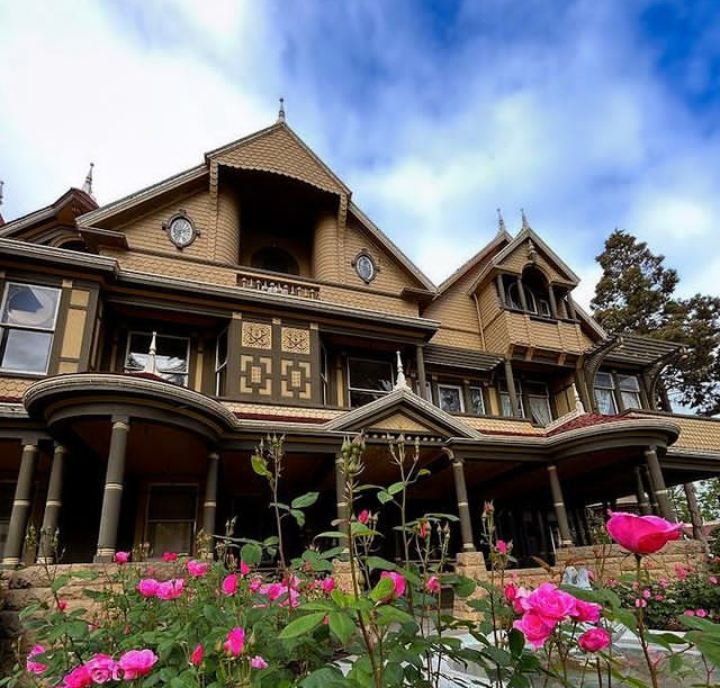
Many people find that their fantasies and imaginations have a direct effect on their more rational behaviors, upon problem-solving, upon their creative efforts. One of the most significant characteristics of creative people is an active and fully accepted imagination, one that has full play in their lives. Many discoveries and inventions began as playful gestures, casual and fanciful experiments, fantasy imaginings, which caused the more logical or rational processes to later get into gear. Many people claim to have no waking fantasy life, but most of us admit that we do dream at night. I dream of living in a Victorian house and having my dad as a roommate so I feel safe and do not get caught up on in the wrong things. There is a difference between narrative memory—the stories people tell about trauma—and traumatic memory itself.

Traumatized people simultaneously remember too little and too much. However, some people have no conscious memory of the trauma they experienced—they cannot tell the story of what had happened. Yet, they are compelled to physically act out the event of a tragic event they suffered. This is known as automatism and it conveys the involuntary, unconscious nature of their actions. For example, a young man was held from behind and then hit in the back of the head once or twice by another person. And sometimes when he was stressed out he would his head and body would move as if the trauma had just happened and he would lose balance. Many people saw this, but when he tried to explain it to the medical doctor, they could not understand what he was talking about and the therapist probably did not have the education to understand.

There is a significant difference between ordinary and traumatic memories. Traumatic memories are precipitated by specific triggers. The traumatic enactment serves no function. It contrast, ordinary memory is adaptive; our stories are flexible and can be modified to fit the circumstances. Ordinary memory is essentially social; it is a story that we tell for a purpose. Perhaps it was the body’s was of begging for justice and revenge. However, there is nothing social about traumatic memory. The rage people have against this young man serves no useful purpose. Reenactments are frozen in time, unchanging, and they are always lonely, humiliating, and alienating experiences. Nothing to make jokes about. It is a form of dissociation to describe the splitting off and isolation of memory imprints, it is the cost of keeping traumatic memories at bay. Some people become attached to an insurmountable obstacle.

Some are unable to integrate their traumatic memories; they seem to lose their capacity to assimilate new experiences as well. It is as if their personality has definitely stopped at a certain point, and cannot enlarge any more by the addition or assimilation of new elements. Unless people become aware of the split-off elements and integrate them into a story that had happened in the past, but was now over, they would experience a slow decline in their personal and professional functioning. This phenomenon has now been well documented in contemporary research. While it is normal to change and distort one’s memories, people with Post Traumatic Stress Disorder (PTSD) are unable to put the actual event, the source of those memories behind them. Dissociation prevents the trauma from becoming integrated within the conglomerated, ever-shifting store of autobiographical memory, in essence creating a dual memory system.

Normal memory integrates the elements of each experience into the continuous flow of self-experience by a complex process of association; think of a dense but flexible network where each element exerts a subtle influence on many others. However, in the case of this young man, the sensations, thoughts, and emotions of the trauma were stored separately as frozen, barely comprehensible fragments. If the problem with PTSD is dissociation, the goal of treatment would be association: integrating the cut-off elements of the trauma into the ongoing narrative of life, so that the brain can recognize that that was then, and this is now. However, in this case, it is complex because the media keeps making fun of the young man and even reenacting what happened during his blow to the head and will not stop, pay, nor let him move on, so he keeps going through it. There is a dignity in conscious virtue.


Virtue is the Music of the Soul—the Harmony of the Passions

Virtue alone is true honor, true freedom, and solid, durable happiness. Right now, there are so many misunderstandings about people and cultures, and I wish we could separate people, not by their race, but by their heart and objectives. Many people just want to be peaceful, safe and normal. This is a fantasy that once used to be true, but we want to live in communities where you can leave your doors unlocked. I remember when I first moved to Sacramento, it was the first time I had seen so many European Americans in one place, and for the most part they were nice. I had a friend named Zach with blonde hair and blue eyes, and I remember his skin was so light I could see his veins, which was cool. He was a really nice guy. He used to let me play with his Star Wars actions figures and told me all about Luke Skywalker, which was his favorite character. #RyanPhillippe 1 of 7

Zach was a very peaceful kid, we were about the same age, and I remember he used to like to climb trees, and also like to read books and had hobbies. Before I met Zach, I have no idea what a hobby was, until he asked me what my hobbies were. He was very nice and a deep thinker and was a good kid. Actually, now that I think about it, growing up as a preteen, all of my friends where white. And we used to sleep over at each other’s houses and stuff. There were a few bad kids, but for the most part people were cool, and the topic of skin color did not come up much. However, as we got older and people started developing their own personalities, I was not too popular with the guys. They used to make fun of me a lot. Then in class one day, another student Mike started feeling sorry for me and would talk to me, share his candy with me, and was so happy to show me his mother’s brand new BMW. #RyanPhillippe 2 of 7

Mike and his family looked like the people you see on TV. His mother looked like Barbie and he looked kind of like Chris from “Out of this World,” many of you are probably too young to remember that television show, but you know, things were still pretty cool. At the time, the Pocket area was known to be one of the best neighborhoods in Sacramento, California, so we moved there. I did not know anyone and was shy and used to sit on the bench by myself during lunch. And then the Asian girls saw me and I guess they felt sorry for me, so they started talking to me and becoming my friend. So all of the sudden, I went from being no one to having all of these pretty Asian girlfriends, and of course that caused the usually type of jealousy, no big deal. We had fun, but then I did not have any white friends anymore, and only a few black friends, but I had companionship and that was nice. For a week the amount of virtue in the old house would have supplied the neighborhood. #RyanPhillippe 3 of 7

Then as I got older, I really wanted to be a bank manager, so I let go of my friends so I could focus on school work. For years, no one really saw me or heard anything about me, which was nice. And then my cousins encouraged me to make friends, and that is when things went south. I do not want to focus on that. However, now, I look at the culture of Sacramento, and it is still pretty nice, but after dealing with so many reporters, many of them are very ignorant and came to Sacramento with their values on hair texture and skin color and kind of made a mess. And I know you hear the things they are saying. Well, then you look at the rest of the country, and they are having wars with people based on what career they have or what skin color they are, and it seems like Mayor Kevin Johnson and these reporters are trying to establish that kind of culture in Sacramento, California and we never really had those problems. #RyanPhillippe 4 of 7

People used to come to Sacramento and comment on how clean it was and how large the houses are and how peaceful the communities were. When we moved here, the city was like 85 percent white and that is not so bad, but people were for the most part honest. Now, there are all these snarky people, who lie, steal, and are constantly trying to set people up or see what they can get out of them, which is sad. However, just keep in mind that virtue, soon or late, meets the good it merits. I have recently heard white people express that they have been told that they are the worst people on the face of the Earth, and that is not true. I used to have a lot of white friends, and they were nice and made great neighbors, and most of my doctors used to be white also, so I cannot really stereotype an entire culture based on my bad experiences recently. #RyanPhillippe 5 of 7

A lot of what is going on has nothing to do with being white or black or whatever. There are just evil people in the World and they want to see America fall and some of them are black and white also, and they just have evil hearts and so they want to make people feel hated and like they do not belong so they can leave your house in ruins. Many people talk about gun control and so forth, and that is not the real issue. The problem is economics. A lot of people are suffering financially, so they are going around stealing and hustling, and trying to take others down for profit and amusement. Yet, it is not funny. Another thing, you see how insane some people like Cody Stark, Tony Lopez, Dave Bender, Kenny Holmes, and Dina Kupfer, Carlos Saucedo, Ron Jones, Mayor Kevin Johnson, and others act on TV, and yet they are allowed to continue harassing people without being punished and that type of culture is spreading. #RyanPhillippe 6 of 7

Do not judge people based on their appearance, necessarily, but on their character, and trust your instincts and how you feel about a person. Also, if people are ganging up and using their career or position in the media to hurt others, you may want to ask yourself why, especially when they person they are abusing is not doing anything to anyone. Yes, people may clap back in response to a prostitute trying to ruin their relationship, or reporter thugs getting away with a decade of slander, but why is it that these people are allowed to get away with attacking one individual and spreading rumors without being fired or a news story being done about bully reporters who ruin lives, wreck houses, relationships, reputations and families? I do not want you to think people hate you because of your skin color because it is not true. It is just there is something unkind at work, and it comes in all shades of skin. Virtue is the only nobility. (www.thedeedle.com) #RyanPhillippe 7 of 7

You are Not Giving Enough to Your Human Relationships

The greatest advances in mental health came in the study of hysteria, a mental disorder characterized by emotional outbursts, susceptibility to suggestion, and contractions and paralyses of the muscles that could not be explained by simple anatomy. Once considered an affliction of unstable or malingering women (the names comes from the Greek word for womb), hysteria now became a window into the mysteries of mind and body. The names of some of the greatest pioneers in neurology and psychiatry, such as Jean-Martin Charcot, Pierre Janet, and Sigmund Freud, are associated with the discovery that trauma is at the root of hysteria, particularly the trauma of childhood sexual abuse. These early researchers referred to traumatic memories as pathogenic secrets or mental parasites, because as much as the sufferers wanted to forget whatever had happened, their memories kept forcing themselves into consciousness, trapping them in an ever-renewing present of existential horror.

I think it is possible that the reason society has so many problems is because they are not mature enough to deal with the sex. Many people are not mentally mature at the age of eight-teen, they are still operating with the minds of children, but are programed by society to think they it is time to have a sexual revolution and they start having the sex with people, and not even understanding that the true purpose for the sex is procreation. So in a since, they are abusing themselves, and others and engaging in something that is not supposed to be just tossed around and it may lead to mental problems. I have read stories about men and women, of adult age, who freak out during the sex and attack their partner, or threat to kill them when they are touched in a certain way, or when their mate says certain keywords. So my hypothesis is that these adults are probably engaging in the sexual activities because they think they are supposed to and much like victims of childhood sexual abuse, they end up traumatized and in pain.

And to make matters worse, a lot of people get their feelings hurt after the sex, which they think is special, but someone else just saw it as a way to relieve stress, or convince themselves that they are heterosexual. Not only that, but many adults have the unprotected sex and end up with sexually transmitted infections, or babies. In many cases, men are forced to marry a woman simply because he got her pregnant and he still may be unsure of his sexual identity or she may not even be the woman of his dreams, but he wants to stick around for the sake of the child they created. And then some women get pregnant on purpose, they lie and tell men that they are taking birth control or still a used condom out of the trash so they can get impregnated, trap him into a relationship, and never have to work a day in her life because she hooked a man. So because of these bad experiences with the sex, people are trapped in ever-renewing present of existential horror and it causes them to become traumatized because they do not understand what they are doing and these many not be relationships, nor children that they desire.

So these men and woman are forcing themselves to be in relationships, for whatever reason, and they may not even be in love and intrinsically that is causing them to suffer psychological trauma and they may or may not even be in love with the person, which causes their heart to harden and creates all sort of mental issues within the pair. Then, because the couple do not realize what is going on, they are mean to others as a way of releasing their pain they are getting from their relationship. They trauma comes out of them in sarcasm, bullying, and violent behavior towards others who many not have even done anything to the aggressor because the aggressor is living foul. Pretending to be someone they are not and engaging in a lifestyle they many not even truly want. Jean-Martin Charcot believed that women would be a critical factor in this struggle, and his investigation into hysteria offered a scientific explanation for phenomena such as demonic possession states, witchcraft, exorcism, and religious ecstasy.

Jean-Martin Charcot conducted meticulous studies of the physiological and neurological correlates of hysteria in both men and women, all of which emphasized embodied memory and a lack of language. For example, in 1889 he published the case of patient named Lelog, who developed paralysis of the legs after being involved in a traffic accident with a horse-drawn cart. Although Lelog fell to the ground and lost consciousness, his legs appeared unhurt, and there were no neurological signs that would indicate a physical cause for his paralysis. Jean-Martin Charcot discovered that just before Lelog passed out, he saw the wheels of the cart approaching him and strongly believed he would be run over. He noted that the patient does not preserve any recollection. Questions addressed to him upon this point are attended with no result. He knows nothing or almost nothing. Like many other patients at the Salpetriere, Lelog expressed his experience physically: Instead of remember the accident, he developed paralysis of his legs.

However, for me the real hero of this story is Pierre Janet, who helped Jean-Martin Charcot establish a research laboratory devoted to the study of hysteria at the Salpeteiere. In 1889, the same year that the Eiffel Tower was built, Pierre Janet published the first book-length scientific account of traumatic stress: L’automatisme psychologique. Pierre Janet proposed that at the roof of what we now called Post Traumatic Stress Disorder (PTSD) was the experience of vehement emotions, or intense emotional arousal. This treatise explained that, after having been traumatized, people automatically keep repeating certain actions, emotions, and sensation related to the trauma. And unlike Jean-Martin Charcot, who was primarily interested in measuring and documenting patients’ physical symptoms, Pierre Janet spent untold hours talking with them, trying to discover what was going on in their minds.

Also in contrast to Jean-Martin Charcot, whose research focused on understanding the phenomenon of hysteria, Pierre Janet was first and foremost a clinician whose goal was to treat his patients. That is why I studied his case reports in detail and why he became one of my most important teachers. In a similar fashion, an elaborate loneliness trap has been woven by those who suggest that modern men and women should be totally self-sufficient and independent. Interpersonal freedom is the melody they play, and thousands now march in step behind them. These pipers trap people because they make them feel guilty for even admitting they are lonely; they insinuate that it is a sign of weakness to admit publically that a person really needs someone else, and not just for the sex. The search for interpersonal freedom and the resultant loneliness appear in many forms. One of the more fashionable forms to emerge in the last decade is the identity crisis, which involves know who you are, doing your own thing, and doing it your way. The most important thing is to become a real person, and this apparently is accomplished by being different from everyone else.

Great fear is expressed at the thought of being only marginally different—the cleavage between the individual and everybody else must be sharp and total. The search for one’s own identity cannot be found with somebody else; it is a private, solitary, and lonely struggle. Where then can people seek their identities if not with other people? That is the crisis question, and many resolve it by equating their identity with their careers. Careers become the main objective, and everything else becomes secondary. One’s spouse, family, friends, relaxation, aesthetic interest, all must play second fiddle to the pursuit of a successful career. In its most acute form, this process leads to the full-blown development of the Type A character. Driven and work-addicted, the Type A person often ends up in total social isolation—and dies of premature coronary disease. I would love to continue this discussion later; I am running late.