Home » Articles posted by Randolph Harris II International Institute (Page 277)
Author Archives: Randolph Harris II International Institute
Places of Divine Safety Foreordained beyond Good and Evil
 Let us not imagine evils which we do not fell, nor injure life by misrepresentation. Of all the souls that stand create, I have elected one. When sense from spirit files away, and subterfuge is done; when that which is and that which was apart, intrinsic, stand, and this brief tragedy of flesh is shifted like sand; when figures show their royal front and mists are carved away,–behold the atom I preferred to this clay. I have no life but this, to lead it here; nor any death, but lest dispelled from there; nor tie to Earths to come, nor action new, except through this extent, the realm of you. I dismissed as the fantasies of a lonely and embittered man who was filled with contempt for mankind and who was singularly incapable of love or friendship. I sang the song of the tall ones, the long-extinct ones, come again from a colony, lost somewhere in the modern World. Gentle beings, out of time, out of place, and maybe out of luck. And of such tragic import to my fledgling and your human kindred. Do not make me say so much that other immortals might gather up my intent and use it to bad ends. #RyanPhillippe 1 of 5
 Here me, sweet God, wherever you are. Surely you know this World as no one else know it. Have you spied these tall children? I do not dare to say their names. I will wrap myself in comforting phantasms, roaming the winds for my own sake, dissolved now and then in the poetry of love, and envisioning bowers of love, places of Divine safety foreordained beyond Good and Evil, where I am the one I coveted could dwell. It was a predestined vision and I knew it, but it was mine to enjoy. My own desolation, it may be plausibly that it made me overestimate the discontent of human beings. It is frequently, but not universally, true that what is hoped for is found disappointed when it is attained, and while fearful envy of other people’s success is common enough, real sympathy and generosity are not quite so rare. Furthermore, my doctrine that pleasure is negative while pain is positive have been endorsed by people who are neither lonely nor embittered and who do not, as far as one can judge, lack the gift of love or friendship. He who has nothing external that can divert him must find pleasure in his own thoughts, and must conceive himself what he is not, for who is pleased with what he is? #RyanPhillippe 2 of 5
 Some might say that I am one of the most compassionate men who ever lived, even though at times, I conclude that life is wicked, undisciplined, and superficial farewells, and only then did the secret grip release me. As I walked slowly into the formal garden beyond the pool, and would have gone up into the roaring clouds, to be as far away from the Earth as I could be. However, the one I coveted piteous cry rang behind me. The apparent aimlessness of all that happens, this weary antiquated World goes on, begetting, with creation and with living and with death. Nathan Freudenthal Leopold, Jr and Richard Albert Lobe are examples of two wealthy students at the University of Chicago, who in May 1924 kidnapped and murdered 14-year-old Robert Franks. The murder was characterized as the crime of the century—as a demonstration of their perceived intellectual and financial superiority, which they thought, rendered them capable of carrying out a “perfect crime” and absolved them of responsibility for their actions. The Franks murder has been inspired by literature by Patrick Hamilton (Rope) and film by Alfred Hitchcock (Rope), and all is blind from beginning to the end. #RyanPhillippe 3 of 5
 Life is like an Albatross on the sea, tossed by every wave and by every wind in a White Squall; a ship headed for no port and no harbor, with no compass, no rudder, no pilot; simply floating for a time, then lost in the waves and rain of a White Squall. In addition to the aimlessness of life and the Universe, there is the fact of death. I love my friends, but they all must come to a tragic end. Death is more terrible the more one is attached to things, in the World. Life is not worthwhile, it is an unpleasant interruption of nothing, and the best thing you can say of it is that it does not last long. The partners in a marriage that is to be ruined or destroyed, squandered or wastefully discarded take no corrective action. One source of grief-related guilt is anger at the loved one for departing. This is often suppressed because it seems irrational to the conscious mind. An exciting idea is like a venomous microbe; it bites into the brain, and if circumstances do not occur to expel it, it produces a form of mania. Chronic guilt or refusal to work through the emotion associated with lass can result in delayed grief reaction and physical ailments because the suppressed energy of the relinquished emotions reemerges through the body’s endocrine and nervous system and creates an energetic imbalance. #RyanPhillippe 4 of 5
 When all the negative emotions have been worked through, surrendered to and let go of, relief finally occurs, and the former suffering is replaced by acceptance. Acceptance is different from resignation. In resignation there are still residuals of the previous emotion left. There is reluctance and a delaying of the true recognition of the fact. Resignation says, “I do not like it, but I have to tolerate it.” With acceptance, resistance to the true nature of the facts has been relinquished; thus, one of the signs of acceptance is serenity. The struggle is over and life begins anew. The energies that were bound up in the previous negative emotions are now freed up, so that the healthier aspects of the personality are now re-energized. The creative aspects of the mind develop opportunities for new life situations and further options for growth and experience, accompanied by a new sense of aliveness. God, grant me the serenity to accept the things I cannot change, the courage to change the things I can, and the wisdom to know the difference. Love is not passion, for one may feel that for many; not affection, for friendship demands that. Not even sympathy and comradeship; one can find with others. Every moment of time solicits to be employed in the important business of love. #RyanPhillippe 5 of 5

The Vanity of Existence and the Will to Live
 I closed my eyes. I cleared my mind of all distraction and random images. Again I spoke only to God. Wherever you are, I need you. And now came some artifice—to describe once more my needs without casting to the winds unnecessary details for every other immortal who might pick up my message and ponder the precise nature of what I sought. To find a tribe of all beings, tender of bone, ancient, simple, tangled with my fledgling, unknown to the World of records, history and location essential to the sanity of those I love. Guidance. Mistake I have made with my own fledgling, spiraling out of control. Give to me your wisdom, your keen hearing, your vision. Where are the tall creatures? I am your loyal subject. More or less. I send my love. I am ready to concede that some few human beings really do achieve “comparative” happiness, but this is not of any great consequence. For aside from being “rare exceptions,” these happy people are like “decoy birds”—they represent a possibility which must exist in order to lure the rest of mankind into a false sense of hope. Moreover, happiness, insofar as it exists at all, is a purely “negative” reality. We do not become aware of the greatest blessings of life—healthy, youth, and freedom—until we have lost them. #RyanPhillippe 1 of 5
 That twinge of autumn again in my beloved heat. I did not so much like it. I fretted the Winter coming on. However, what was all this to me with my broken heart, and illegitimate soul? What is called pleasure or satisfaction is merely the absence of craving or pain. Nonetheless, craving and pain are beneficial. As for the few happy days of our life—if there are any—we notice them only after they have given place to unhappy ones. Somewhere in the back of my conscious was taking shape the perishableness of all good things and the ultimate extinction of all our hopes and achievements in death. All of our pleasures and joys disappear in our hands, and we afterwards ask astonished where they have gone. Moreover, a joy which no longer exits does not count—it counts as little as if it had never been experienced at all. That is why I was crying my own blood tears, was it not. Well, there was nobody to see it. Eh bien, it was onto Winchester mansion, and as I ascended I prayed to God. God was my prayer of the winds all the way there. That which has been exists no more; it exists as little as that which has never been. However, of everything that exists you may say, in the next moment, that it has been. #RyanPhillippe 2 of 5
 Hence something of great importance in our past is inferior to something of little importance in our present, in that the latter is a reality, and related to the former as something to nothing. Some people have inferred from this that the enjoyment of the present should be the supreme object of life. That is fallacious; for that which in the next moment exists no more, and vanishes utterly, like a dream, can never be worth serious effort. I think that everybody present knows that for years the ghost of William Wirt Winchester has appeared in the dining room of the Winchester mansion, at that Italian fireplace there between the windows, and no one has ever known what to make of it. My son has seen that ghost plenty of times, and the tour guides did too. And I have to confess, as God is my witness, so did I, though I always said a Hail Mary and the ghost went away like that, just like pinching out a candle flame. And when I turned on the lights, well, we always found nothing. Just nothing. And we put the key back into the cup in the kitchen, though why so carefully kept locking up nothing I am not the one to explain. #RyanPhillippe 3 of 5
 The final judgement of nature is destruction by death. The ghost started to appear again night and day after one of the cleaning ladies went missing, leaving behind all of her medicine. I am telling you, all I had to do is walk in this dining room and there was William Wirt Winchester standing there pointing at the fireplace! And the same held true for my son. This is the last proof that life is a false path, that all man’s wishing is a perversity, and that nothing at all is worth our striving, our efforts and struggles. The conclusions is inescapable: All good things are vanity, the World in all its ends bankrupt, and life is a business which does not cover its expenses. What is I say I shall not wait? What if I burst the fleshly gate and pass, escaped, to thee? What if I file this mortal off, see where it hurt me, –that is enough, –and wade in liberty? They cannot take us any more, –dungeons may call, and guns implore; unmeaning now, to me, as laughter was an hour ago, or laces, or a travelling show, or who died yesterday! #RyanPhillippe 4 of 5
 Because people view themselves as separate and limited, they are stressed by their sense of lack. It is common for mortals to look outside of themselves for the satisfaction or their needs. This leads them to the experience themselves as vulnerable because they are insufficient unto themselves. The mind is, therefore, a survival mechanism, and its method of survival is primarily the use of emotions. Thoughts are engendered by the emotions and, eventually, emotions become shorthand for thoughts. Thousands and even millions of thoughts can be replaced by a single emotion. Emotions are more basic and primitive than mental processes. Reason is the tool the mind uses to achieve its emotional ends. When used by the intellect, the basic underlying emotion is usually unconscious or at least out of awareness. When the underlying emotion is forgotten or ignored and not experienced, people are unaware of the reason for their actions and they develop all kinds of plausible reasons. In fact, they frequently do not know what they are doing. There is a simple way to become conscious of the underlying emotional goal behind any activity by asking what for? What do I want respect and approval for? To have the feeling of security. #RyanPhillippe 5 of 5

Doctrine of Despair: Is Human Life Ever Worthwhile?
And now I lay me down to sleep, and the book comes to a close. Against the deep down pillow, I realized something. Is Human life ever worthwhile? And Does (or can) human life have any meaning? Human life is part of a divinely ordained cosmic scheme and after death at least some human beings will be rewarded with eternal bliss. Not only much each individual human life some to an end but life in general will eventually die out. If we are asked to believe that all our starving is without final consequence, then life is meaningless and it scarcely matters how we live if we all end in the dust of death. To handle the fear of loss, we have to look at what purpose the external person or object serves in our life. What emotional need is being fulfilled? What emotions would arise were we to lose the object or the person? Loss can be anticipated, and we can handle the various fears associated with the sense of loss by disassembling the emotional complexes that they represent, and letting go of the individual component feelings. Associated with grief and mourning is the emotion of anger. The loss of that which is important frequently brings up a feeling of rage, which may be projected onto the World, society, individuals and, ultimately, God, who is held responsible for the nature of the Universe. #RyanPhillippe 1 of 5

I will stop time for you, the moment that you say you want me to. Even in grief and loss, I possessed someone special to me. He was presence within me forever. My loneliness would never again be as bitter. Anger results from prior refusal to accept the fact that all relationships and possession in this life are transitory, here today and gone tomorrow. Even the physical body, which is our biggest attachment, eventually has to be relinquished, as everyone is away. Nonetheless, each life and each action has vital significance. God’s grand design is life eternal for those who carry on the behavior, work, or tradition of Christ. Here is the one grand incentive to good living. As life is seen to have purpose and meaning, men and women find release from despair and the fear of death. Whatever meaning life acquires is derived from the encounter between God and human beings. The means thus conferred upon human life cannot be understood in terms of some finite purpose, supposedly more ultimate than the meeting itself. For would could be more ultimate than the Presence of God? It is true that God is not always near, but time of Divine nearness do not light up themselves alone. Their meaning extends over all of life. There is a dialectic between Divine nearness and Divine fareness as it points to an eschatological future in which it is overcome. #RyanPhillippe 2 of 5
 Over the years he might drift away from me, he might come to condemn the point of passion that had brought him to my heart. He might be lost to me in some other mundane fashion that would wring tears from me all my nights. I never would really lose him. Because I would not lose the lesson of love I am learned from him. And this head had given me, as I had tried to give it to him. The Night was wide, and furnished scant with but a with a single star, that often as a cloud it met blew out itself for fear. The wind pursed the little bush, and drove away the leaves. November left; then clambered up and fretted in the eaves. No squirrel went abroad; a dog’s belated feet like intermittent plush were heard adown the empty street. Among believers not a few maintain that life can be worthwhile and have meaning in some humanly important sense even if the religious World view is rejected. Other, however, agree with the religious theorists that our two questions must be given negative answers if there is no God and if death means personal annihilation. Having rejected the claims of religion, they therefore conclude that life is not worthwhile and that it is devoid of meaning. Some people believe that the World is something which ought not to exist: the truth is that we have not to rejoice but rather to mourn at the existence of the World that its non-existence would be preferable to its existence; that something which ought not to be. And then my heart cries out, my heart will not be still, my heart will not give up, my heart will not give in—the blood that teaches life will not teach lies, and love becomes again my reprimand, my goad, my song. #RyanPhillippe 3 of 5

It is absurd to speak of life as a gift, as so many philosopher and thoughtless people have done. It is evident that everyone would have declined such a gift if he or she could have seen it and tested it beforehand. To those who assure us that life is only a lesion, we are entitled to reply: For this very reason I would I had been left in peace of all sufficient nothing, where I would have no need of lessons or of anything else. Happiness is unobtainable for the vast majority of mankind. Everything in life shows that Earthly happiness is destined to be frustrated or recognized as illusion. People either fail to achieve the ends they are striving for or else they do achieve them only to find them grossly disappointing. However, as soon as man discovers that a particular goal was not really worth pursuing, his eye is set on a new one and the same illusory quest begins all over again. Happiness always lies in the future or in the past, and the present may be compared to a small dark clouds which the wind drives over the sunny plain: before and being it all is bright, only it itself always casts a shadow. The present is therefore always insufficient; but the future is uncertain, and the past is irrevocable. Men in general, except for those sufficiently rational to become totally resigned, are constantly deluded—now by hope, now by what was hoped for. #RyanPhillippe 4 of 5
 They are taken in by the enchantment of distance, which shows them paradises. These paradises, however, vanish like optical illusions when we have allowed ourselves to be mocked by them. The fearful envy excited in most men by the thought that somebody else is genuinely happy shows how unhappy they really are, whatever they pretend to others or to themselves. It is only because they feel themselves unhappy that men cannot endure the sight of one who they imagine happy. I want to be a saint, I want to save souls by the millions, I want to look like a angel, but I do not want to talk like a gangster, I do not want to do bad things even to bad guys, I want to be Saint Peter. However, you know me, and come sunset, maybe it will be time to hunt the back roads, and those little out-of-the-way beer joints, sure enough, smell that malt and sawdust, and yeah, right on, dance to Aaliyah on the jukebox, and maybe crush a couple of heavy-duty Evil Doers, guys who are just waiting for me. Who knows just how glorious the firmament with all its breaking clouds and lost little stars will appear as I rise above this Earth and spread out my arms as though there was no want in me for anything warm or good. Be gone from me, oh mortals who are pure of heart. Be gone from my thoughts, oh souls that dream great dreams. I am the magnet for the damned. #RyanPhillippe 5 of 5

Great Men Stay Focused on the Great Sovereign Source
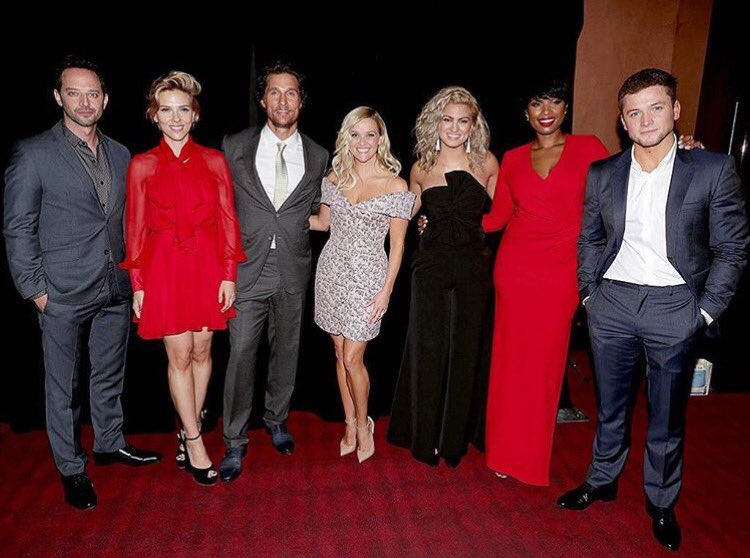 The river of the Spirit of God overcomes all obstacles. Never focus your eyes on the obstacle or the difficulty. Nothing must keep you from the one great sovereign Source. Freedom, moral responsibility, and historical inevitability are recurrent themes in discussion of the great man theory. The terms “great” and “outstanding” are frequently used eulogistically. And the term “superman” has such a connotation. The praiseworthiness of greatness is apparent when great men are identified as heroes. Hero worship of the authentic hero is commendable because heroes are sent by Providence to enlighten, to lead, and to save us. Great men are historically significant and it is tantamount to asserting that it is beneficial for us to read about them—not that we thereby understand history any better, but that we become better persons. If history is essentially a means of forming good character, then indeed great men are the substance of history. Because the influence of celebrities, like Ryan Phillippe, is so considerable, he and others are capable of achieving whatever they intend to do. Through determination, a powerful man like Ryan Phillippe uses deliberate actions based on anticipated consequences, that suffices to deliver mankind from inexorable fate. #RyanPhillippe 1 of 7
 Whereas what the average agent intends to accomplish is distorted beyond recognition in the combined result of social behavior, but great men are exceptional persons and have a measure of responsibility for and control over mankind’s historical destiny. Ryan Phillippe is not only an exceptional man, but he is a free spirit, who breaks with convention and orthodoxy, revealing new ways of life, new dimensions of human experience through his films and celebrity status. The judgment that creativity is intrinsically valuable is an integral part of film making. Even if the social determinism is theoretically admissible as an approach to historical understanding, the individual’s opportunities for shaping his destiny, however meager, are of primary importance to us as human beings, so that the great man approach to history is more humanly appropriate. We should be as self-reliant, heroic, free, and creative as possible. So in saying that, even if you are not famous or necessarily powerful, this becomes an appeal for creative endeavor to address all mankind by being the best version of yourself that you can be and setting a great example for others to learn from. #RyanPhillippe 2 of 7
 It is often the cases that the abilities, interest, accomplishments, character traits, or style of life of individuals who emerge from anonymity in a society exemplify characteristics that, in less noteworthy form, are common to members of the group to which the exceptional individuals belong; therefore, it is possible that there are more great men who many not be as well-known as others. In addition to my father, who I believe to be a great man, I also think that Nick Miller with the East Bay Express is a great man. He is a journalist who speaks up about all kinds of social issues, from injustice to farming methods, community exploitation, animal rescue and craft beers. The retainment of knowledge, serving in a war, being a celebrity, or having an honest career and being a good person can make anyone a great man. The assumption is that we can more readily, and perhaps more adequately, grasp and retain in mind the characteristic traits of the human past or present when these are made available to us as personified in outstanding individuals. We are to be fountains through which blessings flow through us. #RyanPhillippe 3 of 7
When we look at our lives, we will see the residual of pat life crises which are still unresolved. Thoughts and feeling about the events that tend to occur and color our perception, and we will not that they have disabled us in certain areas of life. From this angle one can understand why one would focus on such a diverse actor like Ryan Phillippe, who has been in over 20 films and more than five television shows, as a great man. Or Nick Miller, a journalist who through his work makes a difference in the community. When someone shows you that they actually understand what you are going through and they care about you, it makes all the difference. It is nice to be able to connect with someone, especially if you admire their work, and feel like you bond with them. We live in a World where so many people are always trying to exploit someone or something else, and when you meet a person who is genuinely and actually a great person, it can really brighten one’s life and make it seem like there is hope for humanity, and to hold it in a different paradigm with a different significance and meaning. #RyanPhillippe 4 of 7
Sometimes it is assumed that influence must manifest itself as original or pioneering achievement, but it can also be more broadly conceived so as to include even the accomplishment of destruction. I consider my grandfather and father great men because they defended their country by serving in wars, and were able to turn that aspect of themselves off, come home, and still be gainfully employed and run successful households. However, a distinction is sometime made between the great man as originator or creator and the great man as merely the executor or instrumental agency. Moreover, in some theories a particular manner of exerting influence seems to be an integral part of such theory. The personal magnetism of the hero, his ability to arouse the hero-worshiping propensity of the ordinary man is because he has a charismatic quality mediating the effectiveness of the leader of men. Great men presuppose unusual ability, virtuous character, and valuable achievement. They display exceptional abilities and strength of character and that is beneficial. #RyanPhillippe 5 of 7
 Dr. Bernard Harris, the first African American astronaut is also a great man because he overcame circumstances and represents his heritage through accomplishment and merit. Even though the concept of greatness has come to be regarded with the caution due any term so rich in extra theoretical associations, it is worth remarking on its use. When trying to determine if a man is a great man, it is important to evaluate the extent of their influence, whether this influence was beneficial or not, and whether these men were of good character. There are people with great and prestigious careers, but by their actions and beliefs and influence, it can be determined that they are not great men. Although Donald Trump is very controversial, I consider him a great man because of his success in business and the fact that he is built skyscrapers. William Randolph Hearst and William Wirt Winchester are also great men because they are successful men who ran corporations be built many fabulous mansions and castles and industries which employed people and they also donated money to help fund projects in the community. These men are not only great because of their causes, but they are influential, important, and irreplaceable. #RyanPhillippe 6 of 7
 There is wide agreement among empirically oriented inquirers that outstanding persons have sometimes been “important” necessary cases of political and economic developments, and even more confident judgments are expressed as to the “decisive” influence of great journalist, actors, artists, scientists, philosophers, and others upon the developments in their own areas of competence. This unanimity attests not to the truth of the great man theory but to extensive de facto agreement on specific presuppositions of inquiry of the sort reveled by an analysis of disagreement. Sometimes traditional theories often either emphasize altruism too much (as in the case of many religious views) or emphasize egoism too much (hedonism). There should be an equal emphasis on self-love and love of one’s neighbor. The highest aim of all ethic and great men is to re-establish a natural equality of egoism and altruism. Along with this should go an emphasis on the body as well as the soul; an emphasis on fair treatment of animals as well as humans. Progress is a law of nature and we need more progression in government, the administration of justice, education, and social and more organization because knowledge of human nature is sadly deficient. #RyanPhillippe 7 of 7


The Problem of Animal Pain–Red in Tooth and Claw

Moral activist, insist on rigorous, continuing moral instruction and effort. Daily self-examination is important for every individual, whose ultimate purpose is to learn how to judge one’s actions clearly and firmly; each man should see that he is alone totally responsible for his deeds because he has given to the external circumstances of the deed. The faculty of choice and refusal, the power to use our external impressions, is of immense importance. When a man finds a fault in his way of using external circumstances, he must root out a dangerous growth. With all his submissiveness, man should be a great defender of the prosopon, or proper character and personality of man. Each man is free to mold it and has an obligation to the rest of the World to display it once it is molded. I like to establish something sure and secure in a World of uncertainty. The feelings of pleasure and pain that accompany sense experiences are the ultimate good and evil; all statements about good and evil are meaningful only be reference to these feelings.
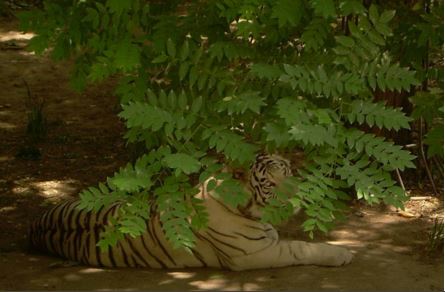
Thus far, these articles have been concerned with evils as it directly affects mankind in the forms of sin, pain, and suffering. There is also, however, the baffling problem of animal pain beneath the human level. Throughout the animal kingdom, one species devours another, and painful accidents and lingering diseases disable and then kill them. I have stopped eating meat because I thought about how cruel it is to raise something to die and then eating. On my evening walks through the park, I saw how much raccoons are, and how they have emotions and feelings, and how they are gentle and shy, and I could not bring myself to buy another, chicken, fish, turkey, nor steak. I also thought about how sad I would be if someone killed and ate my tiger “White Iverson.” However, that is just my decision, at my particular level of consciousness, and I am not judging nor criticizing anyone else. I am just doing what is right for myself. Nonetheless, how is this spectacle of nature, red in tooth and claw to be reconciled with the religious belief in an omnipotent and perfect Creator? Knowledge is a state of mind and has to be accounted for accordingly.

Certain solutions of the problem have been proposed. It is claimed that the lower animals live wholly in the present moment and lack the high-level capacities of memory, anticipation, and conscience which give rise to the human experience of suffering as distinct from the experience of physical pain; that the pain mechanism is a necessary warning device in bodily organisms that move about within a material environment; and that an animal’s life, even though violently terminated, is predominantly active and pleasurable. Solutions of a more speculative nature have been sought in two main directions. It has been suggested that the premundane fall of Satan has had cosmic consequences, perverting the entire evolutionary process to a savage struggle for existence. From another point of view, which adopts a theme of Eastern thought, it has been suggested that there may be a continuous reincarnation of souls through the levels of animal existence up to self-consciousness in human life. Thus, the pain of animals is not wasted, but is part of a long constructive process.


Healing in Forgiveness of Cruel Intentions
 The capacity to love ourselves in for form of increased self-esteem returns and with it comes the capacity to love others. As we experience letting of desires, we begin to see that what we have chosen will come into our lives almost magically. To be good is to be in harmony with one’s self. Goodness and greatness are synonymous words. Men created by God already possess these human traits that are valued most highly such as love, compassion, courage, and truth. It is argued, on one side that, in principle, there are no limitations to an omnipotent God’s capacity to create beings endowed with specific personal characteristics. On the other side, it is argued that a virtue which has been formed as a result of making real decisions in real situations of moral choice is of greater value than the analogous virtue created by the divine fiat, and that it is reasonable to suppose that the Creator is not content to build into men the merely ready-made and unearned easy bake oven qualities. It is strange that all men should consent in commending goodness, and no man endeavor to deserve that commendation; whilst, on the contrary, all rail at wickedness, and all are as eager to be what they abuse. #RyanPhillippe 1 of 6
 However, the discernible connection between the more heroic human virtues and the kind of World in which we live remains a very general one. It does not by any means amount to a one-to-one correspondence between each item of evil in human experience and some moral gain accruing to those undergo it. All good-natured men are passionate; and a sincere man cannot hide it. Further, it appears that evil has crushed the human spirit as often as it has developed. In the World of consciousness, like goes to like, so that fear attracts fear just as its corollary is true that love attracts love. The more fear we hold, the more fearful situations we attract to our life. Each fear requires additional energy to create a protective device until, finally, all of our energy is drained into our extensive defensive measures. The willingness to look at a fear and work with it until we are free of it brings about immediate rewards. Each of us has within us a certain reservoir of suppressed and repressed fear. This quantity of fear spills into all areas of our life, colors all of our experiences, and decreases our joy in life. #RyanPhillippe 2 of 6
 Eternal happiness of human beings in society with one another and in communion with God, which is symbolized by the “Kingdom of Heaven”; and its fuller claim is that the final fulfillment of God’s purpose for his creatures in his Heavenly Kingdom constitutes a good so great and enduing that it justifies all the pains which have been experienced in order to reach it. (At this point, again, theodicy excludes the notion of eternal torment, for such torment could never serve any good beyond itself, and would thus constitute precisely the kind of unredeemed evil which would make a theodicy impossible.) A fundamental objection which is raised against this appeal to eschatology is that there is a contradiction between justifying a first-order evil, such as danger, as being required for the second-order good of courage, and then justifying the process by which courage is produced out of evil by reference to a future Heavenly state in which, presumably, there will no longer be any dangers, and hence no need to have developed the virtue of courage in the first place. More generally, if Heaven is free from rough edges and evening shade, how will virtues, so dearly bought in this World, survive within it? #RyanPhillippe 3 of 6
 Possibly the difficulty might be met in terms of Heavenly analogues of Earthly virtues, created by the development of the latter but no longer requiring the situations which evoked them; or in terms of the transmutation of a particular virtue (courage, for example) into an aspect of faith in God. However, Christian theology has not developed any definitive answer to the questions. God is by definition everything that a being ought to be, then such a being out to be, among other things, real; and to think of him as not being real is therefore to think of him as not being all that he ought, and thus is not to be really thinking of God. The thought of an unreal God is internally incoherent, so if God can be thought of at all (and the man who thinks he does not exist does think of him), he must, if we are to be consistent, be thought of as real. No representative government can long be much better or much worse than the society it represents. Purify society if you purify the government. However, try to purify the government artificially and you only aggravate failure. #RyanPhillippe 4 of 6
 Greatness consists in bringing all manner of mischief on mankind, and goodness in removing it from them. Since the beginning of time, every greater teacher has said to look within and find truth, for the trust of what we really are will set us free. If what is to be found within ourselves were something to feel guilty about, something that is rotten, evil and negative, then all the World’s great teachers would not advise us to look there. On the contrary, the would tell us to avoid it at all costs. We will discover that all the things in the World called “evil” are right on the surface; they are right on top, as the superficial, outer thin layer. Beneath these errors is mistakenness. We are not rotten—only ignorant. As the quantity of guilty fear and the energy accompanying it are relinquished, we will notice that physical ailments and symptoms begin to disappear. The goal transforms itself as we approach it. The further we pursue it, the loess able we become to conceive the human good in purely this-World, secular terms. If our neighbor occasionally lapses from lovability and from goodness, we will still forgive them. God’s law is in our hearts and produces an actual moral experience. #RyanPhillippe 5 of 6
 The gravitational force of forgiveness acting at a distance is typical of physical forces; the aura of matter interacting by mechanical impact is replaced by a picture of particles of matter interacting by forces at a distance—forces not only gravitational in nature, but also cohesive, elastic, magnetic, electric, and chemical, and not only attractive, but also repulsive. Being freed from guilt brings about a renewal of life energy. This can be dramatically witnessed in many people who are converted through religious experience. The sudden freedom from guilt through the mechanism of forgiveness is responsible for thousands of recoveries from serious and advanced ailments. What is important to notice is that the alleviation of guilt is accompanied by a resurgence of life energy, well-being, and physical health. Forgiveness transmits as heat, light, and magnetism in space otherwise void of matter; in this sense it is understood in terms of analogy with the transmission of sound in air from the vibrations of the wavelengths in our brains that is produces by forgiveness. Forgiveness invokes a particular physical explanation in theory accounting for the colors produced by the refraction of light in thin films from our minds when the loving energy comes to healing ourselves and increasing our own emotional health. #RyanPhillippe 6 of 6


Sleeping, Dreaming, an Antiquated Soul—Fly Eagles Fly!

The Moon, it was full, but veiled behind the pink panoply of clouds, and so we were in a thin rosy and penetrable darkness, all around us the garden was alive and balmy and seeing to feed upon us with countless tiny mouths. The Fall of man is regarded as a virtually inevitable incident in man’s development as a child of God. If man is to enter into a genuinely personal relationship with his Maker, he must first experience some degree of freedom and autonomy. For only a relatively independent being can into a relationship of love and trust with his Creator, and man’s fall is seen as a fall into this independence. It is thus analogous to the phase of disobedience which signals a young child’s assertion of his own individuality. Man has never actually existed in a state of pre-Fall perfection. The Fall story is an analysis of man’s present condition of estrangement from God, but not an account of how he came to be in this condition. Using our knowledge of the early state of mankind, we may say that man, as he emerged from the lower forms of life, was endowed with only dim and rudimentary conceptions of his Maker. He existed at an epistemic distance from God, which allowed him to respond to modes of divine revelation that do not coerce the human mind but which preserves man’s relative autonomy.

Man’s existence at this epistemic distance from God constitutes his fallen estate, and from this flows the moral and spiritual cleavage and estrangement which is traditionally called the “original sin.” In this type of theodicy, God bears the ultimate responsibility for (in other words, is the necessary and knowing cause of) man’s existence as a fallen creature, although, on this own level, man remains individually responsible for his person choices and actions. Further, though the significance of this cannot be pursed here, the God who has thus created man as imperfect but perfectible has also entered into human life, in Christ, to bring about man’s redemption. The more I know of the World the more clearly I perceive that its top and bottom sin is cowardice, physically and morally alike. Some instances of suffering for example, those caused by 11 September 2001, and other war, injustice, and the many forms of man’s inhumanity to man—are traceable to human wrongdoing, and thus fall within the problem of moral evil. Cowards kick and abuse the person who is known to be a degree more timorous than themselves, as much as they tremble at the frown of anyone who has more courage.

It would seem to be strange that any human being should find more to wonder at in any one of the phenomena of Earth than in the Earth itself; or, should specially stand astonished at the might of Him who created the World, when each night brings into view a firmament studded with other Worlds (stars, planets, and Moon in the sky) each equally the work of His hands! However, other sources of pain, besides those generated by humans, such as aliments, Earthquake, flood, drought, and storm, are built into the structure of the World itself. Surely, it is urged, they make it incredible that the World who should have been designed by a Creator who is both perfectly good and infinitely powerful. God’s purpose for making the World must have been to produce a paradise for man to inhabit. He will naturally male it as safe and agreeable as he can and any remaining sources of danger or discomfort are evidence of either his want of care or want of means. However, nature was created free from defect, and it present perils and hardships are punishments which man has brought upon himself.

Great arching branches of the rain tree poured over us from the left. And the eagles sang loudly from the many crowing trees. There were no traffic sounds from the World beyond. The very air itself was blessed. It was so lovely. The purpose of the World is to be a place of soul-making, an environment in which the higher potentialities of human personality may develop. Many thinkers feel that human beings are content to operate at the level of lower animals—to simply have their physiological needs men, breathe, eat, have the sex, find shelter, avoid pain and seek pleasure. It is as if most humans are suspended halfway between animals and Heaven, a kind of wingless animal. Humans must also have the possibility of developing their intellectual and artistic powers to whatever extent accords with their personal characteristics and abilities. Nature is operating by its own laws and men must learn to obey it. If God had created the Word in which natural law were continuously adjusted for the avoidance of all pain, the more heroic human virtues would never be evoked. Indeed, a great part of our present moral language would be meaningless. In the old times when we did not believe in anything, when we believed in the only laws were aesthetic law, expecting further miracles. It was so accidentally beautiful.

If the Fall of man had not happened, there would be no such thing as “doing harm,” for on one would be able to suffer any kind of injury; there would be no such thing as “doing good,” for there would be no needs, deficiencies or occasions for improvement. There would also be no such thing as a crime or a benefaction, an act of generosity or of meanness, of kindness or unkindness and there would be no situations to which such qualities as courage, fortitude, loyalty, honesty, and the caring and protective aspects of love would be appropriate responses. There would thus be no occasions for moral choice. Such a World would be ill-designed to evoke many of the human traits which we value most highly. Indeed, it would seem that the rough edges of the World—its challenges, dangers, tasks, difficulties, and possibilities of real failure and loss—constitute a necessary element in an environment which is to call forth man’s finer qualities. My dad used to always tell me: “God already knows what you are capable of and why type of person you are, he just wants you to see for yourself.” It is all the same, so lovely, more lovely even than I remember before the Fall of man. Nothing has changed.


The Ideas of the Fall and of Original Sin

God created man with no sin in him in a World devoid of evil. What appears to be evil, when seen in isolation or in a too limited context, is a necessary element in a Universe which, viewed as a totality, is wholly good. From the viewpoint of God, who sees timelessly and as a whole the entire moving panorama of created history, the Universe is good: To thee there is no such thing as evil, and even in thy whole creation, taken as a whole, there is not. A Universe in which all the varied potentialities of being are realized and which contains as many different kinds of entity as are possible (lower as well as higher, lesser as well as greater), is a better Universe—one which more adequately expresses the infinite creativity of God—than would a Universe which contains only the highest type of created beings. There is thus an immense hierarchy of forms of created existence, and each creature, in its own proper place in the scheme of nature, is good and glorifies its Maker. Those that are lower in the scale of being are not on that account of evil; they are just different goods, contributing in their different ways to the perfection of the Universe.

Again, things that are transitory by nature, appearing then perishing within the ever-changing pattern of nature’s beauty, contribute, even by the passing, to the perfection of the created order. As a very minor sub-theme within this aesthetic conception, the notion of evil provides a contrast by which good shines the more brightly. The more we love, the more we can love. Love has a powerful anabolic effect. Love increases endorphins, which are life-enhancing hormones. You can live ten years longer with a source in your life that catalyzes the energy of love, and that energy of love heals and prolongs life. For instance, in the film Straight A’s, with Ryan Phillippe, Anna Paquin, an Luke Wilson, Ryan Phillippe plays a man named Scott, who is an outcast from the family and seeking redemption, and he returns home and throws everyone’s lives into disarray. However, he also helps to heal the family and himself by paying attention to each member in the family and bring out their core essence. The energy of love has the capacity to heal our bodies and others when conditions are appropriate.

The Universe must contain mutable and corruptible creatures, compounded of being and nonbeing. It is better that the Universe should include free beings who may, ad do, fall than it should omit them. If Scott had not had the free will to reenter the lives of his family and the ability to be himself, they may have all suffered an existence without try love, without passion. He gave them all a second chance at life. Thus, Scott brings even moral evil within the scope of his aesthetic conception of life. In doing so, he employs the further principle that as long as sin is exactly balanced by just punishment, it does not upset the moral harmony of the Universe. For instance, the little boy Charles, who is probably eight years old did not have a father in his life and lacked the confidence to give his speech in class. And the bell rang, and his drunk Uncle Scott showed up to school to have lunch with his nephew Charles. And Scott talks to young Charles’s friends and gives them all juice and money and says it is from his nephew Charles, which turns Charles from a reject to the coolest kid in school.
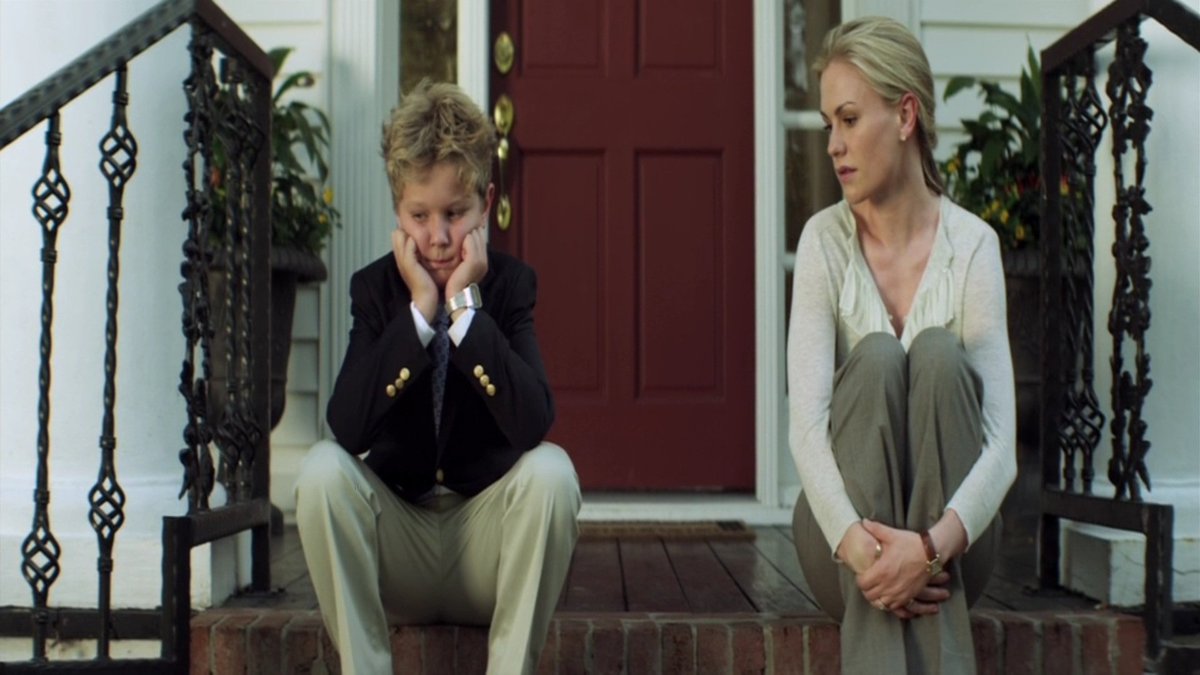
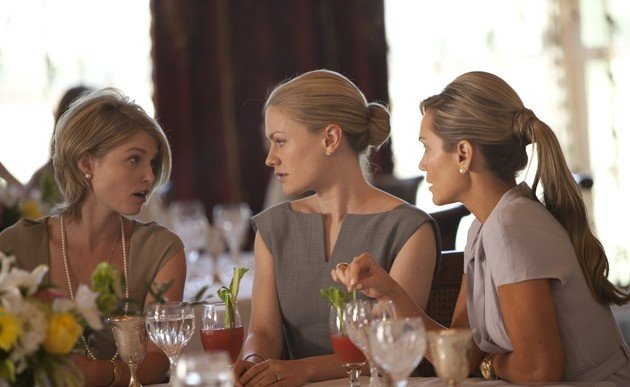
And Grace, Charles’s niece, her own father was not around, so Uncle Scott pours himself a drink and allows her to cut his hair and put ribbons in it. She cuts his scalp a little and it hurts him, he asks Grace if she sees and blood? Grace, says no, then, apologizes and tells his niece to keep styling his hair. Then he lets her shave his facial hair. Also, it is a very uptight community, and while Katherine (Anna Paquin) the matriarch of the family is at brunch, the women are gossiping and assume she is having an affair with William’s (Luke Wilson) brother Scott, which she is not, because Scott is never home. Scott and Katherine kind of play mother and father roles for this kids, while their father is away and it creates a platonic sense of balance in the house for Katherine, as she gets to enjoy having a man around the house and the masculine energy him brings makes her feel like she has a loving husband around and he also keeps the kids happy by playing father to them. Since there is happiness for those who do not sin, like William’s wife Katherine, the Universe is perfect. So, whatever a soul may choose, every beautiful and well-ordered in all its parts is the Universe whose Maker and Governor is God.
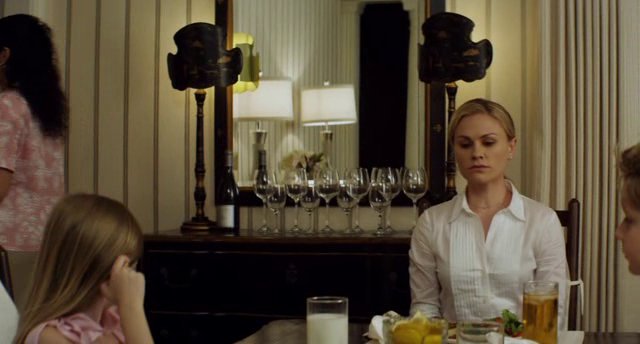
The film Straight A’s is a good film the shows how the Universe works because it is the best of all possible Worlds. It is the best, not because it contains no evil, but because Uncle Scott’s seemingly deviant nature is actually benevolent and gives everyone exactly what they need, and he may be a little reckless, but loves his family and only wishes the best for them. He does not show up to harm them nor take advantage, but to be around people he loves and admires and helps them balance their lives and gets the sense of family and the bonds that Scott has been longing for. Also, any other possible World would contain more evil. Had Scott not showed up when he did, perhaps Katherine would have gotten a divorce, Charles would have turned into a delinquent, and maybe Grace, with the lack of a male role model, would have later in life sought attention from men by being promiscuous. And perhaps without the family being there for Scott, some prostitute(s) would have hustled him out of his pension and left him for dead. The eternal possibilities of existence are individually present to the Divine Mind which, like an infallible calculating machine, surveys all possible combinations and selects the best, to which it then gives existence.
Man willfully misused his God-given freedom and fell into sin. Some men and women, will be redeemed by God’s grace, and others will be condemned to eternal punishment. In all this, God’s goodness and justice alike are manifested. However, this traditional theodicy has been criticized for its accounts of the origin and of the final disposition of moral evil. The origin of moral evil—it is urged that the notion of finitely perfect beings willfully falling into sin is self-contradictory and unintelligible. A truly perfect being, though free to sin, would in fact never do so. To attribute the origin of evil to the willful crime of a perfect being is this to asset the sheer contradiction that evil has created itself ex nihilo (Latin phrase meaning out of nothing). In the Film Straight A’s, Scott represents God, Katherine represents Eve, and William represents Adam. It is logically impossible for God to have created men such that they would always freely make right moral choices has been under attack under the name of “the free will defense.”

Defining a free action as one which flows from the nature of the agent, without eternal compulsion, recent writers have claimed that, without logical contradiction, God might initially have given men a nature which would always freely express itself in right actions. If God’s primary purpose for men is to evoke in them free and uncompelled love and trust in relation to himself, would this purpose be frustrated by his creating men so that they cannot do other than make this response? If God desires to save all his human creatures, but is unable to do so, he is limited in power. If, on the other hand, he does not desire the salvation of all, but has created some for damnation, he is limited in goodness. Before his fall, Adam was in a state of original righteousness, and that his first sin was the inexplicable turning of a wholly good being toward evil. The pre-Fall Adam was more like a child than a mature, responsible adult. Adam stood at the beginning of a long process of development. He had been created as a personal being in the “image” of God, but has yet to be brought into the finite “likeness” of God.

The fall of Adam is seen, not as disastrously transforming and totally ruining man’s situation, but rather as delaying and complicating his advance from the “image” of God, but had yet to be brought into the finite “likeness” of God. His fall is seen as disastrously transforming and totally ruining man’s situation, but rather as delaying and complicating his advance from the “image” to the “likeness” of his Maker. Thus, man is viewed as neither having fallen from so great a height of original righteousness, nor to so profound a depth of total depravity; rather, he fell in the early stages of his spiritual development and now, needs greater help than he would have otherwise required. So in the film, Straight A’s, Scott comes to this family to provide William the help he needs in keeping his family together and in return is provided with a place to stay and teaches and receives unconditional love. Therefore, the doctrine of eternal damnation must be real and by loving each other as God intended, this family was saved from unnecessary hardship and end up stronger because they acted out of love and not selfish greed, nor malicious intent.

The Winchester Mystery House
Come tour The Winchester Mystery House. The mansion’s common rooms are particularly gorgeous: notice the bay windows in leaded stained glass, the beautiful moldings, and the handsome chandeliers. https://winchestermysteryhouse.com/

The Price of the View—Creation is Always Preceded by Chaos

Whatever may be the general infelicity of man, one condition is happier than another, and wisdom surely directs us to take the least evil in the choice of life. The problem of evil concerns the contradiction, or apparent contradiction, between the reality of evil on the one hand, and religious beliefs in the goodness and power of God or the Ultimate on the others. Considered as a response to the problem of evil as stated above, this view is defective in that it redescribes the problem but does not attempt to solve it, for it leaves unexplained the evil of our suffering from the compulsive illusion of evil. There is the dualism exemplified most dramatically in ancient Zoroastrianism, with its opposed good and evil deities, Ahura Mazdah and Angra Mainyu. A much less extreme dualism can be propounded since the terms of the problem of evil vary with the character of the religious beliefs which give rise to it, a separate study is required for each of the great religious systems. In the present articles, however, the problem will be treated only in the context of the Christian tradition.

If we regard this World only, it is the interest of every man to be either perfectly good or completely bad. He had better destroy his conscience than gently wound it. Christianity (like Judaism and Islam) is committed to a monotheistic doctrine of God as absolute in goodness and power and as the creator of the Universe ex nihilo (the Latin phrase meaning “creating out of nothing”). The challenge of the fact of evil to this faith has accordingly been formulated as a dilemma: if God is all-powerful, he must be able to prevent evil. If he is all-good, he must want to prevent evil. However, evil exists. Therefore, God is either not all-powerful or not all-good. Conscience the awarder of its own doom. A theodicy is accordingly an attempt to reconcile the unlimited goodness of an all-powerful God with the reality of evil. There is a motivation for adoration, in the study of the lowest fruits of the wisdom and power of God. God’s first creature, which was light, as well as the seeing eye.

The kinds of evil distinguished in the literature of theodicy are the evil originated by human being (and angels), that is, moral evil or sin; the physical sensation of pain and the mental anguish of suffering, which may be caused either by sin or by natural evil, that is, disease, tornado, earthquake, and so forth; and the finitude, contingency, and hence imperfection of all created things which some have called metaphysical evil. Why has an infinitely powerful and good God permitted moral evil in his Universe? And why has an infinitely powerful and good God permitted pain and suffering in his Universe? Well, if the sole and ultimate power is unambiguously good, what is evil and whence does it come? Evil is a privation. The conception of evil is an independent reality and power coeternal with good as the privation, corruption, or perversion of something good. Evil has no independent existence, but is always parasitic upon good, which alone has substantial being. Nothing evil exists in itself, but only as an evil aspect of some actual entity. Thus, everything God has created is good, and the phenomenon of evil occurs only when beings which are intrinsically good (though mutable) become corrupted and spoiled.

God, as the highest, richest, and most intensely real being, is the supreme good, and everything that he has brought into existence is ipso facto (by that very fact or act) good. For this reason, the corruption which we call evil can never be complete; for if a thing becomes so vitiated in nature that it ceases to exist, the evil which parasitic upon it must also cease to exist. Hence, there can be no wholly evil being. Fear results in chronic anger and makes us prone to attack and to inner emotional chaos. Pain and suffering occur, with periodic despair and proneness to emotional upset. The ego-mind, which sees everyone as separate, is envious of anyone else who appears happier, more successful, or with a better relationship, a better body, or better connections. Soon, because of a lack of inner clarity about goals, there is confusion leading to self-pity, envy, and further resentment. Self-condemnation gets endlessly projected onto the World, taking the form of condemnation from others, which increases further the guilt and feeling of smallness.

For some of us, the only escape is through grandiosity, intolerance, bigotry, arrogance, and anger, which take the form of cruelty, over-bearingness, brutality, and insensitivity to the feelings of others. Often the insensitivity comes with self-excuses, such as: “I am an upfront person who speaks my mind,” or “I am the frank type; you always know where you stand with me.” These comments are a cover-up for insensitivity, which might be better described as gauche, which means to lack ease of grace; unsophisticated and socially awkward. The low self-esteem results in criticism of self and others, constant competition and comparison, analyzing, contempt, intellectualization, doubt, and fantasies of revenge. Evil has entered into the Universe through the culpable volitions of free creatures, angels and men. Their sin consisted. Not in choosing positive evil (for there is no positive evil to choose), but in turning away from the higher good, namely God, to a lower good.

For when the will abandons what is above itself, and turns to what is lower, it becomes evil—not because that is evil to which it turns, but because the turning itself is wicked. No your child was not born disabled or sick because they were bad in a prior life. Your husband, who has been good all his life and done what he was told did not pass away because he was cursed. Natural evils, such as disease, are divinely ordained consequences of the primeval fall of man, and this traces all evils either directly or indirectly to a wicked misuse of creaturely freedom: There are two kinds of evil, sin and the penalty of sin. There is no efficient, or positive, cause for evil willing. Rather, evil willing is itself a negation or deficiency, and to seek for its cause is as if one sought to see darkness, or hear silence. The best way to understand this assertion of the inexplicability of this obscure teaching, in principle, of free volitions; for what cause of willing can there be which is prior to willing? The origin of moral evil lies hidden within the mystery of human and angelic freedom. The freely acting will is an originating cause, and its operations are not explicable in terms of other prior causes.

Stated differently, everything God created is good. However, God loved humans so much that he did not want to make them slaves and punish them for every bad thing they did wrong, and force the World to be good. Earth is an experiment. If you love God, he has given you the free will to be good people. So, in essence, because God wants us to be free, it is up to us to do what is right. Evil is a manifestation of human nature. However, none of us is perfect, and we are here to learn. So our deeds are weighed based on our hearts because we all do things that may be perceived as evil. This could be because we are under attack, or we do not know what we are doing wrong. So that is why we are supposed to do on to others as we would have them do on to us. Commit your way to the Lord, trust in Him, and He shall bring it to pass. There must be something in my character that conforms to the likeness of God. What I need is God’s surgical procedure—His use of external circumstances to bring about internal purification. Keep paying the price. Let God see that you are willing to live up to the vision. God has made nothing in vain.

The Winchester Mystery House
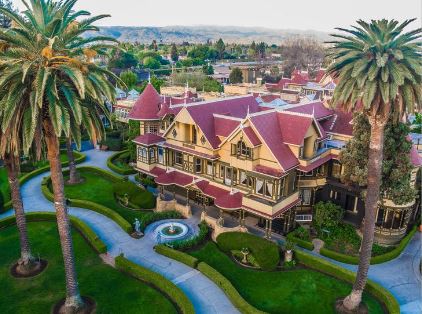
A tour of The Winchester Mystery House will confirm and dispel the various myths and rumors that have surrounded the mysterious Mansion since its opening. And now new history has been added as the attraction continues to evolve. https://winchestermysteryhouse.com/
My Sunshine Darts but through a Drizzly Cloud
 To know your own happiness, and that it is now, nor to leave it to after-reflection to look back upon the preferable past with a heavy and self-accusing heart, that you did not choose it when you might have chosen it, is all that is necessary to complete your felicity. Without being conscious of what money means to us emotionally, we are at the effect of it. We are being run by our unconscious beliefs about money and all of its associated programs. It is like the billionaire who keeps piling up more billions. There never seems to be enough. Why is that? It is because he has never stopped to look at what money really means to him. If we obsessively chase after money or other symbols of wealthy, it is because our inner self-worth is so small that it takes a huge amount of money to compensate for it. The inner insecurity I so extensive that no amount of money can overcome it. It might be said that the smaller we feel inside, the greater amount of power, money, and glamour must be accumulated in order to try and compensate for it. #RyanPhillippe 1 of 5
 Happiness he could enjoy only by concealing it. Money and resources in society are scarce. And some people are lucky enough to have the opportunity to work hard and make a lot of money, and they use their luck to earn money so that they can provide for their future and generate generational wealth for their family so they will be secure. When people grow up without worrying about where their next meal is going to come from, how they are going to pay for car repairs or rent, then they can have the freedom in life to do things that they love and find out what truly inspires them. Some others work tirelessly and invest more time than the average person in to generating income and never seem to get ahead in life, but they keep trying because failure and giving up is not an option. One a certain level, we may even appear to be indifferent to money. Once we have the formula for gold, we do not need to carry a bag of it on our shoulder with all of its attendant worries and anxieties. #RyanPhillippe 2 of 5
 The problem with excessive accumulation of money, of course, is the constant fear of losing it. It is tragi-comic to watch someone who is worth $50 million dollars practically have a nervous breakdown because, through a business oversight, he lost $10 million dollars. The man was actually in a panic. Emotionally, he was frightened that he would not be able to survive on the planet with only $40 million dollars. The person who suffers from inner poverty is relentlessly driven to accumulate on the material level. With this inner poverty, there is the whole attitude of selfishness or its correlates of vanity and false pride. It is very common for people who use the letting go technique suddenly to come into abundance. Struggling actors now have starring roles in Hollywood. A playwright on the edge of poverty becomes the producer of a blockbuster Broadway hit. #RyanPhillippe 3 of 5
 Paradoxically, some people have grown so nonchalant about money that they have chosen to get rid of a lot of money and live much simpler life. They are no longer interested in money; they have mastery over it. The inner satisfaction that they have sought by means of money are now satisfied directly, so that inner happiness is independent of outer wealth. In this state of inner freedom, one is independent of the outer World and no longer at the effect of it. This is because one transcends that which one has mastered. The things we try to avoid and fight against—tribulation, suffering, and persecution—are the very things that produce abundant joy of the Lord in spite of tribulation but because of it. The undiminished radiance, which is the result of abundant joy, is not built on anything passing but on the Love of God that nothing can change. #RyanPhillippe 4 of 5
 Will men prefer the happiness of others at the neglect of their own? Why is our happiness sometimes so fragile that commonplace occurrences can ruin the whole day? Well, as a result of negative feelings, thoughts, and attitudes, together with the constant judgment and criticism of other people, we often feel separated from others. Because of this feeling of inner aloneness and separation, relationships take on the form of attachments, with all the fear, anger, and jealousy that accompany any threat to those attachments. The inner negativity results in such commonly held beliefs as, “You are born alone and you pass away alone.” Nothing, in fact, is father from the truth. As recent books on near-death experiences reveal, it is during life that one often feels alone, and at the moment of passing away, there is an absolute feeling of oneness and connectedness. If we cannot be as happy as we wish, we should rejoice in the happiness we can have. #RyanPhillippe 5 of 5