Home » Articles posted by Randolph Harris II International Institute (Page 229)
Author Archives: Randolph Harris II International Institute
A Sigh for Lack of Heaven and Angels Know the Rest
 Doubt me, my dim companion! Why, God would be content with but a fraction of the love poured thee without a stint. The whole me, forever, what more can one—say, quick, that I may share a natural gift of endowment with thee! It cannot be my spirit, for that was thine before; I ceded all of dust I knew—what opulence the more had I, a humble soul, whose farthest of degree was that one might, some distant Heaven, dwell timidly with thee! Give up your abstraction and you will give up your question along with it. Do not think, do not question me. A vocabulary of sentiments is a linguistic expression of experiences shared by group members, and mirrors their interest and concerns. Each concept imposes meaning on experience as a way of preserving distinctions that are of importance in group life. Sentiment vocabularies differ among subcultures in a complex society such as social classes, men and women, and age cohorts. Modern women distinguish between liking and loving more clearly than men. The socioeconomic implications of mate selection pressure women to be more cautious and interpretive than men in their heterosexual relationships, in order to distinguish male friends from potential husbands. #RandolphHarris 1 of 7
 Philosophy is the love of knowledge or truth; its aim is personal salvation. It springs from the love of being; philosophy is humanities loving endeavor to perceive the order of being and attune oneself to it. Generally speaking, in comparison to the working class, middle-class language contains more words and makes finer, more complex differentiations of experience. This elaborated code permits the middle class to vernalize feelings and to react to them more precisely. A genuine statement must be capable of conclusive verification. If there is no possible way to determine whether a statement is true, then that statement has no meaning whatsoever. For the meaning of a statement is the method of its verification. Gnosis desires dominion over being; in order to seize control of beings, Gnosticism uses heresy which is made up of a diverse set of beliefs. Gnostics for political mass movements, and their theories and jargons have shaped the thinking of millions of people in the Western World, very often without their being aware of it. Gnostics believe that global warming is real, while others think it is an act of God. God has promised to “Turn desert into pools of water and the parched ground into flowing springs (Psalm 107.35).” Many fail to understand that the Earth is alive and will not always stay the same. #RandolphHarris 2 of 7
 Sentiments that are devalued or of little practical importance in a culture are poorly discriminated for lack of an expressive vocabulary. Because moral sanction in some cultures they operate mainly through teasing, ridicule, and other forms of shame, these feelings have undergone considerable cultural definition and elaborator in contrast, the feeling of guilt is culturally played down to the point of conceptual invisibility. Similarly, feelings that we term sadness or longing contradiction, these societies value and are not culturally organized as sentiments. The rule and prescription actually disturbs or even hinders the genuine illumination of life. It is an act of spiritual violence. Separation and isolation from others evoke sensations that these fake news practitioners describe in terms of nonspecific, troubled, or subdued bodily states, such as heaviness or weariness. Without meaningful concepts for designating a feeling to self and others, the person’s emotional response remains private and socially amorphous. Sensations are served from their external social cause, minimizing the social significance of the event. #RandolphHarris 3 of 7
 Power and status are the significant relational meanings to which people respond emotionally. Cultures and individuals vary in the specific stimuli and language that reflect power and status relationship, but power and status are the basic dimensions to which people are sensitized that underlie the differentiation of emotions. To use one’s influence usually implies actively and intentionally working through or on other people, and one who can do this recurrently has influence. Of course, people who have power (that is, who can do many things they want and induce many other people to accept their initiative) are likely on that account to influence (that is, to have effects on) other aspects of society in ways that neither they nor their social inferiors necessarily understand. Other classes, envying and admiring them, may imitate their tastes and practices, and in this sense, they may be influenced by them. However, this influence is not a manifestation of power; it is only one of its effects. Emotions result from real, imagined, or anticipated outcomes involving excess or deficit in power status. For example, power deficits produce fear or anxiety; status loss generates anger or depression. #RandolphHarris 4 of 7
 There is also accepted evidence that specific physiological states underlie different emotions to some degree, so that physiological, psychological, and sociological (power-status) levels of differentiation coincide. Experiences, thoughts and emotions are translated into chemical expressions or codes by our bodies. If you have an emotionally charged experience or memory, that experience activates the brain’s limbic system, where it gets filtered and associated with other information and catalyzes, a chain reaction release of ligands (peptides, hormones). The receptor, having received a message, transmits it from the surface of the cell deep into the cell’s interior, where the message can change the state of the cell dramatically. New proteins are manufactured and that is how the emotional life and stress levels can actually be hard on your body, and then cause a response. One sentiment may be defined as a precondition for another sentiment, so that grief is not regarded as credible or authentic unless the mourner is known to have loved the deceased. Alternatively, the consequent sentiment may be used as a criterion for inferring the precondition. “You must have loved him very much,” the mourner is told. #RandolphHarris 5 of 7
 One sentiment may be believed to transform into another sentiment consistently. We may believe that men and women cannot be friends without falling in love eventually. Sentiments may be seen as opposites (love and hatred), or as acceptable substitutes from another person (guilt and shame). A belief that humor when we are feeling awe. These beliefs provide ideological support for a sentiment’s social reality. Any doubt about one sentiment’s reality would have to challenge the whole system of interconnected meanings. Sentiment vocabularies change historically in content and appropriateness. A shift was detected in culturally approved sentiments toward children. A medieval pattern of harsh egalitarianism changed to a sentiment of tenderness, protection, coddling, and charm over childish antics. Historical forces promoting this change included the higher survival rate of infants, a shift from social life to home life for families, and the emergence of childhood as a distinctive life stage. #RandolphHarris 6 of 7
 Many new shades and varieties of sentiments are developing in modern times, but with less feeling. Refinement of feeling is diffusing from the higher classes to the common people, whose lives are becoming more varied and less crudely determined by primitive conditions. Although primitive societies made occasional but sever demands of feeling, with alternations of apathy and explosion, modern emotional life if made up of diverse but mostly mild excitements. However, those who imagine up some vain thing in their hearts, that is was wrought by people and by the power of the great deceiver, to lead away people and deceive the hearts of the people; and thus, did the adversary get possession of the hearts of the people, insomuch that he did blind their eyes and lead them away to believe that the doctrine of God was a foolish and a vain thing. And it came to pass the people began to wax strong in wickedness and abominations; and they dud not believe that there should be any more signs or wonders given; and the great adversary did go about, leading away the hearts of the people, tempting them and causing them that they should do great wickedness in the land (3 Nephi 2.3).” Grief, pain, and humiliation may be experienced at the loss of exclusive love and favors, but if the community does not sanction one’s feelings, they can hardly express themselves as jealousy. #RandolphHarris 7 of 7
Dare You See a Soul at the White Heat?
 If you were coming in the Spring, I would brush the Winter by with half a smile and half a spurn, as love does fly. If I could see you in a year, I would wind the months in balls, and put them each in separate drawers, until their time befalls. If only centuries delayed, I would count them on my hand, subtracting till my fingers dropped. If certain, when this life was out, that yours and mine should be, I would toss it yonder like a rind, and taste eternity. However, not, all ignorant of the length of time’s uncertain wing, it goads me, like the goblin bee, that will not state its sting. Anticipation of a relationship can stimulate arousal. An individual awaiting a loved one’s return may work up a feeling for a spontaneously intimate reunion. Imaginative rehearsals stir anxiety, muscular tension, and ready gestures for the forthcoming interaction. Anticipatory arousal is functionally important when immediate, full enactment of a sentiment is required. Parental love cannot be left to a gradual, haphazard acquisition. Parents-to-be are primed for the infant’s arrival by anticipatory socialization and by the anxiety cued by the mother’s pregnancy. The newborn’s amorphous personality serves as the perfect screen for the projection of parental emotions, as sentiments long held in abeyance are released like coiled springs by the baby’s birth. #RandolphHarris 1 of 6
 A death-blow is a life-blow to some who, till they died, did not alive become; who, had they lived, and died, but when they died, vitality begun. Anticipation of tragic events, or worry work, focuses attention on possible dangers and allows planning. Anticipatory grief precedes the death of a loved one. This anticipatory sentiment sensitizes survivors to the impending change of relationship, and allows them to experience part of the emotion appropriate to the disaster before it occurs. The right to perish might be thought an undisputed right, attempt it, and the Universe upon the opposite will concentrate its officers—you cannot even die, but nature and humankind must pause to pay you scrutiny. Memories of past interactions and relationships evoke heightened feeling within the extended time frame of sentiments. Reminiscent arousal often develops when members of an enduring group, such as a family, recall shared sentiments from their collective past. Reference to some symbol that designates the whole event triggers an in-group meaning, including the corresponding sentiment. Through collective worship, faith is created and periodically recreated through rites, as a result of which people are more confident because they feel themselves stronger, and they really are stronger, because forces which were languishing are now reawakened in the consciousness. #RandolphHarris 2 of 6
 As people experiment with deepening their awareness in family and social influences, one will find that one can be creative and playful in learning more about oneself. This is also an area where one can invite their partner, or someone an individual is getting to know, to join in awareness skills of curiosity and mindfulness. Group membership provides the reference points and categories in which memories reside. Individual memories become assimilated to collectively defined and revised memories, which in enduring groups are partial to optimistic, bonding sentiments. New feet within my garden go, new fingers stir the sod; a troubadour upon the elm betrays the solitude. New children play upon the green, new weary sleep below; and still the pensive Winter returns, and still the punctual snow! Take care, for God is here, that is all. The breaking of the day addeth to my degree; if any ask me how, artist, who drew me so, must tell! Arousal may be stimulated by observing another person’s situation or that person’s effective expressions, conventional or innate. Perhaps the important sociological questions about gestures is not their origin, but whether natural ones have different social effects than conventional ones. #RandolphHarris 3 of 6
 A picture of deep connection and happiness for one person can be another person’s nightmare of disconnection and dissatisfaction. The point is to keep talking about it and see where the conversation takes you. Rapid transmission and intensification of collective feelings occur when people respond directly to innate gestures instead of interpreting them. This unites people on the most primitive level to overcome problems and occurs in groups where people are sensitizing to one another’s reactions. Asserting that the basic communicative expressions in rituals are innate signals, people are vulnerable to control by elites who gain power over ritual resources that excite our natural affectivity. Our innate responsiveness to gestures like crying, jeering, and laughter leaves us susceptible to political and emotional manipulation. However, the Spirit of the Lord is Omnipotent, which has wrought a mighty change in us, or in our hearts, that we have no disposition to do evil, but to do good continually. And we, ourselves, also, through the infinite goodness of God, and the manifestation of his Spirit, have great view of that which is to come; and were it expedient, we could prophesy of all things. And it is the faith which we have had on the things which our king has spoken unto us that has brought us to this great knowledge, whereby we do rejoice with such exceedingly great joy. #RandolphHarris 4 of 6
 And we are willing to enter into a covenant with our God to do his will, and to be obedient to his commandments in all things that he shall command us, all the remainder of our days, that we may not bring upon ourselves a never-ending torment, as has been spoken by the angel, that we may not drink out of the cup of the wrath of God. We have a choice, we do not have to be the victims of loneliness. Remembering and understanding the lessons of the past will give one much more control over how we choose to act in the present. Emotional arousal is generated by the singing, dancing, chanting, and other ritual actions of people in collective assembly, which awakens religious sentiments upon reaching a certain level of intensity. This social effervescence changes the conditions of psychic activity: vital energies are overexcited, passions are active, sensations stronger. This arousal is socially interpreted. Excitement becomes generalized to religious symbols and meanings, which are imbued with a sacred character as extraordinary as the feeling generated by collective ritual. The person feels oneself transformed and consequently transforms the environment one finds oneself in. #RandolphHarris 5 of 6
 Not knowing when the dawn will come I opened every door. Arousal may result from emotional contagion, but soon becomes interpreted according to social meanings Sentiments are finely discriminated for aspects of relationships and personality that are highly valued and strongly regulated. This is see more easily in cross-cultural studies. Traditionally, people in the British Colombian Village of Kelowna live in a manner which strongly enforces gentleness, mildness, honesty, and even-tempered restraint in expressing affection and disagreement. Respect for kin, age, gender, and other status differences in the central them in Kelowna, where the vocabulary makes fine distinctions among feeling states associated with respectful behavior. There is generally a feeling of respectful politeness in the community in which one displays kind impulses so as not to disturb the emotional equanimity of a spiritually superior person. These people made s covenant with God, and they are called the children of God, his sons and daughters; for behold this day he has spiritually begotten them; for he says that their hearts are changed through faith on his name; therefore, they are born of him and have become his sons and daughters. #RandolphHarris 6 of 6
Life is but a Walking Shadow
 Beauty is no quality in things themselves: It exists merely in the mind which contemplates them; and each mind perceives a different beauty. One person may even perceive deformity, where another is sensible of beauty; and every individual ought to acquiesce in one’s own sentiment, without pretending to regulate those of others. One will notice that the psychological state of a person in an attitude of reflection is entirely different from that of a person who is observing one’s psychic process. In reflection there is a greater play of psychic activity than in the most attentive self-observation; this is shown even by the tense attitude and the wrinkled brow of the person observing himself or herself. Facial, gestural, and postural expressions of certain emotions are universal and biologically determined, the product of human evolution. These expressive acts formerly had functional utility as internal adjustments needed in emergencies and as signals to one’s own species, enemies, and prey. For example, clenching one’s jaw in anger is a preparation for, and a warning of, biting. Emotional expressions are basically continuous between human beings and lower animals, but have lost their functional utility for humans and survive as remnants of evolution. #RandolphHarris 1 of 7
 An emotion is a sequence of cognitive appraisal, feeling, impulses to act, and overt behavior that has evolved to cope with the environmental stimulus that triggers the emotion. Destruction of barriers is enhanced by anger, for example, and the avoidance of harmful substances s promoted by disgust. All species have the same basic emotions behaviorally, but the subjective element increases in higher species. Basic emotions combine into mixed emotions. Thus, contempt is a mixture of anger and disgust. Embarrassment also protects social norms. Wen norms conflict, a person’s embarrassment draws blame onto oneself and away from the norms. This temporary sacrifice of identity shows that one is perturbed about one’s current performance, promises to improve, and recognizes the norms. Sentiments should be analyzed for the adaptive functions they serve for groups and for individuals within a group. An emotion is the outcome and not the cause of bodily reactions. Bodily changes directly follow the perception of the exciting fact, and our feeling of the same changes as they occur is the emotion. This is the spirit that beauty must every induce: wonderment and a delicious trouble, longing and love and a trembling that is all delight. #RandolphHarris 2 of 8
 Each emotion is distinguished in our awareness by its unique physiological correlate, a distinctive pattern of change in the heart, lungs, tear ducts, and other organs. We do not tremble because we are afraid; rather, we are afraid because we tremble. Visceral changes do contribute to emotional intensity. The face not only expresses emotion, but also stimulates a corresponding feeling. Unlike the viscera, facial expressions could therefore stimulate differentiated and immediate emotions. Evidence currently suggests that facial expression can influence emotional intensity, but, as with the viscera, discrete qualities of emotion are not produces. Facial expressions also have been studied for evidence of an innate, universal set of human emotions. In a typical study, photographs of posed facial expression representing selected emotions are shown to subjects in different cultures. Subjects agree substantially in matching each photograph with a label chosen from a short list of emotions. There are distinctive facial expressions for anger, disgust, fear, sadness, happiness, surprise, and possibly other emotions, researchers conclude, and each emotion is expressed the same universally. #RandolphHarris 3 of 8
 Is Heaven a physician? They say that God can heal; but medicine posthumous is unavailable. Is Heaven an exchequer? They speak of what we owe; but that negotiation I am not a party to. There is not one special kind of purposive activity in which we expect a person to engage just because the individual is overjoyed or embarrassed. There are typical overt expressions of these emotions such as broad expansive movements and squirming, respectively. However, it seems that American society is becoming to loose and relaxed, and even mature adults in some industries are not as professional as they used to be. With the globalization, it is important that we try to be more careful with the messages that we send out. We should encourage peace and dialogue. Also, the cartoon faces in electronic messages is concerning. Certain hand gestures or contorted faces might be offensive to some cultures, as they are not necessarily universal. Also, in kindergarten, it might have been normal to give a student a simile face sticker or a star sticker on an assignment they did well on, but that might be considered condescending to do the same thing when sending a message to an adult. When we doubt whether the intensity or quality of our emotion is situationally appropriate, we define it by comparing ourselves with how others in a similar situation are reacting. #RandolphHarris 4 of 8
 As often happens, it is small things—small yet significant—which enables us to grasp the reality of change. It is the minute points which fascinate us, for they enable us to realize profound differences in the attitude of other people compared with our own. When people lack an explanation for their sensations, these subjects tend to feel and behave emotionally according to emotional cues displayed by another person in the situation. We interpret our emotion reactions not only be seeing how other react, but also by observing our own behavior. However, with collective behavior, a group of people can come together, who are misfits because they have deviant behaviors, and become the norm, and the people who fit (with the national goal) end up becoming minorities because a counterculture has taken over. Competitive relationships, where each person or group poses an obstacle to others’ goal attainment, often generate disjunctive sentiments such as a strong dislike. Sometimes when people communicate and define social unrest, which develops over disturbances in their usual form of living or from events that cannot be explained by existing cultural definitions, sentiment take on greater significance in guiding behavior. When a family’s task bonds are ineffective, love rises into mutual awareness, often sustaining the relationship until other bonds can once again stabilize the attachment. #RandolphHarris 5 of 8
 Relationship beginnings are characterized by high levels of stimulation. We are highly conscious of the other person and the sentiment that is developing toward him or her. Beginnings of romances, for example, pose a choice among alternative love partners. Anxious tension accompanies each new romantic involvement, contributing to passion. In order to infer that I am jealous, I must perceive that I feel aroused, attribute this feeling to someone’s threat to my love relationship (and not to some internal cause or other external cause), and decide that a twinge of jealousy is normal and appropriate in this situation. All human activities lead to personal growth and creativity are accompanied by a type of tension or excitement. Physiological studies have revealed certain disturbances in normal bodily functioning as regular features of emotional states. These include increased adrenalin secretion, increased heartbeat, alteration of the distribution of blood to various parts of the body, changes in patters of respiration, suspension of digestive activities, and increases in red corpuscles in the blood. It is these changes which are manifested in the involuntary overt expressions of emotion which have long been noted—paling, blushings, panting, trembling, and so on. And it is the sensation of these changes or some of their results which constitutes the felt disturbance or perturbation characteristic of emotion. #RandolphHarris 6 of 8
 Because the ideology surrounding romance describes anxious tension as part of the experience, the sentiment is recognized when these sensations occur. Passionate feelings can be stimulated by sources other than direct attraction, such as guilt, loneliness, and sharply lowered self-esteem. These increase arousal which is attributed to the potential romantic partner in the same setting. Arousal may be interpreted as undeniable evidence for the continued vitality of a sentiment. We learn that romantic love requires frequent reiteration of its intensity to self and the partner. This testing for latent feeling may also occur in other passionate sentiments such as hatred, jealousy, and religious feeling. Heightened self-monitoring may itself generate or intensify arousal, as an anxious tension accompanying the repeated search for spontaneous feeling, but mainly when one expects to find heightened arousal. Love may be validated by shared excitement, quarrels and reconciliations, intimacy, and other episodes of intense feeling. Parental opposition to their college-age children’s love affairs was found to be associated with more intense attachment between the lovers. Emotional turmoil may have contributed to the lovers’ passion. Jealousy may be interpreted as evidence of a partner’s continued love. #RandolphHarris 7 of 8
 A study found that woman were told to avoid situations which might make her husband jealous, but to interpret his small expression of jealousy as evidence of his love. Arousal is not simply the source of a sentiment, then, but also a criterion by which its continuity can be validated. Dear Lord in Heaven, please wrap us in your love. Snuggle up tight, warm with forgiveness, safe in your light. Draw near to us and hold safe in your arms, melt any resentment, protect us from harm. Refining these impatient ores with hammer and with blaze, until the designated light repudiates the forge. How many Legions overcome? God, please completely take us under your wing, come and transform us and teach us unending love, pure truth, and sweet promise. Please heal all the hurt and pain until we become soft in your presence again so that we may give love and find love and freedom again. Dear God, loving essence of all there is. Please fill us with your sacred presence. Grant us your love and guidance and blessing as we explore the deep reaches of our hearts. We ask for your assistance in releasing that which stands in the way of true love. Our hearts our pure, our intentions are clear. Please bring us to our perfect partners. “And also, the Lord will remember the prayers of the righteous, which have been put up onto him for them (Mormon 5.21).” #RandolphHarris 8 of 8
Faith Loves and Knows the One Who is Leading
 Dimly swings this atom of a World, and far beyond all reaches the infinity of God! Necessity compels us to be earnest. We do not simply feel and express a sentiment, but also interpret, socialize, evaluate, and modify it according to our beliefs and assumptions about it. A sentiment is a general feeling, attitude, or opinion about something. The goal is to awaken us to that which is more than we can comprehend, for all that we will never fully understand it. We must be like immortals insofar as possible and do everything toward living in accordance with the best thing in us. Love is the name given to the desire to seek out that which we sense we lack. A sentiment vocabulary also provides culturally meaningful categories for interpreting one’s own sensations and behavior. Sentiments are explanations in self-perception, as well as for other people. A vocabulary of sentiments facilitates and limits the kinds of meanings we can experience for our sensations, gestures, and social relationships. A correct judgment avoiding all distant and high enquiries, confines itself to common life, and to such subjects as fall under daily practice and experience, leaving the more sublime topics to the embellishment of poets and orators, or to the arts or priests and politicians. #RandolphHarris 1 of 6
 Tease me all you want for being sentimental. I think some souls have a way of connecting without our knowledge, and that is why you cannot meet someone for the first time, but inside you just know. You know it is not the first time you have ever felt them. A vocabulary of sentiments is a selection from the entire potential range of emotional experiences by specialized emphasis. The name for a sentiment is a kind of sensitizing concept. In German Schadenfreude, or malicious glee over another’s misfortune, is more easily recognized as a common feeling by virtue of the presence of them. The vocabulary defines our sensations and gestures by naming them, showing us what these mean to other people. Ideological beliefs about a sentiment are linked with its name in the vocabulary. Like an ideology, these beliefs protect the social reality of a sentiment as a meaningful category, explaining and justifying particular instances of interaction in terms of popular knowledge about the sentiment. For instance, how does one recognize envy? Or what are the rights and obligations of friendship? Is shame natural or learned? Does romance inevitably fade into companionate love? Is it possible to conceal real grief? One who has been wandering in a maze of false conceptions, and upon whom, at length, has burst the truth of God’s paternity, opens one’s Bible as a new book. #RandolphHarris 2 of 6
 The word of God will spread around one a firmament of sudden glory, and reveals to one’s eyes unexpected riches. Pains from the moral source are the pains derived from the unfavorable sentiments of humankind. These pains are capable of rising to a height with which hardly any other pains incident to our nature can be compared. No sentiments can be beautiful without being proper; that is, suited to the character and situation of those who utter them. It is not contended that people learn precise definitions or complex formal principles about each sentiment, but they do learn informal theories or folk wisdom. Communication about the sentiment in terms of these popular beliefs preserves each sentiment as an available resource for explaining interaction. More elaborate ideologies surround some sentiments than others. Romantic love has an extensive popular ideology, and religious doctrines explain and justify guilt, reverence, and compassion. In contrast, shame and pity seem to be relatively undefined in our society at present. The vocabulary also includes evaluative beliefs about each sentiment that influences how we express, label, and identify sentiments. Is pride a mark of self-worth, or one of the seven Christian sins? Depending on social group, esthetic feeling may be a sign of personal cultivation or aloof snobbery. #RandolphHarris 3 of 6
 Our response to a person who reveals or claims a sentiment depends partly on evaluative beliefs about the feeling. People are encouraged to interpret certain mixed feelings as love because our culture insists that certain reactions are acceptable one if one is madly in love. In contrast, envy may be a universally condemned and feared sentiment that few people seriously admit. The vocabulary within which we communicate about sentiments places boundaries on affective experience, confining it largely to socially significant, shared meanings. The vocabulary within which we communicate about sentiments places boundaries on affective experience, confining it largely to socially significant, shared meanings. Reason, utility, fear of punishment and love of praise may all lead us to behave in appropriate ways, but they are not definitive of human nature. We do not attribute to the springs of a watch its coming into being or ability to keep good time. These belong to the watchmaker. Similarly, the wisdom of God, rather than human reason or social learning, is the origin of human nature and the ultimate purpose of human life is nobler than the simple maintenance of social order. #RandolphHarris 4 of 6
 The administration of the great system of the Universe is the care of the Universal happiness of all rational and sensible beings, is the business of God and not of humans. To humans is allotted a much humbler department, one much more suitable to the humbleness of one’s powers, and to the narrowness of one’s comprehension. Sentiment is a different combination of a social relationship and cultural beliefs with emotional sensations and gestures. Social factors determine which component is most salient at a given time. We become highly aware of bodily sensations when we are physiologically aroused. A set of spiritual exercises is designed to incite dedication to moral purity among humanity. Sensations may also become problematic by their absence. Gestures become salient when their meaning is challenged, when we are being socialized into expression, and when we must express deliberately what is not spontaneously felt. How do compassion, sorrow, and other sentiments in a cultural vocabulary become capacities and resources of the individual? The deeper our moral life and the keener our spiritual vision, the clearer appears his truth. Wisdom, justice, truth, and power—it kindles in the soul a loftier and serener spirit of devotion, touches spring of penitence, and makes us good because God is good. #RandolphHarris 5 of 6
We may thank God that we can feel pain and know sadness, for these are the human sentiments that constitute our glory as well as our grief. Another process is the management of expression and feeling according to norms and other social constraints. How do people suppress, magnify, and alter their gestures, feelings, and interpretation of a sentiment? If God is the beginning of all things, he is, in a peculiar sense, the beginning of our religion. Our highest endeavors after virtue will be attempts to imitate him. Our decisions upon specific questions of right and wrong will be governed by our conceptions of the Divine nature. We shall religiously cherish the sentiments of which God is the absolute expression. It is what we say to God alone, of ourselves, upon the revelation of his Fatherhood, and with our thoughts fixed in contemplation of his attributes. The father has swept away all the barriers of distance, it has streamed into our soul through all the glories of the Universe, it has touched us with the intimate nearness, the infinite condescension of God, and gathered into that one name all that is venerable with all that is lovely. Let us habitually avail ourselves, then, the privilege made known to us. #RandolphHarris 6 of 6
Hope Preaches in the Soul
Beautiful objects arouse pleasure. Beauty relaxes, but the experience of sublimity is of great emotional intensity. Every sentiment is organized around a relationship to a social object, usually another person or a group such as a family. We associate a sentiment closely with particular persons or groups. If we try to recall love, pity, or other sentiments, we usually think of people by whom or toward whom these sentiments have been felt. We feel shame, pride, guilt, or embarrassment toward our selves as social objects when we imagine how other people judge our appearance to them. A sentiment may develop around a nonhuman object, such as love for a pet or reverence for a deity, but the object is usually personified with human qualities. The soul is said to strive toward beauty, which is a manifestation of the spiritual force that animates all of reality. Given that beauty is an objective property, attainable artistically and knowable critically, by reference to the rules, the question of the percipient’s response to it is usually scant. However, beauty can be expected to arouse the appropriate response, which is referred to briefly and loosely as pleasure or delight. It is the total object, the whole of form and expressiveness and what the form is of, that possesses the beauty. #RandolphHarris 1 of 7
 Just as one can see the Sunlight without looking into the Sun itself, so can one have knowledge of divine ideas. A sentiment established a framework of meaning within which specific events, gestures, and sensations can be given a social interpretation. A sentiment is identified through an organization of responses toward a person, not through particular acts viewed separately. For example, a sentiment may be detected by others even when the individual does not acknowledge his or her feelings. One may deny being in love with a person, but may be imputed the love sentiment by observers who detect a pattern of protection and preoccupation with another person. We believe that we have detected a man’s love for a woman when he demonstrated joy in her presence, sorrow in her prolonged absence, fear when there is danger of losing her, and anger when she is criticized. The characteristic organization of hatred includes being sorry over the enemy’s good fortune, feeling anger at his or her very presence, being happy at their misfortune, and sensing anxiety over his or her possible success. We interpret, justify, and anticipate acts and feelings in relation to the sentiment’s overall pattern. #RandolphHarris 2 of 7
 We attain these ideas in terms of the residual effects of the divine actions—effects which remain in the soul like habitual or buried memories. Our mind is simultaneously enlightened so that it is moved to judge correctly about the object and is hence in accord with God’s own mind on the subject. A sentiment sustains a relationship as an enduring, latent tendency to respond emotionally and overtly toward another person when the opportunity is given. Situational constraints often inhibit direct expression. One factor is over view of what the relationship means to the other person. Sentiments differ in the importance of reciprocal feeling. Reciprocation of hatred will magnify animosity. Failure by the other to reciprocate romantic love may simply heighten the lover’s passion as much as reciprocation. The other person may validate a sentiment with an appropriate but different pattern of gesture and feeling, such as showing gratitude for my kindness. The meaning of a sentiment depends on how the other responds to it. When people have a bad experience, they are often more concerned about how they feel about it, than the issue itself. #RandolphHarris 3 of 7
 Timely and effective communications can help one manage negative sentiment, rebuild trust, and promote loyalty. We become highly aware of a sentiment when a controversial discrepancy arises. A single salient act can seem to contradict the whole pattern. Stealing from a loved one, helping an enemy, or cursing a deity are acts that call the sentiment into question. Most acts within a relationship, however, are assimilated into a sentiment and are anticipated and assessed as reflecting its meaning. Bodily sensations are an intermittent phase of every enduring sentiment. Arousal is more frequent and intense in passionate sentiments, such as romantic love, jealousy, and awe, than in others like kindness, loyalty, and gratitude. These visceral and muscular sensations are essentially autonomic arousal symptoms associated with the flow of adrenaline: heart palpitations, accelerated breathing, flushes, and tremor. However, they may be experienced simply as diffused, generalized excitement. Arousal does not persist unabated, even in passionate sentiments, but arises intermittently. Get involved with your business and reputation to reduce the risk of negative perceptions. #RandolphHarris 4 of 7
 Bodily sensations do not define the nature of the sentiment. Even if regulatory issues make your company leery of social media, it is becoming riskier not to have a readily available, reassuring presence online because your people expect you to be there. As individuals often voice concerns online, you may receive double the negative feedback if you do not respond. Even a few thoughtful communications can show people that you are listening and ready to help, and that is a good thing. Listen to people’s concerns, admit any mistakes, and be clear about how you will improve their experience. There are no explicit patterns of arousal that correspond to different sentiments. Instead, we interpret our sensation in terms of the encompassing relationship. A feeling of excitement can be interpreted as indicating the continued vitality of a sentiment, whether love or hatred. We express sentiments more spontaneously when we are aroused. Of course, we feel bodily sensations of various types much of the time, and many of these—dizziness, fatigue, hunger, aches—have nothing to do with social relationships. We are socialized to attend selectively to our own sensations, however, and to sometimes attribute them a social meaning in terms of the course of interaction with another person. #RandolphHarris 5 of 7
 A sentiment is expressed situationally through a person’s conventional gestures, such as kissing, and overt, involuntary bodily signs of arousal, such as trembling. A review of cross-cultural differences in gestures such as hand movements, laughter, crying, and posturing concluded that there is no natural language of emotional gesture. In dealing with negative sentiment, do not try to respond to everything. Focus on concerns to create the greatest optimistic response. Think beyond a simple apology or refund to what people might expect; what might delight them—perhaps a bonus gift or new benefit. By showings you care about your people and reputation, you may win loyalty and motivate them to praise your brand to others. For facial expressions of emotion, however, there is evidence that anger, disgust, fear, and several other emotions may be expressed and recognized similarly across very diverse cultures. Researchers admit however that in social situations, any natural, innate facial emotion is masked beneath culturally conventional expressions. Even when negative sentiment looms in social media, you can often find loyal customers who will defend your brand. Engage people directly to express appreciation, learn what they like about your company and how you might delight them. #RandolphHarris 6 of 7
 Your personal attention might motivate more business and prompt people to help influence more beneficial sentiment online. Social media is a powerful channel to quickly address key concerns, clarify misconceptions, and offer reassurance. Showing people that you are listening and that you care about how they feel can help transform negative sentiment into a winning experience. We interpret a conventional gesture, such as a smile, in terms of situational factors, previous interactions with a person, subtle details in expressive style, and other social criteria. Human gestures are parts of social communication that become significant to symbols when they arouse the same meaning in the observer as in the expressing person. We indicate ourselves the meaning of our own gestures in terms of the perspective of the other person and shape our gestures in terms of the perspective of the other person and shape our gestures according to the meaning we intend them to have. Gestures become meaningful when interpreted as sentiments, which serve as significant categories or symbols held in common by group members. “Those who live without God in the World, judgment of an everlasting punishment is just upon them; and they shall quake, and tremble, and shrink beneath the glace of God’s all-searching eye (Mosiah 27.31).” #RandolphHarris 7 of 7
All Love is the Love of Some Degree of Beauty
 The love of God is the force that holds the universe together. Thus, it is asserted that love is a single principle permeating all things, from the material through the spiritual, and that this principle is the dynamic factor in cosmic change. There is no difference in essence between the attraction the elements have for one another and the forms of love that exist in human beings. Love, shame, gratitude, contempt, jealousy, and other affective states are experiences frequently and vividly in everyday social life. These states often include a psychic excitement expressed through bodily gestures, and, therefore, may seem to be too private and psychological to bear much relevance for sociology or to be amenable to sociological analysis. The sociological perspective allows us, however, to demonstrate how seemingly individual behavior and experience are shaped by social features, culture shapes the occasion, meaning, and expression of affective experience. Love, pity, indignation, and other sentiments are socially patterns of feelings, gestures, and meaning. One must lose oneself in order to find oneself, but in so doing, one finds that what one has really discovered is God. #RandolphHarris 1 of 6
 Differences in feeling, action, and meaning among sorrow, guilt, and love are socially created, and that is how we learn enduring societal relationships. Social life produces emergent dimensions of emotion that resist reduction to properties inherent in the human organism. One strong tradition takes the conscious feeling to be the emotion. Thus, a passion of the soul is perception, a conscious state, in which the soul is passively affected, as in sense perception, but in which what is perceived is attributed to the soul itself, rather than some physical body. Emotion is merely a sensual feeling, but is refined by communication and sympathetic imagination in primary-group relationships. Thus, love is a sentiment, while lust is not; resentment is, but not rage; the fear of disgrace or ridicule is, but not terror. Shame originates through the organizing influence of social processes upon arousal sensations, bodily gestures, and other emotional elements. If similar sentiments are found in different societies, their origin should be sought in similarities among social relationships, rather than in innate human nature. The one and only way to know what love, happiness, joy, and remorse is, is to actually experience these feelings. Gratitude, for example, supplements exchange and reciprocity relationships everywhere as a powerful means of social cohesion that effects the return benefit. #RandolphHarris 2 of 6
 Thus, the emotion is only cognitions which give rise to it and its expressions, whether voluntary or involuntary. A socially emergent dimension of affect is the prolonged time span of love, hatred, resentment, and most other sentiments. In enduring social relationships, previous interaction and anticipations of the relationship’s future course influence feeling. These social affects transcend the single situation, while rage, surprise, terror are confined to the duration of intense arousal and its transient stimulus. In contrast, a feeling like love or hatred reflects the developing properties of the social relationship over time. The significant sociological problem here is how changes in the social relationships are linked with shifts in the associated feelings. Sometimes when we say what we are feeling, we are actually saying what we are thinking. For example, “I feel that you are not hearing me” is a statement of perception or opinion, rather than of actual feeling, a statement that is debatable (unlike a straightforward statement of real feeling). If you cannot figure out what emotion(s) you are feeling, then give data about what sensations you are feeling: “There is a good fragrance in here” or “My heart is fluttering” or “I feel like a light just turned on in my head.” #RandolphHarris 3 of 6
 Many people suffer by shutting themselves off from their own depths. The structural coherence of feeling, gesture, meaning, and occasion for jealousy or indignation is maintained by social, not psychological, forces. The structure or pattern of jealously, for example, is socially constructed and meaningful. Jealously can be accompanied by diverse psychological dynamics and motives across individuals. One person may be mainly angry at the rival, another person may fear losing his or her partner, while yet another’s jealousy has to be prompted by pressure from concerned friends. The structural coherence of jealousy does not derive from these diverse psychological factors, but from social forces, such as how people respond to expressions of jealousy and how the course and meaning of jealousy are socially defined. Faithfulness to a relationship gradually supplements the psychic forces that originally brought the relationship about. These initial feelings and motives gradually weaken, but in spite of all variety of origin, the original psychic states attain, in the form of faithfulness, a certain similarity. Even a relationship begun for extrinsic reasons develops its own faithfulness which, in turn, gives rise to deeper and more adequate feeling states. That is how that popular term “catch feelings” came to be. #RandolphHarris 4 of 6
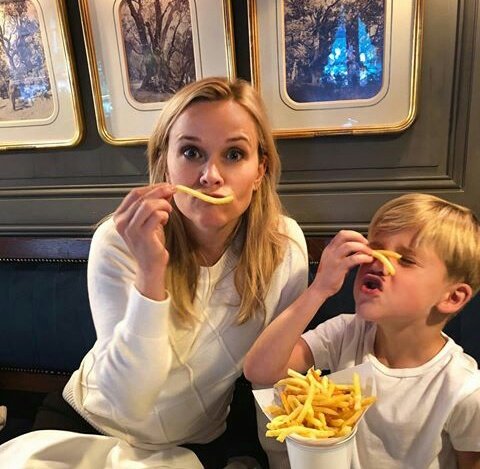 Truly fulfilling relations encompass empathy, vulnerability, and capacity for emotional literacy. The true power and resolve of relationships also comes from their authenticity, their capacity to anchor themselves in real integrity. Emotion is the modifiability of feeling, expression, and meaning in response to social interaction and cultural norms and beliefs. Love, guilt, and compassion are not fixed in innate human nature. Instead, we identify and act upon them in terms of social events, relationships, and values. Psychologists usually conceive of emotion as acting through the person, motivating and directing his or her behavior and experiences. In addition, that activation process may work mainly in the opposite direction, from consciousness and ongoing action toward feeling and gesture. The social person is sentient, reflecting upon feelings and sometimes changing feeling about how they are interpreted. For example, we may summon up feelings of love, or strive to diminish their intensity. We can also try to mobilize love in another person, directing our gestures to shape their feelings. There is a deeper life for humanity, a life in which responsibility and freedom are connected, a life in which happiness not the foundation of what we have, but in what we fundamentally are. #RandolphHarris 5 of 6
 On a larger, historical scale, love and other sentiments change in how they are expressed, where they are appropriate, and what they mean culturally. These social levels of change in feeling and expression are irreducibly independent from the physiological dynamics of emotion, and are an appropriate and important subject for sociological explanation. Emotion is activity and reactivity of the tissues and organs innervated by the autonomic nervous system. An emotion can occur without its typical overt expressions. One can be happy, or feeling love, or excited, or overjoyed, or even angry without anyone else even knowing it. Thus, it seems that the emotion itself is something inner which may or may not issue in overt behavior. Each of your emotions is worth getting to know very well—its nature, its purpose, its expression, its containment, its values, your history with it, your use and misuse of it. Even plants have emotions. I have two potted trees that have been touching for eight years, I move one of them, it took a month, but the other started leaning towards its mate. “And blessed at thou because thou hast established a church among this people; and they shall be established, and they shall be my people. Yeah, blessed is this people who are willing to bear my name (God); for in my name shall they be called; and they are mine” (Mosiah 26.17-18). #RandolphHarris 6 of 6
The Culture of Poverty—It Tends to Perpetuate itself from Generation to Generation!
 Loneliness and the feeling of being unwanted is the most terrible poverty. The social structural conditions to which the poor are exposed (chronic unemployment and under-employment, low income, lack of property ownership, absence of saving and chronic shortage of food, money, medical care, and other necessities of life) give rise to distinctive patterns of community and family disorganization. These, in turn, produce a distinctive set of beliefs, attitudes, and values (that is, strong feelings of marginality, of helplessness, of dependence, and of inferiority, weak ego structure; confusion of sexual identification; lack of impulse control; strong present-time orientation, with relatively little ability to defer gratification and plan for the future. The cultural of poverty, however, is not only an adaptation to a set of objective conditions of the larger society. Once it comes into existence, it tends to perpetuate itself from generation to generation because of its effect on the children. By the time underprivileged children are age six or seven they have usually absorbed the basic values and attitudes of their subcultural and are not psychologically geared to take full advantage of the changing conditions or increased opportunities that may occur in their lifetimes. #RandolphHarris 1 of 6
 Where justice is denied, where poverty is enforced, where ignorance prevails, and where any one class is made to feel that society is an organized conspiracy to oppress, rob, and degrade them, neither persons nor property will be safe. Initially (time/generation I) structural conditions of poverty give rise to subcultural patterns (that is, family and community disorganization), and both of these create in children and adults the patterns of individual personality and behavior characteristic of the poor (for example, weak ego structure, inability to delay gratification). For persons who first become poor as adults (for example, as a result of migration, economic depression, drought, and so forth), this personality and behavior pattern is an adaptation to changed structural conditions. However, their children know nothing else and tend to recreate the same subcultural patterns and to pass on these same personality and behavior patterns to their children. And so on for succeeding generations—a shared set of individual beliefs, values, and attitudes (cultural of poverty) become self-perpetuating and may persist in spite of changes in the larger structural conditions. Saving our planet, lifting people out of poverty, advancing economic growth, these are one and the same challenge. #RandolphHarris 2 of 6
 New generations resemble preceding ones because they confront the same structural conditions and hardships. A housing crisis is increasing poverty levels in California. As of now, 51 percent of adults live in middle-income households, and 29 percent live in lower-income households, while only 20 percent live in upper-income households. The lack of affordable housing, and apartments for middle class, and lower-income families is the reason so many people are struggling to make it. The median cost of a house is now $500,000.00, which is twice the national cost, and homelessness is rapidly increasing across the state. While the region’s median household income is $61,320.00 and the nationwide median is $53,291.00. In contrast the poor are bring in between $14,000.00 to $24,000.00 a year, and there is no place less than $1,000.00 a year for rent. As long as poverty, injustice and gross inequality persist in our World, none of us can truly rest. Poverty, including rates of unemployment, crime, school dropout rates, and drug use, are assumed to be the result of behavior preferred by individuals living within conditions of poverty. The culture of poverty theory presumes the development of a set of deviant norms, whereby behaviors like drug use and gang participation are viewed as the standard (normative) and even desired behaviors of those living in low-income neighborhoods. #RandolphHarris 3 of 6
 Alternatively, individuals behave in ways that are nominally illegal, like participation in the underground economy or participation in gangs, not because they wish to do so or are following cultural norms, but because they have no choice, given the lack of educational and job opportunities available in their neighborhoods. In other words, individual living in poverty may see themselves as forced to turn to illegal methods of getting money, for example by selling drugs, simply to survive within the conditions of the hot economy. Poor children generally share the values, beliefs, and attitudes of the larger society, but as they experience the same lack of socioeconomic opportunity as their parents, they adopt the peculiar social and individual modes of response that characterize the culture of poverty. Also, some people who turn to selling drugs, for instance, to make a living, after they get started, they are not willing to turn to conventional means of earning a living because some of them can make $10,000.00 in a weekend, others have reported making $60,000.00 a month, and they are not willing to give that up to make $10 an hour, as they are making more than a lot of doctors. Hard core drug users spend approximately $60 billion a year on drugs. #RandolphHarris 4 of 6
 Although the dealers are putting their lives and freedom in danger with every transaction they make, and many do get shot and beat up, they feel it is worth it because the money gives them something to live for. They can buy brand new cars, houses, and where there is money, there are a lot of beautiful women. If the set of structural conditions persist, they will recreate the same sociocultural and personality patterns in the new generation. Living in poverty and being unable to participate in the economy is oppressive. People are walking on eggshells. If they are accepted for affordable housing, it is a blessing, because most of the waiting lists in most cities are 20,000 people long. Then affordable housing is no way to live. The people are usually the undesirable people like criminals, uneducated, prostitutes, and drug attics. Also, because most people in affordable housing are on government assistance, they do not work due to physical disability or serious mental problems and tend to be dirty, loud, rude, and violent. They also attract a lot of homeless people and that is why people do not want affordable housing in their communities. The solution would be to give people vouchers, like a supplement to their rent, so they could spread out the undesirables, and they are not segregated to one apartment building or neighborhood. #RandolphHarris 5 of 6
 When affordable housing is erected in high-income areas, the strong housing prices drop very locally and then it radiates outward over time. The new low-income building can lead to a loss of approximately $17 million, as the poverty values individual decrease by 15 percent. That is why education is to important. Education promotes equality and lifts people out of poverty. It teaches children how to become good citizens, how to work for a living, and the righteous values. Education is not just for the privileged few, it is for everyone. It is a fundamental human right. When people are educated it changes their culturally patterned ways of thinking, feeling, and behaving that will be passed on from one generation to the next. That is why a lot of people in the early 19th and 20th century enlisted in the armed services, it taught them discipline and provided education benefits, and helped them learn to deal with society. “The poor and the needy search for water, but there is none; their tongues are parched with thirst. However, if I the Lord will answer them; I, the God, will not forsake them. I will make rivers flow on barren heights, and springs within the valleys. I will turn the desert into pools of water, and the parched grounds into springs.” (Isaiah 41.17-18) #RandolpHarris 6 of 6
The Bird Flies and the Fish Fries
 Roger Williams called his new home of Rhode Island, Rogue’s Island because it attracted so many misfits. In 1634, the New England officials tried to use reason and scripture against the wayward. Since the Puritans believed they had the whole truth, anyone with whom they reasoned and who then refused to agree with them had to be sinning against one’s own conscience, and this made a criminal out of the individual. We tend to see group differences in behavior (between nations, races, social classes, and so forth) as rooted in the different beliefs and values share within each group, which are in turn generally seem to arise from the different ways people in these groups have been socialized from early in life. Roger Williams came to American to be a voice for civil order, and the citizens were hungry to hears the message of grace. It is important and worthwhile to distinguish among the people a number of purposes in a sociocultural system, which is a set of person and social positions or roles that possess both a culture and a social structure. A culture is a set of cognitive and evaluative beliefs—beliefs about what is or what ought to be—that are shared by the members of a social system and transmitted to new members. A social structure is a persisting and bounded pattern of social relationships (or pattern of behavioral interactions) among the units (that is, persons or positions) in a social system. #RandolphHarris 1 of 5
 Anne Hutchinson was a midwife and she also held church meetings church meetings in her house, she claimed that she heard the Spirit of God speaking to her own soul. Women were not allowed to be the head of the church. Anne Hutchinson was accused of preaching falsely; she also violated good practice and church order because she was a woman preaching to men. She was preaching to sixty or eighty people. At that time Governor Winthrop had the mandate to act fast, but he was reluctant to banish anyone from the knit community he desired. During a twenty-four-day synod in which her case was discussed—by now minsters were differing with each other, and the World closed in of Mrs. Hutchinson. In the midst of the turmoil her ally and friend Mary Dyer gave birth to a repulsive monster. Midwife Hutchinson desperately hurried to hide the creature from view, but neighbors glimpsed it and soon word spread that the devil was especially busy among Massachusetts troublemakers. The accusers of Anne Hutchinson were also her judges, and they made no pretense of trial by jury, due process, or even presenting clear charges. She wanted to know what law she had broken. They charged the Fifth Commandment because while it only demanded respect for father and mother, they interpreted it to include all other authority in church and state as well. #RandolphHarris 2 of 5
 Values and beliefs are transmitted rather then directly (though not always consciously or intentionally) from agents of socialization to targets through mechanisms such as learning, identification, or internalization. According to Freudian theory, we learn the values of our culture by identifying with parents or others who hold these values and hence take these values as our own. Governor Winthrop, pressing his advantage, called for and received the guilty verdict, so the accusers and judges now turned into sentencers. Almost all members of the General Court found Anne Hutchinson unfit for their society and decreed that she must be imprisoned first and then banished out of their liberties. Not ready to retire, Mrs. Hutchinson wanted to know why she was being banished. “Say no more,” she heard, “the court knows whereof and is satisfied.” Underlying all their anxieties, the Boston Leaders feared that England might find them guilty of tolerating seditious libel, a crime against which they decided to pass their own laws—after the incident. Anne Hutching took her time going into exile. The Reverend John Wilson took delight in reading the order that expelled her, commanding her in the name of Jesus Christ to withdraw as a leper out of the congregation. #RandolphHarris 3 of 5
 The prohibition was accepted because it was supported by strong inner forces; it proved to be stronger than anything else. The Prohibitions maintained themselves from generation to generation, perhaps only as the result of a tradition set up by paternal and social authority. An individual, who has violated a taboo, becomes oneself taboo because one has the dangerous property of tempting other to follow one’s example. Sometime later, the great disturber of the peace of Boston also gave birth to a monster, no doubt a menopausal baby who seemed to the whispers to be a divine judgment. Mrs. Hutchinson’s end was violent. After her husband died she moved to Long Island Sound. There, in the conflict that Governor Kieft triggered by foolish policies, Indians attacked and tomahawked her and five children to death. And there was not any light seen, neither fire, nor glimmer, neither Sun, nor Moon, nor the Stars, for so great were the mists of darkness which were upon the face of the land. And it came to pass that it did last for the space of three days that there was no light seen; and there was great mouring and howling and weeping among all the people continually; yeah, great were the groanings of the people, because the darkness and the great destruction which had come upon them. #RandolphHarris 4 of 5
 We have established what is practically the most important point in the psychological correspondence between taboo and compulsion neurosis. Research on socialization within the family indicates that children are more influenced by the structure of the family (for example, size, birth order, sibling structure and so forth) than by the values and beliefs that the parents or family share and try to transmit. In looking at the child’s relation to the parents and other socializing agents, a structural approach emphasizes the pattern of the interpersonal relationship where a cultural approach focuses more on the content of the relationship (that is, the ideas and beliefs being communicated). Patterns of discipline (for example, physical punishment verses guilt induction verses reasoning) have been shown to sometimes have greater effect on the child than the values, beliefs, or behavior the discipline is used to promote. Physically punishing children for aggressive behavior tends, paradoxically, to increase their aggressiveness. That is probably while the governors’ and others punished, banished, and later terminated the life of Mrs. Hutchinson and her children, especially because they no longer had a male, their father, to protect them. May God’s purpose and will be relived in out lives and may we accept that will. #RandolphHarris 5 of 5

Our Understanding of the Goodness and Wisdom

Justice consists in treating equals equally and unequals unequally, but in proportion to their relevant differences. The honest judge considers only the features of the case that are relevant in law. Deviant labels are definitions that announce (correctly or incorrectly) that a behavior or a person has violated the norm of a given group. However, since what is deviant for some members of a social unit may not be for others, a precise definition of deviance is unrealistic. Reactions to acts are distinctive because the acts are deviant and not vice versa. Imagine a judge saying to a felony defendant at the conclusion of a bench trial: “You have committed a crime because I find you guilty.” The point is the reactive conceptions does not recognize, let alone explain, obvious relations between acts and reactions. Life is rarely as simplistic as it seems, and the social process involved in defining deviance and conformity are far more complex. Deviant acts are created by reactions of participants in social life. Consider another versions of an earlier illustration, in this instance a police officer arresting an individual after directly observing the individual pointing a gun at a store clerk and demanding money. #RandolphHarris 1 of 5

Given the situation, imagine the police officer saying (or even thinking): “You have committed a crime because I arrested you.” Stating the matter more generally, both the citizenry and legal officials think of the quality of acts as determining reactions, and not the reverse. However, there is a more important question: What conditions ostensibly determine whether an act will be labeled deviant? What kind of reaction to acts identify those acts as deviant? Possession of material goods is a major cultural goal in American society, and, robbery would be endemic if there were no stress on and access to institutional means (that is, culturally approved, legitimate) to such possession. In the United States in particular, the lower-class individuals aspire to cultural goals (money, automobiles, and so forth) that are stressed for all individual, but lower-class individuals have far less access than others to legitimate means for realizing those goals. Hence, extending the argument, lower-class individuals more frequently resort to illegitimate means for realizing cultural goals, with the result being higher arrest or court-appearances rates for that class. Therefore, deviance refers to some form of rule-breaking behavior. #RandolphHarris 2 of 5

This might bring some light into the darkness of our time. It is not hard to make decision when you know what your values are. If language is not used correctly, then what is said is not what ought to be done remains undone; if this remains undone, morals and art will be corrupted; if morals and art are corrupted, justice will go astray; if justice goes astray, the people will stand about in helpless confusion. There would be a parasite’s attack, a vampirism of underground blood-suckers; a grandiose attempt at infection, a stealthy act of revenge by those who have got the worst of it: the whole World would be neuroticized, sexualized, and diabolized In relation to deviance, therefore, the concept relates to all forms of rule breaking whether this involves such things as murder, theft, or arson—the breaking of formal social rules—or such things as wearing inappropriate clothing for a given social situation, failing to produce homework at school, or being cheeky to a parent, teacher and so forth—more-or-less the breaking of relatively informal social rules or the law. Knowing your darkness is the best method for dealing with the darkness of other people. All crime is, by definition, deviant behavior, but not all forms of deviance are criminal. #RandolphHarris 3 of 5

Furthermore, people do wrong when they think it can be done and when they think it can be done by them; when they think that their actions will either be undiscovered, or if discovered will remain unpunished; or if it is punished that the punishment will be less than the profit to themselves or to those for whom they care. The key to preventing criminal behavior is to make people aware that punishment would be swift and certain. The severity of the punishment should be in proportion to the severity of the crime—just a little more pain than the pleasure afforded by the crime, but enough to make people unwilling to make the trade. A vision of God’s incredible promised blessings must be the central before our eyes every day. Our happiness in mortal life, our joy and exaltation are dependent upon how we respond to these persistent times. We will be exceedingly blessed if we exercise faith and patience and go to our God, the source of all truth and life, with our concerns. You know what is right and what is wrong, and no disguise, however, appealing, can change that. If your so-called friends, family, or colleagues urge you to do anything you know to be wrong, you be the one to make a stand for right, even if you stand alone. #RandolphHarris 4 of 5

God does not want us to look at trends, he wants us to look for his guidance in all situations. God expects us to start growing in the knowledge that he wants to transmit to us. And the only way we can spiritually grow is by seeking after the knowledge that will cause this growth to occur in the first place. Every intellect certain of one concept and doubtful of others had the concept of which it is certain as other than the concept of which it is doubtful. However, the intellect can be certain of God that God is a being, and infinite. God simply is Being—Esse Ipsum Subsistens. God is a being that exists without the limitations of finite beings. God is the first efficient cause, the ultimate end, supreme in perfection, transcending all things. God is uncaused in any way and therefore incapable of becoming or perishing; indeed, it is simply impossible that God should not exist. That means that God is eternal, and he lives a most notable life. God is happy, clear vision, and the most joyful love. God possess the power to freely and contingently will each thing that can be caused and by willing it through his volition to be cause it to be. He is the one God, and there is no other. Our understanding of the goodness and wisdom that we ascribe to God originates in experience, so too does our notion of infinity. #RandolphHarris 5 of 5

CRESLEIGH HAVENWOOD
Lincoln, CA | from the high $600,000s
Now Selling!

No appointment needed! Cresleigh Havenwood features four distinct floor plans ranging from 2,293 – 3,377 square feet and offering up to five bedrooms. Each plan has been thoughtfully designed and includes great features such as single story homes, guest suites, optional offices, garage workshops, and more! Get the most out of your new home with Cresleigh’s All Ready smart home featuring all the connectivity needed to keep your house running. Best of all, each Cresleigh home comes with owned solar included!

Located off of Virginiatown Road and McCourtney Road, residents of the 83 homesites of Cresleigh Havenwood will benefit from a brand new neighborhood in the charming City of Lincoln. Palo Verde Park, is just down the street and there’s plenty of recreation to take part in all around town. https://cresleigh.com/havenwood/
Ya Better Keep a Civilian Tongue in Your Head
 It is a dangerous and powerful mythology to believe that most humans are rational and act on volition of their own free will. There is so much conflict in the World today because many human behaviors, and much of human action is not the consequence of moral decision, but are the symptoms of medical diseases—in other words, human beings are not free moral agents, but most are foolish medical patients. The journalistic practice of mixing news with comment and the falsification of genuine ideas by clichés threatens public life with spiritual and eventual physical corruption. Repression must be replaced with truth gained through psychoanalytic insight. We recognize the word of God as the most explicit and courageous moralizer, and the divine knowledge and wisdom cannot escape our grip once we lay hands on it, but it is also important to study the mind so that we can understand what is going on psychologically, as well as spiritually with people. Genuine questioning will help to open the interlocutor’s eyes and mind, and it is a preliminary step leading individuals to answer questions, filling one’s own mind as well as our interlocutor’s minds with our interpretations, and silencing the inquiry. #RandolphHarris 1 of 5
 Conversation denotes a process through which a new or formerly peripheral universe of discourse comes to function as a person’s authority. The key to understanding conversation resides within the psyche or background of the individual. No one of sound mind and spirit can find appealing the nonsensical World views of many movements. Hence the necessity of milieu control and over stimulating or inhibiting the nervous system by subjecting conversation prospects to extreme physical stress or sensory deprivation. The intensities of the individual ideas become capable of discharge in their entirety, and pass from one idea to another, so that the individual ideas are formed which are crowded with great force. Through the repeated occurrence of this process, the intensity of an entire train of thought may ultimately be concentrated in a single conceptual unit. This is the fact of compression or condensation. It is condensation that is mainly responsible for the strange impression produced by certain situations, for we know of nothing analogous to it in the normal psychic life that is accessible to the consciousness. Some extraordinary event or experience will enable an individual to see the light. There will be a moment of awakening, which functions much like an electrical switch that has just been turned on, suddenly rendering aglow and objectifying what had been invisible, hazy, or anathema only moments earlier. #RandolphHarris 2 of 5
 Conversation, conversion is a function of a gradual social learning process rather than a consequence of some dramatic and extraordinary event that affects fertile psychological dispositions. In order to experience conversation and give testimony to it, a person must first learn something about the new interpretive schema. For example, what kind of experience and events are symbolic of conversation? Sometimes the deeper challenge is to reject or turn away from what is being presented, saying no to what others are insisting is right for us to pursue, so that we might more fully align ourselves with more worthy, more relevant challenges. One of our biggest challenges is to break the grip our illusions have on us. For us to overcome illusions, we have to be in a position where we can actually see them for what they are. Sometimes our eyes may truly open only when we are right at big moments, extraordinarily alive moments. Slivers of time when we are profoundly present, often featuring vivid proximity to immense danger, or immense opportunity. A healthy challenge is not meek nor halfhearted nor apologetic about the situation. This is a stand that need to be delivered in a form that serves the best interest of the recipient. #RandolphHarris 3 of 5
 Predispositions must be ordered, put into the service of the movement, linked with its values, harnessed to its goals, intermeshed with its own internal requirements as an organized collectivity. Pre-existing motives become relevant mainly as the points of departure of a process of learning and relearning, which the movement must direct. Personal motives are not necessarily extinguished in this process, but they come to be linked with new patterns of conduct which are relevant to, and supportive of, the collective enterprise which the movement represents. Many of us are on amazing journeys of discovery—leading to personal fulfillment and spiritual enlightenment. However, some are on a trek that leads to sorrow, sin, anguish, and despair. We keep our covenants and consecrate our lives to building up the kingdom of God. God will forgive sin and have a close, unbroken relationship with his people. Everyone is offered salvation by grace through faith. “And it shall come to pass that everyone who calls upon the name of the Lord shall be saved” (Acts 2.21). Our focus should be on our entire life span. The costs and rewards of involvement in a covenant with God can account for the rewards that are expected for good behavior. #RandolphHarris 4 of 5
 People frequently behave altruistically. Social action in one direction rather than another is frequently prompted by interpersonal loyalties and obligations. And people often act on the basis of principle or moral considerations. Some people want to help. They want to get along. Leaders are created by social circumstances. Leadership is transactional cutting across expectations, personal characteristics, and social settings. The term charisma is applied to certain quality of individual personality by virtue of which one is set apart from ordinary people and treated as endowed with supernatural, superhuman, or at least specifically exceptional powers or qualities. These are such as are not accessible to the ordinary person, but are regarded as of divine origin or as exemplary, and on the basis of them the individual concerned is treated as a leader. Dear Lord in Heaven, thank you that you do not send irritations to make our lives miserable. Thank you for giving us grace to be here. God thank you for the grace to be here. Thank you that you are changing our lives little by little from glory to glory. We believe that our present sufferings are nothing compared to the glory that is coming. Our situation may not be fair, but there is a secret…God is still on the throne. He will make the wrongs right. We are going to get over it and keep moving forward. Bless it be. #RandolphHarris 5 of 5